Good Shepherd Health Center
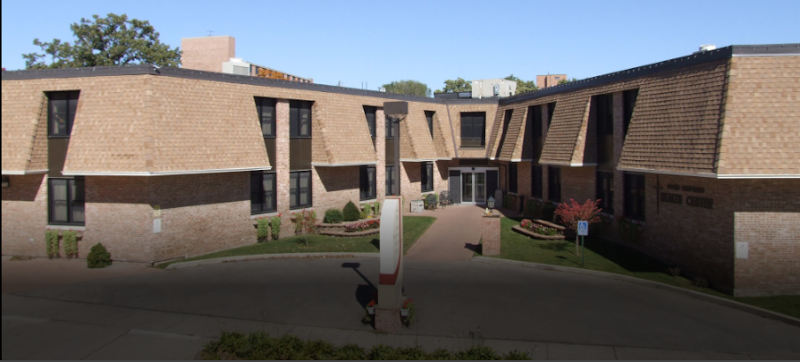
302 Second Street NE, Mason City, IA 50401 (641) 424-1740
Non profit - Corporation 180 Beds Independent Data: November 2025 1 Immediate Jeopardy citation
Trust Grade
13/100
#271 of 392 in IA
Last Inspection: October 2024

Within standard 12-15 month inspection cycle. Federal law requires annual inspections.

Overview

Good Shepherd Health Center in Mason City, Iowa, has received a Trust Grade of F, indicating significant concerns about the quality of care provided. They rank #271 out of 392 facilities in Iowa, placing them in the bottom half, and #5 out of 6 in Cerro Gordo County, meaning only one local option is better. While the facility has shown improvement in recent years, reducing issues from 11 in 2024 to 3 in 2025, they still face serious challenges. Staffing is a mixed bag with a 3/5 average rating, but a high turnover rate of 63%, significantly above the state average, raises concerns about consistency in care. Notably, there have been significant fines totaling $87,458, which is higher than 79% of Iowa facilities, reflecting ongoing compliance issues. Specific incidents include a critical failure to transfer a resident to the hospital in a timely manner after a fall, resulting in a 2-hour and 36-minute delay. Another serious incident involved a resident who fell and continued to report pain, yet the staff did not send him for immediate evaluation, opting instead to fax the physician. There was also a serious finding related to a resident being placed too close to a heater, leading to a burn risk after they rolled out of bed. Overall, while there are some improvements, the facility's history of serious incidents and high turnover is concerning for families considering this nursing home.

Trust Score
F
13/100
In Iowa
#271/392
Bottom 31%
Safety Record
High Risk
Review needed
Inspections
Getting Better
11 → 3 violations
Staff Stability
⚠ Watch
63% turnover. Above average. Higher turnover means staff may not know residents' routines.
Penalties
✓ Good
$87,458 in fines. Lower than most Iowa facilities. Relatively clean record.
Skilled Nurses
⚠ Watch
Each resident gets only 22 minutes of Registered Nurse (RN) attention daily — below average for Iowa. Fewer RN minutes means fewer trained eyes watching for problems.
Violations
⚠ Watch
32 deficiencies on record. Higher than average. Multiple issues found across inspections.
★★☆☆☆
2.0
Overall Rating
★★★☆☆
3.0
Staff Levels
★★★☆☆
3.0
Care Quality
★★☆☆☆
2.0
Inspection Score
Stable
2024: 11 issues
2025: 3 issues

The Good

  • Full Sprinkler Coverage · Fire safety systems throughout facility
  • No fines on record

Facility shows strength in fire safety.

The Bad

2-Star Overall Rating

Below Iowa average (3.0)

Below average - review inspection findings carefully

Staff Turnover: 63%

17pts above Iowa avg (46%)

Frequent staff changes - ask about care continuity

Federal Fines: $87,458

Well above median ($33,413)

Moderate penalties - review what triggered them

Staff turnover is elevated (63%)

15 points above Iowa average of 48%

The Ugly 32 deficiencies on record

1 life-threatening 2 actual harm
Mar 2025 3 deficiencies 1 Harm
SERIOUS (G) 📢 Someone Reported This

A family member, employee, or ombudsman was alarmed enough to file a formal complaint

Actual Harm - a resident was hurt due to facility failures

Deficiency F0713 (Tag F0713)

A resident was harmed · This affected 1 resident

**NOTE- TERMS IN BRACKETS HAVE BEEN EDITED TO PROTECT CONFIDENTIALITY** Based on observation, clinical record review, staff interview, and facility policy/procedure review at the time of the investiga...

Read full inspector narrative →
**NOTE- TERMS IN BRACKETS HAVE BEEN EDITED TO PROTECT CONFIDENTIALITY** Based on observation, clinical record review, staff interview, and facility policy/procedure review at the time of the investigation, the facility failed to intervene timely for a resident who needed had a change in condition following a fall on 2/3/25 for 1 of 4 residents reviewed (Resident #2). At Resident #2's admission in December 2024, he came to the facility with a repaired fractured right hip due to a fall at home. Due to his cognition, he frequently forgot he previously had a hip fracture and would frequently transfer by himself. On 2/3/25, he had an unwitnessed fall. When the nurse assessed him, he reported pain to his right hip. After the nurse's assessment, 2 Certified Nurse Aides (CNAs) assisted Resident #2 from the floor and back into bed. Despite Resident #2's recent surgical repair of his right hip, the nurse faxed the physician instead of sending him for evaluation. Resident #2 continued to report pain during the nurses' assessments to his right hip and needed assistance of 2 staff for transfers. On 2/5/25, the nurse contacted the Orthopedic provider about Resident 2's pain to his right hip. Despite Resident #2's decline in condition, the facility failed to intervene with emergency services until a nurse sent him to the emergency room (ER) for evaluation on 2/8/25. The ER evaluation reflected Resident #2 received treatment for a right pubic rami fracture (fracture of pelvis), hypoxia (low blood oxygen levels), and COVID-19. The facility identified a census of 151 residents. Findings include: Resident #2's Minimum Data Set assessment dated [DATE] identified a Brief Interview for Mental Status (BIMS) score of 5, indicating severely impaired cognition. Resident #2 displayed verbal behavioral symptoms directed toward others (threatening others, screaming at others, cursing at others) and other behavioral symptoms not directed toward others (physical symptoms such as hitting or scratching self, pacing, or verbal/vocal symptoms like screaming, disruptive sounds). Resident #2 required substantial to maximal assistance with all activities of daily living (ADL) including ambulation and transfer. The MDS listed him as frequently incontinent of bladder and bowel. The MDS included diagnoses of benign prostatic hyperplasia (BPH), diabetes mellitus, arthritis, recent hip fracture, and mild cognitive impairment. The Care Plan Focuses: a. Revised 2/17/25 identified Resident #2 required assistance with activities of daily living related to his right hip fracture with surgical repair and a right pubic rami fracture. The Interventions reflected the following: i. Revised 12/30/24: Physical Therapy (PT) and Occupational Therapy (OT) evaluate and treat as ordered by the physician. ii. Resolved 2/12/25: Transfers/walking: Per therapy alert 12/27/24: Transfer assist of 1 with gait belt and front wheeled walker. Ambulation with gait belt, front wheeled walker, and assist of 1. Encourage Resident #2 to walk outside of the room at least twice per day. iii. Revised 2/17/25: Resident #2 lived at the facility due to his impulsivity and attempts to self-transfer without waiting for assistance. He doesn't remember to use his call light or that he fractured his hip in the past. iv. Revised 2/17/25: Resident #2 required assistance from 2 staff and a standing mechanical lift. Resident #2 didn't like the use of the gait belt and would slap the staff hands away when they tried to apply a gait belt. When staff educated the reason for the gait belt, he usually allowed them to use it. Resident #2 didn't walk and used a wheelchair for all mobility. Resident #2 didn't walk and used a wheelchair for all mobility. b. Revised 12/10/24: Resident #2 had unspecified arthritis. The Interventions directed the following: i. Daily range of motion (ROM) exercises both active (moved by self) and passive (moved by someone else) as tolerated. ii. Monitor/document/report to medical doctor as needed signs/symptoms or complications related to arthritis: joint pain, joint stiffness, usually worse on waking, swelling, decline in mobility, decline in self-care ability, contracture (stiffness in a body part that restricts movement usually in a bent position) formation/joint shape changes, crepitus (creaking or clicking with joint movement), pain after exercise or weight bearing. Resident #2's February 2025 Medication Administration Record included an order dated 12/9/24 for acetaminophen (Tylenol) 500 milligrams (MG), take 2 tablets (1000 MG) by mouth twice daily as needed (PRN) for pain or fever greater than 100.4 degrees Fahrenheit (F). Do not exceed 4000 MG in 24 hours. Documentation reflected Resident #2 received the following dose of acetaminophen on: a. 2/3/25 at 6:54 PM, for pain level 6 (on a 0 to 10 pain scale), indicating moderate pain. b. 2/4/25 at 7:36 AM, for pain level 5, indicating moderate pain. c. 2/4/25 at 6:26 PM, for pain level 8, indicating severe pain. d. 2/5/25 at 8:29 AM, for pain level 4, indicating moderate pain. e. 2/6/25 at 7:43 PM, for pain level 6, indicating moderate pain. f. 2/7/25 at 12:08 PM, for pain level 8. g. 2/8/25 at 9:30 AM, for pain level 8. h. 2/8/25 at 1:41 PM, for pain level 9, indicating severe pain. The Behavior Note dated 2/3/25 at 4:37 AM, Resident #2 got up five times and moved on their own. They proved hard to guide and sometimes acted aggressive. The Incident Note dated 2/3/25 at 7:47 PM, the CNA told the nurse they saw Resident #2 on the floor in the bathroom. The CNA contacted the house supervisor because of the nurse being busy at the time. The house supervisor completed an initial assessment and helped transfer Resident #2 from the floor to the bed. The nurse later conducted a follow-up fall assessment. Resident #2 laid awake in bed when the nurse entered. When asked what happened, Resident #2 said, I'm being stupid. I tried to get up when I shouldn't have. Resident #2 denied hitting their head, but reported pain in their right hip when the nurse checked their range of motion (ROM). He couldn't rate the pain due to his altered mental status. The nurse administered acetaminophen for pain, but Resident #2 refused other pain treatments. Resident #2 remained at baseline, oriented to person but not time or place. The nurse couldn't check Resident #2's pupils because he refused. Resident #2's speech remained clear. He had decreased lung sounds in both lower lungs but stayed clear otherwise. He had equal grip strength felt on both sides. No sign of complications in the right hip repair appeared during the assessment. Resident #2 refused a skin check, saying, I'm fine. Just leave me alone. The fall went unwitnessed. The nurse completed a neurological assessment, still in progress, with no concerns noted at the time. The Incident Note dated 2/3/25 at 7:50 PM, the nurse received a call to Resident #2's room, where the CNA found him on the bathroom floor. Resident #2 laid on his back with his feet in front of the toilet, wearing socks. Resident #2 stated he needed to urinate but was in bed. The call light sat within reach but remained off, and the urinal rested by the bedside. Resident #2 wore loose pajama pants that slid down when he walked, requiring him to hold them up with one hand. The draw straps on the pants got tightened to prevent them from falling down easily. No internal or external hip rotation or leg shortening appeared. Resident #2 complained of discomfort in his right posterior thigh, where some muscle stiffness showed. 2 staff members assisted him to his feet and helped him walk to his bed with a gait belt and walker. The assessment identified no red areas, bruising, or crepitus (popping noise heard when moving joints). The nurse reminded Resident #2 to use the call light and urinal. The N Adv - Neurologic Focused Evaluation dated 2/4/25 at 12:24 AM, Pain Issue: New location in Resident #2's right hip. Pain score reached 7. Described as aching and non-radiating. Pain occurred intermittently. Resident #2 refused non-medication interventions, and these didn't provide relief. The nurse provided an as-needed (PRN) medication. Pain indicators included protective body movements, facial expressions, and vocal complaints. Resident #2 showed signs of disorientation, confusion, and disorganized thinking. Short-term memory loss appeared. Resident #2 remained oriented to person, made themselves understood, and understood others. Resident #2 also showed signs of agitation. The N Adv - Post Fall Evaluation dated 2/4/25 at 12:32 AM identified Resident #2 fell unwitnessed, in the bathroom. Resident #2 tried to use the bathroom alone at the time of the fall. The staff determined the cause of the fall as Resident #2 attempted to use the bathroom by himself without a cane or walker as instructed. The assessment reflected no injury from the fall. Resident #2 had the following indicators of pain: verbal, non-verbal sounds, and facial expressions. He rated his pain score a 3 on a 10-point scale (0 equals no pain and 10 equals the worst pain). The Evaluation indicated this as a change for Resident #2. A Nursing Facsimile (fax) form dated 2/4/25 at 12:36 AM, documented on 2/3/25 identified at 7:40 PM, the CNA found Resident #2 on the bathroom floor. Resident #2 laid on his back with his feet in front of the toilet, wearing socks. Resident #2 said he needed to urinate but was in bed. The call light sat within reach but stayed off, and the urinal rested by his bedside. Resident #2 wore loose pajama pants that slid down when he walked, so he had to hold them up with one hand. The draw straps on the pants got tightened to keep them from falling down. The assessment revealed no internal or external hip rotation or leg shortening. Resident #2 complained of discomfort in his right posterior thigh, where it had some muscle stiffness. 2 staff members helped Resident #2 to his feet, used a gait belt, and a walker to assist him back to bed. The Health Status Note dated 2/4/25 at 9:14 AM indicated a follow-up assessment of Resident #2 after his unwitnessed fall. He had an occasional nonproductive cough with a soft, non-tender abdomen. Resident #2 complained of right hip pain and needed 2 people to help with transfers. Resident #2 received PRN Tylenol for pain. The Health Status Note dated 2/4/25 at 11:58 PM reflected Resident #2 had an unwitnessed fall. Resident #2 complained of pain to his right hip and needed 2 people to help him transfer. Resident #2 received PRN Tylenol for pain. The Health Status Note dated 2/5/25 at 9:59 AM reflected a follow-up assessment of Resident #2's unwitnessed fall. He could complete an active and passive range of motion within normal limits. Resident #2 needed 2 people to help him transfer due to right hip pain. The Health Status Note dated 2/5/25 at 12:11 PM, reflected the nurse called Ortho (bone doctor) and left a message to ask if Resident #2 needed an x-ray or appointment for his right hip pain. The Health Status Note dated 2/6/25 at 1:43 AM, identified the nurse monitored Resident #2 after his unwitnessed fall. Resident #2 denied pain, but the nurse noticed him moaning with facial grimacing. Resident #2 refused pain relief, and despite being educated on options, raised his voice, saying, I don't need anything. The nurse observed Resident #2 transferring himself and they had difficulty redirecting him. The Health Status Note dated 2/7/25 at 1:12 AM, indicated the nurse completed post-fall monitoring for Resident #2. Resident #2 denied pain, but the nurse noticed him moaning with facial grimacing. The nurse gave him PRN Tylenol, but it seemed ineffective. Resident #2 refused other pain relief and proved difficult to redirect. The Health Status Note dated 2/7/25 at 5:40 PM reflected Resident #2 continued to need 2 people to transfer and complained of right hip pain. The nurse gave him PRN Tylenol for the pain. Resident #2 had an Ortho appointment scheduled for the next week. The Health Status Note dated 2/8/25 at 2:20 PM, indicated the CNA told the nurse that Resident #2 became extremely difficult while using the standing mechanical lift. Resident #2 complained of pain in both hips and the back, refusing to stand. The staff didn't feel safe transferring him that way. The nurse gave him PRN Tylenol, and the staff transferred Resident #2 to a wheelchair with a 2-person assist pivot (movement without twisting or rotating the spine or back). The staff felt they bore more of his weight than he did. Resident #2 picked at breakfast and wanted to use the bathroom. The staff asked the nurse to supervise since Resident #2 refused to stand while getting off the toilet. The staff used the standing mechanical lift, and Resident #2 became tearful during the transfer, saying his hips and back hurt. Afterwards Resident #2 rested in the recliner before the noon meal. The pivot transfer proved difficult, and Resident #2 refused to eat, saying he wanted to lie down. Due to his intense pain, the staff couldn't get Resident #2 up from the lying position. The nurse supervisor got notified. The nurse hadn't seen Resident #2 since the fall earlier in the week, and the situation marked a significant decline in his ability to transfer. The Health Status Note dated 2/8/25 at 2:38 PM, reflected the charge nurse notified the nurse Resident #2 couldn't bear any weight and complained of severe pain and he didn't have relief from the 1000 MG of PRN Tylenol. The nurse called Resident #2's wife, who agreed to send Resident #2 to the hospital if the doctor recommended it. The nurse received telephone orders to send Resident #2 to the emergency room (ER) for evaluation. The Health Status Note dated 2/9/25 at 6:52 AM, indicated the nurse called the ER for an update on Resident #2. The hospital reported they admitted Resident #2 for hypoxia and COVID-19. His X-rays showed a new fracture in the pubic rami. The Transfer/Discharge Report dated 2/8/25 at 2:40 PM, reflected the nurse documented Resident #2 felt restless and couldn't walk. Normally, Resident #2 could transfer with standby assistance from one person but couldn't do so that time. Resident #2 complained of severe pain in his lower back, both hips, and couldn't bear weight. Resident #2 stayed very restless and couldn't tolerate sitting on the toilet. Resident #2 fell last week. The History and Physical dated 2/8/25 at 8:40 PM identified Resident #2, went to the ER with complaints of lower back pain and right hip pain. Resident #2 didn't provide a clear history. According to the ER records, Resident #2 fell a week ago. For the last few days, the pain in his lower back and right hip worsened. He couldn't get up, transfer, or stand, though he usually could walk on his own. Due to the significant pain in his lower back and right hip, the staff eventually transferred him to the ER for evaluation. An X-ray of the hip showed acute (comes on suddenly and is usually caused by an injury or sudden illness)/subacute (a condition passed the acute phase but not quite long-term or chronic yet) fractures through the pubic rami (pelvis) on the right. On 3/6/25 at 2:30 PM, observed Resident #2 sitting in a reclining Geri chair (an extra cushioned wheelchair that allows a deeper recline allowing comfort, support, and adjustable features) with a red and yellow blanket over him, wearing glasses. He sat by the first-floor northwest nurses' station, with a staff member behind the station. Resident #2 had his feet elevated on the footrest of the reclining chair. On 3/10/25 at 5:30 PM, observed Resident #2 sitting in the television lounge with his feet elevated in a recliner. He couldn't remember the fall on 2/3/25. Interview on 3/10/25 at 2:55 PM, Staff D, CNA, stated that on 2/3/25, they found Resident #2 on the bathroom floor with no witnesses. When Staff D and Staff E, CNA, helped Resident #2 off the floor, they tried to assist him back to his bed using a gait belt, Resident #2 said, it hurts, it hurts. Staff D explained that before the 2/3/25 fall, Resident #2 could transfer from the wheelchair to a couch in front of the fish tank on his own. After the fall, Resident #2 needed more help with transfers and complained of more pain in his hip and back. Staff D said the staff told the facility nurses about his increased need for assistance and the rise in pain. Interview on 3/10/25 at 3:15 PM, Staff E stated that on 2/3/25, someone found Resident #2 in the bathroom with no witnesses. When Staff E and Staff D helped Resident #2 off the floor with a gait belt and tried to assist him back to his bed, Resident #2 said, it hurts, it hurts. Staff E and Staff D laid Resident #2 down in bed. Staff E explained they worked with Resident #2 all week and noticed more facial grimacing and moaning when they tried to help him walk. The staff told the charge nurses about Resident #2 having more pain and needing more help with transfers and walking, but they told the staff to give Tylenol for the pain. Staff E felt Resident #2 should have gone to the hospital on 2/3/25 after his fall, since he kept saying it hurt to walk. Interview on 3/10/25 at 4:15 PM, Staff F, Licensed Practical Nurse (LPN), stated on 2/3/25, the staff found Resident #2 on the bathroom floor with no witnesses. Staff D and Staff E placed a gait belt around Resident #2 and tried to help him walk after they completed an assessment. Staff F said Resident #2 complained of pain in his back and posterior thigh area, saying it hurts, it hurts. Staff F didn't feel Resident #2 needed to go to the ER for an evaluation at that time. Staff F added they didn't work again until 2/7/25, and no one reported Resident #2 needed more assistance or experienced more pain with transfers. If Resident #2 had more pain and needed more help with transfers and pain medication on 2/5/25, Staff F confirmed that Resident #2 should have gone for an evaluation. Interview on 3/10/25 at 4:45 PM, Staff G, Registered Nurse (RN), stated after Resident #2 fell on 2/3/25, he complained of more pain in his right hip. However, Staff G didn't think it felt any different from the pain Resident #2 had when he admitted with his prior hip fracture. Staff G didn't feel Resident #2 needed to go out for an evaluation because of the increased pain or need for more help with transfers. Staff G said the House Supervisor needed to make that decision, not the floor charge nurse. Interview on 3/11/25 at 10:00 AM, Staff H, LPN, stated on 2/5/25, the floor staff told them Resident #2 needed more help with transfers, as he wouldn't transfer from the wheelchair to the couch, and complained of more pain in his right hip. Staff H said they informed the House Supervisor, who told them to call the orthopedic department to let them know Resident #2 had more pain and needed more help with transfers and ask if an x-ray might be helpful. Staff H finished their shift and didn't get a response from the orthopedic department. Staff H confirmed they should have insisted on sending Resident #2 to the ER for an evaluation due to his change in condition on 2/5/25. Staff H also mentioned that before the 2/3/25 fall, Resident #2 could transfer independently from the wheelchair to the couch. Interview 3/11/25 at 10:30 AM, Staff I, RN, stated that on 2/8/25, Resident #2 went to the ER because staff reported he needed more help with transfers and pain medication than usual. Staff I said the staff mentioned Resident #2 complained of pain while he sat on the toilet and grabbed his lower back and right hip. Staff I notified the house supervisor on call that day, and they sent Resident #2 out. Staff I added Resident #2 should have gone to the ER on [DATE] or 2/5/25 when he needed more pain medication and extra help with transfers. Interview on 3/10/25 at 2:20 PM, Staff J, RN, stated that on 2/8/25 around 2:40 PM, the charge nurse reported Resident #2 needed a standing mechanical lift to transfer and he complained of more pain in his right lower back and right hip. They decided to send Resident #2 to the ER for an evaluation. Staff J confirmed that before 2/3/25, Resident #2 could transfer from the wheelchair to the couch in the front lobby on his own. Interview on 3/12/25 at 4:15 PM, the Assistant Director of Nursing (ADON) confirmed Resident #2 should have gone to the ER on [DATE] after he complained of pain in the right side of his back and hip while he walked. Interview on 3/13/25 at 10:50 AM, the Director of Nursing (DON) and ADON confirmed after they reviewed Resident #2's clinical record that he needed to go to the ER on [DATE] due his change in condition, as he required more pain medication and extra help with transfers. The Resident Accident or Incident policy from October 2022 stated that the facility's policy aimed to ensure the safety and well-being of all residents. Due to unexpected events, accidents, or incidents, a resident's well-being could get affected. All employees at the facility had the responsibility to respond properly and report the events.
CONCERN (D) 📢 Someone Reported This

A family member, employee, or ombudsman was alarmed enough to file a formal complaint

Potential for Harm - no one hurt, but risky conditions existed

Resident Rights (Tag F0550)

Could have caused harm · This affected 1 resident

**NOTE- TERMS IN BRACKETS HAVE BEEN EDITED TO PROTECT CONFIDENTIALITY** Based on clinical record review, policy/procedure review, and staff interview the facility failed to treat a resident with respe...

Read full inspector narrative →
**NOTE- TERMS IN BRACKETS HAVE BEEN EDITED TO PROTECT CONFIDENTIALITY** Based on clinical record review, policy/procedure review, and staff interview the facility failed to treat a resident with respect and dignity in a manner that promotes maintenance or enhancement of his or her quality of life for 1 out of 3 resident reviewed. (Resident #2). The facility identified a census of 151 residents. Findings include: Resident #2's Minimum Data Set assessment dated [DATE] identified a Brief Interview for Mental Status (BIMS) score of 5, indicating severely impaired cognition., documented diagnoses for which included Benign Prostatic Hyperplasia (BPH), diabetes mellitus, arthritis, recent hip fracture and mild cognitive impairment. The MDS revealed Resident #2 with a Brief Interview for Mental Status (BIMS) score of 5 for which indicated severe memory impairments, is able to be understood and understand by others, and displayed verbal behavioral symptoms directed toward others, (threatening others, screaming at others, cursing at others) other behavioral symptoms not directed toward others (physical symptoms such as hitting or scratching self, pacing, or verbal/vocal symptoms like screaming, disruptive sounds) and substantial to maximal assistance with all activities of daily living (ADL) including ambulation and transfer, and frequently incontinent of bladder and bowel. The Care Plan Focus initiated 12/10/24 reflected Resident #2 required assistance with activities of daily living (ADLs) due to a right hip fracture, pubic rami fracture (2/13/25) with surgical repair. The Care Plan Interventions directed the following: a. Initiated 2/4/25: Resident #2 required assistance from 2 staff and a standing mechanical lift. Resident #2 didn't like the use of the gait belt and will slap staff hands away when trying to apply the gait belt. Educate the reason for the gait belt and he would usually allow. Resident #2 didn't walk and used a wheelchair for all mobility. allow. Resident #2 didn't walk and used a wheelchair for all mobility. b. Revised: 2/12/25: Resident #2 required assistance of 2 staff with toilet use. He wore protective undergarments and needed assistance with perineal cares. The Care Plan Focus initiated 12/10/24 indicated Resident #2 had a risk for elopement and wandering due to a diagnosis of dementia/Alzheimer's disease. He has a history of attempting to leave the facility unattended and wanders aimlessly. The Interventions instructed to anticipate his wants and need as he may not always verbalize them. Resident #2's Incident Report dated 3/8/25 at 12:00 AM, identified Alleged Abuse: Staff A, Certified Nurse Aide (CNA), approached the nurse and told them about an incident that happened the previous night on 3/7/25, involving Staff B, CNA, and Resident #2. Staff A explained Staff B, Staff C, CNA, and themselves entered Resident #2's room because he pressed his call light and stated he needed to go to the bathroom. As the CNAs got him in the standing mechanical lift when Resident #2 started to become agitated asking what they were doing, they explained they were assisting him to the restroom as he requested. Resident #2 accepted the explanation. As they assisted him to use the toilet, he became agitated, the nurse entered the room at that time and told Resident #2 to please not yell at the aides that tried to help him. He told the nurse he just wanted to know why his leg hurt, the nurse explained to Resident #2 he came to the facility because he broke his hip. He calmed down and replied okay he just wanted to know what was going on. The nurse exited the room at that time to attend to another resident. Staff A stated Resident #2 began to yell at them again a few moments later and hit Staff B. Staff B then smacked Resident #2s left hand 3 times and said you do not hit me. Resident #2 became more agitated and yelled at Staff B calling her a stupid bitch. Staff B responded back to Resident #2 saying NO, you are a stupid bitch. Resident #2 then said shut up and Staff B said No you shut the fuck up? Staff A and Staff C didn't alert the nurse of the incident immediately. Staff C went home sick soon after the incident. Resident #2 couldn't give a description. The nurse notified the supervisor and immediately called the Director of Nursing (DON) and Staff B's employment agency. The nurse notified Staff B their contract ended effective immediately. The nurse filled out the Incident Report and did an assessment of Resident #2. The undated Facility Summary documented Resident #2 resided at the facility since 12/10/24. He had diagnoses of a fracture of his right femur neck (prior to admission), diabetes, dementia with mood disturbance, and osteoarthritis. He had a BIMS of 3. He required the use of equipment and 2 staff for transfers. Resident #2 received Tylenol for pain. He had no safety awareness, and repeatedly attempted to transfer himself without asking for assistance or using his call light. He became agitated at attempts to help him with cares and would hit, curse, and bite staff. Resident #2 had a long history of falls at home. On the evening of 3/8/25 Staff A, reported to her nurse that on the previous evening, 3/7/24, they witnessed Staff B strike Resident #2 on the back of his hand 2 3 times. The nurse elevated the Incident to the House Supervisor. The staff made notifications to the DON and Administrator. Staff B was present at the time and was immediately sent home. The investigation included staff statements and the DON contacted Staff B for a statement via telephone. The facility reported to the DON and Administration Resident #2 didn't have a bruise on their hand. There is documentation describing Resident #2's combative behavior in the time leading up to this incident. There are episodes in the nursing documentation for 3/1/25 and 3/4/25, where Resident #2 hit staff. One can expect that during a hitting motion, Resident #2 could receive bruising on inside of arms/wrists. The facility completed weekly skin checks. a. Dismissed accused individual. b. Educated the reporting individual on the importance of timely reporting. c. Facility provided education at hire and at annual in services on dependent adult abuse, reporting and response d. Contract staff had dependent adult abuse education of file. The Behavior Note dated 3/1/25 at 1:54 PM indicated Resident #2 yelled at staff when instructed to wait a moment, due to waiting on another staff member to assist as he required 2 staff for assistance. Resident #2 pushed, spit, and hit staff during incontinent care and transfers. The staff unable to successfully redirect him. The Communication - with Physician Note dated 3/4/25 at 1:32 PM reflected the staff reported Resident #2 continued to be combative with cares. The staff reported he hit, kicked, scratched, and bit them. The Incident Note dated 3/8/25 at 11:30 PM indicated Staff A, Certified Nurse Aide (CNA), approached the nurse and told them about an incident that happened the previous night on 3/7/25, involving Staff B, CNA, and Resident #2. Staff A explained Staff B, Staff C, CNA, and themselves entered Resident #2's room because he pressed his call light and stated he needed to go to the bathroom. As the CNAs got him in the standing mechanical lift when Resident #2 started to become agitated asking what they were doing, they explained they were assisting him to the restroom as he requested. Resident #2 accepted the explanation. As they assisted him to use the toilet, he became agitated, the nurse entered the room at that time and told Resident #2 to please not yell at the aides that tried to help him. He told the nurse he just wanted to know why his leg hurt, the nurse explained to Resident #2 he came to the facility because he broke his hip. He calmed down and replied okay he just wanted to know what was going on. The nurse exited the room at that time to attend to another resident. Staff A stated Resident #2 began to yell at them again a few moments later and hit Staff B. Staff B then smacked Resident #2s left hand 3 times and said you do not hit me. Resident #2 became more agitated and yelled at Staff B calling her a stupid bitch. Staff B responded back to Resident #2 saying NO, you are a stupid bitch. Resident #2 then said shut up and Staff B said No you shut the fuck up? Staff A and Staff C didn't alert the nurse of the incident immediately. Staff C went home sick soon after the incident. After reporting the incident to the Nursing Supervisor, they directed the nurse to assess Resident #2. The assessment of Resident #2's hands and wrists identified a reddened area to his left wrist that measured 2 centimeters (CM) by 1.2 CM, in the area Staff A reported Staff B hit. Additionally, the nurse noted 2 bruises on his top right hand and wrist measuring 3 CM by 2.1 CM on the hand with a 3 CM by 3 CM on the wrist. Interview on 3/11/25 at 4:30 PM, The facility Director of Nursing (DON), verified they expected all staff to treat residents with dignity and respect per the policy/procedure. Interview on 3/12/25 at 10:00 AM, the Facility Administrator confirmed all residents are to be treated with respect and dignity from staff at all times. The Resident Rights dated October 2017, documented the resident had the right to a dignified existence, self determination, and communication with and access to persons and services inside and outside the facility. a. A facility must treat each resident with respect and dignity and care for each resident in a manner and in an environment, that promoted maintenance or enhancement of his or her quality of life, recognizing each resident individuality. The facility must protect and promote the rights of the resident.
CONCERN (D) 📢 Someone Reported This

A family member, employee, or ombudsman was alarmed enough to file a formal complaint

Potential for Harm - no one hurt, but risky conditions existed

Report Alleged Abuse (Tag F0609)

Could have caused harm · This affected 1 resident

**NOTE- TERMS IN BRACKETS HAVE BEEN EDITED TO PROTECT CONFIDENTIALITY** Based on clinical record review, Resident [NAME] of Rights, facility investigation, staff interview, and review of policy and pr...

Read full inspector narrative →
**NOTE- TERMS IN BRACKETS HAVE BEEN EDITED TO PROTECT CONFIDENTIALITY** Based on clinical record review, Resident [NAME] of Rights, facility investigation, staff interview, and review of policy and procedures, the facility failed to report an allegation of abuse to the Department of Inspection and Appeals and Licensing (DIAL) for 1 of 3 residents reviewed (Resident #2) within the required 2-hour timeframe. Staff A, Certified Nurse Aide (CNA), alleged the witnessed Staff B, CNA, hit Resident #2 on 3/7/25. Staff A failed to report the incident to the facility until 3/8/25, after the 2-hour window when they witnessed the alleged incident. The facility reported a census of 151 residents. Findings include: Resident #2's Minimum Data Set assessment dated [DATE] identified a Brief Interview for Mental Status (BIMS) score of 5, indicating severely impaired cognition., documented diagnoses for which included Benign Prostatic Hyperplasia (BPH), diabetes mellitus, arthritis, recent hip fracture and mild cognitive impairment. The MDS revealed Resident #2 with a Brief Interview for Mental Status (BIMS) score of 5 for which indicated severe memory impairments, is able to be understood and understand by others, and displayed verbal behavioral symptoms directed toward others, (threatening others, screaming at others, cursing at others) other behavioral symptoms not directed toward others (physical symptoms such as hitting or scratching self, pacing, or verbal/vocal symptoms like screaming, disruptive sounds) and substantial to maximal assistance with all activities of daily living (ADL) including ambulation and transfer, and frequently incontinent of bladder and bowel. Resident #2's Incident Report dated 3/8/25 at 12:00 AM, identified Alleged Abuse: Staff A, Certified Nurse Aide (CNA), approached the nurse and told them about an incident that happened the previous night on 3/7/25, involving Staff B, CNA, and Resident #2. Staff A stated Resident #2 began to yell at them again a few moments later and hit Staff B. Staff B then smacked Resident #2's left hand 3 times and said you do not hit me. Resident #2 became more agitated and yelled at Staff B calling her a stupid bitch. Staff B responded back to Resident #2 saying NO, you are a stupid bitch. Resident #2 then said shut up and Staff B said No you shut the fuck up? Staff A and Staff C didn't alert the nurse of the incident immediately. Staff C went home sick soon after the incident. Resident #2 couldn't give a description. The nurse notified the supervisor and immediately called the Director of Nursing (DON) and Staff B's employment agency. The nurse notified Staff B their contract ended effective immediately. The nurse filled out the Incident Report and did an assessment of Resident #2. The undated Facility Summary identified on the evening of 3/8/25 Staff A, reported to the nurse that on the previous evening, 3/7/24, they witnessed an incident of Staff B struck Resident #2 on the back of the hand 2 3 times. The facility reported the incident to the House Supervisor, the DON and the Administrator. Staff B worked at the time of notification and was immediately sent home. The facility completed the following: a. Dismissed accused individual. b. Educated the reporting individual on the importance of timely reporting. c. Facility provided education at hire and at annual in services on dependent adult abuse, reporting and response d. Contract staff had dependent adult abuse education of file. The Incident Note dated 3/8/25 at 11:30 PM indicated Staff A, Certified Nurse Aide (CNA), approached the nurse and told them about an incident that happened the previous night on 3/7/25, involving Staff B, CNA, and Resident #2. Staff A explained Staff B, Staff C, CNA, and themselves entered Resident #2's room because he pressed his call light and stated he needed to go to the bathroom. As the CNAs got him in the standing mechanical lift when Resident #2 started to become agitated asking what they were doing, they explained they were assisting him to the restroom as he requested. Resident #2 accepted the explanation. As they assisted him to use the toilet, he became agitated, the nurse entered the room at that time and told Resident #2 to please not yell at the aides that tried to help him. He told the nurse he just wanted to know why his leg hurt, the nurse explained to Resident #2 he came to the facility because he broke his hip. He calmed down and replied okay he just wanted to know what was going on. The nurse exited the room at that time to attend to another resident. Staff A stated Resident #2 began to yell at them again a few moments later and hit Staff B. Staff B then smacked Resident #2's left hand 3 times and said you do not hit me. Resident #2 became more agitated and yelled at Staff B calling her a stupid bitch. Staff B responded back to Resident #2 saying NO, you are a stupid bitch. Resident #2 then said shut up and Staff B said No you shut the fuck up? Staff A and Staff C didn't alert the nurse of the incident immediately. Staff C went home sick soon after the incident. After reporting the incident to the Nursing Supervisor, they directed the nurse to assess Resident #2. The assessment of Resident #2's hands and wrists identified a reddened area to his left wrist that measured 2 centimeters (CM) by 1.2 CM, in the area Staff A reported Staff B hit. Additionally, the nurse noted 2 bruises on his top right hand and wrist measuring 3 CM by 2.1 CM on the hand with a 3 CM by 3 CM on the wrist. Interview on 3/10/25 at 9:30 AM, the facility Administrator confirmed the facility failed to notify DIAL of the incident between Resident #2 and Staff B within the 2-hour time frame. The Nursing Facility Abuse Prevention, Identification, Investigation and Reporting Policy dated December 2022, instructed all allegations of resident abuse, neglect, exploitation, mistreatment, injuries of unknown origin and misappropriation should be reported immediately to the charge nurse. The charge nurse is responsible for immediately reporting the allegation of abuse to the Administrator, or designated representative. All allegations of resident abuse shall be reported to the Iowa Department of Inspections and Appeals no later than 2 hours after the allegation is made.
Oct 2024 7 deficiencies
CONCERN (D)

Potential for Harm - no one hurt, but risky conditions existed

MDS Data Transmission (Tag F0640)

Could have caused harm · This affected 1 resident

**NOTE- TERMS IN BRACKETS HAVE BEEN EDITED TO PROTECT CONFIDENTIALITY** Based on clinical record view, staff interview, and the Resident Assessment Instrument (RAI) Manual, the facility failed to tran...

Read full inspector narrative →
**NOTE- TERMS IN BRACKETS HAVE BEEN EDITED TO PROTECT CONFIDENTIALITY** Based on clinical record view, staff interview, and the Resident Assessment Instrument (RAI) Manual, the facility failed to transmit 1 of 1 Minimum Data Set (MDS) assessments for the facility within the required timeframe (Resident #34). The facility reported a census of 159 residents. Findings include: The Discharge summary dated [DATE] at 1:00 PM reflected Resident #34 discharged to home. The Clinical - MDS reviewed on 10/29/24 at 12:37 PM listed the MDS' completed on 6/1/24 and 6/26/24 as completed, indicating they didn't get transmitted yet. The previous MDS' indicated accepted, indicating the facility transmitted them. During an interview on 10/29/24 at 1:16 PM, Staff H, Registered Nurse/Care Plan Nurse, reported she completed Resident #34's discharge MDS. She reported she didn't submit the MDS to the Centers of Medicare and Medicaid Services (CMS) and she should have. On 10/29.24 at 3:29 PM, the Administrator reported the facility didn't have a policy for MDS submissions. She reported the facility followed the RAI Manual. The current RAI Manual dated October 2023 instructed to submit a discharge return not anticipated MDS no later than 14 days after the MDS completion. The facility should complete the MDS within 14 days after the discharge date .
CONCERN (D)

Potential for Harm - no one hurt, but risky conditions existed

Quality of Care (Tag F0684)

Could have caused harm · This affected 1 resident

Based on observations, interviews, and record review, the facility failed to reassess blood pressures for one of one resident reviewed (Resident #67). Resident #67 had high and low blood pressures tha...

Read full inspector narrative →
Based on observations, interviews, and record review, the facility failed to reassess blood pressures for one of one resident reviewed (Resident #67). Resident #67 had high and low blood pressures that didn't get reassessed. The facility reported a census of 159. Findings include: Resident #67's September and October 2024 Treatment Administration Record (TAR) included an order dated 4/18/24, that directed staff to obtain blood pressure and temperature every shift. The Weights and Vitals Summary review on 10/30/24 at 10:29 AM related to blood pressures listed the following results: a. 9/29/24 at 2:08 PM: 62/41 mm/Hg (measurement of pressure) (Lying r/arm)(Resident was lying down and blood pressure was taken on the right arm) diastolic bottom number of the blood pressure reading)(measures the pressure in the artery walls between heart beat)(pressure in the arteries when the heart beats) low of 60 exceeded, systolic (top number of blood pressure reading) low of 90 exceeded. b. 9/29/24 at 8:28 PM: 53/49 mmHg (Lying l/arm)(Resident was lying down and blood pressure was taken on the right arm) diastolic Low of 60 exceeded systolic low of 90 exceeded c. 9/30/24 at 3:49 AM: 75/49 mmHg (Lying r/arm) diastolic low of 60 exceeded systolic low of 90 exceeded d. 9/30/24 at 1:07 PM: 72/47 mmHg (Lying l/arm) diastolic low of 60 exceeded systolic low of 90 exceeded e. 10/5/24 at 11:24 AM: 187/129 mmHg (Sitting r/arm)( (Resident was sitting up and blood pressure was taken on the right arm) diastolic high of 89 exceeded systolic high of 139 exceeded f. 10/6/24 at 6:37 PM: 54/31 mmHg (Lying l/arm) diastolic low of 60 exceeded systolic low of 90 exceeded g. 10/10/24 at 10:14 AM: 60/45 mmHg (Lying l/arm) diastolic low of 60 exceeded systolic low of 90 exceeded On 10/ 29/24 at 3:17 PM, Staff J, Licensed Practical Nurse (LPN), stated she used a wrist cuff when she took Resident #67's blood pressures. When asked what she considered a low blood pressure, Staff J responded it depended on the resident. Staff J stated Resident 64's blood pressure ran low sometimes. Staff J stated she took blood pressure's on Resident #64 before that have been low. Staff J said that typically Resident #64 is lying down when Staff J takes their blood pressure and that's why her blood pressure runs low. When shown the October 2024 TAR Staff J acknowledged she should have rechecked Resident #64's blood pressures on the 10/5/21, 10/6/24 and 10/10/24. She stated on 10/5/24 she had too high of blood pressure readings and on too low on 10/6/24 and 10/10/24. On 10/29/24 at 4:21 PM, the Director of Nursing (DON), stated Staff J talked with them about the blood pressures. The DON went over blood pressure readings and they acknowledged the nurse should have done a recheck of Resident #67's blood pressures with a blood pressure cuff. She acknowledged they should have notified the charge nurse and the physician. The DON stated she would look into the situation further related to Resident #67's low blood pressures on the 9/29/24, 9/30/24, 10/6/24, and 9/30/24. She acknowledged they should have rechecked the blood pressures. She acknowledged Resident #67 had a high blood pressure on 10/5/24 that they should have rechecked. This DON stated she expected if a resident continued to have a low or high blood pressures after rechecking, then that would warrant further assessment and intervention. The DON stated the blood pressure on 9/29/24 at 8:28 PM, of 55/49 didn't even make sense. On 10/30/24 at 12:19 PM, the DON stated she didn't find any further rechecks for the blood pressures on the above dates. The DON stated she updated Resident #67's physician's order that all of Resident #67 blood pressures would from this point on be taken with a pediatric cuff, not the wrist cuffs. A Blood Pressure, Measuring Policy revised 10/30/24, defined blood pressure as to measure the pressure exerted by the circulating volume of blood on the walls of the arteries, veins and chambers of the heart. A blood pressure reading is represented as a ratio or fraction. The top number (the systolic pressure) measures the blood pressure during the contractions of the heart (systole). The bottom number (the diastolic pressure) measures the pressure of the blood while the heart is at rest (diastole). The blood pressure is generally defined as normal when the systolic pressure is in the range of 101 to 129 mm/Hg (milliliters of mercury) and the diastolic pressure is in the range of 61 to 84 mm/Hg. Borderline hypertension is typically defined as a systolic pressure of 130 to 139 mm/Hg and the diastolic pressure of 85 to 89 mm/Hg. Hypertension is usually defined as blood pressure over 140/90 mm/Hg (although the elderly often have recorded several readings taken at different times of the day. Staff should note any pertinent medications and/or recent changes of condition when reporting to the physician. hypotension is defined as blood pressure less than 100/60 mm/Hg. orthostatic (postural) hypotension is defined as a 20 mm/Hg (or greater) decline in systolic blood pressure or a 10 mm/Hg (or greater) decline in diastolic blood pressure upon standing. Post prandial hypotension is defined as a 20 mm/Hg decline in systolic blood pressure (or a 10 mm/Hg) drop if the baseline is less than 100 mm/Hg) within two (2) hours after eating a meal. New onset hypotension should be reported to the physician. Staff should record several readings throughout the day, including before and after meals.
CONCERN (D)

Potential for Harm - no one hurt, but risky conditions existed

Deficiency F0688 (Tag F0688)

Could have caused harm · This affected 1 resident

**NOTE- TERMS IN BRACKETS HAVE BEEN EDITED TO PROTECT CONFIDENTIALITY** Based on observation, clinical record review and staff interview, the facility failed to provide services to treat or prevent re...

Read full inspector narrative →
**NOTE- TERMS IN BRACKETS HAVE BEEN EDITED TO PROTECT CONFIDENTIALITY** Based on observation, clinical record review and staff interview, the facility failed to provide services to treat or prevent reduction in range of motion for 1 of 1 resident sampled (Resident #134). After finishing Occupational Therapy, Resident #134 received specially modified palm guards to protect her hand from her contractures. Multiple observations revealed Resident #134 didn't have palm guards. Interviews determined, she didn't have them for a while and no one contacted therapy about getting replacements. The facility identified a census of 159 residents. Findings include: Resident #134's Minimum Data Set (MDS) assessment dated [DATE] identified they have short/long term memory impairment and severely impaired decision-making ability. Resident #134 had a functional loss in range of motion (ROM) on one side of the upper (shoulder, elbow, wrist, hand) body. The MDS included diagnoses of cerebral palsy and dementia. The MDS lacked documentation Resident #134 received restorative nursing services. Resident #134's Provider signed an order on 5/31/24 for Occupational Therapy (OT) to evaluate and treat as indicated to fit for a brace for the left-hand contracture. An OT Evaluation and Treatment Plan, start date 6/10/24, documented a treatment code for contracture of muscle, left hand. The Musculoskeletal System Assessment reflected Resident #134 had impaired left upper extremity ROM of the following: a. Thumb contracture - Do not treat (DNT) contracture b. Index finger contracture - DNT contracture c. Middle finger contracture - DNT contracture d. Ring finger contracture - DNT contracture e. Little finger contracture - DNT contracture The LUE strength indicated Resident #134 had impaired strength of the shoulder, elbow, and wrist. Resident #134's August 2024 Treatment Administration Record (TAR) included a Physician Order dated 7/15/24 to make sure the left palm guard is in place during the daytime. Place a rolled gauze in the hand during the night. Two times a day for splint wear. The Therapy Discharge Notification signed by the Occupational Therapist on 7/28/24 indicated Resident #134 met their goals. They provided Resident #134 with two palm guards for her left hand. OT services scheduled to end 8/5/24. An OT Discharge summary dated [DATE] listed Discharge Recommendations and Status as Resident #134 required 24-hour assistance and continue her palm guard. They established and trained the staff regarding Resident #134's Restorative Splint and Brace Program to wear her palm guard on during the day, hand wash, and hang to dry. The Care Plan Focus dated 12/11/23 indicated Resident #134 had an activities of daily living (ADL) self care performance deficit related to cerebral palsy, kyphosis (bend of the spine) and fracture of her right tibia (lower leg bone). The Interventions directed the following: a. 3/21/24: Please make sure you are cleansing the left hand every day and allowing to air dry. Please put a rolled-up wash cloth or gauze in the palm to keep fingers from pressing into the palm. Please do this every shift and apply a clean wash cloth or gauze in the hand every shift until evaluated by occupational therapy. b. 7/15/24: Resident #134 had two left palm guards. Hand wash and air dry them daily. Do not throw them away! She is to wear the palm guard during the day. At night place rolled up gauze in the hand. Wash and dry hand guards daily and dry thoroughly! Resident #134's September 2024 TAR included a 9, indicating to see the progress notes for the AM shift on 9/16/24, 9/25/24, 9/26/24 and the PM shift on 9/23/24. The remaining entries reflected nursing had the palm guard in place to her left palm or a wash cloth/gauze rolled up in the left palm as ordered by the physician. The Orders - Administration Note dated 9/16/24 at 6:06 AM indicated the staff couldn't find Resident #134's splint. The Orders - Administration Note dated 9/23/24 at 10:08 PM reflected Resident #134 didn't have her palm guard in place. The Orders - Administration Note dated 9/25/24 at 11:01 AM listed Resident #134 didn't have her splint available. The Orders - Administration Note dated 9/26/24 at 12:18 PM indicted Resident #134 didn't have her palm guard available. On 10/29/24 at 12:57 PM observed Resident #134 lying in bed on her left side in a low bed. The observation showed Resident #134 without her palm guard or wash cloth in her left hand. Resident #134's middle finger and ring finger appeared to dig into her left palm. During an interview on 10/29/24 at 12:58 PM Staff A, Certified Nursing Assistant (CNA), reported she didn't have her palm guard in her left hand. Staff A added she is supposed to have a left-hand guard, but God only knows where they went. They've been gone for a long time. On 10/29/24 at 1:35 PM witnessed Resident #134 lying in bed on her left side without a palm guard, wash cloth, or gauze in her left hand. On 10/29/24 at 4:38 PM observed Resident #134 sitting in a wheelchair across from the 1 Southeast nurses' station. Resident #134's left wrist had a contracted hand with her fingers digging into her palm. Resident #134 didn't have her left-hand palm guard in place. On 10/30/24 at 7:51 AM Resident #134 sat in the wheelchair at the dining room table. Resident #134 middle finger and ring finger dug into her left palm. She had no palm guard, rolled wash cloth or gauze in her left palm. On 10/30/24 at 11:26 AM witnessed Resident #134's left hand without a palm guard, rolled wash cloth, or gauze to her left palm while she sat in the wheelchair. Her middle finger and ring finger appeared to dig into her left palm. Resident #134's October 2024 TAR included a 9, indicating to see the progress notes for 20 out of 58 times, indicating she didn't have her left palm guard available. The other 38 staff signatures reflected they followed the physician's order. A 10/30/24 review of the October 2024 Progress Notes documented not available on the 5, 6, 17, 21, 22, 25, and 27. On 11, 12, 15, 16, 18, 25, 26, 28, and 29 Resident #134 didn't have her palm guard in place. On 10/30/24 at 12:48 PM Staff B, Certified Occupational Therapist Assistant (COTA), reported Resident #134 received two palm guards. The guards had to be specially fitted due to the contractures of her hands. They told the staff to hand wash the splint, hang it to dry, and when to put them on. Staff B reported no staff requested new palm guards for Resident #134. Staff B recalled the recommendations instructed to put the palm guards on the left hand during the day and to put rolled up gauze in the left palm at night. Staff E reiterated Resident #134 had a very tight left palm, they had to cut the double layer of sheepskin in the palm guard and sew it back because of it being too thick for her palm. They had to specially fit the left-hand palm guards for Resident #134. Interview completed on 10/30/24 at 1:19 PM Staff C, CNA, voiced she only started working at the facility one month before. Resident #134 didn't have any palm guard to put in her left hand since she worked at the facility. On 10/30/24 at 1:20 PM Staff D, Licensed Practical Nurse (LPN), reported Resident #134 had 2 or 3 of the palm guards, but people didn't have the intelligence to understand they are supposed to hand wash them and hang them to dry, as the staff kept throwing out her hand guards. Staff D stated he charted the left-hand guards as not available for some time. Someone needed to go up to therapy and see if therapy could provide more hand guards. Staff D stated he was going to go up to therapy at that time to check on new hand guards. During an interview on 10/30/24 at approximately 2:25 PM the Director of Nursing (DON) reported if Resident #134's palm guards went missing, she expected the nurses to check with therapy on getting new palm guards. The Restorative Nursing Services Policy revised 10/30/24 directed residents will receive restorative nursing care as needed to help promote optimal safety and independence. The Policy documented restorative goals and objectives are individualized and resident centered, and are outlined in the resident's plan of care. The Policy further specified restorative goals may include but are not limited to supporting and assisting the resident to maintain physiological and psychological resources.
CONCERN (D)

Potential for Harm - no one hurt, but risky conditions existed

Accident Prevention (Tag F0689)

Could have caused harm · This affected 1 resident

**NOTE- TERMS IN BRACKETS HAVE BEEN EDITED TO PROTECT CONFIDENTIALITY** Based on record review, observation, policy review, staff, and resident interviews, the facility failed to ensure a resident had...

Read full inspector narrative →
**NOTE- TERMS IN BRACKETS HAVE BEEN EDITED TO PROTECT CONFIDENTIALITY** Based on record review, observation, policy review, staff, and resident interviews, the facility failed to ensure a resident had their call light within reach at all times for 1 of 3 residents reviewed for recent falls (Resident #17). The facility reported a census of 159 residents. Findings include: Resident #17's Minimum Data Set (MDS) assessment dated [DATE] identified a Brief Interview of Mental Status (BIMS) score of 10, indicating moderately impaired cognition. The MDS listed Resident #17 as independent with bed mobility, walking, sitting, and toilet use. On 10/28/24 at 12:49 PM Resident #17 reported she had her call light sitting on the foot of her bed approximately eight (8) feet from her recliner she sat in. She had a sling to her right arm. She explained she recently fell in her bathroom and fractured her arm. On 10/30/24 at 2:34 PM the Director of Nursing (DON) reported she expected all residents have their call lights within reach when they are in their room including in bed, recliner, and toilet. During an interview on 10/31/24 at 11:08 AM the Administrator and DON reported they expected residents have a call light within their reach at all times when in their room. The Call Lights policy, reviewed 10/30/24 instructed to have a call light within reach of a resident while in their bed or confined to chair.
CONCERN (D)

Potential for Harm - no one hurt, but risky conditions existed

Incontinence Care (Tag F0690)

Could have caused harm · This affected 1 resident

**NOTE- TERMS IN BRACKETS HAVE BEEN EDITED TO PROTECT CONFIDENTIALITY** Based on record review, resident, and staff interviews the facility failed to catheterize residents only when they had an order ...

Read full inspector narrative →
**NOTE- TERMS IN BRACKETS HAVE BEEN EDITED TO PROTECT CONFIDENTIALITY** Based on record review, resident, and staff interviews the facility failed to catheterize residents only when they had an order for 1 of 1 resident reviewed (Resident #46). The facility reported a census of 159 residents. Findings include: Resident #46's Minimum Data Set (MDS) assessment dated [DATE] identified a Brief Interview of Mental Status (BIMS) score of 15, indicating no cognitive impairment. Resident #46 needed substantial/maximal assistance from staff with toileting hygiene. Record review of an untitled disciplinary action for Staff I, Registered Nurse (RN), dated 6/20/24 documented she catheterized a resident without an order for a catheter (Resident #46). During an interview on 10/28/24 at 3:36 PM Resident #46 explained earlier that year a new nurse put a catheter in her when she was not supposed to and she didn't have an order. She said she yelled at the nurse to stop it. She then reported she made a big issue with upper management at the facility and the nurse ended up getting fired. She explained it really bothered her and was not happy the nurse did not listen to her. She added maybe she should have asked more questions but figured the nurse knew what she was doing. On 10/30/24 at 2:25 PM the Director of Nursing (DON) reported she hired a new nurse (Staff I) earlier in the year. While still in orientation, someone told her to catheterize a resident but she mixed up the residents and catheterized Resident #46 (the wrong resident). She explained Staff I made an error and no longer worked at the facility. She added she spoke with Resident #46 multiple times and resolved the issue. During an interview on 10/31/24 at 11:08 AM the Administrator and DON said no one should catheterize a resident unless they had an order for it. In relation to when the nurse catheterized Resident #46, Staff I made an error and the facility chose to terminate her shortly after the incident occurred.
CONCERN (D)

Potential for Harm - no one hurt, but risky conditions existed

Deficiency F0838 (Tag F0838)

Could have caused harm · This affected 1 resident

**NOTE- TERMS IN BRACKETS HAVE BEEN EDITED TO PROTECT CONFIDENTIALITY** Based on record review and staff interviews the facility failed to ensure the Facility Assessment evaluated each resident's need...

Read full inspector narrative →
**NOTE- TERMS IN BRACKETS HAVE BEEN EDITED TO PROTECT CONFIDENTIALITY** Based on record review and staff interviews the facility failed to ensure the Facility Assessment evaluated each resident's need for activities of daily living (ADL's), bowel, bladder, mental ability, skin integrity, special care, treatment, and medications. In addition, the facility failed to evaluate their ability to meet their needs. The facility reported a census of 159. Findings include: Record review of the facility's current Facility assessment dated [DATE] lacked an assessment and evaluation of the facility's current residents that include but not limited to: a. ADL status for each resident and equipment that may be needed b. Bowel/bladder status and supply needs c. Mental abilities of residents and services to support cognitive function d. Skin integrity including type of treatments and supply needs e. Special care (such as palliative, hospice, therapy, oxygen) f. Treatments needed and suppliers g. Medications needed and suppliers. On 10/30/24 at 2:06 PM the Director of Nursing (DON) reported she assisted with reviewing the Facility Assessment but reported the Administrator as the person in charge of it. During an interview on 10/31/24 at 11:08 AM the Administrator and DON explained the facility used to have a process with a form in place for their Facility Assessment to address each resident's care areas but their current electronic health record (HER) didn't longer use that form anymore, so the facility didn't currently have a system in place for assessing resident specific needs.
CONCERN (D)

Potential for Harm - no one hurt, but risky conditions existed

Infection Control (Tag F0880)

Could have caused harm · This affected 1 resident

Based on observation, clinical record review, policy review, and staff interview, the facility failed to implement adequate infection control prevention practices. While passing medication to a reside...

Read full inspector narrative →
Based on observation, clinical record review, policy review, and staff interview, the facility failed to implement adequate infection control prevention practices. While passing medication to a resident, the Certified Medication touched the resident's medication with their bare hands for 2 of 4 resident observed (Residents #213 and #26). The facility identified a census of 159 residents. Findings include: On 10/29/24 at 7:30 AM observed Staff E, CMA, compare the Electronic Medication Administration Record (EMAR) with the medication pack and punch 1 tablet of Resident #213's methylphenidate (attention deficit hyperactive disorder medication) 10 milligrams (MG) into her left hand, before placing it pill in a plastic med cup. At 7:32 AM Staff E shook two Vitamin D 1000 International Units (IU) tablets from the bottle into the lid, then with her left hand picked up one of the Vitamin D tablets, and placed it in the plastic medication cup. Staff E took the medication cup over to Resident #213, who took the medication. On 10/29/24 at 7:35 AM witnessed Staff E review Resident #26's EMAR orders. Staff E removed a stock bottle from the bottom drawer of the medication cart, shook 1 tablet of Certavite (multivitamin medication) tablet with antioxidants from the bottle into the lid, took the pill out with her right hand, placed it in a plastic medication cup, and then administered the medication to Resident #26. On 10/30/24 at 12:30 PM Staff F, Licensed Practical Nurse (LPN), reported no one should touch the medications with their bare hands. Staff F added they should use a tongue depressor or spoon to handle the medication. On 10/30/24 at 1:48 PM Staff G, LPN, reported no one should touch pills with their bare hands during medication administration. She indicated she would shake the pill into the lid of the bottle or use a new glove if she had to touch a pill. During an interview on 10/30/24 at 2:20 PM the Director of Nursing (DON) reported she expected the nurses and CMAs to use a clean glove if they need to touch an oral pill during medication administration. The nurse shouldn't touch oral pills with their bare hands. The Medication Pass Policy/Procedure revised 10/30/24 directed the staff to follow established facility infection control procedures (e.g., handwashing, antiseptic techniques, gloves, isolation precautions, etc.) for the administration of medications, as applicable.
Sept 2024 1 deficiency
CONCERN (D) 📢 Someone Reported This

A family member, employee, or ombudsman was alarmed enough to file a formal complaint

Potential for Harm - no one hurt, but risky conditions existed

Accident Prevention (Tag F0689)

Could have caused harm · This affected 1 resident

**NOTE- TERMS IN BRACKETS HAVE BEEN EDITED TO PROTECT CONFIDENTIALITY** Based on record review, staff interviews, and policy review the facility failed to ensure 1 of 3 residents (Resident #1) did not...

Read full inspector narrative →
**NOTE- TERMS IN BRACKETS HAVE BEEN EDITED TO PROTECT CONFIDENTIALITY** Based on record review, staff interviews, and policy review the facility failed to ensure 1 of 3 residents (Resident #1) did not fall when getting off of the facility van. The facility reported a census of 153 residents. Findings include: Resident #1's Minimum Data Set (MDS) assessment dated [DATE] identified a Brief Interview of Mental Status (BIMS) score of 13, indicating he intact cognition. The MDS listed Resident #1 as independent with transfers, walking, personal hygiene, and using the toilet. The MDS included diagnoses of cancer, hypertension (high blood pressure), and malnutrition (inadequate nutritional intake). Resident #1 received hospice services within the lookback period. The Fall with Injury Incident Report dated 9/2/24 at 12:32 PM reflected the receptionist called the staff to report a resident who fell in the driveway. Resident #1 complained of tenderness of his right wrist a few minutes after returning to his room. He could move it freely and had no deformity. Despite encouragement to go to the ER for evaluation, Resident #1 and his family declined to go. The untitled and undated investigation completed by the facility for Resident #1's fall on 9/2/24 indicated Resident #1 fell in his room during a self-transfer. Following the fall, he went to the emergency room (ER) and received sutures (stitches) above his left eyebrow. After returning to the facility, the facility van driver accidentally left the van lift in the ground level position. As the van driver walked backwards off the van, he fell backward to the lift, pulling Resident #1 out of the van to the ground with him. As the driver attempted to get up, he slowly tipped Resident #1 to the left side, causing him to slide out of the wheelchair into a lying position. Resident #1 reported he felt fine and did not hit his head. Later in the day, Resident #1 complained of wrist pain, when facility offerred to take him to the hospital, he declined to go for an evaluation and his family who witnessed the incident declined as well. The Plan indicated the facility terminated the van driver on 9/2/24. The facility updated their policy to add a requirement for any transports to have the driver and one additional person standing by for the loading and unloading of the van to ensure safety on 9/2/24. The facility reeducated the staff who operate the facility van on the new process on 9/3/24. The facility planned to give the policy to all new hires who drive the van on 9/3/24. Record review of a document titled Quality Assurence (QA) Meeting, dated 9/3/24 documented education to all van drivers employed by the facility. During an interview on 9/6/24 at 2:15 PM the Administrator reported Resident #1 fell by accident and they reeducated all employees on how to use the van. The facility policy, Post Fall Protocol dated 8/24/24 revealed the facility followed their policy and procedures related to Resident #1 fall on 9/2/24.
Aug 2024 3 deficiencies 1 IJ
CRITICAL (J) 📢 Someone Reported This

A family member, employee, or ombudsman was alarmed enough to file a formal complaint

Immediate Jeopardy (IJ) - the most serious Medicare violation

Quality of Care (Tag F0684)

Someone could have died · This affected 1 resident

**NOTE- TERMS IN BRACKETS HAVE BEEN EDITED TO PROTECT CONFIDENTIALITY** Based on observation, clinical record review, facility policy review, family, physician, emergency medical personnel, and staff ...

Read full inspector narrative →
**NOTE- TERMS IN BRACKETS HAVE BEEN EDITED TO PROTECT CONFIDENTIALITY** Based on observation, clinical record review, facility policy review, family, physician, emergency medical personnel, and staff interview, the facility failed to implement interventions in a timely manner for a resident following a fall for 1 of 3 residents reviewed (Resident #3). The facility failed to intervene after Resident #3 fell and complained instantly of new pain to his ribs. Despite, the family's frequent questioning about Resident #3's situation, the facility failed to send him to the hospital for 2 hours and 36 minutes following his fall. The facility's policy requires someone from nursing management to assess a resident following an incident. It took the nursing supervisor approximately 1 hours after Resident #3 fell for the nursing supervisor assessed Resident #3. Following the nursing supervisor's assessment requested by Resident #3's family, the nursing supervisor attempted to contact the physician for an order to send him to the hospital. Resident #3 transferred to the hospital approximately 2 hours and 36 minutes following his fall, and approximately 1 hour after the nursing supervisor determined to send him. Once Resident #3 arrived at the emergency room, the staff found he suffered from a punctured lung, multiple rib fractures, and injuries inconsistent with the reported fall. Once at the hospital, the staff intubated Resident #3 and admitted him to the intensive care unit (ICU). After the hospital staff determined the extent of Resident #3's injuries and visited with his family. At that time, the decided to remove the intubation and transition to comfort measures on hospice on 8/15/24. The hospital records indicated Resident #3 passed away on 8/17/24. The delay in treatment for Resident #3 resulted in an immediate jeopardy situation. The facility identified a census of 165 residents. The State Agency informed the facility of the Immediate Jeopardy (IJ) on August 23, 2024 that began as of August 13, 2024. The Facility Staff removed the Immediate Jeopardy on August 23, 2024 through the following actions: a. Revised post-incident protocol to include the following provisions to all nursing staff that in the instance of a suspected injury or change of condition: i. If the house supervisor is not available the charge nurse can and should contact emergency personnel and arrange transportation to the emergency department (ED) if the situation is deemed emergent or urgent. ii. If the physician does not respond within 60 minutes to a phone call to request to transfer to ED, that the supervisor or designee should call emergency response and arrange for transport. This should be followed with continued efforts to contact the physician to notify of the transfer. iii. Should include a review of resident's medications to determine what factors those medications could potentially have upon the assessment of the resident and potential outcomes. b. The facility provided immediate reeducation to House Supervisors and charge nurses to include the above. c. Summary will be placed on the electronic communication board on 8/23/24 for all clinical staff to read. d. The facility placed the policy at each nurses' station on 8/23/24 for staff signature. The facility tracked the signatures against their staff roster to ensure all nurses received the education prior to their next shift. e. New staff, agency, and contract staff orientation will include the revised policy prior to their first shift. The scope lowered from a J to G at the time of the survey after ensuring the facility implemented education and their policy and procedures. The facility identified a census of 165 residents. Findings include: Resident #3's Minimum Data Set (MDS) assessment dated [DATE] indicated he had highly impaired vision. The MDS identified a Brief Interview for Mental Status (BIMS) score of 11, indicating moderately impaired cognition. Resident #3 required substantial to maximum assistance from staff with sit to stand transfers and partial to moderate assistance from staff with ambulation. The MDS included diagnoses of a wedge compression fracture of lumbar vertebra (the front of the vertebral body collapses but the back portion did not), age-related osteoporosis, low back pain, muscle weakness, spinal stenosis (spaces inside the bones of the spine became too small) in the lumbosacral (mid to lower back) region, primary osteoarthritis, and diabetes mellitus (DM). The assessment reflected Resident #3 had occasional pain with the highest rating of a 5 on a scale of 0-10 (10 being the highest amount of pain) which occasionally interfered with his day-to-day activities. Resident #3 took as needed (PRN) pain medication in the lookback period. The Care Plan included the following Focus areas: a. 4/11/24: An activities of daily living (ADL) self-care performance deficit related to (r/t) low back pain and essential tremors. The interventions directed: i. Dependent ambulation assistance from 2 staff members, gait belt (GB) and front wheel walker (FWW) with a wheel chair (w/c) to follow. Dated 4/10/24 and revised 6/20/24. ii. Partial/moderate transfer assistance from 1 staff member with a GB and FWW, may use 2 staff members PRN. Initiated 4/10/24 and revised 6/20/24). b. A Pacemaker (device that sent electrical pulses to the heart for maintenance of a normal heart rate and rhythm). Initiated and revised 4/10/24. c. High risk for falls r/t low back pain r/t age related osteoporosis with a current pathological fracture (bone fracture caused by weakness of the bone structure) of the vertebrae and meniere's disease. Initiated 4/10/24 and revised 4/16/24. The Interventions directed Resident #3 required prompt response to all requests for assistance. Initiated 4/10/24. d. Chronic pain r/t lumbar (lower back) compression fractures, spinal stenosis of the cervical and lumbar regions. Resident #3 used PRN pain medication. Initiated 4/10/24 and revised 6/4/24. e. Impaired visual function r/t Glaucoma (increased pressure in the eyes that affects vision). Initiated 4/10/24. The Fall Risk Evaluation dated 7/16/24 reflected a score of 11, identifying Resident #3 at risk for falls. Resident #3's August 2024 Medication Administration Record (MAR) reflected he received the following Physician orders: a. Oxycodone 5 milligram (mg) tablet one (1) by mouth (po) every six (6) hours PRN for pain dated 6/19/24 at 11 PM. i. Documentation on 8/1/24, 8/2/24 and 8/4/24 thru 8/12/24 indicated he received a dose, due to a pain range of 2 to 5. ii. Documentation reflected he received a dose on 8/13/24 at 6:33 PM for pain rated at a 7, indicating a moderate amount of pain. b. Isosorbide Mononitrate (medication used to dilate the vessels, making blood flow easier) tablet 60 mg extended release (ER) 1 tablet once a day in the morning (AM) for hypertension (HTN - high blood pressure), atherosclerotic heart disease of the coronary artery with angina pectoris (a form of heart disease that can cause pain) dated 4.9.24 at 11 PM. Give in the morning (AM). c. Losartan Potassium tablet 25 MG tablet by mouth (po) every 12 hours for HTN dated 4.9.24 at 11 PM. Give at 8 AM and 8 PM The Fall with Injury report dated 8/13/24 at 5:15 PM identified as the certified nurse aides (CNA's) walked down the hall to help the residents to dinner, they found Resident #3 lying on the floor as his wife asked for help. The CNA's alerted the Registered Nurse (RN) of Resident #3 fell. Resident #3 had a pillow under his head with his wheelchair positioned in front of the recliner and his walker on its side. Resident #3 complained of rib pain when he moved his shoulder joint, but had no change in his level of consciousness (LOC). The staff noted a pink mark on his left torso from the arm of the wheel chair (w/c). The staff applied a gait belt (GB) assistive device and with the assistance of 2 staff, they helped him stand and positioned him into his w/c. Resident #3's left-hand sustained skin tears across his knuckles as well as his left upper forearms. The nurse cleansed the skin tears, rolled the skin over the open areas, and applied steri strips. Then the nurse covered the area with a non adherent pad (dressing that shouldn't stick) to the left forearm and wrapped with a kling wrap (type of gauze wrap). At 5:55 PM Resident #3's spouse returned from dinner and asked him if he felt hungry. At which time he responded yes and wished to go to dinner. Resident #3 used the urinal independently, coached to cough, respirations even, and non labored at 20-22 breaths per minute. He complained of discomfort during the cough and deep breathing requests. As Resident #3 transferred himself from the recliner to the w/c with the use of a walker, he remembered the w/c had the brakes locked. As he turned and sat down in the w/c the spouse attempted to help him. She moved the w/c, this resulted in him missing the w/c. He fell, striking his left torso and right axilla. The Injuries Observed at Time of Incident section indicated he had no injuries at the time of incident. During an interview on 8/22/24 at 12:22 PM Staff A, CNA, indicated around 5:00 to 5:10 PM, as she walked back from the dining room, she heard Resident #3's wife scream for help. When she entered their room, she observed Resident #3 positioned on the floor in front of the recliner, on his back, with his head under the desk area. Resident #3's wife already placed a pillow under his head. Staff A observed Resident #3's w/c shoved into the recliner and the walker right beside him in a standing position but they didn't know if the wife sat it up post fall or not. (Resident #3's wife had a BIMS score of 7, indicating severely impaired cognition). Resident #3 reported his ribs hurt, Staff A described this as a new complaint because he only complained of back pain. At that time, he called out to get him off the floor a couple times. The charge nurse arrived and assessed Resident #3, however she didn't know for sure if the nurse performed range of motion. The nurse then made the call to stand him. The nurse positioned herself on 1 side, a certified medication aide (CMA) on other as Staff A stood at his back side, while another unknown staff member maneuvered the w/c. When the staff stood him, Staff A said she wanted to say yes, he cried out in pain. The staff positioned him in his w/c until around 7 PM when he wanted to get in his recliner. The staff decided to use a lift device for the transfer process and for provision of more support for the resident. When the staff moved him forward in the w/c for placement of the sling device the resident made an ugg sound. The staff transferred Resident #3 with the lift device and positioned him in his recliner, where he appeared content after they got him situated. Staff A indicated around 8 PM she walked around the corner of the hallway and observed the Emergency Medical Service (EMS) as they arrived approximately 3 hours after his fall. The staff member stated, I wished they would have sent the resident out right way. During an interview on 8/22/24 at 12:36 PM Staff B, Registered Nurse, (RN) indicated at the time of Resident #3's fall, she performed blood sugar checks on a couple residents and gave insulin as the 2 aides who worked her area assisted other residents to the dining room. A little after 5:00ish PM Resident #3's wife stopped 1 CNA in the hall. One of the staff members reported to Staff B that Resident #3 fell. When Staff A responded, she found him on his back in his room with a pillow under his head as he complained of pain to the left side of his ribs. As Staff B assessed Resident #3, she noted him upset as he pointed at his wife and yelled she moved his w/c. The staff members placed a GB and noted a red mark that resembled the arm of the w/c on Resident #3's left side. The staff stood on each side of Resident #3 while 1 stood to his back and got him up and positioned him in the w/c. Resident #3 presented as real upset with his wife, so Staff B asked her if she wanted to go to dinner and she agreed. Staff B said she saw Resident #3's w/c brakes locked at that time. Staff B described Resident #3's vitals as stable and he never complained of shortness of breath (SOB) rather he just complained of his ribs hurting. Staff B reported she failed to assess Resident #3's lung sounds. Staff B indicated she got everything checked out and asked what happened. Resident #3 stated he sat in his recliner and he had his w/c positioned in front of him. As he stood up his wife moved his w/c to what she felt a better position and as he sat down his left axilla (arm pit) got caught on the arm rest and he just sat down on the floor. The arm of the w/c would have been the level of his arm. As Resident #3 sat in the w/c he still complained of of rib pain. Staff B contacted Staff E, RN/House day Supervisor, on the day shift at approximately 5:30 PM or within 10 minutes. Staff E indicated she didn't know when she could get down there, so Staff B stayed with Resident #3 until around 6 PM when his wife returned to the room. At that time, she felt comfortable enough to leave him alone. Staff B indicated she felt she needed to stay with Resident #3 until Staff E arrived and/or when she felt he had been safe. Staff B indicated she called the house supervisor again. At that time Staff D, RN/house night supervisor, came down to Resident #3's room right way and he assessed him. Following the assessment, Staff D felt Resident #3's situation didn't warrant a hospitalization, although she wasn't present during the assessment. Staff B indicated the decision to send Resident #3 to the emergency room (ER) happened because the daughter requested the transfer. During an interview on 8/22/24 at 1:15 PM Staff B confirmed she didn't call Resident #3's family, but she reported Resident #3 complained of rib pain to Staff E. During an interview on 8/22/24 at 11:47 AM Staff C, Certified Medication Aide (CMA), indicated at the time of Resident #3's fall, she been in the dining room, when 1 of the CNAs reported Resident #3 fell. Staff C asked if she reported the incident to the nurse at which time she said yes. Staff C went to Resident #3's room and observed Staff B already present with Resident #3 lying flat on the floor between the table/dresser and closet with his head positioned underneath the desk area with a pillow under his head and his feet stretched out towards his recliner. Staff C noted his w/c parked by the window but didn't have any recollection of the position of his walker. Staff C indicated she felt the fall didn't seem too bad. Staff D assessed Resident #3, including range of motion (ROM), wrapped the skin tears on his elbow, and knuckles on his left arm/hand. Staff C confirmed Resident #3 complained that his ribs hurt and before his fall, he only complained of back pain but she found nothing unusual with her own visual assessment at the time. Following the assessment 4 staff members assisted Resident #3 off the floor with the use of a GB and positioned him in his w/c. During the transfer Resident #3 complained of pain again in his rib area. When Staff C asked Resident #3 if the pain felt like his normal back pain, he responded no, it felt new. Staff C then left Resident #3's room. Staff C indicated all of the incident occurred about 5-5:30 PM, but she returned to Resident #3's room around 6:30 PM. As he sat in his w/c, he acted per usual except his rib pain, she reported it as the only abnormal thing. As she administered his evening pills he requested to move to his recliner, as 2 CNA's walked by Resident #3's room so they took over. When asked how come they didn't send him to the emergency room (ER) right away r/t his new complaints of rib pain she stated the nurse made that call. During an interview on 8/22/24 at 3:47 PM Staff E confirmed she received a call close to 6 PM maybe even right at 6 PM, however, she had to deal with all the incidents from her shift making her busy. When Staff D arrived for his evening/night shift, she reported to him Resident #3 fell and sustained skin tears to his elbow. Staff E denied receiving report r/t Resident #3's complaint of rib pain. She asked Staff B if Resident #3 was OK, she responded yes. When asked about the facility's falls policy and procedure, Staff E replied the nurse assessed Resident #3 and called the Nursing Supervisor immediately. In the event the Nursing Supervisor had been busy with another resident or situation the nurses could call the Director of Nursing (DON). Staff E indicated a lot of times the Physician's failed to return call to the facility in a timely manner and the facility required a Physician's order to send a resident out to the ER. During an interview on 8/22/24 at 12:59 PM Staff D indicated during the evening in question he didn't receive report from Staff E until 6 6:30 PM due to her being in the middle of a report pertaining to Resident #3. Resident #3's daughter called and expressed concern about her father's left arm pain. Staff D understood Resident #3 fell around 5:15 PM, and the charge nurse assessed him. The report Staff E received reflected Resident #3 sustained a skin tear but no other injuries, so she reported she didn't assess him. Staff D indicated as a practice the Nursing Supervisors performed the fall follow-up assessments but had times they couldn't do it with 1 Nursing Supervisor for 165 residents so they had to triage. Staff D indicated when he got off the phone with the daughter he went to Resident #3's room and observed him as he sat in his w/c. Staff D performed ROM exercises but Resident #3 appeared to move everything just fine and without distress. Resident #3 presented a bandage the nurse used to cover the skin tear on his left arm, but she failed to secure the skin flap. Staff D rewrapped the area and also noted he had 0.2 centimeter (cm) by (x) 0.2 cm open areas on each knuckle of his left hand. Staff D then offered when he performed ROM exercises to Resident #3 he complained of upper left-sided rib pain which he rated a 5 out of 10. Resident #3 grimaced a bit after lifting his left arm but didn't have SOB or anything like, but Staff D failed to assess Resident #3's lung sounds. After the assessment Staff D called Resident #3's daughter and told her he had rib pain. When Staff D asked if she wanted Resident #3 sent to the ER, she responded due to his previous back fractures she wanted him sent out. Staff D called the on call Physician and received orders to send him to the ER but had to call 2 times that night which sometimes happened. Staff D confirmed he would call the family first to ask them what they wanted done and then he'd called the Physician. Staff D thought Resident #3 called his family himself and notified them of his fall. Staff D indicated Staff B gave him no indication of an emergent situation and when he first assessed Resident #3 he showed no signs of emergent pain. However, when he transferred to the EMS gurney he guarded his left side and his O2 sats went down so the EMS crew requested him to deep breath and applied oxygen. During an interview per facility request on 8/27/24 at 9:58 AM Staff D indicated generally, he arrived to work at 6 PM and received report. That day, he took over for Staff E who ran behind so he received report closer to 6:30 PM. Staff E reported Resident #3 fell and sustained a skin tear to his left elbow however she did not get a chance to have performed a follow-up assessment. About half-way through their report, around 6:40 PM, Resident #3's daughter called and reported her dad fell and complained of left arm pain. Staff D told the daughter he planned to go down to Resident #3's room after they finished report. Staff D received a call from the Pharmacist who reported they entered the building with medications close to 7 PM. Staff D went to Resident #3's room as Staff E assisted the Pharmacist. When Staff D entered Resident #3 room, he sat in his w/c almost straight up but off to the side close to his recliner. When question how he felt by Staff D, Resident #3 replied OK but his arm hurt. Staff D performed ROM but when he got to his left arm he reached around and grabbed just under his axilla area adjacent to his breast. Staff D palpated the area and felt no crackling, protrusions, bruising or swelling. Resident #3 reported as he sat in his lift chair he used his walker to stand and attempted to transfer to his w/c with his wife's assistance rather than the staff. When asked how they performed the transfer, Resident #3 replied he had his walker positioned in front of him in his easy chair while his wife stood to his back and side. His wife pushed on his back as he turned with his walker and in the process his wife turned the w/c so as he sat down his left side ran down the right arm rest of the w/c and his axilla slammed into the arm rest. Staff D noticed the nurse wrapped his left elbow with gauze but she didn't reattach the skin flap so he rewrapped the area. Staff D again asked Resident #3 how he felt as Resident #3 complained his ribs hurt on the left upper side. The entire assessment took about a half hour. Staff D left and called Resident #3's daughter who verbalized concerns because he fell a lot at home. She said he didn't use his call light because no one answered it and it took up to 1 hour for response. Staff D indicated their phone call lasted about 20 minutes as he offered apologizes. When asked if she wanted him sent out for evaluation, she replied yes. After Staff D prepared the required paperwork, he went downstairs as the EMS crew arrived. They all went to Resident #3's room as Staff D noted the staff transferred him to his lift chair while he worked upstairs. After Resident #3 answered the EMS' questions, the paramedics put down his foot rest and raised his lift chair to the point his seat sat at a 30-degree angle. At that time Resident #3 used his left arm and guarded the left side. When he did that he started to hold his breath and took little wincing breaths due to (d/t) pain. At that time, he guarded his left side as he held his breath so his O2 saturation (sat) dropped to 87%. The paramedic encouraged him to take deep breaths which caused him discomfort, but rose his O2 sat to 95%. The paramedics brought the gurney in front of Resident #3's lift chair across the knees at which time Staff D offered to get the lift device and they said no we can get him. At that point, each of the crew members grabbed under Resident #3's arms and lifted him up as he yelled out in pain it hurts, it hurts. The crew said we know it hurts but we have to do it to get you to the hospital. They got him up and pivot transferred him to the gurney. They lifted his legs and applied O2. Staff D indicated the whole time he observed Resident #3 until the paramedics lifted him up he didn't observe any respiratory issues. Staff D indicated when the crew lifted him up, he noted a small little bruise that presented as a shading type area and/or the start of a bruise. The crew then left the facility with Resident #3. Staff D again reiterated he didn't witness Resident #3 with any immediacy until the ambulance crew transferred Resident #3 to the gurney. During an interview on 8/22/24 at 2:23 PM one of Resident #3's daughter voiced frustration that her father sat there so long in pain. Review of Resident #3's daughter's call logs revealed the following telephone calls to and from the facility and/or her mom and dad on 8/13/24 as specified and dated: a. Mom called daughter at 6:24 PM and reported the fall. Daughter spoke with her father who reported his side hurt. b. Daughter called the facility at 6:42 PM for 1 minute and again at 6:44 PM for 3 minutes. c. Daughter called Staff F, Social Worker, at 6:29 PM for 6 minutes. d. The facility called Resident #3's daughter at 7:01 PM for 4 minutes. e. Daughter called Staff D at 7:07 PM for 8 seconds, again at 7:07 PM for 9 seconds, and again at 7:08 PM for 4 seconds. According to an EMS/Fire Department report dated 8/13/24 the facility called EMS at 7:56 PM, they dispatched (sending someone to a destination or purpose) at 7:57 PM, enroute to the facility at 7:58 PM, on scene at 8:02 PM, and with Resident #3 at 8:03 PM. They departed from the facility at 8:19 PM and arrival at the hospital at 8:25 PM. The ambulance crew's assessment/documentation included the following: a. Injury to the Thorax (upper chest) from a slip, trip or stumble. b. Acute pain d/t blunt trauma to the left ribs. c. Blood on the left side. d. Moderate distress. e. At 8:04 PM Resident #3 presented with left sided anterior and posterior pain during inspiration and expiration, left upper and lower lobes to his lungs with decreased breath sounds, a contusion (bruise) to his left upper abdomen f. Vitals at: - 8:07 PM included a pulse (P) of 64, respirations 16, and an oxygen sat of 87% at room air with pain identified at a 10 level. - 8:17 PM Resident #3's blood pressure (b/p) of 144/89, pulse 60 and an oxygen saturation rate 96%. - 8:24 PM Resident #3's B/P registered at 136/81, P at 68 and an oxygen saturation rate of 92%. g. The narrative documentation included the following: Resident #3 alert and oriented x 3 (person, place and time) but unsure of the day or month. Resident #3's nurse stated he fell from a standing positioning forward onto the arm of his wheel chair. Resident #3 complained of extreme pain to his left ribs and had some minor bleeding from his left arm. Resident #3's wife stated she tried to help him into the wheelchair when he fell. Resident #3 stated his experienced pain just he sat and breathed. The initial oxygen sat registered at 85% at room air. Resident #3's wife stated his face looked puffy but both Resident #3 and the nurse said his face looked normal. Post assessment the crew placed Resident #3 on 2 liters of oxygen per nasal cannula, assisted him out of his chair, onto the cot, and transferred him to the local hospital. During an interview on 8/23/24 at 2:00 PM 2 EMS supervisors, EMS 1 and EMS 2, arrived at the facility on their own accord and requested a conversation with the Surveyor. When asked why they failed to use lights and sirens when they transported Resident #3 to the ER, EMS 1 suggested due to extensive studies lights and going fast are more detrimental to the patient and the use of sirens cause more accidents. During the meeting they called EMS 3, Paramedic, who responded to the transfer she indicated upon arrival Resident #3 sat in his recliner chair. EMS 3 confirmed she and her crew member, EMS 4, Paramedic, stood Resident #3 and pivot transferred him to his gurney however he showed no signs of substantial pain with the transfer process. EMS 3 described Resident #3's O2 sats registered in the 80's on their initial arrival but with coaching and O2 sats bounced back to within normal limits (WNL), or greater than 90% oxygen level. EMS 3 indicated Resident #3's wife kept saying his face looked puffy. When she asked Staff D he downplayed it and said the puffiness presented as Resident #3's norm. So, without knowing Resident #3, they maintained his stability for the short transfer to the ER. During another interview on 8/28/24 at 10:46 AM EMS 1 confirmed the medics transferred Resident #3 by placing their arms under Resident #3's arms. Their standard of practice directed this when a resident/patient assisted with the transfer process but that wouldn't cause the punctured lung. The Hospital's History and Physical form dated 8/14/24 at 2:16 AM documented by the Physician, they felt Resident #3 had inconsistent injuries with the stated cause of his injuries. The facility notified Resident #3's daughter her father fell. She then requested the facility to transfer her father to the ER for evaluation. The staff described Resident #3 as fine and felt an evaluation in the ER unnecessary. Then Resident #3's second daughter became involved, she too expressed concern, and asked the staff to transfer her father to the ER. A hospital's Discharge Summary *Final Report* form printed on 8/18/24 at 4:41 PM included the following: Resident #3 admitted to the hospital for a left pneumomediastinum (air present in the mediastinum, area between the lungs) s/p (following a procedure) a chest tube (chest tube used to treat a collapsed lung), pneumopericardium (rare condition that occurred when air or gas accumulated in the pericardial sac (tissue sac that surrounded the heart often caused by a blunt or penetrated chest trauma) and multiple fractures. He sustained a left skin tear of his forearm and had a 11/10 left sided rib pain. Patient arrived to the emergency room awake and alert as he talked appropriately and moved all extremities. He presented in respiratory distress and intubated (a tube placed in the trachea for maintenance of an open-air way and a means for facilitation of ventilation to the lungs which included a mechanical ventilation device). A noncontrast head and C spine test revealed an apical pneumothorax (collapsed lung near the apical zone of the lung otherwise known as an area above the 1st rib). Other imaging revealed bilateral subcutaneous emphysema (trapped air) throughout the neck, moderate sized left pneumothorax, mildly displaced fracture of the left lateral clavicle, nondisplaced fracture of the left acromion (broken bone in the shoulder blade), displaced fractures of the left posterior 2nd through 8th ribs, minimally displaced fractures of the left 1st thru the 5th ribs anteriorly, nondisplaced fractures of the right posterior lateral 1st and 2nd ribs, left lower lobe consolidation and acute fractures of the L1 and L2 vertebral bodies. The family decided to terminally extubate Resident #3 and transition him to comfort measures. The form indicated Resident #3 passed away on 8/17/24. During an interview on 8/22/24 at 11:10 AM a hospital Case Manager explained she had concern with the delayed response for the care and treatment of Resident #3. She understood the facility had contact with their provider and the family wanted him out. The facility told the family they had to get prior permission before they could send him to the ER. During an interview on 8/23/24 at 12:55 PM Resident #3's primary Physician confirmed he expected the staff to send Resident #3 to the ER per family request and his acute situation with left rib pain, considering his comorbidities (multiple diagnoses) even if they couldn't initially correspond with him and/or the Physician on-call.
CONCERN (D) 📢 Someone Reported This

A family member, employee, or ombudsman was alarmed enough to file a formal complaint

Potential for Harm - no one hurt, but risky conditions existed

Resident Rights (Tag F0550)

Could have caused harm · This affected 1 resident

Based on observation, family interview and review of the Resident Rights the facility staff failed to treat a resident with dignity and respect while providing cares and treatment while speaking with ...

Read full inspector narrative →
Based on observation, family interview and review of the Resident Rights the facility staff failed to treat a resident with dignity and respect while providing cares and treatment while speaking with the resident and/or the family member present at bedside for 1 of 3 residents reviewed (Resident #4). The facility reported a census of 165 residents. Findings include. On 8/23/24 at 11:53 AM observed the call light monitor and clock at the nurse's station. At that time, noted Resident #4's call light on for 16 minutes. At 11:54 AM Staff G, Licensed Practical Nurse (LPN), entered the room. Staff G brought in a nutritional drink and Resident #4's pain patch. Staff G became defensive when she spoke with Resident #4 and his daughter. She spoke in a derogatory tone, rolled her eyes, and made negative facial expressions. Resident #4's family member (RR #4) asked if the surveyor saw that and reported Staff G always addressed her mother and/or herself that way. The facility provided Resident Rights form dated October 2017 directed the facility to treat each resident with respect and dignity. In addition, the facility must care for each resident in a manner and environment, that promoted maintenance or enhancement of their quality of life, along with recognizing each resident's individuality. The facility must protect and promote the rights of the resident. The Registered Nurse/LPN job description reviewed 9/1/21 under Other Qualifications directed the nurse understood the need to present self at work with a good attitude.
CONCERN (E) 📢 Someone Reported This

A family member, employee, or ombudsman was alarmed enough to file a formal complaint

Potential for Harm - no one hurt, but risky conditions existed

Deficiency F0725 (Tag F0725)

Could have caused harm · This affected multiple residents

**NOTE- TERMS IN BRACKETS HAVE BEEN EDITED TO PROTECT CONFIDENTIALITY** Based on observation, resident, and family interview, the facility failed to answer resident call lights in a timely manner and ...

Read full inspector narrative →
**NOTE- TERMS IN BRACKETS HAVE BEEN EDITED TO PROTECT CONFIDENTIALITY** Based on observation, resident, and family interview, the facility failed to answer resident call lights in a timely manner and within the regulated 15-minute time frame for 3 of 5 residents reviewed (Resident #3, #4 and #5). The facility reported a census of 165 residents. Findings include: 1. On 8/23/24 at 11:53 AM observed Resident #4's call light on. According to the call light monitor at the nurse's station on the 1 [NAME] hallway the call light had been on for 16 minutes and counting. On 8/23/24 at 11:54 AM Staff G, Licensed Practical Nurse (LPN), entered the room. Staff G brought in a nutritional drink and Resident #4's pain patch. Staff G became defensive when she spoke with Resident #4 and his daughter. She spoke in a derogatory tone, rolled her eyes, and made negative facial expressions. Resident #4's family member (RR #4) asked if the surveyor saw that and reported Staff G always addressed her mother and/or herself that way. During observation, Staff G failed to address Resident #4's call light to see if someone helped her or if she still needed help. On 8/23/24 at 12:05 PM 2 unknown Certified Nurse Aides (CNAs) entered the room and shut off her call light. During that timeframe, observed Resident #4 feeling unwell with a flat facial expression. On 8/23/24 at 12:10 PM Resident #4's daughter reported the facility planned to send Resident #4 to the hospital due to having a temperature and potential dehydration after the nurse assessed her. 2. During an interview on 8/22/24 at 2:23 PM Resident #3's daughter reported the facility failed to answer Resident #3 call lights in a timely manner. Which at times took up to one (1) hour which caused frustration for him so he self-transferred. This daughter offered that she visited her parents 1 2 times a week for at least 4 hours and no staff member came in to check on them. The daughter confirmed she witnessed her father put on his call light while she visited. Although she never timed how long it took the staff to answer his call light, she knew it caused him frustration as he sat in clothing soiled with urine. The Communication with Family/NOK/POA on 8/13/24 at 7:29 PM reflected as the facility discussed Resident #3's fall with his daughter, she voiced frustration that he came to the facility due to falls at home and he had 2 falls since his admission. Resident #3's daughter reported in the past Resident #3 had to wait well over an hour for assistance when he turned on his call light and that's why he transferred himself. The note indicated the writer explained if that is correct that that is a concern to them and they would speak to the staff about the importance of answering call lights in the timeliest fashion, however Resident #3 stated he did not call for assistance because he and his wife live together and she can take care of his needs. Resident #3's daughter stated she talked to him about it in the past and she would like to follow-up with the care plan and a social worker to come up with a plan to prevent this. 3. During an interview on 8/27/24 at 4:03 PM Resident #5 explained she timed having call light on for up to 45 minutes, as she used the clock on the wall. This caused pain when they left her on the commode. Resident #5 declared the call light issue occurred on every shift. 4. On 8/27/24 at 12:14 PM observed room [ROOM NUMBER]'s call light on. According to the call light monitor at the nurse's station on 1 [NAME] hallway the call light had been on for 17 minutes and counting. The Resident Rights document provided by the facility dated October 2017 instructed the resident had the right to a safe, clean, comfortable, and homelike environment, including but not limited to receiving treatment and supports for daily living safely.
Nov 2023 1 deficiency
CONCERN (D) 📢 Someone Reported This

A family member, employee, or ombudsman was alarmed enough to file a formal complaint

Potential for Harm - no one hurt, but risky conditions existed

Accident Prevention (Tag F0689)

Could have caused harm · This affected 1 resident

Based on observation, record review, staff interviews, and facility policy review the facility failed to provide adequate nursing supervision to prevent resident's with severe cognitive impairment fro...

Read full inspector narrative →
Based on observation, record review, staff interviews, and facility policy review the facility failed to provide adequate nursing supervision to prevent resident's with severe cognitive impairment from engaging in sexual contact for 2 of 4 residents reviewed. Findings include: 1. Resident #2 had a Minimum Data Set (MDS) assessment with a reference date of 10/17/23 that documented Resident #2 scored a 4 on the Brief Interview for Mental Status (BIMS) assessment. A score of 4 identified severely impaired cognition. The MDS identified no verbal or physical behavioral symptoms and independent for transfer and walking. The MDS documented the resident's diagnoses included: non-Alzheimer's dementia. Observation on 11/14/23 at 2:35 pm revealed resident in her private room on the memory care unit, resident was smiling and stated that she has never felt uncomfortable with another resident or staff person's actions. Review of electronic resident Progress Notes included the following: * On 11/1/23 at 8:45 a.m. Staff A, Registered Nurse (RN) documented Resident #2 found in her room with Resident #3 in bed with her. Residents were separated. On review of the video residents left the dining room at approximately 8:07 a.m. and walked side by side down the hall to Resident #2's room. Resident #2 opened the door to her room at 8:11 a.m. and both entered the room without incident. * On 11/1/23 Late entry for 8:40 a.m. Staff B, Licensed Practical Nurse (LPN) documented called to Resident #2's room, noted resident in bed with male resident, Resident #3. Noted her shirt was up and breast out of bra and his pants open and partially covering resident. Residents were immediately separated and Resident #2 yelled at nurse to get of her room, she had asked resident #3 to come in her room, and what they were doing was none of their business. * On 10/31/23 at 12:44 p.m. Staff B, LPN documented Resident #2 upset with nurse because resident having a male resident, Resident #3, leave the dining room with her and asked him to join her in his room. Residents were separated and Resident #3 returned to the dining room after a long discussion about not going into each other's rooms. The electronic Progress Note failed to document reported interaction on 10/29/23 with Resident #3. Review of Resident #2's Care Plan revealed a focus area: I have impaired cognitive function with short term memory loss, needs cues and guidance for daily decisions and routine. On a secured unit when not in this setting may attempt to leave. Interventions included: Resident wants to maintain her independence. Cue, reorient and supervise as needed when resident is lost. Check on frequently. Additional interventions were implemented following the incident that included: 11/1/23 Despite my diagnosis of dementia and BIMS of 4, still make choices and decisions regarding quality of life through day to day activities and who I interact with. 11/3/23 If uncomfortable resident can say no and express self to others. 2. Resident #3 had a MDS assessment with a reference date of 8/23/23 that documented Resident #3 scored an 8 on the BIMS assessment. A score of 8 identified moderately impaired cognition. The MDS identified no verbal or physical behavioral symptoms and independent for transfer and walking in room or a corridor. The MDS documented the resident's diagnoses included: non-Alzheimer's dementia, insomnia, and unspecified hearing loss. Observation on 11/14/23 at 3:00 p.m. Resident #3 in the activity room on an open unit adjacent to the memory care unit. Resident was extremely hard of hearing, but informed can read lips. Responded that he has never felt uncomfortable with another resident or staff's actions. Review of electronic Progress Notes included the following: * On 11/1/23 at 11:07 a.m. the Assistant Director of Nursing (ADON) documented had reviewed behaviors noted in the past few days between these two residents. On Sunday when Resident #2's family came to take her out to get her nails done, she was found in Resident #3's room. On Monday Resident #2 was heard asking Resident #3 to join her in her room after breakfast. Both days staff had kept them separated. Decision made to move resident off the unit. Staff is keeping Resident #2 and #3 separated. * On 11/1/23 Late entry for 9:00 a.m. Staff B, LPN documented called to room, Resident #2 and Resident #3 were in bed together with her shirt up and breasts out of bra and his pants open and partly down with the blankets covering residents. Residents were immediately separated and assisted Resident #3 to his room. * On 10/31/23 Late entry for at 1:33 p.m. Staff B, LPN documented Resident #3 ambulating with Resident #2 and wanted him to join her in residents' room. Residents were separated and both residents upset as to why they couldn't be together. Resident #3 encouraged to sit in lobby and eventually resident left with nurse and went to dining room for closer observation. The electronic Progress Note failed to document reported interaction on 10/29/23 with Resident #3. Review of Resident #3's Care Plan revealed a focus area: Resident has impaired cognitive function related to dementia. Has memory loss, is alert to self and situation. Interventions included: cue, reorient and supervise as needed. Resident is hard of hearing and reads lips. Resident needs supervision and assistance with decision making regarding his daily cares and routine. Additional interventions were implemented following the incident on 11/3/23 that included: Despite my diagnosis of dementia and BIMS of 8, still make choices and decisions regarding quality of life through day to day activities and who I interact with. If uncomfortable resident can say no and express self to others. Review of House Communication log 10/29/23-11/1/23 revealed the only entry on those dates for Resident #2 or Resident #3 was an entry on 11/1/23 that documented the incident and Resident #3 moved off unit due to. In an interview on 11/14/23 at 2:50 p.m. Staff C, RN stated that she was a full-time nurse on the memory care unit. Staff C recalled that she had not been made aware of any precautions, increased supervision, or concerns with Resident #2 and Resident #3 spending time together or having been in each other's rooms. Responded that would be communicated through 24-hour report data sheet. Together we reviewed the House Communication log for 10/29/23-11/1/23 and found no documentation of any concerns or direction for increased supervision. In an interview on 11/16/23 at 9:20 a.m. Staff D, Certified Nursing Assistant (CNA) stated that typically works on the memory care unit. Recalled on 10/31/21, after breakfast observed Resident #2 invite Resident #3 to her room, and he had with encouragement started to follow her. Stated had been made aware that something had happened on the weekend, and had been informed on Monday morning 10/30/23 to be alert around meal time for Resident #2 and Resident #3 leaving dining room together. Recalled staff had talked about not having residents sit at the same table at meal time, however there was no direction on report, had just been informed were together no details. In an interview on 11/16/23 at 10:12 a.m. Staff B, LPN stated typically works on the memory care unit. Responded was not here on the weekend, but on Monday (10/30/23) heard the CNA's talking about Resident #2 and Resident #3 being found in his room, laying on top of the bed, just talking. Stated thought it was odd that wasn't reported through the nurse, and not on the report board. Recalled on 10/31/23 at lunch time had been alerted that Resident #3 upset, stated they were adults and can do as they want. Stated she was able to distract with an activity. Stated that she had not called the supervisor of the day, as had not been concerned. On 11/1/23 after breakfast saw Resident #2 and Resident #3 leave together and intervened. Resident #3 stated that he was going to the TV room. Later staff D, CNA was taking another resident back to their room and found Resident #2 and Resident #3 in bed as described in progress note. Staff B, LPN stated that sexual intimacy between resident's that were not married, would not be allowed. Added, that they could have supervised to assure go to destinations when they were observed leaving the dining room together. In an interview on 11/16/23 at 10:58 a.m. Staff E, RN and Staff F, RN confirmed that they are the MDS nurses for the facility. Both nurse's stated that they had not been made aware of any change in behavior in either resident, or Resident #2 being found in Resident #3's room, laying on the bed together until after the incident on 11/1/23 had occurred. Further stated would have expected to have been made aware so that new interventions could be attempted. Stated would have looked at what could do to prevent, anticipate, and distract. Confirmed that Resident #2 was typically not out of her room except for meals, so would have looked at increased supervision during that time. In an interview on 11/16/23 at 11:17 a.m. Staff G, RN Nurse Supervisor stated that had not been made aware of any change in behavior for either resident and had not been aware of Resident #2 asking Resident #3 to come to her room, or Resident #2 having been in #3's room until notified of the incident on 11/1/23. Responded would have expected that family be involved and be informed so that could make informed decisions for the residents. In an interview on 11/16/23 at 11:34 a.m. the Assistant Director of Nursing stated that she had not been aware of the incidences that had occurred until after the incident on 11/1/23. Responded that she would have expected to made aware of the incident on 10/29/23 where Resident #2 was found laying in Resident #3's bed so that could review and decide if new interventions for supervisions were necessary. Confirmed that conversations with the families had not occurred until after the incident. Review of facility policy titled Nursing Facility Abuse Prevention, Identification, Investigation, and Reporting Policy, dated as last reviewed October 2022, included: all resident's have the right to be from abuse, which included abuse from other residents. Resident to resident sexual assault is also considered abuse. The facility will presume that instances of abuse cause physical harm, pain, or mental anguish in resident with cognitive impairment, in the absence of evidence to the contrary. Sexual exploitation is defined as: kissing, touching of the clothed or unclothed breast, groin, buttock, anus, pubes or genitals. The facility will identify, through ongoing assessment, high risk situations where abuse may occur. Situation that may indicate a higher risk for abuse include but are not limited to: sexually aggressive behavior.
Jul 2023 6 deficiencies
CONCERN (D)

Potential for Harm - no one hurt, but risky conditions existed

MDS Data Transmission (Tag F0640)

Could have caused harm · This affected 1 resident

Based on record review and interview, the facility failed to ensure one of one resident (Resident (R) 149), reviewed for not having a Minimum Data Set (MDS) in over 120 days, had a discharge assessmen...

Read full inspector narrative →
Based on record review and interview, the facility failed to ensure one of one resident (Resident (R) 149), reviewed for not having a Minimum Data Set (MDS) in over 120 days, had a discharge assessment transmitted to Centers for Medicaid and Medicare Services (CMS) in a timely manner. This failure has the potential to have Medicare or Medicaid services denied due to the payment system having the R149 as being a nursing facility resident. Findings include: Review of R149's admission Record, from the electronic medical record (EMR) Profile tab, showed a facility admission date of 12/8/22 with medical diagnoses that included chronic obstructive pulmonary disease (COPD) exacerbation, type II diabetes, obstructive sleep apnea, myocardial infarction/total occlusion of coronary artery, congestive heart failure (CHF), and hypoxia. Review of R149's EMR Progress Notes tab showed a note dated 1/14/23 Discharge Summary that stated R149 had discharged home with a family member at 9:50 AM. Review of R149's EMR MDS tab showed Assessment Reference Date (ARD) of 1/14/23 for a Discharge Return Not Anticipated with a status of Completed. An admission 5-day MDS, ARD 1/4/23, had a status of Accepted. During an interview on 7/4/23 at 12:00 PM, the Co-Director of Nursing (CDON) 1 reviewed R149's EMR MDS tab and stated, Yeah, it's not accepted. CDON1 pulled a report in the EMR and stated it showed it was incomplete. In an interview on 7/5/23 at 9:28 AM, MDS Coordinator (MDSC) 1 reviewed R149's EMR MDS tab and stated, It was never submitted. During a follow-up interview on 7/6/23 at 9:50 AM, when asked her expectation for MDS assessment transmittal, CDON1 stated, I expect them to be up to date and submitted in a timely manner. When queried if the facility had a policy regarding the MDS submission on 7/6/23 at 1:29 PM, CDON1 stated the facility did not have a policy as they use the RAI (Resident Assessment Instrument) Manual. Review of the October 2019 Resident Assessment Instrument [RAI] Manual showed on page 2-10: .Discharge refers to the date a resident leaves the facility or the date the resident's Medicare Part A stay ends but the resident remains in the facility. A day begins at 12:00 a.m. and ends at 11:59 p.m. Regardless of whether discharge occurs at 12:00 a.m. or 11:59 p.m., this date is considered the actual date of discharge. There are three types of discharges: two are . required-return anticipated and return not anticipated; . A Discharge assessment is required with all three types of discharges. From page 2-17: Assessment Type: Discharge Assessment - return not anticipated (Non-Comprehensive) Completion Date No Later Than: discharge date + 14 calendar days Transmission Date No Later Than: Completion Date + 14 calendar days . Page starting on 2-31 Non-Comprehensive Assessments and Entry and Discharge Reporting . The MDS must be transmitted (submitted and accepted into the QIES ASAP system) electronically no later than 14 calendar days after the MDS completion date . Page 2-37 09. Discharge Assessment-Return Not Anticipated . -Must be completed when the resident is discharged from the facility and the resident is not expected to return to the facility within 30 days. -Must be completed . within 14 days after the discharge date . -Must be submitted within 14 days after the MDS completion date .
CONCERN (D)

Potential for Harm - no one hurt, but risky conditions existed

Assessment Accuracy (Tag F0641)

Could have caused harm · This affected 1 resident

**NOTE- TERMS IN BRACKETS HAVE BEEN EDITED TO PROTECT CONFIDENTIALITY** Based on record review and interview, the facility failed to accurately assess two of four residents (Resident (R) 155 and R158)...

Read full inspector narrative →
**NOTE- TERMS IN BRACKETS HAVE BEEN EDITED TO PROTECT CONFIDENTIALITY** Based on record review and interview, the facility failed to accurately assess two of four residents (Resident (R) 155 and R158) reviewed for hospice on the Minimum Data Set (MDS) assessment tool. This failure had the potential to affect the resident's Medicare hospice benefit and care planning coordination between the facility and hospice provider. Findings include: 1. Review of the CMS802 (Matrix) provided by the Co-Director of Nursing (CDON)1 on 7/3/23 revealed R155 was marked as receiving hospice services. Review of the Resident Dashboard in the electronic medical record (EMR) indicated R155 as having an advanced directive order, initiated on 3/24/23, of DNR - Comfort Measures - No artificial nutrition by tube. [name] Hospice. Review of R155's Diagnoses in the EMR indicated R155 was admitted on [DATE] with a primary diagnosis of senile degeneration of the brain, dementia, and malignant neoplasm (cancer) of the prostate. Review of a psychosocial Progress Note, dated 3/27/23, revealed R155 was signed up for hospice services on 3/24/23. Review of the Care Plan revealed R155 had interventions/tasks of a hospice level of care for a focus of DNR-Comfort Measures initiated on 3/24/23. Review of the MDS with an Assessment Reference Date (ARD) of 3/30/23 indicated R155 was not receiving hospice services but was coded for a life expectancy prognosis of less than six months. Review of the MDS with an ARD of 6/23/23 indicated R155 was receiving hospices services was coded for a life expectancy prognosis of less than six months. An interview on 7/5/23 at 9:25 AM with the MDS Coordinator (MDSC)1 revealed the failure to code R155 as receiving hospice on the 3/30/23 MDS was a mistake and R155 should have been coded for hospice services. An interview on 7/5/23 at 1:28 PM with CDON1 revealed there is not a facility policy regarding the MDS or residents' assessments. The facility uses the Resident Assessment Instrument (RAI) for guidance and procedures. 2. Review of R158's admission Record from the electronic medical record (EMR) Profile tab showed an admission date of 5/17/19 with diagnoses that included Alzheimer's disease, ascites (fluid buildup in the abdominal cavity), chronic fatigue, depressive episodes, dementia, osteoarthritis, osteoporosis, obstructive sleep apnea, and anxiety disorder. Review of R158's EMR Orders tab showed a physician's order dated 6/16/23 to admit to hospice of choice when family is ready. Review of R158's EMR Progress Notes tab showed: Effective Date: 6/17/2023 at 13:33 [1:33 PM] .Note Text: res [resident] restless this am [morning] wanting to sit in w/c [wheelchair] then immediately wanted back in bed res did this several times then hospice aide came and sat with res for a period of time . res c/o [complained of] abd [abdominal] pain and HA [headache] .call placed to [Hospice name] re: script for morphine sulfate. Effective Date: 6/19/2023 at 6:45 [6:45 AM] . Note Text : At 3:38am Charge Nurse [name] reported resident without respirations. Upon assessing resident. Resident respirations ceased, no apical or carotid pulse, blood pressure absent. Pupils fixed and dilated. 4:38 am- Call placed to [name] Hospice spoke with Triage Nurse [name] to notify of resident passing away. Review of R158's significant change of status Minimum Data Set [MDS] Assessment Reference Date (ARD) of 6/19/23, showed the MDS had been coded for the resident having a terminal illness with a life expectancy of six months or less, however, the MDS did not have the special services of hospice coded. During an interview on 7/6/23 at 8:41 AM, MDS Coordinator (MDSC) 2 stated, What happened [R158] returned from the hospital on the 15th and the family was not sure if they wanted hospice. [R158] was out the 8th to the 15th, we did a significant change [MDS]. The family wasn't agreeable to hospice initially and they signed her up on Friday. MDSC 2 reviewed the 6/19/23 MDS assessment and confirmed the MDS was not coded for hospice services. In an interview on 7/6/23 at 9:51 AM about the expectation of MDS accuracy, the Co-Director of Nursing (CDON) 1 stated, I expect that they are accurate. Review of the October 2019 Resident Assessment Instrument [RAI] Manual showed on page J24: Steps for Assessment 1. Review the medical record for documentation by the physician that the resident's condition or chronic disease may result in a life expectancy of less than 6 months, or that they have a terminal illness. 2. If the physician states that the resident's life expectancy may be less than 6 months, request that he or she document this in the medical record. Do not code until there is documentation in the medical record. 3. Review the medical record to determine whether the resident is receiving hospice services. Page O-5 -Hospice care Code residents identified as being in a hospice program for terminally ill persons where an array of services is provided for the palliation and management of terminal illness and related conditions. The hospice must be licensed by the state as a hospice provider and/or certified under the Medicare program as a hospice provider.
CONCERN (D)

Potential for Harm - no one hurt, but risky conditions existed

Quality of Care (Tag F0684)

Could have caused harm · This affected 1 resident

**NOTE- TERMS IN BRACKETS HAVE BEEN EDITED TO PROTECT CONFIDENTIALITY** Based observations, interviews, and record review, the facility failed to ensure that one resident (Resident (R) 20) received tr...

Read full inspector narrative →
**NOTE- TERMS IN BRACKETS HAVE BEEN EDITED TO PROTECT CONFIDENTIALITY** Based observations, interviews, and record review, the facility failed to ensure that one resident (Resident (R) 20) received treatments for dandruff with a prescribed shampoo regimen out of a total sample of 33 residents. This failed practice hindered this resident's dandruff from getting better. Findings include: Observation and interview on 7/3/23 at 5:07 PM with R20's Family (F)20 revealed dry, flaky skin on R20's scalp. F20 stated the staff should be using shampoo to treat his dry scalp, but it does not seem to be getting better and it was started months ago. Observation on 7/6/23 at 3:08 PM with Certified Nursing Assistant (CNA) 1, revealed R20's scalp and hair were noted to be dry and flaky. The flakiness was also noted on resident's shirt collar. CNA1 agreed that resident's scalp was dry and flaky when she separated his hair with gloved hands. CNA1 stated she was not aware that R20 required a medicated shampoo. Record review revealed an admission date of 12/20/20, with a Brief Interview for Mental Status (BIMS), obtained from the Long-Term Care Survey Process shell, score of zero, indicating severe cognitive impairment with a diagnosis of Dementia and Alzheimer's. The Orders section of the EMR, revealed an order on 3/30/23 for HEAD & SHOULDERS Shampoo to be applied topically once daily as needed (indications for use is itching dandruff). Review of the Care Plan section of the EMR revealed that shampoo should be used during showers. Review of the [NAME] section of the EMR did not indicate instructions for the CNAs to apply this medicated shampoo. Interview on 7/6/23 at 2:14 PM, Registered Nurse (RN) stated the shampoo was ordered daily as needed, which would be determined when noticed by CNA staff giving the showers. The RN stated after reviewing the treatment records that the medicated shampoo should have been used at least two times a week during showers. The RN stated that nurses should provide the medicated shampoo to the CNA staff to apply the treatment and there was no record of the treatment being provided. Interview on 7/6/23 at 2:25 PM with CNA2, who cared for this resident, confirmed she did not know of the need for medicated shampoo for the resident. Interview on 7/6/23 at 2:15 PM with agency CNA3 revealed she provided shower care to the resident on 7/6/23 and was told that R20's shower items were in the shower room (did not include medicated shampoo) but was not provided with any instructions to use special shampoo for the resident's hair. Interview on 7/6/23 at 2:58 PM with CNA1 revealed that R20's shampoos were done on showwer days and if medicated shampoos were needed it would be on the care plan and the medication nurse would provide it to the CNAs and make it part of the care plan. Interview on 7/6/23 at 3:02 PM with the Assistant Director of Nursing (ADON), revealed that the expectation for residents to receive medicated shampoo applications to the hair for dry scalp would be for the CNA to get the medicated shampoo from the nurse and for the nurse to have the order on the Treatment Administration Record (TAR), the care plan, and the [NAME] in order for the CNA's to know what treatments should be provided by them.
CONCERN (D)

Potential for Harm - no one hurt, but risky conditions existed

Medical Records (Tag F0842)

Could have caused harm · This affected 1 resident

**NOTE- TERMS IN BRACKETS HAVE BEEN EDITED TO PROTECT CONFIDENTIALITY** Based on observation, interview, and record review, the facility failed to properly document the need and removal of a wander gu...

Read full inspector narrative →
**NOTE- TERMS IN BRACKETS HAVE BEEN EDITED TO PROTECT CONFIDENTIALITY** Based on observation, interview, and record review, the facility failed to properly document the need and removal of a wander guard for one resident (Resident (R) 83) out of four residents reviewed for unsafe wandering and elopement out of a total of 33 sampled residents. Findings include: Review of R83's electronic medical record (EMR) titled admission Record, located under the Profile tab, indicated the resident was admitted to the facility on [DATE] with a diagnosis of heart failure, dementia, and history of falling. Review of R83's EMR quarterly Minimum Data Sheet (MDS) with an Assessment Reference Date (ARD) of 6/10/23 indicated the resident had a Brief Interview for Mental Status (BIMS) score of five out of 15 which revealed R83 was severely cognitively impaired. Review of R83's Progress Notes, located in the EMR under the Progress Notes tab and dated 4/21/23, indicated that R83 was wandering around the front entrance and was brought back to the nurses' station. R83 had been confused throughout the day due to a room change. A wander guard was put on the resident's wheelchair for safety by the Nursing Supervisor (NRSPR). Review of the Elopement Evaluation dated 3/10/23 revealed an Elopement score of 0 out of 0. Review of the Elopement Evaluation dated 6/6/23 revealed an Elopement score of 0 out of 0. Observation on 7/3/23 at 11:27 AM and on 7/6/23 at 3:29 PM, revealed that there was not a wander guard on R83's wheelchair. Resident was pleasant and was not wandering or exit seeking. R83 was usually at the nurses' station working on word puzzles. Telephone interview with the Nurse Supervisor (NRSPR) on 7/5/23 at 12:01 PM revealed that the wander guard was placed on R83's wheelchair just to get her through the move. NRSPR stated, I do not know if she still has the wander guard. Interview on 7/5/23 at 1:06 PM with the MDS Coordinator (MDSC) 1 revealed that there is not a policy for elopement risk. MDSC1 stated, There was no rationale as to why the wander guard was put on R83's wheelchair. I would have removed it since this was not an attempted elopement by the resident. The documentation does not reflect why this was put on the wheelchair. Interview on 7/6/23 at 1:22 PM with the Co-Director of Nursing One (CDON1) revealed, My expectations are that staff can place a wander guard, but they need to inform the Care Plan Nurse which is (MDS). The (NRSPR) should have documented the incident and then documented when the wander guard was removed.
CONCERN (F)

Potential for Harm - no one hurt, but risky conditions existed

Staffing Information (Tag F0732)

Could have caused harm · This affected most or all residents

Based on observation, interview, and document review, the facility failed to post daily staffing in a clear and readable format and in a prominent place readily accessible to residents and visitors. T...

Read full inspector narrative →
Based on observation, interview, and document review, the facility failed to post daily staffing in a clear and readable format and in a prominent place readily accessible to residents and visitors. The facility also failed to include the daily census on the posting. Findings include: Observation and interview on 7/5/23 at 2:52 PM revealed that the Scheduler (SCHR) had to show the surveyor where the Daily Staffing Report was located. The location was in the main lobby on a side hallway bulletin board that was completely filled. The SCHR stated, This could easily be missed depending on which hall you were going to, and it was not posted on the second floor. I am not informed of the daily census, and I have never put that on the report. The schedule could not be interpreted without an explanation by the SCHR. A resident or visitor would not be able to understand the report without an explanation. Interview on 7/6/23 at 2:45 PM with the Co-Director of Nursing Two (CDON)2, revealed, I did not know that the form had changed. It did not look like the form you are showing me. It should be visible to all entering the building. We had facility remodeling and the bulletin board was moved to the side wall. This is not easily visible unless you were looking for it.
CONCERN (F)

Potential for Harm - no one hurt, but risky conditions existed

Garbage Disposal (Tag F0814)

Could have caused harm · This affected most or all residents

Based on observation and interview, the facility failed to ensure garbage was properly disposed of and contained which would affect all the residents and staff in the facility. Findings include: A req...

Read full inspector narrative →
Based on observation and interview, the facility failed to ensure garbage was properly disposed of and contained which would affect all the residents and staff in the facility. Findings include: A request was made to the facility for a policy regarding the disposal/storage of garbage/refuse. In an interview on 7/3/23 at 3:13 PM the Certified Dietary Manager (CDM) stated, we do not have a policy regarding trash. Observation on 7/3/23 at 10:10 AM, with the CDM of the area behind the kitchen where the trash dumpsters were located revealed one roll off style dumpster with partial lids, which were open and failed to cover the entire dumpster. There were bags of garbage visible and stacked above the rim of the dumpster. Flies were noted flying around and in the container and landing on the bags of garbage. There were four smaller dumpsters for recycling materials which were open and had boxes visible in all four containers. Observation on 7/6/23 at 3:15 PM revealed all the dumpsters to be open and uncovered. Multiple trash bags were visible with flies noted flying around the dumpster. In an interview on 7/3/23 at 10:10 AM the CDM stated, no one has ever looked at the garbage before. I didn't know that it needed to be covered. The garbage is uncovered and has a lot of flies flying around.
Feb 2023 1 deficiency 1 Harm
SERIOUS (G) 📢 Someone Reported This

A family member, employee, or ombudsman was alarmed enough to file a formal complaint

Actual Harm - a resident was hurt due to facility failures

Accident Prevention (Tag F0689)

A resident was harmed · This affected 1 resident

**NOTE- TERMS IN BRACKETS HAVE BEEN EDITED TO PROTECT CONFIDENTIALITY** Based on observation, clinical record review, staff, physician and family interview, the facility failed to protect a resident a...

Read full inspector narrative →
**NOTE- TERMS IN BRACKETS HAVE BEEN EDITED TO PROTECT CONFIDENTIALITY** Based on observation, clinical record review, staff, physician and family interview, the facility failed to protect a resident against burn hazards from the heating elements in their rooms by placing a residents bed parallel to the heater in their room for 1 of 5 residents reviewed (Resident #3). On 1/26/23 Resident #3 rolled out of low bed and was found by staff with body on top of the heater with the skin of the right ear, neck and upper thigh touching the heater. The facility identified a census of 159 residents. Findings include: A Minimum Data Set (MDS) assessment form dated 11/30/22 indicated Resident #3 had diagnoses that included Non-traumatic brain dysfunction, Non-Alzheimer Dementia, cataracts, glaucoma, muscle weakness and age-related physical debility. The MDS documented the resident with minimal difficulty with hearing, has clear speech, and usually understands and understood by others, and with vision impairment with corrective lens. The assessment documented the resident with a Brief Interview for Mental Status (BIMS) score of 1 (which indicated severe impairment with daily decision making abilities), required extensive assistance of two (2) staff with bed mobility and transfers and as non-ambulatory with no limitations to upper or lower extremities, and being not steady for surface to surface transfers. The assessment documented the resident with no skin issues and no complaints of pain. A Care Plan initiated 5/1/17, documented the resident had focus areas that included: *The resident has an activities of daily living (ADL) self-care performance deficit related to senile degeneration of brain. *The resident has a communication problem related to hearing deficit. Hard of hearing in the left ear. *The resident has impaired cognitive function/dementia and senile degeneration of brain. *The resident is risk for falls related to dementia, poor safety awareness, and abnormality of gait. The approaches included the following: * Ensure I have a warm blanket or double blanket to keep me warm throughout the day. * Please make sure I have a bedspread on my bed daily. * The resident transfers with hoyer and assist of 2 staff for all transfers. * Resident is able to let staff know my needs at this time. * Be sure the resident's call light is within reach and encourage the resident to use it for assistance as needed. The resident needs prompt response to all requests for assistance. Large paddle call light now in use and needs to be pinned directly to my night clothes. * Body pillow placed in front of resident while lying in bed. * Ensure low bed is in locked position when resident in bed. * I have a lipped air flow mattress to prevent me from slipping out of bed. Mattress does not keep me restrained in bed. If necessary, I can roll over the side of my bed. Lipped mattress keeps me from slipping out of bed if I get to close to the edge. * I received an airflow mattress from hospice d/t risk of impairment to skin. Please ensure I am positioned in the center of the bed to prevent slips out of bed as the mattress is higher than my previous mattress. * Low bed with fall matt in place. * My bed has been moved in my room, my bed is not to be near heat register. * I have a specialty cushion in wheel chair with gripper matt above and below cushion & specialty mattress ordered from hospice. * I prefer to lay on left side when in bed. I have a reddened area to my left hip. Complete treatment as ordered. * Provide daily treatment to right thigh/calf, see electronic medical administration record, (SEE EMAR) A Morse Fall Scale Assessment form dated 8/16/22, documented the resident at a high risk for falls. An Incident Report form dated 1/26/23 at 8:55 p.m., noted as this nurse entered residents room, resident said Ma'am, can you help? Noted resident was between her bed and radiator. Resident was on her right side with the right side of the neck resting on the radiator, right thigh noted to be resting on top of the radiator. Called Certified Nursing Assistant (CNA) to call the supervisor immediately and tell her where the resident was. This nurse yelled out for CNA to come to residents room. CNA was supporting residents head while CNA was holding residents right leg off the heat register. Nursing supervisor arrived and resident was assisted to her bed with CNA's holding her legs while the nursing supervisor and myself was holding residents torso gently lifted resident and rolled her back onto the bed Once resident was back in bed she started pinching/grabbing at staff/sticking her tongue out and hitting staff per residents normal behaviors. Resident moves all extremities ([NAME]) without difficulty or discomfort. Resident has multiple burns to the right side of her neck, right anterior thigh-right lateral thigh, a reddened area just above her right lateral and a reddened area to right lateral upper hip. Areas described as: *Burn, Right thigh (front) anterior thigh measures 22 centimeters by 3 centimeters, right lateral thigh measures 3.2 centimeters by 12 centimeters. *Burn, Neck measures on right side, 14 centimeters by 6 centimeters The Progress Notes dated and documented the following: On 1/27/2023 at 12:43 p.m., communication with Family/next of kin/power of attorney, Call placed to daughter to let her know about the bed being moved to the adjoining wall so that she is away of the heat register. Daughter informed about prior abrasion and blister the occurred on Monday. Daughter stated that she feels as though this was a freak accident and thanked me for everyone's due diligence with immediately following up and intervening. On 1/26/2023 at 10:59 p.m., Incident Note Text: At 9:00 p.m., CNA reported resident was found by charge nurse lying on the heat register. Upon entering room, resident was lying on the register on her right side, with right shoulder between the register and the mattress. CNA was holding resident head up off the register, another CNA was holding legs up from the register and Charge Nurse was kneeling on the bed assessing situation. I removed the blankets from the bed, then gently lifted slightly and rolled resident off the the register and into the bed. Resident was moving all extremities per her usual baseline, and attempting to hit,pinch,yell at staff per usual behaviors. Resident was sticking tongue out as areas were being assessed resident skin. Areas to right neck, shoulder, thigh, right back/hip, back of right thigh all measured. I left Staff to turn bed away from register and do cares. On 12/8/2022 at 00:14 a.m., Incident Note Text: follow up on resident found on floor mat next to bed on 12/7/22 at 5:10 p.m.,temperature 97.6. Resident refused vital signs and tried to pinch this nurse. Resident sleeping quietly at this time. Bed is in low position with fall mat. No signs or symptoms or complaints of pain from resident continue to monitor. On 12/6/2022 at 5:23 p.m., Incident Note Text: Notified resident was on the mat beside her bed. On assessment resident sitting in her wheel chair at the nurses station. She does not know how or why she was on the mat. She did bump her right cheek on the garbage can and has a small skin tear to her cheek. Grips firm and equal bilat. Alert to self per usual. [NAME] to the best of her ability with range of motion (ROM). No deformities noted. No internal or external rotation of lower extremities. Doctor and daughter informed of incident. Will monitor neuros x 72 hrs. On 12/6/2022 at 5:10 p.m., Incident Note Text: Called to resident room by CNA for report of resident on fall mat. Resident was observed in bed less than 10 minutes ago. Resident was lying face down on fall mat with head resting on garbage can that was in between mat and wall. Resident was assisted to sitting position on fall mat with two staff. There it is was noted that there was and open area to right cheek. Area measures 0.4 centimeters x 0.2 centimeters. Area is not actively draining. Area cleansed, no drainage noted at this time. Left open to air to dry. Resident is able to move extremities per norm. Resident was transferred to bed where they were cleaned and changed due to incontinent of bowel. Then assisted with hoyer to wheel chair. No signs of pain observed or vocalized by resident. Alert and orient to self, per norm for resident. Will continue to monitor. Supervisor called and came to unit to assess. On 12/2/2022 at 9:10 p.m., Incident Note Text: Housekeeper reports resident fell out of bed. Noted Resident on fall mat beside her bed lying on her right side. No noted head strike. VS 97-93-15-96/53. Resident voices no discomfort. No noted internal/external rotation of hips. Resident assisted back into bed with staff via hoyer. Nurse Supervisor present and notes right shoulder abrasion. During observation on 2/9/23 at 2:45 p.m., Resident sitting in a broda chair in the lounge by the nurses station. Blanket over her with tennis shoes on. Hair combed, glasses on, hoyer sling underneath her while in the broda chair. Dressed in slacks, long sleeve shirt. No redness noted on resident right ear or right side of neck. Upon observation, area on right outer thigh/leg area with no redness or scabbed areas. Resident not able to recall the incident. Resident denies any sign/symptoms of pain. Observation of resident room revealed resident bed not against the heat register. Fall matt against the wall. Interview on 2/14/23 at 5:35 p.m., Staff A, Licensed Practical Nurse (LPN), went into Resident #3's room to attend to the roommate and heard Resident #3's voice say ma'am, please help me, ma'am please help me. Staff A said that she pulled back the privacy curtain and saw Resident #3 lying on her right side facing the wall. Staff A said that she called in the hallway for staff to come and assist with Resident #3, Staff B was right outside the room so he came in. Staff A went to the middle of the bed and Staff B went to the head of the bed and another staff member went to the bottom of the bed. Staff A said that when she found Resident #3, her right arm was wedged between the bed and the heat register, her right neck was against the edge of the heat register, her right ear on top of the heat register, her right leg on top of the heat register and her left leg on top of her right leg. Staff A said that by then Staff D came into assist with moving Resident #3 to the middle of the bed. Staff A and Staff D started to do an assessment on the areas on the neck, ear, and her right outer leg. Staff A said that there was no body pillow in front of the resident. Staff A and Staff D started to look at all the areas neck/ear/right outer leg/thigh area. It was decided then to transfer Resident #3 to the emergency room for evaluation. Staff A said that there was an air mattress on the residents bed and that the resident can make changes in her position. Interview on 2/14/23 at 2:00 p.m., Staff B, Certified Nursing Assistant (CNA), stated that he went into Resident #3's room at 8:20 p.m., and Resident #3 was lying in bed on her right side with her face facing the west wall and her butt facing the east towards the hallway. Staff B said that around 8:40 p.m., Staff A came out into the hallway and asked for help due to Staff A seeing Resident #3 is lying on the heat register. Staff B went into the residents room and saw that the resident had her right arm wedged between the low bed and the heat register with her neck on the edge of the heat register, her right ear on the top of the register, her right leg on the top of the heat register and her left leg on top of her right leg. The fall matt was on the floor and there was at least a foot between the head of the bed and the north wall and at least 4 ½ inches between the bed and the heat register. Staff B held the residents head up off the heat register. No body pillow was in place, and the wheels on the low bed were not locked. Staff B said that the resident is able to move herself in bed. Interview on 2/14/23 at 6:22 p.m., Staff D, Licensed Practical Nurse (LPN), got a call that Resident #3 was wedged between the bed an the heat register with the residents right ear, side of neck and right outer thigh/leg area on top of the register. When Staff D got to the room, Staff B was at the head of the bed holding up the residents head so that it was not resting on the register, another staff member was at the foot of the bed holding up the right/left leg and thigh area. Staff D said that there was no body pillow in front or in back of the resident. Staff D said that there was an air mattress on the bed. Staff D said that Resident #3 is capable of moving herself around in bed. The areas on the neck and ear were red and felt warm when touched. It was decided to send the resident to the emergency room for evaluation due to the areas on the outer right leg/thigh area and with the right shoulder being bruised. Interview on 2/14/23 at 2:00 p.m., Staff C, (Quality Assurance Nurse) received a phone call by the facility Director of Nursing (DON) some time around 8:45 p.m., that the facility had called that Resident #3 was found on top of the heat register in her room. Staff C, arrived to the resident room, Resident #3 was already off the heat register and Staff A and Staff D were doing a skin assessment on the right ear, neck and right outer thigh/leg area. Staff C went to touch the resident right leg and she would not let me touch it, she would attempt to pinch/hit. Staff D assessed her neck/ear/right outer leg, it was determined that the resident would be sent out of the facility to the ER for evaluation of the right thigh/ear/neck. The right shoulder was discolored and it would be a good idea to have that area looked at. Staff C, completed an internal investigation, it was determined that the body pillow was not in place and that the wheels on the bed were not locked. It was then decided to rearrange Resident #3 room so that the bed was not parallel to the heat register. Interview on 2/15/23 at 3:30 p.m., Staff F, LPN, confirmed and verified that the resident care plan says that their needs to be a body pillow in front of the resident and that the wheels on the bed need to be locked. Interview on 2/16/23 at 12:30 p.m., the resident family member met Resident #3 at the ER. The ER physician confirmed and verified that the areas to her right neck and ear were a burn but no treatment was necessary for those areas. The family member stated happy that the facility moved the residents bed away from the heat register. Interview on 2/20/22 at 3:50 p.m., the emergency room Physician, confirmed and verified that the neck and ear were definitely first degree burns. Interview on 2/20/23 at 3:30 p.m., Staff E, Registered Nurse (RN), confirmed and verified that the body pillow needed to be positioned in front of the resident and that the wheels on the bed needed to be locked at all times.
Jun 2022 10 deficiencies
CONCERN (D)

Potential for Harm - no one hurt, but risky conditions existed

Deficiency F0554 (Tag F0554)

Could have caused harm · This affected 1 resident

**NOTE- TERMS IN BRACKETS HAVE BEEN EDITED TO PROTECT CONFIDENTIALITY** Based on observation, interview, policy and record review the facility failed to supervise medication administration for 1 of 21...

Read full inspector narrative →
**NOTE- TERMS IN BRACKETS HAVE BEEN EDITED TO PROTECT CONFIDENTIALITY** Based on observation, interview, policy and record review the facility failed to supervise medication administration for 1 of 21 residents reviewed, (Resident #86). The facility reported a census of 159 residents. Findings include: According to the Minimum Data Set (MDS) dated [DATE], Resident #86 had a Brief Interview for Mental Status (BIMS) score of 15 (intact cognitive ability). The resident required extensive assistance with the help of two staff for bed mobility, transfers, toileting and hygiene. The Care Plan for Resident #86 dated 10/26/21 included diagnosis of Chronic Obstructive Pulmonary Disorder (COPD), chronic kidney disease, heart failure, pressure ulcer of the sacral region and major depressive disorder. Staff were directed to administer medications as ordered by the physician. On 6/1/22 at 9:28 AM, Resident #86 was alone in his room and sitting up in his bed with a bedside table over his lap. He had a medicine cup full of pills on the table in front of him and said that sometimes he took his medications without supervision. He said the nurse had delivered the medications about 5 minutes prior. The chart lacked a physician's order for Resident #86 to administer his medications without supervision. According to the orders tab in the electronic chart, Resident #86 had the following morning medication orders: 1. Order date 5/24/22 at 12:17 PM for Cipro Tablet 500 milligrams (mg) (Ciprofloxacin HCl) Give 1 tablet by mouth two times a day. 2. Order date 5/17/22 at 11:00 PM for Acetaminophen ER 650 mg. Take 1 tablet twice daily. 3. Order date 7/30/21 at 1:59 AM for Aspirin tablet chewable, 81 mg Give 1 tablet in the morning. 4. Order Date 7/30/21 at 2:02 AM for CertaVite/Antioxidants Tablet (Multiple Vitamins-Minerals) Give 1 tablet by mouth in the morning. 5. Oder date 7/30/21 at 2:03 AM for DOK Capsule 100 MG (Docusate Sodium) Give 1 capsule in the morning. 6. Order date 7/30/21 at 2:07 AM for GNP Vitamin B-12 Tablet 500 MCG (Cyanocobalamin) Give 0.5 tablet in the morning. 7. Order date 7/30/21 at 2:11 AM for Metoprolol Succinate ER Tablet Extended Release 24 Hour 25 MG Give 1 tablet in the morning 8. Order date 7/30/21 at 2:13 AM for Pantoprazole Sodium Tablet Delayed Release 40 MG Give 1 tablet in the morning 9. Order dated 3/31/22 at 11:00 PM for Pregabalin 75mg Take 1 Capsule once daily 10. Order dated 7/30/21 at 2:18 AM for Vitamin D3 Tablet 25 mcg. Give 1 tablet in the morning 11. Order dated 7/30/21 at 2:20 AM for Zinc Sulfate Capsule 220 (50 Zn) mg Give 1 capsule in the morning On 6/1/22 at 9:33 AM, Licensed Practicing Nurse (LPN) Staff E said she had prepared the medications for Resident #86 set them down and left the room before he had taken them. She said she did not know if he had been assessed to be able to take his medications without supervision. She just thought he would take them right away. On 6/2/22 at 8:52 AM the Director of Nursing (DON) said she expected the nurses to stay with residents until all medications had been taken. She stated Resident #86 has not been accessed and approved to self-administer his medications and he did not have a physician's order. According to the facility policy dated 12/2019 titled; Self Administration of Medications. The facility would permit residents to administer their own medications after the attending physician wrote an order for self-administration of medications.
CONCERN (D)

Potential for Harm - no one hurt, but risky conditions existed

Deficiency F0558 (Tag F0558)

Could have caused harm · This affected 1 resident

**NOTE- TERMS IN BRACKETS HAVE BEEN EDITED TO PROTECT CONFIDENTIALITY** Based on observations, interviews and record review the facility failed to ensure that call lights were in reach for 2 of 32 res...

Read full inspector narrative →
**NOTE- TERMS IN BRACKETS HAVE BEEN EDITED TO PROTECT CONFIDENTIALITY** Based on observations, interviews and record review the facility failed to ensure that call lights were in reach for 2 of 32 residents reviewed, (Resident #109 and #49). The facility reported a census of 159 resident. Findings include: 1) According to the Minimum Data Set (MDS) dated [DATE], Resident #109 had a Brief Interview for Mental Status (BIMS) score of 11 (moderate cognitive deficit). The resident required extensive assistance with the help of 2 staff for bed mobility, transfers, dressing and toileting. The Care Plan updated on 8/20/21 showed the resident had self-care performance deficit related to impaired balance and muscular dystrophy and was at risk for falls. Staff were directed to ask the resident would like my call light pinned to her. Resident #109 had diagnosis including polyarthritis, electrolyte and fluid balance disorder, ataxic gait, unsteady on feet, muscle weakness, muscular dystrophy. . On 5/31/22 at 1:37 PM Resident #109 was sitting in her wheel chair in her room and calling for help. When asked if she had put on her call light she said that she could not find it. At 1:43PM Licensed Practicing Nurse (LPN) Staff D went into the room to investigate and looked around to find the call light and discovered the light was on the floor at the foot of the bed and the cord was under the wheel of the bed. 2) According to the MDS dated [DATE], Resident #49 had a BIMS score of 6 out of 15 (severe cognitive deficits). The resident required limited assistance with the help of one for walking and supervision for toileting and transfers. A Care Plan updated on 12/9/21 showed the resident had self-care performance deficit related to dementia and impaired balance. The resident had limited physical mobility with increased weakness and was a fall risk. Staff were directed to cue, reorient and supervise the resident as needed. On 5/31/22 at 2:18 PM Resident #49 was lying in her bed awake and said she'd had a couple of falls recently. When asked about the call light the resident looked around on the bed and said that she did not know where it was. Upon further investigation the call light was on the floor at foot of bed. On 6/2/22 at 8:52 AM, the Director of Nursing (DON) said Resident #109 would use her call light and she would expect that it would always be within reach and not stuck under the wheel of the bed. The DON said Resident #49 didn't always remember to use her call light but it was expected the call light would be within her reach. According to an undated facility policy titled: Call Light Policy, when a resident was in bed or confined to chair staff were to make sure that the call light was within easy reach of the resident.
CONCERN (D)

Potential for Harm - no one hurt, but risky conditions existed

Comprehensive Care Plan (Tag F0656)

Could have caused harm · This affected 1 resident

**NOTE- TERMS IN BRACKETS HAVE BEEN EDITED TO PROTECT CONFIDENTIALITY** Based on clinical record review, manufacturer's prescribing information and staff interview, the facility failed to care plan th...

Read full inspector narrative →
**NOTE- TERMS IN BRACKETS HAVE BEEN EDITED TO PROTECT CONFIDENTIALITY** Based on clinical record review, manufacturer's prescribing information and staff interview, the facility failed to care plan the use of a blood thinning medication for 1 of 1 resident sampled for anticoagulant use, ( Resident #39). The facility identified a census of 159 residents. Finding include: The Minimum Data Set (MDS) dated [DATE] for Resident #39 showed a Brief Interview for Mental Status (BIMS) score of 00 indicating severe cognitive loss. The Resident required extensive assistance with bed mobility, transfer, dressing, toileting and personal hygiene. The MDS listed a diagnosis of coronary artery disease, hypertension and heart failure. The MDS documented the resident utilized an anticoagulant medication. The Medication Review Report signed by the provider on 4/8/22 showed an order for ELIQUIS tablet 5 milligrams (mg) 0.5 mg two times a day related to atherosclerotic heart disease of native coronary artery without angina pectoris, personal history of pulmonary embolism with start date 12/20/21. The Medication Administration Records (MARs) documented the following: 1. April 2022 MAR ELIQUIS 5 mg, 0.5mg two times a day administered April 1 - 30th. 2. May 2022 MAR ELIQUIS 5 mg, 0.5 mg two times a day administered May 1 - 31st. The Care Plan with an initiation date of 12/20/21 and target date of 7/5/22 failed to address the use of an anticoagulant medication and monitoring for side effects of bleeding with anticoagulant use. The Bristol [NAME] Squibb ELIQUIS Highlights of Prescribing Information, Revised September 2021, under Warnings and Precautions documented ELIQUIS can cause serious, potentially fatal, bleeding. The Medication Guide directed to call the doctor or get medical help right away for signs or symptoms of bleeding when taking ELIQUIS: unexpected bleeding, or bleeding that lasts a long time, unusual bleeding from the gums, nosebleeds that happen often, bleeding that is severe or you cannot control, red, pink, or brown urine, red or black stools (looks like tar), cough up blood or blood clots, vomit blood or your vomit looks like coffee grounds, unexpected pain, swelling, or joint pain, and headaches, feeling dizzy or weak. During an interview on 6/2/22 at 8:20 a.m. Staff L, RN, Care Plan Nurse, reviewed Resident #39's Care Plan and reported the resident had not been care planned for anticoagulant use. She stated they usually care plan anticoagulant use to administer the medication as ordered, monitor for signs of bleeding and joint pain. The nurses do daily skin inspection but that is not documented. The documentation on skin is done weekly. The staff would be expected to report to the charge nurse if the noticed something. She did not know if they had a care plan policy. During an interview on 6/2/22 at 8:33 a.m. the DON reported she would expect the use of an anticoagulant medication to be care planned and monitored for signs of bleeding. She reported she didn't think the facility had a care plan policy.
CONCERN (D)

Potential for Harm - no one hurt, but risky conditions existed

Deficiency F0657 (Tag F0657)

Could have caused harm · This affected 1 resident

**NOTE- TERMS IN BRACKETS HAVE BEEN EDITED TO PROTECT CONFIDENTIALITY** Based on observation, interviews and record review the facility failed to provide updated care plans according to resident's nee...

Read full inspector narrative →
**NOTE- TERMS IN BRACKETS HAVE BEEN EDITED TO PROTECT CONFIDENTIALITY** Based on observation, interviews and record review the facility failed to provide updated care plans according to resident's needs for 1 of 32 residents reviewed, (Resident #44). Resident #44 had a prolapsed bowel for an unknown period of time and the Care Plan lacked any information regarding this condition or the care provided. The facility reported a census of 159 residents. Findings include: According to the Minimum Data Set (MDS) dated [DATE] Resident #44 had a Brief Interview for Mental Status (BIMS) score of 15 (intact cognitive functioning). The resident required extensive assistance with the help of two staff for bed mobility, transfers, toileting and hygiene, The Care Plan updated on 3/6/22 showed the resident had the potential for nutritional problems related to Parkinson's disease. The diagnosis included osteoporosis, heart disease, Parkinson's disease, chronic pain, communication deficit, and dysphagia oropharyngeal phase. On 5/31/22 at 12:05 PM Resident #44 was lying in his bed with a wedge behind his back. He was very thin, said he doesn't eat lunch, just breakfast and supper. He said he had a great deal of pain, was taking pain medication and that he was often constipated. His speech was very soft and difficult to understand. According to a Nursing Note dated 5/26/22 at 4:09 AM Resident #44 had a prolapsed bowel again while on the toilet. The area was lubricated and bowel was placed back inside the anus. On 6/1/22 at 2:51 PM, Licensed Practicing Nurse (LPN) Staff M said she was aware Resident #44 had a prolapsed bowel and they were directed to encourage laxatives so he wouldn't push so hard to have a bowel movement. The Care Plan lacked any reference to a prolapsed bowel and how that should be treated. On 6/2/22 at 8:52 AM the Director of Nursing (DON) stated she was not aware of a prolapsed bowel for Resident #44. She didn't think the Care Plan Nurse was aware either but would look into this concern.
CONCERN (D)

Potential for Harm - no one hurt, but risky conditions existed

Deficiency F0658 (Tag F0658)

Could have caused harm · This affected 1 resident

**NOTE- TERMS IN BRACKETS HAVE BEEN EDITED TO PROTECT CONFIDENTIALITY** Based on observations, interviews and record review the facility failed to provide professional standards of care for 1 of 32 re...

Read full inspector narrative →
**NOTE- TERMS IN BRACKETS HAVE BEEN EDITED TO PROTECT CONFIDENTIALITY** Based on observations, interviews and record review the facility failed to provide professional standards of care for 1 of 32 residents reviewed, (Resident #44). Resident #44 suffered with Parkinson's Diseases and staff failed to provide the Parkinson's medication as ordered. The facility reported a census of 159 residents. Findings include: According to the Minimum Data Set (MDS) dated [DATE] Resident #44 had a Brief Interview for Mental Status (BIMS) score of 15 (intact cognitive functioning). The resident required extensive assistance with the help of two staff for bed mobility, transfers, toileting and hygiene. The Care Plan updated on 3/6/22 showed Resident #44 had the potential for nutritional problems related to Parkinson's disease. Staff were directed to assist the resident to clear his mouth after each meal to prevent aspiration. The resident's diagnosis included osteoporosis, heart disease, Parkinson's disease, chronic pain, communication deficit, and dysphagia oropharyngeal phase. On 5/31/22 at 12:05 PM Resident #44 was lying in his bed with a wedge behind his back. He was very thin, and said he didn't eat lunch, just breakfast and supper. His speech was very soft and difficult to understand. According to the Orders tab in the electronic chart, the resident had an order dated 8/2/21 at 5:36 AM for Carbidopa-Levodopa 25/100 milligrams (mg) give 2 tablets between 5:00 AM and 6:00 AM related to Parkinson 's disease. The May Medication Administration Record (MAR) showed the 5:00 AM dose of Carbidopa-Levodopa had been missed on the 6th, 8th, 16th, 20th, 21st, 27th and the 28th of May. The Nursing Notes lacked any documentation as to why these doses were missed. On 6/2/22 at 8:52 AM the Director of Nursing (DON) said she didn't know why Resident #44 would have missed his Parkinson's medication in the early morning but if they were missed, she would expect it would be documented in the Nursing Notes. She said the resident was usually easily awakened for the early morning medication pass.
CONCERN (D)

Potential for Harm - no one hurt, but risky conditions existed

ADL Care (Tag F0677)

Could have caused harm · This affected 1 resident

**NOTE- TERMS IN BRACKETS HAVE BEEN EDITED TO PROTECT CONFIDENTIALITY** Based on clinical record review, resident and staff interviews the facility failed to provide 2 showers per week for 2 of 3 resi...

Read full inspector narrative →
**NOTE- TERMS IN BRACKETS HAVE BEEN EDITED TO PROTECT CONFIDENTIALITY** Based on clinical record review, resident and staff interviews the facility failed to provide 2 showers per week for 2 of 3 residents reviewed (Residents #43 and #82). The facility reported a census of 159. Findings include: 1. Resident #43's Face Sheet documented an admission date of 9/17/21. The Minimum Data Set (MDS) dated [DATE] for Resident #43 documented a Brief Interview for Mental Status (BIMS) of 15 indicting no cognitive impairment. The MDS documented the resident needed physical assistance for bathing. The resident's Care Plan had interventions including limited assist with showers twice per week and as needed. During an interview on 5/31/22 at 1:13 PM, Resident #43 stated she does not get her shower twice per week. She stated she was supposed to have 2 showers per week and she would like 2 per week. Review of the Electronic Health Record (EHR) Bath Records for the previous 3 months showed the resident received showers on February 28; March 4, 8, 11, 15; April 1, 5, 9, 15, 22; May 4, 6, 10 and 29. There is a 16-day gap between showers on 3/15 and 4/1. There is a 12-day gap between showers on 4/22 and 5/4. There is a 19-day gap between showers on 5/10 and 5/19. 2. Resident #82's Face Sheet documented an admission date of 11/30/21. The MDS dated [DATE] for Resident #82 documented a BIMS of 15 indicating no cognitive impairment. The MDS documented the resident needed physical assistance for bathing. The resident's Care Plan had interventions including limited assist of 1 for showers. During an interview on 5/31/22 at 1:51 PM, Resident #82 stated she was only offered 1 shower per week. She stated she was supposed to get 2 showers per week and she would like 2 per week. Review of the EHR Bath Records for the previous 3 months showed the resident received a shower on February 27; March 11, 15, 25; April 5, 12, 21; May 7, 17 and 27. There was no week in the previous 3 months the resident had 2 showers during the week. There was a 12-day gap between showers on 2/27 and 3/11. There was a 10-day gap between showers on 3/15 and 3/25. There was an 11-day gap between showers on 3/25 and 4/5. There was a 7-day gap between showers on 4/5 and 4/12. There was a 9-day gap between showers on 4/12 and 4/21. There was a 16-day gap between showers on 4/21 and 5/7. There was a 10-day gap between showers on 5/7 and 5/17. There was a 10-day gap between showers on 5/17 and 5/27. During an interview on 6/1/22 at 2:02 PM, the Director of Nursing stated the goal was for each resident to have 2 showers per week. She stated some residents prefer 1 shower per week and those residents have that preference on their Care Plan.
CONCERN (D)

Potential for Harm - no one hurt, but risky conditions existed

Quality of Care (Tag F0684)

Could have caused harm · This affected 1 resident

**NOTE- TERMS IN BRACKETS HAVE BEEN EDITED TO PROTECT CONFIDENTIALITY** Based on observations, interviews and record review the facility failed to provide quality of care for 1 of 32 residents reviewe...

Read full inspector narrative →
**NOTE- TERMS IN BRACKETS HAVE BEEN EDITED TO PROTECT CONFIDENTIALITY** Based on observations, interviews and record review the facility failed to provide quality of care for 1 of 32 residents reviewed, (Resident #44). Resident #44 suffered with Parkinson's Diseases and required specialized care related to positioning for meals and monitoring for choking hazards. The facility failed to provide the recommended interventions of checking his mouth after meals and the use of a wedge between his legs while eating. The facility reported a census of 159 residents. Findings include: According to the Minimum Data Set (MDS) dated [DATE] Resident #44 had a Brief Interview for Mental Status (BIMS) score of 15 (intact cognitive functioning). The resident required extensive assistance with the help of two staff for bed mobility, transfers, toileting and hygiene. The Care Plan updated on 3/6/22 showed Resident #44 had the potential for nutritional problems related to Parkinson's disease. Staff were directed to assist the resident to clear his mouth after each meal to prevent aspiration. On 3/24/20 an intervention was added to the Care Plan related to set up for self-feeding. Staff were directed to place his feet down with a wedge between his legs. Put rolled up towel or pillow on the right side. The resident's diagnosis included osteoporosis, heart disease, Parkinson's disease, chronic pain, communication deficit, and dysphagia oropharyngeal phase. On 5/31/22 at 12:05 PM Resident #44 was lying in his bed with a wedge behind his back. He was very thin, said he doesn't eat lunch, just breakfast and supper. in bed, said he has pain and on pain medication and he is constipated. His speech was very soft and difficult to understand. On 6/1/22 at 8:48 AM the resident was in the dining room in his wheel chair and feeding himself with no staff supervision and he did not have the right sided padding or wedge between his legs. At 9:59 AM he was still sitting at the breakfast table drinking coffee with no staff supervision. At 10:09 AM the resident propelled himself in his wheel chair back to his room. Staff failed to check his mouth for pocketing of food. On 6/2/22 at 8:52 AM the Director of Nursing (DON) said she wasn't sure about the Care Plan interventions for Resident #44 or if those needs had changed. She said the facility did not have a specific policy of resident positioning related to their specific needs.
CONCERN (D)

Potential for Harm - no one hurt, but risky conditions existed

Pressure Ulcer Prevention (Tag F0686)

Could have caused harm · This affected 1 resident

**NOTE- TERMS IN BRACKETS HAVE BEEN EDITED TO PROTECT CONFIDENTIALITY** Based on observations, interviews, policy review and record review the facility failed to implement interventions to promote the...

Read full inspector narrative →
**NOTE- TERMS IN BRACKETS HAVE BEEN EDITED TO PROTECT CONFIDENTIALITY** Based on observations, interviews, policy review and record review the facility failed to implement interventions to promote the healing of pressure ulcers for 1 of 6 residents reviewed, (Resident #115). Resident #115 suffered with a chronic ulcer to the ischium and staff failed to complete all of the treatments as ordered and failed to reposition the resident as directed in the Care Plan. The facility reported a census of 159 residents. Findings include: The MDS (Minimum Data Set) assessment identifies the definition of pressure ulcers: Stage I is an intact skin with non-blanchable redness of a localized area usually over a bony prominence. Darkly pigmented skin may not have a visible blanching; in dark skin tones only it may appear with persistent blue or purple hues. Stage II is partial thickness loss of dermis presenting as a shallow open ulcer with a red or pink wound bed, without slough (dead tissue, usually cream or yellow in color). May also present as an intact or open/ruptured blister. Stage III Full thickness tissue loss. Subcutaneous fat may be visible but bone, tendon or muscle is not exposed. Slough may be present but does not obscure the depth of tissue loss. May include undermining and tunneling. Stage IV is full thickness tissue loss with exposed bone, tendon or muscle. Slough or eschar (dry, black, hard necrotic tissue). may be present on some parts of the wound bed. Often includes undermining and tunneling or eschar. Unstageable Ulcer: inability to see the wound bed. According to the Minimum Data Set (MDS) dated [DATE], Resident #115 had a Brief Interview for Mental Status (BIMS) score of 14 (intact cognitive ability). The resident required extensive assistance with the help of 2 staff for bed mobility, transfers, and toileting. He had an indwelling urinary catheter, was frequently incontinent and had an unhealed stage 4 pressure wound. According to the MDS, the resident was on a skin and ulcer treatment plan for turning and repositioning. A Pressure/Deep Tissue Wound Weekly Observation/Documentation Tool dated 2/9/22 at 3:36 PM showed Resident #115 had a Stage IV pressure wound on the left ischium that measured 3.5 centimeters (cm) length x 3.5 cm width x 3 cm. depth. A follow up observation dated 5/31/22 at 9:13 AM showed the wound measured 3 cm. x 3 cm. x 3 cm. The Care Plan dated 9/13/19 directed staff to offload the pressure areas to prevent worsening of wounds and to turn/reposition every 1-2 hours and as needed. The goal was for the resident to spend more time in bed than in chair. The following is a series of observations on 6/1/22: 1. On 6/1/22 at 9:00 AM Resident #115 was in his wheel chair and Physical Therapy Assistant (PTA) Staff A said he was taking the resident to the therapy room for restorative exercises. (During interview on 6/2/22 at 10:51 AM, the Physical Therapy supervisor said the resident stays in his wheel chair when doing bike exercises or restorative serviced). 2. On 6/01/22 at 9:46 AM Staff A delivered the resident back to his room and put the call light on. (During interview on 6/1/22 at 12:53 PM Staff A said he had put the call light on so staff could transfer the resident to the recliner). 3. On 6/1/22 at 9:58 AM the call light was turned off and the resident was sleeping in the wheel chair. 4. On 6/1/22 at 10:10 AM, Resident #115 wheeled himself out of room into the hallway, looked around then went back into his room. 5. On 6/1/22 at 10:12 AM the resident turned his light back on and said he wanted to get into the recliner. 6. On 6/1/22 at 10:19 AM Certified Nursing Assistant (CNA) Staff C came into his room and asked him what he needed. The resident said he wanted to get into his recliner and Staff C responded that lunch would be in about 30 minutes. The resident said oh, forget it then, just turn the light off. 7. On 6/1/22 at 10:30 AM Resident #115 wheeled himself out of his room toward the dining room. 8. On 6/1/22 at 10:42 AM the resident was still in his wheel chair. 9. On 6/1/22 at 10:59 AM Resident was in his room sleeping in the wheel chair. 10. On 6/1/22 at 11:10 AM the resident was at the lunch table in his wheel chair. 11. On 6/1/22 at 12:25 PM the resident was still sitting at the lunch table. 12. On 6/1/22 at 12:38 PM the resident was back in his room in his wheel chair and the call light was on. 13. On 6/1/22 at 12:40 PM Staff C went into the room and the resident said I want to get in my chair Staff C said she needed to get help and would be right back. 14. On 6/1/22 at 1:05 PM with the use of the EZ Stand mechanical lift, 2 staff transferred the resident to the recliner. The Orders tab of the electronic chart contained a Physician's Order dated 1/21/22 for twice a day wound care. The order included directions to cleanse the wound with Phytoplex spray, pack wound with 2 inch roll gauze moistened with 0.25% acetic acid in the morning and normal saline moistened gauze in the evening. Apply in the evening place Maxorb II just below macerated area, Cutmed super absorbent pad, and cover pad with DermaRite tape. According to the Medication and Treatment Administration Record (MAR, TAR) in the month of May, 2022, the wound treatments were not completed on the evening shift of 5/6, 5/10, 5/16 and 5/27. The Nursing Notes lacked any reference to the missed treatments. On 6/2/22 at 8:52 AM the Director of Nursing (DON) agreed it was important to reposition #115 due to his chronic pressure ulcer. She said the resident would usually get into bed in the afternoon and is repositioned at that time. The DON was unsure as to why there were missed treatments in May but thought it could have been completed but not documented. According to a facility policy dated 7/21 titled: Skin Program, it was the policy of the facility to assess, monitor, prevent, and treat issues involving skin integrity. If the skin issue was a pressure ulcer/pressure injury, the team would initiate measurements to prevent further skin issues. Modifications would be considered if there was a lack of progress in healing.
CONCERN (D)

Potential for Harm - no one hurt, but risky conditions existed

Infection Control (Tag F0880)

Could have caused harm · This affected 1 resident

**NOTE- TERMS IN BRACKETS HAVE BEEN EDITED TO PROTECT CONFIDENTIALITY** Based on observation, interviews, policy review and record review the facility failed to provide adequate measures of infection ...

Read full inspector narrative →
**NOTE- TERMS IN BRACKETS HAVE BEEN EDITED TO PROTECT CONFIDENTIALITY** Based on observation, interviews, policy review and record review the facility failed to provide adequate measures of infection control for 2 of 32 residents reviewed, (Residents #86 and #111). Staff failed to removed soiled gloves before leaving a residents room and medications were administered after the nurse touched the pills with ungloved hands. The facility reported a census of 159 residents. Findings include: 1. According to the Minimum Data Set (MDS) dated [DATE], Resident #86 had a Brief Interview for Mental Status (BIMS) score of 15 (intact cognitive ability). The resident required extensive assistance with the help of two staff for bed mobility, transfers, toileting and hygiene. The Care Plan for Resident #86 dated 10/26/21 included diagnosis of Chronic Obstructive Pulmonary Disorder (COPD), chronic kidney disease, heart failure, pressure ulcer of the sacral region and major depressive disorder. On 6/1/22 at 1:14 PM, Licensed Practicing Nurse (LPN) Staff E and Certified Nursing Assistant (CNA) Staff K assisted with a wound treatment change for resident #86. With gloved hands, Staff K assisted the resident to roll over to one side and held onto him while Staff E changed the wound dressing on his coccyx. They then changed the protective padding on the bed and put the soiled padding in a plastic bag. Without changing gloves or providing hand hygiene, Staff K carried the plastic bag out of the room and with the same gloved hands punched the number keypad to the utility room and disposed of the soiled laundry. On 6/2/22 at 8:52 AM the Director of Nursing (DON) said she expected and taught the staff to not leave a resident's room with gloved hands and to always wash their hands before leaving the room. 2. According to the MDS dated [DATE], Resident #111 had a BIMS score of 15 (intact cognitive ability). The resident required limited assistance with the help of one for bed mobility, dressing and hygiene needs. The Care Plan updated 4/28/22 showed the resident had fluid overload and staff were directed to administer medications as ordered. The resident was at risk for falls and was prescribed pain medications, dietetics and Coumadin. The diagnosis included chronic peripheral venous insufficiency, acute kidney failure, heart failure, and hypertension. On 6/1/22 at 6:59 AM Licensed Practicing Nurse (LPN) Staff D was standing in front of a medication cart and running ungloved fingers through a pile of pills dumped out in front of her on the cart. She stated Resident #111 did not want her water pills because she was going out to a doctor appointment that morning. Staff D looked through packages of pills in the drawer to match which ones were the diuretics. She then put on a glove and pulled those pills out of the pile. She then put the rest of the pills back in the cup and administered them to the resident. On 6/2/22 at 8:52 the DON said if there was a barrier on the medication cart and if the nurse had picked up the pills with gloved hands it would have been okay for her to administer the medications to the resident. She said she would have expected the nurse to wear gloves before touching any of the pills. According to the Infection Control policy dated 12/2018, proper hand hygiene was the most effective way to prevent the spread of infection. Staff were directed to remove gloves after caring for a resident and to perform hand hygiene after removing gloves.
CONCERN (D)

Potential for Harm - no one hurt, but risky conditions existed

Deficiency F0887 (Tag F0887)

Could have caused harm · This affected 1 resident

Based on record review and interviews, the facility failed to provide education regarding the benefits and potential risks associated with COVID-19 for 2 out of 5 residents reviewed (Resident #80 and ...

Read full inspector narrative →
Based on record review and interviews, the facility failed to provide education regarding the benefits and potential risks associated with COVID-19 for 2 out of 5 residents reviewed (Resident #80 and #122). Resident #80 and Resident #122 did not receive the COVID 19 vaccinations. The facility was unable to provide documentation that education was given to Resident #80 and Resident #122, nor were they able to provide a signed declination form for these 2 residents. The facility reported a census 159. Findings include: 1. An Immunization page printed on 6/2/22 at 12:25 p.m., documented Resident #80 declined the 1st dose of the COVID 19 vaccine. 2. An Immunization page printed on 6/2/22 at 12:25 p.m., documented Resident #122 declined the 1st dose of the COVID 19 vaccine. A review of Resident #80 and Resident #122's records revealed there was no documentation of COVID 19 immunization education being provided nor was there a signed declination of the COVID 19 dose. On 6/2/22 at 12:34 p.m., the Director of Nursing (DON), acknowledged the absence of documentation of COVID 19 vaccination education and signed declinations for both Resident #80 and Resident #122. An Adult Vaccination Policy revised on 12/2018, directed that documentation of the resident's immunization will be maintained in the Resident's medical record.
Understanding Severity Codes (click to expand)
Life-Threatening (Immediate Jeopardy)
J - Isolated K - Pattern L - Widespread
Actual Harm
G - Isolated H - Pattern I - Widespread
Potential for Harm
D - Isolated E - Pattern F - Widespread
No Harm (Minor)
A - Isolated B - Pattern C - Widespread

Questions to Ask on Your Visit

  • "What changes have you made since the serious inspection findings?"
  • "Why is there high staff turnover? How do you retain staff?"
  • "Can I speak with families of current residents?"
  • "What's your RN coverage like on weekends and overnight?"

Our Honest Assessment

Strengths
  • • Licensed and certified facility. Meets minimum state requirements.
Concerns
  • • Multiple safety concerns identified: 1 life-threatening violation(s), 2 harm violation(s), $87,458 in fines. Review inspection reports carefully.
  • • 32 deficiencies on record, including 1 critical (life-threatening) violation. These warrant careful review before choosing this facility.
  • • $87,458 in fines. Extremely high, among the most fined facilities in Iowa. Major compliance failures.
  • • Grade F (13/100). Below average facility with significant concerns.
Bottom line: Trust Score of 13/100 indicates significant concerns. Thoroughly evaluate alternatives.

About This Facility

What is Good Shepherd Health Center's CMS Rating?

CMS assigns Good Shepherd Health Center an overall rating of 2 out of 5 stars, which is considered below average nationally. Within Iowa, this rating places the facility higher than 0% of the state's 100 nursing homes. A rating at this level reflects concerns identified through health inspections, staffing assessments, or quality measures that families should carefully consider.

How is Good Shepherd Health Center Staffed?

CMS rates Good Shepherd Health Center's staffing level at 3 out of 5 stars, which is average compared to other nursing homes. Staff turnover is 63%, which is 17 percentage points above the Iowa average of 46%. High turnover can affect care consistency as new staff learn residents' individual needs. RN turnover specifically is 65%, which is notably high. RNs provide skilled clinical oversight, so turnover in this role can affect medical care quality.

What Have Inspectors Found at Good Shepherd Health Center?

State health inspectors documented 32 deficiencies at Good Shepherd Health Center during 2022 to 2025. These included: 1 Immediate Jeopardy (the most serious level, indicating potential for serious harm or death), 2 that caused actual resident harm, and 29 with potential for harm. Immediate Jeopardy findings are rare and represent the most serious regulatory concerns. They require immediate corrective action.

Who Owns and Operates Good Shepherd Health Center?

Good Shepherd Health Center is owned by a non-profit organization. Non-profit facilities reinvest revenue into operations rather than distributing to shareholders. The facility operates independently rather than as part of a larger chain. With 180 certified beds and approximately 157 residents (about 87% occupancy), it is a mid-sized facility located in Mason City, Iowa.

How Does Good Shepherd Health Center Compare to Other Iowa Nursing Homes?

Compared to the 100 nursing homes in Iowa, Good Shepherd Health Center's overall rating (2 stars) is below the state average of 3.0, staff turnover (63%) is significantly higher than the state average of 46%, and health inspection rating (2 stars) is below the national benchmark.

What Should Families Ask When Visiting Good Shepherd Health Center?

Based on this facility's data, families visiting should ask: "What changes have been made since the serious inspection findings, and how are you preventing similar issues?" "How do you ensure continuity of care given staff turnover, and what is your staff retention strategy?" "Can I visit during a mealtime to observe dining assistance and food quality?" "How do you handle medical emergencies, and what is your hospital transfer rate?" These questions are particularly relevant given the facility's Immediate Jeopardy citations and the facility's high staff turnover rate.

Is Good Shepherd Health Center Safe?

Based on CMS inspection data, Good Shepherd Health Center has documented safety concerns. Inspectors have issued 1 Immediate Jeopardy citation (the most serious violation level indicating risk of serious injury or death). The facility has a 2-star overall rating and ranks #100 of 100 nursing homes in Iowa. Families considering this facility should ask detailed questions about what corrective actions have been taken since these incidents.

Do Nurses at Good Shepherd Health Center Stick Around?

Staff turnover at Good Shepherd Health Center is high. At 63%, the facility is 17 percentage points above the Iowa average of 46%. Registered Nurse turnover is particularly concerning at 65%. RNs handle complex medical decisions and coordinate care — frequent RN changes can directly impact care quality. High turnover means new staff may not know residents' individual needs, medications, or preferences. It can also be disorienting for residents, especially those with dementia who rely on familiar faces. Families should ask: What is causing the turnover? What retention programs are in place? How do you ensure care continuity during staff transitions?

Was Good Shepherd Health Center Ever Fined?

Good Shepherd Health Center has been fined $87,458 across 1 penalty action. This is above the Iowa average of $33,953. Fines in this range indicate compliance issues significant enough for CMS to impose meaningful financial consequences. Common causes include delayed correction of deficiencies, repeat violations, or care failures affecting resident safety. Families should ask facility leadership what changes have been made since these penalties.

Is Good Shepherd Health Center on Any Federal Watch List?

Good Shepherd Health Center is not on any federal watch list. The most significant is the Special Focus Facility (SFF) program, which identifies the bottom 1% of nursing homes nationally based on persistent, serious quality problems. Not being on this list means the facility has avoided the pattern of deficiencies that triggers enhanced federal oversight. This is a positive indicator, though families should still review the facility's inspection history directly.