Great River Care Center

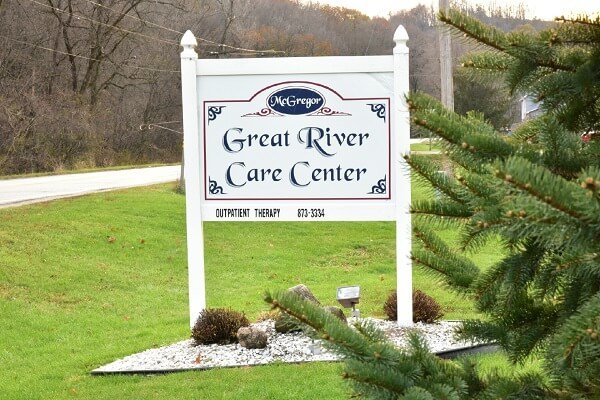
1400 West Main, Mc Gregor, IA 52157 (563) 873-3527
For profit - Limited Liability company 39 Beds Independent Data: November 2025
Trust Grade
90/100
#30 of 392 in IA
Last Inspection: August 2025

Inspected within the last 6 months. Data reflects current conditions.

Overview

Great River Care Center in McGregor, Iowa, has a Trust Grade of A, indicating it is highly recommended and considered excellent in quality. It ranks #30 out of 392 facilities in Iowa, placing it in the top half, and #2 out of 5 facilities in Clayton County, meaning there is only one better option nearby. The facility's performance is stable, with the same number of issues reported in both 2024 and 2025. Staffing is rated at 4 out of 5 stars, which is good, but the 48% turnover rate is average compared to the state average of 44%. Notably, the center has no fines on record, which is a positive sign. However, there are some concerns. Recent inspections revealed that the center failed to provide proper feeding tube care for one resident, neglected to update a care plan to include hospice care for another, and did not uphold the dignity of a resident who required assistance with daily activities. While the overall environment appears strong, these specific incidents highlight areas needing attention to ensure all residents receive the care they deserve.
Trust Score
A
90/100
In Iowa
#30/392
Top 7%
Safety Record
Low Risk
No red flags
Inspections
Holding Steady
1 → 1 violations
Staff Stability
⚠ Watch
48% turnover. Above average. Higher turnover means staff may not know residents' routines.
Penalties
✓ Good
No fines on record. Clean compliance history, better than most Iowa facilities.
Skilled Nurses
○ Average
Each resident gets 40 minutes of Registered Nurse (RN) attention daily — about average for Iowa. RNs are the most trained staff who monitor for health changes.
Violations
✓ Good
Only 4 deficiencies on record. Cleaner than most facilities. Minor issues only.
★★★★★
5.0
Overall Rating
★★★★☆
4.0
Staff Levels
★★★★☆
4.0
Care Quality
★★★★★
5.0
Inspection Score
Stable
2024: 1 issues
2025: 1 issues

The Good

  • 4-Star Staffing Rating · Above-average nurse staffing levels
  • 4-Star Quality Measures · Strong clinical quality outcomes
  • Full Sprinkler Coverage · Fire safety systems throughout facility
  • No fines on record

Facility shows strength in staffing levels, quality measures, fire safety.

The Bad

Staff Turnover: 48%

Near Iowa avg (46%)

Higher turnover may affect care consistency

The Ugly 4 deficiencies on record

Aug 2025 1 deficiency
CONCERN (D)

Potential for Harm - no one hurt, but risky conditions existed

Tube Feeding (Tag F0693)

Could have caused harm · This affected 1 resident

**NOTE- TERMS IN BRACKETS HAVE BEEN EDITED TO PROTECT CONFIDENTIALITY** Based on observation, clinical record review, policy review and staff interview, the facility failed to provide a water flush pe...

Read full inspector narrative →
**NOTE- TERMS IN BRACKETS HAVE BEEN EDITED TO PROTECT CONFIDENTIALITY** Based on observation, clinical record review, policy review and staff interview, the facility failed to provide a water flush per the physician order, measure the formula amount during feeding set up and raise the head of the bed to 45 degrees in the provision of feeding tube care for 1 of 1 resident sampled (Resident #4). The facility identified a census of 29 residents.Findings include:The Minimum Data Set (MDS) assessment dated [DATE] documented Resident #4 with unclear speech (slurred or mumbled words), rarely/never able to make self-understood, and rarely/never able to understand others. Resident #4 had a long/short-term memory impairment, unable to recall the current season, location of room, staff names and faces, that he was in a nursing home and severely impaired decision-making ability (never/rarely made decisions). Resident #4 exhibited fluctuating inattention (difficulty focusing attention). The MDS listed diagnoses of anoxic brain damage (lack of oxygen to the brain which can cause lasting cognitive effects), dysphagia (difficulty or inability to swallow), gastrostomy status (a feeding tube inserted through the gastric system to provide nutrients and fluids into the body), and profound intellectual disabilities. Resident #4 received 51% or more of total calories and 501 cc (cubic centimeter)/day or more through a feeding tube in the last 7 days while a resident. A Physician Visit Note, encounter date 5/09/25, documented Resident #4 with a profound intellectual disability, chronic anoxic encephalopathy, presence of a percutaneous endoscopic gastrostomy (PEG) tube (feeding tube), oropharyngeal dysphagia (difficulty swallowing) and history of a gastric ulcer. A Progress Note dated 6/21/25 at 1:21 AM documented Resident #4's feeding tube was obstructed and unable to flush to continue the feeding.A Progress Note dated 6/21/25 at 9:48 AM detailed notification to the on-call provider with orders to send Resident #4 to the emergency department (ED) for evaluation of clogged a clogged feeding tube. Staff A, Licensed Practical Nurse (LPN) obtained a Verbal Physician Order to send Resident #4 to the ED on 6/21/25 at 9:59 AM. A 6/25/25 Appointment Note detailed a new feeding tube was placed. The Facility Appointment Physician Response Resident #4 feeding tube had been exchanged, flushed and was working. A New Verbal Physician Order dated 6/25/25 at 2:19 PM ordered Jevity 1.5 Cal/Fiber Oral Liquid Nutritional Supplement, give 1100 ML (milliliter) via feeding tube in the afternoon via pump at 110 ML/hour with auto flush at 15 ML/hour. Elevate the head of the bed (HOB) 45 degrees or higher during feed for two hours after the feeding.An Order Summary Report signed by the Provider on 6/30/25 listed the following physician orders:a. Flush: 150 Milliliters of tap water into feeding tube before the start of feeding. Start date 8/08/25. b. Jevity 1.5 Calories/fiber Oral Liquid Supplement, give 1100 ML via feeding tube in the afternoon via pump at 110 ML/hour x 10 hours with auto flush at 15 ML/hour x 10 hours. Elevate the head of the bed 45 degrees or higher during the feeding for two hours after feeding. Start date 4/15/25. The Nutritional status Care Plan revised 7/11/25 noted Resident #4 received nothing by mouth and needed an alternate feeding method due to aspiration (the inhalation of a substance like food, liquids into the lungs) and a diagnosis of difficulty swallowing. The Care Plan directed to elevate the head of the bed as ordered; provide water flushes as ordered, and to provide tube feeding as ordered.Observation on 8/18/2025 at 12:57 PM and 1:46 PM revealed Resident #4 sat in a recliner in the front lounge muttering non-sensical speech to himself and as staff walked by. During an observation on 8/18/25 at 3:44 PM Resident #4 lay in bed on his back with the head of his bed up approximately 30 degrees. Resident #4 continued to mutter non-sensical speech. Staff B, Registered Nurse (RN) hung a 1000 ML feeding bag on a pole, then poured four 8 ounce (oz) (237 ML) containers of Jevity 1.5 Formula into the feeding bag for a total of of 948 ML. Staff A then poured an unspecified amount out of a fifth Jevity container into the feeding bag topping just over 1000 ML. Staff B voiced Resident #4's orders were to receive 1100 ML, so she just poured a little extra in the bag above the 1000 ML line and that should be about right. Staff B poured 500 ML of tap water into a separate feeding bag. Staff B primed the feeding pump line set and set the pump to 110 ML per hour with a 15 ML water flush every hour. Staff B hooked Resident #4 feeding tube up, then raised the head of his bed up a little more, but not to 45 degrees. When asked if the feeding pump provided a water flush prior to and after the feeding, Staff B responded she wasn't sure and would have to check the physician orders on the water flush. During an interview on 8/18/25 at 4:10 PM Staff B checked Resident #4 flush orders. Staff B scrolled Resident #4's physician orders in the computer and stated she had not completed the 150 ML water flush per the physician order prior to starting the Jevity feeding. An 8/19/25 review of Resident #4 Electronic Medication Administration Record (EMAR) showed Staff B documented off the following physician orders as completed:a. Flush 150 ML of tap water into the feeding tube before the start of feeding every day shift. State date 8/08/25. b. Jevity Cal/Fiber Oral Liquid Nutritional Supplement, give 1100 ML via feeding tube in the afternoon via pump at 110 ML/hour for 10 hours with auto flush at 15 ML/hour x 10 hour. Elevate HOB 45 degrees or higher during feed for two hours after feeding. During an interview on 8/20/25 at 1:39 PM Staff C, Certified Nursing Assistant (CNA) reported Resident #4 could not express any feeling or verbalize directly. He just had gibberish and random sounds that he made.Interview completed on 8/21/25 at 9:18 AM revealed Staff D, CNA verbalized Resident #4 couldn't carry a regular conversation. Observation on 8/21/25 at 9:47 AM revealed Resident #4 sat in the front lounge recliner vocalizing random sounds. During an interview on 8/21/25 at 11:05 AM the Director of Nursing (DON) explained all the physician orders were on the EMAR. She expected the nurses to verify the physician orders for the tube feeding, gather all supplies, double check the physician orders, take the laptop into the resident's room with them, verify the feeding rate and amount prior to starting the tube feeding, and ensure resident is in the appropriate position and comfortable with no irregularities with the feeding tube placement or site. If questions, she expected the nurses to come ask prior to the feeding tube administration. She then expected the nurses to check on the tube feeding hourly to ensure the resident tolerating and was going well. She voiced she would like the nurses to check the physician orders three times to ensure it is accurate and they were following the physician orders for the tube feeding. The Enteral Feeding Tube Policy, effective 6/20/22, documented the facility would provide and implement a plan of care for the delivery of nutrients per feeding tube when nutrients could not be obtained through the oral route. The Policy under Continuous Infusion directed the following:a. The HOB must be elevated 30-45 degrees at all times if tube feeding is continuous, unless the physician specifies another position. b. For Jejunostomy tube feedings, measure the amount of tubing between the end of the tube and the point where the tube enters the body. Do not initiate feedings if the tube length has changed from baseline measurements. Check for residual in stomach per the physician order.c. Initiate feeding, fill formula bag with prescribed formula. Connect to infusion pumps, spike containers and prime the tubing. d. Connect formula bag to pump to the end of the feeding tube. Set the pump to the physician orders. e. Flush tubing with 30-60 ML of water, per the physician's orders.
Oct 2024 1 deficiency
CONCERN (D)

Potential for Harm - no one hurt, but risky conditions existed

Comprehensive Care Plan (Tag F0656)

Could have caused harm · This affected 1 resident

Based on record review, staff interviews, and policy review the facility failed to revise the Care Plan to include hospice care for 1 of 1 residents reviewed (Resident #24). The facility reported a ce...

Read full inspector narrative →
Based on record review, staff interviews, and policy review the facility failed to revise the Care Plan to include hospice care for 1 of 1 residents reviewed (Resident #24). The facility reported a census of 25 residents. Findings include: The Minimum Data Set (MDS) report dated 8/01/24 for Resident #24 indicated a Brief Interview for Mental Status (BIMS) score of 0/15, indicating severe cognitive impairment. The MDS further indicated diagnoses including: Alzheimer's disease, non-Alzheimer's dementia, and seizure disorder. The Progress Note dated 8/08/24 documented Resident #24 admitted to hospice on this date. A review of Resident #24 Care Plan, revised 9/30/24 revealed the plan lacked a focus area for hospice care. In an interview on 10/02/24 at 8:59 AM the Assistant Director of Nursing explained Staff A, Nurse Consultant was in charge of updating the Care Plans both upon admission and as things change. In an interview on 10/02/24 at 9:01 AM Staff B, Nurse Consultant explained she expected the Care Plan to be updated by the next business day. She confirmed Staff A does the quarterly, annual, admission, and weekly updates to the Care Plan. She noted she helped with the updates as well. In an interview on 10/02/24 at 11:02 AM Staff A explained they usually have a specialized hospice focus section on the Care Plan. She noted she was not sure why it did not get on there for Resident #24. She reported they want to update the Care Plan as soon as they can. The facility policy titled Comprehensive Care Plan, revised 7/18/22 instructed the Care Plan to describe the services that are to be furnished to attain or maintain the resident's highest practicable physical, mental, and psychosocial well-being as required. It further instructed the planning for care, treatment, and services to include the following: - Develop a plan for care, treatment, and services that includes resident care goals that are reasonable and measurable - The frequency of care, services, and treatment - Team members responsible for care, services, and treatment - Regularly reviewing and revising the plan for care, treatment, and services After initiation of the plan of care by nursing, those disciplines consulting in the care shall contribute to the plan as appropriate to the resident's assessed needs. All staff using the computerized plan of care shall be responsible for interdisciplinary collaboration to establish goals and appropriate interventions, as well as ongoing evaluations and revisions.
Oct 2023 2 deficiencies
CONCERN (D)

Potential for Harm - no one hurt, but risky conditions existed

Resident Rights (Tag F0550)

Could have caused harm · This affected 1 resident

**NOTE- TERMS IN BRACKETS HAVE BEEN EDITED TO PROTECT CONFIDENTIALITY** Based on observation, clinical record review, policy review, and staff interview the facility failed to uphold resident dignity ...

Read full inspector narrative →
**NOTE- TERMS IN BRACKETS HAVE BEEN EDITED TO PROTECT CONFIDENTIALITY** Based on observation, clinical record review, policy review, and staff interview the facility failed to uphold resident dignity for 1 of 6 residents sampled (Resident #22). The facility identified a census of 27 residents. Findings include: The Minimum Data Set (MDS) assessment dated [DATE] showed a Brief Interview for Mental Status (BIMS) score of 14 indicating intact cognition. The Resident required extensive assistance of one staff member for transferring and toilet use and noted Resident #22 as being always incontinent of urine. The MDS listed active diagnoses of diabetes mellitus, morbid obesity, and overactive bladder. The Care Plan revised 2/17/23 documented the Resident's ability to complete activities of daily living had deteriorated related to osteoarthritis and the resident was at a risk of falling due to a deranged knee, morbid obesity, and osteoarthritis. The Care Plan directed the staff to walk the resident with one assist, gait belt, and front wheeled walker and to provide toileting assistance before and after meals, at hour of sleep, and as needed. During an observation on 10/24/23 at 9:24 AM Staff A, Certified Nursing Assistant (CNA) placed a gait belt around Resident #22 waist, assisted to stand from her wheelchair and walked approximately 10 feet from her wheelchair into the bathroom. At 9:25 AM Resident #22 while looking forward at the toilet verbalized the toilet is still dirty. It hasn't been cleaned yet. Staff A continued to have the resident turn to sit on the toilet and did not acknowledge the resident had verbalized the toilet was dirty. Staff A left the bathroom door open with the window curtains to the outside room window open which faced out to a wooded bluff with a house visible on the upper bluff, and the facility liquefied petroleum (LP) gas tanks visible from the window. At 9:29 AM Staff A closed the room curtains to the outside window. At 9:35 AM Staff A assisted Resident #22 off the toilet and ambulated the Resident from the bathroom to her recliner. Staff A closed the bathroom door, washed her hands, and left the Resident's room without cleaning the toileting. Observation of the Resident's toilet on 10/24/23 at 9:36 AM revealed an approximate 3 inch by 4 inch area of stuck down dried brownish tan substance, with the appearance of smeared bowel movement (BM), extending out from the top of the toilet seat rim and around the back toilet inner seat rim. Observation of Resident #22 bathroom toilet seat on 10/24/23 at 12:30 PM revealed a 2 inch by 4 inch faded yellow discoloration, with the appearance of being stained, along the back rim of the toilet seat. Observation of Resident #22 bathroom toilet seat on 10/25/23 at 1:20 PM revealed a 1 inch by 4 inch faded yellow discoloration on the back of the inner rim of the toilet seat. On 10/25/23 at 1:30 PM Staff C, Housekeeping, reported they clean all resident rooms daily. She reported she had noted the yellow staining on the back toilet seat rim for Resident #22 toilet. She reported the Resident's roommate does have periodic episodes of getting bowel movement on the toilet. She reported she cleans the resident's bathroom toilet every day. She uses Clorox Hydrogen Peroxide Cleaner to clean the toilet seat, but she could try to use Clorox bleach to try to remove the stain. On 10/25/23 at 1:38 PM Staff D, CNA, reported she would not sit a resident down on a toilet that had BM on the toilet seat. She would wipe the toilet seat off with a rag and then get the disinfection wipes to clean the toilet seat before assisting the resident with toileting. On 10/25/23 2:29 PM the Assistant Director of Nursing reported it is not dignified to sit a resident down on a dirty toilet seat. She reported she would get the pink disinfectant spray and follow the manufacturer's recommendation for cleaning the toilet seat. During an interview on 10/25/23 at 2:31 PM the Director of Nursing reported she expected staff would disinfect the toilet seat before assisting the resident with toileting cares. It would not be dignified to sit a resident down on a toilet that had BM on the seat. The facility Resident [NAME] of Rights established the resident has a right to a dignified existence, self-determination, and communication with and access to persons and services inside and outside of the facility. A facility must treat each resident with respect and dignity and care for each resident in a manner and in an environment, that promotes maintenance or enhancement of his or her quality of life, recognizing each resident's individuality. The facility must protect and promote the rights of residents. Under Respect and Dignity the [NAME] of Rights further directed the resident has a right to be treated with respect and dignity, including the right of residents to receive services in the facility with reasonable accommodation of a resident needs and preferences except when to do so would endanger the health or safety of the resident or other residents. The Basic Cleaning Concepts undated provided by the facility identified general sanitizing to make surface or area clean by removing dirt, germs, and unwanted substances. The Basic Cleaning Concepts specified High Touch Areas/surfaces are those that have frequent contact with hands. High touch surfaces in care areas require increased frequent cleaning and disinfection than minimal contact surfaces. Cleaning is usually done at least daily and more frequently if the risk of environmental contamination is higher. The Basic Cleaning Concepts identified toilet seats as a high touch area in the resident restroom.
CONCERN (D)

Potential for Harm - no one hurt, but risky conditions existed

Deficiency F0658 (Tag F0658)

Could have caused harm · This affected 1 resident

**NOTE- TERMS IN BRACKETS HAVE BEEN EDITED TO PROTECT CONFIDENTIALITY** Based on observation, clinical record review, policy review, manufacturer's full prescribing information, and staff interview, t...

Read full inspector narrative →
**NOTE- TERMS IN BRACKETS HAVE BEEN EDITED TO PROTECT CONFIDENTIALITY** Based on observation, clinical record review, policy review, manufacturer's full prescribing information, and staff interview, the facility failed to administer medicated eye drops per the physician order and per the manufacturer's prescribing information for 1 of 1 residents sampled (Resident #15). The facility identified a census of 27 residents. Findings include: The Minimum Data Set (MDS) assessment dated [DATE] showed a Brief Interview for Mental Status (BIMS) score of 9 indicating moderate cognitive loss. The MDS listed diagnoses of Alzheimer's Dementia and primary open-angle glaucoma, left eye, mild stage. A Order Summary Report signed by the Provider on 10/24/23 detailed the following physician orders: 1. Latanoprost Solution 0.005 % (percent) instill 1 drop in both eyes one time a day related to primary open angle glaucoma, left eye, mild stage. Start date 5/11/21. 2. Dorzolamide Hydrochloride Solution 2 % instill 1 drop in right eye two times a day related to primary open angle glaucoma, left eye, mild stage. Start date 5/10/21. During an observation on 10/25/23 at 7:12 AM Staff B, Registered Nurse (RN) administered Dorzolamide 2%, placing one drop to each eye. At 7:14 AM Staff B reported she was administering the Latanoprost and placed one drop of Latanoprost 0.005% into each eye for Resident #15. Staff B failed to administer the medications according to the written physician order and failed to administer according to the manufacturer's Full Prescribing Information. On 10/25/23 at 8:56 AM the Administrator reported the facility follows the eye drop manufacturer's recommendations. A Review of the October 2023 Medication Administration Record (MAR) showed Staff B signed the following medications as being administered according to the physician orders for 10/25/23 at 7:00 AM: 1. Latanoprost Solution 0.005 % instill 1 drop in both eyes one time a day related to primary open angle glaucoma, left eye, mild stage. Start date 5/11/21. 2. Dorzolamide Hydrochloride Solution 2 % instill 1 drop in right eye two times a day related to primary open angle glaucoma, left eye, mild stage. Start date 5/10/21. On 10/25/23 at 2:10 PM Staff B reviewed the eye drop medication orders for Resident #15. She reported she had been very nervous and had not realized she gave two drops of the Dorzolamide. She verbalized she saw the right eye and then saw the left eye in the diagnosis part on the MAR and that had confused her. She reported she usually follows the physician orders. She further explained she did not know what the manufacturer's wait time was between medicated eye drops. She verbalized she thought the wait time was between 2-3 minutes. She had not received any medication training by the facility when she started at the end of August 2023. She explained when you are an agency nurse, facilities expect you to know what you are doing when you start. During an interview on 10/25/23 at 2:35 PM the Director of Nursing reported she expects the nurses to follow physician orders and follow the manufacturer's recommendations for use. She reported the nurses would have to look up the manufacturer's recommendations prior to administering medicated eye drops. The Medication Administration Policy revised 4/01/23 provided by the facility under Procedure directed the nurse to verify the resident, drug, strength, dose, route, and hours of administration with the Medication Administration Record. The Dorzolamide Hydrochloride Solution/Drops, Bausch & Lomb Incorporated Full Prescribing Information under Dosage and Administration directed the following: the dose is one drop of Dorzolamide Hydrochloride Ophthalmic Solution in the affected eye(s) three times daily. Dorzolamide Hydrochloride Ophthalmic Solution may be used concomitantly with other topical ophthalmic drug products to lower intraocular pressure. If more than one topical ophthalmic drug is being used, the drugs should be administered at least five minutes apart. The Latanoprost Solution/Drops, Aurobindo Pharma Limited Full Prescribing Information under Dosage and Administration directed the following: the recommended dosage is one drop in the affected eye(s) once daily in the evening. Latanoprost Ophthalmic Solution may be used concomitantly with other topical ophthalmic drug products to lower intraocular pressure. If more than one topical ophthalmic drug is being used, the drugs should be administered at least five (5) minutes apart.
Understanding Severity Codes (click to expand)
Life-Threatening (Immediate Jeopardy)
J - Isolated K - Pattern L - Widespread
Actual Harm
G - Isolated H - Pattern I - Widespread
Potential for Harm
D - Isolated E - Pattern F - Widespread
No Harm (Minor)
A - Isolated B - Pattern C - Widespread

Questions to Ask on Your Visit

  • "Can I speak with families of current residents?"
  • "What's your RN coverage like on weekends and overnight?"

Our Honest Assessment

Strengths
  • • Grade A (90/100). Above average facility, better than most options in Iowa.
  • • No major safety red flags. No abuse findings, life-threatening violations, or SFF status.
  • • No fines on record. Clean compliance history, better than most Iowa facilities.
  • • Only 4 deficiencies on record. Cleaner than most facilities. Minor issues only.
Concerns
  • • No significant concerns identified. This facility shows no red flags across CMS ratings, staff turnover, or federal penalties.
Bottom line: Generally positive indicators. Standard due diligence and a personal visit recommended.

About This Facility

What is Great River Care Center's CMS Rating?

CMS assigns Great River Care Center an overall rating of 5 out of 5 stars, which is considered much above average nationally. Within Iowa, this rating places the facility higher than 99% of the state's 100 nursing homes. This rating reflects solid performance across the metrics CMS uses to evaluate nursing home quality.
How is Great River Care Center Staffed?
CMS rates Great River Care Center's staffing level at 4 out of 5 stars, which is above average compared to other nursing homes. Staff turnover is 48%, compared to the Iowa average of 46%. RN turnover specifically is 60%, which is notably high. RNs provide skilled clinical oversight, so turnover in this role can affect medical care quality.

What Have Inspectors Found at Great River Care Center?

State health inspectors documented 4 deficiencies at Great River Care Center during 2023 to 2025. These included: 4 with potential for harm.

Who Owns and Operates Great River Care Center?

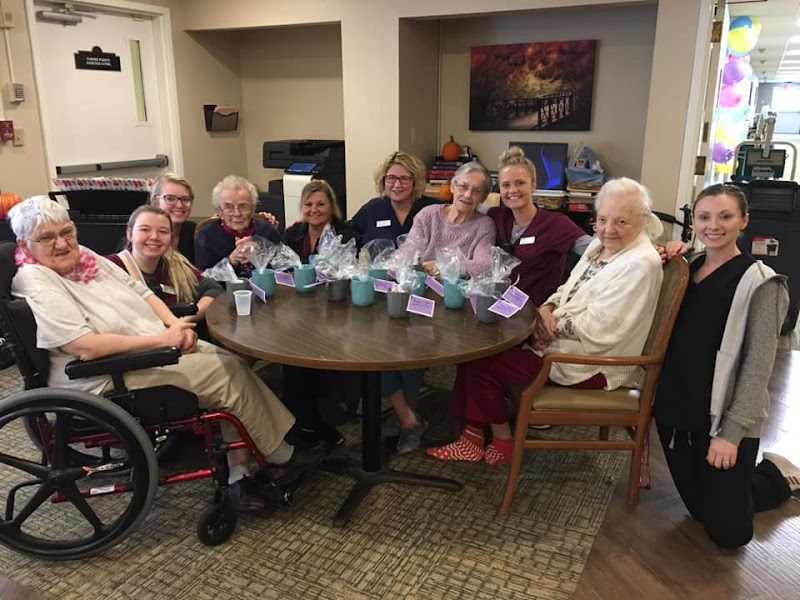
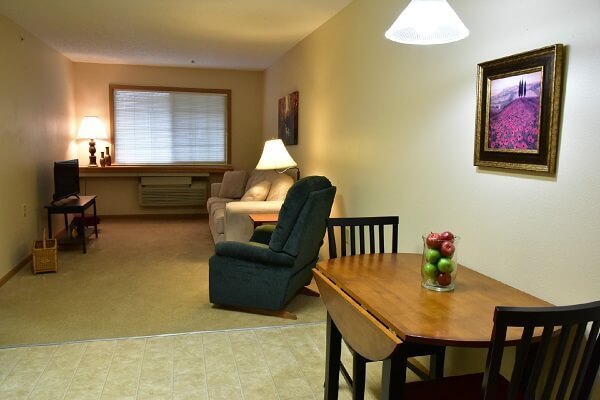
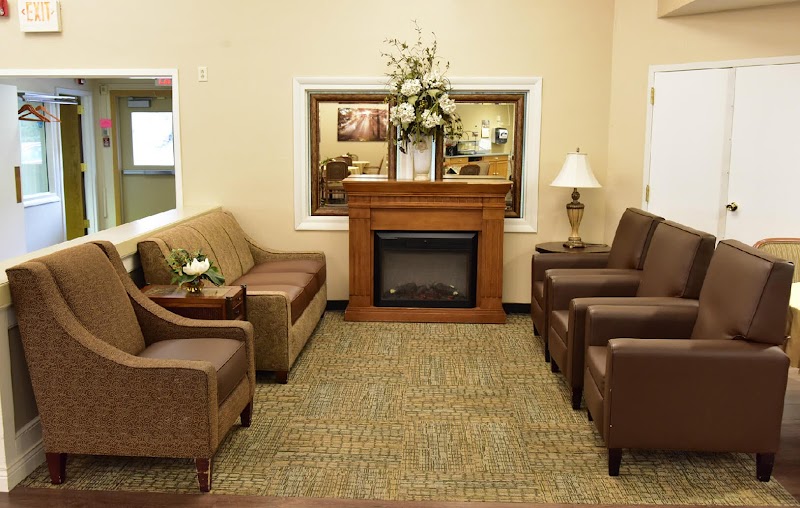
Great River Care Center is owned by a for-profit company. For-profit facilities operate as businesses with obligations to shareholders or private owners. The facility operates independently rather than as part of a larger chain. With 39 certified beds and approximately 25 residents (about 64% occupancy), it is a smaller facility located in Mc Gregor, Iowa.

How Does Great River Care Center Compare to Other Iowa Nursing Homes?

Compared to the 100 nursing homes in Iowa, Great River Care Center's overall rating (5 stars) is above the state average of 3.1, staff turnover (48%) is near the state average of 46%, and health inspection rating (5 stars) is much above the national benchmark.

What Should Families Ask When Visiting Great River Care Center?

Based on this facility's data, families visiting should ask: "Can I visit during a mealtime to observe dining assistance and food quality?" "How do you handle medical emergencies, and what is your hospital transfer rate?" "Can I speak with family members of current residents about their experience?"

Is Great River Care Center Safe?

Based on CMS inspection data, Great River Care Center has a clean safety record: no substantiated abuse findings (meaning no confirmed cases of resident harm), no Immediate Jeopardy citations (the most serious violation level indicating risk of serious injury or death), and is not on the Special Focus Facility watch list (a federal program monitoring the lowest-performing 1% of nursing homes). The facility has a 5-star overall rating and ranks #1 of 100 nursing homes in Iowa. While no facility is perfect, families should still ask about staff-to-resident ratios and recent inspection results during their visit.

Do Nurses at Great River Care Center Stick Around?

Great River Care Center has a staff turnover rate of 48%, which is about average for Iowa nursing homes (state average: 46%). Moderate turnover is common in nursing homes, but families should still ask about staff tenure and how the facility maintains care continuity when employees leave.

Was Great River Care Center Ever Fined?

Great River Care Center has no federal fines on record. CMS issues fines when nursing homes fail to meet care standards or don't correct problems found during inspections. The absence of fines suggests the facility has either maintained compliance or corrected any issues before penalties were assessed. This is a positive indicator, though families should still review recent inspection reports for the full picture.

Is Great River Care Center on Any Federal Watch List?

Great River Care Center is not on any federal watch list. The most significant is the Special Focus Facility (SFF) program, which identifies the bottom 1% of nursing homes nationally based on persistent, serious quality problems. Not being on this list means the facility has avoided the pattern of deficiencies that triggers enhanced federal oversight. This is a positive indicator, though families should still review the facility's inspection history directly.