Story Medical Senior Care

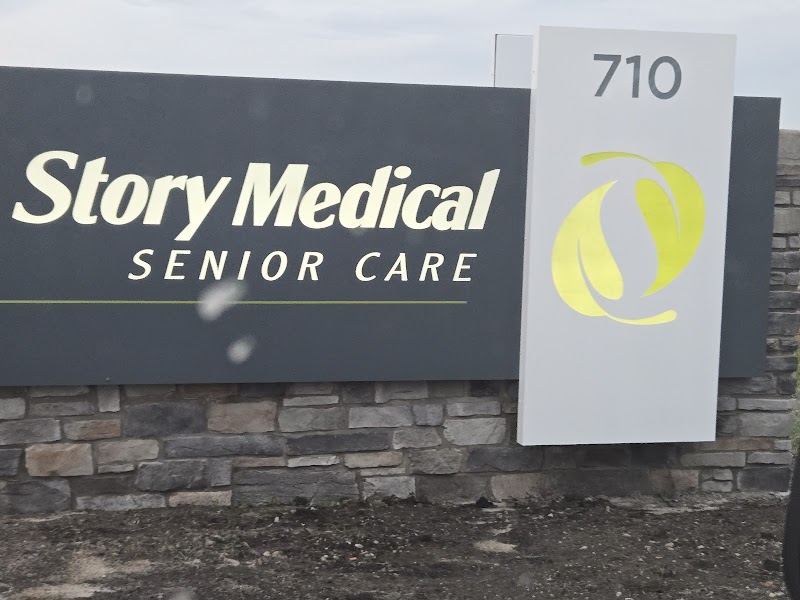
710 S 19TH ST, NEVADA, IA 50201 (515) 382-2111
Government - County 60 Beds Independent Data: November 2025
Trust Grade
90/100
#74 of 392 in IA
Last Inspection: April 2025

Within standard 12-15 month inspection cycle. Federal law requires annual inspections.

Overview

Story Medical Senior Care in Nevada, Iowa, has earned a Trust Grade of A, indicating it is highly recommended and considered excellent compared to other facilities. It ranks #74 out of 392 in Iowa, placing it in the top half of nursing homes in the state, and it holds the #1 position out of 7 facilities in Story County. The facility is on an improving trend, with issues decreasing from 2 in 2024 to just 1 in 2025. Staffing is a notable strength, rated 5 out of 5 stars with a turnover rate of only 30%, which is well below the Iowa average of 44%. There are some weaknesses to consider, including a few concerns raised during inspections, such as improper food service sanitation practices and three staff members not completing mandatory adult abuse training. Additionally, there was a failure to submit a required evaluation for a resident with a new mental health diagnosis. However, the facility has not incurred any fines, which is a positive sign, and it boasts more RN coverage than 84% of Iowa facilities, suggesting that residents receive attentive care.

Trust Score
A
90/100
In Iowa
#74/392
Top 18%
Safety Record
Low Risk
No red flags
Inspections
Getting Better
2 → 1 violations
Staff Stability
○ Average
30% turnover. Near Iowa's 48% average. Typical for the industry.
Penalties
✓ Good
No fines on record. Clean compliance history, better than most Iowa facilities.
Skilled Nurses
✓ Good
Each resident gets 72 minutes of Registered Nurse (RN) attention daily — more than 97% of Iowa nursing homes. RNs are the most trained staff who catch health problems before they become serious.
Violations
○ Average
7 deficiencies on record. Average for a facility this size. Mostly minor or procedural issues.
★★★★★
5.0
Overall Rating
★★★★★
5.0
Staff Levels
★★☆☆☆
2.0
Care Quality
★★★★☆
4.0
Inspection Score
Stable
2024: 2 issues
2025: 1 issues

The Good

  • 5-Star Staffing Rating · Excellent nurse staffing levels
  • Full Sprinkler Coverage · Fire safety systems throughout facility
  • No fines on record
  • Staff turnover below average (30%)

    18 points below Iowa average of 48%

Facility shows strength in staffing levels, fire safety.

The Bad

Staff Turnover: 30%

16pts below Iowa avg (46%)

Typical for the industry

The Ugly 7 deficiencies on record

Apr 2025 1 deficiency
CONCERN (D)

Potential for Harm - no one hurt, but risky conditions existed

PASARR Coordination (Tag F0644)

Could have caused harm · This affected 1 resident

**NOTE- TERMS IN BRACKETS HAVE BEEN EDITED TO PROTECT CONFIDENTIALITY** Based on clinical record review, staff interview and policy review, the facility failed to submit a Level II Preadmission Screen...

Read full inspector narrative →
**NOTE- TERMS IN BRACKETS HAVE BEEN EDITED TO PROTECT CONFIDENTIALITY** Based on clinical record review, staff interview and policy review, the facility failed to submit a Level II Preadmission Screening and Resident Review (PASSR) evaluation for 1 of 1 residents reviewed with a new mental health diagnosis and initiation of a psychotropic medication (Resident #17). The facility reported a census of 54 residents. Findings include: Resident #17's Minimum Data Set (MDS) assessment dated [DATE] included a diagnosis of delusional disorder. The MDS reflected Resident #17 received an antidepressant on a routine basis during the lookback period. The Care Plan initiated 5/24/24 indicated Resident #17 received the antidepressant Lexapro due to his diagnosis of delusions and anxiety. The Care Plan goal indicated Resident #17 would not have any adverse effects from the medication. Resident #17's Medical Diagnoses reviewed 4/1/25 included a diagnosis of delusional disorders effective 5/24/24. Resident #17's PASRR completed 9/25/23 listed a completed negative Level 1 screening. The PASRR lacked documentation of a known o r suspected mental health diagnosis. The clinical record lacked a Level II PASRR evaluation submission following the new mental health diagnosis of delusional disorder effective 5/24/24. The PASSR Screens/Level I and Level II Evals policy, revised November 2024 directed changes in status are required when a resident receives a new mental health diagnosis. During an interview 4/1/25 at 2:23 PM the Director of Nursing (DON) acknowledged she had not completed a Level II evaluation for Resident #17 with her new diagnosis of delusional disorder and initiation of Lexapro (antidepressant). During an interview 4/2/25 at 1:40 PM the Administrator revealed the expectation that a Level II PASSR evaluation needed to be submitted for residents with a significant change, psychotropic medication change or a new diagnosis related to mental health.
May 2024 2 deficiencies
CONCERN (E)

Potential for Harm - no one hurt, but risky conditions existed

Food Safety (Tag F0812)

Could have caused harm · This affected multiple residents

Based on observation, facility staff interview, and facility policy the facility failed to meet professional standards of food service sanitation during meal service. The facility reported a census of...

Read full inspector narrative →
Based on observation, facility staff interview, and facility policy the facility failed to meet professional standards of food service sanitation during meal service. The facility reported a census of 48. Findings include: On 5/8/24 at 11:45 AM during an observation of the meal service on first floor dining room, witnessed Staff B, Cook, remove the stainless steel covering off the food and placed the lids upright, alongside the cabinet, behind the steam table. The lids touched the floor. Interview on 5/8/24 at 12:30 PM Staff A, Dietitian, reported the covers are usually set alongside the food on the table. Staff B didn't place the lids appropriately. Staff A explained the Dietary Manager ensured training on food service and sanitation. Interview on 5/8/24 at 5:00 PM with the Administrator who said the staff should keep the lids sanitary and not touch the floor. Interview on 5/9/24 at 8:30 AM Staff B explained the steam table didn't have enough room for the lids and she didn't know where else to place them. Interview on 5/9/24 at 8:47 AM Staff C, Certified Dietary Manager (CDM), reported the staff should keep the lids on the steam table and if there is not room, she expected them to place them back in the hot box. The Infection Control Plan, Department, Food Nutritional Services policy revised 4/7/23 identified employee orientation included safe food handling procedures and prevention of cross contamination.
CONCERN (E)

Potential for Harm - no one hurt, but risky conditions existed

Deficiency F0943 (Tag F0943)

Could have caused harm · This affected multiple residents

Based on personnel file review, facility policy, and staff interview, the facility failed to assure 3 of 5 staff met the requirements for Mandatory Adult Abuse Training (Staff D, Staff E, and Staff F)...

Read full inspector narrative →
Based on personnel file review, facility policy, and staff interview, the facility failed to assure 3 of 5 staff met the requirements for Mandatory Adult Abuse Training (Staff D, Staff E, and Staff F). The facility reported a census for 48 residents. Findings include: The New Hires Since Last Survey Form provided by the facility listed the following staff with hire dates: a. Staff D, Certified Nursing Assistant (CNA): 5/22/23. b. Staff E, Food Nutrition Services (FNS): 6/13/23. c. Staff F, FNS: 7/7/23. Staff D's personnel file lacked a two-hour Dependent Adult Abuse Mandatory Reporter Training until 1/24/24. Staff D's Dependent Adult Abuse Mandatory Reporter Training required completion by 11/22/23. Staff E's personnel file lacked a completed two-hour Dependent Adult Abuse Mandatory Reporter. Staff E's Dependent Adult Abuse Mandatory Reporter Training required completion by 12/13/23. Staff F's personnel file review lacked a 2-hour Dependent Adult Abuse Mandatory Reporter training. Staff F's Dependent Adult Abuse Mandatory Reporter Training required completion by 1/7/24. Th Nursing Facility Abuse Prevention, Identification, Investigation and Reporting Policy, reviewed 5/23/23, instructed each employee required an initial two-hour training course provided by the Iowa Department of Human Services relating to the identification and reporting of dependent adult abuse within six months of hire for each employee. In an interview on 5/8/24 at 5:07 PM the Administrator acknowledged they expected each staff member receive Dependent Adult Abuse Mandatory Reporter training within 6 months of their hire date.
Feb 2023 4 deficiencies
CONCERN (D)

Potential for Harm - no one hurt, but risky conditions existed

Deficiency F0657 (Tag F0657)

Could have caused harm · This affected 1 resident

**NOTE- TERMS IN BRACKETS HAVE BEEN EDITED TO PROTECT CONFIDENTIALITY** Based on clinical record review, staff interview, and policy review the facility failed to review and revise care plans for 1 of...

Read full inspector narrative →
**NOTE- TERMS IN BRACKETS HAVE BEEN EDITED TO PROTECT CONFIDENTIALITY** Based on clinical record review, staff interview, and policy review the facility failed to review and revise care plans for 1 of 13 residents reviewed (Residents #34). The facility reported a census of 46 residents. Findings include: Resident #34 ' s Minimum Data Set (MDS) assessment dated [DATE] identified a Brief Interview for Mental Status (BIMS) score of 7, indicating moderately impaired cognition. The MDS identified Resident #34 required extensive assistance of one person with bed mobility, transfers, ambulation and toilet use. The MDS indicated Resident #34 used a walker and a wheelchair. The MDS included diagnoses of cancer, anemia, Alzheimer's disease, and anxiety disorder. A Physician Order dated 1/16/23 directed staff to administer lorazepam, (Ativan) an antianxiety medication, 0.25 ml (milliliters) by mouth at bedtime for increased anxiety related to malignant neoplasm (cancerous abnormal growth of tissue) of the esophagus. Review of Resident #34 ' s Comprehensive Care Plan dated 1/9/23 lacked the use of an antianxiety medication, potential side effects, and what to monitor for while taking the high risk medication. The facility policy titled Care Plan- Comprehensive effective April 2019 stated it is the policy of the facility to develop a comprehensive person centered Care Plan for each resident that included measurable objectives and timetables to meet the resident ' s medical, nursing, and psychosocial needs. The policy further stated Care Plans are revised as changes in the resident ' s condition dictate. During an interview on 1/31/23 at 2:30 p.m. Staff A, MDS Coordinator/Assistant Director of Nursing, verified Ativan was not addressed on the Care Plan and agreed that it should be. Staff A stated she would add it to the Care Plan.
CONCERN (D)

Potential for Harm - no one hurt, but risky conditions existed

Deficiency F0658 (Tag F0658)

Could have caused harm · This affected 1 resident

**NOTE- TERMS IN BRACKETS HAVE BEEN EDITED TO PROTECT CONFIDENTIALITY** Based on observations, staff interviews, and clinical record reviews, the facility failed to provide care and services according...

Read full inspector narrative →
**NOTE- TERMS IN BRACKETS HAVE BEEN EDITED TO PROTECT CONFIDENTIALITY** Based on observations, staff interviews, and clinical record reviews, the facility failed to provide care and services according to accepted standards of clinical practice for 1 of 12 residents reviewed (Residents #34) for administration of medications and supplements. The facility reported a census of 46 residents. Findings include: Resident #34's Minimum Data Set assessment dated [DATE] identified a Brief Interview for Mental Status (BIMS) score of 7, indicating moderate cognitive impairment. Resident #34's MDS included diagnoses of cancer, gangrene (death of tissue due to infection or lack of blood flow), and necrosis (dying tissue) of the lung. On 2/1/23 at 10:48 a.m. observed Staff D, Licensed Practical Nurse (LPN), providing an Ipratropium Bromide HFA (Atrovent inhaler) to Resident #34. Staff D administered the inhaler to Resident #34. Resident #34 took one puff from the inhaler, exhaled, then took the second puff within 5 seconds of the first. Staff D did not wait the manufacturer's recommended 15 seconds between the two puffs. On 2/1/23 at 11:36 AM, Staff D verbalized there should be a couple of minutes between each inhaled puff when administering oral inhalers. Staff D also stated that she did not believe Resident #34 received an accurate amount of the inhaler medication. During an interview on 2/2/23 at 7:45 AM, Staff E, LPN, verbalized the process of administering oral inhaler medications as shaking the medication to mix the contents, count to 3 to alert the resident when to inhale, wait a second, then repeat shaking the medication and counting to 3 to alert the resident when to inhale. Afterwards rinse the resident's mouth out with water. On 2/2/23 at 8:15 AM, the Director of Nursing (DON) revealed the facility did not have a policy about inhaler administration but provided a data sheet from the pharmacist dated 2/1/23 at 5:09 PM. A Physician ' s Order dated 10/24/22 for Ipratropium Bromide HFA instructed to provide 2 puffs inhaled orally four times per day related to a personal history of nicotine dependence. Resident #34's electronic medication record (EMAR) for January 2023 and February 2023 listed that he received the Ipratropium Bromide HFA inhaler four times per day. On 2/2/23 at 9:09 AM the DON explained that she expected the staff administering oral inhalers to follow the manufacturer's instructions, such as rinse out the resident's mouth after using steroid inhalers and clean with an alcohol swab when finished.
CONCERN (D)

Potential for Harm - no one hurt, but risky conditions existed

Incontinence Care (Tag F0690)

Could have caused harm · This affected 1 resident

Based on observations, staff interview, clinical record review, and policy review the facility failed to provide appropriate catheter care for 1 of 1 residents reviewed (Resident #41) to prevent urina...

Read full inspector narrative →
Based on observations, staff interview, clinical record review, and policy review the facility failed to provide appropriate catheter care for 1 of 1 residents reviewed (Resident #41) to prevent urinary tract infections. The facility placed Resident #41 ' s catheter bag on a garbage can and on the floor. The facility reported a census of 46 residents. Findings include: The Minimum Data Set (MDS) assessment for Resident #41 dated 1/16/23 identified a Brief Interview for Mental Status (BIMS) score of 15, indicating intact cognition. The MDS identified that Resident #41 required extensive assistance of one person with bed mobility, toilet use, and extensive assistance of two persons with transfers. The MDS indicated Resident #41 had an indwelling catheter. Resident #41's MDS included diagnoses of benign prostatic hyperplasia, obstructive uropathy, renal disease, and feeling of incomplete bladder emptying. The Care Plan revised 1/20/23 identified Resident #41 required an indwelling foley catheter due to the inability to empty the bladder. A Physician Order dated 10/12/22 instructed to change the indwelling urinary catheter monthly and as needed for build up, leakage, and pain. On 1/30/23 at 1:02 p.m. observed Resident #41 ' s catheter bag in a dignity bag placed on the side of a garbage can next to the recliner. On 1/31/23 at 1:23 p.m. observed Resident 41 ' s catheter bag in a dignity bag placed on the side of a garbage can next to the recliner. On 2/1/23 at 8:55 a.m. watched Staff B, Certified Nursing Assistant (CNA), and Staff C, CNA, assist Resident #41 from the wheelchair to the edge of the bed using a sit to stand lift. Staff A removed the catheter bag without a dignity bag from the sit to stand machine and placed the catheter bag along with the catheter tubing directly on the floor. Staff A then picked up the catheter bag and tubing off the floor, and placed the catheter bag into a dignity bag hanging on the edge of the bed. No one cleaned or disinfected the catheter bag and tubing after being on the floor. A facility policy titled Catheter Care effective date April 2019 stated the purpose of the policy was to prevent infection and reduce irritation. The policy directed staff to place the catheter bag inside the dignity bag and keep it off the floor. During an interview on 2/1/23 at 9:15 a.m. the Director of Nursing (DON), agreed the catheter bag and tubing should not be on the floor or placed on the garbage can.The DON reported she would provide education to the staff.
CONCERN (D)

Potential for Harm - no one hurt, but risky conditions existed

Deficiency F0698 (Tag F0698)

Could have caused harm · This affected 1 resident

Based on clinical record review, staff interview, and policy review the facility failed to complete assessments before and after outpatient hemodialysis treatments for 1 of 1 resident reviewed that re...

Read full inspector narrative →
Based on clinical record review, staff interview, and policy review the facility failed to complete assessments before and after outpatient hemodialysis treatments for 1 of 1 resident reviewed that required dialysis (Resident #28). The facility reported a census of 46 residents. Finding include: The Minimum Data Set (MDS) assessment for Resident #28 dated 12/19/22 identified a Brief Interview for Mental Status (BIMS) score of 15, indicating intact cognition. The MDS identified Resident #28 as independent with bed mobility, transfers and toilet usage. The MDS indicated Resident #28 received dialysis while a resident at the facility. Resident #28 ' s MDS included diagnoses of stage four chronic kidney disease and dependence on renal dialysis. The Care Plan revised 12/23/22 identified a need for hemodialysis (the process of running the blood through an external machine to rid the blood of toxins) on Mondays, Wednesdays, and Fridays. The Care Plan directed the staff to weigh Resident #28 per doctor ' s orders, assist Resident #28 to get ready for dialysis, and to only use the right arm for blood pressure readings. Resident #28 ' s January 2023 Medication Administration Record (MAR) and Treatment Administration Record (TAR) failed to direct staff to complete a daily assessment or pre/post hemodialysis assessments on Mondays, Wednesdays, and Fridays. Review of 2023 calendar revealed Resident #28 should have attended hemodialysis on the following dates in January 2023: 1/2/23, 1/4/23, 1/6/23, 1/9/23, 1/11/23, 1/13/23, 1/16/23, 1/18/23, 1/20/23, 1/23/23, 1/25/23, 1/27/23, and 1/30/23. The clinical record lacked documentation of a completed pre and post dialysis assessmentfor Resident #28 on the following dates: 1/2/23- pre and post 1/4/23- pre and post 1/9/23- pre and post 1/11/23- pre and post 1/13/23- post 1/16/23- pre and post 1/18/23- pre and post 1/23/23- pre and post 1/25/23- pre and post 1/27/23- pre and post 1/30/23- pre and post Review of the documentation in the clinic record revealed no dialysis evaluation on non-dialysis days in the month of January 2023. Review of facility policy titled Dialysis Policy effective April 2019 stated the facility will ensure that residents who receive dialysis are provided care and assistance, consistent with professional standards. The policy directed staff to complete ongoing assessments that included vital signs with site checks prior to leaving and upon return from dialysis. During an interview on 2/1/23 at 4:26 p.m. the Director of Nursing (DON) acknowledged that Resident #28 ' s pre and post dialysis assessments did not get completed consistently.
Understanding Severity Codes (click to expand)
Life-Threatening (Immediate Jeopardy)
J - Isolated K - Pattern L - Widespread
Actual Harm
G - Isolated H - Pattern I - Widespread
Potential for Harm
D - Isolated E - Pattern F - Widespread
No Harm (Minor)
A - Isolated B - Pattern C - Widespread

Questions to Ask on Your Visit

  • "Can I speak with families of current residents?"
  • "What's your RN coverage like on weekends and overnight?"

Our Honest Assessment

Strengths
  • • Grade A (90/100). Above average facility, better than most options in Iowa.
  • • No major safety red flags. No abuse findings, life-threatening violations, or SFF status.
  • • No fines on record. Clean compliance history, better than most Iowa facilities.
  • • 30% turnover. Below Iowa's 48% average. Good staff retention means consistent care.
Concerns
  • • No significant concerns identified. This facility shows no red flags across CMS ratings, staff turnover, or federal penalties.
Bottom line: Generally positive indicators. Standard due diligence and a personal visit recommended.

About This Facility

What is Story Medical Senior Care's CMS Rating?

CMS assigns Story Medical Senior Care an overall rating of 5 out of 5 stars, which is considered much above average nationally. Within Iowa, this rating places the facility higher than 99% of the state's 100 nursing homes. This rating reflects solid performance across the metrics CMS uses to evaluate nursing home quality.

How is Story Medical Senior Care Staffed?

CMS rates Story Medical Senior Care's staffing level at 5 out of 5 stars, which is much above average compared to other nursing homes. Staff turnover is 30%, compared to the Iowa average of 46%. This relatively stable workforce can support continuity of care.

What Have Inspectors Found at Story Medical Senior Care?

State health inspectors documented 7 deficiencies at Story Medical Senior Care during 2023 to 2025. These included: 7 with potential for harm.

Who Owns and Operates Story Medical Senior Care?

Story Medical Senior Care is owned by a government entity. Government-operated facilities are typically run by state, county, or municipal agencies. The facility operates independently rather than as part of a larger chain. With 60 certified beds and approximately 56 residents (about 93% occupancy), it is a smaller facility located in NEVADA, Iowa.

How Does Story Medical Senior Care Compare to Other Iowa Nursing Homes?

Compared to the 100 nursing homes in Iowa, Story Medical Senior Care's overall rating (5 stars) is above the state average of 3.1, staff turnover (30%) is significantly lower than the state average of 46%, and health inspection rating (4 stars) is above the national benchmark.

What Should Families Ask When Visiting Story Medical Senior Care?

Based on this facility's data, families visiting should ask: "Can I visit during a mealtime to observe dining assistance and food quality?" "How do you handle medical emergencies, and what is your hospital transfer rate?" "Can I speak with family members of current residents about their experience?"

Is Story Medical Senior Care Safe?

Based on CMS inspection data, Story Medical Senior Care has a clean safety record: no substantiated abuse findings (meaning no confirmed cases of resident harm), no Immediate Jeopardy citations (the most serious violation level indicating risk of serious injury or death), and is not on the Special Focus Facility watch list (a federal program monitoring the lowest-performing 1% of nursing homes). The facility has a 5-star overall rating and ranks #1 of 100 nursing homes in Iowa. While no facility is perfect, families should still ask about staff-to-resident ratios and recent inspection results during their visit.

Do Nurses at Story Medical Senior Care Stick Around?

Story Medical Senior Care has a staff turnover rate of 30%, which is about average for Iowa nursing homes (state average: 46%). Moderate turnover is common in nursing homes, but families should still ask about staff tenure and how the facility maintains care continuity when employees leave.

Was Story Medical Senior Care Ever Fined?

Story Medical Senior Care has no federal fines on record. CMS issues fines when nursing homes fail to meet care standards or don't correct problems found during inspections. The absence of fines suggests the facility has either maintained compliance or corrected any issues before penalties were assessed. This is a positive indicator, though families should still review recent inspection reports for the full picture.

Is Story Medical Senior Care on Any Federal Watch List?

Story Medical Senior Care is not on any federal watch list. The most significant is the Special Focus Facility (SFF) program, which identifies the bottom 1% of nursing homes nationally based on persistent, serious quality problems. Not being on this list means the facility has avoided the pattern of deficiencies that triggers enhanced federal oversight. This is a positive indicator, though families should still review the facility's inspection history directly.