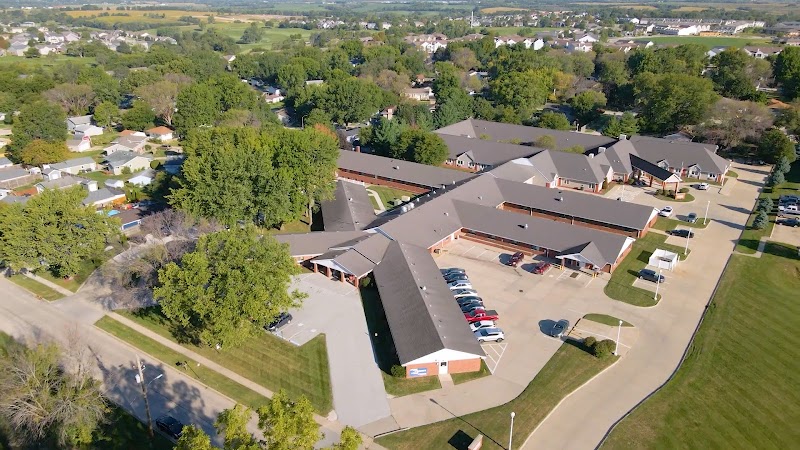
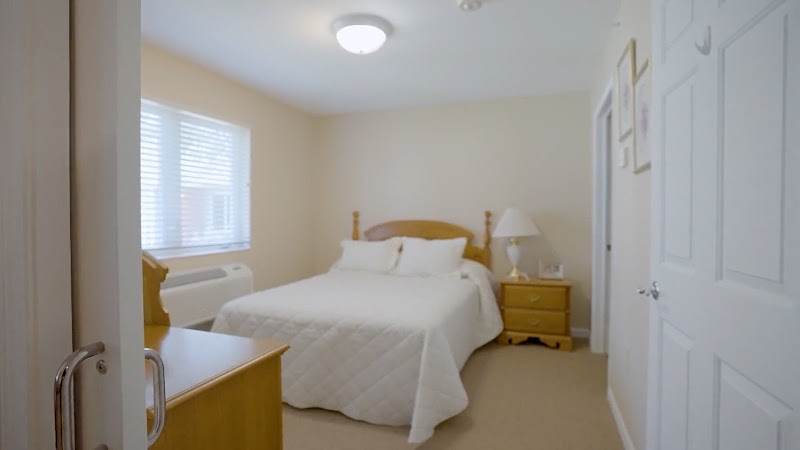
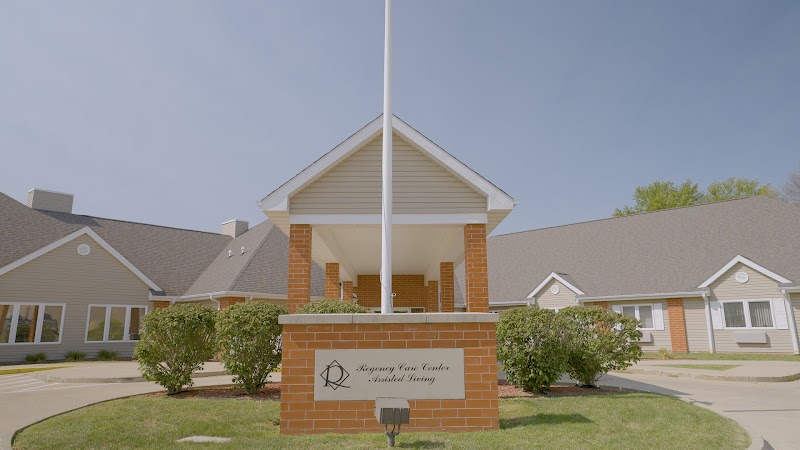
Regency Care Center

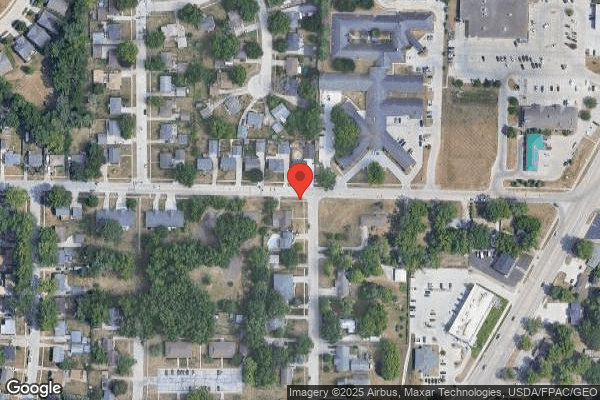
815 HIGH ROAD, NORWALK, IA 50211 (515) 981-4269
For profit - Limited Liability company 101 Beds MGM HEALTHCARE Data: November 2025 2 Immediate Jeopardy citations
Trust Grade
0/100
#375 of 392 in IA
Last Inspection: April 2025

Within standard 12-15 month inspection cycle. Federal law requires annual inspections.

Overview

Regency Care Center in Norwalk, Iowa has a Trust Grade of F, indicating significant concerns about the facility's quality and care. It ranks #375 out of 392 facilities in Iowa and #5 out of 6 in Warren County, placing it in the bottom tier of options in the area. The facility's performance is worsening, with the number of issues reported rising from 6 in 2024 to 10 in 2025. Staffing is a major weakness, with a poor rating of 1 out of 5 stars and a turnover rate of 62%, significantly higher than the state average. Additionally, the facility has faced substantial fines of $221,923, which is higher than 95% of Iowa facilities, indicating ongoing compliance issues. Strengths include a decent score of 4 out of 5 for quality measures, but this is overshadowed by serious weaknesses. For example, there was a critical incident where a resident at risk of elopement managed to leave the facility and sustained significant injuries. Another finding revealed that a resident did not receive necessary leg wraps as prescribed, compromising their health. Furthermore, there were inaccuracies in the assessments of several residents, which could lead to inadequate care. Families should weigh these serious concerns against the facility's strengths when considering Regency Care Center for their loved ones.

Trust Score
F
0/100
In Iowa
#375/392
Bottom 5%
Safety Record
High Risk
Review needed
Inspections
Getting Worse
6 → 10 violations
Staff Stability
⚠ Watch
62% turnover. Above average. Higher turnover means staff may not know residents' routines.
Penalties
○ Average
$221,923 in fines. Higher than 51% of Iowa facilities. Some compliance issues.
Skilled Nurses
⚠ Watch
Each resident gets only 24 minutes of Registered Nurse (RN) attention daily — below average for Iowa. Fewer RN minutes means fewer trained eyes watching for problems.
Violations
⚠ Watch
39 deficiencies on record. Higher than average. Multiple issues found across inspections.
★☆☆☆☆
1.0
Overall Rating
★☆☆☆☆
1.0
Staff Levels
★★★★☆
4.0
Care Quality
★☆☆☆☆
1.0
Inspection Score
Stable
2024: 6 issues
2025: 10 issues

The Good

  • 4-Star Quality Measures · Strong clinical quality outcomes
  • Full Sprinkler Coverage · Fire safety systems throughout facility
  • No fines on record

Facility shows strength in quality measures, fire safety.

The Bad

1-Star Overall Rating

Below Iowa average (3.0)

Significant quality concerns identified by CMS

Staff Turnover: 62%

16pts above Iowa avg (46%)

Frequent staff changes - ask about care continuity

Federal Fines: $221,923

Well above median ($33,413)

Significant penalties indicating serious issues

Chain: MGM HEALTHCARE

Part of a multi-facility chain

Ask about local staffing decisions and management

Staff turnover is elevated (62%)

14 points above Iowa average of 48%

The Ugly 39 deficiencies on record

2 life-threatening
Aug 2025 6 deficiencies 1 IJ
CRITICAL (J) 📢 Someone Reported This

A family member, employee, or ombudsman was alarmed enough to file a formal complaint

Immediate Jeopardy (IJ) - the most serious Medicare violation

Accident Prevention (Tag F0689)

Someone could have died · This affected 1 resident

**NOTE- TERMS IN BRACKETS HAVE BEEN EDITED TO PROTECT CONFIDENTIALITY** Based on observations, clinical record review, staff interview and policy review, the facility failed to supervise residents at ...

Read full inspector narrative →
**NOTE- TERMS IN BRACKETS HAVE BEEN EDITED TO PROTECT CONFIDENTIALITY** Based on observations, clinical record review, staff interview and policy review, the facility failed to supervise residents at risk for elopement for 1 of 3 residents reviewed (Resident #9). This failure resulted in the resident eloping from the facility, his whereabouts unknown for approximately an hour and 30 minutes and sustaining fractures of five ribs, therefore causing an Immediate Jeopardy to the health, safety, and security of the resident. The State Agency informed the facility of the Immediate Jeopardy (IJ) that began as ofMay 8, 2025, on August 18, 2025 at 1:15 PM. The Facility Staff removed theImmediate Jeopardy on August 20, 2025 through the following actions: Resident assessed and sent to the hospital 100% Headcount of all Residents on 6/4/2025 100% Elopement Risk assessment review completed by DON for accuracy and current on 6/5/2025. The three residents verified at risk for elopement, and wearing wanderguard devices, had all care plan interventions reviewed and confirmed in place for supervision on 6/5/2025. 100% Care plan, TAR, placement of device, elopement binder, and device functioning audit for all residents determined to be at risk for elopement completed by MDS on 6/5/2025 Facility conducted 100% audit of all external doors to ensure they are in proper working order and checked all windows for security on 6/4/2025 Facility conducted elopement drills x 3 shifts 6/5/2025-6/7/2025 Facility conducted Ad Hoc QAPI to address this alleged deficient practice on 6/5/2025 Elopement binder reviewed and noted as up-to-date on 6/5/2025 with reviews daily and weekly as part of our quality assurance program, 8/18/2025, and ongoing Staff in-service on Elopement Policy began 6/4/2025, to include, promptly answering sounding door alarms, not resetting alarm until the source of the alarm is discovered and/or 100% resident presence is verified Resident placed on 15-minute checks upon return from hospital and continued until discharged Current resident at risk for elopement, noted effective 3/21/2025, has a wanderguard in place on her ankle with every shift checks for placement and functioning, distract from wandering by offering pleasant diversions, structured activities, food, conversation, tv or book. Care plan revised and updated 5/29/2025, 8/18/2025 as part of our ongoing compliance. As of 6/5/25, and ongoing as part of our quality assurance, all current and new admissions to the facility have had and will continue to have an elopement risk assessment done on admission, quarterly and as needed. If determined to be at risk for elopement, the new resident's individualized care plan will be developed for safety based upon their preferences and routines related to ensuring adequate supervision for safety. New hire staff receive education upon hire related to elopement, and all direct care staff have access to the resident's Kardex/care plan and are expected to be familiar with individualized needs for supervision. The scope lowered from a J to D at the time of the survey after ensuring the facilityimplemented education and their policy and procedures. In addition, the facility failed to provide for safe transfer for Resident #10 by not using adequate staff during the transfer for 1 of 3 residents reviewed for transfer. The facility reported a census of 68 residents. Findings include: 1.The admission Minimum Data Set (MDS) assessment dated [DATE] documented Resident #9 had a Brief Interview for Mental Status (BIMS) score of 4, indicating severe cognitive impairment. The resident had diagnoses to include medically complex conditions, hyperlipidemia, Alzheimer's disease and anxiety disorder. The resident had wandering behavior that occurred 4 to 6 days, but less than daily, which significantly intruded on the privacy or activities of others. The Care Plan for Resident #9, with an initiation date of 4/24/25, included a focus area: potential for elopement risk/wanderer risk. The resident wanders aimlessly, WanderGuard bracelet (a wearable security device, worn by residents at risk of wandering that alerts staff when the resident approaches a monitored exit or enters an unauthorized area) in use for safety. The goal included: safety will be maintained through the review date and interventions included:Assess for elopement/wander risk (created 4/24/25)Observe location frequently. Document wandering behavior and attempted diversional interventions in behavior log (created 4/24/25) On 5/31/25 resident took his wander guard off his lower extremity in his room. WanderGuard (WG) replaced on right wrist hoping that resident might not be able to take it off with his left hand (created on 6/5/25) Provide structured activities: toileting, walking inside and outside, reorientation strategies including signs, pictures and memory boxes (created 4/24/25)Every 15 minute safety/location checks upon readmission from hospital (created 6/13/25)Resident noted to remove wander guard bracelet-reapplied by staff (created 5/1/25)Room change upon readmission to new private room on different unit to decrease environmental stimuli (created 6/13/25)WG alert, replaced bracelet right wrist, expires 1/12/28 (created 4/24/25) Review of the Electronic Health Record (EHR) revealed Resident #9 scored at risk for elopement on Elopement Risk Evaluations completed on 4/24/25, 5/4/25, 6/5/25 and 6/12/25. Review of the EHR revealed Resident #9 admitted to the facility on [DATE]. The resident was placed in a room on Hall 6 (Ambassador). Review of the EHR for Resident #9 revealed Progress Notes which documented wandering behavior:Progress note dated 4/24/25 at 3:33PM, nurses note: resident noted to be wandering hallways looking for his wife. Easily directed. Spoke with wife in regards to safety and she gave permission to place WG on resident and will reevaluate as needed. Placed on RT(right) ankle.Progress note dated 4/24/25 at 3:455PM nurses note: resident was up to Royal walking down hall 2 looking to leave. assisted by 2 staff to return to ambassador. He did not want to go but after much talking from staff he did begin to walk with staff to ambassador.Progress note dated 4/24/25 at 4:52PM, nurses note: resident continues to walk up and down hallways and has been taken out of the therapy room [ROOM NUMBER] times and redirected. Spoke with DON was instructed to call wife and ask her to sit with him for awhile. Spoke with wife explained situation. Wife will be here at building in a few minutes.Progress note dated 4/25/25 at 4:49AM, nurses note: resident has been resting quietly in the lounge, at beginning of shift he was redirected multiple times from going in and out of other residents rooms and hallways he would go to his room and only stay in room for a very short time. Progress note dated 4/28/25 at 8:27PM nurses note: found resident coming out of room [ROOM NUMBER], resident in room [ROOM NUMBER] was yelling out help Walked resident back to Ambassador and gave him to staff. 10 minutes later resident was back looking in rooms on hall 2. Walked back to Ambassador again.Progress note dated 4/29/25 at 9:57AM nurses note: resident in and out of resident rooms on hall one. redirected back to his room.Progress note dated 4/29/25 at 12:42PM nurses note: found wandering around hallways on royal and into resident rooms. directed out and then stood at the front door. assisted by CNA back to ambassador.Progress note dated 4/29/25 at 2:30PM nurses note: resident has been on Royal side of building for the past couple hours walking up and down the hallways. He does attempt to open door but only tries once before moving on.Progress note dated 4/29/25 at 3:41PM nurses note: resident pushing on door until they sound. staff responded and redirected resident. He attempted this on 2 different doors.Progress note dated 4/30/25 at 12:35AM nurses note: resident on Royal side of the building wandering throughout the evening. Made several attempts to open the front door and doors at end of hallways. Wandered into other resident rooms several times. escorted back to his room by staff many times. Resident very pleasant with staff.Progress note dated 4/30/25 at 12:32PM nurses note: resident has been up and about wandering down all 3 halls standing and pushing on doors trying to go outside to get in his car. Staff have redirected him several times, I just walked him down to his room to rest resident is confused and disoriented of where he is.Progress note dated 5/1/25 at 3:03AM nurses note: resident is currently awake and wandering about ambassador side of building no set location or explanation as to where he is going is noted to become agitated with redirection as he has been trying to go in and out of other residents room Certified Nurses Aid (CNA) reports that he swung at her while trying to redirect him out of the therapy room this nurse was able to get resident back into his room.Progress note dated 5/1/25 at 9:33AM nurses note: resident noted to cut off WG this am with his butter knife. New WG put in place. DON made aware. Progress note dated 5/5/25 at 12:49PM Risk Note: IDT review of attempted elopement finds that all facility processes/systems working correctly. Resident was stopped at the base of the ramp outside the exit door by staff responding to alarm sounding. No injuries. He was able to be redirected back into the building. Wander guard bracelet remains in place to rt ankle et functioning properly. RCA: wanderer with dementia et confusion. Wander guard in place to rt ankle as ordered. Alarm systems working. Resident allowed staff to walk back into the building and enter through the patio door. Resident stated that the noises the alarms made needed to be fixed not to go off when he went out through doors. INTERVENTION: 15 minute safety checks implemented. Referrals already in progress for a dementia unit placement. N.O. for prn Xanax for increased anxiety from PCP. Psych provider referral requested 5/5/25.Progress note dated 5/8/25 at 12:21PM at 4:52PM nurses note: resident wandering up and down halls. easily redirected when attempting to go in others rooms or trying to push on doors.Progress note dated 5/8/25 at 12:28PM nurses note: resident tore of WG this am, was immediately replaced. Progress note dated 5/8/25 at 4:52PM nurses note: resident continues to wander trying to go out the doors. He is easily redirected. Progress note dated 5/9/25 at 8:17AM risk: IDT review of removal of wander guard 5/8 et fall notes 15 minute safety checks and alternative placement attempts con't. Wander guard in place to left ankle et functioning. No injuries r/t fall from side of bed, 72 hr fall f/u w/neuro checks in place. Staff are encouraging resident to lie down in bed or recliner when observing s/sx tiredness however res is resistive to this, wandering throughout facility continues. Progress note dated 5/10/25 at 9:24AM nurses note: resident wandering in and out of residents rooms. easily redirected but continues to do it over and over.Progress note dated 5/29/25 at 12:23PM risk: IDT review of care/needs notes COC (change of condition) for increased edema noted to BLEs this week. labs per NP w/visit. See orders. No c/o pain. No new falls. Res con't to wander throughout facility during waking hours. Does not comprehend/remember education/enc to sit et rest to elevate extremities r/t edema. Appetite poor today. Res noted to be unwilling to remain in dining room for meal at times et does not consume from room trays provided. Progress note dated 5/30/25 at 7:41PM nurses note: resident noted to be being aggressive with staff trying to hit and shove staff also noted to be trying to leave building spoke with PCP new order obtained for alprazolam 0.5 mg po q 8 hours prn mar updated pharmacy notified and wife aware.Progress note dated 5/31/25 at 2:21PM nurses note: resident roommate brought this resident leg-alarm to this nurse at the nurse's station and he said he observed this resident taking his leg alarm out with his right hand in their room. as such, the alarm is now placed on right wrist hoping that resident right might not be able to take it out with his left hand. Progress note dated 6/5/25 12:13AM nurses note: This writer asked at 9:44PM if anyone had seen Resident. This writer went to Residents room, then started a building search with ALL staff. When Resident was not found in the building outside search started 2 staff out front door, this nurse and CNA went out therapy door and started outside search. Resident was found at 9:40 pm sitting on his bottom, legs in front and left (Lt) arm leaning against cement wall in the back of building between hall 6 wing and assisted living. DON was called and notified of elopement. Asked Resident if he was ok, he stated his right (RT) ribs and RT hip hurt. Attempted to assist to his feet and Resident was unable to stand with assist of 2. Assistance was requested outside and wheelchair (W/C). 4 staff to assist Resident to W/C. Noted dirt to back RT shoulder, lifted shirt and noted light purple discoloration. Emergency Medical Services (EMS) was called for assistance. (late entry, incident occurred on the night of 6/4/25) During an interview 8/5/25 at 2:30 PM, Staff J, Licensed Practical Nurse (LPN), stated she was working the night of 6/4/25, the night of the incident with Resident #9. Staff J stated the night of the 4th of June was not the first time the resident was able to get out of the building, she thought it happened maybe two other times, however stated she was not working on the other occasion(s). Staff J stated Resident #9 admitted to the facility in April of 2025, he had a room on Hall 6. The therapy room is at the end of hall 6, and the resident liked to walk down to the end of that hall by the therapy room and open the door in the therapy room. He also liked to walk to the front of the building, by halls 1, 2 and 3 and spend time in that front dining hall. Staff J stated the resident walked around the building daily, he walked fast and did not use a walker or any device. He could present initially as though he was intact cognitively, he would talk often. The resident had taken his WG off, he took it off at least 2-3 x's prior to the night of June 4, 2025. Staff J stated she was working on the night of the 4th of June on the Ambassador halls, where Resident #9 had a room, starting at 6:00 pm. Staff J stated the door alarm did go off around 7 pm that night when the smokers went outside to smoke. Staff J stated she never heard another alarm go off that night. Staff J stated a staff member at the Assisted Living (AL), which is connected to their building by a passageway, down Hall 6 and Hall 5, past the nursing station, told Staff J she saw the resident outside smoking with an AL resident that night in the AL courtyard, in the evening, not sure what time exactly. Staff J stated on the night of the 4th she gave Resident #9 an as needed (PRN) anti-anxiety medication at around 6:30-7:00 PM due to agitated behaviors. He was ripping pictures off the wall and became aggressive with staff. Staff J stated she then went to check on the resident at 9:00 PM and could not find him. She did not see him in between giving him his medication at around 6:30-7:00 PM until she went to check on him at 9:00 PM. She started looking for him at 9:00 PM, then included the whole building in the search for him. They searched the entire building until 9:30 PM, then they went outside to look for him, she went outside to look for him with another staff member, a CNA. They found him at 9:40 PM. He was outside sitting on the ground, in a grassy area in between the back of Hall 6 and the AL building. He was sitting next to a cement wall, with his left arm leaning on the cement wall. He was wearing a plaid shirt, a bluish colored ball cap, sweat pants and tennis shoes. They tried to get him to stand up, he yelled out in pain so they got a wheelchair and assisted him up with a gait belt. Staff J stated she raised up the resident's shirt and noted purple colored bruising to the left side of his back. He yelled out in pain when they moved him but he could not say what happened or what was hurting him. Staff J stated prior to finding the resident, they were outside yelling his name, he did not respond to this. It was dark outside, they used their flashlights on their phones while looking for him outside. They called the physician and got an order to take him to the hospital. Staff J stated she talked to all of the staff working that night and no one saw him since around 7:00 PM. Staff J stated the resident was not on 15 minute checks and staff were supposed to know of his location frequently. No staff stated they heard the WG alarm go off that night. Staff J stated the smokers went outside at around 7:00 PM to 7:20 PM and the door alarm went off at that time. Staff J stated the resident had his wander guard on when they found him outside. Staff J had checked his wander guard earlier due to him being so agitated. Staff J stated the resident did go to the doors often, especially the therapy door at the end of hall 6. Staff J stated the door to get to the AL side is not alarmed. It has a code box, but no alarm. Staff J stated they did have an oxygen tank delivery that day (unsure of the exact time), the delivery guy went from their side to the AL side through the door at the back of Ambassador (halls 4, 5 and 6). Staff J stated the resident was an independent walker and would talk to people, he could present as though he was not a resident. Staff J wonders if the delivery guy let him through the AL doors, which take you into the dining room of AL and then through there there are doors to take you outside, one of the doors leads to the area where the resident was found. During an observation 8/5/25, beginning at 3:00 PM, with the Administrator present, observed the area where Resident #9 was found outside on the night of 6/4/25. Going out the door the smokers used to go outside to smoke, by the dining room, this leads to a courtyard that is not fenced in, there is a sidewalk that leads to a side parking lot and a ramp that goes up to the door leading to hall 6 by the therapy rooms. The courtyard where residents smoke is not enclosed. Walking around the ramp on the grass, down the side of the building by hall 6, going to the back of the building there is a short (approximately 3 feet tall cement wall). There is a grassy area in between the back of Hall 6 and the AL portion, with a door to the basement of the SNF building. The resident was found in this grassy area between the back of Hall 6 and the AL building. There was a door at the back of the AL building that was an exit door, out this door there is a sidewalk then a steeper grassy hill, which is connected to the area where the resident was found. With the Administrator present, the door alarms were tested in the SNF building. Each door is alarmed to go off if the door is opened more than 15 seconds, the doors are not locked, other than the front door which has a key pad. The doors sounded an alarm when pushed open more than 15 seconds. A WG was then tested on the doors, when the door was opened holding the WG the alarm went off immediately, this was the same alarm sound as the door alarm, however it went off immediately when the door was opened. The alarms are turned off by a key pad next to the doors, which also resets the alarms, including the WG alarm. The WG alarm is the exact same sound as the door alarm. While testing the alarms, observed AL residents going from the SNF over to AL through a door with a key pad, the door is at the back of the Ambassador hall. With the Administrator present, walked to the AL side, going through a door which connects their SNF with AL, at the back of Ambassador hall (halls 4, 5 and 6). This door is accessible to all of the residents, it is locked with a key pad next to the door. There is no alarm on this door, and the door is accessible from the SNF side by walking down a short hallway off the living room and nurses station of the Ambassador side. Once going through the door, there was a short hallway into the AL side, going through another door which was not locked or alarmed, this entered into the dining room of AL. The Administrator stated the exit doors on the AL side have alarms, however they only sound at the nurses station, there is one nurses station in AL. Going down the hallway to the left of the dining room, there is an exit door at the end of the hallway, this exit door was the door closest to where Resident #9 was found. We opened the door, it was not locked, an alarm did not sound. Going to the nurses station, AL Staff K, Certified Medical Assistant (CMA) was sitting at the nurses station and said an alarm did not go off. Staff K stated an AL resident just came back from the SNF side after playing Bingo on the SNF side. The Administrator stated they encourage AL residents to go to the SNF side for activities and they can come and go as they please, they all have the code to get back into AL from the SNF side. The Administrator opened another door in AL, the door closest to the nurses station, and the alarm did not sound. The Administrator opened another door to the back of the nurses station, and the alarm did not sound. Staff K stated the alarms should sound at the nurses station when an exit door is opened, other than the door to the SNF side, and the front entry door and side door by the nurses station. The side and front entry door are not alarmed, they get locked at 10 PM every night. Staff K stated he is not sure why the alarms did not sound today when the other doors were pushed open. Staff K checked a panel on the wall and noted the alarms had been turned off, he said they should never be turned off. Staff K turned the alarm on from the panel and the Administrator opened an exit door, the alarm did sound at the nurses station. During an interview on 8/5/25 at 3:30 PM, Staff K stated he was working at AL on the night of the 4th of June, 2025. Staff K recalled seeing a person he did not know outside in the courtyard with an AL resident who was in the courtyard smoking. Staff K described what the person he did not know was wearing, stated the person had on a gray/blue colored ball cap, a plaid shirt and sweat pants. Staff K believed this was around 5:30 PM. He did not see this person again. Staff K stated he worked until 10 PM on the night of the 4th of June. He stated no one told him they were looking for a resident who was missing from the SNF side. Staff K stated they did have a delivery person who came over to the AL side from the SNF side on the 4th of June, he thought this was around 4 pm or so. During an interview 8/5/25 at 3:45 PM, the Administrator stated they followed up with AL regarding the visitor Staff K saw in the courtyard that day, and they do not believe it was Resident #9 as Staff K was shown a picture of the resident and he did not believe it was him. An AL resident did have a visitor that day. The Administrator stated all of the door alarms on the SNF were working the night of the 4th of June, she had the Assistant Director of Nursing (ADON) check and had her check the windows. They completed a facility investigation with interviews of staff working that day. Staff stated they did not believe a door alarm went off again that night other than the alarm for the smokers when they went out to smoke. The Administrator stated if a door alarm goes off, it has to be turned off and reset at that door, staff cannot turn off the door alarm from another door. They began education that night on elopement procedures and did elopement drills after the incident on the 4th. During an interview 8/6/25 at 10:45 AM, Staff L, Certified Medication Aid (CMA), stated she recalled the day of June 4th, she worked a day shift, leaving at 6:00 PM. Staff L stated Resident #9 was initially on Hall 6, then he moved to Hall 3 after getting back from the hospital. Staff L stated Resident #9 was a wanderer, and he loved to talk and joke around. The resident liked to walk around the facility. He would walk around at all times of the day and he was an independent walker before that night, he was not after he returned from the hospital right away, he used a walker. Staff L stated Resident #9 did try to open the doors to go outside and they would redirect him. The resident was always looking for his white SUV in the parking lot, from the front dining room. He would punch in random codes in the front door, however he never got out the front door. He would try to get out the door by the front dining room, the door off the side of the dining room. This door was alarmed. Staff L stated the resident never got out when she was working. Staff L stated the resident was not overly agitated that day, before she left he was not agitated, but he was going to the doors. During an interview 8/6/25 at 11:00 AM, Staff M, CMA, stated she recalled Resident #9. He was a resident who liked to wander and he would go to the doors and try to open them. Staff M stated the resident would try all the doors, he never got out up front that she is aware of, on the Royal side. Staff M stated Resident #9 would walk up to the doors on Royal, there are doors at the end of each hallway and the front door and the dining room door, however the resident never got out these doors, he would push on them and they would redirect him. Staff M stated on the 4th of June, she worked 6:00 PM to 6:00 AM, on the Royal side. Staff M stated she only saw the resident once, around dinner time, he was up here just briefly, then he went back to his hallway and she did not see him again. Staff M stated when the smokers go out to smoke, the door alarm does go off sometimes, when they hold the door open. Staff M stated she never heard the wander guard alarm go off, ever, that night, or any door alarms. Staff M stated staff up front on the Royal side were told that Resident #9 was missing and to search for him in the building. This was later at night, she was not sure what time, it was dark outside. Staff M stated all of the staff checked the rooms and the resident was not located anywhere on the Royal side. During an interview 8/6/25 at 11:20 PM, staff H, Certified Nursing Assistant (CNA), stated she did work the day of the 4th of June, from 2:00 PM to 6:00 PM, on the Royal side. Staff H recalled Resident #9, he was pleasant to be around. Staff H stated the resident would look for his wife and wander around routinely. Staff H stated the resident had a WG on. He was independent with walking. Staff H stated he was on hall 6 when he admitted in April of 2025. The resident would try to get out the doors often, especially the door at the end of hall 6, by the therapy room. The resident also liked to come up to the front and sit in the dining room. He would sometimes get agitated when he was redirected, but more frustrated than aggressive. Staff H stated she did not remember any alarms going off on the 4th of June. Staff H stated the door alarms do sound when they go out to smoke sometimes, she stated the door alarm sound is the same as the WG alarm sound. Staff H stated she did not recall any time the resident set off the door alarms or the WG alarm. During an interview 8/6/25 at 12:19 PM, Staff N, CNA, stated she worked on the 4th of June, 2025. Staff N stated she recalled Resident #9, he was a resident that liked to walk around the building. There were a few times he was violent with other CNA's, however he was never with her. He would get frustrated during redirection, but not physically aggressive toward her. Resident #9 liked to walk around and would walk to doors, they would redirect him. The resident wore a WG. He would try to take it off sometimes. Staff N stated they would always be sure the resident had his WG on. Staff N stated she worked from 2:00 PM to 10:00 PM on the 4th of June, on the Ambassador side. Staff N stated the last time she recalled seeing the resident that day was around supper time in the dining hall. Staff N stated she does not recall an alarm sounding that night. There have been times when she has worked that the door alarm has gone off when the smokers go outside. She cannot recall if the door alarm went off that night when the smokers went outside. Staff N stated she does not recall seeing the resident after supper that night. Staff N did not recall the resident trying to get out that night or trying to push a door open. He did like to go to the doors, especially in hall 6, at the end, by the therapy room. Staff N was told later that night on the 4th, before 10 pm, that the resident was missing. They all started looking for him, they looked all over in the building. After looking in the building, she is not sure for how long and not finding him, she and Staff J went outside to look for him. She and Staff J found him outside, he was found in the grass, in between the back of Hall 6 side and AL. He was awake, he said he could not stand on his own because he was in pain. Staff N stated it was dark outside, the resident was fully dressed. The resident did have some scrapes/marks on his back and rib area. He had on a flannel/plaid shirt and pants. His shoes were not on his feet, they were near him on the ground. The Administrator had them check every window and door alarm and review the elopement book for residents who were an elopement risk. During an interview 8/6/25 at 12:55 PM, Staff O, Licensed Practical Nurse (LPN), stated she works on the Royal side normally. Staff O stated she was aware Resident #9 had a WG and he liked to wander the building. Staff O stated he liked to go to the doors, and he would be redirected when he went to a door. On the night of the 4th of June, 2025, Staff O stated she worked, her shift began at 6:00 PM, on the Royal side. She did not recall seeing the resident at all that night. She recalled at around 9:00 PM being told that the resident was missing. They looked for the resident inside and could not find him on the Royal side. Other staff went outside to look for him and he was later sent out by ambulance. Staff O stated she does not recall any alarms going off that night. During an interview 8/6/25 at 4:00 PM, Staff P, CNA, stated she recalled working on the 4th of June, 20205. She worked on the Ambassador side, on hall 5, the 2:00 PM to 10:00 PM shift. Staff P recalled Resident #9 had wandering behaviors that day, as he did every day. He would wander the halls and would go in and out of resident rooms. He would be redirected during these times. At times, he would become aggressive or agitated when redirected. Resident #9 would walk up and down the halls and go to doors. Staff P stated the resident never went out a door when she was working, she heard he did get out a door one other time, but she was not working then and only heard that he did. On the 4th of June, she believed she last saw Resident #9 at around 7:00 or 7:30 PM, he was in the 5 hallway, walking. Staff P recalled hearing a door alarm at around 7:00 PM, she thought this was the smokers going out or coming in. When she heard the door alarm, she checked the door at the end of hall 5 and by the AL entryway, and did not see any residents, the alarm was shut off, not by her. Staff P stated she was told at around 9:00 PM that the resident was missing. They looked all through the building for approximately 30 minutes and then staff went outside to look for him. He was found outside in between AL and the back of hall 6. Staff P stated she does not know how the resident got outside. Staff P stated the resident liked to go to the door at the end of hall 6, through the therapy room. She believed the door at the end of hall 6 is coded and not alarmed. During an observation 8/6/25 at 4:20 PM, observed the door at the end of hall 6, the door was alarmed. The door is located through the therapy room, at the back of the therapy room.During an interview 8/11/25 at 6:50 AM, Staff Q, LPN, stated she did work the night of 6/4/25, from 6:00 PM to 6:00 AM. She worked on the Ambassador side, the back halls. Staff Q stated Resident #9 was a resident who wandered, he would wander through the building the majority of the day. He was not aggressive, but he would get frustrated when redirected and would be verbally aggressive. He would wander into other resident's rooms and up and down the hallways, he would go to the doors to try to get outside. There were numerous times he would go into the therapy room at the end of hall 6 and try to get out the door in the ther[TRUNCATED]
CONCERN (D) 📢 Someone Reported This

A family member, employee, or ombudsman was alarmed enough to file a formal complaint

Potential for Harm - no one hurt, but risky conditions existed

Comprehensive Care Plan (Tag F0656)

Could have caused harm · This affected 1 resident

**NOTE- TERMS IN BRACKETS HAVE BEEN EDITED TO PROTECT CONFIDENTIALITY** Based on clinical record review, staff interview and policy review, the facility failed to develop and implement a comprehensive...

Read full inspector narrative →
**NOTE- TERMS IN BRACKETS HAVE BEEN EDITED TO PROTECT CONFIDENTIALITY** Based on clinical record review, staff interview and policy review, the facility failed to develop and implement a comprehensive person-centered care plan for 1 of 12 residents reviewed (Resident #12). The facility reported a census of 68 residents. Findings include: The Minimum Data Set (MDS) dated [DATE] documented Resident #12 had a Brief Interview for Mental Status (BIMS) score of 15, indicating intact cognition. The MDS revealed the resident was on high risk drug classes to include insulin and had received insulin injections 5 days of the 7 day look back period. Review of the Electronic Health Record (EHR) admission papers for Resident #12 revealed the resident admitted to the facility on [DATE] with a diagnosis of Diabetes Mellitus. The admission medication list for the resident included the medications Empagliflozin (used to manage type 2 diabetes) 10 mg tablet one time each day and Metformin (used to treat type 2 diabetes) 500 mg tablet two tablets two times a day with meals. Review of the hospital record dated 7/25/25 revealed Resident #12 was seen in the emergency department for a fall. Lab work was performed and the resident was found to have Hyperglycemia (high blood sugar). Review of the hospital record dated 7/29/25 revealed Resident #12 was seen in the emergency department for dizziness. Lab work was performed and the resident was found to have Hyperglycemia (high blood sugar). Diagnoses related to the emergency department visit included Hyperglycemia, history of Diabetes Mellitus and lightheadedness. Review of the Medication Administration Record (MAR) for July of 2025 revealed Resident #12 was given the following medications and had the following orders:1. Empagliflozin Oral Tablet 10 MG (Empagliflozin) Give 1 tablet by mouth in the morning for DM2 (Diabetes Mellitus type 2) -Start Date 07/10/2025.2. Check Blood Glucose BID two times a day for Blood Glucose -Start Date 07/29/2025 -D/C Date 08/06/2025.3. HumaLOG KwikPen Subcutaneous Solution Peninjector 100 UNIT/ML (Insulin Lispro) Inject as per sliding scale: if 141 - 180 = 2 units; 181 - 220 = 4 units; 221 - 260 = 6 units; 261 - 300 = 8 units; 301 - 350 = 10 units; 351 - 400 = 12 units >400 14 units and call provider, subcutaneously before meals and at bedtime for diabetes -Start Date 07/30/2025. Review of the MAR for August of 2025 revealed Resident #12 was given the following medications and had the following orders:1.Empagliflozin Oral Tablet 10 MG (Empagliflozin) Give 1 tablet by mouth in the morning for DM2 -Start Date 07/10/2025.2. Check Blood Glucose BID two times a day for Blood Glucose -Start Date 07/29/2025 -D/C Date 08/06/2025.3. HumaLOG KwikPen Subcutaneous Solution Peninjector 100 UNIT/ML (Insulin Lispro) Inject as per sliding scale: if 141 - 180 = 2 units; 181 - 220 = 4 units; 221 - 260 = 6 units; 261 - 300 = 8 units; 301 - 350 = 10 units; 351 - 400 = 12 units >400 14 units and call provider, subcutaneously before meals and at bedtime for diabetes -Start Date 07/30/2025.4. 472=16 units as one time order. one time only for high blood sugar until 08/06/2025 23:59 -Start Date08/06/2025 1245 Review of the EHR, MAR and Treatment Administration Record (TAR) for July and August of 2025 for Resident #12 revealed a lack of monitoring and documentation for signs and symptoms of hyperglycemia and hypoglycemia. The Care Plan for Resident #12, with an initiation date of 7/11/25, lacked a focus area, goals and interventions for Diabetes Mellitus. During an interview 8/19/25 at 1:30 PM, the Director of Nursing (DON) stated when a resident has a diagnosis of Diabetes Mellitus, she would expect this to be in the care plan with a focus, goal and interventions. The DON stated the diagnosis of Type 2 Diabetes Mellitus did not get put in the EHR under the diagnosis section until 8/12/25, however it should have been in there from the time of the resident's admission. The DON stated there should have been an entry in the MAR to monitor and document any signs and symptoms of hyperglycemia and hypoglycemia, and acknowledged this was not in the MAR or the EHR. Review of the facility policy Comprehensive Person-Centered Care Plan, with a review date of 10/23/19, documented each resident will have a person centered plan of care to identify problems, needs, strengths, preferences, and goals that will identify how the interdisciplinary team will provide care. Contains services provided, preference, ability, and goals for admission, desired outcomes, and care level guidelines.
CONCERN (D) 📢 Someone Reported This

A family member, employee, or ombudsman was alarmed enough to file a formal complaint

Potential for Harm - no one hurt, but risky conditions existed

Quality of Care (Tag F0684)

Could have caused harm · This affected 1 resident

**NOTE- TERMS IN BRACKETS HAVE BEEN EDITED TO PROTECT CONFIDENTIALITY** Based on clinical record review and staff interviews, the facility failed to ensure staff completed an accurate and timely resid...

Read full inspector narrative →
**NOTE- TERMS IN BRACKETS HAVE BEEN EDITED TO PROTECT CONFIDENTIALITY** Based on clinical record review and staff interviews, the facility failed to ensure staff completed an accurate and timely resident assessment as necessary for 1 of 3 residents reviewed for elopement (Resident #7). The facility reported a census of 68 residents. Findings include: The annual Minimum Data Set (MDS) assessment dated [DATE] documented Resident #7 had a BIMS score of 3, indicating severe cognitive impairment. The resident had diagnoses to include medically complex conditions, hyperlipidemia, thyroid disorder, non-Alzherimer's dementia, anxiety disorder, depression and psychotic disorder. The Care Plan for Resident #7, with an initiation date of 3/21/25, included a focus area: potential for elopement risk/wanderer risk. Interventions included: assess for elopement/wander risk and wander alert, left ankle device. Review of the Electronic Health Record (EHR) Elopement Risk Evaluation for Resident #7 completed on 3/20/25 revealed the resident at risk for elopement. Review of the EHR for Resident #7 revealed Progress Notes which documented wandering behavior: Progress note dated 3/20/25, nurses note, documented Resident was packing her room stating she needed to go home her friend was waiting for her. Resident redirected several times. Progress note dated 3/21/25, nurses note, documented resident has had no attempts to leave facility, just wandering in hallways non intrusive. Progress note dated 3/24/25, nurses note, documented resident came out to the nursing station numerous times between 2030 and 2200. Progress note dated 3/27/25, nurses note, documented late entry for 3-26-25 resident went from room to dining room in excess of 10 times within a 30 minute time frame.Progress note dated 4/6/25, nurses note, documented resident refused upper meal, after meal resident was noted to be wandering down other hallway. Progress note dated 5/15/25, SBAR summary for providers, change in condition reported were behavioral symptoms, agitation and psychosis, resident is having auditory and visual hallucinations/delusions, is wandering facility. Progress note dated 5/21/25, nurses note, resident has been up and propelling self up and down hallways was noted to be standing up at water fountain near nurses station, the wandering of the building has been an ongoing habitual behavior, resident also continues with visual and auditory hallucinations and well as wandering behaviors. Progress note 6/11/25, nurses note, resident has been up this evening. Manic state. [NAME] self up and down hallways looking for invisible people. Talking to voices in the walls and vents. Redirection attempted numerous times. Unsuccessful. Review of the EHR revealed an Elopement Risk Evaluation for Resident #7 was not completed after 3/20/25 until 8/18/25, however this was not placed in the EHR until 8/20/25. The Elopement Risk Evaluation on 8/18/25 showed the resident at risk for elopement. During an interview 8/20/25 at 11:30 AM, the MDS coordinator stated she is the one to complete some of the elopement evaluations, however it can also be the Director of Nursing (DON) or the floor nurse. The MDS coordinator acknowledged the last Elopement Risk Evaluation for Resident #7 was in March of 2025. The MDS coordinator stated the resident should have had another Elopement Risk Evaluation completed in May of 2025, with her annual review. The MDS coordinator stated she would have expected another one for the resident in May. The Elopement Risk Evaluations are completed upon admission, quarterly and as needed. During an interview 8/20/25 at 12:35 PM, the DON pointed out where in the EHR the Elopement Risk Evaluations are stored, and pointed this out specifically for Resident #7. The DON acknowledged there was not another Elopement Risk Evaluation for Resident #7 after the one completed in March of 2025. The DON stated she completed an audit of the Elopement Risk Evaluations on the 5th of June, including an audit for Resident #7. During this audit, she thought the last evaluation was in May, she read the date incorrectly she believed. The DON stated Elopement Risk Evaluations are completed upon admission, quarterly and as needed. The DON acknowledged the Elopement Risk Evaluation for this resident should have been completed by or around the 20th of June 2025, and acknowledged this was not completed at that time. The DON stated they follow the Resident Assessment Instrument (RAI) Manual for completing the MDS and follow standards of practice for the Elopement Risk Evaluations. The DON stated she started another elopement risk evaluation for Resident #7 on 8/18/25 and will submit this today, 8/20/25.
CONCERN (D) 📢 Someone Reported This

A family member, employee, or ombudsman was alarmed enough to file a formal complaint

Potential for Harm - no one hurt, but risky conditions existed

Infection Control (Tag F0880)

Could have caused harm · This affected 1 resident

**NOTE- TERMS IN BRACKETS HAVE BEEN EDITED TO PROTECT CONFIDENTIALITY** Based on observations, staff interviews and policy review, the facility failed to provide a sanitary environment to help prevent...

Read full inspector narrative →
**NOTE- TERMS IN BRACKETS HAVE BEEN EDITED TO PROTECT CONFIDENTIALITY** Based on observations, staff interviews and policy review, the facility failed to provide a sanitary environment to help prevent the development and transmission of communicable diseases and infections. The facility reported a census of 68 residents. Findings include: During an observation on 8/5/25 at 9:40 AM, Staff F, Certified Nursing Assistant (CNA), and Staff G, CNA, performed a mechanical lift transfer for Resident #4. After the transfer was completed, Staff F moved the mechanical lift equipment into the hallway without cleaning or sanitizing the equipment and placed it in the hallway. The mechanical lift did not have a sanitizing agent in the basket attached to the lift. During an interview 8/5/25 at 9:50 AM, Staff F, CNA, stated during training, no one trained her on cleaning the equipment after each transfer. Staff F stated there are no cleaning/sanitizing wipes on the mechanical lift in this hallway. Staff F stated even if a resident is on Enhanced Barrier Precautions (EBP) or Transmission Based Precautions (TBP), she had not wiped down the shared mechanical lift equipment after using it, and had used the mechanical lift equipment from resident to resident without sanitizing it. During an observation 8/5/25 at 10:30 AM, Staff H, CNA, and Staff I, CNA, performed a mechanical lift transfer for Resident #2, a resident on EBP. Observed the EBP signage by the door to the resident's room. Observed fluids on the floor, dripping from the resident while he was being transferred to the bed, fluids came from his seated area which appeared to be urine. The lift wheels went through the fluid. After the transfer was completed, Staff I moved the mechanical lift equipment into the hallway without cleaning or sanitizing the equipment and placed it in the hallway. The mechanical lift did not have a sanitizing agent in the basket attached to the lift. Observed the mechanical lift in the hallway until 11:15 AM, when staff I then moved it into room [ROOM NUMBER] without sanitizing or cleaning the equipment. During an interview 8/5/25 at 10:45 AM, Staff I, CNA, stated the shared mechanical lift equipment is not sanitized or cleaned in between resident use every time. Staff I stated there used to be sanitizing wipes in a basket on the mechanical lifts, however now none of the lifts have sanitizer wipes. Staff I stated she has not observed staff cleaning the shared mechanical lifts and she has not cleaned them, even if it has been used for a resident on EBP. During an interview 8/6/25 at 8:00 AM, the Director of Nursing (DON) stated an expectation the mechanical lifts be cleaned and sanitized after each use and prior to being used for another resident. Review of the facility policy Total Lift Transfer, with a review date of 11/28/22, and the facility Hospital Clean policy, undated, documented to disinfect lift surfaces and allow them to dry and non-critical medical equipment is cleaned and disinfected between residents.
CONCERN (E) 📢 Someone Reported This

A family member, employee, or ombudsman was alarmed enough to file a formal complaint

Potential for Harm - no one hurt, but risky conditions existed

Assessment Accuracy (Tag F0641)

Could have caused harm · This affected multiple residents

**NOTE- TERMS IN BRACKETS HAVE BEEN EDITED TO PROTECT CONFIDENTIALITY** Based on clinical record review and staff interviews, the facility failed to accurately complete a Minimum Data Set (MDS) Assess...

Read full inspector narrative →
**NOTE- TERMS IN BRACKETS HAVE BEEN EDITED TO PROTECT CONFIDENTIALITY** Based on clinical record review and staff interviews, the facility failed to accurately complete a Minimum Data Set (MDS) Assessment for 4 of 8 residents reviewed (Resident #6, #7, #9 and #12). The facility reported a census of 68 residents. Findings include: 1. The quarterly MDS assessment dated [DATE] documented Resident #6 had a Brief Interview for Mental Status (BIMS) Score of 4, indicating severe cognitive impairment. The MDS included diagnoses of medically complex conditions, non-Alzheimer's dementia, seizure disorder, anxiety disorder and depression. The MDS documented a wander/elopement alarm was not used. The Care Plan for Resident #6, with an initiation date of 6/5/23, included a focus area: the resident is having adjustment issues to admission. An intervention for this focus area included Wander guard in place to the left lower leg. Functioning will be checked QS (twice daily). This was initiated on 8/13/24. Review of the Electronic Health Record (EHR) Elopement Risk Evaluation for Resident #6 completed on 8/7/24 revealed the resident at risk for elopement. Review of the EHR order summary for Resident #6 showed an order to check placement and function of wanderguard each shift, left ankle every day and night shift for wandering, with a start date of 10/25/2024, and a discontinue date of 8/04/2025. The annual MDS assessment dated [DATE] for Resident #6 documented a wander/elopement alarm was not used. The quarterly MDS assessment dated [DATE] for Resident #6 documented a wander/elopement alarm was not used. 2. The annual MDS assessment dated [DATE] documented Resident #7 had a BIMS score of 3, indicating severe cognitive impairment. The resident had diagnoses to include medically complex conditions, hyperlipidemia, thyroid disorder, non-Alzherimer's dementia, anxiety disorder, depression and psychotic disorder. The MDS documented the resident had not exhibited wandering behavior and documented the resident did not use a wander/elopement alarm. The MDS documented the resident did not have indicators of hallucinations or delusions. The Care Plan for Resident #7, with an initiation date of 3/21/25, included a focus area: potential for elopement risk/wanderer risk. Interventions included: assess for elopement/wander risk and wander alert, left ankle device. The Care Plan further included the focus areas: the resident uses antidepressant medication related to depression, the resident has level 1 PASRR with mental health diagnoses of major depressive disorder, adjustment disorder with mixed anxiety and depressed mood, and psychotic disorder with delusions, the resident uses antipsychotic medications related to disease process of dementia and the resident had a mood problem related to dementia. Review of the EHR Elopement Risk Evaluation for Resident #7 completed on 3/20/25 revealed the resident at risk for elopement. Review of the EHR order summary for Resident #7 showed an order to check wander guard functioning Q shift, two times a day for wander guard, with a start date of 3/20/25. Review of the EHR for Resident #7 revealed Progress Notes which documented wandering and other behaviors:Progress note dated 3/20/25, nurses note, documented Resident was packing her room stating she needed to go home her friend was waiting for her. Resident redirected several times. Progress note dated 3/21/25, nurses note, documented resident has had no attempts to leave facility, just wandering in hallways non intrusive. Progress note dated 3/24/25, nurses note, documented resident came out to the nursing station numerous times between 2030 and 2200. Progress note dated 3/27/25, nurses note, documented late entry for 3-26-25 resident went from room to dining room in excess of 10 times within a 30 minute time frame. Progress note dated 4/6/25, nurses note, documented resident refused upper meal, after meal resident was noted to be wandering down other hallway. Progress note dated 5/15/25, SBAR summary for providers, change in condition reported were behavioral symptoms, agitation and psychosis, resident is having auditory and visual hallucinations/delusions, is wandering facility. Progress note dated 5/16/25, nurses note, Resident has been up last 2 hours wheeling up and down hallways talking to an invisible being, Demanding Show yourself loudly as well as There you are manically going the other directions. Resident is not redirectable. When you ask her questions she states mind your own business I am dealing with them.Progress note dated 5/21/25, nurses note, resident has been up and propelling self up and down hallways was noted to be standing up at water fountain near nurses station, the wandering of the building has been an ongoing habitual behavior, resident also continues with visual and auditory hallucinations and well as wandering behaviors. 3. The discharge MDS assessment dated [DATE] documented Resident #9 was rarely/never understood and a BIMS score was not conducted. The resident had diagnoses to include medically complex conditions, Alzheimer's disease and anxiety disorder. The MDS documented the resident did not exhibit wandering behavior and did not have any alarms used. The admission MDS assessment dated [DATE] documented Resident #9 exhibited wandering behavior 4-6 days, but less than daily and indicated the wandering did not place the resident at significant risk of getting to a potentially dangerous place, but did significantly intrude on the privacy or activities of others. The MDS documented a wander/elopement alarm was not used. The Care Plan for Resident #9, with an initiation date of 4/24/25, included a focus area: potential for elopement/wander risk, resident wanders aimlessly, wander guard bracelet in use for safety. Interventions included: Assess for elopement/wander riskObserve location frequentlyOn 5/31/25 resident took his wander guard off his lower extremity, wander guard replaced on right wrist On 5/1/25 resident noted to remove wander guard bracelet, reapplied by staffWander alert, initiated 4/24/25 Review of the EHR Elopement Risk Evaluations for Resident #9, completed on 4/24/25, 5/4/25, 6/5/25 and 6/12/25, revealed the resident to be at risk for elopement. Review of the EHR order summary for Resident #9 revealed an order to check placement and functioning of wander guard in place to right ankle every morning and at bedtime, with a start date of 4/24/25. 4. The Medicare-5 Day MDS assessment dated [DATE] documented Resident #12 had a Brief Interview for Mental Status (BIMS) score of 15, indicating intact cognition. The resident had diagnoses to include medically complex conditions and paroxysmal atrial fibrillation. The MDS did not include a diagnosis of Diabetes Mellitus. The MDS revealed the resident was on high risk drug classes to include insulin and had received insulin injections 5 days of the 7 day look back period. The admission MDS assessment dated [DATE] documented Resident #12 had diagnoses to include medically complex conditions, atrial fibrillation and orthostatic hypotension. The MDS did not include a diagnosis of Diabetes Mellitus. Review of the Electronic Health Record (EHR) admission papers for Resident #12 revealed the resident admitted to the facility on [DATE] with a diagnosis of Diabetes Mellitus. The admission medication list for the resident included the medications Empagliflozin (used to manage type 2 diabetes) 10 mg tablet one time each day and Metformin (used to treat type 2 diabetes) 500 mg tablet two tablets two times a day with meals. Review of the Medication Administration Record (MAR) for July of 2025 revealed Resident #12 was given the following medications and had the following orders:1. Empagliflozin Oral Tablet 10 MG (Empagliflozin) Give 1 tablet by mouth in the morning for DM2 (Diabetes Mellitus type 2) -Start Date 07/10/2025.2. Check Blood Glucose BID two times a day for Blood Glucose -Start Date 07/29/2025 -D/C Date 08/06/2025.3. HumaLOG KwikPen Subcutaneous Solution Peninjector 100 UNIT/ML (Insulin Lispro) Inject as per sliding scale: if 141 - 180 = 2 units; 181 - 220 = 4 units; 221 - 260 = 6 units; 261 - 300 = 8 units; 301 - 350 = 10 units; 351 - 400 = 12 units >400 14 units and call provider, subcutaneously before meals and at bedtime for diabetes -Start Date 07/30/2025. Review of the MAR for August of 2025 revealed Resident #12 was given the following medications and had the following orders:1.Empagliflozin Oral Tablet 10 MG (Empagliflozin) Give 1 tablet by mouth in the morning for DM2 -Start Date 07/10/2025.2. Check Blood Glucose BID two times a day for Blood Glucose -Start Date 07/29/2025 -D/C Date 08/06/2025.3. HumaLOG KwikPen Subcutaneous Solution Peninjector 100 UNIT/ML (Insulin Lispro) Inject as per sliding scale: if 141 - 180 = 2 units; 181 - 220 = 4 units; 221 - 260 = 6 units; 261 - 300 = 8 units; 301 - 350 = 10 units; 351 - 400 = 12 units >400 14 units and call provider, subcutaneously before meals and at bedtime for diabetes -Start Date 07/30/2025.4. 472=16 units as one time order. one time only for high blood sugar until 08/06/2025 23:59 -Start Date08/06/2025 1245 During an interview 8/19/25 at 1:30 PM, the Director of Nursing (DON) stated when a resident has a diagnosis of diabetes, she would expect this to be in the MDS as a diagnosis. During an interview 8/20/25 at 11:30 AM, the MDS coordinator acknowledged the alarm section of the MDS for Residents #6, #7 and #9 should have been marked for using the wander alarm, as all three residents had a wander guard. The MDS coordinator acknowledged she did not mark this section accurately. The MDS coordinator stated Section E for behaviors is completed by the Social Worker, the facility has a newly hired social worker. During an interview 8/20/25 at 12:35 PM, the DON acknowledged the MDS assessments should have been coded for alarms for Resident #6, #7 and #9, and should have been marked for behaviors if they were exhibited. The DON stated the facility follows the Resident Assessment Instrument (RAI) Manual for completing the MDS and follows standards of practice. The facility does not have a specific policy for MDS assessments.
CONCERN (E) 📢 Someone Reported This

A family member, employee, or ombudsman was alarmed enough to file a formal complaint

Potential for Harm - no one hurt, but risky conditions existed

Deficiency F0725 (Tag F0725)

Could have caused harm · This affected multiple residents

**NOTE- TERMS IN BRACKETS HAVE BEEN EDITED TO PROTECT CONFIDENTIALITY** Based on observations, clinical record review, resident interviews, staff interviews, and facility document review, the facility...

Read full inspector narrative →
**NOTE- TERMS IN BRACKETS HAVE BEEN EDITED TO PROTECT CONFIDENTIALITY** Based on observations, clinical record review, resident interviews, staff interviews, and facility document review, the facility failed to ensure adequate staffing levels to meet the residents' needs safely and timely. The facility reported a census of 68. Findings include: During an observation 8/5/25 at 9:00 AM in the back hallways (Ambassador halls), observed one Certified Nursing Assistant (CNA) in the 5 hallway, one CNA in the 6 hallway and one CNA giving residents showers in the 5 and 6 hallway. A CNA was not observed in the 4 hallway. During an interview 8/5/25 at 9:50 AM, Staff F, CNA, stated to be fully staffed in Ambassador halls (halls 4, 5 and 6) they should have 2 CNA's on hall 5, two CNA's on hall 6 and then they split hall 4 with a floater CNA, they need 5 to 6 CNA's to be fully staffed on Ambassador halls. Staff F stated the back hallways are not normally staffed fully as they get more call ins back there, it is a more stressful area to work as residents have more care needs and there are more residents back there. Administration will try to find staff to replace the staff who call in, but sometimes they cannot. In the front halls (halls 1,2 and 3), Staff F stated they are able to answer call lights within 3-5 minutes and residents do not wait longer than 15 minutes for a call light response as the facility is staffed fully in the front halls more routinely. In the back halls, when Staff F has worked back there, residents have waited longer than 15 minutes for a call light response. Staff F stated there have been several times when the back (Ambassador) does not have enough CNA's. During an interview 8/5/25 at 10:45 AM, Staff I, CNA, stated to be fully staffed in the back hallways (Ambassador), they should have two CNA's for hall 5, two CNA's for hall 6, and then share hall 4, with an additional floater CNA. Today, there is just one CNA for the entire hall 6, which has 24 residents and one CNA for the entire hall 5, which has 19 residents, and these two CNA's are sharing hall 4, which has 4 residents. Staff I started a shift today at 6 AM, and the back halls have been staffed with just 2 CNA's and a floater to assist with showers all morning. Staff I stated this is the 3rd time in 3 weeks that there has been only one CNA for hall 6 and one CNA for hall 5, sharing hall 4 as well. There are 6 residents on hall 6 that are a two person lift as well as residents on hall 5 that are a two person lift. Staff I stated earlier this morning, two residents had to wait 45 minutes for a call light response, Residents #11 and #12. Resident #12 had to wait 45 minutes to use the bathroom and Resident #11 had to wait 45 minutes to be cleaned in the bathroom after having a bowel movement, this was upsetting to the resident and the resident was embarrassed and upset. Staff I stated oral care for residents have not been done this morning as there has not been time to complete this task with lack of sufficient staff. During an observation 8/5/25 at 11:00 AM, in the back hallways, (Ambassador halls), observed one CNA in the 5 hallway, one CNA in the 6 hallway and one CNA giving residents showers in the 5 and 6 hallway. A CNA was not observed in the 4 hallway. The quarterly Minimum Data Set (MDS) dated [DATE] documented Resident #11 had a Brief Interview for Mental Status (BIMS) score of 11, indicating moderate cognitive impairment. The resident required substantial/maximal assistance for toileting hygiene and partial/moderate assistance for toilet transfer and shower/bathe. The resident required setup or clean-up assistance for oral and personal hygiene. The resident used a manual wheelchair. During an interview 8/5/25 at 12:35 PM, Resident #11 stated he has had to wait longer for call lights sometimes, usually waiting longer on the weekends and at night. Resident #11 stated he has waited a half hour at times. Resident #11 stated he waited longer this morning for a call light response. The resident stated he can transfer independently onto the toilet, however needs staff assistance for toileting hygiene. Resident #11 stated he had a bowel movement this morning and did have to pull the call light to get cleaned up. The resident stated it did seem like a long time this morning before someone came to answer the call light to clean him up after his bowel movement on the toilet. Inquired as to how long, the resident stated he did not have a watch, but felt he waited a long time, over 15 minutes. Resident #11's roommate yelled out it was an hour Resident #11 waited this morning after pulling the call light. During the interview, observed Resident #11's fingernails to be very long and dirty. Resident #11 stated he cannot say when the last time it was that he had his nails trimmed, staff trim them for him after showers. While asking Resident #11 about his fingernails, he tried to hide them from view. Resident #11 stated it had been a while since staff trimmed his fingernails. The MDS dated [DATE] documented Resident #12 had a BIMS score of 15, indicating intact cognition. The resident required partial/moderate assistance for toileting hygiene, sit to lying, chair/bed to chair transfer and toilet transfer. The resident required substantial/maximal assistance for sit to stand. The resident used a manual wheelchair and a walker. During an interview 8/5/25 at 12:55 PM, Resident #12 stated she had a fall recently, she fell on her way back to her bed from going to the bathroom. She said at that time, she could go to the bathroom on her own, now that she has fallen, they have told her she needs to use her call light to use the bathroom. Resident #12 stated now that she has to use her call light, she waits a very long time sometimes for a response. Resident #12 stated this morning she waited about an hour for a response to use the bathroom, she had to urinate. The resident stated she did urinate in her briefs while waiting for a call light response. Resident #12 stated she also waited a long time for her breakfast this morning, they brought her a whole tray of food and she did not order this, she had asked for cereal. Staff removed the tray and then Resident #12 stated she waited for about an hour before someone came and told her they did not have the kind of cereal she wanted. The resident said she just had milk for breakfast. Resident #12 stated she did not believe the facility had enough staff. During an interview on 8/5/25 at 1:35 PM, Staff C, Registered Nurse (RN), discussed staffing is the most challenging from 2:00 PM to 6:00 AM given the increased number of staff call-ins. It is not unusual for the facility's RNs or Licensed Practical Nurses (LPN) to specifically cover open CNA positions for part or all of a shift. Licensed nursing staff will also pick-up the 6:00 to 10:00 PM Certified Medical Assistant (CMA) position as well. Staff C noted a specific resident voiced to them an increased call light response times recently. During an interview 8/5/25 at 1:45 PM, Staff H, CNA, stated they have been under staffed today, with just two CNA's and a shower aid for the back 3 halls (Ambassador). Staff H stated they should have 2 CNA's for hall 5 and 2 CNA's for hall 6, a shower aide and a float to help with hall 4. They should have 6 aides for the back, they only had 3 today. Staff H stated residents have waited longer for cares and call light response today given how they are short staffed. Staff H stated residents have waited 20 minutes for a response to call lights on hall 5. Staff H stated this has happened before, where they have been short staffed in the back three hallways, where they have only had two CNA's to cover the 3 hallways. Things will go okay for a while, and then it will get bad with people calling in or just not showing up for work. Review of the facility Matrix for the week of 8/4/25 revealed 46 residents in the Ambassador halls, halls 4, 5 and 6 During a confidential resident interview on 8/6/25 at 2:30 PM, the resident voiced waiting approximately 45 minutes for bathroom assistance two weeks ago. This occurred mid-afternoon. In another incident, the resident voiced yelling out for help off the bed pan as staff was not responding to the call light. During an interview on 8/7/25 at 9:55 AM, Staff D, CNA, explained staffing can be good at times. When other staff start to call-in, the nursing units work bare-bone and work short. Resident cares may be delayed. Staff will do what they can with the resources available. During an interview on 8/7/25 at 12:00 PM, Staff B, CNA, explained there is typically a total of 2-3 staff for the Ambassador nursing unit during the evening shift. When there are only 2 CNAs, one will take Hall 5 and the other will take Hall 6. Both will then share Hall 4. Many residents on the Ambassador nursing unit require 2 staff for assistance, specifically those needing a mechanical lift for transfers. Staff B acknowledged a CNA may float over from the Royal nursing unit to assist, as they are available, or another CNA may be called in to help out for part of a shift. Staff B noted residents have complained to them regarding the wait times for evening/bedtime cares. One resident will cry when getting to bed late. Staff B explained there have been times when they are unable to provide the necessary personal cares to residents (incontinent brief changes/pericares). When this occurs, Staff B will inform the in-coming CNAs on the night shift. Staff B acknowledged they completed a slide board transfer on Resident #10, who resides in the Ambassador nursing unit, individually on 7/24/25. Staff B reported they explained to Resident #10 another staff member was needed to help with the transfer. Staff B called out for assistance to a CNA working another hall. The request for assistance went unanswered. Resident #10 verbalized it was OK for Staff B to complete the slide board transfer without the other staff member. Resident #10 experienced a fall during this transfer as the wheelchair brakes were not fully engaged. During an interview on 8/7/25, at 12:30 PM, Staff E, CNA, noted unit staffing is good some days and a struggle others. Staff E believes it takes longer to get to residents and provide the requested cares. During an interview on 8/7/25 at 1:35 PM, the DON explained they will go through the monthly schedule to monitor for needed coverage. The facility's scheduler oversees the daily staffing sheets and will make necessary calls to cover any open positions. The DON noted the Assistant Director of Nursing (ADON) and the Minimum Data Set (MDS) Assessment nurse will cover both nursing and non-nursing areas, such as a CNA position, to ensure resident needs are met. Facilty RNs and LPNs will also cover non-nursing areas as needed. The DON voiced the facility is adequately staffed with the number of available positions. Facility staff have voiced concerns regarding the number of call-in's. The DON noted no resident concerns have been brought to their attention with regards to staffing. Review of the facility document Fall Scene Investigation, completed 5/15/25 at 8:05 PM, detailed Resident #1's fall. The document explained Resident #1 had been sitting in a wheelchair in the Ambassador Dining Room. When the CNA was ready to assist the resident to bed, the wheelchair Resident #1 was sitting in was empty and the resident was no longer in the Dining Room. Resident #1 was found on the floor in their room on Hall 4. The document noted the root cause of the fall was limited staff (2 CNAs for 51 residents). On 8/4/25, the facility reported an in-house census of 68 (22 residents on the Royal nursing unit and 46 residents on the Ambassador nursing unit). The DON indicated a total of 9 residents in the Royal nursing unit require a mechanical lift (3 on Hall One, 2 on Hall Two, and 4 on Hall Three). The DON indicated a total of 18 residents in the Ambassador nursing unit require a mechanical lift (0 on Hall Four, 9 on Hall Five, and 9 on Hall Six). Two staff members are required to be present when utilizing a mechanical lift to transfer residents. During an interview 8/19/25 at 1:30 PM, the Director of Nursing (DON) stated she does not believe a resident has waited longer than 20-minutes for a call light response. The DON stated the expectation for staff to respond to call lights is as soon as possible and within 15 minutes. The DON stated for the facility to function minimally and meet resident needs they would need during the day at least 2 CNAs, 1 nurse and 1 CMA for the up front halls (halls 1, 2 and 3) and at least 3 CNA's and two nurses for the back halls (halls 4, 5 and 6). The DON stated on 8/5/25, they did have staff call ins for the back three halls and had 1 CNA for hall 6 and 1 CNA for hall 5 with a floater aid to assist with showers and cares, the two CNA's would split hall 4. From 6 am to right around lunch time, they only had the 2 CNA's and the float, the DON then found another CNA to assist in the back halls. The DON does not believe any resident waited longer than 20 minutes for a call light response that day. The DON stated the facility does not have a policy for staffing or call lights, the facility follows standards of practice for call light response time, which should be within 15-minutes. The facility document titled Regency Care Center Facility Assessment 2025, revised 11/2024, outlined the following staffing guidelines: 2-4 nurses working 12-hour shifts on the day shift or a combination of nurses and Certified Medication Aides (CMA)2 nurses are scheduled on the night shift with additional staff for treatment and medication pass from 6:00 PM to 10:00 PM3 Certified Nurses Aide (CNA) for the Royal nursing unit and 4-5 CNAs for the Ambassador nursing unit during the day shift (6:00 AM to 2:00 PM). A bath aide and restorative aide may be additional2-3 CNAs for the Royal nursing unit and 4-5 CNAs for the Ambassador nursing unit during the evening shift (2:00 PM to 10:00 PM)No staffing assignments documented for the night shift (10:00 PM to 6:00 AM)
Apr 2025 4 deficiencies
CONCERN (D)

Potential for Harm - no one hurt, but risky conditions existed

Deficiency F0657 (Tag F0657)

Could have caused harm · This affected 1 resident

**NOTE- TERMS IN BRACKETS HAVE BEEN EDITED TO PROTECT CONFIDENTIALITY** Based on electronic health record review, staff interview, and policy review, the facility failed to update and revise resident ...

Read full inspector narrative →
**NOTE- TERMS IN BRACKETS HAVE BEEN EDITED TO PROTECT CONFIDENTIALITY** Based on electronic health record review, staff interview, and policy review, the facility failed to update and revise resident Care Plans for 2 of 17 residents reviewed for personalized Care Plans (Residents #2 and #25). The facility reported a census of 76. Findings include: 1. The Annual Minimum Data Set (MDS) assessment dated [DATE] revealed Resident #2 with a Brief Interview for Mental Status (BIMS) Score of 12, which indicated a moderate cognitive impairment. Diagnoses on the MDS include benign prostatic hyperplasia, diabetes, neurogenic bladder, non-Alzheimer's dementia, schizophrenia, seizure disorder/epilepsy, and stroke. Resident #2 had an indwelling urinary catheter. The MDS further documented Resident #2 was independent with transfers and required staff supervision/touching assistance for ambulation (without assistive devices). The Care Plan, with a targeted completion date of [DATE], noted Resident #2 with a suprapubic urinary catheter and use of a leg urinary drainage bag. Interventions on the Care Plan documented Resident #2 preferred the leg bag, wore clothing that did not cover the leg bag, wore the leg bag at night, and used the leg bag when not in bed. The following observations on Resident #2 revealed the following: a. On [DATE] at 8:45 AM, the resident was carrying by hand the urinary drainage bag inside a privacy bag b. On [DATE] at 11:00 AM, Resident #2 acknowledged they carry around a urinary drainage bag and do not wear a leg bag. The drainage bag observed on the bed as the the resident was laying down c. On [DATE] at 8:20 AM, the resident came out of their room carrying the urinary drainage bag During an interview on 4/15 25 at 9:50 AM, Staff B, Assistant Director of Nursing, stated a leg urinary drainage bag was once used with Resident #2 but not currently. Staff B explained the leg bag would leak and the resident would end up changing his clothes frequently during the day. Thus the change in the type of drainage bag. During an interview on [DATE] at 10:45 AM, Staff C, Certified Medication Aide (CMA), reported Resident #2 did not use a leg urinary drainage bag. During an interview on [DATE] at 2:30 PM, Staff D, Registered Nurse, explained Resident #2 had not used a leg urinary drainage bag in approximately six months. 2. The MDS assessment dated [DATE] revealed Resident #25 with a BIMS score of 13, which indicated intact cognition. The Care Plan, with a targeted completion date of [DATE], documented Resident #25's code status as Cardiopulmonary Resuscitation (CPR). Interventions, which were initiated on [DATE], include call for an ambulance, use of CPR measures, and transfer to hospital or emergency room of choice. The Physician Order Summary page, obtained on [DATE] at 3:15 PM for Resident #25, listed a Do Not Resuscitate (DNR) order with a start date of [DATE]. The Iowa Physician Order for Scope of Treatment (IPOST), dated [DATE] and signed by Resident #25, lists their code status as DNR. This current IPOST was located in a notebook at the nurses station for staff to refer to in case of emergencies. A previous IPOST, with a date of [DATE], noted a CPR code status and was located in the scanned section of the electronic medical health record. During an interview on [DATE] at 2:30 PM, Staff F, Social Services, explained they assist residents with any updates to code status. Monthly audits are completed to ensure Physician Orders match a resident's IPOST selection (either DNR or CPR). Staff F verified Resident #25's current code status order in the medical record as a DNR as well as the DNR directive on IPOST located at the nurses station. Staff F acknowledged Resident 25's current Care Plan listed a CPR intervention and noted this was not updated when the code status changed. During an interview on [DATE] at 1:25 PM, Staff E, MDS Coordinator, explained Care Plans are updated quarterly and as needed. In addition to the medical record, information for Care Plans obtained during morning and afternoon management meetings, Risk Management meetings, and from the therapy department. Staff E relies on nursing staff to provide them with specific resident care information for Care Plans, such as Resident #2's use of a leg urinary drainage bag. The policy Comprehensive Person-Centered Care Plan, with a review date of [DATE], states each resident will have a person-center plan of care that will identify how the interdisciplinary team will provide cares. The Comprehensive Person-Centered Care Plan can be reviewed and/or revised at quarterly intervals, significant changes, and annual assessments.
CONCERN (D)

Potential for Harm - no one hurt, but risky conditions existed

Respiratory Care (Tag F0695)

Could have caused harm · This affected 1 resident

**NOTE- TERMS IN BRACKETS HAVE BEEN EDITED TO PROTECT CONFIDENTIALITY** Based on observations, electronic heath record review, and staff interview, the facility failed to provide oxygen therapy as pre...

Read full inspector narrative →
**NOTE- TERMS IN BRACKETS HAVE BEEN EDITED TO PROTECT CONFIDENTIALITY** Based on observations, electronic heath record review, and staff interview, the facility failed to provide oxygen therapy as prescribed by the physician for 1 of 2 residents reviewed for respiratory care (Resident #43). The facility reported a census of 76. Findings include: The Minimum Data Set (MDS) assessment dated [DATE], revealed Resident #43 with a Brief Interview for Mental Status score of 7, which indicated severe cognitive impairment. Diagnoses on the MDS include diabetes, heart failure, and respiratory failure. The MDS further indicated Resident #43 receiving continuous oxygen therapy and experiences shortness of breath with exertion and when laying flat. The following observations on Resident #43 revealed the following: a. On 4/15/25 at 7:45 AM, while sitting in the dining room, the oxygen setting was at 2 liters (L) b. On 4/15/25 at 9:05 AM, while laying in bed, the oxygen setting was at 2 L c. On 4/15/25 at 3:45 PM, while sitting up in a wheelchair after staff assisted with personal cares, the oxygen setting was at 2 L d. On 4/16/25 at 8:00 AM, while sitting in the dining room, the oxygen setting was at 2 L A summary of Clinical Physician Orders, obtained on 4/15/25, listed the current oxygen order at 4 L continuous. The order was initiated on 1/22/25. Review of the Oxygen Saturation Summary report from the facility's electronic health record identified the following: a. During the month of January 2025, the oxygen setting was documented at 2 L on 1/25 and at 3 L on 1/26 and 1/28 b. During the month February 2025, the oxygen setting was documented at 2 L on 2/8 and at 3 L on 2/6 and 2/10 c. During the month of March 2025, the oxygen setting was documented at 2 L on 3/15, 3/16, 3/20, 3/25, and 3/27 and at 3 L on 3/14 Review of the Medication Administration Review (MAR) sheets revealed the following: a. January 2025's MAR showed staff initials indicating oxygen setting was at 4 L between 6 AM-6 PM and between 6 PM-6 AM on 1/25, 1/26, and 1/28. No further adjustment or updates to the MAR was identified indicating the oxygen setting was decreased to 2 or 3 L on these dates. b. February 2025's MAR showed staff initials indicating oxygen setting was at 4 L between 6 AM-6 PM and between 6 PM-6 AM shift on 2/6, 2/8, and 2/10. No further adjustment or updates to the MAR was identified indicating the oxygen setting was decreased to 2 or 3 L on these dates. c. March 2025's MAR showed staff initials indicating oxygen setting was at 4 L between 6 AM-6 PM and also between 6 PM-6 AM on 3/14, 3/15, 3/16, 3/20, 3/25, and 3/27. No further adjustment or updates to the MAR was identified indicating the oxygen setting was decreased to 2 or 3 L on these dates. Review of the electronic medical record lacked documentation to support the change in the oxygen setting from 4 L to 2-3 L as identified from January 2025 to April 2025. During an interview on 4/15/25 at 3:45 PM, Staff G, Certified Medication Aide, explained Resident #43's oxygen is ordered at 2 L. When asked how they know this, Staff G voiced they have always known the oxygen at 2 L and have not been told anything different. During an interview 4/16/25 at 8:00 AM, Staff I, Registered Nurse, verbalized Resident #43's oxygen setting ordered at 4 L. When notified the oxygen was at 2 L, Staff I voiced they were not aware and immediately assessed the resident. During an interview on 4/16/25 at 1:35 PM, Staff B, Assistant Director of Nursing, acknowledged the current oxygen setting for Resident #43 is 4 L. Staff B suspected staff just missed the oxygen order and did not set it correctly earlier in the morning. Staff B, explained current oxygen orders can be found on the resident's [NAME], which staff can print and review as needed from their iPads. Per an email dated 4/16/25, the Director of Nursing confirmed the facility does not have policy related to oxygen therapy as they follow Physician Orders and Standards of Practice.
CONCERN (D) 📢 Someone Reported This

A family member, employee, or ombudsman was alarmed enough to file a formal complaint

Potential for Harm - no one hurt, but risky conditions existed

Unnecessary Medications (Tag F0759)

Could have caused harm · This affected 1 resident

Based on observation, staff interview, clinical record review, and policy review, the facility failed to assure a medication error rate of less than 5%. Medication errors were observed for Resident #1...

Read full inspector narrative →
Based on observation, staff interview, clinical record review, and policy review, the facility failed to assure a medication error rate of less than 5%. Medication errors were observed for Resident #15 & Resident #61. A total of 28 ordered medications were reviewed with two errors, an error rate of 7%. The facility reported a census of 76 residents. Findings include: 1. On 4/14/25 at 8:54 am, the observation of medication pass began. Staff A, Licensed Practical Nurse (LPN) prepared a total of 17 medications for Resident #15. Among the medications observed, Staff B prepared one tablet of Folic Acid, 400 micrograms (mcg). Staff A administered the medications to the resident at 9:05 am. 2. Staff A next prepared medications for Resident #61. He was witnessed preparing and administering nine medications for Resident #61. Staff A administered the medications to the resident at 9:21 am. When reconciling the observed medication pass against the orders for Resident #15, it was noted the Resident's order for Folic Acid was for 1 milligram (mg) rather than the 400 mcg the resident received. It was also noted for Resident #61 that she was to have received Atorvastatin, 20 mg (a cholesterol medication) which was not witnessed as having been administered during the medication pass. Several of Resident #61's medications were also noted to be ordered for 8:00 am and were not administered until 9:21 am. On 4/14/25 at 11:10 am, the Director of Nursing (DON) stated she spoke to Staff A and she instructed him to call the provider regarding the Folic Acid error for Resident #15. She stated the facility follows a liberalized medication pass and morning medications are administered between 6:00 am and 10:00 am but the computer system does not always allow the orders to be entered that way. She stated medications ordered for 8:00 am are not considered late if given before 10:00 am. The facility policy Medication Administration-Preparation and General Guidelines, revised August 2024, documented the following: Point 4: FIVE RIGHTS - Right resident, right drug, right dose, right route and right time, are applied for each medication being administered. A triple check of these 5 Rights is recommended at three steps in the process of preparation of a medication for administration: (1) when the medication is selected, (2) when the dose is removed from the container, and finally (3) just after the dose is prepared and the medication put away. a. Check #1: Select the Medication - label, container and contents are checked for integrity, and compared against the medication administration record (MAR) by reviewing the 5 Rights. b. Check #2: Prepare the dose - the dose is removed from the container and verified against the label and the MAR by reviewing the 5 Rights. c. Check #3: Complete the preparation of the dose and re-verify the label against the MAR by reviewing the 5 Rights. Point 5: The medication administration record (MAR) is always employed during medication administration. Prior to administration of any medication, the medication and dosage schedule on the resident's medication administration record (MAR) are compared with the medication label. If the label and MAR are different and the container has not already been flagged indicating a change in directions, or if there is any other reason to question the dosage or directions, the physician's orders are checked for the correct dosage schedule. When a medication order is changed and the current supply can continue to be used, the container should be flagged right away and the order change communicated to the provider pharmacy so that the next supply of the medication is labeled with the current directions.
CONCERN (E) 📢 Someone Reported This

A family member, employee, or ombudsman was alarmed enough to file a formal complaint

Potential for Harm - no one hurt, but risky conditions existed

Food Safety (Tag F0812)

Could have caused harm · This affected multiple residents

Based on observations, staff interview, and policy review, the facility failed to ensure proper food equipment handling practices during meal service one of one meal service observed. The facility rep...

Read full inspector narrative →
Based on observations, staff interview, and policy review, the facility failed to ensure proper food equipment handling practices during meal service one of one meal service observed. The facility reported a census of 76. Finding include: During a lunch service observation on 4/13/24 at 11:45 AM,Staff H, Dietary, was seen transferring resident glasses to and from their table to the drink cart with fingers inside the glasses (empty glasses) or by the rim (full glasses) for a total of six occurrences. Staff H also observed carrying drinks back to resident tables with glasses held up against their apron for a total of 3 occurrences. During an interview on 4/16/25 at 9:50 AM, the Certified Dietary Manager (CDM) voiced dietary staff should be carrying drinks to and from resident tables one at a time. The CDM also states staff should be carrying cups/glasses by the bottom and not by the rim. The policy Handling Dinnerware, Utensils, Tableware, and Smallware, with a revised date of 3/20/24, states glassware and cups should be held by their handles, and glassware should be held by the middle, bottom, or stem. Fingers should not be inside of glass or touching the rim.
Dec 2024 3 deficiencies
CONCERN (D) 📢 Someone Reported This

A family member, employee, or ombudsman was alarmed enough to file a formal complaint

Potential for Harm - no one hurt, but risky conditions existed

Report Alleged Abuse (Tag F0609)

Could have caused harm · This affected 1 resident

**NOTE- TERMS IN BRACKETS HAVE BEEN EDITED TO PROTECT CONFIDENTIALITY** Based on clinical record review, policy review and staff interview the facility failed to report an allegation of abuse to the D...

Read full inspector narrative →
**NOTE- TERMS IN BRACKETS HAVE BEEN EDITED TO PROTECT CONFIDENTIALITY** Based on clinical record review, policy review and staff interview the facility failed to report an allegation of abuse to the Department of Inspections, Appeals and Licensing (DIAL) (state survey agency) within 24 hours of the allegation for 1 of 1 incident reviewed (Resident#1). The facility reported a census of 79 residents. Findings Include: The admission Minimum Data Set (MDS) dated [DATE] for Resident#1 documented a score of 12 out of 15 for the Brief Interview for Mental Status (BIMS), which indicated moderately impaired cognitive skills. The MDS documented that the resident had no behaviors, and diagnoses including high blood pressure, quadriplegia (paralysis of all four limbs), and anxiety. Progress Note written on 11/20/24 at 3:30 PM documented Resident #1 had concerns about Staff C, Certified Nursing Assistant (CNA), being rough with him while positioning the resident and he requested she not work with him in the future. Progress Note written on 11/20/24 at 3:40 PM documented Resident #1 explained to the nurse managers that Staff C had put him in a headlock and pulled on his neck to push him over. He further explained he asked her to stop and he heard cracking noises in his neck. The resident was assured that staff would be educated on proper positioning techniques. Staff C's personnel file contained a coaching form dated 11/20/24 documenting education related to the need to be gentle with repositioning. The file also contained a 1 paragraph typed statement documenting coaching on proper positioning techniques and safe handling of residents. Education provided relating to resident's head and neck sensitivity, positioning needs and expressing extra compassion due to age and comorbidities when a resident has a tracheostomy. The facility Event Investigation Summary dated 11/21/24 documented upon completion of the investigation the facility was unable to substantiate that abuse had occurred. Facility policy titled Abuse Prevention last revised 10/21/22 defines abuse including physical abuse: using more force than necessary for proper control and mistreatment: inappropriate treatment of a resident. The policy documents the facility will initiate an investigation to determine cause and effect. The policy directs staff to report the alleged abuse immediately but not more than 24 hours to the state survey office and report the results of all investigations to the state survey agency within 5 working days of the alleged incident. During an interview on 12/16/24 at 3:40 PM the Administrator confirmed the incident had not been reported to the state survey agency. She explained the reason it was not reported was education was provided to the CNA. They did not feel it was an allegation of abuse.
CONCERN (D) 📢 Someone Reported This

A family member, employee, or ombudsman was alarmed enough to file a formal complaint

Potential for Harm - no one hurt, but risky conditions existed

Incontinence Care (Tag F0690)

Could have caused harm · This affected 1 resident

Based on observation, clinical record review, and resident and staff interviews the facility failed to provide routine perineal cares of incontinent residents for 1 of 4 residents observed for cares (...

Read full inspector narrative →
Based on observation, clinical record review, and resident and staff interviews the facility failed to provide routine perineal cares of incontinent residents for 1 of 4 residents observed for cares (Res #2). The facility reported a census of 79 residents. Findings Include: The Minimum Data Set (MDS) report dated 11/12/24 documented Resident #2 had a Brief Interview for Mental Status (BIMS) score of 13/15 which indicated no cognitive impairment. The MDS reported the resident required substantial/maximal assistance for toileting and toilet transfers. The Medical Diagnosis list initiated 10/22/24 documented diagnoses including: malignant neoplasm of colon (cancer), need for assistance with personal cares, and difficulty walking. The Care Plan dated 10/22/24 for Resident #2 instructed staff to use an EZ stand with assist of 2 staff for toileting, and documented a check and change audit was initiated 10/28/2024 due to the resident and family denying cares were being provided. It further noted the resident had bowel incontinence and instructed staff to observe the pattern of incontinence and initiate a toileting schedule if indicated. A review of the Check and Change Audit forms started 11/11/24 revealed staff were instructed to document and complete a check and change for Resident #2 every 2 hours and PRN (as needed). They further noted the resident was to sign off on all cares completed as of 11/25/24. The forms exposed a lack of documentation from staff for 27 out of 35 days on various shifts. It further revealed staff failed to check and change the resident within the 2-hour time frame for 23 out of 35 days, with the resident going up to 8 hours without cares. The resident did not sign off on cares 17 times, and a note from staff dated 12/03/24 revealed overnight cares were falsely documented and the resident had not been changed at all on third shift the prior evening. In an interview on 12/17/24 at 7:48 AM Resident #2 stated she was not changed from Friday night (12/13/24) to Saturday morning (12/14/24). A review of the audit sheets revealed there was no documentation of check and changes from third shift that evening. In an interview on 12/17/24 at 8:30 AM Staff A, Certified Nursing Assistant (CNA) explained staff were expected to check and change incontinent residents every 2 hours. She noted she did not feel the staff had enough time to get everyone checked and changed. She stated Resident #2 was leaving the facility because of this. She reported it could be all over the place for when residents were checked and changed- sometimes over two hours for sure. Every resident was complaining. She felt there were not enough staff to get cares done on time. In an interview on 12/17/24 at 9:07 AM Staff B, CNA/Certified Medication Aide explained staff were expected to check and change incontinent residents every two hours. She did not feel she had enough time or help to do that consistently. She believed residents have had to wait as long as 5-6 hours for this, especially on third shift as in the morning residents were soaked with urine. She noted residents have complained of not being checked and changed. She explained Resident #2 was supposed to be toileted every 1-2 hours and staff were to sign off on all cares but this was not being done all of the time. She stated there were not enough CNA's as they could not answer call lights and get everyone checked and changed as needed. In an interview on 12/17/24 at 12:42 PM the Director of Nursing (DON) explained she expected staff to check and change incontinent residents every 2 hours and PRN. The facility policy titled Incontinent Care, reviewed 7/21/22 failed to address the required frequency of checking and changing incontinent residents.
CONCERN (E) 📢 Someone Reported This

A family member, employee, or ombudsman was alarmed enough to file a formal complaint

Potential for Harm - no one hurt, but risky conditions existed

ADL Care (Tag F0677)

Could have caused harm · This affected multiple residents

Based on clinical record review, bathing documentation, interviews, and facility policy the facility failed to provide residents at least two showers or bed baths per week for 4 of 4 residents reviewe...

Read full inspector narrative →
Based on clinical record review, bathing documentation, interviews, and facility policy the facility failed to provide residents at least two showers or bed baths per week for 4 of 4 residents reviewed (Residents #1, #2, #5, and #6). Documentation determined residents went as long as 10 days without a shower. The facility reported a census of 79 residents. Findings include: 1. The Minimum Data Set (MDS) for Resident #1 dated 8/26/24 revealed a Brief Interview for Mental Status (BIMS) score of 12/15 which indicated moderate cognitive impairment. The MDS documented diagnoses including neurogenic bladder (bladder control issues due to damage to the brain, spinal cord, or nerves), septicemia (bacteria in the blood causing systemic infection), and quadriplegia. Resident #1 was dependent on staff for cares. The Care Plan for Resident #1 initiated 8/22/24 indicated Activities of Daily Living (ADL) self-care performance deficits due to quadriplegia and tracheostomy. Interventions included offering bathing/showering twice weekly and as necessary, and to provide a sponge bath when a full bath could not be tolerated. The facility provided documentation of Resident #1's bathing during October and November 2024. An untitled ADL document dated October 2024 revealed the resident received no showers during the month. Additional documentation titled Shower Audit, provided 12/17/24 at 12:36 PM, revealed the resident was scheduled to receive 6 showers in November. He received 3 and refused or missed 3. The resident was scheduled for 9 showers in October. Showers on 10/2/24 and 10/29/24 were not given, 10/16/24 was documented as the resident was hospitalized when he was not, and 10/23/24 was documented as given while resident was in the hospital. The facility was unable to provide progress notes supporting refusals, rescheduling, or offer of bed baths. 2. The Minimum Data Set (MDS) for Resident #2 dated 11/12/24 revealed a Brief Interview for Mental Status (BIMS) score of 13/15 which indicated no cognitive impairment. The MDS documented diagnoses of cancer, polyneuropathy, and multiple sites of muscle wasting and atrophy. The Care Plan for Resident #2 initiated 10/22/24 indicated Activities of Daily Living (ADL) self-care performance deficit. Interventions included offering bathing/showering twice weekly and as necessary, and to provide a sponge bath when a full bath could not be tolerated. Documentation titled Shower Audit, provided by the facility 12/17/24 at 12:36 PM, indicated the resident received 1 shower between 12/2/24 and 12/17/24. November documentation revealed the resident missed showers on 11/9/24, 11/27/24, and 11/30/24. The facility was unable to provide progress notes supporting refusals, rescheduling, or offer of bed baths. 3. The Minimum Data Set (MDS) for Resident #5 dated 10/18/24 revealed a Brief Interview for Mental Status (BIMS) score of 8/15 which indicated moderate cognitive impairment. The MDS documented diagnoses of non-Alzheimer's dementia, adult failure to thrive, and developmental disorder of speech and language. The resident required partial to moderate assistance with bathing. The care plan for Resident #5 initiated 12/8/23 indicated an Activities of Daily Living (ADL) self-care performance deficit. Interventions included offering bathing/showering twice weekly and as necessary. A document titled POC Response History from the resident's electronic health record documented bathing on 12/4/24, 12/8/24, and 12/9/24. Bathing on 12/11/24 and 12/16/24 was documented as not applicable. The Shower Audit document revealed the resident missed bathing on 11/20/24, 12/7/24, 12/11/24, and 12/14/24 without rescheduling. Bathing on 12/8/24 and 12/9/24 was not recorded. The facility was unable to provide additional documentation. 4. The Minimum Data Set (MDS) for Resident #6 dated 10/28/24 revealed a Brief Interview for Mental Status (BIMS) score of 5/15 which indicated severe cognitive impairment. The MDS documented diagnoses of Parkinson's disease, seizure disorder, and non-Alzheimer's dementia. The resident was dependent on staff for bathing. The care plan for Resident #6 initiated 10/20/23 indicated an Activities of Daily Living (ADL) self-care performance deficit. Interventions included assistance of 1 with a second staff member present due to requiring 2 staff with all interactions, twice weekly and as necessary. The resident's electronic health record documented showers were not applicable from 12/4/24 through 12/16/24. The Shower Audit listed a missed shower on 11/16/24. The facility was unable to provide additional documentation of bathing or offer of an alternate date. During an interview with Staff D, Registered Nurse (RN) on 12/17/24 at 9:34 AM she stated most residents take a bath twice a week and as needed. Before the recent transition to the electronic health record a few weeks ago there used to be a book with all of the resident's ADL sheets and a bath sheet that was signed off every day. When asked what happened if a resident refused, she stated the aide would get a nurse, the nurse would assess the resident and determine if the resident would take a shower, might need a bed bath, or if it was a refusal. For refusals, bathing would be moved to the next day. On 12/17/24 at 9:40 AM during an interview with Staff E, Certified Medication/Nursing Aide (CMA, CNA), she revealed shower sheets were completed for residents and put in a box for the Director of Nursing (DON). Residents received 2 showers a week and as needed. At 12:39 PM on 12/17/24 the DON provided the spreadsheet for bathing that tallied all of the shower sheets she and the ADON received. She confirmed it was color coded according to the days residents were supposed to receive bathing. It was documented with refusals (R) and hospital (H) stays. The X indicated the service was provided. On 12/17/24 at 1:40 PM the Administrator stated she didn't know the CNAs were still using the shower sheets and binder. She stated they should hold CNAs accountable to completing the ADL sheets that included bathing. She reported she looked at them and confirmed there was no documentation on them regarding bathing. When she started asking about it during the survey was when she found out they were still using the binder. She stated it was probably a system issue they needed to address. A policy titled ADL Care Bathing, last reviewed 7/21/22 documented nursing assistants, the charge nurse, nursing administration, and the director of nursing were responsible for bathing. The charge nurse would be made aware of residents who refused bathing.
Jun 2024 3 deficiencies
CONCERN (D) 📢 Someone Reported This

A family member, employee, or ombudsman was alarmed enough to file a formal complaint

Potential for Harm - no one hurt, but risky conditions existed

Quality of Care (Tag F0684)

Could have caused harm · This affected 1 resident

Based on clinical record review, hospital record review, guidance from The Cleveland Clinic, and staff interviews, the facility failed to draw and monitor laboratory values for one of three residents ...

Read full inspector narrative →
Based on clinical record review, hospital record review, guidance from The Cleveland Clinic, and staff interviews, the facility failed to draw and monitor laboratory values for one of three residents reviewed during medication administration, (Resident #81 in Stage III kidney failure who was receiving medications which had the potential to affect kidney function). Findings include: The Medication Administration Record (MAR) dated December 1, 2023 to December 31, 2023 documented Resident #81 had diagnoses including Chronic Kidney disease, Stage 3, and essential hypertension. The MAR documented the resident to be receiving Cozaar, 100 milligram (mg), an Angiotensin Receptor Blocker (ARB) medication used to treat high blood pressure, heart failure and chronic kidney disease. The MAR reflected the resident was also receiving 20 milliequivalents (MEQ) of Potassium daily and 80 mg of furosemide (also known as Lasix, a diuretic) twice daily. An article from The Cleveland Clinic, Titled Angiotensin II Receptor Blockers, review date 6/17/22 cited ARB medications are used for high blood pressure, prevention of heart attack, heart failure, stroke, fatty liver disease and kidney disease. The article listed types to ARBs to include medications that end in sartan to include Losartan potassium, also known as Cozaar. The article documented that ARBs may raise potassium levels and potassium supplements or potassium-sparing diuretics with should not be taken with ARBs. The article cites that too much potassium can lead to hyperkalemia (high blood potassium) which can lead to an irregular heartbeat and other heart problems. Review of the Resident's clinical record from the facility revealed an admission date of 12/15/23. A fax dated 12/18/23 revealed the facility notified the Advanced Registered Nurse Practitioner (ARNP) the resident was taking 80 mg of Lasix twice daily with no potassium orders. The ARNP responded on the same day to add Potassium Chloride, 20 meq, one tablet by mouth daily. The facility failed to note the resident to also be taking Cozaar and the ARNP did not include any lab monitoring orders when adding the potassium. The laboratory values dated 12/15/23, performed at the hospital prior to admission to the facility showed the resident to have laboratory values of: Potassium 4.2 (normal 3.5-5.1) BUN 59 (normal 6-20) (blood urea nitrogen, the test indicates kidney function) Creatinine 1.81 (normal 0.6-1.1) BUN/Creatinine Ration 32.6 (above 20 can indicate dehydration or kidney issues) Review of Resident #81's facility chart failed to reveal any kidney function labs drawn during her stay at the facility. Progress Notes revealed the following: 12/18/23 2:20PM Software generated Lab/Radiology Note documented as follows; The system has identified a possible drug interaction with the following orders; Cozaar Tablet 100 MG give one tablet by mouth in the afternoon fro hypertension. Severity; Moderate. Interaction: High Potassium levels (Hypoerkalemia) may occur with the combination of angiotensin antagonists and potassium products. Serum (blood) potassium concentrations should be monitored. This warning was in the residents Electronic Health Record under the Progress Notes after the following Note Text: The order you have entered Potassium Chloride ER Tablet Extended Release 20 milliequevalants (MEQ) in the morning for supplement has triggered the following drug protocol alerts/warnings Drug to Drug Interaction 1/17/24 at 2:49PM - Resident with hypertension, chronic kidney disease, chronic respiratory failure, reports dysuria. Onset today. 1/17/24 at 6:55PM - Addressed Complete Blood Count (CBC) and new order for Ferrous Sulfate (Iron) 325 mg. Recheck CBC in one month. New order for Urinalysis with Culture & Sensitivity. 1/20/24 11:25AM - Software generated warning for contraindication of medication. The system has identified a possible drug interaction with the following orders: Cozaar Tablet 100 G, give 1 tablet by mouth in the afternoon for hypertension. Severity: Moderate. Interaction: Co administration of angiotensin II receptor antagonists and Tremethoprim (an ingredient in the antibiotic Bactrim) may increase the risk of hyperkalemia (high potassium level) especially in the elderly. 1/20/24 11:25AM - ARNP addressed UA (urinalysis) results with new order for Sulfamethoxazole-Trimethoprim 800-160 mg tablet by mouth, for 7 days. 1/22/24 10:43AM - visit by ARNP. Plans noted to be Bactrim twice daily x 7 days, vital signs daily x 7 days and encourage fluids related to findings of a UTI due to Escherichia coli in urine. 1/25/24 11:00AM - visit by ARNP. Nursing reports she is having nausea, vomiting and diarrhea. Onset was yesterday. Resident denies burning with urination. She has been taking Sulfamethxazole/Trimethoprim 800/160 mg. She is having side effects of nausea/vomiting and diarrhea. Discontinue medication. 1/25/24 12:35PM - Resident called her daughter. Daughter called 911. Paramedics showed up. This nurse went with them to resident's room, daughter was on Speakerphone. Nurse explained to daughter that the ARNP had a new order for Reglan. Paramedics asked why 911 was called. Resident stated I need to be fixed, they just keep giving me pills. Paramedics asked daughter if she was the Power of attorney and she stated Yes. They asked if she wanted the resident sent to hospital, she stated yes. Resident was transported to hospital downtown at 12:30 per daughter's request. Other floor nurse stated to paramedics and called resident's son and stated to him also that there was no medical reason for her to be transported to the hospital and the facility would not pay for the transport bill. Resident stated That is ok, I have insurance. 1/25/24 5:07PM - Called hospital to check on resident. Resident diagnosis kidney failure and critical labs, being admitted to Critical Care Unit. The Emergency to Hospital admission record of Resident #81 documented laboratory values taken on 1/25/2024 as follows; Potassium 7.8 (prior was 4.2) BUN 103 (prior was 59) Creatinine 5.24 (prior was 1.81). The Clinical Impression and Disposition documented the following The resident was diagnosed with hyperkalemia (high potassium), acute renal failure (a condition in which the kidneys can't filter waste from the blood) and metabolic acidosis (when too much acid accumulates in the body, causes can include kidney failure, with symptoms to include nausea, vomiting, fast breathing and lethargy). Summary of provider notes stated: Patient in acute renal failure and and having episodes of bradycardia (slow heart rate). She does need emergent dialysis and will be admitted to the ICU. On 6/26/24 at 2:04 pm, the ARNP stated Resident #81 had Stage 3 kidney failure at baseline. She stated she could not recall what labs she had ordered during the resident's stay. She stated the facility can check with the lab for that information. She acknowledged for the medications the resident was on and her diagnosis, labs should have been ordered. She recalled the resident had a Urinary Tract Infection and was placed on Bactrim (an antibiotic). The resident was having nausea and vomiting and she prescribed Reglan (an anti nausea medication). She felt the nausea and vomiting were due to the Bactrim. On 6/26/24 at 3:57 pm, The Director of Nursing (DON) stated the ARNP orders labs during visits and she reviews the resident's medications. She stated labs are only at the order of the provider and the floor nurses do not ask the provider for any labs. She stated the ARNP saw the resident the day of her hospitalization and ordered the Reglan and had no other concerns. The facility was also encouraging fluids. The DON further stated the facility does not do any routine labs. She stated the medical director does labs on a case by case basis as the individual resident's case dictates. On 6/26/24 at 4:02 pm, the Administrator stated the facility had a corporate contract with the company who employs the ARNP. She stated it is a contractual relationship. On 6/26/24 at 4:08 pm, the DON stated the only labs that were ordered for Resident #81 during her stay in the facility were a urinalysis, an A1c (a 3 month average of blood glucose levels and a CBC (a blood test that measures red and white blood cells and blood platelets).
CONCERN (D)

Potential for Harm - no one hurt, but risky conditions existed

Unnecessary Medications (Tag F0759)

Could have caused harm · This affected 1 resident

Based on observation, clinical record review, interview and drug manufacturer's administration instructions, the facility failed to administer medications at an error rate of under 5%. The survey team...

Read full inspector narrative →
Based on observation, clinical record review, interview and drug manufacturer's administration instructions, the facility failed to administer medications at an error rate of under 5%. The survey team observed 2 errors out of the 35 medications administered. The medication error rate was 5.7%. Findings include: During observation on 6/27/24, beginning at 7:13 am, Staff B, Licenses Practical Nurse (LPN) checked the blood glucose level of Resident #75. After obtaining her blood glucose, she prepared to administer 4 units of Lispro insulin. Staff B, LPN obtained the insulin pen from her cart, turned the dose indicator to 2 units of insulin, and stated she was priming the pen. She then connected a needle to the pen, turned the dose indicator to 4 units, and used appropriate hand hygiene and gloves administered the insulin to Resident #75. The document from the manufacturer's website titled Instructions for Use, Insulin Lispro KwikPen documented pen use as follows; Priming your pen: -Priming your Pen means removing the air from the Needle and Cartridge that may collect during normal use and ensures that the Pen is working correctly. -If you do not prime before each injection, you may get too much or too little insulin. Step 6: To prime your Pen, turn the Dose Knob to select 2 units. Step 7: Hold your Pen with the Needle pointing up. Tap the Cartridge Holder gently to collect air bubbles at the top. Step 8: Continue holding your Pen with Needle pointing up. Push the Dose Knob in until it stops, and 0 is seen in the Dose Window. Hold the Dose Knob in and count to 5 slowly. You should see insulin at the tip of the needle. After priming the pen, the instructions continue to selecting and administering the dose. On 6/27/24 at 7:26 am, Staff B, LPN asked if she had made any errors. When told about priming the insulin pen prior to placing a needle on the pen, she stated she thought the reason for priming an insulin pen was to move insulin to the top of the pen to get air out. She stated she was not aware it was to prime the needle. Observation continued of medication pass and Resident #47 was observed receiving morning medications. Staff B placed her medication cart outside the of Resident #47's door and prepared her medications. Staff used appropriate hand hygiene and gloved, Staff B administered one of Resident #47's eye drops and then returned to the cart to prepare her oral medications. She prepared 8 oral medications, which included Levothyroxine, 125 micrograms. She administered the oral medications, she continued medication pass for Resident #47 as well as a third resident. Observation of medication pass which had begun at 7:13 am ended at 7:49 am. Upon reconciling all medications given during the observation, it was noted on the Medication Administration Record (MAR) of Resident #47 the Levothyroxine was scheduled to be given at 6:00 am. On 6/27/24 at 10:42 am, the Director of Nursing (DON) stated which shift administers medications ordered at 6:00 am varies by the resident preference. She stated some residents receive these medications on night shift and others prefer to wait for day shift when they are getting up for morning cares. She stated the latest a medication scheduled for 6:00 am can be administered is 7:00 am. She stated the process to administer insulin using an insulin pen would include to place the needle on the pen, draw up 2 units, hold the pen upright to prime the needle and then proceed with the insulin administration. The undated facility document titled Regency Care Center Medication Administration Times documented: One hour before and after the time on the MAR as per standards of practice are the accepted time parameters for administration of these meds.
CONCERN (E)

Potential for Harm - no one hurt, but risky conditions existed

Food Safety (Tag F0812)

Could have caused harm · This affected multiple residents

Based on observation, staff interview, and policy review the facility failed to store, prepare, distribute and serve food in accordance with professional standards for food service safety. The facilit...

Read full inspector narrative →
Based on observation, staff interview, and policy review the facility failed to store, prepare, distribute and serve food in accordance with professional standards for food service safety. The facility reported a census of 73. Findings include: A direct observation on 06/24/24 at 8:09 AM of the facility refrigerators revealed 1 bag of broccoli stored in a clear unlabeled bag. 1 Bag of croissants stored in a clear, unlabeled bag. 1 Bag of oriental vegetable blend stored in a blue unlabeled bag. 3 bags of cake stored in a clear unlabeled bag. A direct observation on 06/24/24 at 8:17 AM of the facility freezers revealed one freezer contained chunks of what was later identified to be potato frozen to the bottom of the freezer unit. They were not contained and appeared significantly oxidized. An interview on 06/26/24 at 1:18 PM with Staff A, Dietary cook, she stated she had been made aware of the improperly stored food. She noted it should have been labeled before it was placed in storage. She stated that policy dictates improperly stored food should be disposed of immediately after being discovered. She was unaware of the spilled food in the bottom of the freezer. She stated policy is to remove any items the food spill touched, to clean the food up and use soap and water, then disinfect the surface. She acknowledged that food should not have been placed in the refrigerator without a label and that food should have been cleaned up immediately after being spilled. An interview on 06/24/24 at 8:21 AM the Dietary Manager, acknowledged that unlabeled food should not have been stored in the refrigerator. She also acknowledged the food spilled in the bottom of the freezer should have been cleaned immediately. Review of a facility document titled Refrigeration documents that food shall be stored in an organized manner and shall be maintained in their original containers unless they are considered a leftover. All leftovers shall be labeled and dated with expiration date of no more than 3 days. It further documents all refrigerators shall be checked daily by the Dietary Manager and/or his/her designee to ensure all leftovers are discarded before expiration date and all food is properly stored.
Nov 2023 5 deficiencies
CONCERN (D) 📢 Someone Reported This

A family member, employee, or ombudsman was alarmed enough to file a formal complaint

Potential for Harm - no one hurt, but risky conditions existed

Quality of Care (Tag F0684)

Could have caused harm · This affected 1 resident

**NOTE- TERMS IN BRACKETS HAVE BEEN EDITED TO PROTECT CONFIDENTIALITY** Based on clinical record review, observation, resident and staff interviews, and facility policy review the facility failed to a...

Read full inspector narrative →
**NOTE- TERMS IN BRACKETS HAVE BEEN EDITED TO PROTECT CONFIDENTIALITY** Based on clinical record review, observation, resident and staff interviews, and facility policy review the facility failed to assess and provide interventions for a resident who developed a skin sore for one of three residents reviewed (Resident #3), and failed to complete treatments as ordered for one of three residents reviewed (Resident # 1). The facility reported a census of 77 residents. Findings include: The admission Minimum Data Set (MDS) assessment dated [DATE] revealed Resident #3 had diagnoses of heart failure, renal insufficiency, and long-term use of anticoagulants. The resident had a Brief Interview for Mental Status (BIMS) score of 15 out of 15, indicating cognition intact. The MDS revealed the resident had no skin issues. The Care Plan initiated on 10/18/23 revealed the resident had a potential for impaired skin integrity. The care plan revised on 11/1/23 revealed the resident had an abrasion to the back of her left leg and lambs wool wrapped over the bottom part of the recliner. The Order Summary Report dated 11/1/23 revealed a pressure injury risk assessment weekly every Friday on the night shift for 4 weeks for prophylaxis started on 10/13/23. The electronic health record (EHR) orders (screenshot) revealed an order entered on 11/1/23 at 3:00 PM by Staff H, Licensed Practical Nurse (LPN) and Assistant Director of Nursing (ADON), to apply betadine to the abrasion on the back of Resident #3's left leg daily until the area healed. The Skin Observation Tool revealed the following: a. On 10/17/23, no areas of concern. b. On 10/29/23, skin intact. c. On 11/5/23, no new skin issues noted. Treatment continued to the left lower extremity as ordered. No concerns at this time. A weekly Wound Observation dated 11/1/23 at 3:05 PM revealed an abrasion to the back of the left leg measured 1.0 centimeter (cm) x 0.7 cm x 0 cm. Progress Notes lacked documentation of skin concern reported to staff until 11/1/23 when surveyor inquired and asked Staff A, Licensed Practical Nurse (LPN), about Resident #3's skin concern. The Treatment Administration Record (TAR) dated 10/2023 revealed no skin treatments ordered or documented. The TAR dated 11/2023 revealed betadine to the back of the left leg daily started on 11/1/23 on the evening shift. During an interview on 11/1/23 at 1:45 PM, Resident #3 sat in a chair in her room. Resident #3 reported she had a sore on her left calf. Resident #3 stated she told Staff H about it 3 days ago. Staff H told her she would get some iodine but she never put anything on it. The resident thought the sore developed from her leg lying on the vinyl covering over the recliner footrest. The resident stated she ended up putting Neosporin and a bandaid over it herself. Observation of the area revealed a bandaid to the left calf and redness to the surrounding skin. 1+ edema present to the legs. The resident reported she also had a sore on her bottom that had been there awhile. The staff told her there is a small slit but it felt bigger, especially when she sat on her bottom and sat in urine. During observation on 11/1/23 at 3:45 PM, Resident #3 reported to Staff A, LPN, she told Staff H, LPN, about the sore on her left leg a couple of nights ago. Staff H told her she was going to put iodine on it but never did. Resident #3 said I put some ointment and a bandaid on it myself. Resident #3 complained that her skin stuck to the footrest of her recliner, and when she pulled her leg up, some skin came off. The area was draining so she covered it with a bandaid. Staff A donned a pair of gloves and removed the bandaids over the resident's left posterior calf. A small superficial abrasion (approximately 1 cm) and redness noted to the area. Staff A reported Staff H was the wound nurse and had been filling in on the night shift, trying to do wound and ADON responsibilities while she worked the night shift. Staff A reported she would follow up with Staff H when she came in later that night. Staff A thought maybe Staff H had something in the works and didn't want to do anything with it right now. In an interview 11/1/23 at 4:00 PM, Staff A reported whenever a skin concern identified, she let the nurse practitioner know. Staff A stated she planned to follow up with Staff H, wound nurse, first, and then call the nurse practitioner regarding Resident #3's skin area if Staff H had not already done so. Staff A reported she usually filled out a skin assessment, measured the area of concern, contacted the doctor or nurse practitioner, and contacted the family whenever a wound identified. During an interview 11/9/23 at 2:05 PM, Staff H, LPN, reported she had worked 10/30/23 when Resident #3 first told her about the wound on her leg. She wrote it on the wound log. She did rounds with the wound doctor, got orders, and entered the order into the computer. She looked at Resident #3's leg when she came in on 11/1/23 night. The wound was superficial. She told the resident she would get an order for it. Staff H reported she had been working the night shift due to staffing needs, so she called the doctor when she got up at 2 PM to get an order. Staff H confirmed she entered the treatment order for Resident #3 on 11/1/23 and placed lamb's wool on the footrest of the recliner. Staff H reported if a new skin concern developed when she wasn't working or at the facility, the the nurse should notify the doctor of the skin condition. A weekly wound assessment entered into the EHR, and a change of condition and incident report filled out. A Notification of Change in a Resident's Condition policy reviewed 4/28/21 revealed the facility notified the Physician/Nurse Practitioner of a change in a resident's condition per standards of practice. A Skin Evaluation policy reviewed 12/28/22 revealed any skin abnormality identified may be documented in the interdisciplinary notes, and the physician, wound nurse, and DON notified of the abnormality. 2. The MDS assessment dated [DATE] revealed Resident #1 had diagnoses of multiple sclerosis, failure to thrive, a history of COVID-19, and had a second or third degree burn. The resident required extensive assistance of one for bed mobility and toileting. The Care Plan revised 9/13/23 revealed the resident had impaired skin integrity due to immobility and incontinence, and a burn on the anterior chest wall. The resident had a suspected deep tissue injury to her sacrum due to accidental deflation of the air mattress. The care plan directed staff to provide treatment per current order. The Order Summary Report revealed an order for hydrogel and collagen powder, and cover chest wound with an ABD pad daily in the morning for wound healing. The Treatment Administration Record (TAR) dated 10/1/23 - 10/31/23 revealed staff initials circled on the TAR on 10/28/23. During an interview on 11/8/23 at 11:45 AM, Staff G, Licensed Practical Nurse (LPN), reported he had worked at the facility one month, and mainly worked on Halls 4, 5, and 6. Staff G reported they were supposed to have 2 CNA's on each hall (in Halls 4, 5, & 6), 1 nurse on Hall 4 and 5, and 1 nurse or CMA (certified medication aide) on Hall 6. Staff G reported on Saturday, 10/28, he was the only nurse in the back hall. He passed medications, prioritized residents and what was needed, and did what he could. Staff G acknowledged he did not do any of the residents' treatments that day, because he just didn't have time to do them. During an interview on 11/9/23 at 3:45 PM, the Director of Nursing (DON) reported she expected treatments completed as ordered. A Wound Management policy reviewed 11/15/22 revealed wound treatment provided in accordance with physician's order.
CONCERN (D) 📢 Someone Reported This

A family member, employee, or ombudsman was alarmed enough to file a formal complaint

Potential for Harm - no one hurt, but risky conditions existed

Incontinence Care (Tag F0690)

Could have caused harm · This affected 1 resident

**NOTE- TERMS IN BRACKETS HAVE BEEN EDITED TO PROTECT CONFIDENTIALITY** Based on clinical record review, observations, staff interviews, and facility policy review the facility failed to provide compl...

Read full inspector narrative →
**NOTE- TERMS IN BRACKETS HAVE BEEN EDITED TO PROTECT CONFIDENTIALITY** Based on clinical record review, observations, staff interviews, and facility policy review the facility failed to provide complete and proper incontinence care to minimize the risk of cross-contamination and infection for 3 of 3 residents observed for incontinence care (Resident #1, #6, and #7). The facility reported a census of 77 residents. Findings include: 1. The Minimum Data Set (MDS) assessment dated [DATE] revealed Resident #7 had diagnoses of diabetes, right above the knee amputation, cancer, and hemiplegia. The MDS indicated the resident required extensive assistance of one for bed mobility, and total dependence on two for transfers and toileting. The MDS indicated the resident had incontinence. The Care Plan revised 8/7/23 revealed the resident had bladder incontinence and a risk for impaired skin integrity as evidenced by pressure injury and incontinence. The care plan directed staff to provide assistance of one, check and change the resident, and cleanse the peri-area after each incontinence episode. During observation on 11/6/23 at 7:36 AM, Staff C, Certified Nursing Assistant (CNA), prepared supplies and placed the supplies on a bedside stand. At 7:38 AM, Staff B, CNA, entered the room and donned a pair of gloves. Staff C removed a wet bath blanket under the resident and placed it into a plastic bag by the bed. Staff C changed her gloves and removed the tabs on the resident's brief, then pushed the brief down in the front. Staff C took a disposable wipe and cleansed the groin area front to back and across the peri area. Staff C took another wipe and cleansed down the front. Staff C rolled the resident onto her right side, and rolled the soiled brief up under the resident. At 7:42 AM, Staff B brought additional wipes into the room and placed them on the resident's bed. Staff C removed disposable wipes from the package, and cleansed between the resident's buttocks from front to back. Staff C changed her gloves and applied periguard cream to the resident's coccyx and buttocks area. Staff C then placed a clean brief under the resident and donned the resident's pants. Staff C removed her gloves. Staff C stripped the linens off the bed with her bare hands, placed the soiled linens into a plastic bag, then took the plastic bag with soiled linen and placed it into a laundry barrel in the hallway. An Incontinent Care policy reviewed 7/21/22 revealed the following procedural steps: 1. Gather supplies. 2. Perform hand hygiene and apply gloves. 3. Remove soiled brief/underpad. 4. Cleanse the resident's perineal area using perineal cleanser. a. For female residents, separate the labia and cleanse on each side, then down the center of the labia toward the rectal area. 5. Cleanse thighs, rectal area and buttocks. 6. Use multiple cloths as necessary to maintain infection control. 7. Remove gloves and perform hand hygiene. 8. Apply clean gloves and apply protective ointment as needed. 9. Remove gloves and perform hand hygiene. 10. Apply clean brief and reapply clothing. A Hand Hygiene policy reviewed 4/28/22 revealed hand hygiene aided in the prevention of transmission of infections. Hand hygiene performed before and after provision of care, after contact with body fluids or contaminated surfaces, before and after application or removal of gloves, and after handled soiled linens or items potentially contaminated with body fluids or secretions. Hand sanitizer used when hands not visibly soiled, and hands washed with soap and water whenever hands are visibly soiled. During an interview 11/9/23 at 9:40 AM, the Director of Nursing (DON) reported she expected staff to change gloves when they went from dirty to a clean area, and sanitize hands or wash hands after gloves removed. 2. The MDS assessment dated [DATE] revealed Resident #1 had diagnoses of multiple sclerosis, failure to thrive, second or third degree burns, and a history of COVID-19. The resident required extensive assistance of one for bed mobility and toileting, and had incontinence. The Care Plan revised 7/28/23 revealed the resident had impaired skin integrity and had incontinence. The care plan directed staff to check and change as needed for incontinence. During observation on 11/6/23 at 10:22 AM, Staff C, CNA, gathered supplies and placed the supplies on an overbed table. Staff C donned a pair of gloves and removed the Resident #1's brief. Staff C took a disposable wipe, cleansed the resident's groin from front to back, then rolled the resident onto her left side. Staff C removed the soiled brief under the resident, then took a disposable wipe and cleansed between the buttocks front to back. Staff C removed her gloves, donned another pair of gloves, placed a clean pad under the resident's buttocks, opened a dresser drawer, obtained a brief, and placed the brief under the resident. Staff C rolled the resident onto her right side, removed the soiled pad and brief, then pulled the clean brief and pad under the resident. Staff C removed her gloves. 3. The MDS assessment dated [DATE], revealed Resident #6 had incontinence and required substantial to maximal assistance for toileting hygiene and toilet transfer. The Care Plan revised 10/20/23 revealed the resident had an ADL self-care deficit and required assistance of two for toileting and transfers. During observation on 11/6/23 at 11:05 AM, Staff B, CNA wheeled Resident #6 in a wheelchair to the bathroom. Staff B donned a pair of gloves and assisted the resident to transfer to the toilet. Staff B removed the resident's pants and soiled brief, and changed her gloves. At 11:10 AM, Staff B assisted the resident to stand by the toilet. Staff B took several disposable wipes, reached under the resident from the backside, wiped front to back, then folded the wipes and cleansed between the buttocks. Stool was present on the wipe. Staff B took another disposable wipe, cleansed between the buttocks, folded the wipe, and cleansed the buttocks area. Staff B took an additional disposable wipe and continued to cleanse the area, folding the same wipe three times. Staff B picked up a bottle of barrier cream that sat on the back of the toilet, applied barrier cream to her gloved hand, and then applied barrier cream to the resident's buttocks area. Staff B removed one glove and pulled the resident's brief and pants up, and assisted the resident into the wheelchair.
CONCERN (D) 📢 Someone Reported This

A family member, employee, or ombudsman was alarmed enough to file a formal complaint

Potential for Harm - no one hurt, but risky conditions existed

Pharmacy Services (Tag F0755)

Could have caused harm · This affected 1 resident

**NOTE- TERMS IN BRACKETS HAVE BEEN EDITED TO PROTECT CONFIDENTIALITY** Based on clinical record review, resident and staff interviews, and facility policy review, the facility failed to ensure a syst...

Read full inspector narrative →
**NOTE- TERMS IN BRACKETS HAVE BEEN EDITED TO PROTECT CONFIDENTIALITY** Based on clinical record review, resident and staff interviews, and facility policy review, the facility failed to ensure a system was in place to verify and track resident medications, to ensure medications administered as ordered, and ensure measures in place to prevent inadvertent duplication of medication. The facility reported a census of 77 residents. Findings include: The Minimum Data Set (MDS) assessment dated [DATE] revealed Resident #2 had diagnoses of chronic obstructive pulmonary disease (COPD), heart failure (CHF), hypertension (HTN) (high blood pressure), hyperlipidemia (high cholesterol/lipids in the blood), and diabetes. The MDS revealed the resident had a Brief Interview for Mental Status score of 15, indicating cognition intact. The Care Plan initiated 5/1/23 revealed the resident had HTN, hyperlipidemia, coronary artery disease, CHF, and diabetes. The care plan directed staff to give medications as ordered. The Medication Administration Record revealed hydralazine 25 mg by mouth three times a day (8 AM, 12 PM, and 4 PM) for hypertension and pravastatin 80 milligrams by mouth in the afternoon (4 PM) for hyperlipidemia. The MAR revealed initials documented 10/1 - 10/31/23. During an interview on 11/1/23 at 2:00 PM, Resident #2 reported she didn't get her hydralazine medication or pravastatin on 10/27/23. The resident reported the facility staff didn't reorder the medication and she was out of the medication for a week. The medication was restarted on 10/30/23. During an interview 11/8/23 at 10:10 AM, Staff A, Licensed Practical Nurse (LPN) reported the facility received medication cards from the pharmacy, but usually only received a 14-day supply of medications, and medications reordered on Day 4. Staff A reported medication punched from the bubble pack but they don't go by the date on the card, they just punched out the next pill. Staff A reported she had never punched out medication on the actual date (for example, if the date was 11/8, they don't necessarily punch out the pill on the 8). Staff A reported staff initials written on the MAR whenever a medication administered. During an interview 11/8/23 at 10:30 AM, Staff F, Registered Nurse (RN) reported some medications printed from Alixa and some received in a bubble pack card. The pharmacy delivered bubble pack cards with a 14-day supply of medications for residents, but sometimes only delivered a 4 or 7-day supply. Staff F reported there is no way to tell when a medication from the bubble packs are not given to a resident. Staff F reported she sometimes saw blanks on the MAR/TAR when she worked, which indicated medication not administered or treatment not done, or staff didn't sign off the medication, but that was the only way to know if the medication from the bubble packs had been administered. During an interview on 11/8/23 at 11:45 AM, Staff G, LPN, confirmed he worked the day shifts on 10/27 -10/30/23. Staff G reported he was the only nurse in the back hall (Halls 4, 5 and 6) on 10/28/23. He passed medications, prioritized residents and what was needed, and did what he could. Staff G acknowledged he did not do any of the residents' treatments that day, because he just didn't have time to do them. During an interview 11/9/23 at 1:30 PM, Staff I, RN, reported medications printed from Alixa in packages with the resident's name, medications, dose, and time. The pharmacy delivered a less common medication or a variable dose (such as ½ tablet) in the bubble cards, and typically delivered only a 14-day supply. The pharmacy filled up to 14-days on the card, but the pills are not put in on the actual dates for administration. Staff I reported she punched out the next pill on the card. Staff I reported there was no way to know if a medication not given, unless it is noted on the MAR, indicated with initials circled, meaning medication not administered. During an interview 11/9/23 at 1:50 PM, Staff J, LPN, reported medications not dispensed from the bubble cards on the actual day due to how it comes from pharmacy. The pharmacy filled the bubble cards with a 14-day supply, but the numbers on the card don't coincide with the dates on the calendar. She just punched out the medication and administered it. During an interview 11/9/23 at 2:05 PM, Staff H, LPN, reported medications printed out from Alixa around 8:30-9 PM each day but if staff ran Alixa before 7:00 PM at night, the machine printed out the bedtime medications for the current day and the following day's medications. Medications also came in the bubble pack cards. Staff H stated she saw a hole (blank) on the MAR when medication not administered, or if medications remained in the package from Alixa. Staff H stated she didn't know when she pushed the button too [NAME] to print resident medications from Alixa that it would reprint that night's bedtime medications as well as the medications for the next day. She noticed this glitch when she was behind in passing medications and another staff member helped her pass medications. She saw the nurse give the medication to a resident but later found the package with the same pill inside the medication cart. She then found out if someone printed the medications from Alixa too early, duplicate doses printed. Staff H reported no way to know if a medication given or not given from the bubble packs. A Medication Administration Preparation and General Guidelines policy dated 12/17 revealed medications administered as prescribed in accordance with good nursing practice. Medications administered from a central location (such as the medication room) medications may be prepared not more than 60 minutes in advance for all residents, or per applicable state law or regulation. In no case shall more than one dose time be prepared in advance.
CONCERN (E) 📢 Someone Reported This

A family member, employee, or ombudsman was alarmed enough to file a formal complaint

Potential for Harm - no one hurt, but risky conditions existed

Deficiency F0725 (Tag F0725)

Could have caused harm · This affected multiple residents

**NOTE- TERMS IN BRACKETS HAVE BEEN EDITED TO PROTECT CONFIDENTIALITY** Based on observations, and resident and staff interviews, the facility failed to ensure staff responded and answered residents' ...

Read full inspector narrative →
**NOTE- TERMS IN BRACKETS HAVE BEEN EDITED TO PROTECT CONFIDENTIALITY** Based on observations, and resident and staff interviews, the facility failed to ensure staff responded and answered residents' call lights within 15 minutes, and met residents needs in a timely manner for two of two nursing units observed. The facility staff also failed to provide adequate supervision of residents during dining for 3 of 3 meal observations. The facility reported a census of 77 residents. Findings include: Observations revealed the following: 1. On 11/1/23 at 12:40 PM, Hall 5 had three call lights on. A certified nursing assistant (CNA) turned the last call light off at 12:59 PM. 2. On 11/1/23 at 12:50 PM, eight residents sat in the middle dining room with no staff present in the dining room. A female resident asked for someone to hand her some water. Resident # 6 sat in a wheelchair by the dining room table crying out I can't get this thing (wheelchair) to go, can you move it for me? At 12:56 PM, a male employee walked through the dining room and asked Resident #6 what she needed, then told the resident he would let someone know. At 12:58 PM, Staff A, Licensed Practical Nurse (LPN) pushed a medication cart down Hall 4 through the dining room. Resident #6 continued to cry out for help. Staff A told the resident she would let Staff B, CNA know to come help her. At 1:10 PM, Staff B, CNA, wheeled resident #6 to her room. 3. On 11/6/23 at 6:59 AM, continuous observation of a call light on room [ROOM NUMBER] on Hall 4. At 7:06 AM, call light on Hall 4 continued to be on. At 7:17 AM, the call light on Hall 4 continued to be on. At 7:30 AM, the Director of Nursing (DON) entered room [ROOM NUMBER] and turned the call light off. Observed room [ROOM NUMBER]'s call light on a total of 31 minutes. 4. On 11/6/23 at 7:30 AM, eight residents sat in the middle dining room with no CNA's or other staff in the dining room. Two of the residents had pureed diets and fed themselves food. At 8:05 AM, several residents sat in the dining room eating breakfast with no staff in the dining room. Observed two residents feeding themselves pureed diet. At 8:09 AM, a nurse stood by a medication cart and prepared medications near the dining room. 5. On 11/8/23 a continual observation included the following: At 8:10 AM, thirteen residents sat in the middle dining room. Resident #6 hollered out can someone take me to the bathroom? Observed no staff in the dining room at this time except for a dietary person who stood by a beverage cart and poured drinks. At 8:12 AM, Resident #6 cried out how long does it take for someone to take me to the bathroom? At 8:14 AM, Staff A, LPN, wheeled a medication cart near the dining room. Resident #6 asked to go to the bathroom. Staff A told Resident #6 Staff B would take her, and she just needed to let Staff B know to take her. At 8:20 AM, a CNA sat down in the dining room and started feeding another resident. At 8:24 AM, Staff K, activities staff, stopped and talked to Resident #6, then told the resident she would let Staff B know to take her to the bathroom. At 8:29 AM, no staff had taken Resident #6 to the bathroom yet. 6. On 11/8/23 at 8:10 AM, observed a call light on in room [ROOM NUMBER]. Observed the call light off at 8:30 AM with the call light on a total of 20 minutes. 7. On 11/8/23 a continual observation included the following: At 12:50 PM, observed Hall 1 had 3 call lights on, Hall 2 had 1 call light on, Hall 3 had 1 call light on. A CNA assigned to area assisted a resident in the dining room. At 1:10 PM, Hall 1 and Hall 3 continued to have call lights on. At 1:15 PM, Hall 1 had call light that continued to be on (room [ROOM NUMBER]). At 1:17 PM, Staff L, nursing assistant, entered room [ROOM NUMBER]. room [ROOM NUMBER]'s call light was on a total of 27 minutes. 8. During confidential resident interviews starting on 11/1/23 at 1:45 PM and 11/8/23 starting at 9:50 AM, five of five residents reported it regularly took staff 30 minutes to 1 hour 15 minutes before staff responded to their call light. Three of five residents reported unable to wait 30 - 60 minutes to go to the bathroom and ended up being incontinent. One resident stated it made her feel awful. She stated she didn't like sitting in her urine, and now had a sore on her bottom. Another resident reported she had a bowel movement. She felt bad but couldn't wait any longer for staff to come. Another resident reported she had had accidents while she waited for staff. Three residents reported staff didn't replenish their water unless they asked, and sometimes even when the resident asked for water, staff told them they will get water but then don't come back, they forget. One resident reported she took an antibiotic for a urinary tract infection (UTI), and believed she got a UTI because she hadn't drunk enough water. One resident reported in the past few days it took staff an hour to respond to her call light while she was in the bathroom. She was in the bathroom so long, her leg went numb. She knew it was an hour because she saw the clock on the wall and she noted the time before she went into the bathroom and again when she came out. The residents had concerns the facility didn't have enough help. One resident reported she hadn't had a shower in a week, and practically had to beg to get a shower the next day when she didn't get one on her scheduled day because the facility had no staff to give showers on that day. Two residents reported that some staff shut their call light off, told the resident they would be back, but don't always come back, and they had to turn the call light on again, and it took another 30 minutes before staff came back to provide assistance and met their needs. During an interview on 11/8/23 at 11:45 AM, Staff G, LPN, reported he had worked at the facility one month, and mainly worked on Halls 4, 5, and 6. Staff G reported they were supposed to have 2 CNA's on each hall (4, 5, & 6), 1 nurse on Hall 4 and 5, and 1 nurse or CMA (certified medication aide) on Hall 6. Staff G reported whenever staff called in, the facility tried to replace staff but sometimes not able to find anyone to cover the shift. Staff G reported on Saturday, 10/28/23, he was the only nurse in the back hall. He passed medications, prioritized residents and what was needed, and did what he could. They also had residents who had COVID and on isolation. Staff G acknowledged he did not do any of the residents' treatments that day, because he just didn't have time to do them. During an interview on 11//9/23 at 8:20 AM, Staff M, CMA/ Scheduler reported she got a resident roster with resident location daily and scheduled staff accordingly. Staff M reported she tried to replace staff whenever they had call ins. Staff M confirmed the schedule doesn't always reflect changes, but marked on the staff assignment sheet when they had changes. Staff M reported she was off for medical reasons the weekend on 10/28 - 10/29/23. There was 1 nurse on the back hall and 1 nurse on the front hall from 2-6 PM, 1 CMA, 1 hospitality aide, and 3 CNA's for the entire building until other staff came in at 4 and 5 PM. Staff M reported she tried to schedule a total of 3 CNA's on the front hall, 4 CNAs on the back hall, 3 nurses, and 1 CMA on the 6 AM - 2 PM and 2 PM - 10 PM shifts. During an interview 11/8/23 at 2:40 PM, the Administrator reported the facility was cited for call lights during a survey 10/4-10/11/23. Since that time, they spoke with residents and resident council, and addressed concerns brought up. The Administrator stated they filled out a grievance and followed up with residents who mentioned call light concerns, and took the information to the QA (Quality Assurance) committee. The Administrator reported she expected call lights answered timely within 15 minutes, and all staff could answer the resident's call light or at least ask the resident what is needed and find someone to help.
CONCERN (E) 📢 Someone Reported This

A family member, employee, or ombudsman was alarmed enough to file a formal complaint

Potential for Harm - no one hurt, but risky conditions existed

Infection Control (Tag F0880)

Could have caused harm · This affected multiple residents

**NOTE- TERMS IN BRACKETS HAVE BEEN EDITED TO PROTECT CONFIDENTIALITY** Based on clinical record review, observations, staff interview, and policy review, the facility failed to ensure staff changed g...

Read full inspector narrative →
**NOTE- TERMS IN BRACKETS HAVE BEEN EDITED TO PROTECT CONFIDENTIALITY** Based on clinical record review, observations, staff interview, and policy review, the facility failed to ensure staff changed gloves when contaminated or before touched other objects and utilized infection control practices to protect against cross contamination and potential spread of infection. The facility staff also failed to complete proper hand hygiene in-between dirty to clean tasks for 3 of 6 residents reviewed for incontinence cares and dressing changes (Resident #1, #6, and #7). The facility reported a census of 77 residents. Findings include: 1. The Minimum Data Set (MDS) assessment dated [DATE] revealed Resident #1 had diagnoses of multiple sclerosis, failure to thrive, second or third degree burns, and a history of COVID-19. The resident required extensive assistance of one for bed mobility and toileting, and had incontinence. The Care Plan revised 7/28/23 revealed the resident had impaired skin integrity and a risk for developing pressure ulcers due to immobility and incontinence. The care plan also revealed the resident had incontinence and required assistance with ADL's (activities of daily living). The care plan documented the resident had a suspected deep tissue injury to the sacrum. The care plan directed staff to check and change as needed for incontinence and perform wound treatment per orders. During observation on 11/6/23 at 10:22 AM, Staff C, Certified Nursing Assistant (CNA), gathered supplies and placed the supplies on an overbed table. Staff C donned a pair of gloves and removed Resident #1's brief. Staff C took a disposable wipe, cleansed the resident's groin from front to back, then rolled the resident onto her left side. Staff C removed the soiled brief under the resident, then took a disposable wipe and cleansed between the buttocks front to back. Staff C removed her gloves, donned another pair of gloves, placed a clean pad under the resident's buttocks, opened a dresser drawer, obtained a brief, and placed the clean brief under the resident. Staff C rolled the resident onto her right side, removed the soiled pad and brief, then pulled the clean brief and pad under the resident. Staff C removed her gloves. During observation on 11/6/23 at 10:40 AM, Staff D, Licensed Practical Nurse (LPN) and Staff E, LPN, wheeled the treatment cart into Resident #1's room. Staff D prepared supplies and placed them on top of the cart. Staff D and Staff E donned a pair of gloves. Staff D took a bottle of wound wash spray and sprayed under the soiled dressing on the resident's chest. Staff D reported this helped to loosen up the dressing. Staff D removed the soiled dressing from the chest wound. The soiled dressing had a large amount of brownish and bloody drainage. The resident's chest wound also had some redness and drainage present. Staff D opened the treatment cart with her gloved hand and obtained a medication cup. Staff E squeezed hydrogel into the medication cup. Staff D took a large q-tip and applied the hydrogel to the wound. Staff D then opened a package of collagen and sprinkled the product over the wound bed. Staff D took an ABD pad and placed it over the wound, and taped the dressing over the chest wound. Staff D took a pen and wrote 11/6 ks on another piece of tape and applied to the dressing, then removed her gloves. At 10:49 AM, Staff D donned another pair of gloves and assisted the resident onto her left side. Staff D removed the resident's brief to expose the dressing on her sacral/coccyx area. Staff D took gauze with soap and cleansed around the border dressing over the sacral/coccyx area, then removed the soiled dressing. Staff D took another gauze with soap and water and cleansed the wound. Staff D took gauze with vashe (wound cleanser) solution and held it over the wound for 3 minutes. Staff D then took a rope dressing and laid it over the wound bed, then applied a border foam dressing, reattached the resident's brief, and removed her gloves. During an interview 11/9/23 at 9:40 AM, the Director of Nursing (DON) reported she expected staff to change gloves when went from dirty to a clean area, and sanitize hands or wash hands after gloves removed. An Incontinent Care policy reviewed 7/21/22 revealed the following procedural steps: 1. Gather supplies. 2. Perform hand hygiene and apply gloves. 3. Remove soiled brief/underpad. 4. Cleanse the resident's perineal area using perineal cleanser. a. For female residents, separate the labia and cleanse on each side, then down the center of the labia toward the rectal area. 5. Cleanse thighs, rectal area and buttocks. 6. Use multiple cloths as necessary to maintain infection control. 7. Remove gloves and perform hand hygiene. 8. Apply clean gloves and apply protective ointment as needed. 9. Remove gloves and perform hand hygiene. 10. Apply clean brief and reapply clothing. A Hand Hygiene policy reviewed 4/28/22 revealed hand hygiene aided in the prevention of transmission of infections. Hand hygiene performed before and after provision of care, after contact with body fluids or contaminated surfaces, before and after application or removal of gloves, and after handled soiled linens or items potentially contaminated with body fluids or secretions. Hand sanitizer used when hands not visibly soiled, and hands washed with soap and water whenever hands are visibly soiled. An undated dressing change audit checklist revealed the following procedural steps: 1. Gather supplies/equipment. 2. Create clean field with paper towels/ towel. 3. Open dressings. 4. [NAME] a pair of gloves. 5. Remove soiled dressing 6. Discard gloves. 7. Wash hands and don another pair of gloves. 8. Cleanse wound with prescribed solution working from the inside out, using a separate gauze for cleansing each area. 9. Remove gloves, wash/sanitize hands and don gloves. 10. Apply prescribed medication and dressing. 11. Remove gloves and wash hands. 2. The Minimum Data Set (MDS) assessment dated [DATE] revealed Resident #7 had diagnoses of diabetes, right above the knee amputation, cancer, and hemiplegia. The MDS indicated the resident required extensive assistance of one for bed mobility, and total dependence on two for transfers and toileting. The MDS indicated the resident had incontinence. During observation on 11/6/23 at 7:36 AM, Staff C, certified nursing assistant (CNA), prepared supplies and placed the supplies on a bedside stand. At 7:38 AM, Staff B, CNA, entered the room and donned a pair of gloves. Staff C removed a wet bath blanket under the resident and placed it into a plastic bag by the bed. Staff C changed her gloves and removed the tabs on the resident's brief, then pushed the brief down in the front. Staff C took a disposable wipe and cleansed the groin area front to back and across the peri area. Staff C took another wipe and cleansed down the front. Staff C rolled the resident onto her right side, and rolled the soiled brief up under the resident. At 7:42 AM, Staff B brought additional wipes into the room and placed them on the resident's bed. Staff C removed disposable wipes from the package, and cleansed between the resident's buttocks from front to back. Staff C changed her gloves and applied periguard cream to the resident's coccyx and buttocks area. Staff C then placed a clean brief under the resident and donned the resident's pants. Staff C removed her gloves. Staff C stripped the linens off the bed with her bare hands and placed the soiled linens into a plastic bag, then took the plastic bag with soiled linen and placed it into a laundry barrel in the hallway. 3. The MDS assessment dated [DATE], revealed Resident #6 had incontinence and required substantial to maximal assistance for toileting hygiene and toilet transfer. The Care Plan revised 10/20/23 revealed the resident had an ADL self-care deficit and required assistance of two for toileting and transfers. During observation on 11/6/23 at 11:05 AM, Staff B, CNA wheeled Resident #6 in a wheelchair to the bathroom. Staff B donned a pair of gloves and assisted the resident to transfer to the toilet. Staff B removed the resident's pants and soiled brief, and changed her gloves. At 11:10 AM, Staff B assisted the resident to stand by the toilet. Staff B took several disposable wipes, reached under the resident from the backside, wiped front to back, then folded the wipes and cleansed between the buttocks. Observed stool present on the wipe. Staff B took another disposable wipe, cleansed between the buttocks, folded the wipe, and cleansed the buttocks area. Staff B took an additional disposable wipe and continued to cleanse the area, folding the same wipe three times. Staff B picked up a bottle of barrier cream that sat on the back of the toilet, applied barrier cream to her gloved hand, and then applied barrier cream to the resident's buttocks area. Staff B removed one glove and pulled the resident's brief and pants up, and assisted the resident into the wheelchair.
Oct 2023 3 deficiencies
CONCERN (D) 📢 Someone Reported This

A family member, employee, or ombudsman was alarmed enough to file a formal complaint

Potential for Harm - no one hurt, but risky conditions existed

Deficiency F0557 (Tag F0557)

Could have caused harm · This affected 1 resident

Based on clinical record review, resident interview and staff interviews, the facility failed to ensure each resident is treated with dignity and respect. (Resident #7) The facility reported census wa...

Read full inspector narrative →
Based on clinical record review, resident interview and staff interviews, the facility failed to ensure each resident is treated with dignity and respect. (Resident #7) The facility reported census was 77. Findings include: According to a Minimum Data Set (MDS) with a reference date of 7/12/23, Resident #7 had a Brief Mental Status (BIMS) score of 15 out of 15 indicating an intact cognitive status. The MDS documented the resident required total dependence with transfers, mobility, dressing, toilet use and personal hygiene needs and is always incontinent of bowel and bladder. The MDS documented diagnoses to include non-Alzheimer's dementia. According to Resident #7's plan of care dated 10/13/22 she has an ADL (activities of daily living) self care performance deficit with interventions which include required 2 assistance with toilet use and one assistance with personal hygiene needs. On 10/11/23 at 11:40 am Staff J stated this morning while she received report from the overnight aide (Staff M), she was told Resident #7 was incontinent and her gown and pad was wet. Staff M stated she changed Resident #7's brief, but Resident #7 did not want to change her gown or the pad. Staff J stated that did not sound like Resident #7. Staff J stated when she and Staff K came in to change Resident #7's gown and pad, Resident #7 stated the night aide told her she would have to wait to have her gown and pad were changed. In an interview on 10/11/23 at 11:45 am Staff L, Certified Nurse Aide, stated there are around six staff who are not always kind and respectful to residents. Staff L stated she has reported concerns to the nurse's and Director of Nursing (DON), but feels not much is done to address the concern and the aides continue to work. Aides will make residents get up, even though they request to stay in bed. Some aides will shut off the call lights and not return to assist the resident. Staff L stated a few weeks ago, Resident #7, stated she had turned her call light on at 5:00 a.m. due to being incontinent. The night aide (Staff M) came in and said the day staff would be there at 6:00 a.m. and she would just have to wait (to be changed). Staff J stated when she arrived that morning Resident #7 was soaked, gown, pad and bed linens. In an interview on 10/11/23 at 11:45 a.m. Staff K, Certified Nurse Aide, stated most the aides working are kind and respectful towards residents. A lot of the problems are that staff are not doing their jobs. Staff K stated this morning at shift change report, Staff M stated Resident #7 was incontinent and her gown and pad were wet. Staff M stated she changed her brief, but Resident #7 did not want her gown or pad changed. Staff K stated that did not sound like Resident #7. When they went into change her, Resident #7's gown and pad were soaked in urine. Resident #7 stated the overnight aide told her the day shift would change her gown and pad. In an interview on 10/11/23 at 1:00 p.m. Resident #7 was sitting in her wheelchair in her room awake, alert and in a pleasant mood. When asked about being incontinent this morning she stated she did not want to get anyone in trouble. She admitted she had soaked her nightgown and the aide changed her brief, but not the gown. She stated she did not understand why the aide wouldn't change her gown. The resident reluctantly stated the aide was Staff M. Resident #7 was then asked about an incident a few weeks earlier in which she turned her call light on because she was incontinent. She stated she turned her call light on at 5:00 a.m. and no one responded until 5:30 a.m. and by then they told her she could wait for the day staff. She stated she did not know why they did not change her. She stated she did not want to get anyone in trouble.
CONCERN (D) 📢 Someone Reported This

A family member, employee, or ombudsman was alarmed enough to file a formal complaint

Potential for Harm - no one hurt, but risky conditions existed

ADL Care (Tag F0677)

Could have caused harm · This affected 1 resident

Based on clinical record review, resident and staff interviews, the facility failed to ensure residents are provided incontinence care for 1 of 4 residents dependent on staff (Residents #7). The facil...

Read full inspector narrative →
Based on clinical record review, resident and staff interviews, the facility failed to ensure residents are provided incontinence care for 1 of 4 residents dependent on staff (Residents #7). The facility reported a census of 77. Findings include: According to a Minimum Data Set (MDS) with a reference date of 7/12/23, Resident #7 had a Brief Mental Status (BIMS) score of 15 out of 15 indicating an intact cognitive status. The MDS documented the resident required total dependence with transfers, mobility, dressing, toilet use and personal hygiene needs and is always incontinent of bowel and bladder. The MDS documented diagnoses to include non-Alzheimer's dementia. According to Resident #7's plan of care dated 10/13/22 she has an ADL (activities of daily living) self care performance deficit with interventions which include required 2 assistance with toilet use and one assistance with personal hygiene needs. On 10/11/23 at 11:00 am Staff J stated this morning while she received report from the overnight aide (Staff M) she was told Resident #7 was incontinent and her gown and pad was wet. Staff M stated she changed Resident #7's brief, but Resident #7 did not want to change her gown or the pad. Staff J stated that did not sound like Resident #7. Staff J stated when she and Staff K came in to change Resident #7's gown and pad, Resident #7 stated the night aide told her she would have to wait to have her gown and pad changed. In an interview on 10/11/23 at 11:45 am Staff L, Certified Nurse Aide, stated there are around six staff who are not always kind and respectful to residents. Staff L stated she has reported concerns to the nurse's and Director of Nursing (DON), but feels not much is done to address the concern and the aides continue to work. Aides will make residents get up, even though they request to stay in bed. Some aides will shut off the call lights and not return to assist the resident. Staff L stated a few weeks ago, Resident #7, stated she had turned her call light on at 5:00 a.m. due to being incontinent. The night aide (Staff M) came in and said the day staff would be there at 6:00 a.m. and she would just have to wait (to be changed). She stated when she arrived that morning Resident #7 was soaked, gown, pad and bed linens. In an interview on 10/11/23 at 11:45 a.m. Staff K, certified nurse aide, stated most the aides working are kind and respectful towards residents. A lot of the problems are that staff are not doing their jobs. Staff K stated this morning at shift change report, Staff M stated Resident #7 was incontinent and her gown and pad were wet. Staff M stated she changed her brief, but Resident #7 did not want her gown or pad changed. Staff K stated that did not sound like Resident #7. When they went into change her, Resident #7's gown and pad were soaked in urine. Resident #7 stated the overnight aide told her the day shift would change her gown and pad. In an interview on 10/11/23 at 1:00 p.m. Resident #7 was sitting in her wheelchair in her room wake, alert and in a pleasant mood. When asked about being incontinent this morning Resident #7 stated she didn't want to get anyone in trouble. She admitted she had soaked her nightgown and the aide changed her brief, but not the gown. She stated she didn't understand why the aide wouldn't change her gown. The resident reluctantly stated the aide was Staff M. Resident #7 was then asked about an incident a few weeks earlier in which she turned her call light on because she was incontinent. Resident #7 stated she turned her call light on at 5:00 a.m. and no one responded until 5:30 a.m. and by then they told her she could wait for the day staff. Resident #7 stated she did not know why they did not change her and she did not want to get anyone in trouble.
CONCERN (D) 📢 Someone Reported This

A family member, employee, or ombudsman was alarmed enough to file a formal complaint

Potential for Harm - no one hurt, but risky conditions existed

Deficiency F0725 (Tag F0725)

Could have caused harm · This affected 1 resident

Based on observation, clinical record review and staff interviews the facility failed to provide a prompt response to the resident's use of the nurse call system for 2 of 7 residents reviewed (Residen...

Read full inspector narrative →
Based on observation, clinical record review and staff interviews the facility failed to provide a prompt response to the resident's use of the nurse call system for 2 of 7 residents reviewed (Resident #4, #7). The facility reported census was 77. Findings include: 1. According to a Minimum Data Set (MDS) with a reference date of 9/16/23, Resident #4 had a Brief Mental Status (BIMS) score of 13 out of 15 indicating an intact cognitive status. The MDS documented the resident required extensive assistance with transfers, mobility, dressing, toilet use and personal hygiene needs and is always incontinent of bowel and has a catheter. The MDS documented diagnoses to include cerebrovascular accident (stroke), renal and respiratory failure, diabetes mellitus and cancer. Resident #4's plan of care dated 8/15/23 included use of an EZ stand lift with transfers, resident to get up one time daily into recliner or wheelchair and staff assistance with repositioning. During an observation on 10/10/23 at 7:40 a.m. observed Resident #4 in bed, lying supine with her TV on. Resident #4 remained in bed throughout the morning, position unchanged. At 10:15 a.m. observed her call light activated and by 10:35 a.m. it was turned off. When asked what she had needed, Resident #4 stated nothing and she was doing fine. At 11:00 a.m. observed the call light activated and at 11:29 a.m. the call light had been turned off. When asked what she needed, Resident #4 stated she wanted up and indicated someone had been in and turned off her call light. At 11:40 a.m. Staff F, LPN placed the EZ stand in Resident #4's room and left. Finally at 11:53 a.m. (53 minutes from when the call light was first activated) Staff F and Staff G entered the room, provided peri care, changed her brief then transferred her via her EZ stand from her bed into a wheelchair. 2. According to a Minimum Data Set (MDS) with a reference date of 7/12/23, Resident #7 had a Brief Mental Status (BIMS) score of 15 out of 15 indicating an intact cognitive status. The MDS documented the resident required total dependence with transfers, mobility, dressing, toilet use and personal hygiene needs and is always incontinent of bowel and bladder. The MDS documented diagnoses to include non-Alzheimer's dementia. According to Resident #7's plan of care dated 10/13/22 she has an ADL (activities of daily living) self care performance deficit with interventions which include required 2 assistance with toilet use and one assistance with personal hygiene needs. In an interview on 10/11/23 at 11:45 am, Staff L, Certified Nurse Aide, stated there are around six staff who are not always kind and respectful to residents. Staff L stated she has reported concerns to the nurse's and Director of Nursing (DON), but feels not much is done to address the concern and the aides continue to work. Aides will make residents get up, even though they request to stay in bed. Some aides will shut off the call lights and not return to assist the resident. Staff L stated a few weeks ago, Resident #7, stated she had turned her call light on at 5:00 a.m. due to being incontinent. The night aide (Staff M) came in and said the day staff would be there at 6:00 a.m. and she would just have to wait (to be changed). She stated when she arrived that morning Resident #7 was soaked, gown, pad and bed linens. In an interview on 10/11/23 at 1:00 p.m. Resident #7 was sitting in her wheelchair in her room awake, alert and in a pleasant mood. When asked about being incontinent this morning she stated she did not want to get anyone in trouble. Resident #7 admitted she had soaked her nightgown and the aide changed her brief, but not the gown. She stated she did not understand why the aide wouldn't change her gown. The resident reluctantly stated the aide was Staff M. When asked about an incident a few weeks earlier in which she turned her call light on because she was incontinent she stated she turned her call light on at 5:00 a.m. and no one responded until 5:30 a.m. and by then they told her she could wait for the day staff. The resident stated she did not know why they did not change her and she did not want to get anyone in trouble.
Aug 2023 1 deficiency
CONCERN (D) 📢 Someone Reported This

A family member, employee, or ombudsman was alarmed enough to file a formal complaint

Potential for Harm - no one hurt, but risky conditions existed

Pharmacy Services (Tag F0755)

Could have caused harm · This affected 1 resident

**NOTE- TERMS IN BRACKETS HAVE BEEN EDITED TO PROTECT CONFIDENTIALITY** Based on clinical record review, facility's controlled substance accountability document review, staff interview, and policy rev...

Read full inspector narrative →
**NOTE- TERMS IN BRACKETS HAVE BEEN EDITED TO PROTECT CONFIDENTIALITY** Based on clinical record review, facility's controlled substance accountability document review, staff interview, and policy review, the facility staff failed to have measures in place to ensure accurate documentation and tracking of controlled substance medications to prevent possible drug diversion for 3 of 3 residents reviewed (Resident #1, #2 and #9) and had controlled substance medications ordered. Schedule II-V controlled medications have a potential for abuse and may also lead to physical or psychological dependence. The facility reported a census of 75 residents. Findings include: 1. The Minimum Data Set (MDS) assessment dated [DATE] revealed Resident #1 had diagnosis of hemiplegia (paralysis on one side of the body), anxiety disorder, and a history of COVID-19. The MDS revealed the resident took opioid medication seven of seven days and had no pain during the look-back period. The Care Plan revised on 4/18/23 revealed the resident had pain related to osteoarthritis, polyneuropathy, muscle spasms, and a history of knee pain and a right humerus fracture. The staff directives included to administer medication, document pain level, and monitor response to analgesics and pain alleviation measures. The Order Summary Report revealed orders for Oxycodone 20 milligrams (mg) three times a day (TID) for right shoulder pain started on 1/22/23. Review of a facility document titled Controlled Substance Accountability Sheet and Medication Administration Record (MAR) revealed the following: a. The Controlled Substance Accountability Sheet lacked documentation for Oxycodone dispensed, administered, destroyed, the date/time, and staff nurse signature for 5/6 - 5/13/23. The MAR revealed Oxycodone documented 5/6- 5/13/23 TID for a total of 24 doses. b. On 5/16/23, the amount administered per the accountability form was a total of two doses, but the MAR revealed three Oxycodone administered. c. The remaining quantity on 5/17/23 at 12:00 AM was 4. On 5/17/23 at 8:00 AM, 1 Oxycodone administered, and the remaining quantity was 2. d. On 5/18/23 and 12:00 AM, 3 additional tablets dispensed. The next entry on the accountability form was 5/18/23 at 8:00 PM with 1 dose administered, but staff documented the remaining quantity of 0. The MAR for 5/18/23 revealed 3 doses administered. In an interview 7/13/23 at 4:00 PM, the Director of Nursing (DON) reported staff should enter the number of doses under the quantity dispensed column whenever medication dispensed from Alixa (their automated medication dispensing device) or received medication from the pharmacy. The DON reported she expected staff to subtract the number of pills, verify the remaining quantity on the accountability form with the amount of medication left in the medication cart whenever a controlled substance medication administered. The DON reported she believed some staff had worked in another department or worked as agency staff, and used a similar form but documented things differently. The DON stated staff were expected to enter the quantity dispensed whenever medication obtained from Alixa or the pharmacy. The night nurse typically printed out medications from Alixa and placed the medication in the medication cart for the day and for each resident. The nurse filled out the controlled substance accountability sheet with the quantity of medications dispensed. If the accountability form was full, then a new sheet started with the amount carried over. The DON reported she expected controlled substance medication wasted by two nurses and placed the medication in the drug buster, and both staff signed the amount wasted on the accountability form. In an interview 7/18/23 at 5:00 PM, the Assistant Director of Nursing (ADON) reported she expected staff to document on the resident's MAR whenever a medication administered, including controlled substance medication. In addition, staff expected to document on the narcotic substance accountability sheet how many tablets taken, the date and time, and how many tablets are left whenever a controlled substance medication given. The ADON reported staff expected to document on the bottom of the accountability sheet any time a controlled substance wasted, and two nurses signed the amount of medication destroyed and placed the medication in the drug buster. In an interview on 7/19/23 at 8:10 AM, the Administrator reported facility staff unable to locate the narcotic accountability sheets for Resident #1 for Oxycodone from 5/6 -5/13/23. The administrator also stated the DON had done a controlled substance audit in 5/2023 and had 100% compliance. The audit entailed narcotic count at shift change but no audit of the residents controlled substance accountability sheets and MAR's. A facility policy for Medication Storage and Controlled Substance Storage dated 2/2020 revealed controlled substance medications are subject to special handling, storage, disposal and recordkeeping in the facility in accordance with federal, state and other applicable laws and regulations. Schedule II - V medications and other medications subject to abuse or diversion are stored in a permanently affixed, double-locked compartment per state regulation. A controlled substance accountability record is prepared by the pharmacy/facility for all Schedule Il, Ill, IV, and V medications. An accountability form completed upon dispensing or receipt of a controlled substance with the following: 1. Name of resident 2. Prescription number, if applicable. 3. Name, strength, and dosage form of medication. 4. Date received. 5. Quantity received. 6. Name of person receiving medication supply. Controlled substance inventory is regularly reconciled to the Medication Administration Record (MAR) and Controlled Substance Accountability Sheet. Current controlled substance accountability records are kept in the MAR, or designated book. The individual who administers the medication dose records the administration on the resident's MAR directly after the medication is given. At the end of each medication pass, the person administering the medications reviews the MAR to ensure necessary doses were administered and documented. In no case should the individual who administered the medications report off-duty without first recording the administration of any medications. documented whenever a PRN medication administered, and signature or initials of person recording administration. If a dose of regularly scheduled medication is withheld, refused, not available, or given at a time other than the scheduled time, staff should initial and circle the dose on the MAR in the space provided and an explanatory note is entered on the reverse side of the record. 2. The MDS assessment dated [DATE] revealed Resident #2 had diagnosis of heart failure, Parkinson's disease, seizure disorder, anxiety, and history of COVID-19. The MDS documented the resident had a BIMS of 6 out of 15 indicating severely impaired cognition. The Care Plan revised on 5/9/23 revealed the resident had a risk for pain related to osteopenia and peripheral neuropathy. The staff directives included to give medications as ordered. The Order Summary Report revealed an order for Tramadol 50 mg three times a day for pain started on 5/16/23. Review of a facility document titled Controlled Substance Accountability Sheet and the MAR revealed the following: a. For 5/1- 5/31/23 - 10 of 29 days with a discrepancy in the number of Tramadol doses administered versus the number of doses documented as administered on the accountability form, and 6/1-6/30/23 - 5 of 27 days with a discrepancy in the number of Tramadol doses administered versus the number of doses documented as administered on the accountability form. Staff documented the number of doses administered per the following: On the MAR / On the Accountability form 5/4/23: 2 1 5/12/23: 2 3 5/16/23: 3 1 5/18/23: 3 2 5/19/23: 3 2 5/20/23: 3 4 5/21/23: 3 1 5/22/23: 3 2 5/27/23: 3 2 5/28/23: 3 4 6/3/23: 3 2 6/8/23: 3 0 6/9/23: 3 2 6/10/23: 3 0 6/11/23: 3 0 3. The MDS assessment dated [DATE] revealed Resident #9 had diagnosis of an open wound on the right hip, cirrhosis, arthritis, and anxiety disorder. The MDS documented the resident had received scheduled and PRN pain medication and complained of pain frequently. The MDS revealed the resident received 7 days of anti-anxiety medication during the 7 day look back period and received no opioids during the 7 day look back period. The Care Plan revised on 5/16/23 revealed the resident had pain and anxiety disorder. The staff directives included administer medications as ordered. The Order Summary Report revealed an order for ativan (lorazepam) 0.5 mg by mouth every 6 hours as needed for anxiety started on 5/8/2023, and Oxycodone 7.5 mg every 4 hours as needed for pain management started on 5/16/23. Review of a facility document titled Controlled Substance Accountability Sheet and the MAR revealed the controlled substance accountability sheet lacked documentation for lorazepam dispensed, administered, destroyed, date/time, and staff nurse signature for 5/23 - 5/27/23, and Oxycodone 6/7 - 6/10/23. The MAR revealed a total of 2 doses of lorazepam and a total of 7 doses of Oxycodone documented. The Controlled Substance Accountability Sheet for lorazepam revealed doses removed for Resident #9 but lacked documentation on the MAR for 5/1 - 5/31/23 for 6 doses, and 6/1 - 6/30/23 for 14 doses. The dates included : 5/15/23 at 10:15 AM and 5:30 PM 5/16/23 at 6:00 PM 5/18/23 at 1:00 AM 5/22/23 at 12:15 AM 5/28/23 at 3:00 PM 6/1/23 at 3:00 PM 6/7/23 at 1:00 AM 6/8/23 at 9:00 PM 6/9/23 at 2:45 PM 6/10/23 at 10:00 AM 6/11/23 at 10:45 PM 6/12/23 at 7:30 AM 6/13/23 at 3:30 AM at 1:05 PM 6/14/23 at 9:19 PM 6/17/23 at 12:20 AM 6/20/23 at 8:00 PM 6/21/23 at 2:00 PM 6/22/23 at 5:00 PM The Controlled Substance Accountability Sheet for Oxycodone revealed doses removed for Resident #9 but lacked documentation on the MAR for 5/1 - 5/31/23 for 13 doses, and 6/1 - 6/30/23 for 40 doses. The MAR lacked documentation of Oxycodone administered for the following dates: 5/13/23 x 2 doses 5/14/23 x 2 doses 5/16/23 5/17/23 5/24/23 x 2 doses 5/28/23 x 3 doses 5/29/23 x 2 doses 6/1/23 x 3 doses 6/2/23 6/4/23 6/6/23 6/13/23 x 4 doses 6/15/23 6/16/23 6/17/23 6/18/23 x 3 doses 6/19/23 6/20/23 x 5 doses 6/22/23 x 2 doses 6/23/23 6/24/23 x 6 doses 6/25/23 6/26/23 x 2 doses 6/27/23 6/29/23 x 2 doses 6/30/23 x 3 doses In an interview on 7/19/23 at 8:10 AM, the Administrator reported she was unable to located the Narcotic Accountability Sheets for Resident #9 for ativan from 5/23 - 5/27/23, and Oxycodone from 6/7 - 6/10/23.
Apr 2023 14 deficiencies 1 IJ
CRITICAL (J) 📢 Someone Reported This

A family member, employee, or ombudsman was alarmed enough to file a formal complaint

Immediate Jeopardy (IJ) - the most serious Medicare violation

Quality of Care (Tag F0684)

Someone could have died · This affected 1 resident

**NOTE- TERMS IN BRACKETS HAVE BEEN EDITED TO PROTECT CONFIDENTIALITY** 3. The MDS assessment tool for Resident #5 dated 2/24/23 revealed residents BIMS score of 14 which indicated cognition intact. D...

Read full inspector narrative →
**NOTE- TERMS IN BRACKETS HAVE BEEN EDITED TO PROTECT CONFIDENTIALITY** 3. The MDS assessment tool for Resident #5 dated 2/24/23 revealed residents BIMS score of 14 which indicated cognition intact. Diagnosis included coronary artery disease, peripheral vascular disease, heart failure, diabetes mellitus and localized edema. The Treatment Administration Record (TAR) for Resident #5 dated April 2023 directed staff to apply ace wraps to bilateral extremities. A check mark and Staff #C initials on 4/6/23 indicated the treatment was completed when TAR was reviewed on 4/6/23 at 1:50 PM. Record review of Resident #5 [NAME] (a note system for the nursing assistants directing care) dated as of 4/10/23 did not address ace wraps. During interview/observation on 4/6/23 at 2:00 PM Resident #5, voiced I need help to get my legs wrapped. Observed no wrapping to the lower legs that were edematous (meaning swollen related to excess fluid). Resident #5 relayed my legs are supposed to be wrapped every day, I cannot do it myself. I do not always get them wrapped, some days it is very late, as late as 4:00 PM and some days not at all. Interview on 4/6/23 at 2:10 PM with Registered Nurse (RN), Staff C reported on her process,Staff C stated she signed all treatments and wrote down the treatments to later ensure during the shift. All treatments were signed as completed at this time. Staff C relayed she trusts the nursing assistants to do non-medicated treatments, within their scope and she had signed completed. Staff C relayed the nursing assistants know the treatments to do since is listed on the [NAME] . Staff C stated she did not need to follow up since she trusts the nursing aid staff. Requested to review the nursing assistant [NAME] that did not list Resident #5 ace wrap treatment. Staff C acknowledged initialing as completed even though was not completed. During interview on 4/6/23 at 2:35PM the facility Administrator acknowledged a nurse should not sign off on a procedure including a medication or a treatment should not be signed as being completed before it is done. Interview with Director of Nursing (DON) on 4/10/23 at 11:50 AM confirmed a nurse should not sign ahead for any treatment, medication or procedure. DON acknowleged should not sign if did not complete. The DON stated the nurse should ensure the treatment and ideally at that time a nurse assesses for changes and reports to the doctor if needed. Confidential interview on 4/12/2023 at 9:50 AM with another family member, daughter of a resident stated to surveyors in conference room visit of repeated notifications needed to staff that her family member is suppose to have specialized hose on daily for treatment of edema , relayed is repeatedly missed. Facility policy provided titled Medication Administration, Preparation and General Guidelines section 7.2, Part D, 1. revealed recording of the process directly is after completion. Based on observations, interviews and record review the facility failed to accurately assess and intervene in a timely manner for resident with change in condition for 3 of 3 residents reviewed, (Resident #82, #83 and #5). On December 4, 2022, Resident #82 was experiencing shortness of breath and coughing symptoms, nursing staff failed to provide timely assessments and on December 5th the resident passed away with cause of death being respiratory failure. This failure resulted in the death of one resident, therefore causing an Immediate Jeopardy (IJ) to the health, safety, and security of the resident. Resident #83 had an unwitnessed fall and staff failed to provide neurological assessments and Resident #5 had edema and an order for daily leg wraps, staff failed to apply the wraps. The facility reported a census of 75 residents. The State Agency informed the facility of the IJ that began as of December 4, 2022, on April 13, 2023 at 9:45 AM. The facility staff removed the Immediate Jeopardy on April 13, 2023 through the following actions: a. Completed 100% audit on change of condition 4/13/23. b. Completed 100% audit on neuro check completed per policy on 4/13/23. c. Completed the following in-service with licensed nursing on 4/13/23; 1. Change in Condition, nursing assessments. 2. Notification of Change in condition policy. 3. Neuro checks completed per policy. d. Facility Nurse Practitioner evaluated residents with change in condition on 4/13/23. e. The facility will monitor the following through the facility audit tool 5x a week for 4 weeks then monthly; 1. Resident with change in condition for assessment and intervention. 2. Neuro check completed per policy. f. Education will be incorporated in orientation of new hire during on boarding effective 4/13/23; 1. Change in condition, nurse assessment and intervention, 2. Notification of change policy, 3. Neuro check per policy. The scope was lowered from a J to a D at the time of the survey after ensuring the facility implemented education and their policy and procedures. Findings include: 1) According to the Minimum Data Set (MDS) dated [DATE], Resident #82 had a Brief Interview for Mental Status (BIMS) score of 14 (intact cognitive ability). The resident required extensive assistance with the help of two staff for bed mobility, transfers, dressing and toileting. A Care Plan initiated on 10/5/22 showed that Resident #82 had a self-care performance deficit and required assistance of one staff with walker and noncompliant with asking for assistance. The resident had a history of falls and fall with fracture on 9/6/22. The resident stated that he would not ask for assistance if he didn't feel that he needed help. Observe for new onset of signs and symptoms of Covid-19 infection and communicate with the physician. Monitor for pocketing choking coughing, monitor for malnutrition, Resident was on diuretics increased risk of falls and report pertinent lab results. Diagnosis reflux, repeated falls chronic kidney disease chronic bronchitis, cognitive communication deficit, muscle wasting. According to an Incident Report dated 12/4/22 at 9:07 AM Resident #82 was found in front of his bathroom door with the wheel chair in front of him and the wheels were not locked. The resident stated that he was trying to go the bathroom and slid out of the wheel chair. The nursing note indicated that immediate action had been taken that included neurological evaluation per protocol. A Neurological (Neuro) Check List Form found in the electronic chart under the Assessments tab included the following vital signs that were taken on 12/4/22 at 9:31 AM; Temperature 97.8, Heart Rate, 116 beats per minute, Respirations of 18 per minute and a Blood Pressure of 98/78. a. 1st Neuro check times 6:36 AM and signed on 12/4/22 at 1:37 PM b. 2nd Neuro check timed 6:40 AM and signed at 1:38 PM c. 3rd Neuro check timed 7:00 AM and signed at 1:39 PM d. 4th Neuro check timed 7:00 AM and signed at 1:40 PM e. 5th Neuro check timed 8:00 AM and signed at 1:40 PM f. 6th Neuro check timed 9:00 AM and signed at 1:40 PM g. 7th Neuro check timed 9:32 AM and signed at 9:35 AM h. 8th Neuro check timed 10:06 AM and signed at 1:41 PM i. 9th Neuro check timed 11:00 AM and signed at 1:42 PM The following documentation was found in the Nursing Notes: a. On 12/1/22 at 11:15 PM resident complaining of nausea with dry heaves and given as needed Zofran medication b. On 12/2/22 11:05 PM physician note the resident had complaints of nausea with temperature of 97.5 and heart rate of 68 beats per minute. c. On 12/3/22 at 10:33 PM [NAME] emesis and Zofran given. d. On 12/3/22 at 2:30 PM increased malaise and nausea prompted Covid test and test was negative. e. On 12/3/22 at 5:30 PM continues to complain of nausea, fluids encouraged. A Nutritional assessment dated [DATE] at 3:00 PM showed that the resident required 2100-2200 milliliters of fluids daily. According to the Activities of Daily Living documentation flow sheet for December included the following milliliters (ml) of fluid per day: a. December 1st 500 ml b. December 2nd 720 ml c. December 3rd 720 ml e. December 4th 720 ml A Nursing Note dated 12/5/22 at 5:54 AM showed that Resident #82 was taken to the emergency room by ambulance at that time. A follow up nursing note on 12/5/22 at 1:32 PM indicated that the facility received a call from the hospital that the resident had passed away at 12:45 PM on that day. According to the hospital report on 12/5/22 at 6:25 AM, Resident #82 arrived in the emergency room with a chief complaint of shortness of breath and a clinical impression of dehydration with dry mouth and cracked lips. Upon arrival to the emergency room his oxygen saturation was 75%, blood pressure was 97/46, heart rate 104 beats per minute, respirations 32 per minute and a temperature of 101 Fahrenheit. The hospital report dated 12/5/22 at 1:00 PM indicated that the time of death was 12:55 with cause of death being acute or chronic respiratory failure and viral sepsis as result of Covid-19. At 4/12/23 at 10:16 AM the Medical Director (MD) said that he did not remember that the resident had a fall on 12/4/22 and said that the fall would not have had any relation to the sepsis on 12/5/22. However, if the resident had experienced a change in condition on 12/4/22 more sets of vitals and lung assessments would have been helpful for the on-call doctor to have known sooner. On 4/11/23 at 5:48 AM Registered Nurse (RN) Staff V said that she mostly worked overnights and she had been working with Resident #82 the night before he went out to the hospital. She said that he had been restless and agitated the night before he went to the hospital. He was yelling at staff and refused his medications and had even refused his pain medication which he rarely did. She said that he did have a cough through the night but she didn't remember if she had assessed his lungs. The Assistant Director of Nursing (ADON) had come in the next morning and tested him for Covid-19 and that was when he tested positive and they send him to the hospital. On 4/11/23 at 8:30 AM a family member for the resident said that the resident presented to the emergency room with a bowel obstruction and Covid-19. He said that he had visited the resident on Sunday 12/4/22 because he had gotten a call about the fall. When he came in to visit, the resident was out of it, very confused and didn't feel well. He said that the resident had spilled a soda on him and Certified Nursing Assistant (CNA) Staff R got the resident cleaned up and back in bed. The resident was struggling to breathe so the CNA elevated that head of the bed that seemed to help him breathe a little better. While he was at the facility he did not see a nurse do a lung assessment or take any vitals. On 4/11/23 at 9:15 AM RN Staff W said she remembered having found the resident on the floor by the bathroom with the wheel chair in front of him on 12/4/22. She did not remember him having a cough or rattily lungs. She said that it was an unwitnessed fall and the facility policy is to do neurological assessment so she would have completed that task. She said she would not use previous vitals for each assessment. On 4/13/23 at 10:15 AM CNA Staff R remembered working with Resident #82 on 12/4/22, it was a Sunday, and she said that she had been working every other weekend. Staff R remembered the family being at the facility while she got the resident cleaned up after he had spilled some soda on himself. Staff R said he looked like death, his legs and abdomen were swollen and she could hear his lungs were rattling as soon as she walked in the room. She put the head of the bed up because he was having trouble breathing and she went and told the nurse that he wasn't doing very well. The nurse told her that he had just tested positive for Covid-19 and the symptoms that he was experiencing were to be expected. Other staff members told her that the resident hadn't eaten for at least two days. Staff R did not see a nurse go in and assess his lungs or take any vitals. She said that the nurses would often dismiss the concerns of the CNA's and not listen to them when they have a concern about residents. 2) According to the MDS dated [DATE], Resident #83 had a BIMS score of 0 (severe cognitive deficit). The resident was totally dependent on two staff for bed mobility, transfers, dressing and toileting needs. A Care Plan revised on 10/31/22 showed that Resident #83 was at risk for unmanaged pain, staff were directed to observe for signs of pain such as facial grimacing, hesitancy with movement, and refusing to move or transfer. The resident was at risk for fractures and injuries related to a history of pathological femur fracture, osteoporosis and osteoarthritis, osteopenia, and had hip and knee joint replacements. Resident #83 required the Hoyer mechanical lift with 2 staff assistance for all transfers staff were to use caution with all transfers related to extremities due to risk for injury and fractures. A Nurse Note dated 9/29/22 at 2:06 PM noted Resident #83 was discovered on her floor mat beside her bed. She was in the seated position with back resting on side of the bed. She was soiled with BM at that time. Bed was in lowest position. Resident was assisted back to bed x3 assist, BM cleaned, care provided, assessed for injury. Director of Nursing notified. Power of Attorney notified. Fall follow up initiated per facility protocol. The Nursing Notes included one set of vitals taken on 9/29/22 at 2:06 PM and the chart lacked documentation of a neurological evaluation. According to the policy titled Neurological Evaluation dated 3/28/23, A neurological evaluation will be performed by a licensed nurse when a residents status warrants; an unwitnessed fall to identify a change in condition related to a possible head injury. According to a facility policy titled: Notification of Change in Resident Condition reviewed on 4/28/21 the attending physician and resident's representative would be notified of change in condition per standards of practice. The guidelines for notification of physician include a signification change on condition.
CONCERN (D)

Potential for Harm - no one hurt, but risky conditions existed

Comprehensive Care Plan (Tag F0656)

Could have caused harm · This affected 1 resident

**NOTE- TERMS IN BRACKETS HAVE BEEN EDITED TO PROTECT CONFIDENTIALITY** Based on clinical record review, observations, staff interviews, and policy review, the facility failed to follow the residents ...

Read full inspector narrative →
**NOTE- TERMS IN BRACKETS HAVE BEEN EDITED TO PROTECT CONFIDENTIALITY** Based on clinical record review, observations, staff interviews, and policy review, the facility failed to follow the residents care plan for 2 of 20 residents reviewed (Residents #18 and #23). The facility reported a census of 75 residents. Findings include: 1. Resident #23's Minimum Data Set (MDS) assessment dated [DATE] identified a Brief Interview of Mental Status (BIMS) score of 6, indicating severe cognitive impairment. The MDS indicated Resident #23 was totally dependent with two-person assistance for mobility, transfers, and toilet use. The MDS included diagnoses of Parkinson's disease, encephalopathy (a condition that alters brain function), altered mental status, and urinary tract infections. Resident #23's comprehensive Care Plan, revised 11/30/22, directed the staff to monitor, document, and report any signs and symptoms of dehydration: decreased or no urine output. On 4/11/23 at 10:45 am, review of the April 2023 elimination flow sheet revealed no urine output documentation for 4/5/23, 4/7/23, 4/9/23, and 4/10/23. On 4/11/23 at 11:00 am, Staff J, Licensed Practical Nurse (LPN) stated that her expectation is to be notified by the Certified Nurse Aide (CNA) no later than the end of the CNA's eight (8) hour shift of no urine output for resident with indwelling catheter. She stated the steps for no urine output would be to flush the catheter, with a physician's order. On 4/11/23 at 11:05 am, Staff K, CNA, stated she checks each resident every two hours and immediately notifies the nurse if the resident had no urine output. Staff B, CNA, stated she checks each resident's urine output two times per shift and notifies the nurse no later than the end of the shift. On 4/11/23 at 11:26 am, the Director of Nursing (DON) stated the expectation was CNAs notify the nurse, at a bare minimum, no later than the end of the shift of residents who had decreased and/or no urine output. She stated staff should immediately notify the nurse if a resident's urine output was incompatible with the resident's historic urine output. On 4/11/23 at 3:06 PM, the DON stated the facility did not have a policy specific to catheter care. She stated standard practice is what is expected. 2. The MDS assessment dated [DATE] revealed Resident #18 had diagnoses of cerebral vascular accident (CVA) (stroke), hip fracture, non-Alzheimer's dementia, repeated falls, and contractures to left hand, wrist, elbow and shoulder. The MDS documented the resident had a brief interview for mental status score of 11 out of 15 indicating moderately impaired cognition. The assessment revealed the resident required extensive assistance of one for bed mobility and transfers, unsteady when moved from a seated to a standing position and from one surface to another surface (transfer between bed and chair), and range of motion impaired on one side of his body. The Care Plan revised 1/30/23 revealed the resident had a risk for falls as evidenced by unawareness of safety needs and gait and balance problems, and had an ADL (activities of daily living) self-care deficit related to left hip fracture. The staff directives included two staff assistance for transfers and toileting, and a one-way slide to the recliner, The pocket [NAME] /Care Plan dated 4/10/23 revealed two staff assistance for transfers and toileting including when checked and changed. During observation on 4/10/23 at 9:50 AM, Resident #18 sat in a recliner in his room. The resident had contractures to his left hand and wrist. Staff D, CNA placed a gait belt around the resident's chest and assisted the resident to stand and transfer from the recliner to the bed using a 4-prong cane. At 10:04 AM, Staff D assisted the resident to transfer from the bed to the recliner, using a 4-prong cane. During an interview 4/10/23 at 11:30 AM, Staff D, CNA, reported she had worked at the facility since 1/2022. At 2:30 PM, Staff D reported she was familiar with the residents and the cares to provide, how each resident transferred, and number of staff needed to transfer a resident. Staff D stated she looked at the Care Plan posted on the back of the door in the resident's room if uncertain on cares needed. Staff D reported the MDS coordinator updated the care plans and posted the care plan on the resident's door. During an interview 4/10/23 at 2:40 PM, the MDS Coordinator reported care plans updated whenever the MDS assessment completed, at least quarterly and whenever the resident had a significant change. The MDS Coordinator stated care plans also updated whenever an intervention or incident occurred. The MDS Coordinator reported she printed the care plan off and placed a copy on the back of the door in the resident's room whenever the resident's care plan updated for staff to reference. During an interview 4/5/23 at 8:50 AM, Staff E, agency CNA, reported she looked at the Care Plan posted on the back of the door in the resident's room to know what cares were needed on each resident, including how many staff needed when transferred a resident. During an interview 4/11/23 at 4:00 PM, the DON reported Resident # 18 required two staff whenever transferred per his Care Plan. The DON reported she expected staff follow the care plan, including the number of staff required to transfer a resident. A facility policy titled Comprehensive Person-centered Care Plan reviewed 10/23/19 revealed each resident's care plan identified problems, needs, preferences and goals which identified how the interdisciplinary team provided care. The [NAME] is a part of the comprehensive care plan and used as a tool to make staff aware of the resident's daily care needs.
CONCERN (D) 📢 Someone Reported This

A family member, employee, or ombudsman was alarmed enough to file a formal complaint

Potential for Harm - no one hurt, but risky conditions existed

Deficiency F0657 (Tag F0657)

Could have caused harm · This affected 1 resident

**NOTE- TERMS IN BRACKETS HAVE BEEN EDITED TO PROTECT CONFIDENTIALITY** Based on record review, staff interview, resident interview and policy review the facility failed to update residents care plan ...

Read full inspector narrative →
**NOTE- TERMS IN BRACKETS HAVE BEEN EDITED TO PROTECT CONFIDENTIALITY** Based on record review, staff interview, resident interview and policy review the facility failed to update residents care plan with new interventions for 2 of 20 residents reviewed, (Residents #5 and #15). The facility reported a census of 75. Findings: 1. The Minimum Data Set (MDS) assessment tool, dated 2/24/23 revealed Resident #5 had a Brief Interview of Mental Status (BIMS) assessment tool score of fourteen, which indicated intact cognition. Diagnosis included coronary artery disease, peripheral vascular disease, heart failure, diabetes mellitus and localized edema. The MDS assessment dated [DATE] noted significant change was documented and a quarterly MDS was dated 2/24/23. Progress Notes on 12/20/22 at 8:20 PM revealed a Physician Order, the need to protect skin integrity and continue to treat bilateral lower extremity edema, apply ace wraps daily to bilateral lower extremities, on in the morning off at bedtime. Progress Notes on 1/12/23 at 3:24 PM revealed a Interdisciplinary Team meeting conducted to reflect quarterly updates and care plan review and/or revisions. Treatment Administration Record (TAR) dated April 2023 directed, ace wraps to bilateral extremities on in AM and off at hour of sleep, start date 12/20/22. During interview/observation on 4/6/23 at 2:00 PM Resident #5, voiced I need help to get my legs wrapped, and lifted his pant leg and revealed his edematous (swollen related to excess fluid) leg. Resident #5's current Care Plan did not include the intervention of ace wraps. On 4/10/23 at 11:55 AM the Director of Nursing (DON) acknowledged the Care Plan should direct residents care required and be updated with changes Policy provided by the facility title Comprehensive Person-centered Care Plan, last revised 10/23/19 documented the person-centered plan will identify how the interdisciplinary team will provide care, review and/or revised at quarterly intervals with completion of MDS quarterly 2. An MDS for Resident #15, dated 3/25/23, included diagnoses of anemia (lack of red blood cells) and heart failure. The MDS documented a Brief Interview for Mental Status score of 15, indicating no cognitive impairment for decision making. Resident #15's Progress Notes documented the following: a. On 9/30/22 8:55 PM - Resident's hemoglobin (iron containing oxygen present in red blood cells) was 6.7 (normal reference value 12.0 - 16.0), send resident to emergency room (ER) for evaluation. b. On 10/1/22 3:22 AM - Resident will be admitted for symptomatic anemia. c. On 10/4/22 6:02 PM - Resident returned to facility. d. On 10/31/22 3:59 PM - Labs show Hgb 7.1. Sending resident out to hospital for assessment and treatment. e. On 11/30/22 9:42 PM - Received critical lab results Hgb 5.5. Order to send out to hospital for evaluation and treatment. f. On 12/1/22 - Hospital called, resident received a blood transfusion of 2 units and will be sending back to facility. Resident #15's Care Plan, with target date 6/7/2023, lacked documentation of diagnosis of anemia, hospitalizations, low Hgb, and monitoring. Interview on 4/11/23 at 4:00 PM, the Administrator stated expectation for care plans to be updated.
CONCERN (D) 📢 Someone Reported This

A family member, employee, or ombudsman was alarmed enough to file a formal complaint

Potential for Harm - no one hurt, but risky conditions existed

Deficiency F0676 (Tag F0676)

Could have caused harm · This affected 1 resident

**NOTE- TERMS IN BRACKETS HAVE BEEN EDITED TO PROTECT CONFIDENTIALITY** Based on clinical record review, observations, and staff interview, the facility failed to provide restorative activities for on...

Read full inspector narrative →
**NOTE- TERMS IN BRACKETS HAVE BEEN EDITED TO PROTECT CONFIDENTIALITY** Based on clinical record review, observations, and staff interview, the facility failed to provide restorative activities for one of four sampled residents in order to maintain a functional range of motion and prevent a decline in activities of daily living (Residents #12). The facility reported a census of 75 residents. Findings include: 1. The Minimum Data Set (MDS) assessment dated [DATE] recorded Resident #12 had diagnoses that included cerebral infarction, cerebrovascular accident (CVA) (stroke), and muscle wasting and atrophy. The MDS documented the resident required extensive assistance of one for bed mobility, transfers, dressing, personal hygiene, and toileting. The MDS documented range of motion (ROM) not impaired to the upper and lower extremities. The MDS documented the resident had occupational therapy (OT) services from 3/22/22 - 6/3/22 and physical therapy (PT) services 2/15/22 - 3/8/22, and no restorative nursing program (RNP) days during the look-back period. The annual MDS assessment dated [DATE] recorded Resident #12 had total dependence on one staff for bed mobility and dressing, and required extensive assistance of one staff for transfers and toileting. The MDS documented the resident had impaired ROM to the upper and lower extremities on one side. Resident #12 had OT services 11/11/22 - 12/16/22, PT services 2/15/22 - 3/8/22, and no RNP days during the look-back period. The Care Plan revised 1/30/23 revealed the resident had an ADL (activities of daily living) deficit related to stroke and weakness. Staff directives included assistance of one staff for transfers and bed mobility, two staff for toileting, and therapy evaluation and treatment per physician's orders. A PT evaluation and plan of treatment dated 2/15/22 revealed the resident had diagnoses of COVID-19, muscle wasting and atrophy, and unsteadiness on feet. A PT Discharge summary dated [DATE] revealed the resident required minimum assistance for bed mobility and transfers. The resident's prognosis was deemed as excellent to maintain current level of function with consistent staff support. The discharge recommendations included a restorative program. A Rehab Therapy to Restorative Nursing Communication form dated 3/8/22 revealed PT/OT recommended RA (restorative activity) 3-6 times per week, which included bilateral arm level exercises up to 15 minutes, seated bilateral upper extremity therapeutic exercises for 10-15 repetitions, leg bike for 15 minutes, and sit to stand from wheelchair to/from parallel bars. The restorative delivery documentation revealed the RA performed during the following months: 7/2022: 7 of 31 days 8/2022: 6 of 31 days 9/2022: no documentation 10/2022: 2 of 31 days 11/2022: 2 of 30 days 12/2022 & 1/2023: no documentation 2/2023: 5 of 28 days 3/2023: 2 of 31 days A Physician's Progress Note dated 1/25/2023 at 12:15 AM revealed resident seen for muscle wasting and atrophy. Resident has ongoing weakness with mobility and ADLS. Resident was referred to therapy to evaluate and treat. Nursing staff to report any further needs or concerns to the provider. The restorative aide documented on 3/22/23 the resident had weakness and poor balance when he transferred and right extremity weaker than the left extremity. Observations revealed the following: a. On 4/4/23 at 11:10 AM, Resident #12 sat in a tilt wheelchair and drooled onto his shirt. At 2:00 PM, the resident continued to sit in a tilt wheelchair with his head bent down. b. On 4/5/23 at 8:35 AM, Staff H, agency certified nursing assistant (CNA), and Staff E, CNA, provided pericare and donned the resident's brief, pants, socks, and shoes. Staff H and Staff E assisted the resident to stand and pivot transfer from the bed to a wheelchair. Staff donned a shirt then assisted the resident in washing hands and combing his hair. c. On 4/10/23 at 11:15 AM, Resident #12 sat in a tilt wheelchair by the dining room table and had his head bent downward. During an interview 4/6/23 at 10:05 AM, Staff I, Registered Nurse (RN) reported restorative activity shifted between CNA's but the facility had no restorative aide or consistent staff person who performed restorative activities. Staff I reported she had not noticed any residents decline in ADL's except one resident on hospice, not Resident #12. During an interview 4/10/23 at 10:15 AM, the MDS Coordinator reported she was the MDS Coordinator and worked at the facility before she left in 2021 and oversaw the restorative program prior to leaving in 2021. She stated she returned to the facility on 3/14/23 and took over the restorative program after the prior MDS Coordinator left. During an interview 4/10/23 at 10:30 AM, the Director of Nursing reported restorative documentation kept in the restorative binder, otherwise prior restorative activity on paper and kept in medical records or scanned into the electronic health record. During an interview 4/10/23 at 11:30 AM, Staff D, CNA reported she had worked at the facility since 1/2022. Staff D reported it depended on the day if a restorative person worked at the facility. Staff D reported Resident #12 able to stand and lift arm, but his legs were weak as if his knee may buckle. The resident could stand long enough to pull his pants up. On 4/10/23 at 12:15 PM, the DON provided paper log documentation of restorative activity on residents dated 7/2022, 8/2022, 10/2022, and 11/2022. The DON reported additional documentation scanned into the electronic health record and found under miscellaneous. During an interview on 4/11/23 at 12:40 PM, the Therapy Director reported therapy filled out a form regarding therapy recommendations and wrote a program for the resident to continue whenever therapy services completed. Therapy gave the form to the MDS Coordinator, and the MDS Coordinator oversaw the restorative program activities. The Therapy Director reported whenever a resident lacked a maintenance program with restorative activity, she saw a decline in a resident's functional abilities and therapy received a referral for PT/OT. The Therapy Director reported they saw more residents who came back to therapy after they had been discharged to a restorative program when no restorative program in place. During an interview 4/11/23 at 4:00 PM, the DON stated taking care of residents took priority over doing restorative when they are short staffed. In a policy for Establishment of a Restorative Program dated 1/1/14 revealed the purpose of a restorative program is to provide services to maintain and improve a resident's functional abilities. A restorative program may be recommended for a resident by therapy prior to discharge from therapy. Residents recommended for restorative programming were referred to the nurse in charge of restorative programming. A restorative assessment completed to determine the resident's baseline function and individual restorative needs, and then an individualized restorative program established. The RA order described the type of program, number of days per week, and duration of the program.
CONCERN (D) 📢 Someone Reported This

A family member, employee, or ombudsman was alarmed enough to file a formal complaint

Potential for Harm - no one hurt, but risky conditions existed

Accident Prevention (Tag F0689)

Could have caused harm · This affected 1 resident

**NOTE- TERMS IN BRACKETS HAVE BEEN EDITED TO PROTECT CONFIDENTIALITY** 2) According to the MDS dated [DATE], Resident #83 had a BIMS score of 0 (severe cognitive deficit). The resident was totally de...

Read full inspector narrative →
**NOTE- TERMS IN BRACKETS HAVE BEEN EDITED TO PROTECT CONFIDENTIALITY** 2) According to the MDS dated [DATE], Resident #83 had a BIMS score of 0 (severe cognitive deficit). The resident was totally dependent on two staff for bed mobility, transfers, dressing and toileting needs. A Care Plan revised on 10/31/22 showed that Resident #83 was at risk for unmanaged pain, staff were directed to observe for signs of pain such as facial grimacing, hesitancy with movement, and refusing to move or transfer. The resident was at risk for fractures and injuries related to a history of pathological femur fracture, osteoporosis and osteoarthritis, osteopenia, and had hip and knee joint replacements. Resident #83 required the Hoyer mechanical lift with 2 staff assistance for all transfers staff were to use caution with all transfers related to extremities due to risk for injury and fractures. According to a Nursing Note dated 10/25/22 at 7:11 AM, Resident #83 was found to have swelling in her right knee with pain and the nurse received an order for an X-ray. The hospital report printed on 10/26/22 at 1:56 PM made reference to the X-ray results dated 10/25/22 at 2:43 PM and said that there was an oblique fracture involving the distal femur with the fracture line extending to the femoral condyle and the right knee arthroplasty. The fracture gap measured up to 3 centimeters. A Nursing Note dated 9/29/22 at 2:06 PM documented the resident was found on the floor next to her bed sitting up against the bed. She was transferred back into bed with the help of 3 staff and the Hoyer mechanical lift. The chart lacked neurological assessments. A Skin Observation Tool dated 10/15/22 at 4:36 PM indicated that the resident had no new skin issues on that date. A Skin Observation Tool dated 10/19/22 at 1:59 PM an area discovered a bruise on the right gluteal measured 9 centimeter x 5 cm. A Nursing Note dated 10/19/22 at 2:14 PM indicated that the bruise was not noticed on the previous day during the shower but it was said to be yellow with brown areas. On 4/10/23 at 10:09 AM Family Member A said that the family received notice from the facility that the resident had a swollen knee just before she went to the hospital. She said that they hadn't gotten any calls about a fall so they didn't know what happened. She said that the resident needed help with everything and hadn't walked for many months. Her bed had been lowered to the floor, because she'd had a couple of previous falls. The resident could not speak because of her severe dementia. After the surgery on her femur, the resident went to a different nursing home and her leg never did completely heal. The doctor told the family that the reason it hadn't healed completely was because the femur had been broken for so long before she got surgery. On 4/10/23 at 5:26 PM Family Member B said that she would visit the resident 2-4 times a week and every time she would come in, it was different staff and they would say that they didn't know anything about the resident. The family member said that she watched them transfer the resident with the Hoyer mechanical lift and there was one time when the lift lost power in the middle of the transfer and the resident was hanging in the air waiting for them to change the battery. The doctors told the family that the resident's femur had been broken for 2-3 weeks, she hadn't seen any swelling in the legs or knee because the resident was always covered with a blanket. She did notice that her feet were often swollen. One day she came in to visit and the bed was in high position. She said that she had witnessed a time when the staff had transferred the resident with the Hoyer from the bed to the chair and when they swung her around, they bumped her legs on the chair because they were in a hurry. On 4/10/23 at 5:40 PM Family Member C said that the surgeon told him that the femur was broken in two and that the injury was 3-4 weeks old. He did not remember about a fall out of bed on 9/29/22 and thought he would remember because he would have put the two together. He said that the resident didn't move much and they were putting padding in the bed to prevent her from falling out. He had been in to see the resident on the Sunday before she went to the hospital and there wasn't a padding in the bed. On 4/11/23 at 6:50 AM Certified Nursing Assistant (CNA) Staff U said that she transferred Resident #83 several times and the resident hadn't seemed to be in pain during transfers but she would yell out when they would roll her from side to side in the bed. On 4/11/23 at 9:35 AM Registered Nurse (RN) Staff P said that she had initiated a skin assessment for Resident #83 on 10/19/22 because she had a bruise on her bottom but it was yellow and an older injury and the resident did not indicate that she had pain. It was the following week she worked on a Tuesday and that was the day that she came in and noticed the increased swelling in her knee and she moaned and grimaced when she moved her leg. She did not have knowledge of her moaning when she was moved in bed. Staff P did observe Hoyer transfers and she didn't ever see any concerns about using the wrong size or any safety concerns. On 4/11/23 at 1:26 PM Licensed Practicing Nurse (LPN) Staff T She said that she no longer worked at the facility because there was a lot of drama and staff would just not show up for scheduled work and there were no consequences. She remembered having found Resident #83 on the floor, on her bottom and leaning against the bed. Her legs were out in front of her. She said that she had 2 other staff help lower her to the floor and they put the Hoyer sling under her and rolled her onto the sling and then lifted her to the bed. The resident did not grimace or indicate that she was in pain. She said that sometimes, the CNA's would get in to a hurry and the resident wouldn't be all the way back in the sling. Sometimes, they would bump the resident's legs as they moved her in the Hoyer. On 4/11/23 at 7:36 AM, the Director of Nursing (DON) said that there was not an Incident Report or investigation of the bruise that was found on 10/19/22 because at the time it was found, it was yellowed and linear and they figured it had been from when she was found sitting on the floor next to her bed. I asked her if she would expect an unwitnessed fall would have neuros and she said yes, unless the provider told the nurse that it wasn't necessary. According to the policy titled Neurological Evaluation dated 3/28/23, A neurological evaluation will be performed by a licensed nurse when a residents status warrants; an unwitnessed fall to identify a change in condition related to a possible head injury. Based on clinical record review, observation, staff interview, and facility policy review, the facility failed to provide adequate supervision and ensure a safe transfer technique for two of ten residents reviewed for transfers (Residents #18 and #83). The facility reported a census of 75 residents Findings include: The Minimum Data Set (MDS) assessment dated [DATE] documented Resident #18 had diagnoses of cerebral vascular accident (CVA) (stroke), hip fracture, non-Alzheimer's dementia, left hand, wrist, elbow and shoulder contractures (an abnormal shortening of muscle or scar tissue that results in distortion or deformity of a joint), and repeated falls. The MDS documented the resident had a brief interview for mental status score of 11 out of 15 indicating moderately impaired cognition. The assessment revealed the resident required extensive assistance of one for bed mobility and transfers, unsteady when moved from a seated to a standing position and from one surface to another surface (transfer between bed and chair), and had impaired range of motion on one side of his body. The Care Plan revised 1/30/23 revealed the resident had a risk for falls as evidenced by decreased cognition and unaware of safety needs, gait and balance problems, and a history of falls. The Care Plan also listed the resident had an ADL (activities of daily living) deficit related to left hip fracture. Staff directives included assistance of two staff for transfers and toileting or check and change for incontinence. The pocket [NAME] /care plan dated 4/10/23 revealed two staff assistance for transfers and toileting, and the resident needed checked and changed due to frequent incontinence. During observation on 4/10/23 at 9:50 AM, Staff D, Certified Nursing Assistant (CNA) took a remote from the right side pocket in the lift recliner, pushed the up arrow on the remote, and raised the recliner seat up as Resident #18 sat in the lift recliner. Staff D then placed a gait belt around the resident's chest then placed a 4-prong cane by the resident's right side. Staff D assisted the resident to stand by the recliner and instructed the resident to turn and take steps backward toward the bed. The resident appeared unsteady as he held onto the cane and took three steps backward toward the bed. During the transfer, the resident wore socks (not gripper socks) on his feet. As the resident's bottom touched the edge of the mattress, Staff D took the resident's legs and lifted his legs into bed. Staff D changed her gloves, provided incontinence care/pericare, and changed the resident's brief. At 9:58 AM, Staff D placed a pair of slippers on the resident's feet. At 10:04 AM Staff D assisted the resident onto the edge of the bed. Staff D placed her hand/arm under the resident's left arm and pulled the resident up and stood the resident by the bed. Staff D instructed the resident to use his cane to step toward the recliner, then Staff D turned the resident's back toward the recliner. Staff D took the remote for the recliner and pushed the arrow down button as the resident stood with his bottom on the seat of the recliner with the recliner in the up position. The recliner remote did not work. Staff D reported she thought the recliner came unplugged. Staff D removed electrical tape /scotch tape around the recliner remote control at the top and bottom of the remote. Staff D tried to open the remote, but stated now it's so sticky I can't get it apart. Staff D pulled the remote apart, removed the mother board inside the plastic remote casing, attached the wire to the remote/mother board, replaced the mother board inside the remote casing and retaped the remote. At 10:08 AM, Staff D pushed the remote button and the recliner started to move up. Staff D said oops wrong button, then pushed the down arrow on the remote, and lowered the resident down in the recliner. Staff D then pulled on the resident's shorts and gait belt and pulled the resident back in the recliner. During an interview 4/5/23 at 8:50 AM, Staff E, agency CNA, reported she looked at the care plan posted on the back of the door in the resident's room to know what cares were needed on each resident, including how many staff required whenever a resident transferred. During an interview 4/10/23 at 11:30 AM, Staff D, CNA, reported she had worked at the facility since 1/2022. At 2:30 PM, Staff D reported she was familiar with the residents and the cares to provide, how each resident transferred, and number of staff needed to transfer a resident. Staff D stated she looked at the care plan posted on the back of the door in the resident's room if uncertain on cares needed. Staff D reported the MDS coordinator updated the care plans and posted the care plan on the resident's door. During an interview 4/10/23 at 11:40 AM, Maintenance Supervisor reported staff often told him when something needed repaired or checked, or staff filled out a work order and placed the form in the maintenance box located by the nurse's station. The maintenance supervisor reported he checked the box for work orders 2-3 times a day. After work order completed, he threw the work order away. He didn't keep track of what was broken or action taken to repair it. The Maintenance Supervisor acknowledged no record of prior repairs on equipment such as recliners. The Maintenance Supervisor recalled the last time he or Staff F, maintenance assistant, checked a lift recliner was a month or two ago. The Maintenance Supervisor reported most of time the lift recliners unplugged so he just plugged the cord in and the recliner worked. During an interview 4/10/23 at 11:45 AM, Staff X, CNA, reported if equipment or something needed repaired or checked, she let maintenance know. During an interview 4/10/23 at 11:50 AM, Staff Y, nursing assistant, reported she let maintenance know if equipment or something needed repaired or checked out. During an interview 4/11/23 at 11:25 AM, Staff F, maintenance assistant, reported staff told him verbally or filled out a work order located by the nurse's station whenever equipment or something needed repaired. Staff F stated work orders not logged when completed. Staff F reported he was told the facility planned to use the TELS system for work orders effective 4/11/23. Staff F reported the lift recliner belonged to Resident #18. The facility had some recliners and changed out equipment if they took equipment out of service to repair it. Staff F reported he checked Resident #18's lift recliner approximately three weeks ago when it was stuck in the up position and staff couldn't get the recliner to go down. He checked the recliner and remote. Staff F stated when he moved the cord on the remote recliner the recliner moved, but then it stopped. He wiggled the cord again and the recliner moved. He then opened the remote (case) and looked at the cord to ensure it wasn't frayed or had loose wires showing, then he retaped the remote (case). Staff F reported nursing staff often times didn't tell maintenance about things that needed repaired, so maintenance unaware of problem. When equipment such as a lift recliner belonged to a resident, they let family know when item needed repairs or parts. During an interview 4/11/23 at 12:50 PM, the Social Services Director reported she let family know if a resident's personal property such as recliner needed repaired or replaced. The family decided whether to replace item, get it fixed, or discard item. The Social Services Director reported she was unaware of any issues with Resident #18's lift chair. During an interview 4/11/23 at 4:00 PM, the Director of Nursing (DON) stated Resident #18 required two staff for transfers per his Care Plan. The DON stated she expected staff follow the care plan for number of staff required to transfer a resident. During an interview 4/11/23 at 4:20 PM, the Administrator reported she became aware of recliner for Resident #18 on 4/11/23 and asked various staff about it. One of the CNA's told her they had problems with lift recliner for a period of time, even while Resident #18 resided on Hall 3. The CNA had not told anybody about it. In a policy titled gait belt transfer reviewed 10/25/22 revealed the following: ensure resident wearing non-skid footwear. If the resident has one-sided weakness, position the destination surface (wheelchair, chair) on the resident's unaffected side. Place gait belt around the resident's waist with the buckle facing the front. Transfer the resident by grasping the gait belt using an underhand grip. Instruct resident to pivot and bear weight. Pivot on back foot and guide resident to destination surface. Keeping a firm grip on the gait belt, gently lower the resident onto the surface. Remove gait belt. A facility policy titled Comprehensive Person-centered Care Plan reviewed 10/23/19 revealed each resident's care plan identified problems, needs, preferences and goals which identified how the interdisciplinary team provided care. The [NAME] is a part of the comprehensive care plan and used as a tool to make staff aware of the resident's daily care needs.
CONCERN (D)

Potential for Harm - no one hurt, but risky conditions existed

Medical Records (Tag F0842)

Could have caused harm · This affected 1 resident

**NOTE- TERMS IN BRACKETS HAVE BEEN EDITED TO PROTECT CONFIDENTIALITY** Based on observation, interview and record review the facility failed to provide accurate records for 1 of 30 residents reviewed...

Read full inspector narrative →
**NOTE- TERMS IN BRACKETS HAVE BEEN EDITED TO PROTECT CONFIDENTIALITY** Based on observation, interview and record review the facility failed to provide accurate records for 1 of 30 residents reviewed. Resident #82 had been sent to the hospital early on the morning of 12/5/22. The paper Medication Administration Record (MAR) had been signed at noon and 2:00 PM that his medications were administered. The facility reported a census of 75 residents. Findings include According to the Minimum Data Set (MDS) dated [DATE], Resident #82 had a Brief Interview for Mental Status (BIMS) score of 14 (intact cognitive ability). The resident required extensive assistance with the help of two staff for bed mobility, transfers, dressing and toileting. A Care Plan initiated on 10/5/22 showed that Resident #82 had a self-care performance deficit and required assistance of one staff with walker and noncompliant with asking for assistance. The resident had diagnosis that included repeated falls, chronic kidney disease, chronic bronchitis, cognitive communication deficit and muscle wasting. According to a Nursing Note dated 12/5/2022 at 5:54 AM the resident had been transported to the hospital with a change in condition. The following documentation was discovered on the hand written Medication Administration Record (MAR) on 12/5/22: a. The noon dose of Docusate Sodium 100 milligrams (mg) for constipation had been given. b. The 2:00 PM dose of Tramadol 50 mg had been given. c. The noon dose of hydrocodone 5-325 mg one tablet had been given. During interview on 4/5/23 at 2:16 PM The Director of Nursing (DON) said that she did not know why some the medication for Resident #82 for the noon and 2:00 PM doses had been signed off as given even though he had been in the hospital. She acknowledged that sometimes the nurses might sign things off on the hard copies that medications were given before they were actually administered.
CONCERN (D)

Potential for Harm - no one hurt, but risky conditions existed

Infection Control (Tag F0880)

Could have caused harm · This affected 1 resident

Based on clinical record review, observation, staff interview and policy review, the facility failed to ensure staff perform proper infection control techniques when completed wound care for 1 of 3 re...

Read full inspector narrative →
Based on clinical record review, observation, staff interview and policy review, the facility failed to ensure staff perform proper infection control techniques when completed wound care for 1 of 3 residents reviewed (Resident #25). The facility reported a census of 75. Findings include: 1. The Minimum Data Set (MDS) assessment tool dated 1/6/23 documented Resident #35 had a pressure ulcer, stage 3 indicating subcutaneous fat may be visible but bone, tendon or muscle is not exposed. Resident #35 needed extensive assistance of one for bed mobility, dressing and personal hygiene. The Brief Interview of Mental Status (BIMS) assessment tool) score of 11 indicated moderately impaired cognitive skills. The Care Plan completed 4/10/23 identified focus area of impaired skin integrity as evidenced by pressure injury/incontinence. Goal noted progressive healing without infection. Interventions included to follow pressure ulcer prevention guidelines to prevent additional skin problems, promote healing and prevent complications The Treatment Administration Record (TAR), April 2023 documented left sacral wound, cleanse with wound cleaner, apply collagen sheet cut to fit, cover with border gauze dressing BID (twice a day) and as needed, order start date 2/7/23. Observation on 4/6/23 at 2:28 PM Registered Nurse (RN), Staff C prepared tray table with wound cleanser, 4x4 gauze and adhesive square dressing. Staff C entered room put gloves on, assisted resident to side, cleansed wound with cleanser and reached for the new dressing that she signed and dated and adhered to the resident wound. She removed gloves and discarded items. Staff C was questioned about use of additional gloves and hand sanitizer. Staff C stated there are no extra gloves in the room, she did not bring extra gloves or hand sanitizer. Staff C stated gloves should be in the room and were not, acknowledged not changing gloves and/or sanitizing hands in between cleaning wound and putting on the new dressing. On 4/6/23 Director of Nurses, DON acknowledged infection control guidelines included removing gloves after cleansing a wound, completing hand hygiene before donning new gloves to apply a new clean dressing. DON stated gloves should be in every room and if not, all staff are responsible for restocking as needed from the hall closet. The DON relayed all staff are furnished with hand sanitizer that can be carried. Facility provided policy, Hand Hygiene, last reviewed 4/23/22 guided hand hygiene procedures, before/after providing care, contact with blood, body fluids or contaminated surfaces, before/after applying removing gloves, after handling soiled items potentially contaminated with blood, body fluids or secretions.
CONCERN (D)

Potential for Harm - no one hurt, but risky conditions existed

Room Equipment (Tag F0908)

Could have caused harm · This affected 1 resident

**NOTE- TERMS IN BRACKETS HAVE BEEN EDITED TO PROTECT CONFIDENTIALITY** Based on observation, staff interview, and policy review, the facility staff failed to ensure a lift recliner in a safe and oper...

Read full inspector narrative →
**NOTE- TERMS IN BRACKETS HAVE BEEN EDITED TO PROTECT CONFIDENTIALITY** Based on observation, staff interview, and policy review, the facility staff failed to ensure a lift recliner in a safe and operating condition for one of twenty-one residents who had a lift recliner, (Resident #18). The facility identified a census of 75 residents. Findings include: Observations revealed the following: a. On 4/10/23 at 10:04 AM, Staff D, Certified Nursing Assistant (CNA) placed her hand/arm under Resident #18's left arm and pulled the resident up from bed and stood the resident up. Staff D instructed the resident to use his cane to step toward the recliner. Staff D then turned the resident's back toward the recliner. Staff D took the remote for the recliner and pushed the arrow down button as the resident stood with his bottom on the seat of the recliner with the recliner in the up position. The recliner remote did not work. Staff D reported she thought the recliner came unplugged. Staff D removed electrical tape /scotch tape around the recliner remote control at the top and bottom of the remote. Staff D tried to open the remote, but stated now it's so sticky I can't get it apart. At 10:07 AM, Staff D pulled the remote apart, removed the mother board inside the plastic remote casing, attached the wire to the remote/mother board, replaced the mother board inside the remote casing and retaped the remote. At 10:08 AM, Staff D pushed the remote button and the recliner started to move up. Staff D said oops wrong button, then pushed the down arrow on the remote, and lowered the resident down in the recliner. Staff D then pulled on the resident's shorts and gait belt and pulled the resident back in the recliner. At the time, the resident asked how old the recliner was, because he thought the recliner must be [AGE] years old. Staff D responded she didn't know, but thought the recliner belonged to the facility, not the resident. b. On 4/10/23 at 3:00 PM, Resident #18 sat in the lift recliner in his room. The recliner remote inside the right side pocket of the recliner continued to have tape covering the outside of the case. c. On 4/11/23 at 8:30 AM, Resident #18 sat in the lift recliner with his legs elevated. The recliner remote inside the right side pocket of the recliner continued to have tape covering the outside of the case. During an interview 4/10/23 at 11:30 AM, Staff D, Certified Nurse's Assistant (CNA) reported she had worked at facility since 1/2022. Staff D reported she filled out a form located by the nurse's station whenever something needed repaired or checked, and placed the form in the box for maintenance. During an interview 4/10/23 at 11:40 AM, Maintenance Supervisor reported staff often told him when something needed repaired or checked or staff filled out a work order and placed the form in the maintenance box located by the nurse's station. The Maintenance Supervisor reported he checked the box for work orders 2-3 times a day. After a work order completed, he threw the work order away. He didn't keep track of what was broken or action taken to repair it. The Maintenance Supervisor acknowledged no record of prior repairs on equipment such as recliners. The Maintenance Supervisor recalled the last time he or Staff F, maintenance assistant, checked a lift recliner was a month or two ago. The Maintenance Supervisor reported most of time they found the lift recliners unplugged so he plugged the cord in and the recliner worked. During an interview 4/10/23 at 11:45 AM, Staff X, CNA, reported if equipment or something needed repaired or checked, she let maintenance know. During an interview 4/10/23 at 11:50 AM, Staff Y, nursing assistant, reported she let maintenance know if equipment or something needed repaired or checked out. During an interview 4/11/23 at 11:25 AM, Staff F, maintenance assistant, reported staff informed him verbally most of the time or called him on cell phone about things that needed repaired. Staff F also stated staff filled out a work order located by the nurse's station to advise of things not working. Staff F reported no work order logged when repairs completed, but he was told the facility planned to use the TELS system for work orders effective 4/11/23. Staff F stated often times he was unaware of problems with equipment such as lift recliners because the nursing staff didn't report things that needed repaired or if they had concerns about equipment. Staff F reported the lift recliner belonged to Resident #18. The facility had some recliners and changed out equipment if they took equipment out of service to repair it. Staff F reported he checked Resident #18's lift recliner approximately three weeks ago when it was stuck in the up position and staff couldn't get the recliner to go down. He checked the recliner and remote. Staff F stated when he moved the cord on the remote recliner the recliner moved, but then it stopped. He wiggled the cord again and the recliner moved. He then opened the remote (case) and looked at the cord to ensure it wasn't frayed or had loose wires showing, then he retaped the remote (case). When equipment such as a lift recliner belonged to a resident, they let the family know the item needed repairs or parts. During an interview 4/11/23 at 11:35 AM, a family member stated she was unaware of any problems or concerns about the resident's lift recliner. During an interview 4/11/23 at 12:30 PM, Staff G, housekeeping, reported she told maintenance if something broken and needed repaired or checked. In an undated policy titled Servicing and repair of medical equipment policy revealed anytime medical equipment is repaired or replaced it needed to be tested, servicable, and documented prior to usage. Testing must include continuality and polarity of power cords and it is properly grounded, no exposed or damaged cords, including but not limited to remotes. A test performed to ensure all functions are working properly. Inspection done on medical equipment and documented. Testing and documentation completed by maintenance department prior to equipment returned to service. Out of service tags are provided at all nurses stations and filled out and placed on inoperable equipment and only removed by maintenance after repair completed. Undated policy titled Patient care related electrical equipment revealed all patient care related electrical equipment tested before equipment put into service and after any repairs or modifications. Documentation included confirmation of electrical equipment grounded, power cord tested for continuity and polarity when repaired, and a record of all tests and maintenance to include repairs and modifications for patient care-related equipment. Routine testing per TELS assignments completed and documented (for example on beds, lifts, etc.) A mobile lift inspection checklist revealed mobile lift equipment checked monthly. The checklist revealed mobile lifts remote control electrical cords, control panel, and connections inspected visually for wear, functionality, and proper function of all controls on the lift.
CONCERN (E) 📢 Someone Reported This

A family member, employee, or ombudsman was alarmed enough to file a formal complaint

Potential for Harm - no one hurt, but risky conditions existed

Safe Environment (Tag F0584)

Could have caused harm · This affected multiple residents

**NOTE- TERMS IN BRACKETS HAVE BEEN EDITED TO PROTECT CONFIDENTIALITY** Based on observations, facility record review, and staff interview, the facility failed to ensure residents had a clean, well-ma...

Read full inspector narrative →
**NOTE- TERMS IN BRACKETS HAVE BEEN EDITED TO PROTECT CONFIDENTIALITY** Based on observations, facility record review, and staff interview, the facility failed to ensure residents had a clean, well-maintained and homelike environment. The facility reported a census of 75 residents. Findings include: Observation during the facility's environmental tour on 4/11/23 starting at 8:30 AM to 9:00 AM revealed the following concerns: a. The bathroom wall in room [ROOM NUMBER] had a dried brown liquid substance splattered on the wall. The floor under the resident's bed had what appeared to be particles of food. b. The bathroom wall in room [ROOM NUMBER] had a dark scuffed area along the wall opposite the toilet. c. A cable cord attached to the tv hung down by the dresser and laid across the floor and around the doorframe by the bathroom in room [ROOM NUMBER]. The cable cord extended along the bathroom floor by the bathroom sink and behind the toilet. The wall trim by the toilet was peeled back and had drywall debride on the floor next to the the toilet. d. The heater in the bathroom of room [ROOM NUMBER] was bent and had a piece of metal sticking out. The metal heater had sharp edges. The bathroom door had wood missing, and the broken off wood was splintered and had sharp edges. e. The bathroom door surface in room [ROOM NUMBER] felt rough and had broken off pieces of wood by the door handle. The wall by the bed was scuffed up and marred. The bed by the wall had a clothes hanger and dusty debride under the bed. The wall next to the bed by door of room was marred and had paint missing and drywall showing. f. The toilet seat in room [ROOM NUMBER]'s bathroom had a brown substance that appeared to be stool. g. The toilet seat and front of the toilet in room [ROOM NUMBER] had a dark brown substance. The wall by the bed nearest to the door of the room was marred, had paint missing and drywall showing. On 4/11/23 at 2:25 PM, environmental tour of facility revealed continued observations of prior concerns: a. The bathroom wall in room [ROOM NUMBER] had specks of dried brown liquid substance splattered on the wall. b. The bathroom wall in room [ROOM NUMBER] had dark scuffed area along the wall opposite the toilet c. A tv cable cord attached to the tv in room [ROOM NUMBER] hung down by the dressing and lying on the floor. The cable cord extended around the bathroom doorframe, under the sink and behind the toilet. The wall trim by the toilet was peeled back and drywall debride lying on the floor by the toilet. e. The bathroom door in room [ROOM NUMBER] had wood missing and the wooden door had splintered, sharp edges. f. The wall by the bed in room [ROOM NUMBER] was scuffed up and marred. The bed by the wall (nearest to the window) had a clothes hanger and dusty debride under the bed. The wall next to the bed nearest to the door of the room was marred and had paint missing and drywall showing. g. The toilet seat in room [ROOM NUMBER]'s bathroom continued to have a brown substance that appeared to be stool. h. The toilet seat and front of the toilet in room [ROOM NUMBER] continued to have a dark brown substance that appeared to be stool lying on it. The wall by the bed nearest to the door of the room was marred, had paint missing and drywall showing. Observations on 4/12/23 at 1:45 PM revealed continued observations of prior concerns: a. room [ROOM NUMBER] had specks of dried brown liquid substance on wall. b. The wall in room [ROOM NUMBER]'s bathroom had a dark scuffed area along the wall opposite the toilet c. The bathroom door in room [ROOM NUMBER] had missing wood and splintered, sharp edges. d. The bathroom door in room [ROOM NUMBER] was rough and had broken off pieces of wood by the door handle. The wall by the bed (nearest the doorway of the room) was scuffed up and marred, had paint missing, and drywall showing. The bed by the wall (nearest to the window) had a clothes hanger and dusty debride under the bed. e. The toilet seat in room [ROOM NUMBER] and room [ROOM NUMBER] had a brown substance that appeared to be stool on the toilet seat. f. The wall by the bed nearest to room [ROOM NUMBER]'s room door wall appeared marred and had paint missing and drywall showing. During an interview 4/11/23 at 12:30 PM, Staff G, housekeeping, reported resident rooms cleaned daily. Daily cleaning entailed pulling trash, cleaning toilets, sweeping and mopping the floors, and wiping off door handles and the resident's overbed table. Deep cleaning of rooms happened whenever a resident moved out. Staff G acknowledged they had very little time to deep clean resident rooms. Staff G stated typically about three housekeepers worked in the facility during the day. Staff G reported there were times when housekeepers unable to clean all of the rooms daily, but it depended on how many staff worked and if she had time to clean all of the areas. A room cleaning checklist revealed resident bathrooms and rooms cleaned and disinfected. The checklist did not indicate how often areas cleaned.
CONCERN (E) 📢 Someone Reported This

A family member, employee, or ombudsman was alarmed enough to file a formal complaint

Potential for Harm - no one hurt, but risky conditions existed

Deficiency F0658 (Tag F0658)

Could have caused harm · This affected multiple residents

**NOTE- TERMS IN BRACKETS HAVE BEEN EDITED TO PROTECT CONFIDENTIALITY** 3. Resident #23's MDS assessment dated [DATE] identified a BIMS score of 6, indicating severe cognitive impairment. The MDS indi...

Read full inspector narrative →
**NOTE- TERMS IN BRACKETS HAVE BEEN EDITED TO PROTECT CONFIDENTIALITY** 3. Resident #23's MDS assessment dated [DATE] identified a BIMS score of 6, indicating severe cognitive impairment. The MDS indicated Resident #23 was totally dependent with two-person assistance for mobility, transfers, and toilet use. The MDS included diagnoses of Parkinson's disease, encephalopathy (a condition that alters brain function), and altered mental status. Resident #23's comprehensive Care Plan, initiated 3/24/22, directed the staff to administer anti-Parkinson's medications as ordered by the physician and to monitor and document side effects and effectiveness every shift. On 4/11/23 at 8:15 AM, the Electronic Health Record (EHR) contained a physician order to begin an anti-Parkinson's medication on 4/5/23 at 7:00 AM. On 4/11/23 at 8:25 AM, a Medication Administration Record (MAR) review revealed no documentation for several medication administration doses of the new medication between 4/6/23 and 4/10/23. On 4/11/23 at 8:40 am, Staff L, Registered Nurse (RN) stated the medication would have been obtained by accessing the Administering Dispensing Unit's (ADU) Emergency Kit (E-Kit) if the medication was not available in the resident's medication drawer but was not able to verbalize the process if the medication were not available in the E-Kit. She stated the missing documentation indicated the resident did not get the medication because of lack of medication availability. On 4/11/23 at 9:35 AM, an observation of Resident #23's medication drawer revealed three (3) unopened, new medication packets containing eleven (11) pills each. On 4/11/23 at 11:00 AM, Staff J, Licensed Practical Nurse (LPN), stated the process to obtain a non-available medication was to call the pharmacy and request the medication to be sent emergently. On 4/11/23 at 11:26 am, Director of Nursing (DON) stated the process for obtaining a missing medication was the medication staff should check the ADU or E-Kit for availability then call the pharmacy and request delivery. She added staff should notify the physician to confirm dose time changes and then notify the family or Power of Attorney (POA). She stated that she is not aware of any entry in the policy documents that directly addresses obtaining missing medications.Based on observation, interviews and record review the facility failed to follow physician's orders for 4 of 20 residents reviewed, (Residents #86, #32, #23 and #32). Staff failed to administer medications as ordered for Residents #86 and #32 and #23 and failed to follow up after an abnormal lab value had been found for Resident #15. The facility identified a census of 75 residents. Findings include: 1) According to the Minimum Data Set (MDS) dated [DATE], Resident #32 had diagnosis that included congestive heart failure, obesity, and atrial fibrillation. On 4/5/23 at 6:35 AM Certified Medication Aide (CMA) Staff O administered 2 tablets of potassium 20 milliequivalent (MEQ) to Resident #32. A review of the printed Medication Administration Record (MAR) showed an order started on 3/1/23 at 8:00 AM for Potassium Chloride 20 MEQ, give 2 tabs three times a day related to chronic diastolic congestive heart failure. She documented on the paper copy that this medication had been given. In a Physician's Progress Note dated 4/4/23 at 6:42 PM, the physician indicated that she made a change in the order for potassium supplement 20 MEQ to 1 tablet twice daily rather than 2 tabs three times daily. The Orders tab revealed an order for potassium chloride ER oral extended Release 20 MEQ, give 2 tablets by mouth three times a day related to Chronic Diastolic Congestive Heart Failure. The order date 3/1/23 at 8:00 AM had been discontinued on 4/4/23. On 4/13/23 at 9:15 AM Registered Nurse (RN) said that on 4/11/23 she printed off a new sheet with the potassium order that was ordered on 4/4/23. If a new paper copy had not been printed, staff continued to administer the previous order. On 4/13/23 at 9:21 AM the Assistant Director of Nursing (ADON) Staff Q said that the order did get put into the electronic MAR on 4/4/23 but they hadn't printed a new MAR sheet until 4/11/23 so the resident had been getting 2 tabs of Potassium. 2) According to the MDS dated [DATE], Resident #86 had a BIMS score of 15 and had diagnosis that included urinary tract infection, dementia, neoplasm of large intestine and encephalopathy. According to the Controlled Substance Accountability sheet, on 3/27/23 the resident was given a 50 milligram (mg) tablet of Pregabalin for pain. A review of the electronic Orders tab revealed an order dated 3/27/23 at 2:25 PM for Pregabalin 25 mg one capsule two times a day for pain. On 4/5/23 at 2:16 PM, the Director of Nursing (DON) acknowledged that Resident #86 had gotten the wrong dose of Pregabalin on 3/27/23 and that was because she was admitted from the assisted living facility and they had sent over what she had left for pills, which was the wrong dose. 4. An MDS for Resident #15, dated 3/25/23, included diagnoses of anemia (lack of red blood cells) and heart failure. The MDS documented a Brief Interview for Mental Status score of 15, indicating no cognitive impairment for decision making. Resident #15's hematology report (blood work), dated 10/11/22, documented a hemoglobin (Hgb) (iron containing oxygen present in red blood cells) with an abnormal value of 7.7 (low), with the normal reference value of 12.0 - 16.0. The hematology report was noted (observed and signed) by Staff N, Advanced Registered Nurse Practitioner (ARNP) on 10/18/22, 1 week later. Resident #15's Progress Note dated 10/18/22, documented a new order to increase the resident's iron medication to two times a day. Resident #15's Progress Notes documented resident was hospitalized [DATE] to 10/4/22 for anemia. Resident #15's Order Summary Report dated 10/20/22, documented an order on 10/18/22 for iron tablet 325 milligrams, give 1 tablet by mouth two times a day for supplement. Interview on 4/11/23 at 1:43 PM, the Director of Nursing (DON) confirmed no documentation of the ARNP notified of 10/11/22 low Hgb results until 1 week later on 10/18/22. The DON stated expectation for lab work to be addressed promptly.
CONCERN (E) 📢 Someone Reported This

A family member, employee, or ombudsman was alarmed enough to file a formal complaint

Potential for Harm - no one hurt, but risky conditions existed

Deficiency F0725 (Tag F0725)

Could have caused harm · This affected multiple residents

Based on clinical record review, and resident and staff interviews, the facility failed to respond to residents' call lights in a timely manner (within 15 minutes) for 4 of 15 interviewable residents ...

Read full inspector narrative →
Based on clinical record review, and resident and staff interviews, the facility failed to respond to residents' call lights in a timely manner (within 15 minutes) for 4 of 15 interviewable residents reviewed in the initial pool. The facility reported a census of 75 residents. Findings include: Observation on 4/11/23 starting at 7:50 AM, revealed a call light on in Hall 1. The resident was observed lying in bed with the head of the bed up, and looking toward the doorway. At 8:07 AM, the same call light remained on in Hall 1. During this time a nurse stood by the medication cart and prepared medication for another resident in the same hall. At 8:12 AM, Staff D, certified nursing assistant, responded to the resident's room and turned off the call light. During confidential interviews and initial screening of residents on 4/3/23 - 4/4/23, four of fifteen interviewable residents reported it took longer than 15 minutes before staff responded and answered their call light. a. One resident reported he required assistance for ambulation to the bathroom, but had waited 45 minutes before he received assistance. The resident reported he had a couple of accidents while he waited for help. The resident reported lack of staffing as a concern for delayed response times. b. Another resident reported he had his call light on and it took a minimum of 20 minutes before staff responded and provided assistance or gave him pain medication. The resident reported call light response times worse on the evening and night shift when the facility had less staff working. c. Another resident reported she had waited up to two hours after she turned her call light on before staff responded and assisted her. The resident reported staff came into her room, turned the call light off and didn't come back. The resident stated she had laid in her own stool for an hour. d. A fourth resident reported staff left her on the commode for 40 minutes. The resident reported she placed her call light on, staff told her they needed to find another staff person to assist her, turned off her light, left the room, and forgot to come back and assist her. The resident reported it took staff longer on the evening and night shift for staff to respond when they had less staff working. During an interview on 4/11/23 at 1:45 PM, the Administrator reported the facility didn't have a policy for call light response, but they followed the federal guideline. The Administrator reported she expected staff answered call lights within 15 minutes. During an interview on 4/11/23 at 4:00 PM, the Director of Nursing (DON) stated she expected call lights answered timely within the guidelines of 15 minutes.
CONCERN (E)

Potential for Harm - no one hurt, but risky conditions existed

Deficiency F0761 (Tag F0761)

Could have caused harm · This affected multiple residents

Based on observations, staff interviews and policy review, the facility failed to secure 1 medication cart out of 4 from the possibility of unauthorized entry. The facility reported a census of 75 res...

Read full inspector narrative →
Based on observations, staff interviews and policy review, the facility failed to secure 1 medication cart out of 4 from the possibility of unauthorized entry. The facility reported a census of 75 residents. Findings included: On 4/11/23 at 8:30 am, an observation revealed an unlocked medication cart with no staff present. On 4/11/23 at 8:34 am, Staff L, Registered Nurse (RN) stated she got side-tracked and forgot to lock the medication cart before walking away. On 4/12/23 at 10:45 am, the Director of Nursing (DON) stated the facility expectation was for staff to secure the medication cart prior to leaving the cart. On 4/12/23 at 12:45 PM, a policy title Storage of Medications, revised 11/2018, included the following; Policy Statement: Medications and biologicals are stored safely, securely, and properly, following manufacturer's recommendations or those of the supplier. The medication supply is accessible only to licensed nursing personnel, pharmacy personnel, or staff members lawfully authorized to administer medication. Procedures: Only licensed nurses, pharmacy personnel, and those lawfully authorized to administer medications (such as medication aides) are permitted to access medications. Medication rooms, carts, and medication supplies are locked when not attended by persons with authorized access. On 4/12/23 at 1:01 PM, an observation of the Hallway #6 medication cart revealed the cart included anti-inflammatory, anti-Parkinson's, stool softeners, and anti-emetics (anti-nausea) medications for 22 residents. On 4/12/23 at 4:30 PM, the DON provided a list of 20 residents with a BIMS of less than 13 and mobile.
CONCERN (E) 📢 Someone Reported This

A family member, employee, or ombudsman was alarmed enough to file a formal complaint

Potential for Harm - no one hurt, but risky conditions existed

Menu Adequacy (Tag F0803)

Could have caused harm · This affected multiple residents

Based on observation, interview and record review the facility failed to follow the menus and did not serve bread to the residents at the lunch meal on 4/5/23. The facility reported a census of 75 res...

Read full inspector narrative →
Based on observation, interview and record review the facility failed to follow the menus and did not serve bread to the residents at the lunch meal on 4/5/23. The facility reported a census of 75 residents. Findings include: According to the Fall/Winter menu for 2022/2023 Week 3, the residents were to be served; Salisbury steak, potato of choice, green beans, wheat dinner roll or bread served with margarine and Apple crumb cake. In an observation of the lunch meal service on 4/5/23, none of the residents were served a dinner roll or bread. A policy titled Menus and Recipes dated 3/31/21 showed that meals would be prepared according to the facility approved menu. The menu would be approved by the registered dietitian. The dietary manager would implement the menu according to the specified startup date on the menu. On 4/5/23 at 12:40 PM the Dietician acknowledged that a choice of bread or dinner roll was on the menu and it hadn't been served. For some reason, the choice of bread hadn't been added to the menu that the resident's use to mark their choices for a meal. She did not know why that had been omitted.
CONCERN (E)

Potential for Harm - no one hurt, but risky conditions existed

Food Safety (Tag F0812)

Could have caused harm · This affected multiple residents

Based on observations, interview and policy review the facility failed to provide adequate pest control in the kitchen, and staff failed to wear hair nets in the kitchen. The facility reported a censu...

Read full inspector narrative →
Based on observations, interview and policy review the facility failed to provide adequate pest control in the kitchen, and staff failed to wear hair nets in the kitchen. The facility reported a census of 75 residents. Findings include: In an observation on 4/5/23 at 11:26 AM as dietary staff were serving the lunch meal, it was discovered that a pile of ants were running around on the floor next to the serving table. On 4/5/23 at 7:58 AM the Dietary Manager (DM) said that she had been aware of the ants in the kitchen and maintenance would spray for them regularly. On 4/5/23 at 12:03 PM a young man came in the back door of the kitchen and walked up to the serving table as lunch was being served. He was not wearing a hair net and his beard was not covered. The Dietary Manager saw him right away and escorted him to the back room. On 4/11/23 at 6:23 AM the DM said that the young man had been a new employee and he knew that he needed to have a hair net on before entering the kitchen. A facility policy titled Nutritional Services, Personal Hygiene and Appearance dated 3/31/21, stated that personnel would report to work in clean uniforms and according to the facility uniform policy, hair nets or hair coverings would be worn while in the kitchen or staging area. Facial hair, except eyebrows would be covered with a hairnet or beard cover. According to a facility policy titled Pest Control, last reviewed on 8/7/21, the facility would take ongoing measures to prevent, contain and eradicate common household pests such as roaches, ants, mosquitoes, flies, mice and rats.
Understanding Severity Codes (click to expand)
Life-Threatening (Immediate Jeopardy)
J - Isolated K - Pattern L - Widespread
Actual Harm
G - Isolated H - Pattern I - Widespread
Potential for Harm
D - Isolated E - Pattern F - Widespread
No Harm (Minor)
A - Isolated B - Pattern C - Widespread

Questions to Ask on Your Visit

  • "What changes have you made since the serious inspection findings?"
  • "Why is there high staff turnover? How do you retain staff?"
  • "Can I speak with families of current residents?"
  • "What's your RN coverage like on weekends and overnight?"

Our Honest Assessment

Strengths
  • • Licensed and certified facility. Meets minimum state requirements.
Concerns
  • • Multiple safety concerns identified: 2 life-threatening violation(s), $221,923 in fines. Review inspection reports carefully.
  • • 39 deficiencies on record, including 2 critical (life-threatening) violations. These warrant careful review before choosing this facility.
  • • $221,923 in fines. Extremely high, among the most fined facilities in Iowa. Major compliance failures.
  • • Grade F (0/100). Below average facility with significant concerns.
Bottom line: Trust Score of 0/100 indicates significant concerns. Thoroughly evaluate alternatives.

About This Facility

What is Regency Care Center's CMS Rating?

CMS assigns Regency Care Center an overall rating of 1 out of 5 stars, which is considered much below average nationally. Within Iowa, this rating places the facility higher than 0% of the state's 100 nursing homes. A rating at this level reflects concerns identified through health inspections, staffing assessments, or quality measures that families should carefully consider.

How is Regency Care Center Staffed?

CMS rates Regency Care Center's staffing level at 1 out of 5 stars, which is much below average compared to other nursing homes. Staff turnover is 62%, which is 16 percentage points above the Iowa average of 46%. High turnover can affect care consistency as new staff learn residents' individual needs.

What Have Inspectors Found at Regency Care Center?

State health inspectors documented 39 deficiencies at Regency Care Center during 2023 to 2025. These included: 2 Immediate Jeopardy (the most serious level, indicating potential for serious harm or death) and 37 with potential for harm. Immediate Jeopardy findings are rare and represent the most serious regulatory concerns. They require immediate corrective action.

Who Owns and Operates Regency Care Center?

Regency Care Center is owned by a for-profit company. For-profit facilities operate as businesses with obligations to shareholders or private owners. The facility is operated by MGM HEALTHCARE, a chain that manages multiple nursing homes. With 101 certified beds and approximately 74 residents (about 73% occupancy), it is a mid-sized facility located in NORWALK, Iowa.

How Does Regency Care Center Compare to Other Iowa Nursing Homes?

Compared to the 100 nursing homes in Iowa, Regency Care Center's overall rating (1 stars) is below the state average of 3.0, staff turnover (62%) is significantly higher than the state average of 46%, and health inspection rating (1 stars) is much below the national benchmark.

What Should Families Ask When Visiting Regency Care Center?

Based on this facility's data, families visiting should ask: "What changes have been made since the serious inspection findings, and how are you preventing similar issues?" "How do you ensure continuity of care given staff turnover, and what is your staff retention strategy?" "Can you walk me through typical staffing levels on day, evening, and night shifts?" "Can I visit during a mealtime to observe dining assistance and food quality?" These questions are particularly relevant given the facility's Immediate Jeopardy citations, the facility's high staff turnover rate, and the below-average staffing rating.

Is Regency Care Center Safe?

Based on CMS inspection data, Regency Care Center has documented safety concerns. Inspectors have issued 2 Immediate Jeopardy citations (the most serious violation level indicating risk of serious injury or death). The facility has a 1-star overall rating and ranks #100 of 100 nursing homes in Iowa. Families considering this facility should ask detailed questions about what corrective actions have been taken since these incidents.

Do Nurses at Regency Care Center Stick Around?

Staff turnover at Regency Care Center is high. At 62%, the facility is 16 percentage points above the Iowa average of 46%. High turnover means new staff may not know residents' individual needs, medications, or preferences. It can also be disorienting for residents, especially those with dementia who rely on familiar faces. Families should ask: What is causing the turnover? What retention programs are in place? How do you ensure care continuity during staff transitions?

Was Regency Care Center Ever Fined?

Regency Care Center has been fined $221,923 across 2 penalty actions. This is 6.3x the Iowa average of $35,298. Fines at this level are uncommon and typically indicate a pattern of serious deficiencies, repeated violations, or failure to correct problems promptly. CMS reserves penalties of this magnitude for facilities that pose significant, documented risk to resident health or safety. Families should request specific documentation of what issues led to these fines and what systemic changes have been implemented.

Is Regency Care Center on Any Federal Watch List?

Regency Care Center is not on any federal watch list. The most significant is the Special Focus Facility (SFF) program, which identifies the bottom 1% of nursing homes nationally based on persistent, serious quality problems. Not being on this list means the facility has avoided the pattern of deficiencies that triggers enhanced federal oversight. This is a positive indicator, though families should still review the facility's inspection history directly.