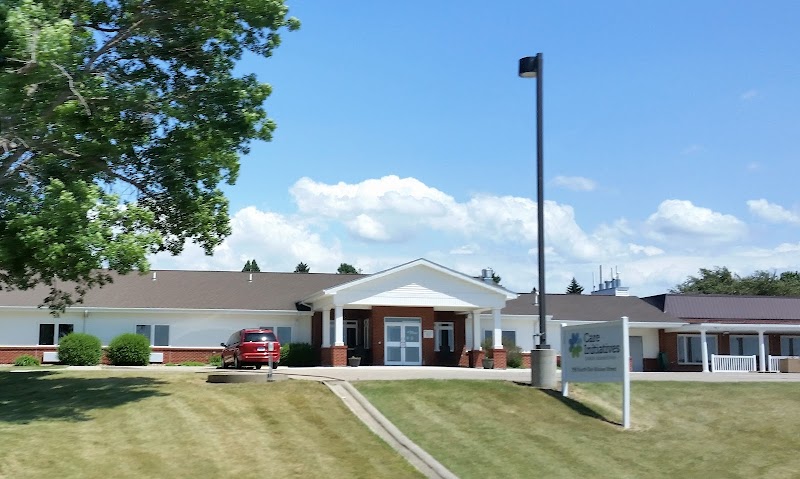
Odebolt Specialty Care
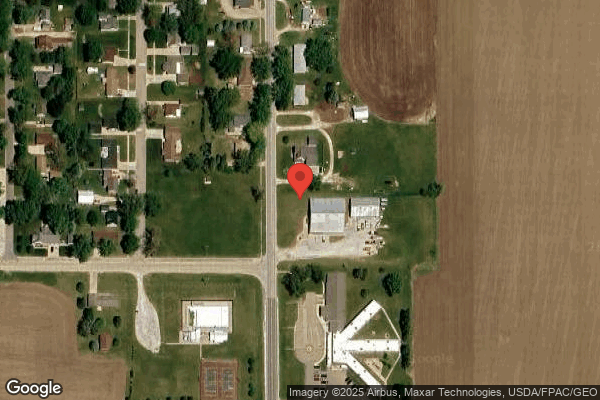
801 SOUTH DES MOINES STREET, ODEBOLT, IA 51458 (712) 668-4867
Non profit - Corporation 38 Beds CARE INITIATIVES Data: November 2025 1 Immediate Jeopardy citation
Trust Grade
46/100
#133 of 392 in IA
Last Inspection: February 2025

Within standard 12-15 month inspection cycle. Federal law requires annual inspections.

Overview

Odebolt Specialty Care has received a Trust Grade of D, indicating below-average quality with some serious concerns. With a state rank of #133 out of 392 facilities in Iowa, they are in the top half, but their county rank of #2 out of 4 suggests only one local option is better. The facility is improving, having reduced issues from 12 in 2024 to 5 in 2025, but there are still significant concerns, including a critical incident where a resident fell down stairs due to unsupervised access to the kitchen. Staffing is a strength, with a perfect 5-star rating and a turnover rate of 39%, lower than the state average, which suggests that staff are experienced and familiar with the residents. However, the facility has faced serious issues such as failing to provide adequate wound care and oxygen therapy, leading to severe health consequences for residents, which families should consider when evaluating care options.
Trust Score
D
46/100
In Iowa
#133/392
Top 33%
Safety Record
High Risk
Review needed
Inspections
Getting Better
12 → 5 violations
Staff Stability
○ Average
39% turnover. Near Iowa's 48% average. Typical for the industry.
Penalties
✓ Good
$14,433 in fines. Lower than most Iowa facilities. Relatively clean record.
Skilled Nurses
✓ Good
Each resident gets 44 minutes of Registered Nurse (RN) attention daily — more than average for Iowa. RNs are trained to catch health problems early.
Violations
⚠ Watch
21 deficiencies on record. Higher than average. Multiple issues found across inspections.
★★★★☆
4.0
Overall Rating
★★★★★
5.0
Staff Levels
★★★☆☆
3.0
Care Quality
★★★☆☆
3.0
Inspection Score
Stable
2024: 12 issues
2025: 5 issues

The Good

  • 5-Star Staffing Rating · Excellent nurse staffing levels
  • Full Sprinkler Coverage · Fire safety systems throughout facility
  • No fines on record
  • Staff turnover below average (39%)

    9 points below Iowa average of 48%

Facility shows strength in staffing levels, fire safety.

The Bad

Staff Turnover: 39%

Near Iowa avg (46%)

Typical for the industry

Federal Fines: $14,433

Below median ($33,413)

Minor penalties assessed

Chain: CARE INITIATIVES

Part of a multi-facility chain

Ask about local staffing decisions and management

The Ugly 21 deficiencies on record

1 life-threatening 2 actual harm
Feb 2025 5 deficiencies
CONCERN (D)

Potential for Harm - no one hurt, but risky conditions existed

Assessment Accuracy (Tag F0641)

Could have caused harm · This affected 1 resident

**NOTE- TERMS IN BRACKETS HAVE BEEN EDITED TO PROTECT CONFIDENTIALITY** 3. Resident #24's MDSassessment dated [DATE] identified a Brief Interview for Mental Status (BIMS) score of 14, indicating intac...

Read full inspector narrative →
**NOTE- TERMS IN BRACKETS HAVE BEEN EDITED TO PROTECT CONFIDENTIALITY** 3. Resident #24's MDSassessment dated [DATE] identified a Brief Interview for Mental Status (BIMS) score of 14, indicating intact cognition. The MDS documented Resident #24 was taking antianxiety medication during the last 7 days. Review of the January 2025 Medication Administration Record revealed Resident #24 was not receiving antianxiety medication as documented on the MDS. On 2/19/25 at 8:00 AM, Staff A, MDS Coordinator acknowledged and verified she had coded the MDS incorrectly as Resident #24 was not taking antianxiety medication. Based on clinical record review, staff interview, and policy review the facility failed to represent an accurate picture of the resident's status during the observation period of the Minimum Data Set (MDS) by not accurately recording medication use for 3 of 3 residents reviewed, (Resident #24,#26, and #27). The facility reported a census of 33 residents. Findings include: 1. Review of Resident #2's MDS dated [DATE] revealed diagnoses of anxiety disorder, and non-Alzheimers dementia. The MDS further revealed Resident #26 received hypnotic medications for 7 of the 7 days during the look back period. Review of Resident #26's Electronic Healthcare Record (EHR) page titled, Physician's Orders revealed no order for hypnotic medication. 2. Review of Resident #27's MDS dated [DATE] revealed diagnoses of non-traumatic subarachnoid hemorrhage, stroke, and moderate intellectual disabilities. The MDS further revealed Resident #27 received anticoagulant medications for 7 of the 7 days during the look back period. Review of Resident #26's EHR page titled, Physician's Orders revealed no order for anticoagulant medications. Interview on 2/18/25 at 12:10 PM with Staff A Registered Nurse (RN) confirmed that Resident #26 is not on hypnotic medications, and Resident #27 was not on any anticoagulant. Staff A revealed that her expectation would be for accurate MDS assessments to be completed. Interview on 2/18/25 at 12:23 PM with the Director of Nursing (DON) revealed that her expectation would be for accurate MDS assessments to be completed. Review of a facility provided policy titled, Certifying the Accuracy of the Resident Assessment with a revision date of 11/2019 documented: A. The information captured on the assessment reflects the status of the resident during the observation period for that assessment.
CONCERN (D)

Potential for Harm - no one hurt, but risky conditions existed

Comprehensive Care Plan (Tag F0656)

Could have caused harm · This affected 1 resident

**NOTE- TERMS IN BRACKETS HAVE BEEN EDITED TO PROTECT CONFIDENTIALITY** Based on clinical document review, staff interview, and policy review the facility failed to provide a comprehensive care plan r...

Read full inspector narrative →
**NOTE- TERMS IN BRACKETS HAVE BEEN EDITED TO PROTECT CONFIDENTIALITY** Based on clinical document review, staff interview, and policy review the facility failed to provide a comprehensive care plan related to high risk medications for 2 of 5 residents reviewed (Residents #26, and #27) . The facility reported a census of 33 residents. Findings include: 1. Review of Resident #26's Minimum Data Set (MDS) dated [DATE] revealed Resident #26 had diagnoses of anxiety disorder, and non-Alzheimers dementia. The MDS further revealed Resident #26 received antidepressant medications for 7 of the 7 days during the look back period. Review of the Electronic Healthcare Record (EHR) page titled, Physicians Order revealed an order for Trazadone (antidepressant) 50mg tablet to be given 1 time daily. The page further revealed an order for Escitalopram (antidepressant) 10mg tablet to be given 1 time daily. Review of Resident #26's Care Plan with a revision date of 1/6/25 revealed no focus, goals, or interventions for antidepressant medications. 2. Review of Resident #27's MDS dated [DATE] revealed diagnoses of non-traumatic subarachnoid hemorrhage, stroke, and moderate intellectual disabilities. The MDS further revealed Resident #27 received anticoagulant medications for 7 of the 7 days during the look back period. Review of Resident #26's EHR page titled, Physician's Orders revealed no order for anticoagulant medications. Review of Resident #26's Care Plan with a revision date of 1/8/25 revealed no focus, goals, or interventions for antiplatelet, or anticoagulant medications. Interview on 2/18/25 at 12:10 PM with Staff A Registered Nurse (RN) confirmed that Resident #26 is taking antidepressant medications, and then confirmed that Resident #26's Care Plan did not reflect this medication. Staff A further confirmed Resident #27 is not on an anticoagulant, but is taking an antiplatelet medication. Staff A then revealed Resident #27's Care Plan should reflect that the Resident is taking an antiplatelet medication. Staff A confirmed that Resident #27's Care Plan also did not have antiplatelet goals, or anticoagulant goals. Staff A further revealed that her expectation would be for accurate care plans to be completed. Interview on 2/18/25 at 12:23 PM with the Director of Nursing (DON) revealed that her expectation would be for accurate care plans to be completed. Review of a facility provided policy titled, Care Plans Comprehensive Person Centered, with a revision date of 12/2016 revealed: a. The comprehensive, person centered care plan will describe the services that are to be furnished to attain or maintain the resident ' s highest practicable level of physical, mental, and psychosocial well-being.
CONCERN (D)

Potential for Harm - no one hurt, but risky conditions existed

Quality of Care (Tag F0684)

Could have caused harm · This affected 1 resident

**NOTE- TERMS IN BRACKETS HAVE BEEN EDITED TO PROTECT CONFIDENTIALITY** Based on clinical record review, staff interviews, and policy review the facility failed to provide assessment and interventions...

Read full inspector narrative →
**NOTE- TERMS IN BRACKETS HAVE BEEN EDITED TO PROTECT CONFIDENTIALITY** Based on clinical record review, staff interviews, and policy review the facility failed to provide assessment and interventions necessary for the care and services, to maintain the residents' highest practical physical well- being for 1 of 14 residents reviewed (Resident #7). The facility failed to complete and document vital signs and nursing assessments after Resident #7 returned from the emergency room (ER) for chest pain. The facility reported a census of 33 residents. Findings include: Resident #7's Minimum Data Set (MDS) assessment dated [DATE] identified a Brief Interview for Mental Status (BIMS) score of 15, which indicated intact cognition. The MDS included diagnoses of schizoaffective disorder, anxiety disorder, shortness of breath and chronic lung disease. A Progress Note dated 12/5/24 at 10:40 PM documented Resident #7 complained of chest pain and right arm pain. The note documented Resident #7's blood pressure was 85/55, pulse was 64 beats per minute and oxygen saturation (oxygen in the blood) was 90% on room air. The note indicated Resident #7 was a full code and made the choice to be seen in the ER. The note documented the nurse placed a call to the on-call Provider and received order to send Resident #7 by ambulance to the ER. The note revealed 911 was called and the ambulance service was dispatched to the facility. A Progress Note dated 12/6/24 at 1:20 AM documented the facility nurse received a phone call from the ER reporting Resident #7 labs had come back within normal limits except for her sodium level which had been an issue in the past. The ER reported the hospital was going to have Resident #7 stay until the morning to recheck her cardiac labs and then would discharge Resident #7 back to the facility. A Progress Note dated 12/6/24 at 6:59 AM documented the facility had received a phone call from ER that Resident #7 cardiac labs were negative and Resident #7 would be released from the hospital. Review of the Hospital Discharge Information dated 12/6/24 at 6:58 AM documented the diagnoses from the ER visit included chest pain and hyponatremia (low sodium level). The discharge orders directed Resident #7 to follow up with Primary Care Provider within 1 to 2 weeks. Review of the clinical record revealed Resident #7 was not seen by her Primary Care Provider until 12/26/24. Review of the Progress Notes lacked documentation on when/what time Resident #7 returned to the facility and how Resident #7's condition was when she returned. The clinical record lacked documentation that vital signs or a nursing assessment was completed upon return from the ER. The clinical record lacked any follow up focus nursing assessments related to chest pain. On 2/18/25 at 11:15 AM, the DON (Director of Nursing) acknowledged and verified the Progress Notes lacked documentation that Resident #7 returned from the hospital on [DATE]. The DON acknowledged and verified the clinical record lacked vital signs and an assessment upon return from the hospital. The DON reported she would expect vitals sign and a focus assessment be completed for 72 hours after return. A facility policy titled Acute Condition Changes revised September 2017 documented any acute changes of condition would be identified and managed properly. The policy further documented that the physician and nursing staff would review the details of recent hospitalizations and identify complications and problems that occurred that may indicate instability or the risk of having additional complications.
CONCERN (D)

Potential for Harm - no one hurt, but risky conditions existed

Accident Prevention (Tag F0689)

Could have caused harm · This affected 1 resident

**NOTE- TERMS IN BRACKETS HAVE BEEN EDITED TO PROTECT CONFIDENTIALITY** Based on clinical record reviews, staff interviews and policy review, the facility failed to provide adequate nursing supervisio...

Read full inspector narrative →
**NOTE- TERMS IN BRACKETS HAVE BEEN EDITED TO PROTECT CONFIDENTIALITY** Based on clinical record reviews, staff interviews and policy review, the facility failed to provide adequate nursing supervision to prevent accident and injuries for 1 of 1 resident reviewed (Resident #5). The facility reported a census of 33 residents. Findings include: Resident #5's Minimum Data Set assessment (MDS) dated [DATE] identified a Brief Interview for Mental Status (BIMS) score of 04, indicating severe cognitive impairment. The MDS identified Resident #5 required partial/moderate assistance with bathing, bed mobility, transfers, and ambulation. Resident #5's MDS included diagnoses of atrial fibrillation (irregular heart beat), heart failure (heart does not pump blood well), hypertension (high blood pressure), diabetes mellitus, non-alzheimer's dementia, and difficulty walking. The Care Plan with a target date of 5/12/25 revealed Resident #5 was at risk for falls and had a history of falls. The Care Plan directed the following interventions: - Encourage Resident #5 to use the call light for assistance. Date Initiated: 06/07/2024 - Encourage Resident #5 to wear proper footwear. Date Initiated: 06/07/2024 - Staff to ensure Resident #5's environment was safe and without clutter. Date Initiated: 06/07/2024 - Staff to monitor Resident #5 for unsteady gait. Date Initiated: 06/07/2024 - PT/OT evaluation and treatment as ordered. Date Initiated: 06/07/2024 - Staff to remind and help guide Resident #5's walker to remain in front of her. Date Initiated:7/26/24 - Staff to ensure the floor in the shower/bath house was not wet or slippery before or after a bath. Staff to place a towel down to aid in transferring on wet or slippery floors. Date Initiated: 11/15/2024 A Fall Risk Evaluation date 11/1/24 documented Resident #5's fall risk score was an 11. The form indicated a total score of 10 or above represents a high risk for falls. Review of the November 2024 Medication Administration Record (MAR) directed staff to administer eliquis (anticoagulant/blood thinner) 5 mg (milligrams) two times a day for atrial fibrillation and history of a TIA (transient ischemic attack/stroke) An Incident Report (IR) titled Witnessed Fall on 11/11/24 at 9:49 AM revealed Staff B, CNA (certified nursing assistant) assisted Resident #5 out of the whirlpool chair without a gait belt in the bathhouse that resulted in a fall. The IR documented Resident #5 was caught by Staff B and hit her right side of her back on the whirlpool tub. Resident #5 said the floor was slippery and that her feet slid out from underneath her. The IR documented the nurse assessed Resident #5 and the assessment revealed Resident #5 had a red/bruised area to the right mid-upper back that could possibly turn into a hematoma. The IR documented the nurse provided education to Staff B that it was a requirement to always use a gait belt in the bathhouse for assistance. A note documented on the IR on 11/15/24 by the DON (Director of Nursing) documented Resident #5 was doing well after the fall and the bruise was healing without concern. The note documented the staff member was educated to ensure the bath and shower floors are dry prior to transferring residents and to have a gait belt on while transferring. A facility form titled Five Minute Meeting for Employees dated 11/21/24 documented even when a resident was in the bathhouse getting ready for a bath, staff need to utilize gait belts to help transfer residents safely and reduce the risk of falls in the bath/shower house. The form was signed by the DON and Staff B on 11/21/24. On 2/19/25 at 8:45 AM, the Administrator reported she would expect the staff to utilize a gait belt when assisting a resident with a transfer or ambulation. A facility policy titled Safe Lifting and Movement of Residents revised July 2017 documented in order to protect the safety and well-being of staff and residents, and to promote quality care, the facility would use appropriate techniques and devices to lift and move residents. The policy documented resident safety, dignity, comfort and medical condition will be incorporated into goals and decisions regarding the safe lifting and moving of residents. The policy further directed the nursing staff, in conjunction with the rehabilitation staff, to assess individual residents' needs for transfer assistance on an ongoing basis and to document resident transferring and lifting needs in the care plan.
CONCERN (D)

Potential for Harm - no one hurt, but risky conditions existed

Infection Control (Tag F0880)

Could have caused harm · This affected 1 resident

**NOTE- TERMS IN BRACKETS HAVE BEEN EDITED TO PROTECT CONFIDENTIALITY** Based on observations, clinical record review, staff interviews, and policy review, the facility failed to provide a safe and sa...

Read full inspector narrative →
**NOTE- TERMS IN BRACKETS HAVE BEEN EDITED TO PROTECT CONFIDENTIALITY** Based on observations, clinical record review, staff interviews, and policy review, the facility failed to provide a safe and sanitary environment to help prevent the development and transmission of communicable diseases and infections for 1 of 2 residents reviewed for catheter care (Resident #9). The facility reported a census of 33 residents. Findings include: Resident #9's Minimum Data Set (MDS) assessment dated [DATE] identified a Brief Interview for Mental Status (BIMS) score of 12, indicating moderately impaired cognition. The MDS identified Resident #9 required substantial/maximal assistance with bed mobility, transfers and toileting. The MDS revealed Resident #9 had an indwelling catheter and was occasionally incontinent of urine. Resident #9's MDS included diagnoses of neurogenic bladder (urinary bladder problems due to disease or injury to the central nervous system), pneumonia, diabetes mellitus, and hemiplegia (paralysis) affecting the right side. The Care Plan with a target date of 3/31/25 revealed Resident #9 had a suprapubic catheter and was at risk for infections related to the catheter usage. The Care Plan directed staff to perform catheter care every shift, monitor for signs and symptoms of infection and to follow enhanced barrier precautions (EBP) when performing high contact care activities. A Physician Order dated 4/15/24 directed staff to follow EBP due to the suprapubic catheter. A Progress Note dated 2/17/25 at 1:51 PM title communication with the Physician documented Resident #9's urine was dark and malodorous. On 02/17/25 at 2:07 PM, observed EBP sign posted on Resident #9's door. The sign directed staff members to clean their hands, including before entering and when leaving the room. The sign directed providers and staff to wear gloves and gown for the following high contact resident care activities: dressing, bathing/showering, transferring, changing linens, providing hygiene, changing briefs or assisting with toileting, device care or use (central line, urinary catheter, feeding tube, tracheostomy) and with wound care (any skin opening requiring a dressing). A Progress Note dated 2/17/25 at 10:54 PM documented the provider directed staff to obtain a urinalysis with culture and sensitivity reflex and to encourage oral hydration. On 2/18/25 at 12:55 PM, observed Staff C, CNA (certified nursing assistant) and Staff D, CNA complete Resident #9's catheter care and empty the catheter drainage bag. Staff C and Staff D washed their hands when entering Resident #9's room and applied gloves. Staff C and Staff D did not apply gowns. Staff C removed the gauze pad from Resident #9's suprapubic insertion site and threw the gauze pad in the garbage. Staff D handed Staff C a cleansing wipe from the wipe container that was sitting directly on the end of the bed without a barrier. Staff C cleansed the suprapubic insertion site with the cleansing wipe. Staff D handed Staff C another cleansing wipe from the container and he wiped Resident #9 lower abdominal folds. Staff C then reached for the peri spray bottle that was sitting directly on the end of the bed with no barrier with his dirty gloves. Staff C sprayed the peri wash on Resident #9 abdominal folds. Staff D handed Staff C a cleansing wipe and he cleansed the lower abdomen folds. Staff D then handed Staff C another cleansing wipe and he wiped down the catheter tubing. Staff C then took a clean towel and dried the abdominal area with the same pair of dirty gloves. Staff D sprinkled powder on Resident #9's abdominal folds and near the suprapubic insertion site. Staff C rubbed the powder on the abdominal folds and near the suprapubic site with the same pair of dirty gloves. Staff D then placed a new split gauze pad around the catheter at suprapubic insertion site. Staff C secured and fastened Resident #9's incontinence brief with the same pair of dirty gloves. After Resident #9's catheter care was completed, Staff C and Staff D removed gloves and used hand sanitizer. Staff C then emptied Resident #9's catheter bag and did not wear a gown during the process. Observed Resident #9's urine was dark tea colored and had a strong odor. Staff C and Staff D acknowledged they did not wear gowns during the catheter cares or when emptying the catheter drainage bag. Staff C and Staff D reported they had forgotten to put the gowns on. Staff C and Staff D reported they had been trained on EBP and were aware of the EBP sign on the door. Staff C reported he got caught up on getting all the supplies out and spaced off putting the gown on. On 2/18/25 at 2:35 PM, the DON (Director of Nursing) reported she would expect staff to use a barrier with supplies, wear a gown during catheter care/emptying bag, change gloves and complete hand hygiene between dirty and clean tasks. A facility policy titled Handwashing/Hand Hygiene revised 8/2019 documented the facility considered hand hygiene primary means to prevent the spread of infection. The policy documented the use of gloves does not replace hand washing/hand hygiene. Integration of glove use along with routine hand hygiene was recognized as the best practice for preventing healthcare- associated infections. A facility policy titled Enhanced Barrier Precautions with an effective date of 3/28/24 documented it was the policy of the facility to implement EBP for the prevention of transmission of multidrug-resistant organisms. The policy documented EBP refers to an infection control intervention designed to reduce transmission of multi-resistant organisms that employ targeted gown and glove use during high contact resident care activities. The policy documented high-contact resident care activities include: dressing, bathing, transferring, providing hygiene, changing linens, changing briefs/assisting with toileting, device care care/use (central lines, urinary catheters, feeding tubes, tracheostomy/ventilator tubes and wound care (any skin opening requiring a dressing). A facility policy titled Preventing Spread of Infections March 2013 Edition documented staff will follow procedures to prevent cross contamination, including hand washing and changing gloves.
Jul 2024 1 deficiency 1 IJ
CRITICAL (J) 📢 Someone Reported This

A family member, employee, or ombudsman was alarmed enough to file a formal complaint

Immediate Jeopardy (IJ) - the most serious Medicare violation

Accident Prevention (Tag F0689)

Someone could have died · This affected 1 resident

Based on observations, record review, staff, family and hospital staff interview the facility failed to prevent an accident from occurring for 1 of 3 residents (Resident #1) reviewed for wandering wit...

Read full inspector narrative →
Based on observations, record review, staff, family and hospital staff interview the facility failed to prevent an accident from occurring for 1 of 3 residents (Resident #1) reviewed for wandering with cognitive impairments. The kitchen staff members left the main kitchen door propped open and unsupervised. Resident #1 self-propelled in to the kitchen, through the kitchen, through two more doors, which included the basement door where she fell down 13 concrete stairs in her wheelchair. A kitchen staff member heard someone yelling for help. She found Resident #1 at the bottom of the basement stairs with her wheelchair next to her. She alerted nursing staff. Staff provided first aide to the left side of her head until EMS arrived and transported her to the hospital. The facility reported a census of 29 residents. On July 10, 2024 at 10:25 AM the State Survey Agency informed the facility of the staff's failure to prevent an accident from occurring for a wandering, cognitive impaired resident created an Immediate Jeopardy situation resulting in the resident going through the kitchen and falling down 13 stairs to the basement of the facility in her wheelchair without staff's knowledge on July 2, 2024. The facility removed the immediacy on July 2, 2024 when the staff implemented the following Corrective Actions: 1) The facility audited all non-resident locked doors in the facility ensuring they were all locked and closed on 7/2/24. 2) The DON, Social Worker and Administrator began to call staff at 9:43 PM on 7/2/24 to educate them that all locked doors must remain shut and locked unless staff are present. 3). Kitchen door will be audited upon completion of meal service daily for two weeks then weekly for 10 weeks. 4) Missing resident drills will be completed on varying shifts daily for 2 weeks then weekly for 10 weeks. Results of the audits will be submitted to QAPI for review and additional recommendations. Findings include: According to the quarterly Minimum Data Set (MDS) assessment tool with a reference date of 5/6/24, Resident #1 had severely impaired cognitive skills for daily decision making. The resident did not exhibit rejection of care of wandering during the review period. The MDS documented she did not have impairments to her upper and lower extremities. Resident #1 utilized a walker and wheelchair for mobility. The MDS recorded one fall since her admission/entry, or entry or the prior assessment; whichever was more recent. Resident #1 received the following medications during the review period: antipsychotic, antidepressant, and a diuretic. The MDS documented the following diagnoses for Resident #1: bipolar disorder, dementia, seizure disorder, anxiety, depression, cognitive communication deficit, restless leg syndrome and contracture of left hand. The Care Plan focus area with an initiation date of 4/7/15 documented she was at risk for falls and had a long history of falls. The care plan documented she had anti rollbacks placed on her wheelchair, staff are encouraged to clip her call light cord to her recliner prior to exiting the room. The resident was encouraged to sit in an area of supervision when active and/or restless. Resident #1 received a different wheelchair that may make it easier for her maneuver and control. The Care Plan focus area with an initiation date of 7/10/23 documented Resident #1 was able to propel herself throughout the facility in her wheelchair independently. The care plan indicated the resident will ask for assistance when trying to adjust herself in her wheelchair, she will keep her buttock slid back in the seat of her wheelchair, and will sit in an area with supervision when she feels agitated. The Care Plan focus area with an initiation date of 11/20/23 documented the resident has impaired cognitive function/dementia or impaired thought processes related to dementia. Observations revealed the following: a) On 7/9/24 at 12:20 PM resident laid in her bed sleeping, in the hospital with a gown on, blanket covering her except for her left arm. Noted paper tape-like dressing to her forehead. Also noted numerous bruising to her face, neck, bilateral peri-orbital areas, and left arm. The bruising was of various stages of healing: yellow, dark purple, dark pink/red. b) On 7/9/24 at 12:35 PM the door to the kitchen in the dining room was closed. The door had a key pad on it. A code was needed to unlock the door before entering the kitchen. c) On 7/10/24 at 9:23 AM the door leading to the kitchen from the dining room was closed and locked. A kitchen staff member opened the door. Once in the kitchen, one could walk by the steam table or the prep table, stove and oven. Once on the other side of the prep area was a door with a neon yellow sign that read: this door is to be shut at all times no exceptions. Once through that door, is the pantry door that requires a code entered in the key pad before the door opens. To the right of the pantry door is the basement door with a magnetic box on the wall to keep the door open. The stairwell had 13 cement stairs leading to the basement with wooden hand bars on each side of the stair well. Below the hand rails the walls consisted of cement cinder blocks. The stairs had black and yellow gripper strips at the edge of each stair. The distance from the kitchen door to the basement doorway was 25 steps. The following Progress Notes were documented: a) On 5/19/24 at 10:52 AM resident was restless this morning before breakfast and had wheeled around the nurse's station around fifteen different times. b) On 6/6/24 at 3:40 PM resident was wandering up and down the hall in her wheelchair. c) On 6/30/24 at 12:13 AM resident was trying to go in to other resident's rooms when propelling herself down the hall. d) On 7/2/24 at 11:33 PM at 6:55 PM Resident #1 was noted to be not up at the nurse's station where Staff A Certified Nursing Assistant (CNA) had brought her after the resident was noted to be propelling herself down hall 2. Resident #1 was not seen until 7:01 PM after Staff C [NAME] found her laying at the bottom of the basement steps in the kitchen. Emergency Medical Service (EMS) was immediately called. From 6:55 PM to 7:01 PM the Social Worker, Staff A Registered Nurse (RN), Staff F CNA, Staff E CNA, and Staff A searched for the resident down each hall twice and outside around the facility. At 7:01 PM Staff C had found resident laying on her right side at the bottom of the basement steps and called for help from the CNAs and the nurse. It appeared that the resident had fallen down 13 steps. Upon assessment Resident #1 had a laceration to her left forehead, left forearm, left cheek, and right middle knuckle. Pressure was held on bleeding wounds; vital signs were checked and neuros started at time of incidence. Resident was talking and asking for help up off the floor. Resident was able to tell staff her name but is unable to tell me what happened. Resident #1's glasses were found, broken on the 5th stair from the bottom. The facility investigation included the following hand-written statements: a) Staff D Dietary Aide wrote she last saw Resident #1 at 6:30 PM at the assisted table and finished her meal. Staff D started cleaning the dining area around 6:45 PM: cleaned tables, emptied glasses, cups, and plates. Around 6:50 PM she heard Staff F yell and Staff C told Staff D that Resident #1 was on the basement floor. Staff D signed and dated her statement on 7/2/24. b) Staff C wrote she last saw Resident #1 at 6:20 PM when she plated the last plate for the meal service. She was still sitting at her table. Staff D went outside at about 6:45 PM for a brief moment to get a breath of fresh air and she forgot to shut the door behind her. When she came back in to the facility, the Social Worker asked if she saw Resident #1, she hadn't. Staff C then walked into the kitchen and found her lying on the floor at the bottom of the stairs. Staff C instantly went searching for CNAs to help her. Staff C signed and dated her statement on 7/2/24. c) Staff E CNA wrote at the time of the incident, he was in a resident's room down hall 3. The last time he saw Resident #1 was around 6:30 PM down hall 2 with Staff B. The resident was brought to the nurse's station then staff went back to work on hall 3. As he came down hall 3, he was asked if he had seen Resident #1. It was expressed that the resident could not be located. Staff E then began to help search for her down hall 2 and hall 3. As he was heading through the assisted living section, he heard someone say we found her. Staff E then came back to see if he was able to assist then went back to helping other residents. Staff E signed and dated his statement on 7/2/24. d) Staff B wrote she was in a female resident's room getting her on the toilet at 6:30 PM. She noted Resident #1 was at hall 2 trying to get out the doors. Staff B went to her and said, it's been raining all day. We are not going outside due to the mud outside. Staff B assisted Resident #1 up to the nurse's station with Staff E, while in her wheelchair. Staff B let her out of her sight at 6:50 PM. Staff F came to Staff B and asked for transfer assistance with another female resident. They assisted her to the bathroom, Staff B stated she had another resident on the toilet and let Staff F know she had to help her, so she could finish this resident on her own. Staff B left that room, got to the nurse's station, did not see Resident #1 near there and got worried she was in another room. She went to Staff A and asked if she knew where Resident #1 was and she stated she did not know. Staff A told her she saw her in the dining room moving around in her wheelchair. Staff B then asked Staff F if she saw Resident #1 and she said no, this was about 6:55 PM. They started to look for Resident #1 up and down the halls, she started in hall 2 then hall 1 looking in rooms, before going to hall 3. She went back help the resident she placed on the toilet and got her to bed. When she got out of the resident's room she heard the Social Worker on the phone with the Administrator. Staff B then saw Staff C at the top of the hall yelling help, help, I need someone in the kitchen Resident #1 is at the bottom of the stairs. Staff B ran to the kitchen to note the door to back door open and stair door open with Resident #1 on the bottom of the stairs. Staff B indicated herself Staff A and Staff F were the first to respond. Staff A got vitals as Staff B went to laundry to get towels to put pressure on the wounds and clean up the blood. She told Staff F to use a towel on the resident's arm because there were two open areas. They stayed with Resident #1 until EMS arrived. They had to wait for the fire department to come assist with getting Resident #1 up the stairs. She had a head wound, cheek wound, upper arm, elbow injuries. Staff B was unsure if anything was broken. Staff B signed and dated her statement on 7/2/24. e) Staff F wrote she last saw Resident #1 at 6:50 PM as she took another resident down to her room on hall 1. A co worker assisted her and she had to leave to check on Resident #1. While Staff F went to another resident's room to get her ready for bed, the co-worker knocked on the door and informed her that she could not find Resident #1. Staff F finished assisting the resident she was with, then she assisted with looking for Resident #1. Staff F looked through all the doors and rooms with the Social Worker down hall 2 then Staff F went to hall 1 and looked. She was halfway down hall 1 when the kitchen cook screamed that she needed the CNAs and nurse. The Social Worker, nurse and Staff F ran to the kitchen door that led to the basement and saw Resident #1 lying on the bottom of the stairs. Resident #1 was saying she was hurting and was trying to move. They all told her not to move because they did not know the underlying injuries. Staff F and her co-workers held pressure on Resident #1's wounds. The CNAs and nurse tried to keep her talking and stay awake. The Social Worker called 911 at 7:01 PM. Staff F signed and dated her statement on 7/2/24. f) Staff A wrote the following notes: 1) Last seen Resident #1 at 6:35 PM in the dining room. 2) CNA asked where Resident #1 was, if she saw her lately. They started searching right away. 3) 6:55 PM Staff C alerted nursing staff of Resident #1 being at the bottom of the stairs. 4) 7:01 PM 911 called. 5) Vital signs at 6:56PM: blood pressure 164/108, temperature 97.3-degree Fahrenheit, 92% oxygen saturation, respirations 22, heart rate 88, pupils not constricting. 6) Laceration to left forehead, right forearm, right elbow, bruising/swelling to left abdomen. 7) Range of motion (ROM) to extremities-per resident. Staff A signed and dated her statement on 7/2/24. g) The Social Worker wrote at 6:35 PM a resident came to her asking if she could find his pants. She went down hall 2 to look for them. As she was going down hall 2, Staff B and Staff E had Resident #1 in her wheelchair, assisting her up to the nurse's station around 6:50 PM. After finding the resident's pants, another resident stopped her and asked her to come to his room to look at his TV. After she fixed his TV, as she was walking out of the resident's room Staff B asked if she had seen Resident #1. The Social Worker stated she had not seen her since Staff B was with her earlier. The Social Worker then assisted the CNA to finish looking down hall 3, checked hall 1 next because the CNA stated she already checked hall 2. She called the Administrator at 6:57 PM. The Administrator stated to check all rooms/halls again. Halls 2 and 3 were checked (bathrooms and all rooms), went down hall 1 (all rooms/bathrooms checked). As she was coming back up the hall, she heard the cook stated she needed a CNA ASAP. She followed the cook to the kitchen and Resident #1 was found at the bottom of the back-kitchen steps. The nurse and two CNAs went down to the resident. The nurse asked the Social Worker to call 911, she called the Administrator back letting her know they are calling 911. She called 911 at 7:01 PM. The ambulance arrived at 7:18 PM, but needed lift assistance from the fire department and requested they be called. The firemen arrived and assisted at 7:20 PM. The Social Worker signed and dated her statement on 7/2/24. Review of Resident #1's hospital documents, revealed the following: a) An Emergency Department (ED) Physician Note dated 7/2/24. Resident was seen on 7/2/24 at 7:52 PM for an unwitnessed fall with head trauma. She was found at the bottom of a flight of stairs (13). The fall was not witnessed. Staff was looking for her not knowing where she was when they found her. Resident displayed decreased level of responsiveness, large laceration to her scalp, right leg is somewhat rotated and shortened. Resident complains of pain stating it hurts but not able to describe where. The resident was given intravenous (IV) fentanyl (treatment of severe pain) 50 micrograms (mcg). Medical Decision Making: Fall at nursing home causing facial trauma- CT of head, face, c-spine, chest, abdomen and pelvis were all negative for acute abnormalities. Facial laceration was repaired. Pain medicine was given and she was then much more comfortable. Will place her in the hospital, she qualifies for full admission. Procedure: Laceration to left forehead stellate (pattern like a star), macerated 5 centimeters (cm) total. Area was closed with 7 sutures. Assessment: 1) Blunt trauma to face 2) Closed head injury 3) Facial laceration 4) Fall at nursing home b) A History and Physical Report with a service date of 7/3/24 documented she was admitted yesterday after she maneuvered her wheelchair down 13 steps at the nursing home. She fortunately has no broken bones but has lacerations and significant contusions primarily on her face and upper extremities. She has long standing dementia and has severe short-term memory issues. Resident resting comfortably today. Review of Systems: Musculoskeletal: positive for back, neck, and joint pain. Positive for decreased range of motion. c) A progress note dated 7/4/24 documented Resident #1 is day 3 acute stay after a fall down 13 stairs at the nursing home. She is confused, which is baseline with multiple bruises to her face and arm. Pain is controlled at this time with fentanyl and Tylenol. d) A progress note dated 7/5/24 documented Resident #1 is alert and oriented to person. She has significant bruising to her face and arms, she has a dressing to her left forehead. Physical Exam: Skin: scattered bruising to arms and face, abrasion to left forehead. On 7/9/24 at 8:55 AM local hospital staff stated Resident #1 came to the emergency room on the 7/2/24 at around 7:52 PM. She came from the nursing home after falling down 13 steps in her wheelchair. When she came in she had a laceration to her scalp that required 7 stitches, bruises on her head, hands, legs hips, both her eyes, all over basically. She added they did take photos of her injuries. The resident was not able to speak of what happened just complained it hurts. That's all she would say. She currently remains in the hospital as the family is seeking new placement for her. She will remain in the hospital until they are able to do so. On 7/9/24 at 3:36 PM Staff C asked do I have to relive this again, when she was asked to talk about what happened the evening Resident #1 was found at the bottom of the basement stairs. She had just finished with serving dinner and she forgot to shut the door leading from the kitchen to the dining room. She had asked the dietary aide to shut the door but she did not. Staff C said Staff D was asked to shut the door once she was done assisting another resident. Staff C acknowledged she side tracked and forgot to shut it. Staff C saw Resident #1 at her dining table at 6:20 PM. After meal service, Staff C stated she went outside and Resident #1 fell down the basement stairs. After meal service, Staff C stated she shut down the steam table, starting to do dishes, had just put a load in the dishwasher and went outside to smoke. Once you leave the back-service door it locks so you have to walk around the facility to the front entrance to get back inside. She indicated she was maybe outside for 2 minutes. When asked why the door was open, she stated they do that during meal times when they are taking the food cart in and out of the door for service. She thought nothing of it but then stated they do have a lot of wandering residents. Staff C was unsure how the resident was able to open the basement door because she herself, has a hard time opening in. She stated once inside the kitchen one would have to go around a prep table, two ovens, a steam table and another prep table. You have to go around those areas to get to that door. The Social Worker had asked if she saw Resident #1, so she went in the kitchen to look for her, she did not see her. Staff C started to cleaning and heard someone yelling help, help. She walked through the kitchen, looked in the dry storage area even though that door was locked and closed, she looked anyways. That's when she found Resident #1 on the floor in the basement with the wheelchair on top of her. She immediately went and got help and let the nursing staff take over. Staff C stated she felt like it's her fault and she will never get over what happened. Before this incident it was normal to leave the kitchen door to the dining room open during meal times. Staff C stated it was normal for Resident #1 to wander around the facility in her wheelchair. On 7/9/24 at 4:14 PM Staff B stated around 6:30 PM she assisted another resident with using the restroom. She was in there for a few minutes before she left that room. When she left that resident's room she noticed Resident #1 was near the hall 2 exit door. Staff B and Staff E went to assist her away from the door. They let her know it had been raining that day, so it would be too muddy to go outside. They assisted her, in her wheelchair to the nurse's station area. She required eyes on supervision because she will attempt to self-transfer. If they had her at the nurse's station it was easier to keep their eyes on her. The nurse came down hall 2 as they were assisting Resident #1 to the nurse's station. Another co-worker needed help, so after Resident #1 was up at the nurse's station she went to assisted her co-worker. She had noted Resident #1 started to make her way to the dining room area. While assisting her co-worker, she realized she needed to go back to the first resident she had assisted to the bathroom room. Before she went to the other resident's room, she noticed Resident #1 was not at the nurse's station or dining room when she last saw here at like 6:50 PM. Staff B went to the nurse and asked if she knew where Resident #1 was as she could not find her. Resident #1 liked to go down hall 3, so she went there to look for her then went down hall 2 and searched for her with Staff A. When they came up hall 2, they told Staff F we need to find Resident #1, she is missing. Staff B went to assist a resident off the toilet because she had been on it for a long time. Once she assisted her, she took her clothes to the dirty clothes hamper. That's when Staff C came to her and said I need help, I need help, Resident #1 is in the basement of the kitchen. Staff A, Staff B and the Social Worker were the first to respond in the basement around 7:00 PM. They stayed with her, got towels to apply pressure to the open areas to stop the bleeding. Her legs were near the wall and she was lying on her right side. There was a huge gash on her forehead and cheek. Her glasses were broken, the lens was popped out, she had a gash near her elbow, and bruising on her left side. Her wheelchair was not on top of her, looked like someone may have moved it. They stayed with her until EMS showed up and waited for the fire department to come assist with her getting up the stairs. The door from the dining room to the kitchen and the door from the kitchen to the pantry areas where the basement door was ajar, just cracked open. She added the basement door is always opened but was unsure why. Staff B stated the basement door was open when she went down to assist Resident #1 in the basement. Staff will keep the kitchen door propped open during meal service time. When asked if any staff members were in the dining room around the time Resident #1 was in there she stated Staff D was in the dining room cleaning up and charting. On 7/10/24 at 8:04 AM Staff D stated on the day of the incident, she was cleaning up in the dining room. She noted Resident #1 to be at her table finishing up her meal. The resident remained at the table while Staff D was cleaning, this was about 6:45 PM-7:00 PM. Normally the resident would go to the front door to try to get out. She did not see anything that happened just heard what happened. When asked what she heard, Staff D stated she went through the kitchen door, then another door that is never open. The kitchen door was open still because it's much easier to serve food when it's open. But at the time of the incident meal service had completed. When asked who is responsible for closing the door after meal service, she stated the cook is and Staff C was cooking that day. Staff D denied hearing any odd noises that would alarm someone to check the kitchen, while she was in the dining room cleaning. On 7/10/24 at 8:39 AM Staff A stated she was on hall 2 and the CNAs were on hall 1. At 6:55 PM one of the CNAs asked if she knew where Resident #1 was, as she had just left her up at the nurse's station. She told the CNA before she went down hall 2 she saw the resident in the TV are with other residents present, this was not unusual for her. That was the last time she saw Resident #1. At that time, they started their elopement process. All the CNAs, dietary staff and Social Worker were alerted, they called the Administrator and DON as well. One of the cooks came out and said Resident #1 was at the bottom of the basement stairs. Resident #1 was lying on her right side, right arm under her, and laying on the right side of her head, looking up at the stairs with her knees on the wall. She had blood coming form the left side of her head. Her wheelchair was at the bottom of the stairs with her. Resident #1 complained that her head hurt but was unable to tell them what had happened. She just kept saying my head hurts, my head hurts, please help me. They called 911, she completed an assessment, called the family and was taken to the ER. Her supervision level at that time was like the other resident's in the facility. They would do frequent checks on her. That day she was in her wheelchair, tootling around. Staff A was unsure if the kitchen door was open that evening but thought it must have been because a code is needed to open the door. She was also unsure if the basement door was open at the time of the incident but indicated it did not require a code to be opened. When asked how Resident #1 spent her days, Staff A stated she would wander around, find her in other resident's rooms and bathrooms. It was not uncommon to see her out and about. They are pretty vigilant about where she is when she is wandering around the facility. On 7/10/24 at 9:23 AM Staff H [NAME] stated the basement door is usually always opened. She added they go down there to get resident's clothing protectors, towels, washcloths and hand towels to use in the kitchen. She indicated it's a fire door so it will stay open unless the fire alarm is triggered. On 7/10/24 at 11:29 AM the Social Worker stated she was still at the facility the evening Resident #1 was found on the basement floor. She had a resident come ask her for some assistant in looking or some pants. After she assisted the resident she noticed Staff B and Staff E were assisting Resident #1 up the hall in wheelchair. She went to the front desk when another resident asked for her assistance on hall 3. Once she assisted that resident Staff B had asked if she saw Resident #1. She told Staff B she last saw her on the hall 2 with staff. The Social Worker went down hall 1 to start their search, she called the Administrator to let her know they were unable to find the resident. She was advised to double check each hall again, looking in all the rooms, bathrooms, any open spaces. On her way up hall 1, Staff C stated she needed assistance as she found the resident at the bottom of the steps outside the kitchen. The Social Worker ran there with Staff A, Staff B and Staff F. They went down stairs, she called 911, the Administrator and the family. The last time she saw the resident was at 6:55 PM at the nurse's station, she called the Administrator at 6:57 PM. She noted the nurse was passing medications and there was a dietary aide cleaning in the dining room. She also noted the kitchen door was open when they went to assist the resident in the basement. After she went through the kitchen door she closed it. She did acknowledge the basement door was opened when they arrived. She added the basement door was a fire door and was held open by a magnet mechanism. If the fire alarm sounds, the door will automatically shut. The resident was lying on her right side, legs were propped on the bottom step and her wheelchair was off to the side of her. When asked what Resident #1's supervision level was at the time of the incident she stated she was to be kept in highly supervised areas. If she noticed Resident #1 was anxious, she would do an extra activity with her. She was always on the move, which was normal for her. That day she was alert and moving around in her wheelchair. On 7/10/24 at 1:40 PM Staff G CNA stated she has noticed the door in the dining room to the kitchen propped open but was unsure if the door once inside the kitchen are left open. She stated prior to the incident with Resident #1, staff would keep the door to the kitchen propped open during meal service while they passed out trays. On 7/10/24 at 1:57 PM the DON stated she got a call from the facility at 6:59 PM stating Resident #1 was missing. At 7:03 PM they called her back to report they found her and had called 911. She arrived the facility at 7:20 PM just as the ambulance crew and firemen were lifting her out of the basement. The DON saw the resident briefly before she left for the hospital. She noted the following: she was able to move her extremities, doing her grimacing moans which was normal for her, noted a laceration to her forehead and could not visibly see a skin tear. She started her witness statements, made sure all doors were locked that were to be locked, completed a head count and ensured everyone was accounted for and safe. When she arrived to the facility the kitchen and basement doors were shut. When asked if their investigation revealed what door(s) were left opened she stated through interviews they were never able to determine what door(s) was open. Staff C told her a door was open but did not specify which door it was. At the time of the incident the DON reported staff were to keep an eye on her frequently as she was known to propel herself around the facility. They would see her down a hall and could redirect her to the nurse's station where she could have closer supervision in a high visual area. During their education with staff it was discussed that the kitchen door to the dining room needed to be shut immediately after the last plate is served. The door is to remain shut. The door between the kitchen and hall where the pantry, basement and back door is located is to remain shut at all times. On 7/10/24 at 3:09 PM Staff E stated prior to the incident he believed the kitchen staff had been told a couple of times to keep the kitchen door closed. When the door would be opened, it would be during meal service or taking dishes back to the kitchen. He added when the door is open the cook was always in the kitchen. The day of the incident the kitchen door was open and when he went through the kitchen to assist Resident #1 in the basement, the basement door was open too. Staff E stated Resident #1 was pretty quick when propelling herself in her wheelchair. On 7/10/24 at 3:44 PM the Administrator stated she got a call that evening about a missing resident. She instructed staff to check all the rooms again and double check everywhere inside. The Social Worker called her back and stated the resident had been found. Just as she arrived at the facility the ambulance had left with the resident. When asked what her investigation revealed she stated they believed the door from the dining room in to the kitchen was left open. They have sent started to do audits to make sure that does not happen again. She denied seeing that door being propped open previously. When asked if any of their staff interviews revealed any other doors that were left open on the day of the incident, she stated no one mentioned that to her. The facility provided a document titled Safety Precautions with a revision date of November 2009. The Policy Statement included, all personnel shall follow general safety precautions by this facility. The policy directed staff to follow established safety precautions as well as those that may become necessary or appropriate.
Mar 2024 4 deficiencies
CONCERN (D) 📢 Someone Reported This

A family member, employee, or ombudsman was alarmed enough to file a formal complaint

Potential for Harm - no one hurt, but risky conditions existed

Assessment Accuracy (Tag F0641)

Could have caused harm · This affected 1 resident

**NOTE- TERMS IN BRACKETS HAVE BEEN EDITED TO PROTECT CONFIDENTIALITY** Based on clinical record review, staff interview, and policy review the facility failed to represent an accurate picture of the ...

Read full inspector narrative →
**NOTE- TERMS IN BRACKETS HAVE BEEN EDITED TO PROTECT CONFIDENTIALITY** Based on clinical record review, staff interview, and policy review the facility failed to represent an accurate picture of the resident's status during the observation period of the Minimum Data Set (MDS) by not completing a discharge assessment for 1 of 3 residents reviewed (Resident #31). Findings include: The Discharge summary dated [DATE] at 1:40 PM reflected Resident #31 discharged home with a family member. Resident #31's clinical record lacked a complete discharge MDS assessment. On 3/13/24 at 2:23 PM Staff A, MDS Coordinator, verified Resident #31 didn't have a discharge MDS completed after she discharged on 12/3/23. Staff A expected a completed MDS assessment when Resident #31 discharged . On 3/13/24 at 2:27 PM the Director of Nursing (DON) reported she expected the MDS assessments be completed and turned in at the appropriate times. The MDS Completion and Submission Timelines policy revised July 2017 directed the Assessment Coordinator or designee is responsible for ensuring that resident assessments are submitted in accordance with current federal and state guidelines.
CONCERN (D) 📢 Someone Reported This

A family member, employee, or ombudsman was alarmed enough to file a formal complaint

Potential for Harm - no one hurt, but risky conditions existed

Quality of Care (Tag F0684)

Could have caused harm · This affected 1 resident

**NOTE- TERMS IN BRACKETS HAVE BEEN EDITED TO PROTECT CONFIDENTIALITY** Based on clinical record review, staff interviews, and facility policy review, the facility failed to accurately complete skin a...

Read full inspector narrative →
**NOTE- TERMS IN BRACKETS HAVE BEEN EDITED TO PROTECT CONFIDENTIALITY** Based on clinical record review, staff interviews, and facility policy review, the facility failed to accurately complete skin assessments to prevent delay in treatment and to prevent a decline in condition of a diabetic ulcer for 1 out of 3 residents reviewed (Resident #21). Findings included: Resident #21's Minimum Data Set (MDS) assessment dated [DATE] included diagnoses of heart failure, Diabetes Mellitus, difficulty walking, need for assistance with personal care, and dementia. The MDS indicated Resident #6 had a risk for developing pressure ulcers and injuries. The MDS identified Resident #6 had a pressure ulcer at the time of the assessment. The Care Plan Focus revised 2/2/24 indicated Resident #21 had a pressure ulcer. The Care Plan included the following interventions: a. 11/20/23: Daily observation of skin with routine care. b. 11/20/23: Complete a full skin evaluation weekly with a bath or shower. Resident #21's Response History from 2/13/24 through 3/13/24 included a task to check the resident's skin and notify a nurse of any new injuries or skin conditions twice a day. The documentation reflected Resident #21 didn't have skin injuries every day except 2/15/24. The information indicated Resident #21 had a bruise, discoloration, open area, red area, and a scratch. The Prep Notes Communication dated 2/26/24 at 3:45 PM indicated the hospice nurse visited with Resident #21. Her assessment reflected Resident #21 had new areas to her feet and toes. The note reflected she sent a request for orders to the Nurse Practitioner. The Skin and Wound Evaluation dated 2/28/24 at 1:59 PM revealed a picture of a new diabetic ulcer to Resident #21's left second toe that measured 0.36 centimeters (cm) by 3.05 cm by 0.52 cm. The Skin and Wound Evaluation dated 2/28/24 at 2:02 PM revealed a picture of a new diabetic ulcer to Resident #21's right third toe that measured 1.7 cm by 9.1 cm by 3.5 cm. The Skin and Wound Evaluation dated 2/28/24 at 2:04 PM revealed a picture of a new diabetic ulcer to Resident #21's left medial (middle) foot that measured 0.97 cm by 1.31 cm by 1.01 cm. The Skin and Wound Evaluation dated 2/28/24 at 2:05 PM revealed a picture of a new diabetic ulcer to Resident #21's right medial (middle) foot that measured 0.34 cm by 0.73 cm by 0.68 cm. On 3/13/24 at 1:36 PM, the MDS Nurse reported she first learned of Resident #21's right toe ulcers when she documented the measurements on 2/28/24. The MDS nurse added the machine used to measure the ulcers incorrectly measured all the areas as one ulcer. She explained each ulcer measured smaller than shown on the documentation. During review of the picture taken of the right toe ulcers on 2/28/23, the MDS nurse asked if she expected staff to find foot ulcers sooner during assessments, she replied, in my professional opinion, yes. On 3/14/24 at 3:29 PM, Staff C, Hospice Licensed Practical Nurse (LPN), reported while she performed the assessment on 2/26/24 for Resident #21, she noted several new yellow ulcers on both feet. When asked if the ulcers developed that day, Staff C replied, absolutely not. Staff C explained the facility should have found the ulcers during skin assessments while the skin looked red in color with the skin still intact. The Skin Tears - Abrasions and Minor Breaks, Care of policy revised September 2013 defined the purpose of the procedure is to guide the prevention and treatment of abrasions, skin tears, and minor breaks in the skin. The policy directed the following: - Obtain a physician's order as needed. Document physician notification in medical record. - Assess the wound and surrounding skin for edema, redness, drainage, tissue healing progress and wound stage. - Apply the ordered dressing and secure it with tape or bordered dressing per order. (Note: Use non-allergenic tape as indicated.) Label with date and initials to top of dressing. In an interview on 3/13/24 at 3:06 PM, the Administrator reported that she could not medically speak to expectations but did expect staff to follow policy and professional practice.
CONCERN (D) 📢 Someone Reported This

A family member, employee, or ombudsman was alarmed enough to file a formal complaint

Potential for Harm - no one hurt, but risky conditions existed

Infection Control (Tag F0880)

Could have caused harm · This affected 1 resident

Based on observation, staff interview, and policy review the facility failed to provide appropriate infection prevention practices related to catheter drainage bags for 1 of 4 residents reviewed (Resi...

Read full inspector narrative →
Based on observation, staff interview, and policy review the facility failed to provide appropriate infection prevention practices related to catheter drainage bags for 1 of 4 residents reviewed (Resident #8). Findings include: During an observation on 3/11/24 at 3:06 PM observed Resident #8's catheter drainage bag hanging on the trashcan in their room. During an interview on 3/13/24 at 11:01 AM the Director of Nursing (DON) explained she expected staff to not hang catheter drainage bags on the trash cans as this is an infection control issue. The Catheter Care, Urinary policy revised September 2014 directed the staff to use standard precautions when handling or manipulating the drainage system.
CONCERN (F) 📢 Someone Reported This

A family member, employee, or ombudsman was alarmed enough to file a formal complaint

Potential for Harm - no one hurt, but risky conditions existed

Food Safety (Tag F0812)

Could have caused harm · This affected most or all residents

Based on observations, staff interviews, and facility policy reviews the facility failed to store and prepare food sanitary conditions. The facility identified a census of 30 residents. Findings inclu...

Read full inspector narrative →
Based on observations, staff interviews, and facility policy reviews the facility failed to store and prepare food sanitary conditions. The facility identified a census of 30 residents. Findings included: The initial kitchen walkthrough on 3/11/24 at 9:40 AM revealed the following: 1. The bottom of the single door refrigerator, double door refrigerator, and double door refrigerator contained an accumulation of food debris and dried liquid. 2. The floor in the kitchen and dishwashing area contained a variety of scattered food debris and dried liquid. Areas of the kitchen floor found to be slippery or sticky. 3. Open shelving beneath the hot food and preparation table contained food debris and dried liquid. 4. Crusty, flaky lime like substance found in the following places: a. Around the handwashing sink b. On the paper towel dispenser c. On the ground by the handwashing sink and dishwashing area d. On the door and top of the dishwasher The Cleaning Schedule dated 3/11/24 identified staff signatures indicating they completed the cleaning tasks. The Sanitation policy revised October 2008 identified: The food service area shall be maintained in a clean and sanitary manner. - All kitchens, kitchen areas and dining areas shall be kept clean, free from litter and rubbish. - All equipment, food contact surfaces and utensils shall be washed to remove or completely loosen soils by using the manual or mechanical means necessary and sanitized using hot water and/or chemical sanitizing solutions. - Ice machines and ice storage containers will be drained, cleaned and sanitized per manufacturer's instructions and facility policy. - Kitchen and dining room surfaces not in contact with food shall be cleaned on a regular schedule and frequently enough to prevent accumulation of grime. - The Food Services Manager will be responsible for scheduling staff for regular cleaning of kitchen and dining areas. Food service staff will be trained to maintain cleanliness throughout their work areas during all tasks, and to clean after each task before proceeding to the next assignment. - All Machines will be used per manufacturer guidelines. In an interview on 3/11/24 at 10:00 AM, the Dietary Manager (DM) reported she expected the appliances, floors and shelving to be in a sanitary condition. While reviewing the cleaning schedule the DM stated, even though they signed it as done, they obviously didn't do it. The DM also reported she noticed the lime build up. The DM stated she needed to talk to the guys about getting something to clean that.
Jan 2024 7 deficiencies 2 Harm
SERIOUS (G) 📢 Someone Reported This

A family member, employee, or ombudsman was alarmed enough to file a formal complaint

Actual Harm - a resident was hurt due to facility failures

Quality of Care (Tag F0684)

A resident was harmed · This affected 1 resident

**NOTE- TERMS IN BRACKETS HAVE BEEN EDITED TO PROTECT CONFIDENTIALITY** Based on clinical record review, staff interview, and policy review the facility failed to assess or treat a resident's wound as...

Read full inspector narrative →
**NOTE- TERMS IN BRACKETS HAVE BEEN EDITED TO PROTECT CONFIDENTIALITY** Based on clinical record review, staff interview, and policy review the facility failed to assess or treat a resident's wound as order by the physician to promote healing for 1 of 5 residents reviewed (Resident #10) for wound care. Resident #10 admitted to the facility on [DATE] following a stay in the hospital. On admission, she had a wound to her right lower leg that required treatment of a wound vacuum (vac) to promote healing. Since the time of her admission, the facility only assessed her right lower leg wound on the day of admission and the day of her discharge, 19 days later. The facility then only assessed the left leg wound on day after admission and the date of discharge, 18 days later. In addition, during that period, the facility did not complete Resident #10's dressings due to her being asleep, or the time of day, of the staff did not document the treatment. During an interview with the Wound Center provider, they described her wound as horrible when they saw her at the Wound Center with the original dressing still on. She reported that the wound tunneled (continued under skin unseen) for the full length of her leg. Findings include: Resident #10's Minimum Data Set (MDS) assessment dated [DATE] listed an admit date of 4/27/23 from an acute hospital stay. The MDS identified a Brief Interview for Mental Status (BIMS) score of 15, indicating no cognitive impairment. The Clinical Physician's Orders reviewed on 1/3/24 included the following orders: a. Written 4/28/23: Negative pressure wound therapy 125 millimeters of mercury (mm/hg, a unit of measurement) continuous every day shift changed every Tuesday and Friday for right lower extremity abscess. b. Written 4/28/23: Dakin's (an antiseptic/disinfectant) (¼ strength) 0.125%. Apply to the left lower extremity topically every shift related to a cutaneous abscess (boil or painful red bump under the skin due to an infection of hair follicles or in oil glands) to the left lower leg. i. Revised 5/11/23: Clean the wound with ½ hydrogen peroxide/normal saline using a 35 milliliters (ml) syringe. Then rinse with normal saline, pack the wound with Dakin's soaked kerlix (a woven type of rolled gauze) to all wounds. Cover with 4x4 gauze and an ABD (a gauze pad), tape in place every shift for wound care. The SPN - Admit/Re-Admit Note dated 4/27/23 at 5:30 PM indicated that Resident #10 had an abscess to her right front thigh and her left thigh had a dressing in place of a wound vac. The SPN - Skin & Wound Note dated 4/27/23 at 4:25 PM reflected that Resident #10 had a non-pressure wound to her right knee that measured 16.3 centimeters (cm)2 area, length 7.1 cm, width 3.1 cm, depth 4.0 cm, undermining not applicable (NA), and tunneling 5.5 cm. The SPN - Skin & Wound Note dated 4/28/23 at 11:33 AM listed that Resident #10 had an open lesion to her left medial (middle) thigh that measured area 2.2 cm2, length 2.2 cm, width 1.4 cm, depth, undermining, and tunneling NA. Resident #10's May 2023 Medication Administration Record (MAR) lacked signatures for the negative pressure wound therapy dressing change on 5/5/23 and listed a 9, indicating other / see progress notes on 5/16/12. The MAR also lacked signatures for the Dakin's treatment to Resident #10's left lower extremity for the morning shift on 5/1, 5/2, 5/6, 5/9, 5/10, and no signature on the evening shift of 5/3. The night shift listed a 9 on the 5/2, 5/4, 5/6, 5/7, 5/9, 5/11 - 5/15. The Orders - Administration Note dated 5/5/23 at 6:46 AM indicated that Resident #10 didn't have treatment completed as resident didn't want to do, due to the time of the night. The Clinic's Physician's Order Sheet and Progress Notes from the Wound Clinic dated 5/11/23 listed an order for moist dressing with packing to undermine (damage beneath the skin surface not visible) areas of bilateral medial thighs (inner part of the thigh) daily. The document included the following measurements: a. Right knee area: 6.8 cm x 3.9 cm and depth at 1.8 cm with undermining measurements of 5.4 cm at the 12 o'clock position as well as 4 cm undermining at the 9 o'clock position. b. Left knee open area: 1.4 cm x 1.3 cm, with a depth of 2.5 cm. The area had undermining of 5.2 cm at the 3 o'clock position, 5.2 cm at the 12 o'clock position, 3.7 cm at the 9 o'clock position, and 3.2 cm at the 6 o'clock position. Resident #10's Orders - Administration Notes listed her asleep, indicating Dakins treatment not completed on the following days: 4/30/23, 5/7/23, 5/8/23, 5/13/23, and 5/14/23. The SPN - Skin & Wound Note dated 5/16/23 at 6:42 AM listed Resident #10's left thigh wound measured length 1.1 cm, width 0.5 cm, depth 1.9 cm, undermining, and tunneling NA. The SPN - Skin & Wound Note dated 5/16/23 at 6:47 AM indicated that Resident #10's right knee measured an area of 13.5 cm2, length 7.4 cm, width 2.6 cm, depth 3.5 cm, undermining, and tunneling NA. The Orders - Administration Note dated 5/16/23 at 7:56 AM indicated the facility sent Resident #10's wound vac materials to the Wound Clinic, thus she didn't have treatment completed. Resident #10's clinical record lacked additional measurements between 4/28/23 - 5/11/23, when she went to the Wound Clinic. Her chart lacked an assessments that included measurements until 5/16/23 completed by the facility. On 12/27/23 a Nurse Practitioner (NP) from an outside hospital verified the first time she saw Resident #10 as 5/11/23. The NP described Resident #10's wound as horrible with tunneling that went the full length of her leg. The NP explained Resident #10 admitted to the facility with a wound vacuum, and no one changed the dressing. The NP added she knew no one changed it, as the wound vacuum dressing still had the original date on it. The NP explained she sent Resident #10 directly to the wound clinic for treatment. During an interview 1/3/24 at 9:15 AM with Staff F, Licensed Practical Nurse (LPN), revealed she worked at the facility during the time Resident #10 resided in the facility. Staff F described herself as the second nurse to time and note the wound vac order from 4/28/23. Staff F explained she changed the wound vacuum dressings before, and that she had a little to no training. When asked about the documentation holes in the MARs from May 2023, Staff F reported the staff might have missed the treatments to Resident #10's left lower leg on the mornings of 5/1, 5/2, 5/6, 5/9, and 5/10 and evening shift of 5/3. Staff F explained that if something showed up on the MAR to sign off and the staff hit no then they needed to give a reason why they didn't complete the order. Staff F added that the complete the treatments it auto populates a response in the Electronic Health Record (EHR) progress notes. When asked about the hole in the MAR for 5/5 related to the changing of the wound vacuum, Staff F revealed the wound clinic could have completed the dressing at the wound clinic that day. On 1/3/24 at 9:21 AM Staff I, LPN, revealed she worked at the time Resident #10 lived at the facility. Staff I described herself as the nurse who timed and noted the wound vacuum order from 4/28/23. When asked if she received any training to apply the wound vac dressings, Staff I replied she had little to no training on placing the dressings. Staff I explained she changed the wound vac dressings several times and felt comfortable completing the tasks. When asked about the holes in the MAR from May 2023 Staff I revealed that the treatments to Resident #10's left lower leg could have been missed in the mornings if they were not signed off. Staff I further revealed that if a treatment or medication was out of its timeframe then it would show up in red on the computer, but not for the next shift. On 1/3/24 at 10:15 AM the Administrator revealed she expected the staff to follow physicians' orders as written and for the nurses to chart when completed in the Electronic MAR. On 1/3/24 at 12:05 PM Staff K, Regional Director of Operations, reported the facility followed standard protocols when following physician's orders. Staff K added that she expected the facility follow the orders as well. The facility didn't have a policy to review regarding following physician orders.
SERIOUS (G) 📢 Someone Reported This

A family member, employee, or ombudsman was alarmed enough to file a formal complaint

Actual Harm - a resident was hurt due to facility failures

Respiratory Care (Tag F0695)

A resident was harmed · This affected 1 resident

**NOTE- TERMS IN BRACKETS HAVE BEEN EDITED TO PROTECT CONFIDENTIALITY** Based on clinical record review, facility policy review, staff, resident, and family interviews, the facility failed to provide ...

Read full inspector narrative →
**NOTE- TERMS IN BRACKETS HAVE BEEN EDITED TO PROTECT CONFIDENTIALITY** Based on clinical record review, facility policy review, staff, resident, and family interviews, the facility failed to provide adequate oxygen therapy for 1 of 1 resident reviewed (Resident #9). Due to a diagnosis of congestive heart failure and a recent hospital stay that included Resident #9 requiring the use of a ventilator, she required the use of supplemental oxygen. The staff failed to monitor Resident #9 vital signs and the oxygen tank to ensure she received the proper amount of oxygen. When the staff went to help Resident #9 to lunch, they found her unresponsive with an oxygen saturation of 45% and an empty oxygen tank. While at the hospital, the staff found Resident #9 had anoxic brain injury (a type of brain injury caused by the deprivation of oxygen). The initial hospital transferred Resident #9 by life flight to a larger hospital, where she died a few days after admission. Findings include: Resident #9's Minimum Data Set (MDS) dated [DATE], identified a Brief Interview for Mental Status (BIMS) score of 15, indicating intact cognition. The MDS listed Resident #9 as independent with transfers and bed mobility. Resident #9 required limited assistance from one person for dressing, hygiene, and toilet use. Resident #9 used a wheelchair and walker. The MDS included diagnoses of atrial fibrillation (an irregular and often very rapid heart rhythm that can lead to blood clots, stroke, heart failure and other complications), heart failure, hypertension (high blood pressure), diabetes mellitus, and chronic obstructive pulmonary disease (COPD, long-term lung disease). Resident #9 used oxygen therapy and a non-invasive mechanical ventilator (BiPAP/CPAP). The Care Plan included the following Focuses dated: a. [DATE] reflected Resident #9 had a history of physical or emotional trauma. The Intervention directed that Resident #9 deescalated with listening to music, watching television, visiting, and being around peers/family. b. [DATE] indicated Resident #9 required assistance with activities of daily living (ADL). The described Resident #9 was dependent on a wheelchair for distance, incontinent of bowel and urine, and ate independently. c. [DATE] indicated Resident #9 had an altered respiratory status/difficulty breathing. The Nurses Note dated [DATE] at 10:34 AM indicated the medical provider looked at Resident #9's toe and prescribed an antibiotic while at the facility. The Communication - with Physician Note dated [DATE] at 8:47 AM, reflected that the facility contacted the physician. After collaboration with the doctor, Resident #9 went to the hospital. The Hospital's Pulmonary Medicine Progress Note dated [DATE] showed that the active conditions upon admission included the following; acute hypoxic respiratory failure (Acute respiratory failure happens suddenly. It occurs due to a disease or injury that interferes with the ability of the lungs to deliver oxygen or remove carbon dioxide. In most cases, acute respiratory failure can be fatal if not treated quickly), osteomyelitis (bone infection) of the right foot and 3rd toe amputation. Resident #9 used 3 liters (L) of oxygen to maintain an oxygen saturation (sat) of 91%. She presented to the hospital on [DATE] with complaints of a right third toe wound and underwent an amputation. During the procedure, she received Versed (medication used to relax, decrease anxiety, and cause forgetfulness of a surgery/procedure) and fentanyl (an opioid pain medication). Following the procedure, Resident #9 appeared more lethargic and drowsier. The staff started her on a BiPAP machine (a noninvasive machine used to assist with breathing) and received Narcan (opioid reversal medication) without improvement. Resident #9 had some soft blood pressures (low blood pressure, less than 90/60) and received some fluids but her respiratory status continued to worsen. The hospital transferred her to a higher level of care. At that time, the hospital held her diuretics and antihypertensive (medications to decrease blood pressure) medications. The After-Visit Summary dated [DATE] detailed a change in her diuretic, furosemide. The new order directed to take furosemide from a once a day scheduled medication to an as needed (PRN) for lower extremity swelling or shortness of breath, only if blood pressure allowed. The SPN - Nursing/Therapy Communication dated [DATE] at 2:02 PM reflected Resident #9 readmitted to the nursing home on skilled care with Physical Therapy (PT) and Occupational Therapy (OT) services. The Nurses Note dated [DATE] at 2:57 PM indicated the nurse contacted the physician to clarify Resident #9's wound care. The note lacked additional requests to clarify orders. The SPN - Skilled Evaluation dated [DATE] at 7:33 AM reflected that Resident #9 spent most of her day in bed. She frequently used her call light and did very little for herself. She required assistance from two persons with pivot transfers. Resident #9 used 3 L of oxygen continuously by nasal cannula (NC). The oxygen connects to the CPAP machine while in bed. Resident #9 struggled to roll in bed when changing her incontinent pads. The SPN - Skilled Evaluation dated [DATE] at 2:21 AM, reflected Resident #9 had unstable oxygen saturations. At the time, Resident #9 always used supplemental oxygen. She used a BiPAP machine at night with oxygen connected. The nurse documented Resident #9's transfers were unsafe, as she refused to stand for transfers, so the staff used a mechanical lift. In addition, she refused to propel herself in her wheelchair to or from meals. All Resident #9 I wanted to lie down and sleep. She showed very low motivation and drowsiness. The chart lacked documentation of vital signs for [DATE]. The SPN - Skilled Evaluation Note dated [DATE] at 11:00 PM indicated that Resident #9 refused to have vitals assessed. Resident #9 incontinent of urine and does not want to use the toilet. She needed assistance with repositioning herself, she couldn't put on her CPAP mask without assistance. The SPN - Skilled Evaluation Note dated [DATE] at 10:25 PM, Resident #9 on continuous oxygen to maintain stats above 90%. The nurse provided additional education regarding safety during transfers. The struck-out Incident, Accident, Unusual Occurrence Note dated [DATE] at 4:18 PM labeled as Incorrect Documentation indicated that the nurse and the Certified Nurse Aide (CNA) assisted Resident #9 to transfer from bed to her wheelchair due to urine incontinence. The staff told Resident #9 to pivot her feet to the right so she could sit in the wheelchair. Resident #9 did not complete the turn before attempting to sit. The staff put the wheelchair under her and made her sit on part of the wheelchair seat. Resident #9 would not push off the wheelchair to scoot back in the chair. Resident #9 slid off the wheelchair and staff placed her on the floor on her buttocks. While the nurse got the Hoyer lift and sling to get her off the floor, Resident #9 laid down completely on the floor and rolled to her stomach. She told the other staff that is how she fell. The assessment revealed no injuries. The nurse notified the doctor and her husband. The SPN - Skilled Evaluation Note dated [DATE] at 10:45 PM reflected that as the nurse assessed Resident #9 she removed her CPAP mask and her oxygen went down to 88%. After putting the mask back on, her oxygen level went up to 96%. The CNAs transferred Resident #9 with the full-body mechanical lift due to fall earlier in the day. She doesn't turn easily and the CNAs report that she does minimal effort with helping them with her care. She uses her CPAP machine anytime she is in bed, which is almost all day and night. The Encounter Note on [DATE], indicated the Nurse Practitioner saw Resident #9 in bed wearing her CPAP. The note included furosemide 40 mg scheduled once a day in the medication list. The documentation lacked reference to the need for supplemental oxygen. The Behavior Note dated [DATE] at 9:56 AM reflected the facility struck out the incident note from [DATE] due to the incident resulted from the behavior of Resident #9. The SPN - Skilled Evaluation Note dated [DATE] at 9:21 AM, the staff observed Resident #9 yelling in the hallway for someone to push her to her room. When the nurse asked why she yelled, she told the nurse she couldn't push herself. The nurse reminded her that she needed to work on her strength, this upset Resident #9 who called the nurse a slur. Resident #9 continued to ask for help, even other residents, by pushing her down the hall. The nurse redirected the other residents from her. The SPN - Skilled Evaluation Note dated [DATE] at 10:33 PM, listed the vital signs as completed and entered in the vitals tab. The chart lacked vital signs. Resident #9's husband assisted her to eat in the dining room. The note asked if the nurse addressed abnormal vital signs, the answer indicated yes. The Orders - Administration Note dated [DATE] at 11:31 AM indicated Resident #9 went to the hospital. Resident #9's clinical record lacked an oxygen saturation from [DATE] and [DATE] in the vitals record. The Physical Therapy (PT) Treatment Encounter Note dated [DATE], indicated Resident #9 complained of fatigue and required max cues for alertness throughout the morning session. The Response to Session Interventions reflected that Resident #9 required extra time to process new information. The Nurses Note dated [DATE] at 11:33 AM, recorded Resident #9's oxygen dropped and her erratic behavior over the previous 2 days. The Nurse Practitioner gave orders to send her to the emergency room (ER) due to her oxygen and history of drug abuse. The nurse called the ER to provide report on Resident #9 and included their suspicion of her drug use because of her behavior and history. Despite Resident #9 receiving 8 L of oxygen by mask, she did not respond appropriately but started to groan. The ED Note Physician dated [DATE] reflected that Resident #9 arrived by ambulance to the ER after staff at the nursing home found her unresponsive. They found her around 12:00 PM with an oxygen saturation around 12. The staff did not know how long she went without her oxygen as they found it on the floor. The facility staff put her on 10 L oxygen via a non-rebreather mask, then called the ambulance. The Review of Symptoms described Resident #9 as unresponsive. Her vital signs listed the use of a BiPAP machine with oxygen at 10 L with a FiO2 (estimate of oxygen concentration provided) at 60% with a 97% oxygen saturation. The blood gasses lab result indicated a PCO2 (carbon dioxide pressure in the artery typically ranges between 35-45) arterial level of 74 at 1:23 PM, 73 at 3:11 PM, and 71 at 5:13 PM, listed as a critical lab result. The remaining results listed high results, except the acid level of 7.29 listed as a low level. The NT-proBNP (lab test to measure fluid levels) reflected a result of 8460, indicating high levels (greater than 900 is a sign of heart failure). Resident #9 received 60 milligrams of intravenous Lasix (medication to cause excretion of excess fluid on the heart). The Nurses Note dated [DATE] at 8:43 PM indicated Resident #9's husband called to update the facility on Resident #9. He reported the hospital sent her to a higher level of care hospital by helicopter due to respiratory failure and excessive fluid. The History of Present Illness dated [DATE] at 2:56 AM indicated that Resident #9 admitted to the hospital from an outside ER due to a reportedly anoxic brain injury. Resident #9 lived at a nursing home where they described her as altered for the previous 2-3 days with weird facial expression and sometimes responding inappropriately to questions. The nursing home staff found her on [DATE] and took her to the outside ER. That ER couldn ' t do a CT scan (diagnostic test of the brain) due to her size. On her arrival, she was initially unresponsive during the physician ' s exam, but once started on BiPaP therapy she could wake to verbal stimulation and answer basic assessment questions. The History and Physical dated [DATE] at 4:09 PM reflected Resident #9 admitted to the intensive care unit (ICU) for acute hypoxic respiratory failure on [DATE]. Due to Resident #9 ' s high oxygen requirement, she didn ' t qualify for a bronchoscopy (imaging of the lungs). After a discussion with the ICU team, her family decided to transition her to comfort cares on [DATE]. Resident #9 wished to transfer back to the nursing home in her husband ' s personal car. However, due to her high oxygen requirements it didn ' t work for her safety. The Nurses Note dated [DATE] at 5:12 AM reflected Resident #9's husband called the facility to report that Resident #9 died approximately a half hour before. On [DATE] at 10:48 AM, Staff G, CNA, explained she went to Resident #9's room on [DATE] to get her ready for the day. When she entered the room, she saw Resident #9's CPAP on the floor. She didn't know if the night shift did their rounds. She said Resident #9 didn't appear in distress. They got her ready for the day and put her oxygen tank on and took her out to breakfast. She did not remember if she turned the tank on or if Staff Q, CNA, turned it on. She said Resident #9 went to therapy after breakfast and she didn't see her again until they went back to the room to get her up for lunch. When they entered the room just before lunch, they found Resident #9 lethargic and unresponsive. She said that she wheeled the resident out to the nurses' station and saw her oxygen saturations at 17%. The seat continued to go up and down even after the nurse put her on a new oxygen tank and mask. On [DATE] at 11:22 AM, Staff Q recalled helping Staff G with Resident #9 on the morning of [DATE]. They took her to breakfast with an oxygen tank, she did not check how much the tank had or if it was on. On [DATE] at 1:44 PM Staff F, Licensed Practical Nurse (LPN), said the CNA had Resident #9 in her wheelchair when, the CNA told her that Resident #9 did not respond. After she saw the tank empty, Staff F got another tank, put a mask on Resident #9, monitored the oxygen for maybe 10 minutes and it got up in the 80s. She explained she didn't call the doctor for maybe a half an hour afterwards. She reported giving Resident #9 Her medications that morning at the breakfast table but she didn't look at the oxygen tank. On [DATE] at 7:47 AM Staff C, Licensed Practical Nurse (LPN), said Resident #9 behaved erratically in the days leading up to 12/20 when she went to the hospital. She couldn't track conversations very well. She didn't remember taking Resident #9's vitals or if they monitored her weight for fluid retention. On [DATE] at 8:51 AM Staff D, LPN, said Resident #9 complained of a lot of pain to the location of her amputated toe leading up to the hospitalization on [DATE]. Resident #9 used continuous oxygen at 3 L and her saturations dropped when in bed. She recalled being surprised when she came back from the hospital, they discontinued her diuretics, but she did not call for clarification. She felt the PRN Lasix order should have guidelines or parameters. On [DATE] at 8:30 AM, the Director of Nursing (DON) said she noticed a change in Resident #9 after her toe amputation, more quiet. On the morning of [DATE], Resident #1 functioned and later in the day she became lethargic. The DON did not know the hospital changed her Lasix order to PRN and thought that they discontinued the order. She said she expected the nurses to check if the supplemental oxygen worked properly while giving medications. She didn't know for sure what kind of education on the use and administration the CNA's had. On [DATE] at 11:11 AM, the Physical Therapist (PT) said when Resident #9 did therapy on [DATE] she appeared very lethargic and fatigued. He didn't look to see if the oxygen tank was on. He said the Occupational Therapist (OT) worked with her after he finished, and the OT took her back to her room. On [DATE] at 11:20 AM, the OT said that he didn't remember if he took Resident #9 back to her room after therapy on [DATE] and he didn't remember looking at her oxygen tank. On [DATE] at 8:40 AM, the Nurse Practitioner said she remembered seeing Resident #9 on [DATE] while she laid in bed wearing the CPAP. She didn't know of an oxygen order for when Resident #9 left her room and she didn't know that the Lasix order changed from a scheduled medication to a PRN medication after she returned from the hospital. On [DATE] at 10:40 AM Staff F, LPN, said that she didn't know about the PRN order for Lasix for Resident #9 but she thought that someone should have clarified the order. She said she expected increased vitals, watch for shortness of breath, and edema. On [DATE] at 9:24 AM, Staff I, Registered Nurse (RN), said she did Resident #9's admission when she returned from the hospital on [DATE]. She did not have an oxygen order, only an order for the BiPAP machine. She made the decision to put oxygen on her wheelchair for Resident #9's comfort after she complained of shortness of breath. On [DATE] at 2:00 Resident #9's husband said that the night before she went to the hospital, he told the nurse on duty that she didn't act right. She didn't talk, just grunted. The nurse told him that she would check into it later. On [DATE] at 11:11 AM, Staff K, Regional Director, said they expected the nurses to complete a full set of vital signs once a day when a resident received skilled services. On [DATE] at 3:05 PM Staff Q, CNA, said she didn't receive education for the use of oxygen concentrators and tanks. On [DATE] at 3:15 PM Staff A, CNA, said she didn't recall getting education on the use of oxygen concentrators and/or tanks. On [DATE] at 3:15 PM, Resident #9's physician who cared for her in the hospital on [DATE] said that she needed all the support she could get. The fact she went for a period without supplemental oxygen and diuretics complicated her recovery. The Oxygen Administration policy dated, [DATE], listed the guidelines for safe oxygen administration as: a. Verification of the physician's order and review the order for facility protocol for oxygen administration b. Before administering oxygen and while the resident received oxygen therapy, assess for symptoms of cyanosis (blue tone to skin, indicating low oxygen saturation), hypoxia (low blood oxygen), rapid breathing, rapid pulse, restlessness, confusion, and vital signs. c. Check the mask and tank to ensure they worked and securely fastened.
CONCERN (D) 📢 Someone Reported This

A family member, employee, or ombudsman was alarmed enough to file a formal complaint

Potential for Harm - no one hurt, but risky conditions existed

Resident Rights (Tag F0550)

Could have caused harm · This affected 1 resident

**NOTE- TERMS IN BRACKETS HAVE BEEN EDITED TO PROTECT CONFIDENTIALITY** Based on record reviews, staff, and resident interviews, the facility failed to treat all residents with dignity and respect for...

Read full inspector narrative →
**NOTE- TERMS IN BRACKETS HAVE BEEN EDITED TO PROTECT CONFIDENTIALITY** Based on record reviews, staff, and resident interviews, the facility failed to treat all residents with dignity and respect for 2 of 15 residents reviewed (Residents #14 and #15). Resident's #14 and #15 reported the staff treated them disrespectfully because they preferred to stay in their room for a meal. Findings include: 1. Resident #15's Minimum Data Set (MDS) assessment dated [DATE] identified a Brief Interview for Mental Status (BIMS) score of 15, indicating intact cognitive ability. The MDS listed her as independent with walking, transferring, and toilet use. Resident #15 required set up assistance for meals and did not have swallowing issues. The MDS included diagnoses of diabetes mellitus, traumatic brain injury, anxiety disorder, depression, and bipolar disorder. The Care Plan included the following Focuses: a. 9/25/23: Resident #14 had diagnosis of bipolar disorder (an imbalance of chemicals in the brain that affects the person's mood). The Interventions dated12/1/23 described that Resident #14 had a known history of fabricating stories to gain attention, especially if she felt others received more attention. b. 6/28/22: Resident #14 had a history of physical or emotional trauma. The Intervention dated 6/28/22 described her triggers as people yelling at her. On 1/3/24 at 1:42 PM, Resident #14 remembered Staff C, Licensed Practical Nurse (LPN), in her room one day and but couldn't remember at the breakfast or lunch meal. Staff C came in first, then Staff B, Certified Nurse Aide (CNA), and 2 other staff members all came in her room at the same time and told her she had to go out to the dining room for lunch. She kept telling them that she didn't feel good and that she didn't want to come out of her room. She said that when she got sick, her tremors worsened. She explained as she sat in her recliner with her legs crossed at the ankles, they [staff] came in and manhandled her. The staff forcefully uncrossed her legs and tried to get her to stand. She said they left red marks on her lower legs but no bruises. They tried to lift her out of the chair. She told them no and they finally gave up. Resident #14 said she didn't tell anyone else about the incident at the time. On 1/3/24 at 2:10 PM, Staff C said a CNA called to report that Resident #14 said she had tremors and wouldn't come out of her room for lunch. Staff C said they tried to talk her into coming out of her room, due to their concern about her staying in her room to eat. She said that Staff B and her put the gait belt on Resident #14, while her legs may have been crossed. She tried to assist Resident #14 to uncross them before they assisted her to stand. When they tried to get her to stand, she wouldn't stand, so they got someone to sit with her while she ate in her room. 2. Resident #15's MDS dated [DATE] identified a BIMS score of 13, indicating no cognitive impairment. The MDS indicated that Resident #15 had an ostomy and had occasional incontinence of urine. The MDS included diagnoses of anemia (low blood iron), hypertension (high blood pressure), renal insufficiency (impaired kidney infection), pneumonia (infection in the lungs), septicemia (infection in the blood), and depression. The Care Plan Focuses indicated the following: a. 12/31/23: Resident #15 had a behavior problem of getting upset with staff when they encouraged her. The Intervention directed the staff to approach her and speak to her in a calm manner. b. 10/27/23: Resident #15 used antidepressant medication due to a diagnosis of major depressive disorder. On 1/4/24 at 3:30 PM, Staff A, CNA, said she overheard Staff G, CNA, yelling at Resident #14 while she tried to get her to come out for a meal. On 1/3/24 at 3:30 PM, Resident #14 said the facility had some staff who treated her very rude and disrespectfully. She said that she did not want to report this to anyone because she felt she could deal with it herself and didn't want to be a problem. The Resident Rights policy revised December 2016, detailed that residents had a right to receive treatment with respect, kindness, and dignity.
CONCERN (D) 📢 Someone Reported This

A family member, employee, or ombudsman was alarmed enough to file a formal complaint

Potential for Harm - no one hurt, but risky conditions existed

Transfer Requirements (Tag F0622)

Could have caused harm · This affected 1 resident

**NOTE- TERMS IN BRACKETS HAVE BEEN EDITED TO PROTECT CONFIDENTIALITY** Based on clinical record review, family interview, staff interviews, and facility protocol the facility failed to notify the phy...

Read full inspector narrative →
**NOTE- TERMS IN BRACKETS HAVE BEEN EDITED TO PROTECT CONFIDENTIALITY** Based on clinical record review, family interview, staff interviews, and facility protocol the facility failed to notify the physician about a resident's discharge for 1 of 3 residents reviewed (Resident #2). In addition, the facility failed to document the reason they could no longer meet the needs for 1 of 3 residents reviewed (Resident #2). Findings include: Resident #2's Minimum Data Set (MDS) assessment dated [DATE] listed an admission date of 5/24/23 from the community. The Admission/readmission Evaluation dated 5/24/23 at 1:10 PM reflected that Resident #2 couldn't orient to the facility due to having advanced dementia. The Progress Notes dated 5/25/23 at 1:17 PM labeled Late Entry indicated Resident #2 eloped from the facility by climbing out of his bedroom window. The note reflected 5:40 PM as the last time someone saw Resident #2, when the staff assisted Resident #2 from the dining room to his bedroom. At 6:03 PM the charge nurse received notice about Resident #2 not in his room. The staff began a search of the facility inside and outside the grounds. At 6:23 PM the facility notified the police, the Administrator, the Director of Nursing, the MDS Nurse, and the Social Worker. The note reflected the facility attempted to notify the primary care provider several times the evening of the elopement. The facility didn't notify the physician until the next morning by the Director of Nursing. The Progress Note dated 5/24/23 at 6:30 PM written by the Administrator labeled Late Entry indicated they attempted to notify the Medical Doctor (MD) of Resident #2's elopement, but the MD didn't answer. The Administrator waited for a return call. The Progress Notes dated 5/24/23 at 10:12 PM written by Staff D, Licensed Practical Nurse (LPN), listed Resident #2 was discharged from the facility. The Progress Notes dated 5/25/23 at 8:10 AM reflected the facility notified the MD of Resident #2's elopement. The facility attempted to call the on-call phone when the incident happened, but no one answered, or returned the phone call. On 12/27/23 at 10:45 AM Resident #2's Representative (RR #2) explained that someone from the corporate office notified him that he needed to take Resident #2 home as the facility couldn't care for Resident #2. RR #2 added that he didn't know for sure what to do and took Resident #2 to the emergency room (ER). RR #2 reported that he did not sign any discharge paperwork. RR #2 added he stayed with Resident #2 at all hours while at the ER. On the second night, he received a phone call from a corporate person from the facility explained they planned to admit Resident #2 to a sister facility with a lockdown unit. On 12/27/23 Staff M, Former Administrator, explained that someone from corporate office informed her the facility could not care for Resident #2 and that they needed to discharge him. Staff M denied remembering how the facility completed his discharge, and corporate just said that Resident #2 needed to discharge him to another facility. On 12/27/23 at 1:56 PM Staff B, Certified Nurse Aide (CNA)/Social Services, reported she had no paperwork for Resident #2's discharge. Staff B added the facility sent a fax or called the physician about resident discharges. During a follow-up interview on 12/27/23 at 2:38 PM Staff B explained Resident #2 discharged Against Medical Advice (AMA) as he would not come back to the facility after he eloped. When asked if the facility had paperwork or documentation signed by the Power of Attorney (POA) or Resident #2, Staff B revealed the facility didn't have paperwork or documentation of refusal to sign paperwork. On 12/27/23 at 2:48 PM Staff O, Regional Consultant, reported Resident #2 would not come inside after his elopement and Resident #2 had went AMA without Resident #2 or Resident #2's POA signing any documentation. Staff O added the facility didn't have documentation that they had signed AMA paperwork of documentation that the facility offered the paperwork. On 12/28/23 at 9:26 AM Staff P, Medical Director, explained he worked in May of 2023 and that he couldn't recall Resident #2, but thought he heard about the elopement in a medical meeting. When asked if Resident #2 went AMA, Staff P couldn't recall. On 12/28/23 at 11:50 AM Staff N, Director of Nursing (DON), reported she expected the staff to notify the physician. If the facility couldn't get the resident's MD, they needed to call the physician's company directly to notify them of the discharge. Staff N added that she expected them to document why the facility couldn't take care of a resident's needs. On 12/28/23 at 12:15 PM the Administrator explained that she expected the staff to notify the physician in a timely manner for an elopement, and if they discharged a resident. The Transfer or Discharge, Emergency policy revised August 2018 directed if necessary to make an emergency transfer, discharge to a hospital, or other related institution, the facility would notify the resident's attending physician.
CONCERN (D) 📢 Someone Reported This

A family member, employee, or ombudsman was alarmed enough to file a formal complaint

Potential for Harm - no one hurt, but risky conditions existed

Transfer Notice (Tag F0623)

Could have caused harm · This affected 1 resident

**NOTE- TERMS IN BRACKETS HAVE BEEN EDITED TO PROTECT CONFIDENTIALITY** Based on clinical document review, family interview, staff interview, and policy review the facility failed to provide sufficien...

Read full inspector narrative →
**NOTE- TERMS IN BRACKETS HAVE BEEN EDITED TO PROTECT CONFIDENTIALITY** Based on clinical document review, family interview, staff interview, and policy review the facility failed to provide sufficient notice of discharge for 1 of 3 residents (Resident #2) reviewed. The facility reported a census of 30 residents. Findings include: Resident #2's Minimum Data Set (MDS) assessment dated [DATE] listed an admission date of 5/24/23 from the community. The Admission/readmission Evaluation dated 5/24/23 at 1:10 PM reflected that Resident #2 couldn't orient to the facility due to having advanced dementia. The Progress Notes dated 5/25/23 at 1:17 PM labeled Late Entry indicated Resident #2 eloped from the facility by climbing out of his bedroom window. The note reflected 5:40 PM as the last time someone saw Resident #2, when the staff assisted Resident #2 from the dining room to his bedroom. At 6:03 PM the charge nurse received notice about Resident #2 not in his room. The staff began a search of the facility inside and outside the grounds. At 6:23 PM the facility notified the police, the Administrator, the Director of Nursing, the MDS Nurse, and the Social Worker. The note reflected the facility attempted to notify the primary care provider several times the evening of the elopement. The facility didn't notify the physician until the next morning by the Director of Nursing. The Progress Notes dated 5/24/23 at 10:12 PM written by Staff D, Licensed Practical Nurse (LPN), listed Resident #2 was discharged from the facility. On 12/27/23 at 10:45 AM Resident #2's Representative (RR #2) explained that someone from the corporate office notified him that he needed to take Resident #2 home as the facility couldn't care for Resident #2. RR #2 added that he didn't know for sure what to do and took Resident #2 to the emergency room (ER). RR #2 reported that he did not sign any discharge paperwork. RR #2 added he stayed with Resident #2 at all hours while at the ER. On the second night, he received a phone call from a corporate person from the facility explained they planned to admit Resident #2 to a sister facility with a lockdown unit. On 12/27/23 Staff M, Former Administrator, explained that someone from corporate office informed her the facility could not care for Resident #2 and that they needed to discharge him. They directed that Resident #2 ' s family should take him home or to the Emergency Room. Staff M denied remembering how the facility completed his discharge, and corporate just said that they needed to discharge Resident #2 to another facility. On 12/27/23 at 1:56 PM Staff B, Certified Nurse Aide (CNA)/Social Services, reported she had no paperwork for Resident #2's discharge. She explained that Resident #2 went to the hospital after his elopement, then a sister facility admitted him after the hospital. During a follow-up interview on 12/27/23 at 2:38 PM Staff B explained Resident #2 discharged Against Medical Advice (AMA) as he would not come back to the facility after he eloped. When asked if the facility had paperwork or documentation signed by the Power of Attorney (POA) or Resident #2, Staff B revealed the facility didn't have paperwork or documentation of refusal to sign paperwork. On 12/27/23 at 3:20 PM Staff L, Former Director of Nursing (FDON), denied remembering any AMA documentation signed or offered to Resident #2 or his POA. On 12/28/23 at 11:50 AM Staff N, Director of Nursing (DON), reported she expected the staff to notify the family or resident in a timely manner. In addition, she expected the staff to offer them to sign the paperwork, and if refused, document their response. On 12/28/23 at 12:15 PM the Administrator explained that she expected the staff to notify the resident and/or family member in a timely manner and should chart to reflect if they signed the form or refused. The Transfer or Discharge Notice revised March 2021 directed the following: a. The resident and representative are notified in writing of the following information: b. The specific reason for the transfer or discharge; c. The effective date of the transfer or discharge; d. The location to which the resident is being transferred or discharged ; e. An explanation of the resident's rights to appeal the transfer or discharge to the state.
CONCERN (D) 📢 Someone Reported This

A family member, employee, or ombudsman was alarmed enough to file a formal complaint

Potential for Harm - no one hurt, but risky conditions existed

Accident Prevention (Tag F0689)

Could have caused harm · This affected 1 resident

**NOTE- TERMS IN BRACKETS HAVE BEEN EDITED TO PROTECT CONFIDENTIALITY** Based on clinical document review, family interview, staff interview, and policy review the facility failed to provide adequate ...

Read full inspector narrative →
**NOTE- TERMS IN BRACKETS HAVE BEEN EDITED TO PROTECT CONFIDENTIALITY** Based on clinical document review, family interview, staff interview, and policy review the facility failed to provide adequate nursing supervision for 1 of 3 residents (Resident #2) reviewed. Findings include: Resident #2's Minimum Data Set (MDS) assessment dated [DATE] listed an admission date of 5/24/23 from the community. The Admission/readmission Evaluation dated 5/24/23 at 1:10 PM reflected that Resident #2 couldn't orient to the facility due to having advanced dementia. The Progress Notes dated 5/25/23 at 1:17 PM labeled Late Entry indicated Resident #2 eloped from the facility by climbing out of his bedroom window. The note reflected 5:40 PM as the last time someone saw Resident #2, when the staff assisted Resident #2 from the dining room to his bedroom. At 6:03 PM the charge nurse received notice about Resident #2 not in his room. The staff began a search of the facility inside and outside the grounds. At 6:23 PM the facility notified the police, the Administrator, the Director of Nursing, the MDS Nurse, and the Social Worker. The staff located Resident #2 at 6:48 PM and started one-to-one (1:1) observations with him until his family arrived at the facility. Following the incident, the facility educated the staff on elopement and to check if the wanderguard functioned adequately. The maintenance staff checked the facility windows, and secured them as necessary. On 12/27/23 at 10:45 AM Resident #2's Representative (RR #2) explained he brought Resident #2 to the facility on 5/24/23 around 11 AM. RR #2 added the facility placed a wanderguard on Resident #2's ankle as he mentioned they noticed Resident #2 staying close to the front door of the facility. RR #2 ' s explained the facility notified him of Resident #2 eloping from the facility around 6:30 PM. When he arrived to the facility around 7 PM, he saw Resident #2 sitting outside with the staff and another family member. On 12/27/23 at 12:48 PM Staff M, Former Administrator, reported the facility notified her that Resident #2 eloped from the facility. She said it took about her 1.5 hours to get to the facility. When she arrived at the facility, she saw staff and Resident #2 ' s family members standing outside as Resident #2 refused to go back inside the facility. On 12/27/23 at 1:56 PM Staff B, Certified Nurse Aide (CNA), reported the facility called her around 6:30 PM regarding Resident #2 eloping. She drove around town looking for Resident #2 and then decided to go to the facility. While at the facility another staff member called around 6:45 PM and reporting they located Resident #2 about 2 miles away on a gravel road. Resident #2 refused to ride with the staff member back to the facility. Staff B drove to the area and Resident #2 agreed to ride with her back to the facility. Staff B explained she took Resident #2 on the initial tour of the facility and the family didn ' t report Resident #2 had a risk for elopement. The family only explained Resident #2 liked to tinker. Staff B confirmed 5:50 PM as the last time someone saw Resident #2 and no one located him until around 6:48 PM. Staff B verified Resident #2 had a wanderguard, but he eloped by climbing out of his bedroom window after breaking the brackets on the window and knocking out the screen. On 12/27/23 at 3:20 PM Staff L, Former Director of Nursing (DON), described Resident #2 as at the facility from around lunch time until supper time when he eloped. Staff L added the facility notified her of Resident #2 ' s elopement around 6:30 PM. By the time she got back to the facility, she observed Resident #2 back at the facility, refusing to go inside. Staff L explained Resident #2, staff, and family sat outside for 1-2 hours due to his refusal to go back inside the facility. Staff L reported she went inside the facility to work on elopement education and tried to notify the physician. On 1/2/24 at 1:38 PM Staff D, Licensed Practical Nurse (LPN), verified she worked as the charge nurse on the night of the elopement. Resident #2 did not attempt to elope at any other time to her knowledge as he only arrived that day around lunch time. Staff D confirmed Resident #2 had a wanderguard at the time of the elopement, and that he refused to go inside the facility when he returned to the facility after he eloped. On 1/2/24 at 12:20 PM Staff N, Director of Nursing (DON), explained she didn ' t work at the facility at the time of Resident #2 ' s incident. Staff N verified Resident #2 didn ' t have a wandering assessment completed on admission. She expected the staff to complete one on a resident ' s admission. Staff N stated nursing judgment would determine to increase supervision and checks if the resident refused assessments on admission. Staff N added she expected the staff to document why a resident had a wanderguard. The Wandering and Elopements policy revised March 2019 instructed the facility to identify residents at risk of unsafe wandering and strive to prevent harm while maintaining the least restrictive environment for residents.
CONCERN (E) 📢 Someone Reported This

A family member, employee, or ombudsman was alarmed enough to file a formal complaint

Potential for Harm - no one hurt, but risky conditions existed

Deficiency F0710 (Tag F0710)

Could have caused harm · This affected multiple residents

Based on interview record review and policy review, the facility failed to include signed physician's orders in residents clinical record for 5 of 5 residents reviewed (Residents #2, #9, #10, #14 and ...

Read full inspector narrative →
Based on interview record review and policy review, the facility failed to include signed physician's orders in residents clinical record for 5 of 5 residents reviewed (Residents #2, #9, #10, #14 and #15). Findings include: A review of the files for Residents #2, #9, #10, #14 and #15 revealed their clinical records lacked signed Physician Order Sheets (POS). On 1/2/24 at 8:30 AM the Director of Nursing (DON) said she would look for the POS documents for the 5 residents. On 1/3/24 at 7:00 AM the Administrator didn ' t know about the documents and said she would look into it. On 1/3/24 at 10:50 AM Staff K, Regional Director, said they were still trying to find the POS for the 5 residents. On 1/4/24 at 9:25 AM the Administrator acknowledged that they did not have signed POS for the 5 residents. The Medication and Treatment Orders policy dated July 2016 instructed drug and biological orders must be recorded on the Physicians' Order Sheet. All drug and biological orders must be written, dated, and signed by the person lawfully authorized to give such an order.
Jan 2023 4 deficiencies
CONCERN (D)

Potential for Harm - no one hurt, but risky conditions existed

Notification of Changes (Tag F0580)

Could have caused harm · This affected 1 resident

**NOTE- TERMS IN BRACKETS HAVE BEEN EDITED TO PROTECT CONFIDENTIALITY** Based on clinical record reviews, hospital record reviews, Pharmacist, Advanced Registered Nurse Practitioner (ARNP), and staff ...

Read full inspector narrative →
**NOTE- TERMS IN BRACKETS HAVE BEEN EDITED TO PROTECT CONFIDENTIALITY** Based on clinical record reviews, hospital record reviews, Pharmacist, Advanced Registered Nurse Practitioner (ARNP), and staff interviews the facility failed to clarify inconsistent discharge orders with the resident's primary provider following her discharge from the hospital. After receiving a telephone order, the staff failed to provide the medication to Resident #14. In addition the facility failed failed to notify the provider that Resident #14 did not receive the four different medications for six consecutive days, after she returned from the hospital. The facility reported a census of 27 residents. Findings include: 1. Resident #14's Minimum Data Set (MDS) assessment dated [DATE] identified a Brief Interview for Mental Status (BIMS) score of 15, indicating intact cognition. The MDS indicated that Resident #14 reentered from an acute hospital on [DATE]. Resident #14 required extensive assistance of two persons for bed mobility, transfers, dressing and toilet use. The MDS included diagnoses of anemia, heart failure, renal insufficiency, septicemia, Parkinson's disease, and anxiety disorder. The Care Plan Focus dated 10/4/22 identified that Resident #14 received an antianxiety medication related to a history of an anxiety disorder. The intervention dated 9/20/22 directed the staff to administer the medication, Buspar, as ordered. The Care Plan Focus revised 9/20/22 indicated that Resident #14 received an antidepressant related to a history of depressive disorder. The intervention dated 9/20/22 directed to administrator trazodone and citalopram as ordered. The Care Plan Focus revised 12/29/22 indicated that Resident #14 had a diagnosis of Parkinson's and she received carbidopa-levodopa. Resident #14's orders prior to her hospitalization included the following medication orders: a. Dated 8/30/22 at 7:21 PM carbidopa-levodopa 50-200 milligrams (mg) give one tab two times a day for Parkinson's disease. b. Dated 8/30/22 at 6:20 PM; citalopram 10 mg daily for depressive disorder. c. Dated 6/28/22 at 3:19 PM; buspirone 5mg one tab 2 times a day for anxiety disorder. d. Dated 6/28/22 at 3:19 PM; ropinirole 1 mg, give one tab 2 times a day for Parkinson's Disease. Resident #14's October 2022 Medication Administration Record (MAR) listed the following medication orders a. Buspirone HCl (Buspar) tablet 5 mg, start date 6/28/22, give one tablet by mouth two times a day related to anxiety disorder, unspecified. - hold date from 10/1/22 - 10/6/22. - hold date from 10/12/22 - 10/18/220 - On 10/6/22 -10/10/22 had a 9 documented indicating other, see progress notes. b. Carbidopa-levodopa ER (Sinemet) tablet 50-200 mg, start dated 8/31/22, give one tablet by mouth two times a day related to Parkinson's disease. - hold date from 10/1/22 - 10/6/22. - hold date from 10/12/22 - 10/18/220 - On 10/6/22 -10/10/22 had a 9 documented indicating other, see progress notes. c. Citalopram 10 mg (Celexa), start date 8/31/22, give one tablet by mouth one time a day related to major depressive disorder, recurrent, unspecified. - hold date from 10/1/22 - 10/6/22. - hold date from 10/12/22 - 10/18/220 - On 10/6/22 -10/10/22 had a 9 documented indicating other, see progress notes. anxiety disorder, unspecified. - hold date from 10/1/22 - 10/6/22. - hold date from 10/12/22 - 10/18/220 - On 10/6/22 -10/10/22 had a 9 documented indicating other, see progress notes. d. Ropinirole HCl (Requip) tablet 1 mg, start date 6/28/22, give one tablet by mouth two times a day related to Parkinson's disease. - hold date from 10/1/22 - 10/6/22. - hold date from 10/12/22 - 10/18/220 - On 10/6/22 -10/10/22 had a 9 documented indicating other, see progress notes. The MAR lacked additional orders related to the four medications listed above. The pharmacy's admission Medication Review sent to the facility on [DATE] indicated that Resident #14's medications had irregularities noted. The form included that several medications that are typically scheduled are listed as to be as needed (buspirone, carbidopa/levodopa, citalopram, and ropinirole). The pharmacy requested clarification to see how to proceed with those medications. Progress Notes Review The Nurses Note dated 10/4/2022 at 5:30 PM identified that Resident #14 had multiple orders changed to as needed (PRN) upon return from the hospital that should not be scheduled. A call was placed to the ARNP for clarification who was out of the clinic that day. The orders remained on hold pending response due to so many changes of her routine medications. The SPN - Focused Evaluation dated 10/5/2022 at 6:00 AM recorded that Resident #14 did not sleep much during the night and had used her call light approximately 15 times, as she had difficulty getting comfortable. Her orders remained on hold until clarified by the primary care provider. The Nurses Note dated 10/6/22 at 12:53 AM indicated that the facility received signed orders and put into the electronic medical record (EMR). The facility continued to wait for orders to be clarified by the pharmacy. The Nurses Note dated 10/6/22 at 9:52 AM recorded that the nurse called the ARNP related to the remaining four medications. The ARNP returned the call and provided a telephone order to resume Buspar, Sinemet, Celexa, and Requip as previously prescribed. The Orders - Administration Note dated 10/8/22 at 7:07 AM indicated that Resident #14 was said to be very needy through the night and pulled her call light 12 times throughout the night. The Nurses Note dated 10/12/22 at 9:09 PM listed that the nurse received report by the Administrator that Resident #14 got admitted to the hospital with possible sepsis. Resident #14 went straight to the hospital from dialysis Resident #14's October 2022 MAR documented that she received all four of her evening doses of her medications on 10/10/22. The History and Physical report signed 10/13/22 at 3:38 PM identified that Resident #14 presented to the emergency room (ED) on 10/12/22 from the dialysis clinic with complaints of chest pain, shortness of breath, and a productive cough. Resident #14's assessment determined that she had audible wheezing bilaterally (both of her lungs), an irregular heart rate, an irregular heart rhythm, and 2+ pitting edema. She was admitted to the hospital and found to have a new onset of atrial fibrillation, acute chronic obstructive pulmonary disease (COPD) exacerbation and tested positive of novel Coronavirus 2019 (Covid-19) virus. On 1/18/23 at 4:55 PM the ARNP said that on 10/6/22 the facility contacted him regarding PRN medications that should have been scheduled. He gave a telephone order to resume the orders as scheduled. After this the facility was responsible to make sure that the pharmacy had the new orders. He did not know that the resident went from 10/4/22 - 10/10/22 without the four medications. He said that withdrawal from these medications would have included tremors, anxiety, and restless legs. He said that it was best practice for staff to have notified him about the missed doses. On 1/18/23 at 4:11 PM a representative from the pharmacy said that they received a request for refills for Buspar, ropinirole, citalopram and carbidopa on 10/10/22. As the request came directly from Resident #14's EMR, she did not have documentation that the order changed on 10/6/22. On 1/19/23 at 7:57 AM the Nurse Consultant (NC) said that if a resident missed medications, the nurse should have notified the provider within 24-hours of the missed dose or doses.
CONCERN (D)

Potential for Harm - no one hurt, but risky conditions existed

PASARR Coordination (Tag F0644)

Could have caused harm · This affected 1 resident

**NOTE- TERMS IN BRACKETS HAVE BEEN EDITED TO PROTECT CONFIDENTIALITY** Based on clinical record reviews, staff interview, and facility policy review the facility failed to refer a resident with a neg...

Read full inspector narrative →
**NOTE- TERMS IN BRACKETS HAVE BEEN EDITED TO PROTECT CONFIDENTIALITY** Based on clinical record reviews, staff interview, and facility policy review the facility failed to refer a resident with a negative Level I result for the Preadmission Screening and Resident Review (PASRR), who was later identified with newly evident or possible serious mental disorder, intellectual disability, or other related condition, to the appropriate state-designated authority for a Level II PASRR evaluation and determination for 1 out of 2 residents (Resident #15). In addition the facility failed to resubmit a PASRR after a short stay approval expired on [DATE] for 1 out of 2 residents (Resident #23) reviewed for PASRR requirements. The facility reported a census of 29 residents. Findings include: 1. The Minimum Data Set (MDS) assessment dated [DATE] for Resident #15 documented diagnoses of anxiety disorder, schizophrenia, and cerebral palsy. The MDS showed a Brief Interview for Mental Status (BIMS) score of 13, indicating no cognitive impairment. Review of the MDS dated [DATE] revealed Resident #15 had diagnoses of an anxiety disorder and schizophrenia. Resident #15's PASRR Determination dated [DATE] with a no time limit approval with specialized services. The PASRR level II lacked the diagnosis of Schizophrenia disorder. The PASRR documentation explained that it was important for the nursing facility staff to note that if he had a change in symptoms, behavior, or diagnoses change, including an improvement in his status, a status change should be submitted. On [DATE] at 4:15 p.m., the Social Services Director (SSD) revealed she did not know of Resident #15's diagnosis of schizophrenia disorder and if she did know of the diagnosis she would have resubmitted the PASRR as the diagnosis would have been a change in condition for Resident #15. The SSD revealed she will submit the change right away. 2. The MDS assessment dated [DATE] for Resident # 23 documented diagnoses of an anxiety disorder and bipolar disorder. The MDS showed a BIMS score of 14 indicating no cognitive impairment. Resident #23's Notice of PASRR Level II Outcome dated [DATE] revealed a short-term approval PASRR determination with specialized services. The short term approval ended on [DATE]. The clinical record lacked documentation of a new completed PASRR before or after the expiration of the short term stay. The facility policy titled admission Criteria revised [DATE] revealed that if the level I screen indicates that the individual may meet the criteria for a mental disability (MD), intellectual disability (ID), or related disorders (RD), he or she is referred to the state PASRR representative for the Level II (evaluation and determination) screening process. On [DATE] at 3:52 p.m., the SSD revealed she missed Resident #23's short-term approval date to resubmit the PASRR. The SSD revealed she has resubmitted the PASRR for approval.
CONCERN (D)

Potential for Harm - no one hurt, but risky conditions existed

Deficiency F0658 (Tag F0658)

Could have caused harm · This affected 1 resident

**NOTE- TERMS IN BRACKETS HAVE BEEN EDITED TO PROTECT CONFIDENTIALITY** Based on clinical record reviews, hospital record reviews, Pharmacist, Advanced Registered Nurse Practitioner (ARNP), and staff ...

Read full inspector narrative →
**NOTE- TERMS IN BRACKETS HAVE BEEN EDITED TO PROTECT CONFIDENTIALITY** Based on clinical record reviews, hospital record reviews, Pharmacist, Advanced Registered Nurse Practitioner (ARNP), and staff interviews the facility failed to follow physicians' orders for medication administration for 1 of 4 residents reviewed. Staff failed to follow the established blood pressure (BP) parameters when administering a medication for hypotension to Resident #14. In addition the facility failed failed to administer four different medications to Resident #14 for six consecutive days, after she returned from the hospital. The facility reported a census of 27 residents. Findings include: 1. Resident #14's Minimum Data Set (MDS) assessment dated [DATE] identified a Brief Interview for Mental Status (BIMS) score of 15, indicating intact cognition. The MDS indicated that Resident #14 reentered from an acute hospital on [DATE]. Resident #14 required extensive assistance of two persons for bed mobility, transfers, dressing and toilet use. The MDS included diagnoses of anemia, heart failure, renal insufficiency, septicemia, Parkinson's disease, and anxiety disorder. The Care Plan Focus dated 12/29/22 listed that Resident #14 had hypotension (low blood pressure) at times and received Midodrine. The interventions dated 12/29/22 directed the staff to administer Midodrine (medication to treat low blood pressure) and to monitor her BP as ordered. The Care Plan Focus dated 10/4/22 identified that Resident #14 received an antianxiety medication related to a history of an anxiety disorder. The intervention dated 9/20/22 directed the staff to administer the medication, Buspar, as ordered. The Care Plan Focus revised 9/20/22 indicated that Resident #14 received an antidepressant related to a history of depressive disorder. The intervention dated 9/20/22 directed to administrator trazodone and citalopram as ordered. The Care Plan Focus revised 12/29/22 indicated that Resident #14 had a diagnosis of Parkinson's and she received carbidopa-levodopa. A review of the orders tab in the electronic chart revealed an order dated 11/28/22 at 4:00 PM for Midodrine 10 milligrams (mg) one tablet, four times a day related to heart failure. The order specified to administer the medication only if the systolic blood pressure was below 90. Resident #14's January 2023 Medication Administration Record (MAR) documented that she received Midodrine on the following days with the correlating blood pressures: a. 1/6/23: BP of 94/61 b. 1/10/23 BP of 104/53 c. 1/12/23 BP of 125/68 d. 1/13/23 BP of 102/66 e. 1/14/23: Resident #14 received a dose all three times - Morning BP of 104/58 - mid morning BP of 103/56 - evening BP of 109/61 f. 1/15/23: Resident #14 received a dose all three times - Morning BP of 105/58 - mid morning BP of 103/56 - evening BP of 106/62 g. 1/16/23: Resident #14 received a dose all three times - morning BP of 105/60 - mid morning BP 98/62 - evening BP of 100/68 h. 1/17/23: Resident #14 received a dose all three times - morning BP of 92/58 - mid morning BP 102/60 - evening BP of 96/57 i. 1/18/23 BP of 99/62 Resident #14's orders prior to her hospitalization included the following medication orders: a. Dated 8/30/22 at 7:21 PM carbidopa-levodopa 50-200 milligrams (mg) give one tab two times a day for Parkinson's disease. b. Dated 8/30/22 at 6:20 PM; citalopram 10 mg daily for depressive disorder. c. Dated 6/28/22 at 3:19 PM; buspirone 5mg one tab 2 times a day for anxiety disorder. d. Dated 6/28/22 at 3:19 PM; ropinirole 1 mg, give one tab 2 times a day for Parkinson's Disease. Resident #14's October 2022 Medication Administration Record (MAR) listed the following medication orders a. Buspirone HCl (Buspar) tablet 5 mg, start date 6/28/22, give one tablet by mouth two times a day related to anxiety disorder, unspecified. - hold date from 10/1/22 - 10/6/22. - hold date from 10/12/22 - 10/18/220 - On 10/6/22 -10/10/22 had a 9 documented indicating other, see progress notes. b. Carbidopa-levodopa ER (Sinemet) tablet 50-200 mg, start dated 8/31/22, give one tablet by mouth two times a day related to Parkinson's disease. - hold date from 10/1/22 - 10/6/22. - hold date from 10/12/22 - 10/18/220 - On 10/6/22 -10/10/22 had a 9 documented indicating other, see progress notes. c. Citalopram 10 mg (Celexa), start date 8/31/22, give one tablet by mouth one time a day related to major depressive disorder, recurrent, unspecified. - hold date from 10/1/22 - 10/6/22. - hold date from 10/12/22 - 10/18/220 - On 10/6/22 -10/10/22 had a 9 documented indicating other, see progress notes. anxiety disorder, unspecified. - hold date from 10/1/22 - 10/6/22. - hold date from 10/12/22 - 10/18/220 - On 10/6/22 -10/10/22 had a 9 documented indicating other, see progress notes. d. Ropinirole HCl (Requip) tablet 1 mg, start date 6/28/22, give one tablet by mouth two times a day related to Parkinson's disease. - hold date from 10/1/22 - 10/6/22. - hold date from 10/12/22 - 10/18/220 - On 10/6/22 -10/10/22 had a 9 documented indicating other, see progress notes. The MAR lacked additional orders related to the four medications listed above. The pharmacy's admission Medication Review sent to the facility on [DATE] indicated that Resident #14's medications had irregularities noted. The form included that several medications that are typically scheduled are listed as to be as needed (buspirone, carbidopa/levodopa, citalopram, and ropinirole). The pharmacy requested clarification to see how to proceed with those medications. Progress Notes Review The Nurses Note dated 10/4/2022 at 5:30 PM identified that Resident #14 had multiple orders changed to as needed (PRN) upon return from the hospital that should not be scheduled. A call was placed to the ARNP for clarification who was out of the clinic that day. The orders remained on hold pending response due to so many changes of her routine medications. The SPN - Focused Evaluation dated 10/5/2022 at 6:00 AM recorded that Resident #14 did not sleep much during the night and had used her call light approximately 15 times, as she had difficulty getting comfortable. Her orders remained on hold until clarified by the primary care provider. The Nurses Note dated 10/6/22 at 12:53 AM indicated that the facility received signed orders and put into the electronic medical record (EMR). The facility continued to wait for orders to be clarified by the pharmacy. The Nurses Note dated 10/6/22 at 9:52 AM recorded that the nurse called the ARNP related to the remaining four medications. The ARNP returned the call and provided a telephone order to resume Buspar, Sinemet, Celexa, and Requip as previously prescribed. The Orders - Administration Note dated 10/8/22 at 7:07 AM indicated that Resident #14 was said to be very needy through the night and pulled her call light 12 times throughout the night. The Nurses Note dated 10/12/22 at 9:09 PM listed that the nurse received report by the Administrator that Resident #14 got admitted to the hospital with possible sepsis. Resident #14 went straight to the hospital from dialysis Resident #14's October 2022 MAR documented that she received all four of her evening doses of her medications on 10/10/22. The History and Physical report signed 10/13/22 at 3:38 PM identified that Resident #14 presented to the emergency room (ED) on 10/12/22 from the dialysis clinic with complaints of chest pain, shortness of breath, and a productive cough. Resident #14's assessment determined that she had audible wheezing bilaterally (both of her lungs), an irregular heart rate, an irregular heart rhythm, and 2+ pitting edema. She was admitted to the hospital and found to have a new onset of atrial fibrillation, acute chronic obstructive pulmonary disease (COPD) exacerbation and tested positive of novel Coronavirus 2019 (Covid-19) virus. On 1/18/23 at 4:55 PM the ARNP said that on 10/6/22 the facility contacted him regarding PRN medications that should have been scheduled. He gave a telephone order to resume the orders as scheduled. After this the facility was responsible to make sure that the pharmacy had the new orders. He did not know that the resident went from 10/4/22 - 10/10/22 without the four medications. He said that withdrawal from these medications would have included tremors, anxiety, and restless legs. He said that it was best practice for staff to have notified him about the missed doses. On 1/18/23 at 4:11 PM a representative from the pharmacy said that they received a request for refills for Buspar, ropinirole, citalopram and carbidopa on 10/10/22. The request that came directly from Resident #14's EMR. She did not have documentation that the order changed on 10/6/22. On 1/19/23 at 7:57 AM the Administrator and Nurse Consultant (NC) said that new orders for medications get transferred directly to the pharmacy as soon as they are entered. The Director of Nursing (DON) was responsible for following up to make sure that the communication had gone through and that the pharmacy knew. The NC said that staff could have retrieved the medications from their emergency kit supply. The resident should not have been without the medication for that long.
CONCERN (D)

Potential for Harm - no one hurt, but risky conditions existed

Deficiency F0698 (Tag F0698)

Could have caused harm · This affected 1 resident

**NOTE- TERMS IN BRACKETS HAVE BEEN EDITED TO PROTECT CONFIDENTIALITY** Based on clinical record reviews, hospital record reviews, resident, and staff interviews, the facility failed to provide accura...

Read full inspector narrative →
**NOTE- TERMS IN BRACKETS HAVE BEEN EDITED TO PROTECT CONFIDENTIALITY** Based on clinical record reviews, hospital record reviews, resident, and staff interviews, the facility failed to provide accurate assessments including pre and post dialysis assessments for 1 of 1 resident reviewed (Resident #14). Resident #14 attended dialysis three times a week and had two hospitalizations between 9/21/22 and 10/18/22. The staff failed to provide regular and accurate assessments during that time. The facility reported a census of 27 residents. Findings include: Resident #14's Minimum Data Set (MDS) assessment dated [DATE] identified a Brief Interview for Mental Status (BIMS) score of 15, indicating intact cognition. The MDS indicated that Resident #14 reentered from an acute hospital on [DATE]. Resident #14 required extensive assistance of two persons for bed mobility, transfers, dressing and toilet use. The MDS included diagnoses of anemia, heart failure, renal insufficiency, septicemia, Parkinson's disease, and anxiety disorder. The Care Plan Focus revised 1/18/23 indicated that she received hemodialysis three times a week and staff were to complete dialysis evaluations per facility protocol. On 1/18/23 at 8:57 AM observed Resident #14 in her wheelchair in her room. Resident #14 reported that she was deaf and she pointed to a white board to use for communication. She stated that the nurses checked her vital signs on a regular basis, and she had gone to the hospital a couple months previous, but she did not remember her diagnosis at that time. Resident #14 ' s October 2022 Medication Administration Record (MAR) included an order dated 6/30/22 to complete a dialysis evaluation every day shift on every Tuesday, Thursday, Saturday, and Sunday for non-dialysis days. The order included a hold date from 10/1/22 to 10/6/22 and from 10/12/22 to 10/18/22. Resident #14 ' s October 22 MAR included an order dated 6/29/22 to complete a dialysis evaluation two times a day every Monday, Wednesday, and Friday for pre and post dialysis treatment. The order included a hold date from 10/1/22 to 10/6/22 and from 10/12/22 to 10/18/22. -The MAR indicated completion of the assessment on 10/7/22 (morning and evening), 10/10/22 (morning only), and 10/12/22 (morning only). Resident #14 ' s evaluations tab in her electronic chart, between the dates of 10/4/22 and 10/12/22 lacked documentation of dialysis evaluations for 10/7/22, 10/10/22, or 10/12/22. The three days of her dialysis treatments in that time frame. A review of the clinical record found the following nursing notes: The SPN - Focused Evaluation dated 10/5/2022 at 6:00 AM indicated the nurse completed a skilled nursing assessment. The assessment indicated the vitals got completed at 1:06 AM on 10/5/22. The SPN - Focused Evaluation dated 10/5/2022 at 5:43 PM indicated the nurse completed a skilled nursing assessment. The assessment indicated the vitals got completed at 1:06 AM on 10/5/22. The progress notes lacked any additional assessments completed before or after dialysis on 10/5/22. On 10/7/22 the chart lacked a clinical assessment or vitals taken that day. The SPN - Skilled Evaluation dated 10/10/22 at 12:26 PM indicated the nurse completed a skilled nursing assessment. The assessment indicated the vitals got completed on 10/9/22 at 2:21 PM. The chart lacked any additional assessments before and after dialysis on 10/10/22. The SPN - Skilled Evaluation dated 10/12/22 at 10:23 AM indicated the nurse completed a skilled nursing assessment. The assessment indicated the vitals got completed on 10/11/22 at 1:34 PM. The assessment indicated that Resident #14 had an oxygen saturation of 87% (average expected range of 90-100%). The chart lacked documentation that the oxygen level got rechecked or if the nurse administered any supplemental oxygen. The History and Physical report signed 10/13/22 at 3:38 PM identified that Resident #14 presented to the emergency room (ED) on 10/12/22 from the dialysis clinic with complaints of chest pain, shortness of breath, and a productive cough. Resident #14's assessment determined that she had audible wheezing bilaterally (both of her lungs), an irregular heart rate, an irregular heart rhythm, and 2+ pitting edema. She was admitted to the hospital and found to have a new onset of atrial fibrillation, acute chronic obstructive pulmonary disease (COPD) exacerbation and tested positive of novel Coronavirus 2019 (Covid-19) virus. On 1/19/23 at 10:32 AM, Staff A, Licensed Practicing Nurse (LPN), said that if a resident had diminished lung sounds and an oxygen saturation of 87% she personally would have tested her for novel Coronavirus 2019 (Covid-19). On 1/19/23 at 2:24 PM, the Administrator said that she expected the nurses to provide pre and post dialysis assessments including vital signs. She said that she expected the skilled assessment vitals to be completed at the time of the assessment and not from the previous day. The facility policy titled: End Stage Renal Disease; Care of Resident, revised September 2010 directed the staff to assess dialysis residents on a daily basis and they would be educated on what type of assessment data to be gathered.
Understanding Severity Codes (click to expand)
Life-Threatening (Immediate Jeopardy)
J - Isolated K - Pattern L - Widespread
Actual Harm
G - Isolated H - Pattern I - Widespread
Potential for Harm
D - Isolated E - Pattern F - Widespread
No Harm (Minor)
A - Isolated B - Pattern C - Widespread

Questions to Ask on Your Visit

  • "What changes have you made since the serious inspection findings?"
  • "Can I speak with families of current residents?"
  • "What's your RN coverage like on weekends and overnight?"

Our Honest Assessment

Strengths
  • • 39% turnover. Below Iowa's 48% average. Good staff retention means consistent care.
Concerns
  • • Multiple safety concerns identified: 1 life-threatening violation(s), 2 harm violation(s). Review inspection reports carefully.
  • • 21 deficiencies on record, including 1 critical (life-threatening) violation. These warrant careful review before choosing this facility.
  • • $14,433 in fines. Above average for Iowa. Some compliance problems on record.
  • • Grade D (46/100). Below average facility with significant concerns.
Bottom line: Trust Score of 46/100 indicates significant concerns. Thoroughly evaluate alternatives.

About This Facility

What is Odebolt Specialty Care's CMS Rating?

CMS assigns Odebolt Specialty Care an overall rating of 4 out of 5 stars, which is considered above average nationally. Within Iowa, this rating places the facility higher than 99% of the state's 100 nursing homes. This rating reflects solid performance across the metrics CMS uses to evaluate nursing home quality.
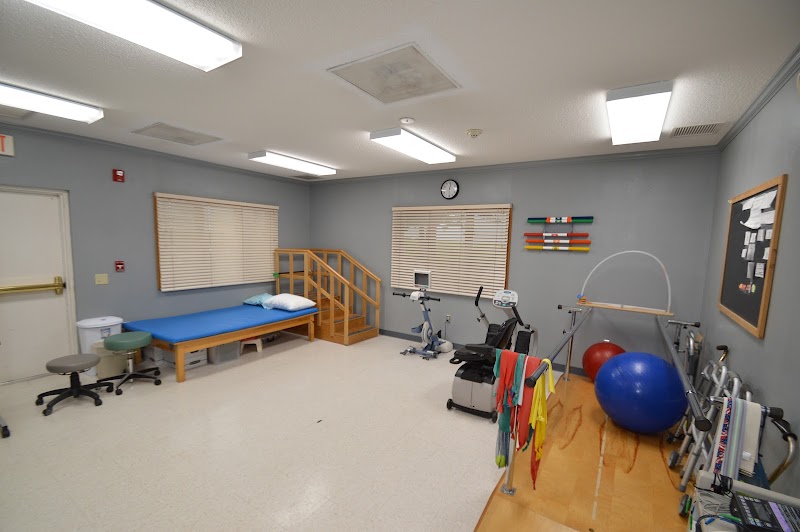
How is Odebolt Specialty Care Staffed?
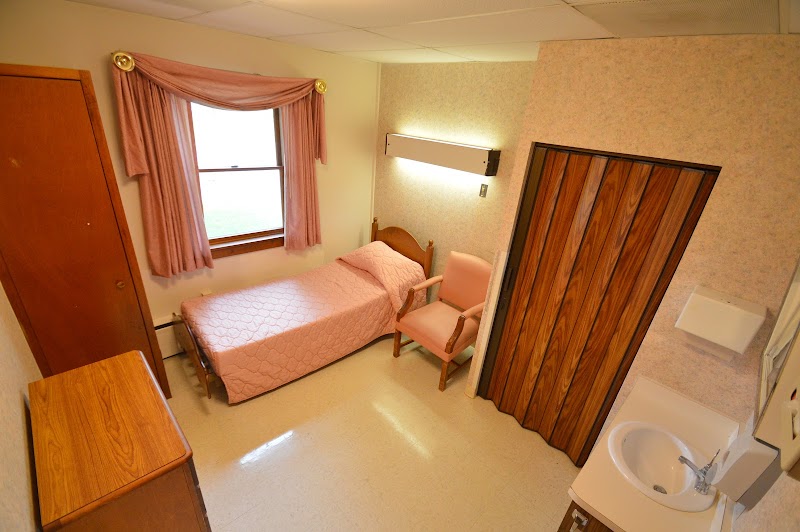
CMS rates Odebolt Specialty Care's staffing level at 5 out of 5 stars, which is much above average compared to other nursing homes. Staff turnover is 39%, compared to the Iowa average of 46%. This relatively stable workforce can support continuity of care.

What Have Inspectors Found at Odebolt Specialty Care?

State health inspectors documented 21 deficiencies at Odebolt Specialty Care during 2023 to 2025. These included: 1 Immediate Jeopardy (the most serious level, indicating potential for serious harm or death), 2 that caused actual resident harm, and 18 with potential for harm. Immediate Jeopardy findings are rare and represent the most serious regulatory concerns. They require immediate corrective action.

Who Owns and Operates Odebolt Specialty Care?

Odebolt Specialty Care is owned by a non-profit organization. Non-profit facilities reinvest revenue into operations rather than distributing to shareholders. The facility is operated by CARE INITIATIVES, a chain that manages multiple nursing homes. With 38 certified beds and approximately 28 residents (about 74% occupancy), it is a smaller facility located in ODEBOLT, Iowa.

How Does Odebolt Specialty Care Compare to Other Iowa Nursing Homes?

Compared to the 100 nursing homes in Iowa, Odebolt Specialty Care's overall rating (4 stars) is above the state average of 3.1, staff turnover (39%) is near the state average of 46%, and health inspection rating (3 stars) is at the national benchmark.

What Should Families Ask When Visiting Odebolt Specialty Care?

Based on this facility's data, families visiting should ask: "What changes have been made since the serious inspection findings, and how are you preventing similar issues?" "Can I visit during a mealtime to observe dining assistance and food quality?" "How do you handle medical emergencies, and what is your hospital transfer rate?" "Can I speak with family members of current residents about their experience?" These questions are particularly relevant given the facility's Immediate Jeopardy citations.

Is Odebolt Specialty Care Safe?

Based on CMS inspection data, Odebolt Specialty Care has documented safety concerns. Inspectors have issued 1 Immediate Jeopardy citation (the most serious violation level indicating risk of serious injury or death). The facility has a 4-star overall rating and ranks #1 of 100 nursing homes in Iowa. Families considering this facility should ask detailed questions about what corrective actions have been taken since these incidents.

Do Nurses at Odebolt Specialty Care Stick Around?

Odebolt Specialty Care has a staff turnover rate of 39%, which is about average for Iowa nursing homes (state average: 46%). Moderate turnover is common in nursing homes, but families should still ask about staff tenure and how the facility maintains care continuity when employees leave.

Was Odebolt Specialty Care Ever Fined?

Odebolt Specialty Care has been fined $14,433 across 1 penalty action. This is below the Iowa average of $33,223. While any fine indicates a compliance issue, fines under $50,000 are relatively common and typically reflect isolated problems that were subsequently corrected. Families should ask what specific issues led to these fines and confirm they've been resolved.

Is Odebolt Specialty Care on Any Federal Watch List?

Odebolt Specialty Care is not on any federal watch list. The most significant is the Special Focus Facility (SFF) program, which identifies the bottom 1% of nursing homes nationally based on persistent, serious quality problems. Not being on this list means the facility has avoided the pattern of deficiencies that triggers enhanced federal oversight. This is a positive indicator, though families should still review the facility's inspection history directly.