

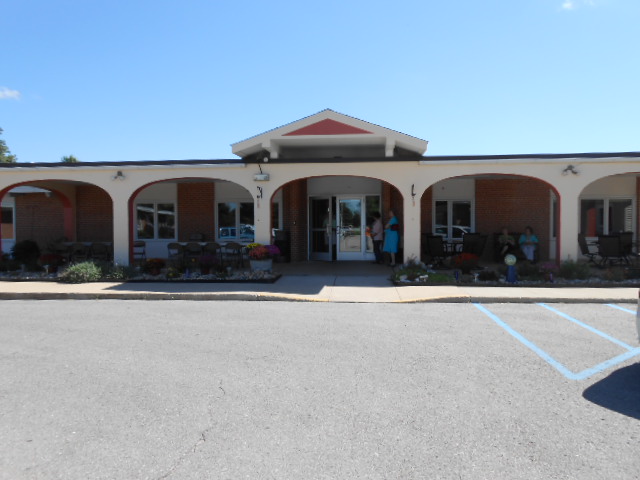

Faith Lutheran Home

914 Davidson Drive, Osage, IA 50461 (641) 732-5511
Non profit - Church related 50 Beds Independent Data: November 2025
Trust Grade
90/100
#23 of 392 in IA
Last Inspection: July 2025

Inspected within the last 6 months. Data reflects current conditions.

Overview

Faith Lutheran Home in Osage, Iowa, has an excellent Trust Grade of A, indicating a high level of quality and care. It ranks #23 out of 392 facilities in Iowa, placing it in the top half and #1 out of 5 in Mitchell County, making it the best local option. The facility is new and has shown stability, with two minor concerns identified during its first inspection. Staffing is a strong point, rated 5 out of 5 stars, with a turnover rate of 37%, which is better than the state average. However, there were two specific incidents noted: one involved improperly preparing pureed food for residents, risking their nutritional needs, and another where soiled gloves touched food during preparation, posing a risk of contamination. Overall, while Faith Lutheran Home excels in many areas, these concerns highlight the need for attention to food safety and nutrition.

Trust Score
A
90/100
In Iowa
#23/392
Top 5%
Safety Record
Low Risk
No red flags
Inspections
Too New
0 → 2 violations
Staff Stability
○ Average
37% turnover. Near Iowa's 48% average. Typical for the industry.
Penalties
✓ Good
No fines on record. Clean compliance history, better than most Iowa facilities.
Skilled Nurses
✓ Good
Each resident gets 51 minutes of Registered Nurse (RN) attention daily — more than average for Iowa. RNs are trained to catch health problems early.
Violations
✓ Good
Only 2 deficiencies on record. Cleaner than most facilities. Minor issues only.
★★★★★
5.0
Overall Rating
★★★★★
5.0
Staff Levels
★★★★☆
4.0
Care Quality
★★★★☆
4.0
Inspection Score
Stable
: 0 issues
2025: 2 issues

The Good

  • 5-Star Staffing Rating · Excellent nurse staffing levels
  • 4-Star Quality Measures · Strong clinical quality outcomes
  • Full Sprinkler Coverage · Fire safety systems throughout facility
  • No fines on record
  • Staff turnover below average (37%)

    11 points below Iowa average of 48%

Facility shows strength in staffing levels, quality measures, fire safety.

The Bad

Staff Turnover: 37%

Near Iowa avg (46%)

Typical for the industry

The Ugly 2 deficiencies on record

Jul 2025 2 deficiencies
CONCERN (D)

Potential for Harm - no one hurt, but risky conditions existed

Food Safety (Tag F0812)

Could have caused harm · This affected 1 resident

Based on observation, policy review, 2022 United States (US) Food and Drug Administration (FDA) Food Code, consulting Dietitian and staff interviews, the facility failed to prevent soiled gloves from ...

Read full inspector narrative →
Based on observation, policy review, 2022 United States (US) Food and Drug Administration (FDA) Food Code, consulting Dietitian and staff interviews, the facility failed to prevent soiled gloves from coming into contact with food during the food preparation for 4 of 4 residents (Resident #14, #23, #34 and #39). The facility reported a census of 39 residents.Findings include: On 7/15/25 observed the following during the kitchen service:At 11:28 AM without completing hand hygiene, Staff A, Cook, placed the blade into the food processor with her bare right hand, she used to touch multiple other surfaces prior to touching the food processor blade. Staff A placed 6, 4-ounce (oz) servings of green peas into the food processor to prepare pureed for Residents #2, #4, #7, #19, #20, and #37.At 11:59 AM Staff B, Dietary Aide, wore gloves used to touch multiple items (scoops, lids, plates, meal tickets, trays, a Styrofoam container, and plate warmer), and without completing hand hygiene, picked up a knife and fork on the utensil end and placed in a plastic bag. Staff B placed the plastic bag on Resident #39's room tray. At 12:05 PM Staff B stated she needed to make a cheese sandwich for Resident #39. Without washing her hands, Staff B put on new gloves, opened a bag of bread, pulled 2 slices of bread from the bag, and laid the bread slices inside a Styrofoam container. Staff B then picked up the 2 slices of bread from the Styrofoam container and placed them on the preparation table. Staff B changed her right-hand glove without performing hand hygiene and opened the walk-in refrigerator (fridge) and came back out with a plastic container of cheese slices. While they continued to wear the same used gloves, Staff B opened the cheese container and placed cheese slices on top of the bread. Staff B held the sandwich in place to cut the sandwich in half, then picked up the sandwich and placed it inside the Styrofoam container. A further observation revealed Staff B had a hole in the third finger of right-hand glove. The staff served the cheese sandwich on Resident #39's room tray. At 12:26 PM the Certified Dietary Manager (CDM) applied gloves without completing hand hygiene. She opened a bag of bread, removed 2 slices of bread, laid the bread on a tray, and tied the bread bag. Staff A wore gloves, opened the walk-in fridge, and went in. Staff A returned from the walk-in fridge with a plastic bag of lunchmeat and a plastic container of cheese slices. As the CDM, continued to wear the same gloves, opened a plastic bag, removed meat, and placed it on a slice of bread. Staff A proceeded to place a small skillet on the stove. Staff A returned to the preparation table, changed her glove on her right-hand without completing hand hygiene, picked up bread slices in her right hand, and buttered them with a knife in her left hand. Staff A opened the cheese container, placed cheese slices on the bread, placed the lid back on the cheese container, picked up the sandwich, and walked over to the stove placing the cheese sandwich in the skillet. Staff A removed her gloves and continued cooking the cheese sandwich without performing hand hygiene. Observation at 12:37 PM revealed Staff B removed a plastic bag containing a sandwich from a rack above the steam table. Staff B opened a plastic bag, removed the sandwich, and placed it on a plate wearing the same gloves, they used to touch multiple meal tickets, plate warmer lid, plates, scoops, steam lid covers, trays, every plate, scoop, meal ticket, and plate warmer. The staff served Resident #14 the sandwich. At 12:40 PM Staff A applied gloves without completing hand hygiene, opened a bread bag, removed 2 slices of bread, and tied the bread bag back up. Staff A opened a bag of wheat bread with the same gloves, removed 2 slices of bread, and tied the bread bag back up. Staff A held the bread in her right gloved hand and buttered the bread with a knife in her left gloved hand. She opened a plastic container, removed cheese slices, and placed them on the bread. Staff A picked up the sandwich with the dirty gloves and proceeded to place the cheese sandwich in a skillet on the stove. The staff served the cheese sandwich to Resident #34. Staff A continued to use the same dirty gloves and technique to prepare a peanut butter sandwich, as she touched multiple surfaces with her dirty gloves. The staff served the peanut butter sandwich to Resident #23.During an interview on 7/15/25 at 2:12 PM Staff A reported she didn't wash her hands between glove changes and confirmed she touched food with the same gloves she used to touch other items when preparing the sandwiches. Staff A explained she wore gloves when she served and used utensils, except when she made sandwiches. They always put gloves on and prepared all the sandwiches at one time. No one taught her to use tongs. She liked to use gloves but didn't like to wash her hands between glove changes, as they got trained.Interview on 7/15/25 at 2:23 PM the CDM explained she expected the staff to change their gloves between tasks and wash their hands.During an interview on 7/16/25 at 10:12 AM the Consulting Dietitian reported the dietary staff should wash their hands before applying gloves, when changing gloves, and when changing tasks. They should wash their hands if they changed from handling meat to making a sandwich. The Consulting Dietitian explained she checked with the nursing staff and CDM during visits to see if they had any concerns when she visited on-site weekly but didn't mention completing food handling audits as part of her duties.The Glove Use During Food Service Policy, dated 1/1/25, defined the purpose as to prevent foodborne illness and cross-contamination by ensuring appropriate glove use when handling and serving food in the facility. The policy directed all dietary and food service staff must wear gloves when there is a risk of direct hand contact with ready-to-eat (RTE) foods or food contact surfaces during food service. Proper glove use is required to protect resident health and comply with infection control and food safety standards. The Policy Procedure directed gloves must be worn when handling RTE foods (e.g. cooked meats, bread) and when serving food without utensils.The Glove Use during Food Service Policy effective 1/1/25 directed to change gloves after handling raw meat, when switching tasks, and when gloves become damaged, soiled or contaminated. Perform hand hygiene before putting on gloves, after removing gloves and between glove changes. The Policy under Monitoring and Compliance outlined supervisors and dietary managers would conduct routine compliance checks, and address any improper glove use promptly through coaching or disciplinary action per the facility policy. The 2022 US FDA Food Code under 2-301.14 When to Wash (hands) directed food employees to clean their hands and exposed portions of their arms immediately before engaging in food preparation, after handling soiled equipment or utensils, during food preparation, as often as necessary to remove soil and contamination and to prevent cross contamination when changing tasks, before donning gloves to initiate a task that involves working with food, and after engaging in other activities that contaminate the hands. The Food Code at 3-301.11 Preventing Contamination from Hands directed food employees may not contact exposed, ready to eat food with their bare hands, and shall use suitable utensils such as deli tissue, spatulas, tongs, single-use gloves or dispensing equipment.
CONCERN (E)

Potential for Harm - no one hurt, but risky conditions existed

Deficiency F0805 (Tag F0805)

Could have caused harm · This affected multiple residents

Based on observation, document review, menu review, policy review and staff interview the facility failed to properly prepare pureed food to ensure each resident received the appropriate serving size ...

Read full inspector narrative →
Based on observation, document review, menu review, policy review and staff interview the facility failed to properly prepare pureed food to ensure each resident received the appropriate serving size and nutrients for 7 of 7 residents sampled (Residents #2, #4, #7, #17, #19, #20, and #37). The facility reported a census of 39 residents.Findings include:On 7/14/25 the Certified Dietary Manager (CDM) provided an untitled document with a list of residents who received a pureed diet. The list included Residents #2, #4, #7, #17, #19, #20 and #37.A Week 2, Tuesday Noon Meal Puree Menu documented the following:a. Beef cube pepper steak pureed serving #8 scoop (4 ounces (oz))b. French onion rice, #8 scoopc. Wax beans, #12 scoop (3.25 oz)On 7/15/25 at 11:15 AM Staff A, Cook, reported the facility had 7 residents that required pureed meat, and she planned to prepare seven servings of the beef cube pepper steak. At 11:16 AM Staff A placed 7, 4 oz serving of beef cube pepper steak into the food processor, added milk multiple times into the food processor without referring to any standardized recipe for a measured amount of milk. Staff A scraped the mixture from the food processor directly into a steam pan and placed the steam pan on the steam table without measuring the total volume of the pureed beef steak.On 7/15/25 at 11:23 AM Staff A explained 6 residents required pureed rice and peas. She planned to prepare 6 servings of pureed rice and peas. Staff A placed 6, 4 oz servings of French onion rice into a blender and poured milk into the blender without referring to any standard recipe or measuring out the amount of milk. Staff A placed the pureed rice mixture directly into a steam pan and placed in the steam table without measuring a total volume of the pureed rice mixture.Observation on 7/15/25 at 11:28 AM Staff A placed the blade into the food processor with her bare hand, then placed 6, 4 oz servings of green peas into the food processor, added milk without measuring the milk or referring to a standardized recipe, and blended the peas. Staff A scraped the pureed pea mixture from the blender directly into a steam pan without measuring the total volume. On 7/15/25 at 12:15 PM, Staff B, Dietary Aide, initiated the main dining room meal service. While under continuous observation, Staff B served Residents #2, #20, and #37 their pureed food with scoops not full as posted on the standardized, Dietitian approved menu, resulting in smaller portions. Staff B, Dietary Aide, completed meal service at 12:47 PM with approximately a 1/2 pan of pureed steak left over; 1/4 steam pan of pureed peas left over, and almost a 1/2 steam pan of pureed rice left over. All of the pureed steam pans measured as a size six steam pan (approximate measurements 6-78 inch in length x 6-516-inch width x 6 inches in depth).On 7/15/25 the post-noon meal observations revealed Residents #2 and #4 ate all of their pureed food items served. While Resident #37 continued to eat his last few bites of remaining peas.During an interview on 7/15/25 at 1:01 PM Staff A reviewed the Week 2, Tuesday Noon Meal Menu and stated she serves the serving size on the pureed menu. Staff A pointed to the Puree Menu and indicated a #8 scoop serving size for the steak and rice. Staff A didn't state anything about peas being served versus the wax beans listed on the dietician approved menu.Interview on 7/15/25 at 1:09 PM the CDM verbalized she expected the staff to follow the established menu, unless a resident has a special request. On 7/15/25 at 2:12 PM Staff A reported she watched training videos and observed previous cooks pureed food. Some of the cooks measured the total volume and some didn't. She didn't receive training to measure the total volume of the puree mixture and use the Pureed Diet Portion Sizes/Scoop Chart to identify the number of servings and the total volume to have a correct serving size. She only got trained to look at the chart to see the color and scoop sizes. Interview completed on 7/15/25 at 2:23 PM the CDM explained they recently received training at the hospital on how to correctly prepare pureed food. She added they stumbled on the part with adding more volume to the puree food and the serving sizes. They followed the menu for serving sizes and pointed to the Week 2, Noon Meal Menu serving sizes under the Pureed column (beef cube pepper steak #8 scoop, French onion rice #8 scoop and vegetables #12 scoop). She voiced no one explained to her how to correctly use the Pureed Diet Portion Sizes/Scoops chart. The CDM stated the food vendor Pureed Process hanging on the wall by the preparation table is the procedure that staff should follow. They just had a cook retire and she knew how to do all that, she wished she still worked at the facility to show her that stuff.During an interview on 7/16/25 at 10:12 AM the Consulting Dietitian reported the dietary staff just completed training at the hospital on pureed diet consistencies. They went over following a standardized recipe from the food vendor. She expected the dietary staff to prepare each pureed meal separately to ensure the resident received the entire serving rather than preparing all residents meals together. In regard to, preparing multiple pureed servings at the same time, the Dietician explained the facility could use the food vendor software to enter the number of puree servings, then print out a standardized menu that will calculate how much fluid to add to the food, approximately, give or take a little bit and the correct serving size. They could customize the serving size and print out for the standard recipe to know how much fluid to add when they prepared the pureed food to have an accurate serving size. They should follow the standardized recipe on how much fluid to add. If they just added fluid without measuring, the residents might not get enough nutrients from the provided serving. The facility should follow the established pureed process from the food vendor.The undated Food Vendor Puree Process directed the following steps:Measure out the desired number of servings into a container for pureeing.Puree the foodAdd any necessary thickener or appropriate liquid of nutritive value and flavor to obtain the desired consistency. Measure the total volume of the food after it is pureed.Divide the total volume of the pureed food by the original number of portions (see Puree Scoop Chart). Heat or chill the pureed food to safe serving temperatures.The Pureed Food Preparation and Service Policy, effective 1/1/25, defined the purpose as to prepare and serve pureed food safely, attractively and in accordance with the resident's individualized dietary needs. The Policy directed all dietary staff must receive hands-on training in puree preparation and be able to prepare and plate pureed meals correctly. The Policy directed the Dietitian to monitor the nutritional adequacy of the pureed diet.
Understanding Severity Codes (click to expand)
Life-Threatening (Immediate Jeopardy)
J - Isolated K - Pattern L - Widespread
Actual Harm
G - Isolated H - Pattern I - Widespread
Potential for Harm
D - Isolated E - Pattern F - Widespread
No Harm (Minor)
A - Isolated B - Pattern C - Widespread

Questions to Ask on Your Visit

  • "Can I speak with families of current residents?"
  • "What's your RN coverage like on weekends and overnight?"

Our Honest Assessment

Strengths
  • • Grade A (90/100). Above average facility, better than most options in Iowa.
  • • No major safety red flags. No abuse findings, life-threatening violations, or SFF status.
  • • No fines on record. Clean compliance history, better than most Iowa facilities.
  • • Only 2 deficiencies on record. Cleaner than most facilities. Minor issues only.
Concerns
  • • No significant concerns identified. This facility shows no red flags across CMS ratings, staff turnover, or federal penalties.
Bottom line: Generally positive indicators. Standard due diligence and a personal visit recommended.

About This Facility

What is Faith Lutheran Home's CMS Rating?

CMS assigns Faith Lutheran Home an overall rating of 5 out of 5 stars, which is considered much above average nationally. Within Iowa, this rating places the facility higher than 99% of the state's 100 nursing homes. This rating reflects solid performance across the metrics CMS uses to evaluate nursing home quality.

How is Faith Lutheran Home Staffed?

CMS rates Faith Lutheran Home's staffing level at 5 out of 5 stars, which is much above average compared to other nursing homes. Staff turnover is 37%, compared to the Iowa average of 46%. This relatively stable workforce can support continuity of care.

What Have Inspectors Found at Faith Lutheran Home?

State health inspectors documented 2 deficiencies at Faith Lutheran Home during 2025. These included: 2 with potential for harm.

Who Owns and Operates Faith Lutheran Home?

Faith Lutheran Home is owned by a non-profit organization. Non-profit facilities reinvest revenue into operations rather than distributing to shareholders. The facility operates independently rather than as part of a larger chain. With 50 certified beds and approximately 39 residents (about 78% occupancy), it is a smaller facility located in Osage, Iowa.

How Does Faith Lutheran Home Compare to Other Iowa Nursing Homes?

Compared to the 100 nursing homes in Iowa, Faith Lutheran Home's overall rating (5 stars) is above the state average of 3.1, staff turnover (37%) is near the state average of 46%, and health inspection rating (4 stars) is above the national benchmark.

What Should Families Ask When Visiting Faith Lutheran Home?

Based on this facility's data, families visiting should ask: "Can I visit during a mealtime to observe dining assistance and food quality?" "How do you handle medical emergencies, and what is your hospital transfer rate?" "Can I speak with family members of current residents about their experience?"

Is Faith Lutheran Home Safe?

Based on CMS inspection data, Faith Lutheran Home has a clean safety record: no substantiated abuse findings (meaning no confirmed cases of resident harm), no Immediate Jeopardy citations (the most serious violation level indicating risk of serious injury or death), and is not on the Special Focus Facility watch list (a federal program monitoring the lowest-performing 1% of nursing homes). The facility has a 5-star overall rating and ranks #1 of 100 nursing homes in Iowa. While no facility is perfect, families should still ask about staff-to-resident ratios and recent inspection results during their visit.

Do Nurses at Faith Lutheran Home Stick Around?

Faith Lutheran Home has a staff turnover rate of 37%, which is about average for Iowa nursing homes (state average: 46%). Moderate turnover is common in nursing homes, but families should still ask about staff tenure and how the facility maintains care continuity when employees leave.

Was Faith Lutheran Home Ever Fined?

Faith Lutheran Home has no federal fines on record. CMS issues fines when nursing homes fail to meet care standards or don't correct problems found during inspections. The absence of fines suggests the facility has either maintained compliance or corrected any issues before penalties were assessed. This is a positive indicator, though families should still review recent inspection reports for the full picture.

Is Faith Lutheran Home on Any Federal Watch List?

Faith Lutheran Home is not on any federal watch list. The most significant is the Special Focus Facility (SFF) program, which identifies the bottom 1% of nursing homes nationally based on persistent, serious quality problems. Not being on this list means the facility has avoided the pattern of deficiencies that triggers enhanced federal oversight. This is a positive indicator, though families should still review the facility's inspection history directly.