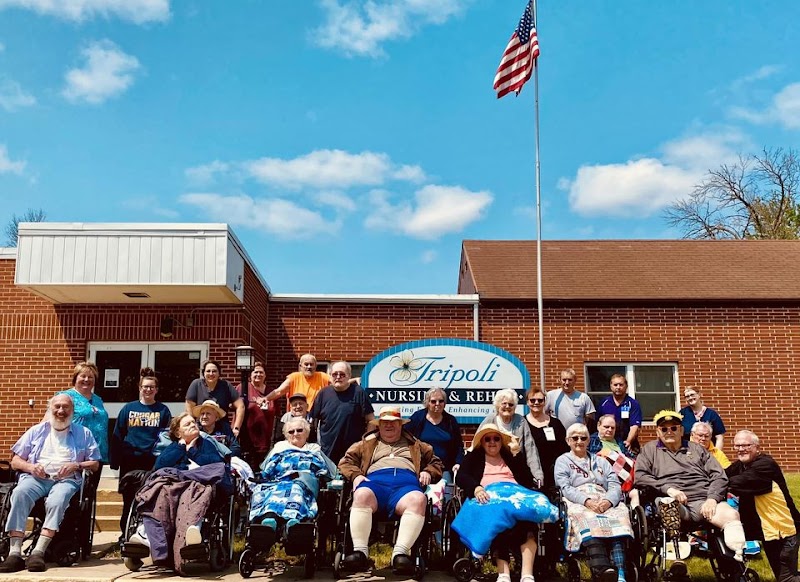
Tripoli Nursing & Rehab
604 THIRD STREET SW, TRIPOLI, IA 50676 (319) 882-4269
Non profit - Corporation 28 Beds Independent Data: November 2025
Trust Grade
45/100
#308 of 392 in IA
Last Inspection: July 2025

Inspected within the last 6 months. Data reflects current conditions.

Overview

Tripoli Nursing & Rehab has a Trust Grade of D, indicating below-average performance with some concerning issues. They rank #308 out of 392 facilities in Iowa, placing them in the bottom half, and #4 out of 4 in Bremer County, meaning only one local option is better. The facility is showing some improvement in quality, decreasing from 11 issues in 2024 to 5 in 2025. Staffing is a relative strength with a rating of 4 out of 5 stars, although the turnover rate of 69% is concerning and significantly higher than the state average of 44%. While the facility has not incurred any fines, which is a positive sign, they have less RN coverage than 85% of Iowa facilities, meaning residents may not receive as much oversight from registered nurses. Specific incidents noted by inspectors include the failure to ensure that residents received a well-balanced diet and that food was served at safe temperatures. For example, one resident did not receive the correct diet, and hot food was served at unsafe temperatures, raising concerns about nutrition and safety. Overall, while there are some strengths, families should weigh these against the noted weaknesses before making a decision.

Trust Score
D
45/100
In Iowa
#308/392
Bottom 22%
Safety Record
Low Risk
No red flags
Inspections
Getting Better
11 → 5 violations
Staff Stability
⚠ Watch
69% turnover. Above average. Higher turnover means staff may not know residents' routines.
Penalties
✓ Good
No fines on record. Clean compliance history, better than most Iowa facilities.
Skilled Nurses
○ Average
Each resident gets 38 minutes of Registered Nurse (RN) attention daily — about average for Iowa. RNs are the most trained staff who monitor for health changes.
Violations
⚠ Watch
25 deficiencies on record. Higher than average. Multiple issues found across inspections.
★★☆☆☆
2.0
Overall Rating
★★★★☆
4.0
Staff Levels
★☆☆☆☆
1.0
Care Quality
★★★☆☆
3.0
Inspection Score
Stable
2024: 11 issues
2025: 5 issues

The Good

  • 4-Star Staffing Rating · Above-average nurse staffing levels
  • Full Sprinkler Coverage · Fire safety systems throughout facility
  • No fines on record

Facility shows strength in staffing levels, fire safety.

The Bad

2-Star Overall Rating

Below Iowa average (3.0)

Below average - review inspection findings carefully

Staff Turnover: 69%

23pts above Iowa avg (46%)

Frequent staff changes - ask about care continuity

Staff turnover is elevated (69%)

21 points above Iowa average of 48%

The Ugly 25 deficiencies on record

Jul 2025 2 deficiencies
CONCERN (D)

Potential for Harm - no one hurt, but risky conditions existed

Deficiency F0688 (Tag F0688)

Could have caused harm · This affected 1 resident

**NOTE- TERMS IN BRACKETS HAVE BEEN EDITED TO PROTECT CONFIDENTIALITY** Based on observation, clinical record review and staff interview the facility failed to implement a soft palm grip cushion to th...

Read full inspector narrative →
**NOTE- TERMS IN BRACKETS HAVE BEEN EDITED TO PROTECT CONFIDENTIALITY** Based on observation, clinical record review and staff interview the facility failed to implement a soft palm grip cushion to the right hand or bilateral hand splints per Occupational Therapy (OT) recommendation to minimize the risk of contracture for 1 of 1 resident's sampled (Resident #21). The facility identified a census of 24 residents.Findings include:Resident #21's Annual Minimum Data Set (MDS) assessment dated [DATE] showed a Brief Interview for Mental Status (BIMS) score of 12 out of 15 which indicated intact cognition. The MDS documented Resident #21 with impaired functional mobility of both upper extremities and dependent upon staff for dressing. The MDS listed diagnoses of seizure disorder, unspecified injury of the head, limitations of activity due to disability and other reduced mobility. The MDS lacked documentation that Resident #21 rejected care.An OT Evaluation and Plan of Treatment dated 7/07/24 documented Resident #21 with impaired right upper extremity range of motion (ROM), and bilateral wrist/hand contractures. The OT Evaluation further documented to assess and order/fabricate orthotic devices. Recommendations documented the following; resting hand splint to left and right upper extremities at night, and palm grip to right upper extremity during the day. The Evaluation documented that the resident had contractures to both right and left wrists, and hands.A 7/07/24 OT Home Therapy Program under Comments and Equipment documented OT planned to trial wrist/hand braces in upcoming sessions to decrease the risk of contracture.An OT Discharge summary dated [DATE] signed by the licensed/registered OT under Discharge Recommendations directed to continue with the contracture management functional maintenance program (FMP) splint and brace program with resting hand splint 2-4 hours daily.Resident #21 Home Therapy Program dated 8/14/24 listed a purpose of contracture management to maintain function and directed the staff to utilized resting hand splints to bilateral upper extremities (BUE) 2-4 hours per day and notify OT if questions or concerns.Resident #21 Restorative Nursing Program (RNP), dated 5/16/25, directed to provide Passive Range of Motion (PROM) to bilateral upper extremities (BUE) all ranges for 15 repetitions, two sets. Cleanse bilateral hands with soap and water, dry. May apply rolled washcloth or alternate device.An Order Summary Report signed by the Provider on 7/02/25 listed a physician order to apply a soft palm grip cushion to the right hand during the day per OT recommendation and physician order, start date 7/29/24.A 7/03/25 3:33 PM Health Status Progress Note documented Resident #21 received restorative therapies which included PROM to bilateral upper and lower extremities or used a portable stationary bike. The Progress note lacked documentation Resident #21 refused or removed the right palm grip cushion.The 7/03/25 Alteration in Musculoskeletal Status Care Plan related to reduced mobility and contracture of the right hand directed the staff to apply a soft palm grip cushion to the right hand during the day. The 7/05/24 Activities of Daily Living (ADL) Self Care Deficit Care Plan noted Resident #21 required maximum assistance of one staff member for dressing. Resident #21 Care Plan did not contain information that he refused or would take off the right soft palm grip cushion or hand splints.Observation on 7/21/2025 at 11:41 AM Resident #21 sat in the wheelchair with no soft palm grip cushion to the right hand and no hand splints to either hand. Resident #21 observed with both hands clenched into fists with the middle fingers positioned into the palm on both hands. On 7/21/25 at 12:50 PM Resident #21 sat in his wheelchair. Resident #21 did not have a soft palm grip cushion to the right hand. His right hand clenched tight with his middle finger digging into his palm.On 7/21/25 at 2:30 PM Resident #21 sat in his wheelchair by the nurses' station. Staff B, Licensed Practical Nurse (LPN) sat at the nurses' station a few feet away from Resident #21 and the Director of Nursing (DON) sat in her office with a diagonal line of vision to the resident. Resident #21 did not have a soft palm grip cushion on to his right hand or hand splints on his bilateral hands. Observation on 7/21/25 at 3:52 PM Resident #21 sat in the wheelchair at the end of the hallway looking out the window. He did not have a soft palm grip cushion on his right hand or hand splints to either hand. Both hands were clenched into fists with his middle fingers digging into his palms. On 7/22/25 at approximately 2:30 PM Staff H, Health Services Coordinator provided Resident #21 current RNP program dated 5/16/25. The RNP had not been updated since written on 5/16/25. The RNP lacked documentation directing the staff to apply a right-hand soft palm grip cushion or hand splints or that Resident #21 would refuse or take off the devices. Observation on 7/23/25 at 7:35 AM revealed Resident #21 sitting in his wheelchair in the dining room. Resident #21 did not have a soft palm grip cushion to his right hand. His right hand was partially clenched into a fist. Resident #21 did not have hand splints to his hands.On 7/23/2025 at 8:21 AM Resident #21 observed feeding himself independently gripping a large handled spoon with his left hand. He did not have a palm grip cushion to his right palm. His right hand was partially clenched into a fist. Interview completed 7/23/25 at 9:35 AM Staff C, Certified Nursing Assistant (CNA) reported she had worked at the facility for about one year and worked twelve hour shifts so she is in the facility a lot of hours. Staff C explained Resident #21 has a blue, round, cushion thing that goes over his right hand. He wears it all day. If she can't find his cushion thing, she rolls up a towel and places a towel in his right hand when she does his morning cares.Observation on 7/23/25 at 9:47 AM revealed Resident #21 sitting in the wheelchair in his room with a towel across his lap which he used to wipe his mouth with his left hand which was in a partially closed grip position. The towel was not in a rolled position. Resident #21 did not have a soft palm grip cushion in his right hand or hand splints on his hands. Interview on 7/23/25 at 9:50 AM Staff D, Restorative Aide verbalized she had been doing the restorative nursing for about four months. She provides PROM to Resident #21 right hand a few times a week. He has a cushion thing that she places in his hand after she gets done working with him. He usually doesn't take it out. He likes to wear it. Staff D further stated she does not document the use of the cushion thing as it hasn't been added to the documentation in the electronic software. It needs to be added yet. Resident #21 wears the cushion thing to his right hand a few days a week when she works with him. She didn't know anything about hand splints but would show the Surveyor what the resident used. During an observation on 7/23/25 at 9:57 AM Staff D went to the therapy room to look for Resident #21 palm thing she puts in his right hand. Staff D looked in the desk in the therapy room, pulling various draws and looking into cubbies in the desk and stated sometimes things get moved, maybe it is in Resident #21's room. Staff D went to Resident #21's room and pointed to an aqua colored soft palm grip cushion laying on a small table by his recliner and indicated it is the device she places in his right hand. Staff D left Resident #21 room without applying the soft palm grip cushion to his right hand or asking him if he would like to have the palm cushion put on.Interview on 7/23/25 at 10:00 AM Resident #21 (when pointing at the aqua colored soft palm grip cushion and asking if he wears it much) shook his head side to side and stated, no.During an interview on 7/23/25 at 10:23 AM Staff E, CNA reported she had worked at the facility since February 2025. Staff E explained Resident #21 had a green thing with a white thing around it that they place on his right hand to keep it open. She was not sure how often Resident #21 was to wear the hand thing. The aides don't document on the hand thing, but the nurses might document on it. Interview on 7/23/25 at 10:35 AM Staff F, CNA voiced he didn't know what the device was called but they put it on Resident #21's right hand. He couldn't say how often Resident #21 was supposed to wear it. He didn't know where they document the use of it (soft palm grip cushion), but he could check and get back to the Surveyor with the information. Staff F did not come back to the Surveyor with any information regarding Resident #21 use of the soft palm grip cushion or hand splints.Interview completed on 7/23/25 at 10:41 AM Staff G, LPN stated she had worked at the facility since April 2025. They have a hand thing they place on Resident #21's right hand. She usually sees it in his hand almost every day, but she hadn't check to see if Resident #21 had it in today. Staff G guessed anyone that sees the cushion is out of his hand would be able to put it back in his hand, but thought it was primarily the rehab aide's responsibility to apply it. Staff G voiced she didn't think there was an actual schedule for Resident #21 to wear it as there was nothing in the physician orders. She didn't know where they document the hand thing and would have to ask the DON.The May and June 2025 Written Restorative Nursing Flow Sheets under Specifics directed to provide PROM to BUE all ranges, 15 repetitions for two sets. Clean bilateral hands with soap and water, dry. The Restorative Nursing Flow Sheets lacked direction for the use of a right-hand soft palm grip cushion or the application of hand splints. The Flow Sheets lacked documentation of any resident refusals of the RNP. A 7/23/25 review of the Electronic Medication Administration Records (EMARs) and Electronic Treatment Administration Records (ETARs) from August 2024 to July 23, 2025 lacked documentation of the application or refusals of a soft palm grip cushion to the right hand during the day or the application of bilateral hand splints.A 7/23/25 review of the Documentation Survey V2 Reports from August 2024 to July 2025 lacked documentation of application or refusals of a soft palm grip cushion to the right hand or the application of bilateral hand splints.During an interview on 7/23/25 at 12:43 PM the DON reported she is a certified restorative nurse. When she came on board in May 2025, there were no restorative programs being done. The written RNP programs were being placed in the resident charts, but no RNP were done. They switched from documenting RNP on a paper form to documenting in the resident electronic healthcare record (EHR) in July 2025. The Assistant Director of Nursing (ADON) had put all the resident RNP in the EHR. Resident #21 soft palm grip cushion did not get put in the computer when they switched to documenting the RNP's in the electronic charting. The DON voiced Resident #21 takes off the soft palm grip cushion or refuses it. She further explained it is her responsibility to update the RNP's in the EHR if there are any updates needed to the RNP's. On 7/23/25 at 2:46 PM the DON reported she didn't know anything about bilateral hand splints for Resident #21 as the OT service had occurred prior to her working at the facility. She implemented the soft palm grip cushion to Resident #21's right hand in May 2025 to prevent contractures. She checked Resident #21's restorative documentation in the EHR. The application of Resident #21's right soft palm grip cushion was under the instruction in the EHR. It had been placed on the July 2025 restorative documentation, but in the wrong area. If that area is not opened up, the staff cannot see the directions on when to apply it. She had talked with the ADON and they would be correcting the documentation going forward so that all staff know how to use the restorative devices per the RNP's. The DON explained she had done the best she could to get basic RNP's in place for the residents to get them moving. She acknowledged some things as fallen through with Resident #21's RNP, but explained she would be doing more staff education to ensure the restorative programs are followed.During an interview on 7/23/25 at 3:05 PM Staff B explained she had been the staff member doing restorative last year. She had been completing the restorative programs as best she could up until last fall and then the programs just stopped. She couldn't recall if Resident #21 ever had bilateral hand splints, but they did focus on his right hand. She stated even now his hand will clench into a tight fist by nighttime. She verbalized they are really just starting over on using his right soft palm grip cushion and she is not aware if he has an actual program on how often he is to wear the palm cushion. Staff B works as a charge nurse on the floor.The Restorative Nursing Policy and Procedure dated 5/05/25 addressed RNP's may include, but are not limited to range of motion, splints and prosthetics. Restorative nursing may be supplemental in addition to CNA's shift tasks. The restorative aide or designee will document in the EHR or paper equivalent following completion of the programs. Resident refusals to participate in RNP's are to be reported to the charge nurse or designee.
CONCERN (D)

Potential for Harm - no one hurt, but risky conditions existed

Infection Control (Tag F0880)

Could have caused harm · This affected 1 resident

Based on facility record review, facility policy, personnel files, observation and staff interviews, the facility failed to handle and process soiled laundry to prevent cross transmission or the sprea...

Read full inspector narrative →
Based on facility record review, facility policy, personnel files, observation and staff interviews, the facility failed to handle and process soiled laundry to prevent cross transmission or the spread of infection in 1 laundry room observed. The facility reported a census of 24 residents.Findings Include:Observation on 7/23/25 at 10:49 AM revealed a 33-gallon covered empty bin with a label stating soiled linens go here. A pile of soiled soaker pads and bed linens were observed directly on the floor in front of a standard washing machine. Staff A, Laundry Services entered the laundry area from the clean side entrance and stood on top of the soiled linens and soaker pads. Staff A, stepped off the linens and explained soiled laundry comes into the laundry room in bags. Staff A verbalized she dons gloves, opens the bags of laundry, sorts the laundry and places the laundry in the standard washing machine or the commercial washing machine. Staff A verbalized what is left is placed on the floor in front of the commercial washing machine. Staff A reported this was her common practice. Staff A revealed she never dons a gown when sorting soiled resident clothing or linens. Staff A acknowledged she stood directly on the soiled soaker pads and linens. Staff A verbalized she does not cover or clean her shoes prior to delivering clean linens or clothing to resident rooms. Staff A reported she mops the laundry room floor at the end of each day and then will step on the mop to clean the bottom of her shoes. Staff A reported there is only one person that works in laundry each day. In an interview on 7/23/25 at 10:57 AM, the Administrator acknowledged she observed the soiled soaker pads and linens directly on the floor. The Administrator reported staff are instructed to wear gown and gloves when handling soiled laundry and soiled laundry should be in bags, bins and/or baskets.In an interview on 7/23/25 at 2:48, Staff I, Environmental Services and the Administrator verbalized Staff A only works in the laundry services department. Staff I verbalized Staff A works 3 days per week but had picked up extra shifts. Staff I verbalized laundry baskets are provided for soiled laundry and wire baskets are for clean laundry. The Time Card Report for Staff A revealed the following:7/9/24 punched in at 7:22 AM punched out at 4:15 PM7/10/25 punched in at 7:11 AM punched out at 3:08 PM7/11/25 punched in at 7:14 AM punched out at 3:26 PM7/18/25 punched in at 7:16 AM punched out at 3:08 PM7/19/25 punched in at 7:16 AM punched out at 2:40 PM7/20/25 punched in at 7:18 AM punched out at 2:53 PM7/21/25 punched in at 7:14 AM punched out at 2:54 PM7/23/25 punched in at 7:17 AM punched out at 11:22 AMStaff A had been hired on 1/15/96. Her Personnel File lacked a signed job description for the Laundry Services position. The Personnel File revealed the following:1. On 8/21/24, Staff A signed an Acknowledgement of Receipt of Warning that documented Staff A violated company polices with substandard work including not mopping the laundry room.2. On 10/3/24, Staff A signed an Acknowledgement of Receipt of Warning that documented Staff A violated company policies with substandard work with handling soiled resident clothing. 3. On 5/29/25, Staff A signed an untitled handwritten document listing the following items: a. All soiled items delivered to the laundry room are washed - not put away soiled. b. Gloves will be worn while handling soiled items. c. Clean laundry will be delivered via the blue cart or wire cart, bathroom linens are to be delivered with personals. d. Delivery need not to occur more than twice daily. The facility Laundry Protocol policy dated 5/9/06 revealed it is the policy of the facility to safely handle soiled linens so as not to contaminate self, residents, clean linen or roommate's areas or personal items. The Laundry Protocol lacked guidance to don gowns, gloves and contain soiled laundry in baskets and/or bins. The facility Standard Precautions policy dated 1/22/24 revealed the following: Personal Protective Equipment are protective items or garments worn to protect the body or clothing from hazards that can cause injury and to protect residents from cross transmission.Standard Precautions are infection prevention practices that apply to all residents, regardless of suspected or confirmed diagnosis or presumed infection status. Standard precautions are based on the principle that all blood, body fluids, secretions, excretions except sweat, regardless of whether they contain visible blood, non-intact skin, and mucous membranes may contain transmissible infectious agents. Furthermore, equipment or items in the patient environment likely to have been contaminated with infectious body fluids must be handled in a manner to prevent transmission of infectious agents. Standard precautions include but are not limited to hand hygiene, use of gloves. gown, mask, eye protection or face shield, depending on the anticipated exposure; safe injection practices; and respiratory hygiene/cough etiquette. Also, body fluids must be handled in a manner to prevent transmission of infectious body fluids must be handled in a manner to prevent transmission of infectious agents (such as gloves for direct contact, properly clean and disinfect or sterile reusable equipment before use on another patient).
Apr 2025 3 deficiencies
CONCERN (D) 📢 Someone Reported This

A family member, employee, or ombudsman was alarmed enough to file a formal complaint

Potential for Harm - no one hurt, but risky conditions existed

Resident Rights (Tag F0550)

Could have caused harm · This affected 1 resident

Based on Resident rights policy/procedure review, resident and staff interview the facility failed to treat a resident with respect and dignity in a manner that promotes maintenance or enhancement of ...

Read full inspector narrative →
Based on Resident rights policy/procedure review, resident and staff interview the facility failed to treat a resident with respect and dignity in a manner that promotes maintenance or enhancement of his or her quality of life for 2 out of 4 resident reviewed. (Resident #1 and Resident #3). The facility identified a census of 26 residents. Findings include: 1. The Minimum Data Set (MDS) for Resident #1, with an assessment reference dated 3/19/25, documented diagnoses which included heart failure, hypertension, diabetes mellitus, and anxiety. The MDS revealed the resident with a Brief Interview for Mental Status (BIMS) score of 9 which indicated moderate memory impairments, is usually understood and understand by others and substantial to maximal assistance with toileting hygiene, and supervision to set up with personal hygiene and partial to moderate assistance with mobility. The MDS documented no behaviors. The Plan of Care with an initiated date 9/3/24, had a focus area, the resident is independent for meeting emotional, intellectual, physical and social needs, and resident has an activity of daily living self-care performance deficit related to weakness, reduced mobility and history of left arm and hip fracture. Interventions include: *PERSONAL HYGIENE/ORAL CARE: The resident is able to perform personal hygiene/oral cares with set-up assistance. *TOILET USE: The resident requires moderate assistance of 1 staff for toileting. *TRANSFER: The resident requires mod assistance by 1 staff to move between surfaces. *Encourage the resident to participate to the fullest extent possible with each interaction *All staff to converse with resident while providing care. Interview on 4/15/25 at 9:30 a.m., Resident #1, stated that during an evening shift Staff A, Certified Nursing Assistant, (CNA) was assisting them to go to bed, Resident #1 was sitting on the edge of the bed and Staff A grabbed the upper part of Resident #1 arms and pushed resident into bed. Resident #1 did not tell anyone about the incident and was not able to remember the exact date of the incident. Resident #1 stated that they were not injured during the incident. 2. The MDS for Resident #3, with an assessment reference dated 1/31/25, documented diagnoses which included insomnia, anxiety, depression, and muscle weakness. The MDS revealed the resident with a BIMS score of 15 which indicated no memory impairments, is understood by others and understands others. The MDS documented the resident required substantial to maximal assistance with oral hygiene and dressing, and dependence on toilet hygiene. The MDS documented resistance to cares occurred 4-6 days in the look-back period. The Plan of Care with an initiated date 5/17/23, had a focus area, the resident is independent for meeting emotional, intellectual, physical and social needs. Interventions include: *Encourage ongoing family involvement. Invite the resident's family to attend special events, activities, meals. (Date Initiated: 05/17/2023) *Ensure that the activities the resident is attending are: Compatible with physical and mental capabilities; Compatible with known interests and preferences; Adapted as needed (such as large print, holders if resident lacks hand strength, task segmentation), Compatible with individual needs and abilities; and Age appropriate.(Date Initiated: 05/17/23) *Invite the resident to scheduled activities. (Date Initiated: 05/17/23) *Modify daily schedule, treatment plan PRN to accommodate activity participation as requested by the resident. *Provide a program of activities that is of interest and empowers the resident by encouraging/allowing choice, self-expression and responsibility (Date Initiated: 10/11/2023) *Provide with activities calendar. Notify resident of any changes to the calendar of activities. *Resident enjoys spending time with the therapy pets here in the facility. *The resident is known to repeatedly sound call light after staff exits room to ask for bathroom, transfer to recliner/wheelchair, despite staff asking if she needed these prior to exiting room. Resident will also report it takes staff too long to answer her call light because they are sitting in the breakroom (charge nurse reports this to be untrue). (Date Initiated: 12/04/2023, Revision on: 01/31/2024) *The resident needs assistance with ADLs as required during the activity. (Date Initiated: 10/11/23) Interview on 4/16/25 at 11:00 a.m., Resident #3 stated that they over hear staff in the hallways talking about subjects that should not be talked about. Resident #3 stated that they had an issue with a staff member a while ago, but did not want to talk about it. The Facility Internal Interview Write-up dated 3/31/25, documented, Residents interviewed after concerns discussed during resident council of alleged roughness from staff and inappropriate conversations occurring between staff members. Residents interviewed. Resident #1 on 3/31/25 at 2:54 p.m., Interview was initiated by Director of Nursing (DON), who stated, Did an incident happen between you and a staff member that you want to talk about? Resident stated, There was no abuse happening. She didn't grab my arm. I was walking from the bathroom to bed and she just kind of threw me in bed or pushed me in bed. DON asked who she was referring to. Resident stated, Staff A, CNA, Resident stated, I do know that she was mad at a different worker and called him a name. Staff A had something against him and called him an asshole. DON asked, So were staff feuding? Resident stated, Yes, I could feel the tension between them. DON asked, Was she rough with you?. Resident stated, Yes she was. I just took it she was mad and I let it go. DON asked, Was this something that happened recently? Resident stated, No it was last Friday. Visual reenactment done between DON and Resident #1 to determine how she was transferred and positioned. After further discussion it appears staff member had transferred resident appropriately via 1 assist pivot transfer with a gait belt on, however, may have been done in a quick manor or a manor considered rough. Resident #3 on 3/31/25 at 3:03 p.m., I am in my room and I can hear them talking to other residents. I don't like the way there are being talked to. They have no compassion. They talk to them very demanding, DON asked, who are they? Resident stated, It is the girls on 3rd shift. They don't work well together. DON asked if she knows them by name. Resident stated, Yes, Staff A, CNA and Staff B, CNA, They always talk about life business. They aren't like the other CNA's. They work better when they are not together. DON asked, Was anything ever said to you directly? Resident stated, I have had some things said to me. I asked to be repositioned in my chair and they told me well your are going to have to wait. We are doing rounds. DON asked, who is they? Resident stated, Staff A, CNA, they need a little bit of teaching of how they talk to residents. It is not ethical. We are family here. Interview on 4/15/25 at 4:30 p.m., the facility administrator confirmed and verified that all residents are to be treated with respect and dignity and it is the expectation that all staff treat residents per the resident bill of rights. The Resident Rights dated 7/3/24, documented the resident has the right to a dignified existence, self-determination, and communication with and access to persons and services inside and outside the facility. a. A facility must treat each resident with respect and dignity and care for each resident in a manner and in an environment, that promotes maintenance or enhancement of his or her quality of life, recognizing each resident individuality. The facility must protect and promote the rights of the resident.
CONCERN (D) 📢 Someone Reported This

A family member, employee, or ombudsman was alarmed enough to file a formal complaint

Potential for Harm - no one hurt, but risky conditions existed

Report Alleged Abuse (Tag F0609)

Could have caused harm · This affected 1 resident

Based on staff and resident interviews, facility investigation, and review of policy and procedures, the facility failed to ensure all alleged violations involving mistreatment, neglect, or abuse of a...

Read full inspector narrative →
Based on staff and resident interviews, facility investigation, and review of policy and procedures, the facility failed to ensure all alleged violations involving mistreatment, neglect, or abuse of a resident and/or residents (Resident #1) were reported to the Department of Inspection and Appeals and Licensing (DIAL) within 2 hours. The facility reported a census of 26 residents. Findings include: The Minimum Data Set (MDS) for Resident #1, with an assessment reference dated 3/19/24, documented diagnoses which included heart failure, hypertension, diabetes mellitus, and anxiety. The MDS revealed the resident with a Brief Interview for Mental Status (BIMS) score of 9 which indicated moderate memory impairments, is usually understood and understood by others, and substantial to maximal assistance with toileting hygiene, and supervision to set up with personal hygiene and partial to moderate assistance with mobility. The MDS documented no behaviors. The Plan of Care with an initiated date 9/3/24, had a focus area, the resident is independent for meeting emotional, intellectual, physical and social needs, and resident has an activity of daily living self-care performance deficit related to weakness, reduced mobility and history of left arm and hip fracture. Interventions include: *PERSONAL HYGIENE/ORAL CARE: The resident is able to perform personal hygiene/oral cares with set-up assistance. *TOILET USE: The resident requires moderate assistance of 1 staff for toileting. *TRANSFER: The resident requires mod assistance by 1 staff to move between surfaces. *Encourage the resident to participate to the fullest extent possible with each interaction *All staff to converse with resident while providing care. Interview on 4/15/25 at 9:30 a.m., Resident #1, stated that during an evening shift Staff A, Certified Nursing Assistant, (CNA) was assisting resident to go to bed, Resident #1 was sitting on the edge of the bed and Staff A grabbed the upper part of Resident #1 arms and pushed resident into bed. Resident #1 did not tell anyone about the incident and was not able to remember the exact date of the incident. Resident #1 stated that they were not injured during the incident. The Facility Internal Interview Write-up dated 3/31/25, documented, Residents interviewed after concerns discussed during resident council of alleged roughness from staff and inappropriate conversations occurring between staff members. Residents interviewed. Resident #1 on 3/31/25 at 2:54 p.m., Interview was initiated by Director of Nursing (DON), who stated, Did an incident happen between you and a staff member that you want to talk about? Resident stated, There was no abuse happening. She didn't grab my arm. I was walking from the bathroom to bed and she just kind of threw me in bed or pushed me in bed. DON asked who she was referring to. Resident stated, Staff A, CNA, Resident stated, I do know that she was mad at a different worker and called him a name. Staff A had something against him and called him an asshole. DON asked, So were staff feuding? Resident stated, Yes, I could feel the tension between them. DON asked, Was she rough with you?. Resident stated, Yes she was. I just took it she was mad and I let it go. DON asked, Was this something that happened recently? Resident stated, No it was last Friday. Visual reenactment done between DON and Resident #1 to determine how she was transferred and positioned. After further discussion it appears staff member had transferred resident appropriately via 1 assist pivot transfer with a gait belt on, however, may have been done in a quick manor or a manor considered rough. Resident #2 on 3/31/25 at 3:20 p.m., Resident stated, When she put Resident #1 to bed, in my impression she threw her in bed. She was just nasty and rude. She didn't take Resident #1 to the bathroom or change her clothes or anything. We called her back in because her brief wasn't right and she didn't do anything, she just slammed things around. ADON asked, who is she? Resident stated, Staff A, Administrator asked, Did she do anything directly to you? Resident stated, One time I asked her to get me a box of Kleenex when doing my legs and she just sighed, threw the door open, and slammed it shut. I don't know if she was having a bad day or what. Administrator asked, Would it be reasonable enough to educate her and talk to her about her actions and that they weren't ok? Resident stated, Yes it's reasonable. They just don't see how other people see them. It was hard for me not to say something. Administrator stated, It is ok to say something if you don't feel what they are doing is right. Interview on 4/15/25 at 1:27 p.m., the facility Administrator confirmed and verified that the facility failed to notify DIAL of the incident between Resident #1 and Staff A within the 2 hour time frame. The Abuse Prevention and Prohibition Policy dated 7/3/24, documented the Policy Statement All residents have the right to be free from abuse, neglect, misappropriation of resident property, exploitation, corporal punishment, involuntary seclusion, and any physical or chemical restraint not required to treat the resident medical symptoms. Residents must not be subjected to abuse by anyone, including, but not limited to, facility staff, other residents, consultants, or volunteers, staff of other agencies serving the resident, family members or legal guardians, friend, or other individuals. Reporting: All allegations of Resident abuse, neglect, exploitation, mistreatment, injuries of unknown origin and misappropriation should be reported immediately to the charge nurse. The charge nurse is responsible for immediately reporting the allegation of abuse to the Administrator, or designated representative. All allegations of Resident abuse shall be reported to the Iowa Department of Inspections and Appeals not later than 2 hours after the allegation is made.
CONCERN (D) 📢 Someone Reported This

A family member, employee, or ombudsman was alarmed enough to file a formal complaint

Potential for Harm - no one hurt, but risky conditions existed

Accident Prevention (Tag F0689)

Could have caused harm · This affected 1 resident

Based on observation, resident and staff interview the facility failed to properly secure a resident in a wheelchair in the facility van which resulted in the resident tilting backwards in the van whi...

Read full inspector narrative →
Based on observation, resident and staff interview the facility failed to properly secure a resident in a wheelchair in the facility van which resulted in the resident tilting backwards in the van while going up a steep hill (Resident #2). The facility census was 26 residents. Finding include: The Minimum Data Set (MDS) for Resident #2, with an assessment reference dated 3/19/25, documented diagnoses which included heart failure, hypertension, diabetes mellitus, depression, and chronic pain. The MDS revealed the resident with a Brief Interview for Mental Status (BIMS) score of 15 which indicated no memory impairments, is able to be understood and understands others. The MDS documented the resident required supervision to touching assistance with activities of daily living and mobility. The Plan of Care with an initiated date 3/23/22 and revision dated 6/18/24, had a focus area, the resident has an activity of daily living self-care performance deficit related to history of right humerus fracture & chronic back pain. Interventions include: *Resident is a stand by assist with hallway ambulation, with 1 staff to follow in wheelchair in case of fatigue. (Date Initiated: 06/15/2022) *TRANSFER: The resident is able to transfer/ambulate independently in room. (Revision on: 11/19/2022) *TRANSFER: The resident is independent with ambulation in room, but requires stand by assist when ambulating for walk to dine, with 1 staff to follow in wheelchair. Interview on 4/15/25 at 9:00 a.m., Resident #2 recalled coming back from an eye appointment, the van that the resident was riding in was going up a steep hill and she felt the wheelchair starting to tip backwards so I yelled at Staff C, that I am tipping backwards. Staff C pulled over onto the side of the road and repositioned me in the van and tightened up straps around my wheelchair. Resident #2 stated that they were glad they had slacks on or the van driver would of seen a show and started to laugh. Resident #2 said that they were not hurt in any way. Observation on 4/15/25 at 10:10 a.m., the facility administrator, Staff C, and surveyor, went out to the 12 passenger van, and proceeded to take Resident #2 wheelchair with us, the administrator let down the chair lift and pushed the wheelchair onto the lift and raised the lift. Staff C, positioned the wheelchair in the middle of the van, behind the driver seat and in front of a bench that was up against a window, Staff C, secured the back q-straint (a self locking retractable tie down system for wheelchair) to the right side of the wheelchair and then another q-straint to the left side of the wheelchair, then took a seat belt and positioned it around the administrator who was sitting in Resident #2 wheelchair, then Staff C went to the front of the wheelchair and took another q-straint and secured to the cross bar underneath the wheelchair. Staff C stated that when he was bringing the resident back from an appointment they went through a town, as they were going up a steep hill, Staff C heard Resident #2 say, hey, so Staff C looked in the rear view mirror and noticed that the residents was tipping back in her wheelchair. Staff C went back to the wheelchair and loosened up the back two q-straints to allow the wheelchair to set it self down on the floor, and then secured the straps tight again and made sure that the two back ones and the one in the front were tight and secured. Staff C stated that the van only had 3 q-straints, and that the van usually has 4 q-straints. Staff C, said that he was not able to find the 4th q-straint in the van when he took the resident to her appointment so he only used 3. Staff C, said that the front wheels were off the floor in the front but her back was not on the floor. Staff C, explained to the facility director of nursing what had happened and that a written statement was given to the director of nursing per her request. Interview on 4/15/25 at 10:33 a.m., Staff C, explained that he has transported resident from other facilities before, Resident #2 was his first at this facility. Staff C stated that he did not have any training or education on the facility van here at this facility, or check off lists to follow, normally in the other vans that he drove, there were 4 of the q-straints to use, this van only had 3, he did not look to see if there was another one around, he just secured the third one in the middle of the van and secured it to the cross bars underneath the wheelchair. Interview on 4/15/25 at 1:10 p.m., the facility administrator did not realize that there were only 3 q-straints in the facility van and that she had no knowledge of Resident #2 having a near fall in the van and that this was the first time she had heard about it. The administrator stated that she looked and did not see any education or competency check off list in Staff C employee file for securing a resident in the facility van. The administrator said that she looked in the van and in the facility for a users manual on how to secure the resident in the van while in a wheelchair and was not able to find anything. The administrator confirmed and verified that she did not know about this and that there is no documentation in the resident charts, no incident report and no follow up on any of this incident and that the only documentation is the written statement from Staff C. A facility interview form dated 3/25/25 at 2:00 p.m., documented, in regards to Resident #2 transportation to/from eye clinic on 3/25/25. Transported via facility wheelchair van accompanied by Staff C, Maintenance Director, Certified Nursing Assistant (CNA). Around 2:00 p.m., on 3/25/25, Staff C was transporting Resident #2 back to the facility from her eye appointment. Resident #2 was secured in the van prior to departure. Seat belt in place and 3 tie downs were in place and noted to be secure to the wheelchair. Wheelchair brakes were on. As we went through a town we approached a steep hill. As we inclined residents wheelchair slightly tilted back to no more than a 70 degree angle. Resident made a squack sound. I asked her Are you alright? Resident stated, My chair tilted back. I immediately pulled over the vehicle to a safe location with my hazards on and assessed the wheelchair. All seatbelt and tie downs remain secure. It appears that the steep incline may have caused a slight adjustment to the strap lick. Resident did not at any tie fall back or tilt even far enough to touch anything. There is a two person passenger seat that lies directly behind where the wheelchair is secured making falling backwards or out of the chair not even a possibility. Once I returned to the building with the resident I went to the director of nursing and made aware that residents chair did tilt in the wheelchair van when we were on that steep incline, which did appear to scare the resident, however, I pulled over immediately and assessed the situation, she did not fall backwards or out of the chair in any way. Following this transport I went out to the wheelchair van to asses all of the tie downs and securement's. I verified that all are in place and in good working order at this time. Interview on 4/16/25 at 2:45 p.m., the administrator stated that the facility has no guidelines or policy/procedures on how to secure a resident in the facility van with the q-straints.
Dec 2024 2 deficiencies
CONCERN (D) 📢 Someone Reported This

A family member, employee, or ombudsman was alarmed enough to file a formal complaint

Potential for Harm - no one hurt, but risky conditions existed

Resident Rights (Tag F0550)

Could have caused harm · This affected 1 resident

**NOTE- TERMS IN BRACKETS HAVE BEEN EDITED TO PROTECT CONFIDENTIALITY** Based on clinical record review, policy/procedure review, and staff interview the facility failed to treat residents with respec...

Read full inspector narrative →
**NOTE- TERMS IN BRACKETS HAVE BEEN EDITED TO PROTECT CONFIDENTIALITY** Based on clinical record review, policy/procedure review, and staff interview the facility failed to treat residents with respect and dignity in a manner that promotes maintenance or enhancement of his or her quality of life for 2 out of 6 residents reviewed (Resident #5 and Resident #6). The facility identified a census of 24 residents. Findings include: 1. The Minimum Data Set (MDS) for Resident #5, with an assessment reference dated 8/12/24, documented diagnoses which included heart failure, hypertension, Non-Alzheimer's Dementia, and depression. The MDS revealed the resident with short and long term memory impairments, severely impaired decision making abilities, hallucinations, delusions, physical behaviors directed toward others, and behavioral symptoms not directed toward others, and dependent with activity of daily living. The Plan of Care with an initiated date 8/31/21, had a focus area of, The resident is dependent on staff for meeting emotional, intellectual, physical, and social needs related to Cognitive deficits. Interventions include: *All staff to converse with resident while providing care. *The resident requires assistance by staff to turn and reposition in bed *The resident is totally dependent on staff for personal hygiene and oral care. *Encourage the resident to participate to the fullest extent possible with each interaction. *Consistency helps to decrease behaviors , can become grabby and combative with assist. *Decreasing communication, staff frequently reporting blank stares without response to interactions. *When the resident becomes agitated: Intervene before agitation escalates; Guide away from source of distress. *Engage calmly in conversation; If response is aggressive, staff to walk calmly away, and approach later. The Progress Note dated 10/28/24 at 4:01 p.m., documented, Psychosocial Note Text: This writer initiated a conversation on resident safety with the following inquiries: Do you feel safe living here at the facility? resident nodded, Yes.Upon questioning whether he had observed any abuse, he shook his head no. A Summary Report dated 11/12/24, documented, Resident #5 is a [AGE] year old male with short and long term memory due to dementia. Was admitted to the facility on [DATE] with the following diagnoses: Type 2 Diabetes, major depressive disorder, unspecified mood disorder, congestive heart failure, hyperlipidemia, benign prostatic hyperplasia, hypertension. Resident scores a 0 on the BIMS assessment from the quarterly MDS on 11/12/24. Resident did not answer any questions when asked about the situation being investigated. Other residents reported that they fell safe. No one has approached them sexually or have they seen anyone approach another sexually. Residents responded that they feel safe. Assessment on residents behaviors indicated no changes. Skin assessments do no show any unknown bruises or marking. Staff interviews found no other improper conversations from Staff A, Certified Nursing Assistant (CNA), During nursing staff interviews each staff was re-educated on the abuse policy; focusing on what verbal abuse is and how to identify it. Conversation on what is a proper conversation verses what is not. Staff have additional education placed on their portal or in-person re-educations on abuse, when to report, how to report, and proper conversations. In regards to the reporting side of this: staff did not report to charge nurse because felt was able to stop the conversation from continuing. Only one sexual comment was made to the resident and it was stopped after that. 2. The MDS for Resident #6, with an assessment reference dated 8/7/24, documented diagnoses which included anemia, hypertension, Non-Alzheimer's Dementia, depression and neurocognitive disorder, and history of traumatic brain injury. The MDS revealed the resident with a Brief Interview for Mental Status (BIMS) score of 9 which indicated moderately impaired decision making ability, no behaviors, and required partial/ moderate assistance with activity of daily living. The Plan of Care with an initiated date 3/26/21 had focus area of, the resident is dependent on staff for meeting emotional, intellectual, physical, and social needs related to cognitive deficits, and physical Limitations. Interventions include: *All staff to converse with resident while providing care. *The resident is able to turn in bed with minimum staff assist x 1, by holding on to side rails. *Occasionally uses foul/inappropriate language. *Will joke with staff et call them names. *Usually easily redirected when asked to correct self. The Progress Notes dated 10/28/24 at 9:27 a.m., documented, Psychosocial Note Text: This writer initiated a conversation about resident safety asking resident if he felt safe here at the facility, in which he confirmed that he did indeed feel safe living here because this is the only place he has ever felt like he was truly at home. When asked if he has witnessed abuse or had been abused while living here, he stated, No and doesn't think they would be so stupid to. A Summary report dated 11/4/24, documented Resident #6 is a [AGE] year old male with impaired short term memory due to a traumatic brain injury. admitted to the facility on [DATE] with the following diagnoses: frontal temporal neurocognitive disorder, major depressive disorder, other amnesia, contracture of muscle, hypertension, and peripheral vascular disease. Resident scores a 9 on the BIMS assessment from the quarterly MDS on 8/7/24. Resident and other residents were asked questions. Resident response when asked if he was approached in a sexual manner here at the facility, resident said not that I can remember. Other residents responded in the same manor. No on has approached them sexually or have they seen anyone approach another sexually. Residents responded that they felt safe. Assessment on residents behaviors indicated no changes. Skin assessments do no show any unknown bruises or markings. Staff interview found another improper conversation instance with Staff A, CNA, that triggered another self-report. During nursing staff interviews each staff was re-educated on the abuse policy; focusing on what verbal abuse is and how to identify it. Conversations on what is proper conversations verses what is not. Staff will have additional training placed on their portals or in-person re-education on abuse, when to report, how to report, and proper conversations. Interview on 12/3/24 at 3:40 p.m., the facility Administrator confirmed and verified that the expectation of the staff are to treat residents with dignity and respect at all times. The Resident [NAME] of Rights dated 7/2/24, documented that the facility must treat each resident with respect and dignity and care for each resident in a manner and in an environment that promotes maintenance or enhancement of his or her quality of life, recognizing each resident individuality. The facility must protect and promote the rights of the resident.
CONCERN (D) 📢 Someone Reported This

A family member, employee, or ombudsman was alarmed enough to file a formal complaint

Potential for Harm - no one hurt, but risky conditions existed

ADL Care (Tag F0677)

Could have caused harm · This affected 1 resident

**NOTE- TERMS IN BRACKETS HAVE BEEN EDITED TO PROTECT CONFIDENTIALITY** Based on clinical record review, resident and staff interview the facility failed to complete a two person transfer by giving th...

Read full inspector narrative →
**NOTE- TERMS IN BRACKETS HAVE BEEN EDITED TO PROTECT CONFIDENTIALITY** Based on clinical record review, resident and staff interview the facility failed to complete a two person transfer by giving the resident a one person bear hug transfer for 1 of 3 residents reviewed (Resident #9). The facility census was 24 residents. Findings include: The Minimum Data Set (MDS) assessment dated [DATE], revealed Resident #9 had diagnoses which included seizure disorder, epilepsy, unspecified injury of the head, and limitations of activities due to disability. The MDS documented the resident with the ability to hear and understand what is heard and a Brief Interview for Mental Status (BIMS) score of 13 which indicated no impaired decision making abilities. The MDS assessment documented the resident required substantial/maximal assistance with transfer and wheelchair used for mobility. The MDS documented the resident had two falls with no injury and one fall with injury (except major). The Plan of Care with an initiated date 7/5/24, documented a focus area of the resident has an activity of daily living self-care performance deficit related to musculoskeletal impairment. Interventions include: *TOILET USE: The resident requires maximum assistance by 2 staff for toileting. *TRANSFER: The resident requires maximum assistance by 2 staff (stand/pivot transfer) to move between surfaces every 2 hours and as necessary. The Home Therapy Program dated 7/29/24, documented, functional mobility: stand pivot transfer between surfaces with gait belt and assist of two staff. Interview on 12/4/24 at 1:15 p.m., Resident #9, confirmed and verified that Staff B transferred him alone by a bear hug, gait belt was around the waist but not used during the transfer. Interview on 12/4/24 at 1:30 p.m., Staff B, Certified Nursing Assistant (CNA), confirmed and verified that Resident #9 was transferred by a bear hug and a gait belt was around the waist but not utilized and that the plan of care states to use two assist with a transfer. Interview on 12/4/24 at 1:45 p.m., the facility administrator confirmed and verified that doing a bear hug during a transfer is not the proper way to transfer Resident #9.
Aug 2024 9 deficiencies
CONCERN (D)

Potential for Harm - no one hurt, but risky conditions existed

Deficiency F0637 (Tag F0637)

Could have caused harm · This affected 1 resident

Based on record review, staff interview, and Resident Assessment Instrument (RAI) Manual review the facility failed to ensure 1 of 2 residents (Resident #20) Significant Change Minimum Data Set (MDS) ...

Read full inspector narrative →
Based on record review, staff interview, and Resident Assessment Instrument (RAI) Manual review the facility failed to ensure 1 of 2 residents (Resident #20) Significant Change Minimum Data Set (MDS) assessments were completed within 14 days of identifying a significant change occurred. The facility reported a census of 24 residents. Findings include: Record review of Resident #20, communication note to the doctor documented the resident went on hospice on 12/29/23. Record review on 8/12/24 of Resident #20 revealed that a Significant Change MDS was not completed when Resident #20 went on hospice care. During an interview on 8/13/24 at 12:03 PM, the Assistant Director of Nursing (ADON) reported when a resident goes on or off hospice a significant change MDS is to be completed. She verbalized that she follows the RAI manual. During an interview on 8/13/24 at 12:05 PM, the Director of Nursing (DON) reported the facility follows the RAI manual. On 8/13/24 at 3:14 PM, the Administrator reported the facility does not have a policy for MDS completion. She reported they follow the RAI manual. Record review of the current RAI Manual dated 10/2023 on page 2-25 instructed the following: A Significant Change MDS is required to be performed when a terminally ill resident enrolls in a hospice program (Medicare-certified or State-licensed hospice provider) or changes hospice providers and remains a resident at the nursing home. The Significant Change MDS date must be within 14 days from the effective date of the hospice election (which can be the same or later than the date of the hospice election statement, but not earlier than). A Significant Change MDS must be performed regardless of whether an assessment was recently conducted on the resident. This is to ensure a coordinated plan of care between the hospice and nursing home is in place. A Medicare-certified hospice must conduct an assessment at the initiation of its services. This is an appropriate time for the nursing home to evaluate the MDS information to determine if it reflects the current condition of the resident, since the nursing home remains responsible for providing necessary care and services to assist the resident in achieving their highest practicable well-being at whatever stage of the disease process the resident is experiencing.
CONCERN (D)

Potential for Harm - no one hurt, but risky conditions existed

PASARR Coordination (Tag F0644)

Could have caused harm · This affected 1 resident

Based on facility record review, staff interview, and policy review, the facility failed to maintain a valid Pre-admission Screening and Resident Review (PASRR) for 1 of 1 residents screened (Resident...

Read full inspector narrative →
Based on facility record review, staff interview, and policy review, the facility failed to maintain a valid Pre-admission Screening and Resident Review (PASRR) for 1 of 1 residents screened (Resident #14). The facility reported a census of 24 residents. Findings Include: The Minimum Data Sample (MDS) for Resident #14, dated 06/28/24, indicated a brief interview for mental status (BIMS) score of 12, indicating moderate cognitive impairment. Diagnoses of Stroke, Seizure Disorder, Depression, and Mild Intellectual Disabilities. Review of a PASRR for Resident #14, dated 12/27/23, determined a Level II short term approval ending on 1/26/24. Indicating nursing facility care for now but should return to a setting in the community. Review of Resident #14's Care Plan, dated 12/29/24, failed to document determined PASRR Level II and services to be provided. Interview on 8/13/24 at 12:58 PM with Staff D, ADON, acknowledged PASRR had not been resubmitted, the ADON revealed this had not been done due to not knowing the process and was not sure how the short term PASRR worked. When Resident #14 was admitted to facility his goal was to return to the community, due to Resident #14's current health concerns he is not comfortable leaving the facility and has excepted he will continue to be in the facility for long term care. Because of this there had been no attempts for a lower level of care. Staff D also acknowledged failure to update Resident #14's Care Plan to include PASRR services to be provided. 8/13/24 at 3:14 PM, via email, Staff A, Administrator, stated the facility does not have a PASRR policy and follows regulatory guidelines. The Maximus PASRR manual dated 2/8/23 directs PASRR evaluations are referred to as Level II evaluations to distinguish them from their counterpart Level I screens; the Level I screen is a brief screen used to identify persons applying to or residing in Medicaid certified nursing homes that are subject to the Level II process. Once a person with a suspected or known diagnosis is identified through that screen, a Level II evaluation must be performed to determine whether the individual has special treatment needs associated with the MI and/ or ID/RC.
CONCERN (D)

Potential for Harm - no one hurt, but risky conditions existed

Comprehensive Care Plan (Tag F0656)

Could have caused harm · This affected 1 resident

Based on facility record review, staff interview, and policy review, the facility failed to develop a resident's comprehensive Care Plan and ensure Pre-admission Screening and Resident Review Level II...

Read full inspector narrative →
Based on facility record review, staff interview, and policy review, the facility failed to develop a resident's comprehensive Care Plan and ensure Pre-admission Screening and Resident Review Level II service recommendations were added to the resident's comprehensive Care Plan for 1 of 3 residents reviewed (Resident #14). The facility reported a census of 24 residents. Findings Include: The Minimum Data Sample (MDS) for Resident #14, dated 06/28/24, indicated a brief interview for mental status (BIMS) score of 12, indicating moderate cognitive impairment. Diagnoses of Stroke, Seizure Disorder, Depression, and Mild Intellectual Disabilities. Review of Resident #14's Care Plan, dated 12/29/24, failed to document determined PASRR Level II and services. 8/13/24 at 3:14 PM, via email, Staff A, Administrator, stated the facility does not have a Care Plan policy.
CONCERN (E) 📢 Someone Reported This

A family member, employee, or ombudsman was alarmed enough to file a formal complaint

Potential for Harm - no one hurt, but risky conditions existed

Deficiency F0800 (Tag F0800)

Could have caused harm · This affected multiple residents

**NOTE- TERMS IN BRACKETS HAVE BEEN EDITED TO PROTECT CONFIDENTIALITY** Based on observation, staff interview, and process review, the facility failed to ensure 4 of 4 residents received a well-balanc...

Read full inspector narrative →
**NOTE- TERMS IN BRACKETS HAVE BEEN EDITED TO PROTECT CONFIDENTIALITY** Based on observation, staff interview, and process review, the facility failed to ensure 4 of 4 residents received a well-balanced diet that met their nutritional needs. The facility reported a census of 24 residents. Findings include: During an observation on 8/14/24 at 11:35 AM -12:00 PM of the puree process for carrots, spaghetti, and bread revealed the following: Staff B, Cook, needed to make four servings of pureed carrots, she started by scooping four, four ounce scoops into the food processor. Then added two scoops of thickener and poured in milk and began to puree the carrots. Staff B added another scoop of thickener to make the proper consistency, then transferred the pureed carrots to a steam table pan and placed it in the oven to heat to proper temperature. Staff B, indicated a four ounce scoop would be used for the correct portion. At 11:49 AM, Staff B, Cook, placed two slices of bread and two and a half, six ounce scoops of spaghetti into the food processor, added milk and three scoops of thickener to make the proper consistency, then transferred the pureed spaghetti to a steam table pan and placed in the oven to heat to proper temperature. Staff B, indicated a six ounce scoop would be used for the correct portion size. Review of [NAME]. Puree Process, posted in kitchen at the puree and prep station revealed the following: Step 1. Measure out the desired number of servings into a container for pureeing. Step 2. Puree the food. Step 3. Add any necessary thickener or appropriate liquid of nutritive value and flavor to obtain desired consistency. Step 4. Measure the total volume of the food after it is pureed. Step 5. Divide the total volume of the pureed food by the original number of portions. (See puree scoop chart) Step 6. Heat or chill the pureed food to safe serving temperatures. Interview on 8/14/24 at 12:35 PM, Staff B, Cook, stated she was not aware of the process of measuring pureed food and using [NAME]. puree scoop chart to determine the portion size for each resident. Acknowledging the portions served at lunch were not accurate. Interview on 8/14/24 at 3:55 PM, with Staff A, Facility Administrator acknowledged the puree process was not completed correctly and portions were not accurate. On 8/14/24 at 5:29 PM via email, Staff A, Administrator, stated the facility does not have a policy for therapeutic diets or food preparation.
CONCERN (E) 📢 Someone Reported This

A family member, employee, or ombudsman was alarmed enough to file a formal complaint

Potential for Harm - no one hurt, but risky conditions existed

Deficiency F0804 (Tag F0804)

Could have caused harm · This affected multiple residents

Based on observations, staff interviews, and policy review, the facility failed to serve food maintained at a safe and appetizing temperature. The facility reported a census of 24 residents. Findings ...

Read full inspector narrative →
Based on observations, staff interviews, and policy review, the facility failed to serve food maintained at a safe and appetizing temperature. The facility reported a census of 24 residents. Findings include: On 8/12/24 at 12:16 PM, Dining observation revealed a pan of meatloaf sitting on top of the steam table, not inside the table where the heat is held. Review of food temperatures taken prior to serving indicated the meatloaf temperature of 177 degrees Fahrenheit (F). At 12:21 PM, after Staff C, Cook, served the last plate, meatloaf temperature was requested, revealing 64 degrees F. During Dinner observation on 8/14/24 at 6:25, after serving the last resident, Surveyor requested Staff C, Cook, temp pureed fish sticks in the steam table, revealing a temperature of 116 degrees F. Staff C acknowledged the food temperature needed to be above 135 degrees F. Interview with Staff A, Administrator on 8/15/24 at 8:59 AM, revealed hot foods should be held at 135 degrees F or above and cold foods at 41 degrees F or below. Review of facility provided document, Cooking and Hot Holding Food revision date 9/16, indicated: The internal temperature of Potentially Hazardous Foods (Time/Temperature for Safety Food) must be 41 F or below or 135 F or above at all times. Hot foods must be held at 135 F or above, to ensure foods do not remain at temperatures favorable to bacterial growth.
CONCERN (E) 📢 Someone Reported This

A family member, employee, or ombudsman was alarmed enough to file a formal complaint

Potential for Harm - no one hurt, but risky conditions existed

Deficiency F0805 (Tag F0805)

Could have caused harm · This affected multiple residents

**NOTE- TERMS IN BRACKETS HAVE BEEN EDITED TO PROTECT CONFIDENTIALITY** Based on observation, record review, and staff interview, the facility failed to serve the appropriate diet for 1 of 5 residents...

Read full inspector narrative →
**NOTE- TERMS IN BRACKETS HAVE BEEN EDITED TO PROTECT CONFIDENTIALITY** Based on observation, record review, and staff interview, the facility failed to serve the appropriate diet for 1 of 5 residents with an order for mechanical soft/ground diet (Resident #23). The facility reported a census of 24 residents. Findings include: Review of Resident #23 Minimum Data Set (MDS) assessment dated [DATE] revealed Resident #23 scored a 3 out of 15 on the Brief interview for Mental Status (BIMS) indicating severe cognitive impairment . The resident's diagnoses included seizure disorder, dysphagia, injury of head, limitation of activities due to disability, reduced mobility, and gastrostomy. Review of Resident #23 Care Plan dated 7/5/24 identified the resident required tube feedings (G-tube) related to swallowing problems and history of aspiration. Interventions included, resident prefers food intake by mouth and fluid intake by G-tube, Speech Therapy (ST) to evaluate and treat as ordered. Resident #23 is able to feed self with staff supervision. Review of a Facility Physician Signed ST order dated 7/10/24 revealed, Resident #23 was evaluated at lunch by ST today, ST recommends mechanical soft diet with ground meats and gravy for lubrication, thinned liquids, under direct supervision of staff. Review of an Order Summary dated 7/11/24 indicated Resident #23 had a regular diet, mechanical soft texture, regular consistency fluids, and ground meats with gravy. Review of a Facility Resident Special Diet document, indicated Resident #23 had a regular diet, mechanical soft, ground meats with gravy. During lunch on 8/12/24 at 12:16 PM, dietary staff were observed showing plated mechanical soft and puree plates to the nurse prior to serving residents. The nurse would indicate to the dietary staff if the plated food was appropriate for the resident. Interview on 8/14/24 at 3:55 PM, with Staff A, Facility Administrator, indicated after having another resident aspirate in the past, they implemented a second check of the plated food by the floor nurse prior to serving. The Administrator's expectations are for dietary to serve and follow the ordered diet. During dinner on 8/14/24 at 6:04 PM, Staff C, Cook, plated mechanical soft fish sticks and potato wedges, the dietary aid carried the plate and placed in front of Resident #23 seated at his table. Dietary staff failed to have nurse or staff do a second check of food. Staff A, Administrator, was sitting at the opposite side of the table assisting another resident eat. Surveyor had Staff A, Administrator, confirm if plated food was appropriate for Resident #23's needs. Staff A, Administrator confirmed the plated food did not meet mechanical soft diet orders. Staff A, Administrator reviewed special diet menu, indicating the potato wedges should have been served without the skin and the mechanical soft fish stick should have had a gravy on them. Interview with Staff A, Administrator on 8/15/24 at 8:59 AM, verified the mechanical soft diet served at dinner the previous evening to Resident #23, was not served as ordered. On 8/14/24 at 5:29 PM via email, Staff A, Administrator, stated the facility does not have a policy for therapeutic diets or food preparation.
CONCERN (E)

Potential for Harm - no one hurt, but risky conditions existed

Food Safety (Tag F0812)

Could have caused harm · This affected multiple residents

Based on observation, staff interview, and policy review, the facility failed to store food in accordance with professional standards for food service safety. The facility reported a census of 24 resi...

Read full inspector narrative →
Based on observation, staff interview, and policy review, the facility failed to store food in accordance with professional standards for food service safety. The facility reported a census of 24 residents. Findings include: On 08/12/24 at 10:15 AM, Initial observation of the kitchen's food storage and freezers revealed the following items were opened, unsealed (open to air), and/or lacked labeling to identify product and opened date; canister of butter, cottage cheese, condiments, milk, half of an apple pie, open package of hamburger buns, bag of stuffing, and a frozen bags of chicken. A slimy wet area was also observed on the floor of the walk-in cooler. During an interview 08/13/24 at 2:38 PM, Staff A, Administrator, acknowledged these items should have been sealed, labeled, dated when opened, and discarded when needed. Also acknowledged the slimy wet area in the walk-in cooler. On 8/14/24 at 11:35 AM, via email, Staff A, Administrator, stated the facility does not have a policy on food storage and labeling.
CONCERN (E)

Potential for Harm - no one hurt, but risky conditions existed

Deficiency F0865 (Tag F0865)

Could have caused harm · This affected multiple residents

Based on facility record review and staff interviews, the facility failed to provide satisfactory evidence that they identified their own high risk, high volume, and problem-prone quality deficiencies...

Read full inspector narrative →
Based on facility record review and staff interviews, the facility failed to provide satisfactory evidence that they identified their own high risk, high volume, and problem-prone quality deficiencies, and made a good faith attempt to correct them. The facility reported a census of 24 residents. Findings include: During an interview on 8/15/24 at 11:10 AM, the Administrator reported there is not a plan in place to do a follow up when concerns are identified to make sure they are continuing to keep a previous deficiency from happening again. Review of the facility's past survey violations document the facility failed to electronically transmit encoded, accurate, and complete MDS data to the CMS System. The facility continued to be in violation and lacked an implementation plan of action to correct the identified quality deficiency. The QAPI Plan dated 2014 directed that the facility will focus on systems and processes. The facility will encourage staff to identify potential errors and system breakdown and set goals to improve performance, measure progression toward the goal and revise it as necessary.
MINOR (B)

Minor Issue - procedural, no safety impact

MDS Data Transmission (Tag F0640)

Minor procedural issue · This affected multiple residents

Based on record review, staff interview, and Resident Assessment Instrument (RAI) Manual review, the facility failed to ensure 3 of 3 residents (Resident #21, #77, and #78) Discharge Minimum Data Set ...

Read full inspector narrative →
Based on record review, staff interview, and Resident Assessment Instrument (RAI) Manual review, the facility failed to ensure 3 of 3 residents (Resident #21, #77, and #78) Discharge Minimum Data Set (MDS) assessments were completed when the resident was discharged from the facility. The facility reported a census of 24 residents. Findings include: 1. Record review of Resident #21, Progress Note dated 4/02/24 at 11:45 AM documented the resident discharged to home. Review of Resident #21's MDS assessments submitted lacked documentation of a discharge MDS completed. During an interview on 8/13/24 at 12:00 PM, the Assistant Director of Nursing (ADON) reported when a resident discharges the staff communicates to her the discharge and a discharge MDS is to be completed. She verbalized that she follows the RAI manual. During an interview on 8/13/24 at 12:05 PM, the Director of Nursing (DON) reported the facility follows the RAI manual. On 8/13/24 at 3:14 PM, the Administrator reported the facility does not have a policy for MDS completion. She reported they follow the RAI manual. Record review of the current RAI Manual dated 10/2023 on page 2-19 instructed the following: A Discharge MDS must be completed 14 calendar days after discharge. 2. Record review of Resident # 77, Progress Note dated 9/14/23 at 15:31 PM documented the resident discharged to another facility. Review of Resident #77's MDS assessments submitted lacked documentation of a discharge MDS completed. 3. Record review of Resident #78, Progress Note dated 2/20/24 at 15:44 PM documented the resident discharged to home. Review of Resident #78's MDS assessments submitted lacked documentation of a discharge MDS completed.
Dec 2023 9 deficiencies
CONCERN (D) 📢 Someone Reported This

A family member, employee, or ombudsman was alarmed enough to file a formal complaint

Potential for Harm - no one hurt, but risky conditions existed

Free from Abuse/Neglect (Tag F0600)

Could have caused harm · This affected 1 resident

**NOTE- TERMS IN BRACKETS HAVE BEEN EDITED TO PROTECT CONFIDENTIALITY** Based on clinical record review, document review, policy review, observation, resident and staff interview the facility failed t...

Read full inspector narrative →
**NOTE- TERMS IN BRACKETS HAVE BEEN EDITED TO PROTECT CONFIDENTIALITY** Based on clinical record review, document review, policy review, observation, resident and staff interview the facility failed to separate and provide timely intervention to assure safety after a resident to resident altercation for 2 of 2 residents sampled (Resident #4 and #23). The facility identified a census of 25 residents. Findings include: An On-line Iowa Department of Inspection, Appeals and Licensing (DIAL) Facility Self-Report documented the Director of Nursing (DON) filed a report to DIAL on 11/12/23 at 6:07 PM. The Report detailed the facility became aware of the incident on 11/12/23. The Incident Summary documented Resident #4 and Resident #23 both made statements regarding an altercation that occurred on Friday, 11/10/23 that may have results in resident on resident physical abuse. Both Residents #4 and #23 voiced complaints of soreness to the charge nurse Staff C Licensed Practical Nurse (LPN) on Sunday, 11/12/23. The Report further detailed as part of corrective actions Resident #23 would be moved to a room on a separate hallway and the staff would be made aware of the need to provide additional supervision to both residents. A Witness Statement written on 11/12/23 by Staff C documented Resident #23 reported Resident #4 hit him in the ribs. Resident #23 lifted his shirt to show where he had been hit. Staff C did not see any bruising, but Resident #23 reported it hurt bad. Resident #23 told Staff C Resident #4 hit him so he kicked him in the butt under his wheelchair four times. Resident #23 reported he had told the Administrator and she told him he had to put up with it. He stated he reported it to the Administrator on 11/10/23. Resident #23 wanted something done or he would be calling the State. At 10:13 AM Resident #4 requested Bio Freeze for his right leg. He stated Resident #23 kicked him in the butt and upper back legs. Resident #4 stated he punched Resident #23 in the gut, so Resident #23 kicked him back. Staff C did not observe any bruising on Resident #4. Resident #4 stated he was in a lot of pain in his right leg and buttock area. The Resident asked her not to tell anyone. Resident #4 reported it happened a few days ago. The Witness Statement documented both Resident statements were reported to the Director of Nursing (DON) at approximately 3:00 PM when she had a moment to notify the DON. Resident #4's November 2023 Treatment Administration Record revealed Staff C applied Biofreeze Gel 4 % (menthol topical analgesic) apply to affected area(s) topically as needed for pain on 11/12/23 at 10:13 AM which was effective for pain. A Statement, undated, signed by the Administrator documented the Administrator had not been notified of the incident until the DON called her on 11/12/23. Resident #23 did come to the Administrator's office on 11/13/23 and recalled the resident to resident incident. Resident #23 reported he felt safe. The Administrator talked to Resident #23 informing him retaliation is not the way to go and to keep his distance of people that make him feel irritable. Resident #23 stated, so I just have to take a beating? The Administrator tried to continue to explain, but Resident #23 left not wanting to hear it. The Administrator talked to Resident #4. Resident #4 reported he felt safe and that he and Resident #23 are friends. A review completed on 12/05/23 of Resident #23 Progress/Health Status Notes from 11/10/23 - 11/14/23 revealed a Communication Note dated 11/13/2023 at 7:41 PM written by the Assistant Director of Nursing (ADON) notify the Power Of Attorney (POA) of the Resident to Resident altercation. The ADON explained they needed to keep the resident's separated which included moving Resident #23 to a room on a different hall. POA agreed with the intervention. On 12/05/23 at 12:21 PM Staff D Certified Nursing Assistant (CNA) reported Resident #4 and #23 seemed to have bad blood between them and she didn't know why. The two residents would fight in the dining room a lot. It was usually just verbal. Resident #4 is usually pretty quiet, but Resident #23 will just fly off the handle and start yelling obscenities and to stay away from him. The dining room is so small, there can be interaction between the two men. She reported she did not receive any direction from the facility to keep the resident's separated after the incident. On 12/05/23 at 12:26 PM the Maintenance Supervisor reported he didn't know what had escalated the situation in reference to 11/10/23. He had been working in the rehabilitation (rehab) room that afternoon. He heard the two men start yelling at each other. When he came out of the rehab room, Resident #23 was right behind Resident #4 in the wheelchair with his hands-on Resident #4's shoulders holding him in place while he kicked the bottom of Resident #4's wheelchair seat with his right foot. Resident #23 had socks on, like gripper booties as he kicked the bottom of Resident #4's wheelchair. The Maintenance Supervisor reported he didn't think Resident #23 had kicked Resident #4 that hard, but Resident #4 could definitely feel it. The two men continued to yell back and forth. He reported he pulled Resident #23 wheelchair back from Resident #4's wheelchair, told Resident #23 to quit kicking Resident #4, let go of his shoulders and not to do it again. Resident #4 proceeded to propel his wheelchair down the hallway approximately 18-20 feet. The Maintenance Supervisor explained he thought it was over so he left the two men in the hallway (18-20 feet apart, still within visual site of each other) and went back into the rehab room. A few minutes later the Maintenance Director recalled he heard the two men yelling at each other again. He came out of the rehab room to find Resident #23 had Resident #4 by the shoulder again and was attempting to kick him underneath his wheelchair. The Maintenance Supervisor reported he was able to pull Resident #23 back and prevent him from kicking Resident #4's wheelchair again. He noted Resident #4 had a black rubber rat on his shoulder, but didn't know how it got there. He asked Resident #4 and #23 what was going on and neither resident said anything. He couldn't recall exactly what the two men were yelling about, but Resident #4 did yell at Resident #23 if you come around the front of my wheelchair, I will kick you in the butt. Resident #23 responded I'm going to go put my boots on and come back and kick you in the butt. After he broke them up the second time and he ensured both men returned to their rooms. Resident #23 was very angry, but did not take off after Resident #4 again. The Maintenance Supervisor reported once the men were back in their rooms, he went up to the nurses' station and notified Staff A LPN of the interaction between the two men. He did not notify the charge nurse or administration after the first interaction between the two men, but to his knowledge there had not been any further incidence since that day. Resident #4 resided in the [NAME] hallway, room [ROOM NUMBER]. Resident #23 resided in the [NAME] hallway in room [ROOM NUMBER]. The rooms were side by side on the same side of the hallway. He had heard the two men yelling at each other a few weeks prior, but never thought it would escalate into something physical. The facility failed to keep the resident separate to prevent a second reoccurrence of the incident, but the residents did not have serious injuries. On 12/05/23 at 12:55 PM Staff A reported they were in report and the Maintenance Supervisor reported he walked out of the rehab room and Resident #4 and #23 were in the hallway yelling at each other and he told them to go their separate ways. He didn't know for sure what had happened. He did not report there had been any physical contact. If he did report it, she didn't hear it, but he didn't go into any details. Staff A recalled they discussed the incident in the office but couldn't recall if it was the DON or ADON that was present. Staff A verbalized she told the agency staff there had been an incident and to keep a watch on them. She reported it is hard to know what happens because Resident #23 exaggerates things. She verbally talked to the aides that night and told them to pass through the CNA report paper in the breakroom and through report to watch the two men. Management never asked her to write up a statement from that day. They ended up moving Resident #23 to a different hallway so they do not see each other as much. She had not seen any physical interactions between the residents on her shift, but she had heard they had some verbal interactions on day shift and they didn't get along prior to the incident on 11/10/23. A review completed on 12/06/23 at 7:24 AM of the CNA Report sheets from 11/10/23 - 11/14/23 lacked documentation of any direction to the CNA staff to keep Resident #23 and Resident #4 separated. The CNA sheets on contained the following documentation: a. 11/10/23 Second Shift Resident #4 ok. Resident #23 no documentation on the sheet. b. 11/10/23 Third Shift Resident #4 ok. Resident #23 up most of the night. c. 11/11/23 Second Shift Resident #4 grumpy earlier. Resident #23 ok. d. 11/12/23 First Shift Resident #4 upset and confused. Resident #23 upset, eating in his room. e. 11/12/23 Second Shift Resident #4 Okay, kind of upset. Resident #23 upset, ate in room all day. f. 11/13/23 First Shift Resident #4 ok. Resident #23 leaving, temporarily moved in with another resident. g. 11/13/23 Second Shift Resident #4 ok. Resident #23 grumpy and mean. h. 11/14/23 Third Shift Resident #23 complaining staff is punishing him. A Review completed on 12/06/23 of the Task Records from 11/07/23 - 12/06/23 revealed no direction to the CNA staff to keep Resident #4 and Resident #23 separated. A Review of the pocket Care Plan provided by the ADON on 12/07/23 revealed no specific direction to the keep Resident #4 and Resident #23 separated. Resident #23's pocket Care Plan listed behaviors - confrontational/temperamental without any further direction. The ADON reported on 12/07/23 she had last updated the pocket Care Plans on 11/29/23. During an interview on 12/06/23 at 8:58 AM Staff F Certified Medication Aide (CMA) reported he did not witness anything that day of 11/10/23 (Friday). When he returned to work he heard that Resident #4 got kicked by Resident #23. He heard it the Tuesday or Wednesday after it happened. Resident #23 kicked Resident #4 under his wheelchair seat. Staff F later heard Resident #4 had hit Resident #23, then Resident #23 kicked Resident #4 in the butt under his wheelchair. He reported it in, but was told it had already been reported. He knew from working at other facilities to keep the resident's separated after an incident, but he did not receive any specific direction from the facility to keep Resident #4 and #23 separated. They did move Resident #23 in the dining room back by the front window. Resident #4 got moved back by the entry into the assistive dining room. That happened Tuesday or Thursday after the incident. Staff F talked to Resident #23 and Resident #23 informed him that Resident #4 had started it, but they had issues prior to this incident. There had been an incident prior to 11/10/23 where Resident #23 sat in his wheelchair in the hallway talking and Resident #4 rammed his wheelchair into him stating, Sorry I bumped your chair. Staff F couldn't recall the day but did remember Resident #4 had a smirk on his face after it happened. He thought Resident #4 did it on purpose. The yelling and bickering had been going on between Resident #4 and Resident #23 for maybe 4 months. Most of the time, they would [NAME], then they went their separate way. Staff F didn't feel it would escalate into anything as they were both a little forgetful. There was no directive from the DON or ADON to keep the two residents separated, but they should have been separated. They could definitely still cross paths in the hallway, dining room, and the green (activity) room. On 12/06/23 at 9:02 AM Resident #4 reported he did have one time where he had an altercation with another resident. He reported that he was sitting up at the nurses' station waiting for the nurse and the other guy, but he can't remember his name, got upset and in the end the other guy kicked the underside of the his wheelchair in the butt area. He reported he didn't get hurt. He reported he let the administrator know about the incident. Both residents got together on their own and shook hands and talked about the problem with each other. He reported they are good now and he is not scared of him because he could take that guy down if he wanted to. On 12/06/9:21 AM Resident #23 reported he had issues with Resident #4. He is a big guy with an amputation that sits in a wheelchair. Shortly after he admitted to the facility, Resident #4 would sit in his wheelchair and block him from getting to his table in the dining room and in the hallway so he couldn't get back to his room. Resident #4 had been hitting and blocking him for the last 8 - 12 months. That day he was propelling his wheelchair back to his room and Resident #4 sat in the [NAME] hallway. He told Resident #4 he was going around him. Resident #4 reach out and hit him in the ribs. It had started two days earlier when Resident #4 had hit him in the upper right arm. Resident #23 reported he had had enough at that moment and he got behind Resident #4 in his wheelchair and held him by the shoulders and kicked Resident #4 in the butt underneath the wheelchair as hard as he could with his tennis shoes on. Resident #23 verbalized those wheelchairs do not have much padding and he meant to hurt Resident #4. Later the Administrator talked with him and told him that Resident #4 was short on brains and he just needed to put up with his behaviors. Since that incident Resident #23 reported he has not had any issues with Resident #4 and he feels safe at the home. Then Resident #23 reported a few days ago Resident #4 tried to kick him as he sat in his wheelchair. Staff G LPN came up and intervened and told Resident #4 to stop and remember what happened last time. He knew Resident #4 wasn't right in the head, but you can only take so much. Resident #4 told him they are friends now because he doesn't want to get hurt again. He told Resident #4, well then why don't you go tell the Administrator what you really did to me. Resident #23 stated he won't start anything, but if Resident #4 starts again, he will kick him even harder the next time. On 12/06/23 at 10:33 AM the Administrator responded via email she had looked and asked, but the facility did not have a resident to resident abuse policy at the time of the incident. On 12/06/23 at 10:53 AM observed Resident #23 propelling his wheelchair out of the green (activity) room. Resident #4 sat at the activity table in the green room. The Activity Director observed in the green room with the residents. Resident #4 and #23 observed with no contact between them. Observations from 12/04/23 - 12/07/23 revealed both residents in the dining room for meals with no contact between them. During an interview on 12/06/23 at 11:09 AM the ADON reported she walked out to the nurses' station to get a chart and overheard the Maintenance Supervisor telling Staff E and Staff G Registered Nurse (RN) he had broken up an altercation between Resident #4 and Resident #23. The Residents had exchanged words. The ADON verbalized in retrospect she should have hung around and gotten more details but she was focused on a new admission. She grabbed the chart she needed and went back to her office. The ADON explained the walls are thin in the building and she had been surprised she didn't hear the residents yelling at each other. She didn't recall the Maintenance Supervisor stating there had been any physical contact between Resident #4 and #23. She knew the residents had exchanged words, but she should have asked more questions. She did not recognize any abuse or resident to resident altercation at that time. She wishes she had recognized it sooner. She doesn't recall any instances where they had verbal altercations leading up to 11/10/23. The incident occurred around 2 p.m. the time of shift change. She doesn't recall any other issues with the two residents the rest of the day. She didn't witness any of the incident on 11/10/23. The ADON verbalized she did not give any direction to the floor staff to keep the resident's separated on 11/10/23. Once the incident was brought to their attention, they initiated a room change for Resident #23. The wanted to decrease the amount of time the residents would interact. The ADON didn't know anything about the two residents being moved in the dining room. The two residents would have opportunity to cross paths in the hallway, dining room and the green room. The two men have interacted in the hallway since the incident and have been fine. Resident #4 and #23 have even talked to each other in the dining room and there have been no more issues. A review on 12/06/23 of Resident #4 and #23 Care Plans revealed no updated interventions to keep the residents separated. On 12/06/23 at 11:21 AM the ADON reported staff in regard to resident to resident altercations, staff are to separate the two residents, ensure safety, and report it to the charge nurse. The Charge nurse will let the DON or the ADON know. The charge nurse is to ensure the residents are separated and safe. If there is a physical altercation, the nurse should do an assessment. An incident report should be filled out. The charge nurse should document the incident and the assessment in the progress notes. Ensure the physician/provider and family are notified. The Charge nurse should direct new interventions for safety and then any additional interventions as given by the DON or ADON. In this situation, it would be a good addition to put the interventions in the Care Plan, but she didn't update the Care Plan to keep the residents separated. On 12/06/23 at 1:10 PM the DON reported she got a call from Staff C on Sunday (11/12/23) evening. Staff C reported #4 and #23 were making complaints. Resident #23 said his ribs hurt. Resident #4 said his bottom hurt regarding an incident in the hallway that had happened a few days earlier. She reported on Monday (11/13/23) they moved Resident #23 to a different hallway around 9:30 AM. ON 12/06/23 at 1:24 PM the DON reported prior to this incident, they had never had anything of that magnitude with laying of hands on each other. She had not given any specific direction to staff to keep the residents separated. Now she would expect herself or the ADON to come in and provide 1:1 with the residents involved. She would have the nurse do a full head to toe assessment, assess emotional state, obtain vital signs, assess eating to see how it is affecting them. From her perspective prior to this happening, they should have been more specific on the timeline of reporting and interventions to the staff. During an interview on 12/07/23 at 2:51 PM the Administrator reported she would expect staff to separate the residents to provide safety and notify the charge nurse of the incident. The Charge Nurse should notify the DON and the Administrator so the appropriate steps can be taken. She expected the staff to keep resident free from abuse. The Abuse Prevention and Prohibition Policy, dated March 7, 2017, provided by the facility documented all residents have the right to be free from abuse. Residents must not be subjected to abuse by anyone, including, but not limited to, facility staff, other residents, consultants or volunteers, staff of other agencies serving the resident, family members or legal guardians, friends or other individuals. It shall be the policy of this facility to implement written procedures that prohibit abuse. Under Identification, Investigation and Reporting of abuse, the Policy defined abuse as the willful inflection of injury, resulting in physical harm, pain, or mental anguish. It includes verbal and physical abuse. Examples of verbal abuse include but are not limited to: threats of harm, saying things to frighten a resident. Physical abuse includes, but is not limited to hitting, slapping, pinching, and kicking. Resident to resident physical contact that occurs which includes but is not limited to where residents are hit, slapped, pinched, kicked and results in physical harm, pain or mental anguish is considered resident to resident abuse. The Policy under Initial/Immediate Protection During Facility Investigation directed upon receiving a report of an allegation of resident abuse, the facility shall immediately implement measures to prevent further potential abuse of residents from occurring while the investigation is in process.
CONCERN (D) 📢 Someone Reported This

A family member, employee, or ombudsman was alarmed enough to file a formal complaint

Potential for Harm - no one hurt, but risky conditions existed

Report Alleged Abuse (Tag F0609)

Could have caused harm · This affected 1 resident

Based on clinical record review, document review, policy review, resident and staff interviews, the facility failed to ensure that all alleged violations involving abuse and mistreatment are reported ...

Read full inspector narrative →
Based on clinical record review, document review, policy review, resident and staff interviews, the facility failed to ensure that all alleged violations involving abuse and mistreatment are reported immediately, but not later than 24 hours after the allegation is made for a resident to resident altercation without serious bodily injury for 2 of 2 residents sampled (Resident #4 and #23). Findings include: An On-line Iowa Department of Inspection, Appeals and Licensing (DIAL) Facility Self-Report documented the Director of Nursing (DON) filed a report to DIAL on 11/12/23 at 6:07 PM. The Report detailed the facility became aware of the incident on 11/12/23. The Incident Summary documented Resident #4 and Resident #23 both made statements regarding an altercation that occurred on Friday, 11/10/23 that may have results in resident on resident physical abuse. Both Resident #4 and Resident #23 voiced complaints of soreness to the charge nurse Staff C Licensed Practical Nurse (LPN) on Sunday, 11/12/23. The Report further detailed as part of corrective actions Resident #23 would be moved to a room on a separate hallway and the staff would be made aware of need to provide additional supervision to both residents. A Witness Statement written on 11/12/23 by Staff C documented Resident #23 reported at 7:30 AM Resident #4 hit him in the ribs. Resident #23 lifted his shirt to show where he had been hit. Staff C did not see any bruising, but Resident #23 reported it hurt bad. Resident #23 told Staff C Resident #4 hit him so he kicked him in the butt under his wheelchair four times. Resident #23 reported he had told the Administrator and she told him he had to put up with it. He stated he reported it to the Administrator on 11/10/23. Resident #23 wanted something done or he would be calling the State. A Witness Statement written on 11/12/23 by Staff C documented at 10:30 AM Resident #4 requested Bio Freeze for his right leg. He stated Resident #23 kicked him in the butt and upper back legs. Resident #4 stated he punched Resident #23 in the gut, so Resident #23 kicked him back. Staff C did not observe any bruising on Resident #4. Resident #4 stated he was in a lot of pain in his right leg and buttock area. The Resident asked her not to tell anyone. Resident #4 reported it happened a few days ago. The Witness Statement documented both Resident statements were reported to the DON at approximately 3:00 PM when she had a moment to notify the DON. A Statement, undated, signed by the Administrator documented the Administrator had not been notified of the incident until the DON called her on 11/12/23. On 12/05/23 at 12:26 PM the Maintenance Supervisor reported he didn't know what had escalated the situation in reference to 11/10/23. He had been working in the rehabilitation (rehab) room that afternoon. He heard the two men start yelling at each other. When he came out of the rehab room, Resident #23 was right behind Resident #4 in the wheelchair with his hands-on Resident #4's shoulders holding him in place while he kicked the bottom of Resident #4's wheelchair seat with his right foot. Resident #23 had gripper like socks on as he kicked the bottom of Resident #4's wheelchair. The Maintenance Supervisor reported he didn't think Resident #23 had kicked Resident #4 that hard, but Resident #4 could definitely feel it. The two men continued to yell back and forth. He reported he pulled Resident #23 wheelchair back from Resident #4's wheelchair, told Resident #23 to quit kicking Resident #4, let go of his shoulders and not to do it again. Resident #4 proceeded to propel his wheelchair down the hallway approximately 18-20 feet. The Maintenance Supervisor explained he thought it was over so he left the two men in the hallway (18-20 feet apart, still within visual site of each other) and went back into the rehab room. A few minutes later the Maintenance Director recalled he heard the two men yelling at each other again. He came out of the rehab room to find Resident #23 had Resident #4 by the shoulders again and was attempting to kick him underneath his wheelchair. The Maintenance Supervisor reported he was able to pull Resident #23 back and prevent him from kicking Resident #4's wheelchair again. He noted Resident #4 had a black rubber rat on his shoulder, but didn't know how it got there. He asked Resident #4 and #23 what was going on and neither resident said anything. He couldn't recall exactly what the two men were yelling about, but Resident #4 did yell at Resident #23 if you come around the front of my wheelchair, I will kick you in the butt. Resident #23 responded I'm going to go put my boots on and come back and kick you in the butt. After he broke them up the second time and he ensured both men returned to their rooms. Resident #23 was very angry, but did not take off after Resident #4 again. The Maintenance Supervisor reported once the men were back in their rooms, he went up to the nurses' station and notified Staff A LPN of the interaction between the two men. He did not notify the charge nurse or administration after the first interaction between the two men, but to his knowledge there had not been any further incidence since that day. On 12/05/23 at 12:55 PM Staff A reported they were in report and the Maintenance Supervisor reported he walked out of the rehab room and Resident #4 and #23 were in the hallway yelling at each other and he told them to go their separate ways. He didn't know what had happened. He did not report there had been any physical contact. If he did report it, she didn't hear it, but he didn't go into any details. Staff A recalled they discussed the incident in the office but couldn't recall if it was the DON or Assistant Director of Nursing (ADON) that was present. During an interview on 12/06/23 at 11:09 AM the ADON reported she walked out to the nurses' station to get a chart and overheard the Maintenance Supervisor telling Staff A and Staff B Registered Nurse (RN) he had broken up an altercation between Resident #4 and Resident #23. The Residents had exchanged words. The ADON verbalized in retrospect she should have hung around and gotten more details but she was focused on a new admission. She grabbed the chart she needed and went back to her office. The ADON explained the walls are thin in the building and she had been surprised she didn't hear the residents yelling at each other. She didn't recall the Maintenance Supervisor stating there had been any physical contact between Resident #4 and #23. She knew the residents had exchanged words, but she should have asked more questions. She did not recognize any abuse or resident to resident altercation at that time. She did not given any direction to the staff to keep the two residents separate. On 12/06/23 at 1:10 PM the DON reported she got a call from Staff C on Sunday (11/12/23) evening. Staff C reported Resident #4 and #23 were making complaints. Resident #23 said his ribs hurt. Resident #4 said his bottom hurt regarding an incident in the hallway that had happened a few days earlier. Prior to the phone call from Staff C, she had not been aware of the incident. She contacted the Administrator, ADON, and the Maintenance Supervisor. She had Staff C and the Maintenance Supervisor write statements and filed an on-line report with DIAL. On 12/06/23 at 1:24 AM the DON reported prior to this incident, they had never had anything of that magnitude with laying of hands on each other. From her perspective prior to this happening, they should have been more specific on the timeline of reporting and interventions to the staff. On 12/07/23 at 2:28 PM the DON reported she would report any abuse to the state within 2 hours of the alleged abuse. She expects staff to report any incident to her immediately. There should have been a full investigation and it should have been reported to the State right away. During an interview on 12/07/23 at 2:51 PM the Administrator report she expected any incidence of abuse to be reported to DIA within 2 hours, even if it is just a phone call to DIA. Once a resident is safe, the staff should notify the charge nurse. The charge nurse should notify the DON and Administrator immediately so reporting can be completed and an investigation done. The Abuse Prevention and Prohibition Policy, dated March 7, 2017, provided by the facility documented all residents have the right to be free from abuse. The Policy, under Reporting, directed all allegations of resident abuse should be reported immediately to the charge nurse. The charge nurse is responsible for immediately reporting the allegations of abuse to the Administrator, or designated representative. All Allegations of resident abuse shall be reported to the Iowa Department of Inspection and Appeals (DIA) not later than 2 hours after the allegation is made. All allegations of Resident mistreatment shall be reported to DIA, not later than 2 hours after the allegation is made, if the events cause serious bodily injury, or not later than twenty-four hours if the events cause the allegation involve mistreatment, but does not result in serious bodily injury.
CONCERN (D) 📢 Someone Reported This

A family member, employee, or ombudsman was alarmed enough to file a formal complaint

Potential for Harm - no one hurt, but risky conditions existed

Investigate Abuse (Tag F0610)

Could have caused harm · This affected 1 resident

**NOTE- TERMS IN BRACKETS HAVE BEEN EDITED TO PROTECT CONFIDENTIALITY** Based on clinical record review, resident and staff interviews, and policy review, the facility failed to take actions and thoro...

Read full inspector narrative →
**NOTE- TERMS IN BRACKETS HAVE BEEN EDITED TO PROTECT CONFIDENTIALITY** Based on clinical record review, resident and staff interviews, and policy review, the facility failed to take actions and thoroughly investigate alleged resident to resident physical contact for 2 of 2 residents reviewed (Resident #4 and #23). The facility reported a census of 25 residents. Findings included: 1. Resident #4's Minimum Data Set (MDS) assessment dated [DATE] identified a Brief Interview for Mental Status (BIMS) score of 15, indicating intact cognition. The MDS revealed a diagnosis of atrial fibrillation, hypertension, renal insufficiency, diabetes, depression, and right and left below knee amputation. During an interview on 12/05/23 at 12:26 PM, the Maintenance Supervisor reported he was not sure what escalated the incident but when he came out of the rehab room Resident #23 was behind Resident #4's wheelchair holding Resident #4's shoulders to hold him in place while kicking the bottom of his wheelchair with his right foot. He reported both residents were yelling back and forth. He reported he told Resident #23 to quit kicking Resident #4 and to let go of his shoulder and Resident #23 did. He reported he told Resident #23 to not do that again and a few minutes later Resident #23 caught up with Resident #4 but he stopped Resident #23 before he could kick Resident #4 again. He reported he had never seen them have physical reactions like that before. He verbalized he did report the incident to Staff A, LPN. During an interview on 12/06/23 at 9:02 AM, Resident #4 reported one time where he and another resident had altercations. He reported the other resident kicked the underside of his wheelchair in the buttock area. He verbalized he reported the incident to the Administrator. A review of Resident #4 clinical record lacked documentation of the incident from 11/10/23. A review of the documents provided by the facility lacked documentation of statements from staff who worked during the time of the incident. It lacked documentation of incident reports for both residents. It lacked a head to toe assessment for Resident #4. The documentation lacked a thorough investigation of the incident that occurred between Resident #4 and Resident #23. During an interview on 12/06/23 at 1:09 PM, the DON reported she received a call on Sunday 11/12/23 from Staff C, LPN due to both Resident #4 and #23 involved in the incident were complaining of pain from an incident that occurred on Friday 11/10/23 in the hallway. She reported she talked with Staff G, Registered Nurse (RN)/Assistant Director of Nursing and the Maintenance Supervisor about the incident from 11/10/23. She reported Staff C, LPN wrote a statement and the DON filed a self-report. She reported no interventions were put in place on the Care Plan for Resident #4. There was no education done with Resident #4 for the incident that occurred and felt that he was the less aggressor. The DON reported she expected a head to toe assessment to be completed, interventions in place, separate the residents and one on ones being done to keep both residents safe. She reported the Care Plans had not been updated and should have been. During an interview on 12/06/23 1:25 PM, the Administrator reported she was aware of the lack of investigation of the incident on 11/10/23. She reported a thorough investigation of statements from all staff who worked, interviews, incident reports, and assessments completed with each of the two residents involved are important to completing an investigation. 2. Resident #23's Minimum Data Set (MDS) assessment dated [DATE] identified a Brief Interview for Mental Status (BIMS) score of 15, indicating intact cognition. The MDS revealed a diagnosis of coronary artery disease, hypertension, diabetes, thyroid disorder, arthritis, chronic obstructive pulmonary disease, muscle weakness, and insomnia. A review of Resident #23 clinical record lacked an incident report for the incident from 11/10/23. A review of the facility policy titled Abuse Prevention and Prohibition Policy documented the Administrator or designee will complete documentation of the allegation and collect any supporting documents relative to the alleged incident.
CONCERN (D) 📢 Someone Reported This

A family member, employee, or ombudsman was alarmed enough to file a formal complaint

Potential for Harm - no one hurt, but risky conditions existed

Deficiency F0657 (Tag F0657)

Could have caused harm · This affected 1 resident

**NOTE- TERMS IN BRACKETS HAVE BEEN EDITED TO PROTECT CONFIDENTIALITY** Based on clinical record review, document review, resident and staff interviews, the facility failed to revise Care Plan interve...

Read full inspector narrative →
**NOTE- TERMS IN BRACKETS HAVE BEEN EDITED TO PROTECT CONFIDENTIALITY** Based on clinical record review, document review, resident and staff interviews, the facility failed to revise Care Plan interventions as needed for 4 of 12 resident sampled (Resident #4, #8, #23, #24). The Facility identified a census of 25 residents. Findings included: 1. Resident #4's Minimum Data Set (MDS) assessment dated [DATE] identified a Brief Interview for Mental Status (BIMS) score of 15, indicating intact cognition. The MDS revealed a diagnosis of atrial fibrillation, hypertension, renal insufficiency, diabetes, depression, and right and left below knee amputation. During an interview on 12/05/23 at 12:26 PM, the Maintenance Supervisor reported he was not sure what escalated the incident but when he came out of the rehab room Resident #4's was being held by his shoulders and being kicked under the bottom side of his wheelchair by another resident. He verbalized he did report the incident to Staff A, LPN. During an interview on 12/06/23 at 9:02 AM, Resident #4 reported one time where he and another resident had an altercation and the other resident kicked the underside of his wheelchair in the buttock area. He verbalized he reported the incident to the Administrator. A review of Resident #4 clinical record lacked documentation on the Care Plan for any interventions following a resident to resident incident from 11/10/23. Further review of the clinical record documented in the Progress Notes on several occasions Resident #4 hallucinating that things were moving or he was in is work truck and during these times the resident was yelling and arguing with staff. The Progress Notes further documented an incident were resident accused another resident of stealing his things. The Care Plan lacked documentation of hallucinations and behaviors. During an interview on 12/06/23 at 1:09 PM, the DON reported she received a call on Sunday 11/12/23 from Staff C, LPN due to both residents involved in the incident were complaining of pain from an incident that occurred on Friday 11/10/23 in the hallway. She reported she talked with Staff G, Registered Nurse (RN)/Assistant Director of Nursing and the Maintenance Supervisor about the incident from 11/10/23. She reported Staff C, LPN wrote a statement and the DON filed a self-report. She reported no interventions were put in place on the Care Plan for Resident #4. She reported she expected staff to have interventions in put in place and updated on the Care Plan. 12/06/23 2:10 PM Staff G, Registered Nurse (RN)/Assistant Director of Nursing (ADON) reported she was not aware of any behaviors or hallucinations with Resident #4 or an incident of Resident #4 accusing another resident of stealing his things, but the Care Plan should have been updated with those changes. 2. Resident #8's Minimum Data Set (MDS) assessment dated [DATE] showed a Brief Interview for Mental Status (BIMS) Score of 15 indicating intact cognition. The MDS identified Resident #8 as frequently incontinent of urine and dependent upon staff for assistance with toilet use. The MDS listed diagnoses of diabetes with chronic kidney disease and end stage renal disease. A Progress Note dated 9/08/23 at 5:21 AM detailed Resident #8 to start antibiotic and Diflucan (antifungal medication) this AM for urinary tract infect infection (UTI)/yeast infection. Temperature 97.8 degrees. Regularly incontinent of urine with foul odor at times. A Review of the September 2023 Medication Administration Record (MAR) revealed Macrobid (antibiotic medication) Oral Capsule 100 Milligrams (mg). Give 100 mg by mouth two times a day related to acute cystitis without hematuria (bladder infection) for 10 days. Resident #8 received the antibiotic medication from 9/08/23 to 9/17/23. Further review of the September 2023 MAR showed Resident #8 received Diflucan 150 mg one time as physician ordered on September 8, 15, and 22 and received Fosfomycin Tromethamine (antibiotic) Oral Packet 3 Gram. Give 1 packet by mouth one time only for UTI for 1 day on 9/13/23. A Review of the November 2023 MAR revealed the following physician orders for antibiotic medications for UTI administered: a. Bactrim (antibiotic) Oral Tablet 400-80 MG. Give 1 tablet by mouth in the evening for UTI prophylaxis (ordered to try to prevent/minimize number of UTI's). Administered 11/09/23 - 11/12/23. b. Pyridium (medication to decrease symptoms of UTI) Oral Tablet 100 MG (Phenazopyridine HCl) Give 1 tablet by mouth two times a day for UTI treatment for 3 days. Administered 11/13/23 - 11/16/23. c. Bactrim Oral Tablet 400-80 MG. Give 1 tablet by mouth two times a day for UTI treatment for 10 days. Administered 11/15/23 - 11/21/23. d. Linezolid (medication to treat bacterial infection) Oral Tablet 600 MG. Give 1 tablet by mouth two times a day for UTI for 10 days. Administered 11/15/23 - 11/26/23. e. Cefdinir (antibiotic) Oral Capsule 300 MG. Give 1 capsule by mouth one time a day related to acute cystitis without hematuria for 5 days. Administered 11/22/23 - 11/26/23. A Health Status Note dated 11/17/23 at 11:13 AM detailed the Resident felt she needed to go to the emergency department (ED) for evaluation due to no improvement in UTI symptoms since beginning antibiotic therapy. A call was placed to the primary care provider to request ED evaluation. A Health Status Note dated 11/17/23 at 12:57 PM documented Resident #8 left the facility in the facility van to go to the hospital for UTI issues. A Health Status Note dated 11/21/23 at 12:31 PM documented the facility received a handoff report Resident #8 had been admitted to the hospital with a UTI and acute kidney injury (AKI, a sudden episode of kidney failure or kidney damage that happens within a few hours). She would return to the facility on several antibiotics. A review of Resident #8's Care Plan on 12/05/23 revealed the Care Plan lacked the resident history of urinary infections and interventions for monitoring and prevention of UTI. During an interview on 12/07/23 at 3:00 PM the ADON reported she had been on maternity leave so most likely the Care Plans had not been updated. She reported the Care Plans should be updated to reflect the condition and monitoring of the resident. 3. Resident #23's MDS assessment dated [DATE] showed a BIMS score of 15 indicating intact cognition. The Resident exhibited verbal behaviors (threatening others, screaming at others, cursing at others) 1-3 days per week which significantly disrupted care or the living environment and were worse since the last MDS Assessment. The MDS detailed Resident #23 as independent with transfer, ambulation, dressing, toilet use, and personal hygiene. The MDS listed diagnoses of hypertension and chronic obstructive pulmonary disease. The Care Plan dated 10/24/22 documented Resident #23 with potential to be verbally aggressive (yelling at staff, impatient behavior, outbursts if being told no, etc.) related to ineffective coping skills. The Care Plan listed the following interventions: a. Analyze of key times, places, circumstances, triggers, and what de-escalates behavior and document. b. Assess resident's coping skills and support system. c. Assess resident's understanding of the situation. Allow time for the resident to express self and feelings towards the situation. d. Monitor behaviors every shift. Document observed behavior and attempted interventions. e. Provide positive feedback for good behavior. Emphasize the positive aspects of compliance. f. When the resident becomes agitated intervene before agitation escalates; guide away from source of distress; engage calmly in conversation; if response is aggressive, staff to walk calmly away, and approach later. An On-line Iowa Department of Inspection, Appeals and Licensing (DIAL) Facility Self-Report documented the Director of Nursing (DON) filed a report to DIAL on 11/12/23 at 6:07 PM. The Report detailed the facility became aware of the incident on 11/12/23. The Incident Summary documented Resident #4 and Resident #23 both made statements regarding an altercation that occurred on Friday, 11/10/23 that may have resulted in resident on resident physical abuse. Both Resident #4 and #23 voiced complaints of soreness to the charge nurse Staff C Licensed Practical Nurse (LPN) on Sunday, 11/12/23. The Report further detailed as part of corrective actions Resident #23 would be moved to a room on a separate hallway and the staff would be made aware of the need to provide additional supervision to both residents. On 12/05/23 at 12:26 PM the Maintenance Supervisor reported he didn't know what had escalated the situation in reference to 11/10/23 between Resident #4 and #23. He did not notify the charge nurse or administration after the first interaction between the two men, but to his knowledge there had not been any further incidence since that day. Resident #4 resided in the [NAME] hallway, room [ROOM NUMBER]. Resident #23 resided in the [NAME] hallway in room [ROOM NUMBER]. The rooms were side by side on the same hallway. He had heard the two men yelling at each other a few weeks prior, but never thought it would escalate into something physical. On 12/05/23 at 12:21 PM Staff D CNA reported Resident #4 and #23 seemed to have bad blood between them and she didn't know why. The two residents would fight in the dining room a lot. It was usually just verbal. Resident #4 is usually pretty quiet, but Resident #23 will just fly off the handle and start yelling obscenities and to stay away from him. The dining room is so small, there can be interaction between the two men. She reported she did not receive any direction from the facility to keep the resident's separated after the incident. On 12/05/23 at 1:50 PM the Activity Coordinator reported she observed Resident #4 sitting in his wheelchair in front of the DON's office. Resident #23 backed his wheelchair out of the nurses' station into Resident #4's wheelchair and stated to Resident #4, that is the dumbest place you could park. It was just a light wheelchair bump. She stopped to separate them, but Resident #4 already propelled his wheelchair down the hallway. There had been no physical contact between them. Based on their bickering in the past, she felt that Resident #23 did it intentionally. One time the CNA's come and got her as the two residents were yelling at each other in the dining room. They tried to intervene but the two residents kept yelling at each other. The residents didn't stop so they went to get the Administrator. It was over Resident #4 wheelchair being in the way so Resident #23 could not get to his dining room table. They moved Resident #4 in the dining room that day. That was approximately 6 months ago, during the summertime. She didn't feel anything had been in the Care Plan to separate them. With it being such a small facility, they are going to pass each other in the hallway and in the dining room. She didn't believe there had been any direction given to keep the resident supervised when they were passing in the hallways. On 12/05/23 at 12:55 PM Staff A reported they moved the residents to different hallways, so that they do not see each other as much. She had not seen any interactions between the residents on her shift, but she had heard they had some verbal interactions on dayshift and they didn't get along prior to the incident. On 12/05/23 at 2:52 PM Staff B Registered Nurse (RN) reported whenever she hears Resident #4 and #23 exchanging words, she separates them. Staff B stated the two men had exhibited bickering and general disagreement with each other prior to the incident. Most of the time they would [NAME] in the hallway or in the dining room. They were instructed to just be aware of where each resident is in relation to each other. If they were having appropriate conversation fine, if they were bickering/arguing that could turn into abuse, they were to separate them. She wasn't sure what was in the Care Plan. During an interview on 12/06/23 at 8:58 AM Staff F Certified Medication Aide (CMA) reported there had been an incident where Resident #4 rammed his wheelchair into Resident #23 stating, Sorry I bumped your chair. Staff F couldn't recall the day but did remember Resident #4 had a smirk on his face after it happened. He thought Resident #4 did it on purpose. The yelling and bickering had been going on between Resident #4 and Resident #23 for maybe 4 months. Most of the time they bickered, then went their separate way. He didn't feel it would escalate into anything as they were both a little forgetful. There was no directive from the DON or ADON to keep the two residents separated. They did move Resident #23 in the dining room back by the front window. Resident #4 got moved back by the entry into the assistive dining room. That happened Tuesday or Thursday after the incident (4-5 days after the 11/10/23 altercation). The DON or ADON never gave any directive to keep the two residents separated, but they should have been separated. They could definitely still cross paths in the hallway, dining room, and the green (activity) room. A review on 12/06/23 of Resident #4 and #23 Care Plans revealed no updated interventions to keep the residents separated after the 11/10/23 altercation or interventions specific to Resident #4 and #23 verbal/yelling/bickering episodes prior to the incident. Further review revealed Resident #23's Care Plan lacked documentation of a room change on 11/13/23 or a change in dining room seating. The Care Plan failed to direct staff to not place Resident #4 and #23 on the same hallway, in the same dining room location or with any interventions to specifically keep Resident #4 and #23 from having contact in the hallway or activity room. On 12/06/23 at 11:21 AM the ADON reported staff in regard to resident to resident altercations, the Charge nurse should direct new interventions for safety and then any additional interventions as given by the DON or ADON. In this situation, it would be a good addition to put the interventions in the Care Plan. The ADON reported she didn't update the Care Plan with any new interventions for safety or to keep the residents separated. On 12/06/23 at 1:10 PM the DON reported she got a call from Staff C Licensed Practical Nurse (LPN) (11/12/23) toward evening. Staff C reported #4 and #23 were making complaints. Resident #23 said his ribs hurt. Resident #4 said his bottom hurt regarding an incident in the hallway that had happened a few days earlier. On Monday (11/13/23) they had their morning meeting and discussed moving Resident #23. They moved his room around 9:30 AM on Monday (3 days after the incident). On 12/07/23 at 9:01 AM Staff E CNA verbalized she observed Resident #4 propelling his wheelchair out of the dining room and Resident #23 propelled his wheelchair into the dining room. They started yelling and she could tell tensions were running high. She ended up separating Resident #4 from #23. That happened a few months ago. They both really like to piss each other off. She didn't think there were any Care Plan interventions to keep the two residents apart. 4. Resident #24's MDS assessment dated [DATE] showed a (BIMS) score of 8 indicating severe cognitive loss and exhibited inattention (being easily distractible or having difficulty keeping track of what was said) which would fluctuate and change in severity). Resident #24 utilized a walker for independence in ambulation and transfer. The MDS lacked documentation Resident #24 exhibited wandering behaviors. The MDS listed a diagnosis of Non-Alzheimer's Dementia. An Elopement Risk assessment dated [DATE] completed by the Assistant Director of Nursing (ADON) documented the following: a. Resident has a cognitive deficit, appropriate decision making. b. Diagnosis of dementia c. Walks independently with a walker d. Elopement risk is low. A Behavior Note dated 8/8/2023 at 5:25 AM detailed the [NAME] inside exit set of door alarms & outside door alarm activated at approximately 5:10 AM with staff finding the resident standing in the doorway of the outside doors with his coat on. Resident #24 state, I have to meet that guy that changes those tires. A Health Status Note dated 9/7/2023 at 7:50 PM documented Resident #24 went out the front door and Staff A Licensed Practical Nurse (LPN) couldn't get to him quick enough to stop him before he went outside. Staff A redirected Resident #24 to come back inside without difficulty. Resident #24 expressed he didn't feel right. Staff A noted increased confusion in the resident. A Health Status Note dated 10/15/23 at 6:24 PM documented a Certified Nursing Assistant (CNA) saw Resident #24 at the East door trying to push the hallway (exit) door open. The CNA redirected resident to turn around and come back to his room. An Elopement Risk assessment dated [DATE] completed by Staff B, Registered Nurse documented the following: a. Resident has a cognitive deficit, appropriate decision making. b. Diagnosis of dementia. c. Ambulates independently with a walker. d. Elopement risk is low. An Incident/Accident Report dated 10/29/23 at 10:15 AM signed by the ADON documented Resident #24 as confused and exited the East doors unattended. Staff checked the East doors and could not see the Resident. Resident #24 re-entered the East doors, sounding the alarm again. Staff educated Resident #24 not to leave the facility on his own. On 12/05/23 at 11:30 AM Staff H CNA verbalized sometimes in the morning Resident #24 would get confused and try to go out the doors. Staff could usually catch him before the doors open and redirect him before he could set the outer door alarms off. On 12/05/23 at 3:25 PM Staff C LPN reported Resident #24 wasn't known to be an elopement risk until the last few months. The last few months he would look at the doors and try to open the doors to go out. Sometimes he would say he had to go look for his car or his dog. She doesn't think he purposely tried to leave the facility, he would just get confused. On 12/05/23 at 4:16 PM the ADON reported the day Resident #24 eloped was her first shift back from maternity leave. She does the quarterly and Annual MDS as well as coordinating assessments. She reported Resident #24 had not been Care Planned for elopement prior to 10/29/23. She had been on maternity leave so she wasn't aware that Resident #24 had gone out any doors and that is probably why Resident #24 didn't get Care Planned as an elopement risk. A Review of Resident #24's Care Plan revealed Resident #24 had not been identified as an elopement risk and had not been Care Planned with interventions to address elopement risk until 11/03/23.
CONCERN (D) 📢 Someone Reported This

A family member, employee, or ombudsman was alarmed enough to file a formal complaint

Potential for Harm - no one hurt, but risky conditions existed

Quality of Care (Tag F0684)

Could have caused harm · This affected 1 resident

**NOTE- TERMS IN BRACKETS HAVE BEEN EDITED TO PROTECT CONFIDENTIALITY** Based on clinical record review and staff interviews, the facility failed to complete an assessment following incidents for 2 of...

Read full inspector narrative →
**NOTE- TERMS IN BRACKETS HAVE BEEN EDITED TO PROTECT CONFIDENTIALITY** Based on clinical record review and staff interviews, the facility failed to complete an assessment following incidents for 2 of 3 residents reviewed (Resident #4 and Resident #24). The facility reported a census of 25 residents. Findings included: 1. Resident #4's Minimum Data Set (MDS) assessment dated [DATE] identified a Brief Interview for Mental Status (BIMS) score of 15, indicating intact cognition. The MDS revealed diagnoses of atrial fibrillation, hypertension, renal insufficiency, diabetes, depression, and right and left below knee amputation. During an interview on 12/05/23 at 12:26 PM, the Maintenance Supervisor reported he was not sure what escalated the incident but when he came out of the rehab room Resident #4's was being held by his shoulders and being kicked under the bottom side of his wheelchair by another resident. He verbalized did report the incident to Staff A, LPN. During an interview on 12/06/23 at 9:02 AM, Resident #4 reported one time where he and another resident had altercations and the other resident kicked the underside of his wheelchair in the buttock area. He verbalized he reported the incident to the Administrator. A review of Resident #4 clinical record lacked documentation of any assessment following a resident to resident incident from 11/10/23. During an interview on 12/06/23 at 9:44 AM Staff A, License Practical Nurse (LPN) reported the day of the supposed incident she did not assess the resident due to not knowing that both Resident #4 and #23 had any physical contact with each other. She reported the Maintenance Supervisor reported to her that both residents had words with each other. During an interview on 12/06/23 at 1:09 PM , the DON reported she received a call on Sunday 11/12/23 from Staff C, LPN due to both residents involved in the incident were complaining of pain from an incident that occurred on Friday 11/10/23 in the hallway. She reported she talked with Staff G, Registered Nurse (RN)/Assistant Director of Nursing and the Maintenance Supervisor about the incident from 11/101/23. She reported Staff C, LPN wrote a statement and the DON filed a self-report. She reported no assessment was completed for Residents #4 who was involved in the incident on 11/10/23. She reported she expects staff to complete a full assessment on residents following any resident to resident altercation. During an interview on 12/6/23 at 9:28 AM, Staff B, Registered Nurse (RN) reported she worked the next day after the incident and did not see any injuries on the resident but did not chart it. She reported the resident was acting per his usual. 2. Resident #24's Minimum Data Set (MDS) assessment dated [DATE] showed a Brief Interview for Mental Status (BIMS) score of 8 indicating severe cognitive loss and exhibited inattention (being easily distractible or having difficulty keeping track of what was said) which would fluctuate and change in severity). Resident #24 utilized a walker for independence in ambulation and transfer. The MDS lacked documentation Resident #24 exhibited wandering behaviors. The MDS listed a diagnosis of Non-Alzheimer's Dementia. An Incident/Accident Report dated 10/29/23 at 10:15 AM signed by the Assistant Director of Nursing (ADON) documented Resident #24 as confused and exited the East doors unattended. Staff checked the East doors and could not see the Resident. Resident #24 re-entered the East doors, sounding the alarm again. Staff educated Resident #24 not to leave the facility on his own. The Incident/Accident Report lacked documentation of any head to toe assessment of Resident #24 after he eloped out of the facility. A Review of the Progress Notes/Health Status notes in the electronic medical record from 10/29/23 lacked documentation of any vital signs or head to toe assessment following Resident #24's elopement out of the facility. On 12/05/23 at 12:37 PM the State Climatologist reported the following weather conditions on 10/29/23 at 10:15 AM in [NAME], Iowa: a. Temperature 35 degrees Fahrenheit (F) b. Wind chill temperature 27 degrees (F) c. Wind from the northwest at 11 miles per hour On 12/05/23 at 4:16 PM the ADON reported the day Resident #24 eloped was her first shift back from maternity leave. She reported due to her being on maternity leave Resident #24 probably didn't get Care Planned as an elopement risk. At 4:57 PM the ADON reported she went down to Resident #24's room to talk to him about not going outside without staff, but she failed to take any vital signs or do a head to toe assessment to see if there could be any hidden injury from being outside unattended by staff. The ADON reported a full head to toe assessment should have been completed and documented.
CONCERN (E)

Potential for Harm - no one hurt, but risky conditions existed

Deficiency F0801 (Tag F0801)

Could have caused harm · This affected multiple residents

Based on staff interview, the facility failed to employ a qualified director of food and nutrition services. The facility reported a census of 25 residents. Findings include: During an interview on 12...

Read full inspector narrative →
Based on staff interview, the facility failed to employ a qualified director of food and nutrition services. The facility reported a census of 25 residents. Findings include: During an interview on 12/05/23 at 8:39 AM, the Administrator reported the Dietary Manager was not certified but is registered to take the class soon. She reported the prior Dietary Manager left on 10/9/23. She reported the facility did not have a policy for a Certified Dietary Manager.
CONCERN (E)

Potential for Harm - no one hurt, but risky conditions existed

Infection Control (Tag F0880)

Could have caused harm · This affected multiple residents

Based on staff interviews and policy reviews, the facility failed to implement a policy or procedure to prevent the growth of Legionella and other opportunistic waterborne pathogens in the building wa...

Read full inspector narrative →
Based on staff interviews and policy reviews, the facility failed to implement a policy or procedure to prevent the growth of Legionella and other opportunistic waterborne pathogens in the building water system; failed to annually review and update the infection control policies. The facility reported a census of 25 residents. Findings include: 1. During an interview on 12/07/23 at 12:30 PM, the Administrator reported the facility uses the city water testing for Legionella. She reported it was last tested 9/22/22. She verbalized the facility lacked a policy or plan to prevent Legionella in the building. She reported there have not been any residents sick with Legionella in the building that she was aware of. During an interview on 12/07/23 at 12:33 PM, the maintenance man reported he didn't have a floor plan of the water flow or know if there were any areas of concern in the water system for bacteria to build up in the lines. He verbalized housekeeping does hot water testing monthly and runs water and flushes the toilets in the empty rooms monthly. He reported he had no idea if that was adequate to prevent bacteria from building up in the lines. 2. A review of the Infection Control policy procedures that are current and up to date with the guidelines for infection control. During an interview on 12/07/23 at 12:38 PM Staff G, Registered Nurse (RN) /Assistant Director of Nursing (ADON) reported she is the one to review the infection control policies and procedures. She verbalized she has not reviewed the policy since 2019 and knows she needs to review it and update them to reflect the current guidelines. She reported the policies and procedures should be updated annually. She reported the Medical Director has not reviewed any of the infection control polices and procedures but going forward will review it with him at least once a year.
MINOR (B)

Minor Issue - procedural, no safety impact

Transfer Notice (Tag F0623)

Minor procedural issue · This affected multiple residents

Based on clinical record review, document review, and staff interview, the facility failed to notify the Long-Term Care Ombudsman Office of a resident transfer for 1 of 1 resident sampled for hospital...

Read full inspector narrative →
Based on clinical record review, document review, and staff interview, the facility failed to notify the Long-Term Care Ombudsman Office of a resident transfer for 1 of 1 resident sampled for hospitalization (Resident #21). The facility identified a census of 25 residents. Findings include: A Minimum Data Set (MDS) review showed Resident #21 had a discharge return anticipated assessment completed on 9/25/23. An Entry tracking record showed Resident #21 readmitted back to the facility on 9/26/23. A Health Status Note dated 9/25/23 at 12:49 PM documented Resident #21 transported via ambulance to the local emergency room. A Health Status Note dated 9/25/2023 at 6:46 PM documented Resident #21 had been admitted to the hospital. A review of the Notice of Transfer Form to Long Term Care Ombudsman for September 2023 lacked documentation of Resident #21's transfer to the hospital on 9/25/23. On 12/07/23 at 12:15 PM the DON reported she is responsible for sending the transfer notification form to the LTC Ombudsman Office. She stated she runs a Point Click Care Detail Report and then fills out the transfer notification form. She explained she does not send the PCC Detail Report to the LTC Ombudsman Office. She reviewed the PCC Detail Reports from her records and reported they did not reflect that Resident #21 had been out of the facility, but the LTC Office should have been notified of Resident #21 transfer in September 2023. During an interview on 12/07/23 at 12:17 PM the Administrator reported she expected resident transfers to be communication to the LTC Ombudsman Office.
MINOR (B)

Minor Issue - procedural, no safety impact

MDS Data Transmission (Tag F0640)

Minor procedural issue · This affected multiple residents

**NOTE- TERMS IN BRACKETS HAVE BEEN EDITED TO PROTECT CONFIDENTIALITY** Based on clinical record view and staff interview, the facility failed to transmit 3 of 3 Minimum Data Set (MDS) assessments for...

Read full inspector narrative →
**NOTE- TERMS IN BRACKETS HAVE BEEN EDITED TO PROTECT CONFIDENTIALITY** Based on clinical record view and staff interview, the facility failed to transmit 3 of 3 Minimum Data Set (MDS) assessments for the facility within the required timeframe (Resident #2, #5 and #14). The facility reported a census of 25 residents. Findings include: The review of Resident #2, Resident #5, and Resident #14 MDS assessment dated [DATE] documented a transmission date of 11/28/23. During an interview on 12/6/23 at 3:57 PM, the DON reported her expectation is to have any MDS submitted in the timeframe required and she was aware of the late submissions of the MDS so she knew it was a concern.
Understanding Severity Codes (click to expand)
Life-Threatening (Immediate Jeopardy)
J - Isolated K - Pattern L - Widespread
Actual Harm
G - Isolated H - Pattern I - Widespread
Potential for Harm
D - Isolated E - Pattern F - Widespread
No Harm (Minor)
A - Isolated B - Pattern C - Widespread

Questions to Ask on Your Visit

  • "Why is there high staff turnover? How do you retain staff?"
  • "Can I speak with families of current residents?"
  • "What's your RN coverage like on weekends and overnight?"

Our Honest Assessment

Strengths
  • • No major safety red flags. No abuse findings, life-threatening violations, or SFF status.
  • • No fines on record. Clean compliance history, better than most Iowa facilities.
Concerns
  • • 25 deficiencies on record. Higher than average. Multiple issues found across inspections.
  • • Grade D (45/100). Below average facility with significant concerns.
  • • 69% turnover. Above average. Higher turnover means staff may not know residents' routines.
Bottom line: Trust Score of 45/100 indicates significant concerns. Thoroughly evaluate alternatives.

About This Facility

What is Tripoli Nursing & Rehab's CMS Rating?

CMS assigns Tripoli Nursing & Rehab an overall rating of 2 out of 5 stars, which is considered below average nationally. Within Iowa, this rating places the facility higher than 0% of the state's 100 nursing homes. A rating at this level reflects concerns identified through health inspections, staffing assessments, or quality measures that families should carefully consider.

How is Tripoli Nursing & Rehab Staffed?

CMS rates Tripoli Nursing & Rehab's staffing level at 4 out of 5 stars, which is above average compared to other nursing homes. Staff turnover is 69%, which is 23 percentage points above the Iowa average of 46%. High turnover can affect care consistency as new staff learn residents' individual needs.

What Have Inspectors Found at Tripoli Nursing & Rehab?

State health inspectors documented 25 deficiencies at Tripoli Nursing & Rehab during 2023 to 2025. These included: 22 with potential for harm and 3 minor or isolated issues.

Who Owns and Operates Tripoli Nursing & Rehab?

Tripoli Nursing & Rehab is owned by a non-profit organization. Non-profit facilities reinvest revenue into operations rather than distributing to shareholders. The facility operates independently rather than as part of a larger chain. With 28 certified beds and approximately 25 residents (about 89% occupancy), it is a smaller facility located in TRIPOLI, Iowa.

How Does Tripoli Nursing & Rehab Compare to Other Iowa Nursing Homes?

Compared to the 100 nursing homes in Iowa, Tripoli Nursing & Rehab's overall rating (2 stars) is below the state average of 3.0, staff turnover (69%) is significantly higher than the state average of 46%, and health inspection rating (3 stars) is at the national benchmark.

What Should Families Ask When Visiting Tripoli Nursing & Rehab?

Based on this facility's data, families visiting should ask: "How do you ensure continuity of care given staff turnover, and what is your staff retention strategy?" "Can I visit during a mealtime to observe dining assistance and food quality?" "How do you handle medical emergencies, and what is your hospital transfer rate?" "Can I speak with family members of current residents about their experience?" These questions are particularly relevant given the facility's high staff turnover rate.

Is Tripoli Nursing & Rehab Safe?

Based on CMS inspection data, Tripoli Nursing & Rehab has a clean safety record: no substantiated abuse findings (meaning no confirmed cases of resident harm), no Immediate Jeopardy citations (the most serious violation level indicating risk of serious injury or death), and is not on the Special Focus Facility watch list (a federal program monitoring the lowest-performing 1% of nursing homes). The facility has a 2-star overall rating and ranks #100 of 100 nursing homes in Iowa. While no facility is perfect, families should still ask about staff-to-resident ratios and recent inspection results during their visit.

Do Nurses at Tripoli Nursing & Rehab Stick Around?

Staff turnover at Tripoli Nursing & Rehab is high. At 69%, the facility is 23 percentage points above the Iowa average of 46%. High turnover means new staff may not know residents' individual needs, medications, or preferences. It can also be disorienting for residents, especially those with dementia who rely on familiar faces. Families should ask: What is causing the turnover? What retention programs are in place? How do you ensure care continuity during staff transitions?

Was Tripoli Nursing & Rehab Ever Fined?

Tripoli Nursing & Rehab has no federal fines on record. CMS issues fines when nursing homes fail to meet care standards or don't correct problems found during inspections. The absence of fines suggests the facility has either maintained compliance or corrected any issues before penalties were assessed. This is a positive indicator, though families should still review recent inspection reports for the full picture.

Is Tripoli Nursing & Rehab on Any Federal Watch List?

Tripoli Nursing & Rehab is not on any federal watch list. The most significant is the Special Focus Facility (SFF) program, which identifies the bottom 1% of nursing homes nationally based on persistent, serious quality problems. Not being on this list means the facility has avoided the pattern of deficiencies that triggers enhanced federal oversight. This is a positive indicator, though families should still review the facility's inspection history directly.