Deerfield Health Care Center
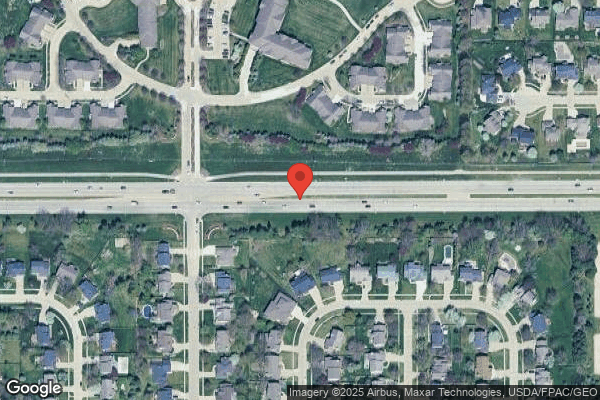

13731 Hickman Road, Urbandale, IA 50323 (515) 331-6900
Non profit - Church related 30 Beds IMMANUEL Data: November 2025 1 Immediate Jeopardy citation
Trust Grade
58/100
#104 of 392 in IA
Last Inspection: March 2025

Within standard 12-15 month inspection cycle. Federal law requires annual inspections.

Overview

Deerfield Health Care Center in Urbandale, Iowa has a Trust Grade of C, which means it is average and sits in the middle of the pack for nursing homes. It ranks #104 out of 392 facilities in Iowa, placing it in the top half, and #10 out of 29 in Polk County, indicating that only nine facilities in the area are better. The facility's performance is worsening, with the number of reported issues increasing from 1 in 2024 to 2 in 2025. Staffing is a strong point, with a 5 out of 5 rating and a turnover rate of 32%, which is well below Iowa's average of 44%. However, the facility has concerning fines of $70,184, higher than 96% of Iowa facilities, indicating potential compliance problems. In terms of RN coverage, Deerfield Health Care Center has better coverage than 91% of Iowa facilities, which is a positive aspect as registered nurses can catch issues that nursing assistants might overlook. Specific incidents reported include a failure to appropriately monitor a resident's critical INR levels, which could lead to serious health risks, and inadequate infection control procedures during catheter care for another resident. Additionally, the facility did not ensure that two residents received recommended pneumococcal vaccinations, which could leave them vulnerable to preventable diseases. While Deerfield has strong staffing and good RN coverage, families should be mindful of the issues and fines noted in the inspection reports.

Trust Score
C
58/100
In Iowa
#104/392
Top 26%
Safety Record
High Risk
Review needed
Inspections
Getting Worse
1 → 2 violations
Staff Stability
○ Average
32% turnover. Near Iowa's 48% average. Typical for the industry.
Penalties
⚠ Watch
$70,184 in fines. Higher than 81% of Iowa facilities, suggesting repeated compliance issues.
Skilled Nurses
✓ Good
Each resident gets 119 minutes of Registered Nurse (RN) attention daily — more than 97% of Iowa nursing homes. RNs are the most trained staff who catch health problems before they become serious.
Violations
○ Average
7 deficiencies on record. Average for a facility this size. Mostly minor or procedural issues.
★★★★☆
4.0
Overall Rating
★★★★★
5.0
Staff Levels
★★★★☆
4.0
Care Quality
★★★☆☆
3.0
Inspection Score
Stable
2024: 1 issues
2025: 2 issues

The Good

  • 5-Star Staffing Rating · Excellent nurse staffing levels
  • 4-Star Quality Measures · Strong clinical quality outcomes
  • Full Sprinkler Coverage · Fire safety systems throughout facility
  • No fines on record
  • Staff turnover below average (32%)

    16 points below Iowa average of 48%

Facility shows strength in staffing levels, quality measures, fire safety.

The Bad

Staff Turnover: 32%

14pts below Iowa avg (46%)

Typical for the industry

Federal Fines: $70,184

Well above median ($33,413)

Moderate penalties - review what triggered them

Chain: IMMANUEL

Part of a multi-facility chain

Ask about local staffing decisions and management

The Ugly 7 deficiencies on record

1 life-threatening
Mar 2025 2 deficiencies
CONCERN (D)

Potential for Harm - no one hurt, but risky conditions existed

Infection Control (Tag F0880)

Could have caused harm · This affected 1 resident

Based on observation, clinical record review, staff interview and facility policy review, the facility failed to follow the recommended infection control precautions during catheter care for one of tw...

Read full inspector narrative →
Based on observation, clinical record review, staff interview and facility policy review, the facility failed to follow the recommended infection control precautions during catheter care for one of two (Resident #13) residents reviewed. The facility reported a census of 22 residents. Findings include: The Quarterly Minimum Data Set (MDS) of Resident #13, dated 1/9/25, documented the presence of an indwelling catheter. The MDS documented diagnoses that included renal insufficiency and obstructive uropathy (a condition where urine flow is blocked, leading to a buildup of urine in the urinary tract). On 3/24/25 at 2:35 pm, an Enhanced Barrier Precautions sign was observed on the door of Resident #13's private room. On 3/26/25 at 11:15 am, Staff A, Certified Nurse Aide (CNA) was observed emptying the urinary bag of Resident's #13's supra pubic catheter (a medical device that drains urine from the bladder directly through an incision in the lower abdomen, above the pubic bone). Staff A, CNA performed hand hygiene and donned gloves as Resident #13 self propelled himself in his wheelchair from his bedroom into his bathroom. Resident #13 wheeled himself to the handicap bar near the toilet and Staff A placed a gait belt on the resident. She assisted the resident to a standing position, and assisted the resident to lower his pants and brief and sit on the toilet. Staff A placed a paper towel on the floor and placed a graduated cylinder on the towel. Using an alcohol swab, Staff A cleansed the drain of the urine leg bag. She opened the drain and emptied the leg bag of urine into the graduated cylinder. Staff A obtained a new alcohol swab and cleansed the drain again before locking the drain. Staff A lifted the graduated cylinder and the paper towel and moved it further away from the toilet. Staff A removed her gloves, performed hand hygiene and placed new gloves on then assisted the resident to stand again. The resident self propelled out of the restroom. Staff A then emptied the urine into the toilet, rinsed the graduated cylinder, dumped the water also in the toilet and placed the graduated cylinder behind the toilet. Staff A removed her gloves and washed her hands prior to exiting the room. An isolation cart containing Personal Protective Equipment was observed in the resident room near the entrance to the bathroom. On 3/26/25 at 11:23 am, Staff A was asked about the signage on the door for Enhanced Barrier Precautions. She stated the sign means she was supposed to wear an isolation gown and that she had forgotten about that. She further stated she thought the sign had been removed for Resident #13. The State Surveyor asked what Staff A was aware of regarding Enhanced Barrier Precautions. She stated for any resident in the building who has a catheter or a feeding tube or a wound or other things, staff are to wear a gown and gloves when performing resident care. On 3/27/25 at 11:39 am, the Director of Nursing (DON) stated her expectation is for an isolation gown and gloves to be worn for any resident with a catheter, a chronic wound, etc. She stated all staff had received education regarding enhanced barrier precautions. The undated facility policy Transmission-based precautions guidelines documented the following on Page 5 of the policy: Enhanced Barrier Precautions: All residents with any of the following: Infection or colonization with an MDRO when Contact Precautions do not otherwise apply. Wounds and/or indwelling medical devices (e.g., central line, urinary catheter, feeding tube, tracheostomy/ventilator) regardless of MDRO colonization status. Apply gloves prior to high-contact resident care activities such as but not limited to: Dressing, bathing/showering, transferring, providing hygiene, changing linens, changing briefs or assisting with toileting, device care or use: central line, urinary catheter, feeding tube, tracheostomy/ventilator, and wound care: any skin opening requiring a dressing. Change PPE and perform hand hygiene. Apply gown prior to high-contact resident care activities such as but not limited to: Dressing, bathing/showering, transferring, providing hygiene, changing linens, changing briefs or assisting with toileting, device care or use: central line, urinary catheter, feeding tube, tracheostomy/ventilator, and wound care: any skin opening requiring a dressing. Change PPE and perform hand hygiene.
CONCERN (D)

Potential for Harm - no one hurt, but risky conditions existed

Deficiency F0883 (Tag F0883)

Could have caused harm · This affected 1 resident

**NOTE- TERMS IN BRACKETS HAVE BEEN EDITED TO PROTECT CONFIDENTIALITY** Based on clinical record review, staff interview, guidance from the Centers for Disease Control (CDC) and facility policy review...

Read full inspector narrative →
**NOTE- TERMS IN BRACKETS HAVE BEEN EDITED TO PROTECT CONFIDENTIALITY** Based on clinical record review, staff interview, guidance from the Centers for Disease Control (CDC) and facility policy review, the facility failed to offer the recommended pneumococcal vaccine to eligible residents for 2 of 5 residents reviewed for vaccines (Resident #11 and Resident #13). The facility reported a census of 22 residents. Findings include: 1. The vaccine record of Resident #11 failed to reflect the resident having had any history of receiving a pneumococcal vaccine. The Minimum Data Set (MDS) of Resident #11 dated 1/23/25 documented an admission date to the facility of 3/1/22 and a date of birth of [DATE]. The electronic health record of the resident failed to reflect a declination form of refusing the vaccine. 2. The vaccine record of Resident #13 documented he had received the Prevnar 13 pneumococcal vaccine in 2018 and no further pneumococcal vaccines since that time. The MDS of Resident #13 documented an admission date to the facility of 10/17/22 and a date of birth of [DATE]. The electronic health record of the resident failed to reflect a declination form of refusing the vaccine. On 3/25/25 at 2:58 pm, the Administrator stated the facility was unable to locate further vaccine information or declinations of choosing to not receive pneumonia vaccinations for either resident. On 3/25/25 at 3:59 pm, The Director of Nursing (DON) stated the process for monitoring vaccine status of the residents is to fill out a form at the time of the resident admission to the facility. If the resident is eligible for a vaccine, and they indicate they wish to receive it, the facility will obtain the vaccine from the pharmacy or it may be done during an upcoming vaccine clinic. If the resident declines receiving the vaccine, the resident or resident representative signs a declination form indicating refusal of the vaccine. She stated staff went through the paper charts of both Resident #11 and Resident #13 and were unable to locate information on either of the residents of having received further vaccines or declining the vaccines. The CDC document titled Adult Immunization Schedule Notes, dated 11/21/24 documented the following: Age 50 years or older who have: Not previously received a dose of PCV13, PCV15, PCV20, or PCV21 or whose previous vaccination history is unknown: 1 dose PCV15 or 1 dose PCV20 or 1 dose PCV21. If PCV15 is used, administer 1 dose PPSV23 at least 1 year after the PCV15 dose. Previously received only PCV13: 1 dose PCV20 or 1 dose PCV21 at least 1 year after the last PCV13 dose. The facility policy titled Infection Prevention Immunization: Pneumococcal, review date 8/1/23, documented the following: Policy Statement: [Facility] will offer the recommended pneumococcal vaccine as per Center for Disease Control (CDC), and provider ' s orders to residents unless contraindicated. Procedure: A. Upon admission, history related to immunizations is obtained from the medical information furnished by the transferring facility and from the resident and/or resident's legal representative. B. admission Routine Orders/Clarification includes an order for Pneumococcal Vaccine per protocol. C. On admission, education is provided using the CDC Vaccination Information Statements (VIS) as reference. D. At the time of the first quarterly MDS and care plan meeting, the resident and/or resident's legal representative: 1. Receives re-education, as needed, regarding the benefits and potential side effects of the immunizations. 2. Is informed what portion of the cost for the pneumococcal vaccine the resident might be held accountable for based on his/her insurance coverage. 3. Is provided the opportunity to accept or decline the immunizations. a. The Immunization Consent form is signed by resident or resident's legal representative if he/she agrees to the immunization(s). The facility policy failed to reveal a procedure in place for monitoring the vaccination status of residents beyond the first quarterly MDS and care plan meeting.
Apr 2024 1 deficiency
CONCERN (D)

Potential for Harm - no one hurt, but risky conditions existed

Deficiency F0761 (Tag F0761)

Could have caused harm · This affected 1 resident

Based on observation, staff interview, and policy review the facility failed to properly secure medications to minimize loss or access for 1 of 1 medication carts. The facility reported a census of 25...

Read full inspector narrative →
Based on observation, staff interview, and policy review the facility failed to properly secure medications to minimize loss or access for 1 of 1 medication carts. The facility reported a census of 25 residents. Findings include: During a continuous observation 4/24/24 at 7:05 AM the med cart on the northeast hall of the facility was left unlocked and unattended for 6 minutes by Staff A, Licensed Practical Nurse. In this time several staff (Director of Nursing (DON), and Staff B, Certified Nursing Assistant) walked past the medication cart. During an interview 4/24/24 at 9:20 AM with the DON revealed her expectation is that the med cart be locked when not with the cart. Review of a facility provided policy titled, Medication Provision-Medication Carts, with a review date of 4/26/22 documented: The Cart is to be locked when not attended by staff.
Jun 2023 1 deficiency
CONCERN (D) 📢 Someone Reported This

A family member, employee, or ombudsman was alarmed enough to file a formal complaint

Potential for Harm - no one hurt, but risky conditions existed

Abuse Prevention Policies (Tag F0607)

Could have caused harm · This affected 1 resident

Based on personal record review and staff interview the facility failed to assure a contracted staffing agency completed the entire screen process for criminal background checks for one (1) agency sta...

Read full inspector narrative →
Based on personal record review and staff interview the facility failed to assure a contracted staffing agency completed the entire screen process for criminal background checks for one (1) agency staff reviewed. Findings include: According to an Iowa Criminal History Misdemeanor convictions only form dated 2.2.23 at 11:39:27 a.m. Staff A, Certified Nursing Assistant (CNA) had been arrested three (3) times as follows: a. 1st time - 2nd degree theft b. 2nd time - 4th degree theft c. 3rd time - 4th degree theft and disorderly conduct - fighting or violent behavior. A staffing agency who employed Staff A failed to appropriately pre-screen a completed criminal background check which would have resulted in the staff members ability or lack of ability through the Department of Human Services (DHS) to have worked in a long-term care setting based on her criminal history. According to an email 5.22.23 at 11:51 a.m. the staffing agency searched for the paperwork from DHS. According to an email 6.7.23 at 4:18 p.m. the Associate Executive Director confirmed the staffing agency had not provided the required documentation from DHS for Staff A. A Time Slip indicated Staff A worked on unit 200 at the facility on 2.22.23 from 10 p.m. until 6:30 a.m.
Dec 2022 3 deficiencies 1 IJ
CRITICAL (J) 📢 Someone Reported This

A family member, employee, or ombudsman was alarmed enough to file a formal complaint

Immediate Jeopardy (IJ) - the most serious Medicare violation

Deficiency F0757 (Tag F0757)

Someone could have died · This affected 1 resident

**NOTE- TERMS IN BRACKETS HAVE BEEN EDITED TO PROTECT CONFIDENTIALITY** Based on observation, clinical record review, hospital record review, facility record review, staff interview, the facility fail...

Read full inspector narrative →
**NOTE- TERMS IN BRACKETS HAVE BEEN EDITED TO PROTECT CONFIDENTIALITY** Based on observation, clinical record review, hospital record review, facility record review, staff interview, the facility failed to respond appropriately to an INR level below the target range for treatment for one resident reviewed and failed to appropriately monitor another resident's PT/INR as directed by the physician as a means to assure individual therapeutic levels. (Resident #1 and Resident #4) The facility identified a census of 22 residents. Findings include: 1. A Significant Change Minimum Data Set (MDS) assessment form dated 10/10/22 for Resident #1 documented diagnoses that included: systolic and diastolic heart failure (HF), abnormal anti-coagulant profile, atrial fibrillation (AF), respiratory failure with hypoxia and a duodenal ulcer with perforation and hemorrhage. The assessment documented the resident received an anti-coagulant (blood thinner) 3 days out of the past 7 during the look back period. A Physician's Orders with current orders as of 8/3/22 documented that the Resident#1 had a history of acute duodenal ulcer with hemorrhage and perforation (bleeding in the belly), aortic valve stenosis (clogged heart valves), gastrointestinal hemorrhage (bleeding in the intestine, and stomach). A Care Plan with a focus area initiated on 2/9/22 identified the resident as on anticoagulation therapy related to AF. The interventions included the following as dated: a. Labs as ordered. Report abnormal lab results to the MD. (initiated 2/9/22) b. Monitor/document/report to the physician as needed (PRN) signs and symptoms of anti-coagulant complications: lethargy, sudden changes in mental status and/or a significant or sudden change in vital signs. (initiated 2/9/22) A Medication Administration Record (MAR) form dated November 2022 documented a physician's order for warfarin (Coumadin) 1 milligram (mg) by mouth (po) every day (qd). (originated 10/7/22 and discontinued 11/21/22) A Nurse's Note with effective date 11/18/22 at 2:00 p.m. and Created date of 11/25/22 at 10:08 a.m. included the following entry; Late entry: As a therapist worked with the resident, she noticed resident as paler than usual and reported the observation to the resident's daughter who also had been present. The nurse placed a call to the Physician who ordered a lab draw which included an INR (which had been due on 11/21/22). A Lab Results Report form with collection date of 11/18/22 at 4 p.m., received at the lab at 7:10 p.m. and reported at 8:53 p.m. documented the resident's PT (Prothrombin Test Time which measured how long it took for a blood clot to form in the blood sample) level at 18.3 and INR (International Normalized Ratio which measured if a person sustained a blood clotting problem) level at 1.6. The therapeutic range for a patient routinely anticoagulant as 2.0-3.0 and residents with a mechanical prosthetic heart valve as 2.5-3.5. The staff faxed the form to the physician's office but failed to call and address the abnormal lab values to the resident's physician and/or the on call physician. A hospital History and Physical form completed 11/27/22 documented the resident as admitted to the facility on [DATE] at 10:51 p.m. with an intracranial hemorrhage, a cerebral vascular accident (CVA) and precerebral occlusion and with the presence of a prosthetic heart valve. The resident's Certificate of Death filed 12/1/22 documented the resident passed away on 11/23/22 at 5:30 p.m. with the immediate cause of death as a stroke secondary to AF. A Notification to Physician or Family of Change in Resident Health Status policy dated 10/20/21 directed the Care Communities staff to have notified the resident's physician or designee as follows: a. An acute illness or significant change in the resident's physical, mental or psychosocial status (i.e., deterioration in health, mental, or psychosocial status in either life-threatening conditions or clinical complications.) The facility described nursing judgement as an integral part of the skilled care provided in the Care Communities; therefore, staff must have applied such judgment in a case-by-case basis for maintenance of an acceptable nursing practice. Some definitions included the following: b. A need for alteration in a treatment significantly such as a need to stop a form of treatment because of adverse consequences (e.g., an adverse drug reaction), or a need for initiation of a new treatment to have dealt with a problem. 2. An admission MDS assessment form dated 10/24/22 for Resident #4 documented the resident had diagnoses which included: AF and non-Alzheimer's dementia. The MDS documented the resident had been on anti-coagulants 7 of the last 7 days in the look back period. A Care Plan with a focus area initiated on 10/17/22 and revised 10/18/22 identified the resident as on anti-coagulant therapy related to AF. The interventions included the following; a. Labs as ordered. Report abnormal lab results to the physician. (initiated 10/17/22). b. Monitor/document/report to the physician as needed (PRN) signs and symptoms of anti-coagulant complications: lethargy, sudden changes in mental status and/or a significant or sudden change in vital signs. (initiated 10/17/22) A Lab Results Report form collected 11/18/22 at 3:55 p.m., received at the lab at 8:37 p.m. and reported at 8:54 documented the resident's PT at a 20.7 ( abnormal results as indicated by the Orange text on the report) and INR at a 1.8 (abnormal results as indicated by the Orange text on the report), with the therapeutic range for a patient routinely anticoagulated as 2.0-3.0. The Physician order included the following: If on Coumadin 5 mg increase to 5.5 mg and recheck the PT/INR in one (1) week. During an interview 12/13/22 at 1:50 p.m. the Director of Nursing (DON) services indicated when staff faxed information to the physician the facility policy directed the staff to have placed the faxed forms into a binder as a reminder to follow up with the physician accordingly. The nurse, in this case, inadvertently placed the faxed form in the resident's medical record so the lab draw had been missed. During this investigation the mistake had been identified to the facility, the facility staff informed the resident's physician and a new order received to re-check the resident's PT/INR on 12/2/22. An Immediate Jeopardy (IJ) was identified on 12/14/22 and the facility was notified of the IJ at 11:30 a.m. that day. The IJ was removed later that day when the facility developed and implemented the following corrective action plan: 1. PT/INR will no longer be drawn on Fridays, if possible. If an emergency lab needs to be drawn on a Friday, the results will be called in to the on-call provider, even if they are not at a critical level. 2. Anticoagulant book implemented in order to better manage Coumadin tracking. 3. Process implementation of PT/INR draw date changes and physician notification of non critical labs drawn on Fridays. 4. Process implementation of anticoagulant book and fax process. 5 Staff educated on change in PT/INR draw guidance. 6 Staff educated on fax process The scope and severity level of the IJ deficiency was lowered from an J to an D at the time of the survey due to the need for continued monitoring after the facility completed the above removal plan.
CONCERN (D) 📢 Someone Reported This

A family member, employee, or ombudsman was alarmed enough to file a formal complaint

Potential for Harm - no one hurt, but risky conditions existed

Deficiency F0658 (Tag F0658)

Could have caused harm · This affected 1 resident

Based on clinical record review, staff interview and facility policy review the facility failed to follow physician orders for 1 of 4 residents reviewed. (Resident #1) The facility identified a census...

Read full inspector narrative →
Based on clinical record review, staff interview and facility policy review the facility failed to follow physician orders for 1 of 4 residents reviewed. (Resident #1) The facility identified a census of 22 residents. Findings include: A Discharge Medication Reconciliation/Orders form dated 10/4/22 at 9:52 a.m. documented Resident #1 with physician orders that included sertraline (zoloft) 25 milligram (mgs) three (3) pills by mouth (po) every day (qd). A Proof of Delivery form from the pharmacy dated 10/4/22 at 6:40 p.m. failed to address and/or validate delivery of the resident's sertraline. A Physician Fax Order Request form dated 10/7/22 included the following documentation signed by the Physician 10/7/22: Staff requested an order for a restart of the resident's sertraline 25 mg 3 tablets po qd due to a pharmacy error which had not been processed correctly. The Physician then ordered sertraline 25 mg po qd x 3 days then 50 mg po qd. A Medication Error form dated 10/4/22 at 1:44 p.m. included the following documentation: Upon re-admission to community, the facility staff sent physician orders to the pharmacy. The pharmacy staff omitted the medication sertraline during the transition. The facility staff failed to catch the omission during reconciliation of the medications. Several days passed before the resident's daughter questions the dose of sertraline. During a facility investigation staff discovered the medication as not entered despite the physician order sheet. No apparent injury noted.
CONCERN (D) 📢 Someone Reported This

A family member, employee, or ombudsman was alarmed enough to file a formal complaint

Potential for Harm - no one hurt, but risky conditions existed

Quality of Care (Tag F0684)

Could have caused harm · This affected 1 resident

**NOTE- TERMS IN BRACKETS HAVE BEEN EDITED TO PROTECT CONFIDENTIALITY** Based on observation, clinical record review, hospital clinical record review, staff interview and facility policy review the fa...

Read full inspector narrative →
**NOTE- TERMS IN BRACKETS HAVE BEEN EDITED TO PROTECT CONFIDENTIALITY** Based on observation, clinical record review, hospital clinical record review, staff interview and facility policy review the facility failed to provide the necessary assessments for 1 of 4 residents reviewed with a condition change. (Resident #1) The facility identified a census of 22 residents. Findings include: A Minimum Data Set (MDS) assessment form dated 10/10/22 documented Resident #1 with diagnosis the included systolic and diastolic heart failure (HF), abnormal anti-coagulant profile, atrial fibrillation (AF), respiratory failure with hypoxia and a duodenal ulcer with perforation and hemorrhage. The assessment documented the resident received an anti-coagulant 3 days out of the past 7 during the look back period. A Care Plan with a focus area initiated on 2/9/22 identified the resident as on anticoagulation therapy related to AF. The interventions included the following as dated: a. Labs as ordered. Report abnormal lab results to the MD. (initiated 2/9/22) b. Monitor/document/report to the physician as needed (PRN) signs and symptoms of anti-coagulant complications: lethargy, sudden changes in mental status and/or a significant or sudden change in vital signs. (initiated 2/9/22) A Medication Administration Record (MAR) form dated November 2022 documented a physician's order for warfarin (coumadin) 1 milligram (mg) by mouth (po) every day (qd). (originated 10/7/22 and discontinued 11/21/22) A Nurse's Note entry dated 11/18/22 at 10:08 a.m. included the following entry: Late entry: As a therapist worked with the resident, she identified resident as paler than usual and reported the observation to the resident's daughter who also had been present. The nurse placed a call to the Physician who ordered a lab draw which included an INR. Review of the resident's entire clinical record failed to reveal any completed assessments from the above documented entry until staff transferred the resident to the hospital on [DATE] with a diagnosis of with an intracranial hemorrhage, a cerebral vascular accident (CVA) and precerebral occlusion and with the presence of a prosthetic heart valve.
Understanding Severity Codes (click to expand)
Life-Threatening (Immediate Jeopardy)
J - Isolated K - Pattern L - Widespread
Actual Harm
G - Isolated H - Pattern I - Widespread
Potential for Harm
D - Isolated E - Pattern F - Widespread
No Harm (Minor)
A - Isolated B - Pattern C - Widespread

Questions to Ask on Your Visit

  • "What changes have you made since the serious inspection findings?"
  • "Can I speak with families of current residents?"
  • "What's your RN coverage like on weekends and overnight?"

Our Honest Assessment

Strengths
  • • 32% turnover. Below Iowa's 48% average. Good staff retention means consistent care.
Concerns
  • • Multiple safety concerns identified: 1 life-threatening violation(s), $70,184 in fines. Review inspection reports carefully.
  • • 7 deficiencies on record, including 1 critical (life-threatening) violation. These warrant careful review before choosing this facility.
  • • $70,184 in fines. Extremely high, among the most fined facilities in Iowa. Major compliance failures.
  • • Grade C (58/100). Below average facility with significant concerns.
Bottom line: Mixed indicators with Trust Score of 58/100. Visit in person and ask pointed questions.

About This Facility

What is Deerfield Health Care Center's CMS Rating?

CMS assigns Deerfield Health Care Center an overall rating of 4 out of 5 stars, which is considered above average nationally. Within Iowa, this rating places the facility higher than 99% of the state's 100 nursing homes. This rating reflects solid performance across the metrics CMS uses to evaluate nursing home quality.

How is Deerfield Health Care Center Staffed?

CMS rates Deerfield Health Care Center's staffing level at 5 out of 5 stars, which is much above average compared to other nursing homes. Staff turnover is 32%, compared to the Iowa average of 46%. This relatively stable workforce can support continuity of care.

What Have Inspectors Found at Deerfield Health Care Center?

State health inspectors documented 7 deficiencies at Deerfield Health Care Center during 2022 to 2025. These included: 1 Immediate Jeopardy (the most serious level, indicating potential for serious harm or death) and 6 with potential for harm. Immediate Jeopardy findings are rare and represent the most serious regulatory concerns. They require immediate corrective action.

Who Owns and Operates Deerfield Health Care Center?

Deerfield Health Care Center is owned by a non-profit organization. Non-profit facilities reinvest revenue into operations rather than distributing to shareholders. The facility is operated by IMMANUEL, a chain that manages multiple nursing homes. With 30 certified beds and approximately 18 residents (about 60% occupancy), it is a smaller facility located in Urbandale, Iowa.

How Does Deerfield Health Care Center Compare to Other Iowa Nursing Homes?

Compared to the 100 nursing homes in Iowa, Deerfield Health Care Center's overall rating (4 stars) is above the state average of 3.1, staff turnover (32%) is significantly lower than the state average of 46%, and health inspection rating (3 stars) is at the national benchmark.

What Should Families Ask When Visiting Deerfield Health Care Center?

Based on this facility's data, families visiting should ask: "What changes have been made since the serious inspection findings, and how are you preventing similar issues?" "Can I visit during a mealtime to observe dining assistance and food quality?" "How do you handle medical emergencies, and what is your hospital transfer rate?" "Can I speak with family members of current residents about their experience?" These questions are particularly relevant given the facility's Immediate Jeopardy citations.

Is Deerfield Health Care Center Safe?

Based on CMS inspection data, Deerfield Health Care Center has documented safety concerns. Inspectors have issued 1 Immediate Jeopardy citation (the most serious violation level indicating risk of serious injury or death). The facility has a 4-star overall rating and ranks #1 of 100 nursing homes in Iowa. Families considering this facility should ask detailed questions about what corrective actions have been taken since these incidents.

Do Nurses at Deerfield Health Care Center Stick Around?

Deerfield Health Care Center has a staff turnover rate of 32%, which is about average for Iowa nursing homes (state average: 46%). Moderate turnover is common in nursing homes, but families should still ask about staff tenure and how the facility maintains care continuity when employees leave.

Was Deerfield Health Care Center Ever Fined?

Deerfield Health Care Center has been fined $70,184 across 1 penalty action. This is above the Iowa average of $33,781. Fines in this range indicate compliance issues significant enough for CMS to impose meaningful financial consequences. Common causes include delayed correction of deficiencies, repeat violations, or care failures affecting resident safety. Families should ask facility leadership what changes have been made since these penalties.

Is Deerfield Health Care Center on Any Federal Watch List?

Deerfield Health Care Center is not on any federal watch list. The most significant is the Special Focus Facility (SFF) program, which identifies the bottom 1% of nursing homes nationally based on persistent, serious quality problems. Not being on this list means the facility has avoided the pattern of deficiencies that triggers enhanced federal oversight. This is a positive indicator, though families should still review the facility's inspection history directly.