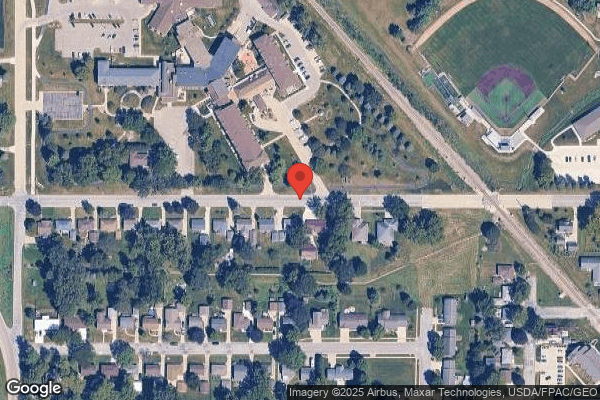
Woodland Terrace

1922 Fifth Avenue NW, Waverly, IA 50677 (319) 352-4540
Non profit - Corporation 100 Beds Independent Data: November 2025
Trust Grade
65/100
#166 of 392 in IA
Last Inspection: May 2025

Inspected within the last 6 months. Data reflects current conditions.

Overview

Woodland Terrace in Waverly, Iowa has a Trust Grade of C+, indicating it is decent and slightly above average compared to other nursing homes. It ranks #166 out of 392 facilities statewide, placing it in the top half, and #2 out of 4 in Bremer County, meaning there is only one other local option that rates higher. However, the facility's trend is worsening, with reported issues increasing from 4 in 2024 to 8 in 2025. Staffing is a concern, with a turnover rate of 57%, which is above the Iowa average of 44%, although they maintain a good overall staffing rating of 4 out of 5 stars. While there have been no fines, the facility has faced serious concerns, including a resident suffering a fracture after a fall due to improper bed positioning and a failure to adequately investigate allegations of physical abuse affecting multiple residents. Additionally, the kitchen did not follow proper hygiene practices, increasing the risk of foodborne illness.

Trust Score
C+
65/100
In Iowa
#166/392
Top 42%
Safety Record
Moderate
Needs review
Inspections
Getting Worse
4 → 8 violations
Staff Stability
⚠ Watch
57% turnover. Above average. Higher turnover means staff may not know residents' routines.
Penalties
✓ Good
No fines on record. Clean compliance history, better than most Iowa facilities.
Skilled Nurses
✓ Good
Each resident gets 53 minutes of Registered Nurse (RN) attention daily — more than average for Iowa. RNs are trained to catch health problems early.
Violations
⚠ Watch
14 deficiencies on record. Higher than average. Multiple issues found across inspections.
★★★★☆
4.0
Overall Rating
★★★★☆
4.0
Staff Levels
★★★★★
5.0
Care Quality
★★★☆☆
3.0
Inspection Score
Stable
2024: 4 issues
2025: 8 issues

The Good

  • 4-Star Staffing Rating · Above-average nurse staffing levels
  • 5-Star Quality Measures · Strong clinical quality outcomes
  • Full Sprinkler Coverage · Fire safety systems throughout facility
  • No fines on record

Facility shows strength in staffing levels, quality measures, fire safety.

The Bad

Staff Turnover: 57%

11pts above Iowa avg (46%)

Frequent staff changes - ask about care continuity

Staff turnover is elevated (57%)

9 points above Iowa average of 48%

The Ugly 14 deficiencies on record

1 actual harm
Aug 2025 2 deficiencies
CONCERN (D) 📢 Someone Reported This

A family member, employee, or ombudsman was alarmed enough to file a formal complaint

Potential for Harm - no one hurt, but risky conditions existed

Free from Abuse/Neglect (Tag F0600)

Could have caused harm · This affected 1 resident

**NOTE- TERMS IN BRACKETS HAVE BEEN EDITED TO PROTECT CONFIDENTIALITY** Based on observation, clinical record review, document review, policy review and staff interview, the facility failed to ensure ...

Read full inspector narrative →
**NOTE- TERMS IN BRACKETS HAVE BEEN EDITED TO PROTECT CONFIDENTIALITY** Based on observation, clinical record review, document review, policy review and staff interview, the facility failed to ensure residents were free from physical abuse when a Certified Nursing Assistant (CNA) tapped a resident on the head during care provision for 1 of 3 residents sampled (Resident #1). The facility identified a census of 87 residents.Findings include:The Minimum Data Set (MDS) assessment dated [DATE] showed a Brief Interview for Mental Status (BIMS) score of 00/15 indicating severe cognitive loss. Resident #1 exhibited inattention (being easily distractible/having difficulty keeping track of what is said) which was continuously present and disorganized thinking (rambling or irrelevant conversation, illogical flow of ideas, or unpredictable switching from subject to subject) continually present. Resident #1 required moderate/partial assistance (helper does less than half the effort. The helper lifts, holds, or supports the trunk or limbs, but provides less than half the effort) with toileting for occasional incontinence of urine and personal hygiene. The MDS listed diagnoses of mild cognitive impairment of uncertain/unknown etiology, other amnesia, reduced mobility and chronic kidney disease.A Facility Investigation Note submitted to the Iowa Department of Inspection, Appeals and Licensing (DIAL) detailed on 7/02/25 Staff A, Registered Nurse (RN) called to inform Staff B, Director of Nursing (DON) of an allegation of abuse. At 4:30 AM, Staff C, CNA went in to assist Resident #1. Resident #1 became aggressive and started to hit and scratch Staff C. Staff C assisted the resident to sit down on her bed and stepped away to calm herself, then went to get Staff A. Staff A finished assisting Resident #1. Resident #1 was calm and compliant. At 5:45 AM, Staff C reported to Staff A when Resident #1 was aggressive earlier, she got frustrated and tapped Resident #1 on the head. Staff A asked why Staff C hadn't reported it earlier. Staff C responded, she just spaced it out. Staff A informed Staff C that is not appropriate behavior and is abuse. Staff A stated she was aware. An undated Statement from Staff A documented at 5:45 AM Staff C came to Staff A and stated that during rounds a resident became aggressive, hitting and scratching at her. During this time, the staff member (Staff C) became frustrated and without thinking, tapped the resident on the head, sat the resident back down on the bed, stepped away to calm herself, then went to get her (Staff A) for assistance. Staff A requested Staff C write a statement and explain why she hadn't reported the incident at the time of the altercation. Staff C stated, she just spaced it out. When Staff C finished writing her statement, Staff A sent her home. An undated, untimed Statement signed by Staff C, documented Resident #1 was hitting and scratching when she tried to change her brief. Staff C was trying to get the resident to stand up as the resident was hitting. Staff C was blocking the resident and tapped Resident #1 on the head, then sat (kind of guided) the resident back down to the bed, then asked Staff A to help her out. A Disciplinary Notice dated 7/03/25 at 10:00 AM documented on 7/02/25 Staff C reported to the nurse that while she was providing care to a resident, the resident became combative and she tapped the resident on the head. The resident was not injured. Staff C understood is dependent adult abuse and was reportable to DIAL. The Disciplinary Notice documented Staff C was being terminated 7/03/25. Staff C signed the document without dating. The Disciplinary Notice was signed 7/03/25 by Staff B on 7/03/25. A note handwritten on the bottom left corner of the document stated the staff member did not appear remorseful. States she is afraid if it happens again, she might swing on somebody.An 8/25/25 review of Staff C's Employee File revealed a Direct Care Worker (DCW) check showing Staff C with a current CNA certification as of 2/28/25. A Record Check Evaluation prior to employment documented Staff C was arrested and taken into custody on 8/02/23 and charged with a serious misdemeanor conviction for the possession of a controlled substance, marijuana first offense, but was cleared to work as a CNA on 4/17/25. Observation on 8/25/25 at 12:40 PM Resident #1 pushed herself away from the dining room table while seated in her wheelchair. Resident #1 verbalized she needed to, go. Staff D and Staff E, CNA's assisted Resident #1 to walk to the bathroom, toilet and walk back to the lounge. Staff D and E provided Resident #1 with choices, and were patient with care. Observation on 8/25/25 at 1:44 PM Resident #1 sat in the recliner in the lounge with feet elevated. Resident #1 watched other residents and staff with a calm demeanor. An 8/25/25 at 2:07 PM review of the Care Sheet updated 7/29/25, under Behaviors and Preferences lacked documentation Resident #1 had any behaviors or direction to the staff on what to do for behaviors. The Care Sheet only noted Resident #1 could be hard to wake in the morning. Observation on 8/26/25 at 8:04 AM Resident #1 sat in the doorway of her room in the wheelchair and verbalized she was having a good morning. During interview on 8/25/25 at 12:33 PM Staff D explained when a resident has behaviors, they are to leave the resident alone in a safe environment, give time to calm down, then re-approach. If that doesn't work, they give more time, then have a different staff member re-approach. They also inform the nurse of the behaviors after the first failed attempt. Interview completed on 8/25/25 at 1:42 PM with Staff F, CNA who reported when a resident exhibits behaviors, she would use distraction to break the behaviors. She takes the resident to a calm environment to calm and quiet down, then re-approaches the resident at a later time. During interview on 8/25/25 at 1:49 PM Staff E reported if a resident has behaviors, she tries to approach them calmly; give the resident some time; try a second care giver and that usually works well. During an interview on 8/25/25 at 1:54 PM Staff G, Licensed Practical Nurse (LPN) explained when a resident is combative, they try to be sure the resident is safe. Re-approach a second time. If not successful, then they try a different aide to approach the resident. Sometimes a different face is all the resident needs and they respond. During an interview on 8/25/25 at 2:17 PM Staff H, CNA confirmed she worked the overnight of 7/01/25 to 7/02/25 with Staff C. Staff H reported she didn't know anything had happened to Resident #1 until after it happened. She never saw any agitation or aggression from Staff C but did note Staff C really didn't know how to communicate or talk to residents with dementia. Interview completed on 8/25/25 at 2:50 PM Staff I, RN verbalized Staff C was young and still learning the job. During interview on 8/26/25 at 9:05 AM Staff A explained it happened early in the morning between 4-5 AM during rounds. Staff C came and got her. Resident #1 was combative, hitting her and she needed help with care. They went down to Resident #1's room, but she couldn't recall who entered the room first. Resident #1 was sitting on the side of the bed and was calm. Staff A verbalized she assisted Resident #1 to lay down in bed. Staff A reflected looking back, Staff C didn't do anything after they went back into the room, she just stood there and watched her finish Resident #1's care. Resident #1 did not have any behaviors for her. Staff A further explained the aides usually get Resident #1 up to the toilet on rounds. If the resident refuses to go to the bathroom, then the staff provide a check and change. After that they left the room and continued to do resident rounds. About 1-1.5 hours later, Staff C came to her and stated she had bopped Resident #1 in the top of the head. She discussed why Staff C hadn't reported it when she asked her for help earlier. Staff C said she didn't think about it at the time. She instructed Staff C to go to the nurses' station, write a statement and not provide any more resident care. Staff C's demeanor was weird. She didn't seem to have any remorse in her voice, didn't say she was sorry or that she wished she hadn't done it. There was no expression. She didn't come off as feeling bad that it had happened. It was like, I forgot to tell you I bopped her in the head. I didn't hit her hard. I just bopped her in the head. I just didn't think about it. Staff C made a waving motion with her hand, but Staff A didn't think to have her to demonstrate exactly how she had bopped Resident #1 in the head. She recalled asking Staff C if she understood how serious it was. Staff C stated yes. She understood what she had done. Staff A clarified at the end of the interview between bopped and tapped. Staff A stated whatever she wrote in her original statement is what Staff C said to her. During an interview on 8/26/25 at 11:31 AM Staff J, Co-DON verbalized she came to work and Staff B, the on-call manager that night informed her they needed to do an investigation, but couldn't recall the exact conversation. In the moment, they all felt it was an isolated incident regarding Staff C. It seemed Staff C scared herself on how she handled it (with Resident #1) so she reported it. Staff C came forward and said she did it. Interview completed on 8/26/25 at 11:50 AM Staff B, she had been the on-call manager that morning. Staff A called her about 5:30 AM to 6:00 AM on 7/02/25. Staff A reported Staff C had tapped a resident on the head and Staff C had reported it in.Interview on 8/27/25 at 11:12 AM Staff J explained the staff complete on-line specific dementia training and the dependent adult abuse training. The resident behaviors are listed on the care sheets. Overall if a resident is combative, the staff are to ensure the resident is safe, leave them alone, give time to calm down and then re-approach at a later time. Staff J stated it is not appropriate for any staff to bop or tap a resident with their hand during care, that would be physical abuse. She expects if staff become frustrated they will lean on their peers and abuse should not occur. There is always someone else that can take a different approach to assist the resident. During an interview on 8/27/25 at 11:34 AM the Administrator voiced she had been out of the state when the incident occurred with Resident #1. She came in on Wednesday (7/03/25) morning, reviewed the 24-hour report, then went to the dementia unit to talk to Staff A. Staff A informed her Staff C had come up to the nurse's station and confess she had tapped Resident #1 on the head. This was Staff C's first CNA job. It is unfortunate that it (frustration with care) wasn't recognized as a limitation. She is asking leadership to notice if staff are having more burn out or struggling if they need different assignments or more training. It is never appropriate for a staff member to bop, tap or hit a resident. Staff are supposed to treat residents with kindness, dignity and respect while maintaining their rights. During an interview on 8/27/25 at 2:13 PM Staff C, voiced the early morning of 7/02/25 close to 6:00 AM she entered Resident #1's room. Resident #1 lay in a low bed and appeared to be sleeping. She raised Resident #1 bed up and tried to wake her up. Resident #1 was wet and she wanted to change her brief. She sat Resident #1 on the edge of the bed, placed her walker in front of her and put her right arm under Resident #1's left arm to assist her to stand from the bed. Resident #1 as she stood, leaned way forward. The walker fell over to the floor in front of the resident. Resident #1 started flailing her arms, hitting and scratching into the air and at her. Staff C verbalized she had a scratch on her forearm and on her right cheek from the resident. Staff C assisted Resident #1 to sit back down on the side of the bed. As she sat her down, she tapped Resident #1 on the top of her head with the open palm of her right hand. Staff C stated she tapped her like you would tap a dog on the head to get them to behave. Staff C demonstrated and the Surveyor did feel the bonk with her right hand, but did not have any lingering effects. Staff A was just outside the room, so she went to the doorway of Resident #1's room and called Staff A in. Staff C voiced Staff A assisted her to stand the resident. Staff C washed Resident #1 up and put a new brief on her. Then Staff A assisted the resident back into bed. Staff C finished doing rounds on three more residents in the dementia unit. After she completed rounds and emptied the garbage, she went to Staff A and said, yo, I tapped Resident #1 on the head. She had spaced off reporting it earlier. Staff C stated she had tapped Resident #1 on the head without thinking about it. She was scared that if someone swung at her, she might swing back in a reaction. She got scared. It was just a reaction that happened. The Dependent Adult Abuse Prevention Policy, revised 11/03/23, included the following definitions:a. Staff: includes employees.b. Abuse: is the willful inflection of injury, unreasonable confinement, intimidation, or punishment resulting in physical harm, pain or mental anguish. It includes verbal, physical and mental abuse. c. Willful: means the individual must have acted deliberately, not that he/she must have intended to inflict injury or harm. d. Physical injury to, or injury which is at a variance with the history given of the injury, unreasonable punishment, or assault of a dependent adult which involves a break of skill, care, and learning ordinarily exercised by a caretaker in similar circumstances. The Policy directed the Resident Rights would be posted and resident's or resident representative would be given a copy of the resident right statement and an explanation of their right on admission and annually thereafter. The Facility Resident [NAME] of Rights documented as a resident of the facility, you have the right to a dignified existence. This facility must treat you with respect and dignity and care for you in a manner and in an environment that promotes maintenance or enhance of your quality of life. You have the right to be treated with dignity and respect.
CONCERN (E) 📢 Someone Reported This

A family member, employee, or ombudsman was alarmed enough to file a formal complaint

Potential for Harm - no one hurt, but risky conditions existed

Investigate Abuse (Tag F0610)

Could have caused harm · This affected multiple residents

Based on clinical record review, policy review, facility investigation review and staff interview the facility failed to complete a thorough investigation after a Certified Nursing Assistant (CNA) rep...

Read full inspector narrative →
Based on clinical record review, policy review, facility investigation review and staff interview the facility failed to complete a thorough investigation after a Certified Nursing Assistant (CNA) reported physical abuse which occurred on the dementia unit affecting 24 of 25 residents (Resident #2, #3,#4, #5, #6, #8, #9, #10, #11, #12, #13, #14, #15, #16, #17, #18, #19, #20, #21, #22, #23, #24, #25 and #26). The facility reported a census of 87 residents.Findings include:A Facility Investigation Note submitted to the Iowa Department of Inspection, Appeals and Licensing (DIAL) detailed on 7/02/25 Staff A, Registered Nurse (RN) called to inform Staff B, Director of Nursing (DON) of an allegation of abuse. At 4: 30 AM, Staff C, Certified Nursing Assistant (CNA) went in to assist Resident #1. Resident #1 became aggressive and started to hit and scratch Staff C. Staff C assisted the resident to sit down on her bed and stepped away to calm herself, then went to get Staff A. Staff A finished assisting Resident #1. Resident #1 was calm and compliant. At 5:45 AM, Staff C reported to Staff A when Resident #1 was aggressive earlier, she got frustrated and tapped Resident #1 on the head. Staff A asked why Staff C hadn't reported it earlier. Staff C responded, she just spaced it out. Staff A informed Staff C that is not appropriate behavior and is abuse. Staff A stated she was aware. The Facility Investigation lacked documentation of resident assessment, or resident and staff interviews regarding abuse. An 8/25/25 Resident Roster review and Brief Interview for Mental Status score review (BIMS is a quick cognitive assessment in a 0-15 scale used in long-term care facilities to assess a resident's cognitive function. The score helps staff to detect early symptoms of cognitive decline. A 13-15 score indicates intact cognition; A 8-12 score indicates a moderate cognitive decline and a score of 7 or less indicates severe cognitive impairment) revealed the following:a. A BIMS score less than 7: Residents #2, #3, #4, #5, #9, #10, #11, #12, #13, #14, #15, #16, #17, #19, #20, #21, #22, #23, #24, #25, #26. b. A BIMS of 8-12: Resident #6, #8, and #18, c. A BIMS of 13-25: Resident #20.Interview completed on 8/25/25 at 3:08 PM Staff K, RN reported in an abuse situation, she would separate the staff member from the resident, question both the resident and the staff member, then call the state hotline number. During an interview on 8/25/25 at 3:13 PM Staff L, Licensed Practical Nurse (LPN)/Health Services Supervisor verbalized in an abuse situation she would ensure the resident's safety, send the staff member involved home, assess the resident head to toe and call the abuse hotline right away, then fill out an incident report with follow-up at 8, 16, and 24 hours. Interview on 8/26/25 at 8:37 AM Staff G, LPN voiced she is the primary day shift nurse on the dementia unit. On 7/02/25 she was told in morning report a CNA had provided care or attempted to provide care to Resident #1. Staff C had tapped Resident #1 somewhere but she didn't know where. The aide came back and reported it to the nurse. Staff G reviewed her documentation and had completed a follow-up assessment and a head injury flowsheet on Resident #1. She was not asked to do any assessment on any other residents in the dementia unit. She didn't believe that any other residents residing on the hallway had any assessment or follow up after the incident. Staff G voiced possibly Residents #3, #6 and #8 might be able to report if something had happened to them, but none of the other residents on the unit could. If an abuse occurred, she would immediately separate the staff member from the resident, do a full head to toe assessment on the resident with a head injury flow sheet if applicable, fill out a skin assessment to check for bruising and any other injuries, call DIAL within two hours, call the Director of Nursing (DON) or the on-call nurse depending on the time of day, fill out an incident report, and notify the physician and the family. In some cases, she may also notify the psychiatric provider. Interview completed on 8/26/25 at 9:05 AM Staff A explained she went down to Resident #1's room, completed a head to toe assessment with a head injury flow sheet assessment, called the doctor and the DON. She reported off to Staff G that morning. Staff A verbalized she did not go do a physical head to toe assessment on any other residents after the incident with Resident #1. Staff A further explained they verbally designate a certain wing for each CNA in the unit when they come on shift for rounds, but if there is a call light or a need the aide may work other hallways/rooms. Staff C worked the A hallway that night. Staff A voiced there were no residents that have the mental capacity to report if something happened to them in the unit. None of the residents have a high enough BIMS (Brief Interview for Mental Status, is a screening tool used in long-term care facilities to assess a resident's cognitive function. The score helps staff to detect early symptoms of cognitive decline) score for that. During an interview on 8/26/25 at 11:31 AM Staff J, DON reported she and Staff B, DON interviewed Staff A and other staff after the incident with Resident #1. When questioned why the facility investigation did not have any documentation of any other staff interviews, Staff J responded they had done a lot of investigations lately, so maybe they didn't talk to the staff. If they would have talked to other staff, then it would have been documented in the investigation. Staff J further reported no other residents were assessed that night/day after the incident with Resident #1. Staff J reviewed the resident roster for the dementia unit and stated possibly Resident #6 may be able to remember, but that would be giving a lot of the benefit of the doubt, after further review, Staff J stated there weren't really any residents that would be able to recall if something had been done to them. In the moment they all felt it was an isolated incident, so no head to toe assessments were done on residents (in the dementia unit). They never did any resident interview for other areas that Staff C had worked to ask about resident treatment. Interview completed on 8/26/25 at 11:50 AM Staff B voiced she didn't believe that any other residents back on the unit were assessed after resident #1's incident. Staff C admitted she tapped Resident #1 on the head. They didn't believe they had any reason to think any other residents were affected. Staff B reviewed the list of residents residing in the dementia unit. She responded, probably not, when asked if any of the residents could report if they had been mistreated. Staff B verbalized they had not done any other resident interviews in other areas that Staff C had worked to see if any other residents had been affected. An interview on 8/27/25 at 11:12 AM Staff J explained when there is suspected abuse, she expects the nurse to assess the resident involved, complete an incident report, notify the physician and the family. When they do investigations, they just do them off the top of their head. They do not have any investigation checklist or tools to use. It would be nice to be able to ensure they are covering everything and that all departments are doing what they need to do for an investigation. During an interview on 8/27/25 at 11:34 AM the Administrator voiced the DON's do the investigations and it gets to be a lot so they have one person take lead on the investigation. She considers the investigation for Resident #1 closed at this time. She would have expected the nurse to look at other residents. In hindsight, it would have been good to go back and look at the residents that Staff C had contact with, especially residents that required one assist as Staff would have been the only resident in the room with them. The investigation was lacking because Staff C admitted what happened and the DON's thought it was an isolated situation. They are reviewing and will be making changes going forward. The Dependent Adult Abuse Prevention Policy, revised 11/03/23, included the following definitions:a. Staff: includes employees.b. Abuse: is the willful inflection of injury, unreasonable confinement, intimidation, or punishment resulting in physical harm, pain or mental anguish. It includes verbal, physical and mental abuse. c. Willful: means the individual must have acted deliberately, not that he/she must have intended to inflict injury or harm. The Dependent Adult Abuse Prevention Policy, under Procedure directed, a thorough investigation would be implemented.
May 2025 6 deficiencies
CONCERN (D)

Potential for Harm - no one hurt, but risky conditions existed

Unnecessary Medications (Tag F0759)

Could have caused harm · This affected 1 resident

**NOTE- TERMS IN BRACKETS HAVE BEEN EDITED TO PROTECT CONFIDENTIALITY** Based on observation, clinical record review, policy review, and staff interview, the facility failed to administer the correct ...

Read full inspector narrative →
**NOTE- TERMS IN BRACKETS HAVE BEEN EDITED TO PROTECT CONFIDENTIALITY** Based on observation, clinical record review, policy review, and staff interview, the facility failed to administer the correct dosage of medication as physician ordered resulting in a 7.69 percent (%) medication error rate affecting 2 of 8 residents sampled (Residents #2 and #29). The facility reported a census of 86 residents. Findings include: 1. Resident #2's Minimum Data Set (MDS) assessment dated [DATE] showed a Brief Interview for Mental Status (BIMS) Score of 2 out 15 indicating a severe cognitive loss. The MDS documented Resident #2 with complaints of difficulty or pain when swallowing and a diagnosis of cancer of the oropharynx (middle part of the throat), unspecified. Resident #2's Physician Order electronically signed by the Provider on 4/11/25 directed to give Atropine Sulfate Ophthalmic Solution 0.01 % give 1 drop by mouth as needed for secretions four times a day as needed for secretions. On 5/06/25 at 7:49 AM Staff N, Certified Medication Aide (CMA) reported she planned to give Resident #2 Atropine 2-3 drops. Observation at this time revealed Staff N opened the medication cart and removed a bottle of Atropine, reviewed the resident's Electronic Medication Administration Record (EMAR) with the listed Atropine order, then proceeded to place 3 drops of the atropine on a spoon and prompted Resident #2 to take the medication. Staff N failed to administer the correct dosage of the medication. During an interview on 5/06/25 at 2:42 PM Staff O, Registered Nurse (RN) reported the nurses follow the five medication rights - right resident, right medication, right dose, right time, and right route when administering the medication. During an interview on 5/06/25 at 3:21 PM Staff K, Co-Director of Nursing (CDON) explained nurses are to follow the five right of medication administration. She expects the medication cards and the medication orders on the IPADS to be checked and match prior to medication administration. The Medication Administration Policy revised 10/30/19 documented a purpose to establish authorization and acceptable standards for personnel in the administration of drugs and biologicals. The Policy directed medications are administered by licensed nurses, or other staff who are legally authorized to do so in the state as ordered by the physician and in accordance with professional standards of practice. The Policy Standards directed drugs would be administered in accordance with orders of licensed medical practitioners in the State of Iowa. All licensed nurses utilized and assigned the responsibility of administering and recording of medications must meet the requirements of the Iowa State Board of Nursing. The Policy failed to define the acceptable standards for personnel to follow in the administration of medications. 2. Resident #29's MDS dated [DATE] showed a BIMS score of 14 out of 15 indicating intact cognition. The resident required set up and clean up assistance for eating. The MDS listed diagnoses of other fracture and Non-Alzheimer's Dementia. An E-Script signed by Resident #29 Provider on 3/13/25 listed a physician order for Calcium 600 Milligrams (MG) plus Vitamin D 800 Units (U), take one tablet by mouth twice a day AM/PM. Observation on 5/06/25 at 7:32 AM revealed Staff P, RN opened Resident #29 Electronic Medication Administration Record (EMAR) which listed a physician order for Caltrate 600 Plus D Minerals Oral Tablet 600-800 MG-U, give one tablet by mouth two times a day. Staff P then removed Resident #29 medication card from the medication cart with a label that read Calcium 600 MG - Vitamin D3 400 U, take one tablet by mouth twice a day, and proceeded to administer the calcium medication to Resident #29. Staff P failed to administer the correct medication dosage to Resident #29. Further review of Resident #29 Calcium 600 MG - Vitamin D3 400 U medication cards on 5/06/25 at 2:41 PM revealed 21 doses had been administered from the morning card and 20 doses had been administered from the Evening card. During an interview on 5/06/25 at 2:42 PM Staff O, explained the facility has a double note system which requires two nurses to review the physician orders to ensure the physician orders are correct. The nurses check the medications when delivered by the pharmacy to ensure the correct medication, in the correct dose and amount is received by the facility. Interview on 5/06/25 at 3:08 PM with the local Pharmacy Technician explained Resident #29 physician ordered e-script for the Calcium 600 MG - 800 U had been filled in error by the pharmacy during the last fill on 4/16/25 with Calcium 600 MG - Vitamin D3 400 U. The facility Caltrate plus with minerals E-script order was for 600 MG - 800 MG, but the pharmacy filled and sent out Calcium 600 MG - 400 U in error. The two medications look almost identical. The pharmacy sent the medication out to the facility for administration on 4/16/25 and would have been used since that time. During an interview on 5/06/25 at 3:21 PM Staff K reported the nurses do a changeover of medication from pharmacy on the 15th of the month. She expects the nurses to check the medication cards with the Medication Administration records (MARs).
CONCERN (D)

Potential for Harm - no one hurt, but risky conditions existed

Deficiency F0761 (Tag F0761)

Could have caused harm · This affected 1 resident

Based on observation, policy review and staff interviews, the facility failed to properly store medications and remove expired medications per the manufacturer's recommendations for use from 1 of 3 me...

Read full inspector narrative →
Based on observation, policy review and staff interviews, the facility failed to properly store medications and remove expired medications per the manufacturer's recommendations for use from 1 of 3 medication carts inspected. The facility identified a census of 86 residents. Findings include: Medication cart inspection of the Evergreen Arbor medication cart on 5/08/25 at approximately 8:47 AM revealed the following expired medications: a. One bottle stock Melatonin 1 Milligram (MG), 90 tablet count with 31 tablets left in the bottle, best by date 3/25. b. One bottle stock docusate sodium 100 MG, open date 12/21/24, bottle 2/3 full expired 4/25. c. Resident #16 one bottle Latanoprost 0.005% eye drop, instill one drop in each eye daily at bedtime, open date 3/4/25, expiration date 4/25, documented on the medication bag by Staff B, Registered Nurse (RN). d. Resident #58 one bottle Latanoprost 0.005% eye drops, instill one drop in each eye daily at bedtime, open date 3/4/25, expiration date 4/25, documented on the medication bag by Staff B. e. Resident #74 one Lantus Solostar KwikPen 100 units(U)/ML inject 8 units subcutaneously (SQ) at bedtime, open date 3/19/25. No expiration date written on the outer package or on the pen label. f. One Insulin Lispro Injection KwikPen 100 U/ML with seal broke, no resident name and no open date. During an interview on 5/08/25 at 9:06 AM Staff H, Licensed Practical Nurse (LPN) reported Staff I, Staff Development Coordinator does all of the medication cart audits. Staff H didn't know how often the medication carts were audited, maybe quarterly. At 9:34 AM Staff H voiced the nurses use a Medication Expiration Date Calendar to determine expiration dates. Interview on 5/08/25 at 9:43 AM Staff E and K, Co-Directors of Nursing (CDON) explained Staff I inspects the medication carts monthly. Staff K reported the last cart inspection for Evergreen Arbor had been 4/02/25. On 5/08/25 at 9:45 AM Staff D reported they have a procedure they follow for medications. She expects nurses to place open dates on the medication when opened, and ideally the nurses/Certified Medication Aides (CMA's) should put an expiration date on the medication at that same time. Staff K stated the nurse or CMA administering the medication has the responsibility to ensure the medication is in-date when administering the medication. The Manufacturer's Directions for use of Latanoprost under Storage and Handling specifies once a bottle is opened for use, it may be stored at room temperature for 6 weeks. The Manufacturer How to use the Lantus® SoloStar® pen under How to Store the Opened Lantus Solostar Pen directed to keep the pen at room temperature (below 86 degrees Fahrenheit) and after 28 days throw the pen away, even if it has insulin left in it. The manufacturer's Instructions for use Insulin Lispro KwikPen directs to throw away the insulin Lispro Pen after 28 days, even if the pen still has insulin left in it. The Storage of Medications Policy, revised 12/12/23 directed no discontinued, outdated, or deteriorated medications would be available for use in the facility. All such medication were to be destroyed.
CONCERN (D)

Potential for Harm - no one hurt, but risky conditions existed

Infection Control (Tag F0880)

Could have caused harm · This affected 1 resident

**NOTE- TERMS IN BRACKETS HAVE BEEN EDITED TO PROTECT CONFIDENTIALITY** Based on observation, clinical record review, Center for Disease Control and Prevention (CDC), policy review, and staff intervie...

Read full inspector narrative →
**NOTE- TERMS IN BRACKETS HAVE BEEN EDITED TO PROTECT CONFIDENTIALITY** Based on observation, clinical record review, Center for Disease Control and Prevention (CDC), policy review, and staff interview, the facility staff failed to wear an isolation gown and gloves during high-risk care provision of 1 of 3 residents on CDC Enhanced Barrier Precautions (EBP) (Resident# 79) and failed to prevent cross contamination when a urinary drainage bag came into contact with the floor for 1 of 2 residents sampled (Resident #79). The facility identified a census of 86 residents. Findings include: Resident #79 Minimum Data Set (MDS) assessment dated [DATE] showed a Brief Interview for Mental Status (BIMS) Score of 6 out of 15 indicating a severe cognitive loss. Resident #79 required substantial to maximal assistance with toileting. The MDS documented Resident #79 utilized an indwelling urinary catheter for a diagnosis of obstructive uropathy and had a urinary tract infection (UTI) with in the last 30 days. A Hospital Progress Note, History of Current Hospitalization dated 4/15/25 at 8:01 AM documented Resident #79 on Zosyn Intravenous antibiotic, positive for pseudomonas and Enterococcus (opportunistic bacteria) UTI. Resident #79 to discharge to [NAME] Lutheran Home (Woodland Terrace) tomorrow. The Hospital Progress Notes further documented Resident #79 had a chronic indwelling urinary catheter. Observation on 5/05/25 at 11:37 AM revealed a CDC Enhanced Barrier Precautions Sign hanging outside Resident #79 room which directed providers and staff must wear gloves and a gown for the following activities dressing, bathing, transferring, changing linens, providing hygiene, changing briefs or assisting with toileting and during device care which included urinary catheters. During an observation on 05/05/25 at 11:39 AM Staff M, Certified Nursing Assistant (CNA) transferred Resident #79 from the bed to the wheelchair utilizing a gait belt without wearing an isolation gown and gloves. Staff M placed Resident #79 walker by the bed with the urinary catheter hanging in a privacy bag on the walker and the tubing extending out Resident #79 pant leg. Observation on 5/05/25 at 12:10 PM revealed Resident #79 sitting at the dining room table with approximately three inches of the urinary drainage bag tubing laying in direct contact with the dining room floor under his wheelchair. Staff members sat at the dining room table assisting residents and did not address the catheter tubing on the floor. On 5/07/25 at 2:41 PM Staff O, Registered Nurse (RN) reported staff are to wear an isolation gown and gloves when there is a risk of contact/splashing of urine and when providing catheter care. If staff could come in contact with body fluids, then they may have to wear a face shield as well, but primarily they wear the Personal Protective Equipment (PPE) when there is a risk of coming into the contact with the body fluids. During an interview on 5/07/25 at 2:43 PM Staff K, Co-Director of Nursing (CDON) reiterated enhanced barrier precautions require staff to wear an isolation gown and gloves during high contact resident care activities such as dressing, toileting, transferring and when doing catheter care. Observation on 5/08/25 at 8:01 AM revealed Resident #79 laying in a low bed with the lower 1 - 1.5 inches of the urinary catheter bag coming out the bottom of the privacy bag laying in direct contact with the carpeted floor. Resident #79 tubing contained yellow, cloudy urine. Interview on 5/08/25 at 9:10 AM Staff H, Licensed Practical Nurse (LPN) reported urinary drainage bags should not contact the floor. The drainage bags and tubing are to be kept up off the floor and contained in a privacy bag. Staff H explained that some of the privacy covers have clips at the bottom of the bags and as the urinary drainage bags fill up with urine the clips do not hold and the bags can come out the bottom of the privacy bag. On 5/08/25 at 9:11 AM Staff M, CNA reported regarding catheters, they are to wear PPE at any time during cares and the urinary bag should never touch the floor. Interview on 5/08/25 at 9:23 AM the Infection Preventionist explained for enhanced barrier precautions, staff wear PPE for high contact cares such as transfers, peri-cares, catheter cares and so forth. Staff are to keep the urinary drainage bag off the floor and in a privacy bag. The Enhanced Barrier Precautions Policy, revised 6/20/24, documented a purpose to prevent the transmission of multi-drug-resistant organisms. EBP would be needed for residents with indwelling medical devices including urinary catheters. PPE for EBP is only necessary when performing high-contact care activities. High-contact resident care activities include: transferring a resident. The Catheter Care Policy, revised 4/22/25 directed the staff to ensure urinary drainage bags are covered at all times and tubing is free from touching the floor.
CONCERN (E)

Potential for Harm - no one hurt, but risky conditions existed

Food Safety (Tag F0812)

Could have caused harm · This affected multiple residents

Based on observations, staff interviews, and policy review the facility failed to maintain a sanitary kitchen; failed to serve and prepare food in accordance with professional standards for food safet...

Read full inspector narrative →
Based on observations, staff interviews, and policy review the facility failed to maintain a sanitary kitchen; failed to serve and prepare food in accordance with professional standards for food safety to reduce the risk of cross contamination and food borne illness. The facility reported a census of 86 residents. Findings include: During a continuous observation on 5/05/25 from 11:15 AM to 12:44 PM of meal service on second floor, Staff L, dietary, handling hamburger buns with her bare hands after touching her face and adjusting her shirt without performing hand hygiene for eight residents. At 11:43 AM after adjusting her glasses and not doing hand hygiene used her bare hands to slide food from one plate to another touching the food with her hands then serving it to a resident. At 11:57 AM Staff L rubbed her nose then went to the hand washing station, got soap on her hands and washed her hand for 5 seconds. She then got a tong and put it with the hamburger buns. Observation on 5/05/25 at 1:00 PM the kitchen floor on the second floor being very dirty with a bowl in the corner by the steam table. Observation on 5/05/25 at 3:00 PM the kitchen floor on the second floor under the metal counters and around the steam table are noted the dried foods and dirty floors remained. Dirty bowl noted still in the corner. Observation 5/06/25 12:07 PM Kitchen floor on second floor still dirty with dried food. The bowl remains in the same spot on the floor in the corner by the steam table. During an interview on 5/07/25 at 1:41 PM the Dietary Manager reported staff are to use tongs or gloves to handle the buns. She reported staff are to wash their hands if they touch anything contaminated or if they touch clothing. She verbalized housekeeping is in charge of cleaning the floors. During an interview on 5/07/25 at 2:12 PM the Housekeeping Manager reported housekeeping is to sweep and mop the dining room and kitchen areas second floor after each meal. Facility policy titled Hand Washing - Dining Service with a revised date of 4/24/25 directs staff to wash their hands after engaging in other activities that contaminate the hands. The policy further documents when washing hands staff are to wash their hands for 20 seconds. Facility policy titled Single Use Glove and Utensil Usage with a revised date of 8/22/20 directs staff that single use gloves or utensils are to be used when handling ready to eat foods. 2. During continuous observation on 5/7/25 at 6:48 AM, Staff F, Dietary [NAME] failed to perform hand hygiene prior to preparing pureed meals for 9 residents with physician orders for a pureed diet. Staff F placed ground rib meat from a stainless-steel bowl into a robot coupe food processor using a rubber spatula. The stainless-steel bowl had been placed on the counter with the rubber spatula placed in the bowl. The handle of the rubber spatula fell into the 14 ounces of ground meat that remained in the bowl to be pureed. Staff F reached in with her bare left hand and grabbed the handle of the rubber spatula with her index finger and thumb. When all the ground meat had been pureed, Staff F placed the dirty stainless-steel bowls and rubber spatula in the sink leaving the bowl of the robot coupe on the base. Staff F failed to perform hand hygiene prior to pureeing the next food item. Staff F, grabbed a blender, opened a #10 can of cream corn, turned to the counter where the robot coupe contained the dirty robot coupe bowl used to puree the meat and removed it from the base placing it off to the side. Staff F walked over to a hanging rack that held various size scoops. Staff F grabbed a 4-ounce scoop with her bare left hand by the scoop versus the green handle. Staff F proceeded to rub the inside of the scoop with her left thumb with her fingers around the outside of the scoop. Staff F held the handle of the scoop to portion out creamed corn to be pureed for 9 residents. Staff F walked into the freezer, carried a box of frozen dinner rolls out and placed the box on a counter. Staff F washed her hands, donned gloves and opened the box of dinner rolls. Staff F opened the plastic bag and used her right gloved hand to remove 6 dinner rolls. Staff F failed to don clean gloves or use tongs to remove the frozen dinner rolls. The dinner rolls were heated prior to being pureed. Staff F moved the dirty robot coupe bowl and the dirty blender to the dishwashing area. Staff F wiped of the counter. Staff F failed to wash her hands. Staff F grabbed a blender and placed a rubber spatula directly on the counter. Staff F placed the warmed dinner rolls in the blender with tongs. Milk was added and then blended to proper consistency. Staff F used the rubber spatula to scrape the sides of the blender. Staff F failed to use a barrier between the counter and the rubber spatula. During an interview on 5/7/25 at 7:31 AM, Staff F, Dietary [NAME] acknowledged she had been trained on proper food handling procedures. Staff F acknowledged the handle of the rubber spatula had direct contact with the ground meat when she reached in to remove it. Staff F acknowledged she did not wash her hands enough and should have washed her hands more frequently throughout the process. A review of the facility policy dated April 24, 2025 for Hand Washing-Dining Services revealed the following: * Employees will wash hands as frequently as needed throughout the day using proper hand washing procedures. * Hands and exposed portions of arms should be washed immediately before engaging in food preparation * Staff are directed to wash hands o When entering the kitchen at the start of a shift o After handling soiled equipment or utensils o During food preparation, as often as necessary to remove soil or contamination and to prevent cross contamination when changing tasks. o Before donning disposable gloves for working with food and after gloves are removed. o After engaging in other activities that contaminate the hands
MINOR (B)

Minor Issue - procedural, no safety impact

Deficiency F0628 (Tag F0628)

Minor procedural issue · This affected multiple residents

**NOTE- TERMS IN BRACKETS HAVE BEEN EDITED TO PROTECT CONFIDENTIALITY** Based on record review, staff interview, and policy review the facility failed to provide notice of Bed-Hold policy and return p...

Read full inspector narrative →
**NOTE- TERMS IN BRACKETS HAVE BEEN EDITED TO PROTECT CONFIDENTIALITY** Based on record review, staff interview, and policy review the facility failed to provide notice of Bed-Hold policy and return prior to 1 of 1 hospitalizations reviewed (Resident #39). The facility reported a census of 86 residents. Findings include: Record review of Resident #39 Census in the Electronic Health Record (EHR) documented she discharged to the hospital on 3/23/25 and returned to the facility on [DATE]. She discharged to the hospital again on 3/29/25 and returned to the facility on 4/01/25. Record review of Resident #39 Progress Notes lacked documentation her or her Power of Attorney (POA) were notified of the facilities Bed Hold policy. During an interview on 5/07/25 at 12:25 PM Staff J, Social Services reports the facility failed to do a Bed Hold for Resident #39 transfers to the hospital. She reports staff normally ask the resident and have them sign it if able. If they don't ask the resident then they contact the family to see if they want the bed to be held. Review of the facility policy titled Bed Hold Prior and Upon Transfer with a revised date of 4/08/25 directed staff that upon transfer to the hospital the facility will give notice to the resident or resident representative. It further documents that within 24 hours of hospitalization, the social services will contact the resident representative to verify a Bed Hold, review cost, effective date, and document in the EHR.
MINOR (B)

Minor Issue - procedural, no safety impact

Assessment Accuracy (Tag F0641)

Minor procedural issue · This affected multiple residents

Based on Electronic Health Record (EHR) review, the Centers for Medicare and Medicaid Services (CMS) Long term Care (LTC) Facility Resident Assessment Instrument (RAI) 3.0 User's Manual, and staff int...

Read full inspector narrative →
Based on Electronic Health Record (EHR) review, the Centers for Medicare and Medicaid Services (CMS) Long term Care (LTC) Facility Resident Assessment Instrument (RAI) 3.0 User's Manual, and staff interviews the facility failed to accurately code 1 of 1 residents (Resident #38) Minimum Data Set (MDS) assessment for an indwelling catheter during the look back period. The facility reported a census of 86. Findings include: The MDS with a target date of 2/6/2025 documented Resident #38 had no indwelling catheter, external catheter, ostomy or intermittent catheterization. The MDS documented diagnoses of benign prostatic hyperplasia (a condition where the prostate gland, located below the bladder in men, enlarges over time), obstructive uropathy (a blockage or hindrance in the flow of urine from kidneys through the ureters and into the bladder, and then out through the urethra) and renal insufficiency (a condition where the kidneys are not functioning at their full capacity). Staff D, MDS Coordinator electronically signed the MDS on 2/10/25 verifying assessment completion. A review of the EHR Orders tab revealed the following: * Change catheter monthly and as needed with 16FR 10CC balloon * Change catheter bag and graduate weekly * Irrigate catheter with 30 milliliters of sterile water as needed * Enhanced Barrier Precautions (EBP-an infection control intervention designed to reduce the transmission of multidrug- resistant organisms in nursing homes). The EBP directed facility staff to don gown and gloves when performing high contact cares for Resident #38 due to indwelling urinary catheter. * Record Foley output every shift The physician Order Audit Report revealed the physician reviewed and electronically signed catheter orders on 12/02/24 and most recently on 2/24/25. The Care Plan initiated on 5/26/20, identified Resident #38 had a catheter placed due to obstructive uropathy and prostate disorder. During an interview on 5/5/25 at 4:25 PM with Staff A, Certified Nursing Assistant (CNA) acknowledged Resident #38 had a Foley catheter. Staff A, CNA revealed Resident #38 had a leg bag on during the day and a larger bag during the night. During an interview on 5/5/25 at 4:26 PM, with Staff B, Registered Nurse (RN) acknowledged Resident #38 had a Foley catheter. During an interview on 5/7/25 at 5:07 PM, Staff C, CNA acknowledged Resident #38 had a Foley catheter and at no time had the catheter been removed while she had been employed. During an interview on 5/7/25 at 3:18 PM, Staff D, MDS Coordinator revealed he had been responsible for completing the annual MDS assessment for Resident #38. Staff D, acknowledged Resident #38 had an indwelling catheter for the last five years. Staff D, MDS Coordinator acknowledged he failed to code the indwelling catheter on the annual MDS assessment. Staff D, MDS Coordinator acknowledged he follows the RAI manual when completing the MDS assessments. A review of the Centers for Medicare and Medicaid Services (CMS) Long term Care (LTC) Facility Resident Assessment Instrument (RAI) 3.0 User's Manual revealed the following: The statutory authority for the RAI is found in Section 1819(f)(6)(A-B) for Medicare, and 1919 (f)(6)(A-B) for Medicaid, of the Social Security Act (SSA), as amended by the Omnibus Budget Reconciliation Act of 1987 (OBRA 1987). These sections of the SSA require the Secretary of the Department of Health and Human Services (the Secretary) to specify a Minimum Data Set (MDS) of core elements for use in conducting assessments of nursing home residents. It furthermore requires the Secretary to designate one or more resident assessment instruments based on the MDS. The OBRA regulations require nursing homes that are Medicare certified, Medicaid certified or both, to conduct initial and periodic assessments for all their residents. The Resident Assessment Instrument (RAI) process is the basis for the accurate assessment of each resident. The MDS 3.0 is part of that assessment process and is required by CMS. The OBRA-required assessments will be described in detail in Section 2.6.
May 2024 3 deficiencies
CONCERN (D)

Potential for Harm - no one hurt, but risky conditions existed

Pressure Ulcer Prevention (Tag F0686)

Could have caused harm · This affected 1 resident

**NOTE- TERMS IN BRACKETS HAVE BEEN EDITED TO PROTECT CONFIDENTIALITY** Based on observations, interviews, and record review, the facility failed to provide weekly assessment and intervention for 1 of...

Read full inspector narrative →
**NOTE- TERMS IN BRACKETS HAVE BEEN EDITED TO PROTECT CONFIDENTIALITY** Based on observations, interviews, and record review, the facility failed to provide weekly assessment and intervention for 1 of 3 pressure ulcers (PU) reviewed (Resident #64). Review of this resident's record revealed that Resident #64 did not have consistent weekly measurements of an unstageable PU on her heel. The facility reported a census of 85 residents. Findings include: The MDS (Minimum Data Set) assessment identifies the definition of pressure ulcers: Stage I is an intact skin with non-blanchable redness of a localized area usually over a bony prominence. Darkly pigmented skin may not have a visible blanching; in dark skin tones only it may appear with persistent blue or purple hues. Stage II is partial thickness loss of dermis presenting as a shallow open ulcer with a red or pink wound bed, without slough (dead tissue, usually cream or yellow in color). May also present as an intact or open/ruptured blister. Stage III Full thickness tissue loss. Subcutaneous fat may be visible but bone, tendon or muscle is not exposed. Slough may be present but does not obscure the depth of tissue loss. May include undermining and tunneling. Stage IV is full thickness tissue loss with exposed bone, tendon or muscle. Slough or eschar (dry, black, hard necrotic tissue). may be present on some parts of the wound bed. Often includes undermining and tunneling or eschar. Unstageable Ulcer: inability to see the wound bed. Other staging considerations include: Deep Tissue Pressure Injury (DTPI): Persistent non-blanchable deep red, maroon or purple discoloration. Intact skin with localized area of persistent non-blanchable deep red, maroon, purple discoloration due to damage of underlying soft tissue. This area may be preceded by tissue that is painful, firm, mushy, boggy, warmer or cooler as compared to adjacent tissue. These changes often precede skin color changes and discoloration may appear differently in darkly pigmented skin. This injury results from intense and/or prolonged pressure and shear forces at the bone-muscle interface. A MDS dated [DATE], documented that Resident #64 had 1 unstageable pressure ulcer due to coverage of wound bed by slough and/or eschar. A Progress Note dated 3/9/24 at 5:44 a.m., documented Resident #64 reported that her heels felt painful and rated pain at a 5 out of 10. It documented that her left heel had an approximate 1 (centimeter) cm circular dark colored area that was intact. The area was cleansed and triple antibiotic ointment was applied with adhesive bandages. Resident's legs were elevated so that feet were not touching the bed. This resident verbalized reason for elevating her feet off of the bed. A Progress Note (Secure Conversation) dated 3/14/24 at 3:08 p.m., documented a 1 cm x 1 cm deep tissue injury (DTI) to left heel. Skin prep (a liquid that forms a protective layer on skin) was applied to left heel, moon boots (foam padded boot) in place, and air mattress was on bed. This note requested an order for skin prep to left heel daily. The provider answered yes. A Progress Note dated 3/15/24 at 11:36 a.m., documented that there was a new area noted to the left heel. The heel appeared to be a deep tissue pressure injury. The area was deep maroon in color and was not open at this time. The current treatment was to apply skin prep once daily. The current intervention was a heels up cushion. It documented that the provider was notified via secure conversations. A Progress Note (Secure Conversation) dated 4/11/24 at 7:44 p.m., documented the area to left heel remained. The area appeared to be stalled and unchanged over the past few weeks. The area remained unopen. The current treatment was to apply skin prep daily. The current interventions were for soft boots and heels up cushion. This Progress Note requested to discontinue treatment at this time? It documented that staff would monitor with weekly skin assessments and notify if any changes to area. The provider agreed. A Wound Evaluation dated 3/14/24 at 1:09 p.m., documented DTPI that measured 1.33 cm in length and .86 cm in width. The area was documented at .73 cm squared. A Wound Evaluation dated 3/21/24 at 1:16 p.m., documented DTPI that measured 1.17 cm in length and .73 cm in width. The area was documented at .55 cm squared. A Wound Evaluation dated 3/26/24 at 1:09 p.m., documented DTPI that measured .99 cm in length and .67 cm in width. The area was documented at .47 cm squared. A Wound Evaluation dated 4/2/24 at 1:58 p.m., documented DTPI that measured 1.32 cm in length and 1 cm in width. The area was documented at .84 cm squared. A Wound Evaluation dated 4/11/24 at 12:49 p.m., documented DTPI that measured 1.15 cm in length and .81 cm in width. The area was documented at .63 cm squared. On 5/29/24 at 10:48 a.m., the Director of Nursing (DON)/Wound Nurse stated that the PU was stalled on the treatment the facility was doing. This DON stated that the provider gave the okay to discontinue the treatment and to have the nurses do a weekly assessment. This DON confirmed that the PU was not healed at the time. She confirmed that there were not weekly measurements of the wound itself nor was there documentation of an assessment for this specific wound on a weekly basis. This DON acknowledged the requirements for assessment and intervention of pressure ulcers were not met for this resident's PU. 5/29/24 at 1:10 p.m., Administrator acknowledged concern with the lack of weekly assessment and measurements for a DTPI. A Wound Treatments policy dated 4/7/22, directed staff that the facility completes accurate documentation of wound assessments and treatments, including response to treatment, change in condition, and changes in treatment. Wound assessments are documented upon admission, weekly, and as needed if the resident or wound condition deteriorates. 2. The following elements are documented as part of a complete wound assessment a. Type of wound (pressure injury, other wounds as deem appropriate, etc.) and anatomical location b. Stage of the wound, if pressure injury (stage 1, 2, 3, 4, deep tissue pressure injury, unstageable pressure injury) or the degree of skin loss in non-pressure (partial or full thickness) c. Measurements: height, width, depth, undermining, tunneling d. Description of wound characteristics: i. Color of the wound bed ii. Type of tissue in the wound bed (i.e., granulation, slough, eschar, epithelium) iii. Condition of the peri-wound skin (dry, intact, cracked, warm, inflamed, macerated) iv. Presence, amount, and characteristics of wound drainage/exudate v. Presence of absence of odor vi. Presence of absence of pain 3. Wound treatments are documented at the time of each treatment. 4. Additional documentation shall include, but is not limited to: a. Date and time of wound management treatments b. Weekly progress towards healing and effectiveness of current interventions c. Presence of pain d. Treatments or interventions e. Notifications to physician and/ or responsible party regarding wound or treatment changes
CONCERN (D)

Potential for Harm - no one hurt, but risky conditions existed

Infection Control (Tag F0880)

Could have caused harm · This affected 1 resident

Based on observation, staff interview, and policy review the facility failed to perform proper hand hygiene and to follow proper personal protective equipment guidelines to prevent the spread of poten...

Read full inspector narrative →
Based on observation, staff interview, and policy review the facility failed to perform proper hand hygiene and to follow proper personal protective equipment guidelines to prevent the spread of potential infection and germs during medication administration for 2 of 6 resident reviewed (Residents # 12 and #14). The facility reported a census of 85 residents. Findings include: During an observation on 5/28/23 at 11:05 AM, Staff A, Registered Nurse (RN) without doing hand hygiene gathered her supplies for insulin administration for Resident #12. Staff A wiped the insulin pen with alcohol and applied the needle cap and primed the pen. Staff A then turned the dial of insulin pen to the correct dosage and proceeded to the resident. Staff A then cleansed Resident #12's abdominal site with an alcohol wipe and administered the insulin. Staff A proceeded back to the cart and took the needle cap off and put it in the sharps container then put the insulin back in the cart. Staff A signed the insulin administration on the computer chart. Staff A did not do hand hygiene after administration of insulin at any time. During an observation on 5/29/24 at 8:50 AM, Staff A, RN did hand hygiene and started to gathered her supplies for Resident 14's medication administration. Staff A, RN took nasal spray and oral medications to Resident #14. After Resident #14 took her oral medications, Staff A administered the nasal spray. She did not apply gloves when doing the nasal spray. Staff A put away the nasal spray in the cart then did hand hygiene. During an interview on 5/29/24 at 1:30 PM, Staff A, RN reported she was aware of the concerns during medication administration and should have worn gloves during insulin and nasal spray administration. During an interview on 5/29/24 at 1:50 PM, Staff B, Co-Director of Nursing reported Staff A, RN should have done hand hygiene pre and post insulin administration. Staff A should have worn gloves when giving insulin or nasal spray. Review of the facility policy titled Administration of Injections revised March 2, 2020 directed staff that gloves are required for administering medications that might involve contact with blood or body fluids.
MINOR (C)

Minor Issue - procedural, no safety impact

Deficiency F0868 (Tag F0868)

Minor procedural issue · This affected most or all residents

Based on facility record review, staff interview, and policy review, the facility failed to have the minimum required members at the Quality Assessment and Assurance (QAA) meetings to identify issues ...

Read full inspector narrative →
Based on facility record review, staff interview, and policy review, the facility failed to have the minimum required members at the Quality Assessment and Assurance (QAA) meetings to identify issues with respect to which quality assessment and assurance activities were necessary. The facility identified a census of 85 residents. Findings include: Review of the facility QAA sign in sheets revealed the Administrator, Medical Director, Director of Nursing (DON), and at least two other staff were present at the meetings. The Infection Preventionist Nurse was present for only two of the four quarterly meetings. During an interview on 5/30/24 at 9:35 AM, both CO-Directors of Nursing (DON's) reported the facility did not have the Infection Preventionist Nurse attend the past two quarterly QAA meetings. During an interview on 5/30/24 at 9:50 AM, The Administrator acknowledged that the facility did not have a Infection Preventionist at the past two quarterly QAA meetings. Review of the facility's Quality Assurance and Performance Improvement Plan undated revealed the QAA Committee would include the DON, Medical Director, Assistant DON, Infection Preventionist Nurse, Administrator, Staff Development Nurse and Skilled Registered Nurse Coordinator.
Apr 2024 1 deficiency 1 Harm
SERIOUS (G) 📢 Someone Reported This

A family member, employee, or ombudsman was alarmed enough to file a formal complaint

Actual Harm - a resident was hurt due to facility failures

Accident Prevention (Tag F0689)

A resident was harmed · This affected 1 resident

**NOTE- TERMS IN BRACKETS HAVE BEEN EDITED TO PROTECT CONFIDENTIALITY** Based on observation, staff interviews, record review, and policy review, the facility failed to follow safety interventions for...

Read full inspector narrative →
**NOTE- TERMS IN BRACKETS HAVE BEEN EDITED TO PROTECT CONFIDENTIALITY** Based on observation, staff interviews, record review, and policy review, the facility failed to follow safety interventions for 1 of 3 residents reviewed (Resident #2). On 11/11/24 facility staff failed to position Resident #2's bed in the low position before leaving the resident unattended and alone in the room. The resident had an unwitnessed fall from the bed to the floor which resulted in a fracture of the right femur. The facility identified a census of 86 residents. Findings include: 1. Resident #2's Minimum Data Set (MDS) assessment dated [DATE] identified a Brief Interview for Mental Status (BIMS) score of 2, indicating severely impaired cognition. The MDS further indicated Resident #2 had moderately impaired vision, required extensive assistance of two staff for transfer and bed mobility. The MDS included diagnoses of Multiple Sclerosis, Alzheimer's disease, osteoporosis, chronic pain, and muscle weakness. The MDS documented the resident had experienced 1 fall with no injury since admission or reentry. The Care Plan with a target date of 12/14/23, identified a focus area related to fall risk as evidenced by a history of frequent falls, required staff assistance for transfers, and on antidepressant medications. Interventions included: intentional rounds, bolsters added to bed for safety and boundary identification, bright colored tape to call light, call light use reminder sign in room at eye level, push pad call light x2, check the position of pillows used to created borders on each side of the bed during focused rounding, ensure the resident is in a safe position in bed when completing intentional hourly rounds at night, and positioned appropriately and comfortably before leaving room when putting to bed. Review of an undated facility document identified as the Care Sheet for Resident #2 included the following safety directives to be implemented by staff: Assist to bathroom after meals, orange stop sign at eye level as reminder to use call light, intentional hourly rounding, push pad call light x2 on right side of bed, assure good placement before leaving the room, 1 assist pivot transfer to wheelchair, bright colored tape to call light, lift chair unplugged for safety, legally blind, stay with resident when in bathroom, remove clutter from floor, keep items of interest within reach, non-skid footwear when up, bolster with pillow on each side while in bed for boundary identification. In an observation on 4/3/24 at 10:15 a.m., a tour of the facility revealed occupied and unoccupied beds were in a low position. A facility unwitnessed fall incident report dated 11/11/23 at 11:40 p.m. prepared by Staff A, Registered Nurse (RN) documented that she was called to the residents room, Resident on the floor with a Certified Nursing Assistant (CNA) with resident. CNA reported having responded to the Resident yelling for help. Staff A, RN further documented the bed was not in the lowest position, the call light was not on, and the Residents right leg was distorted and appeared fractured. The Resident was sent to the local emergency room (ER) via ambulance. Review of a local Emergency Department Note with a date of service 11/12/23 included: Right femur fracture with mild displacement and foreshortening. Family declined further referral or treatment. In an interview on 4/3/24 at 4:10 p.m. Staff B, Licensed Practical Nurse (LPN) reported that on 11/11/23 at approximately 8:00 p.m. Staff C, CNA was caring for Resident #2 with the bed in the high position when she entered the room to administer medications. Staff B responded that she left the room prior to Staff C completing care and would not know if Staff C had lowered the bed. The facility provided a written signed statement dated 11/12/23 from Staff C, CNA that included: saw resident last at about 8:00 p.m. with the nurse on duty at that time. Always put the bed up high for good body mechanics. Had provided care and the nurse had given the resident medication. Covered her, put the pillow under her back, call light in place and bed in the lowest position. The facility provided a written signed statement dated 11/12/23, from Staff D, CNA that included: At 11:50 walked into Resident #2's room in response to hearing her yell, Help, Help .I've fallen. Noted the bed was in the highest setting and residents' call button was on the edge of the bed and the covers were folded back. Resident was on the floor laying on her left side with her right leg twisted under her left leg. In an interview on 4/3/24 at 3:19 p.m. Staff A, RN recalled on 11/11/23 had been walking down the hall to give Resident #2's midnight medications when Staff C, CNA reported that Resident #2 was on the floor. Staff A stated that she observed the residents bed was in the highest position, which was a concern, would not expect to leave the bed in the high position for any resident but especially not Resident #2 because of fall risk and poor eyesight. Further stated that the resident's right leg was broken from the fall so transferred to the local emergency room. In an interview on 4/3/24 at 1:50 p.m. the Administrator responded she had completed the investigation into Resident #2's fall and determined that the facility failed to have the residents bed in the low position as would be expected for all residents. The Administrator added that would expect the bed to be in the low position when residents are in bed and unattended by staff. Investigation had revealed the bed had been left in the high position which contributed to the fall with injury. During further interview on 4/3/24 at 3:50 p.m. the Administrator stated she had reviewed the camera footage from 11/11/23 which included the following: 9:34 p.m. Staff C appears to look in room but does not enter 9:45 p.m. Staff D looks in room but does not enter 10:40 p.m. Staff A looks in room but does not enter 11:33 p.m. call light adjacent room comes on, Staff D responds 11:34 p.m. Staff D exits adjacent room and enters Resident #2's room 11:37 p.m. Staff C enters Resident #2's room 11:38 p.m. Staff C exits room and returns at 11:39 with Staff A The Administrator further stated the facility had concluded that Resident #2's bed had been left in the high position which contributed to the fall with injury. The facility was unable to provide a policy or protocol that directed positioning of bed when resident in bed and unattended.
Jul 2023 2 deficiencies
CONCERN (D)

Potential for Harm - no one hurt, but risky conditions existed

Deficiency F0657 (Tag F0657)

Could have caused harm · This affected 1 resident

Based on observations, clinical record review, policy review, resident and staff interviews, the facility failed to revise the care plan to accurately reflect the physician order for oxygen and use of...

Read full inspector narrative →
Based on observations, clinical record review, policy review, resident and staff interviews, the facility failed to revise the care plan to accurately reflect the physician order for oxygen and use of oxygen for 1 of 1 residents sampled for respiratory care (Resident #34). The facility reported a census of 91 residents. Findings include: The Minimum Data Set (MDS) Assessment for Resident #34 dated 5/4/23 documented a Brief Interview for Mental Status (BIMS) score of 11 indicating moderate impairment. The MDS further documented the resident had diagnoses of pneumonia and sarcoidosis (inflammatory disease affecting lungs) and received oxygen therapy the past 14 days. The physician order dated 4/22/23 documented an order for oxygen (O2) 2-5 liters (L) per nasal cannula and to notify the physician if O2 saturation was less than 90%. Review of Resident #34's April, May, June, and July 2023 Treatment Administration Records (TARs) documented an order for O2 2-5L per nasal cannula and to notify the provider for 02 saturation less than 90%. The TARs lacked documentation related to oxygen being administered. Review of the Care Plan revised 5/4/23 lacked documentation related to oxygen use for respiratory treatments. During an interview 7/10/23 at 2:33 PM, Resident #34 reported she was on oxygen daily at 2L or 3L. During an observation 7/10/23 at 2:33 PM revealed Resident #34 had a nasal cannula in place and with oxygen running at 1L. During an observation 7/12/23 at 11:09 AM with Staff A, Health Services Supervisor, Resident #34 had a nasal cannula in place with oxygen running at 1L. During an interview 7/12/23 at 11:10 AM, Staff A, acknowledged the Care Plan for Resident #34 did not address oxygen use as she would expect. Review of the facility policy titled, Reviewing and Revising the Care Plan, revised 10/23/19 indicated the comprehensive care plan will be reviewed and revised as necessary when a resident experiences a status change. The policy further documented the care plan will be updated with new or modified interventions.
CONCERN (D)

Potential for Harm - no one hurt, but risky conditions existed

Respiratory Care (Tag F0695)

Could have caused harm · This affected 1 resident

Based on observations, clinical record review, policy review, resident and staff interviews, the facility failed to follow physician orders and manage oxygen use for 1 of 1 residents sampled for respi...

Read full inspector narrative →
Based on observations, clinical record review, policy review, resident and staff interviews, the facility failed to follow physician orders and manage oxygen use for 1 of 1 residents sampled for respiratory care (Resident #34). The facility reported a census of 91 residents. Findings include: The Minimum Data Set (MDS) Assessment for Resident #34 dated 5/4/23 documented a Brief Interview for Mental Status (BIMS) score of 11 indicating moderate impairment. The MDS further documented the resident had diagnoses of pneumonia and sarcoidosis (inflammatory disease affecting lungs) and received oxygen therapy the past 14 days. The physician order dated 4/22/23 documented an order for oxygen (O2) 2-5 liters (L) per nasal cannula and to notify the physician if O2 saturation was less than 90%. Review of Resident #34's April, May, June, and July 2023 Treatment Administration Records (TARs) documented an order for O2 2-5L per nasal cannula each month and notify the physician if O2 saturation less than 90%. The TARs lacked documentation regarding administration of oxygen and obtaining O2 saturation levels. Review of the Care Plan revised 5/4/23 lacked documentation related to oxygen use for respiratory treatments. During an interview 7/10/23 at 2:33 PM, Resident #34 reported she was on oxygen daily at 2 or 3L. During an observation 7/10/23 at 2:33 PM revealed Resident #34 had a nasal cannula in place and with oxygen running at 1L. During an observation 7/12/23 at 11:09 AM, Resident #34 had a nasal cannula in place with oxygen running at 1L. During an interview 7/12/23 at 11:10 AM, Staff A, Health Services Supervisor, acknowledged the physician ordered oxygen at 2-5L per nasal cannula to keep oxygen above 90% in April 2023. Staff A advised the last time Resident #34's oxygen level was checked was on the 8th and it was above 90%, however she did not know if saturation levels were checked routinely. Staff A believed the liberator (portable oxygen machine) was currently set at 2L. During an observation 7/12/23 at 11:12 AM, with Staff A present, Resident #34 had a nasal cannula in place with oxygen running at 1L. Staff A conducted an oxygen saturation level on the resident and it was at 93%. During further interview 7/12/23 at 11:14 AM Staff A, revealed documentation for oxygen levels is located in the Progress Notes under health status, however documentation for the liter amount to be administered was not being documented. Staff A stated she did not know, and could not locate documentation as to why the liberator was running at 1L instead of as ordered by the physician. Staff A further revealed she could not locate documentation regarding a physician's order to administer oxygen at 1L for Resident #34. Review of the Progress Notes dated 4/22/23 to 7/12/23 lacked documentation as to when and why Resident #34's oxygen administration decreased from 2-5L to 1L and further lacked documentation of routine oxygen saturation level checks. Review of the facility's policy titled, Oxygen Administration, written 8/28/2012, lacked information regarding following physician orders. The facility's Administrator documented in an Email 7/12/23 at 2:19 PM the facility does not have a policy in regards to following physician orders as it is a regulation and the nurse's know they are to be following standing orders and physician orders.
Understanding Severity Codes (click to expand)
Life-Threatening (Immediate Jeopardy)
J - Isolated K - Pattern L - Widespread
Actual Harm
G - Isolated H - Pattern I - Widespread
Potential for Harm
D - Isolated E - Pattern F - Widespread
No Harm (Minor)
A - Isolated B - Pattern C - Widespread

Questions to Ask on Your Visit

  • "Why is there high staff turnover? How do you retain staff?"
  • "Can I speak with families of current residents?"
  • "What's your RN coverage like on weekends and overnight?"

Our Honest Assessment

Strengths
  • • No fines on record. Clean compliance history, better than most Iowa facilities.
Concerns
  • • 14 deficiencies on record, including 1 serious (caused harm) violation. Ask about corrective actions taken.
  • • 57% turnover. Above average. Higher turnover means staff may not know residents' routines.
Bottom line: Mixed indicators with Trust Score of 65/100. Visit in person and ask pointed questions.

About This Facility

What is Woodland Terrace's CMS Rating?

CMS assigns Woodland Terrace an overall rating of 4 out of 5 stars, which is considered above average nationally. Within Iowa, this rating places the facility higher than 99% of the state's 100 nursing homes. This rating reflects solid performance across the metrics CMS uses to evaluate nursing home quality.

How is Woodland Terrace Staffed?

CMS rates Woodland Terrace's staffing level at 4 out of 5 stars, which is above average compared to other nursing homes. Staff turnover is 57%, which is 11 percentage points above the Iowa average of 46%. High turnover can affect care consistency as new staff learn residents' individual needs.

What Have Inspectors Found at Woodland Terrace?

State health inspectors documented 14 deficiencies at Woodland Terrace during 2023 to 2025. These included: 1 that caused actual resident harm, 10 with potential for harm, and 3 minor or isolated issues. Deficiencies causing actual harm indicate documented cases where residents experienced negative health consequences.

Who Owns and Operates Woodland Terrace?

Woodland Terrace is owned by a non-profit organization. Non-profit facilities reinvest revenue into operations rather than distributing to shareholders. The facility operates independently rather than as part of a larger chain. With 100 certified beds and approximately 87 residents (about 87% occupancy), it is a mid-sized facility located in Waverly, Iowa.

How Does Woodland Terrace Compare to Other Iowa Nursing Homes?

Compared to the 100 nursing homes in Iowa, Woodland Terrace's overall rating (4 stars) is above the state average of 3.1, staff turnover (57%) is significantly higher than the state average of 46%, and health inspection rating (3 stars) is at the national benchmark.

What Should Families Ask When Visiting Woodland Terrace?

Based on this facility's data, families visiting should ask: "How do you ensure continuity of care given staff turnover, and what is your staff retention strategy?" "Can I visit during a mealtime to observe dining assistance and food quality?" "How do you handle medical emergencies, and what is your hospital transfer rate?" "Can I speak with family members of current residents about their experience?" These questions are particularly relevant given the facility's high staff turnover rate.

Is Woodland Terrace Safe?

Based on CMS inspection data, Woodland Terrace has a clean safety record: no substantiated abuse findings (meaning no confirmed cases of resident harm), no Immediate Jeopardy citations (the most serious violation level indicating risk of serious injury or death), and is not on the Special Focus Facility watch list (a federal program monitoring the lowest-performing 1% of nursing homes). The facility has a 4-star overall rating and ranks #1 of 100 nursing homes in Iowa. While no facility is perfect, families should still ask about staff-to-resident ratios and recent inspection results during their visit.

Do Nurses at Woodland Terrace Stick Around?

Staff turnover at Woodland Terrace is high. At 57%, the facility is 11 percentage points above the Iowa average of 46%. High turnover means new staff may not know residents' individual needs, medications, or preferences. It can also be disorienting for residents, especially those with dementia who rely on familiar faces. Families should ask: What is causing the turnover? What retention programs are in place? How do you ensure care continuity during staff transitions?

Was Woodland Terrace Ever Fined?

Woodland Terrace has no federal fines on record. CMS issues fines when nursing homes fail to meet care standards or don't correct problems found during inspections. The absence of fines suggests the facility has either maintained compliance or corrected any issues before penalties were assessed. This is a positive indicator, though families should still review recent inspection reports for the full picture.

Is Woodland Terrace on Any Federal Watch List?

Woodland Terrace is not on any federal watch list. The most significant is the Special Focus Facility (SFF) program, which identifies the bottom 1% of nursing homes nationally based on persistent, serious quality problems. Not being on this list means the facility has avoided the pattern of deficiencies that triggers enhanced federal oversight. This is a positive indicator, though families should still review the facility's inspection history directly.