Edgewater, A Wesleylife Community
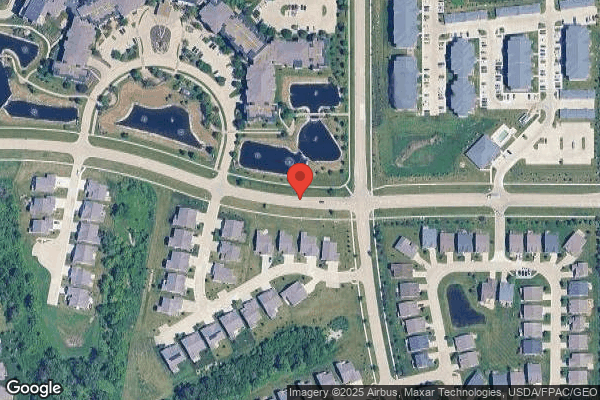

9225 Cascade Avenue, West Des Moines, IA 50266 (515) 978-2400
Non profit - Corporation 40 Beds WESLEYLIFE Data: November 2025
Trust Grade
90/100
#17 of 392 in IA
Last Inspection: June 2025

Inspected within the last 6 months. Data reflects current conditions.

Overview

Edgewater, A WesleyLife Community in West Des Moines, Iowa, has received a Trust Grade of A, indicating it is an excellent choice for families seeking care. With a state rank of #17 out of 392 and a county rank of #3 out of 29, it is positioned in the top half of facilities in Iowa, offering strong local options. The facility is improving, with reported issues decreasing from five in 2024 to just one in 2025. Staffing is a strong point, rated 4 out of 5, with a turnover of 40%, which is below the Iowa average, and more RN coverage than 81% of state facilities. However, there are some concerns, including incidents where medications were left unsecured and sensitive resident information was accessible, highlighting areas for improvement despite the overall positive environment and no fines on record.

Trust Score
A
90/100
In Iowa
#17/392
Top 4%
Safety Record
Low Risk
No red flags
Inspections
Getting Better
5 → 1 violations
Staff Stability
○ Average
40% turnover. Near Iowa's 48% average. Typical for the industry.
Penalties
✓ Good
No fines on record. Clean compliance history, better than most Iowa facilities.
Skilled Nurses
✓ Good
Each resident gets 65 minutes of Registered Nurse (RN) attention daily — more than 97% of Iowa nursing homes. RNs are the most trained staff who catch health problems before they become serious.
Violations
○ Average
6 deficiencies on record. Average for a facility this size. Mostly minor or procedural issues.
★★★★★
5.0
Overall Rating
★★★★☆
4.0
Staff Levels
★★★★★
5.0
Care Quality
★★★★☆
4.0
Inspection Score
Stable
2024: 5 issues
2025: 1 issues

The Good

  • 4-Star Staffing Rating · Above-average nurse staffing levels
  • 5-Star Quality Measures · Strong clinical quality outcomes
  • Full Sprinkler Coverage · Fire safety systems throughout facility
  • No fines on record
  • Staff turnover below average (40%)

    8 points below Iowa average of 48%

Facility shows strength in staffing levels, quality measures, fire safety.

The Bad

Staff Turnover: 40%

Near Iowa avg (46%)

Typical for the industry

Chain: WESLEYLIFE

Part of a multi-facility chain

Ask about local staffing decisions and management

The Ugly 6 deficiencies on record

Apr 2025 1 deficiency
CONCERN (D) 📢 Someone Reported This

A family member, employee, or ombudsman was alarmed enough to file a formal complaint

Potential for Harm - no one hurt, but risky conditions existed

Quality of Care (Tag F0684)

Could have caused harm · This affected 1 resident

Based on clinical record review, family and staff interviews, personnel file review and policy review, the facility failed to provide timely assessment and interventions for 1 of 4 residents who exper...

Read full inspector narrative →
Based on clinical record review, family and staff interviews, personnel file review and policy review, the facility failed to provide timely assessment and interventions for 1 of 4 residents who experienced a change in condition (Resident #1). The facility reported a census of 40 residents. Findings include: The Minimum Data Set (MDS) for Resident #1 dated 3/26/25 revealed a Brief Interview for Mental Status (BIMS) score had not been completed but indicated his memory was ok. It included diagnoses of anxiety, depression, respiratory failure, secondary malignant neoplasm of unspecified site (cancer that has spread to another location in the body from an unknown origin). It also revealed the resident required supervision with eating, moderate assistance with oral hygiene and upper body dressing, maximum assistance with bathing and lower body dressing, was dependent with toileting hygiene and putting on and removing footwear and required maximum assistance with transfer mobility. It further revealed the resident did not use supplemental oxygen therapy. On 4/10/25 at 12:02 PM, Resident #1's relative stated she arrived on 3/26/25 at 7:00 PM and observed the resident breathing differently and he complained of being cold. She stated she located a Certified Nurse Aide (CNA) and requested the nurse. She asserted Staff A, Licensed Practical Nurse (LPN), verbalized she was passing medications and would respond real soon. The resident's relative indicated she then told Staff B, CNA, that Resident #1 needed help. She stated Staff B and Staff C, CNA, obtained the resident's temperature of 102 degrees Fahrenheit (F) and the oxygen saturation (O2 sat) of 75% on room air. She stated Staff B, CNA, got an oxygen tank and Staff C, CNA placed the resident on oxygen (O2) and notified Staff A, LPN of the resident's temperature (T) and O2 sat. The relative stated Staff A, LPN, arrived to the resident's room approximately 45 minutes after she was initially notified of the relative's concern regarding the resident's condition. On 4/10/25 at 4:07 PM, Staff C, CNA, stated Resident #1 was having trouble breathing on 3/26/25 and she notified the nurse. She said she took the resident's oxygen level (O2 sat) and it was at 75%. She stated she then applied oxygen at two (2) liters per minute (lpm) via nasal cannula (NC) and rechecked the resident's O2 sat which resulted 83%. She stated the Staff A, LPN, arrived 5 - 10 minutes later. She further stated the resident's relative requested the nurse a couple of minutes after she arrived and at least 45 minutes passed before Staff A, LPN, came to see the resident. The Electronic Health Record (EHR) included a physician's order for Albuterol HFA; inhale two (2) puffs into the lungs every 4 hours as needed (PRN) for wheezing/shortness of breath dated 3/24/25 and Oxycodone 5 mg tablet by mouth every 4 hours as needed for pain dated 3/26/25. An EHR progress note dated 3/26/25 at 7:45 PM revealed Staff A, LPN, arrived to the resident's room and checked his vital signs with the following results: blood pressure (BP) 131/93 mmHg, T 98.4 degrees F, respiratory rate (RR) 28, and O2 sat 91%. It also indicated Staff A administered the Albuterol and Oxycodone. It also indicated Staff A asked the resident's relative to give the medication time to work. The EHR O2 Sats Summary indicated Staff A, LPN, documented on 3/26/25 at 8:00 PM the resident's O2 sat was 91% on room air. At 9:00 PM, Staff A, LPN, documented the resident's other relative notified her that an ambulance had been called for Resident #1. Staff A also documented she then contacted the on-call provider to send the resident to the hospital per the family's request. The Emergency Medical Services (EMS) report dated 3/26/25 at 9:20 PM revealed Resident #1 was receiving supplemental O2 at 2 liters per minute (lpm) via nasal cannula. It indicated at 9:26 PM, the resident's O2 sat was 77% and was switched to the EMS O2 tank at 4 lpm via nasal cannula. The Care Plan revised 3/26/25 did not included any respiratory related staff interventions or directives. A Notice of Corrective Action form dated 3/28/25 indicated the facility acknowledged Staff A's failure to provide timely assessment. On 4/16/25 at 1:49 PM, Staff C, CNA, stated she put oxygen on him because he had labored breathing, his O2 sat was 75%, and the family was present asking staff to do something. On 4/16/25 at 2:04 PM, Staff B, CNA stated he heard Staff C call for Staff A to come to the resident's room. He stated he went to the resident's room and the resident reported being short of breath. Staff B stated he got an oxygen tank and notified Staff A that she needed to come to the resident's room. A policy titled Change of condition monitoring process reviewed 2/2025 defined a change of condition as: 1. Accidents where there is direct harm to the resident 2. A noted reaction to a medication 3. Changes in cognitive function 4. A physical decline in resident's condition 5. An emotional change in the resident 6. Any condition change for which the physician directs staff to notify him/her, regarding the resident It also directed the nurse to notify the resident's physician. On 4/16/25 at 3:09 PM, the Director of Nursing (DON) stated the nurse should have addressed the patient and family concerns.
Oct 2024 3 deficiencies
CONCERN (D) 📢 Someone Reported This

A family member, employee, or ombudsman was alarmed enough to file a formal complaint

Potential for Harm - no one hurt, but risky conditions existed

Deficiency F0658 (Tag F0658)

Could have caused harm · This affected 1 resident

**NOTE- TERMS IN BRACKETS HAVE BEEN EDITED TO PROTECT CONFIDENTIALITY** Based on observations, clinical record review, staff interview and resident interview, the facility failed to follow physician o...

Read full inspector narrative →
**NOTE- TERMS IN BRACKETS HAVE BEEN EDITED TO PROTECT CONFIDENTIALITY** Based on observations, clinical record review, staff interview and resident interview, the facility failed to follow physician orders for dressing changes for 1 of 3 resident's (#3) reviewed. The facility reported a census of 40 residents. Findings Include: On 10/16/24 at 9:26 am, a dressing was observed on Resident #3's right shoulder. On 10/17/24 @ 9:45 am, Resident #3 stated her right shoulder dressing was not changed on 10/16/24. The resident's Minimum Data Set (MDS) assessment dated [DATE] revealed a Brief Interview for Mental Status (BIMS) score of 13 out of 15 which indicated completely intact cognition. It included diagnoses of cancer, depression, right artificial shoulder joint, morbid obesity, and osteoarthritis. It indicated the resident required moderate to maximum assistance with all aspects of Activities of Daily Living (ADLs). It also indicated the resident had no upper extremity limitations. The Electronic Health Record (EHR) included a Physician Order dated 10/12/24 for dressing change to right shoulder as follows: apply ABD pad (thick pad) and change daily one time a day for wound care. The Care Plan did not include any wound care directives for staff. The Progress Notes did not include documentation that indicated the dressing was changed on 10/16/24. The Treatment Administration Record (TAR) for October 2024 included a documented right shoulder dressing change for 10/16/24. On 10/17/24 at 10:10 am, Staff B, Registered Nurse (RN) stated she told Resident #3 to leave the right shoulder wound open to air since it didn't have a dressing on it. She stated she did not put any dressing on it. The TAR had her signature indicating she completed the dressing change. On 10/17/24 at 10:45 am, Staff C, RN stated she changed the resident's right shoulder dressing on 10/15/24. On 10/17/24 at 10:50 am, Staff D, RN stated she did not apply Resident #3's current right shoulder dressing. The facility did not have a policy specific to following physician's orders. On 10/17/24 at 4:00 pm, the Director of Nursing (DON) stated you should not sign off an order until the treatment is completed.
CONCERN (E) 📢 Someone Reported This

A family member, employee, or ombudsman was alarmed enough to file a formal complaint

Potential for Harm - no one hurt, but risky conditions existed

Deficiency F0761 (Tag F0761)

Could have caused harm · This affected multiple residents

Based on observations, staff interviews and policy review, the facility failed to secure prescribed medications from the possibility of unauthorized access. The facility reported a census of 40 reside...

Read full inspector narrative →
Based on observations, staff interviews and policy review, the facility failed to secure prescribed medications from the possibility of unauthorized access. The facility reported a census of 40 residents. Findings included: On 10/16/24 @ 2:38 am, the medication room door was observed propped open with an angled floor stopper. A small basket of over-the-counter medications (OTC) was positioned on top of a small cart. Two (2) medication packets, Prednisone and Furosemide, were lying on the counter. On 10/16/24 at 2:43 am, Staff A, Licensed Practical Nurse (LPN) stated medications were not stored in the medication room. When Staff A was informed there were medications on the medication room counter, he stated the resident didn't want staff in her room before 6:00 am, so he left them there. He also stated the door was closed to prevent residents from accessing them. When he was informed the door was propped open, he stated all of the residents were asleep but confirmed the door should be closed. On 10/17/24 at 4:00 pm, the Director of Nursing (DON) stated the medication room door should be closed if the nurse is not present. A policy titled Medication Administration, Storage, Disposal and Nurse Review revised 9/2020 indicated all prescription medication must be kept in a locked cabinet. All other medications must be stored in a locked area not accessible to person other than employees responsible for administration and storage of medications.
CONCERN (E) 📢 Someone Reported This

A family member, employee, or ombudsman was alarmed enough to file a formal complaint

Potential for Harm - no one hurt, but risky conditions existed

Medical Records (Tag F0842)

Could have caused harm · This affected multiple residents

Based on observations, staff interviews, and policy review, the facility failed to properly protect resident information from unauthorized access. The facility reported a census of 40 residents. Find...

Read full inspector narrative →
Based on observations, staff interviews, and policy review, the facility failed to properly protect resident information from unauthorized access. The facility reported a census of 40 residents. Findings include: On 10/16/24 @ 2:55 am, a document containing resident information was observed on a table in an open area of the unit with no staff present. On 10/16/24 at 2:58 am, Staff A, Licensed Practical Nurse (LPN) stated the form was the 24-hour nurses' report sheet. He also stated he left it out because all of the residents were asleep but it should not be left out when staff are not present. On 10/16/24 at 4:00 PM, the Director of Nursing (DON) stated staff should turn paperwork with resident information over so it's not visible to others. A policy titled Policy Regarding Use and Disclosure of Health Information Pursuant to Resident Authorization revised 1/2015 indicated the facility is committed to protecting the privacy and confidentiality of an individual's Protected Health Information.
Jul 2024 2 deficiencies
CONCERN (E)

Potential for Harm - no one hurt, but risky conditions existed

Menu Adequacy (Tag F0803)

Could have caused harm · This affected multiple residents

Based on observation, menu review, and staff interview, the facility failed to serve the appropriate portions for 5 residents who received mashed potatoes for lunch. The facility reported a census of ...

Read full inspector narrative →
Based on observation, menu review, and staff interview, the facility failed to serve the appropriate portions for 5 residents who received mashed potatoes for lunch. The facility reported a census of 35 residents. Findings include: The facility's menu for lunch for 7/14/24 identified the following items to be served as part of the planned regular textured diet: 3 oz of fried chicken 3 oz of beef tips ½ cup of mashed potatoes ½ cup of parslied rice ½ cup of country vegetable blend 2 oz ladle of country gravy Continuous observation of lunch preparation and service began on 7/14/24 at 11:59 am. Staff G, Homemaker cook, placed the following food serving utensils on a dish and identified each serving size. a) a 4-oz long, green handled spoodle (serving spoon and ladle combination) b) a 4-oz long, green handled ladle c) a 3-oz beige handled ladle d) a short, green handled scoop She was not able to identify the serving size of the short, green handled scoop but stated it was used for the mashed potatoes. At 12:14 PM, Staff G prepared and served the following resident plates. 1st plate - a 3 oz serving of beef tips; a scoop serving of mashed potatoes, a 4-oz serving of gravy. 2nd plate - a scoop serving of mashed potatoes, a 4-oz serving of gravy, and 1 piece of chicken. 3rd plate - a 4-oz serving of country vegetable blend, and 1 piece of chicken. At 12:30 PM, the Dietary Manager (DM) placed a red handled serving ladle on the plate of utensils. Staff G continued to prepare and serve the following resident plates. 4th plate - 1 piece of chicken; a scoop serving of mashed potatoes, a red ladle serving of gravy she identified as a 2-oz serving. 5th plate - a scoop serving of mashed potatoes, a 2-oz serving of gravy, a 4-oz serving of country vegetable blend, and a 3-oz serving of beef tips. 6th plate - a scoop serving of mashed potatoes, a 2-oz serving of gravy, a 4-oz serving of country vegetable blend, and a 3-oz serving of beef tips. 7th plate - a 4-oz serving of country vegetable blend, and 2 pieces of chicken legs. At 12:45 PM, Staff G identified the green handled serving scoop manufacturer which was identified as a 3.3 oz serving size. At 12:57 PM, Staff B, Homemaker cook, stated he used a gray handled serving scoop to plate the residents' mashed potato servings. He identified it as a 4-oz serving size. At 1:40 PM, the DM stated she noticed the incorrect serving scoop had been used for the residents' serving portions. On 7/15/24 at 3:42 PM, the DM stated staff should've followed the therapeutic spreadsheet to ensure the scoops and spoodles match the diet serving size. A document titled Feeding a Resident dated 7/2016 directed staff to check the tray before serving the meal to make sure that everything is on the tray and it is in accordance with the resident's diet.
CONCERN (E)

Potential for Harm - no one hurt, but risky conditions existed

Food Safety (Tag F0812)

Could have caused harm · This affected multiple residents

Based on observations, staff interviews, and facility policy review, the facility failed to maintain sanitary practices by improperly storing and serving food and not wearing beard covering while in t...

Read full inspector narrative →
Based on observations, staff interviews, and facility policy review, the facility failed to maintain sanitary practices by improperly storing and serving food and not wearing beard covering while in the food service area. The facility reported a census of 35 residents. Findings include: 1. On 7/13/24 at 9:45 AM during initial walk through, the following was observed: In the walk in cooler, the following items did not have an open date label: American cheese sandwich cut, butter block, beef base, blue cheese, Milk 2%. In the dry storage room, the following items did not have an open date label: Spaghetti noodles, Elbow noodles, Penne noodles, orange gelatin mix, coconut topping-toasted, pecan nuts topping, graham cracker cookie crumble. The following item was not properly covered and did not have an open label date, spaghetti noodles. In the freezer, the following items were not properly covered and did not have an open date label: ready to bake cookie dough on cookie sheet in freezer and tenderloin patties on cookie sheet in freezer. Chapter 3, Section 202.15, package integrity, of the 2022 FDA Food Code documents: Food packages shall be in good condition and protect the integrity of the contents so that the Food is not exposed to adulteration or potential contaminants. 2. On 7/13/24 at 12:42 PM, Staff A, Homemaker Cook, wiped her ungloved hand on her work jacket then grabbed a small plate from the cabinet. She placed her right thumb on the food surface area of the plate and laid it on the counter. She placed a piece of cake on the spot where her thumb contacted the plate. She repeated the process for a second plate of cake. At 12:47 PM, Staff A removed a resident's plate from his table, opened the trash bin drawer, scrapped the contents into the garbage, and placed the dishes in the sink. She removed more used dishes from the dining tables and emptied the contents into the garbage. She then took a cup from a resident's table, filled it with thickened water, and took it back to the resident. She returned to the kitchenette and placed pieces of cake on more plates. She did not perform hand hygiene throughout the service. On 7/14/24 at 10:20 AM, a follow-up kitchen observation revealed Staff C, a Sous Chef, and Staff D, a Sous Chef, prepared food with uncovered facial hair. On 7/14/24 at 7:24 AM, Staff E, Homemaker Cook, opened a package of cereal, dumped it into a bowl, opened the trash bin drawer, threw away the cereal package, opened the refrigerator door, grabbed the 2% milk from the fridge, poured it into the bowl, and put the milk back in the fridge. No hand hygiene was performed throughout the process. At 7:28 AM, she took the breakfast to the resident's room, uncovered it, and placed the bowl on the resident's table. Her right thumb contacted the inside of the bowl when she placed it on the table. At 7:33 AM, Staff E stated hand hygiene should be performed after touching meats, if hands become soiled, before donning gloves, and after touching the trash bin. On 7/15/24 at 3:42 PM, the Dietary Manager stated staff should wash hands before and after donning and doffing gloves and after touching trash receptacle or garbage. Staff should also wear gloves when touching ready to eat food and should not touch the food surface area of dishes. At 3:58 PM, the Director of Food & Beverage stated everything should be labeled, dated, and covered. A document titled Hand Washing and Hand Hygiene revised 6/20 directed staff to perform hand hygiene after touching blood, body fluids, secretions, excretions, and contaminated items, whether or not glove are worn; immediately after gloves are removed; and when otherwise indicated to avoid transfer of microorganisms to other residents, personnel, equipment, and/or the environment. A document titled Infection Control Manual Dietary Department dated 8/1/19 indicated the dietary department will work to comply with all state, federal and local infection control standards and regulations concerning personnel requirements, food storage, preparation handling and serving, sanitizing equipment and utensils, and isolation procedures.
Understanding Severity Codes (click to expand)
Life-Threatening (Immediate Jeopardy)
J - Isolated K - Pattern L - Widespread
Actual Harm
G - Isolated H - Pattern I - Widespread
Potential for Harm
D - Isolated E - Pattern F - Widespread
No Harm (Minor)
A - Isolated B - Pattern C - Widespread

Questions to Ask on Your Visit

  • "Can I speak with families of current residents?"
  • "What's your RN coverage like on weekends and overnight?"

Our Honest Assessment

Strengths
  • • Grade A (90/100). Above average facility, better than most options in Iowa.
  • • No major safety red flags. No abuse findings, life-threatening violations, or SFF status.
  • • No fines on record. Clean compliance history, better than most Iowa facilities.
  • • 40% turnover. Below Iowa's 48% average. Good staff retention means consistent care.
Concerns
  • • No significant concerns identified. This facility shows no red flags across CMS ratings, staff turnover, or federal penalties.
Bottom line: Generally positive indicators. Standard due diligence and a personal visit recommended.

About This Facility

What is Edgewater, A Wesleylife Community's CMS Rating?

CMS assigns Edgewater, A Wesleylife Community an overall rating of 5 out of 5 stars, which is considered much above average nationally. Within Iowa, this rating places the facility higher than 99% of the state's 100 nursing homes. This rating reflects solid performance across the metrics CMS uses to evaluate nursing home quality.

How is Edgewater, A Wesleylife Community Staffed?
CMS rates Edgewater, A Wesleylife Community's staffing level at 4 out of 5 stars, which is above average compared to other nursing homes. Staff turnover is 40%, compared to the Iowa average of 46%. This relatively stable workforce can support continuity of care.

What Have Inspectors Found at Edgewater, A Wesleylife Community?

State health inspectors documented 6 deficiencies at Edgewater, A Wesleylife Community during 2024 to 2025. These included: 6 with potential for harm.

Who Owns and Operates Edgewater, A Wesleylife Community?

Edgewater, A Wesleylife Community is owned by a non-profit organization. Non-profit facilities reinvest revenue into operations rather than distributing to shareholders. The facility is operated by WESLEYLIFE, a chain that manages multiple nursing homes. With 40 certified beds and approximately 36 residents (about 90% occupancy), it is a smaller facility located in West Des Moines, Iowa.

How Does Edgewater, A Wesleylife Community Compare to Other Iowa Nursing Homes?

Compared to the 100 nursing homes in Iowa, Edgewater, A Wesleylife Community's overall rating (5 stars) is above the state average of 3.1, staff turnover (40%) is near the state average of 46%, and health inspection rating (4 stars) is above the national benchmark.

What Should Families Ask When Visiting Edgewater, A Wesleylife Community?

Based on this facility's data, families visiting should ask: "Can I visit during a mealtime to observe dining assistance and food quality?" "How do you handle medical emergencies, and what is your hospital transfer rate?" "Can I speak with family members of current residents about their experience?"

Is Edgewater, A Wesleylife Community Safe?

Based on CMS inspection data, Edgewater, A Wesleylife Community has a clean safety record: no substantiated abuse findings (meaning no confirmed cases of resident harm), no Immediate Jeopardy citations (the most serious violation level indicating risk of serious injury or death), and is not on the Special Focus Facility watch list (a federal program monitoring the lowest-performing 1% of nursing homes). The facility has a 5-star overall rating and ranks #1 of 100 nursing homes in Iowa. While no facility is perfect, families should still ask about staff-to-resident ratios and recent inspection results during their visit.

Do Nurses at Edgewater, A Wesleylife Community Stick Around?

Edgewater, A Wesleylife Community has a staff turnover rate of 40%, which is about average for Iowa nursing homes (state average: 46%). Moderate turnover is common in nursing homes, but families should still ask about staff tenure and how the facility maintains care continuity when employees leave.

Was Edgewater, A Wesleylife Community Ever Fined?

Edgewater, A Wesleylife Community has no federal fines on record. CMS issues fines when nursing homes fail to meet care standards or don't correct problems found during inspections. The absence of fines suggests the facility has either maintained compliance or corrected any issues before penalties were assessed. This is a positive indicator, though families should still review recent inspection reports for the full picture.

Is Edgewater, A Wesleylife Community on Any Federal Watch List?

Edgewater, A Wesleylife Community is not on any federal watch list. The most significant is the Special Focus Facility (SFF) program, which identifies the bottom 1% of nursing homes nationally based on persistent, serious quality problems. Not being on this list means the facility has avoided the pattern of deficiencies that triggers enhanced federal oversight. This is a positive indicator, though families should still review the facility's inspection history directly.