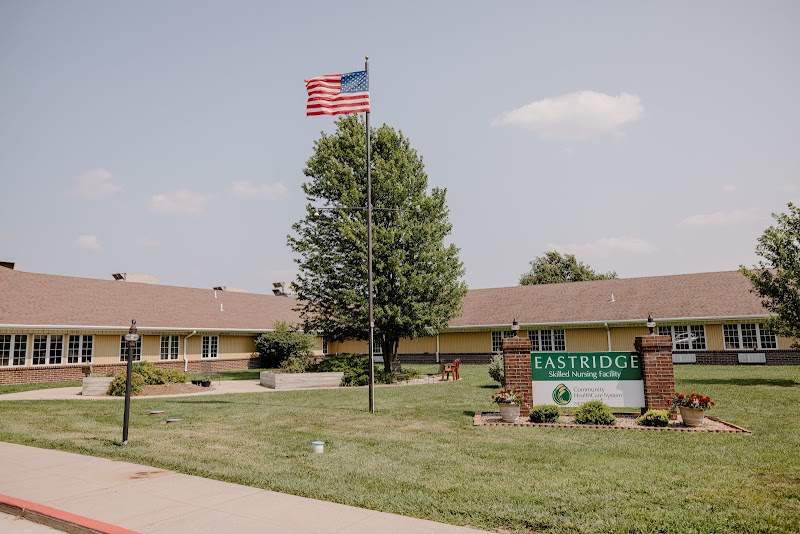
EASTRIDGE

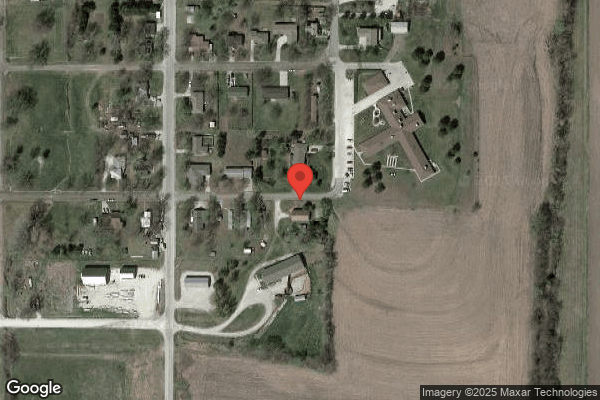
604 1ST STREET, CENTRALIA, KS 66415 (785) 857-3388
Non profit - Corporation 28 Beds Independent Data: November 2025 1 Immediate Jeopardy citation
Trust Grade
43/100
#184 of 295 in KS
Last Inspection: August 2025

Inspected within the last 6 months. Data reflects current conditions.

Overview

Eastridge Nursing Home has received a Trust Grade of D, indicating below-average performance and some concerns about resident care. It ranks #184 out of 295 facilities in Kansas, placing it in the bottom half statewide, and #4 out of 5 in Nemaha County, meaning only one local option is better. The facility is currently worsening, with reported issues increasing from 5 in 2023 to 6 in 2025. Staffing is a strong point, earning a 5/5 star rating and a turnover rate of 37%, which is better than the state average. However, there are serious concerns, including incidents where residents were at risk of burns from unattended hot equipment and a resident suffered a fracture due to improper use of a lift. While there have been no fines reported, the lack of adequate Registered Nurse coverage at times raises questions about the overall quality of care.

Trust Score
D
43/100
In Kansas
#184/295
Bottom 38%
Safety Record
High Risk
Review needed
Inspections
Getting Worse
5 → 6 violations
Staff Stability
○ Average
37% turnover. Near Kansas's 48% average. Typical for the industry.
Penalties
✓ Good
No fines on record. Clean compliance history, better than most Kansas facilities.
Skilled Nurses
✓ Good
Each resident gets 73 minutes of Registered Nurse (RN) attention daily — more than 97% of Kansas nursing homes. RNs are the most trained staff who catch health problems before they become serious.
Violations
⚠ Watch
12 deficiencies on record. Higher than average. Multiple issues found across inspections.
★★☆☆☆
2.0
Overall Rating
★★★★★
5.0
Staff Levels
★★★☆☆
3.0
Care Quality
★☆☆☆☆
1.0
Inspection Score
Stable
2023: 5 issues
2025: 6 issues

The Good

  • 5-Star Staffing Rating · Excellent nurse staffing levels
  • Full Sprinkler Coverage · Fire safety systems throughout facility
  • No fines on record
  • Staff turnover below average (37%)

    11 points below Kansas average of 48%

Facility shows strength in staffing levels, fire safety.

The Bad

2-Star Overall Rating

Below Kansas average (2.9)

Below average - review inspection findings carefully

Staff Turnover: 37%

Near Kansas avg (46%)

Typical for the industry

The Ugly 12 deficiencies on record

1 life-threatening 1 actual harm
Aug 2025 6 deficiencies 1 IJ (1 facility-wide)
CRITICAL (L)

Immediate Jeopardy (IJ) - the most serious Medicare violation

Accident Prevention (Tag F0689)

Someone could have died · This affected most or all residents

⚠️ Facility-wide issue

The facility had a census of 17 residents. Based on observation, interview, and record review, the facility failed to ensure an environment free from accident hazards when the facility left the active...

Read full inspector narrative →
The facility had a census of 17 residents. Based on observation, interview, and record review, the facility failed to ensure an environment free from accident hazards when the facility left the active steam table, heating up to 180 degrees Fahrenheit (F), unattended and accessible to residents in the area. The facility reported three cognitively impaired, independently mobile residents who could potentially access the steam table without staff knowledge. This deficient practice placed three cognitively impaired, independently mobile residents in Immediate Jeopardy, and others at risk. The facility also failed to ensure residents did not have access to an unlocked blanket warmer. Findings included: - On 08/10/25 at 10:00 AM, the facility dining room was empty of residents and staff. The steam table in the dining room was unattended and accessible to residents. The steam table lids had a measured temperature of 135 degrees F. Upon request, Dietary Staff BB and Administrative Staff A obtained a facility thermometer, and the steam table lids registered at 180 degrees F. The facility reported three cognitively impaired, independently mobile residents could potentially access the steam table without staff knowledge. On 08/10/25 at 10:10 AM, Administrative Staff A stated for the immediate time, she placed a staff member in the dining room to assure no residents got close to the steam table. Administrative Staff A stated staff would turn the steam table off after meals, and once it was cool, staff would not man the area until the table was turned back on for evening meal service. On 08/10/25 at 11:05 AM, Dietary Staff BB stated she turned on the steam table around 06:00 AM and left it on all day, until after supper, and then turned it off for the night. Dietary Staff BB stated she did not check the temperatures of the steam table. On 08/10/25 at 02:30 PM, barriers and caution tape surrounded the steam table. The barriers stayed in place through 08/12/25 until a plexiglass barrier was installed. The Centers for Medicare and Medicaid (CMS) “State Operations Manual” (SOM) recorded temperatures at 124 degrees F can cause a third-degree burn ( serious burn which affects the outer layer of skin as well as the entire layer beneath and requires immediate medical attention) in three minutes of exposure; temperatures at 127 degrees F can cause third degree burn with one minute of exposure; temperatures at 133 degrees F can cause third-degree burn in 15 seconds of exposure, and water temperatures at 140 degrees F can cause a third-degree burn in five seconds of exposure. The facility’s “Department Safety” policy, reviewed 02/2024, stated all electrical machines with heat producing elements must be turned off when not in use. The department manager is responsible for maintaining safety standards and notifying the Safety Officer in case of any safety hazard. All department associates shall report defective equipment, unsafe conditions, acts, or safety hazards to the supervisor in writing or verbally. On 08/10/25 at 01:43 PM Administrative Staff A received the Immediate Jeopardy (IJ) template and notified the facility failure to have the steam table with steam table lids registered at 135 degrees F with one thermometer and 185 degrees F from another, accessible from all sides, and had lack of staff monitoring placed the residents in immediate jeopardy at F689 and constituted substandard quality of care at CFR 483.25. The facility submitted an acceptable immediate jeopardy removal plan on 08/10/25 at 02:21 PM, which included the following: 1. A staff member was placed in the dining room to ensure no residents got close to the steam table. 2. The steam tables have been shut off. Once it is cool, staff will not be in the area until the table is turned back on for the evening service meal. 3. A temporary barrier with cones, chairs, and caution tape to keep folks away from the area. 4. On 10/11/25, once local hardware/lumber yard stores are open, a board barrier will then be put up as a more secure yet temporary fix. 5. A long-term plan will be put in place, likely building up the partial wall that was already in place, to shield the steam table. The surveyor verified the above corrective actions were implemented while onsite on 08/10/25 at 02:30 PM, and the deficient practice remained at a “D” scope & severity. - On 08/11/2025 at 07:58 AM, observation revealed an unattended open room, without a door, which had an unlocked blanket warmer on a shelf, approximately 2 ½ feet (ft) from the floor, with a temperature reading on the front of the warmer of 157.8 degrees Fahrenheit (F). The top inside metal shelf of the blanket warmer was hot to the touch. The first thermometer, when pointed at the metal shelf, read 152.5°F. Administrative Nurse E verified the finding and stated it had never been a problem in the past. On 08/11/25 at 08:01 AM, Maintenance Staff (MS) U, when asked if he would temp the shelf with a second thermometer, stated the reading on the outside was 157°F and that was the right temperature inside the blanket warmer due to a company coming out and checking the temperature to make sure it maintained that temperature. On 08/11/2025 at 08:32 AM, Maintenance Staff U used a second thermometer to check the temperature of the metal shelf inside the blanket warmer, and it read 155°F. On 08/11/25 at 10:30 AM, Licensed Nurse (LN) H stated that she had not seen any resident enter the room where the blanket warmer was kept. On 08/11/25 at 01:36 AM, Certified Nurse (CNA) M stated she had never seen a resident go into the room where the blanket warmer was kept. On 08/11/25 at 10:40 AM, Administrative Nurse D stated that she did not feel the location of the unattended blanket warmer was a problem, as residents do not enter the room, but staff had moved it to a locked room. Upon request, the facility failed to provide an accident policy. How far off the floor was this shelf
CONCERN (D)

Potential for Harm - no one hurt, but risky conditions existed

Deficiency F0849 (Tag F0849)

Could have caused harm · This affected 1 resident

The facility identified a census of 17 residents. The sample included eight residents, with one sampled resident reviewed for hospice. Based on observation, record review, and interview, the facility ...

Read full inspector narrative →
The facility identified a census of 17 residents. The sample included eight residents, with one sampled resident reviewed for hospice. Based on observation, record review, and interview, the facility failed to ensure the hospice provider provided the facility with Resident (R) 3's hospice plan of care. This placed R3 at risk of inadequate end-of-life care.Findings included:- R3's Electronic Medical Record (EMR) documented diagnoses of dementia (a progressive mental disorder characterized by failing memory and confusion), hypertension (HTN- elevated blood pressure), and congestive heart failure (CHF- a condition with low heart output and the body becomes congested with fluid).R3's Significant Change Minimum Data Set (MDS) dated 07/24/25 documented a Brief Interview for Mental (BIMS) score of 15, which indicated intact cognition. R3 required substantial assistance to be dependent on staff for her activities of daily living (ADL). R3 was on hospice services.R3's Functional Abilities Care Area Assessment (CAA) dated 07/26/25 documented the need for assistance with all ADLs. R3 did not ambulate and required a sit-to-stand lift (a specialized medical device designed to assist individuals with limited mobility in transitioning from a seated to a standing position) and occasional use of a Hoyer lift (total body mechanical lift) with transfers. R3 has worked with physical therapy and occupational therapy in the past after joint replacement (involves replacing a damaged or diseased joint with an artificial one) surgeries. R3 participates in a range of motion (ROM) exercise programs. R3 was admitted to hospice services on 07/16/25. R3 was at risk for further pain, and the need for more assistance with care, depression (a mood disorder that causes a persistent feeling of sadness and loss of interest), unmet care needs, and falls. R3's Care Plan, revised on 07/17/25, directed care staff that she had a terminal prognosis and was receiving hospice services. The Care plan directed staff that hospice would provide Durable Medical Equipment (DME) of briefs and wipes. Staff were directed hospice would provide medications of Losartan (a medication to treat HTN) 25milligrams (mg) daily, MiraLAX (laxative) 17 grams (gm) daily, potassium chloride (treatment for low potassium) 10 milliequivalent (mEq) daily, senna (laxative ) 8.6mg daily, Lasix (a medication used to reduce fluid retention) 20mg daily, fentanyl patch (an opioid patch used to manage moderate to severe pain) 50 mg every 48 hours, and milk of magnesia ( medication is used for a short time to treat occasional constipation) 30 milliliters (ml) every 24 hours as needed (PRN). The Care Plan directed staff to encourage a support system of family and friends. The Care Plan directed staff that the hospice nurse would visit up to two times a week and needed for additional cares, falls and death; the hospice nurse aide to visit two times a week for bathing; the hospice social worker would visit twice a month and PRN emergent psychosocial needs; the hospice physician as needed face to face and symptom management. The Care Plan directed staff that hospice would provide PRN Tylenol (pain reliever); hyoscyamine solution (medication used to relax muscles and reduce secretions), lorazepam liquid (medication used to treat anxiety); and roxanol (medication used to manage pain, restlessness, and air hunger). The Care Plan directed staff to work cooperatively with the hospice team to ensure the resident's spiritual, emotional, intellectual, physical, and social needs are met.On 08/11/25 at 01:55 PM, review of the hospice provider binder revealed that the hospice provider failed to provide R3's hospice plan of care. On 08/11/25 at 02:08 PM, Licensed Nurse (LN) H stated that R3's hospice binder should have the plan of care in it. LN H stated she had called the hospice provider, and they emailed her the hospice plan of care and provided a copy. LN H stated she would place a copy of the hospice plan of care in R3's binder.On 08/12/25 at 09:45 AM, Administrative Nurse D stated that the hospice provider had recently had a changeover in staff, and the plan of care might have been overlooked and not put in the binder. Administrative Nurse D stated she would ensure to get the hospice plan of care placed in R3's binder.The Hospice Services Agreement dated 05/17/23 documented that hospice shall be solely responsible for initially certifying and recertifying as necessary, the resident's terminal illness in accordance with applicable law. Hospice shall be solely responsible for conducting initial and comprehensive assessments upon a resident's election of hospice care. Hospice shall be responsible for determining, and modifying as necessary, the appropriate hospice plan of care. Such hospice plan of care shall encompass all issues related to the terminal illness and related conditions. Hospice shall communicate with the resident, family members, facility staff, and the attending physician to develop and update the content of the hospice plan of care. Hospice shall determine the appropriate course of hospice care for residents who was under hospice's care, including any determination to change the level of services provided to such residents.
CONCERN (E)

Potential for Harm - no one hurt, but risky conditions existed

Deficiency F0761 (Tag F0761)

Could have caused harm · This affected multiple residents

The facility identified a census of 17 residents. The facility had one medication room and one medication cart. Based on observation, record review, and interview, the facility failed to ensure the me...

Read full inspector narrative →
The facility identified a census of 17 residents. The facility had one medication room and one medication cart. Based on observation, record review, and interview, the facility failed to ensure the medication cart was kept locked and secured when cognitively impaired and independently mobile residents were near the cart. This placed the residents at risk of accidental ingestion of medication and adverse reactions.Findings included:- On 08/10/25 at 09:44 AM, the medication cart near the nurse's station was left unlocked and unattended by staff. Resident (R) 14, a cognitively impaired, independently mobile resident, was near the medication cart.On 08/10/25 at 09:45 AM, Licensed Nurse (LN) G stated that the cart should always be locked when she was away from it. On 08/12/25 at 09:45 AM, Administrative Nurse D stated that the medication cart should never be left unlocked when staff were away from the cart. The facility's Medication Storage and Management policy dated 05/19 documented that medications and biologicals were to be stored safely, securely, and properly following the manufacturer's recommendations or those of the supplier. Medication rooms, carts, and medication supplies were to always be locked or attended by persons with authorized access.
CONCERN (F)

Potential for Harm - no one hurt, but risky conditions existed

Deficiency F0727 (Tag F0727)

Could have caused harm · This affected most or all residents

The facility identified a census of 17 residents. The sample included eight residents. Based on record review and interview, the facility failed to provide a Registered Nurse (RN) for at least eight c...

Read full inspector narrative →
The facility identified a census of 17 residents. The sample included eight residents. Based on record review and interview, the facility failed to provide a Registered Nurse (RN) for at least eight consecutive hours a day, seven days a week. This placed the residents at risk of decreased quality of care.Findings included:- The Payroll Based Journaling (PBJ) report provided by the Centers for Medicare & Medicaid Services (CMS) for Fiscal Year (FY) 2025 Quarter One indicated the facility did not have RN hours on 11/30/24, 12/22/24, 12/25/24, and 12/28/24.Upon review of the facility's actual working nursing schedule from November 2024 and December 2024, it was revealed that the facility failed to have RN coverage on 12/28/24.On 08/11/25 at 03:05 PM, Administrative Staff A provided licensed nurse and RN punch times for all dates documented above except on 12/28/24, when the facility failed to have an RN staff member on duty that day. On 08/12/25 at 09:45 AM, Administrative Nurse D stated and confirmed that the facility did have RN coverage for all the days that were in question, except on 12/28/24, when the facility did not have RN coverage for that day. Administrative Nurse D stated that either she or Administrative Nurse E did their best to cover RN hours when another RN was not available.The facility's Staffing policy dated 05/19 documented it was the policy of this facility that there would be sufficient staff available to provide nursing and related care to the residents. A registered nurse will be present in the facility for at least eight hours each day, seven days a week. During hours when a registered nurse was not in the building, nursing administration would be available.
CONCERN (F)

Potential for Harm - no one hurt, but risky conditions existed

Staffing Data (Tag F0851)

Could have caused harm · This affected most or all residents

The facility identified a census of 17 residents. Based on record review and interview, the facility failed to submit accurate staffing information to the federal regulatory agency through Payroll Bas...

Read full inspector narrative →
The facility identified a census of 17 residents. Based on record review and interview, the facility failed to submit accurate staffing information to the federal regulatory agency through Payroll Based Journaling (PBJ) when the facility failed to submit accurate registered nurse (RN) and licensed nurse coverage 24 hours a day. Findings included:- The PBJ Staffing Data Report CASPER Report 1705D provided by the Centers for Medicaid and Medicare (CMS) for Fiscal Year (FY) 2025, quarter one and quarter two documented the following triggered areas: Quarter one: one-star staffing rating, no RN hours, and failed to have licensed nursing coverage 24 hours a day. The report documented no RN hours on 11/30/24, 12/22/24, 12/25/25, and 12/28/24.The report documented the facility failed to have a licensed nursing coverage 24 hours a day on 10/12/23, 10/13/24, 11/09/24, 11/23/24, 11/28,24, 11/30/24, 12/01/24, 12/14/24, 12/15/24,12/21/24, 12/22/24, 12/25/24, and 12/28/24Quarter two for FY 2025 triggered for failing to have licensed nursing coverage 24 hours a day on 02/09/25, 02/22/25, 02/23/25, 03/15/25, and 03/16/25.On 08/11/25 at 03:05 PM, Administrative Staff A provided licensed nurse and RN punch times for all dates documented above except on 12/28/24, when the facility failed to have an RN staff member on duty that day. On 08/12/25 at 09:45 AM, Administrative Nurse D stated that all nursing hours were sent to the corporate human resources person at the sister facility. Administrative Nurse D stated that at one point there had been an issue with the correct hours being submitted to CMS, but that she believed that issue had been resolved. Administrative Nurse D stated and confirmed that the facility did have 24-hour licensed nurse coverage for all the days that were in question, except on 12/28/24, when the facility did not have RN coverage for that day. Administrative Nurse D stated that either she or Administrative Nurse E did their best to cover RN hours when another RN was not available.The facility lacked a policy regarding PBJ Reporting.
MINOR (C)

Minor Issue - procedural, no safety impact

Staffing Information (Tag F0732)

Minor procedural issue · This affected most or all residents

The facility identified a census of 17 residents. The sample included eight residents. Based on observation, record review, and interview, the facility failed to ensure that daily posted nurse staffin...

Read full inspector narrative →
The facility identified a census of 17 residents. The sample included eight residents. Based on observation, record review, and interview, the facility failed to ensure that daily posted nurse staffing data was posted daily.Findings included:- On 08/10/25 at 09:43 AM, upon the initial tour of the facility, it was noted that the daily posted nurse staffing hour sheet was dated Friday, 08/08/25.Upon request on 08/11/25, the facility was able to provide daily posted nurse staffing data from the prior 18 months, but was not able to provide a sheet for 08/09/25 and 08/10/25. On 08/12/25 at 09:47 AM, Administrative Nurse E stated that she typically provided the daily nursing hour staffing sheet to the night shift charge nurse. Administrative Nurse E stated she had been on vacation and just returned yesterday, and had realized that the sheets for the weekend had not been completed as they should have. The facility was unable to provide a policy regarding daily posted nurse staffing data.
Nov 2023 5 deficiencies
CONCERN (D)

Potential for Harm - no one hurt, but risky conditions existed

Deficiency F0554 (Tag F0554)

Could have caused harm · This affected 1 resident

**NOTE- TERMS IN BRACKETS HAVE BEEN EDITED TO PROTECT CONFIDENTIALITY** The facility identified a census of 19 residents. The sample included nine residents. Based on observation, record review, and i...

Read full inspector narrative →
**NOTE- TERMS IN BRACKETS HAVE BEEN EDITED TO PROTECT CONFIDENTIALITY** The facility identified a census of 19 residents. The sample included nine residents. Based on observation, record review, and interview the facility failed to ensure Resident (R) 13 was assessed for the ability to safely self-administer medications. This deficient practice placed R13 at risk for unsafe medication administration and adverse side effects. Findings included: - The electronic medical record for R13 documented diagnoses of hypertension (HTN- elevated blood pressure), benign prostatic hyperplasia (BPH-non-cancerous enlargement of the prostate which can lead to interference with urine flow, urinary frequency, and urinary tract infections), and dyspnea (difficulty breathing). The Annual Minimum Data Set (MDS) dated [DATE] for R13 documented a Brief Interview for Mental Status (BIMS) score of 15 which indicated intact cognition. R13 was independent with activities of daily living (ADLs) but required supervision with locomotion off unit and dressing. R13 utilized the use of a cane when ambulating. The Quarterly MDS dated 09/16/23 for R13 documented a BIMS score of 15 which indicated intact cognition. R13 was independent with ADLs and required limited physical help to transfer only during bathing of one staff. The ADL Care Area Assessment (CAA) dated 03/29/23 for R13 documented R13 needed assistance with bathing. Assistance usually was provided with transfers to chair/bench and supervision. R13 participated with an exercise program. R13 was at risk for falls and depression (a mood disorder that causes a persistent feeling of sadness and loss of interest). The Health and Wellness Care Plan last revised on 05/09/23 for R13 lacked staff direction for R13's safe self-administration of medications/ointments. R13's clinical record lacked evidence of a self-administration of medications assessment for R13. On 11/06/23 at 09:15 AM observation revealed a container of Vicks VapoRub (a topical ointment with medicated vapors used to help relieve cough) on R13's nightstand beside his bed. R13 stated he has had the Vicks since he had been ill with COVID-19 (highly contagious respiratory virus) recently. R13 stated he did not believe that the nursing staff was aware he had it. R13 stated he put the Vicks on at night before he went to bed. On 11/07/23 at 02:25 PM Licensed Nurse (LN) G stated she was not aware that R13 had the container of Vicks in his room but did recall that R13 had smelled of the Vicks the other morning when she went into his room. LN G stated typically residents had to be assessed for safe self-administration of medications. LN G stated she would fax the physician and the assessment would be completed on R13 for self-administration of medications. On 11/08/23 at 10:48 AM Administrative Nurse D stated that any resident that self-administers or keeps medications and/or ointments in their room must be assessed for safe self-administration. Administrative Nurse D stated a physician order was also needed with the level of supervision needed and the self-administration would be added to the care plan. Administrative Nurse D stated staff was not made aware that R13 had the Vicks VapoRub in his room. The facility policy Self-Administration of Medication by Resident revised February 2020 documented: Each resident who desires to self-administer medications was permitted to do so if the facility's interdisciplinary team had determined that the practice would be safe for the resident and other residents of the facility. If a resident expressed the wish to self-administer his or her medications during the routing assessment, an assessment will be completed. Bedside medication storage was permitted only when it did not present a risk to confused residents who wander into rooms of or room with residents who self-administer. If medication is over the counter and the frequency was as needed. Medication will be managed by the resident in his/her room. The facility failed to ensure R13 was assessed for his ability to safely self-administer medications. This deficient practice placed R13 at risk for adverse side effects and unsafe medication administration.
CONCERN (D)

Potential for Harm - no one hurt, but risky conditions existed

Pressure Ulcer Prevention (Tag F0686)

Could have caused harm · This affected 1 resident

The facility identified a census of 19 residents. The sample included nine residents. Based on observation, record review, and interviews, the facility failed to ensure pressure reducing measures were...

Read full inspector narrative →
The facility identified a census of 19 residents. The sample included nine residents. Based on observation, record review, and interviews, the facility failed to ensure pressure reducing measures were placed on Resident (R) 11's bilateral lower extremities to prevent pressure ulcer (localized injury to the skin and/or underlying tissue usually over a bony prominence, as a result of pressure, or pressure in combination with shear and/or friction). This placed R11 at increased risk for pressure ulcer development. Findings included: - R11's Electronic Medical Record (EMR) documented diagnoses of dementia (progressive mental disorder characterized by failing memory, confusion), and weakness. The Significant Change Minimum Data Set (MDS) dated 06/29/23, documented R11 had a Brief Interview for Mental Status (BIMS) score of seven which indicated severe cognitive impairment. The MDS documented R11 was dependent on staff for toileting, dressing, bathing, rolling left and right, and chair/bed to chair transfers. The MDS further documented sit to lying, lying to sitting on the side of the bed, sit to stand and toilet transfers were not attempted due to R11's medical condition or safety concerns. The Functional / Rehabilitation Potential Care Area Assessment (CAA) dated 06/29/23, documented R11 was at risk for pressure ulcers due to need for assistance with bed mobility, weakness, functional decline and altered mental status. The CAA documented an intervention of foam heel lift boots (removes pressure from the heel to help prevent heel/pressure ulcers) for R11. The CAA further documented R11's Braden skin risk assessment (tool used to identify patients at-risk for pressure ulcers) score was 14 which indicated moderate risk of skin breakdown. R11's Care Plan listed an intervention initiated on 01/06/23 which directed staff to place heel lift boots on R11 every time he was in bed to prevent skin breakdown. R11's EMR lacked documentation of a refusal to wear the heel lift boots while in bed on 11/07/23. On 11/07/23 at 12:53 PM an observation revealed R11 rested in his room in bed. R11 did not have on any pressure reducing/heel lift boots and his heels rested directly on his mattress. On 11/08/23 at 09:42 Licensed Nurse (LN) G stated she was unsure of R11's current order; however, she stated if R11's care plan directed to have his heel lift boots on every time he was bed then he should have them on every time he was in bed. On 11/08/23 at 09:57 AM Certified Nurse Aide (CNA) M stated R11 was to have his heel lift boots on whenever he was in bed, even if during the day, and it would be documented if he had them on or if he refused. On 11/08/23 at 10:48 AM Administrative Nurse D stated staff were expected to place R11's heel lift boots on him every time he was in bed if it was on his care plan. Administrative Nurse D further stated R11's boots should be on even when he laid down during the day and staff were expected to document that they were placed on R11 or if he had refused to wear them. The facility provided Pressure Ulcer Prevention policy dated 06/18/01, documented it is a policy that all attempts and efforts will be made to prevent pressure sores from developing. The facility failed ensure pressure reducing measures were placed on R11's bilateral lower extremities to prevent pressure ulcers. This placed R11 at increased risk for pressure ulcer development.
CONCERN (D)

Potential for Harm - no one hurt, but risky conditions existed

Deficiency F0688 (Tag F0688)

Could have caused harm · This affected 1 resident

**NOTE- TERMS IN BRACKETS HAVE BEEN EDITED TO PROTECT CONFIDENTIALITY** The facility identified a census of 19 residents. The sample included nine residents with two residents sampled for position, ra...

Read full inspector narrative →
**NOTE- TERMS IN BRACKETS HAVE BEEN EDITED TO PROTECT CONFIDENTIALITY** The facility identified a census of 19 residents. The sample included nine residents with two residents sampled for position, range of motion (ROM), and mobility. Based on observation, record review and interview, the facility failed to ensure Resident (R) 5's right hand palm cushion was applied as directed to prevent an avoidable reduction of ROM and/or mobility. This deficient practice left R5 at risk for further decline and decreased ROM. Findings included: - R5's Electronic Medical Record (EMR) documented a diagnosis of dementia (progressive mental disorder characterized by failing memory, confusion), and fatigue. The Significant Change Minimum Data Set (MDS) dated [DATE] for R5 documented a Brief Interview for Mental Status (BIMS) score of three which indicated severe cognitive impairment. The MDS documented R5 was dependent on two staff for bed mobility, transfers, dressing and toileting. R5 was dependent on one staff for locomotion on and off the unit, eating and personal hygiene. The Cognitive Loss / Dementia Care Area Assessment (CAA) dated 06/08/23 documented R5 had a diagnosis of multiple sclerosis (MS - progressive disease of the nerve fibers of the brain and spinal cord) and had severe cognitive impairment. R5's Care Plan with an intervention initiated on 02/09/22, directed staff to place a splint to R5's right hand prior to all meals and to remove after each meal. The intervention further directed staff to place a palm cushion in R5's right hand at all times that splint was not on. R5's EMR lacked documentation that R5 refused to wear her brace or palm pillow on the following dates: 11/06/23, 11/07/23, 11/08/23. On 11/06/23 at 07:48 AM R5 sat in a common area/TV lounge in her Broda (specialty wheelchair with the ability to tilt and recline) chair. Her right arm laid across her abdomen and her right hand was closed into a fist. She did not have a brace or palm cushion to her right hand. On 11/07/23 at 11:55 PM R5 was propelled by staff in her Broda chair to her room after she finished lunch. No brace or palm cushion were in place to her right hand. On 11/07/23 at 12:24 PM R5 rested in her room in bed. Her palm pillow was on the ledge of her window. R5 did not have a brace or palm pillow in place while she rested in bed. On 11/08/23 at 08:03 AM R5 rested in her room in bed. Her palm pillow was on the ledge of her window. On 11/08/23 at 09:42 AM Licensed Nurse (LN) H stated the facility has gone through several different kinds of braces/palm pillows for R5 and that hospice supplied them for her. She stated R5 should have the brace and/or palm pillow in place. LN H further stated if it was in R5's care plan to have the brace on at meals and the palm pillow in place when the brace was not on, then R5 should have them on per the care planned intervention. She stated even while in bed, R5's palm cushion should have been on. On 11/08/23 at 09:57 AM Certified Nurse Aide (CNA) M stated R5's palm pillow should in her had all the time, unless she was at meals, and she would then have a brace on her right hand. She stated even when R5 was in bed her palm pillow should have been in place. She stated if R5 refused to wear either the brace or palm pillow it would have been documented as a refusal in her chart. On 11/08/23 at 10:48 AM Administrative Nurse D stated the expectation was that R5's palm pillow should have been in place while her brace was not on. She stated if R5 refused then it would have been documented in R5's EMR. The facility provided Restorative Nursing Program policy dated 06/04/06, documented Restorative nursing focuses on achieving and maintain optimal physical, mental, and psychological functioning of the resident. A resident will be given appropriate treatment and services to maintain or improve his/her abilities. Each resident will be given individual attention in regard to restorative care. The facility failed to ensure R5's right hand palm cushion was applied as directed to prevent an avoidable reduction of ROM and/or mobility. This deficient practice left R5 at risk for further decline and decreased ROM.
CONCERN (E)

Potential for Harm - no one hurt, but risky conditions existed

Deficiency F0679 (Tag F0679)

Could have caused harm · This affected multiple residents

The facility identified a census of 19 residents. The sample include nine residents. Based on observation, record review, and interviews, the facility failed to provide consistent activities for the r...

Read full inspector narrative →
The facility identified a census of 19 residents. The sample include nine residents. Based on observation, record review, and interviews, the facility failed to provide consistent activities for the residents during weekends. This deficient practice placed the affected residents at risk for decreased psychosocial wellbeing and boredom. Findings Included: - A review of the facility's Activities Calendar for September, October, and November of 2023 revealed two repeating activities for weekends. The September and October calendars noted catholic communion (10:45AM) and resident's choice (2:00PM) activities on Sundays. The September and October calendars noted recliner time (09:30AM) and movie time (02:00PM) on Saturdays. The November calendar indicated recliner time (09:30AM) and movie time (02:00PM) was noted as the only activities listed for the weekends. On 11/07/23 at 09:30AM the facility's coffee chat activity did not occur as listed on the calendar. A group of residents were moved to the television area to watch television. Administrative Staff B instructed the residents in the area she had to help another staff member and could not hold coffee chat. On 11/07/23 at 02:01 PM, Resident Council members reported most weekends do not have staff led activities or scheduled groups for the residents to attend. The council reported the facility provided puzzles and activities for the self-led resident activities on the weekends. The council reported weekends were boring and said they would like to see more staff led activities and involvement. The council stated recliner time was just staff moving some residents to the recliners in front of the television. They reported most of the time the weekdays stayed very eventful with activities but if the Activities Coordinator (AC) was off, some of the activities would not be completed. The Council reported the morning's scheduled coffee chat activity did not occur because the AC was at an appointment outside the facility. On 11/08/23 at 09:55 AM Certified Nurse's Aide (CNA) M stated weekends were usually resident choice or self-led activities. She stated she was not sure what recliner time was but may have been putting the residents in front of the television. On 11/08/23 at 11:00 AM Administrative Staff A reported the AC completed the monthly activity calendars and gave instructions to the staff on what to provide for the weekends. She stated staff were expected to ensure activities were being provided. She stated she would get with the interdisciplinary team to review the activity process. A review of the facility's Resident Rights policy revised 01/2020 indicated each resident will be provided opportunity to participate or refuse in opportunities that promote social, emotional, physical, and recreational activities to perform at their maximum level of functioning. The facility was not able to provide a policy related to activities as requested on 11/08/23. The facility failed to provide consistent activities for the residents during weekends. This deficient practice placed the affected residents at risk for decreased psychosocial wellbeing and boredom.
CONCERN (E)

Potential for Harm - no one hurt, but risky conditions existed

Accident Prevention (Tag F0689)

Could have caused harm · This affected multiple residents

The facility had a census of 19 residents. The sample included nine residents with five residents reviewed for accidents and/or hazards. Based on observation, record review, and interview the facility...

Read full inspector narrative →
The facility had a census of 19 residents. The sample included nine residents with five residents reviewed for accidents and/or hazards. Based on observation, record review, and interview the facility failed to secure rooms containing hazardous materials out of reach of six cognitively impaired /independently mobile residents. This deficient practice placed the six residents at risk for preventable injuries and accidents Findings Included: - On 11/06/23 at 07:08AM a walkthrough of the facility was completed. An inspection of the facility's Activity Room revealed disinfectant wipes unsecured on a table. An inspection of a supply closet propped open next to the television sitting area revealed a bottle of isopropyl alcohol (rubbing alcohol) and a spray bottle labelled alcohol on a shelf. All products contained the warning Keep out of reach of children. An inspection of a refrigerator storage area next to the rehab gym revealed three full bottles of drinking alcohol unsecured in a small white refrigerator. On 11/07/23 at 03:33PM an inspection of the facility's unlocked laundry room revealed the chemical storage closet was unlocked with numerous hazardous cleaning agents. The laundry rooms electrical panel room was unlocked with the three panel's doors left open. The panel contained the label warning High Voltage, Keep Locked. On 11/08/23 at 09:30AM, Certified Nurse's Aide (CNA) M stated the laundry room's doors for the chemicals and electrical panels should always remain locked. She stated the disinfectant wipes should be stored in locked cabinets when not in use. She stated drinking alcohol usually is stored in the locked activity rooms cabinet and provided per the resident's orders or care plan. On 11/08/23 at 09:42AM, Licensed Nurse (LN) G stated hazardous chemicals and areas of the facility should be secured away from the residents. On 11/08/23 at 10:40AM Administrative Nurse D stated hazardous chemicals should be secured in locked area or cabinets. She stated the doors leading to the laundry closets should be always locked. She stated drinking alcohol should be locked up at the nurse's station or the activities cabinet. A review of the facility's Safety policy revised 01/2020 indicated the facility will ensure each resident's environment will remained free from hazardous materials and potential accidents by ensuring the materials are maintained in a secure and locked area away from the resident population. The facility failed to secure rooms containing hazardous materials out of reach of six cognitively impaired independently mobile residents. This deficient practice placed six residents at risk for preventable injuries and accidents.
Mar 2022 1 deficiency 1 Harm
SERIOUS (G)

Actual Harm - a resident was hurt due to facility failures

Accident Prevention (Tag F0689)

A resident was harmed · This affected 1 resident

The facility identified a census of 18 residents, with 8 residents included in the sample. Four residents were sampled for accidents. Based on observation, record review, and interview, the facility f...

Read full inspector narrative →
The facility identified a census of 18 residents, with 8 residents included in the sample. Four residents were sampled for accidents. Based on observation, record review, and interview, the facility failed to ensure that a Hoyer lift (a mechanical device used to assist in transferring a resident) full body sling strap (a fabric device used to help suspend and attach to the Hoyer lift when transferring a resident) was fully inserted and clasped into the hook on the lift arm of the Hoyer lift. As a result, Resident (R) 5 slipped from the sling and was lowered to the floor, which resulted in a fractured left ischial tuberosity (the curved bone that makes up the bottom of the pelvis). Findings included: - The Electronic Medical Record (EMR) for R5 documented diagnoses of multiple sclerosis (MS - a progressive disease of the nerve fibers of the brain and spinal cord), dementia with behavioral disturbances (a progressive mental disorder characterized by failing memory, confusion with behaviors of verbal and physical aggression), and mononeuropathy of the lower limb (damage to of nerves outside of the brain and spinal cord in the lower limb). The Annual Minimum Data Set (MDS) dated 09/28/21 documented R5 had a Brief Interview for Mental Status (BIMS) score of nine, which indicated moderately impaired cognition. She required extensive to total dependence of one to two staff for her activities of daily living (ADLs). She required total dependence of two staff for transfers. She had functional limited range of motion (ROM) impairment on both sides of her upper and lower extremities. She required the use of a wheelchair for mobility and had no history of falls since prior assessment. The Quarterly MDS dated 12/29/21 documented a BIMS score of 11, which indicated a moderately impaired cognition. She required extensive to total dependence of one to two staff for ADLs. She required total dependence on two staff for transfers. She had functional limitation ROM impairment of one side on her upper extremity and in both lower extremities. She required the use of a wheelchair for mobility and had no falls since the prior assessment. The ADLs Care Area Assessment (CAA) dated 10/06/21 documented R5 needed assistance with most ADLS and noted she had an unsteady transitional balance. Staff used a full body lift for transfers. R5 had very poor core strength and was unable to sit on a toilet. She had MS that had progressed to where she was unable to stand or walk. She was minimally able to use her upper body to help with cares, but required assistance. She participated with an exercise program that included ROM. R5 was at risk for further ADL decline, falls, contractures, and skin breakdown. The Falls CAA dated 10/06/21 documented R5 had an unsteady transitional balance. She had a Morse fall risk assessment on 09/21/21 with a score of 15, which indicated a low risk for falls. She had not walked for several years related to progression of MS. R5 transferred with a full body lift with the assistance of two and used a wheelchair for mobility. The Care Needs Care Plan for R5 documented a new intervention dated 02/28/22 to use a full body lift with assist of two for transfers. R5 always used a wheelchair for all mobility and required foot pedals. Staff were to assist R5 with wheelchair mobility. Transfers should be done using a Hoyer lift with the assistance of two. R5 was non-weight bearing to her left lower extremity. A Nurse Progress Note by Licensed Nurse (LN) H on 02/26/22 at 06:30 AM documented two Certified Nurse Aides (CNAs) were getting the resident up for her shower using the Hoyer lift. One of the upper straps of the lift sling slipped off during transfer. R5 slipped out of the sling and staff lowered her to the floor. R5 landed softly on her bottom and did not hit her head, per witness reports. LN H went to the room and assessed the resident. R5 reported slight pain to her left lower leg with no redness noted, though a reddened area was noted to her mid/upper back at that time. R5 was alert and oriented to person and place and could not rate her pain to the lower left leg. R5 denied any other pain at that time. Staff obtained vital signs which were within normal limits. R5 had equal grips, and her pupils were reactive. No other injuries were noted. Staff assisted R5 to the shower chair with the Hoyer lift with the assistance of two CNAs and the nurse. Staff sent a fax to the clinic to notify the provider. Staff notified R5's representative who had no questions/concerns. A Nursing Note dated 02/28/22 at 08:18 AM documented R5 continued to complain of pain to the left leg with movement. Staff requested and received an order for an x-ray of the left hip and left knee. A Radiology Report dated 02/28/22 at 09:13 AM documented the following impression: Suspect left inferior pubis ramus (a part of the pelvis) or posterior acetabular wall (the back part of your hip) fracture. Consider a computerized tomography scan (CT-a series of x-ray images taken from different angles around a body part) to confirm. A CT scan of the pelvis result dated 02/28/22 at 3:29 PM documented an impression of an acute left ischial tuberosity fracture. A Nursing Note dated 02/28/22 at 04:16 PM documented R5 returned to the facility with new orders for non-weight bearing status on the left lower extremity. The order directed staff may use the Hoyer lift if there was no undue stress/pressure on the pelvis and further ordered a consult with orthopedics (bone specialists) on 03/01/22. The Investigation Report documented on 02/26/22 at 06:30 AM, CNA M and CNA N transferred R5 from her bed to her shower chair. R5 had MS, was non-weight bearing, and always used a Hoyer lift for transfers. The CNA's lifted R5 from the bed in the sling and moved the lift away from the bed towards the wheelchair. CNA N pushed the lift and CNA M guided the sling. At that time, the left top strap of the sling slipped off, which caused the resident to fall/slide out of the sling. CNA M supported R5's upper body and prevented her head from hitting the floor while CNA N supported R5's lower extremities and lowered R5 as best they could. The legs of the lift had not been opened yet to straddle the wheelchair and R5 was lowered down onto the legs of the lift. R5 reported slight pain to her left lower leg upon assessment. The assessment revealed a reddened area to R5's mid/upper back. A Witness Statement from CNA M dated 02/26/22 documented R5 slipped out of the sling and was lowered to the floor by staff. CNA M wrote one of the hooks on the Hoyer lift came off. A Witness Statement from CNA N dated 02/26/22 documented the incident occurred in the middle of R5's room. CNA N stated staff transferred R5 and one of the slings straps came off (left top strap) of the hook. The resident slid out of the sling and staff held R5's head and lowered her to the floor. The facility provided a Post-Accident Interventions and Actions report which recorded the sling was not adequately rested in the sling cradle. On 03/21/22 at 09:22 AM R5 stated she was doing okay. She only had occasional pain when being transferred in the lift. On 03/22/22 at 07:15 AM R5 sat in her high-back wheelchair and had the Hoyer lift sling underneath her. Her wheelchair was at the dining table and staff assisted R5 to eat breakfast. On 03/23/22 CNA M and CNA N were unavailable for interview. On 03/23/22 at 11:04 AM CNA O stated there should always be two people assisting when doing transfers with the Hoyer lift. Both staff members should make sure that the sling straps are hooked onto the tabs/hooks. One of the staff members stays with the resident in the sling while the other staff member operated the lift. Staff members received training and were checked off on lift use when hired and annually. CNA O stated she knew there had been an incident with R5, but she was not working at that time. The facility obtained a new sling for R5. CNA O stated she was responsible for the cleaning and checking the lifts weekly to ensure they worked properly. On 03/23/22 at 10:46 AM LN G stated before the Hoyer lift could be used for a resident, the resident had to be assessed by therapy. Staff members were required to do skills training upon being hired and annually for use of the lifts. Any lift transfer required the assistance of two staff members. LN G would expect the CNA's to immediately report if a sling or lift was not operating properly. On 03/23/22 at 10:39 AM Administrative Nurse D stated new slings were ordered for R5 and she was using a different one than when the incident on 02/26/22 occurred. She stated she would expect when staff members transferred any resident in a lift that two people would assist the resident. Staff were checked off on lift use upon being hired as well as annually. On 03/23/22 at 10:40 AM Administrative Staff A stated that after an investigation it was hard to determine what the cause of the incident was other than that the staff members did not ensure that the sling strap was securely attached to the lift arm before the resident was moved. The facility policy Safe Patient Handling last reviewed February 2020 documented: Purpose- to provide caregivers with guidelines to assess and make decisions about the lifting and transferring methods required for residents weighing over 15.9 kilograms (35 pounds). Assistive devices-when using a mechanical lift, follow guidelines- staff will complete the lift training on hire, yearly, and as needed. This is to ensure that all staff is continuing to lift and use the lift properly. The facility failed to ensure the safe transfer of R5 with the use of a Hoyer lift and sling when staff members failed to ensure the sling strap was securely latched/attached to the lift arm hook/clasp. This deficient practice resulted in an avoidable accident when R5 slipped out of a mechanical lift sling, which resulted in a fracture to R5's left ischial tuberosity. On 03/02/22 the facility completed the following corrective actions: Staff were educated on being aware of the sling and resting it in the cradle and to double check all sling areas that was attached to the lift. Education that was done was as follows: Hoyer type lift competency checklist; All slings and lifts were inspected weekly; All staff to inspect the lift and slings at each use; All staff watched the instructional video for the lift. The facility ordered four new slings to test which ones gave the most security to the sling in the cradle. The facility reviewed the incident at the Quality Assurance Performance Improvement (QAPI) meeting. Education and any issues with the lift/staff/education/condition will be reviewed quarterly for three quarters and then annual thereafter. The deficient practice was cited at past non-compliance.
Understanding Severity Codes (click to expand)
Life-Threatening (Immediate Jeopardy)
J - Isolated K - Pattern L - Widespread
Actual Harm
G - Isolated H - Pattern I - Widespread
Potential for Harm
D - Isolated E - Pattern F - Widespread
No Harm (Minor)
A - Isolated B - Pattern C - Widespread

Questions to Ask on Your Visit

  • "What changes have you made since the serious inspection findings?"
  • "Can I speak with families of current residents?"
  • "What's your RN coverage like on weekends and overnight?"

Our Honest Assessment

Strengths
  • • No fines on record. Clean compliance history, better than most Kansas facilities.
  • • 37% turnover. Below Kansas's 48% average. Good staff retention means consistent care.
Concerns
  • • Multiple safety concerns identified: 1 life-threatening violation(s), 1 harm violation(s). Review inspection reports carefully.
  • • 12 deficiencies on record, including 1 critical (life-threatening) violation. These warrant careful review before choosing this facility.
  • • Grade D (43/100). Below average facility with significant concerns.
Bottom line: Trust Score of 43/100 indicates significant concerns. Thoroughly evaluate alternatives.

About This Facility

What is Eastridge's CMS Rating?

CMS assigns EASTRIDGE an overall rating of 2 out of 5 stars, which is considered below average nationally. Within Kansas, this rating places the facility higher than 0% of the state's 100 nursing homes. A rating at this level reflects concerns identified through health inspections, staffing assessments, or quality measures that families should carefully consider.

How is Eastridge Staffed?

CMS rates EASTRIDGE's staffing level at 5 out of 5 stars, which is much above average compared to other nursing homes. Staff turnover is 37%, compared to the Kansas average of 46%. This relatively stable workforce can support continuity of care. RN turnover specifically is 60%, which is notably high. RNs provide skilled clinical oversight, so turnover in this role can affect medical care quality.

What Have Inspectors Found at Eastridge?

State health inspectors documented 12 deficiencies at EASTRIDGE during 2022 to 2025. These included: 1 Immediate Jeopardy (the most serious level, indicating potential for serious harm or death), 1 that caused actual resident harm, 9 with potential for harm, and 1 minor or isolated issues. Immediate Jeopardy findings are rare and represent the most serious regulatory concerns. They require immediate corrective action.

Who Owns and Operates Eastridge?

EASTRIDGE is owned by a non-profit organization. Non-profit facilities reinvest revenue into operations rather than distributing to shareholders. The facility operates independently rather than as part of a larger chain. With 28 certified beds and approximately 17 residents (about 61% occupancy), it is a smaller facility located in CENTRALIA, Kansas.

How Does Eastridge Compare to Other Kansas Nursing Homes?

Compared to the 100 nursing homes in Kansas, EASTRIDGE's overall rating (2 stars) is below the state average of 2.9, staff turnover (37%) is near the state average of 46%, and health inspection rating (1 stars) is much below the national benchmark.

What Should Families Ask When Visiting Eastridge?

Based on this facility's data, families visiting should ask: "What changes have been made since the serious inspection findings, and how are you preventing similar issues?" "Can I visit during a mealtime to observe dining assistance and food quality?" "How do you handle medical emergencies, and what is your hospital transfer rate?" "Can I speak with family members of current residents about their experience?" These questions are particularly relevant given the facility's Immediate Jeopardy citations.

Is Eastridge Safe?

Based on CMS inspection data, EASTRIDGE has documented safety concerns. Inspectors have issued 1 Immediate Jeopardy citation (the most serious violation level indicating risk of serious injury or death). The facility has a 2-star overall rating and ranks #100 of 100 nursing homes in Kansas. Families considering this facility should ask detailed questions about what corrective actions have been taken since these incidents.

Do Nurses at Eastridge Stick Around?

EASTRIDGE has a staff turnover rate of 37%, which is about average for Kansas nursing homes (state average: 46%). Moderate turnover is common in nursing homes, but families should still ask about staff tenure and how the facility maintains care continuity when employees leave.

Was Eastridge Ever Fined?

EASTRIDGE has no federal fines on record. CMS issues fines when nursing homes fail to meet care standards or don't correct problems found during inspections. The absence of fines suggests the facility has either maintained compliance or corrected any issues before penalties were assessed. This is a positive indicator, though families should still review recent inspection reports for the full picture.

Is Eastridge on Any Federal Watch List?

EASTRIDGE is not on any federal watch list. The most significant is the Special Focus Facility (SFF) program, which identifies the bottom 1% of nursing homes nationally based on persistent, serious quality problems. Not being on this list means the facility has avoided the pattern of deficiencies that triggers enhanced federal oversight. This is a positive indicator, though families should still review the facility's inspection history directly.