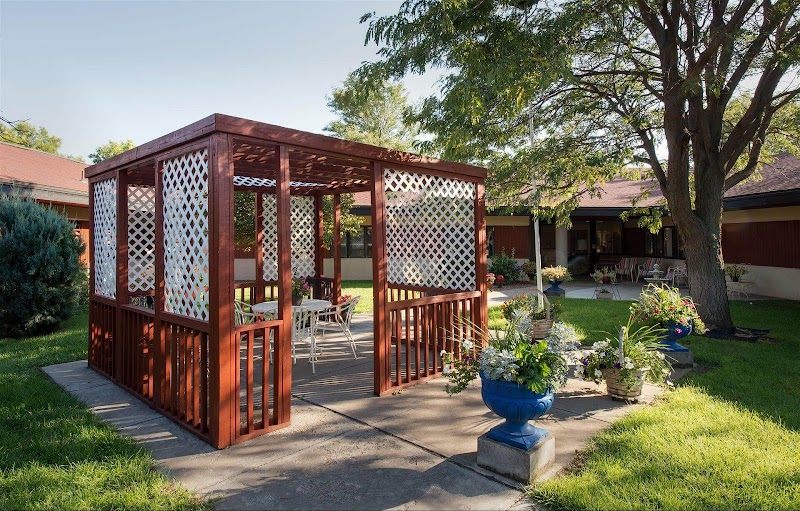

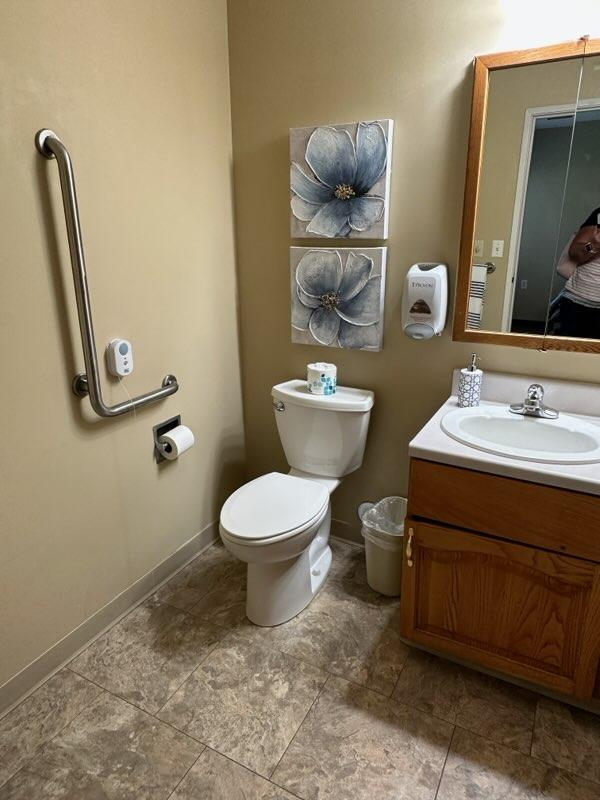

MANOR OF THE PLAINS

200 CAMPUS DRIVE, DODGE CITY, KS 67801 (620) 225-1928
For profit - Limited Liability company 50 Beds PRESBYTERIAN MANORS OF MID-AMERICA Data: November 2025 1 Immediate Jeopardy citation
Trust Grade
73/100
#26 of 295 in KS
Last Inspection: September 2023

Over 2 years since last inspection. Current conditions may differ from available data.

Overview

Manor of the Plains in Dodge City, Kansas has a Trust Grade of B, indicating it is a good choice overall, though not without some concerns. It ranks #26 out of 295 facilities in Kansas, placing it in the top half of state options, and is the best facility among six in Ford County. The facility's performance has been stable, with five issues identified in both 2021 and 2023, which suggests consistent oversight but also ongoing challenges. Staffing is a strength here, with a perfect 5-star rating and RN coverage that exceeds 75% of Kansas facilities, although the turnover rate is average at 52%. While there have been no fines, which is a positive sign, there are critical concerns, such as a resident developing aspiration pneumonia due to improper dietary management and food safety issues, including expired items found in storage and malfunctioning kitchen equipment.

Trust Score
B
73/100
In Kansas
#26/295
Top 8%
Safety Record
High Risk
Review needed
Inspections
Holding Steady
5 → 5 violations
Staff Stability
⚠ Watch
52% turnover. Above average. Higher turnover means staff may not know residents' routines.
Penalties
✓ Good
No fines on record. Clean compliance history, better than most Kansas facilities.
Skilled Nurses
✓ Good
Each resident gets 61 minutes of Registered Nurse (RN) attention daily — more than 97% of Kansas nursing homes. RNs are the most trained staff who catch health problems before they become serious.
Violations
⚠ Watch
16 deficiencies on record. Higher than average. Multiple issues found across inspections.
★★★★★
5.0
Overall Rating
★★★★★
5.0
Staff Levels
★★☆☆☆
2.0
Care Quality
★★★★☆
4.0
Inspection Score
Stable
2021: 5 issues
2023: 5 issues

The Good

  • 5-Star Staffing Rating · Excellent nurse staffing levels
  • Full Sprinkler Coverage · Fire safety systems throughout facility
  • No fines on record

Facility shows strength in staffing levels, fire safety.

The Bad

Staff Turnover: 52%

Near Kansas avg (46%)

Higher turnover may affect care consistency

Chain: PRESBYTERIAN MANORS OF MID-AMERICA

Part of a multi-facility chain

Ask about local staffing decisions and management

The Ugly 16 deficiencies on record

1 life-threatening
Sept 2023 5 deficiencies
CONCERN (D) 📢 Someone Reported This

A family member, employee, or ombudsman was alarmed enough to file a formal complaint

Potential for Harm - no one hurt, but risky conditions existed

Pharmacy Services (Tag F0755)

Could have caused harm · This affected 1 resident

**NOTE- TERMS IN BRACKETS HAVE BEEN EDITED TO PROTECT CONFIDENTIALITY** The facility census totaled 29 residents with 12 included in the sample with five reviewed for medications. Based on observation...

Read full inspector narrative →
**NOTE- TERMS IN BRACKETS HAVE BEEN EDITED TO PROTECT CONFIDENTIALITY** The facility census totaled 29 residents with 12 included in the sample with five reviewed for medications. Based on observation, interview, and record review, the facility failed to follow the physician orders directing the nursing staff to notify the physician for blood sugars (BS) below 70 and above 350, for Resident (R)24. Findings included: - R24's signed physician orders dated 07/31/23, revealed the following diagnoses: diabetes mellitus (when the body cannot use glucose, not enough insulin is made or the body cannot respond to the insulin) and chronic kidney disease (inability of the kidneys to excrete wastes, concentrate urine and conserve electrolytes). The admission Minimum Data Set (MDS) dated [DATE] revealed a Brief Interview for Mental Status (BIMS) score of seven, indicating severe cognitive impairment. The resident received insulin during the 7-day observation period. The Quarterly MDS dated 07/18/23 revealed a BIMS of four, indicating severe cognitive impairment. The resident received insulin during the observation period. Review of the care plan dated 05/23/23, revealed R24 had the potential for hypo/hyper glycemia (low or high blood sugar) due to diabetes. Staff were to observe for any signs/symptoms of hypo/hyper glycemia such as altered level of consciousness, confusion, dry mouth, excessive sweating, irritability, thirst, hunger, sweet odor on breath, headache, nausea, vomiting, etc. Notify the physician as needed (PRN). Administer the insulin per the physician's order. R24 frequently fluctuated to extreme blood sugar values and experienced changes in alertness when blood sugar was high or low. Staff were to check the resident's blood sugar as ordered and notify the physician per orders. Review of the Physician Order dated 07/31/23, revealed an order for Accuchecks (a way of testing blood sugar) four times a day, fasting, and post prandial (after meal). If R24's fasting BS in the morning was less than 100, the Licensed Nurse (LN) was to notify the physician. For all other accuchecks, staff was to notify the physician of BS less than 70 and more than 350. Review of the Medication Administration Record from 08/01/23 thru 09/19/23, revealed 200 opportunities for blood sugars. Of those 200 blood sugars taken, 54 of those results were above the ordered parameters of 350. Of those 54 blood sugars, 38 were not reported to the physician, as ordered. The blood sugars that were reported were faxed to the physician office and not called to the physician. Observation on 09/18/23 at 10:00 AM revealed the resident sat in her room watching out the window. The resident was able to carry on short conversations and answered questions with not always appropriate questions. Observation on 09/19/23 at 3:00 PM revealed the resident lying in bed resting with eyes closed. On 09/20/23 at 11:00 AM, Certified Nursing Assistant (CNA) N reported the resident would come out early to the dining room to eat and go back to her room. The resident was cooperative with her care. During an interview on 09/20/23 at 11:30 AM, Licensed Nurse G reported she just sent a fax to the physician about the resident's blood sugars. Sometimes he would answer and most times he did not. Staff had a sliding scale the physician ordered, but the blood sugars had not changed that much even with the sliding scale. On 09/20/23 at 10:40 AM, Administrative Nurse D reported she would expect the nurses to be calling the physician when the blood sugars got high and out of the physician ordered parameters. Review of the facility's policy for Notification of Parameters- Primary Care Providers dated 10/13/21, revealed notification of primary care physicians in a timely, efficient, and effective manner can be accomplished when the facility had developed a specific system which is consistently followed by licensed nursing staff. Licensed nurses have the responsibility of contacting a physician any time a resident has developed a clinical problem requiring physician intervention. The facility failed to follow the physician orders directing the nursing staff to notify the physician for blood sugars (BS) below 70 and above 350.
CONCERN (D) 📢 Someone Reported This

A family member, employee, or ombudsman was alarmed enough to file a formal complaint

Potential for Harm - no one hurt, but risky conditions existed

Drug Regimen Review (Tag F0756)

Could have caused harm · This affected 1 resident

**NOTE- TERMS IN BRACKETS HAVE BEEN EDITED TO PROTECT CONFIDENTIALITY** The facility reported a census of 29 residents with 12 residents included in the sample, that included five residents reviewed f...

Read full inspector narrative →
**NOTE- TERMS IN BRACKETS HAVE BEEN EDITED TO PROTECT CONFIDENTIALITY** The facility reported a census of 29 residents with 12 residents included in the sample, that included five residents reviewed for unnecessary medications. Based on observation, interview, and record review, the facility failed to ensure the Consulting Pharmacist identified and reported blood sugars out of parameters ordered by the physician for Resident (R)24, and the lack of an end date for as needed (PRN) psychotropic medications administered past the 14-day regulatory requirement for R1. Findings included: - R24's signed physician orders dated 07/31/23, revealed the following diagnoses: diabetes mellitus (when the body cannot use glucose, not enough insulin is made or the body cannot respond to the insulin) and chronic kidney disease (inability of the kidneys to excrete wastes, concentrate urine and conserve electrolytes). The admission Minimum Data Set (MDS) dated [DATE] revealed a Brief Interview for Mental Status (BIMS) score of seven, indicating severe cognitive impairment. The resident received insulin during the 7-day observation period. The Quarterly MDS dated 07/18/23 revealed a BIMS of four, indicating severe cognitive impairment. The resident received insulin during the observation period. Review of the care plan dated 05/23/23, revealed R24 had the potential for hypo/hyper glycemia (low or high blood sugar) due to diabetes. Staff were to observe for any signs/symptoms of hypo/hyper glycemia such as altered level of consciousness, confusion, dry mouth, excessive sweating, irritability, thirst, hunger, sweet odor on breath, headache, nausea, vomiting, etc. Notify the physician as needed (PRN). Administer the insulin per the physician's order. R24 frequently fluctuated to extreme blood sugar values and experienced changes in alertness when blood sugar was high or low. Staff were to check the resident's blood sugar as ordered and notify the physician per orders. Review of the Physician Order dated 07/31/23, revealed an order for Accuchecks (a way of testing blood sugar) four times a day, fasting, and post prandial (after meal). If R24's fasting BS in the morning was less than 100, the Licensed Nurse (LN) was to notify the physician. For all other Accuchecks, staff was to notify the physician of BS less than 70 and more than 350. Review of the Medication Administration Record from 05/01/23 through 08/06/23 revealed 424 opportunities for Accuchecks. Of those 424 opportunities 57 readings were above the 350 parameter ordered by the physician. Review of the Consulting Pharmacist Monthly Medication Review revealed: On 05/04/23- No recommendations. On 06/02/23- No recommendations. On 07/03/23- No recommendations. On 08/06/23- No recommendations. The Pharmacist failed to identify the blood sugars being out of the parameters ordered by the physician. Observation on 09/18/23 at 10:00 AM revealed the resident sat in her room watching out the window. She had two bird feeders and a corn feeder for the squirrel. The resident was able to carry on short conversations and answered questions with not always appropriate questions. On 09/20/23 at 10:40 AM Administrative Nurse D reported the pharmacist should be noting the blood sugars on his monthly report when he reviewed the resident's medication record. She reviewed the reports every month and the resident blood sugars were not mentioned on any of the reports. On 09/21/23 attempts made to contact the Consulting Pharmacist and unable to get a response. The facility failed to provide a policy regarding the consulting pharmacist. The facility failed to ensure the Consulting pharmacist identified and reported blood sugars out of parameters ordered by the physician. - Resident R1's signed physician orders dated 03/14/23 revealed the following diagnoses: chronic obstructive pulmonary disease- COPD (progressive and irreversible condition characterized by diminished lung capacity and difficulty or discomfort in breathing), anxiety (mental or emotional reaction characterized by apprehension, uncertainty, and irrational fear), hypertension (elevated blood pressure), and chronic pulmonary edema (accumulation of extravascular fluid in the lung tissues). The admission Minimum Data Set (MDS) dated [DATE] revealed a Brief Interview for Mental Status (BIMS) score of 11, indicating moderate cognitive impairment. The resident required limited assistance with all daily cares. R1 received pain medication on schedule and on an as needed (PRN) basis. The resident had shortness of air and received oxygen (O2) therapy. Medications included antipsychotic, antianxiety, antidepressant, medications seven days of the 7-day observation period. The Quarterly MDS dated 06/20/23 revealed no changes in cognition, ADL's and added a hypnotic and diuretic medication to the daily medication regimen. The Psychotropic drug use Care Area Assessment (CAA) dated 03/21/23 revealed the resident received scheduled administration of antipsychotic medication, scheduled administration of antidepressant medication and PRN use of anxiolytics (anxiety medications). A license nurse should monitor for signs and symptoms of adverse effects of psychotropic medications. A pharmacist would review medications monthly and the physician would review medications with each visit and more often if needed. Review of the Care Plan dated 06/21/23, revealed the resident had a history of depression and had the potential for anxiety. R1 received Ativan 0.5 milligrams (mg), (anti-anxiety medication) every six hours, as needed for anxiety. Monitor for side effects. When the resident was anxious, staff to encourage R1 to focus on her breathing, because when she would experience being anxious, she became short of breath. Review of the physician orders dated 03/23/23, revealed an order for Ativan 0.5 mg, every six hours PRN. The order lacked a 14 day stop date. Review of the Medication Administration Record revealed the resident received the medication almost daily. Review of the Consulting Pharmacist Medication Regimen review revealed: 1. On 04/02/23, the consulting pharmacist documented the facility needed a 14-day end date for Ativan 0.5 mg PO PRN. No response from the physician and resident continues with order ongoing. 2. On 05/04/23, the consulting pharmacist documented the facility needed a 14-day end date for clonidine HCL ordered PRN Ativan 0.5 mg PO PRN- No response from physician and resident continues with order ongoing. No further recommendation documented for the Ativan and the 14- day stop date. Observation on 09/19/23 at 10:10 AM revealed the resident sat in her recliner. The resident visited to a staff person with no visible signs of distress or problems breathing. On 09/19/23 at 1:30 PM, Certified Nursing Assistant (CNA) M reported the resident required extensive assistance with cares. She required the use of O2 continuous, or she would get anxious if she thought she could not breath. On 09/20/23 at 11:00 AM, CNA N reported the resident spent much time in her room. She did go to the dining room (DR) for meals and exercise class before the noon meal but that was about all. She had to always have her O2 with her and would become anxious if she felt she could not get her breath. CNA N would report that to the nurse, and she would give her something to calm down. On 09/20/23 at 11:10 AM, Licensed Nurse G reported the resident requested her Ativan a lot if she was winded. She would want an Ativan when she walked from the dining room to her room. On 09/20 23 at 11:28 AM, Administrative Nurse D reported the medical records staff member kept a book of all medications requiring an extension when the medication had an automatic end date, such as the Ativan that should have a 14 day stop date. She sent the form to the physician by fax to have him sign to extend the order another 14 days. But when Administrative Nurse D checked the book, she reported there was no sheet to update the resident's Ativan. The medication had no 14-day stop date with resident receiving it daily. She reported the medical records staff missed it because they were questioning the order, then forgot to send the form to the physician. On 09/21/23 attempts made to contact the Consulting Pharmacist and unable to get a response. The facility failed to provide a policy regarding the consulting pharmacist. The facility failed to ensure the Consulting Pharmacist identified and reported the lack of an end date for as needed (PRN) psychotropic medications administered past the 14-day regulatory requirement.
CONCERN (D) 📢 Someone Reported This

A family member, employee, or ombudsman was alarmed enough to file a formal complaint

Potential for Harm - no one hurt, but risky conditions existed

Medication Errors (Tag F0758)

Could have caused harm · This affected 1 resident

**NOTE- TERMS IN BRACKETS HAVE BEEN EDITED TO PROTECT CONFIDENTIALITY** The facility census totaled 29 residents with 12 included in the sample, that included five residents reviewed for unnecessary m...

Read full inspector narrative →
**NOTE- TERMS IN BRACKETS HAVE BEEN EDITED TO PROTECT CONFIDENTIALITY** The facility census totaled 29 residents with 12 included in the sample, that included five residents reviewed for unnecessary medications. Based on observation, interview, and record review, the facility failed to have an appropriate end date for as needed anti-anxiety medication administered past the 14-day regulatory requirements for Resident (R1). Findings included: - Resident R1's signed physician orders dated 03/14/23 revealed the following diagnoses: chronic obstructive pulmonary disease- COPD (progressive and irreversible condition characterized by diminished lung capacity and difficulty or discomfort in breathing), anxiety (mental or emotional reaction characterized by apprehension, uncertainty, and irrational fear), hypertension (elevated blood pressure), and chronic pulmonary edema (accumulation of extravascular fluid in the lung tissues). The admission Minimum Data Set (MDS) dated [DATE], revealed a Brief Interview for Mental Status (BIMS) score of 11 indicating moderate cognitive impairment. The resident required limited assistance with all daily care. R1 received pain medication on schedule and on an as needed (PRN) basis. The resident had shortness of air and received oxygen (O2) therapy. Medications included antipsychotic, antianxiety, antidepressant, medications seven days of the 7-day observation period. The Quarterly MDS dated [DATE] revealed no changes in cognition or ADL's and added a hypnotic and diuretic medication to the daily medication regimen. The Psychotropic Drug Use Care Area Assessment (CAA) dated 03/21/23 revealed the resident had scheduled administration of antipsychotic medication, scheduled administration of antidepressant medication, and as needed (PRN) use of anxiolytics (anxiety medications). A license nurse was to monitor for signs and symptoms of adverse effects of psychotropic medication. A pharmacist reviewed medications monthly and the physician would review medications with each visit and more often if needed. Review of the Care Plan dated 06/21/23, revealed the resident had a history of depression and had the potential for anxiety. R1 received Ativan 0.5 milligrams (mg) (anti-anxiety medication) every 6 hours, as needed for anxiety. Staff were to monitor for side effects. When the resident became anxious, staff were to encourage R1 to focus on her breathing, because when she would become anxious, she became short of breath. Review of the physician orders dated 03/23/23, revealed an order for Ativan 0.5 mg, every six hours. The order lacked a 14-day stop date. Review of the Medication Administration Record, from 03/23/23 -08/31/23 revealed daily use of the medication. Observation on 09/19/23 at 10:10 AM revealed the resident sat in her recliner. The resident visited with an unidentified staff and displayed no signs of anxiety or difficulties breathing. On 09/20/23 at 11:00 AM, Certified Nursing Assistant (CNA) N reported the resident spent much time in her room. She had to always have her O2 with her and would become anxious if she felt she could not get her breath. On 09/20/23 at 11:10 AM, Licensed Nurse G reported the resident requested her Ativan a lot if she was winded. She would want an Ativan when she walked from the dining room to her room. On 09/20 23 at 11:28 AM Administrative Nurse D reported the medical records staff member kept a book of all medications requiring an extension when the medication had an automatic end date, such as the Ativan that should have had a 14 day stop date. She sent the form to the physician by fax to have him sign to extend the order another 14 days. But when Administrative Nurse D checked the book, she reported there was no sheet to update the resident's Ativan. The medication had no 14-day stop date with resident receiving it daily. She reported the medical records staff missed it because they were questioning the order then forgot to send the form to the physician. Review of the facility policy named Psychoactive Medications dated 07/05/22 revealed PRN psychotropic medications limited to 14-days. The prescribing physician must evaluate the resident before writing a new order for a psychotropic medication. The facility failed to have an appropriate end date for as needed anti-anxiety medication administered past the 14-day regulatory requirements for Resident (R1), which increased the risk for unnecessary psychotropic medications administered.
CONCERN (D) 📢 Someone Reported This

A family member, employee, or ombudsman was alarmed enough to file a formal complaint

Potential for Harm - no one hurt, but risky conditions existed

Infection Control (Tag F0880)

Could have caused harm · This affected 1 resident

The facility census totaled 29 residents with 12 included in the sample. Based on observation, interview, and record review, the facility failed to ensure a clean sanitary environment for residents of...

Read full inspector narrative →
The facility census totaled 29 residents with 12 included in the sample. Based on observation, interview, and record review, the facility failed to ensure a clean sanitary environment for residents of the facility by the failure to change gloves when going from dirty to clean, and the lack of hand hygiene while assisting an incontinent resident to use the toilet for Resident (R) 20. Findings included: - On 09/19/23 at 10:00 AM, Certified Nursing Assistant (CNA) M placed a gait belt on the resident and assisted Resident (R)20 to stand up and then assisted her to sit in the wheelchair. Staff took the resident to her bathroom and instructed the resident to grab the bar to assist with transfer to the toilet. While the resident stood, CNA M pulled her pants down and removed the soiled brief. The resident then sat on the toilet and voided. While wearing the same gloves, CNA M left the bathroom, went to the resident's closet, and retrieved a clean brief. She then proceeded to put the brief on the resident. She then removed her gloves with no hand hygiene done prior to donning clean gloves. CNA M then did peri-care on the resident using wet wipes and the clean brief and pants were pulled up in place. CNA M removed her gloves and assisted the resident out of the bathroom and out of her room. CNA M failed to clean her hands. On 09/19/23 at 10:10 AM, CNA M acknowledged she should have changed gloves and cleaned her hands during toileting the resident. On 09/20/23 at 01:00 PM, Administrative Nurse D reported she expected the staff to have clean gloves and to clean hands when gloves removed. The facility's policy for Hand Hygiene dated 09/22, revealed staff were to wear gloves when in contact with body fluids. Change gloves during elder care if moving from a contaminated body site to clean body site. Wash hands after removing gloves. The facility failed to ensure a clean sanitary environment for residents by the failure to change gloves when going from dirty to clean and the lack of hand hygiene while assisting an incontinent resident to use the toilet.
MINOR (C) 📢 Someone Reported This

A family member, employee, or ombudsman was alarmed enough to file a formal complaint

Minor Issue - procedural, no safety impact

Staffing Data (Tag F0851)

Minor procedural issue · This affected most or all residents

The facility reported a census of 29 residents. Based on interview and record review, the facility failed to submit complete and accurate staffing information to the federal regulatory agency through ...

Read full inspector narrative →
The facility reported a census of 29 residents. Based on interview and record review, the facility failed to submit complete and accurate staffing information to the federal regulatory agency through Payroll Based Journaling (PBJ,) when the facility failed to submit staffing hourly data for all nursing personnel by the required deadline. Findings included: - Review of the fiscal year (FY)- Quarter 3, 2022 (April 1 - June 30) revealed the following concerns: The facility failed to have Licensed Nursing Coverage 24 Hours/Day for the following dates: On 05/15/22, Sunday (SU), 05/29/22, (SU), 06/04/22, Saturday (SA),06/25/22 (SA),06/26/22, (SA). Review of FY- Quarter 4, 2022 (July 1 - September 30): The facility failed to have Licensed Nursing Coverage 24 Hours/Day for the following dates: On 07/10/22, (SU), 08/06/22, (SA), 08/07/22 (SU), 08/14/22, (SU), 08/21/22, (SU), 09/24/22, (SA). Review of FY Quarter 1, 2022 (October 1 - December 31) The facility failed to have Licensed Nursing Coverage 24 Hours/Day for the following dates: 10/08 Saturday (SA); 10/13 Thursday (TH); 10/23 Sunday (SU); 10/25 Tuesday (TU); 10/26 Wednesday (WE); 10/30 (SU) 11/05 (SA); 11/20 (SU); 11/26 (SA); 11/27 (SU) 12/11 (SU); 12/17 (SA); 12/24 (SA) Review of FY Quarter 2, 2023 (January 1 - March 31) The facility failed to have Licensed Nursing Coverage 24 Hours/Day for the following dates: 01/14 (SA), 02/05 (SU); 02/26 (SU), 03/18 (SA); 03/19 (SU). Review of the nursing schedule and clocking sheets for the above dates revealed adequate hours to account for 24-hour nursing coverage, however the review of the PBJ documented the facility lacked those entered hours. Interview on 09/19/23 at 04:20 PM, Administrative Staff A reported the facility was having the corporate office report the facility hours for the PBJ. They have realized they were not reporting the licensed nursing hours accurately. After the discovery, the facility reports their own hours and have not had any more errors reported. Review of the Electronic Staffing Data Submission Payroll-Based Journal for Long Term Care Facility dated 06/22, revealed long term care facilities must electronically submit to Centers for Medicare and Medicaid Services (CMS) complete and accurate direct care staffing information, including information for agency and contract staff, based on payroll and other verifiable and auditable date in a uniform format according to specifications established by CMS. The facility failed to submit complete and accurate staffing information to the federal regulatory agency through Payroll Based Journaling (PBJ) when the facility failed to submit staffing hourly data for all nursing personnel by the required deadline.
Dec 2021 5 deficiencies 1 IJ
CRITICAL (J)

Immediate Jeopardy (IJ) - the most serious Medicare violation

Menu Adequacy (Tag F0803)

Someone could have died · This affected 1 resident

**NOTE- TERMS IN BRACKETS HAVE BEEN EDITED TO PROTECT CONFIDENTIALITY** The facility census totaled 30 residents, which included seven residents who required a mechanically altered diet (foods that ca...

Read full inspector narrative →
**NOTE- TERMS IN BRACKETS HAVE BEEN EDITED TO PROTECT CONFIDENTIALITY** The facility census totaled 30 residents, which included seven residents who required a mechanically altered diet (foods that can be safely and successfully swallowed by being whipped, blended, ground, chopped or mashed). Based on observation, interview, and record review the facility failed to provide the appropriate mechanically altered diet to Resident (R) 82, who subsequently developed aspiration pneumonia (an inflammatory condition of the lungs caused by inhaling foreign material or vomit) and admitted to the hospital, requiring oxygen on 12/14/21 (after the noon meal) which she did not require prior to this incident. R82 underwent an esophagogastroduodenoscopy (EGD, a procedure to examine the throat, stomach and small intestine) to remove a piece of pork. This placed the resident in immediate jeopardy for choking and at risk for potential death or brain damage due to lack of oxygen through choking. Findings included: - Resident (R) 82's pertinent diagnoses from 11/23/21 Physician's Orders in the Electronic Medical Record (EMR) revealed unspecified non-displaced fracture of second cervical vertebrae (break of the second bone in the neck; required a neck brace to prevent movement). The 11/29/21 Annual Minimum Data Set (MDS) revealed a Brief Interview for Mental Status (BIMS) score of 15, indicating intact cognition. R82 required limited one-person assistance with eating meals. R82 had no history of choking or swallowing issues. The Nutrition Care Area Assessment (CAA) dated 11/29/21 documented R82 received a pureed diet (a smooth, creamy substance made of liquidized or crushed food items) with thin liquids (normal consistency drinks). R82 required set up with her meals and preferred to eat in her room. The Physician Orders documented on 11/23/21, that R82 had a diet order for pureed foods. On 12/14/21 at 03:48 PM, the orders directed staff to discontinue the pureed diet. The 12/04/21 Care Plan documented R82 was on a dysphagia (difficulty swallowing) level 1 diet (pureed diet) due to the cervical fracture and Speech Therapy would evaluate her for swallow function. The Speech Language Pathologist Note written on 12/13/21 by Speech Therapist I documented R82 wanted to increase her diet consistency from pureed to the most appropriate diet consistency. R82 did not exhibit any deficits if her diet consistency was changed from pureed to mechanical soft. R82 had to wear her neck collar/brace but had no additional cautions for swallowing. The Therapy Communication Form written by Speech Therapist I on 12/13/21, recommended R82 be moved up to a mechanical soft diet with ground meat and extra gravy. Administrative Nurse J noted the form as seen on 12/14/21. The Lunch Menu for 12/14/21 documented pork chops, stewed tomatoes, rice, and cheesecake. Further investigation revealed for a dysphagia 1 diet, the dietary staff were expected to puree the pork chops, tomatoes, and cheesecake, and would not serve the rice. The Meal Ticket (used by dietary staff to identify the type of diet each resident had, with the resident's meal order) for R82 dated 12/15/21 documented R82 with a diet of pureed, but the word pureed was scratched out and ground was written in by hand. Observation of R82 on 12/14/21 at 04:00 PM found R82 coughing and spitting up clear phlegm (mucus coughed up from the lungs) into a basin. Licensed Nurse (LN) M was at the bedside to complete an assessment and inquired if R82 was ok. R82 denied pain and discomfort. The Nursing Progress Note written on 12/14/21 at 04:31 PM by LN M, documented R82 had no complaints of shortness of breath and was not using supplemental oxygen. R82 complained of a nasal drip and coughed up a lot of clear phlegm after lunch. The Nursing Progress Note written on 12/14/21 at 05:45 PM by LN M, documented R82 continued to cough up clear phlegm out of her nose and mouth with no complaints of shortness of breath. The staff notified R82's family of the lunch incident. LN M noted at approximately 05:00 PM, Occupational Therapist O notified her that R82 was vomiting a darker tinged color, out of her mouth and nose, and was unable to stop. LN M assessed R82 and noted the resident complained of shortness of breath, stated she felt like something was stuck at the top of her throat, had a headache, and she could not keep anything down. LN M notified Administrative Nurse B, notified R82's family, and received consent to send R82 to the emergency room for an evaluation. The facility's Investigation documented R82 admitted to the facility on [DATE] on a pureed diet. On 12/13/21 speech therapy evaluated R82 because she did not like her pureed diet. After the evaluation, speech therapy recommended R82 be moved up to a mechanical soft diet of ground meat and extra gravy. It was also recommended that R82 have ice in her liquids to help stimulate muscle action within the oral cavity and to help execute a safe swallow. The diet orders were changed after lunch on 12/14/21 to a mechanical soft diet of ground meat and extra gravy. R28 received a regular diet tray at lunch. R28 experienced a choking episode with lunch and did not report it to nursing staff right away, but later in the afternoon reported choking on the meat to physical therapy staff. R28 began experiencing vomiting and nasal drainage. The facility sent R28 to the emergency department for further evaluation. All diet cards were reviewed for correct consistency. All staff were educated on verifying meal served with diet card. All dietary staff were educated on serving correct diet and following diet cards. All residents on altered diets were evaluated for safety on eating further meals in their rooms. The 12/16/21 Emergency Department Record documented R82 was on a pureed diet for the last two weeks but was given a piece of [pork] at lunch and was unable to drink anything since that time. R82 felt that she had something stuck in her throat. R82 was given a small amount of water in the emergency room (ER) but could not swallow it. The ER staff called the on-call general surgeon to assess R82. The EGD found the [pork] stuck in R82's throat and removed it. The hospital kept R82 overnight in the hospital for observation. A Witness Statement dated 12/15/21 by Dietary Staff N documented R82 was missing a tray on the first meal pass. Dietary Staff N made a plate for R82 with pureed food and placed it on the cart to be delivered. Dietary Staff N documented that she told the [unnamed] nurse aide to ensure R82 received the correct tray as the trays did not have (meal) tickets on them. Interview on 12/20/21 at 08:27 AM with Certified Nurse Aide (CNA) O revealed she was behind that afternoon and had the [unnamed] Certified Medication Aide (CMA) take the lunch orders from each resident. CNA O was given R82's lunch tray to deliver to her room. When CNA O gave R82 the lunch tray, R82 looked over the food and said it looked right. CNA O stated that R82's name was on the meal ticket, but stated that she could not remember if the diet was written on the ticket or not. CNA O picked up R82's tray after lunch and noted that R82 was coughing a little bit. CNA O stated that R82 told her I did not swallow my food right and that she did not eat well because of this. CNA O offered R82 a drink of water which did not stop the coughing. CNA O stated that R82 did not appear to have difficulty breathing, was not short of breath and was not using supplemental oxygen. R82 requested to see the nurse, so CNA O notified the [unnamed] LN on duty. Interview on 12/15/21 at 09:40 AM with Executive Chef F revealed the dietary staff were not to plate any food other than what was documented on the diet ticket, even if the nurse told the dietary staff differently. He stated the only valid way to have a diet order changed was to have it in writing, signed by the physician, and faxed to the kitchen manager. He said, prior to 12/15/21, meal tickets were printed on a weekly basis, so all the meal tickets for R82 documented puree. Executive Chef F verified he had not received written confirmation from a physician that R82's diet changed, and dietary staff should have given R82 a pureed meal. He expected all dietary staff to verify each meal tray for accuracy before being given to the residents. Interview on 12/15/21 at 10:06 AM with LN E revealed dietary staff would plate all food for residents and then bring the trays to the nurses' station to be delivered to the residents who eat in their rooms. The CNAs would then deliver the meal trays to the residents in their rooms. LN E stated all CNAs should open the lid to ensure the food plated matched the meal ticket. If the food did not match the ticket, the LN would notify the kitchen, and have it corrected. To change a diet for a resident, the LN would obtain an order from the physician and then send the written order to the kitchen manager Just before LN E left at 02:00 PM on 12/14/21, R82 told LN E that it felt like something was stuck in her throat, but she did not complain of anything else. She said R82 then went to therapy. Interview on 12/15/21 at 02:30 PM with Occupational Therapist (OT) G stated she worked with R82 after lunch around 01:30 PM or 02:00 PM. R82 was coughing and OT G noticed a small basin filled with spit. R82 stated she did not eat much lunch because she choked on something. OT G notified [LN M] and LN M completed an assessment. R82 still wanted to work with OT G, so the two of them walked the hall a short distance before returning to R82's room. R82 was not in distress or short of breath, but R82 did sound wheezy. R82 complained of a headache and staff offered fluids. Interview on 12/15/21 at 03:30 PM with Administrative Nurse J revealed R82 requested to eat regular food the week prior because she did not like the pureed diet. Administrative Nurse J obtained an order from the physician for R82 to have a swallow evaluation completed by Speech Therapy. Speech Therapist I and Physical Therapist H completed the swallow evaluation on 12/13/21 via facetime on the phone Administrative Nurse J stated R82 passed the evaluation with no concerns by the therapy team. Speech Therapist I recommended R82 be advanced to a mechanical soft diet with ground meat and extra gravy. Administrative Nurse J received the Therapy Communication Form written by Speech Therapist I and faxed it to the physician, requesting a new diet order and placed a copy of the form in R82's chart. Administrative Nurse J also placed a copy of the form on the dietary manager's desk and emailed him as well as the Dietician. LN M notified Administrative Nurse J that [LN M] had concerns about R82's swallowing. Administrative Nurse J told LN M to notify Administrative Nurse B of the concern and that R82 received the wrong tray at lunch. Administrative Nurse J spoke with Kitchen Manager P about the incorrect plate served to R82 and Kitchen Manager P stated R82 was never changed off the pureed diet and should have received the puree diet tray for lunch. Interview on 12/15/21 at 05:23 PM with Physical Therapist (PT) H revealed that she assisted Speech Therapist I on 12/13/21 with a swallow evaluation via facetime. PT H stated she and Speech Therapist I told R82 that she would be upgraded to a mechanical soft diet with ground meat and extra gravy. PT H stated that the mechanical soft diet with ground meat and extra gravy should start on 12/15/21 with the evening meal and that R82 should have received a pureed meal for both breakfast and lunch on 12/15/21. On 12/15/21, she worked with R82 between 04:00 PM and 05:00 PM. R82 stated she felt like something was stuck in her throat and started vomiting. R82 vomited a total of three times before PT H was able to get nursing assistance. R82 vomited again once the [unnamed] LN came into the room. PT H stated that the vomit was pink-tinged and coming out of her mouth and nose, and that Administrative Nurse B came to the room. R82 vomited for the fifth time and pointed to her throat with the collar in place. PT H stated that R82 was not on oxygen and did not appear to be short of breath, but that R82 did have a gurgling sound coming from her throat. Administrative Nurse B left the room and told [unnamed LN] to call Emergency Medical Services (EMS). R82 was then sent to the ER. Interview on 12/16/21 at 02:59 PM with Speech Therapist I revealed R82 did not like the pureed diet and requested to be placed on a regular diet with real food. PT H assisted with the swallow evaluation of R82, which R82 passed. Speech Therapist I recommended that R82 be elevated to a mechanical soft diet with ground meat and extra gravy to prevent choking. Speech Therapist I and PT H discussed the meaning of the new diet with R82, which R82 responded she understood. Speech Therapist I stated that PT H brought the Therapy Communication Form to Administrative Nurse J and presented the information at the morning meeting on 12/14/21. Speech Therapist I stated that once she made a diet recommendation, it needed to be approved by the physician before the resident could have that diet. R82 was to receive the pureed diet until her physician approved the elevated diet of ground meat. Interview on 12/15/21 at 11:30 AM with Administrative Nurse B and Administrative Nurse D revealed they completed one-on-one education with both kitchen/dietary staff and nursing staff about following diet orders. They also discovered CNA O was the staff member who delivered the lunch meal tray to R82. They stated all resident orders were checked and verified with the most current order from the physician and all meals would be supervised by a member of the management team to ensure the meal order was being read and plated correctly. They further stated, only the cook would plate the food, the dietary aides would verify the tray with the supervisor and serve to the residents in the dining room or place the meal tray on the cart to be delivered. The nursing staff would be serving to the residents in their rooms and would be expected to verify the tray prior to delivery. The 03/2020 Meal Identification policy documented a meal ticket would be used to identify each resident's meal to ensure the resident received the correct meal. The meal ticket would include the resident name, room/location, and diet order as prescribed by the physician in the medical records. The facility failed to provide the appropriate mechanically altered diet to R82, who subsequently developed aspiration pneumonia and admitted to the hospital, requiring oxygen on 12/14/21 (after the noon meal) and she did not require oxygen prior to this incident. R82 underwent an EGD to remove a piece of pork. This placed the resident in immediate jeopardy for choking and at risk for potential death or brain damage due to lack of oxygen through choking. On 12/15/21 at 05:09 PM, the facility provided an acceptable plan for removal of the immediate jeopardy, when the facility implemented the following: 1. The facility immediately identified the event and the need for staff education for accurate diet textures served to residents. 2. The facility completed an audit of diet orders. 3. An audit of diets for all residents at mealtimes by dietary and nursing and audits were taken to morning meeting to follow up with any other clinical/dietary needs. 4. Supervising all meals being plated during meal times. The surveyor verified the implementation of the removal of the immediacy onsite on 12/16/21. The deficient practice remained at a G scope and severity following removal of the immediate jeopardy.
CONCERN (D)

Potential for Harm - no one hurt, but risky conditions existed

Drug Regimen Review (Tag F0756)

Could have caused harm · This affected 1 resident

**NOTE- TERMS IN BRACKETS HAVE BEEN EDITED TO PROTECT CONFIDENTIALITY** The facility reported a census of 30 residents, with 12 sampled, including five for unnecessary medications. Based on interview ...

Read full inspector narrative →
**NOTE- TERMS IN BRACKETS HAVE BEEN EDITED TO PROTECT CONFIDENTIALITY** The facility reported a census of 30 residents, with 12 sampled, including five for unnecessary medications. Based on interview and record review, the facility failed to ensure the physician responded to the multiple consultant pharmacist's recommendations for Resident (R)15. Findings included: - R15's Electronic Health Record dated 07/01/20 included a diagnosis of major depressive disorder (MDD; major mood disorder). The Significant Change Minimum Data Set (MDS), dated [DATE], documented R15 received scheduled pain medication and pain medication as needed (PRN). R15 also received six out of the seven-day observation period of antipsychotics (class of medications used to treat psychosis and other mental and emotional conditions) and antidepressants (class of medications used to treat mood disorders and relieve symptoms of depression). The Behaviors Care Area Assessment (CAA), dated 10/01/12, documented that R15 took Citalopram (antidepressant) 40 milligram (mg) daily and Risperidone (antipsychotic) 0.5mg daily for MDD and R15 was being seen by Compass Behavioral Health Care. The Psychotropic Drug Use CAA, dated 10/01/12, documented that R15 had a potential for issues related to psychotropic medications and that pharmacy reviews were to be completed quarterly and as needed. The 07/09/21 Quarterly MDS documented R15 received scheduled pain medication and PRN pain medication, as well as seven out of the seven-day observation period of antipsychotics and antidepressants. The 12/02/21 Care Plan documented staff was to monitor R15 for psychotropic medication side effects as well as possible dose reduction of psychotropic medication. The Medication Regimen Review (MRR) and Gradual Dose Reduction (GDR) regarding R15 documented the following: On the 08/2020 MRR and GDR, the consultant pharmacist recommended that a lipid panel (a test that measures the amount of certain fat molecules called lipids in the blood) be completed for Lipitor (medication to lower lipid [fat] level in the body). The facility faxed the recommendation to the provider, but the facility failed to follow up on this recommendation. On the 09/2020 MRR and GDR, the consultant pharmacist recommended that Citalopram (antidepressant) 40mg by mouth (PO) daily, be decreased to 20mg PO daily and that Risperidone (antipsychotic) 0.5mg PO every evening, be decreased to 0.25mg every evening. The facility faxed the recommendation to the provider, but the facility failed to follow up on this recommendation. On the 10/2020 MRR and GDR, the consultant pharmacist recommended that a lipid panel (a test that measures the amount of certain fat molecules called lipids in the blood) be completed for Lipitor (medication to lower lipid [fat] level in the body). The facility faxed the recommendation to the provider, but the facility failed to follow up on this recommendation. On the 11/2020 MRR and GDR, the consultant pharmacist recommended that Citalopram (antidepressant) 40mg by mouth (PO) daily, be decreased to 20mg PO daily and that Risperidone (antipsychotic) 0.5mg PO every evening, be decreased to 0.25mg every evening. The facility faxed the recommendation to the provider, but the facility failed to obtain a rationale for the physician's denial of the GDR. On the 01/2021 MRR and GDR, the consultant pharmacist recommended that Citalopram (antidepressant) 40mg by mouth (PO) daily, be decreased to 20mg PO daily and that Risperidone (antipsychotic) 0.5mg PO every evening, be decreased to 0.25mg every evening. The facility faxed the recommendation to the provider, but the facility failed to follow up on this recommendation. On the 10/2021 MRR and GDR, the consultant pharmacist recommended that Citalopram (antidepressant) 40mg by mouth (PO) daily, be decreased to 20mg PO daily and that Risperidone (antipsychotic) 0.5mg PO every evening, be decreased to 0.25mg every evening. The facility faxed the recommendation to the provider, but the facility failed to follow up on this recommendation. Interview with Administrative Nurse B on 12/15/21 at 11:48 AM revealed the MRR's and GDR's from the consultant pharmacist are sent to Administrative Nurse B each month. She would fax each recommendation to the appropriate physician and document in the resident's chart that the fax was sent. Administrative Nurse B stated that sometimes the physician would send back the signed recommendation to the facility and sometimes it would be sent to the pharmacist from the physician. She also stated that some months, the facility did not receive a response from the provider. Administrative Nurse B only sent the recommendation to the physician once a month and did not try contacting the physician about it after that time. Interview with Consultant Pharmacist C on 12/16/21 at 04:43 PM revealed he completed the MRR's and GDR's every month for every resident and sends them to the facility. For R15, the recommendation for the reduction of Citalopram and Risperidone was sent every other month to give the physician time to respond. Physicians must provide a rationale with all disagree responses and when a rationale is not completed, Consultant Pharmacist C will send the recommendation again. Sometimes the physician would send the signed recommendation to the pharmacy instead of the facility, and Consultant Pharmacist C had conversations with those physicians about sending the signed response to the facility instead. Consultant Pharmacist C expected the facility to fax the MRR and GDR to the physician and then call the physician a few times to try to get a response on the recommendation. Consultant Pharmacist C stated that sometimes the physicians refuse to sign, so he will continue to send the recommendation. The 06/10/19 Drug Regimen Review policy documented the facility would encourage the physician receiving the pharmacy recommendation(s) and the Director of Nursing to act upon the recommendations. The facility was to encourage the physician to either accept and act upon the recommendations contained within the pharmacy recommendation or to reject all or some of the recommendations with an explanation as to why it was rejected. The facility failed to ensure the physician responded to the multiple consultant pharmacist recommendations for R15.
CONCERN (D)

Potential for Harm - no one hurt, but risky conditions existed

Medication Errors (Tag F0758)

Could have caused harm · This affected 1 resident

**NOTE- TERMS IN BRACKETS HAVE BEEN EDITED TO PROTECT CONFIDENTIALITY** The facility reported a census of 30 residents, with 12 sampled, including five for unnecessary medications. Based on interview ...

Read full inspector narrative →
**NOTE- TERMS IN BRACKETS HAVE BEEN EDITED TO PROTECT CONFIDENTIALITY** The facility reported a census of 30 residents, with 12 sampled, including five for unnecessary medications. Based on interview and record review, the facility failed to ensure residents were free from unnecessary psychotropic medications, when multiple pharmacist recommendations for a gradual dose reductions (GDR) recommendations were not addressed for Resident (R) 15. Findings included: - R15's Electronic Health Record dated 07/01/20 included a diagnosis of major depressive disorder (MDD, major mood disorder). The Significant Change Minimum Data Set (MDS), dated [DATE], documented R15 received scheduled pain medication and pain medication as needed (PRN). R15 also received six out of the seven-day observation period of antipsychotics (class of medications used to treat psychosis and other mental and emotional conditions) and antidepressants (class of medications used to treat mood disorders and relieve symptoms of depression). The Behaviors Care Area Assessment (CAA), dated 10/01/12, documented R15 received Citalopram (antidepressant) 40 milligram (mg) daily and Risperidone (antipsychotic) 0.5mg daily for MDD. R15 was being seen by behavioral health care. The Psychotropic Drug Use CAA, dated 10/01/12, documented R15 had a potential for issues related to psychotropic medications and pharmacy reviews were to be completed quarterly and as needed. The 07/09/21 Quarterly MDS documented R15 received scheduled pain medication,PRN pain medication, and daily antipsychotic and antidepressant medications during the seven-day observation period. The 12/02/21 Care Plan documented staff were to monitor R15 for psychotropic medication side effects as well as possible dose reduction of psychotropic medication. The Electronic Health Records (EHR) Physician Orders documented an order for Citalopram (antidepressant medication) 40 milligram (mg) tablet, staff would give one tablet by mouth daily started on 02/06/21. R15 also had an order for Risperidone (an antipsychotic medication) 0.5 mg tablet staff would give one tablet by mouth every evening started on 02/06/21. The 10/2021 through 12/2021 Medication Administration Record (MAR) and Treatment Administration Record (TAR) documented appropriate documentation of administrations of medications and monitoring of behaviors. The Gradual Dose Reductions (GDRs) from 09/2020 through 01/2021 documented Consultant Pharmacist C completed a GDR request for Citalopram and Risperidone every two months with no reduction in dosage or explanation/rationale by the physician for continuing the dosage. From 07/2021 through 10/2021, Consultant Pharmacist C completed a GDR request for Citalopram and Risperidone twice more with no reduction in dosage or physician explanation/rationale for continuing the dosage. Interview with Administrative Nurse B on 12/15/21 at 11:48 AM revealed the MRR's and GDR's from the consultant pharmacist are sent to Administrative Nurse B each month. She would fax each recommendation to the appropriate physician and document in the resident's chart that the fax was sent. Administrative Nurse B stated that sometimes the physician would send back the signed recommendation to the facility and sometimes it would be sent to the pharmacist from the physician. She also stated that some months, the facility did not receive a response from the provider. Administrative Nurse B only sent the recommendation to the physician once a month and did not try contacting the physician about it after that time. Interview with Consultant Pharmacist C on 12/16/21 at 04:43PM revealed he completed a GDR every two months to allow the provider to respond. He expected the provider to see the GDR, either agree or disagree [with explanation], and then sign the form, before faxing back to the facility. Consultant Pharmacist C expected the facility to fax the MRR and GDR to the physician and then call the physician a few times to try to get a response on the recommendation. Consultant Pharmacist C stated that sometimes the physicians refuse to sign, so he will continue to send the recommendation. The 06/10/19 Drug Regimen Review policy documented the facility would encourage the physician receiving the pharmacy recommendation(s) and the Director of Nursing to act upon the recommendations. The facility was to encourage the physician to either accept and act upon the recommendations contained within the pharmacy recommendation or to reject all or some of the recommendations with an explanation as to why it was rejected. The facility failed to ensure R15 did not receive unnecessary psychotropic medications when multiple pharmacist GDR recommendations were not addressed for R15.
CONCERN (F)

Potential for Harm - no one hurt, but risky conditions existed

Food Safety (Tag F0812)

Could have caused harm · This affected most or all residents

The facility reported a census of 30 residents. Based on observation, interview, and record review the facility failed to store food in a safe, sanitary manner and in accordance with professional stan...

Read full inspector narrative →
The facility reported a census of 30 residents. Based on observation, interview, and record review the facility failed to store food in a safe, sanitary manner and in accordance with professional standards for food service safety. The facility failed to monitor the refrigerator and freezer temperatures to ensure proper food storage and temperatures, failed to monitor the quaternary (chemical used to clean and sanitize surfaces) levels to ensure efficacy of the sanitizer used to clean tables and surfaces, and failed to monitor food temperatures to ensure all foods were prepared/cooked to the safe temperatures. This had the potential to affect all residents. Findings included: - On 12/13/21 at 10:00 AM, during the initial tour of the main kitchen, the following items were noted to be expired: 57.5 dozen eggs (expired between 09/28/21 through 12/09/21) in the walk-in refrigerator, four packaged avocado halves (expired on 11/06/21) in the walk-in refrigerator, and four packages of Instant Potato mix (expired between June and September of 2021) in the pantry. In addition, the pantry stored the following items which did not have an expiration date listed: 14 MedPass drinks, one (35 oz) bag of Cheerios, four (35 oz) bags of Frosted Shredded Wheat, two (35 oz) bags of Chex, and four (35 oz) bags of [NAME] Krispies. The pantry also stored an open (unsealed) and undated bag of spaghetti, without an open date. The walk-in refrigerator contained two (eight pack) containers of strawberry yogurt that were leaking yogurt and 20 very mushy/soft whole avocados in the walk-in refrigerator. On 12/13/21 at 10:00 AM, during the initial tour of the main kitchen the refrigerators and freezers lacked documentation/logs of temperature monitoring. The quaternary strips (tests the concentration of the quaternary chemical) available in the kitchen, were expired (expiration date September 2021) and the kitchen lacked documentation/logs of monitoring or evidence of daily checks of the sanitizer to ensure adequate dilution of the chemical. In addition, no temperature documentation/logs were found to ensure the staff checked the cooked and prepared foods to ensure the safe temperature (to ensure the food is hot enough to kill harmful germs that cause food poisoning) and checked cold served foods to ensure a safe temperature, prior to being served to residents for meals. Interview on 12/13/21 at 10:15 AM with Registered Dietician K, Certified Dietary Manager (CDM) L, and Executive Chef F revealed 12/13/21 was their first day on the job, as the facility had hired their company to take over management of the kitchen and dietary services. They stated they were in the process of organizing everything in the kitchen. They also completed inventory of the food items in the kitchen and in storage but did not realize some food was expired or unlabeled. They agreed the temperatures of the freezers and refrigerators should be checked at least daily or twice a day and expected the staff to check the quaternary solution three times a day. Registered Dietician K, CDM L, and Executive Chef F stated all food items should have been checked at each meal and they did not know why these were not being completed. They stated they would be completing education with the dietary staff and providing logs for the dietary staff to complete daily. The 2011 Health Technologies Refrigerator/Freezer Temperatures policy documented that the refrigerators were to be kept at 41 degrees Fahrenheit (F) or lower and the freezers were to be kept at zero degrees F or lower. The dietary staff were responsible for taking the temperatures on all kitchen and nourishment room refrigerators and freezers, and recording temperatures on temperature report logs daily, during each shift. The 2011 Health Technologies Steam Table Serving Temperatures for Hot and Cold Foods policy documented the cook would take the temperatures of all hot and cold items using approved food thermometers prior to each meal service and recorded. The 2020 Health Technologies Sanitizing and Disinfectant Solutions policy documented employees would prepare the sanitizer solution in accordance with manufacture guidelines and would test the concentration level at least daily before use. The facility failed to store food in accordance with professional standards for food service safety to prevent the outbreak of foodborne illness when observations revealed expired food in the kitchen, lack of temperature logs for the refrigerators and freezers, lack of quaternary solution checks, and lack of temperature logs for prepared food.
CONCERN (F)

Potential for Harm - no one hurt, but risky conditions existed

Room Equipment (Tag F0908)

Could have caused harm · This affected most or all residents

The facility reported a census totaling 30 residents. Based on observation and interview, the facility failed to maintain all mechanical care equipment in safe operating condition, when the kitchen to...

Read full inspector narrative →
The facility reported a census totaling 30 residents. Based on observation and interview, the facility failed to maintain all mechanical care equipment in safe operating condition, when the kitchen tour revealed a three-tub sink and a garbage disposal in a separate sink did not work, putting residents at risk for unsanitary conditions. Findings included: - On 12/13/21 at 10:00 AM, during the initial tour of the main kitchen, the surveyor observed the three-tub sink did not work. The plumbing was turned off and the sinks were not being used by staff. There was no sign present noting the sinks did not work. In addition, the garbage disposal located in a separate sink in the kitchen did not work. This sink was taped off with a pan upside down to prevent dietary staff from using the sink. Interview on 12/13/21 at 10:15 AM with Registered Dietician K, Certified Dietary Manager (CDM) L and Executive Chef F revealed that 12/13/21 was their first day on the job, as the facility had hired their company to take over management of the kitchen and dietary services. They stated that a new three-tub sink and garbage disposal were ordered and would be replaced the following week. Interview on 12/14/21 at 11:20 AM with Executive Chef F and Kitchen Manager P revealed a company (Ecolab) would be replacing the three-tub sink the following week, and that maintenance was notified of the non-working garbage disposal in the separate kitchen sink and ordered a new part. They stated the separate sink would not be operational until the disposal was fixed. The facility did not provide a policy related to maintaining equipment in a safe operating condition. The facility failed to maintain all mechanical care equipment in safe operating condition.
Feb 2020 6 deficiencies
CONCERN (D)

Potential for Harm - no one hurt, but risky conditions existed

Resident Rights (Tag F0550)

Could have caused harm · This affected 1 resident

**NOTE- TERMS IN BRACKETS HAVE BEEN EDITED TO PROTECT CONFIDENTIALITY** The facility reported a census of 33 residents with 12 sampled including three for indwelling catheters. Based on observation, i...

Read full inspector narrative →
**NOTE- TERMS IN BRACKETS HAVE BEEN EDITED TO PROTECT CONFIDENTIALITY** The facility reported a census of 33 residents with 12 sampled including three for indwelling catheters. Based on observation, interview, and record review the facility failed to promote dignity for one Resident (R) 29 by not providing a privacy bag for his indwelling catheter drainage bag while in bed. Findings included: - Review of R29's Physician Order Sheet dated 02/03/20 revealed the following diagnoses; chronic kidney disease (kidney disease in which there is gradual loss of kidney function) and neurogenic bladder (dysfunction of the urinary bladder caused by a lesion of the nervous system). Review of the admission Minimum Data Set (MDS) dated [DATE] revealed a brief interview for mental status (BIMS) of 14, indicating intact cognition. The resident had an indwelling catheter. Review of the Care Area Assessment (CAA) for Urinary Incontinence and Indwelling Catheter revealed the resident had a permanent indwelling urinary catheter in place due to neurogenic bladder diagnosis. Review of the Care Plan dated 02/07/20 revealed staff were to assist R29 with catheter care every shift and more often as needed, and they were to ensure R29's dignity by placing the tubing/catheter under clothing or bedding. Observation on 02/24/20 at 07:35 AM revealed R29 rested in bed with a catheter drainage bag hung on the side of the bed with no privacy covering. Observation on 02/25/20 at 07:01 AM R29 rested in bed with his indwelling catheter drainage bag hung on the side of his bed with no privacy covering. Interview on 02/25/20 at 07:32 AM with Certified Nurse Aide (CNA) N revealed the catheter collection bag should be in a privacy bag. On 02/25/20 at 07:33 AM LN H stated she did not think it necessary to have a privacy bag to cover the urinary catheter bag when the residents were in their rooms. Interview on 02/24/20 at 07:50 AM with CNA M revealed she expected the catheter drainage bag to be in a privacy bag. On 02/24/20 at 07:57 AM Licensed Nurse (LN) G verified R29 did not have a privacy bag covering his indwelling catheter drainage bag and that she knew the facility had the bag covers but did not know why R29 did not have one. On 02/24/20 at 07:59 AM Administrative Nurse D stated when a resident was out of their room the drainage bag would be covered, but when they were in their rooms, they typically would not have them covered. She stated they planned to initiate it right now. Review of the facilities Resident Rights and Responsibilities policy dated 04/22/19 documented that the community would ensure the residents' right to a dignified existence. The facility failed to promote dignity for one R29 by not providing a privacy bag for his indwelling catheter drainage bag while in bed.
CONCERN (D)

Potential for Harm - no one hurt, but risky conditions existed

Transfer Notice (Tag F0623)

Could have caused harm · This affected 1 resident

**NOTE- TERMS IN BRACKETS HAVE BEEN EDITED TO PROTECT CONFIDENTIALITY** - Review of the Minimum Data Set (MDS) tracking form dated February 2020 revealed R14 discharged to the hospital on [DATE] and r...

Read full inspector narrative →
**NOTE- TERMS IN BRACKETS HAVE BEEN EDITED TO PROTECT CONFIDENTIALITY** - Review of the Minimum Data Set (MDS) tracking form dated February 2020 revealed R14 discharged to the hospital on [DATE] and returned to the facility on [DATE]. Review of R14's medical record lacked pricing on the written notification of the facility-initiated hospitalization transfer form for Resident (R)14. Interview with Licensed Nurse G on 02/24/20 at 10:44 AM revealed the expectation were for staff to notify the durable power of attorney (DPOA) and fill out the transfer paperwork and did not know when the price line would be filled out. Interview with Administrative Nurse D on 02/25/20 at 09:27 AM revealed this resident did not receive Medicaid so the facility should have filled out the price line information for them. Review of 10/02/19 Transfer/Discharge Notice policy revealed the resident/responsible party will be notified in writing of all discharges or transfers thirty (30) days prior to the transfer, unless the resident's medical condition warrants immediate transfer. In the event the resident's condition warrants immediate transfer, the resident or responsible party will be notified verbally of the transfer and have written verification within 24-48 hours of the transfer. The facility failed to ensure staff completed notifications of transfer and discharge hospitalization paperwork for R14's facility-initiated hospitalization transfer. The facility census totaled 33 residents (R) with 12 residents in the sample and two residents reviewed for hospitalizations. Based on interview and record review the facility failed to ensure staff completed notifications of transfer and discharge hospitalization paperwork for R22's and R14's facility-initiated hospitalization transfers to include notification to the State Ombudsman. Findings included: - Review of resident (R) 22's 01/23/20 Significant Change MDS revealed diagnoses included Chronic Obstructive Pulmondary Disease (COPD, a progressive and irreversible condition characterized by diminished lung capacity and difficulty or discomfort in breathing) and stroke/Cerebrovascular Accident (CVA, a sudden death of brain cells due to lack of oxygen caused by impaired blood flow to the brain by blockage or rupture of an artery to the brain). Review of Progress Note dated 11/19/19 at 04:26 PM revealed the facility initiated a hospitalization transfer of the resident for COPD exacerbation and pneumonia. Review of Progress Note dated 01/13/20 at 08:34AM the facility sent the resident to the emergency room (ER) for right sided weakness, slurred incoherent speech, and adventitious lung sounds. The record lacked documentation/indication the facility staff notified the resident's Durable Power of Attorney (DPOA) of the 01/13/20 hospitalization transfer. A request of transfer logs for the resident's hospitalizations from Social Services (SS) X on 02/24/20 at 08:23 AM for the time period of October 2019 to February 2020 and SS X verified the facility staff did not complete those logs. Interview with Social Services (SS) X on 02/24/20 at 09:01 AM revealed the facility did not transmit the hospitalization transfers to the LTC Ombudsman. Interview with Administrative Nurse D on 02/24/20 at 10:31 AM revealed she expected the faciltiy to send the hospital transfers to the State Ombudsman monthly. Administrative Nurse D stated she did speak with the resident's DPOA when she went out to the hospital on [DATE] but did not document it in the progress notes. Review of 10/02/19 Transfer/Discharge Notice policy revealed the resident/responsible party will be notified in writing of all discharges or transfers thirty (30) days prior to the transfer, unless the resident's medical condition warranted immediate transfer. A note would be sent to the State Ombudsman. In the event the resident's condition warranted immediate transfer, the resident or responsible party were notified verbally of the transfer and received written verification within 24-48 hours of the transfer. The facility failed to ensure staff completed notifications of transfer and discharge hospitalization paperwork for R22's facility-initiated hospitalization transfer and did not submit them to the State Ombudsman.
CONCERN (D)

Potential for Harm - no one hurt, but risky conditions existed

Deficiency F0625 (Tag F0625)

Could have caused harm · This affected 1 resident

**NOTE- TERMS IN BRACKETS HAVE BEEN EDITED TO PROTECT CONFIDENTIALITY** The facility reported a census of 33 residents with 12 residents in the sample with two reviewed for hospitalization. Based on i...

Read full inspector narrative →
**NOTE- TERMS IN BRACKETS HAVE BEEN EDITED TO PROTECT CONFIDENTIALITY** The facility reported a census of 33 residents with 12 residents in the sample with two reviewed for hospitalization. Based on interview and record review the facility failed to send a copy of the notice to transfer to a representative of the Office of the State Long-Term Care Ombudsman for Residents (R)14 and R22. Findings included: - Review of R14's Minimum Data Set (MDS) tracking form dated February 2020 revealed the resident discharged to the hospital on [DATE] and returned to the facility on [DATE]. Review of R14's medical record lacked evidence of written notification of the facility-initiated hospitalization transfer and bed hold to R14's Office of the State Long-Term Care Ombudsman. In a 02/24/20 response at 08:23 AM to a request for logs of R14's transfers from the facility to the hospital in the time period from October 2019 to February 2020, Social Services Staff X reported the facility failed to complete such transfer logs and also failed to transmit the record of hospital transfers to the Office of the State Long-Term Care Ombudsman. Interview with Administrative Nurse D on 02/24/20 at 10:31 AM revealed she expected staff to send the logs of hospital transfers to the State Ombudsmen's office monthly. The 05/28/19 Bed/Unit-Hold policy included, .options and arrangements will be communicated to the residents of the community according to state and federal regulations . The facility failed to send a copy of the notice to transfer to a representative of the Office of the State Long-Term Care Ombudsman when R14 transferred to the hospital. - Review of R22's 01/23/20 Significant Change MDS revealed diagnoses included COPD and stroke/Cerebrovascular Accident (CVA, a sudden death of brain cells due to lack of oxygen caused by impaired blood flow to the brain by blockage or rupture of an artery to the brain). Review of Progress Note dated 11/19/19 at 04:26 PM revealed hospital admission for COPD exacerbation and pneumonia. Review of Progress Note dated 01/13/20 at 08:34AM the resident was sent to the emergency room (ER) for right sided weakness, slurred incoherent speech, and adventitious lung sounds. Review of Bed Hold dated 11/19/19 revealed lack of the DPOA's signature and was not filled out to completion. There were no Bed Hold forms completed for R22's 01/13/20 and 02/16/20 hospitalizations. The Director of Nursing (DON) filled out a Bed Hold on 02/24/20 for the 02/16/20 hospitalization, after the surveyor asked for the documentation. Interview with Licensed Nurse G on 02/24/20 at 10:44 AM revealed the staff were to notify the DPOA and fill out the transfer paperwork, which included the bed hold signature. Interview with Social Services (SS) X on 02/24/20 at 09:01 AM revealed the nurses obtained the bed holds signatures, she did not know if the staff sent them out to the resident's representative. She did not know why the bed hold was not signed for the 11/19/19 hospitalization, or why the bed holds for the 01/13/20 and 02/16/20 hospitalizations were not completed. Interview with Administrative Nurse D on 02/24/20 at 10:31 AM revealed the bed holds should be filled out completely and the facility was working on how to ensure those were completed appropriately. Administrative Nurse D stated she did speak with the resident's DPOA when she went out to the hospital on [DATE] but did not document it in the progress notes. Interview with Administrative Nurse D on 02/25/20 at 09:27 AM revealed all other areas of the bed hold form were completed as applicable. Review of 05/28/19 Bed/Unit-Hold policy revealed bed/unit-hold options and arrangements would be communicated to the residents of the community according to state and federal regulations using the bed/unit-hold guidelines for residents. When a resident took a medical leave or non-medical therapeutic leave from the community, the social services/nursing staff or designee would review and explain the bed/unit-hold policy to the resident/responsible party .and document attempts to reach the resident representative in the resident's file. Every attempt would be made to obtain the resident or Durable Power of Attorney (DPOA) signature. The facility failed to ensure Bed Hold forms were completed for all hospitalization transfers for R22.
CONCERN (D)

Potential for Harm - no one hurt, but risky conditions existed

Drug Regimen Review (Tag F0756)

Could have caused harm · This affected 1 resident

**NOTE- TERMS IN BRACKETS HAVE BEEN EDITED TO PROTECT CONFIDENTIALITY** - Review of R20's pertinent diagnoses from the 01/16/20 Physician's Order Sheet revealed heart disease (disorder of the heart) a...

Read full inspector narrative →
**NOTE- TERMS IN BRACKETS HAVE BEEN EDITED TO PROTECT CONFIDENTIALITY** - Review of R20's pertinent diagnoses from the 01/16/20 Physician's Order Sheet revealed heart disease (disorder of the heart) and hypertension (elevated blood pressure). Review of the 08/07/19 Significant Change Minimum Data Set (MDS) revealed a brief interview for mental status (BIMS) of 15, indicating intact cognition. Review of the 01/17/20 Quarterly MDS revealed a BIMS of 15, indicating intact cognition. Review of the 08/07/19 Activities of Daily Living Care Area Assessment (CAA) revealed R20 had multiple co-morbidities including hypertension. Review of 08/19/19 Polypharmacy Care Plan revealed R20 took amlodipine (blood pressure medication) for her diagnosis of hypertension, started on 08/19/19. The black box warning (BBW, most serious side effects and adverse reactions) included bradycardia (low heart rate). She also took losartan (blood pressure medication) for her diagnosis of hypertension started on the same date. Review of Physician Orders dated: 03/09/18 BBW Amlodipine 5 milligrams (mg) tablet by mouth once daily for hypertension and ordered staff to obtain blood pressure (BP) and pulse. 03/09/18 BBW Losartan 100 mg tablet by mouth once daily for hypertension and ordered staff to obtain BP. 03/09/18 May use facility standing orders for BP parameters, call physician if the systolic (the phase of the heartbeat when the heart muscle contracts and pumps blood from the chambers into the arteries) BP was greater than 220 millimeters of mercury (mmHg) or less than 80 mmHg, and call the physician if the diastolic (the phase of the heartbeat when the heart muscle relaxes and allows the chambers to fill with blood) was greater than 120 mmHg. The reviewed Physician Orders lacked pulse parameters for staff to follow and know when to notify the physician for R20. Review of October 2019 to February 2020 Medication Administration Record (MAR) revealed the documentation of pulses under 60 beats per minute at 08:00AM medication pass on October 5th, November 19th, January 9th, 12th, 19th, 22nd, 25th, and February 3rd, 5th. Review of 10/02/19 to 02/02/20 ID notes and physician order scanned documents revealed no documentation of physician communication about low pulses. Review of pharmacy medication regimen reviews (MRR) dated March 2019 to February 2020 revealed the pharmacist did not identify the lack of pulse parameter for R20. Observation of R20 on 02/20/20 at 12:29 PM revealed the resident in her wheelchair, dressed appropriately, sitting at desktop computer and fiddling with documents sitting in front of the computer with no signs or symptoms of distress noted. Interview with Licensed Nurse (LN) J on 02/25/20 at 08:28 AM revealed R20 got monthly vital signs (VS), and daily BP and pulse for her Losartan. LN J said the BBW could be found on the MAR, and on the care plan. Interview with Administrative Nurse D on 02/24/20 at 09:47 AM revealed the facility faxed the physician just now for orders regarding the parameters for pulse. Interview with Administrative Nurse D on 02/25/20 at 10:45 AM revealed she expected the nursing staff to call the doctor if the resident's pulse was under 60 bpm per the parameters the facility followed. Interview with Consultant Pharmacist GG on 02/24/20 at 03:11 PM revealed he usually checked pulses on beta blockers (any of a class of drugs that are used to reduce high blood pressure), but said it depended on what medication required a pulse check. Review of 06/18/19 Medication Administration policy revealed that there must be a primary care provider (PCP) order that includes dosage, route, frequency, duration and other required considerations required for the administration of medication. Review of 06/10/19 Drug Regimen Review policy revealed the consultant pharmacist will conduct DRRs to identify irregularities and to identify clinically significant risks and/or actual or potential adverse consequences which may result from or be associated with medications. The facility pharmacist failed to ensure R20 had appropriate pulse parameters included in medication orders for medications received which required pulse monitoring. The facility reported a census of 33 with 12 residents included in the sample and five reviewed for unnecessary medications. Based on observation, interview, and record review the facility failed to ensure the consultant pharmacist identified lack of parameters for pulses for Resident (R) 2 and R29 for medications they received. Findings included: - Review of R2's signed Physician Orders dated 02/07/20 revealed the diagnosis of atrial fibrillation (rapid, irregular heartbeat). Review of the Minimum Data Set (MDS) dated [DATE] revealed a Brief Interview for Mental Status(BIMS) revealed a score of 13 indicating intact cognition. Review of the Medication Administration Record (MAR) from 10/01/19 to 02/01/20 revealed Digoxin 1.25 microgram (mcg) 1 tab daily for unspecified atrial fibrillation. The documentation of the pulse on the MAR revealed the following dates where staff administered the medication and did not notify the physician of the residents pulse of less than 60 beats per minute (bmp) as per standards of practice. 10/01/19 pulse 54 bpm 10/04/19 pulse 53 bpm 10/07/19 pulse 55 bpm 10/08/18 pulse 55 bpm 10/27/19 pulse 51 bpm 11/19/19 pulse 57 bpm 01/01/20 pulse 56 bpm 01/02/20 pulse 56 bpm 01/15/20 pulse 52 bpm 01/17/20 pulse 55 bpm 01/18/20 pulse 55 bpm 01/24/20 pulse 54 bpm 01/25/20 pulse 54 bpm 01/30/20 pulse 52 bpm 01/31/20 pulse 51 bpm 02/01/20 pulse 57 bpm Interview with R2 on 02/24/20 at 1:09 PM revealed I do not notice having dizziness or light headedness after taking my morning medication. Interview with Certified Medication Aide (CMA) O on 02/24/20 at 01:17 PM revealed the staff took the resident's vitals while he laid down and as soon as he got up his pulse would go up. CMA O said if his pulse was below 60 beats per minute the nurse was notified, and she would then follow the instructions from the nurse. Interview with Licensed Nurse (LN) G on 02/24/20 at 01:48PM revealed R2's baseline pulse was between 60 to 70 bpm. LN G said there were no orders to hold his Digoxin if the pulse dropped below 60 bpm. LN G stated if his pulse was below 60 bpm I would hold the medication and notify the physician and document the notification in the nurse's notes Interview with Administrative Nurse D on 02/24/20 at 09:47 AM revealed the physician orders were currently being updated to include parameters for pulse. Administrative Nurse D said she expected the staff nurses to notify the physician if a resident's pulse was below 60 beats per minute. Interview on 02/24/20 at 3:11 PM with Consultant Pharmacist GG revealed he did not check the pulses for a resident in the monthly review unless they received a beta blocker and he would not look for parameter on pulses with the medication Digoxin. Review of the policy Drug Regimen Review revised on 06/10/19 revealed the Consultant Pharmacist conducted DDR's to identify irregularities and to identify clinically significant risk and/or actual or potential adverse consequences which may result from or be associated with medications. The facility failed to ensure the consultant pharmacist identified lack of parameters and the continued Digoxin medication administration when R2 pulse was below 60 bpm.
CONCERN (D)

Potential for Harm - no one hurt, but risky conditions existed

Deficiency F0757 (Tag F0757)

Could have caused harm · This affected 1 resident

**NOTE- TERMS IN BRACKETS HAVE BEEN EDITED TO PROTECT CONFIDENTIALITY** - Review of R20's pertinent diagnoses from the 01/16/20 Physician's Order Sheet revealed heart disease (disorder of the heart) a...

Read full inspector narrative →
**NOTE- TERMS IN BRACKETS HAVE BEEN EDITED TO PROTECT CONFIDENTIALITY** - Review of R20's pertinent diagnoses from the 01/16/20 Physician's Order Sheet revealed heart disease (disorder of the heart) and hypertension (elevated blood pressure). Review of the 08/07/19 Significant Change Minimum Data Set (MDS) revealed a brief interview for mental status (BIMS) of 15, indicating intact cognition. Review of the 01/17/20 Quarterly MDS revealed a BIMS of 15, indicating intact cognition. Review of the 08/07/19 Activities of Daily Living Care Area Assessment (CAA) revealed R20 had multiple co-morbidities including hypertension. Review of 08/19/19 Polypharmacy Care Plan revealed R20 took amlodipine (blood pressure medication) for her diagnosis of hypertension, started on 08/19/19. The black box warning (BBW, most serious side effects and adverse reactions) included bradycardia (low heart rate). She also took losartan (blood pressure medication) for her diagnosis of hypertension started on the same date. Review of Physician Orders revealed the following: 1. 03/09/18 BBW Amlodipine 5 milligrams (mg) tablet by mouth once daily for hypertension and ordered staff to obtain blood pressure (BP) and pulse. 2. 03/09/18 BBW Losartan 100 mg tablet by mouth once daily for hypertension and ordered staff to obtain BP. 3. 03/09/18 May use facility standing orders for BP parameters, call physician if the systolic (the phase of the heartbeat when the heart muscle contracts and pumps blood from the chambers into the arteries) BP was greater than 220 millimeters of mercury (mmHg) or less than 80 mmHg, call the physician if the diastolic (the phase of the heartbeat when the heart muscle relaxes and allows the chambers to fill with blood) was greater than 120 mmHg. The reviewed Physicians Orders lacked pulse parameters for staff to follow and to know when to notify the physician for R20. Review of October 2019 to February 2020 Medication Administration Record (MAR) revealed the documentation of pulses under 60 beats per minute (bpm) at 08:00AM medication pass on October 5th, November 19th, January 9th, 12th, 19th, 22nd, 25th, and February 3rd, 5th. Review of 10/02/19 to 02/02/20 ID notes and Physician Order Scanned Documents revealed no documentation of physician communication regarding the pulse rates below 60 bpm. Observation of R20 on 02/20/20 at 12:29 PM revealed the resident in her wheelchair, seated at a desktop computer and fiddling with documents sitting in front of the computer with no signs or symptoms of distress noted. Interview with Certified Medication Aide (CMA) P on 02/25/20 at 08:14 AM revealed BBW were on the medication cart and on the medications on the MAR. CMA P said when staff charted medications, it popped up to let staff know what was a BBW medication. Interview with Licensed Nurse (LN) J on 02/25/20 at 08:28 AM revealed R20 got monthly vital signs (VS), daily BP, and pulse rate for her Losartan. LN J said the BBW could be found on the MAR, and on the care plan. Interview with Administrative Nurse D on 02/24/20 at 09:47 AM revealed the facility faxed the physician just now for orders regarding the parameters for pulse. Interview with Administrative Nurse D on 02/25/20 at 10:45 AM revealed she expected the nursing staff to call the doctor if the resident's pulse was under 60 bpm per the parameters the facility followed. Interview with Consultant Pharmacist GG on 02/24/20 at 03:11 PM revealed he usually checked pulses on beta blockers (any of a class of drugs that are used to reduce high blood pressure), but said it depended on what medication required a pulse check. Review of 06/18/19 Medication Administration policy revealed that there must be a primary care provider (PCP) order that includes dosage, route, frequency, duration and other required considerations required for the administration of medication. Review of 06/10/19 Drug Regimen Review policy revealed the consultant pharmacist will conduct DRRs to identify irregularities and to identify clinically significant risks and/or actual or potential adverse consequences which may result from or be associated with medications. The facility failed to ensure R20 had appropriate parameters for pulses for heart medications received and continued to administer digoxin medication when R20's pulse rates were out of parameter per standards of practice. The facility reported a census of 33 residents with 12 included in the sample and five reviewed for unnecessary medications. Based on observation, interview, and record review the facility failed to identify the lack of parameters for pulses for two Residents (R), R2 and R29, for medications they received outside of standards of practice. Findings included: - Review of R2's signed Physician Orders dated 02/07/20 revealed the diagnosis of atrial fibrillation (rapid, irregular heartbeat). Review of the Minimum Data Set (MDS) dated [DATE] revealed a Brief Interview for Mental Status(BIMS) revealed a score of 13 indicating intact cognition. Review of the Medication Administration Record (MAR) from 10/01/19 to 02/01/20 revealed Digoxin (digitalis- meducation used to treat irregular heartbeat) 1.25 microgram (mcg) one tab daily for unspecified atrial fibrillation. The documentation of the pulse on the MAR revealed the following dates where staff administered the medication and did not notify the physician of the residents pulse of less than 60 beats per minute (bmp) as per standards of practice. 10/01/19 pulse 54 bpm 10/04/19 pulse 53 bpm 10/07/19 pulse 55 bpm 10/08/18 pulse 55 bpm 10/27/19 pulse 51 bpm 11/19/19 pulse 57 bpm 01/01/20 pulse 56 bpm 01/02/20 pulse 56 bpm 01/15/20 pulse 52 bpm 01/17/20 pulse 55 bpm 01/18/20 pulse 55 bpm 01/24/20 pulse 54 bpm 01/25/20 pulse 54 bpm 01/30/20 pulse 52 bpm 01/31/20 pulse 51 bpm 02/01/20 pulse 57 bpm Interview with R2 on 02/24/20 at 01:09 PM revealed I do not notice having dizziness or light headedness after taking my morning medication Interview with Certified Medication Aide (CMA) O on 02/24/20 at 01:17 PM revealed the staff took the resident's vitals while he laid down and as soon as he got up his pulse went up. CMA O said if his pulse was below 60 beats per minute she notified the nurse and she would then follow the instructions from the nurse. Interview with Licensed Nurse (LN) G on 02/24/20 at 01:48PM revealed R2's baseline pulse was between 60 to 70 bpm. LN G said there were no orders to hold his Digoxin if the pulse dropped below 60 bpm. LN G stated if his pulse was below 60 bpm I would hold the medication and notify the physician and document the notification in the nurse's notes Interview with Administrative Nurse D on 02/24/20 at 09:47 AM revealed the physician orders were currently being updated to include parameters for pulse. Administrative Nurse D said she expected the staff nurses to notify the physician if a resident's pulse was below 60 beats per minute. Review of the policy Medication Administration revised on 06/18/19 revealed apical pulses were taken for 30 seconds, unless irregular, before administration of digitalis and are appropriately noted in Matrix Care (a) if apical pulse is less than 60 bpm digitalis is held unless specified by a physician. The facility failed to identify the lack of parameters and continued to administer digoxin medication when R2's pulse rate was below 60 bpm.
CONCERN (F)

Potential for Harm - no one hurt, but risky conditions existed

Food Safety (Tag F0812)

Could have caused harm · This affected most or all residents

The facility census totaled 33 residents. Based on observation, interview, and record review the facility failed to ensure proper glove use/hand washing, proper documentation (logs) of testing sanitiz...

Read full inspector narrative →
The facility census totaled 33 residents. Based on observation, interview, and record review the facility failed to ensure proper glove use/hand washing, proper documentation (logs) of testing sanitizer, appropriate food storage which included outdated and improperly stored/thawing food, and failed to ensure the dishwasher operated correctly with the appropriate sanitizer. These failurse had the ability to affect the entire resident population. Findings included: - Observation on 02/19/20 at 09:53 AM revealed Dietary staff DD running the dishwasher cycle. The wash temperature reached 130 degrees Fahrenheit (F) and the rinse cycle temperature reached 170 degrees F. The labeled minimum wash temperature was 140 degrees F and the minimum rinse temperature was 140 degrees F. The staff had not completed the temperature check log on 02/18/20 for the noon or evening checks. The only chemicals noted were the ACS CHAMP Machine Warewash Detergent and ACS Rinse Dry Aid. The recommendations on the ACS CHAMP detergent stated, Sanitize using recommended sanitizer. It was noted that the top of the dishwasher machine was dirty, with crumbs and other debris present. Observation on 02/19/20 at 11:17 AM revealed food server Dietary Aide (DA) CC exited the kitchen to deliver food to the residents in the dining room and returning utilizing the same, single glove. Then DA CC served plates in the dining room, returned to the kitchen, removed gloves, washed hands, and donned one glove. Observation on 02/19/20 at 11:40 AM in the satellite kitchen for Long Term Care revealed the unidentifed staff took orders at the dining room table, then brought the order sheets into kitchens, and prepped the plates. The sheets from dining area were placed on the prepping surface. The unidnetified staff exited the kitchen to serve plates to residents and did not wash hands or don gloves upon return to the kitchen. Observation during tour of the satellite kitchen on 02/19/20 at 11:40 AM revealed the ice machine appeared dirty with black and green spore-like growth/substance across underside of the opening, where the ice dumped. The cabinet labeled Sandwich Bread contained three bagels in an opened leftover bag with no date or labeling of any form. Further observation revealed a large leftover bag that contained 19 Cinna-Mini Pull Apart Cinnamon Rolls with expiration dates of 02/17/20 (found on 2/20/20) and the instructions on the food label read thaw at room temperature for 90 minutes prior to serving and the contents were at room temperature. Observation of the walk-in fridge on 02/19/20 at 11:40 AM revealed opened mozzarella shredded cheese bag not labeled/dated, opened ham dated 02/10/20 with no use-by date stored in the leftover bag, and opened roast beef dated 02/02/20 with no use by date in the leftover bag. There was a bag of brown granules, possibly breadcrumbs, in large clear plastic bag with no description or dates, and eight sleeves of taco shells with no labeling or expiration dates. Review of weekly cleaning schedule sample form for between 11/01/19 to 02/01/20 revealed seventeen opportunities to complete the tasks noted below and included the following missing documentation: Seven areas of miss documentation for sweeping/mopping the storage room. Five areas of missed documentation for de-liming the steamtable. Six areas of missed documentation for cleaning the microwave. Six areas of missed documentation for cleaning the can opener. Six areas of missed documentation for cleaning the plate warmer. Seven areas of missed documentation for sweeping/mopping the walk-in fridge. Eight areas of missed documentation for cleaning the spice shelf. Eight areas of missed documentation for staff putting freight in the freezer. Eight areas of missed documentation for cleaning the ovens. Eight areas of missed documentation for cleaning out the white bins. Eight areas of missed documentation for cleaning the fryer in the main kitchen. Nine areas of missed documentation for sweeping and mopping the freezer. Eight areas of missed documentation for cleaning the stainless walls. 16 areas of missed documentation for cleaning the fridge/salt and pepper shakers and sugar caddies. Interview with Certified Dietary Manager (CDM) BB on 02/19/20 at 09:53 AM revealed the dishwasher was high temperature, but she did not know if the sanitizer solution was present. She said there were no sanitizing chemicals identified and the only chemicals near the washing machine were those listed above. The CDM confirmed with the surveyor the lack of sanitizing solution connected to the dishwasher. CDM BB also confirmed it appeared as if the dishwasher detergent was being sent through the rinse cycle. CDM BB said the company that maintained the dishwasher checked the sanitizer monthly, but stated no one at the facility has ever checked it and there were no sanitizing/test strips noted. CDM BB expected her staff to clean according to her number system. CDM BB said she had a non-English speaking staff member who cleaned at night but he did not sign off on the sheets due to lack of communication. Interview with Dietary Staff (DS) DD on 02/19/20 at 11:52 AM revealed she expected the ice machine to be cleaned once weekly, and she did not know of the substance, that appeared to be mold, on it. Review of 03/07/19 Dietary Services policy revealed nutrition was an important factor in the quality of care of residents. An organized, well-staffed and equipped nutritional service ensured the nutrition program for the residents was safe, appetizing, and met their individual nutritional needs. All items of equipment would be cleaned and sanitized in accordance with state and federal guidelines. Cleaning schedules would be posted and included regular cleaning assignments. Food production areas, refrigeration, storage, and dining areas would be included in the cleaning schedule. Food would be stored, prepared, and served under sanitary conditions. There was no mention in the policy of sanitizer testing procedure. The facility failed to ensure proper glove use/hand washing, proper documentation logs/testing of sanitizer, appropriate food storage which included outdated and improperly stored/thawing food and failed to ensure the dishwasher operated correctly with appropriate sanitizer present. These failures had the ability to affect the entire resident population.
Understanding Severity Codes (click to expand)
Life-Threatening (Immediate Jeopardy)
J - Isolated K - Pattern L - Widespread
Actual Harm
G - Isolated H - Pattern I - Widespread
Potential for Harm
D - Isolated E - Pattern F - Widespread
No Harm (Minor)
A - Isolated B - Pattern C - Widespread

Questions to Ask on Your Visit

  • "What changes have you made since the serious inspection findings?"
  • "Can I speak with families of current residents?"
  • "What's your RN coverage like on weekends and overnight?"

Our Honest Assessment

Strengths
  • • No fines on record. Clean compliance history, better than most Kansas facilities.
Concerns
  • • Multiple safety concerns identified: 1 life-threatening violation(s). Review inspection reports carefully.
  • • 16 deficiencies on record, including 1 critical (life-threatening) violation. These warrant careful review before choosing this facility.
Bottom line: Mixed indicators with Trust Score of 73/100. Visit in person and ask pointed questions.

About This Facility

What is Manor Of The Plains's CMS Rating?

CMS assigns MANOR OF THE PLAINS an overall rating of 5 out of 5 stars, which is considered much above average nationally. Within Kansas, this rating places the facility higher than 99% of the state's 100 nursing homes. This rating reflects solid performance across the metrics CMS uses to evaluate nursing home quality.

How is Manor Of The Plains Staffed?

CMS rates MANOR OF THE PLAINS's staffing level at 5 out of 5 stars, which is much above average compared to other nursing homes. Staff turnover is 52%, compared to the Kansas average of 46%. RN turnover specifically is 60%, which is notably high. RNs provide skilled clinical oversight, so turnover in this role can affect medical care quality.

What Have Inspectors Found at Manor Of The Plains?

State health inspectors documented 16 deficiencies at MANOR OF THE PLAINS during 2020 to 2023. These included: 1 Immediate Jeopardy (the most serious level, indicating potential for serious harm or death), 14 with potential for harm, and 1 minor or isolated issues. Immediate Jeopardy findings are rare and represent the most serious regulatory concerns. They require immediate corrective action.

Who Owns and Operates Manor Of The Plains?

MANOR OF THE PLAINS is owned by a for-profit company. For-profit facilities operate as businesses with obligations to shareholders or private owners. The facility is operated by PRESBYTERIAN MANORS OF MID-AMERICA, a chain that manages multiple nursing homes. With 50 certified beds and approximately 27 residents (about 54% occupancy), it is a smaller facility located in DODGE CITY, Kansas.

How Does Manor Of The Plains Compare to Other Kansas Nursing Homes?

Compared to the 100 nursing homes in Kansas, MANOR OF THE PLAINS's overall rating (5 stars) is above the state average of 2.9, staff turnover (52%) is near the state average of 46%, and health inspection rating (4 stars) is above the national benchmark.

What Should Families Ask When Visiting Manor Of The Plains?

Based on this facility's data, families visiting should ask: "What changes have been made since the serious inspection findings, and how are you preventing similar issues?" "Can I visit during a mealtime to observe dining assistance and food quality?" "How do you handle medical emergencies, and what is your hospital transfer rate?" "Can I speak with family members of current residents about their experience?" These questions are particularly relevant given the facility's Immediate Jeopardy citations.

Is Manor Of The Plains Safe?

Based on CMS inspection data, MANOR OF THE PLAINS has documented safety concerns. Inspectors have issued 1 Immediate Jeopardy citation (the most serious violation level indicating risk of serious injury or death). The facility has a 5-star overall rating and ranks #1 of 100 nursing homes in Kansas. Families considering this facility should ask detailed questions about what corrective actions have been taken since these incidents.

Do Nurses at Manor Of The Plains Stick Around?

MANOR OF THE PLAINS has a staff turnover rate of 52%, which is 6 percentage points above the Kansas average of 46%. Moderate turnover is common in nursing homes, but families should still ask about staff tenure and how the facility maintains care continuity when employees leave.

Was Manor Of The Plains Ever Fined?

MANOR OF THE PLAINS has no federal fines on record. CMS issues fines when nursing homes fail to meet care standards or don't correct problems found during inspections. The absence of fines suggests the facility has either maintained compliance or corrected any issues before penalties were assessed. This is a positive indicator, though families should still review recent inspection reports for the full picture.

Is Manor Of The Plains on Any Federal Watch List?

MANOR OF THE PLAINS is not on any federal watch list. The most significant is the Special Focus Facility (SFF) program, which identifies the bottom 1% of nursing homes nationally based on persistent, serious quality problems. Not being on this list means the facility has avoided the pattern of deficiencies that triggers enhanced federal oversight. This is a positive indicator, though families should still review the facility's inspection history directly.