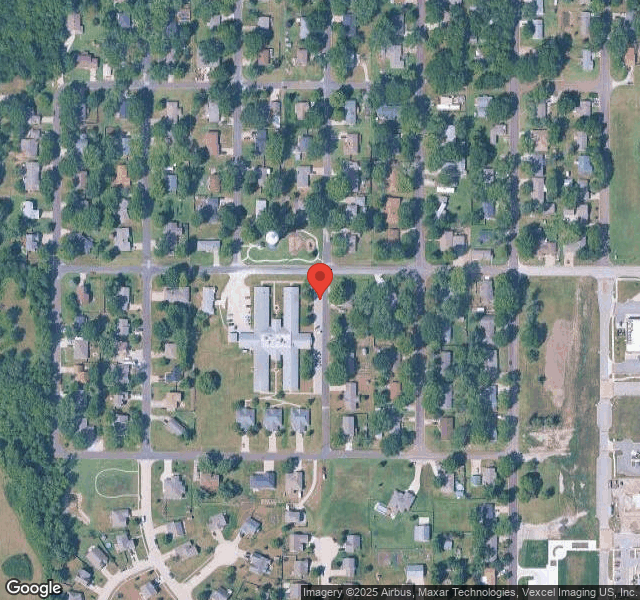
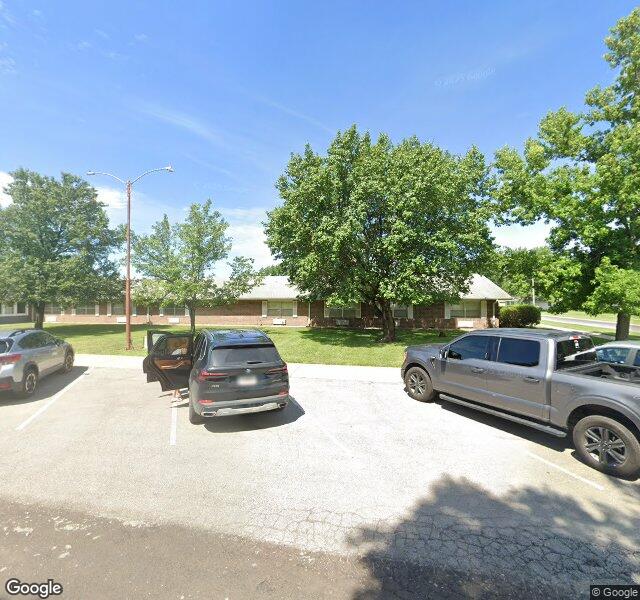
MEDICALODGES EUDORA

1415 MAPLE STREET, EUDORA, KS 66025 (785) 542-2176
For profit - Corporation 65 Beds MEDICALODGES, INC. Data: November 2025 1 Immediate Jeopardy citation
Trust Grade
3/100
#264 of 295 in KS
Last Inspection: August 2024

Within standard 12-15 month inspection cycle. Federal law requires annual inspections.

Overview

Medicalodges Eudora has a Trust Grade of F, which indicates significant concerns about the quality of care provided. Ranking #264 out of 295 facilities in Kansas and #5 out of 5 in Douglas County, it is situated in the bottom half of both state and local rankings. Although the facility shows an improving trend, dropping from 21 issues in 2024 to just 1 in 2025, there are still serious weaknesses, including a concerning staffing turnover rate of 64%, which is higher than the state average. Notably, the facility has no fines on record, suggesting some compliance, but there have been critical incidents, such as staff taking humiliating photos of residents without consent and failing to provide adequate care for residents with pressure injuries. Overall, while there are some strengths, families should be aware of the serious issues that have been reported.

Trust Score
F
3/100
In Kansas
#264/295
Bottom 11%
Safety Record
High Risk
Review needed
Inspections
Getting Better
21 → 1 violations
Staff Stability
⚠ Watch
64% turnover. Above average. Higher turnover means staff may not know residents' routines.
Penalties
✓ Good
No fines on record. Clean compliance history, better than most Kansas facilities.
Skilled Nurses
○ Average
Each resident gets 32 minutes of Registered Nurse (RN) attention daily — about average for Kansas. RNs are the most trained staff who monitor for health changes.
Violations
⚠ Watch
54 deficiencies on record. Higher than average. Multiple issues found across inspections.
★☆☆☆☆
1.0
Overall Rating
★★★☆☆
3.0
Staff Levels
★★★☆☆
3.0
Care Quality
★☆☆☆☆
1.0
Inspection Score
Stable
2024: 21 issues
2025: 1 issues

The Good

  • Full Sprinkler Coverage · Fire safety systems throughout facility
  • No fines on record

Facility shows strength in fire safety.

The Bad

1-Star Overall Rating

Below Kansas average (2.9)

Significant quality concerns identified by CMS

Staff Turnover: 64%

17pts above Kansas avg (46%)

Frequent staff changes - ask about care continuity

Chain: MEDICALODGES, INC.

Part of a multi-facility chain

Ask about local staffing decisions and management

Staff turnover is elevated (64%)

16 points above Kansas average of 48%

The Ugly 54 deficiencies on record

1 life-threatening 1 actual harm
Jul 2025 1 deficiency 1 IJ
CRITICAL (J) 📢 Someone Reported This

A family member, employee, or ombudsman was alarmed enough to file a formal complaint

Immediate Jeopardy (IJ) - the most serious Medicare violation

Free from Abuse/Neglect (Tag F0600)

Someone could have died · This affected 1 resident

**NOTE- TERMS IN BRACKETS HAVE BEEN EDITED TO PROTECT CONFIDENTIALITY** The facility identified a census of 45 residents, with three residents reviewed for abuse. Based on record review, observations,...

Read full inspector narrative →
**NOTE- TERMS IN BRACKETS HAVE BEEN EDITED TO PROTECT CONFIDENTIALITY** The facility identified a census of 45 residents, with three residents reviewed for abuse. Based on record review, observations, and interviews, the facility failed to prevent the mental abuse of cognitively impaired and dependent residents, Residents (R) 2, R3, and R4. In May 2025, Hospitality Aide P took demeaning and humiliating photos of the residents in compromising positions, without their consent, knowledge, or permission. Hospitality Aide P kept the images on her personal cell phone and later texted them to at least one other staff member. It is unknown if Hospitality Aide P distributed the images beyond this incident. This deficient practice violated the rights of R2, R3, and R4 and placed the residents in immediate jeopardy, based on reasonable person concept, for the negative psychosocial impact of fear, humiliation, privacy violation, and dehumanization.Findings included:- R2's Annual Minimum Data Set (MDS) dated [DATE] did not record a Brief Interview for Mental Status (BIMS) score. However, the facility indicated in a facility incident (FRI #6430) that the resident had a BIMS of 7, which indicated R2 had severely impaired cognition. The MDS documented R2 was 5 feet 3 inches in height and weighed 118 pounds (Lbs.). R2 was assessed to be incontinent of bowel and bladder, had functional impairment on one side, ambulated with the use of a wheelchair, and was dependent on staff for all activities of daily living (ADL) except for eating, which required cueing and encouragement. Facility Reported Incident number 6430 documented Administrative Staff A received three separate emailed photographic images on 07/04/25 at 08:15 AM from Certified Nurse Aide (CNA) M, a former employee. Administrative Staff A identified R2, R3, and R4 as residents in the photos. The images depicted R2 lying in bed on the left side and unclothed from the waist down. The image of R3 depicted the resident lying in bed, with her head tilted to the side. The image of R4 revealed the resident lying on her back while CNA O stood on and at the head of R4s bed, using a draw sheet to assist the resident up in bed. The report documented the facility notified law enforcement, began an investigation, and implemented an immediate plan of correction. The facility investigation documented substantiated abuse, based on the photographs received, the reports provided, and the involved residents' inability to give consent. On 07/16/25, a review of the photographs depicted the following:R2 lying in bed on her left side, seemingly sleeping, wearing a flannel-type nightgown, to the waist. R2's legs were retracted in a fetal-like position, and R2's right hip and legs were exposed and visible. R2's face was evident in the photo.R3 lying in bed on her right side, from the mid chest up, head tilted to the side, dressed and seemingly sleeping. The resident's face was evident in the photo.R4 lying on her back while CNA O stood on and at the head of R4's bed, using a draw sheet to assist the resident up bed. The photograph showed the resident from the waist up, wearing a blouse, and the lower left leg was exposed. The residents' alertness could not be determined; however, R4's face was visible, as well as CNA O's entire body. The facility investigation did not contain CNA M's Witness Statement (former employee). The 07/04/25 unnotarized Witness Statement from Hospitality Aide P documented, Hospitality Aide P sent pictures to CNA M (her relative) after she received the photos of residents from CNA M. Hospitality Aide P stated she did not know photographs were not allowed at that time. Hospitality Aide P stated she would not have taken a picture of a resident's face. The 07/04/25 unnotarized Witness Statement from CNA/Certified Medication Aide (CMA) O documented the pictures were taken. CNA/CMA O asked for the photographs to be deleted and thought it was taken care of. CNA/CMA O further stated she should have reported. Review of the Electronic Medical Record revealed all three residents were cognitively impaired and dependent on staff for cares.R2's Annual Minimum Data Set (MDS) dated [DATE] did not record a Brief Interview for Mental Status (BIMS) score. [However, the facility indicated in a facility incident (FRI #6430) that the resident had a BIMS of 7, which indicated R2 had severely impaired cognition]. The MDS documented R2 was five feet three inches tall, weighed 118 pounds lbs., was incontinent of bowel and bladder, had functional impairment on one side, ambulated with the use of a wheelchair, and was dependent on staff for all activities of daily living (ADL) except for eating.R3's Quarterly Minimum Data Set (MDS) dated [DATE] recorded a BIMS score of zero, which indicated severely impaired cognition. The MDS documented R3 was five feet tall, weighed 109 pounds (lbs.), was incontinent of bowel and bladder, had functional impairment on both sides, ambulated with the use of a wheelchair, and was dependent on staff for all activities of daily living (ADL).R4's Quarterly Minimum Data Set (MDS) dated [DATE] recorded a BIMS score of zero, which indicated severely impaired cognition. The MDS documented R4 was five feet six inches tall, weighed 174 lbs., was frequently incontinent of bowel and bladder, had functional impairment on one side, ambulated with the use of a wheelchair, and was dependent on staff for most activities of daily living (ADL). Observation on 07/16/25 at 01:32 PM revealed R2 laid on her right side in a low bed with a fall mat next to the bed. R2 was alert to verbal and answered yes/no questions. R2 did not know or remember being photographed, and stated she was doing ok.On 07/16/25 at 11:30 AM, Administrative Nurse E stated she was relatively new to the facility but was aware of the facility's reported incident involving R2, R3, and R4, regarding photographs taken. Administrative Nurse E acknowledged the inappropriate behaviors of former staff and noted immediate in-service regarding abuse, neglect, and exploitation of residents and the violation of photographing and or recording residents in any way. Administrative Nurse E stated the facility required each staff member to read and sign the facility policy on 07/04/25 and could return until they completed the task. During a telephone interview on 07/17/25 at 12:30 PM, Administrative Staff A stated she received the photos from a former employee, CNA M, who was related to Hospitality Aide P. According to CNA M, Hospitality Aide P took the photos sometime in May 2025. According to Hospitality Aide P, she admitted to taking photographs of residents, only after receiving photographs from CNA M. Both staff members stated they knew of the pictures. Hospitality Aide P said she sent pictures of the residents to her relative (CNA M) because her sister had sent pictures of the residents to her. Hospitality Aide P said she did not know it was not allowed. Neither former staff member would say why they took the photographs of the residents. Administrative Staff A stated it was reported CNA M and Hospitality Aide P were arguing. Administrator A stated that the staff involved were immediately suspended and eventually terminated. Law Enforcement came out on July 4th and were unsure of criminal charges at the time, but returned stating there may be criminal charges, and the facility submitted all the information related to the incident. Administrative Staff A stated the facility notified the State Agency and the resident's physicians, and Administrative Staff A met with the resident's family's responsible parties in person. Administrative Staff A noted R2, R3, and R4 were assessed for injuries, with none found. Additionally, alert and oriented residents were interviewed and stated they had not been photographed. Administrative Staff A stated the Hospitality Aide P should not have been in a resident's room during personal cares.The facility's Abuse, Neglect, and Exploitation Policy (ANE), revised in October 2022, documented the resident has the right to be free from verbal, sexual, physical, and mental abuse and involuntary seclusion. It is the facility's Policy to treat each resident with respect, kindness, dignity, and care, to keep them free from abuse and neglect, and to take swift and immediate action to adjudicate alleged resident abuse and neglect. Section 18.4 Of this policy, titled, social media, Networking and Blogging documented: The use of recording devices in all of our facilities is restricted as we are required to maintain, confidentiality for patients and employees, even incidental or casual use of recording devices is prohibited due to the potential violation of personal rights, Personal health information or the disclosure of proprietary information. Currently, only Administrators and Regional [NAME] Presidents are authorized to take pictures, video, or create any type of recording.The IJ template was given to Administrative Staff A on 07/16/25 at 06:35 PM.The immediate jeopardy was removed on 07/04/25 when the facility implemented corrective actions as follows, which were completed on 07/09/25:The facility provided ANE and cell phone usage policy training to all onsite staff on 07/04/25, completed by 07/09/25 for all staff, and staff were not permitted to work their next shift without having the re-education.Due to the corrective action completed before the onsite survey, the citation was deemed past noncompliance at a J scope and severity.
Aug 2024 21 deficiencies
CONCERN (D)

Potential for Harm - no one hurt, but risky conditions existed

Resident Rights (Tag F0550)

Could have caused harm · This affected 1 resident

**NOTE- TERMS IN BRACKETS HAVE BEEN EDITED TO PROTECT CONFIDENTIALITY** The facility identified a census of 49 residents. The sample included 14 residents with one resident reviewed for dignity. Based...

Read full inspector narrative →
**NOTE- TERMS IN BRACKETS HAVE BEEN EDITED TO PROTECT CONFIDENTIALITY** The facility identified a census of 49 residents. The sample included 14 residents with one resident reviewed for dignity. Based on observation, record review, and interviews, the facility failed to ensure Resident (R) 4's urinary catheter (a flexible tube inserted through a narrow opening into a body cavity, particularly the bladder, for removing fluid) drainage bag was placed in a privacy bag. This deficient practice placed R4 at risk for impaired dignity and decreased psychosocial well-being. Findings included: - R4's Electronic Medical Record (EMR) from the Diagnoses tab documented diagnoses of obstructive and reflux uropathy (a disorder of the urinary tract that occurs due to obstructed urinary flow and can be either structural or functional), muscle weakness, epilepsy (brain disorder characterized by repeated seizures), transient ischemic attack (TIA- temporary episode of inadequate blood supply to the brain), depressive disorder (a mood disorder that causes a persistent feeling of sadness and loss of interest), anxiety (mental or emotional reaction characterized by apprehension, uncertainty and irrational fear), and dysplasia (abnormal development of tissues and organs). The Quarterly Minimum Data Set (MDS) dated [DATE] documented a Brief Interview of Mental Status (BIMS) score of 14 which indicated intact cognition. The MDS documented that R4 had an indwelling catheter. The MDS documented R4 required staff assistance with care related to his catheter. R4's Urinary Incontinence and Indwell Catheter Care Area Assessment (CAA) dated 04/13/24 documented R4 had urinary incontinence and indwelling catheter. The CAA documented R4 needed nursing support for toileting hygiene and transfers. R4's Care Plan dated 04/10/23 documented R4 had a catheter, 22 French with a 10 milliliter (ml) balloon. The plan of care documented R4 would be infection free related to the catheter use; staff were to change the catheter bag weekly or if the bag was leaking. The plan directed staff to monitor R4's output from the catheter every shift, and the staff was to ensure R4 had a privacy bag when his catheter was attached to his walker. On 08/12/24 at 08:33 AM, R4 sat at the breakfast table with his peer. R4 had yellow urine visible in his catheter bag. R4 did not have a dignity bag covering his catheter bag. On 08/13/24 at 01:17 PM, R4 sat in the commons area playing Yahtzee with his peers. R4's catheter bag was half full of dark yellow urine. R4 did not have a dignity bag covering his catheter bag. On 08/14/24 at 08:00 AM, Certified Medication Aide (CMA) T stated all nursing staff should watch to ensure R4's catheter was always in a dignity bag. On 08/14/24 at 08:05 AM, Licensed Nurse (LN) H stated nursing staff should be more aware and remind R4 to put his catheter bag inside a dignity bag. LN H stated the nursing staff was responsible for ensuring R4's catheter bag was covered appropriately. On 08/14/24 at 12:58 PM Administrative Nurse D stated if a resident had a catheter bag, staff should always place a dignity bag over it when the resident was outside their room. Administrative Nurse D stated all nursing staff were responsible for ensuring a dignity bag was in place. The facility did not provide a policy for dignity, the facility uses the standard of practice. The facility failed to ensure R4's urinary catheter drainage bag was placed in a privacy bag. This deficient practice placed R4 at risk for impaired dignity and decreased psychosocial well-being.
CONCERN (D)

Potential for Harm - no one hurt, but risky conditions existed

Deficiency F0558 (Tag F0558)

Could have caused harm · This affected 1 resident

**NOTE- TERMS IN BRACKETS HAVE BEEN EDITED TO PROTECT CONFIDENTIALITY** The facility identified a census of 49 residents. The sample included 14 residents. One resident was sampled for reasonable acco...

Read full inspector narrative →
**NOTE- TERMS IN BRACKETS HAVE BEEN EDITED TO PROTECT CONFIDENTIALITY** The facility identified a census of 49 residents. The sample included 14 residents. One resident was sampled for reasonable accommodations of resident needs and preferences. Based on observation, record review, and interview, the facility failed to ensure Resident (R)24's call light was within her reach. This deficient practice left R24 at risk for unmet care needs due to the inability to call for staff assistance. Findings included: - R24's Electronic Medical Record (EMR) from the Diagnoses tab documented diagnoses of Parkinson's disease (a slowly progressive neurologic disorder characterized by resting tremor, rolling of the fingers, masklike faces, shuffling gait, muscle rigidity, and weakness), depression (abnormal emotional state characterized by exaggerated feelings of sadness, worthlessness, and emptiness), tardive dyskinesia (abnormal condition characterized by involuntary repetitive movements of the muscles of the face, limbs and trunk), schizophrenia (mental disorder characterized by gross distortion of reality, disturbances of language and communication and fragmentation of thought), muscle weakness, and dysphagia (swallowing difficulty). The Quarterly Minimum Data Set (MDS) dated [DATE] documented a Brief Interview of Mental Status (BIMS) score of zero which indicated severely impaired cognition, but no staff interview was completed. The MDS documented R24 was dependent on staff for all activities of daily living. The MDS documented R24 was incontinent of bowel and bladder, during the observation period. R24's Care Plan dated 02/18/22 documented R24 was at risk for falls due to psychotropic (alters mood or thoughts) drug use and episodes of confusion. R24's plan of care directed staff to place a pancake call light bedside her on the bed. On 08/13/24 at 07:36 AM R24 lay in bed. R24's pancake call light was clipped to the privacy curtain at the bottom of her bed, and a push call light was placed at R24's feet. R24 was unable to reach a call light. On 08/14/24 at 09:05 AM R24 lay in bed. Her pancake call light was clipped to the privacy curtain at the bottom of R24's bed, a push-button call light was draped over her lower legs out of reach. On 08/14/24 at 09:05 AM Licensed Nurse (LN) G stated the call light should never be clipped to the privacy curtain; the light should always be placed where the resident could reach her light. LN G placed R24's light on her chest where R24 could reach the call light. On 08/14/24 at 12:20 PM, Certified Nurses Aide (CMA) T stated the residents' call lights should always be placed within the residents' reach. On 08/14/24 at 12:58 PM Administrative Nurse D stated call lights should be placed within the residents' reach always. The facility did not provide an accommodation of needs policy, the facility uses standard of practice. The facility failed to ensure R24's call light was within her reach. This deficient practice left R24 at risk for unmet care needs.
CONCERN (D)

Potential for Harm - no one hurt, but risky conditions existed

Deficiency F0604 (Tag F0604)

Could have caused harm · This affected 1 resident

**NOTE- TERMS IN BRACKETS HAVE BEEN EDITED TO PROTECT CONFIDENTIALITY** The facility had a census of 48 residents. The sample included 14 residents, with one resident reviewed for physical restraint. ...

Read full inspector narrative →
**NOTE- TERMS IN BRACKETS HAVE BEEN EDITED TO PROTECT CONFIDENTIALITY** The facility had a census of 48 residents. The sample included 14 residents, with one resident reviewed for physical restraint. Based on observation, record review, and interview, the facility failed to ensure Resident (R) 42 was free of physical restraints when staff placed R42 in a recliner, and raised the footrest though R42 was unable to lower the footrest on her own. This placed the resident in a supine position in the recliner and impeded R42's freedom of movement and mobility. This deficient practice placed R42 at risk for impaired mobility, impaired resident rights and autonomy, and increased risk for restraint-related accidents. Findings Included: - R42's Electronic Medical Record (EMR) from the Diagnoses tab documented diagnoses of [NAME]-[NAME] syndrome (a genetic disorder usually caused by deletion of a part of chromosome 15 passed down by the father), cognitive-communication deficit (trouble reasoning and making decisions while comminating), and aphasia (a condition with disordered or absent language function). The Annual Minimum Data Set (MDS) dated [DATE] documented a Brief Interview of Mental Status (BIMS) score of zero which indicated severely impaired cognition. The MDS documented R42 needed substantial to maximal assistance, where the helper did more than half of the effort when going from a sitting to a standing position. R42's Cognitive Loss/ Care Area Assessment (CAA) dated 06/27/24 documented R24 was memory impaired and was severely impaired in making decisions related to her disorder. The CAA documented that the nursing staff were to anticipate her needs. R42's CAA documented she was able to understand others and rarely others can understand her. R42's Care Plan date 06/29/23 documented R42 was at risk for falls related to cognitive developmental delay. The plan of care dated 10/29/23 documented that when R42 sat in the living room, do not put her feet up because R42 preferred to be able to walk around and sit when she wanted to. On 08/12/24 at 07:24 AM, R42 sat in a reclined chair with her feet elevated in the living room. R42 was holding a red stuffed animal. R42 was slid down on the recliner and thus laying almost flat. On 08/13/24 at 09:17 AM R42 sat in a reclined chair with her feet elevated in the living room, R42 was chewing on a red stuffed animal. R42 was wiggling back and forth in the reclined chair. On 08/13/24 at 12:19 PM, R42 sat in the reclined chair, with her feet elevated in the living room. R42 was wiggling herself down in the reclined chair. On 08/13/24 at 12:32 PM Certified Medication Aide (CMA) R stated she does know what the plan of care for R42 states, and all nursing staff were able to see the [NAME] (a nursing tool that gives a brief overview of the care needs of each resident). CMA R stated she didn't know if R42 liked her feet up. She said when R42's feet were elevated, R42 was unable to get out of the recliner, unless she really tried. On 08/14/24 at 09:15 PM Licensed Nurse (LN) G stated R42 liked to walk around. LN G stated R42 should not have her feet elevated. LN G stated if R42's feet were elevated, she could not get up and that was a restraint since R42 would not be able to put the footrest down and get out of the reclined chair. On 08/14/24 at 12:58 PM Administrative Nurse D stated she did not believe R42 would be able to get out of a reclined chair by herself if the chair was reclined and the footrest were elevated. Administrative Nurse D stated the facility would educate staff on following R42's plan of care. The facility's Restraint policy documents residents have the right to be free from physical restraints imposed for the purpose of discipline or convenience. The facility failed to ensure R42 was free of physical restraints. This deficient practice placed R42 at risk for impaired mobility, impaired resident rights and autonomy, and increased risk for restraint-related accidents.
CONCERN (D)

Potential for Harm - no one hurt, but risky conditions existed

Transfer Notice (Tag F0623)

Could have caused harm · This affected 1 resident

The facility identified a census of 49 residents. The sample included 14 residents with one resident sampled for hospitalization Based on record review and interview the facility failed to provide a w...

Read full inspector narrative →
The facility identified a census of 49 residents. The sample included 14 residents with one resident sampled for hospitalization Based on record review and interview the facility failed to provide a written notice of transfer as soon as practicable to Resident (R) 50 or their representative for their facility-initiated transfers. This deficient practice had the risk of miscommunication between the facility and resident/family and possible missed opportunity for healthcare service for R50. Findings included: - The Electronic Medical Record (EMR) for R50 documented diagnoses of falls, cerebral infarction (stroke - sudden death of brain cells due to lack of oxygen caused by impaired blood flow to the brain by blockage or rupture of an artery to the brain), atrial fibrillation (rapid, irregular heartbeat), and heart failure. R50's admission Minimum Data Set (MDS) had yet not been completed. R50's Discharge MDS dated 07/07/24 documented she had an unplanned discharge to a short-term acute hospital with a return not anticipated. R50's Care Plan initiated on 07/02/24 directed staff that R50 planned to discharge home after the completion of her therapy services. R50 was working with therapy to build her strength and ability to care for herself in the community. Staff was directed to assist with the coordination of services in the community. R50's EMR documented a Nurse's Note dated 07/07/24 at 08:34 AM that R50's son returned a phone call regarding R50 being sent to the emergency room due to a change in vital signs with distress and having delusions (untrue persistent belief or perception held by a person although evidence shows it was untrue). R50's EMR lacked documentation a written notification of transfer was provided to R50 or her representative. Upon request, the facility was unable to provide evidence the written notification of transfer or discharge for R50's facility-initiated transfer was provided. On 08/14/24 at 12:38 PM, Licensed Nurse (LN) G stated she normally just called the family member to notify them when a resident was being sent out to the hospital. LN G stated as far as she knew, a formal written notification was never mailed to a resident's family representative. The facility did not have a policy regarding written notification of transfer and or discharge. The facility failed to provide written notice of transfer as soon as practicable to R50 or their representative for their facility-initiated transfer. This deficient practice had the risk of miscommunication between the facility and resident/family and possible missed opportunity for healthcare service for R50.
CONCERN (D)

Potential for Harm - no one hurt, but risky conditions existed

Deficiency F0625 (Tag F0625)

Could have caused harm · This affected 1 resident

The facility identified a census of 49 residents. The sample included 14 residents with one resident sampled for hospitalization. Based on observations, record review, and interview the facility faile...

Read full inspector narrative →
The facility identified a census of 49 residents. The sample included 14 residents with one resident sampled for hospitalization. Based on observations, record review, and interview the facility failed to provide a bed hold notice to Resident (R) 50 or their representative when R50 transferred to the hospital. This deficient practice placed R50 at risk for impaired ability to return to the facility or the same room. Findings included: - The Electronic Medical Record (EMR) for R50 documented diagnoses of falls, cerebral infarction (stroke - sudden death of brain cells due to lack of oxygen caused by impaired blood flow to the brain by blockage or rupture of an artery to the brain), atrial fibrillation (rapid, irregular heartbeat), and heart failure. R50's admission Minimum Data Set (MDS) had yet not been completed. R50's Discharge MDS dated 07/07/24 documented she had an unplanned discharge to a short-term acute hospital with a return not anticipated. R50's Care Plan initiated on 07/02/24 directed staff that R50 planned to discharge home after the completion of her therapy services. R50 was working with therapy to build her strength and ability to care for herself in the community. Staff was directed to assist with the coordination of services in the community. R50's EMR documented a Nurse's Note dated 07/07/24 at 08:34 AM that R50's son returned a phone call regarding R50 being sent to the emergency room due to a change in vital signs with distress and having delusions (untrue persistent belief or perception held by a person although evidence shows it was untrue). R50's EMR lacked documentation of a bed hold notice was provided to R50 or her representative. Upon request, the facility was unable to provide evidence the bed hold for R50's facility-initiated transfer was provided. On 08/14/24 at 12:38 PM Licensed Nurse (LN) G stated she normally would just call the family member to notify them when a resident was being sent out to the hospital. LN G stated a bed hold was normally completed at the time the resident was sent out unless it was on an emergency basis. On 08/14/24 at 01:18 PM Administrative Nurse D stated a bed hold was expected to be completed by a nurse upon a resident being sent out of the facility. Administrative Nurse D stated social services would typically follow up on the bed hold to make sure it had been completed. The facility did not have a policy regarding bed hold notification. The facility failed to provide a bed hold notice to R50 and her representative when R50 transferred to the hospital. This deficient practice placed R50 at risk for impaired ability to return to the facility or his same room.
CONCERN (D)

Potential for Harm - no one hurt, but risky conditions existed

Deficiency F0657 (Tag F0657)

Could have caused harm · This affected 1 resident

**NOTE- TERMS IN BRACKETS HAVE BEEN EDITED TO PROTECT CONFIDENTIALITY** The facility identified a census of 49 residents. The sample included 14 residents sampled for care plan revision. Based on obse...

Read full inspector narrative →
**NOTE- TERMS IN BRACKETS HAVE BEEN EDITED TO PROTECT CONFIDENTIALITY** The facility identified a census of 49 residents. The sample included 14 residents sampled for care plan revision. Based on observation, record review, and interview, the facility failed to ensure staff revised Resident (R)151's Care Plan with staff direction for safe transfers. The facility failed to ensure staff revised R8's plan of care with interventions after a fall. This placed R151 and R8 at risk for impaired care due to uncommunicated care needs. Findings included: - R151's Electronic Medical Record (EMR) documented diagnoses of dementia (a progressive mental disorder characterized by failing memory, and confusion), chronic obstructive pulmonary disease (COPD- a progressive and irreversible condition characterized by diminished lung capacity and difficulty or discomfort in breathing), and intervertebral disc degeneration (the breakdown [degeneration] of one or more of the discs that separate the bones of the spine). R151's admission Minimum Data Set (MDS) dated [DATE] documented she had both long and short-term memory loss. R151 required substantial to maximal staff assistance for transfers, mobility, toileting, and bathing. R151 utilized a wheelchair to assist with mobility. R151's Fall Care Area Assessment (CAA) dated 07/25/24 documented she had falls prior to admission and one fall after admission to the facility with a minor injury. R151 was unable to independently come to a standing position and required hands-on assistance to move from place to place. R151's Care Plan documented an intervention dated 07/15/24 that directed staff she required total assistance of two staff for transfers. R151's plan revised on 07/22/24 documented an intervention for transfers directing staff she needed total assistance of two staff with a Hoyer lift (total body mechanical lift). R151 did not ambulate and required staff to push her wheelchair. R151's Mechanical Lift Use Assessment dated 07/22/24 documented she required supervision to limited physical assistance to fully bear weight but required substantial to maximal assistance to go from sitting to standing position. R151's Physical Therapy Therapy Progress Report documented she started care on 07/26/24 to increase the ability to stand supported, complete sit-to-stand transfers, stand pivot transfers, and increase bilateral lower extremity strength. On 08/13/24 at 02:35 PM R151 sat in a recliner in the sitting area near the 100/200 hall nurse's desk. Certified Medication Aide (CMA) S and CMA T came to assist R151 from the recliner to her wheelchair. CMA T placed a gait belt around R151's waist. CMA S and CMA T told R151 they would count to three and she would stand with their assistance. R151 was able to go from sitting position to standing and pivoting to be able to be seated in her wheelchair without difficulty. On 08/13/24 at 02:40 PM, CMA S stated that she normally worked on R151's hall and had assisted her many times with her transfers. CMA S stated that she had never been aware that R151 required the use of a Hoyer lift for her transfers. CMA S stated she did not have access to the care plans, but the aides do have the [NAME] (a nursing tool that gives a brief overview of the care needs of each resident) that documented the required assistance a resident required. On 08/13/24 at 02:42 PM, Licensed Nurse (LN) G stated R151 had never used a Hoyer lift for her transfers. LN G stated R151 has always been a two-person transfer. LN G stated that the Hoyer lift transfer might have been from the previous facility R151 was at but could not say for certain. LN G stated that therapy had been working with R151 to build up her leg strength to be able to transfer better. On 08/14/24 at 12:58 PM Administrative Nurse D stated R151 had not been a Hoyer lift transfer and was not sure why her care plan said that. Administrative Nurse D stated R151 had been seen by physical therapy since her admission and had been working to improve her strength and ability to transfer. Administrative Nurse D stated she was not sure why the care plan had not been revised to reflect that R151 was a two-person assist with transfers and the intervention for the Hoyer lift was somehow overlooked by staff. The facility's Electronic Care Plan policy revised in December 2020 documented the resident's person-centered plan of care was an active working document that reflected the care needs and resident's voice. The MDS coordinator was to initiate a review of the plan of care. Care plan review and revisions were to be completed with the Wellness program. The interdisciplinary team (IDT) was to review, revise, and sign the person-centered plan of care related to their discipline. The MDS Coordinator was to complete the review of the care plan. The facility failed to ensure staff revised R151's Care Plan with the appropriate staff direction for safe transfers. This placed R151 at risk for impaired care due to uncommunicated care needs.
CONCERN (D)

Potential for Harm - no one hurt, but risky conditions existed

Deficiency F0688 (Tag F0688)

Could have caused harm · This affected 1 resident

**NOTE- TERMS IN BRACKETS HAVE BEEN EDITED TO PROTECT CONFIDENTIALITY** The facility identified a census of 49 residents. The sample included 14 residents with three residents reviewed for positioning...

Read full inspector narrative →
**NOTE- TERMS IN BRACKETS HAVE BEEN EDITED TO PROTECT CONFIDENTIALITY** The facility identified a census of 49 residents. The sample included 14 residents with three residents reviewed for positioning. Based on observation, record review, and interview, the facility failed to ensure Resident (R) 151 had interventions in place to avoid a further decrease in range of motion (ROM). This placed the resident at risk for decreased mobility and impaired quality of life. Findings included: - R151's Electronic Medical Record (EMR) documented diagnoses of dementia (a progressive mental disorder characterized by failing memory, and confusion), chronic obstructive pulmonary disease (COPD- a progressive and irreversible condition characterized by diminished lung capacity and difficulty or discomfort in breathing), and intervertebral disc degeneration (the breakdown [degeneration] of one or more of the discs that separate the bones of the spine). R151's admission Minimum Data Set (MDS) dated [DATE] documented she had both long and short-term memory loss. R151 required substantial to maximal staff assistance for activities of daily living (ADLs) such as transfers, mobility, toileting, and bathing. R151 utilized a wheelchair to assist with mobility. R151's Fall Care Area Assessment (CAA) dated 07/25/24 documented she had falls prior to admission and one fall after admission to the facility with a minor injury. R151 was unable to independently come to a standing position and required hands-on assistance to move from place to place. R151's Care Plan documented an intervention dated 07/15/24 that directed staff she required total assistance of two staff for transfers. R151 did not ambulate and required staff to push her wheelchair. R151 used a footboard to help keep her hips and knees bent while she sat in her wheelchair to prevent contractures (abnormal permanent fixation of a joint or muscle). R151 required two-person staff assistance with positioning. R151's Care Plan lacked staff direction to ensure R15's upper body, head, and arms were positioned to avoid further decline or decrease in ROM. A Therapy Progress Report from Occupational Therapy (OT) dated 08/13/24 documented R151's wheelchair met the positioning needs. R151 had impairments in joint mobility and integrity deficits as well as decreased awareness. R151 needed training and caregiver training for ongoing assessment of self-feeding, wheelchair positioning, and sensory techniques for alertness at meals. R151 required continued OT services in order to design and implement a restorative nursing program in order to enhance her quality of life by improving the ability to increase her nutritional intake, improve functional use of upper extremities during ADLs, and improve functional use of lower extremities during ADLs. On 08/12/24 at 09:29 AM R151 sat in her wheelchair near the nurse's desk. Her head was slumped forward with her chin nearly touching her chest. On 08/13/24 at 07:09 AM R151 sat in her wheelchair in the dining room. R151's head hovered an inch or two above the table and her arms were dangling to the side of her wheelchair with her hands almost touching the floor. On 08/13/24 at 07:23 AM R151 sat in her wheelchair at the dining table with her head resting the table. R151's arms dangled to the sides of the wheelchair. Staff addressed R151 and she raised her head; a staff member placed a clothing protector on her placed a blanket around her arms and then positioned R151's arms inside the wheelchair. On 08/13/24 at 02:12 PM, R151 was reclined in a recliner in the hallway across from the nurse's desk. R151 had a blanket covering her lap and legs. R151's head was raised from the pillow behind her head and her chin was close to her chest. On 08/14/24 at 12:24 PM Certified Medication Aide (CMA) T stated R151 was difficult to redirect at times for her positioning at the dining table. CMA T stated should not remain at the dining table for a long period of time with her head resting on the table. CMA T stated that at meals staff was busy getting the other residents to the assisted dining room and would do their best to make sure R151 was not resting her head on the table. CMA T stated R151 had a wedge that used to be put in her wheelchair for her arms to rest on but the CMA did not know what had happened to them. On 08/14/24 at 12:38 PM, Licensed Nurse (LN) G stated R151 had been working with therapies to gain her strength back. LN G stated she was not aware of interventions for R151 specific to repositioning her at the dining table or for staff to redirect R151 to reposition her head when she had been resting her head on the table. LN G stated she would maybe recommend the addition of a neck pillow. On 08/14/24 at 12:58 PM Administrative Nurse D stated the facility currently did not have a restorative nurse aide. Administrative Nurse D stated R151 had been working with the therapy department to work on her strength after having a fall. Administrative Nurse D stated she would have staff pay closer attention to R151 and speak with staff about assisting R151 in her head and neck positioning while in her wheelchair and in the recliner to make sure her positioning was correct. The Restorative Program Policy & Procedure last revised in December 2022 documented that the purpose and mission of the restorative program were to provide ongoing assessment of residents' functional abilities related to optimal physical functioning, mental, and psychosocial well-being. To identify a resident's potential for their highest practical level of physical functioning, mental abilities, and psychosocial well-being. Developing a restorative nursing program that was driven and specific and to aid in the design of programs that enabled each resident to maintain their highest level of functioning in the areas of physical, mental, and psychosocial well-being. Develop restorative nursing programs that motivate residents and facilitate each resident to perform at their best ability to function. Train the staff so that each staff member understands the techniques used to facilitate each resident performance at his or her highest level. Educate the staff so that each staff member understands the importance of enabling each resident to perform at his or her highest level. Assess the inherent strengths and weaknesses of their existing restorative nursing processes and performance, taking appropriate actions for continuous quality improvement. The facility failed to ensure that staff had interventions in place for staff direction regarding R151's ROM and positioning to avoid further decreased ROM and functionality. This placed R151 at risk for further decline and decreased ROM.
CONCERN (D)

Potential for Harm - no one hurt, but risky conditions existed

Accident Prevention (Tag F0689)

Could have caused harm · This affected 1 resident

**NOTE- TERMS IN BRACKETS HAVE BEEN EDITED TO PROTECT CONFIDENTIALITY** The facility identified a census of 49 residents. The sample included 14 residents with five residents reviewed for accidents. B...

Read full inspector narrative →
**NOTE- TERMS IN BRACKETS HAVE BEEN EDITED TO PROTECT CONFIDENTIALITY** The facility identified a census of 49 residents. The sample included 14 residents with five residents reviewed for accidents. Based on observation, record review, and interviews, the facility failed to ensure meaningful interventions were implemented for Resident (R) 8 after falls. This deficient practice placed R8 at risk for future falls and possible injuries. Findings included: - R8's Electronic Medical Record (EMR) from the Diagnoses tab documented diagnoses of hemiparesis/hemiplegia (weakness and paralysis on one side of the body) affecting the left non-dominate side), transient ischemic attack (TIA- temporary episode of inadequate blood supply to the brain), cerebral infarction (stroke - the sudden death of brain cells due to lack of oxygen caused by impaired blood flow to the brain by blockage or rupture of an artery to the brain), dementia (a progressive mental disorder characterized by failing memory, confusion), unsteadiness on his feet, muscle weakness, cognitive-communication deficit, repeated falls, impulse disorder, orthostatic hypotension (blood pressure dropping with change of position), depressive disorder (a mood disorder that causes a persistent feeling of sadness and loss of interest), and anxiety (mental or emotional reaction characterized by apprehension, uncertainty and irrational fear). The Quarterly Minimum Data Set (MDS) dated [DATE] documented a Brief Interview of Mental Status (BIMS) score of eight which indicated moderately impaired cognition, The MDS documented R8 had two or more falls since admission with two or more injuries from falls. The MDS documented R8 needed supervision for transfers from a chair. R8's Falls Care Assessment (CAA) dated 03/08/24 documented R8 had impaired gait, mobility, and assistance required with transfers. R8 had a history of falls prior to admission. Risk factors included weakness affecting balance, gait, strength, and muscle endurance. R8's plan of care will be initiated/reviewed to improve or maintain current physical function as it relates to an activity of daily living (ADLs), gait stability, strength, endurance, mobility, decrease fall risk, and minimize injury related to falls. R8's Care Plan dated 04/19/24 documented nursing staff would monitor R8's orthostatic blood pressure twice a day for three days. The plan of care dated 04/30/24 documented the physician had changed R8's antidepressant medication administration time from the hour of sleep (HS) to bedtime. The plan of care dated 05/22/24 documented the physician would review R8's antihypertensive medications. The plan of care dated 06/20/24 documented that the physician decreased R8's mood stabilizer medication. The plan of care documented that staff would place R8 in an area that was visible to staff so he could rest. The plan of care dated 06/26/24 and revised 07/12/24 documented for the falls on 06/23/24/and 06/25/24, staff would do one-hour checks to locate R8 and help prevent injuries from falls or self-harm. The plan of care dated 06/28/24 listed an intervention that the physician was to follow R8's medication management to make changes as needed. The plan of care dated 07/13/24 documented a fall intervention that staff would be hyperaware of R8's location when he was in an impulsive mood or had signs or symptoms of walking without his wheelchair unattended, scooting about in his wheelchair at a high rate of speed, or going in and out of other residents' rooms. Staff would redirect R8 as gently as possible during those periods of time. Staff would offer R8 a peanut butter and jelly sandwich or other snacks. Staff would attempt to keep him in their sight and enlist other staff if available to walk and chat with him. The plan of care dated 07/23/24 documented that staff have R8's recliner fixed or replaced. The plan of care dated 08/04/24 documented that staff would obtain a urinalysis (UA) related to R8's increase in confusion, restlessness, agitation ion, and frequency and urgency of urination. The plan of care dated 07/25/24 and revised on 08/14/24 documented that staff would ensure R8 wore Geri-sleeves (fabric sleeves to prevent skin injury) to prevent injuries to his arms. R8's EMR under the Assessment tab revealed Fall Risk Assessment completed on the following dated: 04/27/24, 05/01/24, 05/22/24, 06/02/24, 06/25/24, 07/13/24, 07/22/24, and 08/03/24 which indicated R8 was a high fall risk. R8's EMR under the Progress Notes tab revealed a Fall Note dated 04/18/24 at 02:35 PM documenting R8 had stood up from his wheelchair and had lost his balance. A Fall Note dated 04/27/24 at 11:30 PM documented R8 reported he had fallen while walking back to bed from the bathroom and hit his right arm on the air conditioner unit. R8's shoes and socks were everywhere. Intervention was R8 would wear Geri-sleeves on both arms and was educated to use his call light when he needed assistance. A Fall Note dated 05/1/24 at 01:47 AM R8 had leaned slowly forward and fell out of his wheelchair and hit his forehead on the floor in the assisted dining room. R8 had only one sock on and no shoes on. The fall intervention was to educate R8 when he was feeling tired. A Nurse's Note dated 05/22/24 at 09:59 AM R 8 was assisted with his ADLs and assisted into bed. Upon return to R8's room, he was found sitting on the floor in front of his recliner. R8 had a sock on his right foot and no shoes on. A Fall Note dated 06/21/24 at 00:12 AM R8 was found on the floor of the assisted doing room on his left side. He did not have his socks or shoes on. Fall intervention was staff would change the environment and position R8 into a recliner. A Fall Note dated 06/25/24 at 12:43 PM R8 attempted to ambulate unassisted and fell onto his right side and hit his head. No fall intervention was noted. A Fall Note dated 07/13/24 at 11:23 PM R8 had transferred himself and refused staff assistance for the transfer. R8 fell to the floor on his right side and complained his forehead hurt. R8 had received a small abrasion and bruising to the right elbow. Fall intervention was staff would educate R8 on the importance of accepting assistance with transfers. A Fall Note dated 07/22/24 at 08:48 AM R8 attempted to transfer himself from the recliner across from the nurse's station, lost his balance, and fell backward to the floor. R8 was unable to lower the footrest of the recliner. No new injuries were noted. He has multiple bruises over his body in various stages of healing. The fall intervention was to get the recliner footrest fixed or to have the recliner removed. A Fall Note dated 08/03/24 at 04:15 AM R8 was found on the floor in the hallway by the nurse's station and he had received a laceration on his left eyebrow. No fall intervention was noted. A Fall Note on 08/3/24 at 07:06 R8 had returned from the emergency room at 03:15 AM and was assisted into his bed, 15 minutes later R8 was found on the floor in front of his dresser, and he had multiple skin tears that bled profusely. The fall intervention was to cover the multiple skin tears with gauze and kerlix. On 08/13/24 at 07:42 AM R8 walked out of his bathroom without assistance. He had a purplish-blue bruise noted above his left eye. R8's wheelchair was next to his bed and his walker was across the room next to the wall. On 08/14/24 at 12:20 PM, Certified Medication Aide (CMA) T stated R8 was a high fall risk. CMA T stated that every staff member was required to fill out a witness statement after each fall. CMA T stated the change would be passed on the all the staff if a new fall intervention was implemented for each resident after their falls. On 08/14 24 at 12:40 PM, Licensed Nurse (LN) G stated R8 was identified as a high fall risk. LN G stated fall risk management would review every fall and determine the root cause of the fall, then ensure an appropriate intervention was in place. LN G stated Geri-sleeves would not be a good fall intervention. LN G stated R8's UA obtained 08/04/24 showed no infection and another intervention should have been implemented. LN G stated the intervention that documented that the physician should always be reviewing R8 medications and making changes when needed. On 08/14/24 at 01:00 PM, Administrative Nurse D stated everyone that was working with the resident on the day of a fall was expected to fill out a witness statement. She stated risk management would review the witness statements, determine the root cause, and implement an intervention. She also stated R8 was a high fall risk. Administrative Nurse D stated Geri-sleeves would be better for a skin preventive measure than a fall intervention. Administrative Nurse D stated the physician should always be monitoring a resident medication and making changes when needed. The facility's Fall Management policy revised 12/2022 documented, that residents are to be assessed in the first four hours of admission using a standardized fall risk assessment to identify individualized resident risk factors. Residents are to be reevaluated quarterly, with each fall, and any significant change. The facility's interdisciplinary team was to review residents with falls weekly. The director of nursing or designee was to be responsible for reviewing resident falls on a routine basis during Clinical Excellence. The resident's plan of care was to address individualized resident focus, goals, and interventions directed towards reducing the resident's risk of injury and potential reoccurrence of falls. The facility failed to ensure meaningful fall interventions were implemented and applied to R8 to prevent future falls. This deficient practice placed R8 at risk for future falls and possible further injuries.
CONCERN (D)

Potential for Harm - no one hurt, but risky conditions existed

Deficiency F0692 (Tag F0692)

Could have caused harm · This affected 1 resident

**NOTE- TERMS IN BRACKETS HAVE BEEN EDITED TO PROTECT CONFIDENTIALITY** - R24's Electronic Medical Record (EMR) from the Diagnoses tab documented diagnoses of Parkinson's disease (a slowly progressive...

Read full inspector narrative →
**NOTE- TERMS IN BRACKETS HAVE BEEN EDITED TO PROTECT CONFIDENTIALITY** - R24's Electronic Medical Record (EMR) from the Diagnoses tab documented diagnoses of Parkinson's disease (a slowly progressive neurologic disorder characterized by resting tremor, rolling of the fingers, masklike faces, shuffling gait, muscle rigidity, and weakness), depression (abnormal emotional state characterized by exaggerated feelings of sadness, worthlessness, and emptiness), tardive dyskinesia (abnormal condition characterized by involuntary repetitive movements of the muscles of the face, limbs and trunk), schizophrenia (mental disorder characterized by gross distortion of reality, disturbances of language and communication and fragmentation of thought), muscle weakness, and dysphagia (swallowing difficulty). The Quarterly Minimum Data Set (MDS) dated [DATE] documented a Brief Interview of Mental Status (BIMS) score of zero which indicated severely impaired cognition, but no staff interview was completed. The MDS documented that R24 had a weight loss of five percent or more in the last month or a loss of ten percent in the last six months, with no physician-prescribed weight loss regimen. The MDS documented R24 was dependent on staff for all activities of daily living, including eating during the observation period. R24's Nutritional Status Care Area Assessment (CAA) dated 01/26/24 documented R24 had a five percent or more weight loss and was on a mechanical soft diet. R24 was to continue a mechanically altered diet with thin liquids, a divided plate, and a cup with a lid. The CAA documented nursing staff would continue to provide R24 with eating, and oral support, and nursing would continue to obtain weights as ordered. R24's Care Plan dated 07/31/24 documented R24 was on a fortified food diet, mechanical soft textured, pureed meat, and all other foods were mechanical soft. R24 needed staff assistance for dining. R24 drank from a cup with a lid and received milk with all meals. R24's plan of care directed staff to give a house supplement two times a day for weight loss; the Registered Dietician (RD) and physician were aware of her weight loss. R24's plan of care dated 02/17/23 documented R24 sat at assisted table, and staff needed to assist R24 with each meal and give her drinks, R24 was no longer able to consistently feed herself. A review of the EMR under the Orders tab revealed physician orders: Fortified food diet, mechanical soft texture, regular consistency, pureed meat, other foods mechanical soft. Staff was to assist with dining, use a cup with a lid, and add milk to all meals, dated 05/23/24. House supplements: give two times a day for weight loss, give 240 millimeters (ml) dated 06/12/24. On 07/27/23 at 10:19 PM a Registered Dietitian Assessment note documented the resident was at risk for alteration in nutrition status. She had a change in her wheelchair, which may contribute to changes in weight status. R24's weight had been maintained for two months but remained a concern. R24 required staff to feed her. The current diet order was mechanical texture, fortified foods, regular consistency, with pureed meat. R24 received a house supplement, 120 ml. twice a day. The note recommended changing the supplement to Boost (a high-calorie supplement) 240mls twice daily and continuing to monitor weight shifts. On 08/13/24 at 08:17 AM R24 sat in the dining room at the assisted table in her Broda chair (specialized wheelchair with the ability to tilt and recline). R24 had a cup with a l that contained orange juice. R24 was not served milk with this meal. On 08/13/24 at 11:57 AM R24 sat in the dining room at the assisted table in her Broda chair. R24 received a cup of apple juice with a lid. R24 was not offered or provided milk with this meal. On 08/14/23 at 07:33 AM R34 sat in the dining room at the assisted table in her Broda chair. R24 received apple juice with her breakfast tray. R24 was not offered or provided milk with this meal. On 08/14/23 at 07:50 AM Certified Medication Aide (CMA) R stated if a resident had special drinks ordered, nursing staff monitored to ensure the resident received exactly what she needed. CMA R stated the request would be placed on the CMA task or it would be on the CMA Medical Administration Record (MAR). CMA R stated special requests or orders were relayed by the nurse to the staff to monitor. CMA R stated there was nothing on the MAR that stated R24 should get milk with each meal. On 08/14/23 at 08:12 AM Licensed Nurse (LN) G stated if there was an order for R24 to have a specific drink or food, the order would go to the nurse and was communicated to dietary and all nursing staff by the nurse. LN G stated that R24's order for milk must have gotten lost in communication. On 08/14/24 at 12:58 PM Administrative Nurse D stated dietary orders go to the nurse, who entered the orders on the MAR and sent them out to all departments. Administrative Nurse D stated communication could be through word of mouth or an email. The facility's Weight Assessment and Intervention policy documented the interdisciplinary team will strive to prevent, monitor, and intervene in the undesirable weight change of residents. Nursing staff would record resident weight the day they move in and once a week for four weeks thereafter. If no weight concerns are noted, the resident's weight will be recorded monthly thereafter. Weights would be recorded in the electronic medical record. The Registered Dietitian will review weights monthly. The facility failed to provide R24's weight loss interventions when staff failed to provide milk at each meal and further failed to implement RD recommendations to change and increase R24's supplement to prevent further weight loss. This deficient practice placed R24 at risk of malnutrition and other negative outcomes. The facility identified a census of 49 residents. The sample included 14 residents with two residents reviewed for nutrition and hydration. Based on observation, record review, and interviews, the facility failed to ensure fluids were within reach for Resident (R) 14 and failed to ensure weight loss interventions were provided for R24. These deficient practices placed R14 at risk for dehydration and R24 at risk for further weight loss or malnutrition. Findings included: - R14's Electronic Medical Record (EMR) from the Diagnoses tab documented diagnoses of dementia (a progressive mental disorder characterized by failing memory, and confusion), left-sided hemiplegia (paralysis of one side of the body), and seizure (violent involuntary series of contractions of a group of muscles). The Annual Minimum Data Set (MDS) dated [DATE] documented a Brief Interview of Mental Status (BIMS) score of 12 which indicated impaired cognition. The MDS documented R14 required supervision or touch assistance with eating her mechanically altered diet. The MDS documented R14 had a limitation in range of motion (ROM- the full movement potential of a joint, usually its range of flexion and extension) on one side of her body. R14's Functional Abilities Care Area Assessment (CAA) dated 06/14/24 documented she was able to communicate her needs. R14's Care Plan dated 09/04/22 documented she was able to eat independently. R14's EMR under the Orders tab revealed the following physician orders: Regular diet with a mechanical soft texture. No straws. Cranberry juice twice a day. R14 was to use a cup with a lid due to lack of coordination and increase oral intake of fluids dated 01/10/23. On 08/12/24 at 07:40 AM R14 lay on her bed with her call light attached to the quarter side rail on the right side of her bed. R14's over-bed side table with her water cup was pushed up against the wall above her head and out of her reach. On 08/13/24 at 09:00 AM R14 laid on her bed. Her cup of fluid sat on the over-bed side table that was pushed up against the wall above R14's head. R14 stated she was unable to reach her water. R14 placed her call light on, and the staff answered the call light and placed the table and water in R14's reach. On 08/13/24 at 02:55 PM, R14 lay on her bed, her side table was pushed up next to her bed and her left-hand splint was laid on the table. R14's lidded water cup sat on her bedside table across the room and out of her reach. R14 requested a soda, and the nursing staff provided a soda to drink. On 08/14/24 at 12:20 PM, Certified Medication Aide (CMA) T stated R14 had the ability to drink and eat without assistance. CMA T stated R14's fluids should have been within reach when she was in her bed. On 08/14/24 at 12:40 PM, Licensed Nurse (LN) G stated R14 was able to drink her fluids without assistance and that her fluids should be within her reach when she was in bed. LN G stated R14 enjoyed drinking soda and juice. LN G stated R14e required a lidded cup to prevent her from spilling the fluid on herself. On 08/14/24 at 12:40 PM, Administrative Nurse D stated she expected a resident's fluids to always be within their reach. The facility was unable to provide a policy related to hydration. The facility failed to ensure R14's water was within her reach. This deficient practice placed R14 at risk for dehydration and adverse effects.
CONCERN (D)

Potential for Harm - no one hurt, but risky conditions existed

Deficiency F0700 (Tag F0700)

Could have caused harm · This affected 1 resident

**NOTE- TERMS IN BRACKETS HAVE BEEN EDITED TO PROTECT CONFIDENTIALITY** The facility identified a census of 49 residents. The sample included 14 residents with one person reviewed for side rails. Base...

Read full inspector narrative →
**NOTE- TERMS IN BRACKETS HAVE BEEN EDITED TO PROTECT CONFIDENTIALITY** The facility identified a census of 49 residents. The sample included 14 residents with one person reviewed for side rails. Based on observation, record review, and interviews, the facility failed to attempt the use of alternative measures prior to installing Resident (R) 24's side rail and the facility further failed to complete a side rail safety assessment that acknowledged the presence of a low air loss mattress and the associated risks, prior to installation of the side rails for R24. This deficient practice placed R24 at risk of injury due to unidentified risks from the use of side rails. Findings included: - R24's Electronic Medical Record (EMR) from the Diagnoses tab documented diagnoses of Parkinson's disease (a slowly progressive neurologic disorder characterized by resting tremor, rolling of the fingers, masklike faces, shuffling gait, muscle rigidity, and weakness), depression (abnormal emotional state characterized by exaggerated feelings of sadness, worthlessness, and emptiness), tardive dyskinesia (abnormal condition characterized by involuntary repetitive movements of the muscles of the face, limbs and trunk), schizophrenia (mental disorder characterized by gross distortion of reality, disturbances of language and communication and fragmentation of thought), muscle weakness, and dysphagia (swallowing difficulty). The Quarterly Minimum Data Set (MDS) dated [DATE] documented a Brief Interview of Mental Status (BIMS) score of zero which indicated severely impaired cognition, but no staff interview was completed. The MDS documented R24 was dependent on staff for all activities of daily living (ADLs). The MDS did not document R24 had bed rails. The Cognitive Loss/ Dementia Care Assessment Area (CAA) dated 01/26/24 documented R24 to minimize risks. R24's Care Plan revised on 05/24/21 documented R24 required staff assistance with all ADLs. The plan of care revised on 02/17/23 documented she required two staff for bed mobility. The plan of care documented R24 had bed rails on both sides of her bed, to assist with repositioning in bed and to assist R24 with getting out of bed. R24's EMR under the Misc. tab dated 07/18/24 revealed a Restraint assessment/. The assessment included an option to declare side rails for repositioning. The Restraint assessment lacked a side rail assessment that identified R24's low air loss mattress. R24's EMR lacked evidence of risk versus benefits and education was provided to R24 or her representative regarding the risks associated with her use of side rails. On 08/13/24 at 07:36 AM R24 laid in her bed, on her back on a low air loss mattress. R24's side rails on both sides of the bed were up. On 08/14/24 at 09:05 AM R24 laid in her bed on her back on a low air loss mattress. R24's side rails on both sides of the bed were up. On 08/14/24 at 09:10 AM Licensed Nurse (LN) G stated nursing does a restraint assessment each quarter, she stated side rails are part of the assessment. LN G stated she was not aware there were measurements involved when doing a side rail assessment with a low air loss mattress. On 08/14/24 at 12:58 PM Administrative Nurse D stated bed rails would be assessed quarterly. Administrative D stated bed rails were not being measured. She stated she was not aware the bed rails needed to be measured for gaps that could occur and create a risk. The facility did not provide a side rail policy. The facility failed to attempt the use of alternative measures prior to installing R24's side rail and the facility further failed to complete a side rail safety assessment that acknowledged the presence of a low air loss mattress and the associated risks, prior to installation of the side rails for R24. This deficient practice placed R24 at risk of injury due to unidentified risks from the use of side rails.
CONCERN (D)

Potential for Harm - no one hurt, but risky conditions existed

Deficiency F0849 (Tag F0849)

Could have caused harm · This affected 1 resident

**NOTE- TERMS IN BRACKETS HAVE BEEN EDITED TO PROTECT CONFIDENTIALITY** The facility identified a census of 49 residents. The sample included 14 residents with one resident reviewed for hospice servic...

Read full inspector narrative →
**NOTE- TERMS IN BRACKETS HAVE BEEN EDITED TO PROTECT CONFIDENTIALITY** The facility identified a census of 49 residents. The sample included 14 residents with one resident reviewed for hospice services. Based on observation, record review, and interviews, the facility failed to ensure a communication process was implemented, which included how the communication would be documented between the facility and the hospice provider, and a failed to provide a description of the services, medication, and equipment provided to Resident (R) 20 by hospice. This deficient practice created a risk of missed or delayed services and inadequate end-of-life care for R20. Findings included: - R20's Electronic Medical Record (EMR) from the Diagnoses tab documented diagnoses of Alzheimer's disease (progressive mental deterioration characterized by confusion and memory failure), anxiety (mental or emotional reaction characterized by apprehension, uncertainty, and irrational fear), aphasia (a condition with disordered or absent language function), muscle weakness, and depressive disorder (a mood disorder that causes a persistent feeling of sadness and loss of interest). The Significant Minimum Data Set (MDS) dated [DATE] documented a Brief Interview of Mental Status (BIMS) score of zero which indicated intact severely impaired cognition. The MDS documented that a staff interview for cognition was not completed. The MDS documented R20 had received diuretic (medication to promote the formation and excretion of urine) medication, antidepressant (class of medications used to treat mood disorders) medication, and antipsychotic (class of medications used to treat major mental conditions which cause a break from reality). The MDS documented R20 received hospice services during the observation period. R20's Psychotropic Drug Use Care Area Assessment (CAA) dated 07/26/24 documented she received antipsychotic medication for anxiety. R20's Care Plan dated 06/27/24 documented she had started comfort measures and had received orders for as-needed comfort medications. The plan of care documented that staff would respect R20's choices. The plan of care documented the hospice nurse would visit weekly; the hospice certified nurse aide (CNA) would visit twice weekly. The plan of care documented the facility would communicate with the hospice provider as needed. The plan of care lacked the equipment provided by hospice, the medications covered by hospice, and what personal care items provided by hospice. R20's EMR under the Orders tab revealed the following physician orders: admitted to hospice services for Alzheimer's disease with a life expectancy of less than six months dated 06/27/24. R20's communication book provided by hospice lacked a hospice care plan, physician order with admitting diagnosis for hospice, list of medication covered by hospice provider, and durable equipment provided by hospice. On 08/13/24 at 02:55 PM, R20 lay on her bed asleep with her head of her elevated. R20's call light was within reach. On 08/14/24 at 12:20 PM, Certified Medication Aide (CMA) T stated the charge would let the staff know which residents were on hospice services and that information should also be listed on the resident's care plan. CMA T stated the hospice aide came out weekly to offer a bath to residents on hospice services. CMA T stated the hospice provider would just provide what the resident needed. On 08/14/24 at 12:40 PM, Licensed Nurse (LN) G stated the hospice provider would usually provide a communication book which would include a hospice care plan and any other information that was provided by hospice. LM G stated hospice was responsible for ensuring information was available. On 08/14/24 at 01:00 PM, Administrative Nurse D stated she was not aware that R20's hospice communication book lacked a hospice care plan that included the items provided by hospice, medication covered by hospice, and a signed physician order admitting R20 onto hospice services with a terminal diagnosis. Administrative Nurse D stated that hospice information should be included in R20's facility plans of care. Administrative Nurse D stated she was the person responsible for ensuring hospice provided the information needed for the calibration of care. Administrative Nurse D stated medical records would conduct an audit to help ensure the information needed was provided by the hospice provider. The facility was unable to provide a policy related to the collaboration between the facility and hospice. The facility failed to ensure a communication process was implemented, which included how the communication would be documented between the facility and the hospice provider and failed to provide a description of the services, medication, and equipment provided to R20 by hospice. This deficient practice created a risk of missed or delayed services and inadequate end-of-life care for R20.
CONCERN (D)

Potential for Harm - no one hurt, but risky conditions existed

Deficiency F0883 (Tag F0883)

Could have caused harm · This affected 1 resident

The facility identified a census of 49 residents. The sample included 14 residents with five residents reviewed for immunizations. Based on observation, record review, and interviews, the facility fai...

Read full inspector narrative →
The facility identified a census of 49 residents. The sample included 14 residents with five residents reviewed for immunizations. Based on observation, record review, and interviews, the facility failed to provide Resident (R) 19 with the Pneumococcal Conjugate Vaccine (PCV20- vaccination for bacterial lung infections) as consented. This placed the resident at increased risk for complications related to pneumonia. Findings included: - R19's Electronic Medical Record (EMR) revealed he was eligible and within the required vaccination date range to receive the PCV20 vaccination. A review of the Resident Consent for Influenza, Pneumococcal, and COVID-19 Vaccination form for R19 dated 06/26/23 provided by the facility revealed a signed consent to receive the pneumococcal vaccination. The form indicated R19 was provided educational information related to the PCV 20 vaccination. R19's clinical record lacked evidence R19 received the PCV20 vaccination. Upon request, the facility was unable to provide evidence the PCV20 was administered to R19. On 08/13/24 at 10:22 AM Administrative Nurse D, the facility's Infection Preventionist, stated she did have a signed consent for the PCV20 for R19, but was unable to find any documentation where the vaccine was given. Administrative Nurse D stated the facility obtained vaccine consent but sometimes the facility must wait until the pharmacy gets the vaccine. She stated R19 must have been overlooked or missed. The facility's undated Pneumococcal Vaccine policy documented it was the facility's policy to offer residents and staff immunization against pneumococcal disease in accordance with current Centers for Disease Control and Prevention guidelines and recommendations. The facility failed to provide R19 with the PCV20 as consented. This placed the residents at increased risk for complications related to pneumonia.
CONCERN (E)

Potential for Harm - no one hurt, but risky conditions existed

Drug Regimen Review (Tag F0756)

Could have caused harm · This affected multiple residents

**NOTE- TERMS IN BRACKETS HAVE BEEN EDITED TO PROTECT CONFIDENTIALITY** - R19's Electronic Medical Record (EMR) documented diagnoses of dementia (a progressive mental disorder characterized by failing...

Read full inspector narrative →
**NOTE- TERMS IN BRACKETS HAVE BEEN EDITED TO PROTECT CONFIDENTIALITY** - R19's Electronic Medical Record (EMR) documented diagnoses of dementia (a progressive mental disorder characterized by failing memory, confusion, anxiety (mental or emotional reaction characterized by apprehension, uncertainty, and irrational fear), hallucinations (sensing things while awake that appear to be real, but the mind created), psychotic disorder (any major mental disorder characterized by a gross impairment in reality perception), and hypertension (HTN-elevated blood pressure). R19's Significant Change Minimum Data Set (MDS) dated 01/26/24 documented he had a Brief Interview for Mental Status (BIMS) score of three which indicated severely impaired cognition. R19 required partial to moderated assistance from staff for activities of daily living (ADLs) and required substantial to maximal staff assistance with toileting. R19 received an antipsychotic on a routine basis as well as an antianxiety and antidepressant medication. No gradual dose reduction (GDR) had been attempted, and the MDS documented it was contraindicated. R19's Quarterly MDS dated 07/25/24 documented a BIMS score of three which indicated severely impaired cognition. R19 required partial to moderated assistance from staff for ADLs and required substantial to maximal staff assistance with toileting and bathing. R19 received an antipsychotic on a routine basis as well as an antianxiety and antidepressant medication. No GDR had been attempted and it was recorded as clinically contraindicated. The Psychotropic Drug Use Care Area Assessment (CAA) for R19 documented he triggered due to psychotropic drug use. He received antipsychotic, antianxiety, and antidepressant medications. R19's Care Plan directed staff he took Seroquel (an antipsychotic medication) for paranoia (a thought process believed to be heavily influenced by anxiety or fear to the point of irrational thinking) and hallucinations. The staff was directed to provide medications as ordered. R19's Orders tab of the EMR documented an order dated 01/10/22 for Seroquel, take one 50 milligram (mg) tablet by mouth at bedtime for psychotic disorder with hallucinations. R19's Orders tab of the EMR documented an order dated 03/05/22 for Seroquel, take one 25 mg tablet by mouth at bedtime for psychotic disorder with hallucinations. A review of the consultant pharmacist's monthly Medication Regimen Reviews (MRR) from January 2023 to the present lacked documentation of a recommendation for a CMS-approved indication for use for Seroquel. On 08/14/24 at 01:00 PM, Administrative Nurse D stated she realized the process for MMR had not been successful in tracking the physician responses. Administrative Nurse D stated she realized on 08/14/24 that the process for the facility's monitoring antipsychotic medication had not been utilized correctly. The facility was unable to provide a policy related to the process of CP reporting irregularities. The facility failed to ensure the CP identified and reported the non-approved CMS indication for the use of antipsychotic medication for R19. This placed R19 at risk for unnecessary medication administration and possible adverse side effects. - R27's Electronic Medical Record (EMR) documented diagnoses of Alzheimer's disease (progressive mental deterioration characterized by confusion and memory failure), dementia (progressive mental disorder characterized by failing memory, and confusion), and major depressive disorder (major mood disorder which causes persistent feelings of sadness). R27's Annual Minimum Data Set (MDS) dated 02/16/24 documented R27 had a Brief Interview for Mental Status (BIMS) score of zero which indicated severely impaired cognition. R27 displayed inattention and disorganized thinking that was present and fluctuated. R27 utilized a walker and a wheelchair for mobility. R27 was dependent on staff for all activities of daily living (ADLs) and functional abilities. R27 received an antipsychotic medication on a routine basis. A GDR had not been attempted and had not been documented by the physician as being contraindicated. R27 was on hospice services. R27's Quarterly MDS dated 05/09/24 documented a BIMS score of zero which indicated severely impaired cognition. R27 displayed inattention and disorganized thinking that was continuously present. R27 utilized a walker and a wheelchair for mobility. R27 was dependent on staff for all ADLs and functional abilities. R27 received an antipsychotic medication on a routine basis. A GDR had not been attempted and had been documented by the physician as being contraindicated. R27 was on hospice services. R27's Psychotropic Drug Use Care Area Assessment (CAA) dated 02/28/24 documented that she currently an antianxiety (class of medications that calm and relax people) and an antidepressant (class of medications used to treat mood disorders) medication with no adverse effects due to medication. R27 was noted with multiple falls during the lookback period since the last assessment. R27 was wandering at times. R27 had severely impaired cognition, and long-term and short-term deficits along with impaired decision-making, inattention, and disorganized thinking. R27 had a current diagnosis of dementia and had some refusal of care. Staff was to reapproach and encourage R27 with ADLs and daily care. Staff was to monitor for changes and notify the physician or psychiatrist to avoid complications and minimize risk. R27's Care Plan last revised 05/08/24 directed staff that she took Seroquel, an antipsychotic, for the behavior of agitation and lashing out at staff. The staff was directed to give medications as the physician ordered. Staff was directed to observe and report any changes in R27's cognitive status. R27's Orders tab of the EMR documented an order dated 08/17/23 for Seroquel 50 milligrams (mg) one tablet one time a day. The order lacked a diagnosis for use. R27's Orders tab of the EMR documented an order dated 02/21/24 for Seroquel 25 milligrams (mg) one table at bedtime for anxious behavior related to major depressive disorder and anxiety. A review of the consultant pharmacist's monthly medication regimen reviews (MRR) from August 2023 to present lacked documentation of a recommendation for a CMS-approved indication for the use of an antipsychotic medication. A 04/30/24 physician's response to the consultant pharmacist's 04/26/24 recommendation for a GDR for R27's antipsychotic Seroquel documented R27 had a good response to the medications. R27 was on hospice and was currently stable on the medication. R27 was monitored regularly by both facility staff and hospice. A change or reduction was likely to cause a reduced quality of life and increased symptoms. On 08/14/24 at 07:36 AM R27 sat in her Broda (specialized wheelchair with the ability to tilt and recline) at the dining table. Staff assisted R27 with eating. R27 displayed no behaviors. On 08/14/24 at 01:00 PM, Administrative Nurse D stated she realized the process for MMR had not been successful in tracking the physician responses. Administrative Nurse D stated she realized on 08/14/24 that the process for the facility's monitoring antipsychotic medication had not been utilized correctly. The facility was unable to provide a policy related to the process of CP reporting irregularities. The facility failed to ensure the CP identified and reported the non-approved CMS indication for the use of antipsychotic medication for R27. This placed R27 at risk for unnecessary medication administration and possible adverse side effects. The facility identified a census of 49 residents. The sample included 14 residents with five residents reviewed for unnecessary medications. Based on observation, record review, and interviews, the facility failed to ensure the Consultant Pharmacist (CP) identified and reported the need for a physician-documented rationale for non-approved Center for Medicare and Medicaid Services (CMS) indications for the use of antipsychotic medications (class of medications used to treat major mental conditions which cause a break from reality) for Resident (R) 35, R20, R19, and R27. This deficient practice placed these residents at risk for adverse medication effects and medication errors. Findings included: - R35's Electronic Medical Record (EMR) from the Diagnoses tab documented diagnoses of dementia (a progressive mental disorder characterized by failing memory, and confusion), insomnia (inability to sleep), mood disorder (category of mental health problems, feelings of sadness, helplessness, guilt, wanting to die were more intense and persistent than what may normally be felt from time to time), and anxiety (mental or emotional reaction characterized by apprehension, uncertainty, and irrational fear). The Significant Change Minimum Data Set (MDS) dated [DATE] documented a Brief Interview of Mental Status (BIMS) score of 15 which indicated intact cognition. The MDS documented R35 received antianxiety (class of medications that calm and relax people), antidepressant (class of medications used to treat mood disorders), antipsychotic medication, anticoagulant (class of medications used to prevent the formation of blood clots), diuretic (medication to promote the formation and excretion of urine), hypnotic (a class of medications used to induce sleep), and opioid (a class of medication used to treat pain) during the observation period. The MDS documented that a gradual dose reduction was not completed and lacked documentation a Monthly Medication Review (MMR) was completed during the observation period. The MDS documented R35 had dementia. The Quarterly MDS dated 06/20/24 documented a BIMS score of 10 which indicated moderately impaired cognition. The MDS documented that R35 had received antianxiety medication, antidepressant medication, antipsychotic medication, anticoagulant (medication, diuretic medication, hypnotic medication, and opioid medication during the observation period. The MDS documented that a gradual dose reduction was not completed and lacked documentation an MMR was completed during the observation period. R35's Psychotropic Drug Use Care Area Assessment (CAA) dated 04/09/24 documented R35 received antipsychotic medication, antianxiety medication, antidepressant medication, and hypnotic medication. R35's Care Plan revised on 08/04/24 documented that staff would administer medications as ordered. R35's EMR under the Orders tab revealed the following physician orders: Trazodone hcl tablet (antidepressant) 150 mg give one tablet by mouth at bedtime related to insomnia dated 01/17/23. Abilify (antipsychotic) oral tablet 30mg give one tablet by mouth one time a day related to unspecified mood disorder dated 01/23/23. Belsomra tablet (hypnotic) 10mg give one tablet by mouth at bedtime related to insomnia dated 06/03/23. Clonazepam (antianxiety) oral tablet 0.5mg give one tablet by mouth three times a day related to insomnia dated 09/27/23. A review of the Monthly Medication Review (MMR) from August 2023 to July 2024 lacked evidence of CP recommendations for physician documentation for the rationale for a non-approved CMS indication for the continued use of the antipsychotic medication Abilify for R35. On 08/14/24 at 07:38 AM R35 walked with his walker in the hallway from his room to the dining room unassisted. His gait was steady, and he wore a pair of tennis shoes. On 08/14/24 at 12:40 PM, Licensed Nurse (LN) G stated she would fax the MMR to the physician, note the new orders, and make the changes upon the returned faxes from the physician. LN G stated she did talk with the physician to clarify the indication for the residents who received antipsychotic medications. LN G stated the approved indication for antipsychotic medication was for behaviors and mood disorders. On 08/14/24 at 01:00 PM, Administrative Nurse D stated she realized the process for MMR had not been successful with tracking the physician responses. Administrative Nurse D stated she realized on 08/14/24 that the process for the facility's monitoring antipsychotic medication had not been utilized correctly. The facility was unable to provide a policy related to the process of CP reporting irregularities. The facility failed to ensure the CP identified and reported the non-approved CMS indication for the use of antipsychotic medication. This deficient practice placed R35 at risk for unnecessary medications and related complications. - R20's Electronic Medical Record (EMR) from the Diagnoses tab documented diagnoses of Alzheimer's disease (progressive mental deterioration characterized by confusion and memory failure), anxiety (mental or emotional reaction characterized by apprehension, uncertainty, and irrational fear), aphasia (a condition with disordered or absent language function), muscle weakness, and depressive disorder (a mood disorder that causes a persistent feeling of sadness and loss of interest). The Significant Minimum Data Set (MDS) dated [DATE] documented a Brief Interview of Mental Status (BIMS) score of zero which indicated intact severely impaired cognition. The MDS documented that a staff interview for cognition was not completed. The MDS documented R20 had received diuretic (medication to promote the formation and excretion of urine) medication, antidepressant (class of medications used to treat mood disorders) medication, and antipsychotic (class of medications used to treat major mental conditions which cause a break from reality). The MDS documented that a gradual dose reduction was not completed and lacked documentation a Monthly Medication Review (MMR) was completed during the observation period. The MDS documented R20 had Alzheimer's disease. R20's Psychotropic Drug Use Care Area Assessment (CAA) dated 07/26/24 documented she received antipsychotic medication for anxiety. R20's Care Plan dated 08/06/24 documented that staff would administer her medications as ordered by the physician. R20's EMR under the Orders tab revealed the following physician orders: Risperdal (antipsychotic)tablet 0.5 milligrams (mg) give 0.5 mg by mouth at bedtime related to anxiety 07/20/22. A review of the Monthly Medication Review (MMR) from August 2023 to July 2024 lacked evidence of recommendations for physician documentation for a rationale for a non-approved CMS indication for the continued use of the antipsychotic medication Risperdal for R20. The December 2023 MMR revealed a recommendation for a dose reduction of antipsychotic medication Risperdal, mood stabilizer Depakote, and antidepressant medications citalopram and mirtazapine. The physician's response dated 12/27/23 to the CP's recommendation was to discontinue the antidepressant citalopram. The response did not address the other medications or include a rationale for continued use. The facility was unable to provide a physician-documented rationale for no GDR for Risperdal, Depakote, and mirtazapine. On 08/13/24 at 02:55 PM, R20 lay on her bed asleep with the head of her bed elevated. R20's call light was within reach. On 08/14/24 at 12:40 PM, Licensed Nurse (LN) G stated she would fax the MMR to the physician, note the new orders, and make the changes upon the returned faxes from the physician. LN G stated she did talk with the physician to clarify the indication for the residents who received antipsychotic medications. LN G stated the approved indication for antipsychotic medication was for behaviors and mood disorders. On 08/14/24 at 01:00 PM, Administrative Nurse D stated she was aware of the physician's orders on November 2023 MMR and that R35 had continued to receive the medications and was a medication error. Administrative Nurse D stated she had realized the process for MMR had not been successful in tracking the physician responses. Administrative Nurse D stated she realized on 08/14/24 that the process for the facility's monitoring antipsychotic medication had not been utilized correctly. The facility was unable to provide a policy related to the process of CP reporting irregularities. The facility failed to ensure the CP identified and reported the non-approved CMS indication for the use of antipsychotic medication for R20. The facility also failed to ensure the physician provided a documented rationale or risk-versus-benefit of continued use of R20's psychotropic medications without GDRs. This deficient practice placed R20 at risk for unnecessary medications and adverse side effects.
CONCERN (E)

Potential for Harm - no one hurt, but risky conditions existed

Medication Errors (Tag F0758)

Could have caused harm · This affected multiple residents

**NOTE- TERMS IN BRACKETS HAVE BEEN EDITED TO PROTECT CONFIDENTIALITY** The facility identified a census of 49 residents. The sample included 14 residents with five residents reviewed for unnecessary ...

Read full inspector narrative →
**NOTE- TERMS IN BRACKETS HAVE BEEN EDITED TO PROTECT CONFIDENTIALITY** The facility identified a census of 49 residents. The sample included 14 residents with five residents reviewed for unnecessary medications. Based on observation, record review, and interview, the facility failed to ensure Resident (R) 27, R19, R20, and R35 had an approved Centers for Medicaid and Medicare (CMS) indication or the required physician documentation for antipsychotic medications(class of medications used to treat major mental conditions which cause a break from reality). The facility failed to ensure a documented physician rationale which included the multiple unsuccessful attempts for nonpharmacological symptom management and risk versus benefits for continued use or gradual dose reduction (GDR). This placed the affected residents at risk for unnecessary psychotropic medication and possible adverse side effects. Findings included: - R27's Electronic Medical Record (EMR) documented diagnoses of Alzheimer's disease (progressive mental deterioration characterized by confusion and memory failure), dementia (progressive mental disorder characterized by failing memory, and confusion), and major depressive disorder (major mood disorder which causes persistent feelings of sadness). R27's Annual Minimum Data Set (MDS) dated 02/16/24 documented R27 had a Brief Interview for Mental Status (BIMS) score of zero which indicated severely impaired cognition. R27 displayed inattention and disorganized thinking that was present and fluctuated. R27 utilized a walker and a wheelchair for mobility. R27 was dependent on staff for all activities of daily living (ADLs) and functional abilities. R27 received an antipsychotic medication on a routine basis. A GDR had not been attempted and had not been documented by the physician as being contraindicated. R27 was on hospice services. R27's Quarterly MDS dated 05/09/24 documented a BIMS score of zero which indicated severely impaired cognition. R27 displayed inattention and disorganized thinking that was continuously present. R27 utilized a walker and a wheelchair for mobility. R27 was dependent on staff for all ADLs and functional abilities. R27 received an antipsychotic medication on a routine basis. A GDR had not been attempted and had been documented by the physician as being contraindicated. R27 was on hospice services. R27's Psychotropic Drug Use Care Area Assessment (CAA) dated 02/28/24 documented she currently received antianxiety (a class of medications that calm and relax people) and an antidepressant (class of medications used to treat mood disorders) with no adverse effects due to medication. R27 was noted with multiple falls during the lookback period since the last assessment. R27 was wandering at times. R27 had severely impaired cognition, and long-term and short-term deficits along with impaired decision-making, inattention, and disorganized thinking. R27 had a current diagnosis of dementia and had some refusal of care. Staff was to reapproach and encourage R27 with ADLs and daily care. Staff was to monitor for changes and notify the physician or psychiatrist to avoid complications and minimize risk. R27's Care Plan last revised 05/08/24 directed staff that she took Seroquel, an antipsychotic, for the behavior of agitation and lashing out at staff. The staff was directed to give medications as the physician ordered. Staff was directed to observe and report any changes in R27's cognitive status. R27's Orders tab of the EMR documented an order dated 08/17/23 for Seroquel 50 milligrams (mg) one tablet one time a day. The order lacked a diagnosis for use. R27's Orders tab of the EMR documented an order dated 02/21/24 for Seroquel 25 milligrams (mg) one table at bedtime for anxious behavior related to major depressive disorder and anxiety. A 04/30/24 physician's response to the consultant pharmacist's recommendation for a GDR for R27's antipsychotic Seroquel documented R27 had a good response to the medications. R27 was on hospice and was currently stable on the medication. R27 was monitored regularly by both facility staff and hospice. A change or reduction was likely to cause a reduced quality of life and increased symptoms. On 08/14/24 at 07:36 AM R27 sat in her Broda (specialized wheelchair with the ability to tilt and recline) at the dining table. Staff assisted R27 with eating. R27 displayed no behaviors. On 08/14/24 at 12:37 PM, Licensed Nurse (LN) G stated that all medications should have an appropriate indication listed for use on the order. LN G had not realized that R27's Seroquel order did not have an indication listed. LN G stated she knew that antipsychotic medications required a specific diagnosis for use. On 08/14/24 at 12:58 PM Administrative Nurse D stated that the facility physician had been at the facility that day and he had changed some of the diagnoses on psychotropic medications but had been less successful with getting R27's diagnosis changed or a rationale for the use of her Seroquel by her psychiatry physician. Administrative Nurse D stated that she had never noticed that R27's Seroquel medication order lacked a diagnosis or indication for use. The Behavior Management & Psychotropic Medications policy last revised in December 2022 documented that residents are to be assessed for appropriate diagnosis, utilization, adverse effects, and target behaviors related to psychotropic medication use and off-label use of medication prescribed that affect brain activity. Psychotropic medications and off-label use of medication prescribed that affect brain activity were not to be initiated without prior communication between the physician, resident, or responsible party and the facility's interdisciplinary team. Off-label and as-needed (PRN) use of psychotropic medications and off-label use of medication prescribed that affects brain activity were discouraged for elderly residents with dementia. Physician orders to automatically reduce and discontinue an existing or newly initiated antipsychotic medication and off-label use of medication that affects brain activity were to be considered at the time the order was received. The facility failed to ensure R27 had an appropriate CMS-approved indication for use for antipsychotic medication. This placed R27 at risk for unnecessary medication administration and possible adverse side effects. - R19's Electronic Medical Record (EMR) documented diagnoses of dementia (a progressive mental disorder characterized by failing memory, confusion, anxiety (mental or emotional reaction characterized by apprehension, uncertainty, and irrational fear), hallucinations (sensing things while awake that appear to be real, but the mind created), psychotic disorder (any major mental disorder characterized by a gross impairment in reality perception), and hypertension (HTN-elevated blood pressure). R19's Significant Change Minimum Data Set (MDS) dated 01/26/24 documented he had a Brief Interview for Mental Status (BIMS) score of three which indicated severely impaired cognition. R19 required partial to moderated assistance from staff for activities of daily living (ADLs) and required substantial to maximal staff assistance with toileting. R19 received an antipsychotic on a routine basis as well as an antianxiety and antidepressant medication. No gradual dose reduction (GDR) had been attempted, and the MDS documented it was contraindicated. R19's Quarterly MDS dated 07/25/24 documented a BIMS score of three which indicated severely impaired cognition. R19 required partial to moderated assistance from staff for ADLs and required substantial to maximal staff assistance with toileting and bathing. R19 received an antipsychotic on a routine basis as well as an antianxiety and antidepressant medication. No GDR had been attempted and it was recorded as clinically contraindicated. The Psychotropic Drug Use Care Area Assessment (CAA) for R19 documented he triggered due to psychotropic drug use. He received antipsychotic, antianxiety, and antidepressant medications. R19's Care Plan directed staff he took Seroquel (an antipsychotic medication) for paranoia (a thought process believed to be heavily influenced by anxiety or fear to the point of irrational thinking) and hallucinations. The staff was directed to provide medications as ordered. R19's Orders tab of the EMR documented an order dated 01/10/22 for Seroquel, take one 50 milligram (mg) tablet by mouth at bedtime for psychotic disorder with hallucinations. R19's Orders tab of the EMR documented an order dated 03/05/22 for Seroquel, take one 25 mg tablet by mouth at bedtime for psychotic disorder with hallucinations. On 08/14/24 at 12:37 PM, Licensed Nurse (LN) G stated that all medications should have an appropriate indication listed for use on the order. LN G stated she knew that antipsychotic medications required a specific diagnosis for use. On 08/14/24 at 12:58 PM Administrative Nurse D stated that the facility physician had been at the facility that day and he had changed some of the diagnoses on psychotropic medications which included R19. The facility's Behavior Management and Psychotropic Medication revised 12/22 documented that residents were to be assessed for appropriate diagnosis, utilization, adverse effects, and target behaviors related to psychotropic medication use and off-label use of medication prescribed that affect brain activity. The facility was to assess for trauma-informed care experiences upon admission. The facility was to review residents exhibiting new or prolonged behaviors weekly. The facility's psychotropic medication regimens are to be reviewed routinely by the consultant pharmacist. Target behaviors were to be identified and monitored for residents receiving psychotropic medications and/or off-label use of medication prescribed that affects brain activity for the purposes of gradual dose reductions and the need for continued use. Each resident's plan of care will address individualized focus, goals, and interventions directed towards managing the resident's target behaviors, non-pharmacological interventions, psychotropic medication use, and gradual dose reductions and/or supporting documentation for continued use. Psychotropic medications and off-label use of medication prescribed that affect brain activity are not to be initiated without prior communication between the physician, resident, or responsible party and the facility's interdisciplinary team. Off-label and as-needed (PRN) use of psychotropic medications and off-label use of medication prescribed that affect brain activity are to be discouraged for elderly residents with dementia. Physician orders to automatically reduce and discontinue an existing or newly initiated antipsychotic medication and off-label use of medication that affects brain activity are to be considered at the time the order is received. The facility failed to ensure R19 had a CMS-approved indication, or the required physician documentation, for use for antipsychotic medication. This placed R19 at risk for unnecessary medication administration and possible adverse side effects.- R20's Electronic Medical Record (EMR) from the Diagnoses tab documented diagnoses of Alzheimer's disease (progressive mental deterioration characterized by confusion and memory failure), anxiety (mental or emotional reaction characterized by apprehension, uncertainty, and irrational fear), aphasia (a condition with disordered or absent language function), muscle weakness, and depressive disorder (a mood disorder that causes a persistent feeling of sadness and loss of interest). The Significant Minimum Data Set (MDS) dated [DATE] documented a Brief Interview of Mental Status (BIMS) score of zero which indicated intact severely impaired cognition. The MDS documented that a staff interview for cognition was not completed. The MDS documented R20 had received diuretic (medication to promote the formation and excretion of urine) medication, antidepressant (class of medications used to treat mood disorders) medication, and antipsychotic (class of medications used to treat major mental conditions which cause a break from reality). The MDS documented that a gradual dose reduction was not completed and lacked documentation a Monthly Medication Review (MMR) was completed during the observation period. The MDS documented R20 had Alzheimer's disease. R20's Psychotropic Drug Use Care Area Assessment (CAA) dated 07/26/24 documented she received antipsychotic medication for anxiety. R20's Care Plan dated 08/06/24 documented that staff would administer her medications as ordered by the physician. R20's EMR under the Orders tab revealed the following physician orders: Risperdal (antipsychotic)tablet 0.5 milligrams (mg) give 0.5 mg by mouth at bedtime related to anxiety 07/20/22. A review of the Monthly Medication Review (MMR) from August 2023 to July 2024 lacked evidence of recommendations for physician documentation for a rationale for a non-approved CMS indication for the continued use of the antipsychotic medication Risperdal for R20. The December 2023 MMR revealed a recommendation for a dose reduction of antipsychotic medication Risperdal, mood stabilizer Depakote, and antidepressant medications citalopram and mirtazapine. The physician's response dated 12/27/23 was to discontinue the antidepressant citalopram. The response did not address the other medications or include a rationale for continued use. The facility was unable to provide a physician-documented rationale for no GDR for Risperdal, Depakote, and mirtazapine. On 08/13/24 at 02:55 PM, R20 lay on her bed asleep with the head of her bed elevated. R20's call light was within reach. On 08/14/24 at 12:40 PM, Licensed Nurse (LN) G stated she did talk with the physician to clarify the indication for the residents who received antipsychotic medications. LN G stated an approved indication for antipsychotic medication was behaviors and mood disorder. On 08/14/24 at 01:00 PM, Administrative Nurse D stated she realized on 08/14/24 that the process for the facility's monitoring antipsychotic medication had not been utilized correctly. The facility's Behavior Management and Psychotropic Medication policy revised 12/2022 documented that residents were to be assessed for appropriate diagnosis, utilization, adverse effects, and target behaviors related to psychotropic medication use and off-label use of medication prescribed that affect brain activity. The facility was to assess for trauma-informed care experiences upon admission. The facility was to review residents exhibiting new or prolonged behaviors weekly. The facility's psychotropic medication regimens are to be reviewed routinely by the consultant pharmacist. Target behaviors were to be identified and monitored for residents receiving psychotropic medications and/or off-label use of medication prescribed that affects brain activity for the purposes of gradual dose reductions and the need for continued use. Each resident's plan of care would address individualized focus, goals, and interventions directed towards managing the resident's target behaviors, non-pharmacological interventions, psychotropic medication use, and gradual dose reductions and/or supporting documentation for continued use. Psychotropic medications and off-label use of medication prescribed that affect brain activity are not to be initiated without prior communication between the physician, resident, or responsible party and the facility's interdisciplinary team. Off-label and as-needed (PRN) use of psychotropic medications and off-label use of medication prescribed that affect brain activity are to be discouraged for elderly residents with dementia. Physician orders to automatically reduce and discontinue an existing or newly initiated antipsychotic medication and off-label use of medication that affects brain activity are to be considered at the time the order is received. The facility failed to ensure R20 had a CMS-approved indication for the use of an antipsychotic or the required physician documentation. The facility further failed to ensure a GDR was attempted or documented as contraindicated by the physician with a supporting rationale. These deficient practices placed R20 at risk for unnecessary medications and adverse side effects. - R35's Electronic Medical Record (EMR) from the Diagnoses tab documented diagnoses of dementia (a progressive mental disorder characterized by failing memory, and confusion), insomnia (inability to sleep), mood disorder (category of mental health problems, feelings of sadness, helplessness, guilt, wanting to die were more intense and persistent than what may normally be felt from time to time), and anxiety (mental or emotional reaction characterized by apprehension, uncertainty, and irrational fear). The Significant Change Minimum Data Set (MDS) dated [DATE] documented a Brief Interview of Mental Status (BIMS) score of 15 which indicated intact cognition. The MDS documented R35 received antianxiety (class of medications that calm and relax people), antidepressant (class of medications used to treat mood disorders), antipsychotic medication, anticoagulant (class of medications used to prevent the formation of blood clots), diuretic (medication to promote the formation and excretion of urine), hypnotic (a class of medications used to induce sleep), and opioid (a class of medication used to treat pain) during the observation period. The MDS documented that a gradual dose reduction was not completed and lacked documentation a Monthly Medication Review (MMR) was completed during the observation period. The MDS documented R35 had dementia. The Quarterly MDS dated 06/20/24 documented a BIMS score of 10 which indicated moderately impaired cognition. The MDS documented that R35 received antianxiety medication, antidepressant medication, antipsychotic medication, anticoagulant (medication, diuretic medication, hypnotic medication, and opioid medication during the observation period. The MDS documented that a gradual dose reduction was not completed and lacked documentation an MMR was completed during the observation period. R35's Psychotropic Drug Use Care Area Assessment (CAA) dated 04/09/24 documented R35 received antipsychotic medication, antianxiety medication, antidepressant medication, and hypnotic medication. R35's Care Plan revised on 08/04/24 documented that staff would administer medications as ordered. R35's EMR under the Orders tab revealed the following physician orders: Trazodone hcl tablet (antidepressant) 150 mg give one tablet by mouth at bedtime related to insomnia dated 01/17/23. Abilify (antipsychotic) oral tablet 30mg give one tablet by mouth one time a day related to unspecified mood disorder dated 01/23/23. Belsomra tablet (hypnotic) 10mg give one tablet by mouth at bedtime related to insomnia dated 06/03/23. Clonazepam (antianxiety) oral tablet 0.5mg give one tablet by mouth three times a day related to insomnia dated 09/27/23. Sertraline hcl (antidepressant) oral tablet 50mg give one tablet by mouth one time a day for depression dated 03/20/24. A review of the Monthly Medication Review (MMR) from August 2023 to July 2024 lacked evidence of recommendations for physician documentation for a rationale for a non-approved CMS indication for the continued use of the antipsychotic medication Abilify for R35. R35's clinical record lacked physician documentation of a rationale for a non-approved CMS indication for the continued use of the antipsychotic medication Abilify and for the continued use of psychotropic medication with no gradual dose reduction for clonazepam, Belsomra, and Trazodone. The facility was unable to provide evidence of the above physician documentation. On 08/14/24 at 07:38 AM R35 walked with his walker in the hallway from his room to the dining room unassisted. His gait was steady, and he wore a pair of tennis shoes. On 08/14/24 at 12:40 PM, Licensed Nurse (LN) G stated she did talk with the physician to clarify the indication for the residents who received antipsychotic medications. LN G stated an approved indication for antipsychotic medication was behaviors and mood disorder. On 08/14/24 at 01:00 PM, Administrative Nurse D stated she realized on 08/14/24 that the process for the facility's monitoring antipsychotic medication had not been utilized correctly. The facility's Behavior Management and Psychotropic Medication policy revised 12/2022 documented that residents were to be assessed for appropriate diagnosis, utilization, adverse effects, and target behaviors related to psychotropic medication use and off-label use of medication prescribed that affect brain activity. The facility was to assess for trauma-informed care experiences upon admission. The facility was to review residents exhibiting new or prolonged behaviors weekly. The facility's psychotropic medication regimens are to be reviewed routinely by the consultant pharmacist. Target behaviors were to be identified and monitored for residents receiving psychotropic medications and/or off-label use of medication prescribed that affects brain activity for the purposes of gradual dose reductions and the need for continued use. Each resident's plan of care would address individualized focus, goals, and interventions directed towards managing the resident's target behaviors, non-pharmacological interventions, psychotropic medication use, and gradual dose reductions and/or supporting documentation for continued use. Psychotropic medications and off-label use of medication prescribed that affect brain activity are not to be initiated without prior communication between the physician, resident, or responsible party and the facility's interdisciplinary team. Off-label and as-needed (PRN) use of psychotropic medications and off-label use of medication prescribed that affect brain activity are to be discouraged for elderly residents with dementia. Physician orders to automatically reduce and discontinue an existing or newly initiated antipsychotic medication and off-label use of medication that affects brain activity are to be considered at the time the order is received. The facility failed to ensure R35 had a CMS-approved indication for the use of an antipsychotic or the required physician documentation. The facility further failed to ensure a GDR was attempted or documented as contraindicated by the physician with a supporting rationale. These deficient practices placed these residents at risk for unnecessary medications and adverse side effects.
CONCERN (E)

Potential for Harm - no one hurt, but risky conditions existed

Infection Control (Tag F0880)

Could have caused harm · This affected multiple residents

The facility identified a census of 49 residents. The facility identified one resident on transmission-based precautions (TBP-infection control procedures to limit the transmission of infectious agent...

Read full inspector narrative →
The facility identified a census of 49 residents. The facility identified one resident on transmission-based precautions (TBP-infection control procedures to limit the transmission of infectious agents). Based on record review, observations, and interviews, the facility failed to post clear signage for the TBP room and failed to implement Enhanced Barrier Precautions (EBP-infection control interventions designed to reduce transmission of resistant organisms which employs targeted gown and glove use during high contact cares) for all residents requiring EBP. These deficient practices placed the residents at risk for infectious diseases. Findings Included: - An initial walkthrough of the facility was completed on 08/12/24 at 07:17 AM with the following observations noted: Observation revealed a bin containing personal protective equipment (PPE- includes gloves, gowns, and face masks) outside of Resident(R)16's room. There was no visible sign announcing if precautions were present or what PPE was required. On closer inspection, a laminated sign that stated Droplet Precautions was on top of the bin but was mostly covered by a box of gloves with the wording on the sign completely covered. According to R16's Electronic Medical Record (EMR), R16 had Methicillin-resistant Staphylococcus aureus (MRSA-a type of bacteria resistant to many antibiotics). R16 had a gastrostomy tube (PEG-a tube inserted through the wall of the abdomen directly into the stomach). Observation of R4's room revealed no signage for EBP or personal protective equipment (PPE) readily available. According to R4's EMR, R4 had a urinary catheter (insertion of a catheter into the bladder to drain the urine into a collection bag). Observation of R45's room revealed no signage for EBP and PPE was unavailable. According to R45's EMR, R45 had a wound to the sacrum (large triangular bone/area between the two hip bones). Observation of R20's room revealed no signage for EBP and PPE was unavailable. According to R20's EMR, R20 had a fistula (abnormal passage from an internal organ to the body surface or between two internal organs) to the vagina. Observation of R31's room revealed no signage for EBP and PPE was unavailable. According to R31's EMR, R31 had a diabetic open ulcer on the left lower leg. On 08/14/24 at 09:27 AM Licensed Nurse (LN) G stated she was unaware the rooms needed any kind of signage or PPE. LN G stated it would be up to the infection prevention nurse to decide which rooms or residents required EBP. LN G stated the infection prevention nurse would let the nursing staff know if a resident required EBP, and the nursing staff would relay it to all other staff. On 08/14/24 at 12:58 PM Administrative Nurse D stated she would not apply the EHB or TBP to any resident unless the resident had an infection with bacteria in their wounds. Administrative Nurse D stated she would not apply EHB precautions for residents with catheters or internal feedings. She stated that under the new guidelines, only wounds with bacterial growth needed EBP. The facility did not provide an enhanced barrier precautions policy. The facility failed to post clear signage for the TBP room and failed to implement EBP for all residents requiring EBP. These deficient practices placed the residents at risk for infectious diseases.
CONCERN (F)

Potential for Harm - no one hurt, but risky conditions existed

Deficiency F0727 (Tag F0727)

Could have caused harm · This affected most or all residents

The facility identified a census of 49 residents. Based on observation, record review, and interview, the facility failed to provide Registered Nurse (RN) coverage eight consecutive hours a day, seven...

Read full inspector narrative →
The facility identified a census of 49 residents. Based on observation, record review, and interview, the facility failed to provide Registered Nurse (RN) coverage eight consecutive hours a day, seven days a week. This placed all residents who resided in the facility at risk of lack of assessment and inappropriate care. Findings included: - The facility's January, February, March, and April 2024 nursing schedule lacked evidence of Registered Nurse coverage for eight consecutive hours a day, on the following dates: 01/20/24, 01/21/24, 02/17/24, 03/3/24, 03/16/24, and 04/7/24. The facility was unable to provide verifiable, auditable evidence of RN coverage. On 08/13/24 at 01:29 PM, Administrative Staff A stated she was unable to show evidence of RN coverage for the above days. The facility did not provide a policy related to Registered Nurse coverage. The facility failed to provide Registered Nurse coverage eight consecutive hours a day, seven days a week, as required. This placed the residents who resided in the facility at risk of lack of assessment and inappropriate care.
CONCERN (F)

Potential for Harm - no one hurt, but risky conditions existed

Deficiency F0730 (Tag F0730)

Could have caused harm · This affected most or all residents

The facility identified a census of 49 residents. The sample included 14 residents and five Certified Nurse Aides (CNA) were reviewed for yearly performance evaluations and the associated in-service t...

Read full inspector narrative →
The facility identified a census of 49 residents. The sample included 14 residents and five Certified Nurse Aides (CNA) were reviewed for yearly performance evaluations and the associated in-service training. Based on record review and interview, the facility failed to ensure five of the five CNA staff reviewed had yearly performance evaluations completed. This placed the residents at risk for inadequate care. Findings included: - A review of the facility's staffing list revealed the following CNAs were employed with the facility for more than 12 months: CNA M, hired on 06/13/13, had no yearly performance evaluation upon request. CNA N, hired on 06/16/22, had no yearly performance evaluation upon request. CNA/Certified Medication Aide (CMA) R, hired 09/17/18, had no yearly performance evaluation upon request. CNA P, hired on 04/18/22, had no yearly performance evaluation upon request. CNA O, hired on 03/15/23, had no yearly performance evaluation upon request. On 08/14/24 at 10:05 AM, Administrative Staff A stated the director of nursing was responsible for performing the yearly performance evaluations for the nursing staff. On 08/14/24 at 01:00 PM, Administrative Nurse D stated she was responsible for the yearly performance evaluations for the nursing staff. Administrative Nurse D stated she had not performed the yearly performance evaluation yet. The facility was unable to provide a policy related to yearly performance evaluations. The facility failed to ensure any of the five CNA staff reviewed had the required yearly performance evaluations completed. This placed the residents at risk for inadequate care.
CONCERN (F)

Potential for Harm - no one hurt, but risky conditions existed

Deficiency F0801 (Tag F0801)

Could have caused harm · This affected most or all residents

The facility identified a census of 49 residents and one kitchen. Based on interviews and record reviews, the facility failed to provide the services of a full-time certified dietary manager for the 4...

Read full inspector narrative →
The facility identified a census of 49 residents and one kitchen. Based on interviews and record reviews, the facility failed to provide the services of a full-time certified dietary manager for the 49 residents who resided in the facility and received their meals from the kitchen. This placed the residents at risk for inadequate nutrition. Findings included: - On 08/12/24 at 02:25 PM, Dietary Staff BB stated he had been with the facility a few days. He stated he had completed the classes but had not scheduled to take his certification exam. On 08/13/24 at 09:35 AM Dietary Staff BB stated the Registered Dietician (RD) came to the facility monthly. He stated staff could call the RD with any concerns. On 08/13/24 at 10:00 PM Administrative Staff A stated the facility had a certified dietary manager, but she had taken a different position and no longer worked in the kitchen. The facility did not provide a policy for the dietary manager position. The facility failed to employ a full-time certified dietary manager to evaluate residents' nutritional concerns and oversee the ordering, preparing, and storage of food, placing the residents at risk for inadequate nutrition.
CONCERN (F)

Potential for Harm - no one hurt, but risky conditions existed

Staffing Data (Tag F0851)

Could have caused harm · This affected most or all residents

The facility identified a census of 49 residents. Based on interviews, and record review the facility failed to submit accurate staffing information to the federal regulatory agency through Payroll Ba...

Read full inspector narrative →
The facility identified a census of 49 residents. Based on interviews, and record review the facility failed to submit accurate staffing information to the federal regulatory agency through Payroll Based Journaling (PBJ) when the facility failed to submit accurate registered nurse (RN) coverage hours. This placed the residents at risk for unidentified and ongoing inadequate staff. Findings included: - The PBJ report provided by the CMS for Fiscal Year (FY) 2023 quarter three, quarter four, and quarter one FY 2024 documented no triggered areas. The facility was unable to provide RN punch times for staff hours on 01/20/24, 01/21/24, 02/12/24, 02/17/24, 02/24/24, 03/3/24, 03/16/24, 04/7/24 as requested. On 08/14/24 at 02:00 PM Administrative Staff A stated she was unable to provide punch times for RN staff on the dates above. Administrative Staff A stated the facility did not have a policy regarding the PBJ reporting. Administrative Staff A stated the facility followed the Centers for Medicaid and Medicare (CMS) guidelines for payroll reporting. The facility did not provide a policy for PBJ reporting. The facility failed to ensure accurate staffing hour information was submitted to the federal regulatory agency through PBJ when the facility failed to submit accurate RN coverage hours. This placed the residents at risk for unidentified and ongoing inadequate staff.
CONCERN (F)

Potential for Harm - no one hurt, but risky conditions existed

Deficiency F0947 (Tag F0947)

Could have caused harm · This affected most or all residents

The facility had a census of 49 residents. Five Certified Nurse Aides (CNAs) were sampled for required in-service training. Based on record review and interview, the facility failed to ensure three of...

Read full inspector narrative →
The facility had a census of 49 residents. Five Certified Nurse Aides (CNAs) were sampled for required in-service training. Based on record review and interview, the facility failed to ensure three of the five CNA staff reviewed had the required 12 hours of in-service education. This placed the residents at risk for decreased quality of life and/or inadequate care. Findings included: - A review of the information facility's in-service records revealed the following CNAs were employed with the facility for more than 12 months: CNA M, hired on 06/13/13, had not completed any of the required in-services in the past 12 months. CNA O, hired 03/15/23, had completed six hours of the required yearly in-services in the past 12 months. CNA P, hired on 04/18/22, had completed six hours of the required yearly in-services in the past 12 months. On 08/14/24 at 01:00 PM, Administrative Nurse D stated human resources help ensure the nursing staff completes their 12 hours of required in-services are completed annually. She stated the required ins-services are assigned to certain courses and should be completed monthly. The facility was unable to provide a policy related to staff training. The facility failed to ensure three of the five CNA staff reviewed had the required 12 hours of in-service education. This placed the residents at risk for decreased quality of life and/or inadequate care.
MINOR (C)

Minor Issue - procedural, no safety impact

Staffing Information (Tag F0732)

Minor procedural issue · This affected most or all residents

The facility identified a census of 49 residents. Based on observation, record review, and interviews, the facility failed to maintain the posted daily nurse staffing data for the required 18 months. ...

Read full inspector narrative →
The facility identified a census of 49 residents. Based on observation, record review, and interviews, the facility failed to maintain the posted daily nurse staffing data for the required 18 months. The facility additionally failed to list the daily census on the provided daily staffing documentation. Findings included: - A review of posted staffing from 01/01/2023 to 08/15/2024 revealed the facility could not provide posted staffing documentation for 05/2024 and 06/2023 (two months). The provided posted staffing sheets lacked a daily census for the residents within the facility for the last 18 months. On 08/13/24 at 01:29 PM, Administrative Staff A stated the previous business office manager was responsible for ensuring the posted nursing hours were posted daily. Administrative Staff A stated the director of nursing was ultimately responsible for ensuring the daily nursing hours were posted and should include the facility census. On 08/14/24 at 01:00 PM, Administrative Nurse D stated she was the person responsible for ensuring the daily nursing hours were posted and included the information required. The facility's Benefit Improvements Protection Act (BIPA) Nurse Staff Posting policy revised 12/2019 indicated the facility will post staffing data each shift for the direct care and licensed nurses. The policy indicated the daily posted staffing will identify the census at the beginning of each shift to track the necessary staffing required. The facility failed to maintain the posted daily nurse staffing data for the required 18 months. The facility additionally failed to list the daily census on the provided daily staffing documentation.
Nov 2022 22 deficiencies 1 Harm
SERIOUS (G) 📢 Someone Reported This

A family member, employee, or ombudsman was alarmed enough to file a formal complaint

Actual Harm - a resident was hurt due to facility failures

Pressure Ulcer Prevention (Tag F0686)

A resident was harmed · This affected 1 resident

**NOTE- TERMS IN BRACKETS HAVE BEEN EDITED TO PROTECT CONFIDENTIALITY** The facility identified a census of 56 residents. The sample included 16 residents. Based on observation, record review, and int...

Read full inspector narrative →
**NOTE- TERMS IN BRACKETS HAVE BEEN EDITED TO PROTECT CONFIDENTIALITY** The facility identified a census of 56 residents. The sample included 16 residents. Based on observation, record review, and interview the facility failed to implement, immediate interventions which included offloading actions such as heel boots of heel floating when Resident (R) 50 developed a stage two pressure injury (pressure injury which expands into deeper layers of the skin. It can look like a scrape (abrasion), blister, or a shallow crater in the skin) As a result of the deficient practice R50's original blister (stage two pressure injury) worsened to a full thickness wound which became infected and required acute management and care. Findings included: - The electronic medical record (EMR) for R50 documented diagnoses of hypertension (elevated blood pressure), hemiplegia and hemiparesis following cerebral infarction (paralysis the loss of muscle movement and weakness as the result of a stroke) affecting the right side, diabetes mellitus (DM-when the body cannot use glucose, not enough insulin made or the body cannot respond to the insulin), and neuropathy (weakness, numbness and pain from damage to the nerves usually in the hands or feet). The admission Minimum Data Set (MDS) dated [DATE] documented R50 had a Brief Interview for Mental Status (BIMS) score of 12, which indicated moderately impaired cognition. R50 required supervision to limited assistance of one staff for activities of daily living (ADLs). R50 had impairment of one side of her upper extremity and used a walker and a wheelchair for mobility. R50 was at risk for pressure ulcers, had no pressure wounds, venous wounds or skin tears upon admission. R50 had a pressure reducing device for her bed. The Quarterly MDS dated 08/19/22 documented R50 had a BIMS score of 13, which indicated intact cognition. R50 required limited assistance of one to two staff for ADLs and was not at risk for pressure ulcers. The Pressure Ulcer/Injury Care Area Assessment (CAA) for R50 dated 05/31/22 documented she required assistance with bed mobility and was identified to be at risk for pressure ulcer/injury development. R50 had a history of osteomyelitis (local or generalized infection of the bone and bone marrow) of the great toe related to a diagnosis of DM with a foot ulcer. R50 utilized a pressure reducing mattress on her bed. The admission Braden Scale (an assessment that evaluates a person's risk for developing a pressure ulcer) score was 18 and R50 was at mild risk of developing a pressure ulcer. The 05/31/22 Quarterly Braden Scale score of 21 and was a low risk of developing a pressure ulcer. The Skin Breakdown Care Plan for R50 revised on 09/05/22 directed staff that R50 used a pressure reducing/relieving mattress on her bed. Staff was to assess R50's skin and report any noted changes. Staff was to assist R50 in keeping her skin clean and dry. Staff was to monitor and report any changes, skin tears, or bruising while providing daily cares, and/or assisting with bathing. Staff was to encourage R50 to consume all the offered foods/fluids to assist in maintaining adequate nutrition/hydration. On 10/26/22 the Skin Breakdown Care Plan was revised with the following interventions: R50 had a blister on her right heel and staff was to encourage R50 to not wear shoes until blister resolved. R50 had and air boot that she was given at the ER. R50, always wore the boot, per her preference. R50 had been referred to wound consultants for evaluation and treatment of her right heel blister Under the Assessments tab a Skin/Wound Condition Assessment dated 10/11/22noted a new blister to R50's right heel (no measurements). A Provider Progress Note document dated 10/13/22 documented R50 was seenforseen for pain to her right ankle with swelling and blistering. The assessment revealed edema to right lower extremity, a blister to right heel/ankle. The plan/orders were to obtain a venous doppler of the right lower extremity for edema. An order to apply skin prep to blister on right ankle and heel twice daily until healed. A Provider Progress Note dated 10/20/22 documented R50 was seen for an acute follow-up. R50's blister to right heel had popped. New order to apply triple antibiotic ointment to the right heel twice daily until healed. On 10/21/2022 at 10:25 AM a Nurse's Note documented R50 was seen on rounds for 10/20/22. A new order for triple antibiotic ointment (TAO) to right heel blister. Lipid levels and magnesium levels to be drawn on 10/24/22. A 10/22/2022 at 12:50 AM Nurse's Note documented right heel blister had broken. There was noted clear drainage to dressing, no odor. The skin surrounding blister had light redness and skin peeling. Encourage R50 to leave the socks off during the day and in bed for drying out the area. A Change in Condition Note dated 10/23/22 at 07:39 AM for R50 documented the blister like area was intact yesterday and now the area had become open with increased redness and swelling. An 'Orders Note on 10/23/22 at 07:55 AM documented a new order obtained from R50's physician. May send R50 to ER acute care center for evaluation and treatment due to related change in the wound to foot with increased pain, redness and swelling. A Nurse's Note dated 10/23/22 at 08:21 AM documented R50 left via emergency medical services (EMS) and was being transported to the hospital. All paperwork sent with the resident. Report was called to the hospital. An Orders Note dated 10/23/22 at 01:34 PM documented R50 had returned from the hospital via EMS transportation. New orders were called in by the attending physician at the hospital to get lab drawn in three days and after antibiotic therapy had been completed. R50 was ordered Levaquin (a medication used to treat bacterial infections) 750 mg by mouth every 48 hours x 7 days. R50 received the first dose at the hospital. The wound to the right heel was dressed with a dry dressing and padded with Kerlix. The hospital provided an air-boot for comfort. R50 was not to stand or walk on the boot. An Infection Note dated 10/24/22 at 10:52 AM documented R50 had no observed reaction to Levaquin. The right heel dressing was changed with no odor noted, redness surrounded wound bed. There was a small amount of drainage observed on the old dressing. R50 stated wound a little sore when touched. A Wound Care Plus note dated 10/25/22 documented: preliminary impression of this skin breakdown/ulceration was as follows - the ulcer was mixed etiology including pressure. Further workup will determine primary etiology. The wound (document stated left medial heel) was debrided with a total area of 36 square centimeter (cm). Wound imaging for bacterial presence noted the presence of bacteria was identified indicative of bacterial burden. The plan/wound order post debridement was to cleanse wound with Hypochlorous Acid (a weak acid used in wound treatment). Use to irrigate or scrub the wound bed. Apply A & D ointment (A protective skin barrier that seals out wetness) and skin prep around wound. Xeroform (a dressing/cover used to protect wounds) gauze cut to fit into wound edges, a super absorbent pad secured with conforming gauze (Kerlix). Dressing was to be changed daily and as needed for soiling, saturation, or unscheduled removal. A Skin/Wound Condition Assessment dated 10/25/22 at 04:00 PM documented R50 had a wound to left heel (original wound was the right heel) blister that measured 5.0 centimeters (cm) in length by 7.2 cm width, and a depth of 0.2 cm. Right heel blister was open draining a small amount of serosanguineous (fluid containing blood) drainage. Resident seen by Wound Care Plus (WCP) this afternoon. The wound was examined, debrided (removal of damaged skin) by wound care plus with loose macerated (softening and breaking down of the skin from prolonged exposure to moisture) skin removed. Red epithelial (skin) over half of wound with some slough (dead tissue, usually cream or yellow in color) and eschar (dead tissue) noted after debridement. The skin surrounding the wound was red and darker red in color with maceration. Treatment for the wound was to cleanse right heel with wound spray, blot dry, apply skin prep to the surrounding area and to cover wound bed with xeroform gauze cut to fit into the wound bed. Cover the xeroform with an ABD bandage and kerlix. Preventive measures currently being utilized: wheelchair cushion, pressure reducing mattress, float heels, and special boots. An Infection Note dated 10/27/22 at 08:04 AM documented R50 continued taking Levaquin for right heel infection and was afebrile. R50 was encouraged to elevate her right foot while laying down. Dressing to wound was intact, clean, and dry. An Infection Note dated 11/01/22 at 10:51PM documented R50 had completed antibiotic treatment on 10/29/22 for heel wound. No adverse reactions noted or reported. R50's wound dressing was clean, dry and intact. A Wound Care Plus Note for R50 dated 11/01/22 at 01:28 PM documented wound one right medial heel was a full thickness undiagnosed wound and was non-healed. The wound had deteriorated since previous visit. Wound was debrided. A tissue culture was performed. Wound orders for right heel included to cleanse wound with hypochlorous acid to irrigate or scrub wound bed. Apply Gentamycin (a medicated ointment used to treat infection) ointment to affected area. Continue the xeroform gauze and Kerlix daily. A Skin/Wound Condition Assessment dated 11/02/22 at 11:51 AM documented a right heel blister wound that measured 5.2 cm in length, 7.8 cm in width, and 0.2 cm in depth. The right heel blister area was debrided by Wound Care Plus. The wound bed post-debridement was 50 percent red granulation (tissue formed during wound healing) tissue with some slough and eschar. The surrounding skin has maceration and rubor (reddening). The right foot was cool to touch. Doxycycline (a medication used to treat and prevent infection) 100 milligrams (mg) by mouth twice a day (BID) was ordered for wound infection. An Infection Note dated 11/02/22 at 11:39 PM documented R50 started Doxycycline 100 mg BID for seven days for right heel wound. No adverse reaction noted. The right heel dressing was clean, dry and intact. R50 voiced pain to right heel she rated a five out of 10. R50 was given Tylenol 650 mg per physician order. An Infection Note dated 11/07/22 at 11:08 AM documented R50 continued Doxycycline for right heel wound. Right heel dressing was changed this morning with moderate amount of serosanguineous drainage noted to old bandage noted. No odor present to wound, the surrounding wound bed skin continued to be red and warm to touch. R50 stated her pain level at a six of ten and tolerable even after as needed Tylenol (pain reliever/fever reducer) had been given. A Skin/Wound Condition Assessment dated 11/08/22 at 10:56 AM documented the right heel blister wound measured 3.5 cm in length, 5.0 cm in width and had a depth of 0.3 cm. The blister wound was open with a moderate amount of serous (a clear to pale yellow watery fluid) drainage with no odor present. The wound bed had pan and darker red granulation tissue, eschar present to top of wound. The area surrounding wound was normal in color and temperature. No changes in treatment were made. On 11/02/22 at 11:37 AM R50 sat in her wheelchair in her room, her right foot had noted edema to top of foot, the foot was wrapped with Kerlix from about mid foot back to her heel and ankle area. There is a soft heel/foot protector boot on. The right leg was resting on the wheelchair foot pedal. On 11/07/22 at 08:35 AM R50 sat in her wheelchair in the lobby her right foot was elevated on an adjustable foot pedal, her heel protector boot on, the foot was wrapped with Kerlix. There was edema noted to the top of the foot. On 11/08/22 at 09:31 AM Administrative Nurse E did the dressing change for R50's wound. Administrative Nurse E measured the wound bed using a disposable paper wound tape. The wound measured 3.5 cm length by 5.0 cm width and a depth of 0.3 cm. The wound was cleaned and dressed in new xeroform and ABD pad and Kerlix. R50 tolerated procedure with minimal pain. On 11/08/22 at 02:08 PM Certified Medication Aide (CMA) S stated if she noted any skin changes during a bath or dressing a resident, she would notify the nurse immediately. CMA S stated R50 had been wearing her diabetic shoes and was up and about walking using a walker prior to the development of the blister/wound. CMA S was not aware of any specific intervention for her feet/heels prior to the blister. On 11/08/22 at 02:32 PM LN H stated that the MDS nurse and IDT team revised the care plans, and the staff nurses could revise the care plan with new interventions as needed. LN H stated R50 had interventions to monitor the skin. LN H was not aware of an intervention specific to R50's feet or heels. On 11/08/22 at 03:23 PM Administrative Nurse E stated R50's blister to right foot/heel was first noticed on 10/12/22 and a treatment of applying skin prep was started. LN E stated R50 had the blister for several days and then to was causing her pain and she went to the emergency room to have it looked at and was given and antibiotic and a heel boot to wear. LN E stated when she looked at the wound on 10/24/22 the skin was macerated and had leakage from the blister, so at that time she spoke to the physician to get an order for wound care plus to look at the wound. LN E stated the wound had been diagnosed as an undiagnosed skin wound. On 11/08/22 at 03:42 PM Administrative Nurse D stated the care plans should have interventions in place for each resident for basic skin care to avoid pressure ulcer development. Administrative Nurse D stated a resident's care plan should be revised to address skin concerns. Administrative Nurse D stated she was not certain if R50 had any prior interventions in place for her feet/heels before the blister developed. Administrative Nurse D stated that R50 had been in the hospital a short time ago for her pancreatitis (inflammation of the pancreas) and stayed in bed a lot after she returned to the facility. Administrative Nurse D stated that R50 did walk about the facility prior to the development of the heel blister and did wear her diabetic shoes. The facility policy Wound Prevention and Management last revised May 2017 documented the plan of care would address problems, goals and interventions directed towards prevention of pressure ulcers and/or skin integrity concerns identified. IF identified risk was present the interventions would be implemented for residents at risk and placed on the care plan. The facility failed to implement, monitor and modify interventions and failed to provide treatment and services for resident (R)50 to avoid the development of a pressure wound. This deficient practice placed R50 at risk for further skin breakdown and infection/injury. The facility failed to implement immediate interventions which included offloading actions such as heel boots of heel floating when R50 developed a stage two pressure injury. As a result of the deficient practice R50's original blister worsened to a full thickness wound which became infected and required acute management and care. - R19's electronic medical record (EMR) from the Diagnoses tab documented diagnoses of anemia (condition without enough healthy red blood cells to carry adequate oxygen to body tissues), dementia (progressive mental disorder characterized by failing memory, confusion), and dysphagia (swallowing difficulty). The Annual Minimum Data Set (MDS) dated [DATE], documented a Brief Interview of Mental Status (BIMS) score of 11 which indicated moderately impaired cognition. The MDS documented that R19 required extensive assistance of two staff members for activities of daily living (ADL's). The MDS documented R19 was at risk for pressure ulcers during the look back period. The Quarterly MDS dated 09/03/22 documented a BIMS score of three which indicated severely impaired cognition. The MDS documented that R19 required extensive assistance of two staff members for ADL's. The MDS documented R19 was at risk for pressure ulcers during the look back period. R19's Pressure Ulcer Care Area Assessment (CAA) dated 06/14/22 documented R19 was at risk for pressure ulcer and deep tissue injuries related incontinence and extensive assistance for bed mobility. R19's Care Plan last revised 04/20/20 documented staff would provide appropriate pressure relieving devices to the bed, wheelchair and/or R19 personal chair. Review of the EMR under Orders tab revealed physician orders: 7/30/20 Apply heel protectors and leave on at all times except for bath date. On 11/07/22 at 01:06 PM R19 sat in a wheelchair as she propelled herself with her right hand, left foot was elevated on extended leg rest on the wheel chair. R19 was not wearing heel protectors. On 11/08/22 at 01:50 PM, Certified Medication Aide (CMA) R stated the care plan would list the pressure relieving devices for each resident. CMA R stated staff observed each residents skin when providing care and during bathing. On 11/08/22 at 02:33 PM Licensed Nurse (LN) H stated skin assessments were completed weekly and documented under assessments in the EMR. LN H stated R19 was to wear heel protectors to prevent pressure ulcers. On 11/08/22 at 03:44 PM Administrative Nurse D stated she was not sure whether R19 was always to wear the heel protectors, she would have to review R19's clinical record. The facility's Wound Prevention and Management last revised May 2017 documented interventions would be implemented for residents at risk and placed on the care plan. The facility failed to ensure R19 was provided with pressure reducing heel protectors were in place at all times to assist with prevention of pressure ulcers on R19's heels. This deficient practice placed R19 at risk development of pressure ulcer/deep tissue injuries.
CONCERN (D) 📢 Someone Reported This

A family member, employee, or ombudsman was alarmed enough to file a formal complaint

Potential for Harm - no one hurt, but risky conditions existed

Deficiency F0558 (Tag F0558)

Could have caused harm · This affected 1 resident

**NOTE- TERMS IN BRACKETS HAVE BEEN EDITED TO PROTECT CONFIDENTIALITY** The facility identified a census of 56 residents. The sample included 16 residents. Based on observation, record review, and int...

Read full inspector narrative →
**NOTE- TERMS IN BRACKETS HAVE BEEN EDITED TO PROTECT CONFIDENTIALITY** The facility identified a census of 56 residents. The sample included 16 residents. Based on observation, record review, and interviews, the facility failed to ensure foot pedals were provided for Resident (R) 31's broda chair (specialized wheelchair with the ability to tilt and recline) to prevent her feet from dragging on the floor. This deficient practice placed R31 vulnerable for possible injuries. Findings included: - R31's electronic medical record (EMR) from the Diagnoses tab documented diagnoses of muscle weakness, depression (abnormal emotional state characterized by exaggerated feelings of sadness, worthlessness and emptiness), and anxiety (mental or emotional reaction characterized by apprehension, uncertainty and irrational fear). The Annual Minimum Data Set (MDS) dated [DATE] lacked documentation of a Brief Interview of Mental Status (BIMS) was completed. The MDS documented that R31 required extensive assistance of two staff members for activities of daily living (ADL's). The Quarterly MDS dated 08/01/22 documented a BIMS score of three which indicated severely impaired cognition. The MDS documented that R31 was dependent on two staff members assistance for ADL's. R31's Falls Care Area Assessment (CAA) dated 03/08/22 documented R31 was at risk for falls related to her impaired gait and mobility, along with level of assistance R31 required with transfers. R31 had a history of major /minor injury falls prior to admission related to weakness and physical limitations. R31's Care Plan revised 06/27/22 documented R31 required extensive assistance of one staff member for locomotion. On 11/02/22 at 02:33 PM nursing staff pushed R31's broda chair with both lower extremities dragging on the floor from the living room area down the 300 hallways to R31's room. On 11/03/22 at 08:10 AM nursing staff pushed R31's broda chair with both lower extremities dragging on the floor from the dining room to the living room area. On 11/03/22 at 09:31 AM nursing staff reclined R31's Broda chair prior to pushing her from the living room area down the 300 hallways to her room. On 11/08/22 at 01:50 PM Certified Medication Aide (CMA) R stated resident's feet should not drag on the floor when they are pushed along the hallway. CMA R stated every chair should have foot pedals or their chair reclined to prevent any injuries. CMA R stated she was not sure if R31 had foot pedals for her broda chair. On 11/08/22 at 03:02 PM Licensed Nurse (LN) I stated R31 did not have any foot pedals for her broda chair. LN, I stated R31's feet should not drag on the floor when being pushed in the broda chair. On 11/08/22 at 03:44 PM Administrative Nurse D stated every chair should have foot pedals in place or reclined when being pushed by the nursing staff to prevent injuries. The facility was unable to provide a policy related to reasonable accommodation of needs/preferences. The facility failed to ensure foot pedals were provided for Resident (R) 31's broda chair (specialized wheelchair with the ability to tilt and recline) to prevent her feet from dragging on the floor. This deficient practice placed R31 vulnerable for possible injuries.
CONCERN (D) 📢 Someone Reported This

A family member, employee, or ombudsman was alarmed enough to file a formal complaint

Potential for Harm - no one hurt, but risky conditions existed

Notification of Changes (Tag F0580)

Could have caused harm · This affected 1 resident

**NOTE- TERMS IN BRACKETS HAVE BEEN EDITED TO PROTECT CONFIDENTIALITY** The facility identified a census of 56 residents. The sample included 16 residents with one reviewed for notification of changes...

Read full inspector narrative →
**NOTE- TERMS IN BRACKETS HAVE BEEN EDITED TO PROTECT CONFIDENTIALITY** The facility identified a census of 56 residents. The sample included 16 residents with one reviewed for notification of changes. Based on observation, record review, and interviews, the facility failed to notify R11's resident representative and her physician about a skin tear on her upper arm. This deficient practice placed R11 at risk for ineffective treatment and delayed wound care. Findings Included: -The Medical Diagnosis section within R11's Electronic Medical Records (EMR) included diagnoses of dementia (progressive mental disorder characterized by failing memory, confusion), major depressive disorder (major mood disorder), cognitive communicative deficit, muscle weakness, hypertension (high blood pressure), and edema (swelling resulting from an excessive accumulation of fluid in the body tissues). A review of R11's Quarterly Minimum Data Set (MDS) dated 09/02/22 revealed a Brief Interview for Mental Status score of three, indicating severe cognitive impairment. The MDS indicated she required assistance from one staff for transfers, dressing, bed mobility, personal hygiene, and toileting. The MDS noted no wounds or injuries. A review of R11's Care Plan created 06/13/22 noted she was at risk for skin breakdown. The plan instructed staff to encourage adequate nutritional intake, use pressure reducing devices, keep her skin clean and dry, and provide skin assessment as indicated. A review of R11's EMR on 11/08/22 lacked documentation indicating the physician had been notified of the skin tear found on R11's upper right arm on 11/02/22. The EMR lacked progress notes related to treatment orders, skin assessments, wound measurements, or progress notes for the skin tear reported to the facility on [DATE]. A review of the Skin Assessment reports completed on 10/30/22 and 11/06/22 for R11 revealed no skin issues or impairments noted at the time of assessment. On 11/02/22 at 08:01AM R11 rested in her bed. R11's right arm had an adhesive 4-inch by 4-inch bandage on her right upper arm. R11 could not recall how or when the injury occurred. The bandage had no date or initials on it to identify when it was placed and to whom placed it. On 11/03/22 at 03:20PM Licensed Nurse (LN) G did not know of the dressing on R11's right arm. LN G stated she may have recently had labs completed and the bandage may have been placed after the lab draw. LN G removed the bandage at 03:26PM revealing a two to three centimeter (cm) long skin tear on her right upper arm. LN G stated that she would put a new bandage on R11 and label it. She reported no information was passed on to her about R11's injury and nothing was documented in the EMR. She stated she was not aware of any orders or treatments for R11's skin tear. 11/03/22 at 03:45PM in an interview with the resident's representative, she stated that she was visiting her mom on Tuesday morning (11/2) and did not notice the injury. She stated that her mom was a high fall risk but has not fallen in a while. She stated that the facility did not notify her of the injury and was confused at why they didn't report it to her. On 11/08/22 at 03:44PM in an interview with Administrative Nurse D, she stated staff were required to notify both the physician and the resident's representative any time an injury occurs or is discovered. She stated that she was not made aware of the injury until Monday (11/07/22). She stated that staff were not aware of the injury. A review of the facility's Wound Prevention and Management policy revised 05/2017 indicated that a licensed nurse would complete weekly skin assessments and document the findings in the EMR. The policy noted that direct care staff will observe each residents skin daily and report changes to the nurse. The policy indicated the resident's representative (responsible party) and the physician would be notified for new wounds or change in wound status. The facility failed to notify R11's resident representative and physician about a skin tear on her upper arm. This deficient practice placed R11 at risk for ineffective treatment and delayed wound care.
CONCERN (D) 📢 Someone Reported This

A family member, employee, or ombudsman was alarmed enough to file a formal complaint

Potential for Harm - no one hurt, but risky conditions existed

MDS Data Transmission (Tag F0640)

Could have caused harm · This affected 1 resident

The facility identified a census of 56 residents. The sample included 16 residents with one reviewed for transmission of resident assessments. Based on observation, record review, and interviews, The ...

Read full inspector narrative →
The facility identified a census of 56 residents. The sample included 16 residents with one reviewed for transmission of resident assessments. Based on observation, record review, and interviews, The facility failed to electronically transmit R34's Significant Change of Status Minimum Data Set (MDS) within 14 days after completion. This deficient practice placed R34 at risk for delayed treatment and services. Findings Included: - The Medical Diagnosis section within R34's Electronic Medical Records (EMR) included diagnoses of dementia (progressive mental disorder characterized by failing memory, confusion), major depressive disorder (major mood disorder), hypertension (hi blood pressure), chronic kidney disease, chronic obstructive pulmonary disorder (COPD- progressive and irreversible condition characterized by diminished lung capacity and difficulty or discomfort in breathing), and pain in right leg. A review of R34's admission MDS dated 07/05/22 revealed a Brief Mental Status (BIMS) score of six indicating severe cognitive impairment. This MDS was noted to be accepted. On 11/03/22 a review of R34's EMR revealed a Significant Changes of Status MDS was completed on 07/26/22 but had not been transmitted. The MDS indicated a BIMS of six. The MDS indicated that the Care Area Assessments (CAA) of Pressure Ulcer, Activities of Daily Living (ADL), and Urinary Incontinence and Indwelling Catheter had been modified on 07/26/22. A review of R34's Urinary Catheter and Pressure Ulcer CAA dated 07/26/22 indicated the resident had a risk for skin breakdown, urinary tract infections (UTI), and pressure ulcers (localized injury to the skin and/or underlying tissue usually over a bony prominence, as a result of pressure, or pressure in combination with shear and/or friction) related to her cognitive impairment, impaired mobility, and Foley catheter (tube inserted into the bladder to drain urine into a collection bag). A review of R34's ADL CAA dated 07/26/22 revealed that she admitted to hospice services (end of life care services provided to residents). The CAA noted that she required extensive to total assistance for all ADL's. A review of the resident's MDS assessment reference date (ARD) revealed that the Significant Change MDS with the ARD date of 07/26/22 had not been transmitted for review as of 11/08/22. On 11/08/22 at 12:34PM, Consultant HH confirmed that the MDS had not been transmitted and was late. She reported that the facility followed the RAI (Resident Assessment Instrument) from CMS (Centers for Medicaid and Medicare Services) for submitting resident assessments. A review of CMS's RAI guidelines for 2022 indicated staff must submit the MDS within 14 days after completion. The facility failed to electronically transmit R34's Significant Change MDS within 14 days after completion. This deficient practice placed R34 at risk for delayed treatment and services.
CONCERN (D) 📢 Someone Reported This

A family member, employee, or ombudsman was alarmed enough to file a formal complaint

Potential for Harm - no one hurt, but risky conditions existed

Comprehensive Care Plan (Tag F0656)

Could have caused harm · This affected 1 resident

**NOTE- TERMS IN BRACKETS HAVE BEEN EDITED TO PROTECT CONFIDENTIALITY** The facility identified a census of 56 residents. The sample included 16 residents. Based on observation, record review and inte...

Read full inspector narrative →
**NOTE- TERMS IN BRACKETS HAVE BEEN EDITED TO PROTECT CONFIDENTIALITY** The facility identified a census of 56 residents. The sample included 16 residents. Based on observation, record review and interview the facility failed to revise a comprehensive person-centered care plan for Resident (R)50 that included interventions to avoid the development of a pressure wound. This deficient practice placed R50 at risk for further skin breakdown and injury. Findings included: The electronic medical record (EMR) for R50 documented diagnoses of hypertension (elevated blood pressure), hemiplegia and hemiparesis following cerebral infarction (paralysis the loss of muscle movement and weakness as the result of a stroke) affecting the right side, diabetes mellitus (DM when the body cannot use glucose, not enough insulin made or the body cannot respond to the insulin), and neuropathy (weakness, numbness and pain from damage to the nerves usually in the hands or feet). The admission Minimum Data Set (MDS) dated [DATE] documented R50 had a Brief Interview for Mental Status (BIMS) score of 12 which indicated moderately impaired cognition. R50 required supervision to limited assistance of one staff for activities of daily living (ADLs). R50 had impairment of one side of her upper extremity. R50 used a walker and a wheelchair for mobility. R50 was at risk for pressure ulcers, had no pressure wounds, venous wounds or skin tears upon admission. R50 had a pressure reducing device for her bed. The Quarterly MDS dated 08/19/22 documented R50 had a BIMS score of 13 which indicated intact cognition. R50 required limited assistance of one to two staff for ADLs and was not at risk for pressure ulcers. The Pressure Ulcer/Injury Care Area Assessment (CAA) for R50 dated 05/31/22 documented she required assistance with bed mobility and was identified to be at risk for pressure ulcer/injury development. R50 had a history of osteomyelitis (local or generalized infection of the bone and bone marrow) of the great toe related to a diagnosis of DM with a foot ulcer. R50 utilized at pressure reducing mattress on her bed. The Skin Breakdown Care Plan for R50 revised on 09/05/22 directed staff that R50 used a pressure reducing/relieving mattress on her bed. Staff was to assess R50's skin and report any noted changes. Staff was to assist R50 in keeping her skin clean and dry. Staff was to monitor and report any changes, skin tears, or bruising while providing daily cares, and/or assisting with bathing. Staff was to encourage R50 to consume all the offered foods/fluids to assist in maintaining adequate nutrition/hydration. An intervention was created on 10/26/22 to the Skin Breakdown Care Plan that was initiated on 10/12/22 that documented R50 had a blister on her right heel and staff was to encourage R50 to not wear shoes until blister resolved. The admission Braden Scale (an assessment that evaluates a person's risk for developing a pressure ulcer) score was 18 and R50 was at mild risk of developing a pressure ulcer. The 05/31/22 Quarterly Braden Scale score of 21 and was a low risk of developing a pressure ulcer. Under the Assessments tab a Skin/Wound Condition Assessment dated 10/11/15 noted a new blister to R50's right heel. On 11/02/22 at 11:37 AM R50 sat in her wheelchair in her room, she wore a soft protective boot on her right foot, the right foot was bandaged from the mid foot area up to the ankle area. R50 stated she had a wound on her heel that started out as a blister that staff noticed a few weeks ago. R50 stated she had been up walking and wearing her diabetic shoes prior to getting the blister. An interview with Certified Medication Aide (CMA) S on 11/08/22 02:08 PM stated if she noted any skin changes in skin during a bath or dressing a resident, she would notify the nurse immediately. CMA S stated R50 had been wearing her diabetic shoes and was up and about walking prior to the development of the blister/wound. CMA S was not aware of any specific intervention for her feet/heels prior to the blister. On 11/08/22 at 02:32 PM Licensed Nurse (LN) H stated that the MDS nurse and IDT team revised the care plans and the staff nurses could revise the care plan with new interventions as needed. LN H stated R50 had interventions to monitor the skin. LN H was not aware of an intervention specific to R50's feet or heels. On 11/08/22 at 03:42 PM Administrative Nurse D stated the care plans should have interventions in place for each resident for basic skin care to avoid pressure ulcer development. Administrative Nurse D stated a resident's care plan should be revised to address skin concerns. Administrative Nurse D stated she was not certain if R50 had any prior interventions in place for her feet/heels before the blister developed. The facility policy Electronic Care Plan dated December 2018 documented the interdisciplinary team (IDT) was to develop a Comprehensive Care Plan per the Resident Assessment Instrument (RAI) guidelines through assessments and to utilize triggered areas from the assessments for the care plan process. The IDT members was to complete individualized focus, goal and interventions for the care plan areas. The facility was to develop a person-centered plan of care that included but not limited to skin conditions. The facility failed to revise a comprehensive person-centered care plan for R50 that included interventions and care to provide skin care measures to reduce the risk of skin breakdown. This deficient practice placed R50 at risk for further skin breakdown and injury.
CONCERN (D) 📢 Someone Reported This

A family member, employee, or ombudsman was alarmed enough to file a formal complaint

Potential for Harm - no one hurt, but risky conditions existed

Deficiency F0657 (Tag F0657)

Could have caused harm · This affected 1 resident

The facility identified a census of 56 residents. The sample included 16 residents with two reviewed for comprehensive care plans. Based on observation, record review, and interviews, the facility fai...

Read full inspector narrative →
The facility identified a census of 56 residents. The sample included 16 residents with two reviewed for comprehensive care plans. Based on observation, record review, and interviews, the facility failed to provide individualized care plan interventions for R25's bowel and bladder incontinence. This deficient practice placed the resident at risk for complications related to incontinence and increased incontinence -The Medical Diagnosis section within R25's Electronic Medical Records (EMR) included diagnoses of Alzheimer's disease (progressive mental deterioration characterized by confusion and memory failure), constipation, major depressive disorder (major mood disorder), impulse disorder, dysphagia (swallowing difficulty), and chronic kidney disease. R25 Quarterly Minimum Data Set (MDS) dated 08/01/22 noted a Brief Interview for Mental Status (BIMS) score of 99 indicating severe cognitive impairment, which prevented the test from being completed. The MDS noted she required one-person limited assistance for bed mobility, transfers, and toileting. The MDS indicated that she required extensive assistance for dressing and personal hygiene and required total assistance for bathing. The MDS noted that she was frequently incontinent of urine and occasionally incontinent of bowel. The MDS revealed R25 had no bowel or bladder toileting program. A review of R25's Urinary Incontinence Care Area Assessment dated 05/05/22 noted that she was occasionally incontinent, but required limited toileting assistance from staff. The CAA noted that she was incontinent less than seven times during the review period and could fluctuate between being independent to limited assistance. The CAA instructed staff to provide cueing and prompting. R25's Care Plan created 05/18/21 noted staff were to complete check and change and provide peri-care as needed. On 01/23/22 the last toileting care plan intervention added noted she was usually continent and could often alert staff when in need of assistance. The care plan lacked individualized incontinence care and toileting interventions. A review of a Bowel and Bladder assessment for R25 completed on 08/01/22 indicated she had functional urinary incontinence and would benefit from prompted and scheduled toileting times. On 11/02/22 at 08:00 AM R25 slept in the recliner next to the rear nurse's station until she was helped to the dining room with staff. She ate her meal and returned to her room to rest. At 12:45 PM R25 watched television in the day room. On 11/08/22 at 02:21 PM Certified Medication Aid (CMA) R reported that the residents were checked on every two hours. She was not aware if R25 was on a toileting program. She stated that all direct care staff had access to the care plan to see if the resident needed assistance for toileting or peri-care. She stated R25 could alert staff to her needs and sometimes could not. On 11/03/22 at 03:20 PM Licensed Nurse (LN) G stated she was not sure if R25 had a toileting program or if a voiding trial had been completed. She stated that the residents were checked on every two hours and provided incontinence cares if needed. She stated that nurses could make changes to the care plans. She also stated that staff could report interventions to nurse leadership. On 11/08/22 at 03:44PM in an interview with Administrative Nurse D, she was not aware of R25 having a voiding diary or trial toileting program. She stated the direct care staff should be checking in with the residents frequently and providing them restroom breaks when needed. The facility failed to provide a Care Plan Policy policy as requested on 11/15/22. The facility failed to provide individualized care plan interventions for R25's bowel and bladder incontinence. This deficient practice placed the resident at risk for complications related to incontinence and increased incontinence.
CONCERN (D) 📢 Someone Reported This

A family member, employee, or ombudsman was alarmed enough to file a formal complaint

Potential for Harm - no one hurt, but risky conditions existed

ADL Care (Tag F0677)

Could have caused harm · This affected 1 resident

**NOTE- TERMS IN BRACKETS HAVE BEEN EDITED TO PROTECT CONFIDENTIALITY** The facility identified a census of 56 residents. The sample included 16 residents. Based on observation, record review, and int...

Read full inspector narrative →
**NOTE- TERMS IN BRACKETS HAVE BEEN EDITED TO PROTECT CONFIDENTIALITY** The facility identified a census of 56 residents. The sample included 16 residents. Based on observation, record review, and interviews, the facility failed to ensure staff provided bathing for one of three residents, who required extensive assistance from staff to complete the care. This deficient practice placed Resident (R) 3 at risk for potential skin breakdown and/or skin complications from not maintaining good personal hygiene and bathing practices. Findings included: - R3's electronic medical record (EMR) from the Diagnoses tab documented diagnoses of hypertension (elevated blood pressure) and anemia (condition without enough healthy red blood cells to carry adequate oxygen to body tissues). The admission Minimum Data Set (MDS) dated [DATE] documented a Brief Interview of Mental Status (BIMS) score of five, which indicated severely impaired cognition. The MDS documented R3 required extensive assistance of two staff members for activities of daily living (ADL). The MDS for R3 lacked documentation for bathing during the look back period. R3's ADL Functional/Rehabilitation Potential Care Area Assessment (CAA) dated 10/19/22 documented R3 required extensive assistance of two staff members for ADLs. R3's Care Plan lacked direction for staff related to ADLs. The Reports tab, in the EMR, for bathing reviewed from 10/04/22 to 11/06/22 (34 days) revealed R3 received one bath/shower during this time frame on 10/15/22. The Bathing task was documented Activity Did Not Occur on one occasion on 10/22/22. The clinical record lacked documentation of resident's refusal for bathing. On 11/08/22 at 11:49 AM R3 laid in the bed, bilateral lower extremities hung over the left side of the bed. R3's heel protectors laid on the floor next to the bed. R3's hair was uncombed. On 11/08/22 at 02:10 PM Certified Medication Aide (CMA) S stated there was a bathing list for residents located at each nurse's desk and could be found on the POC and under the [NAME] (a medical information system used by nursing staff to communicate important information on their patients. It is a quick summary of individual patient needs that is updated at every shift change). CMA S stated when a resident refused a bath, the staff would offer several more times then report the refusal to the nurse. CMA S stated the refusal would be charted in the POC. CMA S stated R3 never refused a bath. On 11/08/22 at 02:33 PM Licensed Nurse (LN) H stated there was a shower/bath list at each of the nurse's desk. LN H stated if a resident was to refuse their bath, other staff may approach the resident and offer their bathing, if the resident continued to refuse the nurse would interview the resident to find out what caused them to refuse. LN H stated the refusal would be documented in the POC and they continued to refuse their bathing, she would notify their family. LN H stated R3 had refused a bath one time since her admission. On 11/08/22 at 03:44 PM Administrative Nurse D stated each resident should receive a bath/shower per their preference. Administrative Nurse D stated if a resident refused their bath the staff reported the refusal to their nurse. Administrative Nurse D stated staff would interview the resident to find out the reason for their refusal and document it in the progress notes. The facility did not provide a policy related to bathing. The facility failed to ensure staff provided a shower/bath for R3, who required extensive assistance with ADL's, which had the potential to cause skin breakdown and/or skin complications due to poor personal hygiene and impaired psychosocial wellbeing.
CONCERN (D) 📢 Someone Reported This

A family member, employee, or ombudsman was alarmed enough to file a formal complaint

Potential for Harm - no one hurt, but risky conditions existed

Quality of Care (Tag F0684)

Could have caused harm · This affected 1 resident

The facility identified a census of 56 residents. The sample included 16 residents with four residents reviewed for quality of care. Based on observations, record reviews, and interviews, the facility...

Read full inspector narrative →
The facility identified a census of 56 residents. The sample included 16 residents with four residents reviewed for quality of care. Based on observations, record reviews, and interviews, the facility failed to follow implement preventative skin interventions for Residents (R)11 and R34. This deficient practice placed the residents at risk preventable skin injuries. Findings Included: - The Medical Diagnosis section within R11's Electronic Medical Records (EMR) included diagnoses of dementia (progressive mental disorder characterized by failing memory, confusion), major depressive disorder (major mood disorder), cognitive communicative deficit, muscle weakness, hypertension (high blood pressure), and edema (swelling resulting from an excessive accumulation of fluid in the body tissues). A review of R11's Quarterly Minimum Data Set (MDS) dated 09/02/22 revealed a Brief Interview for Mental Status score of three, indicating severe cognitive impairment. The MDS indicated she required assistance from one staff for transfers, dressing, bed mobility, personal hygiene, and toileting. The MDS noted no wounds or injuries. R11's Activities of Daily Living (ADL) Care Area Assessment (CAA) dated 06/07/22 indicated she required assistance with all ADL related to her cognitive impairment and medical diagnoses. The CAA noted staff were to provide redirection and orientation to her environment. The CAA noted she was a high fall risk due to her cognitive impairments and her medical diagnoses. A review of R11's Care Plan created 06/13/22 noted she was at risk for skin breakdown. The plan noted that staff should encourage adequate nutritional intake, use pressure reducing devices, keep her skin clean and dry, and provide skin assessment as indicated. A review of R11's EMR on 11/07/22 revealed no recent injuries or skin tears documented. A review of R11's Physician's Orders revealed an order dated 05/29/22 for staff to complete and document Skin Assessments every Sunday at bedtime. A review Skin Assessment reports completed 10/30/22 and 11/06/22 for R11 revealed no skin issues or impairments noted at the time of assessments. On 11/02/22 at 08:01AM R11 rested in her bed. R11's right upper arm had an adhesive 4-inch by 4-inch bandage. R11 could not recall how or when the injury occurred. The bandage had no date or initials on it to identify when it was placed and what staff placed it. On 11/03/22 at 03:20PM Licensed Nurse (LN) G did not know of the dressing on R11's right arm. LN G stated she may have recently had labs completed and the bandage may have been placed after the lab draw. LN G removed the bandage at 03:26PM revealing a two to three centimeter (cm) long skin tear on her right upper arm. LN G stated she would put a new bandage on R11 and label it. She reported no information was passed on to her about R11's injury and nothing was documented in the EMR. She stated that she did not know of any orders or treatments for R11's skin tear. In an interview with the resident's representative on 11/03/22 at 03:45 PM, she stated she visited R11 on Tuesday morning (11/02/22) and did not notice the injury. She stated R11 was a high fall risk but had not fallen in a while. She stated the facility did not notify her of the injury and she was confused at why they did not report it to her. In an interview on 11/08/22 at 02:50PM with Licensed Nurse (LN) H, she statedt she did not know of R11's upper arm injury or how it occurred. She did not know why no documentation had been completed on the injury. She stated the nurse completed skin assessments every week on Sunday and the direct care staff would report if an injury was present during cares. On 11/08/22 at 03:44PM in an interview with Administrative Nurse D, she stated she was not made aware of the injury until Monday (11/07/22) of the issue. She did not know why the injury was not reported at the time it occurred or why no documentation was available for the injury. She did not know why the skin tear was not reflected on the Weekly Skin Assessment completed on 11/06/22. A review of the facility's Wound Prevention and Management policy revised 05/2017 indicated that a licensed nurse would complete weekly skin assessments and document the findings in the EMR. The policy noted that direct care staff will observe each residents skin daily and report changes to the nurse. The policy indicated the resident's representative (responsible party) and the physician would be notified for new wounds or change in wound status. The facility failed to identify, assess, document, and treat an unidentified skin tear on R11. This deficient practice placed R11 at risk for complications related to wound infections. - The Medical Diagnosis section within R34's Electronic Medical Records (EMR) included diagnoses of dementia (progressive mental disorder characterized by failing memory, confusion), major depressive disorder (major mood disorder), hypertension (high blood pressure), chronic kidney disease, chronic obstructive pulmonary disorder (COPD- progressive and irreversible condition characterized by diminished lung capacity and difficulty or discomfort in breathing), and pain in the right leg. A review of R34's admission Minimum Data Set (MDS) dated 07/05/22 revealed a Brief Mental Status (BIMS) score of six, indicating severe cognitive impairment. The MDS indicated she was always incontinent of urine but frequently incontinent of bowel. The MDS did not indicate an indwelling catheter was in place. The MDS indicated she required extensive assistance from two staff for all transfers, bed mobility, dressing, toileting, personal hygiene, and bathing. A review of R34's Pressure Ulcer Care Area Assessment (CAA) dated 07/20/22 indicated she required extensive to total assistance from two staff for all her Activities of Daily Living (ADL). The CAA noted she had a indwelling urinary catheter, a history of blood clots, impaired mobility, and was a high risk for pressure injuries. A review of R34's Care Plan revised 09/05/22 indicated she was at risk for alteration in skin integrity. The plan noted interventions for staff to assess for skin issues, complete the Braden Scale, coordinate with hospice, encourage fluid and nutritional intake, and float both heels. The plan instructed staff to apply pressure reducing boots for both feet related to vascular issues (added 08/03/22). The plan instructed staff to reposition R34 every two hours to prevent skin breakdown. On 11/02/22 at 07:20 AM R34 slept in her bed. The head of R34's bed was slightly raised as she laid lower in the bed, with her legs crossed, and her left leg hung off the bed. The low positioning caused R34's right foot to be bent inward and pushed up against the footboard. The wound dressing on her right foot was directly up against the hard footboard. Her right heel was not floated with a pressure reducing boot and also pushed against the footboard. On 11/03/22 at 09:15 AM R34 sat in her Broda chair (specialized wheelchair with the ability to tilt and recline) in the day room. R34's right foot pressure reducing boot hung off her toes exposing her right heel directly to the chair for 45 minutes until staff reapplied them. R34's legs rested on the chair's leg rest, without padding. Between 09:10 AM and 11:10 AM R34 was not repositioned or moved from her Broda chair. On 11/08/22 at 02:21 PM Certified Medication Aid (CMA) R reported staff should be checking on R34 and repositioning her every two hours. She stated thestaff should also make sure she is comfortable, and that R34 liked to go to the day room and visit with other residents. She stated R34 should have her Broda chair cushion and wearher protective boots. On 11/03/22 at 03:20 PM Licensed Nurse (LN) G stated the staff should reposition R34 every two hours. She stated R34 should have a low air-loss mattress, pressure reducing boots, and padding in her Broda chair to prevent skin issues. She stated the staff should check her skin during cares and reportg any concerns. A review of the facility's Wound Prevention and Management policy revised 05/2017 noted the residents will be repositioned based upon their individual care planned needs. The policy noted that pressure reducing devices will be utilized to prevent skin breakdown. The policy noted that direct care staff will monitor for skin changes and report them to licensed nurse for assessment. The facility failed to ensure staff implemented/followed interventions to prevent skin breakdown for R34. This deficient practice placed R34 at risk for complications related to skin breakdown.
CONCERN (D) 📢 Someone Reported This

A family member, employee, or ombudsman was alarmed enough to file a formal complaint

Potential for Harm - no one hurt, but risky conditions existed

Deficiency F0688 (Tag F0688)

Could have caused harm · This affected 1 resident

**NOTE- TERMS IN BRACKETS HAVE BEEN EDITED TO PROTECT CONFIDENTIALITY** The facility identified a census of 56 residents. The sample included 16 residents, with one resident reviewed for range of moti...

Read full inspector narrative →
**NOTE- TERMS IN BRACKETS HAVE BEEN EDITED TO PROTECT CONFIDENTIALITY** The facility identified a census of 56 residents. The sample included 16 residents, with one resident reviewed for range of motion (ROM- the full movement potential of a joint, usually its range of flexion and extension)/mobility. Based on observation, record review, and interviews, the facility failed to ensure staff applied Resident (R) 19's splint and brace as ordered by the physician, which placed R19 at risk for further decrease in ROM. Findings included: - R19's Electronic Medical Record (EMR) from the Diagnoses tab documented diagnoses of anemia (condition without enough healthy red blood cells to carry adequate oxygen to body tissues), dementia (progressive mental disorder characterized by failing memory, confusion), and dysphagia (swallowing difficulty). The Annual Minimum Data Set (MDS) dated [DATE], documented a Brief Interview of Mental Status (BIMS) score of 11, which indicated moderately impaired cognition. The MDS documented that R19 required extensive assistance of two staff members for activities of daily living (ADL's). The MDS documented R19 as at risk for pressure ulcers during the look back period. The Quarterly MDS dated 09/03/22 documented a BIMS score of three, which indicated severely impaired cognition. The MDS documented that R19 required extensive assistance of two staff members for ADLs. The MDS documented R19 was at risk for pressure ulcers during the look back period. R19's Pressure Ulcer Care Area Assessment (CAA) dated 06/14/22 documented R19 was at risk for pressure ulcer and deep tissue injuries related incontinence and requiring extensive assistance for bed mobility. R19's Care Plan dated 07/21/20 documented R19 wore a brace on her left hand related to contractures. The Care Plan revised on 09/04/22 documented R19 was to wear a left arm splint during the day hours and removed at night and washed as needed. Review of the EMR under Orders tab revealed physician orders: Splint to left arm during day hours, remove at night. Wash as needed. every shift related to contracture dated 07/12/21. On 11/03/22 at 12:21 PM R19 laid on the bed, cup with a lid and straw sat on the bedside table which was empty and out of R19's reach. R19 requested a drink of water, writer located R19's call light that was tied to the outside of R19's bed. R19 called for assistance. R19 lacked left hand splint. On 11/03/22 at 12:42 PM R19 sat upright on her bed, lunch tray was on the bedside table across her abdomen. R19's lunch tray contained one cup with a lid and straw full of light brownish colored fluid. R19 lacked her left-hand splint. On 11/03/22 at 04:04 PM R19 laid on the bed and requested a drink of water, an empty cup with a lid and straw sat on the bedside table. Encouraged R19 to activate the call light for a new cup of ice water. R19's left hand splint laid on the bed next to her left leg. On 11/07/22 at 08:28 AM R19 laid on the bed, had requested a drink of water. R19's room lacked a cup or any fluids within her reach. R19 activated the call light. R19 left hand splint sat onto of the bedside table. On 11/07/22 at 01:06 PM R19 sat in a wheelchair as she propelled herself with her right hand, left foot was elevated on extended leg rest on the wheelchair. R19 was not wearing heel protectors and lacked left arm splint. On 11/08/22 at 12:52 PM R 19 laid on the bed, head of the bed was elevated. No distress or behaviors noted, R19 watched TV and R19 left hand splint laid on the bed next to her left side. On 11/08/22 at 01:50 PM Certified Medication Aide (CMA) R stated the certified nurse aides (CNA) apply the splint/braces. CMA R stated the brace /splint would be on the care plan or [NAME] (a medical information system used by nursing staff to communicate important information on their patients. It is a quick summary of individual patient needs that is updated at every shift change). On 11/08/22 at 02:33 PM Licensed Nurse (LN) H stated R19's splint was listed on the Treatment Administration Record (TAR) and the nurses would check to make sure the splint was applied. On 11/08/22 at 03:44 PM Administrative Nurse D stated R19's splint was on the TAR as an order and the nurses would apply the splint. Administrative Nurse D stated she was not sure whether R19's splint was to be worn during the day or nighttime she would have to review R19's clinical record. The facility was unable to provide a policy related to increased/prevent decrease in ROM/mobility. The facility failed to ensure staff provided treatment/services and failed to apply ordered braces and/or splints to help prevent further avoidable reduction of ROM and maintain or improve ROM in R19's left hand.
CONCERN (D) 📢 Someone Reported This

A family member, employee, or ombudsman was alarmed enough to file a formal complaint

Potential for Harm - no one hurt, but risky conditions existed

Incontinence Care (Tag F0690)

Could have caused harm · This affected 1 resident

**NOTE- TERMS IN BRACKETS HAVE BEEN EDITED TO PROTECT CONFIDENTIALITY** The facility identified a census of 56 residents. The sample included 16 residents with four residents reviewed for bowel and bl...

Read full inspector narrative →
**NOTE- TERMS IN BRACKETS HAVE BEEN EDITED TO PROTECT CONFIDENTIALITY** The facility identified a census of 56 residents. The sample included 16 residents with four residents reviewed for bowel and bladder management. Based on observations, record reviews, and interviews, the facility failed to implement individualized toileting programs for Residents (R)25 and R33. The facility failed to maintain sanitary indwelling urinary catheter care for R34. This deficient practice placed the residents at risk for complications related urinary tract infections. Findings Included: -The Medical Diagnosis section within R25's Electronic Medical Records (EMR) included diagnoses of Alzheimer's disease (progressive mental deterioration characterized by confusion and memory failure), constipation, major depressive disorder (major mood disorder), impulse disorder, dysphagia (swallowing difficulty), and chronic kidney disease. R25 Quarterly Minimum Data Set (MDS) dated 08/01/22 noted a Brief Interview for Mental Status (BIMS) score of 99 indicating severe cognitive impairment, which prevented the test from being completed. The MDS noted she required one-person limited assistance for bed mobility, transfers, and toileting. The MDS indicated that she required extensive assistance for dressing and personal hygiene and required total assistance for bathing. The MDS noted that she was frequently incontinent of urine and occasionally incontinent of bowel. The MDS revealed R25 had no bowel or bladder toileting program. A review of R25's Urinary Incontinence Care Area Assessment dated 05/05/22 noted that she was occasionally incontinent, but required limited toileting assistance from staff. The CAA noted that she was incontinent less than seven times during the review period and could fluctuate between being independent to limited assistance. The CAA instructed staff to provide cueing and prompting. R25's Care Plan created 05/18/21 noted staff were to complete check and change and provide peri-care as needed. On 01/23/22 the last toileting care plan intervention added noted she was usually continent and could often alert staff when in need of assistance. The care plan lacked individualized incontinence care and toileting interventions. A review of a Bowel and Bladder assessment for R25 completed on 08/01/22 indicated she had functional urinary incontinence and would benefit from prompted and scheduled toileting times. On 11/02/22 at 08:00 AM R25 slept in the recliner next to the rear nurse's station until she was helped to the dining room with staff. She ate her meal and returned to her room to rest. At 12:45 PM R25 watched television in the day room. On 11/08/22 at 02:21 PM Certified Medication Aid (CMA) R reported that the residents were checked on every two hours. She was not aware if R25 was on a toileting program. She stated that all direct care staff had access to the care plan to see if the resident needed assistance for toileting or peri-care. She stated R25 could alert staff to her needs and sometimes could not. On 11/03/22 at 03:20 PM Licensed Nurse (LN) G stated she was not sure if R25 had a toileting program or if a voiding trial had been completed. She stated that the residents were checked on every two hours and provided incontinence cares if needed. On 11/08/22 at 03:44PM in an interview with Administrative Nurse D, she was not aware of R25 having a voiding diary or trial toileting program. She stated the direct care staff should be checking in with the residents frequently and providing them restroom breaks when needed. The facility failed to provide a Bowel and Bladder Incontinence Management policy and reported that the facility follows national protocols. The facility failed to establish an individualized bowel and bladder toileting program for R25. This deficient practice placed the resident at risk for complications related to incontinence and increased incontinence -The Medical Diagnosis section within R34's Electronic Medical Records (EMR) included diagnoses of dementia (progressive mental disorder characterized by failing memory, confusion), major depressive disorder (major mood disorder), hypertension (high blood pressure), chronic kidney disease, chronic obstructive pulmonary disorder (COPD- progressive and irreversible condition characterized by diminished lung capacity and difficulty or discomfort in breathing), and pain in right leg. A review of R34's admission Minimum Data Set (MDS) dated 07/05/22 revealed a Brief Mental Status (BIMS) score of six indicating severe cognitive impairment. The MDS indicated she was always incontinent of bladder but frequently incontinent of bowel. The MDS indicated no indwelling catheter was in place. R34's Urinary Incontinence Care Area Assessment (CAA) dated 07/26/22 noted she had an indwelling foley catheter and was at increased risk for urinary tract infections and pressure ulcers. R34's Care Plan initiated 07/22/22 indicated she was at risk of infection related to her urinary catheter. The plan noted she had urinary retention and required a size 18 French (size of catheter tubing) with a 5 cubic centimeter (cc) balloon (balloon inflated inside bladder to keep catheter in place). The plan noted for staff to monitor her urinary output each shift and change the catheter monthly. A review of R34's EMR indicated she was diagnosed with a urinary tract infection (UTI) on 11/05/22 and started on Macrobid (antibiotic used to treat bladder infections). On 11/02/22 at 07:20AM R34 slept in her bed. R34's catheter collection bag was hung on her bed facing the entry door. The collection bag was visible from the hallway, contained yellow urine and lacked a privacy covering. Her collection bag was connected to the bed frame, but the lower portion of the bag was sat on the floor. On 11/07/22 at 09:26AM R34 was awake in her bed. R34's catheter collection bag sat on the floor tangled up with her extra long oxygen tubing. R34's catheter tubing line ran up the left side of her pajamas, but the bag was hung on the right side of the bed causing her to struggle with getting her right leg over the tube. The bag was visible from the hallway with dark yellow urine inside it and no privacy covering. On 11/08/22 at 02:21PM Certified Medication Aid (CMA) R stated R34's catheter bag should be properly secured either on the bed or resident's chair, below the level of the resident's bladder, and in a dignified manner. She stated that the urinary catheter system should never contact contaminated surfaces and be emptied frequently. She stated that a dignity bag should be in place at all times. On 11/08/22 at 03:20PM Licensed Nurse (LN) H stated that R34's catheter bag should never touch the floor and be hung with a dignity bag. She stated staff should be checking it each time they go to assist the resident. She stated the urinary collection bag should be emptied and measured as needed. On 11/08/22 at 03:44PM in an interview with Administrative Nurse D, she stated staff are expected to ensure that the urinary collection bags were stored in a sanitary and dignified manner to protect the resident. The facility failed to provide a Urinary Catheter policy and reported that the facility follows national protocols. The facility failed to provide sanitary Foley catheter care for R34. This deficient practice placed the residents at risk for complications related urinary tract infections. - R33's electronic medical record (EMR) from the Diagnoses tab documented diagnoses of dementia (progressive mental disorder characterized by failing memory, confusion), anxiety (mental or emotional reaction characterized by apprehension, uncertainty and irrational fear), difficulty in walking, and hypertension (elevated blood pressure). The Annual Minimum Data Set (MDS) dated [DATE] documented a staff interview which revealed severely impaired cognition. The MDS documented that R33 required limited assistance of one staff member for toileting, was occasionally incontinent of bladder (less than seven episodes of incontinence) and was not on a toileting program during the look back period. The MDS documented no behaviors for R33 during the look back period. The Quarterly MDS dated 08/26/22 documented a staff interview which documented moderately impaired cognition. The MDS documented that R33 required limited assistance of one staff member for toileting, was occasionally incontinent of bladder and was not on a toileting program during the look back period. The MDS documented no behaviors for R33 during the look back period. R33's Urinary Incontinence and Indwelling Catheter Care Area Assessment (CAA) dated 03/07/22 documented R33 was occasionally incontinent of bladder. R33's Care Plan last revised 09/05/22 documented R33 was able toilet herself and was occasionally incontinent of bladder. R33 was to wear incontinent briefs for her incontinent episodes and staff were to assist her as needed after each incontinent episode. The Care Plan lacked a person-centered individualized toileting plan for R33. Review of the EMR under Assessments tab revealed a Tena Bowel and Bladder Assessment dated 08/30/22, which documented under Resident's individualized urinary toileting program revealed: Scheduled/prompted offers to bathroom, with incontinent care as needed. On 11/02/22 at 01:21 PM R33 walked with a walker in 200 hallways, in the common area by nurses' desk and in living room area as she followed visitors, other residents and staff. R33 had a foul odor of urine noted as she walked in the hallway. On 11/08/22 at 02:10 PM Certified Medication Aide (CMA) S stated R33 was incontinent of urine and was not aware of specific times to help with toileting, just to offer R33 frequent attempts to assist as needed. CMA S stated R33 had behaviors at times and was resistive to staff's assistance, but it was all in the approach for R33 to allow assistance. On 11/08/22 at 02:33 PM Licensed Nurse (LN) H stated a bowel and bladder assessment was completed on admission and was reviewed possibly quarterly with the MDS. LN H stated R33 was not on a toileting program. On 11/08/22 at 03:44 PM Administrative Nurse D stated bowel and bladder assessment was completed on admission were the nursing staff would document on a three-day coifing diary. Administrative Nurse D stated she was not sure if R33 had a toileting plan and would have to review her clinical record. The facility was unable to provide a policy related bowel and bladder incontinence. The facility failed to the facility failed to provide an individualized toileting program and/or bladder retraining for R33 to promote continence and maintain her dignity and well-being.
CONCERN (D) 📢 Someone Reported This

A family member, employee, or ombudsman was alarmed enough to file a formal complaint

Potential for Harm - no one hurt, but risky conditions existed

Respiratory Care (Tag F0695)

Could have caused harm · This affected 1 resident

The facility identified a census of 56 residents. The sample included 16 residents with two residents reviewed for respiratory care. Based on observations, record reviews, and interviews, the facility...

Read full inspector narrative →
The facility identified a census of 56 residents. The sample included 16 residents with two residents reviewed for respiratory care. Based on observations, record reviews, and interviews, the facility failed ensure consistent and hygienic respiratory care and services for Resident (R)11. This deficient practice placed R11 at risk for complications due to respiratory therapy. Findings Included: -The Medical Diagnosis section within R11's Electronic Medical Records (EMR) included diagnoses of dementia (progressive mental disorder characterized by failing memory, confusion), major depressive disorder (major mood disorder), cognitive communicative deficit, muscle weakness, hypertension (high blood pressure), and edema (swelling resulting from an excessive accumulation of fluid in the body tissues). A review of R11's Quarterly Minimum Data Set (MDS) dated 09/02/22 revealed a Brief Interview for Mental Status (BIMS) score of three indicating severe cognitive impairment. The MDS indicated she required assistance from one staff for transfers, dressing, bed mobility, personal hygiene, and toileting. R11's Activities of Daily Living (ADL's) Care Area Assessment (CAA) dated 06/07/22 indicated she required assistance with all ADL's related to her cognitive impairment and medical diagnoses. The CAA noted that staff were to provide redirection and orientation to her environment. R11's Care Plan revised 08/18/22 lacked documentation for her respiratory care needs. A review of R11's Physician's Orders dated 07/17/22 revealed she was to receive supplementary oxygen as needed for respiratory distress. On 11/02/22 at 08:01AM R11 sat in her bed waiting for staff to assist her with dressing. R11's oxygen tubing and nasal canula were on the floor. The tubing was dated 11/03/22. Her oxygen machine had no storage bag for the tubing. At 12:00AM the nasal canula and tubing remained on the floor. On 11/03/22 at 12:00PM R11's oxygen tubing was on the floor under her bed. No storage bag for the tubing and nasal cannula. On 11/07/22 at 09:17AM R11's oxygen tubing and nasal canula were under her bed on the floor. The tubing was dated 11/06/22. No storage bag for the tubing and nasal cannula. On 11/08/22 at 01:51PM in an interview with Certified Medication Aid (CMA) G, she stated the oxygen tubing should be stored in a bag on the machine. She stated that the oxygen tubing and cannula should never touch the floor or contamination surfaces. She stated that the tubing and cannula are changed out weekly. The facility failed to provide a Respiratory Equipment policy and reported that the facility follows national protocols. The facility failed to store R11's oxygen tubing and nasal canula in a sanitary manner while not in use for R11. This deficient practice placed R11 at risk for complications related to respiratory infections.
CONCERN (D) 📢 Someone Reported This

A family member, employee, or ombudsman was alarmed enough to file a formal complaint

Potential for Harm - no one hurt, but risky conditions existed

Deficiency F0726 (Tag F0726)

Could have caused harm · This affected 1 resident

**NOTE- TERMS IN BRACKETS HAVE BEEN EDITED TO PROTECT CONFIDENTIALITY** The facility identified a census of 56 residents. The sample included 16 residents with one reviewed for competent nursing staff...

Read full inspector narrative →
**NOTE- TERMS IN BRACKETS HAVE BEEN EDITED TO PROTECT CONFIDENTIALITY** The facility identified a census of 56 residents. The sample included 16 residents with one reviewed for competent nursing staff. Based on observation, record review, and interviews, the facility failed to ensure an accurate assessment of R11's skin tear was completed by a licensed nurse. This deficient practice placed R11 at risk for ineffective treatment and delayed wound care. Findings Included: - The Medical Diagnosis section within R11's Electronic Medical Records (EMR) included diagnoses of dementia (progressive mental disorder characterized by failing memory, confusion), major depressive disorder (major mood disorder), cognitive communicative deficit, muscle weakness, hypertension (high blood pressure), and edema (swelling resulting from an excessive accumulation of fluid in the body tissues). A review of R11's Quarterly Minimum Data Set (MDS) dated 09/02/22 revealed a Brief Interview for Mental Status score of three, indicating severe cognitive impairment. The MDS indicated she required assistance from one staff for transfers, dressing, bed mobility, personal hygiene, and toileting. The MDS noted no wounds or injuries. A review of R11's Care Plan created 06/13/22 noted she was at risk for skin breakdown. The plan instructed staff to encourage adequate nutritional intake, use pressure reducing devices, keep her skin clean and dry, and provide skin assessment as indicated. A review of the Skin Assessment completed on 11/06/22 at 08:32PM revealed that the assessment did not identify R11's right upper arm skin tear. The assessment lacked documentation related to the assessment, measurement, and treatment of the wound. A review of her EMR and paper charting on 11/08/22 revealed that no documented assessment was completed by a licensed nurse for the skin tear. The EMR lacked progress notes related to treatment orders, skin assessments, wound measurements, or progress notes for the skin tear reported to the facility on [DATE]. On 11/02/22 at 08:01 AM R11 rested in her bed. R11's right arm had an adhesive 4-inch by 4-inch bandage located on her right upper arm. R11 could not recall how or when the injury occurred. The bandage had no date or initials on it to identify when it was placed and to whom placed it. On 11/03/22 at 03:20 PM Licensed Nurse (LN) G did not know of the dressing on R11's right arm. LN G stated she may have recently had labs completed and the bandage may have been placed after the lab draw. LN G removed the bandage at 03:26 PM revealing a two to three centimeter (cm) long skin tears on her right upper arm. LN G stated that she would put a new bandage on R11 and label it. She reported no information was passed on to her about R11's injury and nothing was documented in the EMR. She stated she was not aware of any orders or treatments for R11's skin tear. LN G did not assess or document the encounter with the wound. On 11/08/22 at 02:30 PM in an interview with LN H, she stated that the nurses should document and assess any new injury that is on the resident. She stated that the direct care staff should notify the nursing staff of injury they find during cares, but was not aware of why R11 injury was not documented. On 11/08/22 at 03:44 PM in an interview with Administrative Nurse D, she stated that she is not sure why the delay in nursing notification occurred and she was just notified of the incident on Monday (11/07/22), but someone will complete the assessment of it. A review of the facility's Wound Prevention and Management policy revised 05/2017 indicated that a licensed nurse would complete weekly skin assessments and document the findings in the EMR. The policy noted that direct care staff will observe each residents skin daily and report changes to the nurse. The policy indicated the resident's representative (responsible party) and the physician would be notified for new wounds or change in wound status. The facility failed to ensure an accurate assessment of R11's skin tear was completed by a licensed nurse. This deficient practice placed R11 at risk for ineffective treatment and delayed wound care.
CONCERN (D) 📢 Someone Reported This

A family member, employee, or ombudsman was alarmed enough to file a formal complaint

Potential for Harm - no one hurt, but risky conditions existed

Pharmacy Services (Tag F0755)

Could have caused harm · This affected 1 resident

**NOTE- TERMS IN BRACKETS HAVE BEEN EDITED TO PROTECT CONFIDENTIALITY** The facility identified a census of 56 residents. The sample included 16 residents. Five residents were reviewed for medication ...

Read full inspector narrative →
**NOTE- TERMS IN BRACKETS HAVE BEEN EDITED TO PROTECT CONFIDENTIALITY** The facility identified a census of 56 residents. The sample included 16 residents. Five residents were reviewed for medication review. Based on interview, record review, and interview the facility failed to ensure that resident (R)36's prescribed antidepressant (a class of medications used to treat mood disorders and relieve symptoms of depression) medication Prozac and R18's salicylic acid (a medication used to dissolve skin flakes and scales) were available for administration. This placed R36 and R18 at risk for adverse side effects and ineffective treatment. Findings included: The electronic medical record (EMR) for R36 documented diagnoses of major depressive disorder (a major mood disorder, Alzheimer's disease (a progressive mental deterioration characterized by confusion and memory failure), and delirium (sudden severe confusion, disorientation and restlessness). The Significant Change Minimum Data Set (MDS) dated [DATE] documented R36 had a Brief Interview for Mental Status (BIMS) score of three which indicated a severely impaired cognition. R36 required the administration of antidepressant and antipsychotic (a class of medications used to treat psychosis and other mental emotional conditions) medications. The Quarterly MDS dated 07/29/22 documented R36 had both long and short-term memory problems. R36 displayed inattention and disorganized thinking. R36 had severely impaired cognitive skills for daily decision making. R36 required the administration of antidepressant and antipsychotic medications on seven of seven days during the lookback period. The Psychotropic Drug Use Care Area Assessment (CAA) dated 05/09/22 documented R36 had a diagnosis of depression. R36 admitted with orders for fluoxetine (a medication used to treat depression). Staff would provide medications as ordered and notify physician of changes and/or concerns in order to minimize risks and avoid complications. The Mood and Behavior Care Plan for R36 revised 09/05/22 directed staff to give medications as ordered by her physician. Under the Orders tab in the EMR for R36 documented an order dated 05/02/22 for fluoxetine HCl capsule 40 milligram (mg) to give one capsule by mouth one time a day for depression. The October 2022 Medication Administration Record (MAR) for R36 documented on three occasions (10/27/22, 10/29/22, and 10/31/22) to see nurse notes. The November 2022 MAR for R36 documented on two occasions (11/01/22 and 11/02/22) to see nurse notes. A Nurse's Note for R36 dated 10/31/22 at 12:16PM documented a phone call was placed to the pharmacy to reorder resident's fluoxetine and no answer at this time. A Nurse Note for R3 6dated 10/31/22 at 01:01PM documented there was no answer at the pharmacy two times and the medication aide was hand delivering the paper order so the pharmacy could fill the medication. A Nurse Note for R36 dated 10/31/22 at 01:34 PM documented that hospice was there today and was going to work on getting R36's medications changed to a different pharmacy. A Nurse Note for R36 dated 11/02/22 at 11:29 AM documented that R36's fluoxetine would be sent that evening. On 11/07/22 at 09:18 AM, R36 sat in her wheelchair in the lobby near the nurse's station, she held her baby doll rocking it in her arms and R36 was tearful. On 11/08/22 at 02:19 PM, Certified Medication Aide (CMA) S stated a resident should never go three days without a medication unless there was a shortage of the medication. It should not take more than a day to get a new medication or a refill. A refill notification can be automatically generated in Point Click Care and goes directly to the pharmacy. CMA S stated if she noticed a resident had been without a medication more than a day, she would notify the charge nurse. On 11/08/22 at 2:32 PM Licensed Nurse (LN) H stated that she would normally follow up with the pharmacy regarding receiving the refill. LN H stated if the facility had still not received the medication, she would call the physician to notify them. LN H stated she was not aware right away about R36 being out of her fluoxetine. LN H stated that hospice was in process of changing R36's pharmacy but she should not have been out of the medication more than one day. LN H stated the nurse should make an entry into the resident's notes that the medication was available. On 11/08/22 at 04:03 PM Administrative Nurse D stated that a medication should not ever be unavailable more than one day. Their computer system has the capability to automatically send refill notifications to the pharmacy. Administrative Nurse D stated that hospice had been in the process of changing R36's prescriptions to a different pharmacy but she should have never been without her fluoxetine for four days. The facility did not provide a policy regarding Pharmacy Services. The facility failed to ensure that the pharmacy provided R36's fluoxetine on four consecutive days which placed R36 at risk for adverse side effects and ineffective treatment. - R18's electronic medical record (EMR) from the Diagnoses tab documented diagnoses of congestive heart failure (CHF- a condition with low heart output and the body becomes congested with fluid) and osteoarthritis (degenerative changes to one or many joints characterized by swelling and pain). The Annual Minimum Data Set (MDS) dated [DATE] documented a Brief Interview of Mental Status (BIMS) score of 13 which indicated intact cognition. The MDS documented that R18 required extensive assistance of two staff members for activities of daily living (ADL's). The Quarterly MDS dated 08/05/22 documented a BIMS score of 12 which indicated moderately impaired cognition. The MDS documented that R18 required extensive assistance of two staff members for ADL's. R18's Pressure Ulcer Care Area Assessment (CAA) dated 02/21/22 documented R18's slim assessment would be completed per protocol. R18's Care Plan dated 04/26/22 documented R18 had a growth on the back of her hand that was friable (easily crumbled) and would bleed at times. Physician had ordered a medication to treat the growth. Review of the EMR under Orders tab revealed physician orders: Salicylic acid gel 3 % (is used on the skin to treat dry, scaly skin conditions) apply to top of right hand topically three times a day for wart (a small, hard, benign growth on the skin, caused by a virus), top of right hand dated 10/26/2022. Review of the EMR of the Medication Administration Record (MAR) and Treatment Administration Record (TAR) revealed on 10/26/22 Salicylic acid gel was ordered by the physician, for 12 opportunities before medication was started on 10/30/22. Review of the EMR under the Progress Notes tab lacked documentation of physician notification of medication unavailability. The EMR lacked documentation of the reason for the 12 times the medication was not administrated as ordered by the physician. Nurses note on 10/28/22 at 02:30 PM documented salicylic acid gel 3% had not been delivered from the pharmacy. The pharmacy reported medication was not available from their supplier. Another pharmacy was contacted, and the medication was not ordered from that pharmacy. On 11/03/22 at 09:51 AM R18 sat in the recliner with lower extremities elevated, dry dressing noted on her right hand. [NAME] was next to the recliner and call light was in reach, no distress or behaviors noted at that time. On 11/08/22 at 02:33 PM Licensed Nurse (LN) H stated she faxed new physician orders to the pharmacy. LN H stated the physician and the pharmacy should be notified if the medication was not delivered from the pharmacy. LN H stated the resident should never not receive the medication as it was ordered. On 11/08/22 at 03:44 PM Administrative Nurse D stated new physician orders are faxed to the pharmacy to filled. Administrative Nurse D stated if a medication did not arrive from the pharmacy after being ordered, the nurse should call the pharmacy to find out why it was not delivered. Administrative Nurse D stated she was not aware of the delay of R18 medication was not started for four days. Administrative Nurse D stated the physician should have been notified of medication unavailability. The facility was unable to provide a policy related pharmacy service. The facility failed to provide a pharmaceutical system to ensure R18 received her medication for the growth on her right hand. This deficient practice placed her at risk of delayed treatment which could have adverse consequences.
CONCERN (D) 📢 Someone Reported This

A family member, employee, or ombudsman was alarmed enough to file a formal complaint

Potential for Harm - no one hurt, but risky conditions existed

Deficiency F0761 (Tag F0761)

Could have caused harm · This affected 1 resident

The facility reported a census of 56 resident. Based of observations, record review, and interviews, the facility failed to ensure safe storage and handling of the resident's medications. This deficie...

Read full inspector narrative →
The facility reported a census of 56 resident. Based of observations, record review, and interviews, the facility failed to ensure safe storage and handling of the resident's medications. This deficient practice placed the residents at risk for unnecessary medication and administration errors. Findings Included: - On 11/02/22 at 07:10AM upon entrance to the facility Certified Medication Aid (CMA) T was observed counting medication cards at the medication cart located next to the front nurse's station. CMA T quickly left the cart and went into medication room next to the nurse's station. Inspection of the medication cart revealed that CMA T had left the unsupervised medication cart unlocked. Ten of the resident's medication cards sat on top of the unsecured cart while two residents walked past it in the hallway. CMA T returned to the cart with her face mask on after two minutes and secured the cart. On 11/08/22 at 02:40PM Certified Medication Aid (CMA ) R stated the carts should never be left unattended or have medications left out. On 11/08/22 at 03:10PM Licensed Nurse (LN) H stated CMA's and Nurses were expected to lock the medication carts whenever they were not in use. She stated the medication carts should never be left unattended. On 11/08/22 at 03:45PM Administrative Nurse D stated medication carts should be locked whenever not in use or directly supervised by the appropriate staff. The facility did not provide a medication storage polic y as requested on 11/08/22. The facility failed to ensure safe storage and handling of the resident's medications. This deficient practice placed the residents at risk for unnecessary medication and administration errors.
CONCERN (D) 📢 Someone Reported This

A family member, employee, or ombudsman was alarmed enough to file a formal complaint

Potential for Harm - no one hurt, but risky conditions existed

Deficiency F0810 (Tag F0810)

Could have caused harm · This affected 1 resident

**NOTE- TERMS IN BRACKETS HAVE BEEN EDITED TO PROTECT CONFIDENTIALITY** The facility identified a census of 56 residents. The sample included 16 residents. Based on observation, record review, and int...

Read full inspector narrative →
**NOTE- TERMS IN BRACKETS HAVE BEEN EDITED TO PROTECT CONFIDENTIALITY** The facility identified a census of 56 residents. The sample included 16 residents. Based on observation, record review, and interviews, the facility failed to ensure a plate guard was provided at meals for Resident (R) 19, which placed her at risk of loss of independence with eating which could cause impaired psychosocial wellbeing. Findings included: - R19's electronic medical record (EMR) from the Diagnoses tab documented diagnoses of anemia (condition without enough healthy red blood cells to carry adequate oxygen to body tissues), dementia (progressive mental disorder characterized by failing memory, confusion), and dysphagia (swallowing difficulty). The Annual Minimum Data Set (MDS) dated [DATE] documented a Brief Interview of Mental Status (BIMS) score of 11, which indicated moderately impaired cognition. The MDS documented that R19 required extensive assistance of two staff members for activities of daily living (ADLs). The Quarterly MDS dated 09/03/22 documented a BIMS score of three, which indicated severely impaired cognition. The MDS documented that R19 required extensive assistance of two staff members for ADLs. R19's Nutritional Status Care Area Assessment (CAA) dated 06/14/22 directed staff to provide physician ordered diet. R19's Care Plan dated 03/28/19 directed staff to know R19 needed a plate guard with meals to assist with scooping her food. Review of the EMR under Orders tab revealed the following physician orders: Regular diet mechanical soft texture (gets its name from the fact that household tools and machines, like a blender, meat grinder, or knife, are used to make foods easier to chew and swallow), regular consistency. No straws. Cranberry juice two times a day. R19 was to use a cup with a lid due to lack of coordination and increased oral intake of fluids. No grains or potatoes on plate unless resident requests. Plate guard dated 07/06/21. On 11/02/22 at 09:24 AM R19 laid in bed, head of bed elevated, bedside table across her lap with her breakfast tray on the bedside table. No plate guard on R19's plate, drinking cup with a lid and straw was noted on the tray. Hand splint on left hand. On 11/03/22 at 12:42 PM R19 laid in bed with the head of her bed elevated, lunch tray was placed on bedside table no plate guard was noted on R19's plate. R19's left hand splint was on the bed next to her. R19 received one cup of fluid with a lid and a straw on the lunch tray. On 11/08/22 at 01:50 PM Certified Medication Aide (CMA) R stated dietary was responsible to ensure the special assistive equipment was placed on the resident's trays. CMA R was not sure whether R19 needed a plate guard at meals. On 11/08/22 at 02:33 PM Licensed Nurse (LN) H stated dietary was responsible to ensure any specialized assistive equipment a resident needed was provided at meals. On 11/08/22 at 03:44 PM Administrative Nurse D stated dietary staff were responsible to make sure assistive devices had been provided for the resident's that required them. On 11/08/22 at 04:23 PM Dietary Staff BB stated each resident has a dietary ticket. On the ticket it would list if a resident needed a special assistive utensil or a plate guard. Dietary Staff BB stated dietary staff provide items listed on the ticket. The facility was unable to provide a policy related to assistive devices- eating equipment/utensils. The facility failed to ensure a plate guard was provided at meals for R19, which placed her at risk of loss of independence with eating which could cause impaired psychosocial wellbeing.
CONCERN (E) 📢 Someone Reported This

A family member, employee, or ombudsman was alarmed enough to file a formal complaint

Potential for Harm - no one hurt, but risky conditions existed

Accident Prevention (Tag F0689)

Could have caused harm · This affected multiple residents

The facility had a census of 56 residents. The sample included 16 residents. Based on observation, record review and interview the facility failed to secure chemicals in a safe, locked area, and out o...

Read full inspector narrative →
The facility had a census of 56 residents. The sample included 16 residents. Based on observation, record review and interview the facility failed to secure chemicals in a safe, locked area, and out of reach of the 12 cognitively impaired independently mobile residents. The facility additionally failed to implement R11's anti-rollback device for her wheelchair. This deficient practice placed the affected residents at risk for accidents. Findings Included: On 11/02/22 at 07:08AM an inspection of an unlocked small sink room next to the rear oxygen tank room revealed an open one-gallon bottle of bleach. The label on the bleach read keep out of reach of children, hazardous to humans can cause eye irritation, harmful if swallowed. The sink room had no lock to secure the chemical product. On 11/02/22 at 07:20AM an inspection of the rear spa /bathing room revealed the door propped open and not secured. An inspection of bathroom revealed a cabinet next to the shower area lacked a lock. The cabinet contained an open one-gallon bottle of bleach and tube container of bleach wipes. Both items stated, keep out of reach of children, hazardous to humans can cause eye irritation, harmful if swallowed. On 11/08/22 at 03:20PM Licensed Nurse (LN) H stated that chemicals products should never be accessible the residents. She stated that hazardous chemicals should locked up and away from areas the impaired residents could access. On 11/08/22 at 03:44PM in an interview with Administrative Nurse D, stated bleach products should never be stored in areas accessible to the residents. The facility failed to provide a Chemical Storage and Safety policy and reported that the facility follows national protocols. The facility failed to store chemical disinfectant in a secure area placing the 12 cognitively impaired independently mobile residents at risk for injury. -The Medical Diagnosis section within R11's Electronic Medical Records (EMR) included diagnoses of dementia (progressive mental disorder characterized by failing memory, confusion), major depressive disorder (major mood disorder), cognitive communicative deficit, muscle weakness, hypertension (high blood pressure), and edema (swelling resulting from an excessive accumulation of fluid in the body tissues). A review of R11's Quarterly Minimum Data Set (MDS) dated 09/02/22 revealed a Brief Interview for Mental Status score of three indicating severe cognitive impairment. The MDS indicated she required assistance from one staff for transfers, dressing, bed mobility, personal hygiene, and toileting. The MDS noted she used a wheelchair. R11's Activities of Daily Living (ADL's) Care Area Assessment (CAA) dated 06/07/22 indicated she required assistance with all ADL's related to her cognitive impairment and medical diagnoses. The CAA noted staff were to provide redirection and orientation to her environment. A review of R11's Care Plan revised 08/18/22 indicated she used a wheelchair for mobility. The care plan noted she was at risk for falls and staff were to encourage her to change positions slowly, place items withing her reach, wear appropriate footwear, and ensure the call light within her reach. On 09/27/22 an intervention for a non-injury fall was added to her plan. The intervention indicated her wheelchair was replaced with a different wheelchair with anti-rollback device to prevent her wheelchair from sliding backwards. On 11/07/22 at 09:00AM R11 was in the dining room enjoying her breakfast. R11's wheelchair did not have an anti-rollback device installed. R11 was assisted back to her room after breakfast by staff. On 11/08/22 at 11:00AM R11 was watching television in her room. R11's wheelchair was sitting in the corner of the room. Upon inspection of the wheelchair the anti-rollback device was not present on the chair. The wheelchair easily moved without locking or providing stability prevent falls. On 11/03/22 at 03:20PM Licensed Nurse (LN) G stated all staff have access to review each resident's care plan. She stated that she was not sure if R11 had any anti-rollback devices on her wheelchair. She stated that R11 was a fall risk and should be monitored closely for transfers, restroom breaks, and while in their rooms. On 11/08/22 at 03:44PM in an interview with Administrative Nurse D, she stated that she was not sure if R11 had the anti-rollback devices on her wheelchair. The facility failed to provide an Accident and Falls Prevention policy and reported that the facility follows national protocols. The facility failed to an implement anti-rollback device on R11's wheelchair per her care plan. This deficient practice placed R11 at risk for complications/injuries due to falls.
CONCERN (E) 📢 Someone Reported This

A family member, employee, or ombudsman was alarmed enough to file a formal complaint

Potential for Harm - no one hurt, but risky conditions existed

Food Safety (Tag F0812)

Could have caused harm · This affected multiple residents

The facility identified a census of 56 residents. The facility had one main kitchen. Based on observation, record review and interview the facility failed to ensure that room trays of food were kept a...

Read full inspector narrative →
The facility identified a census of 56 residents. The facility had one main kitchen. Based on observation, record review and interview the facility failed to ensure that room trays of food were kept at a safe temperature for consumption by residents. Findings included: - On 11/03/22 at 12:11PM Dietary Staff (DS) BB brought the hall tray warmer cart from the kitchen area, for the nursing staff to pass the tray to residents in their rooms. Upon request DS BB checked the food temperature of food items on various trays in the warmer cart. The temperature of the lasagna on the room tray plates revealed to be at 127 degrees Fahrenheit (F). Another plate checked revealed the lasagna internal temperature reading of 123 degrees F. DS BB checked a third room tray plate, which revealed an internal temperature reading of 125 degrees F. On 11/03/22 at 12:15 PM DS BB pushed the room tray cart back to the kitchen to rewarm the room trays to the appropriate serving temperature. At 12:28 PM, after placing the room trays in the warmer oven for 10 minutes, DS BB checked the temperature of the lasagna and revealed an internal temperature of 136 degrees F, 137 degrees F, and 136 degrees F, respectively. On 11/03/22 at 12:30 PM DS BB stated the staff checked the temperature of all prepared food and recorded that on the temperature log at each meal. DS BB stated the temperature of the room trays were checked right before staff brought the tray cart out from the kitchen. The temperature of the trays had been at serving temperature when checked. The facility did not provide a policy for food service/safe food temperatures. The facility failed to ensure prepared food on room trays were kept at an appropriate temperature for safe food consumption. The deficient practice placed residents at risk for food borne illness.
CONCERN (E) 📢 Someone Reported This

A family member, employee, or ombudsman was alarmed enough to file a formal complaint

Potential for Harm - no one hurt, but risky conditions existed

Infection Control (Tag F0880)

Could have caused harm · This affected multiple residents

The facility identified a census of 69 residents. Based of observations, record review, and interviews, the facility failed to ensure staff were following safe and sanitary infection control practices...

Read full inspector narrative →
The facility identified a census of 69 residents. Based of observations, record review, and interviews, the facility failed to ensure staff were following safe and sanitary infection control practices related to isolation, respiratory equipment, urinary catheters, and personal protective equipment (PPE). This deficient practice placed the residents at risk for preventable infections and illnesses. Findings Included: - On 11/02/22 at 07:02 AM upon entering the facility 2 staff were observed not wearing face coverings in the front hallway. On 11/02/22 at 07:05 AM an inspection of the 200 hallway revealed isolation supplies outside of R3's room, but no signage displayed to indicate if she was on isolation or signage to direct visitors to see nurse before entering room. On 11/02/22 at 07:10 AM during an initial walkthrough of the facility, the back hall linen closet revealed an uncovered clean linen rack with towels, rags, and bed linens items. The linen rack was within five feet of old equipment and a visibly dirty wheelchair. On 11/02/22 at 07:15 AM an inspection of the front hallway linen room revealed an uncovered clean linen rack with towels, and wash cloths. The clean linen rack was within five feet of visibly soiled wheelchairs, plastic boxes, and a mattress on the floor. The room additionally contained opened packages of incontinence products stored within close proximity to the soiled equipment. On 11/02/22 at 07:20 AM R34 (cognitively impaired resident on hospice services) slept in her bed. Her Foley Catheter (tube inserted into the bladder to drain urine into a collection bag) bag was connected to the bed frame, but the lower portion of the bag was sat on the floor. (Refer to F690) On 11/2/22 at 08:01 AM R11's (cognitively impaired resident with congestive heart failure) oxygen tubing and nasal cannula sat on the floor. Both the tubing and cannula sat on the floor on 11/3, 11/7, and 11/8/22. (Refer to F695) On 11/03/22 at 12:41 PM observation revealed used, yellow personal protective equipment (PPE) gowns sat on the floor of R3's room. On 11/07/22 at 09:26 AM revealed R34 awake in her bed. R34's catheter collection bag sat on the floor tangled up with her extra-long oxygen tubing. R34's catheter tubing line ran up the left side of her pajamas, but the bag hung on the right side of the bed causing her to struggle with getting her right leg over the tube. The bag was visible from the hallway with dark yellow urine inside it and no privacy covering. R34's hospice provided respiratory nebulizer tubing hung off table and sat on the floor. R34 was diagnosed with a urinary tract infection on 11/05/22. (Refer to F690) The facility did not have a qualified infection control preventionist to interview about the issues. On 11/08/22 at 03:40PM in an interview with Administrative Nurse D, she stated that staff were expected ensure all infection control procedures were being followed during care interactions with the resident. She stated that the clean linen rooms would be cleaned, and the facility was working on getting and infection preventionist. A review of the facility's Infection Control policy under PPE revised 06/2021 noted that PPE is to create a barrier between the employee and hazards in the workplace. The policy noted that PPE should be disposed of in sanitary manner not to spread contaminants to other surfaces or area. The policy noted that all PPE used in isolation rooms shall be placed in biohazard bags. The facility reported they followed standard practices and did not have policies related to urinary catheter care, respiratory equipment care, and blood glucose testing. The facility failed to ensure staff followed safe and sanitary infection control practices related to isolation, respiratory equipment, urinary catheters, and personal protective equipment (PPE). This deficient practice placed the residents at risk for preventable infections and illnesses.
CONCERN (E) 📢 Someone Reported This

A family member, employee, or ombudsman was alarmed enough to file a formal complaint

Potential for Harm - no one hurt, but risky conditions existed

Deficiency F0883 (Tag F0883)

Could have caused harm · This affected multiple residents

The facility identified a census of 56 residents. The sample included 16 residents which five residents reviewed for immunizations. Based on record review, and interviews, the facility failed to obtai...

Read full inspector narrative →
The facility identified a census of 56 residents. The sample included 16 residents which five residents reviewed for immunizations. Based on record review, and interviews, the facility failed to obtain pneumococcal (pneumonia infection that inflames air sacs in one or both lungs which may fill with fluid) vaccination consents, declinations or administration information for Residents (R) 50, R25 and R4 and influenza (highly contagious viral infection that attacks the lungs, nose, and throat and can be deadly in high-risk groups) vaccination consents, declinations or administration information for R36 and R4. This deficient practice placed residents at increased risk for influenza, pneumonia, and related complications. Findings included - Review of the Electronic Medical Record (EMR) for R50, R4, and R25 revealed the clinical record lacked documentation indicating that the three residents listed had been offered, consented, refused, or had received the pneumonia vaccination. Review of the clinical record for R4 and R36 lacked documentation indicating that the two residents listed had been offered, consented, refused, or had received the influenza vaccination. On 11/08/22 at 03:44 PM Administrative Nurse D stated all new admissions sign a consent or declination for immunizations. Administrative Nurse D stated the facility did not have a certified Infection Preventionist at that time and the resident's immunization tracking had not been update. Administrative Nurse D stated medical records was unable to locate the consents or declinations for the requested residents. The facility's Resident Immunization policy last revised December 2018 documented all residents would be offered the influenza vaccine annually during the influenza season. Pneumococcal vaccine would be offered to all eligible residents per Center for Disease Control (CDC) guidelines. The facility failed to provide pneumococcal vaccinations and influenza vaccinations or informed refusals for R50, R4, R36, and R25. This deficient practice placed the residents at risk for complication related to pneumonia and/or influenza.
CONCERN (F) 📢 Someone Reported This

A family member, employee, or ombudsman was alarmed enough to file a formal complaint

Potential for Harm - no one hurt, but risky conditions existed

Deficiency F0727 (Tag F0727)

Could have caused harm · This affected most or all residents

The facility identified a census of 56 residents. Based on observation, record review, and interview, the facility failed to provide Registered Nurse (RN) coverage eight consecutive hours a day, seven...

Read full inspector narrative →
The facility identified a census of 56 residents. Based on observation, record review, and interview, the facility failed to provide Registered Nurse (RN) coverage eight consecutive hours a day, seven days a week. This placed all residents who resided in the facility at risk of lack of assessment and inappropriate care. Findings included: - Review of the August, September, and October 2022 nursing schedule revealed a lack of Registered Nurse coverage for eight consecutive hours a day, on the following dates: 09/04/22 and 09/30/22. On 11/08/22 at 09:45 AM Administrative Staff B verified the facility lacked Registered Nurse coverage on 09/04/22 and 09/30/22. The facility did not provide a policy related to Registered Nurse coverage. The facility failed to provide Registered Nurse coverage eight consecutive hours a day, seven days a week, as required. This placed the residents who resided in the facility at risk of lack of assessment and inappropriate care.
CONCERN (F) 📢 Someone Reported This

A family member, employee, or ombudsman was alarmed enough to file a formal complaint

Potential for Harm - no one hurt, but risky conditions existed

Deficiency F0882 (Tag F0882)

Could have caused harm · This affected most or all residents

The facility identified a census of 56 residents. Based on record review, and interviews, the facility failed to ensure a staff person was a staff person designated as the Infection Preventionist, who...

Read full inspector narrative →
The facility identified a census of 56 residents. Based on record review, and interviews, the facility failed to ensure a staff person was a staff person designated as the Infection Preventionist, who was responsible for the facility's Infection Prevention and Control Program, completed the specialized training in infection prevention and control. This deficient practice placed all residents at risk for lack of identification, tracking/trending, and treatment of infections. Findings included: The facility was unable to provide a policy related to the Infection Preventionist. - On 11/28/22 at 03:44 PM Administrative Nurse D stated the facility did not have a certified Infection Preventionist at this time. Administrative Nurse D stated the facility was in the process of correcting the situation. The facility failed to ensure a staff person was a staff person designated as the Infection Preventionist, who was responsible for the facility's Infection Prevention and Control Program, completed the specialized training in infection prevention and control. This deficient practice placed all residents at risk for lack of identification, tracking/trending, and treatment of infections.
MINOR (C) 📢 Someone Reported This

A family member, employee, or ombudsman was alarmed enough to file a formal complaint

Minor Issue - procedural, no safety impact

Staffing Information (Tag F0732)

Minor procedural issue · This affected most or all residents

The facility identified a census of 56 residents. The sample included 16 residents. Based on observation, record review, and interviews, the facility failed to retain the daily posted nursing staffing...

Read full inspector narrative →
The facility identified a census of 56 residents. The sample included 16 residents. Based on observation, record review, and interviews, the facility failed to retain the daily posted nursing staffing data for the 18 months as required. Findings included: - Review of the daily posted nursing staffing data provided by the facility lacked any posted nursing staffing data from May 2021 through June 2021 (61 days). Review of posted nursing staffing data from 07/01/21 through 09/30/21 (92 days) lacked following dates (31 days): 07/21/21, 07/22/21, 07/23/21, 07/24/21, 07/25/21, 09/02/21. 09/03/21, 09/06/21, 09/08/21, 09/09/21, 09/10/21, 09/11/21, 09/12/21, 09/13/21, 09/14/21, 09/15/21, 09/16/21, 09/17/21, 09/18/22, 09/19/21, 09/20/21, 09/21/21, 09/22/21, 09/23/21, 09/24/21, 09/25/21, 09/26/21, 09/27/21, 09/28/21, 09/29/21, and 09/30/21. Review of October 2021 through October 2022 daily posted nursing staff data was provided by the facility. On 11/08/22 at 03:44 PM Administrative Nurse D stated the staffing person was responsible for maintain the posted nursing hour sheets and staffing for Registered Nurse coverage. The Facility Benefits Improvement Protection Act Nurse Staff Posting last revised December 2019 documented when a new Daily Staff Posting form was initiated, the previous form would be removed and given to the business office for filing in the 18-month overflow. The Daily Posting forms would be available for review upon request. The facility failed to retain the daily posted nursing staffing data for the 18 months as required
Apr 2021 10 deficiencies
CONCERN (D)

Potential for Harm - no one hurt, but risky conditions existed

Safe Environment (Tag F0584)

Could have caused harm · This affected 1 resident

The facility had a census 49 residents. The sample included 13 residents. Based on observation and interview, the facility failed to maintain a clean and sanitary environment for two residents that re...

Read full inspector narrative →
The facility had a census 49 residents. The sample included 13 residents. Based on observation and interview, the facility failed to maintain a clean and sanitary environment for two residents that resided on the south side of the east hallway. Findings included: - On 04/27/21 at 08:00 AM, observation revealed a resident's bathroom toilet on the south side of the east hallway with fecal matter splattered on the toilet rim and inner bowl area. The resident room had two occupants and both residents could use the toilet independently. On 04/28/21 at 08:04 AM, observation revealed the toilet in a resident's room on the south side of the east hallway with fecal matter on the rim and inside the toilet bowl as observed on 04/27/21. On 04/28/21 at 09:59 AM, observation of Resident (R) 7's room revealed the room to be cluttered, had procedure face mask laying on the stand next to the head of the bed, on the copy machine, the overbed table, the recliner and floor. The black refrigerator top next to her recliner had food particles in the top seal door handle. The floor under the resident's bed had two newspapers, other discarded paper, and an Easter Egg basket with plastic eggs in it. The bookcase behind the resident's recliner had dust accumulation to show finger swipes on the surface of all the shelves. The resident totally dependent on staff for transfers and only got out of bed to eat at mealtimes for one hour. On 04/29/21 at 10:05 AM, observation revealed R7's room remained cluttered, continued to have procedure mask lying on the stand next to the bed, the over bed table, recliner, on the copy machine and floor. The refrigerator remained with food particles on the top seal handle. The bookcase behind the resident's recliner had dust accumulation to show finger swipes on the surface of all the shelves. On 04/27/21 at 08:00 AM, R7 had reported the bathroom had last been cleaned on the Saturday prior (four days) and stated if he had the cleaning supplies, he would clean it himself. On 04/28/21 at 08:07 AM, Housekeeping Staff U reported she swept and mopped the rooms when obviously dirty and provided room cleaning every other day alternating the east and west sides of the facility. Housekeeping Staff U reported she checked the bathrooms every day for needed supplies and cleaned the bathrooms at the end of the day. On 04/28/21 at 03:15 PM, Administrative Staff A, verified the residents of semi-private rooms should have their bathrooms cleaned daily and all resident rooms should be cleaned daily. Upon request the facility failed to provide a Housekeeping policy. The facility failed to provide a clean and sanitary environment, placing the resident's at risk of nosocomial (infections that exist in a certain location, such as a hospital) infection and undignified stay.
CONCERN (D)

Potential for Harm - no one hurt, but risky conditions existed

Quality of Care (Tag F0684)

Could have caused harm · This affected 1 resident

**NOTE- TERMS IN BRACKETS HAVE BEEN EDITED TO PROTECT CONFIDENTIALITY** - R22's Physician Order Sheet (POS), dated 04/08/21, documented diagnoses of atrial fibrillation (rapid, irregular heart beat), ...

Read full inspector narrative →
**NOTE- TERMS IN BRACKETS HAVE BEEN EDITED TO PROTECT CONFIDENTIALITY** - R22's Physician Order Sheet (POS), dated 04/08/21, documented diagnoses of atrial fibrillation (rapid, irregular heart beat), anxiety disorder (mental or emotional reaction characterized by apprehension, uncertainty and irrational fear), cauda equina syndrome (collection of spinal cord that ends at the upper portion of the lumbar(lower back) spine), malignant neoplasm (tumor) of colon, hypertension (high blood pressure), chronic respiratory failure, chronic obstructive pulmonary (progressive and irreversible condition characterized by diminished lung capacity and difficulty or discomfort in breathing) disease with acute exacerbation, personal history of COVID-19 (an acute respiratory illness capable of producing severe symptoms and in some cases death), heart failure, and anemia (condition without enough healthy red blood cells to carry adequate oxygen to body tissues). The Quarterly MDS, dated 03/05/21, documented the resident had intact cognition, required supervision with bed mobility, transfers, dressing, continent of bowel and bladder, shortness of breath with exertion, and received oxygen therapy on a daily basis. The Activities of Daily Living (ADL) Care Area Assessment (CAA), dated 06/13/20, documented the resident was independent with all ADL's except bathing, and ambulated independently. The Oxygen Use Care Plan, dated 03/38/21, documented R22 required oxygen at 4 Liters (L)/minute via nasal cannula at all times to assist with breathing and maintain oxygen saturation at greater than or equal to 90% at rest, and 5 L/minute with activities. The Physician Order, dated 02/12/21, directed staff to obtain the resident's blood pressure and pulse daily related to chronic por pulmonale (is a condition that causes the right side of the heart to fail from long-standing pulmonary artery high blood pressure (hypertension). The Progress Note, dated 04/19/21 at 06:53 PM, documented R22's roommate notified staff R22 fell on the bed mattress and was not talking much. The note documented R22's lips and ears were purple, oxygen saturation of 88% to 93% on 2.5 L, and oxygen tubing was twisted and kinked. Staff unkinked the tubing and made sure air/oxygen was flowing, and within a few minutes R22 regained pink color to his lips and ears. Staff faxed the physician about the episode. The Progress Note, dated 04/22/21 at 07:46 PM, documented a new order directing staff to monitor and check oxygen tubing during shifts to ensure tubing was not kinked due to kinking episode. The Progress Note, on 04/22/21 at 09:31 PM, documented R22's roommate alerted staff that R22 had fallen. R22 informed staff he was making his bed when he fell. The note documented the resident's oxygen saturation 73% with oxygen at 2 L/min via nasal cannula and staff notified the physician, R22's family member, Administrative Staff A, and Administrative Nurse D. The Progress Note, on 04/25/21 at 05:22 PM, documented the hospital admitted R22 for pneumonia (inflammation of the lungs). Review of R22's Electronic Medical Record (EMAR) lacked assessments of R22's condition and fall follow up between 04/22/21 and his hospital admission on [DATE]. On 04/29/21 at 08:40 AM, Administrative Nurse D stated she expected staff to complete post fall and condition vital signs due to compromised oxygen levels from the fall assessment and leading up to the hospitalization with a diagnosis of pneumonia. Upon request, the facility was unable to provide a policy regarding change in condition. The facility failed to assess R22 between his 04/22/21 fall with low oxygen saturations and his hospital admission on [DATE], placing the resident at risk for further accidents. The facility had a census of 49 residents. The sample included 13 residents. Based on observation, record review, and interview, the facility failed to provide care and services for two of 13 sampled residents, Resident (R) 22 lacked a nursing assessment prior to discharge to the hospital, and R2's skin treatments not completed as physician ordered. Findings included: - R2's Quarterly Minimum Data Set (MDS), dated [DATE], documented the resident had moderately impaired cognition and required extensive assistance of two staff for dressing, transfers, bed mobility, and toileting. The assessment further documented the resident used ointments other than to his feet. The Skin Breakdown Care Plan, dated 01/11/21, directed staff to contact the physician if the resident had changes in his skin and to monitor for bruises and skin tears. The Pain Care Plan, dated 01/11/21, directed staff to provide medications as ordered, monitor for effectiveness, encourage the use of alternative methods of pain management, and monitor for non-verbal cues for pain. The Physician's Order, dated 06/21/18, directed staff to apply Triamcinolone Cream (a topical anti inflammatory cream), 0.1%, to R2's face, twice daily until his rash was gone. The April 2021 Treatment Record lacked documentation staff applied the cream on 12 of 30 days. The Physician's Order, dated 08/14/20, directed staff to apply Volteren gel 1%, (used to relieve pain in joints), 2 grams transdermally (a medication applied topically [to the skin] and absorbed systemically (within the body), three times a day for pain in R2's shoulders. The April 2021 Treatment Record lacked documentation staff applied the gel 16 of 30 days. The Physician's Order, dated 10/25/20, directed staff to add Lidocaine 2% Gel (gel to numb pain) to the residents barrier cream with each brief change, every shift. The March 2021 Treatment Record lacked documentation the resident received the gel 12 of 31 days. The April 2021 Treatment Record lacked documentation the resident received the gel 16 of 30 days. The Physician's Order, dated 06/12/20, directed staff to clean the resident's ears with a warm washcloth daily. The April Treatment Record lacked documentation staff cleaned the residents ears eight of 30 days of the month. On 04/29/21 at 08:15 AM, observation revealed the resident had dry, scaly patches of skin around his nose, neck and inside his right ear. On 04/28/21 at 01:56 PM, Licensed Nurse (LN) H stated the treatments were charted in the treatment record but sometimes they did not get done because the nurse was busy. On 04/29/21 at 12:55 PM, LN G verified the Triamcinolone Cream had very little cream used out of the tube and stated there was not enough staff to get all the work done. On 04/29/21 at 01:30 PM, Administrative Nurse D stated the treatments were to be administered to the residents as ordered by the physician. Upon request a policy for physician ordered treatment and documentation of treatments was not provided by the facility. The facility failed to ensure R2 received physician ordered treatments, placing the resident at risk for discomfort.
CONCERN (D)

Potential for Harm - no one hurt, but risky conditions existed

Pressure Ulcer Prevention (Tag F0686)

Could have caused harm · This affected 1 resident

**NOTE- TERMS IN BRACKETS HAVE BEEN EDITED TO PROTECT CONFIDENTIALITY** The facility had a census of 49 residents. The sample included 13 residents with four reviewed for pressure ulcers (localized in...

Read full inspector narrative →
**NOTE- TERMS IN BRACKETS HAVE BEEN EDITED TO PROTECT CONFIDENTIALITY** The facility had a census of 49 residents. The sample included 13 residents with four reviewed for pressure ulcers (localized injury to the skin and/or underlying tissue usually over a bony prominence, as a result of pressure, or pressure in combination with shear and/or friction). Based on observation, record review, and interview, the facility failed to document assessments and repositioning for two of four sampled residents, Resident (R) 1 and R36. Findings included: - R1's Physician Order Sheet (POS), dated 04/08/21, documented diagnoses of multiple sclerosis (progressive disease of the nerve fibers of the brain and spinal cord), bladder dysfunction, abnormal weight loss, and Stage two (partial thickness of loss of dermis (top layer of skin) presenting as a shallow ulcer with a red pink wound bed) pressure ulcer of right buttock. The Annual Minimum Data Set (MDS), dated [DATE], documented R1 had severe cognitive impairment, required extensive assistance of two staff for bed mobility, transfers, dressing and toileting, personal hygiene, and had an indwelling urinary catheter. The MDS documented no pressure ulcer or injury, at risk for pressure ulcers, and had pressure reducing devices for her bed and chair. The Quarterly MDS, dated 04/17/21, documented the same as the 01/15/21 assessment except the resident required extensive to total assistance with bed mobility, transfers, dressing, and personal hygiene. The MDS documented two Stage two pressure ulcers, two unstageable (full thickness skin, muscle loss with slough [dead skin] and/or eschar [dead tissue that sheds or falls off from the skin] present in the base of the pressure ulcer) pressure ulcers with slough and eschar, and moisture associated skin damage (MSAD-inflammation and erosion of the skin caused by prolonged exposure to moisture and its contents). The MDS documented the resident on a turning and repositioning program, received nutritional or hydration interventions to manage skin problems, pressure ulcer care, application of ointment/medication other than to feet, and received antibiotics. The Pressure Ulcer Care Area Assessment (CAA), dated 01/18/21, documented R1 triggered for pressure ulcer injury related to needed physical assistance with activities of daily living. The Skin Care Plan, dated 04/15/21, documented R1 incontinent of bowel and bladder and directed staff to check the resident for incontinence, change incontinent products, and clean the resident as needed. The care plan documented staff educated the resident regarding incontinence and the risk for skin conditions, however the resident preferred staff not to disturb her at night, used a pressure reducing mattress on bed, and staff provided skin assessments per protocol and as indicated. The Physician's Order, dated 04/08/21, directed staff to off load the resident's buttocks between meals, only up for meals no greater than one hour, reposition every two hours related to pressure ulcer, and change dressings daily, and as needed for soiling. The Wound 360 Wound Care Note, dated 03/30/21, documented a left and right buttock wound was a full thickness wound, had small amount of serosanguinous (a clear yellow liquid known as blood serum) drainage, 26% to 50% slough on the wound bed, and 26% to 50% pink granulation (tissue formed during wound healing) to wound bed, and the surrounding skin exhibited excoriation (injury to the skin) and moist rubor (redness). Review of R1's February 2021 Electronic Medical Record (EMAR), lacked documentation of weekly skin assessments on the following days: 04 11 18. Review of R1's March 2021 EMAR, lacked documentation of weekly skin assessments on the following days: 04 18 25. Review of R1's April 2021 EMAR, lacked documentation of weekly skin assessments on the following days: 01 08 15 Review of the March 2021 EMAR lacked documentation R1 up for meals for no greater than one hour at a time related to buttock pressure ulcer on 11 days. Review of the April 2021 EMAR lacked documentation R1 up for meals for no greater than one hour at a time related to buttock pressure ulcer on 13 days. On 04/27/21 at 12:22 PM, observation revealed the resident seated in the dining room in her wheelchair, alert and talked with surveyor briefly. On 04/27/21 at 02:03 PM, continued observation revealed the resident remained in her wheelchair, staff took resident to her room and informed her she needed to wait be transferred to bed because the mechanical lift was being used on another resident. On 04/27/21 at 02:10 PM, continued observation revealed staff assisted the resident to her bed. R1 observed seated in her wheelchair one hour and 48 minutes. On 04/28/21 at 02:10 PM, Certified Nurse Aide (CNA) O stated the resident was to be up for meals, lie back down as soon as possible after meals, and then turned her every two hours. CNA O verified she was aware the resident had a pressure ulcer. On 4/27/21 at 08:40 AM, Administrative Nurse D verified staff should complete documentation of weekly skin assessment in the medical record. Administrative Nurse D stated if the electronic record was not signed or completed in the electronic record, it was considered not to have been done. The facility's Wound Prevention and Management policy, dated December 2018, documented the Licensed Nurse will be responsible for weekly assessments on skin for all residents and to document findings in the Skin Condition Note. The policy further documented the resident will be repositioned in order to meet individual's resident needs. The facility failed to document R1's weekly skin assessments and positioning, placing the resident at risk for worsening pressure wounds. -R36's POS, dated 04/08/21, documented diagnoses of personal history of traumatic brain injury, spastic hemiplegia (paralysis of one side of the body) left side, reduced mobility, pressure ulcer to sacral region (large triangular bone between the two hip bones), unspecified stage, abnormal weight loss and delusional disorder (untrue persistent belief or perception held by a person although evidence shows it was untrue). R36's Annual MDS, dated 07/25/20, documented moderate cognitive impairment, required extensive to total assistance from two staff for bed mobility, transfers, dressing and personal hygiene, always incontinent of urine and bowel, and impaired range of motion for upper and lower extremity, on one side. The MDS further documented R36 had one Stage two pressure ulcer, MASD, pressure reducing device in her chair and bed, pressure ulcer care, and application of ointment/medication other than to feet. The Quarterly MDS, dated 04/09/21, documented the same as the 07/25/20 assessment except R36 had no unhealed pressure ulcers, at risk for pressure ulcers, and on a turning and repositioning program. The Pressure Ulcer Care Area Assessment (CAA), dated 07/03/20, documented the resident had impaired mobility, incontinent, at risk for pressure ulcers, and had a Stage two pressure ulcer to inner left buttock. The Skin Breakdown Care Plan, dated 01/28/21, documented the resident incontinent and directed staff to check the resident for incontinence, change incontinent products as needed, and apply a barrier cream after each incontinent episode. The care plan documented the resident had a wound to sacral region and needed encouragement to shift or alter weight and body position. The care plan directed staff to lay R36 down after meals, monitor and report skin changes, and provide skin assessments per protocol. The Physician's Order, dated 09/25/20, directed staff to lay R36 down immediately after meals and turned side to side every day and evening shift related to pressure ulcer on sacral area. Review of the March 2021 EMAR lacked documentation staff laid the resident down after meals or repositioned her from side to side on 13 days. Review of the April 2021 EMAR lacked documentation staff laid the resident down after meals or repositioned him from side to side on seven days. The Physician's Order, dated 01/27/21, directed staff to cleanse R36's left buttock with soap and water and apply antifungal cream two times a day. Review of the March 2021 EMAR lacked documentation staff completed the treatment on 19 days. Review of the April 2021 EMAR lacked documentation staff completed the treatment on 17 days. The nursing Skin Condition Note, dated 04/20/21 at 10:17 AM, recorded the resident continued treatment to buttocks . On 04/28/21 at 08:16 AM, observation revealed R36 seated in the hallway in a wheelchair. R36 reported she was waiting for the staff to put her to bed. On 04/28/21 at 11:11 AM, observation revealed Licensed Nurse (LN) H cleansed and applied antifungal cream to the resident's buttocks. On 04/28/21 at 11:11 AM, LN H stated skin treatments were done by the licensed nurses and should be documented in the electronic treatment record when completed. LN H stated she observed the resident to make sure the CNAs repositioned the resident and also recorded it in the electronic record. On 04/28/21 at 01:30 PM, Administrative Nurse D verified staff should complete documentation in the electronic chart and verified if it was not charted it was considered not done. The facility's Wound Prevention and Management policy, dated December 2018, documented to provide a systematic approach for identifying residents at risk for skin breakdown and develop interventions to decrease the incident of residents who develop pressure ulcers while providing guidelines for optimal care to promote healing residents with all identified skin alterations. The facility failed to complete and document R36's pressure ulcer treatments, placing the resident at risk for further skin breakdown.
CONCERN (D)

Potential for Harm - no one hurt, but risky conditions existed

Incontinence Care (Tag F0690)

Could have caused harm · This affected 1 resident

**NOTE- TERMS IN BRACKETS HAVE BEEN EDITED TO PROTECT CONFIDENTIALITY** The facility had a census of 49 residents. The sample included 13 residents with five reviewed for bowel and bladder incontinenc...

Read full inspector narrative →
**NOTE- TERMS IN BRACKETS HAVE BEEN EDITED TO PROTECT CONFIDENTIALITY** The facility had a census of 49 residents. The sample included 13 residents with five reviewed for bowel and bladder incontinence. Based on observation, interview, and record review the facility failed to document routine care and output for one of five sampled residents, Resident (R) 1. Findings included: -R1's Physician Order Sheet (POS), dated 04/08/21, documented diagnoses of multiple sclerosis (progressive disease of the nerve fibers of the brain and spinal cord), urinary incontinence, neuromuscular dysfunction of bladder (dysfunction of the urinary bladder caused by a lesion of the nervous system), and pressure ulcer (localized injury to the skin and/or underlying tissue usually over a bony prominence, as a result of pressure, or pressure in combination with shear and/or friction) to right buttocks. The Quarterly Minimum Data Set (MDS), dated [DATE], documented R1 had severe cognitive impairment, required extensive to total staff assistance for bed mobility, transfers, dressing, toilet use and personal hygiene. The MDS documented the resident had an indwelling catheter (a closed sterile system with a catheter and retention balloon that is inserted either through the urethra or suprapubically to allow for bladder drainage), incontinent of bowel, neurogenic bladder (problems due to disease or injury of the central nervous system or peripheral nerves involved in the control of urination), and no infections. The Urinary Incontinence Care Area Assessment (CAA), dated 01/18/21, documented the resident had an indwelling urinary catheter and required extensive staff assistance with toileting. The Urinary Care Plan, date 04/15/21, recorded the resident had urinary incontinence with retention, an indwelling catheter, and directed staff to empty the catheter bag and provide peri-care every shift, noting any changes in amount, color, or odor of urine. The Physician's Order, dated 04/08/21, recorded an indwelling catheter and directed staff to change the catheter monthly and check for leakage or blockage every shift. Review of R1's January 2021 Electronic Medical Record (EMAR)-Urinary Output lacked documentation of urine output on 24 of 31 days. Review of R1's February 2021 EMAR-Urinary Output lacked documentation of urine output on 20 of 28 days. Review of R1's March 2021 EMAR-Urinary Output lacked documentation of urine output on 24 of 31 days. Review of R1's April 2021 EMAR-Urinary Output lacked documentation of urine output on 20 of 30 days. Review of R1's January 2021 EMAR-Catheter Care lacked documentation of catheter care on 20 of 31 days. Review of R1's February 2021 EMAR-Catheter Care lacked documentation of urinary catheter care on 16 of 28 days. Review of R1's March 2021 EMAR-Catheter Care lacked documentation of urinary catheter care on 12 of 31 days. On 04/28/21 at 01:46 PM, observation revealed Certified Nurse Aide (CNA) M and CNA N assisted the resident to bed following lunch, provided catheter care and emptied the collection bag. CNA M reported she emptied the catheter when it needed to be and recorded it in the electronic record. CMA M also stated catheter care was done on the day and night shift, twice a day, which she also documented in the electronic record. On 04/28/21 at 11:40 AM, Licensed Nurse (LN) H stated the CNA's recorded the resident's catheter care and output amount in the electronic record. LN H was unsure who monitored the process because she was recently hired and only worked two days a week. On 04/27/21 at 08:40 AM, Administrative Nurse D verified staff should complete documentation of catheter output and catheter care in the electronic medical record. Administrative Nurse D stated if the electronic record was not signed or completed in the electronic record, it was considered not to have been done. Upon request, the facility failed to provide a catheter care and maintenance policy. The facility failed to record the care and output of R1's catheter, placing the resident at risk for urinary tract infections and alteration in fluid health status.
CONCERN (D)

Potential for Harm - no one hurt, but risky conditions existed

Medication Errors (Tag F0758)

Could have caused harm · This affected 1 resident

**NOTE- TERMS IN BRACKETS HAVE BEEN EDITED TO PROTECT CONFIDENTIALITY** The facility had a census of 49 residents. The sample included 13 residents with five reviewed for unnecessary medications. Base...

Read full inspector narrative →
**NOTE- TERMS IN BRACKETS HAVE BEEN EDITED TO PROTECT CONFIDENTIALITY** The facility had a census of 49 residents. The sample included 13 residents with five reviewed for unnecessary medications. Based on observation, record review, and interview, the facility failed to document behaviors related to the use of psychotropic (to treat psychosis (any major mental disorder characterized by a gross impairment in reality testing) medication for one of five sampled residents, Resident (R) 39. Findings included: - R39's Physician Order Sheet (POS), dated 04/08/21, documented diagnoses of depressive episodes (a period characterized by the symptoms of major depressive (abnormal emotional state characterized by exaggerated feelings of sadness, worthlessness, emptiness and hopelessness) disorder), Alzheimer's Disease (progressive mental deterioration characterized by confusion and memory failure), anxiety disorder (mental or emotional reaction characterized by apprehension, uncertainty and irrational fear), and hallucinations (sensing things while awake that appear to be real, but the mind created). The Annual Minimum Data Set (MDS), dated [DATE], documented the resident had severe cognitive impairment, was independent or required supervision with activities of daily living, continent of urine and bowel, exhibited no behaviors, received antipsychotic (class of medications used to treat psychosis [any major mental disorder characterized by a gross impairment in reality testing] and other mental emotional conditions), antianxiety (class of medications that calm and relax people with excessive anxiety, nervousness, or tension), antidepressant (class of medications used to treat mood disorders and relieve symptoms of depression) on a routine basis only. The MDS further documented the resident had not attempted dose reduction of the antipsychotic due to the physician providing documentation of the dose reduction as clinically contraindicated on 03/12/20. The Psychotropic Drug Use Care Area Assessment (CAA), dated 09/21/20, documented the use of psychotropic drug use to manage psychiatric illness/condition. The Quarterly MDS, dated 04/09/21, documented the resident had severe cognitive impairment, was independent or required supervision for activities of daily living, was occasionally incontinent of urine and bowel, exhibited no behaviors, and received antipsychotic, antianxiety, antidepressant and opioids (a substance used to treat moderate to severe pain) on a routine basis. The Psychotropic Medication Care Plan, dated 01/06/21, documented R39 used therapeutic psychotropic medications, took antidepressants bupropion and mirtazapine for behavior of isolating and crying, the antianxiety clonazepam for agitation with aggression, and risperidone for hallucinations. The POS, dated 04/08/21, directed staff to administer: Mirtazapine 7.5 milligrams (mg) tablet by mouth one time a day for appetite stimulant/weight loss. Risperidone 0.25 mg tablet by mouth at bedtime for hallucinations. Bupropion SR (sustained released 12 hours) 150 mg by mouth two times a day for depressive disorder. Clonazepam Disintegrating tablet 0.25 mg by mouth in the afternoon for agitation. The Point of Care Behavior Documentation lacked documentation of behavioral system monitoring for the following months: January 2021 lacked documentation of wandering, crying, agitation every shift (17 of 31 days). February 2021 lacked documentation of wandering, crying, agitation every shift (16 of 28 days). March 2021 lacked documentation of wandering, crying, agitation every shift (17 of 31 days). April 2021 lacked documentation of wandering, crying, agitation every shift (17 of 30 days). On 04/29/21 at 08:40 AM, Administrative Nurse D verified the nursing staff should complete documentation related to the resident's behavior. Administrative Nurse D verified the lack of documentation is considered not done. The facility's Behavior Management and Psychotropic Medications policy, dated December 2017, documented target behaviors are to be identified and monitored for residents receiving psychotropic medications for dose reductions and/or support documentation for continued used. The facility failed to complete behavior documentation for R39, placing the resident at risk for receiving unnecessary psychotropic medications.
CONCERN (E)

Potential for Harm - no one hurt, but risky conditions existed

Grievances (Tag F0585)

Could have caused harm · This affected multiple residents

The facility had a census of 49 residents. The sample included 13 residents. Based on observation, record review and interview the facility failed to make prompt efforts to resolve grievances of the r...

Read full inspector narrative →
The facility had a census of 49 residents. The sample included 13 residents. Based on observation, record review and interview the facility failed to make prompt efforts to resolve grievances of the residents who attend the resident council. Findings included: - On 04/27/21 at 11:03 AM, review of the monthly resident council meeting minutes revealed consistent grievance for the months of January, February and March 2021 regarding the residents not receiving baths or showers as scheduled. On 04/28/21 at 08:05 AM, Activity Staff (AS) Z stated if any grievances were verbalized by the council members, AS Z documented on a facility concern form and it was given to the Director of Nursing and Social Services Director. AS Z verified for the past three months the resident council had a grievance each month regarding not receiving baths as scheduled. On 04/28/21 at 08:45 AM, the Resident Council President verified the consistent grievances for the past three months of residents not receiving baths or showers. Resident Council President verified the facility management was aware of the resident council grievance and had not reported a resolution to the council members. On 04/28/21 at 03:30 PM, Administrative Nurse D stated she was not aware the resident council had a grievance for January, February, and March 2021 regarding not receiving baths/showers as scheduled. On 04/29/21 at 12:15 PM, Social Services Staff (SS) X confirmed the resident council grievances for three months were the residents not receiving baths/showers as scheduled. SS X also confirmed the facility had not responded to the resident council grievance. The facility's Grievance policy, dated January 2017, documented grievances may include those with respect to care and treatment. Concerns or issues voiced by residents or others are to be documented and are to have prompt efforts made by the facility to resolve the grievance. The facility failed to resolve grievances voiced by the resident council, placing the residents at risk for unresolved issues.
CONCERN (E)

Potential for Harm - no one hurt, but risky conditions existed

Deficiency F0676 (Tag F0676)

Could have caused harm · This affected multiple residents

**NOTE- TERMS IN BRACKETS HAVE BEEN EDITED TO PROTECT CONFIDENTIALITY** - R39's Quarterly MDS, dated 04/09/21, documented the resident had severely impaired cognition, and required extensive assistanc...

Read full inspector narrative →
**NOTE- TERMS IN BRACKETS HAVE BEEN EDITED TO PROTECT CONFIDENTIALITY** - R39's Quarterly MDS, dated 04/09/21, documented the resident had severely impaired cognition, and required extensive assistance of one staff for personal hygiene and bathing. The ADL Care Plan, dated 01/06/21, directed staff to assist the resident with her showers and when she needed or asked for help. The January 2021 Bathing Record documented the resident received a shower on the following days: 01/02/21 01/09/21 (6 days without a shower) 01/19/21 (9 days without a shower). The February 2021 Bathing Record documented the resident received a shower on the following days: 02/02/21 (13 days without a shower) 02/09/21 (6 days without a shower) 02/13/21 02/16/21 02/23/21 (6 days without a shower) 02/27/21 The March 2021 Bathing Record documented the resident received a shower on the following day: 03/30/21 (30 days without a shower). The April 1-28, 2021 Bathing Record documented the resident received a shower on the following days: 04/06/21 (6 days without a shower) 04/13/21 (6 days - and no showers after this date). On 04/27/21 at 01:14 PM, observation revealed the resident's hair was greasy. On 04/28/21 at 09:00 AM, observation revealed the resident's hair was greasy. On 04/28/21 at 02:10 PM, CNA O stated staff completed showers or baths whenever they could get to them. CNA O further stated staff provided ADL care for the resident's that consisted of shaving, dressing, grooming, nail care, oral care, and personal hygiene. On 04/28/21 at 01:30 PM, Administrative Nurse D stated she expected the showers to be completed and documented in the computer. On 04/29/21 at 11:50 AM, LN G stated the nurse aides tried to complete the showers but there was not enough staff to get showers done when staff were needed to toilet the residents. LN G further stated there was a shower sheet for the staff to follow but no one usually followed it. Upon request, a policy for bathing was not provided by the facility. The facility failed to provide R39 bathing services as care planned, placing the resident at risk for poor hygiene. The facility had a census of 49 residents. The sample included 13 residents, with 11 reviewed for activities of daily living (ADLs). Based on observation, record review, and interview, the facility failed to provided bathing services as care planned for four of 11 sampled residents, Resident (R) 24, R27, R39, and R8. Findings included: - R24's admission Minimum Data Set (MDS), dated [DATE], documented the resident had moderately impaired cognition and required extensive assistance of one staff for bathing. The ADL Care Plan, dated 03/23/21, documented the the resident required one staff assistance to transfer to and from the shower room, cues, assistance during the shower, and assistance to get dressed. The March 2021 Bathing Report documented the facility admitted R24 on 03/03/21 and he had not received a shower the rest of the month. (28 days) The April 1-28, 2021 Bathing Report lacked documentation the resident received a bath in April. (28 days) On 04/26/21 at 03:07 PM, observation revealed the resident's hair was disheveled with white flakes in it. On 04/27/21 at 08:16 AM, observation revealed the resident's hair greasy with white flakes in it. On 04/28/21 at 08:30 AM, observation revealed the resident's hair greasy with white flakes in it. On 04/29/21 at 09:25 AM, observation revealed the resident's hair greasy, and disheveled, with white flakes in it. On 04/28/21 at 02:10 PM, Certified Nurse Aide (CNA) O stated staff completed showers or baths whenever they could get to them. CNA O further stated staff provided ADL care for the resident's that consisted of shaving, dressing, grooming, nail care, oral care, and personal hygiene. On 04/28/21 at 01:30 PM, Administrative Nurse D stated she expected the showers to be completed and documented in the computer. On 04/29/21 at 11:50 AM, Licensed Nurse (LN) G stated the nurse aides tried to complete the showers but there was not enough staff to get showers done when staff were trying to toilet the residents. LN G further stated there was a shower sheet for the staff to follow but no no one usually followed it. Upon request, a policy for bathing was not provided by the facility. The facility failed to provide bathing services as care planned for R24, placing the resident at risk for poor hygiene. - R8's Annual MDS, dated 01/24/21, documented the resident had moderately impaired cognition, required limited assistance with personal hygiene, and no bathing during the look back period. The ADL Care Plan, dated 01/24/21, directed one staff to assist with personal hygiene, and provide limited assistance with bathing. The care plan documented the resident preferred her baths on Wednesday and Saturdays. Review of the April 2021 Bathing Record documented the resident received a bath/shower on the following days: 04/01/21 04/14/21 (13 days without a bath/shower) 04/17/21 04/28/21 (11 days without a bath/shower). On 04/27/21 at 11:50 AM, observation revealed the resident seated in her wheelchair, hair uncombed, and a dark dried substance under her fingernails. On 04/27/21 at 04:20 PM, observation revealed the resident seated in her wheelchair in the dining room, with a white shirt on with a large pink stain on the front of the shirt, and a dried brown substance on top of her left hand. On 04/28/21 at 08:10 AM, observation revealed the resident seated in her wheelchair in the living room, with the same white shirt with a large pink stain on the front that she wore the previous day and hair uncombed. On 04/28/21 at 01:55 PM, Licensed Nurse (LN) H stated she expected the residents to receive personal hygiene and bathing. On 04/28/21 at 01:30 PM, Administrative Nurse D stated she expected the showers to be completed and documented in the computer. If there was no documentation then the bath or shower was not completed. Administrative Nurse D stated she expected the residents to receive personal hygiene and bathing as part of the care they received. On 04/28/21 at 02:10 PM, Certified Nurse Aide (CNA) O stated staff completed resident baths or showers when they could get to them, and sometimes staff could not get everything done. On 04/29/21 at 11:50 AM, LN G stated the nurse aides tried to complete the showers but there was not enough staff to get showers done when staff were to toilet the residents. LN G stated if staff did not complete the resident's shower, it was passed on to the evening shift. Upon request, the facility did not provide a policy for personal hygiene or bathing. The facility failed to provide R8 the necessary care and services for personal hygiene and bathing, placing the resident at risk for poor hygiene. - R27's Quarterly MDS, dated 03/20/21, documented the resident had moderately impaired cognition and required limited assistance with personal hygiene and bathing. The ADL Care Plan, dated 03/20/21, directed one staff to assist R27 with personal hygiene, encourage the resident to participate with care, provide limited assistance with bathing and encourage the resident to take a shower. The care plan documented the resident preferred her baths on Wednesday and Sundays. Review of the March 2021 Bathing Record documented the resident received a bath/shower on the following days: 03/07/21 03/16/21 (8 days without a bath/shower) 03/31/21 (9 days without a bath/shower). Review of the April 2021 Bathing Record documented the resident received a bath/shower on the following days: 04/14/21 (13 days without a bath/shower) 04/27/21 (12 days without a bath/shower). On 04/26/21 at 02:30 PM, observation revealed the resident seated in her wheelchair in the living room, a brown dried substance surrounding her mouth, facial hair on her chin, hair uncombed, and fingernails jagged with a dried brown substance under the nails on each hand. On 04/27/21 at 09:30 AM, observation revealed the resident seated in her wheelchair in the living room wearing blue pants with a brown dried substance on top of the left leg, facial hair on her chin, and hair uncombed. On 04/28/21 at 07:45 AM, observation revealed the resident seated in her wheelchair in the dining room, dried brownish yellow substance on top of each hand, facial hair on chin, and hair uncombed. On 04/28/21 at 01:30 PM, observation revealed the resident seated in her wheelchair in the living room, dried greenish substance surrounding the resident mouth, and hair uncombed. On 04/28/21 at 01:30 PM, Administrative Nurse D stated she expected the showers to be completed and documented in the computer. If there was no documentation then the bath or shower was not completed. Administrative Nurse D stated she expected the residents to receive personal hygiene and bathing as part of the care they received. On 04/28/21 at 01:55 PM, Licensed Nurse (LN) H stated she expected the residents to receive personal hygiene and bathing. On 04/28/21 at 02:10 PM, CNA O stated staff completed resident baths or showers when they could get to them, and sometimes staff could not get everything done. On 04/29/21 at 11:50 AM, LN G stated the nurse aides tried to complete the showers but there was not enough staff to get showers done when staff were to toilet the residents. LN G stated if staff did not complete the resident's shower, it was passed on to the evening shift. On 04/28/21 at 01:30 PM, Administrative Nurse D stated baths and showers are to be documented in the computer. Upon request, the facility did not provide a policy for personal hygiene or bathing. The facility failed to provide R27 the necessary care and services for personal hygiene and bathing, placing the resident at risk for poor hygiene.
CONCERN (E)

Potential for Harm - no one hurt, but risky conditions existed

ADL Care (Tag F0677)

Could have caused harm · This affected multiple residents

**NOTE- TERMS IN BRACKETS HAVE BEEN EDITED TO PROTECT CONFIDENTIALITY** - R36's Quarterly MDS, dated 04/09/21, documented the resident had moderately impaired cognition and dependent upon two staff me...

Read full inspector narrative →
**NOTE- TERMS IN BRACKETS HAVE BEEN EDITED TO PROTECT CONFIDENTIALITY** - R36's Quarterly MDS, dated 04/09/21, documented the resident had moderately impaired cognition and dependent upon two staff members for bathing. The ADL Care Plan, dated 01/28/21, directed staff to assist the resident with personal hygiene, and monitor and report any changes in skin while providing daily cares and bathing. The January 2021 Bathing Record documented the resident received a bath on the following days: 01/04/21 01/08/21 01/25/21 (17 days without a bath) 01/29/21. On 04/27/21 at 02:27 PM, observation revealed the resident lying in bed with greasy hair. On 04/28/21 at 02:10 PM, CNA O stated staff completed showers or baths whenever they could get to them. CNA O further stated staff provided ADL cares for the residents that consisted of shaving, dressing, grooming, nail care, oral care, and personal hygiene. On 04/28/21 at 01:30 PM, Administrative Nurse D stated she expected the showers to be completed and documented in the computer. On 04/29/21 at 11:50 AM, LN G stated the nurse aides tried to complete the showers but there was not enough staff to get showers done when staff were needed to toilet the residents. LN G further stated there was a shower sheet for the staff to follow but no one usually followed it. Upon request, a policy for bathing was not provided by the facility. The facility failed to provide R36 bathing services as care planned, placing the resident at risk for poor hygiene. The facility had a census of 49 residents. The sample included 13 residents, with 11 reviewed for activities of daily living (ADLs). Based on observation, record review and interview, the facility failed to provide bathing services as care planned for five of 11 sampled residents, Resident (R) 2, R11, R37, R30, and R36. Findings included: - R2's Quarterly Minimum Data Set (MDS), dated [DATE], documented the resident had moderately impaired cognition, and was dependent upon two staff members for bathing. The ADL Care Plan, dated 01/11/21, documented the resident required total staff assistance with bathing and extensive assistance of one staff for personal hygiene. The Shower Schedule documented the resident preferred showers on Monday and Thursdays on dayshift. The February Bathing Record documented the resident received a shower on the following days: 02/04/21 02/08/21 02/11/21 02/15/21 02/22/21 02/25/21 The March 2021 Bathing Record documented the received a shower on the following days: 03/11/21 (13 days without a shower). The April 2021 Bathing record documented the resident received a shower on the following days: 04/15/21 (34 days without a shower). On 04/26/21 at 01:40 PM, observation revealed the resident's hair uncombed. On 04/27/21 at 08:30 AM, observation revealed the resident's hair uncombed, and his shirt was dirty with food on it. On 04/28/21 at 04:00 PM, observation revealed the resident's hair greasy, and he had dry, scaly patches of skin around his nose. On 04/29/21 at 08:15 AM, observation revealed the resident's hair greasy and uncombed, and he had dry, scaly patches of skin around his nose, neck and inside his right ear. On 04/28/21 at 02:10 PM, Certified Nurse Aide (CNA) O stated staff completed showers or baths whenever they could get to them. CNA O further stated staff provided ADL cares for the resident's that consisted of shaving, dressing, grooming, nail care, oral care, and personal hygiene. On 04/28/21 at 01:30 PM, Administrative Nurse D stated she expected the showers to be completed and documented in the computer. On 04/29/21 at 11:50 AM, Licensed Nurse (LN) G stated the nurse aides tried to complete the showers but there was not enough staff to get showers done when staff were needed to toilet the residents. LN G further stated there was a shower sheet for the staff to follow but no no one usually followed it. Upon request a policy for bathing was not provided by the facility. The facility failed to provide R2 bathing services as care planned, placing the resident at risk for poor hygiene. - R11's admission MDS, dated 02/07/21, documented the resident had moderately impaired cognition, dependent upon two staff for ADL's, and had no showers during the lookback period. The ADL Care Plan, dated 02/16/21, documented the resident required assistance with all ADL's due to physical limitations. The Shower Schedule documented the resident preferred showers on Tuesday and Fridays. The February 2021 Bathing Record documented the resident received a shower on the following days: 02/01/21 02/23/21 (22 days without a shower). The March 2021 Bathing Record documented the resident received a shower on the following days: 03/05/21 03/23/21 (18 days without a shower) 03/27/21. The April 2021 Bathing Record documented the resident received a shower on the following days: 04/12/21 (15 days without a shower) 04/17/21 04/24/21 (6 days without a shower). On 04/27/21 at 01:32 PM, observation revealed the resident had several long chin hairs. On 04/29/21 at 01:17 PM, observation revealed the resident had several long chin hairs. On 04/28/21 at 02:10 PM, CNA O stated staff completed showers or baths whenever they could get to them. CNA O further stated staff provided ADL cared for the resident's that consisted of shaving, dressing, grooming, nail care, oral care, and personal hygiene. On 04/28/21 at 01:30 PM, Administrative Nurse D stated she expected the showers to be completed and documented in the computer. On 04/29/21 at 11:50 AM, LN G stated the nurse aides tried to complete the showers but there was not enough staff to get showers done when staff were needed to toilet the residents. LN G further stated there was a shower sheet for the staff to follow but no no one usually followed it. Upon request a policy for bathing was not provided by the facility. The facility failed to provide R11 bathing services as care planned, placing the resident at risk for poor hygiene. -R37's Annual MDS, dated 01/08/21, documented the resident had moderately impaired cognition, and dependent upon two staff members for bathing. The ADL Care Plan, dated 02/08/21, documented the resident required two staff assistance to transfer to and from the shower room, dependent upon one staff for bathing needs, and required two staff assistance for dressing and grooming needs. The Shower Schedule documented the resident preferred showers on Tuesday and Saturday nights. The March 2021 Bathing Record documented the resident received a shower on the following days: 03/07/21 03/24/21 (16 days). On 04/27/21 at 01:16 PM, observation revealed the resident's toes sticking out of his [NAME] hose (stockings that help prevent blood clots and swelling in your legs). Further observation revealed his toenails brown, and long. On 04/28/21 at 02:10 PM, CNA O stated staff completed showers or baths whenever they could get to them. CNA O further stated staff provided ADL cared for the resident's that consisted of shaving, dressing, grooming, nail care, oral care, and personal hygiene. On 04/28/21 at 01:30 PM, Administrative Nurse D stated she expected the showers to be completed and documented in the computer. On 04/29/21 at 11:50 AM, LN G stated the nurse aides tried to complete the showers but there was not enough staff to get showers done when staff were needed to toilet the residents. LN G further stated there was a shower sheet for the staff to follow but no no one usually followed it. Upon request a policy for bathing was not provided by the facility. The facility failed to provide R37 bathing services as care planned, placing the resident at risk for poor hygiene. - R30's Quarterly MDS, dated 03/26/21, documented the resident had severely impaired cognition, required extensive assistance of one staff for personal hygiene, and total dependence with bathing. The ADL Care Plan, dated 01/01/21, directed the staff to provide the resident total assistance with personal hygiene, and the resident received a bath on Monday and Thursday. Review of the March 2021 Bathing Record documented the resident received a bath/shower on the following days: 03/04/21 03/22/21 (18 days without a bath/shower). Review of the April 2021 Bathing Record documented the resident received a bath/shower on the following days: 04/01/21 04/12/21 (11 days without a bath/shower) 04/15/21 04/28/21 (13 days without a bath/shower). On 04/27/21 at 10:10 AM, observation revealed the resident seated in her wheelchair in the living room, with eyes closed, and dried brown substance on chin, facial hair on chin, fingernails on both hands jagged with brown substance under nails on both hands, and hair uncombed. On 04/28/21 at 08:15 AM, observation revealed the resident seated in her wheelchair at the dining table, with uncombed hair. On 04/28/21 at 11:10 AM, observation revealed the resident seated in her wheelchair, hair uncombed, facial hair on her chin, white shirt with greenish brown substance on the front, yellow brown substance surrounding mouth, and fingernails jagged. On 04/28/21 at 4:10 PM, observation revealed the resident seated in her wheelchair in the living room, hair uncombed, continued to wear the same white shirt with greenish brown substance on the front. On 04/29/21 at 08:30 AM, observation revealed the resident seated in her wheelchair in the dining room, eyes closed, wearing same clothes as the previous day, with dried greenish brown substance on front of white shirt. On 04/28/21 at 01:30 PM, Administrative Nurse D stated she expected the showers to be completed and documented in the computer. If there was no documentation then the bath or shower was not completed. Administrative Nurse D stated she expected the residents to receive personal hygiene and bathing as part of the care they received. On 04/28/21 at 01:55 PM, LN H stated she expected the residents to receive personal hygiene and bathing. On 04/28/21 at 02:10 PM, CNA O stated staff completed resident baths or showers when they could get to them, and sometimes staff could not get everything done. On 04/29/21 at 11:50 AM, LN G stated the nurse aides tried to complete the showers but there was not enough staff to get showers done when staff were to toilet the residents. LN G stated if staff did not complete the resident's shower, it was passed on to the evening shift. Upon request the facility did not provide a policy for personal hygiene or bathing. The facility failed to provide R30 the necessary care and services for personal hygiene and bathing, placing the resident at risk for poor hygiene.
CONCERN (F)

Potential for Harm - no one hurt, but risky conditions existed

Deficiency F0801 (Tag F0801)

Could have caused harm · This affected most or all residents

The facility had a census of 49 residents. The sample included 13 residents. Based on observation, record review, and interview, the facility failed to employ a full time certified dietary manager for...

Read full inspector narrative →
The facility had a census of 49 residents. The sample included 13 residents. Based on observation, record review, and interview, the facility failed to employ a full time certified dietary manager for the 49 residents who resided in the facility and received meals from the facility kitchen. Findings included: -On 04/28/21 at 11:30 AM, observation revealed Dietary Staff (DS) BB served the noon meal. The meal consisted of baked Italian chicken breast, broccoli with cheese sauce, pasta salad, and assorted fruit cup. On 04/28/21 at 11:50 AM, Registered Dietician GG verified the facility did not have a certified dietary manager. On 04/28/21 at 12:30 PM, Administrative Staff A verified the facility did not have a certified dietary manager. Upon request, the facility did not provide a policy regarding Certified Dietary management requirements. The facility failed to employ a full time Certified Dietary Manager, for the 49 residents who resided in the facility who received meals from the facility kitchen, placing the residents at risk for inadequate nutrition.
CONCERN (F)

Potential for Harm - no one hurt, but risky conditions existed

Food Safety (Tag F0812)

Could have caused harm · This affected most or all residents

The facility had a census of 49 residents. Based on observation, interview and record review, the facility failed to store, prepare, and distribute food in accordance with professional standards for f...

Read full inspector narrative →
The facility had a census of 49 residents. Based on observation, interview and record review, the facility failed to store, prepare, and distribute food in accordance with professional standards for food service safety for the 49 residents who received meals from the facility kitchen. Findings included: - On 04/26/21 at 12:50 PM, observation of the facility's kitchen revealed the following: Tile floor throughout kitchen unclean with numerous stained areas, baseboard with gray brownish colored residue. Ceiling above the food prep area with an approximately 3 foot (ft) by 2 ft black and brown stained area. 6 ft by 3 ft dark blue non slip floor mat in front of food service area, unclean with dried substances, black and brown stains. Ceiling above food warmer with approximately 2 ft by 2 ft brown splattered stains. Metal floor of walk in refrigerator with numerous dried food particles under storage racks. On 04/26/21 at 02:15 PM, observation of the refrigerator in the nourishment area off of the main dining room, revealed the following: One large plastic container of lime jello, dated 04/12/21 (14 days old). Two containers of pineapple chunks with expiration date of 02/20/21 (66 days old). One gallon container of milk a quarter full, expiration date of 04/20/21 (6 days old). Covered divided plate with pureed green substance and mashed potatoes with no name or date. Nine ounce can of Fritos Bean Dip, opened with no label or date. Covered blue plate with lettuce salad, brown in color, and a breadstick with no name or date. On 04/26/21 at 02:30 PM, Administrative Nurse D verified the above findings in the nourishment refrigerator and removed the items. On 04/28/21 at 11:30 AM, Administrative Staff A and Registered Dietician (RD) GG verified the uncleanliness of the kitchen and the need for a cleaning schedule. Upon request, the facility did not provide policies for food procurement and storage, cleaning of the kitchen and date marking for food safety. The facility failed to store, prepare, and distribute food in accordance with professional standards for food service for the 49 residents who received meals from the facility kitchen, placing the residents at risk for food borne illnesses.
Understanding Severity Codes (click to expand)
Life-Threatening (Immediate Jeopardy)
J - Isolated K - Pattern L - Widespread
Actual Harm
G - Isolated H - Pattern I - Widespread
Potential for Harm
D - Isolated E - Pattern F - Widespread
No Harm (Minor)
A - Isolated B - Pattern C - Widespread

Questions to Ask on Your Visit

  • "What changes have you made since the serious inspection findings?"
  • "What safeguards are in place to prevent abuse and neglect?"
  • "Why is there high staff turnover? How do you retain staff?"
  • "Can I speak with families of current residents?"
  • "What's your RN coverage like on weekends and overnight?"

Our Honest Assessment

Strengths
  • • No fines on record. Clean compliance history, better than most Kansas facilities.
Concerns
  • • Multiple safety concerns identified: Federal abuse finding, 1 life-threatening violation(s), 1 harm violation(s). Review inspection reports carefully.
  • • 54 deficiencies on record, including 1 critical (life-threatening) violation. These warrant careful review before choosing this facility.
  • • Grade F (3/100). Below average facility with significant concerns.
  • • 64% turnover. Above average. Higher turnover means staff may not know residents' routines.
Bottom line: This facility has a substantiated abuse finding. Extreme caution advised. Explore alternatives.

About This Facility

What is Medicalodges Eudora's CMS Rating?

CMS assigns MEDICALODGES EUDORA an overall rating of 1 out of 5 stars, which is considered much below average nationally. Within Kansas, this rating places the facility higher than 0% of the state's 100 nursing homes. A rating at this level reflects concerns identified through health inspections, staffing assessments, or quality measures that families should carefully consider.

How is Medicalodges Eudora Staffed?

CMS rates MEDICALODGES EUDORA's staffing level at 3 out of 5 stars, which is average compared to other nursing homes. Staff turnover is 64%, which is 17 percentage points above the Kansas average of 46%. High turnover can affect care consistency as new staff learn residents' individual needs. RN turnover specifically is 80%, which is notably high. RNs provide skilled clinical oversight, so turnover in this role can affect medical care quality.

What Have Inspectors Found at Medicalodges Eudora?

State health inspectors documented 54 deficiencies at MEDICALODGES EUDORA during 2021 to 2025. These included: 1 Immediate Jeopardy (the most serious level, indicating potential for serious harm or death), 1 that caused actual resident harm, 50 with potential for harm, and 2 minor or isolated issues. Immediate Jeopardy findings are rare and represent the most serious regulatory concerns. They require immediate corrective action.

Who Owns and Operates Medicalodges Eudora?

MEDICALODGES EUDORA is owned by a for-profit company. For-profit facilities operate as businesses with obligations to shareholders or private owners. The facility is operated by MEDICALODGES, INC., a chain that manages multiple nursing homes. With 65 certified beds and approximately 46 residents (about 71% occupancy), it is a smaller facility located in EUDORA, Kansas.

How Does Medicalodges Eudora Compare to Other Kansas Nursing Homes?

Compared to the 100 nursing homes in Kansas, MEDICALODGES EUDORA's overall rating (1 stars) is below the state average of 2.9, staff turnover (64%) is significantly higher than the state average of 46%, and health inspection rating (1 stars) is much below the national benchmark.

What Should Families Ask When Visiting Medicalodges Eudora?

Based on this facility's data, families visiting should ask: "What changes have been made since the serious inspection findings, and how are you preventing similar issues?" "What safeguards and monitoring systems are in place to protect residents from abuse or neglect?" "How do you ensure continuity of care given staff turnover, and what is your staff retention strategy?" "Can I visit during a mealtime to observe dining assistance and food quality?" These questions are particularly relevant given the facility's Immediate Jeopardy citations, the substantiated abuse finding on record, and the facility's high staff turnover rate.

Is Medicalodges Eudora Safe?

Based on CMS inspection data, MEDICALODGES EUDORA has documented safety concerns. The facility has 1 substantiated abuse finding (meaning confirmed case of resident harm by staff or other residents). Inspectors have issued 1 Immediate Jeopardy citation (the most serious violation level indicating risk of serious injury or death). The facility has a 1-star overall rating and ranks #100 of 100 nursing homes in Kansas. Families considering this facility should ask detailed questions about what corrective actions have been taken since these incidents.

Do Nurses at Medicalodges Eudora Stick Around?

Staff turnover at MEDICALODGES EUDORA is high. At 64%, the facility is 17 percentage points above the Kansas average of 46%. Registered Nurse turnover is particularly concerning at 80%. RNs handle complex medical decisions and coordinate care — frequent RN changes can directly impact care quality. High turnover means new staff may not know residents' individual needs, medications, or preferences. It can also be disorienting for residents, especially those with dementia who rely on familiar faces. Families should ask: What is causing the turnover? What retention programs are in place? How do you ensure care continuity during staff transitions?

Was Medicalodges Eudora Ever Fined?

MEDICALODGES EUDORA has no federal fines on record. CMS issues fines when nursing homes fail to meet care standards or don't correct problems found during inspections. The absence of fines suggests the facility has either maintained compliance or corrected any issues before penalties were assessed. This is a positive indicator, though families should still review recent inspection reports for the full picture.

Is Medicalodges Eudora on Any Federal Watch List?

MEDICALODGES EUDORA is not on any federal watch list. The most significant is the Special Focus Facility (SFF) program, which identifies the bottom 1% of nursing homes nationally based on persistent, serious quality problems. Not being on this list means the facility has avoided the pattern of deficiencies that triggers enhanced federal oversight. This is a positive indicator, though families should still review the facility's inspection history directly.