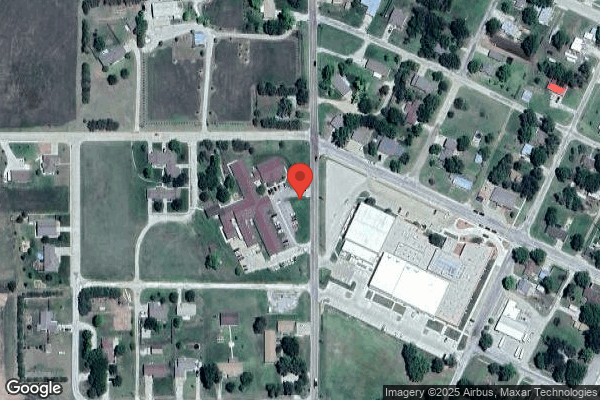
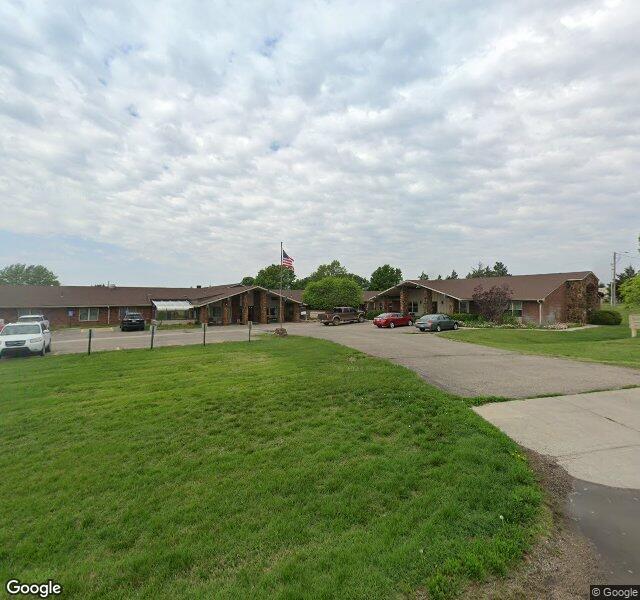
SANDSTONE HEIGHTS

440 STATE STREET, LITTLE RIVER, KS 67457 (620) 897-6266
Non profit - Other 36 Beds Independent Data: November 2025 1 Immediate Jeopardy citation
Trust Grade
33/100
#155 of 295 in KS
Last Inspection: March 2025

Within standard 12-15 month inspection cycle. Federal law requires annual inspections.

Overview

Sandstone Heights in Little River, Kansas, has a Trust Grade of F, indicating significant concerns about the facility's quality and care. It ranks #155 out of 295 nursing homes in Kansas, placing it in the bottom half, but it is the top choice of just two facilities in Rice County. The facility's performance is worsening, with issues increasing from 1 in 2024 to 5 in 2025. Staffing is a strength, with a 5/5 star rating and RN coverage exceeding 91% of state facilities, although turnover is an average 56%. However, the facility has concerning fines totaling $89,981, and there have been serious incidents, including a resident suffering a hip fracture due to a lack of fall prevention measures and staff misappropriating resident funds, highlighting significant areas for improvement.

Trust Score
F
33/100
In Kansas
#155/295
Bottom 48%
Safety Record
High Risk
Review needed
Inspections
Getting Worse
1 → 5 violations
Staff Stability
⚠ Watch
56% turnover. Above average. Higher turnover means staff may not know residents' routines.
Penalties
○ Average
$89,981 in fines. Higher than 75% of Kansas facilities. Some compliance issues.
Skilled Nurses
✓ Good
Each resident gets 77 minutes of Registered Nurse (RN) attention daily — more than 97% of Kansas nursing homes. RNs are the most trained staff who catch health problems before they become serious.
Violations
⚠ Watch
20 deficiencies on record. Higher than average. Multiple issues found across inspections.
★★★☆☆
3.0
Overall Rating
★★★★★
5.0
Staff Levels
★★☆☆☆
2.0
Care Quality
★★☆☆☆
2.0
Inspection Score
Stable
2024: 1 issues
2025: 5 issues

The Good

  • 5-Star Staffing Rating · Excellent nurse staffing levels
  • Full Sprinkler Coverage · Fire safety systems throughout facility
  • No fines on record

Facility shows strength in staffing levels, fire safety.

The Bad

3-Star Overall Rating

Near Kansas average (2.9)

Meets federal standards, typical of most facilities

Staff Turnover: 56%

Near Kansas avg (46%)

Frequent staff changes - ask about care continuity

Federal Fines: $89,981

Well above median ($33,413)

Moderate penalties - review what triggered them

Staff turnover is elevated (56%)

8 points above Kansas average of 48%

The Ugly 20 deficiencies on record

1 life-threatening 1 actual harm
Mar 2025 5 deficiencies 1 Harm
SERIOUS (G) 📢 Someone Reported This

A family member, employee, or ombudsman was alarmed enough to file a formal complaint

Actual Harm - a resident was hurt due to facility failures

Accident Prevention (Tag F0689)

A resident was harmed · This affected 1 resident

**NOTE- TERMS IN BRACKETS HAVE BEEN EDITED TO PROTECT CONFIDENTIALITY** The facility reported a census of 22 residents, with 11 residents sampled, including six residents reviewed for accidents. Based...

Read full inspector narrative →
**NOTE- TERMS IN BRACKETS HAVE BEEN EDITED TO PROTECT CONFIDENTIALITY** The facility reported a census of 22 residents, with 11 residents sampled, including six residents reviewed for accidents. Based on observation, interview, and record review, the facility failed to ensure fall prevention interventions were implemented to prevent falls for three residents. Resident (R)14 had multiple falls with no fall prevention interventions placed and fell on [DATE] at approximately 07:20 AM, which resulted in a fractured (broken bone) right hip that required hospitalization and surgical repair. The facility also failed to investigate, develop, and implement fall prevention interventions to prevent multiple falls for R9 and R10. Findings included: - Review of the Electronic Health Record (EHR) for Resident (R)14 included diagnoses of altered mental status (state of awareness that was different from the normal awareness of a person) and age-related osteoporosis (abnormal loss of bone density and deterioration of bone tissue with an increased fracture risk). The 10/02/24 Quarterly Minimum Data Set (MDS) documented a Brief Interview of Mental Status (BIMS) score of five, which indicated severely impaired cognition. The assessment documented R14 utilized a walker and/or wheelchair for locomotion and required substantial/maximal assistance for application of footwear, partial/moderate assistance for all other cares except eating, which required setup/cleanup assistance. The assessment documented R14 was occasionally incontinent of bladder and was always continent of bowel. The assessment documented two or more non-injury falls since the previous assessment. The 01/02/25 Significant Change Minimum Data Set (MDS) documented a BIMS score of four, which indicated severely impaired cognition. The assessment documented R14 utilized a walker and/or wheelchair for locomotion and was dependent on staff for bathing, toileting hygiene and application of footwear. R14 required substantial/maximal assistance with lower body dressing, partial/moderate assistance with upper body dressing, supervision with personal and oral hygiene and setup/cleanup assistance with eating. The assessment documented R14 was always incontinent of urine and occasionally incontinent of bowel. The assessment documented a fall in the six-month look-back period that resulted in a fracture, two or more non-injury falls, two or more falls with minor injury, and one fall with major injury since the previous assessment. The assessment further documented major surgery in the 100-day look-back period that included a partial or total hip replacement. R14 received occupational and physical therapy. The Cognitive Loss/Dementia Care Area Assessment (CAA) dated 01/02/25, documented R14 had a significant memory deficit that caused him to forget he was unable to walk unassisted and had chair and bed alarms, which were intermittently used, due to poor memory. The Falls CAA dated 01/02/25, documented R14 was intermittently able to ambulate (walk) with the assistance of one to two staff members. The 01/07/25 Care Plan documented on 09/20/22 R14 was at risk for falls related to memory deficit and history of falls and included the following interventions: On 09/20/22, staff would leave the night light on in R14's room. On 10/25/22, staff would place non-skid strips in front of R14's bed. On 12/26/22, R14 was a fall risk. On 01/05/23, staff would assist R14 to get ready for bed and remind R14 to utilize the call light to alert staff for assistance. On 08/18/23, staff would assist R14 with evening cares and ensure R14 was wearing non-skid socks. On 09/17/23, R14 would utilize the call light. On 12/23/23, staff would provide more assistance with morning cares and with transfers during the day, R14 would be assisted with evening and bedtime cares and staff would ensure R14 wore non-skid shocks or shoes at all times. On 01/02/24, R14 would utilize the call light On 01/18/24, staff repositioned R14's bed so that the height was appropriate sitting height for R14. On 03/02/24, staff would assist R14 to his room and assist with toileting needs after meals. On 03/07/24, staff would ensure a pressure alarm was on and working properly in R14's bed, recliner and wheelchair. Physical and occupational therapy would evaluate and treat if indicated. On 03/16/24, R14 would utilize the call light for assistance. On 11/26/24, staff would ask physical therapy to evaluate and treat R14 due to weakness and increase in the number of falls. The EHR documented on 07/03/24, 07/09/24, 10/01/24, 11/16/24, 11/23/24, and 12/25/24 that R14 was at risk for falls. The Progress Notes dated 07/09/24 at 05:14 PM documented at approximately 04:45 PM the pressure alarm sounded for R14 and R14 was discovered sitting on the edge of the bed. R14 had a wound on his left leg that was bleeding. R14 stated that he got up and walked to the door, tripped over a shoe, fell to the ground, crawled back to the bed and was able to get himself up into the bed in a seated position. Staff notified R14's durable power of attorney (DPOA - legal document that named a person to make healthcare decisions when the resident was no longer able to) who would transport R14 to the Emergency Department (ED) for evaluation and treatment. The Progress Notes dated 07/09/24 at 09:03 PM documented R14 arrived back in the facility from the ED where R14 received sutures (stitches - medical device to hold body tissues together after an injury or surgery) to the laceration (wound on the skin) that measured four centimeters (cm) by five cm. Review of the facility's fall investigation revealed on 07/09/24 at 06:40 PM, R14 fell with minor injury to the left leg. The facility's root cause analysis determined R14 ambulated without his walker. The resident's Care Plan lacked an intervention related to the fall on 07/09/24. The Progress Notes dated 09/02/24 at 11:40 AM documented R14 had a fall without injury. R14 was heard yelling help and was observed kneeling on the floor at the side of the bed. R14 reported that he slid off the bed. The author documented R14 wore slipper socks and the bed alarm was in place but did not sound. R14 was assessed to have no injuries from the fall. Review of the facility's fall investigation revealed on 09/02/24 R14 fell without injury. The facility's root cause analysis determined the pressure alarm was faulty. The fall investigation report documented an immediate intervention to replace the faulty pressure alarm. The resident's Care Plan lacked an intervention related to the fall on 09/02/24. The Progress Notes dated 11/16/24 at 01:25 PM documented R14 had a fall with minor injury to his head. R14's chair alarm sounded and unnamed Certified Nurse Aide (CNA) observed R14 unsuccessfully attempted to self-transfer from his wheelchair to his bed and fell. R14 struck his head on the nightstand and sustained a 1.5 cm laceration to the back of his head. Staff were able to utilize steri-strips (adhesive wound closures) to close the wound. Review of the facility's fall investigation revealed on 11/16/24 R14 had a fall with minor injury. The facility's root cause analysis determined R14 transferred without assistance. The resident's Care Plan lacked an intervention related to the fall on 11/16/24. The Progress Notes dated 12/25/24 at 07:20 AM documented R14's pressure alarm sounded; staff observed R14 on his right side on the floor. R14's right leg appeared shorter than the left leg and appeared rotated outward and R14 complained of pain to the right hip. The physician was called, and EMS (Emergency Medical Services) was called to transfer R14 to the ED for evaluation and treatment. The Progress Notes dated 12/25/24 at 10:14 AM documented the facility was notified by the ED that R14 was admitted to the hospital with the diagnosis of right hip fracture. The Progress Notes dated 12/25/24 at 11:14 AM documented the facility was notified by the ED that R14 was scheduled for surgery the following day. The Progress Notes dated 12/30/24 at 12:00 PM documented R14 returned to the facility after a partial right hip replacement. Review of the facility's fall investigation dated 12/25/24 revealed R14 had a fall with major injury. The facility's root cause analysis determined R14 was ambulating without assistance. The resident's Care Plan lacked an intervention related to the fall on 12/25/24. The Progress Notes dated 01/30/25 at 06:34 PM documented R14 was found with the upper half of his body on the bed with his lower body off the bed with right knee resting on the floor. The facility lacked a fall investigation report for the fall on 01/30/25 with root cause analysis. The resident's Care Plan lacked an intervention related to the fall on 01/30/25. During an observation on 03/12/25 at 02:41 PM, R14 was seated in a wheelchair in the common area with peers present. R14's right leg rested on the foot pedal of the wheelchair in a semi-extended position with knee-immobilizer observed on right leg. Roll-back brakes and pressure alarm observed on R14's wheelchair. During an interview on 03/13/25 at 09:37 AM, CNA J revealed if a resident was on the floor, she would ask the resident why they were on the floor. If the resident stated that they were not on the floor by their choice then it was considered an unwitnessed fall, and the nurse would be notified. During an interview on 03/13/25 at 09:51 AM, Certified Medication Aide (CMA) H revealed a fall is defined as a change in plane (standing to seated, seated/laying to ground). CMA H revealed if a resident fell, staff would notify the nurse and follow the nurse's instructions. During an interview on 03/13/25 at 01:22 PM, Licensed Nurse (LN) G revealed after a fall, the resident was assessed, a fall packet was completed which included root cause analysis and development of an intervention to put in place and a new intervention on the permanent care plan. The nurse would then communicate the change verbally to the staff on shift and communicate to oncoming shifts with the communication book. During an interview on 03/03/25 at 01:32 PM, Administrative Nurse C revealed that a fall is defined an unintentional change in plane. Administrative Nurse C confirmed the lack of care plan interventions for R14's 07/09/24, 09/02/24 and 11/16/24 falls. Administrative Nurse C revealed that the immediate intervention for the 12/25/24 fall was one-on-one observation and support until EMS arrived and confirmed that it was not documented in the fall investigation report. Administrative Nurse C confirmed the progress noted dated 01/30/25 should have initiated a fall investigation since the resident had a change in plane. Administrative Nurse C revealed that after a fall, the nurse completed the fall packet which was then routed to her and she would investigate the fall with the interdisciplinary team (IDT - a team of facility staff consisting of members of various departments including but not limited to; dietary, nursing, maintenance, therapy, etc.). The IDT team met weekly and would determine the appropriateness of interventions and would also to evaluate if additional interventions are required specific to that fall. Administrative Nurse C revealed that she would also consult with Administrative Nurse B about falls more frequently than the weekly IDT meetings. The facility's undated Fall Prevention Protocol policy documented each elder would be provided services and care that ensured that the environment remained as free of accident hazards as possible. Each elder would receive adequate supervision and assistive devices to prevent accidents. The facility's undated Accidents and Incident Policy policy documented the facility was committed to provide a safe and secure environment which included fall prevention. Staff would implement fall prevention strategies based on individual assessments and provide assistive devices in areas where falls were more likely to occur. Additionally, all staff would follow facility procedures for fall investigations The facility failed to implement fall prevention interventions after multiple falls for cognitively impaired R14, with a known history of repeated falls. R14 had a fall with minor injury on 07/09/24, a fall without injury on 09/02/24, and a fall with minor injury on 11/16/24 with no fall prevention interventions identified and implemented to prevent further falls. On 12/25/24, R14 fell and fractured his right hip which required hospitalization and surgical repair. On 01/30/25, R14's lower body was found on the floor, with upper body in bed, the facility failed to investigate this as a fall. - Review of the Electronic Health Record (EHR) for Resident (R) 9 included diagnoses of end-stage renal disease (ESRD-a terminal disease of the kidneys), diabetes mellitus type 2 (DM2 - when the body cannot use glucose, not enough insulin made or the body cannot respond to the insulin) and repeated falls. The 11/20/24 Quarterly MDS documented the BIMS score of 14, which indicated intact cognition. The assessment documented R9 utilized a wheelchair for locomotion and required partial/moderate assistance with bathing, supervision/touching assistance for oral and toileting hygiene, setup/cleanup assistance for all other cares except personal hygiene which was performed independently. The assessment documented two or more non-injury falls since the previous assessment. R9 received dialysis and oxygen. The 02/12/25 Annual Minimum Data Set (MDS) documented a Brief Interview for Mental Status (BIMS) score of 12 which indicated moderately impaired cognition. The assessment documented R9 utilized a wheelchair for locomotion and required partial/moderate assistance with bathing, supervision/touching assistance for oral and toileting hygiene, setup/cleanup assistance for all other cares except personal hygiene which was performed independently. The assessment documented two or more non-injury falls since the previous assessment. R9 received dialysis and oxygen. The Falls Care Area Assessment (CAA) dated 01/12/25, documented most of R9's falls occurred on evenings after dialysis. The 02/18/25 Care Plan, reviewed 03/12/25, documented on 03/09/22 R9 was at risk for falls related to history of falling and included the following interventions: On 03/09/22, when staff passed by R9's room, they would ensure she was in the center of her bed to prevent falls and encourage proper bed alignment. Staff would place non-skid strips on the floor where transfers occur, keep personal and frequently used items and call light in reach at all times. Staff would also encourage R9 to change positions slowly and make sure wheelchair was locked before getting out of bed. Staff would also encourage and assist R9 to remove all extra pillows and stuffed animals off of the bed before getting into the bed. On 03/13/22, staff educated R9 to lock both brakes on her wheelchair before self-transfers. On 08/10/22, staff would place a pillow beside R9 while in bed during the day to remind her where the edge of the bed was. On 10/17/22, staff would keep R9's bed at knee-height and wheel chair locked and next to the bed for safe transfers. On 12/20/22, R9 was high fall risk. On 06/23/23, staff would encourage R9 to have the wheelchair closer to the recliner prior to transfers. On 01/25/24, staff would place non-skid strips on the floor in front of the recliner to help prevent feet from sliding. On 04/05/24, staff would assist R9 to ensure proper footwear, either shoes or non-skid socks. On 04/10/24, staff would rearrange R9's bathroom to be free of clutter and provide more room for additional independence in the bathroom. Staff would also analyze R9's fall to determine a pattern or trend. On 11/27/24, staff would ensure R9 wore slipper socks when not wearing shoes. On 01/09/25, staff would provide R9 with verbal reminders to not ambulate (walk) or transfer without assistance. On 03/08/25, staff would ensure R9 wore her oxygen at all times. Review of Observations in the EHR documented R9 was at risk for falls on 05/29/24, 06/14/24, 08/20/24, 08/23/24, 11/19/24, 11/28/24, 01/09/25 and 02/11/25. The EHR lacked a fall risk assessment after the non-injury fall on 08/23/24. The Progress Note dated 08/23/24 at 03:38 AM documented R9 had a fall without injury. R9 was found by staff on the floor in front of the recliner and was in a seated position. Review of the facility's fall investigation revealed R9 had a fall without injury on 08/23/24. The facility's root cause analysis determined R9 removed the dycem (a non-slip mat used for stabilization and gripping to prevent slipping) from her recliner. The resident's Care Plan lacked an intervention related to the fall on 08/23/24. The Progress Note dated 08/30/24 at 02:40 AM documented R9 had a fall without injury. R9 was found by staff on the floor in front of the recliner and was in a seated position. Review of the facility's fall investigation revealed R9 had a fall without injury on 08/30/24. The facility's root cause analysis determined R9 was not wearing non-skid socks and did not use her call light for assistance. The resident's Care Plan lacked an intervention related to the fall on 08/30/24. During an interview on 03/13/25 at 09:37 AM, CNA J revealed if a resident was on the floor, she would ask the resident why they were on the floor. If the resident stated that they were not on the floor by their choice then it was considered an unwitnessed fall, and the nurse would be notified. During an interview on 03/13/25 at 09:51 AM, Certified Medication Aide (CMA) H revealed a fall is defined as a change in plane (standing to seated, seated/laying to ground). CMA H revealed if a resident fell, staff would notify the nurse and follow the nurse's instructions. During an interview on 03/13/25 at 01:22 PM, Licensed Nurse (LN) G revealed after a fall, the resident was assessed, a fall packet was completed which included root cause analysis and development of an intervention to put in place and a new intervention on the permanent care plan. The nurse would then communicate the change verbally to the staff on shift and communicate to oncoming shifts with the communication book. During an interview on 03/03/25 at 02:15 PM, Administrative Nurse C revealed that a fall is defined an unintentional change in plane. Administrative Nurse C confirmed the lack of care plan interventions for 08/23/24 and 08/30/24 falls. Administrative Nurse C revealed that after a fall, the nurse completed the fall packet which was then routed to her and she would investigate the fall with the interdisciplinary team (IDT - a team of facility staff consisting of members of various departments including but not limited to; dietary, nursing, maintenance, therapy, etc.). The IDT team met weekly and would determine the appropriateness of interventions and would also to evaluate if additional interventions are required specific to that fall. Administrative Nurse C revealed that she would also consult with Administrative Nurse B about falls more frequently than the weekly IDT meetings. The facility's undated Fall Prevention Protocol policy documented each elder would be provided services and care that ensured that the environment remained as free of accident hazards as possible. Each elder would receive adequate supervision and assistive devices to prevent accidents. The facility's undated Accidents and Incident Policy policy documented the facility was committed to provide a safe and secure environment which included fall prevention. Staff would implement fall prevention strategies based on individual assessments and provide assistive devices in areas where falls were more likely to occur. Additionally, all staff would follow facility procedures for fall investigations The facility failed to implement fall prevention interventions after multiple falls R9, with a known history of repeated falls. R9 had a fall without injury on 08/23/24 and 08/30/24 with no fall prevention interventions identified and implemented to prevent further falls. - Review of the Electronic Health Record (EHR) revealed that Resident (R)10 included diagnoses of Paraplegia (paralysis characterized by motor or sensory loss in the lower limbs and trunk), auditory hallucinations (sensory experiences of hearing sounds or voices that are not present in the external environment), major depressive disorder (major mood disorder which causes persistent feelings pf sadness), restless legs syndrome (a neurological disorder characterized by an irresistible urge to move the legs, often accompanied by unpleasant sensations such as tingling, crawling, or aching), cognitive communication deficit (communication difficulty arising from impaired cognitive processes like attention, memory, or reasoning, rather than a primary language or speech problem), chronic pain syndrome (a condition characterized by persistent pain that lasts at least three months), unspecified systolic (congestive) heart failure (a condition where the heart's left ventricle doesn't pump blood effectively, leading to symptoms like shortness of breath, fatigue, and swelling), and developmental disorder of speech and language (a neurodevelopmental condition that significantly impacts a child's ability to learn, understand, and use language, affecting their speaking, listening, reading, and writing skills). The 05/27/24 admission Minimum Data Set (MDS) documented a Brief Interview for Mental Status (BIMS) score of 12, which indicated moderately impaired cognition. R10 was dependent on staff assistance for toileting hygiene and bathing and required substantial to maximum assistance for upper clothing dress while being totally dependent for lower body dress and footwear. The 05/27/24 Activity of Daily Living Functional/Rehabilitation Potential Care Area Assessment (CAA), documented R10 was dependent on staff for cares, and he required staff assistance and full lift for all transfers. The 05/27/24 Falls CAA, documented R10 was a high risk for falls related to being wheelchair bound, was unable to use a transfer board, and required the use of full lift for transfers. The 02/19/25 Quarterly MDS, documented a BIMS score of 12 which indicated moderately impaired cognition, and documented no falls since the previous assessment. The assessment documented R10 could feed self with no swallowing problems. The MDS indicated R10 was dependent on staff assistance for toileting hygiene and bathing and required substantial to maximum assistance for upper clothing dress while being totally dependent for lower body dress and footwear. The Care Plan, documented on 11/02/24 R10 was at risk for falls due to intermittent confusion and required a total lift for transfers. R10 did not have the ability to ambulate independently due to paraplegia and included the following interventions: On 11/02/24, staff would reposition the bed in the room. On 11/02/24, Occupational Therapy (OT) (helps people of all ages improve their ability to perform daily activities and participate in meaningful occupations by addressing physical, cognitive, and social challenges) to evaluate R10 for use of a trapeze (provides a person a means of self-help to change position in bed, to move onto a bedpan, to move from a bed to a commode, or to transfer to and from a wheelchair with minimal help from an attendant). The Progress Notes dated 11/02/24 at 11:08 AM, documented R10 was found on his floor and indicated R10 had a fall. The Progress Notes dated 03/07/25 at 10:55 PM, documented R10 slid down his wheelchair while being transferred from the wheelchair to the bed but made no impact on any surfaces. During an interview on 03/11/25 at 03:10 PM, R10 reported he slipped out of the front of his wheelchair recently while transferring and landed on the floor. During an interview on 03/13/25 at 09:37 AM, Certified Nurse Aide (CNA) J stated if resident was sitting on the floor she would first ask (if BIMS allows) why they were on the floor, and if not by choice she would then notify the nurse for assessment. CNA J said if the resident was not on the floor by choice it was considered an unwitnessed fall. CNA J said if she was assisting a resident from the wheelchair to the bed or toilet and they slipped, but did not land on the floor CNA J indicated that was not a fall. CNA J said she would still notify the nurse and help fill out an incident report. During an interview on 03/13/25 at 09:51 AM, Certified Medication Aide (CMA) H reported that a fall is a break in plane. CMA H stated that if a resident slides out of chair, but they're caught before hitting the floor and assisted back into the chair then it's the nurse discretion, the nurse would be notified, and they'd do what they do. CMA H indicated that she usually just tells the nurse. During an interview on 03/13/25 at 09:56 AM, Licensed Nurse (LN) G reported a fall was a difference in the center of gravity. LN G stated that if she caught a resident sliding out of a chair and assists them back into the chair, she would make a progress note about it, but said it was not considered a fall. During an interview on 03/13/25 at 10:59 AM, Administrative Nurse B stated a fall was any unplanned change in plane. Administrative Nurse B reported if staff caught a resident sliding out of their chair and assisted them back into the chair, it was not a fall, it was a prevented fall, and a fall packet was not done but it would be charted. Administrative Nurse B said for actual falls the nurse performed a full assessment, a fall packet was filled out and the Director of Nursing, Administrator, the resident's Durable Power of Attorney, and the Physician are notified. The facility's undated Sandstone Heights Falls Policy and Procedure documented that a resident who fell would be assessed by the charge nurse. The fall would be documented in the progress notes and a fall event would be completed. A licensed nurse would ensure that a fall or injury was assessed by a licensed nurse. The facility's undated Fall Prevention Protocol policy documented each elder would be provided services and care that ensured that the environment remained as free of accident hazards as possible. Each elder would receive adequate supervision and assistive devices to prevent accidents. The facility's undated Accidents and Incident Policy policy documented the facility was committed to provide a safe and secure environment which included fall prevention. Staff would implement fall prevention strategies based on individual assessments and provide assistive devices in areas where falls were more likely to occur. Additionally, all staff would follow facility procedures for fall investigations. The facility failed to implement fall prevention interventions after R10 had a fall on 03/07/25, with a known history of falls and failed to conduct an investigation after a staff intercepted fall.
CONCERN (D)

Potential for Harm - no one hurt, but risky conditions existed

Deficiency F0625 (Tag F0625)

Could have caused harm · This affected 1 resident

**NOTE- TERMS IN BRACKETS HAVE BEEN EDITED TO PROTECT CONFIDENTIALITY** The facility had a census of 22 residents. The sample included 11 residents with three reviewed for discharge. Based on observat...

Read full inspector narrative →
**NOTE- TERMS IN BRACKETS HAVE BEEN EDITED TO PROTECT CONFIDENTIALITY** The facility had a census of 22 residents. The sample included 11 residents with three reviewed for discharge. Based on observation, record review, and interviews, the facility failed to provide a written bed hold policy notice to Residents (R) 3, R14, and R 9, or the resident's representatives, when they transferred to the hospital. This deficient practice had the risk of impaired ability to return to the facility and to the previous room for R3, R14, and R19. Finding included: - Review of the Electronic Health Record (EHR) census log for R3 revealed a discharge from the facility to a hospital on [DATE] and readmitted to the facility on [DATE]. The EHR lacked documentation related to written notification of the resident or resident's representative related to this discharge/transfer. Review of the EHR census log for R14 revealed a discharge from the facility to a hospital on [DATE] and readmitted to the facility on [DATE]. The EHR lacked documentation related to written notification of the resident or resident's representative related to this discharge/transfer. Review of the EHR census log for R9 revealed multiple discharges from the facility to a hospital, which included discharge 12/19/24 and readmission to the facility on [DATE]. The EHR lacked documentation related to written notification of the resident or resident's representative. On 03/13/25 at 09:52 AM, Administrative Nurse D confirmed the above findings. She stated the facility lacked notification of bed holds or written notification of the resident or resident's representative related to this discharge/transfer, as required. The facility did not provide a policy related to bed-hold notifications to residents and/or their representatives at the time of transfer to the hospital for the residents. The facility failed to provide bed-hold notifications to residents and/or their representatives at the time of transfer to the hospital for the residents.
CONCERN (D) 📢 Someone Reported This

A family member, employee, or ombudsman was alarmed enough to file a formal complaint

Potential for Harm - no one hurt, but risky conditions existed

Deficiency F0657 (Tag F0657)

Could have caused harm · This affected 1 resident

The facility reported a census of 22 residents and included 11 residents sampled and reviewed for care plan revision. Based on observations, interviews, and record reviews, the facility failed to ensu...

Read full inspector narrative →
The facility reported a census of 22 residents and included 11 residents sampled and reviewed for care plan revision. Based on observations, interviews, and record reviews, the facility failed to ensure the care plans were reviewed and revised to develop and implement appropriate interventions to prevent multiple falls for three residents, Resident (R) 9, R10 and R14. These deficient practices resulted in ongoing increased risk of falls and had the potential to lead to uncommunicated needs that would negatively affect the physical and psychosocial well-being of the residents. Findings included: - Review of the Electronic Health Record (EHR) for Resident (R)14 included diagnoses of altered mental status (state of awareness that was different from the normal awareness of a person) and age-related osteoporosis (abnormal loss of bone density and deterioration of bone tissue with an increased fracture risk). The 10/02/24 Quarterly Minimum Data Set (MDS) documented a Brief Interview of Mental Status (BIMS) score of five, which indicated severely impaired cognition. The assessment documented R14 utilized a walker and/or wheelchair for locomotion and required substantial/maximal assistance for application of footwear, partial/moderate assistance for all other cares except eating, which required setup/cleanup assistance. The assessment documented R14 was occasionally incontinent of bladder and was always continent of bowel. The assessment documented two or more non-injury falls since the previous assessment. The 01/02/25 Significant Change Minimum Data Set (MDS) documented a BIMS score of four, which indicated severely impaired cognition. The assessment documented R14 utilized a walker and/or wheelchair for locomotion and was dependent on staff for bathing, toileting hygiene and application of footwear. R14 required substantial/maximal assistance with lower body dressing, partial/moderate assistance with upper body dressing, supervision with personal and oral hygiene and setup/cleanup assistance with eating. The assessment documented R14 was always incontinent of urine and occasionally incontinent of bowel. The assessment documented a fall in the six-month look-back period that resulted in a fracture, two or more non-injury falls, two or more falls with minor injury, and one fall with major injury since the previous assessment. The assessment further documented major surgery in the 100-day look-back period that included a partial or total hip replacement. R14 received occupational and physical therapy. The Cognitive Loss/Dementia Care Area Assessment (CAA) dated 01/02/25, documented R14 had a significant memory deficit that caused him to forget he was unable to walk unassisted and had chair and bed alarms, which were intermittently used, due to poor memory. The Falls CAA dated 01/02/25, documented R14 was intermittently able to ambulate (walk) with the assistance of one to two staff members. The 01/07/25 Care Plan documented on 09/20/22 R14 was at risk for falls related to memory deficit and history of falls and included the following interventions: On 09/20/22, staff would leave the night light on in R14's room. On 10/25/22, staff would place non-skid strips in front of R14's bed. On 12/26/22, R14 was a fall risk. On 01/05/23, staff would assist R14 to get ready for bed and remind R14 to utilize the call light to alert staff for assistance. On 08/18/23, staff would assist R14 with evening cares and ensure R14 was wearing non-skid socks. On 09/17/23, R14 would utilize the call light. On 12/23/23, staff would provide more assistance with morning cares and with transfers during the day, R14 would be assisted with evening and bedtime cares and staff would ensure R14 wore non-skid shocks or shoes at all times. On 01/02/24, R14 would utilize the call light On 01/18/24, staff repositioned R14's bed so that the height was appropriate sitting height for R14. On 03/02/24, staff would assist R14 to his room and assist with toileting needs after meals. On 03/07/24, staff would ensure a pressure alarm was on and working properly in R14's bed, recliner and wheelchair. Physical and occupational therapy would evaluate and treat if indicated. On 03/16/24, R14 would utilize the call light for assistance. On 11/26/24, staff would ask physical therapy to evaluate and treat R14 due to weakness and increase in the number of falls. The EHR documented on 07/03/24, 07/09/24, 10/01/24, 11/16/24, 11/23/24, and 12/25/24 that R14 was at risk for falls. The Progress Notes dated 07/09/24 at 05:14 PM documented at approximately 04:45 PM the pressure alarm sounded for R14 and R14 was discovered sitting on the edge of the bed. R14 had a wound on his left leg that was bleeding. R14 stated that he got up and walked to the door, tripped over a shoe, fell to the ground, crawled back to the bed and was able to get himself up into the bed in a seated position. Staff notified R14's durable power of attorney (DPOA - legal document that named a person to make healthcare decisions when the resident was no longer able to) who would transport R14 to the Emergency Department (ED) for evaluation and treatment. The Progress Notes dated 07/09/24 at 09:03 PM documented R14 arrived back in the facility from the ED where R14 received sutures (stitches - medical device to hold body tissues together after an injury or surgery) to the laceration (wound on the skin) that measured four centimeters (cm) by five cm. Review of the facility's fall investigation revealed on 07/09/24 at 06:40 PM, R14 fell with minor injury to the left leg. The facility's root cause analysis determined R14 ambulated without his walker. The resident's Care Plan lacked an intervention related to the fall on 07/09/24. The Progress Notes dated 09/02/24 at 11:40 AM documented R14 had a fall without injury. R14 was heard yelling help and was observed kneeling on the floor at the side of the bed. R14 reported that he slid off the bed. The author documented R14 wore slipper socks and the bed alarm was in place but did not sound. R14 was assessed to have no injuries from the fall. Review of the facility's fall investigation revealed on 09/02/24 R14 fell without injury. The facility's root cause analysis determined the pressure alarm was faulty. The fall investigation report documented an immediate intervention to replace the faulty pressure alarm. The resident's Care Plan lacked an intervention related to the fall on 09/02/24. The Progress Notes dated 11/16/24 at 01:25 PM documented R14 had a fall with minor injury to his head. R14's chair alarm sounded and unnamed Certified Nurse Aide (CNA) observed R14 unsuccessfully attempted to self-transfer from his wheelchair to his bed and fell. R14 struck his head on the nightstand and sustained a 1.5 cm laceration to the back of his head. Staff were able to utilize steri-strips (adhesive wound closures) to close the wound. Review of the facility's fall investigation revealed on 11/16/24 R14 had a fall with minor injury. The facility's root cause analysis determined R14 transferred without assistance. The resident's Care Plan lacked an intervention related to the fall on 11/16/24. The Progress Notes dated 12/25/24 at 07:20 AM documented R14's pressure alarm sounded; staff observed R14 on his right side on the floor. R14's right leg appeared shorter than the left leg and appeared rotated outward and R14 complained of pain to the right hip. The physician was called, and EMS (Emergency Medical Services) was called to transfer R14 to the ED for evaluation and treatment. The Progress Notes dated 12/25/24 at 10:14 AM documented the facility was notified by the ED that R14 was admitted to the hospital with the diagnosis of right hip fracture. The Progress Notes dated 12/25/24 at 11:14 AM documented the facility was notified by the ED that R14 was scheduled for surgery the following day. The Progress Notes dated 12/30/24 at 12:00 PM documented R14 returned to the facility after a partial right hip replacement. Review of the facility's fall investigation dated 12/25/24 revealed R14 had a fall with major injury. The facility's root cause analysis determined R14 was ambulating without assistance. The resident's Care Plan lacked an intervention related to the fall on 12/25/24. The Progress Notes dated 01/30/25 at 06:34 PM documented R14 was found with the upper half of his body on the bed with his lower body off the bed with right knee resting on the floor. The facility lacked a fall investigation report for the fall on 01/30/25 with root cause analysis. The resident's Care Plan lacked an intervention related to the fall on 01/30/25. During an observation on 03/12/25 at 02:41 PM, R14 was seated in a wheelchair in the common area with peers present. R14's right leg rested on the foot pedal of the wheelchair in a semi-extended position with knee-immobilizer observed on right leg. Roll-back brakes and pressure alarm observed on R14's wheelchair. During an interview on 03/13/25 at 09:37 AM, CNA J revealed if a resident was on the floor, she would ask the resident why they were on the floor. If the resident stated that they were not on the floor by their choice then it was considered an unwitnessed fall, and the nurse would be notified. During an interview on 03/13/25 at 09:51 AM, Certified Medication Aide (CMA) H revealed a fall is defined as a change in plane (standing to seated, seated/laying to ground). CMA H revealed if a resident fell, staff would notify the nurse and follow the nurse's instructions. During an interview on 03/13/25 at 01:22 PM, Licensed Nurse (LN) G revealed after a fall, the resident was assessed, a fall packet was completed which included root cause analysis and development of an intervention to put in place and a new intervention on the permanent care plan. The nurse would then communicate the change verbally to the staff on shift and communicate to oncoming shifts with the communication book. During an interview on 03/03/25 at 01:32 PM, Administrative Nurse C revealed that a fall is defined an unintentional change in plane. Administrative Nurse C confirmed the lack of care plan interventions for R14's 07/09/24, 09/02/24 and 11/16/24 falls. Administrative Nurse C revealed that the immediate intervention for the 12/25/24 fall was one-on-one observation and support until EMS arrived and confirmed that it was not documented in the fall investigation report. Administrative Nurse C confirmed the progress noted dated 01/30/25 should have initiated a fall investigation since the resident had a change in plane. Administrative Nurse C revealed that after a fall, the nurse completed the fall packet which was then routed to her and she would investigate the fall with the interdisciplinary team (IDT - a team of facility staff consisting of members of various departments including but not limited to; dietary, nursing, maintenance, therapy, etc.). The IDT team met weekly and would determine the appropriateness of interventions and would also to evaluate if additional interventions are required specific to that fall. Administrative Nurse C revealed that she would also consult with Administrative Nurse B about falls more frequently than the weekly IDT meetings. The facility's undated Care Plan Revisions policy documented the care plan would be revised after every fall and would include specific instructions to staff based on identified risk factors at the time of the fall and during the fall investigation process to prevent or reduce the possibility of recurrent falls. The facility failed review and revise the permanent care plan for R14 to mitigate the risk for additional falls after a fall with minor injury on 07/19/24, a fall without injury on 09/02/24, a fall with minor injury on 11/16/24, a fall with major injury on 12/25/24 and fall without injury on 01/30/24. This deficient practice placed R14 at risk for uncommunicated needs as well as continued and on-going risk for falls which had the potential to negatively impact R14's physical and psychosocial well-being. - Review of the Electronic Health Record (EHR) for Resident (R) 9 included diagnoses of end-stage renal disease (ESRD-a terminal disease of the kidneys), diabetes mellitus type 2 (DM2 - when the body cannot use glucose, not enough insulin made or the body cannot respond to the insulin) and repeated falls. The 11/20/24 Quarterly MDS documented the BIMS score of 14, which indicated intact cognition. The assessment documented R9 utilized a wheelchair for locomotion and required partial/moderate assistance with bathing, supervision/touching assistance for oral and toileting hygiene, setup/cleanup assistance for all other cares except personal hygiene which was performed independently. The assessment documented two or more non-injury falls since the previous assessment. R9 received dialysis and oxygen. The 02/12/25 Annual Minimum Data Set (MDS) documented a Brief Interview for Mental Status (BIMS) score of 12 which indicated moderately impaired cognition. The assessment documented R9 utilized a wheelchair for locomotion and required partial/moderate assistance with bathing, supervision/touching assistance for oral and toileting hygiene, setup/cleanup assistance for all other cares except personal hygiene which was performed independently. The assessment documented two or more non-injury falls since the previous assessment. R9 received dialysis and oxygen. The Falls Care Area Assessment (CAA) dated 01/12/25, documented most of R9's falls occurred on evenings after dialysis. The 02/18/25 Care Plan, reviewed 03/12/25, documented on 03/09/22 R9 was at risk for falls related to history of falling and included the following interventions: On 03/09/22, when staff passed by R9's room, they would ensure she was in the center of her bed to prevent falls and encourage proper bed alignment. Staff would place non-skid strips on the floor where transfers occur, keep personal and frequently used items and call light in reach at all times. Staff would also encourage R9 to change positions slowly and make sure wheelchair was locked before getting out of bed. Staff would also encourage and assist R9 to remove all extra pillows and stuffed animals off of the bed before getting into the bed. On 03/13/22, staff educated R9 to lock both brakes on her wheelchair before self-transfers. On 08/10/22, staff would place a pillow beside R9 while in bed during the day to remind her where the edge of the bed was. On 10/17/22, staff would keep R9's bed at knee-height and wheel chair locked and next to the bed for safe transfers. On 12/20/22, R9 was high fall risk. On 06/23/23, staff would encourage R9 to have the wheelchair closer to the recliner prior to transfers. On 01/25/24, staff would place non-skid strips on the floor in front of the recliner to help prevent feet from sliding. On 04/05/24, staff would assist R9 to ensure proper footwear, either shoes or non-skid socks. On 04/10/24, staff would rearrange R9's bathroom to be free of clutter and provide more room for additional independence in the bathroom. Staff would also analyze R9's fall to determine a pattern or trend. On 11/27/24, staff would ensure R9 wore slipper socks when not wearing shoes. On 01/09/25, staff would provide R9 with verbal reminders to not ambulate (walk) or transfer without assistance. On 03/08/25, staff would ensure R9 wore her oxygen at all times. Review of Observations in the EHR documented R9 was at risk for falls on 05/29/24, 06/14/24, 08/20/24, 08/23/24, 11/19/24, 11/28/24, 01/09/25 and 02/11/25. The EHR lacked a fall risk assessment after the non-injury fall on 08/23/24. The Progress Note dated 08/23/24 at 03:38 AM documented R9 had a fall without injury. R9 was found by staff on the floor in front of the recliner and was in a seated position. Review of the facility's fall investigation revealed R9 had a fall without injury on 08/23/24. The facility's root cause analysis determined R9 removed the dycem (a non-slip mat used for stabilization and gripping to prevent slipping) from her recliner. The resident's Care Plan lacked an intervention related to the fall on 08/23/24. The Progress Note dated 08/30/24 at 02:40 AM documented R9 had a fall without injury. R9 was found by staff on the floor in front of the recliner and was in a seated position. Review of the facility's fall investigation revealed R9 had a fall without injury on 08/30/24. The facility's root cause analysis determined R9 was not wearing non-skid socks and did not use her call light for assistance. The resident's Care Plan lacked an intervention related to the fall on 08/30/24. During an interview on 03/13/25 at 09:37 AM, CNA J revealed if a resident was on the floor, she would ask the resident why they were on the floor. If the resident stated that they were not on the floor by their choice then it was considered an unwitnessed fall, and the nurse would be notified. During an interview on 03/13/25 at 09:51 AM, Certified Medication Aide (CMA) H revealed a fall is defined as a change in plane (standing to seated, seated/laying to ground). CMA H revealed if a resident fell, staff would notify the nurse and follow the nurse's instructions. During an interview on 03/13/25 at 01:22 PM, Licensed Nurse (LN) G revealed after a fall, the resident was assessed, a fall packet was completed which included root cause analysis and development of an intervention to put in place and a new intervention on the permanent care plan. The nurse would then communicate the change verbally to the staff on shift and communicate to oncoming shifts with the communication book. During an interview on 03/03/25 at 02:15 PM, Administrative Nurse C revealed that a fall is defined an unintentional change in plane. Administrative Nurse C confirmed the lack of care plan interventions for 08/23/24 and 08/30/24 falls. Administrative Nurse C revealed that after a fall, the nurse completed the fall packet which was then routed to her and she would investigate the fall with the interdisciplinary team (IDT - a team of facility staff consisting of members of various departments including but not limited to; dietary, nursing, maintenance, therapy, etc.). The IDT team met weekly and would determine the appropriateness of interventions and would also to evaluate if additional interventions are required specific to that fall. Administrative Nurse C revealed that she would also consult with Administrative Nurse B about falls more frequently than the weekly IDT meetings. The facility's undated Care Plan Revisions policy documented the care plan would be revised after every fall and would include specific instructions to staff based on identified risk factors at the time of the fall and during the fall investigation process to prevent or reduce the possibility of recurrent falls. The facility failed review and revise the permanent care plan for R9 to mitigate the risk for additional falls after a fall without injury on 08/23/24 and 08/30/24. This deficient practice placed R9 at risk for uncommunicated needs as well as continued and on-going risk for falls which had the potential to negatively impact R9's physical and psychosocial well-being. - Review of the Electronic Health Record (EHR) revealed that Resident (R)10 included diagnoses of Paraplegia (paralysis characterized by motor or sensory loss in the lower limbs and trunk), auditory hallucinations (sensory experiences of hearing sounds or voices that are not present in the external environment), major depressive disorder (major mood disorder which causes persistent feelings pf sadness), restless legs syndrome (a neurological disorder characterized by an irresistible urge to move the legs, often accompanied by unpleasant sensations such as tingling, crawling, or aching), cognitive communication deficit (communication difficulty arising from impaired cognitive processes like attention, memory, or reasoning, rather than a primary language or speech problem), chronic pain syndrome (a condition characterized by persistent pain that lasts at least three months), unspecified systolic (congestive) heart failure (a condition where the heart's left ventricle doesn't pump blood effectively, leading to symptoms like shortness of breath, fatigue, and swelling), and developmental disorder of speech and language (a neurodevelopmental condition that significantly impacts a child's ability to learn, understand, and use language, affecting their speaking, listening, reading, and writing skills). The 05/27/24 admission Minimum Data Set (MDS) documented a Brief Interview for Mental Status (BIMS) score of 12, which indicated moderately impaired cognition. R10 was dependent on staff assistance for toileting hygiene and bathing and required substantial to maximum assistance for upper clothing dress while being totally dependent for lower body dress and footwear. The 05/27/24 Activity of Daily Living Functional/Rehabilitation Potential Care Area Assessment (CAA), documented R10 was dependent on staff for cares, and he required staff assistance and full lift for all transfers. The 05/27/24 Falls CAA, documented R10 was a high risk for falls related to being wheelchair bound, was unable to use a transfer board, and required the use of full lift for transfers. The 02/19/25 Quarterly MDS, documented a BIMS score of 12 which indicated moderately impaired cognition, and documented no falls since the previous assessment. The assessment documented R10 could feed self with no swallowing problems. The MDS indicated R10 was dependent on staff assistance for toileting hygiene and bathing and required substantial to maximum assistance for upper clothing dress while being totally dependent for lower body dress and footwear. The Care Plan, documented on 11/02/24 R10 was at risk for falls due to intermittent confusion and required a total lift for transfers. R10 did not have the ability to ambulate independently due to paraplegia and included the following interventions: On 11/02/24, staff would reposition the bed in the room. On 11/02/24, Occupational Therapy (OT) (helps people of all ages improve their ability to perform daily activities and participate in meaningful occupations by addressing physical, cognitive, and social challenges) to evaluate R10 for use of a trapeze (provides a person a means of self-help to change position in bed, to move onto a bedpan, to move from a bed to a commode, or to transfer to and from a wheelchair with minimal help from an attendant). The Progress Notes dated 11/02/24 at 11:08 AM, documented R10 was found on his floor and indicated R10 had a fall. The Progress Notes dated 03/07/25 at 10:55 PM, documented R10 slid down his wheelchair while being transferred from the wheelchair to the bed but made no impact on any surfaces. During an interview on 03/11/25 at 03:10 PM, R10 reported he slipped out of the front of his wheelchair recently while transferring and landed on the floor. During an interview on 03/13/25 at 09:37 AM, Certified Nurse Aide (CNA) J stated if resident was sitting on the floor she would first ask (if BIMS allows) why they were on the floor, and if not by choice she would then notify the nurse for assessment. CNA J said if the resident was not on the floor by choice it was considered an unwitnessed fall. CNA J said if she was assisting a resident from the wheelchair to the bed or toilet and they slipped, but did not land on the floor CNA J indicated that was not a fall. CNA J said she would still notify the nurse and help fill out an incident report. During an interview on 03/13/25 at 09:51 AM, Certified Medication Aide (CMA) H reported that a fall is a break in plane. CMA H stated that if a resident slides out of chair, but they're caught before hitting the floor and assisted back into the chair then it's the nurse discretion, the nurse would be notified, and they'd do what they do. CMA H indicated that she usually just tells the nurse. During an interview on 03/13/25 at 09:56 AM, Licensed Nurse (LN) G reported a fall was a difference in the center of gravity. LN G stated that if she caught a resident sliding out of a chair and assists them back into the chair, she would make a progress note about it, but said it was not considered a fall. During an interview on 03/13/25 at 10:59 AM, Administrative Nurse B stated a fall was any unplanned change in plane. Administrative Nurse B reported if staff caught a resident sliding out of their chair and assisted them back into the chair, it was not a fall, it was a prevented fall, and a fall packet was not done but it would be charted. Administrative Nurse B said for actual falls the nurse performed a full assessment, a fall packet was filled out and the Director of Nursing, Administrator, the resident's Durable Power of Attorney, and the Physician are notified. The facility's undated Care Plan Revisions policy documented the care plan would be revised after every fall and would include specific instructions to staff based on identified risk factors at the time of the fall and during the fall investigation process to prevent or reduce the possibility of recurrent falls. The facility failed to review and revise the permanent care plan for R10 to mitigate the risk for additional falls after a fall on 03/07/25, with a known history of falls. This deficient practice placed R10 at risk for uncommunicated needs as well as continued and on-going risk for falls which had the potential to negatively impact R10's physical and psychosocial well-being.
CONCERN (D) 📢 Someone Reported This

A family member, employee, or ombudsman was alarmed enough to file a formal complaint

Potential for Harm - no one hurt, but risky conditions existed

Food Safety (Tag F0812)

Could have caused harm · This affected 1 resident

The facility reported a census of 22 residents. Based on observation, interview, and record review, the facility failed to store and prepare food under sanitary conditions for the residents of the fac...

Read full inspector narrative →
The facility reported a census of 22 residents. Based on observation, interview, and record review, the facility failed to store and prepare food under sanitary conditions for the residents of the facility. Finings included: - On 03/11/25 at 01:34 PM, kitchen tour with Dietary Aide (DA) K, revealed the following areas of concern: 1. Thirteen cookie sheets/pans with brown, dried, caked on substance on the exterior and the interior corners and cooking surfaces of each pan. Pans were in a upside down position, one on top of other, which resulted in the outside of one pan in direct contact with the cooking surface of the next pan. The surfaces were unsanitizable. 2. Seven frying pans/skillets with brown dried caked substance on exterior and interior corners and cooking surfaces were in a upside down position, one on top of other, the outside of one skillet/frying pan in direct contact with the cooking surface of the next skillet/frying pan. The surfaces were unsanitizable. 3. A metal rack with four shelves with rust and greasy sticky grim build-up on the upper which rendered them unsanitizable. 4. A refrigerator with two rolled up wet towels were inside the refrigerator on the bottom shelf. 5. Three empty open gallon white plastic container on the top shelf of the refrigerator. One of the uncovered, unlabeled, containers had an orange yellow substance covering the bottom of the container. 6. Six unlabeled and uncovered glasses of juice in the refrigerator. On 03/11/25 at 01:42 PM, Dietary Aide (DA) K, confirmed the above findings. She reported the cookie sheets/pans had always been that way that it was difficult to get the brown caked on food off the pans. She verified the brown substance on the pan would be in direct contact with the food during food preparation. Additionally, she stated the dietary staff placed towels and the open unlabeled white containers were placed in the refrigerator to catch the water that was dripping from the top of the refrigerator. Furthermore, the orange discoloration that was inside the open plastic container was from rust where the water dripped through the vent in the refrigerator. She stated the glasses of juice were for the residents and should be labeled and covered to prevent food borne bacteria from growing. On 03/13/25 at 11:09AM, Dietary Manager (DM) E confirmed above findings related to food storage, labeling, and sanitation. She reported she informed the staff to clean and get rid of towels in the refrigerator due to contamination and possible food born bacteria could grow on the damp surface. DM e stated the containers had an orange substance in them because the staff failed to clean them as they should. Confirmed 13 cookie sheets remain inverted on shelfing with brown substance. She reported the pans and skillets, had been like that since her employment. She stated the only way to get cookie sheets clean to replace them. She confirmed the towels should not be kept inside the refrigerator and food/drinks should be covered and labeled to prevent contamination and food borne illnesses. The undated facility policy titled Food Preparation and Handling Policy, documentation included cross contamination as the transfer of harmful substances or diseas causing microorganisms by hands, food contact surfaces, sponges, and cloth towels. Food items will be prpared using methods designd to be free of injurious organisms and substances. The facility failed to store and prepare food under sanitary conditions for the residents of the facility.
CONCERN (F) 📢 Someone Reported This

A family member, employee, or ombudsman was alarmed enough to file a formal complaint

Potential for Harm - no one hurt, but risky conditions existed

Staffing Data (Tag F0851)

Could have caused harm · This affected most or all residents

The facility reported a census of 22 residents. Based on interview and record review, the facility failed to electronically submit complete and accurate staffing information to the Federal regulatory ...

Read full inspector narrative →
The facility reported a census of 22 residents. Based on interview and record review, the facility failed to electronically submit complete and accurate staffing information to the Federal regulatory agency through Payroll-Based Journaling (PBJ) when the facility failed to accurately submit hourly staffing data for all nursing personnel. Findings included: - Review of the PBJ Staffing Data Report for Fiscal Year (FY) for Quarter 1 - 2024 (October 1 - December 31), revealed the facility failed to have Licensed Nursing Coverage 24 hours/Day on the following dates: 10/14/24 Saturday (SA), 10/20/24 Friday (FR), 10/21/24 Saturday (SA), 10/22/24 Sunday (SU), 10/28/24 Saturday (SA), 11/19/24 Sunday (SU). Review of the Nursing Schedule and Payroll Data Sheets for the above dates revealed the facility had 24-hour nursing coverage. During an interview on 03/12/25 at 11:15 AM, Administrative Nurse B confirmed the facility had 24-hour nursing coverage, even though it was not reflected on the PBJ report. On 03/12/25 at 12:45 PM, Administrative Nurse B provided payroll staffing data for the dates in question. The facility failed to provide a Payroll Based Journal Policy policy. The facility failed to submit complete and accurate staffing information to the Federal regulatory agency through PBJ when the facility failed to accurately submit hourly staffing data for all nursing personnel.
Jan 2024 1 deficiency 1 IJ (1 affecting multiple)
CRITICAL (K) 📢 Someone Reported This

A family member, employee, or ombudsman was alarmed enough to file a formal complaint

Immediate Jeopardy (IJ) - the most serious Medicare violation

Deficiency F0602 (Tag F0602)

Someone could have died · This affected multiple residents

**NOTE- TERMS IN BRACKETS HAVE BEEN EDITED TO PROTECT CONFIDENTIALITY** The facility reported a census of 27 residents. The sample included 15 residents with facility held personal fund accounts, revi...

Read full inspector narrative →
**NOTE- TERMS IN BRACKETS HAVE BEEN EDITED TO PROTECT CONFIDENTIALITY** The facility reported a census of 27 residents. The sample included 15 residents with facility held personal fund accounts, reviewed for misappropriation and exploitation. Based on observation, interview, and record review the facility failed to ensure a system in place for the accurate accounting and reconciliation of resident fund accounts to prevent staff misappropriation and exploitation. The facility kept 14 manilla envelopes, each labeled with a resident's name, for the personal funds of Resident (R) 1, R2, R3, R4, R5, R6, R7, R8, R9, R10, R11, R12, R13, and R14. Observation of the 14 envelopes revealed no paper cash in any of the 14 envelopes. R15 elected the facility as the payee and responsible party for her finances. The facility kept R15's money in a bank account with a debit card available. A facility employee used R15's bank card to withdraw money from the resident's bank account and made numerous unauthorized purchases without the resident's consent. The facility failed to record and track money in and out of their resident fund accounts and lacked records of current or past balances. This placed the 15 residents with personal fund accounts in immediate jeopardy and at risk for a negative psychosocial impact in safety and security. Findings included: - The Annual Minimum Data Set dated [DATE] for R15 revealed a Brief Interview of Mental Status (BIMS) score of 14, indicating intact cognition. The Quarterly MDS dated [DATE] revealed a BIMS of 14, indicating intact cognition. On [DATE] at 12:00 PM review of the bank statements for R15's money controlled by the facility as payee, from 05/2022 to [DATE] without any reconciliation of fund or approval of the resident revealed: On [DATE] - a miscellaneous withdrawal of $100.00. On [DATE] - purchase at Walmart for a total of $152.43. On [DATE] - a cash withdrawal of $80.00. On [DATE] - a cash withdrawal of $80.00. On [DATE] - a cash withdrawal of $100.00. On [DATE] - a cash withdrawal of $300.00. On [DATE] - a purchase at Walmart of $168.96. On [DATE] - a cash withdrawal of $300.00. On [DATE] - a cash withdrawal of $200.00. On [DATE] - a purchase at Amazon-$127.38. On [DATE] - a purchase at The furniture Store of [NAME]- $1219.54. On [DATE] - a purchase at Walmart- $637.98 On [DATE] - a cash withdrawal of $100.00. On [DATE] - a cash withdrawal of $200.00. On [DATE] - a cash withdrawal of $200.00. On [DATE] - a cash withdrawal of $200.00. On [DATE] - a cash withdrawal of $200.00. On [DATE] - a cash withdrawal of $100.00. On [DATE] - a purchase at Walmart for $306.28. On [DATE] - a cash withdrawal of $202.00. On [DATE] - a cash withdrawal of $250.00. On [DATE] - a cash withdrawal of $202.00. On [DATE] - a cash withdrawal of $300.00. On [DATE] - a cash withdrawal of $300.00. On [DATE] - a cash withdrawal of $40.00. On [DATE] - a cash withdrawal of $302.00. On [DATE] - a cash withdrawal of $50.00. On [DATE] - a cash withdrawal of $200.00. On [DATE] - a cash withdrawal of $102.00. On [DATE] - a purchase at Walmart- $164.55. On [DATE] - a cash withdrawal of $100.00. On [DATE] - a cash withdrawal of $300.00. On [DATE] - a cash withdrawal of $10.00. On [DATE] - a cash withdrawal of $60.00. On [DATE] - a cash withdrawal of $22.00. On [DATE] - a cash withdrawal of $100.00. On [DATE] - a cash withdrawal of $200.00. Review of the grocery store receipts for items bought with R15's bank card and Social Services D's personal frequent shopper card number, purchased after working hours at a store located approximately 13 miles from the facility included: On [DATE] for a total of $26.04. On [DATE] for a total of $47.16. On [DATE] for a total of $61.69. On [DATE] for a total of $17.73. On [DATE] for a total of $35.31. On [DATE] for a total of $21.77. On [DATE] for a total of $30.77. On [DATE] for a total of $25.95. On [DATE] for a total of $28.20. On [DATE] for a total of $42.80. On [DATE] for a total of $38.00. On [DATE] for a total of $39.25. On [DATE] for a total of $15.22. On [DATE] for a total of $25.39. On [DATE] for a total of $93.89. On [DATE] for a total of $16.72. Observation on [DATE] at 09:40 AM revealed a notebook which contained 14 individual manilla envelopes with the resident names on them. No paper money was found in any of the 14 resident envelopes. No accounting sheets for any of the residents and no way of knowing how much money was taken. A notebook for R15 was also observed with receipts from prior to 05/2022, but only one receipt from 2023 was found in the notebook. The employee file for Social Service Staff D revealed the facility hired her on [DATE] and she transferred to the Social Services position on [DATE] and was put in charge of the residents' personal funds accounts at that time. The facility terminated her on [DATE]. Social Service Staff D was responsible for the facility resident funds account money for approximately 19 months, with no oversight in place and no system in place to track resident's funds. On [DATE] at 08:40 AM, Administrative Staff A reported he terminated Social Services Staff D on [DATE]. At that time, staff escorted her to her office to retrieve all of her personal belongings and turn in her keys. It was the next day when Administrative Staff C and Administrative Nurse B went to the social service office and were not able to get in the file cabinet that contained the petty cash, the resident funds, or R15's money card. The facility identified Social Services Staff D as the payee for R15. When they made entrance to the cabinet, all the resident funds, petty cash, and the money card were gone. All that remained were the 14 resident envelopes that were empty of any cash money. The facility discovered Social Service Staff D did not account for the resident funds since she began the social service position in 05/2022, so staff were unable to tell how much money was missing. When they located R15's binder no money card could be located, and only one receipt for a Walmart purchase dated 06/23 for $135.66 was in the folder. Administrative Staff A obtained permission from the resident to review past bank statements from her bank and upon reviewing them, Administrative Staff A reported he became suspicious of some large withdrawals and purchases made with the resident's card. The resident gave Administrative Staff A permission to void the old card and issue another with a new number. Administrative Staff A took over as R15's payee and reported the discrepancies to law enforcement and the resident's durable power of attorney (DPOA) notified. On [DATE] at 10:03 AM, R15 reported she needed a payee after her mother died. Her sister did it for a while but was not able to continue and an employee of the facility became her payee. She had no problems with that employee, but she quit, and the administration appointed Social Service Staff D as her new payee in 05/2022. Social Service Staff D would go shopping and bring her snacks and pop, but then quit doing that. R15 stated she asked Social Service Staff D on several occasions to take her shopping for some clothes due to her losing weight and needing smaller clothes, but she never did take the resident shopping. It was not until after Social Service Staff D got fired that Administrative Staff A found receipts to the grocery store, but no pop or snacks were on the receipts found. Then the found out there were several large withdrawals from her bank account for like $300 and $700 that R15 knew nothing about. She reported she did not know how much the staff member stole from her, but she needed to go to jail for it. R1 stated, It's not only wrong but also illegal to take advantage of the elderly. On [DATE] at 01:30 PM, Administrative Staff A stated he never thought to check the resident fund accounts and just thought they were being managed and it had always been a trust thing before with former employees. He reported there was no bank account for the other 14 residents with funds, and they just kept their money in individual envelopes in a notebook. Administrative Staff A was not aware of any statements being sent to the resident or DPOAs regarding money movement in the accounts. He thought their money was used primarily for haircuts and personal items. On [DATE] at 01:50 PM, Administrative Staff A confirmed the facility had no policy directing them on how to manage resident funds. The facility failed to ensure Resident (R)15, who the facility was the payee and responsible party for her finances, remained free from misappropriation and exploitation when an employee of the facility used R15's bank card to withdraw money from the resident's bank account and make unauthorized purchases without the resident's consent. In addition, the facility failed to protect the 14 sampled residents, all of which had facility held resident fund accounts, from misappropriation of their resident funds. The facility further failed to have a system in place for the accurate record keeping and reconciliation resident fund accounts and lacked records of current or past balances. This placed the 15 residents in immediate jeopardy, and at risk for the negative psychosocial impact to safety and security. The facility was provided an IJ template on [DATE] at 03:42 PM, to Administrative Staff A. The facility provided an accepted plan for removal on [DATE] at 03:11 PM which included the following: 1. The AP was terminated from employment by the facility on [DATE]. On [DATE] Administrative Staff A concluded his findings of misappropriation of funds by an ex-employee. All resident fund accounts were suspended until further investigation by local law enforcement and KDADS was completed. R15's debit card was cancelled and a new one was issued, along with Administrative Staff A becoming R15's new payee. 2. On [DATE] the facility implemented a new updated Management of Resident Funds (MRF) policy. New resident envelopes were created with a two-person signature for any cash in or cash out. The MFR policy and resident fund envelopes were created on [DATE] after report was made to local authorities, KDADS, Insurance, and the facility attorney. On [DATE] old resident fund envelopes were reconciled by Administrative Nurse B and the Local Police Chief. 3. Administrative Staff A will be doing in-service and reeducation with all staff members that will include the education on the facility ANE policy along with the Kansas Ombudsman Tip Sheet over ANE and the management of Resident Funds policy. When findings of the issue occurred, all resident fund accounts were suspended from any deposit or withdrawal. On [DATE] after completed investigation from KDADS, Administrative Staff A put together an in-service/education packet for all staff. In-service began on [DATE] at 06:00 PM for staff that were in the facility that day. A packet was given to all employees and reviewed orally and in writing by Administrative Staff A. He will have in-services each day to meet with all staff until target completion date of [DATE]. All staff will sign and date ANE in-service attendance sheet. Start date [DATE] Completion date [DATE]. 4. Plan of Action for Managing Resident Personal Funds: Along with the implementation of a new management of resident funds policy the facility will be increasing the protection of our residents' personal funds. Administrator and Business Office Manager (BOM) will oversee all resident funds. The BOM will be the main person to receive and disperse funds along with keeping the receipts and balancing the accounts. The administrator will oversee these accounts and do balance checks with the BOM on the 30th of every month or the last Friday of every month along with their signatures for approval. Per policy, every quarter, each resident or DPOA will receive a statement of the resident's personal account and will sign off on it for approval. Administrative Staff A as the payee for R15 will have BOM oversee the balance and transactions of R15's account the day after Administrative Staff A receive the bank statement for the month. These statements usually are received 2-4 days after the 13th of every month. Administrative Staff A, BOM and R15 will sign off on the balance of R15's account. On [DATE] at 12:30 PM the surveyor verified implementation of the IJ removal plan. The deficiency remained at a scope and severity of an E.
Jun 2023 9 deficiencies
CONCERN (D)

Potential for Harm - no one hurt, but risky conditions existed

Deficiency F0557 (Tag F0557)

Could have caused harm · This affected 1 resident

The facility reported a census of 26 residents with 12 selected for review. Based on interview, observation, and record review, the facility failed to protect the dignity of R3 when the environment ar...

Read full inspector narrative →
The facility reported a census of 26 residents with 12 selected for review. Based on interview, observation, and record review, the facility failed to protect the dignity of R3 when the environment around the resident and in her room contained the foul urine odors. Findings included: - On 06/12/23 at 11:12 AM, a heavy odor of urine was present in the hallway beside R3's room and intensified in the doorway of R3's room. On 06/12/23 at 12:10 PM, observation revealed an unidentified housekeeping staff cleaning R3's room and at that time, the foul urine odor was not detected. On 06/12/23 at 02:39 PM, R3 observed resting in her room with a heavy odor of urine present in the hallway outside the resident's room. R3's urinary catheter drainage bag revealed it was inside of a dark blue plastic trash can that stood on the floor next to the bed. On 06/13/23 at 10:54 AM, R3's room observed to have a mild odor of urine with R3 being currently absent from her room. On 06/13/23 at 04:00 PM, R3 observed to be resting in her room with a heavy odor of urine present in the hallway approximately 15 feet from the resident's room. R3's urinary catheter drainage bag observed inside a dark blue plastic trash can that stood on the floor next to the bed. On 06/14/23 at 07:56 AM, R3's room observed to have strong odor of urine with R3 absent from her room. On 06/14/23 at 08:00 AM, R3 observed in the dining area at a table with other residents present. The foul odor of urine was present in the area surrounding R3. R3's urinary catheter collection bag observed to be in a dignity bag attached to the undercarriage of the resident's wheelchair frame. On 06/14/23 at 12:35 PM, Certified Nurse Aide (CNA) I was pushing R3 down the hallway in her wheelchair. The heavy odor of urine was present approximately 10 to 15 feet from the resident. R3's urinary catheter collection bag observed to be in a dignity bag and attached to the undercarriage of the wheelchair frame. On 06/14/23 at 12:43 PM, CNA I revealed that staff were performing a check and change of the resident's incontinent brief every two hours. CNA I further stated that the dark blue plastic trash can that stood on the floor next to the bed was being used as a dignity bucket, and the urinary catheter collection bag was the only item that ever went in it. CNA I further stated that the dignity bucket was not cleaned as often as it should be and failed to provide a required frequency of cleaning. On 06/14/23 at 01:24 PM, Licensed Nurse (LN) J stated that she had never noticed a urine smell on or around R3. LN J further stated that she did not know if the dignity buckets were cleaned or how often the dignity buckets were supposed to be cleaned. LN J also stated that R3 was supposed to be checked and changed every two hours. On 06/14/23 at 02:34 PM, Administrative Nurse B stated that the dignity buckets were utilized as a substitute to cloth or paper dignity bags. Administrative Nurse B went on to say that the expectation was for staff to clean the dignity buckets as needed as staff noticed moisture. Administrative Nurse B further stated that R3 has smelled of urine for at least two years despite several interventions to mitigate the odor and was unable to provide a comprehensive list of interventions the staff previously attempted. Administrative Nurse B also stated that R3 was supposed to have her brief checked and changed every two hours but stated that her brief was never wet due to a urinary catheter in place. The facility's undated policy, Resident Rights Policy, documented that each resident has the right and will be afforded the right to a dignified existence. Further documented that it was the responsibility of all staff to advocate for and protect the rights of the residents. The facility failed to protect the dignity of R3 when the environment around the resident and in her room contained the foul urine odors.
CONCERN (D)

Potential for Harm - no one hurt, but risky conditions existed

Assessment Accuracy (Tag F0641)

Could have caused harm · This affected 1 resident

The facility reported a census of 26 residents with 12 selected for review. Based on observation, interview, and record review, the facility failed to accurately complete the MDS for Resident (R)15 an...

Read full inspector narrative →
The facility reported a census of 26 residents with 12 selected for review. Based on observation, interview, and record review, the facility failed to accurately complete the MDS for Resident (R)15 and R3, with administration of oxygen. This placed the resident at risk for uncommunicated care needs. Findings included: - The 06/12/23 Electronic Health Record (EHR) documented R3 had the following diagnoses: fracture of femur (a broken thigh bone), diabetes mellitus type 2 (DM2 - a chronic disease when the body cannot use glucose, not enough insulin made or the body cannot respond to the insulin), chronic obstructive pulmonary disease (COPD - a progressive and irreversible condition characterized by diminished lung capacity and difficulty or discomfort in breathing), and hemiplegia (paralysis of one side of the body) and hemiparesis (muscular weakness on one half of the body) following cerebrovascular disease (unspecified diseases of the brain tissues due to impaired blood flow to the brain). The 12/27/22 Significant Change Minimum Data Set (MDS) documented a brief interview for mental status (BIMS) of 12 which indicates moderately impaired cognition. R3 was totally dependent on the physical help of two or more staff for all cares. R3 was receiving oxygen. The 03/28/23 Quarterly MDS documented a BIMS of 7, which indicates severely impaired cognition. R3 was totally dependence on the physical help of two or more staff for all cares. R3 was not receiving oxygen. The 12/27/23 Care Area Assessments (CAA) lacked information related to oxygen use. The Care Plan documented: 1. On 12/28/22, the resident wore oxygen via nasal cannula. 2. On 10/04/22, instructed staff to administer oxygen as ordered. The 04/08/16 Physician Orders in the EHR documented an order for oxygen to be administered at two liters per minute (LPM) for dyspnea (difficulty breathing). On 06/12/23 at 02:39 PM, R3 observed to be resting in bed with oxygen cannula on and in place. On 06/13/23 at 04:00 PM, R3 observed to be resting in bed with oxygen cannula on and in place. On 06/14/23 at 08:00 AM, R3 observed in the dining area seated at a table with other residents, and with the oxygen cannula on and in place. On 06/14/23 at 02:34 PM, Administrative Nurse B confirmed that the 03/28/23 MDS assessment documented that the resident was not receiving oxygen. Administrative Nurse B further stated that the expectation was that the MDS assessments were to be documented correct. The facility's undated policy Accuracy of Diagnosis and Assessment lacked documentation related to MDS assessment accuracy. The facility failed to accurately complete the MDS for R3 to include the resident's use of oxygen. This placed the resident at risk for uncommunicated care needs. - The 06/12/23 Electronic Health Record (EHR) documented R15 had the following diagnoses: chronic obstructive pulmonary disease (COPD - a progressive and irreversible condition characterized by diminished lung capacity and difficulty or discomfort in breathing) and heart failure (a condition in which the heart muscle does not pump as well as it should which causes difficulty breathing). The 01/27/23 Quarterly Minimum Data Set (MDS) documented a brief interview for mental status (BIMS) of 15 which indicates intact cognition. R15 was independent for all cares. R15 was not receiving oxygen. The 04/17/23 Significant Change MDS documented a BIMS of 14, which indicates intact cognition. R15 required extensive assistance of two or more staff for all cares. R15 was receiving oxygen. The 04/17/23 ADL (activities of daily living) Functional/Rehabilitation Potential Care Area Assessment (CAA) documented that R15 was dependent on oxygen and instructed to be administered at five liters per minute (LPM) by nasal cannula. The 12/26/22 Care Plan documented that the resident was to wear oxygen via nasal cannula. The 04/17/23 Physician Orders in the EHR documented an order for oxygen to be administered at five LPM to keep oxygen saturation between 90-92%. On 06/12/23 at 11:00 AM, R15 observed to be resting in a recliner with oxygen cannula on and in place. On 06/13/23 at 09:30 AM, R15 observed to be resting in a recliner with oxygen cannula on and in place. On 06/14/23 at 01:30 PM, R15 observed in dining area seated at a table with other residents, oxygen cannula on and in place. On 06/14/23 at 02:34 PM, Administrative Nurse B confirmed the 01/27/23 MDS assessment documented that resident was not receiving oxygen. Administrative Nurse B further stated that the expectation was that MDS assessments to be documented correctly. The facility's undated policy Accuracy of Diagnosis and Assessment lacked documentation related to MDS assessment accuracy.
CONCERN (D)

Potential for Harm - no one hurt, but risky conditions existed

Deficiency F0660 (Tag F0660)

Could have caused harm · This affected 1 resident

**NOTE- TERMS IN BRACKETS HAVE BEEN EDITED TO PROTECT CONFIDENTIALITY** Resident #29 Discharge Dx: pain, bph, htn, CAD, presence of right artificial shoulder joint, aftercare following joint replacem...

Read full inspector narrative →
**NOTE- TERMS IN BRACKETS HAVE BEEN EDITED TO PROTECT CONFIDENTIALITY** Resident #29 Discharge Dx: pain, bph, htn, CAD, presence of right artificial shoulder joint, aftercare following joint replacement surgery MDS: 3/15/23 admission MDS: BIMS: 15, TSS: 0, no behaviors, required limited assistance of one staff for all cares, was receiving PT/OT, indicates discharge plan was for resident to return to the community. CAAs: ADL:Resident is here in facility post R shoulder surgery due to osteoarthritis. Resident has an amputated L arm at the shoulder. He is here for a short stay for skilled services thru PT and OT. Resident currently has a sling with cushion and he is not to be doing own cares to promote healing. He requires toileting assistance due to inability to adjust clothing or to provide peri-care, but he remains continent of bowel/bladder. Due to resident being unbalanced with missing L arm and surgery on R arm he is at risk for falls, but no falls have occurred since admission. Resident had been trying to lose weight while at home and had only been eating twice a day. Three meals a day are offered but he is still attempting to lose weight. No issues with pressure ulcers are present at this time but weekly skin assessments are completed by nursing staff and resident is repositions frequently and ambulates throughout the halls several times a day. Care plan will be initiated to improve current ADL status and functional ability, maintain continence status and prevent pain. Falls: Resident is here in facility post R shoulder surgery due to osteoarthritis. Resident has an amputated L arm at the shoulder. He is here for a short stay for skilled services thru PT and OT. Resident currently has a sling with cushion and he is not to be doing own cares to promote healing. He requires toileting assistance due to inability to adjust clothing or to provide peri-care, but he remains continent of bowel/bladder. Due to resident being unbalanced with missing L arm and surgery on R arm he is at risk for falls, but no falls have occurred since admission. Resident had been trying to lose weight while at home and had only been eating twice a day. Three meals a day are offered but he is still attempting to lose weight. No issues with pressure ulcers are present at this time but weekly skin assessments are completed by nursing staff and resident is repositions frequently and ambulates throughout the halls several times a day. Care plan will be initiated to improve current ADL status and functional ability, maintain continence status and prevent pain. Pain: Resident is here in facility post R shoulder surgery due to osteoarthritis. Resident has an amputated L arm at the shoulder. He is here for a short stay for skilled services thru PT and OT. Resident currently has a sling with cushion and he is not to be doing own cares to promote healing. He requires toileting assistance due to inability to adjust clothing or to provide peri-care, but he remains continent of bowel/bladder. Due to resident being unbalanced with missing L arm and surgery on R arm he is at risk for falls, but no falls have occurred since admission. Resident had been trying to lose weight while at home and had only been eating twice a day. Three meals a day are offered but he is still attempting to lose weight. No issues with pressure ulcers are present at this time but weekly skin assessments are completed by nursing staff and resident is repositions frequently and ambulates throughout the halls several times a day. Care plan will be initiated to improve current ADL status and functional ability, maintain continence status and prevent pain. Care Plan: 3/20/23 care plan lacked information r/t discharge Record review: Progress notes: 3/9/23 -- arrived at facility for skilled services s/p shoulder surgery multiple progress note entries r/t receiving therapy services 3/28/23 -- progress note saying that res states he will d/c home on Wednesday 03/29/23 -- progress note saying that res left facility with wife EHR lacked transition of care and/or recapitulation of stay documents EHR lacked information r/t IDT meetings r/t d/c planning Kalee Couch SSD 06/14/23 10:13 AM No discharge planning exists, states did not know it was a requirement, admits that she did not perform this task. He refused community services after discharge. States that no recapitulation, final summary, reconciliation of medications, discharge instructions. [NAME] Look, Administrator. 06/14/23 10:38 AM Expectation is that required elements will be completed.
CONCERN (D)

Potential for Harm - no one hurt, but risky conditions existed

Deficiency F0661 (Tag F0661)

Could have caused harm · This affected 1 resident

**NOTE- TERMS IN BRACKETS HAVE BEEN EDITED TO PROTECT CONFIDENTIALITY** The facility had a census of 26 residents, with 12 sampled residents with two closed records reviewed. Based on record review, a...

Read full inspector narrative →
**NOTE- TERMS IN BRACKETS HAVE BEEN EDITED TO PROTECT CONFIDENTIALITY** The facility had a census of 26 residents, with 12 sampled residents with two closed records reviewed. Based on record review, and interviews, the facility failed to provide a recapitulation of stay (summary of stay) upon discharge from the facility for Resident (R)29. This deficient practice placed R29 at risk for an interruption in the continuity of care. Findings included: - R29's Electronic Health Record (EHR) documented the following diagnoses: presence of artificial shoulder joint and aftercare following joint replacement surgery. R29's admission Minimum Data Set (MDS), dated [DATE] documented Brief Interview of Mental Status (BIMS) score of 15, which indicated intact cognition. R29 required limited assistance of one staff member for all cares. The MDS documented that R29 was receiving physical therapy (PT) and occupational therapy (OT) and documented a plan for resident to return to the community. R29's ADL Functional/Rehabilitation Potential Care Area Assessment (CAA) documented that R29 was admitted for short stay for skilled services for PT and OT after having right shoulder surgery. The Care Plan dated 03/20/23 lacked information related to discharge planning for the resident to return to the community. Review of the EHR Progress Notes from 03/09/23 to 03/29/23 revealed the following concerns: 1. The EHR lacked documentation related to transition of care. 2. The EHR lacked documentation of a recapitulation of the resident's stay. 3. The EHR lacked documentation of interdisciplinary team (IDT) meetings related to discharge planning. 4. On 03/28/23, progress note entry of resident stating he will discharge to home on [DATE]. 5. On 03/29/23, progress note entry that resident had left the facility with his wife. On 06/14/23 at 10:13 AM, Social Services F revealed that no discharge planning, recapitulation of stay, final summary, or reconciliation of medication existed that she knew of, and she did not know this was required. Social Services F provided a copy of R29's Discharge Instructions which noted to lack documentation in five of the seven areas. On 06/14/23 at 10:38 AM, Administrative Staff A revealed that the expectation for staff was that all required elements were to be completed for each resident discharge. The facility's undated policy Admission, Transfer and Discharge Policy documented that the clinical record will contain the following: 1. Documentation or evidence of the resident's (or representative's) verbal or written notice of intent to leave. 2. A discharge care plan 3. Documented discussions with resident (or representative) containing details of discharge planning and arrangements for post-discharge care. 4. Resident's comprehensive Care Plan will contain goals for desired outcomes which were to align with resident-initiated discharge. 5. Planned discharge referrals and interventions to ensure a safe transition of care. The facility failed to provide a recapitulation of stay (summary of stay) upon discharge from the facility for Resident (R)29. This deficient practice placed R29 at risk for an interruption in the continuity of care.
CONCERN (D)

Potential for Harm - no one hurt, but risky conditions existed

ADL Care (Tag F0677)

Could have caused harm · This affected 1 resident

The facility reported a census of 26 residents, with 12 sampled, including one resident sampled for activities of daily living (ADL). Based on observation, interview, and record review, the facility f...

Read full inspector narrative →
The facility reported a census of 26 residents, with 12 sampled, including one resident sampled for activities of daily living (ADL). Based on observation, interview, and record review, the facility failed to provide adequate assistance with personal hygiene care for the one sampled Resident (R) 3 related to incontinence care, cleaning of body folds and care of the perineum (area of the body between the genitals and the anus), to maintain adequate personal hygiene. Findings included: - The 06/12/23 Electronic Health Record (EHR) documented R3 had the following diagnoses: fracture of femur (a broken thigh bone), diabetes mellitus type 2 (DM2 - a chronic disease when the body cannot use glucose, not enough insulin made or the body cannot respond to the insulin), chronic obstructive pulmonary disease (COPD - a progressive and irreversible condition characterized by diminished lung capacity and difficulty or discomfort in breathing), and hemiplegia (paralysis of one side of the body) and hemiparesis (muscular weakness on one half of the body) following cerebrovascular disease (unspecified diseases of the brain tissues due to impaired blood flow to the brain). The 12/27/22 Significant Change Minimum Data Set (MDS) documented a brief interview for mental status (BIMS) of 12 which indicates moderately impaired cognition. R3 was totally dependent on the physical help of two or more staff for all cares. The 12/27/23 ADL Functional/Rehabilitation Potential Care Area Assessment (CAA) documented R3 required two staff to perform personal hygiene tasks with a third staff member to maintain alignment of the right leg during cares. The 03/28/23 Quarterly MDS documented a BIMS of 7, which indicates severely impaired cognition. R3 was totally dependent on the physical help of two or more staff for all cares. The 01/07/23 Care Plan documented staff were to perform careful perineal care every morning and every evening and as needed. The Progress Notes from 01/01/23 to 06/15/23 lacked entries specific to performance of perineal hygiene care. On 06/14/23 at 12:55 PM, Certified Nurse Aide (CNA) G, CNA H and CNA I assisted the resident with incontinence hygiene care which included perineal care and urinary catheter care. CNA G provided manual stabilization of the fractured leg during cares. CNA H assisted CNA I to perform the hygiene cares. CNA H failed to lift panniculus (an area of excess fatty tissue that hangs loosely from the body, usually on the lower abdomen) to appropriately expose skin, spread inguinal (the area of the body where the thigh joins the trunk) folds to appropriately expose skin. CNA I, failed to appropriately clean under the resident's panniculus or inside the inguinal folds. CNA H and CNA I failed to expose the resident's perineum and genitals for appropriate and adequate cleaning consistent with professional standards of care. On 06/14/23 at 02:34 PM, Administrative Nurse B revealed that body folds should be exposed to allow for appropriate cleaning of skin surfaces, consistent with the professional standard of practice. The facility's undated policy Foley Catheter Care documented that perineal care was to be performed twice daily but failed to outline a procedure for perineal care. The facility failed to provide adequate personal hygiene care for this resident that required assistance with personal hygiene needs.
CONCERN (E)

Potential for Harm - no one hurt, but risky conditions existed

Deficiency F0761 (Tag F0761)

Could have caused harm · This affected multiple residents

**NOTE- TERMS IN BRACKETS HAVE BEEN EDITED TO PROTECT CONFIDENTIALITY** The facility reported a census of 26 residents and identified seven that received stock medication of magnesium oxide and multiv...

Read full inspector narrative →
**NOTE- TERMS IN BRACKETS HAVE BEEN EDITED TO PROTECT CONFIDENTIALITY** The facility reported a census of 26 residents and identified seven that received stock medication of magnesium oxide and multivitamins. Based on observation, interview, and record review the facility failed to monitor and ensure administration of nonexpired medication to these seven residents who received expired stock medication of magnesium multivitamin 400 milligrams. The seven affected residents included (R)1, R3, R5, R18, R22, R26, and R27. Findings included: - On [DATE] at 08:40 AM, Licensed Nurse (LN) J, prepared medications for resident (R)1, which included Magnesium 400 mg, and Multivitamin ordered daily by mouth. After LN J prepared the resident's medications for administration, observation of the pharmacy medication labels found the following concerns: 1. The bottle of Magnesium Oxide, 400 mg tablets, noted to initially contain 120 tablets contained nine tablets. The pharmacy label indicated the expiration date of [DATE]. Upon inquiry LN J reported she did not check the medication for an expiration date prior to preparing the residents medication. Additionally, she stated the medication storage areas were checked for expiration dates frequently and the medications should have been pulled from the cart. LN J confirmed the medication exceeded the labeled expiration date by 45 days for this resident who received a daily dose of magnesium oxide. 2. The bottle of Multivitamins noted to initially contain 400 tablets contained 16 tablets. The pharmacy label indicated the expiration date of [DATE]. Upon inquiry the nurse reported she did not check the medication for expiration date prior to preparing the residents medication. Additionally, she stated the medication storage areas were checked for expiration dates frequently and the medications should have been pulled from the cart. She confirmed the medication exceed the labeled expiration date by 58 days for this resident who received daily dose of Multivitamin. On [DATE] at 08:48 AM, LN J verified the above findings and stated the facility stock medications, given by the staff should have been monitored for expiration dates prior to administering the medications. She stated she did not know how many residents in the facility received the stock medications. On [DATE] at 10:48 AM, Administrative Nurse B, stated staff should check pharmacy labels for expiration dates prior to preparing medications. She verified the above findings. Administrative Nurse B reported seven residents received Multivitamins and one resident received magnesium oxide. The undated facility policy for Medication Labeling a Storage, documentation included improperly, or inaccurately labeled medications are rejected and returned to the dispensing pharmacy. The facility failed to monitor expiration dates of stock medications for expiration dates for these residents related to Magnesium Oxide and Multivitamins administered following medication expiration dates.
CONCERN (F)

Potential for Harm - no one hurt, but risky conditions existed

Deficiency F0727 (Tag F0727)

Could have caused harm · This affected most or all residents

The facility reported a census of 26 residents. Based on observation, interview and record review, the facility failed to have Registered Nurse (RN) coverage for at least eight continuous hours on 07/...

Read full inspector narrative →
The facility reported a census of 26 residents. Based on observation, interview and record review, the facility failed to have Registered Nurse (RN) coverage for at least eight continuous hours on 07/31/22 as required. This placed the residents in the facility at risk for unsupervised nursing care and services. Findings included: - The facility provided Daily Census Report, dated 06/12/23 documented 26 residents resided in the facility. On 06/12/23 at 10:30 AM, observation revealed 26 residents resided in the facility. Review of the nursing schedules for 07/01/22 through 08/31/22 documented one day without the required consecutive eight hours of RN coverage (07/31/22). Review of RN payroll documents for 07/01/22 through 08/31/22 revealed a lack of RN coverage on 07/31/22. On 6/13/23 at 03:30 PM, Administrative Nurse B confirmed no RN coverage on 07/31/22 and stated that she understood the regulation to mean that an RN could be on call and available by telephone. The facility failed to ensure eight consecutive hours of RN nursing coverage to ensure adequate nursing cares provided to the residents of the facility.
CONCERN (F)

Potential for Harm - no one hurt, but risky conditions existed

Infection Control (Tag F0880)

Could have caused harm · This affected most or all residents

The facility reported a census of 26 residents. Based on observation, interview and record review the facility failed to maintain an effective infection control program with the failure of staff to pr...

Read full inspector narrative →
The facility reported a census of 26 residents. Based on observation, interview and record review the facility failed to maintain an effective infection control program with the failure of staff to provide appropriate perineal (the area of the body between the anus and genitals) care and urinary catheter (a hollow flexible tube that collects urine and leads to a collection bag) care for Resident (R)3, failure of the staff to sanitize equipment between resident use, failure to contain soiled laundry in appropriate containers and failure to maintain cleanable surfaces in the laundry area. This deficient practice with potential to negatively affect infection control for all residents in the facility. Findings included: - The 06/12/23 Electronic Health Record (EHR) documented R3 had the following diagnoses: fracture of femur (a broken thigh bone), diabetes mellitus type 2 (DM2 - a chronic disease when the body cannot use glucose, not enough insulin made or the body cannot respond to the insulin), chronic obstructive pulmonary disease (COPD - a progressive and irreversible condition characterized by diminished lung capacity and difficulty or discomfort in breathing), and hemiplegia (paralysis of one side of the body) and hemiparesis (muscular weakness on one half of the body) following cerebrovascular disease (unspecified diseases of the brain tissues due to impaired blood flow to the brain). The 12/27/22 Significant Change Minimum Data Set (MDS) documented a brief interview for mental status (BIMS) of 12 which indicates moderately impaired cognition. R3 was totally dependence on the physical help of two or more staff for all cares. The 12/27/23 ADL Functional/Rehabilitation Potential Care Area Assessment (CAA) documented R3 required two staff to perform personal hygiene tasks with a third staff member to maintain alignment of right leg during cares. The 03/28/23 Quarterly MDS documented a BIMS of 7, which indicates severely impaired cognition. R3 was totally dependence on the physical help of two or more staff for all cares. The 01/07/23 Care Plan documented staff were to perform careful perineal care every morning and every evening and as needed. The Progress Notes from 01/01/23 to 06/15/23 lacked entries specific to performance of perineal care. On 06/14/23 at 12:55 PM, Certified Nurse Aide (CNA) I performed perineal care and catheter care on R3 and utilized one disposable wipe to clean three swipes on the urinary catheter. On 06/14/23 at 12:55 PM, CNA I revealed that the standard of practice was to utilize one wipe per pass. CNA I further stated that she failed to obtain a new wipe for each swipe during urinary catheter care. On 06/14/23 at 01:24 PM, Licensed Nurse (LN) J revealed that during perineal or urinary catheter care one disposable wipe should be utilized for one swipe. On 06/14/23 at 02:34 PM, Administrative Nurse B revealed that the expectation is for staff to utilize one disposable wipe per swipe during perineal or urinary catheter care according to the professional standard of care to ensure adequate cleaning and to prevent infections. The facility's undated policy Foley Catheter Care documented that perineal care consisted of washing the perineal area and urinary catheter with clean, warm, and soapy water or disposable cleansing wipes. The policy lacked instructions on how many swipes each disposable wipe could be utilized. The facility failed to maintain an effective infection control program with the failure of staff to provide appropriate perineal care and urinary catheter care for Resident (R)3, to prevent urinary infections for the resident. - On 06/14/23 at 12:50 PM, Certified Nurse Aide (CNA) G observed taking a full-body mechanical lift from a supply room into a resident's room. CNA G, CNA H and CNA I observed utilizing full body lift to move Resident (R)3 from her wheelchair to her bed. CNA G then returned the full-body mechanical lift to the supply room and failed to sanitize the equipment. On 06/14/23 at 12:55 PM, CNA G revealed that mechanical lifts were to be sanitized between each resident use. On 06/14/23 at 01:24 PM, Licensed Nurse (LN) J revealed that any reusable multi-resident-use equipment (which included full-body mechanical lifts) were to be sanitized after every use. On 06/14/23 at 02:34 PM, Administrative Nurse B stated that the expectation was for staff to sanitize reusable multi-resident-use equipment after every use before placing the equipment back in the supply room due to infection control procedures. The facility's undated policy Mechanical Lifting Device Cleaning and Maintenance documented that staff would clean the entire lift with facility-approved sanitizing solution between each use. The facility's undated policy [Facility Name] Infection Control: Standard Precautions Policy documented that staff were to ensure that reusable equipment until it had been appropriately cleaned. The facility failed to maintain an effective infection control program with the failure of the staff to sanitize equipment between resident use. This deficient practice has the potential to spread infections to all residents that might require the use of a mechanical lift. - On 06/14/23 at 02:39 PM, the tour of the laundry with Laundry Supervisor D revealed the following concerns related to infection control: 1. The soiled laundry area held three bins for soiled laundry with unsanitizable threadbare covers. The three threadbare covered containers contained soiled laundry stacked directly on the exterior of the covers. The soiled laundry items included multiple towels, clothing protector, small pillowcase, and two pillows. On 06/14/23 at 02:39 PM, Laundry/Housekeeping Supervisor D confirmed the above findings. She reported staff should have all soiled laundry contained with an intact cover to prevent cross contamination and prevent the spread of infection. prevent cross contamination and prevent infection. Additionally, she agreed the staff could not sanitize the threadbare covers to the three soiled laundry bins due to the damaged unsealed surface. On 06/14/23 at 02:45 PM, Administrative Staff A, confirmed the above findings The undated facility policy, Laundry Protocol for Washing Linens Contaminated with a Potential Infectious Disease Agent, documentation included it is the policy to prevent the spread of infection by appropriate separation, collection, and storage of laundry. All soiled linen is considered contaminated. The facility failed to maintain and effective infection control program with these items in the laundry area to prevent the spread of infection to the residents.
CONCERN (F)

Potential for Harm - no one hurt, but risky conditions existed

Safe Environment (Tag F0921)

Could have caused harm · This affected most or all residents

The facility reported a census of 26 residents. Based on observation, interview, and record review, the facility failed to ensure a safe and sanitary environment for residents and staff in the facilit...

Read full inspector narrative →
The facility reported a census of 26 residents. Based on observation, interview, and record review, the facility failed to ensure a safe and sanitary environment for residents and staff in the facility laundry. Findings included: - On 06/14/23 at 02:39 PM, the tour of the laundry with Laundry Supervisor D revealed the following concerns: 1. The soiled laundry area contained a trash can that held used/soiled Personal Protective Equipment, that lacked a cover. 2. A handwashing sink with an unsanitizable three door cabinet due to peeling laminate an unsealed/bare wood exposed. 3. The floor area exiting the laundry and entering into the hallway to the delivery area, contained 19 broken/missing floor tiles. On 06/14/23 at 02:39 PM, Laundry/Housekeeping Supervisor D confirmed the tour of the laundry and verified the above concern findings. She reported staff should cover trash cans when putting used PPE in the trash to prevent cross contamination and prevent infection. Additionally, she agreed that the areas of bare wood should be sealed to have a sanitizable surface. On 06/14/23 at 02:45 PM, Administrative Staff A, confirmed the above findings related to the laundry area environmental concerns. The undated facility policy, .Testing and Maintenance Policy, documentation included needed repairs and routine maintenance will be performed to ensure consistent operation of the systems at all times. The facility failed to ensure a safe and sanitary environment for residents and staff in the facility laundry.
Nov 2021 5 deficiencies
CONCERN (D)

Potential for Harm - no one hurt, but risky conditions existed

Accident Prevention (Tag F0689)

Could have caused harm · This affected 1 resident

The facility reported a census of 23 residents. Based on observation, interview, and record review the facility failed to keep the resident environment free of accident hazards by the failure to keep ...

Read full inspector narrative →
The facility reported a census of 23 residents. Based on observation, interview, and record review the facility failed to keep the resident environment free of accident hazards by the failure to keep hazardous chemicals locked away for resident safety. Findings Include: - During initial tour on 11/02/21 at 07:25 AM observation revealed of a 14-ounce aerosol spray can of Asepticare Virucide (Disinfectant Germicidal Deodorizer) with a warning label to keep out of reach of children, located in an unlocked cabinet on a resident hallway. On 11/02/21 at 07:40 AM Administrative Nurse B stated she expected all hazardous chemicals in the cabinet to be locked up. On 11/02/21 at 07:40 AM revealed Administrative Nurse B had removed the Asepticare Virucide spray and placed it in a safe, locked location. The facility undated Chemical Storage Policy and Procedure for Sandstone Heights documented that staff are to store all hazardous materials properly. The facility failed to keep the resident environment free of accident hazards by not storing hazardous materials properly in a locked area away from residents.
CONCERN (D)

Potential for Harm - no one hurt, but risky conditions existed

Deficiency F0761 (Tag F0761)

Could have caused harm · This affected 1 resident

The facility reported a census of 23 residents. The facility had one medication room where medications were stored. Based on observation, interview, and record review the facility failed to date two o...

Read full inspector narrative →
The facility reported a census of 23 residents. The facility had one medication room where medications were stored. Based on observation, interview, and record review the facility failed to date two opened vials of injectable Aplisol (tuberculin PPD, diluted, is a sterile aqueous solution of a purified protein fraction for intradermal administration as an aid in the diagnosis of tuberculosis). The facility further failed to ensure staff disposed of Aplisol in the recommended time frame with multiple doses remaining in the four vials and accessible for use, as stored in the medication refrigerator. Findings included: - On 11/02/21 at 07:39 AM observation of the medication room with Administrative Nurse C revealed four open vials of Aplisol. One vial with an opened-on date of 07/13/21, one vial dated opened on 08/17/21, and two open vials with no date. Multiple doses remained in all vials and Administrative Nurse C removed all vials from the refrigerator and destroyed them. On 11/02/21 at 08:15 AM Administrative Nurse B reported she expected the licensed nurses to check on medications in the medication room and remove all outdated medications. Administrative Nurse B expected staff to date all medications when opened. According to the fda.gov Prescribing Information website dated November 2013, Aplisol vials in use for more than 30 days should be discarded. The undated facility Vials and Ampules of Injectable Medications policy documented staff were to date and initial the vials upon opening. The facility failed to remove outdated vials of Aplisol after their expiration dates, with several doses remaining in the vials, and to date opened vials leaving them accessible for use in the medication refrigerator.
CONCERN (D)

Potential for Harm - no one hurt, but risky conditions existed

Infection Control (Tag F0880)

Could have caused harm · This affected 1 resident

The facility census totaled 23 residents with 12 included in the sample. Based on observation, interview, and record review the facility failed to ensure a sanitary environment when staff did not chan...

Read full inspector narrative →
The facility census totaled 23 residents with 12 included in the sample. Based on observation, interview, and record review the facility failed to ensure a sanitary environment when staff did not change gloves when going from dirty to clean areas while changing the brief of Resident (R) 3. Findings included: - Observation on 11/02/21 at 09:30 AM revealed Certified Nursing Assistant (CNA) D used a sit-to-stand lift to transfer the resident from the toilet. CNA D stood the resident up from the toilet and donned (applied) gloves and provided peri care after toileting R3. CNA D did not remove her gloves and continued to pick up a clean brief for R3, placed the brief on the resident, and pulled up the resident's pants. CNA D then transferred the resident to the wheelchair. CNA D then removed gloves and emptied the trash. CNA D did not perform hand hygiene or change her gloves during the observation, when going between dirty and clean areas, to prevent the contamination of clean areas. An interview on 11/02/21 at 09:40 AM, CNA D reported she should have changed her gloves after providing peri care, but said she just forgot and wanted to get the resident out of the lift as soon as she could. Interview on 11/02/21 at 11:00 AM Administrative Nurse B reported she expected staff to follow hand hygiene and glove usage protocols and glove usage. Administrative Nurse B stated all staff have had training. Review of the undated facility policy named Sandstone Heights Perineal Care Policy revealed the policy included perineal care woud be provided for all residents who were unable to complete the procedure independently. The staff were to wash hands with soap and water thoroughly, don gloves, then remove gloves and wash hands with soap and water. The staff would then don clean gloves and place undergazrments and/or incontinent undergarments under resident. The facility failed to provide a sanitary environment by the failure of staff to change gloves and perform hand hygiene, when going from dirty to clean areas, while changing the brief of R3.
CONCERN (E)

Potential for Harm - no one hurt, but risky conditions existed

Antibiotic Stewardship (Tag F0881)

Could have caused harm · This affected multiple residents

The facility census totaled 23 residents residing on 2 units. Based on interview and record review the facility failed to culture infections to ensure the appropriate use of antibiotics for three resi...

Read full inspector narrative →
The facility census totaled 23 residents residing on 2 units. Based on interview and record review the facility failed to culture infections to ensure the appropriate use of antibiotics for three residents with urinary tract infections (UTI) and one resident with a wound infection for Resident (R) 12, R20, R5, and R14. Findings included: - The Antibiotic Use Tracking Sheet for September 2021 revealed: On 09/06/2021 01:48 PM R12 had a urinary Chem-stick (a dip stick used to trace bacteria in urine) sent to the physician due to the resident had complaints of burning with urination and increased incontinent episodes. A new order on 09/07/2021 at 04:29 PM included Cipro (antibiotic) twice a day for seven days for a diagnosis of UTI. No culture ordered on urine. On 09/07/21 R14'a physician ordered a UA (urinalysis lab test) for complaints of frequency of urine with order for Macrobid (antibiotic) 100 milligrams (mg) twice a day for ten days. No culture ordered on urine. On 09/20/21 staff notified R20's physician of a foul odor with urine. Order received from the physician for Ceftriaxone (antibiotic) one gm IM for three days. No culture ordered for urine. The Antibiotic Use Tracking Sheet for October 2021 revealed: On 10/05/21 staff notified R5's physician of a cystic mass (sac filled with fluid or other material) with purulent (infected) drainage. The physician ordered Doxycycline (antibiotic) 100 mg twice daily for ten days. No culture ordered for the wound. Nursing sent a fax to the physician on 10/13/21 reporting - R5's cyst draining and not clearing up. Physician ordered to stop Doxycycline and start Cipro 500 mg twice a day for ten days. No culture done on wound. On 10/25/21 a urinary Chem-stick was sent to R5's physician for complaints of decreased appetite with an order for Rocephin 1 gram (gm) intramuscularly (IM) for 3 days. No culture ordered on urine. During an interview on 11/04/21 at 10:00 AM Administrative Nurse B reported the physicians did not do cultures when the physician ordered antibiotics. She oversaw infection control along with Administrative Nurse C. She reported neither of them received training as the infection preventionist. The facility failed to culture infections to ensure the appropriate use of antibiotics for three residents with urinary tract infections (UTI) and one resident with a wound infection.
CONCERN (F)

Potential for Harm - no one hurt, but risky conditions existed

Deficiency F0882 (Tag F0882)

Could have caused harm · This affected most or all residents

The facility census totaled 23 residents residing on two halls. Based on interview and record review the facility failed to designate one or more individuals as the infection preventionist, who comple...

Read full inspector narrative →
The facility census totaled 23 residents residing on two halls. Based on interview and record review the facility failed to designate one or more individuals as the infection preventionist, who completed specialized training in infection prevention and control, and would be responsible for the facility's infection control program. This had the potential to affect all residents in the facility. Findings included: - Review of facility records lacked evidence of completion of specialized training in infection prevention and control. During an interview on 11/04/21 at 10:00 AM Administrative Nurse B reported she oversaw infection control. She reported neither of them received training as the infection preventionist. The facility failed to designate one or more individuals as the infection preventionist who completed specialized training in infection prevention and control.
Understanding Severity Codes (click to expand)
Life-Threatening (Immediate Jeopardy)
J - Isolated K - Pattern L - Widespread
Actual Harm
G - Isolated H - Pattern I - Widespread
Potential for Harm
D - Isolated E - Pattern F - Widespread
No Harm (Minor)
A - Isolated B - Pattern C - Widespread

Questions to Ask on Your Visit

  • "What changes have you made since the serious inspection findings?"
  • "Why is there high staff turnover? How do you retain staff?"
  • "Can I speak with families of current residents?"
  • "What's your RN coverage like on weekends and overnight?"

Our Honest Assessment

Strengths
  • • Licensed and certified facility. Meets minimum state requirements.
Concerns
  • • Multiple safety concerns identified: 1 life-threatening violation(s), 1 harm violation(s), $89,981 in fines, Payment denial on record. Review inspection reports carefully.
  • • 20 deficiencies on record, including 1 critical (life-threatening) violation. These warrant careful review before choosing this facility.
  • • $89,981 in fines. Extremely high, among the most fined facilities in Kansas. Major compliance failures.
  • • Grade F (33/100). Below average facility with significant concerns.
Bottom line: Trust Score of 33/100 indicates significant concerns. Thoroughly evaluate alternatives.

About This Facility

What is Sandstone Heights's CMS Rating?

CMS assigns SANDSTONE HEIGHTS an overall rating of 3 out of 5 stars, which is considered average nationally. Within Kansas, this rating places the facility higher than 99% of the state's 100 nursing homes. This mid-range rating indicates the facility meets federal standards but may have areas for improvement.

How is Sandstone Heights Staffed?

CMS rates SANDSTONE HEIGHTS's staffing level at 5 out of 5 stars, which is much above average compared to other nursing homes. Staff turnover is 56%, which is 10 percentage points above the Kansas average of 46%. High turnover can affect care consistency as new staff learn residents' individual needs.

What Have Inspectors Found at Sandstone Heights?

State health inspectors documented 20 deficiencies at SANDSTONE HEIGHTS during 2021 to 2025. These included: 1 Immediate Jeopardy (the most serious level, indicating potential for serious harm or death), 1 that caused actual resident harm, and 18 with potential for harm. Immediate Jeopardy findings are rare and represent the most serious regulatory concerns. They require immediate corrective action.

Who Owns and Operates Sandstone Heights?

SANDSTONE HEIGHTS is owned by a non-profit organization. Non-profit facilities reinvest revenue into operations rather than distributing to shareholders. The facility operates independently rather than as part of a larger chain. With 36 certified beds and approximately 23 residents (about 64% occupancy), it is a smaller facility located in LITTLE RIVER, Kansas.

How Does Sandstone Heights Compare to Other Kansas Nursing Homes?

Compared to the 100 nursing homes in Kansas, SANDSTONE HEIGHTS's overall rating (3 stars) is above the state average of 2.9, staff turnover (56%) is near the state average of 46%, and health inspection rating (2 stars) is below the national benchmark.

What Should Families Ask When Visiting Sandstone Heights?

Based on this facility's data, families visiting should ask: "What changes have been made since the serious inspection findings, and how are you preventing similar issues?" "How do you ensure continuity of care given staff turnover, and what is your staff retention strategy?" "Can I visit during a mealtime to observe dining assistance and food quality?" "How do you handle medical emergencies, and what is your hospital transfer rate?" These questions are particularly relevant given the facility's Immediate Jeopardy citations and the facility's high staff turnover rate.

Is Sandstone Heights Safe?

Based on CMS inspection data, SANDSTONE HEIGHTS has documented safety concerns. Inspectors have issued 1 Immediate Jeopardy citation (the most serious violation level indicating risk of serious injury or death). The facility has a 3-star overall rating and ranks #1 of 100 nursing homes in Kansas. Families considering this facility should ask detailed questions about what corrective actions have been taken since these incidents.

Do Nurses at Sandstone Heights Stick Around?

Staff turnover at SANDSTONE HEIGHTS is high. At 56%, the facility is 10 percentage points above the Kansas average of 46%. High turnover means new staff may not know residents' individual needs, medications, or preferences. It can also be disorienting for residents, especially those with dementia who rely on familiar faces. Families should ask: What is causing the turnover? What retention programs are in place? How do you ensure care continuity during staff transitions?

Was Sandstone Heights Ever Fined?

SANDSTONE HEIGHTS has been fined $89,981 across 2 penalty actions. This is above the Kansas average of $33,979. Fines in this range indicate compliance issues significant enough for CMS to impose meaningful financial consequences. Common causes include delayed correction of deficiencies, repeat violations, or care failures affecting resident safety. Families should ask facility leadership what changes have been made since these penalties.

Is Sandstone Heights on Any Federal Watch List?

SANDSTONE HEIGHTS is not on any federal watch list. The most significant is the Special Focus Facility (SFF) program, which identifies the bottom 1% of nursing homes nationally based on persistent, serious quality problems. Not being on this list means the facility has avoided the pattern of deficiencies that triggers enhanced federal oversight. This is a positive indicator, though families should still review the facility's inspection history directly.