MEADOWLARK HILLS

2121 MEADOWLARK ROAD, MANHATTAN, KS 66502 (785) 537-4610
Non profit - Corporation 134 Beds Independent Data: November 2025
Trust Grade
73/100
#27 of 295 in KS
Last Inspection: April 2025

Within standard 12-15 month inspection cycle. Federal law requires annual inspections.

Overview

Meadowlark Hills in Manhattan, Kansas, has a Trust Grade of B, which means it is considered a good option, indicating solid care but with room for improvement. It ranks #27 out of 295 facilities in Kansas, placing it in the top half overall and #1 out of 4 facilities in Riley County, showing it is the best local choice. However, the facility's trend is worsening, with issues increasing from 1 in 2024 to 6 in 2025. Staffing is a strong point, as it has a 5/5 star rating and a turnover rate of 44%, which is below the state average of 48%. On the downside, there are $8,278 in fines, which is average but still indicates some compliance problems. The facility also has good RN coverage, surpassing 80% of Kansas facilities, helping to catch potential issues early. Specific incidents include a resident who fell from a spa lift chair due to a missing safety belt, resulting in a fractured femur, and concerns over food safety in the kitchen, as well as failures to provide recommended vaccinations for several residents, which could increase their risk of illness. While there are notable strengths in staffing and overall ratings, the facility must address these serious concerns to ensure resident safety and health.

Trust Score
B
73/100
In Kansas
#27/295
Top 9%
Safety Record
Moderate
Needs review
Inspections
Getting Worse
1 → 6 violations
Staff Stability
○ Average
44% turnover. Near Kansas's 48% average. Typical for the industry.
Penalties
✓ Good
$8,278 in fines. Lower than most Kansas facilities. Relatively clean record.
Skilled Nurses
✓ Good
Each resident gets 66 minutes of Registered Nurse (RN) attention daily — more than 97% of Kansas nursing homes. RNs are the most trained staff who catch health problems before they become serious.
Violations
⚠ Watch
30 deficiencies on record. Higher than average. Multiple issues found across inspections.
★★★★★
5.0
Overall Rating
★★★★★
5.0
Staff Levels
★★★★★
5.0
Care Quality
★★★☆☆
3.0
Inspection Score
Stable
2024: 1 issues
2025: 6 issues

The Good

  • 5-Star Staffing Rating · Excellent nurse staffing levels
  • 5-Star Quality Measures · Strong clinical quality outcomes
  • Full Sprinkler Coverage · Fire safety systems throughout facility
  • No fines on record
  • Staff turnover below average (44%)

    4 points below Kansas average of 48%

Facility shows strength in staffing levels, quality measures, fire safety.

The Bad

Staff Turnover: 44%

Near Kansas avg (46%)

Typical for the industry

Federal Fines: $8,278

Below median ($33,413)

Minor penalties assessed

The Ugly 30 deficiencies on record

1 actual harm
Apr 2025 5 deficiencies
CONCERN (D)

Potential for Harm - no one hurt, but risky conditions existed

Deficiency F0625 (Tag F0625)

Could have caused harm · This affected 1 resident

**NOTE- TERMS IN BRACKETS HAVE BEEN EDITED TO PROTECT CONFIDENTIALITY** The facility had a census of 117 residents. The sample included 25 residents, with two residents reviewed for discharge. Based o...

Read full inspector narrative →
**NOTE- TERMS IN BRACKETS HAVE BEEN EDITED TO PROTECT CONFIDENTIALITY** The facility had a census of 117 residents. The sample included 25 residents, with two residents reviewed for discharge. Based on observation, record review, and interview, the facility failed to provide Resident (R) 35 and R5 with written information regarding the facility bed hold policy when she was transferred to the hospital. This placed the residents at risk of not being permitted to return and resume residence in the nursing facility. Findings included: - R35's Electronic Health Record (EHR) revealed diagnoses of Parkinson's disease (a slowly progressive neurologic disorder characterized by resting tremors, rolling of the fingers, masklike faces, shuffling gait, muscle rigidity, and weakness), osteoarthritis (degenerative changes to one or many joints characterized by swelling and pain), and celiac disease (a chronic autoimmune disorder where the body's immune system reacts abnormally to gluten- a protein found in wheat, rye, and barley). R35's Quarterly Minimum Data Set (MDS), dated [DATE], recorded R35 had intact cognition. The MDS recorded she required extensive staff assistance with transfers and activities of daily living (ADLs). The Care Area Assessment (CAA), dated 08/15/24, recorded R35 required staff assistance for ADLs and mobility. The CAA documented the resident had moments of occasional confusion at times. On 11/14/24 at 08:40 AM, the Nurse's Notes documented R35 complained of not feeling well and had abdominal pain and nausea. The nurse assessed R35 to have weakness, significant abdominal distention, with hypoactive (slowed intestinal activity) bowel sounds and she complained of pain. On 11/14/24 at 09:18 AM, the Nurse's Notes documented staff received an order to transport R35 to the emergency room for evaluation and treatment and contacted Emergency Medical Services (EMS) for an ambulance. On 11/14/24 at 09:30 AM, the Nurse's Notes documented emergency medical personnel transferred R35 to the hospital. On 11/14/24 at 01:48 PM, the Nurse's Notes documented R35 admitted to the hospital. On 11/14/24 at 02:50 PM, the Nurse's Notes documented R35 was hospitalized for decompression of a significant distended stomach diagnosed on a CT scan and surgical consult for a G-tube (a tube inserted through the wall of the abdomen directly into the stomach) placement. On 11/20/24 at 12:08 PM, the Nurse's Notes documented R35 returned to the facility. R35's clinical record lacked a bed hold policy. On 04/08/25 at 09:20 AM, Administrative Nurse D verified the facility lacked evidence of a signed bed hold policy was provided or signed by R35's representative when R35 transferred and admitted to the hospital on [DATE]. The facility's Bed Hold policy dated October 2022, documented the facility would provide the resident and their legal guardian with information to make a decision regarding room holds. The policy documented at move-in, the resident and/or the resident's legal representative and/or designated family member would be provided with room hold authorization information. The room hold would be charged in accordance with the Occupancy Agreement. The policy documented if the legal representative was not present at the time of transfer to another health care facility, a copy of the Room Hold Authorization Form would be mailed to the resident's legal representative or designated The Room Hold Authorization Form. The policy documented it was the responsibility of the household or Social Services team to ensure the resident, the resident's legal representative, or designated family member is aware of his/her responsibilities if he/she wishes to hold the room during the resident's absence from the household. The policy documented that the Licensed Nurse or Social Service Representative assisting with the transfer shall notify Meadowlark Hills by e-mail of the residents' absences from the household. The policy documented that if the resident wanted to hold his/her room, the Room Hold Authorization Form would be completed and sent to health information management and placed in the electronic records interdisciplinary notes. - R5's Electronic Health Record (EHR) revealed diagnoses of encephalopathy (a broad term for any brain disease that alters brain function or structure), chronic kidney disease Stage 3 (moderate kidney damage, where the kidneys struggle to filter waste and fluid, leading to potential health issues like high blood pressure, anemia, and bone problems), venous insufficiency (the veins in your legs struggle to return blood to the heart effectively) morbid obesity (weight that is 80 to 100 pounds over a person's ideal weight) and fluid overload (the body has an excessive amount of fluid, potentially leading to swelling, high blood pressure, and difficulty breathing, among other symptoms). R5's Quarterly Minimum Data Set (MDS), dated [DATE], recorded R5 had intact cognition. The MDS recorded she required extensive staff assistance with transfers and activities of daily living (ADLs). The Care Area Assessment (CAA), dated 08/15/24, recorded R5 required staff assistance with ADLs and mobility and required substantial assistance of two staff with mobility in a wheelchair. The CAA documented R5 had moments of occasional confusion at times. R5's facility Care Plan, dated 12/10/24, recorded R5 had a recent hospitalization for sepsis and right lower leg cellulitis. On 11/26/24 at 11:40 AM, the Nurse's Notes documented R5 was asleep and attempted to wake the resident up and would only respond in one-word statements, upon staff interview the resident was unable to identify the location and month of birth, and noted to have left side facial droop. The notes documented over the course of the assessment R5 had bilateral hand weakness. The nurses' notes documented R5 was assisted to the bathroom, noted to lean to the right side, and staff lifted the resident to the wheelchair to exit the bathroom. Emergency Medical Services were contacted, and R5 was transported to the hospital at 12:05 PM. On 11/29/24 at 12:35 PM, the Nurse's Notes documented R5 returned to the facility after acute hospitalization for cellulitis of her right leg and acute delirium. The notes documented R5 had increased weakness and required assistance to get out of the wheelchair, however, was able to ambulate with her walker to the recliner. R5's clinical record lacked a bed hold policy. On 04/08/25 at 09:20 AM, Administrative Nurse D verified the facility lacked evidence a signed bed hold policy was provided or signed by the resident's representative when R5 was transferred and admitted to the hospital on [DATE]. The facility's Bed Hold policy dated October 2022, documented the facility would provide the resident and their legal guardian with information to make a decision regarding room holds. The policy documented at move-in, the resident and/or the resident's legal representative and/or designated family member would be provided with room hold authorization information. The room hold would be charged in accordance with the Occupancy Agreement. The policy documented if the legal representative was not present at the time of transfer to another health care facility, a copy of the Room Hold Authorization Form would be mailed to the resident's legal representative or designated The Room Hold Authorization Form. The policy documented it was the responsibility of the household or Social Services team to ensure the resident, the resident's legal representative, or designated family member is aware of his/her responsibilities if he/she wishes to hold the room during the resident's absence from the household. The policy documented that the Licensed Nurse or Social Service Representative assisting with the transfer shall notify Meadowlark Hills by e-mail of the residents' absences from the household. The policy documented that if the resident wanted to hold his/her room, the Room Hold Authorization Form would be completed and sent to health information management and placed in the electronic records interdisciplinary notes. The facility failed to provide R5's representative with a copy of the facility bed hold policy when she was transferred to the hospital. This placed R5 at risk of not being permitted to return and resume residence in the nursing facility.
CONCERN (D)

Potential for Harm - no one hurt, but risky conditions existed

Deficiency F0849 (Tag F0849)

Could have caused harm · This affected 1 resident

**NOTE- TERMS IN BRACKETS HAVE BEEN EDITED TO PROTECT CONFIDENTIALITY** The facility had a census of 117 residents. The sample included 25 residents. Based on observation, record review, and interview...

Read full inspector narrative →
**NOTE- TERMS IN BRACKETS HAVE BEEN EDITED TO PROTECT CONFIDENTIALITY** The facility had a census of 117 residents. The sample included 25 residents. Based on observation, record review, and interview, the facility failed to include a hospice (a program that gives special care to people who are near the end of life) service visit frequency, medications, medical equipment, and the resident representative's preference for Resident (R) 69. This deficient practice placed the resident at risk of not receiving resident-directed end-of-life care. Findings included: - R69's Electronic Medical Record (EMR) documented diagnoses of major depressive disorder (major mood disorder that causes persistent feelings of sadness), dysphagia (swallowing difficulty) following nontraumatic intracranial hemorrhage (a brain bleed), hemiplegia (swallowing difficulty) and hemiparesis (muscular weakness of one half of the body) affecting left non-dominant side, lack of coordination, need for assistance with personal cares, and dementia (a progressive mental disorder characterized by failing memory and confusion) with agitation. The Quarterly Minimum Data Set (MDS), dated [DATE], documented R69 had severe cognitive impairment and delusions (untrue, persistent belief or perception held by a person although evidence shows it was untrue). R69 had a functional range of motion impairment of the upper and lower extremities of one side and required substantial/maximal assistance with oral hygiene, bathing, personal hygiene, bed mobility, and transfers. The MDS further documented R69 had an indwelling catheter (tube placed in the bladder to drain urine into a collection bag) and received as-needed pain medication for occasional moderate pain. R69 had a condition or chronic disease that may result in a life expectancy of less than six months and received hospice care. R69's Care Plan, dated 02/26/25, documented R69 had a change of condition and would be utilizing hospice. The care plan documented the hospice provider and the provider's phone number. The care plan directed staff to administer and educate on ordered medications, assist with personal hygiene, provide diet as ordered, and monitor and control the resident's pain. The care plan lacked specifics regarding delegation of hospice staff services, visit frequency, medication, medical equipment, and resident representative preferences. A review of R69's clinical record revealed the resident admitted to hospice care on 08/12/24 with a primary diagnosis of senile degeneration of the brain (a decline in cognitive function, memory, and reasoning, impacting daily life, and is not a normal part of aging). The Physician Progress Note dated 01/07/25, documented the facility nurses confirmed R69 was seen by hospice, and R69 was not aware that the hospice staff seeing her was with hospice, per family preference. On 04/09/25 at 08:30 AM, R69 sat in the dining room, in a high-back wheelchair, dressed, groomed appropriately for the day, and eating independently. On 04/09/25 at 08:34 AM, Certified Nurse Aide (CNA) M reported R69 received hospice services, and hospice staff came two times a week. On 04/09/25 at 09:04 AM, Licensed Nurse (LN) G verified that R69 received hospice services and the care plan lacked specifics regarding the hospice provider's care services. LN G also verified that R69's family had not wanted the resident to know of hospice-providing services. The facility's Hospice Agreement contract, dated 09/04/19, documented that the plan of care means the individual's written Plan of Care (POC), established and maintained by Hospice for each Hospice patient. The POC provided for palliation or management of Hospice patients' terminal illness and related conditions and clearly delineated that the Services to be provided by Hospice and Facility were consistent with the Hospice philosophy. The POC was based on an assessment of the patient's current medical, and physical, psychological, social needs, and the living situation reflected the participation of Hospice, the Facility, the patients, and the patient's family, as appropriate, and complies with applicable federal and state laws and regulation.
CONCERN (D)

Potential for Harm - no one hurt, but risky conditions existed

Infection Control (Tag F0880)

Could have caused harm · This affected 1 resident

**NOTE- TERMS IN BRACKETS HAVE BEEN EDITED TO PROTECT CONFIDENTIALITY** The facility had a census of 117 residents. The sample included 25 residents. Based on observation, record review, and interview...

Read full inspector narrative →
**NOTE- TERMS IN BRACKETS HAVE BEEN EDITED TO PROTECT CONFIDENTIALITY** The facility had a census of 117 residents. The sample included 25 residents. Based on observation, record review, and interview, the facility failed to maintain standardized infection control practices during a dressing change for Resident (R) 26. This placed the resident at increased risk of wound infection. Findings included: - R26's Electronic Medical Record (EMR) recorded diagnoses of diabetes mellitus (DM - when the body cannot use glucose, not enough insulin is made, or the body cannot respond to the insulin) with other circulatory complications, cutaneous (related skin) abscess (cavity containing pus and surrounded by inflamed tissue) of buttock, Parkinson's (a slowly progressive neurologic disorder characterized by resting tremors, rolling of the fingers, masklike faces, shuffling gait, muscle rigidity, and weakness) disease, non-pressure chronic ulcer of buttock with fat layer exposed, local infection of the skin and subcutaneous (beneath the skin) tissue, and pressure ulcer (localized injury to the skin and/or underlying tissue usually over a bony prominence, as a result of pressure, or pressure in combination with shear and/or friction) of sacral (large triangular bone/area between the two hip bones) region. The admission Minimum Data Set (MDS), dated [DATE], documented R26 had mildly impaired cognition, no functional range of motion impairment, utilized a walker and wheelchair, required substantial/maximal assistance with toileting hygiene, bathing, upper and lower extremity dressing, personal hygiene, and transfers. R26 also required partial/moderate assistance with bed rolling from side to side. The MDS further documented R26 had one stage three unhealed pressure ulcer/injury on admission, a pressure-reducing device for bed and chair, nutrition/hydration intervention for skin conditions, pressure ulcer/injury care, application of medication/ointment, and nonsurgical dressing other than to the feet. The Pressure Ulcer Care Area Assessment (CAA), dated 02/25/25, documented R26 recently admitted with a stage three pressure injury (full-thickness pressure injury extending through the skin into the tissue below) to his buttocks, which was present on admission. R26's Care Plan dated 02/26/25, documented R26 had a stage three pressure ulcer to his sacrum and left buttock, which was present on admission. R26 had immobility and incontinence. The Care Plan directed staff to administer treatments as ordered, monitor for effectiveness, document treatments weekly, to include measurements of each skin condition breakdown. The Physician Order dated 03/25/25, directed staff to apply skin substitute to the wound bed, cover, and secure with Duoderm (wafer-type moisture-retentive wound dressing used for partial and full-thickness wounds leaking fluids), change every seven days, and as needed. The Wound Weekly Observation Tool dated 04/01/25, documented R26 finished an antibiotic treatment on 08/24/24. The wound measured 3 centimeters (cm) in width, 1.4 cm in length, and 0.2 cm in depth. Placental skin substitute was placed in the wound bed and covered and secured with Duoderm. Staff were to change the dressing every three days and as needed. The Progress Note dated 04/08/25 at 12:16 PM, documented the practitioner saw R26 and evaluated the wound to the right buttock, which continued to improve. On 04/08/25 at 10:12 PM, Consultant GG and Licensed Nurse (LN) G donned disposable gloves, and gown, and entered R26's room. Consultant GG assisted the resident in turning onto his left side in the bed, then pulled the clothing down to expose the wound dressing. Consultant GG proceeded to remove the outer dressing (Duoderm), and then the skin replacement. Consultant GG then cleansed the wound with moistened gauze, took measurements, treated it with silver nitrate (treats wounds, ulcers, and burns to prevent infection and promote healing) on the edge of the wound, applied skin replacement, and then covered the wound with a Duoderm. Consultant GG failed to change gloves following cleansing the wound and performing the treatment. On 04/08/25 at 12:33 PM, LN G verified Consultant GG failed to change her gloves during wound care for R26. The facility's Standard Precaution Procedure policy, dated 03/2020, documented that standard precautions were to be used when caring for all residents. The policy directed staff to wear disposable gloves when touching mucous membranes and nonintact skin of a resident. Staff were directed to change gloves between tasks and procedures on the same resident and after contact with material that may contain a high concentration of microorganisms.
CONCERN (E)

Potential for Harm - no one hurt, but risky conditions existed

Deficiency F0883 (Tag F0883)

Could have caused harm · This affected multiple residents

The facility had a census of 117 residents. The sample included 25 residents, with five reviewed for immunizations to include pneumococcal (a disease that refers to a range of illnesses that affect va...

Read full inspector narrative →
The facility had a census of 117 residents. The sample included 25 residents, with five reviewed for immunizations to include pneumococcal (a disease that refers to a range of illnesses that affect various parts of the body and are caused by infection) vaccinations. Based on record review and interview, the facility failed to follow the latest guidelines from the Centers for Disease Control and Prevention (CDC) when they failed to offer and administer or obtain an informed declination, or a physician-documented contraindication for Resident (R) 36, R63, R70, R80, and R85, pneumococcal PCV20 vaccination. This deficient practice placed the residents at risk of acquiring, spreading, and experiencing complications from pneumococcal disease. Findings included: - Review of R36, R63, R70, R80, and R85's clinical medical records lacked evidence the facility and/or the resident representative received or signed consent or informed declination for the current pneumococcal vaccine PCV20. The records lacked evidence of a physician-documented contraindication for use of the vaccine. On 04/08/25 at 01:16 PM, Administrative Nurse E stated the facility had not offered the PCV20 to all residents who were eligible for the vaccine. Administrative Nurse E further stated she would research and discuss the residents' vaccination statuses with the medical director for guidance on how to proceed. The facility's Administration of Pneumococcal Vaccine To Residents Procedure, dated 11/14, documented the facility would obtain, from the resident, legal representative, and physician or their referring facility at move-in, the resident's record related to the immunization schedule. The resident's physician shall be asked to sign facility standing orders that include a pneumococcal vaccination. The resident, who have never received the pneumococcal vaccine, shall be offered the vaccine if agreed to by their physician. If the resident was 65 or less at the time of the last vaccination and more than five years have elapsed since the initial vaccination, a booster dose of the pneumococcal vaccine would be offered. For residents younger than 65, refer to the current CDC guidelines for adult immunization. The facility's medical director shall be consulted or guidance. The administration of pneumococcal vaccine shall be recorded on the resident's health record.
CONCERN (F)

Potential for Harm - no one hurt, but risky conditions existed

Food Safety (Tag F0812)

Could have caused harm · This affected most or all residents

The facility had a census of 117 residents. Based on observation, interview, and record review, the facility failed to store, prepare, distribute, and serve food by professional standards for food ser...

Read full inspector narrative →
The facility had a census of 117 residents. Based on observation, interview, and record review, the facility failed to store, prepare, distribute, and serve food by professional standards for food service safety in one of one facility kitchen. This placed the residents who received their meals from the facility's kitchen at risk for foodborne illness. Findings included: - On 04/07/25 at 08:35 AM, an initial tour of the Long-Term Care (LTC) main kitchen revealed the following: 1. The shelving unit for clean pans had 4 shelves and the bottom shelf had rust with sheet pans stored on it. All four shelves had chipped blue paint. The clean steam table pans had dried, stuck on pieces of the plastic wrap used when the food was first cooked, and placed on the steam table for a meal. 2. The single food prep table bottom shelf had containers on it with numerous dried food crumbs. The bottom shelf of the double food prep table had numerous crumbs and crumbs on the stored cooking equipment. 3. The flour and sugar bins both had scoops in the bins. 4. A metal knife holder on the side of the brown food prep table had accumulated dust and crumbs on top where the knives slid in. 5. The air conditioning unit blowing toward the stovetop had gummy-looking lint in the grate. 6. The can opener had soiled, dried food particles. On 04/08/25 at 03:30 PM, Dietary Staff CC verified the single prep table needed to be cleaned and immediately performed that task. Dietary CC also noted the rusty and chipped paint on the shelving and the dried plastic on the clean pans. On 04/08/25 at 03:53 PM, Dietary Manager BB was shown the same findings from the day before and stated the staff were to clean the kitchen after the evening meal was prepared. She stated the staff used a dry-erase board to check off the cleaned items but the facility had not kept any records of cleaning. The facility's undated Cleaning in Main Kitchen Procedure policy documented that cleaning logs were posted in each of the areas and were designated by the position responsible for each. Each employee was responsible for completing his or her cleaning list for that day. The food and Beverage Leader would be responsible for ensuring all cleaning tasks were completed as assigned.
Feb 2025 1 deficiency 1 Harm
SERIOUS (G) 📢 Someone Reported This

A family member, employee, or ombudsman was alarmed enough to file a formal complaint

Actual Harm - a resident was hurt due to facility failures

Accident Prevention (Tag F0689)

A resident was harmed · This affected 1 resident

**NOTE- TERMS IN BRACKETS HAVE BEEN EDITED TO PROTECT CONFIDENTIALITY** The facility had a census of 119 residents, with three residents sampled. Based on record review and interview, the facility fai...

Read full inspector narrative →
**NOTE- TERMS IN BRACKETS HAVE BEEN EDITED TO PROTECT CONFIDENTIALITY** The facility had a census of 119 residents, with three residents sampled. Based on record review and interview, the facility failed to ensure Resident (R) 1 was secured with the safety belt in a mechanical spa lift chair, during a transfer out of a spa tub. This deficient practice resulted in R1 falling from the spa lift chair and R1 sustained a fractured (broken bone) right femur (thigh bone). Findings included: - R1's Electronic Medical Record (EMR) documented diagnoses of age-related osteoporosis (abnormal loss of bone density and deterioration of bone tissue with an increased fracture risk), dementia (a progressive mental disorder characterized by failing memory and confusion) with other behavioral issues and agitation (feeling of aggravation or restlessness brought on by a provocation or a medical condition), difficulty in walking, compression fracture of first lumbar (lower back) vertebra (bone of the spinal column), presence of right artificial knee joint, periprosthetic fracture around internal prosthetic right knee joint, and need for assistance with personal care. The Annual Minimum Data Set (MDS), dated [DATE], documented R1 had severe cognitive impairment, and physical and verbal behaviors directed toward others which occurred four to six days of the seven-day look back period, and R1 rejected care one to three days of the seven day look back period. R1 used a wheelchair for mobility and dependent on staff for toileting, shower/bathing, and lower body dressing. R1 required substantial/maximal assistance with tub/shower transfers. The Fall Care Area Assessment (CAA), dated 11/12/24, documented R1 with pertinent diagnoses including Alzheimer's (progressive mental deterioration characterized by confusion and memory failure) disease, osteoporosis, and anxiety (mental or emotional reaction characterized by apprehension, uncertainty, and irrational fear). The CAA noted R1 had long and short-term memory impairments as well as physical and verbal aggressive behaviors and altered safety awareness secondary to cognitive loss. The staff were to anticipate most needs of care. R1 required a sit-to-stand lift with one staff assistance with all transfers and toileting and utilized a wheelchair for locomotion, propelled by staff. R1 remained at an elevated risk of experiencing falls related to incidents secondary to medication use, cognitive losses, impulsive behavior, alteration in safety awareness, activities of daily living needs, and behavioral alterations. R1's Care Plan dated 10/25/21, documented R1 had an activity of daily living (ADL) self-care deficit related to weakness, dementia, and a recent femur fracture. The Care Plan directed R1 required two staff with a full body lift to move between surfaces. R1's revised/updated Care Plan dated 01/27/25, then documented R1 as at risk of experiencing alteration in comfort/pain related to right femur fracture with surgical repair and Alzheimer ' s disease. The Progress Note dated 01/14/24 at 10:51 PM, documented that around 07:45 PM the nurse was alerted by spa tub and spa toilet call lights. Upon entering the room, R1 laid in the spa tub on her right hip with her right arm tucked behind her back. The spa lift chair was beside the tub, approximately three feet from the spa tub floor. R1 had blood visible to the left nostril, and a bruise forming on the nose's left side. A small cut was seen above R1's upper lip. R1 complained of feeling sore and called out It hurts when staff assisted her to a sitting position. R1 was then assisted out of the tub with a full body lift and three staff. R1 called out in pain when the right lower extremity was moved. Upon further assessment, while in bed, R1's right leg was shorter than the left leg, and while palpating the hip R1 continued to express pain. The care coordinator was notified by phone, a call was placed to R1's Durable Power of Attorney (DPOA) to notify the findings related to R1's fall, and the DPOA wished R1 to be sent to the emergency room to be evaluated. The Progress Note dated 01/15/25 at 09:17 AM, documented R1 admitted to the hospital with plans to consult with an orthopedic specialist (pertaining to bones) for a right femur fracture. On 02/03/25 at 02:00 PM, Licensed Nurse (LN) G reported Certified Nurse Aide (CNA) M was bathing R1 in the spa. LN G stated CNA M was transferring R1 from the spa tub, with the spa lift chair, when R1 fell forward. LN G stated CNA M failed to buckle the seat belt correctly (on the spa lift chair). On 02/03/25 at 02:41 PM, Administrative Nurse D stated she expected the staff to fasten the spa lift chair safety belt correctly. Administrative Nurse D reported while investigating R1's fall, it was determined CNA M bathing R1 had failed to correctly fasten the spa lift chair safety belt and R1 fell forward, resulting in a right femur fracture that required a surgical intervention. The facility's High Risk for Falls Procedure dated 11/2014, documented that team members are responsible for ensuring residents who do not have good sitting balance are encouraged and assisted to sit on furniture that provides appropriate support. The facility failed to ensure staff safely secured R1 in the spa lift chair safety belt. This deficient practice resulted in R1 falling from the spa lift chair and R1 sustained a right femur fracture that required surgical repair. The facility implemented the following corrective actions related to this incident: -01/15/25 CNA M was educated on spa use, including proper buckling of the belt and required CNA M to do back demonstration to establish competency. -01/15/25 CNA M was provided written one on one in-service with Abuse, Neglect, and Exploitation. -01/15/25 Written Abuse, Neglect, and Exploitation education completed with all staff. -01/15/25 Re-education for spa chair buckle was initiated for all staff with back demonstration required to establish competency and completed on 01/21/25. This deficient practice was deemed as past non-compliance when the facility implemented the following corrective actions on 01/15/25 and completed on 01/21/25, prior to the surveyor entering the facility.
Aug 2024 1 deficiency
CONCERN (E) 📢 Someone Reported This

A family member, employee, or ombudsman was alarmed enough to file a formal complaint

Potential for Harm - no one hurt, but risky conditions existed

Deficiency F0602 (Tag F0602)

Could have caused harm · This affected multiple residents

**NOTE- TERMS IN BRACKETS HAVE BEEN EDITED TO PROTECT CONFIDENTIALITY** The facility identified a census of 121 residents. The sample included three residents. Based on observation, record review, and...

Read full inspector narrative →
**NOTE- TERMS IN BRACKETS HAVE BEEN EDITED TO PROTECT CONFIDENTIALITY** The facility identified a census of 121 residents. The sample included three residents. Based on observation, record review, and interviews, the facility failed to ensure Resident (R) 1 remained free from misappropriation when Licensed Nurse (LN) G, on 02/11/24 at 06:57 PM, emptied R1's promethazine (medication used to prevent and treat nausea and vomiting) with codeine (narcotic pain medication) liquid into a water bottle and put it in her purse then left the facility with it. This deficient practice placed R1 at risk for missed medications and further misappropriation of medications. Findings included: - R1 admitted to the facility on [DATE]. R1's Electronic Medical Record (EMR) documented diagnoses of chronic pain, shortness of breath, and constipation. The admission Minimum Data Set (MDS) dated 01/23/24, documented R1 had a Brief Interview for Mental Status (BIMS) score of 11 which indicated moderate cognitive impairment. The Quarterly MDS dated 07/24/24, documented R1 had a BIMS score of 11 which indicated cognitive impairment. The Cognitive Loss/Dementia (progressive mental disorder characterized by failing memory, confusion) Care Area Assessment (CAA), dated 01/25/24, documented R1 communicated her needs with clear speech and had a BIMS score of 11. R1's Care Plan, dated 01/15/24, documented R1 had an activity of daily living (ADL) self-care performance deficit. R1's EMR documented an order with a start date of 01/15/24, for promethazine-codeine five milliliters (ml) every four hours as needed (PRN) for cough. A review of R1's Medication Administration Record (MAR) for 01/15/24 to 03/31/24, revealed R1 received promethazine-codeine five mL on 03/01/24. LN J's Witness Statement dated 02/13/24, documented on 02/11/24, she and LN G performed a narcotic count. After the count, LN G asked LN J for the keys to the medication room so she could get into the petty cash box. LN J stated she handed LN G the keys and after a short while, LN G brought the keys back to her. LN H's Witness Statement dated 02/15/24 documented that on 02/12/24 during the narcotic count, he checked R1's promethazine-codeine syrup and it did not match the count sheet. He stated the count noted 120 mL of medication remained, however, the liquid was far below the 120 mL mark on the bottle. LN H stated he noted the bottle's broken seal and the below-indicated level on the bottle during the narcotic count. He stated he had not administered any of the medication to R1 and R1 did not report having a cough. The facility's investigation, dated 02/16/24, documented on 02/12/24 at approximately 03:30 PM during shift change narcotic count, LN H noted a broken seal on R1's promethazine-codeine bottle and the volume of the bottle did not match the count sheet. The documentation did not support that staff gave a dose to R1. LN I denied giving any doses and did not notice the discrepancy when she started her shift that morning. Staff notified Administrative Staff A and Administrative Nurse D of the discrepancy and they started an investigation. The facility reached out to staff for witness statements to determine if R1 received a dose and the nurse failed to document it. The facility initiated a review of the camera footage in the medication room. The camera footage revealed on 02/11/24 at 06:57 PM, LN G counted with LN J. LN J received the keys during the count, and after both nurses completed the count, they exited the medication room and returned to the household. LN J stated LN G asked her for the keys back to get into the medication room to get petty cash out to pay for pizza LN G purchased for the residents. The camera footage revealed on 02/11/24 at 07:12 PM, LN G entered the medication room opened the narcotic cabinet, and removed two medication bottles. She emptied a water bottle and poured the contents of both medication bottles into the water bottle then filled the medication bottles up with water from the sink. LN G placed the medication bottles back into the narcotic cabinet exited the medication room and then into the household. She placed the water bottle filled with the medication liquid in her purse then returned the keys to LN J. LN G finished up her work then grabbed her purse to leave at 07:40 PM. On 02/12/24 at 04:30 PM, Administrative Nurse D relieved LN G of duty and brought her into the office for questioning. LN G gave her a statement and denied giving R1 any doses of her promethazine-codeine liquid and stated the seals easily broke when staff handled the bottles during the count. After Administrative Nurse D obtained LN G's statement, she showed LN G the camera footage. LN G immediately stated she knew, and said she was sick. The facility terminated LN G and escorted her out of the building. R1 moved into the facility on [DATE] with two bottles of promethazine-codeine liquid, one had 120 mL and the other had five mL. Due to the expiration dates, the facility planned to destroy both bottles with the February narcotic destruction. The facility ordered a third bottle of promethazine-codeine liquid upon R1's admission which had 120 mL. Both bottles LN G emptied were red and made any liquid inside appear red which made it impossible for the nurses to recognize the bottles had water instead of medication. On 08/06/24 at 12:08 PM, R1 sat in a chair in her room and ate lunch independently. On 08/06/24 at 11:14 AM, Administrative Nurse D stated the facility did not complete abuse, neglect, and exploitation education after the incident. She stated the facility completed controlled substance education and understood the incident would be considered misappropriation of property but felt that it was covered under the Controlled Substances Act education. On 08/06/24 at 12:11 PM, LN H stated he prevented misappropriation of medications by following medication administration rights and completing narcotic count at change of shift. He stated the off-going nurse looked at the narcotic count sheets while the on-coming nurse counted the narcotics for comparison with the sheet. LN H stated he found the discrepancy with R1's promethazine-codeine liquid and reported it to Administrative Nurse E immediately for investigation. On 08/06/24 at 12:17 PM, Administrative Nurse E stated LN H reported R1's promethazine-codeine syrup discrepancy to her and she reported it immediately to Administrative Nurse D. She stated she did a narcotic count sheet and medication audit including assessing any medication bottles and checking the narcotic sheets. On 08/06/24 at 01:01 PM, Administrative Nurse D stated LN H noticed R1's promethazine-codeine syrup discrepancy and notified Administrative Nurse E who notified her. She stated the facility obtained statements from the nurses and started camera footage review. Administrative Nurse D stated the facility interviewed R1 who stated she had not received any promethazine-codeine syrup. She stated during the camera footage review, she observed LN G in the medication room with a water bottle that she emptied. Administrative Nurse D stated LN G took R1's promethazine-codeine bottles out of the lock box and poured them into the emptied water bottle then filled the medication bottles up with water and put them back in the lock box. She stated LN G exited the medication room with the water bottle and put it into her purse then left the facility with the purse. Administrative Nurse D stated after she saw LN G take the medications on the camera footage, she pulled LN G off her shift and brought her into her office to write a statement. She stated she asked LN G to walk her through the events and then showed her the footage. Administrative Nurse D stated she fired LN G and staff escorted her out of the facility. She stated she expected staff to make sure they counted the narcotic medications correctly and expected staff not to turn over keys after receiving them for their shift. Administrative Nurse D stated she expected staff to not take medications and to report any discrepancies immediately. On 08/06/24 at 01:16 PM, Administrative Staff A stated she expected if nurses noticed any discrepancies, they would notify the charge nurse immediately. She stated she expected staff to know that it is bad to take things that do not belong to them and that misappropriation would not happen. The facility's Preventing Resident Abuse, Neglect, and Misappropriation of Property Policy, revised in March 2017, directed each resident had the right to be free from abuse, neglect, misappropriation of resident property, and exploitation. The policy defined misappropriation of resident property as the deliberate misplacement, exploitation, or wrongful, temporary or permanent, use of a resident's belongings or money without their consent. The facility failed to ensure R1 remained free from misappropriation of medication. This deficient practice placed R1 at risk for missed medications and further misappropriation of medications.
Jul 2023 14 deficiencies
CONCERN (D)

Potential for Harm - no one hurt, but risky conditions existed

Notification of Changes (Tag F0580)

Could have caused harm · This affected 1 resident

**NOTE- TERMS IN BRACKETS HAVE BEEN EDITED TO PROTECT CONFIDENTIALITY** The facility had a census of 120 residents. The sample included 24 residents. Based on observation, record review, and interview...

Read full inspector narrative →
**NOTE- TERMS IN BRACKETS HAVE BEEN EDITED TO PROTECT CONFIDENTIALITY** The facility had a census of 120 residents. The sample included 24 residents. Based on observation, record review, and interview, the facility failed to notify the physician of daily weight variances for Resident (R) 55, and R106, and failed to notify the physician of multiple days of fluid overage for R71, who was on a fluid restriction. This placed the residents at risk for physical decline due to delayed physician involvement. Findings included: - The Electronic Medical Record for R55 documented diagnoses of hypertension (high blood pressure), chronic kidney failure (a condition in which the kidneys lose the ability to remove waste and balance fluids), and congestive heart failure (CHF-a condition in which the heart doesn't pump blood as well as it should). R55's Significant Change Minimum Data Set (MDS), dated [DATE], documented R55 had intact cognition and required extensive assistance of two staff for bed mobility, transfers, ambulation, and supervision and set-up assistance for eating. The MDS recorded R55 had no weight loss or gain. The Quarterly MDS, dated 06/14/23, documented R55 had intact cognition and required limited assistance of one staff for bed mobility transfers, and ambulation. R55 was independent with set-up assistance for eating and had no weight loss or gain. The Care Plan, dated 06/21/23, initiated on 11/08/20, documented R55 was on a two-liter fluid restriction, and was on medication to help manage his fluid retention. The care plan directed staff to obtain daily weights, monitor and document intake and output as per the facility policy. The Physician's Order, dated 01/13/23, directed staff to obtain daily weight upon rising, call the physician to notify for a three- pound (lb) weight difference (gain or loss), and document in the progress notes. Review of the Medication Administration Record for June 2023 documented the following weights which reflected a gain or loss of three or more pounds that the physician was not notified. 06/15/23-209.6 06/16/23-213.1- weight gain of 3.5 lbs. Review of the Medication Administration Record for July 2023 documented the following weights which reflected a gain or loss of three or more pounds that the physician was not notified. 07/07/23-214 lbs 07/08/23-217.6 lbs - weight gain of 3.6 lbs 07/11/23-214.1 lbs 07/12/23-217.1 lbs-weight gain of 3 lbs On 07/17/23 at 09:42 AM, observation revealed a pitcher with approximately 700 milliliters (ml) of water on R55's bedside table in his room. On 07/17/23 at 10:00 AM, Licensed Nurse H stated, if the resident had a three- pound weight loss or gain, staff were supposed to contact the physician and document in the progress notes. On 07/19/23 at 09:20 AM, Administrative Nurse D stated staff were to follow the physician's order for the residents three-pound weight gain. The facility's Protocol for Notification of a Physician, policy dated November 2014, documented the policy provides an appropriate procedure for physician notification. The physician would be notified of edema -known history of edema with progressive unilateral or bilateral increase; gradually progressive edema with weight gain. The facility failed to notify R55's physician, as ordered, of his more than three-pound weight gain or loss four times in the past 30 days, placing R55 at risk for health issues related to congestive heart failure. - R71's Electronic Medical Record (EMR) recorded diagnoses of end stage renal disease (decline in kidney function) and diabetes mellitus (when the body cannot use glucose, not enough insulin made, or the body cannot respond to the insulin). R71's admission Minimum Data Set (MDS), dated 06/14/23, recorded R71 had a Brief Interview for Mental Status (BIMS) score of 15 which indicated intact cognition. The MDS recorded she was independent with bed mobility, dressing, toileting, and personal hygiene. The MDS further recorded R71 received dialysis (procedure where impurities or wastes were removed from the blood) treatment. The R71's EMR lacked a dialysis care plan. The Treatment Administration Record (TAR) dated July 2023, documented staff recorded the resident's fluid intake three times a day. The physician order 1300 milliliters (ml) Monday thru Friday and 1000ml fluid restriction on Saturday and Sundays. The Physician Order, dated 07/21/22, documented R71 had fluid restriction of 1300 ml a day, Monday thru Friday and 1000 ml on Saturday and Sunday The facility's Fluid Intake revealed the following days the resident received greater than the physician ordered 1300 ml/day: 05/04/23 - 1350 ml 05/05/23 - 1350 ml 05/08/23 - 1350 ml 05/10/23 - 1350 ml 05/12/23 - 1650 ml 05/17/23 - 1600 ml 05/22/23 - 1650 ml 05/29/23 - 1450 ml 05/30/23 - 1550 ml 06/01/23- 1550 ml 06/09/23 - 1400 ml 06/14/23 - 1650 ml 06/22/23 - 1350 ml 06/23/23 - 1400 ml 06/28/23 - 1580 ml 06/29/23 - 1580 ml 7/17/23 - 1450 ml The facility's Fluid Intake revealed the following days the resident received greater than the physician ordered 1000 ml/day: 05/20/23 - 1150 ml. 05/21/23 - 1450 ml 05/27.23 - 1300 ml 06/03/23 - 1500 ml 06/04/23 - 1500 ml 06/10/23 - 1050 ml 07/01/23 -1380 ml 07/02/23 - 1350 cc 07/16/23 - 1240 ml R71's EMR lacked acknowledgement of follow up or notification to physician related to exceeding the physician ordered fluid amounts as listed above. On 07/18/23 at 11:45 AM, observation revealed R71 sat on the side of her bed awaiting staff to deliver her lunch. R71 was dressed in a housecoat. Continued observation revealed the resident had an artery-vein (AV) fistula (a special connection that is made by joining a vein onto an artery) in her rt upper arm, covered with a gauze dressing and tape. R71 had a stainless-steel water cup on the bedside table with approximately 16 ounces of fluid. On 07/18/23 at 12:30 PM Licensed Nurse (LN) L verified R71 received dialysis three times a week on Monday, Wednesday and Friday. Administrative Nurse D verified the resident was on a 1300 ml fluid restriction Monday thru Friday and 1000ml fluid restriction on Saturday and Sunday. LN L verified the resident had exceeded the physician order amount of fluids multiple times over the last three months and the facility had not notified the physician. LN L stated the physician should have been notified. On 07/18/23 at 12:15 PM, Administrative Nurse D verified R71 received dialysis three times a week on Monday, Wednesday and Friday. Administrative Nurse D verified the resident was on a 1300 ml fluid restriction Monday thru Friday and 1000 ml on Saturday and Sunday, and the facility intake documentation revealed she had received greater than the 1300 ml or 1000 ml multiple times in the last few months. The facility's Care and Assessment of a Resident Receiving Hemodialysis Procedure, policy, dated November 2014, documented the facility would provide an appropriate procedure comply with professional standards and guidelines and provide safe care to a resident on dialysis. Residents receiving hemodialysis would be weighed on a daily basis and staff would record daily intake. The facility's Protocol for Notification of a Physician, policy dated November 2014, documented the policy provides an appropriate procedure for physician notification. The physician would be notified of edema -known history of edema with progressive unilateral or bilateral increase; gradually progressive edema with weight gain. The facility failed to notify R71's physician the resident exceeded the ordered 1300 ml and 1000 ml fluid restriction, placing the resident at risk for complications and health decline while receiving dialysis treatment. - R106's Electronic Medical record (EMR) documented diagnoses of congestive heart failure (CHF-a condition in which the heart muscle can't pump enough blood to meet the body's needs for blood and oxygen), end stage renal disease (ESRD-a medical condition in which a person's kidneys cease functioning on a permanent basis leading to the need for dialysis or a transplant), and hypertension (high blood pressure). The Quarterly Minimum Data Set (MDS), dated [DATE], documented a Brief Interview for Mental Status (BIMS) score of 14, indicating intact cognition. The MDS documented R106 required supervision for dressing and was independent with all other activities of daily living. The Nutrition Care Plan, dated 04/25/23, directed staff to obtain the resident's weight on non-dialysis (procedure where impurities or wastes were removed from the blood) days. The Physician Order, dated 06/23/22, for a diagnosis of CHF, directed staff to obtain weight on non-dialysis days upon rising; call the physician to notify them of a plus or minus three-pound (lb.) weight difference, and document in a progress note. R106's EMR recorded the following weights with a three lb. difference: 03/21/23 4.4 lb. gain; no documentation of physician notification. 04/22/23 4 lb. loss; no documentation of physician notification 05/16/23 3.4 lb. loss; no documentation of physician notification 06/18/23 3.6 lb. gain: no documentation of physician notification On 07/17/23 at 08:35 AM, observation revealed staff served R106 breakfast in his room. He had scrambled eggs, French toast, oatmeal, two slices of bacon, coffee, and water. On 07/18/23 at 01:47 PM, Licensed Nurse (LN) K verified staff had not notified the physician of the weight gain or loss of more than three lbs. on four of six days. On 07/19/23 at 10:12 AM, Administrative Nurse D stated staff should follow the physician direction and notify him/her of the gain or loss as ordered. The facility's Protocol for Notification of a Physician, policy dated November 2014, documented the policy provides an appropriate procedure for physician notification. The physician would be notified of edema -known history of edema with progressive unilateral or bilateral increase; gradually progressive edema with weight gain. The facility failed to notify R106's physician, as ordered, of his more than three-pound weight gain or loss four times in the past 120 days, placing R106 at risk for health issues related to congestive heart failure.
CONCERN (D)

Potential for Harm - no one hurt, but risky conditions existed

Safe Environment (Tag F0584)

Could have caused harm · This affected 1 resident

The facility had a census of 120 residents. The sample included 24 residents. Based on observation, recrod review, and interview, the facility failed to provide a clean environment for two sampled res...

Read full inspector narrative →
The facility had a census of 120 residents. The sample included 24 residents. Based on observation, recrod review, and interview, the facility failed to provide a clean environment for two sampled residents, Resident (R) 66 and R7, who had wheelchairs which were soiled with dried food particles. This placed the affected residents at risk for impaired comfort and/or dignity. Findings included: - On 7/17/23 at 08:50 AM, observation revealed R66's wheelchair had dried food particles and stains on the sides of her seat that looked to be from several food services. On 07/17/23 at 09:00 AM, observation revealed R7's high back wheelchair had dried fluid stains in the center of his wheelchair cushion. On 07/18/23 at 07:30 AM, observation revealed R7's high back wheelchair continued to have the same dried fluid stains on his wheelchair. On 7/18/23 at 08:30 AM, observation revealed R66's wheelchair continued to have the same dried food particles and stains on the sides of her seat. On 07/18/23 at 09:30 AM, Licensed Nurse (LN) G stated the wheelchair's were cleaned weekly on night shift. LN G said she had also noticed the wheelchairs were dirty and needed to be cleaned. On 07/19/23 at 09:15 AM, Administrative Nurse D stated the wheelchair's were cleaned weekly on night shift but if the chairs were soiled before the scheduled cleaning time, the chairs should be cleaned by staff. The facility Environmental Household Issues policy, dated 11/20/14, documented that residents have the right to live in a safe, clean environment and each household was responsible for creating a plan to ensure a safe and clean environment for each resident. The facility failed to provide a clean environment for two sampled residents, R7 and R66, whose wheelchairs were dirty two of the four days in the facility. This placed the affected residents at risk for impaired comfort and/or dignity.
CONCERN (D)

Potential for Harm - no one hurt, but risky conditions existed

Transfer Notice (Tag F0623)

Could have caused harm · This affected 1 resident

**NOTE- TERMS IN BRACKETS HAVE BEEN EDITED TO PROTECT CONFIDENTIALITY** The facility had a census of 120 residents. The sample included 24 residents. Based on observation, interview, and record review...

Read full inspector narrative →
**NOTE- TERMS IN BRACKETS HAVE BEEN EDITED TO PROTECT CONFIDENTIALITY** The facility had a census of 120 residents. The sample included 24 residents. Based on observation, interview, and record review, the facility failed to notify the Long-Term Care Ombudsman (LTCO) when Resident(R) 53 discharged to the hospital. This placed the resident at risk for decreased autonomy and quality of life. Findings included: - R53's Physician Order Sheet (POS), documented diagnosis of Alzheimer's disease (progressive mental deterioration characterized by confusion and memory failure), diabetes mellitus type 2 (when the body cannot use glucose, not enough insulin made or the body cannot respond to the insulin) and heart failure. R53's Quarterly Minimum Data Set (MDS), dated [DATE] documented the resident had a Brief Interview for Mental Status (BIMS) score of five, indicating severe cognitive impairment. The MDS documented the resident required extensive assistance of one staff with most activities of daily living (ADLs). The ADL Care Plan, dated 04/28/23 documented the resident had an ADL self-care performance deficit due to weakness and required extensive assistance with personal hygiene and staff used a sit to stand lift of one to move between surfaces. The Nurses Note, dated 06/23/23 at 07:26 PM, documented the resident had a change in mental status while utilizing the sit to stand lift while on the toilet. The resident attempted to pass a bowel movement at the time and was found to be very lethargic (excessive sleepiness) and had rapid breathing. Staff assisted R53 to lay down in bed; the resident continued to be lethargic (excessively tired), but verbally communicating. The nurse applied oxygen per nasal cannula and called the on-call physician. The physician gave an order to release to the emergency room (ER) if family chose to do that, or to keep the resident at the facility and continue to monitor. The Durable Power of Attorney (DPOA) declined the ER visit and decided to keep the resident at the facility to continue to monitor her, and to report back to him if the resident oxygen continued to decline or if she was verbally unresponsive. The staff continued to assess the resident. The Nurses Note, dated 06/23/23 at 09:22 PM, documented the resident ' s oxygen saturation levels dropped to the mid 80s (normal range 90-100%) and the resident was provided two liters of oxygen per nasal cannula. The resident remained lethargic which was different from baseline, but verbally responsive when spoken to. The DPOA was updated and authorized the resident to be sent to the ER per facility transport vehicle. The Nurses Notes, dated 06/26/23 at 01:57 PM, documented the resident returned to the facility after the hospital stay. The facility was unable to provide documentation that staff notified the Ombudsman of the resident's transfer to the hospital. On 07/18/23 at 02:30 PM, Administrative Staff A stated the facility failed to send the ombudsman notice for R53 when she was discharged to the hospital on [DATE]. Administrative Staff A said she was aware the facility should send the notices of discharges to the LTCO. The facility ' s Healthcare Move In, Transfer and Planned Move out, policy, dated November 2014, documented all persons seeking to move into a household at the facility would be treated with respect and recognition of their uniqueness as an individual regardless of the race, color, creed. national origin, age. sex, religion, handicap, ancestry, [NAME] or veteran status, and /or payment. The purpose of the policy is to provide appropriate guidelines moving in, transferring and the planned moving out of a resident. The policy documented the Long-Term Care Ombudsman would be provided with a list of all residents that have left the facility at least monthly. The facility failed to notify the office of the LTCO of R53's discharge to the hospital, placing the resident at risk decreased autonomy and quality of life.
CONCERN (D)

Potential for Harm - no one hurt, but risky conditions existed

Comprehensive Care Plan (Tag F0656)

Could have caused harm · This affected 1 resident

**NOTE- TERMS IN BRACKETS HAVE BEEN EDITED TO PROTECT CONFIDENTIALITY** The facility had a census of 120 residents. The sample included 24 residents. Based on observation, record review, and interview...

Read full inspector narrative →
**NOTE- TERMS IN BRACKETS HAVE BEEN EDITED TO PROTECT CONFIDENTIALITY** The facility had a census of 120 residents. The sample included 24 residents. Based on observation, record review, and interview, the facility failed to develop an individualized comprehensive person-centered care plan related to Resident (R)26's aspiration (an inflammatory condition of the lungs caused by inhaling foreign material or vomit) risk and R71's dialysis (procedure of removing extra fluid and waste product from the blood) treatment which placed R26 and R71 at risk for unmet care needs. Findings included: - R26's Electronic Medical Record (EMR) documented diagnoses of gastro-esophageal reflux disease (GERD- backflow of stomach contents to the esophagus), obstructive sleep apnea (absence of breathing), major depressive disorder (abnormal emotional state characterized by exaggerated feelings of sadness, worthlessness, emptiness and hopelessness), diabetes mellitus (when the body cannot use glucose, not enough insulin made or the body cannot respond to the insulin), chronic obstructive pulmonary disease (COPD- progressive and irreversible condition characterized by diminished lung capacity and difficulty or discomfort in breathing), personal history of transient ischemic attack (TIA- episode of cerebrovascular insufficiency), muscle weakness, chronic kidney disease (CKD), congestive heart disease (CHF- a condition with low heart output and the body becomes congested with fluid) and vascular dementia (a progressive mental disorder characterized by failing memory and confusion caused by a decreased blood flow to the brain) severe with agitation. The Quarterly Minimum Data Set (MDS), dated [DATE], documented R26 had moderately impaired cognition, required extensive to total assistance with activities of daily living, and ate independently with set up assistance. The MDS further documented R26 had coughing or choking during meals or when swallowing medications and received daily insulin (medication used to lower blood sugar levels), antipsychotic (class of medications used to treat any major mental disorder characterized by a gross impairment in reality testing and other mental emotional conditions), antidepressant (class of medications used to treat mood disorders), an anticoagulant (blood thinner), and diuretics (medication to promote the formation and excretion of urine). The Significant Change Nutritional Status Care Area Assessment (CAA), dated 03/24/23, documented R26 had recently experienced a recent significant change in status demonstrated by increased weakness, had not experienced significant weight changes for review, although R26 refused or missed meals. The CAA further documented no chewing or swallowing complications, received a low concentrated sugar regular texture diet with thin liquids, and was able to consume foods and fluids with staff set up. The Nutritional Care Plan dated 06/22/22, documented a potential problem related to dementia, COPD, change in condition, and was at risk for weight fluctuations related to taking a diuretic. The care plan directed staff to monitor/record/report to physician signs and/or symptoms of malnutrition. On 07/14/23, the care plan added for staff to provide a low concentrated sweet diet, blended textures, and nectar thick liquids as ordered, and to monitor intake and record every meal. On 07/16/23 the care plan recorded an addition of R26 to receive nectar thick liquids per speech therapy. The Progress Note, dated 05/09/23 at 10:05 PM, recorded the staff continued to monitor R26 after an aspiration episode on the previous shift. R26's voice was notably different, as though needing to clear throat. Staff attempted to instruct R26 to deep breath and cough, but R26 was unable to follow instructions. Staff assisted with feeding during meal. R26 was noted to be lethargic (excessively tired), used a wheelchair for mobility and a sit to stand lift for transfers. The Progress Note, dated 05/13/23 at 02:01 PM, recorded the nurse spoke with the on-call physician regarding the recent aspiration episode and R26's development of crackles in the right lower lung and a non-productive wet cough. The note further documented the physician ordered antibiotic treatment for ten days, and the nurse instructed the kitchen staff to puree foods due to R26 coughing during meals. The Progress Note, dated 06/22/23 at 01:00 PM, documented R26 had an emesis (vomit) episode which came out of R26 mouth and nose before eating lunch. During lunch, R26 had a large amount of emesis. R26 was taken to his room, and assisted to bed. The Progress Note dated 06/23/23 at 10:31 AM, documented R26's physician ordered an antibiotic treatment for ten days for aspiration pneumonia. The Physician Order, date 07/14/23, directed staff to provide R26 with a limited concentrated sweet diet, blended texture, nectar consistency for dysphagia (swallowing difficulty). On 07/17/23 at 12:04 PM, observation revealed R26 sat in the dining room independently eating blended/pureed fruit. On 07/19/23 at 08:15 AM Certified Nurse Aide (CNA) O stated she was unsure of aspiration precautions, but said R26 was to have thickened liquids and a pureed diet. CNA O stated R26 normally fed himself. On 07/19/23 at 08:16 AM, Licensed Nurse (LN) I reported R26 had been on alert charting for coughing and choking episodes which consisted of each shift assessing lung sounds, coughing during meals, and temperature checks. LN I verified R26 received thickened liquids and pureed diet as recommended by speech therapy. LN I verified the care plan should have been initiated to instruct staff for safe eating and drinking due to aspiration history. On 07/19/23 at 09:38 AM, Administrative Nurse D verified R26 should have a care plan to address the risk of aspiration. The facility's Resident Directed Care Plan Procedure policy, dated 11/2014, documented the care planning process for each resident will include the resident, the household interdisciplinary team, representative resident and/or family member agreed to by the resident to by the resident. This group will develop a plan of service to be provided by the household and community based on the preferences, choices, and clinical needs of the resident. The care may be amended at any time the team determines it is necessary to ensure the resident receives appropriate care and services. The facility failed to develop a person-centered care plan for R26's aspiration placing the resident at risk for complications associated with unmet care needs related to continued aspiration and pneumonia. - R71's Electronic Medical Record (EMR) recorded diagnoses of end stage renal disease (decline in kidney function) and diabetes mellitus (when the body cannot use glucose, not enough insulin made, or the body cannot respond to the insulin). R71's admission Minimum Data Set (MDS), dated 06/14/23, recorded R71 had a Brief Interview for Mental Status (BIMS) score of 15 which indicated intact cognition. The MDS recorded she was independent with bed mobility, dressing, toileting, and personal hygiene. The MDS further recorded R71 received dialysis (procedure where impurities or wastes were removed from the blood) treatment. The R71's EMR lacked a dialysis care plan. The Treatment Administration Record (TAR) dated July 2023, documented staff recorded the resident's fluid intake three times a day. The physician order 1300 milliliters (ml) Monday thru Friday and 1000ml fluid restriction on Saturday and Sundays. The Physician Order, dated 07/21/22, documented R71 had fluid restriction of 1300 ml a day, Monday thru Friday and 1000 ml on Saturday and Sunday. The Physician Order, dated 07/21/22, documented R71 had fluid restriction of 1300 ml a day, Monday thru Friday and 1000 ml on Saturday and Sunday The facility's Fluid Intake revealed the following days the resident received greater than the physician ordered 1300 ml/day: 05/04/23 - 1350 ml 05/05/23 - 1350 ml 05/08/23 - 1350 ml 05/10/23 - 1350 ml 05/12/23 - 1650 ml 05/17/23 - 1600 ml 05/22/23 - 1650 ml 05/29/23 - 1450 ml 05/30/23 - 1550 ml 06/01/23- 1550 ml 06/09/23 - 1400 ml 06/14/23 - 1650 ml 06/22/23 - 1350 ml 06/23/23 - 1400 ml 06/28/23 - 1580 ml 06/29/23 - 1580 ml 7/17/23 - 1450 ml The facility's Fluid Intake revealed the following days the resident received greater than the physician ordered 1000 ml/day: 05/20/23 - 1150 ml. 05/21/23 - 1450 ml 05/27.23 - 1300 ml 06/03/23 - 1500 ml 06/04/23 - 1500 ml 06/10/23 - 1050 ml 07/01/23 -1380 ml 07/02/23 - 1350 cc 07/16/23 - 1240 ml R71's EMR lacked acknowledgement of follow up or notification to physician related to exceeding the physician ordered fluid amounts as listed above. On 07/18/23 at 11:45 AM, observation revealed R71 sat on the side of her bed awaiting staff to deliver her lunch. R71 was dressed in a housecoat. Continued observation revealed the resident had an artery-vein (AV) fistula (a special connection that is made by joining a vein onto an artery) in her rt upper arm, covered with a gauze dressing and tape. R71 had a stainless-steel water cup on the bedside table with approximately 16 ounces of fluid. The Physician Order, dated 07/21/22 documented R71 would receive dialysis treatment three times a week. On 07/18/23 at 12:15 PM, Administrative Nurse D verified R71 received dialysis three times a week on Monday, Wednesday, and Friday. Administrative Nurse D verified the resident was on a 1300 ml fluid restriction Monday thru Friday and 1000 ml on Saturday and Sunday, and the facility intake documentation revealed she had received greater than the 1300 ml or 1000 ml multiple times in the last few months. Administrative Nurse D verified she expected the facility to have a dialysis care plan for R71, to be able to coordinate care with dialysis services and facility staff. Administrative Nurse D verified the facility lacked a dialysis care plan for R71. The facility's Care and Assessment of a Resident Receiving Hemodialysis Procedure, policy, dated November 2014, documented the facility would provide an appropriate procedure to comply with professional standards and guidelines and provide safe care to a resident on dialysis. Residents receiving hemodialysis would be weighed on a daily basis and staff would record daily intake. The policy documented the Care Plan should also reflect the comprehensive assessments such as: Special nutritional and fluid volume (restriction) needs. The facility failed to develop a care plan for R71 who was receiving dialysis services, placing the resident at risk for inappropriate care, risk for complications and health decline while receiving dialysis treatment.
CONCERN (D)

Potential for Harm - no one hurt, but risky conditions existed

Deficiency F0657 (Tag F0657)

Could have caused harm · This affected 1 resident

**NOTE- TERMS IN BRACKETS HAVE BEEN EDITED TO PROTECT CONFIDENTIALITY** The facility had a census of 120 residents. The sample included 24 residents. Based on observation, record review, and interview...

Read full inspector narrative →
**NOTE- TERMS IN BRACKETS HAVE BEEN EDITED TO PROTECT CONFIDENTIALITY** The facility had a census of 120 residents. The sample included 24 residents. Based on observation, record review, and interview, the facility failed to revise the care plan with interventions to prevent skin tears for one sampled resident, Resident (R) 66, who received skin tears during cares. This placed R66 at risk for further injury due to uncommunicated and/or unmet care needs. Findings included: - The Electronic Medical Record (EMR) for R66 documented diagnoses of dementia (a condition characterized by progressive or persistent loss of intellectual functioning), hypertension (high blood pressure), anxiety (a feeling of worry, nervousness, or unease), and depression (abnormal emotional state characterized by exaggerated of sadness, worthlessness, emptiness, and hopelessness). The Quarterly Minimum Data Set (MDS), dated [DATE], documented R66 had severely impaired cognition and required extensive assistance of one staff for dressing, toileting, and personal hygiene. R66 required limited assistance of one staff for bed mobility, transfers, and ambulation. The assessment further documented R66 did not have any skin issues. The Skin Integrity Care Plan, dated 06/01/23, initiated 04/03/23, directed staff to educate the resident, family, and caregivers of the causative factors and measure to prevent skin injury; identify and document potential causative factors and eliminate where possible. The care plan lacked preventative measure to prevent skin tears. The Nurse's Note, dated 05/08/23 at 06:00 PM, documented R66 hit the back of her right hand on the hand rail in the bathroom as staff assisted the resident. The note further documented the skin tear measured 1.75 inches, and had minimal bleeding. The Nurse's Note, dated 06/18/23 at 04:57 PM, documented R66 obtained a skin tear to her right elbow after staff toileted R66 and transferred her into her wheelchair. The Nurse's Note, dated 07/14/23 at 01:17 PM, documented R66 obtained a skin tear to her right forearm when the Certified Nurse Aide (CNA) was changing R66's incontinence brief On 07/17/23 at 08:500 AM, observation revealed R66 had a skin tear on her right forearm that had adhesive closure strips on it. On 07/17/23 at 08:55 AM, CNA M stated she was unaware of how the resident obtained the skin tear on the forearm. On 07/19/23 at 07:43 AM, Licensed Nurse (LN) G stated she was in the process of finding Geri-sleeves (provides protection for sensitive skin) for the resident but had not found a small enough pair for R66. On 07/19/23 at 09:35 AM, Administrative Nurse D stated she expected preventative measures put into place for prevent skin tears for the resident. The facility's Resident Directed Care Plans procedure, dated 10/17, documented the care plan coordinators would implement a system to ensure the care plan of residents living in the household are reviewed at least every three months and whenever there was a significant change condition or reassessment performed. The care plan may be amended at any time the team determines it was necessary to ensure the resident received appropriate care and services. The facility failed to revise R66's care plan with interventions to prevent skin tears. This placed the resident at risk for further injury due to uncommunicated and/or unmet care needs.
CONCERN (D)

Potential for Harm - no one hurt, but risky conditions existed

Quality of Care (Tag F0684)

Could have caused harm · This affected 1 resident

**NOTE- TERMS IN BRACKETS HAVE BEEN EDITED TO PROTECT CONFIDENTIALITY** The facility has a census of 120 residents. The sample included 24 residents. Based on observation, record review, and interview...

Read full inspector narrative →
**NOTE- TERMS IN BRACKETS HAVE BEEN EDITED TO PROTECT CONFIDENTIALITY** The facility has a census of 120 residents. The sample included 24 residents. Based on observation, record review, and interview, the facility failed to identify and respond to daily weight variances for Resident (R) 55 and R106, and failed to identify implement preventative measures to prevent skin tears for R66. This placed the residents at risk for physical complications, decline and pain. Findings included: - The Electronic Medical Record for R55 documented diagnoses of hypertension (high blood pressure), chronic kidney failure (a condition in which the kidneys lose the ability to remove waste and balance fluids), and congestive heart failure (CHF-a condition in which the heart doesn't pump blood as well as it should). R55's Significant Change Minimum Data Set (MDS), dated [DATE], documented R55 had intact cognition and required extensive assistance of two staff for bed mobility, transfers, ambulation, and supervision and set-up assistance for eating. The MDS recroded R55 had no weight loss or gain. The Quarterly MDS, dated 06/14/23, documented R55 had intact cognition and required limited assistance of one staff for bed mobility transfers, and ambulation. R55 was independent with set-up assistance for eating and had no weight loss or gain. The Care Plan, dated 06/21/23, initiated on 11/08/20, documented R55 was on a two-liter fluid restriction, and was on medication to help manage his fluid retention. The care plan directed staff to obtain daily weights, monitor and document intake and output as per the facility policy. The Physician's Order, dated 01/13/23, directed staff to obtain daily weight upon rising, call the physician to notify them of a three- pound (lb) weight difference (gain or loss), and document in the progress notes. Review of the Medication Administration Record for June 2023 documented the following weights which reflected a gain or loss of three or more pounds that the physician was not notified. 06/15/23-209.6 06/16/23-213.1- weight gain of 3.5 lbs. Review of the Medication Administration Record for July 2023 documented the following weights which reflected a gain or loss of three or more pounds that the physician was not notified: 07/07/23-214 lbs 07/08/23-217.6 lbs - weight gain of 3.6 lbs 07/11/23-214.1 lbs 07/12/23-217.1 lbs-weight gain of 3 lbs On 07/17/23 at 09:42 AM, observation revealed a pitcher with approximately 700 milliliters (ml) of water on R55's bedside table in his room. On 07/17/23 at 10:00 AM, Licensed Nurse H stated if the resident had a three- pound weight loss or gain, staff were supposed to contact the physician and document in the progress notes. On 07/19/23 at 09:20 AM, Administrative Nurse D stated staff were to follow the physician's order for the residents three-pound weight gain. A policy for CHF was not provided by the facility. The facility failed to identify and respond to changes for R55's more than three-pound weight gain or loss three times in the past 30 days, placing R55 at risk for health issues related to congestive heart failure. - The Electronic Medical Record (EMR) for R66 documented diagnoses of dementia (a condition characterized by progressive or persistent loss of intellectual functioning), hypertension (high blood pressure), anxiety (a feeling of worry, nervousness, or unease), and depression (abnormal emotional state characterized by exaggerated of sadness, worthlessness, emptiness, and hopelessness). The Quarterly Minimum Data Set (MDS), dated [DATE], documented R66 had severely impaired cognition and required extensive assistance of one staff for dressing, toileting, and personal hygiene. R66 required limited assistance of one staff for bed mobility, transfers, and ambulation. The assessment further documented R66 did not have any skin issues. The Skin Integrity Care Plan, dated 06/01/23, initiated 04/03/23, directed staff to educate the resident, family, and caregivers of the causative factors and measure to prevent skin injury; identify and document potential causative factors and eliminate where possible. The care plan lacked preventative measure to prevent skin tears. The Nurse's Note, dated 05/08/23 at 06:00 PM, documented R66 hit the back of her right hand on the hand rail in the bathroom as staff assisted the resident. The note further documented the skin tear measured 1.75 inches, and had minimal bleeding. The Nurse's Note, dated 06/18/23 at 04:57 PM, documented R66 obtained a skin tear to her right elbow after staff toileted R66 and transferred her into her wheelchair. The Nurse's Note, dated 07/14/23 at 01:17 PM, documented R66 obtained a skin tear to her right forearm when the Certified Nurse Aide (CNA) was changing R66's incontinence brief On 07/17/23 at 08:500 AM, observation revealed R66 had a skin tear on her right forearm that had adhesive closure strips on it. On 07/17/23 at 08:55 AM, CNA M stated she was unaware of how the resident obtained the skin tear on the forearm. On 07/19/23 at 07:43 AM, Licensed Nurse (LN) G stated she was in the process of finding Geri-sleeves (provides protection for sensitive skin) for the resident but have not found a small enough pair for the resident. On 07/19/23 at 09:35 AM, Administrative Nurse D stated she expected preventative measures put into place for prevent skin tears for the resident. Upon request, a policy for skin tear prevention was not provided by the facility. The facility failed to identify causative factors and implement interventions to prevent skin tears for R66. This placed the resident at risk for further injury. - R106's Electronic Medical record (EMR) documented diagnoses of congestive heart failure (CHF-a condition in which the heart muscle can't pump enough blood to meet the body's needs for blood and oxygen), end stage renal disease (ESRD-a medical condition in which a person's kidneys cease functioning on a permanent basis leading to the need for dialysis or a transplant), and hypertension (high blood pressure). The Quarterly Minimum Data Set (MDS), dated [DATE], documented a Brief Interview for Mental Status (BIMS) score of 14, indicating intact cognition. The MDS documented R106 required supervision for dressing and was independent with all other activities of daily living. The Nutrition Care Plan, dated 04/25/23, directed staff to obtain the resident's weight on non-dialysis (procedure where impurities or wastes were removed from the blood) days. The Physician Order, dated 06/23/22, for a diagnosis of CHF, directed staff to obtain weight on non-dialysis days upon rising; call the physician to notify them of a plus or minus three-pound (lb.) weight difference, and document in a progress note. R106's EMR recorded the following weights with a three lb. difference: 03/14/23 4.6lb. loss; the physician saw the resident that day. 03/21/23 4.4 lb. gain; no documentation of physician notification. 04/18/23 4.9 lb. gain: staff notified physician of weight gain. 04/22/23 4 lb. loss; no documentation of physician notification 05/16/23 3.4 lb. loss; no documentation of physician notification 06/18/23 3.6 lb. gain: no documentation of physician notification On 07/17/23 at 08:35 AM, observation revealed staff served R106 breakfast in his room. He had scrambled eggs, French toast, oatmeal, two slices of bacon, coffee, and water. On 07/18/23 at 01:47 PM, Licensed Nurse (LN) K verified staff had not notified the physician of the weight gain or loss of more than three lbs. on four of six days. On 07/19/23 at 10:12 AM, Administrative Nurse D stated staff should follow the physician direction and notify him/her of the gain or loss as ordered. A policy for congestive heart failure was not provided by the facility. The facility failed to obtain physician assessment of R106's more than three-pound weight gain or loss four times in the past 120 days, placing R106 at risk for health issues related to congestive heart failure.
CONCERN (D)

Potential for Harm - no one hurt, but risky conditions existed

Accident Prevention (Tag F0689)

Could have caused harm · This affected 1 resident

**NOTE- TERMS IN BRACKETS HAVE BEEN EDITED TO PROTECT CONFIDENTIALITY** - The Electronic Medical Record (EMR) for R16 recorded diagnoses of dementia without behavioral disturbance (progressive mental ...

Read full inspector narrative →
**NOTE- TERMS IN BRACKETS HAVE BEEN EDITED TO PROTECT CONFIDENTIALITY** - The Electronic Medical Record (EMR) for R16 recorded diagnoses of dementia without behavioral disturbance (progressive mental disorder characterized by failing memory, confusion), depression (abnormal emotional state characterized by exaggerated feelings of sadness, worthlessness, emptiness and hopelessness), atrial fibrillation (rapid, irregular heartbeat), and bradycardia (low heart rate). The Quarterly Minimum Data Set (MDS) dated [DATE]) documented R16 had severely impaired cognition, required extensive assistance of one staff for all activities of daily living (ADLs), had unsteady balance, no functional impairment, and had no falls. The Quarterly MDS, dated 06/23/23, documented R16 had severely impaired cognition, required extensive assistance of one staff for all ADLs, had unsteady balance, no functional impairment, and had two or more falls since the last MDS. The Fall Risk Assessments, dated 07/27/22, 09/09/22, 10/17/22, 11/21/22, 02/20/23, 04/13/23, and 05/22/23 documented R16 was a high risk for falls. The Fall Care Plan, dated 07/07/23, initiated on 11/12/20, documented R16 had decreased mobility, and directed staff to anticipate and meet her needs, follow the facility fall protocol, determine the cause of the falls. It directed to educate the resident, family, caregivers as to the causes, and directed staff to ambulate with her in the hallways twice daily. The update, dated 10/22/21, directed staff to follow high risk for fall procedures. The update, dated 09/09/22, directed staff to have two staff for transfers upon arising and in the evening hours. The update, dated, 07/11/22, directed staff to use a wheelchair for locomotion in the evening hours due to increased fatigue (tiredness). The update, dated 07/27/22, directed staff to follow R16 with her wheelchair while ambulating. The update, dated 10/17/22, directed staff to utilize the wheelchair for transfers/locomotion while treatment for a urinary tract infection (bladder infection), then reassess. The update, dated 11/20/22, documented R16's wheelchair brakes were tightened. The update, dated 04/13/23, directed staff to keep wheelchair within reach at all times during transfers/ambulation. The update, dated 05/21/23, directed staff to place Dycem (a non-slip product) under recliner legs to prevent slipping and directed staff to use two staff for transfers and ambulation. The Fall Investigation, dated 07/27/22 at 12:20 PM, documented while a CNA ambulated with R16 using a gait belt and a walker, R16's knees gave out and she fell to the floor. The fall investigation further documented R16 did not obtain any injury but stated she hurt all over. She could not remember what had happened, and staff assisted her off the floor and placed her in a wheelchair. The Fall Investigation, dated 09/08/22 at 06:50 AM, documented staff heard R16 yell and found her on the floor in her room with a Certified Nurse Aide (CNA) at her side. The CNA stated she had a gait belt on R16 and had attempted to walk with her with R16's walker to the wheelchair when R16 started to tip over. The CNA lowered R16 to the ground. R16 was assessed, had no injury, and was assisted from the floor to her wheelchair. The Fall Investigation, dated 10/17/22 at 07:28 AM, documented R16 proceeded to sit down before she got to the shower chair, and the CNA had to lower her to the floor. The investigation further documented R16 could not recall what happened. Staff assessed with no injury found, and R16 was assisted off the floor with the use of a Hoyer lift (full body lift). The Fall Investigation, dated 11/20/22 at 09:56 AM, documented a CNA lowered R16 to the floor during a transfer to her wheelchair due to her wheelchair brakes were not locked. The investigation further documented R16 could not recall what happened and had no injuries. The Fall Investigation, dated 04/13/23 at 11:17 AM, documented R16 was on the floor, face down with her head turned to the right and her left arm was tucked underneath her body. The investigation documented staff assisted R16 out of the bathroom with her walker when R16 started to sit down. The CNA went to grab R16's wheelchair, and R16 slipped off the edge of the wheelchair seat, and fell face first to the floor. The investigation further documented R16 sustained an abrasion (scrape) to her left forehead. R16 could not recall what happened and was assisted off the floor and placed in her wheelchair. The Fall Investigation, dated 05/21/23 at 09:00 AM, documented a CNA assisted R16 out of her recliner and while staff tried to get her up, the recliner slid backward and R16 slid off the edge of the seat to the floor. The investigation documented R16 could not recall what happened, was assessed for injuries, and was assisted off the floor. The Fall Investigation, dated 05/21/23 at 03:13 PM, documented a CNA and R16 were found on the floor in R16's room. The CNA stated, during the transfers with R16, she started to lean backwards, and both lost their balance, and R16 landed on the CNA. The Investigation further documented R16 could not recall what happened, did sustain bruising to the back of both of her hands. On 07/17/23 at 12:03 PM, observation revealed CNA N placed a walking belt around R16's waist and CNA N and CNA M started to assist R16 to stand up but had to cue R16 multiple times before she understood she needed to stand up and place her hands on her walker. CNA M and CNA N walked with R16 to the bathroom, toileted her, and again had to cue her multiple times to stand and walk. Further observation revealed CNA N stood on R16's left side, had her right hand under R16's walking belt, but did not have a hold on the belt as she used her left hand to help guide R16's walker. Continued observation revealed CNA M walked behind them with the wheelchair as they walked to the dining room for lunch. Observation revealed halfway to the dining room, R16 got tired and sat down in her wheelchair. On 07/17/23 at 12:10 PM, CNA M stated R16 required a lot of cuing and required two staff with transfers and ambulation due to a couple of falls that were close together but was not sure about the cause of any other falls. On 07/18/23 at 09:30 AM, Licensed Nurse G stated R16 was impulsive, and staff have tried to implement interventions for her falls but could not state why the facility waited to have R16 be assisted with two staff during transfers and ambulation. 07/18/23 at 03:30 PM, Administrative Nurse D stated R16 was impulsive, and several interventions had been implemented to prevent her falls. The facility's Fall Prevention and Management Procedure policy, dated 11/14, documented the procedure for falls provide appropriate protocol for fall prevention and management. If a resident was a high risk for falls, the resident was assessed for the use of an assistive device or physical assist of one to two staff. The resident was also assessed to see if they are at risk for falls and the team shall develop a plan for services to improve or maintain the residents risk for falls and would be reassessed quarterly at a minimum or each time the resident returned from a stay in another health care facility. The care plan would be reviewed and amended based on the assessment. The facility failed to identify the need for increased staff assistance for R16, who had multiple falls with staff present. This placed the resident at risk for further falls and injury. The facility had a census of 120 residents. The sample included 24 residents with 14 residents reviewed for accidents. Based on observation, record review, and interview, the facility failed to provide a safe environment for Resident (R)8 who fell from her electric lift recliner during a self-transfer, and R16 who had multiple falls with staff in which the facility failed to identify the need for increased staff assistance. These deficient practices placed the residents at risk for falls and related injuries. Findings included: - R8's Electronic Medical Record (EMR) recorded diagnoses of vascular dementia (a progressive mental disorder characterized by failing memory and confusion caused by a decreased blood flow to the brain), spinal stenosis (degenerative condition of the spine that could cause weakness and loss of use of extremities), and anxiety (mental or emotional reaction characterized by apprehension, uncertainty and irrational fear). R8's Quarterly Minimum Data Set (MDS), dated [DATE], recorded the resident had a Brief Interview for Mental Status (BIMS) score of 15 which indicated intact cognition. R8 required staff assistance with bed mobility and transfers. The Cognitive Loss Care Area Assessment (CAA), dated 11/29/22, recorded the resident had short term memory impairments, with intermittent confusion. The Fall CAA, dated 11/29/22, recorded R8 was a high fall risk due to intermittent confusion, chronic pain, with restless leg syndrome. The Activities of Daily Living (ADL) Care Plan, dated 07/24/23, directed staff to provide limited assistance if needed. The Fall Care Plan, dated 04/18/23, documented the staff would provide education and reminders on how to utilize R8's recliner as it was a brand-new recliner. The care plan documented staff would remind the resident to call for assistance during times of weakness and not refuse assistance. The staff would provide one on one assistance when ambulating to and from restroom and around R8's room until she was stronger and no longer ill. The Fall Risk Assessment, dated 02/21/23, documented a score of 68.0 (a score of 45.0 or greater indicated a high risk for falls). The Lift Chair Assessment, dated 11/19/21 recorded R8 was safe to use the electric lift chair. The Lift Chair Assessment, dated 04/30/23 did not record if the resident was safe or unsafe to use the electric lift chair. The Nurses Note, dated 04/18/23 at 09:30 PM, recorded the resident had a fall from her lift recliner when she raised the recliner chair to high position and slid forward out of the recliner. Staff used the full mechanical lift and attached a large lift sling. While lifting the resident off the ground, R8 began to complain of the sling hurting her shoulders. The resident then crossed her arms and slid out of the sling; the nurse lunged forward to brace as much of the fall as possible. R8 did not hit her head but obtained two skin tears to her right arm. Staff determined the sling used by staff appeared to be inappropriately sized for the resident, and staff obtained a smaller sling that was used to help the resident to the bed. Staff cleansed the skin tears, provided pain medication, initiated neurological checks, and staff continued to monitor the resident. The Nurses Note, dated 4/30/23 at 09:43 PM, recorded R8 had a fall from her recliner and noted the lift chair was tilted all the way in the up position. The resident stated she was trying to reach her tissue and did not recall putting the chair all the way up. The resident landed on her buttocks though no injuries were noted. Staff unplugged the lift chair and reminded the resident not to control her lift chair on her own. R8 verbalized she would use her call light when wanting to reposition and staff would help her. On 07/13/23 at 12:55 PM, observation revealed R8 ambulated from one side of her room to the other and sat in the electric lift recliner in her room and elevated her feet with the lift controller. On 07/18/23 at 08:10 AM, observation revealed R8 sat in the lift recliner in her room with the control for the lift recliner hanging on the side of the chair. On 07/18/21 at 07:55 AM, Licensed Nurse (LN) J verified the resident had a fall out of the recliner chair in April. LN G verified the resident had impaired cognition at the time due to a hospitalization for pneumonia and had weakness and was not able to safely use the lift recliner at that time. LN J verified an electric lift recliner assessment had not been fully completed on the resident since November 19, 2021 and should be completed yearly or with a change in condition. On 7/19/23 at 09:30 AM interview with Administrative Nurse D verified a lift chair assessment had not been fully completed on the resident since 11/19/21 and should be completed yearly or with change in condition. The facility's Fall Prevention and Management policy, dated November 2014, stated the facility would develop a plan for services to improve or maintain the resident's risk for falls. The plan shall include specific information about the resident's routine and personal habits that may place the resident at risk for falls such as nighttime voiding, or nighttime wandering. The policy documented each resident would be assessed for falls, and the facility would include at a minimum a Facility Fall Assessment. The policy recorded each resident would be reassessed to determine if the risk for falls has increased quarterly at a minimum or each time the resident returns from stay in another health care facility. The care plan shall be reviewed and amended based on the reassessment. The facility failed to assess R8 for safe use of an electric lift chair, placing the resident at risk for preventable accidents or injury.
CONCERN (D)

Potential for Harm - no one hurt, but risky conditions existed

Deficiency F0692 (Tag F0692)

Could have caused harm · This affected 1 resident

**NOTE- TERMS IN BRACKETS HAVE BEEN EDITED TO PROTECT CONFIDENTIALITY** The facility had a census of 120 residents. The sample included 24 residents, with two reviewed for hydration. Based on observat...

Read full inspector narrative →
**NOTE- TERMS IN BRACKETS HAVE BEEN EDITED TO PROTECT CONFIDENTIALITY** The facility had a census of 120 residents. The sample included 24 residents, with two reviewed for hydration. Based on observation, record review, and interview, the facility failed to monitor hydration status for Resident (R) 55, who was on a physician ordered fluid restriction. This placed the residents at risk for dehydration or fluid overload. Findings included: - The Electronic Medical Record for R55 documented diagnoses of hypertension (high blood pressure), chronic kidney failure (a condition in which the kidneys lose the ability to remove waste and balance fluids), and congestive heart failure (a condition in which the heart doesn't pump blood as well as it should). R55's Significant Change Minimum Data Set (MDS), dated [DATE], documented R55 had intact cognition and required extensive assistance of two staff for bed mobility, transfers, ambulation, and supervision and set-up assistance for eating. The Quarterly MDS, dated 06/14/23, documented R55 had intact cognition and required limited assistance of one staff for bed mobility transfers, ambulation. R55 was independent after set-up assistance for eating. The Fluid Overload Care Plan, dated 06/21/23, initiated on 11/08/20, documented R55 was on a two liter fluid restriction; R55 was on mediation to help manage his fluid retention. The care plan directed staff to ensure the resident's snacks and beverages offered at activities complied with the diet and fluid restrictions, obtain daily weights, monitor, and document intake and output as per the facility policy. The Physician's Order, dated 11/09/20, directed staff to implement a two liter fluid restriction for R55. Staff were to provide 320 cubic centimeters (cc) in his early AM pitcher, 240cc with breakfast, 320cc in his morning pitcher, 240cc with lunch, 320cc in his noon pitcher, 240cc with dinner, and 320cc in his bedtime pitcher. Review of the Treatment Administration Record for May 2023 documented the following daily fluid totals: 05/03/23-2100cc 05/17/23-2820cc 05/23/23-2320cc 05/24/23-2320cc 05/27/23-2280cc Review of the Treatment Administration Record for June 2023 documented the following daily fluid totals: 06/04/23-2120cc 06/07/23-640cc 07/08/23-2320cc 06/09/23-2160cc 06/11/23-2170cc 06/14/23-640cc 06/15/23-2350cc 06/19/23-2280cc 06/24/23-880cc Review of the Treatment Administration Record for July 2023 documented the following daily fluid totals: 07/06/23-2240cc 07/09/23-2370cc 07/10/23-2320cc On 07/17/23 at 09:42 AM, observation revealed a pitcher with approximately 700cc of water on R55's bedside table in his room. On 07/18/23 at 12:30 PM, observation revealed a pitcher with 900cc of water on R55's meal tray. On 07/18/23 at 12:40PM, Certified Nurse Aide (CNA) M stated R55 was on a fluid restriction but was unsure of the amount he was supposed to get daily. CNA M displayed a paper care plan for the resident, which she removed from her packet, and the daily fluid amount was not on it. CNA M further stated that she gave R55 a full pitcher of water in the morning along with a cup of coffee and a glass of juice; at lunch R55 received another pitcher of water as well as one at supper. On 07/17/23 at 10:34 AM, Licensed Nurse (LN) G stated she tracked the resident's fluid intake and would contact the physician for clarification. LN G further stated staff should follow the physician order. On 07/19/23 at 09:20 AM, Administrative Nurse D stated she expected staff to follow the physician orders. The facility's Hydration Procedure, policy, dated November 2018, documented the facility would offer each resident sufficient fluid intake to maintain proper hydration and health. The Interdisciplinary Care Team would develop an individualized care plan that addresses the resident's specific nutritional and hydration concerns and preferences. Monitoring of the care planned interventions would be on an ongoing basis for all residents and should include. The physician would be informed of dehydration concerns and may order interventions as appropriate. Intake and output would be documented as appropriate. The dietician or designee may be consulted to assist with interventions and record actions in the nutrition progress notes. Observations pertinent to the resident's hydration status should be recorded in the nursing notes as appropriate. The facility failed to monitor R55's physician's order fluid intake, placing the resident at risk dehydration or fluid overload.
CONCERN (D)

Potential for Harm - no one hurt, but risky conditions existed

Deficiency F0698 (Tag F0698)

Could have caused harm · This affected 1 resident

The facility had a census of 120 residents. The sample included 24 residents with two reviewed for dialysis (the process of removing waste products and excess fluid from the body when the kidneys are ...

Read full inspector narrative →
The facility had a census of 120 residents. The sample included 24 residents with two reviewed for dialysis (the process of removing waste products and excess fluid from the body when the kidneys are not able to adequately filter the blood). Based on observation, record review, and interview, the facility failed to ensure ongoing fluid restriction implementation for Resident (R)71, who received dialysis treatment. This placed the resident at risk for complications and health decline. Findings included: - R71's Electronic Medical Record (EMR) recorded diagnoses of end stage renal disease (decline in kidney function) and diabetes mellitus (when the body cannot use glucose, not enough insulin made, or the body cannot respond to the insulin). R71's admission Minimum Data Set (MDS), dated 06/14/23, recorded R71 had a Brief Interview for Mental Status (BIMS) score of 15 which indicated intact cognition. The MDS recorded she was independent with bed mobility, dressing, toileting, and personal hygiene. The MDS further recorded R71 received dialysis treatment. The R71's EMR lacked a dialysis care plan. The Treatment Administration Record (TAR) dated July 2023, documented staff recorded the resident's fluid intake three times a day. The physician order 1300 milliliters (ml) Monday thru Friday and 1000ml fluid restriction on Saturday and Sundays. The Physician Order, dated 07/21/22 documented R71 would receive dialysis treatment three times a week. The Physician Order, dated 07/21/22, documented R71 had fluid restriction of 1300 ml a day, Monday thru Friday and 1000 ml on Saturday and Sunday. The facility's Fluid Intake revealed the following days the resident received greater than the physician ordered 1300 ml/day for weekdays: 05/04/23 - 1350 ml 05/05/23 - 1350 ml 05/08/23 - 1350 ml 05/10/23 - 1350 ml 05/12/23 - 1650 ml 05/17/23 - 1600 ml 05/22/23 - 1650 ml 05/29/23 - 1450 ml 05/30/23 - 1550 ml 06/01/23- 1550 ml 06/09/23 - 1400 ml 06/14/23 - 1650 ml 06/22/23 - 1350 ml 06/23/23 - 1400 ml 06/28/23 - 1580 ml 06/29/23 - 1580 ml 07/17/23 - 1450 ml The facility's Fluid Intake revealed the following days the resident received greater than the physician ordered 1000 ml/day for Saturdays/Sundays: 05/20/23 - 1150 ml. 05/21/23 - 1450 ml 05/27.23 - 1300 ml 06/03/23 - 1500 ml 06/04/23 - 1500 ml 06/10/23 - 1050 ml 07/01/23 -1380 ml 07/02/23 - 1350 ml 07/16/23 - 1240 ml R71's EMR lacked acknowledgement, follow up or communication to the physician or dialysis center related to exceeding the physician ordered fluid amounts as listed above. On 07/18/23 at 11:45 AM, observation revealed R71 sat on the side of her bed awaiting staff to deliver her lunch. R71 was dressed in a housecoat. Continued observation revealed the resident had an artery-vein (AV) fistula (a special connection that is made by joining a vein onto an artery) in her right upper arm, covered with a gauze dressing and tape. R71 had a stainless-steel water cup on the bedside table with approximately 16 ounces of fluid. On 07/18/23 at 12:15 PM, Administrative Nurse D verified R71 received dialysis three times a week on Monday, Wednesday and Friday. Administrative Nurse D verified the resident was on a 1300 ml fluid restriction Monday thru Friday and 1000 ml on Saturday and Sunday, and the facility intake documentation revealed she had received greater than the 1300 ml or 1000 ml multiple times in the last few months. The facility's Hydration Procedure, policy, dated November 2018, documented the facility would offer each resident sufficient fluid intake to maintain proper hydration and health. The Interdisciplinary Care Team would develop an individualized care plan that addresses the resident's specific nutritional and hydration concerns and preferences. Monitoring of the care planned interventions would be on an ongoing basis for all residents and should include. The physician would be informed of dehydration concerns and may order interventions as appropriate. Intake and output would be documented on the MAR/TAR and Point of Care as appropriate. The dietician or designee may be consulted to assist with interventions and record actions in the nutrition progress notes. Observations pertinent to the resident's hydration status should be recorded in the nursing notes as appropriate. The facility's Care and Assessment of a Resident Receiving Hemodialysis Procedure, policy, dated November 2014, documented the facility would provide an appropriate procedure comply with professional standards and guidelines and provide safe care to a resident on dialysis. Residents receiving hemodialysis would be weighed on a daily basis and staff would record daily intake. The facility failed to implement R71's physician ordered fluid restriction related to dialysis and failed to involve the physician or dialysis center, placing the resident at risk for complications and health decline while receiving dialysis treatment.
CONCERN (D)

Potential for Harm - no one hurt, but risky conditions existed

Drug Regimen Review (Tag F0756)

Could have caused harm · This affected 1 resident

**NOTE- TERMS IN BRACKETS HAVE BEEN EDITED TO PROTECT CONFIDENTIALITY** The facility had a census of 120 resident. The sample included 24 residents. Based on observation, record review, and interview,...

Read full inspector narrative →
**NOTE- TERMS IN BRACKETS HAVE BEEN EDITED TO PROTECT CONFIDENTIALITY** The facility had a census of 120 resident. The sample included 24 residents. Based on observation, record review, and interview, the facility failed to ensure a system to review and respond to the Consultant Pharmacist's (CP) repeated recommendation to complete an Abnormal Involuntary Movement Scale (AIMS) for Resident (R) 84 and R66 who received an antipsychotic (class of medications used to treat psychosis and other mental emotional conditions) medication which placed the R84 and R66 at risk of adverse side effects associated with psycotropic (alters mood or thought) medications. Findings included: - R84's Electronic Medical Record (EMR) documented diagnoses of hypertension (elevated blood pressure), dysphagia (swallowing difficulty), major depressive disorder (abnormal emotional state characterized by exaggerated feelings of sadness, worthlessness, emptiness and hopelessness), dementia (progressive mental disorder characterized by failing memory, confusion) with agitation, and unspecified psychosis (any major mental disorder characterized by a gross impairment in reality testing) not due to a substance or known physiological condition. The Quarterly Minimum Data Set (MDS), dated [DATE], documented R84 had severe cognitive impairment, delirium (sudden severe confusion, disorientation and restlessness), and exhibited no behaviors. R84 required supervision from staff for activities of daily living. The MDS further documented R84 routinely received an antipsychotic, antidepressant (class of medications used to treat mood disorders and relieve symptoms of depression), and diuretic (medication to promote the formation and excretion of urine). The Psychotropic Medication Care Plan, dated 08/22/22, documented R84 used psychotropic medication related to behavior management. The care plan directed staff to give medications as ordered, monitor for side effects and effectiveness every shift. Educate the resident/family/caregivers about risks, benefits and the side effects and/or toxic symptoms of antipsychotic Seroquel. Monitor/document/report as needed any adverse reactions for psychotropic medications of unsteady gait dyskinesia, extrapyramidal side effects (EPS-shuffling gait, rigid muscles, shaking), frequent falls, refusal to eat, difficulty swallowing, dry mouth, depression, suicidal ideations, social isolation, blurred vision, diarrhea, fatigue, insomnia, loss of appetite, weight loss, muscle cramps, nausea, vomiting, behavior symptoms not usual to the person. On 06/01/23 the intervention of Licensed Nurse to complete AIMS assessment quarterly was added. The Physician Order, updated 05/30/23, directed staff to administer Seroquel (antipsychotic) 25 milligrams (mg) twice a day. The CP record review report documented to Please perform an AIMS assessment for R84 at least every six months for involuntary muscle movements which might be caused by antipsychotics on 08/17/22, 10/21/22, 12/22/22, and 02/23/23. On 05/18/23 the AIMS was completed and scored 1.0 with minimal neck, shoulders, hips, e.g. rocking, twisting, squirming, pelvic gyrations. The record lacked evidence of an AIMS prior to this assessment. On 07/17/23 at 10:14 AM, observation revealed R84 sat on the commons area couch with family member, dressed and groomed appropriately. R84 sharing a blanket with the family member, with constant soft verbalization in singing type voice. On 07/19/23 at 08:21 AM Licensed Nurse (LN) I stated the CP monthly report was initially sent to health information management, then the household coordinator would get the recommendations to address with the physician. LN I reported there was a glitch in that system and the household coordinators were only getting physician recommendations to be addressed and not the nursing recommendations. On 07/19/23 at 09:31 AM, Administrative Nurse D verified the CP request for the AIMS should have been addressed. The facility's Monitoring Residents on Antipsychotic Drug Procedure policy, dated 11/2014, documented the facility shall monitor residents receiving antipsychotic drugs as indicated by standard protocol or physician directs. AIMS shall be completed every six months on each resident who receives an antipsychotic medication. The facility failed to ensure a system to review and respond to CP's repeated recommendation for R84 which placed the resident at risk for adverse side effects. - The Electronic Medical Record (EMR) for R66 documented diagnoses of dementia (a condition characterized by progressive or persistent loss of intellectual functioning), anxiety (a feeling of worry, nervousness, or unease), and depression (abnormal emotional state characterized by exaggerated of sadness, worthlessness, emptiness, and hopelessness). The Quarterly Minimum Data Set (MDS), dated [DATE], documented R66 had severe cognitive impairment and required extensive assistance of one staff for dressing, toileting, personal hygiene, and limited assistance of one staff for bed mobility, transfer, and ambulation. The MDS further documented R66 had no behaviors and received an antipsychotic, antidepressant (class of medications used to treat mood disorders and relieve symptoms of depression). The Behavior Care Plan, dated 06/01/23, initiated on 01/24/23, directed staff to administer medications as ordered, monitor and document side effects, and report any adverse reactions. The Care Plan further directed staff to anticipate and meet her needs, and caregivers provide the opportunity for positive interaction, and document behaviors every shift. The Physician Order, updated 12/28/22, directed staff to administer risperidone (antipsychotic medication) 0.5 milligrams (mg) twice a day. The Consultant Pharmacist Review documented to Please perform an AIMS assessment for R66 at least every six months for involuntary muscle movements which might be caused by antipsychotics on 10/20/22, 12/22/22, 02/22/23, and 04/20/23. Review of R66's EMR lacked evidence the AIMS assessment was completed. On 07/18/23 at 07:30 AM, observation revealed R66 sat in her wheelchair in a commons area watching television. On 07/18/23 at 09:30 AM, Licensed Nurse (LN) G stated that she was unaware that the AIMS assessment needed completed as there had been a glitch in the system and the nursing recommendations from the pharmacist were not flagged for her to complete. On 07/18/23 at 04:00 PM, Administrative Nurse D verified AIMS assessments were not completed timely for R66 due to a glitch in the system. The facility's Consultation By Pharmacist To Household procedures, dated 03/17, documented the consultant pharmacist would prepare a written report that included findings and recommendations, this report shall be provided to the director of nursing and/or clinical coordination. The director of nursing or clinical coordinator would perform the necessary follow-up based on the recommendations received. The facility failed to ensure a system was in place to review and respond to Consultant Pharmacist's repeated recommendation to complete AIMS assessments for R66 which placed her at risk for adverse side effects.
CONCERN (D)

Potential for Harm - no one hurt, but risky conditions existed

Deficiency F0757 (Tag F0757)

Could have caused harm · This affected 1 resident

**NOTE- TERMS IN BRACKETS HAVE BEEN EDITED TO PROTECT CONFIDENTIALITY** The facility had a census of 120 residents. The sample included 24 residents. Based on observation, record review and interview ...

Read full inspector narrative →
**NOTE- TERMS IN BRACKETS HAVE BEEN EDITED TO PROTECT CONFIDENTIALITY** The facility had a census of 120 residents. The sample included 24 residents. Based on observation, record review and interview the facility failed to hold diuretic medications multiple times for blood pressure readings outside of physician ordered parameters for Resident (R)26, which placed the resident at risk for continued low blood pressure. Findings included: - R26's Electronic Medical Record (EMR) documented diagnoses of gastro-esophageal reflux disease (GERD- backflow of stomach contents to the esophagus), obstructive sleep apnea (absence of breathing), major depressive disorder (abnormal emotional state characterized by exaggerated feelings of sadness, worthlessness, emptiness and hopelessness), diabetes mellitus (when the body cannot use glucose, not enough insulin made or the body cannot respond to the insulin), chronic obstructive pulmonary disease (COPD- progressive and irreversible condition characterized by diminished lung capacity and difficulty or discomfort in breathing), personal history of transient ischemic attack (TIA- episode of cerebrovascular insufficiency), muscle weakness, chronic kidney disease (CKD), congestive heart disease (CHF- a condition with low heart output and the body becomes congested with fluid) and vascular dementia (a progressive mental disorder characterized by failing memory and confusion caused by a decreased blood flow to the brain) severe with agitation. The Quarterly Minimum Data Set (MDS), dated [DATE], documented R26 had moderately impaired cognition, required extensive to total assistance with activities of daily living, and ate independently with set up assistance. The MDS further documented R26 had coughing or choking during meals or when swallowing medications and received daily insulin (medication used to lower blood sugar levels), antipsychotic (class of medications used to treat any major mental disorder characterized by a gross impairment in reality testing and other mental emotional conditions), antidepressant (class of medications used to treat mood disorders), an anticoagulant (blood thinner), and diuretics (medication to promote the formation and excretion of urine). The Nutritional Care Plan dated 06/22/22, documented a potential problem related to dementia, COPD, change in condition, and was at risk for weight fluctuations related to taking diuretic. The care plan directed staff to monitor/record/report to physician signs and/or symptoms of malnutrition. On 07/14/23, the care plan added for staff to provide a low concentrated sweet diet, blended textures, and nectar thick liquids as ordered, and to monitor intake and record every meal. On 07/16/23 the care plan recorded an addition of R26 to drink nectar thick liquids per speech therapy. The Progress Note, dated 06/22/23 at 01:00 PM, documented R26 had an emesis (vomit) episode which came out of R26 mouth and nose before eating lunch. During lunch R26 had a large amount of emesis. R26 was taken to his room and while being assisted on the toilet R26 became unresponsive for about 20 seconds. The Progress Note, dated 06/24/23 at 05:32 PM, documented R26 had an unresponsive episode getting up from the toilet. R26's blood pressure (BP) reading of 72/48 millimeters (mm) of Mercury (Hg) initially and BP 86/48 mmHg after 15 minutes. R26 continued to be lethargic (excesssively tired) and was not responding to questions. The physician was notified and ordered to hold diuretics Lasix and spironolactone through the weekend and the physician would follow up on Monday. The Progress Note, dated 06/26/23 at 12:34 PM, documented the physician ordered to resume Lasix and spironolactone medications as ordered and added hold parameters for the medications for systolic blood pressure (SBP-the pressure caused by heart contracting and pushing out blood) of less than 110. Review of the medical record revealed Lasix and spironolactone was given with a SBP outside of ordered parameters on the following dates: 06/27/23 midday dose with SBP reading of 100 06/28/23 morning dose with SBP reading of 109 06/29/23 morning dose with SBP reading of 107 07/17/23 morning and midday doses with SBP reading of 105 On 07/17/23 at 12:04 PM, observation revealed R26 sat in the dining room independently eating blended/pureed fruit. On 07/19/23 at 08:16 AM, Licensed Nurse (LN) I verified the low blood pressure readings were out of physician ordered parameters and the diuretics Lasix and spironolactone should have been held as directed by the physician. On 07/19/23 at 09:38 AM, Administrative Nurse D verified R26's diuretic medications should have been held as directed by the physician. The facility's Physician Orders for Medications and Treatment Procedure policy, dated 11/2014, documented the facility's objective is to provide an appropriate procedure to the when receiving physician's orders for medication and treatments. All medications shall be administered as ordered by a health care professional authorized by the state or order medications. The facility failed to hold R26's diuretic medications for SBP readings outside of physician ordered parameters which placed the resident at risk for continued low blood pressure.
CONCERN (D)

Potential for Harm - no one hurt, but risky conditions existed

Medication Errors (Tag F0758)

Could have caused harm · This affected 1 resident

**NOTE- TERMS IN BRACKETS HAVE BEEN EDITED TO PROTECT CONFIDENTIALITY** The facility had a census of 120 resident. The sample included 24 residents. Based on observation, record review, and interview,...

Read full inspector narrative →
**NOTE- TERMS IN BRACKETS HAVE BEEN EDITED TO PROTECT CONFIDENTIALITY** The facility had a census of 120 resident. The sample included 24 residents. Based on observation, record review, and interview, the facility failed to complete an Abnormal Involuntary Movement Scale (AIMS) for Resident (R) 84 and R66 who received an antipsychotic (class of medications used to treat psychosis and other mental emotional conditions) medication which placed the R84 and R66 at risk of adverse side effects of psychotropic (alters mood or thoughts) medications. Findings included: - R84's Electronic Medical Record (EMR) documented diagnoses of hypertension(elevated blood pressure), dysphagia (swallowing difficulty), major depressive disorder (abnormal emotional state characterized by exaggerated feelings of sadness, worthlessness, emptiness and hopelessness), dementia (progressive mental disorder characterized by failing memory, confusion) with agitation, and unspecified psychosis (any major mental disorder characterized by a gross impairment in reality testing) not due to a substance or known physiological condition. The Quarterly Minimum Data Set (MDS), dated [DATE], documented R84 had severe cognitive impairment, delirium (sudden severe confusion, disorientation and restlessness), and exhibited no behaviors. R84 required supervision from staff for activities of daily living. The MDS further documented R84 routinely received an antipsychotic, antidepressant (class of medications used to treat mood disorders and relieve symptoms of depression), and diuretic (medication to promote the formation and excretion of urine). The Psychotropic Medication Care Plan, dated 08/22/22, documented R84 used psychotropic medication related to behavior management. The care plan directed staff to give medications as ordered, monitor for side effects and effectiveness every shift. Educate the resident/family/caregivers about risks, benefits and the side effects and/or toxic symptoms of antipsychotic Seroquel. Monitor/document/report as needed any adverse reactions for psychotropic medications of unsteady gait dyskinesia, extrapyramidal side effects (EPS-shuffling gait, rigid muscles, shaking), frequent falls, refusal to eat, difficulty swallowing, dry mouth, depression, suicidal ideations, social isolation, blurred vision, diarrhea, fatigue, insomnia, loss of appetite, weight loss, muscle cramps, nausea, vomiting, behavior symptoms not usual to the person. On 06/01/23 the intervention of Licensed Nurse to complete AIMS assessment quarterly was added. The Physician Order, updated 08/05/22, directed staff to administer Seroquel (antipsychotic) 25 milligrams (mg) twice a day. The CP record review report documented to Please perform an AIMS assessment for R84 at least every six months for involuntary muscle movements which might be caused by antipsychotics on 08/17/22, 10/21/22, 12/22/22, and 02/23/23. On 05/18/23 the AIMS was completed and scored 1.0 with minimal neck, shoulders, hips, e.g. rocking, twisting, squirming, pelvic gyrations. On 07/17/23 at 10:14 AM, observation revealed R84 sat on the commons area couch with family member, dressed and groomed appropriately. R84 shared a blanket with the family member, with constant soft verbalization in singing type voice. On 07/19/23 at 09:31 AM, Administrative Nurse D verified the AIMS should have been addressed sooner The facility's Monitoring Residents on Antipsychotic Drug Procedure policy, dated 11/2014, documented the facility shall monitor residents receiving antipsychotic drugs as indicated by standard protocol or physician directs. AIMS shall be completed every six months on each resident who receives an antipsychotic medication. The facility failed to complete an AIMS assessment which placed R26 at risk for adverse side effects related to the psychotropic medication. - The Electronic Medical Record (EMR) for R66 documented diagnoses of dementia (a condition characterized by progressive or persistent loss of intellectual functioning), anxiety (a feeling of worry, nervousness, or unease), and depression (abnormal emotional state characterized by exaggerated of sadness, worthlessness, emptiness, and hopelessness). The Quarterly Minimum Data Set (MDS), dated [DATE], documented R66 had severe cognitive impairment and required extensive assistance of one staff for dressing, toileting, personal hygiene, and limited assistance of one staff for bed mobility, transfer, and ambulation. The MDS further documented R66 had no behaviors ad received an antipsychotic, antidepressant (class of medications used to treat mood disorders and relieve symptoms of depression). The Behavior Care Plan, dated 06/01/23, initiated on 01/24/23, directed staff to administer medications as ordered, monitor and document side effects, and report any adverse reactions. The Care Plan further directed staff to anticipate and meet her needs, and caregivers provide the opportunity for positive interaction, and document behaviors every shift. The Physician Order, updated 12/28/22, directed staff to administer risperidone (antipsychotic medication) 0.5 milligrams (mg) twice a day. The Consultant Pharmacist Review documented to Please perform an AIMS assessment for R66 at least every six months for involuntary muscle movements which might be caused by antipsychotics on 10/20/22, 12/22/22, 02/22/23, and 04/20/23. Review of R66's EMR lacked evidence the AIMS assessment was completed. On 07/18/23 at 07:30 AM, observation revealed R66 sat in her wheelchair in a commons area watching television. On 07/18/23 at 09:30 AM, Licensed Nurse (LN) G stated that she was unaware that the AIMS assessment needed completed as there had been a glitch in the system and the nursing recommendations from the pharmacist were not flagged for her to complete. On 07/18/23 at 04:00 PM, Administrative Nurse D verified AIMS assessments were not completed timely for R66 due to a glitch in the system. The facility's Monitoring Residents on Antipsychotic Drugs Procedure policy, dated 11/14, documented each resident who had an order for an antipsychotic drug shall be assessed and periodically reassessed during their residency to determine the effectiveness of the medication. The AIMS shall be completed every six months on each resident who received an antipsychotic medication. The facility failed to complete AIMS assessments every six months for R66, who received an antipsychotic medication. This placed the resident at risk for adverse side effects.
CONCERN (D)

Potential for Harm - no one hurt, but risky conditions existed

Deficiency F0761 (Tag F0761)

Could have caused harm · This affected 1 resident

The facility had a census of 120 residents and identified four medication rooms. Based on observation, recrod review, and interview the facility failed to ensure expired medications were disposed of i...

Read full inspector narrative →
The facility had a census of 120 residents and identified four medication rooms. Based on observation, recrod review, and interview the facility failed to ensure expired medications were disposed of in a timely manner. This deficient practice placed residents at risk to receive ineffective medication. Findings included; - On 07/12/23 at 10:06 AM, observation in one of four facility medication rooms revealed one dose of influenza (flu) vaccine with an expiration date of 05/12/23 and six doses of the influenza vaccine with an expiration date of 06/30/23. On 07/13/23 at 10:06 AM, Licensed Nurse (LN) K verified the vaccines were expired and should have been disposed of. The facility's Storage of Medications in the Medication Room Procedure, did not include direction for expired medications. The facility failed to dispose of expired vaccine doses in a timely manner, placing residents at risk to receive ineffective vaccines.
CONCERN (E)

Potential for Harm - no one hurt, but risky conditions existed

Food Safety (Tag F0812)

Could have caused harm · This affected multiple residents

The facility had a census of 120 residents. Based on observation, interview, and record review the facility failed to serve food in a sanitary manner for residents in one of seven households. This def...

Read full inspector narrative →
The facility had a census of 120 residents. Based on observation, interview, and record review the facility failed to serve food in a sanitary manner for residents in one of seven households. This deficient practice placed the 22 residents of the household at risk for food borne illness. Findings included: - On 07/17/23 at 11:37 AM, observation revealed Certified Nurse Aide (CNA)/Homemaker Staff P preparing and serving meals to the residents. Continued observation during the lunch meal revealed the homemaker did the following without washing her hands: Removed soiled dishware from a table and rinsed off the resident's used plate. Removed a bag of chicken breast strips from the freezer and used her bare hand to place two in the air fryer. Handled clean silverware to put in a drawer. Wiped her hands on her apron several times throughout the meal. Retrieved a bowl out of the upper cupboard with her finger inside then filled it with food for a resident. Handled two soiled plates with soiled napkins and rinsed them. Retrieved another bowl out of the cupboard and filled it with fruit balls by hand. Rinsed her hands with water only, then used a spoon to fill another bowl with mandarins, scratched at her forehead, then handled soiled dishes and napkins, Used tongs to pick up chicken strips then handled them with bare hands when cutting them. Picked up more soiled dishes and pushed the leftover food into the trash with the soiled napkin. Rinsed dishes, then plated another meal, Removed clean plates and bowls from the dishwasher tray and held them against her apron before putting them in the cabinet. During the above meal service CNA/Homemaker P had several long strands of hair out of her hair net while leaning over the warmer drawer to plate food. On 7/18/23 at 07:55 AM, CNA/Homemaker Q stated staff were to wash their hands after handling soiled dishware. On 07/19/23 at 10:14 AM, Administrative Nurse D verified staff should wash their hands after touching soiled items and before touching clean dishware. She said staff should not handle residents' food with bare hands and hair should be restrained or covered when staff are plating residents' food. The facility's Preparing and Serving Lunch and Supper policy, undated, directed staff to wash their hands after handling used dishes and before serving food to a resident. The undated Hand Hygiene for Team Members who Prepare Food policy directed staff to don a hair restraint, thoroughly wash hands with soap and water. After touching their face, handling soiled items, staff shall wash their hands. The undated Cleaning Up After Serving a Meal policy directed staff to remove used dishes between courses and rinse. Wash hands before removing clean items from the dishwasher when dry and put in the cabinets. The facility failed to serve food in a sanitary manner for residents in one of seven households, placing the 22 residents of the household at risk for food borne illness.
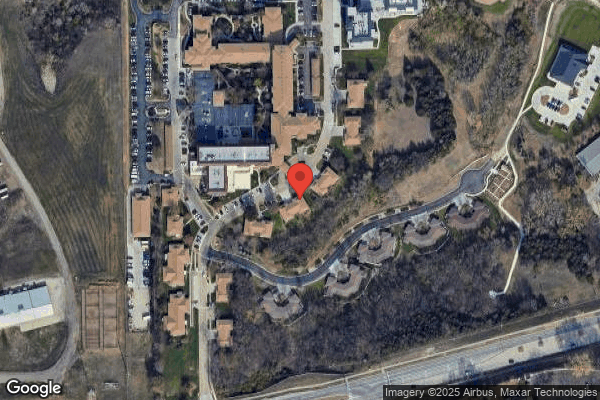
Oct 2021 9 deficiencies
CONCERN (D)

Potential for Harm - no one hurt, but risky conditions existed

Notification of Changes (Tag F0580)

Could have caused harm · This affected 1 resident

**NOTE- TERMS IN BRACKETS HAVE BEEN EDITED TO PROTECT CONFIDENTIALITY** - R28's Physician Order Sheet (POS), dated 04/26/21, documented the resident had a diagnosis of hypertension (high blood pressur...

Read full inspector narrative →
**NOTE- TERMS IN BRACKETS HAVE BEEN EDITED TO PROTECT CONFIDENTIALITY** - R28's Physician Order Sheet (POS), dated 04/26/21, documented the resident had a diagnosis of hypertension (high blood pressure). The Annual Minimum Data Set (MDS), dated [DATE], documented the resident had severely impaired cognition, required extensive assistance of two staff for bed mobility, toileting, transfers and extensive assistance of one staff for dressing and personal hygiene. The Quarterly MDS, dated 07/12/21, documented the same as the 10/29/20 MDS. The Black Box Warning Medication Care Plan, dated 07/27/21, directed staff to administer all medications as ordered and observe for and report alterations, side effects or adverse reactions promptly to nurse and physician accordingly. The Physician's Order, dated 11/03/20, directed staff to obtain blood pressure once a week every Tuesday and notify the physician if the systolic blood pressure (the top number that measures the pressure in the arteries when the heart beats) was less than 110. The Vital Sign Blood Pressure Report, for January, September and October 2021 documented the following blood pressures: 01/29/21 at 06:42 PM 108/620 9/06/21 at 01:56 PM 108/60 10/12/21 at 10:13 AM 100/64 On 10/11/21 at 09:44 AM, observation revealed the resident self-propelled himself out of the dining room. On 10/13/21 at 08:02 AM, Licensed Nurse (LN) K verified the physician had not been notified regarding the three instances the resident's systolic blood pressure was less than 110. On 10/13/21 at 09:19 AM, Administrative Nurse D verified the staff are to notify the physician when the systolic blood pressure was below 110. The facility's Protocol for Notification of a Procedure for Physician Notification, dated November 2014, documented the appropriate procedure for physician notification were timelines of immediate which means, to call the on-call physician immediately and non-immediate means, the nurse shall leave a voicemail or fax the physician immediately and a follow up phone call needs to be made the next business day. The facility failed to notify R28's physician of out of parameter blood pressures, placing the resident at risk for a decline in condition. The facility had a census of 127 residents. The sample included 25 residents with five reviewed for unnecessary medications. Based on observation, record review and interview, the facility failed to notify the physician of Resident (R) 47's heart medications held numerous times due to blood pressure or heart rate below physician ordered parameters, and R28's blood pressures out of physician ordered parameters. Findings included: - The Annual Minimum Data Set (MDS), dated [DATE], recorded R47 had a Brief Interview for Mental Status (BIMS) score of four (severe cognitive impairment), and disruptive behaviors. The MDS recorded R47 required limited staff assistance with most activities of daily living (ADLs), and had diagnoses of atrial fibrillation (irregular, often rapid heart rate that commonly causes poor blood flow), hypertension (elevated blood pressure that can cause heart disease and stroke), congestive heart failure (chronic condition in which the heart doesn't pump blood as well as it should) and coronary artery disease (narrowing of arteries that limits blood flow to the heart). The Medication Care Plan, dated 07/29/21, directed staff to administer R47's medications as ordered by the physician, and monitor the medications for effectiveness, or adverse side effects. The Physician's Order, dated 01/07/20, directed staff to administer Coreg (medication used to treat hypertension and heart failure) 6.25 milligrams (mg) two times a day for R47's hypertension, and to hold the medication if R47's systolic blood pressure (top number measures force as the heart beats) less than 100 and/or heart rate less than 55. The Physician's Order, dated 01/17/20, directed staff to administer digoxin (medication used to treat heart failure and irregular heart rates) 125 (micromilligrams) mcg every morning for R47's atrial fibrillation, and to hold the medication if R47's systolic blood pressure less than 100 and/or heart rate less than 55. Review of the August, September and October 2021 Medication Administration Record (MAR) recorded staff held R47's Coreg medication due to systolic blood pressure was less than 100 or heart rate less than 55 the following number of times: August 2021 - 39 times September 2021 - 24 times October 2021 thru the 12th - seven times Review of the August, September and October 2021 Medication Administration Record (MAR) recorded staff held R47's digoxin medication due to systolic blood pressure was less than 100 or heart rate less than 55 the following number of times: August 2021 - 12 times September 2021 - six times October 2021 thru the 12th - one time On 10/11/21 at 10:13 AM, observation revealed R47 ambulated independently in his wheelchair in the hall. Continued observation revealed R47 well groomed, neatly dressed, and responded appropriately to staff conversation. On 10/12/21 at 02:32 PM, Licensed Nurse (LN) G stated staff had not notified the physician of R47's heart medications held numerous times due to the resident's blood pressure or heart rate below physician ordered parameters. On 10/12/21 at 03:33 PM, Administrative Nurse E stated staff had not notified the physician of R47's heart medications held numerous times due to the resident's blood pressure or heart rate below physician ordered parameters. The facility's Physician Notification, policy, dated November 2014, directed staff to notify the physician, when residents have vital signs outside baseline or normal limits related to adverse medication reactions. The facility failed to notify the physician of R47's heart medications held numerous times due to blood pressure or heart rate below physician ordered parameters, placing the resident at risk for continued adverse medication side effects.
CONCERN (D)

Potential for Harm - no one hurt, but risky conditions existed

Safe Environment (Tag F0584)

Could have caused harm · This affected 1 resident

**NOTE- TERMS IN BRACKETS HAVE BEEN EDITED TO PROTECT CONFIDENTIALITY** The facility had a census of 127 residents. Based on observation, record review, and interview, the facility failed to provide a...

Read full inspector narrative →
**NOTE- TERMS IN BRACKETS HAVE BEEN EDITED TO PROTECT CONFIDENTIALITY** The facility had a census of 127 residents. Based on observation, record review, and interview, the facility failed to provide a safe, functional, sanitary and comfortable environment for the residents that resided in two of the seven households in the facility. Findings included: - On 10/07/21 at 08:30 AM, the initial tour revealed the following: [NAME] Household; R119's carpet area with a large stain on the entrance of the room approximately 12 inches x 18 inches, and numerous circular brownish black stains approximately 1-inch in circumference extending from the entrance of the room to the other side of the room. R38's bed B carpet area with numerous reddish brown stains in front of the wheelchair approximately 4 inches x 2 inches, and brownish black 1 inch x 0.5 inch circular stains in front of the resident's recliner. R98's carpet area with small brownish black spots, 1 inch x 0.5 inch extending from the hall -door entrance to bed B, brownish black stains and a black stain in front of the TV approximately 1 inch x 2 inches. Honstead Household; R13's bed B carpet area with greyish black stains in front of the resident's recliner approximately 12 inches x 6 inches and one brownish black stain approximately 8 inches x 2 inches. R45's bed A carpet area in front of recliner approximately 6 inches x 10 inches with brownish black shoe skid marks and numerous 1-inch x 0.5-inch circular black stains extending from the door entrance to the middle of the room. On 10/07/21 at 10:30 AM, Licensed Nurse (LN) J verified the stains on the carpet and stated the aides would clean and vacuum the rooms and would spot clean carpets when they observed a stain. On 10/12/21 at 03:00 PM, Administrative Staff A verified the above environmental findings and stated they have a carpet cleaning maintenance man who cleaned carpets on a rotating 90 days cycle and verified some of the stains would not come out. Administrative Staff A stated they have the capitol funds to replace the carpet but do not have anywhere to move the residents while the carpet layers are installing the new carpet as they are at full census. The facility's Carpet Cleaning policy dated November 2014, documented once every 90 days the facility's Housekeeping and Laundry Team would spot clean as need and contact the Housekeeping and Laundry Leader for assistance with stains as necessary. The facility failed to provide a safe, functional, sanitary environment, placing the residents who resided in two households in the facility at risk for an unhomelike environment.
CONCERN (D)

Potential for Harm - no one hurt, but risky conditions existed

Transfer Notice (Tag F0623)

Could have caused harm · This affected 1 resident

**NOTE- TERMS IN BRACKETS HAVE BEEN EDITED TO PROTECT CONFIDENTIALITY** The facility had a census of 127 residents. The sample included 25 residents. Based on observation, interview, and record review...

Read full inspector narrative →
**NOTE- TERMS IN BRACKETS HAVE BEEN EDITED TO PROTECT CONFIDENTIALITY** The facility had a census of 127 residents. The sample included 25 residents. Based on observation, interview, and record review, the facility failed to notify the Ombudsman for one sampled resident discharged to the hospital, Resident (R) 126. Findings included: - R126's Physician Order Sheet (POS), dated 05/21/21, documented diagnosis of dementia (progressive mental disorder characterized by failing memory, confusion), cerebral vascular accident (CVA-stroke-sudden death of brain cells due to lack of oxygen caused by impaired blood flow to the brain by blockage or rupture of an artery to the brain), and depression (abnormal emotional state characterized by exaggerated feelings of sadness, worthlessness, emptiness and hopelessness). The admission Minimum Data Set (MDS), dated [DATE] documented the resident had a Brief Interview for Mental Status (BIMS) score of five, indicating severe cognitive impairment. The MDS documented the resident required extensive assistance of one staff with most activities of daily living (ADLs ). The ADL Care Plan, dated 05/30/21 documented the resident had a decline with left side weakness post Cerebral Vascular Accident (CVA). The Nurses Note, dated 08/04/21 at 01:11 PM, documented the resident was very lethargic, refused breakfast. The notes documented the resident opened his eyes to words refused medications and water. Vital signs were within normal limits. The Nurses Note, dated 08/13/21 at 02:41 PM, documented the resident had two episodes of vomiting , lung sounds clear and administered Zofran (medication to prevent nausea and vomiting). The Nurses Note, dated 08/16/21, at 02:13 PM, documented the resident was less responsive, increased pulse and respiratory rattle. Upon assessment the resident was non-responsive to words and touch. The resident's lower extremities were cool to the touch with mottling (blotchy, red-purpolish marbling of the skin due to inadequate circulation) to both knees. The resident had a blood pressure of 138/78 (normal 120/80 mg), pulse 147 beats per minute (bpm-normal resting 60bpm), respirations 20 breaths per minute (normal 12-16 breaths per minute) and oxygen saturation level of 90% (normal 95-100%). The notes documented the facility transported the resident to the hospital. The Nurses Notes, dated 08/17/21 at 08:51 AM, documented the facility received word from the hospital the resident passed away 08/16/21 at 06:15 PM. R123's Medical Record lacked documentation staff notified the ombudsman of the resident's transfer to the hospital. On 10/13/21 at 10:30 AM, Administrative Staff B stated the facility failed to send the ombudsman notice for R126 when he was discharged to the hospital on [DATE], and failed to notify the ombudsmans of anyresident's discharges in July, August, September and until October 13, 2021, but was aware the facility should send the notices. Upon request, the facility was unable to provide a discharge policy. The facility failed to notify the Ombudsman's office of R126's discharge to the hospital, placing the resident at risk to not have the Ombudsman advocate for him.
CONCERN (D)

Potential for Harm - no one hurt, but risky conditions existed

Deficiency F0657 (Tag F0657)

Could have caused harm · This affected 1 resident

**NOTE- TERMS IN BRACKETS HAVE BEEN EDITED TO PROTECT CONFIDENTIALITY** The facility had a census of 127 residents. The sample included 25 residents. Based on observation, record review, and interview...

Read full inspector narrative →
**NOTE- TERMS IN BRACKETS HAVE BEEN EDITED TO PROTECT CONFIDENTIALITY** The facility had a census of 127 residents. The sample included 25 residents. Based on observation, record review, and interview, the facility failed to update and revise the care plan for one of three residents reviewed for pressure ulcers, Resident (R) 63. Findings included: - The Physician Order Sheet dated 10/06/21 recorded diagnoses of dementia (progressive mental disorder characterized by failing memory, confusion), muscle weakness, and chronic peripheral venous insufficiency (abnormal condition affecting the blood vessels that affects blood flow to the extremities). R63's Significant Change Minimum Data Set (MDS), dated [DATE], recorded the resident had a Brief Interview for Mental Status (BIMS) score of 15, which indicated intact cognition. The assessment revealed the resident required limited assistance of one staff for bed mobility, personal hygiene, and limited assistance of two staff for transfers. The MDS further documented the resident had one Stage 3 (full thickness skin loss potentially extending into the subcutaneous tissue layer) pressure ulcer with moisture associated skin damage (MASD: inflammation or skin erosion caused by prolonged exposure to a source of moisture such as urine, stool, sweat, wound drainage, saliva or mucous.) The MDs recorded R63 was at risk for pressure ulcers. He had no venous or arterial ulcers at the time of the assessment. The MDS documented R63 had a pressure reducing device to his bed and wheelchair and was on a turn and repositioning program. R63 did not receive treatments to his feet. The Activities of Daily Living (ADL) Care Area Assessment (CAA), dated 08/18/21, documented the resident had a significant decline post heart attack and hospitalization from 08/05/21 until 08/10/21. The CAA documented the resident was weak, unsteady, and required assistance with ADLs. The Braden Scale Assessment for predicting pressure ulcer risk, dated 08/04/21 and 08/10/21, documented a score of 16.0 which indicated the resident was at risk for pressure ulcer development. The ADL Care Plan, dated 07/14/21 directed the staff to encourage the resident to reposition every two hours, and to encourage good nutrition and hydration to promote healthier skin. The Care Plan directed staff to provide a pressure reducing mattress and pillows to protect R63's skin while in bed. The ADL Care Plan, updated 8/18/21 lacked documentation and interventions regarding the resident's heels, including pressure relieving preventions and treatments to the left heel pressure ulcer. The Progress Note, dated 08/05/21 at 05:31 PM, recorded R63 transferred to the hospital for chest pain and elevated blood pressure. The Progress Note, dated 08/10/21 at 04:00 PM, recorded R63 discharged from the hospital and returned to the facility. The Skin Assessment, dated 08/10/21, documented R63 had one open area noted on his coccyx (a small triangular bone at the base of the spinal column), measuring 2.0 centimeters (cm) x 2.0 cm. The Skin Assessment, dated 08/20/21, documented R63's left heel had bruising which measured 4.0 cm x 3.0 cm. The Weekly Wound Observation Tool, dated 08/23/21, documented the left heel pressure with suspected deep tissue injury (purple or maroon localized area of discolored intact skin or blood-filled blister due to damage of underlying soft tissue from pressure and/or shear) and the area was boggy (mushy, spongy texture), closed, and purple. The form documented staff would provide heel float boots, no shoes or socks when R63 rested, and the resident was not ambulatory. The Progress Note, dated 08/25/21 at 05:01 AM, documented the resident was on alert charting for a left heel pressure ulcer. The notes documented the area was soft, non-blanching, purple discoloration, and moderate amount of serosanguinous (discharge that contains both blood and a clear liquid know as blood serum) drainage on the dressing. The notes recorded R63 had slight discomfort with the dressing change and heel protectors on the resident while in bed. The Weekly Wound Observation Tool dated 08/30/21, documented the left heel pressure ulcer was 5.3 cm x 3.5 cm, purple, boggy, and intact. The Weekly Wound Observation Tool, dated 09/06/21, documented the left heel pressure ulcer 5.3 cm x 3.5 cm, purple, boggy, and intact. The assessment documented staff would apply a heel cup, secure with kerlix gauze, and change every three days. The Weekly Wound Observation Tool, dated 09/27/21, documented the left heel pressure ulcer 5.0 x 3.5 cm, purple with bogginess, hardened, and dark purple. Staff noted an odor on 09/24/21, followed by a physician visit with a wound culture along the unattached edge. The physician ordered the wound covered with a special dressing, a heel cup, secured with gauze, and directed staff to change the dressing every three days. The Weekly Wound Observation Tool, dated 10/04/21, documented the left heel pressure ulcer was 4.0 x 2.0 cm, with slough (a mass of dead tissue separating from an ulcer) noted to the wound bed, wound edges unattached, maceration [skin that is soggy, soft and white in appearance] to the peri wound [tissue surrounding a wound]). A strong, foul odor was present. The physician ordered a wound consult appointment for the resident and documented the resident received doxycycline (antibiotic) and Cipro (antibiotic) for the wound infection. The physician ordered staff to cover with a special dressing, a heel cup, secure with gauze, and dressing change every three days. The Physician Order, dated 10/04/21 ordered staff to consult the wound clinic for suspected deep tissue injury (SDTI) to the left heel. The Weekly Wound Observation Tool, dated 10/08/21, documented the unstageable left heel pressure ulcer measured 3.7 x 2.2 x 0.3 cm, wound edges unattached and macerated. The wound care clinic debrided (the medical removal of dead, damaged, or infected tissue) the wound on 10/06/21. The wound bed had slough, wound edges unattached, macerated with a strong, foul odor. The physician ordered staff to use heel float boots and no shoes or socks when resting. In a letter dated 10/12/21 Consultant HH wrote, based on a review of hospital notes, R63 had developed erythema (redness) on his heels during his second hospital admission along with a sacral ulcer. Due to R63's weakness, he had not been out of bed in several days and required extensive help to transfer. Consultant HH wrote his initial wound assessment revealed the skin on R63's left heel remained intact, however it progressed rapidly to its current state. Consultant HH further wrote based on R63's guarded medical condition, significant weakness, heart failure resulting in poor circulation and poor nutrition, Consultant HH felt the left heel ulcer was unavoidable. On 10/11/21 at 03:00 PM R63 laid in bed on his back. He had a pressure relieving boot on his left heel, but none on his right foot. On 10/12/21 at 08:00 AM, observation revealed the resident laid in bed on his back with the lights off and his eyes closed. R63 laid on a low air loss mattress and had a pressure relieving boot on the left foot only. License Nurse (LN) J removed the resident's pressure relieving boot, sock, gauze, and dressing. Observation revealed a blackened area on the left heel approximately 3.7 x 2.2 centimeters. Continued observation revealed LN J cleansed the area with normal saline, applied skin prep (protective skin barrier) around the wound, then applied a special dressing, a gauze pad, then secured with tape. LN J applied a tube grip dressing, then the resident's sock and the pressure relieving boot to the left foot only. LN J stated R63 only needed a boot on the left heel. On 10/13/21 at 07:45 AM R63 laid in bed with pressure relieving boots on both right and left foot. On 10/12/21 at 03:30 PM, Administrative Nurse D verified the resident was hospitalized from [DATE] thru 08/10/21 after suffering a myocardial infarction (heart attack) at the facility. The resident was re-admitted to the facility on [DATE] with a sacral (wedge like bone at the center of the back) pressure wound. The initial skin assessment on 08/10/21 and weekly skin assessment 8/18/21 lacked any documented skin concerns with the resident's left heel. On 08/20/21 the facility identified a large purple bruise on the residents left heel. Administrative Nurse D verified the resident developed the left heel pressure ulcer after return from his hospital stay. Administrative Nurse D verified the resident skin or pressure ulcer care plan was not updated to document the resident had developed a left heel pressure ulcer with new interventions after development. On 10/13/21 at 07:55 AM LN J stated R63 now had pressure relieving boots on both feet and his plan of care had been updated to reflect the need for the boot to both feet. On 10/14/21 at 04:55 PM Consultant HH stated the facility had their own protocol they followed regarding pressure ulcer prevention and he expected the facility to follow that protocol. Consultant HH stated R63 was at risk for pressure or skin wounds due to his compromised condition after hospitalization. The Pressure Ulcer Prevention, policy dated 11/20/2014, documented the facility utilizes a pressure ulcer prevention and management program to reduce the risk and incidence of pressure ulcers and help maintain residents skin integrity. The facility would provide residents at the facility with proper care while ensuring they are treated with dignity. All residents are assessed at move in for their risk of developing pressure ulcers and plans are implemented to reduce this risk and prevent pressure ulcers. The policy documented upon move-in, all residents/guests shall be provided heel protectors on while in bed, an alternating air mattress on the bed, and a cushion in their chair and/or wheelchair. These interventions are temporary and will be evaluated for appropriateness by the Clinical Coordinator, and they will at this time assess the resident and determine whether to continue the interventions. The policy documented a licensed nurse would conduct a skin assessment on the admission day and weekly thereafter. The facility's Residents Direct Care Plan policy, dated October 2017, documented the Household and/or Clinical Coordinator would serve as the coordinator for the care planning process. The care plan coordinator would implement a system to ensure that the care plans of residents living in the household are reviewed at least every three months and whenever there is a significant change in condition or reassessment performed. The care plan may be amended at any time the team determines it is necessary to ensure the resident receives appropriate care and services. The facility failed to update R63's care plan after he developed a pressure ulcer on his left heel, placing the resident at risk for further skin breakdown.
CONCERN (D)

Potential for Harm - no one hurt, but risky conditions existed

Pressure Ulcer Prevention (Tag F0686)

Could have caused harm · This affected 1 resident

**NOTE- TERMS IN BRACKETS HAVE BEEN EDITED TO PROTECT CONFIDENTIALITY** The facility had a census of 127 residents. The sample included 25 residents with one reviewed for pressure ulcers. Based on obs...

Read full inspector narrative →
**NOTE- TERMS IN BRACKETS HAVE BEEN EDITED TO PROTECT CONFIDENTIALITY** The facility had a census of 127 residents. The sample included 25 residents with one reviewed for pressure ulcers. Based on observation, record review, and interview, the facility failed to initiate interventions according to the standards of care to prevent the development of heel pressure ulcers (localized injury to the skin and/or underlying tissue usually over a boney prominence, as a result of pressure, or pressure in combination with shear and/or friction) for Resident (R) 63 who was at risk for pressure ulcers. Findings included: - The Physician Order Sheet dated 10/06/21 recorded diagnoses of dementia (progressive mental disorder characterized by failing memory, confusion), muscle weakness, and chronic peripheral venous insufficiency (abnormal condition affecting the blood vessels that affects blood flow to the extremities). R63's Significant Change Minimum Data Set (MDS), dated [DATE], recorded the resident had a Brief Interview for Mental Status (BIMS) score of 15, which indicated intact cognition. The assessment revealed the resident required limited assistance of one staff for bed mobility, personal hygiene, and limited assistance of two staff for transfers. The MDS further documented the resident had one Stage 3 (full thickness skin loss potentially extending into the subcutaneous tissue layer) pressure ulcer with moisture associated skin damage (MASD: inflammation or skin erosion caused by prolonged exposure to a source of moisture such as urine, stool, sweat, wound drainage, saliva or mucous.) The MDs recorded R63 was at risk for pressure ulcers. He had no venous or arterial ulcers at the time of the assessment. The MDS documented R63 had a pressure reducing device to his bed and wheelchair and was on a turn and repositioning program. R63 did not receive treatments to his feet. The Activities of Daily Living (ADL) Care Area Assessment (CAA), dated 08/18/21, documented the resident had a significant decline post heart attack and hospitalization from 08/05/21 until 08/10/21. The CAA documented the resident was weak, unsteady, and required assistance with ADLs. The Braden Scale Assessment for predicting pressure ulcer risk, dated 08/04/21 and 08/10/21, documented a score of 16.0 which indicated the resident was at risk for pressure ulcer development. The ADL Care Plan, dated 07/14/21 directed the staff to encourage the resident to reposition every two hours, and to encourage good nutrition and hydration to promote healthier skin. The Care Plan directed staff to provide a pressure reducing mattress and pillows to protect R63's skin while in bed. The ADL Care Plan, updated 8/18/21 lacked documentation and interventions regarding the resident's heels, including pressure relieving preventions and treatments to the left heel pressure ulcer. The Progress Note, dated 08/05/21 at 05:31 PM, recorded R63 transferred to the hospital for chest pain and elevated blood pressure. The Progress Note, dated 08/10/21 at 04:00 PM, recorded R63 discharged from the hospital and returned to the facility. The Skin Assessment, dated 08/10/21, documented R63 had one open area noted on his coccyx (a small triangular bone at the base of the spinal column), measuring 2.0 centimeters (cm) x 2.0 cm. The Skin Assessment, dated 08/20/21, documented R63's left heel had bruising which measured 4.0 cm x 3.0 cm. The Weekly Wound Observation Tool, dated 08/23/21, documented the left heel pressure with suspected deep tissue injury (purple or maroon localized area of discolored intact skin or blood-filled blister due to damage of underlying soft tissue from pressure and/or shear) and the area was boggy (mushy, spongy texture), closed, and purple. The form documented staff would provide heel float boots, no shoes or socks when R63 rested, and the resident was not ambulatory. The Progress Note, dated 08/25/21 at 05:01 AM, documented the resident was on alert charting for a left heel pressure ulcer. The notes documented the area was soft, non-blanching, purple discoloration, and moderate amount of serosanguinous (discharge that contains both blood and a clear liquid know as blood serum) drainage on the dressing. The notes recorded R63 had slight discomfort with the dressing change and heel protectors on the resident while in bed. The Weekly Wound Observation Tool dated 08/30/21, documented the left heel pressure ulcer was 5.3 cm x 3.5 cm, purple, boggy, and intact. The Weekly Wound Observation Tool, dated 09/06/21, documented the left heel pressure ulcer 5.3 cm x 3.5 cm, purple, boggy, and intact. The assessment documented staff would apply a heel cup, secure with kerlix gauze, and change every three days. The Weekly Wound Observation Tool, dated 09/27/21, documented the left heel pressure ulcer 5.0 x 3.5 cm, purple with bogginess, hardened, and dark purple. Staff noted an odor on 09/24/21, followed by a physician visit with a wound culture along the unattached edge. The physician ordered the wound covered with a special dressing, a heel cup, secured with gauze, and directed staff to change the dressing every three days. The Weekly Wound Observation Tool, dated 10/04/21, documented the left heel pressure ulcer was 4.0 x 2.0 cm, with slough (a mass of dead tissue separating from an ulcer) noted to the wound bed, wound edges unattached, maceration [skin that is soggy, soft and white in appearance] to the peri wound [tissue surrounding a wound]). A strong, foul odor was present. The physician ordered a wound consult appointment for the resident and documented the resident received doxycycline (antibiotic) and Cipro (antibiotic) for the wound infection. The physician ordered staff to cover with a special dressing, a heel cup, secure with gauze, and dressing change every three days. The Physician Order, dated 10/04/21 ordered staff to consult the wound clinic for suspected deep tissue injury (SDTI) to the left heel. The Weekly Wound Observation Tool, dated 10/08/21, documented the unstageable left heel pressure ulcer measured 3.7 x 2.2 x 0.3 cm, wound edges unattached and macerated. The wound care clinic debrided (the medical removal of dead, damaged, or infected tissue) the wound on 10/06/21. The wound bed had slough, wound edges unattached, macerated with a strong, foul odor. The physician ordered staff to use heel float boots and no shoes or socks when resting. In a letter dated 10/12/21 Consultant HH wrote, based on a review of hospital notes, R63 had developed erythema (redness) on his heels during his second hospital admission along with a sacral ulcer. Due to R63's weakness, he had not been out of bed in several days and required extensive help to transfer. Consultant HH wrote his initial wound assessment revealed the skin on R63's left heel remained intact, however it progressed rapidly to its current state. Consultant HH further wrote based on R63's guarded medical condition, significant weakness, heart failure resulting in poor circulation and poor nutrition, Consultant HH felt the left heel ulcer was unavoidable. On 10/11/21 at 03:00 PM R63 laid in bed on his back. He had a pressure relieving boot on his left heel, but none on his right foot. On 10/12/21 at 08:00 AM, observation revealed the resident laid in bed on his back with the lights off and his eyes closed. R63 laid on a low air loss mattress and had a pressure relieving boot on the left foot only. License Nurse (LN) J removed the resident's pressure relieving boot, sock, gauze, and dressing. Observation revealed a blackened area on the left heel approximately 3.7 x 2.2 centimeters. Continued observation revealed LN J cleansed the area with normal saline, applied skin prep (protective skin barrier) around the wound, then applied a special dressing, a gauze pad, then secured with tape. LN J applied a tube grip dressing, then the resident's sock and the pressure relieving boot to the left foot only. LN J stated R63 only needed a boot on the left heel. On 10/13/21 at 07:45 AM R63 laid in bed with pressure relieving boots on both right and left foot. On 10/12/21 at 03:30 PM, Administrative Nurse D verified the resident was hospitalized from [DATE] thru 08/10/21 after suffering a myocardial infarction (heart attack) at the facility. The resident re-admitted to the facility on [DATE] with a sacral (wedge like bone at the center of the back) pressure wound. The initial skin assessment on 08/10/21 and weekly skin assessment 8/18/21 lacked any documented skin concerns with the resident's left heel. On 08/20/21 the facility identified a large purple bruise on the residents left heel. Administrative Nurse D verified the resident developed the left heel pressure ulcer after return from his hospital stay. On 10/13/21 at 07:55 AM LN J stated R63 now had pressure relieving boots on both feet and his plan of care had been updated to reflect the need for the boot to both feet. On 10/14/21 at 04:55 PM Consultant HH stated the facility had their own protocol they followed regarding pressure ulcer prevention and he expected the facility to follow that protocol. Consultant HH stated R63 was at risk for pressure or skin wounds due to his compromised condition after hospitalization. The Pressure Ulcer Prevention, policy dated 11/20/2014, documented the facility utilizes a pressure ulcer prevention and management program to reduce the risk and incidence of pressure ulcers and help maintain residents skin integrity. The facility would provide residents at the facility with proper care while ensuring they are treated with dignity. All residents are assessed at move in for their risk of developing pressure ulcers and plans are implemented to reduce this risk and prevent pressure ulcers. The policy documented upon move-in, all residents/guests shall be provided heel protectors on while in bed, an alternating air mattress on the bed, and a cushion in their chair and/or wheelchair. These interventions are temporary and will be evaluated for appropriateness by the Clinical Coordinator, and they will at this time assess the resident and determine whether to continue the interventions. The policy documented a licensed nurse would conduct a skin assessment on the admission day and weekly thereafter. The facility failed to initiate interventions per the standard of care to prevent the development of pressure ulcer to R63's heels. R63, who was at risk for pressure ulcers and required staff assistance for mobility. The facility further failed to identify the risk and implement protective measures for R63's right heel.
CONCERN (D)

Potential for Harm - no one hurt, but risky conditions existed

Accident Prevention (Tag F0689)

Could have caused harm · This affected 1 resident

**NOTE- TERMS IN BRACKETS HAVE BEEN EDITED TO PROTECT CONFIDENTIALITY** The facility had a census of 127 residents. The sample included 25 residents with nine reviewed for accidents. Based on observat...

Read full inspector narrative →
**NOTE- TERMS IN BRACKETS HAVE BEEN EDITED TO PROTECT CONFIDENTIALITY** The facility had a census of 127 residents. The sample included 25 residents with nine reviewed for accidents. Based on observation, record review, and interview, the facility failed to provide adequate supervision and assistance to prevent accidents for one sampled resident, Resident (R) 28. Findings included: - R28's Quarterly Minimum Data Set (MDS), dated [DATE], documented the resident had severely impaired cognition, and required extensive assistance of two staff for bed mobility, transfers, toileting, unsteady balance, no upper or lower functional impairment, and had one injury fall since prior assessment. The Fall Care Assessment (CAA), dated 10/29/20, documented the resident had diagnoses of dementia (progressive mental disorder characterized by failing memory, confusion) and was admitted to a memory secured household to receive assistance with activities of daily living (ADLs) and behavior management. The Fall Risk Assessments, dated 07/09/21 and 10/11/21, documented the resident a high risk for fall. The revised Bladder Incontinence Care Plan, dated 07/27/21, originally dated 12/03/19, directed staff to assist the resident to the restroom every two hours, before any outings, before and after meals, and two times overnight. The update, dated 07/15/21, directed stated to assist the resident to the restroom every three hours, before outings, before and after meals, and two times overnight. The Nurses Note, dated 07/14/21 at 11:45 PM, documented the resident was found on the floor lying on his left side. The resident fell out of his wheelchair and was unable to give a description as to what happened. The note further documented the resident sustained a round abrasion (a superficial rub or wearing off the skin), 2.0 inches x 2.0 inches in size. The note documented staff assisted the resident off the floor with a full body lift and placed back into his wheelchair. The staff then used a sit to stand lift to assist the resident into the bathroom and then to his bed. The Fall Investigation, dated 07/14/21, documented the resident was last toileted at 08:00 PM and was incontinent at the time of the fall. The staff was provided re-education for the intervention. On 10/13/21 at 08:30 AM, CNA N placed a walking belt around the resident's waist and sat the resident on the side of the bed. CNA N and CNA O assisted the resident to stand, pivoted the resident and sat him into his wheelchair. On 10/12/21 at 02:05 PM, Licensed Nurse (LN) K verified staff did not follow the resident's care plan and had not toileted the resident for over three hours prior to R28's fall. LN K stated staff was provided verbal education to provide resident cares prior to taking a break. On 10/12/21 at 02:53 PM, Administrative Nurse D verified the resident had not been toileted per care plan and stated staff had been re-educated on the importance of providing care to the residents before taking a break. On 10/13/21 at 08:11 AM, Certified Nurse Aide (CNA) M stated the resident had fallen and was determined to have gotten up on his own. CNA M stated staff provided toileting to the resident every two hours and as needed. The facility's High Risk for Falls Procedure, dated November 2014, documented all household team members would be notified that a resident was a high risk for falls and specific behavior patterns that could lead to a fall should be identified and provided to team members in the resident's care plan. The facility failed to assist cognitively impaired R28 with toileting as care planned, placing the resident at risk for falls.
CONCERN (D)

Potential for Harm - no one hurt, but risky conditions existed

Drug Regimen Review (Tag F0756)

Could have caused harm · This affected 1 resident

**NOTE- TERMS IN BRACKETS HAVE BEEN EDITED TO PROTECT CONFIDENTIALITY** - R28's Physician Order Sheet (POS), dated 04/26/21, documented the resident had a diagnosis of hypertension (high blood pressur...

Read full inspector narrative →
**NOTE- TERMS IN BRACKETS HAVE BEEN EDITED TO PROTECT CONFIDENTIALITY** - R28's Physician Order Sheet (POS), dated 04/26/21, documented the resident had a diagnosis of hypertension (high blood pressure). The Annual Minimum Data Set (MDS), dated [DATE], documented the resident had severely impaired cognition, required extensive assistance of two staff for bed mobility, toileting, transfers and extensive assistance of one staff for dressing and personal hygiene. The Quarterly MDS, dated 07/12/21, documented the same as the 10/29/20 MDS. The Black Box Warning Medication Care Plan, dated 07/27/21, directed staff to administer all medications as ordered and observe for and report alterations, side effects or adverse reactions promptly to nurse and physician accordingly. The Physician's Order, dated 11/03/20, directed staff to obtain blood pressure once a week every Tuesday and notify the physician if the systolic blood pressure (the top number that measures the pressure in the arteries when the heart beats) was less than 110. The Vital Sign Blood Pressure Report, for January, September and October 2021 documented the following blood pressures: 01/29/21 at 06:42 PM 108/620 09/06/21 at 01:56 PM 108/60 Review of R28's Medication Regimen Reviews for February and September 2021 failed to address the out of parameter blood pressures. On 10/11/21 at 09:44 AM, observation revealed the resident self-propelled himself out of the dining room. On 10/13/21 at 09:19 AM, Administrative Nurse D verified the staff are to notify the physician when the systolic blood pressure was below 110 and expected the Consultant Pharmacist to review the blood pressures and report any that are out of parameter as set by the physician. The facility's Consultation by Pharmacist to Households and Procedures, dated November 2014, documented the Consultant Pharmacist assisted the facility in identifying, evaluating, and addressing medication issues that may affect resident care, medical care, and/or quality of life. The Consultant Pharmacist shall prepare a written report that included findings and recommendations. This report would be provided to the Director of Nursing Services and/or Clinical Coordinator. The facility's Consultant Pharmacist failed to report to the Director of Nursing, medical director and physician, R28's out of parameter blood pressures, placing the resident at risk for a decline in condition. The facility had a census of 127 residents. The sample included 25 residents with five reviewed for unnecessary medications. Based on observation, record review and interview, the facility's consultant pharmacist failed to notify the Director of Nursing, medical director, or physician the lack of a stop date for Resident (R) 47's PRN psychotropic medication, medications held numerous times due to blood pressure or heart rate below physician ordered parameters, and medications administered when blood pressure or heart rate were below physician ordered parameters. The facility's consultant pharmacist also failed to address the lack of physician notification for R28's blood pressures out of physician ordered parameters. Findings included: - The Annual Minimum Data Set (MDS), dated [DATE], recorded R47 had a Brief Interview for Mental Status (BIMS) score of four (severe cognitive impairment), and disruptive behaviors. The MDS recorded R47 required limited staff assistance with most activities of daily living (ADLs), and had diagnoses of atrial fibrillation (irregular, often rapid heart rate that commonly causes poor blood flow), hypertension (elevated blood pressure that can cause heart disease and stroke), congestive heart failure (chronic condition in which the heart doesn't pump blood as well as it should) and coronary artery disease (narrowing of arteries that limits blood flow to the heart). The Medication Care Plan, dated 07/29/21, directed staff to administer R47's medications as ordered by the physician, and monitor the medications for effectiveness, or adverse side effects. The Physician's Order, dated 01/07/20, directed staff to administer Coreg (medication used to treat hypertension and heart failure) 6.25 milligrams (mg) two times a day for R47's hypertension, and to hold the medication if R47's systolic blood pressure (top number measures force as the heart beats) less than 100 and/or heart rate less than 55. The Physician's Order, dated 01/17/20, directed staff to administer digoxin (medication used to treat heart failure and irregular heart rates) 125 (micromilligrams) mcg every morning for R47's atrial fibrillation, and to hold the medication if R47's systolic blood pressure less than 100 and/or heart rate less than 55. The Physician's Order, dated 08/19/20, directed staff to administer alprazolam 0.25 milligrams (mg) every eight hours as needed for R47's anxiety and/or agitation. Review of the August, September and October 2021 Medication Administration Record (MAR) recorded staff held R47's Coreg medication due to systolic blood pressure less than 100 or heart rate less than 55 the following number of times: August 2021 - 39 times September 2021 - 24 times October 2021 until the 12th - seven times Review the of August, September and October 2021 MAR recorded staff administered R47's Coreg medication when his systolic blood pressure less was than 100 or heart rate less than 55 on the following dates: 08/10/21 - blood pressure 92/57 09/10/21 - heart rate 52 09/25/21 - heart rate 52 10/02/21 - blood pressure 98/63 10/12/21 - blood pressure 96/61 Review of the August, September and October 2021 Medication Administration Record (MAR) recorded staff held R47's digoxin medication due to systolic blood pressure was less than 100 or heart rate less than 55 the following number of times: August 2021 - 12 times September 2021 - six times October 2021 until the 12th - one time Review of the August, September and October 2021 MAR recorded staff administered R47's digoxin medication when his systolic blood pressure less than 100 or heart rate less than 55 on the following dates: 08/08/21 - blood pressure 87/51, heart rate 50 08/22/21 - blood pressure 87/54, heart rate 50 09/01/21 - heart rate 50 09/25/21 - heart rate 52 10/12/21 - blood pressure 95/61 Review of the Monthly Pharmacist Medication Regimen Reviews, dated 08/29/20 to 09/30/21 (13 months), lacked documentation R47's PRN alprazolam required a stop date, or physician's rational for extended use. Review of the Monthly Pharmacist Medication Regimen Reviews, dated 08/30/21 and 09/30/21, lacked documentation the pharmacist addressed Coreg and digoxin medications were administered or held when R47's blood pressure and/or heart rate were below physician ordered parameters. On 10/11/21 at 10:13 AM, observation revealed R47 ambulated independently in his wheelchair in the hall. Continued observation revealed R47 well groomed, neatly dressed, and responded appropriately to staff conversation. On 10/12/21 at 02:32 PM, Licensed Nurse (LN) H stated the pharmacist had not addressed R47's PRN psychotropic medication without a stop date, or R47's Coreg or digoxin medication administered or held, when the resident's blood pressure or heart rate were below physician ordered parameters. On 10/12/21 at 03:33 PM, Administrative Nurse E stated the pharmacist had not addressed R47's PRN psychotropic medication without a stop date, or R47's Coreg or digoxin medication administered or held, when the resident's blood pressure or heart rate were below physician ordered parameters. The facility's Monthly Medication Review, policy, dated November 2014, directed the pharmacist to address medications without appropriate indication for use, medications without adequate monitoring, and clinical conditions that indicate adverse medication reactions. The facility's consultant pharmacist failed to notify the Director of Nursing, medical director, or the physician the lack of a stop date for R47's PRN psychotropic medication without a stop date, medications held numerous times due to blood pressure or heart rate below physician ordered parameters, and medications administered when blood pressure or heart rate were below physician ordered parameters, placing the resident at risk to receive unnecessary psychotropic medications and adverse medication side effects.
CONCERN (D)

Potential for Harm - no one hurt, but risky conditions existed

Deficiency F0757 (Tag F0757)

Could have caused harm · This affected 1 resident

**NOTE- TERMS IN BRACKETS HAVE BEEN EDITED TO PROTECT CONFIDENTIALITY** The facility had a census of 127 residents. The sample included 25 residents with five reviewed for unnecessary medications. Bas...

Read full inspector narrative →
**NOTE- TERMS IN BRACKETS HAVE BEEN EDITED TO PROTECT CONFIDENTIALITY** The facility had a census of 127 residents. The sample included 25 residents with five reviewed for unnecessary medications. Based on observation, record review and interview, the facility failed to hold medications when blood pressure and/or pulse were below physician ordered parameters for one sampled resident, Resident (R) 47. Findings included: - The Annual Minimum Data Set (MDS), dated [DATE], recorded R47 had a Brief Interview for Mental Status (BIMS) score of four (severe cognitive impairment), and disruptive behaviors. The MDS recorded R47 required limited staff assistance with most activities of daily living (ADLs), and had diagnoses of atrial fibrillation (irregular, often rapid heart rate that commonly causes poor blood flow), hypertension (elevated blood pressure that can cause heart disease and stroke), congestive heart failure (chronic condition in which the heart doesn't pump blood as well as it should) and coronary artery disease (narrowing of arteries that limits blood flow to the heart). The Medication Care Plan, dated 07/29/21, directed staff to administer R47's medications as ordered by the physician, and monitor the medications for effectiveness, or adverse side effects. The Physician's Order, dated 01/07/20, directed staff to administer Coreg (medication used to treat hypertension and heart failure) 6.25 milligrams (mg) two times a day for R47's hypertension, and to hold the medication if R47's systolic blood pressure (top number measures force as the heart beats) was less than 100 and/or heart rate less than 55. The Physician's Order, dated 01/17/20, directed staff to administer digoxin (medication used to treat heart failure and irregular heart rates) 125 (micromilligrams) mcg every morning for R47's atrial fibrillation, and to hold the medication if R47's systolic blood pressure was less than 100 and/or heart rate less than 55. Review of the August, September and October 2021 Medication Administration Record (MAR) recorded staff administered R47's Coreg medication when his systolic blood pressure less was than 100 or heart rate less than 55 on the following dates: 08/10/21 - blood pressure 92/57 09/10/21 - heart rate 52 09/25/21 - heart rate 52 10/02/21 - blood pressure 98/63 10/12/21 - blood pressure 96/61 Review of the August, September and October 2021 MAR recorded staff administered R47's digoxin medication when his systolic blood pressure was less than 100 or heart rate less than 55 on the following dates: 08/08/21 - blood pressure 87/51, heart rate 50 08/22/21 - blood pressure 87/54, heart rate 50 09/01/21 - heart rate 50 09/25/21 - heart rate 52 10/12/21 - blood pressure 95/61 Review of the Monthly Pharmacist Medication Regimen Reviews, dated 08/30/21 and 09/30/21, lacked documentation the pharmacist addressed Coreg and digoxin medications administered when R47's blood pressure and/or heart rate were below physician ordered parameters. On 10/11/21 at 10:13 AM, observation revealed R47 ambulated independently in his wheelchair in the hall. Continued observation revealed R47 well groomed, neatly dressed, and responded appropriately to staff conversation. On 10/12/21 at 02:32 PM, Licensed Nurse (LN) H stated staff should not administer R47's Coreg or digoxin medication, when the resident's blood pressure or heart rate were below physician ordered parameters. On 10/12/21 at 03:33 PM, Administrative Nurse E stated staff should not administer R47's Coreg or digoxin medication, when the resident's blood pressure or heart rate were below physician ordered parameters The facility's Medication Administration policy, dated November 2014, directed staff to follow physician ordered guidelines when administering medications. The facility failed to hold R 47's medications when blood pressure and/or pulse were below physician ordered parameters, placing the resident at risk for adverse side effects.
CONCERN (D)

Potential for Harm - no one hurt, but risky conditions existed

Medication Errors (Tag F0758)

Could have caused harm · This affected 1 resident

**NOTE- TERMS IN BRACKETS HAVE BEEN EDITED TO PROTECT CONFIDENTIALITY** The facility had a census of 127 residents. The sample included 25 residents with five reviewed for unnecessary medications. Bas...

Read full inspector narrative →
**NOTE- TERMS IN BRACKETS HAVE BEEN EDITED TO PROTECT CONFIDENTIALITY** The facility had a census of 127 residents. The sample included 25 residents with five reviewed for unnecessary medications. Based on observation, record review and interview, the facility failed to ensure a stop date for a PRN (as needed) psychotropic medication (medications that affect a person's mental state) for one of five sampled residents, Resident (R) 47. Findings included: - The Annual Minimum Data Set (MDS), dated [DATE], recorded R47 had a Brief Interview for Mental Status (BIMS) score of four (severe cognitive impairment), and disruptive behaviors. The MDS recorded R47 required limited staff assistance with most activities of daily living (ADLs), and received antipsychotic (class of medication used to treat behavioral and emotional mental conditions) and antidepressant medications (class of medication used to treat mood disorders and relieve symptoms of exaggerated feelings of sadness, worthlessness and emptiness) seven days a week. The Mood and Behavior Care Plan, dated 07/29/21, directed staff to monitor and record R47's target behaviors, administer PRN alprazolam (antianxiety medication to calm and relax people with excessive anxiety, nervousness or tension)as ordered by the physician, and monitor for effectiveness. The Physician's Order, dated 08/19/20, directed staff to administer alprazolam 0.25 milligrams (mg) every eight hours as needed for R47's anxiety and/or agitation. Review of the Monthly Pharmacist Medication Regimen Reviews, dated 08/29/20 to 09/30/21 (13 months), lacked documentation R47's PRN alprazolam required a stop date, or physician's rational for extended use. On 10/11/21 at 10:13 AM, observation revealed R47 ambulated independently in his wheelchair in the hall. Continued observation revealed R47 well groomed, neatly dressed, and responded appropriately to staff conversation. On 10/12/21 at 02:32 PM, Licensed Nurse (LN) G stated R47's PRN psychotropic medication should have a 14 day stop date, or a physician's rationale and order for extended duration of use. On 10/12/21 at 03:33 PM, Administrative Nurse E stated PRN psychotropic medications should have a 14 day stop date, or a physician's rationale and order for extended duration of use. The facility's Psychotropic Medication Monitoring policy, dated October 2017, directed staff to ensure PRN psychotropics had a 14 day stop date, or a physician's rationale for extended duration of use. The facility failed to ensure a stop date for R47's PRN psychotropic medication, placing the resident at risk for receiving unnecessary psychotropic medications.
Understanding Severity Codes (click to expand)
Life-Threatening (Immediate Jeopardy)
J - Isolated K - Pattern L - Widespread
Actual Harm
G - Isolated H - Pattern I - Widespread
Potential for Harm
D - Isolated E - Pattern F - Widespread
No Harm (Minor)
A - Isolated B - Pattern C - Widespread

Questions to Ask on Your Visit

  • "Can I speak with families of current residents?"
  • "What's your RN coverage like on weekends and overnight?"

Our Honest Assessment

Strengths
  • • 44% turnover. Below Kansas's 48% average. Good staff retention means consistent care.
Concerns
  • • 30 deficiencies on record, including 1 serious (caused harm) violation. Ask about corrective actions taken.
Bottom line: Mixed indicators with Trust Score of 73/100. Visit in person and ask pointed questions.

About This Facility

What is Meadowlark Hills's CMS Rating?

CMS assigns MEADOWLARK HILLS an overall rating of 5 out of 5 stars, which is considered much above average nationally. Within Kansas, this rating places the facility higher than 99% of the state's 100 nursing homes. This rating reflects solid performance across the metrics CMS uses to evaluate nursing home quality.

How is Meadowlark Hills Staffed?

CMS rates MEADOWLARK HILLS's staffing level at 5 out of 5 stars, which is much above average compared to other nursing homes. Staff turnover is 44%, compared to the Kansas average of 46%. This relatively stable workforce can support continuity of care.

What Have Inspectors Found at Meadowlark Hills?

State health inspectors documented 30 deficiencies at MEADOWLARK HILLS during 2021 to 2025. These included: 1 that caused actual resident harm and 29 with potential for harm. Deficiencies causing actual harm indicate documented cases where residents experienced negative health consequences.

Who Owns and Operates Meadowlark Hills?

MEADOWLARK HILLS is owned by a non-profit organization. Non-profit facilities reinvest revenue into operations rather than distributing to shareholders. The facility operates independently rather than as part of a larger chain. With 134 certified beds and approximately 117 residents (about 87% occupancy), it is a mid-sized facility located in MANHATTAN, Kansas.

How Does Meadowlark Hills Compare to Other Kansas Nursing Homes?

Compared to the 100 nursing homes in Kansas, MEADOWLARK HILLS's overall rating (5 stars) is above the state average of 2.9, staff turnover (44%) is near the state average of 46%, and health inspection rating (3 stars) is at the national benchmark.

What Should Families Ask When Visiting Meadowlark Hills?

Based on this facility's data, families visiting should ask: "Can I visit during a mealtime to observe dining assistance and food quality?" "How do you handle medical emergencies, and what is your hospital transfer rate?" "Can I speak with family members of current residents about their experience?"

Is Meadowlark Hills Safe?

Based on CMS inspection data, MEADOWLARK HILLS has a clean safety record: no substantiated abuse findings (meaning no confirmed cases of resident harm), no Immediate Jeopardy citations (the most serious violation level indicating risk of serious injury or death), and is not on the Special Focus Facility watch list (a federal program monitoring the lowest-performing 1% of nursing homes). The facility has a 5-star overall rating and ranks #1 of 100 nursing homes in Kansas. While no facility is perfect, families should still ask about staff-to-resident ratios and recent inspection results during their visit.

Do Nurses at Meadowlark Hills Stick Around?

MEADOWLARK HILLS has a staff turnover rate of 44%, which is about average for Kansas nursing homes (state average: 46%). Moderate turnover is common in nursing homes, but families should still ask about staff tenure and how the facility maintains care continuity when employees leave.

Was Meadowlark Hills Ever Fined?

MEADOWLARK HILLS has been fined $8,278 across 1 penalty action. This is below the Kansas average of $33,162. While any fine indicates a compliance issue, fines under $50,000 are relatively common and typically reflect isolated problems that were subsequently corrected. Families should ask what specific issues led to these fines and confirm they've been resolved.

Is Meadowlark Hills on Any Federal Watch List?

MEADOWLARK HILLS is not on any federal watch list. The most significant is the Special Focus Facility (SFF) program, which identifies the bottom 1% of nursing homes nationally based on persistent, serious quality problems. Not being on this list means the facility has avoided the pattern of deficiencies that triggers enhanced federal oversight. This is a positive indicator, though families should still review the facility's inspection history directly.