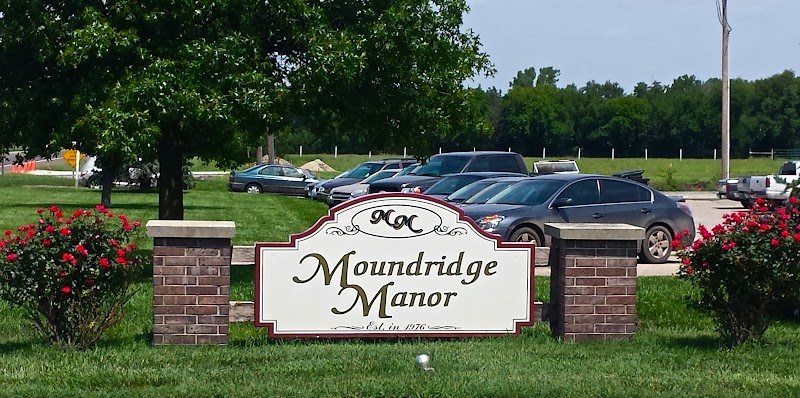
MOUNDRIDGE MANOR

710 N CHRISTIAN AVENUE, MOUNDRIDGE, KS 67107 (620) 345-6364
Non profit - Church related 78 Beds Independent Data: November 2025 1 Immediate Jeopardy citation
Trust Grade
68/100
#29 of 295 in KS
Last Inspection: September 2024

Within standard 12-15 month inspection cycle. Federal law requires annual inspections.

Overview

Moundridge Manor has a Trust Grade of C+, which means it is decent and slightly above average among nursing homes. It ranks #29 out of 295 facilities in Kansas, placing it in the top half, and it is the best option out of seven facilities in McPherson County. The facility is improving, as it reduced the number of issues from five in 2023 to three in 2024. Staffing is a strength, with a 5/5 rating and a low turnover rate of 17%, which is well below the Kansas average, indicating that staff are experienced and familiar with residents. However, the facility has $45,133 in fines, which is concerning and higher than 78% of Kansas facilities, suggesting ongoing compliance issues. Notably, there have been some serious incidents, including a cognitive resident leaving the facility unattended, which presented a significant safety risk. Another resident fell outside alone and suffered serious injuries, demonstrating a lack of adequate supervision. Additionally, a resident fell from a whirlpool chair due to improper securing, resulting in facial injuries. While the facility has strong staffing and is improving overall, these incidents highlight critical areas that need attention to ensure resident safety.

Trust Score
C+
68/100
In Kansas
#29/295
Top 9%
Safety Record
High Risk
Review needed
Inspections
Getting Better
5 → 3 violations
Staff Stability
✓ Good
17% annual turnover. Excellent stability, 31 points below Kansas's 48% average. Staff who stay learn residents' needs.
Penalties
⚠ Watch
$45,133 in fines. Higher than 85% of Kansas facilities, suggesting repeated compliance issues.
Skilled Nurses
✓ Good
Each resident gets 43 minutes of Registered Nurse (RN) attention daily — more than average for Kansas. RNs are trained to catch health problems early.
Violations
○ Average
8 deficiencies on record. Average for a facility this size. Mostly minor or procedural issues.
★★★★★
5.0
Overall Rating
★★★★★
5.0
Staff Levels
★★★★★
5.0
Care Quality
★★★★☆
4.0
Inspection Score
Stable
2023: 5 issues
2024: 3 issues

The Good

  • 5-Star Staffing Rating · Excellent nurse staffing levels
  • 5-Star Quality Measures · Strong clinical quality outcomes
  • Low Staff Turnover (17%) · Staff stability means consistent care
  • Full Sprinkler Coverage · Fire safety systems throughout facility
  • No fines on record
  • Staff turnover is low (17%)

    31 points below Kansas average of 48%

Facility shows strength in staffing levels, quality measures, staff retention, fire safety.

The Bad

Federal Fines: $45,133

Above median ($33,413)

Moderate penalties - review what triggered them

The Ugly 8 deficiencies on record

1 life-threatening 2 actual harm
Sept 2024 3 deficiencies 1 Harm
SERIOUS (G)

Actual Harm - a resident was hurt due to facility failures

Accident Prevention (Tag F0689)

A resident was harmed · This affected 1 resident

**NOTE- TERMS IN BRACKETS HAVE BEEN EDITED TO PROTECT CONFIDENTIALITY** The facility had a census of 71 residents. The sample included 18 residents, with 12 reviewed for accidents. Based on observatio...

Read full inspector narrative →
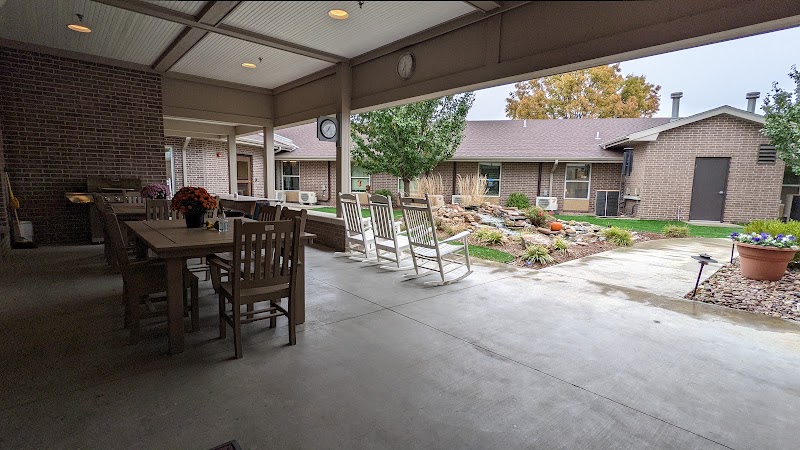
**NOTE- TERMS IN BRACKETS HAVE BEEN EDITED TO PROTECT CONFIDENTIALITY** The facility had a census of 71 residents. The sample included 18 residents, with 12 reviewed for accidents. Based on observation, record review, and interview, the facility failed to provide adequate supervision to ensure a safe environment for Resident (R) 10, after a fall while outside alone. As a result, R10 had a second fall while outside alone resulting in abrasions and a laceration (cut) to his right palm (the underside of the hand), that required sutures (stitches) as well as right rib fractures. The facility also failed to evaluate R17 for his ability to safely handle hot liquids to identify risk and implement interventions and education to prevent accidents. Subsequently, R17 spilled his coffee and sustained multiple burns including a second-degree burn (potentially painful burn that affects the first and second layer of the skin). These failures also placed the residents at risk for increased pain. Findings included: - The Electronic Medical Record (EMR) for R10 documented diagnoses of dementia with behavioral disturbance (a progressive mental disorder characterized by failing memory and confusion), hemiplegia/hemiparesis (weakness and paralysis on one side of the body) affecting the right dominant side, Parkinson's disease (a slowly progressive neurologic disorder characterized by resting tremors, rolling of the fingers, masklike faces, shuffling gait, muscle rigidity, and weakness), and diabetes mellitus (DM-when the body cannot use glucose, not enough insulin is made, or the body cannot respond to the insulin). The Annual Minimum Data Set (MDS), dated [DATE], documented R10 had intact cognition. R10 was independent with all activities of daily living (ADLs) and had no functional impairment. The MDS recorded R10 had one fall with injury since his prior assessment. The Quarterly MDS dated 07/17/24, documented R10 had intact cognition. R10 required substantial assistance with personal hygiene, supervision with dressing, and partial assistance with ambulation. R10 was independent with toileting and mobility and had no functional impairment. The MDS recorded R10 had one fall since his prior assessment. R10's Fall Assessment, dated 04/17/24 and 07/17/24 documented R10 was at high risk for falls. R10's Care Plan updated 04/18/24, documented R10 maintained functional range of motion through his ADLs including going outside per wheelchair to care for his garden when in season. The plan directed R10 transferred himself, and independently ambulated short distances in his room. The update dated 07/11/24 directed staff to do visual checks on R10 every 30 minutes if he was outside during the day and especially at night. The plan documented the resident had a call light pendent to use when going outdoors on the patio. The Fall Investigation, dated 04/15/24 at 08:56 AM, documented R10 self-propelled himself outside in his wheelchair heading to the facility's chicken [NAME] and was going too fast which caused him to fall forward onto his knees. The investigation further documented R10 sustained abrasions (scrapes) to his left knee which measured 1.5 centimeters (cm) by 1.5 cm, and to his right knee which measured 3 cm by 6 cm. Nursing staff assisted R10 to his wheelchair and took him to his room. The investigation documented R10 was alert with cognitive loss and had poor safety awareness and R10 voiced understanding of the need to go slower down the pathway to the chickens and was able to go up and down the sidewalk in his wheelchair safely. Staff were directed to gently guide R10 when he was observed being unsafe as he would often become angry when he felt staff told him what to do. Staff notified R10's physician and family of the fall. The Nurse's Note, dated 04/18/24 at 11:59 AM, documented R10 had right and left knee abrasions. The abrasions were covered with Telfa (a nonstick bandage) and secured with tape. The areas had a small amount of serosanguineous (semi-thick blood-tinged drainage) drainage but had no odor or redness around the wounds. The Nurse's Note, dated 04/18/24 at 11:59 AM, documented R10 had right and left knee abrasions. The abrasions were covered with Telfa (a nonstick bandage) and secured with tape. The areas had a small amount of serosanguineous (semi-thick blood-tinged drainage) drainage but had no odor or redness around the wounds. The Nurse's Note, dated 06/28/24 at 09:11 AM documented the nurse was notified by maintenance staff that R10 was lying on the ground. The nurse observed R10 lying still on his back near the chickens next to his wheelchair. The nurse along with multiple other staff ran to assist the resident. Staff called R10's name and he raised his head and stated yes? There was a large amount of blood noted on the sidewalk, and the resident's hands and clothing. R10's phone was on the ground next to him. Upon assessment the nurse noted a deep laceration across the palm of R10's right hand. The staff assisted R10 into his wheelchair. The resident denied hitting his head, but neurological evaluations were initiated anyway due to the resident was confused at times. The Fall Investigation, dated 06/28/24 at 07:59 AM, documented R10 reported he self-propelled outside to see the chickens when one of his wheels went off the sidewalk which caused him to fall out of his wheelchair. R10 sustained a deep, seven-inch laceration (cut) to his right palm, and pressure was applied. R10 stated he was going too fast when he went down the slight incline of the sidewalk by the chicken [NAME] and he veered off the sidewalk. Staff assisted R10 into his wheelchair and sent him to the hospital for an X-ray (a type of electromagnetic radiation that can pass through most objects to create images of its internal structure) and sutures for his hand. The investigation documented that maintenance would paint caution signs on the sidewalk at the slight incline to serve as a warning for R10 to take precautions when the wheelchair went down the incline or when someone walked on the sidewalk. The X-ray Report, dated 06/28/24, documented there was no fracture of the right hand but documented R10 had multiple chronic right rib fractures. The Physician's Order, dated 06/28/24, directed staff to administer hydrocodone (for moderately severe pain), 5-325 milligrams (mg), one tablet, every four hours for pain. The Nurse's Note, dated 06/29/24, documented R10's right hand was redressed with gauze, Telfa, and a non-stick bandage. The note recorded all 12 sutures were intact, and a moderate amount of bright red blood had seeped through. R10 had hydrocodone twice during the shift for rib and hand pain. The Nurse's Note, dated 06/30/24, documented R10's sutures were intact, and the edges were approximated (to place or bring closer) though his hand was swollen and oozing serosanguinous fluid. On 09/24/24 at 01:05 PM, observation revealed R10 in his wheelchair outside by the chicken [NAME]. The sidewalk by the chicken [NAME] had two yellow painted lines, one at the beginning of the slight incline and one after the incline. R10 propelled himself backward on the sidewalk around the corner to get to the patio. R10 continued to propel himself backward until he got right in front of the entrance door to his household. R10 continued to sit there and watch the chickens. Observation revealed there was no call light pendant visible on R10. On 09/24/24 at 01:00 PM, Certified Nurse Aide (CNA) N stated R10 often went outside to check on the chickens and said the resident was supposed to have a call light pendant with him when he went outside. CNA N then went outside to check R10 and came back and confirmed R10 did not have the pendant all light with him. On 09/24/24 at 01:10 PM, Licensed Nurse (LN) H stated there was always a pendent call light hanging at the entrance of the door to the household for any resident to use to come back inside. When asked how residents call for assistance when they are outside, away from the entrance, and fall if they do not have a call pendant with them, LN H responded That's a good question. On 09/25/24 at 09:00 AM, Administrative Nurse E said staff were to visualize R10 every 30 minutes when the resident was outside. Administrative Nurse E further stated R10 did know the code to get outside, and a pendant call light hung by the door outside so R10 could call for staff to help him back inside once he was outside. On 09/25/24 at 09:49 AM, Administrative Nurse E stated the facility had provided R10 a pendant call light to wear when he was outside and R10 was not happy about it, but agreed to wear it when he was outside. On 09/25/24 at 11:46 AM, Administrative Nurse D stated when R10 fell while he outside alone the first time, staff educated him to slow down when he propelled his wheelchair. Administrative Nurse D verified this was the only intervention implemented after the first non-injury fall outside. Administrative Nurse D said when R10 fell outside again, the staff painted yellow stripes on the sidewalk so he would know when the incline began and ended. Administrative Nurse D stated there was a pendant call light at the door for R10 to use to call staff to let him back into the building. Administrative Nurse D further stated R10 did not always tell staff when he went outside but when the door was opened it alerted to the staffs' radios. Administrative Nurse D said the 30-minute checks were not initially one of the fall interventions until they discussed it and decided to implement it. Administrative Nurse D verified R10 had not been educated on the risks should he decide to not use the pendant call light when he was outside, but stated he would discuss the risks with him and document the conversation in the medical record. The facility's Resident Falls/Accidents policy dated, 07/15, documented that a fall risk assessment would be completed within 7 days of admission and would be reviewed at least every 90 days. A licensed Charge Nurse would investigate each fall, and a review or update in the plan of care would be implemented, all falls would be reviewed weekly by involved staff, and would review interventions, modify interventions, and evaluate the outcomes. The facility failed to provide adequate safety interventions and supervision for R10 in order to promote a safe environment free from accident hazards after R10 had a fall while outside. As a result, R10 had a second fall while outside which resulted in a palm laceration that required sutures as well as identification of multiple right rib fractures. This also placed the resident at risk for increased pain and decreased mobility. - The Electronic Medical Record (EMR) for R17 documented diagnoses of hemiplegia/hemiparesis (weakness and paralysis on one side of the body) affecting the right dominant side, and diabetes mellitus (DM-when the body cannot use glucose, not enough insulin is made, or the body cannot respond to the insulin) with nephropathy. The Quarterly Minimum Data Set (MDS), dated [DATE], documented R17 had intact cognition and was dependent upon staff for dressing, personal hygiene, mobility, transfers, and required set-up assistance for eating. R17 had upper and lower functional impairment on one side. The MDS recorded R17 had no skin issues. R17's Care Plan, dated 07/10/24 and initiated on 04/03/24, documented R17 was on a low concentrated sweet, mechanical-soft diet with cut-up meat. Staff were directed to offer R17 his favorite beverage and provide a plate guard at meals. The care plan lacked interventions related to R17's preference to not use a lid or related to R17's ability to manage hot liquids. R17's clinical record lacked evidence the facility assessed R17's ability to safely handle hot liquids. The Physician's Orders, dated 09/03/24, directed staff to administer hydromorphone (used for moderate to severe pain), 4 milligrams (mg), one tablet, by mouth, every 2 hours as needed for pain. The facility Investigation, dated 09/08/24 at 12:29 PM, documented the Certified Nurse Aide (CNA) gave R17 his coffee and walked out of the room. The CNA heard a noise, went back into the room, and noted R17 had spilled his coffee. Staff removed the covers and applied cold compresses to R17's left upper inner thigh and left groin area as both areas were red. R17's left upper thigh had five blisters; one was open, and the area was 17 centimeters (cm) long. Staff called the doctor who ordered a moisture barrier. R17 also had a 19.5 cm red area to his left palm and forearm with a width of 3 cm in the palm that tapered to 0.5 cm on the forearm. R17 had discoloration to his left thumb area of 1.5 cm by 1 cm. The investigation noted that R17 stated he had done it himself. A Physician's Orders, dated 09/08/24, directed staff to apply Z-Guard (topical barrier medication to treat burns), apply to the red and blistered areas on R17's upper leg, every day, for seven days until healed. This was discontinued on 09/09/24. The Investigation Follow Up, dated 09/09/24, documented R17 stated he had taken his coffee in his right hand and was going to put it to his lips when his elbow caught in the halo rail on his bed, and he spilled his coffee. R17 stated he tried to move the blanket away but was unable to get it moved fast enough. The investigation noted that R17 stated he drinks his coffee without a lid and wanted to have his coffee very hot despite the offer to provide cooler coffee. The investigation noted the facility implemented an intervention to place a Chux (an absorbent pad that protects furniture and bedding from leaks) on R17 to cover his body when he was drinking hot liquid in his room. The resident also agreed to use a lid on his coffee, however, he tended to dribble all over and wondered if there was a sippy cup or something to trial. The investigation documented that the dietary department evaluated the coffee coming out of the pot and it had a temperature of 145-149 degrees Fahrenheit which was not adjusted due to the resident's request for his coffee to remain at that temperature. The staff were directed to use a two-handled cup with a lid that had four tiny holes in it for hot liquids for R17. The Nurse's Notes, dated 09/09/24 at 10:17 AM, documented the facility called for an appointment with the physician for a follow-up on R17's burn. The Nurse's Note, dated 09/09/24 at 10:58 AM, documented that in the past R17 wished to drink his coffee from a cup without a lid but was willing to try a lid on it. The note documented R17 would use a Chux barrier when drinking hot liquids. The Nurse's Note, dated 09/09/24 at 11:00 AM, documented R17's upper left leg was assessed after his bath and had a raw, open area to his inner thigh near the scrotum that measured 3 cm by 3.5 cm, with a small amount of serosanguineous (semi-thick blood-tinged drainage) drainage. The area above it had a T-shaped intact blister which measured 5 cm by 3.5cm, and the surrounding area was difficult to assess as there was Z-Guard ointment on it. The Physician's Order, dated 09/10/24, directed staff to apply Z-Guard to the red and blistered areas on R17's upper leg, daily for seven days, and chart measurements of the wound on Mondays and Thursdays after his bath. This was discontinued on 09/15/24. The Physician's Order, dated 09/11/24, directed staff to apply Silvadene External Cream (topical antimicrobial cream used for the prevention and treatment of second and third-degree burns), apply topically, every 12 hours, as needed for red areas with blisters. The Nurse's Note, dated 09/17/24 at 01:39 PM, documented R17's burn to the inside of his left palm measured 2 cm by 1 cm, and the top of his thumb had a 1 cm scabbed area. The left leg area continued to measure the same and had no drainage, and staff would continue to monitor. On 09/24/24 at 08:15 AM, observation revealed a two-handled cup with a lid on R17's bedside table to the right of him. Continued observation at 08:27 AM, revealed R17 sat in a Broda chair (a special chair with the ability to tilt and recline), his left arm rested on a pillow. Licensed Nurse (LN) G, with a gloved hand, pulled down R17's pants, which revealed a healing, darkened area approximately six inches long and two to three inches wide at the widest part on his left upper thigh. R17 also had a scabbed area on his thumb that covered the entire area on the outer portion of his thigh. R17 stated he had been in his bed and went to reach for his coffee from the bedside table and his elbow hit the halo rail which caused his coffee to spill. R17 stated it was his fault, not the facility's and he had removed the lid. R17 stated he liked his coffee very hot and did not like to have a lid on his cup. On 09/24/24 at 08:30 AM, LN G stated R17 liked to remove the lid from his coffee cup but stated he would not remove the lids anymore since he was burned and has started to use cups with lids. On 09/24/24 at 01:10 PM, CNA M stated R17 always removed the lid from his cups but since he was burned, he used a cup with a lid and a barrier on his lap. On 09/24/24 at 03:15 PM, Administrative Nurse F stated R17's Care Plan had not been updated yet, but staff were provided communication cards that informed them to use cups with lids and to use the Chux for R17. Administrative Nurse F said the facility's policy was that the communication cards were part of the resident's medical record and at that time did not know when the care plan would be updated with interventions to prevent further injury or burns. Administrative Nurse F verified the facility did not assess any residents for safe abilities to handle hot liquids. On 09/24/24 at 03:20 PM, Administrative Nurse D stated that the facility had not documented the risks of R17 drinking hot coffee without the lid because R17 was capable of drinking without spilling. Administrative Nurse D said the event was an accident and the coffee would have spilled even if a lid was on the cup. Administrative Nurse D further stated Dietary BB stated when R17's coffee was brought to him, there was a lid on it strictly for transport from the kitchen to the room but R17 would remove the lid because he liked to drink without a lid getting in the way. Administrative Nurse D stated R17 liked his coffee very hot and the coffee from the pot was temped at 145-149 degrees Fahrenheit after the incident. Administrative Nurse D stated R17 wanted to continue to receive very hot coffee but the facility had not discussed and documented any risks or hazards of injury should he remove the lid from the coffee cup and spill it on himself. Administrative Nurse D stated R17 was cognitively intact and was capable of knowing that he could spill the coffee therefore staff did not feel it was necessary to discuss identify risks and implement anything or educate R17; the resident would know it was a possibility if he removed the lid. The facility's Resident Falls/Accidents policy, dated 07/15, documented the facility provides a safe environment and monitors, evaluates, and modifies interventions. A licensed Charge Nurse would investigate each fall or accident, and a review or update in the plan of care would be implemented, all falls, and accidents would be reviewed weekly by involved staff, and would review interventions, modify interventions, and evaluate the outcomes. The facility failed to assess R17's ability to handle hot liquids to identity risks and implement safety intervention including education for the resident regarding potential hazards. As a result, R17 spilled his coffee and sustained second degree burns. This also placed R17 at risk for increased pain.
CONCERN (D)

Potential for Harm - no one hurt, but risky conditions existed

Deficiency F0849 (Tag F0849)

Could have caused harm · This affected 1 resident

**NOTE- TERMS IN BRACKETS HAVE BEEN EDITED TO PROTECT CONFIDENTIALITY** The facility had a census of 71 residents. The sample included 18 residents with one reviewed for hospice (a type of health care...

Read full inspector narrative →
**NOTE- TERMS IN BRACKETS HAVE BEEN EDITED TO PROTECT CONFIDENTIALITY** The facility had a census of 71 residents. The sample included 18 residents with one reviewed for hospice (a type of health care that focuses on the terminally ill patient's pain and symptoms and attending to their emotional and spiritual needs at the end of life) services. Based on observation, record review, and interview, the facility failed to ensure a coordinated plan of care, which coordinated care and services provided by the facility with the care and services provided by hospice, was developed and available for Resident (R)42. This placed the resident at risk for inappropriate end-of-life care. Findings included: - R42's Electronic Health Record (EHR) revealed diagnoses of malignant neoplasm prostate (cancer, tumor in the gland of the male reproductive system), left ventricular failure (heart failure), and morbid obesity (weight more than 100 pounds over the ideal body weight). R42's Quarterly Change Minimum Data Set (MDS), dated [DATE], recorded R42 had a Brief Interview for Mental Status score of 15 and was cognitively intact. The MDS recorded he required extensive assistance of two staff with bed mobility and transfers and maximal assistance with Activities of Daily Living (ADLs). The MDS documented the resident received hospice services. R42's Care Plan, dated 07/24/24, recorded that R42 required extensive assistance with most activities of daily living (ADL) care. R42's Care Plan documented the resident was admitted to hospice on 01/15/24. The care plan documented GSH but did not document what the abbreviation stood for. The care plan directed the staff to administer the medications ordered and notify the physician if there is breakthrough pain. The care plan lacked instruction on the services provided by hospice visits, supplies and medical equipment provided by hospice, medications covered by hospice, and the hospice provider including their address and phone number. A review of R42's clinical record revealed the resident was admitted to hospice care on 01/15/24. The facility had a plan of care provided by the hospice in a communication book. On 09/24/24 at 02:30 PM, R42 sat in an electric scooter propelling himself throughout the A hall and down the common halls. The resident stopped and visited with staff and other residents. On 09/24/24 at 02:30 PM, Administrative Nurse D verified the facility lacked specific information on the facility care plan that coordinated with the hospice care plan. The Hospice Services policy, dated October 2017, documented the facility would arrange the provision of hospice services through an agreement with one or more Medicare-certified hospices. The facility would ensure that the hospice services would meet professional standards and principles that apply to individuals providing services in the facility, and to the timeliness of services. The facility would have a timely agreement with the hospice that is signed by an authorized representative of the hospice and an authorized representative of the facility before hospice care is furnished to any resident. The written agreement would set out the services the hospice would provide and determine the hospice's responsibility to determine the appropriate hospice plan of care. The services the facility would continue to provide are based on each resident's plan of care. A communication process, including how the communication would be documented between the facility and the hospice provider, to ensure the needs of the resident are addressed and met 24 hours a day. The unit manager would be responsible for working with hospice representatives to coordinate care to the residents provided by facility staff and hospice staff. The unit manager would collaborate with hospice representatives and coordinate facility staff participation in the hospice care planning process. Communicate with hospice representatives and health care providers and ensure quality care for the resident and family. Hospice would provide the most recent plan of care specific to each resident and a provision that hospice assumes responsibility for determining the appropriate course of hospice care, including the determination to change the level of services provided. The unit manager would be responsible for working with hospice representatives to coordinate care to the residents provided by the facility staff and hospice staff. The unit manager would ensure that each resident's written care plan includes both the most recent hospice care plan and a description of services furnished by the facility to attain the resident's highest practicable physical, mental, and psychosocial well-being. The facility failed to coordinate care between the facility and the hospice provider for R42, who received hospice services. This deficient practice placed him at risk for inappropriate end-of-life care.
CONCERN (E)

Potential for Harm - no one hurt, but risky conditions existed

Deficiency F0804 (Tag F0804)

Could have caused harm · This affected multiple residents

The facility had a census of 71 residents. The sample included 18 residents. Seven residents received ground meat. Based on observation, record review, and interview, the facility failed to serve pala...

Read full inspector narrative →
The facility had a census of 71 residents. The sample included 18 residents. Seven residents received ground meat. Based on observation, record review, and interview, the facility failed to serve palatable food during the noon meal for two of the residents in the facility who received ground meat from the facility kitchen. This placed the residents at risk for foodborne illness and decreased quality of life. Findings included: - The 09/24/24 lunch menu recorded hamburgers, baked beans, potato chips, and ice cream. On 09/24/24 at 11:50 AM, observation during the noon meal revealed seven portions of ground hamburger placed on the steam table to be served. Further observation revealed Dietary CC scooped out a portion of the ground hamburger, placed it on the bun, and scooped out a portion of baked beans on the same plate. Further observation revealed another dietary aide placed lettuce, tomato, and onion on the plate and sat it at the kitchen window to be served. Observation revealed Dietary CC did this again for another resident. Observation revealed Dietary CC had not checked the ground meat temperature after she had taken it out of the oven. When asked, Dietary CC stated she would assess the temperature if the surveyor wanted her to. Continued observation revealed Dietary CC took a thermometer, placed it into the ground meat, and then started to scoop out another portion of the ground hamburger. Upon further question regarding the temperature Dietary CC stated the temperature of the ground hamburgers was 132 degrees Fahrenheit. When asked what the correct holding/serving temperature for the meat is, Dietary CC stated, I don't know, should I heat it in the microwave? Dietary CC then requested assistance from the Certified Dietary Manager (CDM), Dietary BB. Dietary CC returned and stated she should place the ground hamburger in the microwave, as it needed to be heated to 165 degrees Fahrenheit. Dietary CC placed the meat in the microwave, and it took two attempts at reheating to get the meat up to a servable temperature. On 09/24/24 at 12:15 PM, Dietary BB stated the ground hamburger meat should not have been served if it was not at the appropriate temperature. The facility's Food Temperatures policy, dated 11/2017, documented that all hot food items must be cooked to appropriate internal temperatures and held until serving at a temperature of 140 degrees or above. A thermometer must be used to check the internal temperature of foods. Temperatures are taken at the beginning and in the middle of serving to ensure hot foods stay above 140 degrees and cold foods stay below 41 degrees during the holding and plating process. The facility failed to ensure the holding temperature of ground meat was at or above 140 degrees, to ensure appropriate palatability as well as inhibit the growth of bacteria. This placed the residents at risk for foodborne illness and decreased quality of life.
Apr 2023 1 deficiency 1 IJ
CRITICAL (J) 📢 Someone Reported This

A family member, employee, or ombudsman was alarmed enough to file a formal complaint

Immediate Jeopardy (IJ) - the most serious Medicare violation

Accident Prevention (Tag F0689)

Someone could have died · This affected 1 resident

The facility identified a census of 77 residents. The sample included three residents reviewed for accidents. Based on observation, record review, and interviews, the facility failed to provide adequa...

Read full inspector narrative →
The facility identified a census of 77 residents. The sample included three residents reviewed for accidents. Based on observation, record review, and interviews, the facility failed to provide adequate supervision to prevent an elopement (when a cognitively impaired resident leaves the facility without staff knowledge) for cognitively impaired Resident (R)1, who was at high risk for falls and had recent exit seeking comments and behaviors. The facility staff last saw R1 in the library on 04/08/23 at 05:45 PM. Around 05:55 PM, R1's pressure alarm in her wheelchair sounded and staff began looking for her. During this time, R1 propelled herself out the front door in her wheelchair, following another resident's family member through the automatic doors. At 05:58 PM, an off-duty employee drove by the facility and observed R1 in the [NAME] employee parking lot, where R1 ambulated in the parking lot while pushing her wheelchair. The off-duty employee called the facility to report the unsupervised resident in the parking lot and facility staff ran outside to redirect R1. As staff approached R1, the resident took five steps into the street, which had posted speed limits of 35 to 45 miles per hour. The facility's failure to provide adequate supervision to prevent R1's elopement, placed R1 in immediate jeopardy. Findings included: - R1's Electronic Medical Record (EMR) documented diagnoses of dementia (progressive mental disorder characterized by failing memory, confusion) with behavioral disturbance, chronic pain, and restless and agitation. The Annual Minimum Data Set (MDS) dated 12/07/22, documented a Brief Interview for Mental Status score of 99. Per staff interview the resident had short- and long-term memory problems and severely impaired decision-making skills. She had inattention and disorganized thinking intermittently. R1 exhibited rejection of care behaviors one to three days in the seven-day lookback period. R1 required extensive assistance with one staff for bed mobility, transfers, walking, locomotion, dressing, toileting, and personal hygiene. R1 had one noninjury fall since the last assessment and did not wear an elopement alarm. The Quarterly MDS dated 03/08/23, documented a BIMS score of 99. Per staff interview the resident had short- and long-term memory problems and severely impaired decision-making skills. R1 exhibited delusions, rejection of care behaviors one to three days, and wandering behaviors one to three days in the seven-day lookback period. R1 required extensive assistance with one staff for bed mobility, transfers, walking, locomotion, dressing, toileting, and personal hygiene. R1 had no falls since the last assessment and did not wear an elopement alarm. The Cognitive Loss/Dementia Care Area Assessment (CAA) dated 12/07/22, directed R1 had dementia with behaviors. The Interdisciplinary Plan of Care dated 12/14/22, documented R1 had an unsteady gait, agitation and restlessness, poor memory, balance problems when standing/walking, and was unaware of personal safety. The Care Plan directed R1 was unaware of her personal safety and chooses to transfer/ambulate independently at times and staff were to be alert and intervene. The Care Plan did not address R1's wandering and exit seeking comments and/or behaviors. A Fall Risk Evaluation completed on 03/08/23, documented R1 had a fall risk score of 19 which indicated she was a high risk for falls. A Risk of Elopement/Wandering Review completed on 03/15/23, directed a Yes for questions five, six, seven, or nine, automatically placed the resident at risk. R1's review documented a Yes for question six; she verbally expressed the desire to go home, packed belongings to go home, or stayed near exit door. Additional comments on the review documented R1 made recent comments about wanting to go home. She needed assistance with transfers and ambulation. She had a pressure alarm to her bed, recliner, and wheelchair with no concerns for a risk of elopement. A Nursing Note on 02/24/23 at 09:00 PM, documented R1 was calm, in a pleasant and cooperative mood until approximately 07:15 AM when she became agitated and adamant that she was to go home. R1 continued to rise from her chair and attempted to walk unassisted to the front door. Staff attempted to reassure and redirect R1 by helping her to her room then taking her to the coffee shop and visiting with her. R1 was undeterred. R1's family member was contacted and gave some recommendations for staff to try. A Nursing Note on 04/03/23 at 07:39 PM, documented R1 was noted wandering in the halls and exit seeking after supper. She was pleasant and easily redirected. A Nursing Note on 04/08/23 at 08:59 PM, documented at 05:30 PM that evening, Licensed Nurse (LN) G noted R1 attempted to stand up from her wheelchair at the dining room table. LN G assisted R1 out of the dining room, per her request, and down the hall to her room. R1 was asked if she needed the bathroom but declined and stated she wanted to leave the facility and voiced the staff do not like her. LN G redirected R1 by talking about her family and after a few minutes, was called away to help another resident. R1 asked if LN G could show her where the door was and LN G noted she was slowly circling the library area in her wheelchair, as per her usual after supper routine. At 05:50 PM, LN G was talking to a Certified Nursing Aides (CNA) when R1's pressure alarm sounded on the radio. LN G and two CNAs began searching for R1 in the Fireside room and residents' rooms on hall three and four. At 05:58 PM, while searching rooms on hall three, LN G received a phone call from an off-duty employee who reported she drove by the facility and saw R1 in front of the [NAME] entrance on the sidewalk. LN G and a CNA ran to the [NAME] entrance and observed R1 walking at a brisk pace, as she pushed her wheelchair down the northbound shoulder of the street, about five or six steps from the entrance to the [NAME] parking lot, before staff intervened. The staff assisted R1 into her wheelchair and back into the facility shortly after 06:00 PM. The evening weather conditions were mild, and traffic was light at the time of the incident. A skin assessment revealed no bruises or other injuries noted to R1. The facility's Investigation dated 04/13/23, documented on 04/08/23, R1's pressure alarm from her wheelchair alarmed around 05:55 PM. R1 had been in the library in her wheelchair when staff last noticed her at 05:45 PM. When the pressure alarm began alarming, LN G and three CNA/Certified Medication Aides (CMA) started looking in the vicinity of the library including R1's adjacent halls, fireside room, and resident rooms. At 05:58 PM, an off-duty employee called the facility and reported she saw R1 out in the [NAME] employee parking lot, pushing her wheelchair. Staff observed R1 took five steps off the facility property into the street. R1 wore a long-sleeved blouse, jeans, and shoes; the temperature was 70 degrees Fahrenheit with clear weather and light traffic on the road. Staff easily directed R1 to sit in her wheelchair and brought her back into the facility around 06:00 PM. After the incident, staff placed an elopement alarm bracelet on R1's wheelchair and walker. According to the Kansas State University Historical Weather website, the temperature in the area at 05:00 PM was 70.4 degrees Fahrenheit and at 06:00 PM was 69.3 degrees Fahrenheit. On 04/18/23 at 11:06 AM, the surveyor observed the path taken by R1 from the front door of the facility through the [NAME] employee parking lot to the entrance onto the street. The sidewalk and parking lot were in good condition. The street to the side of the facility was a frequently travelled street as the highway transitioned into it. The posted speed limits were 45 mph on the highway and transitioned to 35 mph shortly before the entrance to the [NAME] employee parking lot. On 04/18/23 at 01:01 PM, R1 laid in bed with her eyes open. She conversed with the surveyor but was unable to carry on a complete conversation. On 04/18/23 at 09:33 AM, Administrative Nurse D stated the front door required a code to exit but was an automatic door from the outside. On 04/08/23, a resident's family member triggered the automatic door from the outside. R1 self-propelled in her wheelchair down the sidewalk, to the [NAME] employee parking lot, then ambulated while pushing her wheelchair towards the street, and made a few steps into the street. He stated he asked several staff if R1 had ever attempted to exit before and they said she had not. Administrative Nurse D said R1 was not an elopement risk at the time, but was now. On 04/18/23 at 11:41 AM, CMA R stated on 04/08/23, R1 sat in her wheelchair in the hall and about five to 10 minutes later, she was missing. CMA R stated she went down each hall looking for her when someone realized R1 was outside. CMA R stated if a resident eloped, staff looked for the resident right away. CMA R stated in the past, R1 stated she wanted to go home and had tried to go outside once several months ago. On 04/18/23 at 11:48 AM, LN G stated on 04/08/23 at 05:30 PM, she walked into the dining room and observed R1 trying to stand up. She went over to R1, who was not overly agitated at that point, and asked her what she needed. R1 stated she was trying to get out of there. LN G brought R1 out of the dining room and to her room but R1 did not want to go in her room and had stated she wanted to get out of the facility. LN G stated the best thing to do with R1 was redirection, so she talked about R1's family with her. LN G saw another resident down the hall who needed some assistance and she told R1 she had to go assist that resident. R1 stated she would follow her. R1 followed LN G to the library area at the end of the hallway and started wheeling herself around the library. LN G stated she got busy with something else and was talking to other staff when R1's pressure alarm sounded on the radio. Staff began looking for R1 down her hallway and the adjacent hallway. While LN G was on the adjacent hallway, she received a phone call from an off-duty staff member who told her R1 was at the west entrance parking lot, unattended, and had taken five to six steps onto the shoulder of the street. She stated she and another staff member ran to the [NAME] parking lot. LN G stated a few vehicles were going by but stopped when they saw R1. Staff brought R1 inside and LN G assessed her skin. R1 did not have any injuries from the incident. LN G stated on 04/03/23, R1 was asking to leave but was not actually sitting by a door, she had asked where the nearest exit was. She said no other staff reported hearing exit seeking comments to her, regarding R1. LN G did not think R1 was capable to get out of the front door. On 04/18/23 at 12:17 PM, Administrative Nurse D stated he had talked with LN G about R1's previous behaviors and LN G stated R1 would wheel herself around to doorways and stand up, aimlessly wandering rather than intentional exit seeking. He stated if residents were observed by a doorway with an intent to get out, it would have been discussed in a team meeting and the resident would probably be placed on an elopement risk. Administrative Nurse D stated he had never seen R1 by a door and had asked several staff members and charge nurses who had not seen R1 near a door recently. An elopement bracelet was checked for functionality, then put into place for R1. He stated she had never attempted to leave so he did not necessarily feel right away that it was R1's intent to leave. When R1 made comments about leaving, she would stand up and her pressure alarm would go off, but she would not go anywhere. The facility's Elopement of Residents policy, last revised August 2015, directed residents who developed wandering behaviors after admission were to be reassessed and appropriate interventions initiated. The facility failed to provide adequate supervision for cognitively impaired R1, who made exit seeking comments and behaviors. R1 eloped from the facility on 04/08/23 without staff knowledge and was able to ambulate five to six steps into the street, before staff intervened. This deficient practice placed R1 in immediate jeopardy. The facility completed the following corrections by 04/10/23: On 04/08/23, elopement bracelets were placed on R1's wheelchair and walker. On 04/08/23, education posted to staff: code alert elopement bracelet placed on R1's walker and wheelchair. Please be vigilant to her whereabouts every 30 minutes. On 04/10/23, R1 placed on elopement list for all staff at multiple locations for reference. Care plan was updated with elopement bracelet on wheelchair and walker and directed staff to know R1's whereabouts every 30 minutes during the day and evening. This deficient practice was cited at past non-compliance.
Mar 2023 4 deficiencies 1 Harm
SERIOUS (G)

Actual Harm - a resident was hurt due to facility failures

Accident Prevention (Tag F0689)

A resident was harmed · This affected 1 resident

**NOTE- TERMS IN BRACKETS HAVE BEEN EDITED TO PROTECT CONFIDENTIALITY** The facility had a census of 78 residents. The sample included 18 residents, with five reviewed for accidents. Based on observat...

Read full inspector narrative →
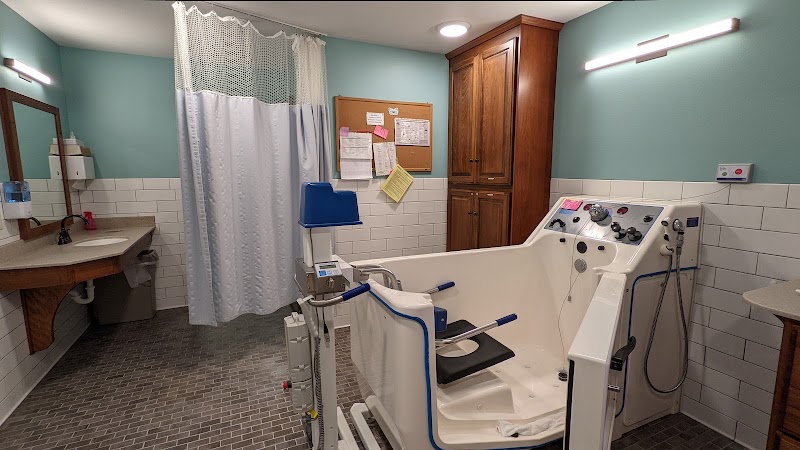
**NOTE- TERMS IN BRACKETS HAVE BEEN EDITED TO PROTECT CONFIDENTIALITY** The facility had a census of 78 residents. The sample included 18 residents, with five reviewed for accidents. Based on observation, record review, and interviews, the facility failed to prevent an avoidable accident when staff failed to ensure Resident (R) 20 was secured in the whirlpool seat and failed to provide adequate assistance and/or supervision. As a result of the failures, R20 fell out of the whirlpool chair and sustained facial injuries which required emergency treatment and sutures (stitches.) The facility further failed to follow R31's plan of care, resulting in two falls. The deficient practice placed R31 at risk for further falls and avoidable injuries. Findings included: - R20's Electronic Medical Record (EMR) recorded diagnoses of Parkinson's disease (slowly progressive neurological disorder characterized by resting tremor, rolling of the fingers, masklike faces, shuffling gait, muscle rigidity and weakness), osteoarthritis (degenerative changes to one or many joints characterized by swelling and pain), hypotension (low blood pressure), and depression (abnormal emotional state characterized by exaggerated feelings of sadness, worthlessness, emptiness, and hopelessness. The Significant Change Minimum Data Set (MDS), dated [DATE], documented R20 had severely impaired cognition and was dependent on two staff for bed mobility, transfers, ambulation, toileting, personal hygiene, and bathing. The MDS further documented R20 had unsteady balance and two or more non-injury falls. R20's Quarterly MDS, dated 03/01/23, documented R20 had long and short-term memory problems, moderately impaired decision-making skills, and was dependent upon two staff for transfers, bathing, and required extensive assistance of two staff for bed mobility, toileting, and personal hygiene. The MDS further documented R20 had unsteady balance, and two or more non-injury falls. The Fall Care Area Assessment [CAA], dated 06/01/22, documented R20 had diagnoses of Parkinson's disease, depression, osteoarthritis, and hypotension which predisposed him to falls. The CAA further stated R20 no longer ambulated, and he used a Broda chair (special positioning wheelchair) for locomotion. The Fall Assessments, dated 06/08/22, 09/07/22, 11/30/22, and 03/01/23, all documented R20 was a high risk for falls. The Care Plan, dated 06/08/22, documented R20 had balance problems when standing and transferring. He had a bed alarm, low bed, wedge cushion, and floor mat, and he sat in Broda chair with a reclining back. R20 had a pressure reducing seat, both side supports, and foot supports for out of bed positioning. The care plan further documented R20 required assistance with whirlpool baths. The update dated 08/10/22 documented R20 received bed baths. The Fall Investigation, dated 08/10/22 at 08:50 AM, documented the bath aide was getting ready to dry R20. R20 leaned forward and fell to the floor. The investigation further documented the whirlpool belt was placed around the resident. The investigation documented R20 received a laceration (cut) to his left forehead that measured 4.8 centimeters (cm) by 2.3 cm, a laceration under his left eye which measured 2.4 cm, and an abrasion (scrape) to his left knee that measured 3.5 cm by 2.5 cm. The resident was assessed and sent to the emergency room for evaluation. The Nurse's Note, dated 08/10/22 at 02:47 PM, documented at 08:50 AM the nurse was summoned to the whirlpool room, and observed R20 lying on his left side, bleeding from his head. The noted further documented R20 would not respond when asked questions related to the fall. Staff assisted R20 to a seated position and noted his range of motion to all extremities was intact as well as his limbs could passively be moved. The note documented staff transferred R20 to his Broda chair with a full mechanical lift and staff applied pressure to his facial injuries as well as an ice pack. The note documented R20 was sent to the emergency room via van. R20's family was notified. The Physician Orders, dated 08/10/22, documented R20 received sutures to his left forehead, and directed staff to follow up in 14 days for suture removal. The order directed staff to wash the lacerations gently with soap and water twice daily, and pat dry. R20 should not tub bathe until after the sutures were removed. Apply a cold pack for 20-30 minutes and remove it for at least 30 minutes. The Nurse's Note, dated 08/10/22 at 04:16 PM, documented R20 had a bruise to his left eye that circled the eye and was mostly red with some purple. R20's stitches were intact without drainage and were covered with a nonstick dressing, as R20 picked at the wound. The Charge Nurse Treatment Record, dated August 2022 documented staff monitored R20's lacerations to the left forehead, beneath his left eye, and the abrasion to his left knee daily. This was discontinued 08/31/22. The Nurse's Note, dated 08/19/22, documented R20 had his sutures removed and the laceration below his eye was completely healed. On 03/14/23 at 08:15 AM, observation revealed R20 slept in his Broda chair. Certified Nurse Aide (CNA) H woke the resident to tell him staff were going to transfer him into bed. Further observation revealed CNA H and CNA I attached the lift sling onto the full mechanical lift, raised R20, and transferred him to his bed. Continued observation revealed CNA H and CNA I removed the lift sling, changed R20's incontinence brief, and positioned him on his left side. The staff lowered R20's to the ground, placed a positioning wedge behind his back, under the sheet, and a pillow between his legs. CNA, I made sure R20 had his call light and the fall matt was placed beside the bed. On 03/14/23 at 08:20 AM, CNA H stated R20 used to try to get out of bed unassisted and would fall, but R20 had not done so in quite a while. CNA H further stated R20 did not try to get out of bed anymore as his Parkinson's had progressed and he was on comfort care. On 03/14/23 at 03:44 PM, Administrative Nurse E stated R20 was in the whirlpool chair (on 08/10/22) and CNA M applied the whirlpool belt like a transfer belt but did not realize that because there were not teeth on the whirlpool belt buckle, it did not hold the belt in place. Administrative Nurse E stated he educated all bath aides and had them demonstrate back to him the proper way to attach the belt. Administrative Nurse E said he hung pictures for demonstration in the whirlpool room. On 03/15/23 at 07:45 AM, CNA M stated she finished giving R20 a whirlpool bath and went to the towel warmer to get towels. When CNA M turned around, she saw R20 slowly fall forward through the belt. CNA M stated she did not get to him quick enough before he fell to the floor. CNA M stated R20 had been leaning to the left in the chair prior to his fall. CNA M stated she had two days of orientation in the spa room and had not had specific training on how to secure the belt but right after the incident, they demonstrated how to properly secure the belt and provided pictures in the spa room to make sure it was done correctly. She said she had to demonstrate how to secure the belt. CNA M stated she felt horrible that this happened to R20. On 03/15/23 at 01:00 PM, Licensed Nurse (LN) G stated R20 fell from the whirlpool chair and received sutures at the emergency room but could not remember how many sutures he had. LN G stated staff monitored R20 daily for infection and stated it was double layered with sutures and glue and was not a very large laceration. On 03/15/23 at 01:30 PM, Administrative Nurse D stated they had debated on whether to send R20 to the emergency room after the fall because the family did not feel it was necessary to do so, but she felt he needed to be assessed and treated. Administrative Nurse D stated CNA M was new when the incident happened and anyone that worked as a bath aide received training. Administrative Nurse D provided two pages of documentation of the bath aide training, which did state to make sure the seat belt was secure to get the resident out of the whirlpool tub. The facility's Bathing Protocol for Cascade Aqua-Aire Bath System dated March 2019, documented make sure the seat pad is securely latched in position onto the chair frame, lock the caster brakes before the resident sits in the transfer lift chair, secure the belt around the resident's torso, the strap may be loosened during the whirlpool if you deem the resident safe, The protocol further documented do not leave resident unattended during the whirlpool or while on the chair with belt secured and use the call button to ask for help. Make sure the seat belt is secure to get the resident out of the tub. The facility failed to ensure R20 was properly secured and adequately supervised in the whirlpool spa chair. As a result, R20 fell out of the whirlpool chair to the floor and sustained facial injuries, which required sutures. - The Electronic Medical Record (EMR) documented R31 had diagnoses of low back pain, edema (swelling), heat failure (a chronic condition in which the heart doesn't pump blood as well as it should), and cerebrovascular accident (CVA-loss of blood flow to part of the brain, which damage brain tissue). The Quarterly Minimum Data Set (MDS), date 01/04/23, documented R31 had intact cognition and required extensive assistance of one staff for bed mobility, transfers, ambulation, dressing, toileting, and personal hygiene. The MDS further documented R31 had unsteady balance, no functional impairment, and no falls. The Fall Assessments, dated 12/22/22 and 01/04/23, documented R31 was a high risk for falls. R31's Care Plan, dated 10/13/22, documented R31 was a high risk for falls due to her unawareness of personal safety. She was on the falling star program, had a pressure alarm on the bed, wheelchair and her recliner. R31's Care Plan directed staff to keep her door open, check on her frequently, ensure her call light was within reach, assist with activities of daily living, transfer and ambulate with a gait belt, front wheeled walker and assistance of one staff. The update, dated 11/01/22, documented R31 ambulated to and from meals as tolerated per assistance of one staff using a gait belt, a front wheeled walker, and directed staff to bring along her wheelchair. The update, dated 01/14/23, directed staff to place a tabs alarm to her clothing when R31 was in the bathroom. The Fall Investigation, dated 01/07/23 at 03:10 PM, documented a Certified Nurse Aide (CNA) was with the resident in her room, and the resident was lying on her left side on the floor in her bathroom doorway. R31 told staff she was washing her hands, turned to place the towel in the trash, and lost her balance. The investigation further documented R31 received a superficial skin tear which measured 2 centimeters (cm) c 2 cm to her right lower extremity and a purple raised area to the top of her hand which measured 2 cm x 4 cm. The investigation documented R31 was care planned to use a gait belt with transfers, pressure alarm in place to all surfaces, a tabs alarm when the resident was in the bathroom. There was a reminder in the communication book to use a gait belt for all transfers and to stay with the resident when she was at the bathroom sink or anytime she was not in her chair as she was a high all risk. The Nurse's Note, dated 01/07/23 at 03:10 PM, documented the CNA stated she was in R31's room to assist her to the bathroom and asked the resident if she needed a gait belt, in which R31 replied No so no gait belt was used. The CNA further stated that she assisted R31 with personal care and R31 stated she needed to wash her hands. The CNA was in the resident's room, near the bathroom when the resident fell. R31 was assisted by three staff and a gait belt to her chair and stated she did not hit her head. The Fall Investigation, dated 02/01/23 at 01:55 PM, documented staff transferred R31 from her wheelchair to her recliner without a gait belt. R31 lost her balance and fell over on her left side. The investigation further documented R31 was assisted by two staff and a gait belt to her chair. The investigation documented R31 was care planned to use the gait belt for transfers and ambulation and this was not being followed. A reminder note was placed in the CNA communication book to use a gait belt for all transfers and if the resident refused, kindly remind her the gait belt was needed for safety. On 03/14/23 at 11:25 AM, observation revealed CNA I placed a gait belt around R31's waist, cued R31 to stand slowly, turn and R31 sat down in the wheelchair. On 03/14/23 at 07:55 AM, CNA H stated R31 had falls and staff used the gait belt to transfer and ambulate her. CNA H further stated R31 had alarms for her bed, chairs and in the bathroom. On 03/14/23 at 09:38 AM, Licensed Nurse (LN) J stated R31 just wanted to get up by herself so staff checked on her frequently; R31had an alarm. LN J further stated R31 had intact cognition but had problems remembering to call for help. On 03/14/21 at 11:25 AM, R31 stated she had a dumb brain and stated she did dumb things. R31 stated staff knew how she was, laughed and said it was nothing to worry about. On 03/ 14/23 at 03:00 PM, Administrative Nurse D stated staff did not follow the care plan and were given reminders to make sure they use the gait belt with R31 as she was a high fall risk. The facility Fall Precautions policy, dated July 2015, documented the facility ensures safe practices and environment for prevention of falls and interventions to reduce falls/injuries. The facility identify residents at risk for falls on admission and every 90 days, supervise and check on residents routinely, practice wheelchair safety, gait belts will be used for residents when needed, and would be assessed for appropriate fall prevention methods, The Falls and incidents would be monitored for frequency, time of day, reason, and appropriate interventions implemented, All falls, accidents and incidents would be reviewed weekly at risk management committee with follow up of interventions. The facility failed to follow R31's care plan of using a gait belt during transfers and ambulation, resulting in non-injury falls. This placed the resident at risk for avoidable injury.
CONCERN (D)

Potential for Harm - no one hurt, but risky conditions existed

Deficiency F0661 (Tag F0661)

Could have caused harm · This affected 1 resident

**NOTE- TERMS IN BRACKETS HAVE BEEN EDITED TO PROTECT CONFIDENTIALITY** The facility had a census of 78 residents. The sample included 18 residents. Based on record review and interview, the facility ...

Read full inspector narrative →
**NOTE- TERMS IN BRACKETS HAVE BEEN EDITED TO PROTECT CONFIDENTIALITY** The facility had a census of 78 residents. The sample included 18 residents. Based on record review and interview, the facility failed to develop a discharge summary for Resident (R)77, reviewed for discharge, that included a recapitulation (a concise summary of the resident's stay and course of treatment in the facility) of the resident's stay. This placed the resident at risk for unmet care needs. Findings included: - R77's Electronic Medical Record revealed the resident admitted to the facility on [DATE]. The admission Minimum Data Set (MDS), dated [DATE], documented R77 had intact cognition, and required extensive assistance of one to two staff with activities of daily living. The MDS further documented R77 received occupational and physical therapy and had an active discharge plan to return to the community. The POC (Plan of Care) Note, dated 01/27/23 at 03:34 PM, documented R77 received skilled care with occupational and physical therapy, and had no falls. R77 had reduced dizziness and was assisted with activities of daily living. R77 received pain medication as needed. The Social Service Worker Note, dated 01/31/22 at 11:40 AM, documented the staff member met with R77 to discuss possible upcoming discharge to home. The Nurse Progress Note, dated 02/10/23, documented R77 was discharged to home with spouse, and the discharged plan was filed in the chart. R77's clinical record lacked a discharge summary and a recapitulation. On 03/15/23 at 09:10 AM, Administrative Nurse D verified the unit managers were responsible to do the discharge and the discharge summary/recapitulation had been overlooked and not completed. The Discharge or Transfer of Resident policy, date 11/2017, documented residents will be assessed regarding their discharge goals, preferences and care needs to meet their goals. A discharge summary will be completed upon discharge to include a recapitulation of the resident's stay in the facility. The facility failed to develop a discharge summary that included a recapitulation of the resident's stay for R77. This placed the resident at risk for unmet care needs.
CONCERN (D)

Potential for Harm - no one hurt, but risky conditions existed

Drug Regimen Review (Tag F0756)

Could have caused harm · This affected 1 resident

**NOTE- TERMS IN BRACKETS HAVE BEEN EDITED TO PROTECT CONFIDENTIALITY** The facility had a census of 78 residents. The sample included 18 residents, with five reviewed for unnecessary medications. Bas...

Read full inspector narrative →
**NOTE- TERMS IN BRACKETS HAVE BEEN EDITED TO PROTECT CONFIDENTIALITY** The facility had a census of 78 residents. The sample included 18 residents, with five reviewed for unnecessary medications. Based on observation, interview and record review, the facility's Consultant Pharmacist failed to identify and report to the Director of Nursing (DON), facility medical director, and physician, an inappropriate indication for R52's use of an antipsychotic medication (class of medications used to treat any major mental disorder characterized by a gross impairment in reality testing and other mental emotional conditions). This placed the resident at risk for inappropriate use of an antipsychotic medication with side effects. Findings included: - R52's Electronic Medical Record (EMR) recorded diagnoses of dementia (progressive mental disorder characterized by failing memory, confusion), behavioral disturbance (progressive mental disorder characterized by failing memory, confusion), restlessness and agitation. R52's Annual Minimum Data Set (MDS), dated [DATE], documented the resident had severely impaired cognition. R52 required extensive staff assistance with bed mobility, transfers, dressing, toilet use and personal hygiene. The MDS further documented R52 received an antipsychotic medication daily during the look back period. R52's Cognitive Care Area Assessment (CAA), date 12/13/22, documented R52 had a diagnosis of dementia with behaviors, received antipsychotic medications, and had agitation and restlessness. R52's Cognitive Loss Care Plan, dated 12/14/22 documented R52 received Risperdal (an antipsychotic medication) with the following Black Box warning (BBW-strictest warning placed in the labeling of prescription drugs or drug products by the Food and Drug Administration [FDA] when there is reasonable evidence of an association of a serious hazard with the drug). Risperdal increased mortality (death) in the elderly with dementia related psychosis. The Physician Order, dated 09/26/22, directed the staff to administer Risperdal 0.25 milligrams by mouth twice daily for agitated behaviors due to dementia. Review of R52's Medication Administration Record (MAR) revealed the resident received the medication twice daily. The Consultant Pharmacist (CP) medication reviews for the months of October and November 2022 documented no irregularities in the resident's drug regimen. The CP reviews for December 15, 2022 documented the resident was on Risperdal. The recommendation recorded thee use of antipsychotics for diagnoses other than schizophrenia, (psychotic disorder characterized by gross distortion of reality, disturbances of language and communication and fragmentation of thought), Huntington's (rare abnormal hereditary condition characterized by progressive mental deterioration; a disabling central nervous system movement disorder ) or Tourette's (neurological condition that causes unwanted, involuntary muscle movements and sounds known as tics was discouraged and could lead to a reduced star rating and fines for the facility. Antipsychotics for behavior of dementia show a 35 percent (%) increase in mortality and 50% increase in hospitalization. The CP review for January and February 2023, documented no irregularities in the resident's drug review. On 03/09/23 at 02:45 PM, observation revealed R52 sat at the dining room table in a wheelchair eating lunch. On 03/15/23 at 09:00 AM, Administrative Nurse D verified the inappropriate diagnosis of agitated behaviors due to dementia for the resident's use of the Risperdal, and the pharmacist recommendations which lacked monthly recommendation related to the inappropriate diagnoses for the use of the Risperdal. The facility's Psychotropic Medication Use policy, dated November 2018, recorded each resident's drug regimen would be free of unnecessary drugs. The policy would ensure that the medication regimen was managed and monitored to promote or maintain the resident's highest practicable mental, physical, and psychosocial well-being, as identified by the resident and/or representative(s) in collaboration with the attending physician and facility staff. The policy documented the residents who have not used psychotropic drugs were not given those drugs unless the medication is necessary to treat a specific condition as diagnoses and documented in the clinical record. The facility's Drug Regimen Review, dated August 2017, recorded a licensed pharmacist would review the residents drug regimen including the resident's chart at least monthly. The consulting pharmacist may need to conduct the medication regimen review more frequently depending on the resident's condition, review of short stay residents at risk of adverse consequences. The licensed pharmacist would report in writing, and irregularities to the attending physician, the facility medical doctor, and the director of nursing, to be acted upon. The monthly review would try to minimize or prevent adverse medication consequences, as well as potential for adverse drug reactions and medication errors. The facility failed to ensure the CP identified and made recommendations to the facility DON, medical director, and physician regarding the inappropriate diagnosis of antipsychotic medication, Risperdal. This placed the resident at risk for inappropriate use of an antipsychotic medication with side effects.
CONCERN (D)

Potential for Harm - no one hurt, but risky conditions existed

Medication Errors (Tag F0758)

Could have caused harm · This affected 1 resident

**NOTE- TERMS IN BRACKETS HAVE BEEN EDITED TO PROTECT CONFIDENTIALITY** The facility had a census of 78 residents. The sample included 18 residents, of which five residents were reviewed for unnecessa...

Read full inspector narrative →
**NOTE- TERMS IN BRACKETS HAVE BEEN EDITED TO PROTECT CONFIDENTIALITY** The facility had a census of 78 residents. The sample included 18 residents, of which five residents were reviewed for unnecessary medications. Based on observation, record review and interview the facility failed to ensure an appropriate indication for the use of antipsychotic medications (class of medications used to treat psychosis [any major mental disorder characterized by a gross impairment in reality testing] and other mental illness conditions) for Resident (R)52. This placed the resident at risk for unnecessary side effects related to antipsychotic use. Findings included: - R52's Electronic Medical Record (EMR) recorded diagnoses of dementia (progressive mental disorder characterized by failing memory, confusion), behavioral disturbance (progressive mental disorder characterized by failing memory, confusion), restlessness and agitation. R52's Annual Minimum Data Set (MDS), dated [DATE], documented the resident had severely impaired cognition. R52 required extensive staff assistance with bed mobility, transfers, dressing, toilet use and personal hygiene. The MDS further documented R52 received an antipsychotic medication daily during the look back period. R52's Cognitive Care Area Assessment (CAA), date 12/13/22, documented R52 had a diagnosis of dementia with behaviors, received antipsychotic medications, and had agitation and restlessness. R52's Cognitive Loss Care Plan, dated 12/14/22 documented R52 received Risperdal (an antipsychotic medication) with the following Black Box warning (BBW-strictest warning placed in the labeling of prescription drugs or drug products by the Food and Drug Administration [FDA] when there is reasonable evidence of an association of a serious hazard with the drug). Risperdal increased mortality (death) in the elderly with dementia related psychosis. The Physician Order, dated 09/26/22, directed the staff to administer Risperdal 0.25 milligrams by mouth twice daily for agitated behaviors due to dementia. Review of R52's Medication Administration Record (MAR) revealed the resident received the medication twice daily. On 03/09/23 at 02:45 PM, observation revealed R52 sat at the dining room table in a wheelchair eating lunch. On 03/15/23 at 09:00 AM, Administrative Nurse D verified the inappropriate diagnosis of agitated behaviors due to dementia for the resident's use of the Risperdal medications. The facility's Psychotropic Medication Use policy, dated November 2018, recorded each resident's drug regimen would be free of unnecessary drugs. The policy would ensure that the medication regimen was managed and monitored to promote or maintain the resident's highest practicable mental, physical, and psychosocial well-being, as identified by the resident and/or representative(s) in collaboration with the attending physician and facility staff. The policy documented the residents who have not used psychotropic drugs were not given those drugs unless the medication is necessary to treat a specific condition as diagnoses and documented in the clinical record. The facility's failed to have an appropriate indication for the use of the antipsychotic medication, Risperdal for R52 placing the resident at risk for side effects.
Understanding Severity Codes (click to expand)
Life-Threatening (Immediate Jeopardy)
J - Isolated K - Pattern L - Widespread
Actual Harm
G - Isolated H - Pattern I - Widespread
Potential for Harm
D - Isolated E - Pattern F - Widespread
No Harm (Minor)
A - Isolated B - Pattern C - Widespread

Questions to Ask on Your Visit

  • "What changes have you made since the serious inspection findings?"
  • "Can I speak with families of current residents?"
  • "What's your RN coverage like on weekends and overnight?"

Our Honest Assessment

Strengths
  • • 17% annual turnover. Excellent stability, 31 points below Kansas's 48% average. Staff who stay learn residents' needs.
Concerns
  • • Multiple safety concerns identified: 1 life-threatening violation(s), 2 harm violation(s), $45,133 in fines, Payment denial on record. Review inspection reports carefully.
  • • 8 deficiencies on record, including 1 critical (life-threatening) violation. These warrant careful review before choosing this facility.
  • • $45,133 in fines. Higher than 94% of Kansas facilities, suggesting repeated compliance issues.
Bottom line: Mixed indicators with Trust Score of 68/100. Visit in person and ask pointed questions.

About This Facility

What is Moundridge Manor's CMS Rating?

CMS assigns MOUNDRIDGE MANOR an overall rating of 5 out of 5 stars, which is considered much above average nationally. Within Kansas, this rating places the facility higher than 99% of the state's 100 nursing homes. This rating reflects solid performance across the metrics CMS uses to evaluate nursing home quality.

How is Moundridge Manor Staffed?

CMS rates MOUNDRIDGE MANOR's staffing level at 5 out of 5 stars, which is much above average compared to other nursing homes. Staff turnover is 17%, compared to the Kansas average of 46%. This relatively stable workforce can support continuity of care.

What Have Inspectors Found at Moundridge Manor?

State health inspectors documented 8 deficiencies at MOUNDRIDGE MANOR during 2023 to 2024. These included: 1 Immediate Jeopardy (the most serious level, indicating potential for serious harm or death), 2 that caused actual resident harm, and 5 with potential for harm. Immediate Jeopardy findings are rare and represent the most serious regulatory concerns. They require immediate corrective action.

Who Owns and Operates Moundridge Manor?

MOUNDRIDGE MANOR is owned by a non-profit organization. Non-profit facilities reinvest revenue into operations rather than distributing to shareholders. The facility operates independently rather than as part of a larger chain. With 78 certified beds and approximately 76 residents (about 97% occupancy), it is a smaller facility located in MOUNDRIDGE, Kansas.

How Does Moundridge Manor Compare to Other Kansas Nursing Homes?

Compared to the 100 nursing homes in Kansas, MOUNDRIDGE MANOR's overall rating (5 stars) is above the state average of 2.9, staff turnover (17%) is significantly lower than the state average of 46%, and health inspection rating (4 stars) is above the national benchmark.

What Should Families Ask When Visiting Moundridge Manor?

Based on this facility's data, families visiting should ask: "What changes have been made since the serious inspection findings, and how are you preventing similar issues?" "Can I visit during a mealtime to observe dining assistance and food quality?" "How do you handle medical emergencies, and what is your hospital transfer rate?" "Can I speak with family members of current residents about their experience?" These questions are particularly relevant given the facility's Immediate Jeopardy citations.

Is Moundridge Manor Safe?

Based on CMS inspection data, MOUNDRIDGE MANOR has documented safety concerns. Inspectors have issued 1 Immediate Jeopardy citation (the most serious violation level indicating risk of serious injury or death). The facility has a 5-star overall rating and ranks #1 of 100 nursing homes in Kansas. Families considering this facility should ask detailed questions about what corrective actions have been taken since these incidents.

Do Nurses at Moundridge Manor Stick Around?

Staff at MOUNDRIDGE MANOR tend to stick around. With a turnover rate of 17%, the facility is 29 percentage points below the Kansas average of 46%. Low turnover is a positive sign. It means caregivers have time to learn each resident's needs, medications, and personal preferences. Consistent staff also notice subtle changes in a resident's condition more quickly. Registered Nurse turnover is also low at 8%, meaning experienced RNs are available to handle complex medical needs.

Was Moundridge Manor Ever Fined?

MOUNDRIDGE MANOR has been fined $45,133 across 3 penalty actions. The Kansas average is $33,530. While any fine indicates a compliance issue, fines under $50,000 are relatively common and typically reflect isolated problems that were subsequently corrected. Families should ask what specific issues led to these fines and confirm they've been resolved.

Is Moundridge Manor on Any Federal Watch List?

MOUNDRIDGE MANOR is not on any federal watch list. The most significant is the Special Focus Facility (SFF) program, which identifies the bottom 1% of nursing homes nationally based on persistent, serious quality problems. Not being on this list means the facility has avoided the pattern of deficiencies that triggers enhanced federal oversight. This is a positive indicator, though families should still review the facility's inspection history directly.