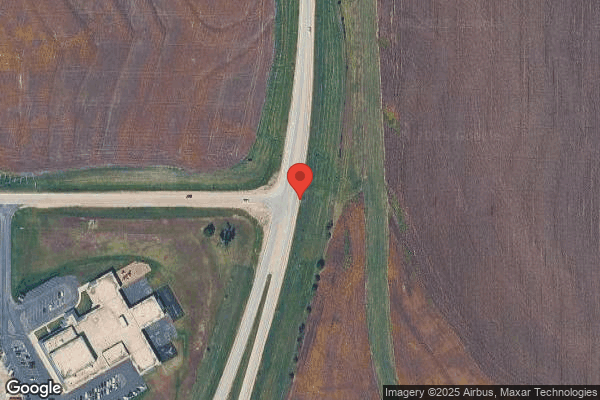
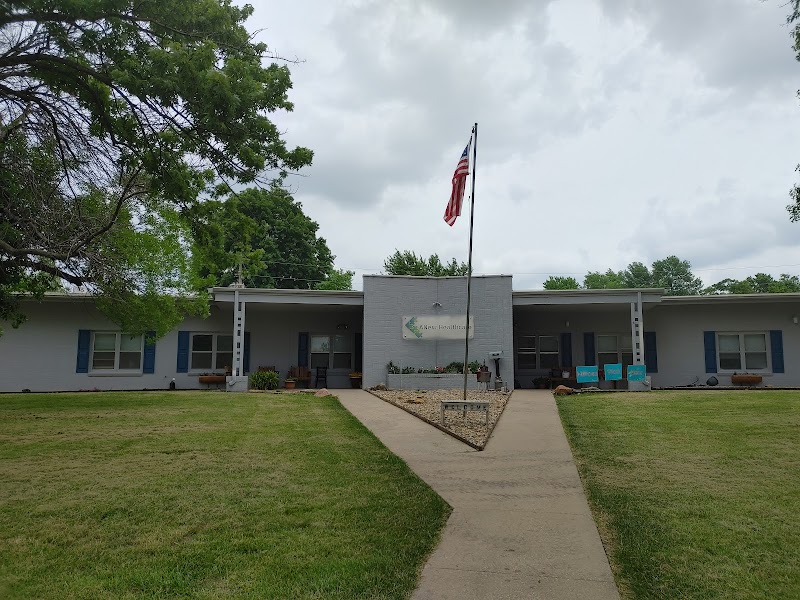
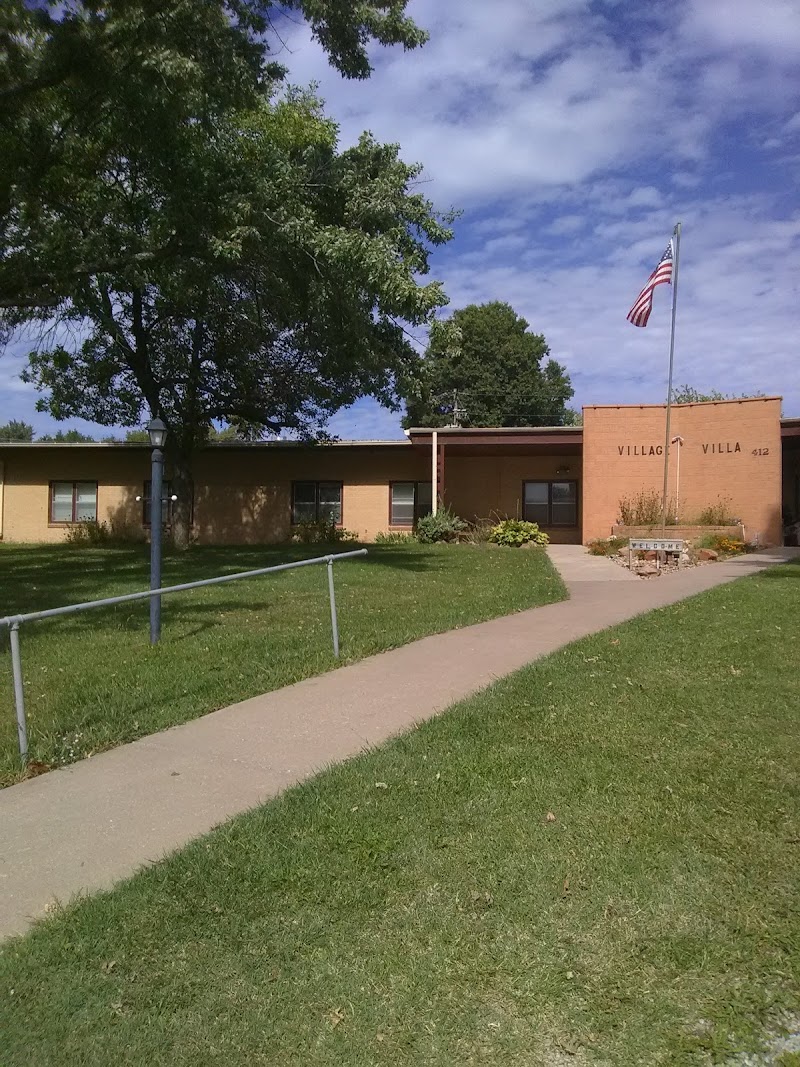
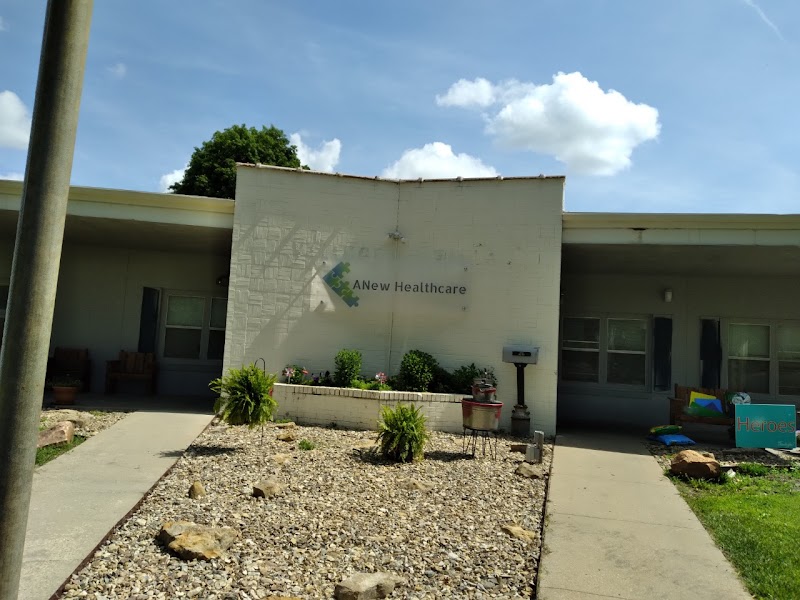
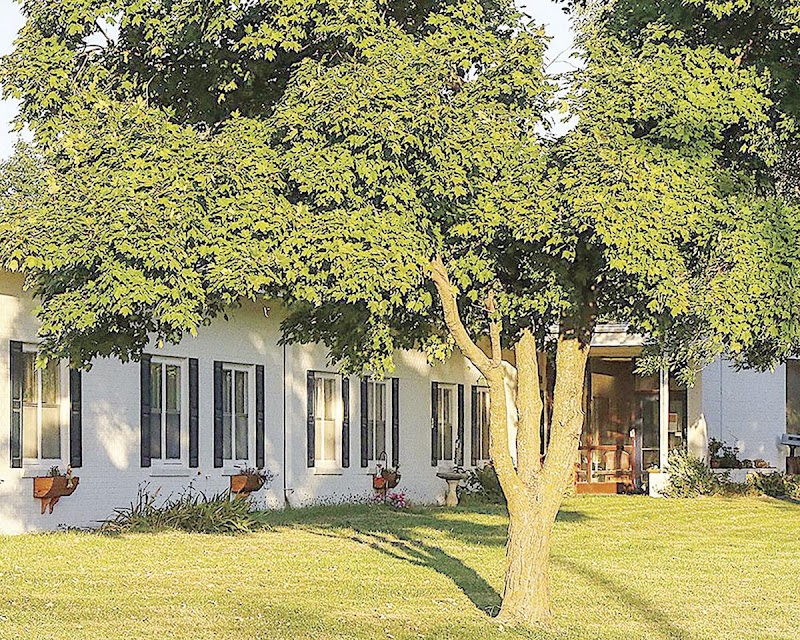
ANEW HEALTHCARE

412 E WALNUT ST, NORTONVILLE, KS 66060 (913) 886-6400
For profit - Partnership 45 Beds ANEW HEALTHCARE Data: November 2025 2 Immediate Jeopardy citations
Trust Grade
0/100
#236 of 295 in KS
Last Inspection: April 2025

Within standard 12-15 month inspection cycle. Federal law requires annual inspections.

Overview

Anew Healthcare in Nortonville, Kansas has received a Trust Grade of F, indicating poor performance and significant concerns about care quality. Ranked #236 out of 295 facilities in Kansas, they fall in the bottom half, and they are the last-ranked facility in Jefferson County, which suggests that local options are limited. The facility is worsening, with reported issues increasing from 7 in 2024 to 22 in 2025. Staffing is a potential strength, with a 0% turnover rate, but this is overshadowed by staffing being rated poorly overall, and less RN coverage than 85% of Kansas facilities. Additionally, the facility has accumulated $45,575 in fines, which is concerning as it indicates repeated compliance issues. Recent inspection findings revealed critical failures, including not responding to a resident's declining health and not properly caring for a resident's PICC line, leading to possible severe complications. Families should weigh these serious deficiencies against the facility's low turnover rate when considering care for their loved ones.

Trust Score
F
0/100
In Kansas
#236/295
Bottom 20%
Safety Record
High Risk
Review needed
Inspections
Getting Worse
7 → 22 violations
Staff Stability
○ Average
Turnover data not reported for this facility.
Penalties
✓ Good
$45,575 in fines. Lower than most Kansas facilities. Relatively clean record.
Skilled Nurses
⚠ Watch
Each resident gets only 25 minutes of Registered Nurse (RN) attention daily — below average for Kansas. Fewer RN minutes means fewer trained eyes watching for problems.
Violations
⚠ Watch
45 deficiencies on record. Higher than average. Multiple issues found across inspections.
★☆☆☆☆
1.0
Overall Rating
★☆☆☆☆
1.0
Staff Levels
★★☆☆☆
2.0
Care Quality
★☆☆☆☆
1.0
Inspection Score
Stable
2024: 7 issues
2025: 22 issues

The Good

  • Full Sprinkler Coverage · Fire safety systems throughout facility
  • No fines on record

Facility shows strength in fire safety.

The Bad

1-Star Overall Rating

Below Kansas average (2.9)

Significant quality concerns identified by CMS

Federal Fines: $45,575

Above median ($33,413)

Moderate penalties - review what triggered them

Chain: ANEW HEALTHCARE

Part of a multi-facility chain

Ask about local staffing decisions and management

The Ugly 45 deficiencies on record

2 life-threatening 3 actual harm
Sept 2025 1 deficiency 1 Harm
SERIOUS (G) 📢 Someone Reported This

A family member, employee, or ombudsman was alarmed enough to file a formal complaint

Actual Harm - a resident was hurt due to facility failures

Pressure Ulcer Prevention (Tag F0686)

A resident was harmed · This affected 1 resident

**NOTE- TERMS IN BRACKETS HAVE BEEN EDITED TO PROTECT CONFIDENTIALITY** The facility identified a census of 35. The sample included five residents, with three residents reviewed for pressure ulcers (l...

Read full inspector narrative →
**NOTE- TERMS IN BRACKETS HAVE BEEN EDITED TO PROTECT CONFIDENTIALITY** The facility identified a census of 35. The sample included five residents, with three residents reviewed for pressure ulcers (localized injury to the skin and/or underlying tissue usually over a bony prominence, as a result of pressure, or pressure in combination with shear and/or friction). Based on observations, record review, and interviews, the facility failed to follow physician orders to implement preventative wound interventions for Resident (R) 1. On 06/09/25, Consultant GG assessed R1 for a left heel ulcer, ordered suspension boots, and directed staff to clean the wound daily. Staff were to call the provider if the resident's left heel ulcer opened. The facility failed to input the order for suspension boots into R1's Electronic Medical Record (EMR) and further failed to implement the order or apply boots to R1's left heel. A wound assessment on 06/18/25 revealed the resident's left heel wound had opened up, and R1's EMR lacked evidence the facility had notified the resident's physician. The facility's failure to implement physician-ordered interventions to prevent worsening of R1's left heel wound resulted in a decline in the status of the wound, development of an additional wound, and R1 requiring the use of a wound vac (treatment method that uses suction to promote healing in complex wounds).Findings included:- R1's EMR documented diagnoses of diastolic congestive heart failure (CHF- a condition with low heart output and the body becomes congested with fluid), pressure ulcer of the left heel, diabetes mellitus (DM- when the body cannot use glucose, not enough insulin is made, or the body cannot respond to the insulin), and dementia (a progressive mental disorder characterized by failing memory and confusion) with agitation.The Quarterly Minimum Data Set (MDS) dated 06/13/25, documented R1 had a Brief Interview for Mental Status (BIMS) score of 12, which indicated moderate cognitive impairment. R1 had impairment on one side of the lower extremities. R1 was independent rolling left and right. R1 required partial/moderate assistance for sitting up in bed. R1 had one deep tissue injury (DTI- purple or maroon localized area of discolored intact skin or bloodfilled blister due to damage of underlying soft tissue from pressure and/or shear) and open lesions other than ulcers, rashes, or cuts. The MDS documented R1 did not have a pressure-reducing device for chair, a pressure-reducing device for bed, was not on a turning/repositioning program, had no nutrition or hydration interventions to manage skin problems, pressure ulcer/injury care, surgical wound care, and required no application of ointments/medications other than to the feet. The MDS documented R1 required application of nonsurgical dressings to areas of the body other than to the feet and application of dressings to the feet.The Significant Change MDS dated 09/05/25, documented R1 had a BIMS score of five, which indicated severe cognitive impairment. R1 had impairment on one side of the lower extremities. R1 required supervision or touching assistance with rolling left and right. R1 had one stage one pressure injury (area which appears reddened, does not blanche, and may be painful but is not open) and one unstageable (depth of the wound is unknown due to the wound bed being covered by a thick layer of other tissue and pus) with slough (dead tissue, usually cream or yellow in color) and/or eschar (dead tissue) pressure ulcer. R1 had other open lesions on the foot. The MDS documented R1did not have a pressure-relieving device for the chair, a pressure-relieving device for bed, was not on a turning/repositioning program, lacked any nutrition or hydration intervention to manage skin problems, surgical wound care, and application of nonsurgical dressings other than to feet. The MDS documented R1 required application of ointments/medications to areas of the body other than to the feet, and application of dressings to the feet (with or without topical medications).The Functional Abilities CAA dated 09/05/25, documented R1 experienced a decline in activities of daily living (ADL) function.The Pressure Ulcer/Injury CAA dated 09/05/25, documented staff assessed the location, size, stage, presence of drainage, presence of odors, condition of skin, and if eschar or slough was present to the resident's wound.R1's Care Plan dated 09/26/24, documented R1 was at risk for skin issues related to incontinence, impaired mobility, and DM.The Care Plan documented interventions, dated 09/26/24, that directed staff to follow facility protocols for treatment of injuries. The plan directed staff to identify and document potential causal factors of wounds and eliminate/resolve those factors where possible. The plan revealed staff would monitor/document location, size, and treatment of skin injuries and reported abnormalities, failure to heal, and signs/symptoms of infection to the resident's doctor.The Care Plan documented an intervention, dated 10/06/24 that was revised on 02/04/25, that directed staff to know R1 had a pressure-reducing mattress and he required substantial assistance from staff for turning/repositioning. The plan documented an intervention, dated 01/02/25 and revised on 02/04/25, that directed R1 had a cushion in his wheelchair, and he was able to offload while in his chair.The Care Plan documented an intervention, dated 08/15/25, noting R1 had an unstageable wound to his left heel, and hospice provided wound care orders.The resident's care plan failed to address the physician's order for heel protectors and/or interventions related to the resident's left heel wound identified on 05/28/25.R1's EMR revealed the following:On 05/28/25, a Skin and Wound assessment documented R1 had a DTI to his left heel that was 12 hours old and measured 0 centimeters (cm) by 0 cm.R1's EMR lacked evidence the facility notified Consultant GG of the DTI identified on 05/28/25.R1's EMR lacked evidence of any treatment to R1's left heel from 05/28/25 to 06/05/25.The Physician's Order dated 06/05/25 and discontinued on 06/09/25, directed staff to cleanse a wound to the resident's left heel with wound cleanser and pat dry. Staff would clean around (peri) the wound with skin prep (a solution when applied that forms a protective waterproof barrier on the skin) and apply a nickel thick amount of Santyl (a sterile enzymatic debriding ointment) to wound bed, cover with adhesive foam dressing, and float heels as tolerated. The order further directed staff to change R1's wound dressing daily and as needed (PRN).A Doctor's Progress Note dated 06/09/25 documented Consultant GG saw R1 for a left heel ulcer and noted black eschar tissue on the left heel. Consultant GG diagnosed R1 with a left heel decubitus (pressure) ulcer. Consultant GG ordered suspension boots, laboratory tests, and wound care orders to clean the pressure ulcer with betadine daily and call the provider if the area opened.A Health Status Note dated 06/09/25 at 07:24 AM, documented Consultant GG saw R1 and gave new orders to apply betadine to R1's left heel daily and to call the provider if the wound opened. The provider ordered laboratory tests for the next lab day. The note did not address the suspension boots ordered.R1's EMR lacked evidence staff placed the physician's order for suspension boots in R1's EMR and on the Treatment Administration Record (TAR) for staff to follow.R1's clinical record lacked evidence the facility implemented the suspension boots for R1 as ordered on 06/09/25.An order with a start date of 06/10/25 and discontinued date of 07/02/25 revealed staff were to apply betadine daily to the resident's left heel wound and to call R1's primary care provider if it opened.On 06/11/25, a Skin and Wound assessment documented R1 had a DTI to his left heel that was 14 days old and measured five cm by 3.92 cm.On 06/18/25, a Skin and Wound assessment documented R1 had an unstageable left heel pressure wound that was 21 days old and measured 4.83 cm by 4.36 cm.R1's EMR lacked evidence the facility notified Consultant GG of the change in condition of R1's left heel wound.On 06/25/25, a Skin and Wound assessment documented R1 had an unstageable pressure wound, with an onset date of 05/28/25, to his left heel that measured 3.9 cm by 3.85 cm. R1's EMR lacked evidence the facility notified Consultant GG of the change in condition of R1's left heel wound.On 07/02/25, a Skin and Wound assessment documented R1 had an unstageable pressure wound, with an onset date of 05/28/25, to his left heel. The assessment lacked measurements.A Physician's Order with a start date of 07/03/25 and discontinued date of 08/04/25, directed staff to clean the resident's heel with wound cleanser, clean stable surrounding tissue with skin prep, apply Santyl to the wound bed, and cover with silicone adhesive foam dressing every day.On 07/10/25, a Skin and Wound assessment documented R1 had an unstageable pressure wound, with an onset date of 05/28/25, to his left heel that measured 4.07 cm by 3.86 cm (an increase in size).On 07/16/25, a Skin and Wound assessment documented R1 had an unstageable pressure wound, with an onset date of 05/28/25, to his left heel that measured 3.97 cm by 2.97 cm.An Orders- Administration Note on 07/20/25 at 07:33 AM, documented the left heel was foul-smelling and produced brown drainage on the previous dressing. R1 verbalized pain.A Health Status Note on 07/21/25 at 07:00 AM, documented Consultant GG saw R1 and wrote new orders for a contract wound care company to evaluate and treat the resident's wounds.A Nutrition/Dietary Note on 07/21/25 at 03:49 PM, documented R1 had a stage two (partial-thickness skin loss into but no deeper than the dermis, including intact or ruptured blisters) pressure wound with treatment in place. R1's wound improved, and he continued on a regular diet.On 07/23/25, a Skin and Wound assessment documented R1 had an unstageable pressure wound, with an onset date of 05/28/25, to his left heel. The assessment lacked measurements.A N Adv (Nursing Advantage)- Skin Check note on 07/23/25 at 01:07 PM, documented R1 had a left heel pressure wound that measured 4.4 cm by 3.1 cm.A N Adv- Skin Check note on 07/27/25 at 09:01 AM, documented R1 had a stage two left heel pressure wound with orders in place. The note lacked measurements of the wound.A N Adv- Skin Check note on 07/30/25 at 03:05 PM, documented R1 had an unstageable left heel pressure ulcer that measured 4.1 cm by 2.9 cm.R1's clinical record lacked evidence the facility had notified or attempted to notify R1's representative of his left heel wound prior to 08/02/25.A Communication- with Family/NOK (Next of Kin)/POA (Power of Attorney) note on 08/02/25 at 02:03 PM, documented Administrative Nurse D attempted to call R1's POA to notify them of R1's change of wound status. Administrative Nurse D left a message after calling twice. She attempted to call R1's second point of contact with no answer as well.A Health Status Note on 08/03/25 at 01:46 AM, documented the nurse assisted the Certified Nurse Aide (CNA) with R1's bed change and observed white bugs crawling under R1's elevated left foot. R1 was not wearing heel protectors. The CNA lifted R1's leg slightly off the pillow so the nurse could view the dressing. R1's silicone dressing was not intact, and there were white bugs crawling out from under the section that was detached. The wound was not a new wound, but that was a change in wound status. The nurse notified Administrative Staff A and Administrative Nurse D at approximately 12:12 AM and administered PRN pain medication per R1's request at 12:15 AM. The nurse notified Consultant GG at 01:20 AM and received orders to clean with wound cleanser, apply Medihoney, then a wet-to-dry dressing. Consultant GG would evaluate for a wound vac on Monday morning when in the facility.A Health Status Note on 08/03/25 at 10:19 PM, documented the nurse changed R1's dressing per Consultant GG's orders and administered PRN pain medication. The nurse documented there was nothing moving at that time, and there was an odor present.A Doctor's Progress Note on 08/04/25 documented Consultant GG saw R1 for maggots in his stage four (a deep pressure wound that reaches the muscles, ligaments, or even bone) left heel wound. The plan of care included an order for wound care plus, an order for 125 millimeters of mercury (mmHg) continuous wound vac, an order for wet-to-wet (wound care technique where a moist gauze dressing is applied to a wound, allowing it to dry over time), with Medihoney (medical-grade honey used to aid wound healing) until wound vac started, an order for a low air-loss mattress, and a recommendation for hospice if he qualified.An order with a start date of 08/05/25 and a discontinued date of 08/08/25 directed staff to clean the resident's heel with wound cleanser, apply Medihoney, then wet-to-wet, cover with dressing daily for left heel wound.A Health Status Note on 08/05/25 at 11:27 AM, documented the nurse discussed with R1's representative that R1 was to have a wound vac placed on his left heel. R1's representative stated she was okay with the wound vac.On 08/06/25, a Skin and Wound assessment documented R1 had an unstageable pressure wound, with an onset date of 05/28/25, to his left heel that measured 3.06 cm by 2.7 cm.An order with a start date of 08/08/25 and discontinued date of 08/20/25, directed staff to clean the resident's heel with wound cleanser, apply Medihoney, then wet-to-dry (a wound care method used to mechanically debride wounds by removing dead tissue), cover with dressing daily for the heel wound. The order did not specify which heel to provide wound care to.A Hospice Note on 08/10/25 at 01:23 PM, documented hospice visited with R1 that day and the nurse requested pressure-reducing boots and wound dressing supplies from hospice.On 08/13/25, a Skin and Wound assessment documented R1 had an unstageable pressure wound, with an onset date of 05/28/25, to his left heel that measured 3.05 cm by 3.9 cm.An order with a start date of 08/16/25 and discontinued date of 08/23/25, for wound vac to left heel 125 mmHg continuous, black sponge, until healed, one time only for wound.Review of R1's August 2025 TAR revealed the wound vac order was signed off as completed on 08/17/25.An order with a start date of 08/17/25 and a discontinued date of 08/23/25, to monitor wound vac every shift and ensure the battery is charged during the night for the day shift.A History and Physical- New Admit Note on 08/17/25 documented R1 had a pressure ulcer on his left heel, which the facility treated, and he had a foul odor per staff. Consultant HH documented hospice care was involved with R1. Consultant HH documented R1's left heel wound needed to be debrided (medical removal of dead, damaged, or infected tissue to improve the healing potential for the remaining healthy tissue) and that would be discussed with hospice.A Communication- with Resident note on 08/17/25 at 12:38 AM documented R1 picked the adhesive tape off of the wound vac. The nurse approximated the appliance and replaced the adhesive. R1 complained of anxiety and stated his pain was managed at that time.A Care Plan Note on 08/21/25 at 02:31 PM, documented the facility held a care plan meeting with R1, hospice, R1' representative, and facility staff. R1 was up for most meals and on a supplement. Hospice discussed with R1's representative that R1's wounds would not heal, and R1's representative agreed to have the wound vac discontinued.An order with a start date of 08/22/25 and discontinued date of 08/29/25, to cleanse left heel with wound cleanser, pat dry, skin prep wipe to periwound, sprinkle crushed metronidazole (antifungal medication) onto a calcium alginate (dressing which forms a soft, gel that absorbs when it comes into contact with wound exudate) pad and place over wound bed, cover with abdominal (ABD) pads and rolled gauze every Monday, Wednesday, and Friday for unstageable pressure ulcer of left heel.An order with a start date of 09/01/25, to cleanse the left heel with wound cleanser, pat dry, skin prep wipe to periwound skin, sprinkle crushed metronidazole onto a calcium alginate pad and place over wound bed, cover with ABD pads and rolled gauze every Monday, Wednesday, and Friday related to an unstageable pressure ulcer of the left heel.On 09/03/25, a Skin and Wound assessment documented R1 had a stage one [NAME] Terminal ulcer (KTU- a pressure-based injury that can develop quickly and is often a sign of terminal illness or impending death), location not set, that developed 05/28/25, and measured 3.42 cm by 2.53 cm.On 09/10/25, a Skin and Wound assessment documented R1 had a stage four left heel pressure ulcer that measured 2.59 cm by 2.28 cm.On 09/17/25, a Skin and Wound assessment documented R1 had a stage four left heel pressure ulcer that measured 2.57 cm by 2.02 cm.On 09/17/25 at 12:29 PM, R1 sat in his Broda chair (specialized wheelchair with the ability to tilt and recline) in the dining room. R1 wore bilateral heel protector boots.On 09/22/25 at 12:11 PM, R1's representative stated the facility had notified her about R1's left heel wound the first week of August. She stated she was unaware he had a sore until that point. R1's representative stated the facility wanted to put a wound vac on his left heel, and she knew that the wound had to have been there a while if it needed a wound vac. She stated that it was the first time they had reached out about R1's wound.On 09/17/25 at 01:20 PM, Administrative Nurse D stated R1 had heel protectors prior to going on hospice, and the Kardex (nursing tool that gives a brief overview of the care needs of each resident) should tell CNAs who needs heel protectors.On 09/17/25 at 03:10 PM, CNA M stated residents at risk for pressure wounds were those who were prone to being in bed, had heavy incontinence, or someone refusing cares. He stated he watched for signs of breakdown. CNA M stated the Kardex had prevention interventions in it and heel protectors would be on the Kardex. CNA M stated if he found a new skin issue, he reported it to the nurse or Administrative Nurse D. He stated he prevented skin issues with R1 by providing incontinence cares, checking him every two hours, repositioning R1, off-loading R1's feet, and, when in his Broda chair, leaning him back. CNA M stated he remembered back in June (2025), R1 had a DTI he noticed when getting R1 out of the recliner. He stated he was not sure if R1 had any heel protectors on his feet at that time. CNA M stated he did not know if R1 used heel protectors when the wound occurred, but knew he had heel protectors at the time of the interview.On 09/17/25 at 03:21 PM, Licensed Nurse (LN) G stated residents at risk for pressure wounds were those who had a weight decline, recent dehydration, any redness starting, were in bed more than usual, or had an acute illness. She stated the care plan should tell nursing any special interventions that were in place, such as repositioning every two hours, barrier creams, and heel protectors. She stated the CNA's Kardex would say if a resident used heel protectors. LN G stated if a provider ordered suspension boots, the order was placed in the computer and would go in the TAR for the nurses to sign off on. She stated any new skin issues were reported to the nurse, and the nurse did a skin assessment and then reported any changes to the provider for any new orders. She stated she reported any new change to the provider. She stated R1's left heel wound started out as a small opening, then it opened up. LN G stated the provider prescribed orders, made several changes, including adding a wound vac, then the facility discontinued the wound vac in agreement with the family. LN G stated R1 did not have an order in PCC for nurses to check on heel protectors. She stated she was not sure when the heel protectors were ordered.On 09/17/25 at 03:33 PM, Administrative Nurse D stated staff knew who was at risk for pressure wounds through communication and tasks for charting. She stated if a provider ordered suspension boots, she made sure the facility had them, and she put the order in PCC. Administrative Nurse D stated she expected the nurse to notify her of any new skin issues then notify the resident's representative and their provider. She stated R1's left heel wound started out as a DTI, and he had a treatment in place. She stated R1 did not have an order for heel protectors at that time. Administrative Nurse D stated she was not sure if the suspension boots were ordered by Consultant GG on 06/09/25 because if the order was not put in the computer, then she did not get notified of a new order. She stated she expected staff to document any notifications to the provider and family.The facility's Transcription of Orders/Following Physician's Orders policy, last revised 05/18/24, directed upon receiving a physician's order via telephone, fax, written order, verbal order, transcribed order, or other, the facility documented the order in the resident's EMR in the orders section.The facility's Pressure Injury Prevention and Management Policy, last revised 05/18/24, directed the facility established and utilized a systematic approach for pressure injury prevention and management, including prompt assessment and treatment; intervening to stabilize, reduce, or remove underlying risk factors; monitoring the impact of the interventions; and modifying the interventions as appropriate. The policy directed the facility implemented evidence-based interventions for prevention for all residents who were assessed at risk or who had a pressure injury present. Basic or routine care interventions included but were not limited to: redistribution of pressure; minimization of exposure to moisture; and providing appropriate, pressure-redistributing support surfaces. The policy directed the facility to document the interventions in the care plan and communicate the interventions to all relevant staff.
Jul 2025 1 deficiency
CONCERN (D) 📢 Someone Reported This

A family member, employee, or ombudsman was alarmed enough to file a formal complaint

Potential for Harm - no one hurt, but risky conditions existed

Accident Prevention (Tag F0689)

Could have caused harm · This affected 1 resident

The facility identified a census of 33 residents. The sample included three residents. Based on observation, record review, and interview, the facility failed to provide adequate supervision to preven...

Read full inspector narrative →
The facility identified a census of 33 residents. The sample included three residents. Based on observation, record review, and interview, the facility failed to provide adequate supervision to prevent an elopement for Resident (R) 1, who was independently mobile, at risk for falls, and had impaired cognition. On 07/28/25 at approximately 06:45 AM, Certified Nurse Aide (CNA) N let R1 out of the facility doors after R1 had requested to go outside. Staff reported they were unable to locate R1 in the facility and began searching for him at approximately 08:20 AM. Consultant HH thought R1 may have tried to return to his apartment at the Assisted Living (AL), across the street, and went to look for him. R1 was found in his electric wheelchair, sitting under a gazebo, in front of his previous apartment building. R1 drove his electric wheelchair several blocks down the road, into the surrounding neighborhood, after he was asked to return to the facility by staff. Staff followed R1 and got him to return to the facility. The facility's documentation recorded R1 was let out of the facility at approximately 6:45 AM and was returned to the facility at approximately 08:50 AM. This deficient practice placed R1 at risk for avoidable injuries.Findings Included:- R1's Electronic Medical Record (EMR) documented diagnoses of cerebral infarction (stroke - sudden death of brain cells due to lack of oxygen caused by impaired blood flow to the brain by blockage or rupture of an artery to the brain), hemiplegia affecting right dominant side (paralysis of one side of the body), chronic obstructive pulmonary disease (COPD- progressive and irreversible condition characterized by diminished lung capacity and difficulty or discomfort in breathing), respiratory failure (inadequate gas exchange by the respiratory system resulting in not enough oxygen or too much carbon dioxide in your body), need for assistance with personal care, and unsteadiness of feet. R1's Entry Minimum Data Set (MDS) dated 07/19/25 documented when R1 was admitted to the facility. R1's admission MDS dated 07/25/25, had a status of in progress. An Assessment Outcomes document with a description of Brief Interview for Mental Status (BIMS) dated 07/22/25, documented R1 had a BIMS score of seven, which indicated severe cognitive impairment.R1's Care Plan with an initiated date of 09/22/19, documented R1 was at risk for falls. R1's Care Plan with an initiated date of 07/19/25, documented R1 had an altered respiratory status or difficulty breathing related to respiratory failure. An intervention, with an initiated date of 07/19/25, directed staff to monitor for signs and symptoms of respiratory distress and monitor, document, and report abnormal breath patterns. R1's Care Plan with an initiated date of 09/22/29 documented R1 had limited physical mobility related to stroke with right-sided hemiplegia.R1's Care Plan lacked evidence of elopement concerns or interventions prior to 07/28/25.R1's EMR under the Assessment tab recorded two Elopement Evaluation assessments, both dated 07/28/25. One elopement assessment was listed as type admission with a score of seven, and one was listed as type other with a score of four.An Elopement Risk Screen dated 07/28/25 at 09:16 AM, and a score of seven, recorded R1 had a history of elopement while at home, and a history of elopement or attempted leaving the facility without informing staff. The assessment further recorded R1 had verbally expressed the desire to go home, exhibited wandering behavior, and the wandering was a pattern or goal directed. The assessment further recorded R1's wandering behavior was likely to affect the safety or well-being of himself or others. R1 had been recently admitted and was not accepting the situation.An Elopement Risk Screen dated 07/28/25 at 11:29 AM documented a score of four, and R1 did not have a history of elopement or attempted elopement while at home. The assessment recorded R1 had a history of elopement or attempted leaving the facility without informing staff. The assessment further recorded R1 had verbally expressed the desire to go home and had wandering behavior. The assessment recorded R1's wandering behavior was not a pattern and not goal directed. The assessment recorded R1's wandering behavior was not likely to affect the safety of himself or others. The assessment recorded R1 had been recently admitted and was not accepting the situation.R1's EMR lacked evidence of other elopement evaluation assessments completed prior to 07/28/25.An Assessment Outcomes dated 07/21/25 document with a description of Fall Risk Evaluation recorded R1 had a fall score of 20 and was at risk for falls.A Fall Risk Evaluation dated 07/21/25, documented R1 had three or more falls in the past three months, had a change in condition in the last 14 days, and had a recent hospitalization in the last 30 days.The untitled and undated investigation documents, provided by the facility, recorded R1 had been in the facility for nine days, and R1 had left the facility to go across the street to the AL where he came from. The documents recorded the root cause as R1 wanted to return to his apartment. The documents recorded CNA N as the staff member involved in the incident. The documents recorded, under the conclusion section, the incident was substantiated, the facility did not follow policies and procedures, and the incident was preventable. The documents further recorded, under the conclusion section, staff did not do everything they could to prevent and provide safety for the resident, and R1 should not have gone outside alone.CNA N's notarized Witness Statement dated 07/28/25, documented R1 had rung his light to get up, and she assisted R1 with getting his shoes on. CNA N documented R1 was already dressed and up in his electric wheelchair. CNA N documented R1 asked her to open the door for him. CNA N documented she had not been told that R1 was unable to be outside alone. CNA N documented R1, then sat outside the door, and she went on with her morning as there were other call lights going off. CNA N documented she had let R1 outside at approximately 06:45 AM. Licensed Nurse (LN) G's notarized Witness Statement dated 07/28/25 documented at 08:20 AM he was alerted by staff that R1 was not in the building. LN G documented Consultant HH walked over to R1's previous AL apartment and saw R1 in his motorized wheelchair. LN G documented R1, then drove away from Consultant HH in his motorized wheelchair. LN G documented R1 was returned to the facility at 08:49 AM.Consultant HH's notarized Witness Statement dated 07/28/25, documented she had exited her office, and Certified Medication Aide (CMA) R asked if R1 was in therapy. Consultant HH documented R1 was not in therapy, and she went to his room. Consultant HH documented two other CNAs had told her R1 was not in his room, and she thought R1 may have been across the street at the AL. Consultant HH documented she went across the street and found R1 in his powered wheelchair under a gazebo. Consultant HH documented she asked R1 to return to the facility, and he refused. She further documented after R1 refused to return, he then took his powered wheelchair down the street and around the community center. Consultant HH documented she called Administrative Staff A and informed her to call 911. Consultant HH documented she followed R1 up and down the streets through the town. Consultant HH documented two CNAs caught up to them and assisted in getting R1 to return to the facility. She further documented, once R1 was ack at the facility, he had refused to go inside the buildings and instead insisted on returning to his AL apartment. Consultant HH documented R1 returned to the facility at 08:50 AM.CNA M's notarized Witness Statement dated 07/28/25, documented that around 08:26 AM she was outside in the front of the facility when she noticed R1 in his wheelchair going toward the Senior Center with Consultant HH following him. CNA M documented she went to see if she could help R1, but he refused to return to the facility or talk with CNA M. CNA M documented R1 just kept going down the road. CNA M documented CNA O caught up to them, and they were able to convince R1 to return to the facility.An Incident Note dated 07/28/25 at 10:33 AM documented R1 was placed on one-to-one monitoring due to leaving facility grounds without staff supervision.On 07/31/25 at 11:10 AM, an observation was made outside the facility along the route R1 took to exit the facility. Consultant HH accompanied to show the path R1 took through the neighborhood on the day of the incident. The facility was located in a neighborhood of single-family homes. Single lane roads throughout the area with 20 miles per hour (MPH) posted speeds. A small bridge across the street from the facility crossed a deep ditch with some water noted at the bottom. R1's previous apartment was a single-story with a gazebo out front and connecting sidewalks. R1 used his electric wheelchair to leave the area when staff asked him to return to the facility. R1 took his electric wheelchair onto a side road and traveled South two blocks, though two intersections with stop signs. R1 then traveled Southeast one block, then went South one block, crossing another intersection with a stop sign. R1 then went Southeast again one block, then South one block, passed another stop sign. R1 then crossed a road onto a gravel driveway where a family member had previously lived. Staff had told R1 that his family no longer lived at that house. R1 then went back onto the road and went Northwest one block to a family member's house. Per staff interviews, R1's cousin was there and told R1 to return to the facility with the staff. Staff escorted R1 back to the facility four blocks North. The surrounding area was mostly flat or slightly inclined, with no sidewalks or curbs in the neighborhood.On 07/31/25 at 11:10 AM, Consultant HH stated she thought R1 would be at the AL as he was recently admitted to the facility and wanted to return to his apartment. She stated R1 was recently hospitalized . She stated the doctor told R1, on 07/28/25, he would not be safe to return to the apartment alone and would have to stay in the facility. Consultant HH stated that when she crossed the road, R1 sat in his electric wheelchair, under a gazebo, in front of his previous apartment. Consultant HH stated that when she asked R1 to return to the facility with her, he took off in his wheelchair. She stated she followed him through the neighborhood and always had eyes on him. She stated she was unable to keep up with him directly because the scooter moved faster than she could walk. She stated that other staff had come out to help follow him, and after he tried to go to some relative's homes in the area, they were able to convince R1 to return to the facility with a staff escort. On 07/31/25 at 02:00 PM, CNA M stated that around 08:26 AM, she went to the front door of the facility because the charge nurse and another staff, were outside. CNA M stated that the charge nurse and other staff had reported they could not find R1. CNA M stated Consultant HH went to check the AL across the street. CNA M stated she observed R1 in his electric wheelchair going out from the side of the AL property and down the road, away from the facility. She stated Consultant HH was following R1. CNA M stated she ran across the street and was able to catch up to him. CNA M stated she asked R1 where he was going and if something was wrong, but R1 just laughed under his breath and kept going. CNA M confirmed the directions R1 traveled through the neighborhood during the interview. She stated R1 stopped at the stop signs to look briefly before he continued. She reported that R1 went to a house several blocks away where his sister used to live. CNA M stated that once she convinced R1 that his sister no longer lived there, R1 continued another block down the road to his cousin's house. She stated R1's cousin was home and came out to help convince R1 to return. CNA M stated that other staff had caught up with them, and they were able to escort R1 back to the facility. CNA M stated it was hot outside, but reported R1 did not appear to be in distress as he was in an electric Wheelchair. She stated that once R1 was back in the facility, they took him to the dining room to get him a drink. She stated she stepped into the break room, and CNA N was in the break room, and CNA N told CNA M she had let R1 outside that morning. CNA M stated R1 should not be outside without supervision. She stated R1 goes outside with other smokers but should not be outside alone.On 07/31/25 at 02:26 PM, Administrative Staff A stated R1 had recently moved into the facility from the AL across the street. Administrative Staff A stated R1 recently went to the hospital, and when he returned, he wanted to go back to the AL. Administrative Staff A stated that the doctor told R1 on Monday that R1 would not be able to return to his apartment. She stated R1 asked CNA N if he could go out to get fresh air and was let outside. She stated the CNA N was a newer employee and did not know R1 could not be outside alone. Administrative Staff A stated R1 was still able to carry on conversations and appeared to know what was going on, so it normally would not have been a problem. She stated that when staff realized R1 was not in the building, they began searching for him and found him across the street in front of his previous apartment. Administrative Staff A stated she believed staff were unaware of where he was for about 15-30 minutes. She stated R1 probably should not be outside alone due to his low BIMS score. Administrative Staff A stated the facility completed education for CNA N and informed her to ask nurses and check the care plan, prior to letting residents out, if she did not know. Administrative Staff A stated that all staff education was provided; however, not all staff had been given the education, and she believed they still had weekend staff to complete the education with. Administrative Staff A stated R1's care plan was updated with elopement risk, and R1 was placed on a one-to-one until dinner to monitor for further exit-seeking behaviors. Administrative Staff A stated R1 did not try to get out after, so they discontinued the one-to-one. Administrative Staff A stated R1 had no previous elopement attempts that she was aware of and has not tried again after the incident. On 07/31/25 at 03:59 PM, Consultant GG stated she was unable to locate any elopement assessments completed by staff prior to the incident. Consultant GG stated that the one elopement assessment listed under the type of admission was done after the fact. Consultant GG stated CNAs should check with the charge nurse before letting a resident outside by themselves to ensure they are able to be outside unsupervised. Consultant GG stated staff should always check with a nurse, especially if the resident has had a recent change in condition.The facility's Elopements and Wandering Residents policy, with an origination date of 04/06/17, documented elopement occurs when a resident leaves the premises or safe area without authorization and or any necessary supervision to do so. The policy documented residents would be assessed for risk of elopement and unsafe wandering upon admission and throughout their stay by the interdisciplinary care plan team. The policy documented adequate supervision would be provided to help prevent accidents or elopements.
Apr 2025 19 deficiencies
CONCERN (D) 📢 Someone Reported This

A family member, employee, or ombudsman was alarmed enough to file a formal complaint

Potential for Harm - no one hurt, but risky conditions existed

Notification of Changes (Tag F0580)

Could have caused harm · This affected 1 resident

**NOTE- TERMS IN BRACKETS HAVE BEEN EDITED TO PROTECT CONFIDENTIALITY** The facility had a census of 30 residents. The sample included 12 residents. Based on interviews and record review, the facility...

Read full inspector narrative →
**NOTE- TERMS IN BRACKETS HAVE BEEN EDITED TO PROTECT CONFIDENTIALITY** The facility had a census of 30 residents. The sample included 12 residents. Based on interviews and record review, the facility failed to notify Resident (R) 6's guardian of the discharge and transfer of R6 to another facility until after his discharge from the facility. This placed the resident at risk for further decline and impaired health and well-being. Findings included: - R6's Electronic Medical Record documented diagnoses of anxiety (mental or emotional reaction characterized by apprehension, uncertainty, and irrational fear), history of traumatic brain injury, aphagia (loss of the ability to swallow), dysphagia (swallowing difficulty), and convulsions (involuntary series of contractions of a group of muscles). R6's Quarterly Minimum Data Set (MDS), dated [DATE], documented a Brief Interview for Mental Status (BIMS) score of nine, indicating moderately impaired cognition. The MDS documented R6 required supervision for eating and was dependent on staff for all other activities of daily living. The 11/19/24 court filing for guardianship of R6 documented a guardianship valid until 11/30/25. R6's Progress Note, dated 02/06/25 at 12:03 PM, documented R6 continued to receive therapy services through his Veterans Affairs (VA) benefits, and Occupational Therapy (OT) discussed ordering a new wheelchair with R6's guardian. The note stated there was no anticipated discharge date for R6 at this time. R6's Progress Note, dated 03/05/25 at 01:56 PM, documented the facility received permission from R6's guardian to send out referrals to other facilities that are VA Contract, since this facility's VA contract would be canceled in September 2025. R6's Progress Note, dated 03/19/25 at 11:32 AM, documented referrals were sent to facilities due to the facility's VA contract would be canceled on September 1, 2025. R6's Progress Note, dated 03/19/25 at 02:04 PM, documented a referral was sent to a facility and R6 was denied transfer due to his brain injury. R6's Progress Note, dated 03/27/25 at 11:16 AM, documented the interdisciplinary team (IDT) met to discuss R6's status. The guardian was to purchase a tilt-back wheelchair and the facility's business office manager (BOM) was to follow up with R6's guardian regarding status. R6 was currently seeking alternative placement due to the VA contract expiring. R6 continued to receive therapy services via private pay and therapy reported his guardian would be ordering wheelchair equipment. The guardian and his physician were aware and agreeable to continuing the current plan of care. R6's Progress Note, dated 03/27/25 at 03:37 PM, documented staff spoke with R6 and his guardian regarding a room move to the west hallway and reported no concerns with that move. The note stated the staff also sent the new wheelchair measurements to R6's guardian. R6's Progress Note, dated 04/7/25 at 04:28 PM, documented the VA requested the facility to resend an application back to the facility which had previously denied R6 for possible admission. R6's Progress Note, dated 04/14/25 at 11:20 PM, documented R6 was discharged to another facility with belongings, medications, and pertinent chart forms. R6 was transported by the new facility. On 04/15/25 at 01:40 PM, Social Services Staff X stated she contacted R6's guardian via phone, not email, so she could not provide documentation. She stated R6's guardian said she would prefer the resident go to a facility in the Kansas City area, but the guardian thought it would be impossible since that was out of the current VA territory. Social Services Staff X stated she sent an application to a facility for that reason. She stated a closer facility accepted the resident on 04/10/25, but she did not notify the guardian until 04/14/25. On 04/16/25 at 01:55 PM, Administrative Staff A verified staff were to notify a resident's representative or guardian prior to transfers or discharges. The facility's Discharge Planning Process policy, dated 07/08/2021, stated the facility would document any referrals to local contact agencies or other appropriate entities. The facility would assist residents and their representatives in choosing an appropriate care provider that would meet the resident's needs and goals. The Social Services Director or designee would compile available data on other care options and present provider information to the resident and their representative in an accessible and understandable format.
CONCERN (D) 📢 Someone Reported This

A family member, employee, or ombudsman was alarmed enough to file a formal complaint

Potential for Harm - no one hurt, but risky conditions existed

Transfer Notice (Tag F0623)

Could have caused harm · This affected 1 resident

**NOTE- TERMS IN BRACKETS HAVE BEEN EDITED TO PROTECT CONFIDENTIALITY** The facility had a census of 30 residents. The sample included 12 residents. Based on observation, interview, and record review,...

Read full inspector narrative →
**NOTE- TERMS IN BRACKETS HAVE BEEN EDITED TO PROTECT CONFIDENTIALITY** The facility had a census of 30 residents. The sample included 12 residents. Based on observation, interview, and record review, the facility failed to notify the State Long Term Care Ombudsman (LTCO) of facility-initiated transfers or discharge for Resident (R) 7. This deficient practice had the risk of miscommunication between the facility and resident or their representative and possible missed opportunities for healthcare services for R7 and placed R7 at risk for impaired rights. Findings included: - R7's Electronic Medical Record (EMR) documented diagnoses of anxiety disorder (mental or emotional reaction characterized by apprehension, uncertainty and irrational fear), hypertension (elevated blood pressure), cerebral infarction (stroke - sudden death of brain cells due to lack of oxygen caused by impaired blood flow to the brain by blockage or rupture of an artery to the brain), epilepsy (brain disorder characterized by repeated seizures), congestive heart failure (CHF - a condition with low heart output and the body becomes congested with fluid), diabetes mellitus (DM - when the body cannot use glucose, not enough insulin made or the body cannot respond to the insulin), respiratory failure, bipolar (major mental illness that caused people to have episodes of severe high and low moods) schizoaffective disorder (mental disorder characterized by gross distortion of reality, disturbances of language and communication and fragmentation of thought), pain, insomnia (inability to sleep), and Parkinson's disease (slowly progressive neurologic disorder characterized by resting tremor, rolling of the fingers, masklike faces, shuffling gait, muscle rigidity and weakness). The Quarterly Minimum Data Set (MDS), dated [DATE], documented a Brief Interview for Mental Status (BIMS) score of 15, indicating intact cognition. The MDS documented R7 received antipsychotic (class of medications used to treat major mental conditions which cause a break from reality), antidepressant (class of medications used to treat mood disorders), diuretic (medication to promote the formation and excretion of urine), antianxiety (class of medications that calm and relax people), and anticoagulant (prevent blood clots from forming) medications. R7's Care Plan, dated 03/15/25, directed staff to intervene as necessary to protect the rights and safety of others, initiated 04/28/23. R7 had a history of false allegations and physical aggression. Staff were directed to monitor for triggers and anticipate needs, offer redirection if aggression persists, initiated 08/26/24. Staff were directed to monitor and record the occurrence of target behavior symptoms, inappropriate responses to verbal communication, violence, or aggression towards staff or peers, and document per the facility protocol, initiated 08/24/24. R7's Progress Note, dated 01/08/25 at 09:05 AM, documented R7's Durable Power of Attorney (DPOA) requested R7 be seen and evaluated by psychiatric services. R7's Progress Note, dated 01/09/25 at 10:53 AM, documented the facility received a call from an in-patient psychiatric facility stating they are able to accept R7 for treatment related to increased confusion. The note stated the facility transported R7 and notified the DPOA. The facility lacked documentation the LTCO had been notified of R7's discharge or transfer on 01/09/25 to the hospital. R7's Progress Note, dated 01/20/25 at 03:20 PM, documented R7 returned to the facility. On 04/16/25 at 10:10 AM, Social Services Staff Y verified the facility had not notified the LTC ombudsman of the discharge/transfer to the hospital. The facility's Discharge Planning Process policy, dated 07/08/21, stated the facility would document any referrals to local contact agencies or other appropriate entities. The facility would assist residents and their representatives in choosing an appropriate care provider that would meet the resident's needs and goals. The Social Services Director or designee would compile available data on other care options and present provider information to the resident and their representative in an accessible and understandable format.
CONCERN (D) 📢 Someone Reported This

A family member, employee, or ombudsman was alarmed enough to file a formal complaint

Potential for Harm - no one hurt, but risky conditions existed

Accident Prevention (Tag F0689)

Could have caused harm · This affected 1 resident

**NOTE- TERMS IN BRACKETS HAVE BEEN EDITED TO PROTECT CONFIDENTIALITY** The facility had a census of 30 residents. The sample included 12 residents. Based on observation, record review, and interview,...

Read full inspector narrative →
**NOTE- TERMS IN BRACKETS HAVE BEEN EDITED TO PROTECT CONFIDENTIALITY** The facility had a census of 30 residents. The sample included 12 residents. Based on observation, record review, and interview, the facility failed to identify and implement interventions to prevent falls for Resident (R) 5. This placed the resident at risk for ongoing falls and injuries. Findings included: - R5's Electronic Medical Record (EMR) documented diagnoses of major depressive disorder (major mood disorder that causes persistent feelings of sadness), anxiety (mental or emotional reaction characterized by apprehension, uncertainty, and irrational fear) disorder, pain in the knee, diabetes mellitus (DM - when the body cannot use glucose, not enough insulin is made, or the body cannot respond to the insulin), muscle spasms, repeated falls, and intervertebral disc degeneration (the breakdown of bones in the back-spine). The Quarterly Minimum Data Set (MDS), dated [DATE], documented R5 had moderately impaired cognition, and required supervision or touch assistance with activities of daily living, transfers, and walking. R5 was frequently incontinent of urine, received a scheduled pain medication regimen, and had occasional pain that interfered with sleep and day-to-day activities. R5 took an antianxiety (a class of medications that calm and relax people), an antidepressant (a class of medications used to treat mood disorders), a diuretic (medication to promote the formation and excretion of urine), and an opioid (a class of controlled drugs used to treat pain). R5's Care Plan dated 02/25/25, documented R5 was at risk for falls with a history of falls related to impaired mobility, and medications. The Care Plan directed staff to remind R5 to notify staff when not feeling well, have non-skid strips applied at the bedside, answer the call light promptly, and R5 was to wear nonskid socks and footwear when transferring and walking. The Progress Note dated 02/28/25 at 11:54 PM documented R5 sitting on the floor with her back close to her bed. R5 stated she was reaching for the television remote and slid off the bed. R5 had a skin tear on the left forearm, and five steri-strips (adhesive wound closures) were applied. R5's EMR and Care Plan lacked updated interventions to prevent further falls. The Progress Note dated 04/06/25 at 12:42 AM documented R5 sitting on the floor of her bathroom, in front of the toilet. R5 had Crocs (a type of shoe made of plastic) on her feet and reported she slid down. R5 denied injuries. The note had an intervention of new shoes due to slipping on Crocs with no tread. R5's Care Plan lacked updated interventions described in the progress note. On 04/15/25 at 03:33 PM, R5 was in bed watching television and reported she was doing well for her age. Further observation revealed there were no none skid strips on the floor enxt to R5's bed. On 04/16/25 at 09:49 AM, Certified Nurse Aide (CNA) SS reported to prevent R5 from falling staff, were to keep the call light where R5 could find it, keep the walker or wheelchair within reach, check frequently as R5 did not want to bother anyone, kept her television remote in a baggy so if she dropped it R5 could retrieve it with her reacher. On 04/16/25 at 11:00 AM, Licensed Nurse (LN) H reported that after a resident fell, the nurse on duty would assess the resident for injuries, gather witness statements, and implement new interventions as needed. LN H could not find an updated intervention for R5 in the care plan. On 04/16/25 at 4:00 PM, Administrative Nurse D reported the intervention following R5's fall on 04/06/25 was to place nonskid strips in front of R5's toilet. Administrative Nurse D stated the intervention was added to the care plan once she updated the date as of 04/16/25. Upon request, the facility failed to provide a fall management program policy.
CONCERN (D) 📢 Someone Reported This

A family member, employee, or ombudsman was alarmed enough to file a formal complaint

Potential for Harm - no one hurt, but risky conditions existed

Deficiency F0744 (Tag F0744)

Could have caused harm · This affected 1 resident

**NOTE- TERMS IN BRACKETS HAVE BEEN EDITED TO PROTECT CONFIDENTIALITY** The facility had a census of 30 residents. The sample included 12 residents. Based on observation, record review, and interview,...

Read full inspector narrative →
**NOTE- TERMS IN BRACKETS HAVE BEEN EDITED TO PROTECT CONFIDENTIALITY** The facility had a census of 30 residents. The sample included 12 residents. Based on observation, record review, and interview, the facility failed to provide Resident (R) 10, who had a diagnosis of dementia (a progressive mental disorder characterized by failing memory, and confusion) and aggressive behavior toward others, with supervision, treatment, and services to attain or maintain highest practicable physical, mental, and psychosocial well-being. This placed R10 at risk for unmet behavioral and psychosocial well-being needs. Finding included: - R10's Electronic Medical Record (EMR) documented diagnoses of dementia with anxiety (mental or emotional reaction characterized by apprehension, uncertainty, and irrational fear) and major depressive disorder (major mood disorder that causes persistent feelings of sadness). The Quarterly Minimum Data Set (MDS) dated [DATE] documented R10 had moderately impaired cognition, inattention, disorganized thinking, and an altered level of consciousness, which fluctuated and exhibited no behavioral symptoms. R10 utilized a wheelchair for mobility, was dependent for toileting hygiene, upper and lower body dressing, and personal hygiene, and substantial/maximal assistance with bed mobility and transfers. The MDS further documented that R10 was always incontinent of urine and bowel, and had frequent pain, which interfered with sleep. R10 received an antidepressant (a class of medications used to treat mood disorders), anticoagulant (a class of medications used to prevent the blood from clotting), diuretic (medication to promote the formation and excretion of urine), and an anticonvulsant (a class of medications to prevent convulsions -involuntary series of contractions of a group of muscles). The Behavioral Symptoms Care Area Assessment (CAA), dated 05/31/24, documented R10 had diagnoses of dementia, major depressive disorder, anxiety, and chronic pain. R10 had intact cognition, episodes of refusing care, and verbal outbursts. R10 called others' names or used rude/derogatory sayings/statements to others. R10 used antidepressants and was followed by a psychiatric provider and a primary care practitioner. R10's Care Plan dated 01/20/25, documented that R10 had potential for behaviors such as outbursts, yelling, spitting, and refusing care. The care plan directed staff to redirect R10 when she exhibited behaviors by offering food and/or fluids, changing location, providing activities that included music, and providing care in pairs for safety. The care plan also directed staff to encourage R10 to remove herself from situations when becoming irritated, consult a psychologist and practitioner for medication management, and talk to the resident about behaviors and explain they were unacceptable. The Progress Note dated 08/21/24 at 01:54 PM documented that R10 demanded an unidentified resident to throw away her trash in the dining room. Staff told R10 she should not tell other people what to do. R10 then told another unidentified resident to throw away her trash, and when approached by staff again, R10 used profanity towards staff. The Progress Note dated 01/26/25 at 06:34 AM documented that three staff members assisted R10 out of bed when R10 cursed and threatened physical harm to staff. Staff assisted R10 into her wheelchair. R10 then took her radio and threw it at the cement wall, breaking it into several pieces. The Progress Note dated 04/02/25 at 04:00 PM, documented R10 sitting near the fish tank, when another resident stated, My parents died. R10 scrunched her face and in a deep, lowered voice stated, I bet you killed them, you killed them, didn't you?! The nurse educated R10 to speak kindly to others. The Progress Note, dated 04/10/25 at 11:40 AM, documented R10 kissing R6 (who had moderately impaired cognition), with whom she had a relationship with, in the dining room. Staff informed the residents to stop, and the behavior was not appropriate in the dining room. R10 refused to stop and pulled the other resident closer. Again, the staff explained that it was not appropriate for the dining room to have other residents present. Staff moved the resident to another table in the dining room. On 04/15/25 at 03:40 PM, R10 was seated in a wheelchair in the dining room watching television. On 04/16/25 at 10:29 AM, Certified Medication Aide (CMA) T reported that R10 had aggressive behaviors toward staff and other residents. R10 was not easily redirected and had a relationship with another resident, from which the staff had to separate them, related to R10's behaviors. On 04/16/25 at 02:17 PM, Licensed Nurse (LN) H reported R10 had verbal aggression toward staff when wanting care immediately. R10 would yell and curse at staff, not easily redirected, and staff had to work in pairs, related to accusatory statements about staff. LN H also stated that R10 received consulting mental health services. On 04/16/25 at 09:00 AM, Administrative Nurse D reported R10 had an ongoing relationship with another resident, and both residents had been care planned for this. Administrative Nurse D stated that at times R10 had to be separated due to behaviors. Upon request, the facility failed to provide a dementia behavior management policy.
CONCERN (D) 📢 Someone Reported This

A family member, employee, or ombudsman was alarmed enough to file a formal complaint

Potential for Harm - no one hurt, but risky conditions existed

Deficiency F0760 (Tag F0760)

Could have caused harm · This affected 1 resident

The facility had a census of 30 residents. The sample included 12 residents. Based on observation, interview, and record review, the facility failed to ensure Resident (R) 8 remained free from a signi...

Read full inspector narrative →
The facility had a census of 30 residents. The sample included 12 residents. Based on observation, interview, and record review, the facility failed to ensure Resident (R) 8 remained free from a significant medication error when staff failed to administer R8 seven physician-ordered medications for three days in a row. This deficient practice placed R1 at risk for unalleviated pain, decreased ability to participate in rehabilitation, inability to sleep, and psychosocial impairment. Findings included: - R8's Electronic Medical Record (EMR) documented diagnoses of cellulitis (skin infection caused by bacteria) of left lower leg, anemia (inadequate number of healthy red blood cells to carry adequate oxygen to body tissues), bipolar disorder (major mental illness that caused people to have episodes of severe high and low moods), hypertension (HTN - elevated blood pressure), acute embolism (an obstruction in a blood vessel due to a blood clot or other foreign matter that gets stuck while traveling through the bloodstream), thrombosis (clot that developed within a blood vessel) of deep veins of the lower extremity, left ankle and foot acute osteomyelitis (local or generalized infection of the bone and bone marrow), and a left foot open wound. The admission 5-day Minimum Data Set (MDS), dated 04/02/25, documented a Brief Interview for Mental Status (BIMS) score of 14, indicating intact cognition. The MDS documented R8 used a walker and was independent with activities of daily living. The MDS documented R8 received antipsychotic (a class of medications used to treat major mental conditions that cause a break from reality), anticoagulant (a class of medications used to prevent the blood from clotting), antibiotic, an anticonvulsant, diuretic (increased formation and secretion of urine), and hypoglycemic (less than normal amount of sugar in the blood) drugs. R8's Care Plan, dated 03/27/25, directed the nurse to interview the resident about how he was feeling, how his day was going, and any perceived challenges when performing assessments. The Hospital Discharge Orders, dated 03/27/25 included: Xarelto (anticoagulant), 15 milligrams (mg) by mouth daily. Levofloxacin (antibiotic), 750 mg by mouth daily for three days until 03/31/25. Allopurinol (for inflammation of the joints), 300 mg by mouth daily. Divalproex (anticonvulsant), 500 mg by mouth at bedtime. Hydrochlorothiazide (HCTZ - diuretic), 25 mg by mouth daily. Seroquel (antipsychotic), 100 mg by mouth at bedtime. Cyanocobalamin (vitamin to treat anemia), 50 micrograms (mcg) by mouth daily. Further orders directed staff to maintain the dressing and follow up with the podiatrist (foot doctor) in one to two days. R8's March 2025 Medication Administration Record (MAR) documented the resident did not receive the physician-ordered medications on 03/28/25, 03/29/25, or 03/30/25. On 04/14/25 at 10:50 AM, observation revealed R8 ambulated in the halls with a walker. R8 stated the facility had not administered five of his medications for a few days when he was first admitted . R8 stated some of the medications were psychoactive (alters mood or thought) and should not be stopped abruptly. On 04/16/25 at 04:30 PM, Licensed nurse (LN) H verified that staff had not administered some of R8's physician-ordered medications on 03/28/25, 03/29/25, and 03/30/25. The facility's Medication Administration policy, dated 10/02/2023, stated that medications would be administered by licensed nurses or other staff who are legally authorized to do so in this state, as ordered by the physician, and in accordance with professional standards of practice.
CONCERN (E) 📢 Someone Reported This

A family member, employee, or ombudsman was alarmed enough to file a formal complaint

Potential for Harm - no one hurt, but risky conditions existed

Deficiency F0625 (Tag F0625)

Could have caused harm · This affected multiple residents

**NOTE- TERMS IN BRACKETS HAVE BEEN EDITED TO PROTECT CONFIDENTIALITY** The facility had a census of 30 residents. The sample included 12 residents. Based on interviews and record review, the facility...

Read full inspector narrative →
**NOTE- TERMS IN BRACKETS HAVE BEEN EDITED TO PROTECT CONFIDENTIALITY** The facility had a census of 30 residents. The sample included 12 residents. Based on interviews and record review, the facility failed to provide Resident (R) 7 a Bed Hold notice when he was hospitalized . This deficient practice placed R7 at risk of not being permitted to return and resume residence in the nursing facility. Findings included: - R7's Electronic Medical Record documented diagnoses of anxiety disorder (mental or emotional reaction characterized by apprehension, uncertainty and irrational fear), hypertension (elevated blood pressure), cerebral infarction (stroke - sudden death of brain cells due to lack of oxygen caused by impaired blood flow to the brain by blockage or rupture of an artery to the brain), epilepsy (brain disorder characterized by repeated seizures), congestive heart failure (CHF - a condition with low heart output and the body becomes congested with fluid), diabetes mellitus (DM - when the body cannot use glucose, not enough insulin made or the body cannot respond to the insulin), respiratory failure, bipolar (major mental illness that caused people to have episodes of severe high and low moods) schizoaffective disorder (mental disorder characterized by gross distortion of reality, disturbances of language and communication and fragmentation of thought), pain, insomnia (inability to sleep), and Parkinson's disease (slowly progressive neurologic disorder characterized by resting tremor, rolling of the fingers, masklike faces, shuffling gait, muscle rigidity and weakness). The Quarterly Minimum Data Set (MDS), dated [DATE], documented a Brief Interview for Mental Status (BIMS) score of 15, indicating intact cognition. The MDS documented R7 received antipsychotic (class of medications used to treat major mental conditions which cause a break from reality), antidepressant (class of medications used to treat mood disorders), diuretic (medication to promote the formation and excretion of urine), antianxiety (class of medications that calm and relax people) and anticoagulant (prevent blood clots from forming) medications. R7's Care Plan, dated 03/15/25, directed staff to intervene as necessary to protect the rights and safety of others, initiated 04/28/23. R7 had a history of false allegations and physical aggression. Staff were directed to monitor for triggers and anticipate needs, offer redirection if aggression persists, initiated 08/26/24. Staff were directed to monitor and record the occurrence of target behavior symptoms, inappropriate responses to verbal communication, violence, or aggression towards staff or peers and document per the facility protocol, initiated 08/24/24. R7's Progress Note, dated 01/08/25 at 09:05 AM, documented R7's Durable Power of Attorney (DPOA) requested R7 be seen and evaluated by psychiatric services. R7's Progress Note, dated 01/09/25 at 10:53 AM, documented the facility received a call from an in-patient psychiatric facility stating they are able to accept R7 for treatment related to increased confusion. The note stated the facility transported R7 and notified the DPOA. R7's Progress Note, dated 01/20/25 at 03:20 PM, documented R7 returned to the facility. R7's medical record lacked a Bed Hold notice for the 01/09/25 hospitalization. On 04/16/25 at 10:10 AM, Social Services Staff Y verified the facility lacked documentation a Bed Hold Notice was given to R7 or his representative on 01/09/25 when he was discharged to the hospital. The facility's Discharge Planning Process policy, dated 07/08/21, stated the facility would document any referrals to local contact agencies or other appropriate entities. The facility would assist residents and their representatives in choosing an appropriate care provider that would meet the resident's needs and goals. The Social Services Director or designee would compile available data on other care options and present provider information to the resident and their representative in an accessible and understandable format.
CONCERN (E) 📢 Someone Reported This

A family member, employee, or ombudsman was alarmed enough to file a formal complaint

Potential for Harm - no one hurt, but risky conditions existed

Deficiency F0761 (Tag F0761)

Could have caused harm · This affected multiple residents

The facility had a census of 30 residents. The sample included 12 residents. Based on observation, interview, and record review, the facility failed to remove expired medications from potential use. T...

Read full inspector narrative →
The facility had a census of 30 residents. The sample included 12 residents. Based on observation, interview, and record review, the facility failed to remove expired medications from potential use. This deficient practice placed residents at risk of receiving expired or ineffective medication. Findings included: - On 04/14/25 at 03:25 PM, observation in the facility's medication room revealed the following expired stock medications: Three bottles of multivitamins with iron with a manufacturer's expiration date of 02/2025. One bottle of zinc tablets with a manufacturer's expiration date of 11/2024, and five bottles of zinc with a manufacturer's expiration date of 03/2025. Three bottles of Milk of Magnesia, 16 ounces, with a manufacturer's expiration date of 04/2024. A box of 14-milligram nicotine patches with a manufacturer's expiration date of 02/2025. On 04/14/25 at 03:25 PM, Licensed Nurse (LN) G verified the above medications were expired and should have been removed from possible use. Upon request, the facility failed to provide a policy for medication storage or expired medications.
CONCERN (E) 📢 Someone Reported This

A family member, employee, or ombudsman was alarmed enough to file a formal complaint

Potential for Harm - no one hurt, but risky conditions existed

Deficiency F0801 (Tag F0801)

Could have caused harm · This affected multiple residents

The facility had a census of 30 residents. The sample included 12 residents. Based on observation, record review, and interview, the facility failed to employ a full-time Certified Dietary Manager for...

Read full inspector narrative →
The facility had a census of 30 residents. The sample included 12 residents. Based on observation, record review, and interview, the facility failed to employ a full-time Certified Dietary Manager for the 30 residents who reside in the facility and receive their meals from the kitchen. This placed the residents at risk of not receiving adequate nutrition. Findings included: On 04/14/25 at 08:09 AM, observation revealed the kitchen staff finishing up the morning meal and preparing for the midday meal. Dietary Staff BB stated she was the manager and was not a Certified Dietary Manager. Dietary Staff BB stated she had not enrolled in a certification course at this time. Dietary Staff BB reported that the Registered Dietitian came monthly and was available by phone for consultation. Upon request, the facility failed to provide a Certified Dietary Manager Policy.
CONCERN (E) 📢 Someone Reported This

A family member, employee, or ombudsman was alarmed enough to file a formal complaint

Potential for Harm - no one hurt, but risky conditions existed

Deficiency F0883 (Tag F0883)

Could have caused harm · This affected multiple residents

The facility had a census of 30 residents. The sample included 12 residents, with five reviewed for immunizations, including pneumococcal (a disease that refers to a range of illnesses that affect var...

Read full inspector narrative →
The facility had a census of 30 residents. The sample included 12 residents, with five reviewed for immunizations, including pneumococcal (a disease that refers to a range of illnesses that affect various parts of the body and are caused by infection) vaccinations. Based on record review and interview, the facility failed to assess Resident (R) 4 and R14 for eligibility to receive further pneumococcal vaccination. The facility failed to offer, or obtain an informed declination or a physician-documented contraindication for the pneumococcal PCV20 vaccination per the latest guidance from the Centers for Disease Control and Prevention (CDC). This placed the residents at risk for pneumococcal infection and related complications. Findings included: - Review of R4 and R14 clinical medical records lacked evidence the facility, resident, or the resident's representative received or signed a consent to receive or informed declinations for the pneumococcal vaccine PCV20. The immunizations noted no pneumococcal vaccination was given historically, had been offered, or declined. On 04/15/25 at 11:40 AM, Administrative Nurse D provided a vaccination check for R4, which indicated R4 was eligible to receive PCV20, but stated R14 was not eligible. Administrative Nurse D verified the facility did not have a system in place currently to check residents' eligibility status for the pneumococcal vaccines. The facility's Pneumococcal Immunization policy, dated 05/31/2022, stated pneumococcal vaccinations would be offered to all residents per CDC guidelines. At the time of admission, the resident, their representative, or their physician would be contacted to obtain a history of previous pneumococcal vaccination.
CONCERN (F) 📢 Someone Reported This

A family member, employee, or ombudsman was alarmed enough to file a formal complaint

Potential for Harm - no one hurt, but risky conditions existed

Deficiency F0727 (Tag F0727)

Could have caused harm · This affected most or all residents

The facility had a census of 30 residents. Based on observation, record review, and interview, the facility failed to provide Registered Nurse coverage for eight consecutive hours a day, seven days a ...

Read full inspector narrative →
The facility had a census of 30 residents. Based on observation, record review, and interview, the facility failed to provide Registered Nurse coverage for eight consecutive hours a day, seven days a week, placing all residents at risk of a lack of assessment and inappropriate care. Findings included: - A review of June 2024 and March 2025 nursing schedules revealed that no registered nurse was on duty on 06/08/24, 06/09/24, and 03/15/25. On 04/14/25 at 03:00 PM, Consulting Staff GG reported she was able to verify Registered Nurse coverage due to the staffing program, which had changed to a different company. Upon request, the facility failed to provide a Registered Nurse Coverage policy.
CONCERN (F) 📢 Someone Reported This

A family member, employee, or ombudsman was alarmed enough to file a formal complaint

Potential for Harm - no one hurt, but risky conditions existed

Deficiency F0730 (Tag F0730)

Could have caused harm · This affected most or all residents

The facility had a census of 30 residents. The sample included 12 residents. Based on record review and interviews, the facility failed to ensure the required annual performance reviews were completed...

Read full inspector narrative →
The facility had a census of 30 residents. The sample included 12 residents. Based on record review and interviews, the facility failed to ensure the required annual performance reviews were completed for five of the five staff members reviewed. This deficient practice placed the residents at risk of receiving impaired care. Findings included: - A review of the facility nurse and nurse aide performance evaluations revealed Licensed Nurse (LN) H, Certified Medication Aide (CMA) RR, Certified Nurse Aide (CNA) N, CNA O, and CNA P, randomly selected employees, who had been employed for over a year, lacked an annual review. On 04/16/25 at 04:40 PM, Administrative Nurse D reported she could not locate or verify that the previously listed employees had not had an annual performance review. Upon request, the facility failed to provide an Employee Annual Performance Review policy.
CONCERN (F) 📢 Someone Reported This

A family member, employee, or ombudsman was alarmed enough to file a formal complaint

Potential for Harm - no one hurt, but risky conditions existed

Pharmacy Services (Tag F0755)

Could have caused harm · This affected most or all residents

The facility had a census of 30 residents. The sample included 12 residents. Based on observation, interview, and record review the facility failed to have a system to account for controlled medicatio...

Read full inspector narrative →
The facility had a census of 30 residents. The sample included 12 residents. Based on observation, interview, and record review the facility failed to have a system to account for controlled medications' receipt and disposition in sufficient detail to enable an accurate reconciliation and conduct a periodic reconciliation to account for controlled medications in order to prevent loss or diversion. Findings included: - On 04/14/25 at 03:25 PM, the door to Administrative Nurse D's office, which had a keypad lock, opened easily without entering a code. No staff were present in the office at the time. On 04/15/25 at 02:55 PM, the door to Administrative Nurse D's office opened easily and no staff were present in the office. The charge nurse was in another office and contacted Administrative Nurse D who came in from outside the building. On 04/15/25 at 03:01 PM, Administrative Nurse D verified the emergency kit for narcotic medications was kept in her office. She stated when the emergency kit was received at the facility one of the three drawers was not closed and therefore unlocked. Observation revealed the unlocked drawer held fentanyl patches (Schedule 2 controlled substance: opioid medication used to treat moderate to severe pain), morphine (Schedule 2 controlled substance used to relieve severe pain), tramadol (considered a narcotic and a controlled substance by the U.S.federal government: used to treat moderate to moderately severe chronic pain in adults) (considered a narcotic and a controlled substance by the U.S.federal government: used to treat moderate to moderately severe chronic pain in adults), and other narcotics. Administrative Nurse D stated they had contacted the Pharmacy Services and informed them of the problem at least twice, but the pharmacy had not come to the facility and corrected the problem. Administrative Nurse D stated she felt the accessible narcotics would be safer in her office with less access by staff. She stated the emergency kit did not have a list of the number of narcotic medications included and the facility was unable to access the other two drawers. On 04/16/25 at 09:35 AM, Administrative Nurse D stated the pharmacy brought a new emergency kit to the facility last evening, but it lacked an inventory or contact information for unlocking it. The facility refused to accept the new emergency kit and sent the damaged emergency kit back to the pharmacy. On 04/16/25 at 11:13 AM, Consultant Pharmacist GG stated the pharmacy still owned the emergency kit until a drug was removed. He stated the contact information for unlocking the box should have been attached to the zip key outside the box. When staff pulled any drug out the pharmacy then replaced the whole emergency kit. Consultant Pharmacist GG stated the facility did not require a receipt when delivered. Consultant Pharmacist GG stated if the emergency kit was damaged or not locked when sent to the facility, the facility should not have accepted it. Consultant Pharmacist GG provided the dates that emergency kit boxes were sent to the facility: 01/03/2025 9021 01/03/2025 6975 03/15/2025 4355 Consultant Pharmacist GG provided a typical controlled emergency kit inventory without amounts: alprazolam (Schedule 4 controlled substance: used to treat anxiety disorders, panic disorders, and anxiety caused by depression) 0.25 milligrams (mg) clonazepam (Schedule 4 controlled substance: used to prevent and treat anxiety disorder) 0.5 mg fentanyl 12 micrograms per hour (mcg/hr) fentanyl 25 mcg/hr hydrocodone/acetaminophen (hydro-apap - Schedule 2 controlled substance: used to relieve moderate to severe pain. Hydrocodone is an opioid pain reliever) 5-325 mg hydro-apap 10-325 mg lorazepam (Schedule 4 controlled substance: used to treat anxiety by slowing the activity in the brain to allow for relaxation) 0.5 mg lacosamide (medication used to treat partial-onset seizures and primary generalized tonic-clonic seizures) 50 mg morphine 20 mg/1 milliliter (ml) 30 ml oxycodone (Schedule 2 controlled substance used to treat moderate to severe pain) 5 mg oxycodone l0 mg oxycodone/acetaminophen (oxy-apap - Schedule 2 controlled substance used to treat moderate to severe pain) 5-325 mg oxy-apap 10-325 mg tramadol 50 mg zolpidem (Schedule 4 controlled substance: used to treat insomnia) 5 mg The facility failed to provide a policy related to narcotic medication storage.
CONCERN (F) 📢 Someone Reported This

A family member, employee, or ombudsman was alarmed enough to file a formal complaint

Potential for Harm - no one hurt, but risky conditions existed

Drug Regimen Review (Tag F0756)

Could have caused harm · This affected most or all residents

**NOTE- TERMS IN BRACKETS HAVE BEEN EDITED TO PROTECT CONFIDENTIALITY** The facility had a census of 30 residents. The sample included 12 residents. Based on observation, interview, and record review,...

Read full inspector narrative →
**NOTE- TERMS IN BRACKETS HAVE BEEN EDITED TO PROTECT CONFIDENTIALITY** The facility had a census of 30 residents. The sample included 12 residents. Based on observation, interview, and record review, the facility failed to provide the services of a Consultant Pharmacist to review and identify irregularities in the 30 residents' drug regimen during December 2024. This deficient practice placed the 30 residents at risk for adverse consequences related to medication therapy to the extent possible, from a lack of oversight by a licensed pharmacist, and further placed R5 at risk for adverse consequences from medications. Findings included: - R5's Electronic Medical Record (EMR) documented diagnoses of major depressive disorder (major mood disorder that causes persistent feelings of sadness), anxiety (mental or emotional reaction characterized by apprehension, uncertainty, and irrational fear) disorder, pain in the knee, diabetes mellitus (DM - when the body cannot use glucose, not enough insulin is made, or the body cannot respond to the insulin), muscle spasms, repeated falls, and intervertebral disc degeneration (the breakdown of bones in the back-spine). The Quarterly Minimum Data Set (MDS), dated [DATE], documented R5 had moderately impaired cognition, and required supervision or touch assistance with activities of daily living, transfers, and walking. R5 was frequently incontinent of urine, received a scheduled pain medication regimen, and had occasional pain that interfered with sleep and day-to-day activities. R5 took an antianxiety (a class of medications that calm and relax people), an antidepressant (a class of medications used to treat mood disorders), a diuretic (medication to promote the formation and excretion of urine), and an opioid (a class of controlled drugs used to treat pain). R5's Care Plan dated 02/15/25, documented R5 was at risk for adverse side effects to medications with black box warnings (BBW - highest safety-related warning that medications can have assigned by the Food and Drug Administration). The care plan directed nursing staff to monitor for adverse side effects to medication with a Black Box Warning, notify the physician of concerns, and the pharmacy would review medications regularly and make recommendations as needed. In review of the Consultant Pharmacy Review Progress Note documented: On 08/21/24 documented Medication Record Review (MRR) was completed, and to see the report. On 09/24/24, documented MRR completed, and to see the report. On 10/17/24, documented MRR completed, and to see the report. On 11/23/24, documented MRR completed, and to see the report. The EMR lacked a 12/2024 MRR. Upon request, the facility failed to provide the Consultant Pharmacist report for August, September, October, November, and December 2024. On 04/16/25 at 12:12 PM, Administrative Nurse D reported the facility had changed pharmacy providers in November 2024, and she was unable to locate the pharmacist's recommendations. Administrative Nurse D stated that the previous dates were before she was employed at the facility. The facility's undated Medication Monitoring policy stated clinical staff would collaborate with the consulting pharmacist to identify any irregularities regarding the indication for use, dose, duration, and the potential for adverse consequences or other irregularities, and all identified irregularities would be reported to the physician. The consultant Pharmacist would review each elder's medication regimen at least monthly. The Unnecessary Medications policy, dated 10/01/2022, stated the pharmacist would review the residents drug regimen monthly to identify any unnecessary drugs.
CONCERN (F) 📢 Someone Reported This

A family member, employee, or ombudsman was alarmed enough to file a formal complaint

Potential for Harm - no one hurt, but risky conditions existed

Food Safety (Tag F0812)

Could have caused harm · This affected most or all residents

The facility had a census of 30 residents. The sample included 12 residents. Based on observation, record review, and interview, the facility failed to store, prepare, and serve food in a sanitary con...

Read full inspector narrative →
The facility had a census of 30 residents. The sample included 12 residents. Based on observation, record review, and interview, the facility failed to store, prepare, and serve food in a sanitary condition for 30 residents who reside in the facility and received meals from the facility's kitchen, placing them at risk for foodborne illness. Findings included: - On 04/15/25 at 11:30 AM, during the tour of the kitchen, observation revealed: Dietary Staff (DS) CC preparing for the midday meal service. DS CC reported that he cooked eggs at the request of the residents. He stated the residents would request over-easy, sunny-side-up, and scrambled eggs. DS CC stated the facility used pasteurized eggs but was not able to verify that the eggs in the refrigerator were pasteurized. The back door entrance to the kitchen's bottom seal did not reach the ground completely, and outside light was visible. The window above the microwave, where bags of bread were stored, had a layer of brown dust on the window seal. The handwashing sink with an eyewash station bottle had dirt throughout the handles, sink edges, and on the eyewash bottle. The black shelved, wheeled carts (two) had dirty, linty, greasy material on all the wheels, and the lowest shelves had dust and debris on them. The ceiling tiles had brown staining in different places throughout the kitchen. The front of the oven, oven handles, and stainless-steel refrigerator door had food debris present. The stove/grill drip pans had large amounts of dried food remnants. The second from the bottom shelf of the metal shelving, which stored cutting boards, had grey lint material. The fluorescent light above the steam table and the food prep table had dead insects. The small white three-drawer container, which held thermometers, alcohol pads, and chemical testing strips sat on the food prep table and had brown dust on the top. The chemical testing strips had an expiration date of 10/15/24. The ice machine floor drain lacked a two-inch air gap. The baseboards throughout the kitchen were missing or coming unattached from the walls. On 04/15/25 at 01:30 PM, Dietary Staff BB verified areas needed cleaning or repair, and undercooked eggs needed to be pasteurized. The facility's Nutritional Service policy, dated 01/22/19, documents that the facility will follow the cleaning and sanitizing requirements of the current Federal and State Food Codes for cleaning equipment in place to ensure that all equipment is thoroughly cleaned and sanitized to minimize the risks of food hazards.
CONCERN (F) 📢 Someone Reported This

A family member, employee, or ombudsman was alarmed enough to file a formal complaint

Potential for Harm - no one hurt, but risky conditions existed

QAPI Program (Tag F0867)

Could have caused harm · This affected most or all residents

The facility had a census of 30 residents. The sample included 12 residents. Based on observation, interview, and record review the facility failed to prioritize improvement, develop and implement act...

Read full inspector narrative →
The facility had a census of 30 residents. The sample included 12 residents. Based on observation, interview, and record review the facility failed to prioritize improvement, develop and implement action plans, conduct at least one Performance Improvement Project (PIP) annually, and regularly review, analyze, and act on data collected. This deficient practice placed the 30 residents of the facility at risk for a lack of quality improvement activities in their facility. Findings included: - Upon request, the facility did not provide documentation of any PIPs done in 2024 and 2025. On 04/16/25 at 05:20 PM, Administrative Staff A verified the facility had not started any Performance Improvement Project (PIP) this year and had no documentation of PIPS in the previous year. She stated the facility had seven administrators in the past two years. The facility's Quality Assurance and Performance Improvement (QAPI) policy, dated 06/24/2022, stated the facility would develop, implement, and maintain an effective, comprehensive, data-driven QAPI program. The QAPI program would include documentation of systems and reports demonstrating systematic identification, reporting, investigation, analysis, and prevention of adverse events. The QAPI committee would be composed of, at a minimum: The Director of Nursing (DON), the Medical Director, the facility administrator, the board member or another individual in a leadership role, or the owner, and the Infection Preventionist. The infection preventionist must be a member of the committee and report to the committee on the program and incidents on a regular basis. Additional staff from other departments may be asked to participate in QAPI meetings. The committee would meet at least quarterly and as needed, identify, and respond to quality deficiencies, develop, and implement a corrective plan of action.
CONCERN (F) 📢 Someone Reported This

A family member, employee, or ombudsman was alarmed enough to file a formal complaint

Potential for Harm - no one hurt, but risky conditions existed

Deficiency F0868 (Tag F0868)

Could have caused harm · This affected most or all residents

The facility had a census of 30 residents. The sample included 12 residents. Based on interviews and record review, the facility failed to have a Quality Assessment and Assurance (QAA) committee of th...

Read full inspector narrative →
The facility had a census of 30 residents. The sample included 12 residents. Based on interviews and record review, the facility failed to have a Quality Assessment and Assurance (QAA) committee of the required membership which met at least quarterly and received reports from the Infection Control Preventionist (ICP). This deficient practice placed the 30 residents of the facility at risk for impaired care and services that met accepted standards of quality, identification of problems, and opportunities for improvement. Findings included: - The facility had QAA committee sign-in sheets for March 13, 2025, and April 10, 2025, but no others. The sign-in sheets lacked attendance for the medical director or their representative, the administrator (or governance leadership), or the consultant pharmacist. On 04/16/25 at 05:20 PM, Administrative Staff A verified the facility lacked documentation of the QAA committee meeting for 2024. She stated she had just texted a former employee to find out where the 2024 QAA committee sign-in sheets were. She stated she could not find any in the facility. On 04/16/25 at 05:20 PM, Administrative Staff A verified the facility had not started any Performance Improvement Project (PIP) this year and had no documentation of PIPS in the previous year. She stated the facility had seven administrators in the past two years. The facility's Quality Assurance and Performance Improvement (QAPI) policy, dated 06/24/2022, stated the facility would develop, implement, and maintain an effective, comprehensive, data-driven QAPI program. The QAPI program would include documentation of systems and reports demonstrating systematic identification, reporting, investigation, analysis, and prevention of adverse events. The QAPI committee would be composed of, at a minimum: The Director of Nursing (DON), the Medical Director, the facility administrator, the board member or other individual in a leadership role, or the owner, and the Infection Preventionist. The infection preventionist must be a member of the committee and report to the committee on the program and incidents on a regular basis. Additional staff from other departments may be asked to participate in QAPI meetings. The committee would meet at least quarterly and as needed, identify, and respond to quality deficiencies, develop, and implement corrective plans of action.
CONCERN (F) 📢 Someone Reported This

A family member, employee, or ombudsman was alarmed enough to file a formal complaint

Potential for Harm - no one hurt, but risky conditions existed

Infection Control (Tag F0880)

Could have caused harm · This affected most or all residents

The facility had a census of 30 residents. Based on record review and interview the facility failed to implement a water management program for the Legionella disease (Legionella is a bacterium spread...

Read full inspector narrative →
The facility had a census of 30 residents. Based on record review and interview the facility failed to implement a water management program for the Legionella disease (Legionella is a bacterium spread through mist, such as from air-conditioning units for large buildings. Adults over the age of 50 and people with weak immune systems, chronic lung disease, or heavy tobacco use are most at risk of developing pneumonia caused by legionella). This placed the residents in the facility at risk for infectious disease. Findings included: - On 04/15/25 at 11:30 AM, Maintenance Staff U stated he attended training a couple of months ago to learn about Legionella prevention but had not developed a surveillance system yet. On 04/16/25 at 05:35 PM, Administrative Staff A verified the facility lacked a surveillance system for Legionella prevention. The facility's Legionella Surveillance policy, dated 06/26/24, stated potable (drinkable) water systems shall be routinely cleaned and disinfected.
CONCERN (F) 📢 Someone Reported This

A family member, employee, or ombudsman was alarmed enough to file a formal complaint

Potential for Harm - no one hurt, but risky conditions existed

Deficiency F0882 (Tag F0882)

Could have caused harm · This affected most or all residents

The facility had a census of 30 residents. Based on record review and interview, the facility failed to ensure the staff member designated as the Infection Preventionist (IP), who was responsible for ...

Read full inspector narrative →
The facility had a census of 30 residents. Based on record review and interview, the facility failed to ensure the staff member designated as the Infection Preventionist (IP), who was responsible for the facility's Infection Prevention and Control Program, completed the specialized training in infection prevention and control. This deficient practice placed the residents at risk for lack of identification and treatment of infections. Findings included: - Upon request, the facility did not provide documentation of a current certified Infection Preventionist employed in the facility. On 04/14/25 at 01:30 PM, Administrative Nurse D verified the facility had no current certified IP. She stated she had only been employed here for four weeks and was unsure if the facility had an infection tracking system prior to that. The facility's Infection Prevention and Control Program policy, dated 10/01/2022, stated the infection Preventionist was responsible for oversight of the infection prevention and control program. The infection Preventionist would serve as the leader in surveillance activities, maintaining documentation of incidents, and reporting surveillance findings to the facility's Quality Assessment and Assurance committee.
CONCERN (F) 📢 Someone Reported This

A family member, employee, or ombudsman was alarmed enough to file a formal complaint

Potential for Harm - no one hurt, but risky conditions existed

Deficiency F0947 (Tag F0947)

Could have caused harm · This affected most or all residents

The facility had a census of 30 residents. Based on observation, record review, and interview, the facility failed to maintain an in-service training program for nurse aides that was appropriate and e...

Read full inspector narrative →
The facility had a census of 30 residents. Based on observation, record review, and interview, the facility failed to maintain an in-service training program for nurse aides that was appropriate and effective, as determined by nurse aide performance reviews and facility assessment, as specific to the needs of the resident population. This deficient practice placed the residents at risk of inappropriate care and services. Findings included: - Upon review of the facility's Certified Nurse Aide (CNA) who had been employed for more than a year, random selection revealed CNA O, CNA P, and CNA N, lacked the required 12-hour in-service training. On 04/16/25 at 04:40 PM, Administrative Nurse D reported she was not able to verify the CNA 12-hour in-service required for CNAs. Upon request, the facility failed to provide a CNA-required 12-hour in-service.
Jan 2025 1 deficiency
CONCERN (D) 📢 Someone Reported This

A family member, employee, or ombudsman was alarmed enough to file a formal complaint

Potential for Harm - no one hurt, but risky conditions existed

Pharmacy Services (Tag F0755)

Could have caused harm · This affected 1 resident

**NOTE- TERMS IN BRACKETS HAVE BEEN EDITED TO PROTECT CONFIDENTIALITY** The facility identified a census of 32 residents. The sample included two residents reviewed for pharmacy services. Based on obs...

Read full inspector narrative →
**NOTE- TERMS IN BRACKETS HAVE BEEN EDITED TO PROTECT CONFIDENTIALITY** The facility identified a census of 32 residents. The sample included two residents reviewed for pharmacy services. Based on observation, record review, and interviews, the facility failed to ensure the availability of physician-ordered medications for Resident (R) 1 and R2. This deficient practice had the risk for physical complications and less than desired/therapeutic effects of prescribed medications for R1 and R2. Findings included: - R1 admitted to the facility on [DATE] and discharged on 01/10/25. R1's Electronic Medical Record (EMR) documented diagnoses of acute kidney injury (AKI - a sudden decline in kidney function that occurs within a short period), atrial fibrillation (a fib - rapid, irregular heartbeat), and hyperlipidemia (condition of elevated blood lipid levels). The admission Minimum Data Set (MDS) dated 10/15/24 documented R1 had a Brief Interview for Mental Status (BIMS) score of 15 which indicated intact cognition. R1 received diuretic (medication to promote the formation and excretion of urine) medications. The Functional Abilities Care Area Assessment (CAA) dated 10/17/24 documented R1 was alert and oriented and able to make her needs known. R1's Care Plan dated 10/13/24, documented R1 had an activity of daily living (ADL) self-care performance deficit related to limited mobility and directed staff to encourage R1 to participate to the fullest extent possible with each interaction. R1's Care Plan dated 10/17/24, documented R1 received the anticoagulant (medication that prevents clots from forming) medication Eliquis (anticoagulant medication) related to atrial fibrillation. The Care Plan directed staff to administer R1's anticoagulant medication as ordered by the physician and monitor for side effects and effectiveness every shift. R1's EMR revealed the following: An order with a start date of 10/12/24, for Eliquis five milligrams (mg) two times a day for anticoagulant therapy. Review of R1's Medication Administration Record (MAR) for 10/12/24 to 01/09/25 revealed documentation on R1's Eliquis as Hold/See Progress Notes on 10/12/24 morning (AM) and evening (PM) doses, and 10/13/24 AM and PM doses. R1's Eliquis was documented as Other/See Progress Notes on 10/14/24 AM and PM doses, 10/29/24 to 10/31/24 PM doses, 11/09/24 AM, 12/25/24 AM dose, and 12/26/24 AM dose. An Orders - Administration Note on 10/14/24 at 09:30 AM documented R1 was a new resident and the facility waited on delivery of her Eliquis. An Orders - Administration Note on 11/12/24 at 10:12 AM documented the facility waited for Eliquis delivery. An Orders - Administration Note on 12/25/24 at 04:08 PM documented the facility waited for Eliquis delivery. An Orders - Administration Note on 12/26/24 at 01:42 PM documented the facility waited for Eliquis delivery with the pharmacy aware. R1's EMR lacked evidence the facility notified R1's provider about her Eliquis supply issue. An order with a start date of 10/12/24 for montelukast sodium (medication used to treat allergies) 10 mg in the evening for allergies/asthma (disorder of narrowed airways that caused wheezing and shortness of breath). Review of R1's MAR for 10/12/24 to 01/09/25 revealed documentation on R1's montelukast as Hold/See Progress Notes on 11/10/24, 12/14/24, and 12/15/24. R1's montelukast was documented as Other/See Progress Notes on 11/11/24 to 11/13/24, 12/12/24, and 12/13/24. An Orders - Administration Note on 11/11/24 at 04:40 PM documented R1's montelukast was on hold until available. An Orders - Administration Note on 11/12/24 at 05:59 PM documented the facility waited on R1's montelukast delivery. An Orders - Administration Note on 11/13/24 at 04:52 PM documented the facility waited on R1's montelukast delivery. An Orders - Administration Note on 12/12/24 at 05:23 PM documented R1's montelukast to be delivered that evening. An Orders - Administration Note on 12/13/24 at 04:50 PM documented the facility reordered R1's montelukast on 11/27/24 and waited on the delivery. A Communication - with Resident note on 12/17/24 at 03:59 PM documented the facility spoke with R1 about changing pharmacy companies. R1 chose to switch to a new pharmacy and signed a consent. A Nurse Note on 12/18/24 at 05:53 PM documented the facility notified the pharmacy that R1 was out of montelukast, and the facility notified via fax. A Nurse Note on 12/19/24 at 09:55 AM documented the facility spoke with the pharmacy regarding montelukast not delivered yet and the pharmacy notified the montelukast would be on that night's delivery. R1's EMR lacked evidence the facility notified R1's provider about her montelukast supply issue. An order with a start date of 10/12/24 for ropinirole hydrochloride (HCl) (medication used to treat Parkinson's disease [slowly progressive neurologic disorder characterized by resting tremor, rolling of the fingers, masklike faces, shuffling gait, muscle rigidity and weakness]) 0.25 mg at bedtime for Parkinson's disease. Review of R1's MAR for 10/12/24 to 01/09/25 revealed documentation on R1's ropinirole HCl as Hold/See Progress Notes on 11/16/24, 11/17/24, and 12/28/24. R1's ropinirole HCl was documented as Other/See Progress Note from 11/18/24 to 11/26/24, and 12/27/24. An Orders - Administration Note on 11/22/24 at 06:56 PM documented the facility waited on R1's ropinirole HCl delivery from the pharmacy. An Orders - Administration Note on 11/25/24 at 09:13 PM documented the facility waited for R1's ropinirole HCl refill. An Orders - Administration Note on 11/26/24 at 08:32 PM documented the facility did not have R1's ropinirole HCl. R1's EMR lacked evidence the facility notified R1's provider of her ropinirole supply issue. On 01/27/25 at 03:56 PM, Certified Medication Aide (CMA) R stated if a resident ran out of medication, she wrote it on a list to give to the nurse to reorder. She stated the pharmacy had not been bringing a lot of medications and the nurses faxed the orders and called the pharmacy. CMA R stated a resident being out of medication for more than a day was unacceptable. On 01/27/25 at 04:00 PM, Licensed Nurse (LN) G stated if a resident ran out of a medication, she called the pharmacy or sent the medication barcode to the pharmacy. She stated if the medication did not come in on time, she called the pharmacy and asked when it was to be delivered or called the provider to see if they wanted a medication change. LN G stated ideally, a resident would not go without their medications. She stated she did not know if the facility had a local pharmacy for medication emergencies. On 01/27/25 at 04:09 PM, Administrative Nurse D stated if a resident ran out of medications, the facility called the pharmacy to get the code to open the emergency kit if it had that medication. The facility's Administering Oral Medications policy, revised 07/23/24, directed the facility to verify the physician's medication order and follow the medication administration guidelines in the policy. The policy did not address ordering medications or pharmacy services. The facility failed to ensure the availability of physician-ordered medications for R1. This deficient practice had the risk for physical complications and less than desired/therapeutic effects of prescribed medications for R1. - R2's Electronic Medical Record (EMR) documented diagnoses of chronic obstructive pulmonary disease (COPD - a progressive and irreversible condition characterized by diminished lung capacity and difficulty or discomfort in breathing) and major depressive disorder (major mood disorder). The Annual Minimum Data Set (MDS) dated 11/08/24 documented R2 had a Brief Interview for Mental Status (BIMS) score of 15 which indicated intact cognition. R2 received antidepressant (class of medications used to treat mood disorders), diuretic (medication to promote the formation and excretion of urine), opioid (narcotic pain medication), and hypoglycemic (medication that lowers the concentration of glucose in the blood) medications. The Functional Abilities Care Area Assessment (CAA) dated 11/14/24, documented R2 was alert and oriented and was able to voice his wants and needs. R2's Care Plan, revised on 11/17/24, documented R2 had chronic pain related to arthritis (inflammation of a joint characterized by pain, swelling, redness and limitation of movement) and directed R2 to receive tramadol (pain medication) on schedule. R2's EMR revealed the following: An order with a start date of 11/10/23 for tamsulosin hydrochloride (HCl) (medication used to treat benign prostatic hyperplasia [BPH-non-cancerous enlargement of the prostate which can lead to interference with urine flow, urinary frequency, and urinary tract infections]) 0.4 milligrams (mg) at bedtime for BPH. Review of R2's Medication Administration Record (MAR) for 12/01/24 to 01/26/25 revealed documentation on R2's tamsulosin HCl as Hold/See Progress Notes on 12/28/24, 12/29/24, 01/04/25, 01/05/25, 01/11/25, and 01/12/25. R2's tamsulosin HCL was documented as Other/See Progress Notes on 12/26/24, 12/30/24, 12/31/24, 01/01/25, 01/03/25, and 01/07/25 to 01/10/25. An Orders - Administration Note on 12/26/24 at 06:52 PM documented the facility waited for R2's tamsulosin delivery from the pharmacy. The facility made R2's provider and pharmacy aware. An Orders - Administration Note on 12/30/24 at 07:03 PM documented the facility waited for R2's tamsulosin delivery. An Orders - Administration Note on 12/31/24 at 10:26 PM documented the facility waited for R2's tamsulosin delivery. An Orders - Administration Note on 01/03/25 at 09:36 PM documented the facility waited for R2's tamsulosin delivery. An Orders - Administration Note on 01/07/25 at 08:09 PM documented R2's tamsulosin was not available. An Orders - Administration Note on 01/10/25 at 08:44 PM documented the facility waited for R2's tamsulosin delivery. An order with a start date of 07/08/24 for tramadol HCl 100 mg four times a day for pain. Review of R2's MAR for 12/01/24 to 01/26/25 revealed documentation on R2's tramadol as Hold/See Progress Notes on 12/20/24 evening (PM) and bedtime (HS), 12/21/24 morning (AM), Noon, PM, and HS; and 12/22/24 AM, Noon, PM, HS; 12/24/24 HS. R2's tramadol was documented as Other/See Progress Notes on 12/23/24 AM, Noon, PM, HS; 12/24/24 AM, Noon, and PM; 01/01/25 AM and Noon; 01/15/25 HS, and 01/16/25 AM and Noon. A Nurse Note on 12/21/24 at 12:59 PM documented that R2 was out of tramadol at that time. The nurse called the pharmacy, which stated they were waiting on a signed prescription from the provider. The nurse called the provider and left a message. An Orders - Administration Note on 12/23/24 at 09:22 AM documented R2's tramadol was not yet delivered from the pharmacy. An Orders - Administration Note on 12/23/24 at 01:24 PM documented the facility waited for approval and delivery for R2's tramadol. An Orders - Administration Note on 12/23/24 at 05:28 PM documented the facility sent R2's tramadol script. An Orders - Administration Note on 12/24/24 at 08:23 AM documented the facility waited for R2's doctor to approve R2's tramadol order. An Orders - Administration Note on 12/24/24 at 09:39 PM documented R2's tramadol was not available. An Orders - Administration Note on 01/15/25 at 07:32 PM documented that R2 was out of tramadol at that time. The pharmacy was aware days prior that R2 was low. The facility waited for R2's tramadol arrival, and R2's provider was aware. A Health Status Note on 01/16/25 at 09:18 AM documented the facility called the pharmacy concerning R2's tramadol and it was to be delivered that day. An Orders - Administration Note on 01/16/25 at 12:31 PM documented the facility spoke with the pharmacy regarding R2 not having tramadol. The pharmacy stated they would send a refill that day. An Orders - Administration Note on 01/16/25 at 01:27 PM documented the facility spoke with the pharmacy and they planned to deliver R2's tramadol that day. On 01/27/25 at 02:54 PM, R2 sat in his wheelchair in his room and watched television. R2 stated the facility ran out frequently of his tramadol medication. On 01/27/25 at 03:56 PM, Certified Medication Aide (CMA) R stated if a resident ran out of medication, she wrote it on a list to give to the nurse to reorder. She stated the pharmacy had not been bringing a lot of medications and the nurses faxed the orders and called the pharmacy. CMA R stated a resident being out of medication for more than a day was unacceptable. On 01/27/25 at 04:00 PM, Licensed Nurse (LN) G stated if a resident ran out of a medication, she called the pharmacy or sent the medication barcode to the pharmacy. She stated if the medication did not come in on time, she called the pharmacy and asked when it was to be delivered or called the provider to see if they wanted a medication change. LN G stated ideally, a resident would not go without their medications. She stated she did not know if the facility had a local pharmacy for medication emergencies. On 01/27/25 at 04:09 PM, Administrative Nurse D stated if a resident ran out of medications, the facility called the pharmacy to get the code to open the emergency kit if it had that medication. The facility's Administering Oral Medications policy, revised 07/23/24, directed the facility to verify the physician's medication order and follow the medication administration guidelines in the policy. The policy did not address ordering medications or pharmacy services. The facility failed to ensure the availability of physician-ordered medications for R2. This deficient practice had the risk for physical complications and less than desired/therapeutic effects of prescribed medications for R2.
Aug 2024 7 deficiencies 2 IJ
CRITICAL (J) 📢 Someone Reported This

A family member, employee, or ombudsman was alarmed enough to file a formal complaint

Immediate Jeopardy (IJ) - the most serious Medicare violation

Quality of Care (Tag F0684)

Someone could have died · This affected 1 resident

The facility identified a census of 23 residents. The sample included nine residents. Based on record review and interviews, the facility failed to immediately respond to a change in health status and...

Read full inspector narrative →
The facility identified a census of 23 residents. The sample included nine residents. Based on record review and interviews, the facility failed to immediately respond to a change in health status and failed to obtain physician involvement when Resident (R) 1 had a critical lab result and subsequently developed abnormal blood pressure, lower than the physician ordered parameter. The facility further failed to immediately act upon the resident and/or his representative's request to seek acute care for treatment of his declining health situation. On 08/13/24, R1 fell from a full body lift during transfer. On 08/14/24, R1 complained of intermittent back pain and shakiness. On 08/15/24, a laboratory technician notified Licensed Nurse (LN) H of R1's critical creatinine (lab test used to measure how well the kidneys performed their job of filtering waste from the blood) level at 10:50 AM. LN H entered a late entry note on 08/16/24 at 08:43 AM which indicated she called Consultant GG who gave orders on 08/15/24 at 11:37 AM to increase fluids one to two liters and recheck labs on the following Monday. LN H entered the increased fluid order into R1's EMR at 03:58 PM but staff did not keep track of his increased fluid intake. LN H continued neurological assessments related to the fall from the lift and staff noted that R1 spoke like he had a thick tongue and could not grip with his left hand. At 04:30 PM, R1's blood pressure was 88/64 millimeters of mercury (mmHg). The facility did not notify R1's physician of the low blood pressure. At 07:34 PM, R1's blood pressure dropped further to 72/65 mmHg. R1's representative called LN G and requested staff send R1 to the hospital. LN G stated to R1's representative that if they sent R1 to the hospital and they did not admit him, the facility would have difficulty transporting R1 back. R1's representative contacted Program of All-Inclusive Care for the Elderly (PACE), and PACE called the facility and instructed staff to send R1 to the hospital. Emergency Medical Services (EMS) received the 911 call at 08:33 PM. EMS reported R1's blood pressure as 60/40 mmHg and they administered fluids on the way to the hospital. The hospital admitted R1 with diagnoses of an acute kidney injury (sudden and often reversible reduction in kidney function) and dehydration. R1 currently remained in the Intensive Care Unit (ICU). The facility's failure to respond immediately to a critical lab value and a decline in health status including abnormally low blood pressures and the failure to notify and inform the physician of R1's changing status placed R1 in immediate jeopardy. Findings included: - R1's Electronic Medical Record (EMR) documented diagnoses of acquired absence (amputation) of left leg above knee, heart failure (a condition with low heart output and the body becomes congested with fluid), and hemiplegia (paralysis of one side of the body) affecting the right dominant side. The Annual Minimum Data Set (MDS) dated 11/03/23, documented R1 had a Brief Interview for Mental Status (BIMS) score of 15, which indicated intact cognition. R1 required staff dependency for chair/bed-to-chair transfers. The Quarterly MDS dated 07/19/24, documented R1 had a BIMS score of 14, which indicated intact cognition. R1 required staff dependency for chair/bed-to-chair transfers. The Functional Abilities Care Area Assessment (CAA) dated 11/17/23, lacked an analysis of findings. R1's Care Plan, dated 01/12/21, documented R1 had an activities of daily living (ADL) self-care performance deficit and directed R1 required total assistance with a Hoyer lift (full body mechanical lift) to move between surfaces and as necessary. R1's EMR revealed Special Instructions that directed staff to notify R1's physician if the resident's vital signs were outside of parameters which included: systolic blood pressure (SBP- top number, the force your heart exerts on the walls of your arteries each time it beats) greater than 180 mmHg or below 90 mmHg; diastolic blood pressure (DBP- minimum level of blood pressure measured between contractions of the heart; the bottom number of a blood pressure reading) greater than 100 mmHg or below 50 mmHg. Certified Medication Aide S's Investigation Statement of Facts on 08/16/24, documented on 08/15/24 at approximately 07:00 PM, LN H asked her to assist in obtaining R1's vital signs per his representative's request. She stated it took about 20 minutes to obtain vital signs due to low blood pressure readings. LN H stated at approximately 07:30 PM to 07:45 PM, LN H called the doctor who gave an order to send R1 to the emergency room (ER). CMA S stated EMS arrived around 08:30 PM to 08:45 PM. LN G's Investigation Statement of Facts on 08/16/24, documented on 08/15/24, he received report that R1's had low blood pressure and staff monitored it. He stated at approximately 07:30 PM, he received a call from R1's representative that she wanted R1 sent to the hospital. LN G stated he told R1's representative he needed permission from the provider as soon as he hung up, PACE called and said to send R1 to the ER. He stated he called EMS at approximately 08:00 PM and they showed up about 30 to 45 minutes later. LN G stated EMS told him if they could not bring R1's blood pressure up, they would go to a closer hospital. R1's medical record revealed the following: An Incident Note on 08/13/24 at 02:07 PM documented at approximately 12:45 PM, two Certified Nurse Aides (CNAs) were in R1's room preparing him for his shower. They had R1 up in the air with the Hoyer lift when the sling came loose, causing R1 to fall to the floor. The CNAs stated R1 hit the lower part of his back on one of the lift legs. When the nurse entered the room, R1 laid flat on his back and voiced extreme low back pain. R1 had abrasions and several skin tears noted to the top of his right forearm. The nurse did not assess R1's back due to waiting for paramedics to arrive. R1 transferred to the ER for evaluation and treatment at approximately 01:30 PM. A Nurse Note on 08/13/24 at 10:28 PM documented R1 returned to the facility. Computed Tomography (CT scan- test that used x-ray technology to make multiple cross-sectional views of organs, bone, soft tissue, and blood vessels) scan of R1's lumbar and thoracic spine were negative. Staff received no new orders. A Psychosocial Note on 08/14/24 at 11:32 AM documented Social Services X spoke to R1. R1 stated his whole body hurt after the Hoyer lift fall. R1 expressed fear of using the Hoyer lift in the future. Social Services X noted R1 appeared tearful when speaking about the incident. Social Services X planned to follow up on a daily basis as long as R1 needed. A Nurse Note on 08/14/24 at 02:08 PM documented R1 spent the day in bed per his normal. R1 voiced occasional back pain and received as needed (PRN) Tylenol (pain medication) and PRN Oxycodone (pain medication). R1 stated he felt shakier than usual, and he felt tired. R1's Basic Metabolic Profile (BMP- lab test to help doctors check the body's fluid balance, level of electrolytes, and kidney function) on 08/15/24 at 07:35 AM documented a critical creatinine level of 4.33 milligrams per deciliter (mg/dL, with a reference range of 0.80 to 1.30 mg/dL) with a note at 10:50 AM that the lab technician notified LN H of the critical lab level. A Health Status Note on 08/15/24 at 11:37 AM, late entered on 08/16/24 at 08:43 AM, documented LN H received a call from the laboratory with R1's critical creatinine lab value of 4.33 mg/dL. LN H notified Consultant GG and received a call back with orders to increase R1's fluids one to two liters in the next 24 hours and repeat labs on 08/19/24. A Psychosocial Note on 08/15/24 at 01:03 PM documented Social Services X spoke to R1 in his wheelchair. Staff moved R1 from his bed to his chair via Hoyer lift. R1 complained of pain but he no longer voiced fear of using the lift. R1's EMR documented R1's blood pressure on 08/15/24 at 04:30 PM was 88/64 mmHg. A Nurse Note on 08/15/24 at 07:35 PM, late entered on 08/16/24 at 02:41 PM, documented LN G sent R1 by ambulance to the hospital per R1's representative and PACE request. R1's blood pressure was 72/65 mmHg, pulse was 65 beats per minute (bpm), and respirations were 16. R1 identified himself, place, and situation at time of transfer. An Emergency Department Note on 08/15/24 at 09:51 PM documented R1 presented to the ER with a complaint of low blood pressure and the facility reported a blood pressure of 70/69mmHg at 06:00 PM. R1 arrived at the ER at 09:45 PM. EMS reported they obtained 60/40 mmHg as R1's blood pressure and gave him 500 milliliters (mL) of normal saline with an increase to his blood pressure to 95/60 mmHg. R1 was awake and alert and only complained of low back pain. R1's temperature was 91.6 degrees F rectally. R1 was admitted for observation for slow hydration. A Nurse Note on 08/16/24 at 05:48 AM documented R1 admitted to the ICU with a temperature of 90 degrees Fahrenheit (F) and a systolic BP between 70 and 100 mmHg. An Internal Medicine Progress Note on 08/17/24 at 12:01 PM documented R1 admitted with hypotension (low blood pressure) due to sepsis (a systemic reaction that develops when the chemicals in the immune system release into the blood stream to fight an infections which cause inflammation throughout the entire body instead. Severe cases of sepsis can lead to the medical emergency, septic shock) and hypovolemia (low blood volume). R1 required medication to increase his blood pressure the day before but tapered off at 03:30 AM that morning. R1 produced urine better as well. R1 voiced he was still sore all over from his recent fall. R1 was critically ill and at a high risk of adverse outcomes from severe sepsis and although he improved, he likely needed a prolonged hospital stay to stabilize. R1's representative did not want R1 to return to the facility to which R1 agreed with wholeheartedly . An Internal Medicine Progress Note on 08/18/24 at 10:00 AM documented R1 admitted with hypotension due to sepsis and hypovolemia on the evening of 08/15/24 and moved to the ICU on the morning of 08/16/24. R1 downgraded to the medical/surgical unit yesterday afternoon. During an interview on 08/21/24 at 12:50 PM, LN G stated when he started his shift on 08/15/24, LN H reported a concern about R1's blood pressure dropping. He stated he took R1's blood pressure shortly after his shift started, around 06:10 PM, and his blood pressure was about 73/48 (mmHg). LN G stated LN H told him to monitor R1 and give him fluids. He stated he went to recheck R1's blood pressure again, around the same time R1's representative called. LN G stated R1's representative wanted R1 sent to the hospital, and he informed her he needed to call someone, and the facility had a hard time getting residents back if they did not get admitted to the hospital. LN G stated he received a call from PACE who instructed him to send R1 to the hospital. He stated he called EMS for R1, and they arrived to the facility. He stated EMS stated to him that if they were unable to get R1's blood pressure up then they would transport him to a closer hospital. LN G stated R1's blood pressure started dropping around 04:30 PM but he already had an order to increase fluids due to a critical creatinine level. He stated if the nurse notified the physician, the nurse documented the notification in the notes. LN G stated R1 did not initially want to go to the hospital but staff convinced him to go. He stated, usually staff notified the physician as soon as a change in condition occurred or a resident's status started to change. During an interview on 08/21/24 at 01:27 PM, Administrative Nurse D stated on 08/15/24, Social Services X reported to her that R1 looked a little different and told her he could not grip with his left hand. Administrative Nurse D stated she talked to R1, and he seemed to be talking with a thick tongue. She stated she had not heard anything else about R1 until LN G notified her at 08:06 PM that he needed to print off paperwork for R1 to go to the hospital. She stated LN G texted her at 09:27 PM that EMS reported to him they were transporting R1 to a closer hospital due to being unable to increase his blood pressure. Administrative Nurse D stated LN H passed on in report to LN G that R1's blood pressure had been low and to monitor it. She stated R1's representative called at 07:30 PM and requested LN G to send R1 to the hospital but LN G seemed hesitant and made a comment that if the hospital did not admit R1, it would be difficult to get R1 back to the facility. Administrative Nurse D stated LN G got off the phone and PACE called the facility and advised him to send R1 to the hospital. She stated she received a text from the CMA S at 07:52 PM that R1 did not really want to go to the hospital but they convinced him to go. Administrative Nurse D stated LN H should have notified the physician of R1's low blood pressure at 04:30 PM and LN G should have notified the physician of his low blood pressure after shift change. She stated she expected staff to document physician notifications in the progress notes and if they had a conversation with the resident about his desire to not go to the hospital, it should be documented as well. She stated if a resident or resident's representative requested the resident go to the hospital, she expected staff to notify the physician and tell them the resident was going out to the hospital. Administrative Nurse D stated she would rather EMS arrived to watch the resident and have to wait for paperwork than the nurse gather paperwork before the facility called EMS. During an interview on 08/21/24 at 01:59 PM, county dispatch stated the facility called for EMS on 08/15/24 at 08:33 PM related to a resident with low blood pressure and dispatch sent EMS out a couple of minutes later. During an interview on 08/21/24 at 02:38 PM, LN H stated on 08/15/24, she continued follow-up fall vital signs. She stated the CMA checked R1's blood pressure and reported it as being low. LN H stated she rechecked it and it was not low. She stated around lunch, R1 complained of being achy and she gave him oxycodone for pain. LN H stated she received a call back from PACE because she had called to notify them of R1's critical creatinine level. PACE told them they would call back after notifying Consultant GG. LN H stated PACE called back about 15 minutes later and directed her to push one to two liters of fluid over the next 24 hours and monitor R1. She stated around 04:30 PM, she checked his vital signs and R1's blood pressure was low again. LN H stated she reported to LN G during shift change that R1 had low blood pressure, and LN G needed to check it again after report. She stated LN G replied, he would recheck R1's blood pressure and would probably send R1 out if he had low blood pressure. LN H stated she put in the increased fluid order but did not document R1's fluid intake. She stated she did not notify R1's provider of his low blood pressure at 04:30 PM because it was only low once for her and the night nurse said he would check R1's blood pressure again. She stated if she had rechecked R1's blood pressure before the end of her shift and it was low, she would have thought about calling R1's physician. LN H stated she documented physician notifications in the progress notes. The facility's Acute Condition Changes- Clinical Protocol policy, revised 07/05/24, documented that staff contacted the physician based on the urgency of the situation and the attending physician responded in a timely manner to the notification of problems or changes in condition or status. The policy directed staff to monitor and document the resident's progress and responses to treatment. The policy directed the physician to review the status of the condition change and document their evaluation at the next visit. The facility failed to immediately respond to a change in health status and failed to obtain physician involvement when R1 had a critical lab result and subsequently developed abnormal blood pressure lower than the physician ordered parameter. The facility further failed to immediately act upon the resident and/or his representative's request to seek acute care for treatment of his declining health situation. R1 currently remained in the ICU. The facility's failure to respond immediately to a critical lab value and a decline in health status including abnormally low blood pressures and the failure to notify and inform the physician of R1's changing status placed R1 in immediate jeopardy. On 08/21/24 at 04:20 PM Administrative Staff A received a copy of the Immediate Jeopardy Template and was informed of the facility's failure to respond to and involve the physician in R1's change in condition, including a critical lab value with low blood pressures, placed R1 in immediate jeopardy. The facility submitted an acceptable plan for removal of the immediacy on 08/21/24 at 08:44 PM, which included the following: All current nurses, CMAs, and Certified Nurse Aides (CNAs), and applicable agency staff were educated on the following starting on 08/22/24: How to identify and respond to changes in condition Honoring a residents/responsible party right to direct their own healthcare. Notification of changes to the resident, responsible party and physician. How to respond, according to standard, related to critical labs. Blood pressure parameters and when to notify or act. All current residents had a chart review no later than 08/22/24 to ensure blood pressure parameters were noted within the clinical record. This was the responsibility of the Director of Nursing, with oversight by the Regional Nurse Consultant. All current residents, who had a clinical order for fluid monitoring, would have an additional task added to their record-to-record fluid intake. This occurred by 08/22/24. This task was the responsibility of Administrative Nurse D with oversight by the Regional Nurse Consultant. All current residents had chart reviews completed by 08/22/24 to ensure currently ordered labs were in the clinical record and a full assessment to identify the labs were drawn, report was received, and the resident, responsible party and physician were notified. This was the responsibility of the Director of Nursing with oversight by the Regional Nurse Consultant. The surveyor verified the implementation of the above immediacy removal plan while onsite on 08/22/24 at 05:35 PM. The deficient practice remained at a scope and severity of G, to reflect the actual harm experienced by R1.
CRITICAL (J) 📢 Someone Reported This

A family member, employee, or ombudsman was alarmed enough to file a formal complaint

Immediate Jeopardy (IJ) - the most serious Medicare violation

Deficiency F0694 (Tag F0694)

Someone could have died · This affected 1 resident

**NOTE- TERMS IN BRACKETS HAVE BEEN EDITED TO PROTECT CONFIDENTIALITY** The facility identified a census of 23 residents. The sample included nine residents. Based on observation, record review, and i...

Read full inspector narrative →
**NOTE- TERMS IN BRACKETS HAVE BEEN EDITED TO PROTECT CONFIDENTIALITY** The facility identified a census of 23 residents. The sample included nine residents. Based on observation, record review, and interview, the facility failed to provide appropriate treatment and care for Resident (R) 2's peripherally inserted central catheter (PICC-a thin, flexible tube that is inserted into a vein in the upper arm and threaded into a large vein above the heart) including monitoring the resident's status for complications and providing a sterile dressing change per the standards of care for a PICC line at least every seven days. R2 admitted to the facility on [DATE] with a PICC line in place for administration of intravenous (IV - administered directly into the bloodstream via a vein) antibiotics. R2's clinical record lacked evidence that the staff had changed R2's PICC dressing while he was in the facility. On 08/19/24 R2 went to the acute care hospital for possible sepsis (a threatening systemic reaction that develops due to infections which cause inflammation throughout the entire body). The hospital staff identified R2's PICC dressing was 38 days old. The staff's failure to provide ongoing monitoring of the dressing status, the failure to identify the lack of dressing orders as well as failure to provide a sterile dressing change for over five weeks placed R2 in immediate jeopardy. Findings included: - R2's Electronic Medical Record (EMR) documented a diagnosis of cerebral infarction (stroke - the sudden death of brain cells due to lack of oxygen caused by impaired blood flow to the brain by blockage or rupture of an artery to the brain), pressure-induced deep tissue damage (pressure ulcer - localized injury to the skin and/or underlying tissue usually over a bony prominence, as a result of pressure, or pressure in combination with shear and/or friction) of the sacral region (sacrum - large triangular bone/area between the two hip bones), open wound of lower back and pelvis, weakness, systolic congestive heart failure (CHF-a condition with low heart output and the body becomes congested with fluid), type two diabetes mellitus (DM-when the body cannot use glucose, not enough insulin made or the body cannot respond to the insulin), and peripheral vascular disease (PVD- slow and progressive circulation disorder causing narrowing, blockage, or spasms in a blood vessel). The admission Minimum Data Set (MDS), dated 07/18/24, for R2 noted the Brief Interview for Mental Status (BIMS) assessment was unable to be completed. The MDS documented R2 had problems with short-term and long-term memory. The MDS further documented R2 had poor decision-making and required cues and supervision. The MDS documented R2 used a wheelchair and required substantial, maximal assistance for transition from lying to a seated position on the edge of a bed, sitting to stand, bathing, toileting hygiene, lower body dressing, and transfers. The MDS documented R2 was on antibiotics and had one stage four (a deep pressure wound that reaches the muscles, ligaments, or even bone) pressure ulcer. The Cognitive Loss/Dementia Care Area Assessment (CAA), dated 07/18/24, documented R2 had obvious long- and short-term memory deficits. The CAA documented R2 was admitted to the facility following a hospital stay secondary to a sacral wound with infection and was on IV antibiotics. The CAA further documented R2 required assistance with ADL completion and had a wound vacuum-assisted closure device (wound vac - a wound healing therapy that uses negative pressure to help wounds heal) in place to his sacral area. R2's Care Plan, with an initiated date of 07/23/24, documented R2 had an infection of his sacral wound. An intervention with an initiated date of 07/23/24, directed staff to administer IV medication through PICC as ordered and to flush the PICC line with 10 cubic centimeters (cc) of normal saline (NS - saline water solution for medical use) before and after use. R2's Care Plan lacked evidence of any further documentation related to R2's PICC line. R2's Care Plan lacked evidence of dressing changes related to his PICC line. R2's EMR recorded the following orders: A Physician's Order dated 07/12/24 directed staff to flush PICC with 10 cc of NS before and after administering the antibiotic. The order was discontinued on 08/05/24. A Physicians Order dated 07/12/24 for ceftriaxone two grams IV for wound infection. The order was discontinued on 08/05/24. A Physician's Order dated 08/05/24 directed staff to flush PICC with 10 cc or NS twice daily until removed. The order was placed on hold on 08/19/24. R2's EMR lacked evidence of an order to change R2's PICC line dressing. An admission Note dated 07/12/24, documented R2 was oriented to his room and the facility. The note further documented R2 had a wound vac placed and medications ordered to start IV antibiotics in the morning. A Nurse Note dated 07/14/24 at 12:05 PM recorded R2 continued with IV antibiotics. R2 had a PICC line, the site was patent and flowing without concerns. There was no redness, edema or irritation noted. R2's dressing remained intact. R2's EMR lacked another PICC site assessment until 07/17/24. A Skilled Note dated 07/15/24 at 02:41 PM noted R2 continued with IV antibiotics per PICC line. R2 had a ground diet with thickened liquids and was dependent on staff to heat [sic]. R2's wound vac continued. A Skilled Note dated 07/16/24 at 02:45 PM noted R2 continued with the same diet and was adjusting to the environment. R2 received IV antibiotics per a PICC line. An Infection Note dated 07/17/24 at 10:30 AM noted R2 remained on IV antibiotics with no adverse reactions. The PICC line was patent and flowing. There was no redness or swelling to the insertion site. R2 remained afebrile (without fever). An Infection Note dated 07/18/24 at 03:59 AM noted R2 continued IV antibiotics with no adverse reactions. The PICC line was patent and flowing. There was no redness or swelling to the insertion site. R2 remained afebrile (without fever) and had no adverse reactions to the medications. A Nurse Note dated 07/19/24 at 02:47 PM noted staff attempted to flush both ports of the PICC line and was met with great resistance in both ports. Staff notified Consultant HH. Staff attempted to start a peripheral IV two times. The first attempt infiltrated after piercing the vein. The second attempt was not able to get into the vein. Staff applied pressure at the site of both insertion attempts until R2 was no longer bleeding, and then applied a dressing. Staff notified Consultant HH to inform him they were not successful in placing a peripheral IV. Staff awaited a return call. An Orders Administration Note dated 07/19/24 at 04:07 PM noted for the flush order, staff could not flush the PICC line due to stagnant blood in the line. Staff notified the physician and Administrative Nurse D. R2's EMR lacked notation of any follow up or treatments regarding this situation. An Orders Administration Note dated 07/20/24 at 09:32 AM noted IV ceftriaxone (antibiotic) two grams was administered. The PICC line was patent and flowing with no redness or edema at the site. R2's EMR lacked evidence of another PICC site assessment until 07/26/24. A Skilled Note dated 07/25/24 at 06:52 PM noted R2 was very cooperative and pleasant. He followed directions and assisted staff at times. He spent time with physical therapy (PT) and occupational therapy (OT) for therapies. He was only able to tolerate sitting up for short periods of time and asked to lie down in bed. He had a wound vac in place to the sacrum and a central line that was flushed daily with antibiotic infusion. A Skilled Note dated 07/26/24 at 03:25 AM noted R2 had a wound vac in place to the sacrum and a central line that was flushed daily with antibiotic infusion. R2 slept well throughout the night. A Skilled Note dated 07/26/24 at 07:17 PM noted R2 had a central line in the left upper arm. The IV line was flushed before and after antibiotics were infused. The IV site remained without redness, swelling, or pain and flushed easily. He also had a wound vac to the sacral area that was changed three times weekly and as needed. He had a Foley catheter (a tube inserted into the bladder to drain urine) that was draining brownish urine. He was on a fluid restriction, but he did not drink fluids and took much encouragement. He was repositioned in his bed and was encouraged to sit up in the chair for short periods as tolerated. A Skilled Note on 07/27/24 at 05:24 AM noted R2 had a wound vac in place to the sacrum and a central line that was flushed daily with antibiotic infusion. R2 slept well throughout the night. An Orders Administration Note dated 07/27/24 at 08:17 AM noted IV ceftriaxone two grams was administered. The PICC line was patent and flowing with no redness or edema at the site. An Orders Administration Note dated 07/28/24 at 08:48 AM noted IV ceftriaxone two grams was administered. The PICC line was patent and flowing with no redness or edema at the site. An Infection Note dated 07/28/24 at 11:11 AM noted R2 continued IV antibiotic for a wound infection with no signs or symptoms of adverse reactions. R2 was afebrile. The IV site was patent and intact, and no other concerns were noted. R2's EMR lacked evidence the PICC site was assessed again until 07/30/24. An Infection Note dated 07/30/24 at 02:30 PM noted R2 remained on IV antibiotic with no adverse reactions noted. There was no redness or swelling noted to the IV site. R2 was afebrile. R2's EMR lacked evidence the PICC site was assessed again until 08/03/24. An Infection Note dated 07/31/24 at 11:49 AM noted R2 continued taking IV antibiotic medication for the treatment of a wound infection. R2 had no adverse reactions and was afebrile. An Infection Note dated 07/31/24 at 04:01 AM noted R2 continued taking antibiotic medication via IV for the treatment of a wound infection. R2 had a wound vac in place on his sacrum wound. R2 had no adverse reactions to the medication. An Infection Note dated 08/01/24 at 03:11 AM noted R2 remained on IV antibiotics for the treatment of a wound infection. R2 had a wound vac in place on his sacrum. R2 did not have any adverse reactions to his medication. A Nursing Quarterly Evaluation Note dated 08/02/24 at 04:51 AM documented a review of systems but made no mention of the PICC line. An Infection Note dated 08/02/24 at 05:34 AM noted R2 remained on IV antibiotics for the treatment of a wound infection. R2 had a wound vac in place on his sacrum. R2 did not have any adverse reactions to his medication. A Skilled Note dated 08/02/24 at 02:45 PM noted R2 was up in his wheelchair for lunch and tolerated it well. R2 was dependent in eating his meals. He just looked at his food and did not try to eat. R2 stated, I have trouble swallowing some foods and I need it soft. R2 had a central IV line for the administration of antibiotics daily. He had a wound vac to the sacrum for a Stage 4 pressure ulcer which was present on admission. An Infection Note dated 08/03/24 at 08:07 AM noted R2 remained on IV antibiotics treatment for a wound. R2 did not have any adverse reactions at that time. R2's IV was patent and flowing slowly. There was no redness or edema to the PICC line site. An Orders Administration Note dated 08/03/24 at 08:13 AM noted IV ceftriaxone two grams was administered. The PICC line was patent and flowing with no redness or edema at the site. An Infection Note dated 08/04/24 at 09:47 AM noted R2 remained on IV antibiotics treatment for a wound. R2 did not have any adverse reactions at that time. R2's IV was patent and flowing slowly. There was no redness or edema to the PICC line site, and no other concerns were noted. R2's lacked evidence the PICC site was assessed again until 08/08/24. An Infection Note dated 08/05/24 at 03:41 AM noted R2 remained on IV antibiotics for the treatment of a wound infection. R2 had a wound vac in place on his sacrum. R2 did not have any adverse reactions to his medication. A Nurse Note dated 08/05/24 at 09:58 AM noted staff called Consultant HH regarding the order to discontinue R2's Rocephin (ceftriaxone) and asked whether to leave the PICC line in or remove it. Staff awaited a return call. A Nurse Note dated 08/05/24 at 01:33 PM noted staff received a call back from Consultant HH's office with orders to leave the PICC line in and flush twice daily. Staff were directed to call back in 48 hours and ask Consultant HH at that point whether to remove the PICC or keep it in. R2's EMR lacked evidence this follow-up call was placed. A Nurse Note dated 08/08/24 at 05:25 PM noted R2 had a central line to the left upper arm. One port flushed easily but the other port always had trouble flushing since he was admitted . The central line site was without erythema (redness), drainage, or swelling at that time. A Nurse Note dated 08/08/24 at 07:15 PM noted the PICC flush was not done due to the nurse was not IV certified. A Nurse Note dated 08/12/24 at 12:59 PM noted R2's representative was concerned that R2 was dehydrated and asked for IV fluids. Staff called Consultant HH's office with the request. A Nurse Note dated 08/12/24 at 02:45 PM noted staff received a return call from Consultant HH's office with orders for 250 cc of NS over three hours one time only to be administered the following day when it arrived from the pharmacy. R2's August 2024 Medication Administration Record /Treatment Administration Record (MAR/TAR) lacked evidence the 250 cc NS was administered on 08/13/24 as initially ordered. The MAR/TAR recorded R2 received the 250 cc NS on 08/14/24 at 09:55 AM. R2's August 2024 MAR/TAR lacked evidence the PICC flush was administered in the evening of 08/15/24 and the morning of 08/16/24. An Order Note dated 08/19/24, documented R2 had a decline in alertness, his blood pressure had decreased, and his pulse increased from his normal range. The note documented R2 refused to eat or drink much and his wound to the coccyx was black in color with a strong foul smell. Staff placed a call to the provider and an order was received to send R2 to the emergency room. A Nurse Note dated 08/19/24 documented an ambulance arrived at the facility and transported R2 to the emergency room at 01:10 PM. R2's Emergency Department Note dated 08/19/24 recorded R2 had an old PICC line with a dressing dated 07/13/24 still in place in R2's left upper arm. R2's clinical record from 07/12/24 through the survey date 08/26/24 lacked evidence a PICC dressing was completed. On 08/21/24 at 04:23 PM, Hospital Nurse II stated R2 was admitted for sepsis. Hospital Nurse II stated when R2 arrived at the hospital, the nursing staff identified improper PICC line care since the dressing had not been changed since 07/13/24. Hospital Nurse II went on to say that failing to change the dressing could have contributed to R2's sepsis but it was hard to say for sure since R2's sacral wound was also in very bad condition when he arrived. Hospital Nurse II stated R2's wound was really bad and showed signs of neglect. Hospital Nurse II confirmed R2 had transferred to another hospital for a higher level of care. On 08/22/24 at 11:25 AM Licensed Nurse (LN) H stated she had not received any education related to PICC line care or dressing changes at the facility. LN H stated she had prior emergency room experience and knew how to take care of a PICC line; however, she further stated she had not received any competency check-off to ensure she knew how to care for a PICC line at the facility prior to caring for a resident that had a PICC line. LN H stated this is a skilled facility and we need to have the skills and training. LN H stated in the hospital setting she would change a PICC line dressing once a week but was not sure about the guidelines in the long-term care setting. She stated staff were flushing R2's PICC line twice daily. LN H stated if a PICC line dressing had been done for R2, it would have been documented on the MAR, and TAR, and all dressing changes would have been documented in that location. LN H stated staff had missed putting in orders sometimes, but if she noticed a dressing needed changed, then she would change it, or if there were no orders she would contact the provider, obtain an order, and then change the dressing. LN H further stated if she noticed a PICC line dressing had a last changed date that was over a week old she would check the order, contact the provider to obtain an order if there was not one, and change the dressing. LN H stated she was unsure what order R2 had related to his PICC line dressing. She stated she had questioned it but was not sure if anything came of it. LN H stated even if staff were monitoring and assessing the site, that would not be enough, and the dressing would need to be changed. LN H stated if PICC line dressings are not changed, then the resident would have an increased risk of infection, and she further stated the risk to the resident would be greater due to the PICC being a central line. On 08/22/24 at 11:44 AM Administrative Nurse D stated the facility had just completed a skills fair for the staff on 07/20/24 to 07/21/24 and the facility included central line education during the skills fair. Administrative Nurse D stated all staff were required to attend. Administrative Nurse D stated she was unsure if the staff had received PICC line care education prior to their recent skills fair and there were no skills checks done to verify staff knew how to care for a PICC line prior to staff providing care. Administrative Nurse D stated she had asked a few of their nurses, and they reported to her that they had not received the education at the facility previously. Administrative Nurse D stated the training should have been done once per year. Administrative Nurse D stated PICC line dressings would have been changed once per week and documented in the MAR and TAR when it was completed, and the new dressing should have been dated when it was changed. Administrative Nurse D stated if staff noted a PICC line dressing had a last changed date that was a week or more old, the expectation was for staff to change the dressing and that it was policy. Administrative Nurse D stated that even if there was no order for the dressing change, it would still need to have been changed. Administrative Nurse D stated doctors do not typically order PICC line dressing changes; however, staff are still able to place an entry in the resident's EMR that would have notified staff to change the dressing that they could have charted against. Administrative Nurse D stated if a PICC line dressing was not changed for over a week or more, the resident would have been at an increased risk of infection. Administrative Nurse D further stated staff would not have been able to fully assess the insertion site if they were not changing the dressings each week. A policy related to PICC line care was not provided by the facility. On 08/22/24 at 02:16 PM, the facility received the Immediate Jeopardy [IJ] Template and was informed that the facility's failure to provide appropriate treatment and care for R2's PICC including monitoring the resident's status for complications and providing a sterile dressing change per the standards of care, placed R2 in immediate jeopardy. On 08/22/24 at 06:05 PM, the facility provided an acceptable plan for removal of the immediacy. On 08/26/24 the facility completed corrective actions which included halting admission immediately of any resident who would require a PICC line or other IV as part of their care. No individuals with a PICC line or other type of IV will be admitted to the facility until re-education with all current licensed has been completed, and return competency demonstrated. Responsibility for the education of the staff was assigned to the Director of Nursing (DON) and/or designee. The Regional Consultant nurse ensured the competency of the DON prior to educating staff. Competency and education were provided to IV-certified RNs and LPNs by DON and/or designee. There were no residents in the facility with a PICC line or other type of IV as of 08/26/24. The surveyor verified the implementation of the corrective actions and removal of the immediacy onsite on 08/26/24 at 02:00 PM. The deficient practice remained at a scope and severity of D.
SERIOUS (G) 📢 Someone Reported This

A family member, employee, or ombudsman was alarmed enough to file a formal complaint

Actual Harm - a resident was hurt due to facility failures

Pressure Ulcer Prevention (Tag F0686)

A resident was harmed · This affected 1 resident

**NOTE- TERMS IN BRACKETS HAVE BEEN EDITED TO PROTECT CONFIDENTIALITY** The facility identified a census of 23 residents. The sample included nine residents. Based on record review and interviews, the...

Read full inspector narrative →
**NOTE- TERMS IN BRACKETS HAVE BEEN EDITED TO PROTECT CONFIDENTIALITY** The facility identified a census of 23 residents. The sample included nine residents. Based on record review and interviews, the facility failed to provide Resident (R) 2 with wound care consistent with standards of practice when staff failed to ensure physician involvement for wound status changes and appropriate treatment orders, and failed to assess wound characteristics consistently and when treatment changes were made. These failures resulted in the deterioration of the wound and the worsening of the infectious process. This also placed R2 at risk for increased pain and other wound-related complications. Findings included: - R2's Electronic Medical Record (EMR) documented a diagnosis of cerebral infarction (stroke - the sudden death of brain cells due to lack of oxygen caused by impaired blood flow to the brain by blockage or rupture of an artery to the brain), pressure-induced deep tissue damage (pressure ulcer - localized injury to the skin and/or underlying tissue usually over a bony prominence, as a result of pressure, or pressure in combination with shear and/or friction) of the sacral region (sacrum - large triangular bone/area between the two hip bones), open wound of lower back and pelvis, weakness, systolic congestive heart failure (CHF-a condition with low heart output and the body becomes congested with fluid), type two diabetes mellitus (DM-when the body cannot use glucose, not enough insulin made or the body cannot respond to the insulin), and peripheral vascular disease (PVD- slow and progressive circulation disorder causing narrowing, blockage, or spasms in a blood vessel). The admission Minimum Data Set (MDS), dated 07/18/24, noted R2 had problems with short-term and long-term memory. The MDS further documented R2 had poor decision-making and required cues and supervision. The MDS documented R2 used a wheelchair and required substantial, maximal assistance for transition from lying to a seated position on the edge of a bed, sitting to stand, bathing, toileting hygiene, lower body dressing, and transfers. The MDS documented R2 was on antibiotics and had one stage four (a deep pressure wound that reaches the muscles, ligaments, or even bone) pressure ulcer. The Cognitive Loss/Dementia Care Area Assessment (CAA), dated 07/18/24, documented R2 had obvious long- and short-term memory deficits. The CAA documented R2 was admitted to the facility following a hospital stay secondary to a sacral wound with infection and was on intravenous (IV- administered directly into the bloodstream via a vein) antibiotics. The CAA further documented R2 required assistance with ADL completion and had a wound vacuum-assisted closure device (wound vac - a wound healing therapy that uses negative pressure to help wounds heal) in place to his sacral area. R2's Care Plan, with an initiated date of 07/23/24, documented R2 had a stage four pressure ulcer to his sacrum. An intervention with an initiated date of 07/23/24 documented R2 had a wound vac to his sacral wound. Staff were to change the resident's wound vac three times a week and as needed. An intervention with an initiated date of 07/23/24 directed staff to assess, record, and monitor wound healing weekly and as needed. Measure the wound length, width, and depth where possible. Assess and document the status of the wound perimeter, wound bed, and healing progress. Report improvements and declines to the doctor (MD). An intervention with an initiated date of 07/23/24 directed staff to administer treatments as ordered and monitor for effectiveness. An intervention with an initiated date of 07/23/24 directed staff to monitor the dressing every shift to ensure it was intact and adhering, report loose dressing to the treatment nurse, and replace wound vac as needed. An intervention with an initiated date of 07/23/24, documented weekly treatment documentation was to include measurement of each area of skin breakdown's width, length, depth, type of tissue, and exudate (the fluid that leaks out of body vessels and tissues). R2's Care Plan, with an initiated date of 07/23/24, documented R2 had an infection of his sacral wound. An intervention with an initiated date of 07/23/24, directed staff to change wound vac dressing three times a week and as needed. R2's Care Plan, with an initiated date of 08/08/24, documented R2 had actual impairment to skin integrity of the skin surrounding the pressure ulcer related to a possible reaction to Tegaderm (transparent, film dressing that can be used to protect wounds) that secured the wound vac. An incomplete intervention with an initiated date of 08/08/24 documented R2 needed (SPECIFY: pressure relieving/reducing mattress, pillows, sheepskin padding, etc.) to protect the skin while in bed. R2's EMR documented the following: An admission Note dated 07/12/24 documented R2 was oriented to his room and the facility. The note further documented R2 had a wound vac placed and medications ordered to start IV antibiotics in the morning. A Nursing: Weekly Skin Evaluation dated 07/14/24, documented R2 had an open wound to the sacrum. The evaluation description related to the sacral wound documented tunneling (a wound that's progressed to form passageways underneath the surface of the skin) pressure ulcer, with a wound vac in place. The evaluation lacked further sacral wound evaluation including peri-wound (skin surrounding the wound), drainage, odor, and other signs of infection, and wound measurements related to the sacral wound. A Physician's Order with a start date of 07/15/24, documented to change the sacral wound vac, settings: 150 (negative pressure) continuous. Three times weekly on the day shift and as needed. Every Monday, Wednesday, and Friday. (Order placed on hold 08/07/24) R2's EMR lacked an order or dressing instructions to staff in the event the wound vac malfunctioned or could not be placed. A Weekly Pressure Injury Skin Report dated 07/17/24, documented R2 had a stage four pressure wound to his sacrum with a length of 6.5 centimeters (cm), width of 4.6 cm, and depth of 2.3 cm. The assessment documented a moderate amount of serosanguineous (semi-thick blood-tinged drainage) exudate, with no foul odor documented. The note described the wound bed as dark pink or red tissue with slough (dead tissue, usually cream or yellow in color). The note further documented the surrounding skin as normal for skin, and the assessment was marked as no change from the previous assessment and directed to continue the current treatment as ordered. The comment box on the assessment was blank. A Weekly Pressure Injury Skin Report dated 07/24/24, documented R2 had a stage four pressure wound to his sacrum with a length of 6.5 cm, width of 4.6 cm, and depth of 2.3 cm. The assessment documented a moderate amount of serosanguineous exudate, with no foul odor documented. The wound bed was described as dark pink or red tissue with slough. The surrounding skin was documented as normal for skin, progress from the previous assessment was marked as no change and directed to continue the current treatment as ordered. The comment box on the assessment documented the site was beefy red with some minimal bleeding noted to the surrounding skin when the clear film dressing was removed. R2's EMR lacked evidence the changes and bleeding to the peri-wound was reported to the physician. A Weekly Pressure Injury Skin Report dated 07/26/24, documented R2 had a stage four pressure wound to his sacrum with a length of 6.5 cm, width of 4.6 cm, and depth of 2.3 cm. The assessment documented a moderate amount of serosanguineous exudate, with no foul odor documented. The wound bed was described as dark pink or red tissue with slough. The surrounding skin was documented as normal for skin, progress from the previous assessment was marked as no change and directed to continue current treatment as ordered. The comment box on the assessment was blank. A Weekly Pressure Injury Skin Report dated 07/31/24, documented R2 had a stage four pressure wound to his sacrum with a length of 6.5 cm, width of 4.6cm, and depth of 2.3cm. The assessment documented a moderate amount of serosanguineous exudate, with no foul odor documented. with the wound bed was described as dark pink or red tissue with slough. The surrounding skin was documented as normal for skin, progress from the previous assessment was marked as no change and directed to continue current treatment as ordered. The comment box on the assessment documented redness, with skin breakdown noted surrounding the wound. Skin-prep (liquid skin barrier) was applied. R2's EMR lacked evidence the physician was notified of the skin breakdown. A Nursing: admission Eval dated 08/03/24, under section C skin evaluation, documented R2 had an unstageable pressure ulcer to his sacrum with a length of 6.0 cm, width of 4.0 cm, and depth of 2.0 cm. No further description of the sacral wound was documented in the assessment. A Nursing: Weekly Skin Evaluation dated 08/04/24, documented R2 had an open wound to his sacrum. The evaluation description related to the sacral wound documented a continued tunneling pressure ulcer with a wound vac in place. The evaluation lacked further sacral wound description and lacked wound measurements related to sacral wound. An Infection Note dated 08/05/24 at 03:41 AM noted R2 remained on IV antibiotics for the treatment of a wound infection. R2 had a wound vac in place on his sacrum. R2 did not have any adverse reactions to his medication. A Nurse Note dated 08/07/24 at 02:55 PM, documented the skin surrounding R2's pressure ulcer that was covered with Tegaderm had become reddened with areas of breakdown. The note documented that staff was unable to attach and seal the wound vac due to the area of breakdown. The note further documented the writer consulted with a certified wound nurse who recommended a treatment to use until the physician gave further orders. A Physician's Order with a start date of 08/07/24, documented a sacral dressing and directed to cover the wound bed with calcium alginate antimicrobial silver (dressing with antimicrobial properties used on infected wounds or wounds that are at a high risk of infection), apply Xeroform gauze (sterile non-adhering fine mesh gauze treated with a bacteriostatic agent) dressing, cover with ABD (large pad to absorb drainage) and paper tape. Change twice weekly until the resident could be seen by Veterans Affairs (VA). (This order was discontinued on 08/12/24). R2's August 2024 Medication Administration Record /Treatment Administration Record (MAR/TAR) lacked evidence the dressing was applied on 08/07/24 when initially ordered. The MAR/TAR recorded the dressing was first applied on 08/10/24 and then discontinued on 08/12/24. R2's EMR lacked evidence physician was contacted or made aware of R2's complications related to the wound vac and new dressing change order until 08/12/24. A Nursing: Weekly Skin Evaluation dated 08/10/24, documented R2 had an open wound to the sacrum. The evaluation description related to the sacral wound documented a continued tunneling pressure ulcer. The evaluation lacked further sacral wound description and lacked wound measurements related to sacral wound. A Health Status Note dated 08/12/24 at 09:58 AM documented Consultant HH was at the facility and saw R2. The note documented the plan of care was reviewed, new orders noted, and the dressing to R2's sacral area was changed to saline wet to wet twice daily (BID). A Physician's Order with a start date of 08/12/24, documented a sacral dressing, cleanse with wound cleanser then apply saline wet to wet to the wound; cover and change BID every day and night shift for wound. (Order placed on hold 08/19/24) A Weekly Pressure Injury Skin Report dated 08/14/24, documented R2 had a stage four pressure wound to his sacrum with a length of 6.5 cm, width of 4.6 cm, and depth of 2.8 cm. The assessment documented a moderate amount of serosanguineous exudate, with no foul odor documented. The wound bed was described as dark pink or red tissue with slough. The surrounding skin was documented as reddened, progress from the previous assessment was marked as deteriorated and noted to continue the current treatment as ordered. The comment box on the assessment documented dark red, and purple tissue surrounding the wound. R2's EMR lacked evidence the physician was notified of the changes in the wound and/or peri-wound. A Nursing: Weekly Skin Evaluation dated 08/17/24, lacked documentation related to R2's sacral wound and contained no wound measurements. An Order Note dated 08/19/24, documented R2 had a decline in alertness, his blood pressure had decreased, and his pulse increased from his normal range. The note documented R2 refused to eat or drink much and his wound to the coccyx was black in color with a strong foul smell. Staff placed a call to the provider, and they gave an to send R2 to the emergency room. A Nurse Note dated 08/19/24 documented an ambulance arrived at the facility and transported R2 to the emergency room at 01:10 PM. R2's Emergency Department Note dated 08/19/24 recorded R2 presented to the emergency department for possible sepsis (a life-threatening systemic reaction that develops due to infections that cause inflammation throughout the entire body). The note further documented R2's sacral wound measurements were approximately 10 cm by 14 cm, and the wound was necrotic (pertaining to the death of tissue in response to disease or injury) with tunneling present. On 08/21/24 at 03:40 PM, in a phone interview with Consultant JJ, a nurse for Consultant HH, Consultant JJ stated she reviewed all the call logs from 08/07/24 and stated that there were no logged calls from the facility on that day related to R2 at all. On 08/21/24 at 04:23 PM, Hospital Nurse II stated R2 admitted for sepsis. Hospital Nurse II stated R2's sacral wound was in very bad condition when he arrived. Hospital Nurse II stated R2's wound was really bad and showed signs of neglect. Hospital Nurse II confirmed R2 had transferred to another hospital for a higher level of care. On 08/22/24 at 03:33 PM, Licensed Nurse (LN) H stated she was unsure why R2's wound vac was removed, but said she believed it was related to the tape used on the wound vac and R2's skin breakdown around the site where the wound vac dressing was placed. LN H stated wound assessments were supposed to be completed weekly and that included assessing the wound and taking measurements. LN H further stated staff were supposed to measure the wounds to know if they were changing in size, assess tissue to note if the wound had worsened or improved, and know if the physician needed to be notified. LN H stated the last time she saw R2's wound, it was horrible and was deep enough to see his tailbone. LN H stated she would reassess a wound if new treatments or dressings were ordered. LN H stated she believe R2's wound began deteriorating after the wound vac was removed. She stated at first the site around the wound was pink; however, as time went on, staff believed the dressing was irritating R2's skin, and it gradually got worse, and the wound vac was removed. LN H stated she saw the wound when R2 first arrived at the facility and the wound had some small necrotic tissue around the opening; however, she stated it was much smaller and was not as severe. LN H stated she was off work for a week, and when she returned R2's wound had worsened. She stated she had been a nurse for 30 years and this was the first time she gagged after seeing the wound without the wound vac. LN H stated if staff notice a breakdown in a wound, especially after a new treatment was ordered, they should notify the provider. On 08/26/24 at 12:15 PM Administrative Nurse D stated if staff noticed a wound was worsening, she expected staff to notify her or their wound nurse as they handle the wound care for the facility. Administrative Nurse D stated she expected staff to assess wounds, which included taking measurements and documenting them weekly. Administrative Nurse D stated she believed the wound vac dressings for R2 were done three times per week. Administrative Nurse D stated if there was a change in dressing types, she expected staff to at least document a progress note as to why the wound vac could not be put back in place while waiting for the doctor to notify staff of a change in treatment. Administrative Nurse D stated R2's skin was breaking down; it was raw and would not stick to the dressing to form a seal. Administrative Nurse D stated staff believed the wound vac dressing would have caused more damage if put back on. Administrative Nurse D stated their wound nurse attempted to use barriers to help with the seal; however, it did not work. She stated she believed the cause of R2's issues were related to the tape, or Tegaderm and not the staff's competency. Administrative Nurse D stated Administrative Nurse E was in the facility the day the wound vac was removed and Administrative Nurse E was a certified wound nurse. Administrative Nurse D stated they followed Administrative Nurse E's recommendation to change the wound dressing twice weekly while waiting for the doctor to decide how he wanted to address it. Administrative Nurse D stated the doctor changed the dressing to a wet to wet while the facility awaited a response from the VA for approval. Administrative Nurse D stated no one had mentioned to her that R2's wound had worsened prior to him being sent out to the ER. On 08/26/24 at 01:44 PM Administrative Nurse E stated she was asked to assess R2's sacral wound, and that she understood the wound was previously debrided (medical removal of dead, damaged, or infected tissue to improve the healing potential for the remaining healthy tissue) at a hospital prior to admission. Administrative Nurse E stated R2's wound was a wicked wound with slough and eschar (dead tissue) and a wound vac could not be done on a wound with eschar. Administrative Nurse E stated she believed R2 should have had his wound debrided again at the hospital; however, they had to await approval through the VA. Administrative Nurse E stated the doctor was called to get a new dressing order to get by until R2 could be seen at the VA. Administrative Nurse E stated there was 80% slough and eschar in R2's wound when she saw it. Administrative Nurse E stated she believed Administrative Nurse D contacted Consultant HH for the dressing order. Administrative Nurse E stated if staff contacted a physician, then that staff should document that. Administrative Nurse E stated if it was not documented, then it was not done. On 08/26/24 at 02:02 PM Administrative Nurse D stated she consulted with Administrative Nurse E regarding R2's wound and wound vac issue. Administrative Nurse D stated she did not know who contacted Consultant HH to get an order for the dressing change on 08/07/24 when the wound vac was removed. Administrative Nurse D stated she was with Administrative Nurse E when Administrative Nurse E recommended the dressing change and gave it to the nurse. Administrative Nurse D stated she entered the dressing order into the system; however, she believed LN I was supposed to have contacted Consultant HH to get permission for the order. On 08/26/24 at 02:07 PM LN I stated she went to change R2's wound vac and his skin was broken down under the Tegaderm. LN I stated she cleaned and dried the site; however, the dressing would not adhere. LN I stated she did not have a lot of wound experience, so she got Administrative Nurse E and Administrative Nurse D for assistance. LN I stated Administrative Nurse E and Administrative Nurse D were going to get a hold of Consultant HH for an order until Consultant HH could come to see R2. LN I stated Administrative Nurse E recommended the twice-weekly order, and then Administrative Nurse D got ahold of Consultant HH to obtain the order. LN I said the following Monday, Consultant HH changed the dressing order to a wet-to-wet dressing twice daily. LN I stated she changed the dressing on 08/07/24. LN I stated she saw the wound when the wound vac was removed and was the nurse who sent R2 out to the ER on [DATE]. LN I stated R2's wound looked worse. She stated R2's wound did not have necrotic skin when they removed the wound vac and the wound bed was a dark, deep red. LN I stated R2's wound later had blistering around the edges of the wound, was peeling, and had black spots in the wound bed. She further stated the wound had a stronger odor the day he was sent out. The facility's Wound Care policy with a revised date of 07/15/24, documented the following information should be recorded in the resident's medical record: the type of wound care given, the date and time the wound care was given, the name and title of the individual performing the wound care, any changes in the resident's condition, all assessment data (i.e., wound bed color, size, drainage, etc.) obtained when inspecting the wound, any problems or complaints made by the resident related to the procedure, if the resident refused the treatment and he reasons why and the signature and title of the person recording the data. The facility failed to provide R2 wound care consistent with standards of practice when staff failed to ensure physician involvement for wound status changes and appropriate treatment orders, and failed to assess wound characteristics consistently and when treatment changes were made. These failures resulted in the deterioration of the wound and the worsening of the infectious process. This also placed R2 at risk for increased pain and other wound-related complications.
SERIOUS (G) 📢 Someone Reported This

A family member, employee, or ombudsman was alarmed enough to file a formal complaint

Actual Harm - a resident was hurt due to facility failures

Accident Prevention (Tag F0689)

A resident was harmed · This affected 1 resident

The facility identified a census of 23. The sample included nine residents. Based on record review and interviews, the facility failed to ensure Resident (R) 1 remained free from preventable accidents...

Read full inspector narrative →
The facility identified a census of 23. The sample included nine residents. Based on record review and interviews, the facility failed to ensure Resident (R) 1 remained free from preventable accidents during a Hoyer lift (full body mechanical lift) transfer. This deficient practice resulted in impaired psychosocial well-being and placed R1 at risk for further complications. Findings included: - R1's Electronic Medical Record (EMR) documented diagnoses of acquired absence (amputation) of left leg above knee, heart failure (a condition with low heart output and the body becomes congested with fluid), and hemiplegia (paralysis of one side of the body) affecting the right dominant side. The Annual Minimum Data Set (MDS) dated 11/03/23, documented R1 had a Brief Interview for Mental Status (BIMS) score of 15, which indicated intact cognition. R1 required staff dependency for chair/bed-to-chair transfers. The Quarterly MDS dated 07/19/24, documented R1 had a BIMS score of 14, which indicated intact cognition. R1 required staff dependency for chair/bed-to-chair transfers. The Functional Abilities Care Area Assessment (CAA) dated 11/17/23, lacked an analysis of findings. The Falls CAA dated 11/15/23, documented R1 required assistance with activities of daily living (ADLs). R1's Care Plan, dated 01/12/21, documented R1 had an ADL self-care performance deficit and directed R1 required total assistance with a Hoyer lift to move between surfaces and as necessary. Certified Nurse Aide (CNA) M's Investigation Statement of Facts, dated 08/13/24, documented she and Certified Medication Aide (CMA) R hooked R1 up to the Hoyer lift to transfer him to the shower chair. She stated one of R1's lift sling leads came unattached, and they thought it had ripped. CNA M stated R1 fell out of the sling, and they quickly got him off of the Hoyer lift leg to make sure he was okay while CMA R notified the nurse. The nurse assessed R1 and called EMS. CMA R's Investigation Statement of Facts, dated 08/13/24, documented she and CNA M put R1 in the Hoyer lift and as she started to turn around to put him in the shower chair, one side of the Hoyer lift sling snapped and R1 tipped while another sling loop slid off. R1 fell to the ground and his back landed on the Hoyer lift. R1's right arm bled, and CNA M covered it as she ran to get the nurse. R1 complained of back pain but they did not move him until the ambulance arrived. R1's medical record revealed the following: An Incident Note on 08/13/24 at 02:07 PM documented at approximately 12:45 PM, two CNAs were in R1's room preparing him for his shower. They had R1 up in the air with the Hoyer lift when the sling came loose, causing R1 to fall to the floor. The CNAs stated R1 hit the lower part of his back on one of the lift legs. When the nurse entered the room, R1 laid flat on his back and voiced extreme low back pain. R1 had abrasions and several skin tears noted to the top of his right forearm. The nurse did not assess R1's back due to waiting for paramedics to arrive. R1 transferred to the emergency room (ER) for evaluation and treatment at approximately 01:30 PM. A Nurse Note on 08/13/24 at 10:28 PM documented R1 returned to the facility. Computed Tomography (CT scan- test that used x-ray technology to make multiple cross-sectional views of organs, bone, soft tissue, and blood vessels) scan of R1's lumbar and thoracic spine were negative. Staff received no new orders. A Psychosocial Note on 08/14/24 at 11:32 AM documented Social Services X spoke to R1. R1 stated his whole body hurt after the Hoyer lift fall. R1 expressed fear of using the Hoyer lift in the future. Social Services X noted R1 appeared tearful when speaking about the incident. Social Services X planned to follow up on a daily basis as long as R1 needed. A Nurse Note on 08/14/24 at 02:08 PM documented R1 spent the day in bed per his normal. R1 voiced occasional back pain and received as needed (PRN) Tylenol (pain medication) and PRN Oxycodone (pain medication). R1 stated he felt shakier than usual, and he felt tired. A Psychosocial Note on 08/15/24 at 01:03 PM documented Social Services X spoke to R1 in his wheelchair. Staff moved R1 from his bed to his chair via Hoyer lift. R1 complained of pain but he no longer voiced fear of using the lift. The facility's Investigation, dated 08/19/24, documented on 08/13/24 at approximately 12:40 PM, CMA R and CNA M entered R1's room to perform a Hoyer lift transfer from his bed to the shower chair. One operated the lift while the other held the shower chair steady. As the staff lifted R1 up with the Hoyer lift, R1 requested them to check his weight. CNA M told R1 they would obtain his weight after his shower. As staff turned the Hoyer lift from the bed to the shower chair, R1 slid out of the Hoyer sling and onto the floor. CNA M and CMA R noted two of the Hoyer sling loops had popped off of the lift hooks. Staff immediately notified Licensed Nurse (LN) I. LN I called the ambulance and reported the incident to Administrative Nurse D and Administrative Staff A. Both CNA M and CMA R reported R1 hit his back on the leg of the lift and R1 complained of back pain. Staff noted R1 had a skin tear to his right arm. The facility received an order to send R1 to the emergency room (ER) for evaluation. The hospital performed a CT scan on R1's back with no negative results. The hospital discharged R1 back to the facility with a diagnosis of mechanical low back pain. During the investigation, Administrative Nurse D, the Regional Nurse Consultant, and Administrative Staff A re-enacted the incident with CMA R and CNA M. During the re-enactment, CNA M and CMA R did not widen the Hoyer lift legs after they cleared the bed per manufacturer's instructions. As a result, the Hoyer lift became unsteady and R1 slid out of the Hoyer lift during the transfer. On 08/21/24 at 04:40 PM, Social Services X stated she went to R1's room on 08/14/24 to follow-up with him after the fall from the Hoyer lift. She stated R1 voiced being scared of the Hoyer lift and he appeared tearful and in pain. She stated on 08/15/24, she went to talk to R1 because he had been transferred to his wheelchair. She stated R1 was sometimes confused and because he did not mention being scared of the Hoyer lift, she did not remind him that he stated he was previously. On 08/21/24 at 05:16 PM, CNA N stated to prevent accidents with the Hoyer lift, staff placed the lift sling hooks and made sure the secondary hooks were in place too. She stated one staff operated the lift while the other stayed with the resident. CNA N stated the lift legs were closed under the bed and staff opened them up when moving the lift out from under the bed to steady the lift. She stated she completed lift competencies recently. On 08/22/24 at 02:24 PM, LN H stated two staff operated the Hoyer lift at all times and hooked up the same color loops of the lift sling to the Hoyer lift. She stated one staff operated the lift while the other guided the resident and staff opened the lift legs during the transfer for more support. On 08/22/24 at 05:35 PM, Administrative Nurse D stated she expected staff to use two people during Hoyer lift transfers, one to spot while driving the lift and the other to open the lift legs once they were clear of the bed. She stated she expected staff to have the correct sling size and correct sling placement. Administrative Nurse D stated she expected staff to use the appropriate sling lift loops and to make sure to use the back up loop on the sling. She stated staff used a shower lift sling with the Hoyer lift for R1's transfer. She stated one of the failures during R1's transfer included the staff's failure to widen the lift legs and one staff did not stay with R1 while the other operated the lift. On 08/26/24 at 02:57 PM, CMA R stated on 08/13/24, she and CNA M used the Hoyer lift to transfer R1 into the shower chair but as soon as she turned the lift to place R1 in the shower chair from his bed, one of the straps came off and as he fell, another loop came off. She stated it was R1's left side loops that came off. She stated R1 fell onto the floor and his back hit the lift leg. She stated CNA M tried moving the lift out of the way while she got the nurse. CMA R stated they did not use the last loop during Hoyer lift transfer because it did not lift the resident high enough. She stated R1 complained of his back hurting really badly and that he voiced being scared. CMA R stated she completed lift competencies after the incident. On 08/26/24 at 03:03 PM, CNA M stated on 08/13/24, she and CMA R got R1 ready to transfer to the shower chair. She stated they hooked up R1's lift sling to the Hoyer lift and made sure the loops were hooked up correctly. CNA M stated as soon as they lifted R1 and turned the lift toward the shower chair, they thought the lift strap broke. She stated it was his left side that came off, so she assumed his shift in weight caused it because of his left leg amputation. CNA M stated after the incident, Administrative Nurse D pulled her, and the other staff involved in the incident from the floor and went over what happened and did education on how to run the lift properly. She stated during the re-enactment, the Regional Consultant told her they did not open the legs of the lift when moving it and told them the legs needed to be opened for stability. CNA M stated she received lift competencies after the incident. The facility's Safe Resident Handling/Transfers policy, dated 2023, directed all residents required safe handling when transferred to prevent or minimize the risk for injury to themselves and the employees that assist them. The policy directed two staff members utilized a mechanical lift and staff received education on the use of safe handling/transfer practices to include the use of mechanical lifts upon hire and as the need arose. The facility failed to ensure R1 remained free from preventable accidents during a Hoyer lift transfer. This deficient practice resulted in impaired psychosocial well-being and placed R1 at risk for further complications. The facility put the following corrections into place: The facility updated R1's care plan on 08/13/24. Maintenance U inspected the Hoyer lift on 08/13/24. Physical Therapy (PT) evaluated R1 on 08/14/24. Direct care staff received mechanical lift, fall prevention, and abuse education on 08/14/24. Because the facility implemented and completed the corrections prior to the onsite survey, this deficient practice was cited as past noncompliance.
CONCERN (D) 📢 Someone Reported This

A family member, employee, or ombudsman was alarmed enough to file a formal complaint

Potential for Harm - no one hurt, but risky conditions existed

Deficiency F0567 (Tag F0567)

Could have caused harm · This affected 1 resident

**NOTE- TERMS IN BRACKETS HAVE BEEN EDITED TO PROTECT CONFIDENTIALITY** The facility identified a census of 23 residents and 30 active resident trusts accounts, held by the facility. The sample includ...

Read full inspector narrative →
**NOTE- TERMS IN BRACKETS HAVE BEEN EDITED TO PROTECT CONFIDENTIALITY** The facility identified a census of 23 residents and 30 active resident trusts accounts, held by the facility. The sample included nine residents. Based on observation. Interviews, and record review, the facility failed to hold, safeguard, and manage Resident (R)4's trust fund as required when the facility failed to obtain appropriate authorization to disperse or use monies from R4's trust fund. This placed R4 at risk for impaired rights and potential misappropriation. Findings included: - R4's Quarterly Minimum Data Set (MDS) dated [DATE] documented R4 had severely impaired cognition. Review of R4's trust transactions as listed on the Resident Statement Landscape revealed a personal need items debit of $124.61 dated 07/15/24 and a personal need item debit of $300.00 dated 07/18/24. A Withdrawal Receipt with a receipt number W000215 for record number 00006 dated 07/12/24 listed an amount of $124.61 for personal needs items. The receipt included a handwritten note that indicated the resident was unable to sign the receipt, but the resident's durable power of attorney (DPOA) approved. An untitled document included a scanned copy of a Walmart receipt dated 07/12/24 that listed multiple items totaling $124.61 were purchased. The receipt indicated an attempt to purchase a debit card and load with $300. 00 was denied and voided. This same document included a scanned image of a trust account check 4776 with a handwritten total of $124.61 and a notation that would not allow to purchase a debit card. A Withdrawal Receipt with receipt number W000228 record number 071824 dated 07/17/24 recorded an amount of $300.00 for personal needs items. The receipt included the resident's signature and a handwritten note to buy a debit card so she can order on line w/assist. Upon request, the facility provided an untitled document with a scanned copy of a Walmart receipt dated 07/18/24 for the purchase of a money card in the amount of $300.00 for a total of $301.00. Observation of the facility's safe holding box on 08/22/24 at 05:11 PM revealed an unopened prepaid money card with the serial number that matched the 07/18/24 Walmart receipt. On 08/22/24 at 02:47 PM R4's DPOA stated she was informed by the facility that R4 had lost weight and needed new clothes so the clothing charges for $124.61 were authorized. R4's DPOA stated she was unaware of the purchase of a debit card and verified she had not authorized the debit card purchase or the amount of $300.00. R4's DPOA said that there was no way R4 could sign for anything or use a debit card to order anything. R4's DPOA verbalized concern that R4 might get taken advantage of because she had dementia (a progressive mental disorder characterized by failing memory and confusion). On 08/22/24 at 04:47 PM Administrative Staff B stated the facility should always obtain and annotate DPOA approval of any expenditures from eh resident's trust fund if the resident is cognitively impaired. She stated she thought Administrative Staff C had obtained permission to do a spend down and got permission to buy the debit card to order some bras. The untitled, undated policy provided by the facility documented each one of the facility's residents has the has a right to manage his or her financial affairs. This includes the right to know, in advance, what charges the Facility may impose against a resident's personal funds. If a resident chooses to deposit personal funds with the facility, upon written authorization of a resident, the facility shall act as a fiduciary of the resident's funds and hold, safeguard, manage, and account for the personal funds of the resident deposited with the facility, as specified in this policy. The facility will ensure, through established systems in place, safeguarding against any misappropriation of a resident's funds. The facility failed to hold, safeguard, and manage R4's trust fund as required when the facility failed to obtain appropriate authorization to disperse or use monies from R4's trust fund. This placed R4 at risk for impaired rights and potential misappropriation.
CONCERN (E) 📢 Someone Reported This

A family member, employee, or ombudsman was alarmed enough to file a formal complaint

Potential for Harm - no one hurt, but risky conditions existed

Deficiency F0568 (Tag F0568)

Could have caused harm · This affected multiple residents

The facility identified a census of 23 residents and 30 active resident trust fund accounts. The sample included nine residents. Based on record review and interview, the facility failed to distribute...

Read full inspector narrative →
The facility identified a census of 23 residents and 30 active resident trust fund accounts. The sample included nine residents. Based on record review and interview, the facility failed to distribute quarterly statements to all residents that held trust fund accounts in the facility. This placed the residents at risk for uninformed decisions regarding their trust fund and misappropriation. Findings included: - Review of the Trial Balance as of 08/21/24 revealed 30 total accounts with a balance of $63,621.38. The Trial Balance documented R5 had a current trust fund balance of $3705.47. On 08/26/24 at 02:04 PM, R5's representative and responsible financial party stated she has never received a quarterly statement regarding R5's trust account. She stated she has made inquiries into any remaining balances from R5's trust account since R5 discharged in March 2024 but she has not received any answers or account balances. On 08/26/24 at 02:40 PM Administrative Staff C confirmed that she has never sent out any quarterly statements for any of the trust accounts at the facility. She stated she had not yet received training regarding quarterly statements. Administrative Staff C said she has not received any inquiries regarding balances of trust accounts for discharged residents. The untitled and undated facility policy documented the Facility makes available to its residents individual financial records through quarterly statements and upon request. The quarterly statements shall be provided in writing to the resident or the resident's representative within 30 days after the end of the quarter, and upon request. The facility failed to distribute quarterly statements to all residents that held trust fund accounts in the facility. This placed the residents at risk for uninformed decisions regarding their trust fund and misappropriation.
CONCERN (E) 📢 Someone Reported This

A family member, employee, or ombudsman was alarmed enough to file a formal complaint

Potential for Harm - no one hurt, but risky conditions existed

Deficiency F0569 (Tag F0569)

Could have caused harm · This affected multiple residents

**NOTE- TERMS IN BRACKETS HAVE BEEN EDITED TO PROTECT CONFIDENTIALITY** The facility identified a census of 23 residents and 30 active resident trust fund accounts. The sample included nine residents....

Read full inspector narrative →
**NOTE- TERMS IN BRACKETS HAVE BEEN EDITED TO PROTECT CONFIDENTIALITY** The facility identified a census of 23 residents and 30 active resident trust fund accounts. The sample included nine residents. Based on record review and interview, the facility failed to ensure the conveyance of personal funds within 30 days of discharge and/or death for Resident (R) 5, R6, R7, R8 and R9. This placed the residents at risk for impaired rights and misappropriation. Findings included: - Review of the Trial Balance as of [DATE] revealed 30 total accounts with a balance of $63,621.38. The Trial Balance documented R5 had a current trust fund balance of $3705.47. R5's Electronic Medical record (EMR) recorded R5 discharged from the facility on [DATE]. The Trial Balance documented R6 had a current trust fund balance of $8342.61. R6's EMR recorded she died in the facility on [DATE]. The Trial Balance documented R7 had a current trust fund balance of $20.46. R7's EMR recorded he died in the facility on [DATE]. The Trial Balance documented R8 had a current trust fund balance of $21.02. R8's EMR recorded he died in the facility on [DATE]. The Trial Balance documented R9 had a current trust fund balance of $79.89. R9's EMR recorded he died in the facility on [DATE]. On [DATE] at 02:04 PM, R5's representative and responsible financial party stated she has never received a quarterly statement regarding R5's trust account. She stated she has made inquiries into any remaining balances from R5's trust account since R5 discharged in [DATE] but she has not received any answers or account balances. On [DATE] at 02:40 PM Administrative Staff C stated that she was not entirely certain what she was supposed to do with residents' trust funds when the resident died. She said, when a resident died in the facility, she typically called the family and asked what funeral home and wrote a check to the funeral home and closed out the account. Administrative Staff C said that for resident accounts that were old, from last year or many months ago, she was scheduled for training on how to convey those funds. Administrative Staff C said when a resident transferred to a different facility, she wrote a check to the resident or their family and closed out the trust. When asked about the resident that had transferred and still had a trust, she stated that must have occurred before knew what to do with the trust accounts. Administrative Staff C said she has not received any inquiries regarding balances of trust accounts for discharged residents. The untitled and undated facility policy documented upon the discharge, eviction, or death of a resident with a personal fund deposited with the facility, the facility shall convey within 30 days, the resident's funds, and a final accounting of those funds, to the resident, his or her legal representative, or in the case of death, the individual or probate jurisdiction administering the resident's estate, in accordance with State law. The facility failed to ensure the conveyance of personal funds within 30 days of discharge and/or death for R5, R6, R7, R8 and R9. This placed the residents at risk for impaired rights and misappropriation.
Aug 2023 1 deficiency
CONCERN (D) 📢 Someone Reported This

A family member, employee, or ombudsman was alarmed enough to file a formal complaint

Potential for Harm - no one hurt, but risky conditions existed

Free from Abuse/Neglect (Tag F0600)

Could have caused harm · This affected 1 resident

The facility identified a census of 35 residents. The sample included three residents sampled for abuse. Based on observations, record review, and interviews, the facility failed to ensure Resident (R...

Read full inspector narrative →
The facility identified a census of 35 residents. The sample included three residents sampled for abuse. Based on observations, record review, and interviews, the facility failed to ensure Resident (R) 1, R2, and R3 were free from mental abuse and intimidation. This deficient practice had the risk for further abuse, a decline in psychosocial well-being, and unwarranted physical complications for the affected residents. Findings included: - The Diagnoses tab of R1's Electronic Medical Record (EMR) documented diagnoses of dementia (progressive mental disorder characterized by failing memory, confusion) with anxiety (mental or emotional reaction characterized by apprehension, uncertainty and irrational fear), generalized muscle weakness, and need for assistance with personal cares. The Annual Minimum Data Set (MDS) dated 06/30/23, documented R1 had a Brief Interview for Mental Status (BIMS) score of 14 which indicated intact cognition. R1 required extensive assistance with staff for bed mobility, dressing, and toileting; extensive assistance with two staff for transfers and personal hygiene; limited assistance with one staff for locomotion; and supervision with setup help for eating. The Activities of Daily Living (ADL) Functional/Rehabilitation Potential Care Area Assessment (CAA) dated 07/06/23, documented R1 required extensive assistance with all ADLs. The Care Plan dated 05/10/23 and revised on 08/01/23, directed R1 had the potential for behaviors such as outbursts, yelling, spitting, and refusing cares. The Care Plan directed staff attempted to redirect R1 when she exhibit behaviors; staff encouraged R1 to remove herself from situations where she became irritated; staff encouraged R1 to take her medications; if R1 refused cares, staff waited and reapproached at a later time; and staff talked to R1 about her behavior and explained it was unacceptable. The Grievance/Complaint Log for August 2023 revealed a grievance on 08/07/23 by R1 related to staff and resident abuse. The facility's Investigation dated 08/10/23, documented on 08/07/23, Social Services X and Administrative Nurse D reported to Administrative Staff A that R1 reported to them that CNA M put his hands on her arms for no reason. She had stated to them CNA M did not hurt her, but it scared her and she was standing in the bathroom and was not going to use the toilet. Administrative Staff A interviewed R1 who stated CNA M asked if he could come in her room and she told him no so he went to the room that adjoins hers, which shares a bathroom, and he stood in front of her at the bathroom then put his hands on her shoulders and squeezed. R1 stated CNA M did not hurt her and was not being mean but he was being disrespectful and arrogant and never apologized to her for it. R1 was unable to recall the date of the incident. Administrative Staff A spoke to R1's family member who reported that R1 had called him on 08/06/23 to report an incident to him regarding a male employee and gave CNA M's name. He reported R1 told him CNA M touched her arm and that she was not hurt but did not want him to do it again. CNA M reported to Administrative Staff A that on 08/06/23, he was walking down the hall and heard yelling coming from the end of the hall. He stated he tried to go in R1's room but she yelled at him to get out, so he went around to the room next door, which shares a bathroom. R4 was trying to get to the bathroom to void and R1 was yelling at her to get out and calling her names. CNA M stated he put a hand on R4 to help her get her balance and held up his other hand to R1 and stated whoa, whoa then removed R4 from the situation and took her to another bathroom. On 08/09/23 at 11:18 AM, R1 sat in her wheelchair in her room. The bathroom was shared by R1 and her neighbors R4 and R5 with access from both rooms. She stated CNA M was rude and loud and she did not want him to touch her. R1 stated she was standing in the bathroom when CNA M came into the bathroom and put his hands on her shoulders. She stated she felt intimidated, and it scared her because she had seen him when he was angry in the past. She was unable to recall the date of this incident. R1 stated CNA M had got in her face before and it had felt like he was trying to intimidate her. R1 appeared visibly upset while recalling her interactions with CNA M. On 08/09/23 at 11:56 AM, CNA N stated a few residents had complained that CNA M drove a lot of staff away and was not a team player. She stated she had not heard any residents state they felt intimidated or unsafe with CNA M. CNA N stated if a resident reported that to her, she would tell the charge nurse. She stated if the charge nurse did not take it seriously, she would go up the chain-in-command. On 08/09/23 12:00 PM, CNA O stated she had heard some residents say they do not like CNA M, but they had not said why or what he did. She stated if a resident reported not feeling safe with a staff member, she would tell the charge nurse for them to handle it and if it was the charge nurse that the resident was talking about then she would go to the next person in command. On 08/09/23 at 12:07 PM, Licensed Nurse (LN) G stated she had not had any residents report any problems with CNA M but if she did, she would report it to her supervisor, social services, and the administrator. On 08/09/23 at 12:09 PM, Social Services X stated she received a grievance from R1 on CNA M. She stated R1 said she was standing in the bathroom and CNA M came in through the other door and she did not want him in there. Social Services X stated R1 said CNA M put his hands out and touched her shoulders, R1 said he did not hurt her, but she was worried about it happening again. Social Services X stated she reported it to Administrative Staff A. On 08/10/23 at 02:55 PM, CNA M stated on 08/06/23 he was walking down the hallway to check another room when he heard yelling. He stated he heard R1 yelling to R4 to get out of the bathroom and to not come into the bathroom. CNA M stated he saw R1 propelling her wheelchair into the bathroom while R4 was trying to walk out of the bathroom backwards. He stated he entered R4's room and went to her side to help her back out of the bathroom. CNA M stated he put his hands up towards R1 to ask her to stop but he did not put his hands on her. He stated he took R4 to another bathroom. CNA M stated R1 did not care for him and called him names. He stated residents made allegations against him before because he had a loud voice, and was tall and black. CNA M stated he would not hurt a resident. On 08/10/23 at 03:05 PM, Administrative Nurse D stated R1 had reported to Social Services X that CNA M had put his hands on her shoulders, and it made her uncomfortable. She stated CNA M was suspended pending investigation and the allegation was turned into the State Agency (SA). Administrative Nurse D stated she had never received any complaints about CNA M. She stated if there was an allegation or incident with a staff member, staff knew to report to the charge nurse who reported it to her and the facility notified the SA, suspended the staff member in question pending investigation, and investigated the allegation/incident. The facility's Abuse, Neglect, and Exploitation policy, dated April 2023, directed the facility provided protections for the health, welfare, and rights of each resident by developing and implementing written policies and procedures that prohibit and prevent abuse, neglect, exploitation, and misappropriation of resident property. The resident had a right to be free from verbal, sexual, physical, and mental abuse, corporal punishment, involuntary seclusion, neglect, exploitation, misappropriation of resident property, and injuries of unknown origin. The facility failed to ensure R1 was free from mental abuse and/or intimidation and fear from CNA M. This deficient practice had the risk for further abuse, a decline in psychosocial well-being, and unwarranted physical complications for R1. - The Diagnoses tab of R2's Electronic Medical Record (EMR) documented diagnoses of difficulty in walking, age-related physical debility, and major depressive disorder (major mood disorder). The Annual Minimum Data Set (MDS) dated 03/31/23, documented a Brief Interview for Mental Status (BIMS) score of 15 which indicated intact cognition. R2 required extensive assistance with two for bed mobility, transfers, walking, locomotion, dressing, toileting, and personal hygiene and independent with setup help for eating. The Quarterly MDS dated 06/30/23, documented a BIMS score of 15 which indicated intact cognition. R2 required extensive assistance with two for bed mobility, transfers, walking, locomotion, dressing, toileting, and personal hygiene and supervision with setup help for eating. The Activities of Daily Living (ADL) Functional/Rehabilitation Potential Care Area Assessment (CAA) dated 04/07/23, directed staff assisted R2 with ADL cares as needed. The Care Plan dated 08/17/20, documented R2 made false accusations about staff and care. The Care Plan documented interventions that staff reassured R2 of safety as needed, reported to provider as needed, provided social services as needed; an intervention, last revised 03/01/21, that call light was within reach at all times; and an intervention, last revised 03/21/22, that staff provided care to R2 with two staff. On 08/09/23 at 11:09 AM, R2 sat in her wheelchair in her room. She stated CNA M had got in her face, yelled at her, and called her a racist and a liar. R2 stated she felt intimidated by CNA M. She stated CNA M was very pushy and yelled at her to turn to call light off. On 08/09/23 at 11:56 AM, CNA N stated a few residents had complained that CNA M drove a lot of staff away and was not a team player. She stated she had not heard any residents state they felt intimidated or unsafe with CNA M. CNA N stated if a resident reported that to her, she would tell the charge nurse. She stated if the charge nurse did not take it seriously, she would go up the chain-in-command. On 08/09/23 12:00 PM, CNA O stated she had heard some residents say they do not like CNA M but they had not said why or what he did. She stated if a resident reported not feeling safe with a staff member, she would tell the charge nurse for them to handle it and if it was the charge nurse that the resident was talking about then she would go to the next person in command. On 08/09/23 at 12:07 PM, Licensed Nurse (LN) G stated she had not had any residents report any problems with CNA M but if she did, she would report it to her supervisor, social services, and the administrator. On 08/10/23 at 02:55 PM, CNA M stated residents made allegations against him before because he had a loud voice and was black. CNA M stated he would not hurt a resident. On 08/10/23 at 03:05 PM, Administrative Nurse D stated she had never received any complaints about CNA M. She stated if there was an allegation or incident with a staff member, staff knew to report to the charge nurse who reported it to her and the facility notified the SA, suspended the staff member in question pending investigation, and investigated the allegation/incident. The facility's Abuse, Neglect, and Exploitation policy, dated April 2023, directed the facility provided protections for the health, welfare, and rights of each resident by developing and implementing written policies and procedures that prohibit and prevent abuse, neglect, exploitation, and misappropriation of resident property. The resident had a right to be free from verbal, sexual, physical, and mental abuse, corporal punishment, involuntary seclusion, neglect, exploitation, misappropriation of resident property, and injuries of unknown origin. The facility failed to ensure R2 was free from mental abuse from CNA M, resulting in intimidation and fear. This deficient practice had the risk for further abuse, a decline in psychosocial well-being, and unwarranted physical complications for R2. - The Diagnoses tab of R3's Electronic Medical Record (EMR) documented diagnoses of schizoaffective disorder (a mental disorder in which a person experiences a combination of symptoms of schizophrenia [psychotic disorder characterized by gross distortion of reality, disturbances of language and communication and fragmentation of thought]) and generalized anxiety disorder (mental health disorder that produces fear, worry, and a constant feeling of being overwhelmed). The Annual Minimum Data Set (MDS) dated 10/28/22, documented R3 had a Brief Interview for Mental Status (BIMS) score of 15 which indicated intact cognition. R3 required extensive assistance with two staff for bed mobility, transfers, walking, locomotion, dressing, toileting, and personal hygiene and supervision with setup help only for eating. The Quarterly MDS dated 05/19/23, documented R3 had a BIMS score of 15. R3 required extensive assistance with two staff for bed mobility, transfers, walking, locomotion, dressing, toileting, and personal hygiene and independent with setup help for eating. The Activities of Daily Living (ADL) Functional/Rehabilitation Potential Care Area Assessment (CAA) dated 11/07/22, documented R3 required extensive to total assistance with all ADLs. The Care Plan dated 04/19/22, documented R3 was prone to making false accusations towards staff. The Care Plan documented an intervention for R3 to have cares in pairs and an intervention, dated 05/12/22, directed R3 made false accusations against staff. On 08/09/23 at 11:10 AM, R3 sat in her wheelchair in her room. She stated she felt like CNA M tried to intimidate her and she did not feel safe with him. R3 stated she did not want CNA M to take care of her and in the past, CNA M had got right in her face and called her a liar and a racist. She stated CNA M yelled at her to turn her call light off. On 08/09/23 at 11:56 AM, CNA N stated a few residents had complained that CNA M drove a lot of staff away and was not a team player. She stated she had not heard any residents state they felt intimidated or unsafe with CNA M. CNA N stated if a resident reported that to her, she would tell the charge nurse. She stated if the charge nurse did not take it seriously, she would go up the chain-in-command. On 08/09/23 12:00 PM, CNA O stated she had heard some residents say they do not like CNA M but they had not said why or what he did. She stated if a resident reported not feeling safe with a staff member, she would tell the charge nurse for them to handle it and if it was the charge nurse that the resident was talking about then she would go to the next person in command. On 08/09/23 at 12:07 PM, Licensed Nurse (LN) G stated she had not had any residents report any problems with CNA M but if she did, she would report it to her supervisor, social services, and the administrator. On 08/10/23 at 02:55 PM, CNA M stated residents made allegations against him before because he had a loud voice, and was tall and black. CNA M stated he would not hurt a resident. On 08/10/23 at 03:05 PM, Administrative Nurse D stated she had never received any complaints about CNA M. She stated if there was an allegation or incident with a staff member, staff knew to report to the charge nurse who reported it to her and the facility notified the SA, suspended the staff member in question pending investigation, and investigated the allegation/incident. The facility's Abuse, Neglect, and Exploitation policy, dated April 2023, directed the facility provided protections for the health, welfare, and rights of each resident by developing and implementing written policies and procedures that prohibit and prevent abuse, neglect, exploitation, and misappropriation of resident property. The resident had a right to be free from verbal, sexual, physical, and mental abuse, corporal punishment, involuntary seclusion, neglect, exploitation, misappropriation of resident property, and injuries of unknown origin. The facility failed to ensure R3 was free from mental abuse from CNA M resulting in intimidation and fear. This deficient practice had the risk for further abuse, a decline in psychosocial well-being, and unwarranted physical complications for R3.
Jul 2023 9 deficiencies
CONCERN (D) 📢 Someone Reported This

A family member, employee, or ombudsman was alarmed enough to file a formal complaint

Potential for Harm - no one hurt, but risky conditions existed

Resident Rights (Tag F0550)

Could have caused harm · This affected 1 resident

**NOTE- TERMS IN BRACKETS HAVE BEEN EDITED TO PROTECT CONFIDENTIALITY** The facility had a census of 33 residents. The sample included 15 residents, with one reviewed for dignity. Based on observation...

Read full inspector narrative →
**NOTE- TERMS IN BRACKETS HAVE BEEN EDITED TO PROTECT CONFIDENTIALITY** The facility had a census of 33 residents. The sample included 15 residents, with one reviewed for dignity. Based on observation, record review, and interview, the facility failed to provide dignity and quality of life for Resident (R)137, by having an uncovered urinary collection bag visible to guests and other residents, placing the resident at risk for embarrassment and an undignified living environment. Findings included: - R137's Electronic Medical Record (EMR) recorded diagnoses of congestive heart failure (CHF-a condition with low heart output and the body becomes congested with fluid,) hypertension (elevated blood pressure,) chronic kidney disease and palliative care (therapy designed to relieve or reduce intensity of uncomfortable symptoms.) R137's admission Minimum Data Set (MDS), dated [DATE], recorded the resident had a Brief Interview for Mental Status (BIMS) score of 15 (cognitively intact), and an indwelling urinary catheter (a tube in the bladder to drain urine). R137's Care Plan dated 07/22/23, documented the resident had an indwelling urinary catheter due to skin breakdown and a terminal condition. The care plan documented the catheter bag and tubing were to be kept below the level of the bladder and away from entrance to the door. On 07/24/23 at 04:10 PM, observation revealed R137 rested in bed, with the uncovered urinary catheter bag hanging on the right side of the bed frame, visible from the door. On 07/24/23 at 04;10 AM, Administrative Nurse E stated the resident's urinary catheter bag should be covered at all times. The facility's Indwelling Catheter policy, date 05/31/22, stated the policy of the facility to ensure that residents with indwelling catheters receive appropriate catheter care and maintain their dignity and privacy when indwelling catheters are in use. The policy documented the privacy bags would be available and catheter drainage bags would be covered at all times while in use The facility failed to cover R137's urinary catheter bag, placing the resident at risk for embarrassment and an undignified living environment.
CONCERN (D)

Potential for Harm - no one hurt, but risky conditions existed

Deficiency F0825 (Tag F0825)

Could have caused harm · This affected 1 resident

**NOTE- TERMS IN BRACKETS HAVE BEEN EDITED TO PROTECT CONFIDENTIALITY** The facility had a census 33 residents. The sample included 15 residents with one reviewed for speech therapy rehabilitation, Re...

Read full inspector narrative →
**NOTE- TERMS IN BRACKETS HAVE BEEN EDITED TO PROTECT CONFIDENTIALITY** The facility had a census 33 residents. The sample included 15 residents with one reviewed for speech therapy rehabilitation, Resident (R)31. Based on record review, observation, and interviews, the facility failed to provide R31 the frequency of the physician ordered speech therapy sessions. This placed the resident at risk for decline. Findings included: - R31's diagnoses include hemiplegia (paralysis of one side of the body) and hemiparesis (muscular weakness of one half of the body) following cerebral infarction (CVA- sudden death of brain cells due to lack of oxygen caused by impaired blood flow to the brain by blockage or rupture of an artery to the brain) of right dominant side, need for assistance with personal care, muscle weakness, and reduced mobility. R31's admission Minimum Data Set (MDS), dated [DATE], documented the resident had severely impaired cognition, required extensive assistance of two staff for bed mobility and toileting, was totally dependent on staff for personal hygiene and dressing. The MDS further documented R31 had functional range of motion impairment of upper and lower extremities of both sides, used a wheelchair, and received speech therapy (ST) 130 minutes in the last seven days. The MDS documented the resident received tube feedings 51 percent (%) or more in the last seven days. R31's Nutritional/Feeding Tube Care Area Assessment (CAA), dated 05/05/23, recorded R31 had a self-care deficit related to a history of a stroke. The CAA further documented the resident received services from physical therapy and occupational therapy and was dependent on staff for all nutrition and fluids. R31's Care Plan, dated 05/31/23, documented R31 had limited physical mobility related to stroke as evidenced by loss of function in her extremities. The Care Plan documented the resident required extensive assistance of two staff for bed mobility, toileting, and transfers. A Physician Order dated 04/28/23 directed R31 to receive ST five times a week. The order was changed on 06/21/23 to direct R31 to receive ST for 15 sessions over the next 30 days. R31's Speech Therapy Note, dated 07/14/23, documented R31 completed skilled activity with the therapist targeting cognitive-linguistic communication skills for attention task, following one to two step directions and executing them during the activity using sequencing and problem solving skills with verbal and visual cueing from therapist. The note documented the resident stated she could not see very well as her glasses were broken at that time. Review of R31's clinical record revealed R31 received speech therapy five times a week from 05/01/23 until 06/21/23. R31 lacked ST from 06/21/23 until 07/13/23 (21 days no ST) and had ST on 07/13/23 and 07/14/23. R31 did not receive ST again until 07/22/23 (7 days no ST). This documented R31 received ST only three of the ordered 15 session in the 30-day period. On 07/26/23 at 01:30 PM, observation revealed R31 laid in bed on her back with her husband at bedside. Continued observation revealed the resident had a feeding tube bag of Glucerna tube feeding (a nutrition with fiber providing complete nutrition) infusing per pump. On 07/26/23 at 03:00 PM, Therapy Consultant GG stated R31 received her physician ordered speech therapy five times a week from 05/01/23 until 06/21/23 and then the speech therapist resigned. Consultant GG stated the therapy department employed an as needed speech therapist, however, the as needed speech therapist only worked weekends. Consultant GG verified after 06/21/23, R31 received ST on 07/13/23, 07/14/23 and 07/22/23 when the therapist came on weekends. Consultant GG verified the facility was in the process of trying to hire a speech therapist but presently did not have one full time. The facility's Specialized Rehabilitation Services policy, dated 10/01/22, documented the facility would provide rehabilitation services to assist them to attain, maintain or restore their highest practicable level of physical, mental, functional or psychological well-being. The facility failed to provide the physician ordered ST program to improve, restore and maintain R31's level of function, placing the resident at risk for decline.
CONCERN (E)

Potential for Harm - no one hurt, but risky conditions existed

Comprehensive Care Plan (Tag F0656)

Could have caused harm · This affected multiple residents

**NOTE- TERMS IN BRACKETS HAVE BEEN EDITED TO PROTECT CONFIDENTIALITY** - R24's diagnoses included diabetes mellitus (when the body cannot use glucose, not enough insulin made or the body cannot respo...

Read full inspector narrative →
**NOTE- TERMS IN BRACKETS HAVE BEEN EDITED TO PROTECT CONFIDENTIALITY** - R24's diagnoses included diabetes mellitus (when the body cannot use glucose, not enough insulin made or the body cannot respond to the insulin,) idiopathic peripheral autonomic neuropathy (damage to peripheral nerves where cause cannot be determined,) and intellectual disabilities (characterized both by a significantly below-average score on a test of mental ability or intelligence and by limitations in the ability to function in areas of daily life, such as communication, self-care, getting along in social situations and school activities). R24's admission Minimum Data Set (MDS), dated [DATE], recorded the resident had a Brief Interview for Mental Status (BIMS) score of seven, indicating severely impaired cognition. The MDS documented R24 required extensive assistance of one staff with bed mobility and transfers. The MDS lacked documentation the resident had siderails. The Activities of Daily Living (ADLs) Care Plan, dated 06/15/23 indicated R24 required staff stand by assistance with transfers and required a walker. The Care Plan lacked indication of the use of a side rail to assist with repositioning in bed. R24's Electronic Medical Record (EMR) recorded a bed cane was applied to the resident's bed on 05/23/23. R24's EMR documented a Side Rail Assessment dated 06/20/23 which indicated the resident had a bed cane on the right side of the bed only and scored five yes answers. The assessment stated a score of three or more yes answers indicated side rails may be indicated to provide positioning or safety, but less restrictive methods should be utilized first. On 07/24/23 at 02:35 PM, observation revealed R24 sat in a wheelchair in the room. Continued observation revealed an upside down U shaped side rail on the right side of the bed. On 07/24 /23 at 02:35 PM, observation revealed the upside down U shaped side rail on the upper right side of the bed. The opening measured approximately 13 inches by 19 inches. On 07/24/23 at 02:35 PM, Administrative Staff A and Maintenance Staff U verified the bed rails on R24's bed had too large of an opening. On 07/27/23 at 09:30 AM, Administrative Nurse D verified R24's medical record lacked a care plan for safety of the bed rails. The facility's Care Plan policy, 05/31/23, recorded a care plan would be developed for each resident that included measurable objectives and timetables to meet the resident's medical, nursing, mental and psychosocial needs and are consistent with the resident's desire and preferences. The care plan would reflect individualized problems, goals and interventions based on the resident's preferences and wishes. The facility failed to update R24's care plan for the safe use of a side rail, placing her at risk for accident or injury due to uncommunicated care needs. - R20's diagnoses included osteoarthritis (degenerative changes to one or many joints characterized by swelling and pain,) depression (abnormal emotional state characterized by exaggerated feelings of sadness, worthlessness and emptiness ,) and muscular weakness. R20's Quarterly Minimum Data Set (MDS), dated [DATE], recorded the resident had a Brief Interview for Mental Status (BIMS) score of 13, indicating intact cognition. The MDS documented R20 required extensive assistance of two staff with bed mobility and transfers. The MDS lacked documentation the resident had siderails. The Activities of Daily Living (ADLs) Care Plan, dated 07/04/23 indicated R20 required extensive staff assistance with most ADLs due to confusion. The Care Plan lacked indication of the use of a side rail to assist with repositioning in bed. R20's medical record lacked a date the bed cane was applied to the resident's bed. R20's Side Rail Assessment, dated 06/27/23, recorded the resident had a one half bed cane on the right side of the bed only and scored six yes answers. A score of three or more yes answers indicated side rails may be indicated to provide positioning or safety, but less restrictive methods should be utilized first. On 07/24/23 at 02:40 PM, observation revealed R20 sitting in a wheelchair in her room. Continued observation revealed an S shaped cane side rail on the right side of the bed. On 07/27/23 at 09:30 AM, Administrative Nurse D verified the care plan lacked mention of the use of a side rail. The facility's Care Plan policy, 05/31/23, recorded a care plan would be developed for each resident that included measurable objectives and timetables to meet the resident's medical, nursing, mental and psychosocial needs and are consistent with the resident's desire and preferences. The care plan would reflect individualized problems, goals and interventions based on the resident's preferences and wishes. The facility failed to update R20's care plan for the safe use of a side rail, placing the resident at risk for accident or injury due to uncommunicated care needs. The facility had a census of 33 residents. The sample included 15 residents. Based on observation, interview, and record review the facility failed to develop a care plan to ensure staff were aware of skin issues and treatments for Resident (R)13, and failed to develop a care plan fo the use of R15, R24, and R20's bed rails. This placed the residents at risk for complications related to uncommunicated and/or unmet care needs. Findings included: - R13's Electronic Medical Record documented diagnoses of hypertension (high blood pressure), colon cancer, cerebrovascular accident (stroke), and right below the knee amputation (BKA). The Quarterly Minimum Data Set (MDS), dated [DATE], documented a Brief Interview for Mental Status (BIMS) score of 12, indicating cognitive impairment. The MDS documented R13 required staff supervision for eating and extensive staff assistance for bed mobility, transfers, dressing, toileting, and hygiene. The MDS documented R13 had range of motion impairment in one lower extremity, used a wheelchair, and was at risk for pressure ulcers (localized injury to the skin and/or underlying tissue usually over a bony prominence, as a result of pressure, or pressure in combination with shear and/or friction). The MDS documented R13 had two venous/arterial (the result of irregular blood flow and circulation) ulcers. The Care Plan, dated 07/12/23, lacked any direction for skin care. The Skin Assessment, dated 06/12/23, documented R13's left heel pressure ulcer measured 1.3 centimeters (cm) by 1 cm by 0 cm. The Progress Note, dated 06/12/23, stated staff notified the physician of a one cm by 1cm wound to R13's tip of the left great toe. On 07/26/23 at 08:00 AM, observation revealed R13 laid in bed on his back with his left leg bent and left foot flat on the bed. 0n 07/27/23 at 09:00 AM, Administrative Nurse E verified the care plan lacked interventions to address R13's skin issues. The facility's Care Plan policy, 05/31/23, recorded a care plan would be developed for each resident that included measurable objectives and timetables to meet the resident's medical, nursing, mental and psychosocial needs and are consistent with the resident's desire and preferences. The care plan would reflect individualized problems, goals and interventions based on the resident's preferences and wishes. The facility failed to develop a plan of care to address skin issues and treatments to prevent worsening of the ulcers for R13. This placed R13 at risk for delayed healing or worsening of wounds due to uncommunicated or unmet care needs. - R15's Electronic Medical Record documented a diagnosis of hemiplegia (muscle weakness or partial paralysis on one side of the body). The Significant Change Minimum Data Set (MDS), dated [DATE], documented a Brief Interview for Mental Status (BIMS) score of six, indicating severely impaired cognition. The MDS documented R15 required extensive assistance of staff for bed mobility and transfers. The MDS documented R15 received narcotic pain medications. The Care Plan, dated 05/12/23, stated R15 was at risk for falls related to gait and balance problems, incontinence, paralysis, and psychoactive drug use. The care plan directed staff to assist R15 to lay back down if his feet were hanging off the side of the bed. Ensure R15 was positioned in center of the bed prior to leaving room and apply a perimeter cover to the mattress to help R15 define the edges of the bed. The care plan lacked information for the use of the side rail. The Side Rail Screening Assessment, dated 06/20/23, stated R15 had a history of falls, altered safety awareness due to cognitive decline, and the resident demonstrated poor bed mobility or difficulty moving to a sitting position on the side of the bed. The assessment stated the resident was on a low air loss mattress and side rails may be indicated to provide positioning or safety, but less restrictive methods should be utilized first; the resident had a half-rail on the left side of bed only. The Side Rail Assessment lacked assessment of the actual rail for safety. On 07/24/23 at 11:05 AM, observation revealed R15 in a wheelchair in his room. R15's bed had an air mattress with side bolsters and a mobility bar with a large opening, 13 by 19 inches. On 07/27/23 at 09:30 AM, Administrative Nurse D verified the medical record lacked a care plan for safety of the bed rails. The facility's Care Plan policy, 05/31/23, recorded a care plan would be developed for each resident that included measurable objectives and timetables to meet the resident's medical, nursing, mental and psychosocial needs and are consistent with the resident's desire and preferences. The care plan would reflect individualized problems, goals and interventions based on the resident's preferences and wishes. The facility failed to update R15's care plan for the safe use of a side rail, placing him at risk for accident or injury due to uncommunicated care needs.
CONCERN (E)

Potential for Harm - no one hurt, but risky conditions existed

Accident Prevention (Tag F0689)

Could have caused harm · This affected multiple residents

The facility had a census of 33 residents. The sample included 15 residents, with six reviewed for side rails. Based on observation, record review, and interview, the facility failed to ensure a safe ...

Read full inspector narrative →
The facility had a census of 33 residents. The sample included 15 residents, with six reviewed for side rails. Based on observation, record review, and interview, the facility failed to ensure a safe environment, free from accident hazards, when the facility failed to ensure the opening of the side rails used for Resident (R)11, R24, R8 and R15's were within the acceptable safety limits. This placed the affected residents at risk for injuries related to preventable accidents. Findings included: - On 07/24/23 at 02:35 PM, observation revealed R11 sat in wheelchair in the room. Continued observation revealed an upside down U shaped side rail on the right side of the bed. The upside down U shaped side rail on the upper right side of the bed had an opening which measured approximately 13 inches by 19 inches. On 07/24/23 at 02:33 PM, observation revealed R24 sat in a wheelchair in the room. Continued observation revealed an upside down U shaped side rail on the right side of the bed. The upside down U shaped side rail on the upper right side of the bed had an opening which measured approximately 13 inches by 19 inches. On 07/24/23 at 11:37 AM, observation revealed R8 lying on his bed which had a large semi loop rail with an open area approximately 13 by 19 inches on the room side of the bed. On 07/24/23 at 11:05 AM, observation revealed R15 in a wheelchair in his room. R15's bed had an air mattress with side bolsters and a mobility bar with a large opening, 13 by 19 inches. On 07/24/23 at 02:35 PM, Administrative Staff A and Maintenance Staff U verified the bed rails on R11, R24, R8 and R15's bed had too large of openings. The Facility's Bed Mobility Devices policy dated 05/25/23 documented all resident would be evaluated for the need for bed mobility devices. The assessment form would be completed prior to utilization of any such device. The policy documented examples of bed mobility devises are -short side rails containing bed control, bed cane, transfer bars, trapeze, other adaptive equipment utilized to aid in repositioning. Bed mobility devices are not to be utilized as a restraint. The facility failed to ensure a safe environment, free from accident hazards, when the facility failed to ensure the opening of the side rails used for R11, R24, R8 and R15's were within the acceptable safety limits. This placed the affected residents at risk for injuries related to preventable accidents.
CONCERN (E) 📢 Someone Reported This

A family member, employee, or ombudsman was alarmed enough to file a formal complaint

Potential for Harm - no one hurt, but risky conditions existed

Deficiency F0700 (Tag F0700)

Could have caused harm · This affected multiple residents

**NOTE- TERMS IN BRACKETS HAVE BEEN EDITED TO PROTECT CONFIDENTIALITY** The facility had a census of 33 residents. The sample included 15 residents, with six reviewed for side rails. Based on observat...

Read full inspector narrative →
**NOTE- TERMS IN BRACKETS HAVE BEEN EDITED TO PROTECT CONFIDENTIALITY** The facility had a census of 33 residents. The sample included 15 residents, with six reviewed for side rails. Based on observation, record review, and interview, the facility failed to ensure the actual side rail placed into use was assessed for safety for Resident (R)11, R24, R8 and R15's side rails. This placed the affected residents at risk for entrapment or injury. Findings included: - R11's diagnoses included cerebral vascular accident (CVA-sudden death of brain cells due to lack of oxygen caused by impaired blood flow to the brain by blockage or rupture of an artery to the brain), hemiplegia ( paralysis of one side of the body), hemiparesis (muscular weakness of one half of the body), and diabetes mellitus (when the body cannot use glucose, not enough insulin made, or the body cannot respond to the insulin.) R11's Quarterly Minimum Data Set (MDS), dated [DATE], recorded the resident had a Brief Interview for Mental Status (BIMS) score of 14, indicating intact cognition. The MDS documented R11 required extensive assistance of one staff with bed mobility and transfers. The MDS lacked documentation the resident had siderails. The Activities of Daily Living (ADLs) Care Plan, dated 06/27/23 indicated R11 required extensive staff assistance with most ADLs due to CVA and hemiplegia. The Care Plan documented R11 used a right sided bed cane. R11's clinical record recorded a bed cane was applied to the resident's bed on 10/21/22. R11's Electronic Medical Record (EMR) recorded a Side Rail Assessment dated 06/20/23 which documented the resident had a bed cane on the right side of the bed only and scored seven yes answers. A score of three or more yes answers indicated side rails may be indicated to provide positioning or safety, but less restrictive methods should be utilized first. The assessment lacked evidence the actual rail placed into use was assessed for safety and function. On 07/24/23 at 02:35 PM, observation revealed R11 sat in wheelchair in the room. Continued observation revealed an upside down U shaped side rail on the right side of the bed. The upside down U shaped side rail on the upper right side of the bed had an opening which measured approximately 13 inches by 19 inches. On 07/24/23 at 02:35 PM, Administrative Staff A and Maintenance Staff U verified the bed rails on R11's bed had too large of openings. The Facility's Bed Mobility Devices policy dated 05/25/23 documented all resident would be evaluated for the need for bed mobility devices. The assessment form would be completed prior to utilization of any such device. The policy documented examples of bed mobility devises are -short side rails containing bed control, bed cane, transfer bars, trapeze, other adaptive equipment utilized to aid in repositioning. Bed mobility devices are not to be utilized as a restraint. The facility failed to adequately assess R11's actual bed rail in use, placing him at risk for accident or injury. - R24's diagnoses included diabetes mellitus (when the body cannot use glucose, not enough insulin made or the body cannot respond to the insulin,) idiopathic peripheral autonomic neuropathy (damage to peripheral nerves where cause cannot be determined,) and intellectual disabilities (characterized both by a significantly below-average score on a test of mental ability or intelligence and by limitations in the ability to function in areas of daily life, such as communication, self-care, getting along in social situations and school activities). R24's admission Minimum Data Set (MDS), dated [DATE], recorded the resident had a Brief Interview for Mental Status (BIMS) score of seven, indicating severely impaired cognition. The MDS documented R24 required extensive assistance of one staff with bed mobility and transfers. The MDS lacked documentation the resident had siderails. The Activities of Daily Living (ADLs) Care Plan, dated 06/15/23 indicated R24 required staff stand by assistance with transfers and required a walker. The Care Plan lacked indication of the use of a side rail to assist with repositioning in bed. R24's clinical record recorded a bed cane was applied to the resident's bed on 05/23/23. R24's Electronic Medical Record (EMR) recorded a Side Rail Assessment dated 06/20/23 which documented the resident had a bed cane on the right side of the bed only and scored five yes answers. A score of three or more yes answers indicated side rails may be indicated to provide positioning or safety, but less restrictive methods should be utilized first. The assessment lacked evidence the actual rail placed into use was assessed for safety and function. On 07/24/23 at 02:33 PM, observation revealed R24 sat in a wheelchair in the room. Continued observation revealed an upside down U shaped side rail on the right side of the bed. The upside down U shaped side rail on the upper right side of the bed had an opening which measured approximately 13 inches by 19 inches. On 07/24/23 at 02:35 PM, Administrative Staff A and Maintenance Staff U verified the bed rails on R24's bed had too large of openings. The Facility's Bed Mobility Devices policy dated 05/25/23 documented all resident would be evaluated for the need for bed mobility devices. The bed mobility device assessment would be completed on admission, readmission, quarterly, and with a significant change in status. The assessment form would be completed prior to utilization of any such device. The policy documented examples of bed mobility devises are -short side rails containing bed control, bed cane, transfer bars, trapeze, other adaptive equipment utilized to aid in repositioning. Bed mobility devices are not to be utilized as a restraint. The facility failed to adequately assess R24's actual bed rail in use, placing her at risk for accident or injury. - R8's Electronic Medical Record documented diagnoses of cerebrovascular accident (CVA-stroke), traumatic brain injury, dementia (impaired ability to remember, think, or make decisions that interferes with doing everyday activities), and convulsions (sudden, violent, irregular movement of a limb or of the body). The Significant Change Minimum Data Set (MDS), dated [DATE], documented a Brief Interview for Mental Status (BIMS) score of 12, indicating moderately impaired decision making. The MDS documented R8 required extensive assistance of one or two staff for all activities of daily living except eating. The MDS documented R8 had range of motion (ROM) impairment in both legs and used a wheelchair. The Fall Care Area Assessment (CAA), dated 07/14/23, stated R8 had a diagnosis of stroke and dementia. The Activities of Daily Living (ADL) Care Plan, dated 05/23/23, directed staff to provide a bed cane to the left side to assist with bed mobility. On 07/24/23 at 11:37 AM, observation revealed R8 lying on his bed which had a large semi loop rail with an open area approximately 13 by 19 inches on the room side of the bed. On 7/24/23 at 02:35 PM, Maintenance Staff U and Administrative Staff A verified the gap in the side rail was larger than acceptable for safety and needed to be remove or modified with a safe opening. On 07/27/23 at 09:15 AM, Administrative Nurse E verified the side rail assessment lacked assessment of the actual rail for safety. The facility policy for Bed Mobility Devices, dated 3/25/2022, stated all residents would be evaluated for the need for bed mobility devices. The bed mobility device assessment would be completed on admission, readmission, quarterly, and with a significant change in status. The assessment form would be completed prior to utilization of any such device. Examples of bed mobility devices are short side rails containing bed control, bed cane, transfer bars, trapeze, other adaptive equipment utilized to aid in repositioning. Bed mobility devices are not to be utilized as a restraint. The facility failed to adequately assess R8's actual bed rail in use, placing R8 at risk for accident or injury. - R15's Electronic Medical Record documented a diagnosis of hemiplegia (muscle weakness or partial paralysis on one side of the body). The Significant Change Minimum Data Set (MDS), dated [DATE], documented a Brief Interview for Mental Status (BIMS) score of six, indicating severely impaired cognition. The MDS documented R15 required extensive assistance of staff for bed mobility and transfers. The MDS documented R15 received narcotic pain medications. The Fall Care Plan, dated 05/12/23, stated R15 was at risk for falls related to gait and balance problems, incontinence, paralysis, and psychoactive drug use. The care plan directed staff to assist R15 to lay back down if his feet were hanging off the side of the bed. Ensure R15 was positioned in center of the bed prior to leaving room and apply a perimeter cover to his mattress to help him define the edges of the bed. The care plan lacked information for the use of the side rail. The Side Rail Screening Assessment, dated 06/20/23, stated R15 had a history of falls, altered safety awareness due to cognitive decline, and the resident demonstrated poor bed mobility or difficulty moving to a sitting position on the side of the bed. The assessment stated the resident was on a low air loss mattress and side rails may be indicated to provide positioning or safety, but less restrictive methods should be utilized first. The resident had a half- rail on the left side of bed only. The Side Rail Assessment lacked assessment of the actual rail for safety. On 07/24/23 at 11:05 AM, observation revealed R15 in a wheelchair in his room. R15's bed had an air mattress with side bolsters and a mobility bar with a large opening, 13 by 19 inches. On 7/24/23 at 02:35 PM, Maintenance Staff U and Administrative Staff A verified the gap in the side rail was larger than acceptable for safety and needed to be removed or modified with a safe opening. On 07/27/23 at 09:15 AM, Administrative Nurse E verified the side rail assessment lacked assessment of the actual rail for safety. The facility policy for Bed Mobility Devices, dated 3/25/2022, stated all resident would be evaluated for the need for bed mobility devises. The bed mobility device assessment would be completed on admission, readmission, quarterly, and with significant change in status. The assessment form would be completed prior to utilization of any such device. Examples of bed mobility devises are short side rails containing bed control, bed cane, transfer bars, trapeze, other adaptive equipment utilized to aid in repositioning. Bed mobility devices are not to be utilized as a restraint. The facility failed to adequately assess R15's actual bed rail in use, placing R15 at risk for accident or injury.
CONCERN (E) 📢 Someone Reported This

A family member, employee, or ombudsman was alarmed enough to file a formal complaint

Potential for Harm - no one hurt, but risky conditions existed

Deficiency F0761 (Tag F0761)

Could have caused harm · This affected multiple residents

**NOTE- TERMS IN BRACKETS HAVE BEEN EDITED TO PROTECT CONFIDENTIALITY** The facility had a census of 33 residents. The sample included 15 residents. Based on observation, record review, and interview,...

Read full inspector narrative →
**NOTE- TERMS IN BRACKETS HAVE BEEN EDITED TO PROTECT CONFIDENTIALITY** The facility had a census of 33 residents. The sample included 15 residents. Based on observation, record review, and interview, facility staff failed to discard outdated vials of influenza (flu) vaccine in the medication room and failed to ensure Resident (R)31's expired insulin (hormone that lowers the level of glucose in the blood) was disposed of. This placed residents at risk for receiving an expired/ineffective dose of the vaccine and R31 at risk to receive expired/ineffective insulin. Findings included: - On [DATE] at 08:44 AM, observation in the facility's medication room revealed 31 vials of influenza (flu) vaccine with expiration date [DATE]. On [DATE] at 09:47 AM, observation of the nurse's medication cart revealed R31's vial of Lispro (fast acting) insulin dated as opened [DATE] and expired [DATE]. On [DATE] at 10:03 AM, Administrative Nurse D verified the above findings. The facility's policy for Medication Storage, dated [DATE], stated all medication rooms were routinely inspected by the consultant pharmacist for outdated medications. These medications were to be destroyed in accordance with the destruction of unused drugs policy. The facility failed to discard 31 expired vials of influenza vaccine and R31's expired insulin, placing the residents at risk for receiving an expired/ineffective dose of the vaccine and R31 at risk to receive expired/ineffective insulin.
CONCERN (E)

Potential for Harm - no one hurt, but risky conditions existed

Safe Environment (Tag F0921)

Could have caused harm · This affected multiple residents

The facility had a census of 33 residents. The sample included 15 residents. Based on observation, record review, and interview the facility failed to ensure a functional and sanitary environment for ...

Read full inspector narrative →
The facility had a census of 33 residents. The sample included 15 residents. Based on observation, record review, and interview the facility failed to ensure a functional and sanitary environment for residents and staff in the facilty kitchen. Findings included: - On 07/24/23 at 09:30 AM, observation in the kitchen revealed the following: A hole in the wall above the three-compartment sink, where the exhaust fan had been removed, approximately 15-18 inch (in) in diameter to outside wall with louvres (a set of angled slats or flat strips fixed or hung at regular intervals in a door, shutter, or screen to allow air or light to pass through) closed, but small gaps of up to one-half by 12 inches. The ceiling by the vent hood had a stained ceiling tile, approximately two by four-foot. One of six ceiling fluorescent light fixtures had a broken cover and one was missing its cover. On 07/25/23 at 1:04 PM, Maintenance Staff (MS) U and Administrative Staff A verified the above findings and agreed the opening where the exhaust fan had been removed should have been sealed against pests. The facility's policy for Preventive Maintenance stated maintenance will do a monthly walk-through inspection and document in the Telecommunication (TELS) system (a web-based software to help senior living operators and maintenance teams drive efficiency and cost savings) any new issues. Staff are to log in to TELS and place work orders for anything which needed looked at. The facility failed to ensure a functional and sanitary environment for residents and staff in the facilty kitchen.
CONCERN (F)

Potential for Harm - no one hurt, but risky conditions existed

Deficiency F0882 (Tag F0882)

Could have caused harm · This affected most or all residents

The facility had a census of 33 residents. Based on record review and interview, the facility failed to ensure the staff person designated as the Infection Preventionist, who was responsible for the f...

Read full inspector narrative →
The facility had a census of 33 residents. Based on record review and interview, the facility failed to ensure the staff person designated as the Infection Preventionist, who was responsible for the facility's Infection Prevention and Control Program, completed the specialized training and possessed the required certification in infection prevention and control. This placed the residents at risk for lack of identification and treatment of infections. Findings included: - On 07/27/23 at 09:00 AM, Administrative Nurse E stated she was responsible for the Infection Prevention and Control Program and lacked certification as an Infection Preventionist. Administrative Nurse E stated she had completed the training modules but had not yet taken the test or received the certification. The Facility Assessment Tool policy, dated 03/23/23 documented the Infection prevention and control program would establish and infection control prevention and control program (IPCP) that would include, at a minimum, the following elements (1) a system for preventing , identifying, reporting, investigating, and controlling infections and communicable diseases for all residents, staff, volunteers, visitors, and other individuals providing services under a contractual arrangement based upon the facility assessment and following accepted national standards. The facility failed to ensure the person designated as the Infection Preventionist possessed the required certification, placing the residents at risk for lack of identification and treatment of infections.
MINOR (C)

Minor Issue - procedural, no safety impact

Deficiency F0576 (Tag F0576)

Minor procedural issue · This affected most or all residents

The facility had a census of 33 residents. The sample included 15 residents. Based on record review and interview the facility failed to deliver mail to the facility residents on Saturdays. Findings ...

Read full inspector narrative →
The facility had a census of 33 residents. The sample included 15 residents. Based on record review and interview the facility failed to deliver mail to the facility residents on Saturdays. Findings included: - On 07/26/23 at 01:00 PM during the resident council meeting, the residents verbalized there was no mail delivery on Saturdays. On 07/26/23 at 01:30 PM, Activity Staff Z stated the Activity Director, and the Social Service Designee would get the mail during the weekdays at the post office box downtown, then deliver the mail to the residents. Activity Staff Z verified the mail should be delivered to the residents on Saturdays and verified the facility did not pick up or deliver mail to the residents on Saturdays. The facility Resident Rights policy, undated, documented the resident has the right to send and receive mail, and emails. The facility failed to deliver mail to the residents in the facility on Saturdays.
Dec 2021 6 deficiencies
CONCERN (D)

Potential for Harm - no one hurt, but risky conditions existed

Deficiency F0655 (Tag F0655)

Could have caused harm · This affected 1 resident

**NOTE- TERMS IN BRACKETS HAVE BEEN EDITED TO PROTECT CONFIDENTIALITY** The facility had a census of 32 residents. The sample included 14 residents. Based on observation, interview, and record review ...

Read full inspector narrative →
**NOTE- TERMS IN BRACKETS HAVE BEEN EDITED TO PROTECT CONFIDENTIALITY** The facility had a census of 32 residents. The sample included 14 residents. Based on observation, interview, and record review the facility failed to develop a baseline care plan for one of two new admissions, Resident (R) 83, who was admitted with a stage 4 (very deep, reaching into muscle and bone and causing extensive damage) pressure ulcer (PU) , and a peripherally inserted central catheter (PICC- type of long catheter that is inserted through a peripheral vein, often in the arm, into a larger vein in the body, used when intravenous treatment is required over a long period). This placed the resident at risk for unmet healthcare needs and or inadequate cares related to his special needs. Findings included: - R83's Physician Order Sheet (POS), dated 12/08/21, documented diagnoses of pressure ulcer and osteomyelitis (inflammation of bone or bone marrow, usually due to infection). The admission Minimum Data Set (MDS), dated [DATE], ready for export, documented a Brief Interview for Mental Status (BIMS) score of 14, indicating intact cognition. The MDS documented the resident required staff supervision for eating, total assistance for toilet, and extensive assistance for all other activities of daily living (ADLs). The MDS documented R83 had one stage 4 PU, present on admission. He had pressure reducing measures for his bed and chair, repositioning, nutrition, and received PU care. He received antibiotic medication seven days, and opioid medication one day, as well as intravenous (IV- a way of giving a drug or other substance through a needle or tube inserted into a vein) medications. The Care Area Assessment (CAA) documented the Nursing admission Assessment stated R83 had a stage 4 pressure ulcer at time of admission, had a low air loss mattress on his bed and required one to two staff and extensive assistance with bed mobility and repositioning. Staff repositioned R83 to relive pressure from he left hip and had noted that he usually returns to the same position on the left hip, which had a pressure ulcer. Staff educated the resident on the importance of repositioning and relieving pressure from the left hip. R83's Baseline Care Plan, dated 12/10/21, directed staff to provide one-person assistance for all ADLs. The Baseline Care Plan documented the presence of a stage 4 wound. The Baseline Care Plan lacked interventions or staff directives related to care for the wound or the PICC. The Hospital Discharge Orders dated 12/6/21 included and order for PICC care per facility protocol and IV ertapenem (antibiotic) and daptomycin (antibiotic) daily via the PICC. Review of the medical record on 12/15/21 revealed no wound care orders for the stage 4 pressure ulcer. On 12/16/21 at 01:50 PM, observation revealed R83 in bed with a perimeter defined air mattress. Further observation revealed Licensed Nurse (LN) G performed the dressing change for R83's PU and reported the previous dressing fell off. LN G cleansed the PU with wound cleanser, removed gloves, cleansed hands, donned new gloves, and applied calcium alginate in the wound bed. During the wound care, R83 made noises of pain and LN G stated she did not know the dressing change was painful and stated she would give pain medications prior to the next dressing change. On 12/16/21 at 09:50 AM Administrative Nurse D verified the Baseline Care Plan documented a stage 4 PU but lacked care direction and interventions for prevention of further wound issues and also verified it lacked direction on care needed to ensure the PICC did not get pulled out or become infected. The facility's Baseline Care Plan policy, dated 08/20/21, documented the facility would develop and implement a baseline care plan within 48 hours of admission for the minimum healthcare necessary to properly care for a resident, including interventions for any health and safety needs such as pressure injury risk and any special needs such as IV therapy or wound care. The facility failed to develop a baseline care plan for R83's PICC access, antibiotic use, wound care and prevention of further pressure ulcer issues, placing the resident at risk for unmet healthcare needs.
CONCERN (D)

Potential for Harm - no one hurt, but risky conditions existed

Pressure Ulcer Prevention (Tag F0686)

Could have caused harm · This affected 1 resident

**NOTE- TERMS IN BRACKETS HAVE BEEN EDITED TO PROTECT CONFIDENTIALITY** The facility identified a census of 32 residents. The sample included 14 residents with one sampled for pressure ulcers (localiz...

Read full inspector narrative →
**NOTE- TERMS IN BRACKETS HAVE BEEN EDITED TO PROTECT CONFIDENTIALITY** The facility identified a census of 32 residents. The sample included 14 residents with one sampled for pressure ulcers (localized injury to the skin and/or underlying tissue usually over a bony prominence, as a result of pressure, or pressure in combination with shear and/or friction). Based on observation, interviews and record review the facility failed to provide pressure ulcer treatments as ordered for Resident (R) 83, when the facility failed to transcribe wound care orders from R83's discharge orders from the hospital. The facility also failed to ensure wound care orders were obtained and treatments implemented for a state four pressure area. This placed R83 at risk for delayed healing and worsening of the wound. Findings included: - R83' electronic medical record (EMR), under the Diagnosis tab listed diagnoses osteomyelitis (local or generalized infection of the bone and bone marrow), pressure ulcer of sacral (the first and second sacral vertebrae), reduced mobility, and need for assistance with personal care. The admission Minimum Data Set (MDS) dated [DATE] documented a Brief Interview for Mental Status (BIMS) score of 14 which indicated intact cognition. R83's activities of daily living (ADL) recorded R83 required extensive assistance of two staff members for transfers and bed mobility; extensive assistance of one staff member for locomotion on and off the unit, dressing, and personal hygiene; total dependence of one staff member for toilet use. R83's recorded to have a pressure ulcer, one stage four pressure ulcer noted upon admission. R83 had a pressure reducing device for his chair and bed. R83 has a turning and repositioning program, nutrition or hydration intervention to manage skin problems. The ADL Functional Care Area Assessment (CAA) dated 12/15/21 documented R83 required one to two staff members for extensive assistance with ADL's. R83 had a pressure ulcer on his left hip and required two staff members with assistance with repositioning at least every two hours. The Pressure Ulcer CAA dated 12/15/21 documented R83 had a stage four pressure ulcer upon admission and has a low air loss mattress on his bed and required one to two staff members with assistance with bed mobility and to educate R83 on the importance of repositioning and to keep off his left hip. 83's Baseline Care Plan, dated 12/10/21, directed staff to provide one-person assistance for all ADLs. The Baseline Care Plan documented the presence of a stage 4 wound but lacked interventions or staff directives related to care for the wound. The Skin Integrity Care Plan initiated 12/16/21 documented R83 admitted with a stage four pressure ulcer and had treatments per physicians orders. The Care Plan further directed staff to reposition R83 every two hours and as needed. The Hospital Discharge Orders dated 12/08/21 for R83 had wound care ordered for the stage four pressure ulcer as follows: cleanse with normal saline, place normal saline wet to dry dressing and cover with dry dressing and change daily. The Physician's Order tab lacked any wound care created prior to 12/16/21. Review of the Medication Administration record (MAR) and Treatment Administration record (TAR) revealed no dressing changes were ordered or administered from 12/08/21 through 12/15/21. The Physician's Order tab of R83 EMR documented an order created on 12/16/21 and discontinued on 12/16/21 by Administrative Nurse D for dressing changes to R83's left buttock as follows: cleanse wound with normal saline, place normal saline wet to dry dressing and cover with dry dressing, change daily and as needed in the morning for wound to left buttocks. The Order Note dated 12/16/21 at 11:39 AM documented Licensed Nurse (LN) G spoke with Consultant GG's nurse and received an order to cleanse the wound to R83's left buttock with wound cleanser, pat dry, apply calcium alginate (specialized wound dressing) to wound bed and cover with dry dressing daily and as needed until healed. On 12/16/21 at 01:50 PM, observation revealed R83 in bed with a perimeter defined air mattress. Further observation revealed LN G performed the dressing change for R83's pressure ucler and stated the previous dressing had fallen off. LN G cleansed the area with wound cleanser, removed gloves, cleansed hands, donned new gloves, and applied calcium alginate in the wound bed. During the wound care, R83 made noises of pain and LN G stated she had not known it was painful and would give pain medications prior to the next dressing change. On 12/16/21 at 09:50 AM, Administrative Nurse D stated she was unsure why the wound care orders were not in the order summary. She stated the nurse who admitted R83 told the director of nursing (DON) about the orders. On 12/22/21 at 07:28 PM, Administrative Nurse D verified she was unable to provide wound care documentation for R83' s stage four pressure ulcer. On 12/27/21 at 11:45 AM LN H stated that the nurse assigned to do the admission for the day would take the orders off from the hospital and put them into the EMR. LN H further stated that if a skin concern was noted, staff would reach out to the physician and obtain and order for treatment. LN H stated she was not sure why R83 didn't have an order for the wound on his bottom. On 12/27/21 at 12:08 PM Administrative Nurse D stated via phone that she that there was an order for a wound dressing, but documentation was not required. Administrative Nurse D further revealed that if the cares are not documented then there is no proof that the cares were provided but firmly stated the dressing changes did not need to be documented. On 12/27/21 at 1:00 PM LN G stated that she had called the physician on 12/16/21 and asked for a new wound care order for R83. LN G revealed that she did not tell the physician about the missing order or the lack of dressing changes for R83's pressure ulcer on during that call. The facility's policy Wound Treatment Management revised 08/2021 directed staff in the absence of treatment orders, the licensed nurse will notify the physician to obtain treatment orders. This may be the treatment nurse, or the assigned licensed nurse in the absence of the treatment nurse. It further directed that treatments would be documented in the treatment administration record. The facility failed to ensure that R83's wound care orders were transcribed in the EMR and failed to ensure R83 received daily wound care treatment for his stage four pressure ulcer. This placed R83 at risk for delayed healing and worsening of the wound.
CONCERN (D)

Potential for Harm - no one hurt, but risky conditions existed

Deficiency F0692 (Tag F0692)

Could have caused harm · This affected 1 resident

**NOTE- TERMS IN BRACKETS HAVE BEEN EDITED TO PROTECT CONFIDENTIALITY** The facility had a census of 32 residents. The sample included 14 residents. Based on observation, record review, and interview,...

Read full inspector narrative →
**NOTE- TERMS IN BRACKETS HAVE BEEN EDITED TO PROTECT CONFIDENTIALITY** The facility had a census of 32 residents. The sample included 14 residents. Based on observation, record review, and interview, the facility failed to obtain physician ordered weekly weights for one resident reviewed for nutrition, Resident (R) 3, placing the resident at risk for complication related to unintended weight gain and physical decline. Findings included: - R3's Physician Order Sheet (POS), dated 10/25/21, documented diagnoses of localized edema (swelling resulting from an excessive accumulation of fluid in the body tissues), heart failure, dementia (a condition characterized by progressive or persistent loss of intellectual functioning, especially with impairment of memory and abstract thinking, and often with personality change, resulting from organic disease of the brain )with behavior disturbance, morbid obesity, chronic kidney disease, and dysphagia (swallowing difficulty). The Annual Minimum Data Set (MDS), dated [DATE], documented R3 had impaired cognition, exhibited no behaviors, required extensive assistance of one to two staff for activities of daily living (ADL), and required supervision and set up help with eating. The MDS further documented he had coughing or choking during meals or when swallowing medication, weighed 263 pounds (lbs.), and received daily diuretic (medication to promote the formation and excretion of urine). The Nutritional Care Area Assessment (CAA), dated 10/05/21, documented the resident required extensive assistance of one to two staff for ADL's, set up assistance with meals, on a regular diet, able to feed self, and had a high body mass index (BMI-a measure of body fat that is the ratio of the weight of the body in kilograms to the square of its height in metersa BMI of 30 or more is an indication of obesity). The Nutritional Care Plan, dated 10/19/21, recorded R3 was at nutritional risk related to fluctuations of edema due to dementia and chronic kidney disease (CKD). He desired to lose weight. A Physician Order, dated 11/24/21, directed staff to weigh R3 weekly in the morning every Wednesday and notify the physician of weight gain or loss greater than 5 lbs. in a week. The Medical Record recorded a weight of 282 lbs. on 12/17/21. The record lacked weights on 12/01/21 and 12/08/21. On 12/16/21 at 12:29 PM, the resident was seated in his wheelchair, in his room and ate independently his midday meal of a soft taco, charro beans, cake, and corn. On 12/21/21 at 04:00 PM, Administrative Nurse D verified the resident had a physician order to weigh the resident weekly. Administrative Nurse D stated the weights should have been recorded in the medical chart. The facility's Weight Monitoring policy, dated August 2021, recorded weight can be a useful indicator of nutritional status. Significant unintended changes in weight (loss or gain) which may indicate a nutritional problem. The facility will utilize a systematic approach to optimize a resident's nutritional problems. This process included evaluating and analyzing the information. The facility failed to obtain weekly weights as ordered by the physician to optimize management of R3's nutritional status, placing the resident at risk for complications from unintended weight gain and physical decline.
CONCERN (D)

Potential for Harm - no one hurt, but risky conditions existed

Tube Feeding (Tag F0693)

Could have caused harm · This affected 1 resident

**NOTE- TERMS IN BRACKETS HAVE BEEN EDITED TO PROTECT CONFIDENTIALITY** The facility had a census of 32 residents. The sample included 14 residents with one resident reviewed for tube feeding (tube fo...

Read full inspector narrative →
**NOTE- TERMS IN BRACKETS HAVE BEEN EDITED TO PROTECT CONFIDENTIALITY** The facility had a census of 32 residents. The sample included 14 residents with one resident reviewed for tube feeding (tube for introducing high calorie fluids into the stomach). Based on observation, record review, and interview , the facility failed to esure staff monitored for nutritional status when they failed to obtain physician ordered weekly weights for Resident (R) 20, who received 100 percent of his nourishment via tube feedings. This deficient practice placed the resident at risk for complications related to unintended weight fluctuations related to tube feedings. Findings included: - R20's Physician Order Sheet, dated 10/25/21, documented diagnoses of dysphagia (swallowing difficulty) following cerebral infarction (stroke - sudden death of brain cells due to lack of oxygen caused by impaired blood flow to the brain by blockage or rupture of an artery to the brain), protein calorie malnutrition, anemia (condition without enough healthy red blood cells to carry adequate oxygen to body tissues), pressure ulcers (localized injury to the skin and/or underlying tissue usually over a bony prominence, as a result of pressure, or pressure in combination with shear and/or friction), diabetes mellitus (when the body cannot use glucose, not enough insulin made or the body cannot respond to the insulin), and traumatic subarachnoid (area just outside the brain )hemorrhage (loss of a large amount of blood in a short period of time). The Quarterly Minimum Data Set (MDS), dated [DATE], documented the resident had intact cognition, required extensive assistance of one to two staff for activities of daily living (ADL), and weighed 210 pounds (lbs.). R20 had weight loss and was not on a prescribed weight loss regimen. The MDS further documented R20 received more than 51 percent of his total calories and fluid intake by feeding tube. The Nutritional Status Care Area Assessment, dated 06/07/21, recorded R20 recieved nothing by mouth and was tube fed related to dysphagia. The Registered Dietician (RD) recommended to increase feeding and free water to better meet the resident's needs. The Care Plan, dated 09/26/21, recorded R20 had a feeding tube in place, received nothing by mouth, and directed staff to monitor feeding tube placement, provide formula as directed by physician, weigh weekly, and report significant changes to the physician and RD. The Physician Orders, dated 10/21/21, directed staff to run tube feeding at 60 cubic centimeters (cc) an hour and to pause the feeding from 10:00 AM to 02:00 PM. The Physician Order, dated 11/23/21, directed staff to weigh R20 weekly in the morning, every Tuesday, and notify the physician of a weight gain or loss greater than five lbs. in a week. The medical recorded documented the following weights: 10/29/21 210.4 lbs. 11/10/21 208 lbs. 12/15/21 204 lbs. The medical record lacked evidence a weight was obtained on 11/30/21, and 12/07/21. On 12/21/21 at 04:00 PM, Administrative Nurse D was unable to find weekly weights as directed in the care plan and physician orders. Administrative Nurse D stated the resident should have been weighed weekly and the weight recorded in the medical record. The facility's Weight Monitoring policy, dated August 2021, recorded weight can be a useful indicator of nutritional status. Significant unintended changes in weight (loss or gain) or insidious weight loss (gradual unintended loss over a period of time) may indicate a nutritional problem. The facility will utilize a systematic approach to optimize a resident's nutritional problems. This process included evaluating and analyzing the information. The facility failed to obtain weekly weights as ordered by the physician to optimize R20's nutritional status, placing the resident at risk for weight loss and physical decline.
CONCERN (D)

Potential for Harm - no one hurt, but risky conditions existed

Drug Regimen Review (Tag F0756)

Could have caused harm · This affected 1 resident

**NOTE- TERMS IN BRACKETS HAVE BEEN EDITED TO PROTECT CONFIDENTIALITY** - R3's Physician Order Sheet (POS), dated 10/25/21, documented diagnoses of major depressive disorder (abnormal emotional state ...

Read full inspector narrative →
**NOTE- TERMS IN BRACKETS HAVE BEEN EDITED TO PROTECT CONFIDENTIALITY** - R3's Physician Order Sheet (POS), dated 10/25/21, documented diagnoses of major depressive disorder (abnormal emotional state characterized by exaggerated feelings of sadness, worthlessness, emptiness and hopelessness), edema (swelling resulting from an excessive accumulation of fluid in the body tissues), heart failure, diabetes (when the body cannot use glucose, not enough insulin made or the body cannot respond to the insulin), anxiety (mental or emotional reaction characterized by apprehension, uncertainty and irrational fear), dementia ( the loss of cognitive functioning - thinking, remembering, and reasoning to such an extent that it interferes with a person's daily life and activities.) with behavior disturbance, cerebral infarction (sudden death of brain cells due to lack of oxygen caused by impaired blood flow to the brain by blockage or rupture of an artery to the brain), and epilepsy (brain disorder characterized by repeated seizures). The Annual Minimum Data Sheet (MDS), dated [DATE], documented the resident received a hypnotic (a sleep-inducing drug), anticoagulant (having the effect of retarding or inhibiting the coagulation of the blood) and diuretic (medication to promote the formation and excretion of urine) for all seven of the look back days. The Psychotropic Drug Use Care Area Assessment (CAA), dated 10/05/21, documented R3 had moderately impaired cognition, has occasional confusion, and required extensive assistance with activities of daily living. The CAA further stated his medications were followed by the physician and pharmacist. The Medication Care Plan, dated 10/19/21, documented R3 was at risk for adverse reactions with Black Box Warnings (warning that a medication carries a significant risk of serious or even life-threatening adverse effects). R3's medication orders revealed the resident received phenobarbital (controlled substance used to treat seizures and anxiety), eslicarbazepine (medication used to treat seizures), and levetiracetam (treatment for epilepsy), oxycodone (opioid medication o treat pain), furosemide (promotes production and excretion of urine) and clopidogrel (blood thinner). R3's CP Medication Regimen Review documentation in the progress notes on 03/12/21, 04/15/21, 5/10/21, 06/14/21, 07/11/21, 09/14/21, and 10/07/21, recorded the medications and medical record reviewed and to please see pharmacy report for recommendations. No recommendations for those reviews were found by the facility. The facilty was unable to provide evidence the CP recommendations were acknowledged and addressed by the facility. On 12/16/21 at 12:29 PM, R3 sat in his room and ate his midday meal. On 12/20/21 at 11:20 AM, Administrative Nurse D verified the facility's consultant pharmacist had indicated recommendations were made but had not given the facility any information as to what the recommendations were. The facility's Medication Monitoring policy, undated, documented medications are monitored to assess the effectiveness of the medication therapy and to minimize the occurrence of adverse events. Ongoing monitoring will use a collaborative approach between the elder's care providers, physician, pharmacies and the elder, family or caregiver. The facility failed to follow up with their pharmacist consultant to ensure any recommendations were acted upon, placing R3 at risk for unmet pharmaceutical needs and complications related to medication use. - R20's Physician Order Sheet, dated 10/25/21, documented diagnoses of dysphagia (swallowing difficulty) following cerebral infarction (stroke - sudden death of brain cells due to lack of oxygen caused by impaired blood flow to the brain by blockage or rupture of an artery to the brain), protein calorie malnutrition, anemia (condition without enough healthy red blood cells to carry adequate oxygen to body tissues), pressure ulcers (localized injury to the skin and/or underlying tissue usually over a bony prominence, as a result of pressure, or pressure in combination with shear and/or friction), diabetes mellitus (when the body cannot use glucose, not enough insulin made or the body cannot respond to the insulin), and traumatic subarachnoid (area just outside the brain )hemorrhage (loss of a large amount of blood in a short period of time). The Quarterly Minimum Data Set (MDS), dated [DATE], documented the resident had intact cognition, required extensive with activities of daily living, and received insulin (medication used to control blood glucose levels), antidepressant (medication to treat mood disorders and depression) and anticoagulant (blood thinner). The Psychotropic Drug Use Care Area Assessment (CAA), dated 06/07/21, documented the resident had been taking an antidepressant. The Medication Care Plan, dated 09/26/21, documented the resident was at risk for adverse side effects from Black Box Warning (warning that a medication carries a significant risk of serious or even life-threatening adverse effects) medications. R20's medication orders revealed the resident received trazodone (antidepressant used to treat mood disorders and induce sleep), Eliquis (blood thinnner), metoprolol ( medication used to regulate heart rate and lwoer blood pressure), insulin, and furosemide (medication used to promote formation and excretion of urine). R20's CP Medication Regimen Review documentation in the progress notes on 06/14/21, 07/11/21, 08/10/21, and 12/15/21, recorded the medications and medical record were reviewed and directed to see the pharmacy report for recommendations. No recommendations for those reviews were found by the facility. The facilty was unable to provide evidence the CP recommendations were acknowledged and addressed by the facility. On 12/20/21 at 10:14 AM observation revealed R20 laid in bed with his eyes closed. On 12/20/21 at 1120 AM, Administrative Nurse D verified the facility's CP had indicated recommendations were made but had not given the facility any information as to what the recommendations were. The facility's Medication Monitoring policy, undated, documented medications are monitored to assess the effectiveness of the medication therapy and to minimize the occurrence of adverse events. Ongoing monitoring will use a collaborative approach between the elder's care providers, physician, pharmacies and the elder, family or caregiver. The facility failed to follow up with their CP to ensure any recommendations were acted upon, placing R20 at risk for unmet pharmaceutical needs complications related to medication use. The facility had a census of 32 residents. The sample included 14 residents with five residents reviewed for unnecessary medication. Based on observation, interview, and record review the facility failed to ensure consultant pharmacist (CP) recommendations were followed for four of five residents, Resident (R)9, R3, and R20. This placed the residents at risk for unecessaary complication related to medication use. Findings included: - R9's Physician Order Sheet (POS) dated 10/21/21 documented diagnoses of heart disease, hyperlipidemia (high levels of fat particles in the blood), intellectual disabilities, recurrent depressive disorder (mood disorder that causes a persistent feeling of sadness), anxiety disorder (characterized by feelings of worry, anxiety, or fear that are strong enough to interfere with one's daily activities), diabetes (an impairment in the way the body regulates and uses sugar), hypertension (high blood pressure), and an artificial eye. The Quarterly Minimum Data Set (MDS), dated [DATE], documented a Brief Interview for Mental Status (BIMS) of 14, indicating intact cognition. The MDS documented the resident was independent with eating and required supervision to limited assistance with all other activities of daily living. The MDS documented the resident received antianxiety, antidepressant and hypnotic (medication used to induce sleep) medications seven days of the lookback period. The Care Plan dated 10/21/21 directed staff to administer medications as ordered, monitor and document side effects and effectiveness. It further directed to monitor adverse reaction from Black Box Warning (BBW- highest safety-related warning that medications can have). Review of R9's medication orders revealed the resident received insulin (medication used to treat control blood glucose levels), aspirin (mild pain reliever and blood thinner), stool softener, a drug to reduce lipid in the blood, blood pressure medication, antidepressants, sleep enhancers, antianxiety medication, iron supplement, and oral antidiabetic medication. R9's CP Medication Regimen Review documentation in the progress notes of 07/10/21, 09/14/21, and 12/14/21 directed staff to see the pharmacy report for recommendations. No recommendations for those reviews were found by the facility. The facilty was unable to provide evidence the CP recommendations were acknowledged and addressed by the facility. On 12/21/21 at 02:30 PM, observation revealed R9 in lobby area talking with another resident. On 12/20/21 at 1120 AM, Administrative Nurse D verified the facility's CP had indicated recommendations on three of the resident's six Medication Regimen Reviews but had not given the facility any information as to what the recommendations were. The facility's Medication Monitoring policy dated 2021, documented the consultant Pharmacist would review each resident's medication regimen at least monthly. The facility failed to follow up with their CP to ensure any recommendations were acknowledged and acted upon, placing R9 at risk for unmet pharmaceutical needs and complications related to medication use.
CONCERN (F)

Potential for Harm - no one hurt, but risky conditions existed

Deficiency F0727 (Tag F0727)

Could have caused harm · This affected most or all residents

The facility had a census of 32 residents. The sample included 14 residents. Based on interview and record review, the facility failed to provide Registered Nurse (RN) coverage eight consecutive hours...

Read full inspector narrative →
The facility had a census of 32 residents. The sample included 14 residents. Based on interview and record review, the facility failed to provide Registered Nurse (RN) coverage eight consecutive hours a day, seven days a week as required. This deficeint practice placed all residents in the facilty at risk for inadequate nursing care. Findings included: - Review of the nursing schedules and staffing sheets for the month of September 2021 revealed no RN coverage was provided for eight consecutive hours a day, seven days a week for each day of the month. On 12/21/21 at 08:00 AM, Administrative Nurse D verified the lack of RN coverage for the month of September 2021. On 12/27/21 at 11:10 AM Administrative Staff A stated the facility did not have RN coverage in December because the RN, Administrative Nurse D, was ill. Upon request the facility failed to provide a policy regarding staffing, and RN coverage. The facility failed to ensure RN coverage eight hours a day, seven days a week, for September 2021 and for 12/23/21 through 12/27/21, placing the residents who resided at the facility at risk for lack of assessment and appropriate nursing care.
Understanding Severity Codes (click to expand)
Life-Threatening (Immediate Jeopardy)
J - Isolated K - Pattern L - Widespread
Actual Harm
G - Isolated H - Pattern I - Widespread
Potential for Harm
D - Isolated E - Pattern F - Widespread
No Harm (Minor)
A - Isolated B - Pattern C - Widespread

Questions to Ask on Your Visit

  • "What changes have you made since the serious inspection findings?"
  • "Can I speak with families of current residents?"
  • "What's your RN coverage like on weekends and overnight?"

Our Honest Assessment

Strengths
  • • Licensed and certified facility. Meets minimum state requirements.
Concerns
  • • Multiple safety concerns identified: 2 life-threatening violation(s), 3 harm violation(s), $45,575 in fines. Review inspection reports carefully.
  • • 45 deficiencies on record, including 2 critical (life-threatening) violations. These warrant careful review before choosing this facility.
  • • $45,575 in fines. Higher than 94% of Kansas facilities, suggesting repeated compliance issues.
  • • Grade F (0/100). Below average facility with significant concerns.
Bottom line: Trust Score of 0/100 indicates significant concerns. Thoroughly evaluate alternatives.

About This Facility

What is Anew Healthcare's CMS Rating?

CMS assigns ANEW HEALTHCARE an overall rating of 1 out of 5 stars, which is considered much below average nationally. Within Kansas, this rating places the facility higher than 0% of the state's 100 nursing homes. A rating at this level reflects concerns identified through health inspections, staffing assessments, or quality measures that families should carefully consider.

How is Anew Healthcare Staffed?

CMS rates ANEW HEALTHCARE's staffing level at 1 out of 5 stars, which is much below average compared to other nursing homes.

What Have Inspectors Found at Anew Healthcare?

State health inspectors documented 45 deficiencies at ANEW HEALTHCARE during 2021 to 2025. These included: 2 Immediate Jeopardy (the most serious level, indicating potential for serious harm or death), 3 that caused actual resident harm, 39 with potential for harm, and 1 minor or isolated issues. Immediate Jeopardy findings are rare and represent the most serious regulatory concerns. They require immediate corrective action.

Who Owns and Operates Anew Healthcare?

ANEW HEALTHCARE is owned by a for-profit company. For-profit facilities operate as businesses with obligations to shareholders or private owners. The facility is operated by ANEW HEALTHCARE, a chain that manages multiple nursing homes. With 45 certified beds and approximately 29 residents (about 64% occupancy), it is a smaller facility located in NORTONVILLE, Kansas.

How Does Anew Healthcare Compare to Other Kansas Nursing Homes?

Compared to the 100 nursing homes in Kansas, ANEW HEALTHCARE's overall rating (1 stars) is below the state average of 2.9 and health inspection rating (1 stars) is much below the national benchmark.

What Should Families Ask When Visiting Anew Healthcare?

Based on this facility's data, families visiting should ask: "What changes have been made since the serious inspection findings, and how are you preventing similar issues?" "Can you walk me through typical staffing levels on day, evening, and night shifts?" "Can I visit during a mealtime to observe dining assistance and food quality?" "How do you handle medical emergencies, and what is your hospital transfer rate?" These questions are particularly relevant given the facility's Immediate Jeopardy citations and the below-average staffing rating.

Is Anew Healthcare Safe?

Based on CMS inspection data, ANEW HEALTHCARE has documented safety concerns. Inspectors have issued 2 Immediate Jeopardy citations (the most serious violation level indicating risk of serious injury or death). The facility has a 1-star overall rating and ranks #100 of 100 nursing homes in Kansas. Families considering this facility should ask detailed questions about what corrective actions have been taken since these incidents.

Do Nurses at Anew Healthcare Stick Around?

ANEW HEALTHCARE has not reported staff turnover data to CMS. Staff turnover matters because consistent caregivers learn residents' individual needs, medications, and preferences. When staff frequently change, this institutional knowledge is lost. Families should ask the facility directly about their staff retention rates and average employee tenure.

Was Anew Healthcare Ever Fined?

ANEW HEALTHCARE has been fined $45,575 across 1 penalty action. The Kansas average is $33,535. While any fine indicates a compliance issue, fines under $50,000 are relatively common and typically reflect isolated problems that were subsequently corrected. Families should ask what specific issues led to these fines and confirm they've been resolved.

Is Anew Healthcare on Any Federal Watch List?

ANEW HEALTHCARE is not on any federal watch list. The most significant is the Special Focus Facility (SFF) program, which identifies the bottom 1% of nursing homes nationally based on persistent, serious quality problems. Not being on this list means the facility has avoided the pattern of deficiencies that triggers enhanced federal oversight. This is a positive indicator, though families should still review the facility's inspection history directly.