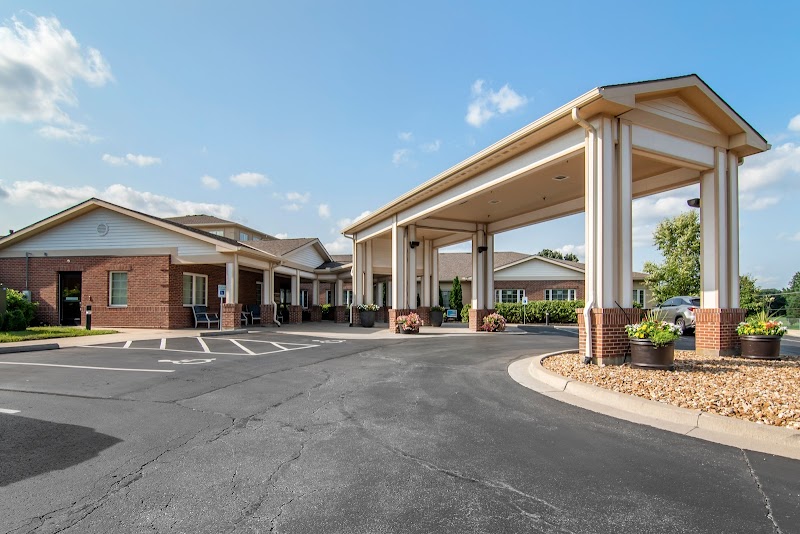
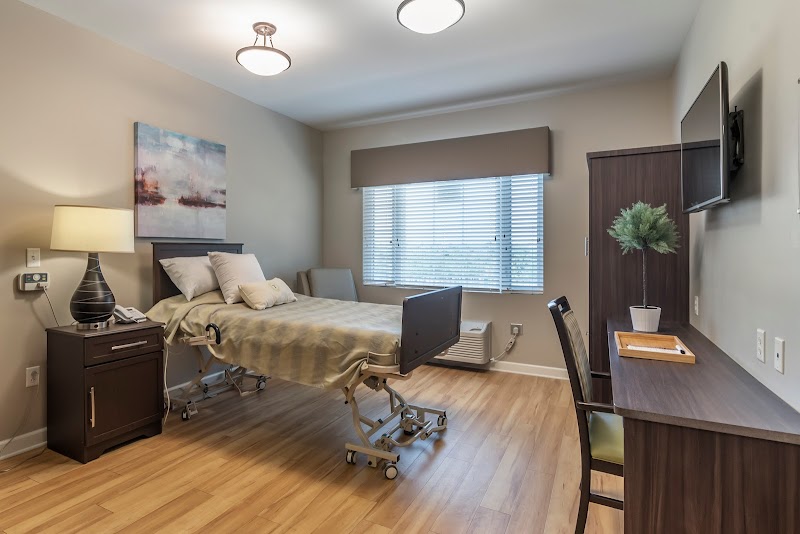
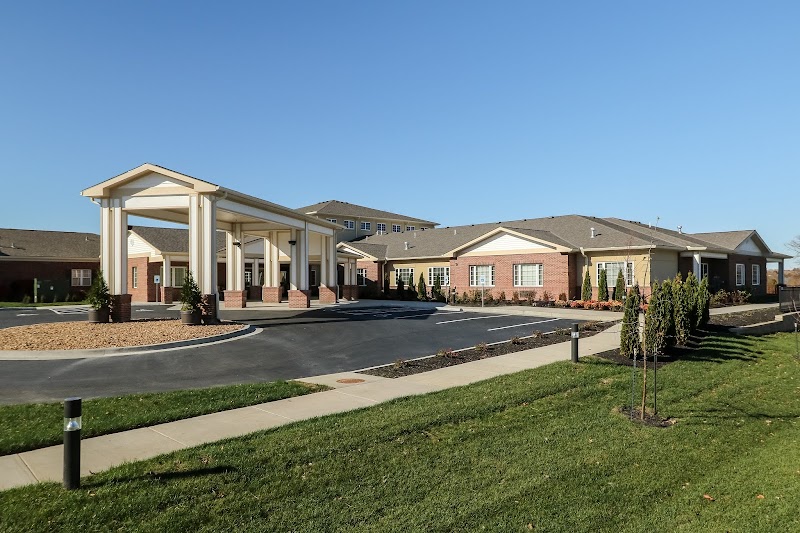
STRATFORD COMMONS REHAB & HEALTH CARE CENTER

12340 QUIVIRA ROAD, OVERLAND PARK, KS 66213 (913) 851-0215
For profit - Corporation 60 Beds TUTERA SENIOR LIVING & HEALTH CARE Data: November 2025
Trust Grade
50/100
#224 of 295 in KS
Last Inspection: February 2024

Within standard 12-15 month inspection cycle. Federal law requires annual inspections.

Overview

Stratford Commons Rehab & Health Care Center has a Trust Grade of C, which means it is average and falls in the middle of the pack among nursing homes. It ranks #224 out of 295 facilities in Kansas, placing it in the bottom half, and #26 out of 35 in Johnson County, indicating that there are only a few local options that are better. The facility is improving slightly, with the number of issues decreasing from 19 in 2022 to 17 in 2024. Staffing is rated average with a turnover rate of 51%, which is comparable to the state average of 48%. While there are no fines on record, which is a positive sign, the facility has faced some concerning incidents. For example, they failed to conduct a thorough assessment of their resources needed for resident care, and their infection control practices did not adequately monitor the risk of Legionella disease, potentially exposing residents to health risks. Overall, while there are some strengths, families should be aware of these weaknesses when considering care for their loved ones.

Trust Score
C
50/100
In Kansas
#224/295
Bottom 25%
Safety Record
Low Risk
No red flags
Inspections
Getting Better
19 → 17 violations
Staff Stability
⚠ Watch
51% turnover. Above average. Higher turnover means staff may not know residents' routines.
Penalties
✓ Good
No fines on record. Clean compliance history, better than most Kansas facilities.
Skilled Nurses
○ Average
Each resident gets 34 minutes of Registered Nurse (RN) attention daily — about average for Kansas. RNs are the most trained staff who monitor for health changes.
Violations
⚠ Watch
46 deficiencies on record. Higher than average. Multiple issues found across inspections.
★★☆☆☆
2.0
Overall Rating
★★★☆☆
3.0
Staff Levels
★★☆☆☆
2.0
Care Quality
★★☆☆☆
2.0
Inspection Score
Stable
2022: 19 issues
2024: 17 issues

The Good

  • Full Sprinkler Coverage · Fire safety systems throughout facility
  • No fines on record

Facility shows strength in fire safety.

The Bad

2-Star Overall Rating

Below Kansas average (2.9)

Below average - review inspection findings carefully

Staff Turnover: 51%

Near Kansas avg (46%)

Higher turnover may affect care consistency

Chain: TUTERA SENIOR LIVING & HEALTH CARE

Part of a multi-facility chain

Ask about local staffing decisions and management

The Ugly 46 deficiencies on record

Feb 2024 17 deficiencies
CONCERN (D)

Potential for Harm - no one hurt, but risky conditions existed

Deficiency F0657 (Tag F0657)

Could have caused harm · This affected 1 resident

**NOTE- TERMS IN BRACKETS HAVE BEEN EDITED TO PROTECT CONFIDENTIALITY** The facility identified a census of 54 residents. The sample included 14 residents with 14 residents reviewed for care plans. Ba...

Read full inspector narrative →
**NOTE- TERMS IN BRACKETS HAVE BEEN EDITED TO PROTECT CONFIDENTIALITY** The facility identified a census of 54 residents. The sample included 14 residents with 14 residents reviewed for care plans. Based on observation, record review, and interviews, the facility failed to revise the care plan with the relevant hospice information for Resident (R) 29. The facility also failed to revise R10's care plan with the unsuccessful attempts for nonpharmacological interventions that had been tried prior to the administration of as-needed psychotropic (alters mood or thoughts) medication. This deficient practice placed these residents at risk for impaired care due to uncommunicated care needs. Findings included: - R29's Electronic Medical Record (EMR) from the Diagnoses tab documented diagnoses of weakness, need for assistance with personal care, chronic respiratory failure, emphysema (a long-term, progressive disease of the lungs characterized by shortness of breath), muscle weakness, lack of coordination, and difficulty in walking. The admission Minimum Data Set (MDS) dated [DATE] documented a Brief Interview of Mental Status (BIMS) score of 11 which indicated moderately impaired cognition. The MDS documented R29 was dependent on staff assistance for transfers from chair/bed-to-chair transfers. The MDS documented R29 received oxygen during the observation period. The Significant Change MDS was in progress. R29's Functional Abilities Care Area Assessment (CAA) dated 12/30/23 documented she required assistance with her activities of daily living. R29's Care Plan dated 01/26/24 documented the facility would consult with the physician and social services to have hospice care for R29. R29's Care Plan dated 01/31/24 documented hospice would manage the plan of care to include treatment and medications. The plan of care lacked the name of the hospice provider and a description of the services provided by the hospice. R29's EMR under the Orders tab revealed the following physician order: Hospice to evaluate and treat as indicated dated 01/24/24. A review of the communication book provided by hospice lacked a hospice care plan, signed admission paperwork with the physician documentation of a terminal diagnosis for admission to hospice services, services or equipment that would be provided, and medications that were covered by hospice. Observation on 02/07/24 at 08:33 AM R29 requested a pink disposable pad be placed on the bed. Certified Nurse Aide (CNA) N told R29 she was out of disposable pads and staff would have to notify R29's family to bring more to the facility. CNA N placed a gait belt around R29's waist, and using the gait belt, assisted R29 into a partial standing position, then pivoted R29 onto the bed. On 02/07/24 at 08:40 AM Certified Nurse Aide (CNA) N stated the staff had access to the plan of care and [NAME] (a nursing tool that gives a brief overview of the care needs of each resident). CNA N stated R29 had just recently been admitted to hospice services. CNA N stated she did not know what supplies the hospice provided. CNA N stated she would let the nurse know if R29 needed supplies. On 02/07/24 at 10:09 AM Licensed Nurse (LN) G stated all staff had access to the care plan and [NAME]. LN G stated the [NAME] contained the information for R29's hospice services. LN G reviewed the hospice communication book for R29 and confirmed the communication book lacked a hospice care plan, signed admission paperwork with the admitting terminal diagnosis for admission to hospice services, services hospice would provide, and medication covered by hospice. On 02/07/24 at 12:09 PM Administrative Nurse D stated R29 had been admitted to hospice on a weekend so the facility had overlooked updating the care plan. Administrative Nurse D stated the hospice provider had been contacted and the provider faxed the admission paperwork with the physician's order for hospice admission, along with the care plan which covered the services provided and the list of medication that would be covered by hospice. The facility's Care Planning-Interdisciplinary Teams policy reviewed 01/2017 documented every resident would be assessed using the Minimum Data Set (MDS) according to the guidelines set forth in the Resident Assessment Instrument (RAI) manual to assess each resident's strengths, weaknesses, and care needs. The facility failed to ensure the relevant hospice information was on R29's care plan This deficient practice placed R29 at risk of impaired care due to uncommunciated care needs. - R10's Electronic Medical Record (EMR) from the Diagnoses tab documented diagnoses of anxiety (mental or emotional reaction characterized by apprehension, uncertainty, and irrational fear) disorder, edema (swelling resulting from an excessive accumulation of fluid in the body tissues), and insomnia (inability to sleep). The Significant Change Minimum Data Set (MDS) dated [DATE] documented a Brief Interview of Mental Status (BIMS) score of 15 which indicated intact cognition. The MDS documented R10 had received antianxiety (class of medications that calm and relax people), anticoagulant (class of medications used to prevent the formation of blood clots), diuretic (medication to promote the formation and excretion of urine), and opioid (a class of medication used to treat pain) for seven days during the observation period. The Quarterly MDS dated 01/17/24 documented a BIMS score of 15 which indicated intact cognition. The MDS documented that R10 had received antianxiety medication, anticoagulant medication, diuretic, and opioid medication during the observation period. R10's Psychotropic Drug Care Area Assessment (CAA) dated 07/20/23 documented R10 received routine antianxiety medication. R10's Care Plan dated 06/08/23 documented staff would administer medications as ordered and monitor for any side effects. R10's EMR under the Orders tab revealed the following physician orders: Benadryl (allergy medication with hypnotic qualities used to induce sleep) allergy oral tablet 25 milligrams (mg) give two tablets by mouth every 24 hours as needed for insomnia dated 09/06/23. Clonazepam (antianxiety medication)) oral tablet 0.5mg give one tablet by mouth every four hours as needed and administer at bedtime for insomnia dated 01/29/24. Clonazepam oral tablet 0.5mg give one tablet by mouth every 4 hours as needed for insomnia for three days a second dose can be repeated in four hours for insomnia if needed dated 01/29/24. R10's clinical record lacked evidence of documentation of any nonpharmacological attempts or person-centered attempts to manage the symptoms prior to the administration of the as-needed psychotropic medication for R10. Observation on 02/06/24 at 10:53 AM R10 sat in her wheelchair in the dining room and drank a cup of coffee during the resident council meeting. On 02/06/24 at 02:01 PM Administrative Nurse E stated behavior monitoring was documented on the Treatment Administration Record (TAR). Administrative Nurse E stated the facility did not document any person-specific nonpharmacological attempts to manage symptoms of as-needed psychotropic medication. On 02/08/24 at 11:19 AM Licensed Nurse (LN) G stated he was not aware of any documentation of nonpharmacological successful or unsuccessful attempts to manage a resident's symptoms prior to administering as-needed psychotropic medication. On 02/08/24 at 12:37 PM Administrative Nurse D stated that nonpharmacological attempts to manage insomnia should be provided prior to administration of as-needed medication. Administrative Nurse D stated she expected staff to document the effects of the medication administered. The facility's Care Planning-Interdisciplinary Teams policy reviewed 01/2017 documented every resident would be assessed using the Minimum Data Set (MDS) according to the guidelines set forth in the Resident Assessment Instrument (RAI) manual. To assess each resident's strengths, weaknesses, and care needs. The facility failed to ensure nonpharmacological attempts of symptom management prior to administering as-needed psychotropic medication was included in the care plan for R10. This deficient practice placed these residents at risk for impaired care due to uncommunicated care needs.
CONCERN (D)

Potential for Harm - no one hurt, but risky conditions existed

Deficiency F0661 (Tag F0661)

Could have caused harm · This affected 1 resident

**NOTE- TERMS IN BRACKETS HAVE BEEN EDITED TO PROTECT CONFIDENTIALITY** The facility identified as census of 54 residents. The sample included 14 residents with two residents reviewed for discharge. B...

Read full inspector narrative →
**NOTE- TERMS IN BRACKETS HAVE BEEN EDITED TO PROTECT CONFIDENTIALITY** The facility identified as census of 54 residents. The sample included 14 residents with two residents reviewed for discharge. Based on observation, record review, and interview, the facility failed to ensure Resident (R) 24's discharge summary included medication reconciliation and instructions. This placed R24 at risk for not receiving timely and appropriate care. Findings included: - The Electronic Medical Record (EMR) for R24 documented diagnoses of atrial fibrillation (A-fib: a rapid, irregular heartbeat), hypertension (HTN- an elevated blood pressure), syncope (fainting or passing out), and transient ischemic attack (TIA- temporary episode of inadequate blood supply to the brain). The admission Minimum Data Set (MDS) dated [DATE] documented R24 had a Brief Interview for Mental Status (BIMS) score of 12 which indicated moderate cognitive impairment. The Functional Care Area Assessment (CAA) dated 01/25/24 for R24 documented she was receiving skilled services and was seen by therapy with the goal of returning home. Improvement was anticipated as she worked with therapy. R24 required assistance with her activities of daily living (ADLs). R24's Discharge Care Plan initiated 01/24/24 directed staff to arrange for home health services with a company of R24's choice. Staff was directed to assist as needed with R24's post-discharge follow-up appointments. Staff was directed to provide R24, her family, and/or the responsible party with written discharge instructions upon her discharge from the facility. R24's EMR documented a Health Status Note dated 02/01/24 at 12:40 PM to document that R24 had been discharged home with home health services. R24 was sent home with her medications, her discharge instructions, and personal belongings. R24's medications were called to her pharmacy of choice. R24's transportation was provided by her family. A review of R24's Discharge Summary Form dated 02/02/24 revealed the lack of a medication reconciliation and medication instructions. On 02/08/24 at 11:19 AM Licensed Nurse (LN) G stated the nurse would review medications and provide a copy of the current physician's medication orders to the resident at the time of discharge. LN G stated he was not sure if a copy of the current medication orders was scanned into the EMR with the discharge summary. On 02/08/24 at 12:37 PM Administrative Nurse D stated social service staff initiated the discharge process for the residents. Administrative Nurse D stated the nursing staff reviewed any future physician appointments, current medication orders, and treatment orders with the resident prior to discharge. Administrative Nurse D stated the medications should be included in the discharge summary. The Discharge Summary and Plan policy revised in November 2022 documented that the discharge plan would include resident and family/caregiver education needs and would initiate or maintain collaboration between the nursing facility and the other post-acute providers to support the resident's transition to community living. The discharge plan, instruction, and summary provided a recapitulation or summary of the resident's stay. The nurse would review discharge instructions and medications with the resident/resident representatives. A copy of the disposition of medication form would be given to the resident/resident representative and a copy scanned into the medical record. The nurse would document a discharge note in the progress notes section of the resident's medical record. The discharge note would include- a skin assessment, who the resident was discharged with, where the resident was discharged to, what belongings were sent with them, and other pertinent information. The facility failed to ensure R24's discharge summary included medication reconciliation and instructions. This placed R24 at risk for not receiving timely and appropriate care.
CONCERN (D)

Potential for Harm - no one hurt, but risky conditions existed

Deficiency F0676 (Tag F0676)

Could have caused harm · This affected 1 resident

**NOTE- TERMS IN BRACKETS HAVE BEEN EDITED TO PROTECT CONFIDENTIALITY** The facility identified a census of 54 residents. The sample included 14 residents with one sampled for activities of daily livi...

Read full inspector narrative →
**NOTE- TERMS IN BRACKETS HAVE BEEN EDITED TO PROTECT CONFIDENTIALITY** The facility identified a census of 54 residents. The sample included 14 residents with one sampled for activities of daily living (ADL). Based on observations, interviews, and record review, the facility failed to ensure Resident (R) 32 received supportive care and services to promote and maintain his quality of life when the facility did not implement tools and/or strategies to allow R32, who had aphasia (a condition with disordered or absent language function), to communicate his wants, needs, or feelings. This deficient practice placed the resident at risk for decreased quality of life, isolation, and impaired dignity. Findings included: - R32's Electronic Medical Record (EMR) from the Diagnoses tab documented cerebral infarction (stroke - the sudden death of brain cells due to lack of oxygen caused by impaired blood flow to the brain by blockage or rupture of an artery to the brain), aphasia following cerebral infraction, hemiparesis/hemiplegia (weakness and paralysis on one side of the body) following cerebral infraction affecting the right dominate side, dysphagia (swallowing difficulty), cognitive social or emotional deficit following cerebral infraction, major depressive disorder (major mood disorder which causes persistent feelings of sadness) and anxiety (mental or emotional reaction characterized by apprehension, uncertainty, and irrational fear). R32's admission Minimum Data Set (MDS) dated [DATE] documented a Brief Interview for Mental Status was not conducted because the resident was rarely or never understood. The MDS documented that the interview for personal preferences was not conducted with R32 or his representative. The Cognitive Loss/Dementia Care Area Assessment (CAA) dated 06/27/23 documented R32 had cognitive social or emotional deficit following cerebral infraction and due to this he had severely impaired cognition. The Communication CAA dated 06/27/23 documented R32 has aphasia due to cerebral infarction is rarely or never understood and rarely or never understands others. R32's Quarterly MDS dated 11/03/23 documented a Brief Interview for Mental Status was not conducted because the resident was rarely or never understood. The MDS documented the resident's cognitive skills were severely impaired. The MDS documented R32 was dependent on staff for all self-care ADLs. The MDS documented R32 received scheduled pain medication but did not receive non-medication pain interventions. The MDS documented R32 received antidepressant medication (a class of medication to treat depression) during the observation period. R32's Care Plan dated 06/21/22 documented he had impaired cognition. The plan directed staff to communicate with R32's family regarding his capabilities and needs. The plan directed staff to use the resident's name and to identify themselves. R32's Care Plan directed staff to turn off the television to reduce distractions. The care plan dated 01/18/23 documented R32 had a communication problem and was nonverbal. R32's Care Plan directed staff to use communication techniques that enhanced interaction. The plan directed staff to talk to R32 while providing care, even if he did not respond. The plan directed staff to turn off the TV and radio as needed to reduce environmental noise. R32's Care Plan directed staff to ask yes or no questions, and to use brief, consistent words or cues. A review of R32's Speech Therapy Plan of Care from June 2023 through January 2024 lacked evidence a communication system or picture board was trialed. On 02/05/24 at 07:35 AM R32 lay in bed on his back. R32 had fall mats on both sides of the bed. R32's television was on. R32 nodded yes in response to all questions. There were no communication tools/boards visible in R32's room. On 02/06/24 at 08:46 AM observation revealed Licensed Nurse (LN) H administered R32's morning tube feeding. LN H completed the tube feeding without speaking to R32. After the feeding was complete LN H asked R32 if everything was ok and gave the resident a thumbs-up sign. R32 responded with a thumbs-up sign. LN H asked R32 to demonstrate a thumbs-down sign, and R32 gave a thumbs-down sign. LN H stated R32 would sometimes wink if everything was ok. LN H did not ask R32 any further questions. On 02/07/24 at 07:55 AM R32 lay in bed on his back. His television was on. When R32 was asked if he liked what he was watching on the television, R32 reached out and held the surveyor's hand. R32 smiled in response to all further questions and was reluctant to let go of the surveyor's hand. On 02/08/24 at 08:25 AM R32 lay in bed on his back and watched television with the remote on the bedside table. When asked if he liked the show on the television, R32 did not gesture but he reached out to hold the surveyor's hand. There was no communication board visible in R3's room. On 02/05/24 at 10:41 AM in a telephone interview, R32's representative stated R32 was unable to communicate with the staff that did not know him well. R32's representative stated R32 pointed at what he wanted, but the staff did not always understand what he wanted. On 02/08/24 at 10:26 AM Certified Nurse Aide (CNA) N stated R32 pointed at things but never pressed his call light. CNA N said R32 had no way to tell staff his wants or needs; staff had to ask R32 the right questions. On 02/08/24 at 09:43 AM CNA M stated R32 blinked once for yes and twice for no. CNA M stated R32 was unable to tell staff if he was cold, wet, or lonely. She stated staff kept R32 him on a routine to ensure he was taken care of. On 02/08/24 at 09:37 LN G stated he thought R32 had a communication board at one time and said it might be in the closet. LN G stated staff asked R32 yes and no questions and made sure he had a routine. LN G stated he asked R32 to squeeze his hand in answer to questions and said he always made, sure to make eye contact with R32 to ensure the resident was well. LN G verified R32 had no way to communicate something to staff if staff did not ask directly about it. On 02/08/24 at 12:37 Administrative Nurse D stated R32 had a brain injury and was unable to let staff know how he was feeling or what he wanted. Administrative Nurse D stated when staff changed R32, staff watched R32's face to communicate. Administrative Nurse D stated no matter what the facility tried, R32 had not been able to communicate. Administrative Nurse D stated that R32's representative was very involved with his care. The facility did not provide a policy related to promoting effective communication with nonverbal residents. The facility failed to ensure R32 received supportive care and services to promote and maintain R32's ability to communicate his wants, needs, or feelings. This deficient practice placed the resident at risk for decreased quality of life, isolation, and impaired dignity.
CONCERN (D)

Potential for Harm - no one hurt, but risky conditions existed

ADL Care (Tag F0677)

Could have caused harm · This affected 1 resident

**NOTE- TERMS IN BRACKETS HAVE BEEN EDITED TO PROTECT CONFIDENTIALITY** The facility identified a census of 54 residents. The sample included 14 residents with five residents reviewed for activities o...

Read full inspector narrative →
**NOTE- TERMS IN BRACKETS HAVE BEEN EDITED TO PROTECT CONFIDENTIALITY** The facility identified a census of 54 residents. The sample included 14 residents with five residents reviewed for activities of daily living (ADLs). Based on observations, record review, and interviews, the facility failed to provide ADL care including trimming his fingernails/toenails for Resident (R) 5. The facility also failed to provide ADL care and assistance to R9. This deficient practice placed the residents at risk for poor hygiene, decreased self-esteem, and impaired health. Findings included: - The Diagnoses tab of R5's Electronic Medical Record (EMR) documented diagnoses of chronic inflammatory demyelinating polyneuropathy (CIDP - a neurological disorder that involves progressive weakness and reduced senses in the arms and legs), paraplegia (paralysis characterized by motor or sensory loss in the lower limbs and trunk), generalized muscle weakness, and cognitive communication deficit (an impairment in organization, sequencing, attention, memory, planning, problem-solving, and safety awareness). The admission Minimum Data Set (MDS) dated 08/15/23, documented a Brief Interview for Mental Status (BIMS) score of 15 which indicated intact cognition. The MDS documented R5 required substantial assistance, where staff did more than half the effort, for eating and oral hygiene. The MDS further documented R5 was dependent on staff for toileting hygiene, bathing, dressing, transfers, and mobility. The Quarterly MDS dated 12/31/23, documented R5 was dependent on staff for eating, oral hygiene, and personal hygiene. The ADL Functional/Rehabilitation Potential Care Area Assessment (CAA) dated 08/15/23, documented R5 required assistance with ADLs. R5's Care Plan with an initiated date of 09/17/23, documented R5 had an ADL self-care performance deficit and both arms, hands, and legs were contracted (abnormal permanent fixation of a joint or muscle ). An intervention with an initiated date of 08/06/23 documented R5 required two staff assistance with bathing and directed staff to offer to assist with bathing twice per week and as needed. An intervention with an initiated date of 08/06/23, documented R5 required two staff assistance to reposition and turn him in bed. An intervention with an initiated date of 08/06/23, documented R5 required one staff assistance to eat. An intervention with an initiated date of 08/06/23, documented R required assistance of one staff for personal hygiene and oral care. The intervention further directed staff to use oral swabs to provide oral care upon rising, after meals, and before bed. An intervention with an initiated date of 08/06/23, documented R23 required a Hoyer (total body mechanical lift) and two staff assistance for transfers. An intervention with an initiated date of 08/31/23, directed staff to provide passive range of motion/stretching to both legs every shift. R5's EMR lacked evidence that he refused to have his fingernails trimmed. On 02/05/24 at 10:50 AM R5 was in his room in bed. R5's hands were closed into a fist and his fingernails were approximately an inch long on both hands. R5 stated his fingernails needed to be cut, but felt staff were too busy to cut them for him. R5 stated that he wanted to have his hair cut and beard trimmed as well. R5's hair and beard were unkempt, he had body odor, and dry skin on his face/beard area, hands, and feet. R5's toenails were thick and approximately half an inch long. R5 stated he did not like the way he felt with his hair, beard, and nails grown out. On 02/08/24 at 08:37 AM R5 was in his room in bed. R5's hands were closed in a fist and his fingernails remained approximately an inch long on both hands and his toenails remained approximately half of an inch. R5's hair and beard were unkempt, he continued to have body odor and dry skin on his hands and feet. R5 stated he did not like having a beard and hoped it, and his hair would be trimmed that day. He further stated a staff member mentioned trimming his nails, but that it was not done. R5 stated he believed staff were too busy to trim them. On 02/08/24 at 11:50 AM Licensed Nurse (LN) G stated Certified Nurse Aides (CNA) should trim R5's fingernails on his bath days. LN G stated if R5 refused a bath or to have his fingernails trimmed, the refusal would have been documented in his EMR as a progress note. On 02/08/24 at 12:37 PM Administrative Nurse D stated CNAs and nurses were able to trim a resident's fingernails and that it would normally have been done on the resident's bath days. Administrative Nurse D stated R5's fingernails were too thick, and he was placed on a list to see a specialist to have them trimmed. Administrative Nurse D further stated R5 was sent to the hospital and missed his appointment to have his nails trimmed. Administrative Nurse D stated if a resident missed their appointment with the specialist, then the facility would have attempted to reschedule as soon as possible, and the resident would have been placed on a list to be seen when the specialist was scheduled to return to the facility. An ADL policy was not provided by the facility. The facility failed to provide ADL care for R5 which included trimming his fingernails and toenails. This deficient practice had the risk of poor hygiene, decreased self-esteem, and impaired health for R5. - R9's Electronic Medical Record (EMR) documented diagnoses of chronic osteomyelitis (local or generalized infection of the bone and bone marrow) of the left tibia (bone of the lower leg )and fibula (one of the two bones of the lower leg), repeated falls, symptoms and signs involving cognitive functions and awareness, acquired absence of the right toe, difficulty walking, muscle weakness, Stage 3 (full thickness pressure injury extending through the skin into the tissue below), pressure ulcer (localized injury to the skin and/or underlying tissue usually over a bony prominence, as a result of pressure, or pressure in combination with shear and/or friction) of the left hip and left and right heels. The admission Minimum Data Set (MDS) dated [DATE] documented a Brief Interview of Mental Status (BIMS) score of six which indicated severely impaired cognition. The MDS documented R9 required partial to moderate assistance from staff for bed mobility. R9 was dependent on staff for all transfers and toileting hygiene. The MDS recorded R9 was always incontinent of both urine and bowel and was not on a toileting program. The MDS recorded R9 had one Stage 2 pressure ulcer (partial-thickness skin loss into but no deeper than the dermis including intact or ruptured blisters), two Stage 3 pressure ulcers, one unstageable pressure ulcer (depth of the wound is unknown due to the wound bed is covered by a thick layer of other tissue and pus) and a surgical wound. The MDS documented R9 was at risk for developing pressure ulcers and had a pressure-reducing device on his bed and wheelchair. R9 received pressure ulcer care, surgical wound care, and nonsurgical dressings and ointments but not a turning or repositioning program. The Incontinence Care Area Assessment (CAA) dated 10/17/23 documented R9 had chronic osteomyelitis of the left and right tibia and fibula, sepsis (a life-threatening systemic reaction that develops due to infections that cause inflammation throughout the entire body) and repeated falls. R9 needed assistance with using the toilet and was incontinent. R9's Care Plan dated 10/11/23 and revised on 02/04/24 documented R9 had pressure wounds to his left and right heels, left hip, and right inner ankle; he had a vascular wound (wound resulting from poor circulation) on his right foot and leg. An intervention dated 10/14/23 directed staff to offer R9 a urinal and check and change his every two to three hours and as needed (i.e., upon rising, after all meals, and before bed); check routinely throughout the night. R9's Care Plan dated 10/12/23 and revised on 10/14/23 documented R9 had an ADL self-care deficit and was non-weight bearing on his legs. The plan directed staff R9 required a full body mechanical lift (Hoyer) with assistance from two staff for all transfers and required assistance from one staff for bed mobility and repositioning. An intervention dated 10/27/23 directed staff to encourage R9 to get out of bed daily; R9 was able to tolerate being up two to three hours at a time. On 02/06/24 at 07:38 AM Administrative Nurse E pushed R9 from his room to the dining room table in a wheelchair. R9 wore socks on both feet and his feet rested directly on the wheelchair pedals. On 02/06/24 at 09:36 AM R9 remained in his wheelchair at the dining room table. R9 wore socks on both feet and his feet rested directly on the wheelchair pedals. On 02/06/24 at 10:51 AM R9 sat in his wheelchair which was parked next to R9's bed. R9 leaned forward in his chair so that his upper body and head rested on his bed. R9's eyes were closed, and he appeared to be asleep. On 02/06/24 at 01:32 PM, R9 sat in his wheelchair at the dining room table. His eyes were closed, and he appeared to be asleep. On 02/06/24 at 01:54 PM, R9 sat in his wheelchair. His pants were visibly saturated to his mid-thigh area. Certified Nurse Aide (CNA) O and Administrative Nurse E prepared to transfer R9 into bed. On 02/06/24 at 02:30 PM, R9 lay in bed on his right side with a pillow between his legs. His right heel rested directly on the mattress. On 02/06/24 at 02:18 PM, CNA O stated R9 had not been laid down or changed since 08:00 AM because CNA O had been busy. CNA O further stated R9 used to have pressure-relieving boots for his heels but those disappeared. She went on to say she knew how to access the resident's plan of care in the [NAME] (a nursing tool that gives a brief overview of the care needs of each resident). On 02/08/24 at 09:46 AM CNA M stated R9 should be turned toward the wall so he did not fall and did not lay on the wound vac. CNA M stated R9 should be changed every two to three hours. On 02/08/24 at 10:29 AM CNA N stated R9 should have a pillow between his legs and R9's heels should be elevated on a pillow. CNA N said the [NAME] informed staff of each resident's care needs. CNA N said R9 should be changed every two to three hours. On 02/08/24 at 01:31 PM Administrative Nurse D stated R9 was able to talk and communicate his needs. She said she expected staff to check and change R9 every two hours and to put him down (in bed) in between meals. Administrative Nurse D said all staff knew R9 was at high risk for skin breakdown and needed to be changed frequently. Administrative Nurse D stated it was the routine process for the CNA staff to reposition R9 at least every two hours. She said R9 had a lot of wounds when he was admitted . Administrative Nurse D stated she expected staff to follow the resident's care plan. The facility did not provide a policy related to the provision of care with ADL. The facility failed to provide ADL assistance and services for R9 who was dependent on staff for transfers and toileting. This placed R9 at risk for avoidable complications and impaired quality of life.
CONCERN (D)

Potential for Harm - no one hurt, but risky conditions existed

Quality of Care (Tag F0684)

Could have caused harm · This affected 1 resident

**NOTE- TERMS IN BRACKETS HAVE BEEN EDITED TO PROTECT CONFIDENTIALITY** The facility identified a census of 54 residents. The sample included 14 residents with 14 residents reviewed for quality of car...

Read full inspector narrative →
**NOTE- TERMS IN BRACKETS HAVE BEEN EDITED TO PROTECT CONFIDENTIALITY** The facility identified a census of 54 residents. The sample included 14 residents with 14 residents reviewed for quality of care. Based on observation, record review, and interview, the facility failed to apply Geri Sleeves (sleeves used to protect the skin on the arms and legs against damage caused by friction and shearing) to Resident (R) 23 per her care plan and the facility failed to follow physician ordered daily weights for R10 who required the use of a diuretic (a medication used for the formation and secretion of urine and reduce excess fluids). This deficient practice placed R23 at risk for skin injury and placed R10 at risk for excess fluid accumulation and physical complications. Findings included: - R23's Electronic Medical Record (EMR) documented a diagnosis of dementia (a progressive mental disorder characterized by failing memory, and confusion), and cognitive communication deficit (an impairment in organization, sequencing, attention, memory, planning, problem-solving, and safety awareness). The Annual Minimum Data Set (MDS) dated [DATE] noted the Brief Interview for Mental Status (BIMS) assessment was unable to be completed. The MDS documented R23 had problems with recall ability and short-term and long-term memory. The MDS further documented R23 had severely impaired decision-making abilities. The MDS documented R23 required substantial assistance where staff did more than half the effort, for oral hygiene, personal hygiene, upper body dressing, and transfers. The MDS further documented R23 was dependent on staff for bathing, lower body dressing, and mobility through the use of a wheelchair. The MDS documented the resident had skin tears. The Cognitive Loss / Dementia Care Area Assessment (CAA) dated 01/03/24, documented R23 had advanced dementia and memory impairment. R23's Care Plan with an initiated date of 01/07/21, documented R23 was at risk for pressure ulcer (localized injury to the skin and/or underlying tissue usually over a bony prominence, as a result of pressure, or pressure in combination with shear and/or friction) development related to immobility and compounded by incontinence. An intervention with an initiated date of 03/11/21, directed staff to apply Geri Sleeves on bilateral (both sides) lower extremities (BLE) and bilateral upper extremities (BUE) for skin protection. On 02/05/24 at 09:20 AM R23 was in a common area and sat in a Broda chair (specialized wheelchair with the ability to tilt and recline) in front of a TV. R23 did not have Geri Sleeves applied to her BLE or BUE. On 02/07/24 at 02:03 PM, R23 sat in her Broda chair, in a common area, in front of a TV. R23 did not have Geri Sleeves applied to her BLE or BUE. On 02/08/24 at 11:24 AM R23 sat in her Broda chair, in a common area, in front of a TV. R23 picked at the skin on the side of her nose and caused it to bleed. R23 did not have Geri Sleeves applied to her BLE or BUE. R23's EMR lacked evidence the Geri Sleeves were being offered to R23 or that she had refused to use them. On 02/08/24 at 11:29 AM Certified Nurse Aide (CNA) O stated R23 had used the Geri Sleeves before, but R23 had not worn them for a few weeks. CNA O stated R23 would scratch herself and that was why the sleeves were used. CNA O stated R23 sometimes refused to let staff put them on her, and CNA O would notify the nurse when that happened so the refusal could be documented. On 02/08/24 at 11:50 AM Licensed Nurse (LN) G stated the care plan should have stated as needed for the Geri Sleeves. LN G further stated staff placed the sleeves on R23 when she would pick at her arms. LN G stated R23 would fixate on a location, such as a sore, and that she would pick at it. LN G further stated R23 did not pick at her skin all of the time and the sleeves were placed when she did it. LN G stated refusal to wear the Geri Sleeves would have been entered as a progress note. On 02/08/24 at 12:37 PM Administrative Nurse D stated it was not always possible to place the Geri Sleeves on R23 as it would sometimes agitate her. Administrative Nurse D went on to say staff were expected to at least try each day to place the sleeves on R23. The facility provided a Wound Prevention policy, with a reviewed date of 08/2023, documented the facility would provide initial and ongoing training to all clinical staff members on wound prevention techniques, early identification of wounds, and appropriate care interventions. The policy further documented all wound prevention measures, assessments, and interventions should be documented in the resident's service plans and medical records. The facility failed to apply the care planned Geri Sleeves to R23. This deficient practice placed R23 at risk for skin injury. - R10's Electronic Medical Record (EMR) from the Diagnoses tab documented diagnoses of anxiety (mental or emotional reaction characterized by apprehension, uncertainty, and irrational fear) disorder, edema (swelling resulting from an excessive accumulation of fluid in the body tissues), and insomnia (inability to sleep). The Significant Change Minimum Data Set (MDS) dated [DATE] documented a Brief Interview of Mental Status (BIMS) score of 15 which indicated intact cognition. The MDS documented R10 had received antianxiety (class of medications that calm and relax people), anticoagulant (class of medications used to prevent the formation of blood clots), diuretic (medication to promote the formation and excretion of urine), and opioid (a class of medication used to treat pain) for seven days during the observation period. The Quarterly MDS dated 01/17/24 documented a BIMS score of 15 which indicated intact cognition. The MDS documented that R10 received antianxiety medication, anticoagulant medication, diuretic, and opioid medication during the observation period. R10's Psychotropic Drug Care Area Assessment (CAA) dated 07/20/23 documented R10 received routine antianxiety medication. R10's Care Plan dated 01/24/23 documented staff would obtain a daily weight related to diuretic medication. The plan of care documented the physician would be notified of a two-pound gain in 24 hours or a five-pound gain in five days. R10's EMR under the Orders tab revealed the following physician orders: Daily weight related to the use of diuretics one time a day. Notify the physician of a two-pound weight gain in 24 hours or a five-pound weight gain in five days dated 01/24/23. Furosemide (diuretic) tablet 40 milligrams (mg) give 60mg by mouth in the evening for edema, administer at 04:00 PM dated 01/04/24. Review of R10's Medication Administration Record (MAR) and Treatment Administration Record (TAR) from 11/01/23 to 02/05/24 (97 days) lacked evidence staff measured and recorded R10's weight on the following 10 dates 11/01/23, 11/10/23, 11/15/23, 11/24/23, 11/25/23, 12/18/23, 12/19/23, 12/24/23, 01/05/24, and 02/02/24. R10's refused on the following 26 dates for staff to obtain her daily weight on the following dates 11/06/23, 11/29/23, 12/05/23, 12/06/23, 12/15/23, 12/16/23, 12/17/23, 12/20/23, 12/21/23, 12/23/23, 12/25/23, 12/26/23, 12/27/23, 12/30/23, 01/03/24, 01/08/24, 01/09/24, 01/14/24, 01/15/24, 01/17/24, 01/18/24, 01/22/24, 01/23/24, 01/26/24, 01/28/24, 02/04/24, 02/05/24, and 02/06/24. Not Available was documented on the following two dates 12/28/23 and 01/02/24. See Progress notes was documented two times on the following dates 12/08/23 and 01/27/24. Sleeping was documented on 11/11/23. A weight gain of five pounds was noted on two occasions on the following dates 11/20/23 and 12/29/23. The clinical record lacked evidence of physician notification the daily weight was not obtained, refused, or the weight gain of five pounds. Observation on 02/06/24 at 10:53 AM R10 sat in her wheelchair in the dining room and drank a cup of coffee during the resident council meeting. On 02/08/24 at 11:05 AM Certified Medication Aide (CMA) R stated the nurse let the staff know who needed a daily weight. CMA R stated the nursing staff would notify the nurse of the resident's weight. On 02/08/24 at 11:19 AM Licensed Nurse (LN) G stated the facility would honor a resident's right to refuse their daily weight. LN G stated the physician should be notified if the resident would refuse frequently to be weighed daily when monitoring for edema; the nurse documented in the clinical record when the physician was notified and the physician's response. On 02/08/24 at 12:37 PM Administrative Nurse D stated the physician should be notified a resident had refused to be weighed daily as ordered or notified of a weight gain. Administrative Nurse D stated the nurse would document the notification in the EMR. The facility was unable to provide a policy related physician notification of weight monitoring for diuretic medication. The facility failed to follow a physician's order for daily weights to monitor weight gain for fluid overload for R10 who had edema and received a diuretic medication. This deficient practice placed R10 at risk of adverse side effects from unnecessary medication or complications related to fluid overload.
CONCERN (D)

Potential for Harm - no one hurt, but risky conditions existed

Pressure Ulcer Prevention (Tag F0686)

Could have caused harm · This affected 1 resident

**NOTE- TERMS IN BRACKETS HAVE BEEN EDITED TO PROTECT CONFIDENTIALITY** The facility identified a census of 54 residents. The sample included 14 residents with two sampled for pressure ulcers (localiz...

Read full inspector narrative →
**NOTE- TERMS IN BRACKETS HAVE BEEN EDITED TO PROTECT CONFIDENTIALITY** The facility identified a census of 54 residents. The sample included 14 residents with two sampled for pressure ulcers (localized injury to the skin and/or underlying tissue usually over a bony prominence, as a result of pressure, or pressure in combination with shear and/or friction). based on observation, interviews, and record reviews the facility failed to ensure staff implemented the care plan interventions for Resident (R) 9 who had multiple pressure-related injuries and remained at risk for the development of pressure ulcers. This deficient practice placed R9 at risk for delayed healing, new pressure injuries, and related complications. Findings included: - R9's Electronic Medical Record (EMR) documented diagnoses of chronic osteomyelitis (local or generalized infection of the bone and bone marrow) of the left tibia (bone of the lower leg )and fibula (one of the two bones of the lower leg), repeated falls, symptoms and signs involving cognitive functions and awareness, acquired absence of the right toe, difficulty walking, muscle weakness, Stage 3 (full thickness pressure injury extending through the skin into the tissue below), pressure ulcer (localized injury to the skin and/or underlying tissue usually over a bony prominence, as a result of pressure, or pressure in combination with shear and/or friction) of the left hip and left and right heels. The admission Minimum Data Set (MDS) dated [DATE] documented a Brief Interview of Mental Status (BIMS) score of six which indicated severely impaired cognition. The MDS documented R9 required partial to moderate assistance from staff for bed mobility. R9 was dependent on staff for all transfers and toileting hygiene. R9's MDS documented R9 received scheduled pain medication but no as-needed pain medications and did not receive any non-medicinal pain interventions. The MDS recorded R9 was always incontinent of both urine and bowel and was not on a toileting program. The MDS recorded R9 had one Stage 2 pressure ulcer (partial-thickness skin loss into but no deeper than the dermis including intact or ruptured blisters), two Stage 3 pressure ulcers, one unstageable pressure ulcer (depth of the wound is unknown due to the wound bed is covered by a thick layer of other tissue and pus) and a surgical wound. The MDS documented R9 was at risk for developing pressure ulcers and had a pressure-reducing device on his bed and wheelchair. R9 received pressure ulcer care, surgical wound care, and nonsurgical dressings and ointments but not a turning or repositioning program. The Pressure Ulcer Care Assessment (CAA) dated 10/17/23 documented R9 had chronic osteomyelitis of the left and right tibia and fibula, sepsis (a life-threatening systemic reaction that develops due to infections that cause inflammation throughout the entire body) and repeated falls. R9 needed assistance with bed mobility and was incontinent. R9 was admitted with multiple pressure injuries. R9's Care Plan dated 10/11/23 and revised on 02/04/24 documented R9 had pressure wounds to his left and right heels, left hip, and right inner ankle; he had a vascular wound (wound resulting from poor circulation) on his right foot and leg. The plan directed staff to administer R9's treatments and medications as ordered and shearing while repositioning in bed. Interventions dated 10/14/23 directed staff to float R9's bilateral (both sides) heels on a pillow when R9 was in bed as tolerated and ensure a pressure-reducing cushion was placed in the chair when R9 was up to his chair. An intervention dated 10/14/23 directed staff to offer R9 a urinal and check and change his every two to three hours and as needed (i.e., upon rising, after all meals, and before bed); check routinely throughout the night. R9's Care Plan dated 10/12/23 and revised on 10/14/23 documented R9 had an ADL self-care deficit and was non-weight bearing on his legs. The plan directed staff R9 required a full body mechanical lift (Hoyer) with assistance from two staff for all transfers and required assistance from one staff for bed mobility and repositioning. An intervention dated 10/27/23 directed staff to encourage R9 to get out of bed daily; R9 was able to tolerate being up two to three hours at a time. On 02/05/24 at 08:25 AM observation revealed R9 laid in bed on his right side, with his head against the wall. R9's feet and heels rested directly on the mattress with no evidence of a pillow or device in use for floating. There were visibly soiled sheets wadded on the left side of R9 in the bed. There was a foul odor noted and R9's negative-pressure wound-vac (a vacuum-assisted wound treatment that applies gentle suction to a wound to help it heal) did not make an audible alarm though the screen indicated a leak alert. On 02/06/24 at 01:58 PM observation revealed R9 laid in bed, turned to his right side. There was no fall mat on the floor next to his bed. R9's feet and heels rested directly on the mattress with no evidence of a pillow or device in use for floating. On 02/06/24 at 07:38 AM Administrative Nurse E pushed R9 from his room to the dining room table in a wheelchair. R9 wore socks on both feet and his feet rested directly on the wheelchair pedals. On 02/06/24 at 09:36 AM R9 remained in his wheelchair at the dining room table. R9 wore socks on both feet and his feet rested directly on the wheelchair pedals. On 02/06/24 at 10:51 AM R9 sat in his wheelchair which was parked next to R9's bed. R9 leaned forward in his chair so that his upper body and head rested on his bed. R9's eyes were closed, and he appeared to be asleep. On 02/06/24 at 01:32 PM, R9 sat in his wheelchair at the dining room table. His eyes were closed, and he appeared to be asleep. On 02/06/24 at 01:54 PM, R9 sat in his wheelchair. His pants were visibly saturated to his mid-thigh area. Certified Nurse Aide (CNA) O and Administrative Nurse E prepared to transfer R9 into bed. On 02/06/24 at 02:18 PM, CNA O stated R9 had not been laid down or changed since 08:00 AM because CNA O had been busy. CNA O further stated R9 used to have pressure-relieving boots for his heels but those disappeared. She went on to say she knew how to access the resident's plan of care in the [NAME] (a nursing tool that gives a brief overview of the care needs of each resident). On 02/06/24 at 02:30 PM, R9 lay in bed on his right side with a pillow between his legs. His right heel rested directly on the mattress. On 02/08/24 at 09:46 AM CNA M stated R9 should be turned toward the wall so he did not fall and did not lay on the wound vac. CNA M said R9 should have a pillow placed under his feet for floating his heels. CNA M stated R9 should be changed every two to three hours. On 02/08/24 at 10:29 AM CNA N stated R9 should have a pillow between his legs and R9's heels should be elevated on a pillow. CNA N said the [NAME] informed staff of each resident's care needs. CNA N said R9 should be changed every two to three hours. On 02/08/24 at 01:31 PM Administrative Nurse D stated R9 was able to talk and communicate his needs. She said she expected staff to check and change R9 every two hours and to put him down (in bed) in between meals. Administrative Nurse D said all staff knew R9 was at high risk for skin breakdown and needed to be changed frequently. Administrative Nurse D stated it was the routine process for the CNA staff to reposition R9 at least every two hours. She said R9 had a lot of wounds when he was admitted . Administrative Nurse D stated she expected staff to follow the resident's care plan. The facility policy Pressure Ulcer/Pressure Injury Prevention revised on 03/2022 recorded that the first step in the prevention of pressure ulcers/injuries was the identification of the resident at risk for developing pressure-related injuries. That was followed by the implementation of appropriate individualized interventions and monitoring for the effectiveness of the interventions. The facility failed to ensure R9's interventions were implemented consistently to prevent new pressure injuries and to promote the healing of the existing pressure wounds. This placed R9 at risk for delayed healing, new pressure injuries, and related complications.
CONCERN (D)

Potential for Harm - no one hurt, but risky conditions existed

Deficiency F0688 (Tag F0688)

Could have caused harm · This affected 1 resident

The facility identified a census of 54 residents. The sample included 14 residents with three reviewed for range of motion. Based on observation, record review, and interview, the facility failed to e...

Read full inspector narrative →
The facility identified a census of 54 residents. The sample included 14 residents with three reviewed for range of motion. Based on observation, record review, and interview, the facility failed to ensure Resident (R) 5 received services/interventions to prevent a reduction of range of motion (ROM) and contractures (abnormal permanent fixation of a joint or muscle). This deficient practice left R5 at risk for further decline and decreased ROM or mobility. Findings included: - The Diagnoses tab of R5's Electronic Medical Record (EMR) documented diagnoses of chronic inflammatory demyelinating polyneuropathy (CIDP - a neurological disorder that involves progressive weakness and reduced senses in the arms and legs), paraplegia (paralysis characterized by motor or sensory loss in the lower limbs and trunk), generalized muscle weakness, and cognitive communication deficit (an impairment in organization, sequencing, attention, memory, planning, problem-solving, and safety awareness). The admission Minimum Data Set (MDS) dated 08/15/23, documented a Brief Interview for Mental Status (BIMS) score of 15 which indicated intact cognition. The MDS documented R5 required substantial assistance, where staff did more than half the effort, for eating and oral hygiene. The MDS further documented R5 was dependent on staff for toileting hygiene, bathing, dressing, transfers, and mobility. The Quarterly MDS dated 12/31/23, documented R5 was dependent on staff for eating, oral hygiene, and personal hygiene. The ADL Functional/Rehabilitation Potential Care Area Assessment (CAA) dated 08/15/23, documented R5 required assistance with ADLs. R5's Care Plan with an initiated date of 09/17/23, documented R5 had an ADL self-care performance deficit and both arms, hands, and legs were contracted. An intervention with an initiated date of 08/31/23, directed staff to provide passive range of motion/stretching to both legs every shift. R5's Care Plan lacked evidence of any interventions to address the contractures to his hands and arms. The Safe Transitions Goals/Functional Maintenance Plan with a program start date of 08/31/23, for R5, directed staff to perform passive range of motion/stretching within tolerance one time per shift for contracture management. The maintenance plan lacked information regarding which contractures were being managed with this plan. R5's Documentation Survey Report for 01/01/24 - 01/31/24 had an intervention/task for a restorative program for staff to provide passive range of motion/stretching to both legs every shift. 27 shifts out of 62 were documented as not applicable, eight out of 62 shifts were documented as refused, and 20 shifts out of 62 lacked any documentation. R5's Documentation Survey Report for 01/01/24 - 01/31/24 lacked evidence of any restorative intervention/task for R5's hands or arms. On 02/05/24 at 10:50 AM R5 was in his room in bed. R5's hands were closed into a fist and his fingernails were approximately an inch long on both hands. R5 stated he did not have any brace/cushion for his hands and that the staff did not perform any exercises/stretches on his hands. On 02/08/24 at 08:37 AM R5 was in his room in bed. R5's hands were closed into a fist, and he rested them on his chest. On 02/08/24 at 11:29 AM Certified Nurse Aide (CNA) O stated staff would try performing leg exercises with R5; however, CNA O stated R5 would refuse and state that the exercises were painful. CNA O stated staff were supposed to raise R5's legs up and down for one to two minutes a shift. CNA O stated physical therapy instructed staff and demonstrated the exercises staff were expected to do with R5. CNA O Further stated staff were not doing any exercises/stretches with R5's hands. CNA O stated R5 had refused the exercises/stretches several times so staff would mark not applicable in his EMR and not ask him if he wanted to do them due to refusals. CNA O stated sometimes staff would ask R5 if he wanted to do them, and sometimes they wouldn't. On 02/08/24 at 11:50 AM Licensed Nurse (LN) G was not sure about R5's current restorative program. LN G stated therapy had tried a brace/palm pillow for R5's hands before, but R5 didn't care for them so the staff did not apply them very often. On 02/08/24 at 12:37 PM Administrative Nurse D stated the facility did not have a formal restorative program. Administrative Nurse D stated the facility was still doing restorative interventions for some residents despite not having a formal program and the exercises would have been in the resident's care plan. Administrative Nurse D further stated she expected staff to work with a resident's hands and joints during baths or clothing changes. Administrative Nurse D stated she did not believe staff had specific training for restorative/ROM training and all staff were expected to monitor for decline and were to report any noted change to physical therapy or clinical management. A ROM/restorative policy was not provided by the facility. The facility failed to ensure R5 received services/interventions to prevent a reduction of ROM and contractures. This deficient practice left R5 at risk for further decline and decreased ROM or mobility.
CONCERN (D)

Potential for Harm - no one hurt, but risky conditions existed

Accident Prevention (Tag F0689)

Could have caused harm · This affected 1 resident

**NOTE- TERMS IN BRACKETS HAVE BEEN EDITED TO PROTECT CONFIDENTIALITY** - R9's Electronic Medical Record (EMR) documented diagnoses of chronic osteomyelitis (local or generalized infection of the bone...

Read full inspector narrative →
**NOTE- TERMS IN BRACKETS HAVE BEEN EDITED TO PROTECT CONFIDENTIALITY** - R9's Electronic Medical Record (EMR) documented diagnoses of chronic osteomyelitis (local or generalized infection of the bone and bone marrow) of the left tibia (bone of the lower leg )and fibula (one of the two bones of the lower leg), repeated falls, symptoms and signs involving cognitive functions and awareness, acquired absence of the right toe, difficulty walking, muscle weakness, Stage 3 (full thickness pressure injury extending through the skin into the tissue below), pressure ulcer (localized injury to the skin and/or underlying tissue usually over a bony prominence, as a result of pressure, or pressure in combination with shear and/or friction) of the left hip and left and right heels. The admission Minimum Data Set (MDS) dated [DATE] documented a Brief Interview of Mental Status (BIMS) score of six which indicated severely impaired cognition. The MDS documented R9 required partial to moderate assistance from staff for bed mobility. R9 was dependent on staff for all transfers and toileting needs. The facility was unable to determine if the resident had any falls before admitting to the facility. The Pressure Ulcer Care Assessment (CAA) dated 10/17/23 documented R9 had chronic osteomyelitis of the left and right tibia and fibula sepsis (a life-threatening systemic reaction that develops due to infections that cause inflammation throughout the entire body) and repeated falls. R9 needed assistance with bed mobility and was incontinent. R9 was admitted with multiple pressure injuries. R9's Care Plan dated 10/12/23 documented staff would place R9's fall mat at the bedside when he was in bed. The plan directed staff to place the bed in a low position. The Physician's order dated 01/19/24 ordered a fall mat at R9's bedside. On 02/05/24 at 08:25 AM observation revealed R9 laid in bed on his right side, with his head against the wall. R9's bed was in a high position. There was no fall mat on the floor next to R9's bed. On 02/06/24 at 01:58 PM observation revealed R9 laid in bed, turned to his right side. There was no fall mat on the floor next to his bed. Further observation revealed no fall mat in R9's room. On 02/08/24 at 09:46 AM Certified Nurses Aid (CNA) M stated R9 should be turned toward the wall so he does not fall. CNS M said R9 should not lay on the wound vac. CNA M said R9 should have a pillow placed under his feet for floating the heels, CNA M stated the fall mat should be placed on the right side of the bed, and the bed should be in the lowest position. On 02/08/24 at 10:29 AM, CNA N stated R9 should have a pillow between legs. R9's heels should be elevated on a pillow and his fall mat should be placed by his bed. CNA N stated she could find the information on how to care for the resident in the [NAME] (a nursing tool that gives a brief overview of the care needs of each resident). On 02/08/24 at 10:19 AM LN G stated R9's bed should be left in a low position and his mat placed on the side of his bed. On 02/08/24 at 01:31 PM Administrative Nurse D stated she expected the nursing staff to put R9's bed in the lowest position and his fall mat in place. Administrative Nurse D stated the fall mat was picked up for some reason, either for room changes or cleaning, and was not put back in place. She stated she expected staff to follow the care plan and ensure R9's fall mat was in place and his bed was in a low position. The facility's Falls policy last revised on 09/17/19 documented that the purpose of the fall management program was to develop, implement, monitor, and evaluate an interdisciplinary team falls prevention approach and manage strategies and interventions that foster resident independence and quality of life. The fall management program promotes the safety, prevention, and education of both staff and residents. The facility failed to ensure R9's bed was in the lowest position and his fall mat was in place per his plan of care. This deficient practice placed R9 at risk for falls and fall-related injuries. The facility identified a census of 54 residents. The sample included 14 residents with three residents reviewed for accidents. Based on observation, record review, and interviews, the facility failed to ensure staff followed the care plan for safe transfers for Resident (R) 29 and the facility also failed to ensure staff placed a fall mat next to R9's bed per his plan of care. These deficient practices placed these residents at risk for falls and possible injuries related to falls. Findings included: - R29's Electronic Medical Record (EMR) from the Diagnoses tab documented diagnoses of weakness, need for assistance with personal care, chronic respiratory failure, emphysema (a long-term, progressive disease of the lungs characterized by shortness of breath), muscle weakness, lack of coordination, and difficulty in walking. The admission Minimum Data Set (MDS) dated [DATE] documented a Brief Interview of Mental Status (BIMS) score of 11 which indicated moderately impaired cognition. The MDS documented R29 was dependent on staff assistance for transfers from chair/bed-to-chair transfers. The MDS documented R29 received oxygen during the observation period. R29's Functional Abilities Care Area Assessment (CAA) dated 12/30/23 documented she required assistance with her activities of daily living. R29's Care Plan last revised on 12/27/23 documented R29 required the Hoyer (total body mechanical lift) for transfers with the assistance of two staff members. Observation on 02/07/24 at 08:33 AM Certified Nurse Aide (CNA) N placed a gait belt around R29's waist, and using the gait belt, assisted R29 into a partial standing position, then pivoted R29 onto the bed. On 02/07/24 at 08:40 AM, CNA N stated the staff had access to the plan of care and [NAME] (a nursing tool that gives a brief overview of the care needs of each resident). CNA N stated she would find the information on how R29 transferred to the [NAME]. CNA N stated therapy determined the safest mode of transfer for each resident. On 02/07/24 at 10:09 AM Licensed Nurse (LN) G stated all staff had access to the care plan and [NAME]. LN G stated the [NAME] contained the information for R29's mode of transfer. On 02/07/24 at 10:49 AM Consultant Physical Therapist HH stated R29 had not been reevaluated for therapy since her recent return from a hospitalization on 01/09/24. Consultant Physical Therapist HH stated R29 was transferred with a Hoyer lift, then worked with therapy to transfer with a gait belt, but recently had a decline and was using the Hoyer lift at times. On 02/07/24 at 12:09 PM Administrative Nurse D stated the plan of care or [NAME] should be reviewed on a daily basis to know each resident's level of assistance needed for activities of daily living. Administrative Nurse D stated R29's care plan was updated for staff to use a gait belt along with stand/pivot transfer and staff could also use the Hoyer lift with two people. The facility's Falls policy last revised on 09/17/19 documented the purpose of the fall management program was to develop, implement, monitor, and evaluate an interdisciplinary team's fall prevention approach and manage strategies and interventions that foster resident independence and quality of life. The fall management program promotes the safety, prevention, and education of both staff and residents. The facility failed to ensure staff transferred R29 with a Hoyer lift and the assistance of two staff members as care planned to prevent falls or injuries. This deficient practice placed R29 at risk for falls and possible injuries.
CONCERN (D)

Potential for Harm - no one hurt, but risky conditions existed

Respiratory Care (Tag F0695)

Could have caused harm · This affected 1 resident

**NOTE- TERMS IN BRACKETS HAVE BEEN EDITED TO PROTECT CONFIDENTIALITY** The facility identified a census of 54 residents. The sample included 14 residents with two residents reviewed for respiratory c...

Read full inspector narrative →
**NOTE- TERMS IN BRACKETS HAVE BEEN EDITED TO PROTECT CONFIDENTIALITY** The facility identified a census of 54 residents. The sample included 14 residents with two residents reviewed for respiratory care. Based on observation, record review, and interviews, the facility failed to ensure there was a physician indication for oxygen administration for Resident (R)29 and failed to ensure the oxygen tubing was stored in a sanitary manner to decrease exposure and contamination. This placed R29 at increased risk for respiratory infection and complications. Findings included: - R29's Electronic Medical Record (EMR) from the Diagnoses tab documented diagnoses of weakness, need for assistance with personal care, chronic respiratory failure, emphysema (a long-term, progressive disease of the lungs characterized by shortness of breath), muscle weakness, lack of coordination, and difficulty in walking. The admission Minimum Data Set (MDS) dated [DATE] documented a Brief Interview of Mental Status (BIMS) score of 11 which indicated moderately impaired cognition. The MDS documented R29 was dependent on staff assistance for transfers from chair/bed-to-chair transfers. The MDS documented R29 received oxygen during the observation period. R29's Functional Abilities Care Area Assessment (CAA) dated 12/30/23 documented she required assistance with her activities of daily living. R29's Care Plan dated 12/18/23 documented staff would change oxygen tubing weekly on Sunday. The plan of care lacked direction to staff of oxygen tubing storage when not in use by R29. R29's EMR under the Orders tab revealed the following physician orders: Oxygen at two liters continuous dated 12/16/23. The order lacked an indication for administration. Observation on 02/07/24 at 08:02 AM R29's oxygen nasal cannula laid directly on the floor beside her bed. Observation on 02/07/24 at 08:33 AM Certified Nurse Aide (CNA) N pushed R29 in the wheelchair into R29's room and stepped onto the nasal cannula on the floor as she pulled the bedding down on R29's bed. CNA N moved the nasal cannula from the floor and placed the cannula onto the oxygen concentrator. CNA N removed the oxygen tubing connected to the portable oxygen tank from R29's nose and placed the oxygen tubing in a plastic bag that was attached to R29's wheelchair. CNA N placed a gait belt around R29's waist, and using the gait belt, assisted R29 into a partial standing position, then pivoted R29 onto the bed. CNA N then placed the oxygen nasal cannula that was stepped on into R29's nostrils. On 02/07/24 at 08:40 AM Certified Nurse Aide (CNA) N stated the oxygen tubing was not on the floor but was wrapped around the oxygen concentrator. CNA N stated it was not stored in the plastic bag attached to the oxygen concentrator. CNA N stated she would change the nasal cannula if it was soiled. CNA N stated she knew what to set the oxygen flow at by reviewing R29's care plan. CNA N stated the nasal cannula should be stored in a clear plastic bag attached to the oxygen concentrator when not in use. On 02/07/24 at 10:09 AM Licensed Nurse (LN) G stated all staff had access to the care plan and [NAME]. LN G stated the [NAME] contained the information for R29's oxygen care and administration. LN G stated the oxygen tubing should be changed weekly7 and stored in the clear plastic bag attached to the wheelchair or oxygen concentrator when not in use by R29. On 02/08/24 at 12:37 PM Administrative Nurse D stated oxygen tubing was changed weekly and should be stored in a clear plastic bag when not in use. Administrative Nurse D stated a nasal cannula should never be stored on the floor and should be replaced immediately. The facility's Oxygen Administration policy reviewed 01/2017 documented that staff would verify that there was a physician's order for this procedure for oxygen administration; the date and time that the procedure was performed; the rate of oxygen flow and route; the frequency and duration of the treatment and the reason for as-needed administration. The facility failed to ensure R29's there was an indication for oxygen administration and the oxygen tubing was stored in a sanitary manner to decrease exposure and contamination. This placed R29 at increased risk for respiratory infection and complications.
CONCERN (D)

Potential for Harm - no one hurt, but risky conditions existed

Deficiency F0698 (Tag F0698)

Could have caused harm · This affected 1 resident

The facility identified a census of 54 residents. The sample included 14 residents with two residents reviewed for dialysis (a procedure where impurities or wastes were removed from the blood). Based ...

Read full inspector narrative →
The facility identified a census of 54 residents. The sample included 14 residents with two residents reviewed for dialysis (a procedure where impurities or wastes were removed from the blood). Based on observation, record review, and interview, the facility failed to obtain Resident (R) 102's weight before hemodialysis (a machine filters wastes, salts, and fluid from your blood when your kidneys are no longer healthy enough to do this work adequately) treatment. This placed R102 at risk for complications related to dialysis. Findings included: - The electronic medical record (EMR) for R102 documented diagnosis of end-stage renal disease (ESRD-a terminal disease of the kidneys) and dependence on renal dialysis. R102's admission Minimum Data Set (MDS) dated 12/21/23 documented a Brief Interview of Mental Status (BIMS) score of 15 which indicated intact cognition. The MDS documented R102 was on dialysis at the time of admission. R102's Urinary Incontinence and Indwelling Catheter Care Area Assessment (CAA) dated 12/27/23 documented she was skilled and was seen by therapy with the goal of returning home. Improvement was anticipated as she worked with therapy with the goal of returning home. R102 needed assistance with toileting and was incontinent. R102's Care Plan initiated 12/16/23 directed staff to monitor weight before and after dialysis and then document weight on the resident's flowsheet and in the EMR. The care plan lacked direction for dialysis vascular access site care. R102's EMR under theOrders tab revealed the physician order: Monitor weight before and after hemodialysis, morning and at bedtime every Tuesday, Thursday, and Sunday dated 02/06/24. A review of R102's EMR under the Vital Sign tab lacked evidence staff obtained a weight before dialysis on 02/06/24. Observation 02/07/24 at 09:26 AM R102 walked in the hallway with the assistance of physical therapy. On 02/08/24 at 11:19 AM Licensed Nurse (LN) G stated the nurse would complete an assessment that included vital signs and the weight of a resident before a dialysis appointment. LN G stated the vital signs and weight would be documented in the EMR. On 02/08/24 at 12:37 PM Administrative Nurse D stated the nursing staff would document the vital signs and weight in the resident's EMR and on the dialysis communication form. Administrative Nurse D stated if the resident's EMR lacked the documentation of the weight, then it was not obtained. The Hemodialysis Access Care policy revised in January 2017 documented that care involved the primary goals of preventing infection and maintaining patency of the catheter (a flexible tube inserted into a body cavity to remove fluid). The nurse should document in the EMR if the access site was a shunt (tube or device implanted in the body to redirect a body fluid from one cavity to another) the presence of thrill (a fine vibration felt which reflects the blood flow by a dialysis resident's shunt) and bruit (blowing or swishing sound heard when blood flows through a shunt). Notify the medical practitioner of any issues with the dialysis access site. The facility failed to obtain R102's weight before hemodialysis treatment. This placed R102 at risk for complications related to dialysis.
CONCERN (D)

Potential for Harm - no one hurt, but risky conditions existed

Medication Errors (Tag F0758)

Could have caused harm · This affected 1 resident

**NOTE- TERMS IN BRACKETS HAVE BEEN EDITED TO PROTECT CONFIDENTIALITY** The facility identified a census of 54 residents. The sample included 14 residents with five residents reviewed for unnecessary ...

Read full inspector narrative →
**NOTE- TERMS IN BRACKETS HAVE BEEN EDITED TO PROTECT CONFIDENTIALITY** The facility identified a census of 54 residents. The sample included 14 residents with five residents reviewed for unnecessary medications. Based on observation, record review, and interviews, the facility failed to ensure nonpharmacological attempts of symptom management prior to administering as-needed psychotropic (alters mood or thought) medication for Resident (R) 10. The facility also failed to ensure a duration for an as-needed psychotropic medication for R101. These deficient practices placed these residents at risk for unnecessary psychotropic medication and related complications. Findings included: - R10's Electronic Medical Record (EMR) from the Diagnoses tab documented diagnoses of anxiety (mental or emotional reaction characterized by apprehension, uncertainty, and irrational fear) disorder, edema (swelling resulting from an excessive accumulation of fluid in the body tissues), and insomnia (inability to sleep). The Significant Change Minimum Data Set (MDS) dated [DATE] documented a Brief Interview of Mental Status (BIMS) score of 15 which indicated intact cognition. The MDS documented R10 had received antianxiety (class of medications that calm and relax people), anticoagulant (class of medications used to prevent the formation of blood clots), diuretic (medication to promote the formation and excretion of urine), and opioid (a class of medication used to treat pain) for seven days during the observation period. The Quarterly MDS dated 01/17/24 documented a BIMS score of 15 which indicated intact cognition. The MDS documented that R10 had received antianxiety medication, anticoagulant medication, diuretic, and opioid medication during the observation period. R10's Psychotropic Drug Care Area Assessment (CAA) dated 07/20/23 documented R10 received routine antianxiety medication. R10's Care Plan dated 06/08/23 documented staff would administer medications as ordered and monitor for any side effects. R10's EMR under the Orders tab revealed the following physician orders: Benadryl (allergy medication with hypnotic qualities used to induce sleep) allergy oral tablet 25 milligrams (mg) give two tablets by mouth every 24 hours as needed for insomnia dated 09/06/23. Clonazepam (antianxiety medication)) oral tablet 0.5mg give one tablet by mouth every four hours as needed and administer at bedtime for insomnia dated 01/29/24. Clonazepam oral tablet 0.5mg give one tablet by mouth every 4 hours as needed for insomnia for three days a second dose can be repeated in four hours for insomnia if needed dated 01/29/24. R10's clinical record lacked evidence of documentation of any nonpharmacological attempts or person-centered attempts to manage the symptoms prior to the administration of the as-needed psychotropic medication for R10. Observation on 02/06/24 at 10:53 AM R10 sat in her wheelchair in the dining room and drank a cup of coffee during the resident council meeting. On 02/06/24 at 02:01 PM Administrative Nurse E stated behavior monitoring was documented on the Treatment Administration Record (TAR). Administrative Nurse E stated the facility did not document any person-specific nonpharmacological attempts to manage symptoms of as-needed psychotropic medication. On 02/08/24 at 11:19 AM Licensed Nurse (LN) G stated he was not aware of any documentation of nonpharmacological successful or unsuccessful attempts to manage a resident's symptoms prior to administering as-needed psychotropic medication. On 02/08/24 at 12:37 PM Administrative Nurse D stated that nonpharmacological attempts to manage insomnia should be provided prior to administration of as-needed medication. Administrative Nurse D stated she expected staff to document the effects of the medication administered. The facility's Psychotropic Medication Use policy last reviewed 09/2022 documented residents would only receive psychotropic medications when necessary to treat specific conditions for which they are indicated and effective. A psychotropic drug is any drug that affects brain activities associated with mental processes and behavior. These drugs include but are not limited to antipsychotics; antidepressants; antianxiety; and hypnotics. The time frame for as-needed psychotropic medications, which are not antipsychotic medications, would be limited to 14 days unless a longer time frame was deemed appropriate by the attending physician or the prescribing practitioner. The facility failed to ensure nonpharmacological attempts at symptom management prior to administering as-needed psychotropic medication for R10. This deficient practice placed her at risk for unnecessary psychotropic medication and related complications. - R101's Electronic Medical Record (EMR) from the Diagnoses tab documented diagnoses of an anxiety disorder (a progressive and irreversible condition characterized by diminished lung capacity and difficulty or discomfort in breathing), major depressive disorder (major mood disorder), and muscle weakness. R101's admission Minimum Data Set (MDS) completed 02/08/24 was in progress. R101's Care Area Assessment (CAA) was in progress. R101's Care Plan dated 02/04/24 directed staff to administer medication as ordered. R101's EMR under the Orders tab revealed the following physician orders: Lorazepam (antianxiety is a class of medications that calm and relax people)) oral tablet 0.5 milligrams (mg) give one tablet by mouth every six hours as needed for anxiety/agitation dated 02/06/24. The as-needed antianxiety medication lacked a 14-day stop date or a physician-ordered specific duration. Observation on 02/06/24 at 09:04 AM R010 laid on her back on the bed, the head of the bed was elevated. R101 denied any pain or discomfort when asked. On 02/08/24 at 11:119 AM Licensed Nurse (LN) G stated as needed psychotropic medication should have a 14-day stop date. LN G stated the duration would be clarified with the physician when the order was given. On 02/08/24 at 12:37 PM Administrative Nurse D stated any as-needed psychotropic medication should only be scheduled for 14 days and then reordered if needed. The facility's Psychotropic Medication Use policy last reviewed 09/2022 documented residents would only receive psychotropic medications when necessary to treat specific conditions for which they are indicated and effective. A psychotropic drug is any drug that affects brain activities associated with mental processes and behavior. These drugs include but are not limited to antipsychotics; antidepressants; antianxiety; and hypnotics. The time frame for as-needed psychotropic medications, which are not antipsychotic medications, would be limited to 14 days unless a longer time frame was deemed appropriate by the attending physician or the prescribing practitioner. The facility failed to ensure that R101's as-needed psychotropic lorazepam had a stop date or a physician-ordered specified duration for administration. This deficient practice placed R101 at risk for potential harm and adverse side effects related to unnecessary medications.
CONCERN (D)

Potential for Harm - no one hurt, but risky conditions existed

Deficiency F0760 (Tag F0760)

Could have caused harm · This affected 1 resident

The facility identified a census of 54 residents. The sample included 14 residents with two reviewed for discharge. Based on observation, record review, and interviews, the facility failed to prevent ...

Read full inspector narrative →
The facility identified a census of 54 residents. The sample included 14 residents with two reviewed for discharge. Based on observation, record review, and interviews, the facility failed to prevent a significant medication error when Resident (R) 47 received an incorrect antibiotic (medication used to treat bacterial infections) intravenously (IV-administered via the vein directly into the bloodstream). This placed the resident at risk for adverse drug effects and ineffective antibiotic therapy. Findings included: - R47's Electronic Medical Record (EMR) documented diagnoses of cognitive communication deficit (an impairment in organization, sequencing, attention, memory, planning, problem-solving, and safety awareness), fracture of the skull and facial bones, compression of the brain, and generalized muscle weakness. The admission Minimum Data Set (MDS) dated 11/05/23 documented a Brief Interview for Mental Status (BIMS) score of 11 which indicated moderate cognitive impairment. The MDS documented R47 used a walker and was independent for personal hygiene. R47 required substantial assistance, where the helper did more than half of the effort, for toileting hygiene, lower body dressing, and partial/moderate assistance with bathing and upper body dressing. The MDS documented R47 received an antibiotic. The Cognitive Loss / Dementia Care Area Assessment (CAA) dated 11/05/23, documented R47 scored an 11 on her BIMS which indicated moderate cognitive impairment. R47's Care Plan with an initiated date of 11/23/23, documented R47 had impaired cognitive function and thought processes. A review of R47's Medication Administration Record (MAR) from 12/01/23 - 12/31/23, documented an order for ceftriaxone sodium (Rocephin - an antibiotic used to treat bacterial infections in many different parts of the body) 1 gram every 24 hours for infection with a start date of 12/11/23 and an end date of 12/14/23. The MAR documented ceftriaxone sodium 1 gram was administered on 12/11/23, 12/12/23, and 12/13/23. A Health Status Note dated 12/13/23, documented R47 received the wrong IV antibiotic. An 'SBAR Communication Form and progress note -V 2 under the Assessments tab in R47's EMR recorded in the Situation section, documented the wrong IV antibiotic was administered on 12/13/24. The forms were signed by Administrative Nurse F on 12/15/24. The facility's report #74 Med Error, dated 12/13/23, documented the wrong IV antibiotic medication was administered to R47. The document further recorded R47 received Unasyn (antibiotic) instead of the ordered Rocephin. The document recorded that the IV medication was stopped, R47's provider was notified and R47 went to the hospital. The report documented None to the predisposing environment, physiological and situational factors. The report lacked a root cause analysis. The facility provided a Seminar/Training Sign-In Sheet dated 12/20/23 which indicated education on the Five Rights of Medication Administration was provided by Administrative Nurse F. On 02/07/24 at 03:33 PM Administrative Nurse F stated the nurse on duty at the time of the incident was not IV certified and staff asked Administrative Nurse F to administer R47's IV ceftriaxone. Administrative Nurse F stated she went into the medication storage room to get the ceftriaxone and there was more than one type of IV antibiotic in the medication storage room. Administrative Nurse F stated she grabbed what she believed was the ceftriaxone and administered it to R47. Administrative Nurse F further stated she realized she had hung the wrong IV antibiotic, so she stopped the antibiotic, obtained vitals on R47, and contacted R47's doctor. Administrative Nurse F stated after the incident, staff education was provided on the five rights of medication administration (standard medication practice used to ensure the right patient, the right drug, the right time, the right dose, and the right route are correct before medications are administered), and risk management was completed. Administrative Nurse F stated the facility had adequate staff at the time of the event and she was unsure why she did not look to check for the right medication or the resident's name on the medication. Administrative Nurse F stated she felt perhaps she had too much going on. On 02/07/24 at 03:40 PM Administrative Nurse D stated the five rights of medication administration were not followed which led to the medication error. Administrative Nurse D further stated the IV antibiotic was not checked before administration as Administrative Nurse F assumed the antibiotic was correct when it was obtained from the medication storage room. Administrative Nurse D stated Administrative Nurse F tried to help, but she did not check the antibiotic before administration. Administrative Nurse D verified the facility had not attempted to determine why Administrative Nurse F did not follow the rights of medication administration. The facility provided a General Dose Preparation and Medication Administration policy with a revision date of 01/01/22, which documented facility staff should comply with facility policy, applicable law, and the State Operations Manual when administering medications. The policy further documented that facility staff should verify that the medication name and dose are correct when compared to the medication order on the medication administration record. The facility failed to prevent a significant medication error when R47 received an incorrect IV antibiotic. This placed the resident at risk for adverse drug effects and ineffective antibiotic therapy.
CONCERN (D)

Potential for Harm - no one hurt, but risky conditions existed

Deficiency F0849 (Tag F0849)

Could have caused harm · This affected 1 resident

**NOTE- TERMS IN BRACKETS HAVE BEEN EDITED TO PROTECT CONFIDENTIALITY** The facility identified a census of 54 residents. The sample included 14 residents with two residents reviewed for hospice servi...

Read full inspector narrative →
**NOTE- TERMS IN BRACKETS HAVE BEEN EDITED TO PROTECT CONFIDENTIALITY** The facility identified a census of 54 residents. The sample included 14 residents with two residents reviewed for hospice services. Based on observation, record review, and interviews, the facility failed to ensure a communication process was implemented, which included how the communication would be documented between the facility and the hospice provider, and a failed to provide a description of the services, medication, and equipment provided to Resident (R) 29 by hospice. This deficient practice created a risk for missed or delayed services and impaired physical, and psychosocial care for R29. Findings included: - R29's Electronic Medical Record (EMR) from the Diagnoses tab documented diagnoses of weakness, need for assistance with personal care, chronic respiratory failure, emphysema (a long-term, progressive disease of the lungs characterized by shortness of breath), muscle weakness, lack of coordination, and difficulty in walking. The admission Minimum Data Set (MDS) dated [DATE] documented a Brief Interview of Mental Status (BIMS) score of 11 which indicated moderately impaired cognition. The MDS documented R29 was dependent on staff assistance for transfers from chair/bed-to-chair transfers. The MDS documented R29 received oxygen during the observation period. The Significant Change MDS was in progress. R29's Functional Abilities Care Area Assessment (CAA) dated 12/30/23 documented she required assistance with her activities of daily living. R29's Care Plan dated 01/26/24 documented the facility would consult with the physician and social services to have hospice care for R29. R29's Care Plan dated 01/31/24 documented hospice would manage the plan of care to include treatment and medications. The plan of care lacked the name of the hospice provider and a description of the services provided by the hospice. R29's EMR under the Orders tab revealed the following physician order: Hospice to evaluate and treat as indicated dated 01/24/24. A review of the communication book provided by hospice lacked a hospice care plan, signed admission paperwork with the physician documentation of a terminal diagnosis for admission to hospice services, services or equipment that would be provided, and medications that were covered by hospice. Observation on 02/07/24 at 08:33 AM R29 requested a pink disposable pad be placed on the bed. Certified Nurse Aide (CNA) N told R29 she was out of disposable pads and staff would have to notify R29's family to bring more to the facility. CNA N placed a gait belt around R29's waist, and using the gait belt, assisted R29 into a partial standing position, then pivoted R29 onto the bed. On 02/07/24 at 08:40 AM Certified Nurse Aide (CNA) N stated the staff had access to the plan of care and [NAME] (a nursing tool that gives a brief overview of the care needs of each resident). CNA N stated R29 had just recently been admitted to hospice services. CNA N stated she did not know what supplies the hospice provided. CNA N stated she would let the nurse know if R29 needed supplies. On 02/07/24 at 10:09 AM Licensed Nurse (LN) G stated all staff had access to the care plan and [NAME]. LN G stated the [NAME] contained the information for R29's hospice services. LN G reviewed the hospice communication book for R29 and confirmed the communication book lacked a hospice care plan, signed admission paperwork with the admitting terminal diagnosis for admission to hospice services, services hospice would provide, and medication covered by hospice. On 02/07/24 at 12:09 PM Administrative Nurse D stated R29 had been admitted to hospice on a weekend so the facility had overlooked updating the care plan. Administrative Nurse D stated the hospice provider had been contacted and the provider faxed the admission paperwork with the physician's order for hospice admission, along with the care plan which covered the services provided and the list of medication that would be covered by hospice. The facility was unable to provide a policy related to hospice. The facility failed to ensure a communication process was implemented, which included how the communication would be documented between the facility and the hospice provider and failed to provide a description of the services, medication, and equipment provided to R29 by hospice. This deficient practice placed R29 at risk for delayed services which could affect her mental, and psychosocial well-being.
CONCERN (D)

Potential for Harm - no one hurt, but risky conditions existed

Deficiency F0883 (Tag F0883)

Could have caused harm · This affected 1 resident

The facility identified a census of 54 residents. The sample included 14 residents with five reviewed for immunization status. Based on record reviews, and interviews, the facility failed to provide R...

Read full inspector narrative →
The facility identified a census of 54 residents. The sample included 14 residents with five reviewed for immunization status. Based on record reviews, and interviews, the facility failed to provide Resident (R)39 with the pneumococcal conjugate vaccine (PCV20- vaccination for bacterial lung infections) as consented. This placed R39 at increased risk for complications related to pneumonia ( bacterial infection in the lungs). Findings included: R39's Electronic Medical Record (EMR) revealed he was eligible and within the required vaccination date range to receive the PCV20 vaccination. R39's EMR under the Misc tab revealed he gave verbal consent on a Pneumococcal Vaccination form to receive the PCV20 vaccination on 10/11/23. The form indicated R39 was provided educational information related to the vaccination but never received the PCV20 vaccination. The facility was unable to provide evidence the PCV20 was administered to R39 upon request. On 02/05/24 at 07:25 AM Administrator Staff A stated Administrative Nurse E was responsible for tracking resident vaccinations. On 02/08/24 at 11:34 AM Administrative Nurse E, the facility's infection preventionist, stated vaccinations are offered at the time of admission. Administrative Nurse E stated the vaccination was ordered from the pharmacy if a resident consented to receive the vaccination. Administrative Nurse E stated the vaccination was then placed as an order on the Medication Administration Record (MAR), then administered to the resident upon delivery from the pharmacy and updated under the Immunization tab in the resident's EMR. On 02/08/24 at 12:37 PM Administrative Nurse D stated immunizations were tracked at the time of admission and administered to the resident. Administrative Nurse D stated the resident's EMR was updated under the Immunization tab once the vaccination was given. The facility's Pneumococcal Vaccine policy revised 08/2008 indicated all residents will be offered the pneumococcal vaccine to aid in preventing pneumococcal infections. The policy indicated the facility will provide an assessment upon admission to identify each resident's eligibility and when indicated. The policy indicates the facility will offer and document the consent, refusal, and maintain documentation related to the vaccination given. The policy indicated the facility will follow the Centers for Disease Control and Prevention (CDC) recommendations for vaccinations. The facility failed to provide R39 with the PCV20 vaccination as consented. This placed R39 at increased risk for complications related to pneumonia.
CONCERN (E)

Potential for Harm - no one hurt, but risky conditions existed

Deficiency F0726 (Tag F0726)

Could have caused harm · This affected multiple residents

The facility identified a census of 54 residents. Based on record review and interview, the facility failed to ensure Licensed Nurse (LN) staff possessed the required skills and competencies to admini...

Read full inspector narrative →
The facility identified a census of 54 residents. Based on record review and interview, the facility failed to ensure Licensed Nurse (LN) staff possessed the required skills and competencies to administer medication intravenously (IV- administered through a vein directly into the bloodstream). This placed all residents with IV medications at risk for medication errors and adverse outcomes. (Refer to F760) Findings included: - An SBAR Communication Form and progress note -V 2 under the Assessments tab in R47's EMR recorded in the Situation section, documented the wrong IV antibiotic was administered on 12/13/24. The form was signed by Administrative Nurse F on 12/15/24. The facility's report #74 Med Error, dated 12/13/23, documented the wrong IV antibiotic medication was administered to R47. The document further recorded R47 received Unasyn (antibiotic) instead of the ordered Rocephin. The document recorded that the IV medication was stopped, R47's provider was notified and R47 went to the hospital. The report documented None to the predisposing environment, physiological and situational factors. The report lacked a root cause analysis. The facility provided a Seminar/Training Sign-In Sheet dated 12/20/23 which indicated education on the Five Rights of Medication Administration was provided by Administrative Nurse F. A review of Administrative Nurse F's Licensed Nurse Competency Validation Checklist revised 08/2018 revealed Administrative Nurse F was hired on 10/31/23. The checklist listed a section for Procedures/Skills Checks. The section included validation sign-off for administration of eye drops, medications via a gastrostomy tube (G-tube: tube surgically placed through an artificial opening into the stomach), nebulized (medications converted to mist for inhalation) medication, oral medication, oral inhalers, intramuscular (given via injection into a muscle) medications, subcutaneous (SQ- beneath the skin) medications, intradermal (given into the second layer of the skin) medication, transdermal ( through the skin) patches, eye ointment and insulin (hormone that lowers the level of glucose in the blood) via a flex pen from 11/02/23 through11/03/23. The competency validation checklist lacked a skill check for IV medication administration. The checklist did include the insertion of an IV catheter (a small tube inserted into the vein used to administer the medication directly into the bloodstream) and a peripherally inserted central catheter (PICC-a form of access directly into the bloodstream via a vein that can be used for a prolonged period) dressing change though those competencies were not documented as assessed. Upon request for Administrative Nurse F's competency checks, the facility provided multiple checklists for Administrative Nurse F which included the following: Skills Checklist for Head to Toe Assessment; Check Skin; Code Status Competency for Nurse; Elopement Process Competency; Fall Program Competency for nurses; Skills Checklist Handwashing; Skills Checklist Glucometer Cleaning; Skills Checklist Blood Glucose Monitoring; and Skills Checklist Personal Protective Equipment. Upon request for Administrative Nurse F's computer-based training, the facility provided a list of trainings though none had to do with medication administration or IV medication administration. On 02/08/24 at 12:01 PM Licensed Nurse (LN) I stated she was new to the facility and had only worked for a few weeks. LN I stated she had previous training on how to insert and administer medication through an IV before working at the facility. LN I stated that she did not receive any additional training or a skills check-off at the facility as she stated she already knew how to administer medications through an IV. LN I stated staff showed her where the supplies were and how to set everything up to start an IV but did not provide any additional training. On 02/07/24 at 03:33 PM Administrative Nurse F stated the nurse on duty at the time of the incident was not IV certified and staff asked Administrative Nurse F to administer R47's IV ceftriaxone. Administrative Nurse F stated she went into the medication storage room to get the ceftriaxone and there was more than one type of IV antibiotic in the medication storage room. Administrative Nurse F stated she grabbed what she believed was the ceftriaxone and administered it to R47. Administrative Nurse F further stated she realized she had hung the wrong IV antibiotic, so she stopped the antibiotic, obtained vitals on R47, and contacted R47's doctor. Administrative Nurse F stated after the incident, staff education was provided on the five rights of medication administration (standard medication practice used to ensure the right patient, the right drug, the right time, the right dose, and the right route are correct before medications are administered), and risk management was completed. Administrative Nurse F stated the facility had adequate staff at the time of the event and she was unsure why she did not look to check for the right medication or the resident's name on the medication. Administrative Nurse F stated she felt perhaps she had too much going on. On 02/07/24 at 03:40 PM Administrative Nurse D stated the five rights of medication administration were not followed which led to the medication error. Ad Administrative Nurse D verified the facility had not attempted to determine why Administrative Nurse F did not follow the rights of medication administration and stated the facility did not assess each nurse's competency with IV medication administration as the LN would have learned the skill in school but went on to say the electronic training forum did have training for the topic. The facility did not provide a policy on competency assessment for nurses. The facility failed to ensure LN staff possessed the required skills and competencies to administer IV medication. This placed all residents with IV medications at risk for medication errors and adverse outcomes. (Refer to F760)
CONCERN (F)

Potential for Harm - no one hurt, but risky conditions existed

Deficiency F0838 (Tag F0838)

Could have caused harm · This affected most or all residents

The facility identified a census of 54 residents. Based on observation, record review, and interviews, the facility failed to conduct a thorough, updated facility-wide assessment to determine what res...

Read full inspector narrative →
The facility identified a census of 54 residents. Based on observation, record review, and interviews, the facility failed to conduct a thorough, updated facility-wide assessment to determine what resources were necessary to care for residents competently during both day-to-day operations and emergencies. This failure affected all 54 residents residing in the facility. Findings included: - A review of the Facility Assessment dated 06/07/23 provided by the facility revealed the assessment listed the number and types of admissions for the past year to date. The assessment sections were not completed in the sections that documented the staffing level, competencies required, equipment, and physical or environmental needs to address the facility's specific resident population and acuity. On 02/08/24 at 02:37 PM Administrative Staff A stated he was not aware the assessment of the facility did not meet the requirements needed to determine the staff and other critical elements necessary for the care of the residents that resided in the facility. On 02/08/24 at 02:54 PM Administrative Staff B reviewed the Facility Assessment that was provided during the survey and confirmed it lacked necessary elements. The facility did not provide a policy related to the development of a facility assessment. The facility failed to conduct a thorough, updated facility-wide assessment to determine what resources were necessary to care for residents competently during both day-to-day operations and emergencies. This failure affected all 54 residents residing in the facility.
CONCERN (F)

Potential for Harm - no one hurt, but risky conditions existed

Infection Control (Tag F0880)

Could have caused harm · This affected most or all residents

**NOTE- TERMS IN BRACKETS HAVE BEEN EDITED TO PROTECT CONFIDENTIALITY** The facility identified a census of 54 residents. Based on observation, record review, and interviews, the facility failed to en...

Read full inspector narrative →
**NOTE- TERMS IN BRACKETS HAVE BEEN EDITED TO PROTECT CONFIDENTIALITY** The facility identified a census of 54 residents. Based on observation, record review, and interviews, the facility failed to ensure proper infection control standards were followed related to the implementation of procedures to monitor and prevent Legionella disease (Legionella is a bacterium that can cause pneumonia in vulnerable populations) or other opportunistic waterborne pathogens and failed to ensure sanitary storage of respiratory equipment. These deficient practices placed the residents at risk for complications related to infectious diseases. Findings included: - Observation on 02/07/24 at 08:33 AM Certified Nurse Aide (CNA) N pushed R29 in the wheelchair into R29's room and stepped onto the nasal cannula on the floor as she pulled the bedding down on R29's bed. CNA N moved the nasal cannula from the floor and placed the cannula onto the oxygen concentrator. CNA N removed the oxygen tubing connected to the portable oxygen tank from R29's nose and placed the oxygen tubing in a plastic bag that was attached to R29's wheelchair. CNA N placed a gait belt around R29's waist, and using the gait belt, assisted R29 into a partial standing position, then pivoted R29 onto the bed. CNA N then placed the oxygen nasal cannula that was stepped on into R29's nostrils. On 02/07/24 the facility provided a policy related to Legionella testing but was unable to provide a risk assessment with a diagram of the facility water flow map that identified weak areas. The policy lacked a plan for empty rooms, the frequency of monitoring the at-risk areas, or who was responsible for the monitoring. On 02/07/24 at 08:40 AM Certified Nurse Aide (CNA) N stated the oxygen tubing was not on the floor but was wrapped around the oxygen concentrator. CNA N stated it was not stored in the plastic bag attached to the oxygen concentrator. CNA N stated she would change the nasal cannula if it was soiled. CNA N stated she knew what to set the oxygen flow at by reviewing R29's care plan. CNA N stated the nasal cannula should be stored in a clear plastic bag attached to the oxygen concentrator when not in use. On 02/07/24 at 10:09 AM Licensed Nurse (LN) G stated all staff had access to the care plan and [NAME]. LN G stated the [NAME] contained the information for R29's oxygen care and administration. LN G stated the oxygen tubing should be changed weekly7 and stored in the clear plastic bag attached to the wheelchair or oxygen concentrator when not in use by R29. On 02/08/24 at 11:45 AM Maintenance Director U provided a diagram that lacked a map of the facility's water flow which identified the at-risk areas. On 02/08/24 at 12:37 PM Administrative Nurse D stated oxygen tubing was changed weekly and should be stored in a clear plastic bag when not in use. Administrative Nurse D stated a nasal cannula should never be stored on the floor and should be replaced immediately. On 02/08/24 at 02:37 PM Administrative Staff A stated he was not aware the water management plan/policy did not meet the required components for the monitoring and prevention of Legionella disease and other opportunistic waterborne pathogens. The facility's Oxygen Administration policy reviewed 01/2017 documented that staff would verify that there was a physician's order for this procedure for oxygen administration; the date and time that the procedure was performed; the rate of oxygen flow and route; the frequency and duration of the treatment and the reason for as-needed administration. The facility failed to implement appropriate infection control practices. This placed the residents at risk for transmission of infectious diseases.
Jul 2022 19 deficiencies
CONCERN (D)

Potential for Harm - no one hurt, but risky conditions existed

Deficiency F0582 (Tag F0582)

Could have caused harm · This affected 1 resident

The facility identified a census of 55 residents with 16 residents included in the sample and three residents reviewed for beneficiary notification. Based on interview and record review the facility f...

Read full inspector narrative →
The facility identified a census of 55 residents with 16 residents included in the sample and three residents reviewed for beneficiary notification. Based on interview and record review the facility failed to issue CMS (Center for Medicare/Medicaid Services) Notification of Medicare Non-Coverage (NOMNC- the form used to notify Medicare A participants of their rights to appeal and the last covered date of service). The facility failed to complete the NOMNC for Resident (R)150. This placed the resident at risk for being uninformed of his rights for appeal and potential for financial liability related to the end of the Medicare Part A episode. Findings included: - Review of R150's electronic medical record (EMR) documented the Medicare Part A episode began on 06/10/22 and ended on 06/24/22. R150 discharged from the facility on 06/25/22. The facility lacked documentation that staff issued the NOMNC to the resident or resident's Durable Power of Attorney (DPOA). The medical record lacked documentation of notification of the resident's right to appeal the decision of Medicare non-coverage and the resident's potential financial liability. On 07/27/22 at 04:00 PM Administrative Staff A stated the facility had not had a social services director/staff member for several months so the NOMNC had not been completed and given to the residents as it should have been. The facility did not provide a policy on beneficiary notification or NOMNC. The facility failed to provide the required NOMNC intended to inform the residents of his/her rights, and provide the contact information to appeal the end of therapy services covered under Medicare Part A. This failure prevented R150 from being fully informed of his rights for appeal and increased the potential for financial liability related to the end of the Medicare Part A episode.
CONCERN (D)

Potential for Harm - no one hurt, but risky conditions existed

Quality of Care (Tag F0684)

Could have caused harm · This affected 1 resident

**NOTE- TERMS IN BRACKETS HAVE BEEN EDITED TO PROTECT CONFIDENTIALITY** The facility identified a census of 55 residents. The sample included 16 residents with two residents reviewed for quality of ca...

Read full inspector narrative →
**NOTE- TERMS IN BRACKETS HAVE BEEN EDITED TO PROTECT CONFIDENTIALITY** The facility identified a census of 55 residents. The sample included 16 residents with two residents reviewed for quality of care. Based on observation, record review, and interviews, the facility failed to provide diabetic (when the body cannot use glucose, not enough insulin made or the body cannot respond to the insulin) monitoring for Resident (R)95 who required an acute hospitalization for dangerously low blood glucose levels. The facility also failed to complete daily weights on R37 for her congestive heart failure (CHF- a condition with low heart output and the body becomes congested with fluid). This deficient practice placed R37 at risk for complications related to her CHF. Findings Included: - The Medical Diagnosis section within R95's Electronic Medical Records (EMR) included diagnoses of type two diabetes mellitus (when the body cannot use glucose, not enough insulin made or the body cannot respond to the insulin), muscle weakness, hypertension (high blood pressure), cognitive communication deficit, fatigue, and acute kidney failure. A review of R95's EMR revealed that she had admitted on [DATE]. The EMR revealed that she currently had no Minimum Data Set (MDS) available for review. R95's Care Plan dated 07/19/22 revealed that she was at risk for complication related to her diabetes mellitus. The plan indicated that she would take her medication as ordered by her physician. The plan also indicated that she was at risk for hypoglycemia (low blood sugar) related to a history of nausea and vomiting. The care plan noted that staff were to monitor her and document signs of sweating, tremors, increased heart rate, slurred speech, confusion, and lack of coordination. The care plan noted that staff were to monitor and document R95's intake for each meal. A review of R95's Physician's Orders revealed an order dated 07/16/22 for glimepiride (medication used to reduce blood sugar levels). The order directed to give four milligrams (mg) by mouth once a day with breakfast for diabetes mellitus. A review of the Medication Administration Report for July 2022 indicated that the medication was given daily as ordered. A review of R95's Blood Glucose Monitoring order dated 07/15/22 revealed staff were to check her blood sugar twice daily at 08:00 AM and 08:00 PM. The order required documentation of R95's blood glucose (blood sugar) levels during each check. The order noted that if her blood sugar was below 60 milligrams per deciliter (mg/dL) or above 400 mg/dL staff would notify the physician. This order was changed on 07/22/22 and removed the blood sugar levels documentation requirement and only required staff to check off that they completed the glucose checks. A review of R95's electronic Medication Administration Record (EMAR) revealed that the last documented blood sugar reading occurred on 07/24/22. The EMAR noted the reading of 106mg/dL at 09:31 AM. Further review of R95's EMAR for 07/26/22 revealed that the 08:00 AM blood sugar check had been completed but lacked a measurement or result of the check. The 08:00 PM reading had been completed at 09:55 PM with a note indicating that R95 had been hospitalized . A review of a Health Status Note dated 07/26/22 at 09:39PM indicated that R95 was found unresponsive in her recliner. Her blood sugar was tested at 09:55 PM and revealed to be less than 30mg/dL. The facility contacted emergency medical services and she was transported to an acute medical facility and admitted for hypoglycemia (less than normal amount of sugar in the blood). A review of R95's Eating Lookback and Snack reports revealed no entries for her 7/25/22 and 7/26/22 meals to show her food intake. On 07/26/22 at 09:03AM R95 reported that she felt extremely cold and appeared to have mild tremors. She stated that she asked staff for a blanket, but no one had returned to help her. She denied pain , nausea, or vomiting. On 07/26/22 at 09:45AM R95 revealed that she still did not receive her blanket. R95 was observed shivering as she sat in her recliner. She was upset that staff had not come back to check on her in almost 45 minutes. On 07/26/22 at 10:30AM R95 had been placed in isolation due to testing positive for COVID-19 (contagious respiratory disease caused by the corona virus with symptoms of fever, chills, loss of taste and smell, and fatigue) R95 sat in her recliner with a blanket covering her. She stated that she was still cold but felt a little better. On 07/27/22 at 07:22AM Administrative Nurse D revealed the R95 had been transferred to an acute care facility the previous night. She stated that staff were completing nightly checks and found her in her recliner unresponsive. She stated that R95 had been in isolation due to a recent positive COVID-19 test. On 07/28/22 at 06:03 PM in an interview with Licensed Nurse G, she noted that the nurses followed the given doctor's orders and parameters for each medication. She stated that if a resident's blood sugar was outside of the given parameters the nurse should follow the orders. She stated each blood sugar check should have been documented in the resident's medication records. She noted that all staff had access to the care plan and the direct care staff have access to the [NAME] (condensed information sheet of information pulled directly from the care plan) to view a resident's care needs. She stated that the [NAME] included diabetic care, activities of daily living, and dietary orders. On 07/28/22 at 06:37PM in an interview with Administrative Nurse D, she stated that all blood glucose checks should be recorded in the resident charts. She stated that if a resident's blood sugar were outside of parameters the medication orders should have been followed including notifying the physician. She stated that staff should never leave any of the resident's documentation blank. The facility did not provide policies related to diabetes care. The facility failed to provide physician ordered diabetic monitoring which included a blood glucose reading with notification parameters for R95. This placed R95 at increased risk for dangerously low or high blood glucose levels. resulting in an emergency hospitalization for dangerously low blood glucose levels. - The electronic medical record (EMR) for R37 documented diagnoses of type two diabetes mellitus (DM- when the body cannot use glucose, not enough insulin made or the body cannot respond to the insulin), hypertension (HTN-elevated blood pressure), and retention of urine (lack of ability to urinate and empty the bladder). The Annual Minimum Data Set (MDS) dated [DATE] for R37 documented a Brief Interview for Mental Status (BIMS) score of 15 which indicated an intact cognition. R37 required extensive assistance to total dependence of one staff for her activities of daily living (ADLs). R37 received a diuretic (a medication to promote the formation and excretion of urine) on seven of seven days during the look back period. The Quarterly MDS dated 07/11/22 documented R37 had a BIMS score of 15 which indicated intact cognition. R37 required limited to extensive assistance of one staff with her ADLs. R37 received a diuretic on seven of seven days during the look back period. The Urinary Care Area Assessment (CAA) dated 10/11/21 documented R37 was a long-term care resident with diagnoses that include retention of urine. R37 required extensive assistance with using the toilet. The HTN Care Plan revised 07/23/19 directed staff to monitor for edema and let the physician know if any changes were noticed. It directed staff to give medications as ordered by physician and monitor for side effects. The Order Summary Report for July 2022 for R37 documented an order dated 01/19/21 for furosemide (a strong diuretic) 20 milligrams (mg) one tablet by mouth one time a day for fluid retention. The Order Summary Report for July 2022 for R37 documented an order dated 07/14/21 for a daily weight one time a day for edema. The Treatment Administration Record (TAR) for April 2022 revealed that R37's daily weight was not obtained on two of 30 opportunities (04/04/22 and 04/09/22. The weight was not obtained and was documented as not applicable (NA) on 16 of 30 opportunities (04/05/22, 04/06/22, 04/07/22, 04/08/22, 04/12/22, 04/13/22, 04/15/22, 04/16/22, 04/17/22, 04/20/22, 04/21/22, 04/22/22, 0427/22 and 04/30/22). The May 2022 TAR revealed R37's weight was not obtained on 6 of 31 opportunities (5/05/22, 05/07/22, 05/08/22, 05/09/22, 05/13/22, and 05/30/22). The June TAR for R37 revealed a weight was not obtained on four of 30 opportunities (06/07/22, 06/22/22, 06/24/22 and 06/26/22). The July 2022 TAR for R37 revealed a weight was not obtained on two of 27 opportunities (07/05/22 and 07/24/22); NA was documented and weight was not obtained on four of 27 opportunities (07/07/22, 07/13/22, 07/14/22, 07/20/22 and 07/24/22). On 07/28/22 at 05:06 PM Certified Nurse Aide (CNA) M stated the charge nurse would give each CNA a list each morning of who was to be weighed that day. After the aides obtained the weight, the CNA reported the weight to the nurse. On 07/28/22 at 06:03 PM Licensed Nurse G stated the charge nurse printed out a list daily of who was to be weighed. Most residents only get weighed weekly but there are a few that are daily weights. On 07/28/22 at 06:36PM Administrative Nurse D stated the charge nurse prints out a list daily of who should be weighed and then list was given to the CNA's to obtain. The CNA should document the weights in the resident's chart and give the list back to the nurse when completed. The nurse should document a note when a weight was not obtained. The Weight Assessment and Intervention policy reviewed 02/2021 documented: the nursing staff will measure resident weights on admission, and weekly for four weeks thereafter. If no weight concerns are noted at that point, weights will be measured monthly. Weights will be recorded in the individual's medical record. The facility failed to ensure a physician ordered daily weight was obtained for R37 who required the use of a diuretic for fluid retention. This deficient practice put R37 at increased risk for excess weight/fluid retention and adverse side effects.
CONCERN (D)

Potential for Harm - no one hurt, but risky conditions existed

Accident Prevention (Tag F0689)

Could have caused harm · This affected 1 resident

**NOTE- TERMS IN BRACKETS HAVE BEEN EDITED TO PROTECT CONFIDENTIALITY** The facility identified a census of 55 residents. The sample included 16 residents with one reviewed for accidents. Based on obs...

Read full inspector narrative →
**NOTE- TERMS IN BRACKETS HAVE BEEN EDITED TO PROTECT CONFIDENTIALITY** The facility identified a census of 55 residents. The sample included 16 residents with one reviewed for accidents. Based on observation, record review, and interviews, the facility failed to ensure staff followed Resident (R) 18's plan of care which directed R18 required assistance of one staff with the use of a transfer belt for transfers. This placed R18, who had a history of falls, at increased risk for accidents and related injuries. Findings included: - R18's Electronic Medical Record (EMR), under the Diagnoses' tab, recorded diagnoses of dementia (progressive mental disorder characterized by failing memory, confusion), depression (abnormal emotional state characterized by exaggerated feelings of sadness, worthlessness and emptiness), history of falling, dysphagia (difficulty swallowing), chronic obstructive pulmonary disease (COPD- progressive and irreversible condition characterized by diminished lung capacity and difficulty or discomfort in breathing), and abnormalities of gait and mobility. The admission Minimum Data Set (MDS) dated [DATE] recorded a Brief Interview for Mental Status (BIMS) was not conducted because the resident was rarely or never understood. The staff interview documented R18 had short-and-long-term memory problems and moderately impaired decision making. R18 had inattention, disorganized thinking and an altered level of consciousness which did not fluctuate. The MDS recorded no behaviors. R18 required extensive assistance from one staff for all activities of daily living (ADLs) except eating, for which she required limited assistance of one staff. R18 was totally dependent on one staff member for bathing. She was unsteady with transfers and only able to stabilize with assistance. The Quarterly MDS dated 06/25/22 recorded a BIMS score of zero which indicated severe cognitive impairment. She had disorganized thinking and inattention which did not fluctuate. The MDS recorded R18 had behavioral symptoms not directed at others (such as screaming or disruptive sounds) daily. The MDS documented R18 had no rejection of cares. The MDS recorded R18 was dependent on staff for locomotion and required extensive assistance of one staff for ADLs, except eating for which she was independent after setting up. R18 was totally dependent on one staff for bathing. She was unsteady with transfers and only able to stabilize with assistance. The ADLs Care Area Assessment (CAA) dated 09/28/21 documented R18's diagnoses included dementia without behaviors, weakness, repeated falls, and dysphagia. R18 needed help with her ADLs. The Care Plan revised on 06/28/22 directed staff R18 required assistance of one staff, with the use of a gait belt (belt used to help transfer a person from one place to another) and handheld assistance for transfers. On 07/2/22 at 09/15/22 AM CNA N placed her arms under R18's arms and around R18's waist and lifted her out of the wheelchair and pivoted her lower extremities. CNA N sat R18 onto the bed and laid R18 onto her back. On 07/28/22 at 05:06 PM Certified Nurses Aide (CNA) M stated everyone had the ability to see the care plan; the [NAME] (a medical information system used by nursing staff to communicate important information on their patients. It is a quick summary of individual patient needs that is updated at every shift change) had the resident's care information there. CNA M stated the information of how much assistance a resident need for transfers and the equipment that was needed to complete a safe transfer was on the [NAME]. On 07/28/22 at 06:03 PM Licensed Nurse (LN) G stated the [NAME] was were the nursing staff could find the information of how much assistance needed. On 07/28/22 at 06:37 PM Administrative Nurse D stated everyone including agency staff have access to the [NAME] which has the information available to know how much assistance and the equipment needed to care for the residents. Administrative Nurse D stated the information comes from the care plan and MDS. The facility was able to provide a policy related to accidents. The facility failed to ensure staff followed R18's plan of care which directed R18 required assistance of one staff with the use of a transfer belt for transfers. This placed R18, who had a history of falls, at increased risk for accidents and related injuries.
CONCERN (D)

Potential for Harm - no one hurt, but risky conditions existed

Incontinence Care (Tag F0690)

Could have caused harm · This affected 1 resident

**NOTE- TERMS IN BRACKETS HAVE BEEN EDITED TO PROTECT CONFIDENTIALITY** The facility identified a census of 55 residents. The sample included 16 residents with four reviewed for bowel and bladder mana...

Read full inspector narrative →
**NOTE- TERMS IN BRACKETS HAVE BEEN EDITED TO PROTECT CONFIDENTIALITY** The facility identified a census of 55 residents. The sample included 16 residents with four reviewed for bowel and bladder management and two reviewed for urinary catheter (insertion of a catheter into the bladder to drain the urine into a collection bag) care. Based on observation, record review, and interviews, the facility failed to store Resident (R)11's urinary catheter in a sanitary manner to promoted dependent drainage without backflow. The facility additionally failed to provide R45 with a toileting program to prevent or reduce incontinence of bladder This deficient practice placed the residents at risk for complication related to urinary tract infections (UTI) and increased risk for incontinence. Findings Included: - The Medical Diagnosis section within R11's Electronic Medical Records (EMR) included diagnoses of hydronephrosis (excess urine accumulation in kidney(s) that causes swelling of kidneys), chronic kidney disease, benign prostatic hyperplasia (BPH- non-cancerous enlargement of the prostate which can lead to interference with urine flow, urinary frequency and urinary tract infections), retention of urine (lack of ability to urinate and empty the bladder), neuromuscular dysfunction of bladder (dysfunction of the urinary bladder caused by a lesion of the nervous system), and dementia (progressive mental disorder characterized by failing memory, and confusion). R11's Annual Minimum Data Set (MDS) dated 06/08/22 noted a Brief interview for Mental Status (BIMS) score of 15 indicating intact cognition. The MDS noted that he was independent and required no assistance for bed mobility, transfers, walking, dressing, toileting, and personal hygiene. The MDS indicated that he required supervision for bathing and eating. The MDS noted that he had an indwelling urinary catheter related to urinary incontinence. A review of R11's Indwelling Catheter Care Area Assessment (CAA) dated 06/10/22 indicated that he required an indwelling catheter related to his neurogenic bladder. R11's Care Plan revised 06/21/22 directed that his catheter be changed monthly. The plan indicated that staff ensured the positioning of the bag and tubing was below the level of R11's bladder and checked the tubing for kinks in the tubing each shift. On 07/27/22 at 09:48 AM observation of R11's urinary catheter bag revealed that his catheter bag was inside a wash basin, under his bed, lying flat on its side with urine pooling in the lower tubing area. R11 stated that staff checked it each shift, but the bag was never hung. On 07/28/22 at 10:49 AM R11's catheter bag was observed laying on its side inside the plastic basin under the bed, with urine pooling back into the catheter tubing. On 07/28/22 at 05:05PM an interview with Certified Nurses Aid (CNA) M, she stated that staff checked the resident's catheter bag each shift. She stated that the bags should be hung from the bed with a dignity bag. She stated that the bag should never be left flat on its side. On 07/28/22 at 06:03PM an interview with Licensed Nurse (LN) G, she stated that staff should check the catheter bag each shift and note the amount emptied. She stated that the bags should be hung below the bladder and with a dignity bag covering it. She stated that the bag should never be left on its side or in a position that urine could travel back up the tubing. The facility did not provide a policy for related to urinary catheter maintenance. The facility failed to store R11's urinary catheter in a manner which allowed for dependent drainage to occur without backflow. This deficient practice placed the resident at risk for complication related to UTI and urine retention. - The electronic medical record (EMR) for R45 documented diagnoses of: cerebral infarction (a stroke occurs as a result of disrupted blood flow to the brain due to problems with the blood vessels that supply it), benign prostatic hyperplasia (BPH-a non-cancerous enlargement of the prostate which can lead to interference with urine flow, urinary frequency and urinary tract infections). The admission Minimum Data Set (MDS) dated [DATE] for R45 documented a Brief Interview for Mental Status (BIMS) score of 11 which indicated moderately impaired cognition. R45 required limited to extensive assistance of one staff member for activities of daily living (ADLs). R45 required extensive assistance with toileting. R45 was frequently incontinent of urine. R45 was not on a toileting program. The Urinary Incontinence and Indwelling Catheter Care Area Assessment (CAA) dated 07/23/22 for R45 documented R45 required assistance with toileting due to impaired mobility; R45 was occasionally incontinent. The Bladder Incontinence Care Plan revised on 07/23/22 directed staff to ensure R45 had an unobstructed path to the bathroom. Staff were to offer to assist R45 to the bathroom/offer his urinal with morning cares, after meals and before bed. Staff were to check on R45 routinely throughout the night. Staff were to provide good peri-care (cleaning of the private area) after each incontinent episode. Staff were to keep R45's urinal within easy reach. A Documentation Survey Report for July 2022 documented a task for a 72-hour Bowel and Bladder Monitoring was initiated for resident on 07/12/22 to be done every two hours. The report lacked documentation on five of 12 opportunities on 07/12/22. The report lacked documentation on 4 of 12 opportunities on 07/13/22. The report lacked documentation on eight of 12 opportunities on 07/14/22. On 07/15/22 the report lacked documentation on seven 12 opportunities. On 07/18/22 the report lacked documentation on 10 of 12 opportunities. On 07/20/22 the report lacked documentation on nine of 12 opportunities. On 07/22/22 the report lacked documentation on five of 12 opportunities. On 07/23/22 the report lacked documentation on 10 of 12 opportunities. On 07/24/22 the report lacked monitoring on 12 of 12 opportunities. On 07/25/22 the report lacked monitoring documentation on eight of 12 opportunities. On 07/26/22 the report lacked monitoring documentation on six of 12 opportunities. On 07/27/22 the report lacked monitoring documentation on four of 12 opportunities. On 07/26/22 02:28 PM R45 sat in his room with his daughter, the call light in reach. R45 stated he has sat for hours at times in a wet brief without staff coming in the room to check on him or assist him with toileting. R45 further stated he would not always remember to turn on the call light when assistance was needed. On 07/28/22 at 05:06 PM Certified Nurse Aide (CNA) M stated most of the residents were incontinent so she was not positive if R45 had been on a toileting program. On 07/28/22 at 06:03 PM Licensed Nurse (LN) G stated that not many residents were on a toileting program that she was aware of. Staff were to check on residents every two hours on rounds. LN G stated she had only worked on R45's wing a few times and was not familiar with his care. On 7/28/22 at 12:46PM Administrative Nurse F stated that voiding assessments were done on admission. The MDS pulls information from charting for bowel and bladder. R45 had not been on a toileting program. On 07/28/22 at 06:36 PM Administrative Nurse D stated R45 was on a toilet monitoring program upon admission. All residents on admission were monitored for 72 hours for their voiding patterns. The facility lacked a policy regarding incontinence care. The facility failed to consistently monitor voiding patterns and develop a resident-centered toileting program for R45 which placed him at risk for unnecessary incontinence.
CONCERN (D)

Potential for Harm - no one hurt, but risky conditions existed

Deficiency F0692 (Tag F0692)

Could have caused harm · This affected 1 resident

The facility identified a census of 55 residents. The sample included 16 residents with one resident reviewed for hydration. Based on observation, record review, and interviews, the facility failed to...

Read full inspector narrative →
The facility identified a census of 55 residents. The sample included 16 residents with one resident reviewed for hydration. Based on observation, record review, and interviews, the facility failed to provide consistent intravenous (IV - giving directly through the veins access) fluid therapy as ordered by the physician for Resident (R)11. This deficient practice placed the resident at risk for complication related to dehydration and related complications. Findings Included: -The Medical Diagnosis section within R11's Electronic Medical Records (EMR) included diagnoses of hydronephrosis ( excess urine accumulation in kidney(s) that causes swelling of kidneys), chronic kidney disease, benign prostatic hyperplasia (BPH- non-cancerous enlargement of the prostate which can lead to interference with urine flow, urinary frequency and urinary tract infections), retention of urine (lack of ability to urinate and empty the bladder), neuromuscular dysfunction of bladder (bladder- dysfunction of the urinary bladder caused by a lesion of the nervous system), and dementia (progressive mental disorder characterized by failing memory, and confusion). R11's Annual Minimum Data Set (MDS) dated 06/08/22 noted a Brief interview for Mental Status (BIMS) score of 15 indicating intact cognition. The MDS noted that he was independent with no assistance for bed mobility, transfers, walking, dressing, toileting, and personal hygiene. The MDS indicated that he required supervision for bathing and eating. The MDS noted that he had no weight gain or loss within the last six months. The MDS noted that R11 received IV feeding. A review of R11's Dehydration Care Area Assessment (CAA) dated 06/15/22 noted that he was at risk for dehydration related to his medical diagnoses and required nightly IV fluids to prevent dehydration and decline in health. R11's Care Plan revised 06/21/22 indicated the he was independent with eating and drinking. The plan noted that he received IV fluids through his peripherally inserted central catheter (PICC -a form of intravenous access that can be used for a prolonged period of time) line. The plan noted that staff were to check the PICC Line site daily for signs of infections, kinks, and skin breakdown. The plan noted that the IV fluids were to be administered per the physician's orders. R11's Physician's Orders revealed an order dated 05/20/20 for sodium chloride 0.45% solution to be administered intravenously at 125 milliliters per hour (ml/hr) to total 1,000 ml at bedtime each night for chronic kidney disease. A review of R11's EMR from 02/01/22 through 07/28/2022 revealed that he had not received his overnight IV fluid administrations on 14 occasions (2/24, 3/3, 3/20, 5/13, 5/30, 6/11, 6/12, 6/15, 6/17, 7/19, 7/20, 7/22, 7/24, and 7/27). The EMAR revealed that only one of the missed IV administration dated (7/22) had an attached note that stated, See Nursing Note. A review of R11's Progress Notes revealed a Health Status Note on 07/22/22 at 02:52AM that stated that the facility did not have the IV fluid solution available for the previous two dates (7/19 and 7/20) and that the pharmacy was closed. The noted directed staff to follow-up with the pharmacy in the morning. On 07/26/22 at 11:20 AM R11 stated that he was not receiving his nightly IV fluid administration like he was supposed to be and was worried that he would end up on dialysis (procedure where impurities or wastes were removed from the blood) because his kidneys would be shutting down on him. He stated that he started marking the days that he did not receive his treatments recently to keep track of the missed administration. A review of his calendar indicated that he missed 7/19, 7/20, 7/22, and 7/24. He stated that he was not sure why the facility continued missing the administrations but several times staff just did not come in to complete. On 07/28/22 at 10:40 AM Central line dressing care was performed by Licensed Nurse (LN) H. During the dressing change, R11 revealed that he had not received his IV fluid therapy and that staff did not come in the offer it to him the previous night. LN H stated that they must be out of the fluid solution or something, but LN H would check. On 07/28/22 at 06:03 PM in an interview with LN G ,she stated that the facility's pharmacy was quick about delivering medication and fluids needed for the residents. She stated that the pharmacy makes multiple runs throughout the day and evening. On 07/28/22 at 06:37 PM in an interview with Administrative Nurse D, she stated that she was aware that R11 had missed two days of his IV fluid therapy due to having to order more fluid but was not aware of missing other administrations. The facility was not able to provide a policy related to fluids, hydration or IV medications. The facility failed to provide consistent IV fluid therapy for Resident (R)11, as ordered by his physician. This deficient practice placed the resident at risk for complication related to dehydration and chronic kidney disease.
CONCERN (D)

Potential for Harm - no one hurt, but risky conditions existed

Tube Feeding (Tag F0693)

Could have caused harm · This affected 1 resident

**NOTE- TERMS IN BRACKETS HAVE BEEN EDITED TO PROTECT CONFIDENTIALITY** The facility identified a census of 55 residents. The sample included 16 residents. Based on observation, record review and inte...

Read full inspector narrative →
**NOTE- TERMS IN BRACKETS HAVE BEEN EDITED TO PROTECT CONFIDENTIALITY** The facility identified a census of 55 residents. The sample included 16 residents. Based on observation, record review and interview the facility failed to ensure that Resident (R) 21's abdominal binder was applied as directed to avoid possible dislodging of his percutaneous endoscopic gastrostomy (PEG-tube placed through abdomen into stomach to allow liquid nutrition) feeding tube. The facility further failed to ensure sanitary care was provided for R31's gravity bag and tubing used to administer enteral (provided directly to the digestive system through an alternative opening such as a feeding tube) nutrition and failed to assess residual as ordered by the physician. This placed the residents at increased risks for complications related to enteral feedings. Findings Included: - The Electronic Medical Record (EMR) for R21 documented diagnoses of cerebral infarction (stroke- occurs as a result of disrupted blood flow to the brain due to problems with the blood vessels that supply it) , hemiplegia and hemiparesis (paralysis of partial or total body function on one side of the body, hemiparesis is characterized by one sided weakness, but without complete paralysis) following cerebral infarction affecting dominant side. The admission Minimum Data Set (MDS) dated [DATE] for R21 documented R21 had both long and short-term memory problems. R21 had severely impaired cognitive skills for daily decision making. R21 was totally dependent on one to two staff for his activities of daily living (ADLs). R21 received his nutrition via tube feeding. The Nutrition Care Area Assessment (CAA) dated 06/29/22 for R21 documented he had a gastrostomy tube (G-tube-a surgical creation of an artificial opening into the stomach through the abdominal wall and a surgically inserted tube placed into the stomach through the abdominal wall for use of nutrient solution). The Tube Feeding Care Plan revised 06/21/22 for R21 directed staff that R21 was always to have the abdominal binder on to prevent him from pulling at G-tube. The Order Summary Report for July 2022 documented an order dated 06/29/22 for R21 for abdominal binder, to prevent R21 from pulling the PEG feeding tube every day and night shift. On 07/27/22 at 09:13 AM R21 rested on his bed on his right side, bed in low position. R21's abdominal binder was not on the resident. On 07/28/22 at 01:06 PM R21 rested in bed on his left side. R21's abdominal binder was not on. On 07/28/22 at 05:06PM Certified Nurse Aide (CNA) M stated she had worked with R21 minimal times and was not aware of him having an abdominal binder. On 07/28/22 at 01:45PM Administrative Nurse E stated R21 did not always wear the abdominal binder. He had not worn the binder in several days. On 07/28/22 at 06:36PM Administrative Nurse D stated R21's abdominal binder had not been worn by the resident for several days. Administrative Nurse D stated and the binder had been missing at one point but was found in laundry. The facility did not provide a policy regarding tube feeding/care. The facility failed to ensure staff applied R21's abdominal binder to help protect the resident from pulling on his PEG tube. This deficient practice placed R21 at increased risk for accidental PEG tube removal leading to increased risk of nutritional deficits. - R31's Electronic Medical Record (EMR), under the Diagnosis tab, recorded diagnoses of functional quadriplegia (the complete inability to move due to severe disability or frailty caused by another medical condition without physical injury or damage to the spinal cord) and stage four pressure ulcer (pressure wound deep enough to reach bone and/or muscle). R31's admission Minimum Data Set (MDS) dated [DATE] recorded a Brief Interview for Mental Status score of 14 which indicated intact cognition. The MDS recorded no rejection of cares. R31 was totally dependent on two staff for transfers. She required extensive assistance of one staff for dressing and limited assistance for other activities of daily living (ADLs) which included bed mobility and personal hygiene. She required supervision and one staff assist with eating. The MDS documented R31 was totally dependent on one staff for bathing. The MDS documented R31 had a swallowing disorder. The MDS recorded R31 had a feeding tube and received more than half her daily nutrition and hydration through the tube. The Nutrition Care Area Assessment (CAA) dated 06/21/22 documented R31 was admitted with a stage four pressure ulcer. R31 received some of her nutrition through her feeding tube. The ADLs CAA recorded R31's diagnoses include pressure ulcer and severe protein-calories malnutrition. R31 needed assistance with her ADLs. R31's Care Plan dated 06/14/22 directed staff to check for tube placement and gastric contents/residual volume per facility protocol and record. The Care Plan dated 06/22/22 documented R31 was dependent with enteral feedings and water flushes and directed staff to follow physician ordered tube feeding. Review of the EMR under Orders tab revealed the following physician orders: Enteral feed every night shift. Change feeding syringe daily, label with name and date dated 06/13/22. Enteral feed every shift. Check and record residual. If residual is greater than 150 milliliters (ml), hold feeding and call physician dated 06/13/22. Enteral feed every shift. Flush tube with at least 30 ml water before and after medication administration and feeding. Flush tube with five ml water between medications dated 06/13/22. Jevity (a fiber-fortified tube feeding formula) 1.2 Cal liquid give 20 ml via G-Tube at bedtime for tube feeding 20 ml an hour from 07:00 PM through 07:00 AM dated 07/08/22. Disconnect continuous feeding of Jevity at 07:00 AM and restart at 07:00 PM dated 07/08/22. Review of the clinical record lacked documentation of residual amount for every shift. On 07/26/22 at 02:10 PM a gravity bag with feeding formula hung from pole dated 07/23/22 07:00 PM at R31's bedside. On 07/27/22 at 12:48 PM a gravity bag full of feeding formula hung from the pole dated 07/23/22 07:00 PM at R31's bedside. On 07/28/22 at 08:17 AM Licensed Nurse (LN) H knocked on R31's door, entered and explained to R31 she was there to disconnect her tube feeding. LN H washed her hands, donned gloves, and disconnected tubing. LN H placed plug on the tube. LN H did not perform a flush and stated she had not seen a flush order on the Medication Administration Record (MAR). LN H stated that a gravity bag would only be hung and/or used for 12 hours, LN H stated the date on the gravity bag that contained formula was dated 07/27/22. LN H removed the gravity bag and placed bag into the trash. Two piston syringes were observed in R31's bathroom next to the sink; one undated and in a container full of water, another syringe on the counter next to the sink was dated 06/23/22. On 07/28/22 at 08: 48 AM LN H stated she found the flush order for R31 on the MAR. LN H stated she offered to flush R31's tube and R31 refused the flush because it was so late after being disconnected and R31 wanted to eat breakfast. On 07/28/22 at 05:06 PM LN G stated a tube feeding gravity bag was good until it was empty. LN G stated a tube feed syringe was good for three days if stored in a bag and kept in the bathroom cabinet by the sink. On 07/28/22 at 06:37 PM Administrative Nurse D stated physician orders should be followed for enteral feeding for any resident who received enteral feedings. Administrative Nurse D stated the gravity bag and syringe should be changed every 24 hours. Administrative Nurse D stated she reviewed the MAR and the residual amount was not in the clinical record. She said the order had been changed on the MAR to include a place to document the amount of residual for R31. The facility was unable to provide a policy related to eternal feeding. The facility failed to ensure for the staff recorded residual formula every shift as ordered by the physician, and failed to provide appropriate care and services for R31's feeding tube equipment, (gravity bag and piston syringes), which placed her at increased risk of tube feeding complications.
CONCERN (D)

Potential for Harm - no one hurt, but risky conditions existed

Respiratory Care (Tag F0695)

Could have caused harm · This affected 1 resident

**NOTE- TERMS IN BRACKETS HAVE BEEN EDITED TO PROTECT CONFIDENTIALITY** The facility identified a census of 55 residents and identified one resident was positive for Covid (highly contagious, potentia...

Read full inspector narrative →
**NOTE- TERMS IN BRACKETS HAVE BEEN EDITED TO PROTECT CONFIDENTIALITY** The facility identified a census of 55 residents and identified one resident was positive for Covid (highly contagious, potentially life-threatening respiratory infection). The sample included 16 residents with two reviewed for respiratory services. Based on observation, record review and interviews, staff failed to ensure Resident (R)18's nebulizer tubing was stored in a sanitary manner to decrease exposure and contamination. This placed R18 at increased risk for respiratory infection and complications. Findings included: - R18's Electronic Medical Record (EMR), under the Diagnoses tab, recorded diagnoses of dementia (progressive mental disorder characterized by failing memory, confusion), depression (abnormal emotional state characterized by exaggerated feelings of sadness, worthlessness and emptiness), history of falling, dysphagia (difficulty swallowing), chronic obstructive pulmonary disease (COPD- progressive and irreversible condition characterized by diminished lung capacity and difficulty or discomfort in breathing), and abnormalities of gait and mobility. The admission Minimum Data Set (MDS) dated [DATE] recorded a Brief Interview for Mental Status (BIMS) was not conducted because the resident was rarely or never understood. The staff interview documented R18 had short-and-long-term memory problems and moderately impaired decision making. R18 had inattention, disorganized thinking and an altered level of consciousness which did not fluctuate. The MDS recorded no behaviors. R18 required extensive assistance from one staff for all activities of daily living (ADLs) except eating, for which she required limited assistance of one staff. R18 did not receive any respiratory treatments. The Quarterly MDS dated 06/25/22 recorded a BIMS score of zero which indicated severe cognitive impairment. She had disorganized thinking and inattention which did not fluctuate. The MDS recorded R18 had behavioral symptoms not directed at others (such as screaming or disruptive sounds) daily. The MDS documented R18 had no rejection of cares. The MDS recorded R18 was dependent on staff for locomotion and required extensive assistance of one staff for ADLs, except eating for which she was independent after setting up. The Special Treatments and Programs section, which included respiratory treatments, was not completed. The ADLs Care Area Assessment (CAA) dated 09/28/21 documented R18's diagnoses included dementia without behaviors, weakness, repeated falls, and dysphagia. R18 needed help with her ADLs. The Care Plan revised on 06/28/22 directed staff monitor dyspnea (for difficulty breathing) on exertion. Staff would remind R18 not to push beyond endurance. R18's EMR recorded the following physician's orders: Ipratropium-albuterol solution (Duoneb-medication used to open airways to assist with breathing) 0.5-2.5 milligrams (mg) / three milliliters (ml) inhale orally before meals and at bedtime for shortness of breath and wheezing via nebulizer (device which changes liquid medication into a mist easily inhaled into the lungs). Document minutes spent with resident - time may include evaluation/assessment, treatment administration and monitoring, and setup and removal of treatment equipment dated 06/21/22. Oxygen as needed one to five liters per minute (LPM) via nasal cannula titrate to keep sets greater than (>) 90% related to hypoxia (inadequate supply of oxygen) dated 12/31/21. Oxygen tubing change weekly every night shift on Wednesday for hypoxia dated 12/31/21. Oxygen clean concentrator filter weeklyevery night shift on Wednesday for hypoxia dated 12/31/21. A Physician Progress Note dated 07/14/22 documented R18 was admitted to the facility for falls and weakness post-Covid. The note documented R18 had expiratory wheezing (whistling sounds made when exhaling) and wore oxygen as needed. The note directed R18's COPD was stable and directed to continue the DuoNeb four times daily and oxygen as needed. Observation on 07/26/22 at 10:22 AM revealed R18's nebulizer tubing/mask was dated 07/13/22. The tubing laid, unbagged and exposed, on the bedside table. On 07/28/22 at 06:03 PM Licensed Nurse (LN) G stated she was not sure when the oxygen concentrator was cleaned but thought it was at least weekly. LN G said oxygen tubing was changed out weekly but was not sure what day of the week that fell on because night shift was responsible for that. LN G stated that breathing treatment mask tubing/mask and oxygen tubing should be dated and stored in a plastic bag. On 07/28/22 at 06:37 PM Administrative Nurse D stated the oxygen/nebulizer equipment was changed weekly by night shift nurses. Administrative Nurse D stated oxygen tubing and nebulizer equipment should be dated and stored in a plastic when not in use by the resident. The facility was unable to provide a policy related to respiratory management of respiratory supplies and safe storage of respiratory equipment. The facility failed to ensure R18's nebulizer tubing was stored in a sanitary manner to decrease exposure and contamination. This placed R18 at increased risk for respiratory infection and complications.
CONCERN (D)

Potential for Harm - no one hurt, but risky conditions existed

Deficiency F0698 (Tag F0698)

Could have caused harm · This affected 1 resident

**NOTE- TERMS IN BRACKETS HAVE BEEN EDITED TO PROTECT CONFIDENTIALITY** - The Electronic Medical Record (EMR) for R146 documented diagnoses of: dependence on renal dialysis (a procedure to remove wast...

Read full inspector narrative →
**NOTE- TERMS IN BRACKETS HAVE BEEN EDITED TO PROTECT CONFIDENTIALITY** - The Electronic Medical Record (EMR) for R146 documented diagnoses of: dependence on renal dialysis (a procedure to remove waste products and excess fluid from the blood when the kidneys stop working properly), and end stage renal disease (ESRD-a medical condition in which a person's kidneys cease functioning on a permanent basis leading to the need for a regular course of long-term dialysis or a kidney transplant to maintain life). The Entry Minimum Data Set (MDS) recorded R146 admitted to the facility on [DATE]. The admission MDS for R146 was in progress at time of review. The Dialysis Care Plan revised on 07/24/22 documented R146 had dialysis on Monday, Wednesday and Fridays. Staff were directed to monitor weight per physician order. Staff were to obtain vital signs and weight per protocol. Staff were to review the communication form or flow sheet after treatment and implement new orders or recommendations. The Orders tab in the EMR for R146 documented an order dated 07/23/22 for dialysis every Monday, Wednesday and Friday with a chair time of 10:30AM for ESRD. The Orders tab of the EMR recorded an order dated 07/23/22 for a daily weight due to hemodialysis treatments and the use of Lasix (a medication used to reduce extra fluid in the body [edema] caused by conditions such as heart failure, liver disease, and kidney disease). The facility lacked evidence of Dialysis Communication Sheets for R146 for 07/21/22, 07/25/22 and 07/27/22. TheWeights/Vitals tab in the EMR for R146 documented a weight only on 07/21/22, 07/24/22, and 07/25/22. On 07/28/22 at 05:06 PM Certified Nurse Aide (CNA) M stated the charge nurse would give each CNA a list each morning of who was to be weighed that day. After the aides obtained the weight, the CNA reported the weight to the nurse. Residents on dialysis should get a daily weight but they also get weighed before they left for dialysis. On 07/28/22 at 06:03 PM Licensed Nurse G stated weights for dialysis patients would get weighed the night before dialysis sometimes if they had an early chair time. Dialysis patients were weighed when they return from dialysis and had an assessment done. A dialysis communication sheet should go with the resident and return with the resident after treatment at the dialysis clinic. On 07/28/22 at 06:36 PM Administrative Nurse D stated she expected the nurse's to complete the top portion of the communication sheet and the dialysis clinic would complete the middle portion of the sheet and the facility nurse would complete the bottom of the form upon returning from the dialysis clinic. Administrative Nurse D stated the nurse should call the dialysis clinic if the dialysis sheet had not been returned but she had been able to find any dialysis communication sheets for R146. The facility Dialysis Communication policy last revised February 2021 documented it was the policy of the facility to communicate openly and effectively with any provider of dialysis for a resident of the facility. The dialysis communication form would be used to send information to and from the from the facility to the dialysis center and back. Upon return of the resident from the dialysis center, the charge nurse of the resident would review the communication form and would obtain necessary post dialysis information. The facility failed to obtain communication from the dialysis center regarding R146's health status with each procedure. The facility further failed to measure weights daily as ordered for dialysis for R146. This deficient practice placed R146 at risk for complications related to dialysis. The facility had a census of 55 residents. The sample included 16 residents with two reviewed for dialysis (blood purifying treatment given when kidney function is not optimum). Based on observation, interview, and record review the facility failed to obtain communication from the dialysis center regarding Resident (R) 16's and R146 health status with each procedure. The facility further failed to measure weights daily as ordered for R16 and R146, and obtain weekly labs for R16. This deficient practice placed R16 and R146 at risk for complication related to dialysis. Findings Included: - R16's Electronic Medical Record (EMR), under the Diagnoses tab recorded diagnoses of a right femur (thigh bone) fracture, end stage renal (kidney) disease, dependence on dialysis, Parkinson's disease (slowly progressive neurologic disorder characterized by resting tremor, rolling of the fingers, masklike faces, shuffling gait, muscle rigidity and weakness), and pain. R16's admission Minimum Data Set (MDS) dated [DATE] recorded a Brief Interview for Mental Status score of 14 which indicated intact cognition. The MDS recorded no rejection of cares. R16 extensive assistance of two staff for transfers and toileting, extensive assistance of one staff for other activities of daily living (ADLs) except eating, for which she was independent after setting up. The MDS documented R16 required assistance of one staff for bathing but noted bathing did not occur during the assessment period. The MDS documented R16 was frequently incontinent of urine but continent of bowel. The MDS recorded R16 received dialysis. R16's ADL Care Area Assessment (CAA) dated 07/02/22 documented R16 needed assistance with her ADLs. R16's Nutrition CAA recorded R16 received fluids in the hospital. The CAAs lacked mention of dialysis. R16's Care Plan dated 06/24/22 directed staff R16 went for dialysis on Mondays, Wednesdays and Fridays and listed the location, chair time and transportation information. An intervention dated 06/24/22 directed staff to review the communication form or flow sheet after dialysis treatment and implement new orders or recommendations. Review of the EMR under Orders tab revealed the following physician orders: Dialysis every Monday, Wednesday, and Friday, with a chair time of 10:00 AM and completed at 01:30 PM, for end stage kidney disease. Pick up at 09:30 AM. Nurse to ensure that the dialysis communication form was sent with the resident to the dialysis treatment and the resident returns with the communication sheet, so the nurse could complete the form and turn it into medical records dated 06/24/22. Weights on dialysis days, one time a day every Monday, Wednesday, and Friday for baseline weight dated 06/24/22. Weekly labs to be drawn every Thursday and faxed to the infectious disease every Thursday evening dated 07/01/22. Review of the EMR under the Misc. tab revealed Dialysis Communication Sheets reviewed from 06/24/22 through 07/27/22 lacked the following dialysis communication sheets on: 06/24/22. 06/27/22, 06/29/22, 07/01/22, 07/04/22, 07/13/22, 07/20/22, 07/25/22, and 07/27/22. Review of EMR under the Weights/Vital Signs tab reviewed from 06/24/22 through 07/27/22 lacked documented weights on the following dialysis dates: 06/24/22, 06/27/22, 06/29/22, 07/01/22, 07/04/22, 07/08/22, 07/13/22, 07/15/22, and 07/22/22. Review of the clinical record lacked labs results for the following dates: 07/07/22, 27/14/22, and 07/21/22. On 07/27/22 09:23 AM R16 sat in a wheelchair; staff pushed the wheelchair to the front entrance to wait for transportation to dialysis. On 07/26/22 at 05:06 PM Certified Nurse's Aide (CNA) M stated the staff would obtain the resident's weight and report it to the charge nurse and the nurse filled out the communication sheet. CNA M stated the staff would then push the resident to the front entrance to be transported to dialysis. On 07/22/26 at 06:05 PM Licensed Nurse (LN) G stated dialysis communication sheets were filled out prior to the resident leaving for dialysis. Vital signs and a weight were obtained and documented on the communication sheet. LN G stated upon return from dialysis the communication was reviewed for any changes or new orders. Once the communication sheet was reviewed, it was sent to medical records to be scanned into the resident's EMR. On 07/26/22 at 06+:37 PM Administrative Nurse D stated she was unable to locate the missing dialysis communication sheets, missing weights and weekly ordered lab results for R16. Administrative Nurse D stated a communication sheet should be filled out and set with the resident going to dialysis and reviewed upon the resident's return along with post dialysis assessment documented on the lower portion of the dialysis communication sheet. Administrative Nurse D stated if the dialysis communication sheet did not return with the resident the charge nurse would call the dialysis center have the sheet faxed and a progress note would be written. The facility Dialysis Communication policy last revised February 2021 documented it was the policy of the facility to communicate openly and effectively with any provider of dialysis for a resident of the facility. The dialysis communication form would be used to send information to and from the from the facility to the dialysis center and back. Upon return of the resident from the dialysis center, the charge nurse of the resident would review the communication form and would obtain necessary post dialysis information. The facility failed to obtain communication from the dialysis center regarding R16's health status with each procedure. The facility further failed to measure weights prior to dialysis and obtain weekly labs as ordered for R16. This deficient practice placed R16 at risk for complication related to dialysis.
CONCERN (D)

Potential for Harm - no one hurt, but risky conditions existed

Deficiency F0744 (Tag F0744)

Could have caused harm · This affected 1 resident

**NOTE- TERMS IN BRACKETS HAVE BEEN EDITED TO PROTECT CONFIDENTIALITY** The facility identified a census of 55 residents. The sample included 16 residents with two residents reviewed for dementia (pro...

Read full inspector narrative →
**NOTE- TERMS IN BRACKETS HAVE BEEN EDITED TO PROTECT CONFIDENTIALITY** The facility identified a census of 55 residents. The sample included 16 residents with two residents reviewed for dementia (progressive mental disorder characterized by failing memory, confusion). Based on observations, record reviews, and interviews, the facility failed to provide dementia care and services to support Resident (R)18's highest practicable level of well-being. This deficient practice placed R18 at risk for decreased quality of life and impaired well-being due related to dementia. Findings included: - R18's Electronic Medical Record (EMR), under the Diagnoses tab, recorded diagnoses of dementia, depression (abnormal emotional state characterized by exaggerated feelings of sadness, worthlessness and emptiness), history of falling, dysphagia (difficulty swallowing), chronic obstructive pulmonary disease (COPD- progressive and irreversible condition characterized by diminished lung capacity and difficulty or discomfort in breathing), and abnormalities of gait and mobility. The admission Minimum Data Set (MDS) dated [DATE] recorded a Brief Interview for Mental Status (BIMS) was not conducted because the resident was rarely or never understood. The staff interview documented R18 had short-and-long-term memory problems and moderately impaired decision making. R18 had inattention, disorganized thinking and an altered level of consciousness which did not fluctuate. The MDS recorded no behaviors. R18 required extensive assistance from one staff for all activities of daily living (ADLs) except eating, for which she required limited assistance of one staff. R18 was totally dependent on one staff member for bathing. She was unsteady with transfers and only able to stabilize with assistance. R18 was always incontinent of bladder and bowel. The MDS documented no toileting program or retraining had been attempted. The MDS recorded R18 had a history of falls prior to admission but no falls since admission. R18 weighed 88 pounds (lbs.). R18 received antidepressant (class of medications used to treat depression), and anticoagulants (blood thinner) for six days of the look back period. The Quarterly MDS dated 06/25/22 recorded a BIMS score of zero which indicated severe cognitive impairment. She had disorganized thinking and inattention which did not fluctuate. The MDS recorded R18 had behavioral symptoms not directed at others (such as screaming or disruptive sounds) daily. The MDS documented R18 had no rejection of cares. The MDS recorded R18 was dependent on staff for locomotion and required extensive assistance of one staff for ADLs, except eating for which she was independent after setting up. R18 was totally dependent on one staff for bathing. She was unsteady with transfers and only able to stabilize with assistance. R18 was always incontinent of bladder and bowel. The MDS documented no toileting program or retraining had been attempted. The resident had no falls since the previous assessment. R18 weighed 107 lbs. and the MDS lacked documentation regarding nutritional approaches. The MDS recorded R18 received antipsychotic (class of medication used to treat psychosis), antianxiety (class of medications used to treat anxiety), antidepressant, and anticoagulant for all seven days of the look back period. The MDS recorded a gradual dose reduction had not been deemed clinically inappropriate by a physician. The ADLs Care Area Assessment (CAA) dated 09/28/21 documented R18's diagnoses included dementia without behaviors, weakness, repeated falls, and dysphagia. R18 needed help with her ADLs. The Cognitive Loss CAA recorded R18 had dementia and due to her disease process, she had both short-term and long-term memory loss. She was inattentive and had disorganized thinking. The Communication CAA recorded due to R18's dementia, she had difficulty understanding others and making herself understood. The Care Plan revised on 06/28/22 directed staff to provide R18 with a homelike environment; she preferred visible clocks, a calendar, low-glare light, consistent care routines, familiar objects, and reduced sensory noise. Interventions dated 07/07/22 directed staff to provide one to one activity such as reading books or magazines to R18. It further directed staff should assist and/or escort R18 to activities. An intervention dated 02/04/22 directed staff to walk R18 to dine and give her a target such as let's walk to lunch or let's walk to bed so you can lay down. An intervention dated 01/20/22 directed staff to stop and talk to R18 as they passed by her. On 06/22/22, an intervention was added which directed when R18 had behavioral issues, such as repetitively calling out, R18 did best in a quiet, less stimulating environment. She usually liked to lay down in bed and relax when she was calling out. On 07/27/22 at 08:24 AM revealed R18 sat alone at the dining room table and ate breakfast unassisted. R18 repeatedly said hey, hey. Despite the repeated verbalizations, no staff acknowledged or engaged with R18 at that time. On 07/28/22 at 09:15 AM CNA N removed R18 from the dining room table without asking R18 if she was finished eating breakfast and pushed her to her room. Without asking R18 if she wanted to lay down on the bed, CNA N placed her arms under R18's arms and around R18's waist and lifted her out of the wheelchair and pivoted her on her lower extremities. CNA N sat R18 onto the bed and laid R18 onto her back. CNA N then removed R18's slacks without asking R18's preference or announcing the intended cares. CNA N stated that R18's slacks were not wet, but she knew that R18 would urinate at some point. On 07/28/22 at 12:43 PM to 12:52 PM CNA N stood next to R18 at the dining room table and assisted R18 with drinking. CNA N did not speak to or interact with R18 during the provision of care. On 07/28/22 at 05:06 PM CNA M stated the facility reviewed dementia training monthly. CNA M stated she reported any behaviors to the charge nurse. On 07/28/22 at 06:03 PM Licensed Nurse (LN) G stated dementia training was provided by the facility on a scheduled basis. LN G stated she did not remember the last time she had received dementia training. On 07/28/22 at 06:37 PM Administrative Nurse D stated dementia training was possibly offered quarterly or at least annually. The facility was unable to provide a policy related to dementia. The facility did not provide a policy for dementia care/services. The facility failed to provide dementia care and services to support R18's highest practicable level of well-being. This deficient practice placed R18 at risk for decreased quality of life and impaired well-being due related to dementia.
CONCERN (D)

Potential for Harm - no one hurt, but risky conditions existed

Drug Regimen Review (Tag F0756)

Could have caused harm · This affected 1 resident

**NOTE- TERMS IN BRACKETS HAVE BEEN EDITED TO PROTECT CONFIDENTIALITY** The facility identified a census of 55 residents. The sample included 16 residents with five residents reviewed for medication r...

Read full inspector narrative →
**NOTE- TERMS IN BRACKETS HAVE BEEN EDITED TO PROTECT CONFIDENTIALITY** The facility identified a census of 55 residents. The sample included 16 residents with five residents reviewed for medication regimen review. Based on observation, record review, and interviews, the facility failed to ensure the Consulting Pharmacist (CP) identified and reported irregularities found with Resident (R)10's insulin (hormone used to treat/control blood glucose levels) administration and further failed to identify and report inappropriate diagnoses for antipsychotic (class of medications used to treat psychosis [any major mental disorder characterized by a gross impairment in reality testing]and other mental emotional conditions) medication use for R18 and R37. This placed the affected residents at risk for unecessary medication treatment and related side effects. Findings Included: -The Medical Diagnosis section within R10's Electronic Medical Records (EMR) included diagnoses of type two diabetes mellitus (when the body cannot use glucose, not enough insulin made or the body cannot respond to the insulin), cerebral infarction (sudden death of brain cells due to lack of oxygen caused by impaired blood flow to the brain by blockage or rupture of an artery to the brain), mild cognitive impairment, abnormal gait and mobility, and history of diabetic ketoacidosis (medical emergency were the high levels of blood sugar cause the body to breakdown fat leading to acid buildup in the blood). R10's Significant Change Minimum Data Set (MDS) dated 05/26/22 noted a Brief Interview for Mental Status (BIMS) score of 15 indicating intact cognition. The MDS indicated that he had diabetes mellitus and received insulin. A review of R10's Nutritional Status Care Area Assessment completed 05/29/22 noted that he received a regular diet. His blood sugar was monitored and he received insulin per his physician's order. R10's Care Plan revised 06/06/22 indicated that he was at risk for complications related to his diabetes mellitus. The plan noted that staff were to monitor for signs related to changes in his blood sugar levels, administer his medication by the physician's order, and check his blood sugar as ordered. A review of R10's Physician's Orders revealed an order for staff complete blood glucose monitoring before each meal and at bedtime. The plan instructed staff to notify the physician if blood sugars were found to be below 60 milligrams per deciliter (mg/dL) or above 400 mg/dL. A review of R10's Electronic Medication Administration Record (EMAR) revealed that on five occasions (2/22, 3/12, 3/29, 7/13, and 7/26) from 01/01/22 through 07/27/22 R10's blood sugars were found to be outside of the given parameters but lacked documentation showing that the physician had been notified. A review of R10's Physician's Orders revealed an order dated 05/10/22 to administer insulin aspart (short acting hormone which regulates blood sugar) subcutaneously (beneath the skin) before meals and at bedtime related to his type two diabetes. The order indicated that staff were to chart the blood sugar levels and amount of insulin given. A review of R10's EMAR revealed eight missed insulin administrations between 05/01/22 and 07/27/22. R10's EMAR revealed no explanation of the missing insulin administrations or if the physician had been notified. The Monthly Medication Review failed to identify missing insulin administration for 04/2022, 05/2022, and 06/2022. On 07/26/22 at 11:20AM R10 reported that he was not satisfied with the management of his blood sugar by the facility. He reported that his blood sugar usually stayed around 150mg/dL while at home but had lately been too high for him to feel comfortable. He noted that staff had missed some blood glucose readings but felt that they were doing their best. On 07/28/22 at 07:32AM R10's blood glucose was checked by Licensed Nurse (LN) H. LN H completed hand hygiene and donned gloves, cleaned the glucometer and gathered supplies for the check. LN knocked on the door and identified the task to R10. LN H assessed the finger for glucose check and cleaned it with an alcohol wipe. LN H allowed site to dry and used lancet (device used to pierce the skin for blood samples) to draw blood for the glucometer and wiped the first drop of blood away. LN H attained the blood glucose reading of 123mg/dL. LN H cleaned the used supplies . LH H removed his gloves and completed hand hygiene before leaving the room. On 07/28/22 at 06:03PM in an interview with Licensed Nurse (LN) G, she noted that the nurse followed the given doctor's orders and parameters for each medication. She stated that if a resident's blood sugar was outside of the given parameters the nurse should follow the orders. She stated that if the order indicated to notify the physician the nurse would attach a nursing note of the given physician instructions. She stated that the documentation should never be left blank and should always have an indicator if a medication was held or given. On 07/28/22 at 06:37PM in an interview with Administrative Nurse D, she stated that the nurses should be reviewing the medications for gaps or missed dosages and reporting it there are holes in the EMAR. She stated that the pharmacy had not been reviewing the resident's insulin orders and she was not sure if they should be contacting for missing documentation. She stated that staff should follow the physician's orders for giving insulin and checking blood sugar. She stated that staff should have noted if the physician was notified and the mar should have never had missing gaps or missing documentation. On 08/01/2022 at 03:58AM in an interview with CP, she stated that she conducts the monthly pharmacy review and notifies the facility of recommendation regarding medication irregularities. She stated that R10 has had a few missed administrations due to his continual refusal of cares and staff should have documented each refusal as it occurred. She noted that R10 recently had his insulin dose reduced due to improved glucose levels and improved hemoglobin testing results. The undated facility policy Medication Regimen Review documented the CP would review the medication regimen of each resident in enough detail to determine if any apparent irregularities existed. The CP would report any apparent irregularities in writing to the attending physician, the director of nursing and the medical director. The MRR log would be maintained in the resident's clinical record. The log should be kept as part of the resident's active clinical record to reflect at least 12 months of reviews. The facility failed to ensure the CP identified and reported irregularities found with R10's missed insulin administrations. This deficient practice placed R10 at risk for complications related to his diabetic medication regimen. - The Electronic Medical Record (EMR) for R37 documented diagnoses of type two diabetes mellitus (DM- when the body cannot use glucose, not enough insulin made or the body cannot respond to the insulin), and dementia without behavioral disturbance (a progressive mental disorder characterized by failing memory, confusion). The Annual Minimum Data Set (MDS) dated [DATE] for R37 documented a Brief Interview for Mental Status (BIMS) score of 15 which indicated an intact cognition. R37 required extensive assistance to total dependence of one staff for her activities of daily living (ADLs). R37 required the use of insulin injections (a hormone which regulates blood sugar), antianxiety (a class of medications that calm and relax people with excessive anxiety, nervousness, or tension) and an antidepressant (a class of medications used to treat mood disorders and relieve symptoms of depression). The Psychotropic [alters mood and thoughts] Drug Use Care Area Assessment (CAA) dated for R37 documented R37 took both a daily antidepressant and antianxiety medication. The Psychotropic Care Plan revised 10/25/21 for R37 directed staff to administer medications as ordered and to monitor/document for side effects and effectiveness. The DM Care Plan revised 07/12/19 directed staff to administer medications as ordered; monitor effectiveness and refer to current insulin orders. The July 2022 Order Summary Report documented an order for R37 aripiprazole (Abilify-an antipsychotic medication used alone or with other medications to treat mental disorders) give 1.5 milligrams (mg) by mouth one time a day for mood. The July Order Summary Report for R37 documented an order dated 07/18/22 for blood glucose monitoring before meals and at bedtime for type two DM. The July 2022 Order Summary Report documented an order dated 06/28/2021 for Humalog (fast acting insulin) solution 100 unit/milliliter (ml) to inject per sliding scale if 150 - 200 give four units; 201 - 250 give six units; 251 - 300 give eight units; 301 - 350 give 10 units; 351 - 400 = 14 units Call the doctor if greater than 400, before meals for high blood sugar related to type two DM if blood sugar is below 150 do not give Humalog. The March 2022 Medication Administration Report (MAR) for R37 revealed that R37's blood sugar was not obtained, and Humalog was not administered on five of 93 opportunities (03/04/22, 03/11/22, 03/13/22, 03/21/22 and 03/28/22). The April 2022 MAR for R37 revealed that R37's blood sugar was not obtained, and Humalog not administered as ordered on four or 90 opportunities (4/09/22 morning, 04/09/22 noon, 04/28/22 and 04/29/22). The May 2022 MAR for R37 revealed R37's blood sugar was not obtained, and Humalog not administered as ordered on five of 93 opportunities (05/05/22, 05/07/22 on two opportunities, 05/08/22, and 05/30/22. The July 2022 MAR for R37 reveled R37's blood sugar was not obtained, and Humalog was not administered as ordered on five of 81 opportunities reviewed (07/05/22, 07/20/22, and 07/24//22 on three opportunities). Review of the Medication Regimen Review (MRR) for R37 for the months of January 2022 to June 2022 lacked evidence the CP notified the facility of the inappropriate diagnosis for Abilify and lacked evidence of notification regarding missed blood glucose readings and insulin administration. On 07/28/22 at 06:03PM Licensed Nurse (LN) G stated that blood sugars were typically obtained before meals and as needed, and insulin was given as ordered. On 07/28/22 at 06:36 PM Administrative Nurse D stated that mood was not an appropriate diagnosis for an antipsychotic medication. Blood sugars should be obtained before each meal and at bedtime or as ordered by the physician and then insulin given as directed. The pharmacist did the monthly record review. Administrative Nurse D received the pharmacy reviews and she would take care of the nursing recommendations and then forward the rest to the physician to be addressed. The undated facility policy 7.10: Medication Regimen Review documented: the CP will review the medication regimen of each resident in sufficient detail to determine if any apparent irregularities exist. The CP will report any apparent irregularities in writing to the attending physician, the director of nursing and the medical director. The MRR log will be maintained in the resident's clinical record. The log should be kept as part of the resident's active clinical record to reflect at least 12 months of reviews. The facility failed to ensure the CP identified and reported an inappropriate diagnosis for the antipsychotic medication Abilify. The facility further failed to ensure the CP identified and reported when R37's blood glucose was not obtained, and insulin was not administered as ordered. This failure had to potential of unnecessary medication use and unwarranted side effects. - R18's Electronic Medical Record (EMR), under the Diagnoses tab, recorded diagnoses of dementia (progressive mental disorder characterized by failing memory, confusion), depression (abnormal emotional state characterized by exaggerated feelings of sadness, worthlessness and emptiness), history of falling, dysphagia (difficulty swallowing), chronic obstructive pulmonary disease (COPD- progressive and irreversible condition characterized by diminished lung capacity and difficulty or discomfort in breathing), and abnormalities of gait and mobility. The admission Minimum Data Set (MDS) dated [DATE] recorded a Brief Interview for Mental Status (BIMS) was not conducted because the resident was rarely or never understood. The staff interview documented R18 had short-and-long-term memory problems and moderately impaired decision making. R18 had inattention, disorganized thinking and an altered level of consciousness which did not fluctuate. The MDS recorded no behaviors. R18 required extensive assistance from one staff for all activities of daily living (ADLs) except eating, for which she required limited assistance of one staff. R18 was totally dependent on one staff member for bathing. She was unsteady with transfers and only able to stabilize with assistance. R18 received antidepressant (class of medications used to treat depression), and anticoagulants (blood thinner) for six days of the look back period. R18 did not receive and respiratory treatments. The Quarterly MDS dated 06/25/22 recorded a BIMS score of zero which indicated severe cognitive impairment. She had disorganized thinking and inattention which did not fluctuate. The MDS recorded R18 had behavioral symptoms not directed at others (such as screaming or disruptive sounds) daily. The MDS documented R18 had no rejection of cares. The MDS recorded R18 was dependent on staff for locomotion and required extensive assistance of one staff for ADLs, except eating for which she was independent after setting up. R18 was totally dependent on one staff for bathing. She was unsteady with transfers and only able to stabilize with assistance. The MDS recorded R18 received antipsychotic (class of medication used to treat psychosis), antianxiety (class of medications used to treat anxiety), antidepressant, and anticoagulant for all seven days of the look back period. The MDS recorded a gradual dose reduction had not been deemed clinically inappropriate by a physician. The Psychotropic [altering mood or thought] Medication Care Area Assessment (CAA) dated 09/28/21 documented R18 had depression and received an antidepressant. The Cognitive Loss CAA recorded R18 had dementia and due to her disease process, she had both short-term and long-term memory loss. She was inattentive and had disorganized thinking. The Care Plan recorded an intervention dated 06/10/22 which directed staff to administer R18's antipsychotic medications as ordered and monitor/document for side effects and effectiveness. It directed staff to monitor/record/report to nurse/MD side effects and adverse reactions of psychoactive medications which included unsteady gait, frequent falls, refusal to eat, difficulty swallowing, dry mouth, depression, suicidal ideations, social isolation, blurred vision, diarrhea, fatigue, insomnia (inability to sleep), loss of appetite, weight loss, muscle cramps nausea, vomiting, and behavior symptoms not usual to R18. R18's EMR recorded a Physician's Order for: Seroquel tablet (antipsychotic) give 12.5 milligram (mg) by mouth three times a day for anxiety (mental or emotional reaction characterized by apprehension, uncertainty and irrational fear) mood stability. Review of the Monthly Medication Review (MMR), performed by the CP, reviewed from September 2021 through June 2022 lacked evidence the CP identified and reported the inappropriate diagnosis for antipsychotic medication for F18. On 07/27/22 at 08:24 AM revealed R18 sat alone at the dining room table and ate breakfast unassisted. R18 repeatedly said hey, hey. Despite the repeated verbalizations, no staff acknowledged or engaged with R18 at that time. On 07/28/22 at 06:36 PM Administrative Nurse D stated that mood was not an appropriate diagnosis for an antipsychotic medication. The pharmacist did the monthly record review. Administrative Nurse D received the pharmacy reviews and she would take care of the nursing recommendations and then forward the rest to the physician to be addressed. On 06/01/22 at 04:00 PM CP GG stated she reviewed the resident's clinical record monthly and sent the reported to the director of nursing by email. CP GG stated the diagnosis of mood/anxiety was not an appropriate diagnosis for R18, with a diagnosis of dementia. The undated facility policy Medication Regimen Review documented the CP would review the medication regimen of each resident in enough detail to determine if any apparent irregularities existed. The CP would report any apparent irregularities in writing to the attending physician, the director of nursing and the medical director. The MRR log would be maintained in the resident's clinical record. The log should be kept as part of the resident's active clinical record to reflect at least 12 months of reviews. The facility failed to ensure the CP identified and reported the inappropriate diagnosis for R18's antipsychotic medication. This placed R18 at risk for unnecessary medications leading to adverse side effects.
CONCERN (D)

Potential for Harm - no one hurt, but risky conditions existed

Deficiency F0757 (Tag F0757)

Could have caused harm · This affected 1 resident

**NOTE- TERMS IN BRACKETS HAVE BEEN EDITED TO PROTECT CONFIDENTIALITY** The facility identified a census of 55 residents. The sample included 16 residents with five residents reviewed for unnecessary ...

Read full inspector narrative →
**NOTE- TERMS IN BRACKETS HAVE BEEN EDITED TO PROTECT CONFIDENTIALITY** The facility identified a census of 55 residents. The sample included 16 residents with five residents reviewed for unnecessary medication. Based on observation, record review, and interviews, the facility failed to provide adequate monitor blood glucose (sugar) levels administer physician ordered insulin (medication used to control blood glucose levels) for Resident (R)10 and R37. This deficient practice placed the residents at risk for abnormal blood glucose levels and related complications. Findings Included: -The Medical Diagnosis section within R10's Electronic Medical Records (EMR) included diagnoses of type two diabetes mellitus (when the body cannot use glucose, not enough insulin made or the body cannot respond to the insulin), cerebral infarction (sudden death of brain cells due to lack of oxygen caused by impaired blood flow to the brain by blockage or rupture of an artery to the brain), mild cognitive impairment, abnormal gait and mobility, and history of diabetic ketoacidosis (medical emergency were the high levels of blood sugar cause the body to breakdown fat leading to acid buildup in the blood). R10's Significant Change Minimum Data Set (MDS) dated 05/26/22 noted a Brief Interview for Mental Status (BIMS) score of 15 indicating intact cognition. The MDS indicated that he had diabetes mellitus and received insulin. A review of R10's Nutritional Status Care Area Assessment completed 05/29/22 noted that he was receiving a regular diet, but his blood sugar was being monitored and he received insulin per his physician's order. R10's Care Plan revised 06/06/22 indicated that he was at risk for complications related to his diabetes mellitus. The plan noted that staff were to monitor for signs related to changes in his blood sugar levels, administer his medication by the physician's order, and check his blood sugar as ordered. A review of R10's Physician's Orders revealed an order for staff complete blood glucose monitoring (blood sugar) before each meal and at bedtime. The instructed staff to notify the physician if blood sugars were found to be below 60 milligrams per deciliter (mg/dL) or above 400 mg/dL. A review of R10's Electronic Medication Administration Record (EMAR) revealed that on five occasions (2/22, 3/12, 3/29, 7/13, and 7/26) from 01/01/22 through 07/27/22 R10's blood sugars were found to be outside of the given parameters but lacked documentation showing that the physician had been notified. A review of R10's Physician's Orders revealed an order dated 05/10/22 to administer insulin aspart (short acting hormone which regulates blood sugar) subcutaneously (beneath the skin) before meals and at bedtime related to his type two diabetes. The order indicated that staff were to chart the blood sugar levels and amount of insulin given. A review of R10's EMAR revealed eight missed insulin administrations between 05/01/22 and 07/27/22. R10's EMAR revealed no explanation of the missing insulin administrations or if the physician had been notified. On 07/26/22 at 11:20AM R10 reported that he was not satisfied with the management of his blood sugar by the facility. He reported that his blood sugar usually stayed around 150mg/dL while at home but had lately been too high for him to feel comfortable. He noted that staff had missed some blood glucose readings but felt that they were doing their best. On 07/28/22 at 07:32AM R10's blood glucose was checked by Licensed Nurse (LN) H. LN H completed hand hygiene and donned gloves, cleaned the glucometer and gathered supplies for the check. LN knocked on the door and identified the task to R10. LN H assessed the finger for glucose check and cleaned it with an alcohol wipe. LN H allowed site to dry and used lancet (device used to pierce the skin for blood samples) to draw blood for the glucometer and wiped the first drop of blood away. LN H attained the blood glucose reading of 123mg/dL. LN H cleaned the used supplies . LH H removed his gloves and completed hand hygiene before leaving the room. On 07/28/22 at 06:03PM in an interview with Licensed Nurse (LN) G, she noted that the nurse followed the given doctor's orders and parameters for each medication. She stated that if a resident's blood sugar was outside of the given parameters the nurse should follow the orders. She stated that if the order indicated to notify the physician the nurse would attach a nursing note of the given physician instructions. She stated that the documentation should never be left blank and should always have an indicator if a medication was held or given. On 07/28/22 at 06:37PM in an interview with Administrative Nurse D, she stated that the nurses should be reviewing the medications for gaps or missed dosages and reporting it there are holes in the EMAR. She stated that the pharmacy had not been reviewing the resident's insulin orders and she was not sure if they should be contacted for missing documentation. She stated that staff should follow the physician's orders for giving insulin and checking blood sugar. She stated that staff should have noted if the physician was notified and the EMAR should have never had missing gaps or missing documentation. The facility did not provide a policy related to medication administration. The facility failed to follow the physician's orders to notify the medical doctor on five occasion of the blood sugars being outside of the given parameters and failed to administer insulin on five occasions. This deficient practice placed R10 at risk for complications related to his diabetic care. - The Electronic Medical Record (EMR) for R37 documented diagnoses of type two diabetes mellitus (DM- when the body cannot use glucose, not enough insulin made or the body cannot respond to the insulin), and dementia without behavioral disturbance (a progressive mental disorder characterized by failing memory, confusion). The Annual Minimum Data Set (MDS) dated [DATE] for R37 documented a Brief Interview for Mental Status (BIMS) score of 15 which indicated an intact cognition. R37 required extensive assistance to total dependence of one staff for her activities of daily living (ADLs). R37 required the use of insulin injections (a hormone which regulates blood sugar), antianxiety (a class of medications that calm and relax people with excessive anxiety, nervousness, or tension) and an antidepressant (a class of medications used to treat mood disorders and relieve symptoms of depression). The DM Care Plan revised 07/12/19 directed staff to administer medications as ordered; monitor effectiveness and refer to current insulin orders. The July Order Summary Report for R37 documented an order dated 07/18/22 for blood glucose monitoring before meals and at bedtime for type two DM. The July 2022 Order Summary Report documented an order dated 06/28/2021 for Humalog (fast acting insulin) solution 100 unit/milliliter (ml) to inject per sliding scale if 150 - 200 give four units; 201 - 250 give six units; 251 - 300 give eight units; 301 - 350 give 10 units; 351 - 400 = 14 units Call doc if greater than 400, before meals for high blood sugar related to type two DM if blood sugar is below 150 do not give Humalog. The March 2022 Medication Administration Report (MAR) for R37 revealed that R37's blood sugar was not obtained, and Humalog was not administered on five of 93 opportunities (03/04/22, 03/11/22, 03/13/22, 03/21/22 and 03/28/22). The April 2022 MAR for R37 revealed that R37's blood sugar was not obtained, and Humalog not administered as ordered on four or 90 opportunities (4/09/22 morning, 04/09/22 noon, 04/28/22 and 04/29/22). The May 2022 MAR for R37 revealed R37's blood sugar was not obtained, and Humalog not administered as ordered on five of 93 opportunities (05/05/22, 05/07/22 on two opportunities, 05/08/22, and 05/30/22. The July 2022 MAR for R37 reveled R37's blood sugar was not obtained, and Humalog was not administered as ordered on five of 81 opportunities reviewed (07/05/22, 07/20/22, and 07/24//22 on three opportunities). On 07/28/22 at 06:03PM Licensed Nurse (LN) G stated that blood sugars were typically obtained before meals and as needed, and insulin was given as ordered. On 07/28/22 at 06:36 PM Administrative Nurse D stated that blood sugars should be obtained before each meal and at bedtime or as ordered by the physician and then insulin given as directed. A facility did not provide a policy for medication administration or glucose monitoring. The facility failed to ensure R37's blood glucose was obtained, and insulin administered as physician ordered. This failure had to potential of unnecessary medication use and unwarranted side effects.
CONCERN (D)

Potential for Harm - no one hurt, but risky conditions existed

Medication Errors (Tag F0758)

Could have caused harm · This affected 1 resident

**NOTE- TERMS IN BRACKETS HAVE BEEN EDITED TO PROTECT CONFIDENTIALITY** The facility identified a census of 55 residents. The sample included 16 residents with five residents sampled for unnecessary m...

Read full inspector narrative →
**NOTE- TERMS IN BRACKETS HAVE BEEN EDITED TO PROTECT CONFIDENTIALITY** The facility identified a census of 55 residents. The sample included 16 residents with five residents sampled for unnecessary medication review. Based on observation, record review and interview, the facility failed to ensure that Resident (R)37 and R18 had an appropriate diagnosis for their antipsychotic (a class of medications used to treat psychosis and other mental emotional conditions) medications: Abilify and Seroquel. This place R37 and R18 at risk for unnecessary antipsychotic medication administration and related side effects. Findings included: - The Electronic Medical Record (EMR) for R37 documented diagnoses of type two diabetes mellitus (DM- when the body cannot use glucose, not enough insulin made or the body cannot respond to the insulin), dementia without behavioral disturbance (a progressive mental disorder characterized by failing memory, confusion), hypertension (HTN-elevated blood pressure), retention of urine (lack of ability to urinate and empty the bladder), persistent mood disorder (category of mental health problems, feelings of sadness, helplessness, guilt, wanting to die were more intense and persistent than what may normally be felt from time to time), anxiety (a mental or emotional reaction characterized by apprehension, uncertainty and irrational fear) and Parkinson's disease (a chronic and progressive movement disorder that initially causes tremor in one hand, stiffness or slowing of movement. The Annual Minimum Data Set (MDS) dated [DATE] for R37 documented a Brief Interview for Mental Status (BIMS) score of 15 which indicated an intact cognition. R37 required extensive assistance to total dependence of one staff for her activities of daily living (ADLs). R37 required the use of insulin injections (a hormone which regulates blood sugar), antianxiety (a class of medications that calm and relax people with excessive anxiety, nervousness, or tension) and an antidepressant (a class of medications used to treat mood disorders and relieve symptoms of depression). The Psychotropic [alters mood and thoughts] Drug Use Care Area Assessment (CAA) dated for R37 documented R37 took both a daily antidepressant and antianxiety medication. The Psychotropic Care Plan revised 10/25/21 for R37 directed staff to administer medications as ordered and to monitor/document for side effects and effectiveness. The July 2022 Order Summary Report documented an order for R37 aripiprazole (Abilify-an antipsychotic medication used alone or with other medications to treat mental disorders) give 1.5 milligrams (mg) by mouth one time a day for mood. On 07/28/22 at 06:03PM Licensed Nurse (LN) G stated she was unsure about an appropriate diagnosis for Abilify use. On 07/28/22 at 06:36 PM Administrative Nurse D stated that mood was not an appropriate diagnosis for an antipsychotic medication. The Psychotropic Medication Use policy reviewed 02/2021 documented: Residents will only receive psychotropic medications when necessary to treat specific conditions for which they are indicated and effective. Antipsychotic medication shall generally be used only for the following conditions/diagnoses as documented in the record, consistent with the definition(s) in the Diagnostic and Statistical Manual of Mental Disorders: schizophrenia (psychotic disorder characterized by gross distortion of reality, disturbances of language and communication and fragmentation of thought), schizoaffective disorder (a mental health disorder that is marked by a combination of schizophrenia symptoms, such as hallucinations or delusions, and mood disorder symptoms, such as depression or mania); Schizophreniform disorder (a psychotic disorder that affects how you act, think, relate to others, express emotions and perceive reality); Tourette's Disorder (a neurological disorder characterized by involuntary tics and vocalizations and often the compulsive utterance of obscenities) or Huntington disease (a rare abnormal hereditary condition characterized by progressive mental deterioration; a disabling central nervous system movement disorder). Diagnoses alone do not warrant the use of psychotropic medication. The facility failed to ensure an appropriate indication for use for R37's antipsychotic medication, Abilify. This failure had to potential of unnecessary antispychotic medication use and related side effects. - R18's Electronic Medical Record (EMR), under the Diagnoses tab, recorded diagnoses of dementia (progressive mental disorder characterized by failing memory, confusion), depression (abnormal emotional state characterized by exaggerated feelings of sadness, worthlessness and emptiness), history of falling, dysphagia (difficulty swallowing), chronic obstructive pulmonary disease (COPD- progressive and irreversible condition characterized by diminished lung capacity and difficulty or discomfort in breathing), and abnormalities of gait and mobility. The admission Minimum Data Set (MDS) dated [DATE] recorded a Brief Interview for Mental Status (BIMS) was not conducted because the resident was rarely or never understood. The staff interview documented R18 had short-and-long-term memory problems and moderately impaired decision making. R18 had inattention, disorganized thinking and an altered level of consciousness which did not fluctuate. The MDS recorded no behaviors. R18 required extensive assistance from one staff for all activities of daily living (ADLs) except eating, for which she required limited assistance of one staff. R18 was totally dependent on one staff member for bathing. She was unsteady with transfers and only able to stabilize with assistance. R18 received antidepressant (class of medications used to treat depression), and anticoagulants (blood thinner) for six days of the look back period. R18 did not receive and respiratory treatments. The Quarterly MDS dated 06/25/22 recorded a BIMS score of zero which indicated severe cognitive impairment. She had disorganized thinking and inattention which did not fluctuate. The MDS recorded R18 had behavioral symptoms not directed at others (such as screaming or disruptive sounds) daily. The MDS documented R18 had no rejection of cares. The MDS recorded R18 was dependent on staff for locomotion and required extensive assistance of one staff for ADLs, except eating for which she was independent after setting up. R18 was totally dependent on one staff for bathing. She was unsteady with transfers and only able to stabilize with assistance. The MDS recorded R18 received antipsychotic (class of medication used to treat psychosis), antianxiety (class of medications used to treat anxiety), antidepressant, and anticoagulant for all seven days of the look back period. The MDS recorded a gradual dose reduction had not been deemed clinically inappropriate by a physician. The Psychotropic [altering mood or thought] Medication Care Area Assessment (CAA) dated 09/28/21 documented R18 had depression and received an antidepressant. The Cognitive Loss CAA recorded R18 had dementia and due to her disease process, she had both short-term and long-term memory loss. She was inattentive and had disorganized thinking. The Care Plan recorded an intervention dated 06/10/22 which directed staff to administer R18's antipsychotic medications as ordered and monitor/document for side effects and effectiveness. It directed staff to monitor/record/report to nurse/MD side effects and adverse reactions of psychoactive medications which included unsteady gait, frequent falls, refusal to eat, difficulty swallowing, dry mouth, depression, suicidal ideations, social isolation, blurred vision, diarrhea, fatigue, insomnia (inability to sleep), loss of appetite, weight loss, muscle cramps nausea, vomiting, and behavior symptoms not usual to R18. R18's EMR recorded a Physician's Order for: Seroquel tablet (antipsychotic) give 12.5 milligram (mg) by mouth three times a day for anxiety (mental or emotional reaction characterized by apprehension, uncertainty and irrational fear) and mood stability. On 07/27/22 at 08:24 AM revealed R18 sat alone at the dining room table and ate breakfast unassisted. R18 repeatedly said hey, hey. Despite the repeated verbalizations, no staff acknowledged or engaged with R18 at that time. On 07/28/22 at 06:36 PM Administrative Nurse D stated that anxiety/mood was not an appropriate diagnosis for an antipsychotic medication for R18 with a diagnosis of dementia. Administrative Nurse D stated she felt the pharmacist would have caught the inappropriate diagnosis for an antipsychotic medication during the monthly medication review. The Psychotropic Medication Use policy reviewed 02/2021 documented: Residents will only receive psychotropic medications when necessary to treat specific conditions for which they are indicated and effective. Antipsychotic medication shall generally be used only for the following conditions/diagnoses as documented in the record, consistent with the definition(s) in the Diagnostic and Statistical Manual of Mental Disorders: schizophrenia (psychotic disorder characterized by gross distortion of reality, disturbances of language and communication and fragmentation of thought), schizoaffective disorder (a mental health disorder that is marked by a combination of schizophrenia symptoms, such as hallucinations or delusions, and mood disorder symptoms, such as depression or mania); Schizophreniform disorder (a psychotic disorder that affects how you act, think, relate to others, express emotions and perceive reality); Tourette's Disorder (a neurological disorder characterized by involuntary tics and vocalizations and often the compulsive utterance of obscenities) or Huntington disease (a rare abnormal hereditary condition characterized by progressive mental deterioration; a disabling central nervous system movement disorder). Diagnoses alone do not warrant the use of psychotropic medication. The facility failed to ensure an appropriate diagnosis for antipsychotic medication use for R18, who had a diagnosis of dementia. This placed R18 at risk for unnecessary medications leading to adverse side effects.
CONCERN (D)

Potential for Harm - no one hurt, but risky conditions existed

Deficiency F0807 (Tag F0807)

Could have caused harm · This affected 1 resident

**NOTE- TERMS IN BRACKETS HAVE BEEN EDITED TO PROTECT CONFIDENTIALITY** The facility identified a census of 55 residents. The sample included 16 residents with two residents reviewed for hydration. Ba...

Read full inspector narrative →
**NOTE- TERMS IN BRACKETS HAVE BEEN EDITED TO PROTECT CONFIDENTIALITY** The facility identified a census of 55 residents. The sample included 16 residents with two residents reviewed for hydration. Based on observations, record reviews, and interviews, the facility failed to respond to and provide Resident (R)18, who required thickened liquids, with her requested drinks during meal service. This deficient practice placed R18 at increased risk for dehydration and impaired comfort. Findings Included: - R18's Electronic Medical Record (EMR), under the Diagnoses tab, recorded diagnoses of dementia (progressive mental disorder characterized by failing memory, confusion), depression (abnormal emotional state characterized by exaggerated feelings of sadness, worthlessness and emptiness), history of falling, dysphagia (difficulty swallowing), chronic obstructive pulmonary disease (COPD- progressive and irreversible condition characterized by diminished lung capacity and difficulty or discomfort in breathing), and abnormalities of gait and mobility. The admission Minimum Data Set (MDS) dated [DATE] recorded a Brief Interview for Mental Status (BIMS) was not conducted because the resident was rarely or never understood. The staff interview documented R18 had short-and-long-term memory problems and moderately impaired decision making. R18 had inattention, disorganized thinking and an altered level of consciousness which did not fluctuate. The MDS recorded no behaviors. R18 required extensive assistance from one staff for all activities of daily living (ADLs) except eating, for which she required limited assistance of one staff. The MDS recorded R18 had a history of falls prior to admission but no falls since admission. R18 weighed 88 pounds (lbs.). The nutritional approachs while a resident was not completed. The Quarterly MDS dated 06/25/22 recorded a BIMS score of zero which indicated severe cognitive impairment. She had disorganized thinking and inattention which did not fluctuate. The MDS recorded R18 had behavioral symptoms not directed at others (such as screaming or disruptive sounds) daily. The MDS documented R18 had no rejection of cares. The MDS recorded R18 was dependent on staff for locomotion and required extensive assistance of one staff for ADLs, except eating for which she was independent after setting up. R18 weighed 107 lbs. and the MDS lacked documentation regarding nutritional approaches. The ADLs Care Area Assessment (CAA) dated 09/28/21 documented R18's diagnoses included dementia without behaviors, weakness, repeated falls, and dysphagia. R18 needed help with her ADLs. The Nutrition CAA recorded R18 needed a puree diet with nectar thick liquids The Care Plan revised on 06/28/22 directed staff R18 needed to be fed. R18 was an aspiration (when a foreign body, such as food, enters the lungs) risk and needed to be supervised at all meals; R18 tended to eat quickly. Encourage R18 to alternate small bites and sips and not user a straw. A Physician's Order dated 01/14/22 for regular diet, pureed texture, and nectar thickened liquids. On 7/28/22 08:15 AM R18 sat alone in a wheelchair at the dining room table, and ate breakfast unassisted. R18 stated hey, hey a few times out loud. At 08:35 AM R18 asked for more juice to drink. A staff member took R18's empty cup and placed it on the kitchen counter and left the area. At 08:40 AM Dietary Staff BB asked R18 what happened to her glass of juice; R18 was not sure, Dietary Staff BB noted R18's glass was on the counter. Dietary Staff BB asked R18 if she would like more thickened juice, and R18 stated yes. Dietary Staff BB had to go to the other kitchenette for thickened juice. R18 drank the juice and at 08:45 AM asked for another cup of juice, Dietary Staff CC stated ok to R18. At 09:03 AM Certified Nurse Aide (CNA) N removed R18 without asking R18 if she was finished with breakfast and pushed R18 in the wheelchair to her room. On 07/28/22 at 09:05 AM Dietary staff CC stated R18 did not receive the glass of juice that was requested because R18 had already consumed three glass of juice. Dietary Staff CC confirmed R18 was not on a fluid restriction. Dietary Staff CC stated there was no more nectar thickened liquid available except iced tea on that unit. Dietary Staff CC acknowledged she had not offered the iced tea to R18 nor did she get R18 more nectar thickened juice. On 07/28/22 04:50 PM Dietary Staff BB stated every kitchenette should have the thickened liquids available for the residents on the unit that consume specialized food items. Dietary Staff BB stated the thickened juice must have run out on the unit. The facility was unable to provide a policy related to hydration. The facility failed to respond to and provide R18, who required thickened liquids, with her requested drinks during meal service. This deficient practice placed R18 at increased risk for dehydration and impaired comfort.
CONCERN (E)

Potential for Harm - no one hurt, but risky conditions existed

ADL Care (Tag F0677)

Could have caused harm · This affected multiple residents

**NOTE- TERMS IN BRACKETS HAVE BEEN EDITED TO PROTECT CONFIDENTIALITY** The facility identified a census of 55 residents. The sample included 16 residents with five residents reviewed for activities o...

Read full inspector narrative →
**NOTE- TERMS IN BRACKETS HAVE BEEN EDITED TO PROTECT CONFIDENTIALITY** The facility identified a census of 55 residents. The sample included 16 residents with five residents reviewed for activities of daily living (ADL's). Based on observation, record review, and interviews, the facility failed to provide consistent bathing opportunities for resident (R)27, R34, R16, R18, and R31. This deficient practice placed the residents at risk for decreased psychosocial wellbeing and increased skin complications. Findings Included: - The Medical Diagnosis section within R27's Electronic Medical Records (EMR) included diagnoses of muscle weakness, retention of urine (lack of ability to urinate and empty the bladder), dementia (progressive mental disorder characterized by failing memory, confusion), major depressive disorder (major mood disorder), osteoporosis (abnormal loss of bone density and deterioration of bone tissue with an increased fracture risk), chronic kidney disease, and cognitive communication deficit. R27's Significant Change Minimum Data Set (MDS) dated 06/16/22 noted a Brief Interview for Mental Status Score of six indicating severe cognitive impairment. The MDS indicated that he required extensive assistance from one staff for bed mobility, transfers, dressing, toileting, personal hygiene, and bathing. A review of R27's Activities of Daily Living (ADL's) Care Area Assessment (CAA) completed 07/16/22 indicated that he required extensive assistance with most of his ADL's related to his dementia. The CAA noted that ADL's were triggered for bathing due to weakness, limited range of motion, poor coordination, and visual impairment. R27's Care Plan revised 02/28/22 noted that he had a self-care deficit related to his ADL's. The plan noted that he required assistance from one staff member and directed staff provided opportunities for bathing twice a week. The plan noted that staff provided bathing as needed. A review of R27's Bathing Look-Back report from 04/01/22 through 07/28/22 (119 days) revealed R27 received seven baths/showers (4/4, 4/11, 4/14, 4/21, 4/25, 6/16, and 7/7). The report indicated no refusals occurred during the reviewed period. On 07/27/22 at 10:00 AM R27 laid in bed and ate his breakfast. He wore a stained t-shirt and incontinence brief. R27's hair appeared greasy and uncombed. He reported that his personal hygiene had not been completed. He reported he could not recall when he last was given a bath by the staff but reported that it's been a while. On 07/28/22 at 09:00 AM R27 laid in bed watching television. He wore clean clothes, but his hair still appeared greasy and unwashed. He noted that he did not receive a bath the previous night. On 07/28/22 at 05:10 PM Certified Nurses Aid (CNA) M stated that the residents were given two baths a week at a minimum. She noted that the bathing schedule was followed to ensure that all residents were receiving the proper care. She stated that the baths and refusals were documented in the resident's chart and if a resident refused or missed a bath, an alternative bath was offered. On 07/28/22 at 06:03PM an interview with Licensed Nurse (LN) G, she stated that the care staff had access to the care plans and could see when and how the residents received their shower. She stated that if a resident refused a bath or didn't get one, the nurse attempt an offer. She noted that the residents should be receiving two baths a week unless otherwise stated in the care plan. She stated that the bath sheets get turned into the nursing director. The facility did not provide a policy related to bathing. The facility failed to provide consistent bathing opportunities for R27. This deficient practice placed R27 at risk for decreased psychosocial wellbeing, and icnreased risk for skin breakdown, and infections. - The Medical Diagnosis section within R34's Electronic Medical Records (EMR) included diagnoses of quadriplegia (paralysis of the arms, legs and trunk of the body below the level of an associated injury to the spinal cord), traumatic brain injury, neuromuscular bladder dysfunction (dysfunction of the urinary bladder caused by a lesion of the nervous system), spinal cord injury, and cognitive communication deficit. R34's Quarterly Minimum Data Set (MDS) dated 06/11/22 noted a Brief Interview for Mental Status Score of four indicating severe cognitive impairment. The MDS noted that he required extensive assistance from two staff for bed mobility, transfers, dressing, toileting, and personal hygiene. The MDS noted that he was totally dependent on two staff for bathing. A review of R34's Activities of Daily Living (ADL's) Care Area Assessment (CAA) completed 04/10/22 indicated he was unable to perform the majority of his ADL's safely due to his quadriplegia related to his spinal cord injury. The CAA noted that interventions were care planned to prevent further decline in his ADL's. R34's Care Plan revised 06/07/22 noted that he had a self-care deficit related to his quadriplegia and spinal injury injury. The care plan noted that he required extensive assistance from two staff for bathing and the use of a mechanical lift for all transfers. A review of R34's Bathing Look-Back report from 04/01/22 through 07/28/22 (119 days) revealed R27 received six baths/showers (4/7, 4/14, 4/21, 4/25, 5/4, and 6/29). The report indicated no refusals occurred during the reviewed period. On 07/26/22 at 01:30 PM R34 reported that he had not had a bath in a week. He was wearing clean clothing and sat in his electric wheelchair. His catheter bag hung under his chair in a dignity bag. On 07/28/22 at 05:10 PM Certified Nurses Aid (CNA) M stated that the residents were given two baths a week at a minimum. She noted that the bathing schedule was followed to ensure that all residents were receiving the proper care. She stated that the baths and refusals were documented down in the resident's chart and if a resident refused or missed a bath an alternative bath was offered. On 07/28/22 at 06:03PM an interview with Licensed Nurse (LN) G, she stated that the care staff had access to the care plans and could see when and how the residents received their shower. She stated that if a resident refused a bath or didn't get one the nurse offered one to the resident. She noted that the residents should be receiving two baths a week unless otherwise stated in the care plan. She stated that the bath sheets get turned into the nursing director. The facility did not provide a policy related to bathing. The facility failed to provide consistent bathing opportunities for R34. This deficient practice placed R34 at risk for decreased psychosocial wellbeing, and increased risk for skin breakdown, and infections. - R16's Electronic Medical Record (EMR), under the Diagnoses tab recorded diagnoses of a right femur (thigh bone) fracture, end stage renal (kidney) disease, Parkinson's disease (slowly progressive neurologic disorder characterized by resting tremor, rolling of the fingers, masklike faces, shuffling gait, muscle rigidity and weakness), and pain. R16's admission Minimum Data Set (MDS) dated [DATE] recorded a Brief Interview for Mental Status score of 14 which indicated intact cognition. The MDS recorded no rejection of cares. R16 required extensive assistance of two staff for transfers and toileting, extensive assistance of one staff for other activities of daily living (ADLs) except eating, for which she was independent after setting up. The MDS documented R16 required assistance of one staff for bathing but noted bathing did not occur during the assessment period. The MDS documented R16 was frequently incontinent of urine but continent of bowel. R16's ADL Care Area Assessment (CAA) dated 07/02/22 documented R16 needed assistance with her ADLs. R16's Care Plan dated 06/29/22 recorded R16 required a sit to stand lift with assist of two staff for all transfers. Another intervention directed staff R16 required assistance of one staff for bathing and to offer bathing twice a week and as needed. Two staff were required to transfer R16 to the shower chair. Review of the EMR under Documentation Survey Reports tab for bathing reviewed from 06/23/22 to 07/26/22 (33 days) revealed R16 received two baths/showers (07/12/22 and 07/17/22). The Bathing task was documented Activity Itself Did Not Occur four occasions on the following dates: 06/27/22, 06/30/22, 07/04/22, and 07/07/22. The clinical record lacked documentation of refusal for bathing. On 07/27/22 09:23 AM R16 sat in a wheelchair; staff pushed the wheelchair to the front entrance to wait for transportation to dialysis. On 07/28/22 at 05:06 PM, Certified Nurse's Aide (CNA) M stated each unit had a bath/shower book with a list and staff checked that book at the start of their shift. CNA M stated the bath/shower was charted in the point of care (POC) electronic chart, and if a resident refused their bath/shower an alternative time or bath was offered. CNA M stated she reported to the charge nurse if the resident continued to refuse their bath/shower then the refusal was charted in POC. On 07/28/22 at 06:03 PM Licensed Nurse (LN) G stated a bath/shower list for the residents was located in the staffing book on each unit by room number. LN G stated the CNA's notified the charge nurse if the resident refused their shower/bath, then the charge nurse attempted to find out why the resident had refused. On 07/28/22 at 06:37 PM Administrative Nurse D stated the bath/shower list was by a standing schedule if the resident did not have a preference at the time of admission. Administrative Nurse D stated the charge nurse should check the bathing report routinely to monitor the bathing and if a resident was consistently refusing their bath/shower, an interview with the resident by the charge nurse should be conducted to find out the root cause for the refusals. The facility was unable to provide a policy related to bathing. The facility failed to provide consistent bathing for R16. This placed R16 at increased risk for skin complications and impaired dignity. - R18's electronic medical record (EMR), under the Diagnoses' tab, recorded diagnoses of dementia (progressive mental disorder characterized by failing memory, confusion), depression (abnormal emotional state characterized by exaggerated feelings of sadness, worthlessness and emptiness), history of falling, dysphagia (difficulty swallowing), chronic obstructive pulmonary disease (COPD- progressive and irreversible condition characterized by diminished lung capacity and difficulty or discomfort in breathing), and abnormalities of gait and mobility. The admission Minimum Data Set (MDS) dated [DATE] recorded a Brief Interview for Mental Status (BIMS) was not conducted because the resident was rarely or never understood. The staff interview documented R18 had short-and-long-term memory problems and moderately impaired decision making. R18 had inattention, disorganized thinking and an altered level of consciousness which did not fluctuate. The MDS recorded no behaviors. R18 required extensive assistance from one staff for all activities of daily living (ADLs) except eating, for which she required limited assistance of one staff. R18 was totally dependent on one staff member for bathing. She was unsteady with transfers and only able to stabilize with assistance. R18 was always incontinent of bladder and bowel. The Quarterly MDS dated 06/25/22 recorded a BIMS score of zero which indicated severe cognitive impairment. She had disorganized thinking and inattention which did not fluctuate. The MDS recorded R18 had behavioral symptoms not directed at others (such as screaming or disruptive sounds) daily. The MDS documented R18 had no rejection of cares. The MDs recorded R18 was dependent on staff for locomotion and required extensive assistance of one staff for ADLs, except eating for which she was independent after set up. R18 was totally dependent on one staff for bathing. She was unsteady with transfers and only able to stabilize with assistance. R18 was always incontinent of bladder and bowel. The ADLs Care Area Assessment (CAA) dated 09/28/21 documented R18's diagnoses included dementia without behaviors, weakness, repeated falls, and dysphagia. R18 needed help with her ADLs. The Urinary Incontinence CAA recorded R18 needed extensive assistance using the toilet. She was incontinent of both bowel and bladder. The Care Plan revised on 06/28/22 directed staff R18 required participation of one staff with bathing. It directed staff to bathe R18 twice weekly and as needed. Review of the EMR under Documentation Survey Reports tab for bathing reviewed from 04/01/22 to 07/26/22 (117 days) revealed R18 received eight baths/showers (05/13/22, 05/20/22, 05/23/22, 05/27/22, 06/03/22, 06/06/22, 07/01/22, and 07/23/22). The Bathing task was documented Activity Itself Did Not Occur four occasions on the following dates: 04/08/22, 04/11/22, 04/18/22, 06/13/22, 07/08/22, 07/12/22, and 07/16/22. The clinical record lacked documentation of refusal for bathing. On 07/27/22 at 08:24 AM revealed R18 sat alone at the dining room table and ate breakfast unassisted. R18 repeatedly said hey, hey. Despite the repeated verbalizations, no staff acknowledged or engaged with R18 at that time. On 07/28/22 at 05:06 PM, Certified Nurse's Aide (CNA) M stated each unit had a bath/shower book with a list and staff checked that book at the start of their shift. CNA M stated the bath/shower was charted in the point of care (POC) electronic chart, and if a resident refused their bath/shower an alternative time or bath was offered. CNA M stated she reported to the charge nurse if the resident continued to refuse their bath/shower then the refusal was charted in POC. On 07/28/22 at 06:03 PM Licensed Nurse (LN) G stated a bath/shower list for the residents was located in the staffing book on each unit by room number. LN G stated the CNA's notified the charge nurse if the resident refused their shower/bath, then the charge nurse attempted to find out why the resident had refused. On 07/28/22 at 06:37 PM Administrative Nurse D stated the bath/shower list was by a standing schedule if the resident did not have a preference at the time of admission. Administrative Nurse D stated the charge nurse should check the bathing report routinely to monitor the bathing and if a resident was consistently refusing their bath/shower, an interview with the resident by the charge nurse should be conducted to find out the root cause for the refusals. The facility was unable to provide a policy related to bathing. The facility failed to ensure consistent bathing for R18, who preferred to be bathed at least twice weekly. This placed R18 at increased risk for skin complications and impaired dignity. - R31's electronic medical record (EMR), under the Diagnosis tab, recorded diagnoses of functional quadriplegia (he complete inability to move due to severe disability or frailty caused by another medical condition without physical injury or damage to the spinal cord) and stage four pressure ulcer ( pressure wound deep enough to reach bone and/or muscle). R31's admission Minimum Data Set (MDS) dated [DATE] recorded a Brief Interview for Mental Status score of 14 which indicated intact cognition. The MDS recorded no rejection of cares. R31 was totally dependent on two staff for transfers. She required extensive assistance of one staff for dressing and limited assistance for other activities of daily living (ADLs) which included bed mobility and personal hygiene. She required supervision and one staff assist with eating. The MDS documented R31 was totally dependent on one staff for bathing. The MDS documented R31 had a swallowing disorder. The MDS recorded R31 had a feeding tube and received more than half her daily nutrition and hydration through the tube. R31's ADL Functional/Rehabilitation Potential Care Area Assessment (CAA) dated 06/22/22 documented she required assistance with all ADL's. R31's Care Plan revised 06/15/22 documented she required assistance of two staff members for bathing. The Care Plan directed the staff to offer to assist R31 twice a week and as needed to get a bath/shower. Review of the EMR under Documentation Survey Reports tab for bathing reviewed from 06/13/22 to 07/26/22 (44 days) revealed R31 received no baths/showers. The Bathing task was documented Activity Itself Did Not Occur nine occasions on the following dates: 06/16/22, 06/20/22, 06/23/22, 06/30/22, 07/04/22, 07/17/22, 07/12/22, 07/22/22, and 07/26/22. The clinical record lacked documentation of refusal for bathing. On 07/26/22 at 02:12 PM R31 reported she had never been offered a shower/bath; she laid in bed with the head of her bed elevated slightly. R31 had the blanket pulled to her chest level. On 07/28/22 at 05:06 PM, Certified Nurse's Aide (CNA) M stated each unit had a bath/shower book with a list and staff checked that book at the start of their shift. CNA M stated the bath/shower was charted in the point of care (POC) electronic chart, and if a resident refused their bath/shower an alternative time or bath was offered. CNA M stated she reported to the charge nurse if the resident continued to refuse their bath/shower then the refusal was charted in POC. On 07/28/22 at 06:03 PM Licensed Nurse (LN) G stated a bath/shower list for the residents was in the staffing book on each unit by room number. LN G stated the CNA's notified the charge nurse if the resident refused their shower/bath, then the charge nurse attempted to find out why the resident had refused. On 07/28/22 at 06:37 PM Administrative Nurse D stated the bath/shower list was by a standing schedule if the resident did not have a preference at the time of admission. Administrative Nurse D stated the charge nurse should check the bathing report routinely to monitor the bathing and if a resident was consistently refusing their bath/shower, an interview with the resident by the charge nurse should be conducted to find out the root cause for the refusals . The facility was unable to provide a policy related to bathing. The facility failed to provide consistent bathing for R31. This placed R31 at increased risk for skin complications and impaired dignity.
CONCERN (E)

Potential for Harm - no one hurt, but risky conditions existed

Food Safety (Tag F0812)

Could have caused harm · This affected multiple residents

The facility identified a census of 55 residents and one facility kitchen. Based on observation, record review, and interviews, the facility failed to maintain sanitary dining services related to food...

Read full inspector narrative →
The facility identified a census of 55 residents and one facility kitchen. Based on observation, record review, and interviews, the facility failed to maintain sanitary dining services related to food preparation, equipment cleaning and food storage during service. This deficient practice placed the residents at increased risk related to food borne illnesses and food safety concerns. Findings Included: - On 07/26/22 at 07:25 AM an initial kitchen walk-through revealed two staff members prepping food in the kitchen area were not wearing hairnets while working with food during the prepping of breakfast. At 07:26 AM Dietary Staff CC stated that the kitchen did not have any hairnets available at that time. An inspection of the dry food storage area revealed opened containers of pancake syrup, Worcestershire sauce, and peanut butter with no opened dates labeled. An inspection of the dry food mixer revealed dried food residue on the base of the mixer around the buttons. An inspection of the walk-in refrigerator unit revealed heavy dust and debris buildup of the air-conditioning units blower fan vents with bread, partially covered with parchment paper, directly in the path of the blower unit. An inspection of the food racks inside the walk-in refrigerator unit revealed metal bins of mashed potatoes and peas labeled Wednesday with no dates. The rack contained open but undated pita bread, peas, tortillas, two bags of cheddar cheese, and ham. The egg storage carton within the walk-in refrigerator contained a broken egg with the yoke running onto the other eggs in the carton. On 07/28/22 at 04:50 PM Dietary Staff BB stated that the kitchen staff should have been wearing hairnets at all times in the kitchen. She stated that the kitchen should be cleaned throughout the day during meal services and a deep clean each night. She noted that opened food should be labeled, and prepped foods should be dated. She stated that staff should check daily for food storage. The facility did not provide a food storage or kitchen cleaning policy. The facility failed to maintain sanitary dining services related to food preparation, equipment cleaning and food storage during service. This deficient practice placed the residents at risk related to food borne illnesses and food safety concerns.
CONCERN (E)

Potential for Harm - no one hurt, but risky conditions existed

QAPI Program (Tag F0867)

Could have caused harm · This affected multiple residents

The facility identified a census of 55 residents. Based on observations, record reviews, and interviews, the facility failed to maintain an effective quality assessment and assurance (QAA) program to ...

Read full inspector narrative →
The facility identified a census of 55 residents. Based on observations, record reviews, and interviews, the facility failed to maintain an effective quality assessment and assurance (QAA) program to identify quality issues and develop performance improvement plans. This deficient practice placed the resident's at risk for ineffective care. Findings Included: - The facility failed to ensure residents were provided Notice of Medicare Non-coverage (NOMNC) notices. (Refer to F582) The facility failed to ensure bathing and personal hygiene was provided for residents who required assistance from staff to complete the care. (Refer to F677) The facility failed to implement a physician order for daily weights to monitor for excess weight/fluid retention and failed to implement adequate blood glucose monitoring. (Refer to F684) The facility failed to provide a toileting program to reduce or prevent bladder incontinence. The facility failed to provide consistent catheter (tube inserted into the bladder to drain urine) care of indwelling catheters. (Refer to F690) The facility failed to provide a physician ordered abdominal binder (a protective wrap type device used to protect a feeding tube, failed to change out the enteral (a form of nutrition that is delivered into the digestive system as a liquid) dietary feeding bag to promote sanitary enteral feeding and failed to document residual feeding. (Refer to F693) The facility failed to maintain dialysis (blood purifying treatment given when kidney function is not optimum) communications reports for and failed to obtain physician ordered daily weights or implement a nutritional/fluid management program related to dialysis. (Refer to F698) The facility failed to implement/provide person-centered dementia (progressive mental disorder characterized by failing memory, confusion) care. (Refer to F744) The facility failed to ensure the Consultant Pharmacist (CP) reported missing glucose monitoring and insulin administration and failed to ensure the CP reported the incorrect diagnosis for an antipsychotic (class of medications used to treat psychosis and other mental emotional conditions) medications. (Refer to F756) The facility failed to administer physician ordered insulin (hormone which regulates blood sugar) and do glucose monitoring and failed to document physician notification of blood sugars out of parameters. (Refer to F757) The facility failed to ensure residents with dementia had appropriated diagnoses for antipsychotic medications. (Refer to F758) The facility failed to ensure that dietary service staff stored opened foods properly and failed to maintain clean food prep equipment and refrigerated areas. (Refer to F812) The facility failed to properly monitor and maintain monthly antibiotic use. (Refer to F881) The facility failed to provide/offer pneumococcal vaccinations to residents. (Refer to F883) On 07/28/22 at 07:08 PM Administrative Staff A stated the Quality Assurance Process Improvement (QAPI) team met monthly to review data and problems the committee had reviewed. Administrative Staff A stated he had certain staff members that he had assigned to designated areas each were to review monthly. Issues brought to the QAPI committee were addressed and a resolution goal was three days. A review of the facility's Quality Assurance Process Improvement (QAPI) policy reviewed 11/2018 noted that the facility will develop, implement, and maintain an effective, comprehensive, data-drive QAPI program that focuses on indicators of the outcomes of care and quality of life. The program will address all systems of life and management practices. The facility will maintain documentation and demonstrate evidence of its ongoing QAPI program. The facility QAPI program will be reviewed at least annually and updated as needed. Triggered care areas will be investigated based on priority. Reports will be reviewed, then a root cause will be determined, then a PIP will be created to include a definition, team analysis, measures and interventions. The PIP would be documented upon completion and updated monthly prior to the monthly QAPI meeting. The facility failed to identify and develop performance improvement plans for potential quality deficiencies through the QAPI plan to correct identified quality issues. This deficient practice placed the resident's at risk for ineffective care.
CONCERN (E)

Potential for Harm - no one hurt, but risky conditions existed

Infection Control (Tag F0880)

Could have caused harm · This affected multiple residents

**NOTE- TERMS IN BRACKETS HAVE BEEN EDITED TO PROTECT CONFIDENTIALITY** The facility identified a census of 55 residents. Based on observation, record review, and interview, the facility failed to ens...

Read full inspector narrative →
**NOTE- TERMS IN BRACKETS HAVE BEEN EDITED TO PROTECT CONFIDENTIALITY** The facility identified a census of 55 residents. Based on observation, record review, and interview, the facility failed to ensure that proper hand hygiene was followed during peri-care for Resident (R) 21 and failed to ensure sanitary handling of a sling and disinfection of the Hoyer Lift (total body mechanical lift used to transfer residents) after use for R96. The facility failed to ensure sanitary storage of clean linens. These deficient practices put facility residents at risk for the spread of infections and/or communicable diseases. Findings Included: - On 07/26/22 at 08:00 AM an inspection of the Blue Hallway linen closet revealed clean towels, hospital gowns, sheets, rags, and Hoyer Lift slings stored on a metal rack. The clean linen shared a room with a sink, specimen refrigerator and trash can. No cover was observed over the clean linen rack. An inspection of the Green Hallway linen closet revealed clean towels, hospital gowns, sheets, rags, and Hoyer Lift slings stored on a metal rack. The Hoyer lift slings were partially touching the floor. The clean linen shared a room with a sink, specimen refrigerator and trash can. No cover was observed over the clean linen rack. On 07/26/22 at 08:20 AM a used, bloody, band-aid was observed on the floor outside of room [ROOM NUMBER]. This band-aid remained in the hall until 11:03 AM. On 07/27/22 at 01:25PM an observation of R21's peri-care was completed. Certified Nurse Aid (CNA) M prepped the resident for peri-care by donning gloves and positioning him. CNA M removed the covers exposing R21's brief. CNA M placed a trash bag on the bed and then pulled out several clean sanitary wipes from the package and placed them in the trash bag. CNA M removed R21's brief and positioned him for peri-care. CNA M then put her hand in the clean wipes trash bag and grabbed several wipes before putting some back into the bag of clean wipes bag. CNA M completed R21's peri-care using the wipes. On 07/28/22 at 01:25 PM while completing a Hoyer lift transfer of a R96, CNA M tossed the Hoyer lift sling onto the bed resulting in the sling bouncing off the bed and landing on the floor. The sling was immediately picked up off of the floor but was not cleaned or sanitized before applying it on R96. After transferring the resident to his wheelchair, CNA M placed the Hoyer lift back in its stored area in the hall without sanitizing it. On 07/28/22 at 05:03 PM in an interview with CNA M, she stated that the Hoyer lifts must be cleaned before, during, and after being used to transfer resident. She stated that if the equipment becomes contaminated, staff were responsible for cleaning and sanitizing it. She stated that clean practices are used during peri-care to prevent infections. On 07/28/22 at 05:30 PM in an interview, Licensed Nurse (LN) G stated that staff were always required to wipe down the medical equipment after use and complete hand hygiene before and after providing care for a resident. On 07/28/22 at 06:37 PM in an interview, Administrative Nurse D stated that staff were expected to wipe down all medical equipment before and after using it. She stated staff receive in-service training for infection control practices. The facility policy Infection Prevention and Control Manual dated 2019 documented: Disinfected items must not come into contact with contaminated or non-disinfected items. Tools, implements, linens and other non-electrical must immediately after service is completed be cleaned and disinfected. Disinfectant wipes or sprays may be used with the item is too large to be submerged in disinfectant. The facility failed to ensure staff practiced standard infection control precautions to prevent the spread of infection when staff failed to disinfect shared equipment, handle care equipment and supplies and store clean linens in a sanitary manner. This had the potential to increase the risk for transmission of infectious disease to residents.
CONCERN (E)

Potential for Harm - no one hurt, but risky conditions existed

Deficiency F0883 (Tag F0883)

Could have caused harm · This affected multiple residents

**NOTE- TERMS IN BRACKETS HAVE BEEN EDITED TO PROTECT CONFIDENTIALITY** The facility identified a census of 55 residents. The sample included 16 residents with five reviewed for vaccination status. Ba...

Read full inspector narrative →
**NOTE- TERMS IN BRACKETS HAVE BEEN EDITED TO PROTECT CONFIDENTIALITY** The facility identified a census of 55 residents. The sample included 16 residents with five reviewed for vaccination status. Based on record reviews, and interviews, the facility failed to obtain influenza (highly contagious viral infection that attacks the lungs, nose, and throat and can be deadly in high-risk groups) vaccination and pneumococcal (pneumonia infection that inflames air sacs in one or both lungs which may fill with fluid) vaccination consents, declinations or administration information for Resident (R) 37, R10, and R35, and R18. This placed the residents at increased risk for influenza, pneumonia, and related complications. Findings included: - Review of R37's electronic medical record (EMR) revealed the Annual Minimum Data Set (MDS) dated [DATE] recorded R37 received an influenza vaccination and was offered and declined a pneumococcal vaccine. R37's clinical recorded lacked evidence of an informed declination for pneumococcal. The facility provided a signed declination for the pneumococcal vaccine dated 07/29/19 which stated the resident had received the vaccination in the hospital. The EMR lacked verification R37 received the vaccination. Review of R10's admission MDS dated 11/23/21 in the EMR recorded R10 was offered and declined the influenza and pneumococcal vaccine. R10's clinical record lacked evidence the vaccines were offered and lacked evidence of informed declination. Review of R35's admission MDS dated 12/14/21in the EMR revealed R35 was not current on influenza or pneumococcal vaccines. The MDS recorded R35 was offered both and declined both. R35's clinical record lacked evidence of informed declination of the vaccines. Review of R18's EMR revealed an admission MDS dated 09/22/21 which recorded R18 did not receive the influenza vaccine as it was medically contraindicated, and the pneumococcal vaccine was offered and declined. The clinical record recorded R18 received an influenza vaccine on 10/08/21. The clinical record lacked evidence of an informed declination for the pneumococcal vaccine. The Infection Preventionist (IP) was not available to interview. On 07/28/22 at 06:37 PM Administrative Nurse D stated influenza and pneumococcal vaccination are offered at the time of admission and the resident signed a consent or declination for the vaccine. Administrative Nurse D stated the signed form was then sent to medical records after the vaccine was given if the resident consented. Administrative Nurse D was not sure if the IP tracked the pneumococcal vaccination rate. The facility's Pneumococcal Vaccine program policy, dated 2019, directed the facility to obtain pneumococcal vaccine information for both pneumococcal vaccines. The policy directed all new admission be screened and given both pneumococcal vaccines unless ordered otherwise by the primary physician. The policy recoded every admission as screened and given the vaccine if indicated after receiving education regarding the vaccine; a record of vaccinations was placed in the resident's medical record and in their vaccination record. The facility failed to obtain influenza and pneumococcal vaccination consents, declinations or administration information for R 37, R10, and R35, and R18. This placed the residents at increased risk for influenza, pneumonia, and related complications.
CONCERN (F)

Potential for Harm - no one hurt, but risky conditions existed

Antibiotic Stewardship (Tag F0881)

Could have caused harm · This affected most or all residents

The facility reported a census of 55 residents. Based on interview and record review, the facility failed to ensure principles of antibiotic stewardship were followed to ensure antibiotics were used i...

Read full inspector narrative →
The facility reported a census of 55 residents. Based on interview and record review, the facility failed to ensure principles of antibiotic stewardship were followed to ensure antibiotics were used in a safe and effective manner to prevent unnecessary side effects of antibiotics and antibiotic resistance in an ongoing, proactive manner. Findings included: - Review of the Infection Control Log for tracking and trending infections from January 2022 through June 2022, revealed the following: January, February and March logs lacked documentation of organism identifications for monitoring trends in infection. The May 2022 log was not done/unavailable for review. The Infection Preventionist (IP) was not available to interview. On 07/28/22 at 06:37 PM Administrative Nurse D stated she had reviewed the monthly infection surveillance book and had noted the lack of organism tracking and facility trending. The facility policy Infection Prevention and Control Program Manual Antibiotic Stewardship and MDROs dated 2019 documented tracking and reporting of antibiotics use and outcomes will be completed the facility to identify adherence to facility policy and procedures, use and outcomes. Tracking allowed the facility to identify patterns, prevalence, of antibiotic use as well as specific ordering data. Outcomes including resistant organisms were tracked by the Infection Preventionist and discussed with the Quality Assurance Committee for action planning. The facility failed to proactively apply the principles of antibiotic stewardship, for the residents of the facility from January through March 2022 and May 2022 to ensure antibiotics were administered in a safe and effective manner to prevent unnecessary side effects of antibiotics and antibiotic resistance.
Mar 2021 10 deficiencies
CONCERN (D)

Potential for Harm - no one hurt, but risky conditions existed

Deficiency F0554 (Tag F0554)

Could have caused harm · This affected 1 resident

**NOTE- TERMS IN BRACKETS HAVE BEEN EDITED TO PROTECT CONFIDENTIALITY** The facility identified a census of 41. The sample included 17 residents. Based on observations, record reviews, and interviews,...

Read full inspector narrative →
**NOTE- TERMS IN BRACKETS HAVE BEEN EDITED TO PROTECT CONFIDENTIALITY** The facility identified a census of 41. The sample included 17 residents. Based on observations, record reviews, and interviews, the facility failed to ensure safe and appropriate self-administration of medication for Resident (R) 186. Findings included: - R186 admitted to facility on 03/03/21. The Diagnoses tab of R186's electronic medical record (EMR) documented diagnoses of gastroparesis (disorder that slows or stops the movement of food from your stomach to your small intestine) and gastro-esophageal reflux disease (GERD- backflow of stomach contents to the esophagus). The admission Minimum Data Set (MDS) was in progress. The Care Plan for R186 lacked documentation for self-administration of medication. The Nursing Admission/readmission Data Collection assessment dated [DATE] documented R186 did not wish to self-administer medications. The Orders tab for R186 documented an order with start date of 03/03/21 for metoclopramide hydrochloride (HCl) (Reglan- antiemetic medication used to treat nausea and vomiting) 5 milligram (mg) before meals and at bedtime for upset stomach. The Orders tab did not reflect an order for self-administration of medications. The Medication Administration Record (MAR) for R186 documented R186 received metoclopramide HCl as ordered before meals and at bedtime from 03/04/21 to 03/11/21. The Communication Log revealed a communication to provider on 03/05/21 that stated R186 would have liked to have an order to keep his Reglan at bedside. Response by provider was not dated, stated if appropriate. An observation on 03/09/21 at 11:13 AM revealed three metoclopramide tablets in three separate pill packets on R186's bedside table. In an in interview on 03/09/21 at 11:13 AM, R186 stated staff gave him the Reglan packets each day to keep at bedside for self-administration before meals because staff had not been administering the medication 30 minutes before meals as he preferred. In an interview on 03/11/21 at 11:55 AM, Certified Medication Aide (CMA) S stated residents only self-administered medications if they had an order for it. CMA S stated he was told that R186 had an order for self-administration, but he had not seen the order so was unaware of what the order stated. In an interview on 03/11/21 at 12:15 PM, Licensed Nurse (LN) K stated residents had to have an order for self-administration of medications and R186 had an order for self-administration. In an interview on 03/11/21 at 12:49 PM, LN K stated a communication to provider was sent to provider on 03/05/21 for R186 to self-administer Reglan at bedside. Provider responded (unknown date) to self-administration if appropriate. LN K stated that the nurse that received that order should have completed a self-administration assessment and added the order to the MAR. In an interview on 03/11/21 at 12:54 PM, Administrative Nurse D stated residents self-administered medications if they had a self-administration assessment completed and had an order for self-administration from provider. The facility's Self Administration of Medications policy last revised 11/28/16 directed the facility assessed and determined if self-administration of medications was safe and clinically appropriate for each resident and directed that the facility ensured orders for self-administration listed the specific medication(s) the resident self-administered. The facility failed to ensure self-administration of medications was safe and appropriate for R186. This had the risk for unnecessary medication side effects and self-administration errors.
CONCERN (D)

Potential for Harm - no one hurt, but risky conditions existed

Deficiency F0561 (Tag F0561)

Could have caused harm · This affected 1 resident

**NOTE- TERMS IN BRACKETS HAVE BEEN EDITED TO PROTECT CONFIDENTIALITY** The facility identified a census of 41 residents. The sample included 17 residents. Based on observation, record review, and int...

Read full inspector narrative →
**NOTE- TERMS IN BRACKETS HAVE BEEN EDITED TO PROTECT CONFIDENTIALITY** The facility identified a census of 41 residents. The sample included 17 residents. Based on observation, record review, and interviews, the facility failed to ensure Resident (R) 12's choices were honored when the facility failed to provide female-only care staff to provide personal cares for R12 Findings included: - R12's electronic medical record (EMR) from the Diagnoses tab documented diagnoses of hypertension (elevated blood pressure) and dementia (progressive mental disorder characterized by failing memory, confusion). The Annual Minimum Data Set (MDS) dated [DATE] documented R12 was moderately impaired with decision making. The MDS documented R12 was totally dependent on two staff members for Activities of Daily Living (ADL's). The Quarterly MDS dated 02/06/21 documented R12 was moderately impaired with decision making. The MDS documented R12 was totally dependent on two staff members for assistance with ADL's. R12's Cognitive Loss/Dementia Care Area Assessment (CAA) dated 12/28/20 documented that she was alert and oriented to self with confusion noted. R12 was able to make her needs known to staff. R12's Care Plan with a revision date of 07/29/19 directed staff R12 preferred to have female care givers only. R12's EMR documented orders for: Female care only every shift dated 04/16/19. In an observation on 03/10/21 at 04:16 PM, R12 laid on her right side in bed with the blanket pulled to mid chest area. Bed was in lowest position with fall mats on the floor next to bed. Licensed Nurse (LN) G a male, and Certified Nurse Aide (CNA) P, female, entered the room. LN G uncovered t R12 and unfastened her incontinence brief. R12 attempted to push LN G's hand away and said no. LN G proceeded to apply the cream to R12's coccyx area despite her protest. On 3/11/21 at 11:30 AM during an interview with CNA M, she stated that R12 was to only have female care givers, because it could cause her to have behaviors. On 03/11/21 at 11:37 AM during an interview with Licensed Nurse (LN) L, she stated that it was R12's choice to only have female care givers and there would be no exception of a time when she should ever have a male care giver. On 03/11/21 at 12:57 PM during an interview with Administrative Nurse D, she stated that the staff would know if a resident had request for female only care givers, it would be found on the care plan and on the [NAME]. Administrative Nurse D also stated that there would be no time a resident should have a male care giver if they had requested for a female only to provide care. The Your Rights and Protections as a Nursing Home Resident facility policy lacked a date documented that the residents have the right to make their own decisions. The facility failed to ensure R12's choice for only female care givers was honored, which placed the resident at risk for negative psychosocial impact with risk for feelings of shame, fear or humiliation.
CONCERN (D)

Potential for Harm - no one hurt, but risky conditions existed

Pressure Ulcer Prevention (Tag F0686)

Could have caused harm · This affected 1 resident

**NOTE- TERMS IN BRACKETS HAVE BEEN EDITED TO PROTECT CONFIDENTIALITY** The facility identified a census of 41 residents. The sample included 17 residents. Based on observations, interviews, and recor...

Read full inspector narrative →
**NOTE- TERMS IN BRACKETS HAVE BEEN EDITED TO PROTECT CONFIDENTIALITY** The facility identified a census of 41 residents. The sample included 17 residents. Based on observations, interviews, and record reviews the facility failed to provide services, consistent with professional standards of practice, to prevent new pressure ulcers (localized injury to the skin and/or underlying tissue usually over a bony prominence, as a result of pressure, or pressure in combination with shear and/or friction) from potential development when they failed to provide consistent weekly skin assessments for Residents (R)13 and R16 with a history of pressure ulcers. Findings included: - The Medical Diagnoses tab on R13's electronic medical record (EMR) documented diagnoses of low back pain, abnormalities of gait and mobility, pressure ulcer to right heel Stage III (full thickness skin loss involving damage of subcutaneous tissue that may extend to the underlying fascia), and an unstageable pressure ulcer to left heel. The Significant Minimum Data Set (MDS) dated [DATE] documented a Brief Interview for Mental Status (BIMS) score of 14, which indicated intact cognition. He required limited to extensive staff assistance with his Activities of Daily Living (ADLs). He was frequently incontinent of urine and occasionally incontinent of bowel. He was at risk for pressure ulcer development and had one Stage I pressure ulcer (reddened skin which does not blanch), two Stage III pressure ulcers, and one unstageable pressure ulcer. The Quarterly MDS dated 02/03/21 documented a BIMS score of 14. He required supervision to extensive staff assistance for his ADLs. He was occasionally incontinent of urine and always continent of bowel. He had one Stage I pressure ulcers, two Stage III pressure ulcers, and one unstageable pressure ulcer. The Pressure Ulcer/Injury Care Area Assessment dated 08/12/20 documented R13 had Stage III pressure ulcers to coccyx and right heel, a Stage I on the middle of his back, and a suspected deep tissue injury on his left heel. Treatments were in place. The Comprehensive Care Plan dated 08/21/20 documented R13 had a Stage III pressure ulcer on his coccyx and right heel, a Stage I pressure ulcer to the middle of his back, and a suspected deep tissue injury to his left heel. The left and right heel, and upper back wounds were healed revised 09/11/20. A pressure reducing cushion in his wheelchair and pressure reducing mattress were in place revised 06/28/20. The nursing staff performed weekly skin assessments dated 06/28/20. The Braden Assessments (assessment tool which measures elements of risk that contribute to possible skin breakdown) documented R13 was at low risk for skin impairment on 06/25/20, 07/02/20, 07/09/20, 07/16/20, and 11/7/20 and at high risk on 07/31/20. The Physician Order tab of R13's EMR documented orders for: Calazyme cream (medicated cream to help reduce skin inflammation) apply to rectal skin twice daily until healed dated 09/15/20 Apply skin prep (a liquid film-forming wipe which forms a protective film to help reduce friction to the skin) apply to right and left heel daily dated 07/28/20 A Physician's Wound Care Progress Note dated 11/20/20 documented the pressure ulcers to his right heel, back, spine, and coccyx were healed. A Physician's Progress Note dated 02/26/21 documented R13 had multiple scabs noted from scratching and a small lesion to his lower back. No measurements were documented. The Skin Check Weekly & PRN (prn-as necessary) tab of R13's EMR reviewed 07/20/20 through 02/23/21 lacked documentation of the weeks of February 16, 2021 and March 2, 2021. On 03/09/21 at 05:02 PM R13 sat in his wheelchair as he ate his supper. He had a cushion in his wheelchair and a low air loss mattress was inflated on his bed. He wore socks and shoes and was well positioned in his wheelchair. On 03/10/21 at 03:52 PM Licensed Nurse (LN) G administered preventative treatments to R13's back, buttocks, and assessed both heels. R13 had no redness or open areas to his back or heels. His buttock was red with no open areas or drainage noted. R13 stated his right heel had begun to hurt recently. On 03/10/21 at 10:35 AM LN H stated weekly skin assessments were done all residents. The assessments were documented under the Skin Check Weekly & PRN tab in a resident's EMR. LN H was unsure why the week of 03/02/21 had no assessment documented for R13. On 03/11/21 at 12:54 PM Administrative Staff D stated nurses were to document weekly skin assessments on all residents. The facility's Wound Care System Requirements policy dated March 2018 documented skin checks by licensed staff were completed weekly for all residents. The facility failed to provide consistent weekly skin assessments for R13. This had the potential for unnoticed redevelopment of pressure ulcers. - The Diagnoses tab of R16's electronic medical record EMR documented diagnoses of Parkinson's disease (slowly progressive neurologic disorder characterized by resting tremor, rolling of the fingers, masklike faces, shuffling gait, muscle rigidity and weakness), and muscle weakness. The Annual Minimum Data Set (MDS) dated [DATE] documented a Brief Interview for Mental Status (BIMS) score of 14, which indicated intact cognition. She required extensive staff assistance with her Activities of Daily Living (ADLs). She was occasionally incontinent of urine and always continent of bowel. She was at risk for pressure ulcer development. She had no pressure ulcers during the look back period. She had moisture associated skin damage. A pressure reducing device for her wheelchair and bed were provided. She received applications of ointments/medication other than to feet. The Quarterly MDS dated 02/12/21 documented a Brief Interview for Mental Status (BIMS) score of 14. She required limited to extensive staff assistance with her Activities of Daily Living (ADLs). She was frequently incontinent of bowel and bladder. She was at risk for pressure ulcer development. She was at risk for pressure ulcer development. She had no pressure ulcer during the look back period. She had moisture associated skin damage. A pressure reducing device for her wheelchair and bed were provided. She received applications of ointments/medication other than to feet. The Comprehensive Care Plan last revised 03/03/21 documented R16 was at risk for skin impairment related to her limited mobility. She wore heel protectors when in bed. She had a pressure relieving mattress and a cushion in her wheelchair. The nursing staff assessed her skin weekly. The Physician Order tab of R16's EMR documented orders for: Apply Calzinc (medicated ointment used to treat skin irritation) apply to coccyx and cover with a dry dressing twice daily dated 03/03/21. Apply Skin Prep ((a liquid film-forming wipe which forms a protective film to help reduce friction to the skin) to the left heel topically every morning and at bedtime dated 10/21/20 and discontinued 01/19/21. A Physician's Consultation Note dated 12/29/20 documented a pressure wound to the left heel had healed. The Skin Check Weekly & PRN tab of R16's EMR reviewed 11/11/20 through 03/06/21 lacked documentation for the weeks of 1/6/21 and 2/10/21. On 03/08/21 at 05:07 PM R16 rested on her back, while in her bed. The low air loss mattress was inflated, and she appeared comfortable. On 03/10/21 at 04:14 PM Licensed Staff (LN) I applied Calzinc and clean dressing to the wound on R16's buttock. The area was red, superficially opened, with no drainage. Her heels did not have any open areas or redness. On 03/10/21 at 10:35 AM LN H stated weekly skin assessments were done all residents. The assessments were documented under the Skin Check Weekly & PRN tab in a resident's EMR. LN H was unsure why the week of 03/02/21 had no assessment documented for R13. On 03/11/21 at 12:54 PM Administrative Staff D stated nurses were to document weekly skin assessments on all residents. The facility's Wound Care System Requirements policy dated March 2018 documented skin checks by licensed staff were completed weekly for all residents. The facility failed to provide consistent weekly skin assessments for R16. This had the potential for unnoticed redevelopment of pressure ulcers.
CONCERN (D)

Potential for Harm - no one hurt, but risky conditions existed

Respiratory Care (Tag F0695)

Could have caused harm · This affected 1 resident

The facility identified a census of 41 residents. The sample included 17 residents. Based on observations, record reviews, and interviews, the facility failed to maintain a physician order to administ...

Read full inspector narrative →
The facility identified a census of 41 residents. The sample included 17 residents. Based on observations, record reviews, and interviews, the facility failed to maintain a physician order to administer oxygen for Resident (R) 135. Findings included: - R 135's electronic medical record (EMR) from the Diagnoses tab documented diagnoses of pneumonia (inflammation of the lungs) and hypoxia (inadequate supply of oxygen). The admission Minimum Data Set (MDS) for R135 was in progress. R 135's Care Area Assessment (CAA) was in progress. R135's Comprehensive Care Plan, with a revision date of 03/08/21, documented R135 had supplemental oxygen via nasal prongs/mask at two to four liters continuously. R135's EMR lacked a physician order to initiate or administer supplemental oxygen therapy. Observation on 03/10/21 at 11:32 AM revealed R135 was lying in bed with head of bed elevated and oxygen tubing intact via nasal cannula set at two and half liters. No shortness of breath or dyspnea (difficulty breathing) was noted. On 03/11/21 at 11:57 AM Certified Nurse Aide (CNA) O stated she knew a resident's need for oxygen and the oxygen settings were on the care plan. On 03/11/21 at 12:22 PM Licensed Nurse (LN) K stated she knew if a resident was to receive oxygen by an order on the medication administration record. (MAR). LN K stated that she would know what the setting for the supplemental oxygen was to be administered by the physician order. On 03/11/21 at 12:54 PM Administrative Nurse D stated a resident required a physician order to receive oxygen therapy and, on that order, it would list the dose and administration directions. The Oxygen Administration facility policy with a revision date January 2017 lacked documentation to follow a physician order for supplemental oxygen. The facility failed to obtain a physician order for continuous oxygen for R135, which placed him at risk for respiratory distress or hypoxia.
CONCERN (D)

Potential for Harm - no one hurt, but risky conditions existed

Deficiency F0698 (Tag F0698)

Could have caused harm · This affected 1 resident

The facility identified a census of 41. The sample included 17 residents, one resident reviewed for peritoneal dialysis (procedure performed to remove toxins, drugs or other wastes in the blood normal...

Read full inspector narrative →
The facility identified a census of 41. The sample included 17 residents, one resident reviewed for peritoneal dialysis (procedure performed to remove toxins, drugs or other wastes in the blood normally excreted by the kidney). Based on observations, record reviews, and interviews, the facility failed to obtain and/or document vital signs, weights, and blood sugar readings before and after dialysis for Resident (R) 187. Findings included: - R187 was admitted to facility on 03/06/21. The Diagnoses tab of R187's electronic medical record (EMR) documented diagnoses of end stage renal disease (inability of the kidneys to excrete wastes, concentrate urine and conserve electrolytes) and dependence on renal (kidney) dialysis. The admission Minimum Data Set (MDS) was in progress. The Care Plan dated 03/06/21 documented R187 needed peritoneal dialysis and directed staff to obtain vital signs and weight per protocol. The Orders tab of R187's EMR documented an order with a start date of 03/06/21 to document treatment and information on the Continuous Cycling Peritoneal Dialysis (CCPD) flow sheet located in binder every morning and at bedtime, an order with a start date of 03/06/21 to monitor weight before and after treatment every morning and at bedtime, and an order with a start date of 03/09/21 for blood sugar check every morning after dialysis and at bedtime before dialysis. The Medication Administration Record (MAR) for R187 revealed eight of nine occurrences for treatment and information were documented on CCPD flow sheet, five of nine occurrences to obtain weights before/after dialysis were obtained, and blood sugar was documented as completed for all occurrences. The Weights/Vitals tab of the EMR did not reflect any blood sugar readings for R187. The Home Treatment Record- CCPD flow sheet kept at the nurses station revealed three documentation entries. The entries were dated 03/09/21, 03/10/21, and 03/11/21. The flowsheet lacked time of documentation for each entry. Weight, pulse, and blood pressure were documented for each entry, blood sugar was not documented on flow sheet. In an observation on 03/11/21 at 08:30 AM, R186 sat in his wheelchair while peritoneal dialysis continued to cycle. R186 appeared comfortable, waited for nurse to disconnect him from dialysis machine for the day. In an interview on 03/10/21 at 03:55 AM, R186 stated he had been weighed at night before dialysis treatment started but had not been weighed after treatment in the morning. In an interview on 03/11/21 at 12:01 PM, Licensed Nurse (LN) J stated vital signs and weight were obtained after treatment and the flowsheet was filled out then faxed to the dialysis center. She stated blood sugar readings were charted on the flowsheet and there was a line for each encounter before and after dialysis. In an interview on 03/11/21 at 12:15 PM, LN K stated there was a line for each shift for dialysis, before and after with vital signs, weight, and blood sugar reading. She stated vital signs, weight, and blood sugar were also charted in EMR. In an interview on 03/11/21 on 12:54 PM, Administrative Nurse D stated vital signs and weights were obtained before and after dialysis treatments, charted on the CCPD flowsheet, and charted in EMR. She stated if the resident had an order for blood sugar check before and after dialysis, it was charted in EMR and on the CCPD flowsheet. She stated each shift documented on their own line on the CCPD flowsheet for before and after dialysis. The facility's Peritoneal Dialysis policy last revised October 2010 directed staff obtained the resident's baseline weight and vital signs before procedure, weighed resident as ordered after dialysis, and documented weight before and after dialysis procedure. The facility failed to obtain and/or document vital signs, weight, and blood sugar readings before and after dialysis as ordered for R186. This deficient practice had the risk for adverse outcomes and unwarranted physical complications.
CONCERN (D)

Potential for Harm - no one hurt, but risky conditions existed

Pharmacy Services (Tag F0755)

Could have caused harm · This affected 1 resident

**NOTE- TERMS IN BRACKETS HAVE BEEN EDITED TO PROTECT CONFIDENTIALITY** The facility identified a census of 41 residents. The sample included 17 residents. Based on observations, record reviews, and i...

Read full inspector narrative →
**NOTE- TERMS IN BRACKETS HAVE BEEN EDITED TO PROTECT CONFIDENTIALITY** The facility identified a census of 41 residents. The sample included 17 residents. Based on observations, record reviews, and interviews, the facility failed to obtain and administer topical (the surface of a part of the body) analgesic (used to relieve pain) medication as ordered for Resident (R) 23. Findings included: - The Diagnoses tab of R23's electronic medical record (EMR) documented diagnosis of generalized muscle weakness. The admission Minimum Data Set (MDS) dated [DATE] revealed R23 had a Brief Interview for Mental Status (BIMS) score of 15 which revealed intact cognition. R23 was not on a scheduled pain medication regimen and did not receive as needed (PRN) pain medication during the assessment period. R23 denied pain during the assessment period. The Pain Care Area Assessment (CAA) did not trigger for further analysis. The Care Plan dated 02/25/21 documented R23 had pain and directed staff to monitor/record/report complaints of pain or requests for pain treatment to nurse, to notify physician if interventions were unsuccessful or if pain complaint was a significant change from past experience of pain, and to monitor/record pain every shift and PRN. The Orders tab of R23's EMR revealed an order with a start date of 03/04/21 for capsaicin cream (analgesic cream) 0.1% topically in the evening for shoulder pain. The Medication Administration Record for March 2021 revealed R23 had not received ordered capsaicin cream seven out of seven scheduled administration times. The Notes tab of R23's EMR revealed an Administration Note that documented capsaicin cream was on order and that the physician and pharmacy were aware. In an observation on 03/10/21 at 01:36 PM, R23 sat in her wheelchair in front of her bedside table and ate lunch. She appeared comfortable, no signs/symptoms of pain or discomfort. In an interview on 03/09/21 at 10:32 AM, R23 stated there was an order for capsaicin cream at night but she had never received it. In an interview on 03/11/21 at 09:52 AM, R23 stated she did not receive capsaicin cream the previous night as ordered. In an interview on 03/11/21 at 11:55 AM, Certified Medication Aide (CMA) S stated if a medication was not available, staff looked in the pyxis (automated medication dispensing system supporting decentralized medication management) and if the medication was not in there then they called the pharmacy. CMA S stated an acceptable amount of days a resident went without a medication was one day at most. In an interview on 03/11/21 at 12:15 PM, Licensed Nurse (LN) K stated if a medication was unavailable, staff checked the pyxis. If medication was not in pyxis then the pharmacy was notified for delivery, the family and physician were also notified of unavailable medication. LN K stated an acceptable amount of days a resident went without a medication was no more than one day and if the medication was not usually carried in stock at the facility then the doctor was notified for possible order change to a medication in stock. The pharmacy was also contacted for possible delivery of the medication. In an interview on 03/11/21 at 12:54 PM, Administrative Nurse D stated if a medication was unavailable then the staff called the pharmacy for delivery and notified the doctor, resident, and resident's family. She stated an unavailable medication was unacceptable and staff tried to get the medication as soon as possible. She stated the facility obtained house stock medications from outside pharmacies/stores and the facility's pharmacy supplied prescription medications. The facility's Ordering Medications (Electronic) policy dated May 2019 directed that medications were ordered from pharmacy in a timely manner and if a medication was unavailable then the pharmacy checked back up pharmacies for medication availability. If the medication was not available from pharmacy, then the licensed nurse called the resident's physician to notify them of the unavailable medication at which time the physician decided to hold the medication until available or change the medication to an available medication. The facility failed to obtain and administer topical analgesic medication for R23. This deficient practice had the risk for unwarranted physical pain and complications.
CONCERN (D)

Potential for Harm - no one hurt, but risky conditions existed

Drug Regimen Review (Tag F0756)

Could have caused harm · This affected 1 resident

**NOTE- TERMS IN BRACKETS HAVE BEEN EDITED TO PROTECT CONFIDENTIALITY** The facility identified a census of 41 residents. The sample included 17 residents; five residents were selected for unnecessary...

Read full inspector narrative →
**NOTE- TERMS IN BRACKETS HAVE BEEN EDITED TO PROTECT CONFIDENTIALITY** The facility identified a census of 41 residents. The sample included 17 residents; five residents were selected for unnecessary medication review. Based on observations, record reviews, and interviews, the facility failed to ensure Consultant Pharmacist (CP) identified and reported the facility's failure to administer PRN (as needed) medications as ordered by physician for constipation for Resident (R) 27 who had not had a bowel movement for more than three days and the facility's administration of blood pressure medication given outside of ordered blood pressure parameters for R12, The CP also failed to provide a monthly medication regimen review for R12 from admission in January 2019 to December 2020 and February 2021. Findings included: - The Diagnoses tab of R27's electronic medical record (EMR) documented diagnoses of constipation (difficulty passing stools) and unsteadiness on feet. The admission Minimum Data Set (MDS) dated [DATE] revealed R27 had a Brief Interview for Mental Status (BIMS) score of 10 which indicated moderate cognitive impairment. R27 required one-person extensive physical assistance with bed mobility, transfers, and toileting. R27 was frequently incontinent of bowel and had no constipation during the assessment period. The Quarterly MDS dated 03/02/21 revealed R27 had a BIMS score of 10 which indicated moderate cognitive impairment. R27 required one-person extensive physical assistance with bed mobility, transfers, and toileting. R27 was always incontinent of bowel and had no constipation during the assessment period. The Urinary Incontinence and Indwelling Care Area Assessment (CAA) dated 11/30/20 documented R27 needed extensive assistance with toileting. The Care Plan dated 01/07/21 documented R27 had bladder and bowel incontinence and used disposable briefs. The Care Plan dated 01/07/21 documented R27 had an Activities of Daily Living (ADL) self-care performance deficit and required one staff participation with toilet use. The Orders tab of R27's EMR documented an order with a start date of 11/24/20 for milk of magnesia (MOM [laxative- medication used to loosen stool or stimulate a bowel movement]) 30 milliliters orally as needed for constipation if no bowel movement in 3 days and an order with a start date of 11/24/20 for bisacodyl (laxative) suppository 10 milligrams (mg) rectally as needed for constipation if no results from MOM. The Documentation Survey Report for R27 revealed multiple periods of no bowel movement for more than three days. There were no bowel movements for the following dates in December 2020 and January, February, and March 2021: 12/01/20 - 12/05/20, 12/14/20 - 12/17/20, 12/27/20 - 01/01/21, 01/13/21 - 01/18/21, 02/01/21 - 02/06/21, 02/11/21 - 02/14/21, 02/23/21 - 02/26/21, 02/28/21 - 03/05/21. The Medication Administration Record for R27 for December 2020 to March 2021 revealed no PRN laxative medications were given in the above time frames where R27 had not had a bowel movement in over three days. The monthly Medication Regimen Review (MRR) from December 2020 to February 2021 lacked evidence that the CP notified the facility of lack of administration of PRN laxative medications for constipation for R27 when she had not had a bowel movement in over 3 days. In an observation on 03/10/21 at 07:50 AM, R27 sat in the chair at the bedside table and ate breakfast. She denied pain or discomfort at that time and had no signs/symptoms of distress. In an interview on 03/11/21 at 11:51 AM, Certified Nurse Aide (CNA) Q stated the aides charted bowel movements every shift and the nurses monitored bowel movements. In an interview on 03/11/21 at 11:55 AM, Certified Medication Aide (CMA) S stated the aides charted the bowel movements and the nurses gave PRN medications. In an interview on 03/11/21 at 12:01 PM, Licensed Nurse (LN) J stated the aides charted the bowel movements and the nurses monitored bowel movements every day. In an interview on 03/11/21 at 12:15 PM, LN K stated the aides charted the bowel movements, but she charted bowel movements if she assisted a resident with toileting. She stated the nurses monitored bowel movements and if there was no bowel movement after three days then there were standing orders for bowel management or the resident may have already had an order for PRN laxatives. In an interview on 03/11/21 at 12:54 PM, Administrative Nurse D stated both nurses and aides charted on bowel movements and bowel movements were monitored at clinical meeting. She stated there were standing orders for no bowel movement in more than three days. In an interview on 03/15/21 at 02:25 PM, Consultant II stated their pharmacy service started in December 2020 and during monthly regimen review, bowel movements were reviewed, and reports were sent to Director of Nursing. The facility's Medication Regimen Review policy, not dated, directed the MRR included review of all medications ordered including as needed medications. The review could have included information concerning the resident's condition, review for potential unnecessary medication usage, information contained in medication administration records, and nurses notes. The CP reported apparent irregularities in writing to the attending physician, DON, and medical director. The facility failed to ensure CP identified and reported the failure to administer R27's PRN laxative medication for constipation when no bowel movement occurred for more than three days. This failure had the risk for unnecessary medication use and unwarranted physical complications. - R12's electronic medical record (EMR) from the Diagnoses tab documented diagnoses of hypertension (elevated blood pressure) and dementia (progressive mental disorder characterized by failing memory, confusion). The Annual Minimum Data Set (MDS) dated [DATE] documented R12 was moderately impaired with decision making. R12 was totally dependent on two staff members for Activities of Daily Living (ADL's). R12 received antidepressant (class of medications used to treat mood disorders and relieve symptoms of depression)medication and antipsychotic (class of medications used to treat psychosis and other mental emotional conditions) medication for seven days during the look back period. The Quarterly MDS dated 02/06/21 documented R12 was moderately impaired with decision making. R12 was totally dependent on two staff members for assistance with ADL's. R12 had received antidepressant medication and antipsychotic medication for seven days during the look back period. The Psychotropic Drug Use Care Area Assessment (CAA) dated 12/28/20 documented R12 received psychotropic medication daily and had no behaviors noted during the look back period. R12's Care Plan dated 07/30/19 directed staff to review the pharmacy consultant recommendations and follow as indicated. R12's EMR revealed a pharmacy consultant review for January 2021 did not address the medication given outside the set parameters. The facility failed to provide any pharmacy consultant reviews From January 2019 to December 2020 and February 2021. R12's EMR documented orders for: Amlodipine (class of medication used to treat hypertension (high blood pressure) 10 milligrams (mgs) one tablet daily for hypertension. Hold for systolic blood pressure (SBP- the pressure of the blood against artery walls as the heart beats) is less than 100 millimeters of mercury (mmHg) less than 120 mmHg. Notify the physician if SBP less than 90 mmHg or greater than 200 mmHg or pulse less than 50 heart beats per minute, dated 05/12/20. The Medication Administration Record (MAR) reviewed for December 2020 to March 2021 for R12 revealed four occurrences in December 2020 when SBP was less than 120 mmHg and amlodipine was not held as ordered. There were four occurrences in January 2021 when SBP was less than 120 mmHg and amlodipine was not held as ordered. There were five occurrences in February 2021 when SBP was less than 120 mmHg and the amlodipine was not held as ordered. In an observation on 03/10/21 at 04:16 PM, R12 laid on her right side in bed with the blanket pulled to mid chest area. Bed was in lowest position with fall mats on the floor next to bed. On 03/11/21 at 11:57 AM Licensed Nurse (LN) L stated a medication that had a parameter set by the physician should be given as ordered. On 03/11/21 at 12:54 PM Administrative Nurse D stated if a medication had parameters set by the physician the nurse should follow the order. On 03/15/21 at 02:25 PM during an interview, Consultant Pharmacist (CP) II stated that she reviews the vital signs during his monthly reviews and sends the reports via email to the director of nursing. The facility's Medication Regimen Review policy, not dated, directed the MRR included review of all medications ordered including as needed medications. The review could have included information concerning the resident's condition, review for potential unnecessary medication usage, information contained in medication administration records, and nurse's notes. The CP reported apparent irregularities in writing to the attending physician, DON, and medical director. The Facility Distribution of Medication Regimen Review Report not dated documented the copies of the recommendations should be retained by the facility for a period of one year. The facility failed to ensure the CP GG recognized and reported antihypertensive medication given outside the physician ordered parameters for R12, which had the potential of unnecessary medication administration and possible unwarranted side effects. The facility failed to maintain the pharmacy recommendation reports for R12 which put her at risk of unnecessary medication.
CONCERN (D)

Potential for Harm - no one hurt, but risky conditions existed

Deficiency F0757 (Tag F0757)

Could have caused harm · This affected 1 resident

**NOTE- TERMS IN BRACKETS HAVE BEEN EDITED TO PROTECT CONFIDENTIALITY** The facility identified a census of 41 residents. The sample included 17 residents; five residents were selected for unnecessary...

Read full inspector narrative →
**NOTE- TERMS IN BRACKETS HAVE BEEN EDITED TO PROTECT CONFIDENTIALITY** The facility identified a census of 41 residents. The sample included 17 residents; five residents were selected for unnecessary medication review. Based on observations, record reviews, and interviews, the facility failed to administer PRN (as needed) medications as ordered by physician for constipation for Resident (R) 27 who had not had a bowel movement for more than three days and failed to ensure blood pressure medication was not given outside of ordered blood pressure parameters for R12. Findings included: - The Diagnoses tab of R27's electronic medical record (EMR) documented diagnoses of constipation (difficulty passing stools) and unsteadiness on feet. The admission Minimum Data Set (MDS) dated [DATE] revealed R27 had a Brief Interview for Mental Status (BIMS) score of 10 which indicated moderate cognitive impairment. R27 required one-person extensive physical assistance with bed mobility, transfers, and toileting. R27 was frequently incontinent of bowel and had no constipation during the assessment period. The Quarterly MDS dated 03/02/21 revealed R27 had a BIMS score of 10 which indicated moderate cognitive impairment. R27 required one-person extensive physical assistance with bed mobility, transfers, and toileting. R27 was always incontinent of bowel and had no constipation during the assessment period. The Urinary Incontinence and Indwelling Care Area Assessment (CAA) dated 11/30/20 documented R27 needed extensive assistance with toileting. The Care Plan dated 01/07/21 documented R27 had bladder and bowel incontinence and used disposable briefs. The Care Plan dated 01/07/21 documented R27 had an Activities of Daily Living (ADL) self-care performance deficit and required one staff participation with toilet use. The Orders tab of R27's EMR documented an order with a start date of 11/24/20 for milk of magnesia (MOM [laxative- medication used to loosen stool or stimulate a bowel movement]) 30 milliliters orally as needed for constipation if no bowel movement in 3 days and an order with a start date of 11/24/20 for bisacodyl (laxative) suppository 10 milligrams (mg) rectally as needed for constipation if no results from MOM. The Documentation Survey Report for R27 revealed multiple periods of no bowel movement for more than three days. There were no bowel movements for the following dates in December 2020 and January, February, and March 2021: 12/01/20 - 12/05/20, 12/14/20 - 12/17/20, 12/27/20 - 01/01/21, 01/13/21 - 01/18/21, 02/01/21 - 02/06/21, 02/11/21 - 02/14/21, 02/23/21 - 02/26/21, 02/28/21 - 03/05/21. The Medication Administration Record for R27 for December 2020 to March 2021 revealed no PRN laxative medications were given in the above time frames where R27 had not had a bowel movement in over three days. In an observation on 03/10/21 at 07:50 AM, R27 sat in the chair at the bedside table and ate breakfast. She denied pain or discomfort at that time and had no signs/symptoms of distress. In an interview on 03/11/21 at 11:51 AM, Certified Nurse Aide (CNA) Q stated the aides charted bowel movements every shift and the nurses monitored bowel movements. In an interview on 03/11/21 at 11:55 AM, Certified Medication Aide (CMA) S stated the aides charted the bowel movements and the nurses gave PRN medications. In an interview on 03/11/21 at 12:01 PM, Licensed Nurse (LN) J stated the aides charted the bowel movements and the nurses monitored bowel movements every day. In an interview on 03/11/21 at 12:15 PM, LN K stated the aides charted the bowel movements, but she charted bowel movements if she assisted a resident with toileting. She stated the nurses monitored bowel movements and if there was no bowel movement after three days then there were standing orders for bowel management or the resident may have already had an order for PRN laxatives. In an interview on 03/11/21 at 12:54 PM, Administrative Nurse D stated both nurses and aides charted on bowel movements and bowel movements were monitored at clinical meeting. She stated there were standing orders for no bowel movement in more than three days. The facility did not provide a policy for bowel management. The facility failed to administer R27's PRN laxative medication for constipation when no bowel movement occurred for more than three days. This failure had the risk for unnecessary medication use and unwarranted physical complications. - R12's electronic medical record (EMR) from the Diagnoses tab documented diagnoses of hypertension (elevated blood pressure) and dementia (progressive mental disorder characterized by failing memory, confusion). The Annual Minimum Data Set (MDS) dated [DATE] documented R12 was moderately impaired with decision making. The MDS documented R12 was totally dependent on two staff members for Activities of Daily Living (ADL's). R12 received antidepressant (class of medications used to treat mood disorders and relieve symptoms of depression)medication and antipsychotic (class of medications used to treat psychosis and other mental emotional conditions) medication for seven days during the look back period. The Quarterly MDS dated 02/06/21 documented R12 was moderately impaired with decision making. R12 was totally dependent on two staff members for assistance with ADL's. R12 had received antidepressant medication and antipsychotic medication for seven days during the look back period. The Psychotropic Drug Use Care Area Assessment (CAA) dated 12/28/20 documented R12 received psychotropic medication daily and had no behaviors noted during the look back period. R12's Care Plan dated 07/30/19 directed staff to review the pharmacy consultant recommendations and follow as indicated. R12's EMR documented orders for: Amlodipine (class of medication used to treat hypertension (high blood pressure) 10 milligrams (mgs) one tablet daily for hypertension. Hold for systolic blood pressure (SBP- the pressure of the blood against artery walls as the heart beats) is less than 100 millimeters of mercury (mmHg) less than 120 mmHg. Notify the physician if SBP less than 90 mmHg or greater than 200 mmHg or pulse less than 50 heart beats per minute, dated 05/12/20. The Medication Administration Record (MAR) reviewed for December 2020 to March 2021 for R12 revealed four occurrences in December 2020 when SBP was less than 120 mmHg and amlodipine was not held as ordered. There were four occurrences in January 2021 when SBP was less than 120 mmHg and amlodipine was not held as ordered. There were five occurrences in February 2021 when SBP was less than 120 mmHg and the amlodipine was not held as ordered. In an observation on 03/10/21 at 04:16 PM, R12 laid on her right side in bed with the blanket pulled to mid chest area. Bed was in lowest position with fall mats on the floor next to bed. On 03/11/21 at 11:57 AM Licensed Nurse (LN) L stated a medication that had a parameter set by the physician should be given as ordered. On 03/11/21 at 12:54 PM Administrative Nurse D stated if a medication had parameters set by the physician the nurse should follow the order. The facility failed provide a policy related to medication administration. The facility failed to ensure the physician order for R12's antihypertensive medication was given as ordered. This deficient practice had the potential for unnecessary medication use and unwarranted side effects for R12.
CONCERN (E)

Potential for Harm - no one hurt, but risky conditions existed

Deficiency F0761 (Tag F0761)

Could have caused harm · This affected multiple residents

The facility identified a census of 41 residents, three medication carts, and two medication storage rooms. Based on observations, record reviews, and interviews, the facility failed to properly label...

Read full inspector narrative →
The facility identified a census of 41 residents, three medication carts, and two medication storage rooms. Based on observations, record reviews, and interviews, the facility failed to properly label and store six insulin pens, one multi-dose insulin vial, one medication inhaler, and two tuberculin purified protein derivative (PPD- sterile solution of a purified protein derivative used in the diagnosis of tuberculosis) vials in two medication carts and one medication storage room. Findings included: - On 03/09/21 at 07:18 AM, the blue medication cart contained the following insulins (medication used to treat a chronic condition that affected the way the body processed blood sugar) and inhalers (device used for administering a medication that was breathed in to relieve asthma or other lung disorders): Two Humalog insulin pens, no open date (one without a resident name); One Lantus insulin pen, no open date; One Levemir insulin pen, no open date and no resident name; One Advair inhaler, no open date. On 03/09/21 at 07:31 AM, the blue/green medication cart contained the following insulins and inhalers: One Humalog insulin pen, no open date; One Humalog multi-use insulin vial, no open date; One Lantus insulin pen, no open date; On 03/10/21 at 10:47 AM, the blue medication storage room refrigerator contained two Tubersol (tuberculin PPD) vials, not dated. A review of the manufacturer's instructions for Humalog insulin pens and multi-use vials directed Humalog pens and vials stored at room temperature were good for 28 days. A review of the manufacturer's instructions for Lantus insulin pens directed Lantus pens stored at room temperature were good for 28 days. A review of the manufacturer's instructions for Levemir insulin pens directed Levemir pens stored at room temperature were good for 42 days. A review of the manufacturer's instructions for Advair inhalers directed opened Advair inhalers were good for one month from opened date. A review of the manufacturer's instructions for Tubersol vials directed opened Tubersol vials were thrown away 30 days after opening. In an interview on 03/11/21 at 12:49 PM, Licensed Nurse (LN) K stated insulin pens/vials were stored in the refrigerator if not in use. She stated insulin pens/vials and inhalers were dated when opened and should have had the resident's name on them, tuberculin vials were also dated when opened. She stated without being dated, there was no way to know how long the insulin pen, inhaler, or tuberculin vial was good for. In an interview on 03/11/21 at 12:54 PM, Administrative Nurse D stated if an insulin pen/vial was opened then it was good for 28 days and should have had the resident's name on it. She stated insulin pens/vials, inhalers, and tuberculin vials were dated when opened. She stated she expected her staff to get another insulin pen/vial, inhaler, or tuberculin vial if there was no open date because there was no way of knowing if it was good without an open date. The facility's Storage and Expiration Dating of Medications, Biologicals, Syringes, and Needles policy last revised 10/28/19 directed facility staff followed manufacturer/supplier guidelines with respect to expiration dates for opened medications and recorded the date opened on the primary medication container when the medication has a shortened expiration date once opened. The facility failed to ensure proper storage and dating for identified insulin pens, multi-dose insulin vial, medication inhaler, and tuberculin vials. This deficient practice had the risk for unwarranted physical complications and ineffective treatment for affected residents.
CONCERN (E)

Potential for Harm - no one hurt, but risky conditions existed

Infection Control (Tag F0880)

Could have caused harm · This affected multiple residents

**NOTE- TERMS IN BRACKETS HAVE BEEN EDITED TO PROTECT CONFIDENTIALITY** The facility identified a census of 41 residents with 21 rooms designated as Transitional (area denoted to have quarantined resi...

Read full inspector narrative →
**NOTE- TERMS IN BRACKETS HAVE BEEN EDITED TO PROTECT CONFIDENTIALITY** The facility identified a census of 41 residents with 21 rooms designated as Transitional (area denoted to have quarantined residents to rule out Covid-19- (an infectious disease caused by a severe acute respiratory syndrome which caused an ongoing world-wide pandemic) posted with signs documenting Stop see nurse before entering PPE needed prior to entering rooms-face mask, gown, gloves, face shield or goggles). Based on observations, interviews, and record reviews the facility failed to maintain standard transmission based precautions (precautions which include but are not limited to the use of gloves, gowns, masks, eye protection, or face shields) for the prevention and or transmission of Covid-19 and/or other types of infections; when staff did not ensure the proper use of Personal Protective Equipment (PPE- gloves, gowns, masks, eye protection, or face shield), use proper hand hygiene, carried soiled linen improperly when they attended to the needs of residents. The facility also failed to provide a clean barrier for the placement of instruments used to obtain a resident's blood sugar level. Findings included: - On 03/09/21 at 08:46 AM Administrative Staff (AS) C entered room [ROOM NUMBER] (designated as a transitional unit room) with no protective gown, left the room with unbagged soiled linens and walked down the hallway. On 03/09/21 at 11:08 AM Therapy Staff (TS) GG assisted a resident from the therapy department down the hall into room [ROOM NUMBER] (designated as a transitional unit room). The resident wore a protective mask only. TS GG wore a protective gown, mask, and eye protection. On 03/09/21 at 12:07 PM Certified Nurse Aide (CNA) M assisted a resident in a wheelchair down the hall and into room [ROOM NUMBER] (designated as a transitional unit room). CNA M did not wear a protective gown when she entered the room. On 03/09/21 at 04:57 PM CNA N pushed a food cart, with two food trays into room [ROOM NUMBER] (designated as a transitional unit room). CNA N brought the food cart out of the room with one tray of food still on the cart. On 03/10/21 at 07:09 AM AS B and AS C took a cart full of boxes from room [ROOM NUMBER] (designated as a transitional unit room) and transported the cart through the hallway. AS B and AS C did no wear protective gowns in the room and did not perform hand hygiene after they left the room. On 03/10/21 07:41 AM Certified Medication Aide (CMA) R entered room [ROOM NUMBER] (designated as a transitional unit room) CMA R did not perform hand hygiene, wore no protective gown, administered medications to the resident and then performed hand hygiene prior to leaving the room. On 03/10/21 at 08:41 AM TS GG provided stand by assistance to a female resident, when ambulating thru the halls. TS GG held onto the gait belt (belt placed around a person's waist to aide in stability with transfers and ambulation) as they walked through the halls designated as Transitional. They walked through the halls twice and then entered room [ROOM NUMBER] and closed the door. TS GG wore a face mask, goggles, gloves, and gown. The resident wore a mask only. On 03/10/21 at 09:08 AM TS GG stated she wore a protective gown and gloves when in physical contact with residents who are on the Transitional unit. The staff had been instructed a resident could walk in the halls of the Transitional unit if no other residents were in the hall and they could enter the therapy room if no other residents were present. On 03/10/21 at 11:10 AM Licensed Nurse (LN) J performed a blood sugar check on a resident in room [ROOM NUMBER] ( the room was not designated as a transitional unit room but, had signs posted documenting Stop see nurse before entering PPE needed prior to entering rooms-face mask, gown, gloves, face shield or goggles). LN J placed a glucometer (machine used to measure blood sugar levels) and lancet (needled device used to prick the skin to obtain a blood sample) on the desk, placed a clean barrier on the bedside table and then placed the glucometer and lancet on the clean barrier. LN J did not don a protective gown or eye protection during the procedure. On 03/10/21 at 09:45 AM TS HH stated the therapists removed their gloves and washed their hands when they have finished with resident contact. They were instructed quarantined residents were able to walk in the halls and enter the therapy room one at a time. They were not able to enter the long-term care halls. On 03/11/21 AT 12:12 PM LN L stated soiled linen should be bagged and transported away from the body. Protective gowns, gloves, eye protection, and masks were worn when in a Transitional room. A resident was able to leave a Transitional room if he/she did not touch anything. A protective gown was not to be donned in a Transitional room and then worn in the halls. Hand hygiene was done before and after contact with residents. On 03/11/21 at 12:54 PM AM D stated soiled linen was bagged and taken to the soiled utility room. When there was no Covid-19 cases in the building a resident in the Transitional unit could come out of his/her room and walk to the therapy room, if no other resident was present. The resident was to wear a mask. Staff wore a protective gown and gloves when in a Transitional room. There was limit to the times staff should sanitized their hands. The facility's Infection Prevention and Control Manual dated 2019 documented hand hygiene continued to be the primary means of prevention of transmission of infection. It lacked documentation for specific hand hygiene or PPE requirements. The facility failed to maintain standard transmission based precautions when staff did not ensure the proper use of PPE, perform proper hand hygiene, proper transport of soiled linen, or provide a clean barrier for glucometer and lancet when they attended to the needs of residents. These deficient practices had the risk to spread infection and illness to residents.
Understanding Severity Codes (click to expand)
Life-Threatening (Immediate Jeopardy)
J - Isolated K - Pattern L - Widespread
Actual Harm
G - Isolated H - Pattern I - Widespread
Potential for Harm
D - Isolated E - Pattern F - Widespread
No Harm (Minor)
A - Isolated B - Pattern C - Widespread

Questions to Ask on Your Visit

  • "Can I speak with families of current residents?"
  • "What's your RN coverage like on weekends and overnight?"

Our Honest Assessment

Strengths
  • • No major safety red flags. No abuse findings, life-threatening violations, or SFF status.
  • • No fines on record. Clean compliance history, better than most Kansas facilities.
Concerns
  • • 46 deficiencies on record. Higher than average. Multiple issues found across inspections.
  • • Grade C (50/100). Below average facility with significant concerns.
Bottom line: Mixed indicators with Trust Score of 50/100. Visit in person and ask pointed questions.

About This Facility

What is Stratford Commons Rehab & Health's CMS Rating?

CMS assigns STRATFORD COMMONS REHAB & HEALTH CARE CENTER an overall rating of 2 out of 5 stars, which is considered below average nationally. Within Kansas, this rating places the facility higher than 0% of the state's 100 nursing homes. A rating at this level reflects concerns identified through health inspections, staffing assessments, or quality measures that families should carefully consider.

How is Stratford Commons Rehab & Health Staffed?

CMS rates STRATFORD COMMONS REHAB & HEALTH CARE CENTER's staffing level at 3 out of 5 stars, which is average compared to other nursing homes. Staff turnover is 51%, compared to the Kansas average of 46%.

What Have Inspectors Found at Stratford Commons Rehab & Health?

State health inspectors documented 46 deficiencies at STRATFORD COMMONS REHAB & HEALTH CARE CENTER during 2021 to 2024. These included: 46 with potential for harm.

Who Owns and Operates Stratford Commons Rehab & Health?

STRATFORD COMMONS REHAB & HEALTH CARE CENTER is owned by a for-profit company. For-profit facilities operate as businesses with obligations to shareholders or private owners. The facility is operated by TUTERA SENIOR LIVING & HEALTH CARE, a chain that manages multiple nursing homes. With 60 certified beds and approximately 55 residents (about 92% occupancy), it is a smaller facility located in OVERLAND PARK, Kansas.

How Does Stratford Commons Rehab & Health Compare to Other Kansas Nursing Homes?

Compared to the 100 nursing homes in Kansas, STRATFORD COMMONS REHAB & HEALTH CARE CENTER's overall rating (2 stars) is below the state average of 2.9, staff turnover (51%) is near the state average of 46%, and health inspection rating (2 stars) is below the national benchmark.

What Should Families Ask When Visiting Stratford Commons Rehab & Health?

Based on this facility's data, families visiting should ask: "Can I visit during a mealtime to observe dining assistance and food quality?" "How do you handle medical emergencies, and what is your hospital transfer rate?" "Can I speak with family members of current residents about their experience?"

Is Stratford Commons Rehab & Health Safe?

Based on CMS inspection data, STRATFORD COMMONS REHAB & HEALTH CARE CENTER has a clean safety record: no substantiated abuse findings (meaning no confirmed cases of resident harm), no Immediate Jeopardy citations (the most serious violation level indicating risk of serious injury or death), and is not on the Special Focus Facility watch list (a federal program monitoring the lowest-performing 1% of nursing homes). The facility has a 2-star overall rating and ranks #100 of 100 nursing homes in Kansas. While no facility is perfect, families should still ask about staff-to-resident ratios and recent inspection results during their visit.

Do Nurses at Stratford Commons Rehab & Health Stick Around?

STRATFORD COMMONS REHAB & HEALTH CARE CENTER has a staff turnover rate of 51%, which is about average for Kansas nursing homes (state average: 46%). Moderate turnover is common in nursing homes, but families should still ask about staff tenure and how the facility maintains care continuity when employees leave.

Was Stratford Commons Rehab & Health Ever Fined?

STRATFORD COMMONS REHAB & HEALTH CARE CENTER has no federal fines on record. CMS issues fines when nursing homes fail to meet care standards or don't correct problems found during inspections. The absence of fines suggests the facility has either maintained compliance or corrected any issues before penalties were assessed. This is a positive indicator, though families should still review recent inspection reports for the full picture.

Is Stratford Commons Rehab & Health on Any Federal Watch List?

STRATFORD COMMONS REHAB & HEALTH CARE CENTER is not on any federal watch list. The most significant is the Special Focus Facility (SFF) program, which identifies the bottom 1% of nursing homes nationally based on persistent, serious quality problems. Not being on this list means the facility has avoided the pattern of deficiencies that triggers enhanced federal oversight. This is a positive indicator, though families should still review the facility's inspection history directly.