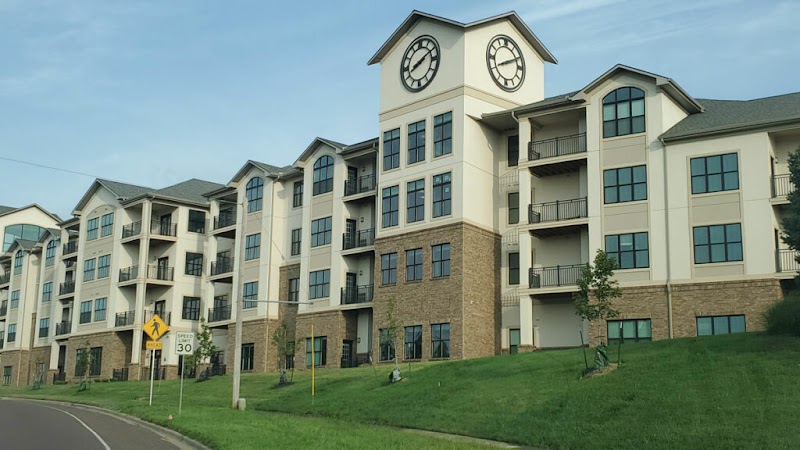
VILLAGE SHALOM INC

5500 WEST 123RD ST, OVERLAND PARK, KS 66209 (913) 317-2600
Non profit - Other 82 Beds Independent Data: November 2025
Trust Grade
43/100
#169 of 295 in KS
Last Inspection: June 2025

Inspected within the last 6 months. Data reflects current conditions.

Overview

Village Shalom Inc in Overland Park, Kansas, has a Trust Grade of D, indicating below average performance with some significant concerns. They rank #169 out of 295 facilities in Kansas, placing them in the bottom half, and #22 out of 35 in Johnson County, meaning there are only a few local facilities that perform better. The facility's trend is worsening, with issues increasing from 13 in 2023 to 15 in 2025. Staffing is a relative strength with a 4 out of 5 star rating, although turnover is at 57%, which is average for the state. However, the facility has faced serious incidents, including failing to prevent pressure ulcers in residents and inadequate supervision that led to falls and fractures, raising important safety concerns. While there are strengths in staffing and quality measures, the overall performance and recent findings suggest families should carefully consider these factors when researching this facility.

Trust Score
D
43/100
In Kansas
#169/295
Bottom 43%
Safety Record
Moderate
Needs review
Inspections
Getting Worse
13 → 15 violations
Staff Stability
⚠ Watch
57% turnover. Above average. Higher turnover means staff may not know residents' routines.
Penalties
○ Average
$16,153 in fines. Higher than 59% of Kansas facilities. Some compliance issues.
Skilled Nurses
✓ Good
Each resident gets 56 minutes of Registered Nurse (RN) attention daily — more than average for Kansas. RNs are trained to catch health problems early.
Violations
⚠ Watch
32 deficiencies on record. Higher than average. Multiple issues found across inspections.
★★★☆☆
3.0
Overall Rating
★★★★☆
4.0
Staff Levels
★★★★★
5.0
Care Quality
★★☆☆☆
2.0
Inspection Score
Stable
2023: 13 issues
2025: 15 issues

The Good

  • 4-Star Staffing Rating · Above-average nurse staffing levels
  • 5-Star Quality Measures · Strong clinical quality outcomes
  • Full Sprinkler Coverage · Fire safety systems throughout facility
  • No fines on record

Facility shows strength in staffing levels, quality measures, fire safety.

The Bad

3-Star Overall Rating

Near Kansas average (2.9)

Meets federal standards, typical of most facilities

Staff Turnover: 57%

11pts above Kansas avg (46%)

Frequent staff changes - ask about care continuity

Federal Fines: $16,153

Below median ($33,413)

Minor penalties assessed

Staff turnover is elevated (57%)

9 points above Kansas average of 48%

The Ugly 32 deficiencies on record

2 actual harm
Jun 2025 15 deficiencies
CONCERN (D)

Potential for Harm - no one hurt, but risky conditions existed

Resident Rights (Tag F0550)

Could have caused harm · This affected 1 resident

The facility identified a census of 65 residents. The sample included 16 residents, with one reviewed for dignity. Based on observation, record review, and interviews, the facility failed to ensure a ...

Read full inspector narrative →
The facility identified a census of 65 residents. The sample included 16 residents, with one reviewed for dignity. Based on observation, record review, and interviews, the facility failed to ensure a dignified care environment for Residents (R) 31. This deficient practice placed R31 at risk for impaired dignity and unmet care needs. Findings included: - The Medical Diagnosis section within R31's Electronic Medical Record (EMR) included diagnoses of Parkinson's Disease (a slowly progressive neurologic disorder characterized by resting tremors, rolling of the fingers, masklike faces, shuffling gait, muscle rigidity, and weakness), major depressive disorder (major mood disorder), muscle weakness, overactive bladder, and need for assistance with personal cares. R31's Significant Change Minimum Data Set (MDS) completed 04/06/25 indicated a Brief Interview for Mental Status (BIMS) of zero, indicating severe cognitive impairment. The MDS noted he exhibited wandering and rejection of care behaviors one to three days a week. The MDS indicated he was dependent on staff assistance for dressing, personal hygiene, bed mobility, toileting, and bathing. The MDS indicated he had one-sided lower extremity impairment and used a wheelchair for mobility. R31's Functional Abilities Care Area Assessment (CAA) completed 04/15/25 indicated he required assistance with self-cares and mobility. The CAA noted R31 exhibited poor judgment and safety awareness. The CAA noted he was at risk for falls, skin breakdown, pressure ulcers, weight loss, and a cognitive decline. The CAA noted he had poor memory recall. R31's Behavioral CAA completed 04/15/25 indicated he had behaviors related to refusing cares offered by staff. The CAA noted the behaviors had the potential to place himself at risk due to his poor safety awareness. The CAA noted his right to decline care needs. The CAA noted a care plan was implemented to minimize the risks associated with his potential behaviors. R31's Care Plan initiated 04/16/25 indicated he was at risk for cognitive loss, communication deficits, declined activities of daily living (ADL), bowel and bladder incontinence, and falls related to his cognitive impairment and medical diagnoses. The plan indicated he had behavioral challenges related to refusal of his ADLs, restorative care, medications, and meals. The plan encouraged staff to speak to him calmly, provide redirections, and ensure his environment was safe during agitation. The plan noted he enjoyed shopping trips, music, and special events. The plan lacked interventions related to his preferences or behaviors related to undressing. R31's EMR under ID Notes revealed a Nursing Note completed 06/01/25. The note revealed R31 was found standing in his restroom with no clothes on next to the toilet. The note revealed staff toileted him and assisted with his cares. R31's EMR under ID Notes revealed a Nursing Note completed 05/27/25. The note revealed R31 removed his clothing for the entire night and refused to allow staff to provide cares for him. R31's EMR under ID Notes revealed a Nursing Note completed 06/01/25. The note revealed R31 was found naked in his bed with no sheets or blanket covering him. The note revealed R31 refused to allow staff to dress him or provide cares. On 06/02/25 at 07:03 AM, R31 slept in his bed. R31 was wearing no clothing and was exposed as he slept in his bed. R31's bed was viewable from the hallway. The exterior windows in R31's room were viewable from the outside area. On 06/02/25 at 07:34 AM, R31 was still asleep on his bed. R31 was still naked with nothing covering his body and visible from the hallway. On 06/02/25 at 07:38 AM, Certified Nurse's Aide (CNA) O entered R31's room to provide care. She stated that R31 sometimes preferred to sleep without clothing. She stated staff would still supervise and attempt to cover him up to prevent other residents from seeing him. On 06/04/25 at 11:32 AM, Licensed Nurse (LN) J stated R31 would often take his clothing off at night and refuse to wear them. She stated as long as he remained in his room it was his choice to do so. She stated he often was difficult to redirect or convince to redress or allow care to be given. On 06/05/25 at 12:45 PM, Administrative Nurse D stated residents had the right to choose to wear what they wanted, and staff were expected to make attempts to have the residents dressed. She stated the care plan should indicate a resident's choice or preferences to undress and be naked in their room. She stated staff should attempt to prevent other residents from seeing into the room or ensuring the resident was covered up. The facility's Dignity policy revised 11/2024 stated the facility was to ensure an environment that maintained and enhanced each resident's dignity and respect in full recognition of each resident's individuality.
CONCERN (D)

Potential for Harm - no one hurt, but risky conditions existed

Deficiency F0582 (Tag F0582)

Could have caused harm · This affected 1 resident

The facility identified a census of 65 residents. The sample included 16 residents, with three residents reviewed for Beneficiary Notification. Based on record review and interview the facility failed...

Read full inspector narrative →
The facility identified a census of 65 residents. The sample included 16 residents, with three residents reviewed for Beneficiary Notification. Based on record review and interview the facility failed to ensure a Center for Medicare/Medicaid Services (CMS) form 10055 Skilled Nursing Facility Advance Beneficiary Notice of Non-coverage (SNF ABN) and the CMS form-10123 Notice of Medicare Non-Coverage (NOMNC) form was provided to Resident (R) 165. This placed R165 at risk of uninformed treatment decisions and unexpected costs. Findings included: - Review of R165 ' s Electronic Medical Record (EMR) noted an Interdisciplinary Team (IDT) Progress Note dated 02/03/25 at 04:41 PM documented staff met with R165's daughter and contacted the physician. Staff spoke to R165 regarding the last day covered and discharge to long-term care (LTC) on 02/07/25. Staff discussed with the NOMNC and the right to appeal. Staff discussed a room for the resident in the neighborhood of preference and would coordinate a transition date. The SNF Beneficiary Notification Review form (CMS-20052) completed by social services, documented R165 ' s Medicare Part A episode would end on 02/06/25. R165 remained in the facility for long-term care (LTC). Upon request from Social Services staff, R165 ' s SNF ABN form 10055 and NOMNC form 10123 was not provided. On 06/03/54 at 10:52 AM, Social Services X stated there had been a changeover in staff recently and it had been discovered that the ABN and NOMNC forms had not been issued to residents as they should have been. Social Services X stated she had recently taken over the responsibility of providing the ABN and NOMNC and residents would now receive the forms as required. The facility policy Medicare Denial Notices revised on 01/24/25 documented this facility will inform each resident before, or at the time of admission, and periodically during the resident ' s stay of services available in the facility and charges for those services including any charges for services not covered under Medicare by the facility ' s per diem rate. The facility would provide each resident with a written description of legal rights which included a description of the manner of protecting personal funds. This facility would provide written notification to residents with the necessary information to decide whether to appeal a decision to terminate Medicare care and services at least three days prior to the planned change in payor status or discharge.
CONCERN (D)

Potential for Harm - no one hurt, but risky conditions existed

Deficiency F0605 (Tag F0605)

Could have caused harm · This affected 1 resident

The facility identified a census of 65 residents. The sample included 16 residents, with six residents reviewed for unnecessary medications. Based on observation, record review, and interviews, the fa...

Read full inspector narrative →
The facility identified a census of 65 residents. The sample included 16 residents, with six residents reviewed for unnecessary medications. Based on observation, record review, and interviews, the facility failed to ensure an appropriate indication, or a documented physician rationale which included the multiple unsuccessful attempts for nonpharmacological symptom management and risk versus benefits for the continued use of an antipsychotic (class of medications used to treat mental disorder characterized by a gross impairment in reality testing) for Resident (R) 50 and R1, who had a diagnosis of dementia (a progressive mental disorder characterized by failing memory, confusion). This placed the resident at risk for unnecessary psychotropic (alters perception, mood, consciousness, cognition, or behavior) medications and related complications. This deficient practice placed R50 and R1 at risk for ineffective treatment, unnecessary medication use, and unwarranted side effects. Findings included: - R50's Electronic Medical Record (EMR) from the Diagnosis tab documented diagnoses of dementia (a progressive mental disorder characterized by failing memory and confusion), tachycardia (rapid heartbeat greater than 100 beats per minute), hypotension, hemiplegia (paralysis of one side of the body), and Alzheimer's disease (progressive mental deterioration characterized by confusion and memory failure) The Annual Minimum Data Set (MDS) dated 12/25/24 documented a Brief Interview of Mental Status (BIMS) score of 12, which indicated moderately impaired cognition. The MDS documented R50 had received antidepressant (a class of medications used to treat mood disorders) and antipsychotic medication during the observation period. The Quarterly MDS dated 03/12/25 documented a BIMS score of 12, which indicated moderately impaired cognition. The MDS documented that R50 had received antipsychotic medication and antidepressant medication during the observation period. R50's Psychotropic Drug Use Care Area Assessment (CAA) dated 01/03/25 documented he was at risk for adverse side effects of psychotropic medications. R50's Care Plan, dated 04/16/24, documented staff provided medication and treatments per the physician's orders. The plan of care documented the staff would monitor for side effects of his medications and notify the physician. R50's EMR under the Orders tab revealed the following physician orders: Olanzapine (antipsychotic) five mg, give one tablet by mouth daily for psychosis (any major mental disorder characterized by a gross impairment in reality perception), dated 03/13/25. Review of the Monthly Medication Review (MMR) reviewed from May 2024 to April 2025 revealed the CP had identified and reported the irregularities related to the non-approved indication for the use of antipsychotic medication Olanzapine for R50 who had a diagnosis of dementia and Alzheimer's disease. The facility was unable to provide physician documentation for risk versus benefits upon request. On 06/04/25 at 08:46 AM, R50 sat upright on the side of his bed as he watched TV in his room. On 06/04/25 at 11:20 AM, Licensed Nurse (LN) I stated he was unsure what the appropriate indications should be for antipsychotic medications. LN I stated the facility documented R50's behaviors. On 06/04/25 at 01:13 PM, Administrative Nurse D stated only CMS-approved indications should be used for antipsychotic medications. She stated psychosis was not an appropriate indication for Olanzapine. Administrative Nurse D stated she was unsure if the physician had documented a risk vs benefit for R50's Olanzapine. The facility's Psychotropic Medication Use policy revised on 02/07/22 documented the resident's need for the psychotropic medication would be monitored, as well as when the resident received optimal benefits from the medication and when the medication dose can be lowered or discontinued. Both the physician and the nursing staff would evaluate the effectiveness of as-needed (PRN) orders for psychotropic drugs to manage behaviors. - The Diagnosis tab of R1's Electronic Medical Record (EMR) documented diagnoses of hypertension (high blood pressure), Alzheimer's disease (progressive mental deterioration characterized by confusion and memory failure), muscle weakness, encounter for palliative care (a specialized form of care that focuses on improving the quality of life for people living with serious illnesses when the resident was nearing the end of life or not), dependence on wheelchair, and diabetes mellitus (DM - when the body cannot use glucose, not enough insulin is made, or the body cannot respond to the insulin). The Quarterly Minimum Data Set (MDS) dated 03/19/25, documented a Brief Interview of Mental Status (BIMS) score of zero, which indicated severely impaired cognition. The MDS documented R1 was rarely or never understood. The MDS documented R1 had behaviors that fluctuated in severity. The MDS documented R1 was dependent on staff for toileting and bathing. The MDS documented R1 received an antipsychotic (a class of medications used to treat major mental conditions that cause a break from reality) during the observation period. R1's Psychotropic Drug Use Care Area Assessment (CAA) dated 07/17/24 documented R1 triggered for this CAA due to the use of antipsychotic medication. The CAA documented the factors that place residents at risk for a problem including the potential for side effects from psychoactive medication. The CAA documented R1 had no recent falls that were attributed to the use of the medication. The CAA documented R1 had not demonstrated any apparent side effects or adverse consequences from the current medication regimen that contains Black Box Warning (BBW - the highest safety-related warning that medications can have assigned by the Food and Drug Administration). R1's Care Plan dated 04/30/24 documented the facility would work with the physician for a reduction in dosing when target behaviors are absent and or easily altered for specified periods, but no less than quarterly. R1's plan of care documented the facility would consider pharmacological interventions using medications other than antipsychotics, such as pain medication, by observing for lessening behavior and collaborating with the interdisciplinary team. The plan of care for R1 documented nursing was to administer a medication regimen as prescribed by the physician and notify the physician and psychiatrist for increased sedation, an increase in behavioral symptoms, unresponsiveness to environmental interventions, or an increase in side effects. R1's plan of care documented the facility would attempt gradual dose reduction (GDR) for antipsychotic medications per physician orders as recommended by the pharmacy consultant. R1's plan of care documented a GDR was being attempted, and staff will provide physical activities for R1 to participate in and help control the number of stimuli in her immediate environment. R1's EMR under Orders documented the following physician's order: Quetiapine fumarate (antipsychotic) 25 milligrams (mg) oral tablet, give 0.5 tablet by mouth every evening for severe dementia with agitation, dated 07/24/24. A review of R1's EMR revealed no physician-documented rationale for the continued use of quetiapine fumarate for dementia-related behaviors. The facility when asked was unable to provide a risk vs benefit for R1's continued use of Quetiapine. On 06/04/25 at 09:32 AM, R1 sat at the dining room table, visiting with peers. On 06/04/25 at 11:20 AM, Licensed Nurse (LN) I stated he was unsure what the appropriate indications should be for antipsychotic medications. LN I stated the facility documented R1's behaviors. On 06/04/25 at 01:13 PM, Administrative Nurse D stated only CMS-approved indications should be used for antipsychotic medications. She stated dementia was not an appropriate indication for quetiapine. Administrative Nurse D stated she was unsure if the physician had documented a risk vs benefit for R1's quetiapine. The facility's Psychotropic Medication Use policy revised on 02/07/22 documented the resident's need for the psychotropic medication would be monitored, as well as when the resident received optimal benefits from the medication and when the medication dose can be lowered or discontinued. Both the physician and the nursing staff would evaluate the effectiveness of as-needed (PRN) orders for psychotropic drugs to manage behaviors.
CONCERN (D)

Potential for Harm - no one hurt, but risky conditions existed

ADL Care (Tag F0677)

Could have caused harm · This affected 1 resident

The facility identified a census of 64 residents. The sample included 16 residents, with three reviewed for activities of daily living (ADL). Based on observation, record review, and interviews, the f...

Read full inspector narrative →
The facility identified a census of 64 residents. The sample included 16 residents, with three reviewed for activities of daily living (ADL). Based on observation, record review, and interviews, the facility failed to provide Resident (R) 19 with consistent assistance and supervision during mealtime. This deficient practice placed R19 at risk for potential risk related to impaired nutrition and weight loss. Findings included: - The Medical Diagnosis section within R19's Electronic Medical Record (EMR) included diagnoses of Alzheimer's disease (progressive mental deterioration characterized by confusion and memory failure), insomnia (difficulty sleeping), anxiety (cognitive or emotional reaction characterized by apprehension, uncertainty, and irrational fear), and speech/language deficits. R19's Quarterly Minimum Data Set (MDS) completed 04/02/25 noted a Brief Interview for Mental Status (BIMS) score of zero, indicating severe cognitive impairment. The MDS indicated she was dependent on staff assistance for bathing, transfers, bed mobility, personal hygiene, and dressing. The MDS indicated she required substantial to maximal assistance from staff to eat her meals. The MDS indicated she was at risk for skin breakdown and pressure ulcers but had no wounds. The MDS indicated she had pressure-reducing devices for her bed and wheelchair. The MDS noted she had a repositioning program and nutritional interventions to prevent pressure ulcers. The MDS noted she weighed 122 pounds (lbs.). R19's Functional Ability Care Area Assessment (CAA) completed 01/09/25 indicated she required assistance from staff for her Activities of Daily Living (ADL) related to her medical diagnoses. The CAA noted she had confusion due to a decline in her cognition. The CAA noted she required maximum assistance from one to two staff for bed mobility. The CAA noted she was not always able to express her needs. R19's Nutrition CAA completed 01/09/25 indicated she was at risk for malnutrition and weight loss due to her medical diagnosis. The CAA indicated that the facility was to provide her with a diet as prescribed and implemented interventions to reduce the risk. R19's Care Plan initiated on 01/22/25 indicated she was at risk for impaired decision-making, ADL deficits, falls, and weight loss related to her cognitive impairments and medical diagnoses. The plan noted she required extensive assistance from staff for bed mobility, transfers, bathing, dressing, toileting, and wheelchair mobility. The plan noted that R19 required assistance from one staff while eating her meals. The plan instructed staff to encourage her to have meals in the dining room so R19 had supervision and cues to eat food during meals. The plan instructed staff to provide feeding assistance by mimicking actions to help her with self-feeding during meals. The plan indicated she was not to be left in her room alone while eating. The plan indicated she had a pressure-reducing low air-loss mattress on her bed. R19's EMR under Physician's Orders revealed an order (dated 02/10/22) instructing staff to administer one carton of Ensure (supplemental nutrition to prevent weight loss) by mouth 30 minutes after each meal for protein-calorie malnutrition. R19's EMR under Assessments revealed a Nutrition Risk Assessment completed 05/29/25. The assessment indicated that R19 required supervision during meals. The assessment noted she required partial to maximal assistance during mealtimes with feeding. The assessment revealed she was provided Ensure supplementation three times daily. On 06/02/25 at 09:30 AM, R19 rested in her bed. R19's bedside table was positioned over her chest. R19 lay flat on her back with the shoulders and neck propped upward to her bedside table. R19's breakfast meal was uncovered and untouched. R19's Ensure supplement was left with her breakfast meal. On 06/02/25 at 09:56 AM, R19 remained asleep in the same position but her Ensure supplement bottle was empty and rested downward in her lap. R19's push-button call light rested on the bed underneath her bed next to the wall. R19's breakfast meal remained untouched. R19's low air-loss mattress control panel was set to 200 lbs. On 06/03/25 at 09:20 AM, R19 rested in her bed. R19's bedside table was positioned over her chest. R19 lay flat on her back with the shoulders and neck propped upward to her bedside table. R19's food was untouched and uncovered. R19's Ensure supplement was served with her meal. On 06/03/25 at 09:32 AM, R19 lay in her bed and ate her breakfast meal in her room. Staff were not present as she consumed her breakfast meal. R19's call light was under her bed near the back wall. On 06/04/25 at 09:37 AM, R19's breakfast was served to her in her room. R19's Ensure supplement was given to her with her breakfast. Staff stayed in the room as R19 ate her meal and consumed her Ensure during her meal. On 06/04/25 at 11:25 AM, Licensed Nurse (LN) J stated that R19 only used the call light attached to her wall. She stated R19 had communication deficits and staff were expected to either move her out to the common area or ensure her call light was in reach while she was in her room. She stated staff were expected to monitor her during meals and provide encouragement. She stated that R19 often was confused and needed cueing. She stated staff were never to allow her to eat alone in her room. On 06/04/25 at 12:24 PM, Certified Nurses Aide (CNA) N stated staff were expected to follow the care plan. She stated if a resident chose to eat in their room and required assistance staff were to stay with them during the meal and aid them. On 06/04/25 at 01:13 PM, Administrative Nurse D stated staff were expected to supervise and provide assistance for residents based on their care planned needs. She stated resident with cognitive impairment should not be left alone in their rooms to eat during mealtimes. She stated staff were expected to encourage them to eat in the dining area or sit with them during mealtimes in their rooms. The facility's Activities of Daily Living policy revised 12/2021 stated the facility was to provide each resident with assistance to complete their daily activities and maintain their abilities.
CONCERN (D)

Potential for Harm - no one hurt, but risky conditions existed

Quality of Care (Tag F0684)

Could have caused harm · This affected 1 resident

The facility identified a census of 65 residents. The sample included 12 residents, with one resident reviewed for quality of care. Based on observation, record review, and interviews, the facility fa...

Read full inspector narrative →
The facility identified a census of 65 residents. The sample included 12 residents, with one resident reviewed for quality of care. Based on observation, record review, and interviews, the facility failed to follow a physician's order for daily weights to monitor for congestive heart failure (CHF - a condition with low heart output and the body becomes congested with fluid) for Resident (R) 50. This deficient practice placed R50 at risk for delay in treatment related to fluid overload and untreated illness. Findings included: - R17's Electronic Medical Record (EMR) from the Diagnosis tab documented diagnoses of diabetes mellitus (DM - when the body cannot use glucose, not enough insulin is made, or the body cannot respond to the insulin), peripheral vascular disease (PVD - slow and progressive circulation disorder causing narrowing, blockage, or spasms in a blood vessel), retention of urine, kidney disease, edema (swelling resulting from an excessive accumulation of fluid in the body tissues), congestive heart failure (CHF - a condition with low heart output and the body becomes congested with fluid, restlessness, and cerebral ischemia (a condition characterized by insufficient blood flow to the brain, leading to lack of oxygen and essential nutrients). The Annual Minimum Data Set (MDS) dated 08/28/24 documented a Brief Interview of Mental Status (BIMS) score of 14, which indicated intact cognition. The MDS documented R17 had received diuretic (a medication to promote the formation and excretion of urine) medication during the observation period. The Quarterly MDS dated 02/26/25 documented a BIMS score of 15, which indicated intact cognition. The MDS documented that R17 had received diuretic medication during the observation period. R17's Urinary Incontinence/Indwelling Catheter Care Area Assessment (CAA) dated 02/26/25 documented R17 was noted to be frequently incontinent of bladder and needed extensive assistance with toileting needs including peri care. The CAA documented R17 was continent of bowel, and this increases the risk for skin breakdown and urinary tract infection (UTI). The CAA documented nursing staff would continue to assist R17, as needed, for him to have his needs met and continue his current level of functioning. R17's Care Plan dated 03/15/24 documented R17 was at risk for weight loss related to pain, diabetes, edema, medications, and a mechanically altered diet texture. R17's plan of care documented R17 wished to lose weight by one to two pounds a week. R17's plan of care documented R17 would be served a low carbohydrate diet of his choice with sugar-free beverages. R17's plan of care documented he would be encouraged to eat in the dining room. The plan of care documented R17 would be provided a carbohydrate-controlled diet, as ordered by the physician, and staff would weigh R17 daily as ordered by the physician. R17's EMR under the Orders tab revealed the following physician orders: Daily weight before breakfast, notify the physician with a weight gain of more than two pounds in one day or five pounds in one week, dated 07/15/24. Furosemide (diuretic) 40 milligrams (mg) tablet give one tablet by mouth daily for edema, dated 09/21/24. Review of R17's EMR under the Vitals tab, the Medication Administration Record (MAR), and Treatment Administration Record (TAR) from 03/01/25 to 05/08/25 (69 days) lacked evidence staff measured and recorded R17's weight on following nine dates: 03/04/25, 03/07/25, 03/08/25, 03/12/25, 03/14/25, 03/16/25, 04/04/25, 05/03/25, and 05/08/25. The TAR documented R17 had refused on 05/16/25. The clinical record lacked documentation of physician notification of daily weight was not obtained. On 06/04/25 at 08:38 AM, R17 sat in his wheelchair in his room. R17 sat at the bedside table and ate his breakfast. On 06/04/25 at 12:52 PM, Certified Nurse Aide (CNA) N stated all the staff assisted with obtaining the resident's daily weight if ordered. CNA N stated the nurse would notify the staff who was to be weighed daily. CNA N stated she would notify the nurse of the resident's weight. On 06/04/25 at 01:00 PM, Licensed Nurse (LN) H stated the nurse was responsible for ensuring a resident's daily weight was obtained and recorded. LN H stated the nurse would review the weight and notify the physician if needed and documented the notification and the physician's response in the resident's EMR. On 06/04/25 at 01:13 PM, Administrative Nurse D stated she expected the physician's orders to be followed. Administrative Nurse D stated the physician should be notified if a physician order was not followed, and that notification would be documented in the resident's interdisciplinary notes. The facility's Physician Orders for Medication and Treatments policy dated 10/20/23 documented all medications would be administered as ordered by a healthcare professional authorized by the state to order medications.
CONCERN (D)

Potential for Harm - no one hurt, but risky conditions existed

Pressure Ulcer Prevention (Tag F0686)

Could have caused harm · This affected 1 resident

The facility identified a census of 64 residents. The sample included 16 residents, with three reviewed for pressure ulcers (localized injury to the skin and/or underlying tissue usually over a bony p...

Read full inspector narrative →
The facility identified a census of 64 residents. The sample included 16 residents, with three reviewed for pressure ulcers (localized injury to the skin and/or underlying tissue usually over a bony prominence, because of pressure, or pressure in combination with shear and/or friction). Based on interviews, observations, and record reviews, the facility failed to ensure Resident (R) 19's pressure-reducing interventions were implemented correctly when R19's low air-loss mattress pumps were not set within her current weight range. This deficient practice placed R19 at risk for complications related to skin breakdown and pressure ulcers. Findings included: - The Medical Diagnosis section within R19's Electronic Medical Record (EMR) included diagnoses of Alzheimer's disease (progressive mental deterioration characterized by confusion and memory failure), insomnia (difficulty sleeping), anxiety (cognitive or emotional reaction characterized by apprehension, uncertainty, and irrational fear), and speech/language deficits. R19's Quarterly Minimum Data Set (MDS) completed 04/02/25 noted a Brief Interview for Mental Status (BIMS) of zero, indicating severe cognitive impairment. The MDS indicated she was dependent on staff assistance for bathing, transfers, bed mobility, personal hygiene, and dressing. The MDS indicated she required substantial to maximal assistance from staff to eat her meals. The MDS indicated she was at risk for skin breakdown and pressure ulcers but had no wounds. The MDS indicated she had pressure-reducing devices for her bed and wheelchair. The MDS noted she had a repositioning program and nutritional interventions to prevent pressure ulcers. The MDS noted she weighed 122 pounds (lbs.). R19's Functional Ability Care Area Assessment (CAA)) completed 01/09/25 indicated she required assistance from staff for her Activities of Daily Living (ADL)related to her medical diagnoses. The CAA noted she had confusion due to a decline in her cognition. The CAA noted she required maximum assistance from one to two staff for bed mobility. The CAA noted she was not always able to express her needs. R19's Pressure Ulcer CAA completed 01/09/25 indicated she was at risk for skin breakdown and pressure ulcers. The CAA noted she had no current skin breakdown but had pressure-relieving devices in place. The CAA noted care plan interventions were implemented to minimize the risks related to skin breakdown. R19's Care Plan initiated on 01/22/25 indicated she was at risk for impaired decision-making, ADL deficits falls, and weight loss related to her cognitive impairments and medical diagnoses. The plan noted she required extensive assistance from staff for bed mobility, transfers, bathing, dressing, toileting, and wheelchair mobility. The plan noted that R19 required assistance from one staff member while eating her meals. The plan instructed staff to encourage her to have meals in the dining room so she had supervision and cues to eat food during meals. The plan instructed staff to provide feeding assistance by mimicking actions to help her with self-feeding during meals. The plan indicated she was not to be left in her room alone while eating. The plan indicated she had a pressure-reducing low air-loss mattress (specialized air mattress used to reduce pressure on the body) on her bed. The plan lacked guidance or instructions related to her low air-loss mattress settings. R19's EMR under Assessments revealed a Nutrition Risk Assessment completed 05/29/25. The assessment indicated that R19 required supervision during meals. The assessment noted she required partial to maximal assistance during mealtimes with feeding. The assessment revealed she was provided Ensure supplementation three times daily. The Assessment revealed she had a Braden score (assessment used to predict pressure ulcer development) of 14 indicating she was at risk for developing pressure ulcers. A review of the manual of low air-loss mattress manufacturers' operation (Meridian Medical) indicated that the mattress system was intended to reduce the incidence of pressure ulcers while optimizing comfort. The manual indicated the mattress pump's pressure levels and firmness were preset based on the weight range and comfort settings. The manual indicated an optimal bed system assessment should be conducted on each patient by a qualified clinician or medical provider to ensure maximum safety. On 06/02/25 at 09:56 AM, R19 remained asleep in the same position but her Ensure supplement bottle was empty and rested downward in her lap. R19's push-button call light rested on the bed underneath her bed next to the wall. R19's breakfast meal remained untouched. R19's low air-loss mattress control panel was set to 200 lbs. The mattress pump had fixed weight settings of 80lbs, 110lbs, 140lbs, 170lbs, 200lbs, 230lbs, 290lbs, 320lbs, and 350lbs. On 06/02/25 at 02:01 PM, R19 slept in her bed. R19's low air-loss mattress was set to 200 lbs. On 06/03/25 at 08:22 AM, R19 rested in her bed. R19's low air-loss mattress was set to 200 lbs. On 06/04/25 at 11:25 AM, Licensed Nurse (LN) J stated that R19's mattress was set by her current weight. She stated she noticed the bed setting was too high and just changed it to her current weight. She stated staff were expected to check the bed settings each shift. On 06/04/25 at 01:13 PM, Administrative Nurse D stated the staff were to check the low air-loss mattresses were set to the resident's current weight or within the weight range. She stated staff were expected to check the bed's settings each shift. The facility's Wound Management policy revised 09/2024 indicated the facility will assess each resident's risk related to pressure ulcers and implement preventative interventions. The policy indicated the effectiveness of the implemented intervention will be evaluated and reviewed.
CONCERN (D)

Potential for Harm - no one hurt, but risky conditions existed

Drug Regimen Review (Tag F0756)

Could have caused harm · This affected 1 resident

The facility identified a census of 65 residents. The sample included 16 residents, with six residents reviewed for unnecessary medications. Based on observation, record review, and interviews, the fa...

Read full inspector narrative →
The facility identified a census of 65 residents. The sample included 16 residents, with six residents reviewed for unnecessary medications. Based on observation, record review, and interviews, the facility failed to address the Consultant Pharmacist (CP) recommendations for Resident (R) 50's Midodrine (hypotension (low blood pressure) medication). The facility also failed to ensure the physician had documented the rationale which included the multiple unsuccessful attempts for nonpharmacological symptom management and risk versus benefits for the continued use of a non-approved indication use of an antipsychotic (class of medications used to treat a mental disorder characterized by a gross impairment in reality testing) medication for R50 and R1 with a diagnosis of Alzheimer's disease (progressive mental deterioration characterized by confusion and memory failure) and dementia (progressive mental disorder characterized by failing memory, confusion). This deficient practice placed R50 and R1 at risk for unnecessary psychotropic medication and related complications. Findings included: - R50's Electronic Medical Record (EMR) from the Diagnosis tab documented diagnoses of dementia, tachycardia (rapid heartbeat greater than 100 beats per minute), hypotension, hemiplegia (paralysis of one side of the body), and Alzheimer's disease. The Annual Minimum Data Set (MDS) dated 12/25/24 documented a Brief Interview of Mental Status (BIMS) score of 12, which indicated moderately impaired cognition. The MDS documented R50 had received antidepressant (a class of medications used to treat mood disorders) and antipsychotic medication during the observation period. The Quarterly MDS dated 03/12/25 documented a BIMS score of 12, which indicated moderately impaired cognition. The MDS documented that R50 had received antipsychotic medication and antidepressant medication during the observation period. R50's Psychotropic Drug Use Care Area Assessment (CAA) dated 01/03/25 documented he was at risk for adverse side effects of psychotropic medications. R50's Care Plan, dated 04/16/24, documented staff provided medication and treatments per the physician's orders. The plan of care documented the staff would monitor for side effects of his medications and notify the physician. R50's EMR under the Orders tab revealed the following physician orders: Midodrine five milligrams (mg) tablet give one tablet by mouth, three times a day for hypotension as needed. Administer for systolic blood pressure (SBP - relating to the phase of the heartbeat when the heart muscle contracts and pumps blood from the chambers into the arteries) less than (<) 130 millimeters (mm) of mercury (Hg) or diastolic blood pressure (DBP - minimum level of blood pressure measured between contractions of the heart; the bottom number of a blood pressure reading) < 60 mmHg, not to exceed three times a day as needed ordered on 02/11/25 and discontinued on 05/06/25. Review of EMR under the Vitals tab revealed from 03/01/25 to 05/06/25 (67 days) documented blood pressure was within the physician-ordered parameters for administration of Midodrine on the following dates (50 opportunities): 03/01/25, 03/02/25, 03/05/25, 03/07/25, 03/09/25, 03/13/25, 03/14/25, 03/15/25, 03/16/25, 03/17/25, 03/18/25, 03/19/25, 03/20/25, 03/21/25, 03/24/25, 03/25/25, 03/26/25, 03/27/25, 03/28/25, 03/29/25, 04/01/25, 04/02/25, 04/03/25, 04/04/25, 04/05/25, 04/08/25, 04/09/25, 04/10/25, 04/13/25, 04/14/25, 04/15/25, 04/16/25, 04/17/25, 04/18/25, 04/19/25, 04/20/25, 04/21/25, 04/22/25, 04/23/25, 04/24/25, 04/25/25, 04/28/25, 04/29/25, 04/30/25, 05/01/25, 05/02/25, 05/03/25, 05/04/25, 05/05/25, and 05/06/25. The clinical record lacked documentation the physician was notified. Review of R50's Medication Administration Record (MAR) and Treatment Administration Record (TAR) from 03/01/25 to 05/06/25 revealed Midodrine was administered on 03/30/25. Review of the Monthly Medication Review (MMR) from May 2024 to April 2025 revealed the CP had identified and reported the irregularities related to the lack of administration of R50's as needed Midodrine as ordered. The CP had reported R50's blood pressure had been within the physician-ordered parameter to be administered on the following dates: 06/17/24, 07/19/24, 01/28/25, 09/01/24, 02/26/25, and 04/20/25. R50's EMR under the Orders tab revealed the following physician orders: Olanzapine five mg, give one tablet by mouth daily for psychosis (any major mental disorder characterized by a gross impairment in reality perception), dated 03/13/25. Review of the Monthly Medication Review (MMR) reviewed from May 2024 to April 2025 revealed the CP had identified and reported the irregularities related to the non-approved indication for the use of antipsychotic medication Olanzapine for R50 who had a diagnosis of dementia and Alzheimer's disease. The facility was unable to provide physician documentation for risk versus benefits upon request. On 06/04/25 at 08:46 AM, R50 sat upright on the side of his bed as he watched TV in his room. On 06/04/25 at 11:20 AM, Licensed Nurse (LN) I stated he was unsure what an appropriate indication for an antipsychotic medication was. LN I stated he did know there needed to be an indication from the physician for the use of the medication. LN H stated the nurse, or the certified nurse aide (CMA) would obtain the blood pressure and the pulse before administering any medication that required vital signs. LN H stated the nurse was responsible to ensure the medication was given as ordered by the physician. LN H stated the CMA would notify the nurse if a resident's vital signs were outside the normal or physician-ordered parameters. LN H stated the physician should be notified if that was ordered and the notification would be documented in the interdisciplinary (ID) notes, along with the physician's response. On 06/04/25 at 01:13 PM, Administrative Nurse D stated she was unsure what all the indications for the use of an antipsychotic medication were. Administrative Nurse D stated she did realize dementia and psychosis were not appropriate indications for antipsychotic medications. Administrative Nurse D stated she was unsure if the facility had been working with the pharmacist and physician on correct indications for antipsychotic drug use. , Administrative Nurse D stated she expected the physician's orders to be followed. Administrative Nurse D stated the physician should be notified if a physician order was not followed, and that notification would be documented in the resident's ID notes. The facility's Consultant Pharmacist policy last revised 03/24/24 documented the consultant pharmacist agreed to render the required service in accordance with local, state, and federal laws, regulations, guidelines, facility policies and procedures, community standards of practice, and professional standards of practice. Reviewing the medication regimen (drug regimen review) of each elder in the health center at least monthly incorporating federally mandated standards of care in addition to other applicable professional standards and documenting the review and findings in the elder's clinical record. Communicating potential or actual problems detected related to medication therapy orders to the responsible physician and the Director of Nursing.- The Diagnosis tab of R1's Electronic Medical Record (EMR) documented diagnoses of hypertension (high blood pressure), Alzheimer's disease (progressive mental deterioration characterized by confusion and memory failure), muscle weakness, encounter for palliative care (a specialized form of care that focuses on improving the quality of life for people living with serious illnesses when the resident was nearing the end of life or not), dependence on wheelchair, and diabetes mellitus (DM - when the body cannot use glucose, not enough insulin is made, or the body cannot respond to the insulin). The Quarterly Minimum Data Set (MDS) dated 03/19/25, documented a Brief Interview of Mental Status (BIMS) score of zero, which indicated severely impaired cognition. The MDS documented R1 was rarely or never understood. The MDS documented R1 had behaviors that fluctuated in severity. The MDS documented R1 was dependent on staff for toileting and bathing. The MDS documented R1 received an antipsychotic (a class of medications used to treat major mental conditions that cause a break from reality) during the observation period. R1's Psychotropic Drug Use Care Area Assessment (CAA) dated 07/17/24 documented R1 triggered for this CAA due to the use of antipsychotic medication. The CAA documented the factors that place residents at risk for a problem including the potential for side effects from psychoactive medication. The CAA documented R1 had no recent falls that were attributed to the use of the medication. The CAA documented R1 had not demonstrated any apparent side effects or adverse consequences from the current medication regimen that contains Black Box Warning (BBW - the highest safety-related warning that medications can have assigned by the Food and Drug Administration). R1's Care Plan dated 04/30/24 documented the facility would work with the physician for a reduction in dosing when target behaviors are absent and or easily altered for specified periods, but no less than quarterly. R1's plan of care documented the facility would consider pharmacological interventions using medications other than antipsychotics, such as pain medication, by observing for lessening behavior and collaborating with the interdisciplinary team. The plan of care for R1 documented nursing was to administer a medication regimen as prescribed by the physician and notify the physician and psychiatrist for increased sedation, an increase in behavioral symptoms, unresponsiveness to environmental interventions, or an increase in side effects. R1's plan of care documented the facility would attempt gradual dose reduction (GDR) for antipsychotic medications per physician orders as recommended by the pharmacy consultant. R1's plan of care documented a GDR was being attempted, and staff will provide physical activities for R1 to participate in and help control the number of stimuli in her immediate environment. R1's EMR under Orders documented the following physician's order: Quetiapine fumarate (antipsychotic) 25 milligrams (mg) oral tablet give 0.5 tablet by mouth every evening for severe dementia with agitation, dated 07/24/24. A review of the CP's Monthly Medication Reviews (MMR) from 04/2024 to 04/2025 revealed the Pharmacist did identify R1's quetiapine and made recommendations for the inappropriate indication of use related to R1's quetiapine medication. Upon request, the facility was unable to provide a risk vs benefit for the use of quetiapine for dementia with agitation. On 06/04/25 at 09:32 AM, R1 sat at the dining room table, visiting with peers. On 06/04/25 at 11:20 AM, Licensed Nurse (LN) I stated he was unsure what an appropriate indication for an antipsychotic medication was. LN I stated he did know there needed to be an indication from the physician for the use of the medication. On 06/04/25 at 01:13 PM, Administrative Nurse D stated she was unsure what all the indications for the use of an antipsychotic medication were. Administrative Nurse D stated she did realize dementia (a progressive mental disorder characterized by failing memory and confusion) and psychosis (a severe mental condition in which thought, and emotions are so affected that contact is lost with external reality) were not appropriate indications for antipsychotic medications. Administrative Nurse D stated she was unsure if the facility had been working with the pharmacist and physician on correct indications for antipsychotic drug use. The facility's Consultant Pharmacist policy last revised on 03/24/24 documented the consultant pharmacist agreed to render the required service by local, state, and federal laws, regulations, and guidelines, facility policies and procedures, community standards of practice, and professional standards of practice. Reviewing the medication regimen (drug regimen review) of each elder in the health center at least monthly incorporating federally mandated standards of care in addition to other applicable professional standards and documenting the review and findings in the elder's clinical record. Communicating potential or actual problems detected related to medication therapy orders to the responsible physician and the Director of Nursing.
CONCERN (D)

Potential for Harm - no one hurt, but risky conditions existed

Deficiency F0757 (Tag F0757)

Could have caused harm · This affected 1 resident

The facility identified a census of 65 residents. The sample included 16 residents, with six residents reviewed for unnecessary medications. Based on observation, record review, and interviews, the fa...

Read full inspector narrative →
The facility identified a census of 65 residents. The sample included 16 residents, with six residents reviewed for unnecessary medications. Based on observation, record review, and interviews, the facility failed to ensure the physician's order for Resident (R) 50's hypotension (low blood pressure) medication) was administered. This deficient practice placed R50 at risk for unnecessary medications and adverse side effects. Findings included: - R50's Electronic Medical Record (EMR) from the Diagnosis tab documented diagnoses of dementia (a progressive mental disorder characterized by failing memory and confusion), tachycardia (rapid heartbeat greater than 100 beats per minute), hypotension, hemiplegia (paralysis of one side of the body), and Alzheimer's disease (progressive mental deterioration characterized by confusion and memory failure) The Annual Minimum Data Set (MDS) dated 12/25/24 documented a Brief Interview of Mental Status (BIMS) score of 12, which indicated moderately impaired cognition. The MDS documented R50 had received antidepressant (a class of medications used to treat mood disorders) and antipsychotic (a class of medications used to treat major mental conditions that cause a break from reality) medication during the observation period. The Quarterly MDS dated 03/12/25 documented a BIMS score of 12, which indicated moderately impaired cognition. The MDS documented that R50 had received antipsychotic medication and antidepressant medication during the observation period. R50's Psychotropic Drug Use Care Area Assessment (CAA) dated 01/03/25 documented he was at risk for adverse side effects of psychotropic medications. R50's Care Plan, dated 04/16/24, documented staff provided medication and treatments per the physician's orders. The plan of care documented the staff would monitor for side effects of his medications and notify the physician. R50's EMR under the Orders tab revealed the following physician orders: Midodrine (hypotensive) five milligrams (mg) tablet, give one tablet by mouth three times a day for hypotension as needed. Administer for systolic blood pressure (SBP - relating to the phase of the heartbeat when the heart muscle contracts and pumps blood from the chambers into the arteries) less than (<) 130 millimeters (mm) of mercury (Hg) or diastolic blood pressure (DBP - minimum level of blood pressure measured between contractions of the heart; the bottom number of a blood pressure reading) < 60 mmHg, not to exceed three times a day as needed, ordered on 02/11/25 and discontinued on 05/06/25. Review of EMR under Vitals tab revealed from 03/01/25 to 05/06/25 (67 days) documented blood pressure was within the physician-ordered parameters for administration of Midodrine on the following dates (50 opportunities): 03/01/25, 03/02/25, 03/05/25, 03/07/25, 03/09/25, 03/13/25, 03/14/25, 03/15/25, 03/16/25, 03/17/25, 03/18/25, 03/19/25, 03/20/25, 03/21/25, 03/24/25, 03/25/25, 03/26/25, 03/27/25, 03/28/25, 03/29/25, 04/01/25, 04/02/25, 04/03/25, 04/04/25, 04/05/25, 04/08/25, 04/09/25, 04/10/25, 04/13/25, 04/14/25, 04/15/25, 04/16/25, 04/17/25, 04/18/25, 04/19/25, 04/20/25, 04/21/25, 04/22/25, 04/23/25, 04/24/25, 04/25/25, 04/28/25, 04/29/25, 04/30/25, 05/01/25, 05/02/25, 05/03/25, 05/04/25, 05/05/25, and 05/06/25. The clinical record lacked documentation the physician was notified. Review of R50's Medication Administration Record (MAR) and Treatment Administration Record (TAR) from 03/01/25 to 05/06/25 revealed Midodrine was administered on 03/30/25. On 06/04/25 at 08:46 AM, R50 sat upright on the side of his bed as he watched TV in his room. On 06/04/25 at 01:00 PM, Licensed Nurse (LN) H stated the nurse or the certified nurse aide (CMA) would obtain the blood pressure and the pulse before administering any medication that required vital signs. LN H stated the nurse was responsible to ensure the medication was given as ordered by the physician. LN H stated the CMA would notify the nurse if a resident's vital signs were outside the normal or physician-ordered parameters. LN H stated the physician should be notified if that was ordered and the notification would be documented in the interdisciplinary (ID) notes, along with the physician's response. On 06/04/25 at 01:13 PM, Administrative Nurse D stated she expected the physician's orders to be followed. Administrative Nurse D stated the physician should be notified if a physician order was not followed, and that notification would be documented in the resident's interdisciplinary notes. The facility's Physician Orders for Medication and Treatments policy dated 10/20/23 documented all medications would be administered as ordered by a healthcare professional authorized by the state to order medications.
CONCERN (D)

Potential for Harm - no one hurt, but risky conditions existed

Deficiency F0760 (Tag F0760)

Could have caused harm · This affected 1 resident

The facility identified a census of 65 residents. The sample included 16 residents. Based on observation, record review, and interviews, the facility failed to ensure Resident (R) 50 was free from a s...

Read full inspector narrative →
The facility identified a census of 65 residents. The sample included 16 residents. Based on observation, record review, and interviews, the facility failed to ensure Resident (R) 50 was free from a significant medication error by not following the physician-ordered parameter for the administration of Midodrine (hypotensive medication used to treat low blood pressure). This deficient practice placed R50 at risk for increased complications, untreated complications, and falls with possible injuries. Findings included: - R50's Electronic Medical Record (EMR) from the Diagnosis tab documented diagnoses of dementia (a progressive mental disorder characterized by failing memory and confusion), tachycardia (rapid heartbeat greater than 100 beats per minute), hypotension (low blood pressure), hemiplegia (paralysis of one side of the body), and Alzheimer's disease (progressive mental deterioration characterized by confusion and memory failure) The Annual Minimum Data Set (MDS) dated 12/25/24 documented a Brief Interview of Mental Status (BIMS) score of 12, which indicated moderately impaired cognition. The MDS documented R50 had received antidepressant (a class of medications used to treat mood disorders) and antipsychotic (a class of medications used to treat major mental conditions that cause a break from reality) medication during the observation period. The Quarterly MDS dated 03/12/25 documented a BIMS score of 12, which indicated moderately impaired cognition. The MDS documented that R50 had received antipsychotic medication and antidepressant medication during the observation period. R50's Psychotropic Drug Use Care Area Assessment (CAA) dated 01/03/25 documented he was at risk for adverse side effects of psychotropic medications. R50's Care Plan, dated 04/16/24, documented staff provided medication and treatments per the physician's orders. The plan of care documented the staff would monitor for side effects of his medications and notify the physician. R50's EMR under the Orders tab revealed the following physician orders: Midodrine (hypotensive medication) five milligrams (mg) tablet, give one tablet by mouth three times a day for hypotension as needed. Administer for systolic blood pressure (SBP - relating to the phase of the heartbeat when the heart muscle contracts and pumps blood from the chambers into the arteries) less than (<) 130 millimeters (mm) of mercury (Hg) or diastolic blood pressure (DBP - minimum level of blood pressure measured between contractions of the heart; the bottom number of a blood pressure reading) < 60 mmHg, not to exceed three times a day as needed, ordered on 02/11/25 and discontinued on 05/06/25. Review of EMR under the Vitals tab revealed from 03/01/25 to 05/06/25 (67 days) documented blood pressure was within the physician-ordered parameters for administration of Midodrine on the following dates (50 opportunities): 03/01/25, 03/02/25, 03/05/25, 03/07/25, 03/09/25, 03/13/25, 03/14/25, 03/15/25, 03/16/25, 03/17/25, 03/18/25, 03/19/25, 03/20/25, 03/21/25, 03/24/25, 03/25/25, 03/26/25, 03/27/25, 03/28/25, 03/29/25, 04/01/25, 04/02/25, 04/03/25, 04/04/25, 04/05/25, 04/08/25, 04/09/25, 04/10/25, 04/13/25, 04/14/25, 04/15/25, 04/16/25, 04/17/25, 04/18/25, 04/19/25, 04/20/25, 04/21/25, 04/22/25, 04/23/25, 04/24/25, 04/25/25, 04/28/25, 04/29/25, 04/30/25, 05/01/25, 05/02/25, 05/03/25, 05/04/25, 05/05/25, and 05/06/25. The clinical record lacked documentation the physician was notified. Review of R50's Medication Administration Record (MAR) and Treatment Administration Record (TAR) from 03/01/25 to 05/06/25 revealed Midodrine was administered on 03/30/25. On 06/04/25 at 08:46 AM, R50 sat upright on the side of his bed as he watched TV in his room. On 06/04/25 at 01:00 PM, Licensed Nurse (LN) H stated the nurse or the certified nurse aide (CMA) would obtain the blood pressure and the pulse before administering any medication that required vital signs. LN H stated the nurse was responsible to ensure the medication was given as ordered by the physician. LN H stated the CMA would notify the nurse if a resident's vital signs were outside the normal or physician-ordered parameters. LN H stated the physician should be notified if that was ordered and the notification would be documented in the interdisciplinary (ID) notes, along with the physician's response. On 06/04/25 at 01:13 PM, Administrative Nurse D stated she expected the physician's orders to be followed. Administrative Nurse D stated the physician should be notified if a physician order was not followed, and that notification would be documented in the resident's interdisciplinary notes. The facility's Physician Orders for Medication and Treatments policy dated 10/20/23 documented all medications would be administered as ordered by a healthcare professional authorized by the state to order medications.
CONCERN (D)

Potential for Harm - no one hurt, but risky conditions existed

Deficiency F0761 (Tag F0761)

Could have caused harm · This affected 1 resident

The facility identified a census of 65 residents. The sample included 16 residents, with four medication rooms and six medication carts. Based on observation, record review, and interviews, the facili...

Read full inspector narrative →
The facility identified a census of 65 residents. The sample included 16 residents, with four medication rooms and six medication carts. Based on observation, record review, and interviews, the facility failed to appropriately store medications and biologicals when staff failed to ensure the medication carts were locked when the cart was not within the nurses' view. This placed the residents at risk for adverse outcomes or ineffective medication regimens. Findings included: - On 06/02/25 at 10:38 AM, on hall 600 the treatment cart containing residents' treatment supplies and as-needed (PRN) creams. Licensed nurse (LN) G stated the treatment cart should be locked and secured when staff walk away. The medication cart was out of LN G's view. On 06/04/25 at 01:01 PM, Administrative Nurse D stated the expectation of the facility was the medication carts should be locked if the cart was out of the nurse's view. The facility's Medication Labeling and Storage policy revised on 12/20/23 documented medications were labeled and stored in accordance with facility requirements and State and Federal laws. All drug containers would be labeled, and drug labels must be clear, consistent, legible, and in compliance with State and Federal requirements. There would be a standard method for appropriately and safely labeling medications dispensed to all residents. Only the provider pharmacy could modify or change prescription labels. All drugs and biologicals would be stored securely and appropriately following manufacturer recommendations and State and Federal Regulations as appropriate.
CONCERN (D)

Potential for Harm - no one hurt, but risky conditions existed

Deficiency F0808 (Tag F0808)

Could have caused harm · This affected 1 resident

The facility identified a census of 64 residents. The sample included 16 residents, with three reviewed for specialized diets. Based on observation, record review, and interviews, the facility failed ...

Read full inspector narrative →
The facility identified a census of 64 residents. The sample included 16 residents, with three reviewed for specialized diets. Based on observation, record review, and interviews, the facility failed to follow Resident (R) 19's physician's order to provide Ensure supplementation 30 minutes after her meals. This deficient practice placed R19 at risk for potential risk related to impaired nutrition and weight loss. Findings Included: The Medical Diagnosis section within R19's Electronic Medical Record (EMR) included diagnoses of Alzheimer's disease (progressive mental deterioration characterized by confusion and memory failure), insomnia (difficulty sleeping), anxiety (cognitive or emotional reaction characterized by apprehension, uncertainty, and irrational fear), and speech/language deficits. R19's Quarterly Minimum Data Set (MDS) completed 04/02/25 noted a Brief Interview for Mental Status (BIMS) of zero, indicating severe cognitive impairment. The MDS indicated she was dependent on staff assistance for bathing, transfers, bed mobility, personal hygiene, and dressing. The MDS indicated she required substantial to maximal assistance from staff to eat her meals. The MDS indicated she was at risk for skin breakdown and pressure ulcers but had no wounds. The MDS indicated she had pressure-reducing devices for her bed and wheelchair. The MDS noted she had a repositioning program and nutritional interventions to prevent pressure ulcers. The MDS noted she weighed 122 pounds (lbs). R19's Functional Ability Care Area Assessment (CAA) completed 01/09/25 indicated she required assistance from staff for her Activities of Daily Living (ADL)related to her medical diagnoses. The CAA noted she had confusion due to a decline in her cognition. The CAA noted she required maximum assistance from one to two staff for bed mobility. The CAA noted she was not always able to express her needs. R19's Nutrition CAA completed 01/09/25 indicated she was at risk for malnutrition and weight loss due to her medical diagnosis. The CAA indicated that the facility was to provide her with a diet as prescribed and implemented interventions to reduce the risk. R19's Care Plan initiated on 01/22/25 indicated she was at risk for impaired decision-making, ADL deficits, falls, and weight loss related to her cognitive impairments and medical diagnoses. The plan noted she required extensive assistance from staff for bed mobility, transfers, bathing, dressing, toileting, and wheelchair mobility. The plan noted that R19 required assistance from one staff while eating her meals. The plan instructed staff to encourage her to have meals in the dining room so she had supervision and cues to eat food during meals. The plan instructed staff to provide feeding assistance by mimicking actions to help her with self-feeding during meals. The plan indicated she was not to be left in her room alone while eating. The plan indicated she had a pressure-reducing low air-loss mattress on her bed. R19's EMR under Physician's Orders revealed an order (dated 02/10/22) that instructed staff to administer one carton of Ensure (supplemental nutrition to prevent weight loss) by mouth 30 minutes after each meal for protein-calorie malnutrition. R19's EMR under Assessments revealed a Nutrition Risk Assessment completed 05/29/25. The assessment indicated that R19 required supervision during meals. The assessment noted she required partial to maximal assistance during mealtimes with feeding. The assessment revealed she was provided Ensure supplementation three times daily. On 06/02/25 at 09:30 AM, R19 rested in her bed. R19's bedside table was positioned over her chest. R19 lay flat on her back (supine position) with the shoulders and neck propped upward to her bedside table. R19's breakfast meal was uncovered and untouched. R19's Ensure supplement was left with her breakfast meal. On 06/02/25 at 09:56 AM, R19 remained asleep in the same position but her Ensure supplement bottle was empty and rested downward in her lap. R19's push-button call light rested on the bed underneath her bed next to the wall. R19's breakfast meal remained untouched. R19's low air-loss mattress control panel was set to 200 lbs. On 06/03/25 at 09:20 AM, R19 rested in her bed. R19's bedside table was positioned over her chest. R19 lay flat on her back with the shoulders and neck propped upward to her bedside table. R19's food was untouched and uncovered. R19's Ensure supplement was served with her meal. On 06/03/25 at 09:32 AM, R19 lay in her bed and ate her breakfast meal in her room. Staff were not present as she consumed her breakfast meal. R19's call light was under her bed near the back wall. On 06/04/25 at 09:37 AM, R19's breakfast was served to her in her room. R19's Ensure supplement was given to her with her breakfast. Staff stayed in the room as she ate her meal and consumed her Ensure during her meal. On 06/04/25 at 11:25 AM, Licensed Nurse (LN) J stated supplements were provided with the meals based on the resident's dietary orders. She stated staff were expected to follow the diet and specific needs of the residents. She stated if ordered to wait 30 minutes after each meal, staff were expected to wait the full thirty minutes before offering the ensure. On 06/04/25 at 12:50 PM, Dietary Staff CC stated staff were to hold the Ensure supplement until 30 minutes after R19's meal to ensure she consumed her meal before being given a supplement. He stated the facility wanted to focus on meal consumption before supplements were offered. On 06/04/25 at 01:13 PM, Administrative Nurse D stated staff were expected to follow the dietary orders based on the specific timeframe outlined by the order. She stated staff were expected to wait 30 minutes after R19's meals to offer the Ensure supplement. The facility's Special Diets policy (undated) indicated the facility would provide dietary supplementation to residents at risk for weight loss and malnutrition. The policy indicated the facility would follow the guidance of the medical and dietician.
CONCERN (D)

Potential for Harm - no one hurt, but risky conditions existed

Deficiency F0947 (Tag F0947)

Could have caused harm · This affected 1 resident

The facility identified a census of 65 residents. Based on record review and interviews, the facility failed to ensure that direct care staff had received the required in-service education for nurse a...

Read full inspector narrative →
The facility identified a census of 65 residents. Based on record review and interviews, the facility failed to ensure that direct care staff had received the required in-service education for nurse aide training. This placed the residents at risk for impaired care and decreased quality of life. Finding included: - On 06/03/25, a review of the provided training for facility staff Certified Nurses Aid (CNA) M, CNA N, and Certified Medication Aide (CMA) R and CMA S revealed the following: CNA M's facility-provided credentialing file lacked evidence of the required 12 hours of nurse aid in-service training. CNA N's facility-provided credentialing file lacked evidence of the required 12 hours of nurse aid in-service training. CMA R's facility-provided credentialing file lacked evidence of the required 12 hours of nurse aid in-service training. CMA S's facility-provided credentialing file lacked evidence of the required 12 hours of nurse aid in-service training. On 06/03/25 at 02:56 PM, Administrative Staff A stated the nurse aide in-services had been the responsibility of the facility scheduler previously, but it had been noticed that CNAs and CMA's had not completed the required number of yearly educations. Administrative Staff A stated that the director of nursing (DON) was now responsible to ensure the nursing staff completed the required number of hours of education/training yearly. The facility policy CNA Required Training and In-services last revised on 05/05/25 documented that all direct care staff was required to attend twelve (12) hours of continuing education and demonstrate competency annually, including but not limited to: o Infection Control, including bloodborne pathogens and Antibiotic Stewardship o Health Insurance Portability and Accountability Act (HIPAA) and confidentiality o Resident rights and facility responsibilities o Prevention of abuse, neglect, exploitation, and mistreatment of residents o Compliance and ethics o Advance directives and the Patient Self-Determination Act o Emergency preparedness o Quality Assurance/Performance Improvement (QAPI) o Communication o Safety and hazard training program o Behavioral Health including but not limited to Trauma-Informed Care and Substance Use Disorder as identified in Facility Assessment o Non-Pharmacological Interventions
CONCERN (E)

Potential for Harm - no one hurt, but risky conditions existed

Accident Prevention (Tag F0689)

Could have caused harm · This affected multiple residents

The facility had a census of 65 residents. The sample included 16 residents, with three reviewed for accidents. Based on observation, record review, and interview, the facility failed to secure pressu...

Read full inspector narrative →
The facility had a census of 65 residents. The sample included 16 residents, with three reviewed for accidents. Based on observation, record review, and interview, the facility failed to secure pressurized supplemental oxygen tanks in a safe, locked area, and out of reach of the 11 cognitively impaired independently mobile residents. The facility additionally failed to provide Resident (R) 19 with consistent supervision during her meals and ensure her call light remained within reach. This deficient practice placed the residents at risk for preventable accidents and injuries. Findings included: - On 06/05/25 at 07:10 AM, an inspection of an unlocked supply closet in the dining area of the 700 hall revealed 13 fully pressurized supplemental oxygen cylinders stored in floor racks. An inspection of a storage closet next to the supply closet revealed unsecured cleaning chemicals. The containers contained the warning, Keep out of reach of children, hazardous to humans can cause eye irritation, harmful if swallowed. On 06/05/25 at 07:16 AM, Licensed Nurse (LN) K stated the rooms should be always locked and secured the doors. She stated sometimes staff forget to pull them fully closed. On 06/04/25 at 12:44 PM, Administrative Nurse D stated all utility closets containing chemicals or oxygen were expected to be locked and not accessible to the residents. The facility's Oxygen Storage policy revised 10/2024 indicated oxygen cylinders were to be stored in a manner that ensured proper ventilation, and safety, and secured away from potential combustible elements. The facility's Control of Hazardous Chemicals policy revised 10/2023 indicated the facility was to ensure an environment free from potentially hazardous materials, chemicals, and equipment. - The Medical Diagnosis section within R19's Electronic Medical Record (EMR) included diagnoses of Alzheimer's disease (progressive mental deterioration characterized by confusion and memory failure), insomnia (difficulty sleeping), anxiety (cognitive or emotional reaction characterized by apprehension, uncertainty, and irrational fear), and speech/language deficits. R19's Quarterly Minimum Data Set (MDS) completed 04/02/25 noted a Brief Interview for Mental Status (BIMS) of zero, indicating severe cognitive impairment. The MDS indicated she was dependent on staff assistance for bathing, transfers, bed mobility, personal hygiene, and dressing. The MDS indicated she required substantial to maximal assistance from staff to eat her meals. The MDS indicated she was at risk for skin breakdown and pressure ulcers but had no wounds. The MDS indicated she had pressure-reducing devices for her bed and wheelchair. The MDS noted she had a repositioning program and nutritional interventions to prevent pressure ulcers. The MDS noted she weighed 122 pounds (lbs.). R19's Functional Ability Care Area Assessment (CAA) completed 01/09/25 indicated she required assistance from staff for her Activities of Daily Living (ADL) related to her medical diagnoses. The CAA noted she had confusion due to a decline in her cognition. The CAA noted she required maximum assistance from one to two staff for bed mobility. The CAA noted she was not always able to express her needs. The CAA noted she was at risk for falls related to her limited mobility and declining ADLs. R19's Care Plan initiated on 01/22/25 indicated she was at risk for impaired decision-making, ADL deficits falls, and weight loss related to her cognitive impairments and medical diagnoses. The plan noted she required extensive assistance from staff for bed mobility, transfers, bathing, dressing, toileting, and wheelchair mobility. The plan noted that R19 required assistance from one staff while eating her meals. The plan instructed staff to encourage her to have meals in the dining room so she had supervision and cues to eat food during meals. The plan instructed staff to provide feeding assistance by mimicking actions to help her with self-feeding during meals. The plan indicated she was not to be left in her room alone while eating. The plan indicated she had a pressure-reducing low air-loss mattress on her bed. The plan instructed staff to keep her call light within reach while in her bed or chair. R19's EMR under Physician's Orders revealed an order (dated 02/10/22) that instructed staff to administer one carton of Ensure (supplemental nutrition to prevent weight loss) by mouth 30 minutes after each meal for protein-calorie malnutrition. R19's EMR under Assessments revealed a Nutrition Risk Assessment completed 05/29/25. The assessment indicated that R19 required supervision during meals. The assessment noted she required partial to maximal assistance during mealtimes with feeding. The assessment revealed she was provided Ensure supplementation three times daily. On 06/02/25 at 09:30 AM, R19's rested in her bed. R19's bedside table was positioned over her chest. R19 lay flat on her back with the shoulders and neck propped upward to her bedside table. R19's breakfast meal was uncovered and untouched. R19's Ensure supplement was left with her breakfast meal. On 06/02/25 at 09:56 AM, R19 remained asleep in the same position but her Ensure supplement bottle was empty and rested downward in her lap. R19's push-button call light rested on the bed underneath her bed next to the wall. R19's breakfast meal remained untouched. R19's low air-loss mattress control panel was set to 200 lbs. On 06/03/25 at 09:20 AM, R19's rested in her bed. R19's bedside table was positioned over her chest. R19 lay flat on her back with the shoulders and neck propped upward to her bedside table. R19's food was untouched and uncovered. R19's Ensure supplement was served with her meal. On 06/03/25 at 09:32 AM, R19 lay in her bed and ate her breakfast meal in her room. Staff were not present as she consumed her breakfast meal. R19 call light was under her bed near the back wall. On 06/04/25 at 09:37 AM, R19's breakfast was served to her in her room. R19'sEnsure supplement was given to her with her breakfast. Staff stayed in the room as she ate her meal and consumed her Ensure during her meal. On 06/04/25 at 11:25 AM, Licensed Nurse (LN) J stated R19 only used the call light attached to her wall. She stated R19 had communication deficits and staff were expected to either move her out to the common area or ensure her call light was in reach while she was in her room. She stated staff were expected to monitor her during meals and provide encouragement. She stated R19 often was confused and needed cueing. She stated staff were never to allow her to eat alone in her room. On 06/04/25 at 12:24 PM, Certified Nurses Aide (CNA) N stated staff were expected to follow the care plan. She stated if resident chose to eat in their room and required assistance, staff were to stay with them during the meal and aid them. She stated call lights were to remain within the resident's reach while in bed. On 06/04/25 at 01:13 PM, Administrative Nurse D stated staff were expected to supervise and provide assistance to residents based on their care planned needs. She stated resident with cognitive impairment should not be left alone in their rooms to eat during mealtimes. She stated staff were expected to encourage them to eat in the dining area or sit with them during mealtimes in their rooms. She stated call lights were to remain within the resident's reach while in bed. The facility's Fall Management Policy policy revised 02/2025 indicated the facility was to assess each resident to identify potential accident risks and hazards. The policy indicated implementing interventions would be in place.to minimize the risks. The facility's Call Light Policy policy revised 11/2023 indicated the resident were to have access to a call system for communication. The policy indicated staff were expected to ensure the call light remained within reach of the residents.
CONCERN (E)

Potential for Harm - no one hurt, but risky conditions existed

Infection Control (Tag F0880)

Could have caused harm · This affected multiple residents

The facility identified a census of 65 residents. The facility identified eleven residents on Enhanced Barrier Precautions (EBP - infection control interventions designed to reduce transmission of res...

Read full inspector narrative →
The facility identified a census of 65 residents. The facility identified eleven residents on Enhanced Barrier Precautions (EBP - infection control interventions designed to reduce transmission of resistant organisms that employ targeted gown and glove use during high contact care). Based on record reviews, observations, and interviews, the facility failed to perform hand hygiene before performing glucose checks, and before performing intravenous (IV - administered directly into the bloodstream via a vein) administration. The facility further failed to sanitize the Hoyer (total body mechanical lift) lift between residents. This defiant practice placed residents at risk of infections. Included findings: - On 06/02/25 at 11:44 AM, Licensed Nurse (LN) G performed a blood glucose checks for Resident (R)163. LN G cleaned the glucometer (an instrument used to calculate blood glucose), with alcohol wipes, LN G wiped R163's finger with the same alcohol wipe and then wiped the hub of the insulin pen. LN G did not perform hand hygiene before preparing the glucometer. On 06/02/25 at 12:18 PM, LN G gathered supplies from the nurse cart. LN G knocked on the door of R58's room. LN G did not perform hand hygiene before going into R58's room. LN G placed the IV supplies for R58 on her bed. LN G opened the alcohol wipe and removed the cap from the IV port hub. LN G cleaned the hub with an alcohol wipe and primed the IV medication. LN G did not perform hand hygiene before attaching the IV medication to the hub. On 06/04/25 at 11:22 AM, Certified Nurse's Aide (CNA) M used the Hoyer lift in R1's room. When CNA M was finished with the Hoyer lift, CNA M pushed the Hoyer lift into the hallway and walked away from the Hoyer lift. CNA M did not sanitize the Hoyer lift. On 06/02/25 at 11:30 AM, L N G stated she should have performed hand hygiene prior to the finger stick for R163 and at the end of the task. On 06/02/25 at 12:31 PM, LN G stated hand hygiene should be performed before entering a resident's room, and hand hygiene should be performed going from dirty to clean task when administrating IV medications. On 06/04/25 at 11:20 AM, LN I stated the nursing staff disinfected the sit-to-stand. LNI stated nursing staff do not always sanitize the Hoyer, because the resident does touch the lift. LN I stated the neighborhood keeps the sanitizing wipes in the medication cart, and nursing staff could just ask for those. On 06/04/25 at 11:22 AM, CNA M stated nursing staff are trained to sanitize lifts. CNA M stated sit to stands were always sanitized because the residents touch the lift. CNA M stated she does not clean the Hoyer as often, because the residents were in slings with their arms crossed and are not touching the lift. On 06/05/25 at 01:13 PM Administrative Nurse D stated all shared equipment should be sanitized between resident use. Administrative Nurse D stated staff should perform hand hygiene before entering a resident room and going from dirty to clean tasks. The facility's Hand Hygiene policy revised on 01/05/22 documented that all staff members would comply with current Centers for Disease Control and Prevention (CDC) hand hygiene guidelines, as effective hand hygiene reduces the incidence of heal associated infections (HAIs). When hands were visibly dirty or contaminated with proteinaceous material or are visibly soiled with blood or other body fluids, wash hands with either a non-antimicrobial soap and water or an antimicrobial soap and water. Handwashing may also be used for routine decontamination hands in the following clinical situations, before and after having direct contact with patients. When moving from a contaminated body site to a clean body site during elder care before and after contact with inanimate objects including medical equipment in eh immediate vicinity of the elder and after removing gloves.
CONCERN (F)

Potential for Harm - no one hurt, but risky conditions existed

Food Safety (Tag F0812)

Could have caused harm · This affected most or all residents

The facility identified a census of 64 residents. The facility had one main kitchen, three kitchenettes, and dining areas. Based on observation and interview the facility failed to ensure that opened ...

Read full inspector narrative →
The facility identified a census of 64 residents. The facility had one main kitchen, three kitchenettes, and dining areas. Based on observation and interview the facility failed to ensure that opened packages of frozen foods were stored in a sealed bag with a label and an open date. The facility failed to ensure staff wore a hairnet when in the kitchen food preparation and serving areas. The facility failed to ensure staff delivered plates of food in a sanitary manner. The facility failed to ensure staff performed hand hygiene after serving residents their plates and or drinks. This placed residents at risk of food-borne illnesses. Findings included: - During the initial tour of the main kitchen area on 06/02/25 at 07:08 AM, the following was noted: Dietary Staff CC was noted not to be wearing a hairnet to cover his hair and was not wearing a beard net to cover his facial hair and beard. In the food prep freezer were three opened brown bags of frozen potato products. The bags had not been placed into a sealed bag and the items had no label or open date present. On 06/02/25 at 12:17 PM, on the 700-hall dining/serving area the unidentified dietary server had a hairnet on and had gloves on during the serving of the food. The unidentified dietary server drained the liquid off a bowl of fruit and then continued to place food items on plates of food for the residents. The unidentified dietary server had not changed her gloves during the meal service. On 06/02/25 at 12:23 PM, an unidentified Certified Nurse Aide (CNA) assisted with serving prepared plates of food to the residents. During the serving of resident plates, the unidentified CNA served two plates to a resident with her thumb on top of the lip of the plate. During the service of four residents, the unidentified CNA failed to perform hand hygiene at any point during the serving of the plated food. On 06/03/25 at 08:56 AM, on the 100-hall kitchenette area, the unidentified dietary server wore gloves while serving food but did not have her long ponytailed hair in a hairnet. On 06/03/24 at 10:58 AM, Dietary Services BB stated all staff either in the kitchen or in the unit kitchenettes should be wearing a hairnet whenever in the food prep or serving areas. Dietary BB also stated that any opened bags of food should be placed in a sealed bag with a label and an open date. Dietary BB stated she would talk to staff to reeducate them on appropriate food serving and hand hygiene techniques. The Food Storage- Food Safety & Infection Control policy dated 09/07/22, documented all opened food items returned to storage must be labeled and dated with the opened date or the prepared and a use-by date. All food items must be properly wrapped or placed in a container. The date the item was opened must be written below the date received. All identified food items that are open and not labeled with a use-by date are immediately discarded. The facility lacked a policy for serving meals.
Oct 2023 12 deficiencies 2 Harm
SERIOUS (G)

Actual Harm - a resident was hurt due to facility failures

Pressure Ulcer Prevention (Tag F0686)

A resident was harmed · This affected 1 resident

**NOTE- TERMS IN BRACKETS HAVE BEEN EDITED TO PROTECT CONFIDENTIALITY** The facility had a census of 66 residents. The sample included 18 residents, with six reviewed for pressure ulcer (localized inj...

Read full inspector narrative →
**NOTE- TERMS IN BRACKETS HAVE BEEN EDITED TO PROTECT CONFIDENTIALITY** The facility had a census of 66 residents. The sample included 18 residents, with six reviewed for pressure ulcer (localized injury to the skin and/or underlying tissue usually over a bony prominence, as a result of pressure, or pressure in combination with shear and/or friction). Based on observation, record review, and interview, the facility failed to implement preventative measure to prevent facility acquired pressure ulcers for three sampled residents. As a result, Resident (R) 26 developed facility acquired deep tissue injuries (DTI-localized areas of tissue damage of necrosis that develop because of pressure) to his right heel and his right and left outer malleolus (a bony projection on either side of the ankle), a Stage 2 (partial-thickness skin loss into but no deeper than the dermis including intact or ruptured blisters) pressure ulcer on his left heel, and a Stage 1 (pressure wound which appears reddened, does not blanche, and may be painful but is not open)on his left buttocks (the fleshy round parts that form the lower rear area). The facility further failed to prevent and adequately monitor and treat facility aquired pressure injuries for R17 and R3. This deficient practice also placed the residents at risk for further skin breakdown, pain, and infections. Findings included: - R26's Electronic Medical Record (EMR) documented diagnoses of diabetes mellitus (DM-when the body cannot use glucose, not enough insulin made, or the body cannot respond to the insulin), cerebrovascular disease (a group of conditions that affect blood flow and the blood vessels in the brain), hereditary ataxia (motor incoordination resulting from dysfunction of the cerebellum and its connections), and edema (swelling resulting from an excessive accumulation of fluid in the body tissues). The admission Minimum Data Set) (MDS), dated [DATE], documented R26 had a Brief Interview for Mental Status (BIMS) score of eight, which indicated moderately impaired cognition. R26 was dependent upon two staff for transfers, toileting, and required extensive assistance of two staff for bed mobility, and dressing. The MDS further documented R26 was at risk for pressure ulcers, had a pressure relieving device for his bed and chair, and had no skin breakdown. The Quarterly MDS, dated 08/09/23, documented R26 had a BIMS score of 11 which indicated moderately impaired cognition. R26 was dependent upon two staff for transfers, dressing, toileting, and required extensive assistance of two staff for bed mobility. The MDS further documented R26 was at risk for pressure ulcers, had a pressure relieving device for his bed and chair, and had no skin breakdown. The Braden Scale Assessment, (a formal assessment for predicting pressure ulcer risk), dated 05/23/23, 06/12/23, 08/04/23, 08/08/23, and 08/15/23, documented R26 was at risk for pressure ulcers. R26's Care Plan, initiated on 08/15/23 documented R26 was at risk for pressure ulcers and directed staff to complete a Braden scale assessment quarterly and as needed with condition change, inspect the skin when dressing, bathing, and toileting, and keep R26's skin clean and dry using a protective skin barrier cream with each brief change. The plan directed staff to use a pressure relieving air mattress and chair cushion and reposition him every 2-3 hours while in bed and when sitting up as needed. The update, dated 08/29/23, documented R26 had a blister on his left heel and right heel, and directed staff to place heel protectors on the resident when in bed. An intervention dated 09/20/23 documented R26 had a Stage 2 pressure ulcer to his left heel and a DTI to his right heel, treatment orders were in place, and he was seen by a wound doctor. It directed staff to place the heel protectors on every morning after R26 was transferred with the mechanical lift and administer Prostat (a supplement) twice a day to aid in wound healing. An update, dated 10/06/23, documented R26 had a new pressure area to his left malleolus and the certified nurse aides were instructed not to put booties on tight and to leave the strap loose. The Nurse's Note, dated 08/28/23 at 03:42 PM, documented R26 had a fluid filled blister to his left heel which measured 2.0 centimeters (cm) by 2.0 cm and was most likely caused by friction. The nursing staff would apply Skin-prep (liquid skin protectant) daily, cover with a bordered gauze dressing, and discuss heel protectors when in bed. The Nurse's Note, dated 08/29/23, documented the hospice aide found a fluid filled blister to R26's right heel which was like the left heel which measured 2.5 cm by 2.0 cm, most likely caused by friction. The note documented nursing staff would apply Skin-prep daily and cover with a bordered gauze dressing; staff would see if hospice would provide another pair of heel protectors for when R26 was in both bed and wheelchair. The Skin Assessment, dated 09/01/23, documented R26 had a facility acquired Stage 2 fluid filled blister on his left heel which measured 3.8 cm by 3.6 cm by 0.1 cm. The staff applied Skin-prep and covered the area with a bordered gauze. The Skin Assessment, dated 09/11/23, documented R26 had a Stage 2 pressure injury to his left heel which measured 2.8 cm by 3.2 cm by 0.1 cm. The staff applied Skin-prep and covered the area with a bordered gauze. The Physician Order, dated 09/14/23, directed staff to cleanse the open left heel wound with wound cleanser and apply Aquacel ag (an antimicrobial dressing), cover with a ABD pad (large pad to absorb drainage), and change daily. The Physician Order, dated 09/15/23, directed staff to cleanse the left wound with wound cleanser, Skin-prep the edges of the wound, and cover with a bordered dressing. The Skin Assessment, dated 09/18/23 documented R26 had a Stage 2 pressure injury to his left heel which measured 3.0 cm by 3.3 cm by 0.2 cm. The Skin Assessment, dated 09/18/23, documented R26 had a deep tissue injury to his right heel which measured 2.0 cm by 3.1 cm. The staff applied Skin-prep and a dry dressing. The Weekly Skin Assessment, dated 09/25/23, documented R26's left heel measure 2.0 cm by 3.3 cm by 0.1 cm, and staff to applied Skin-prep the edges of the wound and cover with a dry dressing. The Skin Assessment, dated 10/02/23, documented R26's left heel measured 2.0 cm by 3.1 cm by 0.1 cm. The staff applied Skin-prep to the edges of the wound and covered with a dry dressing. The Skin Assessment, dated 10/02/23, documented R26's right heel had a deep tissue injury which measured 1.9 cm by 2.8 cm and staff were to apply Skin-prep and a dry dressing. The Nurse's Note, dated 10/06/23, documented the physician removed the blister to R26's left heel and directed staff to apply Xeroform (a non-adherent primary dressing that maintains a moist wound environment) to the left heel wound, cover with a bordered gauze dressing, and change the dressing daily. The note further directed staff to stop Skin-prep to the right heel and just cover the area with bordered gauze, and change the dressing on Monday, Wednesday, and Fridays. The note further documented R26 developed a dark purple area to his left outer malleolus due to his heel protectors being too tight. Staff were Skin-prep the area and cover with a silicone dressing to be changed on Monday, Wednesday, and Fridays, and educate staff not to put the heel protectors on tight. The Skin Assessment, dated 10/09/23, documented R26 had a deep tissue injury to his left outer malleolus, which measured 1.1 cm by 1.3 cm, and staff applied Skin-prep to the area. The Nurse's Note, dated 10/17/23, documented a new order from the physician for zinc ointment, twice a day, to be applied to R26's coccyx (small triangular bone at the base of the spine) and buttocks, for breakdown prevention. The Skin Assessment, date 10/18/23, documented staff found a new dark purple area to R26's right outer malleolus. The staff applied Skin-prep and covered the area with a foam dressing. On 10/17/23 at 11:21 AM, observation during personal cares revealed R26 had an area on his left buttock that was approximately 5 cm by 2 cm, light pink and a small, darkened area near the center of the wound. On 10/17/23 at 02:15 PM, observation revealed Licensed Nurse (LN) H washed her hands, donned clean gloves, removed the soiled dressing from R26's left outer malleolus. LN H said the wound was caused by a heel protector strap that was put on too tight. The area was approximately the size of a quarter and had a scab on it. Further observation revealed LN H changed gloves, cleansed the wound with wound cleanser, placed Xeroform on the wound, and covered it with a dry dressing. On 10/18/23 at 07:15 AM, LN H washed her hand, donned clean gloves, removed the soiled dressing from the left inner heel. The area was approximately the size of a quarter, had a scab over the wound. LN H cleansed the area with wound cleanser and placed Xeroform on the wound and covered it with a dry dressing. Continued observation revealed LN H took R26's right sock off and removed the soiled dressing off of his right heel. The area was approximately the size of a quarter and had a scab over top of it. Observation revealed a dark purple area over the right outer malleolus, and LN H stated she did not know the resident had the dark purple area. LN H cleansed the right heel ulcer with wound cleanser and placed a dry dressing over it. LN H wiped the right outer malleolus with wound cleanser, applied Skin-prep, and placed a dry dressing over it. On 10/19/23 at 09:00 AM, observation revealed R26 sat in his wheelchair. He wore bilateral heel protectors, but his right malleolus was resting on the foot pedal out of his heel protector. On 10/17/23 at 11:21 AM, CNA M stated the area on R26's buttock had not been there the day before and said she had never seen any type of dressing on it. CNA M stated R26 would tell staff when he wanted to lay down and had already been up in the wheelchair since 06:30 AM, without repositioning. On 10/17/23 at 11:30 AM, LN H stated the area on R26's buttock was scar tissue and when the CNAs provide personal cares, they rubbed the area too hard. LN H said that caused the top layer of the scar tissue to rub off. LN H stated staff were not putting any dressings on the scarring in order to prevent breakdown. LN H stated she would talk with hospice to ask for a Roho cushion (pressure relief cushion made of soft, flexible air cells) for R26's wheelchair. On 10/18/23 at 07:15 AM, LN H stated the pressure areas on R26's heels were from friction and verified R26 was not wearing heel protectors prior to the breakdown. LN H stated R26 had ataxia and would cause him to have spasms and his legs would move a lot, like frog legs. LN H stated she felt that the heel protectors did not stay in place due to the resident's movement of his legs, and that was how the right malleolus broke down. LN H stated R26 slept with socks on at night, so the CNAs would not have seen the new area on his right malleolus. On 10/19/23 at 10:46 AM, Administrative Nurse D stated there should have been interventions in place to prevent the breakdown on R26's feet. Administrative Nurse D said R26 should be laid down more often to prevent further breakdown. The facility's Wound Management Policy and Procedure, dated 09/12/23, documented the facility was committed to providing a comprehensive wound management program to promote the resident's highest level of functioning and well-being and to minimize the development of in-house acquired pressure ulcers, unless the individuals clinical condition demonstrates they are unavoidable. The facility failed to implement interventions to prevent pressure ulcers for R26, and failed to ensure cares were delivered in a manner to prevent injury or wound worsening which resulted in a facility acquired DTI, a Stage 2 and Stage 1 pressure ulcers. This also placed the resident at risk for further breakdown. - R17 's Electronic Medical Record (EMR) listed diagnoses of osteoporosis (abnormal loss of bone density and deterioration of bone tissue with an increased fracture risk,) edema (swelling resulting from an excessive accumulation of fluid in the body tissue,) and heart failure. R17's Annual Minimum Data Set (MDS), dated [DATE], recorded the resident had a Brief Interview for Mental Status (BIMS) score of four, indicating severely impaired cognition. The MDS documented R17 required extensive assistance of two staff with bed mobility and transfers. The MDS further documented the resident had one unstageable (depth of the wound is unknown due to the wound bed is covered by a thick layer of other tissue and pus) pressure ulcer that was not present on admission. The Pressure Ulcer Care Area Assessment (CAA), dated 08/28/23, documented the resident required extensive assistance and had bowel and bladder incontinence that placed her at risk for impaired skin integrity. The CAA documented staff provide incontinent care as needed, skin inspection, and the use of a pressure reducing mattress. R17's Care Plan, dated 8/28/23, documented staff would apply moisture barrier cream with each brief change and provide a pressure relieving chair cushion. The plan directed staff to reposition the resident from side to side every two hours when in bed and shift weight from side to side every two hours when sitting in the chair. The Braden Scale Assessment for predicting pressure ulcer risk, dated 08/23/23 documented a score of 13.0, which indicated a high risk. The Physician Order, dated 08/28/23 ordered the staff to obtain weekly skin assessments by a licensed nurse. The Tissue Analytics Wound Evaluation, dated 10/17/23, documented the date of onset was 10/17/23 and the wound was identified as an unstageable pressure ulcer, facility acquired, to the right buttocks. The wound measured 1.0 cm x 1.05 cm by 0.1 cm depth. The current treatment was listed as wound cleanser, Skin-Prep and a foam dressing three times a week and as needed. The evaluation documented the wound as New. The evaluation lacked any further description of the wound. The Tissue Analytics Wound Evaluation, dated 10/19/23, documented R17 had one open area on her right gluteal (buttock) area, measuring 1.0 cm by 1.5 cm by 0.10 cm. The area was listed as an unstageable pressure ulcer, facility acquired. The Physician Order, dated 09/13/22, documented staff would place the resident on an up/down schedule, three times a day the resident may be up for an hour with meals and may attend activities and at other times must by lying on a low air loss mattress. The Physician Order, dated 10/06/23, documented for staff to apply Desitin (a barrier ointment relieves irritated skin and protects skin and helps seal out wetness) daily defense 13% cream, two grams, topically two times a day, for wound prevention to the bottom and any reddened areas. On 10/17/23 at 08:50 AM, R17 laid in bed on her back. Licensed Nurse (LN) K, and Certified Nurse Aide (CNA) P positioned R17 on her left side. LN K cleansed the open area on R71's right buttock with wound cleanser. The wound appeared as a one-inch reddened round area with approximately three-quarters of an inch open. LN K applied Desitin cream to the buttocks and open area. Continued observation revealed the area was red and open and the Desitin would not cover the area. LN K stated she would contact the physician for a new wound treatment order due to the Desitin not covering or protecting the open area. On 10/19/23 at 09:00 AM, Administrative Nurse E verified R71 developed a facility acquired pressure ulcer on her right buttock. Administrative Nurse E reported the resident recently had a decline in condition and had increased loose stools which may have contributed to the open areas. The Wound Management, policy dated 09/12/23, documented the facility was committed to providing a comprehensive wound management program to promote the resident's highest level of functioning and well-being and to minimize the development of in-house acquired pressure ulcers, unless the individuals clinical condition demonstrates they are unavoidable. Ant resident with a wound receives treatment and services consistent with the resident's goals of treatment. The goal as one of promoting healing and preventing infections unless a resident's preferences and medically condition necessities palliative care as the primary focus. The facility failed to monitor the effectiveness of interventions to prevent the worsening of an unstageable facility acquired pressure ulcer for R17, placing the resident at risk for further skin breakdown. - R3's Electronic Medical Record (EMR) listed diagnoses of dementia (progressive mental disorder characterized by failing memory, confusion,) tremors (involuntary, quivering movement,) spinal stenosis (degenerative condition of the spine that could cause weakness and loss of use of extremities,) and aphasia (condition with disordered or absent language function.) R3's Quarterly Minimum Data Set (MDS), dated [DATE], recorded the resident had severely impaired cognition. The MDS documented R3 required extensive assistance of two staff with bed mobility and transfers. The MDS further documented the resident had two unstageable (depth of the wound is unknown due to the wound bed is covered by a thick layer of other tissue and pus) pressure ulcers, not present on admission. R3's Care Plan, dated 08/28/23, documented the resident had limited physical mobility due to general weakness and cognitive decline. The care plan documented the resident required extensive assist of one to two staff for bed mobility and required total dependence of two staff for transfers with a Hoyer lift (total body mechanical lift). The Braden Scale Assessment for predicting pressure ulcer risk, dated 08/01/23 documented a score of 15.0, which indicated a mild risk. The Physician Order, dated 07/21/23 directed staff to apply Skin-prep twice daily to the residents left lateral foot and left great toe. The Physician Verbal Order, on 10/04/23 directed the nurse to cleanse the left heel wound with wound cleanser and apply Skin-prep to the peri wound intact skin before dressing three times a week. The resident's family was notified of the new skin injury. The Wound Evaluation, dated 10/06/23 (two days after the physician gave a verbal order for the wound) documented R3 had one open area on her left heel, measuring 1.9 centimeters (cm) by 2.4 cm by 0.3 cm depth. The evaluation documented the wound as a new Stage 3 (full thickness pressure injury extending through the skin into the tissue below) pressure wound, which was facility acquired. R3 had an additional open area on her left great toe, measuring 0.7 cm by 0.5 cm by 0.2 cm. The evaluation documented the wound was a new, unstageable pressure ulcer, also facility acquired. The facility lacked any more Wound Evaluation measurements after 10/06/23 until exit date 10/19/23. On 10/17/23 at 08:10 AM, observation revealed Licensed Nurse (LN) K, and Certified Nurse Aide (CNA) P positioned R3 on her right side. LN K removed the old dressing on R3's left heel, cleansed the left heel open area with wound cleanser, applied Skin-prep, then placed a Polymen (non-adhesive dressing that will cleanse, fill, absorb and moisten wounds throughout the healing process) film island dressing over the open area. Continued observation revealed LN K removed the old dressing from R3's left great medial toe, cleansed with wound cleanser, applied Skin-prep, and then applied a Mepilex (absorbent, bordered foam dressing) dressing over the wound. The resident had pressure relieving boots. On 10/17/23 at 10:00 AM LN K verified the resident had recently developed the open area on her left great toe and staff thought it was caused from the Podous boot (lightweight plastic shell with a liner to help treat and prevent lower extremity disorders. LN K stated the left heel wound was from the heel opening on the Podous boot. On 10/19/23 at 09:20 AM, Administrative Nurse D verified the resident developed the facility acquired Stage 3 pressure ulcer on her left heel and a facility acquired unstageable pressure ulcer on the left medial great toe. Administrative Nurse D verified the resident did have Podous boots, and the areas developed from the use of the boot. The Wound Management, policy dated 09/12/23, documented the facility was committed to providing a comprehensive wound management program to promote the resident's highest level of functioning and well-being and to minimize the development of in-house acquired pressure ulcers, unless the individuals clinical condition demonstrates they are unavoidable. Any resident with a wound receives treatment and services consistent with the resident's goals of treatment. The goal as one of promoting healing and preventing infections unless a resident's preferences and medically condition necessities palliative care as the primary focus. The facility failed to prevent the development of a Stage 3 facility acquired left heel pressure ulcer, and an unstageable facility acquired, left great toe pressure ulcer for R3 and failed to monitor to promote healing placing the resident at risk for further skin breakdown.
SERIOUS (G)

Actual Harm - a resident was hurt due to facility failures

Accident Prevention (Tag F0689)

A resident was harmed · This affected 1 resident

**NOTE- TERMS IN BRACKETS HAVE BEEN EDITED TO PROTECT CONFIDENTIALITY** The facility had a census of 66 residents. The sample included 18 residents, with five reviewed for accidents. Based on observat...

Read full inspector narrative →
**NOTE- TERMS IN BRACKETS HAVE BEEN EDITED TO PROTECT CONFIDENTIALITY** The facility had a census of 66 residents. The sample included 18 residents, with five reviewed for accidents. Based on observation, record review, and interview, the facility failed to provide supervision for one sampled resident, Resident (R) 31, who fell in the facility courtyard and fractured (broken) her right arm and right middle finger. The facility further failed to ensure a safe environment for R50, who fell in his room and fractured his nasal bone, fractured his lumbar transverse process (the bony projection on either side of your spine), sustained a laceration (cut) to his left eye, and bruising to his right side. These failures placed the residents at risk for further falls and related injury. Findings included: - The Electronic Medical Record (EMR) for R31 documented diagnoses of malignancy neoplasm of the colon (colon cancer), confusional arousal (when a sleeping person appears to wake up, but their behavior is unusual or strange), and depression (a mood disorder that causes a persistent feeling of sadness and loss of interest). The Significant Change Minimum Data Set (MDS), dated [DATE], documented R31 had a Brief Mental Status Score (BIMs) of 14, which indicated intact cognition. The MDS further documented R31 required extensive assistance of one staff for toileting and limited assistance of one staff for bed mobility, ambulation, dressing, and personal hygiene. The assessment documented R31 had unsteady balance, upper functional impairment on one side, and had no falls. R31's Fall Risk Assessments, dated 10/31/22, 11/12/22, 02/14/23, 04/27/23, 07/31/23, 08/03/23, and 09/22/23, documented R31 was at risk for falls. R31's Care Plan, dated 08/03/23, initiated on 11/12/22, directed staff to educated R31 on the use of the call light system, assess for appropriate assistive device for mobility and transfers on admission, quarterly, and as needed. The update, dated, 08/03/23, directed staff to keep personal items within reach, ensure her call light was within reach, assist R31 to put her shoes on properly. The update, dated 09/22/23, directed staff to assign a staff member to monitor and assist residents while outside and coming in and out of the patio door. The Fall Investigation, dated 09/22/23, documented, on 09/22/23 at 01:10 PM, R31's friend was coming in from the courtyard and R31 sat in a chair in the dining room, near the door to the courtyard. R31 got up when her friend was at the courtyard door to open it for her, and at the same time her friend moved, when she had previously had a hand on the door, the door opened more quickly than anticipated, and R31 tripped over the threshold going outside. The investigation documented R31 landed face first on the concrete, with her head landing in the mulch of the landscaping, hurting her middle finger and right wrist. The investigation documented R31 was sent to the emergency room for evaluation, and it was determined she had a fracture to her right middle finger and a fractured right wrist. The intervention for the fall documented team members would be assigned to the residents when they are going outside so the staff would be there to safely assist them in and out. The Nurse's Note, dated 09/25/23 at 02:40 PM, documented R31 returned from the hospital with her right arm in a splint and wrapped with an ace wrap, her fingers warm to the touch with mild swelling. On 10/17/23 at 11:42 AM, observation revealed R31 independently ambulated with a walker in the dining room. On 10/17/23 at 09:30 AM Certified Nurse Aide (CNA) M stated R31 was independent with transfers and ambulation and had some recent falls which resulted in a fracture of her arm. On 10/19/23 at 10:16 AM, Licensed Nurse (LN) H stated staff were not going outside with residents until R31 had her fall with a fracture. LN H stated staff now were assigned to make sure if a resident went outside, staff would be aware and could help residents go in and out of the doors. LN H stated she was not really sure what happened with R31 because she was helping other residents. She stated her understanding was that the resident who was outside with R31 took a tissue box and put it in the doorway so the door would not shut and somehow when R31 tried to help the other resident come inside, R31 lost her balance and fell in the courtyard. On 10/18/23 at 10:46 AM, Administrative Nurse D stated R31's daughter took R31 and another resident outside in the courtyard; when she brought R31 back inside, she took a tissue box and propped the door open so the other resident could come inside when she was ready. Administrative Nurse D further stated when R31 was at a dining room table, she saw her friend having trouble getting the door open, so she got up and pushed on the door while the other resident was pulled on the door, and R31 lost her balance and fell. Administrative Nurse D stated that even though R31's daughter placed the tissue box in the door, it was the nursing staff responsibility to make sure the residents were safe outside and could safely get back inside. On 10/18/23 at 04:00 PM, Administrative Staff A stated all families had door cards so they could get in and out of the facility when there was not a receptionist at the front door. Administrative Staff A said R31's daughter used her card to open the courtyard door and did not notify staff that she left the other resident outside, the family member also propped the courtyard door open. The facility's Fall Management policy, dated 01/20/22, documented, residents are assessed for risk for falls by a licensed nurse and interventions are placed in the plan of care, and staff would ensure resident's rooms are free from hazards that could cause a fall. The policy documented staff would attempt to identify the cause of the fall and documented in nursing notes and seek to identify all that contributed to the fall. The facility failed to provide adequate supervision to prevent accidents and hazards for R31 who attempted to assist another resident inside from the courtyard and had a fall which resulted in a fractured right arm and middle finger. This placed the resident at risk for further falls and pain. - R50's Electronic Medical Record (EMR) documented diagnoses of repeated falls, confusional arousal (when a sleeping person appears to wake up, but their behavior is unusual or strange), muscle spasms, and diabetes mellitus (DM-when the body cannot use glucose, not enough insulin made, or the body cannot respond to the insulin). The admission Minimum Data Set (MDS) dated , 05/06/23, documented R50 had a Brief Interview for Mental Status (BIMS) score of 15, which indicated intact cognition and required extensive assistance of one staff for bed mobility, transfers, ambulation; and supervision and one staff assistance for personal hygiene. The MDS further documented R50 had unsteady balance, lower impairment functional impairment on both sides, and had no falls. The Quarterly MDS, dated 07/27/23, documented R50 had a BIMs score of 13, which indicated intact cognition and required extensive assistance of one staff for bed mobility, toileting, dressing, personal hygiene. R50 did not ambulate. The assessment further documented R50 had unsteady balance, lower functional impairment on both sides, and had no falls. The Fall Risk Assessments, dated 05/02/23, 05/08/23, 06/18/23, 07/21/23, 08/29/23, 09/07/23, and 10/03/23, documented R50 was at risk for falls. The Care Plan, dated 10/03/23, initiated on 06/26/23, directed staff to keep his walker within arm's reach, cue and assist to the bathroom after all meals, remind him to call for assistance, and place a sign on his wall to remind him to call for assistance. The update, dated, 07/27/23, directed staff to switch out his call light necklace to his wrist, so he could locate it better. The update, dated 08/29/23, directed staff to ensure his bed was at the standard height. The update, dated 09/03/23, directed staff to ensure R50 wore nonskid socks. The update, dated 09/07/23, directed staff to ensure resident wore nonskid socks and place anti-slip traction to tape on the floor to the right and left of the bed. The update, dated 09/30/23, directed staff to rearrange R50's room to improve safety and do hourly checks as R50 was cognitively impaired and confused. The update, dated 10/03/23, directed staff to ensure the light in his room was adequate, family members educated to call for assistance with R50 required assistance, remind R50 to call for assistance, educated R50 on the bed controls and how to use them, educated R50 to call for assistance when he wants to get out of bed, and remind R50 to wear nonskid socks. The Fall Investigation, dated 06/17/23 at 10:50 PM, documented staff found R50 between the bed and the recliner. R50 had raised the bed too high, tried to get into the bed and fell. The Fall Investigation, dated 07/22/23 at 03:00 AM, documented R50 was on the floor beside the foot of the bed, naked and had a dry incontinence brief lying beside him. The investigation further documented R50 had periods of confusion and was known to disrobe and rummage through his belongings, and directed staff to monitor R50 during rounds for evidence he was restless. The Fall Investigation, dated 07/28/23 at 11:45 PM, documented R50 was on the floor and directed staff to change his call light necklace to his wrist so he could locate it better. The Fall Investigation, dated 08/20/23 at 08:07 PM, documented R50 was in his room on his hands and knees, he had attempted to transfer himself from his wheelchair to his bed and had adjusted the height of the bed and it was too high for him to transfer. The investigation documented the control to his bed was moved as he was unable to demonstrate his ability to utilize the controls appropriately and orange tape was in place to clearly indicated the appropriate height of the bed to aide in a safe transfer. The Fall Investigation. dated 08/29/23 at 03:50 AM, documented R50 was found on his floor, naked with a dry incontinence brief beside him, he stated he slipped while he tried to get into bed. The investigation further documented the bed was at standard height at 11:50 PM, and at the time of his fall, the bed was in a low position. The investigation documented staff were educated on why the bed was at standard position at night. The Nurse's Note, dated 09/28/23 at 10:07 PM, documented on 09/27/23 and 9/28/23, R50 was very restless and tried to stand several times without locking his wheelchair, and tried to pull down his pants several times. R50 stated he did not know what he wanted, would be calm for short periods of time, then became restless again, and required one on one (1:1) with the nurse. The Fall Investigation, dated 09/30/23 at 10:30 PM, documented R50 was on the floor in his room, he stated he did not know what happened and had been toileted around 09:15 PM. The investigation further documented R50 had a laceration above his left eye which measured 0.1 centimeter (cm) by 0.2 cm, and some bruises on the right ribs. R50 complained of pain all over and went to the emergency room for evaluation. The investigation documented R50 sustained a fractured nasal bone, and a fracture of the lumbar transverse process, and a facial laceration. The Nurse's Note, dated 10/03/23 at 06:44 PM, documented R50 had bruises to his face and arms, and education was provided on fall prevention and education on how to use the call light system, to demonstrate back to staff, and he was unable to use the call light system. On 10/17/23 at 09:30 AM, observation revealed Certified Nurse Aide (CNA) M pushed R50's wheelchair into the bathroom, instructed him to use the wheelchair arms to push up, stand, and grab onto the grab bars by the toilet. Further observation revealed, CNA M did not use a gait belt and R50 was very unsteady and could not follow her instructions. CNA M instructed him to turn to the left, he would turn to the right, and after multiple times cuing, he was able to turn to the left as instructed so she could assist him with toileting. On 10/17/23 at 09:30 AM, CNA M stated, she did not use a gait belt on R50 because he was a standby assist so she did not need to. CNA M stated R50 did have a lot of falls and were instructed to make sure his bed was the standard height, nonskid strips beside his bed, try to assist him with toileting every two hours, and get him up first in the morning. On 10/19/23 at 10:00 AM, Licensed Nurse (LN) H stated R50 was getting better, he had been confused for a while, was impulsive, and liked to get up on his own. On 10/19/23 at 10:46 AM, Administrative Nurse D stated staff were to use a gait belt with R50 as he was a fall risk and was impulsive. Administrative Nurse D further stated she felt the fall with the fractures was because R50 had a lot of clutter in his room and he fell over it. The facility's Fall Management policy, dated 01/20/22, documented residents are assessed for risk for falls by a licensed nurse and interventions are placed in the plan of care. The staff would ensure resident's rooms are free from hazards that could cause a fall. The policy documented staff would attempt to identify the cause of the fall and documented in nursing notes and seek to identify all that contributed to the fall. The facility failed to ensure that interventions in place to prevent falls were adequately implemented by staff consistently to prevent falls for R50, who had a fall with major injury. This placed the resident at risk for further falls and related complications.
CONCERN (D)

Potential for Harm - no one hurt, but risky conditions existed

Resident Rights (Tag F0550)

Could have caused harm · This affected 1 resident

**NOTE- TERMS IN BRACKETS HAVE BEEN EDITED TO PROTECT CONFIDENTIALITY** The facility had a census of 66 residents. The sample included 18 residents with one reviewed for dignity. Based on observation,...

Read full inspector narrative →
**NOTE- TERMS IN BRACKETS HAVE BEEN EDITED TO PROTECT CONFIDENTIALITY** The facility had a census of 66 residents. The sample included 18 residents with one reviewed for dignity. Based on observation, record review, and interview, The facility failed to promote dignity for Resident (R) 39 during medication administration, and R22 during noon meal service. This placed the resident's at risk for undignified care and services. Findings included: - R39's Electronic Medical Record (EMR) documented diagnoses of Alzheimer's disease (progressive mental deterioration characterized by confusion and memory failure) aphasia (condition with disordered or absent language function), and adult failure to thrive (includes not doing well, feeling poorly, weight loss, poor self-care that could be seen in elderly individuals). The Quarterly Minimum Data Set (MDS), dated [DATE], documented R39 had a Brief Interview for Mental Status (BIMs) score of 99 and had moderately impaired cognition. R39 was dependent upon two staff for bed mobility, transfers, and dressing. R39 was dependent upon one staff for eating, toileting, and personal hygiene. The assessment further documented R39 received nutrition daily through a feeding tube (tube for introducing high calorie fluids into the stomach). R39's Care Plan, dated 08/30/23, directed staff to administer medications as ordered, and provide tube feedings as ordered. On 10/17/23 at 08:00 AM, observation revealed Licensed Nurse (LN) I went into R39's room to administer morning medications and did not knock on the door prior to entering. LN I did not shut the curtains or shut the door to R39's room. LN I lifted up R39's night gown, which left the resident's legs, incontinence brief, and stomach exposed. LN I checked placement of R39's feeding tube and began to administer medications. Further observation revealed three staff members came to R39's room and talked with LN I during the administration. On 10/17/23 at 08:15 AM, LN I stated he should have shut the door and curtains prior to administering the resident her medications via the tube. On 10/18/23 at 10:46 AM, Administrative Nurse D stated LN I should have shut R39's door and curtains before he started the medication administration per tube. The facility's Dignity policy, dated 01/20/22, documented the facility would promote care for residents of the facility in a manner ad in an environment that maintained and enhanced each elder's dignity and respect in full recognition of the elder's individuality. The facility failed to promote care for R39 in a dignified manner during medication administration through her feeding tube. This placed the resident at risk for undignified care and services. - On 10/16/23 at 12:00 PM, during the noon meal service, observation revealed R22 sat at a bedside table against the wall alone. Further observation revealed R22 asked Certified Nurse Aide (CNA) M if she was going to get a lunch tray. CNA M stated, They are working on it. Continued observation revealed at 12:15 PM, R22 asked if she was going to get any lunch and a CNA stated, They are still working on it. Observation revealed at 12:40 PM, as all the other resident's had received their meals, R22 asked again if she was going to eat lunch that day, and a CNA stated, Would you like some potato chip while you wait? Further observation revealed at 1:00 PM, R22 still had not received her meal. On 10/16/23 at 1:05 PM, Dietary Staff BB stated R22 received a kosher meal (a cultural dietary framework for food preparation, processing, and consumption) and the dietary aide forgot to grab it when the aide got the food from the kitchen. On 10/19/23 at 01:00 PM, Dietary Consultant HH stated the staff member who was in charge of the kosher kitchen was off on that day and staff should have remembered to get R22's tray from that kitchen. The facility's Dignity policy, dated 01/20/22, documented the facility would promote care for residents of the facility in a manner ad in an environment that maintained and enhanced each elder's dignity and respect in full recognition of the elder's individuality. The facility failed to ensure R22 had her meal tray at the same time as the other resident's in her dining room. This placed the resident at risk for undignified care and services.
CONCERN (D)

Potential for Harm - no one hurt, but risky conditions existed

Report Alleged Abuse (Tag F0609)

Could have caused harm · This affected 1 resident

The facility had a census of 66 residents. The sample included 18 residents. Based on observation, record review, and interview, the facility failed to report to the State Agency (SA) an unwitnessed f...

Read full inspector narrative →
The facility had a census of 66 residents. The sample included 18 residents. Based on observation, record review, and interview, the facility failed to report to the State Agency (SA) an unwitnessed fall that resulted in a fracture for Resident (R)50, who was unable to state what happened. This placed the resident at risk for unidentified and ongoing abuse or neglect. Findings Included: - R50's Electronic Medical Record (EMR) documented diagnoses of repeated falls, confusional arousal (when a sleeping person appears to wake up, but their behavior is unusual or strange), muscle spasms, and diabetes mellitus (DM-when the body cannot use glucose, not enough insulin made, or the body cannot respond to the insulin). The admission Minimum Data Set (MDS) dated , 05/06/23, documented R50 had a Brief Interview for Mental Status (BIMS) score of 15, which indicated intact cognition and required extensive assistance of one staff for bed mobility, transfers, ambulation; and supervision and one staff assistance for personal hygiene. The MDS further documented R50 had unsteady balance, lower impairment functional impairment on both sides, and had no falls. The Quarterly MDS, dated 07/27/23, documented R50 had a BIMs score of 13, which indicated intact cognition and required extensive assistance of one staff for bed mobility, toileting, dressing, personal hygiene. R50 did not ambulate. The assessment further documented R50 had unsteady balance, lower functional impairment on both sides, and had no falls. The Fall Risk Assessments, dated 05/02/23, 05/08/23, 06/18/23, 07/21/23, 08/29/23, 09/07/23, and 10/03/23, documented R50 was at risk for falls. The Care Plan, dated 10/03/23, initiated on 06/26/23, directed staff to keep his walker within arm's reach, cue and assist to the bathroom after all meals, remind him to call for assistance, and place a sign on his wall to remind him to call for assistance. The update, dated, 07/27/23, directed staff to switch out his call light necklace to his wrist, so he could locate it better. The update, dated 08/29/23, directed staff to ensure his bed was at the standard height. The update, dated 09/03/23, directed staff to ensure R50 wore nonskid socks. The update, dated 09/07/23, directed staff to ensure resident wore nonskid socks and place anti-slip traction to tape on the floor to the right and left of the bed. The update, dated 09/30/23, directed staff to rearrange R50's room to improve safety and do hourly checks as R50 was cognitively impaired and confused. The update, dated 10/03/23, directed staff to ensure the light in his room was adequate, family members educated to call for assistance with R50 required assistance, remind R50 to call for assistance, educated R50 on the bed controls and how to use them, educated R50 to call for assistance when he wants to get out of bed, and remind R50 to wear nonskid socks. The Fall Investigation, dated 09/30/23 at 10:30 PM, documented R50 was on the floor in his room. R50 stated he did not know what happened. The note recorded R50 was last toileted around 09:15 PM. The investigation further documented R50 had a laceration above his left eye which measured 0.1 centimeter (cm) by 0.2 cm, and some bruises on the right ribs. R50 complained of pain all over and went to the emergency room for evaluation. The investigation documented R50 sustained a fractured nasal bone, a fracture of the lumbar transverse process (type of spinal fracture), and a facial laceration. The Nurse's Note, dated 10/03/23 at 06:44 PM, documented R50 had bruises to his face and arms, and education was provided on fall prevention and education on how to use the call light system, to demonstrate back to staff, and he was unable to use the call light system. R50's clinical record lacked evidence the unwitnessed fall was reported to the SA, as required, within the required timeframes. On 10/17/23 at 09:30 AM, observation revealed Certified Nurse Aide (CNA) M pushed R50's wheelchair into the bathroom, instructed him to use the wheelchair arms to push up, stand, and grab onto the grab bars by the toilet. Further observation revealed, CNA M did not use a gait belt and R50 was very unsteady and could not follow her instructions. CNA M instructed him to turn to the left, he would turn to the right, and after multiple times cuing, he was able to turn to the left as instructed so she could assist him with toileting. On 10/19/23 at 10:46 AM, Administrative Nurse D stated she did not report the fall to the SA because there were two staff members on shift, so she did not feel there was abuse involved. The facility's Abuse, Neglect, and Exploitation policy, dated 01/03/22, documented all residents would be treated with respect, kindness, and dignity they deserve, and the facility would ensure steps were followed in identifying both residents and staff who might have the potential to be abusive as well as what to do in case of a suspected incident of physical, emotional or social abuse, neglectful treatment, or misappropriated of resident personal property. The facility failed to report to the SA an unwitnessed fall with significant injury for R50, who was unable to state what happened. This deficient practice placed him at risk for further injury and unidentified abuse or mistreatment.
CONCERN (D)

Potential for Harm - no one hurt, but risky conditions existed

ADL Care (Tag F0677)

Could have caused harm · This affected 1 resident

**NOTE- TERMS IN BRACKETS HAVE BEEN EDITED TO PROTECT CONFIDENTIALITY** The facility had a census of 66 residents. The sample included 18 residents with six residents reviewed for activities of daily ...

Read full inspector narrative →
**NOTE- TERMS IN BRACKETS HAVE BEEN EDITED TO PROTECT CONFIDENTIALITY** The facility had a census of 66 residents. The sample included 18 residents with six residents reviewed for activities of daily living (ADL). Based on observation, record review, and interview, the facility failed to provide necessary services to maintain good personal hygiene, including bathing, for Resident (R)61. This placed the resident at risk for poor personal hygiene and infection. Findings included: - R61's Electronic Medical Record (EMR) recorded diagnoses of cerebral vascular accident (CVA-stroke- sudden death of brain cells due to impaired lack of oxygen caused by impaired blood flow to the brain by blockage or rupture of an artery to the brain), hemiplegia (paralysis one side of the body), and weakness. R61's Quarterly Minimum Data Set (MDS), dated [DATE], recorded R61 had a Brief Interview for Mental Status (BIMS) score of nine, which indicated moderate cognitive impairment. The MDS recorded R61 required extensive assistance of one staff for most ADL and bathing. The MDS recorded bathing did not occur in the seven day look back period. R61's Care Plan, dated 08/21/23, indicated R61 required one to two staff assistance with ADL care. The care plan recorded the resident preferred showers on Monday and Thursday evenings. R61's bathing list and skin documentation documented the residents bath were scheduled twice a week on Sundays and Tuesdays. The July 2023 bathing report documented the resident received a bath on the following days: 07/03/23 07/05/23 07/07/23 0710/23 07/12/23 07/17/23 07/19/23 The August 2023 bathing report documented the resident received a shower on the following days: 08/02/23 (11 days with no shower) 08/07/23 08/09/23 08/15/23 08/17/23 08/22/23 The September 2023 bathing report documented the resident received a shower on the following days: 09/04/23 (12 days with no shower) 09/11/23 09/18/23 09/25/23 The October 2023 bathing report documented the resident received a shower on the following days: 10/02/23 (six days with no shower) 10/09/23 10/16/23 On 10/16/23 at 12:30 PM, observation revealed R61 sat in a wheelchair at the dining room table. Continued observation revealed the resident was dressed in street clothes and the resident's hair was uncombed. On 10/19/23 at 09:00 AM, Administrative Nurse D verified the residents had scheduled bath/shower days and the aides documented in the EMR. Administrative Nurse D said the facility did not have any additional shower sheets. Administrative Nurse D verified the resident was scheduled to have a shower on Sunday and Tuesday evenings and verified the resident's EMR noted the dates she received a shower and verified the resident had not received bathing twice weekly. Administrative Nurse D stated she felt like the residents received their assigned shower/baths, but the staff failed to record the baths/showers in the EMR. Upon request the facility did not provide an activity of daily living/bathing policy. The facility failed to provide the necessary care and bathing services for R61, placing the resident at risk for poor hygiene.
CONCERN (D)

Potential for Harm - no one hurt, but risky conditions existed

Quality of Care (Tag F0684)

Could have caused harm · This affected 1 resident

**NOTE- TERMS IN BRACKETS HAVE BEEN EDITED TO PROTECT CONFIDENTIALITY** The facility had a census of 66 residents. The sample included 18 residents with one reviewed for non-pressure skin injuries. Ba...

Read full inspector narrative →
**NOTE- TERMS IN BRACKETS HAVE BEEN EDITED TO PROTECT CONFIDENTIALITY** The facility had a census of 66 residents. The sample included 18 residents with one reviewed for non-pressure skin injuries. Based on observation, record review, and interview, the facility failed to follow up on Resident (R) 23's impaired skin with interventions to prevent further injuries and failed to document the treatment that was administered for a skin tear of unknown origin on the resident's left lower leg. This placed the resident at risk for further skin injuries and related complications. Findings Included: - R23's Electronic Medical Record (EMR) documented diagnoses of reduced mobility, Alzheimer's disease (progressive mental deterioration characterized by confusion and memory failure), polyneuropathy (simultaneous malfunction of peripheral nerves throughout the body), and hypertension (high blood pressure). The Quarterly Minimum Data Set (MDS), dated [DATE], documented R23 had a Brief Interview for Mental Status (BIMS) score of three which indicated severely impaired cognition. R23 required extensive assistance of two staff for bed mobility, transfers, dressing, toileting, and personal hygiene. The assessment further documented she received ointment other than to her feet. R23's Care Plan, dated 08/09/23 directed staff to inspect her skin when dressing, bathing, and toileting for open areas or discoloration, and report it to the nurse. The plan directed staff to provide nutrition intervention per recommendation of the dietician, and weekly skin assessment by a licensed staff. On 10/17/23 at 08:55 AM, observation of R23's left lower leg revealed two Steri-strips (wound closure tape) over a small, scabbed area. License Nurse (LN) H stated she did not know R23 had a skin tear. LN H took Skin-prep (liquid skin protectant) and rubbed it on top of the wound. LN H removed the Steri-strips and said she would look for documentation regarding the area. On 10/17/23 at 09:00 AM, R23's EMR lacked evidence of documentation of R23's wound including the causative factor, the treatment applied, or physician notification. A Nurse's Note, dated 10/17/23 and entered at 03:55 PM, documented R23 presented that day with a small scab to left lower extremity with Steri-strips attached. The Steri-strips were removed, and there was a small scab which measured 0.3 centimeters (cm) in length. Skin-prep was applied, and staff notified the physician and family. The note documented staff would apply Tubi-grips (elasticated tubular bandage designed to provide tissue support in treating strains, sprains, soft tissue injuries, general edema and tissue protection) to R23's lower extremities to be removed at bedtime. On 10/19/23 at 10:46 AM, Administrative Nurse D stated, all skin injuries should be reported to administrative staff and physician for investigation and follow-up. The facility's Wound Management Policy and Procedure, dated 09/12/23, documented any resident with a wound received treatment and services consistent with the resident's goals of treatment and promote healing and prevention of infection. The facility failed to follow up on R23's impaired skin with interventions to prevent further injuries and failed to document the treatment that was administered on the resident's left lower leg. This placed the resident at risk for further skin injuries and related complications.
CONCERN (E)

Potential for Harm - no one hurt, but risky conditions existed

Deficiency F0565 (Tag F0565)

Could have caused harm · This affected multiple residents

The facility had a census of 66 residents. The sample included 18 residents. Based on observation, record review, and interview, the facility failed to act upon the concerns of the resident council gr...

Read full inspector narrative →
The facility had a census of 66 residents. The sample included 18 residents. Based on observation, record review, and interview, the facility failed to act upon the concerns of the resident council group concerning issues of care and life in the facility. This placed the residents at risk of decreased quality of care and services. Findings included: - The monthly Resident Council meetings recorded the following: In September 2023, the residents voiced concerns over staffing and the desire for more consistent staff. Other concerns included the residents did not always get a menu in advance, and the kitchen ran out of orange juice and cranberry juice. In August 2023, the residents voiced concerns again over staffing and the desire for more consistent staff. Further concerns again included residents did not always get a menu in advance and did not get the food they ordered. In July 2023, the residents voiced concerns over staffing again, and the desire for more consistent staff. Further concerns included late meals, and unavailable food items with no alternatives. In June 2023, the council concerns remained over the lack of staffing and the desire for more consistent staff. Further concerns included the hamburgers and hot dogs were burnt, the chicken was overcooked, and the facility continued to run out of staples like juices and brown sugar. No May 2023 meeting was noted. In April 2024, the council concerns remained over the lack of staffing and the desire for more consistent staff. In March 2023, the council voiced concerns over staff were always on their cell phones. Additional concerns included breakfast and lunch were not always on time. In February 2023, the residents voiced concerns about the nursing staff were always on cell phones. Additional concerns included the call light response time needed work. In January 2023, the council voiced concerns over staffing and having to wait for staff. Call light response time remained a concern as well. No December 2023 meeting was noted. In November 2024, the residents voiced concerns over staffing and the desire for more consistent staff and the need for more staff. Additional concerns included nursing staff were on cell phones, and the eggs were rubbery. Residents wanted more fruit. In October 2014, the residents voiced concern over staffing. Additional concerns included the Salisbury chopped steak was tough and the hamburgers were burnt and lacked flavor. On 10/19/23 at 02:00 PM Administrative Staff A verified awareness of the resident council's continued concerns from month to month and stated staffing was on ongoing issue. Administrative Staff A stated the facility had a new management company for dining to help with the food concerns and understood the ongoing issues. The facility Resident Council policy, dated 11/23/15, documented each resident would be encouraged to organize, meet, participate in Resident Council and a designated staff would provide assistance and respond to written request that result from the group meetings, and shall listen to the views and act upon the recommendations and grievances of such groups concerning proposed policy and operational decisions affecting resident care and life in the facility. The facility failed to act promptly upon the concerns of the resident council groups concerning issues of care and life in the facility, which placed the residents who resided in the facility at risk for decreased quality of life.
CONCERN (E)

Potential for Harm - no one hurt, but risky conditions existed

Drug Regimen Review (Tag F0756)

Could have caused harm · This affected multiple residents

**NOTE- TERMS IN BRACKETS HAVE BEEN EDITED TO PROTECT CONFIDENTIALITY** The facility had a census of 66 residents. The sample included 18 residents. Based on observation, record review, and interview,...

Read full inspector narrative →
**NOTE- TERMS IN BRACKETS HAVE BEEN EDITED TO PROTECT CONFIDENTIALITY** The facility had a census of 66 residents. The sample included 18 residents. Based on observation, record review, and interview, the facility failed to ensure the Consultant Pharmacist (CP) identified and reported Resident (R)13's medications which lacked indications for use and the inappropriate indication for the use of an antipsychotic (class of medications used to treat major mental conditions which cause a break from reality) for R13, R2, R53, and R23. The facility further failed to ensure the CP identified and reported the lack of a stop date for R13 and R57s' as needed (PRN) antianxiety (class of medications that calm and relax people) medication. This placed the residents at risk for unnecessary medications and related side effects. Findings Included: - R13's Electronic Medical Record (EMR) recorded diagnoses of a fracture around internal prostheses (artificial body part) left hip, abnormality of gait and mobility, need for assistance with personal cares, dementia (progressive mental disorder characterized by failing memory, confusion) , cardiomegaly (heart disease), anxiety disorder (mental or emotional reaction characterized by apprehension, uncertainty and irrational fear), sleep disorder and encounter for attention to colostomy (surgical creation of an artificial opening on the stomach wall to excrete feces from the body). The Significant Change Minimum Data Set (MDS), dated [DATE], documented R13 had severe cognitive impairment as assessed by staff, inattention and altered level of consciousness behaviors, which fluctuated, and had verbal behavioral symptoms directed toward others which occurred one to three days of the observation period. R13 required extensive assistance of two staff for activities of daily living, was always incontinent of urine and had an ostomy present. The MDS further documented R13 received an antipsychotic, antianxiety, antidepressant (class of medications used to treat mood disorders), and opioid (a type of medication used to treat pain) on a routine basis. The MDS recorded no gradual dose reduction was attempted for the antipsychotic, and the physician had not documented it as contraindicated. The Psychotropic Drug Use Care Area Assessment (CAA), dated 09/22/23, documented R13 had a significant decline and was placed on hospice (end of life) services. R13 had a diagnosis of dementia (progressive mental disorder characterized by failing memory, confusion) and was currently prescribed psychotropic (alters mood or thought) medication to help her with signs and symptoms of dementia. The CAA further documented R13 took lorazepam (antianxiety medication) and quetiapine (antipsychotic medication) both scheduled with additional lorazepam ordered as needed, and noted the medications had a Black Box Warning (BBW- highest safety-related warning that medications can have assigned by the Food and Drug Administration) increasing the risk of adverse consequences. R13's Care Plan, dated 09/08/23, documented R13 took quetiapine and sertraline (antidepressant) to manage anxiety and sleep disorder. The care plan directed staff to observe and document any signs or symptoms of drug related complications to the physician, and document behavioral episodes daily on the behavior tracking form. The Physician Orders, dated 09/09/23, directed staff to administer the following medications which lacked an indication for use: Sertraline 25 mg daily. Quetiapine 50 mg daily in the evening. Multivitamin with iron daily. Melatonin (used to aid sleep) 3 mg daily at bedtime. Losartan (used to treat high blood pressure) 50 mg twice daily. Folic Acid (nutritional supplement) 800 mg daily. Docusate Sodium (stool softener) 100 mg daily. Aspirin 81 mg daily. The Physician Order, dated 09/11/23, directed staff to administer lorazepam 0.5 mg as needed every six hours for agitation/restlessness/anxiety. This order lacked a stop date or specified duration and was administered 10/02/23, 10/12/23, 10/13/23, 10/14/23, and 10/16/23. The Pharmacist Review, dated 10/09/23, documented the CP had no recommendations. R13's EMR lacked evidence of a documented physician rationale which included the multiple unsuccessful attempts for nonpharmacological symptom management and risk versus benefits for ongoing antipsychotic use. On 10/17/23 at 11:35 AM observation revealed R13 sat in her Broda (specialty chair with the ability to tilt and recline) chair, dressed, and groomed for the day. Certified Medication Aide (CMA) R administered R13's medications. CMA R verified quetiapine and sertraline lacked a diagnosis/indication for use. CMA R reported R13's sertraline and quetiapine were for behaviors. On 10/18/23 at 03:27 PM, Licensed Nurse (LN) G stated the as needed lorazepam should have an automatic stop date of 14 days, and the computer system did not flag the order to be renewed. On 10/19/23 at 12:50 PM, Administrative Nurse D verified the quetiapine lacked an appropriate indication for the use of the medication and the as needed lorazepam should have had a stop date of 14 days following the original order. Administrative Nurse D verified the CP had not identified and alerted the facility of the irregularities. The facility's Psychotropic Medication Use policy, dated 02/07/22, documented any resident admitted with an as needed psychotropic medication will have a 14-day stop date. The facility's Consultant Pharmacist policy, dated 02/04/22, documented the consultant pharmacist agrees to render the required service in accordance with state and federal laws, regulation, and guideline; facility policies and procedures; community standards of practice: and guidelines: facility policies and procedure; community standards of practice; and professional standards of practice. The facility failed to ensure the CP identified and reported R13's lack of indication for use of medication and the lack of an appropriate indication for use of antipsychotic medication and the lack of a 14-day stop date or specified duration for PRN antianxiety medication. This placed the resident at risk for inappropriate use of medications. - R53's Electronic Medical Record (EMR), documented diagnoses of dementia (progressive mental disorder characterized by failing memory, confusion), posttraumatic stress disorder (PTSD- mental disorder characterized by an acute emotional response to a traumatic event or situation involving severe environmental stress) victim of crime and terrorism, osteoarthritis (degenerative changes to one or many joints characterized by swelling and pain) and peripheral vascular disease (PVD- slow and progressive circulation disorder causing narrowing, blockage, or spasms in a blood vessel). The Quarterly Minimum Data Set (MDS), dated [DATE], documented R53 had a BIMS score of 03, which indicated severe cognitive impairment, required limited assistance of one staff for activities of daily living, and was occasionally incontinent of urine and bowel. The MDS further documented R53 took an antipsychotic medication and an antidepressant medication (class of medications used to treat mood disorders) on a routine basis. The resident had a gradual dose reduction attempt and a reduction had not been documented by a physician as clinically contraindicated. The Psychotropic Drug Use Care Area Assessment (CAA), dated 03/08/23, documented the pharmacist monitored R53's medications regularly and made recommendations as needed. The gradual dose reduction for the use of an antipsychotic was refused by the family as they felt R53 was stable. R53's Care Plan, dated 08/01/23, documented R53 had a mood state problem related to her diagnosis of dementia and PTSD as evidenced by depressed mood indicators. The care plan directed staff to report any changes in mood to physician, promote a homelike environment, when possible, use familiar objects from home, encourage continued visits with family and maintain a clam, non-threatening manner while working with the resident. The Physician Order, dated 02/07/20, documented to administer Seroquel (antipsychotic) 12.5 milligrams (mg) daily for dementia without behavior disturbance/paranoiac (a thought process believed to be heavily influenced by anxiety or fear to the point of irrational thinking) behaviors. The Consultant Pharmacist Reports, dated 02/13/23 through 10/09/23, documented a medication review was completed with no recommendations made. R53's EMR lacked evidence of a documented physician rationale which included the multiple unsuccessful attempts for nonpharmacological symptom management and risk versus benefits for ongoing antipsychotic use On 10/17/23 at 10:05 AM, observation revealed R53 approached the medication cart singing, then reported needing to use the bathroom and staff assisted R53 to her room. On 10/19/23 at 12:50 PM, Administrative Nurse D Verified the resident's Seroquel lacked an appropriate indication for the use of the medication. The facility's Consultant Pharmacist policy, dated 02/04/22, documented the consultant pharmacist agreed to render the required service in accordance with state and federal laws, regulation, and guideline; facility policies and procedures; community standards of practice: and guidelines: facility policies and procedure; community standards of practice; and professional standards of practice. The Consultant Pharmacist failed to identify and report to the Director of Nursing, medical director, and physician, R53s' inappropriate indication for the use of an antipsychotic medication. This placed the resident at risk for inappropriate use of medications. - R2's Electronic Medical Record (EMR), documented diagnoses of Alzheimer's disease (progressive mental deterioration characterized by confusion and memory failure), hypertension (elevated blood pressure), acute embolism (an obstruction in a blood vessel due to a blood clot or other foreign matter that gets stuck while traveling through the blood stream) of lower extremity, muscle weakness and gastro esophageal reflux (GERD-backflow of stomach contents to the esophagus), and constipation (difficulty passing stools). The Significant Change Minimum Data Set (MDS), dated [DATE], documented R2 had moderately impaired cognition as assessed by staff, required extensive assistance of two staff for activities of daily living, had functional range of motion impairment to one side of lower extremity, and was always incontinent of urine and bowel. The MDS further documented R2 received scheduled pain and antipsychotic medications, and a gradual dose reduction was contraindicated on 06/18/23. The Psychotropic Drug Use Care Area Assessment (CAA), dated 01/05/23, documented R2's use of an antipsychotic, which placed the resident at risk for problems and side effects. The CAA noted the resident had not demonstrated side effects or adverse consequences to the use of medication. The Consultant Pharmacist conducted a review of the resident's medication and made recommendations. R2's Care Plan, dated 08/21/23, documented R2 took an antipsychotic (quetiapine) due to periods of increased agitation/anxiety/restlessness. The care plan directed staff to observe and document any signs/symptoms of drug related complications to the resident's physician as needed and document behavioral episodes daily on the behavior tracking form. The Physician Order, dated 09/28/23, directed staff to administer quetiapine (antipsychotic) 25 milligrams (mg) daily for Alzheimer's disease. The Pharmacist Consultant Note, dated 10/09/23, documented a medication review was completed with no recommendations. R2's EMR lacked evidence of a documented physician rationale which included the multiple unsuccessful attempts for nonpharmacological symptom management and risk versus benefits for ongoing antipsychotic use On 10/17/23 at 10:08 AM, observation revealed Certified Medication Aide (CMA) R administering R2'a medications. CMA R explained to the resident what she was doing and R2 questioned the medications, CMA R offered to get a list of medications and the indication for use, R2's declined the offer and took the medications. On 10/19/23 at 12:50 PM, Administrative Nurse D verified the quetiapine lacked appropriate diagnosis of the use and confirmed the CP had no identified and reported the irregularity. The facility's Consultant Pharmacist policy, dated 02/04/22, documented the consultant pharmacist agrees to render the required service in accordance with state and federal laws, regulation, and guideline; facility policies and procedures; community standards of practice: and guidelines: facility policies and procedure; community standards of practice; and professional standards of practice. The CP failed to identify and report to the Director of Nursing, medical director, and physician, R2's inappropriate indication for the use of an antipsychotic medication. This placed the resident at risk for inappropriate use of medications. - R23's Electronic Medical Record (EMR) documented diagnoses of Alzheimer's disease (progressive mental deterioration characterized by confusion and memory failure), anxiety (mental or emotional reaction characterized by apprehension, uncertainty and irrational fear), depression (a mood disorder that causes a persistent feeling of sadness and loss of interest), and dementia with behavioral disturbance (progressive mental disorder characterized by failing memory, confusion). The Quarterly Minimum Data Set (MDS), dated [DATE], documented R23 had a Brief Interview for Mental Status (BIMs) score of three which indicated severely impaired cognition. R23 required extensive assistance with bed mobility, transfers, toileting, dressing, and personal hygiene. The assessment further documented R23 received antipsychotic medication daily and had no behaviors. R23's Care Plan, dated 08/15/23, initiated of 08/09/23, documented R23 received antipsychotic medication for anxiety and directed staff to documented behavioral episodes daily, complete an Abnormal Involuntary Movement Scale (AIMS) on admission then quarterly, and as needed. The plan directed staff to discuss reduction in dosing when target behaviors were absent and follow the CP recommendations. The Physician's Order, dated 08/05/22, directed staff to administer Seroquel (an antipsychotic medication), 12.5 milligrams (mg), one tablet, by mouth, daily for agitation, restlessness, and mood disorder. The Physician's Order, dated 08/05/22, directed staff to administer Seroquel, 50 mg, one tablet, by mouth, daily for agitation restlessness, and mood disorder. R23's EMR lacked evidence of a documented physician rationale which included the multiple unsuccessful attempts for nonpharmacological symptom management and risk versus benefits for ongoing Seroquel use. Review of the Medication Regimen Review for 10/18/22, 11/15/22, 12/16/22, 01/30/23, 02/13/23, 03/14/23, 05/04/23, 05/15/23, 06/15/24, 07/19/23, 08/17/23, 09/12/23, and 10/09/23 failed to address the inappropriate diagnoses of Seroquel. On 10/17/23 at 08:30 AM, observation revealed R23 sat in her wheelchair, in the dining room, eating breakfast. On 10/17/23 at 02:00 PM, Licensed Nurse (LN) H stated R23 received Seroquel for a long time; LN H thought it was administered for R23's agitation and said R23 did not have any behaviors. On 10/1/23 at 10:46 AM, Administrative Nurse D verified there was not an appropriate indication for use of Seroquel and the CP had not identified and reported the irregularity. The Consultant Pharmacist policy, dated 02/02/23, documented regular and reliable consultant pharmacist services are provided to the elders. The facility maintains a written agreement with the consultant pharmacist, signed by the Administrator and the consultant pharmacist or a representative from the providing pharmacy. The consultant pharmacist agrees to render the require services in accordance with local, state and federal laws, regulations, and guidelines; facility policies and procedures; community standard of practice; and professional standards of practice. The consultant pharmacist would submit a written report of findings and recommendations resulting from the review of medication therapy documentation as described above. The CP failed to report to the Director of Nursing or physician the lack of an appropriate indication for R23's Seroquel, placing the resident at risk for adverse side effects. - R57's Electronic Medical Record (EMR) recorded diagnoses of anxiety (mental, uncertainty and irrational fear), and dementia with behavioral disturbance (progressive mental disorder characterized by failing memory, confusion). R57's Quarterly Change Minimum Data Set (MDS), dated [DATE], documented the resident had severely impaired cognition. R57 required extensive assistance with bed mobility, transfer, dressing, toilet use, and locomotion on and off the unit and hygiene. The MDS lacked documentation R57 received an antianxiety medication during the look back days. The Cognitive Loss Care Area Assessment (CAA), dated 05/09/23, documented R57 had memory problems due to dementia and the disease process, and impaired decision-making skills. R57's Care Plan, dated 07/24/23, directed staff to anticipate the residents care needs prior to the resident becoming overly stressed, break tasks down into simple steps, and proceed one at a time. The Physician's Order, dated 08/03/23, directed the staff to administer Ativan (antianxiety) 0.5 milligrams (mg), every four hours as needed for anxiety and restlessness. The order lacked a stop date. Review of additional information the facility provided on 10/19/23 to the surveyors after exit from the facility regarding a pharmacist request on 08/17/23 for continued use of the PRN Ativan to extend beyond the 14 days, the physician would ensure proper documentation existed in the resident's medical record and indicate the duration for the PRN order. On 08/31/23 (28 days after the initial order) the physician documented the resident required the medication for symptom management of end-of-life care, but still did not include a specified duration. Review of additional information the facility provided on 10/19/23 to the surveyors after exit from the facility regarding a pharmacist request on 09/28/23 for continued use of the PRN Ativan to extend beyond the 14 days, the physician would ensure proper documentation existed in the resident's medical record and indicate the duration for the PRN order. On 09/28/23 (28 days after the last documented request) the physician documented the resident required Ativan for agitation and anxiety near end-of-life care but still did not include a specified duration. The resident's medical record lacked a stop date recorded for the PRN Ativan in the resident's physician orders and/or on the Medication Administration Record. Review of the Medication Administration Record in the EMR revealed the resident last received the Ativan 0.5mg on 10/18/23 for anxiety. R57's EMR documented a diagnosis of restlessness for continued use of the Ativan. On 10/18/23 at 12:30 PM, observation revealed the resident sat in a wheelchair at the dining room table with staff assisting him to eat lunch. On 10/19/23 at 08:45 AM, Administrative Nurse D verified the resident received Ativan, with a physician order date of 08/03/23. Administrative Nurse D verified the facility failed to obtain the 14 days stop date or reason for continued use with the appropriate rational. Administrative Nurse D verified the consultant Pharmacist recommended a 14 day stop for the resident's use of as needed Ativan, but the facility failed to obtain an order for the request. The Psychotropic Medications policy, dated 02/07/22, documented the resident's need for psychotropic medication would be monitored, as well as when the resident has received optional benefits from the medication and when the medication dose can be lowered or discontinued. Both physician and nursing staff would evaluate the effectiveness of PRN orders for psychotropic drugs to manage behavior. PRN orders for psychotropic drugs are limited to 14 days. Prior to the end of the 14-day period, the ordering practitioner would assess the resident's response to the PRN medication and would document a thoughtful risk benefit rational statement for continued use of the medication. The Consultant Pharmacist policy, dated 02/02/23, documented regular and reliable consultant pharmacist services are provided to the elders. The facility maintains a written agreement with the consultant pharmacist, signed by the Administrator and the consultant pharmacist or a representative from the providing pharmacy. The consultant pharmacist agrees to render the require services in accordance with local, state and federal laws, regulations, and guidelines; facility policies and procedures; community standard of practice; and professional standards of practice. The consultant pharmacist would submit a written report of findings and recommendations resulting from the review of medication therapy documentation as described above. The facility's CP notified the Director of Nursing, medical director, and the physician the needed stop date for R14's PRN psychotropic medication, however the facility failed to obtain a timely physician order to discontinue or renew the medication which placed the resident at risk for unnecessary psychotropic medications and adverse medication side effects.
CONCERN (E)

Potential for Harm - no one hurt, but risky conditions existed

Medication Errors (Tag F0758)

Could have caused harm · This affected multiple residents

**NOTE- TERMS IN BRACKETS HAVE BEEN EDITED TO PROTECT CONFIDENTIALITY** The facility had a census of 66 residents. The sample included 18 residents. Based on observation, record review, and interview,...

Read full inspector narrative →
**NOTE- TERMS IN BRACKETS HAVE BEEN EDITED TO PROTECT CONFIDENTIALITY** The facility had a census of 66 residents. The sample included 18 residents. Based on observation, record review, and interview, the facility failed to ensure indications for medication use for Resident (R)13's including an appropriate indication or a documented physician rationale which included the multiple unsuccessful attempts for nonpharmacological symptom management and risk versus benefits for the use of an antipsychotic (class of medications used to treat major mental conditions which cause a break from reality) for R13, R2, R53, and R23, and failed to ensure a stop date for R13 and R57's for as needed (PRN) antianxiety (class of medications that calm and relax people) medication as required. This placed the residents at risk for adverse side effects related to psychotropic (altering mood and mind) medication use. Findings Included: - R13's Electronic Medical Record (EMR) recorded diagnoses of a fracture around internal prostheses (artificial body part) left hip, abnormality of gait and mobility, need for assistance with personal cares, dementia (progressive mental disorder characterized by failing memory, confusion) , cardiomegaly (heart disease), anxiety disorder (mental or emotional reaction characterized by apprehension, uncertainty and irrational fear), sleep disorder and encounter for attention to colostomy (surgical creation of an artificial opening on the stomach wall to excrete feces from the body). The Significant Change Minimum Data Set (MDS), dated [DATE], documented R13 had severe cognitive impairment as assessed by staff, inattention and altered level of consciousness behaviors, which fluctuated, and had verbal behavioral symptoms directed toward others which occurred one to three days of the observation period. R13 required extensive assistance of two staff for activities of daily living, was always incontinent of urine and had an ostomy present. The MDS further documented R13 received an antipsychotic, antianxiety, antidepressant (class of medications used to treat mood disorders), and opioid (a type of medication used to treat pain) on a routine basis. The MDS recorded no gradual dose reduction was attempted for the antipsychotic, and the physician had not documented it as contraindicated. The Psychotropic Drug Use Care Area Assessment (CAA), dated 09/22/23, documented R13 had a significant decline and was placed on hospice (end of life) services. R13 had a diagnosis of dementia (progressive mental disorder characterized by failing memory, confusion) and was currently prescribed psychotropic (alters mood or thought) medication to help her with signs and symptoms of dementia. The CAA further documented R13 took lorazepam (antianxiety medication) and quetiapine (antipsychotic medication) both scheduled with additional lorazepam ordered as needed, and noted the medications had a Black Box Warning (BBW- highest safety-related warning that medications can have assigned by the Food and Drug Administration) increasing the risk of adverse consequences. R13's Care Plan, dated 09/08/23, documented R13 took quetiapine and sertraline (antidepressant) to manage anxiety and sleep disorder. The care plan directed staff to observe and document any signs or symptoms of drug related complications to the physician, and document behavioral episodes daily on the behavior tracking form. The Physician Orders, dated 09/09/23, directed staff to administer the following medications which lacked an indication for use: Sertraline 25 mg daily. Quetiapine 50 mg daily in the evening. Melatonin (used to aid sleep) 3 mg daily at bedtime. The Physician Order, dated 09/11/23, directed staff to administer lorazepam 0.5 mg as needed every six hours for agitation/restlessness/anxiety. This order lacked a stop date or specified duration and was administered 10/02/23, 10/12/23, 10/13/23, 10/14/23, and 10/16/23. R13's EMR lacked evidence of a documented physician rationale which included the multiple unsuccessful attempts for nonpharmacological symptom management and risk versus benefits for ongoing antipsychotic use. On 10/17/23 at 11:35 AM observation revealed R13 sat in her Broda (specialty chair with the ability to tilt and recline) chair, dressed, and groomed for the day. Certified Medication Aide (CMA) R administered R13's medications. CMA R verified quetiapine and sertraline lacked a diagnosis/indication for use. CMA R reported R13's sertraline and quetiapine were for behaviors. On 10/18/23 at 03:27 PM, Licensed Nurse (LN) G stated the as needed lorazepam should have an automatic stop date of 14 days, and the computer system did not flag the order to be renewed. On 10/19/23 at 12:50 PM, Administrative Nurse D verified the quetiapine lacked an appropriate indication for the use of the medication and the as needed lorazepam should have had a stop date of 14 days following the original order. The facility's Psychotropic Medication Use policy, dated 02/07/23, documented the physician's order for psychotropic drug will include both a qualifying diagnosis, list of specific target behaviors which the staff will monitor during the drug administration. The policy documented any resident admitted with an as needed psychotropic medication will have a 14-day stop date. The facility failed to ensure appropriate indication for psychotropic medications ordered, and failed to ensure an appropriate indication for use, or the required physician documentation for the use on an antipsychotic. The facility further failed to ensure PRN psychotropic medications had a stop date. This placed R13 at risk for adverse side effects related to psychotropic medication. - R53's Electronic Medical Record (EMR), documented diagnoses of dementia (progressive mental disorder characterized by failing memory, confusion), posttraumatic stress disorder (PTSD- mental disorder characterized by an acute emotional response to a traumatic event or situation involving severe environmental stress) victim of crime and terrorism, osteoarthritis (degenerative changes to one or many joints characterized by swelling and pain) and peripheral vascular disease (PVD- slow and progressive circulation disorder causing narrowing, blockage, or spasms in a blood vessel). The Quarterly Minimum Data Set (MDS), dated [DATE], documented R53 had a BIMS score of 03, which indicated severe cognitive impairment, required limited assistance of one staff for activities of daily living, and was occasionally incontinent of urine and bowel. The MDS further documented R53 took an antipsychotic medication and an antidepressant medication (class of medications used to treat mood disorders) on a routine basis. The resident had a gradual dose reduction attempt and a reduction had not been documented by a physician as clinically contraindicated. The Psychotropic Drug Use Care Area Assessment (CAA), dated 03/08/23, documented the pharmacist monitored R53's medications regularly and made recommendations as needed. The gradual dose reduction for the use of an antipsychotic was refused by the family as they felt R53 was stable. R53's Care Plan, dated 08/01/23, documented R53 had a mood state problem related to her diagnosis of dementia and PTSD as evidenced by depressed mood indicators. The care plan directed staff to report any changes in mood to physician, promote a homelike environment, when possible, use familiar objects from home, encourage continued visits with family and maintain a clam, non-threatening manner while working with the resident. The Physician Order, dated 02/07/20, documented to administer Seroquel (antipsychotic) 12.5 milligrams (mg) daily for dementia without behavior disturbance/paranoiac (a thought process believed to be heavily influenced by anxiety or fear to the point of irrational thinking) behaviors. R53's EMR lacked evidence of a documented physician rationale which included the multiple unsuccessful attempts for nonpharmacological symptom management and risk versus benefits for ongoing antipsychotic use. On 10/17/23 at 10:05 AM, observation revealed R53 approached the medication cart singing, then reported needing to use the bathroom and staff assisted R53 to her room. On 10/19/23 at 12:50 PM, Administrative Nurse D Verified the resident's Seroquel lacked an appropriate indication for the use of the medication. The facility's Psychotropic Medication Use policy, dated 02/07/23, documented the physician's order for psychotropic drug will include both a qualifying diagnosis, list of specific target behaviors which the staff will monitor during the drug administration. The facility failed to ensure an appropriate indication or the required physician documentation for the use of R53's antipsychotic placing the resident at risk for unnecessary adverse side effects. - R2's Electronic Medical Record (EMR), documented diagnoses of Alzheimer's disease (progressive mental deterioration characterized by confusion and memory failure), hypertension (elevated blood pressure), acute embolism (an obstruction in a blood vessel due to a blood clot or other foreign matter that gets stuck while traveling through the blood stream) of lower extremity, muscle weakness and gastro esophageal reflux (GERD-backflow of stomach contents to the esophagus), and constipation (difficulty passing stools). The Significant Change Minimum Data Set (MDS), dated [DATE], documented R2 had moderately impaired cognition as assessed by staff, required extensive assistance of two staff for activities of daily living, had functional range of motion impairment to one side of lower extremity, and was always incontinent of urine and bowel. The MDS further documented R2 received scheduled pain and antipsychotic medications, and a gradual dose reduction was contraindicated on 06/18/23. The Psychotropic Drug Use Care Area Assessment (CAA), dated 01/05/23, documented R2's use of an antipsychotic, which placed the resident at risk for problems and side effects. The CAA noted the resident had not demonstrated side effects or adverse consequences to the use of medication. The Consultant Pharmacist conducted a review of the resident's medication and made recommendations. R2's Care Plan, dated 08/21/23, documented R2 took an antipsychotic (quetiapine) due to periods of increased agitation/anxiety/restlessness. The care plan directed staff to observe and document any signs/symptoms of drug related complications to the resident's physician as needed and document behavioral episodes daily on the behavior tracking form. The Physician Order, dated 09/28/23, directed staff to administer quetiapine (antipsychotic) 25 milligrams (mg) daily for Alzheimer's disease. R2's EMR lacked evidence of a documented physician rationale which included the multiple unsuccessful attempts for nonpharmacological symptom management and risk versus benefits for ongoing antipsychotic use. On 10/17/23 at 10:08 AM, observation revealed Certified Medication Aide (CMA) R administering R2'a medications. CMA R explained to the resident what she was doing and R2 questioned the medications, CMA R offered to get a list of medications and the indication for use, R2's declined the offer and took the medications. On 10/19/23 at 12:50 PM, Administrative Nurse D verified the quetiapine lacked appropriate diagnosis of the use and confirmed the CP had no identified and reported the irregularity. The facility's Psychotropic Medication Use policy, dated 02/07/23, documented the physician's order for psychotropic drug will include both a qualifying diagnosis, list of specific target behaviors which the staff will monitor during the drug administration. The facility failed to ensure an appropriate indication or the required physician documentation for the use of R2's antipsychotic placing the resident at risk for unnecessary adverse side effects. - R23's Electronic Medical Record (EMR) documented diagnoses of Alzheimer's disease (progressive mental deterioration characterized by confusion and memory failure), anxiety (mental or emotional reaction characterized by apprehension, uncertainty and irrational fear), depression (a mood disorder that causes a persistent feeling of sadness and loss of interest), and dementia with behavioral disturbance (progressive mental disorder characterized by failing memory, confusion). The Quarterly Minimum Data Set (MDS), dated [DATE], documented R23 had a Brief Interview for Mental Status (BIMs) score of three which indicated severely impaired cognition. R23 required extensive assistance with bed mobility, transfers, toileting, dressing, and personal hygiene. The assessment further documented R23 received antipsychotic (class of medications used to treat major mental conditions which cause a break from reality) medication daily and had no behaviors. R23's Care Plan, dated 08/15/23, initiated of 08/09/23, documented R23 received antipsychotic medication for anxiety and directed staff to documented behavioral episodes daily, complete an Abnormal Involuntary Movement Scale (AIMS) on admission then quarterly, and as needed. The plan directed staff to discuss reduction in dosing when target behaviors were absent, and follow the Pharmacy Consultant recommendations. The Physician's Order, dated 08/05/22, directed staff to administer Seroquel (an antipsychotic medication), 12.5 milligrams (mg), one tablet, by mouth, daily for agitation, restlessness, and mood disorder. The Physician's Order, dated 08/05/22, directed staff to administer Seroquel, 50 mg, one tablet, by mouth, daily for agitation restlessness, and mood disorder. R23's EMR lacked evidence of a documented physician rationale which included the multiple unsuccessful attempts for nonpharmacological symptom management and risk versus benefits for ongoing Seroquel use. On 10/17/23 at 08:30 AM, observation revealed R23 sat in her wheelchair, in the dining room, eating breakfast. On 10/17/23 at 02:00 PM, Licensed Nurse (LN) H stated R23 received Seroquel for a long time; LN H thought it was administered for R23's agitation and said R23 did not have any behaviors. On 10/1/23 at 10:46 AM, Administrative Nurse D verified there was not an appropriate indication for use of Seroquel. The Consultant Pharmacist policy, dated 02/02/23, documented regular and reliable consultant pharmacist services are provided to the elders. The facility maintains a written agreement with the consultant pharmacist, signed by the Administrator and the consultant pharmacist or a representative from the providing pharmacy. The consultant pharmacist agrees to render the require services in accordance with local, state and federal laws, regulations, and guidelines; facility policies and procedures; community standard of practice; and professional standards of practice. The consultant pharmacist would submit a written report of findings and recommendations resulting from the review of medication therapy documentation as described above. The facility failed to ensure an appropriate indication or the required physician documentation for the use of R23's Seroquel, placing the resident at risk for unnecessary adverse side effects. - R57's Electronic Medical Record (EMR) recorded diagnoses of anxiety (mental, uncertainty and irrational fear), and dementia with behavioral disturbance (progressive mental disorder characterized by failing memory, confusion). R57's Quarterly Change Minimum Data Set (MDS), dated [DATE], documented the resident had severely impaired cognition. R57 required extensive assistance with bed mobility, transfer, dressing, toilet use, and locomotion on and off the unit and hygiene. The MDS lacked documentation R57 received an antianxiety medication during the look back days. The Cognitive Loss Care Area Assessment (CAA), dated 05/09/23, documented R57 had memory problems due to dementia and the disease process, and impaired decision-making skills. R57's Care Plan, dated 07/24/23, directed staff to anticipate the residents care needs prior to the resident becoming overly stressed, break tasks down into simple steps, and proceed one at a time. The Physician's Order, dated 08/03/23, directed the staff to administer Ativan (antianxiety) 0.5 milligrams (mg), every four hours as needed for anxiety and restlessness. The order lacked a stop date. Review of the Medication Administration Record in the EMR revealed the resident last received the Ativan 0.5mg on 10/18/23 for anxiety. Review of additional information the facility provided on 10/19/23 to the surveyors after exit from the facility regarding a pharmacist request on 08/17/23 for continued use of the PRN Ativan to extend beyond the 14 days, the physician would ensure proper documentation existed in the resident's medical record and indicate the duration for the PRN order. On 08/31/23 (28 days after the initial order) the physician documented the resident required the medication for symptom management of end-of-life care, but still did not include a specified duration. Review of additional information the facility provided on 10/19/23 to the surveyors after exit from the facility regarding a pharmacist request on 09/28/23 for continued use of the PRN Ativan to extend beyond the 14 days, the physician would ensure proper documentation existed in the resident's medical record and indicate the duration for the PRN order. On 09/28/23 (28 days after the last documented request) the physician documented the resident required Ativan for agitation and anxiety near end-of-life care but still did not include a specified duration. Review of the Medication Administration Record in the EMR revealed the resident last received the Ativan 0.5mg on 10/18/23 for anxiety. On 10/18/23 at 12:30 PM, observation revealed the resident sat in a wheelchair at the dining room table with staff assisting him to eat lunch. On 10/19/23 at 08:45 AM, Administrative Nurse D verified the resident received Ativan, with a physician order date of 08/03/23. Administrative Nurse D verified the facility failed to obtain the 14 days stop date or reason for continued use with the appropriate rational. Administrative Nurse D verified the consultant Pharmacist recommended a 14 day stop for the resident's use of as needed Ativan, but the facility failed to obtain an order for the request. The Psychotropic Medications policy, dated 02/07/22, documented the resident ' s need for psychotropic medication would be monitored, as well as when the resident has received optional benefits from the medication and when the medication dose can be lowered or discontinued. Both physician and nursing staff would evaluate the effectiveness of PRN orders for psychotropic drugs to manage behavior. PRN orders for psychotropic drugs are limited to 14 days. Prior to the end of the 14-day period, the ordering practitioner would assess the resident ' s response to the PRN medication and would document a thoughtful risk benefit rational statement for continued use of the medication. The facility failed to ensure R57 was free of the use of unnecessary psychotropic drugs when they failed to obtain a stop date for the use of PRN Ativan, placing R57 at risk for adverse effects from the continued use of those medications.
CONCERN (E)

Potential for Harm - no one hurt, but risky conditions existed

Deficiency F0883 (Tag F0883)

Could have caused harm · This affected multiple residents

The facility had a census of 66 residents. The sample included 18 residents with five residents reviewed for pneumococcal (a disease that refers to a range of illness that affects various parts of the...

Read full inspector narrative →
The facility had a census of 66 residents. The sample included 18 residents with five residents reviewed for pneumococcal (a disease that refers to a range of illness that affects various parts of the body and are caused by infection) vaccinations. Based on record review and interviews, the facility failed to obtain pneumococcal history and administer the vaccine for four out of five reviewed for pneumococcal immunization status. Findings included: - Resident (R)44's clinical record revealed on 09/28/23 the resident's representative gave verbal consent for the administration of a pneumococcal vaccination. On 10/11/23 staff received an order to administer the vaccination. On 10/11/23 the medical record documented the vaccine was not covered by insurance related to R44 being on hospice services. As of 10/19/23, no further follow up completed for the administration of a pneumococcal vaccine. R36's clinical record revealed on 09/22/23 the resident's representative signed for the administration of a pneumococcal vaccination. On 10/11/23 staff received an order to administer the vaccinatio n. As of 10/19/23 R36 had not received a pneumococcal vaccination. R53's clinical record revealed on 11/12/20 and 09/22/23 the resident's representative gave verbal consent for the administration of a pneumococcal vaccination. On 10/11/23 staff received an order to administer the vaccination. As of 10/19/23 R53 had not received a pneumococcal vaccination. R2's clinical record revealed on 10/01/23 the resident's representative gave verbal consent for the administration of a pneumococcal vaccination. As of 10/19/23 R2 had not received a pneumococcal vaccination. On 10/18/23 at 03:06 PM Certified Medication Aide (CMA) R, the faciliy's designated Infection Preventionist (IP) stated the facility obtained consent for the pneumococcal vaccination in September and October 2023. CMA R verified the vaccines had not been administered. The facility's Immunization Policy, dated 10/02/23, documented recognizing the major impact and mortality of the influenza and/or pneumonia disease on residents of nursing homes: and the effectiveness of vaccines in reducing healthcare cost and preventing illness, hospitalization, and death, this facility has adopted the following policy statement. All resident, staff, and volunteers of this facility will be offered the influenza vaccine annually, unless there is a documented contraindication or if the resident or their representative refuses the vaccine after the appropriate education related to the risk of the conditions and the risk of failure to receive the vaccine. These vaccines will be administered by appropriate qualified personnel who are following facility procedures, without the need for an individual physician evaluation or order other than the signed standing orders. Each person offered the vaccine) s) will be provided information from the Centers for Disease Control and Federal Drug Administration regarding benefits and risks of the vaccine. All admissions throughout the year will be offered the pneumovax injection as recommended by Centers for Disease Control (CDC) and desired by the resident and approved by the primary care physician after investigation/inquiry related to current immunization status. Each resident's, staff's, and volunteer's immunization status will be determined, if possible, prior to vaccination, and will be documented in the resident's clinical record in the Immunization Record. Vaccination refusal and reasons why will be documented by the facility in addition to education related to risk of refusing immunization. The facility failed to ensure R44, R36, R53, and R2 received the pneumococcal vaccination as consented by the resident's representatives, placing the residents at risk to acquire, spread and experience complications related to pneumococcal disease.
CONCERN (F)

Potential for Harm - no one hurt, but risky conditions existed

Staffing Data (Tag F0851)

Could have caused harm · This affected most or all residents

The facility had a census of 66 residents. Based on interview and record review, the facility failed to submit accurate staffing information through Payroll Based Journaling (PBJ) to the Centers for M...

Read full inspector narrative →
The facility had a census of 66 residents. Based on interview and record review, the facility failed to submit accurate staffing information through Payroll Based Journaling (PBJ) to the Centers for Medicare and Medicaid Services (CMS). This deficient practice placed the residents at risk for unidentified and ongoing inadequate nurse staffing. Findings included: - Review of the facility's submission of payroll data to CMS revealed no data had been submitted as required by CMS for Fiscal Year (FY) 2022 Quarter 4. On 10/19/23 at 11:41 AM, Administrative Staff A provided email information related to the PBJ submission for quarter 4 that the information was submitted with errors. Administrative Staff A stated the facility tried to resubmit the information but since it was past the submission deadline, it was not possible to resubmit the correct information. The facility's Mandatory Submission of Staffing Information policy, dated 11/22/22, documented the facility Administrator was responsible to ensure the person assigned to submission and the person to complete the task in the absence of the primary submitter are appropriately trained and demonstrate competency in the submission process including but not limited to: complete data for the entire reporting period including hours paid for all required staff each day, provision of accurate data, provision of data by the required deadline, and submission of the required staffing information based on payroll data in a uniform format. The facility failed to submit accurate PBJ information to CMS for FY 2022 Quarter 4. This deficient practice placed the residents at risk for unidentified and ongoing inadequate nurse staffing.
CONCERN (F)

Potential for Harm - no one hurt, but risky conditions existed

Deficiency F0882 (Tag F0882)

Could have caused harm · This affected most or all residents

The facility had a census of 66 residents. The sample included 18 residents. Based on interview and record review, the facility failed to ensure the staff person designated as the Infection Prevention...

Read full inspector narrative →
The facility had a census of 66 residents. The sample included 18 residents. Based on interview and record review, the facility failed to ensure the staff person designated as the Infection Preventionist (IP) possessed the qualifying education, training, experience as well as certification required to fulfill the role, placing the residents at risk of unidentified and untreated infections. Findings included: - On the survey form Department Heads filled out by the facility, the facility identified the IP as Certified Medication Aide (CMA) R. On 10/18/23 at 11:08 AM, Certified Medication Aide (CMA) R identified self as the facility IP. CMA R provided a transcript of Nursing Home Infection Preventionist Training Course (Web-Based) completion of two continuing education units (CEU) dated 05/17/23. Participating via phone, Consultant GG stated she was the consultant which worked mostly off site, and made occasional onsite visits to support CMA R in the role of IP. On 10/19/23 at 11:33 AM, the facility provided Licensed Nurse (LN) J's proof of completion of the Nursing Home Infection Preventionist Training Course (Web-Based). LN J reported working two days a week with one day designated as the wound nurse and one day working with CMA R for infection control. LN J was also responsible for the facility's immunizations. The facility's Infection Preventionist policy, dated 10/18/22, documented the qualifications and position requirement must possess current, unencumbered, active licensure in an applied clinical science including but not limited to: Nursing, Medical Technology, Microbiology, Epidemiology, or other related field or other appropriate educational degree. The policy further documented IP must work in the facility for substantial time to complete with Infection Prevention duties. The facility failed to ensure CMA R, the staff person designated as the IP, had the qualifying education, training, experience and certification required to fulfill the role, placing the residents at risk of unidentified and untreated infection.
Aug 2023 1 deficiency
CONCERN (D) 📢 Someone Reported This

A family member, employee, or ombudsman was alarmed enough to file a formal complaint

Potential for Harm - no one hurt, but risky conditions existed

Quality of Care (Tag F0684)

Could have caused harm · This affected 1 resident

**NOTE- TERMS IN BRACKETS HAVE BEEN EDITED TO PROTECT CONFIDENTIALITY** The facility identified a census of 65 residents. The sample included four residents. Based on record review, interview, and obs...

Read full inspector narrative →
**NOTE- TERMS IN BRACKETS HAVE BEEN EDITED TO PROTECT CONFIDENTIALITY** The facility identified a census of 65 residents. The sample included four residents. Based on record review, interview, and observation, the facility failed to ensure Resident (R)1's diuretic (medication to promote the formation and excretion of urine) was administered, weights monitored, and medication change clarified. This placed the residnet at risk for complications related to heart failure and fluid overload. Findings included: - R1's Electronic Medical Record (EMR) documented under the Diagnosis tab included the following diagnoses: acute/chronic diastolic (congestive) heart failure (CHF-a condition in which your heart's main pumping chamber (left ventricle) becomes stiff and unable to fill properly), atrial fibrillation (A-fib - rapid, irregular heart beat), lymphedema (swelling caused by accumulation of lymph), and localized edema (swelling resulting from an excessive accumulation of fluid in the body tissues). The admission Minimum Data Set (MDS) dated [DATE] documented a Brief Interview for Mental Status (BIMS) score of 15 which indicated intact cognition. R1 had total dependence of two staff members for transfers. R1 required extensive assistance of two staff members for bed mobility and toilet use. R1 required extensive assist of one staff member for personal hygiene, dressing, and locomotion on the unit. R1 had total dependence of one staff member for locomotion off the unit. R1 received diuretics during the seven day look back period. The Urinary Care Area Assessment (CAA) dated 06/13/23 documented R1 received daily diuretic medications which may contribute to incontinence. The Care Plan for Cardiovascular Disease dated 06/14/23 documented directed staff to monitor for signs and symptoms of cardiovascular complications which included shortness of breath, chest pain, edema, dizziness, nausea, dysrhythmia ( irregular heart rhythm), or heartburn. It further directed to monitor vital signs as ordered and as needed and report abnormalities to physician. The Care Plan for the Potential of Fluid Overload dated 06/13/23 directed staff to monitor weight as otherwise ordered. The Physician Orders located in the EMR noted the following physician's orders related to edema: 06/06/23 obtain daily weight before breakfast and notify the physician with weight gain of more than two pounds (lbs) in one day or five lbs in one week. 06/06/23 give furosemide (diuretic medication) 40 milligrams (mg) tablet-take one tablet by mouth two times per day for CHF. Medication discontinued on 06/20/23. 06/20/23: furosemide 40 mg tablet-take one tablet by mouth two times a day for CHF. Medication was discontinued on 07/07/23. 07/07/23 Torsemide (diuretic) 20 mg tablet by mouth twice a day. Medication was discontinued on 07/07/23. 07/07/23 Torsemide 20 mg tablet-40 mg by mouth once daily. Medication was discontinued on 07/13/23. 07/11/23 Torsemide 20 mg by mouth one time order for edema. Medication was discontinued on 07/11/23. 07/11/23 Torsemide 20 mg - 40 mg by mouth one time order for edema. Medication was discontinued on 07/12/23. 07/13/23 Torsemide 20 mg - 40 mg by mouth once daily. Medication was discontinued on 07/20/23. R1's July 2023 Medication Administration Record (MAR) documented R1 received furosemide 40 mg twice a day 14 out of 14 opportunities July 1st through July 7th. R1 received Torsemide two out of six scheduled opportunities July 7th through July 12th, and one time as ordered for one time dose at PM on July 11th. R1's July 2023 Treatment Administration Record (TAR) documented R1 was weighed 10 out of 12 chances at the beginning of July 1st through July 12th, but lacked an actual weight being documented on the TAR. Review of the Vitals tab revealed the following weights: 07/03/23 312.2 lbs 07/07/23 319.0 lbs 07/08/23 320.6 lbs 07/11/23 316.0 lbs The Nurses Practitioner Note dated 07/07/23 at 08:18 PM documented R1 had a weight gain since admission. R1 was furosemide 40 mg twice and day, which was changed to Torsemide 20 mg twice a day. The Addendum Progress Note dated 07/10/23 at 03:11 PM documented a correction 20 mg of Torsemide was changed to Torsemide 40 mg faxed to pharmacy. The Addendum/Correction Note dated 07/11/23 at 02:50 PM documented Consultant GG updated the order to administer 40 mg that evening to total 60 mg Torsemide. Original order dated 07/11/23 at 02:50 PM documented new order from Consultant GG via phone for 20 mg Torsemide that evening due to increased shortness of breath (SOB). The Nurse Practitioner Note dated 07/12/23 at 10:19 AM documented R1's furosemides 40 mg twice a day was changed to Torsemide 20 mg twice a day. That Torsemide order was changed in the EMR to 40 mg every day and a new script was sent to the pharmacy. Despite the medication order and the script being correct to 40 mg every day, an unidentified nursing staff was confused on which dosage to use. Consultant GG noted that the on-call provider was not contacted for clarification related to this issue. Consultant GG was contacted by an unidentified Licensed Nurse (LN) and received report R1 had increased shortness of air (SOA) but was stable. R1 reportedly received 20 mg Torsemide that AM. Consultant GG ordered a one time does of 40 mg Torsemide given, and staff to follow R1 closely. R1 was seen that AM with concerns from LN G regarding R1's current status. R1 was lethargic and difficult to arouse, lung sounds were coarse with auscultation. R1 reported feeling sort of breath that AM. 911 was called and R1 was transported to the emergency room. LN G stated R1 was admitted to the hospital for CHF exacerbation (increase in or worsening of heart failure symptoms). On 08/03/23 at 02:00 PM LN G stated that an order that had concerns or needed to be clarified would appear pink on the screen. LN G further stated that indicated the order needed to be addressed to find out why the order had not been activated. LN G revealed that if she had a question related to a residents medication order, she called to clarify the order. LN G further revealed that if a resident had ordered daily weights and those weights were missed or different from the day before she would contact the physician for directions on how to handle this concern. On 08/03/23 at 02:09 PM R1 sat in her wheelchair parallel to her bed watching television. R1 was well groomed and in good spirits. R1 revealed that when she left the facility and was sent to the ER, R1 revealed that she had fluid removed from her body while in the hospital, but she felt much better now. On 08/03/23 at 04:21 PM Administrative Nurse D stated that the Torsemide medication order was entered by Consultant GG, and it failed to show up with a time code. Administrative Nurse D revealed that if an order was entered and failed to have a time code. She further said she expected the nurses to notify the physician if an order clarification was needed or when a resident's daily weight was up per ordered parameters. On 08/03/23 at 04:21 PM Administrative Nurse E stated that the charge nurse that worked the evening did not see the order that Consultant GG entered. Administrative Nurse E stated it was not exactly known how orders entered in triggered for the staff to see. Administrative Nurse E revealed that with the weight order placed in the TAR, the staff sign off on noting it was completed, but there was no entry for the weights to be recroded for monitoring. Administrative Nurse E further revealed that the staff would ahve to go to the Vitals tab to enter the weight that was obtained. On 08/03/23 at 04:32 PM Consultant GG stated she expected the nurses to clarify the orders if they had questions. Consultant GG further stated she expected the nurses to get the daily weights if it was ordered for a resident. The facility's policy Administering Medications & Medication Administration revised 01/22/23 documented if a dosage is believed to be inappropriate or excessive for a resident, or a medication has been identified as having potential adverse consequences for the resident or is suspected of being associated with adverse consequences, the nurse shall contact the resident's attending physician or the facility's medical director to discuss the concerns. The facility failed to ensure R1's diuretic was administered, weights monitored, and medication changes clarified. This placed the residnet at risk for complications related to heart failure and fluid overload.
Feb 2022 4 deficiencies
CONCERN (D)

Potential for Harm - no one hurt, but risky conditions existed

Deficiency F0553 (Tag F0553)

Could have caused harm · This affected 1 resident

**NOTE- TERMS IN BRACKETS HAVE BEEN EDITED TO PROTECT CONFIDENTIALITY** The facility had a census of 47 residents. The sample included 12 residents. Based on observation, record review, and interview,...

Read full inspector narrative →
**NOTE- TERMS IN BRACKETS HAVE BEEN EDITED TO PROTECT CONFIDENTIALITY** The facility had a census of 47 residents. The sample included 12 residents. Based on observation, record review, and interview, the facility failed to include the resident and the resident representative in the development and planning of the resident's care plan for Resident (R) 26 and R27. This deficient practice placed the residents at risk for not having their needs met. Findings included: - The Electronic Medical Record (EMR), for R26 recorded diagnoses of Alzheimer's disease (progressive mental deterioration characterized by confusion and memory failure), depression (abnormal emotional state characterized by exaggerated feelings of sadness, worthlessness, emptiness, and hopelessness), and delusions (untrue persistent belief or perception held by a person although evidence shows it was untrue). R26's Quarterly Minimum Data Set (MDS), dated [DATE], documented the resident had severely impaired cognition and required supervision of one staff for bed mobility, transfers, and dressing. The MDS further documented the resident had no behaviors and did not wander during the seven-day observation period. The Cognition Care Plan, dated 03/18/21, documented the resident had impaired decision-making skills related to memory loss, and symptoms of anxiety (mental or emotional reaction characterized by apprehension, uncertainty and irrational fear). The Care Plan directed staff to orientate the resident to the facility, routines, schedules, therapy as needed, maintain a consistent physical environment, and a daily routine. The Care Conference Log documented the facility had not had a care conference with the resident and resident representative since 07/13/21. On 02/07/22 at 09:12 AM, observation revealed R26 seated on the side of her bed eating breakfast. On 02/03/22 at 01:23 PM, Social Service Designee (SSD) X stated she was new to the position and stated she did not start having care conferences with residents and families until January 2022 and was unable to find documentation of any other care conferences with R26 and family after 07/13/21. On 02/07/22 at 01:36 PM, R26's responsible party stated she had not been invited to any of the care plans for the resident since R26's admission in March 2021. On 02/07/22 at 04:14 PM, Administrative Nurse D stated the resident and family are to be invited to the care plan meetings to assist with the development and planning of the care plan. The facility's Planning and Implementing Care policy, dated 01/01/20, documented the resident had the right to be informed of, and participate in his or her treatment including the right to participate in the planning process, the right to request meetings, and the right to request revisions to the person center plan of care. The facility shall inform the resident of the right to participate in his/or her treatment and shall support the resident in this rights. The planning process must facilitate the inclusion of the resident and/or resident representative to include an assessment of the resident's strength and needs. The facility failed to include R26 and her representative in the development and planning of R26's care plan placing R26 at risk for not having her needs met. - The Electronic Medical Record (EMR) for R27 recorded diagnoses of depression (abnormal emotional state characterized by exaggerated feelings of sadness, worthlessness, emptiness, and hopelessness), hypertension (high blood pressure), and dysphagia (swallowing difficulty). R27's Quarterly Minimum Data Set (MDS), dated [DATE], documented the resident had intact cognition and required extensive assistance of two staff for bed mobility, dressing, toileting, and personal hygiene. The Fall Care Plan, dated 02/12/21, documented the resident was at risk for falls related to impaired mobility, high risk medications, and left sided hemiplegia (paralysis of one side of the body). The Care Plan directed staff to assess the resident for appropriate assistive devices for mobility and transfers on admission, quarterly, and as needed, keep personal item within reach, and ensure the residents call light was within reach. The Care Conference Log documented the facility had not had a care conference with the resident and her representative since 05/10/21. On 02/22/22 at 10:00 AM, observation revealed R27 lying in bed watching television. On 02/03/22 at 01:23 PM, Social Service Designee (SSD) X stated she was new to the position and stated she did not start having care conferences with residents and families until January 2022 and was unable to find documentation of any other care conferences with R27 and representative after 05/10/21. On 02/07/22 at 12:18 PM, R27's responsible party stated the resident had been at the facility for three years and that he used to be invited to all the care plan meetings but had not received any invitations lately. On 02/07/22 at 04:14 PM, Administrative Nurse D stated the resident and family are to be invited to the care plan meetings to assist with the development and planning of the care plan. The facility's Planning and Implementing Care policy, dated 01/01/20, documented the resident had the right to be informed of, and participate in his or her treatment including the right to participate in the planning process, the right to request meetings, and the right to request revisions to the person center plan of care. The facility shall inform the resident of the right to participate in his/or her treatment and shall support the resident in this rights. The planning process must facilitate the inclusion of the resident and/or resident representative to include an assessment of the resident's strength and needs. The facility failed to include R27 and her representative in the development and planning of R27's care plan placing the resident at risk for not having her needs met.
CONCERN (D)

Potential for Harm - no one hurt, but risky conditions existed

Deficiency F0558 (Tag F0558)

Could have caused harm · This affected 1 resident

**NOTE- TERMS IN BRACKETS HAVE BEEN EDITED TO PROTECT CONFIDENTIALITY** The facility had a census of 47 residents. The sample included 12 residents. Based on observation, record review, and interview,...

Read full inspector narrative →
**NOTE- TERMS IN BRACKETS HAVE BEEN EDITED TO PROTECT CONFIDENTIALITY** The facility had a census of 47 residents. The sample included 12 residents. Based on observation, record review, and interview, the facility failed to accommodate the needs of Resident (R) 2 who had to reach up to the dining table to eat. This placed R2 at risk for discomfort during meals. Findings included: - The Physician Order Sheet, dated 01/04/22, documented diagnoses of dementia (a group of conditions characterized by impairment of at least two brain functions, such as memory loss and judgment), dysphagia (difficulty swallowing foods or liquids), lumbosacral disc degeneration (syndrome in which age-related wear and tear on a spinal disc causes low back pain), osteoarthritis (type of arthritis that occurs when flexible tissue at the ends of bones wears down), and recurrent depressive disorder (mental health disorder characterized by persistently depressed mood or loss of interest in activities, causing significant impairment in daily life). The Quarterly Minimum Data Set (MDS), dated [DATE], documented a Brief Interview for Mental Status (BIMS) score of two, indicating severely impaired cognition. The MDS documented R2 required limited assistance for eating, extensive assistance for all other activities of daily living (ADLs), used a wheelchair, and had range of motion (ROM) impairment in one upper extremity. The ADL Care Plan, dated 10/19/21, documented R2 had loss of ROM to her right shoulder and right hand and received assistance with ADLs. The Nursing Note, dated 01/26/22 at 08:50 AM, documented family requested R2 be evaluated by therapy. The Occupational Therapy Evaluation, dated 01/28/22, documented the resident self-propelled her wheelchair to the sink and completed the hand washing task. R2 required stand by assistance with modification due to the height of the sink surface compared to R2 at wheelchair level. On 02/03/22 at 08:50 AM, observation revealed staff brought R2, in her wheelchair, to the dining room. The dining table surface height was at her upper chest. R2 used her left hand to eat and the rim of the cereal bowl was chin height. She attempted to raise her right hand to the table but could not raise her shoulder high enough. On 02/03/22 at 12:23 PM, observation revealed R2 sat in her wheelchair at the dining table and ate independently with her left hand. R2 leaned to the right slightly and stretched out her left arm and hand to shoulder height to reach the food. On 02/07/22 at 12:27 PM, Licensed Nurse (LN)G stated the resident had not complained of the table height or shoulder pain. LN G agreed the table was high for this resident. On 02/07/22 at 04:15 PM, Administrative Nurse D verified staff should have provided a table at the appropriate height for this resident. The facility's Accommodation of Needs policy, dated 01/31/22, documented the facility would provide a dining area with tables and chairs with height adjustments to facilitate independent eating. The facility failed to provide R2 with a dining table of appropriate height to facilitate comfort and ease of independent eating, placing R2 at risk for discomfort during meals.
CONCERN (D)

Potential for Harm - no one hurt, but risky conditions existed

Deficiency F0692 (Tag F0692)

Could have caused harm · This affected 1 resident

**NOTE- TERMS IN BRACKETS HAVE BEEN EDITED TO PROTECT CONFIDENTIALITY** The facility had a census of 47 residents. The sample included 12 residents with one reviewed for dialysis (process of removing ...

Read full inspector narrative →
**NOTE- TERMS IN BRACKETS HAVE BEEN EDITED TO PROTECT CONFIDENTIALITY** The facility had a census of 47 residents. The sample included 12 residents with one reviewed for dialysis (process of removing excess water, solutes, and toxins from the blood in people whose kidneys can no longer perform these functions naturally). Based on observation, record review, and interview, the facility failed to provide a Registered Dietician (RD) assessment in a timely manner after the admission of Resident (R) 93, placing R93 at risk to have unmet special nutritional needs. Findings included: - R93's Physician Order Sheet (POS), dated 01/27/22, documented diagnosis of end stage renal disease (condition in which a person's kidneys cease functioning on a permanent basis and dialysis is required). The admission Minimum Data Set (MDS), dated [DATE] , was in process. The Renal Care Plan, dated 01/27/22, directed staff to arrange for meals around dialysis sessions. Arrange for early meal as needed, or save the meal if R93 can't eat during dialysis, make sure insulin and breakfast are given before dialysis, and give apple (not orange) juice to avoid excess potassium. The Care Plan directed staff to monitor vital signs, weights before and after dialysis, and to teach R93 to monitor her fluid intake. The Nutrition Care Plan, dated 01/27/22, directed staff to provide snacks of choice throughout the day, beverages of choice at meals and throughout the day, provide diet as ordered, and weigh as ordered. The Physician Order, dated 01/27/22, directed staff to provide a regular diet, no added salt, thin liquids, consistent carbohydrate diet, and consult the RD as needed. The Registered Dietician Assessment, dated 02/07/22, (11 days after admission) documented food and fluid intake was 75-100% at meals and meets estimated daily nutritional needs. The RD documented R93 at risk for unintended weight loss related to dialysis three times per week and the RD would follow up weekly and provide diet education as appropriate. On 02/02/22 at 12:10 PM, observation revealed R93 in her room in bed resting. R93 stated after dialysis she always felt drained, and requested the surveyor come back tomorrow when she felt better. On 02/03/22 at 11:15 AM, observation revealed R93 in the recliner in her room, watching TV. She stated she chose her own foods/meals and watched what she drank. On 02/02/22 at 12:10 PM, Licensed Nurse (LN) H stated R93 had dialysis on Monday, Wednesday, and Friday. He stated staff provided R93 a snack for breakfast prior to leaving at 06:00 AM for dialysis and staff provided her something to eat when she returned. LN H stated R93 was not feeling well today after dialysis and was sleeping. LN H verified R93's diet was no added salt, carbohydrate consistent, and she chose what she ate. On 02/07/22 at 04:15 PM, Administrative Nurse D verified she expected the RD would start the nutritional assessment within 24 hours of receiving admission orders for the resident. The facility's policy for Dialysis, dated 01/03/22, documented staff were to assess the resident on admission, quarterly and with any significant change for risk factors and potential complications related to dialysis including alteration in nutrition. The resident would be assessed by a Registered Dietician within 24 hours of admission to the facility. The facility failed to provide a Registered Dietician's nutritional assessment of R93's nutritional needs related to dialysis within 24 hours of admission, placing the resident at risk to have unmet nutritional needs.
CONCERN (E)

Potential for Harm - no one hurt, but risky conditions existed

Accident Prevention (Tag F0689)

Could have caused harm · This affected multiple residents

The facility had a census of 47 residents. The sample included 12 residents. Based on observation, record review, and interview, the facility failed to provide an environment free of accident hazards ...

Read full inspector narrative →
The facility had a census of 47 residents. The sample included 12 residents. Based on observation, record review, and interview, the facility failed to provide an environment free of accident hazards to prevent an avoidable accident, when staff on the memory care unit left chemicals in an unlocked cabinet. This placed the five cognitively impaired independently mobile residents at risk for harm. Findings included: - On 02/01/22 at 12:36 PM, observation revealed in the activity room in an unlocked cabinet, a half full six ounce (oz) bottle of nail polish remover, with a label which read warning extremely flammable liquid, keep out of eyes, contact physician if ingested, and consult the local poison control center. In the same cabinet a 10 oz spray can of krylon 7020 easy tack repositionable adhesive (substance used for sticking objects or materials together) with a label which read danger extremely flammable, keep away from heat, vapors would accumulate readily and may ignite explosively. Keep area ventilated during use and until all vapors are gone, avoid prolonged exposure to sunlight or heat from radiators, stove, hot water and other heat sources. The label read vapor harmful if inhaled, may affect the brain or nervous system causing dizziness, headache or nausea, and cause eye, skin, nose and throat irritation. To avoid breathing vapors or spray mist, open windows and doors or use other measure to ensure fresh air entry during application and drying. Avoid contact with eyes and skin, wash hands after using, in case of eye contact flush thoroughly with large amounts of water for 15 minutes and seek medical attention. On 02/01/22 at 12:57 PM, Activity Staff (AS) Z verified the above finding and stated she unlocked the cabinet during the day because the items were supposed to be accessible to the residents, and when she left for the day, she would lock the cabinet. AS Z locked the cabinet. On 02/07/22 at 04:17 PM, Administrative Nurse D stated she expected staff to store chemicals in a locked cabinet. On 02/07/22 at 04:38 PM, Administrative Nurse D stated five cognitively impaired independently mobile residents resided in the memory care unit. The facility's Control of Hazardous Materials policy, revised 01/31/22, documented all hazardous chemicals would be locked at all times to avoid accessibility of any resident in the facility. The facility failed to ensure it remained free of accident hazards, when staff on the memory care unit left chemicals in an unlocked cabinet. This placed the five cognitively impaired independently mobile residents on the unit at risk for harm.
Understanding Severity Codes (click to expand)
Life-Threatening (Immediate Jeopardy)
J - Isolated K - Pattern L - Widespread
Actual Harm
G - Isolated H - Pattern I - Widespread
Potential for Harm
D - Isolated E - Pattern F - Widespread
No Harm (Minor)
A - Isolated B - Pattern C - Widespread

Questions to Ask on Your Visit

  • "Why is there high staff turnover? How do you retain staff?"
  • "Can I speak with families of current residents?"
  • "What's your RN coverage like on weekends and overnight?"

Our Honest Assessment

Strengths
  • • Licensed and certified facility. Meets minimum state requirements.
Concerns
  • • Multiple safety concerns identified: 2 harm violation(s), Payment denial on record. Review inspection reports carefully.
  • • 32 deficiencies on record, including 2 serious (caused harm) violations. Ask about corrective actions taken.
  • • $16,153 in fines. Above average for Kansas. Some compliance problems on record.
  • • Grade D (43/100). Below average facility with significant concerns.
Bottom line: Trust Score of 43/100 indicates significant concerns. Thoroughly evaluate alternatives.

About This Facility

What is Village Shalom Inc's CMS Rating?

CMS assigns VILLAGE SHALOM INC an overall rating of 3 out of 5 stars, which is considered average nationally. Within Kansas, this rating places the facility higher than 99% of the state's 100 nursing homes. This mid-range rating indicates the facility meets federal standards but may have areas for improvement.

How is Village Shalom Inc Staffed?

CMS rates VILLAGE SHALOM INC's staffing level at 4 out of 5 stars, which is above average compared to other nursing homes. Staff turnover is 57%, which is 11 percentage points above the Kansas average of 46%. High turnover can affect care consistency as new staff learn residents' individual needs. RN turnover specifically is 60%, which is notably high. RNs provide skilled clinical oversight, so turnover in this role can affect medical care quality.

What Have Inspectors Found at Village Shalom Inc?

State health inspectors documented 32 deficiencies at VILLAGE SHALOM INC during 2022 to 2025. These included: 2 that caused actual resident harm and 30 with potential for harm. Deficiencies causing actual harm indicate documented cases where residents experienced negative health consequences.

Who Owns and Operates Village Shalom Inc?

VILLAGE SHALOM INC is owned by a non-profit organization. Non-profit facilities reinvest revenue into operations rather than distributing to shareholders. The facility operates independently rather than as part of a larger chain. With 82 certified beds and approximately 63 residents (about 77% occupancy), it is a smaller facility located in OVERLAND PARK, Kansas.

How Does Village Shalom Inc Compare to Other Kansas Nursing Homes?

Compared to the 100 nursing homes in Kansas, VILLAGE SHALOM INC's overall rating (3 stars) is above the state average of 2.9, staff turnover (57%) is significantly higher than the state average of 46%, and health inspection rating (2 stars) is below the national benchmark.

What Should Families Ask When Visiting Village Shalom Inc?

Based on this facility's data, families visiting should ask: "How do you ensure continuity of care given staff turnover, and what is your staff retention strategy?" "Can I visit during a mealtime to observe dining assistance and food quality?" "How do you handle medical emergencies, and what is your hospital transfer rate?" "Can I speak with family members of current residents about their experience?" These questions are particularly relevant given the facility's high staff turnover rate.

Is Village Shalom Inc Safe?

Based on CMS inspection data, VILLAGE SHALOM INC has a clean safety record: no substantiated abuse findings (meaning no confirmed cases of resident harm), no Immediate Jeopardy citations (the most serious violation level indicating risk of serious injury or death), and is not on the Special Focus Facility watch list (a federal program monitoring the lowest-performing 1% of nursing homes). The facility has a 3-star overall rating and ranks #1 of 100 nursing homes in Kansas. While no facility is perfect, families should still ask about staff-to-resident ratios and recent inspection results during their visit.

Do Nurses at Village Shalom Inc Stick Around?

Staff turnover at VILLAGE SHALOM INC is high. At 57%, the facility is 11 percentage points above the Kansas average of 46%. Registered Nurse turnover is particularly concerning at 60%. RNs handle complex medical decisions and coordinate care — frequent RN changes can directly impact care quality. High turnover means new staff may not know residents' individual needs, medications, or preferences. It can also be disorienting for residents, especially those with dementia who rely on familiar faces. Families should ask: What is causing the turnover? What retention programs are in place? How do you ensure care continuity during staff transitions?

Was Village Shalom Inc Ever Fined?

VILLAGE SHALOM INC has been fined $16,153 across 1 penalty action. This is below the Kansas average of $33,240. While any fine indicates a compliance issue, fines under $50,000 are relatively common and typically reflect isolated problems that were subsequently corrected. Families should ask what specific issues led to these fines and confirm they've been resolved.

Is Village Shalom Inc on Any Federal Watch List?

VILLAGE SHALOM INC is not on any federal watch list. The most significant is the Special Focus Facility (SFF) program, which identifies the bottom 1% of nursing homes nationally based on persistent, serious quality problems. Not being on this list means the facility has avoided the pattern of deficiencies that triggers enhanced federal oversight. This is a positive indicator, though families should still review the facility's inspection history directly.