NORTH POINT SKILLED NURSING CENTER
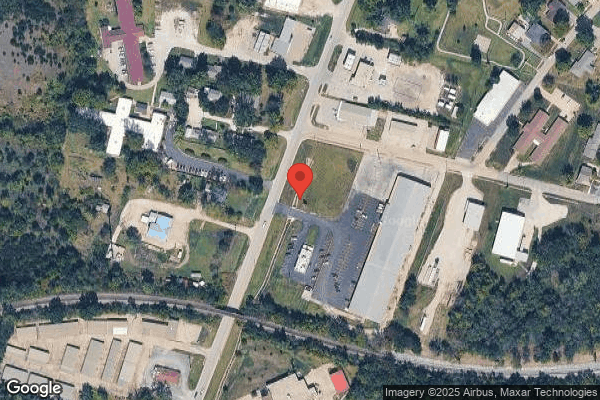

908 N PEARL STREET, PAOLA, KS 66071 (913) 294-4308
For profit - Corporation 53 Beds AMERICARE SENIOR LIVING Data: November 2025
Trust Grade
90/100
#31 of 295 in KS
Last Inspection: November 2024

Within standard 12-15 month inspection cycle. Federal law requires annual inspections.

Overview

North Point Skilled Nursing Center has received a Trust Grade of A, which means the facility is considered excellent and highly recommended for care. It ranks #31 out of 295 nursing homes in Kansas, placing it in the top half of state facilities, and is the best option among three nursing homes in Miami County. The facility is improving, having reduced the number of reported issues from five in 2021 to none in 2024. Staffing is average with a 3/5 star rating and a turnover rate of 40%, which is better than the state average, indicating that staff tend to stay longer and become familiar with residents. However, there is less RN coverage than 91% of Kansas facilities, which raises some concerns about oversight. While North Point has not incurred any fines, indicating strong compliance with regulations, there have been some areas of concern noted during inspections. For example, one resident did not have proper positioning rails in their bed, which could impact their stability during care. Additionally, the facility did not adequately revise care plans for residents who required assistance with mobility, potentially compromising their safety. Lastly, there were concerns regarding the sanitary management of pressure ulcer care for one resident, highlighting the need for improved infection control practices. Overall, while there are strengths in staffing stability and compliance, families should be aware of the specific care issues that have been identified.

Trust Score
A
90/100
In Kansas
#31/295
Top 10%
Safety Record
Low Risk
No red flags
Inspections
Getting Better
5 → 0 violations
Staff Stability
○ Average
40% turnover. Near Kansas's 48% average. Typical for the industry.
Penalties
✓ Good
No fines on record. Clean compliance history, better than most Kansas facilities.
Skilled Nurses
⚠ Watch
Each resident gets only 19 minutes of Registered Nurse (RN) attention daily — below average for Kansas. Fewer RN minutes means fewer trained eyes watching for problems.
Violations
✓ Good
Only 5 deficiencies on record. Cleaner than most facilities. Minor issues only.
★★★★★
5.0
Overall Rating
★★★☆☆
3.0
Staff Levels
★★★★☆
4.0
Care Quality
★★★★★
5.0
Inspection Score
Stable
2021: 5 issues
2024: 0 issues

The Good

  • 4-Star Quality Measures · Strong clinical quality outcomes
  • Full Sprinkler Coverage · Fire safety systems throughout facility
  • No fines on record
  • Staff turnover below average (40%)

    8 points below Kansas average of 48%

Facility shows strength in quality measures, fire safety.

The Bad

Staff Turnover: 40%

Near Kansas avg (46%)

Typical for the industry

Chain: AMERICARE SENIOR LIVING

Part of a multi-facility chain

Ask about local staffing decisions and management

The Ugly 5 deficiencies on record

Jul 2021 5 deficiencies
CONCERN (D)

Potential for Harm - no one hurt, but risky conditions existed

Deficiency F0558 (Tag F0558)

Could have caused harm · This affected 1 resident

The facility reported a census of 42 residents with 15 selected for review. Based on observation, interview and record review, the facility failed to ensure one Resident (R)37's, bed contained positio...

Read full inspector narrative →
The facility reported a census of 42 residents with 15 selected for review. Based on observation, interview and record review, the facility failed to ensure one Resident (R)37's, bed contained positioning rails to enhance the resident's turning ability and stabilization during cares. Findings included: - Review of resident (R)37's Transfer Form, dated 07/02/2021, revealed diagnoses included fractured patella (knee cap,) kidney failure, chronic heart failure (persisting for a long period, often for the remainder of a person's lifetime,) diabetes (when the body cannot use glucose, not enough insulin made or the body cannot respond to the insulin,) depression (abnormal emotional state characterized by exaggerated feelings of sadness, worthlessness and emptiness,) and fibromyalgia (condition of musculoskeletal pain, spasms, stiffness, fatigue and severe sleep disturbance.) The admission Minimum Data Set (MDS), which was In progress on 07/26/21 with a look back date of 07/12/21, assessed the resident had normal cognitive function, required extensive assistance of two person for bed mobility and dressing, and was dependent of staff for transfer and toilet use. The resident had functional impairment on both sides of the lower extremities, but no impairment in her upper extremities. The resident had two unstageable pressure ulcers (localized injury to the skin and/or underlying tissue usually over a bony prominence, because of pressure, or pressure in combination with shear and/or friction) present upon admission. The Pressure Ulcer Care Area Assessment (CAA,) dated 07/21/21, assessed the resident admitted to the facility with suspected deep tissue injury to her bilateral (both sides) buttocks. The resident would sit for long periods of time at dialysis (a treatment to remove waste products from the blood.) The resident had a bariatric (oversized) bed with an air mattress and cushion in her wheelchair. The nursing staff reported the resident refused to lay down and reposition at times. The Baseline Care Plan, dated 07/21/2021, (as of 07/26/21 the comprehensive care plan was not developed) instructed staff the resident received therapy services with the goal to return home. The resident had a history of a fall with fracture of her right patella, had a brace on her right leg, and was not weight bearing. The resident was in a bariatric bed and required two staff assistance with bed mobility, and to offer repositioning every two hours. Observation, on 07/27/21 at 08:36 AM, revealed the resident positioned in her bariatric bed. Administrative Nurse D and Licensed Nurse (LN) G, donned gown, and gloves, and assisted the resident to turn in bed (the bed lacked positioning bars on both sides) by the resident holding onto staff's arm. Observation, on 07/28/21 at 10:07 AM revealed the resident positioned in her bed. Certified Nurse Aide (CNA) MM, and CNA NN assisted the resident to turn in bed by instructing the resident to hold her (CNA NN's) arm and pulled her onto her side. Interview, on 07/28/21 at 10:15 AM with the resident revealed a positioning bar would be helpful to her for turning and repositioning as this would give her something solid to hold onto. Interview, on 07/28/21 at 10:49 AM, revealed Administrative Nurse F and LN G, provided a dressing change to the resident while the resident was positioned on her side with nothing to hold onto. Administrative Nurse F confirmed the positioning bars would benefit the resident for stabilization during positioning changes. Administrative Nurse F stated she would contact the bed rental company for the rails. Interview, on 07/28/21 at 04:17 PM, with CNA P, revealed the resident did not like staff to offer turning opportunity every two hours, and the resident does not like to turn as she has pain. CNA P stated the positioning rail would help her with turning as she needs two staff, and one staff assists with positioning her right leg (in an immobilizer) as the resident could not move it on her own. Interview, on 07/28/21 at 09:02 AM, with consulting therapy staff GG, revealed therapy staff working with her for bed mobility upper and lower body strengthening. Staff GG stated the resident may benefit from positioning bars. The facility policy Repositioning, dated May 2013, instructed staff to check the care plan, assignment sheet or the communication system to determine the resident's specific positioning needs including special equipment, resident level of participation and number of staff required to complete the procedure. The facility failed to ensure this resident's bed contained positioning rails to enhance and stabilize repositioning efforts.
CONCERN (D)

Potential for Harm - no one hurt, but risky conditions existed

Deficiency F0657 (Tag F0657)

Could have caused harm · This affected 1 resident

**NOTE- TERMS IN BRACKETS HAVE BEEN EDITED TO PROTECT CONFIDENTIALITY** The facility reported a census of 42 residents with 15 residents sampled. Based on observation, interview, and record review, th...

Read full inspector narrative →
**NOTE- TERMS IN BRACKETS HAVE BEEN EDITED TO PROTECT CONFIDENTIALITY** The facility reported a census of 42 residents with 15 residents sampled. Based on observation, interview, and record review, the facility failed to review and revise the care plans for two of the Residents (R)28 regarding foot pedals and R 37 regarding refusal of turning and repositioning every two hours. Findings included: - Review of the Physician Order Sheet (POS), dated 07/26/21, for Resident (R)28, included diagnoses of hemiplegia (paralysis of one side of the body) and hemiparesis (muscular weakness of one half of the body). The significant change Minimum Data Set (MDS), dated [DATE], documented the resident had a Brief Interview for Mental Status (BIMS) score of 13, indicating intact cognition. She required extensive assistance of one staff for locomotion on the unit with the use of her wheelchair. She had impairment on one side of her lower extremities (LE legs). The Activity of Daily Living (ADL) Functional/Rehabilitation Potential Care Area Assessment (CAA), dated 03/31/21, documented the resident required extensive assistance with wheelchair mobility due to weakness on her right side. The quarterly MDS, dated 06/28/21, documented the resident had a BIMS score of 10, indicating moderately impaired cognition. She required limited assistance of one staff for locomotion on the unit with the use of her wheelchair. She had impairment in functional ROM on one side of her LEs. The Activities of daily living (ADL) care plan, dated 04/13/21, instructed staff were to assist the resident to her destination with use of her wheelchair. The care plan lacked instruction on the use of foot pedals for her wheelchair. On 07/26/21 at 11:18 AM, Certified Nurse Aide Q, propelled the resident in her wheelchair to the dining room for lunch. The resident wore slippers which skimmed the floor during transport. The wheelchair lacked foot pedals. On 07/27/21 at 08:00 AM, Licensed Nurse H, propelled the resident to the dining room for breakfast. The resident wore slippers and her heels bounced up and down on the floor during transport. The wheelchair lacked foot pedals. On 07/29/21 at 12:21 PM, Administrative Nurse F stated, when a resident had foot pedals on their wheelchair, staff should include it on the care plan. On 07/29/21 at 09:57 AM, Administrative Nurse D stated, foot pedals should be included on the care plan. The facility policy for, Resident Centered Care Plan Process, updated 03/28/18, included: Staff will revise the resident's plan of care based on response to the resident's condition. The facility failed to review and revise the care plan to include wheelchair foot pedals for this dependent resident. - Review of resident (R)37's Transfer Form, dated 07/02/2021, revealed diagnoses included fractured patella (knee cap,) kidney failure, chronic heart failure (persisting for a long period, often for the remainder of a person's lifetime,) diabetes (when the body cannot use glucose, not enough insulin made or the body cannot respond to the insulin,) depression (abnormal emotional state characterized by exaggerated feelings of sadness, worthlessness and emptiness,) and fibromyalgia (condition of musculoskeletal pain, spasms, stiffness, fatigue and severe sleep disturbance.) The admission Minimum Data Set (MDS), which was In progress on 07/26/21 with a look back date of 07/12/21, assessed the resident had normal cognitive function, required extensive assistance of two person for bed mobility and dressing, and was dependent of staff for transfer and toilet use. The resident had functional impairment on both sides of the lower extremities, but no impairment in her upper extremities. The resident had two unstageable pressure ulcers (localized injury to the skin and/or underlying tissue usually over a bony prominence, because of pressure, or pressure in combination with shear and/or friction) present upon admission. The Pressure Ulcer Care Area Assessment (CAA,) dated 07/21/21, assessed the resident admitted to the facility with suspected deep tissue injury to her bilateral (both sides) buttocks. The resident would sit for long periods of time at dialysis (a treatment to remove waste products from the blood.) The resident had a bariatric (oversized) bed with an air mattress and cushion in her wheelchair. The nursing staff reported the resident refused to lay down and reposition at times. The Baseline Care Plan, dated 07/21/2021, (as of 07/26/21 the comprehensive care plan was not developed) instructed staff the resident received therapy services with the goal to return home. The resident had a history of a fall with fracture of her right patella, had a brace on her right leg, and was not weight bearing. The resident was in a bariatric bed and required two staff assistance with bed mobility, and to offer repositioning every two hours. Observation, on 07/27/21 at 08:36 AM, revealed the resident positioned in her bariatric bed. Administrative nurse D and Licensed Nurse (LN) G, donned gown, and gloves, and assisted the resident to turn in bed (the bed lacked positioning bars on both sides) by the resident holding onto staff's arm. Observation, on 07/28/21 at 10:07 AM revealed the resident positioned in her bed. Certified Nurse Aide (CNA) MM, and CNA NN assisted the resident to turn in bed by instructing the resident to hold her (CNA NN's) arm and pulled her onto her side. Interview, on 07/28/21 at 10:49 AM, revealed Administrative Nurse F and LN G, provided a dressing change to the resident while the resident was positioned on her side with nothing to hold onto. Administrative Nurse F confirmed the positioning bars would benefit the resident for stabilization during positioning changes but often the resident refused staff efforts for repositioning. Administrative Nurse F confirmed the resident's resistance to turn schedule was not documented on the baseline care plan. Interview, on 07/28/21 at 04:17 PM, with CNA P, revealed the resident did not like staff to offer turning opportunity every two hours, and the resident does not like to turn as she has pain. CNA P stated the positioning rail would help her with turning as she needs two staff, and one staff assists with positioning her right leg (in an immobilizer) as the resident could not move it on her own. Interview, on 07/29/21 at 10:04 AM, with Administrative Nurse D, revealed the resident was noncompliant turning and repositioning regularly. Administrative nurse D stated the resident seemed to lack motivation to actively participate with staff efforts for goals of returning home. The facility policy Resident Centered Care Plan Process, updated 03/28/18, instructed staff to revise the care plan for treatment and services based on the resident's condition and request of the resident. The facility failed to review and revise the Baseline Care Plan to include the resident's refusal of adherence to a turn and reposition schedule for this resident with pressure ulcers.
CONCERN (D)

Potential for Harm - no one hurt, but risky conditions existed

Pressure Ulcer Prevention (Tag F0686)

Could have caused harm · This affected 1 resident

The facility reported a census of 42 residents with 15 selected for review, which included five residents reviewed for pressure ulcers. Based on observation, interview and record review, the facility ...

Read full inspector narrative →
The facility reported a census of 42 residents with 15 selected for review, which included five residents reviewed for pressure ulcers. Based on observation, interview and record review, the facility failed to ensure pressure ulcer care in a sanitary manner to prevent the spread of infection for one ,resident (R)37, of the five selected for review. Findings included: - Review of resident (R)37's Transfer Form, dated 07/02/2021, revealed diagnoses included fractured patella (knee cap,) kidney failure, chronic heart failure (persisting for a long period, often for the remainder of a person's lifetime,) diabetes (when the body cannot use glucose, not enough insulin made or the body cannot respond to the insulin,) depression (abnormal emotional state characterized by exaggerated feelings of sadness, worthlessness and emptiness,) and fibromyalgia (condition of musculoskeletal pain, spasms, stiffness, fatigue and severe sleep disturbance.) The admission Minimum Data Set (MDS), which was in progress on 07/26/21 with a look back date of 07/12/21 assessed the resident had normal cognitive function, extensive assistance of two person for bed mobility and dressing and was dependent of staff for transfer and toilet use. The resident had functional impairment on both sides of lower extremities but no impairment in her upper extremities. The resident had two unstageable pressure ulcers present upon admission. The Pressure Ulcer Care Area Assessment (CAA,) dated 07/21/21, assessed the resident admitted to the facility with suspected deep tissue injury to her bilateral (both sides) buttocks. The resident sits for long periods of time at dialysis (a treatment to remove waste products from the blood.) The resident has a bariatric (oversized) bed with an air mattress and cushion in her wheelchair. The nursing staff reported the resident refuses to lay down and reposition at times. The Baseline Care Plan, dated 07/21/2021, (as of 07/26/21 the comprehensive care plan was not developed) instructed staff the resident received therapy services with the goal to return home. The resident had a history of a fall with fracture of her right patella had a brace on her right leg and was not weight bearing. The resident was in a bariatric bed and required two staff assistance with bed mobility and to offer repositioning every two hours. A Physician Order, dated 07/20/2021, instructed staff to apply collagen (a substance that heals damaged tissue) powder and a super absorbent dressing daily and as needed. A Wound Culture Report, dated 07/25/2021, documented the resident's wound contained MRSA (methicillin resistant staphylococcus aureus a transmissible bacterium that is resistant to many antibiotics) A Physician's Order, dated 07/25/2021, instructed staff to administer Keflex (an antibiotic) 500 mg (milligrams,) three times a day. Observation, on 07/27/21 at 08:36 AM, revealed the resident positioned in her bariatric bed. Administrative nurse D and Licensed Nurse (LN) G, donned gown, and gloves, and assisted the resident to turn in bed (the bed lacked positioning bars on both sides) by the resident holding onto staff's arm. Administrative nurse D and Licensed Nurse (LN) G, changed the resident incontinence brief, removed gloves, then donned clean gloves, but did not perform hand hygiene. LN G removed the dressing from the resident buttocks, and sprayed gauze sponge with wound cleanser and patted the areas. The resident's buttocks contained six areas of yellow-white slough, surrounded by reddened skin with an approximate area total of eight centimeters by six centimeters. LN G removed her gloves and donned clean gloves but did not perform hand hygiene. LNG then applied the collagen powder to a dressing and applied it to the wounds and secured the dressing to the resident's skin. Interview, on 07/27/2021 at 08:50 AM, with LN G, confirmed the need for hand hygiene prior to donning clean gloves. Interview, on 07/27/21 at 08:50 AM, with Administrative Nurse D, confirmed staff should perform hand hygiene in between gloving. Administrative Nurse D stated the resident had MRSA in her buttocks wounds and felt the wounds looked better. The Infection Control Policy, dated 01/29/2021, instructed staff to perform hand hygiene immediately after removing gloves. The facility failed to ensure sanitary dressing change for this resident with MRSA infection in her pressure ulcer to prevent contamination and improve healing mechanisms.
CONCERN (D)

Potential for Harm - no one hurt, but risky conditions existed

Accident Prevention (Tag F0689)

Could have caused harm · This affected 1 resident

**NOTE- TERMS IN BRACKETS HAVE BEEN EDITED TO PROTECT CONFIDENTIALITY** The facility reported a census of 42 residents with 15 residents sampled, including five residents reviewed for accidents. Based...

Read full inspector narrative →
**NOTE- TERMS IN BRACKETS HAVE BEEN EDITED TO PROTECT CONFIDENTIALITY** The facility reported a census of 42 residents with 15 residents sampled, including five residents reviewed for accidents. Based on observation, interview, and record review, the facility failed to provide adequate assistive devices to prevent possible accidents when the facility failed to ensure staff placed foot pedals on the wheelchair of two Residents (R)6 and R 28, while being transported in the facility by staff. Findings included: - Review of the electronic medical record EMR for Resident (R)6 revealed she had a diagnosis of dementia (progressive mental disorder characterized by failing memory, confusion). The significant change MDS, dated [DATE], documented the resident had a BIMS score of one, indicating severely impaired cognition. She required extensive assistance of one staff with locomotion on the unit with the use of her wheelchair. She had no impairment in functional ROM. The Activity of Daily Living (ADL) Functional/Rehabilitation Potential Care Area Assessment (CAA), dated 05/14/21, did not trigger. The admission Minimum Data Set (MDS), dated [DATE], documented the resident had a Brief Interview for Mental Status (BIMS) score of six, indicating severely impaired cognition. She required supervision with locomotion on the unit with the use of her wheelchair. She had no limitation in functional range of motion (ROM). The Falls care plan, dated 04/21/21, instructed staff the resident was unaware of her safety and had weakness in her lower extremities (LE-legs). An undated addition to the care plan, instructed staff the resident would remove the foot pedals to her wheelchair in order to self- propel. Nursing staff instructed to not put foot pedals on when the resident self-propelled herself in the wheelchair. Review of the resident's EMR under the Task tab, from 06/30/21 through 07/29/21, revealed the resident required limited to total assistance of one staff for locomotion on the unit with her wheelchair. On 07/27/21 at 08:00 AM, Certified Nurse Aide (CNA) N propelled the resident in her wheelchair from her room to the dining room for breakfast. The resident wore slippers on her feet, and they skimmed the floor during transport. The wheelchair lacked foot pedals. On 07/27/21 at 11:44 AM, CNA N propelled the resident in her wheelchair from her room to the dining room for lunch. The resident wore slippers on her feet and skimmed the floor during transport. The wheelchair lacked foot pedals. On 07/27/21 at 10:04 AM, CNA M stated the resident can propel herself in the facility at times in her wheelchair by using her feet. The resident did not have foot pedals on her wheelchair due to them being a fall risk for the resident. On 07/28/21 at 10:38 AM, CNA N stated the resident had foot pedals for her wheelchair in case she was not able to hold her feet up. CNA stated she had never put the foot pedals on the resident's wheelchair for transport. CNA confirmed the resident's feet skimmed the floor during transports at times. On 07/28/21 at 02:41 PM, CNA P stated the resident did not have foot pedals for her wheelchair. On 07/28/21 at 02:11 PM, Administrative Nurse E stated, the resident should have foot pedals on her wheelchair when staff propel her. On 07/29/21 at 09:57 AM, Administrative Nurse D stated if the resident was able to hold her feet up while staff propelled her, the resident would need foot pedals. Administrative Nurse D revealed she would expect staff to use the foot pedals on the resident's wheelchair if the resident was unable to hold her feet up during transports. The facility policy, Wheelchair Positioning for Comfort and Safety, undated, included: The resident's feet should rest firmly on the wheelchair foot plates. The facility failed to place foot pedals on this resident that required extensive assistance for locomotion in her wheelchair, that created the potential for an accident hazard and injury. - Review of the Physician Order Sheet (POS), dated 07/26/21, for Resident (R)28, included diagnoses of hemiplegia (paralysis of one side of the body) and hemiparesis (muscular weakness of one half of the body). The significant change Minimum Data Set (MDS), dated [DATE], documented the resident had a Brief Interview for Mental Status (BIMS) score of 13, indicating intact cognition. She required extensive assistance of one staff for locomotion on the unit with the use of her wheelchair. She had impairment on one side of her lower extremities (LE legs). The Activity of Daily Living (ADL) Functional/Rehabilitation Potential Care Area Assessment (CAA), dated 03/31/21, documented the resident required extensive assistance with wheelchair mobility due to weakness on her right side. The quarterly MDS, dated 06/28/21, documented the resident had a BIMS score of 10, indicating moderately impaired cognition. She required limited assistance of one staff for locomotion on the unit with the use of her wheelchair. She had impairment in functional ROM on one side of her LEs. The ADL care plan, dated 04/13/21, instructed staff were to assist the resident to her destination with use of her wheelchair. The care plan lacked instruction on the use of foot pedals for her wheelchair. Review of the resident's EMR under the Task tab, from 06/30/21 through 07/29/21, revealed the resident required independent to extensive assistance of one staff for locomotion on the unit with her wheelchair. On 07/26/21 at 11:18 AM, Certified Nurse Aide Q, propelled the resident in her wheelchair to the dining room for lunch. The resident wore slippers which skimmed the floor during transport. The wheelchair lacked foot pedals. On 07/27/21 at 08:00 AM, Licensed Nurse H, propelled the resident to the dining room for breakfast. The resident wore slippers and her heels bounced up and down on the floor during transport. The wheelchair lacked foot pedals. On 07/27/21 at 07:37 AM, Certified Nurse Aide (CNA) M stated staff do not use foot pedals on the resident's wheelchair because she will propel herself at times. On 07/28/21 at 10:38 AM, CNA N stated staff do not use foot pedals for the resident as they would be a fall hazard. On 07/28/21 at 02:47 PM, CNA O stated the resident's feet skim the floor while staff transported her in her wheelchair to the dining room. On 07/28/21 at 02:11 PM, Administrative Nurse E stated staff do not use foot pedals on the resident's wheelchair. On 07/29/21 at 09:57 AM, Administrative Nurse D stated if the resident was not able to hold her feet up while staff propelled her, the resident would need foot pedals, but Administrative Nurse D would expect staff to use foot pedals on the resident's wheelchair if the resident was unable to hold her feet up during transports. The facility policy, Wheelchair Positioning for Comfort and Safety, undated, included: The resident's feet should rest firmly on the wheelchair foot plates. The facility failed to place foot pedals on this resident, who required staff assistance with wheelchair mobility, that created the potential for an accident hazard and injury.
MINOR (C)

Minor Issue - procedural, no safety impact

Deficiency F0801 (Tag F0801)

Minor procedural issue · This affected most or all residents

The facility reported a census of 42 residents. Based on observation, record review, and interview, the facility failed to have a Certified Dietary Manager (CDM), as required. Findings included: - On ...

Read full inspector narrative →
The facility reported a census of 42 residents. Based on observation, record review, and interview, the facility failed to have a Certified Dietary Manager (CDM), as required. Findings included: - On 07/28/21 at 11:15 AM, Dietary BB stated, he was not a Certified Dietary Manager (CDM) and had not enrolled in the class. Dietary BB stated, he had been the dietary manager for approximately six months and had not gotten around to enrolling. On 07/29/21 at 11:01 AM, Administrative staff A stated, Dietary BB only enrolled in the required class on that date. The facility policy for Food Services Manager, revised 12/2008, included: The Food Services Manager was a qualified supervisor licensed by the state and was knowledgeable and trained in food procurement storage, handling, preparation, and delivery. The facility failed to have a qualified food service manager, as required.
Understanding Severity Codes (click to expand)
Life-Threatening (Immediate Jeopardy)
J - Isolated K - Pattern L - Widespread
Actual Harm
G - Isolated H - Pattern I - Widespread
Potential for Harm
D - Isolated E - Pattern F - Widespread
No Harm (Minor)
A - Isolated B - Pattern C - Widespread

Questions to Ask on Your Visit

  • "Can I speak with families of current residents?"
  • "What's your RN coverage like on weekends and overnight?"

Our Honest Assessment

Strengths
  • • Grade A (90/100). Above average facility, better than most options in Kansas.
  • • No major safety red flags. No abuse findings, life-threatening violations, or SFF status.
  • • No fines on record. Clean compliance history, better than most Kansas facilities.
  • • Only 5 deficiencies on record. Cleaner than most facilities. Minor issues only.
Concerns
  • • No significant concerns identified. This facility shows no red flags across CMS ratings, staff turnover, or federal penalties.
Bottom line: Generally positive indicators. Standard due diligence and a personal visit recommended.

About This Facility

What is North Point Skilled Nursing Center's CMS Rating?

CMS assigns NORTH POINT SKILLED NURSING CENTER an overall rating of 5 out of 5 stars, which is considered much above average nationally. Within Kansas, this rating places the facility higher than 99% of the state's 100 nursing homes. This rating reflects solid performance across the metrics CMS uses to evaluate nursing home quality.

How is North Point Skilled Nursing Center Staffed?

CMS rates NORTH POINT SKILLED NURSING CENTER's staffing level at 3 out of 5 stars, which is average compared to other nursing homes. Staff turnover is 40%, compared to the Kansas average of 46%. This relatively stable workforce can support continuity of care.

What Have Inspectors Found at North Point Skilled Nursing Center?

State health inspectors documented 5 deficiencies at NORTH POINT SKILLED NURSING CENTER during 2021. These included: 4 with potential for harm and 1 minor or isolated issues.
Who Owns and Operates North Point Skilled Nursing Center?

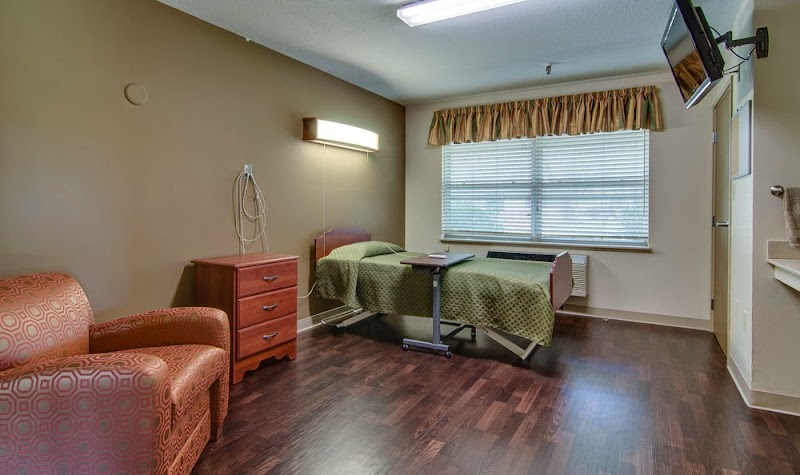
NORTH POINT SKILLED NURSING CENTER is owned by a for-profit company. For-profit facilities operate as businesses with obligations to shareholders or private owners. The facility is operated by AMERICARE SENIOR LIVING, a chain that manages multiple nursing homes. With 53 certified beds and approximately 48 residents (about 91% occupancy), it is a smaller facility located in PAOLA, Kansas.
How Does North Point Skilled Nursing Center Compare to Other Kansas Nursing Homes?

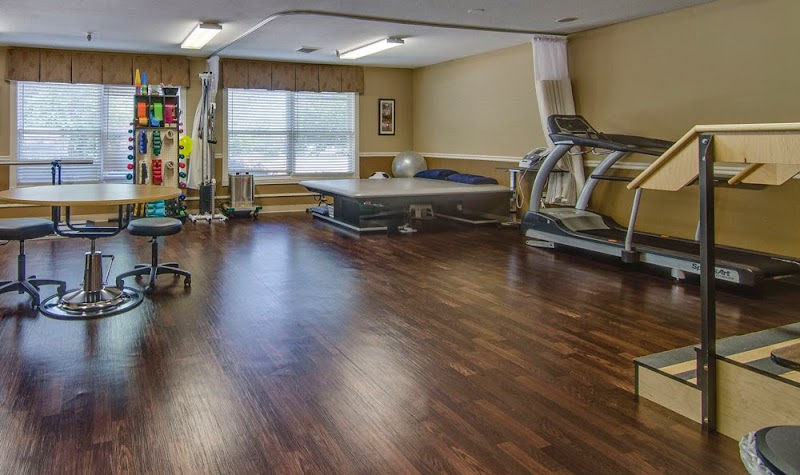
Compared to the 100 nursing homes in Kansas, NORTH POINT SKILLED NURSING CENTER's overall rating (5 stars) is above the state average of 2.9, staff turnover (40%) is near the state average of 46%, and health inspection rating (5 stars) is much above the national benchmark.

What Should Families Ask When Visiting North Point Skilled Nursing Center?

Based on this facility's data, families visiting should ask: "Can I visit during a mealtime to observe dining assistance and food quality?" "How do you handle medical emergencies, and what is your hospital transfer rate?" "Can I speak with family members of current residents about their experience?"

Is North Point Skilled Nursing Center Safe?

Based on CMS inspection data, NORTH POINT SKILLED NURSING CENTER has a clean safety record: no substantiated abuse findings (meaning no confirmed cases of resident harm), no Immediate Jeopardy citations (the most serious violation level indicating risk of serious injury or death), and is not on the Special Focus Facility watch list (a federal program monitoring the lowest-performing 1% of nursing homes). The facility has a 5-star overall rating and ranks #1 of 100 nursing homes in Kansas. While no facility is perfect, families should still ask about staff-to-resident ratios and recent inspection results during their visit.

Do Nurses at North Point Skilled Nursing Center Stick Around?

NORTH POINT SKILLED NURSING CENTER has a staff turnover rate of 40%, which is about average for Kansas nursing homes (state average: 46%). Moderate turnover is common in nursing homes, but families should still ask about staff tenure and how the facility maintains care continuity when employees leave.

Was North Point Skilled Nursing Center Ever Fined?

NORTH POINT SKILLED NURSING CENTER has no federal fines on record. CMS issues fines when nursing homes fail to meet care standards or don't correct problems found during inspections. The absence of fines suggests the facility has either maintained compliance or corrected any issues before penalties were assessed. This is a positive indicator, though families should still review recent inspection reports for the full picture.

Is North Point Skilled Nursing Center on Any Federal Watch List?

NORTH POINT SKILLED NURSING CENTER is not on any federal watch list. The most significant is the Special Focus Facility (SFF) program, which identifies the bottom 1% of nursing homes nationally based on persistent, serious quality problems. Not being on this list means the facility has avoided the pattern of deficiencies that triggers enhanced federal oversight. This is a positive indicator, though families should still review the facility's inspection history directly.