ACCESS MENTAL HEALTH

500 PEABODY, PEABODY, KS 66866 (620) 983-2165
For profit - Limited Liability company 45 Beds Independent Data: November 2025 8 Immediate Jeopardy citations
Trust Grade
0/100
Last Inspection: June 2025

Inspected within the last 6 months. Data reflects current conditions.

Overview

Access Mental Health in Peabody, Kansas, has received an F trust grade, indicating significant concerns and a poor level of care. With no ranking in the state or county, it means there are no other facilities to compare against in Kansas or Marion County, highlighting a lack of options. The situation appears to be worsening, with reported issues increasing from 10 in 2024 to 26 in 2025. Although the facility has a staffing turnover rate of 45%, which is slightly better than the state's average, it has concerning fines totaling $162,591, higher than 98% of Kansas facilities, suggesting ongoing compliance issues. The facility struggles significantly with safety, having failed to protect residents from incidents of sexual assault and harassment, with multiple reports of a resident inappropriately touching others without any interventions in place. This places all residents at risk and raises serious concerns about their well-being. On a positive note, there is more RN coverage than 86% of Kansas facilities, which could help mitigate some issues, but the overall care environment remains deeply troubling.

Trust Score
F
0/100
In Kansas
#112/223
Top 50%
Safety Record
High Risk
Review needed
Inspections
Getting Worse
10 → 26 violations
Staff Stability
⚠ Watch
45% turnover. Above average. Higher turnover means staff may not know residents' routines.
Penalties
⚠ Watch
$162,591 in fines. Higher than 93% of Kansas facilities. Major compliance failures.
Skilled Nurses
○ Average
Each resident gets 37 minutes of Registered Nurse (RN) attention daily — about average for Kansas. RNs are the most trained staff who monitor for health changes.
Violations
⚠ Watch
42 deficiencies on record. Higher than average. Multiple issues found across inspections.
☆☆☆☆☆
0.0
Overall Rating
☆☆☆☆☆
0.0
Staff Levels
☆☆☆☆☆
0.0
Care Quality
☆☆☆☆☆
0.0
Inspection Score
Stable
2024: 10 issues
2025: 26 issues

The Good

  • Full Sprinkler Coverage · Fire safety systems throughout facility
  • No fines on record

Facility shows strength in fire safety.

The Bad

Staff Turnover: 45%

Near Kansas avg (46%)

Higher turnover may affect care consistency

Federal Fines: $162,591

Well above median ($33,413)

Significant penalties indicating serious issues

The Ugly 42 deficiencies on record

8 life-threatening 2 actual harm
Jun 2025 9 deficiencies
CONCERN (D) 📢 Someone Reported This

A family member, employee, or ombudsman was alarmed enough to file a formal complaint

Potential for Harm - no one hurt, but risky conditions existed

Deficiency F0552 (Tag F0552)

Could have caused harm · This affected 1 resident

The facility reported a census of 42 residents. The sample included 12 residents with five residents reviewed for psychotropic (alters mood or thoughts) medications. Based on interview, observation, a...

Read full inspector narrative →
The facility reported a census of 42 residents. The sample included 12 residents with five residents reviewed for psychotropic (alters mood or thoughts) medications. Based on interview, observation, and record review, the facility failed to inform Resident (R) 30 and R9 and/or their representatives regarding the risks related to psychotropic medications. These practices had the potential to lead to negative and unwarranted physical side effects. Findings included: - On 06/23/25 at approximately 10:00 AM, a review of the Psychoactive Medication Therapy Informed Consent Form logbook provided by Social Services X revealed the following: A consent form for Invega (paliperidone - a psychotropic medication) lacked a signature from R30. The document contained a signature of Administrative Nurse D as the person who obtained R30's consent, dated 08/01/24 at 02:15 PM. A consent form for Haldol (haloperidol - a psychotropic medication) lacked a signature from R30. The document contained a signature of Administrative Nurse D as the person who obtained R30's consent, dated 06/09/25 at 02:10 PM. A consent form for Abilify (aripiprazole - a psychotropic medication) lacked a signature from R9's guardian and was dated 10/09/24. A consent form for lithium (a psychotropic medication) lacked a signature from R9's guardian and was dated 10/08/24. A consent form for Ativan (lorazepam - a psychotropic medication) lacked a signature from R9's guardian and was dated 10/08/24. A consent form for trazodone (a psychotropic medication) lacked a signature from R9's guardian and was dated 12/19/24. A consent form for Zyprexa (olanzapine - a psychotropic medication) lacked a signature from R9's guardian and was dated 01/02/25. R30's Electronic Medical Record (EMR) lacked documentation of informed consent for the Invega or Haldol. R9's EMR lacked documentation of informed consent for Abilify, lithium, Ativan, trazodone, or Zyprexa. During an interview on 06/23/25 at 10:15 AM, Social Services X revealed she was recently notified by the facility's administration that she was responsible for obtaining and maintaining consent for psychotropic medication use. During an interview on 06/23/25 at 11:45 AM, Social Services X revealed she was assigned the task of obtaining consent and signatures from the applicable residents on 06/16/25 and organizing the older consent forms. Social Services X said she was unaware that residents with a guardian could not sign consent forms without written permission from the guardian. During an interview on 06/23/25 at 12:34 PM, Administrative Nurse B confirmed the lack of signatures on the consent forms and revealed that she signed some of the consent forms and delegated the task of obtaining the consent signatures to another staff member. Administrative Nurse B stated the facility expected Social Services X to obtain consent signatures and sign as the person who obtained the signatures, but Social Services X refused to sign as a witness so Administrative Nurse B would sign the documents ahead of time. The facility's undated Psychotropic Medication Monitoring policy documented a discussion with the resident and/or responsible party regarding the risk versus benefit related to the use of medications.
CONCERN (D) 📢 Someone Reported This

A family member, employee, or ombudsman was alarmed enough to file a formal complaint

Potential for Harm - no one hurt, but risky conditions existed

Deficiency F0655 (Tag F0655)

Could have caused harm · This affected 1 resident

**NOTE- TERMS IN BRACKETS HAVE BEEN EDITED TO PROTECT CONFIDENTIALITY** The facility reported a census of 42 residents. The sample included 12 residents, and three residents were reviewed for a baseli...

Read full inspector narrative →
**NOTE- TERMS IN BRACKETS HAVE BEEN EDITED TO PROTECT CONFIDENTIALITY** The facility reported a census of 42 residents. The sample included 12 residents, and three residents were reviewed for a baseline care plan. Based on interviews, observations, and record review, the facility failed to develop a person-centered baseline care plan within the required timeframe for Resident (R) 245. This deficient practice had the potential to lead to impaired care due to uncommunicated needs. Findings included: - R245's Electronic Health Record (EHR) revealed R245 was admitted to the facility on [DATE]. R245's Baseline Care Plan had one of five components, Functional Status completed on 06/04/25, one component, BCP [baseline care plan] Summary and Signatures was completed on 06/10/25 and one component, Dietary, Therapy and Social Services completed on 06/13/25. As of 06/17/25, two components, General Information and Initial Goals and Health Conditions remained incomplete. On 06/18/25 at 09:10 AM, R245 rested in bed under a blanket. On 06/23/25 at 01:30 PM, Administrative Nurse D revealed the nurse who admitted a resident to the facility was responsible for the immediate completion of the baseline care plan. Administrative Nurse D said if the nurse was unable to complete the baseline care plan, the task could be delegated to an administrative nurse for completion within the first 72 hours the resident was in the building. Administrative Nurse D verbalized she was unaware baseline care plans were required to be completed in the first 48 hours. Administrative Nurse D confirmed that R245's Baseline Care Plan was initiated but was not completed. The facility's undated Baseline Care Plan policy documented the facility would develop an initial person-centered care plan within the first 48 hours of a resident's admission to the facility for every resident.
CONCERN (D) 📢 Someone Reported This

A family member, employee, or ombudsman was alarmed enough to file a formal complaint

Potential for Harm - no one hurt, but risky conditions existed

Deficiency F0883 (Tag F0883)

Could have caused harm · This affected 1 resident

The facility reported a census of 42 with five residents selected for review of vaccines. Based on record review and interview, the facility failed to offer the pneumococcal (type of bacterial infecti...

Read full inspector narrative →
The facility reported a census of 42 with five residents selected for review of vaccines. Based on record review and interview, the facility failed to offer the pneumococcal (type of bacterial infection) vaccine to three residents, Resident (R) 1, R11, and R9. This deficient practice placed the residents at increased risk for pneumococcal infections. Findings included: - R1's Electronic Medical Record (EMR) lacked evidence the facility offered and provided or obtained informed declination for a pneumococcal vaccine. R11's EMR lacked evidence the facility offered and provided or obtained informed declination for a pneumococcal vaccine. R9's EMR lacked evidence the facility offered and provided or obtained informed declination for a pneumococcal vaccine. On 06/23/25 at 03:45 PM, Administrative Nurse D verified the above findings. She reported the facility attempted to get the residents that qualify for the Pneumovax but sometimes the insurance company did not cover the cost. The facility policy, .Immunization Policy, dated 02/19/25, documentation included before offering influenza and pneumovax each resident and or representative will receive education current education regarding the benefits and potential side effects of the immunization.
CONCERN (E) 📢 Someone Reported This

A family member, employee, or ombudsman was alarmed enough to file a formal complaint

Potential for Harm - no one hurt, but risky conditions existed

Comprehensive Assessments (Tag F0636)

Could have caused harm · This affected multiple residents

**NOTE- TERMS IN BRACKETS HAVE BEEN EDITED TO PROTECT CONFIDENTIALITY** The facility reported a census of 42 residents. The sample included 12 residents. Based on record review and staff interviews, t...

Read full inspector narrative →
**NOTE- TERMS IN BRACKETS HAVE BEEN EDITED TO PROTECT CONFIDENTIALITY** The facility reported a census of 42 residents. The sample included 12 residents. Based on record review and staff interviews, the facility failed to complete Care Area Assessments (CAA) that addressed the individual underlying causes, contributing factors and risk factors for five residents. Resident (R)1, R8, R 9, R245, and R195. This placed the residents at risk for inadequate care due to unidentified care needs. Findings included: - R1's Electronic Health Record (EHR) recorded an Annual Minimum Data Set (MDS), dated [DATE] which triggered the Psychotropic Drug Use CAA documented R1 took psychotropic (alters mood or thought) medications to manage schizoaffective disorder (a mental disorder characterized by gross distortion of reality, disturbances of language and communication, and fragmentation of thought), depression, and anxiety. The CAA lacked an analysis of the findings. R8's EHR recorded an annual MDS dated 05/18/25 which triggered the Dental Care CAA. The CAA documented R8 had potential for cavities related to the types of food the resident consumed but lacked an analysis of the findings. R9's EHR recorded an Annual MDS, dated 02/18/25 that triggered the Psychotropic Drug Use CAA. The CAA documented R9 took psychotropic medications for behavior management related to schizoaffective disorder and anxiety. The Behavioral Symptoms CAA documented R9 had a behavioral problem, used foul language, and urinated on the floor related to schizophrenia (a mental disorder characterized by gross distortion of reality, disturbances of language and communication, and fragmentation of thoughts). Both CAAs lacked an analysis of the findings. R245's EHR recorded an admission MDS, dated 06/17/25 that triggered the Psychotropic Drug Use CAA The CAA documented R245 took psychotropic medications for schizoaffective disorder, and bipolar type (a major mental illness that causes people to have episodes of severe high and low moods) but lacked an analysis of findings. R195's EHR recorded an admission MDS, dated 06/17/25 that triggered the Psychotropic Drug Use CAA. The CAA documented R195 took psychotropic medications for schizoaffective disorder and bipolar type. The Behavioral Symptoms CAA documented the resident was a new admit struggling to adjust. The Cognitive Loss/Dementia CAA documented the resident was a new admit struggling with adjusting to the facility. All the listed CAAs lacked an analysis of findings. On 06/23/25 at 12:06 PM, Administrative Nurse E identified as the MDS Nurse and confirmed the CAA notes were not completed as they should have been and lacked analysis and risk findings. Administrative Nurse E revealed she was unsure on what to write for CAA notes as she really had not been educated on how to complete a CAA note. On 06/23/25 at 02:36 PM, Administrative Nurse D reported she expected the MDS to be completely accurate. Administrative Nurse D reported that she would review and sign off on MDS completed by Administrative Nurse F; she said she would review them carefully for any errors and communicate any concerns to Administrative Nurse F. The facility's undated policy Comprehensive Assessment including MDS and CAAs documented the resident assessment instrument system developed by the federal government and would be used as the basis for assessment, care planning, and documentation system. Each CAA area triggered is noted on the MDS Resident Assessment Protocol Summary and requirements are further assessed. After appropriate documentation on the MDS CAA summaries, the Registered Nurse would date and sign to verify all triggered CAAs had been applied to complete a detailed, comprehensive, individualized care plan.
CONCERN (E) 📢 Someone Reported This

A family member, employee, or ombudsman was alarmed enough to file a formal complaint

Potential for Harm - no one hurt, but risky conditions existed

Assessment Accuracy (Tag F0641)

Could have caused harm · This affected multiple residents

**NOTE- TERMS IN BRACKETS HAVE BEEN EDITED TO PROTECT CONFIDENTIALITY** The facility had a census of 42 residents. The sample included 12 residents. Based on observation, interview, and record review,...

Read full inspector narrative →
**NOTE- TERMS IN BRACKETS HAVE BEEN EDITED TO PROTECT CONFIDENTIALITY** The facility had a census of 42 residents. The sample included 12 residents. Based on observation, interview, and record review, the facility failed to accurately complete the Minimum Data Set (MDS) for seven residents: Resident (R) 1 and R30 related to insulin (a hormone that lowers the level of glucose in the blood); R5 related to physical restraints; R9, R8, R245, and R195 related to Wander Guard alarm (a bracelet that helps monitor residents who are at risk of wandering). This deficient practice placed the affected residents at risk for impaired care due to unidentified care needs. Findings included: - R1's Electronic Health Record (EHR) recorded a Physician Order for metformin (a medication used to lower blood sugar levels) 500 milligram (mg) tablet dated 02/27/24 and an order for Ozempic (a hormone that plays a crucial role in regulating blood sugar levels by stimulating insulin secretion in response to elevated blood sugar) weekly dated 04/15/25. R1's Annual MDS, dated 04/22/25 inaccurately recorded R1 received one insulin injection, one time during the week of look back, and one order change during the week of look back. R1's MDS lacked documentation in Section N of R1's hypoglycemic (medications used to lower blood glucose levels in individuals with diabetes) medications including Ozempic and Metformin. R30's EHR recorded a Physician Orders for Trulicity (a hormone that plays a crucial role in regulating blood sugar levels by stimulating insulin secretion in response to elevated blood sugar) dated 05/03/24. R30's EHR recorded an Annual MDS, dated 05/26/25 that inaccurately recorded R30 received one insulin injection, one time the week of look back. During an interview on 06/23/25 at 12:06 PM, Administrative Nurse F (MDS Nurse) reported that she had made an error when she coded the Trulicity and Ozempic as insulin on R1's and R30's annual MDSs. Administrative Nurse F reported that R1 should have hypoglycemic medications checked off as a yes on the annual MDS. - R5's Electronic Health Record (EHR) recorded a Quarterly MDS, dated 05/05/25 that documented R5 had a bed rail used daily under the physical restraints (are any manual method or physical or mechanical device, material, or equipment attached or adjacent to the resident's body that the individual cannot remove easily which restricts freedom of movement or normal access to one's body) section. During an observation on 06/17/25 at 12:00 PM, R5 had a bed positioning device located on the right side of his bed, secured to the bed frame. On 06/17/25 at 12:10 PM, R5 reported he used that bed positioning device to help his bed mobility and to assist with getting out of bed. On 06/23/25 at 12:06 PM, Administrative Nurse F reported that she had been instructed to code any bed rail as a restraint on the MDS. Administrative Nurse F reported that R5 used the bed positioning rail to assist him in being more independent with transfers and bed mobility and reported the bed positioning rail was not a restraint for R5. - R9's Electronic Health Record (EHR) recorded a Physician Order to check R9's WanderGuard function every shift, two times a day, dated 08/26/24. R9's Annual MDS, dated [DATE], and Quarterly MDS, dated 05/18/25 inaccurately documented R9 had no WanderGuard alarm. R8's EHR recorded a Physician Order to check placement of R8's WanderGuard every shift, two times a day, dated 08/17/24. R8's EHR recorded an Annual MDS, dated 05/18/25 that inaccurately documented R8 had no Wander Guard alarm. R245's EHR recorded a Physician Order to check placement of R245's WanderGuard every shift, two times a day, dated 06/04/25. R245's EHR recorded an admission MDS, dated 06/17/25 that inaccurately documented R245 had no WanderGuard alarm. R195's EHR recorded a Physician Order to check placement of R195's WanderGuard every shift, two times a day, dated 06/04/25. R195's EHR recorded an admission MDS, dated 06/17/25 that inaccurately documented R195 had no WanderGuard alarm. On 06/23/25 at 12:06 PM, Administrative Nurse F reported that she had made an error when she did not check off yes for Wander/Elopement Alarm in Section P of the MDS for all the above residents. Administrative Nurse F reported that she worked part-time and came into the facility once a month. Additionally, she reported she may not always have enough time to complete them and that is how an error could occur. During an interview on 06/23/25 at 02:36 PM, Administrative Nurse D reported she expected the MDS to be completely accurate. Administrative Nurse D reported that she would review and sign off on MDS completed by Administrative Nurse F; she said she would review them carefully for any errors and communicate any concerns to Administrative Nurse F. The facility's policy Comprehensive Assessment including MDS and CAAs documented that the resident assessment instrument system developed by the federal government would be used as the basis for assessment, care planning, and documentation system. The assessment would accurately reflect the resident's status at the time of the assessment.
CONCERN (E) 📢 Someone Reported This

A family member, employee, or ombudsman was alarmed enough to file a formal complaint

Potential for Harm - no one hurt, but risky conditions existed

Unnecessary Medications (Tag F0759)

Could have caused harm · This affected multiple residents

The facility had a census of 42 residents. The sample included 12 residents. Based on observation, interview, and record review the facility failed to ensure a medication error rate of less than five ...

Read full inspector narrative →
The facility had a census of 42 residents. The sample included 12 residents. Based on observation, interview, and record review the facility failed to ensure a medication error rate of less than five percent when 25 medication administration opportunities were observed with two insulin (a hormone that lowers the level of glucose in the blood) medication errors identified. This placed the residents who received insulin at risk for adverse medication reactions and ineffective medication regimens and resulted in a medication error rate of eight percent. Findings included: - Resident(R)38's Physician Orders recorded an order for insulin lispro (fast-acting insulin) subcutaneous (beneath the skin) solution pen-injector 100 unit/ milliliter (ml), administer six units subcutaneously two times a day for diabetes mellitus (DM-when the body cannot use glucose, not enough insulin is made, or the body cannot respond to the insulin), date ordered 03/27/25. R38's Physician Orders recorded an order for insulin glargine (long-acting insulin) subcutaneous solution pen-injector 300 unit/ml, administer 32 units subcutaneously, one time a day for diabetes mellitus, date ordered 03/31/25. During an observation on 06/18/25 at 11:48 AM, Licensed Nurse (LN) G dialed the insulin glargine pen 32 units on the insulin pen. LN G then dialed the insulin lispro six units on the insulin pen. Neither insulin pen was primed. LN G did not verify the insulin order to a medication administration record when she prepared the insulin pens. Both insulin pens were labeled with the type of insulin, a date open of 06/10/25, and the resident's name on the pen insulin pens that she pulled from a bag from the top drawer of the treatment cart parked outside R38's room. LN G administered the insulin to R38. Additionally, LN G kept the insulin pen button pressed for only two seconds before removing the needle from the skin. Review of the manufacturer instructions for insulin lispro revealed the button should remain depressed for a count of approximately five seconds to ensure the full dose was administered. Review of manufacturer instructions for insulin glargine revealed the button should remain depressed for 10 seconds to ensure full dose was administered. During an interview on 06/18/25 at 11:52 AM, LN G reported that she always would have looked at the medication administration record on the computer screen in her office when she prepared the insulin pens, but she used the treatment cart today to administer the insulin. LN G reported she was unsure how long to keep an insulin needle from a pen inserted into the skin when insulin was administered. During an interview on 06/18/25 at 11:58 AM, Administrative Nurse D reported she expected the nurses to verify all medications orders with a medication administration record prior to administering medications. Administrative Nurse D reported that it depended on the dose of insulin that was administered as to how long the insulin needle from an insulin pen was kept in the skin when insulin was administered. The facility's undated policy Pen Devices for Insulin Administration documented that the facility will ensure that each elder received proper appropriate treatment and care for insulin administration per pen device as ordered by a physician. Prior to administration, the authorized clinical staff would verify that the medication selected matches the medication order and product label. Additionally, authorized clinical staff would verify that the medication is being administered at the proper time, in the prescribed dose, by the correct route. Inject the insulin by pushing the button on the insulin pen completely keep the button pressed and count to five before removing the needle from the skin.
CONCERN (E) 📢 Someone Reported This

A family member, employee, or ombudsman was alarmed enough to file a formal complaint

Potential for Harm - no one hurt, but risky conditions existed

Deficiency F0804 (Tag F0804)

Could have caused harm · This affected multiple residents

The facility reported a census of 42 residents. Based on observation, interview, and record review, the facility failed to ensure that meals were prepared in a way to preserve and/or promote palatabil...

Read full inspector narrative →
The facility reported a census of 42 residents. Based on observation, interview, and record review, the facility failed to ensure that meals were prepared in a way to preserve and/or promote palatability. This placed the residents at risk for decreased enjoyment of meals and related complications. Findings included: - A review of the facility's June 2025 menu revealed the 06/18/25 noon meal consisted of turkey, stuffing, mixed vegetables and a dinner roll. During an observation on 06/18/25 at approximately 11:45 AM, Dietary CC prepared the noon meal. Dietary CC stated that turkey needed to be served with gravy and combined one ounce of chicken base with approximately three quarts of water and an unknown quantity of corn starch. Dietary CC brought the mixture to a boil then transferred the water-thin liquid to a serving pan and placed the mixture on the steam table for serving. Dietary CC was unable to produce a recipe for the gravy and instead, pointed to her head and stated that she had been cooking for so long, she had memorized the recipe and did not need to look at it. On 06/18/25 12:30 PM, Administrative Staff B and Administrative Staff A were in the kitchen and observed the meal service in progress which included the water-thin mixture being placed over the turkey and dressing and then served to the residents. Administrative Staff A confirmed that gravy was not on the menu for the noon meal service. Administrative Staff A was unable to produce a gravy recipe and instructed Dietary CC to ask for approved recipes before preparing items to serve to the residents. On 06/18/25 at 04:00 PM, Administrative Staff B reported the mixture served to the residents for the noon service appeared to be a broth, not a gravy. Administrative Staff B stated the ingredients of the mixture were not appealing and would not make what is commonly known or identified as gravy. The facility did not provide a policy related to food palatability as requested on 06/18/25 and 06/23/25.
CONCERN (F) 📢 Someone Reported This

A family member, employee, or ombudsman was alarmed enough to file a formal complaint

Potential for Harm - no one hurt, but risky conditions existed

Food Safety (Tag F0812)

Could have caused harm · This affected most or all residents

The facility reported a census of 42 residents, one central kitchen, and one dining area. Based on observation, interview, and record review, the facility failed to follow sanitary dietary standards r...

Read full inspector narrative →
The facility reported a census of 42 residents, one central kitchen, and one dining area. Based on observation, interview, and record review, the facility failed to follow sanitary dietary standards related to the storage of food. This deficient practice placed the residents at risk for food-borne illnesses. Findings included: - During an initial tour of the facility on 06/17/25 at 09:30 AM with Dietary BB revealed the following areas of concern: In the standing freezer, a package of shredded potatoes was open to air. In a chest freezer, a box of pork sausage patties was open to air. Observation in the dry storage area revealed the following: A package of lemon pudding mix was open to air. A large package of butterscotch chocolate chips was open to air. A large package of Italian dressing mix was open to air. A large can of sliced apples and a small can of sliced mushrooms were dented. In the standing refrigerator, a large package of yellow/white shredded cheese mixture was open to air. During an interview 06/17/25 at 09:45 AM, Dietary BB revealed he was not aware that food containers should be closed and not open to air. During an interview on 06/17/25 at 09:50 AM, Administrative Staff A reported that all food items stored in the kitchen area should be closed and dented cans should be returned to the supplier or discarded. The facility's undated Dietary Purchases, Receipt, and Storage policy documented that food and non-food supplies would be received and stored under sanitary and safe conditions as required by law. All cans with dents would be returned or destroyed.
CONCERN (F) 📢 Someone Reported This

A family member, employee, or ombudsman was alarmed enough to file a formal complaint

Potential for Harm - no one hurt, but risky conditions existed

Infection Control (Tag F0880)

Could have caused harm · This affected most or all residents

The facility reported a census of 42 residents. Based on observation, record review, and interview the facility failed to maintain an effective infection control program related to a sanitary environm...

Read full inspector narrative →
The facility reported a census of 42 residents. Based on observation, record review, and interview the facility failed to maintain an effective infection control program related to a sanitary environment to help prevent cross-contamination and the spread of infections in the laundry, and to ensure appropriate handling, storage, processing, and transportation of linen for the residents of the facility. This placed the residents at risk for infectious disease. Findings included: - Observation on 06/18/25 at 09:33 AM revealed Certified Nurse Aide (CNA) N pushed an uncovered soiled/dirty laundry bin down the hallway with soiled laundry overflowing the container. On 06/18/25 at 09:43 AM CNA N pushed a closed dirty laundry bin with an open laundry basket overflowing with soiled laundry on top of the lid of the closed bin. Observation on 06/23/25 at 02:29 PM, with Laundry Staff U, revealed a wood table in the laundry used for folding resident's clean laundry and processing linen. The table had chipped laminate on the surface and bare wood around the edge of the table resulting in an unsanitizable surface that was in direct contact with resident personal laundry and linen. Laundry staff U confirmed the above findings and agreed the table needed repair to provide a sanitizable surface to handle, process, and prevent infection and cross-contamination of facility laundry and residents' clothing. On 06/18/25 at 09:45 AM, CNA N confirmed the above findings. She stated she was unaware the laundry was supposed to be covered while transporting soiled laundry down the hallway from the resident's room to the laundry area. On 06/18/25 at 09:50 AM, Administrative Nurse D confirmed that all laundry being transported in the facility should be in a covered container during transport through the hallways to prevent cross-contamination and prevent the spread of infection. The facility policy .Infection Surveillance, dated 02/19/25, documented cleansing and disinfection of products, equipment, or environmental surfaces for storage, handling, processing, and transporting linens according to facility procedures is a part of the surveillance program for prevention of infections.
Jan 2025 17 deficiencies 1 Harm
SERIOUS (G) 📢 Someone Reported This

A family member, employee, or ombudsman was alarmed enough to file a formal complaint

Actual Harm - a resident was hurt due to facility failures

Deficiency F0692 (Tag F0692)

A resident was harmed · This affected 1 resident

The facility identified a census of 45 residents. The sample included 12 residents with two reviewed for nutrition. Based on observation, record review, and interviews the facility failed to identify ...

Read full inspector narrative →
The facility identified a census of 45 residents. The sample included 12 residents with two reviewed for nutrition. Based on observation, record review, and interviews the facility failed to identify and implement nutritional interventions related to Resident (R) 27's significant weight loss between 01/01/24 to 06/07/24. The facility additionally failed to implement alternative nutritional interventions for R27's ongoing significant weight loss between 08/01/24 and 01/01/25. As a result of the deficient practice, R27 had a significant unplanned weight loss of 19.52 percent (%) and 16.84 % within two three-month periods. This also placed R27 at risk for malnourishment-related complications. Findings included: - The Medical Diagnosis section within R27's Electronic Medical Records (EMR) documented diagnoses of schizophrenia (a mental disorder characterized by gross distortion of reality, disturbances of language and communication, and fragmentation of thought), asthma (a disorder of narrowed airways that causes wheezing and shortness of breath), abnormal weight loss, and history of fractures (broken bones). R27's Quarterly Minimum Data Set (MDS) completed 03/16/24 revealed she weighed 191 pounds (lbs.) and had no significant weight loss or physician-prescribed weight loss program. The MDS noted she required partial to moderate assistance with dressing, personal hygiene, bathing, and toileting. The MDS noted she required supervision during meals. R27's Quarterly MDS dated 07/06/24 indicated she weighed 170 lbs. The MDS noted no significant weight loss or physician-prescribed weight loss program. The MDS noted she required partial to moderate assistance with dressing, personal hygiene, bathing, and toileting. The MDS noted she required supervision during meals. R27's Significant Change MDS completed 08/21/24 indicated she weighed 169 lbs. The MDS indicated she had no significant weight loss or was on a physician-prescribed weight loss regimen. The MDS noted she required partial to moderate assistance with dressing, personal hygiene, bathing, and toileting. The MDS noted she required supervision during meals. R27's Quarterly MDS dated 11/21/24 documented a Brief Interview of Mental Status (BIMS) score of zero indicating severe cognitive impairment. The MDS noted she required partial to moderate assistance with dressing, personal hygiene, bathing, and toileting. The MDS noted she required supervision during meals. The MDS indicated she weighed 145 lbs. The MDS noted she had weight loss without a physician-prescribed regimen. R27's Nutritional Status Care Area Assessment (CAA) completed 09/12/24 indicated she desired weight loss but had unintended weight loss noted. The CAA noted she ate less than 50 percent (%) of her meals and sometimes displayed psychotic symptoms that affected her ability to feel hungry and eat. The CAA noted weight improvement or stabilization was desired. R27's Functional Abilities CAA completed 09/15/24 indicated she required frequent assistance with her activities of daily living (ADLs). The CAA noted she required cueing and supervision for her ADLs. The CAA noted she required staff to cut her meals up and provide assistance during meals. R27's Care Plan initiated on 04/22/22 indicated she was at risk for an ADLs deficit related to her medical diagnoses. The plan instructed staff to provide her diet as ordered. The plan indicated she required assistance and encouragement during meals (04/24/22). The plan instructed staff to monitor for fatigue and weight loss (04/24/22). On 11/20/24 R27's plan was updated to reflect she had significant weight loss related to impaired thought processes. The updated plan indicated she required one-to-one staff assistance during meals (11/20/24). The plan instructed staff to provide supplemental shakes when the resident refuses or eats less than 50 % of her meal (11/20/24). The plan lacked indication she was on a weight loss program. The plan lacked preventative weight loss intervention prior to 11/20/24. R27's EMR under Orders revealed an active order, started 03/11/22. The order indicated she was on a regular diet with regular consistency and texture. R27's EMR lacked documentation she was on a prescribed weight loss program. R27's EMR revealed no orders for dietary supplementation between 03/11/22 through 11/20/24. R27's EMR lacked dietician-related documentation from 12/01/23 to 08/01/24. A review of R27's EMR under Weights revealed she weighed 209.4 lbs. on 01/01/24. The EMR revealed she had repeated weight losses of 201.6 lbs. on 02/01/24, 191.0 lbs. on 03/01/24, 180.6 lbs. on 04/01/24, 174 lbs. on 05/01/24, and 168.2 lbs. on 06/17/24. The EMR indicated R27 had a significant weight decline of 19.52% from 01/01/24 to 06/17/24 (within six months). R27's EMR under Assessments revealed that Dietary Profiles were completed on 12/26/23, 03/29/24, 06/22/24, 09/24/24, and 12/17/24. The dietary profiles lacked documentation showing that R27 had a weight loss program. R27's EMR under the Progress note revealed a Nutrition / Dietary note completed on 08/29/24 by the Registered Dietician (RD). The note indicated the RD was notified of the significant weight loss. The RD documented R27 had varied appetites and consumed 25 to 75 % of her meal. The note indicated R27 was independent and could make her own meal choices. The note instructed staff to offer alternative meals or snacks if her meal intake was less than 50%. A review of R27's EMR under Weights revealed she weighed 169.4 lbs. on 08/01/24. The EMR noted she had repeated weight losses of 162 lbs. on 09/01/24, 157.8 lbs. on 10/01/24, 147.6 lbs. on 11/01/24, 145.2 lbs. on 12/01/24, and 140.2 lbs. on 01/01/24. The EMR indicated R27 had a significant weight decline of 16.84% from 08/01/24 to 01/01/25 (within six months). R27's EMR under Orders noted an order (added 11/18/24) for staff to offer protein shakes when R27 ate less than 50% of her meals. The order noted she could have the protein shake up to three times daily as needed for abnormal weight loss. R27's EMR under Progress Notes revealed a Weight Change note completed on 11/03/24 indicating she had a weight loss of 5.1 % within 30 days. The note indicated she had a poor appetite and often refused meals or spit out her food. The note indicated she was on medication that decreased her appetite. The note recommended supplemental shakes twice daily for added calories. R27's EMR under Progress Notes revealed a Weight Change note completed on 12/16/24 indicating she had a weight loss of six percent within 30 days. The note recommended her supplemental shakes be increased to three times daily. On 01/13/25 at 08:00 AM an inspection of the facility's dietary department revealed the facility had no certified dietary manager. On 01/14/24 at 08:12 AM R27 sat in the dining room with staff. R27 was confused but able to communicate her needs as staff assisted her with breakfast. R 27 ate 75% of her meal with staff assistance. On 01/15/24 at 12:42 PM Certified Medication Aide (CMA) R stated R27 struggled with meal intake and often needed staff cueing and assistance for her meals. She stated R27 would often eat about 50% of her meals but also had behaviors that prevented her from finishing her meals. CMA R stated she should offer alternatives, be patient, offer snacks, and eliminate distractions during mealtimes. She stated R27 had significant weight loss due to behaviors during meals and refusal to eat. She stated she was not sure if R27 had been on a weight loss program. She stated staff would notify the dietician related to weight loss. She stated the RD came to the facility monthly to meet with the residents. On 01/15/24 at 01:33 PM Licensed Nurse G stated R27 needed constant supervision and assistance during mealtime. She stated R27 struggled with behaviors and needed staff to assist in feeding her. She stated she was recently put on one-to-one assistance for meals and provided supplementation in November. She stated R27 also refused to come out for meals and would sleep through breakfast. She stated staff were expected to provide supplement shakes if she consumed less than 50% of her meals. On 01/15/24 at 02:32 PM Administrative Nurse D stated R27's ability to eat meals varied from day to day due to her cognitive changes. She stated each resident's weight was revealed monthly by the RD. She stated R27 had a significant weight decline. She stated the facility placed her on supplemental shakes if her mal intake fell below 50%. She stated staff could also offer ice cream, pudding, and other snacks to supplement her calories. She stated staff often had to feed her due to her cognitive impairment. She stated the care plan should identify her risks for weight loss and provide fortified food alternatives to help prevent further loss. On 01/16/2025 at 11:30 AM the facility's Registered Dietician reported the facility did not communicate changes related to weights, intake, or status to her. She stated she had to go into the facility and look up the information herself. He stated she made recommendations but was not informed about R27's significant decline. She stated the facility did not include her in care plan meetings. She stated the facility currently did not have a fortified food program and only would provide shakes. She stated she had only been with the facility since 08/01/24 and was not able to find dietary notes for R27 from the previous dietician. The facility's Nutritional Services policy (undated) indicated all residents will be screened for potential weight loss and nutritional impairments. The policy indicated residents at risk for significant weight loss will be care plan based on nutritional impairments to include special dietary requirements, medication review, health, and preferences. The policy noted interventions will be implemented to prevent further weight loss. The policy indicated all residents will be monitored by the registered dietician, pharmacist, and medical provider. The policy indicated the facility will provide appropriate dietary nutrition and supplementation. The facility failed to identify and implement nutritional interventions related to R27's significant weight loss between 01/01/24 to 06/07/24. The facility additionally failed to implement alternative nutritional interventions for R27's ongoing significant weight loss between 08/01/24 and 01/01/25. As a result of the deficient practice, R27 had a significant unplanned weight loss of 19.52 and 16.84 % within two three-month periods. This also placed R27 at risk for malnourishment-related complications.
CONCERN (D) 📢 Someone Reported This

A family member, employee, or ombudsman was alarmed enough to file a formal complaint

Potential for Harm - no one hurt, but risky conditions existed

Transfer Requirements (Tag F0622)

Could have caused harm · This affected 1 resident

**NOTE- TERMS IN BRACKETS HAVE BEEN EDITED TO PROTECT CONFIDENTIALITY** The facility identified a census of 45 residents. The sample included 12 residents with four residents reviewed for hospitalizat...

Read full inspector narrative →
**NOTE- TERMS IN BRACKETS HAVE BEEN EDITED TO PROTECT CONFIDENTIALITY** The facility identified a census of 45 residents. The sample included 12 residents with four residents reviewed for hospitalization. Based on observation, record review, and interview, the facility failed to ensure staff had documented when, where, and why Resident (R) 39 was transferred to an acute hospital. This placed R39 at risk of risk for uninformed care choices. Findings included: - R39's Electronic Medical Record (EMR) documented diagnoses of post-traumatic stress disorder (PTSD - a mental disorder characterized by an acute emotional response to a traumatic event or situation involving severe environmental stress), major depressive disorder (major mood disorder that causes persistent feelings of sadness), suicidal ideations (the thought process of having ideas, or ruminations about the possibility of completing suicide), bipolar disorder (a major mental illness that causes people to have episodes of severe high and low moods), anxiety (mental or emotional reaction characterized by apprehension, uncertainty, and irrational fear), and borderline personality disorder (a disorder characterized by disturbed and unstable interpersonal relationships and self-image along with impulsive, reckless, and often self-destructive behavior). R39's admission Minimum Data Set (MDS) dated [DATE] documented she had a Brief Interview for Mental Status (BIMS) score of 15 which indicated intact cognition. R39 was independent with her functional abilities and cares. R39 had active diagnosis of anxiety disorder, depression, and bipolar disorder. R39 received an antipsychotic (a class of medications used to treat major mental conditions that cause a break from reality) and an antidepressant (a class of medications used to treat mood disorders) medication on a routine basis. R39's Quarterly MDS dated 9/25/24 documented she had a BIMS score of 15 which indicated intact cognition. R39 was independent with her functional abilities and care. R39 had active diagnoses of anxiety disorder, depression, and bipolar disorder. R39 received an antipsychotic, antianxiety (a medication used to treat anxiety symptoms), and an antidepressant medication on a routine basis. R39's Discharge MDS dated 12/06/24 documented an unplanned discharge to an inpatient psychiatric facility with a return anticipated. R39's Entry MDS dated 12/09/24 documented a re-entry to the facility from an unlisted facility. R39's Psychotropic Drug Use Care Area Assessment (CAA) dated 07/24/24 documented she was prescribed an antipsychotic, antianxiety, and antidepressant medication. R39 had diagnoses of major depressive disorder and bipolar disorder. R39 was having difficulty feeling safe at her prior facility. R39's Care Plan last revised on 11/25/24 directed staff that she wished to return to the community. Staff were directed to establish a pre-discharge plan with the resident/family/caregiver, evaluate the progress, and revise the plan as needed. Staff were directed to administer medications as ordered. Staff was directed to monitor the resident and document and report as needed any risk for harm to self: including increased depression, suicidal plan, past attempt at suicide, risky actions, giving away possessions, saying goodbye to family, intentionally harmed or tried to harm self, refusing to eat or drink, refusing meds or therapies, a sense of hopelessness, impaired judgment, or safety awareness. R39's Progress Notes in the EMR lacked staff documentation regarding her transfer or discharge to the psychiatric hospital on [DATE]. On 01/13/25 at 10:00 AM, R39 was in her room. She did not want to be disturbed at this time. On 01/14/25, at 09:13 AM R39 stated she has had PTSD for a long time and has tried to harm herself in the past. R39 stated she did go on leave from the facility to go home with her mother. On 01/15/25, at 12:28 PM Administrative Nurse E stated when R39 was discharged she was not in the facility at the time she was on therapeutic leave with her mother. Administrative Nurse E stated R39 was on leave with her mother and had attempted suicide, then she was taken to the psychiatric hospital by her mother. Administrative Nurse E stated the facility did not even know R39 had been to a hospital or other facility. Administrative Nurse E stated that the facility received a call from the hospital stating R39 had been dismissed from their care and needed to be transported back to the facility. On 01/15/25 at 02:32 PM Administrative Nurse D stated R39 went out on leave to her mother's house and was not in the facility at the time of her transfer to the psychiatric hospital. Administrative Nurse D stated that typically when R39 did go out of the facility on leave to her mother's house staff would document that in her progress notes. Administrative Nurse D stated a transfer note had not been documented since the facility was not aware of R39's admission to the psychiatric hospital until a call was from the hospital that R39 had been discharged and needed to be picked up. The facility failed to provide a policy regarding transfer and discharge as requested. The facility failed to document when, where, and why R39 was transferred to a hospital for further care, placing R39 at risk for uninformed care choices.
CONCERN (D) 📢 Someone Reported This

A family member, employee, or ombudsman was alarmed enough to file a formal complaint

Potential for Harm - no one hurt, but risky conditions existed

Transfer Notice (Tag F0623)

Could have caused harm · This affected 1 resident

**NOTE- TERMS IN BRACKETS HAVE BEEN EDITED TO PROTECT CONFIDENTIALITY** - R20's Electronic Medical Record (EMR) from the Diagnosis tab documented diagnoses of bipolar disorder (a major mental illness ...

Read full inspector narrative →
**NOTE- TERMS IN BRACKETS HAVE BEEN EDITED TO PROTECT CONFIDENTIALITY** - R20's Electronic Medical Record (EMR) from the Diagnosis tab documented diagnoses of bipolar disorder (a major mental illness that causes people to have episodes of severe high and low moods), epilepsy (brain disorder characterized by repeated seizures), and anxiety (mental or emotional reaction characterized by apprehension, uncertainty, and irrational fear). The Significant Change Minimum Data Set (MDS) dated [DATE] documented a Brief Interview of Mental Status (BIMS) score of 15 which indicated intact cognition. R20's Cognitive Loss/Dementia Care Area Assessment (CAA) dated 10/24/24 documented he would become impatient related to his diagnosis. R20's Care Plan dated 09/16/24 documented nursing staff would administer his medications as ordered, along with monitoring for side effects, and documenting the effectiveness. R20's EMR under the Progress Notes tab revealed: On 08/08/24 at 01:06 PM an Out of the Building Note revealed R20 was transferred to the hospital and was admitted . On 09/04/24 at 06:45 PM an Incident Note revealed R20 was transferred to the hospital and was admitted . On 09/27/24 at 08:00 PM a Health Status Note revealed R20 was transferred to the hospital and was admitted . R20 was admitted to the facility on [DATE] and discharged on 12/29/24 The facility was unable to provide evidence a written notice of transfer or discharge notification was provided to R20 or the legal representative when R20 transferred to the hospital on the above dates. On 01/16/25 at 09:42 AM, Administrative Nurse A stated the facility notified the resident's legal guardian or family legal representatives by phone. The facility was unable to provide a policy related to facility-initiated transfer. The facility failed to provide written notice of transfer/discharge as soon as practicable for R20's facility-initiated transfers. This deficient practice placed R20 at risk of uninformed choices and miscommunication regarding care needs. The facility identified a census of 45 residents. The sample included 12 residents with four residents reviewed for hospitalization. Based on observation, record review, and interview, the facility failed to provide written notification of transfer to Resident (R)39 and R20 for their facility-initiated transfers. This deficient practice placed R39 and R20 at risk for uninformed care choices. Findings included: - R39's Electronic Medical Record (EMR) documented diagnoses of post-traumatic stress disorder (PTSD - a mental disorder characterized by an acute emotional response to a traumatic event or situation involving severe environmental stress), major depressive disorder (major mood disorder that causes persistent feelings of sadness), suicidal ideations (the thought process of having ideas, or ruminations about the possibility of completing suicide), bipolar disorder (a major mental illness that causes people to have episodes of severe high and low moods) (anxiety (mental or emotional reaction characterized by apprehension, uncertainty, and irrational fear), and borderline personality disorder (a disorder characterized by disturbed and unstable interpersonal relationships and self-image along with impulsive, reckless, and often self-destructive behavior). R39's admission Minimum Data Set (MDS) dated [DATE] documented she had a Brief Interview for Mental Status (BIMS) score of 15 which indicated intact cognition. R39 was independent with her functional abilities and care. R39 had active diagnoses of anxiety disorder, depression, and bipolar disorder. R39 received an antipsychotic (a class of medications used to treat major mental conditions that cause a break from reality), and an antidepressant (a class of medications used to treat mood disorders) medication on a routine basis. R39's Quarterly MDS dated 09/25/24 documented she had a BIMS score of 15 which indicated intact cognition. R39 was independent with her functional abilities and care. R39 had active diagnoses of anxiety disorder, depression, and bipolar disorder. R39 received an antipsychotic, antianxiety (a medication used to treat anxiety symptoms), and an antidepressant medication on a routine basis. R39's Discharge MDS dated 12/06/24 documented an unplanned discharge to an inpatient psychiatric facility with a return anticipated. R39's Entry MDS dated 12/09/24 documented a re-entry to the facility from an unlisted facility. R39's Psychotropic Drug Use Care Area Assessment (CAA) dated 07/24/24 documented she was prescribed an antipsychotic, antianxiety, and antidepressant medication. R39 had diagnoses of major depressive disorder and bipolar disorder. R39 was having difficulty feeling safe at her prior facility. R39's Care Plan last revised on 11/25/24 directed staff that she wished to return to the community. Staff was directed to establish a pre-discharge plan with the resident/ family/caregiver, evaluate the progress, and revise the plan as needed. Staff were directed to administer medications as ordered. Staff was directed to monitor the resident, and document and report any risk for harm to self: including increased depression, suicidal plan, past attempt at suicide, risky actions, giving away possessions, saying goodbye to family, intentionally harmed or tried to harm self, refusing to eat or drink, refusing meds or therapies, a sense of hopelessness, impaired judgment, or safety awareness. R39's Progress Notes in the EMR lacked staff documentation regarding her transfer or discharge to the psychiatric hospital on [DATE]. On 01/13/25 at 10:00 AM, R39 was in her room. She did not want to be disturbed at this time. On 01/14/25 at 09:13 AM, R39 stated she has had PTSD for a long time and has tried to harm herself in the past. R39 stated she did go on leave from the facility to go home with her mother. On 01/15/25 at 12:28 PM, Administrative Nurse E stated when R39 was discharged she was not in the facility at the time she was on therapeutic leave with her mother. Administrative Nurse E stated R39 was on leave with her mother and had attempted suicide, then she was taken to the psychiatric hospital by her mother. Administrative Nurse E stated written notification was not initiated for this transfer since R39's representative was who took R39 to the hospital for needed care. On 01/15/25 at 02:32 PM Administrative Nurse D stated R39 went out on leave to her mother's house and was not in the facility at the time of her transfer to the psychiatric hospital. Administrative Nurse D stated a written transfer note had not been completed due to R39 not being in the facility at the time of her transfer to the hospital. Administrative Nurse D stated that R39's representative was who took R39 to the hospital so the facility did not complete a written notification. Administrative Nurse D stated the facility received a call from the psychiatric hospital on [DATE] that R39 had been discharged and needed to be picked up. The facility failed to provide a policy as requested. The facility failed to provide written notification of transfer to R39 for his facility-initiated transfers. This deficient practice placed R39 at risk for uninformed care choices.
CONCERN (D) 📢 Someone Reported This

A family member, employee, or ombudsman was alarmed enough to file a formal complaint

Potential for Harm - no one hurt, but risky conditions existed

Assessment Accuracy (Tag F0641)

Could have caused harm · This affected 1 resident

The facility had a census of 45 residents. The sample included 12 residents. Based on observation, record review, and interview, the facility failed to accurately code the Minimum Data Set (MDS) asses...

Read full inspector narrative →
The facility had a census of 45 residents. The sample included 12 residents. Based on observation, record review, and interview, the facility failed to accurately code the Minimum Data Set (MDS) assessment for Resident (R) 28 who lacked the need of specialized services, and R39 to include the diagnosis of post-traumatic stress disorder (PTSD - a mental disorder characterized by an acute emotional response to a traumatic event or situation involving severe environmental stress). This placed the residents at risk for inappropriate comprehensive care. Findings included: - Resident (R) 28's Electronic Medical Record (EMR) recorded diagnoses of schizoaffective disorder (a mental disorder characterized by gross distortion of reality, disturbances of language and communication, and fragmentation of thought) bipolar type (a major mental illness that causes people to have episodes of severe high and low moods), selective mutism (unable to speak when exposed to specific situations places or people), essential tremor, anxiety disorder (mental or emotional reaction characterized by apprehension, uncertainty, and irrational fear), depression (a mood disorder that causes a persistent feeling of sadness and loss of interest), and long-term drug therapy. The Quarterly MDS, dated 10/20/24, documented R28 had intact cognition, hallucinations (sensing things while awake that appear to be real, but the mind created), no delirium (sudden severe confusion, disorientation, and restlessness), or exhibited behaviors. R28 was independent with functional abilities and mobility and received an antipsychotic (a class of medications used to treat major mental conditions that cause a break from reality), antianxiety (a class of medications that calm and relax people), and antidepressant (a class of medications used to treat mood disorders). The MDS further documented R28 received chemotherapy (treatment of cancer with powerful chemicals), radiation (a treatment kill or shrink cancer cells or tumors), oxygen, suctioning, tracheostomy care (opening through the neck into the trachea through which an indwelling tube may be inserted), invasive mechanical ventilator, intravenous (IV-catheter placed in a vein in order to administer medications or fluids directly into the bloodstream) access, and medications, transfusion (the process of transferring blood or components into the bloodstream), dialysis (a procedure where impurities or wastes are removed from the blood), hospice care (a program that provides comfort and support for the terminally ill), and isolation or quarantine for active infectious disease. The Care Plan dated 11/06/24, documented R28 had an Activity of Daily Living (ADL) self-care performance deficit r/t schizoaffective disorder bipolar type and anxiety. The Care Plan directs staff to encourage the resident to use a call bell to call for assistance and staff to discuss with the resident/family/power of attorney (POA) any concerns related to loss of independence or decline in function. The Progress Note, dated 11/29/25 at 11:02 AM, documented R28 had some problems sleeping at night, wanting to eat at night, was not a weight loss and staff instructed resident he should not be eating at night. R28 would get hateful with staff. He showered at least three times a week, ate meals in the dining room, had a good appetite, watched TV in his room, read, and visited with peers. On 01/15/25 at 11:14 AM, R28 sat in the commons area, waiting to go outside to smoke. On 01/13/25 at 08:19 AM, Licensed Nurse (LN) G reported R28 had not received dialysis, hospice, an IV, nor had a tracheostomy or ventilator. LN G reported that R28 was doing well at this time. On 01/14/25 at 12:32 PM, Administrative Nurse F reported Administrative Nurse D had completed the MDS for R28 on 10/20/24. Administrative Nurse F stated Administrative Nurse D had incorrectly coded the MDS and would submit a corrected MDS. On 01/15/24 at 02:35 PM, Administrative Nurse D reported she had made a mistake and coded the MDS incorrectly. Upon request, the facility failed to provide an MDS Accuracy policy. The facility failed to accurately submit R28's MDS which placed the resident at risk for accurate comprehensive care.- R39's Electronic Medical Record (EMR) documented diagnoses of post-traumatic stress disorder (PTSD - a mental disorder characterized by an acute emotional response to a traumatic event or situation involving severe environmental stress), major depressive disorder (major mood disorder that causes persistent feelings of sadness), suicidal ideations (the thought process of having ideas, or ruminations about the possibility of completing suicide), anxiety (mental or emotional reaction characterized by apprehension, uncertainty, and irrational fear), bipolar disorder (a major mental illness that causes people to have episodes of severe high and low moods)and borderline personality disorder (a disorder characterized by disturbed and unstable interpersonal relationships and self-image along with impulsive, reckless, and often self-destructive behavior). R39's admission Minimum Data Set (MDS) dated 06/25/24 documented she had a Brief Interview for Mental Status (BIMS) score of 15 which indicated intact cognition. R39 was independent with her functional abilities and care. R39 had active diagnoses of anxiety disorder, depression, and bipolar disorder. R39 received an antipsychotic (a class of medications used to treat major mental conditions that cause a break from reality), and an antidepressant (a class of medications used to treat mood disorders) medication on a routine basis. R39's MDS lacked the indication of her diagnosis of PTSD. R39's Quarterly MDS dated 9/25/24 documented she had a BIMS score of 15 which indicated intact cognition. R39 was independent with her functional abilities and care. R39 had active diagnoses of anxiety disorder, depression, and bipolar disorder. R39 received an antipsychotic, antianxiety (a medication used to treat symptoms of anxiety), and an antidepressant medication on a routine basis. R39's MDS lacked the indication of her diagnosis of PTSD. R39's Psychotropic Drug Use Care Area Assessment (CAA) dated 07/24/24 documented she was prescribed an antipsychotic, antianxiety, and antidepressant medication. R39 had diagnoses of major depressive disorder and bipolar disorder. R39 was having difficulty feeling safe at her prior facility. R39's Care Plan last revised on 11/25/24 documented that she had the potential for aggressive verbal and physical behaviors and staff was directed to: 1. Identify triggers and times, the circumstances, and what de-escalated behaviors and document them. 2. Designate a quiet/secure area where the resident can be temporarily isolated during aggressive episodes. 3. When the resident exhibited aggressive behavior, attempt de-escalation, keep the situation calm, validate their complaint, give the resident time to vent, and don't argue. 4. See if a change of scenery would help, walk outside, and take a shower. Place the resident in a calm place to think. Engage her in a calm conversation. 5. Reward the Resident if they began to De-escalate. 6. If a weapon was brandished- Staff were to distance themselves and try to talk the resident to give up the weapon, then call for help. 7. Involve the resident in the care planning process, allowing, them to express their needs and preferences. 8. Administer meds as ordered and ensure medication compliance. 9. To ensure the safety of the resident, staff, and others: A. Remove any potential weapons from the environment. B. Maintain a safe distance from the resident during episodes of aggressive to present physical harm. C. In an acute crisis situation, the use of medications and physical means would be used to limit the aggressive behavior of the resident. The Medical and/or Psychiatric Provider would be notified of the situation. Orders are to be obtained as needed. 10. Teach coping skills to manage her anger and frustration. 11. Consider therapy in a formal setting to provide outlets for emotions, such as engaging in physical activities or expressing themselves through art and music. 12. Regular behavioral documentation, including but not limited to resident participation in activities, life skills, adherence to smoking rules, and sleeping habits. 13. Violence risk assessment to be completed on admission, annually, and with any significant change. R39's Care Plan last revised on 11/25/24 lacked a care area to address R39's PTSD to indicate known causes, triggers, or interventions to mitigate triggers or re-traumatization. On 01/13/25, at 10:00 AM, R39 was in her room. She did not want to be disturbed at this time. On 01/14/25 at 09:13 AM, R39 stated she had PTSD for a long time. On 01/15/25 at 12:28 PM, Administrative Nurse E stated the facility had trouble getting any documentation from R39's prior facility. Administrative Nurse E stated the facility did not receive information about R39's PTSD for about a month after she was admitted so her MDS was not marked for PTSD. Administrative Nurse D stated she was not the person who completed R39's MDS at admission. On 01/15/25 at 12:32 PM, Administrative Nurse F stated that R39's MDS's would be modified to address the PTSD. The facility failed to provide a policy as requested. The facility failed to ensure R39's admission and quarterly MDS section I6100 Post Traumatic Stress Disorder (PTSD) was accurately coded as required by the RAI Manual This placed R39 at risk for an inaccurate care plan and unmet care needs.
CONCERN (D) 📢 Someone Reported This

A family member, employee, or ombudsman was alarmed enough to file a formal complaint

Potential for Harm - no one hurt, but risky conditions existed

Comprehensive Care Plan (Tag F0656)

Could have caused harm · This affected 1 resident

**NOTE- TERMS IN BRACKETS HAVE BEEN EDITED TO PROTECT CONFIDENTIALITY** The facility identified a census of 45 residents. The sample included 12 residents with 12 residents reviewed for comprehensive ...

Read full inspector narrative →
**NOTE- TERMS IN BRACKETS HAVE BEEN EDITED TO PROTECT CONFIDENTIALITY** The facility identified a census of 45 residents. The sample included 12 residents with 12 residents reviewed for comprehensive care plans. Based on observation, record review, and interviews, the facility failed to develop a comprehensive care plan for Resident (R) 30 and R39 which included individualized person-centered interventions for their trauma-based care. This deficient practice placed these residents at risk for impaired care due to uncommunicated care needs. Findings included: - R30's Electronic Medical Record (EMR) from the Diagnoses tab documented diagnoses of posttraumatic stress disorder (PTSD - a mental disorder characterized by an acute emotional response to a traumatic event or situation involving severe environmental stress), tardive dyskinesia (an abnormal condition characterized by involuntary repetitive movements of the muscles of the face, limbs, and trunk), schizoaffective (a mental disorder characterized by gross distortion of reality, disturbances of language and communication, and fragmentation of thought), and anxiety (mental or emotional reaction characterized by apprehension, uncertainty, and irrational fear). The Annual Minimum Data Set (MDS) dated [DATE] documented a Brief Interview of Mental Status (BIMS) score of 15 which indicated intact cognition. The MDS documented R30 had verbal behaviors toward others one to three days during the observation period. The MDS documented R30 had received antipsychotic (a class of medications used to treat major mental conditions that cause a break from reality) medication, antidepressant (a class of medications used to treat mood disorders) medication, and antianxiety (a class of medications that calm and relax people) medication during the observation period. The Quarterly MDS dated 10/20/24 documented a BIMS score of 15 which indicated intact cognition. The MDS documented that R30 had behaviors during the observation period. The MDS documented R30 had received antianxiety medication, antipsychotic medication, and antidepressant medication during the observation period. R30's Psychotropic Drug Use Care Area Assessment (CAA) dated 11/01/24 documented she received antipsychotic medication daily. R30's Care Plan dated 02/15/24 documented she would be assessed for triggers for her delusions and educated or reassured. The plan of care lacked individualized triggered-specific interventions that identified ways to decrease exposure to triggers which could re-traumatize her. On 01/15/25 at 08:06 AM R30 walked around in her room as she listened to music. On 01/15/25 at 12:42 PM, Certified Medication Aide (CMA) R stated all of the staff had access to the residents care plan. CMA R stated she was not sure which residents had PTSD and had a trauma-based care plan to prevent re-traumatization. CMA R stated that would be helpful if that information was the resident's care plan with individualized interventions. On 01/15/25 at 01:32 PM, Licensed Nurse (LN) G stated all of the staff had access to the care plans. LN G stated she did not do trauma-based assessments. LN G stated she did not know which residents had a diagnosis of PTSD. LN G stated most of the residents in the facility had experienced some type of trauma. LN G stated she did not have time to review all of the resident's care plans and did not know if each of the residents had individualized trauma-based interventions to prevent re-traumatization of a resident who had a diagnosis of PTSD. On 01/15/25 at 02:05 PM Administrative Nurse F, the MDS coordinator, stated she had looked and there was no regulation that PSTD needed to be placed on the resident's care plan to address their past trauma. On 01/15/25 at 02:33 PM, Administrative Nurse D stated all of the staff had access to the care plans. Administrative Nurse D stated the department heads were responsible to update and make changes to the resident's care plans. Administrative Nurse D stated the facility did not need to care plan individualized interventions because the facility was small, and the staff knew each of the residents. Administrative Nurse D stated that trauma-based assessment would be completed by the social service staff which the facility did not have at this time. The facility was unable to provide a policy related to the development of a person-centered care plan. The facility failed to develop a comprehensive care plan for R30 which included individualized person-centered interventions for her PTSD. This deficient practice placed R30 at risk for impaired care due to uncommunicated care needs and re-traumatization. - R39's Electronic Medical Record (EMR) documented diagnoses of posttraumatic stress disorder (PTSD - a mental disorder characterized by an acute emotional response to a traumatic event or situation involving severe environmental stress), major depressive disorder (major mood disorder that causes persistent feelings of sadness), suicidal ideations (the thought process of having ideas, or ruminations about the possibility of completing suicide), anxiety (mental or emotional reaction characterized by apprehension, uncertainty, and irrational fear), bipolar disorder (a major mental illness that causes people to have episodes of severe high and low moods), and borderline personality disorder (a disorder characterized by disturbed and unstable interpersonal relationships and self-image along with impulsive, reckless, and often self-destructive behavior). R39's admission Minimum Data Set (MDS) dated 06/25/24 documented she had a Brief Interview for Mental Status (BIMS) score of 15 which indicated intact cognition. R39 was independent with her functional abilities and care. R39 had an active diagnosis of anxiety disorder, depression, and bipolar disorder. R39 received an antipsychotic (a class of medications used to treat major mental conditions that cause a break from reality), and an antidepressant (a class of medications used to treat mood disorders) medication on a routine basis. R39's MDS lacked the indication of her diagnosis of PTSD. R39's Quarterly MDS dated 9/25/24 documented she had a BIMS score of 15 which indicated intact cognition. R39 was independent with her functional abilities and care. R39 had active diagnoses of anxiety disorder, depression, and bipolar disorder. R39 received an antipsychotic, antianxiety (a medication used to treat symptoms of anxiety), and an antidepressant medication on a routine basis. R39's MDS lacked the indication of her diagnosis of PTSD. R39's Psychotropic Drug Use Care Area Assessment (CAA) dated 07/24/24 documented she was prescribed an antipsychotic, antianxiety, and antidepressant medication. R39 had diagnoses of major depressive disorder and bipolar disorder. R39 was having difficulty feeling safe at her prior facility. R39's Care Plan last revised on 11/25/24 documented that she had the potential for aggressive verbal and physical behaviors and staff was directed to: 1. Identify Triggers and times, circumstances, what de-escalates behavior, and document. 2. Designate a quiet/secure area where the resident can be temporarily isolated during aggressive episodes. 3. When the resident exhibited aggressive behavior, attempt de-escalation, keep the situation calm, validate their complaint, give the resident time to vent, and do not argue. 4. See if a change of scenery would help, walk outside, and take a shower. Place the resident in a calm place to think. Engage her in a calm conversation. 5. Reward the Resident if they began to De-escalate. 6. If a weapon was brandished- Staff were to distance self and try to talk with the resident to give up the weapon, then call for help. 7. Involve the resident in the care planning process; allowing them to express their needs and preferences. 8. Administer meds as ordered and ensure medication compliance. 9. To ensure the safety of the resident, staff, and others: A. Remove any potential weapons from the environment. B. Maintain a safe distance from the resident during episodes of aggressive to present physical harm. C. In an acute crisis situation, the use of medications and physical means would be used to limit the aggressive behavior of the resident. The Medical and/or Psychiatric Provider would be notified of the situation. Orders are to be obtained as needed. 10. Teach coping skills to manage her anger and frustration. 11. Consider therapy in a formal setting to provide outlets for emotions, such as engaging in physical activities or expressing themselves through art and music. 12. Regular behavioral documentation, including but not limited to resident participation in activities, life skills, adherence to smoking rules, and sleeping habits. 13. Violence risk assessment to be completed on admission, annually, and with any significant change. R39's Care Plan last revised on 11/25/24 lacked a care area to address R39's PTSD to indicate known causes, triggers, or interventions to mitigate triggers or re-traumatization. On 01/13/25 at 10:00 AM, R39 was in her room. She did not want to be disturbed at this time. On 01/14/25 at 09:13 AM, R39 stated she had PTSD for a long time. On 01/15/25 at 12:28 PM, Administrative Nurse E stated that R39's care plan should have been updated with a care area to address her PTSD. Administrative Nurse E stated residents all had interventions to address behaviors and what staff should do when an incident occurred. Administrative Nurse E stated that R39's care plan was not individualized specific to her behaviors and their triggers. On 01/15/25 at 02:32 PM, Administrative Nurse D stated that R39's care plan should address her PTSD. Administrative Nurse D stated all residents have interventions to address their behaviors. The facility failed to provide a policy as requested. The facility failed to implement an individualized care plan to address R39's PTSD and behaviors with person-centered interventions to prevent re-traumatization and known triggers for behaviors. These deficient practices placed R39 at risk for decreased psychosocial well-being and ineffective treatment.
CONCERN (D) 📢 Someone Reported This

A family member, employee, or ombudsman was alarmed enough to file a formal complaint

Potential for Harm - no one hurt, but risky conditions existed

Deficiency F0657 (Tag F0657)

Could have caused harm · This affected 1 resident

**NOTE- TERMS IN BRACKETS HAVE BEEN EDITED TO PROTECT CONFIDENTIALITY** The facility reported a census of 45 residents. The sample included 12 with 12 residents reviewed for care plan revisions. Based...

Read full inspector narrative →
**NOTE- TERMS IN BRACKETS HAVE BEEN EDITED TO PROTECT CONFIDENTIALITY** The facility reported a census of 45 residents. The sample included 12 with 12 residents reviewed for care plan revisions. Based on observations, interviews, and record review, the facility failed to revise Resident (R) 3's Care Plan to reflect his identified care needs related to his incontinence, activities of daily living (ADLs), and behaviors. This deficient practice placed R3 at risk for impaired care due to uncommunicated care needs. Findings included: - The Medical Diagnosis section within R3's Electronic Medical Records (EMR) noted diagnoses of schizophrenia (a mental disorder characterized by gross distortion of reality, disturbances of language and communication, and fragmentation of thought), diabetes mellitus (DM - when the body cannot use glucose, not enough insulin is made, or the body cannot respond to the insulin) and asthma (a disorder of narrowed airways that causes wheezing and shortness of breath). R3's Quarterly Minimum Data Set (MDS) dated [DATE] documented a Brief Interview of Mental Status (BIMS) score of 15 indicating intact cognition. The MDS noted he was independent with his bathing, toileting, transfers, dressing, personal hygiene, and eating. The MDS indicated he was occasionally incontinent of his bladder but had no toileting program. R3's Functional Abilities Care Area Assessment (CAA) completed 10/02/24 indicated he was resistive towards his activities of daily living (ADLs) care needs and required encouragement from staff. The CAA noted he required supervision during his ADLs and wore briefs due to incontinence. The CAA documented he was to start toilet training due to his incontinence. R3's Urinary Incontinence CAA completed 10/02/24 documented he was incontinent of bowel and bladder. The CAA documented he did not recognize the need to urinate or defecate. The CAA documented he was used to toileting outside due to homelessness. The CAA documented he may benefit from toileting training. R3's Behavioral Symptoms CAA completed 10/02/24 documented he had a history of neglectful towards his personal care. The CAA noted he rejected care related to bathing, showering, and toileting. R3's Care Plan was initiated on 10/14/24 The plan indicated he had self-care performance deficits. The plan lacked interventions related to his level of assistance and supervision to complete his ADLs. The plan noted he was incontinent of bowel. The plan instructed staff to observe for incontinence patterns and initiate a toileting schedule if indicated. The plan lacked instructions related to incontinent products or toileting training needed. The plan did not identify and provide interventions related to R3's defecation and urination habits in his room. The plan lacked individualized symptoms and triggers for staff to utilize related to R3's behaviors. On 01/14/25 at 08:10 AM R3 stated he was not sure he was ever on a toileting program. R3's clothes were clean, and his hair was combed. R3's fingernails were trimmed. R3 reported he showered the night before. On 01/16/24 at 12:42 AM Certified Medication Aide (CMA) R stated R3 had a history of rejecting care and not wanting to complete his bathing, personal hygiene, dressing, and toileting. She stated the care plan should identify each resident's individualized care needs and behaviors. She stated the care plan should provide interventions to help guide staff through behaviors and help prevent them. She stated that R3 had a history of intentionally defecating in the rooms or in trash cans due to his homelessness. She stated the care plans should include how to prevent this. On 01/16/24 at 02:34 PM Administrative Nurse D stated R3 had a history of homelessness and would defecate in his room. She stated most of his incontinence concerns were related to his previous lifestyle and staff were expected to provide reminders. She stated he could be resistant to staff assistance with his ADLs. She stated his incontinence and behavioral needs should be implemented and listed in the care plan. She stated the care plans should include all care needs, goals, and relevant care information. She stated his care plan should include the specific behaviors of each resident and interventions. The facility was unable to provide a policy related to the development of a person-centered care plan. The facility failed to revise R3's Care Plan to reflect his identified care needs related to his incontinence, ADLs, and behaviors. This deficient practice placed R3 at risk for impaired care due to uncommunicated care needs.
CONCERN (D) 📢 Someone Reported This

A family member, employee, or ombudsman was alarmed enough to file a formal complaint

Potential for Harm - no one hurt, but risky conditions existed

Deficiency F0688 (Tag F0688)

Could have caused harm · This affected 1 resident

**NOTE- TERMS IN BRACKETS HAVE BEEN EDITED TO PROTECT CONFIDENTIALITY** The facility identified a census of 45 residents. The sample included 12 residents with one resident reviewed for increase and p...

Read full inspector narrative →
**NOTE- TERMS IN BRACKETS HAVE BEEN EDITED TO PROTECT CONFIDENTIALITY** The facility identified a census of 45 residents. The sample included 12 residents with one resident reviewed for increase and prevent decrease in mobility or range of motion (ROM - the full movement potential of a joint, usually its range of flexion and extension). Based on observation, record review, and interviews, the facility failed to implement a ROM program to help maintain and prevent a potential decrease in ROM/mobility for Resident (R) 16. This deficient practice placed R16 at risk of loss of ability to perform activities of daily living (ADLs) and worsening or development of contractures (abnormal permanent fixation of a joint or muscle). Findings included: - R16's Electronic Medical Record (EMR) from the Diagnosis tab documented diagnoses of schizophrenia (a mental disorder characterized by gross distortion of reality, disturbances of language and communication, and fragmentation of thought), cerebral infarction (stroke - sudden death of brain cells due to lack of oxygen caused by impaired blood flow to the brain by blockage or rupture of an artery to the brain), hemiplegia (paralysis of one side of the body), hemiparesis/hemiplegia (weakness and paralysis on one side of the body), chronic pain, insomnia (inability to sleep), and posttraumatic stress disorder (PTSD - a mental disorder characterized by an acute emotional response to a traumatic event or situation involving severe environmental stress). The admission Minimum Data Set (MDS) dated [DATE] documented a Brief Interview of Mental Status (BIMS) score of 12 which indicated moderately impaired cognition. The MDS documented R16 had received antidepressant (a class of medications used to treat mood disorders) and antipsychotic (a class of medications used to treat major mental conditions that cause a break from reality). The MDS document R16 had limited ROM on one side of his upper and lower extremity. The MDS documented R16 required partial to moderate staff assistance with dressing. R16's Psychotropic Drug Use Care Area Assessment (CAA) dated 12/23/24 documented he had received psychotropic medication during the observation period to manage his disease process. R16's Care Plan dated 12/23/24 documented the nursing staff would administer his medication as ordered. The plan of care documented the staff would monitor and document the side effects along with the effectiveness. The plan of care dated 01/09/25 documented staff would reassure R16 that pain was time-limited and to encourage him to try different pain-relieving methods. Review of R16's EMR lacked evidence ROM or restorative care was provided to R16. On 01/15/25 at 11:42 AM, R16 walked in from smoking outside. R16 walked down the hallway to his room, his left arm hung down along his left side unsupported, and his left leg slid along the floor as he walked. R16 stated he would like to do something to prevent a decrease in mobility to remain independent as long as he can. On 01/15/25 at 12:42 PM, Certified Medication Aide (CMA) R stated Administrative Nurse D was in charge of monitoring and initiating the restorative programs. CMA R stated the direct care staff providing the restorative programs for the residents. CMA R stated the resident's restorative programs were listed under the point of care charting in the resident's EMR. CMA R stated R16 would probably benefit from a ROM program. On 01/15/25 at 01:32 PM, Licensed Nurse (LN) G stated Administrative Nurse D would assess each resident and she would determine if a resident needed a restorative program to help maintain their mobility. LN G stated that R16 would benefit from a mobility program to help maintain his independence. On 01/15/25 at 02:33 PM, Administrative Nurse D stated she was responsible for evaluating each resident at the time of admission to determine if a resident would benefit. Administrative Nurse D stated she had not had the time to evaluate R16 and related to his limited RPM he would benefit from a ROM program. The facility's undated Restorative Activities of Daily Living Care policy documented the facility believed that each elder would be provided with the opportunity to regain skills and abilities lost due to illness and disability. Therefore, each elder would be evaluated at move-in, return from another health care facility, and after a significant change in condition for the potential benefit of participating in a restorative nursing program. The facility failed to implement a ROM program to help maintain and prevent a potential decrease in ROM/mobility for R16. This deficient practice placed R16 at risk of loss of ability to perform ADL and worsening or development of contractures.
CONCERN (D) 📢 Someone Reported This

A family member, employee, or ombudsman was alarmed enough to file a formal complaint

Potential for Harm - no one hurt, but risky conditions existed

Incontinence Care (Tag F0690)

Could have caused harm · This affected 1 resident

**NOTE- TERMS IN BRACKETS HAVE BEEN EDITED TO PROTECT CONFIDENTIALITY** The facility reported a census of 45 residents. The sample included 12 with two reviewed for bowel and bladder incontinence. Bas...

Read full inspector narrative →
**NOTE- TERMS IN BRACKETS HAVE BEEN EDITED TO PROTECT CONFIDENTIALITY** The facility reported a census of 45 residents. The sample included 12 with two reviewed for bowel and bladder incontinence. Based on record review, observations, and interviews, the facility failed to implement individualized toileting interventions to improve/maintain Resident (R) 3's bowel and bladder incontinence based on his incontinence evaluations. This deficient practice placed R3 at risk for complications related to incontinence. Findings included: - The Medical Diagnosis section within R3's Electronic Medical Records (EMR) noted diagnoses of schizophrenia (a mental disorder characterized by gross distortion of reality, disturbances of language and communication, and fragmentation of thought), diabetes mellitus (DM - when the body cannot use glucose, not enough insulin is made, or the body cannot respond to the insulin) and asthma (a disorder of narrowed airways that causes wheezing and shortness of breath). R3's Quarterly Minimum Data Set (MDS) dated [DATE] documented a Brief Interview of Mental Status (BIMS) score of 15 indicating intact cognition. The MDS noted he was independent with his bathing, toileting, transfers, dressing, personal hygiene, and eating. The MDS indicated he was occasionally incontinent of bladder but no toileting program. R3's Functional Abilities Care Area Assessment (CAA) completed 10/02/24 indicated he was resistive towards his activities of daily living (ADLs) care needs and required encouragement from staff. The CAA noted he required supervision during his ADLs and wore briefs due to incontinence. The CAA noted he will start toilet training due to his incontinence. R3's Urinary Incontinence CAA completed 10/02/24 indicated he was incontinent of bowel and bladder. The CAA indicated he did not recognize the need to urinate or defecate. The CAA noted he was used to toileting outside due to homelessness. The CAA documented he may benefit from toileting training and wore incontinence briefs. R3's Care Plan initiated on 10/14/24 indicated he had bowel incontinence. The plan instructed staff to observe for incontinence patterns and initiate a toileting schedule if indicated. The plan lacked instructions related to incontinent products or toilet training. The plan failed to identify and provide interventions related to R3's history of defection and urination habits in his room due to his history of homelessness. R3's EMR under Assessments noted a Bowel and Bladder screen completed on 09/23/24. The screen documented he was a good candidate for retraining. The screen indicated he had no predisposing factors for his incontinence. The screen documented he was incontinent of stool one to three times a week. R3's EMR under Assessments noted a Bowel and Bladder screen completed on 10/07/24. The screen noted he was a good candidate for retraining. The screen indicated he had no predisposing factors for his incontinence. The screen noted he was incontinent of stool four to six times a week. R3's EMR under Assessments noted a Bowel and Bladder screen completed on 01/08/25. The screen noted he was a good candidate for retraining. The screen indicated he had no predisposing factors for his incontinence. The screen noted he was incontinent of stool one to three times a week. R3's EMR revealed no bowel and bladder training or that he was on a toileting program to improve his incontinence. A review of R3's EMR under Documentation Survey Report revealed R3 had both bowel and bladder incontinence episodes occasionally since his admission. On 01/14/25 at 08:10 AM, R3 stated he was not sure he was ever on a toileting program. On 01/16/24 at 12:42 AM, Certified Medication Aide (CMA) R stated R3 had a history of incontinence. She stated staff were expected to provide reminders for his toileting every two hours. She stated R3 had a history of defecting in his room and in bags due to his history of homelessness. She stated his behaviors and incontinent needs should be listed in the care plan. She stated the facility did not have a retraining program for incontinence. On 01/16/24 at 02:34 PM, Administrative Nurse D stated R3 had a history of homelessness and would defecate in his room. She stated most of his incontinence concerns were related to his previous lifestyle and staff were expected to provide reminders. She stated he could be resistant to staff assistance with his ADLs. She stated his incontinence and behavioral needs should be implemented and listed in the care plan. She stated all residents were screened for incontinence and provided continued interventions. The facility's Bowel Retraining Protocol policy dated 08/2023 indicated all residents would be evaluated for bowel and bladder incontinence. The policy noted that pattern evaluations will be provided to residents for individualized continence management programs. The facility indicated that it would identify factors related to incontinence: including patterns, incontinence type, risk factors, and medically relevant diagnoses to provide effective treatment. The facility failed to implement individualized toileting interventions to improve/maintain R3's bowel and bladder incontinence based on his incontinence evaluations. This deficient practice placed R3 at risk for complications related to incontinence.
CONCERN (D) 📢 Someone Reported This

A family member, employee, or ombudsman was alarmed enough to file a formal complaint

Potential for Harm - no one hurt, but risky conditions existed

Deficiency F0699 (Tag F0699)

Could have caused harm · This affected 1 resident

**NOTE- TERMS IN BRACKETS HAVE BEEN EDITED TO PROTECT CONFIDENTIALITY** - R39's Electronic Medical Record (EMR) documented diagnosis of posttraumatic stress disorder (PTSD - a mental disorder characte...

Read full inspector narrative →
**NOTE- TERMS IN BRACKETS HAVE BEEN EDITED TO PROTECT CONFIDENTIALITY** - R39's Electronic Medical Record (EMR) documented diagnosis of posttraumatic stress disorder (PTSD - a mental disorder characterized by an acute emotional response to a traumatic event or situation involving severe environmental stress), major depressive disorder (major mood disorder that causes persistent feelings of sadness), suicidal ideations (the thought process of having ideas, or ruminations about the possibility of completing suicide), anxiety (mental or emotional reaction characterized by apprehension, uncertainty, and irrational fear), bipolar disorder (a major mental illness that causes people to have episodes of severe high and low moods), and borderline personality disorder (a disorder characterized by disturbed and unstable interpersonal relationships and self-image along with impulsive, reckless, and often self-destructive behavior). R39's admission Minimum Data Set (MDS) dated 06/25/24 documented she had a Brief Interview for Mental Status (BIMS) score of 15 which indicated intact cognition. R39 was independent with her functional abilities and care. R39 had active diagnoses of anxiety disorder, depression, and bipolar disorder. R39 received an antipsychotic (a class of medications used to treat major mental conditions that cause a break from reality), and an antidepressant (a class of medications used to treat mood disorders) medication on a routine basis. R39's MDS lacked the indication of her diagnosis of PTSD. R39's Quarterly MDS dated 9/25/24 documented she had a BIMS score of 15 which indicated intact cognition. R39 was independent with her functional abilities and care. R39 had active diagnoses of anxiety disorder, depression, and bipolar disorder. R39 received an antipsychotic, antianxiety (a medication used to treat symptoms of anxiety), and an antidepressant medication on a routine basis. R39's MDS lacked the indication of her diagnosis of PTSD. R39's Psychotropic Drug Use Care Area Assessment (CAA) dated 07/24/24 documented she was prescribed an antipsychotic, antianxiety, and antidepressant medication. R39 had diagnoses of major depressive disorder and bipolar disorder. R39 was having difficulty feeling safe at her prior facility. R39's Care Plan last revised on 11/25/24 documented that she had the potential for aggressive verbal and physical behaviors and staff was directed to: 1. Identify Triggers and times, circumstances, what de-escalates behavior, and document. 2. Designate a quiet/secure area where the resident can be temporarily isolated during aggressive episodes. 3. When the resident exhibited aggressive behavior, attempt de-escalation, keep the situation calm, validate their complaint, give the resident time to vent, and do not argue. 4. See if a change of scenery would help, walk outside, and take a shower. Place the resident in a calm place to think. Engage her in a calm conversation. 5. Reward the Resident if they began to De-escalate. 6. If a weapon was brandished- Staff were to distance self and try to talk with the resident to give up the weapon, then call for help. 7. Involve the resident in the care planning process; allowing them to express their needs and preferences. 8. Administer meds as ordered and ensure medication compliance. 9. To ensure the safety of the resident, staff, and others: A. Remove any potential weapons from the environment. B. Maintain a safe distance from the resident during episodes of aggressive to present physical harm. C. In an acute crisis situation, the use of medications and physical means would be used to limit the aggressive behavior of the resident. The Medical and/or Psychiatric Provider would be notified of the situation. Orders are to be obtained as needed. 10. Teach coping skills to manage her anger and frustration. 11. Consider therapy in a formal setting to provide outlets for emotions; such as engaging in physical activities or expressing themselves through art and music. 12. Regular behavioral documentation, including but not limited to resident participation in activities, life skills, adherence to smoking rules, and sleeping habits. 13. Violence risk assessment to be completed on admission, annually, and with any significant change. R39's Care Plan last revised on 11/25/24 lacked a care area to address R39's PTSD to indicate known causes, triggers, or interventions to mitigate triggers or re-traumatization. The Misc. tab of R39's EMR had a scanned Behavioral Urgent Care Discharge Instructions document dated 12/09/24 that documented a diagnosis of PTSD dated 02/13/24. The facility failed to perform a Trauma-Informed Care Assessment on R39 upon admission. On 01/13/25 at 10:00 AM, R39 was in her room. She did not want to be disturbed at this time. On 01/14/25 at 09:13 AM, R39 stated she had had PTSD for a long time. On 01/15/25 at 12:28 PM, Administrative Nurse E stated the facility had trouble getting any documentation from R39's prior facility. Administrative Nurse E stated the facility did not receive information about R39's PTSD until about a month after R39 was admitted . On 01/15/25 at 02:32 PM, Administrative Nurse D stated R39 should have been assessed at admission or trauma-informed care. Administrative Nurse D stated staff had somehow missed getting the assessment completed. The facility failed to provide a policy as requested. The facility failed to identify trauma-based triggers related to R39's history of trauma and implement individualized interventions to prevent re-traumatization. These deficient practices placed R39 at risk for decreased psychosocial well-being and ineffective treatment. The facility identified a census of 45 residents. The sample included 12 residents with three residents reviewed for trauma-informed care (treatment or care directed to prevent re-experiencing or reducing the effects of traumatic events). Based on observation, record review, and interviews, the facility failed to identify trauma-based triggers related to Resident (R) 30's, R16's, and R39's posttraumatic stress disorder (PTSD- mental disorder characterized by an acute emotional response to a traumatic event or situation involving severe environmental stress) and failed to implement individualized interventions to prevent re-traumatization. These deficient practices placed R30, R16, and R39 at risk for decreased psychosocial well-being and ineffective treatment. Findings included: - R30's Electronic Medical Record (EMR) from the Diagnoses tab documented diagnoses of posttraumatic stress disorder (PTSD - a mental disorder characterized by an acute emotional response to a traumatic event or situation involving severe environmental stress), tardive dyskinesia (an abnormal condition characterized by involuntary repetitive movements of the muscles of the face, limbs, and trunk), schizoaffective (a mental disorder characterized by gross distortion of reality, disturbances of language and communication, and fragmentation of thought), and anxiety (mental or emotional reaction characterized by apprehension, uncertainty, and irrational fear). The Annual Minimum Data Set (MDS) dated [DATE] documented a Brief Interview of Mental Status (BIMS) score of 15 which indicated intact cognition. The MDS documented R30 had verbal behaviors toward others one to three days during the observation period. The MDS documented R30 had received antipsychotic (a class of medications used to treat major mental conditions that cause a break from reality) medication, antidepressant (a class of medications used to treat mood disorders) medication, and antianxiety (a class of medications that calm and relax people) medication during the observation period. The Quarterly MDS dated 10/20/24 documented a BIMS score of 15 which indicated intact cognition. The MDS documented that R30 had behaviors during the observation period. The MDS documented R30 had received antianxiety medication, antipsychotic medication, and antidepressant medication during the observation period. R30's Psychotropic Drug Use Care Area Assessment (CAA) dated 11/01/24 documented she received antipsychotic medication daily. R30's Care Plan dated 02/15/24 documented she would be assessed for triggers for her delusions and educated or reassured. The plan of care lacked individualized triggered-specific interventions that identified ways to decrease exposure to triggers that could re-traumatize her. On 01/15/25 at 08:06 AM R30 walked around in her room as she listened to music. On 01/15/25 at 12:42 PM, Certified Medication Aide (CMA) R stated she was not sure which residents had PTSD and had a trauma-based care plan to prevent re-traumatization. CMA R stated that would be helpful if that information was the resident's care plan with individualized interventions. On 01/15/25 at 01:32 PM, Licensed Nurse (LN) G stated she did not do trauma-based assessments. LN G stated she did not know which residents had a diagnosis of PTSD. LN G stated most of the residents in the facility had experienced some type of trauma. LN G stated she did not have time to review all of the resident's care plans and did not know if each of the residents had individualized trauma-based interventions to prevent the re-traumatization of a resident who had a diagnosis of PTSD. On 01/15/25 at 02:05 PM Administrative Nurse F, the MDS coordinator, stated she had looked and there was no regulation that PSTD needed to be placed on the resident's care plan to address their past trauma. On 01/15/25 at 02:33 PM, Administrative Nurse D stated she would expect a trauma-based assessment would be completed at the time of admission and reassessed after each episode of PTSD. Administrative Nurse D stated the facility did not need to care plan individualized interventions because the facility was small, and the staff knew each of the residents. Administrative Nurse D stated that trauma-based assessment would be completed by the social service staff which the facility did not have at this time. The facility's undated Behavioral Health Services policy documented the facility would provide behavioral health care and services as an integral part of the person-centered environment involving an interdisciplinary approach to care, with qualified staff that demonstrate the competencies and skills necessary to provide appropriate services to each resident. The facility would ensure that a resident who displayed or is diagnosed with a mental or cognitive disorder or psychosocial adjustment difficulty or disorder, or who has a known and reported history of trauma and/or post-traumatic stress disorder (PTSD) received appropriate treatment and services to correct the assessed condition and to attain the highest practicable mental and psychosocial wellbeing. The facility failed to identify trauma-based triggers related to R30's history of trauma and implement individualized interventions to prevent re-traumatization. These deficient practices placed R30 at risk for decreased psychosocial well-being and ineffective treatment. - R16's Electronic Medical Record (EMR) from the Diagnosis tab documented diagnoses of schizophrenia (a mental disorder characterized by gross distortion of reality, disturbances of language and communication, and fragmentation of thought), cerebral infarction (stroke - the sudden death of brain cells due to lack of oxygen caused by impaired blood flow to the brain by blockage or rupture of an artery to the brain), hemiplegia (paralysis of one side of the body), hemiparesis/hemiplegia (weakness and paralysis on one side of the body), chronic pain, insomnia (inability to sleep), and posttraumatic stress disorder (PTSD - a mental disorder characterized by an acute emotional response to a traumatic event or situation involving severe environmental stress). The admission Minimum Data Set (MDS) dated [DATE] documented a Brief Interview of Mental Status (BIMS) score of 12 which indicated moderately impaired cognition. The MDS documented R16 had received antidepressant (a class of medications used to treat mood disorders) and antipsychotic (a class of medications used to treat major mental conditions that cause a break from reality). R16's Psychotropic Drug Use Care Area Assessment (CAA) dated 12/23/24 documented he had received psychotropic medication during the observation period to manage his disease process. R16's Care Plan dated 01/13/25 directed staff to keep his routine consistent and try to provide consistent care and try to provide consistent caregivers as much as possible to decrease confusion. The plan of care directed staff to present R16 with just one thought, idea, question, or command at a time. The plan of care lacked individualized triggered-specific interventions that identified ways to decrease exposure to triggers that could re-traumatize him. n 01/15/25 at 11:42 AM, R16 walked in from smoking outside. R16 walked down the hallway to his room, his left arm hung down along his left side unsupported, and his left leg slid along the floor as he walked. On 01/15/25 at 12:42 PM, Certified Medication Aide (CMA) R stated she was not sure which residents had PTSD and had a trauma-based care plan to prevent re-traumatization. CMA R stated that would be helpful if that information was the resident's care plan with individualized interventions. On 01/15/25 at 01:32 PM, Licensed Nurse (LN) G stated she did not do trauma-based assessments. LN G stated she did not know which residents had a diagnosis of PTSD. LN G stated most of the residents in the facility had experienced some type of trauma. LN G stated she did not have time to review all of the resident's care plans and did not know if each of the residents had individualized trauma-based interventions to prevent the re-traumatization of a resident who had a diagnosis of PTSD. On 01/15/25 at 02:05 PM Administrative Nurse F, the MDS coordinator, stated she had looked and there was no regulation that PSTD needed to be placed on the resident's care plan to address their past trauma. On 01/15/25 at 02:33 PM, Administrative Nurse D stated she would expect a trauma-based assessment would be completed at the time of admission and reassessed after each episode of PTSD. Administrative Nurse D stated the facility did not need to care plan individualized interventions because the facility was small, and the staff knew each of the residents. Administrative Nurse D stated that trauma-based assessment would be completed by the social service staff which the facility did not have at this time. The facility's undated Behavioral Health Services policy documented the facility would provide behavioral health care and services as an integral part of the person-centered environment involving an interdisciplinary approach to care, with qualified staff that demonstrate the competencies and skills necessary to provide appropriate services to each resident. The facility would ensure that a resident who displayed or is diagnosed with a mental or cognitive disorder or psychosocial adjustment difficulty or disorder, or who has a known and reported history of trauma and/or post-traumatic stress disorder (PTSD) received appropriate treatment and services to correct the assessed condition and to attain the highest practicable mental and psychosocial wellbeing. The facility failed to identify trauma-based triggers related to R16's history of trauma and implement individualized interventions to prevent re-traumatization. These deficient practices placed R16 at risk for decreased psychosocial well-being and ineffective treatment.
CONCERN (D) 📢 Someone Reported This

A family member, employee, or ombudsman was alarmed enough to file a formal complaint

Potential for Harm - no one hurt, but risky conditions existed

Deficiency F0740 (Tag F0740)

Could have caused harm · This affected 1 resident

**NOTE- TERMS IN BRACKETS HAVE BEEN EDITED TO PROTECT CONFIDENTIALITY** - R30's Electronic Medical Record (EMR) from the Diagnosis tab documented diagnoses of posttraumatic stress disorder (PTSD - a m...

Read full inspector narrative →
**NOTE- TERMS IN BRACKETS HAVE BEEN EDITED TO PROTECT CONFIDENTIALITY** - R30's Electronic Medical Record (EMR) from the Diagnosis tab documented diagnoses of posttraumatic stress disorder (PTSD - a mental disorder characterized by an acute emotional response to a traumatic event or situation involving severe environmental stress), tardive dyskinesia (an abnormal condition characterized by involuntary repetitive movements of the muscles of the face, limbs, and trunk), schizoaffective (a mental disorder characterized by gross distortion of reality, disturbances of language and communication, and fragmentation of thought), and anxiety (mental or emotional reaction characterized by apprehension, uncertainty, and irrational fear). The Annual Minimum Data Set (MDS) dated [DATE] documented a Brief Interview of Mental Status (BIMS) score of 15 which indicated intact cognition. The MDS documented R30 had verbal behaviors toward others one to three days during the observation period. The MDS documented R30 had received antipsychotic (a class of medications used to treat major mental conditions that cause a break from reality) medication, antidepressant (a class of medications used to treat mood disorders) medication, and antianxiety (a class of medications that calm and relax people) medication during the observation period. The Quarterly MDS dated 10/20/24 documented a BIMS score of 15 which indicated intact cognition. The MDS documented that R30 had behaviors during the observation period. The MDS documented R30 had received antianxiety medication, antipsychotic medication, and antidepressant medication during the observation period. R30's Psychotropic Drug Use Care Area Assessment (CAA) dated 11/01/24 documented she received antipsychotic medication daily. R30's Care Plan dated 02/15/24 documented she would be assessed for triggers for her delusions and educated or reassured. The plan of care lacked individualized triggered-specific interventions that identified ways to decrease exposure to triggers that could re-traumatize her. Review of R30's EMR under the Progress Notes tab revealed: On 12/21/24 at 04:37 AM a Sleep note documented R30 was asked to go to bed when she was on the couch. On 12/21/24 at 09:21 PM a Behavior Note documented R30 had propped the door to her room with the bottom of her bed. She was informed by staff that was a fire hazard. R30 became angry and used curse words. Staff redirected her. On 12/25/24 at 09:09 PM a Behavior Note documented R30 refused to take her medications because the water was nasty and she did not like it. R30 reported she was going to stay in bed and requested to be left alone. On 01/02/25 at 02:02 AM a Behavior Note documented R30 sat on the couch with her legs crossed. R30 refused to go to bed when asked and requested the staff to stop asking her questions. On 01/2/25 at 03:45 AM a Sleep note documented R30 sat on the couch and refused to go to bed. On 01/8/25 at 09:30 PM a Behavior Note documented R30 twilled a pendent on a chain around the table. R30 then smelled her medication and then rolled the pills in her hand before taking them. On 01/11/25 at 03:19 AM a Behavior Note documented R30 came to the office and became upset and agitated about the presential ignoration. On 01/11/25 at 08:35 PM a Behavior Note documented R30 had smelled her medication and the water prior to taking her medications. On 01/16/25 at 10:12 PM a Behavior Note documented R30 was pacing in the hallways as she listened to her music. On 01/15/25 at 08:06 AM R30 walked around in her room as she listened to music. On 01/15/25 at 12:42 PM, Certified Medication Aide (CMA) R stated R30 had just started the smelling her water and rolling her pills in her hand. CMA R stated she was not sure if there were individualized person-centered interventions to address her behaviors. CMA R stated that would be helpful if that information was in the resident's care plan with individualized interventions. On 01/15/25 at 01:32 PM, Licensed Nurse (LN) G stated she did not know if do know which residents had individualized person-centered interventions to address their behaviors. LN G stated she did not have time to review all of the resident's care plans. On 01/15/25 at 02:05 PM, Administrative Nurse F, the MDS coordinator, stated she had looked and there was no regulation that PSTD needed to be placed on the resident's care plan to address their past trauma. On 01/15/25 at 02:33 PM, Administrative Nurse D stated the facility did not need to care plan individualized interventions because the facility was small, and the staff knew each of the residents and their behaviors. Administrative Nurse D stated she would allow R30 to come into her office and scream. The facility's undated Behavioral Health Services policy documented the facility would provide behavioral health care and services as an integral part of the person-centered environment involving an interdisciplinary approach to care, with qualified staff that demonstrate the competencies and skills necessary to provide appropriate services to each resident. The facility would ensure that a resident who displayed or is diagnosed with a mental or cognitive disorder or psychosocial adjustment difficulty or disorder, or who has a known and reported history of trauma and/or post-traumatic stress disorder (PTSD) received appropriate treatment and services to correct the assessed condition and to attain the highest practicable mental and psychosocial wellbeing. The facility failed to implement individualized behavioral care interventions for R30. This deficient practice placed R30 at risk for continued behavioral episodes and unmet care needs. - R39's Electronic Medical Record (EMR) documented diagnosis of posttraumatic stress disorder (PTSD - a mental disorder characterized by an acute emotional response to a traumatic event or situation involving severe environmental stress), major depressive disorder (major mood disorder that causes persistent feelings of sadness), suicidal ideations (the thought process of having ideas, or ruminations about the possibility of completing suicide), anxiety (mental or emotional reaction characterized by apprehension, uncertainty, and irrational fear), bipolar disorder (a major mental illness that causes people to have episodes of severe high and low moods), and borderline personality disorder (a disorder characterized by disturbed and unstable interpersonal relationships and self-image along with impulsive, reckless, and often self-destructive behavior). R39's admission Minimum Data Set (MDS) dated 06/25/24 documented she had a Brief Interview for Mental Status (BIMS) score of 15 which indicated intact cognition. R39 was independent with her functional abilities and care. R39 had active diagnoses of anxiety disorder, depression, and bipolar disorder. R39 received an antipsychotic (a class of medications used to treat major mental conditions that cause a break from reality), and an antidepressant (a class of medications used to treat mood disorders) medication on a routine basis. R39's MDS lacked the indication of her diagnosis of PTSD. R39's Quarterly MDS dated 9/25/24 documented she had a BIMS score of 15 which indicated intact cognition. R39 was independent with her functional abilities and care. R39 had active diagnoses of anxiety disorder, depression, and bipolar disorder. R39 received an antipsychotic, antianxiety (a medication used to treat symptoms of anxiety), and an antidepressant medication on a routine basis. R39's MDS lacked the indication of her diagnosis of PTSD. R39's Psychotropic Drug Use Care Area Assessment (CAA) dated 07/24/24 documented she was prescribed an antipsychotic, antianxiety, and antidepressant medication. R39 had diagnoses of major depressive disorder and bipolar disorder. R39 was having difficulty feeling safe at her prior facility. R39's Care Plan last revised on 11/25/24 documented that she had the potential for aggressive verbal and physical behaviors and staff was directed to: 1. Identify Triggers and times, circumstances, and what de-escalates behavior, and document. 2. Designate a quiet/secure area where the resident can be temporarily isolated during aggressive episodes. 3. When the resident exhibited aggressive behavior, attempt de-escalation, keep the situation calm, validate their complaint, give resident time to vent, and do not argue. 4. See if a change of scenery would help, walk outside, and take a shower. Place the resident in a calm place to think. Engage her in a calm conversation. 5. Reward the Resident if they began to De-escalate. 6. If a weapon was brandished- Staff were to distance self and try to talk with the resident to give up the weapon, then call for help. 7. Involve the resident in the care planning process; allowing them to express their needs and preferences. 8. Administer meds as ordered and ensure medication compliance. 9. To ensure the safety of the resident, staff, and others: A. Remove any potential weapons from the environment. B. Maintain a safe distance from the resident during episodes of aggressive to present physical harm. C. In an acute crisis situation, the use of medications and physical means would be used to limit the aggressive behavior of the resident. The Medical and/or Psychiatric Provider would be notified of the situation. Orders are to be obtained as needed. 10. Teach coping skills to manage her anger and frustration. 11. Consider therapy in a formal setting to provide outlets for emotions, such as engaging in physical activities or expressing themselves through art and music. 12. Regular behavioral documentation, including but not limited to resident participation in activities, life skills, adherence to smoking rules, and sleeping habits. 13. Violence risk assessment to be completed on admission, annually, and with any significant change. R39's Care Plan last revised on 11/25/24 lacked a care area to address R39's PTSD to indicate known causes, triggers, or interventions to mitigate triggers or re-traumatization. On 01/13/25 at 10:00 AM, R39 was in her room. She did not want to be disturbed at this time. On 01/14/25 at 09:13 AM, R39 stated she had had PTSD for a long time. On 01/15/25 at 12:28 PM, Administrative Nurse E stated that R39's care plan should continually be updated with interventions specific to R39's diagnoses and triggers. Administrative Nurse E stated residents all had interventions to address behaviors and what staff should do when an incident occurred. Administrative Nurse E stated that R39's care plan was not individualized specific to her behaviors and their triggers. On 01/15/25 at 02:32 PM, Administrative Nurse D stated that R39's care plan should be more person-centered for her specific diagnoses. Administrative Nurse D stated all residents have interventions to address their behaviors. The Behavioral Health Services policy documented: that all residents would be screened for possible serious mental disorders or intellectual disabilities and related conditions prior to admission. Staff would ensure the necessary care and services were person-centered. Each resident's individualized behavioral health needs were met through the Resident Assessment Instrument (RAI) Process. An individualized, person-centered care plan development and implementation to address the individualized needs of the resident related to the mental disorder substance use disorder. The facility failed to provide person-centered care and have individualized interventions in place to address R39's behavioral diagnoses of anxiety, depression, and bipolar disorder. These deficient practices placed R39 at risk for decreased psychosocial well-being and ineffective treatment. The facility reported a census of 45 residents. The sample included 12 with five residents reviewed for behavioral services. Based on record review, observations, and interviews, the facility failed to implement individualized behavioral care intervention for Residents (R)3, R30, and R39. This deficient practice placed the residents at risk for continued behavioral episodes and unmet care needs. Findings included: - The Medical Diagnosis section within R3's Electronic Medical Records (EMR) documented diagnoses of schizophrenia (a mental disorder characterized by gross distortion of reality, disturbances of language and communication, and fragmentation of thought), diabetes mellitus (DM - when the body cannot use glucose, not enough insulin is made, or the body cannot respond to the insulin) and asthma (a disorder of narrowed airways that causes wheezing and shortness of breath). R3's admission Minimum Data Set (MDS) dated [DATE] documented a Brief Interview of Mental Status (BIMS) score of 15 indicating intact cognition. The MDS noted he was independent with his bathing, toileting, transfers, dressing, personal hygiene, and eating. The MDS indicated he was occasionally incontinent of his bladder but had no toileting program. The MDS indicated he exhibited rejection of care behaviors one to three days a week. The MDS indicated no verbal or aggressive behaviors were exhibited. R3's Functional Abilities Care Area Assessment (CAA) completed 10/02/24 indicated he was resistive towards his activities of daily living (ADLs) care needs and required encouragement from staff. The CAA noted he required supervision during his ADLs and wore briefs due to incontinence. The CAA noted he will start toilet training due to his incontinence. R3's Urinary Incontinence CAA completed 10/02/24 indicated he was incontinent of bowel and bladder. The CAA documented that he did not recognize the need to urinate or defecate. The CAA noted he was used to toileting outside due to homelessness. The CAA documented he may benefit from toileting training and wore incontinence briefs. R3's Behavioral Symptoms CAA completed 10/02/24 documented he had a history of neglect towards his personal care. The CAA noted he rejected care related to bathing, showering, and toileting. R3's Care Plan was initiated on 10/14/24 indicating he had potential for aggressive behaviors. The plan instructed staff to identify triggers, times, circumstances, and what de-escalates his behaviors. The plan instructed staff to invite him to assist with care planning, teach him coping skills, provide a change of scenery, remove potential weapons, document activity participation, and complete a Violence Risk assessment. The plan indicated he had self-care deficits related to his activities of daily living (ADLs) but lacked indications related to how much supervision and assistance he needed for ADLs. The plan lacked indication and interventions related to his refusals to complete self-care and be assisted by staff during ADLs. The plan lacked identification and interventions related to his defecation and urination behaviors in his room. R3's EMR under Progress Note revealed a Weekly Behavioral note completed on 10/13/24. The note indicated he was very resistant to showering and having his labs drawn. The note indicated he would often defecate on the floor. The note lacked what behavioral interventions were used or provided during this episode. R3's EMR under Progress Note revealed a Weekly Behavioral note completed on 10/20/24. The note documented he was resistant to care. The note indicated staff used smoking incentives for toileting, smoking, and lab draws. The note indicated he often was reluctant to change his clothing and his clothes often smelled. R3's EMR under Progress Note revealed a Weekly Behavioral note completed on 10/27/24. The note indicated he was not always cooperative with care and often refused to shower. The note indicated he usually defecated on the bathroom floor instead of the toilet. The note lacked what behavioral interventions were used or provided during this episode. R3's EMR under Progress Note revealed a Weekly Behavioral note completed on 11/17/24. The note indicated he was observed urinating outside the closet door in his room. The note lacked what behavioral interventions were used or provided during this episode. R3's EMR under Progress Note revealed a Weekly Behavioral note completed on 11/24/24. The note indicated R3 had continued behaviors of placing feces throughout his room and sometimes voided in the closet. The note indicated he required physical staff assistance during showers. The note lacked what behavioral interventions were used or provided during this episode. R3's EMR under Progress Note revealed a Weekly Behavioral note completed on 12/05/24 staff found feces all over the room and on the resident. The note indicated she showered him and cleaned up the room. The note lacked what behavioral interventions were used or provided during this episode. On 01/14/25 at 08:10 AM R3 stated he was not sure he was ever on a toileting program. R3's clothes were clean, and his hair was combed. R3's fingernails were trimmed. R3 reported he showered the night before. On 01/16/24 at 01:30 PM, Licensed Nurse G stated R3 had a history of rejecting care and not wanting to complete his bathing, personal hygiene, dressing, and toileting. She stated he had a history of homelessness and often wouldn't let staff approach him about hygiene concerns. She stated he has improved behaviors recently but would defecate in the rooms. CMA R was not sure what behavioral interventions were in his care plan but stated the staff would have to reapproach him and give him time. She stated he lived with his behaviors most of his life and changing them would be difficult. On 01/16/24 02:32 PM, Administrative Nurse D stated most of R3's issues with incontinence were behaviors from being homeless. She stated he would defecate all over his room or in bags. She stated he was resistant to care including showering and changing his clothing. She stated the facility tried many approaches to improving his behaviors but was not sure they were added to the care plan. She stated he would often complete his ADLs if he was offered smoking incentives. The facility's undated Behavioral Health Services policy documented the facility would provide behavioral health care and services as an integral part of the person-centered environment involving an interdisciplinary approach to care, with qualified staff that demonstrate the competencies and skills necessary to provide appropriate services to each resident. The facility would ensure that a resident who displayed or is diagnosed with a mental or cognitive disorder or psychosocial adjustment difficulty or disorder, or who has a known and reported history of trauma and/or post-traumatic stress disorder (PTSD) received appropriate treatment and services to correct the assessed condition and to attain the highest practicable mental and psychosocial wellbeing. The facility failed to implement individualized behavioral care interventions for R3. This deficient practice placed R3 at risk for continued behavioral episodes and unmet care needs.
CONCERN (D) 📢 Someone Reported This

A family member, employee, or ombudsman was alarmed enough to file a formal complaint

Potential for Harm - no one hurt, but risky conditions existed

Drug Regimen Review (Tag F0756)

Could have caused harm · This affected 1 resident

**NOTE- TERMS IN BRACKETS HAVE BEEN EDITED TO PROTECT CONFIDENTIALITY** - R19's Electronic Medical Record (EMR) from the Diagnosis tab documented diagnoses of diabetes mellitus (DM - when the body can...

Read full inspector narrative →
**NOTE- TERMS IN BRACKETS HAVE BEEN EDITED TO PROTECT CONFIDENTIALITY** - R19's Electronic Medical Record (EMR) from the Diagnosis tab documented diagnoses of diabetes mellitus (DM - when the body cannot use glucose, not enough insulin is made, or the body cannot respond to the insulin) and hypertension (HTN - elevated blood pressure). The Annual Minimum Data Set (MDS) dated [DATE] documented a Brief Interview of Mental Status (BIMS) score of 11 which indicated moderately impaired cognition. The MDS documented R19 had received insulin (medication to regulate blood sugar) and antidepressant (a class of medications used to treat mood disorders) during the observation period. The Quarterly MDS dated 11/11/24 documented a BIMS score of 13 which indicated intact cognition. The MDS documented that R19 had received insulin and antidepressant medication during the observation period. R19's Functional Abilities (Self-Care and Mobility) Care Area Assessment (CAA) dated 03/11/24 documented R20 required assistance with her activities of daily living related to chronic pain. R19's Care Plan dated 03/03/21 documented nursing staff would administer diabetic medication as ordered. The plan of care documented staff would monitor and document any side effects and effectiveness. R19's EMR under the Orders tab revealed the following physician orders: Lisinopril (antihypertensive) tablet five milligrams (mg) give one tablet by mouth in the evening related to HTN notify the physician if systolic blood pressure (SBP - relating to the phase of the heartbeat when the heart muscle contracts and pumps blood from the chambers into the arteries less than (<) 80 millimeters of mercury (mmHg) greater than (>) 200 mmHg and if the heart rate < 50 or > then 100 dated 12/05/21. Average amount of blood glucose (A1c - laboratory blood test that monitors the blood sugar for the past three months), Microalbumin urinalysis (UA) (urine test that monitors kidney function) every three months (January, April, July, and October) related to diabetes mellitus dated 10/20/22. Complete Blood Count (CBC - laboratory blood test), Comprehensive Metabolic Panel (CMP - laboratory blood test), Microalbumin UA, Lipid panel (laboratory blood test), and a Liver panel (laboratory blood test) yearly (October) dated 10/20/24. Review of R19's clinical record lacked evidence of the results of the physician-ordered laboratory tests. The facility was unable to provide signed copies of the results after requested for A1c in 01/2024 and 04/2024, Microalbumin in 04/2024, and Lipid panel in 10/2024. Review of the Medication Administration Record (MAR) in the EMR reviewed from 11/01/24 to 01/13/25 (73 days) revealed heart rate was outside the physician-ordered parameters 11 days on the following dates 11/05/24, 11/10/24, 11/23/24, 11/24/24, 12/08/24, 12/13/24, 12/22/24, 12/26/24, 12/27/24, 12/30/24, and 12/31/24. R19's EMR lacked documentation the physician was notified of the heart rate was outside the physician-ordered parameters. Review of the Monthly Medication Review (MMR) reviewed from January 2024 to December 2024 lacked evidence of the CP identified the lack of physician ordered laboratory testing was not available in R19's clinical as ordered and the physician was not notified of heart rate outside the physician-ordered parameters. The facility was unable to provide the physician-ordered laboratory test results upon request. On 01/14/25 at 12:12 PM, R19 walked down the hallway and into the dining room. On 01/15/25 at 08:12 AM, R19 laid on her bed with her eyes closed. On 01/15/25 at 12:42 PM, Certified Medication Aide (CMA) R stated she would report any vital signs that were outside the physician-ordered parameters. On 01/15/25 at 01:32 PM, Licensed Nurse (LN) G stated she would notify Administrative Nurse D of any out-of-parameter vital signs and she would notify the physician. LN G stated Administrative Nurse D would document that notification in the resident's EMR under the progress notes. LN G stated she did not address the MMRs. LN G stated she did not obtain the laboratory tests Administrative Nurse D monitored and tracked the resident's laboratory tests. On 01/15/25 at 02:33 PM, Administrative Nurse D stated she would expect the charge nurse to notify the physician of the out-of-parameter vital signs and document the notification under the resident's progress notes. The facility's undated Drug Regimen Review policy documented the consultant pharmacist would perform a drug regimen review on each resident living in the facility at the time of the resident's admission to the facility and at least monthly and when requested by team members of the facility. The facility failed to ensure the CP identified and reported the physician-ordered laboratory test for medication monitoring was not obtained as ordered. The facility also failed to ensure the CP had identified and reported the R19's heart rate was outside the physician's orders. These deficient practices placed R19 at risk for unnecessary medications and related complications. The facility identified a census of 45 residents. The sample included 12 residents with five sample residents reviewed for unnecessary medications. Based on observation, record review, and interview, the facility failed to ensure the Consultant Pharmacist (CP) identified and reported Resident (R) 5 and R19's physician ordered diclofenac (a non-steroidal anti-inflammatory medication used to treat pain and inflammation) lacked a specified dosage. The CP further failed to identify and report when R19's pulse was outside the physician-ordered parameters. This placed the R5 and R19 at risk for unnecessary medications and related complications. Findings included: - R5's Electronic Medical Record (EMR) documented diagnoses of schizophrenia (a mental disorder characterized by gross distortion of reality, disturbances of language and communication, and fragmentation of thought), anxiety disorder (a mental or emotional reaction characterized by apprehension, uncertainty, and irrational fear), delusional disorder (a mental illness that involves having persistent false beliefs), and a stress fracture of the tibia/fibula (a small crack in the shin bone or smaller bone of the lower leg). R5 's admission Minimum Data Set (MDS) dated 11/14/24 documented he had a Brief Interview for Mental Status (BIMS) score of 14 which indicated intact cognition. R5 had impairment on one side of his lower extremities. R5 was independent to set up assistance from staff for oral care and bathing. R5 received an antipsychotic (a class of medications used to treat major mental conditions that cause a break from reality), antianxiety (a class of medications that calm and relax people), antidepressant (a class of medications used to treat mood disorders), and an anticoagulant (a class of medication used to prevent the blood from clotting). R5's Falls Care Area Assessment (CAA) dated 11/18/24 documented R5 was at high risk of falls due to a previous fall with a fracture. R5's Care Plan last revised on 11/09/24 directed staff to give analgesics (pain reliever) as ordered. Staff were directed to monitor for side effects and document effectiveness. R5's Orders tab of the EMR documented a physician's order dated 12/15/24 for diclofenac external topical gel to be applied to the right knee topically every four hours as needed for knee pain. R5's physician's order lacked a dosage amount to be applied. A review of the CP's November 2024 and December 2024 Medication Regimen Review (MRR) for R5 revealed the CP failed to identify and report that R5's diclofenac physician's order lacked an indicated dosage amount. On 01/14/25 at 01:30 PM, R5 stood in line with other residents waiting to be taken outside to smoke. On 01/15/25 at 12:411, PM Certified Medication Aide (CMA) R stated she did not have anything to do with the pharmacy reviews, but all medications should have a dosage amount on them. On 01/15/25 at 01:32 PM, Licensed Nurse (LN) G stated that Administrative Nurse D was responsible for reviewing the pharmacy reviews. LN G stated she would expect all medication to have a dosage amount but diclofenac has a stick thing that comes with it but there is no dosage amount that she knew of. On 01/15/25 at 02:32 PM, Administrative Nurse D stated any, and all ordered medications should have an indicated dosage amount. Administrative Nurse D stated diclofenac was a topical over-the-counter medication and did not need a dosage amount that she was aware of. The undated Drug Regimen Review policy documented the CP would perform a drug regimen review on each resident at the time of the resident's admission, and at least monthly. A review of the resident's clinical record included by was not limited to irregularities of any drug that meets the criteria for an unnecessary drug. All medication orders would be reviewed for the appropriateness of the medication, dose, frequency, and route of administration. Ensure appropriate monitoring by facility staff for efficacy and adverse side effects. The facility failed to ensure the CP identified and reported R5's physician ordered diclofenac had an indicated dosage. This placed R5 at risk for unnecessary medications and related complications.
CONCERN (D) 📢 Someone Reported This

A family member, employee, or ombudsman was alarmed enough to file a formal complaint

Potential for Harm - no one hurt, but risky conditions existed

Deficiency F0757 (Tag F0757)

Could have caused harm · This affected 1 resident

**NOTE- TERMS IN BRACKETS HAVE BEEN EDITED TO PROTECT CONFIDENTIALITY** The facility identified a census of 45 residents. The sample included 12 residents with five residents reviewed for unnecessary ...

Read full inspector narrative →
**NOTE- TERMS IN BRACKETS HAVE BEEN EDITED TO PROTECT CONFIDENTIALITY** The facility identified a census of 45 residents. The sample included 12 residents with five residents reviewed for unnecessary medications. Based on observation, record review, and interviews, the facility failed to ensure the physician order was followed for Resident (R) 19's laboratory tests to monitor for high-risk medications and that the physician was notified of values outside the physician-ordered parameters. The facility also failed to ensure dosing instructions for Voltaren (topical pain reliever medication) gel for R16 and R5. These deficient practices placed these residents at risk for unnecessary medication use and physical complications for the affected resident. Findings included: - R19's Electronic Medical Record (EMR) from the Diagnosis tab documented diagnoses of diabetes mellitus (DM - when the body cannot use glucose, not enough insulin is made, or the body cannot respond to the insulin) and hypertension (HTN - elevated blood pressure). The Annual Minimum Data Set (MDS) dated [DATE] documented a Brief Interview of Mental Status (BIMS) score of 11 which indicated moderately impaired cognition. The MDS documented R19 had received insulin (medication to regulate blood sugar) and antidepressant (a class of medications used to treat mood disorders) during the observation period. The Quarterly MDS dated 11/11/24 documented a BIMS score of 13 which indicated intact cognition. The MDS documented that R19 had received insulin and antidepressant medication during the observation period. R19's Functional Abilities (Self-Care and Mobility) Care Area Assessment (CAA) dated 03/11/24 documented R20 required assistance with her activities of daily living related to chronic pain. R19's Care Plan dated 03/03/21 documented nursing staff would administer diabetic medication as ordered. The plan of care documented staff would monitor and document any side effects and effectiveness. R19's EMR under the Orders tab revealed the following physician orders: Lisinopril (antihypertensive) tablet five milligrams (mg) give one tablet by mouth in the evening related to HTN notify the physician if systolic blood pressure (SBP - relating to the phase of the heartbeat when the heart muscle contracts and pumps blood from the chambers into the arteries less than (<) 80 millimeters of mercury (mmHg) greater than (>) 200 mmHg and if the heart rate < 50 or > then 100 dated 12/05/21. Average amount of blood glucose (A1c - laboratory blood test that monitors the blood sugar for the past three months), Microalbumin urinalysis (UA) (urine test that monitors kidney function) every three months (January, April, July, and October) related to diabetes mellitus dated 10/20/22. Complete Blood Count (CBC - laboratory blood test), Comprehensive Metabolic Panel (CMP - laboratory blood test), Microalbumin UA, Lipid panel (laboratory blood test), and a Liver panel (laboratory blood test) yearly (October) dated 10/20/24. Review of R19's clinical record lacked evidence of the results of the physician-ordered laboratory tests. The facility was unable to provide the laboratory test results upon request. Review of the Medication Administration Record (MAR) in the EMR reviewed from 11/01/24 to 01/13/25 (73 days) revealed heart rate was outside the physician-ordered parameters 11 days on the following dates: 11/05/24, 11/10/24, 11/23/24, 11/24/24, 12/08/24, 12/13/24, 12/22/24, 12/26/24, 12/27/24, 12/30/24, and 12/31/24. R19's EMR lacked documentation the physician was notified of heart rates that were outside the physician-ordered parameters. On 01/14/25 at 12:12 PM, R19 walked down the hallway and into the dining room. On 01/15/25 at 08:12 AM, R19 laid on her bed with her eyes closed. On 01/15/25 at 12:42 PM, Certified Medication Aide (CMA) R stated she would report any vital signs out of physician-ordered parameters to the charge nurse. On 01/15/25 at 01:32 PM, Licensed Nurse (LN) G stated she would notify Administrative Nurse D of any vital signs out of physician-ordered parameters. LN G stated Administrative Nurse D would notify the physician. LN G stated Administrative Nurse D would document that notification in the resident's EMR under the progress notes. LN G stated she did not address the MMR's. LN G stated she did not obtain the laboratory tests Administrative Nurse D would monitor and tracked the resident's laboratory tests. On 01/15/25 at 02:33 PM, Administrative Nurse D stated she would expect the charge nurse to notify the physician of any vital signs that were outside the physician-ordered parameter. Administrative Nurse D stated she would expect the charge to document the physician notification under the resident's progress notes. The facility was unable to provide a policy related to physician orders. The facility failed to ensure the physician's order was followed for R19's laboratory tests to monitor for high-risk medications. The facility also failed to ensure the physician was notified heart rate was outside the ordered parameter These deficit practices placed R19 at risk of adverse side effects and unnecessary medications. - R16's Electronic Medical Record (EMR) from the Diagnosis tab documented diagnoses of schizophrenia (a mental disorder characterized by gross distortion of reality, disturbances of language and communication, and fragmentation of thought), cerebral infarction (stroke - sudden death of brain cells due to lack of oxygen caused by impaired blood flow to the brain by blockage or rupture of an artery to the brain), hemiplegia (paralysis of one side of the body), hemiparesis/hemiplegia (weakness and paralysis on one side of the body), chronic pain, insomnia (inability to sleep), and posttraumatic stress disorder (PTSD - a mental disorder characterized by an acute emotional response to a traumatic event or situation involving severe environmental stress). The admission Minimum Data Set (MDS) dated [DATE] documented a Brief Interview of Mental Status (BIMS) score of 12 which indicated moderately impaired cognition. The MDS documented R16 had received antidepressant (a class of medications used to treat mood disorders) and antipsychotic (a class of medications used to treat major mental conditions that cause a break from reality). R16's Psychotropic Drug Use Care Area Assessment (CAA) dated 12/23/24 documented he had received psychotropic medication during the observation period to manage his disease process. R16's Care Plan dated 12/23/24 documented the nursing staff would administer his medication as ordered. The plan of care documented the staff would monitor and document side effects along with the effectiveness. The plan of care dated 01/09/25 documented staff would reassurance that pain was time-limited and to encourage him to try different pain-relieving methods. R16's EMR under the Orders tab revealed the following physician orders: Diclofenac sodium external gel one percent (%) (Voltaren) apply topically to bilateral ankles and back three times a day related to chronic pain dated 12/07/24. On 01/15/25 at 11:42 AM, R16 walked in from smoking outside. R16 walked down the hallway to his room, his left arm hung down along his left side unsupported, and his left leg slid along the floor as he walked. On 01/15/25 at 01:32 PM, Licensed Nurse (LN) G stated she was not sure if Voltaren gel required a dosage for application. LN G stated the gel had the paper strips in the box and it was applied by inches. LN G stated Administrative Nurse D was responsible to ensure to review the medication orders. On 01/15/25 at 02:33 PM, Administrative Nurse D stated Voltaren gel did not require a dosage for administration because the facility used generic medications. The facility was unable to provide a policy related to physician orders. The facility failed to ensure dosing instructions for Voltaren gel for R16. This deficient practice placed R16 at risk for unnecessary medication use, side effects, and physical complications. - R5's Electronic Medical Record (EMR) documented diagnoses of schizophrenia (a mental disorder characterized by gross distortion of reality, disturbances of language and communication, and fragmentation of thought), anxiety disorder (a mental or emotional reaction characterized by apprehension, uncertainty, and irrational fear), delusional disorder (a mental illness that involves having persistent false beliefs), and a stress fracture of the tibia/fibula (a small crack in the shin bone or smaller bone of the lower leg). R5's admission Minimum Data Set (MDS) dated [DATE] documented he had a Brief Interview for Mental Status (BIMS) score of 14 which indicated intact cognition. R5 had impairment on one side of his lower extremities. R5 was independent to set up assistance from staff for oral care and bathing. R5 received an antipsychotic (a class of medications used to treat major mental conditions that cause a break from reality), antianxiety (a class of medications that calm and relax people), antidepressant (a class of medications used to treat mood disorders), and an anticoagulant (a class of medication used to prevent the blood from clotting). R5's Falls Care Area Assessment (CAA) dated 11/18/24 documented R5 was at high risk of falls due to a previous fall with a fracture. R5's Care Plan last revised on 11/09/24 directed staff to give analgesics (pain reliever) as ordered. Staff was directed to monitor for side effects and document effectiveness. R5's Orders tab of the EMR documented a physician's order dated 12/15/24 for diclofenac external topical gel to be applied to the right knee topically every four hours as needed for knee pain. R5's physician's order lacked a dosage amount to be applied. A review of the CP's November 2024 and December 2024 Medication Regimen Review (MRR) for R5 revealed the CP failed to identify and report that R5's diclofenac physician's order lacked an indicated dosage amount. On 01/14/25 at 01:30 PM, R5 stood in line with other residents waiting to be taken outside to smoke. On 01/15/25 at 12:41 PM, Certified Medication Aide (CMA) R stated all medications should have a dosage amount on them. CMA R stated the nurse was responsible for the application of the diclofenac for R5. On 01/15/25 at 01:32 PM, Licensed Nurse (LN) G stated she would expect all medication to have a dosage amount but diclofenac has a stick thing that comes with it but there was no dosage amount that she knew of. On 01/15/25 at 02:32 PM, Administrative Nurse D stated any, and all ordered medications should have an indicated dosage amount. Administrative Nurse D stated diclofenac was a topical over-the-counter medication and did not need a dosage amount that she was aware of. The facility failed to provide a policy regarding unnecessary medications. The facility failed to ensure R5's physician ordered diclofenac had an indicated dosage. This placed R5 at risk for unnecessary medications and related complications.
CONCERN (D) 📢 Someone Reported This

A family member, employee, or ombudsman was alarmed enough to file a formal complaint

Potential for Harm - no one hurt, but risky conditions existed

Medication Errors (Tag F0758)

Could have caused harm · This affected 1 resident

**NOTE- TERMS IN BRACKETS HAVE BEEN EDITED TO PROTECT CONFIDENTIALITY** The facility identified a census of 45 residents. The sample included 12 residents with five residents reviewed for unnecessary ...

Read full inspector narrative →
**NOTE- TERMS IN BRACKETS HAVE BEEN EDITED TO PROTECT CONFIDENTIALITY** The facility identified a census of 45 residents. The sample included 12 residents with five residents reviewed for unnecessary medications. Based on observation, record review, and interviews, the facility failed to ensure the as needed (PRN) psychotropic (alters mood or thought) medication had a 14-day stop date or a specified duration with supporting physician documentation for Resident (R) 30's and R16's PRN psychotropic medications. This deficient practice placed these residents at risk for unnecessary medication administration and possible adverse side effects. Findings included: - R30's Electronic Medical Record (EMR) from the Diagnoses tab documented diagnoses of posttraumatic stress disorder (PTSD- a mental disorder characterized by an acute emotional response to a traumatic event or situation involving severe environmental stress), tardive dyskinesia (an abnormal condition characterized by involuntary repetitive movements of the muscles of the face, limbs, and trunk), schizoaffective (a mental disorder characterized by gross distortion of reality, disturbances of language and communication, and fragmentation of thought), and anxiety (mental or emotional reaction characterized by apprehension, uncertainty, and irrational fear). The Annual Minimum Data Set (MDS) dated [DATE] documented a Brief Interview of Mental Status (BIMS) score of 15 which indicated intact cognition. The MDS documented R30 verbal behaviors toward others one to three days during the observation period. The MDS documented R30 had received antipsychotic (a class of medications used to treat major mental conditions that cause a break from reality) medication, antidepressant (a class of medications used to treat mood disorders) medication, and antianxiety (a class of medications that calm and relax people) medication during the observation period. The MDS lacked evidence a drug regimen review was completed during the observation period. The Quarterly MDS dated 10/20/24 documented a BIMS score of 15 which indicated intact cognition. The MDS documented that R30 had behaviors during the observation period. The MDS documented R30 had received antianxiety medication, antipsychotic medication, and antidepressant medication during the observation period. The MDS documented lacked evidence a drug regimen review was completed during the observation period. R30's Psychotropic Drug Use Care Area Assessment (CAA) dated 11/01/24 documented she received antipsychotic medication daily. R 30's Care Plan dated 06/05/23 documented nursing staff would administer her psychotropic medication as ordered by the physician and monitor for side effects along with the effectiveness. R30's EMR under the Orders tab revealed the following physician orders: hydroxyzine (sedative) hcl tablet 50 Milligram (mg) give one tablet by mouth every 12 hours as needed for PTSD dated 10/04/22. The as needed sedative medication lacked a 14 day stop date or a physician ordered specific duration. Seroquel (antipsychotic) oral tablet 25mg give one tablet by mouth every 12 hours as needed for anxiety dated 12/21/23. The as needed antipsychotic medication lacked a 14 day stop date or a physician ordered specific duration. Haloperidol (antipsychotic) oral tablet five mg give one tablet by mouth every 12 hours as needed for paranoia related to schizoaffective disorder dated 09/03/24. The as needed antipsychotic medication lacked a 14 day stop date or a physician ordered specific duration. Review of R30's EMR revealed a physician order dated 06/04/24 to continue the as needed Seroquel. Review of R30 Medication Administration Record for December 2024 the as needed Seroquel was not discontinued on 12/04/24 as ordered. On 01/15/25 at 08:06 AM R30 walked around in her room as she listened to music. On 01/15/25 at 01:32 PM, Licensed Nurse (LN) G stated she was not sure if an as needed psychotic medication required duration for administration in the order. LN G stated Administrative Nurse D would be responsible to ensure the psychotropic medication orders were correct. On 01/15/25 at 02:33 PM, Administrative Nurse D stated the facility did not utilize as needed psychotropic medications. Administrative Nurse D stated any as needed psychotropic medication would only be ordered for a one-time administration not for long term use. The facility was unable to provide a policy related to monitoring psychotropic medications. The facility failed to ensure R30's as needed Haldol, Seroquel, and hydroxyzine had a stop date, or a physician ordered specified duration for administration. This placed R30 at risk for unnecessary medication administration and possible adverse side effects. - R16's Electronic Medical Record (EMR) from the Diagnoses tab documented diagnoses of schizophrenia (a mental disorder characterized by gross distortion of reality, disturbances of language and communication, and fragmentation of thought), cerebral infarction (stroke - sudden death of brain cells due to lack of oxygen caused by impaired blood flow to the brain by blockage or rupture of an artery to the brain), hemiplegia (paralysis of one side of the body), hemiparesis/hemiplegia (weakness and paralysis on one side of the body), chronic pain, insomnia (inability to sleep), and posttraumatic stress disorder (PTSD- a mental disorder characterized by an acute emotional response to a traumatic event or situation involving severe environmental stress). The admission Minimum Data Set (MDS) dated [DATE] documented a Brief Interview of Mental Status (BIMS) score of 12 which indicated moderately impaired cognition. The MDS documented R16 had received antidepressant (a class of medications used to treat mood disorders) and antipsychotic (a class of medications used to treat major mental conditions that cause a break from reality). R16's Psychotropic Drug Use Care Area Assessment (CAA) dated 12/23/24 documented he had received psychotropic medication during the observation period to manage his disease process. R16's Care Plan dated 12/23/24 documented the nursing staff would administer his medication as ordered. The plan of care documented the staff would monitor and document and side effects along with the effectiveness. R16's EMR under the Orders tab revealed the following physician orders: Trazodone (sedative) hci oral tablet 50 milligram (mg) give one tablet by mouth every 24 hours as needed for insomnia dated 12/06/24. The as needed sedative medication lacked a 14 day stop date or a physician ordered specific duration. On 01/15/25 at 11:42 AM, R16 walked in from smoking outside. R16 walked down the hallway to his room, his left arm hung down along his left side unsupported, his left leg slid along the floor as he walked. On 01/15/25 at 01:32 PM, Licensed Nurse (LN) G stated she was not sure if an as needed psychotic medication required duration for administration in the order LN G stated Administrative Nurse D would be responsible to ensure the psychotropic medication orders were correct. On 01/15/25 at 02:33 PM, Administrative Nurse D stated the facility did not utilize as needed psychotropic medications. Administrative Nurse D stated any as needed psychotropic medication would only be ordered for a one-time administration not for long term use. The facility was unable to provide a policy related to monitoring psychotropic medications. The facility failed to ensure R16's as needed Trazodone had a stop date, or a physician ordered specified duration for administration. This placed R16 at risk for unnecessary medication administration and possible adverse side effects.
CONCERN (D) 📢 Someone Reported This

A family member, employee, or ombudsman was alarmed enough to file a formal complaint

Potential for Harm - no one hurt, but risky conditions existed

Deficiency F0887 (Tag F0887)

Could have caused harm · This affected 1 resident

**NOTE- TERMS IN BRACKETS HAVE BEEN EDITED TO PROTECT CONFIDENTIALITY** The facility identified a census of 45 residents. The sample included 12 residents with five reviewed for immunization status. B...

Read full inspector narrative →
**NOTE- TERMS IN BRACKETS HAVE BEEN EDITED TO PROTECT CONFIDENTIALITY** The facility identified a census of 45 residents. The sample included 12 residents with five reviewed for immunization status. Based on record reviews, and interviews, the facility failed to offer or obtain informed declinations or a physician-documented contraindication for the COVID-19 (an acute respiratory illness in humans caused by coronavirus, capable of producing severe symptoms and in some cases death) vaccinations for Resident (R) 30 and R5. This deficient practice placed these residents at increased risk for COVID-19. Findings included: - Review of R16's clinical record reveled he was admitted on [DATE]. Review of R16's EMR under the Immunization tab lacked documentation the COVID-19 vaccination offered or declined and lacked documentation of a historical administration or physician-documented contraindication. Review of R5's clinical record reveled he was admitted on [DATE]. Review of R5's EMR under the Immunization tab lacked documentation the COVID-19 vaccination offered or declined and lacked documentation of a historical administration or physician-documented contraindication. Upon request for R16 and R5's record of declination or administration of COVID-19 vaccine, the facility was unable to provide a consent or declination for these residents. The facility was unable to provide a physician-documented contraindication. On 01/15/25 at 01:32 PM, Licensed Nurse (LN) G stated Administrative Nurse D kept track of the immunizations. On 01/15/25 at 02:33 PM, Administrative Nurse D, the facility Infection Preventionist, stated the pharmacy came to the facility yearly to administer immunizations to the residents. Administrative Nurse D stated the residents were offered at the time of admission. Administrative Nurse D most of the resident or their legal guardians would inform the facility that the resident had received the immunization in the past. The facility was unable to provide a policy related to administration of COVID -19 vaccination. The facility failed to offer and obtain signed consents or declinations for COVID-19 vaccinations for R16 and R5. This deficient practice increased R16's and R5's risk for COVID-19 and related complications.
CONCERN (E) 📢 Someone Reported This

A family member, employee, or ombudsman was alarmed enough to file a formal complaint

Potential for Harm - no one hurt, but risky conditions existed

Deficiency F0883 (Tag F0883)

Could have caused harm · This affected multiple residents

**NOTE- TERMS IN BRACKETS HAVE BEEN EDITED TO PROTECT CONFIDENTIALITY** The facility identified a census of 45 residents. The sample included 12 residents with five reviewed for immunization status. B...

Read full inspector narrative →
**NOTE- TERMS IN BRACKETS HAVE BEEN EDITED TO PROTECT CONFIDENTIALITY** The facility identified a census of 45 residents. The sample included 12 residents with five reviewed for immunization status. Based on record reviews, and interviews, the facility failed to offer or obtain informed declinations, consent, or a physician-documented contraindication for the influenza (highly contagious viral infection that attacks the lungs, nose, and throat and can be deadly in high-risk groups) vaccination Resident (R) 5, R16, R19, and R30. The facility also failed to offer or obtain informed declinations, consent, or a physician-documented contraindication for the Pneumococcal Conjugate Vaccine (PCV20- vaccination for bacterial infections) pneumococcal (type of bacterial infection) vaccination for R5, R16, R27, and R30. This placed the residents at an increased risk for influenza, pneumonia, and related complications. Findings included: - Review of R5's clinical record revealed he was admitted on [DATE]. Review of his EMR under the Immunization tab lacked documentation the influenza and PCV20 vaccination was offered or declined and lacked documentation of a historical administration or physician-documented contraindication. Review of R16's clinical record revealed he was admitted on [DATE]. Review of his EMR under the Immunization tab lacked documentation the influenza and PCV20 vaccination was offered or declined and lacked documentation of a historical administration or physician-documented contraindication. Review of R19's clinical record revealed she was admitted on [DATE]. Review of the EMR under the Immunization tab lacked documentation the influenza vaccination was offered or declined and lacked documentation of a historical administration or physician-documented contraindication. R19's EMR revealed the Pneumococcal Polysaccharide Vaccine (PPSV23) was administered on 02/02/23. Review of R30's clinical record revealed she was admitted on [DATE]. Review of the EMR under the Immunization tab lacked documentation the influenza and PCV20 vaccination was offered or declined and lacked documentation of a historical administration or physician-documented contraindication. Review of R27's clinical record revealed she was admitted on [DATE]. Review of the EMR under the Immunization tab lacked documentation the PCV20 vaccination was offered or declined and lacked documentation of a historical administration or physician-documented contraindication. R27's EMR revealed influenza vaccination was administered on 10/24/24. On 01/15/25 at 02:33 PM, Administrative Nurse E, the facility Infection Preventionist, stated the pharmacy came to the facility yearly to administer immunizations to the residents. Administrative Nurse D stated the residents were offered at the time of admission. Administrative Nurse D stated most of the resident or their legal guardians would inform the facility that the resident had received the immunization in the past. Administrative Nurse D stated she would not offer some of the residents the yearly vaccinations because their legal guardians would become upset. Administrative Nurse D stated the facility did not off the PCV-20 to the residents even if they were at risk of development of pneumonia because Medicaid did not pay for the vaccination. The facility's undated Immunizations Policy documented recognizing the major impact and mortality of influenza and/or pneumonia disease on residents of nursing home and the effectiveness of vaccines in reducing healthcare costs and preventing illness, hospitalization and death ·his facility has adopted the following policy statements: residents, staff and volunteers of this facility would be offered the influenza vaccine annually, unless there c1 documented contraindication or if the resident or representative refuses the vaccine(s) after appropriate education related to the risk of the conditions and the risk of failure to receive the vaccine(s). The facility failed to obtain influenza and pneumococcal vaccination consents, declinations, or administration information for R5, R16, R19, R27, and R30. This placed the residents at increased risk for influenza, pneumonia, and related complications.
CONCERN (F) 📢 Someone Reported This

A family member, employee, or ombudsman was alarmed enough to file a formal complaint

Potential for Harm - no one hurt, but risky conditions existed

Deficiency F0801 (Tag F0801)

Could have caused harm · This affected most or all residents

The facility identified a census of 45 residents. The facility had one main kitchen and one main dining area. Based on observation, record review, and interview the facility failed to ensure the direc...

Read full inspector narrative →
The facility identified a census of 45 residents. The facility had one main kitchen and one main dining area. Based on observation, record review, and interview the facility failed to ensure the director of food and nutrition services had the required qualifications of a certified dietary manager (CDM). This placed residents at risk for unmet dietary and nutritional needs. Findings included: - On 01/13/25 at 07:17 AM, Dietary BB stated she did not have her CDM certification. Dietary BB stated she had completed her Safe Serv courses and had not been told she needed to get her CDM. Dietary BB stated the registered dietician was only at the facility once a month. On 01/15/25 at 03:42 PM, Administrative Staff A stated it was her understanding that as long as the facility had a registered dietician the dietary manager did not have to be certified. The facility did not provide a policy regarding the CDM as requested. The facility failed to ensure the director of food and nutrition services had the required qualifications of a CDM. This placed residents at risk for unmet dietary and nutritional needs.
CONCERN (F) 📢 Someone Reported This

A family member, employee, or ombudsman was alarmed enough to file a formal complaint

Potential for Harm - no one hurt, but risky conditions existed

Food Safety (Tag F0812)

Could have caused harm · This affected most or all residents

The facility identified a census of 45 residents. The facility had one main kitchen and one main dining area. Based on observation, record review, and interview the facility failed to ensure dietary s...

Read full inspector narrative →
The facility identified a census of 45 residents. The facility had one main kitchen and one main dining area. Based on observation, record review, and interview the facility failed to ensure dietary staff safely thawed meat to prevent bacterial growth. This placed residents at risk for food-borne illnesses. Findings included: The initial tour of the kitchen on 01/13/25 at 07:17 AM revealed a pork loin in the three-bin wash sink thawing. The pork loin did not have water running over it. On 01/13/25 at 07:30 AM, Dietary BB stated meat should be thawed on the bottom shelf of the refrigerator or in a tub with running water over it if thawed in the sink. The facility failed to ensure dietary staff safely thawed meat to prevent bacterial growth. This placed residents at risk for food-borne illnesses.
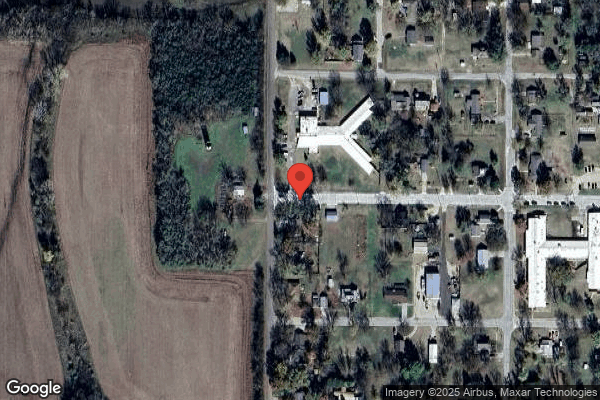
Oct 2024 2 deficiencies 2 IJ
CRITICAL (J) 📢 Someone Reported This

A family member, employee, or ombudsman was alarmed enough to file a formal complaint

Immediate Jeopardy (IJ) - the most serious Medicare violation

Deficiency F0604 (Tag F0604)

Someone could have died · This affected 1 resident

The facility reported a census of 43 residents, with six residents sampled and one resident reviewed for the right to be free from physical restraints. Based on interview and record review, the facili...

Read full inspector narrative →
The facility reported a census of 43 residents, with six residents sampled and one resident reviewed for the right to be free from physical restraints. Based on interview and record review, the facility failed to ensure Resident (R) 3, who had a history of self-harm and physically and verbally aggressive behaviors, remained free of physical or chemical restraints when on 09/18/24, 09/19/24, and 09/20/24 the resident attempted to injure himself and became combative with staff and the facility staff chemically and physically restrained the resident. The facility failed to identify the resident's medical/behavioral symptoms that warranted the use of chemical restraint, physical restraint of five to six staff, and the use of a bedsheet to further restrain the resident. The resident's record lacked any physician orders related to the use of the restraints, any specific documentation related to assessment of the resident for restraint use and/or person-centered care planning, which included the use of a physical restraints or the least amount of restriction/time possible and/or ongoing evaluation. This deficient practice placed R3 in immediate jeopardy. Findings included: - The Medical Diagnosis tab for R3 included diagnoses of bipolar disorder (major mental illness that caused people to have episodes of severe high and low moods) with psychotic features, major depressive disorder (major mood disorder which causes persistent feelings of sadness), attention deficit hyperactivity disorder (ADHD - a chronic condition including attention difficulty, hyperactivity, and impulsiveness), post-traumatic stress disorder (PTSD- mental disorder characterized by an acute emotional response to a traumatic event or situation involving severe environmental stress), and autistic disorder (a developmental disorder that impairs the ability to communicate and interact). The admission Minimum Data Set dated 08/21/24, revealed the facility did not assess R3's Brief Interview for Mental Status and did not complete the staff assessment for mental status. R3 did not have any hallucinations (sensing things while awake that appear to be real, but the mind created) or delusions (untrue persistent belief or perception held by a person although evidence shows it was untrue) during the assessment period, and no behavioral symptoms or rejection of care. R3 did not require restraints. The Psychotropic Drug Use Care Area Assessment (CAA) dated 09/11/24, revealed R3 had a baseline for delusions and hallucinations. R3 required psychiatric medications on a daily basis. R3 did not trigger for further development of the following CAA's: Cognitive loss/Dementia, Psychosocial Well-being, Mood, Behavioral symptoms, or Physical Restraints. The Care Plan dated 09/18/24, revealed R3 had behavior problems related to impulsivity and poor judgement. The staff were to monitor behavior episodes and attempt to determine underlying causes, provide a program of activities that was of interest, accommodate his status, and assist R3 to develop more appropriate methods of coping and interacting. R3's preferred activities were watching television, going on outings, and playing video games. He had the potential to be verbally aggressive and threatening others on social media related to ineffective coping skills, poor impulse control, and severe and persistent mental illness (SPMI - a group of mental health disorders that cause significant functional impairment). When R3 became agitated the staff were to intervene before agitation escalated, guide him away from source of distress, engage calmly in conversation, and if response was aggressive the staff were to walk calmly away and approach later. On 09/23/24, the facility added R3 was physically aggressive related to anger and poor impulse control and the trigger identified was anxiety related to legal issues and R3's behaviors were de-escalated by medication/sedation and physical restraint by personnel. On 09/18/24, R3 was upset about violating a PFA (protection from abuse) order and wanted to go to jail and turn himself in. The staff advised R3 it was still in the investigation stage, and he did not need to worry about it. R3 threw desk tools, a hole punch, and a water bottle that was in Administrative Nurse's D's office. R3 tried to stab himself and staff with a pen and made several threats he was going to harm himself and others. The event lasted three hours. The facility called the Sheriff to assist and had the resident screened for placement at a hospital, which treats adults diagnosed with psychiatric disorders. R3 calmed down with medications and placement was deferred as he did not meet current criteria for admission. The facility placed R3 on one-to-one monitoring and his medications were reviewed and adjusted by the psychiatric provider. On 09/19/24, R3 called 911 and stated he was going to blow up the (specified name) county courthouse. The facility advised R3 it was illegal to make threats like that and that it would not help his court case. R3 became aggressive stating he was going to hurt everybody. R3 threw items from the desk and five staff members restrained R3, sedated him, and four hours later he ceased trying to hurt other and himself. The facility called the Sheriff, had him screened for hospital placement and accepted, however, on a waiting list. After several hours the facility receive information that another local mental health facility would take R3 until he could be placed and required medical clearance. The facility took R3 to a local hospital where R3 was medically cleared, however the local mental health facility rejected the admission and R3 returned to the facility where he was placed on one-to-one and medicated with Haldol (antipsychotic - class of medications used to treat major mental conditions which cause a break from reality) and Ativan (antianxiety - class of medications that calm and relax people). On 09/20/24, R3 was medicated all day but was able to function, walk in the hall, go to meals, and watch television. R3 became angry and violent as he was upset another resident was on the phone he wanted to use and R3 stated he was going to hurt all the (explicit language) and called everyone a (explicit language). The care plan revealed the staff placed R3 in a chair and took him to Administrative Nurse D's office where he had to be physically restrained as he was biting, spitting in staff's face, head butting, and trying to punch, kick, and pinch. The facility called the Sheriff to assist, utilized intramuscular injection of Haldol and Ativan, and R3 was taken to the local hospital where he was admitted . Record review of R3's Electronic Medical Record (EMR) lacked a physician order to the facility to physically restrain R3. The Progress Notes dated 09/17/24 at 07:33 PM, by Administrative Staff A revealed the staff removed R3's PlayStation per the request of his Guardian since R3 violated the no contact order and emailed the person who had the no contact order against him over five times on 09/16/24 and 09/17/24, threatening that person and saying hateful things, and caused the facility she was at to be placed on lock down due to R3's threats. The facility staff and the Guardian spoke with R3 regarding complying with the no contact order and why the PlayStation had been removed. The Progress Notes dated 09/18/24 at 01:49 AM, by Administrative Nurse D revealed R3 was up in the hall pacing with repetitive motion of hands. R3 stated he did not want to go to jail. R3 was advised he needed to stop worrying about things in the world he cannot change. R3 stated he was stupid and did not know what to do. R3 continued to say over and over he did not know what to do while pacing the floor. Administrative Nurse D called Administrative Staff A, then administered lorazepam (Ativan) for agitation. The Progress Notes dated 09/18/24 at 01:59 AM, by Administrative Nurse D revealed resident was in bed sleeping and talking in his sleep. The Progress Notes dated 09/18/24 at 04:27 PM, by Licensed Nurse (LN) G revealed R3 paced a lot today and when he started talking to Administrative Nurse D, he became very anxious, started twisting his hands fast, crying, and picking at his arms. R3 became more agitated so Administrative Nurse D called Administrative Staff A who ordered clonazepam (benzodiazepine class of medication - depressant medication that produces sedation and can be used to treat anxiety), every evening at 04:00 PM, for seven days. The staff administered the medication. The Progress Notes dated 09/18/24 at 05:07 PM, by Administrative Nurse D revealed R3 was upset and believed there was a warrant out for his arrest, could not wait for them to come get him, could not go to prison, and stated he knew he did wrong. Administrative Nurse D asked the resident not to worry about what he cannot change and R3 stated he was so screwed. R3 then switched to being bored, needed his PlayStation stating his Guardian did not have the right to take his stuff, and stated he could not live without his gaming system. R3 stated he needed someone to give back the PlayStation, then said he was killing his Guardian and hated everyone. R3 was scratching his arm, making rapid movements back and forth and was given clonazepam, one milligram. After 15 minutes, R3 started to settle down, talking quietly, and stated he was hungry. Then R3 became loud, insisted he had nothing to live for, wanted to kill himself, became belligerent and combative, then started to hit his head with fist, bang his head on the wall, and hit his face with his knee. Five staff assisted to restrain R3 from hurting himself. R3 was crying, yelling, relentless to hurt self, and tried to staff himself with a paperclip. R3 was given Haldol, five milligrams (mg), intramuscular, for agitation. R3 slowed down after 15 minutes remaining awake and alert, continued to need someone to hang onto him, screened for aggressive behavior, with request it be rushed. The Progress Notes dated 09/18/24 at 05:12 PM, by LN G revealed R3 had been in Administrative Nurse D's office much of the afternoon talking about the consequences of his behaviors, worked up, and sobbing. He then started hitting himself and tried to injure himself and the staff tried to hold him. R3 required clonazepam, orally, and Haldol, IM this afternoon and was a little calmer now. Call made (specified name) for a screen (lacked what type) for him. The Progress Notes dated 09/18/24 at 07:03 PM, by Administrative Nurse D revealed a call back received from (specified organization) to advise because of R3's diagnosis of intellectual and developmental disability- (IDD- a significantly below-average score on a test of mental ability or intelligence and by limitations in the ability to function in areas of daily life), he did not qualify to go to the state hospital. The Progress Notes dated 09/18/24 at 10:33 PM, by LN I revealed R3 was one-on-one for behaviors, was in his bed, he was being monitored every 15 minutes sitting outside his door, and he was sleeping. The Progress Notes dated 09/19/24 at 07:09 PM, by LN G revealed a call received from Administrative Staff A on how R3 was doing now and told he was still sleeping. Administrative Staff A ordered haloperidol (Haldol), five mg, by mouth, every day, for seven days, for psychotic behaviors. The Progress Notes dated 09/19/24 at 04:19 PM, by LN G reveled R3 was calm today and had good insight on how things worked and could calmly discuss his situation with staff. R3 was currently resting in bed. The Progress Notes dated 09/19/24 at 06:01 PM, by LN H revealed R3 continued yelling out I am going to kill you (explicit language), I will find you and I will kill you. R3 stated he wanted to be like all the men in his family, they were in jail or the penitentiary and we were all going to pay. The Progress Notes dated 09/19/24 at 06:15 PM, by Administrative Nurse D revealed R3 called 911 and reported he was going to bomb the (specified place). R3 was confronted with calling in a terroristic threat, he became agitated, stated he was going to kill his (specified family member), myself, and other people. R3 stated he was in a gang and wanted to go to prison and he violated the PFA, so he deserved the death penalty. R3 became increasingly agitated and started to throw objects at staff such as water bottles and clipboards, then grabbed a pen and stabbed Administrative Nurse D in the leg. Other staff members (lacked names) responded while R3 was throwing things from the shelves and the desk, he tried to punch staff, pinch, kick, spit in staff's face, and tried to head butt. R3 was placed in a sheet restraint to protect self and others, hands restrained, resident very wild and not listening to anyone. Resident broke free of sheet restraint and slid to floor. Resident required several people to sit on his legs and arms to control resident from hurting himself and others. R3 was given Haldol, five mg, and Ativan, one mg, to decrease agitation. R3 continued to fight and threaten to kill people. Sheriff officers arrived and assisted to keep R3 from hurting himself and others. After given Haldol, 15 mg, and Ativan, four mg, and three hours later R3 was calmer. After helped to a chair R3 complained of being thirsty, provided water and when water was gone, he threw ice and glass at Administrative Nurse D and tried to stab her with a pen. R3 was given another mg of Ativan and then began to calm down. R3 was screened by (specified organization), was awake and alert, answered questions, and tried again to stab a nurse (lacked name) with a pen. Police were still here assisting with restraining R3, who began to hit himself and police officers while calling them names. R3 banged head with knee several times stating he wanted to kill himself. R3 given Ativan, two mg at 10:30 PM, and then he asked to go to bed as he was very sleepy. R3 assisted to bed and was dozing with a one-to-one staff member. The Progress Notes dated 09/19/24 at 11:00 PM, by Administrative Nurse D revealed (specified organization) screener called to do screening and since R3 escalated to harming others as well as himself he was to be sent to the state hospital. The Progress Notes dated 09/20/24 at 01:19 AM by LN H revealed R3 left the facility and was being transported (lacked by who) to the local hospital. The Progress Notes dated 09/20/24 at 05:20 AM by LN G revealed R3 was out of control and was physically and verbally aggressive. Administrative Nurse D spent five hours in the screening process. R3 was taken to local hospital as instructed once made aware R3 was too acute, and they denied him. The Progress Notes dated 09/20/24 at 01:06 PM, by LN J revealed R3 rested in bed most of the day, continued to be a one-on-one at this time, and new orders were noted for Ativan, two mg, by mouth, every two hours. The Progress Notes dated 09/20/24 at 04:31 PM, by LN J revealed the order for Ativan changed to one mg tablet or 1 mg/0.5 milliliters (ml) IM, every three hours. The Progress Notes dated 09/20/24 at 06:30 PM, by Administrative Nurse D on 10/07/24 at 09:55 PM, revealed R3 was waiting for the phone and upset that another resident was using the phone. R3 yelled to the resident to get off the phone (explicit language) that he needed to use it. R3 was directed to Administrative Nurse D's office to use the phone and advised not to call names, the phone was a community phone, and needed to be shared. R3 picked up a hole punch and tried to hit Administrative Nurse D, and it was taken away by Certified Nurse Aide (CNA) O. R3 turned to hit CNA O and Administrative Nurse D, pushed (lacked name) an office chair underneath R3 to try and calm him. R3 stated he was going to kill everyone here, torture other (explicit language), stated he wanted to be a criminal like his biological family, and began to hit and bite staff. A speakerphone used to call 911 as R3 was hitting, kicking, spitting, pinching, biting staff and himself. R3 tried to raise his knee to his head to headbutt himself and continued to threaten to hurt staff and others. R3 made several connections that caused injuries to all six staff members. The staff placed a sheet over R3's arms and chest to prevent him from hurting himself and others. R3 continued to spit, a small corner of the shift placed over his face, and a Sheriff arrived and assisted to try and keep R3 safe as he was still trying to hurt himself and staff and call racist names. Administrative Staff A came to assess situation as we had been trying to find placement elsewhere all day. The Sheriff was unable to arrest or press charges and R3 stated they could not do anything and continued to try and injure the officer and the staff. Another state hospital was unable to take R3 because he was not in a catchment area and advised to have R3 arrested. The Sheriff suggested to take R3 to the local hospital as they can call another county Sheriff to arrest. Administrative Staff A took R3 to the local hospital. On 10/17/24 at 04:06 PM CMA R stated R3 was suicidal and very combative (could not recall date), spitting at us, kicking, and at one point he grabbed a pen and tried to stab Administrative Nurse D. CMA R stated R3 had a PFA order on him and R3 contacted the person the PFA was related to, we told R3 he could not do that, and we took the game system away so he could not contact that person. The next night, R3 would be okay one minute and the next minute he was going off the charts cussing (explicit language). CMA R stated R3 was in Administrative Nurse D's office .and he was trying to destroy the whole room. CMA R stated CNA M, Administrative Nurse D, and herself were in the office with R3 holding his hands down with ours so he could not hit us when two members from law enforcement came. CMA R stated R3 was sweaty from all the commotion, and we put a sheet across his arms, it was never tied, while sitting in a chair with his arms to his sides. CMA R stated the sheet went across his stomach and lower arms and kept in place for 15 to 20 minutes while Administrative Nurse D held it. CMA R stated at one point, R3 calmed down and they removed the sheet, he was calm and just sit there then all of a sudden, he would start throwing things. CMA R stated she was sitting on R3 in the chair, R3 was trying to get up, and we did not want him to get up and go where everybody else was. CMA R stated R3 tried to get up and scooted himself out of the chair and R3 and her both went to the floor and during that time he was kicking trying to destroy a monitor or television on a shelf and law enforcement held his feet down. CMA R stated she usually take her break at 06:00 PM and when she returned that night, she had heard the commotion and R7 stated they needed our help and at that time R3 and Administrative Nurse D was in Administrative Nurse D's office. After R3 was in the office for a while, he asked to go to his room and go to bed and law enforcement walked R3 to his room, one stayed and talked to R3 for a bit then he fell asleep, and we did one-on-one with him. On 10/07/24 at 04:35 PM, CNA N recalled a night when R3 was upset in Administrative Nurse D office, he would calm down for a little bit, then get agitated again. CNA N stated R3 started throwing things and Administrative Nurse D held a sheet in place so R3 would not hit while CNA N got him to calm down then the sheet was not used again. CNA N stated R3 was sitting in a chair and LN H and Administrative Nurse D tried to keep R3 from getting up by using their hands. On 10/07/24 at 04:48 PM, Administrative Nurse D stated on 09/19/24, every staff member she had on 09/19/24 and 09/20/24, held R3's hands, as it took 45 minutes for law enforcement to show up. Administrative Nurse D both days R3 came in my office, and you could see in his eyes, this kid go from Dr. Jekyll to Mr. Hyde and when asked if he was alright, he picked up a Stanley cup and threw it hitting my head and then started to tear everything off of my desk. Administrative Nurse D stated she thought the staff, CNA M, doing one-on-one was with him, and R3 went ballistic tearing things off my desk, throwing things after told to settle down, tried to stab at me, bit my finger. Administrative Nurse D stated the sheet I put across him. I held on to it, never tied. Basically, a band to keep his arms down. Administrative Nurse D stated R3 would try to hit them, and they did hold him with their hand on top of his and used the least amount of force we could then R3 struggled, for I don't know how long and we were having a terrible time trying to get R3 to calm down, he was given Ativan and Haldol. Administrative Nurse D stated she did not want R3 to hurt himself or her staff and he tried to bite himself, hit himself in the head, head butts against us, and on 09/20/24 he brought in an electric razor and was going to stab me, but law enforcement took it. R3 had cleared off the counter and grabbed different objects, throwing a stapler that hit my shoulder, and threw ice at me, calling us names. Administrative Nurse D stated at one point on 09/19/24 R3 was on the floor, law enforcement showed up, we let loose of the sheet, and R3 popped up and hit the officer and back down he went, where he was on the floor for about 15 minutes, hitting, scratching, kicking, clearing things off the desks in the room and basically the officer pinned him down. R3 tried to bite the officer, which did not work to well, and he tried to spit in my face. Administrative Nurse D stated on 09/20/24, she put sheets around R3's legs while he was sitting, so he would not kick us. Administrative Nurse D stated she did not have an order to use a sheet on R3. On 10/07/24 at 06:24 PM Administrative Staff B stated the facility did not have a policy for use of restraints. The facility failed to ensure Resident (R)3, who had a history of self-harm and physically and verbally aggressive behaviors, remained free of physical or chemical restraints when on 09/18/24, 09/19/24, and 09/20/24 the resident attempted to injure himself and became combative with staff and the facility staff chemically and physically restrained the resident. On 10/07/24 at 06:45 PM, Administrative Staff B was provided a copy of the Immediate Jeopardy template and notified of the facility's failure to ensure R3 remained free of physical or chemical restraints. The facility provided an acceptable plan for removal of the immediacy on 10/08/24 at 09:40 PM which included the following: 1. The facility completed a violence risk screening on all current residents by 10/09/24 at 12:30 AM. 2. The facility revised care plan for residents identified at high risk for assault identified in the screening tool. 3. The facility began educating staff on the Federal Guidelines on the use of restraints on 10/09/24. 4. The facility assigned online training on 10/07/24 and staff began training on 10/08/24 for Handling Aggressive Behaviors, Overview of Abuse and Neglect of Individuals with IDD, Understanding Wandering and Elopement, and the Meaning Behind Behaviors. The onsite surveyor verified the implementation of the above corrective actions on 10/10/24 at 09:45 AM and the deficient practice remained at a G scope and severity.
CRITICAL (J) 📢 Someone Reported This

A family member, employee, or ombudsman was alarmed enough to file a formal complaint

Immediate Jeopardy (IJ) - the most serious Medicare violation

Deficiency F0742 (Tag F0742)

Someone could have died · This affected 1 resident

**NOTE- TERMS IN BRACKETS HAVE BEEN EDITED TO PROTECT CONFIDENTIALITY** The facility reported a census of 43 residents, with six residents sampled and one resident reviewed for treatment and services ...

Read full inspector narrative →
**NOTE- TERMS IN BRACKETS HAVE BEEN EDITED TO PROTECT CONFIDENTIALITY** The facility reported a census of 43 residents, with six residents sampled and one resident reviewed for treatment and services for mental/psychosocial concerns. Based on interview and record review, the facility failed to acknowledge and respond appropriately to Resident (R) 3's behaviors which aligned to treatment and services related to his psychosocial disorder and physical aggression related to his diagnoses. The resident made statements such as I will kill my guardian and comments regarding killing himself on 09/18/24 at 05:07 PM. The resident became loud, insisted he had nothing to live for and wanted to kill himself. R3 became very belligerent and combative. R3 stated he just wanted to die and then started to hit his head with his fist, banged his head on the wall, hit himself in his own face with his knee, and five staff assisted in restraining the resident from hurting himself. Resident was crying, yelling, and was relentless to hurt himself. R3 attempted to stab himself with a paperclip. On 09/19/24 at 06:15 PM, R3 became agitated stating he was going to kill his aunt, himself, and other people. His agitation increased and he started to throw objects at staff, stabbed at a nurse's leg with a pen, tried to punch staff, pinch, kick, spit in staff's face, and tried to head butt staff. The staff placed the resident in a sheet restraint to protect him and others and restrained his hands. R3 was very wild, was not listening to anyone, and broke free of a sheet restraint and slid himself to the floor. R3 required several people to sit on his legs and arms to control him from hurting himself and others. The police came and assisted in restraining R3. R3 banged his head with his knee several times, stating he wanted to kill himself. On 09/20/24 at 06:30 PM, R3 made further statements he was going to kill everyone here and was hitting, kicking, spitting, pinching, and biting staff and himself. The facility chemically and physically restrained R3 on 09/18/24, 09/19/24, and 09/20/24. With this deficient practice, the likelihood of harm could occur due to the aggressive behaviors related to the restraining of R3 placing him in immediate jeopardy. Findings included: - The Medical Diagnosis tab for R3 included diagnoses of bipolar disorder (major mental illness that caused people to have episodes of severe high and low moods) with psychotic features, major depressive disorder (major mood disorder which causes persistent feelings of sadness), attention deficit hyperactivity disorder (ADHD- a chronic condition including attention difficulty, hyperactivity, and impulsiveness), post-traumatic stress disorder (PTSD- mental disorder characterized by an acute emotional response to a traumatic event or situation involving severe environmental stress), and autistic disorder (a developmental disorder that impairs the ability to communicate and interact). The admission Minimum Data Set(MDS) dated [DATE] revealed the facility did not assess R3's Brief Interview for Mental Status and did not complete the staff assessment for mental status. R3 did not have any hallucinations (sensing things while awake that appear to be real, but the mind created) or delusions (untrue persistent belief or perception held by a person although evidence shows it was untrue) during the assessment period, and no behavioral symptoms or rejection of care. The MDS indicated R3 did not require restraints. The Psychotropic Drug Use Care Area Assessment (CAA) dated 09/11/24, revealed R3 had a baseline for delusions and hallucinations. R3 required psychiatric medications on a daily basis. R3 did not trigger for further development of the following CAAs: Cognitive Loss/Dementia, Psychosocial Well-Being, Mood State, Behavioral Symptoms, or Physical Restraints. The Care Plan dated 09/18/24, revealed R3 had behavior problems related to impulsivity and poor judgement. The staff were to monitor behavior episodes and attempt to determine underlying causes, provide a program of activities that was of interest, accommodate his status, and assist R3 to develop more appropriate methods of coping, and interacting. R3's preferred activities included watching television, going on outings, and playing video games. He had the potential to be verbally aggressive and threatening others on social media related to ineffective coping skills, poor impulse control, and severe and persistent mental illness (SPMI - a group of mental health disorders that cause significant functional impairment). When R3 became agitated the staff were to intervene before agitation escalated, guide him away from source of distress, engage calmly in conversation, and if response was aggressive, the staff were to walk calmly away and approach later. On 09/23/24, the facility added R3 was physically aggressive related to anger and poor impulse control and the trigger identified was anxiety related to legal issues and R3's behaviors were de-escalated by medication/sedation and physical restraint by personnel. On 09/18/24, R3 was upset about violating a PFA (protection from abuse) order and wanted to go to jail and turn himself in. The staff advised R3 it was still in the investigation stage, and he did not need to worry about it. R3 threw desk tools, a hole punch, and a water bottle that was in Administrative Nurse's D's office. R3 tried to stab himself and staff with a pen and made several threats he was going to harm himself and others. The event lasted three hours. The facility called the Sheriff to assist and had the resident screened for placement at a hospital, which treats adults diagnosed with psychiatric disorders. R3 calmed down with medications and placement was deferred as he did not meet current criteria for admission. The facility placed R3 on one-to-one monitoring and his medications were reviewed and adjusted by the psychiatric provider. On 09/19/24, R3 called 911 and stated he was going to blow up the (specified name) county courthouse. The facility advised R3 it was illegal to make threats like that and that it would not help his court case. R3 became aggressive stating he was going to hurt everybody. R3 threw items from the desk and five staff members restrained R3, sedated him, and four hours later he ceased trying to hurt other and himself. The facility called the Sheriff, had him screened for hospital placement and accepted, however, on a waiting list. After several hours the facility received information that another local mental health facility would take R3 until he could be placed and required medical clearance. The facility took R3 to a local hospital where R3 was medically cleared, however the local mental health facility rejected the admission and R3 returned to the facility where he was placed on one-to-one and medicated with Haldol (antipsychotic- class of medications used to treat major mental conditions which cause a break from reality) and Ativan (antianxiety- class of medications that calm and relax people). On 09/20/24, R3 was medicated all day but was able to function, walk in the hall, go to meals, and watch television. R3 became angry and violent as he was upset another resident was on the phone he wanted to use and R3 stated he was going to hurt all the (explicit language) and called everyone a (explicit language). The care plan revealed the staff placed R3 in a chair and took him to Administrative Nurse D's office where he had to be physically restrained as he was biting, spitting in staff's face, head butting, and trying to punch, kick, and pinch. The facility called the Sheriff to assist, utilized intramuscular injection of Haldol and Ativan, and R3 was taken to the local hospital where he was admitted . The Electronic Medical Record (EMR) lacked a physician order for the facility to physically restrain R3. The Progress Notes dated 09/17/24 at 07:33 PM by Administrative Staff A revealed the staff removed R3's PlayStation per the request of his Guardian since R3 violated the no contact order. R3 had emailed the person who had the no contact order against him over five times on 09/16/24 and 09/17/24, threatening that person and saying hateful things, and caused the facility she was at to be placed on lock down, due to R3's threats. The facility staff and the Guardian spoke with R3 regarding complying with the no contact order and why the PlayStation was removed. The Progress Notes dated 09/18/24 at 01:49 AM by Administrative Nurse D revealed R3 was up in the hall pacing with repetitive motion of hands. R3 stated he did not want to go to jail. R3 was advised he needed to stop worrying about things in the world he cannot change. R3 stated he was stupid and did not know what to do. R3 continued to say over and over he did not know what to do, while pacing the floor. Administrative Nurse D called Administrative Staff A, then administered lorazepam (Ativan) for agitation. The Progress Notes dated 09/18/24 at 01:59 AM, by Administrative Nurse D revealed R 3 was in bed sleeping and talking in his sleep. The Progress Notes dated 09/18/24 at 04:27 PM by Licensed Nurse (LN) G revealed R3 paced a lot today and when he started talking to Administrative Nurse D, he became very anxious, started twisting his hands fast, crying, and picking at his arms. R3 became more agitated so Administrative Nurse D called Administrative Staff A who ordered clonazepam (benzodiazepine class of medication - depressant medication that produces sedation and can be used to treat anxiety), every evening at 04:00 PM, for seven days. The staff administered the medication. The Progress Notes dated 09/18/24 at 05:07 PM by Administrative Nurse D revealed R3 was upset and believed there was a warrant out for his arrest, could not wait for them to come get him, could not go to prison, and stated he knew he did wrong. Administrative Nurse D asked the resident not to worry about what he cannot change and R3 stated he was so screwed. R3 then switched to being bored, needed his PlayStation stating his Guardian did not have the right to take his stuff, and stated he could not live without his gaming system. R3 stated he needed someone to give back the PlayStation, then said he was killing his Guardian and hated everyone. R3 was scratching his arm, making rapid movements back and forth and staff administered clonazepam, one milligram. After 15 minutes, R3 started to settle down, talking quietly, and stated he was hungry. Then R3 became loud, insisted he had nothing to live for, wanted to kill himself, became belligerent and combative, then started to hit his head with fist, bang his head on the wall, and hit his face with his knee. Five staff assisted to restrain R3 from hurting himself. R3 was crying, yelling, relentless to hurt self, and tried to staff himself with a paperclip. The staff administered Haldol, five milligrams (mg), intramuscular (IM), for agitation to R3. The resident slowed down after 15 minutes remaining awake and alert, continued to need someone to hang onto him, and screened for aggressive behavior, with request it be rushed. The Progress Notes dated 09/18/24 at 05:12 PM by LN G revealed R3 had been in Administrative Nurse D's office much of the afternoon talking about the consequences of his behaviors, worked up, and sobbing. He then started hitting himself and tried to injure himself and the staff tried to hold him. R3 required clonazepam, orally, and Haldol, IM this afternoon and was a little calmer now. Call made (specified name) for a screen (lacked what type) for him. The Progress Notes dated 09/18/24 at 07:03 PM by Administrative Nurse D revealed a call back received from (specified organization) to advise because of R3's diagnosis of intellectual and developmental disability- (IDD- a significantly below-average score on a test of mental ability or intelligence and by limitations in the ability to function in areas of daily life), he did not qualify to go to the state hospital. The Progress Notes dated 09/18/24 at 10:33 PM by LN I revealed R3 was one-on-one for behaviors, was in his bed, he was being monitored every 15 minutes sitting outside his door, and he was sleeping. The Progress Notes dated 09/19/24 at 07:09 PM by LN G revealed a call received from Administrative Staff A on how R3 was doing now and told he was still sleeping. Administrative Staff A ordered haloperidol (Haldol), five mg, by mouth, every day, for seven days, for psychotic behaviors. The Progress Notes dated 09/19/24 at 04:19 PM by LN G revealed R3 was calm today and had good insight on how things worked and could calmly discuss his situation with staff. R3 was currently resting in bed. The Progress Notes dated 09/19/24 at 06:01 PM, by LN H revealed R3 continued yelling out I am going to kill you [explicit language, I will find you and I will kill you. R3 stated he wanted to be like all the men in his family, they were in jail or the penitentiary and we were all going to pay. The Progress Notes dated 09/19/24 at 06:15 PM by Administrative Nurse D revealed R3 called 911 and reported he was going to bomb the (specified place). R3 was confronted with calling in a terroristic threat, he became agitated, stated he was going to kill his (specified family member), myself, and other people. R3 stated he was in a gang and wanted to go to prison and he violated the PFA, so he deserved the death penalty. R3 became increasingly agitated and started to throw objects at staff such as water bottles and clipboards, then grabbed a pen and stabbed Administrative Nurse D in the leg. Other staff members (lacked names) responded while R3 was throwing things from the shelves and the desk, he tried to punch staff, pinch, kick, spit in staff's face, and tried to head butt. R3 was placed in a sheet restraint to protect self and others, hands restrained, resident very wild and not listening to anyone. Resident broke free of sheet restraint and slid to floor. Resident required several people to sit on his legs and arms to control resident from hurting himself and others. R3 was given Haldol, five mg, and Ativan, one mg, to decrease agitation. R3 continued to fight and threaten to kill people. Sheriff officers arrived and assisted to keep R3 from hurting himself and others. After given Haldol, 15 mg, and Ativan, four mg, and three hours later R3 was calmer. After helped to a chair R3 complained of being thirsty, provided water and when water was gone, he threw ice and glass at Administrative Nurse D and tried to stab her with a pen. R3 was given another mg of Ativan and then began to calm down. R3 was screened by (specified organization), was awake and alert, answered questions, and tried again to stab a nurse (lacked name) with a pen. Police were still here assisting with restraining R3, who began to hit himself and police officers while calling them names. R3 banged head with knee several times stating he wanted to kill himself. R3 given Ativan, two mg at 10:30 PM, and then he asked to go to bed as he was very sleepy. R3 assisted to bed and was dozing with a one-to-one staff member. The Progress Notes dated 09/19/24 at 11:00 PM by Administrative Nurse D revealed (specified organization) screener called to do screening and since R3 escalated to harming others as well as himself he was to be sent to the state hospital. The Progress Notes dated 09/20/24 at 01:19 AM by LN H revealed R3 left the facility and was transported (lacked by who) to the local hospital. The Progress Notes dated 09/20/24 at 05:20 AM by LN G revealed R3 was out of control and was physically and verbally aggressive. Administrative Nurse D spent five hours in the screening process. R3 was taken to the local hospital as instructed, and once made aware R3 was too acute, and they denied admitting him. The Progress Notes dated 09/20/24 at 01:06 PM by LN J revealed R3 rested in bed most of the day, continued to be a one-on-one at this time, and new orders were noted for Ativan, two mg, by mouth, every two hours. The Progress Notes dated 09/20/24 at 04:31 PM by LN J revealed the order for Ativan changed to one mg tablet or 1 mg/0.5 milliliters (ml) IM, every three hours. The Progress Notes dated 09/20/24 at 06:30 PM by Administrative Nurse D, a late entry on 10/07/24 at 09:55 PM, revealed R3 was waiting for the phone and upset that another resident was using the phone. R3 yelled to the resident to get off the phone [explicit language] that he needed to use it. R3 was directed to Administrative Nurse D's office to use the phone and advised not to call names, the phone was a community phone, and needed to be shared. R3 picked up a hole punch and tried to hit Administrative Nurse D, and it was taken away by Certified Nurse Aide (CNA) O. R3 turned to hit CNA O and Administrative Nurse D pushed (lacked name) an office chair underneath R3 to try and calm him. R3 stated he was going to kill everyone here, torture other (explicit language), stated he wanted to be a criminal like his biological family, and began to hit and bite staff. The staff used a speakerphone to call 911 as R3 was hitting, kicking, spitting, pinching, biting staff and himself. R3 tried to raise his knee to his head to headbutt himself and continued to threaten to hurt staff and others. R3 caused injuries to all six staff members. The staff placed a sheet over R3's arms and chest to prevent him from hurting himself and others. R3 continued to spit, and staff placed a small corner of the sheet over his face. The Sheriff arrived and assisted to keep R3 safe as R3 continued to try and hurt himself and staff and called out racist names. Administrative Staff A came to assess the situation as we had been trying to find placement elsewhere all day. The Sheriff was unable to arrest or press charges and R3 stated they could not do anything and continued to try and injure the officer and the staff. Another state hospital was unable to take R3 because he was not in a catchment area and advised to have R3 arrested. The Sheriff suggested to take R3 to the local hospital as they can call another county Sheriff to arrest. Administrative Staff A took R3 to the local hospital. During an interview on 10/17/24 at 04:06 PM, CMA R stated R3 was suicidal and very combative (could not recall date), spitting at staff, kicking, and at one point he grabbed a pen and tried to stab Administrative Nurse D. CMA R stated R3 had a PFA order on him and R3 contacted the person the PFA was related to. CMA R said the staff told R3 he could not do that, and staff took the game system away so he could not contact that person. The next night, R3 would be okay one minute and the next minute he was going off the charts cussing (explicit language). CMA R stated R3 was in Administrative Nurse D's office, and he was trying to destroy the whole room. CMA R stated CNA M, Administrative Nurse D, and herself were in the office with R3, holding his hands down so he could not hit us when two members from law enforcement came. CMA R stated R3 was sweaty from all the commotion, and the staff put a sheet across his arms, noting it was never tied, while R3 sat in a chair with his arms to his sides. CMA R stated the sheet went across his stomach and lower arms and was kept in place for 15 to 20 minutes while Administrative Nurse D held it. CMA R stated at one point, R3 calmed down and they removed the sheet, he was calm and just sat there, and all of a sudden, he would start throwing things. CMA R stated she was sitting on R3 in the chair, R3 was trying to get up, and the staff did not want R3 to get up and go where everybody else was. CMA R stated R3 tried to get up and scooted himself out of the chair and R3 and her both went to the floor. CMA R said, during that time he was kicking trying to destroy a monitor or television on a shelf and law enforcement held his feet down. CMA R stated she usually took her break at 06:00 PM and when she returned that night, she had heard the commotion and R7 stated they needed our help, and at that time R3 and Administrative Nurse D were in Administrative Nurse D's office. After R3 was in the office for a while, he asked to go to his room and go to bed and law enforcement walked R3 to his room, and one officer stayed and talked to R3 for a bit, then he fell asleep, and the staff did one-on-one with him. During an interview on 10/07/24 at 04:35 PM, CNA N recalled a night when R3 was upset in Administrative Nurse D office, he would calm down for a little bit, then get agitated again. CNA N stated R3 started throwing things and Administrative Nurse D held a sheet in place so R3 would not hit while CNA N got him to calm down then the sheet was not used again. CNA N stated R3 sat in a chair and LN H and Administrative Nurse D tried to keep R3 from getting up by using their hands. During an interview on 10/07/24 at 04:48 PM, Administrative Nurse D stated on 09/19/24, every staff member she had on 09/19/24 and 09/20/24, held R3's hands, as it took 45 minutes for law enforcement to show up. Administrative Nurse D said both days R3 came into her office could see in his eyes this kid go from Dr. Jekyll to Mr. Hyde and when asked if he was alright, he picked up a Stanley cup and threw it, hitting Administrative Nurse D's head and then started to tear everything off of her desk. Administrative Nurse D stated she thought the staff, CNA M, doing one-on-one was with him, and R3 went ballistic tearing things off her desk, throwing things after being told to settle down, tried to stab at her, and bit her finger. Administrative Nurse D stated the sheet I put across him. I held on to it, never tied. Basically, a band to keep his arms down. Administrative Nurse D stated R3 would try to hit them, and they did hold him with their hand on top of his and used the least amount of force we could then R3 struggled, for I don't know how long and we were having a terrible time trying to get R3 to calm down. She stated the staff administered Ativan and Haldol to R3. Administrative Nurse D stated she did not want R3 to hurt himself or her staff and he tried to bite himself, hit himself in the head, head butts against the staff, and on 09/20/24 he brought in an electric razor and was going to stab her, but law enforcement took it. She said R3 had cleared off the counter and grabbed different objects, throwing a stapler that hit her shoulder, and threw ice at her, and called staff names. Administrative Nurse D stated at one point on 09/19/24 R3 was on the floor, law enforcement showed up, staff let loose of the sheet, and R3 popped up and hit the officer and back down he went, where he was on the floor for about 15 minutes, hitting, scratching, kicking, clearing things off the desks in the room and basically the officer pinned him down. R3 tried to bite the officer, which did not work to well, and he tried to spit in Administrative Nurse D's face. Administrative Nurse D stated on 09/20/24, she put sheets around R3's legs while he sat, so he would not kick us. Administrative Nurse D stated she did not have an order to use a sheet on R3. On 10/07/24 at 06:24 PM, Administrative Staff B stated the facility did not have a policy for use of restraints. The facility failed to acknowledge and respond appropriately to Resident (R) 3's behaviors which aligned to treatment and services related to his psychosocial disorder and physical aggression related to his diagnoses, who had a history of self-harm and physically and verbally aggressive behaviors, remained free of physical or chemical restraints when on 09/18/24, 09/19/24, and 09/20/24 the resident attempted to injure himself and became combative with staff and the facility staff chemically and physically restrained the resident. On 10/07/24 at 06:45 PM, Administrative Staff B was provided a copy of the Immediate Jeopardy template and notified of the facility's failure to ensure R3 remained free of physical or chemical restraints, placed R3 in immediate jeopardy. The facility provided an acceptable plan for removal of the immediacy on 10/08/24 at 09:40 PM which included the following: 1. The facility completed a violence risk screening on all current residents by 10/09/24 at 12:30 AM. 2. The facility revised care plan for residents identified at high risk for assault identified in the screening tool. 3. The facility began educating staff on the Federal Guidelines on the use of restraints on 10/09/24. 4. The facility assigned online training on 10/07/24 and staff began training on 10/08/24 for Handling Aggressive Behaviors, Overview of Abuse and Neglect of Individuals with IDD, Understanding Wandering and Elopement, and the Meaning Behind Behaviors. The onsite surveyor verified the implementation of the above corrective actions on 10/10/24 at 09:45 AM and the deficient practice remained at a G scope and severity.
Feb 2024 4 deficiencies 1 IJ
CRITICAL (J) 📢 Someone Reported This

A family member, employee, or ombudsman was alarmed enough to file a formal complaint

Immediate Jeopardy (IJ) - the most serious Medicare violation

Accident Prevention (Tag F0689)

Someone could have died · This affected 1 resident

The facility reported a census of 45 residents. The six sampled residents included three reviewed for elopement (when a cognitively impaired resident leaves the facility without the knowledge or super...

Read full inspector narrative →
The facility reported a census of 45 residents. The six sampled residents included three reviewed for elopement (when a cognitively impaired resident leaves the facility without the knowledge or supervision of staff). The facility identified six residents at risk for elopement. Based on observation, interview, and record review the facility failed to provide appropriate supervision, implement interventions, and identify elopement behaviors to prevent the elopement of Resident (R)1, who remained on 30-minutes checks from a prior elopement, eloped again from the facility on 01/28/24 at 04:36 PM, with staff present. The facility staff did not realize R1 was missing until another staff member saw R1 walk past a window outside the building, on 01/28/24 at 05:30 PM. almost an hour after the resident eloped. Review of the 30-minute check log revealed the facility staff failed to check and log on the resident's whereabouts since 01/28/24 at 04:30 PM. This deficient practice placed the resident in immediate jeopardy. Findings included: - The Electronic Health Record (EHR) documented R1 had diagnoses, which included unspecified schizophrenia (a mental disorder characterized by gross distortion of reality, disturbances of language and communication and fragmentation of thought), cannabis (marijuana) abuse, and insomnia (inability to sleep). The 03/01/23 Annual Minimum Data Set (MDS) documented a Brief Interview for Mental Status (BIMS) score of 15, which indicated intact cognition. R1 hallucinated (sensing things while awake that appear to be real, but the mind created). R1 had no behaviors directed towards self or others during the seven-day look-back period and was independent for all cares. The resident took an antipsychotic (a class of medications used to treat major mental conditions which cause a break from reality) daily during the seven-day look-back period. The 12/02/23 Quarterly MDS documented a BIMS score of 13, which indicated intact cognition. The resident hallucinated and had delusions (untrue persistent belief or perception held by a person although evidence shows it was untrue). The resident had other behavioral symptoms not directed at others one-to-three days and wandered four-to-six days in the look back period. R1 received antipsychotic medication during the assessment look-back period. The Care Plan documented that the resident was a high elopement risk and documented the following: On 10/14/20, staff were to assess the resident for fall risk. On 10/14/20, staff were to identify patterns of wandering and to intervene as appropriate. On 10/14/20, staff were to place a Wander Guard (a bracelet that sets off an alarm when residents wearing one attempt to exit the building without an escort) on R1's right ankle. On 03/04/21, staff were to monitor the resident's location several times a day and document wandering behavior. On 01/05/24, staff placed a Wander Guard on R1's right wrist after assessment and elopement, where R1 broke out a bedroom window. The Wandering Risk Scale assessments revealed a low risk on 08/24/22, 11/24/22, 02/24/23, 05/25/23, 05/25/23 and 11/27/23. Further documented a high risk to wander on 01/15/24 and 01/28/24. The Progress Notes documented the following: From 12/19/23 to 01/28/24, R1 displayed 19 episodes where he had wandering behaviors and/or paced near the main entrance with and without talking to himself. On 01/05/24, R1 eloped from the facility where he sustained injuries that required sutures (a medical device used to hold wound edges together to promote healing after an injury). On 01/12/24, the facility discontinued 1:1 staff supervision and initiated staff observations of the resident's whereabouts every 15 minutes. On 01/20/24, the facility discontinued every 15-minute checks and initiated 1:1 staff supervision due to the resident calling 911 and requesting to be taken to a county jail. On 01/21/24, the facility discontinued 1:1 staff supervision and initiated staff observations every 15 minutes. On 01/23/24, the facility discontinued every 15-minute checks and initiated staff observations every 30 minutes as ordered by Physician Extender F. On 01/28/24 at 07:38 PM, Certified Nurse Aide (CNA) C and Certified Medication Aide (CMA) D observed R1 outside the facility at 05:30 PM, when R1 attempted to enter the building through the main doors. CMA D let R1 into the building and took him to the nurses' station where she notified Licensed Nurse (LN) E. LN E assessed R1 for injuries, then notified administration (Administrative Staff A, Administrative Nurse B, Physician Extender F) and R1's guardian. It further documented Law Enforcement notified by Physician Extender F at an unknown time. Review of the undated facility investigation revealed the following: On 01/28/24 at 04:30 PM, R1 went out the back patio door with CNA C and other residents to smoke. On 01/28/24 at 04:36 PM, R1 went over a six-foot wooden privacy fence surrounding the courtyard. On 01/28/24 at 05:00 PM, the Wandering Resident Monitor log lacked documentation of the staff 30-minute required check. On 01/28/24 at 05:30 PM, (one hour after staff last seen R1, and 54 minutes after R1 left the facility), documented R1 returned to the facility and R1's Wander Guard was intact on the resident's right wrist. R1 stated that he walked to the store (approximately 4000 feet or three-quarters of a mile from the facility and approximately 200 feet from a heavily traveled highway which includes semi-trucks and a speed limit of 55 miles per hour [mph]) to ask someone to light his previously lit cigarette, then he walked back to the facility. Review of weather data for the facility area from Weather Underground (www.wunderground.com), on 01/28/24 at 04:56 PM (20 minutes after the elopement and 34 minutes before R1 returned to the facility), the temperature was 52 degrees Fahrenheit (°F) with south winds at 8 mph, and the sunset was at 05:49 PM (19 minutes after R1 returned to the facility). Observation of the area around the facility revealed a highway approximately one-third of a mile north with heavy traffic that included semi-trucks and a speed limit of 55 mph. On 01/31/24 at 09:30 AM, Administrative Staff A was unable to provide an explanation as to why the 05:00 PM entry on the Wandering Resident Monitor log was blank and incomplete. Administrative Staff A had no further information to provide as her investigation of the elopement was ongoing. On 01/31/24 at 10:08 AM, CNA C stated that at the time R1 eloped, she had taken several residents out to smoke and another unidentified resident started an unknown disturbance that occupied her attention. When the residents and CNA C returned inside the building, she failed to recognize that R1 was not among the group of residents. Additionally, she stated that after the smoking period, residents would congregate in the dining area for the evening meal and neither her nor CMA D noticed R1 was not present. On 01/28/24 at 05:30 PM, CNA C and CMA D observed R1 through the dining room windows, walking up the sidewalk to the main entrance. He wore jeans, a shirt, a medium-weight coat, and shoes. CMA D let R1 in though the main entrance. On 01/31/24 at 10:14 AM, CMA D was unavailable for comment in the investigation. Review of facility investigation witness statements revealed that the investigation lacked a witness statement from CMA D. On 01/31/24 at 10:21 AM, LN E revealed that R1 had gone out to the patio with CNA C to smoke and sometime during that time, eloped over the fence in the courtyard. LN E revealed R1 had been pacing in the front lobby near the main doors earlier. LN E stated that she failed to perform the 05:00 PM observation of the resident because she thought that R1 had come in with CNA C and was in the dining area with the rest of the residents, so she had gone to the kitchen for a refreshment, utilized the bathroom, and then chatted with Physician Extender F in her office and lost track of the time. LN E realized that she failed to perform the 05:00 PM observation. LN E was advised at 05:30 PM when CMA D brought R1 to the nursing station and was informed R1 eloped. LN E stated that she notified Physician Extender F who then notified the remaining members of the administrative team (Administrative Nurse B and Administrative Staff A) and Law Enforcement. On 01/31/24 at 10:54 AM, Administrative Nurse B stated that CNA C failed to perform adequate supervision during the smoking period due to another resident had caused a disturbance. Administrative Nurse B stated that LN E failed to recognize that R1 had eloped from the building when she failed to perform the 05:00 PM observation of R1 and that her investigation was incomplete and ongoing. Administrative Nurse B stated that corrective actions that had been implemented since R1 eloped on 01/28/24 included: suspension of LN E pending an investigation, staff education that had been initiated but had not been completed, implementation of a sign out/in log for residents who smoke, implementation of 1:1 observation of R1 and that R1 had been screened for placement at a more appropriate facility. Administrative Nurse B stated that LN E failed to perform the appropriate notifications after R1's elopement and that Physician Extender F notified her. Administrative Nurse B stated that she feared that LN E would not have notified the administrative team if Physician Extender F had not been physically present in the building at the time of the elopement. On 01/31/24 at 11:48 AM, Law Enforcement G revealed that 911 dispatch received a call regarding R1's elopement on 01/31/24 at 06:49 PM (two hours and 13 minutes after the resident left the facility and one hour and 19 minutes after the resident returned to the facility) and that an officer responded to the facility at 06:54 PM and contacted Physician Extender F filed a report. The facility's undated Accident Prevention policy documented that all staff members of the facility will ensure that the environment remains as free from accident hazards as possible and will receive adequate supervision to prevent accidents. The facility's undated Elopement Policy documented that the facility wishes to ensure the safety of residents identified as being a risk for elopement and to take precautions to ensure safety and well-being. Upon discovering an unaccountable absence of a resident by a staff member, they will inform the nurse, record the time that the resident was discovered missing and where the resident was last seen. The nurse will contact law enforcement, perform a resident roll call, and direct other staff to search the facility and grounds. The facility failed to provide appropriate supervision, implement interventions, and identify elopement behaviors to prevent the elopement of R1, who eloped from the facility on 01/28/24 at 04:36 PM, with staff present, but without staff knowledge. The facility staff did not realize R1 was missing until another staff member saw R1 outside through a window, on 01/28/24 at 05:30 PM. The facility was notified of the IJ for F689 for R1 on the prior 2567 dated 01/16/24. Upon investigation into the second elopement of R1 on 01/28/24 at 04:36 PM, revealed the facility remained out of compliance and the failure to prevent the additional elopement of R1, and placed R1 back in immediate jeopardy. On 01/31/24 at 02:50 PM, Administrative Staff A was provided the Immediate Jeopardy (IJ) Template for failure to provide adequate supervision to prevent elopement. The facility provided an acceptable plan for removal of the IJ on 02/01/24 at 09:15 AM and the following corrective measures were verified by the surveyor on-site during the investigation on 02/01/24 at 10:00 AM. 1. On 01/29/24 at 06:00 AM, R1's care plan was updated with interventions to protect R1 and other residents to monitor outside while smoking and ensure that R1 signs in and out during scheduled smoking periods. 2. On 01/28/24 at 05:47 PM, Administrative staff B placed R1 on 1:1 observation at all times, even during scheduled smoking periods. 3. On 01/31/24 at 09:00 AM, all staff were required to participate in a tabletop scenario and write out the process for what to do in the event of an elopement prior to returning to work. 4. On 01/28/24 at 09:00 PM, the facility created sign out and sign in sheets for residents who go outside to smoke. 5. On 02/01/24 at 09:15 AM, the daily staffing sheet was modified to include an assignment for 1:1 observation of R1. 6. On 01/29/24 at 06:00 AM, the charge nurse would document every two hours to reflect the 1:1 observation of R1. The surveyor verified the facility implemented the corrective actions to remove the immediacy, while onsite on 02/01/24 at 10:00 AM. The deficient practice remained at a scope and severity of G after removal of the jeopardy.
SERIOUS (G) 📢 Someone Reported This

A family member, employee, or ombudsman was alarmed enough to file a formal complaint

Actual Harm - a resident was hurt due to facility failures

Deficiency F0741 (Tag F0741)

A resident was harmed · This affected 1 resident

The facility reported a census of 45 residents and identified six residents at risk for elopement (an incident in which a cognitively impaired resident with poor or impaired decision-making ability/sa...

Read full inspector narrative →
The facility reported a census of 45 residents and identified six residents at risk for elopement (an incident in which a cognitively impaired resident with poor or impaired decision-making ability/safety awareness leaves the facility without the knowledge of staff). Based on observation, interview, and record review, the facility failed to provide sufficient staff with the appropriate competencies and skills sets to meet the behavioral health needs one Resident (R)1, who had known elopement behaviors and a history of an elopement, to prevent an additional elopement from the facility. Findings included: - The Electronic Health Record (EHR) documented R1 had diagnoses which included unspecified schizophrenia (a mental disorder characterized by gross distortion of reality, disturbances of language and communication and fragmentation of thought), cannabis (marijuana) abuse, and insomnia (inability to sleep). The 03/01/23 Annual Minimum Data Set (MDS) documented a Brief Interview for Mental Status (BIMS) score of 15, which indicated intact cognition. R1 hallucinated (sensing things while awake that appear to be real, but the mind created). R1 had no behaviors directed towards self or others during the seven-day look-back period and was independent for all cares. The resident took an antipsychotic (a class of medications used to treat major mental conditions which cause a break from reality) daily during the seven-day look-back period. The 12/02/23 Quarterly MDS documented a BIMS score of 13, which indicated intact cognition. The resident hallucinated and had delusions (untrue persistent belief or perception held by a person although evidence shows it was untrue). The resident had other behavioral symptoms not directed at others one-to-three days and wandered four-to-six days in the look back period. R1 received antipsychotic medication during the assessment look-back period. The Care Plan documented that the resident was a high elopement risk and documented the following: On 10/14/20, staff were to assess the resident for fall risk. On 10/14/20, staff were to identify patterns of wandering and to intervene as appropriate. On 10/14/20, staff were to place a Wander Guard (a bracelet that sets off an alarm when residents wearing one attempt to exit the building without an escort) on R1's right ankle. On 03/04/21, staff were to monitor the resident's location several times a day and document wandering behavior. On 01/05/24, staff placed a Wander Guard on R1's right wrist after assessment and elopement, where R1 broke out a bedroom window, and exited the facility without staff knowledge. (The staff member assigned to monitor R1 at that time, was currently dealing with another resident having behaviors at the same time that R1 returned to his room and went out the broken window). The Wandering Risk Scale assessments revealed a low risk on 08/24/22, 11/24/22, 02/24/23, 05/25/23, 05/25/23 and 11/27/23. Further documented a high risk to wander on 01/15/24 and 01/28/24. The Progress Notes documented the following: From 12/19/23 to 01/28/24, R1 displayed 19 episodes where he had wandering behaviors and/or paced near the main entrance with and without talking to himself. On 01/05/24, R1 eloped from the facility where he sustained injuries that required sutures (a medical device used to hold wound edges together to promote healing after an injury). On 01/12/24, the facility discontinued 1:1 staff supervision and initiated staff observations of the resident's whereabouts every 15 minutes. On 01/20/24, the facility discontinued every 15-minute checks and initiated 1:1 staff supervision due to the resident calling 911 and requesting to be taken to a county jail. On 01/21/24, the facility discontinued 1:1 staff supervision and initiated staff observations every 15 minutes. On 01/23/24, the facility discontinued every 15-minute checks and initiated staff observations every 30 minutes as ordered by Physician Extender F. On 01/28/24 at 07:38 PM, Certified Nurse Aide (CNA) C and Certified Medication Aide (CMA) D observed R1 outside the facility at 05:30 PM, when R1 attempted to enter back into the building through the main doors. CMA D let R1 into the building and took him to the nurses' station where she notified Licensed Nurse (LN) E. LN E assessed R1 for injuries, then notified administration (Administrative Staff A, Administrative Nurse B, Physician Extender F) and R1's guardian. It further documented Law Enforcement notified by Physician Extender F at an unknown time. Review of the undated facility investigation revealed the following: On 01/28/24 at 04:30 PM, R1 went out the back patio door with CNA C and other residents to smoke. On 01/28/24 at 04:36 PM, R1 went over a six-foot wooden privacy fence surrounding the courtyard. On 01/28/24 at 05:00 PM, the Wandering Resident Monitor log lacked documentation of the staff 30-minute required check. On 01/28/24 at 05:30 PM, (one hour after staff last seen R1, and 54 minutes after R1 left the facility), documented R1 returned to the facility and R1's Wander Guard was intact on the resident's right wrist. R1 stated that he walked to the store (approximately 4000 feet or three-quarters of a mile from the facility and approximately 200 feet from a heavily traveled highway which includes semi-trucks and a speed limit of 55 miles per hour [mph]) to ask someone to light his previously lit cigarette, then he walked back to the facility. Review of weather data for the facility area from Weather Underground (www.wunderground.com), on 01/28/24 at 04:56 PM (20 minutes after the elopement and 34 minutes before R1 returned to the facility), the temperature was 52 degrees Fahrenheit (°F) with south winds at 8 mph, and the sunset was at 05:49 PM (19 minutes after R1 returned to the facility). The facility's Facility Assessment Tool, dated 03/01/23, documented that the facility would have a sufficient number of qualified staff to meet the needs the residents at any given time and documented that this would include one licensed nurse providing direct care, two nurse aides (CNAs) and two other nursing personnel for a total of five staff members. On 01/31/24 at 10:08 AM, CNA C stated that at the time R1 eloped, she had taken several residents out to smoke and another unidentified resident started an unknown disturbance that occupied her attention. When the residents and CNA C returned inside the building, she failed to recognize that R1 was not among the group of residents. Additionally, she stated that after the smoking period, residents would congregate in the dining area for the evening meal and neither her nor CMA D noticed R1 was not present. On 01/28/24 at 05:30 PM, CNA C and CMA D observed R1 through the dining room windows, walking up the sidewalk to the main entrance. He wore jeans, a shirt, a medium-weight coat, and shoes. CMA D let R1 in though the main entrance. On 01/31/24 at 10:21 AM, LN E revealed that R1 had gone out to the patio with CNA C to smoke and sometime during that time, eloped over the fence in the courtyard. LN E revealed R1 had been pacing in the front lobby near the main doors earlier. LN E stated that she failed to perform the 05:00 PM observation of the resident because she thought that R1 had come in with CNA C and was in the dining area with the rest of the residents, so she had gone to the kitchen for a refreshment, utilized the bathroom, and then chatted with Physician Extender F in her office and lost track of the time. LN E realized that she failed to perform the 05:00 PM observation. LN E was advised at 05:30 PM when CMA D brought R1 to the nursing station and was informed R1 eloped. LN E stated that she notified Physician Extender F who then notified the remaining members of the administrative team (Administrative Nurse B and Administrative Staff A) and Law Enforcement. On 01/31/24 at 10:54 AM, Administrative Nurse B stated that CNA C failed to perform adequate supervision during the smoking period due to another resident had caused a disturbance. Administrative Nurse B stated that LN E failed to recognize that R1 had eloped from the building when she failed to perform the 05:00 PM observation of R1. Administrative Nurse B stated that corrective actions that had been implemented since R1 eloped on 01/28/24 included: suspension of LN E pending an investigation, staff education that had been initiated but had not been completed, implementation of a sign out/in log for residents who smoke, implementation of 1:1 observation of R1 and that R1 had been screened for placement at a more appropriate facility. Administrative Nurse B stated that LN E failed to perform the appropriate notifications after R1's elopement and that Physician Extender F notified her. Administrative Nurse B stated that she feared that LN E would not have notified the administrative team if Physician Extender F had not been physically present in the building at the time of the elopement. On 01/31/24 at 11:48 AM, Law Enforcement G revealed that 911 dispatch received a call regarding R1's elopement on 01/31/24 at 06:49 PM (two hours and 13 minutes after the resident left the facility and one hour and 19 minutes after the resident returned to the facility) and that an officer responded to the facility at 06:54 PM and contacted Physician Extender F filed a report. On 02/01/24 at 11:35 AM, Administrative Staff A stated that per the facility assessment, the normal nurse staffing required for a weekend afternoon shift, was one licensed nurse, one CMA and two CNAs and that all four staff members were present on that date. Additionally, that the number of required staff had not been increased to compensate for the increased observations of R1, up to and including the implemented continuous 1:1 observation) following the elopement on 01/05/24 or on 01/28/24, when the same resident eloped twice from the facility without staff knowledge. The facility's undated Accident Prevention policy documented that all staff members of the facility will ensure that the environment remains as free from accident hazards as possible and will receive adequate supervision to prevent accidents. The facility's undated Elopement Policy documented that the facility wishes to ensure the safety of residents identified as being a risk for elopement and to take precautions to ensure safety and well-being. Upon discovering an unaccountable absence of a resident by a staff member, they will inform the nurse, record the time that the resident was discovered missing and where the resident was last seen. The nurse will contact law enforcement, perform a resident roll call, and direct other staff to search the facility and grounds. The facility failed to provide training records related to behavior monitoring for CNA C, CNA H, CMA D or LN E as requested on 02/01/24 at 11:04 AM and 02/01/24 at 11:45 AM. The facility failed to provide sufficient staff with the appropriate competencies and skills sets to meet the behavioral health needs of R1, who had known elopement behaviors and a history of elopement, to prevent an additional elopement from the facility.
CONCERN (F) 📢 Someone Reported This

A family member, employee, or ombudsman was alarmed enough to file a formal complaint

Potential for Harm - no one hurt, but risky conditions existed

Administration (Tag F0835)

Could have caused harm · This affected most or all residents

The facility reported a census of 45 residents. Based on observation, interview, and record review, the facility failed to provide administrative services in a manner to effectively and efficiently us...

Read full inspector narrative →
The facility reported a census of 45 residents. Based on observation, interview, and record review, the facility failed to provide administrative services in a manner to effectively and efficiently use resources to attain/maintain each resident's highest physical, mental, and psychosocial well-being, when the administrator failed to follow-up on plans for correction from a resident's elopement from the facility to prevent another elopement. The had the potential to affect all 45 residents that resided in the facility. Findings include: - The facility reported a census of 45 residents. The six sampled residents included three reviewed for elopement (when a cognitively impaired resident leaves the facility without the knowledge or supervision of staff). The facility identified six residents at risk for elopement. Based on observation, interview, and record review the facility failed to provide appropriate supervision, implement interventions, and identify elopement behaviors to prevent the elopement of Resident (R)1, who remained on 30-minutes checks from a prior elopement, eloped again from the facility on 01/28/24 at 04:36 PM, with staff present. The facility staff did not realize R1 was missing until another staff member saw R1 walk past a window outside the building, on 01/28/24 at 05:30 PM. almost an hour after the resident eloped. Review of the 30-minute check log revealed the facility staff failed to check and log on the resident's whereabouts since 01/28/24 at 04:30 PM. This deficient practice placed the resident in immediate jeopardy. (See F689) The facility reported a census of 45 residents and identified six residents at risk for elopement (an incident in which a cognitively impaired resident with poor or impaired decision-making ability/safety awareness leaves the facility without the knowledge of staff). Based on observation, interview, and record review, the facility failed to provide sufficient staff with the appropriate competencies and skills sets to meet the behavioral health needs one Resident (R)1, who had known elopement behaviors and a history of an elopement, to prevent an additional elopement from the facility. (See F741) The facility's Quality assurance and Performance Improvement/ Quality Assessment and Assurance (QAPI/QAA) program failed to develop and implement appropriate and effective action plans to timely identify, correct infractions of the residents' environment, and care issue to ensure optimum well-being for the residents of the facility. (See F867) The facility failed to provide administrative services in a manner to effectively and efficiently use resources to attain/maintain each resident's highest physical, mental, and psychosocial well-being, when the administrator failed to follow-up on plans for correction from a resident's elopement from the facility to prevent another elopement. The had the potential to affect all 45 residents that resided in the facility.
CONCERN (F) 📢 Someone Reported This

A family member, employee, or ombudsman was alarmed enough to file a formal complaint

Potential for Harm - no one hurt, but risky conditions existed

QAPI Program (Tag F0867)

Could have caused harm · This affected most or all residents

The facility reported a census of 45 residents. Based on observation, interview and record review, the facility failed to ensure the Quality Assurance Performance Improvement (QAPI) program identified...

Read full inspector narrative →
The facility reported a census of 45 residents. Based on observation, interview and record review, the facility failed to ensure the Quality Assurance Performance Improvement (QAPI) program identified resident care issues to enhance the residents' quality of life, failed to implement appropriate and effective action plans for mitigation of identified elopement risk of Resident (R) 1, who had known elopement behaviors and a history of an elopement, to prevent an additional elopement from the facility. Findings included: - On 01/31/24 at 02:40 PM, Administrative Nurse B explained the facility's Quality Assurance Performance Improvement (QAPI) utilized data from the Electronic Health Record (EHR) reports and staff input. The Quality Assurance Committee met on 06/29/23, 09/26/23, and 12/19/23. The next QAPI meeting was not scheduled until 03/2024. During the facility survey from 01/31/24 to 02/01/24, the following concerns were identified and in need of corrective actions by the facility. The facility failed to provide appropriate supervision, implement interventions, and identify elopement behaviors to prevent the elopement of R1, who eloped from the facility on 01/28/24 at 04:36 PM, with staff present, but without staff knowledge. The facility staff did not realize R1 was missing until another staff member saw R1 outside through a window, on 01/28/24 at 05:30 PM. (See F689) The facility failed to provide sufficient staff with the appropriate competencies and skills sets to meet the behavioral health needs of R1, who had known elopement behaviors and a recent history of elopement (previously on 01/05/24), to prevent an additional elopement (on 01/28/24) from the facility. (See F741) The facility failed to provide administrative services in a manner to effectively and efficiently use resources to attain/maintain each resident's highest physical, mental, and psychosocial well-being, for all 45 residents that resided in the facility. (See F835) The facility's undated Quality Assurance Performance Improvement Policy/ Quality Assessment and Assurance (QAPI)/(QAA) documented that the facility would ensure and develop processes and systems to provide safe and optimal care to each resident. The facility had developed, implemented, and maintained an effective ongoing QAPI program by addressing the full range of care provided by the facility and included tracking, investigation and monitoring of adverse events (an untoward, undesirable and usually unanticipated event that causes death or serious injury, or the risk thereof) that must be investigated every time they occurred and implemented action plans to prevent recurrences. Additionally documented that the QAPI committee would meet at least monthly. The facility failed to provide sufficient staff with the appropriate competencies and skills sets to meet the behavioral health needs of R1, who had known elopement behaviors and a recent history of elopement (previously on 01/05/24), to prevent an additional elopement (on 01/28/24) from the facility.
Jan 2024 4 deficiencies 4 IJ (2 facility-wide)
CRITICAL (J) 📢 Someone Reported This

A family member, employee, or ombudsman was alarmed enough to file a formal complaint

Immediate Jeopardy (IJ) - the most serious Medicare violation

Accident Prevention (Tag F0689)

Someone could have died · This affected 1 resident

The facility reported a census of 45 residents, with one resident sampled for elopement (an incident in which a cognitively impaired resident with poor or impaired decision-making ability/safety aware...

Read full inspector narrative →
The facility reported a census of 45 residents, with one resident sampled for elopement (an incident in which a cognitively impaired resident with poor or impaired decision-making ability/safety awareness leaves the facility without the knowledge of staff). The facility identified six residents at risk for elopement. Based on observation, interview, and record review, the facility failed to provide adequate supervision, identify likely avenues of exit (including windows), and failed to ensure the windows were secured after Resident (R)1 broke the window out in his room, to prevent elopement. On 01/05/24, R1, who suffers from delusions/hallucinations and wandering, broke the window out in his room and reported he was scared and wanted to leave. Certified Nurse Aid (CNA) D did not provide the supervision of R1, as directed by Licensed Nurse (LN) C. At 08:00 PM, unsupervised R1 went to his room unaccompanied. At 08:01 PM, R1 climbed through the known broken window and eloped from the facility and injured his leg. The staff did not realize R1 was gone until 08:02 PM. At 08:16 PM the facility called local law enforcement to report R1 missing. At 08:39 PM the resident returned to the facility with law enforcement and the left leg wounds were discovered then. R1 required 13 stitches to his left leg. This deficient practice placed R1 in immediate jeopardy. Findings included: - The Electronic Health Record (EHR) documented that R1 had diagnoses which included unspecified schizophrenia (a psychotic disorder characterized by gross distortion of reality, disturbances of language and communication and fragmentation of thought), cannabis (marijuana) abuse and insomnia (inability to sleep). The 03/01/23 Annual Minimum Data Set (MDS) documented a Brief Interview for Mental Status (BIMS) score of 15, which indicated intact cognition. R1 had hallucinations (sensing things while awake that appear to be real, but the mind created). R1 had no behaviors directed towards self or others during the seven-day look-back period and was independent for all cares. The resident took an antipsychotic (a class of medications used to treat psychosis and other mental emotional conditions) daily during the seven-day look-back period. The 12/02/23 Quarterly MDS documented a BIMS of 13 which indicated intact cognition. The resident had hallucinations and delusions (untrue persistent belief or perception held by a person although evidence shows it was untrue). The resident had other behavioral symptoms not directed at others one-to-three days and wandered four-to-six days in the look back period. R1 received antipsychotic medication during the assessment look-back period. The Care Plan documented the following: On 10/14/20, staff were to assess the resident for fall risk. On 10/14/20, staff were to identify patterns of wandering and to intervene as appropriate. On 10/14/20, staff were to place a WanderGuard (a bracelet that sets off an alarm when residents wearing one attempt to exit the building without an escort) on R1's right ankle. On 03/04/21, staff were to monitor the resident's location several times a day and document wandering behavior. The Wandering Risk Scale assessments revealed a low risk on 08/24/22, 11/24/22, 02/24/23, 05/25/23, 05/25/23 and 11/27/23. The Progress Notes documented the following: From 12/19/23 to 01/01/24 R1 displayed nine episodes where he had wandering behaviors and/or paced near the main entrance with and without talking to himself. On 01/02/24 at 12:12 PM, R1 requested to speak to a representative from pastoral services. On 01/03/24 at 02:48 AM, R1 displayed wandering behavior, talked to himself and occasionally yelled out. On 01/05/24 at 07:30 PM, R1 self-reported to CNA D he broke out the window in his room, and he expressed fear and his desire to leave the facility. CNA D reported the incident to LN C and LN C instructed R1 to stay out of his room. The EHR lacked documentation of any injury. R1 self-reported the incident to local law enforcement officers (LEO) who responded to the facility at approximately 07:50 PM. On 01/05/24 at 08:04 PM, staff were engaged with two different residents causing two different crisis events and R1 was not observed in the lounge area where he had been previously. Staff initiated a search of the facility and upon searching R1's room, staff noticed footprints in the snow on the ground outside R1's broken window. The footprints led to a six-foot wooden privacy fence on the south end of the courtyard. Staff then initiated a resident rollcall which revealed that R1 was missing and staff called 911 to notify LEO of the elopement. On 01/05/24 at 08:30 PM, R1 was brought back to the facility by LEO. There was snow on the ground and the resident wore a coat, shoes, socks and appropriate winter clothing. A skin assessment completed upon R1's return to the facility, identified lacerations (wounds to the skin) and were documented on the front and the back of R1's lower left leg. LN C cleansed the wounds and covered the wounds with a dry dressing. Documentation revealed the lacerations required sutures. On 01/05/24 at 09:40 PM, staff sent R1 to the Emergency Department (ED) in the facility-owned vehicle with staff assistance for treatment of injuries sustained during the elopement from the facility. On 01/06/24 at 02:24 AM, R1 returned from the ED where he received 13 sutures to his wounds with instructions to keep the sutures clean and dry and monitor wounds for signs of infection. Further documented that R1 was placed on 1:1 observation with a staff member. On 01/06/24 at 10:11 PM, R1 approached staff holding a hospital identification bracelet and asked when he had gone to the hospital. R1 had no memory of the events of the elopement on the previous day. Review of the facility investigation and video recordings revealed the following: On 01/05/24 at approximately 07:30 PM, R1 informed CNA D that he had kicked out the window in his room. CNA D then notified LN C who instructed CNA D to maintain visual contact with R1 and instructed R1 to stay out of his room. On 01/05/24 on 08:00:16 PM, via video recording timestamp, CNA C left R1 unattended in the common's area. On 01/05/24 at 08:00:38 PM, via video recording timestamp, R1 got up from the common area and walked calmly down the hall to his room. On 01/05/24 at 08:01 PM, via video recording timestamp, R1 exited the building through the broken window in his room and ran to the six-foot wooden privacy fence on the south edge of the courtyard. On 01/05/24 at 08:02 PM via video recording timestamp, R1 observed going over the six-foot wooden privacy fence on the south edge of the courtyard. Review of weather data for the facility area from Weather Underground (www.wunderground.com) on 01/05/24 at approximately 07:00 PM (approximately one hour prior to the elopement) was 33 degrees Fahrenheit (?) with winds 3-5 miles per hour (mph) out of the North-North-West (NNW), sunset was at 05:25 PM (approximately two and a half hours before the elopement) with approximately one inch of snow on the ground from snowfall earlier that day. Observation of the area around the facility revealed a highway with heavy traffic including semi-trucks and speed limit of 55 mph approximately 2100 feet (approximately one-third mile) to the north. On 01/10/24 at 12:29 PM, CNA H was unavailable for comment in the investigation. Review of facility investigation witness statements revealed that the investigation lacked a witness statement from CNA H. On 01/10/24 at 12:31 PM, Certified Medication Aide (CMA) I was unavailable for comment in the investigation. Review of facility investigation witness statement revealed that CMA I was passing medications at the time of the elopement and assisted with the rollcall of residents and subsequent search for R1 who was missing. The witness statement documented that after R1 was returned to the facility by LEO that CMA I performed 1:1 observation until the completion of her shift. On 01/10/24 at 12:40 PM, Administrative Nurse B revealed that approximately 15 minutes before the incident where R1 broke the window in his room, he seemed like his usual self. After R1 broke his window but before he eloped from the facility, staff reported to the provider (Physician Extender G) and Administrative Nurse B that R1 displayed psychotic behaviors and Physician Extender G ordered a one-time dose of Haldol (haloperidol - an antipsychotic) 5 milligrams (mg) by mouth (PO) for one dose, Ativan (lorazepam - a benzodiazepine - a class of medication used to treat anxiety, insomnia and temporary situational stress) 2mg, PO for one dose, and Zyprexa (olanzapine - an antipsychotic) 15mg PO for one dose. Since Law Enforcement F was in the facility because he had responded to the facility for the broken window Law Enforcement F helped staff persuade resident to take the medication. After R1 had kicked out his window, staff removed R1 and his roommate from their room and LN C directed them to stay out of their room. LN C also directed CNA D to stay with R1. Administrative Nurse B stated that per video footage CNA D was observed following R1 up and down the hallway due to R1's pacing. Further stated that at the time of the elopement there were two other residents having two individual crises and confirmed that CNA D left R1 unattended to respond to another crisis elsewhere in the facility. On 01/05/24 at around 08:02 PM, per video footage, staff noticed that someone was missing and called Administrative Nurse B who directed staff to perform a roll-call census of all residents. Staff then noticed the footprints in the snow leading from R1's room to the six-foot wooden privacy fence on the south edge of the courtyard. Additionally stated that upon the R1's return to the facility with LEO, R1 had blood on R1's pant leg and injuries of unknown origin were discovered on R1's left leg. Administrative Nurse B stated that the LN sent R1 to the ED for treatment of his wounds. Administrative Nurse B also stated that all residents get a WanderGuard on admission for the first 30 days and the WanderGuard is removed if the residents are not at risk for elopement. Further stated that R1 had not been at risk for elopement since admission. On 01/10/24 at 01:00 PM, Physician Extender G revealed she was also the owner of the facility and supplied video footage of the incident to establish the timeline of the elopement. Physician Extender G revealed at the time of the elopement R1 was not an elopement risk but was having a psychotic episode (a period in which an individual behaves in a confusing and unpredictable way, may harm themselves or become threatening or violent towards others, and may be experiencing hallucinations and/or delusions). On 01/10/24 at 01:23 PM, CNA D revealed on 01/05/24 at approximately 07:30 PM, she was walking another resident when R1 stopped her in the hallway and reported he had broken the window out in his room and R1 stated he was scared for his life/safety but would not let staff assess him for wounds. CNA D stated she immediately reported the broken window to LN C who removed R1 and his roommate from their room and told them to stay in the common area. CNA D stated that LN C directed her to perform 1:1 observation of R1. CNA D stated that she was performing 1:1 observation of R1 at a distance. CNA D confirmed that she failed to maintain visual contact with R1 when another disturbance in the facility erupted. CNA D stated that when she returned to where R1 had been seated that he had gone. CNA D reported this to LN C who ordered a rollcall of all residents. CNA D revealed that when she searched R1's room she observed the footprints in the snow and notified LN C. On 01/10/24 at 01:29 PM, LN C revealed that prior to the incident where R1 broke out the window in his room, R1 appeared to be normal for him. When R1 broke out the window, he told CNA D who reported it to LN C. LN C then directed CNA D to stay with R1 and initiate 1:1 observation. R1 was ambulating with a limp and allowed LN C to assess him for injuries and none were found. LN C revealed that around the same time as the assessment of R1 that two different residents were having two different crises and LN C confirmed that she left CNA D with R1 with instructions to CNA D to perform 1:1 observation to go assess the other situations in progress elsewhere in the facility. LN C stated that an unknown time later, CNA D reported that the resident was not able to be found and that there were footprints outside the broken window. LN C stated that she then notified Administrative Nurse B and LEO. LN C stated that she then performed a rollcall of all residents and R1 was not accounted for. The LEO were able to locate him and bring him back. LN C stated that upon R1's return to the facility he was limping, and there was blood on his pants and left leg. LN C then performed a skin assessment and discovered a quarter-sized wound on the front of his left leg with adipose (subcutaneous [below the skin] fat) exposed and two one-to-two-inch wounds on the back of his leg with adipose tissue exposed. LN C stated that she cleaned and placed dry dressings on his wounds, then sent him to the local ED for evaluation and treatment of his wounds. When R1 returned from the hospital, LN C placed R1 back on 1:1 observation and a CNA was to be with him at all times. On 01/10/24 at 02:31 PM, Law Enforcement F revealed that 911 dispatch received the call regarding R1's elopement on 01/05/24 at 08:16 PM (15 minutes after the resident left the facility) and R1 was located by LEO on 01/05/24 at 08:27 PM (26 minutes after the resident left the facility) and that R1 was returned to the facility by facility staff in facility vehicle on 01/05/24 at 08:39 PM (38 minutes after the resident left the facility). Law Enforcement F revealed that the area where R1 was found was approximately 2800 feet (approximately one-half mile) from the facility and approximately 400 feet from a highway with heavy traffic including semi-trucks and speed limit of 55 miles per hour (mph). Law Enforcement F revealed that in his contact with the resident, when R1 was located, he did not appear to be acting or behaving abnormally. On 01/11/24 at 04:00 PM, Administrative Nurse B revealed the WanderGuard for R1 was removed on 11/14/20 after R1 was assessed for elopement and deemed to not be an elopement risk. The facility's undated Accident Prevention policy documented that all staff members of the facility will ensure that the environment remains as free from accident hazards as possible and will receive adequate supervision to prevent accidents. The facility's undated Elopement Policy, documented that the facility wishes to ensure the safety of residents identified as being a risk for elopement and to take precautions to ensure safety and well-being. Upon discovering an unaccountable absence of a resident by a staff member they will inform the nurse, record the time that the resident was discovered missing and where last seen. The nurse will contact law enforcement, perform a resident roll call and direct other staff to search the facility and grounds. The facility failed to provide adequate supervision, identify likely avenues of exit, including windows, and failed to ensure the windows were secured after R1 broke the window out in his room, to prevent elopement when CNA D did not provide the supervision of R1, as directed by LN C. At 08:00 PM, unsupervised R1 went to his room. At 08:01 PM R1 climbed through the known broken window and eloped from the facility and injured his leg. This deficient practice placed R1 in immediate jeopardy. On 01/10/24 at 05:07 PM, Administrative Staff A was provided the Immediate Jeopardy (IJ) Template for failure to provide adequate supervision to prevent elopement. The facility provided an acceptable plan for removal of the IJ on 01/11/24 at 02:33 PM and the following corrective measures were verified by the surveyor on-site during the investigation on 01/16/24 at 12:05 PM: 1. R1 was placed on 1:1 upon return to facility from the ED after receiving sutures and will remain on 1:1 until deemed stable by Physician Extender G. 2. Plywood sheeting placed over broken window 01/05/24 at 08:39 PM. 3. A contractor was contacted by the facility about a permanent window replacement. The contractor responded on 01/11/24 at 12:56 PM and documents reveal that there is no set date for repair, but facility is placed on waiting list for repairs to be completed as soon as practical. 4. Staff education related to the elopement policy was initiated on 01/08/24 at 08:00 AM and completed on 01/11/24 at 02:06 PM 5. Computer learning module titled Understanding Wandering and Elopement was initiated on 01/10/24 at 06:00 PM and completed on 01/11/24 at 11:26 AM The surveyor verified the facility implemented the corrective actions to remove the immediacy, while onsite on 01/16/24 at 12:05 PM. The deficient practice remained at a scope and severity of G after removal of the jeopardy.
CRITICAL (K) 📢 Someone Reported This

A family member, employee, or ombudsman was alarmed enough to file a formal complaint

Immediate Jeopardy (IJ) - the most serious Medicare violation

Free from Abuse/Neglect (Tag F0600)

Someone could have died · This affected multiple residents

**NOTE- TERMS IN BRACKETS HAVE BEEN EDITED TO PROTECT CONFIDENTIALITY** The facility reported a census of 45 residents with two residents reviewed for behaviors/resident-to-resident abuse. Based on ob...

Read full inspector narrative →
**NOTE- TERMS IN BRACKETS HAVE BEEN EDITED TO PROTECT CONFIDENTIALITY** The facility reported a census of 45 residents with two residents reviewed for behaviors/resident-to-resident abuse. Based on observation, interview, and record review, the facility failed to provide adequate supervision and care planned interventions to prevent Resident (R)2, with a history of sexual behaviors since admission [DATE]), from sexually assaulting and harassing female residents in the facility. On 12/25/23, R2 grabbed R3's breast and masturbated in a public area, and the facility failed to place any interventions to protect R3 and other residents from R2's unwanted sexual advances/touching. R2 again on 12/25/23 masturbated in a public area. On 01/02/24, R2 attempted to grab R3's breast with no interventions in place. This deficient practice placed R3 and all other residents in immediate jeopardy. Findings included: - R2's Electronic Health Record (EHR) revealed a diagnosis of unspecified schizophrenia (a mental disorder characterized by gross distortion of reality, disturbances of language and communication and fragmentation of thought). The admission Minimum Data Set (MDS) dated [DATE], documented a Brief Interview for Mental Status (BIMS) of 15, which indicated intact cognition. R2 had delusions (untrue persistent beliefs or perception held by a person although evidence shows it was untrue) and physical and verbal behaviors directed towards others, rejection of care and wandering behaviors one-to-three days in the seven-day look-back period that were disruptive of the living environment and/or social interactions. R2 took antipsychotic (a class of medications used to treat major mental conditions which cause a break from reality) medications daily in the seven-day look back period. The Quarterly MDS dated 11/27/23 documented a BIMS of 14, which indicated intact cognition. R2 had delusions and displayed physical behaviors towards others, other behaviors not directed at others, and rejection of care one-to-three days in the seven-day look-back period. R2 had wandering behaviors four-to-six days in the seven-day look-back period and took antipsychotic medication. The 08/27/23 Delirium Care Area Assessment (CAA) documented R2 exhibited several episodes of disorganized thinking. The 08/27/23 Psychosocial Well-Being CAA documented R2 did not attend activities or socialize with other residents and could be physically aggressive. The 08/27/23 Behavioral CAA documented the resident displayed several behaviors daily. The 01/11/24 Care Plan documented on 09/13/23, the resident displayed behavior problems of not following directions, inappropriate conversation, and screaming at staff. The care plan included the following: On 09/13/23, staff were to administer medications as ordered and monitor for effectiveness. On 09/13/23, caregivers were to provide an opportunity for positive interaction and attention. On 09/13/23, caregivers were to discuss the resident's behavior and explain/reinforce why behaviors were inappropriate or unacceptable. On 09/13/23, caregivers were to intervene as necessary to protect the rights and safety of others by diverting attention and removing from situation to alternate location as needed. On 09/13/23, caregivers were to praise indications of progress or improvement in R2's behavior. On 09/13/23, caregivers were to provide a program of activities of interest to R1. The care plan lacked interventions specific to R1's sexual behaviors to prevent further inappropriate sexual advances toward other residents, statements, and/or behaviors. The Progress Notes documented the following: 1. On 08/30/23 at 10:00 AM, R2 made inappropriate sexual advances and statements to staff when R2 wanted a female staff member to kiss him and touch his penis. 2. On 08/31/23 at 09:05 AM, R2 made inappropriate sexual advances and statements to staff when R2 asked a female staff member to undress and engage in sexual intercourse with him. 3. On 09/02/23 at 01:20 PM, R2 made inappropriate sexual advances to an unidentified female resident who had fallen asleep in a chair in the common area. R2 kissed the (unidentified) female resident on the lips without consent. 4. On 10/27/23 at 12:33 AM, R2 made inappropriate sexual statements to staff that he could have sex with children or any woman he wanted to because Santa Claus had told him to. 5. On 10/28/23 at 12:39 AM, R2 made inappropriate sexual statements to staff about having sexual relations with children. 6. On 11/08/23 at 06:08 PM, R2 made inappropriate statements to (unidentified) female residents. 7. On 11/25/23 at 06:35 PM, an unknown Certified Nurse Aide (CNA) reported to Licensed Nurse (LN) C that R2 purposefully urinated in the shower of the men's shower room and when confronted by staff, R2 claimed he had masturbated in the men's shower room. 8. On 12/12/23 at 11:57 PM, R2 made inappropriate sexual statements to (unidentified) female residents. R2 told the (unidentified) female residents that he was waiting for sex. 9. On 12/25/23 at 04:15 AM, R2 masturbated in a public area. LN J redirected R2 to his room. 10. On 12/25/23 at 04:40 AM, R3 reported to LN J that R2 grabbed her breast. When questioned about the incident by LN J, R2 admitted to grabbing R3's breast and stated that he did not know why he grabbed her breast. 11. On 12/25/23 at 05:01 AM, LN J observed R2 masturbating in a public area. LN J attempted to redirect R2 to the privacy of his room when R2 stated he could not help it and he got so horny around her (R3). 12. On 01/02/24 at 06:22 PM, R2 attempted to grab R3's breasts, but was redirected by staff. 13. On 01/04/24 at 02:33 PM, R2 made inappropriate sexual statements to an (unidentified) female resident. R2 asked the female resident if she wanted to be raped. Review of the facility's investigation and witness statements revealed no additional information. However, the investigation did have date stamp, by Administrative Staff A, on 12/25/23 that she had notified local law enforcement. On 01/11/24 at 10:41 AM, R3 reported she did not feel safe in her current environment, however, would not elaborate on why she felt unsafe. She reported she was uncomfortable with R2's sexual actions and did not want to further discuss any details. On 01/11/24 at 03:00 PM, Law Enforcement E revealed that no reports were on file related to the resident-to-resident sexual abuse that occurred on 12/25/23. Additionally, Law Enforcement E stated local law enforcement should be notified anytime there is an incident of unwanted sexual contact. On 01/11/24 at 03:39 PM, CNA D, CNA M, and CMA L revealed that if two or more residents were involved in an altercation of any type, they had been trained to physically separate the residents in question and to tell the licensed nurse on duty, then to follow the instructions given by the nurse. They further revealed if R2 and R3 got too close to each other, staff were to redirect one or both residents. On 01/11/24 at 03:45 PM, LN K revealed that if two or more residents were involved in an altercation of any type staff should separate the residents then investigate what happened, then relay the information to administration (Administrative Staff A, Administrative Nurse B and Physician Extender G). Administrative Nurse B was responsible to develop care plan interventions and instructions for staff to follow. Further stated that R2 has not made any unwanted sexual advances towards any peers other than R3. On 01/11/24 at 03:47 PM, Administrative Nurse B revealed staff were expected to keep R2 and R3 always separated per the communication notice in the EHR. Administrative Nurse B confirmed no interventions on the resident's care plan specific to inappropriate sexual contact/speech, sexual aggression, or sexual touching and stated that the staff have walking rounds after an incident and were to relay information from shift to shift with new interventions or that the new interventions placed on the communication notice in the EHR. Administrative Nurse B revealed that in the event of two or more residents being involved in an altercation of any type, staff were to separate the residents involved. The residents should be assessed by the LN on duty and investigate what happened. The LN was to notify all members of administration (Administrative Staff A, Administrative Nurse B, and Physician Extender G) who would then handle the remainder of the investigation and make the appropriate notifications of family/guardians, and if warranted, local law enforcement. On 01/11/24 at 03:58 PM, Physician Extender G stated the care plan entry dated 09/13/23 related to inappropriate speech addresses inappropriate sexual advances/speak/groping made towards peers or staff. R3 had attempted to go into R2's room since the incident on 12/25/23 but noted no documentation in R2 or R3's EHR to support this claim. Stated that law enforcement was not notified because R2 had the ability to call 911 herself and would have if she felt it necessary. On 01/11/24 at 04:00 PM, Administrative Staff A confirmed that she did not inform law enforcement on 12/25/23 as documented in the facility report. Stated that she did not notify local law enforcement because the resident and the resident's guardian did not want law enforcement involved. The undated facility policy Right to Consensual Sexual Activities documented that each resident has the right to a dignified existence, self-determination, and communication with persons/services inside and outside the facility and have all the rights provided to all citizens and residents of the United States of America, which includes affording all residents with privacy to engage in safe, consensual sexual expression. The policy defined sexual expression to include, but not limited to, hugs, kisses, masturbation, intimate touch, and intercourse. Further documented that sexual abuse was a non-consensual sexual contact of any type with a resident including but not limited to unwanted intimate touching of any kind especially of breasts or genitals, all types of sexual assault or battery, forced observation of masturbation and/or pornography. Further defined nonconsensual sexual contact as any resident who appears to want to contact to occur but lacks the cognitive ability to consent, or a resident who does not want the contact to occur. The facility failed to address steps for staff to take in the event of unwanted sexual contact. The undated facility Abuse, Neglect and Exploitation Policy documented that facility would prohibit and prevent abuse and that residents of the facility would remain free from abuse which may include verbal, mental, sexual, or physical abuse while residing at the facility. Documented that any staff that becomes aware of abuse should immediately report to the administrator who would report the abuse per state and federal requirements. Further, defined sexual abuse as non-consensual sexual contact of any type with a resident that included, but not limited to, unwanted intimate touching of any kind especially of the breasts or genitals and forced observation of masturbation. Additionally documented that willful abuse is defined that the individual must have acted deliberately, whether or not harm or injury was inflicted. Additionally documented that the administrator will file a report with the State Regulatory Agency immediately within 24 hours of the incident and any suspicion of abuse resulting in injury will be reported to the State Regulatory Agency within two hours and local law enforcement. Further documented that residents' sexual rights to not extend to acts which are non-consensual, acts with minors, or acts that impact negatively on the resident community as a whole through public display. Additionally documented that if there is any evidence of an incident that meets the definition of assault, battery, or other crime against a person that local law enforcement would be notified by the administrator or designee immediately. Additionally documented that if the alleged perpetrator of abuse is a facility resident, that a staff member will stay with the alleged perpetrator and wait for further instruction from administration. Further documented that all sexual assaults of a resident will be reported to local law enforcement immediately. The facility failed to provide a safe and secure living environment for the residents of the facility by the failure to provide adequate supervision and care planned interventions to prevent Resident (R)2, with a history of sexual behaviors since admission [DATE]), from sexually assaulting and harassing female residents in the facility. On 12/25/23, R2 grabbed R3's breast and masturbated in a public area, and the facility failed to place any interventions to protect R3 and other residents from R2's unwanted sexual advances/touching. R2 again on 12/25/23 masturbated in a public. On 01/02/24 R2 attempted to grab R3's breast with no interventions in place. These failures placed R3 and all other residents in immediate danger. On 01/11/24 at 05:30 PM, Administrative Staff A was provided the Immediate Jeopardy (IJ) template for failure to provide adequate supervision to prevent and care planned interventions to prevent Resident (R)2, with a history of sexual behaviors since admission [DATE]), from sexually assaulting and harassing female residents in the facility, placing them in immediate jeopardy. The facility submitted an acceptable plan for removal of the immediate jeopardy on 01/12/24 at 06:09 PM which included the following: 1. On 01/12/24 at 08:00 PM, the facility updated care plans for residents with sexually inappropriate behaviors by 01/16/24 completed for the four identified residents. 2. On 01/11/24 at 08:00 PM the facility educated staff on the policy Abuse, Neglect and Exploitation and completed 01/12/24 at 04:40 PM. 3. On 01/11/24 at 08:00 PM, the facility educated staff on the policy Sexual Consent and completed 01/12/24 at 04:40 PM 4. On 01/11/24 at 08:00 PM, the facility initiated an online training module for staff to complete on Relias with the topic of Preventing, Recognizing and Reporting Abuse and completed 01/13/24 at 03:08 AM 5. On 01/11/24 at 08:00 PM, the facility initiated an online training module for staff to complete on Relias with the topic of Abuse, Neglect and exploitation and completed 01/13/24 at 03:08 AM 6. On 01/11/24 at 08:00 PM, the facility initiated an online training module for staff to complete on Relias with the topic of Ethical Issues of Sexuality and the Older Adult and completed 01/13/24 at 03:08 AM 7. On 01/16/24 at 10:00 AM the facility initiated a process through which the Social Services Designee (SSD) would conduct resident interview questions related to abuse, neglect and exploitation 45 residents in the first week and had completed three of the 45 resident interviews on 01/16/24 at 12:05 PM with the remaining resident interviews ongoing. 8. On 01/11/24 at 08:00 PM the facility placed R2, with concerns of unwanted sexual advances under 1:1 observation until LEO investigated and resident would been assessed by Physician Extender G and/or Administrative Nurse B. Policy/procedure reviewed on 01/16/24 at 11:56 AM with Administrative Staff A. 9. On 12/22/23 at 05:00 AM the facility instructed staff to redirect/intervene/distract/encourage self-soothing activities in the privacy of R1's room and is an ongoing intervention. 10. On 01/12/24 at 08:00 PM, the facility instructed all staff instructed to maintain visual contact with R2 when out of his room and updated on care plan with this intervention. 11. On 01/12/24 at 05:51 PM, the facility placed a door alarm on R2's door to alert staff when R2 left his room and will be maintained for minimum of 30 days and reviewed at next QAPI meeting. 12. On 01/02/24 (at unknown time) R2 was seen by psychological provider for medication follow up and will be seen on an as needed basis until the 30 day review period, this included medication changes with Lithium (an antipsychotic medication) increased to 600 milligrams (mg) orally (PO) twice daily related to schizophrenia and started on trazodone (an antidepressant medication that is sometimes used to help with sleep) 100 mg po every night at bedtime related to insomnia. The surveyor verified the facility implemented the above corrective measures on-site during on 01/16/24 at 12:05 PM. The deficient practice remained at a scope and severity level of a E, following the implementation of the removal plan.
CRITICAL (L) 📢 Someone Reported This

A family member, employee, or ombudsman was alarmed enough to file a formal complaint

Immediate Jeopardy (IJ) - the most serious Medicare violation

Report Alleged Abuse (Tag F0609)

Someone could have died · This affected most or all residents

⚠️ Facility-wide issue

**NOTE- TERMS IN BRACKETS HAVE BEEN EDITED TO PROTECT CONFIDENTIALITY** The facility reported a census of 45 residents with two residents reviewed for behaviors/resident-to-resident abuse. Based on ob...

Read full inspector narrative →
**NOTE- TERMS IN BRACKETS HAVE BEEN EDITED TO PROTECT CONFIDENTIALITY** The facility reported a census of 45 residents with two residents reviewed for behaviors/resident-to-resident abuse. Based on observation, interview, and record review, the facility failed to ensure the reporting of incidents of sexual assault and harassment to local law enforcement, as required. The facility failed to provide adequate supervision and care planned interventions to prevent R2, with a history of sexual behaviors since admission [DATE]), from sexually assaulting and harassing female residents in the facility. On 12/25/23, R2 grabbed R3's breast and masturbated in a public area, and the facility failed to place any interventions to protect R3 and other residents from R2's unwanted sexual advances/touching. R2 again on 12/25/23 masturbated in a public. On 01/02/24 R2 attempted to grab another resident's breast with no interventions in place. This deficient practice placed R3 and all other residents in immediate jeopardy. Findings included: - R2's Electronic Health Record (EHR) revealed a diagnosis of unspecified schizophrenia (a mental disorder characterized by gross distortion of reality, disturbances of language and communication and fragmentation of thought). The admission Minimum Data Set (MDS) dated [DATE], documented a Brief Interview for Mental Status (BIMS) of 15, which indicated intact cognition. R2 had delusions (untrue persistent beliefs or perception held by a person although evidence shows it was untrue) and physical and verbal behaviors directed towards others, rejection of care and wandering behaviors one-to-three days in the seven-day look-back period that were disruptive of the living environment and/or social interactions. R2 took antipsychotic (a class of medications used to treat major mental conditions which cause a break from reality) medications daily in the seven-day look back period. The Quarterly MDS dated 11/27/23 documented a BIMS of 14, which indicated intact cognition. R2 had delusions and displayed physical behaviors towards others, other behaviors not directed at others, and rejection of care one-to-three days in the seven-day look-back period. R2 had wandering behaviors four-to-six days in the seven-day look-back period and took antipsychotic medication. The 08/27/23 Delirium Care Area Assessment (CAA) documented R2 exhibited several episodes of disorganized thinking. The 08/27/23 Psychosocial Well-Being CAA documented R2 did not attend activities or socialize with other residents and could be physically aggressive. The 08/27/23 Behavioral CAA documented the resident displayed several behaviors daily. The 01/11/24 Care Plan documented on 09/13/23, the resident displayed behavior problems of not following directions, inappropriate conversation, and screaming at staff. The care plan included the following: On 09/13/23, staff were to administer medications as ordered and monitor for effectiveness. On 09/13/23, caregivers were to provide an opportunity for positive interaction and attention. On 09/13/23, caregivers were to discuss the resident's behavior and explain/reinforce why behaviors were inappropriate or unacceptable. On 09/13/23, caregivers were to intervene as necessary to protect the rights and safety of others by diverting attention and removing from situation to alternate location as needed. On 09/13/23, caregivers were to praise indications of progress or improvement in R2's behavior. On 09/13/23, caregivers were to provide a program of activities of interest to R1. The care plan lacked interventions specific to R1's sexual behaviors to prevent further inappropriate sexual advances toward other residents, statements, and/or behaviors. The Progress Notes documented the following: 1. On 08/30/23 at 10:00 AM, R2 made inappropriate sexual advances and statements to staff when R2 wanted a female staff member to kiss him and touch his penis. 2. On 08/31/23 at 09:05 AM, R2 made inappropriate sexual advances and statements to staff when R2 asked a female staff member to undress and engage in sexual intercourse with him. 3. On 09/02/23 at 01:20 PM, R2 made inappropriate sexual advances to an unidentified female resident who had fallen asleep in a chair in the common area. R2 kissed the (unidentified) female resident on the lips without consent. 4. On 10/27/23 at 12:33 AM, R2 made inappropriate sexual statements to staff that he could have sex with children or any woman he wanted to because Santa Claus had told him to. 5. On 10/28/23 at 12:39 AM, R2 made inappropriate sexual statements to staff about having sexual relations with children. 6. On 11/08/23 at 06:08 PM, R2 made inappropriate statements to (unidentified) female residents. 7. On 11/25/23 at 06:35 PM, an unknown Certified Nurse Aide (CNA) reported to Licensed Nurse (LN) C that R2 purposefully urinated in the shower of the men's shower room and when confronted by staff, R2 claimed he had masturbated in the men's shower room. 8. On 12/12/23 at 11:57 PM, R2 made inappropriate sexual statements to (unidentified) female residents. R2 told the (unidentified) female residents that he was waiting for sex. 9. On 12/25/23 at 04:15 AM, R2 masturbated in a public area. LN J redirected R2 to his room. 10. On 12/25/23 at 04:40 AM, R3 reported to LN J that R2 grabbed her breast. When questioned about the incident by LN J, R2 admitted to grabbing R3's breast and stated that he did not know why he grabbed her breast. 11. On 12/25/23 at 05:01 AM, LN J observed R2 masturbating in a public area. LN J attempted to redirect R2 to the privacy of his room when R2 stated he could not help it and he got so horny around her (R3). 12. On 01/02/24 at 06:22 PM, R2 attempted to grab R3's breasts, but was redirected by staff. 13. On 01/04/24 at 02:33 PM, R2 made inappropriate sexual statements to an (unidentified) female resident. R2 asked the female resident if she wanted to be raped. Review of the facility's investigation and witness statements revealed no additional information. However, the investigation did have date stamp, by Administrative Staff A, on 12/25/23 that she had notified local law enforcement. On 01/11/24 at 10:41 AM, R3 reported she did not feel safe in her current environment, however, would not elaborate on why she felt unsafe. She reported she was uncomfortable with R2's sexual actions and did not want to further discuss any details. On 01/11/24 at 03:00 PM, Law Enforcement E revealed that no reports were on file related to the resident-to-resident sexual abuse that occurred on 12/25/23. Additionally, Law Enforcement E stated local law enforcement should be notified anytime there is an incident of unwanted sexual contact. On 01/11/24 at 03:39 PM, CNA D, CNA M, and CMA L revealed that if two or more residents were involved in an altercation of any type, they were trained to physically separate the residents in question and to tell the licensed nurse on duty, then to follow the instructions given by the nurse. They further revealed if R2 and R3 got too close to each other, staff were to redirect one or both residents. On 01/11/24 at 03:45 PM, LN K revealed that if two or more residents were involved in an altercation of any type staff should separate the residents then investigate what happened, then relay the information to administration (Administrative Staff A, Administrative Nurse B and Physician Extender G). Administrative Nurse B was responsible to develop care plan interventions and instructions for staff to follow. Further stated that R2 has not made any unwanted sexual advances towards any peers other than R3. On 01/11/24 at 03:47 PM, Administrative Nurse B revealed staff were expected to keep R2 and R3 always separated per the communication notice in the EHR. Administrative Nurse B confirmed no interventions on the resident's care plan specific to inappropriate sexual contact/speech, sexual aggression, or sexual touching and stated that the staff have walking rounds after an incident and were to relay information from shift to shift with new interventions or that the new interventions placed on the communication notice in the EHR. Administrative Nurse B revealed that in the event of two or more residents being involved in an altercation of any type, staff were to separate the residents involved. The residents should be assessed by the LN on duty and investigate what happened. The LN was to notify all members of administration (Administrative Staff A, Administrative Nurse B, and Physician Extender G) who would then handle the remainder of the investigation and make the appropriate notifications of family/guardians, and if warranted, local law enforcement. On 01/11/24 at 03:58 PM, Physician Extender G stated the care plan entry dated 09/13/23 related to inappropriate speech addresses inappropriate sexual advances/speak/groping made towards peers or staff. R3 had attempted to go into R2's room since the incident on 12/25/23 but noted no documentation in R2 or R3's EHR to support this claim. Stated that law enforcement was not notified because R2 had the ability to call 911 herself and would have if she felt it necessary. On 01/11/24 at 04:00 PM, Administrative Staff A confirmed that she did not inform law enforcement on 12/25/23 as documented in the facility report. Stated that she did not notify local law enforcement because the resident and the resident's guardian did not want law enforcement involved. The undated facility policy Right to Consensual Sexual Activities documented that each resident has the right to a dignified existence, self-determination, and communication with persons/services inside and outside the facility and have all the rights provided to all citizens and residents of the United States of America, which includes affording all residents with privacy to engage in safe, consensual sexual expression. The policy defined sexual expression to include, but not limited to, hugs, kisses, masturbation, intimate touch, and intercourse. Further documented that sexual abuse was a non-consensual sexual contact of any type with a resident including but not limited to unwanted intimate touching of any kind especially of breasts or genitals, all types of sexual assault or battery, forced observation of masturbation and/or pornography. Further defined nonconsensual sexual contact as any resident who appears to want to contact to occur but lacks the cognitive ability to consent, or a resident who does not want the contact to occur. The facility failed to report an allegation of sexual abuse to local law enforcement, as required. The undated facility Abuse, Neglect and Exploitation Policy documented that facility would prohibit and prevent abuse and that residents of the facility would remain free from abuse which may include verbal, mental, sexual, or physical abuse while residing at the facility. Documented that any staff that becomes aware of abuse should immediately report to the administrator who would report the abuse per state and federal requirements. Further, defined sexual abuse as non-consensual sexual contact of any type with a resident that included, but not limited to, unwanted intimate touching of any kind especially of the breasts or genitals and forced observation of masturbation. Additionally documented that willful abuse is defined that the individual must have acted deliberately, whether or not harm or injury was inflicted. Additionally documented that the administrator will file a report with the State Regulatory Agency immediately within 24 hours of the incident and any suspicion of abuse resulting in injury will be reported to the State Regulatory Agency within two hours and local law enforcement. Further documented that residents' sexual rights to not extend to acts which are non-consensual, acts with minors, or acts that impact negatively on the resident community as a whole through public display. Additionally documented that if there is any evidence of an incident that meets the definition of assault, battery, or other crime against a person that local law enforcement would be notified by the administrator or designee immediately. Additionally documented that if the alleged perpetrator of abuse is a facility resident, that a staff member will stay with the alleged perpetrator and wait for further instruction from administration. Further documented that all sexual assaults of a resident will be reported to local law enforcement immediately. The facility failed to ensure the reporting of incidents of sexual assault and harassment to local law enforcement, as required. The facility failed to provide adequate supervision and care planned interventions to prevent R2, with a history of sexual behaviors since admission [DATE]), from sexually assaulting and harassing female residents in the facility. On 12/25/23, R2 grabbed R3's breast and masturbated in a public area, and the facility failed to place any interventions to protect R3 and other residents from R2's unwanted sexual advances/touching. R2 again on 12/25/23 masturbated in a public. On 01/02/24 R2 attempted to grab another resident's breast with no interventions in place. On 01/11/24 at 05:30 PM, Administrative Staff A was provided the Immediate Jeopardy (IJ) template for failure to ensure the reporting of incidents of sexual assault and harassment to local law enforcement, as required, placing them in immediate jeopardy. The facility submitted an acceptable plan for removal of the immediate jeopardy on 01/12/24 at 06:09 PM which included the following: 1. On 01/12/24 at 08:00 PM, the facility updated care plans for residents with sexually inappropriate behaviors by 01/16/24 completed for the four identified residents. 2. On 01/11/24 at 08:00 PM the facility educated staff on the policy Abuse, Neglect and Exploitation and completed 01/12/24 at 04:40 PM. 3. On 01/11/24 at 08:00 PM, the facility educated staff on the policy Sexual Consent and completed 01/12/24 at 04:40 PM 4. On 01/11/24 at 08:00 PM, the facility initiated an online training module for staff to complete on Relias with the topic of Preventing, Recognizing and Reporting Abuse and completed 01/13/24 at 03:08 AM 5. On 01/11/24 at 08:00 PM, the facility initiated an online training module for staff to complete on Relias with the topic of Abuse, Neglect and exploitation and completed 01/13/24 at 03:08 AM 6. On 01/11/24 at 08:00 PM, the facility initiated an online training module for staff to complete on Relias with the topic of Ethical Issues of Sexuality and the Older Adult and completed 01/13/24 at 03:08 AM 7. On 01/16/24 at 10:00 AM the facility initiated a process through which the Social Services Designee (SSD) would conduct resident interview questions related to abuse, neglect and exploitation 45 residents in the first week and had completed three of the 45 resident interviews on 01/16/24 at 12:05 PM with the remaining resident interviews ongoing. 8. On 01/11/24 at 08:00 PM the facility placed R2, with concerns of unwanted sexual advances under 1:1 observation until LEO investigated and resident would been assessed by Physician Extender G and/or Administrative Nurse B. Policy/procedure reviewed on 01/16/24 at 11:56 AM with Administrative Staff A. 9. On 12/22/23 at 05:00 AM the facility instructed staff to redirect/intervene/distract/encourage self-soothing activities in the privacy of R1's room and is an ongoing intervention. 10. On 01/12/24 at 08:00 PM, the facility instructed all staff instructed to maintain visual contact with R2 when out of his room and updated on care plan with this intervention. 11. On 01/12/24 at 05:51 PM, the facility placed a door alarm on R2's door to alert staff when R2 left his room and will be maintained for minimum of 30 days and reviewed at next QAPI meeting. 12. On 01/02/24 (at unknown time) R2 was seen by psychological provider for medication follow up and will be seen on an as needed basis until the 30 day review period, this included medication changes with Lithium (an antipsychotic medication) increased to 600 milligrams (mg) orally (PO) twice daily related to schizophrenia and started on trazodone (an antidepressant medication that is sometimes used to help with sleep) 100 mg po every night at bedtime related to insomnia. The surveyor verified the facility implemented the above corrective measures on-site during on 01/16/24 at 12:05 PM. The deficient practice remained at a scope and severity level of a F, following the implementation of the removal plan.
CRITICAL (L) 📢 Someone Reported This

A family member, employee, or ombudsman was alarmed enough to file a formal complaint

Immediate Jeopardy (IJ) - the most serious Medicare violation

Investigate Abuse (Tag F0610)

Someone could have died · This affected most or all residents

⚠️ Facility-wide issue

**NOTE- TERMS IN BRACKETS HAVE BEEN EDITED TO PROTECT CONFIDENTIALITY** The facility reported a census of 45 residents with two residents reviewed for behaviors/resident-to-resident abuse. Based on ob...

Read full inspector narrative →
**NOTE- TERMS IN BRACKETS HAVE BEEN EDITED TO PROTECT CONFIDENTIALITY** The facility reported a census of 45 residents with two residents reviewed for behaviors/resident-to-resident abuse. Based on observation, interview, and record review, the facility failed to protect residents from incidents of sexual assault and harassment the failure to provide adequate supervision and care planned interventions to prevent Resident (R)2, with a history of sexual behaviors since admission [DATE]), from sexually assaulting and harassing female residents in the facility. On 12/25/23, R2 grabbed R3's breast and masturbated in a public area, and the facility failed to place any interventions to protect R3 and other residents from R2's unwanted sexual advances/touching. R2 again on 12/25/23 masturbated in a public area. On 01/02/24, R2 attempted to grab R3's breast with no interventions in place. This deficient practice placed R3 and all other residents in immediate jeopardy, and at risk for negative psychosocial impact of female residents' safety and well-being. Findings included: - R2's Electronic Health Record (EHR) revealed a diagnosis of unspecified schizophrenia (a mental disorder characterized by gross distortion of reality, disturbances of language and communication and fragmentation of thought). The admission Minimum Data Set (MDS) dated [DATE], documented a Brief Interview for Mental Status (BIMS) of 15, which indicated intact cognition. R2 had delusions (untrue persistent beliefs or perception held by a person although evidence shows it was untrue) and physical and verbal behaviors directed towards others, rejection of care and wandering behaviors one-to-three days in the seven-day look-back period that were disruptive of the living environment and/or social interactions. R2 took antipsychotic (a class of medications used to treat major mental conditions which cause a break from reality) medications daily in the seven-day look back period. The Quarterly MDS dated 11/27/23 documented a BIMS of 14, which indicated intact cognition. R2 had delusions and displayed physical behaviors towards others, other behaviors not directed at others, and rejection of care one-to-three days in the seven-day look-back period. R2 had wandering behaviors four-to-six days in the seven-day look-back period and took antipsychotic medication. The 08/27/23 Delirium Care Area Assessment (CAA) documented R2 exhibited several episodes of disorganized thinking. The 08/27/23 Psychosocial Well-Being CAA documented R2 did not attend activities or socialize with other residents and could be physically aggressive. The 08/27/23 Behavioral CAA documented the resident displayed several behaviors daily. The 01/11/24 Care Plan documented on 09/13/23, the resident displayed behavior problems of not following directions, inappropriate conversation, and screaming at staff. The care plan included the following: On 09/13/23, staff were to administer medications as ordered and monitor for effectiveness. On 09/13/23, caregivers were to provide an opportunity for positive interaction and attention. On 09/13/23, caregivers were to discuss the resident's behavior and explain/reinforce why behaviors were inappropriate or unacceptable. On 09/13/23, caregivers were to intervene as necessary to protect the rights and safety of others by diverting attention and removing from situation to alternate location as needed. On 09/13/23, caregivers were to praise indications of progress or improvement in R2's behavior. On 09/13/23, caregivers were to provide a program of activities of interest to R1. The care plan lacked interventions specific to R1's sexual behaviors to prevent further inappropriate sexual advances toward other residents, statements, and/or behaviors. The Progress Notes documented the following: 1. On 08/30/23 at 10:00 AM, R2 made inappropriate sexual advances and statements to staff when R2 wanted a female staff member to kiss him and touch his penis. 2. On 08/31/23 at 09:05 AM, R2 made inappropriate sexual advances and statements to staff when R2 asked a female staff member to undress and engage in sexual intercourse with him. 3. On 09/02/23 at 01:20 PM, R2 made inappropriate sexual advances to an unidentified female resident who had fallen asleep in a chair in the common area. R2 kissed the (unidentified) female resident on the lips without consent. 4. On 10/27/23 at 12:33 AM, R2 made inappropriate sexual statements to staff that he could have sex with children or any woman he wanted to because Santa Claus had told him to. 5. On 10/28/23 at 12:39 AM, R2 made inappropriate sexual statements to staff about having sexual relations with children. 6. On 11/08/23 at 06:08 PM, R2 made inappropriate statements to (unidentified) female residents. 7. On 11/25/23 at 06:35 PM, an unknown Certified Nurse Aide (CNA) reported to Licensed Nurse (LN) C that R2 purposefully urinated in the shower of the men's shower room and when confronted by staff, R2 claimed he had masturbated in the men's shower room. 8. On 12/12/23 at 11:57 PM, R2 made inappropriate sexual statements to (unidentified) female residents. R2 told the (unidentified) female residents that he was waiting for sex. 9. On 12/25/23 at 04:15 AM, R2 masturbated in a public area. LN J redirected R2 to his room. 10. On 12/25/23 at 04:40 AM, R3 reported to LN J that R2 grabbed her breast. When questioned about the incident by LN J, R2 admitted to grabbing R3's breast and stated that he did not know why he grabbed her breast. 11. On 12/25/23 at 05:01 AM, LN J observed R2 masturbating in a public area. LN J attempted to redirect R2 to the privacy of his room when R2 stated he could not help it and he got so horny around her (R3). 12. On 01/02/24 at 06:22 PM, R2 attempted to grab R3's breasts, but was redirected by staff. 13. On 01/04/24 at 02:33 PM, R2 made inappropriate sexual statements to an (unidentified) female resident. R2 asked the female resident if she wanted to be raped. Review of the facility's investigation and witness statements revealed no additional information. However, the investigation did have date stamp, by Administrative Staff A, on 12/25/23 that she had notified local law enforcement. On 01/11/24 at 10:41 AM, R3 reported she did not feel safe in her current environment, however, would not elaborate on why she felt unsafe. She reported she was uncomfortable with R2's sexual actions and did not want to further discuss any details. On 01/11/24 at 03:00 PM, Law Enforcement E revealed that no reports were on file related to the resident-to-resident sexual abuse that occurred on 12/25/23. Additionally, Law Enforcement E stated local law enforcement should be notified anytime there is an incident of unwanted sexual contact. On 01/11/24 at 03:39 PM, CNA D, CNA M, and CMA L revealed that if two or more residents were involved in an altercation of any type, they had been trained to physically separate the residents in question and to tell the licensed nurse on duty, then to follow the instructions given by the nurse. They further revealed if R2 and R3 got too close to each other, staff were to redirect one or both residents. On 01/11/24 at 03:45 PM, LN K revealed that if two or more residents were involved in an altercation of any type staff should separate the residents then investigate what happened, then relay the information to administration (Administrative Staff A, Administrative Nurse B and Physician Extender G). Administrative Nurse B was responsible to develop care plan interventions and instructions for staff to follow. Further stated that R2 has not made any unwanted sexual advances towards any peers other than R3. On 01/11/24 at 03:47 PM, Administrative Nurse B revealed staff were expected to keep R2 and R3 always separated per the communication notice in the EHR. Administrative Nurse B confirmed no interventions on the resident's care plan specific to inappropriate sexual contact/speech, sexual aggression, or sexual touching and stated that the staff have walking rounds after an incident and were to relay information from shift to shift with new interventions or that the new interventions placed on the communication notice in the EHR. Administrative Nurse B revealed that in the event of two or more residents being involved in an altercation of any type, staff were to separate the residents involved. The residents should be assessed by the LN on duty and investigate what happened. The LN was to notify all members of administration (Administrative Staff A, Administrative Nurse B, and Physician Extender G) who would then handle the remainder of the investigation and make the appropriate notifications of family/guardians, and if warranted, local law enforcement. On 01/11/24 at 03:58 PM, Physician Extender G stated the care plan entry dated 09/13/23 related to inappropriate speech addresses inappropriate sexual advances/speak/groping made towards peers or staff. R3 had attempted to go into R2's room since the incident on 12/25/23 but noted no documentation in R2 or R3's EHR to support this claim. Stated that law enforcement was not notified because R2 had the ability to call 911 herself and would have if she felt it necessary. On 01/11/24 at 04:00 PM, Administrative Staff A confirmed that she did not inform law enforcement on 12/25/23 as documented in the facility report. Stated that she did not notify local law enforcement because the resident and the resident's guardian did not want law enforcement involved. The undated facility policy Right to Consensual Sexual Activities documented that each resident has the right to a dignified existence, self-determination, and communication with persons/services inside and outside the facility and have all the rights provided to all citizens and residents of the United States of America, which includes affording all residents with privacy to engage in safe, consensual sexual expression. The policy defined sexual expression to include, but not limited to, hugs, kisses, masturbation, intimate touch, and intercourse. Further documented that sexual abuse was a non-consensual sexual contact of any type with a resident including but not limited to unwanted intimate touching of any kind especially of breasts or genitals, all types of sexual assault or battery, forced observation of masturbation and/or pornography. Further defined nonconsensual sexual contact as any resident who appears to want to contact to occur but lacks the cognitive ability to consent, or a resident who does not want the contact to occur. The undated facility Abuse, Neglect and Exploitation Policy documented that facility would prohibit and prevent abuse and that residents of the facility would remain free from abuse which may include verbal, mental, sexual, or physical abuse while residing at the facility. Documented that any staff that becomes aware of abuse should immediately report to the administrator who would report the abuse per state and federal requirements. Further, defined sexual abuse as non-consensual sexual contact of any type with a resident that included, but not limited to, unwanted intimate touching of any kind especially of the breasts or genitals and forced observation of masturbation. Additionally documented that willful abuse is defined that the individual must have acted deliberately, whether or not harm or injury was inflicted. Additionally documented that the administrator will file a report with the State Regulatory Agency immediately within 24 hours of the incident and any suspicion of abuse resulting in injury will be reported to the State Regulatory Agency within two hours and local law enforcement. Further documented that residents' sexual rights to not extend to acts which are non-consensual, acts with minors, or acts that impact negatively on the resident community as a whole through public display. Additionally documented that if there is any evidence of an incident that meets the definition of assault, battery, or other crime against a person that local law enforcement would be notified by the administrator or designee immediately. Additionally documented that if the alleged perpetrator of abuse is a facility resident, that a staff member will stay with the alleged perpetrator and wait for further instruction from administration. Further documented that all sexual assaults of a resident will be reported to local law enforcement immediately. The facility failed to protect residents from incidents of sexual assault and harassment through the failure to provide adequate supervision and care planned interventions to prevent R2, with a history of sexual behaviors since admission [DATE]), from sexually assaulting and harassing female residents in the facility. On 12/25/23, R2 grabbed R3's breast and masturbated in a public area, and the facility failed to place any interventions to protect R3 and other residents from R2's unwanted sexual advances/touching. R2 again on 12/25/23 masturbated in a public area. On 01/02/24, R2 attempted to grab R3's breast with no interventions in place. This deficient practice placed R3 and all other residents in immediate jeopardy and at risk for negative psychosocial impact of resident' safety and well-being. On 01/11/24 at 05:30 PM, Administrative Staff A was provided the Immediate Jeopardy (IJ) template for failure to ensure the protection of residents from sexual assault placing them in immediate jeopardy. The facility submitted an acceptable plan for removal of the immediate jeopardy on 01/12/24 at 06:09 PM which included the following: 1. On 01/12/24 at 08:00 PM, the facility updated care plans for residents with sexually inappropriate behaviors by 01/16/24 completed for the four identified residents. 2. On 01/11/24 at 08:00 PM the facility educated staff on the policy Abuse, Neglect and Exploitation and completed 01/12/24 at 04:40 PM. 3. On 01/11/24 at 08:00 PM, the facility educated staff on the policy Sexual Consent and completed 01/12/24 at 04:40 PM 4. On 01/11/24 at 08:00 PM, the facility initiated an online training module for staff to complete on Relias with the topic of Preventing, Recognizing and Reporting Abuse and completed 01/13/24 at 03:08 AM 5. On 01/11/24 at 08:00 PM, the facility initiated an online training module for staff to complete on Relias with the topic of Abuse, Neglect and exploitation and completed 01/13/24 at 03:08 AM 6. On 01/11/24 at 08:00 PM, the facility initiated an online training module for staff to complete on Relias with the topic of Ethical Issues of Sexuality and the Older Adult and completed 01/13/24 at 03:08 AM 7. On 01/16/24 at 10:00 AM the facility initiated a process through which the Social Services Designee (SSD) would conduct resident interview questions related to abuse, neglect and exploitation 45 residents in the first week and had completed three of the 45 resident interviews on 01/16/24 at 12:05 PM with the remaining resident interviews ongoing. 8. On 01/11/24 at 08:00 PM the facility placed R2, with concerns of unwanted sexual advances under 1:1 observation until LEO investigated and resident would been assessed by Physician Extender G and/or Administrative Nurse B. Policy/procedure reviewed on 01/16/24 at 11:56 AM with Administrative Staff A. 9. On 12/22/23 at 05:00 AM the facility instructed staff to redirect/intervene/distract/encourage self-soothing activities in the privacy of R1's room and is an ongoing intervention. 10. On 01/12/24 at 08:00 PM, the facility instructed all staff instructed to maintain visual contact with R2 when out of his room and updated on care plan with this intervention. 11. On 01/12/24 at 05:51 PM, the facility placed a door alarm on R2's door to alert staff when R2 left his room and will be maintained for minimum of 30 days and reviewed at next QAPI meeting. 12. On 01/02/24 (at unknown time) R2 was seen by psychological provider for medication follow up and will be seen on an as needed basis until the 30 day review period, this included medication changes with Lithium (an antipsychotic medication) increased to 600 milligrams (mg) orally (PO) twice daily related to schizophrenia and started on trazodone (an antidepressant medication that is sometimes used to help with sleep) 100 mg po every night at bedtime related to insomnia. The surveyor verified the facility implemented the above corrective measures on-site during on 01/16/24 at 12:05 PM. The deficient practice remained at a scope and severity level of an F, following the implementation of the removal plan.
Jun 2023 6 deficiencies 1 IJ
CRITICAL (J) 📢 Someone Reported This

A family member, employee, or ombudsman was alarmed enough to file a formal complaint

Immediate Jeopardy (IJ) - the most serious Medicare violation

Accident Prevention (Tag F0689)

Someone could have died · This affected 1 resident

**NOTE- TERMS IN BRACKETS HAVE BEEN EDITED TO PROTECT CONFIDENTIALITY** The facility reported a census of 45 residents with 13 selected for review, which included one resident reviewed for elopement. ...

Read full inspector narrative →
**NOTE- TERMS IN BRACKETS HAVE BEEN EDITED TO PROTECT CONFIDENTIALITY** The facility reported a census of 45 residents with 13 selected for review, which included one resident reviewed for elopement. Based on observation, interview, and record review, the facility failed to prevent an elopement when the Resident (R)5 exited the facility unsupervised, through an employee exit on 12/30/22 at 07:52 PM, and remained outside of the building without staff knowledge for 16 minutes. When R5 exited the facility, the door alarmed and Certified Nurse Aide (CNA) M, looked outside of the door, but did not see the resident and shut the sounding alarm off. CNA M failed to notify any other staff members of the alarm sounding. The facility failed to immediately initiate a head count of the residents until the resident returned unaccompanied to the facility front door and knocked. While out of the facility unsupervised, the resident crossed the street, walked into a barbed wire fence, sustained scratches to the legs, and required a tetanus vaccine (a vaccine for a bacterium that enters the bloodstream from a wound on the skin from contaminated objects, which may cause serious muscle problems such as lockjaw). The facility failure to determine who went out the exit door when the alarm sounded placed this resident in immediate jeopardy. Findings included: - Review of Resident (R)5's Physician Order Sheet, dated 05/26/23, revealed diagnoses included schizoaffective disorder (psychotic disorder characterized by gross distortion of reality, disturbances of language and communication and fragmentation of thought), bipolar disease (major mental illness that caused people to have episodes of severe high and low moods), anxiety (mental or emotional reaction characterized by apprehension, uncertainty, and irrational fear), restlessness, and agitation. The admission Minimum Data Set (MDS), dated [DATE], assessed the resident with normal cognitive status and no behaviors or wandering. The resident was independent with activities of daily living. The Activity of Daily Living [ADL] Functional/Rehabilitation Potential Care Area Assessment (CAA), dated 05/22/22, assessed the resident required reminders and cueing for completion of self-care. The Quarterly MDS, dated 11/22/22, assessed the resident with normal cognitive function and no behaviors or wandering. The Care Plan, dated 10/22/22, instructed staff to complete a wandering assessment every 30 days. Staff were to monitor the location several times a day and document wandering behaviors. Staff were to attempt diversional interventions located in the behavior log. The care plan indicated the resident had a moderate elopement risk. The Wander Risk Scale assessment scores (0-8 low risk, 9-10 at risk, and 11 and greater at high risk) were noted as follows: On 11/01/22 staff assessed the resident with a score of 6 (low risk). On 12/05/22 staff assessed the resident with a score of 3 (low risk). On 12/31/22 staff assessed the resident with a score of 4 (low risk). A Nurse Progress Note, dated 12/30/22 at 09:20PM, documented the resident eloped from the facility and walked into a fence resulting in several scratches on her right lower leg. A Nurse Progress Note, dated 12/31/22 at 02:02AM, documented the scratches as 5 centimeters (cm), 17.5 cm and 5.5 cm with no depth to the scratches. Nursing staff cleansed the areas with wound cleanser and applied antibiotic ointment and applied a small sterile dressing to the 5.5 cm scratch. Interview on 06/13/23 at 08:13 AM, with R5 revealed the resident needed to get fresh air at times as a coping mechanism for anxiety and did remember exiting the building several months ago by pushing on the exit door by the laundry room, which set the alarm off. R5 did not ask staff to accompany them outside and began walking by themselves, crossed the street and went over a barbed wire fence, which caused cuts on their legs. The resident explained the decision to return to the facility and knocked on the front door to signal staff to let them back inside of the building. Interview on 06/13/23 at 11:02 AM, with Previous Administrative Staff B, stated the resident was not considered at high risk for elopement when the resident left the building unattended in December 2022. Previous Administrative Staff B explained the resident returned to the facility on their own after approximately 15 minutes. All staff were in-serviced and completed education on elopement, but Previous Administrative Staff B was not sure of the date of completion for the education. Interview on 06/13/23 at 11:10 AM, with Licensed Nurse (LN) R, revealed the resident did not currently have wandering behaviors, but did several months ago when R5 walked out of the facility, across the street, and fell into a barbed wire fence. Interview on 06/13/23 at 03:00PM, with Certified Medication Aide (CMA) S, revealed she worked in the kitchen the night R5 set off the alarm and exited the building unsupervised. CMA S stated another staff member shut off the alarm. CMA S stated staff should look for the person that set off the alarm, if not found, notify the charge nurse to do a head count of the residents to determine who was missing. Interview on 06/13/23 at 03:30 PM, with Administrative Nurse E, confirmed R5 left the building without staff knowledge by pushing on the exit door by the laundry and setting off the alarm on 12/30/22. Administrative Nurse E stated previous Certified Nurse Aide (CNA) M, shut off the alarm without looking around the building for the person who set off the alarm and did not notify the charge nurse of the elopement until approximately 16 minutes later when the resident returned to the facility and knocked on the front door for staff to let them back into the facility. Administrative Nurse E stated she thought the resident tried to follow a cat and walked across the street and over a fence and obtained scratches on her legs, which required cleansing, antibiotic ointment, and a tetanus vaccine. Administrative Nurse E stated she expected staff to look beyond the door and around the building when the exit door alarm sounded. She expected staff to notify the charge nurse immediately, perform a head count, and begin searching for the missing resident. She confirmed CNA M shut off the alarm without a thorough search and did not notify the charge nurse. Interview on 06/14/23 at 06:50 AM, with LN H, confirmed the elopement incident took place on 12/30/22 at approximately 09:00 PM. LN H further explained CNA M shut the exit door alarm off without looking past the door for the resident and did not notify her that he did not find the resident. LN H stated the resident exited the building by pushing on the exit door by the laundry because R5 wanted fresh air then, once outside, followed a cat across the street and over a barbed wire fence. LN H stated the resident was gone approximately 15 minutes before she returned to the facility on her own and sustained scratches on her legs from the fence. LN H stated upon return she placed a Wander Guard (a device that sounds to alert staff when resident approached an exit door) device on the resident's wrist. The undated facility policy titled Elopement, , instructed staff that under no circumstance will a door alarm be de-activated until the source of the activation has been determined. The nurses should immediately perform census verification and resident roll call to determine if there are any other missing residents. The facility failed to ensure R5 remained free of accidents when the resident exited the building, which activated the alarm system and staff failed to determine who exited the facility and shut off the alarm. The staff went on without searching for the resident and initiating elopement protocol. The resident who was injured after walking into barbed wire fence, returned to the facility after 16 minutes and knocked on the front door to notify staff they were back. These failures placed the resident identified as at risk for elopement in immediate jeopardy. The facility identified and implemented the following corrective actions beginning on 12/31/22 at 03:00 PM: 1. LN H performed a resident head count on 12/30/22 when notified of the resident return to the facility. LN H performed a skin assessment, treatment to scratches sustained, and education to the resident regarding leaving the building without supervision. The physician was notified of the elopement and injury to the resident with instruction given to LN H to obtain a tetanus vaccine as soon as possible (administered on 01/02/23.) 2. On 12/31/22 staff moved the resident to a room closer to the nurses' station. 3. On 01/02/23 Staff updated the resident's Care Plan to included moderate elopement risk and a wander guard was placed on the resident 4. On 01/06/23 all staff education and competency testing on the facility's Elopement Policy begun. 5. On 01/31/23 at 03:00PM last staff member completed the education and competency. During the survey on 06/14/23 the surveyors validated the completion date of the above items as of 01/31/23 at 03:00 PM, which deemed the deficient practice as past non-compliance.
CONCERN (D)

Potential for Harm - no one hurt, but risky conditions existed

Comprehensive Assessments (Tag F0636)

Could have caused harm · This affected 1 resident

**NOTE- TERMS IN BRACKETS HAVE BEEN EDITED TO PROTECT CONFIDENTIALITY** The facility reported a census of 45 residents with 13 residents sampled. Based on interview, observation and record review, the...

Read full inspector narrative →
**NOTE- TERMS IN BRACKETS HAVE BEEN EDITED TO PROTECT CONFIDENTIALITY** The facility reported a census of 45 residents with 13 residents sampled. Based on interview, observation and record review, the facility failed to complete a comprehensive, accurate assessment of two sampled Residents (R)16, regarding pain medications and R 24, regarding ADLs (Activities of Daily Living). Findings included: - Review of Resident (R)16's electronic medical record (EMR) revealed a diagnosis of pain. The annual Minimum Data Set (MDS), dated [DATE], documented the resident had a Brief Interview for Mental Status (BIMS) score of seven, indicating severe cognitive impairment. She had no scheduled or as needed (PRN) pain medications and the resident denied pain. The Pain Care Area Assessment (CAA), dated 03/25/23, did not trigger. The quarterly MDS, dated 12/25/22, documented the resident had a BIMS score of 12, indicating moderately impaired cognition. She received scheduled and PRN pain medications. The resident reported frequent moderate pain which did not affect her sleep or day to day activities. The care plan for pain, revised 04/16/23, instructed the staff the resident had pain. Staff were to evaluate the effectiveness of the resident's pain interventions. Review of the resident's EMR revealed the following physician's orders: Meloxicam (a pain medication) 15 milligrams (mg), by mouth (po), in the morning for dental caries (cavities), ordered 01/25/23. Oral analgesic gel 20% (over the counter medication used to help with mouth pain), place and dissolve one application buccally (between the gums and cheek), four times a day, for dental caries, ordered 10/26/22. On 06/13/23 at 12:33 PM, Licensed Nurse (LN) G stated the resident has dental pain which she takes medications for. On 06/14/23 at 08:51 AM, Administrative Nurse F stated the resident received Meloxicam as well as PRN Tylenol and an oral gel for dental pain. Administrative Nurse F stated the MDS dated [DATE] was inaccurate as the resident received pain medications during the assessment period. On 06/14/23 at 10:17 AM, Administrative Nurse E stated it was the expectation for the MDSs to be completed accurately. The facility utilized the Resident Assessment Instrument (RAI) for completion of the MDSs. The facility failed to complete a comprehensive, accurate assessment for this resident who takes pain medications. - Review of Resident (R)24's electronic medical record (EMR), revealed a diagnosis of schizophrenia (psychotic disorder characterized by gross distortion of reality, disturbances of language and communication and fragmentation of thought). The admission Minimum Data Set (MDS), dated [DATE], documented the resident had a Brief Interview for Mental Status (BIMS) score of 11, indicating moderately impaired cognition. The MDS documented the resident's bed mobility, transfers, locomotion on and off the unit, walking in his room and corridor, toileting, dressing, eating, and personal hygiene occurred only once or twice during the assessment period with no setup or physical help from staff. The Activity of Daily Living (ADL) Functional/Rehabilitation Potential Care Area Assessment (CAA), dated 02/12/23, documented the resident required a great amount of staff encouragement to complete his ADLs. The quarterly MDS, dated 05/15/23, documented the resident had a BIMS score of 15, indicating intact cognition. He was independent with no setup help from staff for his ADLs. The care plan, revised 03/20/23, instructed staff the resident needed encouragement with his ADLs. The resident had a slow gait and was able to ambulate independently throughout the facility. Review of the resident's EMR, revealed the resident was independent with his ADLs. A progress note, dated 01/31/23, documented the resident required encouragement and guidance from staff to complete his ADLs. He was able to answer short questions when given time to respond. He was able to feed himself without difficulty. On 06/14/23 at 09:08 AM, Certified Nurse Aide (CNA) O stated the resident was independent with his ADLs. When he first admitted to the facility, he required more encouragement to complete his ADLs, but he was able to complete ADLs on his own. On 06/13/23 at 03:09 PM, Licensed Nurse (LN) G stated the resident was independent with his ADLs and had been since admission to the facility. On 06/14/23 at 10:00 AM, Administrative Nurse F stated the admission MDS, dated [DATE], was inaccurate as the resident was able to complete ADLs with staff encouragement when he first admitted to the facility. On 06/14/23 at 10:17 AM, Administrative Nurse E stated it was the expectation for the MDSs to be completed accurately. The facility utilized the Resident Assessment Instrument (RAI) for completion of the MDSs. The facility failed to complete a comprehensive, accurate assessment for this resident who was independent with ADLs.
CONCERN (D)

Potential for Harm - no one hurt, but risky conditions existed

Comprehensive Care Plan (Tag F0656)

Could have caused harm · This affected 1 resident

**NOTE- TERMS IN BRACKETS HAVE BEEN EDITED TO PROTECT CONFIDENTIALITY** The facility reported a census of 45 residents with 13 selected for review. Based on observation, interview and record review, t...

Read full inspector narrative →
**NOTE- TERMS IN BRACKETS HAVE BEEN EDITED TO PROTECT CONFIDENTIALITY** The facility reported a census of 45 residents with 13 selected for review. Based on observation, interview and record review, the facility failed to provide comprehensive care plans to include psychoactive medications (medications that affect how the brain works), for two Residents (R)79 and R80, of the 13 residents reviewed. Findings included: - Review of Resident (R)79's Physician Order Sheet, dated 03/08/23 revealed diagnoses included schizophrenia (psychotic disorder characterized by gross distortion of reality, disturbances of language and communication and fragmentation of thought), suicide attempt, substance abuse, anxiety (mental or emotional reaction characterized by apprehension, uncertainty, and irrational fear), and depression (feeling of sadness, worthlessness, and emptiness). The admission Minimum Data Set (MDS), dated [DATE], assessed the resident with normal cognitive function, hallucinations, and delusions. The resident received seven of seven days of antipsychotic medications. The Antipsychotic Drug Use Care Area Assessment (CAA), dated 03/13/23, assessed the physician prescribed the resident psychotropic medications daily which included the antipsychotic medication clozapine. The Care Plans, dated 03/08/23 and 05/30/23 lacked interventions for potential adverse effects of clozapine, including delusions, hallucinations, and history of suicide attempt. A physician's order dated 02/28/23 instructed staff to administer clozapine 100 mg, four tablets every evening related to schizophrenia. Observation, on 06/12/23 at 11:20 AM, revealed the resident awakened in bed in his room. He responded appropriately to questions and stated he prefers to sleep in. Interview, on 06/14/23 at 10:30 AM, with Administrative Nurse E confirmed the resident's Care Plan lacked the use of antipsychotic medication. The facility policy Person Centered, Comprehensive Care Plans, undated, instructed staff to develop the comprehensive care plan to include measurable objectives, and timetables to meet each resident's clinical nursing, mental and psychosocial needs. The facility failed to ensure the development of a comprehensive care plan to include the resident's use of antipsychotic medications, mood, and history of suicide to ensure wellbeing. - Review of Resident (R)80's Physician Order Sheet, dated 05/02/23, revealed diagnoses included schizoaffective disorder (psychotic disorder characterized by gross distortion of reality, disturbances of language and communication and fragmentation of thought), and anxiety (mental or emotional reaction characterized by apprehension, uncertainty, and irrational fear). The admission Minimum Data Set, (MDS), dated [DATE], assessed the resident with normal cognitive function, and hallucinations. The resident received seven days of antipsychotic and antidepressant medications. The 'Psychotropic Drug Use Care Area Assessment, (CAA), dated 05/02/23, assessed the resident used psychotropic medications which included Invega Sustenna, Olanzapine, Benztropine. The resident was currently stable on the medications. The Care Plans, dated 04/26/23, 05/02/23 or 06/04/23, lacked use of or the potential adverse effects of Invega Sustenna, Olanzapine, or benztropine. The physician instructed staff to administer the following psychoactive medications: On 04/20/23, benztropine (a medication given to lessen adverse effects of antipsychotic medications) 1 milligram (mg) at night for schizophrenia. On 04/22/23, Invega Sustenna (a long-acting antipsychotic medication) 234 mg/1.5 milliliter (ml) every 21 days in the morning. On 04/20/23, Olanzapine (an antipsychotic medication) 5 mg two tablets at night schizoaffective disorder. Observation, on 06/12/23 at 09:15 AM, revealed the resident ambulating in the hallway, and answered questions appropriately. The resident stated he wrote poetry and published several books. Interview, on 06/14/23 at 10:30 AM, with Administrative Nurse E confirmed the resident's Care Plan lacked the use of antipsychotic medication. The facility policy Person Centered, Comprehensive Care Plans, undated, instructed staff to develop the comprehensive care plan to include measurable objectives, and timetables to meet each resident's clinical nursing, mental and psychosocial needs. The facility failed to ensure the development of a comprehensive care plan to include the resident's use of antipsychotic medications and mood to ensure resident wellbeing.
CONCERN (D)

Potential for Harm - no one hurt, but risky conditions existed

Respiratory Care (Tag F0695)

Could have caused harm · This affected 1 resident

**NOTE- TERMS IN BRACKETS HAVE BEEN EDITED TO PROTECT CONFIDENTIALITY** The facility reported a census of 45 residents with 13 residents sampled, including two residents reviewed for respiratory care....

Read full inspector narrative →
**NOTE- TERMS IN BRACKETS HAVE BEEN EDITED TO PROTECT CONFIDENTIALITY** The facility reported a census of 45 residents with 13 residents sampled, including two residents reviewed for respiratory care. Based on observation, interview and record review, the facility failed to properly clean and store oxygen and nebulizer equipment for one Resident (R)81 and failed to properly store the face mask for the resident's Continuous Positive Airway Pressure (CPAP) in a clean and sanitary manner to prevent the growth of bacteria or respiratory infections for R 24. Findings included: - Review of Resident (R)24's electronic medical record (EMR) revealed a diagnosis of sleep apnea (sleep disorder characterized by periods without respirations). The admission Minimum Data Set (MDS), dated [DATE], documented the resident had a Brief Interview for Mental Status (BIMS) score of 11, indicating moderately impaired cognition. The resident did not use a non-invasive mechanical ventilator while a resident in the facility. The Cognitive Loss/Dementia Care Area Assessment (CAA), dated 02/12/23, documented the resident had a BIMS score of 11. The quarterly MDS, dated 05/15/23, documented the resident had a BIMS score of 15, indicating intact cognition. The resident did not use a non-invasive mechanical ventilator while a resident in the facility. The care plan, revised 05/15/23, instructed staff the resident had an altered respiratory status due to sleep apnea. Staff were to keep the face mask in a plastic bag when not in use. On 06/12/23 at 12:28 PM, the resident's CPAP face mask was on the nightstand next to the resident's bed, uncovered. On 06/13/23 at 08:09 AM, the resident's CPAP machine was on the nightstand next to the resident's bed. The CPAP hose was directly on the floor with the face mask in the resident's bed. On 06/13/23 at 11:49 AM, the resident's CPAP hose remained on the floor with the face mask in the resident's bed. Resident rested on top of bed with eyes open. On 06/13/23 at 08:09 AM, the resident stated he used the CPAP at night while sleeping. He does not clean the face mask and had not seen the staff clean the face mask. The resident stated he did not have a plastic bag to store the face mask in during the day. On 06/14/23 at 09:08 AM, Certified Nurse Aide (CNA) O stated she will try to clean the face masks with an alcohol swab every morning but was not always able to get the task done. The face mask to the CPAP should be kept in a plastic bag when not in use. On 06/13/23 at 03:09 PM, Licensed Nurse (LN) G stated the resident was able to clean his face mask on his own. LN G stated the resident should keep the face mask in a plastic bag when not in use, in order to keep it clean. On 06/14/23 at 10:17 AM, Administrative Nurse E stated the face mask for the resident's CPAP should be kept in a plastic bag and cleaned daily by the CNAs. The facility policy for CPAP Management, undated, included: Staff shall wipe down the face mask daily to ensure it stays clean and bacteria does not form. The units can be cleaned by the CNAs but must be documented by licensed staff. The facility failed to properly clean and store the face mask for this resident's CPAP machine in a clean and sanitary manner to prevent the growth of bacteria or increase risk for respiratory infections. - Review of Resident (R)81's Physician Order Sheet, revealed diagnoses included pneumonia (inflammation of the lungs), bipolar disorder (major mental illness that caused people to have episodes of severe high and low moods), and chronic obstructive pulmonary disease (COPD). The admission Minimum Data Set (MDS) dated [DATE] assessed the resident with normal cognitive function. The Behavior Care Area Assessment (CAA) assessed the resident had verbal and aggressive behaviors. The Care Plan, dated 06/06/23 instructed staff the resident used humidified oxygen via nasal canula at two liters continuously and staff may need to assist the resident apply the cannula. The physician's order, dated 05/18/23, instructed staff to administer Ipratropium-Albuterol (medication used to open the airways in the lungs) Inhalation Solution 0.5/2.5 milligrams (mg) every six hours as needed for wheezing related to COPD. A physician's order, dated 06/09/23, instructed staff to administer Ipratropium-Albuterol (medication used to open the airways in the lungs) Inhalation Solution 0.5-2.5 milligrams (mg,) four times a day for pneumonia for five days. Review of the May 2023 and June 2023 Medication Administration/Treatment Administration Record (MAR/TAR) revealed lack of indication for daily cleaning of the nebulizer components with a vinegar mixture or change of oxygen tubing. Observation, on 06/12/23 at 10:30 AM, revealed the resident pacing in his room. The nebulizer equipment lay connected with the mouthpiece directly on the window shelf. The oxygen concentrator contained connected oxygen tubing and lay directly on the floor. The humidifier bottle and tubing lacked a date when last changed. Observation, on 06/13/23 at 08:56 AM, revealed Licensed Nurse (LN) G placed the Ipratropium-Albuterol solution in the nebulizer solution chamber and administered the treatment to the resident. LN G coiled the oxygen tubing from the floor, and upon questioning if the cannula lay on the floor, stated she would replace the tubing. LN G stated the resident had the oxygen since admitted in May 2023 but the staff did not know when staff changed the tubing or humidifier bottle and confirmed that this documentation was not on the treatment record. Observation, on 06/13/23 at 09:10 AM, revealed the resident partially completed the treatment and refused to complete it. LNG explained that the staff were to rinse the nebulizer components with tap water and then air dry them on a paper towel. Interview, on 06/14/23 at 11:30 PM, with Administrative Nurse E, revealed she would expect staff to date the oxygen tubing and humidifier as well as the nebulizer tubing and components. She stated the nebulizer should be rinsed with vinegar mixture daily. Administrative Nurse E confirmed the physician ordered oxygen for the resident upon admission to the facility on [DATE] but staff did not indicate on the treatment record or on the tubing the dates for changing the components (humidifier bottle and tubing). The facility policy Administration of Oxygen undated, instructed staff to change the oxygen tubing once a week and date the tubing and store the tubing in bags off the floor when not in use. This policy instructed staff to clean the nebulizer and parts daily with a water and vinegar mixture. The facility failed to ensure staff provided sanitary care of this resident with pneumonia's oxygen tubing, humidifier, and nebulizer equipment to prevent respiratory infection.
CONCERN (E) 📢 Someone Reported This

A family member, employee, or ombudsman was alarmed enough to file a formal complaint

Potential for Harm - no one hurt, but risky conditions existed

Free from Abuse/Neglect (Tag F0600)

Could have caused harm · This affected multiple residents

The facility reported a census of 45 residents with 13 residents sampled including one resident reviewed for abuse. Based on observation, record review and interview, the facility failed to keep 10 Re...

Read full inspector narrative →
The facility reported a census of 45 residents with 13 residents sampled including one resident reviewed for abuse. Based on observation, record review and interview, the facility failed to keep 10 Residents (R)7, 9, 13, 15, 19, 85, 131, 132, 133 and 138, free from exploitation with pictures of personal information posted on social media. Findings included: - Record review revealed that on 11/25/22, Certified Nurse Aide (CNA) N took a photo of a dry erase board in the nurses station which included the names of 10 Residents (R)7, 9, 13, 15, 19, 85, 131, 132, 133 and 138 and posted the photo onto her social media account. The photo included 10 resident's first names with four resident's last initials. On 11/26/22, CNA P notified previous Administrative Staff B of the photo on CNA N's social media account. A written statement from CNA N, dated 11/25/22, documented that she had taken the photo with her phone and intended to send the photo to two of her co-workers, but the photo was unintentionally posted to her social media account. CNA N documented she removed the photo as soon as she learned of it being on her social media account. On 06/13/23 at 09:45 AM, former Administrative Staff B stated CNA N posted the 10 resident's names with their bath schedule on her social media account. The facility requested CNA N to remove the post from her social media account and suspended CNA N, pending investigation. On 06/14/23 at 09:08 AM, CNA O stated the facility provided education to all of the staff regarding the use of social media and staff signed a paper that they received the education. On 06/14/23 at 12:16 PM, CNA P stated she saw the photograph on CNA N's social media account and reported the finding to former Administrative Staff B the following day, 11/26/22. The facility provided education to all of the staff regarding the use of social media and staff signed a paper that they received the education. On 06/14/23 at 01:23 PM, Administrative Nurse E stated the facility does abuse and Health Insurance Portability and Accountability Act (HIPPA) education with all staff upon hire. The facility policy for Social Networking and Other Web-Based Communications Policy, Employees are expected to protect the privacy of the elders and are prohibited from disclosing personal elder information including names and any non-public information to social media accounts. The facility failed to protect these 10 residents personal information from social media when staff posted a picture with the information on social media.
CONCERN (F)

Potential for Harm - no one hurt, but risky conditions existed

Deficiency F0727 (Tag F0727)

Could have caused harm · This affected most or all residents

The facility reported a census of 45 residents. Based on observation, interview and record review, the facility failed to provide registered nurse coverage for eight continuous hours daily, on two occ...

Read full inspector narrative →
The facility reported a census of 45 residents. Based on observation, interview and record review, the facility failed to provide registered nurse coverage for eight continuous hours daily, on two occasions, from 05/12/23 through 06/12/23 as required to provide and oversee the care and services provided to the residents of the facility . Findings included: - Review of the nursing staff postings, revealed the lack of eight hours of registered nurse coverage on 05/31/23 and again on 06/04/23. Interview, on 06/14/23 at 3:40 PM, with Administrative Nurse F confirmed the lack of eight hours of registered nurse coverage on 05/31/23 and 06/04/23. Administrative Nurse F stated the facility lacked a policy for daily required staffing of registered nurses. The facility lacked a policy for staffing registered nurses. The facility failed to ensure eight hours of registered nurse staffing on 05/31/23 and 06/04/23 as required, to provide and oversee the care and services provided to the residents of the facility.
Understanding Severity Codes (click to expand)
Life-Threatening (Immediate Jeopardy)
J - Isolated K - Pattern L - Widespread
Actual Harm
G - Isolated H - Pattern I - Widespread
Potential for Harm
D - Isolated E - Pattern F - Widespread
No Harm (Minor)
A - Isolated B - Pattern C - Widespread

Questions to Ask on Your Visit

  • "What changes have you made since the serious inspection findings?"
  • "Can I speak with families of current residents?"
  • "What's your RN coverage like on weekends and overnight?"

Our Honest Assessment

Strengths
  • • Licensed and certified facility. Meets minimum state requirements.
Concerns
  • • Multiple safety concerns identified: 8 life-threatening violation(s), Special Focus Facility, 2 harm violation(s), $162,591 in fines, Payment denial on record. Review inspection reports carefully.
  • • 42 deficiencies on record, including 8 critical (life-threatening) violations. These warrant careful review before choosing this facility.
  • • $162,591 in fines. Extremely high, among the most fined facilities in Kansas. Major compliance failures.
  • • Grade F (0/100). Below average facility with significant concerns.
Bottom line: This facility is on CMS's Special Focus list for poor performance. Consider alternatives strongly.

About This Facility

What is Access Mental Health's CMS Rating?

ACCESS MENTAL HEALTH does not currently have a CMS star rating on record.

How is Access Mental Health Staffed?

Staff turnover is 45%, compared to the Kansas average of 46%. This relatively stable workforce can support continuity of care.

What Have Inspectors Found at Access Mental Health?

State health inspectors documented 42 deficiencies at ACCESS MENTAL HEALTH during 2023 to 2025. These included: 8 Immediate Jeopardy (the most serious level, indicating potential for serious harm or death), 2 that caused actual resident harm, and 32 with potential for harm. Immediate Jeopardy findings are rare and represent the most serious regulatory concerns. They require immediate corrective action.

Who Owns and Operates Access Mental Health?

ACCESS MENTAL HEALTH is owned by a for-profit company. For-profit facilities operate as businesses with obligations to shareholders or private owners. The facility operates independently rather than as part of a larger chain. With 45 certified beds and approximately 42 residents (about 93% occupancy), it is a smaller facility located in PEABODY, Kansas.

How Does Access Mental Health Compare to Other Kansas Nursing Homes?

Compared to the 100 nursing homes in Kansas, ACCESS MENTAL HEALTH's staff turnover (45%) is near the state average of 46%.

What Should Families Ask When Visiting Access Mental Health?

Based on this facility's data, families visiting should ask: "What changes have been made since the serious inspection findings, and how are you preventing similar issues?" "Can I visit during a mealtime to observe dining assistance and food quality?" "How do you handle medical emergencies, and what is your hospital transfer rate?" "Can I speak with family members of current residents about their experience?" These questions are particularly relevant given the facility's Immediate Jeopardy citations.

Is Access Mental Health Safe?

Based on CMS inspection data, ACCESS MENTAL HEALTH has documented safety concerns. Inspectors have issued 8 Immediate Jeopardy citations (the most serious violation level indicating risk of serious injury or death). The facility is currently on the Special Focus Facility watch list (a federal program monitoring the lowest-performing 1% of nursing homes nationwide). The facility has a 0-star overall rating and ranks #100 of 100 nursing homes in Kansas. Families considering this facility should ask detailed questions about what corrective actions have been taken since these incidents.

Do Nurses at Access Mental Health Stick Around?

ACCESS MENTAL HEALTH has a staff turnover rate of 45%, which is about average for Kansas nursing homes (state average: 46%). Moderate turnover is common in nursing homes, but families should still ask about staff tenure and how the facility maintains care continuity when employees leave.

Was Access Mental Health Ever Fined?

ACCESS MENTAL HEALTH has been fined $162,591 across 3 penalty actions. This is 4.7x the Kansas average of $34,705. Fines at this level are uncommon and typically indicate a pattern of serious deficiencies, repeated violations, or failure to correct problems promptly. CMS reserves penalties of this magnitude for facilities that pose significant, documented risk to resident health or safety. Families should request specific documentation of what issues led to these fines and what systemic changes have been implemented.

Is Access Mental Health on Any Federal Watch List?

ACCESS MENTAL HEALTH is currently on the Special Focus Facility (SFF) watch list. This federal program identifies the roughly 1% of nursing homes nationally with the most serious and persistent quality problems. SFF facilities receive inspections roughly twice as often as typical nursing homes. Factors in this facility's record include 8 Immediate Jeopardy findings and $162,591 in federal fines. Facilities that fail to improve face escalating consequences, potentially including termination from Medicare and Medicaid. Families considering this facility should ask for documentation of recent improvements and what specific changes have been made since the designation.