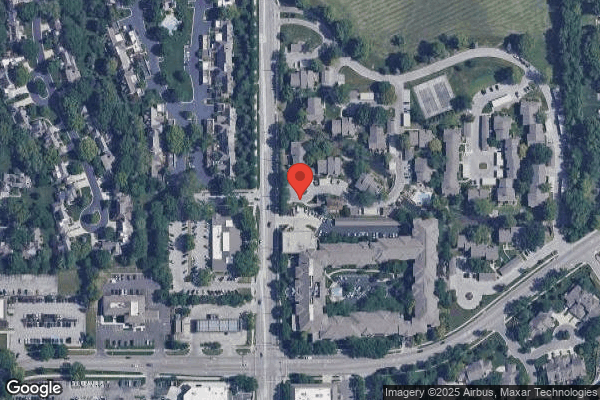
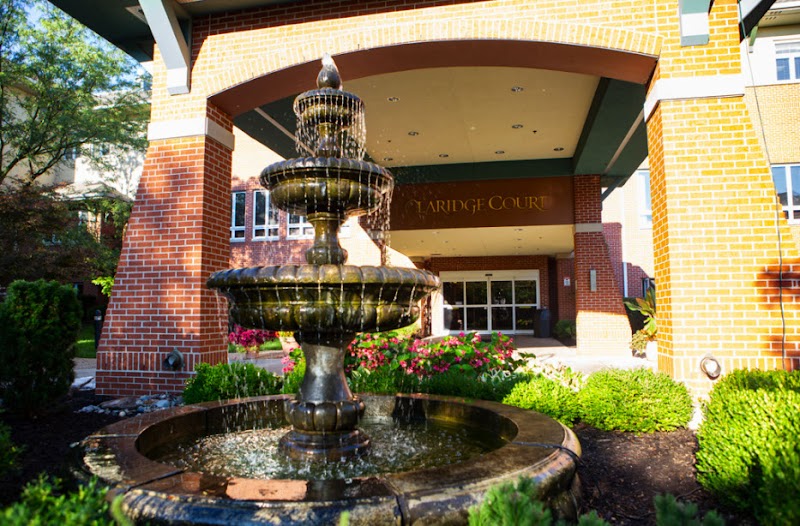

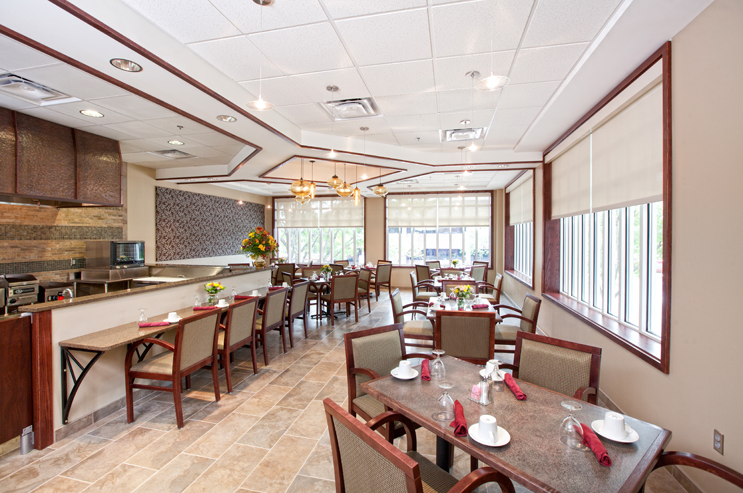
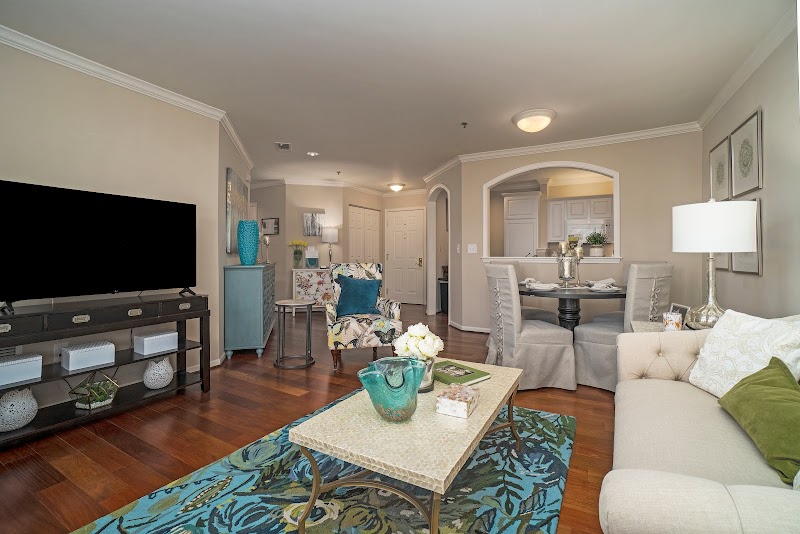
CLARIDGE COURT

8101 MISSION ROAD, PRAIRIE VILLAGE, KS 66208 (913) 383-2085
Non profit - Corporation 45 Beds LIFESPACE COMMUNITIES Data: November 2025
Trust Grade
68/100
#57 of 295 in KS
Last Inspection: February 2024

Within standard 12-15 month inspection cycle. Federal law requires annual inspections.

Overview

Claridge Court in Prairie Village, Kansas has a Trust Grade of C+, indicating it is slightly above average but not excellent. It ranks #57 out of 295 facilities in the state, placing it in the top half, and #8 out of 35 in Johnson County, suggesting that only a few local options are better. The facility's performance is stable, with 7 issues reported both in 2022 and 2024. Staffing is rated 4 out of 5, which is good, but the turnover rate is average at 49%. However, the facility has faced some concerns, such as a serious incident where a resident suffered a broken wrist due to inadequate care related to dementia. Additionally, there were issues with staff performance evaluations not being completed and unsafe food storage practices that could risk food-borne illness. Despite these weaknesses, Claridge Court does provide more RN coverage than 80% of Kansas facilities, which is a positive aspect for resident care.

Trust Score
C+
68/100
In Kansas
#57/295
Top 19%
Safety Record
Moderate
Needs review
Inspections
Holding Steady
7 → 7 violations
Staff Stability
⚠ Watch
49% turnover. Above average. Higher turnover means staff may not know residents' routines.
Penalties
✓ Good
$18,028 in fines. Lower than most Kansas facilities. Relatively clean record.
Skilled Nurses
✓ Good
Each resident gets 54 minutes of Registered Nurse (RN) attention daily — more than average for Kansas. RNs are trained to catch health problems early.
Violations
⚠ Watch
19 deficiencies on record. Higher than average. Multiple issues found across inspections.
★★★★☆
4.0
Overall Rating
★★★★☆
4.0
Staff Levels
★★★☆☆
3.0
Care Quality
★★★★☆
4.0
Inspection Score
Stable
2022: 7 issues
2024: 7 issues

The Good

  • 4-Star Staffing Rating · Above-average nurse staffing levels
  • Full Sprinkler Coverage · Fire safety systems throughout facility
  • No fines on record

Facility shows strength in staffing levels, fire safety.

The Bad

Staff Turnover: 49%

Near Kansas avg (46%)

Higher turnover may affect care consistency

Federal Fines: $18,028

Below median ($33,413)

Minor penalties assessed

Chain: LIFESPACE COMMUNITIES

Part of a multi-facility chain

Ask about local staffing decisions and management

The Ugly 19 deficiencies on record

1 actual harm
Feb 2024 7 deficiencies
CONCERN (D)

Potential for Harm - no one hurt, but risky conditions existed

Deficiency F0657 (Tag F0657)

Could have caused harm · This affected 1 resident

The facility identified a census of 37. The sample included 12 residents with 12 reviewed for care plan revisions. Based on observation, record review, and interviews, the facility failed to revise Re...

Read full inspector narrative →
The facility identified a census of 37. The sample included 12 residents with 12 reviewed for care plan revisions. Based on observation, record review, and interviews, the facility failed to revise Resident (R)7's Care Plan to reflect her implemented restorative services and goals. This deficient practice placed R7 at risk for impaired care due to uncommunicated care needs. Findings Included: - The Medical Diagnosis section within R7's Electronic Medical Records (EMR) included diagnoses of left-sided hemiparesis (weakness and paralysis on one side of the body), left-sided hemiplegia (paralysis of one side of the body), and left-hand contracture (abnormal permanent fixation of a joint or muscle). R7's Quarterly Minimum Data Set (MDS) completed 11/22/23 noted a Brief Interview for Mental Status (BIMS) score of 15 indicating intact cognition. The MDS indicated she required substantial to maximal assistance with bed mobility, transfer bathing, toileting, personal hygiene, and dressing. The MDS noted she had an upper extremity impairment to one side and used a wheelchair for mobility. The MDS indicated she received restorative services for active range of motion (ROM). R7's Activities of Daily Living (ADLs) Care Area Assessment (CAA) completed 08/28/23 indicated she required assistance with her ADLs and mobility related to poor strength, endurance, and balance. The CAA indicated she had left-sided hemiparesis and was at risk for a decline in her ADLs. R7's Care Plan initiated 08/18/23 indicated she was at risk for ADLs self-performance deficit related to her left-sided hemiparesis. The plan indicated he had a left-hand contracture and instructed staff to provide skin care and monitor her hand for skin breakdown (08/31/23). The plan indicated she may need assistance with meal set-up and staff were to offer support. The plan lacked documentation related to her implemented range of motion exercises to maintain or improve her left-sided hemiparesis and hand contracture. On 02/26/24 at 08:10 AM R7 sat in her room. R7 stated staff wrapped her arm up at night to prevent swelling and she received upper body services for her left side. She stated she used to wear a brace on her left hand but refused to wear it. She stated the restorative aid comes 3-4 times weekly to work with her. On 02/27/24 at Certified Nurses Aid (CNA) O stated she completed weekly upper body range of motion exercises with R7. She stated R7 had left-side weakness and paralysis due to her medical conditions. She stated the restorative programs were not included in the care plans but included in the task section of the EMR. On 02/27/24 at 02:23 PM Licensed Nurse (LN) H stated she would have to ask the restorative aid or therapy what services R7 received. She stated that restorative services should be included in the care plan to allow all staff to know what services were provided due to her contractures. On 02/27/24 at 02:32 PM Administrative Nurse E stated the restorative services for R7 were not in the care plan but would be found under the tasks. A review of R7 Tasks in her EMR with Administrative Nurse E revealed no documented information related to her upper body range of motion exercises. Administrative Nurse E stated the services should be listed somewhere for all staff to review. The facility's provided Comprehensive Care Plan policy revised 09/2019 indicated the facility will update and revise each resident's plan of care to include current care treatment goals, and measurable objectives, and provide person-centered care. The facility failed to revise R7's Care Plan to reflect her implemented restorative services and goals. This deficient practice placed R7 at risk for impaired care due to uncommunicated care needs.
CONCERN (D)

Potential for Harm - no one hurt, but risky conditions existed

Pressure Ulcer Prevention (Tag F0686)

Could have caused harm · This affected 1 resident

The facility identified a census of 37 residents. The sample included 12 residents with two reviewed for pressure ulcers (localized injury to the skin and/or underlying tissue usually over a bony prom...

Read full inspector narrative →
The facility identified a census of 37 residents. The sample included 12 residents with two reviewed for pressure ulcers (localized injury to the skin and/or underlying tissue usually over a bony prominence, because of pressure, or pressure in combination with shear and/or friction). Based on observation, record review, and interviews, the facility failed to maintain Resident (R) 2's low air-loss mattress pump settings at the correct weight range. This placed R2 at increased risk for pressure ulcer development. Findings included: - R2's Electronic Medical Record (EMR) documented diagnoses of peripheral vascular disease (PVD- slow and progressive circulation disorder causing narrowing, blockage, or spasms in a blood vessel), difficulty in walking, generalized muscle weakness, congestive heart failure (CHF-a condition with low heart output and the body becomes congested with fluid), and cerebrovascular disease affecting right dominant side (group of conditions that affect the circulation of blood to the brain, causing limited or no blood flow to affected areas of the brain). The Significant Change Minimum Data Set (MDS) dated 12/21/23, documented R2 had a Brief Interview for Mental Status (BIMS) score of 13 which suggested intact cognition. The MDS documented R2 used a wheelchair and required partial/moderate assistance moving from a seated to a lying position, substantial/maximal assistance from moving from a seated to a standing position and was dependent on staff for transfers. The MDS further documented R2 had a skin tear, was at risk for developing pressure ulcers, and had pressure-reducing devices in place for her chair and bed. The MDS documented R2 was frequently incontinent of urine having had seven or more incontinent episodes with at least one episode of continent voiding. The Pressure Ulcer/Injury Care Area Assessment (CAA) dated 12/21/23, documented R2 was at risk for skin breakdown due to incontinence and limited mobility. The Functional Abilities CAA dated 12/21/23, documented R2 had an activities of daily living (ADL) self-care performance deficit and directed staff to assist R2 with daily tasks. R2's Care Plan with an initiated date of 01/09/24, documented R2 was at risk for impaired skin integrity due to CHF and incontinence. A goal with an initiated date of 01/09/24 documented R2 would remain free from skin breakdown due to incontinence and brief use. A Care Plan intervention with an initiated date of 01/09/24, directed staff to encourage R2 to frequently shift her weight and for staff to monitor R2's skin for moisture, and apply barrier products as needed. R2's Care Plan with an initiated date of 10/17/23 documented R2 was on diuretic therapy (medication to promote the formation and excretion of urine). R2's Care Plan lacked evidence that a low air loss mattress was in place for R2. R2's EMR, under the Orders tab, documented an order dated 12/09/23, for an air loss mattress (a mattress designed to prevent and treat pressure wounds) for skin breakdown prevention. The order lacked evidence of a mattress setting. A review of R2's EMR documented R2 weighed 109.2 lbs. on 01/15/24 and 109.6 on 02/25/24. A review of the low air-loss mattress manufacturer's operation (Protekt Aire 6000) manual indicated the mattress system was intended to reduce the incidence of pressure ulcers while optimizing comfort. The manual indicated the mattress pump's pressure levels and firmness were preset based on the weight range selected. The manual recommended the pump be set based on the resident's weight. The manual indicated the firmness of the mattress could be set within 50 lbs. weight intervals. On 02/26/24 at 01:30 PM, R2 sat in a wheelchair in her room. R2's air loss mattress was set for a body weight of 180 lbs. On 02/27/24 at 01:31 PM, R2 sat in a wheelchair in her room and watched TV. R2's air loss mattress was set for a body weight of 180 lbs. On 02/27/24 at 02:15 PM, Licensed Nurse (LN) H stated some of the low air loss mattresses provided by hospice were set based on a resident's weight. LN H further stated if the weight settings on a low air loss mattress were set too high, it made the mattress firmer, which could then contribute to skin breakdown. LN H stated a weight setting of 180 lbs. on a low air loss mattress for a resident who weighed 109.6 lbs. would be too high. On 02/27/24 at 02:31 PM Administrative Nurse E stated R2's low air loss mattress was provided by hospice and hospice would set the pressure for the mattress and that facility staff would monitor it. Administrative Nurse E stated the facility expected the nurses and Certified Nurse Aides (CNA) to check the mattress every shift to ensure it was on and working correctly. Administrative Nurse E stated she was unsure if R2's mattress was a weight-based mattress, or one based on comfort level. Administrative Nurse E observed R2's low air loss mattress in R2's room and noted the setting of 180 lbs. Administrative Nurse E stated a setting of 180 lbs. for R2, who weighed 109.6 lbs., was too high for her weight. On 02/27/24 at 03:01 PM Administrative Nurse E stated she spoke with a facility nurse and was informed that hospice had set the mattress to 180lbs due to the head of R2's bed not inflating properly. Administrative Nurse E further stated the facility would contact the company and order a new bed for R2. The facility provided a Wound Care Policy with a revision date of 04/01/22, documented It is the policy to utilize evidence-based clinical practices to provide pressure injury and wound treatments in our skilled nursing and rehabilitation health centers. The facility will comply with current nursing standards, as well as state and federal guidelines related to the identification, treatment, and documentation of alterations in the skin integrity of our residents. The facility failed to maintain R2's low air-loss mattress pump settings at the correct weight range. This placed R2 at increased risk for pressure ulcer development.
CONCERN (D)

Potential for Harm - no one hurt, but risky conditions existed

Accident Prevention (Tag F0689)

Could have caused harm · This affected 1 resident

The facility had a census of 104 residents. The sample included 23 residents with four residents reviewed for accidents. Based on observation, record review, and interview, the facility failed to ensu...

Read full inspector narrative →
The facility had a census of 104 residents. The sample included 23 residents with four residents reviewed for accidents. Based on observation, record review, and interview, the facility failed to ensure an environment free from accident hazards when the facility failed to utilize wheelchair foot pedals while transporting Resident (R)18 and R22 around the facility. This deficient practice placed both residents at risk for preventable injuries and falls. Finding Included: - R18's Care Plan initiated 12/13/24 indicated he was at risk for falls related to his weakness, unsteadiness, poor safety awareness, and severe cognitive impairment. R22's Care Plan initiated 10/18/20 indicated she was at risk for falls related to poor gait/balance, muscle weakness, and severe cognitive impairment. On 02/26/24 at 07:20 AM R22 sat in her wheelchair in the hallway in front of the elevator. Certified Nurses Aid (CNA) M pushed R22 back to her room. R22's wheelchair had no foot pedals and her shoes drug on the floor as staff pushed her. On 02/26/24 at 11:32 AM CNA N pushed R18 (severely cognitively impaired resident) down the main hallway to the dining area. R18's wheelchair lacked foot pedals and his feet contacted the ground several times while being pushed. On 02/26/24 at 11:38 AM R22 was wheeled to the dining room area for lunch services by CNA M. R22's feet slid on the ground several times during transport. On 02/27/24 at 02:08 PM, CNA M stated each resident had foot pedals, but some prefer to use their feet to propel themselves. She stated the resident's feet should never drag while being pushed. On 02/27/24 at 02:32 PM Administrative Nurse E stated staff were expected to ensure the resident's feet never touch the ground while in transport. She stated staff were to ask the residents if they were okay to lift their legs. She stated all the residents had foot pedals and should use them when needed. The facility's provided Accommodation of Needs policy (undated) the facility will ensure each resident's needs for adaptive equipment will be met based on the individual needs/preferences, physical environment, and treatment goals. The facility failed to utilize a wheelchair foot pedal while transporting R18 and R22 around the facility. This deficient practice placed both residents at risk for preventable injuries and falls.
CONCERN (D)

Potential for Harm - no one hurt, but risky conditions existed

Deficiency F0757 (Tag F0757)

Could have caused harm · This affected 1 resident

The facility identified a census of 37 residents. The sample included 12 residents with five residents reviewed for unnecessary medications. Based on observation, record review, and interviews, the fa...

Read full inspector narrative →
The facility identified a census of 37 residents. The sample included 12 residents with five residents reviewed for unnecessary medications. Based on observation, record review, and interviews, the facility failed to ensure a pulse was assessed and documented consistently for Resident (R) 4's carvedilol (medication used to treat high blood pressure) for hypertension (HTN-elevated blood pressure) to monitor for efficacy and adverse effects. This placed R4 at increased risk for unnecessary medication administration and possible adverse side effects. Findings included: - The electronic medical record (EMR) for R4 documented diagnoses of chronic respiratory failure with hypoxia (occurs when the respiratory system cannot adequately provide oxygen to the body). HTN, ischemic cardiomyopathy (the heart's decreased ability to pump blood properly, due to myocardial damage), chronic obstructive pulmonary disease (COPD- a progressive and irreversible condition characterized by diminished lung capacity and difficulty or discomfort in breathing). The Quarterly Minimum Data Set (MDS) dated 09/28/23 documented that a Brief Interview of Mental Status (BIMS) assessment could not be conducted due to severe cognitive impairment. The MDS indicated R4 required supervision with set-up assistance for bed mobility, transfers, walking, personal hygiene, toileting, and dressing. R4 was dependent on one staff for help with activities of daily living (ADLs), and R4 required supplemental oxygen. The Functional Care Area Assessment (CAA) dated 09/27/23 documented R4 continued to require assistance with ADLs and mobility. Nursing provided ADL, mobility, and transfer assistance. The Fall CAA dated 09/27/23 documented nursing provided safety cues and monitoring. R4 used a gait belt for transfers and had a call light at the bedside. R4's Care Plan dated 06/08/22 directed staff to administer anti-hypertensive medications as ordered. Staff should monitor for side effects, such as orthostatic hypotension (a form of low blood pressure that happens when standing up from sitting or lying down), increased heart rate, and effectiveness. R4's Order Summary dated 06/02/23 documented an order for carvedilol one tablet of 3.125 milligrams (mg), give one tablet by mouth two times a day related to chronic heart failure. R4's clinical record lacked evidence the staff monitored R4's pulse consistently before the administration of the carvedilol. On 02/26/24 at 07:26 AM R4 sat in her recliner with her feet extended and elevated. On 02/26/24 at 11:34 R4 sat at the dining room table. She chatted with visitors and table mates. On 02/27/24 at 01:21 PM Licensed Nurse (LN) H stated that for carvedilol, a beta-blocker, the pulse should be monitored and documented before the medication was given. LN H stated the facility did have parameters for beta-blockers that the physician put in place. On 02/27/24 at 02:50 PM Administrative Nurse E stated normally nurses only assess vitals once a week. Administrative Nurse E stated the pharmacist did not want the facility to monitor pulse before giving carvedilol. Administrative nurse E stated that once-a-week vital signs assessments were sufficient. The Medication Administration Policy documented that if a dosage is believed to be inappropriate or excessive for a resident, or a medication has been identified as having potential adverse consequences for the resident or is suspected of being associated with adverse consequences, the person preparing or administering the medication shall contact the resident's Attending Physician or the facility's Medical Director to discuss the concerns. The facility failed to ensure that staff consistently monitored R4's pulse before the administration of carvedilol. This placed R4 at risk for unnecessary medication administration and possible adverse side effects.
CONCERN (D)

Potential for Harm - no one hurt, but risky conditions existed

Medication Errors (Tag F0758)

Could have caused harm · This affected 1 resident

The facility had a census of 37 residents. The sample included 12 residents of which five were reviewed for unnecessary medications. Based on observation, record review, and interview the facility fai...

Read full inspector narrative →
The facility had a census of 37 residents. The sample included 12 residents of which five were reviewed for unnecessary medications. Based on observation, record review, and interview the facility failed to ensure a documented physician rationale which included the multiple unsuccessful attempts for nonpharmacological symptom management before starting Resident (R)14's Seroquel (antipsychotic- class of medications used to treat mental disorder characterized by a gross impairment in reality testing). This placed the resident at risk for unnecessary psychotropic (alters perception, mood, consciousness, cognition, or behavior) medications and related complications. Findings Included: - The Medical Diagnosis section within R14's Electronic Medical Records (EMR) included diagnoses of dementia (a progressive mental disorder characterized by failing memory, and confusion), major depressive disorder (major mood disorder), muscle weakness, and difficulty walking. R14's Quarterly Minimum Data Set (MDS) completed 01/18/23 noted a Brief Interview for Mental Status (BIMS) assessment could not be completed due to severe cognitive impairment. The MDS indicated she had delusions (untrue persistent beliefs or perceptions held by a person although evidence shows it was untrue) but no behavioral symptoms. The MDS indicated she received antipsychotic medication on a routine basis. R14's Dementia Care Area Assessment (CAA) completed 10/24/23 indicated she had short and long-term memory impairment. The CAA noted she required cueing and assistance from staff to participate and stimulate her mind. R14's Psychotropic Drug Use CAA completed 10/24/23 indicated she was at risk for side effects related to her psychoactive medications. The CAA instructed staff to monitor medication with black box warnings (BBW- highest safety-related warning that medications can be assigned by the Food and Drug Administration). R14's Care Plan initiated on 02/08/22 indicated she had a history of behavior concerns related to dementia. The plan instructed staff to approach her in a non-threatening manner, orient her to reality, divert her attention, and talk to her to calm her down (02/18/22). The plan indicated she started Seroquel and instructed staff to monitor for side effects of the medication (10/24/23). The care plan lacked unsuccessful behavioral interventions that were attempted to manage her symptoms. A review of R14's EMR under Physician's Orders indicated an order dated 09/12/23 for her to receive 12.5 milligrams (mg) of Seroquel by mouth at bedtime for anxiety, delusions, and paranoia related to major depressive disorder. On 12/08/23 the Seroquel order was increased to give 12.5mg twice daily. On 01/26/24 the Seroquel order was increased to give 12.5mg every eight hours. R14's EMR lacked documented physician rationale that included multiple unsuccessful attempts for non-pharmacological behavioral symptom management for her Seroquel medication started on 09/12/23. The facility was unable to provide this documentation on request. On 02/27/24 at 07:34 AM Licensed Nurse (LN) H prepared R14 morning medication. LN H administered R14's medications without issues or concerns. R14 was calm and took her medication including Seroquel without behavior. On 02/27/24 at 02:15 PM, LN H stated residents with dementia were at risk for taking antipsychotic medication due to a higher mortality rate. She stated that R14's behaviors had improved in the past few months from her medication. She stated staff should also provide redirection and re-orient R14 when she is confused. On 02/27/24 at 02:32 PM Administrative Nurse E stated the facility would provide redirection, re-orientation, activities, and call family for support during R14's behaviors. She stated the medical provider usually would not document rationale or notes. A review of the facility's Psychotropic Medication Use policy 10/2022 noted the facility will provide clinical indication and comprehensive assessment to ensure the use of antipsychotic medication is necessary. The policy indicates the physician will provide a clinical rationale and complete gradual dose reductions to ensure the lowest effective dose unless contraindicated. The facility failed to ensure physician documented rationale which included the multiple unsuccessful attempts for nonpharmacological symptom management was completed before the use of R14's Seroquel. This placed the R14 at risk for unnecessary psychotropic medications and related complications.
CONCERN (F)

Potential for Harm - no one hurt, but risky conditions existed

Deficiency F0730 (Tag F0730)

Could have caused harm · This affected most or all residents

The facility had a census of 37 residents. The sample included 12 residents and five Certified Nurse Aides (CNAs) reviewed for performance evaluations and required in-service training. Based on record...

Read full inspector narrative →
The facility had a census of 37 residents. The sample included 12 residents and five Certified Nurse Aides (CNAs) reviewed for performance evaluations and required in-service training. Based on record review and interview, the facility failed to ensure five of the five CNA staff reviewed had the required yearly performance evaluations completed. This placed the residents at risk for inadequate care. Findings included: - A review of the facility's performance evaluation records revealed the following: CNA P, hired on 03/11/19, no yearly performance evaluations were provided upon request. CNA Q, hired on 05/24/22, no yearly performance evaluations were provided upon request. CNA MM, hired on 04/13/21, no yearly performance evaluations were provided upon request. CNA NN, hired on 08/21/18, no yearly performance evaluations were provided upon request. CNA OO, hired on 09/11/01, no yearly performance evaluations were provided upon request. Review of the email communications regarding yearly merit increases, provided by the facility, to the five CNA staff reviewed for yearly evaluations lacked evidence of any performance evaluations and/or goals or discussion regarding areas of improvement. On 02/27/24 at 10:17 AM Administrative Staff A stated the facility did not do a formal yearly performance evaluation on paper. Administrative Staff A stated they would meet with staff yearly to discuss a merit increase and performance would be discussed at that time; however, there was nothing put into writing and staff would not sign any document to show what had been discussed during the meeting. Administrative Staff A further stated the meetings were more of a conversation than a formal performance evaluation and if there were any issues then staff would have been placed on a performance improvement plan. The undated facility provided Performance Management policy documented it is the policy to conduct periodic performance reviews for all team members. The performance review is a formal process in which leaders can assess team member's strengths, areas for improvement, and potential growth. Performance reviews will be objective, and performance based. Leaders must support reviews by using specific examples and facts. Any performance review that indicates improvement is needed, a performance improvement plan must be developed and implemented. This plan will set forth performance goals, time frames, and dates for retraining and reevaluation. The facility failed to ensure five of the five CNA staff reviewed had the required yearly performance evaluations completed. This placed the residents at risk for inadequate care.
CONCERN (F)

Potential for Harm - no one hurt, but risky conditions existed

Food Safety (Tag F0812)

Could have caused harm · This affected most or all residents

The facility identified a census of 37 residents. The facility had one kitchen and one kitchenette. Based on observation, record review, and interviews, the facility failed to ensure that food items w...

Read full inspector narrative →
The facility identified a census of 37 residents. The facility had one kitchen and one kitchenette. Based on observation, record review, and interviews, the facility failed to ensure that food items were properly stored in a safe and sanitary manner after the original sealed package had been opened. The facility failed to ensure foods were labeled and dated after opening. This placed all residents who ate food from the facility at risk for food-borne illness. Findings included: - During the initial tour on 02/22/24 at 07:33 AM, observation revealed the following: Half of a brown cake in the small refrigerator was uncovered and not dated. Two bags of sausage lay on top of the cooking stove. A canister of sugar under the work prep table was not labeled or dated. A cooler with a see-through glass door revealed small bowls of lettuce, tomatoes, ham, cheese, onions, and a container of fish were not covered, and these items were not dated. Half of a bag of ravioli was open to the air in a small freezer and was not dated. Avocadoes and pea salad were not dated in the small side refrigerator. The walk-in freezer had one box labeled pies stored on the freezer floor. The walk-in refrigerator had a steam table pan with red sauce which contained olives sitting on the shelf, there was no date or label. On 02/27/24 at 10:44 AM a follow-up inspection of the kitchen was completed. The inspection revealed all containers were labeled and dated appropriately, and there were no food boxes on the freezer floor. On 02/27/24 at 11:00 AM Dietary staff BB stated all foods out of their original containers should be dated and labeled, and no foods should be stored on the freezer floors. The Production, Purchasing, and Storage Policy revised on 01/24 stated all stored foods not in their original packages, must be stored in approved containers that have tight-fitting lids. All containers must be labeled, and both the bin and the lid must be labeled and dated. The policy states to use of food-grade plastic bags for food storage. The facility failed to store food in a safe, sanitary manner. This deficient practice placed residents at risk for contamination and food-borne illness.
Aug 2022 7 deficiencies 1 Harm
SERIOUS (G)

Actual Harm - a resident was hurt due to facility failures

Deficiency F0744 (Tag F0744)

A resident was harmed · This affected 1 resident

**NOTE- TERMS IN BRACKETS HAVE BEEN EDITED TO PROTECT CONFIDENTIALITY** The facility identified a census of 44 residents. The sample included 15 residents with two residents reviewed for dementia care...

Read full inspector narrative →
**NOTE- TERMS IN BRACKETS HAVE BEEN EDITED TO PROTECT CONFIDENTIALITY** The facility identified a census of 44 residents. The sample included 15 residents with two residents reviewed for dementia care. Based on record review and interviews, the facility failed to ensure staff provided person-centered care and services as related to dementia for Resident (R) 192. As a result, staff's inappropriate response to dementia-related behaviors resulted in a broken wrist for R192. Findings included: - R192 admitted to the facility on [DATE] and discharged on 06/24/22. The Electronic Medical Record (EMR) for R192 documented the following diagnoses: dementia with Lewy bodies (a type of progressive dementia that leads to a decline in thinking, reasoning and independent function), encephalopathy (damage or disease that affects the brain), major depressive disorder major mood disorder (a mental health disorder characterized by persistently depressed mood or loss of interest in activities, causing significant impairment in daily life), and Parkinson's disease (a chronic and progressive movement disorder that initially causes tremor in one hand, stiffness or slowing of movement). The admission Minimum Data Set (MDS) dated [DATE] documented R192 had a Brief Interview for Mental Status (BIMS) score of six, which indicated severely impaired cognition. R192 required extensive assistance of one staff for his activities of daily living (ADLs). The MDS recorded R192 had no behaviors during the look back period. The ADL Care Area Assessment dated 04/20/22 documented R192 needed help with ADLs and mobility. R192 had poor safety awareness, poor decision-making skills, poor strength/endurance, muscle weakness, impaired balance, and impaired mobility. Contributing factors include deconditioning, Parkinson's disease with Lewy body dementia and encephalopathy. Factors that placed him at risk included poor safety awareness, impaired balance, impaired mobility, and gait difficulty. The Mood CAA dated 04/20/22 documented R192 was significantly more depressed than his last stay in the health center. R192 reported feeling sad, having trouble concentrating, speaking slower, and having thoughts he would be better off dead all of these on most days. R192 reported feeling tired and feeling bad about himself about half the time. R192 was not as functional or helpful as he once was. R192 felt he had no purpose and thought of no longer being alive would lessen him being a burden to his spouse. R192 would never do anything to harm himself because he did not believe in that. R192's Care Plan initiated on 04/15/22 recorded R192 required extensive assistance of one person for personal hygiene. The care plan problem dated 04/15/22 listed R192 was at risk for impaired communication. An intervention dated 04/15/22 directed staff to allow adequate time for the resident's response, incorporate alternate of communication such as music, song, or visual demonstration and directed staff to incorporate visual prompting, cues, or gestures. It further directed staff to minimize environmental stimuli, and provide clear, simple instructions. R192's Care Plan recorded an intervention dated 05/02/22 which directed staff to converse with the resident while providing cares. R192's Care Plan lacked direction to staff, prior to incident on 05/15/22, with regards to dementia related behaviors or resident centered interventions on redirection. A Behavior Note dated 04/18/22 documented R192 had aggressive behaviors and was noncompliant with everything. He was delusional and combative with staff and required one to one supervision. A Physician Note dated 04/19/22 recorded R192 had debility (physical weakness, especially as a result of illness) and dementia and staff were directed to continue supportive care. The note lacked mention of behaviors, delusions, or aggression. A Behavior Note dated 04/19/22 at 01:23 AM recorded R192 was combative when staff attempted to redirect. At 11:30 PM, R192 tried to crawl out of bed, staff assisted him back to bed, and R192 was unhappy. He accepted several sips of thickened water. A Behavior Note dated 04/19/22 at 01:29 AM recorded R192 was almost out of bed. When staff tried to reposition him, he hit the aide's hand during the process. R192 was asking about his relative and not making sense when he spoke. He stated he was ok. The note recorded R192 was on frequent checks due to a risk for falls and had visual hallucinations (perception of having seen something that was not actually there). The record lacked evidence of physician notification. A Behavior Note dated 04/22/22 at 09:40 PM recorded R192 was verbally and physically abusive to staff and noted hitting and kicking behaviors while staff tried to provide cares. He insisted he could take care of himself. R192 cursed and refused to be moved by placing his feet hard on the floor so staff were unable to move the wheelchair. A Behavior Note dated 04/22/22 at 09:54 PM documented R192 exhibited psychotic (mental disorder characterized by a disconnection from reality) behaviors such as seeing people in his room and imagining things that were not true. The record lacked evidence of physician notification. A Physician Note dated 04/26/22 recorded R192 had debility dementia and directed to continue supportive care. The note lacked mention of behaviors, hallucinations, or psychotic episodes. An Incident Note dated 05/15/22 recorded R192 was complaining of pressure on his right wrist after an incident with the [unidentified] aid. At about 06:00 AM the aide tried to clean the resident's face when the resident grabbed her hand. He told the aide to go away but held on to her hand. The aide asked the resident to let go, but he did not. The aide then got ahold of the resident's right arm and, as she tried to free her hand, the aid heard a pop at the resident's wrist. The resident stated that he had no pain unless he tried to twist his hand. There was mild redness at the wrist. Staff notified the physician and received an order for an x-ray (diagnostic picture) of the right forearm. An Incident Note dated 05/15/22 recorded R192 denied pain, but reported pressure and stated it hurt to rotate his wrist out, and his pinkie finger was bothering him. Staff advised R192 not to move the hand. Staff asked R192 if he was afraid of his caregivers and he stated that he was not. The note further documented when staff asked R192 if he felt that it [no further explanation noted] was under malicious intent, R192 stated that it was lack of education and experience. The X-ray was completed and R192 went to breakfast. Upon receipt of the report, the physician was notified as well as Administrative Nurse D. Staff received a new order to send R192 to the emergency room (ER). The General Diagnostic radiology (x-ray) report dated 05/15/22 for R192 documented an acute spiral type of fracture with 1-millimeter displacement and minimal angulation. nondisplaced fracture of the right distal ulna (wrist bone). The Facility Investigation dated 05/19/22 documented R192 admitted to the facility for short term rehabilitation. He had diagnoses of Parkinson's disease and Lewy body dementia. The investigation recorded R192 had a history of being combative with team members during cares. The investigation recorded at approximately 06:00 AM on 05/15/22 Certified Nurse Aid (CNA) M went into R192's room to assist him to the restroom; R192 said he did not need to use the bathroom and did not need any help. CNA M noted saliva dripping from R192's mouth so she grabbed a tissue to assist him. R192 grabbed CNA M's arm and commanded her to get out. CNA M told R192 she would be glad to leave if R192 would let go of her arm. The investigation recorded CNA M asked R192 to let go three times, and each time R192 grabbed her harder and yelled louder for to leave. CNA M reached for R192's hand to try to pry it off hers and she heard a popping noise. The CNA then went to notify Licensed Nurse (LN) I. The investigation further documented LN I asked R192 what happened and R192 told LN I she broke it. The Witness Statement from CNA M recorded she went to the resident's room to offer him the toilet because earlier that morning he had refused. R192 said no he did not need to go, and he did not need CNA M's help. CNA M recorded she noted saliva falling from R192's mouth. She grabbed a tissue to clean it and R192 grabbed her hand and told her to get out. CNA M documented she told R192 she just wanted to clean his face and help him to the bathroom because he did not go earlier, but also told him he did not have to. CNA M recorded she told R192 to let go of her hand and she would leave and R192 tightened his grip. CNA M then told R192 he was hurting her arm and to let her go. R192 continued to squeeze harder so CNA M grabbed R192's hand and fingers to pry R192's hand away while CNA M pulled her arm back. During this action, CNA recorded she heard R192's s wrist pop. In an interview with CNA M on 08/04/22 at 01:50 PM, she stated on 05/15/22 she went in to R192's room to ask if R192 needed to go to the bathroom. R192 was in his wheelchair with his back towards her. As CNA M approached R192, she noticed he had saliva drooling from his mouth. CNA M then went into the bathroom to grab a washcloth to wipe the saliva from R192's mouth. CNA M said while attempting to wipe R192's mouth, she must have startled R192, and R192 grabbed her arm and told her to get out of his room. CNA M stated she repeatedly asked R192 to let go of her arm. R192 continued to grip her arm tighter, so she took her other hand and tried to pry R192's fingers loose from her arm. As she tried to pry R192's fingers off of her arm, both R192 and CNA M heard a pop. CNA M stated R192 had never acted this way before this incident. CNA M stated after the incident she immediately went and told the nurse about the incident. CNA M said she was suspended immediately and upon return to work, was educated on dementia training and how to handle a combative resident. CNA M stated she had dementia training/education when she was hired in 2020 and the facility did dementia training annually. CNA M stated the incident on 05/15/22 all happened so fast. CNA M said she felt she should have tried to calm him down before she attempted to pry him hand off her arm. On 08/04/22 at 02:18 PM CNA N stated she had completed dementia training/education. She said the Administrative Nurse D provided educational sheets on dementia care recently. CNA N stated she had never taken care of R192. On 08/04/22 at 03:50 PM Licensed Nurse (LN) G stated R192 had some behaviors while he was at the facility and usually, they were mild in nature. She completed dementia training annually as required and Administrative Nurse D occasionally passed out dementia education pamphlets to staff to review. On 08/04/22 at 04:23 PM Administrative Nurse D stated she became aware of the incident that happened with R192 and CNA M on 05/15/22, but was not in the facility at the time it happened. Administrative Nurse D stated CNA M was educated on dementia training, and how to care for a combative resident. The facility also held a mandatory staff meeting after the incident for the dementia education. R192 had been known to have some behaviors while he was a resident. The facility did not provide a policy for dementia care. The facility failed to ensure person centered care and services related to dementia and dementia related behaviors for R192, who had a history of aggressiveness and combativeness. As a result, staff 's inappropriate response to R192's dementia-related behaviors resulted in a wrist fracture for R192. On 05/16/22 the facility implemented the following corrective actions: Staff education on the following topics: How to respond too Combative Behavior in Dementia How to respond to Anger and Aggression in Dementia Understanding challenging Behaviors in Dementia The Difference Between Alzheimer's and Dementia Stages and Progression Lewy Body Dementia R192's plan of care was updated with resident-specific interventions that addressed his behaviors. The deficient practice, corrected prior to the survey, was cited as past noncompliance.
CONCERN (D)

Potential for Harm - no one hurt, but risky conditions existed

Deficiency F0655 (Tag F0655)

Could have caused harm · This affected 1 resident

**NOTE- TERMS IN BRACKETS HAVE BEEN EDITED TO PROTECT CONFIDENTIALITY** The facility identified a census of 44 residents. The sample included 15 residents with one resident reviewed for death. Based o...

Read full inspector narrative →
**NOTE- TERMS IN BRACKETS HAVE BEEN EDITED TO PROTECT CONFIDENTIALITY** The facility identified a census of 44 residents. The sample included 15 residents with one resident reviewed for death. Based on record review, and interviews, the facility failed to complete a baseline care plan for R42, which placed her at risk of impaired cares related to unidentified or uncommunicated care needs. Findings included: - R42's electronic medical record (EMR) from the Diagnoses tab documented diagnoses of dementia (progressive mental disorder characterized by failing memory, confusion), hypertension (elevated blood pressure), and depression (abnormal emotional state characterized by exaggerated feelings of sadness, worthlessness and emptiness). The Entry Minimum Data Set (MDS) recorded R42 admitted on [DATE]. R42's Baseline Care Plan was not initiated after her admission. Review of the EMR lacked a baseline care plan. On [DATE] at 11:33 AM Administrative Nurse D stated a baseline care plan was not started for R42 after admission. Administrative Nurse stated R42 was admitted on a Friday and then passed away Monday morning before the 48 hours had expired. On [DATE] at 03:50 PM Licensed Nurse (LN) G stated a baseline care plan was opened in the EMR upon a new admission. LN G stated that every department had a part to fill out for the new admission's baseline care plan. LN G stated that the admission coordinator or the director of nursing notified the staff of open baseline care plan that were to be completed within the 48 hours. On [DATE] at 02:20 PM Administrative Nurse E stated a baseline care plan was completed in 48 hours. Administrative Nurse E stated the admission nurse would open the baseline care plan in the EMR for the new admission and every department would complete their portion of the baseline care. Administrative Nurse E stated she would review the baseline care plan after the 48 hours. The facility Baseline Care Plan policy last reviewed [DATE] documented any resident admitted to the facility would have a Baseline Care Plan formulated and developed within 48 of admission. The facility failed to develop a baseline care plan for R42, which placed her at risk for impaired cares related to unidentified or uncommunicated care needs.
CONCERN (D)

Potential for Harm - no one hurt, but risky conditions existed

Deficiency F0657 (Tag F0657)

Could have caused harm · This affected 1 resident

**NOTE- TERMS IN BRACKETS HAVE BEEN EDITED TO PROTECT CONFIDENTIALITY** The facility identified a census of 44 residents. The sample included 15 residents with one resident reviewed for hospice and en...

Read full inspector narrative →
**NOTE- TERMS IN BRACKETS HAVE BEEN EDITED TO PROTECT CONFIDENTIALITY** The facility identified a census of 44 residents. The sample included 15 residents with one resident reviewed for hospice and end of life. Based on observation, record review, and interviews, the facility failed to revise the care plan with the correct hospice company for Resident (R) 20, which placed her at risk of delayed services for end of life comfort. Findings included: - R20's Electronic Medical Record (EMR) from the Diagnoses tab documented diagnoses of hypertension (elevated blood pressure) and cerebrovascular accident (CVA-sudden death of brain cells due to lack of oxygen caused by impaired blood flow to the brain by blockage or rupture of an artery to the brain). The admission Minimum Data Set (MDS) dated [DATE] documented a Brief Interview of Mental Status (BIMS) score of 13 which indicated intact cognition. The MDS documented that R20 required extensive assistance of one staff member for activities of daily living (ADLs). The MDS documented R20 received hospice services during the look back period and prior to admission. The Quarterly MDS dated 06/08/22 documented a BIMS score of seven which indicated severely impaired cognition. The MDS documented that R20 required extensive assistance of one staff member for ADLs. The MDS documented R20 received hospice servicers during the look back period. R20's ADL Functional/Rehabilitation Potential Care Area Assessment (CAA) dated 1255/10/21 documented R20 required assistance with her ADLs and was recently admitted on to hospice services. R20's Care Plan dated 12/16/21 documented the facility and hospice staff would coordinate bath days to provide comfort and hygiene for R20. The Care Plan revised on 02/08/22 documented R20 was admitted on to hospice services before admission. Review of the hospice communication book for R20 revealed the hospice provider was different than what was listed on R20's current care plan. On 08/03/22 at 12:22 PM nursing staff pushed R20 into the dining room; she ate lunch without assistance. On 08/03/21 at 10:22 AM Licensed Nurse (LN) H stated R20 was not on the hospice listed on the Care Plan. LN H retrieved the communication book for the correct hospice provider for R20. On 08/04/22 at 02:20 PM Administrative Nurse E stated the social services staff completed the care plan related to hospice services. On 08/04/22 at 02:38 PM Social Services X stated she completed the hospice care plan for R20. Social Service X stated R20 was admitted to the facility on hospice services. Social Services X verbalized the correct hospice provider for R20's services. Social Services X reviewed R20's care plan in the EMR and stated the hospice company listed on the care plan was a mistake and she corrected the name of the hospice. The facility Comprehensive Care Plan policy dated 09/30/19 documented the comprehensive care plan would describe the services that are to be furnished to attain or maintain the resident's highest practicable physical, mental and psychosocial well-being. The facility failed to ensure the correct hospice company was listed on R20's care plan, which placed R20 at risk of delayed services for end of life services.
CONCERN (D)

Potential for Harm - no one hurt, but risky conditions existed

Deficiency F0675 (Tag F0675)

Could have caused harm · This affected 1 resident

The facility reported a census of 44 residents. The sample included 15 residents with 15 reviewed for quality of life. Based on observation, record review, and interviews, the facility failed to ensur...

Read full inspector narrative →
The facility reported a census of 44 residents. The sample included 15 residents with 15 reviewed for quality of life. Based on observation, record review, and interviews, the facility failed to ensure all staff, across all shifts, honored Resident (R)14's preferences, requests and choices to ensure R14's quality of life. This deficient practice placed R14 at risk for decreased psychosocial wellbeing. Findings Included: - The Medical Diagnosis section within R14's Electronic Medical Records (EMR) included diagnoses of major depressive disorder (major mood disorder), osteoarthritis (degenerative changes to one or many joints characterized by swelling and pain), overactive bladder (frequent urges to urinate), general anxiety disorder (Long-term mental or emotional reaction characterized by apprehension, uncertainty and irrational fear), insomnia (inability to sleep), chronic kidney disease, and type two diabetes (when the body cannot use glucose, not enough insulin made or the body cannot respond to the insulin). R14's Annual Minimum Data Set (MDS) noted a Brief Interview for Mental Status (BIMS) score of 15 indicating intact cognition. The MDS indicated that she required limited assistance from one staff for bed mobility, transfers, dressing, and personal hygiene. The MDS noted that she required extensive assistance for toileting. A review of R14's Activities of Daily Living (ADL's) Care Area Assessment dated 06/06/22 noted that she required help with her ADL's and mobility due to poor muscle strength and endurance, and impaired balance. R14 received medication that may cause side effects for risk of falls. R14's Care Plan indicated that she had an ADL self-care deficit related to her medical conditions. The care plan indicated she required extensive assistance by one staff member for locomotion, transfers, toileting, bed mobility, dressing, and bathing. The plan indicated that she utilized a wheelchair for locomotion and staff were to encourage her to activate her call light for assistance. The care plan noted that she required prompt responses to all request for assistance. The care plan noted that that she was able to make her needs known and staff should honor her choices. On 08/02/22 at 08:23 AM R14 stated that the facility took great care of her except for one staff member. She stated that he often made her feel like she had to do everything for herself and request her to do things that she felt she could not complete due to her physical limitations. A review of a Complaint Investigation Statement dated 08/03/22 completed by Social Services X noted that R14 reported a complaint that Certified Nurses Aid (CNA) N asked her to complete care tasks that she could not physically tolerate including pulling her brief off during toileting, putting her slippers on, adjusting her bed linens, and sitting herself up in bed at night. On 08/03/22 at 02:03PM R14 reported that the previous night she activated her call light for assistance to the restroom. She stated that she was extremely weak and tired and needed assistance from staff to help her get out of bed and go to the restroom. She stated she was lying in bed and could not remove her covers. She stated that CNA N made her feel as though she should already be out of bed on her own. She required CNA N to assist her to sit up on the bed, put her slippers on, and transfer her to the restroom. She stated that throughout the provision of assistance, CNA N made her feel as though she asked for too much help and that she should have been able to complete the transfer without CNA N's help. She stated that while preparing to use the restroom, CNA N asked her to pull her own brief down and take it off. R14 stated that she has never been asked to do that by anyone before because she could not physically bend down low enough to remove the brief without falling or hurting herself. She stated that CNA N could not understand why she could not complete the task. She stated that he never readjusted the bed for her upon laying back down and she had to do it herself. On 08/04/22 at 02:05PM CNA N stated that has worked with R14 for a few months and believed that she should have been able to function during the night at the same level as during the daytime. He stated that during the dayshift, R14 needed very little help with getting out of bed and transferring to the toileting. He stated that every time he answered her call light on previous nightshifts, R14 was already sitting on the side of the bed ready to transfer to her wheelchair but the night of 08/03/22 he stated that something was different with her. CNA N confirmed he did ask R14 to perform some care task independantly as he was just trying to make sure R14 was okay and not declining. A review of the facility's Resident Right's policy revised 12/2020 noted that the facility is dedicated to enhancing the quality of life for each resident by treating each resident with dignity, courtesy, and promoting the right to choose the way they live and the care they receive. The facility failed to ensure all staff, across all shifts, honored R14's preferences, requests and choices to ensure R14's quality of life. This deficient practice placed R14 at risk for decreased psychosocial wellbeing.
CONCERN (D)

Potential for Harm - no one hurt, but risky conditions existed

Incontinence Care (Tag F0690)

Could have caused harm · This affected 1 resident

**NOTE- TERMS IN BRACKETS HAVE BEEN EDITED TO PROTECT CONFIDENTIALITY** The facility identified a census of 44 residents. The sample included 15 residents with one resident reviewed for bowel and blad...

Read full inspector narrative →
**NOTE- TERMS IN BRACKETS HAVE BEEN EDITED TO PROTECT CONFIDENTIALITY** The facility identified a census of 44 residents. The sample included 15 residents with one resident reviewed for bowel and bladder maintenance Based on observation, record review and interview, the facility failed to ensure Resident (R) 39's indwelling catheter (a soft hollow tube inserted into the urethra or bladder) urine collection bag was stored off the floor, and was hung lower than bladder level. This deficient practice placed R39 at increased risk for infection, urinary retention, and other catheter related complications. Findings included: - The electronic medical record (EMR) for R39 documented diagnoses of: urinary tract infection (UTI-an infection in the urinary tract), retention of urine (a condition in which you cannot empty all the urine from your bladder), and benign prostatic hyperplasia (BPH non-cancerous enlargement of the prostate which can lead to interference with urine flow, urinary frequency and urinary tract infections). The admission Minimum Data Set (MDS) dated [DATE] documented R39 had a Brief Interview for Mental Status (BIMS) score of 13 which indicated intact cognition. R39 required extensive to total assistance of one staff for his activities of daily living. R39 required the use of an indwelling catheter. The Urinary Care Area Assessment (CAA) dated 07/19/22 documented R39 had a catheter. R39 was at risk for skin breakdown and UTI's. Nursing provided catheter care. The Urinary Catheter Care Plan revised on 07/19/22 directed staff to position the catheter bag and tubing below the level of the bladder and away from the entrance of room door; secure the catheter bag to resident's leg with stat lock (a device used to secure the catheter tubing) and be sure to keep the bag off the floor. A Physician Progress Note on 08/02/22 at 12:22 PM documented R39 was seen for reports of a positive urine culture. R39 would continue with the catheter indefinitely. R39 would start linezolid (an antibiotic medication used to treat infections) per sensitivity. On 08/02/22 at 09:44 PM R39 laid in bed. His catheter bag laid on the floor in his room on the left side of his bed, with no dignity cover present. On 08/03/22 at 11:26 AM R39 sat in his recliner. The catheter bag hung on the bedside table, above bladder level, and urine was visible moving back (backflow) in the catheter tubing. No dignity bag was in use. In an interview on 08/04/22 at 02:18 PM Certified Nurse Aide (CNA) P stated the catheter should never be on the floor. It should be hung on the side of the bed away from the door. The bag should be below the level of the bladder. A cover should be placed when the resident was in the wheelchair, out in public or when using the walker. In an interview 08/04/22 at 02:23 PM Licensed Nurse (LN) H stated the catheter bag should never touch the floor. If a catheter bag had been on the floor the bag should be changed. The catheter should not be hung at a level higher than the bladder such as the bedside table as that would place a resident at risk to develop and infection. On 08/04/22 at 04:23 PM Administrative Nurse D stated the catheter bag should never be on the floor, the catheter bag should be changed if found on the floor. Administrative Nurse D said the bag should be hung at a level lower than the bladder and should never be attached/hung from the bedside table. The Catheter Care policy dated 2001 documented: Check the resident frequently to be sure he or she is not lying on the catheter and to keep the catheter and tubing free of kinks. The urinary drainage bag must always be held or positioned lower than the bladder to prevent the urine in the tubing and drainage bag from flowing back into the urinary bladder. The facility failed to ensure staff kept R39's catheter bag off the floor and failed to ensure the bag was maintained at a level below the bladder to prevent backflow. This put R39 at increased risk for complications related to catheter use.
CONCERN (D)

Potential for Harm - no one hurt, but risky conditions existed

Deficiency F0692 (Tag F0692)

Could have caused harm · This affected 1 resident

The facility reported a census of 44 residents. The sample included 15 residents with one reviewed for nutrition and hydration . Based on observation, record review, and interviews, the facility faile...

Read full inspector narrative →
The facility reported a census of 44 residents. The sample included 15 residents with one reviewed for nutrition and hydration . Based on observation, record review, and interviews, the facility failed to promote adequate hydration and nutrition when staff failed ensure accessible drinking water within reach for Resident (R)12. This deficient practice placed R12 at risk for altered hydration. Findings Included: - The Medical Diagnosis section within R12's Electronic Medical Records (EMR) included diagnoses of Alzheimer's disease (progressive mental deterioration characterized by confusion and memory failure), osteoporosis (abnormal loss of bone density and deterioration of bone tissue with an increased fracture risk), muscle weakness, unsteadiness on feet, and history of falling. R12's Quarterly Minimum Data Set (MDS) noted to Brief Interview for Mental Status (BIMS) score of ten indicating moderate cognitive impairment. The MDS noted that she required limited assistance from one staff for transfers, toileting, and bathing. The MDS noted that she was independent for eating. The MDS noted no significant weight loss or gain within the last six months. R12's Nutritional Care Area Assessment (CAA) indicated that she was on a regular diet. The CAA noted that she had memory loss from dementia and suffered from confusion at times. A review of R12's Care Plan revised 06/14/22 indicated that she was at risk for dehydration and malnutrition related to her medical diagnoses. The care plan indicated that staff should encourage fluid intake throughout the day. The care plan noted that she often asked the dietary aids to order her meals during meal services. On 08/04/22 at 07:20 AM R12's drinking water sat on the bedside table, located at the foot of her bed and out of reach. R12 was awake and awaiting her breakfast. R12's water remained out of reach until breakfast arrived at 08:45AM On 08/04/22 at 04:02 PM in an interview, Certified Nurses Aid (CNA) O stated that staff should be ensuring that the residents are comfortable and have what they need in reach at all times. She stated that water should be within reach and refilled when needed. On 08/04/22 at 04:22 PM in an interview, Administrative Nurse D stated that staff should be frequently checking on resident's needs during each interaction and ensuring that the resident's have what they need and easily accessible. She stated that R12's water should have been within reach and not positioned at the foot of the bed. A review of the facility's Hydration Management policy revised 11/2013 noted that nurses will provide and encourage fluid intake at bedside, mealtime, and on routine basis as part of cares. The policy noted that resident with high risk of dehydration will have specific interventions related to maintaining hydration in the care plan. The facility failed to promote adequate hydration for R12 when staff placed R12's water out of her reach. This deficient practice placed R12 at increased risk for altered hydration.
CONCERN (E)

Potential for Harm - no one hurt, but risky conditions existed

Infection Control (Tag F0880)

Could have caused harm · This affected multiple residents

**NOTE- TERMS IN BRACKETS HAVE BEEN EDITED TO PROTECT CONFIDENTIALITY** The facility identified a census of 44 residents. The sample included 15 residents. Based on observation, record review and inte...

Read full inspector narrative →
**NOTE- TERMS IN BRACKETS HAVE BEEN EDITED TO PROTECT CONFIDENTIALITY** The facility identified a census of 44 residents. The sample included 15 residents. Based on observation, record review and interview, the facility failed to ensure the catheter bag of resident (R)39 was kept off the floor. The facility failed ensure that clean laundry was covered while being delivered to resident rooms and clean laundry was kept off the floor. These deficient practices placed the residents at risk for increased infection and transmission of communicable disease. Findings included: - On 08/02/22 at 09:1 AM staff propelled the clean laundry/linens cart down the hallway uncovered. On 08/02/22 at 09:44 PM R39 laid in bed. His catheter bag laid on the floor in his room. On 08/03/22 09:14 AM a bag of clean hospital gowns and bed pads sat on floor right outside of R14's room. On 08/04/22 at 02:08 PM Housekeeping Staff U stated that any clean laundry transported on or in a cart from the basement up to resident rooms should be covered. Bags of clean linen should never be put on the floor. In [NAME] interview on 08/04/22 at 02:18 PM, Certified Nurse Aide (CNA) P stated the catheter should never be on the floor. It should be hung on the side of the bed away from the door. In an interview 08/04/22 at 02:23 PM, Licensed Nurse (LN) H stated the catheter bag should never touch the floor. If a catheter bag had been on the floor the bag should be changed. On 08/04/22 at 4:23 PM Administrative Nurse D stated the catheter bag should never be on the floor, the bag should be changed if found on the floor. The facility Housekeeping and Laundry Quality and Service policy reviewed 7/10/12 lacked any documentation regarding the transporting of clean linens. The facility failed to ensure R39's catheter bag was kept off the floor. The facility failed to ensure that clean laundry was covered while being delivered and clean laundry was kept off the floor. This placed facility residents at increased risk for infection and transmission of communicable disease.
Mar 2021 5 deficiencies
CONCERN (D)

Potential for Harm - no one hurt, but risky conditions existed

Pressure Ulcer Prevention (Tag F0686)

Could have caused harm · This affected 1 resident

**NOTE- TERMS IN BRACKETS HAVE BEEN EDITED TO PROTECT CONFIDENTIALITY** The facility identified a census of 40 residents. The sample included 14 residents. Based on observations, interviews, and recor...

Read full inspector narrative →
**NOTE- TERMS IN BRACKETS HAVE BEEN EDITED TO PROTECT CONFIDENTIALITY** The facility identified a census of 40 residents. The sample included 14 residents. Based on observations, interviews, and record reviews the facility failed to provide services, consistent with professional standards of practice, to prevent new pressure ulcers (localized injury to the skin and/or underlying tissue usually over a bony prominence, as a result of pressure, or pressure in combination with shear and/or friction) from development and to promote healing of existing pressure ulcers when they failed to ensure Resident (R) 28 was provided with off-loading boots while he rested in bed. Findings included: - The Medical Diagnoses tab of R28's electronic medical record (EMR) documented diagnoses of unsteadiness on feet, congestive heart failure (a condition with low heart output and the body becomes congested with fluid), dementia (progressive mental disorder characterized by failing memory, confusion), and pressure ulcer of right heel. The Significant Change Minimum Data Set (MDS) dated [DATE] documented R28 had long and short-term memory deficits. He required extensive to total staff assistance with his Activities of Daily Living (ADLs). He was at risk for pressure ulcer development. R28 had one stage 2 pressure ulcer (partial thickness skin loss with exposed dermis), which was present on admission. He was provided a pressure reducing device for his chair and wheelchair, a turning/repositioning program, nutrition/hydration intervention to manage skin problems, pressure ulcer care, applications of ointments/medication other than to feet, and application of dressings to the feet. The Quarterly MDS dated 03/01/21 documented R28 had long and short-term memory deficits. He required extensive to total staff assistance with his ADLs. He was at risk for pressure ulcer development. R28 had one stage 2 pressure ulcer, which was present on admission. He was provided with a pressure reducing device for his wheelchair and bed, and applications of ointments/medications other than to feet. The Pressure Ulcer Care Area Assessment dated 11/26/20 documented R28 required staff assistance with bed mobility and had a stage 2 pressure ulcer on his right Achilles (heel). The pressure ulcer was a chronic non-healing ulcer and he was admitted with the ulcer. The nursing staff provided skin inspections, a low air loss mattress, pressure reducing cushion for his wheelchair, and frequent position changes while he was in bed. R28 wore heel lift boots while in his bed. The Comprehensive Care Plan revised 03/16/21 documented R28 was admitted with a stage 2 pressure ulcer to his right lower leg above his heel. The staff administered treatments to the wound as ordered by the physician. The staff avoided positioning R28 directly on his right heel. The Care Plan directed staff to ensure off-loading boots were placed on both feet when he was in bed and in his wheelchair. The Physician's Order tab documented an order to cleanse wound on back of right Achilles with saline. Cover with Xeroform (a non-adherent protective dressing to help maintain a moist wound environment, while promoting healing), cover with four inch by four inch gauze pads, wrap with Kerlix (a rolled bandage which cushions and protects wounds) and secure with tape every Tuesday, Friday, and Sunday dated 03/17/21. The Braden Assessments (an assessment tool used to assess a person's risk of developing pressure ulcers) dated 01/12/20 documented R28 was at moderate risk and on 03/18/21 was at high risk for pressure ulcer development. The Skin & Wound Evaluation dated 03/16/21 documented R28 had a stage 2 pressure ulcer present on admission to his right heel which measured 5.2 centimeters in total area, 2.3 centimeters in length, and 4.0 centimeters in width. There was no drainage and the surrounding skin was fragile and at risk for breakdown. On 03/23/21 at 08:00 AM R28 laid in his back while in his bed. His heels were placed directly on the mattress. The off-loading boots were on a chair in his room. On 03/23/21 at 09:10 AM Licensed Nurse (LN) G provided wound care to R28. The right Achilles pressure ulcer was pink with one small scab about the size of a pencil eraser. There was no odor or drainage to the wound. LN G placed a non-skid sock on R28's right foot after the new dressing was placed on the wound. The boots remained on the chair. On 03/23/21 at 02:06 PM R28 laid in bed, on his back, both heels rested flat on the mattress. The protective boots were on a chair, in the corner of the room. On 03/23/21 at 04:30 PM R28 rested in his bed in the same position. The boots were in the chair. On 03/24/21 at 01:27 PM Certified Nurse Aide N stated she looked at residents' skin daily when she assisted them with toileting and dressing. R28 had a sore on his heel and he wore protective boots on his feet when he was in bed at night. On 03/24/21 at 01:48 PM LN H stated skin assessments were done weekly by the nurses. The wound nurse measured wounds weekly. R28 had a chronic wound due to his fragile skin. R28 did not wear the protective boots when he sat in his wheelchair since he would scratch his legs as he tried to pull the boots off but, he wore them in bed for protection. On 03/24/21 at 02:33 PM Administrative Nurse D stated the nursing staff did weekly skin assessments and the wound nurse provided wound assessments weekly. R28 had a chronic wound to his heel which had closed but had recently opened. He wore his protective boots when he was in bed. The facility's Wound Care Policy dated 01/01/17 documented the facility utilized evidence based clinical practices to provide pressure injury and wound treatments. The facility complied with current nursing standards, as well as state and federal guidelines related to the identification, treatment, and documentation of alterations in the skin integrity of the residents. The facility failed to ensure R28 wore his pressure relieving boots when he was in bed. This had the potential for the worsening of his pressure ulcer and/or the development of new pressure ulcers.
CONCERN (D)

Potential for Harm - no one hurt, but risky conditions existed

Incontinence Care (Tag F0690)

Could have caused harm · This affected 1 resident

**NOTE- TERMS IN BRACKETS HAVE BEEN EDITED TO PROTECT CONFIDENTIALITY** The facility identified a census of 40 residents. The sample included 14 residents, with one resident reviewed for urinary tract...

Read full inspector narrative →
**NOTE- TERMS IN BRACKETS HAVE BEEN EDITED TO PROTECT CONFIDENTIALITY** The facility identified a census of 40 residents. The sample included 14 residents, with one resident reviewed for urinary tract infection. Based on observation, record review, and interviews, the facility failed to provide appropriate treatment for a resident with an indwelling catheter (tube inserted into the bladder to drain urine into a collection bag) when the facility failed to secure the catheter tubing for Resident (R) 7 which placed R7 at risk for catheter related complications. Findings included: - R7's electronic medical record (EMR) for from the Diagnoses tab documented diagnoses of hematuria (blood in the urine), and obstructive and reflux uropathy (is a structural or functional hindrance or normal urine flow). The Significant Change Minimum Data Set (MDS) dated [DATE] documented a staff interview which indicated R7 was moderately cognitively impaired. The MDS documented R7 was totally dependent on two staff members for assistance with Activities of Daily Living (ADL's). The Quarterly MDS dated 12/30/20 documented a staff interview for R7 which indicated moderate cognitive impairment. The MDS documented R7 was totally dependent on two staff members for assistance with ADLs. The MDS documented R7 had an indwelling catheter. R7's Urinary Incontinence and Indwelling Catheter Care Area Assessment (CAA) dated 04/07/20 documented R7 was incontinent of bowel and bladder and required total toileting care. R7's Care Plan dated 12/07/20 directed staff to position catheter bag and tubing below the level of the bladder. R7's EMR documented orders for: Catheter: Foley catheter size: 14 French (Fr), balloon size: 30 cubic centimeter (cc) for urine retention dated 12/04/20. Change catheter drainage bag and tubing as needed dated 12/17/20. Change catheter drainage bag and tubing every night shift every 14 days dated 12/17/20. Change Foley catheter every night shift every 30 days dated 12/04/20. Foley catheter care every shift dated 12/21/20. May change Foley catheter as needed if not draining properly dated 12/04/20. May flush Foley catheter with 60 cc of sterile water if not draining properly. May use 60 cc normal saline 0.9% if sterile water is not available, as needed dated 12/21/20. R7's EMR under Results tab documented a urine analysis (UA) with a culture and sensitivity (C&S) dated 12/07/20 and isolate organism of Escherichia coli (E.Coli-bacteria commonly found in the lower intestine that had a potential for causing infections in the urinary tract with inadequate incontinence care). On 12/24/20 UA with C&S documented no growth. On 01/25/21 UA with C&S documented isolate organism of E Coli. On 03/11/21 UA with C&S documented isolate organism of E Coli. Observation on 03/23/21 at 09:36 AM during morning catheter care revealed R7 lacked a leg strap to secure the catheter tubing. An observation on 03/23/21 at 09:36 AM revealed Certified Nurse Aide (CNA) N gathered supplies for foley catheter care for R7. She did not perform hand hygiene before she donned gloves. After she completed catheter care, she doffed gloves. No hand hygiene performed before she donned new gloves. She assisted R7 with changing an incontinence brief then doffed gloves. No hand hygiene performed before she donned new gloves. CNA N did not secure R7's catheter tubing, but dressed R7 and assisted him into the chair. On 03/24/21 at 01:27 PM during an interview with CNA N, she stated that R7 should always have a leg strap to secure the tubing to prevent pulling on the catheter. On 03/24/21 at 01:48 PM during an interview with Licensed Nurse (LN) G, she stated that R7 should be wearing a leg strap to prevent injury from pulling on the tubing. On 03/24/21 at 02:33 PM during an interview, Administrative Nurse D stated R7 should have a leg strap to secure the catheter tubing and it should be changed weekly. The Catheter Care, Urinary facility policy with revision date September,2014 documented to ensure that the catheter remains secured with leg strap to reduce friction and movement at the insertion site. Catheter tubing should be strapped to the resident's inner thigh. The facility failed to ensure facility staff secured R7's catheter tubing to prevent catheter related complications.
CONCERN (D)

Potential for Harm - no one hurt, but risky conditions existed

Deficiency F0692 (Tag F0692)

Could have caused harm · This affected 1 resident

**NOTE- TERMS IN BRACKETS HAVE BEEN EDITED TO PROTECT CONFIDENTIALITY** The facility identified a census of 40 residents. The sample included 14 residents. Based on observations, interviews, and recor...

Read full inspector narrative →
**NOTE- TERMS IN BRACKETS HAVE BEEN EDITED TO PROTECT CONFIDENTIALITY** The facility identified a census of 40 residents. The sample included 14 residents. Based on observations, interviews, and record reviews the facility failed to provide consistent documentation for the percentages (%) of meals eaten for two of four Residents (R) 28 and R12 sampled for weight loss. Findings included: - The Medical Diagnoses tab of R28's electronic medical record (EMR) documented diagnoses of unsteadiness on feet, congestive heart failure (a condition with low heart output and the body becomes congested with fluid), dementia (progressive mental disorder characterized by failing memory, confusion), and pressure ulcer of right heel. The Significant Change Minimum Data Set (MDS) dated [DATE] documented R28 required limited staff assistance with eating. He had no complaints of difficulty when he swallowed, loss of liquids/solids from his mouth when he swallowed, and no coughing or choking when he ate. He weighed 152 pounds (lbs.). He had no weight loss/gain of 5% or more in the last month or 10% in the last six months. The Quarterly MDS dated 03/01/21 documented R28 required extensive staff assistance with eating. He had no complaints of difficulty when he swallowed, loss of liquids/solids from his mouth when he swallowed, and no coughing or choking when he ate. He weighed 146 pounds. He had a weight loss of more than 5% in the last month or 10% in the last six months and was not on a physician prescribed weight loss program. The Nutritional Status Care Area Assessment dated 11/26/20 documented R28 was on a mechanically altered diet and required staff assistance with meals. He was able to drink on his own when staff placed a drink in his hand. He had poor cognition due to his advanced dementia. The Comprehensive Care Plan revised 02/28/21 documented R28 required limited staff assistance and cuing since he would forget to eat. He was at nutritional risk due to dysphagia (trouble swallowing), weight loss, and mechanically altered diet. The Physician's Order tab of R28's EMR documented orders for: Regular, mechanical soft diet dated 05/7/19 and discontinued 02/21/21 and a regular mechanical soft diet with nectar thick liquids dated 02/24/21 and discontinued on 02/28/21, a regular pureed diet with nectar thick liquids dated 03/02/21 and discontinued 03/08/21, and a regular mechanical soft diet with nectar thick liquids and pureed meat dated 03/08/21. Weekly weights dated 02/28/21 Speech therapy to evaluate and treat five times a week for four weeks to determine a less restrictive diet and education/training on safe swallowing techniques. Review of the Weights/Vitals tab of R28's EMR revealed weights of: 158.8 lbs. on 10/4/20 148.4 lbs. on 11/5/20 144.4 lbs. on 01/03/21 141.2 lbs. on 03/21/21 This represented a weight loss of 6.55% in one month, 9.07% in three months, and an 11.08% loss in five months. Review of the Nutrition/Amount Eaten tab reviewed from 10/1/20 through 03/23/21 lacked documentation for the percentages of meals eaten for: 29 of 93 meals in October, 12 of 90 meals in November, nine of 93 meals in December, 10 of 93 meals in January, seven of 71 meals in February, and 12 of 69 meals in March. On 03/23/21 at 12:55 PM facility staff assisted R28 with his lunch. No trouble chewing, coughing, or choking was noted during the meal. He had eaten most of his entrée. The staff member had fed him most of the meal. On 03/23/21 at 08:40 AM R28 drank a milk shake without difficulty. A staff member assisted to feed him the main meal. On 03/24/21 at 12:25 PM a staff member provided cuing and assist for R28's lunch intake. R28 was able to put food on his utensil after the staff told him how to do it. He then asked the staff member what he should do with the food. The staff member was patient and instructive. R28 at all his entrée, a few bites of vegetables, and drank two glasses of fluid. On 03/24/21 at 01:27 PM Certified Nurse Aide (CNA) N stated R28 required extensive staff assistance for meals at times and was able to feed himself at other times. His intake had been better since the staff were offering increased assistance. The CNAs documented meal intake percentages unless the nurse removed the meal trays and then the nurse documented the intake. On 03/24/21 at 01:48 PM Licensed Nurse H stated the meal percentages were documented by the CNAs. On 03/24/21 at 02:33 PM Administrative Nurse D stated the residents' nutritional status was discussed by the management team and dietician weekly. The meal percentages were recorded by the CNAs but, the management team does not review the intake percentages when they discussed the nutritional status of the residents. The facility's Nutrition (Impaired)/Unplanned Weight Loss-Clinical Protocol policy dated September 2017 documented the nursing staff monitored and documented the weight and dietary intake of residents in a format which permitted comparisons over time. The facility failed to provide consistent documentation for the percentages of meals eaten for R28 when he had a substantial weight loss. This had the potential for inaccurate measurements of his consumption which could determine the interventions that should be enacted to sustain a healthy nutritional status. - R12's electronic medical record (EMR) documented diagnoses of Parkinson's Disease (slowly progressive neurologic disorder characterized by resting tremor, rolling of the fingers, masklike faces, shuffling gait, muscle rigidity and weakness)), dementia (progressive mental disorder characterized by failing memory, confusion), and dysphagia (trouble swallowing). The admission Minimum Data Set (MDS) dated [DATE] documented a Brief Interview for Mental Status (BIMS) score of 10 which indicated moderately impaired cognition. He required extensive staff assistance with eating. He had no complaints of difficulty when he swallowed, loss of liquids/solids from his mouth when he swallowed, and no coughing or choking when he ate. He weighed 175 pounds (lbs.) He had no weight loss of more than 5% in the last month or 10% in the last six months. The Quarterly MDS dated 01/06/21 documented a BIMS score of five which indicated severely impaired cognition. He required extensive staff assistance with his eating. He had trouble with coughing or choking during meals or when swallowing medications. He weighed 174 lbs. He had no weight loss/gain of 5% or more in the last month or 10% in the last six months. The Dehydration Care Area Assessment (CAA) dated 10/12/20 documented the staff provided fluids and encouraged him to drink. The Nutritional Status CAA had not triggered. The Comprehensive Care Plan revised 01/10/21 documented R12 was at increased risk for weight loss related to a Covid-19 (an infectious disease caused by a severe acute respiratory syndrome which caused an ongoing world-wide pandemic) diagnosis. He was offered additional food and beverages as tolerated and desired. The Registered Dietician evaluated his status as needed. R12 required extensive assistance with his food and fluid consumption. The Physician's Order tab documented orders for: Ensure (liquid nutritional supplement) daily dated 10/10/20 Ensure Clear with meals as needed dated 01/04/21 Regular mechanical soft diet with nectar thick liquids dated 10/11/20 Review of the Weights/Vitals tab of R12's EMR revealed weights of: 176.6 pounds (lbs.) on 10/02/20 168.4 lbs. on 11/05/20 168.0 lbs. on 01/08/21 163.4 lbs. on 02/22/21 158.2 lbs. on 03/21/21 These represented a weight loss of 4.87 percent (%) in three months and 10.42% in five months. Review of the Nutrition/Amount Eaten tab reviewed from October 2, 2020 through 23 of 93 meals in October, nine of 90 meals in November, 12 of 93 meals in December, seven of 93 meals in January, 17 of 84 meals in February, and 19 of 69 meals in March. On 03/24/21 at 09:30 AM a facility staff member assisted R12 with his breakfast. He displayed no cough, choking, or trouble chewing. He ate about 90% of his meal. On 03/24/21 at 12:05 PM a facility staff member fed R12 lunch. He had no trouble with chewing or swallowing. He ate all but a few bites of his meal. On 03/24/21 at 01:27 PM Certified Nurse Aide (CNA) N stated the CNAs documented meal intake percentages unless the nurse removed the meal trays and then the nurse documented the intake. R12 could eat finger foods by himself but, for other items the staff had to feed him. On 03/24/21 at 01:48 PM Licensed Nurse H stated the meal percentages were documented by the CNAs. R12 would not eat if he were anxious and some of his weight loss might be due to anxiety about his wife's health issues. On 03/24/21 at 02:33 PM Administrative Nurse D stated the residents' nutritional status was discussed by the management team and dietician weekly. The meal percentages are recorded by the CNAs but, the management team does not review the percentages when they discussed the nutritional status of the residents. The facility's Nutrition (Impaired)/Unplanned Weight Loss-Clinical Protocol policy dated September 2017 documented the nursing staff monitored and documented the weight and dietary intake of residents in a format which permitted comparisons over time. The facility failed to provide consistent documentation for the percentages of meals eaten for R12 when he had a substantial weight loss. This had the potential for inaccurate measurements of his consumption which could determine the interventions that should be enacted to sustain a healthy nutritional status
CONCERN (E)

Potential for Harm - no one hurt, but risky conditions existed

Infection Control (Tag F0880)

Could have caused harm · This affected multiple residents

**NOTE- TERMS IN BRACKETS HAVE BEEN EDITED TO PROTECT CONFIDENTIALITY** The facility identified a census of 40. The sample included 14 residents. Based on observations, record reviews, and interviews,...

Read full inspector narrative →
**NOTE- TERMS IN BRACKETS HAVE BEEN EDITED TO PROTECT CONFIDENTIALITY** The facility identified a census of 40. The sample included 14 residents. Based on observations, record reviews, and interviews, the facility failed to perform adequate hand hygiene before and after administering medications, failed to perform hand hygiene before and after donning (put on) and doffing (remove) gloves during foley catheter (tube inserted into the bladder to drain urine into a collection bag) care for Resident (R) 7, failed to perform adequate hand hygiene before and after delivering meal trays, failed to perform hand hygiene before and after donning and doffing gloves during wound care for R140, failed to ensure proper mask usage near resident meal trays, and failed to transport soiled linens in a sanitary manner. Findings included: - An observation on 03/22/21 at 07:58 AM revealed Certified Medication Aide (CMA) R prepared medications for a resident, did not perform hand hygiene before or after he prepared medications or before or after he administered medications to resident. An observation on 03/23/21 at 09:36 AM revealed Certified Nurse Aide (CNA) N gathered supplies for foley catheter care for R7. She did not perform hand hygiene before she donned gloves. After she completed catheter care, she doffed gloves. No hand hygiene performed before she donned new gloves. She assisted R7 with changing an incontinence brief then doffed gloves. No hand hygiene performed before she donned new gloves. CNA N assisted R7 with getting dressed. After she helped R7 put on his pants and shirt, she transferred him with the hoyer lift (total body mechanical lift used to transfer residents) and washed R7's face with a washcloth. She then doffed her gloves, and no hand hygiene was observed after doffing gloves. An observation on 03/23/21 at 10:00 AM revealed CNA M entered room [ROOM NUMBER] and asked the resident if she was done eating, resident stated yes. CNA M stated she would be back to grab her breakfast tray. CNA M did not perform hand hygiene upon entering or when exiting room. An observation on 03/23/21 at 10:07 AM revealed CNA M entered room [ROOM NUMBER] to retrieve breakfast tray, she did not perform hand hygiene upon entering or when exiting room. An observation on 03/23/21 at 10:09 AM revealed CNA M entered room [ROOM NUMBER] to retrieve breakfast tray, she did not perform hand hygiene upon entering or when exiting room. An observation on 03/24/21 at 08:15 AM revealed Licensed Nurse (LN) I washed hands then gathered dressing change supplies from treatment cart for R140 before she donned gloves. She removed R140's incontinence brief and rolled R140 to his left side, she removed the soiled dressings in place on R140's coccyx (small triangular bone at the base of the spine) area. LN I cleansed the wounds and doffed gloves. She did not perform hand hygiene before she donned new gloves. She measured the wounds then applied new dressing to wounds. She doffed gloves but did not perform hand hygiene before she donned new gloves. She applied skin prep (a solution when applied that forms a protective waterproof barrier on the skin) to both heels and doffed gloves. She did not perform hand hygiene before she donned new gloves. She removed dressing from lower left leg wound and cleansed the wound. She applied a new dressing to left leg wound, did not change gloves or perform hand hygiene during left leg wound dressing change procedure. She doffed gloves; no hand hygiene observed after doffing gloves. An observation on 03/24/21 at 09:10 AM revealed CNA M exited room [ROOM NUMBER] after getting resident's breakfast order, no hand hygiene when exiting room. An observation on 03/24/21 at 09:12 AM revealed CNA M delivered breakfast tray to room [ROOM NUMBER] and assisted resident with tray set up, no hand hygiene upon entering or when exiting room. An observation on 03/24/21 at 12:31 PM revealed CNA M pulled her surgical mask down to take a drink while leaning over the meal tray cart. She replaced her mask after drinking and proceeded to push the cart down the hallway for tray delivery. She did not perform hand hygiene after touching mask. In an observation on 03/24/21 at 12:37 PM, LN H delivered lunch tray to room [ROOM NUMBER] and assisted with tray set up, did not perform hand hygiene before she retrieved tray from cart or after she delivered tray to resident. In an observation on 03/24/21 at 12:39 PM, CNA M delivered lunch tray to room [ROOM NUMBER] and assisted with set up of tray, no hand hygiene upon entering room or when exiting room. In an observation on 03/24/21 at 12:52 AM, CNA M exited room [ROOM NUMBER] with soiled linen in bag, no hand hygiene observed. She swung bag around as she walked down the hall. She proceeded to enter room [ROOM NUMBER] with soiled linen bag in hand and talked to resident, no hand hygiene observed upon entering room or when exiting room. As she walked to soiled utility room to deposit soiled linen bag, she swung bag around in hallway. No hand hygiene performed afterward. In an observation on 03/24/21 at 12:57 PM, CNA M delivered lunch tray to room [ROOM NUMBER], she left room with room tray shortly afterward as resident did not want to eat what was on the tray. No hand hygiene performed upon entering room or when exiting room. In an interview on 03/24/21 at 01:05 PM, CNA M stated she performed hand hygiene after every resident encounter and hand hygiene should be done after anything was completed with a resident. She stated she placed soiled linens in a bag and took it straight to the soiled utility room. She stated she did not go into other resident rooms with the soiled linen bag and she performed hand hygiene after she placed it in the soiled utility room. In an interview on 03/24/21 at 01:23 PM, LN H stated she performed hand hygiene after every resident contact and before and after she passed a meal tray. She stated hand hygiene was performed after walking out of each resident room. She stated soiled linen was placed in a bag and brought to the soiled utility room, she stated the soiled linen bag was not brought into other resident rooms. In an interview on 03/24/21 at 01:27 PM, CNA N stated if hands were visibly soiled or after peri-care then she washed hands with soap and water. She stated she performed hand hygiene when she entered a resident's room. In an interview on 03/24/21 at 01:43 PM, LN G stated she sanitized her hands when she doffed gloves and before she donned new gloves. She stated she sanitized her hands before and after any procedures. In an interview on 03/24/21 at 01:48 PM, LN H stated she sanitized her hands when she delivered a meal tray and washed her hands with soap and water if she performed peri-care. In an interview on 03/24/21 at 02:33 PM, Administrative Nurse D stated she expected hand hygiene before and after hands-on resident care, but she did not expect hand hygiene after each meal tray was delivered. She stated she did not perform hand hygiene when she served trays. She expected soiled linens to be placed in a bag and taken down to soiled utility room, she stated soiled linen bags should not be taken into other resident rooms. She stated she expected hand hygiene to be performed after doffing gloves. The facility's Infection Prevention and Control Manual, dated 2019, directed that hand hygiene was the primary means of preventing the transmission of infection and the purpose of hand hygiene was to cleanse hands to provide a clean and healthy environment to residents, team members, and visitors, and to reduce the risk to the healthcare provider of infections acquired from a resident. The facility's Catheter Care, Urinary policy, last revised September 2014, directed facility maintained clean technique when handling catheter and directed that hands were washed and dried thoroughly before putting on gloves before the catheter cleaning procedure. The policy directed staff removed gloves after procedure and washed hands thoroughly. The facility's Wound Care Policy, effective 01/01/2017, directed wound care guidelines were utilized to provide guidance and recommendations regarding wound care and pressure injuries. The policy lacked direction on proper hand hygiene and donning/doffing gloves during wound care. The facility failed to ensure adequate infection control practices and hand hygiene during medication administration, before/after donning/doffing gloves during foley catheter care, before/after meal tray delivery, and before/after donning/doffing gloves during wound care. The facility also failed to ensure proper mask usage near resident meal trays and transportation of soiled linens in a sanitary manner. These deficient practices had the risk to spread infection and illness to all residents and staff.
MINOR (C)

Minor Issue - procedural, no safety impact

Staffing Information (Tag F0732)

Minor procedural issue · This affected most or all residents

The facility identified a census of 40 residents. Based on observations, record reviews, and interviews, the facility failed to post and provide daily nursing staff numbers and hours and failed to mai...

Read full inspector narrative →
The facility identified a census of 40 residents. Based on observations, record reviews, and interviews, the facility failed to post and provide daily nursing staff numbers and hours and failed to maintain the posted daily nurse staffing data for the required 18 months. Findings included: - An observation on 03/22/21 at 07:20 AM revealed no posted staffing observed on healthcare unit. An observation on 03/23/21 at 08:00 AM revealed no posted staffing observed on healthcare unit. Posted staffing for December 2020 to March 2021 was requested for review on 03/23/21 at 05:00 PM, facility failed to provide posted staffing for the requested time frame. In an interview on 03/24/21 at 07:06 AM, Administrative Nurse D stated the facility had not completed the daily posted staffing because the night nurse had been on the COVID (an acute respiratory illness in humans caused by a coronavirus, capable of producing severe symptoms) unit for a while and was unable to come out to complete it. She stated the facility had begun completing daily posted staffing again and she would be providing in-service to the night nurse. In an interview on 03/24/21 at 01:21 PM, Administrative Nurse D stated the facility stopped completing daily posted staffing around the end of December. In an interview on 03/24/21 at 02:45 PM, Administrative Nurse D stated she expected daily posted staffing to be completed every night shift. In an interview on 03/24/21 at 02:48 PM, Administrative Staff A stated she expected posted staffing to be completed every day. The facility's Posted Staffing Information Policy, not dated, directed the facility posted nurse staffing data for licensed and unlicensed staff directly responsible for resident care in the facility and included facility census. The facility failed to post and maintain daily nurse staffing which had the risk for miscommunication regarding resident care and staffing.
Understanding Severity Codes (click to expand)
Life-Threatening (Immediate Jeopardy)
J - Isolated K - Pattern L - Widespread
Actual Harm
G - Isolated H - Pattern I - Widespread
Potential for Harm
D - Isolated E - Pattern F - Widespread
No Harm (Minor)
A - Isolated B - Pattern C - Widespread

Questions to Ask on Your Visit

  • "Can I speak with families of current residents?"
  • "What's your RN coverage like on weekends and overnight?"

Our Honest Assessment

Strengths
  • • Licensed and certified facility. Meets minimum state requirements.
Concerns
  • • 19 deficiencies on record, including 1 serious (caused harm) violation. Ask about corrective actions taken.
  • • $18,028 in fines. Above average for Kansas. Some compliance problems on record.
Bottom line: Mixed indicators with Trust Score of 68/100. Visit in person and ask pointed questions.

About This Facility

What is Claridge Court's CMS Rating?

CMS assigns CLARIDGE COURT an overall rating of 4 out of 5 stars, which is considered above average nationally. Within Kansas, this rating places the facility higher than 99% of the state's 100 nursing homes. This rating reflects solid performance across the metrics CMS uses to evaluate nursing home quality.

How is Claridge Court Staffed?

CMS rates CLARIDGE COURT's staffing level at 4 out of 5 stars, which is above average compared to other nursing homes. Staff turnover is 49%, compared to the Kansas average of 46%.

What Have Inspectors Found at Claridge Court?

State health inspectors documented 19 deficiencies at CLARIDGE COURT during 2021 to 2024. These included: 1 that caused actual resident harm, 17 with potential for harm, and 1 minor or isolated issues. Deficiencies causing actual harm indicate documented cases where residents experienced negative health consequences.

Who Owns and Operates Claridge Court?

CLARIDGE COURT is owned by a non-profit organization. Non-profit facilities reinvest revenue into operations rather than distributing to shareholders. The facility is operated by LIFESPACE COMMUNITIES, a chain that manages multiple nursing homes. With 45 certified beds and approximately 42 residents (about 93% occupancy), it is a smaller facility located in PRAIRIE VILLAGE, Kansas.

How Does Claridge Court Compare to Other Kansas Nursing Homes?

Compared to the 100 nursing homes in Kansas, CLARIDGE COURT's overall rating (4 stars) is above the state average of 2.9, staff turnover (49%) is near the state average of 46%, and health inspection rating (4 stars) is above the national benchmark.

What Should Families Ask When Visiting Claridge Court?

Based on this facility's data, families visiting should ask: "Can I visit during a mealtime to observe dining assistance and food quality?" "How do you handle medical emergencies, and what is your hospital transfer rate?" "Can I speak with family members of current residents about their experience?"

Is Claridge Court Safe?

Based on CMS inspection data, CLARIDGE COURT has a clean safety record: no substantiated abuse findings (meaning no confirmed cases of resident harm), no Immediate Jeopardy citations (the most serious violation level indicating risk of serious injury or death), and is not on the Special Focus Facility watch list (a federal program monitoring the lowest-performing 1% of nursing homes). The facility has a 4-star overall rating and ranks #1 of 100 nursing homes in Kansas. While no facility is perfect, families should still ask about staff-to-resident ratios and recent inspection results during their visit.

Do Nurses at Claridge Court Stick Around?

CLARIDGE COURT has a staff turnover rate of 49%, which is about average for Kansas nursing homes (state average: 46%). Moderate turnover is common in nursing homes, but families should still ask about staff tenure and how the facility maintains care continuity when employees leave.

Was Claridge Court Ever Fined?

CLARIDGE COURT has been fined $18,028 across 1 penalty action. This is below the Kansas average of $33,259. While any fine indicates a compliance issue, fines under $50,000 are relatively common and typically reflect isolated problems that were subsequently corrected. Families should ask what specific issues led to these fines and confirm they've been resolved.

Is Claridge Court on Any Federal Watch List?

CLARIDGE COURT is not on any federal watch list. The most significant is the Special Focus Facility (SFF) program, which identifies the bottom 1% of nursing homes nationally based on persistent, serious quality problems. Not being on this list means the facility has avoided the pattern of deficiencies that triggers enhanced federal oversight. This is a positive indicator, though families should still review the facility's inspection history directly.