WHEATLAND NURSING & REHABILITATION CENTER
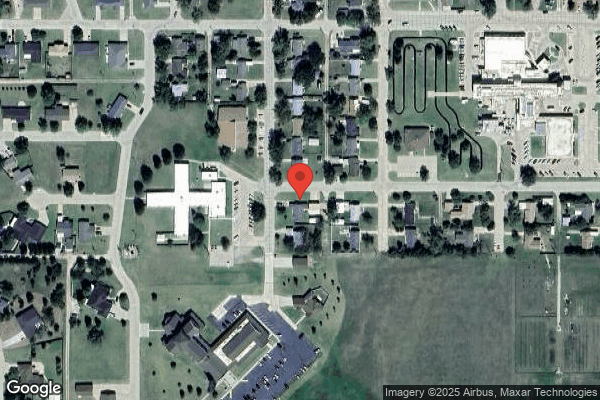

320 S LINCOLN ST, RUSSELL, KS 67665 (785) 483-5364
For profit - Corporation 45 Beds AMERICARE SENIOR LIVING Data: November 2025
Trust Grade
90/100
#48 of 295 in KS
Last Inspection: June 2025

Inspected within the last 6 months. Data reflects current conditions.

Overview

Wheatland Nursing & Rehabilitation Center in Russell, Kansas has received a Trust Grade of A, indicating it is an excellent facility that is highly recommended. It ranks #48 out of 295 nursing homes in Kansas, placing it in the top half, and is the best option in Russell County. The facility is showing improvement, with the number of issues reported decreasing from 4 in 2023 to just 1 in 2025. Staffing is a relative strength, rated 4 out of 5 stars, with a turnover rate of 39%, well below the state average of 48%. Notably, there have been no fines reported, which is a positive sign of compliance. However, there are some concerns to be aware of. The facility has been cited for not employing a full-time Certified Dietary Manager, which raises risks related to nutrition and food safety. Additionally, there were instances of staff not following proper sanitation practices in the kitchen, such as failing to fully cover hair during food preparation. Lastly, the facility has not implemented a water management program for Legionella, potentially exposing residents to health risks. Overall, while Wheatland has many strengths, these specific issues should be considered carefully by families researching care options.

Trust Score
A
90/100
In Kansas
#48/295
Top 16%
Safety Record
Low Risk
No red flags
Inspections
Getting Better
4 → 1 violations
Staff Stability
○ Average
39% turnover. Near Kansas's 48% average. Typical for the industry.
Penalties
✓ Good
No fines on record. Clean compliance history, better than most Kansas facilities.
Skilled Nurses
⚠ Watch
Each resident gets only 28 minutes of Registered Nurse (RN) attention daily — below average for Kansas. Fewer RN minutes means fewer trained eyes watching for problems.
Violations
○ Average
9 deficiencies on record. Average for a facility this size. Mostly minor or procedural issues.
★★★★★
5.0
Overall Rating
★★★★☆
4.0
Staff Levels
★★★☆☆
3.0
Care Quality
★★★★★
5.0
Inspection Score
Stable
2023: 4 issues
2025: 1 issues

The Good

  • 4-Star Staffing Rating · Above-average nurse staffing levels
  • Full Sprinkler Coverage · Fire safety systems throughout facility
  • No fines on record
  • Staff turnover below average (39%)

    9 points below Kansas average of 48%

Facility shows strength in staffing levels, fire safety.

The Bad

Staff Turnover: 39%

Near Kansas avg (46%)

Typical for the industry

Chain: AMERICARE SENIOR LIVING

Part of a multi-facility chain

Ask about local staffing decisions and management

The Ugly 9 deficiencies on record

Jun 2025 1 deficiency
CONCERN (E) 📢 Someone Reported This

A family member, employee, or ombudsman was alarmed enough to file a formal complaint

Potential for Harm - no one hurt, but risky conditions existed

Deficiency F0801 (Tag F0801)

Could have caused harm · This affected multiple residents

The facility had a census of 39 residents. The sample included 13 residents. Based on observation, record review, and interview, the facility failed to employ a full-time Certified Dietary Manager for...

Read full inspector narrative →
The facility had a census of 39 residents. The sample included 13 residents. Based on observation, record review, and interview, the facility failed to employ a full-time Certified Dietary Manager for 38 residents who reside in the facility and receive their meals from the kitchen. This placed the residents at risk of not receiving adequate nutrition. Findings included: - During the initial tour of the kitchen on 06/24/25 at 07:45 AM, Dietary Staff (DS) BB stated she was not certified but started the course in February. On 06/26/25 at 10:50 AM, Administrative Staff A stated the dietary manager was not certified but was in classes for certification. The facility's Dietary Service-Staffing policy, dated 01/05/24, documented the facility employs sufficient staff with the appropriate competencies and skill sets to carry out the functions of the Food and Nutrition Services, taking into consideration resident assessments, individual plans of care and the number, acuity and diagnoses of the facility's resident population in accordance with the facility assessment. In states that have established standards of food service managers or dietary managers meet the State requirement for food service managers or dietary managers.
Oct 2023 4 deficiencies
CONCERN (E)

Potential for Harm - no one hurt, but risky conditions existed

Deficiency F0761 (Tag F0761)

Could have caused harm · This affected multiple residents

The facility had a census of 38 residents. Based on observation, interview, and record review, the facility failed to store medications in a safe manner consistent with the standards of practice when ...

Read full inspector narrative →
The facility had a census of 38 residents. Based on observation, interview, and record review, the facility failed to store medications in a safe manner consistent with the standards of practice when Certified Medication Aide (CMA) R dispensed medications into plastic pill cups, unlabeled without dosage and instructions or resident names, and left them, uncovered, in the medication cart to be administered at a later time. This placed the resident's at risk for medication errors and /or less than therapeutic medication regimens. Findings included: - On 10/24/23 at 08:30 AM, observation revealed five small plastic cups with various medications in the top drawer of the facility medication cart. The cups lacked a resident's name or initials on the cup and the pills were outside of the pharmacy provided packaging and had no label, expiration date,or administration instructions. On 10/24/23 at 8:30 AM, CMA R stated she dispensed five residents' morning medications into the medication cups and attempted to administer to the residents however the residents wanted her to administer them at a later time. CMA R stated she knew which residents the medications belonged to, and went through them and named the five residents names. On 10/30/23 at 10:30 AM, Administrative Staff A stated she was informed of the incident on 10/24/23 and verified that she spoke to CMA R. Administrative Staff A said she told CMA R to administer the residents medications and not store them in the plastic cups without appropriate names and labeling as that was not an acceptable nursing practice. The facility's Medication Administration policy undated, documented medications are to be administered by licensed nurses, or other staff who are legally authorized to do so in this state, as ordered by the physician and in accordance with professional standards of practice. The policy documented the nursing staff would identify the resident by photo on the medication administration record (MAR), review the MAR to identify medication to be administered, compare medication source such as bubble pack vial, with the MAR to verify the residents name, medication name, form, route, dose, and time. The policy documented the nursing staff would remove the medication from its source, taking care not to touch medication with bare hands, and administer the medication as ordered in accordance with manufactures specifications, and observe the resident for consumption, then sign the MAR after administration, Report and document any adverse side effects or refusals. The facility failed to store medications in a safe manner consistent with the standards of practice when CMA R dispensed the medications into plastic pill cups, unlabeled without dosage and instructions or resident names, and left them, uncovered, in the medication cart to be administered at a later time. This placed the resident's at risk for medication errors and /or less than therapeutic medication regimens.
CONCERN (F)

Potential for Harm - no one hurt, but risky conditions existed

Deficiency F0801 (Tag F0801)

Could have caused harm · This affected most or all residents

The facility had a census of 38 residents. Based on observation, interview, and record review, the facility failed to employ a full time Certified Dietary Manager (CDM) to supervise the preparation of...

Read full inspector narrative →
The facility had a census of 38 residents. Based on observation, interview, and record review, the facility failed to employ a full time Certified Dietary Manager (CDM) to supervise the preparation of meals and sanitation in the facility's kitchen. This deficient practice placed the residents of the facility at risk for inadequate nutrition or food borne illness. Findings included: - On 10/24/23 at 08:10 AM, observation revealed Dietary Staff (DS) BB assisted with preparation and serving of the breakfast meal for the residents of the facility. She stated she did not have a dietary manager certification and was currently taking classes for it. On 10/30/23 at 09:16 AM, Administrative Staff A verified it was the facility's policy to employ a certified dietary manager. She stated the Registered Dietician came to the facility every other week. The facility's Food Services Manager policy, dated 12/2008, stated the daily functions of the Food Services Department were under the supervision of a qualified Food Services Manager licensed by this state. The facility failed to employ a full time CDM to supervise the preparation of meals and sanitation in the facility's kitchen, placing the residents of the facility at risk for inadequate nutrition or food borne illness.
CONCERN (F)

Potential for Harm - no one hurt, but risky conditions existed

Food Safety (Tag F0812)

Could have caused harm · This affected most or all residents

The facility had a census of 38 residents. Based on observation, interview, and record review, the facility failed to prepare and serve food in a sanitary manner when dietary staff did not ensure comp...

Read full inspector narrative →
The facility had a census of 38 residents. Based on observation, interview, and record review, the facility failed to prepare and serve food in a sanitary manner when dietary staff did not ensure complete hair coverage with the hairnet. This deficient practice placed the residents of the facility who received meals from the facility at risk for food borne illness. Findings included: - On 10/24/23 at 08:10 AM, observation revealed dietary staff in the facility kitchen preparing and serving breakfast to the residents. Dietary Staff (DS) CC wore a beard net but did not cover his mustache. On 10/25/23 at 11:20 AM, observation in the facility kitchen revealed DS CC prepared food without covering his mustache and his hairnet stopped at the middle of the back of his head. Approximately two inches of hair at the back of his head was uncovered. Further observation revealed DS DD had long, full sideburns in front of his ears to his jawline which were not covered with a beard net while he prepared drinks and desserts for the residents. On 10/26/23 at 11:33 AM, observation revealed DS CC did not wear a hair net over his beard and mustache. heads CC's hairnet he wore on his head did not contain the hair at the lower backside of his head. On 10/26/23 at 01:28 PM, DS BB stated staff were to wear hairnets to cover beards and have thorough hair coverage including mustaches and sideburns. The facility's Dietary Employee Personal Hygiene policy, date 2003, stated all dietary staff must wear hair restraints to prevent hair form contacting food. The facility failed to prepare and serve food in a sanitary manner when dietary staff did not implement thorough hairnet coverage, placing the residents of the facility who received meals from the facility at risk for food borne illness.
CONCERN (F)

Potential for Harm - no one hurt, but risky conditions existed

Infection Control (Tag F0880)

Could have caused harm · This affected most or all residents

**NOTE- TERMS IN BRACKETS HAVE BEEN EDITED TO PROTECT CONFIDENTIALITY** The facility had a census of 38 residents. The sample included 12 residents. Based on record review and interview, the facility ...

Read full inspector narrative →
**NOTE- TERMS IN BRACKETS HAVE BEEN EDITED TO PROTECT CONFIDENTIALITY** The facility had a census of 38 residents. The sample included 12 residents. Based on record review and interview, the facility failed to implement a water management program for the Legionella disease (Legionella is a bacterium spread through mist, such as from air-conditioning units for large buildings. Adults over the age of 50 and people with weak immune systems, chronic lung disease or heavy tobacco use are most at risk of developing a pneumonia caused by legionella). This placed the residents in the facility at risk for infectious disease. Findings Included: - On 10/31/23 at 10:30 AM, Administrative Staff A stated the city conducted routine water testing for the whole city, however the facility did not have record of or knowledge of any of the results or if they included testing for Legionella. Administrative Staff A had the information for the facility's procedure for water management but was unable to provide evidence the facility implemented the procedure and actively monitored the water for Legionella disease. The facility's Legionella Surveillance policy dated March 2023, documented the Legionella surveillance is one component of the facility's water management plans for reducing the risk of Legionella and other opportunistic pathogens in the facility's water system. The policy documented the purpose of the facility to establish primary and secondary strategies for the prevention and control of Legionella infections. Legionella surveillance is one component of the facility's water management plans for reducing the risk of Legionella and other opportunistic pathogens in the facility's water system. The policy further documented the facility should use the [NAME] criteria when diagnosing pneumonia. Residents with health care associated pneumonia or who have failed antibiotic therapy for community acquired pneumonia shall be tested for Legionella using both culture of lower respiratory secretions and Legionella urinary antigen test. Investigation for a facility source of Legionella, which may include culturing the facility water for Legionella. The Infection Preventionist will investigate all definite healthcare associated Legionnaires' disease for the source of the legionella. The Infection Preventionist will also investigate the source of Legionella when two or more possible health care associated Legionnaires' disease are identified. The policy further documented the requirements will be met by the following: cooling towers and potable water systems shall be routinely maintained. At -risk medical equipment shall be cleaned and maintained in accordance with manufacturer recommendations. Non-potable water systems shall be routinely cleaned and disinfected. Nebulization devices shall be filled only with sterile fluid-water or aerosol medication. Cool water shall be stored below 68 degrees Fahrenheit, and hot water shall be stored above 140 degrees and circulated at a minimum return temperature of 124 degrees Fahrenheit. A full-scale environmental investigation to identify environmental sources may include perform environmental sampling, as indicated by the environmental assessment. Decontamination of identified environmental sources in accordance with current standards. Heightened surveillance and environmental sampling, including increased suspicion for legionella cases and increased frequency of testing above the facility's usual testing protocols. The facility failed to implement a water management program to test and manage waterborne pathogens placing the residents who reside in the facility at risk of contracting Legionella pneumonia. This placed the residnets at risk for water borne illness.
Apr 2022 4 deficiencies
CONCERN (D)

Potential for Harm - no one hurt, but risky conditions existed

Resident Rights (Tag F0550)

Could have caused harm · This affected 1 resident

The facility had a census of 36 residents. The sample included 13 residents with one reviewed for dignity. Based on observation, record review and interview the facility failed to treat Resident (R) 1...

Read full inspector narrative →
The facility had a census of 36 residents. The sample included 13 residents with one reviewed for dignity. Based on observation, record review and interview the facility failed to treat Resident (R) 16 with respect and dignity during care of a gastrostomy tube (a tube inserted through the stomach that brings nutrition directly into the stomach). This placed the resident at risk for an undignified experience. Findings included: - R16's electronic medical record (EMR) documented diagnoses of cerebrovascular disease (group of conditions that affect blood flow and blood vessels in the brain) and dysphagia (difficulty swallowing foods or liquids). The Quarterly Minimum Data Set, dated 01/15/22, documented R16 with severely impaired cognition, required extensive assistance with transfers, bed mobility and received all nutrition and medications by a gastrostomy tube. The Gastrostomy Care Plan, dated 01/15/22, directed the staff to administer all medications and nutrition for R16 by gastrostomy tube and the resident was NPO (nothing by mouth). On 03/31/22 at 10:45 AM, observation revealed Licensed Nurse (LN) G pushed R16 in his reclining wheelchair into his room. When entering the room observation revealed R16's roommate seated on his bed. LN G washed his hands and put on clean gloves, pulled up R16's shirt, opened the gastrostomy tube, and used a syringe and auscultated (listened with stethoscope) for placement. LN G then administered medications via the gastrostomy tube. When completed LN G closed the gastrostomy tube and pulled down the resident's shirt. The door to the room was left open during the procedure and the divider curtain was not pulled so the roommate could see the procedure. On 03/31/22 at 11:00 AM, LN G verified he did not provide privacy for R16 during the procedure and should have shut the room door and pulled the privacy curtain around the resident. On 03/31/22 at 02:00 PM, Administrative Nurse D verified privacy should have been provided for R16 during the gastrostomy procedure. The facility's Dignity policy, dated August 2009, documented each resident shall be cared for in a manner that promotes and enhances quality of life, dignity and respect. Staff shall promote and maintain a resident's privacy including bodily privacy during procedures. The facility failed to provide privacy for R16 during gastrostomy use, placing the resident at risk for embarrassment and an undignified environment.
CONCERN (D)

Potential for Harm - no one hurt, but risky conditions existed

Deficiency F0558 (Tag F0558)

Could have caused harm · This affected 1 resident

**NOTE- TERMS IN BRACKETS HAVE BEEN EDITED TO PROTECT CONFIDENTIALITY** The facility had a census of 36 residents. The sample included 13 residents with one reviewed for accommodation of needs. Based ...

Read full inspector narrative →
**NOTE- TERMS IN BRACKETS HAVE BEEN EDITED TO PROTECT CONFIDENTIALITY** The facility had a census of 36 residents. The sample included 13 residents with one reviewed for accommodation of needs. Based on observation, record review, and interview, the facility failed to provide reasonable accommodation of needs for Resident (R) 34, when staff placed him in a wheelchair where he was unable to reach the floor with his feet to allow him to self-propel around the facility. This placed the resident at risk for maintaining his independence. Findings included: - R34's electronic medical record (EMR) documented the resident had diagnoses of restlessness and agitation and bipolar disorder (major mental illness that caused people to have episodes of severe high and low moods). R34's Quarterly Minimum Data Set (MDS), dated [DATE], documented R34 had a Brief Interview of Mental Status (BIMS) of 00, which indicated severely impaired cognition. The MDS documented the resident required extensive staff assistance with activities of daily living (ADLs) except limited staff assistance with locomotion off the unit, and supervision with eating. The MDS documented R34 had no upper or lower extremity impairment and used a wheelchair for mobility. R34's Self Care Deficit Care Plan, revised 03/24/22, documented R34 used a wheelchair for mobility and propelled himself at times, but staff needed to assist when needed. On 03/30/22 at 02:00 PM, observation revealed R34 sat in a wheelchair in the hallway with gripper socks on both feet and no foot pedals attached to the wheelchair. R34 leaned forward, placed the tips of his toes on the wood floor, and attempted to propel his wheelchair down the hall using his toes. R34 was unable to move his wheelchair forward. On 3/30/22 at 02:00 PM, observation revealed R34 sat in a wheelchair, without foot pedals on the wheelchair, and gripper socks on both feet. R34 leaned forward in the wheelchair, placed the tips of his toes on the wood floor, and attempted several times to self-propel the wheelchair down the hall. R34 was unable to move his wheelchair forward using the tips of his toes. On 03/31/22 at 08:56 AM, observation revealed R34 sat in a wheelchair, without foot pedals on the wheelchair, and gripper socks on both feet. R34 leaned forward and placed the tips of his toes on the wood floor, made several attempts to propel himself forward, but was unable to move his wheelchair any distance. On 03/31/22 at 09:17 AM, observation revealed R34 sat in a wheelchair in the hall, without foot pedals on the wheelchair, and gripper socks on both feet. R34 leaned forward, placed the tips of his toes on the wood floor, made several attempts to propel himself forward down the hall towards the nurses station, but was unable to move his wheelchair any distance. On 03/31/22 at 01:07 PM, observation revealed R34 sat in a wheelchair in the carpeted living room, leaned forward, and touched the tips of his toes on the carpet. R34 made several attempts to move his wheelchair forward, but was unable to move any distance. On 04/04/22 at 08:52 AM, observation revealed R34 sat in a wheelchair in the hallway with gripper socks on both feet, and placed the tips of his toes on the wood floor. R34 made several attempts to propel himself forward, but unable to move his wheelchair any distance. On 04/04/22 at 02:02 PM, Certified Nurse Aide (CNA) O stated R34 used to wear shoes when propelling his wheelchair, but staff had washed them and R34 would take them off. CNA O stated she had not noticed R34 was unable to place his feet flat on the floor to self-propel in his wheelchair. On 04/04/22 at 09:01 AM, Licensed Nurse (LN) G stated therapy made several adjustments to R34's wheelchair to allow him to propel around the facility and R34 would wear his shoes at times but a lot of time would take them off. On 04/04/22 at 09:36 AM, Physical Therapy Consultant (PTC) HH stated therapy staff last evaluated R34's wheelchair on 01/24/22 with his shoes on and she was unaware he was not wearing them. PTC HH stated she would have Occupational Therapy staff take a look at R34's wheelchair to see if it could be adjusted so he could place his feet on the floor. On 04/05/22 at 10:16 AM, Administrative Nurse D stated she expected staff to put foot pedals on the resident's wheelchair and propel him if he was having trouble self propelling his wheelchair. Since R34 liked to self propel in his wheelchair around the facility, staff should have reported his feet would not touch the floor to her and physical therapy staff so they could have reevaluated R34's wheelchair. The facility's Quality of Life-Accommodation of Needs policy, revised August 2009, documented the resident's individual needs and preferences, including the need for adaptive devices and modifications to the physical environment, should be evaluated upon admission and reviewed on an ongoing basis. The facility failed to provide R34 accommodation of needs when staff placed him in a wheelchair where R34 could not reach the floor with his feet to self propel around the facility. This placed the resident at risk for maintaining his independence.
CONCERN (D)

Potential for Harm - no one hurt, but risky conditions existed

Accident Prevention (Tag F0689)

Could have caused harm · This affected 1 resident

**NOTE- TERMS IN BRACKETS HAVE BEEN EDITED TO PROTECT CONFIDENTIALITY** The facility had a census of 36 residents. The sample included 13 residents of which five were reviewed for falls. Based on obse...

Read full inspector narrative →
**NOTE- TERMS IN BRACKETS HAVE BEEN EDITED TO PROTECT CONFIDENTIALITY** The facility had a census of 36 residents. The sample included 13 residents of which five were reviewed for falls. Based on observation, record review, and interview, the facility failed to provide adequate supervision to prevent a fall for one of the five reviewed for falls. Resident (R) 15, who had a history of falls, received a skin tear, and hematoma (bruise, pooling of blood under the skin) when she fell out of a shower chair. The facility further failed to ensure staff transferred R15 correctly from the wheelchair to the shower chair. Findings included: - The electronic medical record (EMR) documented R15's diagnoses of left femur fracture (broken left hip), Alzheimer's disease (progressive disease that destroys memory and mental functions), delusional disorder (altered reality), and anxiety (intense worry and fear). R15's Quarterly Minimum Data Set (MDS), dated [DATE], recorded the resident severely cognitively impaired, required extensive assistance with transfers and bathing, and no falls. The Activities of Daily Living (ADLs) Care Plan, dated 10/16/21, directed the staff to provide extensive assistance with bathing with one to two staff. The Safety Care Plan, dated 10/16/21, informed the staff the resident had a history of falls and was at risk for falls. The Fall Risk Evaluation, dated 10/21/21, documented the resident a high risk for falls. The Nurses Note, dated 11/13/21 at 01:19 PM, documented an unidentified certified nurse aide called for help in the shower room. Upon entering the shower room Administrative Nurse D observed R15 lying on the floor in front of the shower chair. Certified Nurse Aide (CNA) O informed the nurse she was getting a towel for the resident and the resident fell out of the shower chair. (The towel rack/shelf approximately five feet from where the resident fell.) When R15 was assessed by Administrative Nurse D the resident had two skin tears to the left elbow which measured 0.1 centimeters (cm) and a lump on the top of her head. The resident was transferred by facility staff to the emergency room via the facility van. R15 had a computed tomography scan (CT scan) of the head while at the emergency room and the results were negative for a brain bleed. The resident then returned to the facility. The facility's Fall Investigation, dated 11/13/21, documented the resident was unable to answer questions regarding what had happened, and CNA O needed to get a towel for the resident before the fall occurred. CNA O turned away from the resident to grab a towel and during that time, R15 slid from the shower chair. The action documented by the facility was to gather supplies before providing a shower, and to use a reclining shower chair for the resident. Review of the written statement, dated 11/13/21, revealed CNA O documented she needed to get a towel for the resident after showering her, and when she got the towel the resident fell out of the shower chair onto the floor. Review of the written statement, dated 11/13/21, revealed Administrative Nurse D documented upon entering the shower room, R15 was lying on the floor in front of the shower chair, had a skin tear, and a bump to her head, and R15 was unable to verbalize what had happened. On 04/04/22 at 09:50 AM, observation revealed CNA M pushed R15 into the shower room. Further observation revealed CNA M placed a gait belt around R15's waist, CNA N stood on the opposite side, CNA M and CNA N lifted the resident under her arms not holding the gait belt, and transferred R15 to a shower chair. The resident was unable to bear weight with her legs bent and dangling. On 04/05/22 at 01:50 PM, observation of the shower room, revealed a metal three shelf towel rack approximately six feet from the shower stall, two feet from where CNA O stood during the occurrence, and three feet from where the resident sat in the shower chair at the time of the occurrence. On 04/05/22 at 01:55 PM, Administrative Nurse D verified the distance from the shower chair to the towel rack. Administrative Nurse D also verified CNA O would have had to walk over to the towel rack leaving R15 unsupervised. The facility's Falls policy, dated 11/20/20, documented the facility will assess each resident for fall risk, including ambulation, mobility, gait, balance, and excessive motor activity, activities of daily living (ADL) capabilities, activity tolerance, continence, and cognition. Will identify the risk factors to prevent falls or accidents for each resident. The facility failed to provide adequate supervision and safety for R15 during a shower and failed to properly transfer R15 from the wheelchair to the shower chair. This placed R15 at increased risk for major injury related to accidents and hazards.
CONCERN (D)

Potential for Harm - no one hurt, but risky conditions existed

Deficiency F0760 (Tag F0760)

Could have caused harm · This affected 1 resident

**NOTE- TERMS IN BRACKETS HAVE BEEN EDITED TO PROTECT CONFIDENTIALITY** The facility had a census of 36 residents. The sample included 13 residents. Based on observation, record review, and interview ...

Read full inspector narrative →
**NOTE- TERMS IN BRACKETS HAVE BEEN EDITED TO PROTECT CONFIDENTIALITY** The facility had a census of 36 residents. The sample included 13 residents. Based on observation, record review, and interview the facility failed to obtain Resident (R) 3's blood pressure prior to administrating her Metoprolol Tartrate (medication used to lower blood pressure) 100 milligram (mg). This placed the resident at risk for side effects from a low blood pressure. Findings included: - R3's electronic medical record (EMR) documented she had a diagnosis of hypertension (elevated blood pressure). R3's Medicare Five Day Minimum Data Set (MDS), dated [DATE], documented she had a Brief Interview of Mental Status (BIMS) score of two, which indicated severely impaired cognition. The MDS documented R3 required limited staff assistance with activities of daily living (ADLs) except supervision with eating. R3 received scheduled pain medications, antianxiety (class of medications that calm and relax people with excessive anxiety, nervousness, or tension) medication for four days, and antidepressant (class of medications used to treat mood disorders and relieve symptoms of abnormal emotional state characterized by exaggerated feelings of sadness, worthlessness and emptiness) and anticoagulant (medication used to prevent the formation of blood clots and to maintain open blood vessels) medications for five days during the lookback period. R3's Medication Care Plan, revised 01/11/22, instructed staff to report to the nurse immediately any sign or symptoms of allergic reactions, sudden change in mental status or sudden changes in vital signs(measurements of temperature, pulse (rhythmical throbbing of arteries produced by the regular contractions of the heart), respirations (rate of breathing) and blood pressure (pressure of blood pushing against the walls of your arteries). R3's Physician Order, dated 03/14/22, instructed staff to hold R3's Metoprolol Tartrate Tablet, 100 mg, if her systolic (the first number - indicates how much pressure your blood is exerting against your artery walls when the heart beats) blood pressure below 100 or diastolic (the second number - indicates how much pressure your blood is exerting against your artery walls while the heart is resting between beats) below 50. On 03/31/22 at 08:02 AM, observation revealed Certified Medication Aide (CMA) R administered Metoprolol Tartrate, 100 mg, to R3 without checking her blood pressure prior to administration. On 03/31/22 at 08:02 AM, CMA R verified the finding above and stated the electronic medication administration record (EMAR) usually prompted staff if there were specific physician instructions regarding administration of R3's Metoprolol. On 03/31/22 at 08:07 AM, Administrative Nurse D verified R3's EMAR lacked documentation to prompt staff to check the resident's blood pressure, stated staff should check R3's blood pressure prior to administering her Metoprolol, and follow physician ordered parameters (specific instructions) for the medication. The facility's Administration of Medication Policy, revised on 01/01/18, documented licensed nurses would make any new orders and/or changes to the resident's EMAR/Physician Order Sheet (POS) and Treatment Administration Record (TAR). The changes would be placed on the correct information record. The facility staff failed to check R3's blood pressure prior to administrating Metoprolol Tartrate. This placed the resident at risk for side effects from a low blood pressure.
Understanding Severity Codes (click to expand)
Life-Threatening (Immediate Jeopardy)
J - Isolated K - Pattern L - Widespread
Actual Harm
G - Isolated H - Pattern I - Widespread
Potential for Harm
D - Isolated E - Pattern F - Widespread
No Harm (Minor)
A - Isolated B - Pattern C - Widespread

Questions to Ask on Your Visit

  • "Can I speak with families of current residents?"
  • "What's your RN coverage like on weekends and overnight?"

Our Honest Assessment

Strengths
  • • Grade A (90/100). Above average facility, better than most options in Kansas.
  • • No major safety red flags. No abuse findings, life-threatening violations, or SFF status.
  • • No fines on record. Clean compliance history, better than most Kansas facilities.
  • • 39% turnover. Below Kansas's 48% average. Good staff retention means consistent care.
Concerns
  • • No significant concerns identified. This facility shows no red flags across CMS ratings, staff turnover, or federal penalties.
Bottom line: Generally positive indicators. Standard due diligence and a personal visit recommended.

About This Facility

What is Wheatland Nursing & Rehabilitation Center's CMS Rating?

CMS assigns WHEATLAND NURSING & REHABILITATION CENTER an overall rating of 5 out of 5 stars, which is considered much above average nationally. Within Kansas, this rating places the facility higher than 99% of the state's 100 nursing homes. This rating reflects solid performance across the metrics CMS uses to evaluate nursing home quality.
How is Wheatland Nursing & Rehabilitation Center Staffed?

CMS rates WHEATLAND NURSING & REHABILITATION CENTER's staffing level at 4 out of 5 stars, which is above average compared to other nursing homes. Staff turnover is 39%, compared to the Kansas average of 46%. This relatively stable workforce can support continuity of care.

What Have Inspectors Found at Wheatland Nursing & Rehabilitation Center?

State health inspectors documented 9 deficiencies at WHEATLAND NURSING & REHABILITATION CENTER during 2022 to 2025. These included: 9 with potential for harm.
Who Owns and Operates Wheatland Nursing & Rehabilitation Center?

WHEATLAND NURSING & REHABILITATION CENTER is owned by a for-profit company. For-profit facilities operate as businesses with obligations to shareholders or private owners. The facility is operated by AMERICARE SENIOR LIVING, a chain that manages multiple nursing homes. With 45 certified beds and approximately 38 residents (about 84% occupancy), it is a smaller facility located in RUSSELL, Kansas.
How Does Wheatland Nursing & Rehabilitation Center Compare to Other Kansas Nursing Homes?

Compared to the 100 nursing homes in Kansas, WHEATLAND NURSING & REHABILITATION CENTER's overall rating (5 stars) is above the state average of 2.9, staff turnover (39%) is near the state average of 46%, and health inspection rating (5 stars) is much above the national benchmark.

What Should Families Ask When Visiting Wheatland Nursing & Rehabilitation Center?

Based on this facility's data, families visiting should ask: "Can I visit during a mealtime to observe dining assistance and food quality?" "How do you handle medical emergencies, and what is your hospital transfer rate?" "Can I speak with family members of current residents about their experience?"

Is Wheatland Nursing & Rehabilitation Center Safe?

Based on CMS inspection data, WHEATLAND NURSING & REHABILITATION CENTER has a clean safety record: no substantiated abuse findings (meaning no confirmed cases of resident harm), no Immediate Jeopardy citations (the most serious violation level indicating risk of serious injury or death), and is not on the Special Focus Facility watch list (a federal program monitoring the lowest-performing 1% of nursing homes). The facility has a 5-star overall rating and ranks #1 of 100 nursing homes in Kansas. While no facility is perfect, families should still ask about staff-to-resident ratios and recent inspection results during their visit.

Do Nurses at Wheatland Nursing & Rehabilitation Center Stick Around?

WHEATLAND NURSING & REHABILITATION CENTER has a staff turnover rate of 39%, which is about average for Kansas nursing homes (state average: 46%). Moderate turnover is common in nursing homes, but families should still ask about staff tenure and how the facility maintains care continuity when employees leave.

Was Wheatland Nursing & Rehabilitation Center Ever Fined?

WHEATLAND NURSING & REHABILITATION CENTER has no federal fines on record. CMS issues fines when nursing homes fail to meet care standards or don't correct problems found during inspections. The absence of fines suggests the facility has either maintained compliance or corrected any issues before penalties were assessed. This is a positive indicator, though families should still review recent inspection reports for the full picture.

Is Wheatland Nursing & Rehabilitation Center on Any Federal Watch List?

WHEATLAND NURSING & REHABILITATION CENTER is not on any federal watch list. The most significant is the Special Focus Facility (SFF) program, which identifies the bottom 1% of nursing homes nationally based on persistent, serious quality problems. Not being on this list means the facility has avoided the pattern of deficiencies that triggers enhanced federal oversight. This is a positive indicator, though families should still review the facility's inspection history directly.