LAKEPOINT WICHITA, LLC
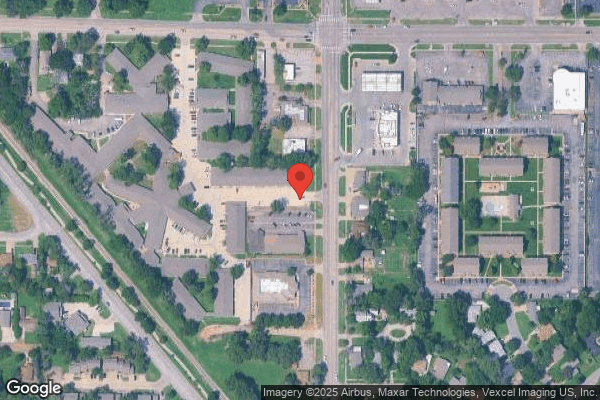
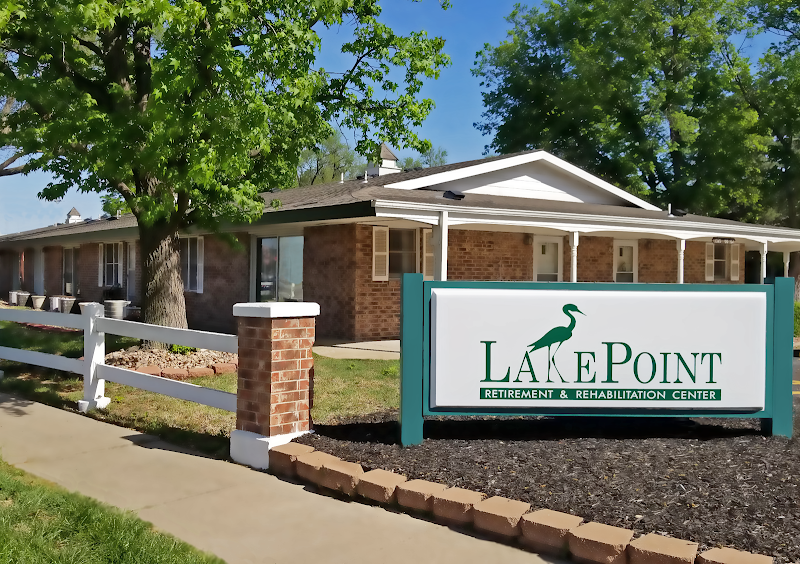
1315 N WEST STREET, WICHITA, KS 67203 (316) 943-1295
For profit - Limited Liability company 110 Beds Independent Data: November 2025
Trust Grade
20/100
#198 of 295 in KS
Last Inspection: December 2024

Within standard 12-15 month inspection cycle. Federal law requires annual inspections.

Overview

LakePoint Wichita has received a Trust Grade of F, indicating significant concerns about the quality of care provided. It ranks #198 out of 295 nursing homes in Kansas, placing it in the bottom half of facilities in the state, and #18 out of 29 in Sedgwick County, meaning only a handful of local options are worse. Although the facility shows an improving trend, reducing issues from 24 in 2023 to 13 in 2024, it still faces serious challenges such as high staffing turnover at 66%, which is concerning compared to the state average of 48%. While staffing is a relative strength with a 4/5 star rating, there are troubling incidents, including a resident suffering a femur fracture due to improper transfer techniques and another losing significant weight due to inadequate nutritional support and lack of supervision during meals. Additionally, fines amounting to $116,826 are higher than 87% of Kansas facilities, raising concerns about compliance with care standards.

Trust Score
F
20/100
In Kansas
#198/295
Bottom 33%
Safety Record
High Risk
Review needed
Inspections
Getting Better
24 → 13 violations
Staff Stability
⚠ Watch
66% turnover. Above average. Higher turnover means staff may not know residents' routines.
Penalties
○ Average
$116,826 in fines. Higher than 64% of Kansas facilities. Some compliance issues.
Skilled Nurses
○ Average
Each resident gets 30 minutes of Registered Nurse (RN) attention daily — about average for Kansas. RNs are the most trained staff who monitor for health changes.
Violations
⚠ Watch
46 deficiencies on record. Higher than average. Multiple issues found across inspections.
★★☆☆☆
2.0
Overall Rating
★★★★☆
4.0
Staff Levels
★★★☆☆
3.0
Care Quality
★★☆☆☆
2.0
Inspection Score
Stable
2023: 24 issues
2024: 13 issues

The Good

  • 4-Star Staffing Rating · Above-average nurse staffing levels
  • Full Sprinkler Coverage · Fire safety systems throughout facility
  • No fines on record

Facility shows strength in staffing levels, fire safety.

The Bad

2-Star Overall Rating

Below Kansas average (2.9)

Below average - review inspection findings carefully

Staff Turnover: 66%

20pts above Kansas avg (46%)

Frequent staff changes - ask about care continuity

Federal Fines: $116,826

Well above median ($33,413)

Significant penalties indicating serious issues

Staff turnover is elevated (66%)

18 points above Kansas average of 48%

The Ugly 46 deficiencies on record

2 actual harm
Dec 2024 12 deficiencies
CONCERN (D) 📢 Someone Reported This

A family member, employee, or ombudsman was alarmed enough to file a formal complaint

Potential for Harm - no one hurt, but risky conditions existed

Resident Rights (Tag F0550)

Could have caused harm · This affected 1 resident

**NOTE- TERMS IN BRACKETS HAVE BEEN EDITED TO PROTECT CONFIDENTIALITY** The facility had a census of 79 residents. The sample included 20 residents, with two reviewed for dignity. Based on observation...

Read full inspector narrative →
**NOTE- TERMS IN BRACKETS HAVE BEEN EDITED TO PROTECT CONFIDENTIALITY** The facility had a census of 79 residents. The sample included 20 residents, with two reviewed for dignity. Based on observation, record review, and interview, the facility failed to promote dignity for Resident (R)29, when staff referred to the resident as a feeder and stood to assist the resident with her meal. This placed R29 at risk for impaired dignity. Finding included: - The Electronic Medical Record (EMR) for R29 documented diagnoses of dementia (a progressive mental disorder characterized by failing memory and confusion), major depressive disorder (major mood disorder that causes persistent feelings of sadness), delusional disorder (untrue persistent belief or perception held by a person although evidence shows it was untrue), anxiety (mental or emotional reaction characterized by apprehension, uncertainty, and irrational fear), and hypertension (high blood pressure). The Quarterly Minimum Data Set (MDS), dated [DATE], documented R29 had severely impaired cognition. R29 was dependent on staff for toileting, dressing, mobility, and transfers. R29 required assistance with eating. R29 had unclear speech and rarely made herself understood. She had highly impaired vision and adequate hearing. R29's Care Plan, dated 10/28/24, documented R29 had impaired cognition and thought process due to diagnoses of Alzheimer's dementia, and chronic disease. The care plan directed the staff to offer assistance with her needs. On 12/04/24 at 11:45 AM, observation revealed R29 sat in her Broda chair (specialized wheelchair with the ability to tilt and recline). Certified Nurse Aide (CNA) O pushed the resident from her room to the dining room. CNA O stated to the surveyor seated at the resident's table in the small dining room This is the feeder table and told the surveyor she could sit at the feeder table. CNA O stated the facility had a few feeders that sit there to eat their meals and staff assisted them to eat. On 12/02/24 at 12:22 PM, observation revealed CNA N stood beside R29 and assisted her in eating her pureed meal for approximately eight minutes. Administrative Nurse F came into the dining room and told CNA N she needed to sit down when she assisted the resident in eating. Approximately five minutes later Administrative Nurse D came to the dining room table and counseled CNA N, in front of the residents, staff, and survey team, that she needed to sit when she assisted the residents to eat because it was a dignity issue to stand beside the resident. On 12/02/24 at 03:10 PM, Administrative Nurse D stated the staff should not have called R29 a feeder as that was not dignified. Administrative Nurse D said she would educate the staff about not calling the residents feeders. The facility's Resident Rights policy, dated 12/08/23, documented each resident had the right and would be afforded the right to a dignified existence, self-determination, and communication with and access to persons and services inside and outside the facility without interference, coercion, discrimination, or reprisal. No staff member or contracted provider of care would hamper, compel, treat differently, or retaliate against a resident for exercising Resident Rights. Each resident would be treated with dignity, would be allowed, and encouraged to make choices and to be free from neglect and misappropriation of personal property. The facility failed to promote care for R29 in a manner to maintain and enhance dignity and respect. This placed R29 at risk for impaired dignity.
CONCERN (D) 📢 Someone Reported This

A family member, employee, or ombudsman was alarmed enough to file a formal complaint

Potential for Harm - no one hurt, but risky conditions existed

Deficiency F0582 (Tag F0582)

Could have caused harm · This affected 1 resident

The facility had a census of 79 residents. The sample included 20 residents with three residents reviewed for Center for Medicare and Medicaid Services (CMS) Beneficiary Liability notices. Based on re...

Read full inspector narrative →
The facility had a census of 79 residents. The sample included 20 residents with three residents reviewed for Center for Medicare and Medicaid Services (CMS) Beneficiary Liability notices. Based on record review and interview, the facility failed to provide the CMS Form 10055, Advanced Beneficiary Notice (ABN), to the resident or their representative for Resident (R) 429. This placed the residents at risk for uninformed decisions regarding skilled services. Findings included: - The Medicare ABN form informed the beneficiaries Medicare may not pay for future skilled therapy and did not provide an estimated cost to continue their services. The form included options for the beneficiary to (1) receive specified services listed, and bill Medicare for an official decision on payment. I understand if Medicare does not pay, I will be responsible for payment, but can appeal to Medicare. (2) receive therapy listed, but do not bill Medicare, I am responsible for payment for payment of services. (3) I do not want the listed services. R429's clinical record lacked evidence the facility provided CMS form 10055 when the resident's skilled services ended on 09/15/24. On 12/02/24 at 02:35 PM, Administrative Staff B stated R429 was admitted to the facility on skilled care; when it was time for him to be discharged from skilled care, Administrative Staff B contacted the resident's representative by phone. Administrative Staff B stated that R429's representative wanted R429 to stay in the facility for a few more days due to a death in the family. Administrative Staff B said she told R429's representative the room price would increase but verified the room prices and provision of information was not provided on the CMA ABN 10055. On 12/04/24 at 09:40 AM, Administrative Staff A verified that R429 was not provided the ABN 10055. Upon request, the facility did not provide an ABN Policy. The facility failed to provide R429 with the ABN form CMS 10055 as required. This placed the residents at risk for uninformed decisions regarding skilled services.
CONCERN (D) 📢 Someone Reported This

A family member, employee, or ombudsman was alarmed enough to file a formal complaint

Potential for Harm - no one hurt, but risky conditions existed

Transfer Notice (Tag F0623)

Could have caused harm · This affected 1 resident

**NOTE- TERMS IN BRACKETS HAVE BEEN EDITED TO PROTECT CONFIDENTIALITY** The facility had a census of 79 residents. The sample included 20 residents, with one reviewed for hospitalization. Based on obs...

Read full inspector narrative →
**NOTE- TERMS IN BRACKETS HAVE BEEN EDITED TO PROTECT CONFIDENTIALITY** The facility had a census of 79 residents. The sample included 20 residents, with one reviewed for hospitalization. Based on observation, record review, and interview, the facility failed to notify the State Long Term Care Ombudsman (LTCO) for Resident (R) 31's facility-initiated discharge to the hospital. This placed R31 at risk for impaired rights. Findings included: - The Electronic Medical Record (EMR) for R31 documented diagnoses of depression (a mood disorder that causes a persistent feeling of sadness and loss of interest), anxiety (mental or emotional reaction characterized by apprehension, uncertainty, and irrational fear), osteomyelitis (local or generalized infection of the bone and bone marrow), pain, atrial fibrillation (rapid, irregular heartbeat), and peripheral vascular disease (PVD- slow and progressive circulation disorder causing narrowing, blockage, or spasms in a blood vessel). The Medicare 5-Day Minimum Data Set (MDS), dated [DATE], documented R31 had intact cognition and was dependent upon staff for transfers. R31 required substantial assistance with toileting, showers, dressing, and mobility, and was independent with transfers. The MDS further documented R31 received antidepressant (a class of medications used to treat mood disorders), opioid (a class of controlled drugs used to treat pain), and hypoglycemic (less than normal amount of sugar in the blood) medications. R31 was depressed for seven to 11 days and did not have any behaviors. The Quarterly MDS, dated 09/25/24, documented R31 had intact cognition. R31 was dependent upon staff for transfers. R31 required substantial assistance with toileting, bathing, dressing, and mobility. The MDS further documented R31 received antidepressant and diuretic (a medication to promote the formation and excretion of urine) medications and had no behaviors. R31's Care Plan dated 07/08/24, documented R31 was at risk for medication adverse reactions related to Black Box Warning (BBW-highest safety-related warning that medications can be assigned by the Food and Drug Administration) medications and directed staff to administer medication as ordered, and document and monitor for side effects and effectiveness. The care plan directed staff to encourage R31 to express her feelings as needed, determine if problems seem to be related to external causes, and monitor for targeted behaviors. The care plan further directed staff to educate the resident and family of the risks of side effects and potential adverse effects of the medication. The Nurse's Notes, dated 06/25/24 at 01:12 PM, documented the nurse entered R31's room and saw R31's head lying on her meal tray. The nurse attempted to wake up R31 and she had a blank stare, mumbled words, and was limp. The note further documented the nurse informed the physician and obtained R31's blood sugar, and it was 71 milligrams per deciliters (. The family requested R31 to be seen at the hospital. R31's EMR lacked documentation staff notified the LTCO of the resident's discharge from the facility. On 12/03/24 at 01:48 PM, Social Service X stated she had not been employed in June when R31 was sent to the hospital. Social Service X supplied documentation sent to the LTCO of the residents who had been discharged for the last few months and verified R31's discharge was not sent to the LTCO. On 12/03/24 at 02:00 PM, Administrative Nurse D stated that R31's hospital discharge should have been sent to the LTCO and the person responsible for sending information to the LTCO no longer worked at the facility. The facility's Notifying Resident of Facility-Initiated Discharge policy, dated 07/31/24, documented the facility would notify the State Long Term Care Ombudsman of a facility-initiated transfer/discharge at the same time the resident/representative was notified by providing the LTCO of a copy of the transfer/discharge letter. The facility failed to notify the LTCO of R31's facility-initiated discharge to the hospital. This placed the resident at risk for impaired rights.
CONCERN (D) 📢 Someone Reported This

A family member, employee, or ombudsman was alarmed enough to file a formal complaint

Potential for Harm - no one hurt, but risky conditions existed

Accident Prevention (Tag F0689)

Could have caused harm · This affected 1 resident

The facility had a census of 79 residents. The sample included 20 residents. Based on observation, record review, and interview the facility failed to ensure an environment free from accident hazards ...

Read full inspector narrative →
The facility had a census of 79 residents. The sample included 20 residents. Based on observation, record review, and interview the facility failed to ensure an environment free from accident hazards when staff left a container of toilet bowl cleaner, a container of Comet, two aerosol spray deodorants, and a container of Virex in an unlocked wooden cabinet. This placed the two cognitively impaired, independently mobile residents at risk for preventable accidents or injuries. Findings included: - On 12/02/24 at 11:10 AM, observation in the 200-hall quiet area located by the visitor bathroom revealed three unlocked bottom doors of a wooden cabinet that contained the following: A one-quart container of the Works toilet bowl cleaner. Observation revealed the label read: causes skin burns and irreversible eye damage. Harmful if swallowed or absorbed through the skin. Do not get in the eyes, on skin, or on clothing. Wear goggles or safety glasses, protective clothing, and rubber (or chemical-resistant) gloves. Wash thoroughly with soap and water after handling and before eating, drinking, chewing gum, using tobacco, or using the toilet. Remove contaminated clothing and wash clothing before reuse. Do not breathe vapor or fumes. Keep out of reach of children. A 1.31-pound (lb.) container of Comet (powdered disinfectant cleaner). Further observation revealed the label read: moderately irritating to eyes, skin, and mucous membranes. Avoid contact with eyes, skin, or clothing. Harmful if swallowed or inhaled. Avoid breathing vapor. Remove and wash contaminated clothing before reuse. Wash thoroughly with soap and water after handling and before eating, drinking, chewing gum, or using tobacco. Do not mix with products that contain ammonia or dangerous fumes. Two aerosol spray deodorants. Observation revealed the label read: For external use only. Keep out of reach of children. If accidentally swallowed get medical help or contact a Poison Control Center right away. Do not use it on broken skin or irritated skin. A half-full 946 milliliter (ml) container of Virex (disinfectant cleaner). Further observation revealed the label read keep out of reach of children. On 12/02/24 at 11:15 AM, Maintenance Staff (MS) V verified the above findings and stated the chemicals should be kept in a locked housekeeping cart. MS V removed the items and gave them to the housekeeper, who locked them in her cart. On 12/04/24 at 10:10 AM, Administrative Staff A stated he expected staff to store chemicals in a locked cabinet. The facility's Chemical Storage Policy, revised 03/12/24, documented that all chemicals that are deemed hazardous to residents would be stored in a locked area or used under supervision. This is defined as any chemical that would cause harm or stated to keep away from children. The facility failed to ensure an environment free from accident hazards when staff stored harmful chemicals in an unlocked cabinet. This placed the two cognitively impaired, independently mobile residents at risk for preventable accidents or injuries.
CONCERN (D) 📢 Someone Reported This

A family member, employee, or ombudsman was alarmed enough to file a formal complaint

Potential for Harm - no one hurt, but risky conditions existed

Incontinence Care (Tag F0690)

Could have caused harm · This affected 1 resident

**NOTE- TERMS IN BRACKETS HAVE BEEN EDITED TO PROTECT CONFIDENTIALITY** The facility had a census of 79 residents. The sample included 20 residents in which two residents were reviewed for urinary tra...

Read full inspector narrative →
**NOTE- TERMS IN BRACKETS HAVE BEEN EDITED TO PROTECT CONFIDENTIALITY** The facility had a census of 79 residents. The sample included 20 residents in which two residents were reviewed for urinary tract infections (UTI-an infection in any part of the urinary system). Based on observation, record review, and interview, the facility failed to provide services consistent with the standards of care for Resident (R) 7's urinary catheter (a tube inserted into the bladder to drain the urine into a collection bag). This placed R7 at risk for catheter-related complications and UTI. Findings included: - R7's Electronic Medical Record (EMR) documented diagnoses of multiple sclerosis (MS- progressive disease of the nerve fibers of the brain and spinal cord), neuromuscular dysfunction of the bladder (the muscles that control the flow of urine out of the body do not relax and prevent the bladder from fully emptying), and a history of UTIs. The Quarterly Minimum Data Set (MDS), dated [DATE], documented a Brief Interview for Mental Status (BIMS) score of 14, indicating intact cognition. The MDS documented R7 was dependent on staff for toilet hygiene and transfers and had a urinary catheter. R7's Care Plan, dated 05/21/24, stated R7 had a suprapubic catheter (urinary bladder catheter inserted through the abdomen into the bladder) related to a neurogenic bladder. The care plan directed staff to provide acetic acid (vinegar) flushes per physician orders initiated on 10/10/24. The plan directed staff to change the catheter as ordered and monitor and document for pain or discomfort due to the catheter, initiated 05/21/24. Staff were to monitor, record, and report signs and symptoms of UTI to the physician, initiated 05/21/24. The plan directed staff to perform catheter care per facility policy every shift and provide a privacy bag for gravity bag when appropriate, initiated 05/21/24. The care plan lacked guidance to use Enhanced Barrier Precautions (EBP-infection control interventions designed to reduce transmission of resistant organisms which employ targeted gown and glove use during high contact care). The Physician Order dated 05/02/24, directed staff to change the suprapubic catheter every month. The Physician Order dated 07/03/24, directed staff to provide catheter care every shift and as needed. The Physician Order dated 10/29/24 directed staff to continue precautions per facility protocol and await the final lab culture report. Due to symptoms, start Rocephin (an antibiotic) 1 gram (gm), intermuscular (IM) for three days; change catheter after R7 had been on antibiotics for a day, and provide catheter care per facility protocol. The Advanced Registered Nurse Practitioner Progress Note, dated 11/05/24, documented a history of multiple sclerosis, overactive bladder, and frequent UTIs. The note recorded that a catheter was in place with dark urine for a neurogenic bladder. The note directed to provide catheter care per facility protocol and continue precautions per facility protocol. On 12/02/24 at 01:42 PM, observation revealed Certified Nurse Aide (CNA) Q washed her hands and applied gloves but did not don a gown. CNA Q emptied R7's urinary drainage bag into a urinal. CNA Q allowed the drainage port tip to touch the urine in the container. The urine output measured 2000 millimeters (ml). CNA Q removed the gloves and washed her hands, gloved them again, then unattached the drainage port and wiped it with a moist wipe. CNA Q stated they did not have alcohol wipes. On 12/02/24 at 04:18 PM, observation revealed R7 sat in a wheelchair in the dining room with the catheter drainage bag in a privacy bag. R7's catheter tubing rested on the floor. On 12/03/24 at 07:40 AM, observation revealed R7 sat in a wheelchair at a dining table with the catheter drainage bag under her chair in a privacy bag. Approximately five inches of the catheter tubing was touching the bare floor. At 08:13 AM, R7 self-propelled her wheelchair from the dining room to her room with approximately five to six inches of catheter tubing dragging on the floor. On 12/03/24 at 01:10 PM, observation revealed R7 sat in a wheelchair in her room with approximately five inches of catheter tubing on the floor. On 12/03/24 at 12:30 PM, CNA Q stated the facility had not instructed her to use personal protective equipment (PPE) for EBP when providing catheter care. On 12/03/24 at 02:22 PM, Administrative Nurse E, Consultant GG, and Administrative Nurse D verified the facility had not initiated EBP due to a lack of understanding regarding the requirements. The facility's Foley Catheter Care policy, dated 12/07/23, stated the purpose of catheter care was to prevent possible urinary tract infections from bacteria. The policy stated the catheter and drainage bag should be kept as a closed system with the drainage bag kept at a lower level than the bladder and the drainage bag should be emptied at the end of each shift and as needed. The facility failed to provide services consistent with the standards of care for R7's urinary catheter. This placed R7 at risk for catheter-related complications and UTI.
CONCERN (D) 📢 Someone Reported This

A family member, employee, or ombudsman was alarmed enough to file a formal complaint

Potential for Harm - no one hurt, but risky conditions existed

Deficiency F0699 (Tag F0699)

Could have caused harm · This affected 1 resident

**NOTE- TERMS IN BRACKETS HAVE BEEN EDITED TO PROTECT CONFIDENTIALITY** The facility had a census of 79 residents. The sample included 20 residents, with five reviewed for behaviors. Based on observat...

Read full inspector narrative →
**NOTE- TERMS IN BRACKETS HAVE BEEN EDITED TO PROTECT CONFIDENTIALITY** The facility had a census of 79 residents. The sample included 20 residents, with five reviewed for behaviors. Based on observation, record review, and interview, the facility failed to complete a trauma-informed care assessment and develop a trauma-informed plan of care for Resident (R) 52 and R71, who had a diagnosis of post-traumatic stress disorder (PTSD-psychiatric disorder characterized by an acute emotional response to a traumatic event or situation involving severe environmental stress). This placed the residents at risk for unmet behavioral and mental health needs. Findings included: - The Electronic Medical Record (EMR) for R52 documented diagnoses of PTSD, depression (a mood disorder that causes a persistent feeling of sadness and loss of interest), anxiety (mental or emotional reaction characterized by apprehension, uncertainty, and irrational fear), and obsessive-compulsive disorder (OCD- an anxiety disorder characterized by recurrent and persistent thoughts, ideas, and feelings of obsessions severe enough to cause marked distress, consume considerable time, or significantly interfere with the resident's occupational, social, or interpersonal functioning). The admission Minimum Data Set (MDS), dated [DATE], documented R52 had intact cognition and was dependent upon staff for toileting. R52 required set-up assistance for ambulation, eating, and bathing. R52 was independent with mobility, dressing, personal hygiene, and transfers. R52 had no behaviors and received antidepressant medication. The MDS documented the resident had depression, anxiety, and PTSD. R52's EMR lacked evidence a trauma-informed care assessment was completed for R52. R52's Care Plan, dated 11/12/24, documented R52 was at risk for medication adverse reactions related to Black Box Warning (BBW-highest safety-related warning that medications can be assigned by the Food and Drug Administration) medications and directed staff to administer medication as ordered, and document and monitor for side effects and effectiveness. The care plan directed staff to monitor and document targeted behaviors, actions taken, and effectiveness and document in the progress notes. The care plan lacked interventions related to R52's PTSD to identify triggers and prevent re-traumatization. The Physician's Order, dated 11/08/24, directed staff to administer hydroxyzine (an antihistamine), 25 milligrams (mg), by mouth every 12 hours, as needed, for anxiety. The Physician's Order, dated 11/09/24, directs staff to administer sertraline (an antidepressant medication), 50 mg, by mouth, daily for depression. On 12/03/24 at 12:47 PM, observation revealed R52 propelled her wheelchair from the dining room and stopped to hug a staff member before she continued down the hall to her room. On 12/03/24 at 02:03 PM, Administrative Nurse D stated she was unaware that R52 had PTSD and did not know what assessments were required. Administrative Nurse D further stated she would make sure an assessment was completed and the triggers placed on the resident's care plan. On 12/03/24 at 02:10 PM, Administrative Nurse E stated she did not know a trauma-informed care assessment needed to be completed for R52 and stated she would make sure R52's triggers were placed on her care plan. On 12/03/24 at 02:25 PM, Licensed Nurse (LN) G stated she was unaware if there were any residents in the facility that had PTSD and stated she would like to know if there were any so she could find out what the triggers were for that resident or residents. On 12/03/24 at 02:45 PM, Certified Nurse Aide (CNA) M stated she thought R52 had PTSD but did not know what the triggers were or if there were any other residents in the facility with PTSD. The facility's Trauma Informed Care policy, dated 07/12/16, documented that, as an organization, the facility was committed to implementing trauma-informed approaches to the care provided and the organizational culture created for the residents of this facility. The policy documented incorporating a trauma-informed approach in the of the residents offers all residents a high quality of life, health, and well-being. Assessments would be completed by staff members or residents themselves to determine the history of past traumatic life events. The facility failed to complete a trauma-informed care assessment and develop a trauma-informed plan of care for R52, who had a diagnosis of PTSD. This placed R52 at risk for unmet behavioral and mental health needs. - The Electronic Medical Record (EMR) for R71 documented diagnoses of PTSD, depression (a mood disorder that causes a persistent feeling of sadness and loss of interest), anxiety (mental or emotional reaction characterized by apprehension, uncertainty, and irrational fear, auditory hallucinations (sensing things while awake that appear to be real, but the mind created), and schizophrenia (a mental disorder characterized by gross distortion of reality, disturbances of language and communication, and fragmentation of thought). The admission Minimum Data Set (MDS), dated [DATE], documented that R71 had intact cognition and required partial assistance from staff for personal hygiene, mobility, and dressing. R71 required supervision with toileting, transfers, and ambulation. R71 had no behaviors, had hallucinations and delusions (untrue persistent belief or perception held by a person although evidence shows it was untrue), and sometimes isolated herself. The assessment documented R71 received antipsychotic (a class of medications used to treat major mental conditions that cause a break from reality) and antidepressant medications daily. The MDS documented the resident had depression, anxiety, schizophrenia, and PTSD. R71's EMR lacked evidence a trauma-informed care assessment was completed for R71 after admission. R71's Care Plan, dated 10/29/24, documented R71 was at risk for medication adverse reactions related to a Black Box Warning (BBW-highest safety-related warning that medications can have assigned by the Food and Drug Administration) medications and directed staff to administer medication as ordered, and document and monitor for side effects and effectiveness. The care plan directed staff to monitor and document any changes in behaviors, mood, and cognition. The care plan directed staff to consult with the pharmacy and physician to consider dosage reduction when clinically appropriate at least quarterly. The care plan lacked interventions related to R52's PTSD to identify triggers and prevent re-traumatization. The Physician's Order, dated 10/17/24, directed staff to administer Trintellix (an antidepressant), 20 milligrams mg), by mouth, daily, for depression. The Physician's Order, dated 11/18/24, directed staff to administer clozapine (an antipsychotic), 100 mg, by mouth, daily, and 150 mg, at bedtime, for schizophrenia. On 12/03/24 at 08:30 AM, observation revealed R71 ambulated with the use of her walker in the hallway after breakfast. On 12/03/24 at 02:03 PM, Administrative Nurse D stated she was unaware that R71 had PTSD and did not know what assessments were required. Administrative Nurse D further stated she would make sure an assessment was completed and the triggers placed on the resident's care plan. On 12/03/24 at 02:10 PM, Administrative Nurse E stated she did not know a trauma-informed care assessment needed to be completed for R71 and stated she would make sure R71's triggers were placed on her care plan. On 12/03/24 at 02:25 PM, Licensed Nurse (LN) G stated she was unaware if there were any residents in the facility that had PTSD and stated she would like to know if there were any so she could find out what the triggers were for that resident or residents. On 12/03/24 at 02:45 PM, Certified Nurse Aide (CNA) M stated she did not know if R71 had PTSD. The facility's Trauma Informed Care policy, dated 07/12/16, documented that, as an organization, the facility was committed to implementing trauma-informed approaches to the care provided and the organizational culture created for the residents of this facility. The policy documented incorporating a trauma-informed approach in the of the residents offers all residents a high quality of life, health, and well-being. Assessments would be completed by staff members or residents themselves to determine the history of past traumatic life events. The facility failed to complete a trauma-informed care assessment and develop a trauma-informed plan of care for R71, who had a diagnosis of PTSD. This placed R71 at risk for unmet behavioral and mental health needs.
CONCERN (D) 📢 Someone Reported This

A family member, employee, or ombudsman was alarmed enough to file a formal complaint

Potential for Harm - no one hurt, but risky conditions existed

Deficiency F0849 (Tag F0849)

Could have caused harm · This affected 1 resident

**NOTE- TERMS IN BRACKETS HAVE BEEN EDITED TO PROTECT CONFIDENTIALITY** - The Electronic Medical Record (EMR) for R31 documented diagnoses of depression (a mood disorder that causes a persistent feeli...

Read full inspector narrative →
**NOTE- TERMS IN BRACKETS HAVE BEEN EDITED TO PROTECT CONFIDENTIALITY** - The Electronic Medical Record (EMR) for R31 documented diagnoses of depression (a mood disorder that causes a persistent feeling of sadness and loss of interest), anxiety (mental or emotional reaction characterized by apprehension, uncertainty, and irrational fear), osteomyelitis (local or generalized infection of the bone and bone marrow), pain, atrial fibrillation (rapid, irregular heartbeat), and peripheral vascular disease (PVD- slow and progressive circulation disorder causing narrowing, blockage, or spasms in a blood vessel). The Medicare 5-Day Minimum Data Set (MDS), dated [DATE], documented R31 had intact cognition and was dependent upon staff for transfers. R31 required substantial assistance with toileting, showers, dressing, and mobility, and was independent with transfers. The MDS further documented R31 received antidepressant (a class of medications used to treat mood disorders), opioid (a class of controlled drugs used to treat pain), and hypoglycemic (less than normal amount of sugar in the blood) medications. R31 was depressed for seven to 11 days and was not on hospice. The Quarterly MDS, dated 09/25/24, documented R31 had intact cognition. R31 was dependent upon staff for transfers. R31 required substantial assistance with toileting, bathing, dressing, and mobility. The MDS further documented R31 received antidepressant and diuretic (a medication to promote the formation and excretion of urine) medications and was on Hospice services. R31's Care Plan, dated 07/01/24, documented R31 was admitted to hospice and directed staff to anticipate and meet her needs and communicate with the hospice and the physician. The care plan directed the staff to work together as a team and ensure the resident was comfortable and free of pain. The care plan documented the hospice nurse and charge nurse would work together to ensure R31 was comfortable and pain-free; the hospice staff would bathe R31. The hospice would assist in setting palliative goals and directed staff to notify the hospice and the physician of changes in condition. The care plan lacked instruction on the services provided by hospice including the frequency and type of support visits, supplies and medical equipment provided by hospice, medications covered by hospice, and the hospice contact information. A review of R31's clinical record revealed the resident was admitted to hospice care on 06/28/24. The facility had a plan of care provided by the hospice in a communication book. On 12/03/24 at 08:30 AM, observation revealed R31 propelled her wheelchair down the hall to her room. On 12/03/24 at 02:00 PM, Administrative Nurse D and Nurse Consultant GG verified the facility lacked specific information on the facility care plan that coordinated with the hospice care plan. The End of Life Palliative Care and Hospice Care policy, dated 12/07/2023, documented bereavement counseling provided by hospice providers would be supervised by the hospice social worker or Chaplin for provision of pre-death assessment and counseling for residents and family members with bereavement staff providing support following death in collaboration with facility social service, chaplain, and nursing staff. A comprehensive and timely interdisciplinary assessment of the resident and family forms the basis of end-of-life care (palliative). The interdisciplinary team completes an initial comprehensive assessment and subsequent re-evaluation through the resident and family interviews, review of medical and other available records, discussion with other providers, physical examinations, and assessment, along with relevant laboratory and/or diagnostic tests or procedures. The comprehensive assessment reoccurs on a regular basis and at least quarterly and with any significant change in the resident's status or change in the resident and/or family's goals. The care plan is based on the identified and expressed preferences, values, goals, and needs of the resident and family and is developed with professional guidance and support for resident-family decision-making. The care plan is based on an ongoing assessment and reflects goals set by the resident, family, or resident's physician. The Interdisciplinary Team (IDT) provides services to the resident and the family consistent with the care plan. In addition to Chaplin's, nurses, physicians, and social workers, other therapeutic disciplines who provide palliative care services to residents and family members may include but are not limited to nursing assistants, Nutrition and Registered Dieticians, Occupational therapists, Respiratory therapist, Pharmacist, Physical therapist, Psychologist, Speech and language pathologist. The IDT team communicates (at least weekly or more often as required by the clinical situation) to plan, review, evaluate, and update the care plan, with input from both the resident and family. The facility failed to coordinate care between the facility and the hospice provider for R31, who received hospice services. This deficient practice placed him at risk for inadequate end-of-life care. The facility had a census of 79 residents. The sample included 20 residents with two reviewed for hospice (a type of health care that focuses on the terminally ill patient's pain and symptoms and attending to their emotional and spiritual needs at the end of life) services. Based on observation, record review, and interview, the facility failed to ensure coordinated care and services provided by the facility with the care and services provided by hospice for Resident (R) 39 and R31. This placed the residents at risk for inadequate end-of-life care. Findings included: - R39's Electronic Health Record (EHR) revealed diagnoses of severe protein-calorie malnutrition (does not eat enough protein and calories to meet nutritional needs), acute kidney failure (the kidneys lose the ability to remove waste and balance fluids,) and dysphagia (swallowing difficulty). R39's Quarterly Minimum Data Set (MDS), dated [DATE], recorded R39 had a Brief Interview for Mental Status score of three which indicated severe cognitive impairment. The MDS recorded he required extensive assistance from two staff with bed mobility, transfers, and activities of daily living (ADLs). The MDS documented the resident received hospice services. R39's Care Plan, dated 11/20/24, recorded R39 required extensive assistance with most ADL care. R39's Care Plan documented the resident was admitted to [hospice services] on 08/09/24. The care plan directed the staff to administer the medications ordered and notify the physician if there is breakthrough pain. The care plan lacked instruction on the services provided by hospice including the frequency and type of support visits, supplies and medical equipment provided by hospice, medications covered by hospice, and the hospice contact information. A review of R39's clinical record revealed the resident was admitted to hospice care on 08/09/24. The facility had a plan of care provided by the hospice in a communication book. On 12/03/24 at 10:30 AM, R39 was dressed and sat in a Broda (specialized wheelchair with the ability to tilt and recline) chair in his room. On 12/03/24 at 01:50 PM, Administrative Nurse D and Nurse Consultant GG verified the facility lacked specific information on the facility care plan that coordinated with the hospice care plan. The End of Life Palliative Care and Hospice Care policy, dated 12/07/2023, documented bereavement counseling provided by hospice providers would be supervised by the hospice social worker or Chaplin for provision of pre-death assessment and counseling for residents and family members with bereavement staff providing support following death in collaboration with facility social service, chaplain, and nursing staff. A comprehensive and timely interdisciplinary assessment of the resident and family forms the basis of end-of-life care (palliative). The interdisciplinary team completes an initial comprehensive assessment and subsequent re-evaluation through the resident and family interviews, review of medical and other available records, discussion with other providers, physical examinations and assessment, along with relevant laboratory and/or diagnostic tests or procedures. The comprehensive assessment reoccurs on a regular basis and at least quarterly and with any significant change in the resident's status or change in the resident and/or family's goals. The care plan is based on the identified and expressed preferences, values, goals, and needs of the resident and family and is developed with professional guidance and support for resident-family decision-making. The care plan is based on an ongoing assessment and reflects goals set by the resident, family, or resident's physician. The Interdisciplinary Team (IDT) provides services to the resident and the family consistent with the care plan. In addition to Chaplin's, nurses, physicians, and social workers, other therapeutic disciplines who provide palliative care services to residents and family members may include but are not limited to nursing assistants, Nutrition and Registered Dieticians, Occupational therapists, Respiratory Therapist, Pharmacists, Physical therapist, Psychologist, Speech and language pathologist. The IDT team communicates (at least weekly or more often as required by the clinical situation) to plan, review, evaluate, and update the care plan, with input from both the resident and family. The facility failed to coordinate care between the facility and the hospice provider for R39, who received hospice services. This deficient practice placed him at risk for inadequate end-of-life care.
CONCERN (E) 📢 Someone Reported This

A family member, employee, or ombudsman was alarmed enough to file a formal complaint

Potential for Harm - no one hurt, but risky conditions existed

Drug Regimen Review (Tag F0756)

Could have caused harm · This affected multiple residents

**NOTE- TERMS IN BRACKETS HAVE BEEN EDITED TO PROTECT CONFIDENTIALITY** The facility had a census of 79 residents. The sample included 20 residents, with eight reviewed for unnecessary medications. Ba...

Read full inspector narrative →
**NOTE- TERMS IN BRACKETS HAVE BEEN EDITED TO PROTECT CONFIDENTIALITY** The facility had a census of 79 residents. The sample included 20 residents, with eight reviewed for unnecessary medications. Based on observation, record review, and interview, the facility failed to ensure the Consultant Pharmacist (CP) identified and reported the lack of the required stop date for Resident (R) 31, R37, R52 and R68s' as-needed (PRN) antianxiety (a class of medications that calm and relax people with excessive anxiety, nervousness, or tension) medication. The facility failed to acknowledge and follow up on the CP's request for a diagnosis for R17's Effexor (an antidepressant medication) and Haldol (an antipsychotic medication). This placed the residents at risk for inappropriate or unnecessary use of medications and related side effects. Findings included: - The Electronic Medical Record (EMR) for R31 documented diagnoses of depression (a mood disorder that causes a persistent feeling of sadness and loss of interest), anxiety (mental or emotional reaction characterized by apprehension, uncertainty, and irrational fear), osteomyelitis (local or generalized infection of the bone and bone marrow), pain, atrial fibrillation (rapid, irregular heartbeat), and peripheral vascular disease (PVD- slow and progressive circulation disorder causing narrowing, blockage, or spasms in a blood vessel). The Medicare 5-Day Minimum Data Set (MDS), documented R31 had intact cognition and was dependent upon staff for transfers. R31 required substantial assistance with toileting, showers, dressing, and mobility, and was independent with transfers. The MDS further documented R31 received antidepressant (a class of medications used to treat mood disorders), opioid (a class of controlled drugs used to treat pain), and hypoglycemic (less than normal amount of sugar in the blood) medications. R31 was depressed for seven to 11 days and did not have any behaviors. The Quarterly MDS, dated 09/25/24, documented R31 had intact cognition. R31 was dependent upon staff for transfers. R31 required substantial assistance with toileting, bathing, dressing, and mobility. The MDS further documented R31 received antidepressant and diuretic (a medication to promote the formation and excretion of urine) medications and had no behaviors. R31's Care Plan dated 07/08/24, documented R31 was at risk for medication adverse reactions related to Black Box Warning (BBW-highest safety-related warning that medications can be assigned by the Food and Drug Administration) medications and directed staff to administer medication as ordered, and document and monitor for side effects and effectiveness. The care plan directed staff to encourage R31 to express her feelings as needed, determine if problems seem to be related to external causes, and monitor for targeted behaviors. The care plan further directed staff to educate the resident and family of the risks of side effects and potential adverse effects of the medication. The Physician's Order, dated 06/28/24, directed staff to administer Ativan (an antianxiety medication), 0.5 milligrams (mg), 1 tablet, every four hours, PRN, for anxiety. The order lacked a stop date. The CP's Medication Regimen Review, dated August, September, October, and November 2024, documented the CP had no recommendations related to R31's PRN Ativan. On 12/03/24 at 08:30 AM, observation revealed R31 propelled her wheelchair down the hall to her room. On 12/03/24 at 03:00 PM, Administrative Nurse D stated the Consultant Pharmacist had not reported that the Ativan did not have a stop date. The facility's Medication Administration policy, dated 03/13/24, documented the Consultant Pharmacist would review each resident's medication regimen monthly. The Consultant Pharmacist would document in each resident's clinical record the findings, conclusions, and recommendations that result from monitoring the medication regimen. The Consultant Pharmacist would communicate to the physician prescriber, if different from the primary physician, and those involved in the resident's care any findings, conclusions, and recommendations that result from monitoring the medication regimen. The facility failed to ensure the CP identified and reported that R31's PRN Ativan lacked a stop date. This placed the resident at risk for inappropriate or unnecessary use of medications and related side effects. - The Electronic Medical Record (EMR) for R37 documented diagnoses of anxiety (mental or emotional reaction characterized by apprehension, uncertainty, and irrational fear), hypertension (high blood pressure), depression (a mood disorder that causes a persistent feeling of sadness and loss of interest), and atrial fibrillation (rapid, irregular heartbeat). The Medicare 5-Day Minimum Data Set (MDS), documented R37 had severely impaired cognition and was dependent upon staff for showers and transfers. R37 required substantial assistance from staff for eating, toileting, dressing, and mobility. R31 had no behaviors and did not receive any medications. The Quarterly MDS, dated 09/16/21, documented R37 had severely impaired cognition, and was dependent upon staff for toileting, personal hygiene, dressing, and transfers. R37 required substantial assistance from staff with oral hygiene and partial assistance with mobility. The MDS documented R37 had verbal behaviors for one to three days, rejection of care for one to three days, other behaviors for one to three days, and did not receive any medications. R37's Care Plan, dated 06/24/24, documented R37 was at risk for medication adverse reactions related to Black Box Warning (BBW-highest safety-related warning that medications can have assigned by the Food and Drug Administration) medications and directed staff to administer medication as ordered, and document and monitor for side effects and effectiveness. The care plan further directed staff to educate the resident and family of the risks of side effects and potential adverse effects of the medication, encourage her to express her feelings, and monitor for sedation. The Physician's Order, dated 06/18/24, directed staff to administer Ativan (an antianxiety medication), 0.5 milligrams (mg), 1 tablet, every four hours, PRN, for restlessness. The order lacked a stop date. The Medication Regimen Review, dated July, August, September, October, and November 2024, documented the CP had no recommendations related to the PRN Ativan. On 12/03/24 at 08:45 AM, observation revealed R37 was in bed. She hollered for help> She had removed her oxygen tubing and held it in her hands. On 12/03/24 at 02:25 PM, Licensed Nurse (LN) G stated R37 was cognitively impaired and would often call her roommate names and holler out. LN G said R37 received antianxiety medication as needed. On 12/03/24 at 03:00 PM, Administrative Nurse D stated the Consultant Pharmacist had not reported that R37's Ativan did not have a stop date. The facility's Medication Administration policy, dated 03/13/24, documented the Consultant Pharmacist would review each resident's medication regimen monthly. The Consultant Pharmacist would document in each resident's clinical record the findings, conclusions, and recommendations that result from monitoring the medication regimen. The Consultant Pharmacist would communicate to the physician prescriber, if different from the primary physician, and those involved in the resident's care any findings, conclusions, and recommendations that result from monitoring the medication regimen. The facility failed to ensure the CP identified and reported that R37's PRN Ativan lacked a stop date. This placed the resident at risk for inappropriate or unnecessary use of medications and related side effects. - The Electronic Medical Record (EMR) for R52 documented diagnoses of depression (a mood disorder that causes a persistent feeling of sadness and loss of interest), posttraumatic stress disorder (PTSD- a mental disorder characterized by an acute emotional response to a traumatic event or situation involving severe environmental stress), hypertension (high blood pressure), and obsessive-compulsive disorder (OCD- an anxiety disorder characterized by recurrent and persistent thoughts, ideas, and feelings of obsessions severe enough to cause marked distress, consume considerable time, or significantly interfere with the resident's occupational, social, or interpersonal functioning). The admission Minimum Data Set (MDS), dated [DATE], documented R52 had intact cognition and was dependent upon staff for toileting. R52 required set-up assistance for ambulation, eating, and bathing. R52 was independent with mobility, dressing, personal hygiene, and transfers. R52 had no behaviors and received antidepressant medication. R52's Care Plan, dated 11/12/24, documented R52 was at risk for medication adverse reactions related to Black Box Warning (BBW-highest safety-related warning that medications can be assigned by the Food and Drug Administration) medications and directed staff to administer medication as ordered, and document and monitor for side effects and effectiveness. The care plan directed staff to monitor and document targeted behaviors, actions taken, and effectiveness and document in the progress notes. The Physician's Order, dated 11/08/24, directed staff to administer hydroxyzine (an antihistamine), 25 milligrams (mg), by mouth every 12 hours, as needed, for anxiety. The order lacked a stop date. The CP's Medication Regimen Review, dated November 2024 documented the CP had no recommendations related to R52's PRN hydroxyzine use. On 12/03/24 at 12:47 PM, observation revealed R52 propelled her wheelchair from the dining room and stopped to hug a staff member before she continued down the hall to her room. On 12/03/24 at 02:25 PM, Licensed Nurse (LN) G stated that R52 did not have any behaviors that she was aware of. LN G said R52 took the hydroxyzine if she had anxiety. On 12/04/24 at 10:00 AM Consultant GG stated he was unable to find a physician rationale for the as-needed hydroxyzine and stated they would have the physician provide the additional information. On 12/03/24 at 03:00 PM, Administrative Nurse D stated the Consultant Pharmacist had not reported the as-needed hydroxyzine and did not have a rationale or stop date. The facility's Medication Administration policy, dated 03/13/24, documented the Consultant Pharmacist would review each resident's medication regimen monthly. The Consultant Pharmacist would document in each resident's clinical record the findings, conclusions, and recommendations that result from monitoring the medication regimen. The Consultant Pharmacist would communicate to the physician prescriber, if different from the primary physician, and those involved in the resident's care any findings, conclusions, and recommendations that result from monitoring the medication regimen. The facility failed to ensure the CP identified and reported that R52 lacked a physician rationale for the use of PRN hydroxyzine for R52's anxiety with no stop date. This placed the resident at risk for inappropriate or unnecessary use of medications and related side effects. - R68's Electronic Medical Record (EMR) documented R68 had a diagnosis of anxiety disorder (mental or emotional reaction characterized by apprehension, uncertainty, and irrational fear). R68's admission Minimum Data Set(MDS) dated [DATE] documented that R68 had a Brief Interview of Mental Status (BIMS) score of seven which indicated severely impaired cognition. The MDS documented that R68 received an antianxiety (a class of medications that calm and relax people) medication during the observation period. R68's Care Plan, revised 10/24/24, instructed staff to administer medication as ordered. Staff were to monitor and document the side effects and effectiveness of the medications and monitor for symptoms of anxiety including excessive worry, angry outbursts, concerns that become overly distressful, the inability to rest or relax, perseveration of ideas, or repetitive statements. R68's Physician Order, dated 10/23/24 at 09:30 PM instructed staff to administer Ativan (antianxiety medication), 1 milligram (mg) every six hours as needed (PRN) for anxiety with an indefinite end date. The Consultant Pharmacist (CP) Regimen Review on 11/20/24 lacked evidence the pharmacist identified R68's PRN Ativan order did not have the required stop date. On 12/02/24 at 12:02 PM, observation revealed R68 sat quietly in a wheelchair in front of the activity room. On 12/03/24 at 03:50 PM, Administrative Nurse D verified the CP had not alerted the facility of the lack of a stop date for R68's PRN Ativan. The facility's Medication Administration Policy, revised 03/12/24, documented the CP would review each resident's medication regimen monthly and documented in each resident's clinical record the findings, conclusions, and recommendations that resulted from monitoring the medication regimen. The CP would communicate to the physician and those involved in the resident's care the findings, conclusions, and recommendations from monitoring the medication regimen. The facility failed to ensure the CP identified and reported to the facility that R68's PRN Ativan lacked the required stop date. This placed the resident at risk for unnecessary medication side effects. - R17's Electronic Medical Record (EMR) documented diagnoses of general muscle weakness, anxiety (mental or emotional reaction characterized by apprehension, uncertainty, and irrational fear) disorder, asthma (a disorder of narrowed airways that causes wheezing and shortness of breath), major depressive disorder (major mood disorder that causes persistent feelings of sadness), hypertension (HTN-elevated blood pressure), insomnia (inability to sleep), schizoaffective disorder (a mental disorder characterized by gross distortion of reality, disturbances of language and communication, and fragmentation of thought), diabetes mellitus (DM-when the body cannot use glucose, not enough insulin is made, or the body cannot respond to the insulin), and acute kidney failure. The Quarterly Minimum Data Set (MDS), dated [DATE], documented R17 had moderately impaired cognition, disorganized thinking, and inattention which occurred continually. The MDS documented that R17 required supervision to partial/moderate assistance with self-care and mobility. The MDS further documented R17 received an antipsychotic (a class of medications used to treat major mental conditions that cause a break from reality), antianxiety (a class of medications that calm and relax people), and antidepressant (a class of medications used to treat mood disorders). R17's Care Plan dated 05/22/24, documented R17 had a mood disorder related to anxiety, depression, and hallucinations (sensing things while awake that appear to be real, but the mind created). The plan directed staff to administer medications as ordered and monitor and document side effects and effectiveness. The plan further documented R17 used the antipsychotic medication, Haldol, for hallucinations. R17's Care Plan dated 06/10/24, directed staff to monitor for any depressive, anxiety, or psychosis symptoms. The Physician Orders dated 04/19/24 directed staff to administer haloperidol 1 milligram (mg) at bedtime for antipsychotics and venlafaxine extended release (Effexor) 150 mg every day for an antidepressant. The Consultant Pharmacist Review dated 04/24/24, 05/21/24, and 10/20/24 requested an update of diagnosis for the use of haloperidol and venlafaxine. R17's medical record lacked the physician's response to the Consultant Pharmacist's recommendation to address the lack of diagnoses for the use of haloperidol and venlafaxine. On 12/02/24 at 04:15 PM, observation revealed R17 in the dining room participating in a board game with another resident and staff member. On 12/04/24 at 07:50 AM, Administrative Nurse D and Consultant GG verified the physician had not written a proper diagnosis for haloperidol and venlafaxine or rationale for continued use of the psychotropic drug use. The facility's Medication Administration policy, dated 03/13/2024, stated the consultant pharmacist would review each resident's medication regimen monthly and communicate recommendations to the physician or prescriber. The facility failed to acknowledge and respond to the CP's recommendation to add an indication of use for R17's haloperidol and venlafaxine. This placed R17 at risk of inappropriate use of psychotropic medication and related side effects.
CONCERN (E) 📢 Someone Reported This

A family member, employee, or ombudsman was alarmed enough to file a formal complaint

Potential for Harm - no one hurt, but risky conditions existed

Medication Errors (Tag F0758)

Could have caused harm · This affected multiple residents

**NOTE- TERMS IN BRACKETS HAVE BEEN EDITED TO PROTECT CONFIDENTIALITY** The facility had a census of 79 residents. The sample included 20 residents, with eight reviewed for unnecessary medications. Ba...

Read full inspector narrative →
**NOTE- TERMS IN BRACKETS HAVE BEEN EDITED TO PROTECT CONFIDENTIALITY** The facility had a census of 79 residents. The sample included 20 residents, with eight reviewed for unnecessary medications. Based on observation, record review, and interview, the facility failed to ensure a 14-day stop date or specified duration for Resident (R) 31, R37, R52, R68 and R391's ongoing as-needed (PRN) antianxiety (a class of medications that calm and relax people with excessive anxiety, nervousness, or tension) medication and failed to get an appropriate diagnosis for R17's Effexor (an antidepressant medication) and Haldol (an antipsychotic medication). This placed the residents at risk for unnecessary medications and related complications. Findings included: - The Electronic Medical Record (EMR), for R31 documented diagnoses of depression (a mood disorder that causes a persistent feeling of sadness and loss of interest), anxiety (mental or emotional reaction characterized by apprehension, uncertainty, and irrational fear), osteomyelitis (local or generalized infection of the bone and bone marrow), pain, atrial fibrillation (rapid, irregular heartbeat), and peripheral vascular disease (PVD- slow and progressive circulation disorder causing narrowing, blockage, or spasms in a blood vessel). The Medicare 5-Day Minimum Data Set (MDS), dated [DATE], documented R31 had intact cognition and was dependent upon staff for transfers. R31 required substantial assistance with toileting, showers, dressing, and mobility, and was independent with transfers. The MDS further documented R31 received antidepressant (a class of medications used to treat mood disorders), opioid (a class of controlled drugs used to treat pain), and hypoglycemic (less than normal amount of sugar in the blood) medications. R31 was depressed for seven to 11 days and did not have any behaviors. The Quarterly MDS, dated 09/25/24, documented R31 had intact cognition. R31 was dependent upon staff for transfers. R31 required substantial assistance with toileting, bathing, dressing, and mobility. The MDS further documented R31 received antidepressant and diuretic (a medication to promote the formation and excretion of urine) medications and had no behaviors. R31's Care Plan dated 07/08/24, documented R31 was at risk for medication adverse reactions related to Black Box Warning (BBW-highest safety-related warning that medications can be assigned by the Food and Drug Administration) medications and directed staff to administer medication as ordered, and document and monitor for side effects and effectiveness. The care plan directed staff to encourage R31 to express her feelings as needed, determine if problems seem to be related to external causes, and monitor for targeted behaviors. The care plan further directed staff to educate the resident and family of the risks of side effects and potential adverse effects of the medication. The Physician's Order, dated 06/28/24, directed staff to administer Ativan (an antianxiety medication), 0.5 milligrams (mg), 1 tablet, every four hours, PRN, for anxiety. The order lacked a stop date. On 12/03/24 at 08:30 AM, observation revealed R31 propelled her wheelchair down the hall to her room. On 12/03/24 at 02:25 PM, Licensed Nurse (LN) G stated R31 did not have any behaviors, was on hospice, and may need Ativan for her anxiety. On 12/03/24 at 02:45 PM, Certified Nurse Aide (CNA) M stated R31 had no behaviors and was very nice. On 12/03/24 at 03:00 PM, Administrative Nurse D stated she was unaware R31's Ativan did not have a 14-day stop date and said she would make sure that she contacted the physician to obtain an order for a stop date or rationale for continued use. The facility's Psychotropic Medication policy, dated 07/3124, documented the attending physician must certify that a psychotropic medication was necessary to treat a specific condition or behavior. Any resident admitted with a PRN psychoactive medication would have a 14-day stop date. The facility failed to ensure R31's Ativan had a 14-day stop date or specified duration with physician rationale for extended use. This placed the resident at risk for adverse medication side effects. - The Electronic Medical Record (EMR) for R37 documented diagnoses of anxiety (mental or emotional reaction characterized by apprehension, uncertainty, and irrational fear), hypertension (high blood pressure), depression (a mood disorder that causes a persistent feeling of sadness and loss of interest), and atrial fibrillation (rapid, irregular heartbeat). The Medicare 5-Day Minimum Data Set (MDS), documented R37 had severely impaired cognition and was dependent upon staff for showers and transfers. R37 required substantial assistance from staff for eating, toileting, dressing, and mobility. R31 had no behaviors and did not receive any medications. The Quarterly MDS, dated 09/16/21, documented R37 had severely impaired cognition, and was dependent upon staff for toileting, personal hygiene, dressing, and transfers. R37 required substantial assistance from staff with oral hygiene and partial assistance with mobility. The MDS documented R37 had verbal behaviors for one to three days, rejection of care for one to three days, other behaviors for one to three days, and did not receive any medications. R37's Care Plan, dated 06/24/24, documented R37 was at risk for medication adverse reactions related to Black Box Warning (BBW-highest safety-related warning that medications can have assigned by the Food and Drug Administration) medications and directed staff to administer medication as ordered, and document and monitor for side effects and effectiveness. The care plan further directed staff to educate the resident and family of the risks of side effects and potential adverse effects of the medication, encourage her to express her feelings, and monitor for sedation. The Physician's Order, dated 06/18/24, directed staff to administer Ativan (an antianxiety medication), 0.5 milligrams (mg), 1 tablet, every four hours, PRN, for restlessness. The order lacked a stop date. On 12/03/24 at 08:45 AM, observation revealed R37 was in bed. She hollered for help. She had removed her oxygen tubing and held it in her hands. On 12/03/24 at 08:5 AM, Certified Medication Aide (CMA) R stated R37 had a lot of behaviors, was combative with staff, and often yelled at her roommate for no reason. CMA R further stated that when R37 had behaviors she would notify the nurse. On 12/03/24 at 02:25 PM, Licensed Nurse (LN) G stated R37 was cognitively impaired and would often call her roommate names and holler out. LN G said R37 received antianxiety medication as needed. On 12/03/24 at 03:00 PM, Administrative Nurse D stated she was unaware R37's Ativan did not have a 14-day stop date and said she would make sure that she contacted the physician to obtain an order for a stop date or rationale for continued use. Administrative Nurse D further stated that R37's roommate's family had requested a room move due to R37's behavior. The facility's Psychotropic Medication policy, dated 07/3124, documented the attending physician must certify that a psychotropic medication was necessary to treat a specific condition or behavior. Any resident admitted with a PRN psychoactive medication would have a 14-day stop date. The facility failed to ensure R37's Ativan had a 14-day stop date or specified duration with a physician rationale for extended use. This placed the resident at risk for adverse medication side effects. - The Electronic Medical Record (EMR) for R52 documented diagnoses of depression (a mood disorder that causes a persistent feeling of sadness and loss of interest), posttraumatic stress disorder (PTSD- a mental disorder characterized by an acute emotional response to a traumatic event or situation involving severe environmental stress), hypertension (high blood pressure), and obsessive-compulsive disorder (OCD- an anxiety disorder characterized by recurrent and persistent thoughts, ideas, and feelings of obsessions severe enough to cause marked distress, consume considerable time, or significantly interfere with the resident's occupational, social, or interpersonal functioning). The admission Minimum Data Set (MDS), dated [DATE], documented R52 had intact cognition and was dependent upon staff for toileting. R52 required set-up assistance for ambulation, eating, and bathing. R52 was independent with mobility, dressing, personal hygiene, and transfers. R52 had no behaviors and received antidepressant medication. R52's Care Plan, dated 11/12/24, documented R52 was at risk for medication adverse reactions related to Black Box Warning (BBW-highest safety-related warning that medications can be assigned by the Food and Drug Administration) medications and directed staff to administer medication as ordered, and document and monitor for side effects and effectiveness. The care plan directed staff to monitor and document targeted behaviors, actions taken, and effectiveness and document in the progress notes. The Physician's Order, dated 11/08/24, directed staff to administer hydroxyzine (an antihistamine), 25 milligrams (mg), by mouth every 12 hours, as needed, for anxiety. The order lacked a stop date. On 12/03/24 at 12:47 PM, observation revealed R52 propelled her wheelchair from the dining room and stopped to hug a staff member before she continued down the hall to her room. On 12/03/24 at 02:25 PM, Licensed Nurse (LN) G stated that R52 did not have any behaviors that she was aware of. LN g said R52 took the hydroxyzine if she had anxiety. On 12/03/24 at 02:45 PM, Certified Nurse Aide (CNA) M stated R52 had no behaviors. On 12/04/24 at 10:00 AM Consultant GG stated he was unable to find a physician rationale for the as-needed hydroxyzine and stated they would have the physician provide the additional information. On 12/03/24 at 03:00 PM, Administrative Nurse D stated she would ensure the required information for the hydroxyzine would be obtained from the physician along with a rationale for the use of the antihistamine for R52's anxiety. The facility's Psychotropic Medication Use policy, dated 02/22/24, documented that Psycho-pharmacologic medications are drugs that affect brain activities associated with mental processes and behaviors, Psychotropic medications are divided into four broad categories: anti-psychotic, anti-depressant, anti-anxiety, antihistamine, anti-convulsant, mood-altering drugs, and hypnotic drugs. Licensed nurses would be aware of the potential side effects of psychotropic medications and report any side effects to the resident's attending physician. The physician would have a documented clinical rationale for the medication. The facility failed to ensure a stop date for the PRN hydroxyzine used for its psychotropic qualities. This placed the resident at risk for unnecessary medications and related complications. - R68's Electronic Medical Record (EMR) documented R68 had a diagnosis of anxiety disorder (mental or emotional reaction characterized by apprehension, uncertainty, and irrational fear). R68's admission Minimum Data Set(MDS) dated [DATE] documented that R68 had a Brief Interview of Mental Status (BIMS) score of seven which indicated severely impaired cognition. The MDS documented that R68 received an antianxiety (a class of medications that calm and relax people) medication during the observation period. R68's Care Plan, revised 10/24/24, instructed staff to administer medication as ordered. Staff were to monitor and document the side effects and effectiveness of the medications and monitor for symptoms of anxiety including excessive worry, angry outbursts, concerns that become overly distressful, the inability to rest or relax, perseveration of ideas, or repetitive statements. R68's Physician Order, dated 10/23/24 at 09:30 PM instructed staff to administer Ativan (antianxiety medication), 1 milligram (mg) every six hours as needed (PRN) for anxiety with an indefinite end date. On 12/02/24 at 12:02 PM, observation revealed R68 sat quietly in a wheelchair in front of the activity room. On 12/03/24 at 03:50 PM, Administrative Nurse D verified that R68's PRN Ativan had a stop date of indefinite and she was unaware it required a specified stop date. The facility's Psychotropic Medication Use policy, dated 07/31/2024, stated the use of non-pharmacological interventions for psychiatric disorders and problem behaviors related to dementia would be attempted prior to and during the administration of antipsychotic medications. The physician's order for a psychotropic drug would include both a qualifying diagnosis for the drug and a list of specific target behaviors that the staff would monitor during the drug administration. The attending physician must certify that a psychotropic medication was necessary to treat a specific condition or behavior. The drug dosage must be periodically reduced with the goal of discontinuing it or replacing it with another less potent prescription. The facility failed to ensure R68's PRN Ativan had the required stop date. This placed the resident at risk for unnecessary medication side effects. - R391's Electronic Health Record (EHR) revealed diagnoses of dementia (a progressive mental disorder characterized by failing memory, confusion), Down's syndrome (chromosomal abnormality characterized by varying degrees of mental retardation and multiple defects), and anxiety (mental or emotional reaction characterized by apprehension, uncertainty, and irrational fear). R391's admission Minimum Data Set (MDS), dated [DATE], recorded R391 had severely impaired cognition. The MDS recorded she required extensive assistance from two staff with bed mobility and transfers. The MDS lacked documentation that R391 received an antianxiety medication during the observation period. R391's Care Plan, dated 12/02/24, recorded that R391 required extensive assistance with most activities of daily living (ADL) care. R391's Care Plan documented the resident received lorazepam (antianxiety medication) for anxiety. R391's Physician's Order, dated 11/16/24, directed the staff to administer lorazepam 0.5 milligrams (mg) via gastrostomy tube (G-tube: tube surgically placed through an artificial opening into the stomach) every four hours as needed (PRN) for anxiety. The order lacked a stop date. R391's EMR lacked evidence of a specified duration which included a physician's rationale for the extended use of the PRN lorazepam. On 12/03/24 at 08:55 AM, observation revealed R391 lying in bed with the head of the bed elevated 30 degrees. Licensed Nurse (LN) I loosened the resident's abdominal binder and administered the resident's medication via the G-tube. On 12/03/24 at 03:00 PM, Administrative Nurse D verified R391 received lorazepam PRN, with a physician order date of 11/16/24. Administrative Nurse D verified the facility did not obtain the 14-day stop date or a reason for the continued use with a rationale and a specified duration. The Psychotropic Medication Use policy dated 5/31/2024, recorded the resident's need for the psychotropic medication would be monitored, as well as when the resident has received optional benefits from the medication and when the medication dose can be lowered or discontinued. Both the physician and the nursing staff would evaluate the effectiveness of PRN or as-needed orders for psychotropic drugs to manage behaviors. Any resident admitted to the facility with an order for psychotropic medication would be accompanied by a taper order for a specific date within the first four months of admission. Any resident with a PRN psychotropic medication would have a 14-day stop date. Prior to the end of the 14-day period, the ordering practitioner would assess the resident's response to the PRN medication and would document a thoughtful risk-benefit rationale statement for continued use of the medication. If the assessment indicates continued use of the medication, a specific duration would be included in the re-order of the medication. The physician's order for the medication would include both a qualifying diagnosis for the drug and a list of targeted behaviors that the staff would monitor during the drug administration. The facility failed to obtain a stop date for R391's use of PRN lorazepam. This placed R391 at risk for adverse side effects from the continued use of psychotropic medications. - R17's Electronic Medical Record (EMR) documented diagnoses of general muscle weakness, anxiety (mental or emotional reaction characterized by apprehension, uncertainty, and irrational fear) disorder, asthma (a disorder of narrowed airways that causes wheezing and shortness of breath), major depressive disorder (major mood disorder that causes persistent feelings of sadness), hypertension (HTN-elevated blood pressure), insomnia (inability to sleep), schizoaffective disorder (a mental disorder characterized by gross distortion of reality, disturbances of language and communication, and fragmentation of thought), diabetes mellitus (DM-when the body cannot use glucose, not enough insulin is made, or the body cannot respond to the insulin), and acute kidney failure. The Quarterly Minimum Data Set (MDS), dated [DATE], documented R17 had moderately impaired cognition, disorganized thinking, and inattention which occurred continually. The MDS documented that R17 required supervision to partial/moderate assistance with self-care and mobility. The MDS further documented R17 received an antipsychotic (a class of medications used to treat major mental conditions that cause a break from reality), antianxiety (a class of medications that calm and relax people), and antidepressant (a class of medications used to treat mood disorders). R17's Care Plan dated 05/22/24, documented R17 had a mood disorder related to anxiety, depression, and hallucinations (sensing things while awake that appear to be real, but the mind created). The plan directed staff to administer medications as ordered and monitor and document side effects and effectiveness. The plan further documented R17 used the antipsychotic medication, Haldol, for hallucinations. R17's Care Plan dated 06/10/24, directed staff to monitor for any depressive, anxiety, or psychosis symptoms. The Physician Orders dated 04/19/24 directed staff to administer haloperidol 1 milligram (mg) at bedtime for antipsychotics and venlafaxine (Effexor) extended-release 150 mg every day for antidepressant. R17's medical record lacked physician documentation of diagnoses for the use of haloperidol and venlafaxine. On 12/02/24 at 04:15 PM, observation revealed R17 in the dining room participating in a board game with another resident and staff member. On 12/04/24 at 07:50 AM, Administrative Nurse D and Consultant GG verified the physician had not written an actual diagnosis for haloperidol and venlafaxine or a rationale for continued use of the psychotropic drugs. The facility's Psychotropic Medication Use policy, dated 07/31/2024, stated the use of non-pharmacological interventions for psychiatric disorders and problem behaviors related to dementia would be attempted before and during the administration of antipsychotic medications. The physician's order for a psychotropic drug would include both a qualifying diagnosis for the drug and a list of specific target behaviors that the staff would monitor during the drug administration. The attending physician must certify that a psychotropic medication was necessary to treat a specific condition or behavior. The drug dosage must be periodically reduced with the goal of discontinuing it or replacing it with another less potent prescription. The facility failed to ensure an appropriate indication and the required physician documentation for the continued use of R7's haloperidol and venlafaxine, placing the resident at risk for unnecessary adverse side effects.
CONCERN (E) 📢 Someone Reported This

A family member, employee, or ombudsman was alarmed enough to file a formal complaint

Potential for Harm - no one hurt, but risky conditions existed

Deficiency F0761 (Tag F0761)

Could have caused harm · This affected multiple residents

- On 12/02/24 at 08:15 AM, observation revealed in the 300-400 treatment cart Resident (R)17's Basaglar (long-acting) insulin pen, R26 and R36s' Lantus Solostar (long-acting insulin), and R46's insuli...

Read full inspector narrative →
- On 12/02/24 at 08:15 AM, observation revealed in the 300-400 treatment cart Resident (R)17's Basaglar (long-acting) insulin pen, R26 and R36s' Lantus Solostar (long-acting insulin), and R46's insulin glargine (long-acting) insulin pens lacked an open date and a discard date. On 12/02/24 at 08:15 AM, Licensed Nurse (LN) J verified the above findings and stated staff should place an open date on insulin pens when they open a new one. On 12/04/24 at 10:20 AM, Administrative Nurse D stated she expected staff to place an open date on an insulin pen when they open a new one. The facility's Medication Storage and Labeling policy, dated 05/03/24, stated medication containers having soiled, damaged, incomplete, or illegible labels would be returned to the issuing pharmacy for relabeling or destroyed in accordance with facility policy. The facility failed to place an open date on R17, R26, R36, and R46s' insulin pens. This placed the residents at risk of receiving ineffective doses of insulin. The facility had a census of 79 residents. The sample included 20 residents. Based on observation, record review, and interview, the facility failed to store and label biologicals as required when staff failed to identify and discard six expired vials of Prevnar (a vaccine that protects against 20 different strains of the Streptococcus pneumoniae bacteria) in one of three medication rooms. The facility further failed to place an open date on insulin (a hormone that lowers the level of glucose in the blood) pens in one of three treatment carts. This placed the affected residents at risk of receiving an expired and ineffective dose of Prevnar and insulin. Findings included: - On 12/02/24 at 08:20 AM, observation in the 100-hall medication room revealed six vials of Prevnar 0.5 milliliter syringes with an expiration date of August 2024. On 12/02/24 at 08:20 AM, Licensed Nurse (LN) K verified the expired Prevnar and stated expired medications were to be placed into a bin on 900 Hall and were to be destroyed with the pharmacy. On 12/02/24 at 09:23 AM, Administrative Nurse D verified expired medications should be disposed of appropriately. The facility's Medication Storage and Labeling policy, dated 05/03/24, stated medication containers having soiled, damaged, incomplete, or illegible labels would be returned to the issuing pharmacy for relabeling or destroyed by facility policy. The facility failed to dispose of six expired Prevnar syringes. This placed the residents at risk of receiving an ineffective dose of the medication.
CONCERN (F) 📢 Someone Reported This

A family member, employee, or ombudsman was alarmed enough to file a formal complaint

Potential for Harm - no one hurt, but risky conditions existed

Staffing Data (Tag F0851)

Could have caused harm · This affected most or all residents

The facility had a census of 79 residents. Based on record review and interviews, the facility failed to submit complete and accurate staffing information through the Payroll-Based Journal (PBJ) as re...

Read full inspector narrative →
The facility had a census of 79 residents. Based on record review and interviews, the facility failed to submit complete and accurate staffing information through the Payroll-Based Journal (PBJ) as required. This deficient practice placed the residents at risk for unidentified and ongoing inadequate nurse staffing. Findings included: - The PBJ report provided by the Centers for Medicare & Medicaid Services (CMS) for Fiscal Year (YR) 2023 Quarter (Q) 4 indicated excessively low weekend staffing and FY 2024 Q1 indicated excessively low weekend staffing and no Registered Nurse (RN) hours for 10 days in January 2024, seven days in February 2024 and one day in March 2024. A review of the facility's weekend staffing and RN hours of the dates listed PBJ revealed appropriate weekend staff and RN coverage. On 12/04/24 at 09:22 AM, Administrative Nurse D reported that the discrepancy may be related to the previous company owners' incorrect submission of information. The facility's undated Mandatory Submission of Uniform Format Staffing Information (PBJ) policy documented the facility will submit to CMS complete and accurate direct care staffing data, including the category of work for each person on direct care staff, including but not limited to if the individual is a registered nurse (RN), licensed practical nurse (LPN), licensed vocational nurse (LVN), certified nursing assistant, therapist, or other type of medical personnel as specified by CMS. The facility will distinguish employees from agency and contract workers. The facility will submit as directed by CMS to CMS during the established staffing reporting periods but no less frequently than quarterly. The facility failed to submit accurate PBJ data, placing the residents at risk for unidentified and ongoing inadequate staffing.
CONCERN (F) 📢 Someone Reported This

A family member, employee, or ombudsman was alarmed enough to file a formal complaint

Potential for Harm - no one hurt, but risky conditions existed

Infection Control (Tag F0880)

Could have caused harm · This affected most or all residents

The facility had a census of 79 residents. The sample included 20 residents. Based on observation, record review, and interview, the facility failed to use appropriate barriers while sorting soiled la...

Read full inspector narrative →
The facility had a census of 79 residents. The sample included 20 residents. Based on observation, record review, and interview, the facility failed to use appropriate barriers while sorting soiled laundry, failed to maintain an ongoing waterborne pathogen prevention program to address and mitigate the risk for Legionella (Legionella is a bacterium which can cause pneumonia in vulnerable populations), and failed to implement Enhanced Barrier Precautions (EBP-infection control interventions designed to reduce transmission of resistant organisms which employ targeted gown and glove use during high contact care) for Resident (R)7, R385 and R391. This placed the residents at risk of infectious diseases. Findings included: - On 12/02/24 at 12:35 PM observation revealed License Nurse (LN) H entered the room of R385 and donned gloves but no gown. LN H unclamped the end of the gastrostomy tube (G-tube: tube surgically placed through an artificial opening into the stomach) and attached a 60-milliliter (ml) syringe to the end of the G-tube and administered 60 ml of water, followed by one carton of Jevity (a liquid nutritional supplement that is high in calories, protein, and fiber) 1.5 calorie, followed by 60 ml water then administered 100 ml of free water. LN H removed the 60-ml syringe and clamped the end of the tube. LN H lowered the resident's bed to a low position. On 12/02/24 at 01:42 PM, observation revealed Certified Nurse Aide (CNA) Q washed hands, and applied gloves but did not don gown. CNA Q emptied R7's urinary drainage bag into a urinal. CNA Q allowed the drainage port tip to touch the urine in the container. The urine output measured 2000 millimeters (ml). CNA Q removed the glove and washed hands, gloved again, then unattached the drainage port and wiped it with a moist wipe. CNA Q stated they did not have alcohol wipes. On 12/03/24 at 07:52 AM, while on tour of the laundry department, Maintenance Staff U stated the soiled laundry was sorted by laundry staff using only gloves for personal protective equipment (PPE). Maintenance Staff U stated the laundry personnel did not wear a barrier gown or apron while sorting soiled laundry. Maintenance Staff U stated there could be the possibility of cross-contamination of soiled material to the clean laundry which was folded by the same laundry staff. On 12/03/24 at 08:55 AM, LN I entered the room of R391 and donned gloves but no gown. LN I elevated the head of the resident's bed approximately 30 degrees and loosened the resident's abdominal binder. LN I unclamped the end of the G-tube and injected 10 ml of air to listen for placement with a stethoscope (a medical instrument for listening to the action of someone's heart or breathing). LN I then attached a 60-ml syringe to the end of the G-tube and administered 30 ml of water, then the resident's medication, followed by 30 ml of water. LN I removed the 60 ml syringe, clamped the end of the G-tube, and placed it under the binder. On 12/03/24 at 12:30 PM, CNA Q stated the facility had not instructed her to use personal protective equipment (PPE) for EBP when providing catheter care. On 12/03/24 at 02:22 PM, Administrative Nurse E, Consultant GG, and Administrative Nurse D verified the facility had not initiated EBP due to a lack of understanding regarding the requirements. On 12/03/24 at 03:00 PM interview with Administrative Nurse D and Nurse Consultant GG verified the residents' rooms lacked EBP signs and PPE in the rooms to inform staff they should use EBP when providing care for R385 and R391 due to the G-tubes. Administrative Nurse D said the facility would do some education with the staff regarding EBP and wearing PPE for resident care and get the residents' rooms set up with the appropriate PPE equipment and signs. On 12/04/24 at 09:48 AM, Maintenance Staff U reported that the prevention waterborne pathogen procedure was to flush toilets and run facets and showers weekly in areas where there were not many residents. Maintenance Staff U stated he had not logged or documented the weekly flushing of the toilets, faucets, and showers. The facility was unable to provide any evidence of an ongoing water management plan upon request. The facility's Laundry policy, dated 12/04/24, documented it was the policy of the facility to prevent the spread of infection by appropriate separation, collection, laundry, and storage of laundry. Facility staff will handle, store, process, and transport linens in a method to prevent the spread of infection. The facility's undated Water Management Policy documented it was the policy of this facility to ensure the appropriate precautions for the control of Legionella (Legionella is a bacterium which can cause pneumonia in vulnerable populations) bacteria are identified through a Legionella risk assessment process and appropriate control measures implemented to ensure, so far as is reasonably practicable, the health, safety, and welfare of residents, visitors, staff members, and volunteers. The minimum standards to be met include but are not limited to a description of building water systems, identification of areas where Legionella could grow and spread, the implementation, management, monitoring, and recording of precautions to include regular inspection, microbiological monitoring, temperature checks, and flushing where appropriate, and documentation of all monitoring. The facility's Enhanced Barrier Precautions (EBP) policy, dated 04/01/2024, stated the facility would follow recommendations from The Centers for Disease Control to keep residents safe from healthcare-acquired infections. The policy stated EBP would be used in conjunction with standard precautions and expand the use of PPE to donning of gown and gloves during high contact resident care activities in the resident's room that provide opportunities for transfer of organisms to staff hands and clothing. Residents with the following conditions require EBP for all high-contact care including chronic wounds, urinary catheters, hemodialysis access sites, and feeding tubes. the policy directed staff to post clear signage stating EBP precautions and make PPE available near or inside the resident's room. The facility failed to handle soiled laundry in a manner to prevent the spread of possible infectious material without using the appropriate barriers. The facility failed to implement a water management program for waterborne pathogens placing the residents who reside in the facility at risk of contracting Legionella pneumonia. This placed the residents at increased risk for infections. The facility failed to implement EBP for three residents. These failures placed the residents at risk for increased infections.
Jul 2024 1 deficiency
CONCERN (D) 📢 Someone Reported This

A family member, employee, or ombudsman was alarmed enough to file a formal complaint

Potential for Harm - no one hurt, but risky conditions existed

Accident Prevention (Tag F0689)

Could have caused harm · This affected 1 resident

**NOTE- TERMS IN BRACKETS HAVE BEEN EDITED TO PROTECT CONFIDENTIALITY** The facility census totaled 88 residents, with three residents in the sample and reviewed for accidents. Based on observation, i...

Read full inspector narrative →
**NOTE- TERMS IN BRACKETS HAVE BEEN EDITED TO PROTECT CONFIDENTIALITY** The facility census totaled 88 residents, with three residents in the sample and reviewed for accidents. Based on observation, interview, and record review, the facility failed to provide a safe environment for one resident by the failure to implement interventions to prevent repeated falls with major injury for Resident (R) 2, who had a fall that resulted in a fractured wrist. Findings included: - R2's Physician orders revealed the following diagnoses included chronic respiratory failure, alcoholic cirrhosis of liver (chronic degenerative disease of the liver) with ascites (abnormal fluid buildup in the abdominal cavity), congestive heart failure (CHF-a condition with low heart output and the body becomes congested with fluid) and anxiety (mental or emotional reaction characterized by apprehension, uncertainty, and irrational fear). R2's admission Minimum Data Set (MDS) dated [DATE], revealed a Brief Interview for Mental Status (BIMS) score of seven, indicating severely impaired cognition. The resident had no behaviors and used a wheelchair for mobility. The resident was independent with toileting, personal hygiene, and ambulation. The resident was able to bend over and pick items off the ground without difficulty. The resident had no toileting plan and was continent of bladder and bowel. The resident had no shortness of breath. She had a terminal diagnosis. R2 had one fall since admission with no injury. Medications included antipsychotic (class of medications used to treat major mental conditions which cause a break from reality), antianxiety (class of medications that calm and relax people), antidepressant (class of medications used to treat mood disorders), diuretics (medication to promote the formation and excretion of urine), and opioid pain medications. The resident required the use of oxygen and received hospice services. No change of condition assessment done to reflect the residents current status including multiple falls with a fracture to the arm. The Care Area Assessments (CAA) dated 06/05/25 revealed the following: The Cognitive Loss/Dementia CAA revealed R2 was alert and oriented and could make her needs known to staff without difficulty. She was non-compliant at times with staff during cares. Staff were to provide redirection as needed. R2 could participate in daily cares and activities with minimal difficulty. Staff should always encourage the use of the call light and place it within reach. The Functional Abilities CAA documented R2 required moderate assistance with transfers and mobility and was dependent on staff for bathing. The Urinary Incontinence/Indwelling Catheter CAA documented the resident required supervision assistance with toileting and was continent of urine. The Falls CAA documented the resident was at risk for falls due to weakness, decreased mobility, medication use, history of falls, and a recent admit to hospice. She required moderate assistance with cares, transfers, and mobility. She reported a history of falls at home prior to admission and had one non-injury fall since admission. Staff encouraged the resident to use the call light when she needed assistance and place the call light within reach. Staff provided non-slip footwear for the prevention of falls. The Psychotropic Drug Use CAA documented the resident had a history of depression and received duloxetine (medication used to treat depression) for management of depression. She had a history of anxiety and received alprazolam (medication used to treat antianxiety) for management of anxiety. She had a history of insomnia and received Seroquel (antipsychotic) for management. She had no signs of depression, anxiety, or insomnia. Staff would monitor for signs of depression, anxiety, and insomnia every shift. She was free from adverse effects of antidepressant, antianxiety, and antipsychotic medication use. Staff were to monitor for adverse effects of medication use every shift. Review of the Fall Risk Assessment dated 07/08/24 revealed the resident had a high risk for falls. R2' s fall Care Plan, dated 06/06/24, revealed the resident had a risk for falls related to impaired vision and poor judgement. Staff were to assist the resident to meals as tolerated and were to assist with bed mobility and transfers as necessary. The Charge Nurse was to monitor for side effects of medication that may increase fall risks and notify the physician. The care plan lacked guidance related to her incontinence. R2 had a fall on 06/05/24 and the intervention used was staff educated the family to notify staff for assistance and not to help or move the resident. R2 had a fall on 06/12/24. Interventions was that staff sent R2 to the hospital/ER. Staff was to place a fall mat at the resident's bedside and remove slippers from the resident's room, R2 was to wear non-skid socks and or shoes with grip on the bottom (family would provide). The date initiated in the care plan was 06/13/24. R2 had a fall on 06/27/2024. Intervention for the fall was staff rearranged the furniture in the resident's room. R2 would become aggressive with staff when they attempted to redirect her when she sat and/or crawled on the floor. Intervention was staff were to step away and attempt later, and/or attempt to redirect with another staff member, dated 07/01/2024. R2 had a fall on 07/08/24. Intervention was staff replaced/shortened the oxygen tubing due to safety. Hospice/Physician were to review R2's medications, dated 07/09/24. Revision of the fall care plan on 07/29/2024 included staff removed the fall mat due to the resident tripped over it. The Nurse's notes dated 06/05/2024 at 07:30 PM, revealed a family member reported the resident fell to her buttocks in her room. Family members informed staff they picked the resident up themselves from the floor and family reported to staff she did not hit her head. The resident denied pain or discomfort. Range of motion (movement of all joints) within normal limit. Staff educated the family to not move the resident if she fell. The nurse's notes lacked root cause of her fall to implement an intervention that caused R2's fall. The Fall Investigation dated 06/05/24 at approximately 11:10 PM, revealed staff called the charge nurse to the resident's room. The resident was in the bathroom on the floor, with her feet out in front of her and an unspecified type of walker beside on her left side and unlocked. There was feces (bowel movement) on the floor and feces and toilet paper in the toilet. Two staff assisted the resident to stand with a gait belt to a wheelchair, then assisted R2 to her recliner. R2 stated she missed her walker while attempting to sit down and fell to the floor. R2 denied hitting her head. ROM was normal. R2 reported she needed to go to the bathroom. The facility lacked a root cause analysis and an intervention for the fall. The Nurse's notes dated 06/10/24 at 03:51 PM, revealed during the weekly skin assessment, R2 had blanchable bruising to her coccyx and left hip from a recent fall. The Fall Investigation dated 06/12/24 at 05:48 PM, nursing staff heard a loud noise coming from the resident's room. Staff went to check on the resident and could not open her door. The resident was able to move away from the door enough for staff to enter. Staff found the resident on the floor, crying and complaining of pain. The right arm/wrist showed an obvious deformity. The resident pain assessed the pain 10/10. Staff had R2 transferred to the emergency room for evaluation and treatment. The root cause determined was R2 was non-compliant at times. She received medication that heavily medicated her, and she removed her O2 at times. The Nurse's notes dated 06/12/24 at 11:16 PM, revealed the resident returned to the facility at 10:30 PM. R2 had a wrist fracture, and her right hand was in a cast. The Nurse's notes dated 06/17/24 at 09:19 PM, revealed the resident had a witnessed fall, by her caregiver who stood in the hall, by her room. She sat on her buttocks and did not hit her head. The facility lacked a root cause analysis or intervention to prevent further falls. The Nurse's notes dated 06/27/24 at 01:55 AM, revealed a Certified Nursing Assistant (CNA) reported the resident was on the floor at 03:20 AM. R2 was on the floor with only her T-shirt on, her shorts and brief were in the bathroom doorway. She had no shoes or socks on. There was a puddle of urine in front of the toilet. The resident was not making enough coherent words to make the nurse understand what she had been doing. No injury. The Fall Investigation dated 06/27/24 at 03:04 AM, CNA reported the resident was on the floor. Upon entering the room, the resident observed sitting on the floor in front of her bed facing her bed with her feet near the frame of the bed. The resident's side table was sitting to her right, just wearing a T-shirt, her shorts and brief were in the doorway of the bathroom and there was a puddle of urine on the bathroom floor in front of the toilet. Resident was assessed for injuries. No injury. Resident was not talking coherently enough for nurse to understand what happened. Interventions included the resident reeducated to use her call-light when needing to go to the bathroom. The Nurse's notes dated 07/08/24, a physician visit revealed the resident was on the floor of her room. She reported that she tried to make it to the bathroom and fell. She had a scrape on her head. She denied any loss of consciousness or worsening pain. Per hospice, her pain medications were going to be decreased per family request. The Fall Investigation dated 07/08/24 at 08:50 AM, the resident found on the floor after staff heard a crash. The resident on top of a fan that was on the floor. She had an abrasion on her forehead, but was not able to tell staff what she hit. She had been removing her O2 tubing and getting it caught on things. The resident said she was going to the bathroom and fell. She said the fan hit the wall when she landed on it. Review of the CNA tasks documentation for toileting from 07/01/24 thru 07/30/24 revealed the resident was limited to substantial assistance all but one day with toileting and was incontinent of urine daily. No toileting schedule documented for the resident. Observation on 07/29/24 at 12:45 PM revealed the resident appeared frail and weak. She sat on the side of the bed talking quietly to a hospice social worker. The resident had O2 per nasal cannula at 15 liters per minute. Her skin color was jaundiced (a yellow discoloration of the skin and eyes) and her lips were dark. Observation on 07/29/24 at 03:50 PM, revealed certified nurse's aide (CNA) C and CNA D assisted the resident off the toilet in the bathroom. The resident had O2 per cannula on at 15 Liters per minute, with two concentrators. The resident was very confused and talked about seeing things that were not there. Her lips were very dark and fingertips cyanotic (bluish discoloration of the skin). CNA C changed the resident's wet brief and cleaned up a puddle of urine on the bathroom floor by the door. A gait belt was placed on the resident and CNA C and D ambulated the resident back to her bed. The resident had a slow unsteady gait and had no shoes or socks on. A pair of slip-on slippers were at the side of the bed. Observation on 07/30/24 at 07:20 AM, the resident was up in her room walking around by herself barefoot. Certified Medication Aide (CMA) E was in the hall and noticed the resident being up. The resident was confused and had her O2 cannula off and wrapped around the bedside table and on the floor. CMA E entered the resident's room and was attempted to get the resident to sit down on her bed, but the resident continued walking around until CMA E was able to talk the resident into sitting on her bed and replaced her O2. The resident was restless and confused. Her house slippers were at the side of the bed. No other footwear seen in room. Interview on 07/29/24 at 03:55 PM, CNA C reported sometimes the resident would get up and walk to the bathroom by herself. Staff tried to keep an eye on her to catch her and assist her. She was usually confused and hallucinated seeing things that are not there. She had falls by trying to ambulate on her own and currently had a broken arm. Interview on 07/29/24 at 04:05 PM, CNA D reported the resident was usually confused. She needed assistance due to being weak when up by herself, but she would get up by herself anyway. She tended to remove her O2 cannula, then could not breathe. Interview on 07/30/24 at 07:30 AM, CMA E reported R2 was very restless and would not sit for long before she would stand up and ambulate again. She has had multiple falls, but staff do not know how to keep her down to keep her from the falls. She is confused and worse when she took her O2 off, which she did frequently. She had a cast on her arm from a fall about a month ago. She picked at the cast until she got it off. That is the third cast she has had. Interview on 07/30/24 at 10:00 AM, CNA G reported the resident was not on a toileting program. She just would get up and take herself. She has fallen trying to go to the bathroom. Interview on 07/30/24 at 10:05 AM, Licensed Nurse (LN) H reported the resident did not have a voiding diary and was not on a toileting plan. She thought the resident took herself to the bathroom and staff just checked on her throughout the day, probably about every two hours. On 07/30/24 at 12:45 PM, Administrative Nurse B reported there was no toileting program. She did think a toileting plan would put staff in the resident room more frequently so the resident would not be trying to toilet herself causing her to have falls with injury. The facility policy for Accident, Incident, Unusual Occurrence Documentation dated 03/13/24 revealed when a resident experiences an incident or accident, the nurses caring for the resident will record the resident's response. The effect of the incident or accident on the resident including results of a physical examination, and vital signs will be documented. Assessment of the resident may include any or all changes from baseline status reporting changes to the physician. Record new physician orders received and instructions for follow up care or requested notification of changes in condition. The resident's designated responsible party will be notified of the occurrence. The nurse will document the notification of appropriate parties. The facility failed to provide a safe environment for a cognitively impaired resident, with a history of multiple falls and low vision, to prevent repeated falls, with one fall that resulted in a fractured wrist.
Sept 2023 2 deficiencies
CONCERN (D) 📢 Someone Reported This

A family member, employee, or ombudsman was alarmed enough to file a formal complaint

Potential for Harm - no one hurt, but risky conditions existed

ADL Care (Tag F0677)

Could have caused harm · This affected 1 resident

**NOTE- TERMS IN BRACKETS HAVE BEEN EDITED TO PROTECT CONFIDENTIALITY** The facility reported a census of 60 residents with four residents selected for review for activity of daily living (ADL's). Bas...

Read full inspector narrative →
**NOTE- TERMS IN BRACKETS HAVE BEEN EDITED TO PROTECT CONFIDENTIALITY** The facility reported a census of 60 residents with four residents selected for review for activity of daily living (ADL's). Based on observation, interview, and record review, the facility failed to ensure bathing opportunities as per resident preference for three residents (R) 1, R2, and R3 of the four residents reviewed for activities of daily living. Findings included: - Review of Resident (R)1's Physician Order Sheet, dated 09/02/23, revealed diagnoses included cerebral vascular accident (CVA stroke sudden death of brain cells due to lack of oxygen caused by impaired blood flow to the brain by blockage or rupture of an artery to the brain), hemiplegia (paralysis of one side of the body muscular weakness of one half of the body), pain, and major depressive disorder (major mood disorder). The Annual Minimum Data Set (MDS), dated [DATE], assessed the resident had modified independence in decision making with some difficulty in new situations. The resident was dependent on staff for transfer and dressing and required physical help with bathing. The resident had impairment in functional range of motion on one side of her upper extremities and no impairment of her lower extremities. The resident used a wheelchair for mobility. The ADL (Activity of Daily Living) Functional/Rehabilitation Potential Care Area Assessment (CAA), dated 12/22/22, assessed the resident required assistance for bathing and was frequently incontinent of bowel and bladder. The Care Plan, revised 09/01/23, instructed staff the resident preferred her bathing opportunities twice a week, on Monday and Thursday, after dinner. Review of the AL ADLs log dated 09/01/23 through 09/26/23 and review of the Shower Sheets, revealed the resident received a shower on 08/31/23 and 09/11/23 (11 days between bathing opportunities). The resident received a shower on 09/13/23 and 09/18/23 (five days between bathing opportunities). On 09/25/23 at 04:30 PM, the resident sat in her wheelchair in her room. The resident stated she did not receive showers twice a week as she usually preferred in the evening. Interview, on 09/26/23 at 04:10 PM, with Certified Nurse Aide CNA M, revealed staff showered the resident after the evening meal, CNA M stated usually there is enough staff to get tasks done if all staff work together. Interview, on 09/26/23 at 04:30 PM, with Administrative Nurse C, revealed staff do not always document in the electronic medical record that showers were given, and staff should fill out a Shower Sheet with each shower. Administrative Nurse confirmed the shower on 08/31/23 and 09/11/23 (11 days). The resident received a shower on 09/13/23 and 09/18/23 (five days). The facility policy Honoring Preferences, undated, instructed staff to honor the resident's preferences and add them to the care plan. The facility failed to provide a bathing opportunity for this resident twice a week, per the resident preference and as care planned to promote optimal physical and mental wellbeing. - Review of Resident (R)2's Physician Order Sheet, dated 07/25/23, revealed diagnoses included hypertension (elevated blood pressure), chronic obstructive pulmonary disease (COPD: progressive and irreversible condition characterized by diminished lung capacity and difficulty or discomfort in breathing), coronary artery disease (abnormal condition that may affect the flow of oxygen to the heart), and depression. The Annual Minimum Data Set (MDS), dated [DATE], assessed the resident with a Brief Interview for Mental Status (BIMS) score of 09, which indicated the resident had moderate cognitive impairment. The resident required supervision for bathing. The ADL (Activity of Daily Living) Functional/Rehabilitation Potential Care Area Assessment (CAA), dated 04/03/23, assessed the resident required supervision of one staff member for bathing. The Care Plan, reviewed 09/07/23, instructed staff the resident preferred to shower three times a week on Monday, Wednesday, and Friday. Review of the AL ADLs log from 09/01/23 through 09/26/23 and Shower Sheets, revealed the resident received a shower on 09/12/23, 09/13/23, 09/15/23, 09/18/23, 09/19/23, 09/20/23 and 09/21/23 (7 showers in 26 days. The documentation lacked evidence of a bathing opportunity for the week of 09/04/23. Interview, on 09/26/23 at 09:00 AM, with Certified Nurse Aide (CNA) N stated the resident required supervision with showers. Interview, on 09/26/23 at 04:30 PM, with Administrative Nurse C, revealed staff do not always document in the electronic medical record that showers were given, and staff should fill out a Shower Sheet with each shower. The facility policy Honoring Preferences, undated, instructed staff to honor the resident's preferences and add them to the care plan. The facility failed to provide a bathing opportunity for this resident three times a week, per the resident preference and as care planned to promote optimal physical and mental wellbeing. - Review of Resident (R) 3's Physician Order Sheet, dated 09/11/23, revealed diagnoses of paraplegia (paralysis characterized by motor or sensory loss in the lower limbs and trunk), chronic pain syndrome, spinal stroke (blood clot in the spine) and diabetes (when the body cannot use glucose, not enough insulin made, or the body cannot respond to the insulin). The admission Minimum Data Set (MDS), dated [DATE], assessed the resident with a Brief Interview for Mental Status (BIMS) score of 14, which indicated normal cognitive status. The resident was dependent of staff for transfers and bathing. The ADL (Activity of Daily Living) Functional/Rehabilitation Potential Care Area Assessment (CAA), dated 07/12/23, assessed the resident required extensive assistance for bathing. The Care Plan, reviewed 07/12/23, instructed staff the resident admitted with pressure areas on her coccyx (last set of bones in the spinal column, tail bone), ischium (bone that forms the lower part of the pelvis) and MASD (moisture associated ski damage). Review of the Al ADLs bathing log from 07/12/23 (admission) through 09/26/23, revealed the resident received four bathing opportunities, 09/15/23, 09/18/23, 09/19/23, and 09/21/23. The bathing log lacked documentation of the resident bathing from 07/12/23 to 09/14/23, a total of 65 days. Interview, on 09/26/23 at 09:30 AM, with the resident, revealed the resident positioned in bed. The resident stated she had a concern that she did not receive shower bathing opportunities and had two showers since admission [DATE]). The resident stated she was supposed to received bathing opportunities on Wednesdays and Saturdays and preferred showers to bed baths. Interview, on 09/26/23 at 04:30 PM, with Administrative Nurse C, revealed staff do not always document in the electronic medical record that showers were given, and staff should fill out a Shower Sheet with each shower. The facility policy Honoring Preferences, undated, instructed staff to honor the resident's preferences and add them to the care plan. The facility failed to provide a bathing opportunity for this resident twice a week, per the resident preference and as care planned to promote optimal physical and mental wellbeing.
CONCERN (D) 📢 Someone Reported This

A family member, employee, or ombudsman was alarmed enough to file a formal complaint

Potential for Harm - no one hurt, but risky conditions existed

Pharmacy Services (Tag F0755)

Could have caused harm · This affected 1 resident

**NOTE- TERMS IN BRACKETS HAVE BEEN EDITED TO PROTECT CONFIDENTIALITY** The facility reported a census of 60 residents with five residents selected for review, which included three residents reviewed ...

Read full inspector narrative →
**NOTE- TERMS IN BRACKETS HAVE BEEN EDITED TO PROTECT CONFIDENTIALITY** The facility reported a census of 60 residents with five residents selected for review, which included three residents reviewed for unnecessary medication administration. Based on observation, interview, and record review, the facility failed to administer one resident's (R)3 Percocet (narcotic pain medication), and Metformin (a medication used to lower blood sugar), cyclobenzaprine (a muscle relaxer), doxycycline and cefdinir (antibiotics) as ordered by the physician. Findings included: - Review of Resident (R) 3's Physician Order Sheet, dated 09/11/23, revealed diagnoses of paraplegia (paralysis characterized by motor or sensory loss in the lower limbs and trunk), chronic pain syndrome, spinal stroke (blood clot in the spine) and diabetes (when the body cannot use glucose, not enough insulin made, or the body cannot respond to the insulin). The admission Minimum Data Set (MDS), dated [DATE], assessed the resident with a Brief Interview for Mental Status (BIMS) score of 14, which indicated normal cognitive status. The resident received antidepressant and diuretic (medication to remove excess fluid) medications during the seven-day look-back period. The resident received as needed pain medication and received non medication interventions for pain. The pain interview revealed the resident stated she had no pain. The Pain Care Area Assessment (CAA), dated 07/12/23, did not trigger. The Care Plan reviewed 07/12/23, instructed staff to offer the resident non medication interventions which included cool/warm packs, repositioning in bed or chair, walk around the community, prior to administering as needed pain medications. Review of the Physician Orders revealed the following: On 09/05/23, the physician instructed staff to administer Percocet, 5 milligrams (mg)-325 mg, every four hours. Review of the Medication Administration Record (MAR), for September 2023, revealed the following areas of concern: On 09/07/23, staff administered the 10:00 AM dose of Percocet at 12:40 PM, and the 02:00 PM dose administered at 02:03 PM with an interval of one hour and 20 minutes. On 09/09/23, staff administered the 06:00 AM dose of Percocet at 07:38 AM and staff administered the 10:00 AM dose at 09:03 AM, for an interval for one hour and 25 minutes. On 09/09/23, staff administered the 10:00 PM dose of Percocet on 09/10/23 at 01:16 AM and staff administered the 02:00 AM dose at 01:56 AM, for 40-minute interval. On 07/12/23, the physician instructed staff to administer Metformin (a medication the lowers the blood glucose level) Extended Release, 500 mg, twice a day. Review of the Medication Administration Record (MAR), for September 2023, revealed the following areas of concern: On 09/08/23, staff administered the 08:00 AM dose at 12:23 PM, (four hours and 23 minutes late), and the 05:00 PM dose administered at 06:30 PM (one and a half hours late). On 09/11/23, the 08:00 AM, the Percocet dose was not administered. On 09/13/23, staff administered the 08:00 AM dose at 01:30 PM (5- and one-half hours late). On 09/14/23, staff administered the 08:00 AM dose at 12:54 PM (four and 54 minutes late). and the 05:00 PM dose was administered at 4:57 PM. On 07/19/23 the physician instructed staff to administer cyclobenzaprine (a muscle relaxer), 5 mg, every eight hours, as needed. On 09/04/23 at 12:26 AM, staff administered a dose of cyclobenzaprine and another dose on 09/04/23 at 01:03 AM (37 minutes between doses). On 09/14/23 the physician instructed staff to administer doxycycline hyclate (an antibiotic) 50 mg, twice a day, for seven days. On 09/14/23, the physician instructed staff to administer cefdinir 300 mg, twice a day, for seven days. On 09/17/23 staff administered the 08:00 AM doses of both medications at 11:47 AM (three hours and 47 minutes late) and the 05:00 PM dose administered at 04:08 PM. (four hour and 21 minutes interval). On 09/19/23 staff administered the 08:00 AM doses of both medications at 01:20 PM (5 hours and 20 minutes late), and the 05:00 PM doses were administered at 04:34 PM. (three-hour ten-minute interval). Interview, on 09/26/23 at 09:30 AM, with the resident, revealed she has constant pain, and the physician had been adjusting pain medications. The resident stated she is most comfortable in bed but did like to get up in her power chair to smoke. Interview, on 09/27/23 at 10:00 AM, with Certified Nurse Aide (CMA) R, revealed she administered the medication at the time on the MAR, but if the resident was not awake and the medication needed to be given with food, or on an empty stomach, she would need to adjust the time and notify the charge nurse. Interview, on 09/27/23 at 10:30 AM, with Administrative Nurse D, revealed the electronic medical record system did not allow for staff to adjust the time of administrations and the recorded time of administration may not be truly accurate as the time that the medication was given. Review of the Narcotic Count sheet for the scheduled Percocet doses revealed staff did not indicate exact time of administration but indicated the scheduled time for administration. The facility policy Administering Medications Using Electronic Medication Administration Record undated, instructed staff to administer medications in a safe manner and complete accurate and timely real time documentation of all medication administration using the Electronic Medical Record system utilized in the facility. Administered means that the medication is given to and ingested by the resident by the prescribed route and within 60 minutes from the time it was ordered and scheduled on the electronic medication administration record. Medications that require a maintained blood level will be administered within one hour before or one hour after the scheduled time except the following types that would be administered as close to the ordered time as possible. BID (twice a day) medication would not be administered in a shorter time than eight hours apart. TID (three times a day) would not be administered in a shorter time than five hours apart. QID (four times a day) medications would not be administered in a shorter time than four hours apart. The facility failed to administer this resident's Percocet (narcotic pain medication), Metformin (a medication used to lower blood sugar), cyclobenzaprine (a muscle relaxer), doxycycline, and cefdinir (antibiotics) as ordered by the physician to enhance efficacy and prevent adverse effects.
Mar 2023 22 deficiencies 2 Harm
SERIOUS (G)

Actual Harm - a resident was hurt due to facility failures

Accident Prevention (Tag F0689)

A resident was harmed · This affected 1 resident

**NOTE- TERMS IN BRACKETS HAVE BEEN EDITED TO PROTECT CONFIDENTIALITY** The facility identified a census of 58 residents. The sample included 15 residents with eight residents reviewed for accidents. ...

Read full inspector narrative →
**NOTE- TERMS IN BRACKETS HAVE BEEN EDITED TO PROTECT CONFIDENTIALITY** The facility identified a census of 58 residents. The sample included 15 residents with eight residents reviewed for accidents. Based on observation, record review, and interview, the facility failed to ensure residents remained free from avoidable accidents and injuries. On 01/06/23 staff transferred Resident (R) 38 but failed to use appropriate gait belt technique. This failure resulted in a fall with a femur (thigh bone) fracture, which required surgical repair. The facility also failed to ensure adequate supervision during toileting for R10, who had a non-injury fall as a result. The facility further failed to ensure R14's bed was left in a safe position which placed R14 at increased risk for falls and related injury. Findings included: - R38's Electronic Medical Record (EMR), from the Diagnoses tab, documented diagnoses of diabetes mellitus (DM-when the body cannot use glucose, not enough insulin made or the body cannot respond to the insulin), cerebral infarction (stroke-sudden death of brain cells due to lack of oxygen caused by impaired blood flow to the brain by blockage or rupture of an artery to the brain), and difficulty in walking. The Significant Change in Status Minimum Data Set (MDS) dated [DATE] documented a Brief Interview for Mental Status (BIMS) score of eleven, which indicated moderately impaired cognition. R38 required extensive assistance of one staff member for transfers and toileting. The MDS indicated R38 was unsteady moving from a seated position to a standing position and was only able to stabilize with human assistance. The Significant Change in Status MDS dated 01/12/23 documented a BIMS score of eight, which indicated moderately impaired cognition. The MDS documented R38 required total dependence on two staff members for transfers and extensive assistance of two staff for most other activities of daily living (ADL). R38's Falls Care Area Assessments CAA dated 01/11/23 recorded R38 was at risk for falls secondary to his recent fall with fracture, his medical diagnoses, and his medication regime. R38 was on several medications that could affect his strength and balance. The CAA recorded R38 had a fall on 01/06/23 during a transfer that resulted in a fracture to the left femoral neck and required surgical repair on 01/08/23. R38's historical Care Plan dated 03/28/22 documented R38 was at risk for falls. An intervention dated 02/28/22 directed staff R38 required extensive assistance with transfers. The care plan did not indicate how many staff or type of transfer. R38's current Care Plan dated 01/06/23 documented R38 was at risk for falls due to his personal history of falls, history of stroke compression fractures, and pain. The MDS recorded an intervention dated 01/09/23 which directed R38 had a fall with injury on 01/06/23 and staff received education on transfers with the use of the gait belt. R38's EMR recorded a note, under the Notes tab, dated 01/05/23 which recorded the interdisciplinary team (IDT) discussed R38 in IDT meeting regarding his fall risk. Staff planned to contact R38's representative about Hospice (end of life care) screening. R38 was on an antidepressant (medication which treats persistent feels of sadness). R38's Buspar (medication given to treat anxiety) was decreased. The note recorded R38 had several falls in December and had Covid (highly contagious respiratory virus) that month as well. R38's EMR recorded a note dated 01/06/23 at 06:00 PM, entered on 01/07/23 at 10:59 AM by Licensed Nurse (LN) G which documented at about 04:30 PM on 01/06/23 a Certified Nurse Aid reported to LN G that R38 fell mid-transfer. The note further documented while staff transferred R38 from his bed to his wheelchair, instead of sitting backwards into the wheelchair, he fell forward onto the ground. Staff initiated neurological assessments. R38 sat in his wheelchair while staff performed range of motion (ROM) and R38 denied pain at that time. The nurse felt R38's scalp and noted no new issues and the resident denied any pain during the assessment. Staff then assisted R38 to the dining room where he ate his normal amount of dinner. Upon reassessment, about an hour after the fall, R38 sat in his wheelchair with his bilateral feet propped up. He denied complaints of pain at that time. The note documented the on-call management staff were informed of the fall at 04:38 PM; the provider received notification at 04:51 PM; and R38's representative received notification at 05:15 PM. R38's EMR recorded a note dated 01/07/23 at 02:13 AM which documented staff notified R38's physician that R38 complained of hip pain post fall which occurred at around 04:30 PM the previous day. The physician ordered an x-ray to both R38's hips. R38's EMR recorded a note dated 01/07/23 at 08:27 AM which noted the x-ray results showed an acute, nondisplaced left femoral neck (where the femur shaft connects to the femur head which articulates to the hip joint) fracture. R38's physician gave orders to send R38 to the emergency room. R38's EMR recorded a note dated 01/10/23 at 06:04 PM, which recorded R38 readmitted to the facility after a fall which fractured his hip. The facility's staff members helped with transferring R38 from the gurney to his bed. He had a left hip incision that was 7 centimeters (cm) long, with a dressing in place. R38's ROM was limited due to the fracture. The unsigned Resident Incident Reporting Form documented an incident date of 01/06/23 at 04:30 PM. The form included the note entered on 01/07/23 at 10:59 AM by LN G. The form documented R38's vital signs and a pain score of zero. The form listed a staff witness of CNA T and an incident location of R38's room. The form listed the event type as a fall, found on floor. The following form sections were all noted as not applicable (N/A): Medications/Infusions; Adverse Clinical Event; Treatment/Procedure; Administrative; Abuse. The form noted it was completed by LN G and included notification times to R38's physician and representative. The form listed the incident had a severity rating of 3 which the form defined as an adverse event that did not result in death or serious disability and did not require medical intervention to prevent death or serious disability and directed to track and trend, but no root cause analysis was required. Under the severity ranking section the form documented fracture and No was entered. The form contained a section which directed For Falls also complete these sections. The form recorded yes to the query regarding if the resident's care plan was followed, if staff were transferring with the appropriate number of staff, if the resident's sued assistive devices and if the device was in sue at the time of the fall. The forms documented No to the question regarding if the residnet had a restraint or positioning device ordered and N/A regarding if the restraint/device was in use at the time of the incident. The form further recorded N/A to the query if counseling /education of staff was necessary. An undated Witness Statement from LN G recorded the same note entered on 01/07/23 at 10:59 AM. An undated Witness Statement from CNA T recorded CNA T was getting R38 up to take him to dinner on 01/06/23. R38 went forward and not backward, onto the floor and not into the chair. CNA T asked R38 if he was hurt and where, and R38 said no. CNA T let the nurse know about the fall. Upon request, the facility provided copies of the staff education on the use of gait belts with transfers which was provided after R38's fall and referenced in his plan of care. The education was provided to CNA T. CNA T signed and acknowledged the facility policy Use of Transfer Belt/gait Belt on 01/07/23. The facility provided a competency titled Competency Checklist-One-Person Transfer, signed by CNA T and Administrative Nurse E. The facility was unable to provide documentation of further education and/or ongoing monitoring related to the concern. The facility could not provide a completed investigation related to R38's fall on 01/06/23. On 03/07/23 at 11:51 AM R38 rested in bed. His wheelchair had anti-rollbacks in place and was next to his bed and his call light was in reach. On 03/09/23 at 08:05 AM CNA T stated that she only vaguely remembered the incident on 01/06/23 as it was a while ago. CNA T stated R38 required extensive assistance with transfers. CNA T stated she did use a gait belt when she transferred R38 on the day he fell, but when he started going forward, CNA T could not stop him from falling. She stated she could not remember if she had two hands or one hand on the gait belt or if she had applied the belt correctly. She said she was uncertain, but thought she stood beside or behind R38 during the transfer. On 03/09/23 at 08:12 AM Administrative Nurse E stated prior to his fall, R38 required extensive assistance from one staff with the use of a gait belt. Administrative Nurse E stated that unless the care plan directed the use of a mechanical lift, the staff would do a stand pivot with a gait belt for extensive assisted transfer. She said if she felt the resident was unsteady or too weak, she would get a second person to assist. Administrative Nurse E said the facility were doing a lot of training on gait belt use and positioning, and after the incident, gait belts were placed in all the rooms. On 03/09/23 at 08:17 AM Therapy Consultant JJ stated prior to R38's fall, R38 required minimum to moderate assistance with transfers. Consultant JJ stated therapy always recommended the use of a gait belt, for safety, with all stand pivot transfers. Consultant JJ confirmed R38 received therapy services after the fall, and stated R38 had returned to his previous level of function. On 03/09/23 at 10:58 AM Administrative Nurse D said extensive assistance of one staff would mean a stand pivot transfer. She said if a lift was needed, it was specified on the care plan. Administrative Nurse D stated that staff should always use a gait belt when performing a stand pivot transfer with the residents. Administrative Nurse D stated when R38 fell, CNA T used a gait belt but did not use it correctly. Administrative Nurse D said CNA T held the gait belt overhand from the top; so, when R38 lost his balance, CNA T could not support R38's weight and he fell forward. Administrative Nurse D said the facility response to the incident was education specific to the involved CNA. She stated the facility further ensured all residents had gait belt available in the rooms. Administrative Nurse D stated the facility conducted several huddles and conducted in-person demonstrations and return demonstration on the use of gait belts, but the facility did not do formal education or competency checks with all relevant staff. Administrative Nurse D confirmed that no formal investigation, which included a root cause analysis and facility actions, was completed for R38's fall; she stated it would be a good idea to have all the efforts conducted by the facility documented. Review of the facility competency checklist titled Certified Nurse Aide Clinical Skill Competency Checklist effective 10/31/17 revealed a clinical competency that required demonstration of proper technique for gait belt use, and a pivot transfer using gait belt. Review of the undated facility Competency Checklist-One-Person Transfer revealed the following steps: Apply gait belt and stand facing the resident with feet shoulder width apart. Have resident place hands on staff member's shoulders and the staff would grasp the belt firmly at each side of the resident. The undated facility policy Use of Transfer Belt/Gait Belt directed staff to wrap the gait belt around the elder's waist and buckle it securely in the front. Stand in front of the elder with the staff member's knees bent, feet apart and back straight. Position one hand on either side of the gait belt with an underhand grip and assist elder to move forward. The facility failed to ensure staff used appropriate gait belt transfer technique during a staff assisted transfer for R38, who required extensive staff assistance. As a result of this failure, R38 fell and sustained a fracture which required hospitalization and surgical intervention. -The Medical Diagnosis section within R10's Electronic Medical Records (EMR) included diagnoses of benign prostatic hyperplasia (BPH- non-cancerous enlargement of the prostate which can lead to interference with urine flow, urinary frequency and urinary tract infections), anxiety disorder (mental or emotional reaction characterized by apprehension, uncertainty and irrational fear), depression (abnormal emotional state characterized by exaggerated feelings of sadness, worthlessness and emptiness), difficulty walking, heart failure, retention of urine, and a history of falling with fractures (broken bone). R10's Quarterly Minimum Data Set (MDS) dated 01/21/23 noted a Brief Interview for Mental Status (BIMS) score of 12 indicating mild cognitive impairment. The MDS indicated he required extensive two-person assistance for bed mobility and transfers. The MDS noted he required extensive assistance from one staff for personal hygiene and toileting. The MDS indicated no falls since last assessment. R10's admission MDS dated 07/29/22 indicated he required supervision and physical assistance from one staff member for all transfers and toileting. The MDS indicated he had a fracture related to a fall prior to admission to the facility. A review of R10's Communication Care Area Assessment (CAA) completed 08/08/22 indicated he had difficulty understanding and being understood by others due to his cognitive loss. The CAA identified risk factors for falls, self-care deficits, weight loss, and decline in mood related to his communication concerns. R10's Activities of Daily Living (ADLs) CAA completed 08/08/22 indicated risk factors for falls, self-care deficits, weight loss, and decline in mood related to his medical diagnoses. The MDS indicated he had impaired balance and transitions during transfers, functional impairment in activity, and decreased safety awareness. R10 was not triggered for a Falls CAA. A review of R10's Baseline Care Plan initiated 07/25/22 indicated he was a fall risk. The plan indicated he required assistance from two staff for bed mobility, transfers, grooming, and toileting (07/25/22). A review of R10's current Care Plan revised 09/08/22 revealed he had a non-injury fall on 08/08/22 and instructed staff to educate him on using his call light. This entry was created on 03/08/23 and back dated to start on 08/08/22. A review of R10's EMR under Progress Notes revealed on 08/08/22 at 08:00PM R10 was found on the floor of his room after attempting to self-transfer to his wheelchair. The note indicated R9 was using his walker at the time of the fall. The note indicated that staff assisted him to the restroom and left him alone. The note revealed R10 stated I don't know why she had to leave I was not going to be long. A review of the Fall Investigation under Witness Statements indicated direct care staff last saw R10 in his restroom at 07:45PM. The investigation noted Resident should be reminded to use his call button after using the bathroom use. The investigation revealed that R10 had was confused and trying to get to his wheelchair after using the restroom. On 03/06/23 R10 slept in his bed. R10's bed was in the low position. R10's urinary catheter (tube inserted into the bladder to drain urine) collection bag was visible from the hallway without a privacy bag. The bottom of R10's collection bag was on the floor. R10's wheelchair sat in the corner of the room. His unbagged nasal cannula and oxygen tubing hung over the oxygen cannister. On 03/09/23 at 09:38AM, Certified Nurse's Aide (CNA) M stated that R10 should be monitored during personal hygiene and toileting. She stated that residents should be supervised to prevent falls and injuries from occurring. She stated that R10 was a fall risk and should no be left alone during toileting. She stated that other fall prevention intervention includes call light placement, frequent checks, and ensuring the residents needs are met. On 03/06/23 at 10:03AM, Licensed Nurse (LN) G stated that residents identified with fall risk should be closely supervised during ADL care. She stated staff should never leave a resident alone when toileting. She stated that the direct care staff have access to the resident's care plan and should know the level of assistance and supervision required for each resident. On 03/09/23 at 10:21AM, Administrative Nurse D stated staff should never leave residents at risk for falling alone during toileting. She stated that they should ensure each resident's call light is within reach. She stated that R10 had encourage resident to use call light added to his care plan after the fall occurred. The undated facility policy Accident Prevention directed all staff members of the facility would ensure the each elder's environment remained as free from accident hazards as possible and each elder would receive adequate supervision and assistive devices to prevent accidents. The facility failed to provide supervision for R10 resulting in a non-injury fall after toileting. This deficient practice placed R10 at risk for preventable falls and injuries. - The electronic medical record (EMR) for R14 documented diagnoses of hypertension (elevated blood pressure), anemia (condition without enough healthy red blood cells to carry adequate oxygen to body tissues), Parkinson's disease (a chronic and progressive movement disorder that initially causes tremor in one hand, stiffness or slowing of movement), and contracture of the lower leg muscle (occurs when your muscles, tendons, joints, or other tissues tighten or shorten causing a deformity). The Annual Minimum Data Set (MDS) dated 04/20/22 documented R14 had a Brief Interview for Mental Status (BIMS) score of 15 which indicated intact cognition. R14 required extensive assistance of one or more staff for activities of daily living (ADLs)supervision and assist of one staff for eating. R14 had functional limitation in range of motion (ROM) in both upper and lower extremities on both sides. R14 required the use of a wheelchair for mobility. R14 had no history of falls since the prior assessment. The Quarterly MDS dated 12/24/22 documented R14 had a BIMS score of 15 which indicated an intact cognition. R14 required extensive assistance of two or more staff for bed mobility R14 had functional limitation (ROM) in both upper and lower extremities on both sides. R14 required the use of a wheelchair for mobility. The MDS recorded R14 had no history of falls since the last assessment. The Care Area Assessment (CAA) for falls was not triggered. The ADL CAA dated 05/05/22 documented this care area triggered secondary to assistance required in ADLs, impaired balance and transition status and functional ability, during transfers, and functional impairment in activity. Contributing factors include generalized weakness, and decreased safety awareness. Risk factors include further ADL decline, falls, incontinence, skin breakdown, and pain. The Falls Care Plan initiated 0521/21 documented R14 was at risk for falls and used a Hoyer lift (an assistive device used to allow a person to be lifted and transferred with a minimum of physical effort) for transfers. Staff was to observe R14 for the need of physical or occupational therapy. Staff was to observe him for changes in his condition that may warrant increased supervision/assistance and notify the physician. The care plan lacked evidence R14 had a preference for the bed in a high position. R14's clinical record lacked evidence of safety education related to his bed height. On 03/06/23 at 11:47 AM R14 laid in his bed, the bed height was at a height approximately three feet from the floor, R14's head and upper torso was leaned over to the left side. On 03/07/23 at 08:44 AM R14 laid on his back in bed, with a neck pillow around neck, his bed height was at hip height (approximately 36 inches/ three feet). On 03/07/23 at 12:03 PM R14 laid in bed, his upper torso was leaning to the left, support pillow around his neck, call light in reach, bed level elevated. On 03/07/23 at 01:56 PM R14 laid in bed with his torso leaning to the left side of his bed. R14 stated he was having pain, he turned on his call light and an aide came into room and asked him if he needed anything. R14 told the aide he was having some pain and the aide exited the room before repositioning R14. On 03/07/23 03:35 PM R14 was bent over in bed holding a drink. R14'sneck pillow on but head bent completely to left and body tilting to the left. R14's pancake call light was out of reach on residents lap area, with bedside table pulled close obstructing his reach. R14's drink (Styrofoam cup with lid and straw). R14 asked this writer to take drink as he was holding the drink in his left hand and unable to reach the table to set drink down. With the health facility surveyor (HFS) intervention R14 activated call light and staff responded in less than one minute. The staff member canceled the call light and went and got another staff to come assist with repositioning. Bed in high height. On 03/08/23 at 09:26 AM R14 sat in his bed with the head of the bed elevated, neck pillow around neck. R14's bed was at a medium high position (about three feet). On 03/09/23 at 09:48 AM Certified Nurse Aide (CNA) M stated a resident who was a fall risk should have their bed in low position. CNA M stated R14 did prefer to have his bed at a higher level most of the time. On 03/09/23 at 10:31 AM Licensed Nurse (LN) G stated beds should be kept in a low position if a resident was a fall risk. R14 had been educated by staff of the increased risk of falls due to the bed being at a higher height. On 03/09/23 at 10:45 AM Administrative Nurse D stated R14 was particular about the height of his bed. Administrative Nurse D stated R14 preferred his bed at a higher height so he would be able to view his television better. Administrative Nurse D stated R14 was educated on the risk of having his bed at the higher height but acknowledged this was not reflected in R14's plan of care or medical record. The undated facility policy Accident Prevention directed all staff members of the facility would ensure the each elder's environment remained as free from accident hazards as possible and each elder would receive adequate supervision and assistive devices to prevent accidents. The facility failed to ensure that R14's bed was maintained at a safe level while R14 occupied the bed. This placed R14 at risk for increased falls and/or possible further injury.
SERIOUS (G)

Actual Harm - a resident was hurt due to facility failures

Deficiency F0692 (Tag F0692)

A resident was harmed · This affected 1 resident

The facility identified a census of 58 residents. The sample included 15 residents with four residents reviewed for nutrition. Based on observation, record review, and interview, the facility failed t...

Read full inspector narrative →
The facility identified a census of 58 residents. The sample included 15 residents with four residents reviewed for nutrition. Based on observation, record review, and interview, the facility failed to identify and respond to weight loss for Resident (R)14 to prevent further loss. The facility failed to ensure R14 had the required built-up eating utensils and staff assistance during meals and failed to involve the registered dietician (RD) and R14's physician to evaluate and initiate interventions to prevent further loss. This deficient practice resulted in a significant weight loss of 12.59 percent (%) over six months (August 2022 to February 2023) for R14 and placed this resident at risk for other adverse effects. Findings included: - The Electronic Medical Record (EMR) for R14 documented diagnoses of hypertension (elevated blood pressure), anemia (condition without enough healthy red blood cells to carry adequate oxygen to body tissues), Parkinson's disease (a chronic and progressive movement disorder that initially causes tremor in one hand, stiffness or slowing of movement), and contracture of the lower leg muscle (occurs when your muscles, tendons, joints, or other tissues tighten or shorten causing a deformity). The Annual Minimum Data Set (MDS) dated 04/20/22 documented R14 had a Brief Interview for Mental Status (BIMS) score of 15, indicating intact cognition. R14 required supervision and assistance of one staff for eating. R14 had functional limitation in range of motion (ROM) in both upper and lower extremities, required the use of a wheelchair for mobility, and had no weight loss in the last month or last six months. The Quarterly MDS dated 12/24/22 documented R14 had a BIMS score of 15, which indicated intact cognition. R14 required limited assistance of one staff for eating. R14 had functional limitation (ROM) in both upper and lower extremities and required the use of a wheelchair for mobility. The MDS inaccurately recorded R14 had no history of weight gain or weight loss during the last six months. The Pressure Ulcer Care Area Assessment (CAA) dated 05/05/22 documented R14 was a risk for pressure ulcer development due to ADL/functional/mobility impairment. The physician was to be notified of any abnormal findings. The dietician was to monitor food and fluid intake and implement dietary interventions, as necessary. The Nutritional Status Care Plan dated 05/21/22 documented R14 was at risk for alteration in nutritional status and directed staff to weigh R14 routinely though did not direct any specific frequency . The dietician was to visit annually and as needed. The Assistive Dining Care Plan dated 12/22/22 documented R14 required built-up utensils while dining due to tremors (involuntary shaking or movement, ranging from slight to severe, and commonly affecting hands, legs, face, head, or vocal cords). R14 required restorative dining services with verbal cues for use of built-up utensils and verbal cue for meal completion. Under the Orders tab documented an order for R14 dated 05/21/21 to obtain weights monthly and as needed. Upon review of R14's recorded weights from 05/01/22 to 03/01/23: R14's weight on 05/01/22 was 184 pounds (lbs.). R14's weight on 08/01/22 at 08:16 AM was 189 lbs. R14's weight on 10/17/22 was 178.4 lbs. R14's weight on 12/01/22 was 163.2 lbs. R14's weight on 02/03/23 was 165.6 lbs., which indicated a 12.59 percent in six months. R14's weight on 03/01/23 was 161.8 lbs., representing an additional 3.8 lbs. loss. The EMR for R14 lacked evidence of notes from the registered dietician and the physician during the months of August 2022 to December 2022 to address R14's significant weight loss. A Clinical Note dated 01/12/23 at 10:35 AM documented R14 was discussed in a weekly risk meeting. The note recorded R14's weight had been trending down and R14 had a rehospitalization and COVID (a respiratory disease) since August. R14 had no recent falls. A Nursing Clinical Note for R14 dated 02/09/23 at 08:21 PM documented the resident was reviewed during the weekly interdisciplinary team (IDT) meeting. Resident declined hospice, had not falls, and had a significant weight change of -14.13 percent, 23.4 pounds in 180 days contributed to a hospital visit in the fall of 2022. No interventions needed per registered dietician. A Written Physician Order dated 02/09/23 for R14 documented the resident had a significant weight change of 14.13% in 180 days. No new interventions were initiated. A Dietary Clinical Note dated 02/10/23 at 01:42 PM for R14 documented R14's current body weight was 165.6 pounds, and he did have a significant weight loss over 180 days (-14%). Weight was currently stable for the last 30 days. Per risk meeting discussion, resident had a hospital stay in the fall of 2022 that most likely contributed to his weight loss (constipation, possible impacted stool that was relieved). R14 was on a regular diet with regular textures and thin liquids. Per available chart data oral intakes were fair with average of 50 to 100% at meals. R14 did participate in restorative dining. Nutrition related medications reviewed, and no supplements were currently ordered. Oral intakes were adequate, weight stable for last 30 days, no new nutritional recommendations, and R14 was to continue current plan of care. The registered dietician would monitor and was available, as needed. Review of R14's meal intake over the last three months documented R14's oral food intake was 50 to 100%. On 03/07/22 at 01:22 PM R14 sat up in his bed with the bedside table across his bed with a Styrofoam food container with his lunch in it and plastic eating utensils. There were no staff present supervising or cueing. On 03/08/23 at 09:29 AM R14 was eating breakfast in his room with the head of his bed elevated, and a neck pillow present around his neck. A Styrofoam container and plastic utensils were noted on his bedside table and there were no staff supervising or cueing. On 03/09/23 at 08:55 AM Consultant HH stated R14 had been evaluated by the therapy department quarterly, before the MDS was completed, to determine what type of adaptive devices or services were needed. R14 required the use of built-up utensils and restorative dining during meals. The dietary staff were responsible for ensuring R14 had the appropriate utensils and plate, per the dietary orders. The dietary staff had a card in the kitchen for each resident that documented what diet the resident was on, along with any specialty utensils or plate needed. On 03/09/23 at 09:40 AM Certified Nurse Aide (CNA) M stated the CNAs were responsible for obtaining the resident weights and then the weights were turned in to the nurse for review. On 03/09/23 at 10:31 AM Licensed Nurse (LN) G stated R14 should have the built-up utensils while eating. LN G stated the dietary staff should provide R14 with his adaptive utensils at meals. On 03/09/23 at 10:45 AM Administrative Nurse D stated the registered dietician came to the facility every couple of weeks to review the resident's weights and food intake. Administrative Nurse D stated she had been reviewing a lot of the residents EMR and had noted R14 had shown a significant weight loss several months ago. Administrative Nurse D stated she was unable to say what had been done for R14 prior to her joining the facility in December 2022. Administrative Nurse D stated R14 had been evaluated by the registered dietician and by the physician, but no new orders had been initiated by either. The undated facility policy Monitoring Weights directed all elders of the facility would be evaluated for weight stabilization for timely identification of weight loss and treatment would be provided when possible and accepted by the elder and/or surrogate decision maker to prevent weight loss unless the eider's physician has indicated a planned weight loss program. The policy defined significant weight loss as: three pounds in one week, 5% loss in 30 days, 7.5% loss in 90 days, or 10% loss in 180 days. The policy directed the physician, elder and/or surrogate decision maker would be notified immediately (within twenty-four (24) hours) of any elder meeting the definition of significant weight loss in this policy. The facility failed to identify and address R14's weight loss before a significant loss occurred. The facility failed to ensure R14 had the ordered built-up eating utensils and restorative dining during meals and failed to ensure the registered dietician and physician addressed R14's weight loss in a timely manner. This deficient practice resulted in a significant weight loss for R14 and placed this resident at risk for other adverse effects and health concerns.
CONCERN (D)

Potential for Harm - no one hurt, but risky conditions existed

Deficiency F0582 (Tag F0582)

Could have caused harm · This affected 1 resident

The facility identified a census of 58 residents with 15 residents included in the sample. The facility identified eleven residents who discharged from Medicare Part A services . Based on interview an...

Read full inspector narrative →
The facility identified a census of 58 residents with 15 residents included in the sample. The facility identified eleven residents who discharged from Medicare Part A services . Based on interview and record review the facility failed to issue CMS (Center for Medicare/Medicaid Services) Skilled Nursing Facility Advance Beneficiary Notification (SNF ABN) form 10055 (the form used to notify Medicare A participants of potential financial liability when a Medicare Part A episode ends) and Notification of Medicare Non-Coverage (NOMNC- the form used to notify Medicare A participants of their rights to appeal and the last covered date of service) form 10123 which contained the required information and within the required timeframes for Resident (R) 24 and R261. This failure placed the residents at risk for decreased autonomy and impaired right to appeal. Findings included: - Review of R24's Electronic Medical Record (EMR) documented the Medicare Part A episode began on 12/08/22 and ended on 12/19/22. R24 remained in the facility for custodial care. The facility did not issue the SNF ABN 10055 to R24. The facility issued NOMNC 10123 was given to R24 on the same day that Medicare Part A services ended, 12/19/23. Review of R261's EMR documented the Medicare Part A episode began on 12/02/22 and ended on 12/30/22. R261 discharged from the facility. The facility issued NOMNC 10123 was given to R261 on the same day that Medicare Part A services ended, 12/30/23. On 03/08/23 at 03 :06 PM Social Services X stated that she was the primary person that managed the ABNs and NOMNCs at the facility. She stated that she received a goal date for residents that will be discharged from Part A services, and that she typically knew two to three weeks ahead of time. She stated that Part A discharge date s were discussed each Wednesday in the facility Medicare meetings. Social Services X stated that she usually issued NOMNCs 72 hours before residents were scheduled to be discharged from Part A services; however, after reviewing the forms, she verified the NOMNCs had been issued on the same date that the residents were scheduled to be discharged from Part A services which would not leave time for an appeal. Social Services X stated that ABNs were issued anytime a resident was going to remain in the facility long term care. She stated that R24's ABN had not been issued due to an increased number of discharges that occurred around the time of R24's discharge. The undated facility policy Admission, Transfer and Discharge Policy directed when resident's admitted based on Medicare reimbursement, and the Medicare coverage ends, the facility would follow the regulations and policies regarding appropriate notification of discharge from Medicare services, including the right to appeal. The facility failed to ensure the forms provided at the end of skilled services were issued with enough time for residents to make informed choices and appeal the non-coverage decisions. This failure placed the residents at risk for decreased autonomy and impaired right to appeal.
CONCERN (D)

Potential for Harm - no one hurt, but risky conditions existed

Transfer Notice (Tag F0623)

Could have caused harm · This affected 1 resident

**NOTE- TERMS IN BRACKETS HAVE BEEN EDITED TO PROTECT CONFIDENTIALITY** - R38's Electronic Medical Record (EMR) from the Diagnoses tab documented diagnoses of diabetes mellitus (when the body cannot u...

Read full inspector narrative →
**NOTE- TERMS IN BRACKETS HAVE BEEN EDITED TO PROTECT CONFIDENTIALITY** - R38's Electronic Medical Record (EMR) from the Diagnoses tab documented diagnoses of diabetes mellitus (when the body cannot use glucose, not enough insulin made or the body cannot respond to the insulin), cerebral infarction (stroke-sudden death of brain cells due to lack of oxygen caused by impaired blood flow to the brain by blockage or rupture of an artery to the brain), fracture of the left femur (thigh bone), generalized muscle weakness and difficulty in walking. The Significant Change in Status Minimum Data Set (MDS) dated [DATE] documented a Brief Interview of Mental Status (BIMS) score of eight which indicated moderately impaired cognition. The MDS documented that R38 required extensive assistance of two staff members for many of his activities of daily living (ADLs). R38's Care Area Assessments CAA lacked findings. R38's Care Plan dated 01/06/23, documented a goal that R38 would not discharge unless it was medically necessary. R38 was hospitalized on [DATE] and was readmitted to the facility on [DATE]. Upon request the facility provided the Attachment K Bed Hold Agreement signed and dated 01/10/23 by the social worker with verbal approval by the DPOA but was unable to provide a written notification of transfer to R38 or the DPOA. On 03/07/23 at 11:51 AM R38 rested in bed. His wheelchair had anti-rollbacks in place and was next to his bed, and his call light was in reach. On 03/09/23 at 01:35 PM Social Services X stated she sent the bed holds to the DPOA but was not aware of the need for written notification of transfer. On 03/09/23 at 01:05 PM Administrative Nurse D stated she was not aware of or had no knowledge of the notification of transfer form but would start making sure that it would be send to the DPOA and given to the resident as per regulation. The facility policy Admission, Transfer and Discharge Policy lacked direction regarding written notification for transfers. The facility failed to ensure a written notification of transfer with the required information to R38 or to his family/DPOA in a practicable amount of time. This deficient practice had the risk of miscommunication between facility and resident/family and possible missed opportunity for healthcare service for R38. The facility identified a census of 58 residents. The sample included 15 residents with three residents sampled for hospitalization/transfer. Based on observation, record review, and interview, the facility failed to provide written notice of transfer with the required information to Resident (R) 3 and R38 or to their family/durable power of attorney (DPOA- legal document that named a person to make healthcare decisions when the resident was no longer able to) in a practicable amount of time. This deficient practice had the risk of miscommunication between facility and resident/family and possible missed opportunity for healthcare service for R3 and R38. Findings included: - The electronic medical record (EMR) for R3 documented diagnoses of urinary tract infection (UTI-an infection in any part of the urinary system), sepsis (a life-threatening medical emergency due to the body's extreme response to an infection), multiple sclerosis (MS-a progressive disease of the nerve fibers of the brain and spinal cord). The Significant Change Minimum Data Set (MDS) dated 01/18/23 documented R3 had a Brief Interview for Mental Status (BIMS) score of 14 which indicated an intact cognition. R3 required extensive to total assistance of one to two staff for her activities of daily living (ADLs). The ADL Function Care Area Assessment (CAA) dated 01/30/23 documented R3 required extensive assistance by on staff member for bed mobility, staff to assist with repositioning approximately every two hours and as needed. R3 required total assistance of two staff for transfers using a Hoyer lift (an assistive lift device used for safe transfers of people with limited mobility). R3 had limited range of motion to bilateral extremities. R3 was recently admitted to an acute setting and treated with intravenous (IV) antibiotics (medications used to treat infections) for a UTI. R3 had a return hospital stay on 01/09/23 and was treated for sepsis to her peripherally inserted central catheter (PICC). (PICC - a thin, flexible tube that is inserted into a vein in the upper arm and guided into a large vein above the right side of the heart) line. The Falls Care Plan dated 01/17/23 documented R3 was at risk for falls due to recent hospitalization, medication usage, medical diagnosis, and impulsive behaviors. Staff was to observe R3 for changes in her condition that may warrant increased supervision/assistance and notify the physician. R3 was hospitalized on [DATE] and was readmitted to the facility on [DATE]; was transferred to the hospital 12/28/22 and readmitted to the facility 01/04/23; transferred to the hospital on [DATE] and returned to the facility 01/13/23; and transferred to the hospital on [DATE] and returned to the facility 02/16/23. Upon request the facility provided the Attachment K Bed Hold Agreement signed and dated 12/30/22 by the social worker with verbal approval by the DPOA but was unable to provide a written notification of transfer to R3 or the DPOA. Upon request the facility provided the Attachment K Bed Hold Agreement signed and dated 01/10/23 by the social worker with verbal approval by the DPOA but was unable to provide a written notification of transfer to R3 or the DPOA. Upon request the facility provided the Attachment K Bed Hold Agreement signed and dated 02/10/23 by the social worker with verbal approval by the DPOA but was unable to provide a written notification of transfer to R3 or the DPOA. On 03/07/23 at 01:37 PM R3 laid in her bed watching tv, bedside table across her bed as she ate her lunch. On 03/09/23 at 01:35 PM Social Services X stated she sent the bed holds to the DPOA but was not aware of the need for written notification of transfer On 03/09/23 at 01:05 PM Administrative Nurse D stated she was not aware of or had no knowledge of the notification of transfer form but would start making sure that it would be send to the DPOA and given to the resident as per regulation. The facility policy Admission, Transfer and Discharge Policy lacked direction regarding written notification for transfers. The facility failed to ensure a written notification of transfer with the required information to R3 or to her family/DPOA in a practicable amount of time. This deficient practice had the risk of miscommunication between facility and resident/family and possible missed opportunity for healthcare service for R3.
CONCERN (D)

Potential for Harm - no one hurt, but risky conditions existed

MDS Data Transmission (Tag F0640)

Could have caused harm · This affected 1 resident

**NOTE- TERMS IN BRACKETS HAVE BEEN EDITED TO PROTECT CONFIDENTIALITY** The facility identified a census of 58 residents. The sample include 15 residents. Based on record review, observations, and int...

Read full inspector narrative →
**NOTE- TERMS IN BRACKETS HAVE BEEN EDITED TO PROTECT CONFIDENTIALITY** The facility identified a census of 58 residents. The sample include 15 residents. Based on record review, observations, and interviews, the facility failed to transmit Resident (R) 41's discharge Minimum Data Set (MDS) within the required timeframe. Findings Included: - The Medical Diagnosis section within R41's Electronic Medical Records (EMR) included diagnoses of coronary artery disease (abnormal condition that may affect the flow of oxygen to the heart), hypertension (high blood pressure), hepatitis (inflammatory condition of the liver), depression (abnormal emotional state characterized by exaggerated feelings of sadness, worthlessness, and emptiness), lung cancer, and respiratory failure. A review of R41's EMR revealed he admitted to the facility on [DATE] and passed away at the facility on 11/06/22. R41's admission MDS dated 10/14/22 noted a Brief Interview for Mental Status (BIMS) score of 13 indicating intact cognition. The MDS indicated he was on Hospice Services (end of life services that provide comfort care to terminally ill residents). A review of R41's EMR under Physician's Orders revealed an order dated 11/06/22 to release R41's remains to the funeral home. A review of R41's EMR revealed a Discharge MDS was not completed or transmitted. On 03/09/23 at 01:32PM Administrative Nurse reported D reported that she was not aware that a Discharge MDS needed to be completed for R41 due to his passing in the facility. The facility policy Coordination and Completion of RAI [Resident Assessment Instrument] Process by Interdisciplinary Team Plan of Care did not include direction regarding timely transmission of the MDS. The facility failed to complete and transmit R41's MDS after his death in the facility and discharge from the facility.
CONCERN (D)

Potential for Harm - no one hurt, but risky conditions existed

Deficiency F0657 (Tag F0657)

Could have caused harm · This affected 1 resident

**NOTE- TERMS IN BRACKETS HAVE BEEN EDITED TO PROTECT CONFIDENTIALITY** The facility reported a census of 58. The sample included 15 with 15 residents review for care plan revision. Based on observati...

Read full inspector narrative →
**NOTE- TERMS IN BRACKETS HAVE BEEN EDITED TO PROTECT CONFIDENTIALITY** The facility reported a census of 58. The sample included 15 with 15 residents review for care plan revision. Based on observation, record review, and interviews, the facility failed to revise the fall care plan with interventions for Resident (R) 10. The facility further failed to revise the plan of care with dementia (progressive mental disorder characterized by failing memory, confusion) related interventions for R9, R32, and R18. This deficient practice placed both residents at risk for impaired ability to achieve and/or maintain their highest practicable level of physical and emotional wellbeing due to uncommunicated care needs. Findings included: -The Medical Diagnosis section within R10's Electronic Medical Records (EMR) included diagnoses of benign prostatic hyperplasia (BPH- non-cancerous enlargement of the prostate which can lead to interference with urine flow, urinary frequency and urinary tract infections), anxiety disorder (mental or emotional reaction characterized by apprehension, uncertainty and irrational fear), depression (abnormal emotional state characterized by exaggerated feelings of sadness, worthlessness and emptiness), difficulty walking, heart failure, retention of urine, and a history of falling with fractures (broken bone). R10's Quarterly Minimum Data Set (MDS) dated 01/21/23 noted a Brief Interview for Mental Status (BIMS) score of 12 indicating mild cognitive impairment. The MDS indicated he required extensive two-person assistance for bed mobility and transfers. The MDS noted he required extensive assistance from one staff for personal hygiene and toileting. The MDS indicated no falls since last assessment. R10's admission MDS dated 07/29/22 indicated he required supervision and physical assistance from one staff member for all transfers and toileting. The MDS indicated he had a fracture related to a fall prior to admission to the facility. A review of R10's Communication Care Area Assessment (CAA) completed 08/08/22 indicated he had difficulty understanding and being understood by others due to his cognitive loss. The CAA identified risk factors for falls, self-care deficits, weight loss, and decline in mood related to his communication concerns. R10's Activities of Daily Living (ADLs) CAA completed 08/08/22 indicated risk factors for falls, self-care deficits, weight loss, and decline in mood related to his medical diagnoses. The MDS indicated he had impaired balance and transitions during transfers, functional impairment in activity, and decreased safety awareness. R10 was not triggered for a Falls CAA. A review of R10's Baseline Care Plan initiated 07/25/22 indicated he was a fall risk. The plan indicated he required assistance from two staff for bed mobility, transfers, grooming, and toileting (07/25/22). A review of R10's current Care Plan revised 09/08/22 revealed he had a non-injury fall on 08/08/22 and instructed staff to educate him on using his call light. This entry was created on 03/08/23 and back dated to start on 08/08/22. A review of R10's EMR under Progress Notes revealed on 08/08/22 at 08:00PM R10 was found on the floor of his room after attempting to self-transfer to his wheelchair. The note indicated R9 was using his walker at the time of the fall. The note indicated that staff assisted him to the restroom and left him alone. The note revealed R10 stated I don't know why she had to leave I was not going to be long. A review of the Fall Investigation under Witness Statements indicated direct care staff last saw R10 in his restroom at 07:45PM. The investigation noted Resident should be reminded to use his call button after using the bathroom use. The investigation revealed that R10 had was confused and trying to get to his wheelchair after using the restroom. On 03/06/23 R10 slept in his bed. R10's bed was in the low position. R10's urinary catheter (tube inserted into the bladder to drain urine) collection bag was visible from the hallway without a privacy bag. The bottom of R10's collection bag was on the floor. R10's wheelchair sat in the corner of the room. His unbagged nasal cannula and oxygen tubing hung over the oxygen cannister. On 03/09/23 at 09:38AM, Certified Nurse's Aide (CNA) M stated that R10 should be monitored during personal hygiene and toileting. She stated that residents should be supervised to prevent falls and injuries from occurring. She stated that R10 was a fall risk and should no be left alone during toileting. She stated that other fall prevention intervention includes call light placement, frequent checks, and ensuring the residents needs are met. On 03/06/23 at 10:03AM, Licensed Nurse (LN) G stated that residents identified with fall risk should be closely supervised during ADL care. She stated staff should never leave a resident alone when toileting. She stated that the direct care staff have access to the resident's care plan and should know the level of assistance and supervision required for each resident. On 03/09/23 at 10:21AM, Administrative Nurse D stated staff should never leave residents at risk for falling alone during toileting. She stated that they should ensure each resident's call light is within reach. She stated that R10 had encourage resident to use call light added to his care plan after the fall occurred. A review of the facility's Care Plan Revision policy (undated) noted that care plans will be revised after every fall, injury, change of condition, and medication change. The policy indicated the plan will reflect individualized instructions to staff to assist the resident's care. The facility failed to implement interventions for R10 related to his non-injury fall on 08/08/22. This deficient practice placed R10 at risk for preventable falls and injuries. -The Medical Diagnosis section within R9's Electronic Medical Records (EMR) included diagnoses of anxiety disorder (mental or emotional reaction characterized by apprehension, uncertainty and irrational fear), abnormal posture, cerebral infarction (sudden death of brain cells due to lack of oxygen caused by impaired blood flow to the brain by blockage or rupture of an artery to the brain), chronic obstructive pulmonary disorder (progressive and irreversible condition characterized by diminished lung capacity and difficulty or discomfort in breathing), dysphagia (swallowing difficulty), hemiplegia (paralysis of one side of the body), repeated falls, and major depressive disorder (major mood disorder). A review of R9's Significant Change Minimum Data Set (MDS) dated 01/20/23 noted a Brief Interview for Mental Status score of zero indicating severe impairment. The MDS indicated he required total dependence for toileting, dressing, and transfers. The MDS noted he required staff supervision for locomotion and eating his meals. The MDS noted he had no falls or wandering behaviors. R9's Cognitive Loss Care Area Assessment (CAA) completed 01/30/23 indicated he had severe cognitive impairment with a BIMS of zero. The CAA noted he was usually able to make his wants and needs known. R9's Falls CAA completed 01/30/23 indicated he was at risk for falls related to poor safety awareness and his medical diagnoses. A review of R9's Activities of Daily Living Care Plan initiated 02/02/23 noted he required total assistance from staff for dressing, toileting, bathing, and transfers. The plan noted he required a wheelchair for mobility and staff should provide supervision when in and out in the community while locomoting. The plan indicated she required set-up assistance for meals and supervision while eating. A review of R9's Behavior Care Plan effective 02/02/23 noted R9 rolled himself around the facility on specific paths multiple times a day. The entry lacked interventions for unsafe wandering, entering peer's rooms, and taking items out of the closets. On 03/06/23 at 07:05AM a walkthrough of the facility revealed the soiled linens and medical waste room on the 300 Hall was unsecured with the door key in the lock. The door remained unsecured from 03/06/23 through 03/09/23. On 03/06/23 at 07:20AM R9 was wandering the 300 Hall. R9 went into R2's room as R2 slept in her bed. Staff found him in R2's room and escorted him back to his room. On 03/07/23 at 07:20AM R9 entered the dining hall area and was asked by staff to go to the table for breakfast. R9 went to the table. At 07:30AM he exited the dining room and began looking into other resident's room on the 300 Hall. R9 opened the linen closet in the center on the hallway and attempted to go inside. Staff found him halfway in the closet with his wheelchair. R9 attempted to reopen the closet after staff redirected him to his room. R9 returned to the dining area and was again instructed by staff to go to his table for breakfast. R9 continued to wander around the facility until his food was served to him at 08:50AM. On 03/07/23 at 11:40AM R9 was wandering around the piano area. R50 sat next to the piano and attempted to block R9 from passing her to get to the 300 Hall. R50 stated you can't come through, you can't come through, and then to R9 and cursed at R9. R9 managed to pass R50 and returned to his hallway. In an interview of 03/06/23 at 11:19AM with R9's representative, she stated it often took a very longtime for meals be served and R9 lost focus and wandered off. She stated that R9 was difficult to care for due to his decline in cognition and lack of safety awareness. On 03/09/23 at 09:38AM, Certified Nurse's Aide (CNA) M stated that R9 wandered the unit often in search of things. She stated that R9's care plan should reflect what interventions should be used for R9's wandering. She stated that he is often redirectable. She stated he often looks for a bathroom to use or some unmet need. She stated that all direct care staff have access to the care plans. She stated that staff should review the care plans frequently for updates and changes. On 03/09/23 at 10:21AM, Administrative Nurse D stated that all staff have access to the care plans for review. She stated that interventions should be added after falls, change of status/condition, wounds, nutrition, and new findings. A review of the facility's Care Plan Revision policy (undated) noted that care plans will be revised after every fall, injury, change of condition, and medication change. The policy indicated the plan will reflect individualized instructions to staff to assist the resident's care. The facility failed to implement care plan interventions related to R9's unsafe wandering, entering peer's rooms, and taking items out of the facility's storage closets. This deficient practice placed both residents at risk for impaired ability to achieve and/or maintain their highest practicable level of physical and emotional wellbeing. - The Medical Diagnosis section within R32's Electronic Medical Records (EMR) included diagnoses of Alzheimer's disease (progressive mental deterioration characterized by confusion and memory failure), cerebral infarction, bipolar disorder (major mental illness that caused people to have episodes of severe high and low moods), delusional disorder (untrue persistent belief or perception held by a person although evidence shows it was untrue), major depressive disorder, dementia (progressive mental disorder characterized by failing memory, confusion), and muscle weakness. A review of R32's Quarterly MDS dated 01/20/23 indicated a BIMS assessment could not be completed due to severe cognitive impairment. The MDS noted she required total dependence from staff for all ADLs. The MDS indicated no behaviors. R32's Cognitive Loss CAA completed 01/01/23 indicated she was not able to make her wants and needs known and relies on staff for all needs. The CAA noted she required total assistance for all activities of daily living (ADL). The CAA noted she cried out throughout the day with no correlation to stimulation in her environment. The CAA noted she enjoyed being in front of her television or resting in between meals. R32's CAA was not triggered for ADLs. A review of R32's Care Plan for Activities initiated 12/26/19 instructed staff to encourage hear to participate in activities that provide her enjoyment. The plan noted she must use her wheelchair for all off unit activities and be accompanied by staff or family (12/26/19). R32's care plan lacked documentation showing which individualized or community activities staff should provide her with. A review of R32's Care Plan for Hospice initiated 10/03/22 indicated a hospice nurse and health aide will visit twice weekly. The plan noted hospice will provide bathing twice weekly and as needed. The plan noted a hospice social worker and chaplain will visit at least monthly. The plan lacked documentation showing the equipment and medication covered by hospice. On 03/06/23 at 07:24AM R32 was in the dining room waiting for breakfast. R32 was making cooing sounds and chewing on her blanket. Staff abruptly stated, stop being silly to R32 and pulled the blanket away from her mouth. R32 did not have her doll with her. On 03/07/23 at 07:33AM R32 was wheeled to the main entry nurse station in her Broda chair (specialized wheelchair with the ability to tilt and recline) and positioned facing the wall. R32 remained in this position until moved to the dining room at 07:45AM. R32 did not have her doll with her. On 03/07/23 at 02:25 PM R32 slept next to the 100 Hall nurse station with her blanket in her mouth. R32 did not have her doll with her. In an interview of 03/09/23 at 11:45AM R32's representative stated R32 should always have her doll with her to keep her engaged and calm. He stated that she would always have the doll with her but had not seen it for a few months. On 03/09/23 at 08:00AM, Activity Staff Z stated that R32 did attend activities, meetings, and events. He stated R32 had a doll, but he had not seen the doll in months. On 03/09/23 at 09:38AM, Certified Nurse's Aide (CNA) M stated all care staff have access to the care plans. She stated that R32 enjoyed watching other residents, singing, and being around other residents. She stated she saw R32 with a doll, but not recently. On 03/09/23 at 10:21AM, Administrative Nurse D stated that R32 does attend group activities and events. She stated R32 enjoys watching others and group interactions. She stated that interventions should be added after falls, change of status/condition, wounds, nutrition, and new findings reflecting the resident's care. A review of the facility's Care Plan Revision policy (undated) noted that care plans will be revised after every fall, injury, change of condition, and medication change. The policy indicated the plan will reflect individualized instructions to staff to assist the resident's care. The facility failed to implement care plan interventions related to R32's activities needs. This deficient practice placed both residents at risk for impaired ability to achieve and/or maintain their highest practicable level of physical and emotional wellbeing. - R18's Electronic Medical Record (EMR) from the Diagnoses tab documented diagnoses of need for assistance with personal care, atrial fibrillation (rapid, irregular heartbeat), diabetes mellitus (when the body cannot use glucose, not enough insulin made or the body cannot respond to the insulin, dementia (progressive mental disorder characterized by failing memory, confusion), and hypertension (elevated blood pressure). The admission Minimum Data Set (MDS) dated [DATE] documented a Brief Interview of Mental Status (BIMS) score of 10 which indicated moderately impaired cognition. The MDS documented that R18 required limited assistance of one staff member for ADLs. The MDS documented R18 required physical assistance with bathing with no set assistance during the look back period. The Quarterly MDS dated 12/15/22 documented a BIMS score of zero which indicated a severely impaired cognition. The MDS documented that R18 required extensive assistance of one staff member for ADLs. The MDS documented R18 required physical assistance of one staff member for bathing with one staff member assistance. R18's Cognitive Loss Care Area Assessment (CAA) dated 11/04/22 documented R18 had had memory and recall deficits noted during the BIMS. The CAA noted R18's dementia diagnosis placed R18 at risk for injuries related to falls, skin breakdown related to incontinence, and decreased socialization. R18's Care Plan lacked individualized person-centered revisions to address R18's increased memory loss and behaviors. On 03/08/23 at 09:25 AM R18 sat in the recliner with his eyes closed. His lower extremities were elevated and covered with a blanket. There was no washcloth or splint noted on or in R18's left hand contracture. On 03/09/23 at 03:09:43 AM Certified Nurses Aide (CNA) M stated the information of how much assistance and how to care for the residents was on the care plan and everyone had access to review the care plans for all the residents at the facility. CNA M stated R18 would become angry at times and staff would attempt to redirect him. CNA M stated she had received dementia training at the time of starting employment at the facility. CNA M stated at the monthly meetings dementia was discussed at times. On 03/09/23 at 10:23 AM Licensed Nurse (LN) G stated the care plan should include individualized person-centered interventions to assist the staff with direction of how to redirect a resident with behaviors. LN G stated R18's behavior at times was yelling out; he became angry at times and would be upset with housekeeping when they would throw away any opened food items. LN G stated R18's family was very supportive when needed. On 03/09/23 at 01:05 PM Administrative Nurse D stated dementia care was a required part of employment when hired and should be offered at least yearly. Administrative Nurse D stated the facility was in the process of changing the format of the care plans to a more user friendly and more person-centered approach along with more individualized plans for each resident. Administrative Nurse D stated everyone had access to review the care plans and the care plans should be revised at the time of any changes that occur. The facility's Care Plan Revision policy undated documented the care plan would be revised whenever the behavior or cognition of a resident with either a deterioration or an improvement. The care plan would include specific, individualized instructions to staff to assist the resident with adjustment to changes in environment. The facility failed to revise R18's comprehensive care plan with individualized person-centered interventions related to behaviors and declining cognition. This deficient practice placed R18 at increased risk for impaired dignity, loss of independence, and social well-being.
CONCERN (D)

Potential for Harm - no one hurt, but risky conditions existed

Deficiency F0676 (Tag F0676)

Could have caused harm · This affected 1 resident

**NOTE- TERMS IN BRACKETS HAVE BEEN EDITED TO PROTECT CONFIDENTIALITY** The facility identified a census of 58 residents. The sample included 15 residents with seven residents reviewed for activities ...

Read full inspector narrative →
**NOTE- TERMS IN BRACKETS HAVE BEEN EDITED TO PROTECT CONFIDENTIALITY** The facility identified a census of 58 residents. The sample included 15 residents with seven residents reviewed for activities of daily living (ADLs). Based on observation, record review, and interviews, the facility failed to ensure Resident (R) 18 was assisted with his hearing aids. This deficient practice placed R18 at risk of difficulty with communication, possible isolation and decline in cognition. Findings included: - R18's electronic medical record (EMR) from the Diagnoses tab documented diagnoses of need for assistance with personal care, atrial fibrillation (rapid, irregular heartbeat), diabetes mellitus (when the body cannot use glucose, not enough insulin made or the body cannot respond to the insulin, dementia (progressive mental disorder characterized by failing memory, confusion), and hypertension (elevated blood pressure). The admission Minimum Data Set (MDS) dated [DATE] documented a Brief Interview of Mental Status (BIMS) score of 10 which indicated moderately impaired cognition. The MDS documented that R18 required limited assistance of one staff member for ADLs. The MDS documented R18 required physical assistance with bathing with no set assistance during the look back period. The Quarterly MDS dated 12/15/22 documented a BIMS score of zero which indicated a severely impaired cognition. The MDS documented that R18 required extensive assistance of one staff member for ADLs. The MDS documented R18 required physical assistance of one staff member for bathing with one staff member assistance. R18's ADL Functional/Rehabilitation Potential Care Area Assessment (CAA) dated 11/04/22 documented R18 required assistance with ADLs. R18 had impaired balance, and functional impairment in transfers related to generalized weakness. This placed R18 at risk for further ADL decline, falls, incontinence, pain, and skin breakdown. R18's Communication CAA dated 11/04/22 documented R18 was hearing impaired, which placed him at risk of decreased socialization, injuries related to falls, and mood decline and behaviors. R18's Care Plan dated 11/03/22 directed staff to check for wax build up in R18's ears. Assist R18 with checking batteries, cleaning, and insertion of his hearing aides before breakfast and as needed. Review of the EMR under Orders tab revealed physician orders: A Physician Order dated 11/16/22 directed staff to place hearing aids in the medication cart at night to decrease the risk of the resident misplacing them. On 03/07/23 at 09:24 AM R18 sat at the dining room table and ate his breakfast. He had hearing aides noted in either ear. On 03/09/23 at 08:43 AM Certified Medication Aide (CMA) R sated she was not aware R18's hearing aides were to be in the medication cart, and further stated she had not helped R18 insert his hearing aides. On 03/09/23 at 01:05 PM Administrative Nurse D stated she was aware R18's hearing aides were to be placed in the cart at night, but R18 would not allow that. Administrative Nurse D stated R18 was very difficult at times and the care plan should be updated to reflect that behavior. The undated facility policy Communicating with an Elder with Hearing Deficit directed staff members would assist the elder with hearing aids and store in safe place when not in use. The facility failed to ensure R18's was assisted with management of his hearing aids. This deficient practice placed him at risk of difficulty with communication, possible isolation and decline in cognition.
CONCERN (D)

Potential for Harm - no one hurt, but risky conditions existed

ADL Care (Tag F0677)

Could have caused harm · This affected 1 resident

**NOTE- TERMS IN BRACKETS HAVE BEEN EDITED TO PROTECT CONFIDENTIALITY** The facility identified a census of 58 residents. The sample included 15 residents with seven residents reviewed for activities ...

Read full inspector narrative →
**NOTE- TERMS IN BRACKETS HAVE BEEN EDITED TO PROTECT CONFIDENTIALITY** The facility identified a census of 58 residents. The sample included 15 residents with seven residents reviewed for activities of daily living (ADLs) cares. Based on observation, record review, and interview, the facility failed to ensure bathing was provided for two residents who required assistance from staff to complete the care. This deficient practice placed resident (R)18 and R15 at risk for impaired psychosocial wellbeing, potential skin breakdown and/or skin complications from not maintaining good personal hygiene and bathing practices. Findings included: - R18's Electronic Medical Record (EMR) from the Diagnoses tab documented diagnoses of need for assistance with personal care, atrial fibrillation (rapid, irregular heartbeat), diabetes mellitus (when the body cannot use glucose, not enough insulin made or the body cannot respond to the insulin, dementia (progressive mental disorder characterized by failing memory, confusion), and hypertension (elevated blood pressure). The admission Minimum Data Set (MDS) dated [DATE] documented a Brief Interview of Mental Status (BIMS) score of 10 which indicated moderately impaired cognition. The MDS documented that R18 required limited assistance of one staff member for ADLs. The MDS documented R18 required physical assistance with bathing with no set assistance during the look back period. The Quarterly MDS dated 12/15/22 documented a BIMS score of zero which indicated a severely impaired cognition. The MDS documented that R18 required extensive assistance of one staff member for ADLs. The MDS documented R18 required physical assistance of one staff member for bathing with one staff member assistance. R18's ADL Functional/Rehabilitation Potential Care Area Assessment (CAA) dated 11/04/22 documented R18 required assistance with ADLs. R18 had impaired balance, and functional impairment in transfers related to generalized weakness. This placed R18 at risk for further ADL decline, falls, incontinence, pain, and skin breakdown. R18's Care Plan dated 11/03/22 documented R18 preferred to shower/bathe three times weekly. Review of the EMR under ADL Verification Worksheet reports reviewed from 10/26/22 to 03/08/23 (134 days) for R18 revealed seven shower/bathes on 01/30/23, 02/03/23, 02/09/23, 02/11/23, 02/14/23, 02/24/23, and 03/7/23. Activity did not Occur was documented 36 days on 11/02/22, 11/03/22, 11/04/22, 11/16/22, 11/17/22, 11/18/22, 11/21/22, 11/22/22, 11/23/22, 11/25/22, 12/01/22, 12/07/22, 12/08/22, 12/16/22, 12/19/22, 12/21/22, 01/05/23, 01/13/23, 01/19/23, 01/20/23, 01/25/23, 01/26/23, 01/27/23, 01/31/23, 02/01/23, 02/02/23, 02/05/23, 02/07/23, 02/08/23, 02/10/23, 02/15/2, 02/22/23, 02/23/23, 02/26/2, 03/01/23, and 03/08/23. The clinical record lacked documentation of R18 refused a shower. On 03/06/23 at 09:24 AM R18 sat in recliner with bilateral extremities elevated. R18 stated he has had to request the nursing staff to get a shower at least weekly. R18 stated he would like to get a shower at least two times a week, he just does not feel clean if he does not get a shower. On 03/09/23 at 09:43 AM Certified Nurses Aide (CNA) M stated a bath list was posted in the breakroom and in the nurses office. CNA M stated the assisted director of nursing updated the schedule when changes occurred. CNA M stated some of the residents received a bath up to two times a week. CNA M stated she was not sure how often R18 wanted a shower weekly and bathing was charted in point of care (POC). CNA M stated personal hygiene was related to treating a resident with dignity. On 03/09/23 at 10:23 AM Licensed Nurse (LN) G stated the assistant director of nursing tracked the baths on a spread sheet and CNAs filled out bath sheets for the residents and charted the baths/showers in the POC. LN G stated she was not sure how often R18 wanted a shower weekly. On 03/09/23 at 01:05 PM Administrative Nurse D stated CNAs charted in the POC and filled out bath sheets for bathing/showers given. Administrative Nurse D stated the bath sheets were not part of the medical record. Administrative Nurse D stated she had provided POC education in January 2023 during the monthly in-service meeting. Administrative Nurse D stated she expected the residents to receive a shower/bath when they wanted a shower. The facility's Right to Dignity policy undated documented elders would be groomed as they wished. The facility failed to ensure a shower/bath was provided for R18, who required physical assistance with bathing, which had the potential to cause impaired psychosocial wellbeing, skin breakdown and/or skin complications due to poor personal hygiene. - R15's Electronic Medical Record (EMR) from the Diagnoses tab documented diagnoses of muscle weakness, need for assistance with personal care, contracture (abnormal fixation of a joint) of right elbow, and abnormal posture. The Significant Change Minimum Data Set (MDS) dated [DATE] documented a Brief Interview of Mental Status (BIMS) score of 15 which indicated intact cognition. The MDS documented that R15 was dependent upon two staff members assistance for activities of daily living (ADLs). The MDS documented R15 was dependent on staff member for assistance with bathing during the look back period. The MDS documented R15 was on hospice services during the look back period. R15's ADL Functional/Rehabilitation Potential Care Area Assessment (CAA) dated 02/14/23 documented R15 required extensive to total assistance of one to two staff members for bathing activity. R15's Care Plan dated 01/08/23 documented R15 was dependent on two staff members assistance for bathing. Review of the EMR under ADL Verification Worksheet reports reviewed from 09/01/22 to 03/08/23 (189 days) for R18 revealed one bath on09/03/22. Activity did not Occur was documented 44 days on 09/01/22, 09/02/22, 09/07/22, 09//08/22, 10/26/22, 10/27/22, 11/02/ 22, 11/03/22, 11/04/22, 11/16/22 11/17/22 11/18/22, 11/21/22 11/23/22 11/25/22 12/01/22, 12/07/22 12/08/22 12/16/22, 12/19/22, 12/21/22, 01/05/23, 01/18/23, 01/19/23, 01/20/23, 01/25/23, 01/26/23, 01/27/23, 01/31/23, 02/01/23, 02/02/23, 02/05/23, 02/07/23, 02/08/23, 02/09/23, 02/10/23, 02/15/23, 02/22/23, 02/23/23, 02/24/23, 02/24/23, 03/01/23, 03/07/23, and 03/08/23. The clinical record lacked documentation R15 refused a shower. On 03/06/23 at 11:53 AM R15 sat in a high back wheelchair in room next to bedside table. R15 stated she had only received bed baths from hospice services general two times weekly. R15 stated the facility nursing staff had informed her she was too difficult for the facility to bath. R15's hair appeared oily, her right arm was dry, and the skin was flaking. R15 stated the nursing staff would place gauze between her fingers on her right hand to prevent them from sticking together. On 03/09/23 at 09:43 AM Certified Nurse's Aide (CNA) M stated a bath list was posted in the breakroom and in the nurse's office. CNA M stated the assisted director of nursing updated the schedule when changes occurred. CNA M stated some of the residents received a bath up to two times a week. CNA M stated if hospice bathed R15 twice a week the facility did not provide additional baths to prevent overbathing the resident. CNA M stated bathing was charted in point of care (POC). CNA M stated personal hygiene was related to treating a resident with dignity. On 03/09/23 at 10:23 AM Licensed Nurse (LN) G stated the assistant director of nursing tracked the baths on a spread sheet and CNAs filled out bath sheets for the residents and charted the baths/showers in the POC. LN G stated she was not sure how often R15 wanted a shower weekly. On 03/09/23 at 01:05 PM Administrative Nurse D stated CNAs charted in the POC and filled out bath sheets for bathing/showers given. Administrative Nurse D stated the bath sheets were not part of the medical record. Administrative Nurse D stated she had provided POC education in January 2023 during the monthly in-service meeting. Administrative Nurse D stated she expected the residents to receive a shower/bath when they wanted a shower. Administrative Nurse D stated R15 would want a bath every day, she liked to be clean. The facility's Right to Dignity policy undated documented elders would be groomed as they wished. The facility failed to ensure a shower/bath was provided for R15, who required physical assistance with bathing, which had the potential to cause impaired psychosocial wellbeing, skin breakdown and/or skin complications due to poor personal hygiene.
CONCERN (D)

Potential for Harm - no one hurt, but risky conditions existed

Deficiency F0688 (Tag F0688)

Could have caused harm · This affected 1 resident

The facility identified a census of 58 residents. The sample included 15 residents with five residents sampled for positioning. Based on observation, record review, and interview, the facility failed ...

Read full inspector narrative →
The facility identified a census of 58 residents. The sample included 15 residents with five residents sampled for positioning. Based on observation, record review, and interview, the facility failed to ensure staff consistently provided care to R14 to help maintain bed mobility/positioning, and assistance with eating. This placed R14 at increased risk for a decline in range of motion and decreased independance. Findings included: - The electronic medical record (EMR) for R14 documented diagnoses of hypertension (elevated blood pressure), anemia (condition without enough healthy red blood cells to carry adequate oxygen to body tissues), Parkinson's disease (a chronic and progressive movement disorder that initially causes tremor in one hand, stiffness or slowing of movement), abnormal posture (rigid body movements and chronic abnormal positions of the body), and contracture of the lower leg muscle (occurs when your muscles, tendons, joints, or other tissues tighten or shorten causing a deformity). The Annual Minimum Data Set (MDS) dated 04/20/22 documented R14 had a Brief Interview for Mental Status (BIMS) score of 15 which indicated intact cognition. R14 required extensive assistance of one or more staff for activities of daily living. R14 required substantial/maximal assistance for mobility for rolling left and right; sit to lying; lying to sitting on side of the bed; and sit to stand. R14 had functional limitation in range of motion (ROM) both upper and lower extremities on both sides. R14 required the use of a wheelchair for mobility. R14 had no history of falls since the prior assessment. The Quarterly MDS dated 12/24/22 documented R14 had a BIMS score of 15 which indicated an intact cognition. R14 required extensive assistance of two or more staff for bed mobility. R14 required substantial/maximal assistance for mobility for rolling left and right; sit to lying; lying to sitting on side of the bed; and sit to stand. R14 had functional limitation (ROM) in both upper and lower extremities on both sides. R14 required the use of a the use of a wheelchair for mobility. R14 had no history of falls since the prior assessment. The Activities of Daile Living [ADL] CAA dated 05/05/22 documented this care area triggered secondary to assistance required in ADLs, impaired balance and transition status and functional ability, during transfers, and functional impairment in activity. Contributing factors include generalized weakness, and decreased safety awareness. Risk factors include further ADL decline, falls, incontinence, skin breakdown, and pain. The Assistive Dining Care Plan initiated 05/21/21 documented R14 required assistive dining. Staff was to provide restorative dining services with verbal clues for use of built-up utensils and verbal cues for meal completion. The Skin Breakdown Care Plan updated 11/04/21 documented staff was to assist R14 to turn/reposition as needed. Staff was to use pillows or wedges to maintain his position in bed/recliner if needed. A Physical Therapy (PT) Evaluation & Plan of Treatment document for certification period of 10/18/22 to 11/15/22, five times a week for four weeks. R14 was referred due to exacerbation of decrease in ROM and decreased postural alignment placing resident at risk for contractures (abnormal permanent fixation of a joint), increased pain, falls and further decline in function. R14 would benefit from skilled PT services are warranted to increase to lower extremity ROM and strength, enhance rehab potential, improve dynamic balance, increase functional activity tolerance, minimize falls and facilitate discharge planning in order to enhance patient's quality of life by improving ability to decrease level of assistance from caregivers. On 03/06/23 at 11:47 AM R14 laid in his bed, the bed height was at a height approximately three feet from the floor, R14's head and upper torso leaned over to the left side. On 03/07/23 at 08:44 AM R14 laid on his back in bed, with a neck pillow around neck, his bed height was at hip height (approximately 36 inches/ three feet), the bedside table was across his lap. R14 ate from a Styrofoam food container and had black plastic utensils to eat with. On 03/07/23 at 12:03 PM R14 laid in bed, his upper torso was leaning to the left, support pillow around his neck, call light in reach, bed level elevated the bedside table was across his lap. R14 was eating from a Styrofoam food container and had black plastic utensils to eat with. On 03/07/23 at 01:56 PM R14 laid in bed with his torso leaning to the left side of his bed. R14 stated he was having pain, he turned on his call light and an aide came into room and asked him if he needed anything. R14 told the aide he was having some pain and the aide exited the room before repositioning R14. On 03/07/23 03:35 PM R14 was bent over in bed holding a drink. R14's neck pillow was on, but his head was bent completely to the left and his body tilting to the left. R14's pancake call light was out of reach on the resident's lap area, with his bedside table pulled close obstructing his reach. R14 held a drink (Styrofoam cup with lid and straw). R14 asked for assistance setting down the drinks he was holding in his left hand as he was unable to reach the table to set the drink down. With assistance in placing the call light within the resident's reach, R14 activated the call light and staff responded. The staff member canceled the call light and went and got another staff to come and assist with repositioning. R14's bed was in the high position. On 03/09/23 at 10:31 AM Licensed Nurse (LN) G stated R14 did come out of his room to eat the dinner meal and the dietary staff provided him with the built up utensils at that meal and he should be provided with the built-up utensils for his meals he eats in his room. LN G stated staff should be going around every two hours checking on each of the residents and repositioning them as needed. LN G sated R14 did tend to lean his body to the left side but should not ever be leaning over so far that would cause him discomfort or the ability to not reposition himself. On 03/09/23 at 10:45 AM Administrative Nurse D stated R14 should be provided the built-up utensils at every meal and be assisted as needed. Administrative Nurse D stated nursing staff should be doing rounds every two hours checking on residents and R14 should be repositioned every two hours due to his Parkinson's and posture problems. The undated facility policy Restorative Program Policy directed each elder would receive assistance with activities of daily living as indicated by their care plan and as resident allowed. Clinical staff would provide supplies, equipment and adaptive self-help devices to elders to support restorative services. The facility failed to ensure staff consistently provided care to R14 to help maintain bed mobility/positioning, and assistance with eating to prevent a further ADL decline. This placed R14 at risk for a decline in range of motion and decreased mobility.
CONCERN (D)

Potential for Harm - no one hurt, but risky conditions existed

Deficiency F0744 (Tag F0744)

Could have caused harm · This affected 1 resident

The facility identified a census of 58 residents. The sample included 15 residents with two residents reviewed for dementia (progressive mental disorder characterized by failing memory, confusion) car...

Read full inspector narrative →
The facility identified a census of 58 residents. The sample included 15 residents with two residents reviewed for dementia (progressive mental disorder characterized by failing memory, confusion) care services. Based on observation, record review, and interviews, the facility failed to provide consistent dementia care and services for Residents (R)9 and R32. This deficient practice placed both residents at risk for impaired ability to achieve and/or maintain their highest practicable level of physical and emotional wellbeing. Findings included: -The Medical Diagnosis section within R9's Electronic Medical Records (EMR) included diagnoses of anxiety disorder (mental or emotional reaction characterized by apprehension, uncertainty and irrational fear), abnormal posture, cerebral infarction (sudden death of brain cells due to lack of oxygen caused by impaired blood flow to the brain by blockage or rupture of an artery to the brain), chronic obstructive pulmonary disorder (progressive and irreversible condition characterized by diminished lung capacity and difficulty or discomfort in breathing), dysphagia (swallowing difficulty), hemiplegia (paralysis of one side of the body), repeated falls, and major depressive disorder (major mood disorder). A review of R9's Significant Change Minimum Data Set (MDS) dated 01/20/23 noted a Brief Interview for Mental Status score of zero indicating severe impairment. The MDS indicated he required total dependence for toileting, dressing, and transfers. The MDS noted he required staff supervision for locomotion and eating his meals. The MDS noted he had no falls or wandering behaviors. R9's Cognitive Loss Care Area Assessment (CAA) completed 01/30/23 indicated he had severe cognitive impairment with a BIMS of zero. The CAA noted he was usually able to make his wants and needs known. R9's Falls CAA completed 01/30/23 indicated he was at risk for falls related to poor safety awareness and his medical diagnoses. A review of R9's Activities of Daily Living Care Plan initiated 02/02/23 noted he required total assistance from staff for dressing, toileting, bathing, and transfers. The plan noted he required a wheelchair for mobility and staff should provide supervision when in and out in the community while locomoting. The plan indicated she required set-up assistance for meals and supervision while eating. A review of R9's Behavior Care Plan effective 02/02/23 noted R9 rolled himself around the facility on specific paths multiple times a day. The entry lacked interventions for unsafe wandering, entering peers rooms, and taking items out of the closets. On 03/06/23 at 07:05AM a walk through of the facility revealed thethe soiled linens and medical waste room on the 300 hall was unsecured with the door key in the lock. The door remained unsecured from 03/06/23 through 03/09/23. On 03/06/23 at 07:20AM R9 was wandering the 300 hallway. R9 went into R2's room as R2 slept in her bed. Staff found him in R2's room and escorted him back to his room. On 03/07/23 at 07:20AM R9 entered the dining hall area and was asked by staff to go to the table for breakfast. R9 went to the table. At 07:30AM he exited the dining room and began looking into other resident's room on the 300 hallway. R9 opened the linen closet in the center on the hallway and attempted to go inside. Staff found him halfway in the closet with his wheelchair. R9 attempted to reopen the closet after staff redirected him to his room. R9 returned to the dining area and was again instructed by staff to go to his table for breakfast. R9 continued to wander around the facility until his food was served to him at 08:50AM. On 03/07/23 at 11:40AM R9 was wandering around the piano area. R50 sat next to the piano and attempted to block R9 from passing her to get to the 300 hall. R50 stated you can't come through, you can't come through, and then to R9 and cursed at R9. R9 managed to pass R50 and returned to his hallway. In an interview of 03/06/23 at 11:19AM with R9's representative, she stated it often took a very longtime for meals be served and R9 lost focus and wandered off. She stated that R9 was difficult to care for due to his decline in cognition and lack of safety awareness. On 03/09/23 at 09:38AM, Certified Nurse's Aide (CNA) M stated that R9 wandered the unit often in search of things. She stated he often took things out of the closets and often needed redirection or assistance with cares. She stated that all areas with potential hazards should be locked and kept out of reach from the residents. On 03/09/23 at 10:21AM, Administrative Nurse D stated R9 had a set path that he would roam regularly but would not go into any areas with potential hazards. She stated that staff were expected to provide activities and cares to reduce wandering behaviors. She stated that all storage closets with potential hazards should be locked. A review of the facility's Dementia Care policy (undated) indicated the facility would identify and develop person centered/individualized care approaches for each resident. The policy noted the care plan will be reviewed and revised with individualized goals and interventions to attain or maintain the resident's highest practicable well-being. The facility failed to provide consistent dementia care assistance related to meals, wandering, and interventions and services for R9 This deficient practice placed both residents at risk for impaired ability to achieve and/or maintain their highest practicable level of physical and emotional wellbeing. - The Medical Diagnosis section within R32's Electronic Medical Records (EMR) included diagnoses of Alzheimer's disease (progressive mental deterioration characterized by confusion and memory failure), cerebral infarction, bipolar disorder (major mental illness that caused people to have episodes of severe high and low moods), delusional disorder (untrue persistent belief or perception held by a person although evidence shows it was untrue), major depressive disorder, dementia (progressive mental disorder characterized by failing memory, confusion), and muscle weakness. A review of R32's Quarterly MDS dated 01/20/23 indicated a BIMS assessment could not be completed due to severe cognitive impairment. The MDS noted she required total dependence from staff for all ADLs. The MDS indicated no behaviors. R32's Cognitive Loss CAA completed 01/01/23 indicated she was not able to make her wants and needs known and relies on staff for all needs. The CAA noted she required total assistance for all activities of daily living (ADL). The CAA noted she cried out throughout the day with no correlation to stimulation in her environment. The CAA noted she enjoyed being in front of her television or resting in between meals. R32's CAA was not triggered for ADLs. A review of R32's Dementia Care Plan initiated 12/26/19 indicated she had physical manifestations of anxiety related to her medical diagnoses. The plan instructed staff to assess for changes in mental status and determine patterns for her behaviors (05/06/20). The plan noted R32 was supposed to have a baby doll to reduce and manage her anxiety. The plan indicated she enjoyed holding, rocking, and singing to her baby doll (05/06/20). The plan also indicated that staff would approach her in a calm, slow, and friendly manner. The plan noted R32 would chew on her fingers or clothing. The plan indicated staffs should provide a teething ring or wash cloths during chewing behaviors. On 03/06/23 at 07:24AM R32 was in the dining room waiting for breakfast. R32 was making cooing sounds and chewing on her blanket. Staff abruptly stated, stop being silly to R32 and pulled the blanket away from her mouth. R32 did not have her doll with her. On 03/07/23 at 07:33AM R32 was wheeled to the main entry nurse station in her Broda chair (specialized wheelchair with the ability to tilt and recline) and positioned facing the wall. R32 remained in this position until moved to the dining room at 07:45AM. R32 did not have her doll with her. On 03/07/23 at 02:25 PM R32 slept next to the 100 hallway nurse station with her blanket in her mouth. R32 did not have her doll with her. In an interview of 03/09/23 at 11:45AM R32's representative stated R32 should always have her doll with her to keep her engaged and calm. He stated that she would always have the doll with her but had not seen it for a few months. On 03/09/23 at 08:00AM, Activity Staff Z stated that R32 did attend activities, meetings, and events. He stated R32 had a doll, but he had not seen the doll in months. On 03/09/23 at 09:38AM, Certified Nurses Aide (CNA) M stated all care staff have access to the care plans. She stated that R32 enjoyed watching other residents, singing, and being around other residents. She stated she saw R32 with a doll, but not recently. On 03/09/23 at 10:21AM, Administrative Nurse D stated she had not seen R32 with a doll since starting at the facility in December 2022 (3 months). She later stated that the doll was found in R32's room. A review of the facility's Dementia Care policy (undated) indicated the facility would identify and develop person centered/individualized care approaches for each resident. The policy noted the care plan will be reviewed and revised with individualized goals and interventions to attain or maintain the resident's highest practicable well-being. The facility failed to ensure R32's had her doll to prevent anxiety and behaviors related to her dementia care. This deficient practice placed both residents at risk for impaired ability to achieve and/or maintain their highest practicable level of physical and emotional wellbeing.
CONCERN (D)

Potential for Harm - no one hurt, but risky conditions existed

Drug Regimen Review (Tag F0756)

Could have caused harm · This affected 1 resident

**NOTE- TERMS IN BRACKETS HAVE BEEN EDITED TO PROTECT CONFIDENTIALITY** - The electronic medical record for R26 documented the following diagnoses: hypertension (elevated blood pressure), cerebral inf...

Read full inspector narrative →
**NOTE- TERMS IN BRACKETS HAVE BEEN EDITED TO PROTECT CONFIDENTIALITY** - The electronic medical record for R26 documented the following diagnoses: hypertension (elevated blood pressure), cerebral infarction (stroke-occurs as a result of disrupted blood flow to the brain due to problems with the blood vessels that supply it), and hemiplegia and hemiparesis of dominant side (paralysis and weakness of one side of the body). The Annual Minimum Data Set (MDS) dated 12/22/22 documented R26 had both a long and short-term memory problem. R26 required extensive assist to total dependence of one to two staff for activities of daily living (ADLS). R26 used an electric wheelchair for mobility. The ADL Care Area Assessment (CAA) dated 01/04/23 documented R26 required extensive assistance of one to two staff members for ADLs. R26 had a diagnosis of hypertension. R26's Care Plan did not address the use of anti-hypertensive medications. R26's EMR recorded an Order dated 01/20/22 for lisinopril (a medication used to treat hypertension) five milligrams (mg) tablet by mouth. Hold if systolic blood pressure (SBP-the pressure exerted when the heart beats and blood is ejected into the arteries) was less than 110 and diastolic blood (DBP-minimum level of blood pressure measured between contractions of the heart; the bottom number of a blood pressure reading) less than 60 for hypertension. This order was discontinued 02/27/23. An Order dated 02/27/23 for lisinopril five mg tablet by mouth. Hold if SBP was less than 90 and DBP less than 60 for hypertension. Review of R26's November 2022 daily blood pressure (BP) readings and the Medication Administration Record (MAR) revealed on 11/13/22 a BP of 95/69, and on 11/19/22 a BP of 100/58 and R26's lisinopril was administered. R26's December 2022 BP readings and MAR revealed R26 was administered lisinopril on 12/17/22 when the BP reading was 94/60. On 01/29/23 R26 was administered lisinopril when her BP was 109/72. On 02/26/23 R26 was administered lisinopril when her BP was 104/65. On 03/06/23 R26 was administered lisinopril when her BP was 101/55. Review of the CP medication regimen review from November 2022 to February 2023 noted no irregularities pertaining to blood pressure parameters or medication administration. On 03/07/23 at 02:36 PM R26 sat in her motorized wheelchair and propelled the wheelchair in the door from the outside smoking area. On 03/09/23 at 10:27 AM Certified Medication Aide (CMA) R stated she believed R26 did have parameters for her blood pressure medication lisinopril that directed to hold if the SBP was below 110 and the DBP was below 60. CMA R said the medication administration system should flag the medication if the entered blood pressure was outside of the ordered parameters, which would indicate that the medication should be held and the person passing medication should enter a note when the medication was held. On 03/09/23 at 10:31 AM Licensed Nurse (LN) G stated the aides got the blood pressure readings typically and some medication aides get them right before they give a resident their medications. LN G stated the parameters were on the MAR and the person administering the medication should get a flag to indicate the medication should be held when the blood pressure reading was outside of the parameter. On 03/09/23 at 10:40 AM Administrative Nurse D stated the medication administration system should flag the person giving medications when a blood pressure was entered for lisinopril or other anti-hypertensive medication and was below or above the parameters. Administrative Nurse D said she would anticipate the medication being held. The unit nurses should be reviewing the MAR weekly. Administrative Nurse D stated the CP had made recommendations in the past regarding medications being administered out of parameters. On 03/13/23 at 04:30 PM Consultant GG staed she emails MMR monthly to Administrative Nurse D and hand delivered the paper copies to the facility. Consultant GG reviewed the clinical records as a whole monthly. Consultant GG reviewed vitals signs and new orders for dosage, diagnosis, duration and reviewed for adverse reactions.Consultant GG would issue a nursing or primary physician recommendation for out of parameter HTN medication blood sugars out of parameters. The undated facility policy Consulting Pharmacist Services Provider Requirement recorded the following duties for the CP: Reviewing the medication regimen (drug regimen review) of each elder in health center at least monthly incorporating federally mandated standards of care in addition to other applicable professional standards, and documenting the review and findings in the elder's clinical record; Communicating potential or actual problems detected related to medication therapy orders to the responsible physician and the Director of Nursing; Reviewing MARS and physician orders monthly at the facility to ensure proper documentation of medication orders and administration of medication to elders. The appropriate review is documented in the elder's clinical record. The facility failed to ensure the CP identified R26's lisinopril was given outside of the physician ordered parameters. This placed R26 at risk for unnecessary medication administration and possible adverse side effects. The facility identified a census of 58 residents. The sample included 15 residents with five residents reviewed for unnecessary medications. Based on observation, record review and interview, the facility failed to ensure the Consultant Pharmacist (CP) identified and reported irregularities for physician ordered antihypertensive (class of medication used to treat high blood pressure) medication was administered outside physician ordered parameters for Resident (R) 18 and R26. This placed the affected residents at risk for unnecessary medication and possible side effects or complications. Findings included: - R18's Electronic Medical Record (EMR) from the Diagnoses tab documented diagnoses of need for assistance with personal care, atrial fibrillation (rapid, irregular heartbeat), diabetes mellitus (when the body cannot use glucose, not enough insulin made or the body cannot respond to the insulin, dementia (progressive mental disorder characterized by failing memory, confusion), angina (chest pain), and hypertension (elevated blood pressure). The admission Minimum Data Set (MDS) dated [DATE] documented a Brief Interview of Mental Status (BIMS) score of 10 which indicated moderately impaired cognition. The MDS documented that R18 required limited assistance of one staff member for ADLs. The MDS documented R18 required physical assistance with bathing with no set assistance during the look back period. The Quarterly MDS dated 12/15/22 documented a BIMS score of zero which indicated a severely impaired cognition. The MDS documented that R18 required extensive assistance of one staff member for ADLs. The MDS documented R18 required physical assistance of one staff member for bathing with one staff member assistance. R18's ADL Functional/Rehabilitation Potential Care Area Assessment (CAA) dated 11/04/22 documented R18 required assistance with ADLs. R18 had impaired balance, and functional impairment in transfers related to generalized weakness. This placed R18 at risk for further ADL decline, falls, incontinence, pain, and skin breakdown. R18's Care Plan lacked documentation related antihypertensive medication. Review of the EMR under Orders tab revealed physician orders: Isosorbide mononitrate extended release (ER) (antihypertensive medication) 30 milligrams (mg) one tablet by mouth daily for angina. Hold if systolic blood pressure (SBP-relating to the phase of the heartbeat when the heart muscle contracts and pumps blood from the chambers into the arteries) was less than (<) 90 millimeters of mercury (mmHg). Hold if diastolic blood pressure (DBP-minimum level of blood pressure measured between contractions of the heart; the bottom number of a blood pressure reading) < 60 mmHg. Hold if heart rate < 55 beats per minute dated 10/25/22. Review of the EMR under Vitals tab reviewed from 10/26/22 to 03/07/23 revealed the blood pressures documented for 12/31/22, 01/01/23, 01/05/23, and 01/30/23 was outside the physician ordered parameters and review of the Medication Administration Record (MAR) revealed the medication was administered despite the out of parameter blood pressure. Review of the CP's Monthly Medication Review (MMR) provided by the facility from October 2022 to February 2023 lacked notification the antihypertensive medication was administered outside the physician ordered parameters for R18. On 03/08/23 at 09:25 AM R18 sat in the recliner with his eyes closed. His lower extremities were elevated and covered with a blanket. There was no washcloth or splint noted on or in R18's left hand contracture. On 03/09/23 at 10:27 AM Certified Medication Aide (CMA) R stated the medication administration system should flag the medication if the entered blood pressure was outside of the ordered parameters, which would indicate that the medication should be held and the person passing medication should enter a note when the medication was held. On 03/09/23 at 10:23 PM Licensed Nurse (LN) G stated she never had to review the MMR's. LN G stated the vital signs were obtained by the CMA's and reviewed by the nurse on duty prior to the CMA's administering the medications. LN G stated the parameters were on the MAR and the person administering the medication should get a flag to indicate the medication should be held when the blood pressure reading was outside of the parameter. On 03/09/23 at 01:05 PM Administrative Nurse D stated the MMRs were emailed monthly to her; she then printed the recommendations and sent them to the physicians to review and write new orders. Administrative Nurse D stated sometimes the responses were delayed until the physician was in the facility to review current orders and see the resident. On 03/13/23 at 04:30 PM Consultant Pharmacist (CP) GG stated she reviewed each resident's clinical record to ensure any new orders had the correct diagnosis, duration, and dose. She said she reviewed vital signs, and blood sugars. CP GG stated she would write a physician or nursing recommendation to the facility if any irregularities were noted during her monthly review of the resident's chart. The undated facility policy Consulting Pharmacist Services Provider Requirement recorded the following duties for the CP: Reviewing the medication regimen (drug regimen review) of each elder in health center at least monthly incorporating federally mandated standards of care in addition to other applicable professional standards, and documenting the review and findings in the elder's clinical record; Communicating potential or actual problems detected related to medication therapy orders to the responsible physician and the Director of Nursing; Reviewing MARS and physician orders monthly at the facility to ensure proper documentation of medication orders and administration of medication to elders. The appropriate review is documented in the elder's clinical record. The facility failed to ensure the CP noted and reported irregularities related to antihypertensive medication was given outside the physician ordered parameters for R18. This deficient practice placed R18 at risk for unnecessary medication and possible side effects or complications.
CONCERN (D)

Potential for Harm - no one hurt, but risky conditions existed

Deficiency F0757 (Tag F0757)

Could have caused harm · This affected 1 resident

**NOTE- TERMS IN BRACKETS HAVE BEEN EDITED TO PROTECT CONFIDENTIALITY** - R38's Electronic Medical Record (EMR) from the Diagnoses tab documented diagnoses of diabetes mellitus (DM-when the body canno...

Read full inspector narrative →
**NOTE- TERMS IN BRACKETS HAVE BEEN EDITED TO PROTECT CONFIDENTIALITY** - R38's Electronic Medical Record (EMR) from the Diagnoses tab documented diagnoses of diabetes mellitus (DM-when the body cannot use glucose, not enough insulin made or the body cannot respond to the insulin), cerebral infarction (stroke-sudden death of brain cells due to lack of oxygen caused by impaired blood flow to the brain by blockage or rupture of an artery to the brain), and difficulty in walking. The Significant Change in Status Minimum Data Set (MDS) dated [DATE] documented a Brief Interview of Mental Status (BIMS) score of eight which indicated moderately impaired cognition. The MDS documented that R38 required extensive assistance of two staff members for many of his activities of daily living (ADLs). The MDS documented R38 had received insulin (hormone that lowers the level of glucose in the blood) for three days during the seven day look back period. R38's Care Area Assessments CAA lacked findings. R38's Care Plan dated 01/06/23, documented he had chronic medical conditions that required routine monitoring by his physician. The care plan dated 01/06/23 directed staff that R38 had diabetes and required insulin. The care plan lacked direction regarding R38's blood sugar parameters. The Family Medicine Standing Orders revised on 02/01/23, ordered staff to notify the physician for blood glucose greater than 400 milligrams per decaliter (mg/dl) or less than 70 mg/dl. R38's EMR recorded a note dated 02/01/23 at 12:04 PM which recorded the resident's blood sugar was 482 mg/dl. Staff contacted the physician to report the blood sugar. Staff obtained a phone order to administer Novolog (short acting insulin) 6 units as a one time dose. Review of R38's EMR, under the Tests tab, revealed the following blood sugar results outside of the physician ordered parameters with no evidence of physician notification: 2/2/2023 12:59 PM 462 mg/dl 2/6/2023 4:12 PM 414 mg/dl 3/4/2023 8:59 PM 62 mg/dl 3/6/2023 3:46 AM 67 mg/dl On 03/07/23 at 11:51 AM R38 rested in bed. His wheelchair had anti-rollbacks in place and was next to his bed and his call light was in reach. On 03/09/23 at 09:30 AM Certified Medication Aid (CMA) S stated that she was able to obtain blood sugar readings from the residents. CMA S stated that she reported blood sugar levels under 90 mg/dl or over 200 mg/dl to the nurse. On 03/09/23 at 01:05 PM Administrative Nurse D stated that standing orders should have been implemented and the nurses should have reported out of parameter blood sugar levels unless there were more specific orders documented in the chart. The undated facility policy Medication Administration Policy directed all medications would be administered to every elder as ordered by a physician in a safe and sanitary manner. The facility failed to ensure staff notified R38's physician for blood sugar readings above 400 mg/dl or below 70 mg/dl as directed by R38's orders. This placed the resident at risk for unnecessary complications related to his DM and insulin use. The facility identified a census of 58 residents. The sample included 15 residents with five residents reviewed for unnecessary medications. Based on observation, record review and interview, the facility failed to ensure anti-hypertensive (a medication used to treat elevated blood pressure) medication were administered within physician ordered parameters for Resident (R) 26 and R18. The facility failed to ensure nursing staff notified R38's physician when finger-stick blood sugars (FSBS-a method of blood sugar monitoring) were out of the physician ordered parameters. This placed the affected residents at risk for unnecessary medication side effects. Finidings included: - The electronic medical record for R26 documented the following diagnoses: hypertension (elevated blood pressure), cerebral infarction (stroke-occurs as a result of disrupted blood flow to the brain due to problems with the blood vessels that supply it), and hemiplegia and hemiparesis of dominant side (paralysis and weakness of one side of the body). The Annual Minimum Data Set (MDS) dated 12/22/22 documented R26 had both a long and short-term memory problem. R26 required extensive assist to total dependence of one to two staff for activities of daily living (ADLS). R26 used an electric wheelchair for mobility. The ADL Care Area Assessment (CAA) dated 01/04/23 documented R26 required extensive assistance of one to two staff members for ADLs. R26 had a diagnosis of hypertension. R26's Care Plan did not address the use of anti-hypertensive medications. R26's EMR recorded an Order dated 01/20/22 for lisinopril (a medication used to treat hypertension) five milligrams (mg) tablet by mouth. Hold if systolic blood pressure (SBP-the pressure exerted when the heart beats and blood is ejected into the arteries) was less than 110 and diastolic blood (DBP-minimum level of blood pressure measured between contractions of the heart; the bottom number of a blood pressure reading) less than 60 for hypertension. This order was discontinued 02/27/23. An Order dated 02/27/23 for lisinopril five mg tablet by mouth. Hold if SBP was less than 90 and DBP less than 60 for hypertension. Review of R26's November 2022 daily blood pressure (BP) readings and the Medication Administration Record (MAR) revealed on 11/13/22 a BP of 95/69, and on 11/19/22 a BP of 100/58 and R26's lisinopril was administered. R26's December 2022 BP readings and MAR revealed R26 was administered lisinopril on 12/17/22 when the BP reading was 94/60. On 01/29/23 R26 was administered lisinopril when her BP was 109/72. On 02/26/23 R26 was administered lisinopril when her BP was 104/65. On 03/06/23 R26 was administered lisinopril when her BP was 101/55. On 03/07/23 at 02:36 PM R26 sat in her motorized wheelchair and propelled the wheelchair in the door from the outside smoking area. On 03/09/23 at 10:27 AM Certified Medication Aide (CMA) R stated she believed R26 did have parameters for her blood pressure medication lisinopril that directed to hold if the SBP was below 110 and the DBP was below 60. CMA R said the medication administration system should flag the medication if the entered blood pressure was outside of the ordered parameters, which would indicate that the medication should be held and the person passing medication should enter a note when the medication was held. On 03/09/23 at 10:31 AM Licensed Nurse (LN) G stated the aides got the blood pressure readings typically and some medication aides get them right before they give a resident their medications. LN G stated the parameters were on the MAR and the person administering the medication should get a flag to indicate the medication should be held when the blood pressure reading was outside of the parameter. On 03/09/23 at 10:40 AM Administrative Nurse D stated the medication administration system should flag the person giving medications when a blood pressure was entered for lisinopril or other anti-hypertensive medication and was below or above the parameters. Administrative Nurse D said she would anticipate the medication being held. The unit nurses should be reviewing the MAR weekly. The undated facility policy Medication Administration Policy directed all medications would be administered to every elder as ordered by a physician in a safe and sanitary manner. The facility failed to ensure staff held R26's lisinopril when her blood pressure readings were below the physician ordered parameters. This placed R26 at risk for unnecessary medication administration and possible adverse side effects. - R18's Electronic Medical Record (EMR) from the Diagnoses tab documented diagnoses of need for assistance with personal care, atrial fibrillation (rapid, irregular heartbeat), diabetes mellitus (when the body cannot use glucose, not enough insulin made or the body cannot respond to the insulin, dementia (progressive mental disorder characterized by failing memory, confusion), angina (chest pain), and hypertension (elevated blood pressure). The admission Minimum Data Set (MDS) dated [DATE] documented a Brief Interview of Mental Status (BIMS) score of 10 which indicated moderately impaired cognition. The MDS documented that R18 required limited assistance of one staff member for ADLs. The MDS documented R18 required physical assistance with bathing with no set assistance during the look back period. The Quarterly MDS dated 12/15/22 documented a BIMS score of zero which indicated a severely impaired cognition. The MDS documented that R18 required extensive assistance of one staff member for ADLs. The MDS documented R18 required physical assistance of one staff member for bathing with one staff member assistance. R18's ADL Functional/Rehabilitation Potential Care Area Assessment (CAA) dated 11/04/22 documented R18 required assistance with ADLs. R18 had impaired balance, and functional impairment in transfers related to generalized weakness. This placed R18 at risk for further ADL decline, falls, incontinence, pain, and skin breakdown. R18's Care Plan lacked documentation related to antihypertensive medication. Review of the EMR under Orders tab revealed physician orders: Isosorbide mononitrate extended release (ER) (antihypertensive medication) 30 milligrams (mg) one tablet by mouth daily for angina. Hold if systolic blood pressure (SBP-relating to the phase of the heartbeat when the heart muscle contracts and pumps blood from the chambers into the arteries) was less than (<) 90 millimeters of mercury (mmHg). Hold if diastolic blood pressure (DBP-minimum level of blood pressure measured between contractions of the heart; the bottom number of a blood pressure reading) < 60 mmHg. Hold if heart rate < 55 beats per minute dated 10/25/22. Review of the EMR under Vitals tab reviewed from 10/26/22 to 03/07/23 revealed the blood pressures documented for 12/31/22, 01/01/23, 01/05/23, and 01/30/23 was outside the physician ordered parameters and review of the Medication Administration Record (MAR) revealed the medication was administered despite the out of parameter blood pressure. On 03/08/23 at 09:25 AM R18 sat in the recliner with his eyes closed. His lower extremities were elevated and covered with a blanket. There was no washcloth or splint noted on or in R18's left hand contracture. On 03/09/23 at 10:27 AM Certified Medication Aide (CMA) R stated the medication administration system should flag the medication if the entered blood pressure was outside of the ordered parameters, which would indicate that the medication should be held and the person passing medication should enter a note when the medication was held. On 03/09/23 at 10:23 PM Licensed Nurse (LN) G stated the vital signs were obtained by the CMA's and reviewed by the nurse on duty prior to the CMA's administering the medications. LN G stated the parameters were on the MAR and the person administering the medication should get a flag to indicate the medication should be held when the blood pressure reading was outside of the parameter. On 03/09/23 at 10:40 AM Administrative Nurse D stated the medication administration system should flag the person giving medications when a blood pressure was entered for lisinopril or other anti-hypertensive medication and was below or above the parameters. Administrative Nurse D said she would anticipate the medication being held. The unit nurses should be reviewing the MAR weekly. The undated facility policy Medication Administration Policy directed all medications would be administered to every elder as ordered by a physician in a safe and sanitary manner. The facility failed to ensure staff held R18's antihypertensive medication when blood pressure readings were outside the physician ordered parameters. This placed R18 at risk for unnecessary medication administration and possible adverse side effects.
CONCERN (D)

Potential for Harm - no one hurt, but risky conditions existed

Medication Errors (Tag F0758)

Could have caused harm · This affected 1 resident

**NOTE- TERMS IN BRACKETS HAVE BEEN EDITED TO PROTECT CONFIDENTIALITY** The facility identified a census of 58 residents. The sample included 15 residents with five residents reviewed for unnecessary ...

Read full inspector narrative →
**NOTE- TERMS IN BRACKETS HAVE BEEN EDITED TO PROTECT CONFIDENTIALITY** The facility identified a census of 58 residents. The sample included 15 residents with five residents reviewed for unnecessary medication. Based on observation, record review, and interviews, the facility failed to ensure the physician documented an appropriate clinical indication for antipsychotic medication (class of medications used to treat psychosis (any major mental disorder characterized by a gross impairment in reality testing) for Resident (R) 18. This deficient practice placed these resident at risk for the potential of unnecessary psychotropic (altering mood or thoughts) medication administration thus leading to possible harmful side effects. Findings included: - R18's Electronic Medical Record (EMR) from the Diagnoses tab documented diagnoses of need for assistance with personal care, atrial fibrillation (rapid, irregular heartbeat), diabetes mellitus (when the body cannot use glucose, not enough insulin made or the body cannot respond to the insulin, dementia (progressive mental disorder characterized by failing memory, confusion), angina (chest pain), and hypertension (elevated blood pressure). The admission Minimum Data Set (MDS) dated [DATE] documented a Brief Interview of Mental Status (BIMS) score of 10 which indicated moderately impaired cognition. The MDS documented that R18 required limited assistance of one staff member for ADLs. The MDS documented R18 required physical assistance with bathing with no set assistance during the look back period. The MDS documented R18 had received insulin (medication to regulate blood sugar) for seven days during the look back period. The Quarterly MDS dated 12/15/22 documented a BIMS score of zero which indicated a severely impaired cognition. The MDS documented that R18 required extensive assistance of one staff member for ADLs. The MDS documented R18 required physical assistance of one staff member for bathing with one staff member assistance. The MDS documented R18 had received insulin and antipsychotic medication for seven days during the look back period. R18's ADL Functional/Rehabilitation Potential Care Area Assessment (CAA) dated 11/04/22 documented R18 required assistance with ADLs. R18 had impaired balance, and functional impairment in transfers related to generalized weakness. This placed R18 at risk for further ADL decline, falls, incontinence, pain, and skin breakdown. R18's Care Plan dated 12/22/22 documented R18 was on antipsychotic medication and directed staff of nonmedication interventions: active listening, offer toileting assistance, offer snacks/drinks or remove stimulation. Review of the EMR under Orders tab revealed physician orders: Quetiapine (antipsychotic medication) 50 milligrams (mg) one tablet by mouth two times daily for unspecified dementia, unspecified severity, with agitation dated 02/16/23. R18's clinical record lacked physician documentation of clinical indication and rationale for use of antipsychotic without an appropriate diagnosis. On 03/08/23 at 09:25 AM R18 sat in the recliner with his eyes closed. His lower extremities were elevated and covered with a blanket. There was no washcloth or splint noted on or in R18's left hand contracture. On 03/09/23 at 10:23 AM Licensed Nurse (LN) G stated the correct diagnosis for antipsychotic medication would be depression or anxiety. On 03/09/23 at 01:05 PM Administrative Nurse D stated attempts had been made in relation to the physician to provide an appropriate diagnosis and documentation to support the medication. The facility was unable to provide a policy related to monitoring antipsychotic medications. The facility failed to ensure the physician documented an appropriate clinical indication for antipsychotic medication for R18. This deficient practice placed the resident at risk for the potential of unnecessary psychotropic medication administration thus leading to possible harmful side effects.
CONCERN (E)

Potential for Harm - no one hurt, but risky conditions existed

Resident Rights (Tag F0550)

Could have caused harm · This affected multiple residents

The facility identified a census of 48 residents. The sample included 15 residents. Based on observation, record review, and interviews, the facility failed to ensure Residents (R)7, R9, R35, and R42 ...

Read full inspector narrative →
The facility identified a census of 48 residents. The sample included 15 residents. Based on observation, record review, and interviews, the facility failed to ensure Residents (R)7, R9, R35, and R42 received care in a dignified manner during meal service. The facility additionally failed to ensure R30, R48, and R50 received assistive cares in a dignified manner during basic cares and interactions. This deficient practice placed the residents at risk for decreased psychosocial well-being. Findings Included: - On 03/06/23 at 12:02AM R32 (a totally dependent severely cognitively impaired resident) was in the dining room waiting for breakfast. R32 was making cooing sounds and chewing on her blanket. Staff abruptly stated, stop being silly to R32 and pulled the blanket away from her mouth. R32 did not have her doll with her. At 12:45AM R32's food arrived. An unidentified direct care staff came over to the table and loudly stated, I'll feed her and sat next to her. On 03/06/23 at 12:10PM R7 sat in the dining room and waited for her lunch. R7's supplemental oxygen tank was low. An unidentified staff member approached her from behind and changed out her oxygen tank without speaking to her or asking permission. Once R7 became aware of the staff member she asked, Am I out of air again? On 03/07/23 at 07:30 AM R35 sat at a table in the dining room. He had a drink in front of him. R35 remained at the table, without being served breakfast. At 08:01 AM, another unidentified resident who arrived at the table after 07:30 AM, was served breakfast but R35 did not receive his breakfast meal. At 08:25 AM, a staff member told R35 his omelet would be ready soon. At 08:38 AM R35 stated he had been sitting at table since 07:30 AM, waiting for breakfast. R35 stated he wished he could at least get a roll while he waited because he was concerned about his blood sugar. At 08:41 AM, after over a one hour wait, R35 finally received his breakfast meal. On 03/07/23 at 08:39AM R42 sat at the dining room table to wait for his breakfast. Dietary Staff EE then brought R42's plate and sat it down in front of him. Dietary Staff EE walked away as R42 asked wait, wait to her. Dietary Staff EE continued to walk away stating I know, the rest is coming, we are making it. R7 shrugged his shoulders and shook his head. On 03/07/23 at 07:20AM R9 (severely cognitively impaired resident) entered the dining hall and was told by staff to sit at the table for breakfast. R9 went to the table and sat. At 07:30AM R9 exited the dining hall and wandered around the 300 Hall. R9 went back and forth several times between the dining hall and 300 Hall waiting on his meal to be served. R9 was served his meal at 08:50AM. R9's representative stated that meals took a long time to be served and R9 got restless and started wandering when he was not actively engaged in an activity. On 03/08/23 at 10:51AM in an interview with Dietary Staff BB, she stated that staff were expected to treatment all residents with respect during meal services. She stated that while it does get busy during service, staff are still expected to listen to the needs and concerns of the residents we are serving. She stated that residents should not be waiting over thirty minutes to receive their meals. On 03/09/23 at 01:20PM Administrative Nurse D stated that residents will often wake up before breakfast start and come to the dining hall. She stated that staff should offer them a snack or drinks to hold them over before breakfast begins. She stated staff should engage with each resident and ensure their needs are cared for. A review of the facility's Right to Dignity policy (undated) noted staff will treat and speak to elders with respect. The policy indicated that plastic utensils and dishware will not be used routinely. The policy noted staff will provide privacy and respect each resident's dignity during all meals and activities. The facility failed to provide promote dignity during meal services. This deficient practice placed the residents at risk for decreased psychosocial well-being. - On 03/07/23 at 11:40AM R30 (severely cognitively impaired resident) was at the piano area after group activities. R30 was crying as she sat in the middle of the room. Activity Staff Z approached R30 and asked her What's wrong? R30 did not respond and continued to cry. Activity Staff Z continued to ask her what was wrong. R30 stated I don't want to say. Activity Staff Z continued to ask her what was wrong in the middle of the piano area with multiple residents passing her. On 03/07/23 at 11:23AM R50 (severely cognitively impaired resident) was at the piano greeting other residents. A nurse walked up with a four-centimeter by four-centimeter (4cm x 4cm) foam dressing and wound cleanser spray bottle. The nurse put the bottle and gauze down on the piano and asked R20 to pull up her arm sleeves to check a wound. R50 pulled both arms up and let the nurse look then dropped them. The nurse left the area and R50 returned to greeting people. On 03/07/23 at 12:24 PM R48 was transported by an unidentified staff member in a bath chair from his room in the 200 Hall to the shower room in the 100 Hall. R48 was only partially covered by two towels, his naked buttocks and belly were visible as he passed down the hall. On 03/09/23 at 09:03AM Certified Nurse's Aide (CNA) M reported that all residents should be treated with dignity and respect. She stated that staff should be addressing them by their preferred names. The stated staff should ask permission before performing cares on the residents and offering privacy. She stated that residents should feel safe and welcome when in the facility. On 03/09/23 at 09:03AM Licensed Nurse (LN) G stated that staff were expected to ensure each resident is address by their preferred name. She stated that staff were expected to ask permission from the residents before cares and ensure privacy is given to the resident. She stated that she should sit and talk with the resident and help them engage socially. A review of the facility's Right to Dignity policy (undated) noted staff will treat and speak to elders with respect. The policy noted staff will provide privacy and respect each resident's dignity during all meals, cares provided, and during activities. The facility failed to promote dignity during basic cares and interactions. This deficient practice placed the residents at risk for decreased psychosocial well-being.
CONCERN (E)

Potential for Harm - no one hurt, but risky conditions existed

Safe Environment (Tag F0584)

Could have caused harm · This affected multiple residents

The facility identified a census of 58 residents. The sample included 15 residents. Based on observation, record review, and interviews, the facility failed to maintain a homelike environment. This de...

Read full inspector narrative →
The facility identified a census of 58 residents. The sample included 15 residents. Based on observation, record review, and interviews, the facility failed to maintain a homelike environment. This deficient practice placed the residents at risk for decreased psychosocial well-being. Findings Included: - On 03/06/23 at 07:00AM an inspection of the facility's kitchen and dining service was completed. Observation of the breakfast and lunch service on 03/06/23 and for both breakfast and lunch for the duration of the survey revealed the residents received their room trays served in Styrofoam plate (boxes) with plastic silverware and disposable cups. On 03/08/23 at 10:51AM Dietary Staff BB stated the facility currently did not have a insulated food delivery cart to keep the trays warm so the kitchen used the Styrofoam plates for residents eating in their rooms. On 03/08//23 at 11:11AM in an interview with Dietary Staff CC reported the facility was still using Styrofoam boxes due to COVID-19 (highly contagious, potentially life-threatening respiratory virus). A review of the facility's Right to Dignity policy (undated) revealed the facility will not routinely use plastic/paper silverware, cups, bowls, or plates. The facility failed to maintain a homelike environment. This deficient practice placed the residents at risk for decreased psychosocial well-being.
CONCERN (E)

Potential for Harm - no one hurt, but risky conditions existed

Deficiency F0679 (Tag F0679)

Could have caused harm · This affected multiple residents

The facility identified a census of 58 residents. Based on observation, record review, and interviews, the facility failed to provide consistent weekend activities. This deficient practice placed the ...

Read full inspector narrative →
The facility identified a census of 58 residents. Based on observation, record review, and interviews, the facility failed to provide consistent weekend activities. This deficient practice placed the residents at risk for complications related to decreased psychosocial wellbeing. Findings Included: - On 03/07/23 at 02:30PM Activities Staff Z provided staff-led Bingo for the residents in the 900 hallway recreation room. A review of the facility's Activities Calendar for February 2023 indicated for the weekend dates of the 4th, 5th, 26th revealed no activities provided to the residents. A review of the calendars for January, February, and March of 2023 revealed the facility heavily scheduled television related activities on the weekend. On 03/07/23 at 03:20PM Resident Council members reported that the facility does not provide activities for residents every weekend. The council reported that sometimes they would provide certain events on special occasions, but the activities were not consistently provided. They stated that Activities Staff Z was doing the best he can but could not be at the facility seven days a week. On 03/09/23 at 08:00AM Activities Staff Z reported that he recently took over as the Activities Coordinator (AC). He stated that he was still taking classes to became certified. He stated that he worked at the facility Monday through Friday but tried to come in on the weekends to help out. He stated that staff should also be attempting to hold the group on weekends. A review of the facility's Activity Programming policy (undated) indicated the facility will provide intellectual, artistic, creative, and recreational activities. The policy noted that the Activity Coordinator (AC) or another team member will plan unit activities to promote social and recreational needs of the residents. The facility failed to provide consistent weekend activities. This deficient practice placed the residents at risk for complications related to decreased psychosocial wellbeing.
CONCERN (E)

Potential for Harm - no one hurt, but risky conditions existed

Deficiency F0680 (Tag F0680)

Could have caused harm · This affected multiple residents

The facility identified a census of 58 residents. Based on observation, record review, and interviews, the facility failed to provide a certified activity professional to ensure supervision of activit...

Read full inspector narrative →
The facility identified a census of 58 residents. Based on observation, record review, and interviews, the facility failed to provide a certified activity professional to ensure supervision of activities, delegation of activities to weekend staff and monitoring of the activities program to ensure it met the needs of the residents. This deficient practice placed the residents at risk for complications related to decreased psychosocial wellbeing. Findings Included: - On 03/07/23 at 02:30PM Activities Staff Z provided staff-led Bingo for the residents in the 900 hallway recreation room. A review of the facility's Activities Calendar for February 2023 indicated for the weekend dates of the 4th, 5th, and 26th revealed no activities provided to the residents. A review of the calendars for January, February, and March of 2023 revealed the facility relied heavily on scheduled television related activities on the weekend. On 03/07/23 at 03:20PM Resident Council members reported that the facility does not provide activities for residents every weekend. The council reported that sometimes they would provide certain events on special occasions, but the activities were not consistently provided. They stated that Activities Staff Z was doing the best he can but could not be at the facility seven days a week. On 03/09/23 at 08:00AM Activities Staff Z reported that he recently took over as the Activities Coordinator. He stated that he was still taking classes to became certified. He stated that he worked at the facility Monday through Friday but tried to come in on the weekends to help out. He stated that staff should also be attempting to hold the group on weekends. A review of Activities Staff Z's provided class receipt indicated he registered for classes to be certified on 03/08/23. A review of the facility's Activity Programming policy (undated) indicated the facility will provide intellectual, artistic, creative, and recreational activities. The policy noted that the Activity Coordinator or another team member will plan unit activities to promote social and recreational needs of the residents. The facility failed to provide a certified activity professional. This deficient practice placed the residents at risk for complications related to decreased psychosocial wellbeing.
CONCERN (E)

Potential for Harm - no one hurt, but risky conditions existed

Deficiency F0761 (Tag F0761)

Could have caused harm · This affected multiple residents

The facility identified a census of 58 residents and two medication rooms. Based on observation, record review, and interview, the facility failed to properly date and/or discard two individual opened...

Read full inspector narrative →
The facility identified a census of 58 residents and two medication rooms. Based on observation, record review, and interview, the facility failed to properly date and/or discard two individual opened vials of tuberculin (a sterile protein used in a test by injection for infection with or immunity to tuberculosis [TB-a bacterial infection of the lungs]). This deficient practice left the residents being administered the tuberculin at risk for adverse effects or less effective TB screening. Findings included: - On 03/09/23 at 07:59 AM inspection of the 100-hall medication room revealed two individual tuberculin vials which had been opened and accessed and but lacked an open date. According to the Centers for Disease Control and Prevention (CDC) recommendations a tuberculin vial should not be used after opened beyond the use date of 30 days. On 03/09/23 at 08:00 AM Licensed Nurse G stated the vials of tuberculin should have been dated when they were opened. LN G believed once opened the vial were only good for 30 days. On 03/09/23 at 10:31 AM Administrative Nurse D stated she expected the nurses to date a tuberculin vial when it was accessed the first time. Administrative Nurse D stated tuberculin was to be discarded 30 days after being opened. The undated facility policy Medication Labeling and Storage directed medications were labeled in accordance with facility requirements and Kansas and Federal laws. All drug containers were labeled and drug labels were clear, consistent, legible and in compliance with state and federal requirements. The facility failed to ensure that nursing staff properly dated multi-use vials of tuberculin when opened. This had the potential to cause adverse effects or ineffective TB screening.
CONCERN (E)

Potential for Harm - no one hurt, but risky conditions existed

Food Safety (Tag F0812)

Could have caused harm · This affected multiple residents

The facility identified a census of 58 residents and one kitchen. Based on observation, record review, and interviews, the facility failed to maintain sanitary dietary standards related to food handli...

Read full inspector narrative →
The facility identified a census of 58 residents and one kitchen. Based on observation, record review, and interviews, the facility failed to maintain sanitary dietary standards related to food handling and storage. This deficient practice placed the residents at risk related to food borne illnesses and food safety concerns Findings Included: - On 03/06/23 at 07:00AM an initial walk-through of the kitchen was completed. The walk-through revealed the spice rack storage area was dusty from the used spice containers. On 03/06/23 at 11:50AM staff were in the dining room preparing to serve lunch to the residents. The ice machine's scoop was left in the ice bin in the service area. On 03/07/23 at 07:30AM three Styrofoam food trays sat on top of the food service station. The containers remained at the service station unheated until Dietary Staff EE loaded them onto a delivery cart to be sent to the residents' rooms at 07:44AM. The Styrofoam trays contained eggs and bacon for Resident(s)11 and R211. A third unlabeled tray was present with eggs and bacon. The trays for R11 and R211 were temperature tested by Dietary Staff EE at 07:45AM. The test revealed all food to be 85 degrees Fahrenheit. Dietary Staff EE reported that the food plates would have to be redone and discarded the food tray due to it being cold. R11 and R211's food was replaced and served in their rooms with plastics silverware. On 03/07/23 at 08:25 AM, Administrative Nurse E assisted with serving the breakfast meal. Administrative Nurse E tied her coat around her waist, touched her hair the poured a resident's glass of milk. Administrative Nurse E delivered the milk, then returned to the steam table and did not perform hand hygiene. She then placed her hands in her pockets and accepted a plate to deliver to a resident without performing hand hygiene. On 03/08/23 at 10:51AM in an interview with Dietary Staff BB, she stated that dietary staff should ensure room trays were completed after the resident's eating in the dining have been served. She stated staff were to plate no more than five room trays and serve them immediately after plating. She stated staff should be completing hand hygiene before, during, and after serving each meal. The facility did not provide a Food Service and handling Policy as requested on 03/09/23. A review of the facility's Hand Hygiene policy (undated) noted that hand hygiene must be completed before and after serving meals, assisting residents, food preparation, and throughout meal preparation. The facility failed to ensure staff performed hand hygiene and failed to ensure food was kept at appropriate, safe holding temperatures to prevent the growth and spread of food borne illness. This placed the residents at risk for illness and infection.
CONCERN (E)

Potential for Harm - no one hurt, but risky conditions existed

Infection Control (Tag F0880)

Could have caused harm · This affected multiple residents

**NOTE- TERMS IN BRACKETS HAVE BEEN EDITED TO PROTECT CONFIDENTIALITY** The facility identified a census of 58 residents. Based on observation, and interviews, the facility failed to maintain adequate...

Read full inspector narrative →
**NOTE- TERMS IN BRACKETS HAVE BEEN EDITED TO PROTECT CONFIDENTIALITY** The facility identified a census of 58 residents. Based on observation, and interviews, the facility failed to maintain adequate infection control practices when staff failed to store oxygen tubing in a sanitary manner and failed to disinfect a shared glucometer (device used to measure blood glucose levels) after use. The facility further failed to ensure sharps (needles devices to break the skin) were disposed of in a safe, sanitary manner to prevent infections related to needle stick accidents. This deficient practice placed the affected residents at increased risk for the spread of pathogens and infections. Findings included: - On 03/06/23 at 02:55 PM observation in the 100 hallway revealed a wheelchair sat in the hall. The chair had a portable oxygen canister hanging on the back of the chair with an unbagged nasal cannula (tube to provide oxygen through the nose) connected to the canister and lying in the seat of the wheelchair. A storage bag hung from the back of the wheelchair. On 03/07/23 at 07:36 AM Certified Medication Aid (CMA) P carried supplies into a resident's room in a bin/caddy. CMA P placed the bin on the bedside table, put on gloves and prepped the glucometer with a strip. CMA P held the glucometer in her left hand and wiped the resident's finger with an alcohol pad. CMA P then poked the resident's finger and placed the lancet in a portable sharps container: The container was full and the top of lancet stuck out of the top of the full sharps container. CMA P was unable to obtain blood, so wiped a different finger with an alcohol pad, pierced the resident's skin with a lancet and obtained blood sample onto strip. CMA P placed the lancet into the already overflowing sharp container. CMA P placed the used glucometer back into the caddy of clean supplies without sanitizing it. CMA P then removed the blood pressure cuff with the same gloves. CMA P then removed her gloves and washed her hands and carried the bin with the soiled glucometer and the blood pressure cuff into the hall and placed it on the medication cart. On 03/07/23 at 03:42 PM observation revealed a medication cart parked outside of room [ROOM NUMBER]-D on the 200 hall. The sharps container was full, past the designated fill line and all the way to the top. There was trash inside the plastic chute, open and accessible, that did not go into the container due to the container being too full. The trash consisted of two bloody alcohol pads, and alcohol pad package, plus a small piece of cotton with a dab of blood on it. On 03/09/23 at 09:38AM, Certified Nurse's Aide (CNA) M stated that oxygen tubing should be stored in a bag when not in use and staff should sanitize equipment after resident use and before using on another resident. On 03/09/23 at 01:05 PM Administrative Nurse D stated she expected staff to follow the principles of infection control including hand hygiene and sanitizing equipment. She said the facility continued to educate and train staff on infection control practices and did verbal education, making rounds and observing hand hygiene practices and skills fairs. The facility failed to maintain adequate infection control practices when staff failed to store oxygen tubing in a sanitary manner and failed to disinfect a shared glucometer after use. The facility further failed to ensure sharps were disposed of in a safe, sanitary manner to prevent infections related to needle stick accidents. This deficient practice placed the affected residents at increased risk for the spread of pathogens and infections.
CONCERN (E)

Potential for Harm - no one hurt, but risky conditions existed

Deficiency F0883 (Tag F0883)

Could have caused harm · This affected multiple residents

The facility identified a census of 58 residents. The sample included 15 residents with five reviewed for vaccination status. Based on record reviews, and interviews, the facility failed to obtain inf...

Read full inspector narrative →
The facility identified a census of 58 residents. The sample included 15 residents with five reviewed for vaccination status. Based on record reviews, and interviews, the facility failed to obtain influenza (highly contagious viral infection that attacks the lungs, nose, and throat and can be deadly in high-risk groups) vaccination and pneumococcal (pneumonia infection that inflames air sacs in one or both lungs which may fill with fluid) vaccination consents, declinations or administration information for Resident (R) 38, R32, R45 and R26. This placed the residents at increased risk for influenza, pneumonia, and related complications. Findings included: - Review of R38's clinical record lacked documentation the influenza and pneumococcal vaccine was offered or declined. Review of R32's clinical record lacked documentation the pneumococcal vaccine was offered or declined. Review of R45's clinical record lacked documentation the influenza and pneumococcal vaccine was offered or declined. Review of R26's clinical record lacked documentation the pneumococcal vaccine was offered or declined. On 03/09/23 at 01:05 PM Administrative Nurse D stated she started to track the resident's vaccination status after starting at the facility in December 2022. The facility failed to obtain influenza and pneumococcal vaccination consents, declinations or administration information for R 38, R32, R45, and R26. This placed the residents at increased risk for influenza, pneumonia, and related complications.
CONCERN (F)

Potential for Harm - no one hurt, but risky conditions existed

Deficiency F0882 (Tag F0882)

Could have caused harm · This affected most or all residents

The facility identified a census of 58 residents. Based on record review, and interviews, the facility failed to ensure the staff person designated as the Infection Preventionist (IP), who was respons...

Read full inspector narrative →
The facility identified a census of 58 residents. Based on record review, and interviews, the facility failed to ensure the staff person designated as the Infection Preventionist (IP), who was responsible for the facility's Infection Prevention and Control Program, completed specialized training in infection prevention and control. This deficient practice placed all residents at risk for lack of identification, tracking/trending, and treatment of infections. Findings included: - On 03/06/23 the facility identified Administrative Nurse D as the designated IP. On 03/09/23 at 01:05 PM Administrative Nurse D stated the facility did not have a certified Infection Preventionist at this time. Administrative Nurse D stated the facility was in the process of correcting the situation. The facility was unable to provide a policy related to the Infection Preventionist. The facility failed to ensure a staff person was a staff person designated as the Infection Preventionist, who was responsible for the facility's Infection Prevention and Control Program, completed the specialized training in infection prevention and control. This deficient practice placed all residents at risk for lack of identification, tracking/trending, and treatment of infections.
Jul 2021 9 deficiencies
CONCERN (D)

Potential for Harm - no one hurt, but risky conditions existed

Resident Rights (Tag F0550)

Could have caused harm · This affected 1 resident

The facility census totaled 58 residents, with 15 residents in the sample. Based on observation, interview, and record review, the facility failed to treat Resident (R) 9 with dignity and respect when...

Read full inspector narrative →
The facility census totaled 58 residents, with 15 residents in the sample. Based on observation, interview, and record review, the facility failed to treat Resident (R) 9 with dignity and respect when a Certified Nurse Aid (CNA) used her personal phone, scrolled on personal social media, but did not engage with the resident she assisted with eating during dinner service. Findings included: - Observation of dining on 07/20/21 at 08:41 AM revealed CNA D at the assisted table playing/scrolling on her personal phone instead of engaging/feeding/cueing cognitive R9. Interview with CNA D on 07/20/21 at 08:45 AM revealed she stated, she worked night shift usually, but staff was not supposed to have their phones out when providing assistance with feeding. Interview with Administrative Nurse B on 07/20/21 at 08:46 AM revealed she expected that the staff's phones should not be out when providing any resident care; eating, dressing, toileting, etc. Interview during resident council on 07/21/21 at 02:30 PM revealed R167 stated, the staff used their personal phones all the time when caring/around the residents. Interview with R9 on 07/22/21 at 05:40 PM revealed she stated, she did not like the staff using/playing on their phones when they were feeding her because it is rude. The facility failed to provide a policy regarding dignity as requested on 07/22/21. The facility failed to treat R9 with dignity and respect when CNA D used her personal phone, scrolled on personal social media, but did not engage with the resident she assisted with eating during dinner service.
CONCERN (D)

Potential for Harm - no one hurt, but risky conditions existed

Deficiency F0578 (Tag F0578)

Could have caused harm · This affected 1 resident

**NOTE- TERMS IN BRACKETS HAVE BEEN EDITED TO PROTECT CONFIDENTIALITY** The facility census totaled 58 residents, with 15 residents in the sample. Based on observation, interview, and record review, t...

Read full inspector narrative →
**NOTE- TERMS IN BRACKETS HAVE BEEN EDITED TO PROTECT CONFIDENTIALITY** The facility census totaled 58 residents, with 15 residents in the sample. Based on observation, interview, and record review, the facility failed to ensure that Residents (R) 47 and R267 had Advanced Directives/Code Status noted on the physical chart or on the Electronic Medical Record (EMR), which could have resulted in a resident receiving Cardiopulmonary Resuscitation (CPR) in the event of resident demise instead of the Do Not Resuscitate (DNR) as requested. Findings included: - Review of R47's pertinent diagnoses from Physician's Orders for diagnosis in the Electronic Medical Record (EMR) dated [DATE] revealed Parkinson's disease (a slowly progressive neurologic disorder characterized by resting tremor, rolling of the fingers, masklike faces, shuffling gait, muscle rigidity, and weakness), Chronic Kidney Disease (CKD- a condition characterized by a gradual loss of kidney function over time), and Atherosclerotic Heart Disease (a condition which affects the arteries that supply the heart with blood; a buildup of plaque inside the artery walls). Review of the [DATE] admission Minimum Data Set (MDS) revealed a Brief Interview for Mental Status (BIMS) of 14, indicating intact cognition. Review of [DATE] Care Plan revealed the care plan lacked Advanced Directives/Code Status. Review of [DATE] at 10:27 AM Social Services Clinical Note revealed Social Services M met with the newly admitted resident and completed initial paperwork with him. Review of R47s physical chart and EMR on [DATE] at 11:17 AM for Advanced Directives revealed both lacked documentation for Advanced Directives/Code Status. Observation of R47 on [DATE] at 01:22 PM revealed the resident in the therapy room completing therapy. Interview with R47 on [DATE] at 09:46 AM revealed he has a DNR on file, and he expected the facility to follow his wishes. Interview with Certified Nurse Aide (CNA) E on [DATE] at 01:13 PM revealed she did not know R47s code status, but stated, if the resident is a DNR, there is a signed DNR very first thing on the chart in a red pocket in the front and also noted on the EMR. Interview with CNA O on [DATE] at 01:46 PM revealed she did not know the resident's code status but stated: it should be noted on the face sheet in the chart. She continued, if she found him unresponsive, she would get the nurse and find out the code status, and if the information was not there, she would start CPR. Interview with Licensed Nurse (LN) P on [DATE] at 11:17 AM revealed the Advanced Directives should be documented on the physical chart with the signed paperwork and the EMR in the section named Advanced Directives under resident info. She continued, right now, staff would treat him as a full code since the facility has no documentation for Advanced Directives. Interview with LN K on [DATE] at 11:02 AM revealed she did not know what his Advanced Directives/Code Status was, but stated, his code status should be on his face sheet or under the Advanced Directives tab in his physical chart and EMR chart. She then obtained the resident's physical chart and looked at his EMR chart and validated that the resident's Advanced Directives were not clear. She then stated, she would not know where it is then because the physical chart and EMR was where the information should be, and the admitting nurse should have gotten all of that information. Interview with Administrative Nurse B on [DATE] at 10:00 AM revealed the expectation for Advanced Directives/Code Status was the facility obtained the information/documentation on admission, and the documentation should be on the physical chart and in the EMR under Advanced Directives. Interview with Administrative Staff A on [DATE] at 11:11 AM revealed the business office had an Advanced Directive/Code Status for a DNR for R47 signed on [DATE] by the resident, so she will update his EMR and physical chart with that information. Review of undated Advanced Directives policy revealed every resident would be asked on admission if [they] have executed an advanced directive. If the resident has an advanced directive, a copy will become part of the resident's record. The facility failed to ensure that R47 had Advanced Directives noted on the physical chart or on the EMR, which could have resulted in a resident receiving CPR in the event of resident demise instead of the DNR as requested. - Review of R 267's pertinent diagnoses from Physician's Orders for diagnosis in the Electronic Medical Record (EMR) dated [DATE] revealed Dementia (a progressive mental disorder characterized by failing memory, confusion), Chronic Obstructive Pulmonary Disease (COPD- a progressive and irreversible condition characterized by diminished lung capacity and difficulty or discomfort in breathing), and Chronic Kidney Disease (CKD- a condition characterized by a gradual loss of kidney function over time). Review of [DATE] Baseline Care Plan revealed the care plan lacked Advanced Directives/Code Status. Review of R267s EMR on [DATE] at 01:21 PM revealed no Advanced Directives/Code Status noted. Observation of R267 on [DATE] at 01:08 PM revealed the resident had returned from an emergency room (ER) visit with marked bruising/hematoma surrounding the right eye from a fall earlier in the morning. Observation/review of R267s physical chart created on [DATE] at 11:38 AM revealed a Transportable Physicians Orders for Patient Preferences (TPOPP) dated [DATE] that noted the resident's Code Status as a DNR. Interview with Licensed Nurse (LN) Q on [DATE] at 01:21 PM revealed he could not find the residents physical chart, and his Advanced Directives/Code Status was not documented as it should be on the EMR so that the resident would be treated as a Full Code and get CPR. Interview with LN P on [DATE] at 01:21 PM revealed she could not find the resident's physical chart and his Advanced Directives/Code Status was not documented as it should be on the EMR so that the resident would be treated as a Full Code and get CPR. Interview with Certified Nurse Aide (CNA) E on [DATE] at 01:13 PM revealed she did not know his code status, but stated, if the resident is a DNR, there is a signed DNR very first thing on the chart in a red pocket in the front and also noted on the EMR. Interview with CNA O on [DATE] at 01:46 PM revealed she did not know the resident's code status but stated: it should be noted on the face sheet in the chart. She continued, if she found him unresponsive, she would get the nurse and find out the code status, and if the information was not there, she would start CPR. Interview with LN K on [DATE] at 11:02 AM revealed she did not know what his Advanced Directives/Code Status was, but stated, his code status should be on his face sheet or under the Advanced Directives tab in his physical chart and EMR chart, she would not know where the information was because the physical chart and EMR was where the information should be, and the admitting nurse should have gotten all of that information. Interview with Administrative Nurse B on [DATE] at 10:00 AM revealed the expectation for Advanced Directives/Code Status was the facility obtained the information/documentation on admission, and the documentation should be on the physical chart and in the EMR under Advanced Directives. Review of the undated Advanced Directives policy revealed every resident would be asked on admission if [they] have executed an advanced directive. If the resident has an advanced directive, a copy will become part of the resident's record. The facility failed to ensure that R267 had Advanced Directives/Code Status noted on the physical chart or on the EMR, which could have resulted in a resident receiving CPR in the event of resident demise instead of the DNR as requested.
CONCERN (D)

Potential for Harm - no one hurt, but risky conditions existed

Transfer Requirements (Tag F0622)

Could have caused harm · This affected 1 resident

**NOTE- TERMS IN BRACKETS HAVE BEEN EDITED TO PROTECT CONFIDENTIALITY** The facility census totaled 58 residents, with 15 residents included in the sample and one resident reviewed for discharge. Base...

Read full inspector narrative →
**NOTE- TERMS IN BRACKETS HAVE BEEN EDITED TO PROTECT CONFIDENTIALITY** The facility census totaled 58 residents, with 15 residents included in the sample and one resident reviewed for discharge. Based on interview and record review, the facility failed to document the required discharge information in Resident (R) 67's medical record. Findings included: - Review of Resident (R) 67's Electronic Health Record (EHR) revealed the following diagnoses: muscle weakness and difficulty in walking. Review of the admission Minimum Data Set (MDS) dated [DATE] revealed a Brief Interview for Mental Status (BIMS) score of 15, which indicated intact cognition. R67 participated in the assessment. No active discharge planning occurred for the R67 to return to the community. Review of the Discharge MDS dated 06/19/21 revealed the facility did not perform a BIMS. R67's memory was ok, and she independently made decisions regarding tasks of daily life. Active discharge planning occurred for R67 to return to the community with no referral needed. Review of the Baseline Care Plan revealed R67 was admitted to the facility for post-surgery skilled services due to a right hip fracture and wound healing. Review of the Nursing Order entry dated 06/18/21 by Licensed Nurse (LN) R revealed: Resident will discharging from Lakepoint of Wichita going home on [DATE]. Review of R67's medical records lacked documentation of a discharge summary, recapitulation of the resident's stay, and post-discharge plan of care. During an interview on 07/22/21 at 11:57 AM, Certified Nurse Aide (CNA) D stated R67 had discharged to Assisted Living. During an interview on 07/22/21 at 08:26 AM, Licensed Nurse (LN) K stated that the nurse would get a packet from the social worker and orders from the doctor when a resident discharged . Additionally, LN K stated the resident and family representative should be educated about discharge information. During an interview on 07/22/21 at 12:53 PM, Administrative Nurse B stated she expected a discharge summary, recapitulation, and facility staff should educate the resident or their representative regarding discharge. In addition, she would expect the nursing staff to document the education in the EMR. Review of the Admission, Transfer and Discharge Policy revised 10/01/20 revealed, Facility staff will document in the clinical record discharge information provided to the resident and the receiving organization . The facility failed to document required discharge information in the medical records for R67.
CONCERN (D)

Potential for Harm - no one hurt, but risky conditions existed

Transfer Notice (Tag F0623)

Could have caused harm · This affected 1 resident

**NOTE- TERMS IN BRACKETS HAVE BEEN EDITED TO PROTECT CONFIDENTIALITY** The facility census totaled 58 residents, with 15 residents included in the sample and one resident looked at for hospitalizatio...

Read full inspector narrative →
**NOTE- TERMS IN BRACKETS HAVE BEEN EDITED TO PROTECT CONFIDENTIALITY** The facility census totaled 58 residents, with 15 residents included in the sample and one resident looked at for hospitalizations. Based on interview and record review, the facility failed to provide Resident (R) 6 or their representative a written notice for hospitalization. Findings included: - Review of R6's Electronic Health Records (EHR) revealed the following diagnosis: atrial fibrillation (rapid, irregular heartbeat) and benign prostatic hyperplasia/hypertrophy (non-cancerous enlargement of the prostate, which can lead to interference with urine flow, urinary frequency and urinary tract infections). Review of the admission Minimum Data Set (MDS) dated [DATE] revealed a Brief Interview for Mental Status (BIMS) score of 10, which indicated moderately impaired cognition. Review of an undated Care Plan revealed: R6 exhibited an altered level of consciousness (mental function fluctuation). Interventions included for staff to assess R6 for potential cause(s) for deterioration (lack of sleep, medication change, illness, change in routine/activities). R6 was also at risk for bleeding. Review of a Nursing Clinical Note dated 03/01/21 by Licensed Nurse (LN) L revealed R6 had bright red blood from the rectum and having difficulty breathing. The physician ordered to send R6 to the hospital due to ongoing hematuria (blood in the urine) and bright red bleed from the rectum. During an interview on 07/22/21 at 3:03 PM, Licensed Nurse (LN) K stated she did not remember R6. LN K stated nursing staff notified the family/DPOA of a resident needing to transfer to the hospital and why. LN K stated she would write a Clinical Note to document notifications, but she did not send anything in writing to the family or anyone else. During an interview on 07/22/21 at 12:37 PM, Social Worker (SW) M stated she thought the nursing staff was supposed to notify the family when a resident went to the hospital. SW M stated she did not realize it was her responsibility to notify the ombudsman or family of R6's hospitalization. During an interview on 07/22/21 at 03:09 PM, Administrative Staff N stated that Social Services were responsible for notifying the family and the ombudsman in writing about resident transfers to the hospital. During an interview on 07/22/21 at 01:01 PM, Administrative Staff A stated she only realized a few months ago that the ombudsman had not been notified of resident hospitalizations. Administrative Staff A stated it was the facility practice to notify the resident's Durable Power of Attorney (DPOA) of hospitalizations. A policy was requested on 07/21/21concerning transfers/discharges, but no policy was provided which addressed resident, resident representative, and ombudsman notification of hospitalizations. The facility failed to notify the resident, resident representative in writing and failed to notify the ombudsman when R6 was hospitalized on [DATE].
CONCERN (D)

Potential for Harm - no one hurt, but risky conditions existed

Deficiency F0625 (Tag F0625)

Could have caused harm · This affected 1 resident

**NOTE- TERMS IN BRACKETS HAVE BEEN EDITED TO PROTECT CONFIDENTIALITY** The facility census totaled 58 residents, with 15 residents included in the sample and one resident looked at for hospitalizatio...

Read full inspector narrative →
**NOTE- TERMS IN BRACKETS HAVE BEEN EDITED TO PROTECT CONFIDENTIALITY** The facility census totaled 58 residents, with 15 residents included in the sample and one resident looked at for hospitalizations. Based on interview and record review, the facility failed to provide Resident (R) 6 or their representative with a bed-hold policy upon transfer to a hospital. Findings included: - Review of R6's Electronic Health Records (EHR) revealed the following diagnosis: atrial fibrillation (rapid, irregular heartbeat) and benign prostatic hyperplasia/hypertrophy (non-cancerous enlargement of the prostate, which can lead to interference with urine flow, urinary frequency and urinary tract infections). Review of the admission Minimum Data Set (MDS) dated [DATE] revealed a Brief Interview for Mental Status (BIMS) score of 10, which indicated moderately impaired cognition. Review of an undated Care Plan revealed: R6 exhibited an altered level of consciousness (mental function fluctuation). Interventions included for staff to assess R6 for potential cause(s) for deterioration (lack of sleep, medication change, illness, change in routine/activities). R6 was also at risk for bleeding. Review of a Nursing Clinical Note dated 03/01/21 by Licensed Nurse (LN) L revealed R6 had bright red blood from the rectum and having difficulty breathing. The physician ordered to send R6 to the hospital due to ongoing hematuria (blood in the urine) and bright red bleed from the rectum. During an interview on 07/22/21 at 01:01 PM, Administrative Staff A stated social services, or the business office should provide information concerning bed holds. Review of the Admission, Transfer and Discharge Policy revised 10/01/20 revealed, At the time of move in, transfer to another health care facility or overnight visits outside the facility, the resident and/or representative will be provided with information on how to hold the resident's current bedroom during their absence. The facility failed to provide R6 or his resident representative a written notice concerning the facility bed hold policy when R6 was discharged to the hospital.
CONCERN (D)

Potential for Harm - no one hurt, but risky conditions existed

Deficiency F0661 (Tag F0661)

Could have caused harm · This affected 1 resident

**NOTE- TERMS IN BRACKETS HAVE BEEN EDITED TO PROTECT CONFIDENTIALITY** The facility census totaled 58 residents, with 15 residents included in the sample and one resident reviewed for discharge. Base...

Read full inspector narrative →
**NOTE- TERMS IN BRACKETS HAVE BEEN EDITED TO PROTECT CONFIDENTIALITY** The facility census totaled 58 residents, with 15 residents included in the sample and one resident reviewed for discharge. Based on interview and record review, the facility failed to develop a discharge summary which included a recapitulation of the resident's stay, a final summary of the resident's status, reconciliation of all pre-and post-discharge medications, and develop a post-discharge plan of care, including discharge instructions for Resident (R) 67. Findings included: - Review of Resident (R) 67's Electronic Health Record (EHR) revealed the following diagnoses: muscle weakness and difficulty in walking. Review of the admission Minimum Data Set (MDS) dated [DATE] revealed a Brief Interview for Mental Status (BIMS) score of 15, which indicated intact cognition. R67 participated in the assessment. No active discharge planning occurred for the R67 to return to the community. Review of the Discharge MDS dated 06/19/21 revealed the facility did not perform a BIMS. R67's memory was ok, and she independently made decisions regarding tasks of daily life. Active discharge planning occurred for R67 to return to the community with no referral needed. Review of the Baseline Care Plan revealed R67 was admitted to the facility for post-surgery skilled services due to a right hip fracture and wound healing. Review of the Nursing Order entry dated 06/18/21 by Licensed Nurse (LN) R revealed: Resident will discharging from Lakepoint of Wichita going home on [DATE]. Review of R67's medical records lacked documentation of a discharge summary, recapitulation of the resident's stay, and post-discharge plan of care. During an interview on 07/22/21 at 11:57 AM, Certified Nurse Aide (CNA) D stated R67 had discharged to Assisted Living. During an interview on 07/22/21 at 08:26 AM, Licensed Nurse (LN) K stated that the nurse would get a packet from the social worker and orders from the doctor when a resident discharged . Additionally, LN K stated the resident and family representative should be educated about discharge information. During an interview on 07/22/21 at 12:53 PM, Administrative Nurse B stated she expected a discharge summary, recapitulation, and facility staff should educate the resident or their representative regarding discharge. In addition, she would expect the nursing staff to document the education in the EMR. Review of the Admission, Transfer and Discharge Policy revised 10/01/20 revealed, Facility staff will document in the clinical record discharge information provided to the resident and the receiving organization . The facility failed to develop a discharge summary, recapitulation, and discharge instructions for R67.
CONCERN (D)

Potential for Harm - no one hurt, but risky conditions existed

Deficiency F0698 (Tag F0698)

Could have caused harm · This affected 1 resident

**NOTE- TERMS IN BRACKETS HAVE BEEN EDITED TO PROTECT CONFIDENTIALITY** The facility census totaled 58 residents, with 15 included in the sample. One resident was reviewed for dialysis (the clinical p...

Read full inspector narrative →
**NOTE- TERMS IN BRACKETS HAVE BEEN EDITED TO PROTECT CONFIDENTIALITY** The facility census totaled 58 residents, with 15 included in the sample. One resident was reviewed for dialysis (the clinical purification of blood, as a substitute for the normal function of the kidney). Based on interview, observation, and record review, the facility failed to provide the necessary care and service to attain or maintain a resident's highest practicable physical well-being related to dialysis by not documenting assessments of Resident (R) 46's dialysis fistula (connection made by a vascular surgeon, of an artery to a vein) site. Findings included: - Review of R46's Electronic Health Record (EHR) revealed the following diagnoses: dependence on renal dialysis and end-stage renal disease. Review of the admission Minimum Data Set (MDS) dated [DATE] revealed a Brief Interview for Mental Status (BIMS) score of 15, indicating intact cognition. R46 received dialysis treatments. A review of the undated Care Plan revealed: R46 had end-stage renal disease and required hemodialysis, which the facility performed. Review of the physician orders revealed no order on file for R46 to received dialysis. Review of the Dialysis Transition of Care Form revealed R46 received dialysis as scheduled from 05/19/21 through 07/21/21. Review of the Amended and Restated Long Term Care Facility Coordination Agreement For Certain Home Dialysis Related Services signed 12/11/20 revealed, Observe patients pre- and post-dialysis to ensure continuity of care, including the following activities: .monitoring access site for patency and infection; and identifying signs of bleeding . An observation on 07/22/21 at 03:47 PM revealed R46 sat on the side of her bed in her room. R46 did not show any evidence of bleeding or other complications to her fistula. During an interview on 07/22/21 at 03:47 PM, R46 stated the charge nurse didn't assess her fistula for bruit or thrill but that the dialysis nurse did this during her dialysis treatment. During an interview on 07/21/21 at 01:21 PM, Certified Nurse Aide (CNA) J stated R46 received dialysis every day. During an interview on 07/22/21 at 08:06 AM, Licensed Nurse (LN) K stated R46 went to dialysis every Monday-Friday. LN K stated she checked for bleeding, signs of infection, and bruit and thrill. LN K stated there was no order to do this, but she did it anyway but did not document this anywhere. During an interview on 07/22/21 at 12:48 PM, Administrative Nurse B stated that nursing staff should assess the fistula site on dialysis residents for bleeding, check for thrill and bruit, and document this each time R46 came back from dialysis. Review of the undated Hemo-Dialysis Policy revealed, The following information will be documented in the elder's clinical record: vital signs, daily weight, date and time fistula assessed, presence or absence of bruit or thrill, condition of puncture site, presence of bleeding and any other abnormalities .signature and title of person assessing and recording data. The facility failed to ensure nursing staff performed and documented post-dialysis assessments of R46's fistula site.
CONCERN (D)

Potential for Harm - no one hurt, but risky conditions existed

Deficiency F0757 (Tag F0757)

Could have caused harm · This affected 1 resident

**NOTE- TERMS IN BRACKETS HAVE BEEN EDITED TO PROTECT CONFIDENTIALITY** The facility reported a census of 58 residents, with 15 sampled and five reviewed for unnecessary medications. Based on observat...

Read full inspector narrative →
**NOTE- TERMS IN BRACKETS HAVE BEEN EDITED TO PROTECT CONFIDENTIALITY** The facility reported a census of 58 residents, with 15 sampled and five reviewed for unnecessary medications. Based on observations, interviews, and record review, the facility failed to follow the physician orders for hypertensive medications for Resident (R)49 and R11 and the facility failed to provide parameters for blood glucose (BG; blood sugar) for R49. Findings included: - Review of R49's Physician's Orders Electronic Medical Record dated 06/30/21 included a diagnosis of Diabetes Mellitus (DM; when the body cannot use glucose, not enough insulin is made, or the body cannot respond to the insulin) and hypertension (HTN; high blood pressure). A review of the admission Change Minimum Data Set (MDS) dated [DATE] documented a Brief Interview for Mental Status (BIMS) score of 11, indicating moderately impaired cognition. R49 received insulin (mediation that regulates the amount of glucose in the blood) seven out of a seven-day observation period. Review of the Care Area Assessment (CAA) dated 03/18/21 documented no applicable CAAs triggered. A review of the Quarterly MDS dated 05/17/21 documented a BIMS score of 11, indicating moderately impaired cognition. R49 received insulin seven out of a seven-day observation period. Review of the 02/25/21 Care Plan documented staff was to administer medications as ordered, monitor R49 for signs and symptoms of hyperglycemia (high blood sugar levels), complete blood glucose (BG; blood sugar), and notify the provider if the BG was above or below prescribed parameters. Review of the Electronic Health Records (EHR) Physician Orders documented the following: 03/12/21: Lisinopril (medication to reduce blood pressure) 10 milligrams (mg) tablet by mouth (PO) every day for HTN 03/12/21: Metoprolol Tartrate (medication to reduce blood pressure) 25mg tablet PO twice a day for HTN 06/02/21: Metformin (medical to reduce blood sugar) 1,000mg tablet PO twice a day for DM 06/09/21: Accucheck (BG check) four times a day for DM 06/16/21: NovoLOG Flexpen (fast-acting insulin to reduce BG levels) 8 units subcutaneous (SQ; into the belly) once a day at 05:00 PM 06/28/21: NovoLOG Flexpen 13 units SQ once a day at 08:00 AM 06/28/21: NovoLOG Flexpen 11 units SQ once a day at 12:00 PM 06/26/21: Lantus Solostar (long-acting insulin to reduce BG levels) 19 units at bedtime Review of the Physician's Standing Orders dated 03/04/21 documented the following: 1. Check blood pressure weekly for hypertensive medications; notify the physician if the blood pressure is greater than 150 systolic (the pressure of the blood in the arteries when the heart pumps; the top number of a blood pressure reading) and greater than 90 diastolic (minimum level of blood pressure measured between contractions of the heart; the bottom number of a blood pressure reading) for three days or less than 90 systolic and less than 40 diastolic for three days if asymptomatic (without symptoms). 2. Check pulse before administering a beta-blocker (metoprolol); hold the medication (do not give) if the pulse is less than 50. Notify physician if two consecutive doses are held Review of the 04/2021 through 07/2021 Medication Administration Record (MAR) and Treatment Administration Record (TAR) documented a BG of 350 mg/dl or more [per Physician C's interview below] on the following days: 04/01: 414 04/03: 367 twice in one day 04/08: 354 04/12: 432 04/13: 381 04/16: 355 04/20: 354 04/22: 496 04/23: 379 05/01: 382 and 374 05/04: 353 05/14: 405 05/15: 357 05/18: 390 05/19: 372 05/28: 356 Review of the 04/2021 through 07/2021 Medication Administration Record (MAR) and Treatment Administration Record (TAR) documented a BG of 60 mg/dl or less [per Licensed Nurse K's interview below], with insulin given on the following days: 04/10: 60 06/14: 58 06/18: 57 06/25: 59 07/11: 56 07/20: 51 Review of the 04/2021 through 07/2021 Vital Signs documented blood pressure and pulse were obtained weekly for May, then only on 06/11/21, 06/12/21, 06/13/21, and 06/14/21. The medical record lacked documentation of vital signs after 06/14/21. An interview with Certified Medication Aide (CMA) G on 07/22/21 at 08:56 AM revealed R49's vital signs were checked once a week by the Licensed Nurse (LN) on duty. CMA G stated that R49 did not have specific parameters associated with his HTN medication and that R49 would therefore be given the medication at each scheduled time unless he had a pulse of less than 60. CMA G stated she obtained BG throughout her shift and would notify the LN of any value greater than 250mg/dl or less than 90mg/dl. An interview with LN K on 07/21/21 at 11:37 AM revealed R49's BG was checked four times a day and had no parameters to notify the provider or hold the medication associated with the BG. LN K stated that if R49's BG was less than 70mg/dl, she would provide a protein snack [to increase the BG] and recheck the BG 30 minutes later for effectiveness. LN K stated that if R49's BG was greater than 300mg/dl, she would assume that staff would call the provider for orders. LN K stated that staff did not check vital signs for R49's metoprolol or lisinopril and that the CMA was responsible for giving this medication to R49. An interview with Administrator A and Administrative Nurse B on 07/22/21 at 09:21 AM revealed that they expected to have an order from the provider indicating how often R49's vital signs should have been checked in order to give the metoprolol and lisinopril. Because there was no specific order, [both parties] stated that R49's vital signs should have been checked at least monthly unless R49 was symptomatic. [Both parties] stated there was a standing order to hold beta-blockers for a pulse less than 50 and to notify the provider but were unaware of any other orders. [Both parties] expected staff to follow the standing orders provided by the physician unless otherwise indicated. Administrative Nurse B stated that she was unsure of a standing order for BG, but that she expected there to be an order for all residents with BG checks. An interview with Physician C on 07/22/21 at 02:07 PM revealed that the best practice would be for both lisinopril and metoprolol to have parameters attached to the order. Physician C stated facility staff should follow the standing orders unless the physician canceled the order. Physician C stated that vital signs should have been taken monthly to ensure the medication was working for the resident. Still, because the standing order was in place, he expected staff to obtain vital signs weekly. Physician C was unsure why R49 did not have parameters associated with his BG checks and stated that R49 needed parameters. Physician C stated he wanted to know about all BG values greater than 350 or low [no value indicated by a physician]. Physician C stated that it was important for him to know the BG value outside of the range [stated] to ensure R49 was getting the appropriate amount of insulin to treat R49's DM. Review of the undated Administering Medications policy documented each elder's drug regimen would be free from unnecessary drugs, meaning all medications would be given with adequate and recommended monitoring from the physician. Staff was to check a pulse before administering any cardiac rhythm medications [metoprolol] and document and follow holding/notification parameters ordered by the physician. Staff was to obtain weekly blood pressures for all HTN medications unless otherwise indicated by the physician. The facility failed to adequately follow the physicians' standing order to obtain vital signs weekly and failed to obtain parameters for BG checks for R49. - Review of Resident (R)11's signed Physician Orders dated 6/23/21 revealed the following diagnoses: hypertension (HTN-elevated blood pressure). Review of the admission Minimal Data Set (MDS) dated 01/21/21 revealed a brief interview for mental status (BIMS) score of 06, indicating severe cognitive impairment. The resident received an antidepressant seven days of the seven-day observation period. Review of the quarterly Minimum Data Set dated 04/23/21 revealed no significant changes since the MDS dated [DATE]. Review of the Care Plan dated 01/22/21 lacked medication information. Review of the Physician Signed Orders dated 07/01/21 included Amlodipine (high blood pressure medication) 5 milligrams (mg) 1 by mouth (PO) daily starting on 06/22/21. The staff was instructed to hold the medication if R11's blood pressure was below 120 millimeters of mercury (mm/hg) systolic (the top number on the blood pressure reading) due to the risk of falling. Review of the Medication Administration Record (MAR) for July 2021 revealed R11's blood pressure was below 120 mm/hg systolic on 07/09/21, 07/12/21, and 07/17/21, with the medication documented as administered. Observation on 07/21/21 at 10:00 AM revealed Certified Nursing Assistant (CNA) E wheeled the resident to his room and placed a gait belt on the resident. CNA E assisted the resident to stand and hang onto grab bars. The resident was unsteady on his feet during the transfer. 07/22/21 at 9:15 AM interview with Certified Medication Aide (CMA) G reported she did not think the resident had his blood pressure taken with his medications. She was unaware of any parameters. During an interview on 07/22/21 at 9:30 AM, Licensed Nurse (LN) I reported he was unaware of any parameters written by the physician. He reported the CMA giving the medication should get the vital signs, and if out of the set parameters, they are to report to the nurse, and the medication is to be held. No CMA has made him aware of the need to hold any medication. During an interview with Administrative Nurse B and Administrative Staff A on 07/22/21 at 10:00 AM reported they expected the staff to follow physician parameters and hold medication as indicated. Review of the undated facility policy named Medication Administration Policy revealed all medications would be administered to every elder as ordered by a physician in a safe and sanitary manner. Each elder's drug regimen will be free from unnecessary drugs, defined as: Without adequate, recommended monitoring. The facility failed to ensure R11's medication regimen was free of unnecessary medications by the failure to follow parameters set by the physician before giving the medication.
CONCERN (E)

Potential for Harm - no one hurt, but risky conditions existed

MDS Data Transmission (Tag F0640)

Could have caused harm · This affected multiple residents

**NOTE- TERMS IN BRACKETS HAVE BEEN EDITED TO PROTECT CONFIDENTIALITY** The facility census totaled 58 residents with 15 residents in the sample; all were reviewed for Minimum Data Set (MDS) completio...

Read full inspector narrative →
**NOTE- TERMS IN BRACKETS HAVE BEEN EDITED TO PROTECT CONFIDENTIALITY** The facility census totaled 58 residents with 15 residents in the sample; all were reviewed for Minimum Data Set (MDS) completion. Based on record review and interview, the facility failed to complete the required Discharge or Death MDSs in a timely manner for the discharges of resident (R)7, R1, R6, and R2, and the deaths of R4 and R3. Findings included: - Review of MDSs on [DATE] at 04:36 PM for the following residents revealed: R3 was deceased on [DATE] with no Death in Facility MDS completed. R2 was discharged to rehab on [DATE] with no Discharge MDS completed. R4 deceased on [DATE] with no Death in Facility MDS completed. R1 was discharged home on [DATE] with no Discharge MDS completed. R6 was hospitalized on [DATE] and did not return to the facility; no Discharge MDS completed. R7 was discharged home on [DATE] with no Discharge MDS completed. Interview with Administrative Nurse F on [DATE] at 11:00 AM revealed, Those MDS should have been completed by the prior MDS Coordinator within 72 hours of discharge from the facility or death. She runs a missing assessment report twice a week and is working on completing all of the missing assessments since this issue was already identified by the facility. Interview with Administrative Nurse B on [DATE] at 02:16 PM revealed the MDSs should be completed and submitted timely within/following the Centers for Medicare/Medicaid Services and Resident Assessment Instrument (RAI) guidelines. She stated, the facility audited all MDSs back in early [DATE] and had found a few missed MDSs not completed since the last MDS Coordinator quit. Review of the undated Comprehensive Assessment Policy Including the MDS and CAAs revealed the RAI process would be conducted and completed according to the regulatory requirements set by federal and state regulations. The facility failed to complete the required Discharge or Death MDSs in a timely manner for the discharges of R7, R1, R6, and R2, and the deaths of R4 and R3.
Understanding Severity Codes (click to expand)
Life-Threatening (Immediate Jeopardy)
J - Isolated K - Pattern L - Widespread
Actual Harm
G - Isolated H - Pattern I - Widespread
Potential for Harm
D - Isolated E - Pattern F - Widespread
No Harm (Minor)
A - Isolated B - Pattern C - Widespread

Questions to Ask on Your Visit

  • "Why is there high staff turnover? How do you retain staff?"
  • "Can I speak with families of current residents?"
  • "What's your RN coverage like on weekends and overnight?"

Our Honest Assessment

Strengths
  • • Licensed and certified facility. Meets minimum state requirements.
Concerns
  • • Multiple safety concerns identified: 2 harm violation(s), $116,826 in fines, Payment denial on record. Review inspection reports carefully.
  • • 46 deficiencies on record, including 2 serious (caused harm) violations. Ask about corrective actions taken.
  • • $116,826 in fines. Extremely high, among the most fined facilities in Kansas. Major compliance failures.
  • • Grade F (20/100). Below average facility with significant concerns.
Bottom line: Trust Score of 20/100 indicates significant concerns. Thoroughly evaluate alternatives.

About This Facility

What is Lakepoint Wichita, Llc's CMS Rating?

CMS assigns LAKEPOINT WICHITA, LLC an overall rating of 2 out of 5 stars, which is considered below average nationally. Within Kansas, this rating places the facility higher than 0% of the state's 100 nursing homes. A rating at this level reflects concerns identified through health inspections, staffing assessments, or quality measures that families should carefully consider.
How is Lakepoint Wichita, Llc Staffed?

CMS rates LAKEPOINT WICHITA, LLC's staffing level at 4 out of 5 stars, which is above average compared to other nursing homes. Staff turnover is 66%, which is 20 percentage points above the Kansas average of 46%. High turnover can affect care consistency as new staff learn residents' individual needs.

What Have Inspectors Found at Lakepoint Wichita, Llc?

State health inspectors documented 46 deficiencies at LAKEPOINT WICHITA, LLC during 2021 to 2024. These included: 2 that caused actual resident harm and 44 with potential for harm. Deficiencies causing actual harm indicate documented cases where residents experienced negative health consequences.
Who Owns and Operates Lakepoint Wichita, Llc?

LAKEPOINT WICHITA, LLC is owned by a for-profit company. For-profit facilities operate as businesses with obligations to shareholders or private owners. The facility operates independently rather than as part of a larger chain. With 110 certified beds and approximately 64 residents (about 58% occupancy), it is a mid-sized facility located in WICHITA, Kansas.
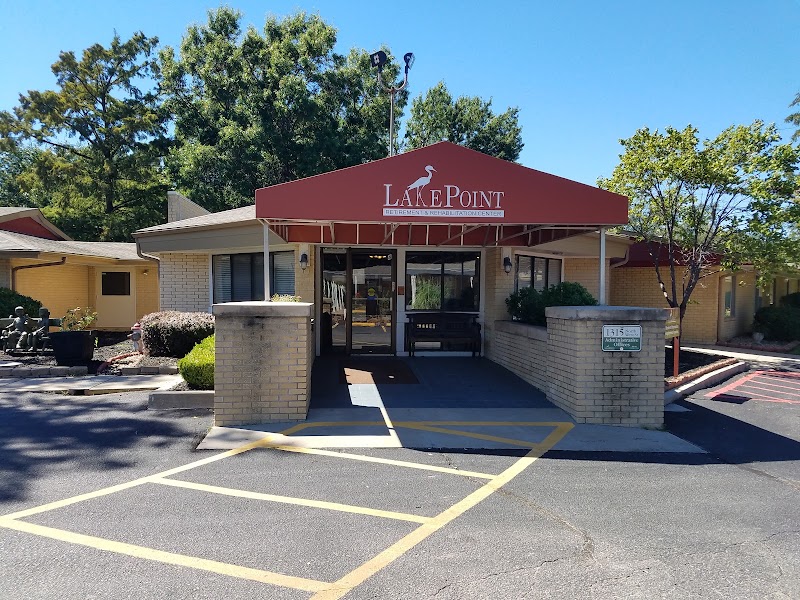
How Does Lakepoint Wichita, Llc Compare to Other Kansas Nursing Homes?

Compared to the 100 nursing homes in Kansas, LAKEPOINT WICHITA, LLC's overall rating (2 stars) is below the state average of 2.9, staff turnover (66%) is significantly higher than the state average of 46%, and health inspection rating (2 stars) is below the national benchmark.

What Should Families Ask When Visiting Lakepoint Wichita, Llc?

Based on this facility's data, families visiting should ask: "How do you ensure continuity of care given staff turnover, and what is your staff retention strategy?" "Can I visit during a mealtime to observe dining assistance and food quality?" "How do you handle medical emergencies, and what is your hospital transfer rate?" "Can I speak with family members of current residents about their experience?" These questions are particularly relevant given the facility's high staff turnover rate.

Is Lakepoint Wichita, Llc Safe?

Based on CMS inspection data, LAKEPOINT WICHITA, LLC has a clean safety record: no substantiated abuse findings (meaning no confirmed cases of resident harm), no Immediate Jeopardy citations (the most serious violation level indicating risk of serious injury or death), and is not on the Special Focus Facility watch list (a federal program monitoring the lowest-performing 1% of nursing homes). The facility has a 2-star overall rating and ranks #100 of 100 nursing homes in Kansas. While no facility is perfect, families should still ask about staff-to-resident ratios and recent inspection results during their visit.

Do Nurses at Lakepoint Wichita, Llc Stick Around?

Staff turnover at LAKEPOINT WICHITA, LLC is high. At 66%, the facility is 20 percentage points above the Kansas average of 46%. High turnover means new staff may not know residents' individual needs, medications, or preferences. It can also be disorienting for residents, especially those with dementia who rely on familiar faces. Families should ask: What is causing the turnover? What retention programs are in place? How do you ensure care continuity during staff transitions?

Was Lakepoint Wichita, Llc Ever Fined?

LAKEPOINT WICHITA, LLC has been fined $116,826 across 17 penalty actions. This is 3.4x the Kansas average of $34,247. Fines at this level are uncommon and typically indicate a pattern of serious deficiencies, repeated violations, or failure to correct problems promptly. CMS reserves penalties of this magnitude for facilities that pose significant, documented risk to resident health or safety. Families should request specific documentation of what issues led to these fines and what systemic changes have been implemented.

Is Lakepoint Wichita, Llc on Any Federal Watch List?

LAKEPOINT WICHITA, LLC is not on any federal watch list. The most significant is the Special Focus Facility (SFF) program, which identifies the bottom 1% of nursing homes nationally based on persistent, serious quality problems. Not being on this list means the facility has avoided the pattern of deficiencies that triggers enhanced federal oversight. This is a positive indicator, though families should still review the facility's inspection history directly.