Christian Health Center
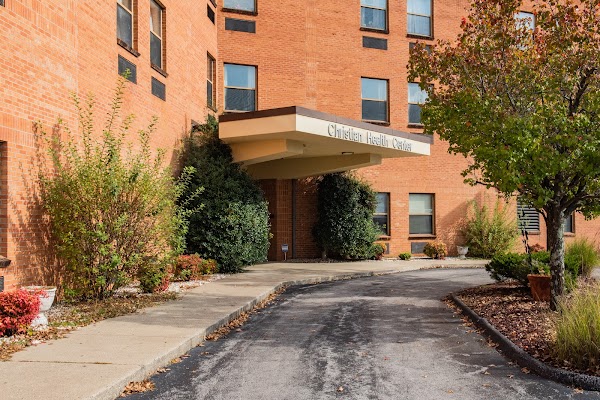
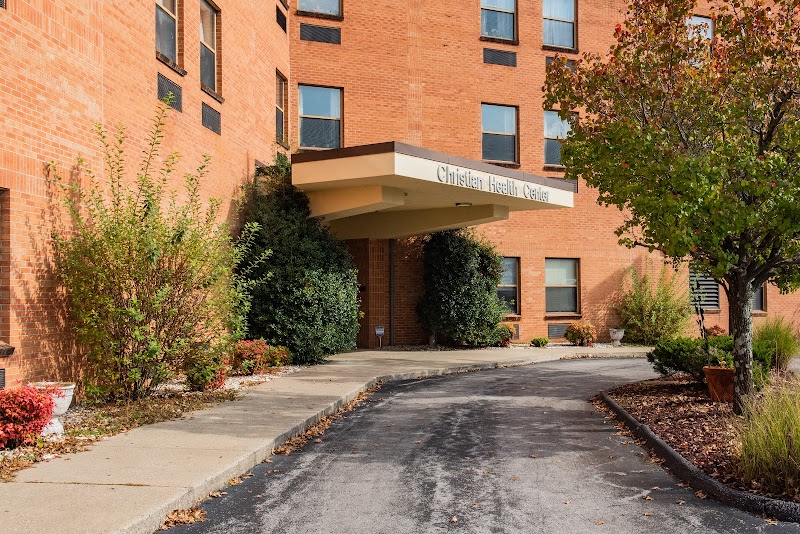
116 South Commonwealth Ave, Corbin, KY 40702 (606) 258-2500
Non profit - Other 104 Beds CHRISTIAN CARE COMMUNITIES Data: November 2025
Trust Grade
90/100
#7 of 266 in KY
Last Inspection: March 2025

Within standard 12-15 month inspection cycle. Federal law requires annual inspections.

Overview

Christian Health Center in Corbin, Kentucky has received a Trust Grade of A, indicating it is an excellent facility that is highly recommended. It ranks #8 out of 266 nursing homes in Kentucky, placing it in the top half, and is the best option among the five facilities in Whitley County. The facility's trend is stable, with only one issue reported in both 2024 and 2025. Staffing is a strength, with a 4/5 star rating and a turnover rate of 34%, which is well below the state average, suggesting that staff are experienced and familiar with residents. While the center has no fines on record, which is a positive sign, there are some concerns. Recent inspections revealed that the facility failed to properly evaluate a resident's ability to self-administer medication and did not respect a resident's rights regarding a wander guard placement. Additionally, a resident at risk for elopement was not wearing the required safety device, posing a potential safety risk. Overall, while there are notable strengths in staffing and compliance, families should be aware of these recent concerns.

Trust Score
A
90/100
In Kentucky
#7/266
Top 2%
Safety Record
Low Risk
No red flags
Inspections
Holding Steady
1 → 1 violations
Staff Stability
○ Average
34% turnover. Near Kentucky's 48% average. Typical for the industry.
Penalties
✓ Good
No fines on record. Clean compliance history, better than most Kentucky facilities.
Skilled Nurses
✓ Good
Each resident gets 44 minutes of Registered Nurse (RN) attention daily — more than average for Kentucky. RNs are trained to catch health problems early.
Violations
✓ Good
Only 3 deficiencies on record. Cleaner than most facilities. Minor issues only.
★★★★★
5.0
Overall Rating
★★★★☆
4.0
Staff Levels
★★★★☆
4.0
Care Quality
★★★★★
5.0
Inspection Score
Stable
2024: 1 issues
2025: 1 issues

The Good

  • 4-Star Staffing Rating · Above-average nurse staffing levels
  • 4-Star Quality Measures · Strong clinical quality outcomes
  • Full Sprinkler Coverage · Fire safety systems throughout facility
  • No fines on record
  • Staff turnover below average (34%)

    14 points below Kentucky average of 48%

Facility shows strength in staffing levels, quality measures, fire safety.

The Bad

Staff Turnover: 34%

12pts below Kentucky avg (46%)

Typical for the industry

Chain: CHRISTIAN CARE COMMUNITIES

Part of a multi-facility chain

Ask about local staffing decisions and management

The Ugly 3 deficiencies on record

Mar 2025 1 deficiency
CONCERN (D)

Potential for Harm - no one hurt, but risky conditions existed

Deficiency F0554 (Tag F0554)

Could have caused harm · This affected 1 resident

Based on observation, interview, and record review it is determined the facility failed to evaluate Resident (R1) for the ability to safely self-administer medications for one of 31 sampled residents....

Read full inspector narrative →
Based on observation, interview, and record review it is determined the facility failed to evaluate Resident (R1) for the ability to safely self-administer medications for one of 31 sampled residents. During an observation on 3/10/2025 at 3:43 PM, an open bottle of prescribed Nystatin Powder (an antifungal medication that treats skin infections caused by yeast) was found on R1's bed. R1 stated she applied the medication herself throughout the day. However, facility staff found no documentation or assessment to indicate the interdisciplinary team had evaluated and determined R1's ability to safely self-administer medications. The findings include: A review of the facility's policy titled Self-Administration of Medications revised date 11/29/2022, revealed, It is the policy that allows residents who have been assessed by the interdisciplinary team upon admission, quarterly, and with change of condition as clinically appropriate to self-administer their own medications or medicated treatments. The policy further revealed that the medications must be kept in a locked area. A review of R1's admission Face Sheet revealed the facility admitted the resident on 01/04/2016 with the primary diagnosis of Hemiplegia and hemiparesis following cerebral infarction affect left non-dominant side, and dementia. A review of R1's Minimum Data Set (MDS) revealed that the facility assessed the resident to have a Brief Interview for Mental Status (BIMS) score of 15 on 12/23/2024, which indicated the resident was cognitively intact. A review of R1's Assessments revealed that the facility had not assessed the resident for self-administration of medications. Observation on 03/10/2025 at 3:20 PM, revealed one opened bottle of prescribed Nystatin Powder in a clear plastic container on R1 's bed. The medication label directed that the powder should be applied as needed. During an interview with R1 on 03/10/2025 at 3:20 PM, R1 stated she applied the Nystatin Powder to various areas of her body as she needed it. During an interview with Registered Nurse (RN) 1 on 03/10/2025 at 3:43 PM, she stated that the Interdisciplinary team had not completed a self-administration medication evaluation on R1. RN1 continued to state that R1 should not have Nystatin Powder at the bedside or self-apply it. RN1 further stated that the potential risk of R1 self-administering medication was the resident could apply the wrong amount or consume it. During an observation on 03/11/2025 at 8:25 AM, RN6 entered R1's room with the resident's morning medications. RN6 told R1 that she couldn't leave her cup of medicines on the table for R1 to take when she wanted due to state surveyors being in the building. During an interview with RN6 on 03/11/2025 at 8:29 AM, she stated that she routinely left R1's medications on her bedside table because R1 didn't like to take them during the scheduled medication pass, allowing R1 to take them when she was ready. RN 6 further stated the potential risk of R1 self-administering medications was the resident could forget to take the drugs or another resident could accidentally take them. During an interview with the Administrator on 03/12/2025 at 10:57 AM, she stated that residents were not supposed to have medications at the bedside due to the risk of another resident taking them. The Administrator further stated that the facility had no residents that self-administered their medications.
Sept 2024 1 deficiency
CONCERN (D) 📢 Someone Reported This

A family member, employee, or ombudsman was alarmed enough to file a formal complaint

Potential for Harm - no one hurt, but risky conditions existed

Resident Rights (Tag F0550)

Could have caused harm · This affected 1 resident

**NOTE- TERMS IN BRACKETS HAVE BEEN EDITED TO PROTECT CONFIDENTIALITY** Based on interview, record review, and facility policy review it was determined the facility failed to allow a resident to exerc...

Read full inspector narrative →
**NOTE- TERMS IN BRACKETS HAVE BEEN EDITED TO PROTECT CONFIDENTIALITY** Based on interview, record review, and facility policy review it was determined the facility failed to allow a resident to exercise his or her rights as a resident of the facility and as a citizen or resident of the United States for 1 of 1 sampled resident (Resident (R) 1). The facility must protect and promote the rights of the resident. Although R1 had not been assessed as an elopement risk and did not consent for wander guard placement, the facility placed a wander guard on R1 on 08/01/2024. The findings include: Review of the facility policy, titled Policy and Procedure: Resident Rights, revised 09/29/2022, revealed residents have the right to be treated with respect and to be free from abuse and neglect. Continued review of the facility policy revealed nursing homes cannot keep a resident apart from everyone else against their will. Review of R1's Face Sheet revealed the facility admitted the resident on 07/11/2024 with diagnoses of metabolic encephalopathy, essential (primary) hypertension, depression, and muscle weakness. Review of R1's admission Minimum Data Set (MDS), dated [DATE], revealed R1 had a Brief Interview for Mental Status (BIMS) score of eleven out of fifteen, which indicated R1 was moderate cognitively impaired. Review of R1's follow-up BIMS evaluation, dated 08/30/2024, entered by Social Services Director (SSD), revealed R1 had a BIMS score of twelve out of fifteen, which indicated R1 was moderate cognitively impaired. Review of R1's Comprehensive Care Plan (CCP), undated, revealed R1 had interventions of wander system bracelet applied, ensure wander system bracelet was checked every shift for placement, and to give R1 activities for diversion. Review of R1's Progress Notes, dated 08/30/2024, entered by SSD, revealed R1 was educated to sign out at the nurses' station anytime he plans to go out of the facility. Review of R1's Elopement Risk Assessment Document, dated 08/02/2024, revealed R1 had been assessed to have a total score of 1, which indicated minimal risk for elopement. During an interview with R1 on 09/03/2024 at 1:40 PM, he stated he had walked out of the facility because he had wanted to talk to a friend that she had assisted both him and his wife in the past. R1 stated he had removed his wander guard bracelet prior to leaving the facility with a family friend. R1 stated he was a grown man, and he was not a prisoner at the facility. R1 further stated he was a free man in the United States and did not want the wander guard bracelet put on him. During an interview with Family Member (FM) 1 on 09/03/2024 at 1:49 PM, she stated R1 had called her to let her know a friend had picked him up and took him to a local Church to help him get some more clothes. She continued to state R1 called the facility to let them know he had left the facility and staff picked him up and brought him back to the facility. She further stated that R1 had told her that he did not like the wonder guard bracelet on him and did not know why he had it because he had signed himself out in the past with no problems and had signed himself into the facility for therapy and could sign himself out when he wanted to leave. During an interview with Licensed Practical Nurse (LPN)1 on 09/03/2024 at 2:05 PM, she stated R1 had a wander guard bracelet on prior to him leaving the facility. LPN1 stated R1 had signed himself into the facility and had signed himself out of the facility on multiple occasions. LPN1 continued to state R1 could easily live outside the facility with someone safely. LPN 1 further stated R1 was in his right mind and had the ability to sign himself out at any time and had done so on numerous occasions to visit with either his wife or friends. Interview with Certified Nursing Assistant (CNA)1 on 09/03/2024 at 2:14 PM, she stated she had seen R1 sign himself out of the facility and go visiting with his wife on numerous occasions. During an interview with LPN2 on 09/03/2024 at 4:06 PM, she stated R1 was a strong willed person and if he wants to do something he will, and if he doesn't, he won't. LPN2 further stated R1 does not like having a wander guard bracelet on him and prefers to come and go at the facility. During an interview with the Director of Nursing (DON) on 09/03/2024 at 4:45 PM, she stated the facility was trying to find an apartment for R1 and his wife.The DON stated the wander guard was placed due to R1 wanting to leave the facility to be with his wife. However, she further stated she was aware R1 had signed himself into the facility and did not think about R1's right to refuse treatment. The DON continued to state R1 had been assessed as a low risk for elopement with fairly high BIMS score and she now realized the facility should have called the doctor to have R1 assessed before placing the wonder guard on R1. The DON further stated the doctor would have probably discharged the resident. During an interview with the Medical Director (MD) on 09/03/2024 at 5:13 PM, he stated both him and his Nurse Practitioner (NP) had seen R1 in the facility and was aware of R1 wanting to be with his wife. The MD stated R1 had signed himself into the facility and was able to sign out of the facility at any time. The MD stated he really didn't understand why the facility had placed the wander guard bracelet on R1 and further stated, he's not a prisoner there. The MD continued to state R1 was safe enough to leave the facility at any time and had came to the facility for therapy. During an interview with the Administrator on 09/03/2024 at 5:40 PM, she stated the wander guard bracelet was first applied on R1 when he started talking about leaving the facility to be with his wife. She continued to state the facility could not hold R1 against his will and now believes the staff should have called the Medical Director to alert him that R1 wanted to leave the facility. The Administrator stated that R1 had signed himself into the facility and had the right to leave the facility at any time. The Administrator further stated R1 had signed himself out on occasion to visit with wife with no issues and that R1 was not a prisoner of the facility. She further stated that residents have the right to refuse treatment.
Feb 2020 1 deficiency
CONCERN (D)

Potential for Harm - no one hurt, but risky conditions existed

Accident Prevention (Tag F0689)

Could have caused harm · This affected 1 resident

**NOTE- TERMS IN BRACKETS HAVE BEEN EDITED TO PROTECT CONFIDENTIALITY** Based on observations, interview, record review, and facility policy review, it was determined the facility failed to ensure one...

Read full inspector narrative →
**NOTE- TERMS IN BRACKETS HAVE BEEN EDITED TO PROTECT CONFIDENTIALITY** Based on observations, interview, record review, and facility policy review, it was determined the facility failed to ensure one (1) of twenty-seven (27) sampled residents received adequate supervision to prevent accidents. The facility assessed Resident #8 to be at risk for elopement and was to wear a wander bracelet (a device worn that emits a sound when passed through an alarmed door). However, observations on 02/05/2020 revealed the resident was not wearing the bracelet as required. The findings include: Review of the facility's policy, Elopement, undated, revealed care plans for residents assessed to be at risk for elopement would include individualized interventions. Review of Resident #8's medical record revealed the facility admitted the resident on 09/21/2017 with diagnoses including Dementia, Age Related Cognitive Decline, and Anxiety. Review of Resident #8's Minimum Data Status (MDS) assessment dated [DATE] revealed the facility assessed the resident to have a Brief Interview for Mental Status (BIMS) score of five (5), indicating the resident was severely cognitively impaired. Review of an Elopement Risk Assessment for Resident #8 dated 01/06/2020 revealed the resident was at risk for elopement due to having cognitive impairment with poor decision-making skills and being independently ambulatory. Review of Resident #8's care plan, last evaluated on 02/05/2020, revealed that interventions implemented related to the resident being at risk for elopement included the resident wearing a wander bracelet. Further review of the care plan revealed staff were to monitor placement of the bracelet every shift, to ensure the bracelet was in place on the resident. Observations of Resident #8 on 02/05/2020 at 1:34 PM and 2:35 PM revealed the resident was not wearing a wander bracelet. However, review of the resident's Treatment Administration Record (TAR) for 02/05/2020 revealed documentation for the 7AM-3PM shift indicating the resident was wearing the bracelet and that it was functioning. Interview with LPN #1 on 02/05/2020 at 2:35 PM revealed Resident #8 was supposed to be wearing a wander bracelet; however, upon checking the resident LPN #1 was unable to locate a wander bracelet on the resident. Interview with RN #1 on 02/06/2020 at 2:18 PM revealed she had removed Resident #8's wander bracelet at approximately 10:00 AM on 02/05/2020 due to a recent skin tear on the resident's left wrist, and had not replaced the bracelet. Further interview with RN #1 revealed the RN failed to place another wander bracelet on the resident. Interview with the Unit Manager on 02/06/2020 at 2:50 PM revealed RN #1 should have immediately replaced the wander bracelet for Resident #8.
Understanding Severity Codes (click to expand)
Life-Threatening (Immediate Jeopardy)
J - Isolated K - Pattern L - Widespread
Actual Harm
G - Isolated H - Pattern I - Widespread
Potential for Harm
D - Isolated E - Pattern F - Widespread
No Harm (Minor)
A - Isolated B - Pattern C - Widespread

Questions to Ask on Your Visit

  • "Can I speak with families of current residents?"
  • "What's your RN coverage like on weekends and overnight?"

Our Honest Assessment

Strengths
  • • Grade A (90/100). Above average facility, better than most options in Kentucky.
  • • No major safety red flags. No abuse findings, life-threatening violations, or SFF status.
  • • No fines on record. Clean compliance history, better than most Kentucky facilities.
  • • Only 3 deficiencies on record. Cleaner than most facilities. Minor issues only.
Concerns
  • • No significant concerns identified. This facility shows no red flags across CMS ratings, staff turnover, or federal penalties.
Bottom line: Generally positive indicators. Standard due diligence and a personal visit recommended.

About This Facility

What is Christian Health Center's CMS Rating?

CMS assigns Christian Health Center an overall rating of 5 out of 5 stars, which is considered much above average nationally. Within Kentucky, this rating places the facility higher than 99% of the state's 100 nursing homes. This rating reflects solid performance across the metrics CMS uses to evaluate nursing home quality.

How is Christian Health Center Staffed?
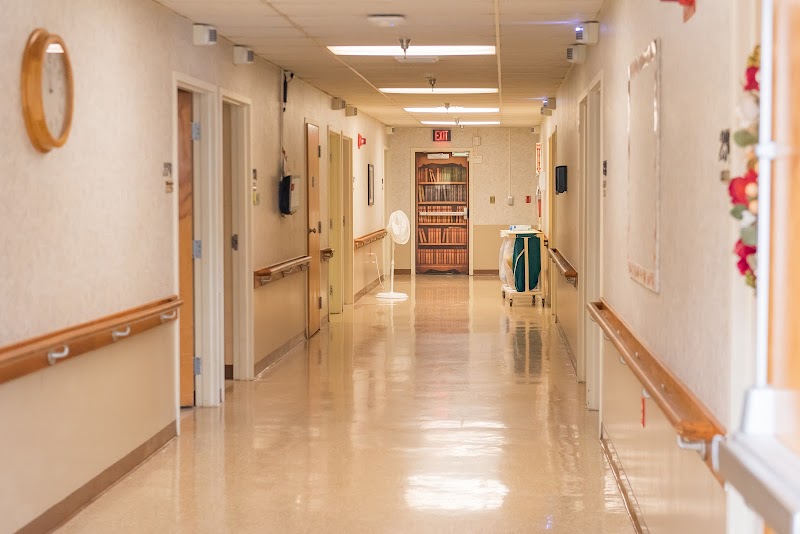
CMS rates Christian Health Center's staffing level at 4 out of 5 stars, which is above average compared to other nursing homes. Staff turnover is 34%, compared to the Kentucky average of 46%. This relatively stable workforce can support continuity of care.

What Have Inspectors Found at Christian Health Center?

State health inspectors documented 3 deficiencies at Christian Health Center during 2020 to 2025. These included: 3 with potential for harm.

Who Owns and Operates Christian Health Center?

Christian Health Center is owned by a non-profit organization. Non-profit facilities reinvest revenue into operations rather than distributing to shareholders. The facility is operated by CHRISTIAN CARE COMMUNITIES, a chain that manages multiple nursing homes. With 104 certified beds and approximately 94 residents (about 90% occupancy), it is a mid-sized facility located in Corbin, Kentucky.

How Does Christian Health Center Compare to Other Kentucky Nursing Homes?

Compared to the 100 nursing homes in Kentucky, Christian Health Center's overall rating (5 stars) is above the state average of 2.8, staff turnover (34%) is significantly lower than the state average of 46%, and health inspection rating (5 stars) is much above the national benchmark.

What Should Families Ask When Visiting Christian Health Center?

Based on this facility's data, families visiting should ask: "Can I visit during a mealtime to observe dining assistance and food quality?" "How do you handle medical emergencies, and what is your hospital transfer rate?" "Can I speak with family members of current residents about their experience?"

Is Christian Health Center Safe?

Based on CMS inspection data, Christian Health Center has a clean safety record: no substantiated abuse findings (meaning no confirmed cases of resident harm), no Immediate Jeopardy citations (the most serious violation level indicating risk of serious injury or death), and is not on the Special Focus Facility watch list (a federal program monitoring the lowest-performing 1% of nursing homes). The facility has a 5-star overall rating and ranks #1 of 100 nursing homes in Kentucky. While no facility is perfect, families should still ask about staff-to-resident ratios and recent inspection results during their visit.

Do Nurses at Christian Health Center Stick Around?

Christian Health Center has a staff turnover rate of 34%, which is about average for Kentucky nursing homes (state average: 46%). Moderate turnover is common in nursing homes, but families should still ask about staff tenure and how the facility maintains care continuity when employees leave.

Was Christian Health Center Ever Fined?

Christian Health Center has no federal fines on record. CMS issues fines when nursing homes fail to meet care standards or don't correct problems found during inspections. The absence of fines suggests the facility has either maintained compliance or corrected any issues before penalties were assessed. This is a positive indicator, though families should still review recent inspection reports for the full picture.

Is Christian Health Center on Any Federal Watch List?

Christian Health Center is not on any federal watch list. The most significant is the Special Focus Facility (SFF) program, which identifies the bottom 1% of nursing homes nationally based on persistent, serious quality problems. Not being on this list means the facility has avoided the pattern of deficiencies that triggers enhanced federal oversight. This is a positive indicator, though families should still review the facility's inspection history directly.