Somerwoods Nursing and Rehabilitation Center
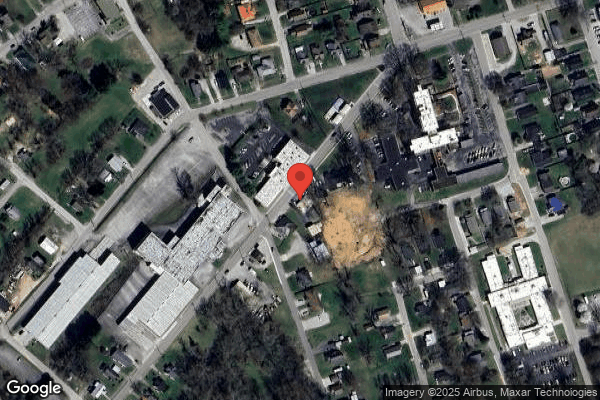

555 Bourne Avenue, Somerset, KY 42501 (606) 679-7421
For profit - Limited Liability company 166 Beds PRINCIPLE LONG TERM CARE Data: November 2025
Trust Grade
60/100
#193 of 266 in KY
Last Inspection: February 2025

Within standard 12-15 month inspection cycle. Federal law requires annual inspections.

Overview

Somerwoods Nursing and Rehabilitation Center has a Trust Grade of C+, which means it is slightly above average but not particularly strong. In Kentucky, it ranks #193 out of 266 facilities, placing it in the bottom half, and it is last among the four nursing homes in Pulaski County. The facility shows an improving trend, as the number of issues decreased from five in 2019 to four in 2025. Staffing is a strength, earning a 4 out of 5 stars with a turnover rate of 38%, which is below the state average, indicating that staff members are likely to stay and build relationships with residents. On the downside, there have been concerns regarding food safety; for instance, leftover items were not labeled properly, and raw meat was stored above cooked food, which poses a risk to residents' health. Additionally, a dietary staff member did not change gloves after handling food, which could lead to contamination. Despite these issues, it is worth noting that the facility has not faced any fines, indicating compliance with regulations in other areas.

Trust Score
C+
60/100
In Kentucky
#193/266
Bottom 28%
Safety Record
Low Risk
No red flags
Inspections
Getting Better
5 → 4 violations
Staff Stability
○ Average
38% turnover. Near Kentucky's 48% average. Typical for the industry.
Penalties
✓ Good
No fines on record. Clean compliance history, better than most Kentucky facilities.
Skilled Nurses
✓ Good
Each resident gets 48 minutes of Registered Nurse (RN) attention daily — more than average for Kentucky. RNs are trained to catch health problems early.
Violations
○ Average
10 deficiencies on record. Average for a facility this size. Mostly minor or procedural issues.
★★☆☆☆
2.0
Overall Rating
★★★★☆
4.0
Staff Levels
★☆☆☆☆
1.0
Care Quality
★★★☆☆
3.0
Inspection Score
Stable
2019: 5 issues
2025: 4 issues

The Good

  • 4-Star Staffing Rating · Above-average nurse staffing levels
  • Full Sprinkler Coverage · Fire safety systems throughout facility
  • No fines on record
  • Staff turnover below average (38%)

    10 points below Kentucky average of 48%

Facility shows strength in staffing levels, fire safety.

The Bad

2-Star Overall Rating

Below Kentucky average (2.8)

Below average - review inspection findings carefully

Staff Turnover: 38%

Near Kentucky avg (46%)

Typical for the industry

Chain: PRINCIPLE LONG TERM CARE

Part of a multi-facility chain

Ask about local staffing decisions and management

The Ugly 10 deficiencies on record

Feb 2025 4 deficiencies
CONCERN (D)

Potential for Harm - no one hurt, but risky conditions existed

Report Alleged Abuse (Tag F0609)

Could have caused harm · This affected 1 resident

Based on interview, record review, and facility policy review, the facility failed to report a possible incident of resident-to-resident abuse to the state survey agency (SSA) within two hours for two...

Read full inspector narrative →
Based on interview, record review, and facility policy review, the facility failed to report a possible incident of resident-to-resident abuse to the state survey agency (SSA) within two hours for two (Resident (R) 78 and R13) of four residents reviewed for abuse. The findings included: Review of the facility Abuse, Neglect, or Misappropriation of Resident Property Policy, revised 03/10/2017, revealed 'Abuse' is defined as the willful infliction of injury, unreasonable confinement, intimidation, or punishment resulting in physical harm or pain or mental anguish. Further review of the policy revealed that it failed to define/address the meaning of willful, a term defined in the Code of Federal Regulations at §483.5 in the definition of abuse which means the individual must have acted deliberately, not that the individual must have intended to inflict injury or harm. A facility policy titled, Abuse, Neglect, or Misappropriation of Resident Property Policy, revised 03/10/2017, revealed the section titled Reporting/Response specified, The Administrator will ensure that the Division of Licensure and Regulation [SSA] and the Department of Social Services, Adult Protective Services will be notified immediately but no later than 2 hours after the allegation is received and determination of alleged abuse is made, of all complaints of abuse, neglect, including injuries of unknown origin, or misappropriation of resident property. An admission Record revealed the facility admitted R78 on 01/19/2022. According to the admission Record, the resident had a medical history that included diagnoses of depression, generalized anxiety disorder, and cognitive communication deficit. An annual Minimum Data Set (MDS), with an Assessment Reference Date (ARD) of 12/21/2025, revealed the resident had a Brief Interview for Mental Status (BIMS) score of 15/15, which indicated the resident had intact cognition. R78's Care Plan Report included a focus area, initiated 06/03/2024, that indicated the resident exhibited problematic behaviors, including manipulative behavior, and seeking things to complain about. An admission Record revealed the facility admitted R13 on 03/20/2024. According to the admission Record, the resident had a medical history that included diagnoses of major depressive disorder, anxiety disorder, and cognitive communication deficit. A quarterly MDS, with an ARD of 11/12/2024, revealed R13 had a BIMS score of 14/15, which indicated the resident had intact cognition. R13's Care Plan Report revealed a focus area, initiated 05/29/2024, that indicated the resident had problematic behaviors characterized by ineffective coping and anxiety related to loss of control. During an interview on 02/19/2025 at 2:37 PM, State Registered Nurse Aide (SRNA) 26 stated she recalled an incident several months prior in which R13 was propelling their wheelchair to the nursing station to get ice, and R78, who was by the elevator, mumbled under their breath, If that [explicit] rolls this way, I'm gonna [going to] kill [them]. SRNA 26 stated she redirected R78, who yelled at R13. SRNA26 stated R13 replied, You're not going to talk to me that way. SRNA26 stated R78 then pushed R13's wheelchair down the hallway, after R13 had turned their back. SRNA26 stated she was able to intervene before R13 traveled farther than a foot. SRNA26 described R13 as angry but not frightened following the incident. SRNA26 stated she reported the incident to Registered Nurse (RN) 27. During an interview on 02/20/2025 at 8:36 AM, the Administrator confirmed the incident in which R78 pushed R13's wheelchair and let go of it, stating R13 rolled a few feet down the hallway. Interview with the Administrator revealed that the facility was aware of the incident but chose to not report it to the state survey agency as a possible allegation of abuse because RN27 stated it was not a reportable incident. Interview with the Administrator revealed they reached the conclusion that the incident was not reportable because there was no harm or intent to harm, and the residents were not angry for more than 30 seconds after the incident. However, review of the federal definitions related to abuse revealed the regulation does not require the individual to intend to inflict injury or harm, During an interview on 02/21/2025 at 10:27 AM, the Director of Nursing (DON) stated that it was up to the Administrator to determine what did and did not get reported to the state survey agency.During an interview on 02/19/2025 at 2:37 PM, State Registered Nurse Aide (SRNA) #26 stated she recalled an incident several months prior in which Resident #13 was propelling their wheelchair to the nursing station to get ice, and Resident #78, who was by the elevator, mumbled under their breath, If that [explicit] rolls this way, I'm gonna [going to] kill [them]. SRNA #26 stated she redirected Resident #78, who yelled at Resident #13. SRNA #26 stated Resident #13 replied, You're [you are] not going to talk to me that way. SRNA #26 stated Resident #78 then pushed Resident #13's wheelchair down the hallway, after Resident #13 had turned their back. SRNA #26 stated she was able to intervene before Resident #13 traveled farther than a foot. SRNA described Resident #13 as angry but not frightened following the incident. SRNA #26 stated she reported the incident to Registered Nurse (RN) #27. During an interview on 02/20/2025 at 8:36 AM, the Administrator confirmed there was an incident in which Resident #78 pushed Resident #13's wheelchair and let go of it. The Administrator stated Resident #13 rolled a few feet down the hallway. The Administrator stated they did not report the incident to the state survey agency because RN #27 stated it was not a reportable incident. The Administrator stated they reached the conclusion that the incident was not reportable, because there was no harm or intent to harm, and the residents were not angry for more than 30 seconds after the incident. During an interview on 02/21/2025 at 10:27 AM, the Director of Nursing (DON) stated that it was up to the Administrator to determine what did and did not get reported to the state survey agency.
CONCERN (D)

Potential for Harm - no one hurt, but risky conditions existed

Deficiency F0761 (Tag F0761)

Could have caused harm · This affected 1 resident

**NOTE- TERMS IN BRACKETS HAVE BEEN EDITED TO PROTECT CONFIDENTIALITY** Based on observation, interview, and facility policy review, the facility failed to store medications securely in one of five me...

Read full inspector narrative →
**NOTE- TERMS IN BRACKETS HAVE BEEN EDITED TO PROTECT CONFIDENTIALITY** Based on observation, interview, and facility policy review, the facility failed to store medications securely in one of five medication carts. Specifically, nursing staff left a medication cart unlocked in the hallway while administering medications in resident rooms. The findings include: Review of a facility policy titled, Medication Storage, dated 09/2020, revealed, The medication cart shall be locked at all times, when not under the direct physical supervision of a licensed nurse or medication aide. Observation on 02/18/2025 at 8:53 AM revealed a medication cart located on the 200 Hall was unlocked. Registered Nurse (RN) 11 was observed in room [ROOM NUMBER], administering medications. RN11 was approximately 16 feet from the medication cart and was not within eyesight of the medication cart. Observation and interview on 02/18/2025 at 9:03 AM revealed RN11 was in room [ROOM NUMBER] administering medications. The medication cart remained unlocked in the hallway, out of R11's line of sight. RN11 exited room [ROOM NUMBER] and returned to the medication cart. When interviewed, RN 11 stated it was important to lock the medication cart when she went into resident rooms. RN11 stated she had not paid attention to whether she had locked the medication cart when she went into the resident rooms. During an interview on 02/20/2025 at 3:52 PM, RN13, the Unit Manager, stated the medication cart should be locked when the nurse went into resident rooms to administer medications. During an interview on 02/21/2025 at 8:45 AM, the Director of Nursing (DON) stated the medication cart should be locked when the nurse was administering medications in resident rooms. During an interview on 02/21/2025 at 8:56 AM, the Administrator stated the medication cart should be within sight of the nurse or it should be locked.
CONCERN (D)

Potential for Harm - no one hurt, but risky conditions existed

Infection Control (Tag F0880)

Could have caused harm · This affected 1 resident

Based on observation, interview, record review, and facility document and policy review, the facility failed to ensure staff donned personal protective equipment (PPE) when providing care to two (Resi...

Read full inspector narrative →
Based on observation, interview, record review, and facility document and policy review, the facility failed to ensure staff donned personal protective equipment (PPE) when providing care to two (Resident (R) 42 and R29) of two residents reviewed for contact precautions. The findings include: A facility policy titled, Standard and Transmission - Based Precautions, revised 06/13/2024, revealed the section titled Contact Precautions, indicated, Necessary when transmission of microorganism is by direct contact [sic] Precautions include gloves, gown, and containment of microorganism. Facility signage titled, Contact Precautions, revised 04/2023, indicated, All Healthcare Personnel must .Wear gloves when entering room and remove before leaving room .Wear a gown when entering room and remove before leaving. 1. An admission Record revealed the facility admitted R42 on 10/16/2024. According to the admission Record, the resident had a medical history that included a diagnosis of recurrent enterocolitis due to clostridium difficile. A quarterly Minimum Data Set (MDS), with an Assessment Reference Date (ARD) of 01/14/2025, revealed R42 had a Brief Interview for Mental Status (BIMS) score of 15/15, which indicated the resident was cognitively intact. R42's physician orders revealed an order dated 02/17/2025 for vancomycin (an antibiotic) 125 milligrams (mg) four times a day for 10 days for clostridium difficile. R42's Progress Notes, dated 02/18/2025 at 4:18 PM, revealed that on 02/17/2025 the resident met the criteria for contact precautions. The notes revealed that the medical doctor, resident, and resident representative were aware. During an observation and interview on 02/17/2025 at 8:31 AM, State Registered Nurse Aide (SRNA) 2 was observed in R42's room, providing care without wearing a gown and gloves. SRNA2 stated she missed the signage, but she knew she should be wearing a gown and gloves while inside rooms that had residents on contact precautions. She stated she was unsure if the resident was on contact precautions because she had not worked with the resident for a while. During an interview on 02/17/2025 at 8:51 AM, R42 confirmed their diagnosis of clostridium difficile and that the previous staff had not worn PPE to provide care. 2. An admission Record revealed the facility admitted R29's medical history included a diagnosis of zoster (shingles) without complications. R29's Progress Notes, dated 02/18/2025 at 9:27 AM, revealed that on 02/14/2025 the resident had a rash on their forehead that was confirmed as shingles per the medical doctor. An additional Progress Notes, dated 02/18/2025 at 4:19 PM, revealed that on 02/14/2025 the resident met the criteria for contact precautions. The notes revealed that the medical doctor and the resident were aware. Review of R29's Care Plan Report revealed a focus area initiated 02/17/2025, that indicated the resident had an actual infection/skin integrity impairment related to shingles. An intervention initiated 02/18/2025, directed staff to use Contact Precautions. During an observation on 02/18/2025 at 12:02 PM, SRNA7 and SRNA8 went into R29's room to serve the resident a meal tray. Although R29 was on contact precautions for shingles, neither SRNA gowned or gloved before entering the room. SRNA7 and SRNA8 were interviewed on 02/18/2025 at 12:03 PM. SRNA7 stated their understanding that contact precautions only applied if staff were providing care, not offering meal trays. SRNA8 added that contact precautions were only necessary if you touched the resident or provided personal care. During an interview on 02/19/2025 at 3:32 PM, Administrative Licensed Practical Nurse (LPN) 30, who was also the Infection Preventionist, stated that for rooms where residents were on contact precautions, staff were required to wash their hands before entering and wear a gown and gloves. During an interview on 02/21/2025 at 10:27 AM, the Director of Nursing (DON) stated she expected staff to wear a gown and gloves and fully wear PPE before entering a room where contact precautions were in place. The DON stated if the resident had been on enhanced-barrier precautions, staff would not need to wear a gown and gloves if they were not touching the resident, but this did not apply to contact precautions. During an interview on 02/21/2025 at 10:42 AM, the Administrator stated if a resident was on contact precautions and not enhanced-barrier precautions, staff should don and doff PPE as directed by the signage.
CONCERN (F)

Potential for Harm - no one hurt, but risky conditions existed

Food Safety (Tag F0812)

Could have caused harm · This affected most or all residents

Based on observation, interview, and facility document and policy review, the facility failed to store food in accordance with accepted professional standards for food service safety. Leftover food it...

Read full inspector narrative →
Based on observation, interview, and facility document and policy review, the facility failed to store food in accordance with accepted professional standards for food service safety. Leftover food items were not labeled with a product name and open or use-by date. Raw meat was stored above cooked food items in a reach-in refrigerator. These failures had the potential to affect all residents receiving meals from the dietary department. Findings included: 1. The facility's Dietary Policy Manual, revised 01/23/2018, revealed a policy titled, Food Storage that specified, All incoming foods will have a delivery date and an 'open date' or 'use by' date. When the foods are stored in a container other than the original container, the container will be labeled with the name of the product. A concurrent observation of the reach-in refrigerator and an interview with the Dietary Supervisor on 02/17/2025 at 9:40 AM revealed leftover green beans and leftover green chili were stored without labels that included a product name or dates. In addition, a bag of petit fours (bite-sized desserts) was inside a bag labeled as bologna. The Dietary Supervisor confirmed the items observed were green beans, petit fours, and green chili. The Dietary Supervisor stated the food items should have been labeled, and the petit fours were in a bag incorrectly labeled as bologna. During an interview on 02/20/2025 at 10:37 AM, Dietary Aide (DA) 18 stated the process for putting away left over food items included labeling them with the name of the contents, the use-by date, and the date the item was made. During an interview on 02/20/2025 at 10:40 AM, [NAME] 19 stated leftover food items were to be labeled with the name of the food, the date it was made, and the discard date. During an interview on 02/21/2025 at 12:17 PM, the Administrator stated he expected food items to be labeled and dated according to facility policy. 2. An observation on 02/17/2025 at 9:48 AM of the reach-in refrigerator revealed an undated document titled, Proper Food Storage in Refrigerators and Freezers was posted on the refrigerator door. The document specified that raw meats should be stored below produce, cooked food items, and ready-to-eat food items. The inside of the refrigerator contained a bag of raw meat, confirmed by the Dietary Supervisor to be ground beef patties. The raw ground beef patties were stored on the top shelf of the refrigerator above a container of prepared white chicken chili. During an interview on 02/20/2025 at 10:37 AM, DA18 stated raw meats were to be stored below cooked foods. During an interview on 02/21/2025 at 12:17 PM, the Administrator stated he expected food items to be stored according to facility policy.
Jul 2019 5 deficiencies
CONCERN (D)

Potential for Harm - no one hurt, but risky conditions existed

Assessment Accuracy (Tag F0641)

Could have caused harm · This affected 1 resident

**NOTE- TERMS IN BRACKETS HAVE BEEN EDITED TO PROTECT CONFIDENTIALITY** Based on interview, record review, and review of the facility policy it was determined the facility failed to ensure an accurate...

Read full inspector narrative →
**NOTE- TERMS IN BRACKETS HAVE BEEN EDITED TO PROTECT CONFIDENTIALITY** Based on interview, record review, and review of the facility policy it was determined the facility failed to ensure an accurate significant change Minimum Data Set (MDS) assessment was conducted for one (1) of thirty (30) sampled residents (Resident #51). Resident #51 had a significant change MDS completed on 05/16/19 related to enrollment in the hospice program; however, the assessment did not reveal the resident was receiving hospice care. The findings include: Review of the facility policy, Resident Assessment Manual, dated October 2018, revealed residents in a hospice program would be coded on the Minimum Data Set assessment as receiving hospice services. Review of Resident #51's medical record revealed the resident was admitted to the facility on [DATE] and had diagnoses of Transient Cerebral Ischemic Attack, Hypertension, Benign Prostatic Hyperplasia with Lower Urinary Tract Symptoms, Major Depressive Disorder, and Chronic Pain. Observation of Resident #51 on 07/23/19 at 10:42 AM, revealed the resident was lying in bed and voiced no complaints. Review of Resident #51's medical record and hospice documentation for Resident #51 revealed the resident was admitted to Hospice on 05/07/19 and was currently receiving hospice care. Review of resident #51's Minimum Data Set (MDS) significant change assessment, dated 05/16/19, revealed the resident was not coded to be receiving hospice care. Interview with the MDS Coordinator on 07/23/19 at 10:24 AM, revealed she initiated the significant change in condition for Resident #51 related to the resident's enrollment in Hospice. She stated she had not checked that the resident was receiving hospice care as she did not have the signed statement from the hospice physician at the time of the assessment. However, the completion date of the assessment date was 05/16/19, which was nine (9) days after the resident was enrolled in Hospice. Interview with the DON on 07/24/19 at 12:18 PM, revealed the MDS Coordinator was responsible for ensuring the MDS's were coded correctly. She also stated that occasionally an MDS may be randomly pulled for accuracy but this was not a consistent practice.
CONCERN (D)

Potential for Harm - no one hurt, but risky conditions existed

Pressure Ulcer Prevention (Tag F0686)

Could have caused harm · This affected 1 resident

Based on observation, interview, record review, and review of the facility policy it was determined the facility failed to ensure one (1) of five (5) sampled residents (Resident #24) with pressure ulc...

Read full inspector narrative →
Based on observation, interview, record review, and review of the facility policy it was determined the facility failed to ensure one (1) of five (5) sampled residents (Resident #24) with pressure ulcers received care consistent with professional standards of practice to promote wound healing and prevent infection of the ulcers. Observation of wound care on Resident #24 revealed proper hand hygiene was not performed between glove changes during wound care. The findings include: Review of the facility's Handwashing Policy, dated September 2014, revealed personnel were required to wash their hands before and after touching wounds and after removing gloves. Review of Resident #24's medical record revealed the facility admitted the resident on 09/30/16 with diagnoses including Hypertension, Neurogenic Bladder, Diabetes Mellitus, Vascular Dementia, and Depression. Review of Resident #24's Minimum Data Set assessment, dated 05/05/19, revealed the resident's Brief Interview for Mental Status (BIMS) score was three (3), which indicated the resident had severe cognitive impairment. The MDS also revealed the resident had one (1) unhealed Stage 2 pressure ulcer. Observation of Resident #24's sacral pressure ulcer wound care on 07/23/19 at 12:35 PM, revealed Licensed Practical Nurse (LPN) #1 removed the old dressing from the wound, and then removed the glove from her right hand and immediately donned a new glove to the right hand without performing any hand hygiene. LPN #1 was then observed to clean the wound with normal saline and proceed to provide the wound care as ordered. Interview with LPN #1 on 07/23/19 at 12:55 PM, revealed she should have washed her hands after she removed her gloves. She stated she knew she should have but was nervous and forgot. Interview with the Infection Control Nurse on 07/24/19 at 9:47 AM, revealed LPN #1 should have removed her gloves after removing the old dressing and should have washed her hands prior to putting on clean gloves. The Infection Control Nurse stated she conducted frequent audits of infection control procedures by observing the staff when wound care was performed. She further stated she had not observed any issues related to infection control measures recently. Interview with the Director of Nursing (DON) on 07/24/19 at 12:15 PM, revealed random monitoring of infection control practices had occurred by the Infection Control Nurse. She stated it was her expectation that staff would perform hand hygiene between glove changes.
CONCERN (D)

Potential for Harm - no one hurt, but risky conditions existed

Incontinence Care (Tag F0690)

Could have caused harm · This affected 1 resident

**NOTE- TERMS IN BRACKETS HAVE BEEN EDITED TO PROTECT CONFIDENTIALITY** Based on observation, interview, and review of the facility policy, it was determined the facility failed to ensure appropriate ...

Read full inspector narrative →
**NOTE- TERMS IN BRACKETS HAVE BEEN EDITED TO PROTECT CONFIDENTIALITY** Based on observation, interview, and review of the facility policy, it was determined the facility failed to ensure appropriate care and services were provided to prevent urinary tract infections for one (1) of thirty (30) sampled residents (Resident #24). Observation of catheter care and incontinence care on 07/23/19, revealed State Registered Nurse Aide (SRNA) #1 failed to remove gloves and perform hand hygiene after performing bowel incontinence care for Resident #24 and prior to placing barrier ointment to the resident and applying a clean incontinence brief. The findings include: Review of the facility's Handwashing Policy, dated September 2014, revealed personnel were to their wash hands after contact with blood, body fluids, secretions, excretions, and contaminated equipment or articles. Review of Resident #24's medical record revealed the facility admitted the resident on 09/30/16 with diagnoses of Hypertension, Neurogenic Bladder, Diabetes Mellitus, Vascular Dementia, and Depression. Review of Resident #24's Minimum Data Set (MDS) quarterly assessment dated [DATE], revealed the resident's Brief Interview for Mental Status (BIMS) score was three (3), which indicated the resident had severe cognitive impairment. The MDS also revealed the resident had an indwelling urinary catheter. Observation of urinary catheter and incontinence care for Resident #24 on 07/23/19 at 12:58 PM, revealed SRNA #1 performed bowel incontinence care, and then proceeded to apply an ointment to the groin area of the resident and a clean brief without changing gloves or performing hand hygiene. Interview with SRNA #1 on 07/23/19 at 1:07 PM, revealed she should have changed gloves after cleaning the perianal area, before applying ointment and putting a clean brief on Resident #24. Interview with the Infection Control Nurse on 07/24/19 at 9:47 AM, revealed SRNA #1 should have removed her gloves and performed hand hygiene prior to applying the ointment and putting a clean brief on the resident. The Infection Control Nurse stated she performed random audits of staff providing care by observing staff providing care, and would immediately correct any concerns identified. Interview with the Director of Nursing (DON) on 07/24/19 at 12:15 PM, revealed random monitoring of infection control practices had occurred by the Infection Control Nurse. She stated it was her expectation that staff would perform hand hygiene between glove changes.
CONCERN (E)

Potential for Harm - no one hurt, but risky conditions existed

Food Safety (Tag F0812)

Could have caused harm · This affected multiple residents

Based on observation, interview, and review of the facility policy, it was determined the facility failed to ensure food was served under sanitary conditions. During observation of the lunch tray line...

Read full inspector narrative →
Based on observation, interview, and review of the facility policy, it was determined the facility failed to ensure food was served under sanitary conditions. During observation of the lunch tray line on 07/21/19, a dietary staff member left the tray line and removed food from the oven and another warmer using pot holders. The dietary worker then returned to the tray line and continued to plate the food without changing gloves or performing hand hygiene. The findings include: Review of the facility policy, Resident Meal Service, dated August 2013, revealed gloves were to be worn when making sandwiches, salads, handling any ready-to-eat foods, food contact surfaces, and raw meats. The policy further stated if the gloves were damaged or soiled when an interruption occurred in the process, the gloves must be discarded and hand hygiene performed between glove changes. Observation of the tray line on 07/21/19 at 11:46 AM, revealed the dietary worker, who was plating the meal, left the tray line and used pot holders to remove a dish from a warmer and a dish from the oven. The worker then returned to the tray line and proceeded to plate the meal and pick up rolls with the gloved hand that had been in the pot holder. Interview with the dietary worker on 07/24/19 at 8:57 AM, revealed she should have changed gloves and washed hands prior to returning to the tray line to plate the food, after placing her hands in the pot holders with the gloves on. Interview with the Assistant Dietary Manager on 07/24/19 at 9:03 AM, revealed she was not sure if there was a policy that specifically stated when to change gloves on the tray line. However, she stated the dietary worker should have changed her gloves and washed hands after using the pot holders with the gloves on to remove the food from the oven and warmer.
MINOR (C)

Minor Issue - procedural, no safety impact

Deficiency F0575 (Tag F0575)

Minor procedural issue · This affected most or all residents

Based on observation and interviews, it was determined the facility failed to ensure information related to the Office of the State Long-Term Care Ombudsman program was posted in a manner accessible t...

Read full inspector narrative →
Based on observation and interviews, it was determined the facility failed to ensure information related to the Office of the State Long-Term Care Ombudsman program was posted in a manner accessible to residents and resident representatives. Observations during the survey revealed there was posted information related to the Ombudsman program located in the basement and first floor of the facility; however, there was no information posted on the second and third floors of the facility. The findings include: Observation on 07/23/19 at 2:48 PM, revealed an Ombudsman poster containing contact information was present in the basement, a non-residential area, across from the Director of Nursing's (DON's) office. In addition, although an observation revealed a posting of the Ombudsman's name and phone number was located on a wall in a hallway of the first floor, the hallway led to a closed unit. Further observation revealed the hallway had very little resident or resident representative traffic. Observation on 07/23/19, on the second floor and third floor of the facility, revealed no information was posted related to the Ombudsman. Interview during the Resident Council meeting on 07/22/19 at 10:30 AM, revealed the residents were unaware of any posted information in the facility related to the Ombudsman or how to contact them. Interview with the Administrator on 07/23/19 at 2:48 PM, revealed he was aware of the posted information on the first floor, but was not aware that the second and third floors of the facility did not have any information posted regarding the Ombudsman. Interview with the DON on 07/24/19 at 12:24 PM, revealed she was aware the Ombudsman information was required to be posted and accessible to all residents and resident representatives, and was also aware the information was not posted on the second and third floors of the facility.
May 2018 1 deficiency
CONCERN (E)

Potential for Harm - no one hurt, but risky conditions existed

Deficiency F0761 (Tag F0761)

Could have caused harm · This affected multiple residents

Based on observation, interview, and facility policy review, the facility failed to ensure medications were stored at the appropriate temperature in the medication refrigerator. Observation of the thi...

Read full inspector narrative →
Based on observation, interview, and facility policy review, the facility failed to ensure medications were stored at the appropriate temperature in the medication refrigerator. Observation of the third floor medication refrigerator on 05/10/18, revealed medications stored in the refrigerator were required to be stored at 36-46 degrees F. Review of the facility's policy revealed medications should be stored at a temperature no less than 35 degrees F. However observation on 05/10/18 of the third floor medication refrigerator revealed the temperature of the refrigerator was 11 degrees Fahrenheit (F) with a buildup of ice in the freezer compartment. The findings include: Review of the facility policy titled, Temperature Chart for Refrigerators and Freezers, (undated) revealed the temperature of refrigerators that contain medications would be maintained between 35 and 41 degrees F. Further review of the policy revealed if a medication refrigerator temperature registered outside the acceptable range staff would immediately notify the Maintenance Department and the Unit Manager. Review of the facility's policy titled, Medication Storage, revised 11/01/17, revealed the required temperature of all refrigerators containing medications did not match the facility's Temperature Chart for Refrigerators and Freezers policy. The medication storage policy stated refrigerators would be maintained between 36 and 46 degrees F. Observation on 05/10/18 at 3:14 PM of the 3rd floor medication room refrigerator revealed there was an excessive buildup of ice in the freezer compartment and the thermometer located in the refrigerator read 11 degrees F. The following medications were being stored in the refrigerator: - 2 vials of Novolin R Insulin (used to treat diabetes) with a recommendation to keep cold - 1 vial of Novolin R Insulin (used to treat diabetes) with a recommended temperature range of 36-46 degrees F - 2 vials of Lispro Insulin (used to treat diabetes) with a recommended temperature range of 36-46 degrees F - 2 vials of NovoLog Insulin (used to treat diabetes) with a recommended temperature range of 36-46 degrees F - 8 vials of Lantus Insulin (used to treat diabetes) with a recommended temperature range of 36-46 degrees F - 3 vials of Humulin R Insulin (used to treat diabetes) with a recommended temperature range of 36-46 degrees F - 1 vial of Novolin 70/30 Insulin (used to treat diabetes) with a recommended temperature range of 36-46 degrees F - 6 vials of Tuberculin solution (used to perform Tuberculosis (TB) skin tests) with a recommended temperature range of 36-46 degrees F - 9 pens of Levemir Insulin (used to treat diabetes) with a recommended temperature of 36-46 degrees F - 2 Pens of Novolin Insulin (used to treat diabetes) with a recommendation to keep cold - 15 pens of NovoLog Insulin (used to treat diabetes) with a recommendation to keep cold - 1 pen of Lantus Insulin (used to treat diabetes) with a recommendation to keep cold - 10 single dose vials of Prevenar (Pneumococcal vaccine) with a recommended temperature range of 36-46 degrees F - 23 single dose injections of Pneumovax (Pneumococcal vaccine) with a recommendation to keep cold - 23 single dose injections of Promethazine (an antihistamine) - 339 Tylenol Suppositories (an analgesic) with a recommended temperature range of 68-77 degrees Interview with Licensed Practical Nurse (LPN) #1 on 05/10/18 at 5:05 PM revealed the temperature of the third floor medication room refrigerator was obtained daily during the first shift. Continued interview with LPN #1 and review of the third floor medication refrigerator temperature log dated 05/09/18, revealed she had observed and documented on 05/09/18 that the refrigerator's temperature was 16 degrees F and adjusted the refrigerator's temperature control. However, LPN #1 stated she did not report the temperature to Maintenance personnel or the Unit Manager as required. Interview with the third floor Unit Manager on 05/10/18 at 5:10 PM revealed she was not made aware of any problems with the refrigerator temperature until 05/10/18. Further interview revealed the temperature in the refrigerator was not appropriate for the stored medications.
Understanding Severity Codes (click to expand)
Life-Threatening (Immediate Jeopardy)
J - Isolated K - Pattern L - Widespread
Actual Harm
G - Isolated H - Pattern I - Widespread
Potential for Harm
D - Isolated E - Pattern F - Widespread
No Harm (Minor)
A - Isolated B - Pattern C - Widespread

Questions to Ask on Your Visit

  • "Can I speak with families of current residents?"
  • "What's your RN coverage like on weekends and overnight?"

Our Honest Assessment

Strengths
  • • No major safety red flags. No abuse findings, life-threatening violations, or SFF status.
  • • No fines on record. Clean compliance history, better than most Kentucky facilities.
  • • 38% turnover. Below Kentucky's 48% average. Good staff retention means consistent care.
Concerns
  • • No major red flags. Standard due diligence and a personal visit recommended.
Bottom line: Mixed indicators with Trust Score of 60/100. Visit in person and ask pointed questions.

About This Facility

What is Somerwoods Nursing And Rehabilitation Center's CMS Rating?

CMS assigns Somerwoods Nursing and Rehabilitation Center an overall rating of 2 out of 5 stars, which is considered below average nationally. Within Kentucky, this rating places the facility higher than 0% of the state's 100 nursing homes. A rating at this level reflects concerns identified through health inspections, staffing assessments, or quality measures that families should carefully consider.

How is Somerwoods Nursing And Rehabilitation Center Staffed?

CMS rates Somerwoods Nursing and Rehabilitation Center's staffing level at 4 out of 5 stars, which is above average compared to other nursing homes. Staff turnover is 38%, compared to the Kentucky average of 46%. This relatively stable workforce can support continuity of care.

What Have Inspectors Found at Somerwoods Nursing And Rehabilitation Center?

State health inspectors documented 10 deficiencies at Somerwoods Nursing and Rehabilitation Center during 2018 to 2025. These included: 9 with potential for harm and 1 minor or isolated issues.

Who Owns and Operates Somerwoods Nursing And Rehabilitation Center?

Somerwoods Nursing and Rehabilitation Center is owned by a for-profit company. For-profit facilities operate as businesses with obligations to shareholders or private owners. The facility is operated by PRINCIPLE LONG TERM CARE, a chain that manages multiple nursing homes. With 166 certified beds and approximately 106 residents (about 64% occupancy), it is a mid-sized facility located in Somerset, Kentucky.

How Does Somerwoods Nursing And Rehabilitation Center Compare to Other Kentucky Nursing Homes?

Compared to the 100 nursing homes in Kentucky, Somerwoods Nursing and Rehabilitation Center's overall rating (2 stars) is below the state average of 2.8, staff turnover (38%) is near the state average of 46%, and health inspection rating (3 stars) is at the national benchmark.

What Should Families Ask When Visiting Somerwoods Nursing And Rehabilitation Center?

Based on this facility's data, families visiting should ask: "Can I visit during a mealtime to observe dining assistance and food quality?" "How do you handle medical emergencies, and what is your hospital transfer rate?" "Can I speak with family members of current residents about their experience?"

Is Somerwoods Nursing And Rehabilitation Center Safe?

Based on CMS inspection data, Somerwoods Nursing and Rehabilitation Center has a clean safety record: no substantiated abuse findings (meaning no confirmed cases of resident harm), no Immediate Jeopardy citations (the most serious violation level indicating risk of serious injury or death), and is not on the Special Focus Facility watch list (a federal program monitoring the lowest-performing 1% of nursing homes). The facility has a 2-star overall rating and ranks #100 of 100 nursing homes in Kentucky. While no facility is perfect, families should still ask about staff-to-resident ratios and recent inspection results during their visit.

Do Nurses at Somerwoods Nursing And Rehabilitation Center Stick Around?

Somerwoods Nursing and Rehabilitation Center has a staff turnover rate of 38%, which is about average for Kentucky nursing homes (state average: 46%). Moderate turnover is common in nursing homes, but families should still ask about staff tenure and how the facility maintains care continuity when employees leave.

Was Somerwoods Nursing And Rehabilitation Center Ever Fined?

Somerwoods Nursing and Rehabilitation Center has no federal fines on record. CMS issues fines when nursing homes fail to meet care standards or don't correct problems found during inspections. The absence of fines suggests the facility has either maintained compliance or corrected any issues before penalties were assessed. This is a positive indicator, though families should still review recent inspection reports for the full picture.

Is Somerwoods Nursing And Rehabilitation Center on Any Federal Watch List?

Somerwoods Nursing and Rehabilitation Center is not on any federal watch list. The most significant is the Special Focus Facility (SFF) program, which identifies the bottom 1% of nursing homes nationally based on persistent, serious quality problems. Not being on this list means the facility has avoided the pattern of deficiencies that triggers enhanced federal oversight. This is a positive indicator, though families should still review the facility's inspection history directly.