OAK LANE WELLNESS & REHABILITATIVE CENTER
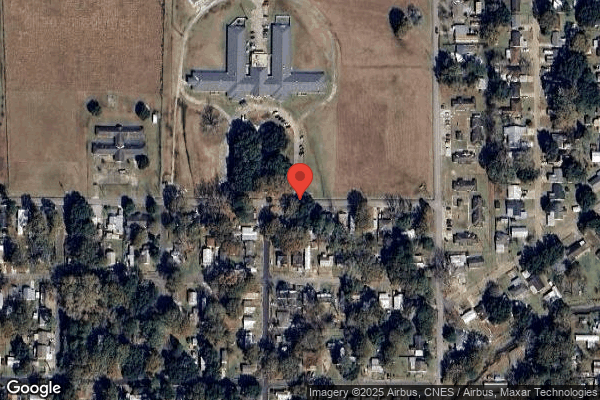
1400 W MAGNOLIA, EUNICE, LA 70535 (337) 550-7200
For profit - Corporation 130 Beds Independent Data: November 2025 1 Immediate Jeopardy citation
Trust Grade
18/100
#148 of 264 in LA
Last Inspection: June 2025

Inspected within the last 6 months. Data reflects current conditions.

Overview

Oak Lane Wellness & Rehabilitative Center has received a Trust Grade of F, indicating significant concerns and poor performance. It ranks #148 out of 264 nursing homes in Louisiana, placing it in the bottom half of all facilities in the state, and #5 out of 7 in St. Landry County, meaning only two other local options are worse. While the facility is showing an improving trend, reducing issues from 13 in 2024 to 9 in 2025, it still has serious deficiencies; for example, staff failed to prevent a resident from eloping, demonstrating a critical gap in safety measures. Staffing is somewhat stable with a 42% turnover rate, which is below the state average, but the facility has incurred $132,032 in fines, indicating ongoing compliance problems. Although RN coverage is average, specific incidents like a resident not receiving timely antibiotic treatment highlight concerning lapses in care. Overall, while there are some positive aspects, families should be cautious and consider the significant weaknesses present in this facility.

Trust Score
F
18/100
In Louisiana
#148/264
Bottom 44%
Safety Record
High Risk
Review needed
Inspections
Getting Better
13 → 9 violations
Staff Stability
○ Average
42% turnover. Near Louisiana's 48% average. Typical for the industry.
Penalties
⚠ Watch
$132,032 in fines. Higher than 83% of Louisiana facilities, suggesting repeated compliance issues.
Skilled Nurses
⚠ Watch
Each resident gets only 14 minutes of Registered Nurse (RN) attention daily — below average for Louisiana. Fewer RN minutes means fewer trained eyes watching for problems.
Violations
⚠ Watch
28 deficiencies on record. Higher than average. Multiple issues found across inspections.
★★☆☆☆
2.0
Overall Rating
★★★☆☆
3.0
Staff Levels
★★☆☆☆
2.0
Care Quality
★★☆☆☆
2.0
Inspection Score
Stable
2024: 13 issues
2025: 9 issues

The Good

  • Full Sprinkler Coverage · Fire safety systems throughout facility
  • No fines on record
  • Staff turnover below average (42%)

    6 points below Louisiana average of 48%

Facility shows strength in fire safety.

The Bad

2-Star Overall Rating

Near Louisiana average (2.4)

Below average - review inspection findings carefully

Staff Turnover: 42%

Near Louisiana avg (46%)

Typical for the industry

Federal Fines: $132,032

Well above median ($33,413)

Significant penalties indicating serious issues

The Ugly 28 deficiencies on record

1 life-threatening 1 actual harm
Jun 2025 7 deficiencies
CONCERN (D)

Potential for Harm - no one hurt, but risky conditions existed

Deficiency F0561 (Tag F0561)

Could have caused harm · This affected 1 resident

**NOTE- TERMS IN BRACKETS HAVE BEEN EDITED TO PROTECT CONFIDENTIALITY** Based on observation and interviews, the facility failed to promote and facilitate residents' self- determination through suppor...

Read full inspector narrative →
**NOTE- TERMS IN BRACKETS HAVE BEEN EDITED TO PROTECT CONFIDENTIALITY** Based on observation and interviews, the facility failed to promote and facilitate residents' self- determination through support of the residents' choice about aspects of his or her life in the facility that were significant to the resident for 1 (#59) out of 29 sampled residents. The facility failed to provide a diet according to Resident #59's food preferences. Findings: A review of Resident #59's electronic health record revealed he was admitted to the facility on [DATE] with diagnoses that included, but were not limited to, Cerebral Infarction, Dementia, and Vitamin Deficiency. A review of the Quarterly MDS (Minimum Data Set) assessment dated [DATE] revealed the resident has a BIMS (Brief Interview for Mental Status) score of 06, indicating the resident's cognition was severely impaired. On 06/23/2025 at 11:18 a.m., an observation was conducted of Resident #59 consuming lunch. He did not eat the mixed vegetables or beans that were on his lunch tray. An interview was conducted with Resident #59 at this time, and he stated he does not like beans and mixed vegetables. He said he told the facility of his dislikes already. A review of Resident #59's meal ticket on his lunch tray dated 06/23/2025 read in part, Dislikes: Mixed Vegetables/Beans . On 06/23/2025 at 11:25 a.m., an observation and interview were conducted with S10CNA (Certified Nursing Assistant). S10CNA confirmed Resident #59's meal ticket stated that he has a dislike of mixed vegetables and beans. An observation was conducted with S10CNA of the resident's lunch tray and she confirmed that he did not eat his mixed vegetables and beans. She stated this should not have been on his lunch tray, and a substitute should have been on his plate instead. On 06/23/2025 at 11:29 a.m., an observation and interview were conducted with S6DC (Dietary Cook). S6DC reviewed Resident #59's meal ticket and lunch plate. She confirmed the resident has a dislike of mixed vegetables and beans. She confirmed mixed vegetables and beans should not have been on the resident's lunch plate, and they should have put a substitute on his plate such as salad or cucumbers. She further stated she should have clarified, with the resident what type of beans he wanted and she had not done this. On 06/24/2025 at 3:34 p.m., an interview was conducted with S5DSC (Dining Service Coordinator). She confirmed that the resident's likes and dislikes on their meal ticket should be honored, and if there are any dislikes on the meal ticket that is on the menu, it should be substituted with a resident's preferences.
CONCERN (D)

Potential for Harm - no one hurt, but risky conditions existed

Assessment Accuracy (Tag F0641)

Could have caused harm · This affected 1 resident

**NOTE- TERMS IN BRACKETS HAVE BEEN EDITED TO PROTECT CONFIDENTIALITY** Based on interview and record review, the facility failed to ensure the assessment accurately reflected the resident's status fo...

Read full inspector narrative →
**NOTE- TERMS IN BRACKETS HAVE BEEN EDITED TO PROTECT CONFIDENTIALITY** Based on interview and record review, the facility failed to ensure the assessment accurately reflected the resident's status for 1 (Resident #66) out of 29 sampled residents. Findings: Review of Resident #66's Electronic Health Record (EHR) revealed the resident was admitted to the facility on [DATE] with diagnoses which included, but were not limited to unspecified combined systolic (congestive) and diastolic (congestive) heart failure. Further review revealed Resident #66 was discharged on 04/25/2025. Review of Resident #66's Discharge Minimum Data Set (MDS) assessment dated [DATE] revealed a code of 2 in section A0310 - Type of Assessment, which indicated unplanned discharge. Review of Resident #66's care plan revealed a focus area initiated on 01/28/2025 for D/C (discharge) planning - active plans to return to the community. A review of progress notes revealed on 04/24/2025 at 10:59 a.m. S12LPN (Licensed practical Nurse) wrote: New order per (by) Dr. (doctor) .for patient to be discharged home with home health services on 04/25/2025. An interview and record review of Resident #66's Discharge MDS assessment dated [DATE] was conducted with S21MDS on 06/24/2025 at 11:38 a.m. S21MDS confirmed the resident's discharge MDS assessment was coded as an unplanned discharge and stated it should have been coded as a planned discharge.
CONCERN (D)

Potential for Harm - no one hurt, but risky conditions existed

ADL Care (Tag F0677)

Could have caused harm · This affected 1 resident

**NOTE- TERMS IN BRACKETS HAVE BEEN EDITED TO PROTECT CONFIDENTIALITY** Based on observations, interviews, and record review, the facility failed to ensure that a resident who is unable to carry out a...

Read full inspector narrative →
**NOTE- TERMS IN BRACKETS HAVE BEEN EDITED TO PROTECT CONFIDENTIALITY** Based on observations, interviews, and record review, the facility failed to ensure that a resident who is unable to carry out activities of daily living (ADLs) receives services to maintain personal hygiene for 1 (#16) of 1 (#16) residents investigated for ADL care. The sample size was 29. Findings: Resident #16 was admitted to the facility on [DATE] with diagnoses which included, but were not limited to, cerebral infarction and unspecified dementia, unspecified severity and encounter for palliative care. Review of Resident #16's Significant Change Minimum Data Set (MDS) assessment revealed a code of 1 in section GG0115 A. Upper extremity, indicating the resident had impairment on one side. Further review revealed a code of 03 in section GG0130. Self-Care I. Personal hygiene indicating the following .Helper lifts, holds, or supports trunk or limbs, but provides less than half the effort. Review of Resident #16's care plan revealed a focus area initiated on 01/24/2025 for mobility and self-care needs with an intervention to check fingernails daily and clean as needed. On 06/24/2025 at 9:27 a.m., an observation was made of Resident #16 in her room. The resident was lying in bed and a dried, brown, stool colored substance coated her right hand, fingers, and underneath her fingernails. During an observation and interview with S11CNA (Certified Nursing Assistant) on 06/24/2025 at 9:30 a.m., she stated that she was responsible for Resident #16's care. S11CNA confirmed the resident's right hand, fingers, and nails were coated with brown, stool colored substance and stated she must have placed her hand in her diaper. When asked, S11CNA stated that she started her shift a 6:00 a.m. but had not checked on the resident because she had to go to the dining room to assist other residents. On 06/24/2025 at 9:55 a.m., an interview was conducted with S13CNA. She stated that she fed the resident at around 7:30 a.m. but did not check her hands or her incontinent brief. When asked what she did, S13CNA stated she put the head of the bed up and fed her. During an interview with S3ADONIP (Assistant Director of Nursing/Infection Preventionist) on 06/25/2025 at 9:08 a.m., she stated that the last round for the night shift was 4:30 a.m. to 5:30 a.m., and at 6:00 a.m. when the new shift started, the CNA from each shift should have rounded together to check each resident to make sure they were clean and dry. S3ADONIP further stated that breakfast started at 7:00 a.m., and checking the residents should have been completed before breakfast. On 06/25/2025 at 10:37 a.m., an Interview was conducted S14CNAS (Certified Nursing Assistant Supervisor). She stated CNAs were supposed to check on all their residents as soon as they started their shift. S14CNAS further stated that breakfast did not start until 7:00 a.m. She stated she spoke to the CNAs after she became aware of the incident and one of them told her she didn't see it. S14CNAS stated, I don't know how she didn't see that.
CONCERN (D)

Potential for Harm - no one hurt, but risky conditions existed

Respiratory Care (Tag F0695)

Could have caused harm · This affected 1 resident

**NOTE- TERMS IN BRACKETS HAVE BEEN EDITED TO PROTECT CONFIDENTIALITY** Based on observations and interviews the facility failed to properly store respiratory equipment for 2 (Resident #16 and Residen...

Read full inspector narrative →
**NOTE- TERMS IN BRACKETS HAVE BEEN EDITED TO PROTECT CONFIDENTIALITY** Based on observations and interviews the facility failed to properly store respiratory equipment for 2 (Resident #16 and Resident #22) out of 3 residents (Resident #16, Resident #22 and Resident # 63) investigated for respiratory care. Findings: Resident #22: Review of Resident #22's electronic medical record revealed that she was admitted on [DATE] with a diagnosis of obstructive sleep apnea. Review of the resident's June 2025 physician orders revealed an order to change replacement cushion (mask) on CPAP machine every month on the 22nd. On 06/23/2025 at 09:15 a.m., an observation was made of Resident #22's CPAP mask in a plastic storage bag dated 05/13/2025. On 06/23/2025 at 2:35 p.m., an interview and observation was conducted with S2DON (Director of Nursing). S2DON stated the plastic storage bags for the CPAP mask should be changed once a month when they change the CPAP mask. She confirmed the plastic bag with the resident's CPAP mask was dated 05/13/2025. She stated that the plastic storage bag should have been changed when the resident's CPAP mask was changed. Review of the facility's policy CPAP/BiPAP (Continuous Positive Airway Pressure/ Bilevel Positive Airway Pressure) Support with a revised date of 08/27/2024 read in part, . General Guidelines for Cleaning .9. Infection control--keep cpap mask in clean dry bag and change out monthly when changing out mask . Resident #16: Resident #16 was admitted to the facility on [DATE] with diagnoses which included, but were not limited to hypertensive heart disease with heart failure. Review of physician's orders revealed an order written on 02/26/2025 for Ipratropium-Albuterol Inhalation Solution 0.5-2.5 (3) MG (milligrams)/3ML (milliliter) (Ipratropium-Albuterol)1 vial inhale orally four times a day related to heart failure, unspecified. During an observation of Resident #16's room on 06/24/2025 at 9:27 a.m., Resident #16 was in bed and her oxygen nebulizer mask was connected to her breathing treatment machine which was on the seat of a chair in the room and not stored in a bag. The chair was not within reach of the resident. During an observation and interview with S11CNA (Certified Nursing Assistant) on 06/24/2025 at 9:30 a.m., she confirmed the resident's oxygen nebulizer mask on the chair was not stored in a bag. An observation and interview was conducted with S12LPN (Licensed Practical Nurse) on 06/24/2025 at 9:42 a.m. He confirmed Resident #16's nebulizer mask should have been stored in a bag. S12LPN stated the resident was unable to place the mask on the chair because it was outside of her reach. On 06/25/2025, a review of the facility's policy titled Departmental (Respiratory Therapy) - Prevention of Infection, with a last reviewed date of 08/07/2024, read in part .Purpose: The purpose of this procedure is to guide prevention of infection associated with respiratory therapy tasks and equipment, including ventilators, among residents and staff .Infection Control Considerations Related to Medication Nebulizers/Continuous Aerosol: .7. Store the circuit in plastic bag, marked with date and resident's name, between uses.
CONCERN (D)

Potential for Harm - no one hurt, but risky conditions existed

Infection Control (Tag F0880)

Could have caused harm · This affected 1 resident

**NOTE- TERMS IN BRACKETS HAVE BEEN EDITED TO PROTECT CONFIDENTIALITY** Resident #50 Review of Resident #50's electronic medical record revealed he was admitted to the facility on 09/12//2022 with the...

Read full inspector narrative →
**NOTE- TERMS IN BRACKETS HAVE BEEN EDITED TO PROTECT CONFIDENTIALITY** Resident #50 Review of Resident #50's electronic medical record revealed he was admitted to the facility on 09/12//2022 with the following diagnoses in part, but not limited to, Type 2 Diabetes mellitus, cerebral infarction and chronic obstructive pulmonary disease. On 06/23/2025 at 10:20 a.m., a medication administration observation was conducted with S15LPN (Licensed Practical Nurse). After S15LPN drew up Resident #50's insulin injection, she proceeded to the resident's room and administered his injection without donning gloves prior to giving the injection. On 06/23/2025 at 10:30 a.m., an interview was conducted with S15LPN. S15LPN confirmed she did not wear gloves when she administered Resident #50's injection. She stated that she should have worn gloves to give the injection. Based on observation, interviews, and record review, the facility failed to maintain an infection prevention and control program designed to provide a safe and sanitary environment to help prevent the development and transmission of infection for 2 (Resident #31 and Resident #50) out of 29 sampled residents. The deficient practice was evidenced when the facility failed to ensure staff: 1. Wore proper PPE (Personal Protective Equipment) while providing care for Resident #31 who was on EBP (Enhanced Barrier Precautions) and 2. Wore gloves prior to and while administering an insulin injection to Resident #50. Findings: Review of the facility's policy titled, Enhanced Barrier Precautions' with a last reviewed date of 08/07/2024 read in part, Enhanced barrier precautions (EBPs) are utilized to prevent the spread of multi-drug resistant organisms (MDROs) to residents .Examples of high-contact resident care activities requiring the use of gown and gloves for EBP include .bathing/showering .EBPs are indicated (when contact precautions do not otherwise apply) for residents infected or colonized with the following .ESBL (extended-spectrum beta-lactamase) producing enterobacterales . Review of Resident #31's admission Record revealed he was admitted to the facility on [DATE] with diagnoses that included in part, cerebral infarction, Hemiplegia and Hemiparesis following Cerebral Infarction, and Urinary Tract Infection. Review of Resident #31's Care Plan Report revealed EBP precautions - MDRO ESBL with interventions that included in part, EBP precautions must wear gloves and gown for high contact interactions. Review of Resident #31's Urinalysis Culture dated 06/07/2025 revealed in part, organisms identified: Escherichia coli ESBL. On 06/25/2025 at 9:35 a.m., an observation was made of a sign posted on Resident #31's room door indicating he required EBP and staff should wear a gown as a part of their PPE. On 06/25/2025 at 9:40 a.m., an observation was made of S19CNA (Certified Nursing Assistant) not wearing a gown while providing a bed bath for Resident #31. An interview was conducted with S19CNA, who stated she was aware that Resident #31 was on EBP and confirmed she failed to wear a gown while providing resident care. On 06/25/2025 at 10:25 a.m., an interview was conducted with S3ADON/IP (Assistant Director of Nursing/Infection Preventionist). She confirmed a gown and gloves must be donned (worn) when providing high contact activities such as bed baths if a resident required EBP.
CONCERN (E)

Potential for Harm - no one hurt, but risky conditions existed

Comprehensive Care Plan (Tag F0656)

Could have caused harm · This affected multiple residents

**NOTE- TERMS IN BRACKETS HAVE BEEN EDITED TO PROTECT CONFIDENTIALITY** Based on record review and interview, the facility failed to develop and/or implement a comprehensive person-centered plan of ca...

Read full inspector narrative →
**NOTE- TERMS IN BRACKETS HAVE BEEN EDITED TO PROTECT CONFIDENTIALITY** Based on record review and interview, the facility failed to develop and/or implement a comprehensive person-centered plan of care and/or physician's orders for 1 (Resident #38) out of 29 sampled residents. This deficient practice was evidenced when the facility failed to implement standing orders for constipation for Resident #38. Findings: Review of Resident #38's admission Record revealed she was admitted to the facility on [DATE] with diagnoses that included in part, Alzheimer's disease, Diabetes Mellitus and Cerebral Infarction. Review of Resident #38's Quarterly Minimum Data Set (MDS) assessment dated [DATE], Section C, revealed Resident #38's Brief Interview for Mental Status (BIMS) score was 12, indicating her cognition was moderately impaired. Further review of the assessment, under Section H revealed Resident #38's bowel continence was always incontinent. Review of Resident #38's Care Plan revealed in part, risk for inadequate bowel pattern. Interventions included in part, administer medication as ordered, monitor effectiveness/adverse reactions and observe for signs and symptoms of . constipation . On 06/25/2025 at 8:40 a.m., an interview was conducted with Resident #38. She stated she had a history of constipation and her last bowel movement was four days ago. On 06/25/2025 at 9:15 a.m., an interview was conducted with S20LPN (Licensed Practical Nurse). S20LPN stated Resident #38 has standing physician's orders to give Resident #38 milk of magnesia or bisacodyl (laxatives), if the resident did not have a bowel movement in three days. Review of a facility document titled Routine Standing Orders 2025 revealed in part, constipation, if no BM (bowel movement) in 3 days: milk of magnesia 30 cc (cubic centimeters) at bedtime prn (as needed) or bisacodyl 3 tablets po (by mouth) at bedtime prn. Further review revealed in part, if no results in 24 hours then give bisacodyl 10 mg (milligram) suppository x 1, if still no BM after 24 hours, check for impaction and notify MD (Medical Doctor). On 06/25/2025 at 12:24 p.m., a review was conducted of Resident #38's electronic medial record which revealed a report titled, Follow-up question report dated 06/01/2025 - 06/25/2025. The report revealed Resident #38 did not have a bowel movement on 06/18/2025, 06/19/2025, 06/20/2025, 06/21/2025, 06/22/2025, and 06/23/2025. On 06/25/2025 at 1:32 p.m., a review of Resident #38's June 2025 MAR (Medication Administration Record) was conducted. No milk of magnesia or bisacodyl was administered to Resident #38 in June 2025. On 06/25/2025 at 1:48 p.m., an interview and record review was conducted with S2DON (Director of Nursing). S2DON confirmed that Resident #38 did not have a bowel movement from 06/18/2025 to 06/23/2025. S2DON reviewed Resident #38's June 2025 MAR and confirmed the resident did not receive milk of magnesia or bisacodyl for constipation and should have.
CONCERN (E)

Potential for Harm - no one hurt, but risky conditions existed

Food Safety (Tag F0812)

Could have caused harm · This affected multiple residents

Based on observations and interviews, the facility failed to maintain professional standards for food service safety by failing to: 1. Discard food items that were past the used by date, 2. Label an...

Read full inspector narrative →
Based on observations and interviews, the facility failed to maintain professional standards for food service safety by failing to: 1. Discard food items that were past the used by date, 2. Label and date opened food items stored in the walk in cooler, 3. Label and date an opened food item in the area where food is prepared 4. Label and date an opened food item in the pantry, 5. Remove a dented can from the dry storage area, 6. Ensure kitchen staff wear proper hair restraints. The facility's census was 69. Findings: A review of the facility's policy titled Food Receiving and Storage with a last review date of 08/07/2024 read in part, Policy Statement: Foods shall be received and stored in a manner that complies with safe food handling practices. 8. All foods stored in the refrigerator or freezer will be covered, labeled and dated (use bydate). A review of the facility's policy titled Preventing Foodborne Illness - Employee Hygiene and Sanitary Practices with a last review date of 08/07/2024 read in part, Policy Statement: Food and nutrition services employees will follow appropriate hygiene and sanitary procedures to prevent the spread of foodborne illness. 12. Hair nets or caps and/or beard restraints must be worn to keep hair from contacting exposed food, clean equipment, utensils and linens. On 06/23/2025 at 8:55 a.m., an initial tour of the kitchen was made with S5DSC (Dining Service Coordinator). The following were identified: 1. In the reach in cooler, there were (19) 8 ounce containers of chocolate milk with a used by date of 06/19/2025 and (1) 48 ounce cream cheese opened with no label or date opened. 2. In the kitchen, near the sink where food was prepared, there was a container of browning seasoning sauce opened with no label or date opened. 3. In the walk in cooler, there was (1) container of minced garlic and (1) container of chicken base with no label or date opened. 4. In the pantry there was (1) 50 ounce can of chicken noodle soup dented and (1) 18 ounce container of ground cinnamon with no label or date opened. 5. S7DC (Dietary Cook) with exposed facial hair. On 06/23/2025 at 09:15 a.m., an interview was conducted with S5DSC and she confirmed that all items with a past used by date should have been discarded, there should have been no dented cans in the pantry and all opened food items should have been labeled with a date when the item was opened. On 06/23/2025 at 10:34 a.m., a second observation was made of S7DC cleaning the stove with exposed facial hair. At this time an interview with S5DSC was conducted. She confirmed that S7DC's facial should have been covered.
Apr 2025 2 deficiencies 1 IJ
CRITICAL (J) 📢 Someone Reported This

A family member, employee, or ombudsman was alarmed enough to file a formal complaint

Immediate Jeopardy (IJ) - the most serious Medicare violation

Accident Prevention (Tag F0689)

Someone could have died · This affected 1 resident

**NOTE- TERMS IN BRACKETS HAVE BEEN EDITED TO PROTECT CONFIDENTIALITY** Based on record reviews, observations, and interviews, the facility staff failed to recognize and properly respond to a resident...

Read full inspector narrative →
**NOTE- TERMS IN BRACKETS HAVE BEEN EDITED TO PROTECT CONFIDENTIALITY** Based on record reviews, observations, and interviews, the facility staff failed to recognize and properly respond to a resident who was demonstrating exit seeking behaviors or recognize the Wanderguard alarm to prevent elopement for 1 (Resident #1) of 5 residents investigated for elopement (Resident #1, #4, #5, #6 and #7). This deficient practice resulted in an Immediate Jeopardy on 03/22/2025 at 10:40 a.m. when Resident #1, a moderately cognitively impaired resident, eloped from the facility located in a residential area. On the morning of 03/22/2025, prior to his elopement, Resident #1 asked staff members for the code to the facility's door alarm and expressed that he wanted to go home before exiting the facility undetected by staff. Staff failed to recognize the residents exit seeking behavior and the sound of the wanderguard as he went out of the door. On 03/22/2025 at 10:50 a.m., the facility received a phone call from Resident #1's responsible party that Resident #1 was at his home. Resident #1 walked approximately 0.2 miles from the facility to his home. He was returned to the facility by facility staff 03/22/2025 at 11:12 a.m. and placed into the monitored unit. S1ADM (Administrator) was notified of the Immediate Jeopardy on 03/31/2025 at 5:51 p.m. The deficient practice had the likelihood to cause more than minimal harm to 5 residents identified by the facility as an elopement risk. Findings: Review of Resident #1's electronic medical record revealed he was admitted to the facility on [DATE] with diagnoses that included but not limited to Alzheimer's disease and dementia with other behavioral disturbance. Review of Resident #1's admission MDS (Minimum Data Set) with an ARD (Assessment Review Date) of 02/28/2025 revealed he had a BIMS (Brief Interview for Mental Status) of 09, indicating his cognition was moderately impaired. Behavioral section of the MDS revealed Resident #1 had no wandering behaviors at the time of the assessment. Further review of his functional abilities section revealed Resident #1 did not use any assistive devices and could walk independently 150 feet. Review of Resident #1's care plan read in part: Focus: Risk for elopement related to impairment cognition and safety awareness secondary to Dementia. Goal: No wandering behaviors; date initiated 02/21/2025. Resident's safety will be maintained initiated 02/21/2025. Interventions read in part: Wander Guard (elopement alarm bracelet) device applied due to risk elopement related to impaired cognition and safety awareness. Monitor every shift for proper placement and functioning of device initiated 02/21/2025. Review of Resident #1's current physician orders revealed an order dated 02/25/2025 for Wander guard applied due to risk of elopement related to impaired cognition and safety awareness. Review of Resident #1's elopement assessment dated [DATE] revealed Resident #1 was negative for elopement risk. However, there was a statement documented that read Wander guard device applied to right wrist due to risk of elopement related to impaired cognition and safety awareness secondary to dementia. Monitor q (every) shift for proper placement and functioning of device. Review of Resident #1's incident report completed on 03/22/2025 at 10:50 a.m. by S4ALPN (Agency Licensed Practical Nurse) read in part, this nurse was made aware by the facility staff that Resident #1's responsible party called to advise that Resident #1 had left the facility and was currently at his residence. Facility transportation went and picked up Resident #1 at that location. At approximately 11:15 a.m., this nurse asked resident what happened and Resident #1 stated I left and will not leave again for a few more months. Review of witness statement completed by S8FS (Facility Staff) on 03/22/2025 read in part, the last time I saw him was at 10:30 a.m. Resident #1 came to the desk and asked me to let him out the building. Review of witness statement completed by S5CNA (Certified Nursing Assistant) on 03/22/2025 read in part .Resident #1 came and asked me and S6CNA to let him out because he was ready to go home, so we sent him to the nurse's station to talk to the nurse at the end of the hall and that was the last time I saw him. A little while later after about 10:40 a.m., we started bringing residents to the dining room and then we sat behind the nurse's station. The door alarm started going off, but we did not know where it was coming from. I checked the door and looked outside and then I put the code in to disarm the alarm but I didn't see anyone outside. Review of witness statement completed by S6CNA on 03/22/2025 read in part I was working with S5CNA and we had just finished rounding and went to get something out of our bags when Resident #1 approached and asked if we would let him out because he wanted to go home. We told him we wouldn't and that he would have to ask the nurse at the end of the hall. After that, we went and sat behind the nurse's station. Resident #1 came up to the nurse's station again and asked if we could put in the code to the door and we told him that we didn't know the code and that he had to ask the nurse. After that Resident #1 went down the hall toward the nurse station. On 03/31/2025 at 12:02 p.m., an interview was conducted with S5CNA. She confirmed that she was present and responsible for Resident #1 on 03/22/2025 when he eloped. She stated that Resident #1 followed her in the lounge and asked her to open the door because he was ready to go home. She then told him to go ask the nurse and watched him until he approached the nurse. She stated that Resident #1 had been asking to go home all day, but she thought nothing of it. S5CNA reported that when the alarm went off, she just thought the door had been left opened too long and did not know which door was alarming. She stated that when she went to Hall W's front exit door, she looked outside from the door and did not see anyone so she disarmed the alarm. S5CNA confirmed that she did not know how to identify where an alarm was coming from when it sounded or what should be done when an alarm sounded. On 03/31/2025 at 12:28 p.m., an interview was conducted with S6CNA. She stated that she was also caring for Resident #1 the day he eloped. She stated that when she went by the lounge room to get a drink, Resident #1 asked her for the code to get out because he was ready to go home. She stated that she knew that he was an elopement risk and had a Wander guard bracelet, but did not think that would have left the building. S6CNA said that she told him to go and ask the nurse for the code. She stated that later, when the alarm went off, she did not know what it was or where it was coming from. S6CNA stated that eventually S5CNA went to the exit door and canceled the alarm. On 03/31/2025 at 1:27 p.m., a review of the facility's video surveillance dated 03/22/2025 and interview was conducted with S1ADM (Administrator). Prior to the review of the video, S1ADM advised that the time on the video surveillance had not been set to daylight savings time, therefore, timing would be one hour later than the time stamps on the video. Review of the surveillance revealed that on 03/22/2025 at 09:40 a.m., Resident #1 walked out to the facility following a visitor. There is no audio on the video, however, S1ADM stated that this was when the alarm when off. On 03/22/2025 at 09:41 a.m., a staff member's head poked out from the nurse's station. At 09:42 a.m., S5CNA came from the nurse's station, walked toward Hall W's front exit door, peered through the door's glass from inside of the facility, and reset the alarm and returned back to the nurse's station. At this time, S1ADM confirmed that the two CNA's working with Resident #1, S5CNA and S6CNA, did not know where the alarm sound came from. He stated that the two CNA's had just started working about 2 weeks prior to the incident. He also stated the CNA's could have gotten to Resident #1 quicker had they known where the alarm was coming from. A review of the Elopement Policy with S1ADM was conducted and revealed nothing about alarms, how to respond to an alarm or how to recognize exit seeking behaviors. He stated that he would have to look for a policy on alarms. S1ADM stated that on 03/22/2025, after the incident of elopement, he began an in-service with all staff on the elopement policy, how to identify where an alarm is coming from and how to respond when an alarm activated. Review of the facility's policy with a review date of 08/2024 titled Elopements read in part, Policy Interpretation and Implementation: 1. Staff shall promptly report an resident who tries to leave the premises .2. If an employee observes a resident leaving the premises .3. If an employee discovers that a resident is missing from the facility .4. When the resident returns to the facility . A request for the facility's policy on alarms/Wander guard was requested on 03/31/2025 at 1:27 p.m., but not provided until a second request was made for a policy and presented approximately 1.5 hours before the notification of Immediate Jeopardy. Review of the facility's policy with a review date of 8/2024 titled Door Guardian WanderguardSystem read in part Policy Statement: The Wanderguard would be used for residents at risk for elopement. Procedure: 5. The Wanderguard notification systems are located at each nurse's station. (Secure Care box located on the wall with door labels and lights). 6. If the notification system starts sounding, locate the alarming door by looking for the light next to the door label that is alerting. Go to the door, look for any residents that may have set off the alarm, once you have determined that no residents are missing, reset the alarm. The Immediate Jeopardy was removed on 04/01/2025 at 1:37 p.m. after it was verified through observations, interviews, and record reviews that the provider implemented an acceptable Plan of Removal prior to the survey exit. The facility implemented the following actions to correct the deficient practice: The facility initiated in-service with staff on 03/22/2025 regarding door alarms within the facility and the Elopement Policy. Staff were educated on how to respond to an activated door alarm. On 03/31/2025, an additional in-service on the Door Guardian, Wander Guard Policy to all staff on duty was conducted. Pictures of the alarming modules located at the nurse's stations were presented to staff for visual recognition. Education continued on 04/01/2025 to all staff as they came for their assigned shifts. The facility continued to educate on 04/01/2025 to all on coming staff members on the policies and procedures for dealing with elopements, residents with elopement risk, alarming doors and how to react and respond accordingly to an alarm. The administrator and/or designee will evaluate new hires and agency staff prior to beginning their shifts on policies and procedures for dealing with elopements, resident with elopement risk, alarming doors and how to react and respond accordingly to an alarm. The charge nurse will evaluate any agency staff to ensure full understanding prior to beginning their shifts. The administrator and/or designee will provide additional monthly education on elopements, elopement risk residents, exit seeking behavior, alarms within the facility and how to properly respond to alarms within the facility to staff for the next 6 months. The DON (Director of Nursing) and/or designee will conduct random weekly audits of staff's knowledge on the policies and procedures on elopements, residents with elopement risk, alarming doors and how to react and respond accordingly for 8 weeks. The Policy on Elopement was revised to include attempted elopements and exit seeking behaviors and how to deal with exit seeking behaviors.
CONCERN (D) 📢 Someone Reported This

A family member, employee, or ombudsman was alarmed enough to file a formal complaint

Potential for Harm - no one hurt, but risky conditions existed

Pressure Ulcer Prevention (Tag F0686)

Could have caused harm · This affected 1 resident

**NOTE- TERMS IN BRACKETS HAVE BEEN EDITED TO PROTECT CONFIDENTIALITY** Based on interview and record review, the facility failed to ensure a resident received care, consistent with professional stand...

Read full inspector narrative →
**NOTE- TERMS IN BRACKETS HAVE BEEN EDITED TO PROTECT CONFIDENTIALITY** Based on interview and record review, the facility failed to ensure a resident received care, consistent with professional standards of practice, to prevent pressure ulcers for 1 resident (#2) out of 7 (#1,#2, #3, #4, #5, #6, #7) sampled residents. Findings: Review of the facility's policy titled Prevention of Pressure Ulcer/Injuries, with a last reviewed date of August 2024, read in part: 1. Evaluate, report, and document potential changes in the skin with weekly skin assessments. Review of Resident #2's medical record revealed the resident was admitted to the facility on [DATE] with diagnoses including; type 2 diabetes, pressure ulcer of sacral region, and unstageable pressure induced deep tissue damage of other site. Review of Resident #2's quarterly MDS (Minimum Data Set) assessment dated [DATE] revealed section M in part: Resident has a pressure ulcer/injury, at risk for developing pressure ulcers. Review of Resident #2's care plan initiated on 12/12/2024 revealed an intervention to conduct body audit per schedule. Further review of Resident #2's medical record failed to reveal weekly body audits for 12/11/2024 through 12/24/2024. Review of Resident #2's wound assessments revealed a facility acquired, unstageable wound was identified to the resident's sacrum on 12/24/24. On 04/02/2025 at 10:20 a.m., an interview was conducted with S7TN (Treatment Nurse). She stated she completed skin assessments and body audits on all residents weekly. She further stated that these were head to toe assessments, and she assessed the residents' backsides as well. S7TN also stated that weekly skin impairment assessments were conducted on residents who had current skin impairments. A review of Resident #2's weekly skin impairment assessment for the week of 12/17/2024 did not include an assessment of the resident's buttocks and the assessment was for the resident's yeast infection rash. S7TN was asked to provide documented evidence that a body audit was conducted on Resident #2 between his admission assessment on 12/11/2024 and the identification of the unstageable wound to his sacrum on 12/24/2024 and could not provide any documented evidence.
May 2024 10 deficiencies 1 Harm
SERIOUS (G)

Actual Harm - a resident was hurt due to facility failures

Antibiotic Stewardship (Tag F0881)

A resident was harmed · This affected 1 resident

**NOTE- TERMS IN BRACKETS HAVE BEEN EDITED TO PROTECT CONFIDENTIALITY** Based on record review and interview, the facility failed to implement its antibiotic stewardship policy to timely evaluate cult...

Read full inspector narrative →
**NOTE- TERMS IN BRACKETS HAVE BEEN EDITED TO PROTECT CONFIDENTIALITY** Based on record review and interview, the facility failed to implement its antibiotic stewardship policy to timely evaluate culture and sensitivity results in order to determine appropriate antibiotic usage by failing to: 1. Obtain culture report and sensitivity data in a timely manner in order to initiate possible treatment for Residents #43 and #77 and; 2. Notify the physician of culture report and sensitivity data in order to ensure Resident #380 was prescribed the appropriate antibiotic, out of 6 (Residents #34, #43, #54, #65, #70, #77, and #380) residents reviewed for infection control tracking and trending during the Infection Control facility task. The facility's census was 77. This deficient practice resulted in actual harm when Resident #43's final urine culture and sensitivity final report dated 04/26/24 showed that the bacteria, Klebsiella pneumoniae, was present in the resident's urine. The facility failed to have the final culture and sensitivity report resulted on 4/26/2024 in the resident's record from a urinalysis specimen collected on 04/23/2024. The facility was not aware of the results and therefore not able to report the results to the resident's physician for possible treatment with antibiotics. On 04/30/2024, Resident #43 complained of weakness and dizziness and her blood pressure was 80/40 (low). The resident was subsequently sent to the emergency room the same day (04/30/2024) where a urine culture was ordered and showed Klebsiella pneumonia as previously identified in the culture that the facility collected on 4/23/2024. The resident was discharged from the emergency room on [DATE] with a prescription for antibiotic therapy. A review of the facility's policy titled, Antibiotic Stewardship read in part: 11. When a culture and sensitivity (C&S) is ordered lab results and the current clinical situation will be communicated to the prescriber as soon as available to determine if antibiotic therapy should be started, continued, modified, or discontinued. 1. Resident #43: A review of resident #43's medical record revealed a urine specimen was collected for urinalysis on 04/23/2024. No final microbiology report was present in resident #43's medical record on 05/20/2024. Review of the final microbiology report that was obtained for this resident during the survey on 05/20/2024 indicated that on 04/26/2024, Klebsiella pneumoniae was present in the urine collected on 04/23/2024. No documentation was found that the physician had been notified of the final microbiology results or that Resident #43's infection had an antibiotic ordered for treatment. Review of S11LPN's nurse's notes dated 04/30/2024 at 8:00 a.m. revealed that Resident #43 had complaints of weakness and dizziness with a low blood pressure of 80/40. She was transferred to the emergency room. Review of S11LPN's nurse's notes dated 04/30/2024 at 12:45 p.m. revealed that the resident returned from the emergency with a diagnosis of Urinary Tract Infection and a new order for the antibiotic, Cipro. Review of Resident #43's emergency room visit notes on 04/30/2024 revealed that the resident had a diagnosis of UTI (Urinary Tract Infection) and discharged with an order for Ciprofloxacin (antibiotic). Resident #77: A review of resident #77's medical record revealed a Urine Culture and Sensitivity was collected on 04/30/2024. The final microbiology report issued on 05/03/2024 revealed that Enteroccocus faecalis was present in the resident's urine. Review of S12LPN's nurse's dated 05/05/2024 at 5:15 p.m. revealed that the physician was notified with no new orders at that time related to the resident being in the hospital. On 05/21/2024 at 01:10 p.m., an interview was conducted with S3ADON (Infection Preventionist.) S3ADON stated that the floor nurses were responsible for obtaining the culture results. She stated that the QA (Quality Assurance) Nurse or herself also attempts to call the lab for the results, but it may not be the day the results were issued. This would depend on which days her or the QA nurse worked. She stated that the facility has had difficulty with the laboratory sending final culture reports. She stated that someone at the facility usually has to call the lab and request the results. She confirmed that Resident #43's final urine (C&S) results from the urine sample collected on 04/23/2024, was not present in Resident #43's medical record. She also confirmed that there was no documentation the physician had been notified of the results and that no treatment was initiated for the urinary tract infection. She stated that final microbiology results should have been obtained by the facility, the physician should have been notified, and that an appropriate treatment should have been initiated for Resident #43's infection. She also confirmed that Resident #77's C & S final report on 05/03/2024 for the urine collected on 04/30/2024, was not reported to the physician until 05/05/2024 which was 2 days after the results were available. 2. Review of Resident #380's physician orders revealed an order date 04/10/2024 for Macrobid (brand name for Nitrofurantoin) 100mg capsule, give one capsule by mouth twice daily for seven days. A review of resident #380's medical record revealed a Urine Culture and Sensitivity was collected on 04/10/2024. The final microbiology report issued on 04/12/2024 revealed that Klebsiella pneumoniae ESBL (Extended Spectrum Beta-Lactamase) was present in the urine and that the organism was resistant to Nitrofurantoin (Macrobid). There was no documentation in the resident's record that the culture and sensitivity report was reported to the physician or that a change in treatment was initiated due to the bacteria being resistant to the antibiotic the resident had been prescribed for the treatment of the urinary tract infection. On 04/18/2024, Resident #380 was discharged to her home. On 05/21/2024 at 01:10 p.m., a continued interview with S3ADON (Infection Preventionist) confirmed that Resident #380's culture and sensitivity report of the urine, collected on 04/10/2024, was resulted on 04/12/2024. She confirmed the organism identified on the report was resistant to the antibiotic (Macrobid) ordered on 04/10/2024 for the resident's Urinary Tract Infection. She verified that that no documentation was present regarding the physician being notified of these results or that the treatment for the resident's urinary tract infection was changed. She verified that the physician should have been notified in a timelier manner of Resident #380's final microbiology results and that the treatment should have been changed to an appropriate antibiotic based on those results
CONCERN (D)

Potential for Harm - no one hurt, but risky conditions existed

Safe Environment (Tag F0584)

Could have caused harm · This affected 1 resident

**NOTE- TERMS IN BRACKETS HAVE BEEN EDITED TO PROTECT CONFIDENTIALITY** Based on observation and interview, the facility failed to provide a homelike environment for 1 (#50) out of 3 (#44, #48, and #5...

Read full inspector narrative →
**NOTE- TERMS IN BRACKETS HAVE BEEN EDITED TO PROTECT CONFIDENTIALITY** Based on observation and interview, the facility failed to provide a homelike environment for 1 (#50) out of 3 (#44, #48, and #50) residents investigated for environment out of a total sample of 55 residents. Findings: Resident #50 was admitted to the facility on [DATE] with diagnoses that included, but were not limited to, Hypertension, Heart Failure, and Hyperlipidemia. Review of Resident #50's Quarterly MDS (Minimum Data Set) dated 02/21/2024 revealed the Brief Interview for Mental Status (BIMS) of 15, suggesting his cognition was intact. Under Section GG: Functional Abilities and Goals revealed the resident utilized a wheelchair as his mobility device. On 05/20/2024 at 8:47 a.m., an observation was made of Resident #50's bathroom. There were multiple areas of paint scraped off of the wall on the left side of the toilet. Further observation revealed there were multiple areas of paint scraped off the wall near the shower. On 05/22/2024 at 8:43 a.m., a second observation was made of the resident's bathroom. The multiple areas of paint scraped off the wall on the left side of the toilet and shower were still present. Further observation of Resident #50's room revealed a sharp piece of metal trim sticking out approximately halfway off of the doorway trim. On 05/22/2024 at 8:55 a.m., an interview and observation of the resident's bathroom was conducted with S4MS (Maintenance Supervisor). He confirmed the findings of the multiple areas of paint scraped off of the wall on the left side of the toilet and near the shower wall. He also confirmed the sharp piece of metal sticking out of the doorway trim. S4MS stated it was unacceptable and should not be like that and the sharp piece of metal sticking out of the doorway trim had the potential to harm a resident. On 05/22/2024 at 9:05 a.m., an interview and observation of the resident's bathroom was conducted with S2DON (Director of Nursing). S2DON confirmed the findings of the multiple areas of paint scraped off the wall on the left side of the toilet and shower. She also confirmed the sharp piece of metal sticking out of the doorway trim. She confirmed it was unacceptable and had the potential to hurt Resident #50 who wheels himself in his room.
CONCERN (D)

Potential for Harm - no one hurt, but risky conditions existed

Comprehensive Assessments (Tag F0636)

Could have caused harm · This affected 1 resident

**NOTE- TERMS IN BRACKETS HAVE BEEN EDITED TO PROTECT CONFIDENTIALITY** Based on observation, record review, and interviews, the facility failed to complete a comprehensive assessment, including resid...

Read full inspector narrative →
**NOTE- TERMS IN BRACKETS HAVE BEEN EDITED TO PROTECT CONFIDENTIALITY** Based on observation, record review, and interviews, the facility failed to complete a comprehensive assessment, including resident's dental status, within 14 days of admission for 1 (#131) of 1 (#131) resident reviewed for pain management from a sample of 55 residents. Findings: Record review of Resident #131's electronic record confirmed she was admitted on [DATE] with diagnoses of Vitamin Deficiency, Depression, Acute Embolism and thrombosis of deep veins, Long Term Use of Anticoagulants, Gastro Esophageal Reflux Disease, and Hypertension. On 05/20/2024 at 2:20 p.m., an observation of Resident #131's oral cavity revealed the residents' upper gums had missing and broken teeth at the gum level. Her bottom gums had approximately 6 teeth in the front that were broken and decayed. She stated she has pain continuously especially when she eats. Record review of Resident #131 Electronic MDS (Minimum Data Set) , with an Assessment Reference Date (ARD) of 5/7/2024 , Section L titled Oral/Dental Status under Dental read, No natural teeth or tooth Fragments, Cavity or broken natural teeth, Pain, Discomfort, Difficulty chewing. These three areas were blank. On 05/22/2024 at 10:14 a.m., an electronic record review was conducted with S11MDS of Resident #131's MDS with an ARD of 5/7/2024, Section L, Oral/Dental Status. She confirmed that she had not completed Resident #131's oral assessment. She stated Resident #131 was admitted to the facility on [DATE] and she was to finish the resident's oral assessment 14 days after the resident's admission date. She confirmed the resident's assessment should have been completed on 05/14/2024.
CONCERN (D)

Potential for Harm - no one hurt, but risky conditions existed

MDS Data Transmission (Tag F0640)

Could have caused harm · This affected 1 resident

Based on record review and interview, the facility failed to ensure resident assessments were opened, completed, and electronically transmitted in a timely manner for 1 (#74) out of 3 (#51, #66 and #7...

Read full inspector narrative →
Based on record review and interview, the facility failed to ensure resident assessments were opened, completed, and electronically transmitted in a timely manner for 1 (#74) out of 3 (#51, #66 and #74) residents investigated for Resident Assessment out of a finalized sample of 55 residents. This deficient practice had the potential to affect 77 residents that resided in the facility. Findings: A review of resident #74's EMR (Electronic Medical Record) revealed an admission date of 12/12/2023 with diagnoses that included Edema and Hypothyroidism. Further review of the EMR revealed a discharge date of 02/02/2024. Continued review of the resident's EMR revealed no documented evidence that a discharge assessment was opened, completed and/or transmitted in the last 120 days. On 05/22/2024 at 2:02 p.m., a concurrent record review and interview was conducted with S10LPN (Licensed Practical Nurse). S10LPN confirmed the residents discharge date of 02/02/2024. She then viewed Resident #74's EMR and confirmed a discharge assessment had not been opened, completed, or transmitted. S10LPN also confirmed the discharge assessment should have been completed after the resident discharged from the facility.
CONCERN (D)

Potential for Harm - no one hurt, but risky conditions existed

PASARR Coordination (Tag F0644)

Could have caused harm · This affected 1 resident

**NOTE- TERMS IN BRACKETS HAVE BEEN EDITED TO PROTECT CONFIDENTIALITY** Based on record review and interview, the facility failed to refer a resident with a newly diagnosed mental disorder to the appr...

Read full inspector narrative →
**NOTE- TERMS IN BRACKETS HAVE BEEN EDITED TO PROTECT CONFIDENTIALITY** Based on record review and interview, the facility failed to refer a resident with a newly diagnosed mental disorder to the appropriate state-designated authority for Level II PASRR (Preadmission Screening and Resident Review) evaluation and determination for 1 (#20) out of 2 (#3,#20) sampled residents investigated for PASRR. This had a potential to effect a census of 77. Findings: On 05/22/2024 a review of the facility's policy titled PASRR Level II Request for Resident Review Guidelines to Follow if a Resident Review/Level II is Needed (review date 08/02/2023) was conducted. The policy read in part, If any of the below exist, a Resident Review may be required - The resident has a new mental health diagnosis, which will not normally resolve itself once the condition stabilizes. Review of Resident #20's electronic medical record revealed she was admitted to the facility on [DATE] with a diagnosis that included in part, Bipolar Disorder, Unspecified (05/31/2022). Review of Resident #20's current physician orders May 2024 revealed the resident had been prescribed the antipsychotic medication Seroquel 50 mg (milligrams) related to the diagnosis of Bipolar Disorder, Unspecified. Further review of Resident #20's records revealed no evidence that a Level II PASRR had been submitted to the appropriate state-designated authority for the new diagnosis. On 05/22/2024 at 11:48 a.m., an interview was conducted with S7SSD (Social Service Director). S7SSD confirmed that Resident #20 had a new diagnosis of Bipolar Disorder on 05/31/2022 and that a Level II PASRR had not been submitted for the new diagnosis and should have been.
CONCERN (D)

Potential for Harm - no one hurt, but risky conditions existed

Comprehensive Care Plan (Tag F0656)

Could have caused harm · This affected 1 resident

**NOTE- TERMS IN BRACKETS HAVE BEEN EDITED TO PROTECT CONFIDENTIALITY** Based on staff interviews, observations and record review, the facility failed to follow the physician's orders for 1 (#8) resid...

Read full inspector narrative →
**NOTE- TERMS IN BRACKETS HAVE BEEN EDITED TO PROTECT CONFIDENTIALITY** Based on staff interviews, observations and record review, the facility failed to follow the physician's orders for 1 (#8) resident as evidence by failing to check for residual before the nurse administered PEG (percutaneous endoscopic gastrostomy) tube water flush and bolus feeding as scheduled. The final sample size was 55. Findings: On 05/22/2024, a review of the facility's policy titled Restraints and Safety Devices with a last reviewed date of 08/02/2023 read in part, Purpose: The purpose of this procedure is to provide guidelines for the safe administration of medications through an enteral tube .Steps in the Procedure . 20. Check gastric residual volume (GRV) to assess for tolerance of enteral feeding. 21. When correct tube placement and acceptable GRV has been verified, flush tubing . Review of Resident #8's record revealed he was admitted to the facility on [DATE] with diagnoses which included, but were not limited to, Gastro-Esophageal Reflux Disease, Gastrostomy Status, and Gastritis. Review of Resident #8's Quarterly MDS (Minimum Data Set) dated 04/09/2024 revealed the Brief Interview for Mental Status (BIMS) of 0, indicating his cognition was severely impaired. Under Section K: Swallowing/Nutritional revealed the resident required nutrients via feeding tube. Review of Resident #8's physician's orders revealed an order entry with a start date of 03/25/2024 read in part, Bolus one box of Jevity 1.5 twice daily at 10 a.m. and 4 p.m. Ensure to monitor for placement and perform residual checks . and a start date of 08/31/2022 read in part, Give 250 mL's (milliliters) H20 (water) flush four times daily. Ensure to monitor for placement and perform residual checks . During a random tube feeding observation at 11:07 a.m. on 05/21/2024, S5LPN (Licensed Practical Nurse) was observed administering Resident #8's PEG tube water flush and then administered a bolus feeding without checking the resident's stomach residual. On 05/21/2024 at 11:31 a.m., an interview was conducted with S5LPN who confirmed she did not checked the resident's stomach residual before she administered the PEG tube water flush and bolus feeding and should have checked the resident's stomach residual per physician's orders. On 05/22/2024 at 12:22 p.m., an interview was conducted with S2DON (Director of Nursing) who confirmed that before administering Resident #8's water flushes and bolus feeding via his PEG tube, S5LPN should have checked for stomach residual first.
CONCERN (D)

Potential for Harm - no one hurt, but risky conditions existed

Deficiency F0697 (Tag F0697)

Could have caused harm · This affected 1 resident

**NOTE- TERMS IN BRACKETS HAVE BEEN EDITED TO PROTECT CONFIDENTIALITY** Based on observation, record review, and interviews, the facility failed to effectively manage pain for 1 (#131) of 1 (#131) res...

Read full inspector narrative →
**NOTE- TERMS IN BRACKETS HAVE BEEN EDITED TO PROTECT CONFIDENTIALITY** Based on observation, record review, and interviews, the facility failed to effectively manage pain for 1 (#131) of 1 (#131) resident reviewed for pain management out of sample of 55 residents. Findings: On [DATE] at 2:00 p.m., review of the facility's policy dated [DATE] titled, Pain Assessment and Management, read in part, Purpose .to help the staff identify pain in the resident .that are consistent with the resident's goals and needs and that address the underlying causes of pain .Steps to . Recognizing pain .f. rubbing or favoring a particular part of the body. g. difficulty eating .Assess pain using a consistent approach and standardized pain assessment .Re-assess the residents pain and consequences of pain at least each shift for acute pain. Monitor the resident by performing a basic assessment ( .pain scales .) .If pain has not been adequately controlled, the multidisciplinary team, including the physician, shall reconsider approaches and make adjustments as indicated. Record review of Resident #131's electronic record confirmed she was admitted on [DATE], with diagnoses of Vitamin Deficiency, Depression, Dry eye syndrome, Acute Embolism and Thrombosis of deep veins, Magnesium Deficiency, Long Term Use of Anticoagulants, Gastro Esophageal Reflux Disease, and Hypertension. Record review of Resident #131's MDS (Minimum Data Set) dated [DATE] read in part, her BIMS score was 12 meaning she had moderate cognitive impairment. Her Oral Assessment read Obvious or likely cavity or broken natural teeth, Inflamed or bleeding gums or loose natural teeth. Record review of Resident #131's Care Plan dated [DATE] read in part, under Problem: Oral Status: Has natural teeth in poor condition with some missing, Several broken, likely inflammation .Approaches: Observe for signs and symptoms of difficulty chewing, decreased appetite or pain while chewing. Perform oral assessment .as needed . Under Problem: Risk for Pain, read in part, Administer medications as ordered by related to pain-Monitor effectiveness .Monitor for pain every shift. Record review of Resident #131's TAR (Treatment Administration Record) for [DATE] read in part, Monitor for pain every shift at 6:00 a.m., and 6:00 p.m. start date [DATE]. From [DATE] to [DATE] the LPNs (Licensed Practical Nurse) put checks on this document daily indicating they had assessed Resident #131 for pain daily on their shift at 6:00 a.m., and 6:00 p.m. On [DATE] at 2:20 p.m., an observation of Resident #131's oral cavity confirmed the residents' upper gums had most of her teeth missing and broken at the gum line. Her bottom gums had approximately 6 teeth in the front that were broken and decayed. She stated she has pain continuously and especially when she eats. She stated she has told the nurse her gums hurt when she eats. She stated she has had pain in her gums since her admission of [DATE]. She stated her pain at this time was a 10/10 and that she rubs her gums to relieve the pain. On [DATE] at 4:59 p.m., Resident #131 was observed eating her dinner. She stated states her pain was 10/10. She stated her gums and teeth became more painful when she started eating her dinner. On [DATE] at 8:00 a.m., an interview with Resident #131 revealed her pain was an 8/10 at this time. She stated the nurse will give her Tylenol and it helps the pain a little but does not get to a tolerable level. She stated she has had intolerable pain since we meet on Monday [DATE]. She stated she has a bad taste in my mouth that she feels is infection and does not like to talk to anyone because if her mouth smells as bad as it tastes then it has to smell bad. At this time, an observation revealed a slight odor coming from the resident's mouth. On [DATE] 11:45 a.m., an interview with Resident #131 revealed her pain level was 10/10 this morning. She stated the nurse rubbed some gel on her gums and brought the pain down to 6/10 at this time. She stated they gave her Tylenol this morning and this helped her pain. The resident stated it was hard to eat because her gums are sore. She stated she would like her pain tolerance to be 5/10 or lower. She stated her ideal pain would be 0/10. Record review of Resident #131's EMAR (Electronic Medication Administration Record) dated 05/2024 revealed a Physicians order to administered Tylenol 325 milligrams (mg) 2 tablets (650 mg) every 6 hours as needed for pain. The LPN administered the resident Tylenol on [DATE] 11:45 a.m. for Pain level of 4/10 and on [DATE] at 9:30 a.m., for Pain level of 5/10. Record review of the EMARS Administrative notes read in part, On [DATE] at 11:45 a.m., administered Resident #131 Tylenol 325 mg tablet for pain 4/10 for pain in her head/face. Follow up was completed on [DATE] at 6:21 p.m. medication was effective. On [DATE] at 9:30 a.m., administered Resident #131 Tylenol 325 mg tablet for pain 5/10. Follow up was completed [DATE] at 7:23 p.m., medication was effective. Record review of Nurses Notes revealed the following, On [DATE] at 3:46 a.m., administered Tylenol 325 mg 2 Tablets orally for pain Right Shoulder pain as ordered. At 4:30 p.m., Resident states that the Tylenol effectively deceased the pain in her right shoulder. On [DATE] at 12:00 p.m., Resident complained of her Right Great Toes and Right foot pain. Resident was administered Tylenol 325 mg 2 Tablets for pain. Reassessed Resident in 30 minutes. At 12:30 p.m., Resident stated she had some relief from Tylenol. On [DATE] at 8:35 a.m., an observation of Resident #131's oral cavity with S3ADON (Assistant Director of Nursing) confirmed resident had missing, broken teeth and irritated gums. At this time, Resident #131 stated her pain level was 8/10. The resident stated her mouth tasted bad and tht she felt she had an odor coming from her mouth. S3ADON stated the nurses should be trying to manage the resident's oral pain and if the Tylenol was not managing the pain then they should contact the physician. At this time, S3ADON looked at Resident #131's electronic record and reviewed Resident #131's ETAR, EMAR, and Nurses Notes. She stated Resident #131 had received Tylenol on [DATE], [DATE] and [DATE] for pain. She stated the nurses did not reassess the resident in a timely manner on [DATE] and [DATE]. She stated the nurses should assess the resident's pain 30 minutes to an hour after administering the medication.
CONCERN (D)

Potential for Harm - no one hurt, but risky conditions existed

Food Safety (Tag F0812)

Could have caused harm · This affected 1 resident

Based on observations, interview and policy and procedure review, the facility failed to store food in accordance with professional standards for food service and ensure sanitary conditions were maint...

Read full inspector narrative →
Based on observations, interview and policy and procedure review, the facility failed to store food in accordance with professional standards for food service and ensure sanitary conditions were maintained in the kitchen by failing to ensure opened containers in dry storage and foods stored in the facility's freezer were labeled and dated. Findings: On 05/20/2024, a review of the facility's policy and procedure titled, Food Receiving and Storage, with a last reviewed date of 08/02/2023 revealed in part: Foods shall be received and stored in a manner that complies with safe food handling practices . 7. All foods stored in the refrigerator or freezer will be covered, labeled and dated (use by date). On 05/20/2024 at 9:00 a.m., an initial tour of the facility's kitchen was conducted with S8DM (Dietary Manager). The facility's dry storage area revealed a one gallon bottle of vanilla extract that was opened and had been used. On a separate shelf of the dry storage area, there was one 16 ounce plastic container of grated parmesan that was opened and had been used. S8DM confirmed these two items had been opened and used; and should have been labeled and dated with the open date. On 05/20/2024 at 9:18 a.m., an observation of the facility's walk in freezer was conducted with S8DM. An observation was made of a one gallon storage bag of frozen chicken breast as well as one large opened bag of breaded chicken tenders that were not labeled and dated. S8DM confirmed the chicken breast and chicken tenders should have been labeled and dated. S8DM further confirmed the bag of chicken tenders was opened and should have been sealed.
CONCERN (E)

Potential for Harm - no one hurt, but risky conditions existed

Deficiency F0698 (Tag F0698)

Could have caused harm · This affected multiple residents

Based on in record review and interviews, the facility failed to ensure ongoing communication and collaboration with the dialysis facility by failing to ensure dialysis communication forms were filled...

Read full inspector narrative →
Based on in record review and interviews, the facility failed to ensure ongoing communication and collaboration with the dialysis facility by failing to ensure dialysis communication forms were filled out completely for 1 (#66) resident sampled for dialysis. The deficient practice had the potential to affect 1 dialysis resident that resided in the facility. Findings: On 05/22/2024 at 2:27 p.m., a request was made for a facility policy for dialysis communication. No policy was provided by the time of survey completion and exit. A review of Resident #66's EMR (Electronic Medical Record) revealed an admission date of 01/11/2023 with diagnoses that included End Stage Renal Disease, Essential Hypertension, and Type 2 Diabetes Mellitus. A review of Resident #66's Physician's Orders from May 2024 revealed an order with a start date of 01/26/2024 that read; Hemodialysis at dialysis center on Tuesday, Thursday, Saturday. Send communication form on all visits. A review of Resident #66's dialysis communication forms revealed a total of 39 sheets with date ranges from 02/01/2024 through 05/18/2024 that contained incomplete documentation. Missing information included: blood pressure, pulse, respirations, temperature, date, time, medications administered, time of last meal, diet, fluid restriction, fluid restriction amount, significant alerts, and facility nurse name and signature. On 05/22/2024 at 11:49 a.m., a concurrent record review and interview was conducted with S6LPN (Licensed Practical Nurse). She confirmed that the nurses are to fill out the dialysis communication form completely prior to the resident leaving for dialysis treatment. S6LPN viewed Resident #66's dialysis communication forms and confirmed 39 communication forms were incomplete. On 05/22/2024 at 2:22 p.m., a concurrent record review and interview was conducted with S3ADON (Assistant Director of Nurses). S3ADON confirmed the nurses are to fill out the dialysis communication form completely prior to the resident leaving for dialysis treatment. S3ADON viewed resident #66's dialysis communication forms and confirmed that 39 forms were incomplete.
CONCERN (E)

Potential for Harm - no one hurt, but risky conditions existed

Deficiency F0805 (Tag F0805)

Could have caused harm · This affected multiple residents

Based on observations, record reviews, and interviews, the facility failed to ensure recipes for pureed, chopped, and bite sized meals were used during meal preparation. This failure had the potential...

Read full inspector narrative →
Based on observations, record reviews, and interviews, the facility failed to ensure recipes for pureed, chopped, and bite sized meals were used during meal preparation. This failure had the potential to contribute to an unpleasant dining experience, decreased intake, altered nutritional needs, and weight loss for 1 (#26) resident who received pureed meals, 6 residents ( #16, #19, #29, #32, #49 and #65) who received mechanical chopped meals, and 13 residents (#2, #4, #5, #7, #23, #28, #30, #42, #46, #58, #68, #69, and #71) who received bite sized meals. Findings: On 05/20/2024, a review of the facility's policy and procedure titled, Therapeutic Diets, with a reviewed date of 08/02/2023 revealed in part: .7. Residents on therapeutic diets will not receive extra or reduced portions or modifications that are not part of the diet, unless approved by the Attending Physician in conjunction with the Clinical Dietitian . Review of the facility's dinner menu for pureed, mechanical chopped and bite sized meals on 05/20/2024 revealed hamburger steak with gravy. Review of the facility's week 3 day 2 recipe for Hamburger Steak with Onion Gravy 3 oz (ounce) revealed: 15 servings of Ground Beef Patty (4 oz) = 15 each Salt= 1 teaspoon Spice pepper black= 1 teaspoon Season patties. Place patties on pan Yellow onions, sliced= 2 3/4 cup Brown gravy (mix)= 2 oz Chop onions. Place in pan. Smother meat in gravy and onions. Cover pan. Bake. Notes: 1. For ground or chopped menu items, grind or chop food to appropriate consistency. 2. Soft and Bite Sized: All food pieces must be less than or equal to 15 MM (Millimeters) x 15 MM in size. Note: 4 oz portion should yield 3 oz actual meat/protein. Review of the pureed recipe for Hamburger steak with onion gravy revealed: 1. Prepare according to regular recipe Stock beef/soup base conversion= 1/4 cup and 2 tablespoon Food thickener bulk= 2 and 1/4 teaspoon 2. Prepare slurry. 3. Process until smooth adding 1 oz slurry per portion. On 05/20/2024 at 1:36 p.m., S9KS (Kitchen Staff) was observed preparing pureed hamburger steak with onion gravy for one resident who received pureed meals. She added two whole cooked hamburger patties in the food processor and added an unmeasured amount of beef broth and stated usually just eyeball it when asked how much liquid was required. S9KS then blended the mixture, added an unmeasured amount of beef broth, blended the mixture, then added thickener straight from the container by sprinkling an unmeasured amount to the mixture, blended it, and then sprinkled more thickener to the mixture and blended it again. S8DM (Dietary Manager) was present during the preparation and had observed the finished texture. S8DM approved the texture. There was no recipe used. On 05/20/2024 at 1:48 p.m., S9KS was observed preparing the chopped hamburger steak by adding nine cooked hamburger patties with cooked onions in the food processor. S9KS then poured an unmeasured amount of beef broth into the food processor and blended the mixture to a chopped consistency. S9KS then added then blended mixture to a metal dish. S8DM was then observed adding an unmeasured amount of beef broth to the blended mixture and stirred the mixture. On 05/20/2024 at 1:51 p.m., S9KS was observed placing five cooked hamburger patties with cooked onions in the food processor. S9KS then blended the mixture, added an unmeasured amount of beef broth, blended the mixture again, and then added the mixture to a metal dish. On 05/20/2024 at 1:53 p.m., S9KS was observed placing 4 four cooked hamburger patties in the food processor, added unmeasured amount of beef broth, blended and added to a metal dish and stored for dinner meal. On 05/20/2024 at 1:55 p.m., an observation was conducted of S9KS was preparing the bite sized meats. Fourteen cooked hamburger patties were used by cutting each patty into eight pieces. She stated she knew one large baking sheet fitted 15-17 patties which was enough for the residents who received bite sized and mechanical chopped meats. S9KS denied use of following recipes, she stated the kitchen did have the recipes but the S8DM had instructed her to not follow the recipes because we put our own spin on it and eyeball how much to use. On 05/20/2024 at 2:05 p.m., S8DM showed the surveyor the kitchen's binder of recipes for pureed, mechanical chopped and bite sized diets. S8DM confirmed the kitchen staff did not use the recipes.
May 2024 3 deficiencies
CONCERN (D) 📢 Someone Reported This

A family member, employee, or ombudsman was alarmed enough to file a formal complaint

Potential for Harm - no one hurt, but risky conditions existed

Notification of Changes (Tag F0580)

Could have caused harm · This affected 1 resident

**NOTE- TERMS IN BRACKETS HAVE BEEN EDITED TO PROTECT CONFIDENTIALITY** Based on record review and interviews, the facility failed to notify the responsible party for 1 (#1) of 3 (#1, #2, #3) resident...

Read full inspector narrative →
**NOTE- TERMS IN BRACKETS HAVE BEEN EDITED TO PROTECT CONFIDENTIALITY** Based on record review and interviews, the facility failed to notify the responsible party for 1 (#1) of 3 (#1, #2, #3) residents sampled for an incident that involved suspected sexual abuse. Findings: A review of the facility's policy titled, Abuse: Definition: 3. Sexual Abuse: non-consensual sexual contact of any kind revised 06/01/2017 that read: Procedure - Patient grievances system for patient abuse: 1. anyone who receives or witnesses an incident of patient abuse or neglect must report the incident to the immediate supervisor who in turn reports to Social Services Director/Director of Nurses (SSD/DON) and administrator. This does not say anything about notifying the responsible party. Review of the facility Incident and Accident report dated 04/27/2024 at 3:40 p.m., read in part: Resident #1 was at the medication cart when the nurse was passing medications. When the nurse began to gather supplies to obtain blood sugar, Resident #1 wandered into Resident #2's room. The nurse went into Resident #2's room and it appeared that Resident #2 was attempting to remove Resident #1's elastic pants. Resident #1's brief was in place and secure with approximately six inches of her brief exposed. Resident #2 was fully clothed, and Resident #1 was immediately removed from Resident #2's room. A record review revealed Resident #1 was admitted to the facility on [DATE] with current diagnosis of Dementia with psychotic disturbance, Schizoaffective disorder, Major depressive disorder, Anxiety disorder, Neurocognitive disorder with Lewy bodies. Her cognition was severely impaired. Resident's responsible party was her daughter. A record review of Resident #1's nurses notes dated 04/27/2024 did not reveal that Resident #1's responsible party had been notified of the incident on 04/27/2024. Review of the facility document titled Disciplinary Meeting Counseling Form dated 4/29/2024 written by S1ADM (Administrator) read in part: S3LPN (Licensed Practical Nurse) educated and counseled on notifying DON or administrator immediately following attempted sexual or inappropriate acts between residents. Medical Director and family must also be notified. On 05/13/2024 at 1:50 p.m., an interview was conducted with S3LPN who stated that she was preparing medications and Resident #1 was with S4CNA (Certified Nursing Assistant). She added that when S4CNA went to tend to another resident, Resident #1 was walking in the hallway on the unit. She stated that when she went to give a resident their medication, she observed Resident #1 inside of Resident #2's room. She stated that Resident #2 was standing by his privacy curtain, and behind Resident #1. She added that Resident #2 had his hands on Resident #1's pants, and appeared as though he was attempting to take her pants down. S3LPN stated she immediately intervened and took Resident #1 to her room. She stated that she notified the doctor and the responsible party for Resident #1. On 05/14/2024 at 11:36 p.m., a phone interview was conducted with Resident #1's responsible party. Resident #1's responsible party stated that she was notified on Monday 04/29/2024 by S2DON about the incident that occurred on 04/27/2024. On 05/14/2024 at 1:30 p.m., an interview was conducted with S2DON who confirmed that S3LPN had not informed Resident #1's responsible party, and that she had completed the notification of the incident on 04/29/2024.
CONCERN (D) 📢 Someone Reported This

A family member, employee, or ombudsman was alarmed enough to file a formal complaint

Potential for Harm - no one hurt, but risky conditions existed

Free from Abuse/Neglect (Tag F0600)

Could have caused harm · This affected 1 resident

**NOTE- TERMS IN BRACKETS HAVE BEEN EDITED TO PROTECT CONFIDENTIALITY** Based on record review, video review, and interview, the facility failed immediately implement safeguards to protect a resident ...

Read full inspector narrative →
**NOTE- TERMS IN BRACKETS HAVE BEEN EDITED TO PROTECT CONFIDENTIALITY** Based on record review, video review, and interview, the facility failed immediately implement safeguards to protect a resident without the capacity to consent to sexual activity from sexual abuse for 1 (#1) of 3 (#1, #2, #3) sampled residents when Resident #2 had non-consensual sexual contact with Resident #1. This deficient practice had the potential to affect 3 female residents who resided on the dementia care unit. Findings: Review of the facility's Policy and Procedure titled, Abuse read in part sexual abuse is nonconsensual sexual contact of any type with a resident. Sexual abuse includes, but is not limited to: A. unwanted intimate touching of any kind especially of breast or perineal area. B. all types of sexual assault or battery, such as rape, sodomy and coerced nudity. If you suspect any type of abuse, the Director of Nursing (DON) must be notified immediately or the administrator to determine next step. The facility will conduct an investigation and protect a resident from nonconsensual sexual relation anytime there is reason to suspect that the resident does not wish to engage in sexual activity or may not have the capacity to consent. Resident #1 Review of Resident #1's medical record revealed an admission date of 02/27/2023 with diagnoses which included: Dementia with psychotic disturbances, Schizoaffective disorder, Major depressive disorder, Anxiety disorder, and Neurocognitive disorder with Lewy bodies. Review of Resident #1's Quarterly Minimum Data Set (MDS) assessment dated [DATE] revealed a Brief Interview for Mental Status (BIMS) score of 02, which indicated severe cognitive impairment. Review of Resident #1's Care Plan dated 02/13/2023 revealed in part . wanders in and out of others room, wanders aimlessly. Intervention -if resident is wandering in a potentially unsafe area or situation, redirect to a safer area and reassess regularly. Resident #2 Review of Resident #2's medical record revealed an admission date of 02/01/2024 with diagnosis that included vascular Dementia with agitation, Major depressive disorder, and Post-traumatic headache. Review of Resident #2's Quarterly Minimum Data Set (MDS) assessment dated [DATE] revealed a Brief Interview for Mental Status (BIMS) score of 09, which indicated moderate cognitive impairment. Review of Resident #2's care plan dated 02/01/2024 revealed in part .risk for unstable mood and behavior; inappropriate sexual behavior with staff. Interventions: report decline in mood and changes in behavior to medical doctor. Provide privacy as needed when resident noted to masturbate under bed covers. Redirect and change direction of conversation when resident noted to inappropriately stare at staff, tell nurse that she is pretty and I love you. Redirect and educate resident that touching staffs' crotch is unacceptable and inappropriate. Remind him that staff are in no way romantically involved. Risk for wandering. Interventions - census check every one hours. Observe for wandering behaviors and redirect as needed. Review of S5LPN (Licensed Practical Nurse) nurses notes dated 04/08/2024 at 8:30 a.m., read in part .CNA (Certified Nursing Assistant) informed S5LPN that while taking Resident #2's vital signs, he quickly put his hand to grab her crotch. S5LPN further documented that before the CNA could complete the task, Resident #2 attempted to grab CNA's crotch again. Review of the facility's document Multidisciplinary Progress Note by a psychiatrist from the day program Resident #2 attended dated 04/16/2024 read in part .Resident #2 was experiencing maladaptive behavior such as grabbing his nurse's crotch on several occasions. Resident #2 should be closely observed for any further incidents as such behavior could be impulse control issues. On 04/24/2024, the psychiatrist wrote that S5LPN reported Resident #2 was experiencing increased sexual preoccupation. S5LPN reported when the aide (CNA) asked Resident #2 if she could help him with anything, he stated, you can get in this bed and let me stick it in. S5LPN also reported that on the same morning, a different aide went in to assist the resident with getting dressed for the day. The aide asked Resident #2 to take his pajamas off while she looked for his jeans inside his closet. Resident #2 then began to repeat, like this, like this. When the aide turned around, Resident #2 was observed naked, holding his private area in his hands, and laughing. Review of Electronic Treatment Administration Record (ETAR) dated 04/2024 read in part .census check every 1 hours. Further review of the ETAR did not reveal any behavior monitoring. Review of the facility, Incident and Accident Report dated 04/27/2024 at 3:31 p.m., prepared by S3LPN read in part Resident #1 was at the medication cart with S3LPN while she was administering medication. When S3LPN began to gather supplies, Resident #1 wandered into Resident #2's room. When S3LPN went into Resident #2's room, she observed Resident #1 standing by the privacy curtain inside of Resident #2's room. Resident #2 attempted to remove Resident #1's elastic pants. The nurse observed the resident's pants had been moved down approximately six inches with Resident #1's incontinent brief exposed. Review of S3LPN's undated witness statement read in part . During rounds Resident #1 was going into other residents' rooms. She removed Resident #1 from the room and positioned the resident near the medication cart where she was working. While gathering supplies to check Resident #1's blood sugar, Resident #1 wandered off and went into Resident #2's room. S3LPN observed Resident #1 inside of Resident #2's room near the privacy curtain. Resident #2 was standing behind Resident #1 with Resident #1's pants pulled down approximately six inches. Resident #2 stated, I'm sorry, I won't do it again. Review of the video footage provided by the facility revealed Resident #1 wandered into Resident #2's room at approximately 3:29 p.m. S3LPN was observed at the medication cart on the hall, gathering supplies with her back towards the residents on the hall. In the same minute Resident #1 was observed entering Resident #2's room. At 3:30 p.m., Resident #2 was observed standing in his doorway looking up and down the hall while touching his private area. S3LPN was still at the medication cart, continuing to gather supplies and thumb through medication cards. S3LPN had her back turned to Resident #2 who was staring at her while she was at the medication cart. Resident #2 was observed going back inside of his room at 3:31 p.m. S3LPN then walked away from her medication cart and was no longer visible on camera. Resident #1 remained in Resident #2's room at this time. A few seconds later, S3LPN returned to the medication cart then began to walk down the hallway in the direction of Resident #2's room. While walking down the hallway, S3LPN looked into Resident #2's room before entering. After entering Resident #2's room at 3:32 p.m., S3LPN was observed exiting Resident #2's room with Resident #1. At that time the video ended. On 05/13/2024 at 1:30 p.m., an interview was conducted with S2DON who stated the facility was aware Resident #2 was experiencing increased sexual behaviors like grabbing at CNA's crotches and buttocks. She added that the facility was also aware of the inappropriate conversations Resident #2 had with the staff like telling one CNA to get in the bed so he could stick it in, standing in the room naked, and holding his private area while laughing. S2DON confirmed that on 04/29/2024 staff observed Resident #2 masturbating under the covers inside of his room. The resident was care planned for his behaviors towards staff, but the facility did not have a plan in place to protect the female residents on the dementia unit who could be at risk. S2DON stated they did not think that Resident #2 would do something like that with another resident in reference to the incident involving Resident #1. S2DON stated Resident #1 had a BIMS score of 02 and did not have the capacity to understand what was going on. She confirmed the facility failed to implement safeguards to prevent sexual abuse for Resident #1 and ensure the safety of the three vulnerable female residents who resided on the memory care unit with Resident #2. On 05/13/2024 at 1:50 p.m., an interview was conducted with S3LPN who stated she worked at the facility for two months and that working in the dementia care unit was not her normal assignment. She stated she was not made aware that Resident #2 had a history of sexually inappropriate behaviors toward staff nor was she aware that Residents #1 and #2 needed close monitoring. She added that no special interventions were implement except to complete a census check on all residents every hour. S3LPN stated on the day of the incident with Resident #1, she was at the medication cart gathering supplies for medication administration. She stated that prior to the incident Resident #1 was with the CNA, but the CNA had to tend to another resident inside of their room, so she had Resident #1 was stand at the medication cart with her. She added that in gathering the supplies, she did not pay close attention to the resident at that time. S3LPN stated she left her cart to pass medications on the dementia unit and on two other halls. When she returned to the hall, she observed Resident #1 inside Resident #2's room. She entered the room and observed Resident #2 standing behind Resident #1 near his privacy curtain. Resident #1's pants were observed pulled down about six inches and it appeared as if Resident #2 was attempting to pull Resident #1's pants down. She stated that she immediately removed Resident #1 from Resident #2's room and took the resident back to her own room. On 05/14/2024 at 10:45 a.m., an interview was conducted with S5LPN who stated she was aware Resident #2 grabbed at the CNAs' crotch and made inappropriate conversations with staff. She stated she monitored all the residents on the dementia care unit every hour and that there were no specific interventions in place to monitor Resident #2's sexual behaviors towards residents. She added that she did not think Resident #2 would have done anything like that to another resident. On 05/14/2024 at 11:00 a.m., a phone interview was conducted with S6LPN who stated that she was aware of the inappropriate behavior Resident #2 had with staff. She stated did not monitor or document Resident #2's behaviors. No other interventions were initiated to protect the female residents on the dementia unit. Nurses were required to complete one hour census checks on all residents. She also stated she did not think Resident #2 would have done anything sexual to another resident. On 05/14/2024 at 11:36 a.m., a phone interview was conducted with Resident #1's responsible party who stated that she had not informed her dad (Resident #1's husband) about the incident because he would be irate. The responsible party stated the facility needed to do a better job of monitoring the residents on the dementia unit. She stated if her mom had the mental capacity to understand what happened to her, she would have been upset. She stated her mother did not like anyone to take her clothes off.
CONCERN (D) 📢 Someone Reported This

A family member, employee, or ombudsman was alarmed enough to file a formal complaint

Potential for Harm - no one hurt, but risky conditions existed

Report Alleged Abuse (Tag F0609)

Could have caused harm · This affected 1 resident

Based on record review and interviews, the facility failed to ensure alleged violation of sexual abuse were reported immediately, but not later than 24 hours after the allegation was made to the State...

Read full inspector narrative →
Based on record review and interviews, the facility failed to ensure alleged violation of sexual abuse were reported immediately, but not later than 24 hours after the allegation was made to the State Survey Agency for 1 (#1) out of 3 (#1, #2, #3) sampled residents. This had the potential to effect a census of 78 residents. Findings: A review of the facility's policy titled Unusual Occurrence Reporting revised date 12/2007 read in part Policy Interpretation and Implementation: 1. Our facility will report the following events to appropriate agencies: g. Allegations of abuse, neglect and misappropriation of resident property. H. Other occurrences that interfere with facility operations and affect the welfare, safety, or health of residents, employees or visitors. 2. Unusual occurrences shall be reported via telephone to appropriate agencies as required by current law and/or regulations within twenty-four (24) hours of such incident or as otherwise required by federal and state regulations. 3. A written report detailing the incident and actions taken by the facility after the event shall be sent or delivered to the state agency (and other appropriate agencies as required by law) within forty-eight (48) hours of reporting the event or as required by federal and state regulations. A review of the facility's policy and procedure titled Abuse: Definition: 3 . Sexual Abuse: non-consensual sexual contact of any kind revised date 06/01/2017, read: Procedure - Patient grievances system for patient abuse: 1. Anyone who receives or witnesses an incident of patient abuse or neglect must report the incident to the immediate supervisor who in turn reports to Social Services Director/Director of Nursing (SSD/DON) and Administrator. Review of Resident #1's medical record revealed she was admitted to facility on 02/13/2023 with diagnoses that included in part: Dementia with psychotic disturbance, Schizoaffective disorder, Major depressive disorder, Anxiety disorder, Neurocognitive disorder with Lewy bodies. A review of a Statewide Incident Management System (SIMS) report for Resident #1 revealed the report was entered on 04/29/2024 at 10:41 a.m. Further review revealed the incident occurred on 04/27/2024 at 3:32 p.m. A review of the facility's document titled Disciplinary Meeting Counseling Form by S1ADM dated 04/29/2024 and signed by S2DON read in part .S2DON failed to report suspected sexual misconduct to administrator within 24 hours of occurrence resulting in late reporting to appropriate agencies. On 05/14/2024 at 1:30 p.m., an interview was conducted with S2DON (Director of Nursing) who confirmed that she did not notify S1ADM (Administrator) about the incident that occurred on 04/27/2024 until 04/29/2024. She stated that S1ADM should have been notified immediately.
Aug 2023 1 deficiency
CONCERN (D) 📢 Someone Reported This

A family member, employee, or ombudsman was alarmed enough to file a formal complaint

Potential for Harm - no one hurt, but risky conditions existed

Infection Control (Tag F0880)

Could have caused harm · This affected 1 resident

**NOTE- TERMS IN BRACKETS HAVE BEEN EDITED TO PROTECT CONFIDENTIALITY** Based on observations, record review and interviews, the facility failed to ensure that staff wore the appropriate PPE (personal...

Read full inspector narrative →
**NOTE- TERMS IN BRACKETS HAVE BEEN EDITED TO PROTECT CONFIDENTIALITY** Based on observations, record review and interviews, the facility failed to ensure that staff wore the appropriate PPE (personal protective equipment) and performed hand hygiene when providing care to a resident on contact transmission based precautions (TBP) per the facility's policy for 1 (#4) of 4 (#4, #5, #R2, #R3) residents in the facility on TBP in a sample of 5 (#1-#5) residents. This deficient practice affected Resident #R1 and had the potential to affect 23 other residents on Hall A who were not on TBP. The facility's census was 74. Findings: Review of the facility's policy titled, Isolation - Categories of Transmission-Based Precautions revealed in part: Transmission-based precautions are initiated when a resident has a laboratory confirmed infection and is at risk of transmitting the infection to other residents .Contact precautions are implemented for residents known or suspected to be infected with microorganisms that can be transmitted by direct contact with the resident or indirect contact with environmental surfaces or resident-care items in the resident's environment .contact precautions are used for residents infected or colonized with MDROs (multi drug resistant organism) . While caring for a resident, staff will change gloves after having contact with infective material; gloves are removed and hand hygiene performed before leaving the room. Staff should avoid touching potentially contaminated environmental surfaces or items in the resident's room after gloves are removed. Staff must wear a disposable gown upon entering the room, remove before leaving the room, and avoid touching potentially contaminated surfaces with clothing after gown is removed. Non-critical resident-care equipment items will be cleaned and disinfected according to current guidelines before use with another resident. Review of the facility's policy titled, Handwashing/Hand Hygiene revealed in part: All personnel shall follow the handwashing/hand hygiene procedures to help prevent the spread of infections to other personnel, residents, and visitors .Use an alcohol-based hand rub (ABHR) or soap and water for the following situations: before and after direct contact with residents; before and after handling an invasive device e.g. urinary catheters; after contact with a resident's intact skin; after contact with bodily fluids; after contact with objects in the immediate vicinity of the resident; after removing gloves; before and after entering isolation precaution settings .Hand hygiene is the final step after removing and disposing of personal protective equipment. Review of Resident #4's record revealed she was admitted to the facility on [DATE]. The resident's diagnoses included Type 2 Diabetes Mellitus, severe morbid obesity, bilateral below knee amputation, retention of urine, and urinary tract infection (UTI). Review of Resident #4's annual MDS (Minimum Data Set) dated 06/28/2023 revealed the resident had a BIMS (Brief Interview for Mental Status) score of 15, indicating she was cognitively intact. Further review revealed the resident was always incontinent of bowel and urine and had an indwelling urinary catheter. Review of Resident #4's care plan revealed the resident was at risk for UTIs. Further review of an entry dated 07/24/2023 revealed the resident was on contact precautions related to her urine containing ESBL (Extended Spectrum Beta-Lactamase: type of bacteria that is highly resistant to antibiotic treatment that is spread by direct contact with the infected person's bodily fluids). Review of Resident #4's final microbiology report resulted on 07/23/2023 revealed Escherichia coli ESBL was detected in the resident's urine. A hand written note revealed contact precautions initiated. Review of the resident's physician orders revealed the resident was prescribed Bactrim DS one tablet by mouth twice daily x10 days on 07/20/2023. The resident was prescribed Macrobid 100 mg (milligram) one capsule by mouth twice daily x30 days on 07/28/2023. On 08/21/2023 at 10:08 a.m., an observation was made outside of Resident #4's room. A cart stocked with gowns, shoe covers, red and yellow bag liners was observed near the resident's door. A sign on the door read in part, Stop Contact Precautions everyone must clean their hands including before entering and when leaving room. Providers and staff must also: put on gloves before room entry. Discard gloves before room exit. Put on gown before room entry. Discard gown before room exit. On 08/21/2023 at 10:23 a.m., an interview was conducted with Resident #4's nurse, S4ALPN (Agency Licensed Practical Nurse). S4ALPN stated that Resident #4 was currently on contact precautions because ESBL was found in her urine. She reviewed the resident's record and stated that the resident had been on contact precautions since last month and was prescribed an antibiotic for 30 days which she was currently taking. S4ALPN stated all staff should wear a gown and gloves when empting the resident's urine bag or touching the resident's catheter. On 08/21/2023 at 10:27 a.m., an interview was conducted with S5ACNA and S6ACNA (Agency Certified Nursing Assistant) who stated that they were assigned to care for residents residing on Hall A which included Resident #4. They stated that Resident #4 was on contact precautions for her urine. When questioned about PPE requirements, S5ACNA and S6ACNA stated that they never put a gown on before entering the room or wear one while providing catheter and perineal care to Resident #4. The CNAs further stated that they empty the resident's catheter urine collection bag every two hours without a gown on. On 08/21/2023 at 1:48 p.m., S5ACNA and S6ACNA was observed assisting Resident #4 in her bed. The CNAs stated that they had assisted the resident into bed with a hoyer lifter. At this time S5ACNA was standing near the resident's bedside wearing gloves. She did not have a gown on. S6ACNA was observed emptying urine from the resident's urine catheter bag into a plastic container wearing only gloves, no gown. S6ACNA grasped the container of urine touching the inside of the container which was observed almost full to the top. She emptied the urine into the toilet, flushed the toilet, and then discarded her gloves inside a small trash bin. S6ACNA did not wash her hand or use ABHR after discarding her gloves. She put on another pair of gloves then assisted S5ACNA with removing the lifter mat from underneath the resident. At this time both CNAs were in close contact with Resident #4 without a gown on. The CNAs checked the resident's perineal area, put a towel between her thighs, readjusted her urine catheter, and then secured her brief. Both CNAs removed their gloves, and discarded them, and did not wash or sanitize their hands. The CNAs handed the resident personal items off her bedside table without gloves on. The CNAs exited the room, parked the hoyer lifter, and then proceeded to walk down the hall. They were not observed using any of the ABHR mounted on the wall in the hallway. They did not disinfect the hoyer lifter. S6ACNA pushed the hydration cooler down to the front of the hall. S6ACNA entered Resident #R1's room and was observed touching and assisting Resident #R1 who was not on TBP. S6ACNA was not observed using hand sanitizer prior to resident #R1's contact. An interview was conducted with S5ACNA in the hallway at this time. She confirmed that she did not wear a gown when emptying Resident #4's urine or when manipulating her catheter. She stated that she did not wash her hands or use ABHR before putting on after removing her gloves. She stated that she did not have pocket hand sanitizer and did not use the ABHR on the hall. She confirmed she should have performed hand hygiene after coming in contact with the resident's urine, after discarding and putting on new gloves, and after exiting the resident's room before proceeding down the hall. On 08/21/2023 at 1:57 p.m., an interview was conducted with Resident #4 who stated that she had a urinary catheter inserted about two months ago. She stated that she currently had for a bug in her urine that could be spread to others. She said that staff empty her urine collection bag a few times a day. When asked if staff wear a gown and gloves when handling her urine or touching her catheter system, she replied, I've never seen them wear a gown. On 08/21/2023 at 2:14 p.m., an interview was conducted with S5ACNA who confirmed Resident #4 had a sign on her door for contact precautions which indicated a gown and gloves should be worn. She stated that she did not wear a gown when providing resident care. She stated she was unaware of what to do for a resident on contact precautions. S5ACNA stated that after leaving Resident #4's room, she entered Resident #R1's room and assisted Resident #R1 to the restroom. She confirmed she had not performed hand hygiene after removing her gloves, after exiting Resident #4's room, nor before assisting Resident #R1. She confirmed the hoyer lifter was not disinfected after use with Resident #4. On 08/22/2023 at 9:45 a.m., an interview and policy review was conducted with S2ADONIP (Assistant Director of Nursing, Infection Preventionist) in the presence of S1DON (Director of Nursing) and S3CNASup (Certified Nursing Assistant Supervisor). S2ADONIP and S1DON stated that staff should follow the facility's policies and procedures for hand hygiene and follow the facility's policy on transmission based precautions regarding residents on contact precautions with MDRO infections. S2ADONIP stated that Resident #4 was colonized with ESBL, a MDRO, in her urine. She stated that Resident #4 was placed on contact TBP on 07/23/2023. The organism causing the infection was contained inside her indwelling urinary catheter requiring all staff entering the resident's room to provide any care involving touching any part of her urinary catheter, perineal area and emptying the urine collection bag should do so wearing a gown and gloves as indicated on the signage posted on the resident's door. She stated that Staff should perform hand hygiene using ABHR or wash their hands with soap and water. She confirmed that Staff should always perform hand hygiene before and after patient care, before entering another resident's room, and after exiting a resident's room on TBP precautions. The staff should also perform hand hygiene before putting on any PPE including gloves, after removing their gloves, and before putting on another pair of gloves. SADONIP and S1DON confirmed S5ACNA and S6ACNA did not follow the facility's policies for TBP and hand hygiene when caring for Resident #4.
May 2023 5 deficiencies
CONCERN (D)

Potential for Harm - no one hurt, but risky conditions existed

Assessment Accuracy (Tag F0641)

Could have caused harm · This affected 1 resident

**NOTE- TERMS IN BRACKETS HAVE BEEN EDITED TO PROTECT CONFIDENTIALITY** Based on record review and interviews, the facility failed to ensure a resident's PASARR (Preadmission Screening and Record Revi...

Read full inspector narrative →
**NOTE- TERMS IN BRACKETS HAVE BEEN EDITED TO PROTECT CONFIDENTIALITY** Based on record review and interviews, the facility failed to ensure a resident's PASARR (Preadmission Screening and Record Review) Level II was accurately coded on the MDS (Minimum Data Set) for the comprehensive assessment for 1 (Resident #4) out 1 (Resident #4) resident reviewed for PASARR. The facility had a census of 76 residents. Findings: Resident #4 was admitted to the facility on [DATE] with diagnoses including Paranoid Schizophrenia, Other Schizophrenia, Schizoaffective Disorder and Bipolar Disorder. Resident #4's record revealed resident had a current Level II PASARR that was effective 05/28/2022 through 05/28/2023. Record review of resident #4's annual comprehensive MDS assessment dated [DATE], Section A1500 questioned; Is the resident currently considered by the state level II PASARR process to have serious mental illness and/or intellectual disability or related condition? The section was coded 0 for no. On 05/24/2023 at 1:13 p.m., an interview was conducted with S4MDS. S4MDS stated that she was unaware of Resident #4's Level II PASARR status. S4MDS confirmed Resident #4's last comprehensive MDS assessment was on 07/26/2022 and stated level II PASARR was coded incorrectly as 0 for no.
CONCERN (D)

Potential for Harm - no one hurt, but risky conditions existed

Deficiency F0657 (Tag F0657)

Could have caused harm · This affected 1 resident

**NOTE- TERMS IN BRACKETS HAVE BEEN EDITED TO PROTECT CONFIDENTIALITY** Based on record review and interviews the facility failed to revise 1 (#4) residents care plan to include the level II PASARR in...

Read full inspector narrative →
**NOTE- TERMS IN BRACKETS HAVE BEEN EDITED TO PROTECT CONFIDENTIALITY** Based on record review and interviews the facility failed to revise 1 (#4) residents care plan to include the level II PASARR invite 1 (#5) residents to care plan meeting for 2 (#4, #5) residents reviewed for Care Planning from a sample of 18 Residents. The facility had a census of 76 residents. Findings: Resident #4 Resident #4 was admitted to the facility on [DATE]. Records review revealed the resident had diagnoses including Paranoid Schizophrenia, Other Schizophrenia, Schizoaffective Disorder and Bipolar Disorder. Resident #4's record revealed resident had a current Level II PASARR (Preadmission Screening and Resident Review) that was effective 05/28/2022 through 05/28/2034. Records review of Resident #4's care plan revealed there were no entries regarding interventions to care for the above mentioned diagnoses addressed in the resident's Level II PASARR. An interview was conducted on 05/24/2023 at 1:34 PM with S5MDS. S5MDS confirmed that Resident #4 was not care planned for having a Level II PASARR. Resident #5 Record review Resident #5 was admitted to the facility on [DATE] with diagnosis of, Congestive Heart Failure, Severe Morbid Obesity, Asthma, Type 2 Diabetic Mellitus, Chronic Kidney disease, Paroxysmal Atrial Fibrillation, Congestive Obstructive Pulmonary Disease, Peripheral Vascular Disease, and Major Depressive disorder. The Resident's daughter was her Responsible Party. Record review of Resident #5's MDS (Minimum Data Set) dated 02/22/2023 confirmed her BIMS (Brief Interview for Mental Status) score was 15 meaning her cognition was intact. On 05/23/2023 at 11:35 a.m., Resident #5 stated she was admitted to the facility September 2021 and has never been invited to go to a care plan meeting since her admission. She stated if asked she would attend her care plan meeting. Record review of Resident #5's Social Services Notes read in part, 04/27/2023 Resident Responsible Party was made aware that residents care plan meeting invitation card placed in mail today for scheduled meeting on 05/24/2023. 12/27/2023 Resident Responsible Party was made aware that residents care plan meeting invitation card place in mail today for scheduled meeting on 01/18/2023. 08/23/2022 Resident Responsible Party was made aware that resident care plan meeting invitation card place in mail today for scheduled meeting on 09/01/2022. Record review of Resident #5's care plan meeting documents dated, 03/16/2023, 02/13/2023, 09/23/2022 revealed there was No checks indicating if Resident or Resident Party Wish to attend Care Plan Meeting or Do not want to attend meeting. The Resident or the Responsible party did not sign the document to indicate that they had attended the meeting. On 05/23/2023 at 2:00 p.m., S4MDS (Minimum Data Set) Nurse reviewed Resident #5's care plan meeting dated 03/16/2023, 02/13/2023, 09/23/2022 and confirmed that she did not document on these care plan meeting forms that the Resident or the Resident Representative was invited to attend the care plan meetings. She stated Resident #5's BIMS score was 15 meaning she was cognitively intact and should be invited to attend the meetings. On 05/24/2023 at 10:00 a.m., S3ADON (Assistant Director of Nursing) confirmed Social Service Department are to invite the resident and/or responsible party to the residents care plan meeting and then on the scheduled date the IDT (Interdisciplinary Team) will have the meeting with the resident and/or the responsible party. S3ADON stated Resident #5 cognition was intact and she could attend her care plan meeting.
CONCERN (D)

Potential for Harm - no one hurt, but risky conditions existed

Deficiency F0678 (Tag F0678)

Could have caused harm · This affected 1 resident

**NOTE- TERMS IN BRACKETS HAVE BEEN EDITED TO PROTECT CONFIDENTIALITY** Based on policy review, record review and interviews, the facility failed to ensure a resident's medical record clearly reflecte...

Read full inspector narrative →
**NOTE- TERMS IN BRACKETS HAVE BEEN EDITED TO PROTECT CONFIDENTIALITY** Based on policy review, record review and interviews, the facility failed to ensure a resident's medical record clearly reflected the resident's wishes for do not resuscitate for 1 (#60) of 2 (#60 and # 4) residents reviewed for Hospice care. The facility had a census of 76 residents. Findings: Review of the facility's Advance Directive policy revealed in part, 2. A do not resuscitate (DNR) order must be completed and signed by the attending physician and placed in the front of the residents chart. Review of Resident #60's medical record revealed an admit date of [DATE] with diagnoses that included dementia unspecified, anxiety disorder, diabetes type 2, and atherosclerosis heart disease of native artery. Resident #60 was admitted to hospice services on [DATE]. Review of Resident #60's electronic physician's orders revealed a code status for DNR dated [DATE] and an order for full code status that was discontinued. Review of resident #60's paper medical record binder revealed a full page physician's order in the front of the chart noting in part that Resident #60 was a Full Code with orders to do Cardio-Pulmonary Resuscitation (CPR) as needed that was signed by the physician. Review of resident #60's current comprehensive care plan revealed resident #60's Code status: Full Code since admission. During an interview and record review on [DATE] at 09:45 a.m., S6LPN, the resident's assigned nurse for that day, reviewed Resident #60's electronic record along with me and read an order for hospice services and DNR. She then opened Resident 60's binder containing her paper chart and confirmed a signed physician's order in the front of the record for code status as Full Code then said if needed staff would do CPR. During an interview and chart review conducted on [DATE] at 02:15 p.m., S7RNS stated if Resident #60 was not responsive she would look at her door frame for a stop sign sticker as she continued to get her paper chart to verify if she was or was not to be resuscitated. She stated there was no stop sign sticker indicating the resident was a DNR on her chart cover and the physician's code status orders page at the front of chart revealed an order for CPR therefore she would have someone call 911 as she would immediately begin CPR. S7RNS stated some staff look in the electronic record but she was old school and would definitely look in the paper record so all areas of a chart should reflect the same current order. During an interview on [DATE] at 02:35 p.m. S2DON (Director of Nursing) reported if a resident was found unresponsive, staff should check the resident's electronic record or paper medical record (chart) because the code status was in the front of the chart and the resident's paper chart should have a stop sign sticker to indicate if the resident was a DNR. She reported nurses should look at the resident's electronic medical record but could also look at the front of the resident's paper chart for their current code status. S2DON confirmed that the orders and code status indicators should be the same in every area of a resident's record for accuracy of treatment. She agreed that having conflicting orders in the different areas of the resident's record created a risk that the correct wishes for CPR or DNR may not be followed for Resident #60.
CONCERN (D)

Potential for Harm - no one hurt, but risky conditions existed

Respiratory Care (Tag F0695)

Could have caused harm · This affected 1 resident

**NOTE- TERMS IN BRACKETS HAVE BEEN EDITED TO PROTECT CONFIDENTIALITY** Based on observations, record review and interviews the facility failed to clean resident's CPAP (Continuous Positive Airway Pre...

Read full inspector narrative →
**NOTE- TERMS IN BRACKETS HAVE BEEN EDITED TO PROTECT CONFIDENTIALITY** Based on observations, record review and interviews the facility failed to clean resident's CPAP (Continuous Positive Airway Pressure) machines' reservoir as required by the facilities policy and procedure for 1 (#5) of 4 (#5, #7. #12, #23) Residents reviewed for Respiratory Care from a sample of 18 Residents. Findings: Record review of the facilities policy titled CPAP Support, under General Guidelines for cleaning read in part, 4. Machine Cleaning: Wipe machine with warm, soapy water and rinse at least once a week and as needed. 5. Humidifier: a. Use clean distilled water only in the humidifier chamber., b. Clean humidifier weekly and air dry., c. to disinfect, place vinegar-water solution (1:3) in clean humidifier. Soak for 30 minutes and rinse thoroughly. Record review revealed Resident #5 was admitted to the facility on [DATE] with diagnosis of Congestive Heart Failure, Morbid-Severe-Obesity, Asthma, Congestive Obstructive Pulmonary Disease, Acute and Chronic Respiratory failure, Sleep Apnea, Hypoxia, and Hypercapnia. Record review of Resident #5's Physicians Orders dated 10/13/2022 read, Change Distilled water in CPAP machine daily. Cleanse water chamber of CPAP Machine with soap and water. Allow to air dry. On 05/22/2023 at 2:23 p.m., an observation of Resident #5's CPAP machine's reservoir had a slimy film covering the bottom of the reservoir. On 05/23/2023 at 8:51 a.m., an observation with S4ADON of Resident#5's CPAP machine's reservoir confirmed the bottom of the reservoir was covered with a slimy film. She stated the staff were to change the distilled water in the reservoir daily and clean the reservoirs with soap and water weekly and as needed.
CONCERN (E)

Potential for Harm - no one hurt, but risky conditions existed

Food Safety (Tag F0812)

Could have caused harm · This affected multiple residents

Based on observations and interviews, the facility failed to ensure the air conditioning ventilation system above where food was being prepared and served was sanitary. This had the potential to affec...

Read full inspector narrative →
Based on observations and interviews, the facility failed to ensure the air conditioning ventilation system above where food was being prepared and served was sanitary. This had the potential to affect the 76 Residents that consumed food out of the kitchen. Finding: On 05/22/2023 at 11:38 a.m., an observation with S8Cook, confirmed that above the steam serving table was the housing for the roller window that was covered with a brown greasy lint like substance. The overhead air conditioning output vents and ceiling throughout the kitchen was covered with the same brown greasy lint like substance. The overhead air conditioners 2 intake vents at the exit was covered with the same brown greasy lint like substance. At this time, S8Cook stated that maintenance usually cleans all the air conditioning vents in the kitchen. On 05/23/2023 at 10:13 a.m., an observation with S9DM (Dietary Manager) confirmed the overhead air conditioning intake and output vents were still not cleaned. She stated maintenance was to clean the air conditioning vents and cleaning the air conditioning ventilation system should be on maintenance's schedule.
Understanding Severity Codes (click to expand)
Life-Threatening (Immediate Jeopardy)
J - Isolated K - Pattern L - Widespread
Actual Harm
G - Isolated H - Pattern I - Widespread
Potential for Harm
D - Isolated E - Pattern F - Widespread
No Harm (Minor)
A - Isolated B - Pattern C - Widespread

Questions to Ask on Your Visit

  • "What changes have you made since the serious inspection findings?"
  • "Can I speak with families of current residents?"
  • "What's your RN coverage like on weekends and overnight?"

Our Honest Assessment

Strengths
  • • 42% turnover. Below Louisiana's 48% average. Good staff retention means consistent care.
Concerns
  • • Multiple safety concerns identified: 1 life-threatening violation(s), 1 harm violation(s), $132,032 in fines, Payment denial on record. Review inspection reports carefully.
  • • 28 deficiencies on record, including 1 critical (life-threatening) violation. These warrant careful review before choosing this facility.
  • • $132,032 in fines. Extremely high, among the most fined facilities in Louisiana. Major compliance failures.
  • • Grade F (18/100). Below average facility with significant concerns.
Bottom line: Trust Score of 18/100 indicates significant concerns. Thoroughly evaluate alternatives.

About This Facility

What is Oak Lane Wellness & Rehabilitative Center's CMS Rating?

CMS assigns OAK LANE WELLNESS & REHABILITATIVE CENTER an overall rating of 2 out of 5 stars, which is considered below average nationally. Within Louisiana, this rating places the facility higher than 0% of the state's 100 nursing homes. A rating at this level reflects concerns identified through health inspections, staffing assessments, or quality measures that families should carefully consider.

How is Oak Lane Wellness & Rehabilitative Center Staffed?

CMS rates OAK LANE WELLNESS & REHABILITATIVE CENTER's staffing level at 3 out of 5 stars, which is average compared to other nursing homes. Staff turnover is 42%, compared to the Louisiana average of 46%. This relatively stable workforce can support continuity of care.

What Have Inspectors Found at Oak Lane Wellness & Rehabilitative Center?

State health inspectors documented 28 deficiencies at OAK LANE WELLNESS & REHABILITATIVE CENTER during 2023 to 2025. These included: 1 Immediate Jeopardy (the most serious level, indicating potential for serious harm or death), 1 that caused actual resident harm, and 26 with potential for harm. Immediate Jeopardy findings are rare and represent the most serious regulatory concerns. They require immediate corrective action.

Who Owns and Operates Oak Lane Wellness & Rehabilitative Center?

OAK LANE WELLNESS & REHABILITATIVE CENTER is owned by a for-profit company. For-profit facilities operate as businesses with obligations to shareholders or private owners. The facility operates independently rather than as part of a larger chain. With 130 certified beds and approximately 69 residents (about 53% occupancy), it is a mid-sized facility located in EUNICE, Louisiana.

How Does Oak Lane Wellness & Rehabilitative Center Compare to Other Louisiana Nursing Homes?

Compared to the 100 nursing homes in Louisiana, OAK LANE WELLNESS & REHABILITATIVE CENTER's overall rating (2 stars) is below the state average of 2.4, staff turnover (42%) is near the state average of 46%, and health inspection rating (2 stars) is below the national benchmark.

What Should Families Ask When Visiting Oak Lane Wellness & Rehabilitative Center?

Based on this facility's data, families visiting should ask: "What changes have been made since the serious inspection findings, and how are you preventing similar issues?" "Can I visit during a mealtime to observe dining assistance and food quality?" "How do you handle medical emergencies, and what is your hospital transfer rate?" "Can I speak with family members of current residents about their experience?" These questions are particularly relevant given the facility's Immediate Jeopardy citations.

Is Oak Lane Wellness & Rehabilitative Center Safe?

Based on CMS inspection data, OAK LANE WELLNESS & REHABILITATIVE CENTER has documented safety concerns. Inspectors have issued 1 Immediate Jeopardy citation (the most serious violation level indicating risk of serious injury or death). The facility has a 2-star overall rating and ranks #100 of 100 nursing homes in Louisiana. Families considering this facility should ask detailed questions about what corrective actions have been taken since these incidents.

Do Nurses at Oak Lane Wellness & Rehabilitative Center Stick Around?

OAK LANE WELLNESS & REHABILITATIVE CENTER has a staff turnover rate of 42%, which is about average for Louisiana nursing homes (state average: 46%). Moderate turnover is common in nursing homes, but families should still ask about staff tenure and how the facility maintains care continuity when employees leave.

Was Oak Lane Wellness & Rehabilitative Center Ever Fined?

OAK LANE WELLNESS & REHABILITATIVE CENTER has been fined $132,032 across 2 penalty actions. This is 3.8x the Louisiana average of $34,399. Fines at this level are uncommon and typically indicate a pattern of serious deficiencies, repeated violations, or failure to correct problems promptly. CMS reserves penalties of this magnitude for facilities that pose significant, documented risk to resident health or safety. Families should request specific documentation of what issues led to these fines and what systemic changes have been implemented.

Is Oak Lane Wellness & Rehabilitative Center on Any Federal Watch List?

OAK LANE WELLNESS & REHABILITATIVE CENTER is not on any federal watch list. The most significant is the Special Focus Facility (SFF) program, which identifies the bottom 1% of nursing homes nationally based on persistent, serious quality problems. Not being on this list means the facility has avoided the pattern of deficiencies that triggers enhanced federal oversight. This is a positive indicator, though families should still review the facility's inspection history directly.