MAINEGENERAL REHAB & LONG TERM CARE - GLENRIDGE
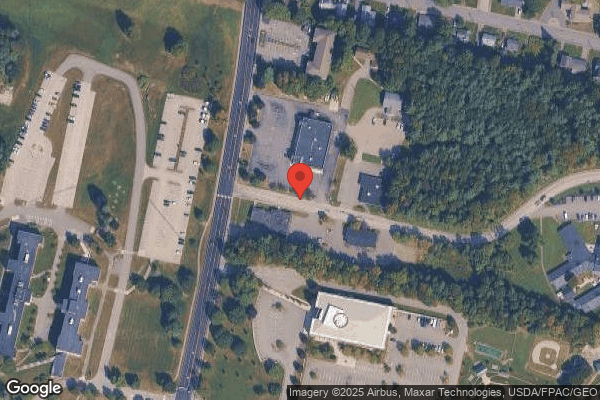
40 GLENRIDGE DRIVE, AUGUSTA, ME 04330 (207) 626-2600
Non profit - Other 125 Beds Independent Data: November 2025
Trust Grade
93/100
#8 of 77 in ME
Last Inspection: January 2025

Within standard 12-15 month inspection cycle. Federal law requires annual inspections.

Overview

MaineGeneral Rehab & Long Term Care - Glenridge has an excellent Trust Grade of A, indicating it is highly recommended for families seeking quality care. It ranks #8 out of 77 facilities in Maine, placing it in the top half, and #2 out of 7 in Kennebec County, meaning only one other local facility is better. Unfortunately, the facility’s trend is worsening, with issues increasing from 5 in 2022 to 6 in 2025, and it has reported a total of 11 concerns during the latest inspection. While staffing is a strength with a 5/5 rating and a low turnover rate of 27%, there were specific incidents that raised concerns, such as residents not receiving proper oral hygiene care and a failure to maintain a clean kitchen environment. Overall, while the home has strong staffing and some good ratings, families should be aware of the increasing issues and the specific care deficiencies noted.

Trust Score
A
93/100
In Maine
#8/77
Top 10%
Safety Record
Low Risk
No red flags
Inspections
Getting Worse
5 → 6 violations
Staff Stability
✓ Good
27% annual turnover. Excellent stability, 21 points below Maine's 48% average. Staff who stay learn residents' needs.
Penalties
✓ Good
No fines on record. Clean compliance history, better than most Maine facilities.
Skilled Nurses
✓ Good
Each resident gets 72 minutes of Registered Nurse (RN) attention daily — more than 97% of Maine nursing homes. RNs are the most trained staff who catch health problems before they become serious.
Violations
⚠ Watch
11 deficiencies on record. Higher than average. Multiple issues found across inspections.
★★★★★
5.0
Overall Rating
★★★★★
5.0
Staff Levels
★★★★☆
4.0
Care Quality
★★★★☆
4.0
Inspection Score
Stable
2022: 5 issues
2025: 6 issues

The Good

  • 5-Star Staffing Rating · Excellent nurse staffing levels
  • 4-Star Quality Measures · Strong clinical quality outcomes
  • Low Staff Turnover (27%) · Staff stability means consistent care
  • Full Sprinkler Coverage · Fire safety systems throughout facility
  • No fines on record
  • Staff turnover is low (27%)

    21 points below Maine average of 48%

Facility shows strength in staffing levels, quality measures, staff retention, fire safety.

The Bad

No Significant Concerns Identified

This facility shows no red flags. Among Maine's 100 nursing homes, only 1% achieve this.

The Ugly 11 deficiencies on record

Jan 2025 6 deficiencies
CONCERN (D)

Potential for Harm - no one hurt, but risky conditions existed

Deficiency F0645 (Tag F0645)

Could have caused harm · This affected 1 resident

**NOTE- TERMS IN BRACKETS HAVE BEEN EDITED TO PROTECT CONFIDENTIALITY** Based on record review and interview, the facility failed to ensure that 1 of 2 residents reviewed with a specialized mental hea...

Read full inspector narrative →
**NOTE- TERMS IN BRACKETS HAVE BEEN EDITED TO PROTECT CONFIDENTIALITY** Based on record review and interview, the facility failed to ensure that 1 of 2 residents reviewed with a specialized mental health diagnosis, whose stay went beyond the expected 30 days, had been referred to the appropriate state-designated authority for Pre-admission Screening & Resident Review Level II (PASRR) evaluation and determination (Resident #26). Finding: Clinical record review revealed Resident #26 was re-admitted to the facility on [DATE] with diagnoses to include bipolar disorder. A review of Resident #26's PASRR Level I dated 8/2/24 revealed Resident #26 had a Convalescence Categorical exemption (a time-limited 30-day exemption). Resident #26's clinical record lacked evidence that the resident had been re-evaluated for a PASRR Level II determination after the Convalescent period ended. On 1/7/25 at 1:30 p.m., the Care Manager Supervisor confirmed the finding.
CONCERN (D)

Potential for Harm - no one hurt, but risky conditions existed

Incontinence Care (Tag F0690)

Could have caused harm · This affected 1 resident

**NOTE- TERMS IN BRACKETS HAVE BEEN EDITED TO PROTECT CONFIDENTIALITY** Based on record review and interview, the facility failed to obtain a physician's order with a supporting diagnosis for the use ...

Read full inspector narrative →
**NOTE- TERMS IN BRACKETS HAVE BEEN EDITED TO PROTECT CONFIDENTIALITY** Based on record review and interview, the facility failed to obtain a physician's order with a supporting diagnosis for the use of an indwelling foley catheter and failed to ensure the physician order for the foley catheter included the size of the catheter and the size of the catheter balloon for 1 of 3 residents reviewed with urinary catheters (Resident #110). Finding: On 1/6/25 at 12:21 p.m., during an interview with Resident #110, he/she was unaware of why he/she has an indwelling foley catheter stating, he/she did not have one at home .Wish I didn't have one, they might take it out. On 1/8/25 at 7:21 a.m., during an interview, Registered Nurse #2 (RN#2) stated she was not sure why Resident #110 had a foley catheter. At this time, Certified Nursing Aide #5 (CNA #5) stated, Resident #110 has a foley catheter due to not being able to manage his/her urinal, soaking his/her bed and his/her difficulty with getting out of bed due to his/her seizures. The Surveyor asked what the medical diagnosis was for having the foley catheter, neither RN #2 nor CNA #5 could describe. Resident #110 was admitted on [DATE] with diagnosis of, Encounter for palliative care, Malignant neoplasm of brain, unspecified convulsions, abnormalities of gait and mobility, pain, pruritus, seizure disorder, cancer and anxiety. The admission Minimum Data Set with the Assessment Reference Date of 12/11/24 revealed he/she had a Brief Interview for Mental Status of 15 out of 15 indicating [he/she] is cognitively intact. Further review, physician orders dated 12/4/24 stated, Catheter care - change catheter bag 1 Time Weekly and Follow routine catheter care two times daily for the Related Diagnoses of Unspecified Convulsions. Review of providers notes from admission to 1/8/25 lacked evidence of the providers acknowledging the indwelling foley catheter and/or the diagnosis for the indwelling foley catheter. On 1/8/25 at 10:01 a.m., during an interview with the Administrative Director, she confirmed the above stating, she was only able to find documentation of the resident having the foley upon admission but no diagnosis or provider notes relating to the indwelling foley catheter.
CONCERN (E)

Potential for Harm - no one hurt, but risky conditions existed

ADL Care (Tag F0677)

Could have caused harm · This affected multiple residents

Based on observations, interviews and record reviews the facility failed to provide Activities of Daily Living (ADL) care in the area of oral hygiene for 2 of 2 residents reviewed for dental care (Res...

Read full inspector narrative →
Based on observations, interviews and record reviews the facility failed to provide Activities of Daily Living (ADL) care in the area of oral hygiene for 2 of 2 residents reviewed for dental care (Resident #40 and #10) and failed to follow the Self-care deficit care plan in the area of oral hygiene for 1 of 2 reviewed. (Resident #10) Findings: 1. On 1/6/25 at 10:55 a.m., observation of Resident #40 sitting in the common area. His/her teeth were coated with a thick whitish substance at the gum line. At this time, in a brief interview, he/she states staff will help when needed for brushing his/her teeth. On 1/7/25 at 10:31 a.m., observation of Resident #40 dressed, hair combed back into a ponytail and seated in a chair in the common area. His/her teeth were coated with a thick whitish substance at the gum line. On 1/7/25 at 12:46 p.m., the Administrator, Director of Nursing (DON) and the surveyor observed Resident #40's teeth coated with a thick whitish substance at the gum line. At this time, the DON stated she will look further into Resident #40's dental care and stated he/she does refuse help or care at times. Review of Resident #40's Quarterly Minimum Data Set (MDS) with the Assessment Reference Date (ARD) of 11/8/24 revealed he/she had a Brief Interview for Mental Status (BIMS) of 12 of 15 indicating [he/she] is moderately impaired and requires partial to moderate assistance for oral hygiene. Review of Certified Nurses Aide (CNA) documentation from 1/1/25 - 1/7/25 indicates that he/she fluctuates from maximum assistance to limited assist with oral care. Review of the most recent care plan for Self-Care Deficit R/T Cognitive Impairment, Major neurocognitive disorder with Dementia . has a goal of, [Resident] Personal hygiene needs will be met with staff assistance during the next 90-120 days and interventions of . [Resident] will require limited to extensive with bathing, dressing, toileting and personal hygiene. Observations and interviews on 1/8/25 at 7:52 and 1/9/25 at 8:20 a.m., show Resident #40 appearing clean, dressed appropriately and his/her teeth without the presence of a thick whitish substance. Additionally, he/she stated staff helped him/her brush his/her teeth. 2. On 1/8/25 at 7:44 a.m., a surveyor observed Resident #10 being pushed out of the room by CNA #1. Resident #10 stated, I want to brush my teeth, the CNA stated Ok, you want to brush your teeth, I'll bring you back in. The resident then stated, yeah, I didn't brush my teeth. The CNA brought the resident back and set him/her up at the sink. The CNA applied toothpaste to the toothbrush and handed it to the resident. At this time in an interview, CNA #1 stated she is one of the primary CNA's and familiar with Resident #10 stating, [he/she] is usually up by 5:30 a.m., and I just have to bring [him/her] out. [He/she] is passionate about hygiene, I just spaced. Review of the Annual MDS with an ARD of 11/8/24 revealed Resident #10 had a BIMS of 11 of 15 indicating [he/she] is moderately impaired and is dependent on staff for Activities of Daily Living including oral hygiene. Review of the most recent care plan for Self-care deficit - Extensive assistance required with bathing, hygiene, dressing, and grooming R/T dementia has an intervention of clean mouth, brush teeth/dentures after meals and at bedtime. Review of CNA documentation from 12/24/24 - 1/8/25 states that he/she requires extensive assistance of 1 for Activities of Daily Living. Further review lacks evidence of oral care being completed after lunch on the following days: 12/24/24 through 12/28/24, 12/30/24 through 1/4/25 and 1/6/25 through 1/7/25. In addition, 1/2/25 lacks evidence of oral care being completed after breakfast. On 1/8/25 at 3:11 p.m., during an interview with Resident #10, the surveyor asked if his/her teeth are brushed every morning. He/she stated, I wish it would be. I have to ask them. Sometimes it feels so thick. Most of the time I have to remind them. On 1/8/25 at 3:22 p.m., the above was discussed with the Administrative Director.
CONCERN (E)

Potential for Harm - no one hurt, but risky conditions existed

Food Safety (Tag F0812)

Could have caused harm · This affected multiple residents

Based on observations, interviews and record review, the facility failed to ensure the kitchen was maintained in a clean and sanitary manner for 2 of 2 kitchen tours (1/6/25 and 1/7/25). Findings: 1....

Read full inspector narrative →
Based on observations, interviews and record review, the facility failed to ensure the kitchen was maintained in a clean and sanitary manner for 2 of 2 kitchen tours (1/6/25 and 1/7/25). Findings: 1. On 1/6/25 from 8:49 a.m. to 9:04 a.m., 2 Surveyors toured the kitchen with the Food Service Supervisor (FDS) in which the following were observed: > The walk-in freezer had built up ice on the fans and on the ceiling. > The hood frame above the grill had chipped and peeling paint. On 1/6/25 at 9:04 a.m., the above was confirmed with the FSD and the Food Service Manager (FSM) who both stated the walk-in freezer was recently serviced for the built-up ice. 2. On 1/7/25 at 8:08 a.m., during an additional tour of the kitchen, 2 surveyors and the FSD observed the following: > The dishwasher hood exhaust vent coated with thick dust and visible dust clusters. > The prewash sink had an empty rinse aid dispenser on the wall with one of the fluid lines, which enters the dishwasher, had a visibly soiled face cloth, tinged off white with brown colored edges, wrapped around the line. At this time, the FSD stated maintenance was aware, and they had a part on order, but he was not sure how long it has been in that condition. On 1/7/25 at 8:32 a.m., during observation of the dishwasher temps, the Maintenance staff and the FSD entered the dish room. The maintenance staff removed the soiled face cloth from the line, and stated, it was not leaking at all. On 1/7/25 at 8:43 a.m., during an interview, the FSM stated she was not sure why the face cloth was on the line. On 1/8/25 at 9:13 a.m., during an interview with the maintenance staff, the Administrative Director and 3 surveyors, the maintenance staff stated, I guess at one time it was leaking, I was not notified about it. I don't have a work order for it . I told them to let me know if it leaks again. On 1/8/25 at 10:00 a.m., during an interview with both the Administrative Director and the FSM, the FSM provided the surveyor with the Warewash Service Report dated 12/11/24 and stated UNX (servicing company) looked at the whole area including the prewash sink and rinse line and didn't have any problems. Upon review, the Warewash Service Report lacked evidence of the prewash sink and rinse line review. The FSM stated the face cloth must have been placed on the line after the servicing date of 12/11/24.
CONCERN (E)

Potential for Harm - no one hurt, but risky conditions existed

Infection Control (Tag F0880)

Could have caused harm · This affected multiple residents

Based on interviews, facility policy, and observations, the facility failed to maintain and implement an infection control program to help prevent the development and transmission of disease and infec...

Read full inspector narrative →
Based on interviews, facility policy, and observations, the facility failed to maintain and implement an infection control program to help prevent the development and transmission of disease and infection on 2 of 4 days of survey. Findings: The Infection Control Program page 18 under Procedures for Contact Precautions indicates Staff will utilize gloves and gowns when in the patient's room and/or providing direct patient care. 1. On 1/6/25 at 10:22 a.m., a surveyor observed a contact precaution sign on Resident #22's door instructing all staff to wear Personal Protective Equipment (PPE) for contact with the patient or the patient's environment. A PPE cart was located outside the room which included gloves, gowns and instructions for staff on donning and doffing PPE. At this time, a surveyor observed a Housekeeping Staff member inside Resident #22's room cleaning the floor and wiping down objects wearing only gloves. A surveyor intervened and asked the Housekeeping Staff member if Resident #22 was on contact precautions and what should be worn. The Housekeeping Staff member stated that she is not working directly with the resident and only needs to wear gloves. On 1/6/25 at 10:36 a.m., the above was discussed with the Cove Unit Nurse Manager who stated that only staff providing incontinence care for Resident #22 need to wear both gloves and gown. On 1/6/25 at 10:39 a.m. during an interview with the Clinical Nursing Supervisor/Infection Preventionist about the Contact Precautions sign and PPE cart located outside Resident #22's room. He confirmed that all staff, including Housekeeping should be wearing both gloves and gown when entering the room. On 1/6/25 at 3:00 p.m., a surveyor discussed the above findings with the Administrator who confirmed that all staff who will have contact with the resident or the resident's environment should be wearing both gloves and gown when entering a contact precautions room. On 1/7/25 at 9:00 a.m. a surveyor observed Certified Nurses Aide #3 (CNA) and CNA #4 enter the room of Resident #22 wearing only gloves assisting Resident #22 with her breakfast tray. When CNA #3 and CNA #4 exited the room. A surveyor asked about the Contact Precautions sign posted outside of Resident #22's room. CNA #3 and CNA #4 stated that both gloves and gown are only needed with incontinence care. CNA #4 stated that Resident #22 has Extended-Spectrum Beta-Lactamase (ESBL) in the urine. On 1/7/25 at 9:06 a.m., a surveyor discussed the above finding with the Cove Unit Nurse Manager who stated that only gloves and gown are needed for Resident #22 when providing incontinence care. On 1/7/25 at 3:30 p.m. during an interview with the Administrator. She stated that Resident #22's precaution sign has been changed to Enhanced Barrier Precautions which would only require gloves and gown when providing incontinence care for Resident #22. 2. On 1/8/25 at 10:50 a.m., during an interview with Licensed Practical Nurse #1 (LPN#1), she states that she would use the purple top wipes to clean shared glucometers and shared medical equipment contaminated with Clotridoides Difficile Colitis (C.Diff). On 1/8/25 at 11:00 a.m., during an interview with CNA#1, she states that she was unaware how often staff would clean shared equipment, she then states she would use the purple top wipes to clean shared equipment contaminated with C.Diff. On 1/8/25 at 11:06 a.m., during an interview with CNA #2, She states that she is unaware what disinfectant to use to properly clean shared equipment for residents with C.Diff or Methicilin-Resistant Staphylococcus Areus (MRSA). On 1/8/25 at 11:17 a.m., during an interview with Registered Nurse #1 (RN#2), She states she is unaware of how to disinfect clean shared equipment for residents with C.Diff. On 1/8/25 at 11:30 a.m., during an interview with the Clinical Nursing Supervisor/Infection Preventionist, with 4 surveyors present, he states that he has been in this role for 4 years and does not provide education relating to infection control practices to the staff. The surveyor asked how he would properly disinfect shared medical equipment contaminated with C.Diff. The Infection Preventionist stated he would use purple top wipes. At this time the surveyor requested the Infection Preventionist to obtain the purple top wipes. Upon review, the purple top wipes are the Super Sani Cloth Germicidal Wipes. Further review by both surveyor and the Infection Preventionist shows that the sani cloth is not effective against C.Diff. At this time the Infection Preventionist confirmed that the purple top wipes would not be effective against residents with C.Diff. Further review of the facility policy Infection Control last revised on 5/24 states the role of the Infection Preventionist is to Work with Staff Development Coordinator to develop in-service education programs pertinent to infection control and sanitation issues. On 1/8/24 at 12:20 p.m., during an interview with the Administrator Director, the above information was discussed.
CONCERN (E)

Potential for Harm - no one hurt, but risky conditions existed

Antibiotic Stewardship (Tag F0881)

Could have caused harm · This affected multiple residents

Based on facility policy, record reviews, and interviews, the facility failed to implement its Antibiotic Stewardship Program (ASP) that includes antibiotic use protocols and a system to effectively m...

Read full inspector narrative →
Based on facility policy, record reviews, and interviews, the facility failed to implement its Antibiotic Stewardship Program (ASP) that includes antibiotic use protocols and a system to effectively monitor antibiotic use. This has the potential to affect all residents receiving an antibiotic. Findings: Review of the facility policy Infection Control last revised on 5/24 states; the facility will Track and trend both infection control rates and antibiotic use .Assess appropriate and safe use of antibiotics .Assess best practices through research, accessing pharmacists and other experienced or trained in antibiotic stewardship to ensure evidenced based practice for the long-term care facility. Furthermore, the role of the Infection Preventionist is to Work with the Medical Director to monitor culture report, investigate any potential clusters or outbreaks, and monitor physician use of antibiotics as deemed appropriate. On 1/8/25 at 11:30 a.m., during an interview with the Clinical Nursing Supervisor/Infection Preventionist. He discusses tracking infections residents have and what antibiotic they are originally on, but does not track if a culture was completed, what the culture indicated/what the organism is, if it is the correct antibiotic, which residents are on precautions and why, he does not cohort if practicable, and does not communicate with Medical Doctors and Pharmacists regarding antibiotic usage. Review of Infection Preventionist monthly log for antibiotics lacks evidence of the Infection Preventionist following through on the antibiotic use, the trends of infections and or organisms, clusters of infections, and type of antibiotics used. On 1/8/24 at 12:45 p.m., during an interview with the Director of Nursing, she discusses that they are not tracking the use of Multi-Drug Resistant Organisms per the facility antibiotic stewardship policy and procedure. On 1/8/25 at 12:20 p.m., during an interview with the Administrator Director the above information was discussed.
Nov 2022 3 deficiencies
CONCERN (D) 📢 Someone Reported This

A family member, employee, or ombudsman was alarmed enough to file a formal complaint

Potential for Harm - no one hurt, but risky conditions existed

Notification of Changes (Tag F0580)

Could have caused harm · This affected 1 resident

**NOTE- TERMS IN BRACKETS HAVE BEEN EDITED TO PROTECT CONFIDENTIALITY** Based on record review and interviews, the facility failed to ensure that the Medical Provider and resident representative were ...

Read full inspector narrative →
**NOTE- TERMS IN BRACKETS HAVE BEEN EDITED TO PROTECT CONFIDENTIALITY** Based on record review and interviews, the facility failed to ensure that the Medical Provider and resident representative were notified of a change in the resident's medical condition after observing a potentially serious injury of unknown origin for 1 of 3 residents sampled for injuries/accidents. (#1) Findings: Review of the facility's Resident Rights Policy # LTCRI-01, revised 5/21, noted in Section IV - G. Injuries of Unknown Origin: 1. Staff will immediately report to nurse, supervisor or manager any injury of unknown origin. 2. Staff who witnessed the event will assure a DHHS Nursing Facility Reportable Incident form (www.maine.gov) is completed within 24 hours and faxed to [PHONE NUMBER]; State of Maine Division of Licensing and Certification. 3. Charge nurse or supervisor will complete an EMR Incident Report. 4. All injuries of unknown origin of a suspicious nature will follow all of the above protocols. 5. Refer to the Incident Reporting Policy (LTCP C-20). A review of Resident #1's clinical record noted a nursing note written by the RN, Charge Nurse on 4/11/2022 at 20:05 (8:05 p.m.) indicating Resident has a massive bruise to [his/her] right arm. Starts at [his/her] shoulder and goes down to [his/her] inner elbow area. Resident is not able to articulate how this happen due to [his/her] level of dementia. No recent notes reporting this bruise. Deep purple in color. Will continue to monitor. On 11/15/2022 at 1:45 p.m., in an interview, the Nurse Manager stated that she had just talked to the Charge Nurse on the phone and the Charge Nurse stated that she recalled the bruising. However she thought she had included additional documentation of the Resident #1's wandering and combative behaviors, and that the Resident #1 was ambulatory at that time. A review of Resident #1's clinical record lacked evidence that an Incident Report was completed, that there was continued monitoring of the injury, that the Medical Provider was notified of the injury and that the resident representative was made aware of the injury. On 11/15/ 2022 at 11:06 a.m., in an interview, the Nurse Practitioner (NP) stated that she has taken care of Resident #1since the resident was admitted . When asked about a massive bruise from April 2022, the NP looked through her laptop and stated that she didn't see the resident for any massive bruising to his/her arm and that she wasn't aware that he/she had any. She confirmed that, the massive bruising noted by the Charge Nurse in April 2022 was not reported to her. On 11/15/22 at 12:05 p.m., in an interview, the Medical Provider stated that she did not know that the resident had a massive bruise of unknown origin on his/her arm and it had never been reported to her in April 2022. She stated that she had not observed and assessed the resident for a massive bruise. She stated that she would have looked at the resident if she had been told or have the NP look at the resident. The Medical Provider confirmed that she should have been notified if there had been a massive bruise and questionable of where it came from. On 11/15/22 at 11:25 a.m. during an interview, the Director of Nursing Services(DNS) confirmed that the facility failed to ensure that the Medical Provider and the resident representative were notified of a change in the resident's medical condition after observing a potentially serious injury of unknown origin.
CONCERN (D) 📢 Someone Reported This

A family member, employee, or ombudsman was alarmed enough to file a formal complaint

Potential for Harm - no one hurt, but risky conditions existed

Report Alleged Abuse (Tag F0609)

Could have caused harm · This affected 1 resident

**NOTE- TERMS IN BRACKETS HAVE BEEN EDITED TO PROTECT CONFIDENTIALITY** Based on record review and interviews , the facility failed to report in a timely manner, an injury of unknown origin to the Div...

Read full inspector narrative →
**NOTE- TERMS IN BRACKETS HAVE BEEN EDITED TO PROTECT CONFIDENTIALITY** Based on record review and interviews , the facility failed to report in a timely manner, an injury of unknown origin to the Division of Licensing and Certification (DLC) (State Survey Agency) and to Adult Protective Services (APS) (State Agency) for 1 of 3 residents sampled for injuries/accidents. (#1) Finding: Review of the facility's Resident Rights Policy # LTCRI-01, revised 5/21, noted in Section IV - G. Injuries of Unknown Origin: 1. Staff will immediately report to nurse, supervisor or manager any injury of unknown origin. 2. Staff who witnessed the event will assure a DHHS Nursing Facility Reportable Incident form (www.maine.gov) is completed within 24 hours and faxed to [PHONE NUMBER]; State of Maine Division of Licensing and Certification. 3. Charge nurse or supervisor will complete an EMR Incident Report. 4. All injuries of unknown origin of a suspicious nature will follow all of the above protocols. 5. Refer to the Incident Reporting Policy (LTCP C-20). Review of the facility's Provisions of Care # LTCPC-20, revised 10/21, noted in Section II. Policy: Maine general rehabilitation and long term care staff will participate in protecting resident rights nursing will accurately document incidents that occur and report to licensing and DHS as appropriate and indicated. 3. Injury of unknown origin: Two elements needed to be present in order for an event to be reportable: a. The source of the injury was not observed or the resident cannot explain the source of the injury. b. The injury is suspicious because of the extent or place of the injury. A review of Resident #1's clinical record noted a nursing note written by the RN, Charge Nurse on 4/11/2022 at 20:05 indicating Resident has a massive bruise to [his/her] right arm. Starts at [his/her] shoulder and goes down to [his/her] inner elbow area. Resident is not able to articulate how this happen due to [his/her] level of dementia. No recent notes reporting this bruise. Deep purple in color. Will continue to monitor. On 11/15/22 at 11:25 a.m. during an interview, the Director of Nursing Services(DNS) confirmed that the facility did not send a report to the Division of Licensing and Certification (DLC) (State Survey Agency) and to Adult Protective Services (APS) (State Agency) regarding this injury of unknown origin.
CONCERN (D) 📢 Someone Reported This

A family member, employee, or ombudsman was alarmed enough to file a formal complaint

Potential for Harm - no one hurt, but risky conditions existed

Medical Records (Tag F0842)

Could have caused harm · This affected 1 resident

Based on record review and interviews, the facility failed to ensure that an injury of unknown origin observed on a resident included a documented assessment, treatment, and monitoring for 1 of 3 resi...

Read full inspector narrative →
Based on record review and interviews, the facility failed to ensure that an injury of unknown origin observed on a resident included a documented assessment, treatment, and monitoring for 1 of 3 residents sampled for injuries/accidents. (#1) Finding: A review of Resident #1's clinical record noted a nursing note written by the RN, Charge Nurse on 4/11/2022 at 20:05 (8:05 p.m.) indicating Resident has a massive bruise to [his/her] right arm. Starts at [his/her] shoulder and goes down to [his/her] inner elbow area. Resident is not able to articulate how this happen due to [his/her] level of dementia. No recent notes reporting this bruise. Deep purple in color. Will continue to monitor. On 11/15/22, a surveyor reviewed Resident #1's clinical record and was unable to find any documentation on how this injury occurred or assessment when first observed, any monitoring of the area, or any treatments already provided or to be provided. On 11/15/22 at 4:25 p.m., in an interview, the Administrator and the Director of Nursing Services(DNS) confirmed that the facility failed to ensure that an injury of unknown origin observed on Resident #1 included a documented assessment, treatment, and monitoring.
Oct 2022 2 deficiencies
CONCERN (D)

Potential for Harm - no one hurt, but risky conditions existed

Deficiency F0657 (Tag F0657)

Could have caused harm · This affected 1 resident

**NOTE- TERMS IN BRACKETS HAVE BEEN EDITED TO PROTECT CONFIDENTIALITY** Based on record review and interview, the facility failed to ensure that a care plan was updated for 1 of 2 residents reviewed f...

Read full inspector narrative →
**NOTE- TERMS IN BRACKETS HAVE BEEN EDITED TO PROTECT CONFIDENTIALITY** Based on record review and interview, the facility failed to ensure that a care plan was updated for 1 of 2 residents reviewed for Hospice. (Resident #2) Findings: On 10/4/22, Resident #2's clinical record was reviewed and indicated Resident #2 was admitted to the facility on [DATE] for skilled services and was on Hospice at the time of admittance. Review of Resident #2's current care plan, dated 6/4/22, lacked evidence that it had been updated to reflect the resident was receiving Hospice services. On 10/4/22 at 11:46 a.m., during an interview, the Director of Nursing confirmed that Resident #2's care plan had not been updated to reflect Hospice services until 10/4/22 after surveyor intervention.
CONCERN (E)

Potential for Harm - no one hurt, but risky conditions existed

ADL Care (Tag F0677)

Could have caused harm · This affected multiple residents

Based on observations, interviews and record review, the facility failed to provide Activities of Daily Living (ADL) care in the area of personal hygiene for 2 of 25 sampled residents (Residents #2 an...

Read full inspector narrative →
Based on observations, interviews and record review, the facility failed to provide Activities of Daily Living (ADL) care in the area of personal hygiene for 2 of 25 sampled residents (Residents #2 and #49) during 2 of 4 days of survey. Findings: 1. On 10/2/22 at 9:08 a.m., a surveyor observed Resident #2 sitting in a common area with food crumbs on his/her pants from breakfast. Documentation in Resident #2's Minimum Data Set 3.0 (MDS 3.0), dated 9/28/22: Section G-Functional Status under G0110-Activities of Daily Living (ADL) Assistance-G and J-Personal Hygiene: was coded that Resident #2 required total assistance of 2 staff. On 10/02/22 at 11:46 a.m., a surveyor observed Certified Nursing Assistant(CNA) #1 escorting Resident #2 to the dining room with food crumbs still on his/her lap from breakfast. At this time, CNA #2 confirmed that Resident #2 had food crumbs/particles still on his/her lap from breakfast. 2. On 10/3/22 at 8:33 a.m., a surveyor observed Resident #49 with food crumbs on both armrests of his/her wheelchair and on his/her hands and front of his/her shirt. Documentation in Resident #49's Minimum Data Set 3.0 (MDS 3.0), dated 8/15/22: Section G-Functional Status under G0110-Activities of Daily Living (ADL) Assistance-G and J-Personal Hygiene: was coded that Resident #49 required total assistance of 2 staff. On 10/3/22 at 8:33 a.m., in an interview, CNA #2 confirmed that Resident #49 had already had his/her breakfast and was all ready to start his/her day. CNA #2 observed the resident with a surveyor and confirmed that the wheelchair armsrests and the resident's hands and shirt had food crumbs/particles on them.
Understanding Severity Codes (click to expand)
Life-Threatening (Immediate Jeopardy)
J - Isolated K - Pattern L - Widespread
Actual Harm
G - Isolated H - Pattern I - Widespread
Potential for Harm
D - Isolated E - Pattern F - Widespread
No Harm (Minor)
A - Isolated B - Pattern C - Widespread

Questions to Ask on Your Visit

  • "Can I speak with families of current residents?"
  • "What's your RN coverage like on weekends and overnight?"

Our Honest Assessment

Strengths
  • • Grade A (93/100). Above average facility, better than most options in Maine.
  • • No major safety red flags. No abuse findings, life-threatening violations, or SFF status.
  • • No fines on record. Clean compliance history, better than most Maine facilities.
  • • 27% annual turnover. Excellent stability, 21 points below Maine's 48% average. Staff who stay learn residents' needs.
Concerns
  • • 11 deficiencies on record. Higher than average. Multiple issues found across inspections.
Bottom line: Generally positive indicators. Standard due diligence and a personal visit recommended.

About This Facility

What is Mainegeneral Rehab & Long Term Care - Glenridge's CMS Rating?

CMS assigns MAINEGENERAL REHAB & LONG TERM CARE - GLENRIDGE an overall rating of 5 out of 5 stars, which is considered much above average nationally. Within Maine, this rating places the facility higher than 99% of the state's 100 nursing homes. This rating reflects solid performance across the metrics CMS uses to evaluate nursing home quality.

How is Mainegeneral Rehab & Long Term Care - Glenridge Staffed?

CMS rates MAINEGENERAL REHAB & LONG TERM CARE - GLENRIDGE's staffing level at 5 out of 5 stars, which is much above average compared to other nursing homes. Staff turnover is 27%, compared to the Maine average of 46%. This relatively stable workforce can support continuity of care.

What Have Inspectors Found at Mainegeneral Rehab & Long Term Care - Glenridge?

State health inspectors documented 11 deficiencies at MAINEGENERAL REHAB & LONG TERM CARE - GLENRIDGE during 2022 to 2025. These included: 11 with potential for harm.

Who Owns and Operates Mainegeneral Rehab & Long Term Care - Glenridge?

MAINEGENERAL REHAB & LONG TERM CARE - GLENRIDGE is owned by a non-profit organization. Non-profit facilities reinvest revenue into operations rather than distributing to shareholders. The facility operates independently rather than as part of a larger chain. With 125 certified beds and approximately 114 residents (about 91% occupancy), it is a mid-sized facility located in AUGUSTA, Maine.

How Does Mainegeneral Rehab & Long Term Care - Glenridge Compare to Other Maine Nursing Homes?

Compared to the 100 nursing homes in Maine, MAINEGENERAL REHAB & LONG TERM CARE - GLENRIDGE's overall rating (5 stars) is above the state average of 3.1, staff turnover (27%) is significantly lower than the state average of 46%, and health inspection rating (4 stars) is above the national benchmark.

What Should Families Ask When Visiting Mainegeneral Rehab & Long Term Care - Glenridge?

Based on this facility's data, families visiting should ask: "Can I visit during a mealtime to observe dining assistance and food quality?" "How do you handle medical emergencies, and what is your hospital transfer rate?" "Can I speak with family members of current residents about their experience?"

Is Mainegeneral Rehab & Long Term Care - Glenridge Safe?

Based on CMS inspection data, MAINEGENERAL REHAB & LONG TERM CARE - GLENRIDGE has a clean safety record: no substantiated abuse findings (meaning no confirmed cases of resident harm), no Immediate Jeopardy citations (the most serious violation level indicating risk of serious injury or death), and is not on the Special Focus Facility watch list (a federal program monitoring the lowest-performing 1% of nursing homes). The facility has a 5-star overall rating and ranks #1 of 100 nursing homes in Maine. While no facility is perfect, families should still ask about staff-to-resident ratios and recent inspection results during their visit.

Do Nurses at Mainegeneral Rehab & Long Term Care - Glenridge Stick Around?

Staff at MAINEGENERAL REHAB & LONG TERM CARE - GLENRIDGE tend to stick around. With a turnover rate of 27%, the facility is 19 percentage points below the Maine average of 46%. Low turnover is a positive sign. It means caregivers have time to learn each resident's needs, medications, and personal preferences. Consistent staff also notice subtle changes in a resident's condition more quickly. Registered Nurse turnover is also low at 21%, meaning experienced RNs are available to handle complex medical needs.

Was Mainegeneral Rehab & Long Term Care - Glenridge Ever Fined?

MAINEGENERAL REHAB & LONG TERM CARE - GLENRIDGE has no federal fines on record. CMS issues fines when nursing homes fail to meet care standards or don't correct problems found during inspections. The absence of fines suggests the facility has either maintained compliance or corrected any issues before penalties were assessed. This is a positive indicator, though families should still review recent inspection reports for the full picture.

Is Mainegeneral Rehab & Long Term Care - Glenridge on Any Federal Watch List?

MAINEGENERAL REHAB & LONG TERM CARE - GLENRIDGE is not on any federal watch list. The most significant is the Special Focus Facility (SFF) program, which identifies the bottom 1% of nursing homes nationally based on persistent, serious quality problems. Not being on this list means the facility has avoided the pattern of deficiencies that triggers enhanced federal oversight. This is a positive indicator, though families should still review the facility's inspection history directly.