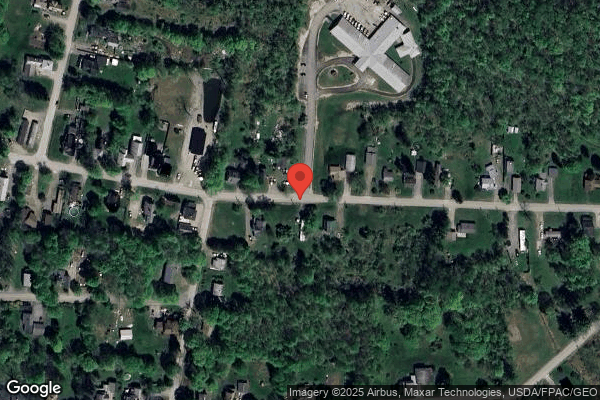
DEXTER HEALTH CARE

64 PARK STREET, DEXTER, ME 04930 (207) 924-5516
For profit - Partnership 53 Beds FIRST ATLANTIC HEALTHCARE Data: November 2025
Trust Grade
8/100
#64 of 77 in ME
Last Inspection: October 2024

Within standard 12-15 month inspection cycle. Federal law requires annual inspections.

Overview

Dexter Health Care has received a Trust Grade of F, indicating significant concerns about the quality of care provided. The facility ranks #64 out of 77 in Maine and is at the bottom of the list in Penobscot County, making it one of the least favorable options in the area. While the facility is showing improvement with a reduction in issues from 12 to 8 over the past year, the staffing turnover rate is average at 58%, and they have incurred $10,033 in fines, which is higher than 79% of facilities in Maine. Staffing is a mixed bag, rated average with no exceptional RN coverage, but there have been serious incidents reported, such as a resident being verbally abused by a staff member and another resident receiving incorrect medication, which required hospitalization. Families should be aware of both the weaknesses and the slight improvements when considering this facility for their loved ones.

Trust Score
F
8/100
In Maine
#64/77
Bottom 17%
Safety Record
High Risk
Review needed
Inspections
Getting Better
12 → 8 violations
Staff Stability
⚠ Watch
58% turnover. Above average. Higher turnover means staff may not know residents' routines.
Penalties
○ Average
$10,033 in fines. Higher than 56% of Maine facilities. Some compliance issues.
Skilled Nurses
✓ Good
Each resident gets 44 minutes of Registered Nurse (RN) attention daily — more than average for Maine. RNs are trained to catch health problems early.
Violations
⚠ Watch
39 deficiencies on record. Higher than average. Multiple issues found across inspections.
★☆☆☆☆
1.0
Overall Rating
★★★☆☆
3.0
Staff Levels
★☆☆☆☆
1.0
Care Quality
★★☆☆☆
2.0
Inspection Score
Stable
2024: 12 issues
2025: 8 issues

The Good

  • Full Sprinkler Coverage · Fire safety systems throughout facility
  • No fines on record

Facility shows strength in fire safety.

The Bad

1-Star Overall Rating

Below Maine average (3.0)

Significant quality concerns identified by CMS

Staff Turnover: 58%

11pts above Maine avg (46%)

Frequent staff changes - ask about care continuity

Federal Fines: $10,033

Below median ($33,413)

Minor penalties assessed

Chain: FIRST ATLANTIC HEALTHCARE

Part of a multi-facility chain

Ask about local staffing decisions and management

Staff turnover is elevated (58%)

10 points above Maine average of 48%

The Ugly 39 deficiencies on record

2 actual harm
Sept 2025 1 deficiency
CONCERN (D) 📢 Someone Reported This

A family member, employee, or ombudsman was alarmed enough to file a formal complaint

Potential for Harm - no one hurt, but risky conditions existed

Resident Rights (Tag F0550)

Could have caused harm · This affected 1 resident

Based on interviews and record reviews, the facility failed to protect a resident's right to a dignified existence for 1 of 1 resident reviewed for abuse (Resident #44 [R44]).Findings: On 9/8/25 at 12...

Read full inspector narrative →
Based on interviews and record reviews, the facility failed to protect a resident's right to a dignified existence for 1 of 1 resident reviewed for abuse (Resident #44 [R44]).Findings: On 9/8/25 at 12:35 p.m., during an interview with a surveyor, R44 stated a nurse refused to administer scheduled pain medication when requested and had shouted, in a public setting, that R44 didn't need pain medicine because R44 is paraplegic and can't feel pain anyway. R44 stated everyone could hear.On 9/9/25 at 3:25 p.m., a surveyor reviewed written statements from witnesses that corroborated R44's statement. Clinical record review indicates active diagnoses including paraplegia and chronic pain.On 9/10/25 at 11:00 a.m., during an interview with a surveyor, the Director of Nursing (DON) stated R44 and the Licensed Practical Nurse did not get along, the Licensed Practical Nurse was usually assigned to another unit but was terminated following this incident. At this time the surveyor confirmed with the DON that R44's dignity was not protected when the License Practical Nurse publicly mocked R44's medical condition.
Aug 2025 7 deficiencies 1 Harm
SERIOUS (G) 📢 Someone Reported This

A family member, employee, or ombudsman was alarmed enough to file a formal complaint

Actual Harm - a resident was hurt due to facility failures

Free from Abuse/Neglect (Tag F0600)

A resident was harmed · This affected 1 resident

Based on review of the facility's policy's, review of the Nursing Facility Reportable Incident Form, review of the facility investigative report, review of the clinical record, and staff interviews, t...

Read full inspector narrative →
Based on review of the facility's policy's, review of the Nursing Facility Reportable Incident Form, review of the facility investigative report, review of the clinical record, and staff interviews, the facility failed to ensure a resident's right to be free from mental abuse, physical restraint, and involuntary seclusion. Specifically, Registered Nurse #1 (RN1) engaged in multiple abusive behaviors, including yelling at the resident repeatedly in response to the resident banging on the door and requesting to go outside, resulting in the resident being transferred to an acute care hospital. For 1of 2 residents sampled (Resident #1[R1]) for abuse. Findings:A facility document titled Identifying types of Abuse, revised 3/2025, indicated the following: Mental abuse is the use of verbal or non-verbal conduct which causes (or has the potential to cause) the resident to experience humiliation, intimidation, fear, shame, agitation, or degradation. Verbal abuse may be a type of mental abuse. Verbal abuse includes the use of verbal, written or gestured communication, or sounds, to residents within hearing distance, regardless of age, ability to comprehend, or disability.The facility's policy, Use of Restraints, revised 3/2025, indicated that seclusion, which is defined as the placement of the resident alone in a room, shall not be employed and defines Physical Restraints as any manual method or physical or mechanical device, material or equipment attached or adjacent to the resident's body that the individual cannot remove easily, which restricts freedom of movement or restricts normal access to one's body. On 8/18/25, the Division of Licensing and Certification received a Nursing Facility Reportable Incident Form for an incident that occurred on 8/16/25. The report indicated that on 8/16/25, staff reported to the Director of Nursing (DON) that Resident #1 (R1) was agitated and Registered Nurse #1 (RN1) escalated resident's behavior to the point that R1 bit RN1's hand. Per documentation on this incident form, on 8/18/25, staff came to further report additional information to the events that occurred on 8/16/25 between RN1 and R1 that occurred when R1's behaviors were escalating and R1 was exit seeking, which included RN1 put R1 in his/her room and closed and held the door for several seconds up to one minute. On 8/26/25 a review of facility's investigation into the 8/16/25 incident was conducted and indicated the following: On 8/16/25 at 8:41 a.m., Licensed Practical Nurse #1 (LPN1) sent the DON a text message that indicated that RN1 was bitten by a resident which broke the skin on RN1's right hand. On 8/16/25 at 8:41 a.m., the DON responded to this message from LPN1, asking RN1 to complete an incident report and follow up with Work Health on Monday. At 11:04 a.m., Certified Nursing Assistant #1 (CNA1) reported to the DON via text messages that R1 was swinging at RN1 and RN1 was flapping her arms right back at the resident and telling the resident to go ahead and hit her; the DON responded back to CNA1 at 11:11 a.m. At 11:09 a.m., CNA3 texted the DON that she had concerns regarding RN1's behavior towards R1; at 11:12 a.m., the DON spoke with CNA3 via telephone and asked if she [the DON] needed to come in, to which CNA3 responded that R1 was being sent to the hospital.On August 16, 2025, multiple Certified Nursing Assistants (CNAs) observed RN1 forcibly placing R1 in his/her room and holding the door shut, preventing R1 from exiting. CNA1 and CNA3 confirmed witnessing RN1 physically restrain R1 and restrict movement.CNA2 and CNA4 reported that RN1 engaged in repeated verbal altercations with R1, including statements such as you're not going out and you need to stop, delivered in a frustrated and escalating tone.CNA2 described RN1 physically holding R1's arms down and dragging the wheelchair, resulting in R1 biting RN1 during the struggle.CNA4 stated that RN1's actions-including repeated physical redirection and verbal commands-escalated R1's behavior and contributed to emotional distress.RN1 acknowledged during interviews that she fought with [R1] a little bit to remove his/her hands from the wheelchair wheels and admitted to placing R1 in his/her room multiple times.Staff statements consistently indicated that RN1's conduct was not aligned with trauma-informed care or de-escalation practices and contributed to R1's agitation.R1's clinical record indicated R1 was sent to the hospital at 11:30 a.m. on 8/16/25 for an evaluation. On 8/19/25, the Medical Doctor (MD) documented that R1 was evaluated in the emergency room on 8/16/25 for physically assaulting a staff member. Urinalysis was negative and R1 was pleasantly confused, but not combative while there. R1 returned to the facility with improved mood but continued exit-seeking, responsive to re-direction. R1's care plan was reviewed and included a FOCUS, dated 12/8/24, of Resident has a behavior problem, confrontational related to (r/t) dementia with interventions, initiated on 12/8/24, that included: approach/speak in a calm manner, divert attention, and minimize potential for the resident's disruptive behaviors by offering tasks which divert attention. The care plan also included another FOCUS, dated 12/8/24, of Resident has impaired/cognitive function/dementia or impaired thought process r/t dementia with interventions, initiated on 12/8/24, that included: the resident understands simple consistent, simple, directive sentences. Provide the resident with necessary cues - stop and return if agitated. On 8/26/25, at 12:15 p.m., during an interview with a surveyor, CNA1 stated that R1 had been acting out after breakfast, around 8:30 a.m. on 8/16. CNA1 was passing medications in another hallway and looked up and saw RN1 put R1 in his/her room and closed the door and held it, but she wasn't sure how long. CNA1 stated, later in the day around 1030 a.m., I was B wing on my way up the hall, I saw RN1 and R1 together. I heard R1 say that if you don't stop that, I am doing to deck you. RN1 was moving her hands up and down while standing in front of R1. (CNA1 demonstrated to the surveyor the motion as she had her arms in front of her, moving them up and down in front of her the chest area). CNA1 stated, I did not see any contact by RN1, but RN1 did say go ahead and hit me. I stepped in between (RN1 and R1) and brought R1 back to his/her room. R1 gets in his/her moods but he/she can be easy to calm down but not like Saturday, I think it was provoked or RN1 added to his/her being aggressive.On 8/26/25 at 1:35 p.m., during an interview with the Administrator and DON, the surveyor confirmed that the interactions between RN1 and R1 were allegations of abuseOn 8/26/25 at 2:04 p.m., during an interview with a surveyor, CNA2 stated that R1 was out front at the door kicking it and yelling. We all tried to redirect R1, but he/she wouldn't stop yelling and kicking and trying to get out the door. CNA2 stated she was able to help RN1 remove R1 from the front entrance area and to the hallway. CNA2 stated that as she was walking away, she saw RN1 hold R1's door closed, and R1 was inside, kicking the door and once RN1 let go, R1 opened the door and came out. CNA2 stated she didn't know how long she held the door shut. CNA2 stated at one-point, RN1 held R1's arms down, RN1 was standing from behind the chair because R1 was kicking the door and RN1 didn't want to get hit. RN1 tried to wheel him/her around, RN1 was behind R1, RN1 tried to hold his/her arms down while standing behind, and R1 bit her. On 8/28/25 at 9:41 a.m., during an interview with a surveyor, RN1 stated, after the third time she took R1 back to their room that she took R1 outside and there was a housekeeper out there watering the plants. RN1 stated that she asked the Housekeeper if they could watch R1 for a little bit and R1 calmed down after being outside for a bit. RN1 stated that after the Housekeeper brought R1 back inside and took him/her to their room to be washed up that R1 wanted to go back out but RN1 didn't have anybody that could go out with R1 at that moment. RN1 stated, I mean I don't know if you ever worked with demented people, you can't really reason with them so it was like we were trying to explain to him/her, alright give us a few minutes we'll find somebody to go out with you and you can go back out but R1 didn't want to hear that. The surveyor asked RN1 if she ever held R1's hands down and RN1 stated, I didn't hold his/her hands down, I tried to pick them up so that I could wheel the chair but that was it, I didn't try to hold them, I just tried to get them out of the way of the wheels. On 8/29/25 at 12:47 p.m., the surveyor asked CNA2 to explain the observation on 8/16/25 in more detail on how RN1 held R1's arms down. CNA2 stated that R1 was flailing his/her arms up trying to hit RN1 and then RN1 reached over his/her shoulders, to hold them down and then CNA2 heard RN1 say OW but CNA2 did not see the action of biting. CNA2 stated, It was dragged out and that after RN1 was bitten by R1, RN1 took him/her outside and when R1 came back inside, he/she was better for a bit. On 8/29/25 at 1:50 p.m., during an interview with a surveyor, CNA4 stated RN1 just kept saying to R1, you need to stop, you need to stop, you can't go outside. CNA4 further stated that RN1 was speaking in a frustrating manner and R1's hands were kind of moving. CNA4 stated, I am not sure that R1 could have moved his/her arms because of the way that RN1 had her arms positioned because she had her arms crossed around R1's upper shoulder. I'm not sure R1 would have been able to lift his/her arms up. CNA4 continued to say that she did try to redirect R1 and the behaviors that R1 was showing were normal behaviors for the weekends which she sees this regularly and is good at deescalating R1. CNA4 stated that she was trying not to let the situation progress but was told by RN1, no you are not helping the situation. CNA4 stated that she was personally yelled at and told to remove herself from the situation by RN1. CNA4 stated that RN1's actions towards R1, repeatedly stating to R1, you can't go outside, you can't go outside and just kept taking R1 back to his/her room made R1 worse and that the situation was escalated by RN1.
CONCERN (D) 📢 Someone Reported This

A family member, employee, or ombudsman was alarmed enough to file a formal complaint

Potential for Harm - no one hurt, but risky conditions existed

Deficiency F0603 (Tag F0603)

Could have caused harm · This affected 1 resident

Based on review of the facility's Nursing Facility Reportable Incident Form and investigation, facility policy review, employee file review, and interviews, the facility failed to ensure a resident wa...

Read full inspector narrative →
Based on review of the facility's Nursing Facility Reportable Incident Form and investigation, facility policy review, employee file review, and interviews, the facility failed to ensure a resident was free from involuntary seclusion for 1 of 1 facility reported incidents reviewed (8/16/25).Finding:The facility's policy, Use of Restraints, revised 3/2025, indicated that seclusion, which is defined as the placement of the resident alone in a room, shall not be employed. On 8/18/25, the Division of Licensing and Certification received a Nursing Facility Reportable Incident Form for an incident that occurred on 8/16/25. The report indicated that staff reported that Resident #1 (R1) was exit seeking and escalating and saw Registered Nurse #1 (RN1) bring R1 back to his/her room and closed and held the door for a few seconds, up to a maybe a minute.On 8/26/25, RN1's employee file was reviewed and included a Performance Correction Notice, dated 8/18/25 that indicated RN1 was on leave, pending investigation, because of an incident with an allegation of abuse that included details that RN1 was outside R1's door, holding the door shut for an amount of time while R1 was in his/her room, attempting to get out. On 8/26/25, the surveyor reviewed the written statements gathered by the facility as part of their investigation for the 8/16/25 incident. On 8/16/25, Certified Nursing Assistant #2 (CNA2)'s written statement indicated that on around 8:15 a.m., R1 was at the front door angry, yelling and screaming, kicking the door, and was trying to get out. Multiple staff tried to redirect R1 from this behavior but R1 kept getting louder. RN1 told R1 to stop it, that he/she was not going out and to stop kicking the door. RN1 then grabbed R1's wheelchair to move it away from the door when R1 grabbed the wheels to stop it. R1 yelled I'm not moving you son of a . RN1's response was oh yes you are! CNA2 assisted RN1 to help move R1 from in front of the door and to the hallway. R1 was taken to his/her room by RN1. CNA2 heard loud banging, turned around, and saw RN1 holding R1's door closed. R1 was kicking the door from the inside. RN1 eventually let the door go and went into the nurse's station. On 8/18/25, CNA1's written statement indicated that around 8:30 a.m. that morning (8/16/25), she saw RN1 put R1 in their room, shut the door and held it shut but was not sure how long it was shut because she was in the middle of passing medications. On 8/18/25, CNA3 wrote that on 8/16/25, she had observed RN1 push R1 in his/her wheelchair and then proceeded to hold the door shut not letting R1 out. On 8/26/25 at 12:15 p.m., during an interview with a surveyor, CNA1 stated that R1 had been acting out after breakfast, around 8:30 a.m. on 8/16. CNA1 was passing medications and looked up and saw RN1 put R1 in his/her room and closed the door and held it, but she wasn't sure how long.On 8/26/25 at 1:05 p.m., during an interview with the Administrator and Director of Nursing, the surveyor confirmed that written statements/interviews indicated that RN1 was observed holding R1's door, with R1 kicking the door wanting to get out. On 8/26/25 at 2:04 p.m., during an interview with a surveyor, CNA2 stated that R1 was out front at the door kicking it and yelling. We all tried to redirect R1 but he/she wouldn't stop yelling and kicking and trying to get out the door. CNA2 was able to help RN1 remove R1 from the front entrance area and to the hallway. CNA2 stated that as she was walking away, she saw RN1 hold R1's door closed, and R1 was inside, kicking the door. Once RN1 let go, R1 opened the door and came out. CNA2 stated she didn't know how long she held the door shut.
CONCERN (D) 📢 Someone Reported This

A family member, employee, or ombudsman was alarmed enough to file a formal complaint

Potential for Harm - no one hurt, but risky conditions existed

Deficiency F0604 (Tag F0604)

Could have caused harm · This affected 1 resident

Based on review of the facility's investigation/written statements and interviews, the facility failed ensure that a resident was free from restraint when a Registered Nurse used body contact as a met...

Read full inspector narrative →
Based on review of the facility's investigation/written statements and interviews, the facility failed ensure that a resident was free from restraint when a Registered Nurse used body contact as a method of physical restraint to limit a resident's voluntary movement for 1 of 1 facility reported incidents reviewed (8/16/25). Finding:The facility's policy, Use of Restraints, revised 3/2025, indicated Physical Restraints are defined as any manual method or physical or mechanical device, material or equipment attached or adjacent to the resident's body that the individual cannot remove easily, which restricts freedom of movement or restricts normal access to one's body. On 8/26/25, RN1's employee file was reviewed and included a Performance Correction Notice, dated 8/18/25 that indicated RN1 was on leave, pending investigation, because of an incident with an allegation of abuse that was considered restraining a resident that included details that RN1 held a resident's arms/hands down while resident was trying to hit staff. On 8/26/25, the surveyor reviewed the written statements and interviews provided as part of the facility's investigation for the 8/16/25 incident. On 8/16/25, Certified Nursing Assistant #2 (CNA2)'s written statement indicated that she heard super loud banging on the door because Resident #1 (R1) was trying to get out and that she ran to the area. Registered Nurse #1 (RN1) came around and yelled at R1, saying I told you to stop it, you're not going out! RN1 proceeded to drag R1's (wheel)chair when R1 threw a cup of coffee at RN1. RN1 was trying to hold R1's hands down because after he/she threw the coffee, R1 tried to hit her (RN1), so she (RN1) kept trying to hold R1's hands down. RN1 stated to R1 that you're not going to hit me. RN1 and R1 argued back and forth and the next thing RN1 screamed, OW, R1 friggen bit me! On 8/18/25, CNA4's written statement for the 8/16/25 incident indicated, RN1 removed R1 away from the front door repeatedly as the situation escalated, CNA4 saw RN1 put her arms around R1's upper chest as she wheeled him away from the door, both of them yelling at each other. On 8/26/25 at 2:04 p.m., during an interview with a surveyor, CNA2 stated at one-point, RN1 held R1's arms down, RN1 was standing from behind the chair because R1 was kicking the door and RN1 didn't want to get hit. She tried to wheel R1 around, she was behind R1, she tried to hold his/her arms down while standing behind, and R1 bit her. On 8/29/25 at 12:47 p.m., during an interview with a surveyor, CNA2 stated that R1 was flailing his/her arms up trying to hit her and then RN1 reached over his/her shoulders, to hold them down and then she heard RN1 say OW but she did not see the action of R1 biting RN1.On 8/29/25 at 1:50 p.m., during an interview with a surveyor, CNA4 stated RN1 just kept saying to R1, you need to stop, you need to stop you can't go outside as RN1 was speaking in a frustrated manner. R1's hands were kind of moving but CNA4 stated that she didn't think R1 could have moved his/her arms because of the way that RN1 had her arms crossed around R1's upper shoulder.
CONCERN (D) 📢 Someone Reported This

A family member, employee, or ombudsman was alarmed enough to file a formal complaint

Potential for Harm - no one hurt, but risky conditions existed

Abuse Prevention Policies (Tag F0607)

Could have caused harm · This affected 1 resident

Based on facility policy review, the Nursing Facility Reportable Incident Form and investigation review, timecard review, and interviews, the facility failed to protect residents after staff notificat...

Read full inspector narrative →
Based on facility policy review, the Nursing Facility Reportable Incident Form and investigation review, timecard review, and interviews, the facility failed to protect residents after staff notification of concern of behavior by a Registered Nurse towards a Resident for 1 of 1 facility reported incident reviewed (8/16/25).Finding:The facility's Identifying types of Abuse, revised 3/2025, indicated the following: Mental abuse is the use of verbal or non-verbal conduct which causes (or has the potential to cause) the resident to experience humiliation, intimidation, fear, shame, agitation, or degradation. Verbal abuse may be considered to be a type of mental abuse. Verbal abuse includes the use of verbal, written or gestured communication, or sounds, to residents within hearing distance, regardless of age, ability to comprehend, or disability.On 8/18/25, the Division of Licensing and Certification received a Nursing Facility Reportable Incident Form for an incident that occurred on 8/16/25. The report indicated that on 8/16/25, staff reported to the Director of Nursing (DON) that Resident #1 (R1) was agitated and Registered Nurse #1 (RN1) escalated resident's behavior to the point that R1 bit RN1's hand. Review of the facility's investigation with written statements and facility interviews that were provided to the surveyor on 8/26/25 indicated the following:On 8/16/25 at 8:41 a.m., Licensed Practical Nurse #1 (LPN1) sent the DON a text message that indicated that RN1 was bit by a resident which broke the skin on RN1's right hand. On 8/16/25 at 8:41 a.m., the DON responded to this message from LPN1, asking RN1 to complete an incident report and follow up with Work Health on Monday. At 11:04 a.m., Certified Nursing Assistant #1 (CNA1) reported to the DON via text messages that R1 was swinging at RN1 and RN1 was flapping her arms right back at the resident and telling the resident to go ahead and hit her; the DON responded back to CNA1 at 11:11 a.m. At 11:09 a.m., CNA3 texted the DON that she had concerns regarding RN1's behavior towards R1; at 11:12 a.m., the DON spoke with CNA3 via telephone and asked if she needed to come in, to which CNA3 responded that R1 was being sent to the hospital. The CNAs were asked to complete written statements regarding what they had seen.On 8/18/25, the DON again asked for written statements from CNA1 and CNA3, which started the facility's investigation. The statements obtained included additional information that RN1 and put her hands on R1 and that RN1 had put R1 in his/her room and closed the door and held it shut.On 8/26/25, a review of RN1's timecard indicated that she worked on 8/16/25 from 6:27 a.m. thru 6:57 p.m., and on 8/17/25 from 6:28 a.m. thru 6:57 p.m.On 8/26/25 at 1:35 p.m., during an interview with the Administrator and DON, the DON stated that we called the staff on 8/16/25 but no one mentioned anything physical. The DON stated that she spoke with Licensed Practical Nurse #1 (LPN1) and asked her to assume care of R1 when he/she returned from the hospital. The surveyor confirmed that RN1's interaction with R1 that was texted on 8/16/25 by staff at 11:04 a.m. was an allegation of a form of abuse but RN1 was allowed to remain at the facility providing patient care throughout the weekend.On 8/27/25 at 2:10 p.m., during an interview with a surveyor, LPN1 stated that the DON asked her to assume care of R1 but RN1 told her no, because R1 was RN1's patient. LPN1 stated that when R1 returned from the hospital, there were no further behaviors. On 8/28/25 at 9:41 a.m., during an interview with a surveyor, RN1 stated that she took care of R1 both Saturday and Sunday because R1 was her patient.
CONCERN (D) 📢 Someone Reported This

A family member, employee, or ombudsman was alarmed enough to file a formal complaint

Potential for Harm - no one hurt, but risky conditions existed

Report Alleged Abuse (Tag F0609)

Could have caused harm · This affected 1 resident

Based on Nursing Facility Reportable Incident Form review and interview, the facility failed to notify the State Agency (Division of Licensing and Certification [DLC]) timely for an allegation of abus...

Read full inspector narrative →
Based on Nursing Facility Reportable Incident Form review and interview, the facility failed to notify the State Agency (Division of Licensing and Certification [DLC]) timely for an allegation of abuse for 1 of 1 facility reported incidents reviewed (8/16/25).Finding:On 8/18/25, the Division of Licensing and Certification received a Nursing Facility Reportable Incident Form for an incident that occurred on 8/16/25. The report indicated that on 8/16/25, staff reported to the Director of Nursing (DON) that Resident #1 (R1) was agitated and Registered Nurse #1 (RN1) escalated resident's behavior to the point that R1 bit RN1's hand. Per documentation on this incident form, on 8/18/25, staff came to further report additional information to the events that occurred on 8/16/25 between RN1 and R1 that occurred when R1's behaviors were escalating and R1 was exit seeking, which included RN1 putting R1 in his/her room, closed the door and held the door for several seconds up to one minute. In addition, on 8/16/25 at 11:04 a.m., Certified Nursing Assistant #1 (CNA1) reported to the DON via text message that R1 was swinging at RN1 and RN1 was flapping her arms right back at the resident and telling the resident to go ahead and hit her. On 8/16/25 at 11:09 a.m., CNA3 texted the DON that she had concerns regarding RN1's behavior towards R1. The facility started an investigation on 8/18/25 for the employee to resident interactions that occurred on 8/16/25. On 8/26/25 at 1:35 p.m., during an interview with the Administrator and DON, the surveyor confirmed that the interactions between RN1 and R1 were allegations of abuse, and the State Agency was not notified timely.
CONCERN (D) 📢 Someone Reported This

A family member, employee, or ombudsman was alarmed enough to file a formal complaint

Potential for Harm - no one hurt, but risky conditions existed

Comprehensive Care Plan (Tag F0656)

Could have caused harm · This affected 1 resident

Based on record review, facility investigation with written statements, and interviews, the facility failed to fully develop and implement a care plan for a resident who was agitated and trying to lea...

Read full inspector narrative →
Based on record review, facility investigation with written statements, and interviews, the facility failed to fully develop and implement a care plan for a resident who was agitated and trying to leave the facility for 1 of 1 facility reported incidents reviewed (8/16/25) when staff observed a Registered Nurse yelling at the resident instead of approaching/speaking in a calm manner and for the intervention to distract the resident from eloping, the resident preferences was BLANK. Finding:On 8/18/25, the Division of Licensing and Certification received a Nursing Facility Reportable Incident Form for an incident that occurred on 8/16/25. The report indicated that staff reported that Resident #1 (R1) was exit seeking and escalating.On 8/26/25, R1's care plan was reviewed and included the following:Focus: The resident is an elopement risk/wanderer related to (r/t) safety awareness, dementia with interventions that included distract resident from wandering by offering pleasant diversions, structure activities, food, conversation, television, book. Resident prefers: IS BLANK. This care area was initiated on 12/8/24 and revised on 6/13/25. Focus: The resident has a behavior problem .r/t dementia with interventions that included minimize potential for the resident's disruptive behaviors by offering tasks which divert attention and to intervene as necessary approach/speak in a calm manner. This care area was initiated and revised on 12/8/24. On 8/26/25, a surveyor reviewed the facility's investigation with written statements from staff regarding the incident that occurred 8/16/25Certified Nursing Assistant #4 (CNA4) wrote that she observed Registered Nurse #1 (RN1) remove R1 from the front door numerous times and take him/her back to their room. At one point, RN1 and R1 were yelling at each other. On 8/26/25 at 12:22 p.m., during an interview with a surveyor, CNA1 stated R1 gets in his/her moods but can be easy to calm down but not like that Saturday, CNA1 stated that she thought R1 was provoked with RN1 adding to his/her being aggressive. This all started around 8:30 a.m., when R1 returned from breakfast. CNA1 stated that around 10:30 a.m., she intervened between R1 and RN1 and took R1 back to his/her room after she observed RN1 mimicking R1's flapping arms and telling R1 to go ahead and hit her. On 2:04 p.m., during an interview with a surveyor, CNA2 stated that R1 has dementia, and he/she was triggered on that day (8/16/25) . R1 gets triggered easily and you have to let him/her be. If someone is wound up, you got to leave them alone for a bit. R1 wanted to go outside. and kept yelling and saying this is a prison and he/she has the right to go out.yelling it loudly, disruptive to the other residents. At one point, RN1 was mimicking R1 with the arms and both were yelling. With all of us wanting to defuse it, all you had to do was take him outside, but it was a busy time for us. As a result of this incident and facility investigation, the following corrective actions were initiated:-On 8/17/25, R1's care plan had a new care area developed the resident is/has potential to be physically aggressive strike out related to dementia with an intervention that included staff take turns taking resident outside one on one. -RN1's last day worked was 8/17/25 and was terminated for 8/28/25.-Education to staff on challenging behaviors in dementia care and aggressive or violent behavior was started on 8/19/25 with completion due by 8/29/25.
CONCERN (D) 📢 Someone Reported This

A family member, employee, or ombudsman was alarmed enough to file a formal complaint

Potential for Harm - no one hurt, but risky conditions existed

Medical Records (Tag F0842)

Could have caused harm · This affected 1 resident

Based on record review and interviews, the facility failed to ensure that clinical records were complete and contained accurate information which included documentation of Resident Representative noti...

Read full inspector narrative →
Based on record review and interviews, the facility failed to ensure that clinical records were complete and contained accurate information which included documentation of Resident Representative notification of hospital transfer, charge nurse documentation of resident behaviors as directed per Treatment Administration Record (TAR), and documentation to indicate that a resident returned from the hospital for 1 of 1 facility reported incidents reviewed (8/16/25). On 8/26/25, the surveyor reviewed Resident #1's (R1) clinical record after an incident that occurred on 8/16/25 which resulted in R1 being transferred to the hospital for evaluation of increased behaviors. The clinical record lacked evidence of documentation on 8/16/25 of Resident Representative notification or an attempt to notify, notes from Registered Nurse #1 (RN1) who had signed of the treatment sheet that behaviors were monitored, or information regarding when R1 returned to the facility after being transferred from the hospital. On 8/26/25 at 1:35 p.m., during an interview with the Administrator and the Director of Nursing, the surveyor confirmed RN1 did not document behaviors in the clinical record as directed by a treatment on the TAR, dated 4/5/25, which directed licensed staff to monitor for the following behaviors and to document behaviors in the nurses/progress notes. On 8/16/25, RN1 documented on R1's TAR that behaviors were monitored but lacked evidence of RN1 documenting the behaviors in the nurses/progress notes. In addition, the clinical record lacked evidence of R1 returning to the facility after a hospital transfer. On 8/27/25 at 2:10 p.m., during an interview with a surveyor, Licensed Practical Nurse #1 (LPN1) stated that she did call R1's Resident Representative and left a message; she thought she documented the information in R1's clinical record. The surveyor confirmed with LPN1 that she had not documented this information in the clinical record. On 8/28/25 at 9:41 a.m., during an interview with a surveyor, RN1 stated that (on 8/16/25) she documented on the TAR earlier in the shift on the behavior monitoring treatment but forgot to go back and update the clinical record when R1 started behaviors around 8:30 a.m. In addition, RN1 stated that she was supposed to document information on R1's return from the hospital forgot to document R1's return to the facility from the hospital in the clinical record but forgot to.
Oct 2024 12 deficiencies 1 Harm
SERIOUS (G)

Actual Harm - a resident was hurt due to facility failures

Deficiency F0760 (Tag F0760)

A resident was harmed · This affected 1 resident

Based on a complaint report, clinical record reviews, and interviews, the facility neglected to protect a resident from receiving another residents medications resulting in the resident being transpor...

Read full inspector narrative →
Based on a complaint report, clinical record reviews, and interviews, the facility neglected to protect a resident from receiving another residents medications resulting in the resident being transported to an Acute Care Emergency Department and later admitted to the hospital for evaluation, monitoring and treatment of low blood pressure and syncope episodes. (Resident #31 [R31]). Finding: During a recertification survey surveyors were made aware that R31 received another residents medications the morning of 10/28/24 which resulted in R31 having to be transported to the Emergency department for evaluation and treatment. A review of R31's clinical record, in the nurse's notes, a nurse's note dated 10/28/24 at 6:30 a.m., documents that a medication was held due to an error in medication given, the night nurse was made aware and was told to wait for the day nurse of the incident. Nursing note dated 10/28/24 at 7:51 a.m., documents that R31 was given the wrong medication (another residents). he/she was given Gabapentin (anticonvulsant medication) 400 milligram (mg) Hydroxyzine (antihistamine) 25 mg, Metoprolol succinate (beta blocker, heart medication) 100 mg, Protonix 40 mg, Spironolactone (diuretic) 25 mg, and that R31 reported nausea. On call provider was notified and received new orders to hold Lasix, Bupropion, Finasteride, Tamsulosin for 24 hours, and to hold morning Oxycodone. Vital signs at that time were listed as Blood pressure (BP) was 138/70, pulse was 71, temperature was 97.2, and oxygen saturation was 94% on room air (RA). On 10/28/24, a third eye provider note was entered at 8:49 a.m., addressing the incident with wrong medications being received by R31. The note documents the most concerning medications given in error are Gabapentin in combination with Hydroxyzine which can be sedating. The provider notes the Metoprolol will drop his/her BP and pulse significantly in the next 24 hours. On 10/28/24 at 9:09 a.m., a nursing note was entered that at 8:35 a.m. R31 was assisted to the bathroom and reported more nausea, he/she then slumped down. Staff called for assistance the nurse found resident to have had a syncope episode, he/she was lowered to the floor, and when R31 was arousable he/she yelled what is going on vital signs were taken with BP at 120/70, pulse at 70. resident was upset, 911 was called, MD was made aware, BP retaken and dropped to 90/70 with pulse between 70-72. BP then returned to 120's over 70's per the nursing note. R31 was then sent to the emergency room. On 10/31/24 during an interview with the facility staff (CNA-M), who was working on the day of the medication error and who's log on was used for the medication pass. She stated that all of the other residents morning medications were given to R31. The list of medications received by R31 is Lisinopril 20 mg, Metoprolol 100 mg, Clopidogrel 75 mg, Jardiance 25 mg, Sertraline 100 mg, Omeprazole 20 mg, Glipizide 10 mg, Eliquis 5 mg, Bumetanide 2 mg, Preservision 1 capsule, Gabapentin 400 mg, Hydroxyzine 25 mg and Trelegy inhaler 2000-62-5.25 1 inhale. Two of the medications were for high blood pressure (Lisinopril and Metoprolol), one was an anticoagulant (Eliquis), one antiplatelet (Clopidogrel) two were antidiabetic (Jardiance and Glipizide), one was a Diuretic (Bumetanide) one is an anticonvulsant (Gabapentin), and one was an antihistamine (Hydroxyzine), and the other medications had less serious potential for side effects. R31 was not allergic to any of the incorrect medications received. Documentation in the facility's Administering oral medications policy, dated 2/2022: on page 2 of 2, under steps in the procedure #10 stated, confirm the identity of the resident. On 10/30/24 at 1:36 p.m., in an interview with the surveyor, Certified Nursing Assistant-Medication Aide (C.N.A.-M) stated she was passing medications on B. The Adult Education CNA-M instructor, and her student came down to B wing, they let her know they would be passing medications on the A wing. They went to the A wing and the CNA-M logged into the computer for them for the medication pass and the Adult Education CNA-M instructor and the student took over passing the medications. They came out to confirm the resident they had the medications for was on the outside of the room (near the door) and the CNA-M said no he/she was on the inside (by the window). And they said that they just gave medication to the wrong resident. The CNA-M then proceeded to notify the nurses on duty. On 10/30/24 at 2:00 p.m. in an interview with the surveyor, the Adult Education CNA-M instructor stated that on 10/28/24 they arrived at 6:00 a.m. The Adult Education CNA-M instructor stated she did not have her own log in for the computer system Point Click Care (PCC). The CNA-M logged onto the computer, we looked up the medications and diagnosis and prepared the residents medications this was around 6:30 a.m. The student said good morning (using the other residents name) and R31 said what can I do for you, the student then stated she had (the other residents name) medications and R31 stated right here when we gave R31 his/her medication cup he/she did say that was quiet a few meds this morning the Adult Education CNA-M instructor and her student then went to the CNA-M and told her that R31 said he/she was the other resident name and that was when we knew we gave the wrong medications to the wrong resident. The CNA-M told the charge nurse, and we took R31's vital signs (blood pressure, pulse, respirations) R31 came out to the cart and asked why everyone was after him/her. We told him/her they received the wrong medications, and he/she then stated his/her stomach was hurting (nausea). It was explained that we would be checking him/her every hour. We went back to do vital signs, and he/she became very lethargic and faint and was in bed. The ambulance was called, and he/she was taken to the hospital within an hour or two of receiving the wrong medications. On 10/30/24 at 2:00 p.m., in an interview with the surveyor, the Adult Education CNA-M instructor it was confirmed that on the morning of 10/28/24, the wrong medications were given to R31, and that they did not confirm the residents identity before giving the medications. On 10/31/24 R31 remained at the hospital being treated for receiving the wrong medications.
CONCERN (D)

Potential for Harm - no one hurt, but risky conditions existed

Deficiency F0561 (Tag F0561)

Could have caused harm · This affected 1 resident

Based on record review and interviews, the facility failed to ensure that a resident's choice in the area of bathing was being followed for 1 of 1 sampled resident (Resident #3 [R3]). Finding: On 10/...

Read full inspector narrative →
Based on record review and interviews, the facility failed to ensure that a resident's choice in the area of bathing was being followed for 1 of 1 sampled resident (Resident #3 [R3]). Finding: On 10/28/24 at 12:30 p.m., during an interview with a surveyor and a resident representative, he/she stated that one of their concerns is that R3 does not always get his/her scheduled showers, and that staff tell them that because R3 was already washed he/she did not need a shower. The resident representative stated that R3 likes his/her showers and only gets one once a week. On 10/30/24, R3's electronic clinical record was reviewed which indicated that R3 was to receive a shower on Saturdays day shift. Review of the electronic clinical records electronic charting System (ECS) (facility was transitioning from one electronic system to another and went live with the new system on October 1, 2024) ECS shows documentation that for the Months of August and September R3 missed 5 showers. For the month of October, the new electronic charting Point Click Care system (PCC) lacks evidence that R3 received any showers in the month of October. On 10/30/24 at 10:08 a.m., a surveyor and the Director of Nursing (DON) reviewed R3's bathing documentation for the months of August through October 2024, which noted missing/incomplete documentation in regard to showers. The surveyor confirmed there is no evidence that R3's choices were being honored for bathing.
CONCERN (D) 📢 Someone Reported This

A family member, employee, or ombudsman was alarmed enough to file a formal complaint

Potential for Harm - no one hurt, but risky conditions existed

Safe Environment (Tag F0584)

Could have caused harm · This affected 1 resident

**NOTE- TERMS IN BRACKETS HAVE BEEN EDITED TO PROTECT CONFIDENTIALITY** - Resident #11's wheelchair was observed to be dirty, the left armrest cushion was missing foam pieces, and the left leg/foot re...

Read full inspector narrative →
**NOTE- TERMS IN BRACKETS HAVE BEEN EDITED TO PROTECT CONFIDENTIALITY** - Resident #11's wheelchair was observed to be dirty, the left armrest cushion was missing foam pieces, and the left leg/foot rest was taped creating an uncleanable surface. - room [ROOM NUMBER], the second drawer of the three drawer dresser was missing a piece of wood on one corner. - Resident #27's wheelchair was dirty and the left armrest was cracked creating an uncleanable surface. - room [ROOM NUMBER]'s bathroom ceiling light was flickering when on. - Resident #9's bedside table surface was chipped creating an uncleanable surface. Based on observations and interviews, the facility failed to adequately provide housekeeping and maintenance services necessary to maintain the building, resident equipment in good repair and in a sanitary condition for 2 of 2 environmental tours. On 10/30/24 at 1:35 p.m. through 1:55 p.m., and at 2:45 p.m., environmental tours were conducted with the Administrator. Findings were confirmed at the time of the observations. - room [ROOM NUMBER], the veneer on the dresser drawers was faded and had blotches of missing veneer, chipped wood and scratched. - room [ROOM NUMBER]B, the right upper corner of the dresser drawer was missing, chipped areas and a handle was askew.
CONCERN (D)

Potential for Harm - no one hurt, but risky conditions existed

Comprehensive Care Plan (Tag F0656)

Could have caused harm · This affected 1 resident

Based on record review and interview, the facility failed to implement a care plan intervention for 1 of 1 residents reviewed for nutrition (Resident #27 [R27}). Finding: On 10/30/24, R27's care plan ...

Read full inspector narrative →
Based on record review and interview, the facility failed to implement a care plan intervention for 1 of 1 residents reviewed for nutrition (Resident #27 [R27}). Finding: On 10/30/24, R27's care plan was reviewed and included an intervention added on 7/13/23 under the care area of Nutrition, to weigh the resident every week. On 10/30/24 at 9:32 a.m., a surveyor and Resident Assessment Instrument (RAI) Coordinator reviewed R27's weights documented in the electronic system for the month of October and noted that it lacked evidence of weekly weights from 9/29/24 - 10/5/24 and 10/13/24 - 10/19/24; the surveyor confirmed weights were not documented weekly during this review.
CONCERN (D)

Potential for Harm - no one hurt, but risky conditions existed

Pressure Ulcer Prevention (Tag F0686)

Could have caused harm · This affected 1 resident

Based on observation and interview, the facility failed to ensure that a physician order was followed for a pressure ulcer dressing change for 1 of 1 observation for Resident #11 [R11]. Finding: On 1...

Read full inspector narrative →
Based on observation and interview, the facility failed to ensure that a physician order was followed for a pressure ulcer dressing change for 1 of 1 observation for Resident #11 [R11]. Finding: On 10/29/24, a surveyor reviewed R11's clinical record and noted that there was documentation of measurements on 10/7/24, 10/8/24, 10/23/24, 10/25/24 and 10/26/24 for R11's right 3rd toe pressure injury. On 10/29/24 at 2:25 p.m., a surveyor observed Licensed Practical Nurse #1 (LPN1) complete a pressure ulcer dressing change for R11. The physician order directed staff to change the dressing to R11's Stage II, right third toe daily. The surveyor observed LPN1 remove the old dressing, cleanse the area, and apply the dressing to R11's second toe of the right foot. Upon exit of the room, the surveyor asked LPN1 to review the physician order and stated to LPN1 that she dressed the second toe. LPN1 went back to the room, removed R11's sock and LPN1, R11, and the surveyor noted the second toe was dressed and not the third. R11 stated, right foot, wrong toe. The surveyor confirmed that she had completed the pressure ulcer dressing change to the wrong toe. LPN1 then changed the dressing to the third toe.
CONCERN (D)

Potential for Harm - no one hurt, but risky conditions existed

Deficiency F0711 (Tag F0711)

Could have caused harm · This affected 1 resident

Based on record review and interview, the facility failed to ensure the physician reviewed the resident's total program of care, which included signing orders for medications and treatments listed on ...

Read full inspector narrative →
Based on record review and interview, the facility failed to ensure the physician reviewed the resident's total program of care, which included signing orders for medications and treatments listed on the Physician Orders (block orders) in a timely manner for 1 of 11 residents reviewed (Residents #6 [R6]). Finding: On 10/28/24, R6's clinical record was reviewed and included block orders (60 day) signed by the physician on 7/11/24. The next block orders), including a 10-day grace period, needed review and the Physician's signature by 9/19/24; the Physician visited on 9/9/24 but failed to sign the block orders. On 10/30/24 at 11:29 a.m., during an interview with the Director of Nursing, a surveyor confirmed that the last block orders were signed were 7/11/24, making them now 41 days late.
CONCERN (D)

Potential for Harm - no one hurt, but risky conditions existed

Deficiency F0727 (Tag F0727)

Could have caused harm · This affected 1 resident

Based on daily schedules review and interview, the facility failed to use the services of a Registered Nurse (RN) for at least 8 consecutive hours a day, 7 days a week for 2 of 7 weekend shifts review...

Read full inspector narrative →
Based on daily schedules review and interview, the facility failed to use the services of a Registered Nurse (RN) for at least 8 consecutive hours a day, 7 days a week for 2 of 7 weekend shifts reviewed for RN coverage. Findings: On 10/31/24 at 10:00 a.m., a surveyor reviewed the daily staffing schedules with the Administrator and Operations Consultant with the following confirmed: 1. On 10/13/24, there was no evidence of a RN in the building working 8 consecutive hours. 2. On 10/20/24, there was no evidence of a RN in the building working 8 consecutive hours.
CONCERN (D)

Potential for Harm - no one hurt, but risky conditions existed

Medication Errors (Tag F0758)

Could have caused harm · This affected 1 resident

Based on record review and interview, the facility failed to ensure there was a physician ordered renewal for an as needed (PRN) psychotropic medication before entering into the new electronic chartin...

Read full inspector narrative →
Based on record review and interview, the facility failed to ensure there was a physician ordered renewal for an as needed (PRN) psychotropic medication before entering into the new electronic charting system (PCC)'s current physician orders and entered this order without a stop date, making it available for administration for 1 of 5 residents reviewed for unnecessary medications (Resident #9 [R9]). Finding: On 10/31/24 at 8:40 a.m., R9's clinical record was reviewed with the Director of Nursing (DON). The surveyor noted that the physician orders in the old electronic charting system (ECS), included Lorazepam (anti-anxiety) that was to be administered as needed at bedtime thru 9/23/24. The DON was unable to find a new physician order to renew this medication in R9's clinical record. This Lorazepam PRN medication order was entered into the new electronic charting system (PCC) with a start date of 10/1/24 (the date PCC went into effect) without a physician order for the renewal and entered the medication order with no end date, making this medication available to be used greater than 14 days. The surveyor confirmed that there was no renewal order for this PRN Lorazepam and that the medication order was still available for use during this review.
CONCERN (D)

Potential for Harm - no one hurt, but risky conditions existed

Food Safety (Tag F0812)

Could have caused harm · This affected 1 resident

Based on observations and interviews, the facility failed to label supplements with a thaw date and failed to remove expired food for 2 of 4 days of survey (10/28/24 and 10/29/24). In addition, the fa...

Read full inspector narrative →
Based on observations and interviews, the facility failed to label supplements with a thaw date and failed to remove expired food for 2 of 4 days of survey (10/28/24 and 10/29/24). In addition, the facility failed to ensure the kitchen was maintained in a clean manner for the exhaust fan located in the dishwashing room on the clean dish side for 3 of 4 days of survey (10/28/24 to 10/30/24). Findings: 1. On 10/28/24 at 11:30 a.m., during the initial walk through of the kitchen, a surveyor observed in the walk-in refrigerator, on a shelf was a box with 9 thawed health shakes supplements that were not labeled with a thaw date. Storage and handling instructions on the carton after thawing keep refrigerated, use within 14 days after thawing. On 10/28/24 at 11:45 a.m. the surveyor confirmed with the Dietary Manager that the health shakes did not have a thaw date on them or on the box. 2. On 10/28/24 at 11:30 a.m., on a shelf on the left side of the walk-in refrigerator there was a tray that held 6 individual serving cups labeled as coleslaw with a label to use by 10/28/24. On 10/29/24 at 8:00 a.m. during a second tour of the kitchen, a surveyor observed in the walk-in refrigerator a tray with 3 individual serving cups labeled as coleslaw with a use by date of 10/28/24 that was still available for use and 1 day past expiration. On 10/29/24 at 8:25 a.m. a surveyor confirmed with the Dietary manager that the 3 expired serving cups of coleslaw were still in the walk-in refrigerator and available for use. 3. On 10/28/24 at 11:30 a.m. during the initial tour of the kitchen, the surveyor observed an exhaust fan in the dishwasher room, the exhaust fan was in the window on the clean dish side. The exhaust fan was heavily covered with dust and an unknown substance, the window casings were also covered with a heavy layer of dust and an unknown substance. The Dietary Manager was asked to observe the dirty exhaust fan in the window and the soiled window casings. He stated he would add it to their kitchen cleaning list. The surveyor confirmed the above finding at that time. 4. On 10/29/24 a second observation of the exhaust fan in the dish room was made, the fan remained heavily covered with dust and an unknown substance. 5. On 10/30/24 a third observation of the exhaust fan in the dish room was made, the fan remained heavily covered with dust and an unknown substance.
CONCERN (D)

Potential for Harm - no one hurt, but risky conditions existed

Medical Records (Tag F0842)

Could have caused harm · This affected 1 resident

Based on record reviews and interviews, the facility failed to ensure a clinical record contained complete and accurate information for 3 of 7 residents reviewed (Resident #11 [R11], R27, and R9). Fin...

Read full inspector narrative →
Based on record reviews and interviews, the facility failed to ensure a clinical record contained complete and accurate information for 3 of 7 residents reviewed (Resident #11 [R11], R27, and R9). Findings: 1. On 10/30/24, R11's clinical record was reviewed and included an order, dated 3/3/24, for Protonix, 40 milligrams (mg) twice a day. On 10/30/24 at 3:30 p.m., during an interview with the Director of Nursing (DON), a surveyor confirmed that during transfer of physician orders from the old electronic charting system (ECS) into the new electronic charting system (PCC) to begin on 10/1/24, this or was entered, in error, to be administered one time a day instead of twice a day. 2. On 10/30/24, R27's clinical record was reviewed and included a physician order, dated 12/6/22, for Trazodone 50 milligrams (mg) to be administered once a day; the clinical record lacked evidence of an order to discontinue this medication. On 10/30/24 at 2:14 p.m., during an interview with the DON, a surveyor confirmed that during transfer of physician orders from ECS to PCC to begin on 10/1/24, this medication order was omitted. On 10/30/24, a surveyor reviewed R27's clinical record for nutrition concerns as it was reported that R27 had weight loss. A review of the clinical record for weights included the following documentation: 10/23/24 117.5 pounds (lbs); 10/10/24 117.5 lbs; 10/9/24 218.0 lbs 9/1/24 218.0 lbs; and 7/1/24 171.75 lbs. On 10/30/24 at 8:18 a.m., during an interview with a surveyor, the Resident Assessment Instrument (RAI) Coordinator stated that the Dietician comes to her often and expresses that the weight is incorrect and it makes it hard to assess. On 10/30/24 at 9:46 a.m., during an interview with a surveyor, the Dietary Manager, stated weights have been an issue since July with being inaccurate. He doesn't know when to notify the dietician or physician because it is hard to determine if it is inaccurate or accurate. 3. On 10/31/24 at 8:40 a.m., R9's clinical record was reviewed with the DON. The surveyor noted that orders transferred from ECS to PCC contained the following data entry errors: The order in ECS for Calcium Carbonate 500 mg was entered in PCC with no dose; the order in ECS for artificial tears (saline Solution) 2 drops each eye was entered in PCC as 1 drop each eye; the order in ECS for Lorazepam as needed with a stop date of 9/23/24 was entered in PCC as an active order; and the order for Miconazole power in ECS was entered twice in PCC. The DON was unable to find an order to renew the Lorazepam as needed.
CONCERN (E)

Potential for Harm - no one hurt, but risky conditions existed

Quality of Care (Tag F0684)

Could have caused harm · This affected multiple residents

4. On 10/30/24, R11's clinical record was reviewed and included an order, dated 3/3/24, for Protonix (reduces acid in the stomach), 40 mgs twice a day. The clinical record lacked evidence of a change ...

Read full inspector narrative →
4. On 10/30/24, R11's clinical record was reviewed and included an order, dated 3/3/24, for Protonix (reduces acid in the stomach), 40 mgs twice a day. The clinical record lacked evidence of a change of this order until the Physician signed a new set of block orders on 10/22/24, decreasing this order to once a day beginning 10/1/24. A review of the Medication Administration Record (MAR) for October indicated that R11 received Protonix only once a day. On 10/30/24 at 3:30 p.m., the Director of Nursing and surveyor reviewed R11's clinical record. It was noted that during transfer of the orders from the previous electronic charting system to the current electronic system, the frequency was incorrectly entered, which reduced the administration from twice a day to once a day without a physician order until 10/22/24, the Physician signed the physician orders which were entered into the new system which included the reduced frequency. The DON notified the Physician after this interview to notify of the error on the transfer of the orders. The surveyor confirmed that from 10/1/24 - 10/21/24, R11's physician order was not followed which was to receive the medication twice a day. 5. On 10/30/24, R27's clinical record was reviewed and included the following: R27 had an unwitnessed fall in their room on 8/19/24 at 4:30 pm. The documentation indicated that neuros were initiated. The surveyor reviewed the Neurological Flow Sheet and noted there there was 7 assessments missing from 8/19/24 9:15 a.m. to 8/20/24 1:15 p.m., were there was nothing documented. On 10/30/24 at 10:07 a.m., during an interview with a surveyor, the Nurse Manager and Licensed Practical Nurse (LPN) #1 both stated that neuros are to be completed for unwitnessed falls. During this interview, the surveyor confirmed that neuros were not completed as indicated. R27's physician orders included a medication order, dated 12/6/22, for Trazodone (anti-depressant) 50 mgs to be administered once a day; the clinical record lacked evidence of an order to discontinue this medication. A review of the Medication Administration Record (MAR) for October 2024 did not include this medication. On 10/30/24 at 2:14 p.m., during an interview with a surveyor, the Director of Nursing was unable to find an order to discontinue this medication and confirmed that R27 had not received this medication from 10/1/24 - 10/29/24. 6. On 10/29/24, R30's clinical record was reviewed and indicated that R30 had an ileostomy as of March 2024 but the surveyor could not find any active orders for the care of it. On 10/29/24 at 9:35 a.m., during an interview with a surveyor, R30 stated that he/she does have an ileostomy. On 10/29/24 at 1:53 p.m., during an interview with a surveyor, the Resident Assessment Instrument (RAI) Coordinator stated she was unable to unable to find orders for the care of the ileostomy in the current electronic orders. 2. On 10/29/24 at 10:51 a.m., during a record review for R144, a written order was noted to change Macrobid (an antibiotic) to be given for 5 days not 14 days. On 10/15/24 the order was changed to 5 days, the Medication Administration Record (MAR) indicates he/she received a morning dose on 10/15/24. The order was changed and reentered at 8:00 p.m. and the evening dose was not signed off as given. On 10/16/24, the morning dose and the evening dose were not signed off as being given resulting in R144 missing 3 doses of his/her antibiotic treatment. 3. On 10/28/24 1:35 p.m., during an interview with the surveyor, R14 stated that he/she has a rash on his/her stomach that staff are supposed to clean and put a cream on every day and they are not doing it. On 10/28/24, R14's clinical record and orders were reviewed. R14 had a written order dated 10/15/24, regarding moderate to severe yeast under pannus (excess skin hangs over genitals and or thighs) area: Not healing well cleanse under pannus fold twice a day (BID) dry. Apply nystatin powder well, keep folded towel under pannus to air. And to assess for possible ringworm to bilateral lower extremities. On 10/15/24, another written order was for ketoconazole (antifungal) 2% cream, apply daily for 4 weeks to both legs and feet in morning. During the record review the Treatment Administration Record (TAR) shows that the order was put in the system as an as needed treatment and had not been done daily as ordered by the Provider since ordered on 10/15/24 (15 days of treatments missed). The TAR shows that the ketoconazole cream order was not followed on 4 days since the order was written on 10/15/24 (4 days of treatments missed) On 10/29/24 at 2:30 p.m., during an interview with the Nurse Manager, the orders for R144 and R14 were reviewed and the surveyor confirmed R144's and R14's orders were not followed as outlined above. Based on record reviews and interviews, the facility failed to ensure that physician orders for medications and treatments were followed for 6 of 25 sampled residents medications reviewed (Resident #11 [R11]), R14, R15, R27, R30, R144, ). Findings: 1. On 10/30/24, a review of R15's clinical record was completed. Documentation in R15's nurse's notes indicated that on 10/9/24, R15 was sent to the Emergency Department due to respiratory concerns. On 10/11/24, R15 returned from the hospital with an order for Levaquin (an antibiotic) 750 milligrams (mgs) by mouth everyday for 7 days to treat pneumonia. On 10/13/24, a nurse's note indicated R15 returned from the hospital with an order for Levaquin and this facility was notified by pharmacy that they sent a note to R15's physician regarding prior authorization for it's use and that the medication may be contraindicated with R15's other medicines. There has been no update from the physician. The nurse note indicated that R15 had not received the antibiotic. On 10/17/24, a nurse's note indicated that on 10/16/24, R15 was started on Levaquin. On 10/30/24 at 2:00 p.m., in an interview with the Director of Nursing, the surveyor discussed and confirmed that R15 did not receive the antibiotic Levaquin until 5 days after the physician ordered the Levaquin.
CONCERN (E)

Potential for Harm - no one hurt, but risky conditions existed

Infection Control (Tag F0880)

Could have caused harm · This affected multiple residents

2. On 10/29/24, a surveyor reviewed R11's current physician orders and noticed the R11 had an order for a daily pressure ulcer dressing change to the right foot, third toe. The surveyor had observed E...

Read full inspector narrative →
2. On 10/29/24, a surveyor reviewed R11's current physician orders and noticed the R11 had an order for a daily pressure ulcer dressing change to the right foot, third toe. The surveyor had observed Enhanced Barrier Precaution signs outside of other resident rooms by the door entrance but did not notice one for R11. On 10/29/24 at 2:25 p.m., a surveyor observed Licensed Practical Nurse #1 (LPN1) complete a pressure ulcer dressing change for R11. LPN1 only donned gloves and did not don a gown as directed by the facility Enhanced Barrier Precautions and Wound Care policies. During this dressing change, a second surveyor walked by the room and noted that LPN1 was not wearing a gown during this procedure. Based on the Center for Disease Control and Prevention, Enhanced Barrier Precaution policy, Wound Care policy, record reviews, observations, and interviews the facility failed to maintain an infection prevention and control program designed to help prevent the development and transmission of communicable diseases and infections during pressure ulcer dressing changes for 2 of 2 residents requiring pressure ulcer dressing changes (Resident #17 [R17], and Resident #11 [R11]). In addition, the facility failed to follow Enhanced Barrier Precautions (EBPs) pertaining to a Resident with an indwelling urinary catheter for 1 of 1 resident observed for urinary catheter care (R17). Findings: The Centers for Disease Control and prevention Definition and Scope of Enhanced Barrier Precautions: dated 6/23/24 states, Enhanced Barrier Precautions (EBP) involve gown and glove use during high-contact resident care activities for residents known to be colonized or infected with a multi-drug resistant organisms (MDRO) as well as those at increased risk of MDRO acquisition (e.g., residents with wounds or indwelling medical devices). A review of the facility's Enhanced Barrier Precautions (EBPs) policy and procedure, revised 2/2024, page 1, #5 EBPs are indicated (when contact precautions do not otherwise apply) for residents with wounds and/or indwelling medical devices regardless of multi-drug resistant organisms. A review of the facility's wound care policy and procedure (revised 2/2022) indicated on page 1, under Equipment and Supplies (necessary when performing wound care), #4 Personal Protective Equipment (gowns, gloves, mask, etc. as needed). On 10/29/24, a review of R17's clinical record was completed. R17 is diagnosed with multiple sclerosis, relative immobility, peripheral neuropathy, a chronic Stage IV pressure ulcer on the right ischial area (lower part of hip bone) and an indwelling urinary catheter due to neuromuscular dysfunction of the bladder. A physician order indicated R17's pressure ulcer wound is to be changed every other day on the day shift. On 10/30/24 at 6:35 a.m., a surveyor went to observe the morning pressure ulcer wound dressing change. Upon entering R17's room, attending to R17 was Licensed Practical Nurse #2 (LPN2), Certified Nurse Assistant #1 (C.N.A.1) and Certified Nurse Assistant #2 (C.N.A.2). LPN2 stated she just finished the dressing change. LPN2 was wearing protective gloves and a protective mask, but was not wearing a protective gown. C.N.A.1 and C.N.A.2 were finishing R17's morning bathing and urinary catheter care. C.N.A.1 and C.N.A.2 were both wearing protective gloves and mask, but were not wearing a protective gown. On 10/30/24 at 7:00 a.m., in an interview with the surveyor, LPN2 stated she did not have a gown on and stated she was unaware of the Enhanced Barrier Precautions and stated she should have worn a gown for the dressing change. On 10/30/24 at 7:45 a.m., in an interview with the surveyor, C.N.A.1 and C.N.A.2 stated they were not wearing a protective gown and knew that they should have been. They stated they were aware of the EBP sign on R17's room entrance door.
Nov 2023 10 deficiencies
CONCERN (D)

Potential for Harm - no one hurt, but risky conditions existed

Resident Rights (Tag F0550)

Could have caused harm · This affected 1 resident

Based on observations and interviews, the facility failed to ensure that a resident requiring feeding assistance was done in a dignified manner for 1 of 2 residents observed requiring feeding assistan...

Read full inspector narrative →
Based on observations and interviews, the facility failed to ensure that a resident requiring feeding assistance was done in a dignified manner for 1 of 2 residents observed requiring feeding assistance (Resident #18 [R18]). Finding: On 11/6/23 between 12:41 p.m. through 12:50 p.m. two surveyors observed Certified Nursing Assistant (CNA) 1 walk over to R18's table, stand next to R18, picked up a spoon, and fed R18 two spoonful's of dessert. CNA1 immediately walked away from the table. A few moments later CNA1 asked CNA2 if she would feed R18 more dessert. Two surveyors observed CNA2 walk over to R18, stand beside him/her, picked up a spoon, and fed R18 a spoonful of dessert. CNA2 immediately walked away from the table. A few moments later CNA1 walked over to R18's table again, stood next to F18, picked up a spoon, and fed R18 another spoonful of dessert. CNA1 immediately walked away from the table. In an interview on 11/6/23 at 12:50 p.m., a surveyor confirmed the above finding with CNA1, and CNA2.
CONCERN (D)

Potential for Harm - no one hurt, but risky conditions existed

Deficiency F0685 (Tag F0685)

Could have caused harm · This affected 1 resident

Based on record review and interviews, the facility failed to ensure that transportation assistance was available and provided for a scheduled eye appointment for 1 of 2 Residents reviewed for eye app...

Read full inspector narrative →
Based on record review and interviews, the facility failed to ensure that transportation assistance was available and provided for a scheduled eye appointment for 1 of 2 Residents reviewed for eye appointments (Resident #31 [R31]). Finding: On 11/7/23 at 12:14 p.m. in an interview with a surveyor, the nurse scheduler stated that R31 was supposed to have an appointment with an Eye Doctor for a Cataract surgery consult on 10/17/23. The nurse scheduler stated she was told that she could not have the van that day. She stated their facility uses transportation from two other facilities and on 10/17/23 she was told that she could not use the transportation, another facility needed it. R31's appointment had to be canceled for 10/17/23, and the nurse scheduler stated that the next available eye appointment for R31 was not until 11/17/23, one month later. This finding was confirmed with the nurse scheduler at this time.
CONCERN (D)

Potential for Harm - no one hurt, but risky conditions existed

Pressure Ulcer Prevention (Tag F0686)

Could have caused harm · This affected 1 resident

Based on record review and interview, the facility failed to ensure weekly pressure ulcer documentation was completed for 1 of 2 residents reviewed for pressure ulcers (Resident #6 [R6]. Finding: On 1...

Read full inspector narrative →
Based on record review and interview, the facility failed to ensure weekly pressure ulcer documentation was completed for 1 of 2 residents reviewed for pressure ulcers (Resident #6 [R6]. Finding: On 11/6/23, R6's clinical record was reviewed and indicated that R6 had an unstageable pressure ulcer to the left foot bunion area. The surveyor was unable to find weekly monitoring documented in the clinical record. On 11/8/23 at 11:25 a.m. during an interview with a surveyor, the Director of Nursing (DON) stated that the facility used their electronic charting system (ECS) as their pressure wound protocol for weekly monitoring and directed staff to document their assessment weekly (in the resident's treatment record). The surveyor requested information from the DON regarding the weekly assessments for R6. At 11:36 a.m., during an interview with a surveyor, the DON stated that that the pressure wound was first noted on 8/6/23 and measurements and a description of the wound was included in a nursing note. The daily and weekly assessments orders were entered into R6's treatment orders but there was no shift for assigned for the weekly assessment so therefore no one completed the weekly assessments until 9/1/23 and the wound was resolved on 9/5/23. The surveyor confirmed there was no evidence of weekly pressure wound assessments completed for the week of 8/13/23 and 8/19/23 at this time.
CONCERN (D)

Potential for Harm - no one hurt, but risky conditions existed

Deficiency F0697 (Tag F0697)

Could have caused harm · This affected 1 resident

Based on facility policy review, record review, and interview, the facility failed to monitor and document the effectiveness of PRN (as needed) pain medications for 1 of 1 sampled residents reviewed f...

Read full inspector narrative →
Based on facility policy review, record review, and interview, the facility failed to monitor and document the effectiveness of PRN (as needed) pain medications for 1 of 1 sampled residents reviewed for pain control (Resident # [R} 3). Finding: The facility's policy, Pain Medications, Administering, facility last reviewed in 2/2022, indicated the purpose of this procedure was to provide guidelines for assessing resident's level of pain prior to administering analgesic pain medication. This included to conduct a pain assessment which could consist of gathering both subjective and objective data by using a pain intensity scale or FACES pain rating scale prior to administering the pain medication as ordered. Document the following in the clinical record: - Residents of the pain assessment, medication, dose, route of administration and the results of the medication. On 11/8/23, R3's clinical record was reviewed and indicated the following PRN medications were administered between 10/3/23 thru 10/13/23: On 10/5/23 at 1:36 a.m., the clinical record indicated that R3 received Acetaminophen 500 milligrams (mg). The clinical record lacked evidence of a pain assessment completed prior to the administration of the medication. On 10/10/23 at 1:00 a.m., the clinical record indicated that R3 received Oxycodone 2.5 mg for a pain scale of 8. There was no result of effectiveness documented after the medication was given. On 10/10/23 at 11:54 a.m., the clinical record indicated that R3 received Oxycodone 2.5 mg for back pain. The assessment lacked evidence of the pain intensity. On 10/10/23 at 6:58 p.m., the clinical record indicated that R3 received Oxycodone 2.5 mg for pain of 9-10 in the right arm. There was no result of effectiveness documented after the medication was given. On 10/10/23 at 7:51 p.m., the clinical record indicated that R3 received Acetaminophen 500 mg. The clinical record lacked evidence of a pain assessment prior to the administration and the result of effectiveness documented after the medication was given. On 10/12/23 at 12:53 a.m., the clinical record indicated that R3 received Voltaren gel for joint pain. The assessment lacked evidence of the pain intensity. On 10/12/23 at 2:53 a.m., the clinical record indicated that R3 received Acetaminophen 500 mg for pain. The assessment lacked evidence of the pain intensity. On 10/12/23 at 1:37 p.m., the clinical record indicated that R3 received Acetaminophen 500 mg for pain of 7-8 in the right shoulder. There was no result of effectiveness documented after the medication was given. On 11/8/23 at 8:38 a.m., the Nurse Manager and surveyor reviewed R3's clinical record for pain medication that was ordered and administered. The surveyor confirmed the clinical record lacked evidence of documented pain assessments or follow up on results after the PRN medication was administered.
CONCERN (D)

Potential for Harm - no one hurt, but risky conditions existed

Pharmacy Services (Tag F0755)

Could have caused harm · This affected 1 resident

Based on record review and interview, the facility failed to ensure that the Medical Provider wrote an electronic prescription and provided it to the pharmacy timely for a narcotic medication for 1 of...

Read full inspector narrative →
Based on record review and interview, the facility failed to ensure that the Medical Provider wrote an electronic prescription and provided it to the pharmacy timely for a narcotic medication for 1 of 5 residents reviewed for unnecessary medications (Resident # [R] 3). This failure resulted in R3 having to wait 7 days in order to receive the medication. Finding: R3's clinical record was reviewed on 11/6/23. It included written physician orders, dated 10/3/23, for Oxycodone for pain as needed (PRN)/three times a day. On 10/4/23, a telephone order was written for clarification for the Oxycodone order to be PRN three times a day. On 10/6/23, a fax was sent to the Medical Provider by the facility asking if the Oxycodone could be scheduled versus as needed. This fax also indicated that an E-script (electronic prescription) was needed please! On 10/9/23, the facility sent another fax to the Medical Provider indicating that R3's family member was concerned that he/she has not been able to have the Oxycodone yet. The writer of this fax called the pharmacy and was told the pharmacy was still waiting for an E-script for this medication. On 10/10/23, the facility sent another fax to the Medical Provider, again, asking for an E-script. The Medical Provider followed up on the 10/6/23 fax on 10/10/23 increasing the Oxycodone to 5 mg (even though an increase was not requested) and the 10/9/23 fax on 10/11/23. Ultimately, the lack of timely communication resulted in R3 not receiving Oxycodone until 10/11/23 at 8:00 p.m. due to the delay in the Medical Provider sending the pharmacy an E-script. On 11/8/23 at 8:38 a.m., during an interview with the Nurse Manager, a surveyor confirmed this finding.
CONCERN (D)

Potential for Harm - no one hurt, but risky conditions existed

Deficiency F0761 (Tag F0761)

Could have caused harm · This affected 1 resident

Based on observation and interview, the facility failed to ensure expired medications were removed from the supply available for use in 1 of 1 medication supply room (medication supply storage room be...

Read full inspector narrative →
Based on observation and interview, the facility failed to ensure expired medications were removed from the supply available for use in 1 of 1 medication supply room (medication supply storage room behind nursing station), and 1 of 2 medication carts (medication cart A). Findings: On 11/8/23 between approximately 2:15 p.m. and 2:40 p.m., during a medication supply review with the Certified Nursing Aid-Medications (CNA-M), two surveyors observed the following: In the medication supply room behind the nursing station: - One vial of Humulin R (liquid vial of insulin) 10 ml (milliliter), located in a refrigerator, labeled cubex stock that was available for use with an expiration date of September 2023 - One vial of Humulin 70/30 (liquid vial of insulin) 10 ml, located in a refrigerator, labeled cubex stock that was available for use with an expiration date of September 2023 -One bottle of Fish Oil (a dietary supplement) 1200 mg (milligrams) 100 soft gel bottle that was available for use with an expiration date of April 2023 -One bottle of Ibuprofen (a nonsteroid anti-inflammatory medication used to treat fever and pain) 200 mg, 1000 tablet bottle that was available for use with an expiration date of October 2023 In medication cart A: -One aerosol container of Albuterol Sulfate Inhalation Aerosol (an inhaled medication to prevent and treat difficulty breathing), 90 mcg (micrograms) per actuator 8.5 mg that was available for use for Resident # 8 with an expiration date of September 2023 On 11/8/23 at 2:40 p.m., a surveyor confirmed the above findings with the CNA-M, and Director of Nursing (DON). The DON removed the medications from use at the time of finding.
CONCERN (D)

Potential for Harm - no one hurt, but risky conditions existed

Deficiency F0776 (Tag F0776)

Could have caused harm · This affected 1 resident

Based on record review and interview, the facility failed to ensure that a physician order for an x-ray was completed timely for 1 of 1 resident (Resident #13 [R13]). Finding: On 11/8/23, R13's clinic...

Read full inspector narrative →
Based on record review and interview, the facility failed to ensure that a physician order for an x-ray was completed timely for 1 of 1 resident (Resident #13 [R13]). Finding: On 11/8/23, R13's clinical record was reviewed. Documentation in the physician orders indicated that on 8/1/23, the physician ordered an x-ray of R13's left wrist and thumb related to potential fracture, increased pain and decreased mobility. The x-ray was scheduled on 8/2/23 for Mobile Lab to come to the facility and take the x-ray per order. Documentation in the radiology report, dated 8/6/23 (4 days after the order), indicated no fracture or dislocation. A review of R13's daily pain monitoring indicated there was no increase in his/her pain level while waiting for an x-ray and documentation on R13's Medication Administration Record indicated no as needed pain medication were administered. On 11/8/23 at 8:05 a.m., in an interview with the surveyor, the Director of Nursing confirmed that the Mobile x-ray company did not take the x-ray timely and as scheduled because the x-ray company told her they were down on staff.
CONCERN (D)

Potential for Harm - no one hurt, but risky conditions existed

Infection Control (Tag F0880)

Could have caused harm · This affected 1 resident

Based on observations, and interview the facility failed to ensure that proper hand sanitizing and proper food handling during lunch service was followed for 1 of 2 lunch service observations in the d...

Read full inspector narrative →
Based on observations, and interview the facility failed to ensure that proper hand sanitizing and proper food handling during lunch service was followed for 1 of 2 lunch service observations in the dining room (11/6/23). Findings: On 11/6/23 between 12:41 p.m. through 12:50 p.m., two surveyors observed Certified Nursing Assistant (CNA) 1 contaminate her hands while clearing tables after lunch service. She picked up and handled used trays of food, dirty plates, bowls, and utensils, and placed them on a meal cart. CNA1 did not wash or sanitize her hands after contaminating them. CNA1 immediately walked over to R18 and was observed feeding him/her a spoonful of dessert with her contaminated hands. Two surveyors observed that CNA1 did not wash or sanitize her hands after touching dirty plates, bowls, and utensils. A surveyor discussed this finding at the time of observation with CNA1.
CONCERN (E)

Potential for Harm - no one hurt, but risky conditions existed

Laboratory Services (Tag F0770)

Could have caused harm · This affected multiple residents

2. On 11/7/23, R44's clinical record was reviewed and included the following physician orders: On 8/11/23, an order was written by the provider for a urinalysis reflex sediment + culture for symptoms ...

Read full inspector narrative →
2. On 11/7/23, R44's clinical record was reviewed and included the following physician orders: On 8/11/23, an order was written by the provider for a urinalysis reflex sediment + culture for symptoms of urinary tract infection. On 8/18/23, an order was written by the provider for urinalysis reflex sediment + culture for weakness. The surveyor was unable to find a urine result for the 8/11/23 urinalysis order. On 11/7/23 at 2:29 p.m., during an interview with a surveyor, the Director of Nursing (DON) stated that the 8/11/23 urine order was not obtained and sent to the lab until the new urinalysis order of 8/18/23. Based on record reviews and interviews, the facility failed to ensure a Physician ordered lab was completed and/or completed timely for a urine test for 2 of 2 residents reviewed with urinary symptoms (Resident #3 (R3) and R44). Findings: 1. On 11/6/23, R3's clinical record was reviewed and included the following physician orders: - On 10/3/23, an order was written by the provider for a Urine Fungal lab test. - On 10/17/23, a telephone order was written that directed staff to obtain a urine sample for Urinary Tract Infection (UTI)/also second sample for Fungus. - On 10/31/23, an order was written by the provider for a urinalysis (UA) if possible which was entered on R3's treatment sheet to be completed on 11/2/23. The surveyor was unable to find a urine result for the 10/3/23 and 10/17/23 urinal fungal/fungus test and unable to find the results of the 10/31/23 physician order for the UA. On 11/6/23 at 11:10 a.m., during an interview with a surveyor, the Nurse Manager (NM) stated that the 10/31/23 urine order that was to be completed on 11/2/23 was not obtained and was not sent to the lab until 11/5/23. She stated that the physician saw the resident on 10/31/23 and it was ordered because the resident had urinary complaints. On 11/7/23 at 2:00 p.m., during an interview with a surveyor, the Director of Nursing (DON) stated that for the 10/17/23 order, the facility sent two urine samples to the lab but the lab only processed part of the order. The DON stated that the order that was dated 10/31/23 for the urinalysis was entered into R3's physician orders to be completed on 11/2/23 but the licensed nurse signed it off as being held but no one realized it had not been completed at that time so it was sent 3 days later on 11/5/23. She would look into the 10/3/23 order. On 11/8/23 at 7:57 a.m., during an interview with a surveyor, the NM stated she was unable to find the results of the 10/3/23 and 10/17/23 fungal/fungus urine tests. The surveyor confirmed that the lab tests were not completed as ordered and there was no physician order that discontinued the lab orders.
MINOR (B)

Minor Issue - procedural, no safety impact

Deficiency F0577 (Tag F0577)

Minor procedural issue · This affected multiple residents

Based on observation and interview, the facility failed to post in a place readily accessible to residents, family members, and legal representatives, the results of the most recent survey of the faci...

Read full inspector narrative →
Based on observation and interview, the facility failed to post in a place readily accessible to residents, family members, and legal representatives, the results of the most recent survey of the facility in 1 of 1 survey books. Finding: On 11/6/23 at 1:50 p.m., a surveyor observed the survey binder located in a rack across from the living room. This binder included the State Survey results, with the most recent results from a survey dated 8/10/22, although the State Agency had completed additional surveys on 8/16/22, 3/1/23, 6/15/23, 8/30/23, and 10/17/23. A surveyor confirmed this finding with the Administrator during this observation.
Oct 2023 1 deficiency
CONCERN (D) 📢 Someone Reported This

A family member, employee, or ombudsman was alarmed enough to file a formal complaint

Potential for Harm - no one hurt, but risky conditions existed

Accident Prevention (Tag F0689)

Could have caused harm · This affected 1 resident

Based on interviews, review of the facility incident report, and investigation, the facility failed to ensure the entrance door locked/alarmed when a resident that wore an ankle secure care transmitte...

Read full inspector narrative →
Based on interviews, review of the facility incident report, and investigation, the facility failed to ensure the entrance door locked/alarmed when a resident that wore an ankle secure care transmitter and had been identified as an elopement risk was able to leave the building unnoticed for 1 of 1 facility reported incidents reviewed (10/2/23). A nearby neighbor who lived 0.2 miles away called the facility to let staff know that Resident #1 was at their residence. Finding: Review of the facility's incident report sent to the State Agency, dated 10/2/23, indicated that [Resident #1] was wearing a secure care bracelet but was able to exit the facility unwitnessed. A near by neighbor called the facility to alert them that they had a resident at their property. On 10/5/23, the facility completed their investigation and sent it to the State Agency. This investigation indicated that after reviewing the facility cameras, it was found Resident #1 exited the front door at 5:34 p.m. The neighbor called the facility at 5:50 p.m.; staff immediately went to get Resident #1 from the neighbors residence and Resident #1 was assessed and found with no injuries. The front door was tested and was found to work/alarm correctly 3 out of 4 times but would not lock all of the time when the secure care bracelet transmitter was passed through the door. On 10/17/23 at 9:40 a.m., during an interview with a surveyor, the Maintenance Director stated that he just tested all of the door alarms that day and they worked properly. He stated that he put it in the lock mode continually until the problem was diagnosed and fixed. The dining room door which tested OK was throwing off a signal (which interfered with the front door causing it to malfunction some of the time). On 10/17/23 at 3:59 p.m., during an interview with a surveyor, Licensed Practical Nurse (LPN) #1 stated that she didn't know Resident #1 had left until she received the phone call from the neighbor. There were two Certified Nursing Assistants (CNA) that took off to go get him/her and that she did not hear a door alarm. On 10/17/23 at 4:21 p.m., during an interview with a surveyor, LPN #2 stated, it was brought to our attention that the resident was outside. Two aides and myself went and got Resident #1 from down the street. He/she made a right after the driveway I was nervous because of the hill. Resident #1 was still in his/her wheelchair. I assessed Resident #1, no apparent injuries We did not hear any alarms at all. He did have a wanderguard on. As a result of this isolated incident, the following corrective actions were initiated: - On 10/2/23 at 5:50 p.m., the facility received a phone call from a residence on Park St that Resident #1 was at their location. The Charge Nurse immediately sent 2 CNAs to get Resident #1. Upon return to the facility, Resident #1 was checked for injuries by LPN #2. In addition, the front door was now locked and only could be opened by entering a code or being let in by facility staff until the faulty front door was fixed. - On 10/3/23, Maine Fire was called to check out the front door. The faulty control box was placed on order by Maine Fire. - On 10/4/23, Maine Fire replaced the faulty control box. The front door was now unlocked from 6 a.m. to 2:30 p.m. and after 2:30 p.m., (second and third shift when there is left staff in the front lobby area), the door is locked and visitors must be let in the facility by staff or entrance can only be gained by entering a code. -On 10/5/23, a facility wide in-service was conducted in regards to the Front Door-Secure Care alarm system. -The facility continues to check the 7 doors that have the Resident Monitoring System (secure care) lock on them weekly in addition to weekly checks on the secure care bracelets that the residents wear.
Aug 2023 1 deficiency
CONCERN (D) 📢 Someone Reported This

A family member, employee, or ombudsman was alarmed enough to file a formal complaint

Potential for Harm - no one hurt, but risky conditions existed

Accident Prevention (Tag F0689)

Could have caused harm · This affected 1 resident

Based on review of the facility reported incident form, record review, the facility 'Lifting Machine' policy and procedure, and interviews, the facility failed to ensure a resident did not slide out o...

Read full inspector narrative →
Based on review of the facility reported incident form, record review, the facility 'Lifting Machine' policy and procedure, and interviews, the facility failed to ensure a resident did not slide out of a Hoyer sling during a transfer for 1 of 3 residents requiring Hoyer transfer (Resident #1). Finding: On 8/30/23, a Nursing Facility Reportable Incident form, dated 8/20/23, and the 5-day Follow-Up form, dated 8/25/23, were reviewed. The forms indicated that on 8/20/23, Certified Nurse Assistant #1 (CNA1) and Certified Nurse Assistant #2 (CNA2) were using a Hoyer lift to transfer Resident #1 (R1) from his/her wheelchair to the bed. CNA1 failed to use the appropriate size sling and failed to properly apply the Hoyer lift sling resulting in R1 sliding out of the sling to the floor. R1 landed on the Hoyer lift legs causing a 9 centimeter (cm) long by 1.7 cm wide abrasion on his/her back. R1 was sent to the hospital for evaluation and returned to facility with no injuries other than the abrasion. On 8/30/23, R1's clinical record was reviewed. A discharge report from the hospital indicated the resident had no fractures and was discharged with a diagnosis of superficial abrasion on the back. Nurse's notes dated from 8/20/23 thru 8/22/23 indicated that the R1 did not complaint of pain in the area of the abrasion. On 8/30/23, the facility's Lifting Machine-Using a Portable policy and procedure was reviewed. The policy indicated under Steps in the Procedure #3: Select a sling that is appropriate for the resident's size and the task. #10: Place the sling under the resident. Visually check the size the ensure it is not too large or too small. #12: Attach sling straps to sling bar, according to manufacturer's instructions. On 8/30/23 at 8:55 a.m., interview with the Director of Nursing (DON). DON stated an investigation was started immediately after the incident occurred. In her interview with CNA1, she stated CNA1 told her that she used the wrong size Hoyer sling and CNA1 stated she did not crisscross the straps of the sling around R1's legs. The DON also stated that CNA2 told her that the sling was the wrong size and CNA1 did not cross the straps. The DON stated that for this type of sling, the sling straps must be crisscrossed around the resident's legs to prevent slipping out of the sling. The DON stated a program was promptly put in place to re-train all staff on the proper use of the Hoyer lift, sling size and sling application. The training was completed on 8/25/23. On 8/30/23 at 10:44 a.m., in an interview with the surveyor, CNA1 confirmed she used the wrong sized sling and that she assumed it was the correct size, and she did not cross the straps. On 8/31/23 at 1:45 p.m., in an interview with the surveyor, CNA2 stated that she was trained that the sling needed to be crisscrossed around the resident's legs. CNA2 confirmed that CNA1 did not crisscross the straps.
Aug 2022 7 deficiencies
CONCERN (D)

Potential for Harm - no one hurt, but risky conditions existed

Safe Environment (Tag F0584)

Could have caused harm · This affected 1 resident

**NOTE- TERMS IN BRACKETS HAVE BEEN EDITED TO PROTECT CONFIDENTIALITY** Based on observation and interview, the facility failed to ensure dampers were included on the baseboard heating units, vinyl bl...

Read full inspector narrative →
**NOTE- TERMS IN BRACKETS HAVE BEEN EDITED TO PROTECT CONFIDENTIALITY** Based on observation and interview, the facility failed to ensure dampers were included on the baseboard heating units, vinyl blinds and a wall were in good repair, and a bathroom floor was maintained in a clean and sanitary manner on 1 of 1 environmental tour (8/9/22). Findings: On 8/9/22 between 1:28 p.m. and 1:34 p.m., during the environmental tour with the Maintenance Director and a surveyor, the following were observed and confirmed: The baseboard heating units were missing the dampers, which exposed the aluminum fins and some units had exposed wire nuts in rooms: 2, 3, 4, 5, 6, 8, 10, 17, 20, 21, 23, 25, 27, 28, 29, 30, 31, 34, and 35. The vinyl blinds were damaged in rooms: 3, 5, and 34. The sheet rock was gouged along the wall of the television in room [ROOM NUMBER]. The bathroom floor was black around the base of the toilet in room [ROOM NUMBER].
CONCERN (D)

Potential for Harm - no one hurt, but risky conditions existed

ADL Care (Tag F0677)

Could have caused harm · This affected 1 resident

Based on observations, interviews and record review, the facility failed to provide personal hygiene related to nail care for 1 of 17 initially sampled residents (Resident #10). Finding: On 8/8/22 at...

Read full inspector narrative →
Based on observations, interviews and record review, the facility failed to provide personal hygiene related to nail care for 1 of 17 initially sampled residents (Resident #10). Finding: On 8/8/22 at 11:59 a.m., a surveyor observed Resident #10 with long, thick and discolored fingernails. The resident's thumb nail was approximately 1 inch long with the other fingernails also long. The resident stated he/she attempted to cut the nails in the past but it broke. On 8/9/22 at 12:29 p.m., a Licensed Practical Nurse (LPN) stated in an interview that Resident #10 has very thick fingernails and that large finger/toenail clippers are not big enough to clip them, but they do soak the resident's nails routinely. On 8/9/22 at 12:41 p.m., the Director of Nursing (DON) stated that they are trying to get [the Resident's] physician to make a referral to someone to treat [his/her] nails but they haven't been able to get one yet. The surveyor asked the DON if she had seen the resident's fingernails lately and she stated, no. On 8/9/22 at 1:00 p.m., the surveyor reviewed the resident's electronic and paper clinical record and could not locate evidence of a request made to the resident's primary care provider for a referral related to treatment of his/her fingernails. In a follow up interview with the DON on 8/10/22 at 7:41 a.m., the DON stated she observed Resident #10's fingernails after our discussion on 8/9/22, and agreed the resident's fingernails have not been cut in quite some time. The DON also stated a request had not been made, prior to this date, to the primary care provider for a referral to a specialist who may be able to provide the necessary fingernail care.
CONCERN (D)

Potential for Harm - no one hurt, but risky conditions existed

Quality of Care (Tag F0684)

Could have caused harm · This affected 1 resident

Based on record review and interview, the facility failed to ensure the physician was notified, per physician order, for 2 of 3 high blood sugars between 7/1/22 and 8/8/22 for Resident #31. Finding: ...

Read full inspector narrative →
Based on record review and interview, the facility failed to ensure the physician was notified, per physician order, for 2 of 3 high blood sugars between 7/1/22 and 8/8/22 for Resident #31. Finding: On 8/9/22, Resident #31's clinical record was reviewed. The physician orders contained an order, dated 7/8/22, to notify physician or any routine or as needed (prn) blood glucose 60 or below, or 400 and above. A review of Resident #31's blood sugars indicated that on 7/19/22 at 9:06 p.m., Resident #31's blood sugar was documented as 401 and on 8/2/22 at 7:28 p.m., Resident #31's blood sugar was documented as 445. The surveyor could not find evidence that the physician was notified. On 8/9/21 at 1:35 p.m., during an interview with a surveyor, the Director of Nursing stated she was unable to find evidence that the physician was notified of the high blood sugars and the nurse on duty during those 2 days no longer works here.
CONCERN (D)

Potential for Harm - no one hurt, but risky conditions existed

Medication Errors (Tag F0758)

Could have caused harm · This affected 1 resident

Based on record reviews and interviews, the facility failed to ensure as needed (PRN) psychotropic medications met the requirements for continued use beyond 14 days, for 2 of 3 residents reviewed on P...

Read full inspector narrative →
Based on record reviews and interviews, the facility failed to ensure as needed (PRN) psychotropic medications met the requirements for continued use beyond 14 days, for 2 of 3 residents reviewed on PRN psychotropic medications (Resident #31 and #182). Findings: 1. On 8/9/22, Resident #31's clinical record was reviewed. The physician orders included a current physician order for Ativan (anti-anxiety psychotropic medication) 0.5 milligrams daily as needed (PRN) with a first date of 7/20/22. This medication order did not include a stop date for re-evaluation and the physician progress notes did not include a rationale for continued use of this medication which would have been due by 8/3/22. On 8/9/22 at 12:56 p.m., during an interview with a surveyor, the Director of Nursing (DON) stated the only physician order for the Ativan was dated 7/20/22 and the clinical record did not include a rationale from the physician to continue this medication. The DON stated that she reviewed the clinical record on 8/2/22 and did not notice that there wasn't a stop date on this order. The surveyor confirmed that Resident #31's clinical record did not include a rationale to continue the Ativan beyond 14 days and the order did not include a stop date for re-evaluation. 2. Resident #182's clinical record indicated that on 7/22/22 Risperidone (atypical antipsychotic medication) dose of 0.25 milligram by mouth three times a day as needed (PRN) was started. This medication order did not include a stop date for re-evaluation and the physician progress notes did not include a rationale for continued use of this medication. On 8/10/22 at 10:52 a.m., during an interview with the DON, the surveyor confirmed that the order for the Risperidone was still active beyond the 14-day limit without a rationale to continue, the order did not contain a stop date for a re-evaluation, and the pharmacist did not notify the facility of the irregularity.
CONCERN (D)

Potential for Harm - no one hurt, but risky conditions existed

Laboratory Services (Tag F0770)

Could have caused harm · This affected 1 resident

Based on record review and interview, the facility failed to ensure a Urine Culture lab order was completed as ordered by the physician for 1 of 5 residents reviewed for unnecessary medications (Resid...

Read full inspector narrative →
Based on record review and interview, the facility failed to ensure a Urine Culture lab order was completed as ordered by the physician for 1 of 5 residents reviewed for unnecessary medications (Resident #31). Finding: On 8/9/22, a review of Resident #31's clinical record included a Urine Culture lab result, dated 7/19/22. On this result, orders were written and signed by the Medical Provider which included to take an antibiotic for 7 days, change the urinary catheter after treatment, and to send a urine for culture after the antibiotics were completed and the catheter was changed. The clinical record indicated that the urinary catheter was changed on 7/26/22; however, the clinical record lacked evidence of a urine culture being sent to the lab. On 8/9/22 at 1:35 p.m., during an interview with a surveyor, the Director of Nursing stated she was unable to find a completed urine culture when the catheter was changed on 7/26/22.
CONCERN (D)

Potential for Harm - no one hurt, but risky conditions existed

Infection Control (Tag F0880)

Could have caused harm · This affected 1 resident

Based on observation, interviews, and facility policy reviews, the facility failed to ensure that gloves were changed and hands washed/sanitized during a dressing change observation and failed to cond...

Read full inspector narrative →
Based on observation, interviews, and facility policy reviews, the facility failed to ensure that gloves were changed and hands washed/sanitized during a dressing change observation and failed to conduct an annual review of their Infection Prevention and Control Program (IPCP). Findings: 1. The facility's policy, Dressings, Dry/Clean, last revised 2/2022, indicated the following steps in the procedure: - Put on clean gloves, remove soiled dressing. - Pull glove over dressing and discard into plastic or biohazard bag. - Wash and dry your hands thoroughly - Put on clean gloves (and complete your dressing change) After you are done with your dressing change, the steps directed staff to - Remove disposable gloves and discard into designated container. Wash and dry your hands thoroughly. On 8/10/22 at 10:11 a.m., a surveyor observed Registered Nurse (RN) #1 complete a dressing change on Resident #1. The physician orders directed staff to cleanse the coccyx wound with normal saline and dry well, apply skin prep to the surrounding skin, reconstitute hydrofera blue with normal saline and loosely place into the wound and then secure with foam border dressing. During the dressing change, RN #1 was wearing clean gloves when he removed the foam border dressing and wound packing and discarded it into the garbage can. RN #1 then proceed, with now dirty gloves, to clean the wound with normal saline, applied skin prep to the surrounding skin, and placed the reconstituted hydrofera into the wound and covered with the foam border dressing. RN #1 then changed the gloves and placed a clean pair of gloves on, without washing hands or using hand sanitizer, and proceeded to complete a treatment to Resident #1's abdomen. After the treatments were completed, the surveyor confirmed with RN #1 that he did not change his gloves after removing the old dressing and did not use hand sanitizer or wash his hands after removing the dirty gloves and changing to clean gloves prior to the abdomen treatment. 2. Between 8/8/22 and 8/9/22, a surveyor reviewed the IPCP but was unable to find a date on when the IPCP had been last reviewed and requested evidence from the Director of Nursing who is the facility's Infection Preventionist (IP). On 8/10/22 at 10:08 a.m., during an interview with a surveyor, that included the the Acting Administrator and the IP, the Acting Administrator stated she was unable to find evidence that the IPCP had been reviewed annually and was unsure when it was last reviewed.
CONCERN (E)

Potential for Harm - no one hurt, but risky conditions existed

Pressure Ulcer Prevention (Tag F0686)

Could have caused harm · This affected multiple residents

**NOTE- TERMS IN BRACKETS HAVE BEEN EDITED TO PROTECT CONFIDENTIALITY** Based on record review and interview, the facility failed to ensure that weekly pressure ulcer wound assessments were completed ...

Read full inspector narrative →
**NOTE- TERMS IN BRACKETS HAVE BEEN EDITED TO PROTECT CONFIDENTIALITY** Based on record review and interview, the facility failed to ensure that weekly pressure ulcer wound assessments were completed as ordered for 9 of 14 weeks between 5/7/22 and 8/6/22, for 1 of 1 residents reviewed with pressure ulcers (Resident #1). Finding: On 8/8/22, Resident #1's clinical record was reviewed which indicated Resident #1 was admitted on [DATE], with a Stage III pressure injury to the coccyx area. Resident #1's physician orders included a treatment, started on 8/13/21, to Do weekly pressure wound documentation to the coccyx for a pressure injury Stage III, one time a week (Wednesday). A review of this pressure ulcer treatment directed staff to include in their assessment: drainage type, wound edge, wound bed, surrounding skin color, exudate, healing process, description, length, width, and depth. The clinical record lacked evidence of an assessment completed for the following week ending dates: 5/7/22, 5/14/22, 5/27/22, 6/11/22, 6/18/22, 7/2/22, 7/9/22, 7/16/22, and 8/6/22. On 8/10/22, during an interview with a surveyor, the Director of Nursing (DON) stated that weekly assessments are supposed to be completed which is to include measurements (of the pressure injury). The DON reviewed Resident #1's clinical record and was unable to find documentation that staff was consistently doing this for the pressure injury to the coccyx.
Understanding Severity Codes (click to expand)
Life-Threatening (Immediate Jeopardy)
J - Isolated K - Pattern L - Widespread
Actual Harm
G - Isolated H - Pattern I - Widespread
Potential for Harm
D - Isolated E - Pattern F - Widespread
No Harm (Minor)
A - Isolated B - Pattern C - Widespread

Questions to Ask on Your Visit

  • "What safeguards are in place to prevent abuse and neglect?"
  • "Why is there high staff turnover? How do you retain staff?"
  • "Can I speak with families of current residents?"
  • "What's your RN coverage like on weekends and overnight?"

Our Honest Assessment

Strengths
  • • Licensed and certified facility. Meets minimum state requirements.
Concerns
  • • Multiple safety concerns identified: Federal abuse finding, 2 harm violation(s). Review inspection reports carefully.
  • • 39 deficiencies on record, including 2 serious (caused harm) violations. Ask about corrective actions taken.
  • • $10,033 in fines. Above average for Maine. Some compliance problems on record.
  • • Grade F (8/100). Below average facility with significant concerns.
Bottom line: This facility has a substantiated abuse finding. Extreme caution advised. Explore alternatives.

About This Facility

What is Dexter Health Care's CMS Rating?

CMS assigns DEXTER HEALTH CARE an overall rating of 1 out of 5 stars, which is considered much below average nationally. Within Maine, this rating places the facility higher than 0% of the state's 100 nursing homes. A rating at this level reflects concerns identified through health inspections, staffing assessments, or quality measures that families should carefully consider.

How is Dexter Health Care Staffed?

CMS rates DEXTER HEALTH CARE's staffing level at 3 out of 5 stars, which is average compared to other nursing homes. Staff turnover is 58%, which is 11 percentage points above the Maine average of 46%. High turnover can affect care consistency as new staff learn residents' individual needs. RN turnover specifically is 70%, which is notably high. RNs provide skilled clinical oversight, so turnover in this role can affect medical care quality.

What Have Inspectors Found at Dexter Health Care?

State health inspectors documented 39 deficiencies at DEXTER HEALTH CARE during 2022 to 2025. These included: 2 that caused actual resident harm, 36 with potential for harm, and 1 minor or isolated issues. Deficiencies causing actual harm indicate documented cases where residents experienced negative health consequences.

Who Owns and Operates Dexter Health Care?

DEXTER HEALTH CARE is owned by a for-profit company. For-profit facilities operate as businesses with obligations to shareholders or private owners. The facility is operated by FIRST ATLANTIC HEALTHCARE, a chain that manages multiple nursing homes. With 53 certified beds and approximately 43 residents (about 81% occupancy), it is a smaller facility located in DEXTER, Maine.

How Does Dexter Health Care Compare to Other Maine Nursing Homes?

Compared to the 100 nursing homes in Maine, DEXTER HEALTH CARE's overall rating (1 stars) is below the state average of 3.0, staff turnover (58%) is significantly higher than the state average of 46%, and health inspection rating (2 stars) is below the national benchmark.

What Should Families Ask When Visiting Dexter Health Care?

Based on this facility's data, families visiting should ask: "What safeguards and monitoring systems are in place to protect residents from abuse or neglect?" "How do you ensure continuity of care given staff turnover, and what is your staff retention strategy?" "Can I visit during a mealtime to observe dining assistance and food quality?" "How do you handle medical emergencies, and what is your hospital transfer rate?" These questions are particularly relevant given the substantiated abuse finding on record and the facility's high staff turnover rate.

Is Dexter Health Care Safe?

Based on CMS inspection data, DEXTER HEALTH CARE has documented safety concerns. The facility has 1 substantiated abuse finding (meaning confirmed case of resident harm by staff or other residents). The facility has a 1-star overall rating and ranks #100 of 100 nursing homes in Maine. Families considering this facility should ask detailed questions about what corrective actions have been taken since these incidents.

Do Nurses at Dexter Health Care Stick Around?

Staff turnover at DEXTER HEALTH CARE is high. At 58%, the facility is 11 percentage points above the Maine average of 46%. Registered Nurse turnover is particularly concerning at 70%. RNs handle complex medical decisions and coordinate care — frequent RN changes can directly impact care quality. High turnover means new staff may not know residents' individual needs, medications, or preferences. It can also be disorienting for residents, especially those with dementia who rely on familiar faces. Families should ask: What is causing the turnover? What retention programs are in place? How do you ensure care continuity during staff transitions?

Was Dexter Health Care Ever Fined?

DEXTER HEALTH CARE has been fined $10,033 across 1 penalty action. This is below the Maine average of $33,179. While any fine indicates a compliance issue, fines under $50,000 are relatively common and typically reflect isolated problems that were subsequently corrected. Families should ask what specific issues led to these fines and confirm they've been resolved.

Is Dexter Health Care on Any Federal Watch List?

DEXTER HEALTH CARE is not on any federal watch list. The most significant is the Special Focus Facility (SFF) program, which identifies the bottom 1% of nursing homes nationally based on persistent, serious quality problems. Not being on this list means the facility has avoided the pattern of deficiencies that triggers enhanced federal oversight. This is a positive indicator, though families should still review the facility's inspection history directly.