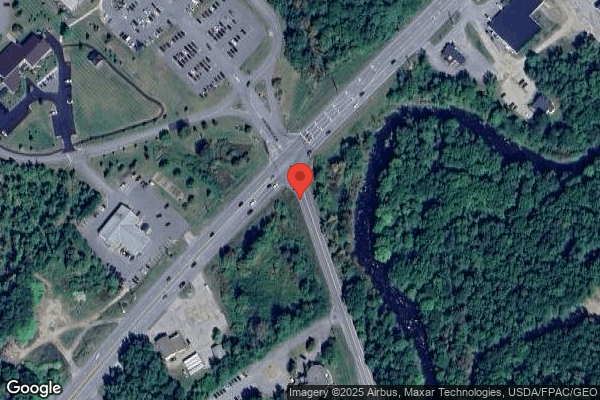




SANDY RIVER CENTER

119 LIVERMORE FALLS RD, FARMINGTON, ME 04938 (207) 778-6591
For profit - Corporation 82 Beds GENESIS HEALTHCARE Data: November 2025 1 Immediate Jeopardy citation
Trust Grade
26/100
#74 of 77 in ME
Last Inspection: August 2024

Within standard 12-15 month inspection cycle. Federal law requires annual inspections.

Overview

Sandy River Center has received a Trust Grade of F, indicating significant concerns about the quality of care provided. Ranked #74 out of 77 nursing homes in Maine, it sits in the bottom half of facilities statewide and is the least favorable option in Franklin County. While the facility's trend is improving, having reduced its issues from 18 in 2024 to 3 in 2025, the overall Trust Score remains low at 26 out of 100. Staffing is a relative strength with a rating of 4 out of 5 stars and a turnover rate of 42%, which is below the state average, but the facility has recorded concerning fines of $21,645, higher than 84% of Maine facilities. Specific incidents raise alarms, such as a critical failure to provide appropriate textured meals for a resident with swallowing issues, leading to choking and ultimately the resident's death. Additionally, staff shortages have been reported, with insufficient coverage leading to residents not receiving timely assistance for daily needs. There have also been issues with cleanliness, as multiple areas of the facility were found to be unsanitary, including the presence of flies and dirty floors. Overall, while there are positive aspects like staffing stability, the serious safety concerns and poor inspection outcomes warrant careful consideration.

Trust Score
F
26/100
In Maine
#74/77
Bottom 4%
Safety Record
High Risk
Review needed
Inspections
Getting Better
18 → 3 violations
Staff Stability
○ Average
42% turnover. Near Maine's 48% average. Typical for the industry.
Penalties
✓ Good
$21,645 in fines. Lower than most Maine facilities. Relatively clean record.
Skilled Nurses
✓ Good
Each resident gets 56 minutes of Registered Nurse (RN) attention daily — more than average for Maine. RNs are trained to catch health problems early.
Violations
⚠ Watch
45 deficiencies on record. Higher than average. Multiple issues found across inspections.
★☆☆☆☆
1.0
Overall Rating
★★★★☆
4.0
Staff Levels
★★★★☆
4.0
Care Quality
★☆☆☆☆
1.0
Inspection Score
Stable
2024: 18 issues
2025: 3 issues

The Good

  • 4-Star Staffing Rating · Above-average nurse staffing levels
  • 4-Star Quality Measures · Strong clinical quality outcomes
  • Full Sprinkler Coverage · Fire safety systems throughout facility
  • No fines on record
  • Staff turnover below average (42%)

    6 points below Maine average of 48%

Facility shows strength in staffing levels, quality measures, fire safety.

The Bad

1-Star Overall Rating

Below Maine average (3.0)

Significant quality concerns identified by CMS

Staff Turnover: 42%

Near Maine avg (46%)

Typical for the industry

Federal Fines: $21,645

Below median ($33,413)

Minor penalties assessed

Chain: GENESIS HEALTHCARE

Part of a multi-facility chain

Ask about local staffing decisions and management

The Ugly 45 deficiencies on record

1 life-threatening
Sept 2025 2 deficiencies
CONCERN (E) 📢 Someone Reported This

A family member, employee, or ombudsman was alarmed enough to file a formal complaint

Potential for Harm - no one hurt, but risky conditions existed

Safe Environment (Tag F0584)

Could have caused harm · This affected multiple residents

**NOTE- TERMS IN BRACKETS HAVE BEEN EDITED TO PROTECT CONFIDENTIALITY** Based on observations and interviews, the facility failed to adequately provide housekeeping and maintenance services necessary ...

Read full inspector narrative →
**NOTE- TERMS IN BRACKETS HAVE BEEN EDITED TO PROTECT CONFIDENTIALITY** Based on observations and interviews, the facility failed to adequately provide housekeeping and maintenance services necessary to maintain the building in a sanitary, orderly, and comfortable environment on 6 of 6 Units (Mt. [NAME], Mt. Blue, Sugarloaf, Porter, Rangeley and [NAME]), the laundry room and a common area for 3 of 4 days of survey.(9/15/25, 9/16/25 and 9/18/25).Findings: 1. On 9/15/25 at 6:20 p.m., two surveyors observed small fruit type flies around and on the table in the main office conference room. 2. On 9/15/25 at 8:00 p.m., a surveyor observed the following findings on the Rangeley Unit: - The linen closet had linen and dirt/debris on the floor. - The shower room had black buildup on the grout in the lower right corner of the room. - The dining room floor was heavily soiled with dirt throughout the floor and around the edges and the residents' room door frames. - The privacy curtains were missing hooks, hanging down and in disrepair for resident rooms 502, 503 and 506. 3. On 9/15/25 at 8:15 p.m., a surveyor observed the following findings on the [NAME] Unit: - The dining room floor was heavily soiled with dirt throughout the floor and around the edges and the residents' room door frames. - The unit entrance double doors had chipped/missing paint. - The shower room had black buildup on the grout in the lower left corner of the room. - The laundry room had linens on the floor. There was an approximately one foot by one foot square section of sheetrock cut out of the wall exposing insulation. 4. The common area flooring, in front of the [NAME] Unit entrance doors, had an approximately two inch by 4 inch section of linoleum missing creating an uncleanable surface. 5. On 9/16/25 from at 8:07 a.m. to 9:26 a.m., a surveyor observed the following findings during a facility tour: Porter Unit -Resident room [ROOM NUMBER] – There were numerous house flies flying around the room. The baseboard heater cover and window sill had chipped/missing paint creating uncleanable surfaces. The fall mat, stored by the window had ripped/torn edges exposing foam creating an uncleanable surface. - Resident room [ROOM NUMBER] – The baseboard heater cover, behind head of bed, was broken apart and had fallen down and had chipped/missing paint creating an uncleanable surface. - Resident room [ROOM NUMBER] – The entire bathroom was heavily soiled with dirt and was dirty around base of toilet. There were two cracked/broken floor tiles in front of the toilet. Rangeley Unit: - Resident room [ROOM NUMBER] – The bathroom floor was dirty around the base of the toilet. - Resident room [ROOM NUMBER] – There was a window shade on the floor by a window. Both wardrobe draws, on the right side, were off track and broken. The bathroom floor was dirty around the base of the toilet and there were two bedpans on the floor. - Resident room [ROOM NUMBER] – There were two cracked/broken floor tiles just inside the room entrance door. On 9/16/25 at 9:28 a.m., in an interview with a surveyor, the District Manager for Healthcare Services confirmed the findings. 6. On 9/16/25 at 1:07 p.m. in an environment tour and interview with a surveyor, Director of Operations, and District Manager for Health Care Services the following was confirmed: In room [ROOM NUMBER] the baseboard heater was rusted, had chipped paint, and the end cap of the baseboard heater at the head of the bed was falling off. In room [ROOM NUMBER] the baseboard heater was rusted, and had chipped paint. In room [ROOM NUMBER] the floor was visibly soiled, and when walking next to bed 1, there was a sticky substance on floor, the wall at the head of bed 1 was patched, peeling, and not painted, and the top of the nightstand was dusty. On 9/18/25 from 8 a.m. through 8:20 a.m., an environmental tour was completed. On the Mt. Blue Unit, the grooves of the shower room threshold is caked with dirt. On the Sugarloaf Unit in room [ROOM NUMBER], and 304, behind the toilet, the wall above the cove base has missing sheetrock and crumbling putty patches creating uncleanable surfaces. The above findings were confirmed with the Administrator, on 9/18/25 at 10:45 a.m. On 9/18/25 between 9:02 a.m. thru 9:10 a.m., an environmental tour was completed with the Administrator, Manager of Housekeeping and Laundry, and a surveyor with the following confirmed at time of observation: Mount Blue Unit In room [ROOM NUMBER]-204 bathroom, the floor tiles had gaps around the toilet that were filled with dirt. In room [ROOM NUMBER]-1, the portable fan was dusty. In room [ROOM NUMBER]-1, the fan was dusty, the air conditioner filter was dusty, and the wall behind the bed was gouged. In addition, the light switch to the bathroom did not work. Mount [NAME] Unit In room [ROOM NUMBER], the air conditioner filter was dusty and there were holes in the drywall that were patched but not painted by the entrance door. In room [ROOM NUMBER]-1, the air conditioner filter was dusty. In room [ROOM NUMBER] bathroom, the cove base by the toilet was not attached to the wall
CONCERN (E) 📢 Someone Reported This

A family member, employee, or ombudsman was alarmed enough to file a formal complaint

Potential for Harm - no one hurt, but risky conditions existed

Food Safety (Tag F0812)

Could have caused harm · This affected multiple residents

**NOTE- TERMS IN BRACKETS HAVE BEEN EDITED TO PROTECT CONFIDENTIALITY** Based on observations, interviews, and review of the facility's Warewashing policy/procedure and the facility's Food Storage pol...

Read full inspector narrative →
**NOTE- TERMS IN BRACKETS HAVE BEEN EDITED TO PROTECT CONFIDENTIALITY** Based on observations, interviews, and review of the facility's Warewashing policy/procedure and the facility's Food Storage policy/procedure, the facility failed to ensure the kitchen was maintained in a clean and sanitary manner for a food disposal, a mouse trap, the floor, the stove hood, house flies, ceiling air vents, ceiling tiles and the ceiling metal grid; failed to ensure foods were dated, labeled and/or secured in a walk-in refrigerators and a walk-in freezer; and failed to ensure that the dish machine was monitored for proper wash and rinse temperatures to ensure clean and sanitized utensils and dishes, for 2 of 4 days of survey (9/15/25 and 9/17/25). In addition, the facility failed to ensure that expired food was removed and food dishes were covered in unit refrigerators, for 1 of 4 days of survey (9/15/25). Findings: The facility's Warewashing” policy/procedure dated 2/2023 noted: Policy: All dishware, serviceware, and utensils will be cleaned and sanitized after each use. Procedure: 2. All dishware machine water temperatures will be maintained in accordance with the manufacturer's recommendations for high temperature or low temperature machines. 3. temperature and or sanitizer concentration logs will be completed, as appropriate. 1. On 9/15/25 at 6:10 p.m., a surveyor entered the kitchen and spoke with a cook and a dietary aide who both stated that the dish machine was a high temperature dish machine that washed at a minimum of 150 degrees Fahrenheit (F.) and rinsed at a minimum of 180 degrees F. 2. On 9/15/25 from 6:15 p.m. to 6:50 p.m., a surveyor conducted a kitchen tour with the Traveling Executive Chef for Healthcare Services in which the following findings were observed: - There was dried liquid residue on the food disposal. - There was a rusty mouse trap on the floor under the dish machine. - There was food, trash and equipment(lids/utensils) on the floor under and around the equipment and the shelving. - There was dried liquid residue on the outside of the stove hood. - There were a large amount of house flies observed to be flying around the kitchen and landing on vents, lights and tables. The outside kitchen door next to the freezer door was propped open and had no screen door allowing pests to enter the kitchen. - There were two ceiling air vents, eight ceiling tiles around the vents and the ceiling grid that was dusty/dirty over food preparation areas. - The walk-in Freezer had one package of fish patties that were not labeled. There was one case of previously open sausage patties that was not secured and open to the air. There was a case of beef sandwich slices that had a large chunk of ice built up on the box. There was an excessive ice buildup on the bottom of the condenser unit causing water mist to spray out onto the floor making it slippery. - The walk-in refrigerator had one package of meatballs that was not dated and labeled. There were two, 16-ounce packages of whipped topping that did not have a thaw date and the manufacturer's instructions noted that the product was only good for 14 days after being thawed. - The emergency food storage room, located on the [NAME] Unit, had two ceiling tiles that had large brown stains on them. On 9/15/25 at 6:50 p.m., in an interview with a surveyor, the Traveling Executive Chef for Healthcare Services confirmed the findings. 3. On 9/17/25 at 9:45 a.m., a surveyor reviewed the kitchen documentation and found the dish machine temp logs for June, July, August and September were missing some dates and the rinse temps sometimes were documented below 180 degrees F. The facility Dish Machine Logs for June, July, August and September 2025 were missing temps taken or documented below 150 degrees Fahrenheit (F.) for washing and 180 degrees Fahrenheit (F.) for rinsing to make sure the dishes were clean and sanitized. June: Breakfast (wash temperature low) - 7th; (rinse temperature low)-7th, 8th, 14th, 16th, 17th, and 22nd-25th. Lunch(wash temperature low)- 19th, 23rd, 24th, 29th and 30th.; (rinse temperature low)-19th, 23rd, 24th, 29th and 30th. July: Breakfast (rinse temperature low)-1st, 4th, 6th-9th, 20th, 22nd and 26th. Lunch (rinse temperature low)- 7th-11th, 15th, and 29th-31st. Dinner (wash temperature missing)-28th.; (rinse temperature low/missing)-10th, 28th. September: Breakfast (rinse temperature low)-1st, 4th, 12th, and 13th. Lunch (wash temperature missing)- 15th.; (rinse temperature low/missing)- 9th, 11th, 12th, 11th, and 15th. Dinner (wash temperature missing)- 14th and 16th.; (rinse temperature low/missing)- 14th and 16th. On 9/17/25 at 9:45 a.m., in an interview with a surveyor, the Traveling Executive Chef confirmed the findings. On 9/17/25 at 10:00 a.m., in an interview with 4 surveyors present, the Administrator confirmed the findings from the kitchen. 4. On 9/15/25 at 8:35 p.m., a surveyor observed an opened gallon of milk with an expiration date of 9/3/25 in the Sugarloaf Mountain refrigerator. The surveyor confirmed this finding with Certified Nursing Assistant #2 (CNA2). On 9/15/25 at 8:41 p.m., two surveyors observed Beef snack sticks with an expiration date of 8/14/25 and a container of cantaloupe with was soft and watery, with a date of 9/4/25 on the lid in the Mount Blue refrigerator. The surveyor confirmed this finding with Licensed Practical Nurse #1 (LPN1). On 9/15/26 at 8:44 a.m., two surveyors observed a meal tray from tonight's supper with two bowls not covered in the Mount [NAME] refrigerator. The surveyor confirmed finding this with CNA3 at this time.
Jul 2025 1 deficiency 1 IJ
CRITICAL (J) 📢 Someone Reported This

A family member, employee, or ombudsman was alarmed enough to file a formal complaint

Immediate Jeopardy (IJ) - the most serious Medicare violation

Deficiency F0692 (Tag F0692)

Someone could have died · This affected 1 resident

**NOTE- TERMS IN BRACKETS HAVE BEEN EDITED TO PROTECT CONFIDENTIALITY** Based on the facility reported incident, record reviews and interviews, the facility failed to provide the appropriate textured ...

Read full inspector narrative →
**NOTE- TERMS IN BRACKETS HAVE BEEN EDITED TO PROTECT CONFIDENTIALITY** Based on the facility reported incident, record reviews and interviews, the facility failed to provide the appropriate textured meal to Resident #1 who was identified with swallowing issues and required a dysphagia advanced texture for all meals. This failure to provide the correct texture at the supper meal on 7/24/25 resulted in the resident choking, needing transfer to the hospital and subsequently passing away for 1 of 12 residents reviewed that were requiring dysphagia advanced texture meals. This failure determined an immediate jeopardy situation existed. Immediate jeopardy is defined as a situation in which a recipient of care has suffered or is likely to suffer serious injury, harm, impairment, or death as a result of a provider's noncompliance with one or more health and safety requirements.On 7/28/25, the Division of Licensing and Certification (DLC) received a Facility Reportable Incident Form stating, on 7/24/25 during dinner Resident #1 was found unresponsive, lips blue, broccoli appeared to be in the resident's mouth. The Registered Nurse (RN)#1 finger swiped the residents mouth and pulled out a piece of broccoli. The resident remained limp in the chair and was transferred to the floor, when he/she started gagging and was rolled to the side and vomited. Oxygen was then placed on the resident who was now breathing. Emergency Medical Services arrived, suctioned the resident and transferred him/her to the hospital. On 7/25/25 the facility was notified that Resident #1 was admitted to the Intensive Care Unit, later passing away. The residents' diet order specified advanced dysphagia, allowing soft vegetables cut into appropriate sizes.Resident #1 was admitted to the facility on [DATE] with a history of Cerebrovascular Accident (damage to the brain from interruption of its blood supply) resulting in dysphagia (difficulty swallowing) requiring a specialized diet of dysphagia advanced texture. A Physician diet order, dated 7/21/25 for a Regular/liberalized diet, Dysphagia advanced texture, Standard Thin Liquids consistency. The care plan dated 7/22/25, stated the resident required set up for eating.A nursing note, dated 7/24/25, RN went down to the unit, patient was sitting in wheelchair, not responding to stimuli, lips blue, broccoli appeared to be in [his/her] mouth, this RN finger swiped patients mouth, pulled out a piece of broccoli, patient was limp in chair. Patient was transferred to floor with assistance from CNA's (Certified Nurse Assistant). Patient started gagging, patient was rolled onto [his/her] side, [he/she] vomited. Oxygen was placed on patient, ambulance arrived, Patient was breathing, EMT (Emergency Medical Technician) suctioned patient and transported to ER (emergency room). Patient was responsive when transported.Review of the facilities 2019 Dysphagia Advanced diet states Under Foods Allowed - Vegetables should be soft, well cooked and chopped if needed, under Food to Avoid - Raw vegetables, cooked rubbery or nontender cooked vegetables. Under section Diet Guides states for dysphagia advanced diet broccoli is acceptable as Broccoli Florets, Chop On 7/30/25 at 8:15 a.m., during an interview, the Regional Director of Operations for dietary stated, with a dysphagia advanced diet the vegetables should be able to mash with a fork and pea size pieces. Broccoli florets are supposed to be soft, mashable and chopped. She confirmed she was made aware of the choking incident which happened on 7/24/25 and immediately started to re-educate staff on dysphagia diets. On 7/30/25 at 11:19 a.m., during a telephone interview RN #1 stated, I ran down, I hollered to {another nurse] to grab code status, because I couldn't remember [his/her] code status. The CNA was supporting [resident] in the chair, because [he/she] was unconscious, I scooched down, I looked at [Resident] #1. I was going to do a sternal rub and I saw something sticking out of [Resident #1] mouth. I took out a piece of broccoli that was about 3.5 inches. When I did that, [his/her] airway was open. [He/She] was still unresponsive, we lowered [him/her] to the floor, [he/she] started breathing, gagging. We rolled [Resident #1] to the side and [he/she] vomited. Once [he/she] was done with vomiting I placed oxygen on [him/her], then the EMT showed up. [He/she] was trying to respond to us . [He/she] was responding to the EMT as well. EMT tried to suction and there was nothing. It was the broccoli that was the issue. The surveyor asked if the piece of broccoli she removed from the resident mouth was appropriate for a dysphagia advanced diet. The RN #1 stated, No, it was a big piece On 7/30/25 at 11:48 a.m., during a telephone interview, CNA # 1 stated Resident #1 was doing well with eating, we she was told to supervise and check in. Resident #1 was sitting at the dinner table with another resident who asked to use the bathroom. CNA #1 left the unit to ask another CNA#2 for help with the sit-to-stand transfer. No more than 1 to 2 minutes later they noticed Resident #1 looking pale and not responding. They yelled for the nurse who was down within 30 seconds. When they tilted the residents head up, the nurse pulled broccoli out of [his/her] mouth. he/she was transferred to the ground and then started vomiting. When I picked up all the dishes from my hall. We have a strainer which we scrape the plates off to catch the food. The nurse stopped me, reached into the bucket and grabbed the broccoli and it wasn't fully cooked. The nurse felt the broccoli that was pulled out of [his/her] mouth and that was hard as well. The surveyor asked if the CNA could describe the piece of broccoli that was removed from the resident's mouth. CNA#1 stated, the top was crushed like [he/she] tried to chew it, the stock had teeth marks where [he/she] tried to chew on it and The length was probably between 1/2 to 1 inch and the diameter of the stock was probably the size of a nickel. On 7/30/25 at 12:35 p.m., the surveyor observed a bag of frozen Broccoli Florets which were approx. 2-3 inches long with a stalk and crown. At this time the Dietary Regional Director of Operations stated this is how they are supplied, and they are cooked and chopped before being served for a dysphagia advanced diet, in addition, she is trying to get broccoli crowns in place of the florets. On 7/30/25 at 2:29 p.m., during an interview, CNA #2 stated she was asked to help with a transfer that's when she noticed Resident #1 was about to fall out of the chair and had a pale almost jaundice color face. CNA#1 asked CNA#2 to get a nurse. CNA#2 ran to alert the nurse and was asked to get supplies, oxygen. When CNA#2 returned they had Resident #1 on his/her side and food started coming out of his/her mouth, like solid broccoli, then the EMT got here. CNA#2 stated she was aware resident #1 had dysphagia and we didn't know the broccoli wasn't soft enough and the kitchen didn't tell us. The surveyor asked how she knew the broccoli wasn't soft enough. CNA #2 stated, I was told the next day the broccoli wasn't soft enough. The surveyor asked if she could describe the solid broccoli that resident #1 vomited out. She stated, I would say a small singular piece it was the bottom stem of it. About the size of my index finger maybe about 1 inch 1/2 inch. On 7/30/25 at 2:37 p.m., during an interview, Licensed Practical Nurse (LPN) #1 stated she was passing medication in the hall when CNA#2 got her attention stating Resident #1 didn't look right. They had just finished serving dining. I called out [Resident #1's] name, gave [him/her] a little shake, gave a sternal rub, it didn't do anything. I hollered down the hallway, we had an unresponsive resident. RN #1 was already on her way down. We bent down and noticed a particle of food peeking out, RN#1 did the sweep and removed the object, and [Resident #1] took a breath, like agonal breathing. We lowered him/her to the floor and rolled him/her to his/her right side and he/she vomited, he/she was breathing like gasps. The surveyor asked if she could describe what was in the resident's mouth. LPN #1 stated, Broccoli, it was a mushed up green food item, rather large, it was the shape of [his/her] mouth so probably 2 inches, mushed flatten wad of broccoli. At this time LPN #1 stated the kitchen typically serves the meat cut up but not always the vegetables. We are now cutting them up if needed. Review of the EMS Patient Care Report dated 7/24/25 states, Upon arrival on the scene I am met by a worker at the front door and she states its a possible choking. The patient is located on the floor. the patient on a non-rebreather mask . The patient has a radial pulse and [he/she] is breathing. The patient is vomiting liquid and solid matter. laying in a recovery position. The patients nurse states that when they found [him/her] [he/she] was blue and she cleared [his/her] airway with a finger swipe and removed several large chucks of the patients dinner. I immediately begin to suction the patients vomit. I clear the airway and the patient is alert but not responding to commands. The patient begins to vomit a second time and I clear the airway with suction . The patient has strong radial pulses and [he/she] is breathing on [his/her] own. Review of the Hospital Emergency department notes for 7/24/25 stated under Reason for admission: Resident #1 began to choke during [his/her] meal and had a syncopal episode. [He/she] was in respiratory distress and became cyanotic. [He/she] was transferred via EMS to the ER. Initially, [he/she] was confused but saturating well but then began to rapidly decline, became hypoxic and intubated at families request.CT scan showed evidence of aspiration. after prolonged family discussion, resident #1 was extubated and allowed to die peacefully. The hospital discharge diagnosis was acute respiratory failure with hypoxia, sepsis with acute hypoxic respiratory failure and aspiration pneumonia. On 7/30/25 at approx. 4:55 p.m., the above was discussed with the Market Clinical Advisor and the Administrator. Please see F-0000 initial comments related to Immediate Jeopardy and measures the facility implemented.
Aug 2024 16 deficiencies
CONCERN (D)

Potential for Harm - no one hurt, but risky conditions existed

Accident Prevention (Tag F0689)

Could have caused harm · This affected 1 resident

Based on observation and interview, the facility failed to ensure that the resident's environment was free of accident hazards relating to a desk wall laminate covering for 1 of 3 days of survey. (8/5...

Read full inspector narrative →
Based on observation and interview, the facility failed to ensure that the resident's environment was free of accident hazards relating to a desk wall laminate covering for 1 of 3 days of survey. (8/5/24) Finding: On 8/5/24 at 11:15 a.m., a surveyor observed the nursing station laminate wall covering to be chipped/gouged and missing pieces along the bottom edge. This created sharp edges which were accessible to residents, staff and visitors creating an accident hazard. On 8/5/24 at 11:29 a.m., in an interview, the Market Clinical Advisor observed and confirmed the nursing station laminate wall covering was chipped/gouged and missing pieces and was an accident hazard to passersby.
CONCERN (D)

Potential for Harm - no one hurt, but risky conditions existed

Deficiency F0757 (Tag F0757)

Could have caused harm · This affected 1 resident

**NOTE- TERMS IN BRACKETS HAVE BEEN EDITED TO PROTECT CONFIDENTIALITY** Based on record review and interviews, the facility failed to provide documentation of monitoring of psychotropic medication sid...

Read full inspector narrative →
**NOTE- TERMS IN BRACKETS HAVE BEEN EDITED TO PROTECT CONFIDENTIALITY** Based on record review and interviews, the facility failed to provide documentation of monitoring of psychotropic medication side effects for 1 of 5 residents reviewed for unnecessary drug use (#7). Findings: Resident #7 was originally admitted on [DATE] and has diagnoses to include anxiety and depression. Review of Resident #7's active physician orders as of August 2024 revealed the following medications: -Order with start date of 6/4/24 for Abilify Oral Tablet 15 mg (milligram) (Aripiprazole) Give 15 mg by mouth one time a day for depression. -Order with start date of 6/4/25 for Buspirone HCL Oral Tablet 10 mg (Buspirone HCL) Give 1 tablet by mouth in the afternoon for anxiety -Order with start date of 6/4/24 for Buspirone HCL Oral Tablet 10 mg (Buspirone HCL) Give 1 tablet by mouth one time a day for anxiety. -Order with start date of 6/4/24 for Buspirone HCL Oral Tablet 10 mg (Buspirone HCL) Give 2 [tablet] by mouth at bedtime for anxiety dose equals 20 mg. -Order with start date of 4/22/24 for Trazodone HCl Oral Tablet (Trazodone HCl) Give 175 mg by mouth at bedtime for depression -Order with start date of 3/23/24 for Sertraline HCl Oral Tablet 100 MG (Sertraline HCl )Give 200 mg by mouth one time a day for anxiety. Further review of Resident #7's clinical record, the surveyor was unable to locate evidence of monitoring for side effects of these medications. During an interview on 8/08/24 at 10:56 a.m., the Director of Nursing confirmed Resident #7's clinical record lacked evidence of monitoring for side effects of psychotropic medications in the presence of 4 surveyors.
CONCERN (D)

Potential for Harm - no one hurt, but risky conditions existed

Infection Control (Tag F0880)

Could have caused harm · This affected 1 resident

Based on observation and interview, the facility failed to ensure appropriate infection control procedures were followed related to hand sanitizing during the medication pass task for 1 of 2 medicatio...

Read full inspector narrative →
Based on observation and interview, the facility failed to ensure appropriate infection control procedures were followed related to hand sanitizing during the medication pass task for 1 of 2 medication passes observed. Finding: On 8/8/24 at 8:34 a.m., during a medication administration observation, a surveyor observed a Certified Nursing Assistant Med Technician (CNA-M) administering medications to (Resident #49) in a plastic medication cup. The CNA-M was then observed discarding the medication cup into the trash can and walked by a hand sanitizer located on the wall in Resident #49's room. The CNA-M was then observed to walk back to the medication cart, unlocked the cart and began to prepare medications for Resident #66. At this time a surveyor intervened and asked CNA-M if she had washed or sanitized her hands. CNA-M stated No. and acknowledged that she should sanitize her hands between residents. On 8/8/24 9:53 a.m., a surveyor discussed the lack of handwashing/sanitizing between residents during the medication pass with the Market Clinical Advisor.
CONCERN (E)

Potential for Harm - no one hurt, but risky conditions existed

Deficiency F0578 (Tag F0578)

Could have caused harm · This affected multiple residents

**NOTE- TERMS IN BRACKETS HAVE BEEN EDITED TO PROTECT CONFIDENTIALITY** Based on record review and interviews the facility failed to provide residents/representatives written information concerning th...

Read full inspector narrative →
**NOTE- TERMS IN BRACKETS HAVE BEEN EDITED TO PROTECT CONFIDENTIALITY** Based on record review and interviews the facility failed to provide residents/representatives written information concerning the right to accept or refuse medical or surgical treatment and/or formulate an advance directive for 7 of 15 residents reviewed for advanced directives (Resident's #7, #33, #51, 65, #16, #34, #69). Findings: 1. Resident #7 was admitted to the facility on [DATE]. A review of Resident #7's clinical record lacked evidence that the facility provided resident and/or resident's representative written information concerning the right to accept or refuse medical or surgical treatment and/or formulate an advance directive. 2. Resident #33 was admitted to the facility on [DATE]. Review of Resident #33's clinical record lacked evidence that the facility provided/obtained resident and/or resident's representative written information concerning the right to accept or refuse medical or surgical treatment and or formulate an advance directive. 3. Resident #51 was admitted to the facility on [DATE]. Review of Resident #51's clinical record lacked evidence that the facility provided/obtained resident and/or resident's representative written information concerning the right to accept or refuse medical or surgical treatment and or formulate an advance directive. 4. Resident #65 was admitted to the facility on [DATE]. A review of Resident #65's clinical record lacked evidence that the facility provided resident and/or resident's representative written information concerning the right to accept or refuse medical or surgical treatment and/or formulate an advance directive. On 8/6/24 at 10:17 a.m., Market Clinical Advisor confirmed Residents #7, #33, #51, and #65's clinical records did not include evidence that the residents and/or representatives were asked, or offered and refused, assistance filling out an advanced directive. 5. Resident #16 was admitted to the facility on [DATE]. A review of Resident #16's clinical record lacked evidence that the facility provided resident and/or resident's representative written information concerning the right to accept or refuse medical or surgical treatment and/or formulate an advance directive. 6. Resident #34 was admitted to the facility on [DATE]. A review of Resident #34's clinical record lacked evidence that the facility provided resident and/or resident's representative written information concerning the right to accept or refuse medical or surgical treatment and/or formulate an advance directive. 7. Resident #69 was admitted to the facility on [DATE]. A review of Resident #69's clinical record lacked evidence that the facility provided resident and/or resident's representative written information concerning the right to accept or refuse medical or surgical treatment and/or formulate an advance directive. On 8/7/24 at 11:51 a.m., Market Clinical Advisor confirmed Residents #16, #34, and #69's clinical records did not include evidence that the residents and/or representatives were asked or offered and refused assistance filling out an advanced directive.
CONCERN (E)

Potential for Harm - no one hurt, but risky conditions existed

Safe Environment (Tag F0584)

Could have caused harm · This affected multiple residents

**NOTE- TERMS IN BRACKETS HAVE BEEN EDITED TO PROTECT CONFIDENTIALITY** Based on observations and interviews, the facility failed to adequately provide housekeeping and maintenance services necessary ...

Read full inspector narrative →
**NOTE- TERMS IN BRACKETS HAVE BEEN EDITED TO PROTECT CONFIDENTIALITY** Based on observations and interviews, the facility failed to adequately provide housekeeping and maintenance services necessary to maintain the building in a sanitary, orderly, and comfortable interior for the 6 of 6 units (Mt. [NAME], Mt. Blue, Sugarloaf, [NAME], Rangeley and Porter), the upper level common area, the lower level common area, a patio and the laundry for 1 of 1 facility tours (8/8/24). Findings: On 8/8/24 from 7:50 a.m. to 8:30 a.m., during a tour of the facility with the Maintenance Director, the Regional Health Care Services Housekeeping Supervisor and the Administrator, the following findings were observed: 1. Upper Level Common Area > The public bathroom near the main office had a dirty floor and dirty caulking around the base of toilet. Mt. [NAME] Unit: > Resident room [ROOM NUMBER] - The floor was soiled with dust/dirty inside of the room entrance door and around the entire edge of the room. The caulking was dirty around the base of the toilet. > Resident room [ROOM NUMBER] - The floor was soiled with dust/dirty inside of the room entrance door and around the entire edge of the room. > Resident room [ROOM NUMBER] - The floor was soiled with dust/dirty inside of the room entrance door and around the entire edge of the room. The caulking was dirty around the base of the toilet. > Resident room [ROOM NUMBER] - The floor was soiled with dust/dirty inside of the room entrance door and around the entire edge of the room. > The kitchenette upper cabinet doors had chipped/missing paint on the corners of the doors. Mt. Blue Unit: > The entire dining room floor and the edges were heavily soiled with dirt suspended in the wax. > Resident room [ROOM NUMBER] - The room entrance door frame had chipped/missing paint creating an uncleanable surface. > Resident room [ROOM NUMBER] - The room entrance door and bathroom door frames had chipped/missing paint creating uncleanable surfaces. The bathroom ceiling light had debris in it. > Resident room [ROOM NUMBER] - The room entrance door and bathroom door frames had chipped/missing paint creating an uncleanable surface. The walls by the sink were gouged and marked. The baseboard heater cover on right side of room was broken apart and the entire baseboard heater had chipped/missing paint creating uncleanable surfaces. The box fan on the left side of the room was heavily soiled with dust. The black, circular standing floor fan on the right side of the room was heavily soiled with dust. The ceiling tile, next to the air vent on the right side of room had a large brown stain on it. The air vent was heavily soiled with dust. The caulking and floor around base of toilet were dirty. The bathroom ceiling light has debris in it. > Resident room [ROOM NUMBER] - There was a broken/missing floor tile as you enter the room. There was a dusty white floor fan by the sink. There were multiple ceiling tiles stained with brown stains. The bathroom door frame and room entrance door frame had chipped/missing paint. The walls by the sink were marked/marred and gouged. The caulking and floor were dirty around the base of the toilet. The bathroom ceiling light was full of dust/debris. The box fan by the window was heavily soiled with dust. > Resident room [ROOM NUMBER] - The wall by the window on the right side of the room had holes in it. The fan in the window is heavily soiled with dust. The bathroom door frame and room entrance door frame had chipped/missing paint. The caulking was dirty around the base of the toilet. The bathroom privacy curtain was missing hooks, hanging down and in disrepair. There was a wash basin on the bathroom floor. Sugarloaf Unit: > There were 2 ceiling tiles in the hallway by resident room [ROOM NUMBER] that had large brown stains on them. > Resident room [ROOM NUMBER]- The caulking was dirty around the base of the toilet. > Resident room [ROOM NUMBER] - The caulking was dirty around the base of the toilet. There were 3 wash basins on the bathroom floor. > There air conditioning unit in the dining room had a dirty/dusty filter. > Resident room [ROOM NUMBER] - The caulking was dirty around the base of the toilet. The bathroom ceiling light was full of dust/debris. > Resident room [ROOM NUMBER] - The towel bar was missing on the bathroom door. The caulking was dirty around the base of the toilet. There was a wash basin on the bathroom floor. Porter Unit: >The kitchenette upper and lower cabinets had chipped/missing paint on the doors creating uncleanable surfaces. The wall near the cupboard had chipped/missing paint. The dining room floor was dusty/dirty in the corners. > Resident room [ROOM NUMBER] - The room entrance door frame had chipped/missing paint. Rangeley Unit: > Shower Room - There was a commode bucket on the floor. > Resident room [ROOM NUMBER]- The room entrance door had loose/chipped/missing laminate creating an uncleanable surface. > Resident room [ROOM NUMBER] - The walls by the beds had chipped/missing paint and exposed sheetrock creating uncleanable surfaces. [NAME] Unit: > Resident room [ROOM NUMBER] - The bathroom wall by the toilet had chipped/missing paint with exposed sheetrock creating an uncleanable surface. Lower Level Common Area > There were 3 ceiling tiles, by the elevator, that had large brown stains on them. Laundry Room > There was a heavy build-up of lint behind and on the dryers and washers. On 8/8/24 at 8:30 a.m., in an interview, the Maintenance Director, the Regional Health Care Services Housekeeping Supervisor, and the Administrator confirmed the findings. 2. On 8/8/24 at 11:45 a.m., a surveyor observed the patio fence door, between the Rangeley Unit and the [NAME] Unit, to be broken and missing 2 door panels. There was a green chair blocking the fence opening. On 8/8/24 at 11:50 a.m., in an interview, the Administrator confirmed the finding.
CONCERN (E)

Potential for Harm - no one hurt, but risky conditions existed

Deficiency F0645 (Tag F0645)

Could have caused harm · This affected multiple residents

**NOTE- TERMS IN BRACKETS HAVE BEEN EDITED TO PROTECT CONFIDENTIALITY** Based on record reviews and interview, the facility failed to ensure that 3 of 3 residents reviewed with a specialized mental he...

Read full inspector narrative →
**NOTE- TERMS IN BRACKETS HAVE BEEN EDITED TO PROTECT CONFIDENTIALITY** Based on record reviews and interview, the facility failed to ensure that 3 of 3 residents reviewed with a specialized mental health diagnosis, whose stay went beyond the expected 30 days, had been referred to the appropriate state-designated authority for Pre-admission Screening & Resident Review Level II (PASRR) evaluation and determination (Residents #48, #66 and #68). Findings: 1. Resident #48 was admitted to the facility on [DATE] with diagnosis of Bipolar Disorder. Resident #48's clinical record contained a PASRR Level I determination letter dated 6/24/24 that stated further PASRR evaluation was not required due to Resident #48 met the criteria for a short-term convalescence admission. Resident #48 was not discharged after a short stay and was assessed to be Nursing Facility level of care and continued to reside in the facility. The clinical record lacked evidence to indicate that the PASRR Level I was forwarded again to the State Mental Health Authority to determine if a PASRR Level II evaluation and determination was needed after Resident #48's stay changed from short-term to long-term. 2. Resident #66 was admitted to the facility on [DATE] with diagnosis of Anxiety. Resident #66's clinical record contained a PASRR Level I determination letter dated 2/23/24 that stated further PASRR evaluation was not required due to Resident #66 met the criteria for a short-term convalescence admission. Resident #66 was not discharged after a short stay and was assessed to be Nursing Facility level of care and continued to reside in the facility. The clinical record lacked evidence to indicate that the PASRR Level I was forwarded again to the State Mental Health Authority to determine if a PASRR Level II evaluation and determination was needed after Resident #66's stay changed from short-term to long-term. 3. Resident #68 was admitted to the facility on [DATE] with diagnosis of Bipolar Disorder. Resident #68's clinical record contained a PASRR Level I determination letter dated 4/18/24 that stated further PASRR evaluation was not required due to Resident #68 met the criteria for a short-term convalescence admission. Resident #68 was not discharged after a short stay and was assessed to be Nursing Facility level of care and continued to reside in the facility. The clinical record lacked evidence to indicate that the PASRR Level I was forwarded again to the State Mental Health Authority to determine if a PASRR Level II evaluation and determination was needed after Resident #68's stay changed from short-term to long-term. On 8/7/24 at 11:20 a.m., in an interview, the Market Clinical Advisor, confirmed the findings.
CONCERN (E)

Potential for Harm - no one hurt, but risky conditions existed

Comprehensive Care Plan (Tag F0656)

Could have caused harm · This affected multiple residents

**NOTE- TERMS IN BRACKETS HAVE BEEN EDITED TO PROTECT CONFIDENTIALITY** 3. Resident #26 was admitted on [DATE] with diagnoses to include post-traumatic stress disorder, depression, and anxiety. Review...

Read full inspector narrative →
**NOTE- TERMS IN BRACKETS HAVE BEEN EDITED TO PROTECT CONFIDENTIALITY** 3. Resident #26 was admitted on [DATE] with diagnoses to include post-traumatic stress disorder, depression, and anxiety. Review of Care Plan for Resident #26, updated 6/5/24, states DX: PTSD from time served as a [NAME] . Resident/Patient will identify stressors and report to staff. Encourage Resident/Patient to identify personal trauma and triggers and take steps to eliminate/minimize.'' Review of Resident #26s entire clinical record lacked evidence that he/she was asked about PSTD triggers or how to eliminate/minimize them. During a review of Resident#26's care plan on 8/08/24 at 11:36 a.m., the Director of Nursing confirmed the above findings. Based on record reviews and interviews the facility failed to update and/or implement goals and interventions for 2 of 23 care plans reviewed for respiratory care, and 1 of 1 careplans reviewed for Post-Traumatic Stress Disorder (PTSD). (Resident's #28, #69, #26). Findings: 1. Resident #28 was admitted on [DATE] and has diagnoses to include obstructive sleep apnea, morbid obesity and chronic obstructive pulmonary disease (COPD). Review of Resident #28's care plan updated 5/6/24 states [Chronic Obstructive Pulmonary Disease (COPD)-Clinical Management Chronic Bronchitis; The patient will experience improved exercise tolerance as evidenced by a decrease in episodes of dyspnea on exertion. CPAP as ordered: set at 18, per resident . Review of Resident #28's clinical record revealed progress note dated 7/14/24 stating CPAP is broken. Resident requested if possible [he/she] can have oxygen for tonight. Notified on call provider .about the request of the patient. hooked oxygen 2 LPM as ordered. During an interview on 8/5/24 at 10:50 a.m., Resident#28 indicated his/her CPAP machine broke more than a month ago and they have not replaced it yet. During an interview on 8/6/24 at 12:48 p.m., Unit Manger and a surveyor reviewed Resident #28's care plan confirming his/her care plan had not been updated to reflect his/her current respiratory status. 2. Resident #69 was admitted on [DATE] with a diagnosis of COPD and Congestive Heart Failure (CHF). A review of Resident #69's July 2024 Medication Administration Records (MAR) indicates that the resident received Oxygen at 2 liters per nasal cannula continuously from 5/1/24 - 7/29/24. A review of Resident #69's care plan did not include a focus, goals or interventions in the area of oxygen therapy. On 8/7/24 at 1:46 p.m., a surveyor confirmed the above finding during an interview with the Market Clinical Advisor.
CONCERN (E)

Potential for Harm - no one hurt, but risky conditions existed

Deficiency F0657 (Tag F0657)

Could have caused harm · This affected multiple residents

**NOTE- TERMS IN BRACKETS HAVE BEEN EDITED TO PROTECT CONFIDENTIALITY** Based on interviews and record review, the facility failed to ensure residents' care plans were reviewed and revised by the inte...

Read full inspector narrative →
**NOTE- TERMS IN BRACKETS HAVE BEEN EDITED TO PROTECT CONFIDENTIALITY** Based on interviews and record review, the facility failed to ensure residents' care plans were reviewed and revised by the interdisciplinary team (IDT) within 7 days after each comprehensive assessment for 4 of 4 residents reviewed for IDT meetings (Resident's #7, #32, #33 and #65). In addition, the facility failed to ensure a a resident's care plan was revised to address nutrition and weight loss (#42). Findings: 1.Review of Resident #7's clinical record revealed quarterly Minimum Data Set (MDS) dated [DATE]. Further review of Resident #7's clinical record revealed an Interdisciplinary Team Meeting (IDT) was held on 7/19/24 (30 days after MDS date). 2.Review of Resident #32's clinical record revealed quarterly MDS dated [DATE]. Further review of Resident #32's clinical record revealed an IDT meeting was held on 5/1/24 (19 days before the MDS date). 3. Review of Resident #33's clinical record revealed quarterly MDS dated [DATE]. Further review of Resident #33's clinical record revealed an IDT meeting was held on 5/1/24 (27 days before MDS date). 4. Review of Resident #65's clinical record revealed quarterly MDS dated [DATE]. Further review of Resident #65's clinical record revealed an IDT meeting was held on 5/1/24 (27 days before the MDS date). During an interview on 8/7/24 at 3:12 p.m., Director of Nursing confirmed IDTs were not held within 7 days after MDS dates, but in the future, it would be happening. During an interview on 8/8/24 at 9:28 a.m., Unit Manger indicated they haven't had a Social Woker since 7/5/24 and she was assisting with holding the IDT meetings and didn't understand that they were supposed to be held withing 7 days after the MDS date. 5. A review of Resident #42's clinical record revealed an admission date of 5/24/24. Physician orders upon admission included a dysphagia, advanced texture diet, and weigh every day shift every Monday for baseline for 4 weeks, AND every day shift every 1 month starting on the 24th. An admission MDS assessment was completed on 5/29/24. Review of the MDS noted no issues identified with swallowing or weight changes, and revealed the resident received a mechanically altered diet. The baseline care plan was initiated on 5/2/24, and the IDT meeting was held on 5/28/24. A review of the care plan, noted under Activities of Daily Living (ADLs), included regular diet, dysphagia advanced. On 7/3/24, the Registered Dietitian noted a weight loss of 10.3 lbs. since admission and recommended the resident receive a house supplement twice daily. The last recorded weight was on 7/3/24. On 8/7/24 at 2:45 p.m., in an interview with the Registered Dietitian and the Market Clinical Advisor, the surveyor noted Resident #42's care plan had not been revised to address weight loss or include appropriate nutritional interventions. In addition, the record lacked evidence of a follow-up monthly weight being obtained on 7/24/24. The surveyor asked how staff would monitor to see if interventions for weight loss had been effective. The RD stated he/she would follow up. The Market Clinical Advisor confirmed the care plan had not been revised to address nutrition.
CONCERN (E)

Potential for Harm - no one hurt, but risky conditions existed

Respiratory Care (Tag F0695)

Could have caused harm · This affected multiple residents

**NOTE- TERMS IN BRACKETS HAVE BEEN EDITED TO PROTECT CONFIDENTIALITY** Based on observations, record reviews and interviews, the facility failed provide respiratory care consistent with professional ...

Read full inspector narrative →
**NOTE- TERMS IN BRACKETS HAVE BEEN EDITED TO PROTECT CONFIDENTIALITY** Based on observations, record reviews and interviews, the facility failed provide respiratory care consistent with professional standards of practice by failing to ensure that respiratory equipment was replaced for 1 of 1 resident (Resident #28) and failed to change oxygen tubing for 1 of 2 residents reviewed (Resident #69). Findings: 1. Resident #28 was admitted on [DATE] and has diagnoses to include severe morbid obesity, chronic obstructive pulmonary disease (COPD) and obstructive sleep apnea, requiring a CPAP machine (a machine that uses mild air pressure to keep breathing airways open while you sleep). Review of Resident #28's clinical record reviewed Hospital Discharge Summary dated 2/12/24 states Special Instructions: Make sure you use your CPAP for any sleep, including daytime napping . Review of Resident #28's active orders dated August 2024 revealed the following: 1.Order with start date of 10/26/24 states CPAP [a machine that uses mild air pressure to keep breathing airways open while you sleep] mask on at HS. Fill reservoir to line with distilled water. Do not overfill. at bedtime for sleep apnea. Review of Resident #28's Treatment Administration Record (TAR) from 7/13/24 through 8/6/24 revealed this was not completed: broken (24 days). Order with start date of 10/9/24 states CPAP mask to be removed in a.m. Clean mask and reservoir with warm soapy water, rinse and air dry. Every night shift for sleep apnea CPAP mask to be removed in a.m. clean mask and reservoir with warm soapy water, rinse and air dry. every night shift for sleep apnea. Review of Resident #28's Treatment Administration Record (TAR) from 7/13/24 through 8/6/24 revealed this was not completed: broken (24 days). Review of Resident #28's care plan updated 5/6/24 states Chronic Obstructive Pulmonary Disease(COPD)-Clinical Management Chronic Bronchitis; The patient will experience improved exercise tolerance as evidenced by a decrease in episodes of dyspnea on exertion. CPAP as ordered . Review of Resident #28's clinical record revealed the following progress notes: -7/13/24 Water reservoir is leaking. This writer attempted to contact CPAP supplier without success. Further review of Resident #28's clinical record lacked evidence that facility made any further attempts to contact CPAP supplier. -7/14/24 Telehealth Notification Note The Cpap is not working and is leaking water; the patient is requesting supplemental oxygen tonight. Plan: supplement 0xygen 2-3 L, nurse to follow up Cpap machine in AM. Further review of Resident #28's clinical record lacked evidence this was done. -7/15/24 17:54:27 Night nurse passed onto writer that cpap wasn't working and [ sister/brother] was called and was going to get it fixed due to being pt's own machine. Writer called, [sister/brother], and [he/she] stated [he/she] knew nothing about this and doesn't know how to reach out to company to get fixed. Note put in MD's folder on above, ?ordering new machine. -7/16/24 Pt called company on CPAP machine. Pt stated they needed a new script for machine and supplies. Note put in MD's folder with above request. Review of Resident #28's clinical record revealed Provider Communication dated 7/15/24 states CPAP not working, this is Pt's [patients] personal machine .order new one? Review of provider response dated 7/16/24 states Please contact [Respiratory Company] May need a new sleep study. Review of facility fax states: Referral for new c-pap dated 7/25. No follow up documentation is noted in the resident chart. During an initial interview on 8/5/24 at 10:50 a.m., Resident #28 indicated [his/her] CPAP broke more than a month ago and hasn't been replaced. During a follow-up interview on 8/6/24 at 1:09 p.m., Resident #28 confirmed he/she did not receive CPAP last night and believed he/she was still waiting for a sleep study to happen. During an interview on 8/6/24 at 12:48 p.m., Director of Nursing and Unit Manager confirmed the facility has not followed-up with the respiratory company regarding replacement of CPAP or sleep study. At this time Unit Manager indicated that she grabbed order today and sent it to [respiratory company], but the unit secretary (UH) had been working on the sleep study referral. During an interview on 8/8/24 at 12:47 p.m., UH indicated that she is the only one that sends out referrals and also works as a Certified Nursing Assistant (CNA) on the floor as well as the UH position. UH further indicated that when a referral is done, they usually bring it right up to her or put it in her box and in this case, and it was probably bought up on that day, but she had been working the floor, so she didn't get back to her UH position until 7/25/24 and has not followed up on the referral. During an interview on 8/6/24 at 12:50 p.m., Unit Manager confirmed that Resident #28 has been without a CPAP machine since 7/15/24, and no one has followed up with the respiratory company. 2. Review of the Procedure: Oxygen: Nasal Cannula Revision dated 8/7/23., #22. Replace disposable set-up every seven days. Date and store cannula in treatment bag when not in use. On 8/5/24 at 10:05 a.m., the surveyor and Licensed Practical Nurse #2 (LPN) observed Resident #69's oxygen nasal cannula tubing wrapped up and stored with the cylinder on the back of the wheelchair. The date on the oxygen tubing indicated the tubing had been changed on 6/18/24. On 8/5/24 at 10:10 a.m., during an interview with a surveyor, LPN #2 stated oxygen tubing gets changed weekly. Review of Resident #69's active orders for August 2024 revealed an order with a start date of 6/3/24 change the oxygen tubing weekly, label each component with the date and initials. The Treatment Administration Record (TAR) indicates that the oxygen tubing was changed on 6/24/24, 7/1/24, 7/15/24, 7/22/24 & 7/29/24. On 8/7/24 at 1:46 p.m., a surveyor confirmed the finding above of inaccurate documentation with the Market Clinical Advisor who stated she would inform the staff to change the tubing again.
CONCERN (E) 📢 Someone Reported This

A family member, employee, or ombudsman was alarmed enough to file a formal complaint

Potential for Harm - no one hurt, but risky conditions existed

Deficiency F0761 (Tag F0761)

Could have caused harm · This affected multiple residents

Based on observations and interviews, the facility failed to ensure that medications were stored properly by having an unlocked, unattended medication cart allowing residents and unauthorized persons ...

Read full inspector narrative →
Based on observations and interviews, the facility failed to ensure that medications were stored properly by having an unlocked, unattended medication cart allowing residents and unauthorized persons access to medications, on 1 of 4 days of survey. In addition, the facility failed to ensure expired medications were removed from the supply available for use in 1 of 2 medication storage rooms and 1 of 3 medication carts reviewed. Findings: 1. On 8/5/24 at 9:01 a.m. two surveyors observed an unlocked and unattended medication cart in the hallway of the Sugarloaf unit for approximately 2 minutes. During this time, one resident was observed in the hallway. Upon return to the medication cart at 9:03 a.m., the Unit Manager confirmed she had left the medication cart unlocked and unattended. 2. On 8/6/24 at 12:15 p.m., during review of the lower level Medication Storage room with LPN #1, a surveyor observed 1 open/undated 8 ounce bottle of Geri Care Senna liquid with an expiration date of 4/24, and 1 unopened 8 ounce bottle of Geri Care Senna liquid with an expiration date of 4/24. 3. On 8/6/24 at 12:20 p.m. during a review of the Rangeley Lake unit medication cart with LPN #1, a surveyor observed 1 open bottle of Geri Care Asprin 81 mg (milligram) Enteric coated with an open date of 7/1/24 and an expiration date of 6/24. 4. On 8/6/24 at 12:34 p.m., a surveyor observed the medication room refrigerator with LPN #2 and noted a dormitory style refrigerator with a freezer. Inside the refrigerator were 5 pneumococcal vaccines and 5 Purified Protein Derivative (PPD) which is used to test for tuberculosis for staff and residents. The United States Centers for Disease Control and Prevention's website, Vaccine Storage and Handling Toolkit, dated 3/24, states Do not store any vaccine in a dormitory-style or bar-style combined refrigerator/freezer unit under any circumstances. These units often have a single exterior door and an evaporator plate/cooling coil, usually located in an icemaker/freezer compartment. These units pose a significant risk of freezing vaccines, even when used for temporary storage. On 8/6/24 at 12:43 p.m., a surveyor interviewed the Clinical Market Advisor and confirmed that a dorm style refrigerator with a freezer was being used to store vaccinations.
CONCERN (E)

Potential for Harm - no one hurt, but risky conditions existed

Deficiency F0809 (Tag F0809)

Could have caused harm · This affected multiple residents

**NOTE- TERMS IN BRACKETS HAVE BEEN EDITED TO PROTECT CONFIDENTIALITY** Based on observations and interviews, the facility failed to offer nourishing snacks to residents who want to eat at non-traditi...

Read full inspector narrative →
**NOTE- TERMS IN BRACKETS HAVE BEEN EDITED TO PROTECT CONFIDENTIALITY** Based on observations and interviews, the facility failed to offer nourishing snacks to residents who want to eat at non-traditional times or outside of scheduled meal service times on 6 of 6 units (Mt. [NAME], Mt. Blue, Sugarloaf, [NAME], Rangeley and Porter), for 2 of 4 days of survey. Findings: On 8/5/24 at 10:37 a.m., in an interview, Resident #181 stated They don't have a snack cart and we don't get offered snacks. I was told there's a bag in the cupboard if you want something. No yogurt or puddings. No hydration cups. On 8/5/24 at 11:08 a.m., a surveyor checked and confirmed the Sugarloaf Unit cupboard contained only white bread and Ensure. No sandwich fillings, peanut butter, etc. On 8/5/24 at 12:36 p.m., a surveyor checked the Mt. Blue cupboards and refrigerator and found there was only a few small cracker packages, 2 small snack oatmeal pies, 1 very small container of tuna salad in the fridge and 1 loaf of bread. On 8/6/24 at 9:15 a.m., Resident #73 said to a surveyor that he/she is never offered snacks because they never have any snacks on the units. He/she said there is never anything in the refrigerator or cupboards. He/she said that he/she could have toast and that was it. On 8/6/24 at 9:30 a.m., a surveyor and the Food Service Director observed the Mt. Blue snack cupboards. The Food Service Director confirmed there was only a few small cracker packages, 2 small snack oatmeal pies, 1 very small container of tuna salad and 1 loaf of bread and agreed there was not enough snacks or a variety of snacks for the number of residents on the unit. The surveyor discussed with the FSD that it had been like this on 8/5/24 and 8/6/24. The FSD stated that the 2 staff that normally stock the snacks in the kitchenettes have had time off from work. On 8/6/24 at 9:45 a.m., in an interview, CNA #2 stated that before this week that there were hardly ever any snacks and drinks or a variety of snacks and drinks stocked on the units. She stated that maybe there would be a few small packages of crackers(2 in a package) and a loaf of bread. There was never coffee or tea left for the residents after any meals. If the residents wanted something other than toast, she would have to call the kitchen and then have to wait hours to get anything. On 8/6/24 at 10:00a.m., in an interview, CNA #3 stated that before this week that there was no variety of snacks and drinks. There were minimal snacks and drinks. She said that there might be a loaf of bread for toast but not much else. A few crackers and a couple small packages of oatmeal pies but that is it. There would be no sandwich making supplies or coffee and tea for the residents. She said if they called the kitchen for something for a resident, they had to wait over an hour to get anything. On 08/06/24 at 2:00 p.m., a surveyor and the Food Service Director District Manager looked at Sugarloaf Unit cupboards and refrigerator. The Food Service Director District Manager stated that when he arrived at the facility, he had checked all the units and they were not properly stocked with enough snacks or a variety of snacks for the residents on the units. He stated that as of right now, all units had been stocked now with snacks according to the newly created Snack Par List given to surveyor. He stated that kitchenettes will be stocked 3 times a day(10 am, 2 pm and 5pm) from now on. No policy or procedure could be provided to the surveyor for stocking snacks in the kitchenettes.
CONCERN (E)

Potential for Harm - no one hurt, but risky conditions existed

Food Safety (Tag F0812)

Could have caused harm · This affected multiple residents

Based on observations, interviews, the facility's Refrigerated/Frozen Storage policy revision date 6/15/18, the facility's Environment: policy HCSG 028 revised 9/2017, the facility's Warewashing polic...

Read full inspector narrative →
Based on observations, interviews, the facility's Refrigerated/Frozen Storage policy revision date 6/15/18, the facility's Environment: policy HCSG 028 revised 9/2017, the facility's Warewashing policy HCSG 022 revised 2/2023, the facility's Food Storage: Cold Storage revised 2/2023, the facility's Food Storage: Dry Goods revised 9/2017, the facility failed to ensure the kitchen was maintained in a clean and sanitary manner for ceiling vents, ceiling tiles, ceiling lights, he hood system, the food slicer, the food mixer, and cement blocks. Additionally, the facility failed to ensure that foods in the dry storage room, the reach-in refrigerator and the walk-in refrigerator were labeled and/or dated. Further, the facility failed to ensure refrigerator temperatures were monitored for an area refrigerator. Findings: A surveyor completed Initial Kitchen Tour on 8/5/24 from 9:15 a.m. to 10:00 a.m. with the Food Service Director in which the following findings were observed: 1. > There were 3 ceiling vents, 2 ceiling lights and the 4 surrounding ceiling tiles, in the dish room, that were heavily soiled with dust/dirt. > There was 1 ceiling air, vent just inside the kitchen entrance door, that was heavily soiled with dust/dirt. > All ceiling tiles throughout the entire kitchen were marked/marred and/or dirty. > The hood system had chipped/missing paint creating an uncleanable surface. > The food slicer had dried food particles on the blade and blade protector. > The food mixer had dried food particles on the base and bowl riser arm and base. > There were 4 untreated cement blocks under the legs of the ice machine. > The dry storage room had 2 small bags of chips and 1 bag of clear small containers of peanut butter that were unlabeled and undated. > The reach-in refrigerator had one, 2-quart pitcher of red liquid that was unlabeled and undated. > The walk-in refrigerator had 2 large clear square containers of an unidentified creamy food, 1 large bowl of an unidentified creamy food and 1 bag of sliced potatoes that were unlabeled and undated. > The walk-in freezer had 1 previously opened bag of chicken patties that was unlabeled and undated. > The Activity room refrigerator contained 2 opened and undated whipped cream canisters. Additionally, the Refrigerator/Freezer Temperature Log for August 2024 was missing documented temperatures for the 2nd through the 5th. The facility's Refrigerated/Frozen Storage noted: 1. Refrigeration: 1.4 All foods are labeled with the name of product and the date received and used by date once opened. 1.5 prepared foods are labeled and dated with the name of the product, date open, and use by date. 1.10 Food and nutrition services employees observe and record equipment temperatures. The facility's Food Storage: Cold Storage noted: Procedures . All foods will be stored wrapped or in covered containers, labeled and dated, and arranged in a manner to prevent cross contamination. The facility's Food Storage: Dry Goods noted: Procedures 6. Storage areas will be neat, arranged for easy identification, and date marked as appropriate. The facility's Environment: policy HCSG 028 revised 9/2017 noted: 1. The Dining Services Director will ensure that the kitchen is maintained in a clean and sanitary manner, including floors, walls, ceilings, lighting, and ventilation. 2. The Dining Services Director will ensure that all employees are knowledgeable in the proper procedures for cleaning and sanitizing of all food service equipment and surfaces. 3. All food contact services will be cleaned and sanitized after each use. The facility's Warewashing policy HCSG 022 revised 2/2023, noted: Procedures 1. The dining services staff will be knowledgeable in the proper technique for processing dirty dishware through the dish machine and proper handling of sanitized dishware. 2. All dish machine water temperatures will be maintained in accordance with manufacturer's recommendations for high temperature and low temperature machines. 3. Temperature and or sanitizer concentration logs will be completed, as appropriate On 8/5/24 at 10:00 a.m., in an interview, the Food Service Director confirmed the findings. 2. On 8/6/24 at 8:00 a.m., a surveyor observed the cook with facial hair not wearing facial hair protection. At this time, in an interview, the cook confirmed he was not wearing facial hair protection. On 8/6/24 at 8:03 a.m., in an interview, a surveyor discussed the finding with the Administrator
CONCERN (E)

Potential for Harm - no one hurt, but risky conditions existed

Garbage Disposal (Tag F0814)

Could have caused harm · This affected multiple residents

Based on observation and interview, the facility failed to maintain a garbage storage area in a sanitary condition to prevent the harborage and feeding of pests for 2 trash collection container for 4 ...

Read full inspector narrative →
Based on observation and interview, the facility failed to maintain a garbage storage area in a sanitary condition to prevent the harborage and feeding of pests for 2 trash collection container for 4 of 4 days of survey. (8/5/24, 8/6/24, 8/7/24 and 8/8/24) Findings: 1. On 8/5/24 at 9:05 a.m., a surveyor observed trash bags stored in an open container outside the building by a lower level exit. 2. On 8/6/24 at 7:30 a.m., a surveyor observed trash bags stored in an open container outside the building by a lower level exit. On 8/6/24 at 7:40 a.m., in an interview, the Administrator confirmed the findings. 3. On 8/7/24 at 9:05 a.m., a surveyor and the Administrator observed trash bags stored in an open container outside the building by a lower level exit. At this time, in an interview, the Administrator confirmed the findings. 4. On 8/8/24 at 8:30 a.m., a surveyor and the Maintenance Director observed trash stored in an open container outside the kitchen. At this time, the Maintenance Director confirmed the finding.
CONCERN (E)

Potential for Harm - no one hurt, but risky conditions existed

Medical Records (Tag F0842)

Could have caused harm · This affected multiple residents

Based on record reviews and interview, the facility failed to ensure that clinical records were complete and contained accurate information for 1 of 1 residents reviewed for activities of daily living...

Read full inspector narrative →
Based on record reviews and interview, the facility failed to ensure that clinical records were complete and contained accurate information for 1 of 1 residents reviewed for activities of daily living (#183), and 1 of 2 residents reviewed for oxygen use (#69). Findings: 1. A review of Resident #183's clinical record noted an admission date of 7/26/24. Certified Nursing Assistant (CNA) documentation of activities of daily living (ADLs) for 7/26/24 through 8/5/24 revealed multiple days lacking documentation on multiple shifts as follows: Bed Mobility: 7 out of 11 days Eating: 3 out of 11 days Bathing: 6 out of 11 days Dressing: 6 out of 11 days Drinks/snacks other than meals: 7 out of 11 days Hygiene: 7 out of 11 days Toileting: 7 out of 11 days Transfers: 7 out of 11 days Wheelchair mobility - 7 out of 11 days Walking - 7 out of 11 days On 8/6/24 at 2:45 p.m., in an interview with a surveyor, the Director of Nursing confirmed CNA documentation lacked evidence Resident #183 had received a shower or tub bath since admission, and that multiple shifts were lacking documentation of the care provided. 2. On 8/5/24 at 10:05 a.m., the surveyor and Licensed Practical Nurse #2 (LPN) observed Resident #69's oxygen nasal cannula tubing wrapped up and stored with the cylinder on the back of the wheelchair. The date on the oxygen tubing indicated the tubing had been changed on 6/18/24. Review of Resident #69's active orders for August 2024 revealed an order with a start date of 6/3/24 change the oxygen tubing weekly, label each component with the date and initials. The Treatment Administration Record (TAR) indicated that the oxygen tubing was changed on 6/24/24, 7/1/24, 7/15/24, 7/22/24 & 7/29/24. On 8/7/24 at 1:46 p.m., a surveyor confirmed the finding above of inaccurate documentation with the Market Clinical Advisor who stated she would inform the staff to change the tubing again.
CONCERN (E)

Potential for Harm - no one hurt, but risky conditions existed

Deficiency F0868 (Tag F0868)

Could have caused harm · This affected multiple residents

Based on review of the quarterly Quality Assurance Performance Improvement/Quality Assurance Assessment (QAPI/QAA) Committee meeting attendance sheets and interview, the facility failed to ensure that...

Read full inspector narrative →
Based on review of the quarterly Quality Assurance Performance Improvement/Quality Assurance Assessment (QAPI/QAA) Committee meeting attendance sheets and interview, the facility failed to ensure that the Infection Preventionist attended 4 of 4 quarterly meetings. Finding: A review of the quarterly QAPI/QAA meeting attendance sheets indicate that the Infection Preventionist did not attend the 10/31/23, 1/26/24, and 7/29/24 quarterly meetings. A review of the facility's policy, Center Quality Assurance Performance Improvement process, with a revision date of 10/24/22, stated, Process. 2. The QAA Committee: 2.1. Functions under the authority of the Administrator and the governing Body and is composed of 2.1.1 Administrator, 2.1.2 Director of Nursing, 2.1.3 Medical Director, 2.1.4 Infection Preventionist, or designee, 2.1.5 Consultant Pharmacist (recommended), 2.1.6 Patient and/or family representatives (if appropriate), 2.1.7 Three (3) additional staff representatives, including, but not limited to department heads, certified nursing assistants, rehabilitation services, hospice, home health, etc. 2.2 Meets at least quarterly. On 8/8/24 at 10:10 a.m., the Administrator and Director of Nursing (DON) stated the facility did not have an alternate designee for the Infection Preventionist (IP), and that the IP provides copies of reports for review at QAPI/QAA committee meetings. The Administrator and DON confirmed that the IP did not attend 3 of 4 quarterly committee meetings during the past year.
CONCERN (F) 📢 Someone Reported This

A family member, employee, or ombudsman was alarmed enough to file a formal complaint

Potential for Harm - no one hurt, but risky conditions existed

Deficiency F0725 (Tag F0725)

Could have caused harm · This affected most or all residents

Based on record review and interviews, the facility failed to ensure sufficient direct care staff were scheduled and on duty to meet the needs of residents that reside in the facility. This has the po...

Read full inspector narrative →
Based on record review and interviews, the facility failed to ensure sufficient direct care staff were scheduled and on duty to meet the needs of residents that reside in the facility. This has the potential to affect all residents needing assistance with Activities of Daily Living (ADLs). Findings: During an interview on 8/5/24 10:33 a.m., Resident #181 indicated 2 Certified Nursing Assistant (CNA)'s on duty to cover entire floor - days and evening, and they are not offering a basin of water or assist to brush teeth. Resident #181 further indicated he/she asked a CNA for help the other day and she said, that figures because she was too busy. During an interview on 8/5/24 at 11:11 a.m., Resident #185 indicated that last week he/she called his/her girlfriend/boyfriend because he/she had used the call bell at 4 pm to be changed, as he/she had been incontinent of bowel. His/her girlfriend/boyfriend arrived at 6 p.m., and notified staff Resident #185 needed to be changed and a staff member stated they were busy with dinner, and he/she was finally changed around 6:30 p.m. Resident #185 further indicated he/she rang the call bell about 3:00 a.m. last Wednesday (7/31/24) to be changed and staff came an hour later. During a resident council meeting on 8/7/24 at 11:00 a.m., Resident #50 indicated that the staff take a very long time to answer call bells and it's been brought up in resident council many times. Review of April, May, June and July 2024 Resident Council meeting minutes revealed the call bells are not being answered in a timely manner and residents feel that staff are not always busy. During an interview on 8/7/24 at 1:55 p.m., Resident Representative indicated that his/her husband/wife never gets shaved unless he/she comes in to do it, and his/her teeth aren't getting brushed. Resident Representative states that he/she is being told that there aren't enough staff, or they're too busy. Weekend staffing is very poor and there are a lot of 2 person assists, and often the CNA has to go to another unit to get help and the floor is left unattended until they get back. During an interview on 8/8/24 at 10:23 a.m., CNA3 indicated that staffing is really bad and it's very difficult to get personal care done as it should and it's really hard to be the only CNA on a unit when you have a lot of residents with dementia and there are quite a few residents that are a 2 person assist. CNA3 further indicated that there were 3 falls during the same shift last week that could have been prevented, call bells are taking a long time to answer, and residents are going a long time between incontinent care episodes because there is so much to be done. The nurses try to help when they can, but they have their own responsibilities. During an interview on 8/8/24 at 10:45 a.m., Registered Nurse (RN) indicated that staffing has been an ongoing problem at the facility and there have been a lot of preventable falls. RN further indicated there are a lot of 2 person assists so a CNA needs someone to help them, and medication technicians and nurses try to help, but today there is one med tech to pass meds on three units so there's no way they can help at all. Review of 3 month fall report revealed there were 18 falls on the day shift, 43 falls during the evening shift and 21 falls during the night shift. During an interview on 8/7/24 at 1:48 p.m., Director of Nursing confirmed there have been some falls on the days they were short staffed, and the facility does not staff to acuity level, but the facility tries really hard to staff at least to state minimums.
Apr 2024 2 deficiencies
CONCERN (E) 📢 Someone Reported This

A family member, employee, or ombudsman was alarmed enough to file a formal complaint

Potential for Harm - no one hurt, but risky conditions existed

Safe Environment (Tag F0584)

Could have caused harm · This affected multiple residents

**NOTE- TERMS IN BRACKETS HAVE BEEN EDITED TO PROTECT CONFIDENTIALITY** Based on observations and interview, the facility failed to adequately maintain housekeeping and maintenance services necessary ...

Read full inspector narrative →
**NOTE- TERMS IN BRACKETS HAVE BEEN EDITED TO PROTECT CONFIDENTIALITY** Based on observations and interview, the facility failed to adequately maintain housekeeping and maintenance services necessary to maintain in good repair and sanitary condition unit refrigerators, kitchenette cabinet doors, dining tables, microwave ovens on 7 of 7 kitchenettes. (Mount Blue, Sugarloaf, Mount [NAME], Rangely Lake, [NAME] & [NAME], First floor recreation) Findings: On 4/29/24 between 11:10 a.m. to 12:15 p.m., surveyor conducted a tour of the facility dining areas and kitchenettes and observed the following in - The refrigerator shelves and door shelves on the Mount Blue, Sugarloaf, Mount [NAME], Rangely Lake, Porter, [NAME] units and first floor recreation area were soiled with yellow/pink/white dried liquid - The upper and lower kitchenette cabinet doors on the [NAME] unit had chipped paint creating an uncleanable surface creating an uncleanable surface. - The microwaves on Mount [NAME], Rangely Lake and [NAME] units were soiled with dried food debris. - The Mount Blue unit kitchenette cabinets were soiled with crumbs of food. - Dining room tables on the Rangely Lake (2 tables) and [NAME] unit (2 tables) were soiled with food debris. A surveyor confirmed the findings above with the Administrator on 4/29/24 at 4:45 p.m.
CONCERN (E) 📢 Someone Reported This

A family member, employee, or ombudsman was alarmed enough to file a formal complaint

Potential for Harm - no one hurt, but risky conditions existed

Food Safety (Tag F0812)

Could have caused harm · This affected multiple residents

**NOTE- TERMS IN BRACKETS HAVE BEEN EDITED TO PROTECT CONFIDENTIALITY** Based on observations and interviews, the facility failed to properly store, label and date food in the walk-in refrigerator and...

Read full inspector narrative →
**NOTE- TERMS IN BRACKETS HAVE BEEN EDITED TO PROTECT CONFIDENTIALITY** Based on observations and interviews, the facility failed to properly store, label and date food in the walk-in refrigerator and unit refrigerators for 6 units, first floor recreation area and kitchen 1 of 1 days of survey (4/29/24). Findings: On 4/29/24 between 11:10 a.m. to 12:15 p.m., the unit kitchenettes were observed to contain unlabeled, expired, and/or out of date food items which were available for resident use. Mount Blue: - A gallon sized zip lock bag with a crumbled chocolate chip cookie - 1 plain muffin covered with plastic on a plate. - 1 package of Ball Park franks, undated - 1 small plastic container of Philadelphia Garden Vegetable dip - 1 12-ounce bottle of [NAME] Hot sauce, undated - 1 12-ounce bottle of Brianna's, Raspberry Poppy Seed Dressing - 1 10-ounce jar of Cinnamon Apple Jelly - 2 small containers of tuna, date expired 4/28 - 1 sandwich covered in plastic wrap. - 1 10-ounce container of Dark Chocolate Hummus - 1 1.5-quart container of Breyers mint chocolate chip ice cream - 1 1.44 Quarts of Turkey Hill Vanilla Ice Cream - 1 medium sized cup of frozen chocolate shake - 1 small open container of strawberry pureed Sugarloaf: - 1 small cardboard container full of brown rice with green mold Mount [NAME]: - 1 container of Heinz Tomato Ketchup - 1 jar of [NAME] Stuffed [NAME] Spanish Olives - 1 15-ounce container of On the Border salsa - 1 24-ounce bottle of Wish Bone Creamy French Dressing - 1 24-ounce bottle of Hidden Valley Ranch dressing - 1 12-ounce plastic container of Heluva Good Dip French Onion - 1 small container of pureed squash - 1 sandwich wrapped with white paper. - 1 10 ounce Wholly Guacamole Avocado Verde dip - 2 small containers of pineapple, - 1 jar of Smucker's Sugar Free Red Raspberry jam - 1 6-ounce container of Yoplait Original blackberry harvest yogurt, Best by date 3/19/24 First floor Recreation: - 1 small glass container with brown liquid - 1 12-ounce bottle of Rose's Grenadine syrup - 1 64-ounce V8 Splash Berry Blend Juice - 1 14-ounce jar of Great Value Pizza Sauce dated 2/7/24. - 1 16-ounce bottle of Synergy Raw Kombucha Golden Pineapple Rangely Lake: - 1 1.5 Quart of Hood Classic Trio Ice Cream - 1 16-ounce Great Value Whipped Topping, date open 3/14/24. - 1 container of Friendly's Chocolate Chip ice cream - 1 container of Great Value Strawberry ice cream - 1 Quart container of Lactaid Cookies and Cream ice cream Porter: - Large Italian sandwich wrapped in paper. - Small bowl of cream soup dated 4/22 - 4/26. - Upper and lower kitchen cabinet doors with peeled paint, creating an uncleanable surface. [NAME]: - 1 jar of Old El Paso Jalapeno Slices - 2 jars of homemade jelly - 1 container of Pink Peppermint ice cream During a tour of the kitchen with the Food Service Director, the following findings were observed and confirmed: The following was observed in the reach in refrigerator: - 1 container of Ham salad dated 4/25 - 4/28 - 1 quart of Lactaid Fat Free Milk, undated - 1 gallon of Oakhurst Dairy 2 % Reduced Fat Milk, undated The walk-in freezer had excessive dirt/debris on the floor. A surveyor confirmed the findings above with the Administrator on 4/29/24 at 4:45 p.m.
Oct 2023 3 deficiencies
CONCERN (D) 📢 Someone Reported This

A family member, employee, or ombudsman was alarmed enough to file a formal complaint

Potential for Harm - no one hurt, but risky conditions existed

ADL Care (Tag F0677)

Could have caused harm · This affected 1 resident

Based on interviews and record review, the facility failed to provide a resident with care and services (incontinence care/mobility assistance) to promote physical, mental health, and well-being in a ...

Read full inspector narrative →
Based on interviews and record review, the facility failed to provide a resident with care and services (incontinence care/mobility assistance) to promote physical, mental health, and well-being in a timely manner for 1 of 3 residents sampled (Resident #2). Finding: On 10/3/23 at 11:20 a.m., in an interview with a surveyor, Resident #2 stated I had to wait for 2 and a half hours in my own mess this morning. They said they had to get breakfast over with before they could clean me up. Resident #2 stated this happened at 7:30 a.m. and he/she waited until 10:00 a.m. for assistance. Surveyor asked if this happened often, Resident #2 stated I've laid here for 3-4 hours before. He/she stated staff brought in the breakfast tray and left it on the overbed table. Resident #2 stated I couldn't eat it because of the position I was in and eventually they took it and I didn't get anything. Resident #2 stated he/she had been slumped towards the left side and could not right him/herself in bed without staff assistance, and he/she needed to be cleaned before he/she could sit back up due to incontinence. The surveyor asked if he/she had any wounds on his/her bottom. Resident #2 stated I have little sores on my butt. The last thing I need is to sit here in urine or poop. Resident #2 stated he/she is a double amputee and cannot get out of bed alone. Surveyor asked if staff knew he/she needed help this morning when the tray was brought in, Resident #2 stated, one came in and said 'yup' and left. The other said I'd have to wait until breakfast was over and she came back at 10:00. On 10/3/23 at 11:35 a.m., in an interview with CNA #1, a surveyor asked if Resident #2 had been incontinent this morning and had to wait to be changed. CNA #1 confirmed he/she had left and came back to change Resident #2 after breakfast. The surveyor asked if Resident #2 had any sores on his/her skin. CNA #1 stated he/she does have sores. He/she won't offload. The surveyor asked if it always takes 2 staff to reposition Resident #2 in bed. CNA #1 stated, I can do it, sometimes it can take 2. On 10/3/23 at 11:40 a.m., in an interview with CNA #2, a surveyor asked if Resident #2 had been incontinent this morning and had to wait until after breakfast to be changed. CNA #2 confirmed Resident #2 had been incontinent and was changed after breakfast. CNA #2 comfired resident is impatient and wants it right off. We've been busy going round and round. Resident #2's clinical record noted an admission date of 1/24/23, and diagnoses which included: Diabetes Mellitus, Chronic Obstructive Pulmonary Disease, Congestive Heart Failure, Chronic Pain, Hypertension, and bilateral below the knee amputations. The Minimum Data Set (MDS) 3.0, Quarterly Assessment, completed 7/17/23, noted a BIMS (Brief Interview of Mental Status) score of 14, indicating intact cognition. Resident #2 was coded as requiring extensive, 2-person assistance with bed mobility, transfers, dressing, toileting, and personal hygiene, and was frequently incontinent of urine. A stage III pressure injury was noted that was not present upon admission. Resident #2's care plan, with a revision date of 8/11/23, included Activities of Daily Living, with extensive assistance for toileting, and Skin Integrity/Actual Breakdown. A nursing wound assessment, dated 9/26/23, noted moisture associated skin damage (MASD), and Wound appears stalled at this time. No symptoms of infection. No complaints of pain. Orders for treatment from wound clinic completed by this nurse. Resident encouraged to reposition and continue to leave brief unsecured to allow the area not to be saturated in moisture and urine. A provider note, dated 8/21/23, stated Patient seen today for follow up and med review. He/she is in his/her bed waiting to be transferred up for breakfast. He/she reports my butt hurts. He/she does have transfers by hoyer and is a bilateral lower extremity amputee. He/she is teary eyed today on exam, upon provider arrival in room as he/she is wanting out of bed and has been waiting an hour. Provider did advise support staff for transfer assist for up to table for a.m. meal. On 10/3/23 at 3:45 p.m., in an interview with the Administrator and the Director of Nursing, the surveyor discussed that Resident #2 had reported being incontinent this morning and was left in his/her soiled brief through breakfast, which he/she was unable to eat, from 7:30 am until 10:00 am. The surveyor advised that 2 direct care staff had confirmed the finding.
CONCERN (D) 📢 Someone Reported This

A family member, employee, or ombudsman was alarmed enough to file a formal complaint

Potential for Harm - no one hurt, but risky conditions existed

Pressure Ulcer Prevention (Tag F0686)

Could have caused harm · This affected 1 resident

**NOTE- TERMS IN BRACKETS HAVE BEEN EDITED TO PROTECT CONFIDENTIALITY** Based on record review and interview, the facility failed to ensure that physician's orders were followed for 1 of 2 residents r...

Read full inspector narrative →
**NOTE- TERMS IN BRACKETS HAVE BEEN EDITED TO PROTECT CONFIDENTIALITY** Based on record review and interview, the facility failed to ensure that physician's orders were followed for 1 of 2 residents reviewed for pressure ulcer care ( Resident #1). Findings: A review of the clinical record for Resident #1, indicated he/she was admitted to the facility on [DATE] from an acute care hospital. The hospital Discharge summary, dated [DATE], on page 6, described Resident #1's seven (7) pressure injuries. The area on Resident #1's right heel was described as a dark purple DTI (Deep Tissue Injury) with intact skin. The periwound is boggy, reddened and blanchable. The recommendations stated to offload the area, use a [NAME]-[NAME] heel boot, apply Skin Prep twice a day to clean and dry affected area and leave open to air. Physician documentation revealed Resident #1 was evaluated by the facility's provider on 8/10/23, who noted bilateral heels with DTI's. Provider order, dated 8/30/23, stated Right heel wound: Cleanse with wound wash. Pat dry. Apply Sure Prep to periwound. Apply Maxsorb AG (Silver) to wounds, cover with ABD (abdominal) pads and Kerlix wrap. To be changed every other day and PRN (as needed). A review of Resident #1's August and September 2023, TAR, noted that wound care for the right heel was not documented as being provided on 8/31/23, 9/2/23, and 9/4/23. On 10/3/23 at 2:45 p.m., in an interview with a surveyor, the Wound Care Nurse confirmed there had been a problem when entering the new orders from 8/30/23 and as a result, the orders were not visible on Resident #1's TAR (Treatment Administration Record). The nurse confirmed that due to this error, wound care had not been provided for the right heel wound from 8/30/23 until 9/6/23. Wound evaluation, dated 9/20/23, for Resident #1's right heel noted the following: Dressing removed with this writer's initials and date of 9/13/23. Unit manager aware. The wound was described as a Stage III pressure injury. On 10/6/23 at 3:08 p.m., in a telephone interview with the Administrator and the Director of Nursing, the surveyor discussed that the wound evaluation indicated the right heel dressing had not been changed from 9/13/23 until 9/20/23. The National Pressure Ulcer Advisory Panel (NPUAP) classifies pressure ulcers according to depth. The stages are as follows: Stage I: The skin is intact with the presence of non-blanchable erythema. Stage II: There is partial-thickness skin loss involving the epidermis and dermis. Stage III: There is a full-thickness loss of skin that extends to the subcutaneous tissue but does not cross the fascia beneath it. Deep Tissue Pressure Injury (DTI): Intact or non-intact skin with localized area of persistent non-blanchable deep red, maroon, purple discoloration or epidermal separation revealing a dark wound bed or blood filled blister. This injury results from intense and/or prolonged pressure and shear forces at the bone-muscle interface. The wound may evolve rapidly to reveal the actual extent of tissue injury, or may resolve without tissue loss. If necrotic tissue, subcutaneous tissue, granulation tissue, fascia, muscle or other underlying structures are visible, this indicates a full thickness pressure injury.
CONCERN (E) 📢 Someone Reported This

A family member, employee, or ombudsman was alarmed enough to file a formal complaint

Potential for Harm - no one hurt, but risky conditions existed

Medical Records (Tag F0842)

Could have caused harm · This affected multiple residents

Based on record reviews and interviews, the facility failed to ensure that clinical records were complete and contained accurate information for 2 of 3 residents reviewed for pressure ulcer care (#1, ...

Read full inspector narrative →
Based on record reviews and interviews, the facility failed to ensure that clinical records were complete and contained accurate information for 2 of 3 residents reviewed for pressure ulcer care (#1, #2). Findings: 1. A review of medication and treatment administration records (MAR/TARs) for Resident #1 noted multiple days of incomplete, and/or lack of documentation, in August and September, 2023, as follows: August 2023: Documentation of Pain Assessment - Day shift: 8/17/23, 8/22/23, 8/27/23 Hydromorphone 2 milligrams by mouth every 8 hours for pain - midnight dose: 8/18/23 Nonpharmacological interventions for pain - Day shift: 8/17/23, 8/22/23, 8/27/23 Nystatin Suspension 100,000 units/ml (milliliter) give 5 ml po 4 times daily for thrush - 5:00 p.m. dose: 8/17/23, 8/22/23, 8/24/23 Protein liquid twice daily for impaired skin - 5:00 p.m. dose: 8/22/23, 8/24/23 Daily vital signs - Day shift: 8/17/23, 8/22/23, 8/24/23, 8/27/23 Weekly weight - Day shift: 8/21/23 Left dorsal foot wound: Cleanse with wound wash. Pat dry. Apply sure prep to periwound. Paint wounds with betadine, cover with kerlix wrap. To be changed every other day and as needed. Day shift: 8/26/23 Left lateral lower leg wound: Cleanse with wound wash. Pat dry. Apply sure prep to periwound. Apply xeroform to wounds, cover with optifoam silicone dressing. To be changed every other day and as needed. Day Shift: 8/26/23 Left lower quadrant wound: Cleanse with wound wash. Pat dry. Apply sure prep to periwound. Apply xeroform to wounds, cover with Optifoam. To be changed every other day and as needed. Day shift: 8/26/23 Right and left heel wounds: Cleanse with wound cleanser. Apply skin prep twice a day to affected area and leave open to air two times a day - 5:00 p.m.: 8/22/23 Right and left heel wounds: Cleanse with wound wash. Pat dry. Apply sure prep to periwound. Apply xeroform to wounds, cover with ABD pads and kerlix wrap. To be changed every other day and as needed. Day shift: 8/26/23 Right dorsal aspect of foot: Cleanse with wound wash. Pat dry. Apply skin prep to area two times a day. Evening treatment: 8/22/23 Right flank extending down to sacral spine: Cleanse with wound cleanser. Apply skin prep twice a day to affected area and leave open to air. Evening treatment: 8/22/23 September, 2023: Daily vital signs - day shift: 9/15/23 Cleanse abdominal folds every shift due to erythema - day shift: 9/8/23, 9/17/23; night shift: 9/13/23, 9/14/23, 9/15/23 Coccyx wound: Cleanse with wound wash. Pat dry. Apply sure prep to periwound. Hydroferra blue to wound bed, cover with optifoam sacral dressing. To be changed every other day and as needed. Day Shift: 9/1/23, 9/17/23 Left dorsal foot wound: Cleanse with wound wash. Pat dry. Apply sure prep to periwound. Paint wounds with betadine, cover with kerlix wrap. To be changed every other day and as needed. Day shift: 9/1/23 Left lateral lower leg wound: Cleanse with wound wash. Pat dry. Apply sure prep to periwound. Apply xeroform to wounds, cover with optifoam silicone dressing. To be changed every other day and as needed. Day shift: 9/1/23 Left lower quadrant wound: Cleanse with wound wash. Pat dry. Apply sure prep to periwound. Apply xeroform to wounds, cover with Optifoam. To be changed every other day and as needed. Day shift: 9/1/23 Low air-loss mattress to bed every day and night. Check settings and functions every shift. Night shift: 9/13/23, 9/14/23, 9/15/23 2. A review of Resident #2's, Certified Nursing Assistant (CNA) documentation of activities of daily living (ADLs) for September and October 1-2, 2023, revealed multiple days lacking documentation on multiple shifts as follows: September, 2023: Bathing: 17 out of 30 days Bed Mobility: 18 out of 30 days Dressing: 18 out of 30 days Drinks/snacks other than meals: 18 out of 30 days Locomotion off unit - 20 out of 30 days Locomotion on unit - 21 out of 30 days Mouth care - 17 out of 30 days Personal hygiene - 18 out of 30 days Preventive skin care, including heel/elbow protectors, lotions/creams, pressure redistribution mattress for bed/cusion for chair - 19 ot of 30 days Toileting - 18 out of 30 days Transfers - 19 out of 30 days Meals - 15 out of 30 days October 1-2, 2023: Bathing: 2 out of 2 days Bed Mobility: 2 out of 2 days Dressing: 2 out of 2 days Drink/snack other than meals: 2 out of 2 days Locomotion off unit: 2 out of 2 days Locomotion on unit: 2 out of 2 days Mouth care: 1 out of 2 days Personal hygiene: 2 out of 2 days Preventive skin care including heel/elbow protectors, lotions/creams, pressure redistribution mattress for bed/cushion for chair: 2 out of 2 days Toileting: 2 out of 2 days Transfers: 2 out of 2 days Meals: 1 out of 2 days On 10/6/23 at 3:08 p.m., in a telephone interview with the Administrator and the Director of Nursing, the surveyor discussed the multiple days of incomplete documentation of treatments for Resident #1, and of ADL care and assistance provided for Resident #2.
Sept 2023 1 deficiency
CONCERN (D) 📢 Someone Reported This

A family member, employee, or ombudsman was alarmed enough to file a formal complaint

Potential for Harm - no one hurt, but risky conditions existed

Quality of Care (Tag F0684)

Could have caused harm · This affected 1 resident

Based on record reviews and interviews, the facility failed to complete a medication reconciliation to ensure that correct physician orders were implemented for 1 of 2 sampled residents (Resident #1) ...

Read full inspector narrative →
Based on record reviews and interviews, the facility failed to complete a medication reconciliation to ensure that correct physician orders were implemented for 1 of 2 sampled residents (Resident #1) admitted from an acute care hospital. Findings: A review of the clinical record for Resident #1 revealed an admission date of 8/25/23 from an acute care hospital. The facility received a hospital discharge summary on 8/25/23, which noted a time of 8:06 a.m. and indicated a co-signature was required. Page 4, stated Current discharge medication list. Continue these medications which have not changed. Metoprolol tartrate 50 mg (milligrams) by mouth 2 times daily (a short acting beta blocker to treat blood pressure), and Aspirin 81 mg by mouth daily. On 8/25/23, a revised discharge summary, with a time of 1:13 p.m., noted on page 5 the following instructions: Start taking these medications - Amiodarone (an antiarrhythmic to treat ventricular tachycardia) 200 mg by mouth daily, Metoprolol succinate (an extended release beta-blocker [brand name Toprol XL]) 50 mg by mouth daily, Clopidogrel (an antiplatelet to decrease blood clots [brand name Plavix]) 75 mg by mouth daily, and Omeprazole (used to treat gastroesophageal reflux and stomach ulcers) 20 mg by mouth daily. Page 6 noted: Stop taking these medications: Metoprolol tartrate 50 mg and aspirin 81 mg. A review of both discharge summaries noted the same language as follows on Page 5 through page 6 of the original discharge summary, and page 7 of the revised discharge summary, Apixaban (an anticoagulant) and Plavix for 3 months post procedure (through 10/31/23) and then he/she can return to his/her usual aspirin and Apixaban regimen. And, transition back to maintenance Amiodarone therapy (200 mg daily), Toprol XL daily. On 8/28/23, the physician completed an admission history and physical. The physician's note stated on page 8, under Assessment and Plan: Apixaban and Clopidogrel through 10/31, then resume apixaban and ASA (aspirin), and continue Amiodarone and metoprolol. A review of Resident #1's Physician's Order Summary noted that the physician did not reconcile or write orders at the time of the visit on 8/28/23 to discontinue Aspirin and Metoprolol tartrate, or to add Clopidogrel, Metoprolol succinate, and Omeprazole. Amiodarone was not ordered until 9/5/23. On 9/18/23 at 10:05 a.m., in a telephone interview with a surveyor, the Director of Nursing (DON) stated the facility had received incorrect discharge instructions from the hospital prior to Resident #1's admission, and it was not until 9/5/23 when the nurse practitioner accessed the hospital's electronic records that the discrepancy with the Amiodarone order was found. The surveyor stated that on 8/28/23, the physician had seen Resident #1 and had mentioned the correct orders in the progress note but did not write new medication orders. The finding was confirmed during a telephone discussion with the DON and the Administrator on 9/18/23 at 2:39 p.m. A review of the facility's policy, Medication Reconciliation, with an effective date of 9/1/22, stated, The patient's medication orders will be reconciled at each transition of care. Medication reconciliation is the process of comparing a patient's existing medication orders to all of the previous medications the patient has been taking. The process involves obtaining and maintaining a complete and accurate list of current medication use across all healthcare settings. Medication reconciliation involves collaboration with the patient/representative and multiple disciplines including admission liaisons, physicians/advanced practice providers (APP), licensed nurses, and pharmacy. 1. Process. Medication reconciliation will be performed: 1.1. When patients are admitted /readmitted from hospital. 3. For patients admitted from the hospital: 3.1. Obtain and review copies of Medication Administration Records (MARs), Treatment Administration Records (TARs), transfer forms, and Physician's Order Sheets (POS). 3.1.1 Verify MAR/TAR information with transfer forms and POS, if available. 5.3 Clarify medication orders with clinical staff from transferring hospital, when necessary. 5.4 Any discrepancies discovered during reconciliation will be reported to the physician/APP before finalizing the current list of medications. 6. Once reconciled, medication orders will be obtained from the physician and entered electronically into the medical record. 7. A repeat reconciliation will be performed to compare hospital/home care discharge medication listing to current Center medication listing to MAR. On 9/22/23 at 9:54 a.m., in a telephone interview with the surveyor, the Administrator confirmed that the facility had failed to perform a medication reconciliation as per its policy, when Resident #1 was admitted or at the time of the physician's first visit, resulting in the failure of Resident #1 to receive his/her medications as intended.
Jul 2023 2 deficiencies
CONCERN (D) 📢 Someone Reported This

A family member, employee, or ombudsman was alarmed enough to file a formal complaint

Potential for Harm - no one hurt, but risky conditions existed

Quality of Care (Tag F0684)

Could have caused harm · This affected 1 resident

Based on record review and interviews, the facility failed to administer physician ordered medications to 1 of 2 sampled residents (Resident #2). Finding: On 7/10/23 and 7/11/23, Resident #2's clinic...

Read full inspector narrative →
Based on record review and interviews, the facility failed to administer physician ordered medications to 1 of 2 sampled residents (Resident #2). Finding: On 7/10/23 and 7/11/23, Resident #2's clinical record was reviewed which included Medication/Treatment Administration Records and Nursing Progress notes for May and June 2023. The following were observed: On 5/3/23 at 08:21 a.m., it was documented that an anti-depressant medication, Duloxetine HCl Oral Capsule Delayed Release Particles 40 milligrams (MG) was not given because the medication was on order. On 5/4/23 at 5:31 p.m., it was documented that an anti-depressant medication, Duloxetine HCl Oral Capsule Delayed Release Particles 40 MG was not given because the medication was not available. On 5/6/23 at 10:40 a.m., it was documented that an anti-depressant medication, Duloxetine HCl Oral Capsule Delayed Release Particles 40 MG was not given because the medication was on order from pharmacy. On 5/8/23 at 8:59 a.m., it was documented that an anti-depressant medication, Duloxetine HCl Oral Capsule Delayed Release Particles 40 MG was not given because the medication was on order. On 5/26/23 at 3:56 p.m., it was documented that a anticoagulant medication used to prevent strokes or blood clots, Apixaban (Eliquis) 5 MG was not given because it was on order. On 5/26/23 at 3:58 p.m., it was documented that a medication used to treat high cholesterol, Atorvastatin 80 MG was not given because it was on order. On 6/11/23 at 3:28 p.m., it was documented that an anti-psychotic medication, Seroquel (Quetiapine Fumarate) 25 MG was not given because it was on order. On 6/15/23 at 8:50 a.m., it was documented that an anti-depressant medication, Duloxetine HCl Oral Capsule Delayed Release Particles 40 MG was not given because it was on order. On 6/16/23 at 9:42 a.m., it was documented that an anti-depressant medication, Duloxetine HCl Oral Capsule Delayed Release Particles 40 MG was not given because it was on order. On 6/16//23 at 5:02 p.m., it was documented that a medication used to treat high cholesterol, Atorvastatin 80 MG was not given because it was on order. On 6/19/23 at 8:12 p.m., it was documented that a medication used to treat diabetes, Basaglar KwickPen Solution insulin (Lantus) was not given because it was on order. On 7/11/23 between 11:30 a.m. - 12:00 p.m., during an interview with a surveyor, the Director of Nursing stated that some of those medications are included in the Emergency Stock (OMNIcell) Inventory and should have been gotten from there. A list was provided to the surveyor and upon review the following medications listed above were included in the Emergency stock: Lantus insulin, Eliquis 5 MG, Quetiapine Fumarate 25 MG and Atorvastatin 80 MG. The Consultant Pharmacist was also present and information was provided that indicated that a delivery of Duloxetine 20 MG was received on 4/24/23. The surveyor confirmed that medications were not administered as ordered by the physician.
CONCERN (D) 📢 Someone Reported This

A family member, employee, or ombudsman was alarmed enough to file a formal complaint

Potential for Harm - no one hurt, but risky conditions existed

Accident Prevention (Tag F0689)

Could have caused harm · This affected 1 resident

Based on record review and interviews, the facility failed to re-evaluate a resident for an elopement risk and removed a physician ordered wander guard bracelet for 1 of 1 residents reviewed that atte...

Read full inspector narrative →
Based on record review and interviews, the facility failed to re-evaluate a resident for an elopement risk and removed a physician ordered wander guard bracelet for 1 of 1 residents reviewed that attempted elopement (Resident #2). Finding: On 7/10/23, a surveyor reviewed Resident #2's clinical record. The electronic record included a progress note, dated 5/14/23 at 10:54 a.m. written by Licensed Practical Nurse (LPN) #1 that indicated, at around 7:30 a.m., pt (resident) attempted to elope from facility stating he/she was going home. Per previous shift nurse, Resident has not been taking medications in the evenings for a few days. Wander guard placed for safety. LPN #1 left notification for the Medical Provider. Included in the paper chart was a Provider Notification for Resident #2 with a message attempting to elope .please eval. It was also written by LPN #1 that a wander guard was placed and family was notified. This was signed by the Family Nurse Practitioner (FNP) on 5/15/23, with the response OK. On 7/11/23 at 7:30 a.m., during an interview with a surveyor regarding Resident #2's attempted elopement May 14th (Sunday), the Family Nurse Practitioner (FNP) stated that the window was open in the common area and Resident #2 was at it. Staff redirected Resident #2 and then the resident kept rolling up to the front door. A wander guard was placed on him/her at that time and notified the family regarding his/her behaviors. The FNP stated that she did some medication adjustments also. On 7/11/23 at approximately 8:00 a.m., the surveyor asked the Director of Nursing (DON) about an elopement care plan or an elopement assessment after this incident, neither of which the surveyor could find. The surveyor showed the DON the Provider Notification that indicated that the wander guard had been placed after Resident #2 attempted to leave. The DON stated that there was a wander (guard) bracelet placed on Resident but she talked about it with others on (5/15/23) Monday and removed it because she felt she wasn't an elopement risk. The surveyor explained to the DON that there were no notes/assessment completed that indicated that Resident #2 was not an elopement risk after this incident and no order to discontinue the wander guard order that the FNP just signed on that day. The DON stated she didn't write any notes about the removal of the wander guard and she didn't realize that there was an order for the wander guard signed by the FNP. On 7/11/23 at approximately 1:30 p.m., the surveyor reviewed the Skilled Nursing Facility (SNF)/Nursing Facility (NF) to Hospital Transfer Form and the eINTERACT Transfer Form V5 for a hospital transfer for Resident #2 on 6/20/23. These forms were completed by LPN #2. The following was noted: SNF/NF to Hospital Transfer Form - Risk Alerts: May attempt to exit was checked and on the eINTERACT Transfer Form V5 section 5-13: Are there any additional risks present? It was noted that the box for e. was checked for May attempt exit. On 7/11/23 at 1:35 p.m., surveyor confirmed with the DON that in addition to the physician order for the use of the wander guard that was signed on 5/15/23, that on 6/20/23, staff documented on the transfer forms that Resident #2 was an elopement risk when they indicated that the resident may attempt to exit.
Oct 2022 13 deficiencies
CONCERN (D)

Potential for Harm - no one hurt, but risky conditions existed

Resident Rights (Tag F0550)

Could have caused harm · This affected 1 resident

Based on observation and interview, the facility failed to maintain the dignity of 1 of 6 residents (Resident#27) reviewed for dignity related to urinary collection bags during 1 of 5 days of survey (...

Read full inspector narrative →
Based on observation and interview, the facility failed to maintain the dignity of 1 of 6 residents (Resident#27) reviewed for dignity related to urinary collection bags during 1 of 5 days of survey (10/24/22). Finding: On 10/24/22 at 10:49 a.m., a surveyor observed Resident #27's uncovered urinary catheter drainage bag, with dark yellow colored urine, visible from the hallway and attached to the bed frame. In an interview with Resident #27, he/she stated that he/she would prefer the bag to be covered. On 10/24/22 at 10:49 a.m., Certified Nursing Assistant (CNA #1) confirmed that the resident's uncovered urinary catheter drainage bag was visible from the hallway and was a dignity concern.
CONCERN (D)

Potential for Harm - no one hurt, but risky conditions existed

Deficiency F0554 (Tag F0554)

Could have caused harm · This affected 1 resident

Based on interview and record review, the facility's interdisciplinary team (IDT) failed to determine if it was clinically appropriate for a resident to keep a medication at bedside and self-administe...

Read full inspector narrative →
Based on interview and record review, the facility's interdisciplinary team (IDT) failed to determine if it was clinically appropriate for a resident to keep a medication at bedside and self-administer the medication for 1 of 31 Residents reviewed. (Resident #172). Finding: A review of Resident #172's current physician's orders noted the following: Preparation H Cream 1 % (Hydrocortisone) Apply to affected area topically as needed for hemorrhoids Active 2/4/2022. During review of Resident #172's clinical record, the surveyor observed a care plan summary note on 2/14/22, that noted Does have hydrocortisone cream in room now. The clinical record lacked evidence that the facility's IDT determined it was clinically appropriate for Resident #172 to keep this medication at bedside and self-administer the medication. On 10/28/22 at 10:15 a.m., in an interview, the Director of Nursing confirmed that Resident #172 did not have a Medication Self-Administration assessment. The IDT did not determine if it was clinically appropriate for Resident #172 to keep this medication at bedside and self-administer the medication. On 10/28/22 at 11:21 a.m., in an interview, the Clinical Lead confirmed that Resident #172 did not have a Medication Self-Administration assessment. The IDT did not determine if it was clinically appropriate for Resident #172 to keep this medication at bedside and self-administer the medication.
CONCERN (D)

Potential for Harm - no one hurt, but risky conditions existed

Deficiency F0645 (Tag F0645)

Could have caused harm · This affected 1 resident

**NOTE- TERMS IN BRACKETS HAVE BEEN EDITED TO PROTECT CONFIDENTIALITY** Based on record review and interview, the facility failed to ensure that 1 of 3 residents with a specialized mental health diagn...

Read full inspector narrative →
**NOTE- TERMS IN BRACKETS HAVE BEEN EDITED TO PROTECT CONFIDENTIALITY** Based on record review and interview, the facility failed to ensure that 1 of 3 residents with a specialized mental health diagnosis, whose stay went beyond the expected 30 days, had been referred to the appropriate state-designated authority for Pre-admission Screening & Resident Review Level II (PASARR) evaluation and determination (Resident #27). Finding: Resident #27 was admitted to the facility on [DATE] with diagnosis of Schizophrenia. Resident #27's clinical record contained a PASARR Level I determination letter dated 2/21/20 that stated further PASARR evaluation is not required due to Resident #27 met the criteria for a short-term convalescence admission. Resident #27 was not discharged after a short stay and was assessed to be Nursing Facility level of care and continued to reside in the facility. The clinical record lacked evidence to indicate that the PASARR Level I was forwarded again to the State Mental Health Authority to determine if a Level II evaluation and determination was needed after Resident #27's stay changed from short-term to long-term. On 10/25/22 at 3:28 p.m., in an interview, the Clinical Lead confirmed that the PASARR Level I was not forwarded again to the State Mental Health Authority to determine if a Level II evaluation and determination was needed after Resident #27's stay changed from short-term to long-term.
CONCERN (D)

Potential for Harm - no one hurt, but risky conditions existed

Respiratory Care (Tag F0695)

Could have caused harm · This affected 1 resident

**NOTE- TERMS IN BRACKETS HAVE BEEN EDITED TO PROTECT CONFIDENTIALITY** Based on observations, record review, and interviews, the facility failed to change oxygen tubing for 1 of 2 sampled residents ...

Read full inspector narrative →
**NOTE- TERMS IN BRACKETS HAVE BEEN EDITED TO PROTECT CONFIDENTIALITY** Based on observations, record review, and interviews, the facility failed to change oxygen tubing for 1 of 2 sampled residents reviewed for Respiratory Care (Resident #224). Finding: Facilities Oxygen: Nasal Cannula Policy and Procedure, revised on 6/15/22 instructs nursing to replace disposable set-up every seven days. Date and store cannula in treatment bag when not in use. On 10/24/22 at 1:35 p.m., during an interview with Resident #224, a surveyor observed the resident wearing a nasal cannula that was attached to an oxygen concentrator. Resident #224, who was admitted on [DATE], stated he/she had worn oxygen before admission to the facility. The surveyor did not observe the oxygen tubing to be labeled to identify the date it was last changed. Review of Resident #224's Treatment Administration Record, lacked evidence of the oxygen tubing being changed weekly. On 10/25/22 at 12:34 p.m., during an interview with a surveyor, the Certified Medication Technician (CNA-M) stated oxygen tubing gets changed every Sunday on 10-6 shift. I know they tag the tubing themselves on the oxygen and nebulizers. On 10/25/22 at 1:49 p.m., during an interview with a surveyor, the Clinical Lead Nurse confirmed there should have been a treatment in the medical record to change the oxygen tubing and it should have been changed weekly.
CONCERN (D)

Potential for Harm - no one hurt, but risky conditions existed

Drug Regimen Review (Tag F0756)

Could have caused harm · This affected 1 resident

Based on interview and record review, the facility failed to ensure that the Consultant Licensed Pharmacist reported an identified required gradual dose reduction (GDR) for an antipsychotic medication...

Read full inspector narrative →
Based on interview and record review, the facility failed to ensure that the Consultant Licensed Pharmacist reported an identified required gradual dose reduction (GDR) for an antipsychotic medication, to the attending physician and Director of Nursing, for 1 of 5 sampled residents reviewed for unnecessary medications (Resident #27). Additionally, the facility failed to ensure that the physician documented a GDR attempt or the reason for a contraindication of a GDR. Finding: A review of the current clinical record of Resident #27, with an admission date of 2/21/20, indicated the resident has been receiving the antipsychotic medication Risperidone 1 milligram (mg) tablet by mouth two times a day. The most recent Minimum Data Set 3.0 (MDS), Quarterly Assessment, dated 8/30/22 noted under Medications, Section N.0450. Antipsychotic Review, that the resident received antipsychotics on a routine basis and that a GDR was not attempted. Resident #27's clinical record lacked evidence that the licensed consultant pharmacist identified and recommended a GDR and lacked evidence that a GDR was attempted or clinically contraindicated by a physician for this antipsychotic medication from 2/26/21 to 2/27/22. On 10/26/22 at 2:45 p.m., in an interview, the Clinical lead confirmed that Resident #27's clinical record lacked evidence that a GDR was identified as needed and attempted or that a GDR was clinically contraindicated for this resident.
CONCERN (E)

Potential for Harm - no one hurt, but risky conditions existed

Deficiency F0558 (Tag F0558)

Could have caused harm · This affected multiple residents

Based on interviews and observations, the facility failed to ensure that call lights were within reach for residents that are capable of using a call bell for 2 of 5 days of survey (10/24/22, 10/25/22...

Read full inspector narrative →
Based on interviews and observations, the facility failed to ensure that call lights were within reach for residents that are capable of using a call bell for 2 of 5 days of survey (10/24/22, 10/25/22). Findings: 1. On 10/24/22 at 1:25 p.m., a surveyor asked Resident #66 about his/her care and he stated, sometimes the nurses are nasty, they take away my beeper (call light). At this time, the surveyor observed that the resident's call light was on his bedside table which was close the resident's bed, however when the surveyor asked the resident to press the call light, the resident could not reach the call light. 2. On 10/24/22 at approximately 4:00 p.m., a surveyor observed the call light for Resident #66 was not within his/her reach. The surveyor observed the call light to be sitting in a chair beside the resident's bed and the resident was laying down in bed. 3. On 10/27/22 at 3:15 p.m. during a a phone call with Resident #17's family member, he/she reported that during a visit on 10/24/22, Resident #17's nurse button was down behind the bed. He/She couldn't get it, it was against the wall. Resident #17's bed is pushed against the wall). 4. On 10/25/22 at 4:28 p.m., a surveyor and the Clinical Lead confirmed with the Clinical Lead that Resident 66's call light was not within reach. At the time the Clinical Lead went to the resident's room with a surveyor and the resident's call light was sitting in a chair beside the bed where the resident would not be able to reach. The Clinical Lead asked the resident if he/she usually had his/her call bell and the resident stated, Yes, except when they take it away from me. At this time a surveyor also discussed Resident #17 not having the call light within reach during a family visit.
CONCERN (E)

Potential for Harm - no one hurt, but risky conditions existed

Deficiency F0582 (Tag F0582)

Could have caused harm · This affected multiple residents

Based on record review and interview, the facility was unable to provide evidence that a Skilled Nursing Facility Advance Beneficiary Notice (SNFABN) Form 10055, which included appeal rights and liabi...

Read full inspector narrative →
Based on record review and interview, the facility was unable to provide evidence that a Skilled Nursing Facility Advance Beneficiary Notice (SNFABN) Form 10055, which included appeal rights and liability of payment was provided at least two days prior to the resident's last covered day for 2 of 3 residents whose Medicare Part A services were discontinued, and the resident remained in the facility (#41 and #230). Findings: 1. On review of Resident #41's clinical record, he/she received Medicare Part A services that ended on 5/17/22 but the surveyor could not locate evidence that the required Skilled Nursing Facility Advance Beneficiary Notice (SNFABN) was provided to the resident so that he/she could make an informed decision to continue receiving the skilled services that may not be paid for by Medicare and assume financial responsibility. 2. On review of Resident #230's clinical record, he/she received Medicare Part A services that ended on 9/5/22 but the surveyor could not locate evidence that the required Skilled Nursing Facility Advance Beneficiary Notice (SNFABN) was provided to the resident so that he/she could make an informed decision to continue receiving the skilled services that may not be paid for by Medicare and assume financial responsibility. On 10/25/22 at 2:50 p.m., in an interview with the Business Office Manager, the surveyor confirmed that SNFABN's were not issued prior to the end of Medicare Part A services.
CONCERN (E)

Potential for Harm - no one hurt, but risky conditions existed

Transfer Notice (Tag F0623)

Could have caused harm · This affected multiple residents

**NOTE- TERMS IN BRACKETS HAVE BEEN EDITED TO PROTECT CONFIDENTIALITY** Based on record reviews and interviews, the facility failed to notify the resident and/or the resident's representative in writi...

Read full inspector narrative →
**NOTE- TERMS IN BRACKETS HAVE BEEN EDITED TO PROTECT CONFIDENTIALITY** Based on record reviews and interviews, the facility failed to notify the resident and/or the resident's representative in writing of the transfers/discharges to an acute care hospital for 4 of 5 residents sampled for hospitalizations. (Residents #6, #25 #27, and #55) Findings: 1. Documentation in Resident #6's clinical record indicated that the resident was transferred to the hospital on 9/24/22. The clinical record lacked evidence that Resident #6 and/or the resident representative were provided with a written transfer/discharge notice upon transfer. 2. Documentation in Resident's #25's clinical record indicated he/she was transferred to the hospital on 9/24/22 and subsequently admitted . The medical record lacked evidence that Resident #25 or his/her representative was provided with a written transfer/discharge notice upon transfer. 3. Documentation in Resident #27's clinical record indicated that the resident was transferred to the hospital on [DATE] and subsequently admitted . The clinical record lacked evidence that Resident #27 and/or the resident representative were provided with a written transfer/discharge notice upon transfer. 4. Documentation in Resident #55's clinical record indicated that the resident was transferred to an the hospital on 7/3/22 and subsequently admitted . The clinical record lacked evidence that Resident #55 and/or the resident representative were provided with a written transfer/discharge notice upon transfer. On 10/26/22 at 1:20 p.m., in an interview, the Clinical Lead confirmed that a written transfer/discharge notices were not provided to the residents and/or resident representatives in writing.
CONCERN (E)

Potential for Harm - no one hurt, but risky conditions existed

Quality of Care (Tag F0684)

Could have caused harm · This affected multiple residents

Based on clinical record reviews, review of the electronic Medication Administration Record (MAR) and interviews, the facility failed to administer a physician ordered medication that was available fo...

Read full inspector narrative →
Based on clinical record reviews, review of the electronic Medication Administration Record (MAR) and interviews, the facility failed to administer a physician ordered medication that was available for use for 2 days, for 2 of 31 residents reviewed. (Residents #27 and #173). Findings: 1. Resident #27's clinical record contained a physician order that noted Alprazolam Tablet 0.25 milligrams (mg) Give 1 tablet by mouth one time a day for Schizophrenia, start date 1/11/2022. Resident #27's MAR lacked evidence that the resident received the Alprazolam Tablet on 5/7/22 and 5/26/22. 2. Resident #173's clinical record contained a physician order that noted Lidocaine Patch 5 % Apply to lower back topically every 24 hours for back pain. Start date 5/14/2022. Resident #173's MAR lacked evidence that the resident received the Lidocaine Patch on 5/18/22 and 5/19/22. On 10/27/22 at 12:38 p.m., in an interview, the Clinical Lead confirmed that Resident #27's and Resident #173's MAR lacked evidence that the residents received the above medications on the above dates.
CONCERN (E)

Potential for Harm - no one hurt, but risky conditions existed

Medication Errors (Tag F0758)

Could have caused harm · This affected multiple residents

2. On 10/27/22, Resident #17's clinical record was reviewed. A physician order was written on 8/15/22 for Lorazepam Tablet 0.5 mg, give 1 tablet by mouth every 8 hours as needed for agitation. The cli...

Read full inspector narrative →
2. On 10/27/22, Resident #17's clinical record was reviewed. A physician order was written on 8/15/22 for Lorazepam Tablet 0.5 mg, give 1 tablet by mouth every 8 hours as needed for agitation. The clinical record lacked evidence of a physician progress note to include a rationale for continued use of this medication which would have been due by 8/29/22. On 10/28/22 at 11:20 a.m., in an interview, the Clinical Lead confirmed that Resident #17's clinical record did not include a rationale to continue the Lorazepam beyond 14 days, it was stopped on 10/27/22. Based on record reviews and interviews, the facility failed to ensure an as needed anti-psychotropic medication met the requirements for continued use beyond 14 days, for 2 of 5 residents reviewed for unnecessary medication use (Resident #6 and #17). Findings: 1. On 10/27/22, Resident #6's clinical record was reviewed. A physician order was written on 4/7/22 for Risperdal 0.5 milligrams (mg) give 0.5 mg by mouth every 8 hours as needed for delirium with start date of 4/7/22. The clinical record lacked evidence of a physician progress note to include a rationale for continued use of this medication which would have been due by 4/21/22. On 10/27/22 at 3:10 p.m., in an interview, the Clinical Lead confirmed that Resident #6's clinical record did not include a rationale to continue the Risperdal beyond 14 days and it was noticed and stopped on 5/13/22.
CONCERN (E)

Potential for Harm - no one hurt, but risky conditions existed

Food Safety (Tag F0812)

Could have caused harm · This affected multiple residents

Based on observations and interviews, the facility failed to ensure the kitchen was maintained in a clean and sanitary manner for the floor, the food disposal control box, ceiling vents, ceiling tiles...

Read full inspector narrative →
Based on observations and interviews, the facility failed to ensure the kitchen was maintained in a clean and sanitary manner for the floor, the food disposal control box, ceiling vents, ceiling tiles, a wall mounted fan, a food slicer, ceiling lights, and window air conditioners. Additionally, the facility also failed to ensure dishes were not wet-stacked. Findings: On 10/24/22 from 8:35 a.m. to 9:00 a.m., a kitchen tour was conducted with the Acting Food Service Manager in which the following findings were observed: > The dish room had food and trash debris on the floor. The food disposal control box has chipped/missing paint. There were three ceiling vents that were heavily soiled with dust/dirt. The wall mounted fan was heavily soiled with dust/dirt. There were eight ceiling tiles that were heavily soiled with dust/dirt. > The ceiling vent, just inside the kitchen entrance door, was heavily soiled with dust/dirt. > The food slicer had dried food particles on the blade and blade shroud. > The kitchen floor had food debris and trash debris under the equipment and under the shelving units. > There were ten ceiling lights that were dusty/dirty. > The two window air conditioning units were dusty/dirty. > Three ceiling vents, above food preparation areas, were heavily soiled with dust/dirt. > There were ten, two to four quart containers, that were wet-stalked on a dish shelf. On 10/24/22 at 9:00 a.m., in an interview, the Acting Food Service Director confirmed the findings. On 10/24/22 at 10:25 a.m., in an interview, the District Manager for Dietary confirmed the findings.
MINOR (B)

Minor Issue - procedural, no safety impact

Staffing Information (Tag F0732)

Minor procedural issue · This affected multiple residents

Based on observation, the facility failed to post the current daily nurse staffing information that includes the facility name, day of the month, a breakdown of the number of registered and licensed n...

Read full inspector narrative →
Based on observation, the facility failed to post the current daily nurse staffing information that includes the facility name, day of the month, a breakdown of the number of registered and licensed nursing staff responsible for direct resident care and indicate which shifts the numbers corresponded to for facility census for 4 of 5 survey days. Findings: Observations of the facility on 10/24/22, 10/25/22, 10/26/22, and 10/27/22, there was no evidence of posted daily staffing ratios for the facility. On 10/27/22 at 10:03 a.m. a surveyor discussed the above findings with the Clinical Lead.
MINOR (B)

Minor Issue - procedural, no safety impact

Deficiency F0868 (Tag F0868)

Minor procedural issue · This affected multiple residents

Based on an interview and review of the facility's Quality Assurance and Performance Improvement (QAPI), the facility failed to present evidence that the required members attended 2 of 4 quarters prov...

Read full inspector narrative →
Based on an interview and review of the facility's Quality Assurance and Performance Improvement (QAPI), the facility failed to present evidence that the required members attended 2 of 4 quarters provided (January 2022 and April 2022). Finding: On 10/24/22 a surveyor requested a copy of the attendance sheets for the QAPI quarterly meetings. The Administrator provided the surveyor with the meeting attendance sheets for the last for quarterly QAPI meetings. A review of the January 2022 QAPI attendance sheet lacked evidence that the Medical Director and the Director of Nursing attended the meeting. The April 2022 QAPI attendance sheet lacked evidence that the Medical Director attended the meeting. On 10/25/22 at 7:45 a.m., the Administrator provided the surveyor with additional QAPI attendance sheets for both January and April. Upon review of these sheets, both quarterly meetings now had the signatures for the Medical Director and the Director of Nursing. On 10/25/22 at 2:05 p.m., during an interview with two surveyors, the Administrator stated she has no explanation as to why or how the signatures appeared and confirmed that the Director of Nursing was not present during the January 2022 QAPI meeting.
Jan 2020 5 deficiencies
CONCERN (D)

Potential for Harm - no one hurt, but risky conditions existed

Resident Rights (Tag F0550)

Could have caused harm · This affected 1 resident

Based on interviews and record reviewss the facility failed to speak to a resident in a dignified manner which upset the resident, causing the resident to yell and argue loudly for 1 of 17 sampled res...

Read full inspector narrative →
Based on interviews and record reviewss the facility failed to speak to a resident in a dignified manner which upset the resident, causing the resident to yell and argue loudly for 1 of 17 sampled residents. (Resident #59) Finding: On 1/28/20 at 7:50 a.m., an interview with Registered Nurse (RN) #2 revealed that he/she was in charge on 11/25/19 and that there had been a loud verbal altercation between Certified Nursing Assistant (CNA) #1 and Resident #59. RN #1 stated that CNA#1 had been overheard by CNA #2 yelling and cursing at Resident #59 in his/her room, and was heard to say to Resident #59 that he/she was a loser, smelly, and needed a shower. Resident #59 was reportedly yelling back that he /she didn't want a shower. RN #2 was told of the verbal altercation by CNA #2 and stated that he/she had gone to Resident #59's room to intervene, and stayed with Resident #59 for several minutes to calm him/her down. On 1/28/20 at 11:15 a.m., an interview of CNA #1 revealed that on the day of the incident, he/she had gone to Resident #59's room to get him/her ready for a shower, and was told by Resident #59 that he/she didn't want a shower and seemed upset. CNA #1 stated that he/she persisted and that resident was yelling that he/she wasn't going to shower. CNA #1 admitted that he/she had told Resident #59 that he/she was stinky, and admitted being frustrated. CNA #1 admitted to speaking loudly but denied cursing at Resident #59. On 1/28/20 at 12:50 p.m., an interview of CNA #2 revealed that on or about 11/25/19 he/she had overheard a conversation between CNA #1 and Resident #59. In the conversation, CNA #1 had allegedly cursed at Resident #59, told Resident #59 that he/she was nasty, and that he/she stinks. Further, CNA #2 stated that CNA #1 had come out of Resident #59's room, cursed, and repeated that Resident #59 was nasty and had not had a shower in 2 months. CNA #2 had reported the incident immediately to RN #2. On 1/28/20, a review of the Risk Management System (RMS) Report of 12/3/19 for Resident #59 revealed in a summary of an interview for Resident #59 revealed that Resident #59 stated that he/she had been told he/she was stinky and needs a bath stating, I probably am, I don't like to shower. Resident #59 denied that anyone cursed at assaulted, or withheld care from him/her. A summary of the facility findings on the RMS report revealed that the facility team was not able to confirm abuse occurred but does feel that the resident's rights were violated. On 1/29/20 at 1:50 p.m., a surveyor confirmed the finding in an interview with the CNE and the Center Executive Director (CED).
CONCERN (D)

Potential for Harm - no one hurt, but risky conditions existed

Comprehensive Care Plan (Tag F0656)

Could have caused harm · This affected 1 resident

Based on observations, interviews, and record reviews, the facility failed to implement a care plan in the area of falls for 1 of 17 residents sampled whose care plans were reviewed (Resident #20). Fi...

Read full inspector narrative →
Based on observations, interviews, and record reviews, the facility failed to implement a care plan in the area of falls for 1 of 17 residents sampled whose care plans were reviewed (Resident #20). Findings: Resident #20's current care plan for falls indicated that he/she is at risk for falls due to impaired mobility, history of cerebral vascular accident(CVA), vascular dementia, and hemiplegia with an intervention of anti rollbacks to wc. On 1/28/20 at 9:30 a.m., a surveyor observed Resident #20 sitting in a wheelchair in the dining room. The wheelchair did not have anti rollbacks on it. On 1/28/20 at 12:00 p.m., a surveyor and the unit Licensed Practical Nurse(LPN) #1, observed Resident #20 sitting in a wheelchair in the dining room. The wheelchair did not have anti rollbacks on it. At this time, the surveyor confirmed with LPN #1 that Resident #20's wheelchair did not have anti rollbacks on it and that anti rollbacks were care planned.
CONCERN (E)

Potential for Harm - no one hurt, but risky conditions existed

Safe Environment (Tag F0584)

Could have caused harm · This affected multiple residents

**NOTE- TERMS IN BRACKETS HAVE BEEN EDITED TO PROTECT CONFIDENTIALITY** Based on observations and interviews, the facility failed to adequately provide housekeeping and maintenance services necessary ...

Read full inspector narrative →
**NOTE- TERMS IN BRACKETS HAVE BEEN EDITED TO PROTECT CONFIDENTIALITY** Based on observations and interviews, the facility failed to adequately provide housekeeping and maintenance services necessary to maintain the building in good repair and sanitary conditions for 1 of 1 environmental tour. Findings: On 1/29/20 from 2:55 p.m. to 3:35 p.m., a surveyor conducted an Environmental Tour with the Maintenance Director, the Regional Manager for Healthcare Services Group, the Director of Nursing and the Administrator in which the following findings were observed: Common Area Upstairs Level: >The public bathroom floor was dirty around the base of the toilet; the floor was soiled with dirt/debris and the wall under the soap dispenser was soiled with a brown substance build-up. >The floor carpet, by the nurse's station, was ripped/frayed along the edge of the seam that meets the inlaid floor. Rangeley Unit: > Resident room [ROOM NUMBER]- The bathroom privacy curtain was broken and in disrepair. > Resident room [ROOM NUMBER]- The privacy curtain was ripped and in disrepair on the left side of the room and the ceiling vent was stained with a light yellowish substance. > Resident room [ROOM NUMBER] - A drawer in the wardrobe won't shut, the chair on the right side of the room was soiled/worn and entrance door laminate was chipped/broken creating an uncleanable surface. > Resident room [ROOM NUMBER] - A drawer of the wardrobe was broken and has chipped/missing laminate creating an uncleanable surface. > Resident room [ROOM NUMBER] = Both privacy curtains were broken and in disrepair. > Resident room [ROOM NUMBER] - The privacy curtain was broken and in disrepair on the left side of the room, the floor was dirty around the base of the toilet and a wardrobe drawer won't shut. > Resident room [ROOM NUMBER] - The floor was dirty around the base of the toilet and the caulking along the tub base was dirty/soiled. > Resident room [ROOM NUMBER] - The room entrance door has chipped/missing laminate creating an uncleanable surface. > The EZ patient sit-to-stand lift, in shower room, has dirt/debris in the foot area. [NAME] Unit: > Resident room [ROOM NUMBER] - The caulking, around the base of the toilet, is soiled and lifting away from the floor. Laundry Room: > The wooden step stool has exposed, unsealed wood creating an uncleanable surface. Common Area downstairs Level: > The public bathroom has a dirty floor around the base of the toilet and the sink is soiled around the faucet and in the bowl. > Two sitting chairs, facing the nurse's station, have ripped material on the arms creating uncleanable surfaces. On 1/29/20 at 3:35p.m., a surveyor confirmed the findings in an interview with the Maintenance Director, the Regional Manager for Healthcare Services Group, the Director of Nursing and the Administrator.
CONCERN (E)

Potential for Harm - no one hurt, but risky conditions existed

Report Alleged Abuse (Tag F0609)

Could have caused harm · This affected multiple residents

2. On 1/28/20 at 7:50 a.m., an interview of Registered Nurse (RN) #2 revealed that he/she was in charge on 11/25/19 and that there had been a verbal altercation between Certified Nursing Assistant (CN...

Read full inspector narrative →
2. On 1/28/20 at 7:50 a.m., an interview of Registered Nurse (RN) #2 revealed that he/she was in charge on 11/25/19 and that there had been a verbal altercation between Certified Nursing Assistant (CNA) #1 and Resident #59. RN #1 stated that CNA#1 had been overheard by CNA #2 yelling and cursing at Resident #59 in his/her room, and was heard to say to Resident #59 that he/she was a loser, smelly, and needed a shower. Resident #59 was reportedly yelling back that he /she didn't want a shower. RN #2 was told of the verbal altercation by CNA #2 and stated that he/she had gone to Resident #59's room to intervene, staying with Resident #59 for several minutes to calm him/her down. RN #2 stated that he/she did not report the event to the Department and stated, that she had only worked at the facility for a few months and had not known what to do. On 1/28/20 at 11:50 a.m., an interview of the Center Nurse Executive (CNE) revealed that the incident had happened on or about 11/25/19, and had not been reported to her until 12/3/19. The incident was reported to the CNE by CNA #2. Further, the interview revealed that, because the CNE was notified of the incident a week after it happened, CNA #1 continued to work after the incident. The CNE stated that on 12/3/19, CNA #1 was suspended, and the incident was reported to APS and to the Department. On 1/29/20 at 1:50 p.m., a surveyor confirmed the finding in an interview with the CNE and the Center Executive Director (CED). Based on record reviews, facility Abuse Prohibition Policy, and interviews, the facility failed to report an allegation of abuse/ mistreatment of a resident in a timely manner per facility policy for 2 of 2 sampled residents. (#12 and #59) Findings: On 1/29/20, a review of the facility's Abuse Prohibition Policy, revised 7/1/19, revealed on page 4 of the policy, section 7.4 the following: Report allegations involving neglect, exploitation or mistreatment (including injuries of unknown source, suspected criminal activity, and misappropriation of resident property within 24 hours if the event does not result in serious bodily injury. 1. On 1/29/20, a surveyor conducted a review of Resident #12's clinical record. A nursing progress note dated 1/26/20 written by Registered Nurse (R.N.) #2 indicated that Resident #12 was due to receive his/her scheduled medications, Tylenol and antibiotics. The resident refused to take the medications and spit them back out. The nursing progress note also indicated that Resident #12's family was present and asked if the family member could try to get resident to take his/her medication. I watched family member yell at resident to take the medication or he/she was going to leave. The family member kept forcing the medication in residents mouth and continued to yell at him/her to swallow. Eventually he/she got everything down. It was explained to the family member that I would not be taking or was it okay for me to take that approach with residents medication. He/she stated I know that you cannot force him/her or yell, but I am his/her son/daughter and I absolutely can do that. On 1/29/20 at 1:00 p.m. a surveyor discussed the nursing note in an interview with the Center Nurse Executive who confirmed that this incident was not reported to the state agency or Adult Protective Services.
CONCERN (E)

Potential for Harm - no one hurt, but risky conditions existed

Deficiency F0645 (Tag F0645)

Could have caused harm · This affected multiple residents

**NOTE- TERMS IN BRACKETS HAVE BEEN EDITED TO PROTECT CONFIDENTIALITY** 2. Resident #41 was admitted to the facility on [DATE] with diagnosis of Dementia, Major Depressive Disorder, Bipolar Disorder a...

Read full inspector narrative →
**NOTE- TERMS IN BRACKETS HAVE BEEN EDITED TO PROTECT CONFIDENTIALITY** 2. Resident #41 was admitted to the facility on [DATE] with diagnosis of Dementia, Major Depressive Disorder, Bipolar Disorder and Anxiety Disorder. Resident #41's medical record contained a PASRR (Preadmission Screening and Resident Review) Level I Screen dated 7/19/19. The PASRR Level I, Section 7, directed the facility to notify the State Mental Health Authority for determination on whether a Level II is necessary. As of 1/27/20 at 3:15 p.m., the resident's medical record lacked evidence that the State Mental Health Authority has received the PASRR Level I Screen, and that the facility has received a determination letter from the State Mental Health Authority. On 1/28/20 at 1:35 p.m., a surveyor confirmed the finding in an interview with the Licensed Social Worker (LSW). Based on record reviews and interviews, the facility failed to ensure that the State mental health authority was notified when a resident with a mental health diagnosis, stay was expected to exceed 30 days, for 2 of 2 sampled residents, (#7 and #41). Findings: 1. Resident #7 was admitted to the facility on [DATE] with a diagnosis of Schizophrenia, unspecified and Anxiety disorder. Resident #7's medical record contained a PASRR (Preadmission Screening and Resident Review) Level I Screen dated 7/9/19. The PASRR Level I, Section 7, directed the facility to notify the State Mental Health Authority for determination on whether a Level II is necessary. As of 1/28/20 at 2:30 p.m., the resident's medical record lacked evidence that the State Mental Health Authority has received the PASRR Level I Screen, and that the facility has received a determination letter from the State Mental Health Authority. On 1/28/20 at 2:30 p.m., a surveyor confirmed the finding in an interview with the Licensed Social Worker (LSW).
Understanding Severity Codes (click to expand)
Life-Threatening (Immediate Jeopardy)
J - Isolated K - Pattern L - Widespread
Actual Harm
G - Isolated H - Pattern I - Widespread
Potential for Harm
D - Isolated E - Pattern F - Widespread
No Harm (Minor)
A - Isolated B - Pattern C - Widespread

Questions to Ask on Your Visit

  • "What changes have you made since the serious inspection findings?"
  • "Can I speak with families of current residents?"
  • "What's your RN coverage like on weekends and overnight?"

Our Honest Assessment

Strengths
  • • 42% turnover. Below Maine's 48% average. Good staff retention means consistent care.
Concerns
  • • Multiple safety concerns identified: 1 life-threatening violation(s). Review inspection reports carefully.
  • • 45 deficiencies on record, including 1 critical (life-threatening) violation. These warrant careful review before choosing this facility.
  • • $21,645 in fines. Higher than 94% of Maine facilities, suggesting repeated compliance issues.
  • • Grade F (26/100). Below average facility with significant concerns.
Bottom line: Trust Score of 26/100 indicates significant concerns. Thoroughly evaluate alternatives.

About This Facility

What is Sandy River Center's CMS Rating?

CMS assigns SANDY RIVER CENTER an overall rating of 1 out of 5 stars, which is considered much below average nationally. Within Maine, this rating places the facility higher than 0% of the state's 100 nursing homes. A rating at this level reflects concerns identified through health inspections, staffing assessments, or quality measures that families should carefully consider.

How is Sandy River Center Staffed?

CMS rates SANDY RIVER CENTER's staffing level at 4 out of 5 stars, which is above average compared to other nursing homes. Staff turnover is 42%, compared to the Maine average of 46%. This relatively stable workforce can support continuity of care.

What Have Inspectors Found at Sandy River Center?

State health inspectors documented 45 deficiencies at SANDY RIVER CENTER during 2020 to 2025. These included: 1 Immediate Jeopardy (the most serious level, indicating potential for serious harm or death), 42 with potential for harm, and 2 minor or isolated issues. Immediate Jeopardy findings are rare and represent the most serious regulatory concerns. They require immediate corrective action.

Who Owns and Operates Sandy River Center?

SANDY RIVER CENTER is owned by a for-profit company. For-profit facilities operate as businesses with obligations to shareholders or private owners. The facility is operated by GENESIS HEALTHCARE, a chain that manages multiple nursing homes. With 82 certified beds and approximately 71 residents (about 87% occupancy), it is a smaller facility located in FARMINGTON, Maine.

How Does Sandy River Center Compare to Other Maine Nursing Homes?

Compared to the 100 nursing homes in Maine, SANDY RIVER CENTER's overall rating (1 stars) is below the state average of 3.0, staff turnover (42%) is near the state average of 46%, and health inspection rating (1 stars) is much below the national benchmark.

What Should Families Ask When Visiting Sandy River Center?

Based on this facility's data, families visiting should ask: "What changes have been made since the serious inspection findings, and how are you preventing similar issues?" "Can I visit during a mealtime to observe dining assistance and food quality?" "How do you handle medical emergencies, and what is your hospital transfer rate?" "Can I speak with family members of current residents about their experience?" These questions are particularly relevant given the facility's Immediate Jeopardy citations.

Is Sandy River Center Safe?

Based on CMS inspection data, SANDY RIVER CENTER has documented safety concerns. Inspectors have issued 1 Immediate Jeopardy citation (the most serious violation level indicating risk of serious injury or death). The facility has a 1-star overall rating and ranks #100 of 100 nursing homes in Maine. Families considering this facility should ask detailed questions about what corrective actions have been taken since these incidents.

Do Nurses at Sandy River Center Stick Around?

SANDY RIVER CENTER has a staff turnover rate of 42%, which is about average for Maine nursing homes (state average: 46%). Moderate turnover is common in nursing homes, but families should still ask about staff tenure and how the facility maintains care continuity when employees leave.

Was Sandy River Center Ever Fined?

SANDY RIVER CENTER has been fined $21,645 across 1 penalty action. This is below the Maine average of $33,295. While any fine indicates a compliance issue, fines under $50,000 are relatively common and typically reflect isolated problems that were subsequently corrected. Families should ask what specific issues led to these fines and confirm they've been resolved.

Is Sandy River Center on Any Federal Watch List?

SANDY RIVER CENTER is not on any federal watch list. The most significant is the Special Focus Facility (SFF) program, which identifies the bottom 1% of nursing homes nationally based on persistent, serious quality problems. Not being on this list means the facility has avoided the pattern of deficiencies that triggers enhanced federal oversight. This is a positive indicator, though families should still review the facility's inspection history directly.