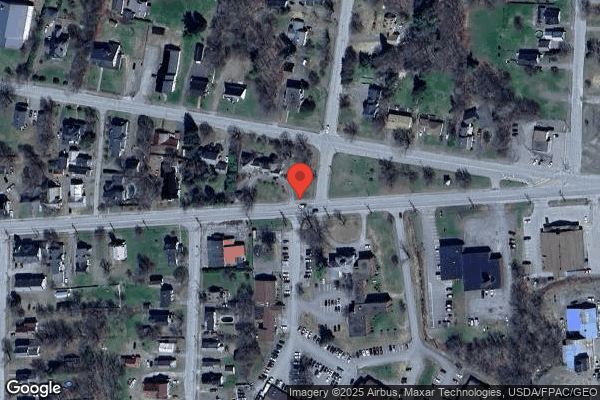
MADIGAN ESTATES

93 MILITARY STREET, HOULTON, ME 04730 (207) 532-6593
For profit - Corporation 99 Beds Independent Data: November 2025
Trust Grade
73/100
#5 of 77 in ME
Last Inspection: May 2025

Inspected within the last 6 months. Data reflects current conditions.

Overview

Madigan Estates in Houlton, Maine has a Trust Grade of B, which indicates it is a good choice but not without its issues. It ranks #5 out of 77 facilities in Maine, placing it in the top half, and #3 out of 7 in Aroostook County, so there are only two local options considered better. Unfortunately, the facility is experiencing a worsening trend, with reported issues increasing from 6 in 2024 to 13 in 2025. Staffing is a strength, boasting a 5-star rating with a turnover rate of 38%, which is lower than the state average, suggesting that staff are familiar with residents' needs. However, the facility has faced $11,450 in fines, which is average, and there have been notable incidents, such as a serious failure to properly assist a resident during a transfer, leading to a significant injury, and concerns about following prescribed diet orders, which could impact residents' health. Overall, while Madigan Estates has strong staffing and a solid trust grade, families should be aware of the recent increase in issues and specific incidents that may affect care quality.

Trust Score
B
73/100
In Maine
#5/77
Top 6%
Safety Record
Moderate
Needs review
Inspections
Getting Worse
6 → 13 violations
Staff Stability
○ Average
38% turnover. Near Maine's 48% average. Typical for the industry.
Penalties
✓ Good
$11,450 in fines. Lower than most Maine facilities. Relatively clean record.
Skilled Nurses
✓ Good
Each resident gets 53 minutes of Registered Nurse (RN) attention daily — more than average for Maine. RNs are trained to catch health problems early.
Violations
⚠ Watch
25 deficiencies on record. Higher than average. Multiple issues found across inspections.
★★★★★
5.0
Overall Rating
★★★★★
5.0
Staff Levels
★★☆☆☆
2.0
Care Quality
★★★★☆
4.0
Inspection Score
Stable
2024: 6 issues
2025: 13 issues

The Good

  • 5-Star Staffing Rating · Excellent nurse staffing levels
  • Full Sprinkler Coverage · Fire safety systems throughout facility
  • No fines on record
  • Staff turnover below average (38%)

    10 points below Maine average of 48%

Facility shows strength in staffing levels, fire safety.

The Bad

Staff Turnover: 38%

Near Maine avg (46%)

Typical for the industry

Federal Fines: $11,450

Below median ($33,413)

Minor penalties assessed

The Ugly 25 deficiencies on record

1 actual harm
May 2025 12 deficiencies
CONCERN (D)

Potential for Harm - no one hurt, but risky conditions existed

Deficiency F0605 (Tag F0605)

Could have caused harm · This affected 1 resident

**NOTE- TERMS IN BRACKETS HAVE BEEN EDITED TO PROTECT CONFIDENTIALITY** Based on record review and interview, the facility failed to ensure an as needed (prn) psychotropic medication met the required ...

Read full inspector narrative →
**NOTE- TERMS IN BRACKETS HAVE BEEN EDITED TO PROTECT CONFIDENTIALITY** Based on record review and interview, the facility failed to ensure an as needed (prn) psychotropic medication met the required 14-day limit for 1 of 5 Resident's reviewed for unnecessary medications (Resident #5 [R5]). Finding: On 5/20/25, during a review of R5's current Physician Orders, it showed that R5 was using the facility's Palliative care end of life order set. The order set included an order for Haldol (a psychotropic medication), with directions that if a resident is less than or equal to 60 kilograms (kg) or greater than [AGE] years of age to give Haldol 0.5 milligrams(mg) to 1 mg intramuscularly (IM) prn for agitation every hour until calm, then every 6 hours prn with no stop date. The medical record lacked evidence of clinical rational to continue the prn psychotropic medication with an extended time frame. Review of the electronic Treatment Administration Record (TAR) revealed that R5 received a prn Haldol dose of 1 mg on 4/16/25, and a prn Haldol dose of 1 mg on 4/18/25. On 4/19/25 the prn Haldol order was reentered with no stop date, the 14-day limit would be on 5/2/25. R5 required a Provider visit to reevaluate the use or need of the prn Haldol medication. Review of R5's clinical record and TAR revealed that after the date of 5/2/25, R5 received 17 doses of the prn Haldol at 1 mg IM after the 14-day limit. On 5/21/25 at 1:00 p.m., during an interview with the Nurse Manager/Supervisor, a surveyor confirmed that the clinical record lacked the required documentation or the rational for continuing the prn Haldol, and that the Provider had not evaluated R5 for the continued use of the prn Haldol. Review of R5's physician progress notes indicated that R5 was seen by the Provider on 5/20/25, but the use of the prn Haldol was not reviewed by the Provider.
CONCERN (D) 📢 Someone Reported This

A family member, employee, or ombudsman was alarmed enough to file a formal complaint

Potential for Harm - no one hurt, but risky conditions existed

Report Alleged Abuse (Tag F0609)

Could have caused harm · This affected 1 resident

Based on facility policy review and interviews, the facility failed to ensure an alleged allegation of physical and verbal abuse was reported to the Division of Licensing and Certification for 1 of 2 ...

Read full inspector narrative →
Based on facility policy review and interviews, the facility failed to ensure an alleged allegation of physical and verbal abuse was reported to the Division of Licensing and Certification for 1 of 2 residents reviewed (Resident #13 [R13]). Finding: A review of the facility's policy, Abuse Prevention Program: Policy Statement, states, 7. Investigate and report any allegations of abuse within timeframes as required by federal requirements. On 5/11/25, the Division of Licensing and Certification received from Adult Protective services an allegation of verbal and physical abuse toward R13 by Certified Nursing Assistant #2 (CNA2) who was witnessed raising his/her voice, in a derogatory manner and using profanity while working with R13. A review of a facility-provided written statement from Licensed Practical Nurse [LPN] states, .R13 was having a hard time catching his/her breath and that it felt like [CNA2] was trying to pull his/her catheter out of his/her [insertion site] and was being extremely rough with him/her. As I was walking in, I hear CNA2 say to R13, I'm not being mean you're just a [profanity] jerk. A review of a facility-provided letter, dated 5/13/25, addressed to [CNA2], from [Human Resource Manager] states that, This letter services as formal notice that your per diem status with [facility] is terminated effective immediately due to your use of unacceptable language with a resident and your decision to walk off your shift . and a review of DISCIPLINE notice, The following infractions will result in immediate discharge: . H. Abusive treatment toward a resident. I. Leaving duty station before relief arrives., and The following infractions will result in a written warning: H. Discourteous conducts toward any resident, visitor or employee. A review of a facility-provided email, dated 5/16/25 at 10:57 a.m., addressed to [Director of Nursing (DON)], from [CNA2] states that . all I simply said was you're a jerk nothing more . to R13. On 5/21/25 at 12:35 p.m., in an interview with the Director of Nursing (DON), a surveyor confirmed that staff reported an allegation of verbal and physical abuse of R13 by CNA2 to the DON, and the surveyor confirmed that the facility did not notify the Division of Licensing and Certification of the allegation of alleged physical and verbal abuse.
CONCERN (D) 📢 Someone Reported This

A family member, employee, or ombudsman was alarmed enough to file a formal complaint

Potential for Harm - no one hurt, but risky conditions existed

Investigate Abuse (Tag F0610)

Could have caused harm · This affected 1 resident

Based on facility policy review, record review, and interview, the facility failed to ensure an allegation of physical and verbal abuse was investigated for 1 of 2 complaints reviewed (Resident #13 [R...

Read full inspector narrative →
Based on facility policy review, record review, and interview, the facility failed to ensure an allegation of physical and verbal abuse was investigated for 1 of 2 complaints reviewed (Resident #13 [R13]). Finding: A review of the facility's policy, Abuse Prevention Program: Policy Statement, states, 7. Investigate and report any allegations of abuse within timeframes as required by federal requirements. On 5/11/25, the Division of Licensing and Certification received from Adult Protective services an allegation of verbal and physical abuse toward Resident #13 by Certified Nursing Assistant #2 (CNA2) who was witnessed raising his/her voice, in a derogatory manner and using profanity while working with R13. A review of a facility-provided written statement from Licensed Practical Nurse [LPN] states, .R13 was having a hard time catching his/her breath and that it felt like [CNA2] was trying to pull his/her catheter out of his/her [insertion site] and was being extremely rough with him/her. As I was walking in, I hear CNA2 say to R13, I'm not being mean you're just a [profanity] jerk. During the facility's recertification survey and this investigation, the facility was not able to provide evidence that this allegation of abuse was investigated. On 5/21/25 at 12:35 p.m., in an interview with the Director of Nursing (DON), a surveyor confirmed that the facility did not complete an abuse investigation for the allegation that was brought to their attention by facility staff of physical and verbal abuse of R13 by CNA2.
CONCERN (D)

Potential for Harm - no one hurt, but risky conditions existed

Assessment Accuracy (Tag F0641)

Could have caused harm · This affected 1 resident

**NOTE- TERMS IN BRACKETS HAVE BEEN EDITED TO PROTECT CONFIDENTIALITY** Based on record reviews and interview, the facility failed to ensure that the Minimum Data Set (MDS) 3.0 was coded accurately on...

Read full inspector narrative →
**NOTE- TERMS IN BRACKETS HAVE BEEN EDITED TO PROTECT CONFIDENTIALITY** Based on record reviews and interview, the facility failed to ensure that the Minimum Data Set (MDS) 3.0 was coded accurately on a Significant Change MDS assessment to indicate that a resident had a State Level II Preadmission Screening and Resident Review (PASRR) for 1 of 3 residents reviewed for PASRR (Resident #60 [R60]). Finding: On 5/19/25, R60's clinical record was reviewed and included a Level I PASRR, dated 4/2/24, that indicated that R60 needed a face to face review. On 5/21/25 at 10:09 a.m., the Director of Nursing (DON) provided a surveyor with R60's PASRR Level II, dated 4/15/24. Review of R60's Significant Change MDS, dated [DATE], was coded under Section: A1500 to indicate that R60 did not have a Level II PASRR. On 5/21/25 at 11:10 a.m., the surveyor confirmed with the DON that R60's Significant Change MDS 3.0, dated 12/11/24, was coded incorrectly under section A 1500 for the question, Is the resident currently considered by the state level II PASRR process to have serious mental illness and/or intellectual disability or a related condition as it was answered no.
CONCERN (D)

Potential for Harm - no one hurt, but risky conditions existed

Deficiency F0655 (Tag F0655)

Could have caused harm · This affected 1 resident

Based on clinical record review and interview, the facility failed to ensure a baseline care plan was developed and implemented within 48 hours, that included the instructions needed to provide minimu...

Read full inspector narrative →
Based on clinical record review and interview, the facility failed to ensure a baseline care plan was developed and implemented within 48 hours, that included the instructions needed to provide minimum healthcare information necessary to properly care for 1 of 5 newly admitted residents (Resident #26 [R26]). Finding: On 5/21/25, R26's clinical record was reviewed and indicated that R26 was admitted to the facility in April of 2025 with a Foley catheter in place. The baseline care plan lacked evidence for the use of a Foley catheter. On 5/21/25 at 1:32 p.m., during an interview with a surveyor, the Director of Nursing stated that she could not find the Foley catheter addressed in the baseline care plan. The surveyor confirmed this finding during this interview.
CONCERN (D)

Potential for Harm - no one hurt, but risky conditions existed

Deficiency F0657 (Tag F0657)

Could have caused harm · This affected 1 resident

Based on record reviews and interview, the facility failed to revise a care plan after a resident qualfied for Preadmission Screening and Resident Review (PASRR) Level II services for 1 of 3 residents...

Read full inspector narrative →
Based on record reviews and interview, the facility failed to revise a care plan after a resident qualfied for Preadmission Screening and Resident Review (PASRR) Level II services for 1 of 3 residents reviewed for PASRR (Resident #60 [R60]). Finding: On 5/19/25, R60's clinical record was reviewed. The surveyor noted that the PASRR, dated 4/2/24, stated to Refer for Level II face to face onsite but the surveyor was unable to locate this document. On 5/21/25 at 10:09 a.m., the Director of Nursing provided a surveyor with R60's PASRR Level II, dated 4/15/24. At 11:10 a.m., the surveyor confirmed with the DON that R60's care plan lacked evidence of a care area for the PASRR Level II services.
CONCERN (D)

Potential for Harm - no one hurt, but risky conditions existed

Quality of Care (Tag F0684)

Could have caused harm · This affected 1 resident

Based on record reviews, policy review, and interviews, the facility failed to follow a policy for completing neurological assessments after a fall for 1 of 2 sampled residents who had fallen and hit ...

Read full inspector narrative →
Based on record reviews, policy review, and interviews, the facility failed to follow a policy for completing neurological assessments after a fall for 1 of 2 sampled residents who had fallen and hit their head (Resident #66 [R66]). Finding: The facility's policy, Neurological Post-fall Assessment Protocol, undated, directed staff to assess the resident immediately after a fall. If a resident is believe to have hit his/her head, the Neurological Post-fall Assessment Protocol will be initiated which included assessing the blood pressure, pulse, respiratory rate, pupil assessment, level of consciousness, speech and motor response. The Neurological assessment will be performed as follows: -As soon as it is safe to do so following the incident - Every 15 minutes times (x) 1 hour (hr) - Every 30 minutes x 1 hr - Every 60 minutes x 2 hr - Once per 12 hr shift x 24 hrs - Continue x 72 hrs total if any changes from baseline are observed. On 5/20/25, R66's clinical record was reviewed and indicated the resident had a witnessed fall on 3/6/25 at 10:29 p.m., hitting his/her head on the edge of the bed. On 5/20/25 at 10:48 a.m., during an interview with a surveyor, the Assistant Director of Nursing (ADON) stated that neurological assessments are done on paper; she will look for them for this fall. At 11:07 a.m., during an interview with a surveyor, the ADON stated that R66 was sent to the hospital and had a negative Computed Tomography (CT) scan. At 11:12 a.m., during an interview with a surveyor with the Director of Nursing (DON) present, the ADON stated that R66 was sent to the hospital because they thought R66 was having stroke like symptoms. At this time, the Director of Nursing stated that if the Provider felt that neurological assessments were not needed, then an order should have been received to discontinue them. The surveyor confirmed that neurological assessments were not completed and there was no order to discontinue them for R66's fall on 3/6/25.
CONCERN (D)

Potential for Harm - no one hurt, but risky conditions existed

Incontinence Care (Tag F0690)

Could have caused harm · This affected 1 resident

Based on record reviews and interview, the facility failed to ensure the physician orders included an order for the use of a Foley catheter for 1 of 2 residents (Resident #26 [R26]). Finding: On 5/21/...

Read full inspector narrative →
Based on record reviews and interview, the facility failed to ensure the physician orders included an order for the use of a Foley catheter for 1 of 2 residents (Resident #26 [R26]). Finding: On 5/21/25, R26's clinical record was reviewed and indicated that R26 was admitted to the facility in April of 2025 with a Foley catheter in place. A review of the physician orders thru 5/7/25 lacked evidence of an order for the use of a Foley catheter, noting that the Foley catheter was removed on 5/8/25. On 5/21/25 at 1:32 p.m., during an interview with a surveyor, the Director of Nursing stated that she could not find an order for the use of a Foley catheter. The surveyor confirmed this finding during this interview.
CONCERN (D)

Potential for Harm - no one hurt, but risky conditions existed

Food Safety (Tag F0812)

Could have caused harm · This affected 1 resident

Based on observations and interviews, the facility failed to ensure that dented cans were removed from use, the facility failed to ensure products in the reach-in refrigerator located in the kitchens ...

Read full inspector narrative →
Based on observations and interviews, the facility failed to ensure that dented cans were removed from use, the facility failed to ensure products in the reach-in refrigerator located in the kitchens back room were labeled, in addition the facility failed to ensure all kitchen staff were wearing facial hair restraints on 1 of 4 days of survey (5/19/25) Findings: On 5/19/25 at 10:50 a.m., during the initial tour of the kitchen, a surveyor observed in the dry food storage area the following dented cans, on the shelf and available for use: 1 6.56 pounds (lbs.) of diced peaches with a dent on the top seal of the can 2 50-ounce (oz) cans of tomato soup with a dent on the top seal of the can 1 112 oz can of apple filling with a dent on the bottom seal of the can At 10:55 a.m., the surveyor observed that in the reach in cooler near the steam table, on the top shelf was a steamtable pan covered in plastic wrap that was not labeled or dated. At 11:00 a.m., the surveyor observed the reach in cooler that was in the back storage room/break room area that had 4 trays each with dishes of food that were out of their original containers. The trays had a paper towel indicating what meal the trays were to be used for 5/19 supper, breakfast 5/20, lunch 5/20 and dinner 5/20 but were not labeled with what was in the individual dishes. On 5/19/25 at 11:05 a.m. the surveyor confirmed the above findings with the Food Service Director (FSD) At 11:08 a.m., the surveyor observed the cook and another staff member who had facial hair that was not restrained while in the food preparation area. This finding was confirmed at the time of the observation.
CONCERN (D)

Potential for Harm - no one hurt, but risky conditions existed

Medical Records (Tag F0842)

Could have caused harm · This affected 1 resident

Based on record reviews and interview, the facility failed to ensure that a resident's record contained the Power of Attorney paperwork for 1 of 6 residents reviewed for Advance Directives (Resident #...

Read full inspector narrative →
Based on record reviews and interview, the facility failed to ensure that a resident's record contained the Power of Attorney paperwork for 1 of 6 residents reviewed for Advance Directives (Resident #60 [R60]). Finding: On 5/20/25, R60's clinical record was reviewed and indicated on the profile section of the electronic record that R60 had a Power of Attorney (POA) but the surveyor was unable to locate this document. On 5/21/25 at 11:10 a.m., during an interview with a surveyor, the Director of Nursing stated they did not have a copy of R60's POA paperwork on file. The surveyor confirmed this finding during this interview.
CONCERN (D)

Potential for Harm - no one hurt, but risky conditions existed

Infection Control (Tag F0880)

Could have caused harm · This affected 1 resident

Based on observation, interview, and record review the facility failed to maintain an Infection Control Program designed to help prevent the development and spread of infection related to Enhanced Bar...

Read full inspector narrative →
Based on observation, interview, and record review the facility failed to maintain an Infection Control Program designed to help prevent the development and spread of infection related to Enhanced Barrier Precautions (EBP) for 1 of 2 sampled residents reviewed on EBP (Resident #42 [R42]). Finding: A review of the sign posted on R42's room indicated the following: staff were required to wear personal protective equipment (PPE), a gown, and gloves when providing care. Review of facility policy Enhanced Barrier Precautions, . 3. Contact precautions apply when: . b. A resident is NOT known to be infected or colonized with any MDRO [multi-drug-resistant organisms], has . indwelling medical device ., . indicates that EBP are required for any residents with an indwelling catheter . 8. Examples of high-contact resident care activities requiring the use of gown and gloves for EBPs include: . h. prolonged, high-contact with items in the resident's room, resident's equipment, or with resident's clothing or skin. On 5/20/25 at 11:13 a.m., a surveyor observed CNA3 sitting on R42's bed, not wearing a gown, or gloves. Review of the Electronic Medical Record (EMR) for R42 revealed that he/she is on EBP due to a catheter. On 5/20/25 at 11:16 a.m., in an interview with CNA3, a surveyor confirmed that he was sitting on R42's bed with no PPE for a resident that is on EBPs. On 5/22/25 at 8:17 a.m., in an interview with a surveyor, Registered Nurse (RN) stated that R42 is on EBPs because of a catheter. RN states that she observed CNA3 sitting on R42's bed without gown, or gloves on 5/20/25, and she stated after the observation she asked CNA3 if the linens had been cleaned or if the floor aid changed the bed prior to him sitting on R42's bed. He did not know. RN spoke with CNA3 about using PPE's if completing high contact care or sitting on a bed of a resident that is on EBPs. RN said to the surveyor that CNA3 is aware that R42 is on EBP and what PPE he should have been wearing.
CONCERN (D)

Potential for Harm - no one hurt, but risky conditions existed

Deficiency F0947 (Tag F0947)

Could have caused harm · This affected 1 resident

Based on Certified Nursing Assistant (CNA) employee education record review and interview, the facility failed to implement and maintain an effective training program to ensure that a CNA attended the...

Read full inspector narrative →
Based on Certified Nursing Assistant (CNA) employee education record review and interview, the facility failed to implement and maintain an effective training program to ensure that a CNA attended the required 12 hours of annual in-service education training, and annual dementia training for 1 of 4 randomly selected CNAs reviewed on survey (CNA #1 [CNA1]). Finding: On 5/22/25, review of CNA1's employee record indicated the date of hire to be 8/16/21. The education file lacked evidence of annual education in the areas of dementia training, resident rights, infection control, and/or the 12 required hours for continuing education annually. On 5/22/25 at 12:45 p.m., during an interview with a surveyor and the Payroll and Resident Accounts Manager, the employee education record was reviewed. At this time the surveyor confirmed that CNA1 had not completed the required 12 hours of annual in-service education.
Jan 2025 1 deficiency
CONCERN (D) 📢 Someone Reported This

A family member, employee, or ombudsman was alarmed enough to file a formal complaint

Potential for Harm - no one hurt, but risky conditions existed

Free from Abuse/Neglect (Tag F0600)

Could have caused harm · This affected 1 resident

**NOTE- TERMS IN BRACKETS HAVE BEEN EDITED TO PROTECT CONFIDENTIALITY** Based on record reviews, and interviews, the facility failed to ensure a resident was free from abuse for 1 of 1 residents revie...

Read full inspector narrative →
**NOTE- TERMS IN BRACKETS HAVE BEEN EDITED TO PROTECT CONFIDENTIALITY** Based on record reviews, and interviews, the facility failed to ensure a resident was free from abuse for 1 of 1 residents reviewed for abuse (Resident #1 [R1]). Findings: On 1/22/25, a review of R1's clinical record indicated the following: R1 was admitted on [DATE] with diagnoses including mild dementia without behavioral disturbances and reduced mobility. On 10/23/24, R1 had a Brief Interview for Mental Status which indicated intact cognition. On 1/11/25 nurse notes indicate noises were heard coming from R1's room. Resident stated that [CNA1] threw resident against the wall. [CNA1] was irritable and confused at the time of the incident . Assessed for injuries . Large skin tear noted to left forearm about four inches long and two inches wide. The Monitor for Behavioral Symptoms indicated the resident has not exhibited aggressive behaviors before or after this incident. On 1/22/25, a review of facility records indicated the following: According to the facility's Reportable Incident forms, R1 stated to the Supervisor on 1/11/25 at 2:20 a.m., that CNA1 threw him into a wall resulting in a skin tear measuring 4 inches long by 2 inches wide. During the investigation the supervisor stated she heard banging and when she arrived to the room CNA1 left the scene frustrated and stated [CNA1] seems to be easily frustrated by residents. Review of CNA1's employee file revealed documents written by CNA1 expressing animosity towards residents and the facility. Following a previous allegation of abuse, CNA1 was placed on an Employee Assistance Program to help with stress management and had frequent evaluations that consistently indicated goals to improve upon attitude towards residents and facility. The facility terminated CNA1 as a result of the accumulation of these concerns. On 1/22/25 at 10:35 am, during an interview with a surveyor, R1 stated after assisting with incontinence care in the bathroom, CNA1 had not pulled up this brief and pants all the way. R1 stated he kept asking and telling CNA1 to pull them up, but CNA1 insisted R1 pull up their own brief. R1 stated he/she would not let go of the walker for fear of falling. R1 stated CNA1 threw a tantrum and grabbed me and threw me into the wall. R1 stated he/she pushed back and CNA1 ran out of the bathroom. R1 repeatedly expressed fear of his family finding out and about CNA1 being assigned to care for R1 in the future. On finding out CNA1 no longer worked for the facility, R1 appeared physically and psychologically relieved, and asked really, he's gone for good? multiple times for confirmation. On 1/22/25 at 11:45 a.m., in an interview with a surveyor, the Unit Manager (UM) stated she interviewed R1 on 1/13/25. At that time R1's recollection of events was consistent with his statements to the Supervisor on 1/11/25 and to the surveyor on 1/22/25. On 1/23/25 at 9:11 a.m., during an interview with a surveyor, CNA1 indicated they argued over R1's brief as CNA1 insisted it was clean and R1 insisted it was dirty. CNA1 stated when he pulled up R1's pants, R1 started to yell out and swung his arm back knocking CNA1 into the wall. CNA1 stated he noticed the skin tear, left the bathroom and went to the Supervisor to explain what happened, told her about the skin tear, and stated I'm gonna remove myself from the situation I haven't had a break yet I'm going to go take my break. CNA1 stated, I just walked back and forth just you know trying to relax any chaos that's going on like in my head and worried about everything going on I did a couple little breathing exercises that I know and went and sat down for 1/2 hour. On 1/24/25 at 11:00 a.m., during an interview with surveyor, CNA2 stated prior to the incident CNA1 had filed a request to not be on the same unit as another resident was too demanding. CNA2 stated he/she recently assisted R1 to the bathroom to urinate, and R1 requested assistance with aiming as he/she did not want to let go of the walker. CNA2 stated the bathrooms are small and if a CNA is squatting to assist with pulling up a brief the distance to fall back to the wall would only be about a foot. CNA2 also stated, on the night of the incident, CNA1 claimed R1 had lost his/her balance resulting in a skin tear. On 1/25/25 at 2:00 p.m., during an interview with the surveyor, the Supervisor stated she heard arguing and heard a bunch of banging, so she went running to investigate. CNA1 came out frustrated and left. At that time R1 stated CNA1 pushed him/her into the wall. The Supervisor stated CNA1 did not stop to talk to her and I didn't want to make him more mad or I didn't want to frustrate him more so I just let him you know de-escalate himself too. The supervisor stated R1 didn't take long to de-escalate and settled quickly after the incident. The supervisor stated the note indicating CNA1 was confused at the time was because he was unsure of what happened and did not know how the skin tear occurred. The Supervisor stated, after providing wound care and settling R1 down, she texted CNA1 to check on him. CNA1's text response identified R1 in a derogatory manner and expressed animosity toward him. On 1/31/25 at 10:55 a.m., during an interview with the Director of Nursing, a surveyor confirmed that after reviewing all the evidence associated with this incident, abuse was substantiated.
Mar 2024 6 deficiencies
CONCERN (D)

Potential for Harm - no one hurt, but risky conditions existed

PASARR Coordination (Tag F0644)

Could have caused harm · This affected 1 resident

**NOTE- TERMS IN BRACKETS HAVE BEEN EDITED TO PROTECT CONFIDENTIALITY** Based on record review and interview, the facility failed to ensure that the State Mental Health authority for Pre-admission Scr...

Read full inspector narrative →
**NOTE- TERMS IN BRACKETS HAVE BEEN EDITED TO PROTECT CONFIDENTIALITY** Based on record review and interview, the facility failed to ensure that the State Mental Health authority for Pre-admission Screening and Resident Review (PASRR) was notified of a newly added mental health disorder diagnosis to determine from a PASRR Level I screen if a change in level of service is required for 1 of 3 sampled residents reviewed for PASRR (Resident #74 [R74]). Finding: On 3/21/24, R74's clinical record was reviewed. Documentation indicated that R74 was admitted on [DATE] with a PASRR Level I screening that did not include the diagnosis of bipolar disorder. A review of the the resident information sheet dated 12/22/23, indicated the resident had a diagnosis of bipolar disorder, unspecified added to his/her diagnoses list 9/13/22. There was no evidence in R74's clinical record that the State Mental Health authority for PASRR was notified of this newly added diagnosis. On 3/21/24 at 10:28 a.m., in an interview with a surveyor, the Licensed Social Worker confirmed that the diagnosis was missed and the State Mental Health authority for PASRR was not notified.
CONCERN (D)

Potential for Harm - no one hurt, but risky conditions existed

Food Safety (Tag F0812)

Could have caused harm · This affected 1 resident

Based on observations and interview facility failed to enure that food products were dated and labeled, and failed to ensure dented cans were taken out of circulation for use on 2 of 4 days of survey ...

Read full inspector narrative →
Based on observations and interview facility failed to enure that food products were dated and labeled, and failed to ensure dented cans were taken out of circulation for use on 2 of 4 days of survey (3/18/24; 3/21/24). Findings: 1. On 3/18/24 at 10:00 a.m., a surveyor observed the following available for use on the shelves in dry storage: 2- 6 pounds 12 ounces (oz) cans of tapioca pudding; both cans were dented on the bottom seal. 1- open package of Roast Pork Gravy mix (11.3oz), undated. 1- open package of Imperial Cream Soup Base (28oz), undated. On 3/18/24 at 10:15 a.m., in an interview, a surveyor observed and confirmed these findings with the Dietary Supervisor. 2. On 3/21/24 at 9:30 a.m., a surveyor observed the following: 1- bag of crinkle cut fries, open and undated, in the walk-in freezer. 1- package of unidentified meat, open, unlabeled, and undated in walk-in refrigerator. 1- open head of lettuce, undated and open to environment, in the walk-in refrigerator. On 3/21/24 at 9:30a.m., in an interview, the surveyor observed and confirmed the above findings with [NAME] #1.
CONCERN (E)

Potential for Harm - no one hurt, but risky conditions existed

Quality of Care (Tag F0684)

Could have caused harm · This affected multiple residents

Based on interviews, record review, and observation, the facility failed to ensure that a physician order for a mechanical soft diet was followed for 1 of 3 residents reviewed for nutrition (Resident ...

Read full inspector narrative →
Based on interviews, record review, and observation, the facility failed to ensure that a physician order for a mechanical soft diet was followed for 1 of 3 residents reviewed for nutrition (Resident #5 [R5]). Findings: On 3/18/24 at 10:34 a.m., in an interview with the surveyor, R5 stated, The food is good most of the time, but I have a hard time chewing it. On 3/19/24 at 8:24 a.m., review of R5's clinical record indicated the physician's diet order initiated on 4/26/23 was mechanical soft diet texture for trouble chewing, poor dentition. The care plan was updated on 4/27/23 to include a diet of Regular Diet, Mechanical Soft. Cottage Cheese with all meals, for nutritional problem or potential nutritional problem [related to] Diabetes, chronic illness, ., failure to thrive, weight loss. On 3/19/24 at 11:55 a.m., the surveyor observed a CNA serve R5 a lunch consisting of a pork chop, a half of a baked potato with skin on, squash and pudding for dessert. The diet order displayed on the tray card read consistency/regular. The resident requested it be replaced with a tuna sandwich. On 3/19/24 at 12:01 p.m., in an interview, a surveyor confirmed with Registered Nurse #1 that the diet order on the tray for R5 did not match the physician orders, and the physician's diet order for R5 was not followed. On 03/21/24 at 9:15 a.m., in an interview with a surveyor, Cook#1 stated he/she does not know the residents personally but knows their order by name, unless it is a new resident, or the order has changed recently. Cook#1 stated [R5] has a regular diet, regular consistency, and has been for the past year. On 3/21/24 at 11:05 a.m., in an interview with a surveyor and the Dietary Supervisor, [NAME] #2 stated R5 was on a regular consistency diet for a while. On 3/21/24 at 11:10 a.m., in an interview with the surveyor, the Dietary Supervisor stated the diet orders for the trays are made by a staff member not in the kitchen. If a resident's diet order changes over the weekend it could be two days before the diet changes. The surveyor confirmed with the Dietary Supervisor that R5's diet order was not followed.
CONCERN (E)

Potential for Harm - no one hurt, but risky conditions existed

Respiratory Care (Tag F0695)

Could have caused harm · This affected multiple residents

**NOTE- TERMS IN BRACKETS HAVE BEEN EDITED TO PROTECT CONFIDENTIALITY** Based on observations and interviews the facility failed to ensure respiratory care equipment was hooked up properly for 1 of 1 ...

Read full inspector narrative →
**NOTE- TERMS IN BRACKETS HAVE BEEN EDITED TO PROTECT CONFIDENTIALITY** Based on observations and interviews the facility failed to ensure respiratory care equipment was hooked up properly for 1 of 1 resident reviewed for respiratory care (Resident #143 [R143]) Finding: R143 was admitted on [DATE] with diagnosis of hypoxic and hypercapnic respiratory failure secondary to cor pulmonale, sleep apnea and Chronic Obstructive Pulmonary Disease On 3/18/24 at 1:41 p.m. during resident interview and observation. The surveyor observed R143 was on oxygen at 2 liters/minute via nasal canula (NC), there was a humidification bottle that was not attached to the NC tubing. R143 NC was hooked up directly to the oxygen concentrator at 2 liters/minute. The clear tubing on top of the humidification bottle was sticking straight up in the air. On 3/19/24 at 7:30 a.m. an observation by a surveyor of R143 was that he/she was sitting in his/her recliner chair with the trilogy breathing apparatus on using a full mask. The oxygen concentrator was set on 2 liters, the oxygen tubing was attached to the humidifier bottle and the humidifier bottle was not attached to the concentrator. At 7:33 a.m. a second surveyor observed the set-up of R143's trilogy and oxygen concentrator and that the oxygen tubing was not attached correctly. At 7:36 a.m. the charge nurse RN#2 was asked to come review set up, she stated she replaced the humidification (water) bottle yesterday and the clear tube was already sticking straight up so she thought that was how it was supposed to be. The Minimum Data Set (MDS) nurse came into the room, RN#2 showed the MDS nurse how it was hooked up and the MDS nurse acknowledged that the clear tubing of the water bottle needed to be attached to the concentrator. On 3/19/24 at 7:36 a.m. the surveyor confirmed the respiratory equipment was not hooked up properly with RN#2 and the MDS nurse.
CONCERN (E)

Potential for Harm - no one hurt, but risky conditions existed

Deficiency F0761 (Tag F0761)

Could have caused harm · This affected multiple residents

**NOTE- TERMS IN BRACKETS HAVE BEEN EDITED TO PROTECT CONFIDENTIALITY** Based on observations and interviews, the facility failed to ensure expired medications and topicals were removed from the suppl...

Read full inspector narrative →
**NOTE- TERMS IN BRACKETS HAVE BEEN EDITED TO PROTECT CONFIDENTIALITY** Based on observations and interviews, the facility failed to ensure expired medications and topicals were removed from the supply available for use in 2 of 2 treatment carts (#1 and #2), 1 of 1 medication carts (#2) and 2 of 2 medication storage rooms (#1 and #2) reviewed. In addition, the facility failed monitor temperatures in a medication refrigerator that insulin was stored in for 1 of 2 medication storage rooms (#1). Findings: 1. Treatment Cart #1 On 3/20/24 at 1:20 p.m., a surveyor and Registered Nurse (RN)2 observed a tube of Medihoney Gel (used for wounds) with an expiration date of 2/1/24, a tube of Hydrophilic wound dressing with an expiration date of 1/24, and a tube of Aquaphor healing ointment with an expiration date of 11/22. 2. Treatment Cart #2 On 3/20/24 at 12:17 p.m., a surveyor and Licensed Practical Nurse observed a tube of Medihoney Gel with an expiration date of 2/1/24 and BioFreeze pain roll on with an expiration date of 2/23. 3. Medication Cart #2 On 3/20/24 at 10:25 a.m., a surveyor and Certified Nursing Assistant-Medication observed a tube of Benadryl Gel with an expiration date of 7/23. 4. Medication Storage room [ROOM NUMBER] On 3/20/24 at 1:30 p.m., a surveyor and RN 2 observed in the cabinet, a bottle of Echinacea with an expiration date of 12/23 and in the medication refrigerator, a box of Bisacodyl suppositories with an expiration date of 11/22 and a box of Preparation H suppositories with an expiration date of 9/23. 5. Medication Storage room [ROOM NUMBER] On 3/20/24 at 12:25 p.m., a surveyor and Licensed Practical Nurse observed 2 vials of Procrit (used to treat anemia) with an expiration date of 11/23. These findings were confirmed by the surveyor at the time of the observations. 6. Medication Refrigerator - Medication Storage room [ROOM NUMBER] On 3/20/24 at 2:00 p.m., a surveyor and RN2 were unable to find the temperature log sheet for the medication refrigerator that insulin was stored in. On 3/20/24 at 2:38 p.m., during an interview with a surveyor, the Director of Nursing stated she was unable to find the temperature log sheet. On 3/20/24 at 3:15 p.m., during an interview with a surveyor, the DON stated that they were not able to find any temp sheets and when she asked a staff member if they were writing down the temps, they said that there wasn't a new sheet so it hasn't been documented. On 3/21/24 at 8:15 a.m., during an interview with a surveyor, the DON stated that after speaking with staff, they did have a temperature log but it was soiled and destroyed, so it was thrown away.
CONCERN (E)

Potential for Harm - no one hurt, but risky conditions existed

Medical Records (Tag F0842)

Could have caused harm · This affected multiple residents

Based on record reviews and interview, the facility failed to ensure that clinical records were complete and contained accurate information for 2 of 20 residents reviewed for catheter use and for medi...

Read full inspector narrative →
Based on record reviews and interview, the facility failed to ensure that clinical records were complete and contained accurate information for 2 of 20 residents reviewed for catheter use and for medication and treatment administration (Resident #144 and #83 [R144, R83]). Findings: A review of R144's clinical record, a nursing noted dated 3/17/24 at 9:55 p.m. for communication - with Physician that addresses R144 removing their foley catheter with balloon intact, this was the second time R144 had removed the foley. Recommendations from the provider was for a bladder scan at 2:00 a.m. Nursing note dated 3/18/24 at 3:37 a.m. of communication with physician with recommendations to hold catheter until morning care or scan shows above 400 cubic centimeters (cc) On 3/19/24 Review of R144's clinical record lacks evidence of the verbal order being written and entered into R144s physician orders. On 3/19/24 during an interview with the Director of Nursing (DON) the surveyor confirmed there was no written order for the discontinuation of the foley or the bladder scan to be completed with morning care. On 3/19/24 at 10:51 a.m. a nursing note was written that a provider ordered 40 milliequivalent (mEq) of potassium by mouth once at 8:45 a.m. then ordered another dose of 40 mEq to be given 4 hours later at 12:45 p.m. and a potassium level to be drawn at 4:00 p.m. On 3/21/24 at 12:00 p.m. during record review R144s clinical record lacked evidence of a verbal order being written for the use of potassium supplement to address a critical potassium lab level. On 3/21/24 at 12:05 P.M. during an interview with the DON the surveyor confirmed that there was no written order for the use of the potassium supplement. On 3/21/24 during a record review for R83 it was noted that he/she had an order for insulin Glargine 20 units subcutaneous every am. R83 has not received any insulin since 2/12/24. The clinical record lacks evidence of a physician order being obtained to discontinue the insulin order. On 2/21/24 at 10:00 a.m. during an interview and record review with the DON and Assistant DON the clinical record lacked evidence of an order being written to discontinue the use. The clinical record had a nursing note dated 2/12/24 at 10:46 showing documentation that the nurse practitioner was made aware and the nurse received a new order to discontinue fingerstick and insulin. There was no evidence of this order being written. On 2/21/24 at 10:00 a.m The surveyor confirmed the above finding at this time.
Nov 2023 2 deficiencies 1 Harm
SERIOUS (G) 📢 Someone Reported This

A family member, employee, or ombudsman was alarmed enough to file a formal complaint

Actual Harm - a resident was hurt due to facility failures

Accident Prevention (Tag F0689)

A resident was harmed · This affected 1 resident

**NOTE- TERMS IN BRACKETS HAVE BEEN EDITED TO PROTECT CONFIDENTIALITY** Based on facility reported incident review, facility investigation, record review, and interviews, the facility failed to ensure...

Read full inspector narrative →
**NOTE- TERMS IN BRACKETS HAVE BEEN EDITED TO PROTECT CONFIDENTIALITY** Based on facility reported incident review, facility investigation, record review, and interviews, the facility failed to ensure that a resident received the proper level of assistance during a transfer when a Certified Nursing Assistant (CNA) did not review how the resident transferred and used a single assist bear hug method, when the resident was a two person Hoyer Mechanical Lift for 1 of 1 incidents received (10/26/23). The failure to transfer the resident via Hoyer Lift resulted in Resident #2 [R2] requiring transfer to an acute care hospital, sustaining a non-displaced fracture proximal to the right tibia, experiencing pain and anxiety after the injury occurred. On 11/14/23, the facility reported incident (FRI) and facility investigation sent to the Division of Licensing and Certification (State Agency) were reviewed. The FRI indicated that on 10/26/23 at 8:00 a.m., CNA #2 attempted to transfer Resident # [R]2 from the bed to a chair. R2 is ordered to transfer via Hoyer (Mechanical) Lift. CNA #2 did a bear hug, stood R2 to his/her feet and heard a crack. R2 complained of right knee pain. The facility investigation, dated 10/30/23, indicated that CNA #2 reported to the Supervisor immediately and the Medical Provider and nurse went to assess R2 who was sent to the hospital for treatment. At the hospital, an X-ray was completed with a result of a non-displaced fracture proximal to the right tibia metaphysis and R2 returned to the facility with a leg immobilizer and orders for pain management. On 11/14/23, R2's clinical record was reviewed and included the following: On 10/26/23 at 2:59 p.m., a nurses note written by Registered Nurse (RN) #2 indicated that R2 was medicated with Tramadol for pain when he/she returned to the floor (unit). On 10/26/23 at 6:27 p.m., a nurses note written by RN #2 indicated that he had discussed with provider about pain control with concern PRN (as needed) Tramadol may not be enough and an order for scheduled Tramadol three times a day and keeping the PRN for breakthrough pain. On 10/26/23, a physician order was written for Tramadol 25 milligrams (mg) three times a day, resident to be non-weight bearing, and to wear and secure the knee immobilizer at all times. On 10/27/23 at 9:42 p.m., the resident was medicated for with Ativan for anxiety and Tramadol for pain. On 10/27/23 at 5:11 a.m., a nurse's note written by RN #3 indicated R2 had been awake all shift and was medicated for pain and anxiety when incontinence care was done at approximately 2:00 a.m. R2 remained awake rest of night fidgeting with knee immobilizer and staff continued to remind him/her of injury to leg. There were no signs of pain without movement and minimal to moderate with movement but subsided when done; R2 was premedicated with little effect. Dark purple bruising to most of right leg noted and large fluid filled blister seen on shin, but RN #3 was unable to view all of the area due to immobilizer. RN #3 ensured straps were not too tight as there was swelling noted to leg/knee area and was unsure of how occurred or just from injury itself. Will continue to comfort resident and monitor for pain and anxiety. On 10/27/23, order to ice the right leg every 2 hours for swelling was added and discontinued on 11/6/23. R2's physician orders indicated the resident had an order for Ativan scheduled once a day and a PRN order that could be given every 4 hours. A review of R2's Medication Administration Record (MAR) indicated that R2 received PRN Ativan for the month of October 2 times prior to the incident and 7 times from 10/26/23 thru 10/31/23. A review of November's MAR indicated that R2 had received PRN Ativan thru 11/14/23, 15 times. R2's physician orders indicated the resident already had a PRN order for Tramadol every 4 hours as needed in addition to the new order for the scheduled Tramadol 3 times a day. For the month of October, the PRN Tramadol was used 3 times prior to the incident and 10 times after the incident (in addition to the scheduled Tramadol that was ordered on 10/26/23). A review of November's MAR indicated that R2 had received PRN Tramadol thru 11/14/23, 13 times in addition to the scheduled Tramadol. On 11/14/23 at 3:33 p.m., during an interview with a surveyor, CNA #2 stated that she usually worked on a different wing than Spruce (which is where R2 resided). She wanted to get R2 up for breakfast and looked around for R2's CNA. She stated she didn't know about the [NAME], that she wasn't trained specifically on it and couldn't find a CNA or nurse. CNA #2 stated, I helped the patient up, he/she sat fine at the edge of the bed, so I continued to 1 assist transfer. She further stated that R2 had a leg between her legs and one of her legs was between R2's legs. When I started, I heard a crack and immediately put R2 down. The surveyor asked CNA #2 before this incident occurred, how did you know how a resident transferred and CNA #2 replied, I didn't know about the [NAME]. I wasn't specifically trained. The only training I had with the system was with another CNA. On 11/15/23 at 2:10 p.m., during an interview with a surveyor, the Director of Nursing (DON) stated that a copy of the paper [NAME] that was printed and available at the nurses' station was kept in a binder labeled Spruce [NAME]. Each unit has a binder with printed versions of the online [NAME] and that there are also cheat sheets the Unit Manager created to help communicate needs of the resident. The DON further stated that staff are provided username and passwords within their first few shifts as a CNA. They were shown the electronic charting system (Point Click Care) via peer-to-peer review where they access the system and were given an overview of how to navigate the documentation. A review of the electronic [NAME], printed on 5/23/23, indicated that R2 transferred by Mechanical Lift Hoyer with 2 staff assistance; a review of the paper cheat sheet, last updated 10/3/23, that the CNAs used for residents that resided on Spruce indicated that R2 was transferred with full lift with 2 persons assist. On 11/14/23, a review of the current care plan, included under the Focus of Activities of Daily Living (ADL) Self-care performance, indicated that the resident required Mechanical Lift Hoyer with 2 staff assistance for transfers which was initiated on 8/26/22. CNA #2 was hired on 4/20/23 as a CNA. Highlighted in the duties of a CNA included, Review care plans daily to determine if changes in the resident's daily care routine have been made on the care plan. CNA #2 signed this job description on 4/20/23. As a result of this isolated incident, the following corrective actions were initiated: - On 10/26/23, CNA #2 immediately notified her supervisor that she heard a crack during the transfer. The Medical Provider was in the building and assessed the resident who was sent to the hospital by ambulance for treatment. - On 10/26/23, education was provided to CNA #2 on the importance of following the [NAME] at all times, reviewed how to access online, and need to review before each shift. - Between 10/31/23 thru 11/3/23, trainings were provided to staff regarding [NAME] review, documentation, and report.
MINOR (B) 📢 Someone Reported This

A family member, employee, or ombudsman was alarmed enough to file a formal complaint

Minor Issue - procedural, no safety impact

Abuse Prevention Policies (Tag F0607)

Minor procedural issue · This affected multiple residents

Based on facility policy review, the facility reportable incident report, investigation review, employee timecard review, and interview, the facility failed to protect residents from further abuse by ...

Read full inspector narrative →
Based on facility policy review, the facility reportable incident report, investigation review, employee timecard review, and interview, the facility failed to protect residents from further abuse by allowing the alleged perpetrator to work 2 of 2 scheduled shifts (7/4/23 and 7/5/23), prior to investigation completion. Finding: The facility's Abuse, Neglect, Exploitation or Misappropriation - Reporting and Investigating policy, revised September 2022, indicated the following: Under Investigation Allegations, the policy indicated Any employee who has been accused of resident abuse is placed on leave with no resident contact until the investigation is complete. On 11/14/23, a surveyor reviewed the initial report dated 7/03/23; the family of Resident [R]1 was concerned because R1 claimed a staff member had hit him/her and caused skin tears to both hands which were found the early morning of 6/29/23. On 7/03/23, the facility faxed to the state agency an allegation of abuse, which identified Certified Nurse Assistant [CNA]1 as the accused staff member. On 7/06/23, the facility faxed in a 5 day follow up report regarding this incident. A review of CNA1's timecard indicated CNA1 clocked in on July 4th at 9:57 p.m. and worked until July 5th at 7:21 a.m.; CNA1 clocked in again on July 5th at 9:58 p.m. and worked until 6:36 a.m. July 6th. On 11/14/23, at 2:51 p.m., during an interview with the Director of Nursing [DON], the surveyor asked, why was CNA1 allowed to work before the investigation was completed? DON stated the facility felt that it was not a valid allegation and it's hard to take a great CNA off the floor when they have no complaints about the care he provides. The surveyor confirmed that CNA1 was allowed to work providing resident care before the investigation was completed.
May 2023 4 deficiencies
CONCERN (D)

Potential for Harm - no one hurt, but risky conditions existed

Infection Control (Tag F0880)

Could have caused harm · This affected 1 resident

Based on observation and interview, the facility failed to ensure that staff washed/sanitized their hands during a medication pass observation for 1 of 3 medication pass observations. Finding: On 5/2...

Read full inspector narrative →
Based on observation and interview, the facility failed to ensure that staff washed/sanitized their hands during a medication pass observation for 1 of 3 medication pass observations. Finding: On 5/22/23 at 9:22 a.m., a surveyor observed Licensed Practical Nurse (LPN) #1 prepare and pass medication to Resident #59. The surveyor observed that LPN #1 did not wash or sanitize her hands after this medication pass. At 9:33 a.m., the surveyor observed LPN #1 prepare and pass medication to Resident #24. At 9:36 a.m., LPN #1 was observed using hand sanitizer prior to preparing medication for the next resident. The surveyor asked LPN #1 if she had washed her hands or used hand sanitizer after the previous medication pass; LPN #1 stated she had not and that she had forgotten.
CONCERN (E)

Potential for Harm - no one hurt, but risky conditions existed

Quality of Care (Tag F0684)

Could have caused harm · This affected multiple residents

Based on observation, record review, and interviews, the facility failed to ensure that physician orders were followed for 1 of 3 residents observed during a medication pass (Resident #4). Finding: On...

Read full inspector narrative →
Based on observation, record review, and interviews, the facility failed to ensure that physician orders were followed for 1 of 3 residents observed during a medication pass (Resident #4). Finding: On 5/22/23 at 10:00 a.m., during a medication observation pass with Certified Nursing Assistant - Medication (CNA-M) #1, the surveyor observed the application of a Lidocaine pain patch to Resident #4. CNA-M #1 went to apply the patch to the left side of chest as directed but the patch from the previous day was still in place; CNA-M #1 removed the old patch and applied a new one. The surveyor confirmed with CNA-M #1 that the old patch had not been removed after this medication pass was completed. A review of Resident #4's physician orders included an order added 5/9/23 for a Lidocaine patch with directions to apply topically to left side of chest once daily in the morning and remove in the evening. A review of Resident #4's clinical record included the following entries written by CNA-M #1: 5/22/23 10:00 a.m. - previous day patch still on; 5/10/23 10:08 a.m. - previous day patch still on; and 5/9/23 9:55 a.m. - patch dated yesterday still on. On 5/23/23 at 10:53 a.m., the Director of Nursing (DON) and a surveyor reviewed Resident #4's clinical record. The surveyor confirmed that there were 3 different CNA-M that documented that they had removed the evening patch when they had not.
CONCERN (E)

Potential for Harm - no one hurt, but risky conditions existed

Food Safety (Tag F0812)

Could have caused harm · This affected multiple residents

Based on observations and interviews, the facility failed to ensure foods in the freezer remained frozen solid for 1 of 1 observation and with review of the walk-in freezer temperature log sheets for ...

Read full inspector narrative →
Based on observations and interviews, the facility failed to ensure foods in the freezer remained frozen solid for 1 of 1 observation and with review of the walk-in freezer temperature log sheets for the past 6 months. (5/22/23) Findings: On 5/22/23 at 9:05 a.m., during a tour of the kitchen, a surveyor observed the temperature in the walk-in freezer was above 0 degrees F and the food in the freezer was not frozen solid. Upon touching the packaged food to determine the degree of the food being frozen the surveyor observed the following foods in a thawed state and soft to touch: 1. An opened bag of crinkle cut French fries was thawed, soft to the touch and did not have a date or label on the bag. 2. A bag of meat identified by the Food Service Director (FSD) as breaded chicken patties, was thawed and soft to the touch and were not labeled. 3. An unopened box of chicken identified by the FSD as chicken wings, was thawed and soft to the touch. 4. An open box of Bacon slices were thawed and soft to the touch and was not dated. 5. 5- 32-ounce (oz) containers of whipped topping were thawed and soft to the touch with directions not to refreeze after thawed. 6. 6 - 32 oz cartons of orange juice concentrate were thawed and soft to the touch with directions to mix within 24 hours after being thawed. 7. An open bag of what was identified by the FSD as hamburger patties were thawed, soft to the touch and were not labeled or dated. 8. 2 unopened boxes of hamburger buns were thawed, soft to the touch and showed condensation on the inside of the package. On 5/22/23 at 9:05 a.m., the surveyor confirmed with the FSD that the food in the freezer were not in the frozen solid state. At 11:29 a.m. during an observation with the Administrator, 2 surveyors confirmed with him that the food was not maintained in a frozen solid state.
MINOR (C)

Minor Issue - procedural, no safety impact

Deficiency F0883 (Tag F0883)

Minor procedural issue · This affected most or all residents

Based on review of the facility's 'Influenza Immunization Policy,' admission Influenza Consent form and interview, the facility failed to provide the Resident and/or the Resident's Representative with...

Read full inspector narrative →
Based on review of the facility's 'Influenza Immunization Policy,' admission Influenza Consent form and interview, the facility failed to provide the Resident and/or the Resident's Representative with the Vaccine Information Statement (VIS)' prior to immunizing a resident with the influenza vaccine for all residents receiving the influenza vaccine who are not new admissions. Finding: On 5/23/23, the facility's Infection Prevention and Control Program was reviewed and the immunization policy and procedure indicated residents will be offered the influenza vaccination yearly following the Centers for Disease Control and Prevention (CDC) guidelines. On 5/23/23 at 8:45 a.m., in an interview with the surveyor, the facility's Infection Preventionist (IP) stated that upon admission, the admission packet contains a consent form with information explaining the risks versus the benefits (called the VIS) of having the influenza vaccination. The IP stated that this one consent form and VIS is good for the entire stay of the resident and if the Resident or Resident Representative consents to have the resident receive the influenza vaccination, the consent is good for the resident's entire stay at the facility. The IP confirmed that the Resident and/or Resident Representative does not receive the VIS (risks versus benefits) yearly prior to the administration of the influenza vaccination.
Understanding Severity Codes (click to expand)
Life-Threatening (Immediate Jeopardy)
J - Isolated K - Pattern L - Widespread
Actual Harm
G - Isolated H - Pattern I - Widespread
Potential for Harm
D - Isolated E - Pattern F - Widespread
No Harm (Minor)
A - Isolated B - Pattern C - Widespread

Questions to Ask on Your Visit

  • "Can I speak with families of current residents?"
  • "What's your RN coverage like on weekends and overnight?"

Our Honest Assessment

Strengths
  • • 38% turnover. Below Maine's 48% average. Good staff retention means consistent care.
Concerns
  • • 25 deficiencies on record, including 1 serious (caused harm) violation. Ask about corrective actions taken.
  • • $11,450 in fines. Above average for Maine. Some compliance problems on record.
Bottom line: Mixed indicators with Trust Score of 73/100. Visit in person and ask pointed questions.

About This Facility

What is Madigan Estates's CMS Rating?

CMS assigns MADIGAN ESTATES an overall rating of 5 out of 5 stars, which is considered much above average nationally. Within Maine, this rating places the facility higher than 99% of the state's 100 nursing homes. This rating reflects solid performance across the metrics CMS uses to evaluate nursing home quality.

How is Madigan Estates Staffed?

CMS rates MADIGAN ESTATES's staffing level at 5 out of 5 stars, which is much above average compared to other nursing homes. Staff turnover is 38%, compared to the Maine average of 46%. This relatively stable workforce can support continuity of care.

What Have Inspectors Found at Madigan Estates?

State health inspectors documented 25 deficiencies at MADIGAN ESTATES during 2023 to 2025. These included: 1 that caused actual resident harm, 22 with potential for harm, and 2 minor or isolated issues. Deficiencies causing actual harm indicate documented cases where residents experienced negative health consequences.

Who Owns and Operates Madigan Estates?

MADIGAN ESTATES is owned by a for-profit company. For-profit facilities operate as businesses with obligations to shareholders or private owners. The facility operates independently rather than as part of a larger chain. With 99 certified beds and approximately 92 residents (about 93% occupancy), it is a smaller facility located in HOULTON, Maine.

How Does Madigan Estates Compare to Other Maine Nursing Homes?

Compared to the 100 nursing homes in Maine, MADIGAN ESTATES's overall rating (5 stars) is above the state average of 3.1, staff turnover (38%) is near the state average of 46%, and health inspection rating (4 stars) is above the national benchmark.

What Should Families Ask When Visiting Madigan Estates?

Based on this facility's data, families visiting should ask: "Can I visit during a mealtime to observe dining assistance and food quality?" "How do you handle medical emergencies, and what is your hospital transfer rate?" "Can I speak with family members of current residents about their experience?"

Is Madigan Estates Safe?

Based on CMS inspection data, MADIGAN ESTATES has a clean safety record: no substantiated abuse findings (meaning no confirmed cases of resident harm), no Immediate Jeopardy citations (the most serious violation level indicating risk of serious injury or death), and is not on the Special Focus Facility watch list (a federal program monitoring the lowest-performing 1% of nursing homes). The facility has a 5-star overall rating and ranks #1 of 100 nursing homes in Maine. While no facility is perfect, families should still ask about staff-to-resident ratios and recent inspection results during their visit.

Do Nurses at Madigan Estates Stick Around?

MADIGAN ESTATES has a staff turnover rate of 38%, which is about average for Maine nursing homes (state average: 46%). Moderate turnover is common in nursing homes, but families should still ask about staff tenure and how the facility maintains care continuity when employees leave.

Was Madigan Estates Ever Fined?

MADIGAN ESTATES has been fined $11,450 across 1 penalty action. This is below the Maine average of $33,193. While any fine indicates a compliance issue, fines under $50,000 are relatively common and typically reflect isolated problems that were subsequently corrected. Families should ask what specific issues led to these fines and confirm they've been resolved.

Is Madigan Estates on Any Federal Watch List?

MADIGAN ESTATES is not on any federal watch list. The most significant is the Special Focus Facility (SFF) program, which identifies the bottom 1% of nursing homes nationally based on persistent, serious quality problems. Not being on this list means the facility has avoided the pattern of deficiencies that triggers enhanced federal oversight. This is a positive indicator, though families should still review the facility's inspection history directly.