

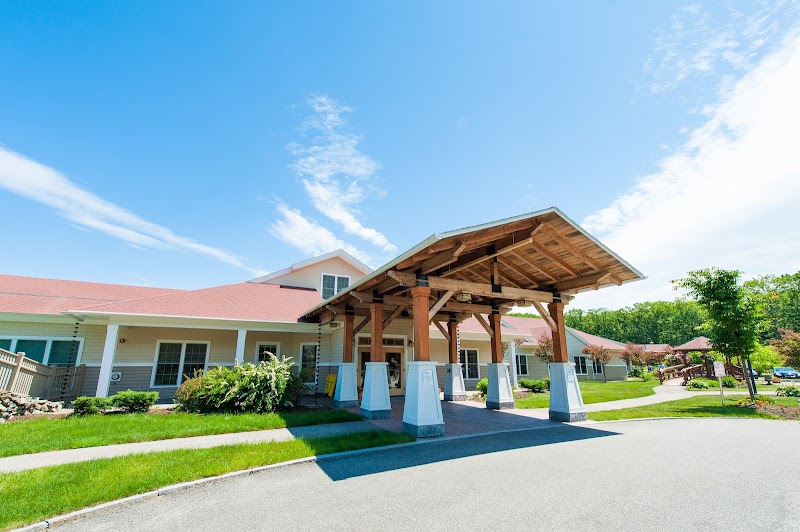
DURGIN PINES

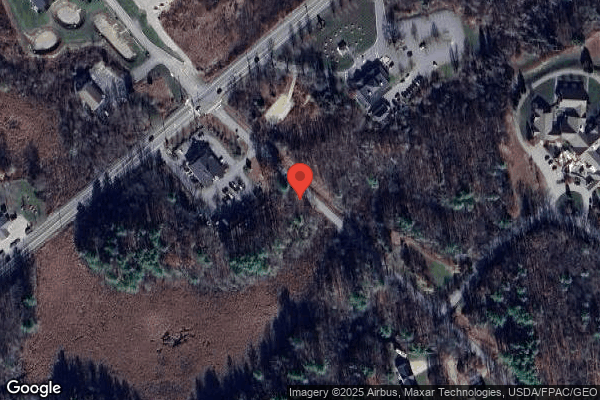
9 LEWIS RD, KITTERY, ME 03904 (207) 439-9800
For profit - Corporation 81 Beds Independent Data: November 2025
Trust Grade
73/100
#23 of 77 in ME
Last Inspection: March 2025

Within standard 12-15 month inspection cycle. Federal law requires annual inspections.

Overview

Durgin Pines in Kittery, Maine, has a Trust Grade of B, indicating it is a good choice for families seeking care, though it is not at the top of the rankings. It is ranked #23 out of 77 facilities in Maine, placing it in the top half, and #3 out of 9 in York County, meaning there are only two local options that are better. Unfortunately, the facility's trend is worsening, with the number of issues increasing from 2 in 2024 to 4 in 2025. Staffing is rated at 4 out of 5 stars, showing that the facility maintains a decent workforce, although the 54% turnover rate is average for the state. However, the presence of $14,434 in fines is concerning, as this is higher than 78% of facilities in Maine, indicating potential compliance issues. There are also specific areas of concern: the facility failed to provide written information about residents' rights regarding medical treatment and advance directives for all five residents reviewed. Additionally, residents reported not being invited to care plan meetings, which is crucial for their involvement in their own care. Lastly, there were incidents of residents eloping, which raised concerns about supervision and the facility's investigative practices. Overall, while there are some strengths, families should be aware of these weaknesses in care and oversight.

Trust Score
B
73/100
In Maine
#23/77
Top 29%
Safety Record
Low Risk
No red flags
Inspections
Getting Worse
2 → 4 violations
Staff Stability
⚠ Watch
54% turnover. Above average. Higher turnover means staff may not know residents' routines.
Penalties
○ Average
$14,434 in fines. Higher than 71% of Maine facilities. Some compliance issues.
Skilled Nurses
✓ Good
Each resident gets 53 minutes of Registered Nurse (RN) attention daily — more than average for Maine. RNs are trained to catch health problems early.
Violations
⚠ Watch
13 deficiencies on record. Higher than average. Multiple issues found across inspections.
★★★★☆
4.0
Overall Rating
★★★★☆
4.0
Staff Levels
★★★☆☆
3.0
Care Quality
★★★★☆
4.0
Inspection Score
Stable
2024: 2 issues
2025: 4 issues

The Good

  • 4-Star Staffing Rating · Above-average nurse staffing levels
  • Full Sprinkler Coverage · Fire safety systems throughout facility
  • No fines on record

Facility shows strength in staffing levels, fire safety.

The Bad

Staff Turnover: 54%

Near Maine avg (46%)

Higher turnover may affect care consistency

Federal Fines: $14,434

Below median ($33,413)

Minor penalties assessed

The Ugly 13 deficiencies on record

Mar 2025 4 deficiencies
CONCERN (D)

Potential for Harm - no one hurt, but risky conditions existed

Food Safety (Tag F0812)

Could have caused harm · This affected 1 resident

Based on observation, interview and the facility's Dietary Dress Code Policy, the facility failed to ensure facial hair protection was worn on 1 of 3 days of survey. Finding: On 3/10/25 from 9:34 a.m...

Read full inspector narrative →
Based on observation, interview and the facility's Dietary Dress Code Policy, the facility failed to ensure facial hair protection was worn on 1 of 3 days of survey. Finding: On 3/10/25 from 9:34 a.m. to 9:50 a.m., an initial kitchen tour was conducted in which the following finding was observed and confirmed with the Food Service Director: > There were 2 male kitchen workers with facial hair that was not wearing facial hair protection while preparing food in the kitchen. A review of the Dietary Dress Code Policy - updated 10/31/23, states All employees are required to wear a hair net or hat and beard guard (when appropriate) in food prep areas. On 3/10/25 at 2:20 p.m., in an interview with the Administrator, two surveyors discussed the above finding.
CONCERN (E)

Potential for Harm - no one hurt, but risky conditions existed

Deficiency F0578 (Tag F0578)

Could have caused harm · This affected multiple residents

Based on record reviews and interviews, the facility failed to ensure that the resident and/or resident representative was provided with written information concerning the right to accept or refuse me...

Read full inspector narrative →
Based on record reviews and interviews, the facility failed to ensure that the resident and/or resident representative was provided with written information concerning the right to accept or refuse medical or surgical treatment and/or formulate an advanced directive, or appoint a surrogate, for 5 of 5 residents reviewed. (#10, #15, #18, #23, #47) Findings: 1. Resident #18 was admitted in January of 2025. A review of the entire electronic medical record lacked evidence that the facility offered or provided the resident and/or resident representative with written information concerning the right to formulate an advanced directive. 2. Resident #23 was admitted in February of 2025. A review of the entire electronic medical record lacked evidence that the facility offered or provided the resident and/or resident representative with written information concerning the right to formulate an advanced directive. Review of facility policy Advance Directives, with a revision date of September, 2024, stated The resident has the right to formulate an advance directive, including the right to accept or refuse medical or surgical treatment. Section titled Determining Existence of Advance Directive, stated 2. The resident or representative is provided with written information concerning the right to refuse or accept medical or surgical treatment and to formulate an advance directive if he or she chooses to do so. Section titled If the Resident Does not have an Advance Directive, stated 1. If the resident or representative indicates that he or she has not established advance directives, the facility staff will offer assistance in establishing advance directives. b. Nursing staff will document in the medical record the offer to assist the resident's decision to accept or decline assistance. On 3/11/25 at 11:20 a.m., in an interview with a surveyor, a social worker stated it has not been facility practice to offer to assistance to residents with formulating an advance directive. If a resident requests to complete one, staff will access the Maine Advance Directive forms online and help them complete them, then have the forms notarized. The social worker stated if an advance directive is not in the resident's record, then the resident does not have one on file. On 3/11/25 at 11:40 a.m., in an interview with a surveyor, the Administrator, Director of Nursing, Assistant Director of Nursing, and the Social Worker, confirmed the facility does not routinely document when staff are offering to help residents complete an advance directive or when a resident declines to formulate one. 3. Resident #10 was admitted in February of 2025. A review of the entire electronic medical record lacked evidence that the facility offered or provided the resident and/or resident representative with written information concerning the right to formulate an advanced directive. 4. Resident #15 was admitted in February of 2023. A review of the entire electronic medical record lacked evidence that the facility offered or provided the resident and/or resident representative with written information concerning the right to formulate an advanced directive. 5. Resident #47 was admitted in June of 2023. A review of the entire electronic medical record lacked evidence that the facility offered or provided the resident and/or resident representative with written information concerning the right to formulate an advanced directive. On 3/11/25 at 11:30 a.m. a surveyor met with the facility social worker and learned that discussing Advanced Directives was not something they normally did.
CONCERN (E)

Potential for Harm - no one hurt, but risky conditions existed

Deficiency F0657 (Tag F0657)

Could have caused harm · This affected multiple residents

**NOTE- TERMS IN BRACKETS HAVE BEEN EDITED TO PROTECT CONFIDENTIALITY** 5. A surveyor reviewed the clinical documentation of Resident #13, which included review of a comprehensive admission Minimum Da...

Read full inspector narrative →
**NOTE- TERMS IN BRACKETS HAVE BEEN EDITED TO PROTECT CONFIDENTIALITY** 5. A surveyor reviewed the clinical documentation of Resident #13, which included review of a comprehensive admission Minimum Data Set (MDS) 3.0 assessment dated [DATE]. The surveyor could not locate evidence that a care plan meeting was held by the IDT that included, to the extent possible, participation of Resident #13 and/or his/her representative to review and revise the care plan. 6. On 3/10/25 at 1:42 p.m., during an interview, Resident #55 stated he/she is not invited to care plan meetings and would attend if he/she was invited. Review of the clinical documentation for Resident #55, included a comprehensive admission MDS assessment dated [DATE] and a Significant change MDS dated [DATE]. Resident #55's care plan meeting notes indicated that an IDT meeting occurred on 1/6/25. The surveyor could not locate evidence that a care plan meeting was held by the IDT for the assessment dated [DATE] and that Resident #55 was invited and/or participated in his/her IDT meeting that occurred on 1/6/25. 7. On 3/10/25 at 2:41 p.m., during an interview, Resident #3 stated he/she is not invited to care plan meetings and would attend if he/she was invited. Review of Resident #3's IDT care plan meeting notes indicated that IDTs occurred on 1/10/24, 4/10/24, and 9/11/24. The medical record lacked evidence that he/she was invited and/or participated in his/her IDT meetings. On 3/12/25 at 12:25 p.m., during an interview, the Director of Social Services confirmed the above findings. Based on interviews and record review, the facility failed to review and revise the care plan by an interdisciplinary team (IDT), that included, to the extent possible, participation of the resident and/or his/her representative after each assessment for 7 of 9 reviewed for care planning. (Resident #1, #49, #40, #32, #13, #55 and #3). Findings: 1. On 3/10/25 at 11:34 a.m., during an interview, Resident #1 stated he/she is not invited or remembers having care plan meetings. Review of Resident #1's IDT care plan meeting notes stated IDTs occurred on 4/24/24, 7/24/24, 10/23/24, 11/22/24 and on 3/5/25. The medical record lacked evidence that he/she was invited and/or participated in his/her IDT meetings. 2. On 3/10/25 at 11:49 a.m., during an interview, Resident #49 stated his/her representative attends the IDT meetings via phone, but he/she is not invited. Review of Resident #49's IDT care plan meeting notes stated IDTs occurred on 2/5/24, 7/10/24, 10/16/24 and on 1/15/25. The medical record lacked evidence that he/she was invited and/or participated in his/her IDT meetings. In addition, the IDT meeting which occurred on 7/10/24 stated Resident #49 did not attend because Resident out facility, during meeting time, but aware of schedule. 3. On 3/10/25 at 12:32 p.m., during an interview, Resident #40 stated he/she has not been involved or had a care plan meeting since admission. Review of Resident #40's medical record showed he/she had 2 recent admissions. The IDT care plan meeting notes stated IDTs occurred on 1/17/25 and on 2/14/25. The medical record lacked evidence that he/she was invited and/or participated in his/her IDT meetings. 4. On 3/10/25 at 1:24 p.m., during an interview, Resident #32 stated he/she is not invited or familiar with any care plan meetings. Review of Resident #32's IDT care plan meeting notes stated IDTs occurred on 5/15/24, 7/31/24, 10/23/24, and on 1/23/25. The medical record lacked evidence that he/she was invited and/or participated in his/her IDT meetings. On 3/11/25 at 2:12 p.m., during an interview, the Director of Social Services confirmed the above findings.
MINOR (B)

Minor Issue - procedural, no safety impact

Assessment Accuracy (Tag F0641)

Minor procedural issue · This affected multiple residents

**NOTE- TERMS IN BRACKETS HAVE BEEN EDITED TO PROTECT CONFIDENTIALITY** 2. Resident #13's clinical record was reviewed and indicated the resident has a physician's order dated 11/20/24 for the antidep...

Read full inspector narrative →
**NOTE- TERMS IN BRACKETS HAVE BEEN EDITED TO PROTECT CONFIDENTIALITY** 2. Resident #13's clinical record was reviewed and indicated the resident has a physician's order dated 11/20/24 for the antidepressant medication, Sertraline 50 milligrams (mg) daily. Resident #13's MDS, dated [DATE], under High Risk Drug Classes: Use and Indication Section N0415, was not coded to indicate that the resident received an antidepressant medication. On 3/12/25 at 11:47 a.m., during a telephone interview with the Skilled MDS Coordinator, a surveyor confirmed that the MDS was inaccurately coded for Resident #13. Based on record reviews and interviews, the facility failed to ensure that the Minimum Data Set (MDS) 3.0 was coded accurately in the area of Active Diagnosis and High-Risk Drug Classes: Use and Indication for 2 of 5 sampled residents for unnecessary medication review. (Resident #50 and #13) Findings: 1. On 3/11/25, resident #50's clinical record was reviewed and indicated the resident has orders for Mirtazapine and Sertraline daily, both antidepressants. The most recent Quarterly MDS dated [DATE] indicates, under Active Diagnosis Section I6100, states that the resident did not have depression however under section High-Risk Drug Classes: Use and Indication Section N0415, states the resident is taking antidepressants. In addition, the Pharmacy medication regimen review dated 1/5/25 recommends a Gradual Dose Reduction (GDR) on the Mirtazapine. The provider disagreed on the GDR with an explanation of Dose reduction is contraindicated because benefits outweigh risks for this patient and a reduction is likely to impair the resident's function and/or cause psychiatric / social instability. On 3/11/25 at 3:44 p.m., during an interview, the Skilled MDS Coordinator confirmed the above finding
Apr 2024 2 deficiencies
CONCERN (D) 📢 Someone Reported This

A family member, employee, or ombudsman was alarmed enough to file a formal complaint

Potential for Harm - no one hurt, but risky conditions existed

Accident Prevention (Tag F0689)

Could have caused harm · This affected 1 resident

**NOTE- TERMS IN BRACKETS HAVE BEEN EDITED TO PROTECT CONFIDENTIALITY** Based on record review and interviews the facility failed to ensure a resident was free from an avoidable accident hazard when t...

Read full inspector narrative →
**NOTE- TERMS IN BRACKETS HAVE BEEN EDITED TO PROTECT CONFIDENTIALITY** Based on record review and interviews the facility failed to ensure a resident was free from an avoidable accident hazard when the resident sustained 1st degree burns on his/her bilateral lower extremities while receiving a whirlpool bath. Finding: A review of Resident #1's clinical record notes indicated that on 3/25/24 Resident #1 was given a whirlpool bath and had complained of the water being too hot. Upon assessment, Resident #1's bilateral lower extremities were warm to touch, red and swollen. Resident #1 was advised to elevate/his/her feet and apply cool rags to the area. Resident #1 refused. Resident #1's family member was called and advised that Resident #1 be sent to the emergency room for an evaluation. Resident #1 was sent to the emergency room for an evaluation and diagnosed with 1st degree burns on his/her bilateral extremities and advised to treat with cool rags and Tylenol or Motrin. The facility investigation indicates that during an interview with Resident #1, he/she stated that he/she was unable to remove his feet from the water after CNA #1 left the room to get some towels. A Quarterly MDS dated [DATE], under section GG indicates Resident #1's range of motion in his/her bilateral lower extremities is impaired. Resident #1's current care plan indicates that Resident #1 receives extensive assistance from one staff member with bathing. During an interview with a surveyor on 4/5/24 at 11:26 a.m., CNA #1 stated that she started to fill the whirlpool up with water and left Resident #1 alone in the whirlpool spa room for approximately one minute to retrieve towels. CNA #1 recalls hearing Resident #1 hollering that the water was too hot when she came back into the spa room. During an interview with a surveyor on 4/3/24 at 8:18 a.m., R.N. #1 stated that she heard a resident hollering, so she entered the spa room and found Resident #1 and C.N.A. #1. Resident #1 was upset and told her that he/she was left alone in the whirlpool tub and the water was too hot. RN #1 assessed Resident #1's feet and found them to be red and swollen. RN #1 recommended cold cloths be applied to Resident #1's feet. Resident #1 declined and requested to call his/her family member. Resident #1's family member recommended that Resident #1 be sent to the emergency room for an evaluation of his/her feet. Resident #1 was transferred to the emergency room for an evaluation on 3/25/24 and diagnosed with a first degree burns on his/her feet. Resident #1 clinical record indicates that the resident declined the physician's recommendation to treat with cool cloths, Ibuprofen or Motrin. A review of the Integrity Bath Safety Instructions indicates Warnings: hot water above 110°F 43°C can scald people. Some individuals using the integrity bath may not be able to communicate to the attendant the existence of painful and uncomfortable conditions. Water temperatures entering the bathing system must be constantly monitored using the built-in thermometers to assure that the water is at the recommended safe bathing level of 100° to 105. Check the temperature of the water in the reservoir by monitoring the bath temperature gauge located at the top right of the console. The desired temperature for bathing is normally somewhere between 100° to 105°. Warning: if the temperature of the bathwater stored in the reservoir exceeds 110° do not use the system. Remove the resident and report the problem to maintenance. Do not use until the mixing valve is serviced to correct the problem. Failure to heed this warning could result in a scalding injury to the patient. Rotate the tub fill lever slowly clockwise while holding your hand under the bath fill spigot to test the water temperature to make sure it is safe and comfortable for the patient be sure to monitor the temperature of the incoming water reflected in the lower right dial thermometer. Additionally, facility water temperature logs were reviewed and there were not temperatures noted to be outside of acceptable conditions. On 4/2/24 at 2:15 p.m. the Surveyor discussed the above finding with the Administrator and the Director of Nursing.
CONCERN (D) 📢 Someone Reported This

A family member, employee, or ombudsman was alarmed enough to file a formal complaint

Potential for Harm - no one hurt, but risky conditions existed

Room Equipment (Tag F0908)

Could have caused harm · This affected 1 resident

Based on observation, interviews and record review, the facility failed to ensure that the residents' whirlpool was maintained, according to the manufacture's recommendations, and in good repair to pr...

Read full inspector narrative →
Based on observation, interviews and record review, the facility failed to ensure that the residents' whirlpool was maintained, according to the manufacture's recommendations, and in good repair to provide a safe, functional, and comfortable environment for residents to bathe in for residents who receive whirlpool baths on 1 of 2 resident care units (Marions Way Hand Wing). Finding: On 4/2/24 between 11:20 a.m. and 12:00 p.m. during a observation with the Maintenance Director. A surveyor observed a whirlpool tub on Marions Way Hand Wing with a digital thermometer near the knobs for hot/cold water. As the hot water was running, the surveyor and Maintenance Director observed that the digital thermometer was not functional. A review of the Integrity Bath Safety Instructions on page 1 under Warnings: hot water above 110°F 43°C can scald people. Some individuals using the integrity bath may not be able to communicate to the attendant the existence of painful and uncomfortable conditions. Water temperatures entering the bathing system must be constantly monitored using the built-in thermometers to assure that the water is at the recommended safe bathing level of 100° to 105. Check the temperature of the water in the reservoir by monitoring the bath temperature gauge located at the top right of the console. The desired temperature for bathing is normally somewhere between 100° to 105°. Warning: if the temperature of the bathwater stored in the reservoir exceeds 110° do not use the system. Remove the resident and report the problem to maintenance. Do not use until the mixing valve is serviced to correct the problem. Failure to heed this warning could result in a scalding injury to the patient. Rotate the tub fill lever slowly clockwise while holding your hand under the bath fill spigot to test the water temperature to make sure it is safe and comfortable for the patient be sure to monitor the temperature of the incoming water reflected in the lower right dial thermometer. On 4/2/24 at 2:15 p.m. the Surveyor discussed the above finding in an interview with the Administrator and the Director of Nursing.
Dec 2023 1 deficiency
CONCERN (D)

Potential for Harm - no one hurt, but risky conditions existed

Food Safety (Tag F0812)

Could have caused harm · This affected 1 resident

Based on observations and interviews, the facility failed to ensure the kitchen was maintained in a clean and sanitary manner for the ceiling vents, and the food slicer, 1 of 4 days of survey. Additio...

Read full inspector narrative →
Based on observations and interviews, the facility failed to ensure the kitchen was maintained in a clean and sanitary manner for the ceiling vents, and the food slicer, 1 of 4 days of survey. Additionally, the reach-in refrigerator was found to have a container of unlabeled and undated food. Findings: 0n 12/18/2023, at 9:15 a.m., during the initial tour of the kitchen with the Food Service Director/Dietician the following findings were observed and confirmed: The kitchen had dirty/dusty ceiling vents in all areas of the kitchen. The exhaust vent just across from the prep sink had a long piece of dust/debris blowing in the wind of the exhaust fan. The reach-in fridge had a small container of bacon that was undated and unmarked. On 12/20/2023 at 12:40p.m. During the return observation of the Kitchen with the Food Service Director/Dietician, it was observed and confirmed that there was a build-up of a foreign material on the blade guard of the food slicer. The Food Service Director stated that it looks like some kind of plastic material.
Nov 2022 2 deficiencies
CONCERN (D) 📢 Someone Reported This

A family member, employee, or ombudsman was alarmed enough to file a formal complaint

Potential for Harm - no one hurt, but risky conditions existed

Deficiency F0655 (Tag F0655)

Could have caused harm · This affected 1 resident

Based on interviews, record review, and facility policy, the facility failed to ensure a baseline care plan was developed and implemented within 48 hours that included the instructions needed to provi...

Read full inspector narrative →
Based on interviews, record review, and facility policy, the facility failed to ensure a baseline care plan was developed and implemented within 48 hours that included the instructions needed to provide minimum healthcare information necessary to care for 1 of 3 Residents reviewed for care plans (Resident #2). Findings: Review of facility policy Care Plans-Baseline dated 3/22 states at baseline plan of care to meet residents' immediate health and safety needs is developed for each resident within 48 hours of admission .The baseline care plan includes instructions needed to provide effective person centers care of the resident that meet professional standards of quality care and must include the minimum healthcare information necessary to properly care for the resident . Resident #2 Resident #2 was re-admitted to facility on 11/18/22 with diagnoses to include Parkinson's disease, coronary artery disease, diabetes mellitus, malnutrition, renal insufficiency, Benign Prostatic Hypertension (BPH), Peripheral vascular disease (PVD), deep vein thrombosis, osteomyelitis, and recent left and right great toe amputations which required wound management. Review of Resident #2's clinical record revealed nursing note dated 11/19/22 stating At about 1300 Pt [patient] was found outside by [himself/herself] with [his/her] WW [rolling walker], by a staff member who was leaving. Pt [Resident #2] had self-transferred [himself/herself] from siting in the living room and make [his/her] was out of what appears to be the doors closest to the therapy room .Further review of Resident #2's clinical record indicated that he/she was an elopement risk during his/her previous admission from 7/26/22 through 9/3/22. Review of Resident #2's entire clinical record revealed that his/her care plan was not initiated within 48 hours of his/her admission to include the minimum healthcare information necessary to properly care for him/her until 11/21/22 (three days later). During an interview on 11/29/22 at 11:59 a.m., Certified Nursing Assistant (CNA)1 indicated that she finds resident care needs on the kiosk, which comes from the care plan. During an interview on 11/29/22 at approximately 2:40 p.m., Registered Nurse (RN)1 indicated that care plans can be initiated by anyone but should be completed within 48 hours of admission. He further indicated that Resident #2 was originally admitted on the skilled unit and his/her care plan should have been initiated on that admission but somehow, he/she fell through the cracks. During an interview on 11/29/22 at 2:31 p.m., Licensed Practical Nurse (LPN)2 indicated that baseline care plans should be completed within 48 hour of admission and should reflect residents immediate care needs. At this time LPN2 confirmed that Resident #2's Baseline care plan was not completed within 48 hours of admission indicating that when Resident #2 was transferred to the Long-Term Care unit on 11/21/22 she made sure it was completed. The above was discussed with Director of Nursing on 11/29/22 at approximately 3:35 p.m.
CONCERN (E) 📢 Someone Reported This

A family member, employee, or ombudsman was alarmed enough to file a formal complaint

Potential for Harm - no one hurt, but risky conditions existed

Accident Prevention (Tag F0689)

Could have caused harm · This affected multiple residents

**NOTE- TERMS IN BRACKETS HAVE BEEN EDITED TO PROTECT CONFIDENTIALITY** Based on interviews, record review, and facility policy, the facility failed to adequately supervise and completely investigate ...

Read full inspector narrative →
**NOTE- TERMS IN BRACKETS HAVE BEEN EDITED TO PROTECT CONFIDENTIALITY** Based on interviews, record review, and facility policy, the facility failed to adequately supervise and completely investigate successful elopements of 2 of 3 residents reviewed for elopement. (Resident's #1 and #2) This failure resulted in Resident #1 eloping from the secured unit resulting in a facility wide search. Resident #2 eloped from the skilled unit where, he/she was found outside on the walking path by a staff member. In addition, the facility failed to thoroughly investigate elopements to include root cause analysis. Findings: The Department of Licensing & Certification received the following facility reported incident reports: -On 11/16/22 at 04:00 Resident #1 eloped from the locked unit and was found in the facility entryway stuck between the double doors. -On 11/19/2022 at 13:00 Resident #2 was found outside of the facility on the walking path by a staff member. Review of facility policy Safety and Supervision of Residents dated 7/17 states our facility strives to make the environment is free from accident hazards as possible. Resident safety and supervision and assistance to prevent accidents or facility wide priorities . Review of Facility Assessment dated 2022 states Cognitive-Care Requirements The MDS [Minimum Data Set]resident profile has identified a very high frequency for wandering behavior with memory and recall impairments through the BIMS assessment. As we do not have a specialized secured unit it is most important to be aware of our risk factor so that we can ensure the safety of those individuals with memory impairment who wander. 1. Resident # 1 was admitted to facility on 7/26/22 with diagnoses to include Parkinson's disease and depression. He/she resides on the locked unit for safety reasons. Review of quarterly Minimum Data Set (MDS) dated [DATE] revealed Resident #1 had a Brief Interview for Mental Status (BIMS) of 3 of 15, indicating his/her cognition is severely impaired. Further review of MDS indicated that Resident #1 walks independently with supervision. Review of Resident #1's Elopement Risk Evaluation dated 7/27/22 indicated he/she has a history of wandering, is cognitively impaired, and has poor decision-making skills. Review of Resident #1's clinical record reveled sometime prior to 4:00 a.m., on 11/16/22 Resident #1 was able to successfully use the code printed on top of the code box to exit the locked unit and was able to walk unsupervised through the halls of the facility to the main lobby where he/she was found in between the double doors at the main entrance at 4:00 a.m. after a facility wide search. Review of Resident #1's entire clinical record lacked evidence that a complete investigation to include a root cause analysis was completed after these incidents. During an observation of Marion's Way [locked unit] on 11/29/22 from approximately 9:30 a.m. to 3:15 p.m., and on 11/30/22 from 8:30 a.m., through 3:15 p.m., a code box was noted to be positioned to right of exit doors with sticker stating X5221 directly on top of code box in line of vision. Resident #1 was observed multiple times standing in front of the code box at the exit doors to Marion's Way. During an interview on 11/29/22 at 11:59 a.m., Certified Nursing Assistant (CNA)1 indicated that Resident #1 exit seeks and can read, so they try to keep a close eye on him and if they notice him/her getting close to the exit doors or the emergency egress doors they try to redirect him/her but there a lot of residents on the unit to take care of. On 11/30/22 at 2:00 p.m., a surveyor observed two visitors were attempting to exit the locked unit using the code posted on top of the code box. Visitor #1 was observed speaking loudly down the hall We can't get out what's the code? A response was heard from down the hall stating, It's backwards, It's Christmas. Resident #1 was observed wandering in that hallway approximately 30 minutes prior to this incident. During an interview on 11/30/22 at approximately 2:10 p.m., LPN1 indicated that for residents' safety staff should not be calling out the alarm code because even though most of the residents on the unit have a diagnosis of dementia, some of them are savvy and could use the code to get out the exit doors. LPN1 further indicated that Resident #1 has poor safety awareness. During an interview on 11/30/22 at 12:30 p.m., (Maintenance Assistant (MA) indicated that the exit from the locked unit is considered an emergency egress door and can be opened after 10 seconds, but an alarm will sound to alert staff but if a resident can read, they could enter the code and leave the unit without the alarm sounding. MA further indicated that the code to the locked unit was changed from X5221 to 1225X after Resident #1 eloped from the secured unit and they kept the code on the code box as X5221 and are telling staff and visitors to enter it backwards. MA stated the code had not been changed for at least 4 years prior to Resident #1's element and he is not aware of any plan to change it on a regular basis. When asked why the exit code is posted directly on the code pad, MA indicated that it is there so visitors can leave the unit and go home. MA was then asked why it the code wasn't in a different location, not directly visible to the residents that were an elopement risk, and he was not able to answer. 2. Resident #2 was re-admitted to facility for skilled care on 11/18/22 with diagnoses metabolic encephalopathy (brain disease) and recent amputation of left and right great toes. Review of Resident #2 current MDS revealed he/she has a BIMS of 7 of 15 indicating severe cognitive impairment. Review of Resident #2's clinical chart revealed he/she was previously admitted to the skilled unit on 7/26/22 and was discharged home on 9/3/22 and was determined to be an elopement risk during this stay. Review of Resident #2's clinical record revealed nursing note dated 11/19/2022 at 13:18 stating At about 1300 pt [Resident #2] was found outside by [himself/herself] with his WW [rolling walker], by a staff member who was leaving. Pt had self-transferred [himself/herself] from sitting in the living room and made [his/her] way out of what appears to be the doors closest to the therapy room. Pt was redirected back into the building by this nurse and is now seated by the nurse's station. Pt cannot explain where [he/she] was trying to go or why he was outside . Review of Resident #2's entire medical record lacked evidence that a complete investigation to include a root cause analysis was completed after this incident. Review of Resident #2's elopement risk evaluation dated 11/22/22 indicated he/she had a history of wandering, opens doors to the outside, and is cognitively impaired with poor decision-making skills. During an interview on 11/29/22 at 2:30 p.m., Registered Nurse (RN)1 indicated that on 11/19/22 at approximately 1:00 p.m., he went out to his car and started it, looked up and saw Resident #2 outside walking with walker down the path by the gym outside the [NAME] (skilled) unit. RN1 stated he asked Resident #2 what [he/she] was doing and [he/she] replied, I'm just outside enjoying the day RN1 was able to redirect Resident #2 to go back inside and he had to pound on the window to get staff attention to get someone to open the door to let them back in. RN1 further indicated that facility staff were unaware that Resident #2 had gotten outside. RN1 then indicated they are not sure what door Resident #2 used to get out but assumed it was the one next to the gym on [NAME] unit because it's not locked from the inside. During an interview on 11/29/22 at approximately 11:45 a.m., The Medical Director indicated that a significant elopement is considered that anytime a resident is unattended and out of the building is considered a significant elopement. During an interview on 11/29/22 at 3:25 p.m., Director of Nursing (DNS) confirmed that a complete investigation to include root cause analysis was not completed for the above incidents. During an interview on 11/30/22 at approximately 3:30 p.m. the Administrator indicated the emergency egress door alarms are not tied to a nursing station monitor so staff have to run around to find which door was opened. He further indicated that a new system is a capital expense, and the target date for a new system is January of 2023.
Jul 2021 4 deficiencies
CONCERN (D)

Potential for Harm - no one hurt, but risky conditions existed

Deficiency F0657 (Tag F0657)

Could have caused harm · This affected 1 resident

Based on record review, interviews and observation, the facility failed to revise a care plan to reflect the current needs for 1 of 2 residents sampled for skin conditions (#36). Findings: On 7/19/21 ...

Read full inspector narrative →
Based on record review, interviews and observation, the facility failed to revise a care plan to reflect the current needs for 1 of 2 residents sampled for skin conditions (#36). Findings: On 7/19/21 at 9:28 a.m., during an interview with Resident #36, the surveyor observed a tubigrip stocking and gauze dressing on the resident's left lower extremity. The resident questioned if he/she had an infection of the toe. On 7/22/21 at 9:30 a.m., the surveyor observed Resident #36 with a bed cradle which kept the bed linens from resting on the resident's feet. A review of the clinical record revealed that on 6/4/21, the physician prescribed an antibiotic and wound care for the treatment of cellulitis of the left second toe. Resident #36's current care plan, with a revision date of 6/11/21, addressed the risk for skin breakdown and a Stage II pressure injury of the right glute. The clinical record contained a care plan note dated 3/18/21, indicating the Stage II pressure ulcer on the glute as healed. On 6/10/21, a social services note discusses a care plan meeting, in which family members attended via telephone. There was no documentation of a discussion regarding Resident #36's current wound care needs. On 7/22/21 at 11:20 a.m., in an interview with the Director of Nursing, the surveyor discussed observations of Resident #36 requiring use of a bed cradle and the physician's order for wound care, which were not found on the current care plan, however, the resolved Stage II pressure ulcer remained on the care plan. The Director of Nursing confirmed that the care plan had not been revised to reflect the resident's current wound care needs.
CONCERN (D)

Potential for Harm - no one hurt, but risky conditions existed

Deficiency F0698 (Tag F0698)

Could have caused harm · This affected 1 resident

Based on interview and clinical record review, the facility failed to ensure that the clinical record of a resident who requires dialysis services, contained complete and accurate documentation from 5...

Read full inspector narrative →
Based on interview and clinical record review, the facility failed to ensure that the clinical record of a resident who requires dialysis services, contained complete and accurate documentation from 5/1/21 through 7/22/21, for 1 of 1 resident receiving dialysis (#43). Finding: On 7/19/21 at 9:33 a.m., in an interview with the surveyor, Resident #43 stated he/she goes to dialysis on Mondays, Wednesdays and Fridays. He/She showed the surveyor the arteriovenous fistula access site on his/her right arm. When asked, he/she did not know if staff assessed the site daily. Resident #43's clinical record revealed a diagnosis of End Stage Renal Disease with a Dependence on Hemodialysis. A review of the medication/treatment administration records (MAR/TAR) from May 1, 2021, through July 21, 2021, revealed the following: - A physician's order with a start date of 11/15/17: Remove post-dialysis pressure dressing 4-6 hours post treatment. Monitor for bleeding in the evening every Monday, Wednesday and Friday post-dialysis. The record lacked evidence the dressing was removed and the hemodialysis access site was monitored on 5/3/21, 5/10/21, 5/21/21, 6/7/21, 6/9/21, 6/18/21, 7/2/21, 7/5/21, 7/9/21, and 7/19/21. -A physician's order with a start date of 4/13/19: 1000 cc (cubic centimeters) fluid restriction in 24 hours. The record lacked documentation of the resident's fluid intake amount for 21 shifts in May, 2021; 20 shifts in June, 2021; and 12 shifts in July, 2021. -A physician's order with a start date of 2/16/17: Check fistula right forearm for thrill and bruit every shift. The record lacked evidence that staff assessed the hemodialysis access site on 5/3/21, 5/5/21, 5/10/21, 5/21/21, 6/5/21, and 6/18/21. On 7/21/21 at 11:00 a.m., the Nurse Manager of the long-term care unit and the Director of Nursing confirmed that the clinical record failed to provide evidence that care was provided consistent with professional standards of practice for a resident receivnig dialysis.
CONCERN (D)

Potential for Harm - no one hurt, but risky conditions existed

Drug Regimen Review (Tag F0756)

Could have caused harm · This affected 1 resident

Based on record review and interviews, the facility failed to respond to a pharmacist's reported irregularity related to the use of a psychotropic medication for 1 of 5 (#36) residents reviewed for un...

Read full inspector narrative →
Based on record review and interviews, the facility failed to respond to a pharmacist's reported irregularity related to the use of a psychotropic medication for 1 of 5 (#36) residents reviewed for unnecessary medications. Finding: During a review of Resident #36's clinical record, the surveyor could not locate the Monthly Medication Regimen Reviews (MRR) and asked the Director of Nursing (DON) if she could locate a formal report of irregularities. On 7/21/21, the DON stated that during the pandemic, the pharmacist consultant completed record reviews remotely. Resident #36 was noted to have had a review on 5/6/21. The surveyor requested a copy of the pharmacist's recommendation. On 7/22/21 at 11:55 am, the Director of Clinical Operations, stated she had contacted the pharmacy to obtain the recommendation from the MRR completed 5/6/21. The pharmacy emailed a copy of the recommendation which stated this resident is currently on PRN (as needed) Prochlorperazine (an antipsychotic/antiemetic medication). New requirements of participation (483.45) require that the use of PRN antipsychotics must be limited to 14 days without exception. To initiate a new order requires direct prescriber evaluation. Please evaluate current diagnosis, behaviors and usage patterns. The Director of Clinical Operations stated the medication has not been used and an order had just been obtained to discontinue the medication. The DON and the Director of Clinical Operations confirmed Resident #36's medical record lacked evidence that the physician had received the pharmacist's recommendation and that it had not been acted upon until questioned by the surveyor.
CONCERN (D)

Potential for Harm - no one hurt, but risky conditions existed

Medical Records (Tag F0842)

Could have caused harm · This affected 1 resident

Based on record reviews and interviews, the facility failed to ensure that clinical records were complete and contained accurate documentation for 2 of 30 sampled residents (#2, #36). Findings: 1. A ...

Read full inspector narrative →
Based on record reviews and interviews, the facility failed to ensure that clinical records were complete and contained accurate documentation for 2 of 30 sampled residents (#2, #36). Findings: 1. A review of Resident #2's clinical medication administration record/treatment administration record (MAR/TAR) revealed the following: -Order for wound care with a start date of 4/28/21: change foot ulcer dressing every day to ¼ strength H2O2 (peroxide) cleanser, clean using forceps and 4X4 gauze. Then pack with ¼ of a 2X2 gauze and cover with ABD (abdominal) pad, secure corners with medipore tabe, cover with tubigrip sleeve, cover toes. A review of the May 2021 TAR revealed no documentation that the wound care was completed on 5/6/21, 5/7/21, 5/9/21. -Order for Prevlon boot with a start date of 4/28/21: on right foot while in bed at bedtime. A review of the May 2021 TAR revealed no documentation that the boot was applied on 5/1/21, 5/5/21, 5/21/21, 5/22/21. A review of the June TAR revealed no documentation for 6/5/21, 6/7/21, 6/9/21, 6/18/21, 6/24/21. A review of the July TAR revealed no documentation for 7/5/21, 7/9/21, 7/19/21. -Order for wound care with a start date of 5/12/21: right foot wound cleanse with cleanser using a Q-tip, spray no sting, pack with a cut piece of gauze cover with 3 layers of 2X2 (gauze), secure with medipore tape and tubigrip, one time a day for foot ulcer. A review of the May 2021 TAR revealed no documentation that the wound care was completed on 5/18/21. A review of the June TAR revealed no documentation on 6/14/21, 6/22/21, 6/25/21, 6/26/21, 6/29/21, 6/30/21. -Orders dated 4/6/21 and 4/13/21 to obtain a weekly weight: a review of the May 2021 TAR revealed no weight was obtained on 5/25/21. -Order to monitor pain every shift, dated 4/5/21. A review of the May 2021 TAR revealed no documentation of monitoring the resident's pain for the day shift on 5/6/21 and 5/9/21. A review of the July 2021 TAR revealed no documentation for the day and evening shift on 7/9/21. -Order dated 4/6/21, for the resident to wear heel offloading footwear, can be partial weight bearing on foot with unweighted heel, every shift. A review of the May 2021 TAR revealed no documentation for the footwear on the day shift on 5/6/21 and 5/9/21. A review of the July 2021 TAR revealed no documentation for the day and evening shifts on 7/9/21. -Order dated 5/26/21, to complete a daily wound evaluation. A review of the June 2021 TAR revealed no evidence that this was completed on 6/4/21, 6/14/21, 6/22/21, 6/25/21, 6/26/21, 6/29/21, 6/30/21. A review of the July 2021 TAR revealed no evidence that this was completed on 7/1/21, 7/9/21, 7/13/21, 7/14/21, and 7/20/21. -Order dated 5/27/21 to complete a weekly wound evaluation. A review of the June 2021 TAR lacked evidence this was completed on 6/17/21, and a review of the July 2021 TAR, revealed no documentation on 7/9/21. -Order dated 5/25/21 for Humalog Solution 100 UNIT/ML (milliliter) (Insulin Lispro) Inject per sliding scale subcutaneously two times a day for diabetes before breakfast and lunch. A review of the June 2021 TAR revealed no evidence Resident #2's blood glucose was tested and insulin administered before lunch on 6/1/21, 6/25/21 and 6/27/21. -Order for wound care with a start date of 6/10/21: Right heel wound - Cleanse wound with 1/2 strength H202 (peroxide). Pack wound with cut-up gauze to fit small opening. Cover with three layers of 2X2 gauze and medipore (tape), every day shift for foot ulcer. A review of the July 2021 TAR revealed no documentation that wound care was provided on 7/1/21, 7/9/21, 7/13/21, 7/14/21, 7/20/21. On 7/21/21 at 3:00 p.m., in an interview with the Nurse Manager of the long-term care unit, the surveyor confirmed Resident #2's clincal record (MAR/TAR) did not contain complete and accurate documentation. 2. A review of Resident #36's clinical medication administration record/treatment administration record (MAR/TAR) revealed the following: -Order dated 6/4/21 for wound care - Left foot 2nd toe: Cleanse, spray no sting, cover with gauze, secure with medipore tape, every day shift for cellulitis. A review of the June 2021 TAR lacked evidence wound care was provided on 6/21/21 and 6/29/21. A review of the July 2021 TAR lacked evidence wound care was provided for 7/5/21, 7/12/21, and 7/20/21. -A review of the July 2021 TAR also revealed lack of documentation for treatments provided on the evening of 7/9/21. These included an evening skin check, evening snack, monitor for pain, and application of muscle rub. -In addition, the clinical record revealed a physician's order dated 6/4/21, which stated Keflex (an antibiotic) 500 mg (milligrams) by mouth 3 times daily for 7 days for cellulitis; left foot second toe, cleanse, spray no sting, cover with gauze, secure with medipore tape, change daily. Nursing documentation revealed the last progress note regarding the resident's wound was written on 6/7/21. In addition, the record lacked evidence of any recent wound assessments. The last progress note was dated 6/10/21 and completed by social services. On 7/22/21 at 11:20 a.m., in an interview with the surveyor, the Director of Nursing confirmed Resident #36's clinical record lacked evidence of current wound assessments or nursing progress notes regarding the left foot wound, and that treatment records for June and July of 2021 were incomplete.
Understanding Severity Codes (click to expand)
Life-Threatening (Immediate Jeopardy)
J - Isolated K - Pattern L - Widespread
Actual Harm
G - Isolated H - Pattern I - Widespread
Potential for Harm
D - Isolated E - Pattern F - Widespread
No Harm (Minor)
A - Isolated B - Pattern C - Widespread

Questions to Ask on Your Visit

  • "Can I speak with families of current residents?"
  • "What's your RN coverage like on weekends and overnight?"

Our Honest Assessment

Strengths
  • • No major safety red flags. No abuse findings, life-threatening violations, or SFF status.
Concerns
  • • 13 deficiencies on record. Higher than average. Multiple issues found across inspections.
  • • $14,434 in fines. Above average for Maine. Some compliance problems on record.
Bottom line: Mixed indicators with Trust Score of 73/100. Visit in person and ask pointed questions.

About This Facility

What is Durgin Pines's CMS Rating?

CMS assigns DURGIN PINES an overall rating of 4 out of 5 stars, which is considered above average nationally. Within Maine, this rating places the facility higher than 99% of the state's 100 nursing homes. This rating reflects solid performance across the metrics CMS uses to evaluate nursing home quality.

How is Durgin Pines Staffed?

CMS rates DURGIN PINES's staffing level at 4 out of 5 stars, which is above average compared to other nursing homes. Staff turnover is 54%, compared to the Maine average of 46%.

What Have Inspectors Found at Durgin Pines?

State health inspectors documented 13 deficiencies at DURGIN PINES during 2021 to 2025. These included: 12 with potential for harm and 1 minor or isolated issues.

Who Owns and Operates Durgin Pines?

DURGIN PINES is owned by a for-profit company. For-profit facilities operate as businesses with obligations to shareholders or private owners. The facility operates independently rather than as part of a larger chain. With 81 certified beds and approximately 71 residents (about 88% occupancy), it is a smaller facility located in KITTERY, Maine.

How Does Durgin Pines Compare to Other Maine Nursing Homes?

Compared to the 100 nursing homes in Maine, DURGIN PINES's overall rating (4 stars) is above the state average of 3.0, staff turnover (54%) is near the state average of 46%, and health inspection rating (4 stars) is above the national benchmark.

What Should Families Ask When Visiting Durgin Pines?

Based on this facility's data, families visiting should ask: "Can I visit during a mealtime to observe dining assistance and food quality?" "How do you handle medical emergencies, and what is your hospital transfer rate?" "Can I speak with family members of current residents about their experience?"

Is Durgin Pines Safe?

Based on CMS inspection data, DURGIN PINES has a clean safety record: no substantiated abuse findings (meaning no confirmed cases of resident harm), no Immediate Jeopardy citations (the most serious violation level indicating risk of serious injury or death), and is not on the Special Focus Facility watch list (a federal program monitoring the lowest-performing 1% of nursing homes). The facility has a 4-star overall rating and ranks #1 of 100 nursing homes in Maine. While no facility is perfect, families should still ask about staff-to-resident ratios and recent inspection results during their visit.

Do Nurses at Durgin Pines Stick Around?

DURGIN PINES has a staff turnover rate of 54%, which is 8 percentage points above the Maine average of 46%. Moderate turnover is common in nursing homes, but families should still ask about staff tenure and how the facility maintains care continuity when employees leave.

Was Durgin Pines Ever Fined?

DURGIN PINES has been fined $14,434 across 2 penalty actions. This is below the Maine average of $33,223. While any fine indicates a compliance issue, fines under $50,000 are relatively common and typically reflect isolated problems that were subsequently corrected. Families should ask what specific issues led to these fines and confirm they've been resolved.

Is Durgin Pines on Any Federal Watch List?

DURGIN PINES is not on any federal watch list. The most significant is the Special Focus Facility (SFF) program, which identifies the bottom 1% of nursing homes nationally based on persistent, serious quality problems. Not being on this list means the facility has avoided the pattern of deficiencies that triggers enhanced federal oversight. This is a positive indicator, though families should still review the facility's inspection history directly.