AROOSTOOK HEALTH CENTER
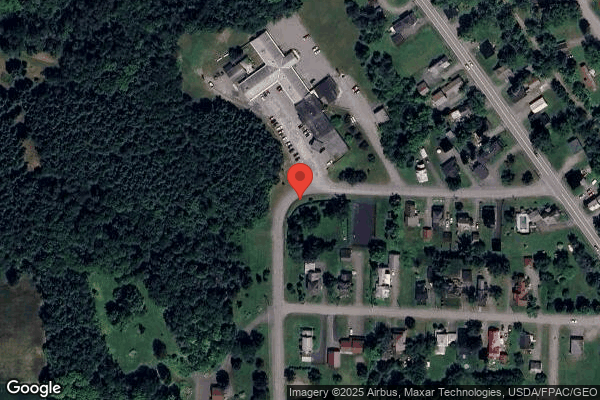
15 HIGHLAND AVE, MARS HILL, ME 04758 (207) 768-4915
For profit - Corporation 72 Beds Independent Data: November 2025
Trust Grade
85/100
#1 of 77 in ME
Last Inspection: October 2024

Within standard 12-15 month inspection cycle. Federal law requires annual inspections.

Overview

Aroostook Health Center has received a Trust Grade of B+, which means it is above average and generally recommended for families seeking care. It ranks #1 out of 77 nursing homes in Maine and #1 out of 7 in Aroostook County, indicating it is the top facility in the area. However, the facility's trend is worsening, with the number of identified issues increasing from 6 in 2023 to 10 in 2024. Staffing is a strength, with a 5-star rating and a turnover rate of 38%, which is lower than the state average, but RN coverage is only average. While there have been no fines, recent inspections revealed several concerns, such as a resident's urinary catheter drainage bag resting on the floor, chocolate pudding given to residents past its expiration date, and a failure to ensure eligible residents received necessary vaccinations, indicating areas for improvement. Overall, while there are notable strengths, families should be aware of the facility's recent issues.

Trust Score
B+
85/100
In Maine
#1/77
Top 1%
Safety Record
Low Risk
No red flags
Inspections
Getting Worse
6 → 10 violations
Staff Stability
○ Average
38% turnover. Near Maine's 48% average. Typical for the industry.
Penalties
✓ Good
No fines on record. Clean compliance history, better than most Maine facilities.
Skilled Nurses
✓ Good
Each resident gets 71 minutes of Registered Nurse (RN) attention daily — more than 97% of Maine nursing homes. RNs are the most trained staff who catch health problems before they become serious.
Violations
⚠ Watch
17 deficiencies on record. Higher than average. Multiple issues found across inspections.
★★★★★
5.0
Overall Rating
★★★★★
5.0
Staff Levels
★★☆☆☆
2.0
Care Quality
★★★★☆
4.0
Inspection Score
Stable
2023: 6 issues
2024: 10 issues

The Good

  • 5-Star Staffing Rating · Excellent nurse staffing levels
  • Full Sprinkler Coverage · Fire safety systems throughout facility
  • No fines on record
  • Staff turnover below average (38%)

    10 points below Maine average of 48%

Facility shows strength in staffing levels, fire safety.

The Bad

Staff Turnover: 38%

Near Maine avg (46%)

Typical for the industry

The Ugly 17 deficiencies on record

Oct 2024 9 deficiencies
CONCERN (D)

Potential for Harm - no one hurt, but risky conditions existed

Resident Rights (Tag F0550)

Could have caused harm · This affected 1 resident

Based on observation and interviews, a facility staff failed to speak to residents in a manner that maintains and promotes each resident's dignity and respect for 1 of 3 days of survey (10/15/24). F...

Read full inspector narrative →
Based on observation and interviews, a facility staff failed to speak to residents in a manner that maintains and promotes each resident's dignity and respect for 1 of 3 days of survey (10/15/24). Findings: On 10/15/24 at 2:00 p.m., a surveyor observed Certified Nursing Assistant #1 (CNA1) having a back-and-forth argument with Resident #1 (R1) during Bingo. CNA1 then turned her head away from R1 and continued to call Bingo letters/numbers to the residents playing Bingo while ignoring R1 while he/she was attempting to talk to CNA1. Another resident asked a question of CNA1, and CNA1 said, have some patience please [R15]. CNA1 was observed by a surveyor to be irritated and was speaking in a sharp voice to R15. On 10/15/24 at 2:18 p.m. in an interview with the Director of Nursing, a surveyor confirmed that R1 and R15 were not spoken to in a dignified manner when CNA1 argued with R1, ignored R1, and spoke sharply to R15.
CONCERN (D)

Potential for Harm - no one hurt, but risky conditions existed

Deficiency F0645 (Tag F0645)

Could have caused harm · This affected 1 resident

Based on record review and interview, the facility failed to ensure a Pre-admission Screening and Resident Review (PASRR), including a current diagnosis, and was updated for 1 of 1 resident reviewed (...

Read full inspector narrative →
Based on record review and interview, the facility failed to ensure a Pre-admission Screening and Resident Review (PASRR), including a current diagnosis, and was updated for 1 of 1 resident reviewed (Resident #29 [R29]). Finding: On 10/15/24, during review of R29's clinical record, contained a PASRR Level I Screen dated 4/25/24 has a letter attached that he/she does not have a reason for a level II assessment. The PASRR Level I Screen in the diagnosis section did not include a current diagnosis of Post Traumatic Stress Disorder (PTSD). R29's current diagnosis list included a diagnosis of PTSD. The resident record lacked evidence that the PASRR Level I Screen was updated and resubmitted to include his/her diagnosis of PTSD and was not forwarded to the State-designated authority to determine if a Level II assessment was needed. On 10/16/24 at 2:45 p.m., during an interview with the Director of Nursing, a review of R29's PASRR was done and a surveyor confirmed that his/her diagnosis of PTSD was not included on the PASRR for a level II determination.
CONCERN (D)

Potential for Harm - no one hurt, but risky conditions existed

Deficiency F0657 (Tag F0657)

Could have caused harm · This affected 1 resident

Based on record review and interviews, the facility failed to update a care plan to reflect a resident's current needs for 1 of 2 residents reviewed for falls (Resident #19 [R19]). Findings: 1. On 10/...

Read full inspector narrative →
Based on record review and interviews, the facility failed to update a care plan to reflect a resident's current needs for 1 of 2 residents reviewed for falls (Resident #19 [R19]). Findings: 1. On 10/15/24, R19's clinical record was reviewed. R19's current care plan last revised on 10/9/24, included a problem area of osteoporosis that was developed on 3/4/24, with an intervention Resident/Family/Caregiver teaching - Fall Prevention: Hold railing when using stairs. If unsteady on feet, use cane, walker, or have someone help you walk. Keep away from icy streets, sidewalks, wet/ waxed floors. Keep inside well lit at night. Remove things that could make you trip i.e. loose rugs or electrical cords. Wear low-heeled soft-soled shoes. Wear padded hip protectors to prevent hip fractures. On 10/16/24 at 12:05 p.m., during an interview with a surveyor, Certified Nursing Assistant # 1 stated that R19 does not wear hip protectors. On 10/16/24 at 12:39 p.m., during an interview with a surveyor, Clinical Supervisor (CS) stated that R19 does not wear hip protectors. CS and the surveyor reviewed R19's care plan at this time for the interventions listed for fall prevention under this topic and the surveyor confirmed that R19's care plan for this intervention was not updated to reflect the resident's current needs.
CONCERN (D)

Potential for Harm - no one hurt, but risky conditions existed

Deficiency F0699 (Tag F0699)

Could have caused harm · This affected 1 resident

**NOTE- TERMS IN BRACKETS HAVE BEEN EDITED TO PROTECT CONFIDENTIALITY** Based on record review and interview, the facility failed to assess a residents current diagnosis of Post-Traumatic Stress Disor...

Read full inspector narrative →
**NOTE- TERMS IN BRACKETS HAVE BEEN EDITED TO PROTECT CONFIDENTIALITY** Based on record review and interview, the facility failed to assess a residents current diagnosis of Post-Traumatic Stress Disorder (PTSD)/trauma to determine what trigger(s) might cause re-traumatization for 1 of 2 sampled resident's reviewed with a current diagnosis of PTSD (Resident #16 [R16]). Finding: R16 was admitted to the facility on [DATE] to include a diagnosis of PTSD. On 10/17/24, a review of R16's clinical record, in the Minimum Data Set (MDS) 3.0, Section I, Active Diagnoses, Psychiatric/Mood Disorder, I6100 was coded to indicate R16 has an active diagnosis for PTSD. The surveyor was unable to find information in the clinical record that indicates what R16's PTSD was caused by, what trigger(s) might cause re-traumatization, and measures to avoid trigger(s) that might cause re-traumatization. On 10/17/24 at 11:13 a.m., in an interview with a surveyor, the Clinical Supervisor stated she did not find a care plan (goal and trauma interventions) for PTSD other than it being mentioned as one of the problems under focus in the care plan. The Clinical Supervisor confirmed that R16 did not have a Trauma Assessment completed to address R16's PTSD. On 10/18/24 at 3:48 p.m., in a follow-up electronic mail communication, a surveyor reviewed R16's Clinical admission - V17 - initial admission form that lists AS_15. Screening 1. Trauma Informed Care. The screening does not indicate what R16's PTSD was caused by, what trigger(s) might cause re-traumatization, and measures to avoid trigger(s) that might cause re-traumatization.
CONCERN (D)

Potential for Harm - no one hurt, but risky conditions existed

Deficiency F0761 (Tag F0761)

Could have caused harm · This affected 1 resident

Based on observations and interviews, the facility failed to ensure opened insulin and opened/activated inhaler was labeled with an open date in 1 of 3 medication/treatment carts (South wing). Finding...

Read full inspector narrative →
Based on observations and interviews, the facility failed to ensure opened insulin and opened/activated inhaler was labeled with an open date in 1 of 3 medication/treatment carts (South wing). Findings: On 10/15/24 at 10:26 a.m., a surveyor and a Licensed Practical Nurse (LPN) observed an opened Basaglar Kwik Pen (Lantus, insulin) for Resident #6 [R6] that was in the South wing medication cart that did not have an open or discard date (Lantus is good for 28 days once opened and at room temperature). On 10/15/24 at 10:30 a.m., a surveyor and LPN observed an opened Spiriva Respimat inhaler for R32 that was in the South wing medication cart that did not have an open or discard date (Spiriva Respimat inhaler, is good for 3 months after first use or when the locking mechanism is engaged, whichever comes first). On 10/15/24 at 10:54 a.m. , in an interview with LPN, a surveyor confirmed that the Basaglar Kwik Pen Lantus and the Spiriva Respimat inhaler were not labeled with an open or discard date. On 10/15/24 at 10:55 a.m., in an interview with the Clinical Supervisor, a surveyor confirmed that medications were not labeled with an open or discard date, and the Clinical Supervisor stated that the Basaglar Kwik Pen Lantus and the Spiriva Respimat inhaler should have been labeled with an open date and discard date to ensure use according to manufacturer's directions.
CONCERN (D)

Potential for Harm - no one hurt, but risky conditions existed

Medical Records (Tag F0842)

Could have caused harm · This affected 1 resident

**NOTE- TERMS IN BRACKETS HAVE BEEN EDITED TO PROTECT CONFIDENTIALITY** Based on observation, record reviews and interviews, the facility failed to ensure a resident's right to formulate an advanced d...

Read full inspector narrative →
**NOTE- TERMS IN BRACKETS HAVE BEEN EDITED TO PROTECT CONFIDENTIALITY** Based on observation, record reviews and interviews, the facility failed to ensure a resident's right to formulate an advanced directive regarding code status (cardiopulmonary resuscitation [CPR]) was accurate in the electronic record for (Resident #26 [R26] and [R295]) Findings: 1. On [DATE] at 1:40 p.m., a surveyor observed R26's medical chart read DNAR [Do Not Attempt Resuscitation]/Full Treatment on the spine. The record contained 2 POLST forms. Both POLST forms have the word Void written across the front and back. Review of R26's electronic medical record indicated a code status of DNAR /Full treatment (Do not provide CPR). The record also indicated Special Instructions: . FULL CODE (Provide CPR). On [DATE] at 1:45 p.m., in an interview with a surveyor, the Registered Nurse (RN2) stated the code status of DNAR/Full Treatment means the resident would accept antibiotics and intravenous fluids but not CPR. On [DATE] at 1:48 p.m., in an interview with the surveyor, the Clinical Supervisor stated the code status was unclear and would need to be clarified with the provider. At this time the surveyor confirmed R26's clinical record contained two different directions for code status. 2. On [DATE] at 2:22 p.m., review of R295's electronic record revealed a physician order indicated R295 was a Full Code. Review of R295's electronic chart revealed an Advanced Directive form signed by R295 prior to admission on [DATE] indicating that his/her wish is to not be kept alive and does not want treatment to be kept alive. On [DATE] at 11:50 a.m., during an interview, the Clinical Supervisor and a surveyor reviewed Resident # 295's advanced directives and the signed physician orders for full code status. The surveyor confirmed that the Code status on his/her signed physician orders do not match R295's Advanced Directives.
CONCERN (E)

Potential for Harm - no one hurt, but risky conditions existed

Food Safety (Tag F0812)

Could have caused harm · This affected multiple residents

On 10/15/24 at 10:52 a.m., during an observation of 1 of 3 medication carts (South Unit), a surveyor observed, on the medication cart, 1 open/covered container of chocolate pudding with a date written...

Read full inspector narrative →
On 10/15/24 at 10:52 a.m., during an observation of 1 of 3 medication carts (South Unit), a surveyor observed, on the medication cart, 1 open/covered container of chocolate pudding with a date written on the lid of 10/7/24. The LPN states she is not sure how long the pudding is good for and a few residents, including R41 received the chocolate pudding with his/her medications this morning. In an interview with the LPN at this time, a surveyor confirmed that the chocolate pudding was given beyond the expiration date. On 10/16/24 at 10:30 a.m., in an interview with a surveyor, the Food Service Supervisor stated pudding made for use with medications are good for 5 days, and the date made is on the container. The chocolate pudding was given 3 days beyond expiration date. Based on observations and interviews, the facility failed to ensure that the kitchen equipment/dishware were stored in a sanitary manner by having mixing bowls and a colander wet stacked for 1 of 3 days of survey (10/15/24) and they failed to ensure that the correct 3 step process to manually wash, rinse and sanitize dishware was done correctly by failing to have sufficient concentration of the sanitizing solution in their 3 bay sink used to manually wash their dishware for 2 of 3 days of survey (10/15/24 and 10/16/24). In addition the facility failed to ensure that food was removed from use by the expiration date for 1 of 3 days (10/15/24). Findings: On 10/15/24 at 9:15 a.m., during the initial tour of the kitchen, a surveyor observed water drops dripping from a mixing bowl. Upon further observation it was observed by the surveyor and the Kitchen Lead that 4-mixing bowls and a colander were wet stacked on the shelf above the food preparation area. This finding was confirmed by the surveyor with the Kitchen Lead at the time of the observation. On 10/15/24 at 10:00 a.m. an observation of a dietary staff manually washing dishware in the 3 bay sink area was made. The surveyor asked if they could test the sanitizing section, and the dietary staff redirected the request to the Kitchen Lead. There was a poster on the wall directing staff how to complete the test and what the sanitizing level should be. The instructions direct staff to hold the test strip in the sanitizing section for 10 seconds and directed them to compare the color of the strip to the chart on the test strip bottle. The correct range should be 272 and turn the test strip into a teal color. When the Kitchen Lead person removed the test strip from the sanitizer the strip color was not teal but a light blue indicating the sanitizer was not at the correct concentration, the light blue indicated the level was at 170 and not the desired 272. The Kitchen Lead explained that the sanitizer comes from an automatic dispenser and Eco Lab manages that system. The facility called Eco Lab to have them come evaluate the system. In the meantime, the Kitchen Lead stated they will use their high temp ware washer to clean and sanitize all dishware. The logbook for the 3 Bay Sink was reviewed, all days were marked as ok, and the test strips were tapped on the pages. All strips were not in the correct levels all showing a light blue at 170 PPM. The test strips being used expired since February 2023. On 10/16/24 at 2:15 p.m., The Eco Lab manager arrived, the surveyor, the Food Service Supervisor and the Kitchen Lead entered the kitchen. The sanitizing sink was filled and tested with a new bottle of test strips. The test was done 3 times by the Eco Lab manager, all were not at the correct levels. The Eco Lab manager stated that putting the test strips in the binder would fade over time to the wrong color. Eco lab manager found the automatic dispenser had the wrong pump being used and the aspirator had a crack causing the inaccurate sanitizer levels being dispensed. The parts were replaced and the correct sanitizer levels were dispensed. On 10/16/24 at 2:45 p.m. 2 surveyors confirmed all kitchen findings with the Food Service Supervisor.
CONCERN (E)

Potential for Harm - no one hurt, but risky conditions existed

Deficiency F0883 (Tag F0883)

Could have caused harm · This affected multiple residents

**NOTE- TERMS IN BRACKETS HAVE BEEN EDITED TO PROTECT CONFIDENTIALITY** Based on facility policy review, record reviews, and interview, the facility failed to notify the physician when residents were ...

Read full inspector narrative →
**NOTE- TERMS IN BRACKETS HAVE BEEN EDITED TO PROTECT CONFIDENTIALITY** Based on facility policy review, record reviews, and interview, the facility failed to notify the physician when residents were eligbile to receive the PCV20 (a vaccine that protects against Pneumococcal bacteria) and ensure residents were offered Pneumococcal vaccinations upon admission, annually, or in accordance with the Centers for Disease and Prevention Control (CDC) recommendations, for 3 of 5 residents reviewed for immunizations (Resident #19 [R19], R33, and R14). Findings: The facility's policy, Immunization Screening for Pneumococcal, Influenza and/or COVID-19 Vaccination for Adult Patients, last revised 5/2/2023, indicated: Under the section: Screening for Influenza and Pneumococcal Immunization - Long Term Care patients will be screened upon admission and annually thereafter. Under the section: Criteria for Eligibility, Pneumococcal Vaccine - Centers for Disease Control (CDC) criteria, the policy indicated that Northern Light Health offers PCV20 when either PCV15 or PCV20 is indicated and shared clinical decision-making will be utilized when indicated per provider discretion and that the timing of the vaccination is based on the person's Pneumococcal vaccine history, medical history and age. CDC guidance using the PneumoRecs VaxAdvisor website or application is recommended to determine this timing and the type of vaccine the person should receive. 1. On 10/15/24, R19's clinical record was reviewed and indicated that R19 was admitted to the facility on [DATE] and R19's last Pneumococcal vaccine was documented as received in 2015. The PneumoRecs VaxAdmisor website indicated that based on shared clinical decision-making, decide whether to administer one dose of PCV20 or PCV21 at least 5 years after the last Pneumococcal vaccine dose. 2. On 10/15/24, R33's clinical record was reviewed and indicated that R33 was admitted to the facility on [DATE] and R33's last Pneumococcal vaccine was documented as received in 2016. The PneumoRecs VaxAdmisor website indicated that based on shared clinical decision-making, decide whether to administer one dose of PCV20 or PCV21 at least 5 years after the last Pneumococcal vaccine dose. 3. On 10/15/24, R14's clinical record was reviewed and indicated that R14 was admitted to the facility on [DATE]. The PneumoRecs VaxAdmisor website indicated to give one dose of PCV15, PCV20, or PCV21 at least 1 year after the last dose of PPSV23 (Pneumococcal vaccine) which was documented as given on 5/22/2014. On 10/17/24 at 10:54 a.m., during an interview with a surveyor, the Director of Nursing (DON) stated that there is no shared evidence to indicate the provider was notified that R19 and R33 could receive the vaccine, to determine whether to offer it. The DON also stated that for R14, the consent for the vaccine was just sent to family last month and not at the time of admission.
CONCERN (F)

Potential for Harm - no one hurt, but risky conditions existed

Infection Control (Tag F0880)

Could have caused harm · This affected most or all residents

2. Review of the Prevention of Catheter-associated Urinary Tract Infections Policy revised on 9/27/24, states Purpose To outline the minimum standards of care based on evidenced-based methods to preve...

Read full inspector narrative →
2. Review of the Prevention of Catheter-associated Urinary Tract Infections Policy revised on 9/27/24, states Purpose To outline the minimum standards of care based on evidenced-based methods to prevent Catheter Associated Urinary Tract Infections (CAUTI), under the Techniques for [indwelling urinary catheter] maintenance it states, urine collection containers shall not be allowed to rest on the floor or a grossly contaminated surface. On 10/15/24 at 9:10 a.m., a surveyor observed R38's urinary catheter drainage bag resting on floor. On 10/16/24 at 11:38 a.m., a surveyor observed R38's urinary catheter drainage bag resting on floor. On 10/17/24 at 10:52 a.m., during an interview with the Director of Nursing and the Administrator, a surveyor confirmed R38's urinary catheter drainage bag was not maintained in a manner that would prevent catheter associated urinary tract infections. Based on observations, record review, and interview the facility failed to ensure that the Water Management Plan was fully developed/implemented to prevent the growth and spread of legionella and other water-borne pathogens, and failed to maintain an Infection Control Program designed to prevent the development and transmission of disease and infection related to urinary catheter drainage bags for 2 of 3 residents reviewed with a foley catheter (Resident #38[R38], and [R4]). Findings: 1. On 10/16/24, the surveyor was provided with the facility's new Water Management Plan,, dated 9/19/23, for Northern Light Health Continuing Care. The surveyor reviewed this plan and requested documentation that indicated what areas were to be monitored where potential Legionella bacteria could grow, how the areas were monitored, and last time the facility had the water tested. On 10/17/24, the surveyor was provided with an updated Water Management Plan, dated 9/18/24, for Northern Light Health Continuing Care which included photographs of areas that were to be monitored where potential Legionella bacteria could grow. The Water Management Plan (WMP) indicated the following under Overview: Processes - The procedures (control measures) are outlined in the Control Measures section. The person responsible for verifying the implementation of the control measures are also listed in that section; and Risk Assessment and Management Strategy directed the facility to assess risk by identifying and describing all water systems on the property and that present a significant risk of Legionella growth and transmission, establish control locations (determine points and processing steps at which control measures can and should be applied (see Risk Assessment per Hazard Analysis). The facility should implement control measures to check for, minimize, and/or mitigate conditions favorable for growth or transmission of Legionella and listed for each control measure are a monitoring procedure, control limit, and corrective action (see control measures). The facility should verify implementation - control measures must be documented and the documentation must be reviewed on a schedule to verify implementation and to validate effectiveness of the WMP. The WMP indicated the following under Confirmation (Verification and Validation): Verification - For this water management plan to be most effective in preventing disease, it must be fully implemented. The persons responsible for verifying implementation of control measures, and the verification frequency, are listed within each control measure; and Validation - The effectiveness of the WMP will be validated by routinely testing certain building water systems by a laboratory and to test domestic water systems and other drinking water for Legionella at least four times yearly initially and then more frequently if indicated. The policy included a Risk Assessment Per Hazard Analysis which identified areas that should be a control location and reasoning but what control measure was needed was not identified. The policy did not have a Control Measures section which identified the monitoring procedure, control limit, and corrective action. The facility had no written documentation of areas checked to ensure control measures were within normal limits or evidence that the program was reviewed to verify and validate effectiveness of the program. The last time the facility had the water tested for Legionella was June 2023. On 10/18/24 at 11:38 a.m., the facility provided information that the last completed water test submitted by the facility for a Legionella test was resulted on 6/19/23. The facility discovered that the contract had been canceled and a new contract was made on yesterday (10/17/24). At 11:51 a.m., the Administrator stated that Nursing Home Maintenance has been doing a daily temperature check in different areas, and he does a daily running/flushing of water to make sure the S traps fresh have water in them, but there is no documentation. On 10/17/24 at 11:00 a.m., a surveyor observed R4's urinary catheter drainage bag resting on the floor. On 10/17/24 at 11:10 a.m. a surveyor confirmed with the charge nurse RN1. R4's catheter drainage bag was not covered and on the floor.
Oct 2024 1 deficiency
CONCERN (D) 📢 Someone Reported This

A family member, employee, or ombudsman was alarmed enough to file a formal complaint

Potential for Harm - no one hurt, but risky conditions existed

ADL Care (Tag F0677)

Could have caused harm · This affected 1 resident

Based on observations and interviews the facility failed to provide residents with oral care for 3 of 6 residents observed. Findings: On 10/3/24 during a complaint investigation, facility tour and an...

Read full inspector narrative →
Based on observations and interviews the facility failed to provide residents with oral care for 3 of 6 residents observed. Findings: On 10/3/24 during a complaint investigation, facility tour and anonymous resident interviews a surveyor observed and was told by residents that the facility is not offering or providing oral care daily. On 10/3/24 at 10:30 a.m. during an interview/observation with a resident who will remain anonymous it was observed that his/her dentures were not clean. They appeared to be caked with a white unknown substance the resident stated that the only concern he/she has it that they do not brush his/her teeth. He/she has false teeth and stated that every few days they may come in and take them to brush them, a lot of the girls don't like to touch false teeth they say if they take them, it will make them throw up and I can't do it myself, my hands will not hold them, and I don't want to drop them and break them. I would like them to be brushed every day the food gets stuck under my dentures and the taste in my mouth isn't always that good when they aren't' brushed. His/her care plan was reviewed, and the care plan does address that he/she does have upper and lower dentures and that they need extensive assist of 1 staff to assist with care. On 10/3/24at 10:55 a.m. during an interview/observation with a resident who will remain anonymous it was observed visually and olfactorily the resident did not have any oral care that day. During the interview the resident stated that they do not help him/her brush their natural teeth it was noted that resident did have bad breath while talking to surveyor, when asked when the last time they helped him/her brush his/her teeth he/she was not able to recall them helping him in a while. They stated they would like their teeth brushed every day; their natural teeth are important to be taken care of. His/her care plan was reviewed, and oral care is care planned under two identified problems (dental problems and nutritional problems) On 10/3/24 at 11:55 a.m. during an interview/observation with a resident who will remain anonymous it was observed that his/her dentures were not cleaned prior to this meal. When he/she started talking to this surveyor it was observed that his/her teeth were not clean and had an unknown substance on them and between his/her teeth. His/her care plan was reviewed, the care plan identifies that he/she wears upper and lower dentures, and the intervention is for staff to provide mouth care as per personal hygiene. He/she is coded as needing limited to extensive assist of 1 staff for personal care daily. On 10/3/24 at 3:00 p.m. during the exit interview with the Director of Nursing and the Administrator the Surveyor confirmed that oral care had not been completed as care planned for 3 of the 6 residents interviewed.
Sept 2023 6 deficiencies
CONCERN (D)

Potential for Harm - no one hurt, but risky conditions existed

ADL Care (Tag F0677)

Could have caused harm · This affected 1 resident

**NOTE- TERMS IN BRACKETS HAVE BEEN EDITED TO PROTECT CONFIDENTIALITY** Based on observations, interviews and record review the facility failed to provide Resident #13 (R13) with oral care on 2 of 3 m...

Read full inspector narrative →
**NOTE- TERMS IN BRACKETS HAVE BEEN EDITED TO PROTECT CONFIDENTIALITY** Based on observations, interviews and record review the facility failed to provide Resident #13 (R13) with oral care on 2 of 3 morning observations. (9/19/23 and 9/21/23) Findings: On 9/19/23 at 08:13 a.m. during dining room observations R13 was brought to the dining room for breakfast. When surveyor attempted to interview resident, it was observed that his/her mouth care had not been completed. His/her mouth was noted to be covered in a sticky substance, his/her his lips were coated with a dried substance, and he/she was having a difficult time to talk (his/her tongue and lips sticking together). As surveyor was talking with R13 a staff person asked if him/her if they were thirsty. R13 stated he/she was very thirsty, and staff provided him/her a glass of water. A surveyor confirmed with staff that R13's mouth care had not been completed that morning prior to breakfast. The staff person then took the resident to their room to perform mouth care. When R13 came back to dining room he/she was then able to talk to surveyor with no issues. On 9/21/23 at 9:47 a.m. during morning observations R13 was observed sitting in the common area in his/her wheelchair. A surveyor observed during a conversation with R13 that his/her teeth and mouth were coated in an unknown substance. A surveyor confirmed that R13's mouth care had not been completed. R13 was then taken back to his/her room and mouth care was provided, R13 then stated, now that feels better. At 9:50 a.m. during an interview with the certified nursing assistants that were assigned to provide care to R13, they stated they had a call out and the night shift had provided him/her with a.m. care. They were told by night shift staff that his/her care was complete and they assumed that included oral care. Review of R13s visual/bedside [NAME] report (directs staff for needed care) under the topic of personal hygiene/oral care it directs staff to perform oral care with specifications of in am (morning), pc (after meals), hs (hour of sleep/bedtime) . To brush teeth and to rinse mouth with wash. That he/she has their own teeth, and they require extensive assist of 1 or 2 staff for personal hygiene and oral care.
CONCERN (D)

Potential for Harm - no one hurt, but risky conditions existed

Quality of Care (Tag F0684)

Could have caused harm · This affected 1 resident

Based on record review and interview, the facility failed to ensure that a physician order was followed for 1 of 5 residents reviewed for unnecessary medications (Resident #5 [R5]). Finding: On 9/20/2...

Read full inspector narrative →
Based on record review and interview, the facility failed to ensure that a physician order was followed for 1 of 5 residents reviewed for unnecessary medications (Resident #5 [R5]). Finding: On 9/20/23, R5's clinical record was reviewed. The most recent order entered into the electronic clinical record for Trazodone was for 50 mg which was started on 3/23/23. On 8/22/23, the Physician signed a Pharmacist Consultant to Physician report that directed staff to trial Trazodone (anti-depressant) at 25 milligrams (mg) from the current 50 mg by checking the box Yes - Approve implementation of recommendation. Nursing please follow through. On 9/20/23 at 10:59 a.m., during an interview with the Minimum Data Set (MDS) Lead, the surveyor confirmed that this order was not implemented as ordered.
CONCERN (D)

Potential for Harm - no one hurt, but risky conditions existed

Deficiency F0688 (Tag F0688)

Could have caused harm · This affected 1 resident

**NOTE- TERMS IN BRACKETS HAVE BEEN EDITED TO PROTECT CONFIDENTIALITY** Based on interviews and record reviews, the facility failed to provide services to maintain and/or improve residents highest lev...

Read full inspector narrative →
**NOTE- TERMS IN BRACKETS HAVE BEEN EDITED TO PROTECT CONFIDENTIALITY** Based on interviews and record reviews, the facility failed to provide services to maintain and/or improve residents highest level of mobility. The facility failed to provide Restorative services as outlined in the resident's restorative care plan and [NAME] for 1 of 2 sampled residents (Resident #3[R3]). Finding: On 9/19/23 at 8:43 a.m., during a resident interview, R3 stated that he/she has asked to ambulate and is supposed to walk everyday but when he/she asked they told him/her they didn't have time. During review of R3's restorative care plan with a revision date of 8/23/23, it has a focus area which documents I need to work with restorative nursing to help maintain strength, mobility and Range of Motion the goal is documented as I walk with restorative nursing to maintain the ability to ambulate 5-10 feet, 1 to 6 times a week. The intervention is documented as Ambulate with restorative nursing 5 to 20 feet with a 4 wheeled walker and follow me with a wheelchair. Review of R3's visual/bedside [NAME] report under the section Mobility directs staff that he/she is to ambulate with restorative nursing for 5-20 feet using a 4 wheeled walker to follow with a wheelchair, that he/she requires extensive assist of 2 staff to get to stand. His/her level of participation varies. R3's electronic clinical record for restorative ambulation it shows documentation that reflects he/she has not received his/her restorative ambulation program since 9/8/23 11 days prior to this survey date. On 9/20/23 at 9:40 a.m. during an interview with the Minimum Data Set (MDS) lead, she stated R3 was deemed unsafe to walk with Certified Nursing Assistants (CNAs). R3 does work with the restorative aide for ambulation. The electronic clinical record was reviewed with the MDS lead and it showed the restorative program has not been followed as outlined for the 1-6 times a week. And the last entry date was on 9/8/23. During this interview it was stated that the restorative aide was on vacation and the facility did not have another staff member to take over the restorative program. On 9/2/23 at 9:40 a.m. a surveyor confirmed that R3 has not received their restorative ambulation as outlined in their care plan and [NAME].
CONCERN (E)

Potential for Harm - no one hurt, but risky conditions existed

Drug Regimen Review (Tag F0756)

Could have caused harm · This affected multiple residents

Based on record review and interview, the facility failed to ensure the pharmacist identified an irregularity for a psychotropic medication for 1 of 5 residents reviewed for unnecessary medications (R...

Read full inspector narrative →
Based on record review and interview, the facility failed to ensure the pharmacist identified an irregularity for a psychotropic medication for 1 of 5 residents reviewed for unnecessary medications (Resident [R] 5). Finding: On 9/20/23, R5's clinical record was reviewed and it was noted that the resident was on an anti-psychotic medication, Olanzapine, with the last increase 9/26/20. R5's current care plan contained an intervention that was last revised on 8/27/19, to complete Abnormal Involuntary Movement Scale (AIMS) testing per facility policy. The last AIMS test completed for R5 was done on 12/28/19. On 9/20/23 at 12:23 p.m., during an interview with a surveyor, the Director of Nursing (DON) stated that she spoke with pharmacy and the reason the pharmacist did not pick up the missing AIMS assessment was because the pharmacist was not checking for it. The DON stated that the AIMS test is supposed to be done every 6 months.
CONCERN (E)

Potential for Harm - no one hurt, but risky conditions existed

Medication Errors (Tag F0758)

Could have caused harm · This affected multiple residents

Based on record review and interview, the facility failed to ensure an Abnormal Involuntary Movement Scale (AIMS), used to monitor for potentially irreversible side effects of anti-psychotic medicatio...

Read full inspector narrative →
Based on record review and interview, the facility failed to ensure an Abnormal Involuntary Movement Scale (AIMS), used to monitor for potentially irreversible side effects of anti-psychotic medications, was completed every 6 months for 1 of 5 sampled residents reviewed for unnecessary medications (Resident [R] 5). Finding: On 9/20/23, R5's clinical record was reviewed and it was noted that the resident was on an anti-psychotic medication, Olanzapine, with the last increase 9/26/20. R5's current care plan contained an intervention that was last revised on 8/27/19, to complete AIMS testing per facility policy. The last AIMS test completed for R5 was done on 12/28/19. On 9/20/23 at 11:16 a.m., during an interview with a surveyor, the Minimum Data Set (MDS) Lead stated that there is no policy for the AIMS testing but that it should be done every 3 to 6 months. The surveyor confirmed that the AIMS test was not completed for R5.
CONCERN (E)

Potential for Harm - no one hurt, but risky conditions existed

Deficiency F0811 (Tag F0811)

Could have caused harm · This affected multiple residents

Based on observations, record reviews, and interviews, the facility failed to ensure paid feeding assistants are assisting only those residents without complicated feeding problems and who have been s...

Read full inspector narrative →
Based on observations, record reviews, and interviews, the facility failed to ensure paid feeding assistants are assisting only those residents without complicated feeding problems and who have been selected as eligible to receive these services from a paid feeding assistant for 2 of 3 breakfast meal observations (9/19/23 and 9/20/23). Finding: During entrance conference on the evening of 9/18/23 that was completed with the Administrator/Director of Nursing, a surveyor requested information on paid Feeding Assistants (FA) and a list of residents the FA could assist. On 9/19/23, this information was provided by the Administrator and reviewed by a surveyor. The surveyor also reviewed Resident (R) #23's clinical record which included diagnoses of Dysphagia, unspecified and Dysphagia following Cerebral Infarction (stroke) and observed that R23 had a Dysphagia (difficulty swallowing) evaluation completed 6/1/23 due to worsening symptoms. On 9/19/23 at approximately 8:50 a.m., a surveyor observed a staff member assisting R23 with eating while in the resident's room. On 9/19/23 at 9:40 a.m., during an interview with a surveyor, Certified Nursing Assistant (CNA) #2 stated that Activities Specialist (AS) fed R23 breakfast this morning. The surveyor reviewed the feeding assistant list and list of residents that could be assisted by a feeding assistant and discovered that AS was qualified as a FA but R23 was not qualified to be assisted by a FA due to a swallowing condition. On 9/20/23 at 8:45 a.m., a surveyor observed R23 in bed in his/her room, with AS assisting R23 with eating. The meal tray was in front of FA. During an interview with a surveyor, AS stated that R23 asked for assistance today and yesterday also so she was helping him/her. On 9/20/23 at 8:57 a.m., during an interview with a surveyor, the Administrator that residents were added to the feeding assistant list per discussion. The surveyor explained the two observations of R23 being assisted by AS. The Administrator stated that AS should not be feeding R23.
Jun 2022 1 deficiency
CONCERN (D)

Potential for Harm - no one hurt, but risky conditions existed

Report Alleged Abuse (Tag F0609)

Could have caused harm · This affected 1 resident

Based on interviews and record review, the facility failed to report in a timely manner an alleged violation of misappropriation of property to the Division of Licensing and Certification (State Surve...

Read full inspector narrative →
Based on interviews and record review, the facility failed to report in a timely manner an alleged violation of misappropriation of property to the Division of Licensing and Certification (State Survey Agency) and law enforcement officials for 1 of 1 investigated allegations of missing personal property (Resident #21). Finding: The Division of Licensing and Certification (DLC) received a facility reported incident dated 5/9/22, in which Resident #21 and his/her family alleged a missing phone. Further review of the facility reported incident and the Northern Light Safety/Security Management Form stated the resident reported on 4/30/22 his/her phone had been missing since Thursday evening (4/28/22) and staff then initiated a search. The missing phone was not recovered. In an interview with the Administrator/Interim Director of Nursing on 6/21/22 at 11:50 a.m., and a review of the Administrator's investigative notes summary, the resident's family posted on [Social Media Platform] that Resident #21's phone was stolen and the Administrator was made aware of the posting on 5/3/22. The Administrator called the family immediately upon notification of the [Social Media Platform] posting and the family continued to allege the phone was stolen. The surveyor could not locate evidence that the facility reported the allegation to the DLC and law enforcement immediately upon notification of the alleged theft and subsequent inability to recover the missing phone (4/30/22) and again failed to notify DLC and law enforcement after speaking with the family on 5/3/22. In an interview with the Administrator on 6/21/22 at 11:50 a.m., the surveyor confirmed the allegation was not reported to the DLC and local law enforcement until 10 days after first becoming aware of the missing property.
Understanding Severity Codes (click to expand)
Life-Threatening (Immediate Jeopardy)
J - Isolated K - Pattern L - Widespread
Actual Harm
G - Isolated H - Pattern I - Widespread
Potential for Harm
D - Isolated E - Pattern F - Widespread
No Harm (Minor)
A - Isolated B - Pattern C - Widespread

Questions to Ask on Your Visit

  • "Can I speak with families of current residents?"
  • "What's your RN coverage like on weekends and overnight?"

Our Honest Assessment

Strengths
  • • Grade B+ (85/100). Above average facility, better than most options in Maine.
  • • No major safety red flags. No abuse findings, life-threatening violations, or SFF status.
  • • No fines on record. Clean compliance history, better than most Maine facilities.
  • • 38% turnover. Below Maine's 48% average. Good staff retention means consistent care.
Concerns
  • • 17 deficiencies on record. Higher than average. Multiple issues found across inspections.
Bottom line: Generally positive indicators. Standard due diligence and a personal visit recommended.

About This Facility

What is Aroostook's CMS Rating?

CMS assigns AROOSTOOK HEALTH CENTER an overall rating of 5 out of 5 stars, which is considered much above average nationally. Within Maine, this rating places the facility higher than 99% of the state's 100 nursing homes. This rating reflects solid performance across the metrics CMS uses to evaluate nursing home quality.

How is Aroostook Staffed?

CMS rates AROOSTOOK HEALTH CENTER's staffing level at 5 out of 5 stars, which is much above average compared to other nursing homes. Staff turnover is 38%, compared to the Maine average of 46%. This relatively stable workforce can support continuity of care.

What Have Inspectors Found at Aroostook?

State health inspectors documented 17 deficiencies at AROOSTOOK HEALTH CENTER during 2022 to 2024. These included: 17 with potential for harm.

Who Owns and Operates Aroostook?

AROOSTOOK HEALTH CENTER is owned by a for-profit company. For-profit facilities operate as businesses with obligations to shareholders or private owners. The facility operates independently rather than as part of a larger chain. With 72 certified beds and approximately 44 residents (about 61% occupancy), it is a smaller facility located in MARS HILL, Maine.

How Does Aroostook Compare to Other Maine Nursing Homes?

Compared to the 100 nursing homes in Maine, AROOSTOOK HEALTH CENTER's overall rating (5 stars) is above the state average of 3.1, staff turnover (38%) is near the state average of 46%, and health inspection rating (4 stars) is above the national benchmark.

What Should Families Ask When Visiting Aroostook?

Based on this facility's data, families visiting should ask: "Can I visit during a mealtime to observe dining assistance and food quality?" "How do you handle medical emergencies, and what is your hospital transfer rate?" "Can I speak with family members of current residents about their experience?"

Is Aroostook Safe?

Based on CMS inspection data, AROOSTOOK HEALTH CENTER has a clean safety record: no substantiated abuse findings (meaning no confirmed cases of resident harm), no Immediate Jeopardy citations (the most serious violation level indicating risk of serious injury or death), and is not on the Special Focus Facility watch list (a federal program monitoring the lowest-performing 1% of nursing homes). The facility has a 5-star overall rating and ranks #1 of 100 nursing homes in Maine. While no facility is perfect, families should still ask about staff-to-resident ratios and recent inspection results during their visit.

Do Nurses at Aroostook Stick Around?

AROOSTOOK HEALTH CENTER has a staff turnover rate of 38%, which is about average for Maine nursing homes (state average: 46%). Moderate turnover is common in nursing homes, but families should still ask about staff tenure and how the facility maintains care continuity when employees leave.

Was Aroostook Ever Fined?

AROOSTOOK HEALTH CENTER has no federal fines on record. CMS issues fines when nursing homes fail to meet care standards or don't correct problems found during inspections. The absence of fines suggests the facility has either maintained compliance or corrected any issues before penalties were assessed. This is a positive indicator, though families should still review recent inspection reports for the full picture.

Is Aroostook on Any Federal Watch List?

AROOSTOOK HEALTH CENTER is not on any federal watch list. The most significant is the Special Focus Facility (SFF) program, which identifies the bottom 1% of nursing homes nationally based on persistent, serious quality problems. Not being on this list means the facility has avoided the pattern of deficiencies that triggers enhanced federal oversight. This is a positive indicator, though families should still review the facility's inspection history directly.