
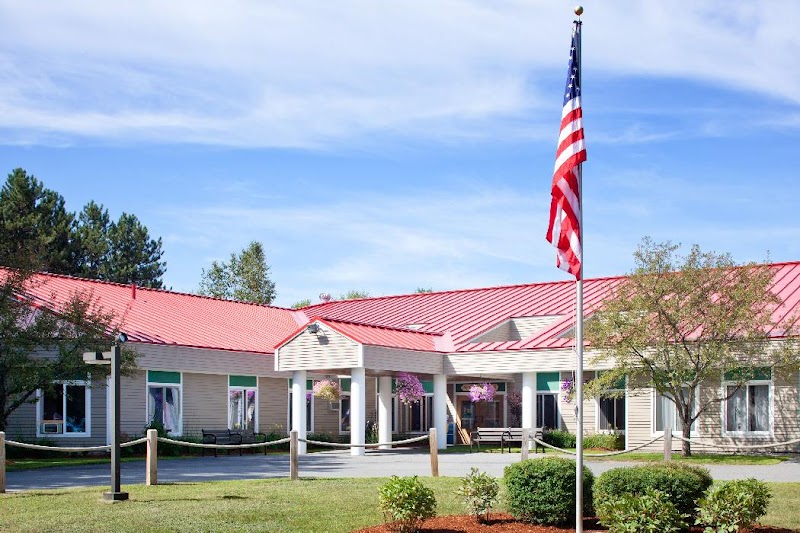
CEDAR RIDGE CENTER

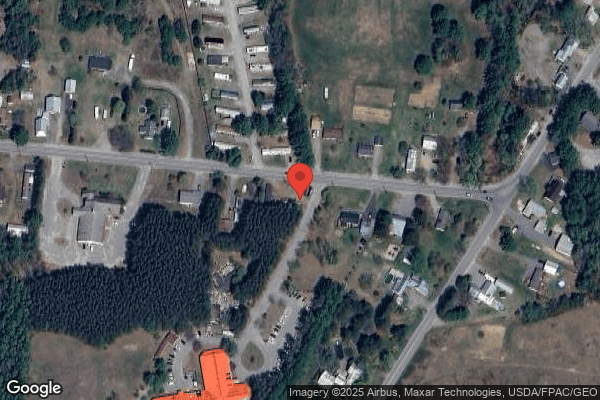
23 CEDAR RIDGE DRIVE, SKOWHEGAN, ME 04976 (207) 474-9686
For profit - Limited Liability company 75 Beds GENESIS HEALTHCARE Data: November 2025
Trust Grade
50/100
#47 of 77 in ME
Last Inspection: January 2025

Within standard 12-15 month inspection cycle. Federal law requires annual inspections.

Overview

Cedar Ridge Center in Skowhegan, Maine, has a Trust Grade of C, which means it is average-ranking in the middle of the pack. It ranks #47 out of 77 facilities in Maine, indicating it is in the bottom half, but it is #2 out of 4 in Somerset County, suggesting only one other local option is better. Unfortunately, the facility is worsening, with reported issues increasing from 14 in 2024 to 17 in 2025. Staffing is rated 2 out of 5 stars, with a turnover rate of 48%, which is slightly better than the state average. While the center has no fines on record, there have been specific incidents, such as a resident waiting hours for assistance after using a bedpan, and a failure to develop care plans for residents with PTSD. Additionally, some respiratory equipment was found unsanitary, which raises concerns about cleanliness and attention to detail. Overall, while there are strengths in staffing consistency and RN coverage, the facility has notable weaknesses that families should consider.

Trust Score
C
50/100
In Maine
#47/77
Bottom 39%
Safety Record
Low Risk
No red flags
Inspections
Getting Worse
14 → 17 violations
Staff Stability
⚠ Watch
48% turnover. Above average. Higher turnover means staff may not know residents' routines.
Penalties
✓ Good
No fines on record. Clean compliance history, better than most Maine facilities.
Skilled Nurses
✓ Good
Each resident gets 71 minutes of Registered Nurse (RN) attention daily — more than 97% of Maine nursing homes. RNs are the most trained staff who catch health problems before they become serious.
Violations
⚠ Watch
44 deficiencies on record. Higher than average. Multiple issues found across inspections.
★★☆☆☆
2.0
Overall Rating
★★☆☆☆
2.0
Staff Levels
★★★☆☆
3.0
Care Quality
★★☆☆☆
2.0
Inspection Score
Stable
2024: 14 issues
2025: 17 issues

The Good

  • Full Sprinkler Coverage · Fire safety systems throughout facility
  • No fines on record

Facility shows strength in fire safety.

The Bad

2-Star Overall Rating

Below Maine average (3.0)

Below average - review inspection findings carefully

Staff Turnover: 48%

Near Maine avg (46%)

Higher turnover may affect care consistency

Chain: GENESIS HEALTHCARE

Part of a multi-facility chain

Ask about local staffing decisions and management

The Ugly 44 deficiencies on record

Jun 2025 2 deficiencies
CONCERN (D) 📢 Someone Reported This

A family member, employee, or ombudsman was alarmed enough to file a formal complaint

Potential for Harm - no one hurt, but risky conditions existed

Deficiency F0621 (Tag F0621)

Could have caused harm · This affected 1 resident

Based on record review and interviews, the facility failed to ensure equal access to services, including assistance with alternative placement, when the payor source changed from Medicare Part A to pr...

Read full inspector narrative →
Based on record review and interviews, the facility failed to ensure equal access to services, including assistance with alternative placement, when the payor source changed from Medicare Part A to private pay for 1 of 1 residents reviewed for discharge. Findings: A review of the clinical record for R9 reveals he/she was admitted to skilled nursing services in May, 2023. On 9/24/24, the facility provided notice of Medicare non-coverage (NOMNC) to R9's health care power of attorney (POA) informing that skilled services would be ending on 9/26/24. On 11/12/24, a Medical Eligibility Determination Assessment was completed which found R9 was not medically eligible for nursing home level of care. Section Y of the assessment indicated R9 would be entering residential care. A review of the quarterly Minimum Data Set (MDS) 3.0, dated 11/29/24 revealed a BIMS (brief interview for mental status) score of 13, indicating R9 was cognitively intact. Section Q of the MDS - Participation in Assessment and Goal Setting, revealed R9 and the family participated and that no active discharge plan was in place for R9 to return to the community. A review of the facility's policy, Discharge and Transfer, dated 3/24/25, Section 4. Voluntary Discharge, stated 4.1 If patient is discharging to home, an assisted living center, or other community based/home alternative setting: 4.1.1. The Discharge Transition Plan is given to the patient, family member, or legal representative; 4.1.2., a copy of the Discharge Transition Plan will be placed in the patient's medical record; 4.2, A patient must not be forced, pressured or intimidated into leaving the center voluntarily. For patients who are admitted for short term, skilled rehabilitation under Medicare, in anticipation of completion of the rehabilitation program, the Center must assist the patient to evaluate their need for care and pursue payment options in the manner required by applicable laws/regulations. Unlawful discrimination based on payment source is prohibited. A review of a progress note, dated 11/21/24, stated staff met with R9 and the POA to discuss that he/she did not qualify for nursing home level of care and that it was necessary to move to a lower level of care to save money. The record indicated a bed was available at an assisted living facility in Farmington. Documentation in the record indicated R9 refused to move from the facility. On 2/27/25, the annual MDS was completed, which revealed a BIMS score of 3, indicating severely impaired cognition. Section Q stated no active discharge plan to return to the community was in place. Section GG, Functional Abilities, indicated R9 required set up/clean up assistance for ADLs, supervision/touch assistance for transfers to shower/tub, partial/moderate assistance with upper body dressing, and was independent with wheelchair mobility. The assessment indicated R9 required a lower level of care than nursing home. On 5/30/25, the quarterly MDS was completed, which revealed a BIMS score of 3, indicating severely impaired cognition. Section Q stated an active discharge plan to return to the community was in place and the discharge date was 3 or fewer months away. Section GG, Functional Abilities, indicated R9 required set up/clean up assistance for all ADLs, and was independent with transfers and wheelchair mobility. The assessment indicated R9 had improved in functional abilities and required a lower level of care than nursing home. No discharge plan was located within R9's clinical record. On 6/2/25, at 11:35 a.m., in an interview with a surveyor, R9's POA stated he/she had been paying privately for R9's care at the facility, and within 2 months, R9's money would be gone. The POA stated R9 did not belong at the facility but had chosen to remain there and the facility staff had indicated R9 was capable of making his/her own decisions. The POA stated facility staff threatened me with APS (Adult Protective Services) if I have attempted to move R9. On 6/3/25 at 2:00 p.m., two surveyors interviewed the Market Clinical Advisor, Administrator, Long-Term Care Unit Manager, Business Office Manager, and Social Worker. A surveyor discussed the POA's concerns that R9's savings were almost depleted, that the BIMS was only 3, and that R9 was not competent to make the decision to remain at the facility. The Administrator stated R9 was very sure he/she wanted to stay at the facility and under no circumstances wanted to go anywhere else. A surveyor discussed that when the POA had arranged to transport R9 to an assisted living facility (ALF), staff had threatened him/her with calling APS, and as POA, did he/she have the right to take R9 out of the facility? The nurse manager stated We did call APS. (R9) gets very psychotic and threatens to kill him/herself, whenever the discussion is held regarding transfer. The nurse manager stated the POA had never had any contact with staff about discharge. A surveyor asked what will happen if R9 is reassessed and does not qualify at nursing home level of care. The Administrator stated the resident would be involuntarily discharged and would qualify for days awaiting placement. A surveyor asked why had the facility not taken steps towards preparing for discharge since R9 had qualified at assisted living level of care since November, 2024. The Administrator stated The conversations we've had with R9 were not just recently, before the change in his/her BIMS. We need to re-engage in the conversation. We have had no contact with the (POA). The surveyor asked what will the facility's plan be when R9's money runs out in approximately 2 months and can no longer pay privately. The Business Office Manager stated R9 would be days awaiting placement pending Mainecare. He/she would have to take an ALF when available within 60 miles. We will need to reach out to (the POA).
CONCERN (E) 📢 Someone Reported This

A family member, employee, or ombudsman was alarmed enough to file a formal complaint

Potential for Harm - no one hurt, but risky conditions existed

Deficiency F0725 (Tag F0725)

Could have caused harm · This affected multiple residents

10. On 6/3/25 at 10:00 a.m., in an interview with a surveyor, Resident #10 stated that he/she had asked to use the bedpan at approximately 2:10 am this morning. They came and put me on it and I rang a...

Read full inspector narrative →
10. On 6/3/25 at 10:00 a.m., in an interview with a surveyor, Resident #10 stated that he/she had asked to use the bedpan at approximately 2:10 am this morning. They came and put me on it and I rang again when I was finished. No one came until 7 or 8 o'clock this morning. I ended up taking it out and it fell off the bed when I moved. The nurse was the one who found it. On 6/3/25 at 1:20 p.m., in an interview with a surveyor, the RN confirmed that he/she had found Resident #10's bedpan spilled on the floor and had to clean it up. He/she stated there had been no CNA from 6 a.m. to 8 a.m. on the unit and he/she was doing both jobs as the CNA and the nurse on the Blue Spruce unit. On 6/3/25 at 1:30 p.m., the finding was discussed with the Director of Nursing. Based on record reviews, interviews, and facility staffing schedules review, the facility failed to ensure sufficient direct care staff were scheduled and on duty to meet the needs of residents that reside in the facility. This has the potential to affect all residents needing assistance with Activities of Daily Living (ADL's). Findings: Review of the facility's staffing schedules and the resident census of those days, showed the facility failed to assure staffing minimums were met for 23 of 31 days reviewed for staffing.(3/14/25 to 3/23/25 and 5/14/25 to 6/3/25) 1. On 6/3/25 at 9:15 a.m., in an interview with a surveyor, Resident #3 stated, I have had to wait a very long time on the evening shift because there is not enough staff to do my care. I have had accidents and wet myself because no one has come for over an hour when I ring the call bell. Then, I have to sit in wetness for over an hour before I am changed. The staff tell me they are short staffed and will get to me when they can. 2. On 6/3/25 at 9:30 a.m., in an interview with a surveyor, Resident #4 stated, When I put my call bell on, it takes a very long time for them to come answer it. Sometimes over half an hour. I get the are busy but they say they are short staffed and they will get to me when they can. I have to wait a long time for my care. 3. On 6/3/25 at 9:55 a.m., in an interview with a surveyor, Resident #1 stated, I have been told by the CNA[Certified Nursing Aide] staff to stop ringing my call bell so much. I have had a few of the CNAs say to me to stop asking for assistance so much because they are short staffed and are doing the best they can. I used to walk but I am too weak to now because they stopped walking me. I don't ask anymore because the staff tell me they don't have time to walk me. 4. On 6/3/25 at 10:00 a.m., in an interview with a surveyor, Resident #5 stated, They take half an hour to an hour to answer my call bell. I have to wait so long to get my care. The CNA staff tell me it is because they are short staffed. My roommate and I have both yelled for assistance because no one comes for the call bells for a long time. 5. On 6/3/25 at 10:10 a.m., in an interview with a surveyor, Resident #7 stated, I have to wait a very long time to get my care. I have had accidents because they haven't assisted me to the toilet when I needed to go. They made me wait too long. The tell me that they are short staffed and I have to wait. Ask my roommate. We both have yelled for someone to come help us. 6. On 6/3/25 at 10:20 a.m., in an interview with a surveyor, a staff member wishing to stay anonymous stated, We are so short staffed that care for the residents isn't being done sometimes and a lot not done timely. Residents have to wait so long for us to answer their call bells that some have accidents, as in soiling themselves. I have come in and found resident left in soiled beds and I don't know for how long. We tell the administration and they say we are staffed to correct ratios. The evening shift is so short that they don't get their baths done and days have to try to pick them up. Some nights there is only one CNA here with a nurse for the whole facility. 7. On 6/3/25 at 10:30 a.m., in an interview with a surveyor, a staff member wishing to stay anonymous stated, We work short all the time here. Baths and positioning and ADL[Activities of daily living] care is not getting done as it should. Especially on the evening shift. 8. On 6/3/25 at 13:00 p.m., in an interview with a surveyor, Resident #6 stated, I have put my call bell on and have had to wait longer than half an hour for staff and have had an accident because no one came to help me. It was very embarrassing. The CNA staff have told me they are short staffed and for me not to use my call bell so much. 9. On 6/3/25 at 3:45 p.m., in an interview with a surveyor, Resident #8 stated, The staffing is terrible at this facility. On the evening shift, there is 1 CNA to cover the D and C units. The CNA will start out here and then go to the other unit and we are left here all alone. I have put my call bell on and no one comes for over an hour and I shit myself. Then I have to wait to be cleaned up. It's just not right. I had my bell on for over an hour this morning before anyone came to help me. My family was here with me a few days ago and I had to go to the bathroom and they had to go to another unit to find someone to help me because no one came to answer my call bell for over half an hour. I have had accidents more than once because they aren't staffing with enough staff. On 6/3/25 at 4:30 p.m., 2 surveyors discussed the findings with the Administrator.
Jan 2025 13 deficiencies
CONCERN (D)

Potential for Harm - no one hurt, but risky conditions existed

Resident Rights (Tag F0550)

Could have caused harm · This affected 1 resident

Based on observation, record review, and interviews, the facility failed to provide care to residents in a manner that maintains each resident's dignity by failing to serve all residents seated at the...

Read full inspector narrative →
Based on observation, record review, and interviews, the facility failed to provide care to residents in a manner that maintains each resident's dignity by failing to serve all residents seated at the same table at the same time for 1 of 2 dining observations on 1 of 1 days of survey. Finding: Review of the facility's Resident Council Meeting Minutes, dated 12/31/24, revealed resident concerns that residents are concerned that trays are being served in rooms on units before the dining room service . Resident Council Meeting Minutes , dated 11/27/24 states, Dining Services .Trays in order of room on carts .Nursing: Tray served in dinning [dining] room first by table before room trays . Resident Council Meeting Minutes, dated 10/30/24 states, CNA's [Certified Nursing Assistants] are not serving residents at the table in the dining room first . On 1/28/25 between 12:23 p.m. and 12:40 p.m., during a dining observation on the Hickory Unit, a surveyor observed a table seating 3 residents. At 12:29 p.m., Resident #60 received his/her meal. Staff then proceeded to deliver meals to other tables in the dining room and to residents who were eating in their rooms. At 12:34 p.m., Resident #55 received his/her meal. Staff again delivered to adjacent tables and residents in their rooms. Resident #12, seated at the same table, did not receive his/her meal until 12:39 p.m. At this time, Certified Nursing Assistant-Medication Tech (CNA-MT) #1 and Certified Nursing Assistant (CNA) #3 stated residents typically sit at the same table each day and that the meal truck is typically ordered by room number; staff serves residents in the dining room before serving residents in their rooms and should serve a complete table before serving residents at another table. On 1/28/25 at 1: 05 p.m., during an interview the Food Services Account Manager, stated the trays in the meal delivery trucks are organized by room number and that there has been talk about changing the order of stacking in the trucks to coordinate with how the residents are seated in the dining room, but nothing has been implemented. On 1/28/25 at approximately 1:10 p.m., during an interview, the above finding was discussed with the Director of Nursing (DNS), who stated the concern has been brought to Quality Assurance and Performance Improvement (QAPI) meeting for review. As of 1/30/25 upon the surveyors exit, the DNS was unable to provide evidence that a performance improvement process was in place.
CONCERN (D) 📢 Someone Reported This

A family member, employee, or ombudsman was alarmed enough to file a formal complaint

Potential for Harm - no one hurt, but risky conditions existed

Deficiency F0559 (Tag F0559)

Could have caused harm · This affected 1 resident

Based on record review and interviews the facility failed to appropriately notify a resident and or resident representative in a timely manor, prior to changing a residents room, for 1 of 1 residents ...

Read full inspector narrative →
Based on record review and interviews the facility failed to appropriately notify a resident and or resident representative in a timely manor, prior to changing a residents room, for 1 of 1 residents reviewed for room change. On 1/21/25 the Division of Licensing and Certification received a complaint in regards to a resident's room being changed without proper notification. On 1/27/25 at 8:00 p.m., during an interview Resident #57 and his/her family member both stated that they had not received any notification of a room change prior to it occurring. Review of Resident #57's clinical record indicates that the resident was moved from Elm Unit to Hickory Unit on 1/15/25. Further review of the clinical record lacked evidence that any notification of the room change occurred. On 1/30/25 at 2:31 p.m., during an interview with the Market Clinical Advisor the above information was confirmed.
CONCERN (D)

Potential for Harm - no one hurt, but risky conditions existed

Deficiency F0657 (Tag F0657)

Could have caused harm · This affected 1 resident

Based on interview and record review, the facility failed to review, revise and update a care plan in the area of Post-Traumatic Stress Disorder (PTSD) for 1 of 4 residents whose care plans were revie...

Read full inspector narrative →
Based on interview and record review, the facility failed to review, revise and update a care plan in the area of Post-Traumatic Stress Disorder (PTSD) for 1 of 4 residents whose care plans were reviewed for PTSD. (#18) Finding: Resident #18 was admitted the facility on 12/23/21. On 4/14/23, the resident was identified/diagnosed with Post-Traumatic Stress Disorder (PTSD). Review of Resident #18's clinical record revealed the current care plan was not reviewed, revised and updated to include goals, interventions or triggers for PTSD. On 1/30/25 at 12:47 p.m. in an interview, the Market Clinical Advisor confirmed that the Resident 18's care plan was not reviewed, revised and updated to include goals, interventions or triggers for PTSD.
CONCERN (D)

Potential for Harm - no one hurt, but risky conditions existed

Medication Errors (Tag F0758)

Could have caused harm · This affected 1 resident

**NOTE- TERMS IN BRACKETS HAVE BEEN EDITED TO PROTECT CONFIDENTIALITY** Based on record review, interview, and facility policy, the facility failed to demonstrate evidence of behavior monitoring and m...

Read full inspector narrative →
**NOTE- TERMS IN BRACKETS HAVE BEEN EDITED TO PROTECT CONFIDENTIALITY** Based on record review, interview, and facility policy, the facility failed to demonstrate evidence of behavior monitoring and monitoring for side effects of psychotropic medications for 1 of 5 residents reviewed for unnecessary medications (#26). Finding: Facility policy, Medication Management, dated 1/2024, states, Policy . Evaluation of a resident's physical, behavioral, mental, psychosocial signs and symptoms .including adverse consequences of medications . The need for and response to therapy are monitored and documented in the resident's medical record .Guidelines for Psychotropic Medication Monitoring .Potential Adverse Consequences: The facility assures residents are being adequately monitored for adverse consequences . Resident #36 was admitted on [DATE] with diagnoses to include anxiety and depression. Resident #36's care plan, initiated 12/17/24, states, .at risk for complications related to the use of psychotropic drugs . complete behavior monitoring flow sheet .monitor for side effects . Review of Resident #36's clinical record revealed the following active physician orders: -Order with a start date of 1/7/25 for Clonazepam 0.5 mg (milligram) tablet, give 0.5 tablet by mouth one time a day for anxiety for 28 days AND 0.5 tablet by mouth one time a day for anxiety at 0600, 1000, 1400, 1800. -Order with a start date of 12/17/24 for Mirtazapine 15 mg oral tablet, one tablet by mouth at bedtime for depression. -Order with a start date of 12/18/24 for Escitalopram Oxalate 10 mg tablet, 1.5 tablet by mouth one time a day for depression. -Order with a start date of 1/28/25 for Hydroxyzine HCl 25 mg oral tablet, 1 tablet by mouth as need for anxiety for 14 days, BID [two times daily] prn [as needed]. Further review of the clinical record lacked evidence of a provider order/and or monitoring for behaviors and side effects of the psychotropic medication use. During an interview on 1/29/25 at 3:45 p.m., the Market Clinical Advisor reviewed Resident #36's entire clinical record and confirmed it lacked evidence of behavior monitoring and monitoring for side effects.
CONCERN (D)

Potential for Harm - no one hurt, but risky conditions existed

Deficiency F0761 (Tag F0761)

Could have caused harm · This affected 1 resident

**NOTE- TERMS IN BRACKETS HAVE BEEN EDITED TO PROTECT CONFIDENTIALITY** Based on observation and interview, the facility failed to adequately date and properly dispose of open biologicals according to...

Read full inspector narrative →
**NOTE- TERMS IN BRACKETS HAVE BEEN EDITED TO PROTECT CONFIDENTIALITY** Based on observation and interview, the facility failed to adequately date and properly dispose of open biologicals according to manufacturer specifications in 1 of 4 units observed for medication storage. (Scotch Pine House) Findings: 1. On [DATE] at 9:51 a.m., observation of Scotch Pine House treatment cart with the Registered Nurse (RN) the following was observed; one opened Aspart Insulin Flex Pen dated 12/22 and one opened and undated Insulin Glargine-yfgn Solution Pen with both with the manufacture's instructions of, after first use .discard after 28 days. At this time, the RN removed both of the insulin pens and confirmed they were either expired or undated.
CONCERN (E)

Potential for Harm - no one hurt, but risky conditions existed

Comprehensive Care Plan (Tag F0656)

Could have caused harm · This affected multiple residents

**NOTE- TERMS IN BRACKETS HAVE BEEN EDITED TO PROTECT CONFIDENTIALITY** Based on observation, record review and interview, the facility failed to ensure that a care plan was developed in the area of P...

Read full inspector narrative →
**NOTE- TERMS IN BRACKETS HAVE BEEN EDITED TO PROTECT CONFIDENTIALITY** Based on observation, record review and interview, the facility failed to ensure that a care plan was developed in the area of Post-Traumatic Stress Disorder(PTSD)/trauma for 3 of 4 sampled residents reviewed for PTSD. (#1, #5, #51) Findings: 1. Resident #1 was admitted to the facility on [DATE] with diagnoses to include PTSD. Review of Resident #1's clinical record on 1/28/25 revealed it lacked documented evidence that the current care plan had been developed and implemented in the area of PTSD to include goals, interventions and triggers. 2. Resident #5 was admitted to the facility on [DATE] with diagnoses to include PTSD. Review of Resident #5's clinical record on 1/28/25 revealed it lacked documented evidence that the current care plan had been developed and implemented in the area of PTSD to include goals, interventions and triggers. 3. Resident #51 was admitted to the facility on [DATE]. Review of the residents medical record indicates he/she has a diagnosis of Post-Traumatic Stress Disorder (PTSD). Further review of the his/her medical record lacks evidence of a care plan for PTSD . On 1/28/25 at 3:37 p.m., in an interview, the Market Clinical Advisor confirmed that the residents' current care plans did not include Goals, Interventions or triggers to address PTSD.
CONCERN (E)

Potential for Harm - no one hurt, but risky conditions existed

Respiratory Care (Tag F0695)

Could have caused harm · This affected multiple residents

**NOTE- TERMS IN BRACKETS HAVE BEEN EDITED TO PROTECT CONFIDENTIALITY** Based on observations and interviews, the facility failed to maintain respiratory equipment in a sanitary manner to help prevent...

Read full inspector narrative →
**NOTE- TERMS IN BRACKETS HAVE BEEN EDITED TO PROTECT CONFIDENTIALITY** Based on observations and interviews, the facility failed to maintain respiratory equipment in a sanitary manner to help prevent the development and transmission of disease and infection related to respiratory care for 3 of 4 days of survey. (1/27/25, 1/28/25 and 1/29/25) Findings: 1. On 1/27/25 at 6:15 p.m. a surveyor observed on the Blue Spruce Unit a portable oxygen machine and nasal canula and tubing on the floor next to the exit door. On 1/27/25 at 6:15 p.m., in an interview, Licensed Practical Nurse (LPN #1) confirmed that the portable oxygen machine, the nasal canula and the tubing should not be on the floor and that it should be bagged and stored off the floor. On 1/27/25 at 6:30 p.m., in an interview, Registered Nurse (RN#1) confirmed that the portable oxygen machine, the nasal canula and the tubing was and should not have be on the floor and went on to say that no resident was using it at that point. 2. On 1/27/25 at 6:20 p.m., a surveyor observed oxygen tubing and a nasal canula hanging on the left wheelchair handle and not stored in a bag which was hanging on the back of a wheelchair. On 1/27/25 at 6:17 p.m., in an interview, LPN #1 stated that it should be stored in a bag when not in use. On 1/27/25 at 6:30 p.m., in an interview, RN#1 stated that this oxygen tubing and nasal canula hadn't been used by a resident for 2 to 3 days and that it should be stored in a bag when not in use. 3. On 1/28/25 at 9:14 a.m., during an observation of room [ROOM NUMBER], Resident #474's unbagged and undated nasal cannula tubing was draped over the top corner of the light fixture located above the resident's bed, with the nasal cannula prongs in direct contact with the surface of the light fixture. 4. On 1/27/25 at 6:32 p.m. and on 1/28/25 at 2:45 p.m., during observations of room [ROOM NUMBER], Resident #31's unbagged nasal cannula was lying at the head of the bed. The oxygen concentrator next to the bed had an empty plastic storage bag, dated 1/26/25. During a follow-up observation on 01/29/25 at 9:30 a.m., the unbagged nasal cannula tubing was tucked between the resident's sheets. On 1/29/25 at 3:06 p.m., during an interview both the surveyor and Registered Nurse (RN) #1 observed that Resident #31 was sleeping on top of his/her nasal cannula. At this time, RN #1 confirmed that nasal cannulas should be stored in a plastic bag when not in use and that tubing and bags are changed weekly.
CONCERN (E) 📢 Someone Reported This

A family member, employee, or ombudsman was alarmed enough to file a formal complaint

Potential for Harm - no one hurt, but risky conditions existed

Deficiency F0725 (Tag F0725)

Could have caused harm · This affected multiple residents

Based on record review and interviews, the facility failed to ensure sufficient direct care staff were scheduled and on duty to meet the needs of residents that reside in the facility. This has the po...

Read full inspector narrative →
Based on record review and interviews, the facility failed to ensure sufficient direct care staff were scheduled and on duty to meet the needs of residents that reside in the facility. This has the potential to affect all residents needing assistance with Activities of Daily Living (ADL's). Findings: Review of Payroll Based Journal staffing report revealed the facility triggered for low weekend staffing during the fourth quarter of 2024 (July 1 - September 30). On 1/28/25 at 3:30 p.m., in an interview with a surveyor and review of weekend staffing for July 1, 2024, through September 30, 2024, the Administrator confirmed the facility did not have enough staff to meet resident needs on the weekends. On 1/28/25 at 10:58 a.m., in an interview with a surveyor, Resident #327 stated on one day during the previous weekend, I had to pee myself, had to wait 30 minutes after using the call bell, due to lack of staff. When in bed Resident #327 stated compression devices are applied to both legs and he/she can't stand up without assistance due to dizziness. Resident #327 stated they need more help around here. On 1/28/25 at 2:35 p.m., in an interview with 4 surveyors, a family member stated one night between 1/17/25 to 1/19/25, he/she had received a call from the resident stating that he/she needed to use the bathroom and no one had answered the call bell. The family member stated he/she she tried to call numerous times, but no staff answered the phone. The family member came to the facility and found the call light for room still on. On 1/28/25 at 4:12 p.m., in an interview with a surveyor, Resident #16 stated he/she had a diagnosis of PTSD (post traumatic stress disorder), and I've been stuck in the bathroom and had to wait 20 minutes for someone to come. I panic if someone leaves me more than 20 minutes. It's hard, they can say they're sorry all they want but it doesn't take away that fear. They never have floats anymore. They try to make do with what they have. Resident #16 stated he/she requires a sit to stand lift for transfers and there is usually only 1 staff on the unit most of the time. This causes an extended wait due to staff needing to find assistance to complete the transfer. On 1/28/25 at 5:03 p.m., in an interview with a surveyor, Resident #9 stated I rang to go out in the dining room at 4:00 p.m., and I just got out there (4:45 pm). There's only 1 staff and she was giving a shower and had 4-5 (call) bells on. Resident #9 stated there had been one night where was he/she had been left wet all night when his/her catheter was leaking and no staff answered the call bell.
CONCERN (E)

Potential for Harm - no one hurt, but risky conditions existed

Pharmacy Services (Tag F0755)

Could have caused harm · This affected multiple residents

**NOTE- TERMS IN BRACKETS HAVE BEEN EDITED TO PROTECT CONFIDENTIALITY** 5. On 1/28/25 at 1:18 p.m., in an interview with a surveyor, Resident #329 stated he/she had been admitted last Friday (1/24/25)...

Read full inspector narrative →
**NOTE- TERMS IN BRACKETS HAVE BEEN EDITED TO PROTECT CONFIDENTIALITY** 5. On 1/28/25 at 1:18 p.m., in an interview with a surveyor, Resident #329 stated he/she had been admitted last Friday (1/24/25), and was supposed to receive an IV (intravenous) antibiotic but it was not available until Monday (1/27/25). A review of the clinical record confirmed Resident #329 was admitted on [DATE] with diagnoses including acute osteomyelitis of the left foot and underwent a below the knee amputation on 1/8/24. Resident #329 was readmitted to the hospital with vasculitis, viral pneumonia, urinary tract infection and pyelonephritis. A review of the physician orders noted the following, Aztreonam Injection Solution Reconstituted 1 GM (gram) - Use 1 gram intravenously three times a day for infection. A review of the medication and treatment administration record indicated the dose was to be given at 7:00 a.m., 1:00 p.m., and 7:00 p.m. each day. The record revealed that doses were not administered on 1/25/25, 1/26/25, and 1/27/25 7:00 a.m. This resulted in a total of 7 missed doses. A progress note, dated 1/25/25, at 1:10 p.m., stated The antibiotic is not available at this time due to the pharmacy's supply. Called on call-provider and we have to wait until the medication is available. The on-call provider note, dated 1/25/25 at 1:32 p.m., stated Awaiting IV antibiotics. Plan: IV antibiotics to commence Monday when received. No alternative antibiotics available at present. Follow-up scheduled for Monday. On 1/30/25 at 2:00 p.m., a surveyor discussed the finding with the Market Clinical Advisor, who stated the facility's pharmacy contracts with another pharmacy for all IV medications. The Market Clinical Advisor was unaware of local pharmacies which could handle an emergency order. On 1/30/25 at 3:38 p.m., the Market Clinical Advisor stated the facility's pharmacist had informed her its emergency pharmacy was Walgreen's, which does not provide IV medications. The Market Clinical Advisor did not have the pharmacy's policy or procedure for obtaining IV medications when unavailable. Based on record review, observations and interviews the facility failed to establish a system of records of receipt and disposition of all controlled drugs in sufficient detail to enable an accurate reconciliation, failed to ensure that two people who are authorized to administer medications signed the Shift Count page indicating that they counted all controlled substances at the change of shift for multiple shifts, on 4 of 4 units reviewed (Hickory, Elm, Blue Spruce and Scotch Pine) and failed to maintain adequate pharmaceutical services to ensure the receipt and administration of physician ordered medication was available to meet the needs of a resident requiring intravenous antibiotics (Resident #329). Findings: A review of the facility's Controlled Medication Storage policy and procedure dated: 1/24, under #6 states: At each shift change or when keys are surrendered, a physical inventory of all controlled substances, including refrigerated items, is conducted by two licensed nurses or approved individuals per state regulation and is documented on the controlled substances accountability record or verification of controlled substances count report. On 1/29/25 during medication storage the following was reviewed: 1. Blue Spruce unit Controlled Substance Book and Shift Counts were reviewed, which indicated the facility counts at the change of each shift, approx. 3 times a day. The person authorized to administer medications coming on duty and/or the person authorized to administer medications going off duty both failed to sign the Shift Count page of the Controlled Substances Book that indicated the controlled substances count was done on the following dates: 9/29/24, 10/8/24, 10/9/24, 10/17/24, 10/21/24, 10/22/24, 10/30/24, 11/27/24, 11/28/24, 11/29/24, 12/4/24, 12/7/24, 12/21/24, 12/22/24, 1/8/25, 1/9/25, 1/17/25 and 1/18/25. 2. Hickory unit Controlled Substance Book and Shift Counts were reviewed, which indicated the facility counts at the change of each shift, approx. 3 times a day. The person authorized to administer medications coming on duty and/or the person authorized to administer medications going off duty both failed to sign the Shift Count page of the Controlled Substances Book that indicated the controlled substances count was done on the following dates:8/12/24, 8/21/24, 8/15/24, 10/16/24, 11/4/24, 11/14/24, 11/18/24, 1/4/25, 1/19/25 and 1/20/25. 3. Elm unit Controlled Substance Book and Shift Counts were reviewed, which indicated the facility counts at the change of each shift, approx. 3 times a day. The person authorized to administer medications coming on duty and/or the person authorized to administer medications going off duty both failed to sign the Shift Count page of the Controlled Substances Book that indicated the controlled substances count was done on the following dates: 9/27/24, 10/16/24, 10/21/24, 10/24/24, 12/6/24, 12/7/24, 12/8/24, 12/17/24, 12/21/24, 12/25/24, 1/13/25 and 1/14/25. 4. Scotch Pine unit Controlled Substance Book and Shift Counts were reviewed, which indicated the facility counts at the change of each shift, approx. 3 times a day. The person authorized to administer medications coming on duty and/or the person authorized to administer medications going off duty both failed to sign the Shift Count page of the Controlled Substances Book that indicated the controlled substances count was done on the following dates: 11/14/24, 11/19/24, 11/27/24, 1/8/25, 1/28/25 and 1/29/25. On 1/29/25 at 9:45 a.m., during an interview, the above was discussed with the Director of Nursing.
CONCERN (E)

Potential for Harm - no one hurt, but risky conditions existed

Food Safety (Tag F0812)

Could have caused harm · This affected multiple residents

Based on observations, interviews, and facility policy, the facility failed to ensure the kitchen was maintained in a clean and sanitary manner. Additionally, the facility failed to ensure foods were ...

Read full inspector narrative →
Based on observations, interviews, and facility policy, the facility failed to ensure the kitchen was maintained in a clean and sanitary manner. Additionally, the facility failed to ensure foods were sealed, labeled, and dated in a dry storage room, a walk-in freezer and a walk-in refrigerator, as well as failed to ensure the emergency food supply was not stored with unsecured chemicals for 1 of 3 days of survey (1/27/25). Furthermore, the facility failed to ensure that the Dish Machine temperatures, Refrigerator temperatures, and Freezer temperatures were monitored for 3 of 3 months reviewed. Findings: Review of policy, Food Storage: Cold Foods, revised 4/2018, states, Procedures .5. All foods will be stored wrapped or in covered containers, labeled and dated . Review of policy, Food Storage: Dry Goods, revised 9/2017 states, Storage areas will be neat, arranged for easy identification, and date marked as appropriate .Toxic materials will not be stored with food . 1. On 1/27/25 between 6:10 p.m. and 6:40 p.m., a surveyor conducted a kitchen tour with Dietary Aide (DA) #1, during which the following findings were observed: -White ceramic bowls were stacked on a soiled, parchment-lined metal tray on a metal storage cart, located next to the reach-in refrigerator. The bottom surface of the cart was covered in food crumbs and debris, and there were clean kitchen linens and potholders touching the debris. -There were food crumbs and debris covering the top surface of the double-door oven. -Grease and food debris was built up on the burner plates on the stovetop. - Food debris was observed on the underside of the uncovered food slicer. - Food debris and crumbs were observed on top of the metal food prep table. - The wall mount air conditioner unit above the reach-in refrigerator was covered in dust and debris. - Four wall mount oscillating fans covered in dust and debris were observed in the dish-washing area, above clean/dry stacked dishes. - A gray basin containing unknown liquid, was on top of a folded blanket under the three-bay sink. - Floors throughout the kitchen were covered with food crumbs and debris, and debris was observed throughout the kitchen underneath equipment and shelving. - The reach-in refrigerator contained a tray containing 5 cups of sliced fruit that were unlabeled and undated. Observation of the walk-in refrigerator revealed the following available for use: -14-ounce container of Sysco Reliance Beef Flavored Base, opened and undated - large metal bowl containing a partial head of iceberg lettuce with obvious pink discoloration, uncovered, unlabeled, and undated -metal bowl on a wire shelf in the back of the refrigerator, containing a partial head of iceberg lettuce, ½ onion, a green bell pepper, and a tomato, unlabeled and undated. - ring-shaped, sponge-type cake was unlabeled and undated. - The walk-in freezer contained an open zip-loc bag of cooked potato wedges, dated 1/25/24, unsealed and open to air and a plastic bag containing a deep-dish pie shell, unsealed and open to air and available for use. - The Dry Storage room had a plastic bag of a white, flour-appearing substance, rolled and secured with a binder clip, that was unlabeled and undated and an open, undated 16-ounce bag of mini marshmallows. Observation of the food preparation area revealed the following: - open, undated, 3.2 ounce packet of ranch seasoning, a large metal bowl of wheat rolls, located on the top shelf of the steam table, undated and uncovered, open to air. -A piece of sponge-type cake in ceramic bowl, located next to the food slicer, was undated and unlabeled. On 1/28/25 at 6:40 p.m. the above findings were reviewed with Dietary Aide (DA) #1. On 1/28/25 at 9:00 a.m. the above findings were reviewed with the Food Services Account Manager and the Dietary District Manager. 2. On 1/27/25, between approximately 6:50 and 7:10 p.m., two surveyors observed the facility's Emergency Food Supply, located in the Central Supply Room. The emergency food supply was stored on open shelving, next to and directly across from shelves of approximately 50 bottles of unsecured chemicals, including Ecolab Grease Strip Plus and No-Rinse Alkaline Floor Cleaner, Oasis Multi-Quat Sanitizer, Lime Away, and Ice Machine Cleaner, as well as nursing supplies. On 1/27/25 at 7:15 p.m., two surveyors reviewed this finding with the Administrator and interim Director of Nursing Services.
CONCERN (E)

Potential for Harm - no one hurt, but risky conditions existed

Deficiency F0847 (Tag F0847)

Could have caused harm · This affected multiple residents

**NOTE- TERMS IN BRACKETS HAVE BEEN EDITED TO PROTECT CONFIDENTIALITY** Based on interviews and record reviews, the facility failed to ensure the terms and conditions of a binding arbitration agreemen...

Read full inspector narrative →
**NOTE- TERMS IN BRACKETS HAVE BEEN EDITED TO PROTECT CONFIDENTIALITY** Based on interviews and record reviews, the facility failed to ensure the terms and conditions of a binding arbitration agreement were clearly communicated to the residents or their representatives for 4 of 5 residents reviewed for Arbitration (Resident #35, #46, #57, #331). Findings: On 1/27/25 at 7:28 p.m., a surveyor conducted an entrance conference with the Administrator and the Director of Nursing and was told, when asked, that no residents in the facility had signed an arbitration agreement. 1. Review of Resident #35's medical record shows he/she was admitted to the facility on [DATE]. Further review of the resident medical record indicates he/she had a Brief Interview for Mental Status (BIMS) of 15 of 15, indicating he/she is cognitively intact. On 1/30/25 at 3:50 p.m., a surveyor met with Resident #35 and asked if he/she signed an arbitration agreement with the facility during admission. He/she stated that he/she did not know what that was and stated that his/her child signed admission paperwork for him/her. Resident #35 then stated that they received no education on what an arbitration agreement entailed or even what that meant. A surveyor let him/her know that they had signed an arbitration agreement and explained what that meant. Resident #35 stated that they would not have signed that paperwork if they knew what the arbitration agreement was. 2. Review of Resident #46's medical record shows he/she was admitted to the facility on [DATE]. Further review of the resident medical record indicates he/she had a Brief Interview for Mental Status (BIMS) of 13 of 15, indicating he/she is cognitively intact. On 1/30/25 at 3:53 p.m., a surveyor met with Resident #46 and asked if he/she signed an arbitration agreement with the facility during admission. He/she stated that he/she did not know what that was and stated that he/she thinks his/her child signed admission paperwork for him/her. Resident #46 then stated that they received no education on what an arbitration agreement entailed or even what that meant. A surveyor let him/her know that they had signed an arbitration agreement and explained what that meant. Resident #46 stated that they would not have signed that paperwork if they knew what the arbitration agreement was. 3. Review of Resident #57's medical record shows he/she was admitted to the facility on [DATE]. Further review of the resident medical record indicates on 1/9/25 he/she had a Brief Interview for Mental Status (BIMS) of 15 of 15, indicating he/she is cognitively intact. On 1/30/25 at 2:50 p.m., a surveyor met with Resident #57 and asked if he/she signed an arbitration agreement with the facility during admission. He/she did not think they signed an arbitration, but said they are unable to recall signing any documents. Resident #57 then stated that they received no education on what an arbitration entailed. A surveyor let him/her know that they had signed an arbitration agreement and explained what that meant. Resident #57 stated that he/she would not have signed this now knowing what it means. 4. On 1/30/25 at 3:00 p.m., in an interview with a surveyor, the spouse of Resident #331 stated he/she thought he/she had signed the admission paperwork. He/she had no recollection if arbitration agreements were explained to him/her or what they were. A review of the clinical record for Resident #331 noted an admission date of 11/22/24. Diagnoses included hepatic encephalopathy. The admission MDS (Minimum Data Set 3.0) assessment, dated 11/27/24, noted in Section C, Cognitive Patterns, a BIMS (Brief Interview of Mental Status) score of 8, indicating moderate cognitive impairment. A review of Resident #331's admission agreement noted that the arbitration agreement is embedded within the document. Resident #331's signature was noted throughout the agreement, dated 11/25/24. On 1/30/25 at 4:00 p.m., in an interview with Resident #331's spouse, a surveyor showed the contract which Resident #331 had signed on 11/25/24. The spouse stated Resident #331 was not cognitively intact at that time and was not able to understand what he/she had signed. A review of the facility's Voluntary Binding Arbitration Agreement stated under #20, Entire agreement. This agreement contains the entire agreement between the Parties with respect to Arbitration and no prior, concurrent, or subsequent oral written representations or agreements shall be of any force or effect, unless made in writing and signed by the parties. This agreement shall survive the termination, cancellation or expiration of the admission agreement. On 1/30/25 at 2:43 p.m., during an interview with 5 surveyors present and the facilities Market Clinical Advisor, the Admissions Director confirmed an arbitration agreement is within the admission agreement stating, the admission agreements are completed on a tablet. She stated she will go through the admission agreement by section and when it gets to Arbitration she tells them, If there is a problem you work it out between you and the facility before lawyers or others are involved. A surveyor asked if she explains to the residents that they have 30 days to revoke the arbitration. She stated, no. A surveyor asked if the resident would receive a new agreement with every admission. She stated, if they are readmitted after 30 days then they will have a new one to fill out. A surveyor then asked if the second signed arbitration would replace the first signed arbitration. She stated she believed it did. At this time, a surveyor informed the admission Director that after 30 days the agreement is binding for any future admission/readmissions. the Admissions Director stated she was unaware that it was binding for all future admissions, and she has provided a new arbitration agreement to residents who have been readmitted . The surveyor asked how she identifies if the resident or representative understands what she is saying. She stated, I don't just go in and have them sign, I talk to them, I won't wake them up. At this time, the surveyors asked for a list of residents who have entered into a binding arbitration, she stated, everyone has. A surveyor asked for confirmation. The Admissions Director confirmed all of the residents had signed, entering into a binding arbitration. On 1/30/25 at 3:16 p.m., during an additional interview with the Admissions Coordinator and Market Clinical Advisor, a surveyor asked if the admission agreement is sent by email to the resident representative. The admission Director stated, Yes. She would generate the packet and send it by email, and they get a text, I tell them to go to the link and sign it and I let them know if they have any questions, let me know. The surveyor then asked if the admission agreement is emailed how does she explain the Arbitration agreement. She stated, I'm not, it's in the email if they have any questions let me know. She then explained when the admission agreement is signed the program will use the signature for the rest of the document. It will prompt the residents and/or representatives to go to the next page, where they can then hit the signature button to automatically put in their signature. At this time, another surveyor joined the interview and asked, if the resident's record is checked for advanced directives, such as a power of attorney or guardianship before asking them to sign. The Director of Marketing and Admissions stated not all the time.
CONCERN (E)

Potential for Harm - no one hurt, but risky conditions existed

Infection Control (Tag F0880)

Could have caused harm · This affected multiple residents

**NOTE- TERMS IN BRACKETS HAVE BEEN EDITED TO PROTECT CONFIDENTIALITY** Based on observations, interviews, record reviews, and facility policy review, the facility failed to maintain an infection prev...

Read full inspector narrative →
**NOTE- TERMS IN BRACKETS HAVE BEEN EDITED TO PROTECT CONFIDENTIALITY** Based on observations, interviews, record reviews, and facility policy review, the facility failed to maintain an infection prevention and control program designed to help prevent the development and transmission of communicable diseases for residents requiring Enhanced Barrier Precautions (Residents #327 and #331) on 1 of 5 facility units. Findings: 1. On 1/28/25 at 10:40 a.m., in an observation on the Elm House unit, a surveyor briefly reviewed the electronic record for Resident #327 before entering the room. The record indicated Resident #327, admitted on [DATE], required Enhanced Barrier Precautions for CRE (Carbapenemase-producing carbapenem-resistant Enterobacteriaceae), a drug-resistant organism. The surveyor could find no signage at the entrance of the room, or within the resident's room indicating precautions were necessary. The surveyor asked the Registered Nurse on duty if Resident #327 required special precautions. The RN at first stated the resident did not require precautions, then remembered he/she did. The surveyor pointed out there was no sign at the entrance of the room. The RN confirmed the finding and stated a sign would be posted. On 1/28/25 at 10:49 a.m., a surveyor asked CNA #1 (Certified Nursing Assistant) if he/she uses any special PPE (personal protective equipment) when providing care for Resident #327. The CNA stated Resident #327 did not require any special PPE and staff use gloves. The surveyor showed CNA #1 that Resident #327's electronic record stated Enhanced Barrier Precautions were required for CRE. CNA #1 stated I did not know that. A review of the clinical record for Resident #327 noted a hospital Discharge summary, dated [DATE], which stated Precaution Alert: CRE. The base line care plan, initiated on 1/21/25, stated Resident #327 had actual colonization/infection with Multidrug Resistant Organism: CRE. The goal stated: Signage for PPE will remain on doors for resident and staff safety to prevent possible transmission through next review. Interventions included: Enhanced Barrier Precautions: Use gown and gloves when performing high-contact activities: dressing, bathing and showering, transferring, providing hygiene, changing linens, changing briefs or assisting with toileting, device care or use of a device (e.g. central line, urinary catheter, feeding tube, tracheostomy, or ventilator), wound care (any skin opening requiring a dressing). Enhanced Barrier Precautions: Educate patient/family and visitors regarding precautions. 2. On 1/28/25 at 12:15 p.m., in an observation on the Elm House unit, a surveyor briefly reviewed the electronic record for Resident #331 before entering the room. The record indicated Resident #331, admitted on [DATE], required Enhanced Barrier Precautions. The surveyor could find no signage at the entrance of the room, or within the resident's room indicating precautions were necessary. At this time, the surveyor interviewed Resident #331's spouse, and asked if staff wore any type of PPE when providing care. The spouse stated no, but they wore gowns, gloves and masks when (he/she) had Covid. On 1/28/25 at approximately 12:20 p.m., a surveyor asked CNA #1 if Resident #331 required special precautions. CNA #1 stated he/she did not know. CNA #2 joined the conversation and stated he/she did not know if Resident #331 required special precautions when providing care. The surveyor showed both CNA's Resident #331's electronic record stated Enhanced Barrier Precautions were required for MRSA, VRE, and ESBL. A review of the clinical record for Resident #331 noted a hospital Discharge summary, dated [DATE], which stated Precaution Alert: MRSA (Methicillin Resistant Staphylococcus Aureus), VRE (Vancomycin Resistant Enterococcus), and ESBL (Extended Spectrum Beta-Lactamase), all drug resistant organisms. A review of Resident #331's care plan, last revised 11/29/24, stated Resident #331 has actual colonization/ infection with MDRO: MRSA, VRE, ESBL and is on Enhanced Barrier Precautions. The goal stated, Signage for PPE will remain on doors for resident and staff safety to prevent possible infection transmission through next review. Interventions included: Enhanced Barrier Precautions: Use gown and gloves when performing high-contact activities: dressing, bathing and showering, transferring, providing hygiene, changing linens, changing briefs or assisting with toileting, device care or use of a device (e.g. central line, urinary catheter, feeding tube, tracheostomy, or ventilator), wound care (any skin opening requiring a dressing). Enhanced Barrier Precautions: Educate patient/family and visitors regarding precautions. The facility's policy regarding Enhanced Barrier Precautions, with a revision date of 12/16/24, stated In addition to Standard Precautions, Enhanced Barrier Precautions (EBP) will be used (when Contact Precautions do not otherwise apply) for novel or targeted multi-drug resistant organisms (MDROs). The Centers for Disease Control and Prevention (CDC) Targeted MDRO's are defined as: (included in the list) * Carbapenemase-producing carbapenem-resistant Enterobacteriaceae. Additional MDRO's that might be included based on local requirements: *Methicillin-Resistant Staphylococcus Aureus (MRSA), * ESBL-producing Enterobacterales, *Vancomycin-Resistant Enterococci (VRE). On 1/28/25 at approximately 12:30 p.m., the findings were discussed with the Director of Nursing and the Senior Administrator. The Director of Nursing stated the signs had been up last Friday (1/24/25) and had been taken down some time since then. The Senior Administrator stated Maine CDC had provided guidance allowing facilities to use discretion regarding EBP's for epidemiologically important MDRO's. A copy of the Maine CDC email, dated 10/10/24, was provided to the surveyor in which it stated We have been recommending the use of EBP for epidemiologically important MDRO's - all the time.
MINOR (B)

Minor Issue - procedural, no safety impact

Deficiency F0578 (Tag F0578)

Minor procedural issue · This affected multiple residents

**NOTE- TERMS IN BRACKETS HAVE BEEN EDITED TO PROTECT CONFIDENTIALITY** 8. Resident #325 was admitted on [DATE]. A review of the entire electronic medical record lacked evidence that the facility offe...

Read full inspector narrative →
**NOTE- TERMS IN BRACKETS HAVE BEEN EDITED TO PROTECT CONFIDENTIALITY** 8. Resident #325 was admitted on [DATE]. A review of the entire electronic medical record lacked evidence that the facility offered or reviewed with the resident and/or resident representative or that the resident and/or representatives were provided with written information concerning the right to formulate an advanced directive. On 1/29/25 at 3:17 p.m., in an interview with 4 surveyors, the Market Clinical Advisor confirmed the residents' medical records lacked Advance Directives or evidence that the resident or representative had been offered assistance to formulate an Advanced Directive. Based on facility policy review, record reviews, and interviews, the facility failed to ensure that the resident and/or resident representative was provided with written information, concerning the right to accept or refuse medical or surgical treatment and/or formulate an advanced directive, was completed for 8 of 16 residents reviewed for advanced directives. (Resident #5, #61, #27, #51, #26, #31, #474 and #325). Findings: Review of facility policy Health Care Decision Making revision date 1/8/24 states It is the right of all patients/residents to participate in their own health care decision making, including the right to decide whether they wish to request, accept, refuse, or discontinued treatment, and to formulate or not formulate an advance directive. Centers Must: inform and provide written information to all patients concerning their right to refuse medical or surgical treatment and, at the patient's option, formulate an advance directive. Provide a written description of the facility's policies to implement advanced directives and applicable state laws. Approach a capable patient who does not have an advanced directive upon admission; the patient will be approached by the social worker or other designated staff person admission, quarterly, and with changing condition to discuss whether to consider developing an advanced directive. Inquire with the individuals patient representative if the patient is incapacitated at the time of admission as to whether and advance directive has been completed/executed in accordance with state law. 1. Resident #5 was admitted on [DATE]. A review of the entire electronic medical record lacked evidence that the facility offered or reviewed with the resident and/or resident representatives or that the resident and/or resident representatives were provided with written information concerning the right to formulate an advanced directive. 2. Resident #61 was admitted on [DATE]. A review of the entire electronic medical record lacked evidence that the facility offered or reviewed with the resident and/or resident representatives or that the resident and/or resident representatives were provided with written information concerning the right to formulate an advanced directive. 3. Resident #27 was admitted on [DATE]. A review of the entire medical record lacked evidence that the facility offered or reviewed with the resident and/or resident representatives or that the resident and/or resident representatives were provided with written information concerning the right to formulate an advanced directive. 4. Resident #51 was admitted on [DATE]. A review of the entire medical record lacked evidence that the facility offered or reviewed with the resident and/or resident representatives or that the resident and/or resident representatives were provided with written information concerning the right to formulate an advanced directive. 5. Resident #26 was admitted on [DATE]. A review of the entire medical record lacked evidence that the facility offered or reviewed with the resident and/or resident representatives or that the resident and/or resident representatives were provided with written information concerning the right to formulate an advanced directive. 6. Resident #31 was admitted on [DATE]. A review of the entire electronic medical record lacked evidence that the facility offered or reviewed with the resident and/or resident representative or that the resident and/or representatives were provided with written information concerning the right to formulate an advanced directive. 7. Resident #474 was admitted on [DATE]. A review of the entire electronic medical record lacked evidence that the facility offered or reviewed with the resident and/or resident representative or that the resident and/or representatives were provided with written information concerning the right to formulate an advanced directive.
Jan 2025 2 deficiencies
CONCERN (D) 📢 Someone Reported This

A family member, employee, or ombudsman was alarmed enough to file a formal complaint

Potential for Harm - no one hurt, but risky conditions existed

Deficiency F0655 (Tag F0655)

Could have caused harm · This affected 1 resident

**NOTE- TERMS IN BRACKETS HAVE BEEN EDITED TO PROTECT CONFIDENTIALITY** Based on interviews, record review, and facility policy, the facility failed to ensure a baseline care plan was developed and im...

Read full inspector narrative →
**NOTE- TERMS IN BRACKETS HAVE BEEN EDITED TO PROTECT CONFIDENTIALITY** Based on interviews, record review, and facility policy, the facility failed to ensure a baseline care plan was developed and implemented within 48 hours that included the instructions needed to provide minimum healthcare information necessary to care for 1 of 3 residents reviewed during a complaint investigation (Resident #1). Finding: Review of policy, OPS416 Person-Centered Care Plan, dated 10/24/22, states .The Center must develop and implement a baseline person-centered care plan within 48 hours of admission/readmission for each patient/resident that includes the instructions needed to provide effective and person-centered care that meet professional standards of quality care .1. A baseline care plan must be developed within 48 hours and include the minimum healthcare information necessary to properly care for a patient including, but not limited to: initial goals based on admission orders; physician orders; dietary orders; therapy services; social services; PASRR recommendation, if applicable . Review of policy, NSG236 Skin Integrity and Wound Management, dated 10/15/24, states, .The plan of care for the patient will be reflective of assessment findings from the comprehensive patient assessment and wound evaluation . Resident #1 was admitted on [DATE] with diagnoses to include Deep Tissue Injury. Review of Resident #1's Wound Evaluation, dated 12/11/24, revealed Resident #1 had a Deep Tissue Injury located on his/her coccyx that was present on admission. Review of Resident #1's care plan, initiated 12/12/24, lacked evidence that goals and interventions were put into place for the wound. On 1/15/25 at 3:17 p.m., the interim Director of Nursing (DON) reviewed Resident #1's care plan and confirmed it did not contain goals and interventions for the above concern.
CONCERN (D) 📢 Someone Reported This

A family member, employee, or ombudsman was alarmed enough to file a formal complaint

Potential for Harm - no one hurt, but risky conditions existed

Medical Records (Tag F0842)

Could have caused harm · This affected 1 resident

**NOTE- TERMS IN BRACKETS HAVE BEEN EDITED TO PROTECT CONFIDENTIALITY** Based on record review and interviews, the facility failed to ensure that clinical records were complete and contained accurate ...

Read full inspector narrative →
**NOTE- TERMS IN BRACKETS HAVE BEEN EDITED TO PROTECT CONFIDENTIALITY** Based on record review and interviews, the facility failed to ensure that clinical records were complete and contained accurate information for 1 of 3 residents reviewed for wounds (Resident #1). Finding: Review of facility policy, Skin Integrity and Wound Management, dated 10/15/24, states, Practice Standards .6. The licensed nurse will .6.2 Document any newly identified skin/wound impairments .6.7 Notify interdisciplinary team members for a comprehensive approach to care including prevention and wound treatments .9. Notify physician/APP to obtain orders . Resident #1 was admitted on [DATE] with diagnoses to include Deep Tissue Injury on coccyx. Review of Resident #1's Wound Evaluation, dated 12/11/24, revealed Resident #1 had a Deep Tissue Injury located on his/her coccyx that was present on admission. Further review of the Wound Evaluation revealed, Treatment .Cleansing solution: soap & water .Primary dressing: no dressing applied . Review of Resident #1's Wound Evaluation, dated 12/18/24, revealed the coccyx wound was Deteriorating and Treatment . Dressing Appearance: Intact .Cleansing solution: Generic wound cleanser .Primary Dressing: zinc oxide covered with optifoam . Further review of Resident #1's clinical record lacked evidence of a provider order for the treatments indicated on Resident #1's Wound Evaluations, dated 12/11/24 and 12/18/24. During an interview on 1/16/25 at 9:45 a.m., Registered Nurse (RN) #1 stated that on admission, residents are assessed for wounds, and if a wound is present, the nurse takes a picture and documents and then notifies the doctor, and the treatment orders are obtained. During an interview on 1/15/25 at 1:48 p.m., Physician Assistant-Certified (PA-C) #1 stated it was her expectation that there would be a provider order to match what is listed in the Treatment section of a resident's weekly Wound Evaluation assessment. During an interview on 1/15/25 at 3:15 p.m., the interim Director of Nursing (DON) reviewed Resident #1's entire clinical record and confirmed it did not contain a provider order for the for the treatments indicated in Resident #1's Wound Evaluations.
Sept 2024 9 deficiencies
CONCERN (D) 📢 Someone Reported This

A family member, employee, or ombudsman was alarmed enough to file a formal complaint

Potential for Harm - no one hurt, but risky conditions existed

Notification of Changes (Tag F0580)

Could have caused harm · This affected 1 resident

Based on the facility's Falls Management policy, interviews and record review the facility failed to ensure that a resident's physician and/or representative were notified immediately of an unwitnesse...

Read full inspector narrative →
Based on the facility's Falls Management policy, interviews and record review the facility failed to ensure that a resident's physician and/or representative were notified immediately of an unwitnessed fall and failed to follow its own policy and procedure for unwitnessed falls for 1 of 9 residents reviewed for falls. (#1) Findings: Cedar Ridge's Falls Management Policy and Procedure, revised 3/15/24 states under, 5. Post-Fall Management: 5.1 Evaluate the patient for injury. 5.1.1 First aid will be provided for minor cuts and abrasions. 5.2 Notify the physician / advanced practice provider (APP) of the fall, report physical findings and extent of injuries, and obtain orders if indicated. 5.2.1 If the injury is of an emergent nature, the patient will be transported to the hospital. 5.2.2 If the extent of injuries cannot be determined, the nurse will notify emergency medical services (EMS) for evaluation and transport to the hospital. 5.4 The patients representative will be notified of the fall and any follow up treatment needed. On 9/3/24 at 3:35 p.m., in an interview, Resident #1's [representative] stated that on 8/30/24, [Resident #1] had a fall and they did not notify [representative]. When [representative] came in the next day at approximately 1:30 p.m. which was 8/31/24, a Certified Nurses Aide (CNA) told [representative] about [representative][Residnet #1] falling the day before. The [representative]wanted [Resident #1] shipped to the hospital immediately. The facility shipped him/her and found out from the hospital he/she had a fractured leg. Review of Resident #1's medical record indicated a nurses note dated 8/31/24 at 4:16 p.m. stated, CNA and [Resident #1's] [family member] came to this nurse stating res had fallen out of bed last night, and CNA reported to charge nurse on duty . Left knee is slightly swollen, painful to touch. Resident unable to use pain scale appropriately. Facial grimacing and protective body movements observed. Light range of motion (ROM) was completed on left ankle, no pain noted. Pain appears to be on left knee radiating to left hip only. Neurological assessment completed, no abnormal findings. Scheduled and PRN pain medication given prior to [family member] coming in. [family member] requested resident be transported to [hospital] for x-ray/evaluation of left knee and hip. This nurse called 911, res was transported to [hospital] via [ambulance]. His/her [family member]went with him/her. On call provider notified of situation, received order for transport . On call nurse manager notified of situation . Additionally, Resident #1's medical record lacked evidence that the physician and/or resident representative were notified on 8/30/24 of the resident fall. On 9/3/24 at 3:55 p.m., in an interview, the Director of Nursing (DON) told a surveyor that her understanding was that the resident fell out of bed on 8/30/24 sometime in the late afternoon or early evening and the [resident representative], who is the Power of Attorney (POA), was not notified until 8/31/24 when he/she was told by a CNA about the fall. The DON stated a CNA did not tell the nurse on 8/30/24 until about 9:00 p.m. or 10:00 p.m. in the evening about the resident fall. The DON stated she is not sure why a nurse did not call and notify the physician and the resident's POA. The [resident representative] stated [Resident #1] was obviously in pain and [resident representative] wanted him/her shipped out to the hospital. It was found out at the hospital he/she had a fracture of his/her lower left leg. At this time, the DON confirmed that the resident's physician and [resident representative] were not notified of the fall on 8/30/24 and that the [resident representative] had to find out from a staff member on 8/31/24 and that is when an order from an on call physician was received to transport the resident to a hospital for evaluation.
CONCERN (D) 📢 Someone Reported This

A family member, employee, or ombudsman was alarmed enough to file a formal complaint

Potential for Harm - no one hurt, but risky conditions existed

Deficiency F0655 (Tag F0655)

Could have caused harm · This affected 1 resident

Based on interview and record review, the facility failed to ensure a baseline care plan was developed and implemented within 48 hours that included the instructions needed to provide minimum healthca...

Read full inspector narrative →
Based on interview and record review, the facility failed to ensure a baseline care plan was developed and implemented within 48 hours that included the instructions needed to provide minimum healthcare information necessary to properly care for 1 of 9 residents reviewed. (#7) Finding: 1. Resident #7 was admitted to the facility 8/5/24 with diagnosis of cardiovascular accident with left side hemiparesis requiring anticoagulant treatment, dysarthria with modified diet texture, thrombocytopenia, depression, anxiety with ordered antianxiety medications and neurogenic bladder with indwelling supra-pubic catheter. On 9/3/24 resident #7's clinical record was reviewed and revealed that it lacked evidence of a base line care plan that included the instructions necessary to properly care for Resident #7's immediate health and safety needs for the use of an anticoagulant and antianxiety. In addition, a care plan for Activities of Daily Living, impaired swallowing, cognitive loss, chronic pain, indwelling supra- pubic catheter and risk of falls were not initiated until 8/13/24, eight days after admission. On 9/3/24 at 2:25 p.m., during interview with interim Director of Nursing the above was confirmed.
CONCERN (D) 📢 Someone Reported This

A family member, employee, or ombudsman was alarmed enough to file a formal complaint

Potential for Harm - no one hurt, but risky conditions existed

Comprehensive Care Plan (Tag F0656)

Could have caused harm · This affected 1 resident

**NOTE- TERMS IN BRACKETS HAVE BEEN EDITED TO PROTECT CONFIDENTIALITY** Based on record review and interviews, the facility failed to ensure that a care plan was followed for a 2 assist transfer for 1...

Read full inspector narrative →
**NOTE- TERMS IN BRACKETS HAVE BEEN EDITED TO PROTECT CONFIDENTIALITY** Based on record review and interviews, the facility failed to ensure that a care plan was followed for a 2 assist transfer for 1 of 4 sampled residents requiring a mechanical device use for a transfer and failed to ensure the care plan was accurate to reflect the residents advanced directive code status. (Resident #7) Findings: 1. On 8/30/24 at 9:24 a.m. during an interview with Resident #7's representative, [he/she] stated Resident #7 fell on 8/7/24 due to only one staff assisting (him/her) during a transfer when there should have been 2 staff. Review of Resident #7's medical record contained an e-Interact note dated 8/7/24 stating, The resident in [room] had a fall today. The CNA (Certified Nurses Aide) was helping the resident to transfer to the commode. While standing pivoting to the commode, (he/she) lost (his/her) balance. And The CNA tried to catch the resident but the resident was moving too fast and ended up on the floor. The Nurse went to [room] and saw the resident was on the floor and the CNA tried to help and comfort at that moment. Resident #7's care plan dated 8/5/24 states, [Resident] requires assistance for mobility related to: deconditioning r/t recent hospitalization .Intervention: Provide [Resident] with sit to stand Med size total assist two assistance transfer . 2. Review of Resident #7's medical record contained the hospital history and physical dated 7/31/24 stating, [Resident] is a Do not resuscitate (DNR). The hospital Discharge summary dated [DATE] states, Code Status: Allow Natural Death, DNR and the Treatment Directives signed by the physician on 8/5/24 states the resident is a Do not resuscitate (DNR). Review Resident #7's care plan initiated on 8/6/24 states, [Resident] has an established advanced directive code status: Full Code. On 9/3/24 at 2:25 p.m., during interview, the interim Director of Nursing confirmed the CNA did not follow the plan of care which resulted in the residents fall and confirmed the plan of care was not accurate in the area of advanced directives.
CONCERN (D) 📢 Someone Reported This

A family member, employee, or ombudsman was alarmed enough to file a formal complaint

Potential for Harm - no one hurt, but risky conditions existed

Deficiency F0657 (Tag F0657)

Could have caused harm · This affected 1 resident

Based on interview, observation and record review, the facility failed to revise the care plan to reflect a resident's current status for 1 of 2 residents reviewed for infection prevention and control...

Read full inspector narrative →
Based on interview, observation and record review, the facility failed to revise the care plan to reflect a resident's current status for 1 of 2 residents reviewed for infection prevention and control (#1). Findings: On 9/3/24, review of Resident #1's electronic medical record, on the front page stated, Infection Prevention and Control Covid 19(Coronavirus) Onset Date 8/24/2024 Infection Status Confirmed (D) Isolation Precautions Airborne, Contact Isolation Start Date 8/24/2024 - Expected End Date 9/4/2024 PPE Requirements - Gloves, Gown, N95 Respirator, Eye Protection (Face Shield or Goggles) On 9/3/24 at 9:00 a.m., a surveyor observed signage on the Resident #1's room door which stated Airborne and contact precautions N95 mask, a gown, a face shield, and gloves. There was a wheeled cart outside the residence door with personal protective equipment in it. Review of Resident #1's current care plan lacked evidence of updating and revised to reflect the current status of the resident. On 9/3/24 at 10:20 a.m., in an interview, the Director of Nursing confirmed that Resident #1's current care plan lacked evidence of updating and revision to include COVID to reflect the current status of the resident.
CONCERN (D) 📢 Someone Reported This

A family member, employee, or ombudsman was alarmed enough to file a formal complaint

Potential for Harm - no one hurt, but risky conditions existed

Respiratory Care (Tag F0695)

Could have caused harm · This affected 1 resident

Based on facility policy, observations, record reviews, and interviews, the facility failed to provide a sanitary environment to help prevent the development and transmission of disease and infection ...

Read full inspector narrative →
Based on facility policy, observations, record reviews, and interviews, the facility failed to provide a sanitary environment to help prevent the development and transmission of disease and infection related to oxygen and nebulizer use for 2 of 2 residents reviewed for respiratory care. (Resident #4 and #6) Findings: The facilities procedure on Nebulizer: Small Volume last revised on 11/1/2023, section 21 states to rinse small volume nebulizer, mouthpiece, and T piece with sterile water and dry. In subsection 21.1 the procedure states to place in treatment bag labeled with patient name and date. Subsection 21.2 the procedure then states to replace and date the setup daily, if used. The facilities Oxygen Nasal Cannula procedure dated 8/7/23 instructs nursing to, replace disposable set-up every seven days. Date and store cannula in treatment bag when not in use. 1. On 9/4/2024 at 9:00 a.m., observation of Resident #4's unlabeled nebulizer tubing and mouthpiece stored on bedside table with other personal belongings. No treatment bag was observed in the resident's room. Review of Resident #4's medical record, the last documented nebulizer treatment was administered on 8/30/24. In addition, the medical record lacked evidence of a provider's order to change nebulizer tubing or when the nebulizer tubing was last changed. 2. On 9/3/24 at 9:08 a.m. and 11:06 a.m., observation of Resident #6 with Oxygen (O2) nasal cannula tubing labeled with a date of 8/25/24, the oxygen concentrator filter was coated with thick layer of dust. On 9/3/24 at 12:07 p.m., both the surveyor and Registered Nurse (RN) #2 observed Resident #6's O2 tubing dated 8/25/24 with the filter coated with dust. At this time, the RN stated the tubing should have been changed and the filter cleaned weekly on Sunday nights. On 9/3/24 at 12:45 p.m., during an interview, the Director of Nursing confirmed the above.
CONCERN (D) 📢 Someone Reported This

A family member, employee, or ombudsman was alarmed enough to file a formal complaint

Potential for Harm - no one hurt, but risky conditions existed

Medical Records (Tag F0842)

Could have caused harm · This affected 1 resident

Based on record review and observation, the facility failed to ensure the Treatment Administration Record (TAR) was accurately documented for changing of oxygen tubing for 1 of 2 residents reviewed fo...

Read full inspector narrative →
Based on record review and observation, the facility failed to ensure the Treatment Administration Record (TAR) was accurately documented for changing of oxygen tubing for 1 of 2 residents reviewed for oxygen use (#6). Finding: On 9/3/24 at 9:08 a.m., and at 11:06 a.m., a surveyor observed Resident #6 using Oxygen (O2), via nasal cannula with the tubing dated for Sunday 8/25/24 and the filter located on the back of the concentrator coated with a layer of dust. Review of the residents TAR, nursing documented the oxygen tubing was changed and the filter was cleaned on 9/1/24. On 9/3/24 at 12:07 p.m., both the surveyor and the registered Nurse (RN) #2 observed resident #6's O2 tubing dated 8/25/24 and the filter coated with dust. RN #2 stated the tubing should be changed on Sunday nights. On 9/3/24 at 12:12 p.m., during an interview, the above was discussed with the Director of Nursing
CONCERN (D) 📢 Someone Reported This

A family member, employee, or ombudsman was alarmed enough to file a formal complaint

Potential for Harm - no one hurt, but risky conditions existed

Infection Control (Tag F0880)

Could have caused harm · This affected 1 resident

Based on record review, interviews and observations the facility failed maintain an infection prevention and control program designed to provide a safe, sanitary and comfortable environment and to hel...

Read full inspector narrative →
Based on record review, interviews and observations the facility failed maintain an infection prevention and control program designed to provide a safe, sanitary and comfortable environment and to help prevent the development and transmission of communicable diseases and infections for 1 of 1 day of survey. Findings: On 9/3/24 at 9:00 a.m., two surveyors observed signage on Resident #1's bedroom door which stated, contact and airborne precautions. N95 mask, a gown, a face shield, and gloves needed when entering room. There was a wheeled cart outside the resident's door with personal protective equipment in it. On 9/3/24 at 9:10 a.m., in an interview, when asked by a surveyor what precautions were needed to enter Resident #1's room, the Registered Nurse (RN #1) stated that resident #1 is on contact and airborne precautions and a N95 mask, a gown, a face shield, and gloves were needed. On 9/3/24 at 9:13 a.m., two surveyors observed two Certified Nursing Assistants (CNA #2 and CNA #3) go in to Resident #1's room, without donning a N95 mask, a gown, a face shield and gloves. When exiting the room, both CNA #2 and CNA #3 confirmed they did not use required personal protective equipment for Resident #1's room. They stated that they thought the resident was off precautions. At this time, RN #1 confirmed that the two CNAs did not use required personal protective equipment when entering the resident's room and stated the resident was on precautions until 9/4/24. On 9/3/24 at 1:00 p.m., in an interview, a surveyor discussed the infection control findings with the Director of Nursing and the Administrator.
CONCERN (D) 📢 Someone Reported This

A family member, employee, or ombudsman was alarmed enough to file a formal complaint

Potential for Harm - no one hurt, but risky conditions existed

Room Equipment (Tag F0908)

Could have caused harm · This affected 1 resident

Based on observation and interviews, the facility failed to ensure that a resident's bed was maintained in good repair and safe operating condition for 2 of 2 observations for 1 of 1 day of survey. (9...

Read full inspector narrative →
Based on observation and interviews, the facility failed to ensure that a resident's bed was maintained in good repair and safe operating condition for 2 of 2 observations for 1 of 1 day of survey. (9/3/24) Findings: On 9/3/24 at 3:35 p.m., in an interview with Resident #1's representative [RR], [he/she] stated that the bed rail had been broken for a long time and it was stuck in the up position. Resident #1s representative demonstrated to the surveyor that the side rail would not function properly on the right side of the bed as you're looking at it from the foot of the bed. The surveyor observed [RR] trying to put the railing down and it would not go down as it was stuck in the up position. The [RR] then went around to the other side of the bed and easily put down the left side rail. [RR] stated [RR] had reported this to the nursing staff many times over the past few weeks and no one had done anything about it. On 9/3/24 at 4:20 p.m., in an interview, Certified Nursing Assistant/Medication Tech(CNA/M) told the surveyor that when the ambulance brought Resident #1 back to the facility on 8/31/24 from an evaluation at a hospital emergency room for a fall the resident had on 8/30/24, she nor the ambulance crew could make the right siderail (facing the bed from the foot of the bed) work or function. She stated she does not know how long the side rail had not been working and stuck in the up position. On 9/3/24 at 4:25 p.m., a surveyor observed two maintenance men in Resident #1's room working on his/her bed side rail for approximately 5 minutes without fixing it. They went around and tried the left side rail and found it to be working properly. They then exited the room and spoke with a surveyor. The surveyor asked if the right side railing was broken and if either maintenance personnel knew how long the railing had been broken. They both stated that it was broken, they did not have a work order on the bed rail and they did not know how long it had been broken. On 9/3/24 at 4:10 p.m., in an interview, the surveyor discussed the finding of the broken bed rail on Resident #1's bed with the Administrator.
CONCERN (E) 📢 Someone Reported This

A family member, employee, or ombudsman was alarmed enough to file a formal complaint

Potential for Harm - no one hurt, but risky conditions existed

Deficiency F0757 (Tag F0757)

Could have caused harm · This affected multiple residents

**NOTE- TERMS IN BRACKETS HAVE BEEN EDITED TO PROTECT CONFIDENTIALITY** Based on facility policy review, interview and record review the facility failed to ensure that a resident's drug regimen was fr...

Read full inspector narrative →
**NOTE- TERMS IN BRACKETS HAVE BEEN EDITED TO PROTECT CONFIDENTIALITY** Based on facility policy review, interview and record review the facility failed to ensure that a resident's drug regimen was free from unnecessary drugs by administering excessive doses of Ativan in less than 7 hours and failed to monitor of psychotropic medication side effects for 1 of 9 sampled residents (#7). Findings: The facility's policy, Behaviors: Management of Symptoms, revised on 7/1/24 states, Staff will use non-pharmacological interventions as the first line of approach to managing challenging behaviors. The facility's policy, Medication Monitoring dated 1/24 under Guidelines For Psychotropic Medication Monitoring states, When monitoring a resident receiving psychotropic medications, the facility must evaluate the effectiveness of the medications as well as look for potential adverse consequences and under section Chemical Restraints states, When any medication restricts the resident's movement or cognition, or sedates or subdues the resident, and is not an accepted standard of practices for a resident's medical or psychiatric condition, the medication may be a chemical restraint. On 8/30/24 at 9:24 a.m., during a telephone interview, Resident #7's [representative] stated when [he/she] had visited [Resident #7] on 8/13/24, [he/she] had concerns about [his/her] parent status, and noticed [his/her] parent was out of it, [Resident #7] was not making any sense and [Resident #7] couldn't open his/her eyes. Resident #7s respresentative then stated [he/she] was told by the nurse they were giving (Resident #7) Ativan overnight, but they gave (him/her) too much, stating they snowed (him/her) and they gave (him/her) 3 mg Ativan overnight to basically make (him/her) sleep. Resident #7 was admitted to the facility on [DATE] with diagnosis of cardiovascular accident (CVA) with left side hemiparesis (L Hemi), depression and anxiety. Review of resident #7's medical record contained a Providers admission History and Physical dated 8/6/24 under Assessment Plan stated, Hx CVA: w/L Hemi, dysarthria, spastic bladder. Continue with ASA, Plavix and Statin therapy. Supportive care and monitor, and Anxiety: (He/she) admitted with Ativan TID (three times daily) PRN (as Necessary). Physician order dated 8/5/24 for Lorazepam (Ativan) oral tablet 1 milligram (mg), give 1mg by mouth as needed for anxiety x3 daily PRN. The Medication Administration Record for August 2024 showed, Resident #7 received 3 mg of Ativan within 7 hours. On 8/12/24 he/she received Ativan 1mg at 8:00 p.m. another 1mg at 10:27 p.m., then the 3rd mg at 3:00 a.m., on 8/13/24. The medical record lacked evidence of behavioral symptoms warranting the PRN or non-pharmacological interventions attempted prior to the 8:00 p.m., dose. The medical record also lacked documentation of non-pharmacological interventions attempted prior to the resident receiving the second dose at 10:27 p.m., or the third dose at 3:00 a.m. Further review of Resident #7's clinical record, the medical record lacked evidence of monitoring for potential adverse consequences for the use of Ativan. A providers note dated 8/13/24 under Assessment Plan stated, Anxiety: Patient currently with Ativan 1 milligram three times daily as needed. Nursing notes that they used all three doses in a short time. Family left concerns with nursing staff about decreasing overall dosing of Ativan. In discussion with nursing on day shift will change Ativan to 1 milligram scheduled at bedtime and half a milligram every eight hours as needed for severe anxiety. On 9/3/24 at 2:25 p.m., during an interview, the Interim Director of Nursing (DON) reviewed the Ativan administration times and documentation stating, nursing expectation for an order for 3x daily should be every 8 hours. On 9/5/24 at 1:25 p.m., during an interview, the PharMerica pharmacists (pharmacy utilized at the facility) stated if an order is written to administer a medication 3x daily or TID (three times daily), it's the expectation or standard of every 8 hours, it's the expected practice.
May 2024 5 deficiencies
CONCERN (D) 📢 Someone Reported This

A family member, employee, or ombudsman was alarmed enough to file a formal complaint

Potential for Harm - no one hurt, but risky conditions existed

Resident Rights (Tag F0550)

Could have caused harm · This affected 1 resident

Based on observations and interviews the facility failed to promote care for resident in a manner that maintains the resident's dignity by allowing an uncovered urine filled Foley catheter bag to be s...

Read full inspector narrative →
Based on observations and interviews the facility failed to promote care for resident in a manner that maintains the resident's dignity by allowing an uncovered urine filled Foley catheter bag to be seen by passersby for 1 of 3 residents (Resident #9) observed for dignity related to urinary collection bags during 1 of 2 days of survey (5/7/24). Findings: On 5/7/24 at 9:20 a.m., a surveyor observed Resident #9's Foley catheter bag hanging on the side of the bed, containing yellow urine, visible from the hallway/dining room. At this time, Resident #9 indicated he/she would like to have it covered and would be embarrassed if people could see it from the hallway/dining area. On 5/7/24 at 9:30 a.m., in an interview, Registered Nurse (RN)3 confirmed that Resident #9's Foley catheter bag with urine was visible to passersby in the hallway/dining room. On 5/8/24 at 8:15 a.m., in an interview, the surveyor discussed the finding with the Administrator.
CONCERN (D) 📢 Someone Reported This

A family member, employee, or ombudsman was alarmed enough to file a formal complaint

Potential for Harm - no one hurt, but risky conditions existed

Deficiency F0554 (Tag F0554)

Could have caused harm · This affected 1 resident

**NOTE- TERMS IN BRACKETS HAVE BEEN EDITED TO PROTECT CONFIDENTIALITY** Based on observations, interview, record review, and facility policy the facility failed to complete a Self-Administration of Me...

Read full inspector narrative →
**NOTE- TERMS IN BRACKETS HAVE BEEN EDITED TO PROTECT CONFIDENTIALITY** Based on observations, interview, record review, and facility policy the facility failed to complete a Self-Administration of Medication Assessment for 1 of 4 resident reviewed for medication administration. (Resident #1) Findings: Review of facility policy titled NSG309 Medications: Self Administration last reviewed 3/1/22 states Patients who request to self-administer medications will be evaluated for safe and clinically appropriate capability based on the patient's functionality and health condition. If it is determined that the patient is able to self- administer: A physician/advanced practice provider (APP) order is required. Self-administration and medication self-storage must be care planned. Resident#1 was initially admitted [DATE] with diagnoses including hypertension, peripheral vascular disease, renal disease, and arthritis. Review of annual Minimum Data Set (MDS) dated [DATE] revealed Brief Interview for Mental Status (BIMS) of 11 of 15, indicating he/she has mild/moderately impaired cognition. During an observation Resident#1 on 5/7/24 at 9:15 a.m. a surveyor observed a plastic jar of A&D ointment on his/her bedside table. At this time Resident#1 indicated he/she received his/her eczema cream today and opened up the plastic jar of A&D ointment which contained a small plastic med cup which containing a small amount of white cream. Record review of Resident#1's Care Plan dated 4/5/24 lacks evidence of ability to self-administer medications. Record review of Resident#1's Electronic Medical Record (EMR) active orders for May 2024 revealed order with start date of 9/9/23: Resident MAY NOT administer own meds. During an interview on 5/7/24 at 10:47 a.m. with 2 surveyors and Certified Nursing Assistant (CNA)#2 he/she indicated that Resident#1 self-administers her eczema cream. During an interview on 5/7/24 at 10:50 a.m., Registered Nurse (RN)#2 confirmed Resident#1 was given Triamcinolone Acetonide External Cream this morning for self-administration. At this time RN#2 reviewed Resident #1's clinical record and confirmed with 2 surveyors that Resident#1 does not have an order for self-administration.
CONCERN (D) 📢 Someone Reported This

A family member, employee, or ombudsman was alarmed enough to file a formal complaint

Potential for Harm - no one hurt, but risky conditions existed

Comprehensive Care Plan (Tag F0656)

Could have caused harm · This affected 1 resident

**NOTE- TERMS IN BRACKETS HAVE BEEN EDITED TO PROTECT CONFIDENTIALITY** Based on record reviews and interviews, the facility failed to update/implement goals and interventions for 3 of 9 care plans re...

Read full inspector narrative →
**NOTE- TERMS IN BRACKETS HAVE BEEN EDITED TO PROTECT CONFIDENTIALITY** Based on record reviews and interviews, the facility failed to update/implement goals and interventions for 3 of 9 care plans reviewed (Resident #1, #4 and #6). Findings: Review of facility policy Person-Centered Care Plan dated 10/24/22 states A comprehensive person-centered care plan must be developed for each patient .Included measurable objectives and timetables to meet a patient's medical, nursing, and mental and psychosocial needs . 1. Review of Resident#1's active medication orders dated May 2024 revealed order with start date of 11/6/23 for Venlafaxine HCl ER Tablet Extended Release 24 Hour 75 MG Give 1 tablet by mouth one time a day for depression, Review of Resident#1's entire clinical record lacked evidence for monitoring side effects. Review of Resident#1's Care Plan dated 4/5/24 states [Resident #] is at risk for complications related to the use of psychotropic drugs for depression. [Resident #] will have the smallest most effective dose without side effects by next review . Monitor for side effects On 5/8/24 at 10:59 Registered Nurse (RN)#2 and RN#1 confirmed with 2 surveyors that Resident#1's clinical record lacks evidence of side effect monitoring. 2. Resident #4 was admitted on [DATE] with recent history of liver transplant. Review of Resident #4's clinical record revealed order with start date of 8/15/23 for Tacrolimus oral capsule 1 mg. Give 1 capsule by mouth every morning and at bedtime for prevent organ rejection. Review of Resident #4's care plan initiated 7/1/21 lacked evidence of goals and interventions for above medication. 3.Resident #6 was originally admitted on [DATE] with diagnoses to include congestive heart failure, dementia, depression, anxiety and delrium. Review of Resident #6's care plan initiated 4/2/21 states [Resident #6] exhibits physical and verbal behaviors .Ineffective coping skills, i. e., poor anger management, Poor impulse control. removes [his/ her] colostomy appliance and throws it at times.will not harm others by next review (became agitated . and struck other resident . pulled another residents hair) .will exhibit decreased episodes of anger, scratching staff, hitting and agitation Observe for signs of delirium, including delusions/hallucinations . exhibits distressed/fluctuating mood symptoms related to: Psychiatric Disorder Anxiety disorder, vascular dementia with behaviors .scratches and pinches staff when they are providing care. Observe for signs of delirium, including delusions/hallucinations- Observe worsening signs/symptoms of existing psychiatric disorder (e.g., mania, hypomania, frequent mood changes, etc.) .Refocus to something positive when hitting and scratching .at risk for complications related to the use of psychotropic drugs for depression, Insomnia, Delerium, and Anxiety. Observe for changes in mental status and functional level .Observe for continued need of medication as related to behavior and mood. -Observe for side effects. Review of Resident #6's entire clinical record lacked evidence he/she was being monitored for these behaviors. Review of Resident #6's medication orders active March 2024 revealed: -Order with start date of 9/5/23 for Furosemide tablet 20 mg. Give 1 tablet by mouth one time a day for CHF [chronic heart failure]. Review of Resident #6's Care plan initiated 2/23/23 lacked evidence that goals and interventions were in place for use of diuretic medication. During an interview on 5/8/24 at 10:53 a.m., Registered Nurse #2 confirmed the above findings. During an interview on 5/8/24 at 11:15 a.m., the above concerns were discussed with the Director of Nursing.
CONCERN (D) 📢 Someone Reported This

A family member, employee, or ombudsman was alarmed enough to file a formal complaint

Potential for Harm - no one hurt, but risky conditions existed

Deficiency F0657 (Tag F0657)

Could have caused harm · This affected 1 resident

Based on interviews and record review, the facility failed to review and revise the care plan by an interdisciplinary team (IDT) that included, to the extent possible, participation of the resident an...

Read full inspector narrative →
Based on interviews and record review, the facility failed to review and revise the care plan by an interdisciplinary team (IDT) that included, to the extent possible, participation of the resident and/or his/her representative after each assessment for 1 of 2 sampled residents (Resident #6). Findings: Review of facility policy Person-Centered Care Plan dated 10/24/22 states . a comprehensive, individualized care plan will be developed after each assessment .and review and revise the care plan after each assessment. After each assessment means after each .Minimum Data Set (MDS). The care plan will be prepared by the interdisciplinary teams . In conjunction with the patient/and or patient representative During review of Resident 6's medical record, the surveyor noted quarterly Minimum Data Set (MDS) Assessments dated 1/23/24. The clinical record lacked evidence that a care plan meeting was held by the Interdisciplinary Team (IDT), resident and/or representative for this assessment. In addition, the last documented IDT meeting was held on 10/23/23. During an interview on 5/8/24 at 11:05 a.m., Social Worker (SW) indicated that an IDT meeting should be held within 7 days of the MDS. At this time SW reviewed Resident #6's entire clinical record and confirmed a care plan meeting was not held with interdisciplinary team/Resident and/or representative.
CONCERN (D) 📢 Someone Reported This

A family member, employee, or ombudsman was alarmed enough to file a formal complaint

Potential for Harm - no one hurt, but risky conditions existed

Deficiency F0757 (Tag F0757)

Could have caused harm · This affected 1 resident

Based on record review and interviews, the facility failed to monitor and document targeted behaviors to support the use of an antipsychotic and antianxiety medication for 1 of 2 residents reviewed fo...

Read full inspector narrative →
Based on record review and interviews, the facility failed to monitor and document targeted behaviors to support the use of an antipsychotic and antianxiety medication for 1 of 2 residents reviewed for unnecessary medications (Resident #6). Findings: Review of facility policy Psychotropic Medication Use dated 10/24/22 states .Facility staff should monitor the resident's behavior pursuant to Facility policy using a behavioral monitoring chart or behavioral assessment record for residents receiving psychotropic medication with agitated or psychotic behavior(s). Facility staff should monitor behavioral triggers, episodes, and symptoms. Facility staff should document the number and/or intensity of symptoms and the resident's response to staff interventions . Review of Resident #6's care plan initiated 4/2/21 states [Resident #6] exhibits physical and verbal behaviors .Ineffective coping skills, i. e., poor anger management, Poor impulse control. removes [his/ her] colostomy appliance and throws it at times.will not harm others by next review (became agitated . and struck other resident . pulled another residents hair) .will exhibit decreased episodes of anger, scratching staff, hitting and agitation Observe for signs of delirium, including delusions/hallucinations . exhibits distressed/fluctuating mood symptoms related to: Psychiatric Disorder Anxiety disorder, vascular dementia with behaviors .scratches and pinches staff when they are providing care. Observe for signs of delirium, including delusions/hallucinations- Observe worsening signs/symptoms of existing psychiatric disorder (e.g., mania, hypomania, frequent mood changes, etc.) .Refocus to something positive when hitting and scratching .at risk for complications related to the use of psychotropic drugs for depression, Insomnia, Delerium, and Anxiety. Observe for changes in mental status and functional level .Observe for continued need of medication as related to behavior and mood. -Observe for side effects. Review of Resident #6's entire clinical record lacked evidence he/she was being monitored for these behaviors. Review of Resident #6's medication orders effective March 2024 revealed: -Order with start date of 8/24/23 for Venlafaxine HCl ER Oral Capsule Extended Release 24 Hour 75 MG (Venlafaxine HCl). Give 2 capsule by mouth one time a day for anxiety. Review of Residents clinical record lacked evidence he/she was monitored for behaviors, or side effects. -Order with start date of 8/24/23 Haloperidol oral tablet 0.5 mg (Haloperidol.) Give 1 tablet my mouth one time a day for delusions. Review of Residents entire clinical record lacked evidence that he/she was monitored for side effects of this medication/ behaviors for this medication. During an interview on 5/8/24 at 1:30 p.m., with 3 surveyors, Administrator and Director of Nursing (DON). DON was asked: - How behaviors are being monitored for psychotropic medications use? DON indicated the facility documents by exception and Certified Nursing Assistants (CNA) document behaviors, and the CNA would tell the charge nurse, and the charge nurse should put it in a progress note - Why aren't the nurses assessing and documenting if there are behaviors/interventions in the Medication Administration Record (MAR)/Treatment Administration Record (TAR)? DON indicated it was because the CNA does the behavior monitoring. -How do you know staff is actually monitoring behaviors if it's not documented? DON stated, Because I trust my staff. -How is a provider supposed to know if the medications are effective if the nurse isn't documenting on a regular basis? How can they justify whether they should or shouldn't do a Gradual Dose Reduction if there's nothing being documents? DON indicated that they can ask the staff. At this time DON confirmed above findings.
Jun 2022 5 deficiencies
CONCERN (D)

Potential for Harm - no one hurt, but risky conditions existed

Deficiency F0660 (Tag F0660)

Could have caused harm · This affected 1 resident

Based on record reviews and interviews, the facility failed to develop a discharge plan that focused on resident discharge goals, preparation, and effective transition of care for 3 of 24 sampled resi...

Read full inspector narrative →
Based on record reviews and interviews, the facility failed to develop a discharge plan that focused on resident discharge goals, preparation, and effective transition of care for 3 of 24 sampled residents (Resident #64, #71, and #375). Findings: 1. During review of Resident #64's medical record, the surveyor noted that the resident's current care plan, revised 2/24/22, had no discharge plan. On 6/15/22 at 9:00 a.m., during an interview with the Center Nurse Executive (CNE), a surveyor confirmed this finding. 2. During review of Resident #71's medical record, the surveyor noted that the resident's current care plan, created on 2/23/22; revised 4/5/22, had no discharge plan. On 6/15/22 at 9:32 a.m., during an interview with the Clinical Quality Specialist , a surveyor confirmed this finding. 3. During review of Resident #375's medical record, the surveyor noted that the resident's current care plan, revised 11/16/2021, had no discharge plan. On 6/15/22 at 9:04 a.m., during an interview with the Center Nurse Executive (CNE), a surveyor confirmed this finding.
CONCERN (D)

Potential for Harm - no one hurt, but risky conditions existed

Quality of Care (Tag F0684)

Could have caused harm · This affected 1 resident

**NOTE- TERMS IN BRACKETS HAVE BEEN EDITED TO PROTECT CONFIDENTIALITY** Based on observations, record review and interviews the facility failed to ensure that Oxygen was administered according to phys...

Read full inspector narrative →
**NOTE- TERMS IN BRACKETS HAVE BEEN EDITED TO PROTECT CONFIDENTIALITY** Based on observations, record review and interviews the facility failed to ensure that Oxygen was administered according to physician's orders for 2 of 2 days (#20). Finding: During a medical record review, Resident #20 was admitted to the facility on [DATE]. A review of Resident #20 physician's orders dated 5/11/22 indicated Oxygen at 2 liters per minute (LPM) via Nasal Cannula continuously for Chronic Respiratory Failure. On 6/12/22 at 12:30 p.m., and on 6/13/22 at 9:40 a.m., it was observed that Resident #20's Flowmeter on the Oxygen Concentrator was set at 3.5 LPM delivering a continuous flow of oxygen at 3.5 LPM. At the time of observation on 6/13/22 at 9:40 a.m., Resident #20 stated he/she was to receive oxygen at 2 LPM. The surveyor discussed this finding in an interview on 6/13/22 at 10:09 a.m. with the Center Nurse Executive (CNE). At approximately 10:20 a.m. the Clinical Quality Specialist acknowledged the physician's order should have been changed to 3.5 LPM.
CONCERN (D)

Potential for Harm - no one hurt, but risky conditions existed

Garbage Disposal (Tag F0814)

Could have caused harm · This affected 1 resident

Based on observation and interviews, the facility failed to maintain garbage storage areas in a sanitary condition to prevent the harborage and feeding of pests for 1 of 3 dumpsters for 1 of 4 days of...

Read full inspector narrative →
Based on observation and interviews, the facility failed to maintain garbage storage areas in a sanitary condition to prevent the harborage and feeding of pests for 1 of 3 dumpsters for 1 of 4 days of survey. (6/12/22) Findings: On 6/12/22 at 11:10 a.m., 1 of 3 dumpsters by the kitchen was observed to have the left side door open exposing trash. Additionally, there were used face masks, paper products and trash debris on the ground around the dumpsters. On 6/12/22 at 11:40 a.m., in an interview, the findings were discussed with the Head Cook. On 6/12/22 at 1:00 p.m., in an interview, the findings were discussed with the Food Service Director.
CONCERN (E)

Potential for Harm - no one hurt, but risky conditions existed

Safe Environment (Tag F0584)

Could have caused harm · This affected multiple residents

**NOTE- TERMS IN BRACKETS HAVE BEEN EDITED TO PROTECT CONFIDENTIALITY** Based on observations and interviews, the facility failed to adequately provide housekeeping and maintenance services necessary ...

Read full inspector narrative →
**NOTE- TERMS IN BRACKETS HAVE BEEN EDITED TO PROTECT CONFIDENTIALITY** Based on observations and interviews, the facility failed to adequately provide housekeeping and maintenance services necessary to maintain the building in good repair and in a sanitary condition on 3 of 5 Units (Elm, Blue Spruce, and [NAME]) for 1 of 1 Environmental Tour. Findings: On 6/15/22 from 8:25 a.m. to 8:50 a.m., an Environmental Tour was conducted with the Administrator, the Center Nurse Executive, and the Maintenance Director in which the following findings were observed: Elm House - Resident room [ROOM NUMBER] - The wall was gouged and had chipped/missing paint behind Bed-A recliner. Both window screens on Bed-A side were broken and in disrepair. - Resident room [ROOM NUMBER] - The wall along the side of Bed-A was gouged and had chipped/missing paint. Bed-A bedrail had a broken tab on it and had chipped/missing paint. Blue Spruce House - Resident room [ROOM NUMBER] - The wall fan was dusty/dirty. The bureau had chipped/missing laminate on the entire front creating an uncleanable surface. - Resident room [ROOM NUMBER] - Resident #41's wheelchair has white sheep skin on the foot rest held on with red duct tape creating an uncleanable surface. - The exit door to the courtyard had visibly rusty brackets on the bottom of the door. - The sit to stand lift had dirt/debris in the foot stand area. [NAME] House - Resident room [ROOM NUMBER]- The window curtain was hanging off the curtain rod due to missing curtain hooks and was in disrepair. - Resident room [ROOM NUMBER]- The base board heater cover was broken and in disrepair. On 6/15/22 at 8: 50 a.m., in an interview, the Administrator, the Center Nurse Executive, and the Maintenance Director confirmed the findings.
CONCERN (E)

Potential for Harm - no one hurt, but risky conditions existed

Food Safety (Tag F0812)

Could have caused harm · This affected multiple residents

Based on observations and interviews, the facility failed to ensure the kitchen was maintained in a clean and sanitary manner for a food mixer, a food slicer, ceiling vents, and ceiling tiles. Additio...

Read full inspector narrative →
Based on observations and interviews, the facility failed to ensure the kitchen was maintained in a clean and sanitary manner for a food mixer, a food slicer, ceiling vents, and ceiling tiles. Additionally, the facility also failed to date, label and/or seal foods in the dry storage area, the reach-in refrigerator, the walk-in refrigerator and the walk-in freezer. Findings: On 6/12/22 from 11:10 a.m. to 11:40 a.m., a kitchen tour was conducted in which the following findings were observed by the surveyor and discussed with the Head Cook. Kitchen - The food mixer had food particles on the mix arm and the base. - The food slicer had food particles on the blade and blade guard. - The 2 ceiling vents and the 2 ceiling tiles they were mounted in, above food preparations areas, were dusty/dirty. - The dry storage area had an opened bag of biscuit mix, an opened bag of cake mix, a large bowl of biscuits, and an opened bag of coconut that were not labeled and dated. - The reach-in refrigerator had a drink cup full of liquid that was not labeled and dated. - The walk-in refrigerator had a tomato wrapped in plastic wrap, a package of cheese wrapped in plastic wrap, an opened package of diced potatoes, and a large package of meat wrapped in plastic wrap that were not dated and labeled. - The walk-in freezer had an opened bag of broccoli, an opened bag of peas, an opened bag of brussel sprouts, and an open to air bag of french fries that were not labeled and dated. On 6/12/22 at 1:00 p.m., the surveyor discussed the findings with the Food Service Director.
Mar 2021 8 deficiencies
CONCERN (D)

Potential for Harm - no one hurt, but risky conditions existed

Comprehensive Care Plan (Tag F0656)

Could have caused harm · This affected 1 resident

Based on record reviews and interviews, the facility failed to care plan for antipsychotic medication use for 2 of 5 residents reviewed for unnecessary medications, #66 and #63. Findings: 1. Resident ...

Read full inspector narrative →
Based on record reviews and interviews, the facility failed to care plan for antipsychotic medication use for 2 of 5 residents reviewed for unnecessary medications, #66 and #63. Findings: 1. Resident #66's current physician's orders include an order for Olanzapine 5 milligrams (mg) by mouth, one time a day, ordered on 3/28/2020. Resident #66's current care plan lacks evidence of planning for the use of the antipsychotic medication Olanzapine. On 3/12/2021 at 9:58 a.m., the finding was confirmed in an interview with the Clinical Quality Specialist. 2. Resident #63's current physician's orders include an order for the antipsychotic medication, Paliperidone E.R. (extended release) 24 hour, 6 mg by mouth at bedtime, ordered on 10/11/2019. Resident #66's current care plan lacks evidence of care planning for the use of the antipsychotic medication, Paliperidone E.R. On 3/12/2021 at 11:55 a.m., the finding was confirmed in an interview with the Clinical Quality Specialist.
CONCERN (D)

Potential for Harm - no one hurt, but risky conditions existed

Quality of Care (Tag F0684)

Could have caused harm · This affected 1 resident

Based on observations, record review and interviews, the facility failed to follow a physician order for use of a splint roll for 1 of 1 residents observed for splints (#20) for 2 of 5 days of survey ...

Read full inspector narrative →
Based on observations, record review and interviews, the facility failed to follow a physician order for use of a splint roll for 1 of 1 residents observed for splints (#20) for 2 of 5 days of survey (3/8/2021 and 3/9/2021). Findings: Resident #20 had a current physician order, dated 11/30/2018, that directed staff to provide a right hand splint roll at all times to maintain skin integrity in palm except for meals, hygiene, and range of motion(ROM). On 3/08/2021 at 10:00 a.m., Resident #20 was observed lying in bed with no splint roll on his/her right hand. Certified Nursing Assistant, CNA #8 confirmed Resident #20 did not have on the right hand splint. On 3/08/2021 at 2:35 p.m., Resident #20 was observed lying in bed with no splint roll on his/her right hand. On 3/08/2021 at 3:30 p.m., Resident #20 was observed lying in bed with no splint roll on his/her right hand. On 3/09/2021 at 8:05 a.m., Resident #20 was observed lying in bed with no splint roll on his/her right hand. On 3/09/2021 at 9:00 a.m., RN#1 confirmed that the physician's order, for Resident #20's splint roll usage, was not being implemented.
CONCERN (D)

Potential for Harm - no one hurt, but risky conditions existed

Medication Errors (Tag F0758)

Could have caused harm · This affected 1 resident

Based on clinical record review and interview, the facility failed to ensure that a resident's drug regimen was free of unnecessary psychotropic medications by failing to attempt gradual dose reductio...

Read full inspector narrative →
Based on clinical record review and interview, the facility failed to ensure that a resident's drug regimen was free of unnecessary psychotropic medications by failing to attempt gradual dose reductions or failing to document the physician's contraindication for gradual dose reductions for 1 of 5 residents reviewed for unnecessary medications, #63. Findings: 1. Resident #63 had a physician's order initiated on 10/11/2019 for the antipsychotic medication, paliperidone ER (extended release) 6 milligrams (mg) by mouth daily, Resident #63's clinical record lacked evidence that a gradual dose reduction had been attempted, and lacked physician documentation that a gradual dose reduction was contraindicated for paliperidone. 2. Resident #63 had a physician's order initiated on 10/11/2019 for the antidepressant medication, trazadone 100 mg by mouth daily at bedtime. Resident #63's clinical record lacked evidence that a gradual dose reduction had been attempted, and lacked physician documentation that a gradual dose reduction was contraindicated for trazadone. 3. Resident #63 had a physician's order initiated on 06/04/2020 for the antianxiety medication, buspirone 5 mg by mouth twice a day. Resident # 63's clinical record lacked evidence that a gradual dose reduction had been attempted and lacked physician documentation that a gradual dose reduction was contraindicated for buspirone. 4. Resident #63 had a physician's order initiated on 10/11/2019 for the antianxiety medication clonazepam 5 mg by mouth at bedtime. Resident #63's clinical record lacked evidence that a gradual dose reduction was attempted and lacked physician documentation that a gradual dose reduction was contraindicated for clonazepam. 5. Resident #63 had a physician's order initiated on 10/11/2019 for the antidepressant medication duloxetine 60 mg by mouth daily for depression. Resident #63's clinical record lacked evidence that a gradual dose reduction was attempted and lacked physician documentation that a gradual dose reduction was contraindicated for duloxetine. On 3/12/2021 at 12:30 p.m. the findings were confirmed in an interview with the Clinical Quality Specialist.
CONCERN (E)

Potential for Harm - no one hurt, but risky conditions existed

Safe Environment (Tag F0584)

Could have caused harm · This affected multiple residents

**NOTE- TERMS IN BRACKETS HAVE BEEN EDITED TO PROTECT CONFIDENTIALITY** Based on observations and interviews, the facility failed to adequately provide housekeeping and maintenance services necessary ...

Read full inspector narrative →
**NOTE- TERMS IN BRACKETS HAVE BEEN EDITED TO PROTECT CONFIDENTIALITY** Based on observations and interviews, the facility failed to adequately provide housekeeping and maintenance services necessary to maintain the building in good repair and sanitary conditions on 4 of 5 units (Elm, Blue Spruce, [NAME], and Hickory), the activity area, and the Laundry Room for 2 of 2 Environmental tours. Findings: 1. On 3/10/2021 from 9:00 a.m. to 9:10 a.m., a surveyor and the Healthcare Account Manager conducted an tour of the laundry room, in which the following findings were observed: • The cement floor was missing paint and not sealed creating an uncleanable surface. • The wooden board, under the chemical pails, was stained and had a worn/untreated surface creating an uncleanable surface. • The 3(three) ceiling vents were visibly dirty/dusty. On 3/10/2021 at 9:10 a.m., the Healthcare Account Manager confirmed the findings. 2. On 3/12/2021 from 8:15 a.m. to 9:00 a.m., two surveyors completed a Facility Environmental Tour with the Director of Nursing, the Clinical Quality Specialist, and the Maintenance Director in which the following findings were observed: Elm Unit: • The green arm chair, in the dining/sitting area, was visibly soiled on the seat. • The sit-to-stand lift had dirt and food debris on the foot base and had chipped/missing paint on the legs creating an uncleanable surface. • The patient lift had chipped/missing paint on the legs creating an uncleanable surface. • Resident room [ROOM NUMBER]- The floor and caulking were dirty around the base of the toilet. • Resident room [ROOM NUMBER]- The floor and caulking were dirty around the base of the toilet and the sink countertop had chipped/missing laminate creating an uncleanable surface. Blue Spruce Unit: • The ice machine had rust type water stains on it and a rusty reservoir grill. • The patient lift had chipped/missing paint on legs creating an uncleanable surface. • Resident room [ROOM NUMBER]- There was a standing floor fan in the bathroom that was visibly dirty/dusty. • Resident room [ROOM NUMBER] - The floor and caulking were dirty around the base of the toilet. • Resident room [ROOM NUMBER] - The floor tiles under the sink and behind the toilet were soiled and had gaps between them creating an uncleanable surface. [NAME] Unit: • The sit-to-stand lift had chipped/missing paint on the legs creating an uncleanable surface. • The patient lift had chipped/missing paint on the legs creating an uncleanable surface. • The green arm chair, in the dining/sitting area, was visibly soiled on the seat. • The pink recliner, in the dining/sitting area, was visibly soiled on the seat. • The floor cabinet, in the dining/sitting area, had chipped/missing laminate on the top creating an uncleanable surface. Hickory Unit: • The sit-to-stand lift had chipped/missing paint on the legs creating an uncleanable surface. • The patient lift had chipped/missing paint on the legs creating an uncleanable surface. • Resident Rooms 501-512 had wooden windowsills that had worn surfaces and missing sealant creating uncleanable surfaces. • Resident room [ROOM NUMBER] - The window screen was ripped by bed-2. • Resident room [ROOM NUMBER] - The window screen was ripped by bed-2 and the ceiling tile, above bed-2, was stained. • Resident room [ROOM NUMBER] - The was a stained ceiling tile above one bed. • Resident room [ROOM NUMBER] - The floor tiles, behind the toilet, were gapped creating an uncleanable surface and a window had a ripped screen. • Resident room [ROOM NUMBER] - The laminate counter top, by the sink, was chipped/broken creating an uncleanable surface. • Resident room [ROOM NUMBER] - There was a hole in the wall behind the toilet. • Resident room [ROOM NUMBER] - The cove base, behind the toilet was coming off and the tile floor around toilet was cracked. • Resident room [ROOM NUMBER] - There were 2(two) stained ceiling tiles above Bed-1 and the window. Activity Room: The wall mounted fan was visibly dirty/dusty. On 3/12/2021 at 9:00 a.m., the Director of Nursing, the Clinical Quality Specialist, and the Maintenance Director confirmed the findings.
CONCERN (E)

Potential for Harm - no one hurt, but risky conditions existed

Food Safety (Tag F0812)

Could have caused harm · This affected multiple residents

Based on observation and interview, the facility failed to ensure the kitchen was maintained in a clean and sanitary manner for 1 of 1 kitchen tour observations. Findings: On 3/8/2021 from 9:43 a.m. ...

Read full inspector narrative →
Based on observation and interview, the facility failed to ensure the kitchen was maintained in a clean and sanitary manner for 1 of 1 kitchen tour observations. Findings: On 3/8/2021 from 9:43 a.m. to 10:15 a.m., two surveyors completed a tour of the kitchen with the Food Service Director (FSD) in which the following findings were observed: -The 3(three) wall mounted fans, in the dish room, was visibly dirty/dusty. -The wall mounted fan, near the Food Service Director's office, was visibly dirty/dusty. -A tray, which had food debris on it, had a 20 to 30 Swirl dessert cups that were wet stacked. -The kitchen hood exhaust system was visibly dirty/dusty. -There was food debris, in multiple locations under and behind equipment and shelving, on the floor throughout the kitchen. -There were two visibly dirty/dusty ceiling vents and two visibly dirty/dusty ceiling tiles over the food preparation area. -There were two, wall mounted air conditioning units, that were visibly dirty/dusty. -There was a 2 foot by 4 foot ceiling vent, by the walk in cooler, that was visibly dirty/dusty. -The refrigerator had undated, unlabeled, cut up onion, green pepper, and tomato. -The walk-in freezer had food debris on the floor and had ice build-up on two boxes of -food(tater tots/hash browns). Additionally, there was an unlabeled, undated opened bag of French fries and there was undated, unlabeled bag of tortillas with frost build up in the enclosed bag. -The kitchen sanitizer bucket was tested by the FSD with sanitizing test strips and found to be at 60 degrees Fahrenheit with a parts per million (ppm) of 0 (zero) (no change in the color of the test strip representing presence of ppm). At this time, in an interview with FSD, she revealed that the kitchen does not take the temperature of the sanitizing bucket solution and does not document the ppm and that the sanitizing bucket is changed every 2 to 3 hours. She stated that she was unaware of the sanitizing temperature requirement by the manufacturer. In an interview with Dietary Worker #1, she stated that she changes the bucket every two hours and just keeps track of it in her head. She stated that she does not check the sanitizer bucket solution temperature and could produce no evidence that she checks the PPM. On 3/8/2021 at 10:15 a.m., the FSD confirmed the findings.
CONCERN (E)

Potential for Harm - no one hurt, but risky conditions existed

Infection Control (Tag F0880)

Could have caused harm · This affected multiple residents

**NOTE- TERMS IN BRACKETS HAVE BEEN EDITED TO PROTECT CONFIDENTIALITY** Based on Centers for Disease Control (CDC) guidance, the facility's linen handling policy, interviews, and observations, the fa...

Read full inspector narrative →
**NOTE- TERMS IN BRACKETS HAVE BEEN EDITED TO PROTECT CONFIDENTIALITY** Based on Centers for Disease Control (CDC) guidance, the facility's linen handling policy, interviews, and observations, the facility failed to ensure staff followed the CDC recommendations for infection control practices regarding hand hygiene practices for 2 of 5 days of survey. In addition, the facility failed to handle linen in a manner to prevent the spread of infection on 1 of 5 days of survey. The facility also failed to ensure the tubing from a urinary catheter drainage system was secured in a manner that would help prevent the development and transmission of disease and infection for 1 of 4 residents with urinary catheters (#6) on 1 of 5 days of survey. Findings: 1. On 3/8/2021 at 11:30 a.m., Certified Nursing Assistant (CNA) #2 was observed placing a tray on the bedside table, then assisting the resident from the bed to the chair, adjusting the pillow for the resident and exiting the room without sanitizing her hands. CNA #2 retrieved a blanket from the linen cabinet and returned to the resident's room. CNA #2 did not sanitize her hands after leaving the resident's room. The Center for Disease Control (CDC) Guidance for Healthcare Providers about Hand Hygiene and COVID-19- updated May 17,2020 states, Healthcare personnel should use an alcohol-based hand rub or wash with soap and water for the following clinical indications: After touching a patient or the patient's immediate environment. After contact with blood, body fluids, or contaminated surfaces. On 3/8/2021 at 11:33 a.m., CNA #2 confirmed that she did not sanitize her hands after leaving a resident's room, before going to retrieve linen from the linen closet. On 3/08/2021 at 12:39 p.m., a surveyor reviewed the finding with the Clinical Quality Specialist. 2. On 3/9/2021 at 8:28 a.m. in the common area on [NAME] House, Certified Nursing Assistant/ Medication Technician (C.N.A./Med Tech) #6 was observed picking up an item on the floor and throwing it in the trash. She did not perform hand hygiene. On 3/9/2021 at 8:29 a.m CNA/ Med Tech #6 confirmed that she was about to proceed with serving food without first sanitizing her hands. 3. On 3/8/2021 at 12:40 p.m., on Blue Spruce House in the common area a clear trash bag was observed on the floor containing soiled linen. On 3/8/2021 at 12:40 p.m., C.N.A #4 confirmed in an interview that the trash bag on the floor contained soiled linen. 4. On 3/8/2021 at 12:52 p.m., on Blue Spruce House, CNA #4 was observed walking through the common area carrying a clear trash bag containing linen over her shoulder and touching her clothing. On 3/8/2021 at 12:52 p.m. CNA #4 confirmed in an interview that she was carrying a bag of soiled linen over her shoulder and it was touching her clothing. The facility's IC204 Linen Handling Policy, revision date 11/15/2020, notes the following under Policy, page 1: All linen will be handled, stored, transported, and processed to contain and minimize exposure to waste products. All soiled linen will be handled the same, using standard precautions. The linen handling policy further notes the following under Purpose, page 1: To provide effective containment and reduce potential for cross contamination from soiled linen. The Linen Handling Policy further notes under Process on page 1, Section 3 notes the following: Cleanse hands before handling clean linen. Section 7 notes, Handle all soiled linen the same. Handle as little as possible. Do not handle soiled linen and laundry bags close to the body or squeeze when transporting. Section 8 notes, Maintain appropriate, adequate system for containing soiled linen. Provide clean, disinfected, covered linen containers. 5. On 3/8/2021 at 12:25 p.m., a surveyor observed Resident #6's urinary catheter's drainage system resting on the floor in the dining room. At the time of the finding, Certified Nursing Assistant CNA #1 confirmed the drainage tubing touching the floor was an Infection Control concern. A review of the facility's policy and procedure, Catheter: Indwelling Urinary - Care of, revision date: 11/1/19, states: 13. Secure catheter tubing to keep the drainage bag below the level of the patient's bladder and off the floor. Position catheter for straight drainage and keep catheter and tubing free of kinks. On 3/9/21 at 3:00 p.m., the finding was discussed with the Administrator, Director of Nursing, and the Clinical Quality Specialist. On 3/12/2021 at 1:00 p.m., a surveyor confirmed the infection control findings in an interview with the Clinical Quality Specialist, the Center Nurse Executive, the Nurse Practice Administrator, and the Center Executive Director.
MINOR (B)

Minor Issue - procedural, no safety impact

Transfer Notice (Tag F0623)

Minor procedural issue · This affected multiple residents

Based on record reviews and interviews, the facility failed to notify the residents and/or the resident representatives in writing of the transfer/discharge to an acute care hospital for 3 of 3 sample...

Read full inspector narrative →
Based on record reviews and interviews, the facility failed to notify the residents and/or the resident representatives in writing of the transfer/discharge to an acute care hospital for 3 of 3 sampled residents (#70, #75, and #77). Findings: 1. Documentation in Resident #70's clinical record indicated that the resident was transferred to an acute care hospital on 1/27/2021. There was no evidence in the clinical record that Resident #70 and/or resident representative was provided with a written transfer notice upon transfer. On 3/10/2021 at 1:05 a.m., during an interview with the Business Office Manager, she confirmed the finding that there was no transfer notice provided to Resident #70 and/or the resident representative. 2. Documentation in Resident #75's clinical record indicated that the resident was transferred to an acute care hospital on 1/19/2021. There was no evidence in the clinical record that Resident #75 and/or resident representative was provided with a written transfer notice upon transfer. On 3/12/2021 at 11:55 a.m., during an interview with the Clinical Quality Specialist, she confirmed the finding that there was no transfer notice provided to Resident #75 and/or the resident representative. 3. Documentation in Resident #77's clinical record indicated that the resident was transferred to an acute care hospital on 1/30/2021. There was no evidence in the clinical record that Resident #77 and/or resident representative was provided with a written transfer notice upon transfer. On 3/12/2021 at 11:25 a.m., during an interview with the Clinical Quality Specialist, she confirmed the finding that there was no transfer notice provided to Resident #77 and/or the resident representative.
MINOR (B)

Minor Issue - procedural, no safety impact

Deficiency F0625 (Tag F0625)

Minor procedural issue · This affected multiple residents

Based on record reviews and interviews, the facility failed to issue a written bed hold notice to a resident and/or resident representative for 3 of 3 sampled residents who had been transferred to an ...

Read full inspector narrative →
Based on record reviews and interviews, the facility failed to issue a written bed hold notice to a resident and/or resident representative for 3 of 3 sampled residents who had been transferred to an acute care facility (#70, #75, and #77). Findings: 1. Documentation in Resident #70's clinical record indicated that the resident was transferred to an acute care hospital on 1/27/2021. There was no evidence in the clinical record that Resident #70 and/or resident representative was provided with a written bed hold notice upon transfer. On 3/10/2021 at 1:05 a.m., during an interview with the Business Office Manager, she confirmed the finding that there was no bed hold notice provided to Resident #70 and/or the resident representative. 2. Documentation in Resident #75's clinical record indicated that the resident was transferred to an acute care hospital on 1/19/2021. There was no evidence in the clinical record that Resident #75 and/or resident representative was provided with a written bed hold notice upon transfer. On 3/12/2021 at 11:55 a.m., during an interview with the Clinical Quality Specialist, she confirmed the finding that there was no bed hold notice provided to Resident #75 and/or the resident representative. 3. Documentation in Resident #77's clinical record indicated that the resident was transferred to an acute care hospital on 1/30/2021. There was no evidence in the clinical record that Resident #77 and/or resident representative was provided with a written bed hold notice upon transfer. On 3/12/2021 at 11:25 a.m., during an interview with the Clinical Quality Specialist, she confirmed the finding that there was no bed hold notice provided to Resident #77 and/or the resident representative.
Understanding Severity Codes (click to expand)
Life-Threatening (Immediate Jeopardy)
J - Isolated K - Pattern L - Widespread
Actual Harm
G - Isolated H - Pattern I - Widespread
Potential for Harm
D - Isolated E - Pattern F - Widespread
No Harm (Minor)
A - Isolated B - Pattern C - Widespread

Questions to Ask on Your Visit

  • "Can I speak with families of current residents?"
  • "What's your RN coverage like on weekends and overnight?"

Our Honest Assessment

Strengths
  • • No major safety red flags. No abuse findings, life-threatening violations, or SFF status.
  • • No fines on record. Clean compliance history, better than most Maine facilities.
Concerns
  • • 44 deficiencies on record. Higher than average. Multiple issues found across inspections.
  • • Grade C (50/100). Below average facility with significant concerns.
Bottom line: Mixed indicators with Trust Score of 50/100. Visit in person and ask pointed questions.

About This Facility

What is Cedar Ridge Center's CMS Rating?

CMS assigns CEDAR RIDGE CENTER an overall rating of 2 out of 5 stars, which is considered below average nationally. Within Maine, this rating places the facility higher than 0% of the state's 100 nursing homes. A rating at this level reflects concerns identified through health inspections, staffing assessments, or quality measures that families should carefully consider.

How is Cedar Ridge Center Staffed?

CMS rates CEDAR RIDGE CENTER's staffing level at 2 out of 5 stars, which is below average compared to other nursing homes. Staff turnover is 48%, compared to the Maine average of 46%.

What Have Inspectors Found at Cedar Ridge Center?

State health inspectors documented 44 deficiencies at CEDAR RIDGE CENTER during 2021 to 2025. These included: 41 with potential for harm and 3 minor or isolated issues.

Who Owns and Operates Cedar Ridge Center?

CEDAR RIDGE CENTER is owned by a for-profit company. For-profit facilities operate as businesses with obligations to shareholders or private owners. The facility is operated by GENESIS HEALTHCARE, a chain that manages multiple nursing homes. With 75 certified beds and approximately 68 residents (about 91% occupancy), it is a smaller facility located in SKOWHEGAN, Maine.

How Does Cedar Ridge Center Compare to Other Maine Nursing Homes?

Compared to the 100 nursing homes in Maine, CEDAR RIDGE CENTER's overall rating (2 stars) is below the state average of 3.0, staff turnover (48%) is near the state average of 46%, and health inspection rating (2 stars) is below the national benchmark.

What Should Families Ask When Visiting Cedar Ridge Center?

Based on this facility's data, families visiting should ask: "Can you walk me through typical staffing levels on day, evening, and night shifts?" "Can I visit during a mealtime to observe dining assistance and food quality?" "How do you handle medical emergencies, and what is your hospital transfer rate?" "Can I speak with family members of current residents about their experience?" These questions are particularly relevant given the below-average staffing rating.

Is Cedar Ridge Center Safe?

Based on CMS inspection data, CEDAR RIDGE CENTER has a clean safety record: no substantiated abuse findings (meaning no confirmed cases of resident harm), no Immediate Jeopardy citations (the most serious violation level indicating risk of serious injury or death), and is not on the Special Focus Facility watch list (a federal program monitoring the lowest-performing 1% of nursing homes). The facility has a 2-star overall rating and ranks #100 of 100 nursing homes in Maine. While no facility is perfect, families should still ask about staff-to-resident ratios and recent inspection results during their visit.

Do Nurses at Cedar Ridge Center Stick Around?

CEDAR RIDGE CENTER has a staff turnover rate of 48%, which is about average for Maine nursing homes (state average: 46%). Moderate turnover is common in nursing homes, but families should still ask about staff tenure and how the facility maintains care continuity when employees leave.

Was Cedar Ridge Center Ever Fined?

CEDAR RIDGE CENTER has no federal fines on record. CMS issues fines when nursing homes fail to meet care standards or don't correct problems found during inspections. The absence of fines suggests the facility has either maintained compliance or corrected any issues before penalties were assessed. This is a positive indicator, though families should still review recent inspection reports for the full picture.

Is Cedar Ridge Center on Any Federal Watch List?

CEDAR RIDGE CENTER is not on any federal watch list. The most significant is the Special Focus Facility (SFF) program, which identifies the bottom 1% of nursing homes nationally based on persistent, serious quality problems. Not being on this list means the facility has avoided the pattern of deficiencies that triggers enhanced federal oversight. This is a positive indicator, though families should still review the facility's inspection history directly.