Market Square Health Care Center, LLC
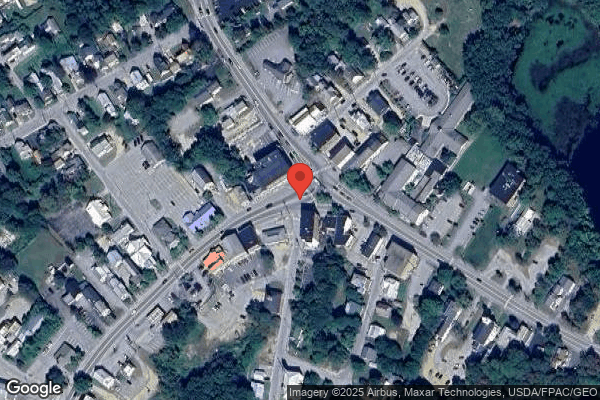
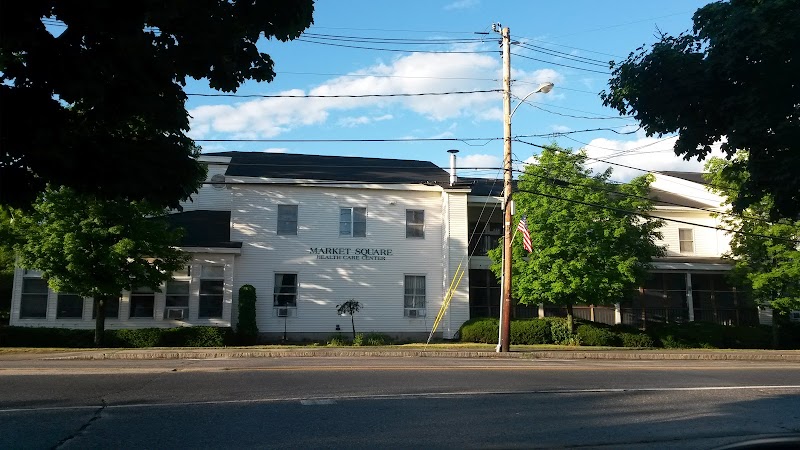
3 MARKET SQUARE, SOUTH PARIS, ME 04281 (207) 743-7086
For profit - Individual 76 Beds NORTH COUNTRY ASSOCIATES Data: November 2025
Trust Grade
50/100
#57 of 77 in ME
Last Inspection: March 2025

Within standard 12-15 month inspection cycle. Federal law requires annual inspections.

Overview

Market Square Health Care Center in South Paris, Maine has a Trust Grade of C, which means it is average, placing it in the middle of the pack for nursing homes. It ranks #57 out of 77 statewide and #4 out of 5 in Oxford County, indicating it is in the bottom half of facilities in both contexts. The facility is experiencing a worsening trend, with issues increasing from 6 in 2024 to 13 in 2025. Staffing is a relative strength here, with a rating of 4 out of 5 stars, although the 54% turnover rate is average and the RN coverage is concerning, being lower than 93% of Maine facilities. Notably, there have been specific incidents, such as inadequate infection control measures related to Legionella, failure to properly maintain laundry equipment, and a lack of training for dietary staff regarding food safety, which could affect all residents. Overall, while the staffing situation is better than average, the facility has significant areas for improvement, particularly in health and safety practices.

Trust Score
C
50/100
In Maine
#57/77
Bottom 26%
Safety Record
Low Risk
No red flags
Inspections
Getting Worse
6 → 13 violations
Staff Stability
⚠ Watch
54% turnover. Above average. Higher turnover means staff may not know residents' routines.
Penalties
✓ Good
No fines on record. Clean compliance history, better than most Maine facilities.
Skilled Nurses
○ Average
Each resident gets 38 minutes of Registered Nurse (RN) attention daily — about average for Maine. RNs are the most trained staff who monitor for health changes.
Violations
⚠ Watch
35 deficiencies on record. Higher than average. Multiple issues found across inspections.
★★☆☆☆
2.0
Overall Rating
★★★★☆
4.0
Staff Levels
★★★☆☆
3.0
Care Quality
★★☆☆☆
2.0
Inspection Score
Stable
2024: 6 issues
2025: 13 issues

The Good

  • 4-Star Staffing Rating · Above-average nurse staffing levels
  • Full Sprinkler Coverage · Fire safety systems throughout facility
  • No fines on record

Facility shows strength in staffing levels, fire safety.

The Bad

2-Star Overall Rating

Below Maine average (3.0)

Below average - review inspection findings carefully

Staff Turnover: 54%

Near Maine avg (46%)

Higher turnover may affect care consistency

Chain: NORTH COUNTRY ASSOCIATES

Part of a multi-facility chain

Ask about local staffing decisions and management

The Ugly 35 deficiencies on record

Mar 2025 13 deficiencies
CONCERN (D)

Potential for Harm - no one hurt, but risky conditions existed

Deficiency F0558 (Tag F0558)

Could have caused harm · This affected 1 resident

Based on interviews and record review, the facility failed to ensure accommodations were made for a resident to include the facility's bathing schedule and resident preferences for 1 of 3 residents re...

Read full inspector narrative →
Based on interviews and record review, the facility failed to ensure accommodations were made for a resident to include the facility's bathing schedule and resident preferences for 1 of 3 residents reviewed for activities of daily living (Resident #7). Finding: On 3/4/25 at 9:30 a.m., during an interview, Resident #7 stated that he/she wants to and is supposed to get a shower twice a week, on Sundays and Wednesdays. But due to staffing, he/she no longer gets a shower consistently. He/she stated that staff will come in and tell him/her that he/she will be getting a bed bath instead. On 3/4/25 at 9:40 a.m., observation of the weekly shower schedule indicated Resident #7 was to receive a shower on Sunday and Wednesday early evenings. On 3/4/25 at 9:48 a.m., in an interview and review of Resident 7's February 2025 bathing documentation, the Quality Improvement Specialist(QIS) confirmed that Resident #7's bathing documentation lacked evidence that he/she received showers on 2/5/25, 2/9/25, 2/12/25, 2/23/25 and 2/26/25. The QIS additionally confirmed that there was no documentation of the resident refusing and full bed baths were given instead of the showers.
CONCERN (D)

Potential for Harm - no one hurt, but risky conditions existed

Comprehensive Care Plan (Tag F0656)

Could have caused harm · This affected 1 resident

Based on record reviews, interviews, and facility policy the facility failed to update/implement goals and interventions for diuretic and anticoagulant medication use for 1 of 1 resident reviewed for ...

Read full inspector narrative →
Based on record reviews, interviews, and facility policy the facility failed to update/implement goals and interventions for diuretic and anticoagulant medication use for 1 of 1 resident reviewed for (Resident #11). Findings: Review of policy Comprehensive Person-Centered Care Planning dated 1/19 states: The facility must develop and implement person-centered care plan for each resident, which includes measurable objectives and timeframe's to meet a resident's medical, nursing, . needs identified in the comprehensive assessment evaluation. Review of Resident #11 (R11) active medication orders, dated March 2025 revealed: - order with start date of 4/27/24 for anticoagulant Eliquis 5mg tablet two times daily for atrial fibrillation - order with start date of 11/30/24 for diuretic Lasix 20 mg tablet 1 time daily for atrial fibrillation. Review of R11's care plan, updated 11/15/24, lacked evidence that goals and interventions were put into place for the use of diuretic and anticoagulant medications. On 3/4/25 10:15 a.m., Dduring a review of R11's care plan with Quality Improvement Specialist (QIP) and 2 surveyors, QIP confirmed R11 care plan lacked goals and interventions for diuretic and anticoagulant use. At this time QIP stated there should definitely be goals and interventions for above medications.
CONCERN (D)

Potential for Harm - no one hurt, but risky conditions existed

Quality of Care (Tag F0684)

Could have caused harm · This affected 1 resident

Based on clinical record review and interview, the facility failed to ensure physician orders were followed for 1 of 2 sampled residents for (Resident #67). Finding: On 3/3/25 Resident #67's clinical ...

Read full inspector narrative →
Based on clinical record review and interview, the facility failed to ensure physician orders were followed for 1 of 2 sampled residents for (Resident #67). Finding: On 3/3/25 Resident #67's clinical record was reviewed and included several physician orders for wound care instructing nursing to: Right shoulder: Cleanse with Vashe solution soaked gauze applied to wound bed and left in place for 5 minutes. Apply skin prep spray to periwound. Apply Kaltostat to high draining areas (center of wound bed). Apply generous amount of Medihoney to rest of wound bed. Cover with fluffed dry gauze to fill the wound cavity. Cover with dry gauze and ABD (abdominal pad). Secure with Hypafix tape Change daily and PRN (as needed). Anterior neck: Cleanse with Vashe solution soaked gauze applied to wound bed and left in place for 5 minutes. Apply skin prep spray to periwound. Apply Medihoney and moist gauze to wound. Apply dry gauze to cover. Secure with Hypafix tape Change daily and PRN. Lateral neck: Cleanse with Vashe solution soaked gauze applied to wound bed and left in place for 5 minutes. Apply skin prep spray to periwound. Apply Medihoney and moist gauze to wound. Apply dry gauze to cover. Secure with Hypafix tape Change daily and PRN. The physician orders lack current orders for wound management for the left shoulder wound. On 3/3/25 from 9:36 a.m., through 10:05 a.m., a surveyor observed the Licensed Practical Nurse (LPN #1) perform Resident #67's wound dressing changes. The LPN #1, after cleansing the right shoulder wound, she applied skin prep to the periwound and then medi-honey to the wound bed. She then applied Kaltostat over the medi honey. Next, she applied a gauzed soaked in normal saline over the kaltostat then the ABD(Abdominal) pad and secured with the tape. On the anterior neck, lateral neck and left shoulder wound sites, after cleansing the wound beds on each wound she applied skin prep to the periwounds, with each wound she applied medi-honey to a Mepilix dressing then applied the dressing to the wound. On 3/3/25 at 10:05 a.m., during an interview, the LPN confirmed the failure to follow the providers orders for the right shoulder, anterior and lateral neck wounds and the lack of a wound order for the left shoulder.
CONCERN (D)

Potential for Harm - no one hurt, but risky conditions existed

Respiratory Care (Tag F0695)

Could have caused harm · This affected 1 resident

Based on observations, record review, and interviews, the facility failed to provide a sanitary environment to help prevent the development and transmission of disease and infection related to respira...

Read full inspector narrative →
Based on observations, record review, and interviews, the facility failed to provide a sanitary environment to help prevent the development and transmission of disease and infection related to respiratory care for 1 of 1 resident reviewed for respiratory care (Resident #29). Finding: Resident #29 has diagnoses to chronic obstructive pulmonary disease (COPD). On 3/3/25 at 11:31 a.m. and 3/4/25 at 1:49 p.m., a surveyor observed Resident #29's, unbagged nasal cannula tubing, draped on top of the oxygen concentrator located next to the bed, with the nasal cannula prongs in direct contact with the surface of the oxygen concentrator. An empty plastic storage bag was observed tied to the nightstand drawer handle. Review of Resident #29's clinical record revealed an active order, dated 2/10/25, for Change tubing one time weekly .change all oxygen tubing . and an active order, dated 2/10/25 for Clean/store oxygen tubing not in use .Place in plastic bag when not in use. Review of Resident #29's care plan, dated 2/10/25, revealed, Change oxygen tubing weekly; label and date . On 3/4/25 at 2:00 p.m., in an interview, the Certified Nursing Assistant (CNA) #1 stated when oxygen tubing is not in use, it is stored in one of the respiratory bags attached to the oxygen concentrator. On 3/4/25 at 2:10 p.m., in an interview, Licensed Practical Nurse (LPN) #4 confirmed that Resident #29's unbagged nasal cannula tubing was draped over his/her oxygen concentrator tubing and stated oxygen tubing is supposed to be stored in the storage bag when oxygen not in use. On 3/4/25 at 2:38 p.m., the finding was reviewed with the Regional Quality Improvement Specialist.
CONCERN (D)

Potential for Harm - no one hurt, but risky conditions existed

Medication Errors (Tag F0758)

Could have caused harm · This affected 1 resident

Based on record review and interviews, the facility failed to ensure an as needed (prn) psychotropic medication met the required 14-day limit for 2 of 6 residents reviewed for psychotropic medications...

Read full inspector narrative →
Based on record review and interviews, the facility failed to ensure an as needed (prn) psychotropic medication met the required 14-day limit for 2 of 6 residents reviewed for psychotropic medications (Resident #4 and #67). Findings: 1. Resident #4's medical record contained a provider order, dated 2/13/25, for Diazepam 5 mg (milligram) tablet PRN(as needed) every 8 hours for muscle spasms, with no stop date. The medical record lacked evidence of clinical rational to continue the medication. On 3/5/25 at 2:17 p.m., the above was confirmed with the Assistant Director of Nursing 2. Resident #67's medical record contained a provider order, dated 2/11/25, for Lorazepam 1 mg (milligram) tablet Oral as Needed One Time for anxiety disorder prior to wound change, with no stop date. The medical record lacked evidence of clinical rational to continue the medication. On 3/5/25 at 1:16 p.m., the above was discussed with the Quality Improvement Specialist.
CONCERN (D)

Potential for Harm - no one hurt, but risky conditions existed

Deficiency F0761 (Tag F0761)

Could have caused harm · This affected 1 resident

Based on observations, interviews and record reviews, the facility failed to ensure medications including treatments were stored properly for 2 of 3 days of survey (3/3/25 and 3/4/25). Additionally, t...

Read full inspector narrative →
Based on observations, interviews and record reviews, the facility failed to ensure medications including treatments were stored properly for 2 of 3 days of survey (3/3/25 and 3/4/25). Additionally, the facility failed to obtain physician orders for medications located at a resident's bedside, for 1 of 1 sampled resident (Resident #322). Findings: Review of Facility Policy Self-Administration of Medications, dated 5/2018, states, .residents who desire to self-administer medications are permitted to do so if the facility's interdisciplinary team [IDT] has determined that the practice would be safe .and there is a prescriber's order to self-administer .an assessment is conducted by the IDT .the results of the IDT assessment .are recorded .on the care plan . Review of policy, Specific Medication Administration Procedures, dated 5/2018, states, .administer medication and remain with resident while medication is swallowed .Do not leave medications at bedside . During observations on 3/3/25 at 10:27 a.m. and 3/4/25 at 9:55 a.m., a 0.5 fluid ounce bottle of thera tears lubricant eye drops was observed in a plastic cup on Resident #322's over-the-bed table. Additionally, a 1 fluid ounce bottle of Top Care Nasal Spray (oxymetazoline hydrochloride 0.05% nasal decongestant) and a 0.38 fluid ounce bottle of Fluticasone propionate 50mcg(microgram) per spray nasal spray was observed on Resident #322's tv stand. Review of Resident #322's clinical record lacked evidence of a physician order for the thera tears, Top Care nasal spray, and the fluticasone nasal spray and lacked evidence of an order to self-administer. Further review of the clinical record lacked evidence of an IDT assessment. On 3/4/25 at 3:27 p.m., a surveyor and Licensed Practical Nurse #1 observed the thera tears, Top Care nasal spray, and fluticasone nasal spray at Resident #322's bedside. Additionally, a surveyor observed a clear medication cup containing approximately 30ml (milliliter) yellow liquid was on his/her tv stand. At this time, LPN #1 stated the liquid was Lactulose given earlier today and that Resident #322 probably refused the medication. At this time, LPN #1 stated medications should not be left at bedside and stated she was not aware Resident #322 had medications in his/her room. On 3/5/25 at 8:36 a.m., the findings were discussed with the Regional Quality Improvement Specialist.
CONCERN (E)

Potential for Harm - no one hurt, but risky conditions existed

Safe Environment (Tag F0584)

Could have caused harm · This affected multiple residents

**NOTE- TERMS IN BRACKETS HAVE BEEN EDITED TO PROTECT CONFIDENTIALITY** Based on observations and interviews, the facility failed to adequately provide housekeeping and maintenance services necessary ...

Read full inspector narrative →
**NOTE- TERMS IN BRACKETS HAVE BEEN EDITED TO PROTECT CONFIDENTIALITY** Based on observations and interviews, the facility failed to adequately provide housekeeping and maintenance services necessary to maintain the building in a sanitary, orderly, and comfortable environment on 3 of 3 units ([NAME] East, [NAME] and Tuttle) for 1 of 1 facility tour. Findings: On 3/5/25 from 8:30 a.m. to 9:15 a.m., a surveyor conducted an Environmental Tour with the Environmental Services Director and the Quality Improvement Specialist, in which the following findings were observed: [NAME] East > There was an EZ sit-to-stand patient lift, in the hallway by room [ROOM NUMBER], that had food debris and dirt in the foot base area. > Resident room [ROOM NUMBER] - The wall behind bed 2 had chipped/missing paint and was marred with black marks. The base board heater front cover was off at the end of the bed exposing heating elements. Resident #32's grabber/reacher was coated with a thick brown substance on the grabber part and the entire handle. > Resident room [ROOM NUMBER] - The room was very cold and without heat. The base board heater was broken apart and laying on the floor. > Resident room [ROOM NUMBER] - A bedpan was stored on the toilet. There was a foam pad on the shower floor. [NAME] > Resident room [ROOM NUMBER] - The room entrance door and the bathroom door were gouged/marked gouged and had untreated putty on many areas creating uncleanable surfaces. > Resident room [ROOM NUMBER] - The room entrance door was marred and chipped/gouged creating an uncleanable surface. > Resident room [ROOM NUMBER] - The room entrance door was marred and chipped/gouged creating an uncleanable surface. Tuttle > Resident room [ROOM NUMBER] - The walls behind the beds were scuffed/marred with black marks and the entire floor was soiled with dirt and debris. > Resident room [ROOM NUMBER] - The privacy curtains had missing hooks, were hanging down and in disrepair. The caulking around the base of the toilet was dirty. > Resident room [ROOM NUMBER] - The caulking around the base of the toilet was dirty. The bathroom exhaust fan was dusty. The inside the bathroom doors had chipped/missing paint. The privacy curtain was missing hooks, hanging down and in disrepair. The bathrooms walls were marred/marked with black marks. > Resident room [ROOM NUMBER] - An EZ sit-to-stand patient lift, stored in room [ROOM NUMBER], had food debris and dirt debris in the base area. The privacy curtains were missing hooks, hanging down and in disrepair. The caulking around the base of the toilet was dirty. > Resident room [ROOM NUMBER] - The privacy curtains were missing hooks, hanging down and in disrepair. > Resident room [ROOM NUMBER] - There was a urine hat on the bathroom floor. On 3/5/25 at 9:15 a.m., in an interview, the Environmental Services Director and the Quality Improvement Specialist confirmed the findings.
CONCERN (E)

Potential for Harm - no one hurt, but risky conditions existed

Deficiency F0625 (Tag F0625)

Could have caused harm · This affected multiple residents

**NOTE- TERMS IN BRACKETS HAVE BEEN EDITED TO PROTECT CONFIDENTIALITY** Based on record review and interview, the facility failed to issue a bed hold notice which included the daily bed hold cost, to ...

Read full inspector narrative →
**NOTE- TERMS IN BRACKETS HAVE BEEN EDITED TO PROTECT CONFIDENTIALITY** Based on record review and interview, the facility failed to issue a bed hold notice which included the daily bed hold cost, to a resident, known family member and/or legal representative for 3 of 3 sampled residents who had been transferred to the hospital (Residents #7, #66, and #69). Findings: 1. Resident #7's clinical record revealed the resident was transferred to an acute care hospital on 5/23/24 and subsequently admitted . The clinical record lacked evidence that Resident #7 and/or the resident representative were provided with a written bed hold notices upon transfer. 2. Resident #69's clinical record revealed the resident was transferred to an acute care hospital on [DATE] and subsequently admitted . The clinical record lacked evidence that Resident #69 and/or the resident representative were provided with a written bed hold notices upon transfer. 3. Documentation in Resident #66's clinical record indicated that he/she transferred to an acute care hospital on 1/18/25 and subsequently admitted . The clinical record contained no evidence that the facility issued a bed hold notice to the resident, a family member, or legal representative upon transfer. On 3/3/25 at 4:13 p.m., the above was confirmed with the Director of Social Services.
CONCERN (E)

Potential for Harm - no one hurt, but risky conditions existed

Deficiency F0655 (Tag F0655)

Could have caused harm · This affected multiple residents

**NOTE- TERMS IN BRACKETS HAVE BEEN EDITED TO PROTECT CONFIDENTIALITY** 2. Resident #67 was recently admitted to the facility. A review of the nursing assessments, dated 2/11/25 for Resident Smoking S...

Read full inspector narrative →
**NOTE- TERMS IN BRACKETS HAVE BEEN EDITED TO PROTECT CONFIDENTIALITY** 2. Resident #67 was recently admitted to the facility. A review of the nursing assessments, dated 2/11/25 for Resident Smoking Screen and a Resident Smoking Contract state he/she can smoke unsupervised. As of 3/3/25 the residents' care plan lacked interventions and goals relating to smoking. On 3/3/25 at 4:01 p.m., the above was discussed with the Quality Improvement Specialists Based on interviews, record review, and facility policy, the facility failed to ensure a baseline care plan was developed and implemented within 48 hours. That included the instructions needed to provide minimum healthcare information necessary to care for 3 of 25 care plans reviewed (Resident's (R)4, R55, and R67). Findings: Review of policy 48 Hour Baseline Care Plan dated 10/18 states a baseline care plan will be created within 48 hours of admission. Based on the admission assessment, physician orders and resident preferences a care plan will be created to facilitate a smooth transition of care and to provide effective, person care plan. 1. Resident (R55) was admitted in February of 2023. Review of R55's admission assessment dated [DATE] states: Smoking Status If a current smoker, fill out the NCA LTC Smoking Risk : current every day smoker. Review of R55's baseline care plan, dated 2/24/25, lacked evidence that a care plan was initiated in the area of smoking on admission. During an interview on 3/3/25 at 4:10 pm the above was confirmed with Quality Improvement Specialist. 3. Resident #4 was admitted in February 2025 and has diagnoses to include Stage 4 sacral pressure ulcer. On 3/5/25 between 9:54-10:20 a.m., during an observation, LPN #1 and Certified Nursing Assistant (CNA) #3 placed a wedge pillow under the left and right sides of Resident #4's back and a wedge pillow under his/her bilateral lower extremities. At this time, CNA #3 stated Resident #4 is turned and repositioned every 2 hours and that 3 positioning wedges are used, 1 for his/her ankles and 2 for his/her back. Review of Resident #4's baseline care plan states, Impaired skin integrity secondary to pressure ulcer .Offload pressure points . Apply bolstered pillows to BLE [bilateral lower extremities] to prevent rotating and lacked evidence of the use of additional positioning wedges. During an interview on 3/4/25 at 2:20 p.m., Licensed Practical Nurse (LPN) # 5 stated Resident #4 is positioned every 2 hours, using 4 to 6 wedge pillows to support her back and legs. During an interview on 3/5/25 at 2:51 p.m., the finding was reviewed with the Administrator and the Regional Quality Improvement Specialist.
CONCERN (E)

Potential for Harm - no one hurt, but risky conditions existed

Pharmacy Services (Tag F0755)

Could have caused harm · This affected multiple residents

Based on record reviews and interviews, the facility failed to ensure that two people who are authorized to administer medications signed the Shift Count page indicating that they counted all controll...

Read full inspector narrative →
Based on record reviews and interviews, the facility failed to ensure that two people who are authorized to administer medications signed the Shift Count page indicating that they counted all controlled substances at the change of shift for 2 of 2 units reviewed for medication storage (East and [NAME] Units). Findings: 1. Review of East Wing Med Cart Controlled Substance Log on 3/5/24 at 11:55 a.m., revealed the following: - No outgoing signature on 3/1/25 at 6:30 a.m., 3/2/25 at 6:30 a.m., 2/14/25, 2/21/24, 1/24/25, 1/20/25, 12/23/24, 12/30/24, at 7:00 a.m., 1/23/25 at 6:30 a.m., 1/18/15 at 5:00 a.m., 1/7/25 at 8:00 a.m., or 12/26/24 unknown time. - No incoming signature on 2/13/25 at 7:00 a.m., 1/27/24 at 11:30 p.m., or 12/24/24 at 11:15 p.m., 2. Review of East Wind Treatment Cart Controlled Substance Long on 3/5/25 at 12:30 p.m., revealed: -no incoming signature on 1/29/25 at 11:00 p.m. -no outgoing signature on 1/15/25 at 7:15 p.m., 11:00 p.m., 2/2/25 11:00 p.m, 2/7/25 no time noted. 3. Review of [NAME] Wing Controlled Substance Log revealed: -No outgoing signature on 2/20/25 at 11:00 p.m., 2/24/25 at 6:30 a.m., 2/27/25 8:00 a.m., undated at 8:00 a.m., 3/2/25 7:00 a.m., 2/6/25 at 8:00 a.m., 2/8/25 at 8:00 a.m., 2/9/25 at 800 a.m. 2/11/25 at 7:00 a.m., 2/13/25 at 6:30 a.m., 2/14/25 at 7:00 a.m., 2/15/25 7:00 a.m., 2/18/25 at 8:00 p.m. -No incoming signature on 2/19/25 at 9:00 p.m. During an interview on 3/5/25 at 11:58 a.m., Certified Nursing Assistant-Medication Technician (CNA-M)1 stated that she had received education on the importance of signing the controlled substance log at each shift change, but doesn't always make sure the person shes relieving signs it, but will in there future. During an interview on 3/5/25 at 12:30 p.m., CNA-M2 stated that she had received education to include the importance of signing the controlled medication log after count at each shift change and anytime the keys are transferred to another person. During an interview on 2/5/25 at 12:35 p.m. Licensed Practical Nurse (LPN)2 stated that during shift change, and after controlled medication count the incoming and outgoing staff are supposed to sign the count book. During an interview on 3/5/25 at 12:15 p.m. the above was confirmed with Quality Improvement Specialist.
CONCERN (E)

Potential for Harm - no one hurt, but risky conditions existed

Food Safety (Tag F0812)

Could have caused harm · This affected multiple residents

**NOTE- TERMS IN BRACKETS HAVE BEEN EDITED TO PROTECT CONFIDENTIALITY** Based on observations and interviews, the facility failed to ensure the kitchen was maintained in a clean and sanitary manner fo...

Read full inspector narrative →
**NOTE- TERMS IN BRACKETS HAVE BEEN EDITED TO PROTECT CONFIDENTIALITY** Based on observations and interviews, the facility failed to ensure the kitchen was maintained in a clean and sanitary manner for floors, the food disposal unit, a wall mounted fan, and a plunger. Additionally, the facility failed to ensure foods were sealed, labeled, dated and/or discarded if past use by date in a reach-in freezer, in a walk-in refrigerator, a unit kitchenette refrigerator and in a dry storage room for 2 of 2 kitchen/kitchenette tours for 1 of 1 day of survey (3/3/25). Findings: The facility's Food Storage policy and procedure dated 2023 noted: 13. Refrigerated food storage: f. All foods should be covered, labeled and dated and routinely monitored to assure that foods (including leftovers) will be consumed by their use by dates, or frozen(where applicable) or discarded. 14. Frozen foods: c. All foods should be covered, labeled and dated. All foods will be checked to assure that foods will be consumed by their use by dates or discarded. 1. On 3/3/25 from 8:40 a.m. to 9:40 a.m., a surveyor conducted a kitchen tour with the Food Service Director in which the following findings were observed: > The kitchen floor was dirty with food debris and trash around entire floor and under the equipment and shelving. > The dish room food disposal unit had dried food and dried liquid residue on it. > The dish room wall mounted fan was heavily soiled with dust. > There was a plunger with dried food and liquid residue on it laying on the dish room floor. > The dry storage room had 7, one liter boxes of Apple Juice Blend base with a best if used by date of February 23, 2025. There was also 19, one quart containers of Med Plus 2.0 Nutritional Drink with a best if used by date of February 28, 2025. There were 5 bags of cornflakes that were not labeled. > The walk-in refrigerator cement floor had food and dirt debris on it and was missing areas of paint/sealant. > The walk-in freezer cement floor had food and dirt debris on it and was missing areas of paint/sealant. There was 1 package of hot dogs and 3 packages of buns that were not dated or labeled. > The storage room cement floor was dirty and was missing areas of paint/sealant. On 3/3/25 at 9:40 a.m.; in an interview, the Food Service Director confirmed the findings. 2. On 3/3/25 at 10:15 a.m., a surveyor observed the refrigerator kitchenette for [NAME] East and [NAME] to contain a one liter box of Apple juice blend base with best used by February 23, 2025 and a 1 quart container of Med plus 2.0 butter pecan nutritional drink with best used by February 28, 2025. There was also an undated and unmarked 2 quart container of cereal on top of the refrigerator. On 3/3/25 at 10:21 a.m., in an interview, Registered Nurse,(RN #1) confirmed the findings.
CONCERN (E)

Potential for Harm - no one hurt, but risky conditions existed

Medical Records (Tag F0842)

Could have caused harm · This affected multiple residents

**NOTE- TERMS IN BRACKETS HAVE BEEN EDITED TO PROTECT CONFIDENTIALITY** Based on record review and interviews, the facility failed to ensure that a clinical record contained complete and accurate docu...

Read full inspector narrative →
**NOTE- TERMS IN BRACKETS HAVE BEEN EDITED TO PROTECT CONFIDENTIALITY** Based on record review and interviews, the facility failed to ensure that a clinical record contained complete and accurate documentation for 2 of 2 residents reviewed for smoking (Resident's #55 #67), and for 2 of 5 residents reviewed for medication review (Resident #45 and #55). Findings: 1. On 3/3/25 at 9:16 a.m., during an interview, Resident #67, stated he/she smokes cigarettes independently outside approximately 4-5 times a day and he/she stores the lighter and cigarettes in his/her room. A review of the nursing assessment dated [DATE] for Resident Smoking Screen states, Resident smoking status based upon above information is: Non-smoker, Supervised smoker or Unsupervised neither of the 3 choices listed are checked. The section stating, Include in nursing care plan & interdisciplinary resident care plan. 30 day assessment: Resident can smoke unsupervised has yes checked. A review of the Resident Smoking Contract states, I have read and understand the resident smoking policy. Please check one of the following: For the safety of myself and others, I agree to keep my cigarettes and lighter at the nurses station. I understand failure to comply could result in loss of smoking privileges and/or discharge from the facility. I am responsible to keep my cigarettes and lighters safe in my room period I understand not all residents are permitted to have lighters and agree not to give cigarettes and/or a lighter to any other resident. I do not agree to follow or abide by the resident smoking policy and wish to be discharged from the facility. Further review showed the resident had initialed all three choices above. On 3/3/25 at 4:01 p.m., the above was discussed with the Quality Improvement Specialists, who confirmed the screening and the contract were not completed accurately. 2. Review of R45's active orders for March 2025 revealed the following: -Order with start date of 11/11/24 for elopement alarm three times daily: Expiration date: Wander Guard Placement Review of clinical record revealed: 3/1/25: Nurse Day Shit: Wander Guard Placement: LW There is no documentation as to where the wander guard is placed. Nurse Evening Shift: KL Wander Guard Placement: KL There is no documentation as to where the wander guard I placed. Nurse Evening Shift: CB Expiration Date: 3012025; Wander Guard Placement: CB There is no evidence as to where the wander guard is placed. -3/2/25: Nurse Day Shit: Wander Guard Placement: LW There is no documentation as to where the wander guard is placed. Nurse Evening Shift KL. There is no documentation as to where the wander guard is placed; Nurse Night Shift: Wander Guard Placement: EF There is no documentation as to where the wander guard is placed. Expiration Date: 627. -3/3/25: Nurse Day Shift: Wander Guard Placement: BR There is no documented evidence as to where the wander guard is placed. Nurse Evening shift: Wander Guard Placement: BR There is no documented evidence as to where the wander guard is placed. Nurse Night Shift: Wander Guard Placement: CB Expiration Date: 3032025. -3/4/25: Nurse Day Shift: Wander Guard Placement: BR There is no documented evidence as to where the wander guard is placed. Nurse Evening shift: BR There is no documented evidence as to where the wander guard is placed. Nurse Night shift: Wander Guard placement: AT Expiration Date: 2026. During an interview on 3/5/25 at 4:45 p.m., the Director of Nursing and Assistant Director of Nursing confirmed the facility was not appropriately documenting the monitoring of R45's wander guard. 3. Review of Resident (R)45 active orders for March 2025 revealed: -Order with start date of 8/5/24 for constipation medication Miralax 17 gram oral powder packet (1 packet) powder in packet (EA) oral. One time daily for repeated falls. -Order with start date of 3/2/25 for constipation medication senna 8.6 mg tablet (1 tab) oral one time daily for repeated falls. -Order with start date of 2/8/25 for sleep medication melatonin 3 mg tablet (1 tab) Oral one time daily for diagnosis exempt. -Order with start date of 2/8/25 for Muscle Rub 15%-10% topical cream (1) cream (gram) topical two times daily for diagnoses exempt. During a review of R45's clinical record on 3/4/25 at 1:49 p.m., with Quality Improvement Specialist, the above was confirmed. 4 R55 was admitted with diagnoses to include COPD. Review of R55 active orders for March 2025 revealed order with start date of 3/3/325 for oxygen-see notes 1 time weekly: change oxygen tubing weekly. Further review of R55's clinical record lacked evidence that an order was obtained for oxygen use. During an interview on 3/3/25 at 3:55 p.m., the above was confirmed with the Quality Improvement Specialist. 5. During an interview on 3/3/25 at 12:20 p.m., Resident #55 stated that she is a long time smoker and smokes at least 2 cigarettes per day, and smokes independently. Review of R55's clinical record revealed Resident Smoking Screen: Market Square Health Care Center: dated 2/17/25, Resident Smoking contract dated 2/17/25 states: Please check on the following: For the safety of myself and others, I agree to keep my cigarettes' and lighter. Review of R55's admission Minimum Data Set (MDS) dated [DATE]; section J1300: Current tobacco use: Yes A review of the Resident Smoking Contract dated 2/17/25 states, I have read and understand the resident smoking policy. Please check one of the following: For the safety of myself and others, I agree to keep my cigarettes and lighter at the nurse's station. I understand failure to comply could result in loss of smoking privileges and/or discharge from the facility. I am responsible for keeping my cigarettes and lighters safe in my room period. I understand not all residents are permitted to have lighters and agree not to give cigarettes and/or a lighter to any other resident. I do not agree to follow or abide by the resident smoking policy and wish to be discharged from the facility. Further review showed the resident had initialed all three choices above. On 3/3/25 at 4:01 p.m., the above was discussed with the Quality Improvement Specialists, who confirmed the screening, and the contract were not completed accurately.
CONCERN (F)

Potential for Harm - no one hurt, but risky conditions existed

Infection Control (Tag F0880)

Could have caused harm · This affected most or all residents

Based on record review and interview, the facility failed to maintain an Infection Control Program designed to help prevent the development and transmission of disease and infection relating to Legion...

Read full inspector narrative →
Based on record review and interview, the facility failed to maintain an Infection Control Program designed to help prevent the development and transmission of disease and infection relating to Legionella and failed to implement the elements of the Legionella Water Management Program. This has the potential to affect all 68 residents. Findings: 1. The facility's Legionella Water Management Program revised on 1/9/25, under Control Measures states, Various control measures are in place to ensure a healthy water management program. Please refer to Appendix A of the water management program for a description of where controls are located. Monitoring states, monitoring provides data for determining whether a water system is operating within the parameters needed to control the growth of Legionella. Please refer to Appendix A of the water management program for the description of how monitoring will be conducted. Market Square receives its water from Maine Water . Maine Water uses a Total Chlorine system so the facility will use a Total Chlorine testing kit to take water samples. The following equipment will be part of the preventative maintenance schedule. Ice machine and Floor scrubbing machine. Appendix C: Preventative Maintenance Schedule to see a schedule of equipment that will be serviced as part of the preventative maintenance program. Review of the entire Legionella Water Management Program lacked evidence of an Appendix A or Appendix C. In addition, Review of the Appendix B: Water Management Monitoring Spreadsheet lacks evidence of either the Ice machine or the Floor scrubbing machine monitoring and/or samples. On 3/5/25 at 8:10 a.m., during an interview, the Quality Improvement Specialists confirmed the facility is not following its own Legionella Water Management policy, by not having measures in place to control the introduction of, assess and monitor areas where Legionella and opportunist waterborne pathogen can grow and spread and a diagram where these measures are applied. 2. During an observation on 3/4/25 at 9:00 a.m, Certified Nursing Assistant-Medication Tech (CNA-M) #2 took Resident #121's blood pressure with a reusable wrist cuff. CNA-M # 2 then used a manual blood pressure cuff and stethoscope to take Resident #121's blood pressure on his/her left arm, and after removing the manual cuff, CNA-M #2 draped the blood pressure cuff and stethoscope around her neck. At 9:05 a.m., CNA-M#2 exited the room and placed the wrist cuff in the top drawer of the medication cart without sanitizing it and hung the manual cuff and stethoscope off the back of the medication cart, without sanitizing it. At this time, CNA-M #2 stated the blood pressure cuffs and stethoscope are for multi-patient use and that she should have wiped the equipment down before placing it in the medication cart and that she should not have placed the manual cuff and stethoscope around her neck. On 3/4/25 at 10:15 a.m., the above findings were discussed with the Regional Quality Improvement Specialist.
Dec 2024 3 deficiencies
CONCERN (D) 📢 Someone Reported This

A family member, employee, or ombudsman was alarmed enough to file a formal complaint

Potential for Harm - no one hurt, but risky conditions existed

Comprehensive Care Plan (Tag F0656)

Could have caused harm · This affected 1 resident

Based on record review, interviews, and facility policy, the facility failed to ensure a resident's care plan was updated to reflect the resident's current care needs in the area of falls for 1of 3 re...

Read full inspector narrative →
Based on record review, interviews, and facility policy, the facility failed to ensure a resident's care plan was updated to reflect the resident's current care needs in the area of falls for 1of 3 residents reviewed (Resident #4). Finding: Facility policy, Falls Management Policy, states, Residents' care plan will be updated with all new interventions . Review of Resident #4's clinical record revealed he/she sustained a fall on 10/14/24, 10/16/24, 11/19/24, and 12/1/24. Review of Resident #4's care plan, updated on 11/12/24, revealed, Problems: .requires extensive assistance with self-care .inability to perform ADLs independently . Further review of Resident #4's care plan lacked evidence of goals and interventions for falls. On 12/19/24 at 2:19 p.m., during an interview with 2 surveyors, the Administrator stated it is her expectation that the resident care plan would be updated after a fall. On 12/19/24 at 5:37 p.m., during an interview with 2 surveyors, the Assistant Director of Nursing (ADON) reviewed the entire clinical record and confirmed that Resident #4's care plan was not updated to include goals and interventions for the care area of falls.
CONCERN (D) 📢 Someone Reported This

A family member, employee, or ombudsman was alarmed enough to file a formal complaint

Potential for Harm - no one hurt, but risky conditions existed

Medical Records (Tag F0842)

Could have caused harm · This affected 1 resident

Based on record review and interviews, the facility failed to ensure that clinical records were complete and contained accurate information for 2 of 3 residents reviewed. (Residents #4 and #5). Findi...

Read full inspector narrative →
Based on record review and interviews, the facility failed to ensure that clinical records were complete and contained accurate information for 2 of 3 residents reviewed. (Residents #4 and #5). Findings: Facility policy, Falls Management Policy, revised July 2019, states, .E. Complete the Post Fall Observation Tool, following a fall .F. Documentation must be completed in the nurse's note on each shift x 3 following the fall . 1. Review of Resident #4's clinical record revealed he/she sustained falls on 10/14/24, 10/16/24, 11/19/24, and 12/1/2024. The medical record lacked evidence that the Post Fall Observation Tool was completed for the 10/14/24, 10/16/24, or 12/1/24 falls. Further review of Resident #4's clinical record revealed the following progress notes: -11/29/24 at 8:41 p.m., CNA called this nurse to resident's room. Resident found lying on the floor beside her bed . -12/2/24 at 9:25 a.m., Yelling heard by nursing staff with original origin unknown. Upon arrival of CNA staff resident observed holding self up on opposite bed in room. Resident lowered to floor by CNA staff . The clinical record lacked evidence of a nurse's note each shift for 3 shifts after these falls. 2. Review of Resident #5's Care plan, updated on 9/30/24, revealed, Problems: .history of falls within last month r/t impaired mobility, poor safety awareness, impulse control .Goal: .no increase in the incidence of falls/injuries .Interventions: .non-slick footwear that fits, keep areas free of obstructions .call light within easy reach. Review of Resident #5's clinical record revealed he/she sustained a fall on 11/22/24 and 11/26/24. Further review of Resident #5's clinical record lacked evidence that nursing notes were completed each shift x 3 shifts after these falls. On 12/19/24 at 5:37 p.m., during a review of Resident #4's and Resident #5's entire clinical records with 2 surveyors, Assistant Director of Nursing (ADON) confirmed the clinical records lacked evidence that a nurse's note was completed each shift for 3 shifts following the above falls, and Resident #4's clinical record lacked evidence that a Post Fall Observation Tool was completed after the falls sustained on 10/14/24, 10/16/24, and 12/1/24.
CONCERN (D) 📢 Someone Reported This

A family member, employee, or ombudsman was alarmed enough to file a formal complaint

Potential for Harm - no one hurt, but risky conditions existed

Infection Control (Tag F0880)

Could have caused harm · This affected 1 resident

**NOTE- TERMS IN BRACKETS HAVE BEEN EDITED TO PROTECT CONFIDENTIALITY** Based on observations, interviews, and facility policy, the facility failed to maintain an Infection Control Program designed to...

Read full inspector narrative →
**NOTE- TERMS IN BRACKETS HAVE BEEN EDITED TO PROTECT CONFIDENTIALITY** Based on observations, interviews, and facility policy, the facility failed to maintain an Infection Control Program designed to help prevent the development of infection for 1 of 3 sampled residents. (Resident 3) Findings: Review of policy Oxygen Use & Storage Policy dated 10/24 states Respiratory Care: A sanitary environment must be maintained to prevent the transmission of disease. When nebulizer parts are not in use, after [NAME] air dried, the mask and/or hand held devices shold be stored in a plastiv bag to the risk of it becoming contaminated . During observations of room [ROOM NUMBER] on 12/19/24 at 10:13 a.m., and 12:15 p.m., the following was observed: -an unbagged bedpan was observed on the bathroom floor. -an unused catheter bag dated 12/17 was observed in a cardboard box containing pudding cups belonging to Resident 3. -a nebulizer was observed on bedside table. The apparatus was apart and left on top of the bedside table. Nebulizer tubing was observed rolled up and in a pink wash basin containing headbands and hairbrush with a large amount of hair on it. On 12/19/24 at 12:16 p.m., during an interview, Resident 3 indicated he/she was very upset because his/her food is in the box and doesn't understand why someone would leave a catheter bag in the box because that was disgusting. Resident 3 further indicated it's been a while since she/he has used the nebulizer, but uses the bed pan daily. On 12/19/24 at 12:18 p.m., during an observation of room [ROOM NUMBER] and interview with Registered Nurse (RN)1 confirmed the above findings and stated that bedpans should always be bagged, catheter bags should never be placed in with resident personal items and nebulizer tubing should be bagged when not in use. On 12/19/24 at 1:03 p.m., during an interview, the above was discussed with Administrator.
Nov 2024 1 deficiency
CONCERN (F) 📢 Someone Reported This

A family member, employee, or ombudsman was alarmed enough to file a formal complaint

Potential for Harm - no one hurt, but risky conditions existed

Room Equipment (Tag F0908)

Could have caused harm · This affected most or all residents

Based on observations, interviews, and record review, the facility failed to ensure that the facility's laundry equipment was maintained, according to manufacturer's instructions, and operated to ensu...

Read full inspector narrative →
Based on observations, interviews, and record review, the facility failed to ensure that the facility's laundry equipment was maintained, according to manufacturer's instructions, and operated to ensure proper cleaning and disinfecting of linens for 1 of 1 day of survey(11/5/24). This has the potential to affect all residents. Findings: On 11/5/24, review of Documentation provided by the facility from Patriot [laundry chemical supply company] noted: Stain treatments: > B-Gone grease and oil remover wash in hot water, 140 degrees Fahrenheit[F]for colors and 165°F for whites. > Blood and stain remover wash in hot water 140°F for colors and 165° for white. > For washing machines and nursing homes, especially when dealing with various products like > Patriot Frontier Soap[detergent], Patriot Frontier Bleach, Patriot Powerhouse[heavy duty detergent], Patriot Ultra Soft[ fabric softener], and Patriot Stain Away[stain remover], the temperature requirements are generally based on the need to disinfect linens and properly activate the chemicals in the detergents and bleach. Here's a breakdown of the typical minimum temperature requirements based on general laundry guidelines for healthcare settings: 1. Patriot Frontier Soap[detergent]: minimum temperature 140°F is generally recommended for washing linens to ensure effective cleaning, especially in healthcare environments. Some detergents may be effective in cooler water, but in nursing homes, higher temperatures are preferred for hygiene. 2. Patriot Frontier Bleach: Bleach typically works best at high temperatures. For disinfection, use water that is at least 160°F or higher, particularly for potentially contaminated linens like bedding from residents with infections. Some bleach products can be effective in lower temperatures, but for health care, sticking with 160°F or higher ensures both stain removal and disinfection. 3. Patriot Powerhouse [Heavy Duty detergent or degreaser]: This would likely require at least 140°F to work optimally, especially when dealing with heavily soiled fabrics or materials. The decreasing action is more effective at higher temperatures. 4. Patriots ultra soft fabric softener: Fabric softeners generally don't have strict temperature requirements but are typically added during the rinse cycle. Ensure rinse cycle is at a comfortable warm temperature [e.g., 90°F to 110°F]. 5. Patriots Stain Away [stain remover]: Stain removers often work best in warm or hot temperatures a minimum of 120° to 140°F would typically be recommended for stubborn stains. > General recommendations for nursing homes: regular laundry [not contaminated]: minimum water temperature of 140°F for effective cleaning. Potentially contaminated laundry: water temperature of at least 160°F especially when using bleach to ensure disinfection. > Final note: it is important to verify the manufacturer's recommendations for each product, patriot products in this case, as they may have specific temperature guidelines. Additionally, always follow infection control guidelines set by your facility and local regulations, particularly in healthcare settings like nursing homes. On 11/5/24 at 9:00 a.m., in an interview, the Laundry/Housekeeping Supervisor stated that she has been in charge since May 2024 and that she has known of hot water problems for the washing machines since that time. She reported this to the Administrator and the maintenance man and was asked to keep logs in August 2024 of the hot water temperatures on the washing machines. At this time, the surveyor and the Laundry/Housekeeping Supervisor observed the temperatures of the running washing machines. Washer #1 had a hot water temperature of 86° Fahrenheit(F); Washer #2 had a hot water temperature of 110°(F); And Washer #3 had a hot water temperature of 112°(F). At this time, the Laundry/Housekeeping Supervisor confirmed that the hot water coming into the washing machines was not adequate to ensure proper cleaning and disinfecting of the linens. On 11/5/24, review of the August 2024 washing machine temperature logs noted: Washer #1: hot water coming into washing machine August 1st -7:47 a.m. 89° Fahrenheit(F); 10:19 a.m. 89°(F); 2:15 p.m. 64°(F); 4:00 p.m. 84°(F) August 2nd -8:03 a.m. 89°(F); 10:40 a.m. 87°(F); 2:16 p.m. 87°(F) August 5th - 10:00 a.m. 87°(F); 2:00 p.m. 86°(F) August 6th - 7:38 a.m. 91°(F); 11:49 a.m. 87°(F); 3:06 p.m. 86°(F) August 7th - 8:51 a.m. 93°(F); 11:05 a.m. 87°(F); 1:40 p.m. 86°(F); 3:32 p.m. 87°(F) August 8th - 10:01 a.m. 86°(F); 12:51 p.m. 86°(F); 3:20 p.m. 89°(F) Washer #2: hot water coming into washing machine August 1st -7:47 a.m. 104°(F); 10:12 a.m. 108°(F); 2:13 p.m. 102°(F); 4:00 p.m. 7°(F) August 2nd -8:03 a.m. 114°(F); 10:41 a.m. 95°(F); 2:16 p.m. 122°(F) August 5th - 10:00 a.m. 93°(F); 2:00 p.m. 116°(F) August 6th - 7:33 a.m. 122°(F); 11:50 a.m. 96°(F); 3:07 p.m. 93°(F) August 7th - 8:51 a.m. 103°(F); 11:05 a.m. 101°(F); 1:40 p.m. 123°(F); 3:32 p.m. 111°(F) August 8th - 10:01 a.m. 114°(F); 12:51 p.m. 101°(F); 3:20 p.m. 81°(F) Washer #3: hot water coming into washing machine August 2nd - 10:45 a.m. 102°(F); 2:17 p.m. 120°(F) August 5th - 10:00 a.m. 78°(F); 2:00 p.m. 87°(F) August 6th - 7:32 a.m. 100°(F); 11:50 a.m. 109°(F) On 11/5/24 at 9:45 a.m., in an interview, Maintenance Worker #1 and the surveyor observed a propane furnace hooked to a large hot water supply tank which supplied hot water to resident areas, the kitchen, and the laundry room. The maintenance worker stated and showed the surveyor the thermostat on the large, enclosed tank which was set at 120°F. On the side of the large, enclosed tank, there was a tank target range of 115°(F) written. The maintenance worker went on to state that the temperature can't be turned up higher than 120°(F)because it would make the water too hot for the resident areas. On 11/5/24 at 10:15 a.m., the surveyor then stepped back into the laundry room and observed the three washers and the hot water temperatures coming into the washers at this time. Washer #1 was 86°F. Washer #2 was 86°F. Washer #3 was 107°F. On 11/5/24 at 10:45 a.m., in an interview, the Maintenance Worker #2 and the surveyor observed a propane boiler with a large storage tank that supplied hot water to the resident areas, the kitchen, and the laundry room. He stated the boiler and the hot water tank were set at 120° and that is all that was sent out to all three areas because it can't be turned up any higher to help the laundry room because then the residential areas would be too hot. He stated that a while ago the facility had put in two quick recovery propane units however they were turned off at this point in time. When asked what they did, the maintenance worker stated they did the exact same thing that the propane furnace and hot water tank did. They supplied hot water to the resident areas, the laundry, and the kitchen and we're set at 120°F. The surveyor then asked if he remembers there being a hot water booster in the laundry room for the washing machines. The maintenance worker stated there had always been one there since he had been there since May 2024 but it had never worked and had never been hooked up and approximately 5 years ago it was taken out by the maintenance director who was no longer at the facility. He also stated the propane furnace and storage tank had been there for years and had been there ever since he had been there. At this time, Maintenance Worker #2 confirmed that the hot water coming into the washing machines was not adequate to ensure proper cleaning and disinfecting of the linens. On 11/5/24 at 10:57 a.m., in an interview, the Quality Improvement Specialist and the surveyor observed he the hot water temperatures coming into the washing machines at this time. Washer #1 was at 90°F. Washer #2 was at 121°F. And washer #3 was at 114°F. At this time, the Quality Improvement Specialist confirmed that the water temperatures were not hot to ensure proper cleaning and disinfecting. The Quality Improvement Specialist also confirmed that she had reported this issue to corporate employees in July of 2024. On 11/5/24 at 11:15 a.m., review of documentation of a facility email dated October 10th 2024 noted the facility Education Coordinator notified the Administrator that she found that the hot water temperatures coming in the washing machines were 62°F and 84°F, which fell well below the required minimum and manufacturer's recommendations. In reviewing State and Federal guidelines for laundry and healthcare settings, the facility Education Coordinator found that Water temperature for laundry must reach a minimum of 160°F and be maintained for at least 25 minutes to effectively kill pathogens. The boiler is set to 120°F and cannot be increased due to its connection with the resident water systems, posing a risk of scalding. The facility once had a hot water booster behind the washers, but it was removed after breaking during [prior] to the pandemic. Upon reviewing the temperature requirements for our laundry chemicals provided by Patriot, the facility Education Coordinator found the following: Frontier Soap: requires a minimum temperature of 140° F. Frontier bleach: requires a minimum temperature of 140°F. Stain Away: requires temperatures between 120° and 140°F. Mostly importantly, we are potentially failing to disinfect the laundry adequately, putting both residents and staff at risk of exposure to contagious contaminants. The facility should refer to the manufacturer's recommendations for the use of the detergent and items being laundered. On 11/5/24 at 11:45 a.m., the surveyor reviewed documentation of the Patriot Company's, monthly laundry Complete Service Reports and found that in July, August, September, October, and November, the reports all stated under Conclusion section: Overall conditions found and followed up on issues above area that the water temperatures were too low and it was reported to maintenance and the laundry/housekeeping supervisor. On 11/5/24 at 12:45 p.m., in an interview, the surveyor discussed the problem of the lack of required and manufacturer's recommended hot water accessible to the washing machines to ensure proper cleaning and disinfecting for linens with the Administrator, the Director of Nursing and the Quality Improvement Specialist.
Oct 2024 2 deficiencies
CONCERN (E) 📢 Someone Reported This

A family member, employee, or ombudsman was alarmed enough to file a formal complaint

Potential for Harm - no one hurt, but risky conditions existed

Food Safety (Tag F0812)

Could have caused harm · This affected multiple residents

Based on observations, interview, the facility's Daily High-Temp Ware Wash checklist directions, the facility's Refrigerator/Freezer Temperature Logs and the facility's Sink/Bucket Sanitizer Log direc...

Read full inspector narrative →
Based on observations, interview, the facility's Daily High-Temp Ware Wash checklist directions, the facility's Refrigerator/Freezer Temperature Logs and the facility's Sink/Bucket Sanitizer Log directions, the facility failed to ensure the kitchen was maintained in a clean and sanitary manner for wall mounted air conditioning units, the floors, a plunger, a dish air dry machine, a grease trap, a wall vent, a ceiling light and a walk-in freezer. Additionally, the facility failed to ensure the walk-in refrigerator/freezer temperatures were monitored; failed to ensure the dishwasher temperatures were monitored; failed to ensure the sink/buckets sanitizers were monitored and failed to ensure food was properly labeled and dated in the walk-in freezer for 1 of 1 kitchen tour for 1 of 1 day of survey (10/7/24). Findings: Review of the facility's Daily High-Temp Ware Wash checklist directions noted: Notify food service director if there are any standards that are out of compliance parentheses I dot E dot wash temperatures that are less than 150° or rinse temperatures that are less than 180° -follow manufacturer's recommendation for temps Review of the facility's Sink/Bucket Sanitizer Log directions updated 10/23/12 noted: Read manufacturer's directions before first use. Take and record sanitizer parts per million [PPM] strength and solution temp as designated times or when solution looks dirty. Periodically ensure sanitizer is still at full strength before the four hours is up, especially if it is being used often . Notify food service director immediately of any standards that are out of compliance. Follow manufacturer's directions for temperature and proper solution strength recommended PPM: recommended solution temp: 1. On 10/7/24 from 9:15 a.m. to 9:50 a.m., the surveyor conducted a tour of the kitchen in which the following findings were observed: > The wall mounted air conditioning units over the three bay pot sink, over the two bay pot sink, and in the dish room, were dusty dirty. > There was food debris and trash on the floor all around the kitchen and under the shelving and the equipment. > There was a dirty plunger on the floor in the dish room. > The dish air dry machine, which blows on the clean dishes when they exit the dish machine, was dusty and dirty. > The grease trap surface was rusty and dusty/dirty. > The dry storage room had a heavily soiled/dirty floor, a dusty/dirty wall vent and a ceiling light with a cracked lens and had a large amount of dust/debris in it. > The walk-in freezer had a large ice buildup, across from the door, on the floor and wall which had a bag of cut green beans frozen in it. Also, the entire floor had trash and dirt/debris on it and under the shelving. On 10/7/24 at 9:50 a.m., in an interview, a surveyor confirmed the findings with the cook. 2. The Daily High-Temp Ware Wash Checklist had documented temperatures under the manufacturers recommendations on the following dates: 2024 July: Breakfast - 2, 3, 4 Lunch - 23 Supper - 18, 22, and 29 August: Breakfast - 8 Lunch - 12, 13 Supper - 22, 23, and 24 September: Lunch - 27, 29 Supper - 27 October: Breakfast - 5 > The Daily High-Temp Ware Wash Checklist had Dish machine temperatures for high temperature Dish machine missing dates for: 2024 July: Breakfast: 1, 21, 29, 31 Lunch: 1,7, 14, 21, 26, 27, 29, 31 Supper: 1-6, 8-10, 13, 14, 16, 17, 19-21, 23, 26, 31 August: Breakfast: 19, 23, 25, 26, 28, 29, 31 Lunch: 14-16, 18, 1, 21, 24, 25, 2, 31 Supper: 12-16, 18, 19, 25, 31 September: Breakfast: 1, 25, 26 Lunch: 3-6, 10, 20, 23, 26 Supper: 1, 2, 6-8, 15, 16, 18, 20, 23-25, 28, 30 October: Breakfast: 1, 4, 7 Lunch: 1-4 Supper:1, 2, 4-7 > The Daily Sink/Bucket Sanitizer checklist had missing monitoring/documentation for the following dates: 2024 -3 bay pot sink July: 5:00 a.m.: 1, 2, 20, 21, 24, 26 9:00 a.m.: 1, 2, 5, 9, 12, 14, 20, 21, 24, 26, 28, 1:00 p.m.: 20, 21, 24, 27 5:00 p.m.: 11, 20, 21, 24, 27 August: 5:00 a.m.: 20 9:00 a.m.: 1-4, 6-18, 20,21, 23-30 1:00 p.m.: 3, 4, 10, 12, 13, 16-18, 21, 23-25, 5:00 p.m.: 3, 4, 10, 12, 13, 16-18, 20, 21, 23-25 September: 5:00 a.m.: 1, 3-11, 14-24, 27-30 9:00 a.m.: 3-11, 13-30 1:00 p.m.: 2-30 5:00 p.m.: 1-30 October: 5:00 a.m.: 1, 2, 5-7 9:00 a.m.: 1, 2, 4-7 1:00 p.m.: 1, 2, 1-6 5:00 p.m.: 1, 2, 1-7 > The Daily Sink/Bucket Sanitizer checklist had missing monitoring/documentation for the following dates: 2024 - 2 buckets[cook's and prep cook's] Cook's: June: 1-30 July: 1-31 August: 1-31 September: 1-30 October: 1-7 Prep cook's: June: 1-30 July: 1-31 August: 1-31 September: 1-30 October: 1-7 > The Refrigerator/Freezer Temperature Log had missing dates for: 2024 June: 3-30 July: 1-5, 10-31 August: 1-31 September: 1-30 October: 1-7 On 10/7/24 at 10:15 a.m., in an interview, a surveyor confirmed with the Administrator there were dates missing on the checklists and logs that we're not monitored and documented.
CONCERN (E) 📢 Someone Reported This

A family member, employee, or ombudsman was alarmed enough to file a formal complaint

Potential for Harm - no one hurt, but risky conditions existed

Room Equipment (Tag F0908)

Could have caused harm · This affected multiple residents

Based on observations and interviews, the facility failed to ensure that the small and large steam tables were maintained in good repair and in safe operating condition for 2 of 2 kitchen tours (10/7/...

Read full inspector narrative →
Based on observations and interviews, the facility failed to ensure that the small and large steam tables were maintained in good repair and in safe operating condition for 2 of 2 kitchen tours (10/7/24). Findings: 1. On 10/7/24 at approximately 9:30 a.m., the surveyor observed a small steam table in the middle of the kitchen that had a broken electrical plug end and was plugged into an outlet and also observed a large steam table against a wall that had the electrical plug end cut off of it. In an interview, both the dietary aide and the cook stated that they still use the steam tables to serve food to the residents in the dining areas. The surveyor asked how long the small steam table had a broken plug and how long the large steam table was missing the plug end. The dietary aide and the cook were not sure how long the plug had been broken on the small steam table but they stated maintenance did know about it and they had a part for it. The dietary aide stated that it hadn't worked properly for a while and didn't always heat up consistently like it was supposed to. She also stated she was not sure if all the bays worked properly. When asked about the large steam table, the dietary aide stated that it had been broken for two or three months and they were told that it couldn't be fixed and that the facility was trying to get a new one. At this time, the dietary aide and the cook confirmed that both steam tables were still being used even though they did not function properly and were not being maintained in a safe operating condition. On 10/7/24 at 9:55 a.m., in an interview with the Administrator, the surveyor discussed the findings of the two broken and not maintained steam tables that were still being used and the interviews explaining that the steam tables don't heat up properly and consistently. 2. On 10/7/24 at 11:25 a.m., in an interview, the surveyor and the Registered Dietitian/Licensed Dietitian (RD/LD) observed both steam tables in the kitchen. She stated that she was unaware that there were problems with the steam tables and that she just found out from the kitchen staff that they had been using both. The large one was missing he electrical plug and had been broken for months and the small one had a broken electrical plug and no one knows how long it had been broken. She stated that they are still using them to help keep the food hot despite them not being maintained in proper and safe working condition. At this time, the RD/LD confirmed that both steam tables had not been maintained properly and in safe operating condition.
Aug 2022 8 deficiencies
CONCERN (D)

Potential for Harm - no one hurt, but risky conditions existed

Deficiency F0657 (Tag F0657)

Could have caused harm · This affected 1 resident

Based on record review and interview, the facility failed to ensure a plan of care was updated in the care area of Nutrition for 1 of 17 resident care plans reviewed. (#2) Finding: Resident #2's clini...

Read full inspector narrative →
Based on record review and interview, the facility failed to ensure a plan of care was updated in the care area of Nutrition for 1 of 17 resident care plans reviewed. (#2) Finding: Resident #2's clinical record revealed a physician diet order dated 5/17/22 for a Fluid Restriction 2000 milliliters, Reduce Sodium 2 grams. The plan of care was reviewed on 7/29/22 during the interdisciplinary team meeting that states Continue current plan of care and meet again next quarter. As of 8/2/22 the current care plan was not updated to reflect the new physician instructions. On 8/2/22 at 11:11 a.m. in an interview, a surveyor confirmed with the Director of Nursing that the care plan was not updated to reflect the current nutritional needs for the resident.
CONCERN (D)

Potential for Harm - no one hurt, but risky conditions existed

Pressure Ulcer Prevention (Tag F0686)

Could have caused harm · This affected 1 resident

Based on interviews and record review the facility failed to follow physician order for wound evaluation and failed to follow the facilities Skin Management policy for 1 of 1 Resident reviewed for pre...

Read full inspector narrative →
Based on interviews and record review the facility failed to follow physician order for wound evaluation and failed to follow the facilities Skin Management policy for 1 of 1 Resident reviewed for pressure ulcer management. (#20) Findings: Skin Management Program Policy, revised 2/20 states, Each resident will be assessed for the risk of developing skin breakdown or pressure ulcers and will receive the care and services to prevent pressure ulcers or to heal existing pressure ulcers. Skin risk assessments will be done using weekly skin assessment . Section B. Upon identification of a risk or presence of a pressure ulcer, the following will be initiated: a. a pain assessment will be completed b. a treatment will be established per physician order c. A care plan will be initiated or updated. Section C. Daily documentation of: a. the site b. dressing status and/or surrounding skin areas if the site is covered c. Weekly wound measurements by a registered nurse. d. Care plan will be reviewed and updated based on assessed outcomes. Review of Resident #20's medical record indicated on 7/12/22 he/she had a new development of a Deep Tissue Injury (DTI) to the right heel. A physician order dated 7/12/22 instructs nursing to have an Advantage Wound Referral - R (right) heel DTI. The Nurse monthly report dated 7/17/22 states, Pressure ulcers are present -No and Pressure ulcer preventative strategy in place- No. Further review, the medical record lacked evidence of an evaluation completed by Advantage Wound, daily documentation of the wound site and weekly wound measurements. In addition, the record lacked evidence of weekly skin assessments being completed after 6/20/22. On 8/3/22 at 12:42 p.m., In an interview with the Assistant Director of Nursing, she confirmed Resident #20 has no daily or weekly documentation the wound and has not been evaluated by Advantage Wound Care at this time stating, Advantage Wound Care is in the facility weekly on Mondays and is not sure how the order fell through the cracks. On 8/3/22 at 1:01 p.m., in an interview with the Registered Nurse/Wound Nurse, she confirmed when there is a new wound, the provider will make a recommendation for Advantage Wound Care and the resident would be added to the wound list stating, I never got an order and I have no answer for you. Surveyor then asked about resident's weekly skin assessments, daily wound documentation and weekly wound assessments. She stated, she is present for the weekly rounds with Advantage Wound Care however she does not document daily on wounds only a weekly progress note for who the Advantage Wound team had seen.
CONCERN (E)

Potential for Harm - no one hurt, but risky conditions existed

Comprehensive Care Plan (Tag F0656)

Could have caused harm · This affected multiple residents

**NOTE- TERMS IN BRACKETS HAVE BEEN EDITED TO PROTECT CONFIDENTIALITY** Based on interviews, record review and facility policy, the facility failed to ensure care plans were updated/implemented for si...

Read full inspector narrative →
**NOTE- TERMS IN BRACKETS HAVE BEEN EDITED TO PROTECT CONFIDENTIALITY** Based on interviews, record review and facility policy, the facility failed to ensure care plans were updated/implemented for side rails for 1 of 1 Resident (#12), smoking for 1 of 1 Resident's (#35) and in the area of dental for 1 of 1 Resident (#41) of 17 residents reviewed for comprehensive care plans. Findings: Review of facility policy Comprehensive Person-Centered Care Planning dated 1/19 states, The facility must develop and implement a comprehensive person-centered care plan for each resident, consistent with Resident Rights, which includes measurable objectives and timeframes to meet a resident medical, nursing, mental, and psychosocial needs identified in the comprehensive assessment/evaluation .a comprehensive care plan must be developed within 7 days after completion of the comprehensive assessment 1. Resident #12 was admitted to the facility on [DATE] with diagnoses to include spinal fusion, lumbar region, respiratory failure, spinal stenosis, Parkinson's disease, and arthritis. Observations of Resident #12 between 8/1/22, 8/2/22 and 8/3/22 revealed that he/she used a ¼ side rail as an enabler to get in and out of bed. Review of Resident #12's care plan initiated 12/5/19 and updated 5/3/22 does not include for the use of side rails as mobility enabler. During an interview on 8/2/22 at 11:56 a.m., the Director of Nursing confirmed the above findings. 2. Resident #35 was admitted to the facility on [DATE] with diagnosis of nicotine dependence. Review of Resident #35's Smoking assessment dated [DATE] states, Safe smoking interventions will be identified in the resident's plan of care; Recommendations by IDT team: To monitor for any issues. Will monitor for clothing and skin burns. Review of Resident Smoking Contract signed by Resident #35 on 5/10/22. Stated. I am responsible to keep my cigarettes and lighter safe in my room. I understand not all residents are permitted to have lighters and agree not to give cigarettes and/or lighter to any other resident .I agree to follow the Smoking Policy guidelines and terms and understand my choice to not follow the policy and contract could put others in danger and potentially lead to my discharge from the facility. Review of Nursing note dated 4/8/22 states Per maintenance director [Resident #35] was smoking just outside the Tuttle doors. He reminded [Resident #35] that [he/she] needs to move off property and reviewed fire regulations that state [he/she] needs to be at least 50 ft from the building. [Resident #35] verbalized [he/she] knew this information put [his/her] cigarette out and came inside. Review of Care Plan initiated on 12/24/21 most recently reviewed 7/6/22 does not include goals and interventions regarding smoking for Resident #35. During an interview on 8/1/22 at 3:13 p.m., Certified Nursing Assistant, (CNA) indicated that Resident #35 has smoked multiple times a day since admission and keeps his/her cigarettes on his/her person. During an interview on 8/2/22 at 11:57 a.m., the Director of Nursing confirmed the above findings. 3. Resident #41 was admitted to facility on 1/21/21 with diagnoses to include multiple sclerosis, trigeminal neuralgia with chronic pain. Review of nursing note dated 1/20/22 states Individual rates dental pain to left upper jaw 10/10- due for teeth extractions .Review of Nursing note dated 1/21/22 indicated [Resident #41] he/she] had 2 extracted from left front, [he/she] refused to eat supper tonight, [he/she] also refuses to leave the area alone [he/she] should start rinsing with warm water and salt on 1/21/22 at supper meal . Review of Resident #41's physician orders for July 2022 revealed that he/she is taking Tylenol Extra Strength 500 mg tablet (2)tablet Three Times Daily, Oral Anesthetic 20 % mucosal gel (small) GEL (GRAM) As Needed Four Times a day for mouth pain, and Ibuprofen 200 mg tablet (600 mg) TABLET, As Needed Every Eight Hours .for pain level 7 to 8 (600mg) 3 tabs 2400mg/24 hours Give with 8oz of fluid and/or food, for mouth/dental pain. Review of Resident #41's Care Plan initiated on 1/21/21, most recently updated on 7/11/22 revealed that he/she needs extensive assistance required for grooming and hygiene. Further review of Resident # 41 care plan lacked evidence that goals and interventions were put in place in the area of dental needs. Interview with Resident #41 on 8/1/22 at 10:21 a.m. revealed he/she had obvious signs of tooth decay. He/she indicated he/she had trigeminal neuralgia and goes to the dentist a lot because of his/her mouth pain. He/she indicated that staff set up supplies to brush his/her teeth and he/she asks for a lot of orajel due to the pain. Indicates that his/her dental pain is normally a 7 out of 10. Interview on 8/2/22 at approximately 2:38 p.m. the Social Worker indicated that Resident #41 has a lot of dental pain due to trigeminal neuralgia. And goes to the dentist very regularly and has had teeth pulled and his/her plan is to continue to have teeth pulled. At this time, the Social Worker confirmed that his/her care plan did not include goals and interventions in area of dental.
CONCERN (E)

Potential for Harm - no one hurt, but risky conditions existed

Deficiency F0761 (Tag F0761)

Could have caused harm · This affected multiple residents

**NOTE- TERMS IN BRACKETS HAVE BEEN EDITED TO PROTECT CONFIDENTIALITY** Based on observation and interview, the facility failed to adequately date and properly dispose of open biologicals according to...

Read full inspector narrative →
**NOTE- TERMS IN BRACKETS HAVE BEEN EDITED TO PROTECT CONFIDENTIALITY** Based on observation and interview, the facility failed to adequately date and properly dispose of open biologicals according to manufacturer specifications and expired medications in 2 of 3 units, [NAME] East and [NAME] West. Findings: 1. On 8/1/22 at 2:38 p.m., during review of [NAME] East medication storage fridge with the Register Nurse (RN), an opened multi use vial of Tuberculin Purified Protein Derivative (TB) labeled with an opened date of 6/13/22 was observed with manufactures directions of once opened vial should be discarded after 30 days. 2. On 8/1/22 at 2:47 p.m., during review of [NAME] medication storage fridge with the RN, an opened multi use vial of Tuberculin Purified Protein Derivative (TB) labeled with an opened date of 6/26/22 with manufactures directions of Discard opened product after 30 days and an opened box of Bisacodyl Suppositories with expiration date of 5/2022 were observed. On 8/1/22 at 3:05 p.m., the above was confirmed with the Director of Nursing 3. On 8/2/22 at 8:35 a.m., during observation of medication administration with the RN, a Basaglar insulin pen was labeled with an open of 7/1/22. Per manufactures specifications, Basaglar insulin expires 28 days after opening. At this time the RN confirmed the insulin should have been discarded on 7/29/22, 4 days prior to discovery. On 8/2/2022 at 3:55 p.m., the above was confirmed with the Administrator.
CONCERN (E)

Potential for Harm - no one hurt, but risky conditions existed

Safe Environment (Tag F0921)

Could have caused harm · This affected multiple residents

**NOTE- TERMS IN BRACKETS HAVE BEEN EDITED TO PROTECT CONFIDENTIALITY** Based on observations and interview, the facility failed to maintain a clean/sanitary environment on 2 or 3 wings observed ([NAM...

Read full inspector narrative →
**NOTE- TERMS IN BRACKETS HAVE BEEN EDITED TO PROTECT CONFIDENTIALITY** Based on observations and interview, the facility failed to maintain a clean/sanitary environment on 2 or 3 wings observed ([NAME] East and [NAME] West) for 3 of 3 days of survey. Findings: 1. On 8/1/22, 8/2/22 and 8/3/22 the following was observed on [NAME] East: -room [ROOM NUMBER] and 5 shared bathroom had a 2 basins on the floor, on either side of the toilet and a unlabeled urinal hanging on the hand rail. -room [ROOM NUMBER] and 6 shared bathroom had an unlabeled bed pan on the floor with a basin in it, another unlabeled bed pan on the floor with a plastic bag, an unlabeled urinal on the back of the toilet and a basin stored on top of the paper towel dispenser and - On 8/1/22 and 8/2/22 room [ROOM NUMBER] and 9 shared bathroom had an unlabeled bariatric bed pan and a commode cover stored on the floor behind the toilet. 2. On 8/1/22, 8/2/22 and 8/3/22 the following was observed on [NAME] West: -room [ROOM NUMBER] and 27 shared bathroom had 2 unlabeled bed pans stored on the floor next to the toilet. -room [ROOM NUMBER] and 30 shared bathroom had an unlabeled bed pan stored on the floor next to the toilet. On 8/3/22 at 8:19 a.m., the surveyor confirmed the above with the Assistant Director of Nursing.
CONCERN (F)

Potential for Harm - no one hurt, but risky conditions existed

Deficiency F0802 (Tag F0802)

Could have caused harm · This affected most or all residents

Based on observations and interviews, the facility failed to ensure 2 of 2 dietary food service workers had the appropriate competencies and were adequately trained around knowing the proper temperatu...

Read full inspector narrative →
Based on observations and interviews, the facility failed to ensure 2 of 2 dietary food service workers had the appropriate competencies and were adequately trained around knowing the proper temperatures for foods served to residents. This has the potential to affect all 45 residents in the facility. Findings: Review of facility provided policy No [NAME] in the Kitchen undated states, Staff other than the dietary staff will know how to prepare a meal in case there is an immediate emergency in the kitchen.Non dietary staff will be oriented to basic kitchen operations. Choose a few people from each dept who cross-train to learn basic kitchen procedures. Orient those cross-trained staff to: Temperature taking and documentation; ie. cooking and cold and hot holding temps During an interview on 8/1/22 at 9:35 a.m., Dietary Aide indicated that she has had no training regarding food safety and does not know what temperatures would be safe to serve food. During a lunch meal preparation observation on 8/2/22 at 11:15 a.m. the fill in cook indicated that she had not received education regarding the appropriate food temperatures and would not know what she would need to do if the temperatures were not correct. During an interview on 8/2/22 at 11:58 a.m., the above findings were discussed with the Director of Nursing Services. During an interview on 8/2/22 at approximately 1:15 p.m., the Assistant Director of Nursing stated, there is only one cook and she works nights, so facility put in place the No [NAME] in the Kitchen Policy. During a telephone interview on 8/3/22 at 10:00 a.m., Corporate Dietitian, she confirmed that serve safe training has been cancelled multiple times due to illness in facility and she is currently in the process of planning a time to go to the facility to hold the class.
MINOR (B)

Minor Issue - procedural, no safety impact

Assessment Accuracy (Tag F0641)

Minor procedural issue · This affected multiple residents

**NOTE- TERMS IN BRACKETS HAVE BEEN EDITED TO PROTECT CONFIDENTIALITY** Based on clinical record review and interview, the facility failed to ensure that the Minimum Data Sets, version 3.0 (MDS) was a...

Read full inspector narrative →
**NOTE- TERMS IN BRACKETS HAVE BEEN EDITED TO PROTECT CONFIDENTIALITY** Based on clinical record review and interview, the facility failed to ensure that the Minimum Data Sets, version 3.0 (MDS) was accurately coded for 1 of 1 resident reviewed for smoking (Resident #35) and 1 of 1 resident reviewed for restraints. (Resident #12). Findings: 1. Resident #12 was admitted to the facility on [DATE] with diagnoses to include spinal fusion, lumbar region, respiratory failure, spinal stenosis, Parkinson's disease, and arthritis. Review of quarterly MDS dated [DATE] section P states Restraints: used less than daily. Review of Resident #12's Side Rail Assessment dated 3/13/21 states, [He/She] resident has requested side rails while in bed side rails are indicated and serve as an enhancer to promote independence. Side rails are not indicated at this time. During an interview on 8/2/22 at 11:59 a.m., The Director of Nursing (DON) confirmed section P: Restraints was incorrectly coded for Resident #12. 2. Resident #35 was admitted to the facility on [DATE] with diagnosis of nicotine dependence. A review of the Annual MDS assessment dated [DATE], under section J1300-(current tobacco use) indicates he/she does not use tobacco and the Quarterly MDS assessments dated 3/30/22 and 6/22/22, under section J1300- (current tobacco use) were left blank. On 7/19/22 at 8:34 a.m., during an interview, Resident #35, confirmed he/she was a smoker prior to admission and smokes cigarettes daily. Review of clinical documentation confirmed that he/she smokes daily. Review of admission Social Services Note dated 12/23/21 states, .[He/She] is a smoker . In further review of clinical record revealed, Initial IDT meeting note dated 1/10/22 states, [He/She] does go outside to smoke. During an interview on 8/2/22 at 11:58 a.m., The Director of Nursing confirmed Resident #35 is a smoker and that Section J: Health Diagnosis in Resident #35's MDS assessments were not completed appropriately in the area of smoking.
MINOR (B)

Minor Issue - procedural, no safety impact

Deficiency F0943 (Tag F0943)

Minor procedural issue · This affected multiple residents

Based on interview and record review, the facility failed to implement a training/education program which includes dementia training by failing to ensure that 2 of 5 staff reviewed for in-service trai...

Read full inspector narrative →
Based on interview and record review, the facility failed to implement a training/education program which includes dementia training by failing to ensure that 2 of 5 staff reviewed for in-service training completed the required training. (Employee #4 and #5). On 8/2/22 during a review of the facility staff education records the following was noted: Employee #4 was hired on 7/15/22 and as of 8/2/22 his record lacks evidence of dementia training. Employee #5 was hired on 7/12/22 and as of 8/2/22 her record lacks evidence of dementia training. On 8/2/22 at approximately 2:55 p.m. in an interview with the Assistant Director of Nursing Services, she confirmed that employee #4 and employee #5 did not receive dementia training since being hired. She stated that both employees work with dementia Residents and that both employees are scheduled to have the dementia training this month.
Feb 2020 8 deficiencies
CONCERN (D)

Potential for Harm - no one hurt, but risky conditions existed

Deficiency F0655 (Tag F0655)

Could have caused harm · This affected 1 resident

Based record review and interview, the facility failed to ensure a baseline care plan was developed and implemented within 48 hours that included the instructions needed to provide minimum health care...

Read full inspector narrative →
Based record review and interview, the facility failed to ensure a baseline care plan was developed and implemented within 48 hours that included the instructions needed to provide minimum health care information necessary to properly care for 1 of 21 residents reviewed, (#3). On 2/12/20 at 11:30 a.m., a review of Resident #3's clinical record revealed diagnoses that included: Frontal lobe and executive function deficit following cerebral infarction, depressive disorder, seizures, insomnia, history of transient ischemic attacks (TIA's), anxiety due to known physiological condition, vascular dementia, type 2 diabetes, and diabetic neuropathy. A review of Resident #3's clinical record revealed that Resident #3 was transferred from the facility to the hospital geriatric-psychiatric unit on 12/26/19, was hospitalized for 34 days, and returned to the facility on 1/29/20. A review of Resident #3's clinical record further revealed new physician orders including lorazepam 0.5 mg po BID started 1/29/20, and an order for admission to hospice services on 1/30/20. Resident #3's clinical record lacked evidence that a baseline care plan was completed within 48 hours, that included the instructions to properly care for Resident #3 in the above areas when Resident #3 returned to the facility on 1/29/20. On 2/12/20 at 12 p.m., a surveyor confirmed the finding in an interview with the Minimum Data Set (MDS) Coordinator.
CONCERN (D)

Potential for Harm - no one hurt, but risky conditions existed

Comprehensive Care Plan (Tag F0656)

Could have caused harm · This affected 1 resident

Based on record reviews and interview, the facility failed to ensure that a care plan was developed for the use of a psychotropic medication and for hospice care for 1 of 21 sampled residents (#3). F...

Read full inspector narrative →
Based on record reviews and interview, the facility failed to ensure that a care plan was developed for the use of a psychotropic medication and for hospice care for 1 of 21 sampled residents (#3). Finding: On 2/12/20 at 11:30 a.m., a review of Resident #3's clinical record revealed physician orders including lorazepam 0.5 mg (milligrams) po (by mouth) BID (twice daily) started 1/29/20, and an order for admission to hospice services on 1/30/20. The current plan of care lacked evidence of care planning for use of the psychoactive medication, lorazepam, and lacked evidence of care planning for Hospice services. On 2/12/20 at 12:00 p.m., a surveyor confirmed the finding in an interview with the Minimum Data Set (MDS) Coordinator.
CONCERN (E)

Potential for Harm - no one hurt, but risky conditions existed

Safe Environment (Tag F0584)

Could have caused harm · This affected multiple residents

**NOTE- TERMS IN BRACKETS HAVE BEEN EDITED TO PROTECT CONFIDENTIALITY** Based on observations and interviews, the facility failed to adequately provide housekeeping and maintenance services necessary ...

Read full inspector narrative →
**NOTE- TERMS IN BRACKETS HAVE BEEN EDITED TO PROTECT CONFIDENTIALITY** Based on observations and interviews, the facility failed to adequately provide housekeeping and maintenance services necessary to maintain the building in good repair and sanitary conditions for 1 of 1 environmental tour. Findings: On 2/13/20 from 8:35 a.m. to 9:05 a.m., a surveyor conducted an Environmental Tour with the Maintenance Assistant, in which the following findings were observed: - Resident room [ROOM NUMBER]- The caulking, around the base of the toilet, was dirty and stained. - Resident room [ROOM NUMBER]- The baseboard heater cover has chipped/missing paint creating and uncleanable surface. - Resident room [ROOM NUMBER]- The floor was dirty around the base of the toilet and the right side of the toilet seat was chipped/gouged. - Resident room [ROOM NUMBER]- The floor was dirty around the base of the toilet. - Resident room [ROOM NUMBER]- The floor was dirty around the base of the toilet. - Resident room [ROOM NUMBER]- The floor was dirty around the base of the toilet. The privacy curtain was ripped and in disrepair. The bathroom exhaust fan was dirty/dusty. - Resident room [ROOM NUMBER]- The floor was dirty around the base of the toilet. The bathroom exhaust fan was dirty/dusty. - Resident room [ROOM NUMBER]- The baseboard heater had chipped/missing paint creating an uncleanable surface. The fall mat was ripped and coming apart on the edges creating an uncleanable surface. - Resident room [ROOM NUMBER]- The floor was dirty around the base of the toilet. Both privacy curtains were ripped and in disrepair. - Resident room [ROOM NUMBER]- The floor was dirty around the base of the toilet. The bathroom exhaust fan was dirty/dusty. - Resident room [ROOM NUMBER]- bed 1- The fall mat was ripped and coming apart on the edges creating an uncleanable surface. - Resident room [ROOM NUMBER]- The floor was dirty around the base of the toilet. The bathroom exhaust fan was dirty/dusty. - Resident room [ROOM NUMBER]- The floor was dirty around the base of the toilet. - Resident room [ROOM NUMBER]- The floor was dirty around the base of the toilet. The bathroom exhaust fan was dirty/dusty. - The bedside table, in the Tuttle Unit sitting area, was broken and in disrepair. - The baseboard heater, in the Tuttle Unit sitting area, was rusty and had chipped/missing paint creating an uncleanable surface. - The door and door frame, in the Main Dining Room, had chipped/missing paint creating an uncleanable surface. - The door to multipurpose room , coming from the large dining room, had chipped/gouged wood creating uncleanable surface. The baseboard heater was broken and in disrepair. - The floor, in the hallway by the kitchen, has chipped/missing paint creating an uncleanable surface. On 2/13/20 at 9:05 a.m., a surveyor confirmed the findings in an interview with the Maintenance Assistant.
CONCERN (E)

Potential for Harm - no one hurt, but risky conditions existed

Food Safety (Tag F0812)

Could have caused harm · This affected multiple residents

**NOTE- TERMS IN BRACKETS HAVE BEEN EDITED TO PROTECT CONFIDENTIALITY** 3. On 2/10/20 from 9:10 a.m. to 9:40 a.m., a surveyor conducted and initial tour of the kitchen during in which the following f...

Read full inspector narrative →
**NOTE- TERMS IN BRACKETS HAVE BEEN EDITED TO PROTECT CONFIDENTIALITY** 3. On 2/10/20 from 9:10 a.m. to 9:40 a.m., a surveyor conducted and initial tour of the kitchen during in which the following findings were observed: - The ice machine was soiled with a yellowish and brown/black build-up on the inside ice drop plate. - The dry storage room had 3 cases of soda and 1 case of Creamy Italian dressing stored on the floor. - The large wall fan, in dish room, had a hanging, dirty rubber air bulb on/off switch, wrapped with black electrical tape creating an uncleanable surface. - The wooden board wall protection, by the dish room, is chipped/gouged creating an uncleanable surface. - The walk-in freezer floor had dirt/debris on it - The walk-in cooler floor had dirt/debris on it. On 2/10/20 at 9:40 a.m., a surveyor confirmed the findings in an interview with the Head Cook. 4. On 2/10/20 at 9:59 a.m., two surveyors, a Certified Nursing Assistant/Medication Technician(CNA/M) and the Maintenance Assistant observed the following findings in the East/West kitchenette: - There was an open loaf of bread in an over the counter cabinet. - The main kitchen ice machine had a yellowish/brownish crusty substance build-up along the edges and top of the drip tray. - The kitchenette ice machine was not plumbed in accordance with the code requirements and did not have the required proper air gap. This direct connection of waste water and potable water was in violation of the 10-114 State of Maine Rules Chapter 226, definition Section A, which defines an Air-Gap Separation - A physical separation between the free-flowing discharge end of a potable water supply pipeline and an open or non-pressure receiving vessel. An air-gap separation shall be at least twice the diameter of the supply pipe measured vertically above the overflow rim of the vessel - in no case less than one inch (2.54 cm) and the Code of Federal Regulation, Title 21, Part 1250, Section 1250, 30 (d) states all plumbing shall be so designed, installed, and maintained as to prevent contamination of the water supply, food, and food utensils. On 2/10/20 at 9:59 a.m., a surveyor confirmed the findings in an interview with the Certified Nursing Assistant/Medication Technician(CNA/M) and the Maintenance Assistant. 2. 02/10/20 at 12:11 p.m. (Dietary Aide#2) was observed by a surveyor serving from the steam table in the Tuttle Dining Room. Dietary Aide #2, with purple gloved hands, reached into the cheese curl bag with a gloved hand, and distributed cheese curls on residents' plates. He/she then touched the steam table, the wrapper on the bread, and the cabinet handle. He/she then reached into the cheese curl bag and handled cheese curls with the same gloved hands, and distributed the cheese curls on residents' plates without changing his/her gloves and sanitizing his/her hands. Dietary Aide #2 also handled bread, reached into a bread bag and held the bread while making a seafood salad sandwich. He/she then touched the steam table, and bread wrapper, did not remove the gloves and sanitize his/her hands, and handled cheese curls for distribution to residents with the same gloved hands. On 2/10/20 12:17 p.m., a surveyor confirmed the finding in an interview with Dietary Aide #2. On 2/10/20 at 1:05 p.m., a surveyor confirmed the finding in an interview with the Director of Nursing Services (DNS) Based on observations and interviews, the facility failed to ensure that the main kitchen and a unit kitchenette were maintained in a clean and sanitary manner for ice machines, food storage, a wall fan, and floors, for 1 of 1 initial kitchen tours. In addition, the facility failed to ensure that the [NAME] East/West kitchenette ice machine was plumbed in accordance with code requirements to prevent food contamination. Further, the facility failed to distribute food in a sanitary manner in 2 of 3 service areas on 1 of 4 days of survey. Findings: 1. On 2/10/20 at 12:07 p.m., during observation of the noon meal for the [NAME] Unit, a surveyor observed a dietary aide, while wearing gloves, open a bag of cheese puffs, reach in and pull a handful of cheese puffs out of the bag and put them on a plate. While still wearing the same gloves, the dietary aide then reached into a cupboard and pulled out a salt and pepper shaker set and hand them to a staff member. The dietary aide then picked up muffins with the same gloved hands, twice, and put them on plates. A hospice staff member came in and asked the dietary aide for silverware. The dietary aide, still wearing the same gloves, opened a cupboard and handed a piece of plastic cutlery to the hospice staff member. The dietary aide was then observed to changed the glove on the right hand only. The surveyor addressed with the dietary aide, the need to change both gloves frequently, especially after touching objects and handling food. The dietary aide confirmed the finding.
MINOR (B)

Minor Issue - procedural, no safety impact

Deficiency F0582 (Tag F0582)

Minor procedural issue · This affected multiple residents

Based on record review and interview, the facility failed to ensure that the Skilled Nursing Facility Advance Beneficiary Notice (SNFABN) Form 10055, which included appeal rights and liability of paym...

Read full inspector narrative →
Based on record review and interview, the facility failed to ensure that the Skilled Nursing Facility Advance Beneficiary Notice (SNFABN) Form 10055, which included appeal rights and liability of payment was provided to 2 of 3 residents whose Medicare A coverage for skilled services was discontinued, and who remained in the facility after Medicare Part A services was discontinued. (#9, #42) Findings: 1. Resident #9's Medicare Part A coverage for skilled services ended on 11/23/19. The medical record lacked evidence that Resident #9 or his/her legal representative was provided a SNFABN when the Medicare A coverage for skilled services was discontinued. The resident remained living in the facility. 2. Resident #42's Medicare Part A coverage for skilled services ended on 1/10/20. The medical record lacked evidence that Resident #42 or his/her legal representative was provided a SNFABN when the Medicare A coverage for skilled services was discontinued. The resident remained living in the facility. On 2/11/20 at 11:40 a.m., the surveyor confirmed the finding with the Licensed Social Worker that the facility did not deliver a Skilled Nursing Facility Advance Beneficiary Notice (SNFABN) when Medicare Part A coverage for skilled services ended and the residents remained in the facility.
MINOR (B)

Minor Issue - procedural, no safety impact

Transfer Notice (Tag F0623)

Minor procedural issue · This affected multiple residents

**NOTE- TERMS IN BRACKETS HAVE BEEN EDITED TO PROTECT CONFIDENTIALITY** Based on record review and interview the facility failed to issue a written notice of transfer/discharge to a resident, known fa...

Read full inspector narrative →
**NOTE- TERMS IN BRACKETS HAVE BEEN EDITED TO PROTECT CONFIDENTIALITY** Based on record review and interview the facility failed to issue a written notice of transfer/discharge to a resident, known family member, or legal representative for 5 of 6 sampled residents who were transferred to an acute care facility #3, #11, #13, #42 and #59. 1. Documentation in Resident #3's clinical record revealed that he/she was hospitalized in the geriatric-psychiatric unit from 12/26/19 to 1/29/20. Resident #3's clinical record lacked evidence that a transfer notice was issued to the resident and his/her representative in writing. 2. Documentation in Resident #11's clinical record indicated that he/she was admitted to the facility on [DATE] and discharged /transferred to an acute hospital on 9/20/19, 12/4/19 and 1/18/20. The clinical record lacked evidence that the facility issued a written transfer/discharge notice to the resident's legal representative. 3. Documentation in Resident 13's clinical record indicated that he/she transferred to an acute care hospital on [DATE] and subsequently admitted . The clinical record lacked evidence that the facility issued a written notice of transfer/discharge to the resident, a family member, or legal representative upon transfer. 4. Documentation in Resident #42's clinical record indicated that he/she was transferred to an acute care hospital on [DATE], and subsequently admitted . The record also indicated he/she was again transferred to an acute care hospital on 1/29/20 for evaluation. The clinical record lacked evidence that the facility issued a written notice of transfer/discharge to the resident's family member, or legal representative upon transfer. 5. Documentation in Resident #59's clinical record indicated that he/she was transferred to an acute care hospital on [DATE] for evaluation. The record also indicated he/she was again transferred to an acute care hospital on [DATE] for subsequently admitted . The clinical record lacked evidence that the facility issued a written notice of transfer/discharge to the resident's family member, or legal representative upon transfer. On 2/13/20 at 9:35 a.m., a surveyor confirmed with the Social Worker that resident's records lacked evidence that a written notice of transfer/discharge had been issued to the resident's family member or legal representativ
MINOR (B)

Minor Issue - procedural, no safety impact

Deficiency F0625 (Tag F0625)

Minor procedural issue · This affected multiple residents

**NOTE- TERMS IN BRACKETS HAVE BEEN EDITED TO PROTECT CONFIDENTIALITY** Based on record reviews and interviews, the facility failed to issue a written bed hold notice to a residents, known family mem...

Read full inspector narrative →
**NOTE- TERMS IN BRACKETS HAVE BEEN EDITED TO PROTECT CONFIDENTIALITY** Based on record reviews and interviews, the facility failed to issue a written bed hold notice to a residents, known family member or legal representative for 6 out of 6 sampled residents who had been transferred to an acute care facility (#3, #11, #13, #42, #59, and #61). Findings: 1. Documentation in Resident # 3's clinical record revealed that he/she was hospitalized in the geriatric-psychiatric unit from 12/26/19 to 1/29/20. The clinical record lacked evidence that a bed hold notice was issued to the resident and his/her representative in writing. 2. Documentation in Resident #11's clinical record indicated that he/she was admitted to the facility on [DATE] and discharged /transferred to an acute hospital on 9/20/19, 12/4/19 and 1/18/20. The clinical record lacked evidence that the facility issued a written bed hold notice to the resident's legal representative. 3. Documentation in Resident #13's clinical record indicated that he/she transferred to an acute care hospital on [DATE] and subsequently admitted . The clinical record lacked evidence that the facility issued a written bed hold notice to the resident, a family member, or legal representative upon transfer. 4. Documentation in Resident #42's clinical record indicated that he/she was transferred to an acute care hospital on [DATE], and subsequently admitted . The record also indicated he/she was again transferred to an acute care hospital on 1/29/20 for evaluation. The clinical record lacked evidence that the facility issued a written bed hold notice to the resident's family member, or legal representative upon transfer. 5. Documentation in Resident #59's clinical record indicated that he/she was transferred to an acute care hospital on [DATE] for evaluation. The record also indicated he/she was again transferred to an acute care hospital on [DATE] for subsequently admitted . The clinical record lacked evidence that the facility issued a written bed hold notice to the resident's family member, or legal representative upon transfer. 6. Documentation in Resident #61's clinical record indicated that he/she transferred to an acute care hospital on 1/18/20 and subsequently admitted . The clinical record lacked evidence that the facility issued a bed hold notice to the resident, a family member, or legal representative upon transfer. On 2/13/20 at 9:35 a.m., a surveyor confirmed with the Social Worker that resident's records lacked evidence that a written bed hold notice had been issued to the resident's family member or legal representative upon transfer.
MINOR (B)

Minor Issue - procedural, no safety impact

Deficiency F0804 (Tag F0804)

Minor procedural issue · This affected multiple residents

**NOTE- TERMS IN BRACKETS HAVE BEEN EDITED TO PROTECT CONFIDENTIALITY** Based on observations and interviews, the facility failed to serve food that was at an appetizing temperature and palatable on 1...

Read full inspector narrative →
**NOTE- TERMS IN BRACKETS HAVE BEEN EDITED TO PROTECT CONFIDENTIALITY** Based on observations and interviews, the facility failed to serve food that was at an appetizing temperature and palatable on 1 of 3 steam tables at 1 of 3 food service areas, ([NAME] East - [NAME] Kitchenette). Findings: 1.On 2/10/20 at 10:00 a.m., during an interview, Resident #24 stated that the food does not taste good at all and that there is not much of a variety. 2. On 2/10/20 at 10:29 a.m., during an interview, Resident #32 stated he/she had asked for different meals and facility was not honoring it. Resident #32 stated, The food is very bland with no seasonings. 3. On 2/10/20 at 12:54 p.m., during and intervew, Resident #9, stated that the food really isn't good, doesn't taste good at all, and stated that the food is never warm when he/she gets it. 4. On 02/11/20 at 12:00 p.m., a surveyor observed the following during lunch service on the [NAME] East/West Kitchenette food service area: The Food Service Director (FSD) was observed taking food temperatures at the steam table. The food temperatures were as follows: cooked cabbage: 129 degrees, corned beef 161.9, hamburger and pasta soup: 156 degrees, boiled potatoes: 110 degrees, cooked carrots: 143.9 degrees, ground meat: 124 degrees, and gravy: 132 degrees. Dietary Aide (#1) who was serving lunch at the steam table at that time stated that he/she does not take food temperatures at the steam table. A surveyor then observed the FSD turn the steam table up. The FSD stated, We don't know what the temperature of the steam table is. The numbers on the dial are worn off. A surveyor then observed Dietary Aide #1 plating food and putting it uncovered on the table behind the steam table for distribution. Surveyors observed the plated food was left uncovered and cooling for 5 minutes prior to being covered and picked up by a CNA for delivery to residents. 5. On 2/11/20 at 12:05 p.m., a surveyor confirmed the findings in an interview with the FSD. The FSD agreed that some foods held on the steam table had not been maintained at 135 Degrees Fahrenheit and that holding temperatures of food on the steam table are not being taken. Further, the FSD confirmed that there was no way to measure the temperature of the steam table because the numbers on the temperature dial are worn off. 6. On 2/11/20 at 12:10 p.m., during an interview, Resident #15, stated, The scrambled eggs are always stone cold. Other foods are not always hot. The food is terrible. 7. On 2/11/20 at 12:15 p.m., during an interview, Resident #50 stated, the food is not always warm., and stated that the food would taste better if it was warmer. 8. On 2/11/20 at 12:20 p.m., during an interview, Resident #8 stated, We hardly get anything hot, and the food is the same thing week after week. No taste. On 2/11/20 at 12:45 p.m., a surveyor confirmed the findings in an interview with the Administrator.
Understanding Severity Codes (click to expand)
Life-Threatening (Immediate Jeopardy)
J - Isolated K - Pattern L - Widespread
Actual Harm
G - Isolated H - Pattern I - Widespread
Potential for Harm
D - Isolated E - Pattern F - Widespread
No Harm (Minor)
A - Isolated B - Pattern C - Widespread

Questions to Ask on Your Visit

  • "Can I speak with families of current residents?"
  • "What's your RN coverage like on weekends and overnight?"

Our Honest Assessment

Strengths
  • • No major safety red flags. No abuse findings, life-threatening violations, or SFF status.
  • • No fines on record. Clean compliance history, better than most Maine facilities.
Concerns
  • • 35 deficiencies on record. Higher than average. Multiple issues found across inspections.
  • • Grade C (50/100). Below average facility with significant concerns.
Bottom line: Mixed indicators with Trust Score of 50/100. Visit in person and ask pointed questions.

About This Facility

What is Market Square Health Care Center, Llc's CMS Rating?

CMS assigns Market Square Health Care Center, LLC an overall rating of 2 out of 5 stars, which is considered below average nationally. Within Maine, this rating places the facility higher than 0% of the state's 100 nursing homes. A rating at this level reflects concerns identified through health inspections, staffing assessments, or quality measures that families should carefully consider.
How is Market Square Health Care Center, Llc Staffed?

CMS rates Market Square Health Care Center, LLC's staffing level at 4 out of 5 stars, which is above average compared to other nursing homes. Staff turnover is 54%, compared to the Maine average of 46%.

What Have Inspectors Found at Market Square Health Care Center, Llc?

State health inspectors documented 35 deficiencies at Market Square Health Care Center, LLC during 2020 to 2025. These included: 29 with potential for harm and 6 minor or isolated issues.
Who Owns and Operates Market Square Health Care Center, Llc?

Market Square Health Care Center, LLC is owned by a for-profit company. For-profit facilities operate as businesses with obligations to shareholders or private owners. The facility is operated by NORTH COUNTRY ASSOCIATES, a chain that manages multiple nursing homes. With 76 certified beds and approximately 66 residents (about 87% occupancy), it is a smaller facility located in SOUTH PARIS, Maine.
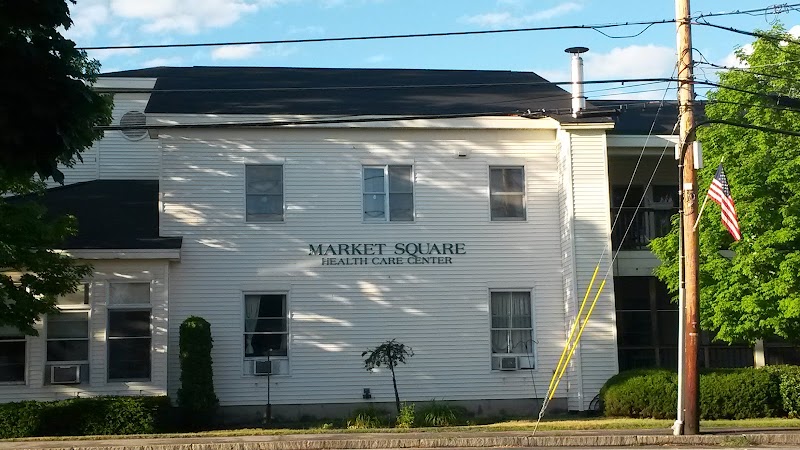
How Does Market Square Health Care Center, Llc Compare to Other Maine Nursing Homes?

Compared to the 100 nursing homes in Maine, Market Square Health Care Center, LLC's overall rating (2 stars) is below the state average of 3.0, staff turnover (54%) is near the state average of 46%, and health inspection rating (2 stars) is below the national benchmark.

What Should Families Ask When Visiting Market Square Health Care Center, Llc?

Based on this facility's data, families visiting should ask: "Can I visit during a mealtime to observe dining assistance and food quality?" "How do you handle medical emergencies, and what is your hospital transfer rate?" "Can I speak with family members of current residents about their experience?"

Is Market Square Health Care Center, Llc Safe?

Based on CMS inspection data, Market Square Health Care Center, LLC has a clean safety record: no substantiated abuse findings (meaning no confirmed cases of resident harm), no Immediate Jeopardy citations (the most serious violation level indicating risk of serious injury or death), and is not on the Special Focus Facility watch list (a federal program monitoring the lowest-performing 1% of nursing homes). The facility has a 2-star overall rating and ranks #100 of 100 nursing homes in Maine. While no facility is perfect, families should still ask about staff-to-resident ratios and recent inspection results during their visit.

Do Nurses at Market Square Health Care Center, Llc Stick Around?

Market Square Health Care Center, LLC has a staff turnover rate of 54%, which is 8 percentage points above the Maine average of 46%. Moderate turnover is common in nursing homes, but families should still ask about staff tenure and how the facility maintains care continuity when employees leave.

Was Market Square Health Care Center, Llc Ever Fined?

Market Square Health Care Center, LLC has no federal fines on record. CMS issues fines when nursing homes fail to meet care standards or don't correct problems found during inspections. The absence of fines suggests the facility has either maintained compliance or corrected any issues before penalties were assessed. This is a positive indicator, though families should still review recent inspection reports for the full picture.

Is Market Square Health Care Center, Llc on Any Federal Watch List?

Market Square Health Care Center, LLC is not on any federal watch list. The most significant is the Special Focus Facility (SFF) program, which identifies the bottom 1% of nursing homes nationally based on persistent, serious quality problems. Not being on this list means the facility has avoided the pattern of deficiencies that triggers enhanced federal oversight. This is a positive indicator, though families should still review the facility's inspection history directly.