AUTUMN LAKE HEALTHCARE AT LONG GREEN
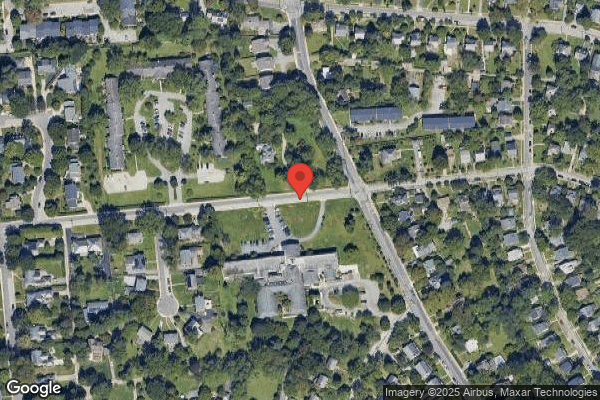
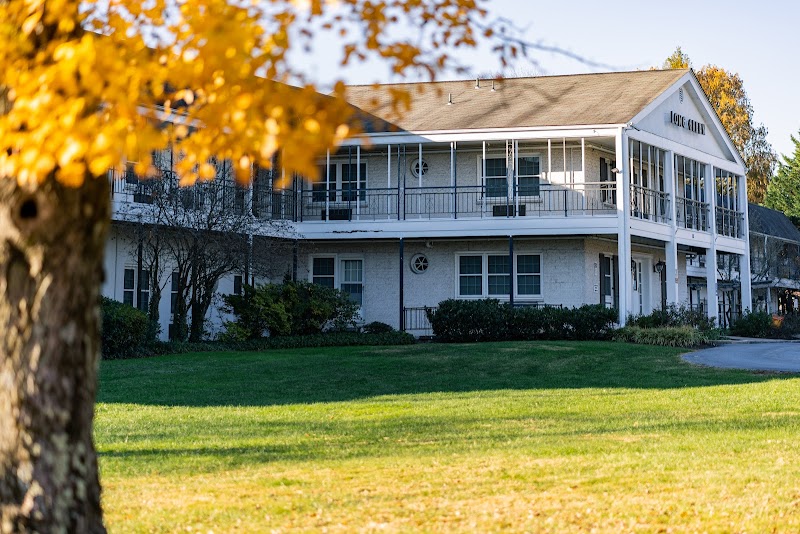
115 EAST MELROSE AVENUE, BALTIMORE, MD 21212 (410) 435-9073
For profit - Limited Liability company 135 Beds AUTUMN LAKE HEALTHCARE Data: November 2025
Trust Grade
30/100
#141 of 219 in MD
Last Inspection: July 2024

Within standard 12-15 month inspection cycle. Federal law requires annual inspections.

Overview

Autumn Lake Healthcare at Long Green has received a Trust Grade of F, indicating significant concerns about the facility's overall care quality. It ranks #141 out of 219 nursing homes in Maryland, placing it in the bottom half of facilities in the state, and #16 out of 26 in Baltimore City County, meaning only a few local options are worse. The facility's trend appears stable, with 20 issues reported in both 2023 and 2024. Staffing is rated average with a turnover rate of 57%, which is concerning compared to the state average of 40%. Notably, there have been no fines, which is a positive sign, but there have been serious maintenance issues, such as a resident's medication being consistently administered late, and visible maintenance problems like running water in a sink and missing floor tiles. While the facility has some strengths, such as average RN coverage, the overall picture suggests significant weaknesses that families should carefully consider.

Trust Score
F
30/100
In Maryland
#141/219
Bottom 36%
Safety Record
High Risk
Review needed
Inspections
Holding Steady
20 → 20 violations
Staff Stability
⚠ Watch
57% turnover. Above average. Higher turnover means staff may not know residents' routines.
Penalties
✓ Good
No fines on record. Clean compliance history, better than most Maryland facilities.
Skilled Nurses
○ Average
Each resident gets 36 minutes of Registered Nurse (RN) attention daily — about average for Maryland. RNs are the most trained staff who monitor for health changes.
Violations
⚠ Watch
69 deficiencies on record. Higher than average. Multiple issues found across inspections.
★★☆☆☆
2.0
Overall Rating
★★★☆☆
3.0
Staff Levels
★★★★☆
4.0
Care Quality
★★☆☆☆
2.0
Inspection Score
Stable
2023: 20 issues
2024: 20 issues

The Good

  • 4-Star Quality Measures · Strong clinical quality outcomes
  • Full Sprinkler Coverage · Fire safety systems throughout facility
  • No fines on record

Facility shows strength in quality measures, fire safety.

The Bad

2-Star Overall Rating

Below Maryland average (3.0)

Below average - review inspection findings carefully

Staff Turnover: 57%

10pts above Maryland avg (46%)

Frequent staff changes - ask about care continuity

Chain: AUTUMN LAKE HEALTHCARE

Part of a multi-facility chain

Ask about local staffing decisions and management

Staff turnover is elevated (57%)

9 points above Maryland average of 48%

The Ugly 69 deficiencies on record

Jul 2024 20 deficiencies
CONCERN (D)

Potential for Harm - no one hurt, but risky conditions existed

Resident Rights (Tag F0550)

Could have caused harm · This affected 1 resident

**NOTE- TERMS IN BRACKETS HAVE BEEN EDITED TO PROTECT CONFIDENTIALITY** 2) On 07/09/24 from 7:52 am - 2:48 pm during observation rounds and the resident screening process, the surveyor observed 30 of ...

Read full inspector narrative →
**NOTE- TERMS IN BRACKETS HAVE BEEN EDITED TO PROTECT CONFIDENTIALITY** 2) On 07/09/24 from 7:52 am - 2:48 pm during observation rounds and the resident screening process, the surveyor observed 30 of 33 residents on units [NAME] and Joppa with clothing in trash bags, boxes, and/or stacked in their armoire. On 07/30/24 at 11:14 am during an interview with Assistant Director of Nursing (ADON) #3 they verbalized when the laundry attendants bring the residents' laundry back to their rooms, the Geriatric Nursing Assistants (GNA) are supposed to hang up the residents' clothing. ADON #3 was made aware the surveyor did not observe hangers in the residents' armoires for the GNA's to hang their clothing. On 07/30/24 at 11:34 am during an interview with Administrator #1, they verbalized when the residents are admitted they are asked to bring clothing for two weeks and the residents' clothing is changed out depending on the season. Administrator #1 verbalized being aware there were a lack of hangers for the residents use and they are in the process of purchasing hangers. On 07/31/24 at 6:01 am during an interview with GNA #52 the surveyor asked what the process is for managing residents' clothing. GNA#52 verbalized when a resident is admitted they document each article of clothing. If clothing comes from the laundry, they must hang the clothing up and put them away. If hangers are not available, they are supposed to fold the clothing and put them in the drawer. Based on observation and interview with facility staff, it was determined that the facility failed to ensure residents' rights to dignity and privacy as evidenced by 1) not ensuring that a resident's foley drainage bag was covered, this was evident for 1 (Resident #86) of 2 residents reviewed for dignity and 2) the facility staff not putting the residents' clothing away in drawers or hanging them in the armoires. This deficient practice was evidenced in 30 of 33 residents screened during the Medicare/Medicaid survey. The findings include: A foley drainage bag, or urinary drainage bag, is a medical device used to collect urine from a catheterized resident. The drainage bag is usually worn on the leg or attached to a bed. 1) During observation rounds on 7/22/24 at 7:50 am, Resident #86 was noted to have a foley catheter bag attached to their bed. The foley drainage bag was uncovered and had amber colored liquid visible. The bag was attached to the door side of the bed. Resident #86's door was open, and the foley drainage bag was visible from the hallway. On 7/22/24 at 10:54 am, the surveyor interviewed Unit Manager Licensed Practical Nurse (LPN) # 39. When asked if residents with foley bags should have covers on the bags, LPN #39 stated foley bags should be covered and that she would ensure that the foley bags were covered.
CONCERN (D)

Potential for Harm - no one hurt, but risky conditions existed

Deficiency F0558 (Tag F0558)

Could have caused harm · This affected 1 resident

Based on observations and interviews it was determined that the facility staff failed to ensure residents had their call bells readily accessible when assistance was required. This deficient practice ...

Read full inspector narrative →
Based on observations and interviews it was determined that the facility staff failed to ensure residents had their call bells readily accessible when assistance was required. This deficient practice was evidenced in 3 (#11, #13, & #14) of 33 residents reviewed for accommodations of needs during the survey. The findings include: On 07/22/24 at 1:58 pm the surveyor observed Resident #11 in bed with a torn diaper. The surveyor asked the resident if they had a call bell and the resident replied, no. The surveyor observed Resident #11 call bell attached to their roommates' bed. Unit Manager #8 confirmed the resident's call bell was on their roommate's bed. Unit Manager #8 verbalized each resident was supposed to have their own call bell to request assistance when needed. Unit Manager #8 was unable to determine why Resident #11's roommate had both call bells. On 07/29/24 at 9:46 am the surveyor observed Residents #13's and Resident #14's call bells on the floor in their room. Resident #13's call bell was on the left side of the bed on the floor. Resident #14's call bell was on the right side of the bed on the floor and their bedside table had several scattered crumbs. On 07/29/29 at 9:49 am the surveyor asked Geriatric Nursing Assistant (GNA) #9 to go to the resident's room. GNA #9 confirmed both resident's call bells were on the floor. GNA #9 verbalized being in the process of working towards the resident's room to provide assistance.
CONCERN (D) 📢 Someone Reported This

A family member, employee, or ombudsman was alarmed enough to file a formal complaint

Potential for Harm - no one hurt, but risky conditions existed

Deficiency F0602 (Tag F0602)

Could have caused harm · This affected 1 resident

Based on administrative record review and interviews with facility staff it was determined the facility failed to ensure that a resident was free from misappropriation of their funds while residing in...

Read full inspector narrative →
Based on administrative record review and interviews with facility staff it was determined the facility failed to ensure that a resident was free from misappropriation of their funds while residing in the facility. This was found to be evident for 1 (Resident # 111) of 3 resident's reviewed for personal property during the survey. The findings include: MD00178630 was reviewed on 7/24/24 at 9:00 AM for misappropriation of resident funds of $1000.00 that was reported to be taken without the resident permission from an account. An interview was conducted with the Administrator (Staff # 1) on 7/24/24 at 11:00 AM and he was asked if he remembers Resident # 111 and he stated that he was very familiar with the resident. The Administrator was then asked if he withdrew $1000.00 from the resident account, and he went on to explain that if a resident has an overage of $2500.00 the facility would do a care cost spend down. The survey team requested a copy of the resident's account from the date of the resident's admission. On a subsequent visit, the Administrator provided a copy of resident # 111 account summary. There was no documentation of a care cost balance indicating money was owed to the facility. On the same date at 3:00 PM the Administrator provided the survey team with a copy of a returned check to the resident for $800.00 dated 1/11/22. The Administrator stated that he was unable to explain or provide documentation as to why the $800.00 was taken from the resident account, however, he stated that the money was returned to the resident. All concerns were discussed with the Administration team on 7/31/24 at 4:00 PM at the time of exit.
CONCERN (D) 📢 Someone Reported This

A family member, employee, or ombudsman was alarmed enough to file a formal complaint

Potential for Harm - no one hurt, but risky conditions existed

Report Alleged Abuse (Tag F0609)

Could have caused harm · This affected 1 resident

2) On 7/24/24 at 4:02 PM, the facility reported incident for Resident #92 revealed that on 2/24/24, Resident #92 reported his/her assigned GNA allegedly struck him/her. Further review of the facility...

Read full inspector narrative →
2) On 7/24/24 at 4:02 PM, the facility reported incident for Resident #92 revealed that on 2/24/24, Resident #92 reported his/her assigned GNA allegedly struck him/her. Further review of the facility investigation revealed Shift Supervisor #42 wrote in his statement that he was called to the location of the alleged incident at around 9:15 AM and responded immediately. It was noted that the facility submitted the initial report to the state agency on 2/24/24 at 5:58 PM. On 7/29/24 at 9:05 AM in an interview with the DON, she stated the time frame to report an allegation of abuse to the OHCQ is 2 hours. When asked the timing for when resident representatives (RPs) are notified of allegations of abuse, she stated they are notified immediately after an allegation of abuse. In the facility's investigation, it stated that the RP of Resident #92 was notified 2/24/24 around 9:30AM. During the interview, the DON stated, no, the initial report was not submitted in the 2 hour time frame for an allegation of abuse. Based on record review and interview with facility staff, it was determined that the facility failed to timely report allegations of abuse within the required two hour timeframe to the Survey Agency, the Office of Health Care Quality (OHCQ). This was evident for 2 (MD00204913 and MD00202949) of 5 facility related incident reports reviewed during the survey. The findings include: 1) On 07.22.24 at 1:00 PM the surveyor reviewed MD00204913 which was related to the allegation of inappropriate sexual relations between Residents #8 and #81. The alleged incident occurred on 04.11.24 around 4:00 PM per the documentation submitted by the facility. Review of the facility's documentation related to this incident report revealed the administrator did not submit the initial report to OHCQ until 8:15 PM on 04.11.24. During an interview with the DON and the administrator the surveyor reviewed the late submission of the initial report. Both the DON and the administrator stated that they were aware of the requirements to submit initial reports related to abuse within a two-hour time period. The administrator stated that he was not able to provide a reason for latest of the submission other than the incident occurred on a weekend. This deficient practice was reviewed with the administrative team on 07.31.24 during the exit conference.
CONCERN (D)

Potential for Harm - no one hurt, but risky conditions existed

Investigate Abuse (Tag F0610)

Could have caused harm · This affected 1 resident

Based on record review and interview with facility staff, it was determined that the facility failed to complete a thorough investigation of an allegation of abuse. This was evident for 1 of 10 reside...

Read full inspector narrative →
Based on record review and interview with facility staff, it was determined that the facility failed to complete a thorough investigation of an allegation of abuse. This was evident for 1 of 10 residents (Resident #36) reviewed for abuse during the survey. The findings include: The facility's investigation related to facility reported incident MD00206051 was reviewed on 7/24/24 at 3:58 PM and revealed that, on 5/26/24, Resident #36 had reported to the Nursing Home Administrator (NHA) that his/her assigned Geriatric Nursing Assistant (GNA) allegedly threw a cup of water in his/her face. Further review of the facility investigation documents revealed interviews of the alleged incident from the alleged perpetrator, another GNA, and the nursing supervisor of each of the aforementioned staff members. The investigation did not include an interview of the alleged victim, Resident #36. On 7/22/24 at 1:48 PM review of Resident #36's medical record revealed the resident had a Brief Interview for Mental Status (BIMS) of 15 out of 15, which indicates the resident's cognition was intact. In an interview with the NHA on 7/30/24 at 1:45 PM, he stated a thorough investigation included interviewing the resident, alleged perpetrator, and any witnesses. During the interview the NHA confirmed there was no interview from the alleged victim, Resident #36. In addition, he stated, I can see that I should have gotten a statement from the resident.
CONCERN (D)

Potential for Harm - no one hurt, but risky conditions existed

Deficiency F0655 (Tag F0655)

Could have caused harm · This affected 1 resident

Based on medical record review and interviews with facility staff it was determined the facility failed to complete a baseline care plan on a resident admitted with a stage four pressure ulcer. This w...

Read full inspector narrative →
Based on medical record review and interviews with facility staff it was determined the facility failed to complete a baseline care plan on a resident admitted with a stage four pressure ulcer. This was evident for 1 (Resident # 98) reviewed for pressure ulcers during the facility's annual survey. Findings include: A care plan is a written guideline of care based on the individual resident's needs developed by an interdisciplinary team which includes nursing, rehabilitation staff, and dietary that communicates to other health care professionals. A written care plan decreases the risk of incomplete, incorrect or inaccurate care. A baseline care plan must be completed within 48 hours of a resident's admission to the facility. A stage 4 pressure ulcer, also known as a bedsore, is the most severe type of pressure ulcer and can be life-threatening. It's characterized by full-thickness skin loss that extends through the fascia and into the muscle, bone, tendon, or joint. A medical record review was completed for resident # 98 on 7/22/24 at 1:30pm and it revealed the resident was admitted in March of 2024 with a left buttock stage 4 pressure ulcer. Review of the resident baseline care plan dated 3/18/24, failed to reveal a completed baseline care plan. The interventions section was blank for resident #98 ' s pressure ulcer to the left buttock. An interview was conducted with the Regional Nurse on 7/22/24 at 2:00 PM and she was asked if the resident had a care plan for the pressure ulcer. The Regional Nurse was unable to provide the survey team with a completed baseline care plan for Resident #98 that contained the interventions. During an interview with the ADON (Assistant Director of Nursing) on 7/22/24 at 3pm she stated she was unable to locate a completed baseline care plan for resident #98 that contained interventions for the pressure ulcer.
CONCERN (D)

Potential for Harm - no one hurt, but risky conditions existed

Comprehensive Care Plan (Tag F0656)

Could have caused harm · This affected 1 resident

2) On 07/24/24 at 11:55 am the surveyor reviewed Resident #88's medication administration record (MAR) which revealed the resident was prescribed psychotropic medications. Further review of the electr...

Read full inspector narrative →
2) On 07/24/24 at 11:55 am the surveyor reviewed Resident #88's medication administration record (MAR) which revealed the resident was prescribed psychotropic medications. Further review of the electronic medical record (EMR) revealed the resident did not have a comprehensive, patient-centered care plan for the administration of psychotropic medications prescribed. On 07/29/24 at 2:13 pm during an interview with the ADON when asked if a resident who is prescribed psychotropic medication, should have a care plan. The ADON verbalized a resident who is prescribed psychotropic medication should have a care plan. The surveyor made the ADON aware Resident #88 did not have a patient-centered care plan for the use of psychotropic medications. Based on review of the medical record, observation and interviews with facility staff, it was determined that the facility failed to ensure comprehensive care plans were developed and implemented. This is evident for 2 (Resident #98 and #88) of 37 residents reviewed during the survey. The findings include: A care plan is a written guideline of care based on the individual resident's needs developed by an interdisciplinary team which includes nursing, rehabilitation staff, and dietary that communicates to other health care professionals. A written care plan decreases the risk of incomplete, incorrect or inaccurate care. A pressure ulcer (also known as pressure sore or decubitus ulcer) is any lesion caused by unrelieved pressure or friction that results in damage to the underlying tissue. Pressure ulcers are staged according to their severity from Stage I (area of persistent redness), Stage II (superficial loss of skin such as an abrasion, blister, or shallow crater), Stage III (full thickness skin loss involving damage to subcutaneous tissue presenting as a deep crater), and Stage IV (full thickness skin loss with extensive damage to muscle, bone, or tendon). 1) A medical record review was completed for resident # 98 on 7/24/24 at 1:30pm it revealed the resident was admitted in March of 2024 with a left buttock stage 4 pressure ulcer. Review of the resident care plans, failed to reveal a comprehensive care plan for a stage 4 pressure ulcer to left buttock. Review of the Treatment Administration Record revealed the resident had several treatment order changes. An interview was conducted with the Regional Nurse on 7/24/24 at 2:00 PM and she was asked if the resident has a care plan for the pressure ulcer. The Regional Nurse stated she was unable to locate any care plans for a pressure ulcer. During an interview with the Assistant Director of Nursing (ADON) on 7/24/24 at 3:00 PM, she stated she was unable to locate a care plan for resident #98 for pressure ulcers; however, one would be developed. As of exit on 7/31/24 at 4:30pm the resident remained without a plan of care for the stage 4 pressure ulcer.
CONCERN (D)

Potential for Harm - no one hurt, but risky conditions existed

Quality of Care (Tag F0684)

Could have caused harm · This affected 1 resident

Based on medical record review and interview it was determined that the facility staff failed to reassess a resident's blood pressure (BP) when it was outside of the resident's usual parameters. This ...

Read full inspector narrative →
Based on medical record review and interview it was determined that the facility staff failed to reassess a resident's blood pressure (BP) when it was outside of the resident's usual parameters. This deficient practice was evident in 1 (#68) of 1 resident reviewed for follow up after abnormal vitals during the survey. The findings include: On 07/24/24 at 9:11 am a review of Resident #68 vital signs revealed on 07/23/24 at 10:07 pm the documented BP was 180/92. There was not another BP documented after the elevated BP was recorded. The surveyor checked the nursing notes for documentation from Certified Medication Aide # 66 who recorded the BP or from the nurse overseeing the resident's care. The resident was ordered Hydralazine 100 mg by mouth at 10 pm. The medication was signed off as given. A review of Resident #68 care plan for coronary heart disease dated 08/14/23 revealed medication for hypertension should be given as ordered and a response to the medication should be documented. On 07/24/24 at 10:32 am Director of Nursing #2 (DON) was made aware Resident #68's BP was elevated and a follow up BP was not documented and there wasn't a clinical note in the electronic medical record (EMR) or the paper chart. DON#2 verbalized CMA#66 should have notified the nurse of the BP and the nurse should have retaken the resident's BP and report the findings to the physician. On 07/24/24 4:10 pm DON#2 confirmed the staff did not take a follow up BP. The surveyor received a note with two BP results that were taken for Resident #68. The results were 144/80 at 11:30 am and 142/78 at 2:19 pm. The follow up BP was taken over 12 hours after the elevated BP was recorded in Resident #68 EMR.
CONCERN (D)

Potential for Harm - no one hurt, but risky conditions existed

Incontinence Care (Tag F0690)

Could have caused harm · This affected 1 resident

Based on medical record review and staff interview it was determined the facility failed to ensure that treatment that was ordered for a resident with urinary incontinence was implemented. This was ev...

Read full inspector narrative →
Based on medical record review and staff interview it was determined the facility failed to ensure that treatment that was ordered for a resident with urinary incontinence was implemented. This was evident for 1 (#93) of 3 residents reviewed for bladder incontinence. The findings include: During observation rounds on 7/26/24 at 12 noon resident #93 was sitting in the hallway with his/her Foley bag sitting in the wheelchair. The Foley bag was filled to the top with a yellow-colored fluid and a large piece of tape was noted attached to the bag. This surveyor asked the resident why, his/her foley bag was not attached to the wheelchair and the resident stated, my Foley bag has a hole in in. I told the nurse instead of changing it he just taped it. Review of the medical record on 7/26/24 at 12:30pm revealed a physician order to change the catheter/foley bag when needed and to empty the foley drainage bag at least once every eight hours or when it becomes half to 2/3 full. The DON Director of Nursing was made aware of the findings at 12:45pm. During a follow-up interview with the DON on 7/26/24 at 1:30 pm, she stated that staff #44 was aware that the foley catheter was full and possibly leaking; however, staff #44 was passing out medications. Review of the staffing schedule on 7/26/24 at 2pm revealed that the unit also had a Unit Manager assigned.
CONCERN (D)

Potential for Harm - no one hurt, but risky conditions existed

Respiratory Care (Tag F0695)

Could have caused harm · This affected 1 resident

Based on surveyor observation, interview with facility staff, and review of the medical record, it was determined the facility staff failed to provide necessary respiratory care services for residents...

Read full inspector narrative →
Based on surveyor observation, interview with facility staff, and review of the medical record, it was determined the facility staff failed to provide necessary respiratory care services for residents by failing to date label oxygen administration equipment and failing to administer oxygen as prescribed. This was evident for 1 (Resident #60) of 37 residents reviewed during the survey. The findings include: On 7/19/24 at 8:07 AM Resident #60 was observed receiving oxygen via nasal cannula at a flow rate of 4.25 liters per minute (L/min). A nasal cannula is a device that delivers oxygen directly to a person's nostrils via a flexible plastic tube. During a second observation that took place on 7/19/24 at 2:16 PM, Resident #60 was noted to still be receiving oxygen at a flow rate of 4.25 L/min. On 7/19/24 at 2:21PM in an interview with Licensed Practical Nurses (LPN) #14 when asked about oxygen administration equipment he stated the tubing should be labeled with initials and the date/time it was changed. During the interview he stated if the humidifier bottle is running out, that is also changed and labeled with the date/time and initials. Furthermore, LPN #14 stated we [nurses] do morning rounds and oxygen equipment is checked during that time. On 7/19/24 at 2:32 PM in an interview with the Assistant Director of Nursing (ADON) when asked about expectations for oxygen administration equipment, she stated oxygen tubing should be changed every Monday and as needed and labeled with the date it was changed and staff's initials. During the interview, she confirmed the humidifier bottle is also labeled with the date and initials when changed. Then, the ADON and surveyor entered Resident #60's room, looked at the oxygen equipment, and conversed with the resident. Resident #60 was observed to still be receiving oxygen at a flow rate of 4.5 L/min. The surveyor and ADON exited the room and when asked, the ADON stated the label on the oxygen tubing was dated 5/29/24 and initialed by C.M. who she confirmed was Registered Nurse (RN) #4. The ADON also confirmed the humidifier bottle was not labeled. During the interview when asked how many liters of oxygen Resident #60 was currently receiving, the ADON re-entered the resident's room and stated, Who bumped you up to this? The ADON exited the resident's room and stated, the resident was on 1L when I just checked, but I accidentally bumped it to 5L and now he/she is on 2L. The surveyor shared a picture taken 7/19/24 at 8:07AM showing the oxygen flow meter ball between 4 and 4.5 L. Resident #60's medical record was reviewed on 7/19/24 at 2:43 PM which revealed an order for Oxygen at 2L/min via Nasal Cannula continuous for SOB (shortness of breath) dated 6/6/23. The ADON pulled up Resident #60's oxygen order on 7/19/24 at 2:45 PM. The order dated 11/2/23 stated, Oxygen at 2L-3L via N/C (nasal cannula) continuously with the goal of 88-92% every shift for COPD. On 7/19/24 at 2:46 PM in an interview with the ADON when asked, when she entered Resident #60's room, was the resident on the physician ordered 2-3L NC that was on the order just provided, she stated, No. ADON indicated the order from 6/6/23 should have been discontinued, but could not tell the surveyor why it was not. The 11/2/23 order was put in by the doctor when Resident #60 went out to the hospital. The 6/6/23 order was on hold and yes it should show in the electronic health record. On 7/24/24 at 9:30 AM review of Resident #60's medical record revealed an order dated 11/2/2023, Oxygen tubing change weekly. Label each component with date and initials. every night shift every Tue. Label each component with date and initials. On 7/22/24 at 8:01 AM, review of the facility's Oxygen Administration policy stated, Oxygen is administered to residents who need it, consistent with professional standards of practice, the comprehensive person-centered care plans, and the resident's goals and preferences. Further review revealed Policy Explanation and Compliance Guidelines: 1.Oxygen is administered under orders of a physician, except in the case of emergency. In such cases, oxygen is administered and orders for oxygen are obtained as soon as practicable when the situation is under control. 5. Staff shall perform hand hygiene and don gloves when administering oxygen or when in contact with oxygen equipment. Other infection control measure include: b. Change oxygen tubing and mask/cannula weekly and as needed if it becomes soiled or contaminated. c. Change humidifier bottle when empty, every 72 hours or per facility policy, or as recommended by the manufacturer.
CONCERN (D)

Potential for Harm - no one hurt, but risky conditions existed

Drug Regimen Review (Tag F0756)

Could have caused harm · This affected 1 resident

2) On 07/24/24 at 2:58 pm during an interview with the ADON who verbalized they were waiting for pharmacy to send the pharmacy reviews for Resident #88. The ADON was made aware the surveyor requested ...

Read full inspector narrative →
2) On 07/24/24 at 2:58 pm during an interview with the ADON who verbalized they were waiting for pharmacy to send the pharmacy reviews for Resident #88. The ADON was made aware the surveyor requested the pharmacy reviews over an hour prior and he/she verbalized they would be printed. The ADON reported the pharmacy reviews were not in his/her computer as previously stated. When asked what the process was to receive and review the pharmacy recommendation the ADON stated; they bring the recommendation to clinical for the physician to review and decide if they want to move forward with the recommendation. The physician will sign the recommendation; afterwards the recommendation is faxed back to the pharmacy. Clinicals are held Monday thru Friday. On 07/24/24 at 3:31pm the surveyor received the pharmacy recommendations from the ADON which were not signed. The surveyor asked the ADON if the physician reviewed the recommendations, why are they not signed. The ADON was unable to answer the surveyor's question. On 07/24/24 at 3:44 pm the surveyor reviewed the pharmacy recommendations dated 02/21/24, 03/13/24, 04/09/24, and 06/19/24. Review of Resident #88 medication administration record revealed (MAR) there were no changes to the medication regimen where the pharmacist indicated the resident was receiving duplicate medication therapy for at least two medications. Also, the pain patches the resident was receiving were not being used according to the manufacturer's recommendation. Blood work was not completed as clinically indicated. On 07/29/24 at 2:05 pm the surveyor asked if the pharmacy recommendations were addressed, the ADON verbalized they must find out if they were addressed. Based on a review of the medical record and interview with facility staff, it was determined that the facility failed to respond to the pharmacy recommendations after a monthly clinical review was done and failed to ensure the attending physician reviewed the pharmacy reviews. This was evident for 2 (Resident # 93 and #88) of 5 residents reviewed for unnecessary medications during the survey. The findings include: 1) Resident # 93's medications were reviewed on 7/30/24 at 1:00pm for unnecessary medications. Upon review of the Consultant Pharmacist Medication Regimen Review Medical Director Report dated 6/20/24, it indicated the following: Recommendation: Please clarify a frequency for Magnesium Hydroxide PRN (when needed) (ex. once daily PRN.) Magnesium hydroxide is used to treat occasional constipation in adults on a short-term basis. There was no response indicated on the form. An interview was conducted with the Assistant Director of Nursing (ADON) on 7/30/24 at 1:20pm, she was asked to provide copies of the facility's response to the pharmacist's recommendations. During a follow-up interview on 7/30/24 at 3pm she stated that she has looked everywhere and was unable to find any responses to the pharmacy review for 6/20/24. She stated she had contacted the Nurse Practitioner and the resident primary physician to address the issue. On 7/30/24 the Nurse Practitioner was in the facility and added a frequency to the medication per the pharmacy recommendation.
CONCERN (D)

Potential for Harm - no one hurt, but risky conditions existed

Medication Errors (Tag F0758)

Could have caused harm · This affected 1 resident

Based on a review of the medical record and interviews with facility staff it was determined that the facility failed to respond to the pharmacy recommendations after a monthly clinical review was don...

Read full inspector narrative →
Based on a review of the medical record and interviews with facility staff it was determined that the facility failed to respond to the pharmacy recommendations after a monthly clinical review was done. This was found to be evident for 1(Resident # 93) of 5 residents reviewed for unnecessary medications during the facility's annual survey. The findings include: Anxiolytic drugs, also known as anti-anxiety medications or minor tranquilizers, treat anxiety and related conditions. Resident # 93 medications were reviewed on 7/30/24 at 1pm for unnecessary medications. Upon review of the Consultant Pharmacist Medication Regimen Review Medical Director Report dated 6/20/24 it indicated the following: The resident has a PRN (when needed) order for an anxiolytic, without a stop date. Recommendation: is to consider discontinued PRN Diazepam, tapering as necessary. If medication cannot be discontinued at this time, please document the indication for use. The intended duration of therapy and the rationale for the extended time of period. There was no response indicated on the form. An interview was conducted with the ADON on 7/30/24 at 1:20pm, she was asked to provide copies of the facility's response to the pharmacist's recommendations. During a follow-up interview on 7/30/24 at 3pm she stated that she has looked everywhere and was unable to find any responses to the pharmacy review for 6/20/24. She stated she has contacted the Psychiatric Nurse Practitioner and the resident primary physician to address the issue. On 7/31/24 the Psychiatric Nurse Practitioner was in the facility and discontinued the PRN Diazepam.
CONCERN (D)

Potential for Harm - no one hurt, but risky conditions existed

Food Safety (Tag F0812)

Could have caused harm · This affected 1 resident

**NOTE- TERMS IN BRACKETS HAVE BEEN EDITED TO PROTECT CONFIDENTIALITY** Based on administrative record reviews, observations, and interviews the failed to (1) ensure sanitary practices were followed i...

Read full inspector narrative →
**NOTE- TERMS IN BRACKETS HAVE BEEN EDITED TO PROTECT CONFIDENTIALITY** Based on administrative record reviews, observations, and interviews the failed to (1) ensure sanitary practices were followed in accordance with professional standards for food service safety, (2) maintain a clean working environment, #3) to remove expired canned food from the kitchen, (4) maintain safe temperatures in a unit refrigerator, and (5) to remove outdated food from unit refrigerators. These deficient practices related to the unit refrigerators were identified to be present on 2 out of 4 clinical units and the facility kitchen. The findings include: On 07.19.24 at 07:50 AM the surveyor performed the initial observation of the kitchen as part of the facility task and escorted by Staff #16, director of dietary services. The tour initiated in the dry storage area. The surveyor observed that two of the closed bins in which dry cereal was stored did not have an expiration date on the sticker/label. Also, the surveyor found one can of pears with an expiration date of 05.2023 on another shelf. On 07.19.24 at 0800 AM the surveyor continued the tour of the kitchen work area and found that the two ovens appeared brown, greasy, and dirty both inside, including the shelving and on both doors of the oven. Staff #16 stated that the oven was in constant use because the facility does not have a separate warmer and Staff #16 was not able to provide the surveyor with a cleaning schedule for the equipment in the kitchen. At approximately, 08:05 AM the surveyor observed the area designated for rinsing dirty dishes was found unkempt with food particles left in the strainer, as well as what appeared to be a cigarette butt. When questioned by the surveyor, Staff #16 stated that sometimes the residents will take their plate outside while smoking and leave a cigarette butt on the plate. At 1:20 PM on 07.22.24 the surveyor was accompanied on the second tour of the kitchen by director of operations for dietary services, staff # 23 and observed the dirty ovens with burned on grease present on the shelves, walls, and the glass doors. The surveyor asked staff #23 whether she felt if it was acceptable to have kitchen remain in this condition. Staff # 23 did not provide an explanation nor did she provide a cleaning schedule for the kitchen equipment. On 07.26.24 at 11:39 AM the surveyor conducted a tour of the kitchen with staff #23. The general workspace of the kitchen was cleaner and better organized. The two oven doors were clean as well as the interior walls and shelves. 07.30.24 at 11:15 AM the surveyor was escorted by staff #15, regional DON to unit Melrose's nourishment room. The surveyor found a plastic bag with room [ROOM NUMBER] and the resident's name written on the outside of the bag but no date and time for the expiration of the food items was visible. At 11:27 AM staff #15 escorted the surveyor to unit [NAME] unit nourishment refrigerator. The surveyor found a food item in a plastic bag without a label and date, a plastic bag of green grapes was unlabeled as well. At 11:32 AM staff #15 escorted the surveyor to the Joppa clinical unit whose nourishment refrigerator was located behind the nurses' station and the temperature was 52 degrees. The surveyor observed that a container of a resident's food (baked scalloped potatoes) that was brought from home was greater than 3 days old based on the black marker. During an interview with the facility administrator, the administrator stated that he does not perform direct supervision of the contracted kitchen staff. However, if there pending issues then he would confer with the kitchen staff. The deficient practices related to the kitchen were discussed with the administrative staff during the exit interview.
CONCERN (D) 📢 Someone Reported This

A family member, employee, or ombudsman was alarmed enough to file a formal complaint

Potential for Harm - no one hurt, but risky conditions existed

Medical Records (Tag F0842)

Could have caused harm · This affected 1 resident

**NOTE- TERMS IN BRACKETS HAVE BEEN EDITED TO PROTECT CONFIDENTIALITY** Based on record review and interview with facility staff, it was determined that the facility failed to ensure that resident's m...

Read full inspector narrative →
**NOTE- TERMS IN BRACKETS HAVE BEEN EDITED TO PROTECT CONFIDENTIALITY** Based on record review and interview with facility staff, it was determined that the facility failed to ensure that resident's medical records were accurately documented in accordance with accepted professional standards. This was evident for 1 (Resident #68) out of 8 resident's records reviewed during the survey. The findings include: On 07/22/24 at 03:12 PM, during an interview with Resident #68's daughter, she told surveyors that the resident had lost some weight. On 07/24/24 at 09:01 AM surveyors reviewed the section K of the Minimum Data Set (MDS) assessment dated [DATE] and it showed that Resident #68 had a weight loss of 5% or more in the last month or loss of 10% or more in the last 6 months. On 07/24/24 at 09:05 AM, surveyors reviewed Resident #68's weights in the Electronic Health Record and discovered significant weight discrepancies. On 03/05/25, it was recorded that resident weighed 151.9 lbs and a month later,on 04/1/24, it was recorded that the resident weighed 150.3 lbs. On 04/02/24 (one day later), it was recorded that the resident weighed 138.8 lbs. And on 04/04/24 (two days later), it was recorded that the resident weighed 134.6Lbs with inconsistency in the weighing scales used (wheelchair, Hoyer and mechanical lift). Later weights were as follows: 4/10, 144.4 lbs; 4/17, 145.8 lbs; 4/25, 146.0 lbs. The dietician's note on 04/04/24 stated weight warning, weight value of 138.8lbs, nursing manager made aware to obtain a reweigh, she also added that she would follow up when reweight was obtained. No other notes were seen for the weight discrepancy between 04/01 and 04/03/24. On 07/24/24 at 10:39 AM surveyors discussed the findings with the Director of Nursing (DON), and she stated that the facility uses different types of weighing scale for residents and listed that the facility had a standing scale, mechanical lift, Hoyer lift and another scale that wheelchairs were rolled into. She added that when residents are newly admitted , the Hoyer lift is used but during the second day weighing, some of the residents refuse the Hoyer, therefore a mechanical lift is used. When shown the discrepancy in the weights from 04/01/24 to 04/04/ 24, she stated it was impossible for a resident to lose about 12 pounds in one day. She also stated that it was a documentation error made by RN #54 which the facility failed to correct and confirmed that an education would be given to the staff and other staff members on accurate documentation.
CONCERN (D) 📢 Someone Reported This

A family member, employee, or ombudsman was alarmed enough to file a formal complaint

Potential for Harm - no one hurt, but risky conditions existed

Infection Control (Tag F0880)

Could have caused harm · This affected 1 resident

3) On 7/19/24 at 2:21 PM Licensed Practical Nurse (LPN) #14 was observed holding a medication capsule in his bare hand and a cup of water with a spoon inside in the other hand. The surveyor did not ob...

Read full inspector narrative →
3) On 7/19/24 at 2:21 PM Licensed Practical Nurse (LPN) #14 was observed holding a medication capsule in his bare hand and a cup of water with a spoon inside in the other hand. The surveyor did not observe the nurse wearing a glove on either of his hands. In an interview with LPN #14 when asked about the medication, he stated it is Gabapentin for Resident #39. During the interview when asked if it ever appropriate to handle and hold a resident's medications without gloves, LPN #14 stated I did not touch the medication itself. I just touched the capsule, not the actual medication inside of it. Also, I just washed my hands. When asked for clarification if it is ever appropriate for a nurse to handle and hold a resident's medications without gloves, LPN #14 stated No, it is not ok for a nurse to ever touch a resident's medication. At that moment, 7/19/24 2:32 PM, the Assistant Director of Nursing (ADON) was observed walking down the hallway by the elevator on the first floor. In an interview with the ADON when asked if it is ever appropriate for facility staff to handle and hold a resident's medication without gloves, she stated, No. Review of the facility's policy titled, Medication Administration, on 7/22/24 at 8:15 AM revealed number 13. Remove medication from source, taking care not to touch medication with bare hand. Based on observations and interviews with facility staff it was determined the facility failed to ensure that infection control practices were maintained to prevent the spread of germs and transmission of microorganisms. This was evident for 1 (Resident #39) of 37 residents reviewed and found to be present when observations were made during the survey. The findings include: 1) On 7/26/24 at 11:30 AM an observation was made of the food on the floor in the Atrium near the dining room. There were round substances that resembled meatballs that were noted underneath the equipment stored in a cove in this area. Along a side wall there was a splatter noted to the base boards. The Administrator who was walking past the area at the time of the observation was made aware. The Administrator stated that he would have housekeeping services clean the area. Housekeeping services arrived at 11:40 AM to clean the area. 2) An observation was made on 7/30/24 at 11:40 AM of the hallway that leads to the laundry area and kitchen. Trash was observed on the floor and the floor was dirty with large dark marks noted along the length of the floor. There was an entrance door leading into the main kitchen along this hallway. The door was open and there was a large area of standing water noted on the floor. A linen cart was observed uncovered in the entrance way of the clean linen room and the hallway, confirmed by Laundry Staff # 69 to be a clean linen cart. There was a large fan located in the hallway, next to the uncovered, clean linen cart that was blowing air, causing the trash and particles observed on the floor to blow around in the hallway. The Administrator was made aware of the concern on the same date at 11:55 AM and he stated that he would inform housekeeping services to clean the area. All concerns were discussed with the Administration team at the time of exit on 7/31/24 at 4:00 PM.
CONCERN (D) 📢 Someone Reported This

A family member, employee, or ombudsman was alarmed enough to file a formal complaint

Potential for Harm - no one hurt, but risky conditions existed

Safe Environment (Tag F0921)

Could have caused harm · This affected 1 resident

**NOTE- TERMS IN BRACKETS HAVE BEEN EDITED TO PROTECT CONFIDENTIALITY** Based on observations and interviews with facility staff it was determined the facility failed to ensure that the resident's env...

Read full inspector narrative →
**NOTE- TERMS IN BRACKETS HAVE BEEN EDITED TO PROTECT CONFIDENTIALITY** Based on observations and interviews with facility staff it was determined the facility failed to ensure that the resident's environment was maintained in a safe and homelike manner. This was found to be evident for multiple residents that resided in rooms (#121,122,123,124,126, 219 and 226) of 7 resident rooms observed during the facility's survey. The findings include: MD00178628 was reviewed on 7/25/24 at 9:30 AM for multiple concerns including concerns regarding the resident's physical environment. On 7/25/24 at 11:50 AM a tour of the building was conducted and while touring the first floor the following concerns were identified: Observations were made of the air conditioner (ac) units in the following rooms: #121, #123, #124 and #126 and there was dust, dirt and debris present on the front of the units and inside along the screen filters. On the same date at 12:10 PM the Administrator (Staff #1) and the Director of Nursing (DON) (Staff #2) was made aware of the concerns that were observed and summoned the Maintenance Assistant (MA) (Staff # 62) to accompany the surveyor and administration team to the first floor. The Administrator confirmed the above-mentioned findings and stated that the maintenance assistant will do an assessment of all the rooms and the AC units and start the process of cleaning them. The surveyor requested to see maintenance logs for the past 6 months. On 7/25/24 at 2:10 PM the Administrator submitted a copy of the facility's current maintenance log with a date of 7/24/24. The Administrator stated that monthly maintenance is done to air conditioner units, and provided maintenance logs for January, April and May 2024. There was no maintenance log provided for February, March and June 2024. On 7/29/24 at 11:38 AM the survey team observed the AC unit in room [ROOM NUMBER] that had a tan/brown substance noted on the front of the unit and the AC unit in room # 219 had dust, dirt and debris noted inside the front of the AC unit. An interview was conducted with the Administrator on 7/29/24 at 11:50 AM and he was made aware of the identified concern and stated that maintenance will be conducting an audit of the second floor and the units will be cleaned. All identified concerns were discussed with the Administration team at the time of exit on 7/31/24 at 4:00 PM.
CONCERN (D) 📢 Someone Reported This

A family member, employee, or ombudsman was alarmed enough to file a formal complaint

Potential for Harm - no one hurt, but risky conditions existed

Deficiency F0925 (Tag F0925)

Could have caused harm · This affected 1 resident

2) During the survey multiple observations were made of flies and fruit flies throughout the building. On the first day of the survey on 7/19/24, surveyors were placed in one of the facility's rooms ...

Read full inspector narrative →
2) During the survey multiple observations were made of flies and fruit flies throughout the building. On the first day of the survey on 7/19/24, surveyors were placed in one of the facility's rooms with multiple flies and fruit flies observed in the room. On 7/19/24 at 8:56 AM flies and fruit flies were observed in Resident #78's room circling and landing on the resident and his/her bedside table. There was also a spiral, yellow, sticky paper with dead flies and fruit flies adhered to it that hung to the left of the resident's bed. On 7/19/24 at 1:18 PM in an interview with the Nursing Home Administrator (NHA), he was made aware of the flies and fruit flies in the residents' rooms and throughout the facility. 07/31/24 11:39 AM in an interview the NHA, he was again made aware of the flies and fruit flies. He stated Resident #78 engages in behaviors which contributes to the issue, but he will look into it. Based on observations and interviews of facility staff it was determined the facility failed to ensure an effective pest control program as flies and fruit flies were observed throughout the building. This was found to be evident during the facility's survey. The findings include: 1) Observations were made of flies noted in the conference room on July 23, 24, 25, 26, 29, 30 and 31, 2024. The conference room is located on the first floor along the hallway where resident rooms are also located. On July 25, 2024, at 11:50 AM flies were observed in the hallway along the first floor, and in resident rooms # 121, and 123. Flies were also observed in the bathroom located between these rooms. On the same date at 12:10 PM the Administrator (Staff #1) and the Director of Nursing (DON) (Staff #2) was made aware of the concerns that were observed, and the Administrator summoned the Maintenance Assistant (MA) (Staff # 62) to accompany the surveyor and administration team to the first floor. The Administrator confirmed the above-mentioned findings. Review of the pest control service summary report on the same date at 1:00 PM revealed the following: An invoice for 7/24/24 for general pest control maintenance. Further review of the report indicated that on 6/17/24 standing water was noted in the main kitchen which was noted to be conducive for small fly activity. On 7/30/24 at 11:40 AM during an observation of the hallway leading into the kitchen and laundry area, standing water was noted on the floor in the main kitchen area. (Cross Reference F-880) Please note that the hallway is located on the first floor and near resident rooms and the conference room where flies were observed. The Administrator was made aware of this finding immediately. All concerns were discussed with the Administration team at the time of exit on 7/31/24 at 4:00 PM.
CONCERN (E) 📢 Someone Reported This

A family member, employee, or ombudsman was alarmed enough to file a formal complaint

Potential for Harm - no one hurt, but risky conditions existed

Deficiency F0658 (Tag F0658)

Could have caused harm · This affected multiple residents

**NOTE- TERMS IN BRACKETS HAVE BEEN EDITED TO PROTECT CONFIDENTIALITY** 2) On 07/31/24 at 9:58 am the surveyor reviewed Resident #88's MAAR which revealed that from 03/01/24 - 04/11/24 the resident's ...

Read full inspector narrative →
**NOTE- TERMS IN BRACKETS HAVE BEEN EDITED TO PROTECT CONFIDENTIALITY** 2) On 07/31/24 at 9:58 am the surveyor reviewed Resident #88's MAAR which revealed that from 03/01/24 - 04/11/24 the resident's medication was signed off as given 1 hour or later than the prescribed medication time. There were at least 20 nurses including Unit Manager #8 and 1 Certified Medication Aide (CMA) who signed the MAAR at least 1 hour past the scheduled medication time. There were over 85 times when Resident #88's medications were signed off as given 1 hour or more after the scheduled time during 03/01/24 - 04/11/24. On 07/31/24 at 10:10 am during an interview with Assistant Director of Nursing (ADON) #3 who verbalized the nurses are giving the medications on time and sometimes they help on the floor by assisting with breakfast and lunch. The standard of practice is when a medication is given the medication is supposed to be signed as given. On 07/31/24 at 10:36 am during an interview with CMA #53 he/she verbalized they give medications on the units [NAME] and Joppa. If a resident needs assistance and if no one is available, they stop to help. They give all their medications on time and the standard of practice is to give the medication on time and sign it off. If they medication is signed off late, the nurse or supervisor is made aware. On 07/31/24 at 11:20 am during an interview with LPN #68 he/she verbalized they usually don't give medications late; something may have happened, and the medications were signed off late. The supervisor is made aware if medications are given late or signed off late and the standard of practice is to sign off the medications when they are given. Based on record review, observation, and interview with facility staff and residents, it was determined that facility staff failed to follow professional standards of nursing practice when administering medications to residents. This was evident for 2 (Resident #9 and #88) of 7 residents selected for a medication administration audit record (MAAR) review during the survey. The findings include: 1) During observation rounds on 7/23/24 at 11:30am Resident #9 stated s/he does not receive his/her medications on time. Review of the Medication Administration Record (MAR) on 7/23/24 at 1pm revealed a physician order to administer Methadone HCL 30mg (milligrams) by mouth two times a day for opioid dependency. According to the MAR, the medication was scheduled to be administered at 9am and 9pm. Review of the MAAR revealed the following: On 6/8/24 the resident's 9:00am dosage of Methadone was not signed off as being administered until 6/8/24 at 11:32am. On 6/13/24 the resident's 9:00am dosage of Methadone was not signed off as being administered until 6/13/24 at 10:19am. On 6/22/24 the resident's 9:00am dosage of Methadone was not signed off as being administered until 6/22/24 at 14:08 pm. On 6/23/24 the resident's 9:00am dosage of Methadone was not signed off as being administered until 6/23/24 at 10:30am. On 7/12/24 the resident's 9:00am dosage of Methadone was not signed off as being administered until 7/12/24 at 10:33am. During an interview with Licensed Practical Nurse (LPN, staff #10) on at 7/29/24 3:30 pm, he stated it is difficult to administer medications and sign them off at the same time. Staff #10 stated the medications are given on time; however, he does not always sign the medication off after they are given. Staff #10 verified the standard of practice is to administer medication one hour before or one hour after the scheduled time. During an interview with the ADON on 7/29/24 at 4pm she stated all staff will be reeducated on medication administration.
CONCERN (E)

Potential for Harm - no one hurt, but risky conditions existed

Deficiency F0761 (Tag F0761)

Could have caused harm · This affected multiple residents

Based on observations and interviews it was determined that the facility failed to ensure: 1) appropriate temperature monitoring was maintained for the medication refrigerator, 2) expired medications ...

Read full inspector narrative →
Based on observations and interviews it was determined that the facility failed to ensure: 1) appropriate temperature monitoring was maintained for the medication refrigerator, 2) expired medications were properly discarded, and 3) appropriate labeling and storage of medications. This was evident in 2 out of 2 medication storage rooms observed in the facility and 4 of 7 medication carts observed in the facility. The findings include: On 07/29/24 at 08:29 AM, the surveyors and charge nurse, Staff #54, conducted an observation of the second-floor medication storage room located behind the nurse's station. The temperature log was not documented from 07/28/24 to 07/29/24 and there was no date/signature on the second page of the temperature log to ensure proper monitoring. On 07/29/24 at 08:38 AM, the surveyors found the following expired items on a shelf in the medication storage room: adhesive remover wipes with expiration date of 12/20/21, self-adhesive fabric with expiration date of 04/2020, and fluocinonide ointment with expiration date of 03/17/2024. On 07/29/24 at 08:53 AM, surveyors observed that the treatment cart located in the medication room had the following items in it: an opened and undated bottle of Dakin's solution, collagenase santyl ointment with the name of one resident cleaned off with a black marker and another resident's name written with a black marker, dyna gel moisturizing wound gel was opened and not dated, triamcinolone acetonide ointment was also opened with no date/name and Vit A&D ointment was also opened without a date as well. The charge nurse, Staff #54 discarded the expired and undated medications in the trash box located in the medication storage room. On 07/29/24 at 09:28 AM, surveyors observed a medication cart on the first floor that a house stocked bottle of Senna tablets and another house stocked bottle of Multivitamins tablet were opened but not dated. On 07/29/24 at 12:08 PM, surveyors observed a new unopened Lantus insulin pen that stated REFRIGERATE IF NOT OPENED in a tray with opened insulin pens in the medication room on the first floor.The Regional Director of Nursing, who was with the surveyors at that time stated that the insulin pen should have been placed in the refrigerator because it was not opened, and she placed it in the refrigerator. On 07/29/24 at 01:47 PM, the Assistant Director of Nursing (ADON) was informed about the findings and confirmed that the night nurses fill the refrigerator temperature logbook. She also said that it was the duty of the unit managers to check the temperature logbook at the beginning of their shift and ensure that it was properly filled, dated and signed, then the Director of Nursing (DON) or the ADON followed up after the unit managers. She added that dates and signatures should have been on both pages of the temperature log books and that she would create a signature sheet as soon as possible. She also stated that house stocked medications are dated as soon as they are opened and such medications should be used within 30 days and discarded afterward. She also said that charge nurses, unit managers, DON/ADON are responsible for checking that expired medications are discarded properly, and that unopened/new insulin pens are stored in the refrigerator.
CONCERN (F) 📢 Someone Reported This

A family member, employee, or ombudsman was alarmed enough to file a formal complaint

Potential for Harm - no one hurt, but risky conditions existed

Safe Environment (Tag F0584)

Could have caused harm · This affected most or all residents

**NOTE- TERMS IN BRACKETS HAVE BEEN EDITED TO PROTECT CONFIDENTIALITY** 13) On 7/19/24 at 08:27 AM, during the initial tour of the facility, the surveyors observed that the sink in Resident #21's room...

Read full inspector narrative →
**NOTE- TERMS IN BRACKETS HAVE BEEN EDITED TO PROTECT CONFIDENTIALITY** 13) On 7/19/24 at 08:27 AM, during the initial tour of the facility, the surveyors observed that the sink in Resident #21's room had the tap running with a washcloth in the sink to keep the water in place. Resident #21 told the surveyors that the sink had been like that for a while. At 08:42 AM while the surveyors were still on tour of the facility, the surveyors observed that the air conditioning (AC) vent in Resident #51's room had a gauze in it and cords underneath the AC unit were exposed. At 09:04 AM, surveyors observed that the floor tiles underneath the right side of Resident #63's bed (about 2 feet X 2.5 feet) were missing. 14) On 07/29/24 at 02:20 PM, during a random tour of the second floor with Staff #62, surveyors showed him the maintenance issues that had been identified during the initial tour which he confirmed. During an interview after the unit tour, he stated that his daily routine included checking the rooms periodically, maintenance rounds by checking the floors, walls, ceilings, the beds and the TV, and he also informed surveyors that he was the only staff in the maintenance department. He said that the facility is in the process of repairing the floors on the second floor and eventually, all other maintenance concerns would be addressed. 9) The following observations were made during initial and follow up observations of residents on 7/19/24 and 7/22/24 on the first and second floors. Resident #58: On 7/19/24 at 8:32 AM during initial observations rounds in the resident's room, the wall that his/her bed was touching was noted to be scraped up. The walls in the room were painted a light brown color however due to the scraping, there are numerous areas where the wall was white due to indentations in the wall and missing paint. 10) Resident #78: On 7/19/24 at 8:56 AM during initial observation rounds, the resident's floor was noted to be sticky and some of the tiles on the floor were lifting. There were flies and fruit flies in the room circling and landing on the resident and his/her bedside table. There was also a spiral, yellow, sticky paper with dead flies and fruit flies adhered to it that hung to the left of the resident's bed. 11) Resident #36: On 7/19/24 at 8:42 AM during initial observation rounds, the resident's headboard of his/her bed was noted to be peeling. There was a large portion of the top layer of the headboard missing. 12) Resident #8: On 7/22/24 at 9:01 AM during follow up observations, the resident's bottom two drawers of his/her dresser were noted to be peeling and crooked. There were multiple areas on the resident's walls that were dirty, chipped, and missing paint. In addition, the white trim along the bottom of the wall was covered with black marks and dirt. On 7/23/24 at 12:58 PM in an interview with Assistant Maintenance Director and the Nursing Home Administrator (NHA), the NHA stated we are an old building, and we try to fix issues as they come up. When asked how maintenance issues are tracked and addressed, Assistant Maintenance Director #62 stated they have a TELS system (a technology-based system for delivering life safety, asset management, maintenance, and repair services to building management professionals), but he was not on it as it usually what the Director of Maintenance does but they did not have one right now. Assistant Maintenance Director #62 further stated most of the stuff [maintenance issues] he will put in a text and send to the NHA. 8) On 07/19/24 at 10:19 AM the surveyor observed that a resident room occupied by two residents who shared a single closet was filled with 3 large boxes that were piled on top of each other up to the horizontal closet rod. The boxes within the closet were filled with the personal items, shoes, and clothing of both residents (#115 and #116). During an interview on 07.30.24 at 11:34 AM the administrator stated that the residents are asked to only bring two weeks of clothing and to alternate their clothing according to the seasons of the year. The administrator stated the GNA's are responsible for putting away resident's clothing who are not capable of performing these tasks themselves. The administrator stated that the facility was in the process of ordering hangers for the residents. On 07.31.24 at 10:07 AM the surveyor observed that a room shared by residents # 115 and #116 possessed only one closet and within the closet there was no separation of each roommates clothing and personal belongings. Additionally, there was no room for each resident to hang personal clothing. These residents' personal belongings, and clothing were piled up in the closet, wrapped in plastic bags within cardboard boxes. On 07.31.24 at 11:30 AM the surveyor interviewed the unit manager, LPN # 67, who stated that it is the responsibility of the housekeeping to place the hangers in the resident's room. Additionally, it was the responsibility of the geriatric nursing assistants (GNA) staff to ensure the resident's belongings are stored appropriately. Also, she stated that she would make rounds and check with housekeeping regarding the hangers. The surveyor shared with the unit manager, LPN #67, an example of a resident room with their clothes piled in plastic bags and brown boxes within or outside of a closet. This deficient practice was related to the failure of the facility to ensure a homelike environment for the residents was reviewed with the administrative team during the exit conference. 7) An interview was conducted with resident # 30 on 7/23/24 at 10:54 AM and the resident reported the sink in the room has no cold water and has been that way for a long time. The surveyor observed the sink in the resident room and attempted to turn the cold-water faucet to the on position, and the faucet handle was broken. The inability of the handle to be turned prevented the water from being able to be used The Administrator was made aware of this concern immediately. During another observation on 7/24/24 at 3:00 PM, the faucet was observed to be repaired and was working. All identified concerns were discussed with the Administration team at the time of exit on 7/31/24 at 4:00 PM. Based on observation and interview with facility staff and residents it was determined that the facility failed to provide housekeeping and maintenance services necessary to maintain a sanitary, orderly, and comfortable interior. This was observed on all nursing units. The findings include: The following environmental concerns were observed during the survey: 1) room [ROOM NUMBER]: The resident entrance door into the room was observed with chipped wood on the edge of the door frame. 2) room [ROOM NUMBER]: 8 floor tiles were lifting from the floor; dark black stains was observed on the vinyl flooring. Food was noted under the bed. The laminate on the over the bed tray table was chipped on the corner approximately 3 inches around the corner with particle board exposed and the footboard was cracked and loose on the right side. 3) room [ROOM NUMBER]: The base molding by the air conditioner had approximately 8 inches pulled away from the wall by the radiator. There was a hole on the bottom sheet on the left side. The blue plastic covering on the pillow was torn in multiple locations. The cabinet that held clothes had wood chipped away from the bottom of the right corner approximately 1 inch by 1 inch and the bottom left drawer had wood missing approximately 2 inches which created a sharp edge. The floor had a dark red substance on the floor near the bed. 4 tiles located on the floor near the entrance door was separated. The drywall on the walls was peeling next to bed A. 4) During observation on 7/23/24 at 11 am, accompanied by the Assistant Maintenance Supervisor and the Regional Administrator five toilets located in the facility (2 on the first floor and 3 on the second floor) were observed with 3x3 pieces of wood nailed to the floor and the toilet bowl was placed on top of the wood. The toilet on the second between rooms [ROOM NUMBERS] was loose and toilet tank lid was cracked making the edged sharp. On unit one the shower located between 114 and 115 had a 3 by 5 piece of wood located in the entrance to the shower. The board appeared soiled and dirty. 5) The carpet located on the entire second floor was soiled and uncleanable. Resident with wheelchairs were noted propelling themselves thru the dirt filled carpet. 6) During an interview on 7/23/24 at 12:30 pm with resident #40 s/he stated the facility housekeeping staff is short staffed and sometimes does not clean the units and/or resident rooms. Discussion with the Regional Administrator, Administrator, Assistant Director of Maintenance and the Director of Nursing on 7/24/24 the findings were verified. The Administrator stated he was in the process of getting quotes for the second-floor carpet and the other issues were currently being worked on.
Nov 2023 20 deficiencies
CONCERN (D) 📢 Someone Reported This

A family member, employee, or ombudsman was alarmed enough to file a formal complaint

Potential for Harm - no one hurt, but risky conditions existed

Deficiency F0551 (Tag F0551)

Could have caused harm · This affected 1 resident

**NOTE- TERMS IN BRACKETS HAVE BEEN EDITED TO PROTECT CONFIDENTIALITY** Based on medical record review and interview, the facility staff failed to include a resident's representative (RP) in the A) ad...

Read full inspector narrative →
**NOTE- TERMS IN BRACKETS HAVE BEEN EDITED TO PROTECT CONFIDENTIALITY** Based on medical record review and interview, the facility staff failed to include a resident's representative (RP) in the A) admission process and B) care planning (Resident #41). This was evident for 1 of 54 residents reviewed during a complaint survey. The findings include: Review of Resident #41's medical record on 11/13/23 revealed the Resident was admitted to the facility from the hospital on [DATE] with a diagnosis to include altered mental status after Resident was found confused at home. Review of a nurse's note on 11/20/20 at 11:35 PM stated: Patient is confused, consent will be needed from RP to administer pneumonia vaccine. Further review of the Resident's record revealed a physician's history and physical on 11/23/20 that states: Review of systems - limited participation secondary to dementia. A nurse practitioner's (NP) note on 11/24/20 states: Patient seen in bed awake, alert but confused, yelling he/she is hungry and could not remember when he/she had lunch and later said he/she had lunch downstairs whereas he/she is on the first floor of the facility. The NP note stated plan: altered mental status (AMS) alert and oriented times 1 with confusion and forgetfulness. A) Review of the Resident's medical record on 11/13/23 revealed the former Director of Admissions signed and had the Resident sign on 11/23/20 the following documents without the RP present or included: Estimate the Cost of Care Worksheet, Financial Profile, Resident Funds, admission Agreement, Consent for Treatment and Release of Information, and Consent for Center to Assist in Establishing Medicaid Eligibility, B) Review of the Post admission Patient/Family Conference on 11/23/20 documented by the former Social Worker stated the patient and social services were in attendance. There is no documentation the Resident's RP was included in the care planning of the Resident on admission to the facility. Interview with the Director of Nursing on 11/14/23 at 8:35 AM confirmed the facility staff failed to include Resident #41's RP in the admission process and care planning of the Resident who was not fully alert and oriented.
CONCERN (D) 📢 Someone Reported This

A family member, employee, or ombudsman was alarmed enough to file a formal complaint

Potential for Harm - no one hurt, but risky conditions existed

Deficiency F0572 (Tag F0572)

Could have caused harm · This affected 1 resident

Based on review of complaint, medical records, and interview, it was determined that the facility failed to review the admission agreement, which includes a notice of the resident's rights, with a res...

Read full inspector narrative →
Based on review of complaint, medical records, and interview, it was determined that the facility failed to review the admission agreement, which includes a notice of the resident's rights, with a resident at the time of admission and failed to ensure the admission agreement was signed and documented. This was evident for 1 (#23) of 54 residents reviewed during a complaint survey. The findings include: On 11/8/23 at 10:10 AM a review of complaint MD00176640 was conducted and alleged that an admissions contract was never executed. Review of Resident #23's electronic and paper medical record failed to produce a signed copy of the admissions contract. On 11/8/23 at 9:59 AM an interview was conducted with Staff #18, the Director of Admissions. Staff #18 was asked if residents received an admissions contract upon admission. Staff #18 stated, yes, as soon as they are admitted . If they come on Friday after I leave, then I do it on Monday or Tuesday. I do the contract that day if I am here or if not here the next day. Staff #18 stated, I was still on the floor doing unit clerk work when he/she initially came in. About 6 months ago they asked me to locate it. Staff #18 stated the admissions contract was not in the electronic system or the resident's paper medical record. Staff #18 stated she has looked all through the office that the previous Director of Admissions was in and could not find a contract. Staff #18 stated that it was required that everyone admitted to the facility had an admissions contract. On 11/8/23 at 11:04 AM the Nursing Home Administrator (NHA) was interviewed and stated, My admissions director during that time period lost a family member and immediately resigned when she came back and then [name of Staff #18] took over. After she resigned the office was cleaned. The contract was either never done or got lost. I don't have it. The NHA did not have evidence that the admissions contract or the Resident's [NAME] of Rights was reviewed with the resident.
CONCERN (D) 📢 Someone Reported This

A family member, employee, or ombudsman was alarmed enough to file a formal complaint

Potential for Harm - no one hurt, but risky conditions existed

Notification of Changes (Tag F0580)

Could have caused harm · This affected 1 resident

Based on review of a complaint, interview, and medical record review, it was determined the facility failed to notify the physician when medications were not available to be administered to residents....

Read full inspector narrative →
Based on review of a complaint, interview, and medical record review, it was determined the facility failed to notify the physician when medications were not available to be administered to residents. This was evident for 1 (#5) of 54 residents reviewed during a complaint survey. The findings include: On 11/2/23 at 11:57 AM a review of complaint D00195632 alleged that Resident #5 failed to timely receive certain medications in July and August 2023. On 11/2/23 at 12:12 PM an interview was conducted with Resident #5. Resident #5 stated he/she missed the blood pressure medication Metoprolol 100 mg. for several days in July and had tachycardia and felt like he/she was going to pass out. Resident #5 stated he/she also missed Linzess for 3 days. Linzess is used to treat irritable bowel syndrome. Resident also added that he/she saw a physician this past Monday and was prescribed a medication for a yeast infection and it had not been started yet. On 11/2/23 at 12:40 PM Resident #5's medical record was reviewed and revealed a 7/27/23 medication administration note that documented, Metoprolol Succinate Capsule ER 24 Hour Sprinkle 100 mg. pharmacy not delivered yet. A 7/29/23 medication administration note documented, Metoprolol Succinate Capsule ER 24 Hour Sprinkle 100 mg. med not available. A 7/31/23 medication administration note documented, Metoprolol Succinate Capsule ER 24 Hour Sprinkle 100 mg. waiting on pharmacy to deliver drug. Continued review of the medical record for Resident #5 revealed an August 2023 MAR that documented the medication Linzess Oral Capsule 72 mcg. was not administered on 8/10, 8/11, and 8/12. Further review of Resident #5's medical record revealed a nursing note dated 10/27/23 that documented Resident #5 was to start on Fluconazole for a yeast infection, for 7 days starting tomorrow 10/28/23. Review of medication administration notes dated 10/28/23 and 10/29/23 documented, not delivered yet. This was collaborated by the October 2023 MAR. On 11/14/23 at 1:10 PM an interview was conducted with the medical director, Staff #28, who stated that he would have expected to be notified of the medication not being available and he would have expected that the staff would have conveyed to him what the heart rate and blood pressure were at the time. On 11/15/23 at 2:30 PM the Nursing Home Administrator and the Director of Nursing were informed of the concern.
CONCERN (D) 📢 Someone Reported This

A family member, employee, or ombudsman was alarmed enough to file a formal complaint

Potential for Harm - no one hurt, but risky conditions existed

Free from Abuse/Neglect (Tag F0600)

Could have caused harm · This affected 1 resident

**NOTE- TERMS IN BRACKETS HAVE BEEN EDITED TO PROTECT CONFIDENTIALITY** Based on medical record review, facility documentation and interviews, it was determined the facility staff failed to protect a ...

Read full inspector narrative →
**NOTE- TERMS IN BRACKETS HAVE BEEN EDITED TO PROTECT CONFIDENTIALITY** Based on medical record review, facility documentation and interviews, it was determined the facility staff failed to protect a resident from verbal abuse from facility staff (Resident #18). This was evident for 1 of 54 residents reviewed for abuse during a complaint survey. The findings include: Review of Resident #18's medical record on 11/7/23 revealed the Resident was admitted to the facility on [DATE] from the hospital for rehabilitation following multiple gun shot wounds. During interview with Resident #18 on 11/14/23 at 12:30 PM, Resident #18 stated about a month ago he/she got upset with Staff #25 about drinks being served. Resident #18 stated he/she was cursing at Staff #25 and they were cursing back at him/her. Resident #18 stated he/she said F (expletive language) you to Staff #25 and Staff #25 responded with you can't, your D (expletive language) is too small. Resident #18 at that time stated he/she feels safe in the facility, he/she was okay with Staff #25 caring for him/her but doesn't think she should have said that to me. Resident #18 also stated he/she thinks Staff #25 should be reprimanded. Further review of the Resident's medical record on 11/14/23 revealed a nurse's note by Staff #25 on 9/20/23 at 2:36 PM that stated, Behavior Exhibited: Cursing and being very loud and disrespectful to nurse, over not having a beverage. Describe Behavior: explosive and loud, calling this Nurse and Writer's name using the words Bi-ch (expletive language) and stated that he/she was going to slapped the sh-t (expletive language) out of me and F-CK (expletive language) YOU SEVERAL TIMES. During interview with Staff #25 on 11/15/23 at 7:50 AM, Staff #25 stated on 9/20/23 she remembers the day well, the Resident was not in his/her room or dining room when she handed out drinks to residents. Resident #18 came off the elevator and wanted to know who passed out drinks and I answered I did and he/she wanted to know where his/hers was. Staff #25 stated she told the Resident she wasn't sure what he/she wanted and he/she stated everyone knows I want tea. He/she started giving me the finger on both of his/her hands and cursing at me. I did not curse back at the Resident but when he/she called me a B (expletive language) and said F (expletive language) You to me, I said you can't your penis isn't long enough. It was wrong for me to say. The Administrator took me in his office and told me I was off for 2 days, that I needed a break. Review of the Administrator's notes dated 9/20/23 on 11/15/23 provided by the Administrator revealed the Administrator wrote the Resident told him Staff #25 said the size of my D (expletive language) is small. During interview with the Administrator on 11/15/23 at 9:00 AM, the Administrator was notified Staff #25 confirmed in interview on 11/15/23 to the Surveyor she stated to Resident #18, you can't your penis isn't long enough. Interview with the Administrator on 11/15/23 at 9:00 AM confirmed Resident #18 told him Staff #25 said your D (expletive language) is too small.
CONCERN (D) 📢 Someone Reported This

A family member, employee, or ombudsman was alarmed enough to file a formal complaint

Potential for Harm - no one hurt, but risky conditions existed

Investigate Abuse (Tag F0610)

Could have caused harm · This affected 1 resident

**NOTE- TERMS IN BRACKETS HAVE BEEN EDITED TO PROTECT CONFIDENTIALITY** 3) Review of a facility reported incident MD00183824 for Resident #14 on 11/9/23 revealed the facility reported to OHCQ (Office ...

Read full inspector narrative →
**NOTE- TERMS IN BRACKETS HAVE BEEN EDITED TO PROTECT CONFIDENTIALITY** 3) Review of a facility reported incident MD00183824 for Resident #14 on 11/9/23 revealed the facility reported to OHCQ (Office of Health Care Quality) on 9/25/22 Staff #14 was observed guiding Resident #14 to his/her wheelchair on 9/24/22. Review of Resident #14's medical record revealed the Resident was admitted to the facility on [DATE] and was alert and oriented. Review of the facility investigation revealed both Resident #14 and Staff #14 were interviewed. Resident #14's statement was Staff #14 pushed him/her back in his/her chair so the Resident stood up and pushed Staff #14 back, and at that time Staff #14 grabbed the Resident by the arms and we were in a tug of war. Interview with Staff #14 on 11/9/23 at 10:17 AM, Staff #14 stated on 9/24/23 about 10-10:30 PM Resident #14 was yelling at him, pushed their finger on my forehead and was leaning against me. Staff #14 stated he was afraid the Resident was going to fall so helped the Resident sit back in their chair. Further review of the facility investigation on 11/9/23 reveals no other staff interviews, when and how the facility found out about the incident on 9/24/23. Interview with the Administrator on 11/9/23 at 1:55 PM confirmed the facility staff failed to complete a through investigation of alleged abuse including how and the when the facility was notified of the incident. Based on review of facility reported incidents, facility investigations, and staff interview, it was determined the facility failed to thoroughly investigate incidents of alleged abuse and neglect. This was evident for 3 (#15, #36, #14) of 54 residents reviewed during a complaint survey. The findings include: 1) On 11/1/23 at 2:15 PM a review of facility reported incident MD00181791 revealed on 8/4/22 at 5:45 PM Resident #15's mother reported that Resident #15 alleged that he/she had been sexually assaulted. Review of the facility's investigative documentation revealed the social worker's written statement of 3 male residents, the written statement from Resident #15's mother, a typed statement from the Director of Nursing (DON) of the phone call she received from the Assistant Director of Nursing (ADON), and a typed note from the Nursing Home Administrator (NHA). A head-to-toe assessment was done, and the resident was sent to the hospital for evaluation. There were no other staff interviews and no other resident interviews on the unit that were provided to the surveyor or in the investigative packet. The investigation was incomplete. On 11/2/23 at 11:15 AM an interview was conducted with the NHA and DON. The DON was asked if the packet that was given to the surveyor was complete, and she stated that it was. At that time, they were both informed that the investigation was incomplete as there were only 3 interviews of males, no females, and no geriatric nursing assistants (GNAs) or nurses. The DON stated that she clearly remembered that night, it was a Friday night, and she and the NHA came back to the facility immediately. 2) On 11/13/23 at 12:31 PM a review of facility reported incident MD00166130 revealed Resident #36 did not feel comfortable around a specific nurse that had touched Resident #36 in an alleged sexual way. Review of the facility's investigation revealed the alleged nurse was interviewed and denied the allegation. Four female residents were interviewed, in which one of the residents was the accuser. There were (5) other female residents on the unit that were interviewable that were not interviewed. There was only 1 staff member that was interviewed, and that staff member was another nurse. There were no other nurses interviewed and there were no geriatric nursing assistant interviews. The investigation was incomplete. On 11/13/23 at 2:10 PM an interview was conducted with the DON. The DON was informed of the incomplete investigation. On 11/14/23 at 1:30 PM the investigation was reviewed with the NHA and the DON. The NHA and DON confirmed that there was no further documentation related to the investigation.
CONCERN (D) 📢 Someone Reported This

A family member, employee, or ombudsman was alarmed enough to file a formal complaint

Potential for Harm - no one hurt, but risky conditions existed

Assessment Accuracy (Tag F0641)

Could have caused harm · This affected 1 resident

**NOTE- TERMS IN BRACKETS HAVE BEEN EDITED TO PROTECT CONFIDENTIALITY** Based on medical record review and interview, it was determined the facility staff failed to ensure Minimum Data Set (MDS) asses...

Read full inspector narrative →
**NOTE- TERMS IN BRACKETS HAVE BEEN EDITED TO PROTECT CONFIDENTIALITY** Based on medical record review and interview, it was determined the facility staff failed to ensure Minimum Data Set (MDS) assessments were accurately coded (Resident #43). This was evident for 1 of 54 residents reviewed during a complaint survey. The findings include: The MDS is part of the Resident Assessment Instrument that was Federally mandated in legislation passed in 1986. The MDS is a set of assessment screening items employed as part of a standardized, reproducible, and comprehensive assessment process that ensures each resident's individual needs are identified, that care is planned based on those individualized needs, and that the care is provided as planned to meet the needs of each resident. Review of Resident #43's medical record on 11/9/23 revealed the Resident was admitted to the facility on [DATE]. Further review of the Resident's medical record revealed a Skin Integrity Report was initiated on 12/5/19 for the Resident #43's left heel deep tissue injury (DTI). Review of a nurse's note on 2/5/20 at 8:45 PM stated: A skin check was performed. The following skin injury/wound(s) were previously identified and were evaluated as follows: Pressure Area(s):Location(s): L heel DTI Review of the Resident's 2/6/20 quarterly MDS assessment revealed the facility staff assessed the Resident in Section M0210 Unhealed Pressure Ulcers/Injuries as No. Interview with the Director of Nursing on 11/13/23 at 8:50 AM confirmed the facility staff failed to accurately assess and code Resident #43's DTI on the 2/6/20 MDS Assessment.
CONCERN (D) 📢 Someone Reported This

A family member, employee, or ombudsman was alarmed enough to file a formal complaint

Potential for Harm - no one hurt, but risky conditions existed

Deficiency F0661 (Tag F0661)

Could have caused harm · This affected 1 resident

Based on record review and interview with facility staff, it was determined that the facility failed to ensure that a recapitulation of the resident's stay was completed following a resident's dischar...

Read full inspector narrative →
Based on record review and interview with facility staff, it was determined that the facility failed to ensure that a recapitulation of the resident's stay was completed following a resident's discharge from the facility. This was evident for 1 (#30) of 54 residents reviewed during a complaint survey. The findings include: On 11/7/23 at 9:50 AM a record review was conducted for Resident #30. Resident #30 was admitted to the facility in September 2021 for physical and occupational therapy following an amputation of the left leg above the knee. On 9/8/21 the social services department documented that they began the discharge planning for Resident #30. Initially, Resident #30 was going to be discharged home to his/her mother, however the mother stated she was unable to care for Resident #30. On 9/24/21 social services documented that Resident #30 agreed to look into being discharged to a recovery program for people with substance abuse issues. On 10/21/21 the social worker documented Resident #30 was accepted in a treatment/housing program where the resident would be in treatment for 45 days and then would be in a first-floor apartment with wheelchair acceptability thereafter. Continued review of Resident #30's medical record failed to produce a physician's discharge summary. There was no documentation of what medications Resident #30 should take once discharged and there was no summary for the receiving facility. On 11/15/23 at 2:10 PM the Director of Nursing (DON) was interviewed and stated she could not find a discharge summary. The DON stated she looked through the paper chart and electronic chart and she could not find it.
CONCERN (D) 📢 Someone Reported This

A family member, employee, or ombudsman was alarmed enough to file a formal complaint

Potential for Harm - no one hurt, but risky conditions existed

ADL Care (Tag F0677)

Could have caused harm · This affected 1 resident

**NOTE- TERMS IN BRACKETS HAVE BEEN EDITED TO PROTECT CONFIDENTIALITY** Based on medical record review and interview, the facility staff failed to provide activities of daily living (ADL) to a depende...

Read full inspector narrative →
**NOTE- TERMS IN BRACKETS HAVE BEEN EDITED TO PROTECT CONFIDENTIALITY** Based on medical record review and interview, the facility staff failed to provide activities of daily living (ADL) to a dependent resident (Resident #21). This was evident for 1 of 54 residents reviewed during a complaint survey. The findings include: Review of Complaint MD00177333 on 11/7/23 alleged the Resident #21 was saturated with urine and feces on a daily basis. Review of Resident # 21's medical record on 11/7/23 revealed the Resident was admitted to the facility on [DATE] with diagnosis to include hemiplegia and hemiparesis following cerebral infarction affecting right side which rendered Resident #21 dependent on staff for activities of daily living. The MDS (Minimum Data Set) is part of the Resident Assessment Instrument that was Federally mandated in legislation passed in 1986. The MDS is a set of assessment screening items employed as part of a standardized, reproducible, and comprehensive assessment process that ensures each resident's individual needs are identified, that care is planned based on those individualized needs, and that the care is provided as planned to meet the needs of each resident. Review of Resident #21's 2/13/22 Quarterly MDS Assessment revealed the facility staff assessed the Resident and coded the Resident in Section G Personal Hygiene as an extensive assistance with 2+ person physical assist. Review of Resident's ADL Personal Hygiene GNA (geriatric nursing assistant) documentation for February and March 2022 revealed the following days the Resident had no documented personal hygiene provided for greater than 8 hours: 2/5/22, 2/9/22, 2/26/22 and 3/19/22. Interview with the Director of Nursing on 11/9/23 at 1:50 PM confirmed the Surveyor's findings for Resident #21.
CONCERN (D) 📢 Someone Reported This

A family member, employee, or ombudsman was alarmed enough to file a formal complaint

Potential for Harm - no one hurt, but risky conditions existed

Pressure Ulcer Prevention (Tag F0686)

Could have caused harm · This affected 1 resident

**NOTE- TERMS IN BRACKETS HAVE BEEN EDITED TO PROTECT CONFIDENTIALITY** Based on medical record review and interview, the facility staff failed to provide treatment/services to prevent/heal pressures ...

Read full inspector narrative →
**NOTE- TERMS IN BRACKETS HAVE BEEN EDITED TO PROTECT CONFIDENTIALITY** Based on medical record review and interview, the facility staff failed to provide treatment/services to prevent/heal pressures ulcers. This was evident for 3 (#16, #33, #43) of 54 residents reviewed during a complaint survey. The findings included: A pressure ulcer also known as pressure sore or decubitus ulcer is any lesion caused by unrelieved pressure that results in damage to the underlying tissue. Pressure ulcers are staged according the their severity from Stage I (area of persistent redness), Stage II ( superficial loss of skin such as an abrasion, blister or shallow crater), Stage III ( full thickness skin loss involving damage to subcutaneous tissue presenting as a deep crater), Stage IV (full thickness skin loss with extensive damage to muscle, bone or tendon) or Unstageable Pressure Ulcer (full thickness tissue loss in which the base of the ulcer is covered by slough and / or eschar in the wound bed). A deep tissue injury (DTI) is a unique form of pressure ulcer. The National Pressure Ulcer Advisory Panel defines a deep tissue injury as A pressure-related injury to subcutaneous tissues under intact skin. Initially, these lesions have the appearance of a deep bruise. 1. Review of Resident #16's medical record on 11/6/23 revealed the Resident was admitted to the facility on [DATE] with a diagnosis to include unstageable sacral pressure ulcer. Further review of Resident #16's medical record revealed the Resident was seen by the Wound Nurse Practitioner on 4/26/22 who recommended Dakins wet to dry with gauze, cover with boarded foam twice a day. Review of the Resident's April 2022 Medication Administration Record (MAR) revealed the Resident sacral wound dressing was only done once a day and not twice as recommended. In addition the facility staff were using Santyl on the wound at that time which was not recommended. Review of the Resident's May 2022 revealed the facility staff did not begin twice a day sacral pressure ulcer dressing until 5/4/22, a week after it was ordered. Further review of Resident #16's medical record revealed the Resident was seen by the Wound Nurse Practitioner on 5/10/22 who recommended Dakins, Santyl and calcium alginate dressing once daily. Review of the Resident's May 2022 MARs revealed the facility staff was performing the dressing once a day but was doing a second dressing each day of just Dakins which was not recommended through May and June 2022. Interview with the Director of Nursing (DON) on 11/13/23 at 11:50 AM confirmed the facility staff were not following the recommendations of the Wound Nurse Practitioner for Resident #16. 2. Review of Resident #33's medical record on 11/13/23 revealed the Resident was admitted to the facility 7/18/20 from the hospital with diagnosis to include Stage IV sacral pressure ulcer. Further review of the Resident's medical record revealed the Resident was seen and assessed by the Wound Nurse Practitioner weekly. Review of Resident #33's September and October 2021 Treatment Administration Records (TAR) revealed the Resident was ordered daily sacral wound dressings. The facility staff failed to perform the sacral wound dressing on 9/3, 9/8, 9/16, 10/1, 10/2, 10/3, 10/6 and 10/7/21. Further review of the Resident's medical record revealed the Resident was transferred to the hospital 10/9/21 and returned to the facility on [DATE]. Review of the Resident's October and November 2021 TARs revealed the facility staff failed to perform daily sacral wound dressings daily until 11/4/21, 7 days after readmission. Interview with the DON on 11/13/23 at 2:00 PM confirmed the facility staff failed to perform daily sacral wound dressings as ordered for Resident #33 in September, October and November 2021. 3. Review of Resident #43's medical record on 11/6/23 revealed the Resident was admitted to the facility on [DATE]. Further review of Resident #43's medical record revealed the Resident was ordered Skin Prep spray to L heel day and evening shift for DTI. Review of Resident December 2019, January and February 2020 MARs revealed the facility staff failed to apply the Skin Prep evening shift on 12/12/19, 12/17/19, 1/29/20, 2/6/20, 2/7/20, 2/28/20 and day shift on 1/5/20, 1/21/20, 2/7/20. Further review of Resident #43's medical record and Skin Integrity Reports for December 2019, January and February 2020 revealed no measurements of the Resident's left heel DTI to determine if the wound is improving or worsening. Interview with the DON on 11/13/23 at 8:50 AM confirmed the facility staff failed to do weekly measurements and treatments as ordered for Resident #43's left heel DTI.
CONCERN (D) 📢 Someone Reported This

A family member, employee, or ombudsman was alarmed enough to file a formal complaint

Potential for Harm - no one hurt, but risky conditions existed

Deficiency F0710 (Tag F0710)

Could have caused harm · This affected 1 resident

Based on complaint, record review, and interview, it was determined the physician/nurse practitioner failed to review the resident's total care as evidenced by documenting the resident was still being...

Read full inspector narrative →
Based on complaint, record review, and interview, it was determined the physician/nurse practitioner failed to review the resident's total care as evidenced by documenting the resident was still being followed by physical and occupational therapy even though the resident was discharged from therapy. This was evident for 1 (#1) of 54 residents reviewed during a complaint survey. The findings include: On 11/9/23 at 10:40 AM a review of complaint MD00198561 alleged that Resident #1 was not receiving rehabilitation to strengthen Resident #1's body to stand and walk. Review of Resident #1's medical record revealed a 6/1/23 physician's history and physical that documented that Resident #1 was admitted to the facility with ambulatory dysfunction after a recent fall. Resident #1 was admitted to the facility for subacute rehabilitation and management of ongoing medical conditions. Physical and Occupational therapy were ordered. On 11/2/23 at 10:34 AM an interview was conducted with the Director of Rehabilitation, Staff #9 who stated Resident #1 started rehabilitation at the end of May of this year and when the resident plateaued the resident was transitioned to long term care which was 8/31/23 and physical and occupational therapy ended. Review of physician progress notes dated 9/21/23, 11/2/23 and certified registered nurse practitioner (CRNP)progress notes dated 9/5/23, 9/7/23, 10/4/23, 10/17/23, 10/25/23 and 11/1/23 documented, will continued with PT/OT and skilled nursing care even though Resident #1 was discharged from therapy on 8/31/23. On 11/9/23 at 11:55 PM an interview was conducted with CRNP #21 who stated Resident #1 was transitioned to LTC (long term care) and was seen once a month and as needed. CRNP #21 stated, I was not aware he/she was not receiving PT. I need to check on that. At that time the CRNP was informed that she documented in her notes that the resident was still having PT and skilled nursing care. CRNP #21 stated again, I did not know. On 11/15/23 at 2:20 PM the Director of Nursing and the Nursing Home Administrator were informed that the physician's treating Resident #1 were documenting that the resident was still receiving physical therapy even though therapy ended on 8/31/23.
CONCERN (D) 📢 Someone Reported This

A family member, employee, or ombudsman was alarmed enough to file a formal complaint

Potential for Harm - no one hurt, but risky conditions existed

Pharmacy Services (Tag F0755)

Could have caused harm · This affected 1 resident

2) The facility failed to have Resident #44's seizure medications timely after admission to the facility. Review of Resident #44's medical record on 11/9/23 revealed the Resident was admitted to the f...

Read full inspector narrative →
2) The facility failed to have Resident #44's seizure medications timely after admission to the facility. Review of Resident #44's medical record on 11/9/23 revealed the Resident was admitted to the facility from the hospital on 1/28/20 at approximately 8:30 PM with a diagnosis to include seizures. Further review of the Resident's medical record revealed the physician ordered the Resident to receive : Briviact Tablet 75 MG and Lacosamide Tablet 150 MG two times a day for seizures at 9:00 AM and 9:00 PM. Review of Resident's January 2020 Medication Administration Record revealed the Resident did not receive Briviaxt 75 mg on 1/28/20 at 9:00 PM, 1/29/20 at 9:00 AM, 1/29/20 at 9:00 PM and Lacosamide 150 mg on 1/28/20 at 9:00 PM, 1/29/20 at 9:00 AM. Review of the nurse's note revealed the facility staff documented awaiting delivery. Interview with the Director of Nursing on 11/9/23 at 11:00 AM confirmed the facility did not have Resident #44's seizure medications available in a timely manner. Based on review of a complaint, interview, and medical record review, it was determined the facility failed to timely provide medication to meet the needs of the residents. This was evident for 2 (#5, #44) of 54 residents reviewed during a complaint survey. The findings include: 1) On 11/2/23 at 11:57 AM a review of complaint MD00195632 alleged that Resident #5 failed to timely receive certain medications in July and August 2023. On 11/2/23 at 12:12 PM an interview was conducted with Resident #5. Resident #5 stated he/she missed the blood pressure medication Metoprolol 100 mg. for several days in July and had tachycardia and felt like he/she was going to pass out. Resident #5 stated he/she also missed Linzess for 3 days. Linzess is used to treat irritable bowel syndrome. Resident also added that he/she saw a physician this past Monday and was prescribed a medication for a yeast infection and it had not been started yet. On 11/2/23 at 12:40 PM Resident #5's medical record was reviewed and revealed a 7/27/23 medication administration note that documented, Metoprolol Succinate Capsule ER 24 Hour Sprinkle 100 mg. pharmacy not delivered yet. A 7/29/23 medication administration note documented, Metoprolol Succinate Capsule ER 24 Hour Sprinkle 100 mg. med not available. A 7/31/23 medication administration note documented, Metoprolol Succinate Capsule ER 24 Hour Sprinkle 100 mg. waiting on pharmacy to deliver drug. Review of Resident #5's July 2023 Medication Administration Record (MAR) documented the medication was not given on 7/27, 7/29, and 7/31/23, however there were nurse's initials that indicated the medication was given on 7/28/23 and 7/30/23. Continued review of the medical record for Resident #5 revealed an August 2023 MAR that documented the medication Linzess Oral Capsule 72 mcg. was not administered on 8/10, 8/11, and 8/12. Further review of Resident #5's medical record revealed a nursing note dated 10/27/23 that documented Resident #5 was to start on Fluconazole for a yeast infection, for 7 days starting tomorrow 10/28/23. Review of medication administration notes dated 10/28/23 and 10/29/23 documented, not delivered yet. This was collaborated by the October 2023 MAR. On 11/2/23 at 12:23 PM an interview of the unit manager, Staff #27, stated that the Metoprolol was not in the interim box and there was a delay with the pharmacy. Staff #27 stated, we have to call them several times. It is a pharmacy issue. When asked about the nurse's initials on the July 2023 MAR for 7/28/23 and 7/30/23 that indicated the resident received the medication, Staff #27 stated, I can't say because I did not see. It was an agency nurse. I can tell you that the medication was not available. Resident #5's medical record was reviewed during the time period 7/27/23 to 7/31 23 and there was no evidence that the resident was experiencing tachycardia or elevated blood pressure. On 11/15/23 at 2:30 PM the Director of Nursing and Nursing Home Administrator were made aware.
CONCERN (D) 📢 Someone Reported This

A family member, employee, or ombudsman was alarmed enough to file a formal complaint

Potential for Harm - no one hurt, but risky conditions existed

Deficiency F0757 (Tag F0757)

Could have caused harm · This affected 1 resident

Based on interview and medical record review, it was determined the facility failed to adequately monitor the resident's heart rate and blood pressure while taking an antihypertensive medication and f...

Read full inspector narrative →
Based on interview and medical record review, it was determined the facility failed to adequately monitor the resident's heart rate and blood pressure while taking an antihypertensive medication and failed to monitor the heart rate and blood pressure when a resident was not administered the medication while waiting for delivery of the medication from the pharmacy. This was evident for 1 (#5) of 54 residents reviewed during a complaint survey. The findings include: On 11/2/23 at 12:12 PM an interview was conducted with Resident #5. Resident #5 stated he/she missed the blood pressure medication Metoprolol 100 mg. for several days in July and had tachycardia and felt like he/she was going to pass out. On 11/2/23 at 12:40 PM Resident #5's medical record was reviewed and revealed a 7/27/23 medication administration note that documented, Metoprolol Succinate Capsule ER 24 Hour Sprinkle 100 mg. pharmacy not delivered yet. A 7/29/23 medication administration note documented, Metoprolol Succinate Capsule ER 24 Hour Sprinkle 100 mg. med not available. A 7/31/23 medication administration note documented, Metoprolol Succinate Capsule ER 24 Hour Sprinkle 100 mg. waiting on pharmacy to deliver drug. Review of Resident #5's Medication Administration Record (MAR) documented nurse's initials and a code that the medication was not administered that corresponded with the medication administration notes. On the MAR, along with the name of the medication, the instructions included, monitor for b/p (blood pressure) and pulse (heart rate). There was nowhere on the MAR where the heart rate and blood pressure were documented when the medication was given. Review of the vital sign section of the medical record revealed the vital signs were not documented from 7/25/23 to 8/18/23. The vital signs were not being monitored when administering the Metoprolol until 8/18/23. On 11/14/23 at 1:10 PM an interview was conducted with the medical director, Staff #28, who stated that he would have expected to be notified of the medication not being available and he would have expected that the staff would have conveyed what the heart rate and blood pressure were at the time and that the heart rate and blood pressure were being monitored. On 11/15/23 at 2:30 PM the Nursing Home Administrator and the Director of Nursing were informed of the concern.
CONCERN (D) 📢 Someone Reported This

A family member, employee, or ombudsman was alarmed enough to file a formal complaint

Potential for Harm - no one hurt, but risky conditions existed

Dental Services (Tag F0791)

Could have caused harm · This affected 1 resident

**NOTE- TERMS IN BRACKETS HAVE BEEN EDITED TO PROTECT CONFIDENTIALITY** Based on review of complaint, medical record review, and interview, it was determined that the facility failed to ensure that re...

Read full inspector narrative →
**NOTE- TERMS IN BRACKETS HAVE BEEN EDITED TO PROTECT CONFIDENTIALITY** Based on review of complaint, medical record review, and interview, it was determined that the facility failed to ensure that residents who require dental services on a routine or emergent basis receive necessary or recommended dental services in a timely manner. This was evident for 1 (#32) of 54 residents reviewed during a complaint survey. The findings include: On 11/7/23 at 2:00 PM a review of complaint MD00173277 was conducted and alleged that Resident #32 had not received routine dental care in several years. The complainant alleged that it was requested that the resident be put on a list for [name] of dental provider at which time the facility reported that the resident was added to the list on 7/16/21 and had still not been seen as of October 2021. On 11/7/23 at 2:00 PM Resident #32's medical was reviewed and revealed a 9/7/19 physician's order for podiatry, dental and ophthalmology consult, and treatment as needed for patient health and comfort. Two requests for services/consultation were found in Resident #32's medical record dated 4/12/21 and 7/16/21 with a reason of poor oral hygiene. There were also faxed confirmations that the requests were sent. A 9/15/2021 nurse's note documented that the dental provider was called at 1:03 PM to find a date for Resident #32's teeth to be cleaned. The customer service representative stated that a hygienist would be at the facility on Friday 9/17/2021 to take care of the resident's teeth. Continued review of Resident #32's medical record failed to produce documentation that Resident #32 was seen by the dentist. On 11/9/23 at 8:13 AM the Director of Nursing (DON) stated that she could not find any documentation related to dental visits. The DON stated she would call the dental company to see if they had come out to see the resident and it just wasn't documented. On 11/9/23 at 10:55 AM the DON stated that there was no dental information in the medical record, and she was waiting for a call back from the company to see if they had any documentation. As of 11/15/23 at 2:30 PM no further information was provided to the surveyor.
CONCERN (D) 📢 Someone Reported This

A family member, employee, or ombudsman was alarmed enough to file a formal complaint

Potential for Harm - no one hurt, but risky conditions existed

Food Safety (Tag F0812)

Could have caused harm · This affected 1 resident

**NOTE- TERMS IN BRACKETS HAVE BEEN EDITED TO PROTECT CONFIDENTIALITY** Based on observation and interview with facility staff it was determined that the facility failed to stored food in a sanitary m...

Read full inspector narrative →
**NOTE- TERMS IN BRACKETS HAVE BEEN EDITED TO PROTECT CONFIDENTIALITY** Based on observation and interview with facility staff it was determined that the facility failed to stored food in a sanitary manner. This was observed on 1 of 4 nursing units. The finding include: On 11/14/23 at 11:05 AM observation was made of a banana and 2 health shakes sitting on the handrail in the hallway outside of room [ROOM NUMBER] on the [NAME] nursing unit. The unit manager, Staff #27 was with the surveyor at the time of the observation. One of the health shakes was for a resident in that room, however the other health shake and the banana were for other residents on the unit. At the time of observation, Staff #27 told a GNA to remove the items from the handrail and pass them out to the residents. On 11/14/23 at 11:45 AM the Director of Nursing was informed of the observation of food stored on a handrail rail for all residents and the public to touch.
CONCERN (D) 📢 Someone Reported This

A family member, employee, or ombudsman was alarmed enough to file a formal complaint

Potential for Harm - no one hurt, but risky conditions existed

Deficiency F0840 (Tag F0840)

Could have caused harm · This affected 1 resident

**NOTE- TERMS IN BRACKETS HAVE BEEN EDITED TO PROTECT CONFIDENTIALITY** Based on medical record review and interview, it was determined the facility staff failed to ensure a resident went to scheduled...

Read full inspector narrative →
**NOTE- TERMS IN BRACKETS HAVE BEEN EDITED TO PROTECT CONFIDENTIALITY** Based on medical record review and interview, it was determined the facility staff failed to ensure a resident went to scheduled out of the facility physician visits in a timely manner. This was evident for 2 (#17, #28) of 54 residents reviewed during a complaint survey. The findings include: 1. The facility staff failed to ensure Resident #17 went to a urology appointment in a timely manner. Review of Resident #17's medical record on 11/9/23 revealed the Resident was admitted to the facility from the hospital on [DATE] with a urinary catheter. Review of the Resident's hospital Discharge summary dated [DATE] stated: Urology recommended keeping urinary catheter to straight drainage. Outpatient follow up with cystoscopy for removal of the retained piece of balloon and voiding trial thereafter. Further review of Resident #17's medical record revealed a physician order on 12/6/21 to schedule a urology follow up with no documentation of a urology follow up. There is another physician order on 1/6/22 to schedule a urology follow up. Review of Nurse Practitioner note on 1/13/22 states: Patient has been waiting since admission [DATE] to follow up with urology. Further review of Resident #17's medical record revealed the Resident was not sent to urology appointment until 2/8/22. Interview with Director of Nursing on 11/13/23 at 11:50 AM confirmed the facility staff failed to schedule Resident #17's urology follow up in a timely manner. 2. The facility staff failed to ensure Resident #28 went to A) cardiology and B) ophthalmology appointments as scheduled. Review of Resident #28's medical record on 11/9/23 revealed the Resident was admitted to the facility from the hospital on [DATE]. A) Review of the Resident's hospital Discharge summary dated [DATE] stated: Follow up pacemaker clinic in 2 weeks. Review of Nurse Practitioner's note on 1/11/22 states: missed follow up with cardiology on the 1/7/22 to no fault of patient, ordered rescheduled of appointment. B) Further review of Resident #28's medical record revealed the Resident was transferred to the hospital on [DATE] and readmitted to the facility on [DATE]. Review of Resident #28's 12/25/21 hospital discharge summary states: [NAME] Imaging visit on 12/28/21 at 9:00 AM. Review of Nurse Practitioner's note on 1/11/22 states: missed follow up appointment with JHH-[NAME] eye on 12/28/21 due to transportation issues. Interview with the Director of Nursing on 11/13/23 at 12:00 PM confirmed the facility staff failed to ensure Resident #28 went to his/her cardiology and ophthalmology appointments as scheduled.
CONCERN (D) 📢 Someone Reported This

A family member, employee, or ombudsman was alarmed enough to file a formal complaint

Potential for Harm - no one hurt, but risky conditions existed

Medical Records (Tag F0842)

Could have caused harm · This affected 1 resident

**NOTE- TERMS IN BRACKETS HAVE BEEN EDITED TO PROTECT CONFIDENTIALITY** 3) The facility staff failed to have a laboratory result in Resident #17's medical record. Review of Resident #17's medical reco...

Read full inspector narrative →
**NOTE- TERMS IN BRACKETS HAVE BEEN EDITED TO PROTECT CONFIDENTIALITY** 3) The facility staff failed to have a laboratory result in Resident #17's medical record. Review of Resident #17's medical record on 11/9/23 revealed the Resident was admitted to the facility on [DATE] from the hospital for rehabilitation. Further review of Resident's medical record revealed a nurse's note on 1/12/22 at 9:54 PM that stated Tested positive for covid-19. Moved to Covid unit. Review of the Resident's medical record revealed no laboratory test for covid or how and when the test was taken and results obtained. Interview with the Director of Nursing on 11/13/23 at 11:50 AM confirmed no covid laboratory test in Resident #17's medical record for 1/12/22. 4) The facility staff failed to have shower/bath records for Resident #43. Review of Complaint MD00151030 on 11/9/23 alleged that Resident #43 did not receive showers or baths for 3 weeks in February 2020. Review of Resident #43's medical record on 11/9/23 revealed the Resident was admitted to the facility on [DATE] with diagnosis to include hemiplegia and hemiparesis following cerebral infarction affecting left side which rendered Resident #43 dependent on staff for activities of daily living. Further review of Resident #43's medical record revealed no documentation of showers or baths in January and February 2020. Interview with the Director of Nursing on 11/13/23 at 8:50 AM confirmed the facility staff had no documentation in Resident #43's medical record of Resident's showers and/or baths in January and February 2020. Based on medical record review and interview, it was determined the facility failed to maintain complete and accurate medical records in accordance with accepted professional standards. This was evident for 4 (#19, #42, #17, #43) of 54 residents reviewed during a complaint survey. The findings include. A medical record is the official documentation of a healthcare organization. As such, it must be maintained in a manner that follows applicable regulations, accreditation standards, professional practice standards, and legal standards. All entries to the record should be legible and accurate. 1) On 11/7/23 at 7:54 AM Resident #19's paper medical record was reviewed. Towards the back of the medical record, after the University of Maryland Medical Center notes for admission dated 11/30/21, there was an Explanation of Form SSA-827 (3) pages for Resident #24. There was also a Maryland DDS Request for Information dated 12/8/21 with an Authorization to disclose information to the Social Security Administration (SSA) form for Resident #24 and a Maryland Disability Determination Services form for Resident #24 dated 12/8/21. The next 3 pages of the medical record were a Final Report from Union Memorial Hospital for Resident #23. On 11/7/23 at 11:51 AM the Director of Nursing (DON) was shown the paper medical record with the other resident's names. The DON confirmed the findings. The DON was informed about the concern of accurate medical records and not having other resident's personal information included in someone else's medical record. The DON agreed with the surveyor. 2) On 11/13/23 at 9:33 AM a review of complaint MD00152565 alleged that Resident #42 had not seen a podiatrist in months. Review of Resident #42's medical record failed to produce documentation of podiatry visits. On 11/14/23 at 8:26 AM an interview was conducted with the DON. The DON stated the resident was on the list this week to be seen by podiatry. The DON was asked about the previous visits that could not be found in the medical record. The DON stated she would get the notes. On 11/14/23 at 11:40 AM the DON brought the podiatry notes that were faxed over from the podiatry office. The podiatry visits for dates of service 1/28/19, 4/3/19, 6/7/19, 8/13/19, 10/22/19, 1/21/20, 3/31/20, 7/30/20, 11/17/20, 2/15/21, 4/27/21, 7/6/21, 9/7/21, 11/12/21, 1/21/22, 3/23/22, 5/4/22, 7/25/22, 10/4/22, 12/7/22, 2/22/23, 5/15/23, and 8/29/23 were faxed over to the DON on 11/14/23 at 11:22 AM. The DON confirmed the visits were not in the medical record.
CONCERN (E) 📢 Someone Reported This

A family member, employee, or ombudsman was alarmed enough to file a formal complaint

Potential for Harm - no one hurt, but risky conditions existed

Report Alleged Abuse (Tag F0609)

Could have caused harm · This affected multiple residents

**NOTE- TERMS IN BRACKETS HAVE BEEN EDITED TO PROTECT CONFIDENTIALITY** 4) Review of Resident #18's medical record on 11/7/23 revealed the Resident was admitted to the facility on [DATE] from the hosp...

Read full inspector narrative →
**NOTE- TERMS IN BRACKETS HAVE BEEN EDITED TO PROTECT CONFIDENTIALITY** 4) Review of Resident #18's medical record on 11/7/23 revealed the Resident was admitted to the facility on [DATE] from the hospital for rehabilitation following multiple gun shot wounds. During interview with Resident #18 on 11/14/23 at 12:30 PM, Resident #18 stated about a month ago he/she got upset with Staff #25 about drinks being served. Resident #18 stated he/she was cursing at Staff #25 and they were cursing back at him. Resident #18 stated he/she said F (expletive language) you to Staff #25 and Staff #25 responded with your can't, your D (expletive language) is too small. Resident #18 at that time stated he/she feels safe in the facility, okay with Staff #25 caring for him/her but doesn't think she should have said that to me. Resident #18 also stated he/she thinks Staff #25 should be reprimanded. Resident #18 also stated he was interviewed about the incident by the Administrator at that time. Further review of the Resident's medical record on 11/14/23 revealed a nurse's note by Staff #25 on 9/20/23 at 2:36 PM that stated, Behavior Exhibited: Cursing and being very loud and disrespectful to nurse, over not having a beverage. Describe Behavior: explosive and loud, calling this Nurse and Writer out of my name using the words Bi-ch (expletive language) and stated that he was going to slapped the sh-t (expletive language) out of me and F-CK (expletive language) YOU SEVERAL TIMES. Interview with the Administrator on 11/14/23 at 1:08 PM, the Administrator stated he did not report the incident to OHCQ because he did not feel like it was abuse but rather a resident and staff going back and forth and the Resident stated he/she felt safe in the facility. The Administrator also confirmed the Resident stated Staff #25 said F (expletive language) You to the Resident. During interview with Staff #25 on 11/15/23 at 7:50 AM, Staff #25 stated on 9/20/23 she remembers the day well, the Resident was not in his/her room or dining room when she handed out drinks to residents. Resident #18 came off the elevator and wanted to know who passed out drinks and I answered I did and he/she wanted to know where his/hers was. Staff #25 stated she told the Resident she wasn't sure what he/she wanted and he/she stated everyone knows I want tea. He/she started giving me the finger on both of his/her hands and cursing at me. I did not curse back at the Resident but when he/she called me a B (expletive language) and said F (expletive language) You to me, I said you can't your penis isn't long enough. It was wrong for me to say. The Administrator took me in his office and told me I was off for 2 days that I needed a break. Review of the Administrator's notes dated 9/20/23 on 11/15/23 provided by the Administrator revealed the Administrator wrote the Resident told him Staff #25 said the size of my D (expletive language) is small, Staff #25 gave him/her the middle finger and there was back and forth cursing. Interview with the Administrator on 11/15/23 at 9:00 AM again confirmed the facility failed to report Staff #25's alleged abuse of Resident #18 to OHCQ on 9/20/23. Based on reviews of facility reported incidents, record review and interview it was determined the facility failed to report allegations of abuse within 2 hours of the allegation to the regulatory agency, the Office of Health Care Quality (OHCQ). This was evident for 4 (#15, #36, #13, #18) of 54 residents reviewed during a complaint survey. The findings include: 3) On 11/1/23 at 11:16 AM a review of facility reported incident MD00184497 revealed Resident #13 was allegedly hit in the face by staff while trying to get off the unit to purchase soda on 10/15/22 between 1:00 AM and 2:00 AM. Review of the facility's investigation packet revealed documentation that geriatric nursing assistant (GNA) #29 alleged the incident took place, however, did not report it until the day shift came to work which was not within 2 hours of alleged abuse. Review of the facility's email confirmation documented that the initial report was sent to OHCQ on 10/15/22 at 10:19 PM which was not within 2 hours of being informed of the alleged abuse. On 11/1/23 at 1:47 PM the Director of Nursing (DON) and the Nursing Home Administrator (NHA) were made aware of failure to report timely. 2) On 11/1/23 at 2:15 PM a review of facility reported incident MD00181791 revealed on 8/4/22 at 5:45 PM Resident #15's mother reported that Resident #15 alleged that he/she had been sexually assaulted. Review of the facility's investigative documentation revealed an email confirmation that the initial report had been emailed to OHCQ on 8/5/22 at 2:27 PM, which was not within 2 hours of being notified of the allegation of sexual abuse. Additionally, at the top left-hand corner of the Comprehensive and Extended Care Facilities Self-Report form was the date 8/5/22 at 11:00 AM. On 11/2/23 at 11:15 AM an interview was conducted with the NHA and the DON. They were informed that the documentation revealed the report was not submitted within 2 hours of the allegation. The NHA stated that he was sure he sent the report immediately and called the police. The NHA thought that the dates were mixed up, however the surveyor informed him that it was documented in the medical record as 8/4/22 and the email confirmation stated 8/5/22. 3) On 11/13/23 at 12:31 PM a review of facility reported incident MD00166130 revealed Resident #36 did not feel comfortable around a specific nurse that had touched Resident #36 in an alleged sexual way. Review of the facility's investigative documentation revealed a Comprehensive and Extended Care Facilities Self-Report form with the date 4/17/21 at 1:15 PM. There was no further documentation as to when the initial report was submitted to OHCQ. On 11/14/23 at 1:30 PM the investigation was reviewed with the NHA and the DON. They had no further documentation as to when the initial report was submitted. It was noted that neither the NHA nor the DON were employed at the facility at that time.
CONCERN (E) 📢 Someone Reported This

A family member, employee, or ombudsman was alarmed enough to file a formal complaint

Potential for Harm - no one hurt, but risky conditions existed

Comprehensive Care Plan (Tag F0656)

Could have caused harm · This affected multiple residents

**NOTE- TERMS IN BRACKETS HAVE BEEN EDITED TO PROTECT CONFIDENTIALITY** 5) Review of Resident #7's medical record on 11/2/23 revealed the Resident was admitted to the facility on [DATE] from the hospi...

Read full inspector narrative →
**NOTE- TERMS IN BRACKETS HAVE BEEN EDITED TO PROTECT CONFIDENTIALITY** 5) Review of Resident #7's medical record on 11/2/23 revealed the Resident was admitted to the facility on [DATE] from the hospital with diagnosis to include Epilepsy. Epilepsy is a brain disorder that causes recurring, unprovoked seizures. Review of the Resident's 4/6/21 hospital discharge summary revealed the Resident has a history of resection of an intracranial tumor and crainoplasty removal. Cranioplasty is the surgical repair of a bone defect in the skull resulting from a previous operation or injury. Observation of Resident #7 on 11/2/23 at 11:10 AM revealed the Resident to be in bed with a helmet on the Resident's dresser. The Resident was also noted to have a concave area on the right side of his/her skull. Review of the Resident's care plans revealed the Resident had a care plan entitled Resident is at risk for falls and Resident exhibits and/or is at risk for seizure activity related to history of seizure disorder. Review of the Resident's care plans revealed no intervention for the Resident's helmet. During interview with the DON on 11/2/23 at 2:12 PM, the Surveyor reviewed the care plans with the DON and no intervention for use of the helmet for Resident #7. After Surveyor intervention, the Resident's representative (RP) was contacted on 11/2/23 and RP consented to the use of Helmet as a safety measure due to the history of seizure. The facility staff also included, Resident to wear Helmet when OOB (out of bed) for safety measure as an intervention for the Resident's fall risk and seizure activity care plans on 11/2/23. Interview with the Director of Nursing on 11/3/23 at 9:00 AM confirmed the facility staff failed to develop comprehensive care plans for Resident #7's fall risk and seizure activity. Based on complaint, medical record review and interview, it was determined that the facility staff failed to create and implement care plans related to resident's specific needs. This was evident for 5 (#4, #19, #30, #32, #7) of 54 residents reviewed during a complaint survey. The findings include: A care plan is a guide that addresses the unique needs of each resident. It is used to plan, assess, and evaluate the effectiveness of the resident's care. The MDS is part of the Resident Assessment Instrument that was Federally mandated in legislation passed in 1986. The MDS is a set of assessment screening items employed as part of a standardized, reproducible, and comprehensive assessment process that ensures each resident's individual needs are identified, that care is planned based on those individualized needs, and that the care is provided as planned to meet the needs of each resident. 1) On 11/6/23 at 7:52 AM complaint MD00195656 was reviewed and alleged Resident #4 was visited twice and both times was found sitting in feces. Review of Resident #4's admission MDS assessment with an assessment reference date of 8/13/23, Section H0300 urinary continence, coded frequently incontinent. Section H0400 bowel incontinence coded frequently incontinent. Review of Resident #4's quarterly MDS assessment with an assessment reference date of 9/8/23, documented that Resident #4 was always incontinent of bowel and bladder. Review of Resident #4's care plans failed to produce a care plan for bowel and bladder incontinence. On 11/15/23 at 12:33 PM the issue was reviewed with the Director of Nursing (DON) who confirmed the findings. 2) On 11/7/23 at 7:54 AM a record review was conducted for Resident #19. Review of a physician's history and physical dated 12/13/21 documented Resident #19 was admitted to the facility in December 2021 for superficial cellulitis of the left foot with concerns for osteomyelitis. Osteomyelitis is an infection in the bone. Infections can reach a bone by traveling through the bloodstream or spreading from nearby tissue. Resident #19 was seen by podiatry; surgical debridement was recommended, and the resident was started on a wound vac dressing on the left foot. Review of all care plans that were given to the surveyor failed to produce a care plan for the osteomyelitis and the use of the wound vac dressing. Additionally, the care plan, At risk for falls due to unsteady gait had the interventions, Minimize risk for falls, Administer medication per phy. order. The care plan was not complete, or resident centered. Reviewed with the DON on 1/7/23 at 11:51 AM. The DON confirmed the findings. 3) On 11/7/23 at 9:50 AM a record review was conducted for Resident #30. Resident #30 was admitted to the facility in September 2021 for physical and occupational therapy following an amputation of the left leg above the knee. On 9/8/21 the social services department documented that they began the discharge planning for Resident #30. Review of Resident #30's care plans failed to produce a care plan for discharge planning. On 11/15/23 at 2:10 PM the DON confirmed the findings. 4a) On 11/7/23 at 2:00 PM a review of complaint MD00173277 revealed Resident #32 had a tracheostomy, feeding tube, was unable to communicate, and was a mouth breather. The complaint alleged that Resident #32 was not receiving mouth care and had not had any dental services. Review of Resident #32's care plans revealed a care plan, at risk for oral health or dental care problems as evidenced by lack of teeth, presence of caries. Review of the interventions on the care plan were, use dental floss to clean in between teeth with mouth care and PRN (when necessary). There was only 1 intervention on the care plan. The care plan was not resident centered and individualized for Resident #32's needs. 4b) Review of Resident #32's care plans revealed a care plan, patient is dependent for ADL (activities of daily living) care in bathing, grooming, personal hygiene, dressing, eating, bed mobility, transfer, locomotion, toileting and had the interventions, provide resident total assist of 2 for bed mobility and provide patient with total assist of 2 persons for transfers using a mechanical lift. There were no interventions for mouth care, personal hygiene, dressing, and bathing. Review of Resident #32's physician's orders documented to apply Vaseline to Resident #32's lips 3 times per day (every shift) and to do oral care every day and night shift. This was not included on the care plan. The care plan was not resident centered. On 11/9/23 at 10:55 AM the DON was interviewed and stated that there was no dental information in the medical record. The care plans were reviewed with the DON, and she confirmed the findings.
CONCERN (E) 📢 Someone Reported This

A family member, employee, or ombudsman was alarmed enough to file a formal complaint

Potential for Harm - no one hurt, but risky conditions existed

Quality of Care (Tag F0684)

Could have caused harm · This affected multiple residents

**NOTE- TERMS IN BRACKETS HAVE BEEN EDITED TO PROTECT CONFIDENTIALITY** Based on medical record review, interview, and complaint review, it was determined the the facility staff failed to administer m...

Read full inspector narrative →
**NOTE- TERMS IN BRACKETS HAVE BEEN EDITED TO PROTECT CONFIDENTIALITY** Based on medical record review, interview, and complaint review, it was determined the the facility staff failed to administer medications and provide treatments as ordered by the physician and failed to provide care in accordance with professional standards of practice and resident's choices. for residents. This was evident for 6 (#2, #25, #26, #19, #1, #5) of 54 residents reviewed during a complaint survey. The findings include: 1. The facility staff failed to administer medication as ordered by the physician for Resident #2. Review of Resident #2's medical record on 11/9/23 revealed the Resident was admitted to the facility on [DATE] from the hospital with diagnosis to include exocrine pancreatic insufficiency. During telephone interview with the Resident on 11/14/23 at 9:29 AM, the Resident stated he/she does not receive his/her medications on time and especially wants to make sure he/she receives his/her pancreatic medication with meals so it does not mess with his/her stomach. Resident also stated at that time some days he/she only receives his/her pancreatic medication twice a day instead of three times. Further review of Resident #2's medical record revealed on 5/15/23 the physician ordered Creon oral capsule delayed release particles 36000-114000 unit three times a day. Review of the Resident's September 2023 Medication Administration Record revealed Creon medication was to be given at 7:30 AM, 12:00 PM and 5:00 PM. Creon (pancrelipase) is a prescription treatment for exocrine pancreatic insufficiency (EPI). Creon comes as capsules that are taken by mouth with every meal and snack. These capsules have a delayed-release formulation with enteric-coated spheres inside. Review of Resident #2's Medication Administration Audit Report for September 2023 revealed the following days Creon was not administered at the correct time: 9/1/23 7:30 AM dose administered at 10:13 AM, 9/1/23 12:00 PM dose administered at 2:03 PM, 9/1/23 5:00 PM dose administered at 9:06 PM, 9/2/23 12:00 PM dose administered at 1:58 PM, 9/4/23 7:30 AM dose administered at 10:38 AM, 9/4/23 5:00 PM dose administered at 7:13 PM, 9/5/23 7:30 AM dose administered at 11:29 AM, 9/5/23 5:00 PM dose administered at 6:52 PM, 9/6/23 7:30 AM dose administered at 11:31 AM, 9/6/23 5:00 PM dose administered at 6:53 PM, 9/7/23 7:30 AM dose administered at 12:03 PM, 9/7/23 5:00 PM dose administered at 9:22 PM, 9/8/23 7:30 AM dose administered at 2:09 PM, 9/8/23 5:00 PM dose administered at 9:28 PM, 9/9/23 5:00 PM dose administered at 9:16 PM, 9/10/23 7:30 AM dose administered at 2:42 PM, 9/10/23 12:00 PM dose administered at 2:42 PM, 9/10/23 5:00 PM dose administered at 10:38 PM, 9/11/23 7:30 AM dose administered at 11:02 AM, 9/11/23 5:00 PM dose administered at 8:57 PM, 9/12/23 7:30 AM dose administered at 11:11 AM, 9/12/23 5:00 PM dose administered at 8:31 PM, 9/13/23 7:30 AM dose administered at 2:08 PM, 9/14/23 7:30 AM dose administered at 12:40 PM, 9/14/23 5:00 PM dose administered at 9:54 PM, 9/15/23 7:30 AM dose administered at 10:45 AM, 9/15/23 5:00 PM dose administered at 7:07 PM, 9/16/23 7:30 AM dose administered at 10:58 AM, 9/16/23 12:00 PM dose administered at 1:56 PM, 9/18/23 7:30 AM dose administered at 3:05 PM, 9/18/23 5:00 PM dose at 6:58 PM, 9/19/23 12:00 PM dose administered at 1:41 PM, 9/20/23 7:30 AM dose administered at 1:45 PM, 9/21/23 7:30 AM dose administered at 2:01 PM, 9/22/23 7:30 AM dose administered at 11:09 AM, 9/23/23 7:30 AM dose administered at 11:42 AM, 9/24/23 7:30 AM dose administered at 10:59 AM, 9/24/23 12:00 PM dose administered at 5:36 PM, 9/24/23 5:00 PM dose administered on 9/25/23 at 12:04 AM, 9/25/23 7:30 AM dose administered at 2:38 PM, 9/25/23 5:00 PM dose administered at 9:17 PM, 9/26/23 7:30 AM dose administered at 2:14 PM, 9/26/23 5:00 PM dose administered at 9:20 PM, 9/27/23 7:30 AM dose administered at 11:46 AM, 9/27/23 5:00 PM dose administered at 9:35 PM, 9/28/23 7:30 AM dose administered at 3:20 PM, 9/28/23 5:00 PM dose administered at 8:50 PM, 9/29/23 7:30 AM dose administered at 2:31 PM, 9/29/23 5:00 PM dose administered at 9:41 PM, 9/30/23 7:30 AM dose administered at 9:27 AM, and 9/30/23 12:00 PM dose administered at 2:15 PM. 2. The facility staff failed to A) administer IV antibiotics and B) change wound dressings as ordered for Resident #25. Review of Resident #25's medical record on 11/7/23 revealed the Resident was admitted to the facility on [DATE] from the hospital with diagnosis to include osteomyelitis and chronic diabetic ulcer to the right foot. A) Review of the Resident hospital Discharge summary dated [DATE] stated PICC (peripherally inserted central catheter) line placed. A PICC line can be used to administer IV antibiotics. Review of the Resident's February and March 2022 Medication Administration Records (MAR) revealed the Resident was ordered Ampicillin-Subactam 3 grams intravenously every 6 hours for chronic osteomyelitis. Further review of the Resident's MARs revealed the facility staff failed to administer Ampicillin-Subactam on 2/15/22 at 12 PM, 2/17/22 at 12 AM, 6 AM, 2/19/22 at 6 AM, 2/22/22 at 12 PM, 2/28/22 at 12 PM, 3/1/22 at 12 PM and 3/2/22 at 12 PM. B) Review of Resident #25's physician orders revealed on 2/9/22 the physician ordered cleanse lower leg with normal saline, apply aquacel dressing, cover with ABD pad and wrap with Kerlix daily. Review of Resident #25's February and March 2022 Treatment Administration Records revealed the Resident did not receive wound care on 2/10, 2/14, 2/15, 2/16, 2/21, 2/22, 2/25, 2/26, 2/27, 3/1 and 3/4/22. Interview with the Director of Nursing on 11/9/23 at 9:10 AM confirmed Resident #25 not receive IV antibiotics and wound care as ordered by the physician. 3. The facility staff failed to A) perform wound care as ordered and B) administer medications as ordered for Resident #26. Review of Resident #26's medical record on 11/7/23 revealed the Resident was admitted to the facility on [DATE] from the hospital with diagnosis to include infection due to internal joint prosthesis. Review of a Nurse Practitioner's note on 12/21/21 states: Resident feels very disappointed about the care being given here and states his/her dressing is not getting done twice a day. A) Review of the Resident's physician orders revealed the Resident was ordered on 12/19/21 to cleanse left hip surgical site with betadine and cover with dry dressing twice a day. Review of the Resident's December 2021 Treatment Administration Records (TAR) revealed the facility staff did not perform left hip dressing changes on 12/21/21 at 9 AM, 12/25/21 at 9 AM, 9 PM, 12/26/21 at 9 AM and 9 PM. Further review of Resident's physician orders revealed the Resident was ordered on to clean left hip with normal saline and cover with ABD pad every day. Review of the Resident's January 2022 TARs revealed the facility staff failed to perform dressing changes on 1/4 and 1/5/22. B) Review of Resident #26's December 2021 Medication Administration record on 12/21/21 revealed the Resident did not receive the following medications as ordered: Fluconzole, Lidoderm Patch, Zinc Sulfate, Colace, Lactobacillus, Duloxetine, and Linezold. Interview with the Director of Nursing on 11/9/23 at 11:50 AM confirmed the facility staff failed to preform wound care and administer medications as ordered for Resident #26. 4) On 11/7/23 at 7:54 AM a review of complaint MD00175814 alleged that Resident #19 was on a wound vacuum (VAC) while in the hospital and the discharging orders were for the nursing facility to continue the resident's care using the same wound VAC. It was alleged that the resident's physician stated the wound VAC the facility ordered was wrong and not the one he ordered. It was alleged the doctor stated it was imperative that the resident had the correct wound VAC. Review of a 12/10/21 hospital discharge note documented Resident #19 was referred from clinic with concern for SSTI (skin and soft tissue infection) of the left foot. Resident #19 had a history of Charcot deformity of the left foot. Charcot deformity is defined as bones in the foot that break and move out of place, causing the foot or ankle to become deformed. The hospital discharge note continued, per podiatry, patient is to remain non-weightbearing on [his/her] LLE (left lower extremity) and will require wound vac dressing changes - Vac instructions for SAR (subacute rehab): black sponge, suction - 125mmHg. Vac dressing changes should be performed three times a week. Review of a 12/21/21 wound care note documented for the wound vac MWF (Monday, Wednesday, Friday). A 1/3/22 nurse practitioner note documented, Pt's main concern is when [his/her] KCI wound vac dressing would come in. The note continued, patient followed up with podiatry on 1/6/22. Podiatry recommended KCI negative pressure wound vac, but facility has not been able to obtain it. Will try to call podiatry. Wound MD recommended using old wound vac MWF until KCI comes in. A wound vac® is actually the name of a wound dressing/therapy developed and distributed by KCI. Correctly spelled Wound V.A.C.®, the initials stand for Vacuum Assisted Closure, and V.A.C.® is a registered trademark of the KCI Company. The V.A.C.® is the first negative pressure wound therapy (NPWT) introduced in the market. The Wound V.A.C.® consists of 1. A Black sponge which is applied to the wound bed, 2. Adhesive film dressing, which is applied on top of the sponge to create a vacuum, 3. Specialized tubing that is placed on top of the sponge and is connected to the device, 4. A motorized device which creates suction and negative pressure, 5. A cannister for collecting wound drainage. A 1/6/22 nurse practitioner's (NP) documented that Resident #19 was seen for weekly visit. Resident #19 was seen by [his/her] podiatrist today who is recommending a wound vac to the left foot. I did call [his/her] Dr office today to discuss with the manager to try to facilitate the request by (sic) was unsuccessful. The note documented that an email was sent to the regional manager for the facility, to stress the need of providing the patient with the wound vac (KCI). A 1/7/22 nursing note documented that the wound vac was removed, and the resident stated the orthopedic physician wanted a better wound vac different from the one ordered by the facility. The note documented that Resident #19 would talk to the orthopedic physician about ordering the type of wound vac he wanted the resident to have. A 1/10/22 NP note documented that Resident was being seen today for weekly visit. Resident #19 was seen by the podiatrist today who was recommending a wound vac to the left foot. Patient nurse has been in contact today with the company KCI who will be delivering patient's wound vac. A 1/10/22 nursing note documented the podiatrist's office was called regarding the doctor ordering the exact type of wound vac he wanted to put on the resident, and for the resident to get the wound vac on the next visit. The note documented the writer spoke to the secretary who said will deliver the message and have the doctor call the facility. The note ended, wound dressing was changed during this shift, wet to moist dressing in place pending the time wound vac will be available, resident is aware of the situation. A 1/15/22 NP note documented, pt. is sitting in room, pt. is looking forward for KCI wound vac. The NP note continued, per podiatry: It is imperative that the patient receive a KCI negative pressure wound dressing at this time. It is necessary for limb salvage at this moment. The (sic) appears to be no progression beyond the level of the deep soft tissue or muscle fascia at this time with a low index of suspicion for bone involvement to the medial aspect. Pending KCI vac from rep. A 1/20/22 nursing note documented, appointment return note, [name of doctor] recommend a negative pressure wound dressing KCI/3M/Acelity wound vac, failure to do so could lead to limb loss, states the facility sales representative was contacted. MD and administrator made aware, administrator said he is working on it, resident made aware. A 1/20/22 patient instruction sheet from the physician documented, presently I recommend a negative pressure wound dressing KCI/3M/Acelity wound VAC. Failure to do so could lead to limb loss. This was highly encouraged the facility sales representative was also contacted. The note continued, Patient should follow-up weekly and negative pressure wound dressing is paramount for healing. To the side of the note was handwritten documentation, OK, will need the wound vac mentioned to be delivered and used. A 1/27/22 social services note documented Resident #19 was requesting a transfer to another facility. A 2/15/22 social service note documented Resident #19, desires to return to home on this date. The note documented that Resident #19's podiatrist had arranged for the resident to receive the KCI wound vac at home with home health. Resident #19 was discharged home. On 11/7/23 at 8:09 AM an interview was conducted with the NHA. The NHA stated, the issue with the wound vac was the doctor wanted a specific wound vac, specified they wanted a KCI, and we were with a different company that provided the same kind of wound vac. It was the exact same. On 11/14/23 at 12:45 PM an interview was conducted with the facility's medical director who stated, I do wound care on the other side, Chief Medical Officer of a large freestanding wound center. To me as a practitioner the negative wound care therapy devices are all similar related to the structure related to negative therapy. Delivering negative therapy with appropriate goals or response that would cause the continuous drainage of fluid and mobilization of platelets, so all the devices are the same. KCI is unique because it has a big market name. I do not differentiate between the devices. This device that we use is similar to other devices. It is a facility choice and I do not negotiate and contract with them. We try not to use multiple devices because there could be more error with application unless we use one device. So, the order was never placed for KCI. The initial discharge order did not state KCI. So, the physician did not order the KCI, and they asked if we were contracted. The medical director continued, I agree that it should have been better clearly documented. A handwritten note from the podiatrist; we are going to follow his recommendation but not what he is saying. I respectfully disagree with his recommendation. I was not the doctor following this patient. The surveyor informed the medical director that there was no communication between the facility and the resident. Facility physicians and administration did not tell the resident that the KCI was not going to be ordered. The resident was under the impression, based on nursing and physician documentation, that the KCI was ordered and would be delivered to the facility. The medical director stated, I was not aware of that. If I would have been notified and involved, I would have taken initiative to call the physician and speak to the resident. There was no documentation of communication between the facility and the podiatrist. The medical director stated, we have our own wound care team, and we follow their recommendations. It is not black and white. We are following the recommendations by giving a similar approach. I agree no one called the surgeon and I did not get involved at the time. 5) On 11/9/23 at 10:40 AM a review of complaint MD00198561 alleged that Resident #1 was not receiving rehabilitation to strengthen Resident #1's body to stand and walk. Review of Resident #1's medical record revealed a 6/1/23 physician's history and physical that documented that Resident #1 was admitted to the facility with ambulatory dysfunction after a recent fall. Resident #1 was admitted to the facility for subacute rehabilitation and management of ongoing medical conditions. Physical and Occupational therapy were ordered. On 11/2/23 at 10:34 AM an interview was conducted with the Director of Rehabilitation, Staff #9 who stated Resident #1 started rehabilitation at the end of May of this year and when the resident plateaued the resident was transitioned to long term care which was on 8/31/23 and physical and occupational therapy ended. Review of the physical therapy discharge summary documented, Functional Maintenance Program Established/Trained = Range of Motion Program, Bed Mobility Program. Pt. trained in AROMEs (active range of motion exercises) or self-AAROMEs of BLE (bilateral lower extremity) in supine and sitting EOB (edge of bed) x 10 reps x 3 sets a day to increase muscle and joint mobility and maintain integrity. Pt. and nurse aide trained in transition techniques from supine <>sitting EOB to be done once a day before lunch and maintained as tolerated to increase bed mobility and promote upright position. On 11/9/23 at 10:25 AM an interview was conducted with Resident #1. Resident #1 stated, I was supposed to have more therapy so I could go home. I am getting weaker and weaker lying in bed every day. Resident #1 was asked if there was a chair in his/her room that he/she could sit in. Resident #1 stated there used to be, but it was gone. Resident #1 stated he/she would like to get up but sometimes staff tell him/her they are short staffed and can't get him/her up because it would take 3 of them. Resident stated they may get him/her sitting on the edge of the bed if they have enough staff. Resident #1 was asked if he/she wanted to get up and sit in a chair every day. Resident #1 yes, because I want to get stronger to go home. On 11/9/23 at 11:55 AM an interview was conducted with Certified Registered Nurse Practitioner (CRNP) #21 who stated the resident transitioned to LTC (long term care) and was seen once a month and as needed. CRNP #21 was asked why Resident #1 was not receiving therapy anymore and the response was, I was not aware [he/she] was not receiving PT (physical therapy). CRNP #21 was informed that she was documenting it in her progress notes every time she saw the resident. CRNP #21 stated that she would check to see what was going on with Resident #1. On 11/9/23 at 12:07 PM an interview was conducted with Staff #39, the unit manager for the first floor Main Street. Staff #39 was asked what kind of care Resident #1 received. Staff #39 stated Resident #1 gets as much therapy as is needed so he/she can possibly discharge and go home. Staff #39 stated Resident #1 sits at the edge of the bed to eat. The surveyor asked what an FMP (Functional Maintenance Program) was, and Staff #39 said, Restorative exercises for people that have difficulty stretching their hands and arms. When asked about Resident #1 being on an FMP, Staff #39 stated she was not aware that Resident was supposed to be on an FMP. At that time the surveyor informed Staff #39 that therapy stated they trained the staff at the end of August. Staff #39 was informed that staff stated sometimes they are short staffed and cannot get the resident up. Staff #39 stated she would find out. On 11/9/23 at 1:35 PM an interview with the Director of Nursing (DON) was conducted. The DON stated, you are right. Therapy did discharge [him/her] for functional and to sit on the side of the bed every day. The aides were trained, and they signed off. If we would have had our restorative aide, we could have done more with [him/her] sooner as far as upper body strength with the exercises. The DON stated that Resident #1 refuses a lot, but the staff were not documenting that. On 11/15/23 at 8:16 AM Staff #9 was asked, when Resident #1 was discharged from therapy, did they do training with anyone. Staff #9 stated, when we discharge somebody, we have them sign a paper and we give a copy to the unit manager. At that time Staff #9 gave the surveyor a Rehabilitation In-Service Form dated 8/31/23 that documented nursing will provide supervision to minimal assist during patient transitions from supine to sitting EOB every day. Patient can sit EOB to 1 hour or as tolerated. It was signed by 1 GNA. Staff #9 was asked about a bariatric chair for Resident #1. Staff #9 stated that they gave the resident a chair and it was in the room, and it has since gone missing. Staff #9 stated that she told the unit manager and gave them the wider bariatric chair but could not find Resident #1's specific chair. Staff #9 stated that Resident 31 could sit up on the side of the bed every day. When we discharge somebody, we give them recommendations of what we want them to do. Sit at the bed for at least 2 meals a day. How that got lost in translation I do not know. On 11/15/23 at 8:52 AM the DON was asked about the bariatric chair. The DON said Resident #1 had one when first admitted but she did not know what happened to it. The DON confirmed that no one followed up on the bariatric chair, therefore the resident could not get up out of bed and sit in a chair. On 11/15/23 at 2:10 PM an interview was conducted with Occupational therapist (OT) #40 and physical therapist #(PT) #41. They stated, we made an FMP for nursing. The last time [he/she] was able to get to the edge of the bed from lying with contact guard assist. Takes a lot of time and rest but [he/she] was able to do it. We did the training with one of the aides so the resident could get up by [him/herself] with help from the aide anytime [he/she] wants. They stated that they told Resident #1 to do it more frequently to build up endurance. [He/She] was getting TheraBand and independent with arms and we taught independent exercises while lying and sitting. We did talk to nursing but that day that we did the training with the GNA, we did not see the unit manager, but we don't know if the director talked to the unit manager or not. In general, we speak to the nurses and GNAs. We talked to Staff #25 and told her. The GNAs are the ones to follow through with the FMP because we do the physical training with them. The therapy was tolerated, and we encouraged it to be more frequent. The Nursing Home Administrator was informed of the concern on 11/15/23 at 2:30 PM. 6) On 11/14/23 at 10:24 AM Resident #5's November 2023 Medication Administration Record (MAR) was reviewed and revealed the 8:00 AM and 9:00 AM medications had not been administered as of 10:24 AM. At that time the surveyor went up on the unit to ask if the medications were administered and not signed off as administered. The MAR was reviewed with Staff #27, unit manager, who stated, oh, they probably were not signed off. I know the CMA (certified medicine aide) has passed the meds. Staff #27 went out on the unit with the surveyor and waited for CMA #10 to return to the unit from taking a break. At 11:10 AM CMA #10 returned to the unit and was asked if the morning medications were passed out on the [NAME] Unit yet. CMA #10 stated that they had not been passed out yet. At the time the surveyor asked if she just forgot to sign the medications off as administered and CMA #10 stated, no, I haven't passed them yet. The nurses did not help me this morning. The surveyor asked, even the 8:00 AM meds have not been given? CMA #10 stated, no, none of the 8:00 AM, 9:00 AM or 10:00 AM meds have been given. On 11/14/23 at 11:35 AM the DON and the NHA were informed of the concern that the morning medications had not been administered. They were informed that the concern was not with the once-a-day medications; that the concern was with medications that were to be given twice or three times per day. The DON stated she would go up on the unit to make sure the medications that were to be given greater than once per day were spaced out and she would find out why the nurses did not help the CMA this morning.
MINOR (C) 📢 Someone Reported This

A family member, employee, or ombudsman was alarmed enough to file a formal complaint

Minor Issue - procedural, no safety impact

Staffing Information (Tag F0732)

Minor procedural issue · This affected most or all residents

**NOTE- TERMS IN BRACKETS HAVE BEEN EDITED TO PROTECT CONFIDENTIALITY** Based on observations, review of daily staffing records, and staff interview it was determined that the facility failed to 1) up...

Read full inspector narrative →
**NOTE- TERMS IN BRACKETS HAVE BEEN EDITED TO PROTECT CONFIDENTIALITY** Based on observations, review of daily staffing records, and staff interview it was determined that the facility failed to 1) update the staffing boards with all of the staff names working that shift, at the beginning of the shift and 2) post the total number and actual hours worked by categories of Registered Nurses (RN), Licensed Practical Nurses (LPN), and Certified Geriatric Nurse Aides (GNA) per shift. This was evident for 4 of 4 nursing units, the lobby, and review of nursing schedules. The findings include: On 11/1/23 at 7:50 AM observation was made in the lobby of the posted nursing schedule for the day. The schedule posted outside of the receptionist window documented the nursing units and the names and position of staff working on each unit. The schedule did not have the census for the building and did not have the total number of hours for each nursing category. On 11/1/23 at 8:16 AM a tour of nursing units failed to have nursing hours posted on each unit. On 11/2/23 at 7:00 AM observation was made of the posted nursing schedule on the wall next to the receptionist window in the lobby. The schedule listed each unit for day, evening, and night shift with the names and position of staff. There was no resident census listed and there was no total number of nursing staff that was scheduled to work. On 11/2/23 at 7:12 AM, on the Main Street nursing unit, the staffing board was observed and listed the names of the nurse, certified medicine aide (CMA) and GNAs. There were no nursing hours posted. On 11/2/23 at 7:18 AM, on the [NAME] nursing unit, the staffing board was observed and listed 1 RN, 1 LPN, and 2 GNAs. There were no nursing hours. On 11/2/23 at 7:31 AM, on the [NAME] nursing unit, the staffing board was observed and there was no nursing assignment listed. On 11/2/23 at 7:34 AM, on the Joppa nursing unit, the staffing board was observed and there was the name of the nurse manager, nurse, and CMA. There were no GNAs listed. Sitting on the nursing station countertop was the nursing assignments for 11/1/23, 3:00 PM to 11:00 PM shift. LPN #7 was standing there and stated that she was getting ready to put the assignment up on the board. On 11/2/23 at 8:20 AM the Director of Nursing (DON) and the Nursing Home Administrator (NHA) were informed of the observations. The NHA stated he did not realized that the hours were required on the schedule.
Aug 2019 16 deficiencies
CONCERN (D)

Potential for Harm - no one hurt, but risky conditions existed

Resident Rights (Tag F0550)

Could have caused harm · This affected 1 resident

Based on observation it was determined that the facility failed to provide a resident with dignity and respect by improperly transporting a resident down the hall. This was evident during a random obs...

Read full inspector narrative →
Based on observation it was determined that the facility failed to provide a resident with dignity and respect by improperly transporting a resident down the hall. This was evident during a random observation. The findings include: During observation of breakfast on 8/6/19 at 7:42 AM, Surveyor observed staff Geriatric Nursing Assistant (GNA) #1 pulling Resident #37 down the hall backwards to the 2nd floor lounging area. Resident #37 was positioned in a Geri chair (medical clinical style recliner). GNA #1 was observed walking forward with her arm extended backwards pulling the Geri chair down the hallway and turned into the lounging area and passed the mobile serving cart. Resident #37 could not be observed from the staff's position and was not checked on by the staff during this observation. The observation continued with Staff GNA #2 setting up and feeding Resident #37 at 7:53 AM, while standing with her hand on her hip and with no communication to Resident #37 but spoke with the other GNA staff. GNA #2 was also observed at this time standing over Resident #21 and Resident #90 while feeding them. The Unit manager, Staff #9, for the 2nd floor was noted walking back and forth and did not say anything to either staff regarding standing while feeding the residents and the lack of interaction directly with the residents. There were 6 empty chairs noted in the lounge/dining area that were available for the 2 GNA staff members to sit in. The Unit manager was interviewed at 8:07 AM on 8/6/19. The dignity concerns related to staff interactions with the residents was reviewed and she verbalized understanding.
CONCERN (D)

Potential for Harm - no one hurt, but risky conditions existed

Deficiency F0578 (Tag F0578)

Could have caused harm · This affected 1 resident

Based on medical record review, it was determined that the facility staff failed to take proper steps to void an older Medical Orders for Life-Sustaining Treatment form located in a resident's active ...

Read full inspector narrative →
Based on medical record review, it was determined that the facility staff failed to take proper steps to void an older Medical Orders for Life-Sustaining Treatment form located in a resident's active medical record. This was evident for 1 of 28 residents (Resident #63) reviewed during an annual recertification survey. The findings include: A Maryland Medical Orders for Life-Sustaining Treatment (MOLST) form is used for documenting a resident's specific wishes related to life-sustaining treatments. The MOLST form includes medical orders for Emergency Medical Services (EMS) and other medical personnel regarding cardiopulmonary resuscitation and other life-sustaining treatment options for a specific patient. The proper way to void a previous MOLST form is to draw a line thru the page and also write VOID on the page. Review of Resident #63's medical record on 08/08/19 revealed 2 active MOLST forms with 2 different dates (01/08/16 and 09/03/17) of when each of the MOLST forms went into effect. The 01/08/16 MOLST form indicated Resident #63 wanted to be a full code and have all life sustaining procedures. The 09/03/17 MOLST form indicated Resident #63 wanted to be a full code but the back page to the MOLST form had not been completed by the physician. The facility staff failed to void the 01/08/16 form when the newer MOLST form was created on 09/03/17. The findings were discussed with the facility administrator and Director of Nursing on 08/08/19 at 3:30 PM.
CONCERN (D)

Potential for Harm - no one hurt, but risky conditions existed

Assessment Accuracy (Tag F0641)

Could have caused harm · This affected 1 resident

Based on medical record review and interview with the facility staff it was determined that the facility failed to ensure Quarterly Minimum Data Set (MDS) assessments accurately reflected the resident...

Read full inspector narrative →
Based on medical record review and interview with the facility staff it was determined that the facility failed to ensure Quarterly Minimum Data Set (MDS) assessments accurately reflected the resident's status as evidenced by failure to accurately code a resident's medication use. This was evident for 1 out of 28 (Resident #77) records reviewed during the investigation stage of the survey. The findings include: The MDS is a federally-mandated assessment tool used by nursing home staff to gather information on each resident's strengths and needs. Information collected drives resident care planning decisions. MDS assessments need to be accurate to ensure each resident receives the care they need. Review of the medical record for Resident #77 on 8/7/19 at 7:34 AM revealed diagnoses including diabetes, major depressive disorder and vascular dementia with behavioral disturbances. Further review of the resident's medical record revealed that in April and July 2019, the resident was receiving an antidepressant and insulin daily for his/her related medical conditions. According to the Resident #77's 4/6/19 Quarterly MDS assessment, the daily insulin was not coded. Review of the residents 7/7/19 Quarterly MDS assessment revealed the daily antidepressant was not coded as being received. Interview with the facility MDS Nurse #1 on 8/7/19 at 1:27 PM after her independent review of Resident #77's MDS assessments revealed concurrence that the insulin and antidepressant were respectively missed on the MDS and will be corrected.
CONCERN (D)

Potential for Harm - no one hurt, but risky conditions existed

Comprehensive Care Plan (Tag F0656)

Could have caused harm · This affected 1 resident

**NOTE- TERMS IN BRACKETS HAVE BEEN EDITED TO PROTECT CONFIDENTIALITY** Based on observations, medical record review, staff and family interview it was determined the facility failed to develop and im...

Read full inspector narrative →
**NOTE- TERMS IN BRACKETS HAVE BEEN EDITED TO PROTECT CONFIDENTIALITY** Based on observations, medical record review, staff and family interview it was determined the facility failed to develop and implement a care plan that addressed: 1) the need for supervision with meals for a cognitively and functionally impaired resident (Resident #59) who experienced significant weight loss; and 2) Resident #65's desire to have scheduled times to get out of bed. This was evident for 1 of 3 resident's review for care plan development during this annual recertification survey. The findings include: A care plan is a guide that addresses the unique needs of each resident. It is used to plan, assess and evaluate the effectiveness of the resident's care. 1) The facility failed to develop and implement an individualized care plan that addressed the need for supervision with meals for Resident #59. Medical record review on 8/6/19 revealed Resident #59 was a long-term care resident with diagnoses that included but were not limited to Cerebrovascular Accident (CVA or stroke) with left sided weakness, Parkinson's Disease (a progressive nervous system disorder that affects movement), Rheumatoid Arthritis (a chronic inflammatory disorder that affects your joints and in some people, the condition can damage a wide variety of body systems, including the skin, eyes, lungs, heart and blood vessels), and Dysphagia (difficulty swallowing). The medical record contained a care plan, with an initiation date of 4/17/19, that addressed the resident's dependent need for assistance with ADL's. Interventions addressed bed mobility and transfers only. A care plan initiated on 4/18/19 addressed the risk for impaired swallowing related to CVA. Interventions included the need for the resident to maintain an upright position when swallowing food/beverages and monitoring for signs of aspiration (breathing in a foreign object such as food into the airway). The need for supervision during meals was not addressed in these care plans. A care plan initiated on 4/24/19 addressed nutritional risk related to poor intake and weight loss. An intervention was added on 6/24/19 to provide a dysphagia puree diet with nectar thick liquids. The plan did not address the need for assistance and supervision with meals or snacks. Review of the weight record for Resident #59 revealed that on 6/5/19 the resident's weight was 133 pounds and on 8/2/19 s/he weighed 118.6 pounds. A Nutrition Note dated 6/6/19 reported the resident's intake fluctuated between 50-100% and the consistency of the liquids the resident was to consume was changed to nectar thick after a swallowing test showed aspiration of thin liquids. A Nutrition Note dated 7/16/19 at 4:15 PM reported the resident had inadequate oral intake. On 8/5/19 at approximately 8:15 AM the surveyor observed the resident in bed, leaning to the right and attempting to eat breakfast. No staff were present at this the time. In interview with the surveyor on 8/6/19 at 10:08 AM the resident's responsible party stated facility staff told her/him the resident was being assisted with meals but when s/he arrived at the facility for the noon meal on 8/5/19 the resident was not being assisted. Surveyor observed on 8/5/19 resident was not assisted with breakfast. During an interview with the surveyor on 8/6/19 at 12:30 PM the Dietitian stated the resident had a recent change in mental status and was started on shakes and magic cup to address weight loss. The Dietitian stated the resident definitely needed to be fed. 2) The facility failed to develop and implement a care plan to address Resident #65's preferences for getting out of bed. Medical record review on 8/5/19 revealed Resident #65 was a long-term care resident with diagnoses that included but were not limited to Aphasia (loss of ability to understand or express speech, caused by brain damage), Depression and Cerebrovascular Accident (stroke). A care plan initiated on 3/20/18 addressed the resident's daily routines and preferences. The plan included an intervention that addressed the need for the resident to choose what clothing s/he wanted to wear. Review of the quarterly Minimum Data Set (MDS) assessment dated [DATE] revealed the facility entered a Brief Interview for Mental Status (BIMS) score of 3 out of 15 in Section C Cognitive Patterns. BIMS is an assessment that assists staff in determining a resident's cognitive status. A score of 13-15 indicates cognitively intact, 08-12 indicates moderately impaired, and 00-07 indicates severe impairment. Facility staff coded the resident in Section G Functional Status G0110 Activities of Daily Living B- Transfers as a 4/3 (total dependence on 2 staff). The Minimum Data Set (MDS) is a comprehensive assessment of the resident completed by the facility staff. The MDS is a multi-disciplinarian tool that allows many facets of the resident's care [cognition, behavior, mobility, activities of daily living, accidents, activities, weight, pain and medications to name a few] to be addressed. The MDS assessment directs the facility staff on issues that may need to be addressed. On 8/5/19 at approximately 8:15 AM the resident was observed in bed wearing a hospital gown. On 8/5/19 at 2:40 PM and 2:55 PM the resident was observed in bed wearing a gown that was stained with juice. The Resident expressed a desire to be out of bed. The resident was also noted to be in bed wearing a hospital gown on 8/6/29 at 9:55 AM. During an interview with the surveyor on 8/6/19 at 9:58 AM GNA #10 stated the resident gets out of bed sometimes but there was no set schedule. The surveyor discussed the concerns regarding the resident's desire to be out of bed and the staff's failure to dress the resident with the Director of Nursing on 8/8/19 at 8:34 AM. In interview with the Unit Manager on 8/8/19 at 9:20 AM the surveyor discussed observations of the resident lying in bed wearing a hospital gown and the resident's expressed desire to get out of bed. The Unit Manager stated she planned to talk to the resident about setting a schedule for getting out of bed.
CONCERN (D)

Potential for Harm - no one hurt, but risky conditions existed

Deficiency F0657 (Tag F0657)

Could have caused harm · This affected 1 resident

Based on medical record review, staff and family interviews it was determined the facility failed to 1) demonstrate evidence of collaboration between the facility and hospice services in the developme...

Read full inspector narrative →
Based on medical record review, staff and family interviews it was determined the facility failed to 1) demonstrate evidence of collaboration between the facility and hospice services in the development of an individualized care plan that addressed comfort and care needs (Resident #71) and 2) revise a resident's safe smoking care plan (Resident #63. This was evident for 2 of 28 residents (Resident #71 and #63) reviewed during an annual recertification survey. The findings included: A care plan is a guide that addresses the unique needs of each resident. It is used to plan, assess and evaluate the effectiveness of the resident's care. Hospice Care means a comprehensive set of services identified and coordinated by an interdisciplinary group (IDG) to provide for the physical, psychosocial, spiritual, and emotional needs of a terminally ill patient and/or family members, as delineated in a specific patient plan of care. (42 CFR 418.3) 1) Medical record review on 8/7/19 revealed Resident #71 was a long-term care resident who was admitted to hospice care on 6/27/17. The resident's diagnoses included Heart Failure, Dysphagia (difficulty swallowing), and Chronic Obstructive Pulmonary Disease. COPD or Chronic obstructive pulmonary disease refers to two long-term lung diseases: chronic bronchitis and emphysema, that often occur together and makes it hard to breath. (www.webmd.com) Medical record review revealed a care plan initiated on 7/6/17 with a revision date of 10/10/18 that addressed hospice care. Interventions included the establishment of routine center/hospice collaboration meetings, assessments for pain, acknowledgement of the resident's decision not to have artificial nutrition/fluids and provide non-pharmacological approaches to aide in decreasing discomfort. During an interview with the surveyor on 08/05/19 at 2:30 PM the resident and her/his responsible party stated the resident prefers not to take too much medication. Specific non-pharmacologic approaches to address pain/discomfort were not identified in the care plan or the individual (s) responsible for administering the interventions. The findings were discussed with the Director of Nursing on 8/8/19 at 8:34 AM. 2) A review of Resident #63's medical record on 08/08/19 revealed a smoking care plan that was created on 12/15/16. Further review revealed a safe smoking assessment, dated 05/22/19, that indicated Resident #63 could safely smoke independently and use a lighter. A second safe smoking assessment, dated 08/01/19, reviewed revealed that Resident #63 required assistance to light a cigarette. A review of Resident #63's safe smoking care plan dated 12/15/16 failed to reveal that the nursing staff updated Resident #63's safe smoking care plan to include that Resident #63 required assistance to light his/her cigarette. The facility Administrator and Director of Nursing were made aware of the findings on 08/08/19 at 3:30 PM.
CONCERN (D)

Potential for Harm - no one hurt, but risky conditions existed

Deficiency F0676 (Tag F0676)

Could have caused harm · This affected 1 resident

Based on observation, medical record review and interview of facility staff, it was determined that the facility failed to promote the activities of daily living (ADL's) of an individual by encouragin...

Read full inspector narrative →
Based on observation, medical record review and interview of facility staff, it was determined that the facility failed to promote the activities of daily living (ADL's) of an individual by encouraging him/her to eat as identified in their care plan (Resident #25). This was identified during a meal observation. The findings include: During the observation of breakfast on 8/6/19 at 7:42 AM, Resident #25 was noted sitting at the dining table on the second floor. His/her tray was delivered at 7:45 AM. There were 4 other residents noted sitting at the table who were also served and began independently eating their meal. Resident #25 sat and stared at the plate until 7:52 when s/he picked up the fork and attempted to take a bite of the eggs. Resident #25 sat until 7:58 and made another attempt at taking a bite of eggs. By this time 3 of the residents had left the table as they had completed their breakfast. One resident remained who was still eating his/her meal that was almost finished. Staff were present on the other side of the room during this observation. Staff stayed on that side of the room with another set of residents and were not observed checking on or providing any support to Resident #25 during this observation. At 8:00 AM Resident #25 was noted taking a few more bites of the egg on the plate and left the remainder of the food including the toast, untouched. Surveyor discussed the observation with the Unit manager, staff #9, on 8/6/19 at 8:07 AM. Review of Resident #25's care plan on 8/6/18 at 8:56 AM regarding activities of daily living revealed as an intervention to provide cueing and or assistance to maximize current level of function. The combined observation and medical record review were reviewed with the DON on 8/6/19.
CONCERN (D)

Potential for Harm - no one hurt, but risky conditions existed

ADL Care (Tag F0677)

Could have caused harm · This affected 1 resident

**NOTE- TERMS IN BRACKETS HAVE BEEN EDITED TO PROTECT CONFIDENTIALITY** Based on medical record review and staff interview, it was determined the facility staff failed to: 1) provide evidence that a f...

Read full inspector narrative →
**NOTE- TERMS IN BRACKETS HAVE BEEN EDITED TO PROTECT CONFIDENTIALITY** Based on medical record review and staff interview, it was determined the facility staff failed to: 1) provide evidence that a functionally impaired resident (Resident #53) received assistance with activities of daily living or documented a rationale for not providing the care; 2) consistently document the provision of showers and baths for Resident #71 and #55 reasons for refusal of care and interventions to address refusals. This was evident for 3 of 3 residents reviewed for Activities of Daily Living during this annual recertification survey. The findings include: Activities of Daily Living, or ADLs, are the basic tasks of everyday life, such as eating, bathing, dressing, toileting, and transferring. The Minimum Data Set (MDS) is a comprehensive assessment of the resident completed by the facility staff. The MDS is a multi-disciplinarian tool that allows many facets of the resident's care [cognition, behavior, mobility, activities of daily living, accidents, activities, weight, pain and medications to name a few] to be addressed. The MDS assessment is part of a broader RAI (Resident Assessment Instrument) process. The RAI process ties the assessment and care plan to the delivery of care to meet the needs of the resident. A care plan is a guide that addresses the unique needs of each resident. It is used to plan, assess and evaluate the effectiveness of the resident's care. 1) Medical record review on 8/7/19 revealed Resident #53 was a long-term care resident with diagnoses that included but were not limited to Hemiplegia (paralysis of one side of the body; usually caused by a brain lesion, such as a tumor, or by stroke syndrome) and Muscle Weakness. A Care plan initiated on 8/30/18 addressed the resident's risk for decreased ability to perform ADLs in bathing, grooming, personal hygiene, dressing and toileting. One intervention directed staff to monitor the resident for a decline in ADL function and refer to rehabilitation services if there is a decline. A care plan initiated on 8/30/18 addressed the resident's risk for skin injuries due to immobility. The plan included an intervention to observe skin condition with ADL care daily and report abnormalities. Review of the annual MDS assessment dated [DATE] revealed the facility staff coded the resident in Section G Functional Status G0110 Activities of Daily Living G- Dressing and J- Personal Hygiene as a 1/2 (required the supervision of 1 staff). In Section H Bowel and Bladder, the resident was coded as occasionally incontinent of urine and frequently incontinent of bowel. Review of the task documentation for bathing revealed the resident received 8 bed baths during the period 7/10/19 thru 8/8/19. Staff documented the resident refused care 3 times during this period. The resident was coded in the task documentation as independent for personal hygiene between the period 7/10/19 thru 8/8/19 despite being coded in the MDS assessment as needing supervision for personal hygiene. During an interview with Resident #53 on 8/5/19 at 9:15 AM the surveyor noted the resident's fingernails were long with dirt caked underneath. The resident smelled of urine and his/her clothes were stained. This was also noted on 8/6/19 at 9:40 AM and 8/7/19 at 12:20 PM. During an interview with the surveyor on 8/7/19 at 12:20 PM the resident stated s/he was able to wash and dress himself/herself without staff assistance. The surveyor asked the resident if s/he wanted staff to cut his/her nails and s/he replied yes, I don't like them curved over like this. The Unit Manager was notified at this time of the condition of the resident's fingernails and s/he immediately trimmed them. A care plan initiated on 8/7/19, during the survey, addressed the resident's resistance to care and occasionally refusing to change clothes. The surveyor asked GNA #10 during an interview, on 8/7/19 at 1:03 PM, if Resident #53 received assistance with ADLs. GNA #10 stated facility staff tell the resident s/he needs to wash up, but s/he makes a fuss and refuses assistance with bathing and changing his/her clothes. Medical record review and staff interview failed to reveal strategies to address resident refusal. 2) The facility failed to consistently document the provision of showers and baths for Resident #71, reasons for refusal of care and interventions to address refusals. Medical record review on 8/7/19 revealed Resident #71 was a long-term care resident who was admitted to hospice care on 6/27/17. The resident's diagnoses included Heart Failure, Dysphagia (difficulty swallowing), and Chronic Obstructive Pulmonary Disease (COPD). Chronic Obstructive Pulmonary Disease refers to two long-term lung diseases: chronic bronchitis and emphysema, that often occur together and makes it hard to breath. (www.webmd.com) The medical record contained a care plan, with an initiation date of 11/15/16, that addressed the resident's preference to have 2 showers per month on Fridays. The plan included an intervention that staff will provide baths as needed. During an interview with the surveyor on 8/05/19 at 2:30 PM the resident's responsible party expressed a concern that the resident is not bathed thoroughly, gets chilled because s/he is not adequately covered during bathing and staff do not wash the resident's hair often enough. Review of task documentation for bathing in July 2019 and August 2019 revealed the code N/A (not applicable) was selected on 7/20, 7/21, 7/22, 7/23, 7/24, 7/25, 7/26, 7/27, 7/31, 8/2, 8/4, 8/5, 8/6, and 8/7/2019. The Resident was coded as having received a bed bath/sponge bath on 7/19, 7/28, 7/29, 7/30, 8/1, and 8/3/19. Tub bath/Shower on Friday was marked as resident refused on 7/12/19 and 7/26/19. There were no progress notes on 7/12/19 or 7/26/19 that addressed the reason for refusals or interventions to include offering an alternate date or time for the showers. A Care Plan Evaluation note dated 7/15/19 at 1:20 PM reported the resident continued to desire to only have a shower 2 times per month and a bed bath was provided at all other times. Facility documentation does not indicate the resident was consistently receiving baths/showers and the reasons for refusals explored to determine if adjustments in the plan of care were necessary. The concern was discussed with the Director of Nursing on 8/8/19 at 8:34 AM. 3) Resident #55 was interviewed on 8/5/19 at 9:15 AM. S/he verbalized that s/he was not getting the showers that s/he used to receive. Resident #55 stated that they were scheduled twice a week on Wednesday and Saturday and that this was a big concern for him/her. On 8/7/19 at 9:07 AM review of section F (preferences) for the annual MDS completed on 2/2019 noted that it was very important for the resident to choose the type of shower/tub/bed/sponge bath they received, this was also care planned for the resident. A review of Resident #55's [NAME] also noted under dressing/grooming/bathing that it is important for me to choose between a tub bath, shower, bed bath or sponge bath, and tub/shower schedule Wednesdays and Saturdays. On 8/7/19 at 11:54 AM the surveyor interviewed Unit manager, Staff #9 regarding Resident #55's showers and reported history of refusals. She stated that Resident #55 frequently refuses showers and she was aware that staff does not document correctly. She further stated that it is an ongoing education she does with the staff. A lookback on 8/7/19 at 1:00 PM of the resident's Geriatric Nursing Assistant (GNA) bathing documentation for June and July 2019 revealed an opportunity for 17 showers. Staff only documented that 7 showers were completed in that time frame. The Director of Nursing was interviewed on 8/7/19 at 1:11 PM regarding the findings in the GNA documentation and the failure of staff to document residents' refusals. Although the resident had a care plan for refusals, there was no documentation on the days the resident's showers were due and were not completed. The DON concurred with the findings.
CONCERN (D)

Potential for Harm - no one hurt, but risky conditions existed

Deficiency F0679 (Tag F0679)

Could have caused harm · This affected 1 resident

Based on medical record review and staff interview, it was determined the facility failed to evidence the implementation of an ongoing program of activities based on the abilities, interests and treat...

Read full inspector narrative →
Based on medical record review and staff interview, it was determined the facility failed to evidence the implementation of an ongoing program of activities based on the abilities, interests and treatment needs of Resident #65 and Resident #4. This was evident for 2 of 3 residents reviewed for activity needs during this annual recertification survey. The findings include: The Minimum Data Set (MDS) is a comprehensive assessment of the resident completed by the facility staff. The MDS is a multi-disciplinarian tool that allows many facets of the resident's care [cognition, behavior, mobility, activities of daily living, accidents, activities, weight, pain and medications to name a few] to be addressed. The MDS assessment directs the facility staff on issues that may need to be addressed. A care plan is a guide that addresses the unique needs of each resident. It is used to plan, assess and evaluate the effectiveness of the resident's care. 1) Medical record review on 8/5/19 revealed Resident #65 was a long-term care resident with diagnoses that include but are not limited to Cerebrovascular Accident, Dysphagia (difficulty swallowing), Depression and Aphasia (loss of ability to understand or express speech, caused by brain damage). The resident was non-ambulatory and dependent on staff for Activities of Daily Living (ADL) care and transfers between the bed and chair. A care plan initiated on 3/20/18 addressed meaningful daily routines. The plan listed the resident's activity preferences which included listening to rock and roll music, participating in nail care, coffee socials, socializing with other residents, doing crossword puzzles and playing games on the computer. On 8/5/19 at approximately 8:15 AM, 2:40 PM, 2:55 PM and on 8/6/10 at 9:55 AM the resident was observed in bed not engaged in any activities. The TV was on, the picture was fuzzy, and the resident was staring at the ceiling. On 8/5/19 at 2:55 PM and 8/6/19 at 9:55 AM the resident was asked if s/he would like to get out of bed and participate in activities the resident responded yes. The surveyor reviewed the activities participation records for May 2019, June 2019 and July 2019 on 8/8/19. The resident was coded daily for watching movies and television and relaxing/looking out the window/resting and thinking. There were 14 one-to-one visits by activities staff documented over this 3-month period. The activities the resident was engaged in during the one-to- one visits were not specified. The surveyor observed the resident in the lounge on 8/7/19 at 12:15 PM. The resident was not seated near other resident's and was not engaged in any activities. The surveyor discussed concerns about the lack of activities for Resident #65 with the Director of Nursing on 8/8/19 at 8:34 AM. During an interview with the Activities Director on 8/8/19 at 9:00 AM the surveyor discussed observations about the lack of engagement for Resident #65. The Activities Director stated she was in the process of reviewing the activities program and would reassess Resident #65's leisure needs. 2) Tour of the facility and observation of Resident #4 on 8/5/19 revealed an individual dependent on staff for all ADL's. Further review of the resident's medical record revealed diagnoses including dysphagia (difficulty swallowing) requiring gastrostomy tube feeding, hypertension and lasting effects from a stroke requiring dependence on staff for all ADL. Resident #4 was observed on 8/5 at 9:25 AM, 10:45 AM, 1:24 PM and 8/6 at 7:40 AM, 8:20 AM and 11:08 AM. It was not until 8/7/19 at 11:05 AM that Resident #4 was noted up in a Geri chair positioned to see the television. The other observations the resident was in a supine position at a 45-degree angle. There was no television on or radio and no staff was noted in the room during the observations interacting with the resident. A review on 8/6/19 of Resident #4's care plan revealed a goal to receive 1:1 visit from recreation staff and bi-weekly visits from Musical Encounters. The Activities Director was interviewed on 8/8/19 at 8:38 AM regarding the activities provided for Resident #4. She stated that per the resident's care plan 1:1 is provided biweekly (every 2 weeks) by Musical Encounters that come in. On 8/8/19 at 8:54 AM, the 1:1 visit from musical encounters activity log for June through July 2019 for Resident #4 was reviewed with the Activities Director. It revealed documentation of refusal to participate and therefore, failure to meet the residents care plan goal of 1:1 visit from recreation staff and biweekly visits from musical encounters. The residents that were seen by musical encounters were documented in a separate notebook, not on the daily individual participation record each resident had. The visits from musical encounters had their own binder. With each visit they would document a resident's name with any corresponding notes. Every new day the residents name would be re-written, and a new tally would be completed. In order to see if a resident was seen you would have to read through each page to find the residents name to see if they were seen and if there was any refusal or how they responded to the activity. During the interview on 8/8/19 with the activities director she was asked when and if she audited the visiting musical encounters participation log. She verbalized that she was in the process of revamping the way participation is documented as she too agreed that the residents on the 1:1 schedule were not being seen frequently enough. In addition, she recently became aware that staff were not doing the 1:1 activity intervention for the identified residents even though they were on a specific list. The overall concerns with activities provided to an individual needing 1:1 activity support was reviewed with the activity director and the Director of Nursing on 8/8/19.
CONCERN (D)

Potential for Harm - no one hurt, but risky conditions existed

Deficiency F0757 (Tag F0757)

Could have caused harm · This affected 1 resident

Based on medical record review, it was determined that the facility staff failed to address a pharmacy recommendation and obtain a diagnosis and a reason to continuously administer a nasal steroid spr...

Read full inspector narrative →
Based on medical record review, it was determined that the facility staff failed to address a pharmacy recommendation and obtain a diagnosis and a reason to continuously administer a nasal steroid spray daily for 2 months when the resident no longer had symptoms. This was evident for 1 of 6 residents (Resident #97) reviewed for unnecessary medications during an annual recertification survey. The findings include: Steroid Nasal Sprays work very well to reduce congestion, sneezing, and itchy, watery eyes. They also help stop a drippy nose. They're often the first drug recommended for allergies, but can take a week before symptoms improve. Side effects can include headache, sore throat, nosebleed, or cough. Review of Resident #97's medical record revealed a physician order, dated 01/27/19, instructing the facility nursing staff to administer the nasal steroid spray, Fluticasone, into each nostril once every day. On 04/02/19, the facility pharmacist conducted a review of Resident #97's medications and noted that Resident #97's nasal congestion had resolved but the nursing staff were still administering the Fluticasone. The facility pharmacist issued a letter to Resident #97's physician asking to please re-evaluate the continued administration for the Fluticasone nasal spray when Resident #97 no longer had symptoms. Further review of Resident #97's medical record revealed the nursing staff continued to administer Resident #97 the Fluticasone nasal spray until 06/13/19. Also, a second facility pharmacist reviewed Resident #97's medications on 06/11/19 and issued a second letter to Resident #97's physician requesting a diagnosis for the continued administration of the nasal spray Fluticasone. Resident #97's physician discontinued the Fluticasone nasal spray on 06/13/19. Resident #97 did not develop side effects from the continued administration of the Fluticasone nasal spray. The facility administrator and Director of Nursing were made aware on 08/08/19 at 3:30 PM of the findings.
CONCERN (D)

Potential for Harm - no one hurt, but risky conditions existed

Medication Errors (Tag F0758)

Could have caused harm · This affected 1 resident

Based on medical record review and staff interview it was determined the facility staff failed to discontinue Ativan (anti-anxiety medication) that was ordered to be given as needed or document a rati...

Read full inspector narrative →
Based on medical record review and staff interview it was determined the facility staff failed to discontinue Ativan (anti-anxiety medication) that was ordered to be given as needed or document a rationale for continuing the order beyond 14 days. This was evident for 1 of 3 residents (Resident #71) reviewed for unnecessary medication use during this annual recertification survey. The findings include: The facility failed to provide a documented rationale for the continuation of Ativan for Resident #71, that was prescribed PRN, beyond 14 days. PRN (medications given as needed) orders for psychotropic drugs are limited to 14 days. In the absence of a documented rationale to continue the medication it should be discontinued. Medical record review on 08/08/19 at 2:20 PM revealed an order for Ativan PRN. The medication was ordered on 6/13/19 for anxiety and agitation. Review of the Medication Administration Record (MAR) for July 2019 revealed the resident received the medication on 7/18/19. A progress note dated 7/18/19 at 10:57 PM reported the resident received the medication for anxiety/agitation. There was no further description of the resident's behavior that necessitated the administration of the Ativan. Review of the MAR for August 2019 revealed the resident had not receive the medication, but the order was still active. The concern was discussed with the Director of Nursing on 8/8/19 at 8:34 AM.
CONCERN (D)

Potential for Harm - no one hurt, but risky conditions existed

Deficiency F0761 (Tag F0761)

Could have caused harm · This affected 1 resident

3) During an observation of breakfast while sitting at the nurses station on 8/6/19 at 7:36 AM, surveyor noted a large gray bag sitting on the floor marked pharmacy returns. The bag sat unattended unt...

Read full inspector narrative →
3) During an observation of breakfast while sitting at the nurses station on 8/6/19 at 7:36 AM, surveyor noted a large gray bag sitting on the floor marked pharmacy returns. The bag sat unattended until surveyor notified the Unit manager, Staff #9 at 8:08 AM. The Unit manager was asked if there was a policy regarding pharmacy returns. She stated they are to be locked in the medication room until they are picked up. At this time the charge nurse was also at the nurses desk, he arrived at 8:00 AM but was seated on the other end of the nursing desk away from the bag. During the earlier observation while sitting at the desk, the charge nurse was on the floor interacting with residents. A CMA was also on the floor passing out medication and two Geriatric Nursing Assistants were on the floor passing out meal trays, however, no facility staff was around the nurses station where the pharmacy return bag was located and sat unsecured. This observation was also reported to the DON on 8/6/19 at 8:15 AM. Based on observation and staff interview, it was determined the facility staff failed to properly store medications. This was observed three times during an annual recertification survey. The findings include: 1) An observation was made on 08/08/19 at 10:12 AM on the main hallway nursing unit were the surveyor observed an unattended medication cart that had a dose of Magnesium Oxide left on top of the medication cart. The nursing Unit Manager #24 was made aware of the findings on 8/8/19. 2) During an observation with CMA #1 (Certified Medicine Aide) on 08/07/19 at 8:12 AM, CMA #1 failed to lock and secure the medication cart after preparing Resident #3's and #82's medication. The CMA prepared medications for both residents in the hall outside of the room and then the CMA proceeded into the room without locking the medication cart. The findings were reviewed with the Director of Nursing (DON) on 8/7/19 at 9:42 AM.
CONCERN (D)

Potential for Harm - no one hurt, but risky conditions existed

Food Safety (Tag F0812)

Could have caused harm · This affected 1 resident

Based on observation during meal service it was determined that a facility staff failed to serve the meal under sanitary conditions. This was evident during a breakfast service for dependent residents...

Read full inspector narrative →
Based on observation during meal service it was determined that a facility staff failed to serve the meal under sanitary conditions. This was evident during a breakfast service for dependent residents. The findings include: Surveyor observed breakfast from 7:42 AM - 8:06 AM on 8/6/19 on the second floor. At 8:04 AM Geriatric Nursing Assistant (GNA) #2 was observed feeding Resident #21, while standing. When she finished, she went and poured juice in a cup for Resident #90 who was sitting next to Resident #21. She then proceeded to put jelly on Resident #90's toast and fed it to him/her with her bare hands. This was after she was observed feeding Resident #21, going to the juice cart, pouring juice and never washing or sanitizing her hands in between residents or surfaces and then touching Resident #90's food. She continued this practice of picking up Resident #90's toast with her bare hands and giving him/her a drink until the toast was gone. The Unit manager was notified at 8:07 AM on 8/6/19 regarding the observations and she verbalized understanding. In addition, GNA #2 was still feeding Resident #21 so the Unit manager was able to see what the surveyor saw which was GNA #2 feeding Resident #21, touching the resident's food with her bare hands and placing it in Resident #21's mouth. The Director of Nursing was also notified of the observations on 8/6/19.
CONCERN (E)

Potential for Harm - no one hurt, but risky conditions existed

Safe Environment (Tag F0584)

Could have caused harm · This affected multiple residents

**NOTE- TERMS IN BRACKETS HAVE BEEN EDITED TO PROTECT CONFIDENTIALITY** Based on multiple observations it was determined the facility failed to maintain an environment that was clean, comfortable, and...

Read full inspector narrative →
**NOTE- TERMS IN BRACKETS HAVE BEEN EDITED TO PROTECT CONFIDENTIALITY** Based on multiple observations it was determined the facility failed to maintain an environment that was clean, comfortable, and homelike for residents. This deficient practice had the potential to affect all residents. The findings include: 1) Surveyor tour of the facility on 8/5/19 at 8:40 AM revealed the following concerns: room [ROOM NUMBER]: foot board was off bed, drawer to dresser was broken, and the wheelchair back and seat were cracked. room [ROOM NUMBER]: briefs were on the floor as well as a used glove, the TV cable was not secured, and the foot board of bed was broken room [ROOM NUMBER] A: the privacy curtain was soiled and there was a soiled washcloth on the floor room [ROOM NUMBER] B: the feeding pump was dirty room [ROOM NUMBER]: the privacy curtain was soiled room [ROOM NUMBER]: small flies were noted in the shower room near room [ROOM NUMBER] room [ROOM NUMBER]: the bedspread had holes in it and the sheet was stained Surveyor tour of the facility on 8/6/19 at 11:00 AM revealed: There was a very strong odor of urine between rooms [ROOM NUMBERS] room [ROOM NUMBER]: the bedspread had holes in it and frayed edges The surveyor discussed the concerns noted in rooms [ROOM NUMBERS] with the Unit Manager on 8/8/19 at 11:16 AM. All concerns discussed with the Director of Nursing on 8/8/19 at 8:34 AM. 2) During an observational tour of the facility on 08/05/19 at 10:15 AM, the surveyor observed tape covering the call bell enunciator located behind the nurses station on the first floor main hallway. The call bell enunciator sends an auditory signal from a resident's room, rest room, or shower room which alerts the nursing staff that a resident or staff member requires assistance. Covering the call bell enunciator would prevent the call bell system to send an auditory alert to the nursing staff. The concern was reviewed with the Administrator at exit on 8/8/2019.
CONCERN (E)

Potential for Harm - no one hurt, but risky conditions existed

Grievances (Tag F0585)

Could have caused harm · This affected multiple residents

Based on review of resident council meeting minutes and interview with residents and facility staff, it was determined that the facility failed to give adequate responses to grievances presented by th...

Read full inspector narrative →
Based on review of resident council meeting minutes and interview with residents and facility staff, it was determined that the facility failed to give adequate responses to grievances presented by the resident council. This was found evident in the review of the monthly resident council meeting minutes and facility responses for the months of November 2018-July 2019. The findings include: Review of the resident council meeting minutes on 8/5/19 at 1:30 PM revealed repeat concerns regarding the type of briefs the facility was using. The complaint related to the briefs started at the November 2018 resident council meeting, residents stated that they changed them, we want the other ones back, they are tight, soak through smelling up clothes, room and hallway. Review of the December 2018 resident council meeting minutes form, under discussion of old/unfinished business: no change with diapers, [residents] feel as though they are cheap, leak; scratch skin. In the section under concerns/suggestions for Administration it was noted that: [residents] feel like they always have the same issues with no resolutions. Attached to the meeting minutes were multiple emails from the Activities Director to the Administrator asking for resolution for the residents' concerns with no follow-up noted. Again, at the January 2019 resident council meeting form under old/unfinished business the concern related to diapers cheap. In the section under concerns/suggestions for Administration it was noted that: [residents] same issues with no resolutions. For the February 2019 resident council meeting the Administrator was in attendance. It was noted that the residents discussed their concerns about their new disposable briefs. Although the Administrator was in attendance, there was no documentation about any response to the resident's grievances. Review of the April thru July 2019 resident council meeting minutes failed to reveal any responses related to the resident's grievances. An email attached to the minutes revealed an attempt by the new Activities director contacting all departments for responses to the resident's grievances since April 2019. The Director of Nursing (DON) sent an email in July 2019 for the concerns for April thru June 2019, which also again included about cheap diapers. This was the first response since November 2018 and only stated that she is monitoring complaints about diapers as they are the only ones on Corporate formulary. A Resident council meeting was held on 8/5/19 at 2:06 PM with 7 residents representing the 1st and 2nd floor of the facility and the rehabilitation unit. Collectively the residents verbalized frustration related to attending the meetings and not getting responses to their grievances specifically about the briefs the facility is currently using. The Administrator was interviewed on 8/5/19 at 2:34 PM regarding the concerns identified in the resident council meeting minutes and the resident council meeting. He stated that the facility is now linked with a company through the corporate office and that is where the briefs are ordered through. They are not able to change the type of brief that are ordered as it is something that corporate does, although it has been reported repeatedly about the concern related to the quality of the brief they are currently using. The Administrator also stated that he should have addressed the residents directly about their concern related to the briefs and that he is unable to change the style that is currently on order.
CONCERN (E)

Potential for Harm - no one hurt, but risky conditions existed

Deficiency F0730 (Tag F0730)

Could have caused harm · This affected multiple residents

Based on reviews of administrative records and staff interview, it was determined that the nursing administrative staff failed to: 1) conduct a yearly performance review of geriatric nursing assistant...

Read full inspector narrative →
Based on reviews of administrative records and staff interview, it was determined that the nursing administrative staff failed to: 1) conduct a yearly performance review of geriatric nursing assistants, and 2) ensure that all geriatric nursing assistant (GNA) staff completed a minimum of 12 hours of education per year. This was evident for 6 of 7 GNA records reviewed during the investigative stage of the survey. The findings include: 1) Review of administrative records revealed that GNA #4, #6, #7, #8 and #9 did not have performance evaluations for 2018. In an interview with the Director of Nursing (DON) on 08/08/19 at 1:00 PM, the facility Director of Nursing confirmed the findings. 2) On 08/08/19, a review of 7 random GNA staff members' educational records for 2018, revealed that GNA #5 failed to complete at a minimum of 12 hours of education for the year of 2018.
CONCERN (E)

Potential for Harm - no one hurt, but risky conditions existed

Deficiency F0800 (Tag F0800)

Could have caused harm · This affected multiple residents

Based on the interviews from residents and the results from a test tray it was determined that the facility failed to maintain adequate temperatures over 135 degrees for hot cooked meals. This was evi...

Read full inspector narrative →
Based on the interviews from residents and the results from a test tray it was determined that the facility failed to maintain adequate temperatures over 135 degrees for hot cooked meals. This was evident during the testing of a breakfast and lunch tray, tested for palatability and temperature. The findings include: On 8/5/19 at 8:03 AM an initial tour of the kitchen was completed. The temperature logs were reviewed for the breakfast meals and no concerns were noted in the documentation. However, during initial tour of the facility and interview with residents from both floors, it was mentioned to the surveyors that food was cold, and it varied for all meals. This was also reported in the resident council meeting minutes. On 8/8/19 at 8:28 AM a breakfast test tray was received. The test tray consisted of the main meal and the alternative. They came off the mobile cart that was stationed on the rehabilitation unit that was last to be served breakfast and brought directly to the conference room. The plates consisted of; pancakes and ham as the main meal and the alternative was eggs, toast and oatmeal. The facility Certified Dietary Manager (CDM) #23, used his thermometer on the pancakes. He stated it was low, around 100 degrees. He then tested the ham and had the same result. Surveyor tasted the pancakes and the ham. Although they had flavor, they were cold. The CDM #23 verbalized agreement with the findings. Surveyor requested another test tray for the lunch meal. This occurred on 8/8/19 at 12:56 PM. The main meal was a cold sandwich and the alternative was a hotdog. Again, the hot meal was taken from the mobile cart located on the rehabilitation unit to the conference room, accompanied by the surveyor and the CDM #23. The CDM #23 using his thermometer tested the hotdog and reported the temperature to be 108 degrees. Upon tasting the hotdog, it was cold. Baked beans were also served, and their temperature was 136 degrees. There was no concern with their palatability. The concern with the kitchens inability to maintain temperature with the mobile cart was reviewed again with the CDM #23 at that time on 8/8/19 and with the Administrator on 8/8/19 at 1:30 PM.
Apr 2018 13 deficiencies
CONCERN (D)

Potential for Harm - no one hurt, but risky conditions existed

Safe Environment (Tag F0584)

Could have caused harm · This affected 1 resident

**NOTE- TERMS IN BRACKETS HAVE BEEN EDITED TO PROTECT CONFIDENTIALITY** Based on observation and interview with facility staff, it was determined that the facility failed to maintain an environment th...

Read full inspector narrative →
**NOTE- TERMS IN BRACKETS HAVE BEEN EDITED TO PROTECT CONFIDENTIALITY** Based on observation and interview with facility staff, it was determined that the facility failed to maintain an environment that was clean, comfortable, and homelike for residents. This deficient practice has the potential to affect all residents. The findings include: 1. During entrance to the facility that took place on 4/3/18 at 8:45 AM, a pervasive odor was noted by the entire survey team in the facility's lobby and in the common spaces around the Main Street nurses' station. The odor was described as being from stale urine and feces. At 9:26 AM, an observation was performed in the Main Street nursing unit and a strong odor of the same was noted between rooms [ROOM NUMBERS]. Environmental services personnel were cleaning room [ROOM NUMBER] at the time, including moving furniture away from walls and cleaning the room's perimeter. This odor was still present later on the same day at 1:05 PM. Use of the elevator outside room [ROOM NUMBER] at 10:15 AM, 11:26 AM, and 12:20 PM revealed that the odor was present inside the elevator and directly outside the elevator on the second floor. The odor in the common areas of the first floor was noted by the survey team to be present every day of the survey. This concern was reviewed with the Environmental Director on 4/10/2018 at 3:40 PM and with the Administrator and Director of Nursing during exit. 2. During an interview with Resident #55 that took place on 4/4/18 at 10:42 AM, Resident #55 stated that his/her over-the-bed light could not be turned off. The surveyor noted that the pull cord for the light was missing and that no wall switch operated the light. The resident stated that the light had been on continuously since the weekend, referring to the nights of 3/30, 3/31, 4/1, 4/2, and 4/3. When asked if the resident had been obligated to sleep with the overhead light on, Resident #55 stated yes. Resident #55 also stated that this was not his/her preference and s/he found the light uncomfortable and disruptive to her sleep. When asked if s/he had told any staff members, s/he responded, yes, I told one GNA (Geriatric Nursing Assistant) and one nurse over the weekend. Nobody came to fix it. The resident could not identify the names of the staff members. The surveyor notified Licensed Practical Nurse (LPN) #13 that Resident #55's light could not be turned off. LPN #13 stated that s/he was going to notify the Maintenance Director. Resident #55's room was inspected on 4/9/18 and the light was found to have a pull cord that turned the light on and off. Resident #55 stated that s/he was satisfied with the repairs. The Administrator and Director of Nursing were made aware of this concern during survey exit. 3. During a tour of the second floor that took place on 4/4/18 at 10:45 AM, rooms [ROOM NUMBERS] were found to have broken floor tiles. During a tour of the second floor that took place on 4/5/18 at 9:30 AM, room [ROOM NUMBER] was found to have a large piece of cardboard taped to the floor in front of the heating and ventilation unit. During a tour of the Main Street unit that took place on 4/10/18 at 12:41 PM, it was found that there were cracked or broken tiles in rooms 110, 112, 114, 118, 120, 121, 122, 123, 126, and 127. These concerns were brought to the attention of the Director of Maintenance on 4/10/18 at 3:45 PM, and to the attention of the Administrator and Director of Nursing during exit.
CONCERN (D)

Potential for Harm - no one hurt, but risky conditions existed

Deficiency F0655 (Tag F0655)

Could have caused harm · This affected 1 resident

Based on medical record review and staff interview it was determined the facility failed to develop a baseline care plan that addressed behavioral issues for Resident #215 who displayed aggressive, th...

Read full inspector narrative →
Based on medical record review and staff interview it was determined the facility failed to develop a baseline care plan that addressed behavioral issues for Resident #215 who displayed aggressive, threatening behaviors and was transferred to the hospital after an altercation with Resident #217. This was evident for 1 of 2 residents reviewed for resident to resident abuse during this survey. The findings included: Medical record review revealed Resident #215 was admitted to the facility in early December 2017 for rehabilitation services with diagnoses that included but were not limited to Cutaneous Abscess of the Chest Wall and Chronic Pain. A Nurses note dated 12/30/17 at 3:26 PM reported the resident refused wound care. A General Nursing Note dated 12/31/17 at 6:33 AM reported the resident was very agitated and aggressive towards the nurse. The Resident got very close to the nurse and followed he/him on the unit. A General Nursing Note dated 1/1/18 at 5:55 AM reported that at 5:30 AM the resident came out of his/her room and approached the staff in an angry, aggressive manner. It was noted that the Resident cursed the nurses and threatened harm. The Director of Nursing was notified and the nurses were instructed to call 911 if the behaviors continued. A Nurse Practitioner's progress note dated 1/2/18 reported the resident was hyperactive and talkative and on 1/3/18 at 12:38 AM in a Skilled Nursing Note it was reported that the resident is a high anxiety patient, loud at times, anxious and hyperverbal. Surveyor review of facility reported incident MD00121584, on 4/9/18 at 9:14 AM, revealed that on 1/3/18 Resident #217 entered Resident #215's room and a confrontation between the residents occurred resulting in escalating agitation for both resident's. A General Nursing Note dated 1/4/18 at 6:26 AM reported the resident verbalized obscenities to the nurse. A Nursing Note dated 1/4/18 at 9:03 reported the resident continued with abnormal behavior with hovering over staff, random conversations, impulsiveness and non-compliant behavior. On 1/4/18 at 3:45 PM Resident #215 had another confrontation with Resident #217. Both residents were placed on close observation until they were transported to the hospital for further evaluation of their behavioral symptoms. Medical record review revealed the facility failed to develop a baseline care plan that addressed Resident #215's behavioral issues until after the behaviors escalated resulting in the resident's transfer to the hospital for further evaluation and treatment. The findings regarding the failure to develop a baseline care plan to address behavioral issues were discussed with the Director of Nursing and the Administrator during the exit conference on 4/11/18 at approximately 4:45 PM.
CONCERN (D)

Potential for Harm - no one hurt, but risky conditions existed

Quality of Care (Tag F0684)

Could have caused harm · This affected 1 resident

Based on medical record review, staff and family interviews it was determined the facility failed to demonstrate evidence of collaboration between the facility and hospice services in the development ...

Read full inspector narrative →
Based on medical record review, staff and family interviews it was determined the facility failed to demonstrate evidence of collaboration between the facility and hospice services in the development of a care plan for Resident #58. This was evident for 1 of 2 residents reviewed for hospice services during this survey. The findings included: A care plan is a guide that addresses the unique needs of each resident. It is used to plan, assess and evaluate the effectiveness of the resident's care. Medical record review on 4/3/18 revealed Resident #58 was a long-term care resident with diagnoses that included Generalized Muscle Weakness, Hip Fracture and Dementia. A Change in Condition Note dated 2/2/18 reported the resident fell out of a Geri-chair, while at the nurse's station, and sustained abrasions to the nose and forehead. A General Nursing Note dated 2/5/18 reported the resident complained of left hip pain and an x-ray was ordered. A General Nursing Note dated 2/6/28 reported the x-ray was positive for a hip fracture. An order was written on 2/7/18 for Oxycodone for pain secondary to the hip fracture which was not repaired due to the resident's condition. The resident was admitted to hospice on 2/9/18. Medical record review on 4/4/18 revealed a Hospice Aide Care Plan Note, dated 2/10/18, that contained interventions that included but was not limited to foot care, skin care and inspection, complete bed bath, and incontinence care. The plan did not indicate who was to provide these services or how frequently the resident was to receive the services. The medical record contained a care plan, initiated by the facility on 3/1/18, that addressed hospice care due to the end stage diagnosis of advancing Dementia. The goal and the three interventions initiated on this date addressed food preferences. On 3/27/18 interventions were added regarding pain assessment. One intervention instructed staff to provide non-pharmacological approaches to aid in decreasing discomfort. Specific approaches were not identified or the individual (s) responsible for administering the interventions. Another intervention instructed staff to provide ADL support, companionship and other interventions as desired by the resident. The plan did not evidence input from the resident or family to address the resident's individualized needs. ADLs (Activities of Daily Living) refer to daily self-care activities such as bathing, grooming and dressing. During an interview with the surveyor on 4/9/18 at 2:06 PM the resident's family member expressed concerns that staff were unclear about how to turn and position the resident as s/he experiences pain with movement. The family member also expressed concerns that the resident was not getting out of bed as often as he/she used to and that s/he had not seen hospice staff attending to the resident. During an interview with the Unit Manager on 4/9/18 at 2:35 PM the surveyor inquired about the hospice aide's schedule. The Unit manager stated s/he was not aware of any specific days that hospice staff visit to provide services. In interview with the Director of Rehabilitation Services on 4/9/18 at 2:50 PM the surveyor discussed the family member's concerns about positioning and transferring the resident to and from the bed. The Director of Rehabilitation acknowledged the resident was not screened or evaluated by the therapy department after the resident sustained the fracture and further stated the department had not received communication from nursing staff regarding a need for services. The Director stated the department would screen the resident for the purpose of providing education to the nursing staff regarding bed mobility, positioning and transfers. During an interview with the surveyor on 4/10/18 at 8:36 AM the Director of Nursing stated the hospice provider that attends to Resident #58, did not provide a schedule of their visits. S/he stated hospice provides music therapy, spiritual counseling. In interview with Staff #14 on 4/10/18 at 10:30 AM the surveyor inquired about the scheduling of the hospice aides' visits and services he/she provided. Staff #4 responded that the facility did not have a schedule for the aide's visits and the resident's care is often completed by the time the hospice aid arrives. The surveyor inquired how often Resident #58 gets out of bed and s/he responded that the resident was on bed-rest and was not sure how often the resident was out of bed. Review of the hospice notes that were in the medical record during the survey failed to consistently provide information about specific services provided by hospice staff. The hospice plan was not specific as to who provides services and the frequency of those services. Services that are being provided by hospice such as music therapy were not incorporated into the care plan.
CONCERN (D)

Potential for Harm - no one hurt, but risky conditions existed

Pharmacy Services (Tag F0755)

Could have caused harm · This affected 1 resident

Based on review of medical and administrative records and staff interview it was determined the facility failed to maintain an accurate account of the controlled medication, Oxycodone, for Resident #9...

Read full inspector narrative →
Based on review of medical and administrative records and staff interview it was determined the facility failed to maintain an accurate account of the controlled medication, Oxycodone, for Resident #99. This was evident for 1 of 35 residents reviewed during this survey. The findings include: Surveyor review of facility reported incident # MD00121237 on 4/10/18 at 12:40 PM revealed a concern that on 10/22/17 during the 3:30 PM narcotic count a card of 30 Oxycodone tablets was found to be missing. Oxycodone is a semisynthetic opioid used to treat moderate to moderately severe pain. According to the facility's investigation, Staff #15 was interviewed by the Director of Nursing and Assistant Director of Nursing regarding why s/he did not know the medication was missing until the 3:30 PM medication count on 10/22/17 and why s/he could not remember if s/he counted the medication that morning at 7:00 AM, although s/he signed that the count was correct. In a written statement Staff #15 reported that when s/he counted the medications at the beginning of the shift with the off-going nurse, Staff #17 (an agency staff), it took a long time because he/she did not know how to do the count correctly. Staff #15 also reported that Staff #17 was distracting her/him by not following the usual procedure for the controlled drug count. According to the facility's investigative notes Staff #15 and Staff #16 who performed the medication count on 10/22/17 at 3:00 PM received drug tests which were negative. A search of the unit failed to recover the medication. In interview with the surveyor on 4/10/18 at 1:00 PM the Director of Nursing (DON) stated they think Staff #15 accidentally threw the medication away. The DON stated in-service was provided to Staff #15 on narcotic management and the Unit Managers monitored several change of shift narcotic counts and found no issues. Review of the Shift Count Log on 4/10/18 revealed that on 10/20/17 and 10/24/17 at 3:00 PM there were no signatures verifying that the narcotics count was correct. On 10/20/17 and 10/24/17 at 11:00 PM only one nurse signed the log. Although the facility concluded there was no drug diversion further review of the investigative material failed to reveal a thorough investigation of the systems breakdown that lead to the failure to secure Resident #99's Oxycodone. It was not clear why Staff #17 had difficulty with the facility's process for counting medications or if the staff's failure to sign the shift count log was addressed.
CONCERN (D)

Potential for Harm - no one hurt, but risky conditions existed

Drug Regimen Review (Tag F0756)

Could have caused harm · This affected 1 resident

2)Facility staff failed to address a pharmacy recommendation regarding elevated cholesterol level for Resident #86, in a timely manner. Medical record review revealed Resident #86 was receiving Seroq...

Read full inspector narrative →
2)Facility staff failed to address a pharmacy recommendation regarding elevated cholesterol level for Resident #86, in a timely manner. Medical record review revealed Resident #86 was receiving Seroquel (antipsychotic) between the period 12/19/17- 2/26/18. Medical record review revealed a Pharmacy Consultation Report dated 2/13/18. The pharmacy consultant recommended the facility add Atorvastatin due to elevated cholesterol level. The pharmacist noted that the use of antipsychotic medications may increase an individual's risk for high cholesterol. This recommendation was not addressed until 4/9/18 during the survey. The Director of Nursing acknowledged that the recommendation was not addressed until this day. Based on medical record review and interview with the facility staff it was determined that: 1) the consultant pharmacist failed to identity and/or ensure that the facility staff established perimeters for the continued use of a diuretic medication for resident (#85) and 2) the facility staff failed to address a pharmacy recommendation regarding elevated cholesterol level for Resident #86, in a timely manner. This was evident for 2 of 35 sampled residents reviewed during this survey. The findings include: 1) Lasix is diuretic used to treat fluid retention (edema) and swelling caused by congestive heart failure, kidney disease, and other medical conditions. Resident #85 was admitted to the facility, with diagnoses including Heart failure. Review of resident #85's medical record on 4/9/18 at 10 AM revealed the following physician orders dated 3/1/18: Lasix 40mg one tablet by mouth daily for Heart Failure, obtain daily weights (7-3pm shift) -if weight increases please increase Lasix to 80mg (milligrams) daily; however, no perimeter for the weight increase was established. Further review of the medical record revealed the Pharmacy Consultant reviewed the medical record on 3/19/18 and failed to identify or notify the facility staff. During interviews with the Unit Manager, residents' Physician on 4/9/18 and the Director of Nursing on 4/10/18, the findings were verified. After surveyor intervention perimeters were established by the Medical Director to monitor the medication.
CONCERN (D)

Potential for Harm - no one hurt, but risky conditions existed

Deficiency F0757 (Tag F0757)

Could have caused harm · This affected 1 resident

**NOTE- TERMS IN BRACKETS HAVE BEEN EDITED TO PROTECT CONFIDENTIALITY** Based on medical record review and staff interviews, it was determined that the facility staff failed to 1) indicate a diagnosis...

Read full inspector narrative →
**NOTE- TERMS IN BRACKETS HAVE BEEN EDITED TO PROTECT CONFIDENTIALITY** Based on medical record review and staff interviews, it was determined that the facility staff failed to 1) indicate a diagnosis for the use of an antidepressant medication, and 2) establish perimeters for the continued use of a diuretic medication for a resident. This was evident for 2 of 35 sampled residents (#81 and #85). The findings include: The facility failed to indicate a diagnosis for the use of an antidepressant medication. 1.) Review of resident #81's medical record on 4/8/18 at 2:00 PM, revealed a physician order dated 2/12/18 to administer Wellbutrin SR 150mg tab extended release every 12 hours; however, there was not an indication and/or diagnosis for this medication. Wellbutrin is used to treat depression and help people stop smoking. According to the medical record the resident did not have a diagnosis of Depression. During interview with the Unit Manager on [NAME] the findings were verified. 2.) Review of Resident #85's medical record on 4/9/18 at 10 AM revealed the following physician orders dated 3/1/18: Lasix 40mg one tablet by mouth daily for Heart Failure, obtain daily weights (7-3pm shift) -if weight increases please increase Lasix to 80mg (milligrams) daily; however, no perimeter for the weight increase was established. Lasix is diuretic used to treat fluid retention (edema) and swelling caused by congestive heart failure, kidney disease, and other medical conditions. Review of the March (2018) Medication Administration Record (MAR) revealed on 3/1/18, 3/2/18, 3/5/18, 3/6/18 and 3/7/18 the weights were not documented as obtained as ordered. On 3/4/18, 3/5/18 the weights were circled with no reason indicated on the back of the MAR. Continued review of the medical record revealed the daily weight were discontinued on 3/8/18 due to residents' refusal; however, the order to increase the Lasix to 80mg (milligrams) daily if weight increase was not addressed. Further review of the medical record revealed an April (2018) MAR which indicated the resident received 20mg of Lasix at 8 AM and 80mg of Lasix on 4/3/18, no weight or time of administration was documented for the 80mg of Lasix. During interview with the Unit Manager for [NAME] and the resident Physician on 4/9/18 at 11:30 AM, they were unable to give a reason for perimeters not being established for the 80mg of Lasix.
CONCERN (D)

Potential for Harm - no one hurt, but risky conditions existed

Food Safety (Tag F0812)

Could have caused harm · This affected 1 resident

Based on observation and interview with facility staff, it was determined that the facility failed to ensure that food was stored and prepared in a sanitary manner. This practice has the potential to ...

Read full inspector narrative →
Based on observation and interview with facility staff, it was determined that the facility failed to ensure that food was stored and prepared in a sanitary manner. This practice has the potential to affect all residents. The evidence includes: During an initial tour of the kitchen that took place on 4/3/18 at 11:16 AM with the Certified Dietary Manager (CDM), it was found that a bulk package of powdered jello was being stored in dry storage loosely wrapped in plastic wrap and unlabeled. Two small holes were found in the packaging that did not appear to have a purpose of dispensing from the container. When asked if there were vermin in the facility recently, the CDM said, yes. No other containers with holes were found in dry storage. The CDM disposed of the package during the tour. A supply of canned goods was found that had rust on most metal surfaces. Some cans had an entire end covered in rust. The CDM described these cans as being emergency supplies and at first stated that s/he was not intending to remove the rusted cans. S/he stated that the rusting occurred because the cans were previously stored in a different room that had water leakage. Prior to leaving the room, the CDM stated that s/he was now planning to replace the canned goods. Black material was found on the mesh screen of the window in the dishwashing room. The CDM was not present at that time to identify the material. The Administrator and Director of Nursing were made aware of these concerns during survey exit.
CONCERN (D)

Potential for Harm - no one hurt, but risky conditions existed

Medical Records (Tag F0842)

Could have caused harm · This affected 1 resident

2) During a review of Resident #91's medical record that took place on 4/5/2018 at 10:30 AM, it was found that the resident had a care plan with the focus, Resident is resistive to care related to her...

Read full inspector narrative →
2) During a review of Resident #91's medical record that took place on 4/5/2018 at 10:30 AM, it was found that the resident had a care plan with the focus, Resident is resistive to care related to her preference to stay in the bed, showers, and personal care. [sic] Resident #91 was interviewed on 4/10/2018 at 11:15 AM. During the interview, the resident was asked if it was his/her preference to remain in bed. The resident stated, I have a lot of body pain, but I would like to get up more than the nursing staff get me up. Because the Resident's statements conflicted with the care plan's statement that the resident preferred to stay in bed, the Unit Manager of the resident's unit was asked to provide documentation of the resident refusing to get out of bed. The Unit Manager provided nursing notes for January, February, March, and April of 2018 for Resident #91. After review of these notes, the survey team could find no instances of the resident expressing a preference of staying in bed or refusing to get out of bed. The Director of Nursing and Administrator were made aware of these concerns during exit on 4/11/18 at approximately 4:45 PM. Based on medical record review and staff interview, it was determined the facility failed to maintain a complete and accurate medical record for 2 residents (#50, #91) of 35 residents reviewed during the survey process. The findings included: 1. Resident #50 was admitted to Hospice Care on 2/8/18. A review of the Resident's medical record on 4/10/18 revealed that there wasn't a Hospice Care Plan in the record which coordinated the care of the resident. In an interview with the Unit Manager, Staff #7, on 4/10/18 at 1:00 PM, it was confirmed that Hospice Care Plans were not in the current medical record. She stated that hospice would be called and the care plans would be faxed to the facility. The Care Plans were presented to the team at the exit conference. The Administrator and the DON were made aware of the deficient practice at the exit conference on 4/11/18 at approximately 4:45 PM.
CONCERN (E)

Potential for Harm - no one hurt, but risky conditions existed

Comprehensive Care Plan (Tag F0656)

Could have caused harm · This affected multiple residents

**NOTE- TERMS IN BRACKETS HAVE BEEN EDITED TO PROTECT CONFIDENTIALITY** Based on medical record review and staff interview it was determined the facility failed to develop and implement a care plan th...

Read full inspector narrative →
**NOTE- TERMS IN BRACKETS HAVE BEEN EDITED TO PROTECT CONFIDENTIALITY** Based on medical record review and staff interview it was determined the facility failed to develop and implement a care plan that addressed contracture management for Residents #62 and #27. This was evident for 2 of 2 residents reviewed for contracture management during this survey. The findings included: 1) Medical record review revealed Resident #62 was admitted to the facility with diagnoses that included but were not limited to Cerebrovascular Accident with left sided hemiplegia, Generalized Muscle Weakness, Vascular Dementia and Contractures of the knee and foot. The medical record contained a care plan, with an initiation date of 12/11/09, that addressed the risk for alterations in functional mobility related to surgery for spinal stenosis, contractures and multiple strokes. There were no interventions to address contracture management. A care plan is a guide that addresses the unique needs of each resident. It is used to plan, assess and evaluate the effectiveness of the resident's care. Review of the Diagnoses Information Record revealed additional diagnoses of contractures of the wrist and hand were entered on 9/2/14. Contractures are the chronic loss of joint motion due to structural changes in non-bony tissue. If the joints, muscles, ligaments, and tendons are not exercised they will contract or stiffen. An Occupational Therapy Evaluation dated 9/2/14 noted the resident was referred for contracture management of the left upper extremity. The goals of therapy were to fit the resident with a splint and to have the resident independently place and remove the splint during his/her morning care routine. An Occupational Discharge summary dated [DATE] noted the resident received services to reduce contractures, facilitate tolerance for wearing a splint and improve fine motor control and dexterity of the right hand. Surveyor observations of Resident #62 on 04/03/18 at 2:50 PM, 4/4/18 at 10:35 AM, 4/6/18 at 12:00 PM and 4/9/18 at 2:05 PM revealed the resident was not wearing splints. During an interview with the surveyor on 4/6/18 at 12:15 PM the Occupational Therapist stated a functional maintenance plan was set up for the resident to wear a splint. S/he stated the resident was given an elbow and wrist splint. In interview with the surveyor on 4/6/18 at 2:55 PM the Director of Rehabilitation services stated the resident was fitted for splints in 2014 and after reviewing the medical record confirmed that the splints had not been discontinued by the physician. The Director stated the resident would be reassessed and communication between the rehabilitation and nursing departments would be examined to ensure communication of resident's needs. 2) The facility failed to develop and implement a care plan that incorporated recommendations from the therapy department to address contracture management for Resident #27. Resident #27 was admitted to the facility with diagnoses that included but were not limited to Quadriplegia, Generalized Muscle Weakness and Contractures. The medical record contained a care plan initiated on 9/12/16 that addressed the risk for alterations in functional mobility related to contracture deformity. The goal was the resident will have no increase in contractures for 90 days. There was an intervention to monitor for redness, edema, and rash around the splint area and notify the rehabilitation department and/or physician of any changes in range of motion or complications. A Physical Therapy Discharge summary dated [DATE] noted the resident received resting foot splints. An occupational therapy evaluation dated 1/11/17 that noted the resident received services multiple times for contracture management and increased tone of his/her upper extremities. It is noted that the resident is able to participate in some range of motion exercises using Thera band which is tied to his/her bedrail and that he/she requires resting hand splints to reduce the risk of contractures. During an interview with Resident #27 on 04/03/18 at 1:14 PM the surveyor noted the Resident had contractures of his/her upper extremities and was not wearing splints at the time. The surveyor also noted what appeared to be a cloth belt tied to each side of the bed and looped around the resident's hands. The resident stated s/he used those to exercise. The surveyor inquired if s/he could remove the ties and s/he responded no. During an interview with Staff #18 the surveyor asked if there was a schedule for applying the ties or if the resident required supervision. Staff #18 did not provide a schedule and was unclear about the need for supervision. On 4/6/18 at 11:58 AM the surveyor observed the resident in bed and s/he was not wearing splints but observed hand splints on a stand by the resident's bed. The surveyor asked the resident why he/she was not wearing the splints and the resident replied, that some of the nursing assistants do not know how to put them on. During an interview with the surveyor on 4/6/18 at 12:15 PM the Occupational Therapist stated the resident was to wear the splints 6-8 hours/day. S/he also stated the resident had a functional maintenance plan in the medical record to provide guidance to nursing staff and that the resident also had multi-podus boots that were to be applied daily. The surveyor discussed the makeshift exercise bands, advised that resident could not remove them and there was no schedule for applying and removing the bands or supervision while they were on. On 4/6/18 at 12:35 PM the concerns were discussed with the Unit Manager. S/he stated they would apply the splints when the resident gets out of bed. The surveyor shared observations that on 4/3, 4/4, 4/5 and 4/6 the resident was not wearing splints. Medical record review and staff interview revealed the facility failed to develop and implement a care plan based on a comprehensive assessment that contained individualized interventions to address contracture management and prevent further decline in range of motion. The findings regarding care plan issues were discussed with the Director of Nursing and the Administrator during the exit conference on 4/11/18 at approximately 4:45 PM.
CONCERN (E)

Potential for Harm - no one hurt, but risky conditions existed

Deficiency F0657 (Tag F0657)

Could have caused harm · This affected multiple residents

**NOTE- TERMS IN BRACKETS HAVE BEEN EDITED TO PROTECT CONFIDENTIALITY** Based on medical record review and staff interview, it was determined facility staff failed to: 1) update a care plan that addre...

Read full inspector narrative →
**NOTE- TERMS IN BRACKETS HAVE BEEN EDITED TO PROTECT CONFIDENTIALITY** Based on medical record review and staff interview, it was determined facility staff failed to: 1) update a care plan that addressed the risk for falls based on a comprehensive assessment of Resident #58's individualized needs, 2) update Resident #58's Activities of Daily Living care plan (ADLs) to reflect the resident's current status, 3) update the care plan that addressed Resident #58's mood disorder and document a review of the of the current interventions to determine the efficacy of the plan, and 4) update the care plan for Resident #99 that addressed mood disorder based on a comprehensive assessment of the resident's needs and preferences. This was evident for 4 of 35 residents reviewed during this survey. The findings included: The Minimum Data Set (MDS) is a comprehensive assessment of the resident completed by the facility staff. The MDS is a multi-disciplinarian tool that allows many facets of the resident's care [cognition, behavior, mobility, activities of daily living, accidents, activities, weight, pain and medications to name a few] to be addressed. The MDS assessment directs the facility staff on issues that may need to be addressed. A care plan is a guide that addresses the unique needs of each resident. It is used to plan, assess and evaluate the effectiveness of the resident's care. ADLs (Activities of Daily Living) refer to daily self-care activities such as bathing, grooming and dressing. 1) Medical record review on 4/3/18 revealed Resident #58 was a long-term care resident with diagnoses that included Generalized Muscle Weakness, Hip Fracture and Dementia. Medical record review revealed a care plan, initiated on 4/2/17, that addressed the risk for falls related to impaired mobility and psychotropic medication. An intervention was added on 12/28/17 that directed staff to increase rounding to monitor for safety. It was not clear how often the resident was to be observed. A Change in Condition Note dated 1/7/18 reported Resident #58 was found on the floor and upon assessment complained of generalized pain. The writer reported the resident claimed to be walking back to his/her room, slid off the chair and fell. On 1/9/18 the physician documented that the resident's condition declined. Review of the Quarterly MDS Assessment, dated 1/15/18, Section G Functional Status revealed the resident was non-ambulatory and used a wheelchair for mobility. An intervention was added to the care plan to assist the resident with ambulation providing assistance using a walker. A Change in Condition Note dated 2/2/18 reported the resident fell out of a Geri-chair, while at the nurse's station, and sustained abrasions to the nose and forehead. A General Nursing Note dated 2/5/18 reported the resident complained of left hip pain and an x-ray was ordered. A General Nursing Note dated 2/6/28 reported the x-ray was positive for a hip fracture. An order was written on 2/7/18 for Oxycodone for pain secondary to the hip fracture. An intervention was added to the care plan on 2/7/18 that directed staff to utilize a low bed. Bed height was not a contributing factor to the fall with injury that occurred on 2/2/18. There was no evidence the interventions noted in the care plan were reviewed based on a comprehensive assessment of the resident's condition and needs after falls occurred on 1/7/18 and 2/2/18 2) The facility failed to update Resident #58's Activities of Daily Living care plan (ADLs) to reflect the resident's current status. Medical record review revealed a care plan, initiated on 3/27/17, that addressed the need for assistance with ADLs related to impaired mobility and severe depression. The goal was that the resident would improve the current level of function in ADLs by the next review. Interventions included: 1) provide set-up assistance for bathing, grooming, personal hygiene and toileting with extensive assistance of 1 staff for bed mobility; and 2) provide the resident with extensive assistance of 1 staff for transfers using a pivot transfer. The last revision date noted for the interventions was 8/17/17. Medical record review revealed documentation that reported the resident fell on 2/2/18, complained of left hip pain on 2/5/18 and on 2/6/18 an x-ray confirmed the resident had a hip fracture. A Lift Transfer Reposition Assessment, dated 2/8/18, indicated the resident needed a total (mechanical) lift for transfers. Review of a Significant Change MDS assessment dated [DATE] revealed facility staff coded the resident in Section G Functional Status G0110 Activities of Daily Living B- Transfers, C-Walk in the room, D-Walk in the Corridor, and E-Locomotion on the Unit as an 8 (activity did not occur) and in section J- Personal Hygiene and G0120 as a 3/3 (extensive assistance of 2 staff). The changes in the resident's functional status was due to the resident's non-weight bearing status secondary to the hip fracture. Further review of the medical record revealed physician's orders that discontinued bed rest on 3/8/18 and an order dated 3/14/18 that instructed nursing staff to get the resident out of bed. The decline in the resident's functional status was not reflected in the resident's ADL care plan. 3) The facility failed to update the care plan that addressed Resident #58's mood disorder and document a review of the of the current interventions to determine the efficacy of the plan. The medical record contained a care plan, initiated on 5/12/17, that addressed the resident's risk for distressed, fluctuating mood symptoms related to a mood disorder. The plan contained one intervention, initiated on 5/12/17, that directed staff to monitor conditions that may contribute to mood state. The plan did not contain individualized person-centered interventions to assist staff in managing the resident's depression and there was no evidence that the care plan was evaluated for effectiveness and revised following each required assessment. A Nurse Practitioner's progress note dated 1/9/18 reported that prior to admission to the facility the resident was treated for resistant depression with symptoms that included sleep disturbance, low energy, sadness, anxiety, confusion and poor appetite with weight loss. Medical record review on 4/3/18 revealed Resident #58 was a long-term care resident with diagnoses that included Generalized Muscle Weakness, Hip Fracture, Major Depression and Dementia. The findings regarding care plan issues were discussed with the Director of Nursing and the Administrator during the exit conference on 4/11/18 at approximately 4:45 PM. Cross reference F758 4) The facility failed to update the care plan for Resident #99 that addressed mood disorder based on a comprehensive assessment of the resident's needs and preferences. Medical record review on 4/6/18 at 3:09 PM revealed Resident #99 was a long-term care resident with diagnoses that included but were not limited to Respiratory Failure, Major Depressive Disorder and Lung Cancer. Review of the Medication Administration Record dated April 2018 revealed orders for Prozac (antidepressant) and Remeron (antidepressant) both initiated on 3/11/17. On 4/19/17 the Remeron was increased. A physician's progress note dated 3/19/18 reported the resident had poor motivation and little movement. Further medical record review revealed a care plan initiated on 10/12/17 that addressed the risk for fluctuating/distressed mood symptoms related to Major Depressive Disorder. The goal was that the resident would demonstrate an improved mood state. Interventions included monitoring the resident for signs/symptoms of worsening sadness and depression, evaluate the need for behavioral health services and encourage the resident to seek staff support for distressed mood. The interventions were initiated on 10/12/17 and there is no evidence they have been reviewed or revised. Review of the Behavior Monitoring and Intervention Flow Sheet for March 2018 revealed that no target symptoms for monitoring were identified. The form was blank. The plan did not reflect resident involvement and preferences. During an interview with the Unit Manager on 4/9/18 at 12:47 PM the surveyor reviewed the care with the Unit Manager and discussed the lack of individualization and the facility staff's failure to update the plan to reflect the resident's current status and needs.
CONCERN (E)

Potential for Harm - no one hurt, but risky conditions existed

Medication Errors (Tag F0758)

Could have caused harm · This affected multiple residents

3) A review of Resident #52's medical record, initiated on 4/10/18 at 1:15 PM, revealed a concern that the resident's behavior was not being monitored while on psychotropic medications. The resident ...

Read full inspector narrative →
3) A review of Resident #52's medical record, initiated on 4/10/18 at 1:15 PM, revealed a concern that the resident's behavior was not being monitored while on psychotropic medications. The resident was currently receiving Haldol 2 mgm 3x a day for psychosis, Zoloft 50mgm at night for depression and Ativan 1mgm 3 x a day for anxiety. The 10/12/17 a consultant report recommended a decrease in the Haldol 2mgm, the physician declined but ordered a psych consult for medication review. On 10/31/17 the behavioral health consultant reviewed the recommendation and didn't indicate a taper because of the high probability of relapse if a taper was initiated. In a review of the medications, the pharmacy consultant had signed in the months of January, February and March 2018 that there are no recommendations for changes. In an interview with the Unit Manager, on 4/10/18 at 11:30 AM, a concern was expressed that there aren't any behavioral logs in place for this resident regarding the above medications. A review of the record found no documentation from the previous months, December, January, February and March 2018 on the behaviors which would determine the need for the medications. The concern exists that the facility was not documenting the rationale for the use of these medications on a resident behavior log. Based on medical record review and staff interview it was determined the facility staff failed to 1) clarify target symptoms for the administration of Remeron (antidepressant), Wellbutrin (antidepressant) and Zoloft (antidepressant) and monitor the resident to determine the efficacy and necessity of the simultaneous use of these antidepressants for Resident #58; 2) clarify the target symptoms for the use of Seroquel (antipsychotic) and Lexapro (antidepressant) for Resident #86 and monitor the resident to determine the efficacy and necessity of the medications; and 3) provide evidence of ongoing monitoring of Haldol (antipsychotic), Zoloft (antidepressant) and Ativan (anti-anxiety) to determine efficacy and necessity. This was evident for 3 of 3 residents reviewed for unnecessary medications during this survey. The findings included: 1) The facility failed to clarify the target symptoms for the antidepressant medications (Zoloft, Remeron, Wellbutrin) administered to Resident #58 and demonstrate ongoing monitoring to determine the necessity for the continued simultaneous administration of the medications. Medical record review on 4/3/18 revealed Resident #58 was a long-term care resident with diagnoses that included Generalized Muscle Weakness, Hip Fracture, Major Depression and Dementia. The medical record contained a care plan, initiated on 4/2/17, that addressed the risk for complications related to the use of psychotropic medications. Interventions included complete the behavior monitoring flow sheets and monitor for the continued need of medication as related to behavior and mood. There was no indication the interventions were reviewed or revised. The medical record contained a care plan, initiated on 5/12/17, that addressed the resident's risk for distressed, fluctuating mood symptoms related to a mood disorder. The plan contained one intervention, initiated on 5/12/17, that directed staff to monitor conditions that may contribute to mood state. The plan did not contain individualized person-centered interventions and there was no evidence that the care plan was evaluated or revised following each required assessment. A Nurse Practitioner's progress note dated 1/9/18 reported that prior to admission to the facility the resident was treated for resistant depression with symptoms that included sleep disturbance, low energy, sadness, anxiety, confusion and poor appetite with weight loss. The practitioner further noted the resident's cognition had not improved with depression treatment. Review of the Medication Administration Record (MAR) for April 2018 revealed physician's order for Remeron for depression with a start date of 9/14/17, Wellbutrin for mood disorder with a start date of 5/1/17, and Zoloft for depression with a start date of 9/14/17. Review of the Behavior Monitoring and Intervention Flow Sheet for February 2018 revealed staff were monitoring the resident for rejection of care. There were no incidents of rejection of care documented. The Flow Sheets for March 2018 and April 2018 were blank. There were no behavior symptom codes to indicate what staff were to monitor. In interview with the surveyor on 4/10/18 at 8:36 AM the Director of Nursing stated the nurses chart by exception on the Behavior Monitoring and Intervention Flow Sheets (only document behaviors if they occur). The findings regarding the lack of monitoring was discussed at this time. 2) The facility failed to clarify the target symptoms for the use of Seroquel (antipsychotic) and Lexapro (antidepressant) for Resident #86 and monitor the resident to determine the efficacy and necessity of the medication. Seroquel can also be used in the treatment of major depression in combination with antidepressants. Medical record review revealed Resident #86 was admitted to the facility for rehabilitation services with diagnoses that included but were not limited to Dementia without behavioral disturbances and Major Depressive Disorder. Review of the admission MDS Assessment, dated 8/29/17, revealed the resident was coded in Section D Mood as having reported feeling down, depressed or hopeless, having trouble falling asleep or sleeping too much, and feeling tired or having little energy. It is unclear which of the symptoms the resident experienced. A Care Plan initiated on 8/23/17 addressed the risk for complications related to the use of psychotropic drugs, Seroquel, due to Dementia. A physician's progress note dated 3/23/18 reported it was unclear if the resident truly had Dementia. The physician further noted the resident was titrated off Seroquel due to possible weight gain and started Lexapro for Depression. The care plan was not updated to reflect the change in medication and does not include target symptoms. Review of the behavioral health progress notes dated 10/24/17, 1/30/18 and 3/27/18 revealed there were no behavioral or mood changes and no complaint of difficulty sleeping or low energy. Review of the Behavior Monitoring and Interventions Form for February 2018 indicated the resident was being monitored for other which was not specified. The form was blank. Medical record review revealed Resident #86 was placed on an antipsychotic medication, then an antidepressant without clear identification of the target symptoms for these medications and evidence of ongoing monitoring to determine the necessity.
CONCERN (E)

Potential for Harm - no one hurt, but risky conditions existed

Safe Environment (Tag F0921)

Could have caused harm · This affected multiple residents

**NOTE- TERMS IN BRACKETS HAVE BEEN EDITED TO PROTECT CONFIDENTIALITY** Based on observation and interviews with residents and facility staff, it was determined that the facility failed to maintain an...

Read full inspector narrative →
**NOTE- TERMS IN BRACKETS HAVE BEEN EDITED TO PROTECT CONFIDENTIALITY** Based on observation and interviews with residents and facility staff, it was determined that the facility failed to maintain an environment that was clean, safe, and comfortable for residents, staff and the public. This deficient practice has the potential to affect all residents. The findings include: 1. During an interview with Resident #21 that took place on 4/4/18 at 10:10 AM, it was found that the over-the-bed light in Resident #21 had a plastic cover on the underside that was falling out of its frame on one side. Furthermore, it was found that the pull cord no longer had a string extension and was only about six inches long. This was communicated to the Unit Manager of Resident #21's unit who stated that s/he would communicate this concern to the Maintenance Director. During a repeated observation on 4/9/2018 at 11:15 AM, it was found that Resident #21 still did not have an extension to the over-the-bed light. Resident #21 stated, they said they would take the one from the other [unoccupied] bed in my room. During a final observation on 4/10/2018 at 1:45 PM, it was found that both over-the-bed lights in Resident #21's room were equipped with pull cord extensions. The Administrator and the Director of Nursing were made aware of these concerns during survey exit. 2. During an interview with Resident #55 that took place on 4/4/2018 at 10:42 AM, Resident #55 stated that his/her over-the-bed light could not be turned off. The surveyor noted that the pull cord for the light was missing and that no wall switch operated the light. The resident stated that the light had been on continuously since the weekend, referring to the nights of 3/30, 3/31, 4/1, 4/2, and 4/3. When asked if the resident had been obligated to sleep with the overhead light on, Resident #55 stated yes. Resident #55 also stated that this was not his/her preference and s/he found the light uncomfortable and disruptive to her sleep. When asked if s/he had told any staff members, s/he responded, yes, I told one GNA (Geriatric Nursing Assistant) and one nurse over the weekend. Nobody came to fix it. The resident could not identify the names of the staff members. The surveyor notified Licensed Practical Nurse (LPN) #13 that Resident #55's light could not be turned off. LPN #13 stated that s/he was going to notify the Maintenance Director. Resident #55's room was inspected on 4/9/2018 and the light was found to have a pull cord that turned the light on and off. Resident #55 stated that s/he was satisfied with the repairs. The Administrator and Director of Nursing were made aware of this concern during survey exit. 3. During a tour of the second floor that took place on 4/4/2018 at 10:45 AM, rooms [ROOM NUMBERS] were found to have broken floor tiles. During a tour of the second floor that took place on 4/5/18 at 9:30 AM, room [ROOM NUMBER] was found to have a large piece of cardboard taped to the floor in front of the heating and ventilation unit. During a tour of the Main Street unit that took place on 4/10/2018 at 12:41 PM, it was found that there were cracked or broken tiles in rooms 110, 112, 114, 118, 120, 121, 122, 123, 126, and 127. These concerns were brought to the attention of the Director of Maintenance on 4/10/2018 at 3:45 PM, and to the attention of the Administrator and Director of Nursing during exit.
CONCERN (F)

Potential for Harm - no one hurt, but risky conditions existed

Deficiency F0925 (Tag F0925)

Could have caused harm · This affected most or all residents

Based on observation and interview with facility staff, it was determined that the facility failed to maintain an effective pest control program. This deficient practice has the potential to impact al...

Read full inspector narrative →
Based on observation and interview with facility staff, it was determined that the facility failed to maintain an effective pest control program. This deficient practice has the potential to impact all residents. The evidence includes: During the initial kitchen tour that took place on 4/3/2018 at 11:16 AM with the Certified Dietary Manger (CDM), it was found that a package of powdered gelatin in the dry storage room had holes in it consistent with rodent insinuation. When asked if the facility had any rodents recently, the CDM stated, yes. The CDM also agreed that the holes in the powdered gelatin package could have been made by a rodent. Four mouse traps were found in a corner of the kitchen. A hole was found in the baseboard of the Nurse Educator's office at 11:45 AM that measured 1.5 x 2. It was on the right side of the radiator and there was a mouse house on the left side. During an interview with the Environmental Services Director that took place on 4/3/2018 at 11:50 AM, the Environmental Services Director stated that s/he had not seen the hole next to the radiator before it was pointed out by the survey team. S/he confirmed that the facility had been experiencing an increased number of rodent sightings in the past few months and that the facility is contracted to have an exterminator come to the facility every 2 weeks. The Environmental Services Director stated that the exterminator had provided log books for staff to document sightings or evidence of rodents. When asked to show the survey team the log book at the Main Street nurse's station, the Environmental Services Director initially could not locate the log book. But after 10 minutes, the Environmental Services Director showed the survey team a book with a red cover and stated that the exterminator company changed ownership and changed the appearance of the log book. The log book contained no sightings entered in by staff. During an interview that took place on 4/6/2018 at 9:20 AM, Nurse #13 stated that s/he would report a sighting to his/her unit manager. S/he did not mention that an entry should also be entered into the exterminator's log book. During an interview that took place on 4/10/2018 at 12:30 PM, Kitchen Staff #10 stated that s/he would tell his/her supervisor about a sighting and also did not mention that an entry should be entered into the exterminator's log book. Kitchen Staff #10 was unable to locate the kitchen log book even though the Environmental Services Director stated on 4/3/2018 at 11:50 AM that a log book should be available to the kitchen staff directly outside the kitchen entrance. These concerns were shared with the Administrator and Director of Nursing during survey exit.
Understanding Severity Codes (click to expand)
Life-Threatening (Immediate Jeopardy)
J - Isolated K - Pattern L - Widespread
Actual Harm
G - Isolated H - Pattern I - Widespread
Potential for Harm
D - Isolated E - Pattern F - Widespread
No Harm (Minor)
A - Isolated B - Pattern C - Widespread

Questions to Ask on Your Visit

  • "What safeguards are in place to prevent abuse and neglect?"
  • "Why is there high staff turnover? How do you retain staff?"
  • "Can I speak with families of current residents?"
  • "What's your RN coverage like on weekends and overnight?"

Our Honest Assessment

Strengths
  • • No fines on record. Clean compliance history, better than most Maryland facilities.
Concerns
  • • Multiple safety concerns identified: Federal abuse finding. Review inspection reports carefully.
  • • 69 deficiencies on record. Higher than average. Multiple issues found across inspections.
  • • Grade F (30/100). Below average facility with significant concerns.
  • • 57% turnover. Above average. Higher turnover means staff may not know residents' routines.
Bottom line: This facility has a substantiated abuse finding. Extreme caution advised. Explore alternatives.

About This Facility

What is Autumn Lake Healthcare At Long Green's CMS Rating?

CMS assigns AUTUMN LAKE HEALTHCARE AT LONG GREEN an overall rating of 2 out of 5 stars, which is considered below average nationally. Within Maryland, this rating places the facility higher than 0% of the state's 100 nursing homes. A rating at this level reflects concerns identified through health inspections, staffing assessments, or quality measures that families should carefully consider.

How is Autumn Lake Healthcare At Long Green Staffed?

CMS rates AUTUMN LAKE HEALTHCARE AT LONG GREEN's staffing level at 3 out of 5 stars, which is average compared to other nursing homes. Staff turnover is 57%, which is 10 percentage points above the Maryland average of 46%. High turnover can affect care consistency as new staff learn residents' individual needs.

What Have Inspectors Found at Autumn Lake Healthcare At Long Green?

State health inspectors documented 69 deficiencies at AUTUMN LAKE HEALTHCARE AT LONG GREEN during 2018 to 2024. These included: 68 with potential for harm and 1 minor or isolated issues. While no single deficiency reached the most serious levels, the total volume warrants attention from prospective families.
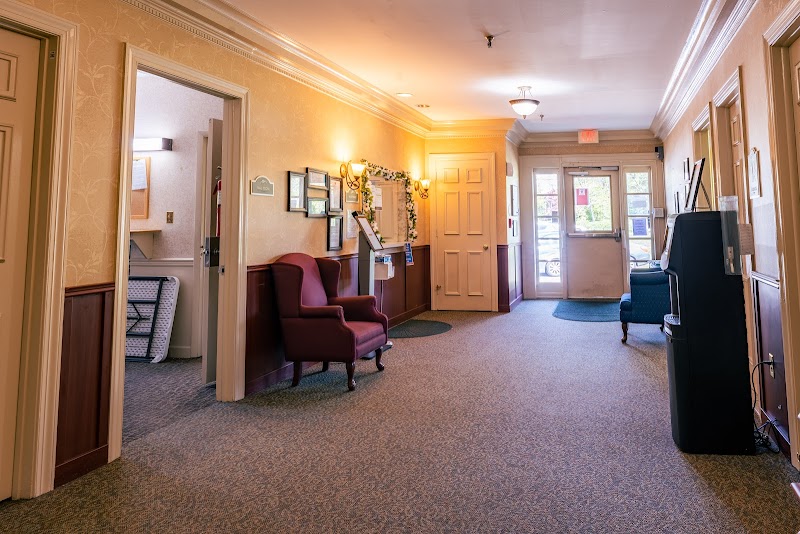
Who Owns and Operates Autumn Lake Healthcare At Long Green?

AUTUMN LAKE HEALTHCARE AT LONG GREEN is owned by a for-profit company. For-profit facilities operate as businesses with obligations to shareholders or private owners. The facility is operated by AUTUMN LAKE HEALTHCARE, a chain that manages multiple nursing homes. With 135 certified beds and approximately 116 residents (about 86% occupancy), it is a mid-sized facility located in BALTIMORE, Maryland.
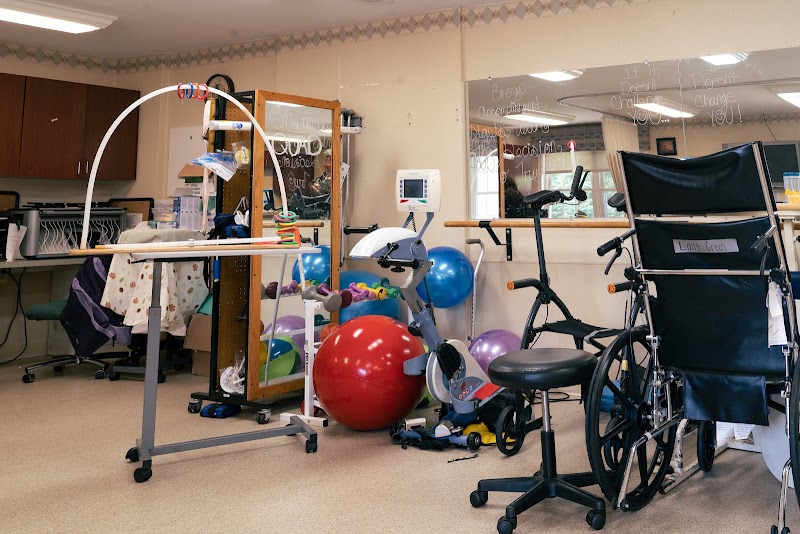
How Does Autumn Lake Healthcare At Long Green Compare to Other Maryland Nursing Homes?

Compared to the 100 nursing homes in Maryland, AUTUMN LAKE HEALTHCARE AT LONG GREEN's overall rating (2 stars) is below the state average of 3.0, staff turnover (57%) is significantly higher than the state average of 46%, and health inspection rating (2 stars) is below the national benchmark.

What Should Families Ask When Visiting Autumn Lake Healthcare At Long Green?

Based on this facility's data, families visiting should ask: "What safeguards and monitoring systems are in place to protect residents from abuse or neglect?" "How do you ensure continuity of care given staff turnover, and what is your staff retention strategy?" "Can I visit during a mealtime to observe dining assistance and food quality?" "How do you handle medical emergencies, and what is your hospital transfer rate?" These questions are particularly relevant given the substantiated abuse finding on record and the facility's high staff turnover rate.

Is Autumn Lake Healthcare At Long Green Safe?

Based on CMS inspection data, AUTUMN LAKE HEALTHCARE AT LONG GREEN has documented safety concerns. The facility has 1 substantiated abuse finding (meaning confirmed case of resident harm by staff or other residents). The facility has a 2-star overall rating and ranks #100 of 100 nursing homes in Maryland. Families considering this facility should ask detailed questions about what corrective actions have been taken since these incidents.

Do Nurses at Autumn Lake Healthcare At Long Green Stick Around?

Staff turnover at AUTUMN LAKE HEALTHCARE AT LONG GREEN is high. At 57%, the facility is 10 percentage points above the Maryland average of 46%. High turnover means new staff may not know residents' individual needs, medications, or preferences. It can also be disorienting for residents, especially those with dementia who rely on familiar faces. Families should ask: What is causing the turnover? What retention programs are in place? How do you ensure care continuity during staff transitions?

Was Autumn Lake Healthcare At Long Green Ever Fined?

AUTUMN LAKE HEALTHCARE AT LONG GREEN has no federal fines on record. CMS issues fines when nursing homes fail to meet care standards or don't correct problems found during inspections. The absence of fines suggests the facility has either maintained compliance or corrected any issues before penalties were assessed. This is a positive indicator, though families should still review recent inspection reports for the full picture.

Is Autumn Lake Healthcare At Long Green on Any Federal Watch List?

AUTUMN LAKE HEALTHCARE AT LONG GREEN is not on any federal watch list. The most significant is the Special Focus Facility (SFF) program, which identifies the bottom 1% of nursing homes nationally based on persistent, serious quality problems. Not being on this list means the facility has avoided the pattern of deficiencies that triggers enhanced federal oversight. This is a positive indicator, though families should still review the facility's inspection history directly.