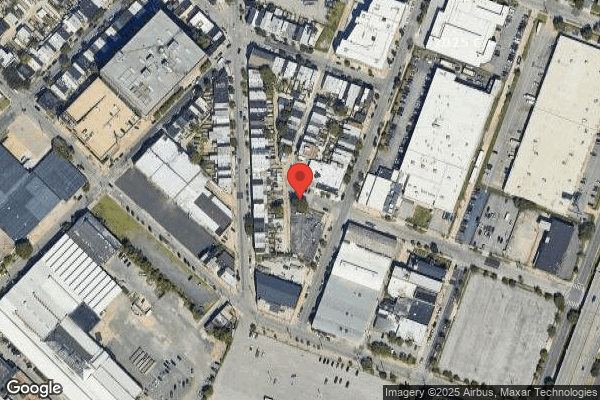
ROLAND PARK PLACE

830 WEST 40 STREET, BALTIMORE, MD 21211 (410) 243-5800
Non profit - Corporation 71 Beds Independent Data: November 2025
Trust Grade
85/100
#38 of 219 in MD
Last Inspection: May 2025

Inspected within the last 6 months. Data reflects current conditions.

Overview

Roland Park Place in Baltimore, Maryland, has a Trust Grade of B+, indicating it is above average and recommended for families considering care for their loved ones. The facility ranks #38 out of 219 in Maryland and #3 out of 26 in Baltimore City County, placing it firmly in the top half of nursing homes. The overall trend is improving, with issues decreasing from 10 in 2021 to just 3 in 2025. Staffing is a notable strength, earning a 5-star rating and lower turnover at 40%, which is on par with the state average. Although there were no fines recorded, there are some concerns, including failures to accurately post staffing hours and provide meals that meet residents' dietary needs, highlighting room for improvement despite the facility's overall strengths.

Trust Score
B+
85/100
In Maryland
#38/219
Top 17%
Safety Record
Low Risk
No red flags
Inspections
Getting Better
10 → 3 violations
Staff Stability
○ Average
40% turnover. Near Maryland's 48% average. Typical for the industry.
Penalties
✓ Good
No fines on record. Clean compliance history, better than most Maryland facilities.
Skilled Nurses
✓ Good
Each resident gets 168 minutes of Registered Nurse (RN) attention daily — more than 97% of Maryland nursing homes. RNs are the most trained staff who catch health problems before they become serious.
Violations
⚠ Watch
18 deficiencies on record. Higher than average. Multiple issues found across inspections.
★★★★★
5.0
Overall Rating
★★★★★
5.0
Staff Levels
★★★★★
5.0
Care Quality
★★★★★
5.0
Inspection Score
Stable
2021: 10 issues
2025: 3 issues

The Good

  • 5-Star Staffing Rating · Excellent nurse staffing levels
  • 5-Star Quality Measures · Strong clinical quality outcomes
  • Full Sprinkler Coverage · Fire safety systems throughout facility
  • No fines on record
  • Staff turnover below average (40%)

    8 points below Maryland average of 48%

Facility shows strength in staffing levels, quality measures, fire safety.

The Bad

Staff Turnover: 40%

Near Maryland avg (46%)

Typical for the industry

The Ugly 18 deficiencies on record

May 2025 3 deficiencies
CONCERN (D) 📢 Someone Reported This

A family member, employee, or ombudsman was alarmed enough to file a formal complaint

Potential for Harm - no one hurt, but risky conditions existed

Report Alleged Abuse (Tag F0609)

Could have caused harm · This affected 1 resident

Based on review of a facility reported investigation and staff interviews, it was determined that the facility failed to report an allegation of abuse to the law enforcement agency. This was evident f...

Read full inspector narrative →
Based on review of a facility reported investigation and staff interviews, it was determined that the facility failed to report an allegation of abuse to the law enforcement agency. This was evident for 2 (Resident #11 and #13) out of 3 residents reviewed for facility reported investigations during the facility's Medicare/Medicaid recertification survey. The findings include: 1. On 04/30/2025 at 12:11 PM, the surveyor reviewed intake MD#00181652 and found that during Resident #11's care plan meeting on 03/14/2022, the resident described the behavior of a Geriatric Nursing Assistant (GNA) #17 as abusive. Resident #11 further characterized GNA #17 as intimidating, abrupt, and dismissive. On 04/30/2025 at 2:24 PM, during an interview with the Nursing Home Administrator (NHA), when she was asked who was notified about the allegations of verbal abuse, she stated that the ombudsman was informed. When she was asked whether a law enforcement agency was notified regarding the incident, she stated that law enforcement was not contacted because the incident involved verbal abuse. When asked to identify the types of abuse, she cited both physical and verbal abuse. In response to reporting such allegations to the law enforcement agency, she expressed that, in her opinion, police involvement was unnecessary, citing that law enforcement agencies were often overwhelmed, and she added that moving forward, she would notify the appropriate law enforcement agency in similar cases On 05/01/2025 at 8:30 AM, in an interview with the Director of Nursing (DON) regarding the reporting of abuse allegations to law enforcement, she stated that all allegations-regardless of the type of abuse or whether they were substantiated-should have been reported to the appropriate law enforcement agency. When she was informed that law enforcement was not notified in the investigation report, she acknowledged that the law enforcement agency was not contacted at the time the allegation was made and agreed that it should have been reported to the law enforcement agency. 2. On 4/30/2025 at 2:00 PM, the surveyor reviewed intake MD#00180814 and found that during a social work (SW) visit on 5/2/2022, Resident #13 informed SW that an agency staff member who worked with the resident on 4/30/2022 was rough and yelling at them during care. During further review of the facility's investigation into alleged abuse against Resident #13, it was revealed that law enforcement was not contacted. On 5/1/2025 at 8:30 AM, the Director of Nursing (DON) was interviewed about Resident #13's abuse allegation. The DON stated that all allegations-regardless of the type of abuse or whether they were substantiated-should have been reported to the appropriate law enforcement agency. When she was informed that law enforcement was not notified in the investigation report, she acknowledged that the law enforcement agency was not contacted at the time the allegation was made and agreed that it should have been reported to the law enforcement agency.
CONCERN (D)

Potential for Harm - no one hurt, but risky conditions existed

Transfer Notice (Tag F0623)

Could have caused harm · This affected 1 resident

Based on resident interview, record review, and staff interview, it was determined that the facility failed to notify the ombudsman of a resident's transfer to the hospital. This was evident for 1 (Re...

Read full inspector narrative →
Based on resident interview, record review, and staff interview, it was determined that the facility failed to notify the ombudsman of a resident's transfer to the hospital. This was evident for 1 (Resident #8) out of 1 resident reviewed for hospitalizations. The findings include: On 4/29/25 at 9:44 AM, an interview was conducted with Resident #8. When asked whether they were hospitalized recently, Resident #8 stated that they had just returned from the hospital a few days ago. On 4/29/25 at 1:02 PM, a review of Resident #8's progress notes was conducted. In the note from 4/18/25 at 2:44 pm, it was documented that the resident was transferred to the hospital for further evaluation of shortness of breath. On 4/29/25 at 2:20 PM, an interview with the Nursing Home Administrator (NHA) was conducted. When asked to provide evidence that the ombudsman was notified of Resident #8's transfer on 4/18/25, the NHA stated that they were unaware that the ombudsman needed to be notified of resident transfers to hospital. This surveyor made the NHA aware that notifying the ombudsman of transfers and discharges is a federal and state regulation. On 4/30/25 at 10:45 AM, an interview with the NHA was conducted. The NHA stated that they now have a plan in place to notify ombudsman of transfers to hospitals and have notified the ombudsman of Resident #8's transfer to the hospital after surveyor intervention.
CONCERN (D)

Potential for Harm - no one hurt, but risky conditions existed

Deficiency F0625 (Tag F0625)

Could have caused harm · This affected 1 resident

Based on resident interview, record review, and staff interview, it was determined that the facility failed to provide the bed-hold policy to a resident or resident representative before the resident ...

Read full inspector narrative →
Based on resident interview, record review, and staff interview, it was determined that the facility failed to provide the bed-hold policy to a resident or resident representative before the resident was transferred to the hospital. This was evident for 1 (Resident #8) out of 1 resident reviewed for hospitalizations. A bed-hold policy addresses holding a resident's bed during periods of absence, such as during hospitalization or therapeutic leave. The findings include: On 4/29/25 at 9:44 AM, an interview was conducted with Resident #8. When asked whether they were hospitalized recently, Resident #8 stated that they had just returned from the hospital a few days ago. On 4/29/25 at 1:02 PM, a review of Resident #8's progress notes was conducted. In the note from 4/18/25 at 2:44 pm, it was documented that the resident was transferred to the hospital for further evaluation of shortness of breath. On 4/29/25 at 2:20 PM, an interview with the Nursing Home Administrator (NHA) was conducted. The NHA stated that they would check if a bed-hold policy was provided to Resident #8. On 4/30/25 at 10:45 AM, an interview with the NHA was conducted. The NHA confirmed that a bed-hold policy was not provided to Resident #8 or their Representative. The NHA stated that they were not aware that a bed-hold policy needed to be provided to the resident or resident representative.
Mar 2021 10 deficiencies
CONCERN (D)

Potential for Harm - no one hurt, but risky conditions existed

Deficiency F0557 (Tag F0557)

Could have caused harm · This affected 1 resident

Based on observation, and staff interview, it was determined that the facility failed to treat resident with dignity and respect by labeling and identifying resident's as feeders. This was identified ...

Read full inspector narrative →
Based on observation, and staff interview, it was determined that the facility failed to treat resident with dignity and respect by labeling and identifying resident's as feeders. This was identified for 7 of 24 residents in the facility at the initiation of the survey (Residents #6, #11, #13, #15, #23, #29 #74) . The findings include. Observations of the daily staff assignments posting on 3/10/2021, 3/11/2021, and 3/12/2021 revealed that residents were labeled feeder(s) with a corresponding room number. Labeling residents by the type of assistance they require, rather than a human being who needs assistance may be deemed as derogatory. The posting of staff assignments was discussed with the facility administrator on 3/12/2021 at 1:46 PM. The administrator revealed that the staff posting was on an older form that should not have been used.
CONCERN (D)

Potential for Harm - no one hurt, but risky conditions existed

Deficiency F0558 (Tag F0558)

Could have caused harm · This affected 1 resident

Based on observation, resident and staff interview it was determined that facility staff failed to have a call bell in reach for a resident who was dependent on staff for activities of daily living. T...

Read full inspector narrative →
Based on observation, resident and staff interview it was determined that facility staff failed to have a call bell in reach for a resident who was dependent on staff for activities of daily living. This was evident for 1 of 17 residents observed in the initial resident pool (Resodemt #17) . The findings include: On 3/10/21 at 9:54 AM, an observation was made of Resident #17, sitting in a wheelchair, on the right side of the bed, with a round side table in between the resident and the bed. On the left side of the bed, the call bell cord was observed hanging on the top of the call bell prong attached to the wall, and was not within reach of the resident. The surveyor asked Resident #17 how he/she called for the nurse, and the resident stated that he/she would push the call bell. At that time, the resident looked around, pointed to the side table and stated, it's usually right here. When aware the call bell was hanging on the wall, Resident #17 stated he/she could not reach the call bell. On 3/10/21, at approximately 10:00 AM, Staff # 17, geriatric nursing assistant (GNA), entered Resident #17's room and was made aware the resident's call bell was hanging on the wall and not within the resident's reach. Staff #17 secured the call bell cord to Resident #17's wheelchair and stated he/she did not know who straightened up that morning. The Director of Nurses was made aware of these findings on 3/11/21 at 2:00 PM.
CONCERN (D)

Potential for Harm - no one hurt, but risky conditions existed

Deficiency F0657 (Tag F0657)

Could have caused harm · This affected 1 resident

Based on medical record review and staff interview it was determined that the facility staff failed to evaluate and update a resident's plan of care after each assessment. This was evident for 1 of 2 ...

Read full inspector narrative →
Based on medical record review and staff interview it was determined that the facility staff failed to evaluate and update a resident's plan of care after each assessment. This was evident for 1 of 2 residents reviewed for accidents (Resident #17). The findings include: A care plan is a guide that addresses the unique needs of each resident. It is used to plan, assess and evaluate the effectiveness of the resident's care. On 3/1621 at 2:53 PM, Resident #17's medical record was reviewed and revealed the resident's most recent quarterly assessment had a reference date of 1/8/21 and the prior quarterly assessment had a reference date of 10/15/20. 1. A review of Resident #17's care plans revealed the resident had multiple care plans, including a cardiovascular care plan: Resident #17 has potential for complications from HTN (hypertension) and CAD (coronary artery disease), stent placement 6/7/18 with the goal, Resident #17 will have no complications for cardiovascular disease and will no require outside medical intervention x 90 days that included the interventions 1) provide blood pressure (BP) medication and treatment per physician orders. Monitor for side effects of medication and inform physician of concerns Valsartan (BP medication) 80 mg (milligrams) and Amlodipine (BP medication) 5 mg po (by mouth) QD (every day). Check BP q (every) Wednesday at 9 AM, (Hold for SPB less than 110). A review of Resident #17's medical record failed to reveal evidence the care plan had been reviewed after the residents most recent quarterly assessment with a reference date of 1/8/21 or following the resident's previous quarterly assessment with a reference date of 10/15/20. Resident #17's March 2021 MAR (medication administration record) revealed a 1/14/19 order for Amlodipine 10 mg by mouth every day, which was in contradiction to the care plan intervention which indicated the resident received Amlodipine 5 mg. Continued review of the medical record failed to reveal an order for Valsartan. The facility failed to update the care plan in response to current interventions and there was no documentation to indicate the resident's progress or lack of progress towards his/her goal had been evaluated. 2. Resident #17 had a hypothyroid (underactive thyroid disease) care plan: Resident #17 has potential for complications from Synthroid (thyroid medication) TSH (thyroid stimulating hormone) (blood test) ever year in July, initiated on 1/25/20, had the goal, Resident #17 will have no complications from hypothyroidism, including weakness, tiredness or outside medical intervention. Review of Resident #17's medical record failed to reveal evidence the care plan had been reviewed after the residents most recent quarterly assessment with a reference date of 1/8/21 or following the resident's previous quarterly assessment with a reference date of 10/15/20. There was no documentation to indicate the resident's progress or lack of progress towards his/her goal had been evaluated or updated based on the needs of the resident or in response to current interventions. 3. Resident #17 had a Rheumatoid Arthritis (RA) (autoimmune disease that can cause joint pain and damage throughout the body) care plan that had a start date of 1/25/20 with the goal: Resident #17 will not develop complications from Rheumatoid Arthritis requiring outside medical intervention. Continued review of the resident's medical record failed to reveal evidence the care plan had been reviewed after the residents most recent quarterly assessment with a reference date of 1/8/21 or following the resident's previous quarterly assessment with a reference date of 10/15/20. There were no documented evaluations of Resident #17's RA care plan and there was no documentation to indicate the resident's progress or lack of progress towards his/her goal had been evaluated or updated based on the needs of the resident or in response to current interventions. Staff #6, A Clinical Coordinator, was made aware of the above findings and concerns related to evaluation of the resident care plans on 3/16/21 at 4:30 PM,
CONCERN (D)

Potential for Harm - no one hurt, but risky conditions existed

Deficiency F0661 (Tag F0661)

Could have caused harm · This affected 1 resident

Based on review of a closed medical record and staff interview, it was determined that the facility staff failed to provide a resident with a completed discharge summary. This was evident for 1 of 27 ...

Read full inspector narrative →
Based on review of a closed medical record and staff interview, it was determined that the facility staff failed to provide a resident with a completed discharge summary. This was evident for 1 of 27 residents reviewed during an annual refortification survey (Resident #24) . The findings include: On 3/16/2021 on review of Resident #24's closed medical record revealed that Resident #24 was discharged from the facility on 12/16/2020. Resident #24's electronic medical record and paper record failed to reveal a completed discharge summary from Resident #24's attending physician that included: a recapitulation of the resident's stay, a final summary of the resident's status, reconciliation of all pre-discharge medications with the post discharge medications, and a post discharge plan of care. In an interview on 3/16/2021 at 11:22 AM the Director of Nursing confirmed that Resident #24's record did not include a completed discharge summary. The Administrator and Director of Nursing were made aware of these findings during the exit conference on 3/16/2021.
CONCERN (D)

Potential for Harm - no one hurt, but risky conditions existed

Medication Errors (Tag F0758)

Could have caused harm · This affected 1 resident

Based on medical record review and staff interviews, it was determined that the facility staff failed to ensure that a resident's medication regimen was free from unnecessary medication by failing to ...

Read full inspector narrative →
Based on medical record review and staff interviews, it was determined that the facility staff failed to ensure that a resident's medication regimen was free from unnecessary medication by failing to ensure that a psychotropic medication prescribed as needed was limited to 14 days. This was evident for 1 of 4 residents reviewed for pressure ulcers (Resident #14). The findings include: On 3/16/21 at 10:00 AM, a review of Resident #14's March 2021 TAR (treatment administration record) revealed a 5/21/20 order for Lorazepam (Ativan) (antianxiety medication) 1 mg (milligram) sublingual every 6 hour as needed for anxiety and agitation. The order had no discontinuation/end date, was not limited to 14 days duration. Further review of the medical record fail to reveal physician documented rational for continuing the order beyond 14 days. The Director of Nurses confirmed the findings on 3/16/21 at 11:15 AM.
CONCERN (D)

Potential for Harm - no one hurt, but risky conditions existed

Deficiency F0761 (Tag F0761)

Could have caused harm · This affected 1 resident

**NOTE- TERMS IN BRACKETS HAVE BEEN EDITED TO PROTECT CONFIDENTIALITY** Based on observations and interviews, it was determined that the facility failed to ensure that medications requiring refrigerat...

Read full inspector narrative →
**NOTE- TERMS IN BRACKETS HAVE BEEN EDITED TO PROTECT CONFIDENTIALITY** Based on observations and interviews, it was determined that the facility failed to ensure that medications requiring refrigeration were stored safely. This was found to be evident in 1 out of 1 medication storage rooms and had the potential to affect all residents. The findings include: On [DATE] at 10:02 am, the refrigerator temperature log located in a binder in the locked medication storage room revealed the refrigerator inside temperature was last checked on [DATE] with a temperature logged at 36 degrees Fahrenheit. The facility's refrigerator temperature log stated 11-7 must check and record temperatures and check and discard expired medication and ensure that all medications are labelled and dated. On [DATE] at 10:03 am, at the time of the observation, a nurse (staff #10) unlocked refrigerator located in locked medication storage room. The surveyor identified the following medications stored in the refrigerator: Tuberculin Acetaminophen suppositories 650 mg, Purified Protein Derivative Diluted Aplisol 5 TU/0.1 ml, Bisacodyl suppositories 10 mg, Latanoprost ophthalmic solution 0.005%, Enbrel injection 50 mg /ml (kit), prefilled pneumococcal vaccine pneumococcal vaccine pneumovax 23, Influenza vaccine adjuvanted IM 0.5 ml prefilled syringes and 2 ice packs. The portable thermometer located inside of the refrigerator had an inside reading temperature of 54 degrees Fahrenheit. The bottom of the facility's refrigerator log stated temperature should be between 36 F - 46 degrees F. Please notify facility services if temperature is out of range. On [DATE] at 10:06 am, the Clinical Unit Coordinator (Staff# 6) confirmed the medication storage refrigerator inside reading temperature was 54 degrees Fahrenheit and was above the acceptable temperature range during the interview conducted. On [DATE] at 8:40 am, during observation with Staff # 10 of the medication storage refrigerator located in the locked medication storage room, the inside temperature reading on the portable thermometer was 52 degrees Fahrenheit, RN # 10 confirmed reading at 52 degrees Fahrenheit. On 03/17 /2021 at 8:47 am, during the interview conducted with the Clinical Unit Coordinator #6, Staff #10 had confirmed the inside temperature reading of the medication storage refrigerator was 52 degrees Fahrenheit. Clinical Unit Coordinator #6 instructed the nurse (Staff #10) to replace medication storage refrigerator.
CONCERN (E)

Potential for Harm - no one hurt, but risky conditions existed

Drug Regimen Review (Tag F0756)

Could have caused harm · This affected multiple residents

Based on medical record review and staff interview it was determined: 1) the pharmacist failed to identify a medication order discrepancy during a monthly pharmacy medication review and 2) facility st...

Read full inspector narrative →
Based on medical record review and staff interview it was determined: 1) the pharmacist failed to identify a medication order discrepancy during a monthly pharmacy medication review and 2) facility staff failed to have a process to ensure that pharmacy recommendations were acted upon by the physician. This was evident for 2 (#3, #8) of 5 residents reviewed for unnecessary medications and 1 of 4 residents reviewed for pressure ulcers (Resident #14). The findings include: 1) On 3/11/21 at 1:53 PM, review of Resident #8's March 2021 MAR (medication administration record) revealed an 8/12/16 order for Acetaminophen (Tylenol) (analgesic) by mouth that documented 2 different times to administer the medication. The order read to give Acetaminophen 2 tablets by mouth every 6 hours PRN (as needed) for pain and 2 tablets by mouth every 8 hours. There was no clear indication in the order as to whether the Acetaminophen should be given every 6 hours as needed or if it should be given every 8 hours. The DON (Director of Nurses) was made aware of this finding on 3/16/21 at 11:15 AM and stated the order needed to be clarified. Review of Resident #8's monthly pharmacist medication regimen review (MRR) in the EMR (electronic medical record) failed to reveal evidence that the pharmacist identified the discrepancy with the resident's acetaminophen order. On 4/22/20, 5/28/20, 6/29/20, 7/30/20, 8/28/20, 9/22/20, 10/22/20, 11/20/20, 12/14/20, 1/24/21, and 2/23/21 the pharmacist documented Medication regimen review completed. No recommendations. 2) On 3/16/21 at 10:00 AM, a review of Resident #14's March 2021 TAR (treatment administration record) revealed a 5/21/20 order for Lorazepam (Ativan) (antianxiety medication) 1 mg (milligram) sublingual every 6 hour as needed for anxiety and agitation. The order was not limited to 14 days duration, had no discontinuation/end date, and no documented rational for continuing the order beyond 14 days was found in the resident's medical record. Review of Resident #14's monthly pharmacist MRR documentation in the electronic record revealed on 5/28/20 the pharmacist documented a monthly MRR was completed for Resident #14 and a recommendation was made to the physician. On 9/22/20, the pharmacist documented a monthly MMR was completed for Resident #14 and a recommendation was made to nursing. Continued review of the resident's medical record failed to reveal documentation of the pharmacist's MRR recommendations. On 3/26/21 at 11:15, the DON was made aware of these findings and indicated that the pharmacist's MRR recommendations are documented on a form that is emailed to the DON, the physician, and other clinical staff. The MRR recommendation form is printed, and, once the recommendations are acted upon, the form is filed in the resident's medical record. The DON returned and provided the surveyor with Resident #14's MRR form dated 5/28/20 and a MRR form dated 9/22/20 and indicated the forms were printed from his/her emails. Review of Resident #14's MRR forms revealed, on 5/28/20, the pharmacist wrote All PRN (as needed) psychoactive medication orders require a 14 day stop date as of November 28, 2017. Non antipsychotic PRN orders may be extended if the practitioner feels it is necessary and reasons are well documented in the medical record. Please specify a duration for PRN lorazepam of 14 days. If duration is to extend past 14 days, please document justification in the medical record and specify the duration of the PRN order. Continued review of the medical record failed to reveal evidence that the pharmacist's recommendations had been addressed by the physician, and there was no indication that the medication irregularity was further addressed by the pharmacist when not acted upon by the physician. Review of Resident #14's pharmacist MRR form dated 9/22/20, the consultant pharmacist stated CBC (complete blood count) and CMP (complete metabolic panel) (blood tests) drawn in August per TAR but results not scanned into AOD (Answers on Demand) (EMR ). Continued review of Resident #14's paper medical record and EMR failed to reveal evidence of the resident's August 2020 CBC and CMP lab results in the resident's medical record. On 316/21 at 1:59 PM, during an interview, the DON stated the resident's August 2020 lab results were in the resident's thinned chart in medical records department and confirmed the resident's lab results had not been scanned to the resident's EMR. At this time, the DON was made aware of the above findings and confirmed the facility staff failed to carry out the pharmacist's recommendations. 3) Review of Resident #3's electronic medical record on 3/15/21 revealed that the pharmacist had identified a medication irregularity on 1/22/21. The clinical coordinator (Staff #6) was interviewed at 3:15 PM on 3/15/21 for assistance in finding what was the identified medication irregularity and was it acted upon. The clinical coordinator looked around in her office and the adjacent charting room implied that there was not anything on the clip board. She was able to show me the pharmacist identified medication irregularity of 1/22/21 on her computer monitor. She informed me that she had opened an email. Review of the pharmacist documentation for the blood thinning medication Eliquis revealed that the facility had failed to respond to the pharmacist recommendation of 1/22/21. Review of Resident #3's medical record on 3/16/21 at 11:30 AM revealed that the facility responded to the pharmacist recommendation as it relates to the prescribed Eliquis.
CONCERN (E)

Potential for Harm - no one hurt, but risky conditions existed

Deficiency F0800 (Tag F0800)

Could have caused harm · This affected multiple residents

Based on resident interview, staff interview and record review it was determined that the facility failed to provide a meal that met a resident's special dietary needs and preferences. This was eviden...

Read full inspector narrative →
Based on resident interview, staff interview and record review it was determined that the facility failed to provide a meal that met a resident's special dietary needs and preferences. This was evident for 3 of 27 residents reviewed during the annual survey (Residents #7, #12 and #31). The findings include: On 3/11/2021 at approximately 12:45 PM, during lunch service, Resident #7, #12 and #21's meal tickets were compared to their meal trays for accuracy. Residents #7 and #12 both had P/PU4 Dilled Baby Carrots on their meal tickets indicating that their meal should contain pureed dilled baby carrot, however, observation revealed that their meals did not include carrots. Further observation of lunch service revealed that Resident #21's meal ticket included Assorted Rolls but no rolls or bread were included in their meal. During an interview on 3/11/2021 at 1:29 PM the Dietary Manager was asked if the kitchen had run out of carrots and responded that the facility had not run out and they were not sure why the residents did not receive the missing carrots and rolls. At 1:46 PM the Dietary Manager provided the survey team with the Lunch Menu for that day which listed Mixed Vegetables and Sautéed Kale under Sides. The Dietary Manager explained that the kitchen had recently upgraded their electronic systems to a different food service software and they believed there were software bugs that were causing the discrepancy between the menu, the tickets and what was being served to residents. The Dietary Manager had submitted a ticket to the software provider at that time to fix the issue. The Administrator and Director of Nursing were made aware of these findings during the exit conference on 3/16/2021.
CONCERN (E)

Potential for Harm - no one hurt, but risky conditions existed

Medical Records (Tag F0842)

Could have caused harm · This affected multiple residents

Based on medical record review and staff interview it was determined that the facility failed to keep complete and accurate medical records. This was evident for 1 of 5 residents reviewed for unnecess...

Read full inspector narrative →
Based on medical record review and staff interview it was determined that the facility failed to keep complete and accurate medical records. This was evident for 1 of 5 residents reviewed for unnecessary medication (Resident #8). The findings include: On 3/11/21 at 1:53 PM, review of Resident #8's March 2021 MAR (medication administration record) revealed an 8/12/16 order for Acetaminophen (Tylenol) (analgesic) by mouth that documented 2 different times to administer the medication. The order read to give Acetaminophen 2 tablets by mouth every 6 hours PRN (as needed) for pain and 2 tablets by mouth every 8 hours. There was no clear indication in the order as to whether the Acetaminophen should be given every 6 hours as needed or if it should be given every 8 hours. The DON (Director of Nurses) was made aware of this finding on 3/16/21 at 11:15 AM and stated the order needed to be clarified. Cross reference F 756
CONCERN (F)

Potential for Harm - no one hurt, but risky conditions existed

Staffing Information (Tag F0732)

Could have caused harm · This affected most or all residents

Based on observations, review of daily staffing records, and staff interview it was determined that the facility failed to post the total number and actual hours worked by categories of Registered Nur...

Read full inspector narrative →
Based on observations, review of daily staffing records, and staff interview it was determined that the facility failed to post the total number and actual hours worked by categories of Registered Nurses (RN), Licensed Practical Nurses(LPN), and Certified Geriatric Nurse Aides (GNA) per shift. Additionally, the facility name was not on the form. This was observed for at least 4 of the 7 survey days. The findings include. On the Health Care Center 2 unit, review of the day shift staff assignment sheet on 3/9, 3/10, 3/11, and 3/12/21 did not reveal the name of the facility or the total number and actual hours worked by categories of Registered Nurses (RN), Licensed Practical Nurses(LPN), and Certified Geriatric Nurse Aides (GNA) per shift. The staff assignment posting did have individual hours for each staff person but did not include a total number of hours. There were staff assigned to the other nursing home unit and the staff hours worked posting on one unit did not reflect the totals for the entire facility. The posting is to be in a clear and readable format. The total amount of staff by category is divided between two nursing units and all the individual numbers would need to be added up to determine the total number and actual hours worked by category. The nursing home administrator was informed of the concerns on 3/12/21 at 1:46 PM.
Aug 2018 5 deficiencies
CONCERN (D)

Potential for Harm - no one hurt, but risky conditions existed

Deficiency F0557 (Tag F0557)

Could have caused harm · This affected 1 resident

Based on record review and staff interview it was determined that the facility failed to keep a resident right to be treated with respect and dignity. This was found to be true in in 1 of 2 residents ...

Read full inspector narrative →
Based on record review and staff interview it was determined that the facility failed to keep a resident right to be treated with respect and dignity. This was found to be true in in 1 of 2 residents (#31) reviewed during survey. Findings include: On August 2, 2018 at 1:58 PM a review of a facility incident report was conducted. The facility's incident report revealed that on 03/20/18 at approximately 11:30 AM Activity Assistant (AA) (staff # 35) emerged from the Activity Room, stood in the presence of multiple residents, staff, and visitors and yelled out Wow, (Resident #31) sure does stink! The report added the AA walked over to Resident # 31, leaned over to smell the resident while holding her nose and waving her hand. When the AA was alerted that Emergency Responders were present on the unit she commented 911 never smelled that before? During an interview with the Administrator at 2:15 PM, she stated that the AA (staff #35) was very boisterous and at times could come across as rough because she would use a limited amount of words. However, after this incident the employee was removed from the unit, interviewed and terminated. She acknowledge that the employee's comments and actions that day violated the resident's rights to be treated with respect and dignity. (Cross Reference F 600)
CONCERN (D)

Potential for Harm - no one hurt, but risky conditions existed

Free from Abuse/Neglect (Tag F0600)

Could have caused harm · This affected 1 resident

Based on record review and staff interview it was determined that the facility failed to keep residents free from verbal abuse. This was found to be true in 1 of 2 residents (#31) reviewed for verbal ...

Read full inspector narrative →
Based on record review and staff interview it was determined that the facility failed to keep residents free from verbal abuse. This was found to be true in 1 of 2 residents (#31) reviewed for verbal abuse during survey. Findings include: On August 2, 2018 at 1:58 PM, while investigating intake #MD00122034 the Activity Director shared that Activity Assistant(AA) (staff #35) was involved in another incident report (#MD00124313) that lead to the termination of the employee. Review of the facility's incident report revealed that on 03/20/18 at approximately 11:30 AM Activity Assistant (AA) (staff #35) emerged from the Activity Room, stood in the presence of multiple residents, staff and visitors and yelled out Wow, (Resident #31) sure does stink! The report added the AA walked over to Resident #31, leaned over to smell the resident while holding her nose and waving her hand. When the AA was alerted that Emergency Responders were present on the unit she commented 911 never smelled that before? The Activity Director added that unlike the previous incident (December 2017), this incident was witnessed and documented by several employees and visitors with video recording of the event to support the witness statements. During an interview with the Administrator at 2:15 PM, she confirmed the details of the incidents and commented that the employee (staff #35) had received progressive disciplinary actions in the past because of the way she spoke to residents. She added that the AA (staff #35) was very boisterous and at times could come across as rough because she would use a limited amount of words. She went on to say that after the first incident multiple residents were interviewed and the employee was counseled she never felt that the AA would deliberately, willingly, insult or verbally harm anyone. She added that it was not until this incident with Resident #31 that the facility had sufficient evidence to terminate the employee.
CONCERN (D)

Potential for Harm - no one hurt, but risky conditions existed

Assessment Accuracy (Tag F0641)

Could have caused harm · This affected 1 resident

Based on medical record review, observations and interviews with facility staff it was determined the facility failed to accurately code side rails on the Minimum Data Set (MDS). While the use of side...

Read full inspector narrative →
Based on medical record review, observations and interviews with facility staff it was determined the facility failed to accurately code side rails on the Minimum Data Set (MDS). While the use of side rails was inaccurately documented as a restraint in the MDS assessments, there was no evidence found that the use of side rails met the definition of restraint. This was found to be evident during the facility's annual Medicare/Medicaid survey. Findings include: At the beginning of the facility's survey on 8/28/18 a copy of facility's census and conditions form was submitted to the survey team. Upon review it was noted that 27 residents were identified with physical restraints. In a brief interview with the Director of Nursing (DON) on 8/28/18 at 11:00 AM s/he was asked to clarify if the residents that were marked on the facility's census and conditions form had a physical restraint in place, and s/he reported that they did not. The DON submitted a corrected form to the survey team. The matrix form for providers was submitted to the survey team on 8/29/18 and upon review, it was noted that 41 residents had an (x) marked in the box for physical restraints. In a brief interview with the DON on the same date at 9:30 AM, s/he was asked to clarify if the residents that were marked on the matrix form had a physical restraint in place and s/he again reported that they did not. The DON submitted an updated matrix form to the survey team. Definition Physical Restraints: Any manual method or physical or mechanical device, material or equipment attached or adjacent to the resident's body that the individual cannot remove easily, which restricts freedom of movement or normal access to one's body. The MDS was reviewed for residents #6, #20 and #46 on 8/30/18. The MDS is a federally-mandated assessment tool used by nursing home staff to gather information on each resident's strengths and needs. Under section P0100 Physical Restraints, with an ARD (assessment reference date) of 6/21/18, residents # 6, #20 and # 46 were coded (2) for bed rail use. An interview was conducted with the MDS Coordinator and the Staff Development Coordinator on 8/31/18 at 11:45 AM. The MDS Coordinator explained that the residents were coded as restraints based upon the Resident Assessment Instrument (RAI) and the facility's interpretation of the definition and use of side rails. In an interview with the Director of Nursing on 8/31/18 at 2:30 PM s/he acknowledged that the MDS was inaccurately coded and that corrections would be made to reflect an accurate assessment of each resident with side rail use.
CONCERN (D)

Potential for Harm - no one hurt, but risky conditions existed

Staffing Information (Tag F0732)

Could have caused harm · This affected 1 resident

Based on observations during an initial tour of the facility and staff interview, it was determined the facility failed to document a daily nursing staffing form reflecting the total number of hours w...

Read full inspector narrative →
Based on observations during an initial tour of the facility and staff interview, it was determined the facility failed to document a daily nursing staffing form reflecting the total number of hours worked by registered nurses, licensed practical nurses and certified nursing aides on the daily nursing assignment sheet for 2 of 3 units observed during the facility's annual Medicare/medicaid survey. Findings includes: On 8/28/18 at 12:50 PM, the initial tour of the unit was conducted and the daily nursing staff assignment sheets were reviewed. The assignment sheets for the Health Care Center, Unit's 1 and 2 for the 7-3 shift did not have the number of hours worked by licensed staff to include registered nurses and certified nursing aides. An interview was conducted with Licensed Practical Nurse (LPN), Staff #1 at 1:00 PM on 8/28/18, and s/he confirmed that the assignment sheets did not reflect the hours worked by licensed staff and that staff to resident ratios were not on the assignment sheets. The Director of Nursing (DON) was made aware on 8/28/18 at 2:30 PM and stated that the staffing forms for each unit would be completed to include the required information.
CONCERN (D)

Potential for Harm - no one hurt, but risky conditions existed

Food Safety (Tag F0812)

Could have caused harm · This affected 1 resident

Based on observation and staff interview it was determined that the facility failed to ensure foods were properly labeled to identify the date they were prepared and failed to maintain proper infectio...

Read full inspector narrative →
Based on observation and staff interview it was determined that the facility failed to ensure foods were properly labeled to identify the date they were prepared and failed to maintain proper infection control procedures by not wearing hair nets in the kitchen. Each of these unsafe practices placed all residents at increased risk for food borne illness. The findings include During the initial tour of the facility on 08/28/18 at 10:31 AM revealed 2 trays of uncovered and undated food. Observation of the freezer revealed staff personal drinks (soda) on the shelf with other frozen items. During an interview with the food service manager 10:50 AM he revealed that it is an ongoing issue and that they are working on correcting it. Further observation of the kitchen revealed a food service vendor walk through the kitchen where food was being prepared without a hair net in route to an office. During an interview with the food service manager at 11:00 AM on 8/28/18 he revealed that food vendors always come through the kitchen and he was not aware that they needed a hair net because they are not staff. All findings discussed during the survey exit.
Understanding Severity Codes (click to expand)
Life-Threatening (Immediate Jeopardy)
J - Isolated K - Pattern L - Widespread
Actual Harm
G - Isolated H - Pattern I - Widespread
Potential for Harm
D - Isolated E - Pattern F - Widespread
No Harm (Minor)
A - Isolated B - Pattern C - Widespread

Questions to Ask on Your Visit

  • "Can I speak with families of current residents?"
  • "What's your RN coverage like on weekends and overnight?"

Our Honest Assessment

Strengths
  • • Grade B+ (85/100). Above average facility, better than most options in Maryland.
  • • No major safety red flags. No abuse findings, life-threatening violations, or SFF status.
  • • No fines on record. Clean compliance history, better than most Maryland facilities.
  • • 40% turnover. Below Maryland's 48% average. Good staff retention means consistent care.
Concerns
  • • 18 deficiencies on record. Higher than average. Multiple issues found across inspections.
Bottom line: Generally positive indicators. Standard due diligence and a personal visit recommended.

About This Facility

What is Roland Park Place's CMS Rating?

CMS assigns ROLAND PARK PLACE an overall rating of 5 out of 5 stars, which is considered much above average nationally. Within Maryland, this rating places the facility higher than 99% of the state's 100 nursing homes. This rating reflects solid performance across the metrics CMS uses to evaluate nursing home quality.

How is Roland Park Place Staffed?

CMS rates ROLAND PARK PLACE's staffing level at 5 out of 5 stars, which is much above average compared to other nursing homes. Staff turnover is 40%, compared to the Maryland average of 46%. This relatively stable workforce can support continuity of care.

What Have Inspectors Found at Roland Park Place?

State health inspectors documented 18 deficiencies at ROLAND PARK PLACE during 2018 to 2025. These included: 18 with potential for harm.

Who Owns and Operates Roland Park Place?

ROLAND PARK PLACE is owned by a non-profit organization. Non-profit facilities reinvest revenue into operations rather than distributing to shareholders. The facility operates independently rather than as part of a larger chain. With 71 certified beds and approximately 10 residents (about 14% occupancy), it is a smaller facility located in BALTIMORE, Maryland.

How Does Roland Park Place Compare to Other Maryland Nursing Homes?

Compared to the 100 nursing homes in Maryland, ROLAND PARK PLACE's overall rating (5 stars) is above the state average of 3.1, staff turnover (40%) is near the state average of 46%, and health inspection rating (5 stars) is much above the national benchmark.

What Should Families Ask When Visiting Roland Park Place?

Based on this facility's data, families visiting should ask: "Can I visit during a mealtime to observe dining assistance and food quality?" "How do you handle medical emergencies, and what is your hospital transfer rate?" "Can I speak with family members of current residents about their experience?"

Is Roland Park Place Safe?

Based on CMS inspection data, ROLAND PARK PLACE has a clean safety record: no substantiated abuse findings (meaning no confirmed cases of resident harm), no Immediate Jeopardy citations (the most serious violation level indicating risk of serious injury or death), and is not on the Special Focus Facility watch list (a federal program monitoring the lowest-performing 1% of nursing homes). The facility has a 5-star overall rating and ranks #1 of 100 nursing homes in Maryland. While no facility is perfect, families should still ask about staff-to-resident ratios and recent inspection results during their visit.

Do Nurses at Roland Park Place Stick Around?

ROLAND PARK PLACE has a staff turnover rate of 40%, which is about average for Maryland nursing homes (state average: 46%). Moderate turnover is common in nursing homes, but families should still ask about staff tenure and how the facility maintains care continuity when employees leave.

Was Roland Park Place Ever Fined?

ROLAND PARK PLACE has no federal fines on record. CMS issues fines when nursing homes fail to meet care standards or don't correct problems found during inspections. The absence of fines suggests the facility has either maintained compliance or corrected any issues before penalties were assessed. This is a positive indicator, though families should still review recent inspection reports for the full picture.

Is Roland Park Place on Any Federal Watch List?

ROLAND PARK PLACE is not on any federal watch list. The most significant is the Special Focus Facility (SFF) program, which identifies the bottom 1% of nursing homes nationally based on persistent, serious quality problems. Not being on this list means the facility has avoided the pattern of deficiencies that triggers enhanced federal oversight. This is a positive indicator, though families should still review the facility's inspection history directly.