KESWICK MULTI-CARE CENTER
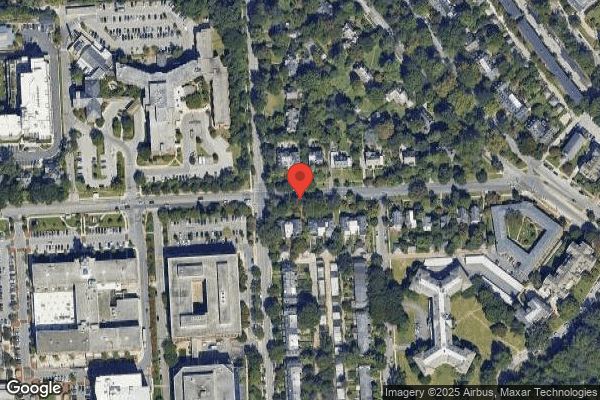
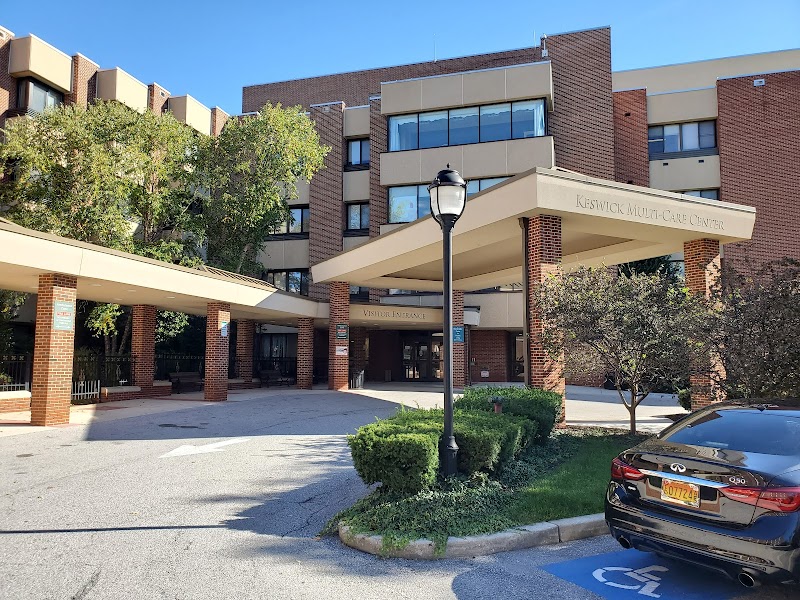
700 WEST 40TH STREET, BALTIMORE, MD 21211 (410) 235-8860
Non profit - Corporation 242 Beds Independent Data: November 2025
Trust Grade
70/100
#72 of 219 in MD
Last Inspection: October 2024

Within standard 12-15 month inspection cycle. Federal law requires annual inspections.

Overview

Keswick Multi-Care Center has a Trust Grade of B, indicating it is a good choice for families, though it is not among the very best. Ranking #72 out of 219 in Maryland places it in the top half of facilities, while its #9 rank out of 26 in Baltimore City County shows only eight local options are better. The facility is improving, as it reduced reported issues from 19 in 2024 to just 2 in 2025. Staffing is a strong point, with a perfect 5/5 rating and a turnover rate of 32%, which is below the state average, ensuring that staff are familiar with residents’ needs. However, there are some concerns, including a failure to ensure dietary staff adhered to hygiene protocols and issues with timely reporting of alleged resident abuse, which raises questions about oversight.

Trust Score
B
70/100
In Maryland
#72/219
Top 32%
Safety Record
Low Risk
No red flags
Inspections
Getting Better
19 → 2 violations
Staff Stability
○ Average
32% turnover. Near Maryland's 48% average. Typical for the industry.
Penalties
✓ Good
No fines on record. Clean compliance history, better than most Maryland facilities.
Skilled Nurses
✓ Good
Each resident gets 67 minutes of Registered Nurse (RN) attention daily — more than 97% of Maryland nursing homes. RNs are the most trained staff who catch health problems before they become serious.
Violations
⚠ Watch
48 deficiencies on record. Higher than average. Multiple issues found across inspections.
★★★★☆
4.0
Overall Rating
★★★★★
5.0
Staff Levels
★★★★☆
4.0
Care Quality
★★★☆☆
3.0
Inspection Score
Stable
2024: 19 issues
2025: 2 issues

The Good

  • 5-Star Staffing Rating · Excellent nurse staffing levels
  • 4-Star Quality Measures · Strong clinical quality outcomes
  • Full Sprinkler Coverage · Fire safety systems throughout facility
  • No fines on record
  • Staff turnover below average (32%)

    16 points below Maryland average of 48%

Facility shows strength in staffing levels, quality measures, fire safety.

The Bad

Staff Turnover: 32%

13pts below Maryland avg (46%)

Typical for the industry

The Ugly 48 deficiencies on record

May 2025 2 deficiencies
CONCERN (D) 📢 Someone Reported This

A family member, employee, or ombudsman was alarmed enough to file a formal complaint

Potential for Harm - no one hurt, but risky conditions existed

Free from Abuse/Neglect (Tag F0600)

Could have caused harm · This affected 1 resident

Based on interview, record review, facility document, and facility policy review, the facility failed to protect a resident from verbal abuse for 1 (Resident #6) of 8 residents reviewed for abuse. Fi...

Read full inspector narrative →
Based on interview, record review, facility document, and facility policy review, the facility failed to protect a resident from verbal abuse for 1 (Resident #6) of 8 residents reviewed for abuse. Findings included: A facility policy titled, Prevention and Reporting of Abuse and Neglect, revised 10/2024, indicated, [Facility Name] has a zero tolerance for resident/patient abuse and neglect in any of it's [sic] forms. An admission Record indicated the facility admitted Resident #6 on 03/15/2022. According to the admission Record, the resident had a medical history that included diagnoses of cerebrovascular disease, depression, dementia, and chronic kidney disease. A quarterly Minimum Data Set (MDS), with an Assessment Reference Date (ARD) of 10/28/2024, revealed Resident #6 had a Brief Interview for Mental Status (BIMS) score of 13, which indicated the resident had intact cognition. The MDS indicated Resident #6 felt down, depressed, or hopeless, seven to eleven days during the assessment's lookback period. The MDS revealed the resident felt tired or had little energy for two to six days and felt bad about themselves never or one day during the assessment's lookback period. The MDS indicated Resident #6 was dependent on staff for toileting hygiene and was always incontinent of bowel and bladder. An annual MDS, with an ARD of 01/25/2025, revealed Resident #6 had a BIMS score of 13, which indicated the resident had intact cognition. The MDS indicated Resident #6 felt down, depressed, or hopeless, seven to eleven days during the assessment's lookback period. The MDS revealed the resident felt tired or had little energy for two to six days and felt bad about themselves never or one day during the assessment's lookback period. The MDS indicated Resident #6 was dependent on staff for toileting hygiene and was always incontinent of bowel and bladder. Resident #6's Care Plan Report, included a problem statement revised 10/18/2024, that indicated the resident had an activities of daily living (ADL) self-care performance deficit related to their disease process, cerebrovascular accident with left sided weakness, and status post spinal surgery. Interventions directed staff that the resident was dependent on one staff for incontinence care as needed (initiated 10/18/2024 and revised 01/15/2025). The Care Plan Report included a problem statement revised on 07/13/2022, that indicated the resident had a behavior (crying) related to a history of major depression, anxiety, and facility admission. Interventions (initiated 01/15/2025) directed staff to administer medications as ordered, provide opportunities for positive interaction and attention, and monitor behavior episodes. A Maryland Department of Health Office of Health Care Quality Facility Reported Incident Initial Report Form, dated 12/19/2024, revealed Resident #6's family member informed Social Worker (SW) #1 that they were on the telephone with Resident #6 on 12/17/2024, when a Geriatric Nursing Assistant (GNA) was providing incontinence care to Resident #6. The report revealed the family member overheard the GNA say to Resident #6, Did you just [expletive] on me, and Resident #6 began to apologize and cry. The report revealed the alleged perpetrator was GNA #25. A document titled, Staff Interview, dated 12/19/2024, revealed Nursing Supervisor #13 and the Assistant Director of Nursing (ADON) conducted an interview by telephone with GNA #25. The Staff Interview revealed GNA #25 was assigned to Resident #6 and provided a bed bath and incontinence care. The Staff Interview revealed GNA #25 stated the resident always had incontinence episodes. Per the Staff Interview, GNA #25 indicated there was no problem providing care, noting Resident #6 cried every single day. The Staff Interview also indicated GNA #25 said they did not use inappropriate language with the resident while providing care; however, told the resident to stop pushing it out while I'm back here. A typed document titled, [Resident #6] complaint reported by [name of family member] 12/19/2024 12:30, signed by SW #1, indicated Resident #6's family member reported that on 12/17/2024 the GNA caring for Resident #6 was verbally inappropriate when changing the resident. Per the document, the family member stated they overhead the GNA ask Resident #6 why [the resident] was [expletive] on her. The document revealed that the family member reported Resident #6 was apologizing because they had no control over their bowels and that the resident was embarrassed, noting if the resident could get up and use the bathroom, they would. Further review revealed SW #1 interviewed Resident #6. Per the document, Resident #6 reported that while being changed by GNA #25, they were asked to turn onto their side. The document indicated Resident #6 stated when they began turning, their bowels began eliminating, and GNA #25 told them to stop pushing. The document revealed Resident #6 tried to explain that they were not pushing and then GNA #25 asked Resident #6 why are you pushing your [expletive] on me? According to the document, Resident #6 said they were embarrassed, upset, and cried during the interaction because they had no control over their bowels. The document further revealed Resident #6 stated GNA #25 used other expletives when performing tasks in their room, not speaking directly to them, but just when performing tasks in the room. Per the document, Resident #6 said they felt safe in the facility. A BH [behavioral health] Psychotherapy Progress Note, dated 12/27/2024 and signed by the Psychotherapist, indicated Resident #6 was seen related to their history of depression, with loneliness and crying spells. According to the note, the resident spoke about their incontinence and how that led to an upsetting experience with a staff member. The note indicated the resident had a negative interaction with staff that was addressed by administration to ensure that it would not happen again. The note indicated Resident #6 was focused on their bowels and that the physician spoke with the resident regarding their concern of their bowel function. A BH Follow Up Progress Note, dated 12/31/2024, indicated Resident #6 was seen at the request of the social worker for allegations of verbal abuse. The note indicated Resident #6 revealed that while being provided incontinence care, a GNA told them to stop squeezing (referring to the resident forcing a bowel movement) before the resident got [expletive] all over her (the GNA). Per the note, the resident replied to the GNA that they were not trying to have a bowel movement but could not control themselves, due to a medical condition. The note further indicated Resident #6 stated the GNA continued to curse under their breath while getting the resident out of bed. During a concurrent observation and interview on 05/06/2025 at 12:15 PM, Resident #6 was up in the dining room for lunch, and dressed appropriately. Resident #6 stated they did not recall the incident with the GNA, but if they had issues, they knew who to speak with. Resident #6 stated they could not remember any staff speaking inappropriately. During a telephone interview on 05/09/2025 at 11:10 AM, GNA #25 stated nothing happened when asked about the incident. GNA #25 stated Resident #6 was having a bowel movement, and she told the resident that she would put the brief back on them until the resident was finished, because she could not keep holding the bowel movement and clean the resident. GNA #25 stated the resident kept pushing. GNA #25 then stated she told Resident #6 to call her when they were done. She stated she never used inappropriate language. During an interview on 05/09/2024 at 3:24 PM, SW #1 stated she talked with Resident #6 and the resident's family member. She stated the resident's family member informed her a GNA used inappropriate language. Per SW #1, Resident #6 confirmed GNA #25 used inappropriate language. She stated Resident #6 was frequently tearful, as this was not new behavior, but the resident's coping mechanism. SW #1 said GNA #25 was terminated. During an interview on 05/09/2025 at 3:35 PM, the Psychotherapist stated Resident #6 was at their baseline following the incident, and the incident did not trigger the resident. He stated the resident's coping mechanisms were expanding, and he was seeing the resident out on the unit more. He stated the incident did not set the resident back. During an interview on 05/08/2025 at 3:12 PM, the Executive Director (ED) stated abuse of any kind would not be tolerated in the facility. The ED stated the allegation of abuse for Resident #6 was substantiated by the facility and GNA #25 was terminated.
CONCERN (D) 📢 Someone Reported This

A family member, employee, or ombudsman was alarmed enough to file a formal complaint

Potential for Harm - no one hurt, but risky conditions existed

Report Alleged Abuse (Tag F0609)

Could have caused harm · This affected 1 resident

Based on interview, record review, facility document and policy review, the facility failed to report an injury of unknown source within two hours of being informed that the resident sustained a serio...

Read full inspector narrative →
Based on interview, record review, facility document and policy review, the facility failed to report an injury of unknown source within two hours of being informed that the resident sustained a serious bodily injury for 1 (Resident #1) of 8 residents reviewed for abuse. Findings included: A facility policy titled, Prevention and Reporting of Abuse and Neglect, revised 10/2024, indicated, [Facility Name] has a zero tolerance for resident/patient abuse and neglect in any of it's [sic] forms. The policy revealed, 3. Abuse Reporting a. The facility will report allegations of abuse, neglect, exploitation, or mistreatment, misappropriation of resident property, as well as injury of unknown origin, in accordance with regulatory reporting guidelines: i. abuse and serious bodily injury within 2 hours to state agencies, unless; ii. the alleged violation involves neglect, exploitation, mistreatment, or misappropriation of resident property; and does not result in serious bodily injury; which will be reported no later than 24 hours.* iii. The police department (911) will be notified of all allegations of abuse. An admission Record indicated the facility admitted Resident #1 on 06/13/2024. According to the admission Record, the resident had a medical history that included diagnoses of osteoarthritis, age-related osteoporosis without current pathological fracture, and unspecified dementia. The admission Record revealed a principal diagnosis of unspecified fracture of the upper end of the left humerus with routine healing, with an onset date of 04/22/2025. A quarterly Minimum Data Set (MDS), with an Assessment Reference Date (ARD) of 03/18/2025, revealed Resident #1 had severe impairment in cognitive skills for daily decision-making and had a short-term and long-term memory problem per a Staff Assessment of Mental Status (SAMS). The MDS indicated the resident had no functional limitation in their range of motion of the upper and lower extremities. The MDS revealed Resident #1 was dependent on staff for rolling from their back to the left and right sides, moving from sitting on the side of the bed to lying flat, moving from lying on their back to sitting on the side of the bed, standing from a sitting position, and chair/bed-to-chair transfers. The MDS specified Resident #1 had no falls since admission, entry, re-entry, or the prior assessment. Resident #1's Care Plan Report, included a problem statement initiated 06/14/2024, that indicated the resident had an activities of daily living (ADL) self-care performance deficit related to activity intolerance, dementia, impaired balance, and multiple comorbidities affecting their body system. Interventions directed staff to use bilateral quarter side rails as an enabler for safety during care (initiated 06/14/204). Resident #1's SBAR [Situation, Background, Appearance, Review and Notify] Communication Form, dated 04/21/2025, indicated Resident #1 had a change in condition related to left shoulder swelling and pain. The SBAR Communication Form revealed the resident had new onset pain, evidenced by occasional moaning or groaning and facial grimacing. The form indicated the physician was notified on 04/21/2025 at 1:00 PM and ordered a 2-view left shoulder x-ray, pain medication, and warm compresses every four hours as needed. Resident #1's Radiology Results Report, dated 04/21/2025, revealed there was a minimally angulated fracture of the proximal neck of the left humerus and degenerative changes throughout the left shoulder. The report indicated that it was difficult to determine if the fracture was related to trauma or if it was a pathological fracture. The report contained a recommendation from the radiologist for the resident to have a follow up computed tomography (CT) scan of the proximal left humerus and scapula for further characterization of the fracture. The report revealed a Reported Date of 04/21/2025 at 5:58 PM, and a handwritten notation on the document that indicated the physician was aware. A Maryland Department of Health Office of Health Care Quality Facility Reported Incident Initial Report Form, dated 04/21/2025, indicated the facility became aware of the incident on 04/21/2025 at 9:00 PM and notified the state survey agency of Resident #1's injury of unknown source on 04/21/2025 at 10:45 PM. An e-mail titled, Confirmation - Abuse Report, dated 04/21/2025 at 11:04 PM, validated transmission of the facility's report of abuse. During an interview on 05/07/2025 at 3:30 PM, Licensed Practical Nurse (LPN) #5 stated when the facility received Resident #1's x-ray results, she sent the report to the physician via a secure portal and noted on the document that the physician was aware because she sent the results. LPN #5 stated she did not write the time on the report when she sent it to the physician. During a follow-up telephone interview on 05/12/2025 at 2:10 PM, LPN #5 clarified that she sent Resident #1's x-ray result to the physician between 6:30 PM and 7:00 PM, and the physician called at about 9:30 PM to give an order to send the resident to the hospital. LPN #5 stated she then notified the nursing supervisor. The Executive Director (ED) was interviewed on 05/08/2025 at 3:40 PM. The ED stated an LPN notified the supervisor of Resident #1's swollen shoulder, but the supervisor never completed the initial 2-hour report. The ED stated she believed a 2-hour report should have been completed within two hours of 6:00 PM, when the facility received the x-ray result that showed resident #1 had a fracture, but not earlier because the facility was waiting for the x-ray results.
Oct 2024 19 deficiencies
CONCERN (D)

Potential for Harm - no one hurt, but risky conditions existed

Deficiency F0558 (Tag F0558)

Could have caused harm · This affected 1 resident

Based on observation, interview, and record review it was determined the facility failed to ensure a resident's call device was accessible to the resident. This was evident for 1 (#145) out of 2 resid...

Read full inspector narrative →
Based on observation, interview, and record review it was determined the facility failed to ensure a resident's call device was accessible to the resident. This was evident for 1 (#145) out of 2 residents reviewed for call device functioning during the facility's recertification survey. The findings include: On 10/7/24 at 8:58AM, during the surveyor's initial tour of the facility, Resident #145 was observed sitting on the side of their bed with their call device attached to the side rail of the bed, which was in the down position. The resident's call device was observed resting on the floor underneath their bed. The surveyor observed the bedside table situated between the resident and where the call bell was laying on the floor. At this time, the resident was observed to be unable to reach their call device. On 10/7/24 at 9:01AM surveyors conducted a dual observation with Licensed Practical Nurse (LPN) #27 to observe the concern. At this time, upon surveyor's sharing of the concern, LPN #27 observed the resident did not have their call device within reach and proceeded to pick the call device off of the floor and clip it to the resident's bed within their reach. At this time the surveyor conducted an interview with LPN #27 who confirmed with the surveyor that the call device was expected to be within reach of the resident, and confirmed with surveyors that when staff leave the room they have to make sure the call device is clipped so that it is not dangling. At this time, LPN #27 acknowledged and confirmed understanding of the concern. On 10/22/24 at 11:53AM the surveyor reviewed the medical record for Resident #145 which revealed the following care plan intervention: be sure the resident's call light is within reach and encourage the resident to use it for assistance as needed; the resident needs prompt response to all requests for assistance.
CONCERN (D) 📢 Someone Reported This

A family member, employee, or ombudsman was alarmed enough to file a formal complaint

Potential for Harm - no one hurt, but risky conditions existed

Investigate Abuse (Tag F0610)

Could have caused harm · This affected 1 resident

Based on review of a facility reported incident (MD #188565), record review and staff interviews it was determined the facility failed to take measures to protect the resident during an abuse investig...

Read full inspector narrative →
Based on review of a facility reported incident (MD #188565), record review and staff interviews it was determined the facility failed to take measures to protect the resident during an abuse investigation. This was evident for 1 (Resident #310) out of 6 residents reviewed for abuse during the facility's recertification survey. The findings include: On 10/8/24 at 11:46AM the surveyor conducted a review of the facility's investigation file for the facility reported incident MD#188565. During this review, it was noted that Resident #310 reported an allegation of abuse on 2/1/2023 to dialysis staff who then reported the allegation via email to the facility's Director of Nursing (DON), Assistant Director of Nursing (ADON), and the [NAME] President of Clinical Services on 2/1/2023 at 2:34PM. Review of the email response to the dialysis staff from the [NAME] President of Clinical Services revealed the facility was aware of the allegation on 2/1/23 at 2:38PM. Documentation of the allegation reported to the facility included the alleged abuse occurred for the past two nights On 10/16/24 at 10:30AM the surveyor requested from the Administrator, the facility reported incident investigation file for further review. On 10/16/24 at 10:32AM upon receipt of the investigation file, the Administrator confirmed with the surveyor that this was the facility's complete investigation file. Review of the investigative file on 10/16/24 at 10:37AM revealed a written statement signed by Registered Nurse (RN) #34 dated 2/1/23 at 2:53PM which documented Resident #310's report of an allegation of abuse to them that the resident reported had occurred two nights in a row in which there was a male perpetrator. RN #34 further documented in their written statement, the resident's expression of fear for telling staff, and fear for their safety. Review of the facility's final self-report indicated two males were working during the alleged timeframe. No information in the investigative file could be found that any action/precaution was taken to protect the resident from any male staff during the course of the investigation. On 10/16/24 at 10:50AM the surveyor requested from Executive Assistant #35, the names and employee files for the two male staff identified as working on the same unit as the resident during the alleged timeframe. When the surveyor inquired as to who the two male staff identified were, their response was: but this was hallucinations. At this time, the surveyor shared concerns. Review of the investigative file on 10/16/24 at 1:44PM revealed the following information: 1.) the two identified male staff from the investigation were documented on staff assignment sheets as having continued to work shifts while the investigation was in process, after the allegation was made by the resident, during the course of the investigation, and prior to being interviewed and giving statements, 2.) review of employee timesheet documentation revealed both male staff members were documented as having worked the 3-11pm shift on 2/1/23, and 3.) the psych consult for the resident was noted by the surveyor to be documented as having occurred on 2/2/23. On 10/16/24 at 2:54PM the facility's Assistant Director of Nursing (ADON) requested to speak with the surveyor, and at this time, the surveyor conducted an interview. During the interview they confirmed with the surveyor that no staff had been removed from assignment or placed on administrative leave, but going forward the facility will do so. At this time, the surveyor shared their concerns with the ADON who acknowledged and confirmed understanding of the concerns.
CONCERN (D)

Potential for Harm - no one hurt, but risky conditions existed

MDS Data Transmission (Tag F0640)

Could have caused harm · This affected 1 resident

Based on record review and interview, it was determined that the facility failed to transmit Minimum Data Set (MDS) assessments within 14 days of completion and create a discharge assessment. This was...

Read full inspector narrative →
Based on record review and interview, it was determined that the facility failed to transmit Minimum Data Set (MDS) assessments within 14 days of completion and create a discharge assessment. This was evident for 3 (Residents #64, #146 and #148) of 3 residents reviewed for resident assessments during the recertification/complaint survey. The findings include: Minimum Data Set (MDS) is a core set of screening, clinical, and functional status data elements, including common definitions and coding categories, which form the foundation of a comprehensive assessment for all residents of nursing homes certified to participate in Medicare or Medicaid. The data elements (also referred to as items) in the MDS standardize communication about resident problems and conditions within nursing homes, between nursing homes, and between nursing homes and outside agencies. MDS assessments need to be accurate to ensure each resident receives the care they need. Nursing homes are required to submit the Omnibus Budget Reconciliation Act (OBRA) required MDS records for all residents in Medicare or Medicaid certified beds regardless of the payer source to Centers for Medicare and Medicaid Services (CMS') Internet Quality Improvement and Evaluation System (iQIES). Skilled nursing facilities (SNFs) are required to transmit additional MDS assessments for all Medicare beneficiaries in a Part A stay reimbursable under the SNF Prospective Payment System (PPS). Assessment Transmission: Comprehensive assessments must be transmitted electronically within 14 days of the Care Plan Completion Date. All other MDS assessments must be submitted within 14 days of the MDS Completion Date. On 10/15/24 at 10:49 AM, a record review was conducted for the following residents: - Resident #64 was discharged on 6/2/24. The MDS assessment Discharge Return Not Anticipated /End of PPS Part A Stay with an Assessment Reference Date (ARD) of 6/2/24 was completed on 6/5/24, however, the assessment was not transmitted to CMS' IQIES for over 120 days. - Resident #146 was discharged on 5/29/24. The MDS assessment Discharge Return Not Anticipated with an ARD of 5/29/24 was completed on 6/6/24, however, the assessment was not transmitted to CMS' IQIES for over 120 days. - Resident #148 was discharged on 5/21/24, however, a discharge assessment was never completed as required. On 10/15/24 at 1:27 PM, during an interview with the MDS nurse #5, he/she stated that he/she transmitted weekly to CMS but with no specific days. She added that he/she transmitted the assessments within 7 days after completing an admission as well as discharge assessment. MDS nurse #5 stated that all assessments are required to be transmitted regardless of the payer source for Entry, admission and Discharge assessments. MDS nurse #5 confirmed the concerns found by the surveyor and stated, these errors are all an oversight, we will fix them. On 10/17/24 at 2:00 PM, the Director of Nursing (DON) and the Assistant Director of Nursing (ADON) were made aware that 2 resident MDS assessments were not transmitted to CMS and 1 resident assessment was never completed and transmitted for over 120 days.
CONCERN (D)

Potential for Harm - no one hurt, but risky conditions existed

Assessment Accuracy (Tag F0641)

Could have caused harm · This affected 1 resident

**NOTE- TERMS IN BRACKETS HAVE BEEN EDITED TO PROTECT CONFIDENTIALITY** Based on observation, record review, and interview, it was determined that the facility failed to accurately document oral asses...

Read full inspector narrative →
**NOTE- TERMS IN BRACKETS HAVE BEEN EDITED TO PROTECT CONFIDENTIALITY** Based on observation, record review, and interview, it was determined that the facility failed to accurately document oral assessment in a resident's medical record and code the resident's oral status accurately on the Minimum Data Set (MDS) assessment. This was evident for 1 (Resident #12) of 3 residents reviewed during the recertification/complaint survey. The findings include: Minimum Data Set (MDS) is a core set of screening, clinical, and functional status data elements, including common definitions and coding categories, which form the foundation of a comprehensive assessment for all residents of nursing homes certified to participate in Medicare or Medicaid. The data elements (also referred to as items) in the MDS standardize communication about resident problems and conditions within nursing homes, between nursing homes, and between nursing homes and outside agencies. MDS assessments need to be accurate to ensure each resident receives the care they need. On 10/07/24 at 11:07 AM, Resident #12 was observed with no upper or lower teeth. The surveyor asked if he/she was wearing dentures, he/she stated yes and that the bottom dentures were in the bathroom, and he/she showed the surveyor that the upper dentures were kept in a container on the bedside table. On 10/10/24 at 08:29 AM, a record review revealed that Resident #12 had the following dental consultations that confirmed the presence of dentures: -1/21/21, full upper and lower dentures were present -2/4/21, full upper dentures were present -3/26/21, full upper dentures were present -4/29/21, full upper dentures were present -3/14/24, the resident refused to be seen by the dentist On 10/10/24 at 08:35 AM, a review of the care plan revealed no pertinent goals and interventions related to denture use were initiated on admission. On 10/10/24 at 9:20 AM, an interview with Licensed Practical Nurse (LPN #8) revealed that nurses completed the oral assessments on admission and documented in the admission packet under assessments, clinical admission. On 10/10/24 at 11:10 AM, a review of the admission assessment dated [DATE] revealed that Resident #12 Has own teeth. On 10/10/24 at 11:12 AM, a review of the baseline care plan dated 11/19/2023 under Dietary, Dental Prosthetics also revealed natural teeth. On 10/10/24 at 11:54 AM, an interview with the Unit Manager (UM #9) revealed that during a resident's admission, a head-to-toe assessment was completed by the admitting nurse in the electronic health record, and that he followed up on what items were missing. He further stated that if the resident had missing teeth, the nurses were expected to document the missing teeth in the progress notes. UM #9 stated that he developed and updated the care plans as needed. UM #9 was made aware that Resident #12's oral assessment was not accurately documented in the medical record. On 10/11/24 at 11:49 AM, in an interview with MDS nurse #5, she stated that before completing the items in an MDS assessment, he/she obtained information from the electronic health care record and physically assessed the resident. MDS nurse #5 showed the surveyor how he/she coded Section L-Oral/ Dental section in the MDS. He/she randomly selected Resident #12 and navigated to section L of a comprehensive MDS assessment with an Assessment Reference Date (ARD) of 3/5/24. She confirmed that she selected No as an option describing L0200. Dental- Option B No natural teeth or tooth fragment(s) (edentulous). He/she then clicked the tools in the MDS under the Resident Assessment Instrument (RAI) and confirmed that based on the guidance, he/she should have coded Yes no natural teeth to option B in section L- Oral/ Dental in the MDS assessment. On 10/17/24 at 2:10 PM, the Director of Nursing (DON) and the Assistant Director of Nursing (ADON) were made aware that Resident #12's admission oral assessment indicated has own teeth, the Baseline Care Plan indicated natural teeth' and the MDS assessment with an (ARD) of 3/5/24 was inaccurate because it did not capture Resident #12's missing teeth.
CONCERN (D) 📢 Someone Reported This

A family member, employee, or ombudsman was alarmed enough to file a formal complaint

Potential for Harm - no one hurt, but risky conditions existed

Comprehensive Care Plan (Tag F0656)

Could have caused harm · This affected 1 resident

**NOTE- TERMS IN BRACKETS HAVE BEEN EDITED TO PROTECT CONFIDENTIALITY** 2) On 10/07/24 at 11:07 AM, Resident #12 was observed with no upper or lower teeth. The surveyor asked if he/she was wearing den...

Read full inspector narrative →
**NOTE- TERMS IN BRACKETS HAVE BEEN EDITED TO PROTECT CONFIDENTIALITY** 2) On 10/07/24 at 11:07 AM, Resident #12 was observed with no upper or lower teeth. The surveyor asked if he/she was wearing dentures, he/she stated yes and that the bottom dentures were in the bathroom, and he/she showed the surveyor that the upper dentures were kept in a container on the bedside table. On 10/08/24 at 12:14 PM, Resident #12 showed the surveyor that he/she was wearing the upper dentures. He/she stated that he/she had not worn the lower dentures because they didn't fit him/her, he/she added that the facility was aware, but the insurance won't pay for a replacement of the ill-fitting bottom dentures. The surveyor observed that the bottom dentures were placed on the bathroom sink, inside a blue denture cup. On 10/10/24 at 08:29 AM, a record review revealed that Resident #12 had the following dental consultations that confirmed the presence of dentures: -1/21/21, full upper and lower dentures were present -2/4/21, full upper dentures were present -3/26/21, full upper dentures were present -4/29/21, full upper dentures were present -3/14/24, the resident refused to be seen by the dentist On 10/10/24 at 08:35 AM, a review of the care plan revealed no pertinent goals and interventions related to denture use were initiated on admission. On 10/10/24 09:27 AM, in an interview with Geriatric Nurse Assistant (GNA #10), he/she stated that when a resident wore dentures, the GNAs clean them and put them inside the resident's mouth in the morning and removed them at night. He/she added that one resident, Resident #12, did it for herself and that if he/she needed help, assistance was provided by the staff. On 10/10/24 at 9:20 AM, an interview with Licensed Practical Nurse (LPN #8) revealed that the nurses completed the oral assessments on admission and documented the findings in the admission packet under assessments, clinical admission. On 10/10/24 at 11:10 AM, a review of the admission assessment dated [DATE] revealed that Resident #12 Has own teeth. On 10/10/24 at 11:12 AM, a review of the baseline care plan dated 11/19/2023 under Dietary: Dental Prosthetics also revealed natural teeth. On 10/10/24 at 11:54 AM, an interview with the Unit Manager (UM #9) revealed that during a resident's admission, a head-to-toe assessment was completed by the admitting nurse in the electronic health record and the nurse initiated the care plan and that he followed up on what items were missing. He further stated that if the resident had missing teeth and refused to wear dentures, the nurses were expected to document the missing teeth and the refusals in the progress notes. UM #9 added that he developed and updated the care plans as needed. UM #9 was made aware that the denture care plan was not developed since Resident #12's admission. On 10/10/24 at 12:15 PM, a review of Resident #12's Treatment Administration Report (TAR) revealed no orders were placed related to denture care and storage. On 10/11/24 at 8:37 AM, a record review revealed that a new Impaired Dentition care plan for Resident #12 was added on 10/10/24 after surveyor intervention. On 10/17/24 at 02:10 PM, the DON and the Assistant Director of Nursing (ADON) were made aware that Resident #12's denture care plan was not developed since admission, and they were in agreement. Based on observation, interview, and record review it was determined that the facility failed to develop, initiate, and ensure a care plan for a resident was comprehensive and person centered. This was evident for 3 (#50, # 312, #12) of 58 residents reviewed during a recertification/complaint survey. The findings include: A care plan is a guide that addresses the unique needs of each resident. It is used to plan, assess, and evaluate the effectiveness of the resident's care. 1) On 10/7/24 at 8:35AM, during the surveyor's initial tour, Resident #50 was observed in bed with two lower extremity prosthesis present on the floor within their room. On 10/8/24 at approximately 8:55AM the surveyor observed Resident #50 wearing their prosthesis. On 10/9/24 at 8:59AM the surveyor reviewed the medical record which revealed the following medical order for therapy that included prosthetic training: recertification for 9/26: PT to continue PT treatment x 2 visits/week x 30 days for therapeutic exercise, therapeutic activity, neuromuscular education, gait training, prosthetic training, wc mobility/management, pt/CG education. No active medical order for use of the prosthetics was observed to be in place. On 10/9/24 at 9:10AM further surveyor review of the medical record revealed the resident's care plan did not include their lower extremity prosthesis. Review of the resident's medical diagnoses revealed the following: 1.) acquired absence of right leg below the knee, and 2.) acquired absence of left leg below the knee. The surveyor noted the following care plan interventions were in place for the resident: Refer to podiatrist/foot care nurse to monitor/document foot care needs and to cut long nails, and Educate the resident on the importance of proper foot care including; proper fitting shoes, wash and dry feet thoroughly, keep toenails cut, inspect feet daily, daily change of hosiery and socks. On 10/9/24 at 9:36AM the surveyor conducted an interview with Registered Nurse (RN) #28 who reported they were familiar with Resident #50 and confirmed the resident was using their prosthesis every day. At this time, the surveyor inquired to RN #28 as to if a medical order or care plan was in place for the use of the prosthesis. RN #28 observed and reviewed the medical orders and care plan for the resident and confirmed with the surveyor that they did not see any medical orders or care planning present for the resident's prosthesis, and at this time, the surveyor shared their concerns. On 10/9/24 at 9:47 AM the surveyor conducted an interview with Unit Manager #29 who reviewed the resident's medical record and confirmed with the surveyor that there was no medical order or care planning for the use of the prosthesis. At this time, Unit Manager #29 stated the following to the surveyor: I don't see orders in there, I can definitely put those in and care-plan it. Unit Manager #29 confirmed with the surveyor that Resident #50 was currently using the prosthesis and their expectation was for there to be a medical order and care planning in place. At this time, the surveyor shared their concerns with Unit Manager #29 who acknowledged and confirmed understanding of the concerns. 3) Hemodialysis (HD) or simply dialysis is a process of filtering the blood of a person whose kidneys are not working normally. An arteriovenous (AV) fistula is a connection that's made between an artery and a vein for dialysis access. A surgical procedure, done in the operating room, is required to stitch together two vessels to create an AV fistula. The MDS (Minimum Data Set) is part of the Resident Assessment Instrument that was Federally mandated in legislation passed in 1986. The MDS is a set of assessment screening items employed as part of a standardized, reproducible, and comprehensive assessment process that ensures each resident's individual needs are identified, that care is planned based on those individualized needs, and that the care is provided as planned to meet the needs of each resident. On 10/18/2024 at 1:05 PM, a review of Resident #312's clinical records revealed the resident was admitted to the facility in November 2023 and discharged in January 2024 with medical diagnoses that included but not limited to End Stage Renal Disease (ESRD) and dependence on Renal Dialysis. Review of Modification of Admission/Medicare 5-day MDS with Assessment Reference Date (ARD) of 11/12/2023 captured ESRD under section I (Active diagnoses) and Hemodialysis captured under section O (Special treatments, procedures, programs). On 10/18/2024 at 2:05 PM, Review of physician orders revealed the following orders with start date of 11/8/2023: - Hemodialysis 3 times per week on M W F, - Monitor fistula/graft on Left upper arm for infection, ulceration, bleeding, thrombosis formation(bruit/thrill) - Avoid tourniquets, procedures, BP cuffs, tight clothing/jewelry to LUE (left upper extremity) with fistula/graft On 10/21/2024 at 8:48 AM, a review of nurses' progress notes revealed the following clinical admission evaluation documentation dated 11/8/2023 at 19:33 (7:33 PM): .[resident's name] is admitted to room . from [name of acute care facility] . Discharge Diagnosis: .5) End stage renal disease Left upper arm AV fistula no bleeding noted resident is a dialysis and stated s/he was dialyzed today. On 10/21/2024 at 9:11 AM, further review of Resident #312's medical record revealed the facility staff failed to develop and implement a care plan with specific interventions and approaches to address the resident's ESRD and hemodialysis. The care plan was not comprehensive, and resident centered. On 10/21/2024 at 2:05 PM, in an interview with the Director of Nursing (DON) and the Assistant Director of Nursing (ADON), the surveyor shared concerns regarding failure to develop a care plan for the diagnosis of ESRD and hemodialysis. ADON stated that the expectation was that the care plan should address hemodialysis for a resident that was on it. Both DON and ADON reviewed the resident's care plan and confirmed that it failed to address ESRD and hemodialysis with goals and interventions. ADON stated that the Unit Manager should have captured on the care plan ESRD/hemodialysis as a stand-alone problem with goals and interventions.
CONCERN (D) 📢 Someone Reported This

A family member, employee, or ombudsman was alarmed enough to file a formal complaint

Potential for Harm - no one hurt, but risky conditions existed

Deficiency F0657 (Tag F0657)

Could have caused harm · This affected 1 resident

Based on residents' representative interviews, resident record reviews, and staff interviews, it was determined that the facility failed to implement an interdisciplinary care plan with effective inte...

Read full inspector narrative →
Based on residents' representative interviews, resident record reviews, and staff interviews, it was determined that the facility failed to implement an interdisciplinary care plan with effective interventions to prevent the repeated removal of gastronomy tubes. This was evident for one (Resident #68) of 58 residents reviewed for care plans during the recertification/complaint survey process. Findings Include: A gastronomy tube (g-tube) is inserted through the abdomen's wall into the stomach. The g-tube allows air and fluid to leave the stomach and can be used to give medication and fluids to the resident. On 10/8/2024 at 11:51 AM, an interview with Resident #68's representative revealed that the resident had 5 incidents that required multiple g-tube replacements within an approximate 5-month period. On 10/9/2024 at 10:52 AM, a review of Resident #68's record revealed that the resident was admitted to the facility in December 2019, and the resident's g-tube was placed before admission. A review of the change in condition assessment forms revealed that the resident had multiple incidents of g-tube removal. It was noted that between June 2024 and October 2024, the resident had 5 separate incidents of pulling out the g-tube, which subsequently required g-tube replacement. On 10/9/2024 at 11:00 AM, a review of Resident #68's care plan revealed that in May 2022, the resident's care plan stated, The resident will have fewer episodes of g-tube removal. The surveyor noted that the resident's care plan was revised in August 2024; however, no additional effective intervention was added to the care plan to prevent the resident from pulling out the g-tube. On 10/10/2024 at 09:06 AM, in an interview with a registered nurse (RN #22), she stated that Resident #68 had an order for an abdominal binder to prevent the resident from removing the g-tube. When asked by the surveyor if any additional measures could be put in place to prevent or reduce the frequency of the g-tube removal, RN#22 stated that there was nothing else they could do. Upon further investigation, RN #22 revealed that any nurse can initiate or update the care plan; however, the unit manager primarily manages residents' care plans. On 10/10/2024 at 12:09 PM, an interview with the unit manager (RN #9) revealed that RN #9 was aware of Resident #68's g-tube removal episodes. RN#9 acknowledged that the care plan updates were a part of their responsibility. RN #9 acknowledged that the care plan was ineffective and stated that the care plan would be updated to address the resident's needs. On 10/21/2024 at 11:45 AM, the surveyor reviewed the findings with the Director of Nursing (DON), and she acknowledged the above-mentioned findings.
CONCERN (D)

Potential for Harm - no one hurt, but risky conditions existed

Deficiency F0658 (Tag F0658)

Could have caused harm · This affected 1 resident

Based on observation, interview and record review, it was determined that the facility failed to 1) follow professional standards of nursing practice when administering medications to residents and 2)...

Read full inspector narrative →
Based on observation, interview and record review, it was determined that the facility failed to 1) follow professional standards of nursing practice when administering medications to residents and 2) administer the correct ordered medication form to the resident. It was evident for 1(Resident # 318) of 3 residents reviewed during medication administration during the recertification/complaint survey. The findings include: There are risks associated with opening capsules to drain the liquid. When this is performed, it alters the way the drug is absorbed in the body. This can result in people not getting enough dose. [Healtline.com February 2020] PAXIT is a 24-hour, unit-dose, medication management system in long-term care and it comes in easy to open bags. Omega 3 capsule is a dietary supplement made of gelatin and may have an enteric coating to prevent them from dissolving until they reach the small intestine. They are often tasteless and easy to swallow. Docusate Sodium is a medication utilized for managing and treating constipation. 1) On 10/16/24 at 8:51 AM, Licensed Practical Nurse (LPN #7), was observed preparing the medications of Resident #318. LPN #7 stated that Resident #318 took medications crushed. LPN #7 began popping the residents' medications from the blister packs, crushed and placed them in a small cup. He/she then proceeded to get an amber yellow semi-transparent gel capsule from a white PAXIT bag which contained one capsule of Omega 3 and placed it in a separate medication cup. He/she also took one red colored Docusate Sodium capsule from a small white bottle labeled house stock and placed it in the same medication cup where the Omega 3 capsule was placed. LPN #7 took a pair of green scissors that were sitting on top of the first drawer of the medication cart where the Over the Counter (OTC) medications and insulin pens were placed. He/she then wiped the scissors with an alcohol pad and told the surveyor not to worry about the scissors because they were not used for wound dressings, except for medications. LPN #7 cut the tips of the Omega 3 and the Docusate capsules and squeezed the liquid out from the capsules to the medication cup and mixed it with applesauce. The prepared medications were then administered to Resident #318. On 10/16/24 at 9:40 AM, in an interview with LPN #8 regarding the process of administering soft gel capsules to residents who had difficulty swallowing, he/she stated that the nurses, or the medication aids should not puncture the soft gel capsules before giving them to the residents, because it will affect the dose. He/she added that the nurses should call the doctor and have the medication changed to a liquid form. On 10/16/24 at 10:11 AM, in an interview with the DON, she stated that if a resident took medications crushed but has orders for soft gel caps, the nurses are expected to call the doctor and ask for an order to change it to a liquid form. She added that she would come back and provide the surveyor with the policy. On 10/17/24 at 12:45 PM, the DON returned and handed the surveyor the facility's policy entitled, Medication Administration- Crushable Meds. It indicated that non-crushable medications should not be crushed, such as extended- release, enteric coated, soft capsules or medications designed to release over time. The DON also provided the surveyor an in- service education document entitled Medication Administration- Crushable Meds Education dated 10/16/24. 2) On 10/16/24 at 9:20 AM, a record review revealed an order that read, Docusate Sodium Oral Tablet 100 MG (Docusate Sodium) Give 1 tablet by mouth one time a day for Constipation. However, the medication that was given was in a soft gel capsule form. On 10/16/24 at 9:28 AM, LPN #7 confirmed that the medication that the was given to Resident #318 during medication pass was Docusate Sodium red soft gel cap and agreed that it should be tablet as ordered. On 10/17/24 at 1:50 PM, the DON and the Assistant Director of Nursing (ADON) were notified of the concerns observed during medication administration observation. The DON stated, we already educated the nurse concerned and the other nurses, so the error won't happen again. They were also notified that the nurse administered a soft gel capsule of Docusate Sodium instead of the tablet form.
CONCERN (D) 📢 Someone Reported This

A family member, employee, or ombudsman was alarmed enough to file a formal complaint

Potential for Harm - no one hurt, but risky conditions existed

ADL Care (Tag F0677)

Could have caused harm · This affected 1 resident

Based on a complaint incident MD00209605, record review and staff interviews, it was determined that the facility failed to provide Activities of Daily Living (ADL) care for a dependent resident. This...

Read full inspector narrative →
Based on a complaint incident MD00209605, record review and staff interviews, it was determined that the facility failed to provide Activities of Daily Living (ADL) care for a dependent resident. This was evident for 1 (resident #66) of 4 residents reviewed for ADL care during the recertification/complaint survey. The findings include: On 10/08/24 at 8:17 AM review of a complaint incident MD00209605 sent in by resident's family reported that resident #66 has been in the facility for over 45 days and never received a full shower/Bathing. Review of the Physicians order on 10/10/24 at 11:43 AM had an order dated 7/11/24 that read: Skin Assessment: Bath Days on Monday and Thursday every evening shift. Review of the MDS with an Assessment Reference Date (ARD) of 7/15/24 revealed that resident #66 was coded as depended for showers and baths. Review of the GNA task sheet from July to October 2024 revealed that resident #66 did not get a shower on the assigned shower days, only bed baths. In an interview with staff #24 a Geriatric Nursing Assistant (GNA) on 10/11/24 at 9:51 AM, she was asked how shower days are scheduled for residents and she said they are scheduled 2x a week for all residents and are documented when given, in the GNA task sheet in the electronic record. The GNA task sheet was reviewed with staff #24 and the Assistant Director of Nursing (ADON) and revealed that resident never got a shower from July through October 2024, he/she only got bed baths. The GNA (staff #24) was asked to explain, and stated that Resident #66's shower days were scheduled on Monday's and Friday's which coincides with the resident's dialysis days. He/she explained that night shift staff are responsible for getting Resident #66 ready to go for dialysis before day shift arrives and that Night shift does not give showers. On 10/11/24 at 10:05 AM, the ADON was made aware that this was a concern, he/she confirmed that the resident never got showers since admission to the facility.
CONCERN (D) 📢 Someone Reported This

A family member, employee, or ombudsman was alarmed enough to file a formal complaint

Potential for Harm - no one hurt, but risky conditions existed

Quality of Care (Tag F0684)

Could have caused harm · This affected 1 resident

Based on the review of residents' medical records and interviews with facility staff, it was determined that the facility failed to ensure that the resident received treatment and care in accordance w...

Read full inspector narrative →
Based on the review of residents' medical records and interviews with facility staff, it was determined that the facility failed to ensure that the resident received treatment and care in accordance with professional standards of practice. This was evident for one (Resident #165) out of one resident who was reviewed for quality of care/ treatment in accordance with professional standards of practice during the recertification/complaint survey. The findings include: STAT means right now. The term STAT is usually used in medical orders. STAT term derived from the Latin word Statim, which translates to immediately, and denotes that medical order should be prioritized. A medical record review on 10/08/24 at 03:04 PM revealed that resident #165 sustained a fall on 09/03/23 around 8 PM, and the resident complained of a sharp radiating pain in the left leg, a pain level of 9/10. After pain progressively increased, on 09/04/2023 at 00:40, health status notes by Registered Nurse # 43 indicated that Resident #165 complained of 10/10 left leg pain. Resident #165 stated: It hurts right on the outside . it's bad. A review of the Nurses' progress notes and medication administration record (MAR) revealed that the facility staff failed to administer pain medication until 09/03/23 at 10:30 PM when the resident complained of a pain level of 9/10 after the fall occurred around 8 PM. A STAT X-ray of Left Hip 2-Views was ordered after the resident sustained a fall on 09/03/23 at 8 PM. The X-ray technician did not come to the facility until the next day, 09/04/23, at 10:30 AM. Despite the Physician's order on 09/03/23 at 8:59 PM to send the resident out to the Hospital, the facility staff delayed sending the resident to the Hospital. An interview with Registered Nurse # 41 on 10/16/24 at 10:25 AM revealed that for any acute pain after the fall, based on my clinical judgment, I would rather send the resident to the hospital for evaluation. X-Ray company will not give their expected time of arrival, and we had issues with them in the past, and waiting for them potentially makes the issue worse. On 10/16/24 at 10:52 AM, the Surveyor validated with the ADON and the Director of Nursing (DON) regarding the delay in pain medication administration and the delay in sending the resident to the Hospital for evaluation despite the provider's order to send resident #165 to the hospital.
CONCERN (D) 📢 Someone Reported This

A family member, employee, or ombudsman was alarmed enough to file a formal complaint

Potential for Harm - no one hurt, but risky conditions existed

Deficiency F0691 (Tag F0691)

Could have caused harm · This affected 1 resident

**NOTE- TERMS IN BRACKETS HAVE BEEN EDITED TO PROTECT CONFIDENTIALITY** Based on a complaint investigation, record review and staff interviews, it was determined that the facility failed to order appr...

Read full inspector narrative →
**NOTE- TERMS IN BRACKETS HAVE BEEN EDITED TO PROTECT CONFIDENTIALITY** Based on a complaint investigation, record review and staff interviews, it was determined that the facility failed to order appropriate intervention and treatments for the maintenance of a Urostomy. This was evident for 1 (Resident #164) of 1 resident reviewed for urostomy during the recertification/complaint survey. The findings Include: A urostomy is an opening in the belly made during surgery to redirect urine away from a bladder that's not working as it should. A special bag called urostomy bags are used to collect urine from the urostomy. On 10/15/24 at 9:38 AM, review of a complaint incident MD00194576 revealed that Resident #164, who had a urostomy, complained that her urine bag was leaking near the surgical wound and that the bag was left full of waste from 5:30 AM to 10:30 AM. Further, the urine bag leaked everywhere when the resident attempted to walk and that this had happened more than once. Review of the resident's record on 10/15/24 at 9:42 AM revealed that this resident was admitted to the facility on [DATE] with a urostomy. However, further review of the admission orders or subsequent orders did not include an order for urostomy care such as stoma care, site assessment, emptying of the urostomy bag, documentation of the urine output or nursing interventions for the urostomy care and management. The Director of Nursing (DON) in an interview on 10/15/24 at 11:15 AM was asked the process for care and management of residents with urostomies. He/she stated that these residents always have orders that specify the type and location of the urostomy and nursing orders to assess and monitor the urostomy site. The DON was asked how the nursing staff are made aware that a resident had a urostomy. He/she explained that an order would be in POINT CLICK CARE (PCC -the electronic record used by the facility for documentation) placed by the admission nurse after reviewing the hospital discharge summary. The DON was asked the expectation from staff regarding urostomy care. He/she stated that staff are expected to assess the skin around the area for redness, monitor urine drainage amount, assess urine color, pain at site, drainage bag and leakages. On 10/15/24 at 11:20PM The DON was made aware that resident #164 did not have orders to assess and monitor the urostomy including emptying the urostomy bag and that this was a concern. He/she confirmed that there were no orders.
CONCERN (D)

Potential for Harm - no one hurt, but risky conditions existed

Deficiency F0697 (Tag F0697)

Could have caused harm · This affected 1 resident

Based on medical record reviews, resident and staff interviews, it was determined the facility staff failed to ensure that a resident was given pain medication consistent with professional standards o...

Read full inspector narrative →
Based on medical record reviews, resident and staff interviews, it was determined the facility staff failed to ensure that a resident was given pain medication consistent with professional standards of practice. This was evident for 1 (Resident #16) of 4 residents reviewed for pain management during the recertification/complaint survey. The findings include During an initial pool screen of Resident #16 on 10/7/2024 at 1:30 PM, the resident stated that s/he was always in pain and the pain medication was not given most of the time. Resident #16 further stated that sometimes s/he waited for a long time for the nurse to bring their pain medication. S/he added that the pain was in their stomach, knees, and legs. Review of Resident #16's clinical records on 10/9/2024 at 12:37 PM revealed the resident was re-admitted to the facility in October 2024 with medical diagnoses that included but not limited to Chronic pain syndrome, unspecified Abdominal pain, and Prostate cancer. On 10/9/2024 at 1:02 PM, a review of active physician orders for Resident #16 revealed PRN (as needed) pain medication orders did not have parameters to correspond with pain scores for administration: - Oxycodone HCl Oral Tablet 10 MG (Oxycodone HCl): Give 1 tablet by mouth every 8 hours as needed for pain, start date 10/1/2024, - Acetaminophen Extra Strength Oral Tablet 500 MG (Acetaminophen): Give 2 tablets by mouth every 6 hours as needed for pain, start date 10/1/2024. On 10/9/2024 at 1:13 PM, record review revealed that Resident # 16's pain was not managed consistently: A review of the Medication Administration Record (MAR) and Treatment Administration Record (TAR) for October 2024 was completed. Staff documentation revealed that the resident was given: 10mg Oxycodone for a pain score of 6 on 10/4/2024 at 22:50 (10:50 PM), 10mg Oxycodone for pain score of 7 on 10/10/7/2024 at 13:41 (1:41 PM), 10mg Oxycodone for pain score of 0 on 10/7/2024 at 22:24 (10:24 PM), 10mg Oxycodone for pain score of 6 on 10/9/2024, and 10mg Oxycodone for pain score of 6 on 10/10/2024 at 00:04 (12:04 AM). Further review of Resident #16's MAR revealed that the resident received: 2 tablets of Acetaminophen 500mg for pain score of 3 on 10/5/2024 at 19:02 (7:02 PM), 2 tablets Acetaminophen 500mg for pain score of 3 on 10/6/2024 at 21:51 (9:51 PM), and 2 tablets of acetaminophen 500mg for pain score of 0 on 10/7/2024 at 22:28 (10:28 PM). Resident #16 had no non-pharmacological (use of non-chemical methods to reduce pain without medications) interventions for pain management put in place. During an interview with Licensed Practical Nurse (LPN #12) on 10/16/2024 at 9:35 AM, he/she acknowledged that Resident #16 had chronic pain (mostly abdominal) but stated that the resident was on pain meds to manage their pain. He/she added that the expectation was to assess a resident's pain level and review the pain medication parameters prior to administering any PRN pain medication. On 10/10/2024 at 12:15 PM, an interview was conducted with the Director of Nursing (DON). DON reviewed and confirmed that the orders for PRN pain medications had no corresponding pain score parameters for administration and staff were not consistent with the administration of the meds. He/she stated that he/she was going to follow up with the doctor to address the PRN orders for Oxycodone and Acetaminophen. Regarding PRN administration of Oxycodone for a pain of 0 on 10/7/2024, DON stated that any prudent nurse will know that you don't give Oxycodone for a pain of 0. She added that anyone who knows the resident knows that his/her pain is never a zero. On 10/11/2024 at 9:22 AM, review of Resident #16's MAR for September 2024 revealed the resident was ordered Oxycodone HCL Oral tablet 10 MG, give 1 tablet by mouth every 8 hours for pain (6-10), may hold for sedation, start date 8/1/2024. However, staff documentation revealed the resident was given Oxycodone 10 mg for pain score of 5 on 9/8/2024 at 20:51 (8:51 PM). This was given outside ordered parameters of pain level (6-10). On 10/11/2024 at 10:18 AM, the Surveyor reviewed Resident #16's September MAR with the DON and the Assistant Director of Nursing (ADON). They both verified and confirmed that the Oxycodone 10 mg was given inappropriately on 9/8/2024 when the resident's pain score was below 6 (ordered parameters not followed). They acknowledged that Resident #16 should not have been given Oxycodone 10mg for a pain score of 5. However, both the DON and ADON stated that they were going to follow up with the staff regarding the administration of PRN pain meds.
CONCERN (D)

Potential for Harm - no one hurt, but risky conditions existed

Pharmacy Services (Tag F0755)

Could have caused harm · This affected 1 resident

Based on observation, interview and record review, it was determined that the facility failed to administer the correct ordered medication form to the resident. It was evident for 1(Resident #318) of ...

Read full inspector narrative →
Based on observation, interview and record review, it was determined that the facility failed to administer the correct ordered medication form to the resident. It was evident for 1(Resident #318) of 3 residents reviewed during the medication administration during the recertification/complaint survey. The findings include: PAXIT is a 24-hour, unit-dose, medication management system in long-term care and it comes in easy to open bags. Omega 3 capsule is a dietary supplement made of gelatin and may have an enteric coating to prevent them from dissolving until they reach the small intestine. They are often tasteless and easy to swallow. Docusate Sodium is a medication utilized for managing and treating constipation. On 10/16/24 at 8:51 AM, Licensed Practical Nurse (LPN #7), was observed preparing the medications of Resident #318. LPN #7 stated that Resident #318 took medications crushed. LPN #7 began popping the residents' medications from the blister packs, crushed and placed them in a small cup. He/she then proceeded to get an amber yellow semi-transparent gel capsule from a white PAXIT bag which contained one capsule of Omega 3 and placed it in a separate medication cup. He/she also took one red colored Docusate Sodium capsule from a small white bottle labeled house stock and placed it in the same medication cup where the Omega 3 capsule was placed. LPN #7 took a pair of green scissors that were sitting on top of the first drawer of the medication cart where the Over the Counter (OTC) medications and insulin pens were placed. He/she then wiped the scissors with an alcohol pad and told the surveyor not to worry about the scissors because they were not used for wound dressings, except for medications. LPN #7 cut the tips of the Omega 3 and the Docusate capsules and squeezed the liquid out from the capsules to the medication cup and mixed it with applesauce. The prepared medications were then administered to Resident #318. On 10/16/24 at 9:20 AM, a record review revealed an order that read, Docusate Sodium Oral Tablet 100 MG (Docusate Sodium) Give 1 tablet by mouth one time a day for Constipation. However, the medication that was given was in a soft gel capsule form. On 10/16/24 at 9:28 AM, LPN #7 confirmed that the medication that the was given to Resident #318 during medication pass was Docusate Sodium red soft gel cap and agreed that it should be tablet as ordered. On 10/17/24 at 1:50 PM, the DON and the Assistant Director of Nursing (ADON) were notified that the nurse administered a soft gel capsule of Docusate Sodium instead of the tablet form.
CONCERN (D)

Potential for Harm - no one hurt, but risky conditions existed

Deficiency F0757 (Tag F0757)

Could have caused harm · This affected 1 resident

Based on record review and staff interviews, it was determined that the facility failed to ensure that each resident was free from unnecessary antibiotic use. This was evident for 1 (Resident #19) of ...

Read full inspector narrative →
Based on record review and staff interviews, it was determined that the facility failed to ensure that each resident was free from unnecessary antibiotic use. This was evident for 1 (Resident #19) of 3 residents reviewed for antibiotic use while performing infection control tasks during the recertification/complaint survey. Findings Include: According to the Center for Disease Control (CDC) COVID-19 (coronavirus disease 2019) is a disease caused by the SARS-CoV-2 virus. It can be very contagious and can spread quickly. The FDA has authorized or approved several antiviral medications to treat mild to moderate COVID-19 in people who are more likely to get very sick. Antiviral medications target specific parts of the virus to stop it from multiplying in the body once someone is infected, helping to prevent severe illness and death. On 10/15/24 at 08:35 AM, in an interview with Infection Preventionist RN (RN#26), the surveyor asked how the facility monitored antibiotic administration. RN #26 stated that the facility has an antibiotics stewardship program to monitor the unnecessary use of antibiotics throughout the facility. She noted that all antibiotics were kept on an Excel spreadsheet and reviewed daily. She stated that she had access to the Physician and pharmacist to clarify any concerns. She indicated that the team routinely discussed antibiotic usage during the monthly quality assurance meetings. The surveyor requested a copy of the antibiotic stewardship Excel spreadsheet. On 10/15/2024 at 12:55 PM, a review of Resident #19's Electronic Health Record (EHR) during the infection control survey task revealed the following: On 9/11/2024 at 2:13 PM, an attending Physician's (MD #37) progress notes stated, The patient states she has been having some difficulty with sinus pressure. Assessment Plan: weakness with mild URI. Check COVID/flu. Labs. On 9/11/2024 at 3:55 PM, a Registered nurse (RN #36) created an electronic medication order for a 5-day course of Azithromycin (antibiotic) daily to treat infection postnasal drip, COVID-19. On 9/11/2024 at 5:43 PM, Licensed Practical Nurse (LPN) #12's progress note revealed that Resident #19 COVID-19 test was positive. On 9/11/2024 at 10:48 PM, LPN #20's progress note revealed that Azithromycin loading dose was started. On 9/12/2024 at 15:26 (3:26 PM) attending physician MD #37 signed the Azithromycin electronic order created by RN #36. On 9/13/2024-9/16/2024, Resident #19's MAR for Azithromycin was signed, indicating that the medication was administered. On 10/15/24 at 2:40 PM, a review of the facility's antibiotic stewardship spreadsheet revealed that Resident #19's Azithromycin section marked with a question mark. On 10/16/24 at 08:51 AM, in an interview with RN#26, the surveyor asked RN #26 to explain the reason for the question mark on the antibiotic stewardship Excel spreadsheet. RN #26 stated that the question mark identified a concern with Resident #26 antibiotic orders. RN #26 stated that antibiotics were not used to treat COVID-19. RN #26 said that it might be used for symptom treatment, but she was not sure why it was ordered. RN #26 stated, I will find out if I have any communication with the physician. On 10/16/24 at 02:10 PM, in a follow-up interview with the Infection Preventionist RN (RN#26), she stated that she was unable to provide documented evidence that the Physician was notified of the concern that Azithromycin was ordered for postnasal drip, covid. When asked about the necessity of Resident #19's Azithromycin order, RN #26 stated that she thought it was unnecessarily administered. On 10/17/24 at 1:46 PM, in an interview with MD #37, she stated, the resident may need Azithromycin for sinus issues. She had a history of congestion. Also CT was ordered by ENT. She stated that a COVID-19 test was ordered. During the interview, the surveyor shared the order (Azithromycin for postnasal drip, COVID-19), and she said, I didn't put in the order. I don't know why this one is put like this. It didn't make sense. I don't treat COVID with antibiotics. On 10/21/2024 at 11:45 AM, the surveyor informed the Director of Nursing (DON) of the above-mentioned findings and she acknowledged the issues discussed.
CONCERN (D)

Potential for Harm - no one hurt, but risky conditions existed

Infection Control (Tag F0880)

Could have caused harm · This affected 1 resident

Based on environmental observation, record review and staff interview, it was determined that the facility failed to have an effective system to prevent and control infections for all residents, staff...

Read full inspector narrative →
Based on environmental observation, record review and staff interview, it was determined that the facility failed to have an effective system to prevent and control infections for all residents, staff, volunteers and visitors by posting precaution signs in front of residents' rooms to prevent the transmission of infections. This is evident for 3 (Resident #66, #68, #85) of 32 residents reviewed for infection precaution signs during the recertification/complaint survey. Findings include: According to the Center for Disease Control Enhanced Barrier Precautions (EBP) are an infection control intervention designed to reduce transmission of multidrug-resistant organisms (MDROs) in nursing homes. Enhanced Barrier Precautions involve gown and glove use during high-contact resident care activities for residents known to be colonized or infected with a MDRO as well as those at increased risk of MDRO acquisition (e.g., residents with wounds, or indwelling medical devices such as central lines, urinary catheters, feeding tubes and tracheostomies). On 10/10/2024 at 09:03 AM, an environmental observation of Resident #68 room's revealed that there was no enhanced barrier precaution (EBP) sign in the room or on the door and the resident has tube feeding equipment at bedside. On 10/11/2024 at 11:50 AM, the surveyor requested a list of the facility's isolation precautions from DON and approximately 3 PM, the facility's isolation order list report was received. On 10/15/2024 at 08:35 AM, a record review of the order list report revealed that Resident #68 had an order for EBP; however, the sign was not posted to alert individuals entering the room of the additional precautions required. On 10/15/24 at 10:50 AM, during the infection control survey task, the surveyor conducted an environmental observation and the following issues were revealed: -An observation of 31 EBP facility identified rooms revealed that 2 (Resident # 68 and #85) of 31 EBP rooms did not have posted EBP signs in the room or on the door as required. -An observation also revealed that Resident #66 had a contact isolation precaution sign posted; however, the order was for EBP. On 10/15/2024 at 11:30 AM, record reviews revealed that EBP isolation orders were initiated on 5/30/2024 for Resident #68 and #85, and on 7/12/2024 for Resident #66. On 10/16/2024 at 08:51 AM, in an interview with the infection Preventionist (RN #26), she stated that the facility used the isolation signs to communicate with individuals entering and exiting the rooms about the necessary precautions that were required. She was notified of the above-mentioned findings and she stated that she will follow up. On 10/16/2024 at 2:34 PM, in a follow-up interview with RN #26, she submitted a copy of the facility's internal communication email to address three Residents ( #66, #68 and #85) isolation signs issues identified. On 10/21/2024 at 11:45 AM, the surveyor informed the Director of Nursing (DON) of the above-mentioned findings and she acknowledged the issues discussed.
CONCERN (D)

Potential for Harm - no one hurt, but risky conditions existed

Deficiency F0883 (Tag F0883)

Could have caused harm · This affected 1 resident

**NOTE- TERMS IN BRACKETS HAVE BEEN EDITED TO PROTECT CONFIDENTIALITY** Based on record review and staff interview, it was determined that the facility failed to have documented evidence to support th...

Read full inspector narrative →
**NOTE- TERMS IN BRACKETS HAVE BEEN EDITED TO PROTECT CONFIDENTIALITY** Based on record review and staff interview, it was determined that the facility failed to have documented evidence to support that the facility assessed the vaccination status of the influenza and Pneumococcal of each resident as required. This is evident for 3 (Resident #16, #127, and #152) of 5 randomly selected resident records reviewed for the influenza and pneumococcal vaccination records during the recertification/complaint survey. Findings Include: Influenza (Flu) vaccines are used to help prevent influenza. Influenza (Flu) is a contagious disease that spreads around the United States every year, usually between October and May. Anyone can get the flu, but it is more dangerous for some people. Infants and young children, people 65 years and older, pregnant people, and people with certain health conditions or a weakened immune system are at the greatest risk of flu complications (Centers for Disease Control and Prevention- vaccines and preventable disease). Pneumococcal vaccines are used to help prevent pneumococcal disease, which is any type of illness caused by streptococcus pneumonia bacteria. The Centers for Disease Control and Prevention (CDC) recommends a pneumococcal vaccine for ages 65 years or older and adults 19 through [AGE] years old with certain medical conditions or risk factors. (Centers for Disease Control and Prevention- vaccines and preventable disease). On 10/11/2024 at 12:51 PM, a review of the 5 randomly selected residents' vaccination records revealed the following deficient practices: - A review of Resident #127's records revealed the resident was admitted in September 2024. A review of the facility's immunization report tab under the electronic medical record form revealed that the facility failed to document Resident #127's flu vaccination status upon admission. Further review of Resident #127's scanned documentation session, the documentation named Maryland's immunization information system report (also known as Immunet report) showed the resident had last vaccinated for Flu in October 2019. However, the facility did not have any supportive documentation about Resident #127's Flu vaccination status upon his/her admission. - A review of Resident #152's records revealed that the resident was admitted in June 2024. A review of the facility's immunization report revealed that the facility failed to document the assessment of Resident #152's pneumococcal vaccine status upon admission. - A review of Resident #16's record revealed that the resident was admitted in July 2019. A review of the facility's immunization report revealed that the facility failed to document Resident #16's annual flu vaccine status for the year 2022. On 10/11/2024 at 2:10 PM, the surveyor requested and received a printout of the vaccination report for Resident #127, #152, and #16. A review of the residents' records revealed that Maryland's immunization information system reports had no additional information about Resident #152's pneumococcal vaccination status. On 10/15/24 at 08:35 AM, in an interview with the Infection Preventionist RN (RN#26), she stated that the facility's unit manager usually assessed residents' vaccination status and gave them opportunities to be vaccinated. Also, the unit manager routinely provided education for the vaccine at the time of the admission assessment. RN #26 confirmed that all the information regarding residents' immunization status should be documented under the electronic medical record. On 10/16/24 at 08:51 AM, The surveyor informed RN #26 of the above-mentioned findings in each resident record. The surveyor requested documented evidence to support that the facility completed the flu and pneumonia vaccination assessment; however, no additional documents were provided. On 10/21/2024 at 11:45 AM, the surveyor informed the Director of Nursing (DON) of the above-mentioned findings, and she acknowledged the findings.
CONCERN (D)

Potential for Harm - no one hurt, but risky conditions existed

Deficiency F0887 (Tag F0887)

Could have caused harm · This affected 1 resident

Based on the record review and staff interview, it was determined that the facility failed to have documentation to support that the facility provided COVID-19 vaccine education regarding the benefits...

Read full inspector narrative →
Based on the record review and staff interview, it was determined that the facility failed to have documentation to support that the facility provided COVID-19 vaccine education regarding the benefits, risks, and potential side effects of the vaccines. This is evident for 1 (Resident #129) of 5 randomly selected residents reviewed for COVID-19 vaccination records during the recertification/complaint survey. Findings Include: On 10/11/24 at 12:51 PM, a review of Resident #129's vaccination records revealed that upon the resident's admission in March 2023, the resident refused the COVID-19 vaccine; however, a review of Resident #129's immunization report in the electronic medical record, documented the vaccination education for the COVID-19 as no. Thus, revealed that the vaccination education was not provided to the resident or their representative. On 10/15/24 at 08:35 AM, in an interview with Infection Preventionist Nurse (Staff#26), she stated that the facility's routine was to give the residents the opportunity to be vaccinated, and that education was routinely provided at the time of the admission assessment. The surveyor requested documented evidence to support the facility provided COVID-19 education, and Staff #26 stated that any education provided to the resident or resident's representative would be provided to the surveyor if available. On 10/16/24 at 08:51 AM, in an interview with Staff#26, he/she stated that the facility's unit manager reviewed Resident #129's charts for the COVID-19 vaccine and education status. However, the facility provided no additional evidence to support that the COVID-19 vaccine education was provided to Resident #129 or their representative. On 10/21/2024 at 11:45 AM, the surveyor reviewed the findings with the Director of Nursing (DON), and the findings were acknowledged.
CONCERN (E) 📢 Someone Reported This

A family member, employee, or ombudsman was alarmed enough to file a formal complaint

Potential for Harm - no one hurt, but risky conditions existed

Abuse Prevention Policies (Tag F0607)

Could have caused harm · This affected multiple residents

Based on record review and interview it was determined the facility failed to accurately address reporting timeframes for allegations of abuse in their facility policies. This was evident during the s...

Read full inspector narrative →
Based on record review and interview it was determined the facility failed to accurately address reporting timeframes for allegations of abuse in their facility policies. This was evident during the surveyor's review of a facility reported incident, MD#00188565 and has the potential to affect all residents. The findings include: On 10/7/24 at 8:45AM surveyors requested the facility's abuse prohibition policy and procedures from the facility's Administrator during the entrance conference, and the policies and procedures were provided shortly thereafter. On 10/8/24 at 11:46AM the surveyor began review of facility reported incident MD#00188565 which involved an allegation of abuse that had not been reported to the Office of Health Care Quality (OHCQ) within the required reporting timeframe. On 10/15/24 at 11:54AM the facility's Administrator was interviewed regarding abuse reporting time frames during the investigation of additional facility reported incidents (MD#00200867 and MD#00181354) which both included an allegation of abuse not reported to OHCQ within the required reporting timeframe. During the interview, the Administrator reported to the surveyor that because the allegation did not involve serious bodily injury, they did not have to submit the report within two hours, and further reported their expectation for any report of an allegation/incident of abuse that did not involve serious bodily injury was to be submitted within 24 hours to the state agency. On 10/16/24 at 10:32AM during continued review of the facility reported incident, the surveyor reviewed the two policies the facility had provided in response to the entrance conference documentation request on 10/7/24: 1) Abuse and Neglect policy (Policy #11637538), and 2) Abuse, Neglect, Exploitation, Misappropriation of Individual Property and any Reasonable Suspicion of a Crime Against an Individual or Participant policy (Policy #10959933). Review of policy #11637538 revealed the following information regarding abuse reporting: If there is an abuse allegation resulting in serious bodily injury, the individual shall report the suspicion immediately, regardless of time to the administrator or director of nursing, The facility will report the event to the Office of Health Care Quality (OHCQ) and the police no later than 2 hours after the event, If there is an allegation of abuse without serious bodily injury the facility will make an initial report to OHCQ within 24 hours of the event, The police department may be notified if indicated as directed by the administrator of director of nursing. Review of policy #10959933 revealed the following information regarding abuse reporting: Nursing Administration will notify the Department of Health and Mental Hygiene, Office of Health Care Quality and the ombudsman within 2 (serious bodily injury) to 24 hours of the report of alleged abuse depending on the seriousness of body injury, Abuse, neglect or a crime will be reported to the appropriate authorities as defined in this policy, Timing of Reporting requirements- if the events that caused the suspicion 1.) Result in serious bodily injury, the individual shall report the suspicion immediately, but no later than 2 hours after forming the suspicion, and 2.) Do not result in serious bodily injury, the individual shall report the suspicion no later than 24 hours after forming the suspicion, Policy shall be reviewed and updated for relevant lessons learned. On 10/16/24 at 12:09PM the surveyor conducted an interview with the facility's Administrator regarding their current understanding of abuse reporting. The Administrator reported to the surveyor that after the surveyor's interview with them on 10/15/24, regarding allegations of abuse, from what we are hearing now it usually gets reported immediately. After surveyor intervention, the Administrator reported that a plan was put into place to educate staff on reporting requirements. During the interview, the surveyor inquired as to how often the abuse policies were updated by the facility, to which the Administrator responded: Annually and and if any changes come up as needed, The policy is reviewed in QAPI (Quality Assurance and Performance Improvement). The surveyor inquired as to what actions had been taken by the facility in response to the current understanding of the reporting timeframes, and the surveyor noted the responses did not include any changes made to the abuse policies. At this time, the surveyor shared concerns regarding the abuse policies and the Administrator acknowledged and confirmed understanding of the concerns. On 10/17/24 at approximately 8:00AM surveyors were provided with the facility's updated abuse and neglect policy and copies of emails sent to facility staff regarding abuse reporting requirements and facility process, staff education being provided, and informing staff of the abuse policy update.
CONCERN (E) 📢 Someone Reported This

A family member, employee, or ombudsman was alarmed enough to file a formal complaint

Potential for Harm - no one hurt, but risky conditions existed

Report Alleged Abuse (Tag F0609)

Could have caused harm · This affected multiple residents

Based on observations, facility reports, record reviews, and interviews, it was determined that the facility staff failed to 1) report misappropriation of a residents' fund, and 2) report an allegatio...

Read full inspector narrative →
Based on observations, facility reports, record reviews, and interviews, it was determined that the facility staff failed to 1) report misappropriation of a residents' fund, and 2) report an allegation of abuse within 2 hours of the allegation to the regulatory agency, the Office of Health Care Quality (OHCQ). This was evident for 4 (#75, #310, #69, #93) of 6 residents reviewed for abuse during a recertification/complaint survey. The findings include: 1) On 10/07/24 10:46 AM, Resident #75 was observed lying in bed with an elastic blue tie wrapped around his/her right arm with a key attached to it. Resident #75 stated that he/she used it for his/her locked drawer for his/her valuables. The surveyor asked Resident #75 about the missing money, he/she stated that last year his/her money went missing and could not remember the details. On 10/18/2024 at 10:43 AM, a review of MD00197124 and facility investigation documentation indicated that Resident #75 reported to the facility on 9/18/2023 that he/she was missing $200.00 from his wallet. He/she had just returned from a hospital visit on 9/17/23. Resident #75 could not remember if his/her wallet was in his/her pocket during the overnight stay. Further review of the investigation revealed that the facility reported the incident to the Office of Health Care Quality (OHCQ) on 9/18/23 and submitted the final report on 9/22/23. The facility also conducted room search, staff and resident interviews and took measures to prevent further incident of similar nature by reminding Resident #75 to keep valuables inside the locked drawer and his/her safe. However, the facility failed to report the incident to the local law enforcement. On 10/18/2024 at 12:05 PM, during an interview with the Director of Nursing (DON), she stated that when residents' money or belongings were missing, the facility conducted staff interviews, searched the nearby areas and started investigating. She added, What was lacking when we investigated Resident #75's incident was, we should have notified the police after the incident. The DON was made aware that the failure to notify the law enforcement was a concern. 2) On 10/8/24 at 11:46AM the surveyor conducted a review of the facility's investigation file for the facility reported incident MD#00188565. During this review, it was noted that Resident #310 reported an allegation of abuse on 2/1/2023 to dialysis staff who then reported the allegation via email to the facility's Director of Nursing (DON), Assistant Director of Nursing (ADON), and the [NAME] President of Clinical Services on 2/1/2023 at 2:34PM. Review of the email response to the dialysis staff from the [NAME] President of Clinical Services revealed the facility was aware of the allegation on 2/1/23 at 2:38PM. Review of the self-report form within the facility's investigation file documented that local law enforcement had been contacted on 2/1/23 at approximately 3:30PM and the date and time of the initial self-report to the Office of Health Care Quality (OHCQ) was documented as 2/2/23 at 5:00PM. On 10/16/24 at 10:30AM the surveyor requested from the Administrator, the facility reported incident investigation file for further review. On 10/16/24 at 10:32AM upon receipt of the investigation file, the Administrator confirmed with the surveyor that this was the facility's complete investigation file. At this time, the surveyor shared concerns with the Administrator who acknowledged and confirmed understanding of the concerns. On 10/16/24 at 10:50AM the surveyor requested documentation of when the initial self-report for MD#00188565 was made to OHCQ. Shortly thereafter, documentation of the submitted report via email was provided that the initial self-report was submitted to OHCQ on 2/2/23 at 6:06PM, more than 27 hours after the facility became aware of the allegation of abuse. On 10/16/24 at 2:54PM the facility's ADON requested to speak with the surveyor, and at this time, the surveyor conducted an interview. During the interview, the ADON reported to the surveyor that at the time of the allegation, the facility was reporting to OHCQ according to what their understanding was of the reporting timeframe, which was 24 hours. They further confirmed with the surveyor that the facility was currently in servicing staff on the reporting of all allegations of abuse to now be made to OHCQ within 2 hours. 3) On 10/11/2024 at 1:19 PM, review of the investigation report of Facility Reported Incident (FRI), MD00200867, revealed that Resident #69 reported to a family member on 12/20/2023 that a staff member pushed his/her leg. Further review of the investigation report of the FRI revealed that the facility reported the allegation of abuse to the Baltimore City Police Department on 12/20/2023. However, the initial self-report of the allegation of abuse was submitted to the State Survey Agency (OHCQ) and LTC Ombudsman on 12/21/2023, more than 2 hours past the time the facility staff were made aware of the allegation. Thus, failing to meet the 2-hours reporting requirements for any allegation of abuse. On 10/15/2024 at 11:54 AM in an interview with the Nursing Home Administrator (NHA), the Surveyor reviewed the above FRI with her. DON was informed of surveyor's concerns regarding the actual date of the above incident (12/20/2023) and the date/time the initial report was sent to OHCQ (12/21/2023). NHA reviewed and confirmed that the initial report of the above allegation of abuse was submitted to OHCQ on 12/21/2023 at 5:15 PM. NHA stated that the allegation did not involve serious bodily injury, so she did not have to submit the initial report within 2 hours. She stated that the expectation was for any report of an allegation/incident of abuse that did not involve serious bodily injury to be submitted within 24 hours to the State Agency. 4). On 10/15/2024 at 11:00 AM, a review of Facility Reported Incident (FRI), MD00181354, revealed that Geriatric Nursing Assistant (GNA #38) reported to the House Supervisor on 7/24/2022 that Resident #93 did not want GNA #38 to care for him/her any longer. Per the report, the House Supervisor interviewed Resident #93 who stated that GNA #38 was rough with him/her. On 10/15/2024 at 11:10 AM, a review of the initial self-report revealed it was sent to the State Agency (OHCQ) on 7/25/2022 at 5:17 PM. Thus, failing to meet the 2-hour reporting requirements for any allegation of abuse. On 10/15/2024 at 11:58 AM, an interview was conducted with the Nursing Home Administrator (NHA): She reviewed and confirmed that the initial self-report of the above allegation of abuse was submitted to OHCQ on 7/25/2022 at 5:17 PM. NHA stated that the allegation did not involve serious bodily injury, so she did not have to submit the initial report within 2 hours (reason why it was reported to the State Survey Agency within 24 hours). The surveyor reviewed the tag (F609) guidance for reporting allegations of abuse with the NHA, and she stated that she was going to follow up.
CONCERN (F)

Potential for Harm - no one hurt, but risky conditions existed

Food Safety (Tag F0812)

Could have caused harm · This affected most or all residents

Based on observations of the facility's kitchen, review of kitchen records, and interview of dietary staff it was determined the facility failed to: 1) ensure all dietary staff wore a hair restraint, ...

Read full inspector narrative →
Based on observations of the facility's kitchen, review of kitchen records, and interview of dietary staff it was determined the facility failed to: 1) ensure all dietary staff wore a hair restraint, 2) ensure stored foods were covered and labeled, and 3) ensure the dishwasher was maintaining the minimum wash temperature for sanitization of dishes. These deficient practices have the potential to affect all residents. The findings include: 1) On 10/7/24 at 7:51AM surveyors conducted an initial tour of the facility's kitchen. On 10/7/24 at 7:54AM surveyors observed Dietary Aide #30 at the serving line plating food with no hair restraint covering exposed hair. At this time the surveyor conducted an interview with Dietary Aide #30 who stated the following to the surveyor regarding not wearing a hair restraint for exposed hair: I'm sorry, it must have come off. At this time, Dietary Aide #30 was observed obtaining a hairnet. On 10/7/24 at 8:19AM the surveyor conducted an interview with Certified Dietary Manager (CDM) #31 who confirmed with the surveyor that their expectation was for staff to wear hair restraints. At this time, the surveyor shared their concern with CDM #31 who acknowledged and confirmed understanding of the surveyor's concern. On 10/11/24 at 1:45PM the surveyor shared all kitchen concerns with CDM #31 who acknowledged and confirmed understanding of the concerns. 2) On 10/7/24 at 7:58AM surveyors conducted a dual observation with CDM #31, and observed two uncovered cups of mandarin oranges and one cup of diced pears partially uncovered, exposed to air on a storage tray within the produce walk-in refrigerator. Upon further observation, approximately 5 out of 25 cups of fruit on the tray had no labeling/date/time etc. present on them. Upon further observation of other trays of food located within the produce walk in refrigerator, 3 out of 4 salads were observed with no labeling present on them. On 10/7/24 at 7:59AM the surveyor shared concerns and conducted an interview with CDM #31 who stated the following information regarding the fruit side items and salads observed: They should be dated, and they are not. At this time, CDM #31 acknowledged and confirmed understanding of the surveyor's concerns. On 10/11/24 at 1:45PM the surveyor shared all kitchen concerns with CDM #31 who acknowledged and confirmed understanding of the concerns. 3) On 10/11/24 at 1:43PM the surveyor observed the facility's dishwashing machine actively washing dishes after lunch service. The dishwasher's wash temperature at this time was observed to be 148F. On 10/11/24 at 1:44PM the surveyor observed the placard present on the dishwasher which displayed the following manufacturer information regarding the minimum wash temperature for the machine: wash temperature minimum 160F. On 10/11/24 at 1:44PM the surveyor observed and reviewed the dishwasher temperature log which revealed the wash temperature did not meet the manufacturer's guidelines for use of the machine on 10/8/24 and 10/10/24. Temperatures recorded on the log by facility staff were 154F on both 10/8/24 and 10/10/24. On 10/11/24 at 1:45PM the surveyor conducted a dual observation of the dishwasher with CDM #31 who visually confirmed the wash temperature was 151F. At this time, the surveyor conducted an interview with CDM #31 who stated the following to the surveyor: We usually go by the 155F minimum temperature. When the surveyor inquired as to the manufacturer recommended wash temperature of 160F on the machine's placard, CDM #31 asked the surveyor: Where is the placard? At this time, the surveyor showed CDM #31 where the placard was located and they observed the minimum wash temperature of 160F on the placard and the surveyor shared their concerns. CDM #31 acknowledged and confirmed understanding of the concerns and reported to the surveyor that they would have maintenance staff look at the machine and confirmed that there was nothing they knew of that could be affecting the temperatures. At this time, the surveyor shared the temperature log concerns and all other kitchen concerns with CDM #31 who acknowledged and confirmed understanding of the concerns. CDM #31 was observed placing a phone call and stated the following to the surveyor: I'm calling maintenance now. Further review of the dishwasher temperature log revealed there was no documented corrective action or sign off of manager weekly review for 10/1-10/11/24 present on the log. On 10/11/24 at 1:58PM the surveyor observed the Director of Maintenance enter the kitchen and CDM #31 communicated to them that the wash temperature for the dishwasher was supposed to be 160F and was currently in the low 150's.
Aug 2019 19 deficiencies
CONCERN (D)

Potential for Harm - no one hurt, but risky conditions existed

Resident Rights (Tag F0550)

Could have caused harm · This affected 1 resident

Based on observation and interview, it was determined the facility staff failed to provide Residents (#122) with the most dignified existence related to meals. This was evident for 1 of 3 residents re...

Read full inspector narrative →
Based on observation and interview, it was determined the facility staff failed to provide Residents (#122) with the most dignified existence related to meals. This was evident for 1 of 3 residents reviewed for dignity during the survey process and 1 of 69 residents selected for review during the annual survey. The findings include: Surveyor observation of Resident #122's breakfast revealed on 8/12/19 at 8:06 AM the resident's tray was in the room. It was noted, the lid was off the bottom plate with scrambled eggs and muffin exposed. The resident noted to be sleeping and not eating. There were no noted staff in the room at the time. Further observation revealed the facility staff nurse #8 entered the room at 8:42 AM and started to feed the resident; however, the facility staff failed to re-heat the food for Resident #122 after the food had been sitting in the room for at least 36 minutes prior to being fed. Although Resident #122 was noted to be eating, the most dignified manner would have been to either re-heat the food to be more palatable or obtain a new tray. Interview with the Director of Nursing on 8/15/19 at 1:00 PM confirmed the facility staff failed to provide Resident #122 with breakfast in a timely manner and in the most dignified manner.
CONCERN (D)

Potential for Harm - no one hurt, but risky conditions existed

Notification of Changes (Tag F0580)

Could have caused harm · This affected 1 resident

Based on medical record review and interview, it was determined the facility staff failed to notify the physician of weight gain as ordered for Residents (#45 and #172). This was evident for 2 of 2 re...

Read full inspector narrative →
Based on medical record review and interview, it was determined the facility staff failed to notify the physician of weight gain as ordered for Residents (#45 and #172). This was evident for 2 of 2 residents selected for review of notification and 2 of 69 residents selected for review during the annual survey process. The findings include: Congestive heart failure (CHF): Inability of the heart to keep up with the demands on it, with failure of the heart to pump blood with normal efficiency. When this occurs, the heart is unable to provide adequate blood flow to other organs, such as the brain, liver, and kidneys. It is important to monitor the weight because: weight gain is the first sign that heart failure is getting worse and residents can gain up to 10 pounds of extra weight from fluid before feeling bad or swelling. If you gain more than 3 pounds in one day or 5 pounds in one week, call the doctor as the normal standard of CHF protocol. 1. The facility staff failed to notify the physician of a weight gain for Resident #45 as ordered. Medical record review for Resident #45 revealed on 6/4/19 the physician ordered: obtain weight once a week on Tuesdays 11-7 shift. Notify physician of weight gain greater than 3 lbs in 24 hrs or 5 lbs in 7 days related to heart failure. Medical record review revealed the facility staff obtained and documented the resident's weight as 206.4 on 6/26/19 and 213.2 on 7/2/19, a noted 6.8 pound increase in 5 days and on 7/3/19 a weight 207.2 and on 7/10/19 a weight of 214, a weight gain of 6.8 pounds in 1 week; however, there is no evidence the physician was notified of the weight gain as ordered. 2. The facility staff failed to notify the physician of a weight gain for Resident #172 as ordered. Medical record review for Resident #172 revealed on 4/13/19 the physician ordered: daily weight every 11-7 shift: Notify physician for weight gain of 3 lbs in 24 hours or 5 lbs in 1 week per CHF Protocol. Further record review revealed the facility obtained and documented the resident's weight as 166.7 lbs. on 6/7/19 and 171.4 on 6/8/19, an increase of 4.7 lbs. in 1 day; however, there is no evidence the physician was notified of the weight gain over 3 lbs. in 24 hours as ordered by the physician. Interview with the Director of Nursing on 8/15/19 at 1:00 PM confirmed the facility staff failed to notify the physician of weight gains for Residents #45 and #172 as ordered and per CHF protocol.
CONCERN (D)

Potential for Harm - no one hurt, but risky conditions existed

Safe Environment (Tag F0584)

Could have caused harm · This affected 1 resident

Based on surveyor observation and resident interview it was determined that the facility failed to provide a safe, clean, comfortable and homelike environment. This deficient practice has the potentia...

Read full inspector narrative →
Based on surveyor observation and resident interview it was determined that the facility failed to provide a safe, clean, comfortable and homelike environment. This deficient practice has the potential to affect all residents. The findings include: On 8/7/2019 at 8:33 AM Room C104 was observed with a large, dried urine stain on the toilet seat in the bathroom. Further investigation of this unit revealed that Resident #179 in Room C136 was using a wheelchair with a torn right armrest rendering it not easily cleanable. The armrest was observed to be loosely mounted to the wheelchair and wobbled when touched. On 8/8/2019 at 8:34 AM during an interview with Resident #184 multiple bug traps were observed in the residents room with accumulated dirt and debris stuck to them. The Administrator, Director of Nursing and [NAME] President of Resident Services were made aware of these findings on 8/15/2019 during the exit conference.
CONCERN (D)

Potential for Harm - no one hurt, but risky conditions existed

Assessment Accuracy (Tag F0641)

Could have caused harm · This affected 1 resident

Based on medical record review and interview it was determined the facility staff failed to code the Resident (#172) medications accurately on the Minimum Data Set (MDS). This was evident for 1 of 69 ...

Read full inspector narrative →
Based on medical record review and interview it was determined the facility staff failed to code the Resident (#172) medications accurately on the Minimum Data Set (MDS). This was evident for 1 of 69 residents selected for review during the annual survey process. The findings include: The Long-Term Care Minimum Data Set (MDS) is a health status screening and assessment tool used for all residents of long-term care nursing facilities certified to participate in Medicare or Medicaid, regardless of payer. The Long-Term Care Minimum Data Set (MDS) is a standardized, primary screening and assessment tool of health status which forms the foundation of the comprehensive assessment for all residents of long-term care facilities certified to participate in Medicare or Medicaid. The MDS contains items that measure physical, psychological and psycho-social functioning. The items in the MDS give a multidimensional view of the patient's functional capacities and can be used to present a nursing home's profile. The MDS is a federally-mandated assessment tool that helps nursing home staff gathers information on each resident's strengths and needs. Information collected drives resident care planning decisions. MDS assessments need to be accurate to ensure each resident receives the care they need. Medical record review for Resident #172 revealed the resident admitted to the facility 4/12/19 with diagnosis that included but not limited to A fib. Atrial fibrillation, also called A Fib is a common kind of irregular heartbeat. A Fib is a quivering or irregular heartbeat (arrhythmia) that can lead to blood clots, stroke, heart failure and other heart-related complications. It is not uncommon for residents with A Fib to be ordered anti-coagulants. The anti-coagulants are blood thinners which will decrease the formation of blood clots. Medical record review revealed the facility staff assess the resident on 4/23/19 and completed the MDS section N: Medications- N0410: Medications Received-the number of days the resident received the following medication. The facility staff documented Section N0410: E-Anti-coagulant that the resident did not receive any anti-coagulants for the previous 7 days (which was an accurate assessment). On 7/17/19 the facility staff assessed the resident and documented on the MDS: Section 0410: E-anti-coagulants that Resident #172 had received anti-coagulants 7 days during the look back period. Review of the Physicians' Order Sheet, electronic medical record and Medication Administration Record failed to reveal any evidence that Resident #172 had ever been ordered or administered anti-coagulants. Interview with the Director of Nursing on 8/15/19 at 1:00 PM confirmed the facility staff failed to accurately document a medication assessment for anti-coagulants for Resident #172 on the MDS.
CONCERN (D)

Potential for Harm - no one hurt, but risky conditions existed

Deficiency F0655 (Tag F0655)

Could have caused harm · This affected 1 resident

**NOTE- TERMS IN BRACKETS HAVE BEEN EDITED TO PROTECT CONFIDENTIALITY** Based on medical record review and staff interview, it was determined the facility staff failed to develop a baseline care plan ...

Read full inspector narrative →
**NOTE- TERMS IN BRACKETS HAVE BEEN EDITED TO PROTECT CONFIDENTIALITY** Based on medical record review and staff interview, it was determined the facility staff failed to develop a baseline care plan within 48 hours of admission to the facility. This was evident for 1 (Residents #407) of 69 residents reviewed during an annual recertification survey. The findings include: A care plan is a guide that addresses the unique needs of each resident. It is used to plan, assess and evaluate the effectiveness of the resident's care. Review of Resident #407's medical record on 8/13/19 revealed Resident #407 was admitted to the facility on [DATE]. Review of the medical record failed to reveal documentation that a baseline care plan was developed within 48 hours of admission and a copy was provided to the resident/resident representative. The facility failed to develop a baseline care plan and provide the resident/resident representative with a copy within 48 hours of admission to the facility. Interview with the Director of Nursing on 8/13/19 at 12:26 PM confirmed the facility staff failed to initiate a care plan for Resident #407 within 48 hours.
CONCERN (D)

Potential for Harm - no one hurt, but risky conditions existed

Comprehensive Care Plan (Tag F0656)

Could have caused harm · This affected 1 resident

2) On 8/14/2019 Resident #184's medical record was reviewed and revealed and Minimum Data Set (MDS) admission Assessment from 8/29/2018. An MDS Assessment is a comprehensive assessment of a residents ...

Read full inspector narrative →
2) On 8/14/2019 Resident #184's medical record was reviewed and revealed and Minimum Data Set (MDS) admission Assessment from 8/29/2018. An MDS Assessment is a comprehensive assessment of a residents functional capabilities and health needs and are completed upon admission, discharge, quarterly, annually and when the resident experiences a significant change in condition. The MDS from 8/29/2018 specified that Resident #184 required Two + persons physical assist when bathing. Resident #184's Care Plan from 8/31/2018 was reviewed and under interventions for bathing/showering stated The resident requires (one staff assistance) with (bathing/showering) and as necessary. contrary to the resident's admission MDS assessment which specified Two + persons physical assist. The findings were discussed with the Administrator, Director of Nursing and [NAME] President of Resident Services during the exit conference on 8/15/19. Based on review of the medical record and interviews with staff, it was determined that the facility failed to 1)accurately develop a comprehensive anxiety care plan for Resident #59 and 2) adequately develop and implement a Care Plan for Resident #184. This was evident for 2 of 69 residents reviewed during the investigative stage of the survey. The findings include: A care plan is a written guideline of care based on the individual resident's needs developed by an interdisciplinary team which can include physicians, nursing, rehabilitation staff, and dietary that communicates to other health care professionals. A written care plan decreases the risk of incomplete, incorrect or inaccurate care. 1) Resident #59 had an anxiety and bipolar disorder careplan developed on 2/22/2019 with a revision on 7/13/2019. After review of the medical record it was determined that Resident #59 did not have a psychiatric diagnosis of bipolar disorder but did have an anxiety disorder. The care plan had not been individualized for Resident #59. On 8/14/2019 at 11:00 AM the Director of Nursing confirmed the inaccurate care plan and that Resident #59 does not have a diagnosis of bipolar disorder.
CONCERN (D)

Potential for Harm - no one hurt, but risky conditions existed

Deficiency F0657 (Tag F0657)

Could have caused harm · This affected 1 resident

Based on medical record review, observation and staff interview, it was determined the facility staff failed to have an interdisplinary team review and revise a care plan (#63). This was evident for 1...

Read full inspector narrative →
Based on medical record review, observation and staff interview, it was determined the facility staff failed to have an interdisplinary team review and revise a care plan (#63). This was evident for 1 of 11 residents reviewed for nutrition. Findings include: Resident #63 has a swallowing problem or dysphasia, recent weight loss, dementia and is ordered 1:1 supervision for eating assistance. On 6-2-19 Resident #63 weighed 154 lbs and on 8-6-19 132 lbs, a -14.29% weight loss. Resident #63 required speech therapy to identify the swallowing problem and provide swallowing strategies. Resident #63 is totally dependent on the facility for care. On 6-12-19 during the quarterly care plan meeting Resident #63 had 2 family members present, facility social worker, recreational therapy representative and the unit manager. The facility failed to have a dietitian and speech therapist attend and others to address the current problem of weight loss and swallowing concern. On 8-9-19 at 10:30 AM the Director of Nursing confirmed that the 6-21-19 care plan meeting did not include a dietitian or a speech therapist to address the weight loss and swallowing difficulties.
CONCERN (D)

Potential for Harm - no one hurt, but risky conditions existed

Deficiency F0658 (Tag F0658)

Could have caused harm · This affected 1 resident

Based on medical record review, observation and interview, it was determined the facility staff failed to administer a medication to Resident (#103) in accordance with the standard of practice. This w...

Read full inspector narrative →
Based on medical record review, observation and interview, it was determined the facility staff failed to administer a medication to Resident (#103) in accordance with the standard of practice. This was evident for 1 of 6 residents observed for medication pass and 1 of 36 opportunities for medication error. The findings include: Medical record review for Resident #103 revealed on 5/23/19 the physician ordered: Breo Ellipta Aerosol Powder 200-25, 1 puff every day. Once-daily BREO 100/25 is a prescription medicine used long term to treat chronic obstructive pulmonary disease (COPD), including chronic bronchitis, emphysema, or both, for better breathing and fewer flare-ups. BREO is not used to relieve sudden breathing problems and won't replace a rescue inhaler. BREO can cause serious side effects, including: fungal infection in the mouth or throat (thrush). Rinse the mouth with water without swallowing after using BREO to help reduce the chance of getting thrush. Observation of medication pass on 8/13/19 at 8:30 AM revealed Certified Medicine Aide #22 administered the BREO inhaler to Resident #103; however, the facility staff failed to rinse the resident's mouth after the administration of the inhaler. Interview with the Director of Nursing on 8/13/19 at 1:00 PM confirmed the standard of practice is to rinse the mouth out after the administration of BREO or any steroid inhaler. Interview with the Director of Nursing on 8/15/19 at 1:00 PM confirmed the facility staff failed to rinse Resident #103's mouth after administering BREO inhaler per the standard of practice.
CONCERN (D)

Potential for Harm - no one hurt, but risky conditions existed

Pressure Ulcer Prevention (Tag F0686)

Could have caused harm · This affected 1 resident

Based on observation, medical record review and interview, the facility staff failed to provide treatment/services to prevent/heal pressure ulcers to (Resident #407). This is evident for 1 of 5 Reside...

Read full inspector narrative →
Based on observation, medical record review and interview, the facility staff failed to provide treatment/services to prevent/heal pressure ulcers to (Resident #407). This is evident for 1 of 5 Residents selected for review of pressure ulcers during the survey process. A pressure ulcer (also known as pressure sore or decubitus ulcer) is any lesion caused by unrelieved pressure that results in damage to the underlying tissue. Pressure ulcers are staged according to their severity from Stage I (area of persistent redness), Stage II (superficial loss of skin such as an abrasion, blister, or shallow crater), Stage III (full thickness skin loss involving damage to subcutaneous tissue presenting as a deep crater), and Stage IV (full thickness skin loss with extensive damage to muscle, bone, or tendon). The findings included: Resident #407 was admitted from the hospital on 3/5/19 without any pressure ulcers. Review of Resident #407's medical record revealed a BRADEN scale assessment for predicting pressure sore risk. The Braden Scale is an evidenced-based tool, that predicts the risk for developing a hospital or facility acquired pressure ulcer/injury. The Braden Scale uses a scores from less than or equal to 9 to as high as 23. The lower the number, the higher the risk for developing an acquired ulcer/injury. Resident #407 on admission scored 11 on the BRADEN scale a score of 10-12 is at high risk for developing a pressure sore. On 3/24/19 the BRADEN scale was re-evaluated and Resident #407 scored 16 which placed him/her at risk. The standard of practice for the care of pressure ulcers is for the facility staff to conduct weekly assessments and document findings that include the location, measurement, stage and characteristics of a pressure ulcer. This information provides facility staff with information to determine whether the pressure ulcer is healing or worsening at future assessments and to evaluate which treatment plan would be most effective to heal the ulcer. Further review of resident's #407 medical record revealed on 3/20/19 the resident was seen for an initial wound evaluation and management by a physician. a sacral wound, (pressure ulcer) that measured 1.8 length x 1.0 width, and depth of 0.6 cm. with no drainage or necrotic tissue. 1. The resident's treatment record revealed that the physician order to apply calazinc cream to buttocks and sacrum area every shift. Calazinc cream is applied to the skin for protection of skin breakdown. The resident's treatment record revealed that from 3/11/19 -3/16/19 and 3/18-3/19 calazinc cream was not applied on the day shift. 2. The resident's treatment record revealed that the physician order Full Body Assessment Twice Weekly every day shift on Wednesdays and Saturday. The resident's treatment record revealed that the full body assessment was not done on 3/13, 3/16, 3/20. 3. The resident's treatment record revealed that the physician order turn and reposition every two hours. The resident's treatment record revealed that the resident was not turned and reposition from 3/11 - 3/16/19, 3/18 and 3/20 on day shift. On 8/15/19 at 10:30 AM the Director of Nursing confirmed the facility failed to utilize preventive measures to protect Resident #407 from developing a pressure ulcer.
CONCERN (D)

Potential for Harm - no one hurt, but risky conditions existed

Accident Prevention (Tag F0689)

Could have caused harm · This affected 1 resident

Based on observation and staff interview it was determined the nursing staff failed to follow physician orders and the established care plan to provide 1:1 supervision during meals to prevent a chokin...

Read full inspector narrative →
Based on observation and staff interview it was determined the nursing staff failed to follow physician orders and the established care plan to provide 1:1 supervision during meals to prevent a choking hazard (Resident #63). This was evident for 1 of 1 residents reviewed for accident hazards. Findings included: On 8-8-19 at 8:30 AM Resident #63 who has dementia and dysphagia (swallowing difficulty) was observed in his/her room in bed with a carton of milk, water in a cup, and a red liquid in a plastic glass on the overbed table. Each item had a straw. Resident #63 was trying to drink the milk but unable to hold the carton due to arthritis in the hands and spilled the milk. On 8-9-19 at 8:25 AM Resident #63 was observed in her bed, asleep, and sitting up with the breakfast tray set on the overbed tray. On 8-8-19 at 9:20 AM a medical record review revealed physician orders for 1:1 supervision for meals and a care plan for 1:1 supervision for meals. On 8-6-19 when the speech therapist discharged Resident #63, the orders to the nursing staff were to use safe swallowing strategies including alternation of liquids/solids, bolus size (small rounded mass of food) modifications, rate modifications, and intermittent cueing to completely clear oral cavity after every bite. To follow this safe swallowing plan facility staff need to be with Resident #63 during meals. On 8-25-19 at 8:30 AM with the Director of Nursing (DON) Resident #63 was observed sitting in bed alone in the room with the breakfast set up for him/her to eat and no facility staff supervising. GNA #2 and LPN #3 came into Resident #63's room and said the he/she could be alone to eat. The DON confirmed the 1:1 supervisions orders of 7-28-19 and the speech therapy orders of 8-6-19 and that Resident #63 was not supervised during meals.
CONCERN (D)

Potential for Harm - no one hurt, but risky conditions existed

Deficiency F0692 (Tag F0692)

Could have caused harm · This affected 1 resident

Based on medical record review, observation and interview, it was determined the facility staff failed to provide nutritional services to Residents (#122 and #188) as ordered. This was evident for 2 o...

Read full inspector narrative →
Based on medical record review, observation and interview, it was determined the facility staff failed to provide nutritional services to Residents (#122 and #188) as ordered. This was evident for 2 of 11 residents selected for review of nutrition and 2 of 69 residents selected for review during the survey process. The findings include: 1. The facility staff failed to provide Resident #122 with supplements as ordered by the physician. Medical record review for Resident #122 revealed on 3/20/19 the dietician in collaboration with the physician ordered: house shake, 4 ounces 3 times a day with meals and magic cup, 4 ounces 3 times a day between meals. House shake provides added calories and protein and is fortified with vitamins and minerals. Magic Cup is a 4 oz frozen cup that provides 290 calories and 9 grams of protein. Surveyor observation of the resident's breakfast on 8/7/19 at 8:00 AM and 8/12/19 at 8:10 AM revealed the facility staff failed to provide dietary services as ordered by the physician. It was noted at that time Resident was served both the house shake and magic cup on the breakfast tray. Interview with the Director of Nursing on 8/15/19 at 1:00 PM confirmed the facility staff failed to provide Resident #122 with dietary supplements as ordered by the physician. 2 A. The facility staff failed to insert dentures for Resident #188 to promote dietary intake. Medical record review for Resident #188 revealed on 1/11/19 the physician ordered: remove dentures at night and apply every morning for increase PO (oral) intake. Surveyor observation of Resident #188 being fed by the facility staff on 8/13/19 at 8:05 AM; however, the facility staff failed to insert the dentures for Resident #188. 2 B. The facility staff failed to ensure Resident #188 received large portions. Medical record review for Resident #188 revealed on 1/11/19 the physician ordered: large portions due to weight loss. Surveyor observation of Resident #188's lunch on 8/13/19 and 8/14/19 revealed the facility staff failed to provide Resident #188 with large portions. Review of the meal ticket which accompanied the meals revealed the resident was provided with: 3 ounces of protein, 4 oz of starch and 4 oz of vegetable. Interview with the Certified Dietary Manger, staff #21 on 8/14/19 at 1:00 PM revealed large portions for a resident with a diagnosis of diabetes would include: 10 oz of protein, 4 oz of starch and 4 oz of vegetable. Interview with the Director of Nursing on 8/15/19 at 1:00 PM confirmed the facility staff failed to ensure Resident #188 was provided with large portion meals as ordered by the physician. .
CONCERN (D)

Potential for Harm - no one hurt, but risky conditions existed

Deficiency F0697 (Tag F0697)

Could have caused harm · This affected 1 resident

Based on medical record review and interview it was determined the facility staff failed to clarify a pain medication order (Resident#69) to specify where the pain patch should be administered. This w...

Read full inspector narrative →
Based on medical record review and interview it was determined the facility staff failed to clarify a pain medication order (Resident#69) to specify where the pain patch should be administered. This was evident for 1 of 4 residents selected for pain assessment and 1 of 5 residents reviewed for pain management. The findings include: Resident #63 has pain in his/her right shoulder and lower back. On 3-4-19 an order was written to apply a lidocaine patch 5% to affected areas topically in the morning for pain. On 8-9-19 at 8:10 AM LPN #26 was asked how he/she knew where to apply the lidocaine patch? LPN #26 said Resident #69 would tell him/her where to place the patch. LPN #26 was then asked what they would do if Resident #69 had pain in the right shoulder and the lower back and answered, well, I guess I would call the doctor. The facility failed to specify what the affected area was for the lidocaine patch so the order was clear for any staff passing medications. On 8-9-19 at 10:00 AM the Director of Nursing confirmed the unclear order for pain medication.
CONCERN (D)

Potential for Harm - no one hurt, but risky conditions existed

Drug Regimen Review (Tag F0756)

Could have caused harm · This affected 1 resident

Based on medical record review and staff interview, it was determined the facility staff failed to act upon the consultant pharmacist recommendation in a timely manner for Residents (#4) and the consu...

Read full inspector narrative →
Based on medical record review and staff interview, it was determined the facility staff failed to act upon the consultant pharmacist recommendation in a timely manner for Residents (#4) and the consultant pharmacist failed to conduct a thorough medical record review to identify and bring to the facility staff's attention Resident (#172) receiving Nystatin cream for 4 months. This was evident for 2 of 6 residents selected for unnecessary medication review during the annual survey process and 2 out of 69 residents selected for review during the annual survey. The findings include: 1. The facility staff failed to act upon the consultant pharmacist recommendation in a timely manner. Medical record review for Resident #4 revealed the Consultant Pharmacist was in the facility on 1/23/19 and made a recommendation for Resident #4 related to the resident receiving very little insulin doses related to finger sticks. Finger stick uses a lancet which lightly pricks the skin to obtain the blood and a meter displays the current blood sugar. The physician determines the amount of insulin to be administered according to the blood sugar result- the process is known as sliding scale insulin. Further record review revealed the physician was in the facility and assessed the resident on: 2/21/19, 3/1/19, 4/25/19, 5/23/19, 6/20/19 and 6/29/19; however, failed to address the Consultant Pharmacist recommendations at that time. (On 5/29/19 the Consultant Pharmacist was in the facility and made the same recommendation which was addressed 6/29/19). Interview with the Director of Nursing on 8/15/19 at 1:00 PM confirmed the facility staff failed to address the recommendation by Consultant Pharmacist for Resident #4 in a timely manner. 2. The consultant pharmacist failed to conduct a thorough medical record review to identify and bring to the facility staff's attention Resident (#172) receiving Nystatin cream for 4 months. Medical record review for Resident #172 revealed 4/13/19 the physician ordered: Nystatin, left breast 2 times a day. Nystatin cream 100000 units under breast, 2 times a day for rash. Nystatin is an antifungal medication. Nystatin prevents fungus from growing on your skin. Nystatin topical (for the skin) is used to treat skin infections caused by yeast. The use of nystatin to be applied to the skin and is usually is applied twice a day for no longer than 2 weeks. Further record review revealed the facility staff documented the administration of the medication on: 4/14/19- 4/30/19 ,5/1/19-5/30/19,6/1/19-6/30/19, 7/1/19-7/31/19 and 8/1/19-8/8/19. After surveyor intervention, the medication was discontinued 8/10/19. Interview with the Director of Nursing on 8/15/19 at 1:00 PM confirmed the Consultant Pharmacist failed to conduct a thorough medical record review to identify and bring to the facility staff's attention Resident #172 receiving Nystatin cream for 4 months. F 757
CONCERN (D)

Potential for Harm - no one hurt, but risky conditions existed

Deficiency F0757 (Tag F0757)

Could have caused harm · This affected 1 resident

Based on medical record review and interview, it was determined the facility staff failed ensure residents were free from un-necessary medication by: failing to identify the continued use of Nystatin ...

Read full inspector narrative →
Based on medical record review and interview, it was determined the facility staff failed ensure residents were free from un-necessary medication by: failing to identify the continued use of Nystatin cream for Resident (#172) for 4 months and the facility staff failed to obtain/document the blood pressure and heart rate consistently for Resident (#188) when parameters were ordered. This was evident for 2 of 6 residents selected for review of un-necessary medications and 2 of 69 residents selected for review during the annual survey. The findings include: 1. The facility staff failed to identify the continued use of Nystatin cream for 4 months. Medical record review for Resident #172 revealed 4/13/19 the physician ordered: Nystatin, left breast 2 times a day. Nystatin cream 100000 units under breast, 2 times a day for rash. Nystatin is an antifungal medication. Nystatin prevents fungus from growing on your skin. Nystatin topical (for the skin) is used to treat skin infections caused by yeast. The use of nystatin to be applied to the skin and is usually is applied twice a day for no longer than 2 weeks. Further record review revealed the facility staff documented the administration of the medication on: 4/14/19- 4/30/19 ,5/1/19-5/30/19,6/1/19-6/30/19, 7/1/19-7/31/19 and 8/1/19-8/8/19. After surveyor intervention, the medication was discontinued 8/10/19. Interview with the Director of Nursing on 8/15/19 at 1:00 PM confirmed the facility staff failed to ensure Resident #172 was free from un-necessary medications with the continued use of Nystatin cream for 4 months. F 756 2. The facility staff failed to obtain/document the blood pressure for Resident #188 when parameters were ordered. Medical record review for Resident #188 revealed on 1/10/19 the physician ordered: Metoprolol Tartrate tablet 50 milligrams, give 1 tablet by mouth two times a day for Hypertension (high blood pressure), hold for SBP (systolic blood pressure-top number) less than 100 or heart rate less than 60. Metoprolol belongs to a class of drugs known as beta blockers. These drugs work by slowing down a resident's heart rate and lowering their blood pressure. Review of the Medication Administration Record revealed the facility staff documented the administration of the medication from: 4/1/19-4/30/19, 5/1/19-5/31/19, 6/1/19-6/30/19, 7/1/19-7/31/19 and 8/1/19-8/8/19; however, the facility staff failed to obtain/document the resident's blood pressure and heart rate consistently as ordered. Interview with the Director of Nursing on 8/15/19 at 1:00 PM confirmed the facility staff failed to obtain/document the blood pressure for Resident #188 when the physician ordered parameters. Based on clinical record review and staff interview it was determined that the facility staff administered pain medication to a resident who was not in pain (#124). This was evident for 1 resident out of 5 reviewed for unnecessary medications. The findings include: A review of Resident #124's clinical record revealed that the resident had an order for Oxycodone (pain medication) 5mg give 2 tablets by mouth every 6 hours as needed for pain. A review of the clinical record revealed that on 8/3/19 at 9:22 PM the nurse asked the resident to rate pain on a 0-10 scale with 0 meaning no pain. The resident replied 0 and the nurse administered the medication. The nurse noted the medication to be effective. A review of the clinical record revealed that on 8/3/19 at 9:46 PM the nurse asked the resident to rate pain on a 0-10 scale with 0 meaning no pain. The resident replied 0 and the nurse administered the medication. The nurse then noted the pain medication to be effective. The Director of Nursing (DON) was interviewed on 8/15/19 at 8:37 AM. She stated that she believes the nurse did not document the pain levels accurately and would seek clarification from the nurse when the nurse returns to work.
CONCERN (D)

Potential for Harm - no one hurt, but risky conditions existed

Laboratory Services (Tag F0770)

Could have caused harm · This affected 1 resident

Based on medical record review and interview, it was determined the facility staff failed to obtain laboratory blood test as ordered for Resident (#45). This was evident for 1 of 69 residents selected...

Read full inspector narrative →
Based on medical record review and interview, it was determined the facility staff failed to obtain laboratory blood test as ordered for Resident (#45). This was evident for 1 of 69 residents selected for review of laboratory results during the annual survey process. The findings include: Medical record review for Resident #45 revealed on 3/14/19 the facility staff received the results of a Comprehensive Metabolic Panel. The comprehensive metabolic panel (CMP) is a frequently ordered panel of 14 tests that gives a healthcare provider important information about the current status of a resident's metabolism, including the health of the kidneys and liver, electrolyte and acid/base balance as well as levels of blood glucose and blood proteins. Abnormal results, and especially combinations of abnormal results, can indicate a problem that needs to be addressed. Some components of the CMP are: sodium, potassium, chloride, carbon dioxide, and albumin. Record review revealed the potassium level for Resident #45 was reported as 3.4 mmol/L, and normal is 3.5-5.1. Further record review revealed the physician ordered 40 meq of Potassium and to repeat the CMP (Comprehensive Metabolic Panel) next Wednesday (3/20/19). Further record review and interview with the Director of Nursing on 8/12/19 at 1:30 PM revealed the facility staff failed to obtain the laboratory blood test until 5/22/19. Interview with the Director of Nursing on 8/15/19 at 1:00 PM confirmed the facility staff failed to obtain a laboratory blood test for Resident #45 in a timely manner as ordered by the physician.
CONCERN (D)

Potential for Harm - no one hurt, but risky conditions existed

Medical Records (Tag F0842)

Could have caused harm · This affected 1 resident

Based on medical record review and interview, it was determined the facility staff failed to maintain a medical record in the most accurate form for a resident (#158). This was evident for 1 of 1 resi...

Read full inspector narrative →
Based on medical record review and interview, it was determined the facility staff failed to maintain a medical record in the most accurate form for a resident (#158). This was evident for 1 of 1 residents reviewed for accurate medical records. The findings include: A medical record is the official documentation for a healthcare organization. As such, it must be maintained in a manner that follows applicable regulations, accreditation standards, professional practice standards, and legal standards. All entries to the record should be legible and accurate. On 7-18-19 Nurse Practitioner #19 wrote on a progress note that Resident #158 had an unwitnessed fall earlier that day. When questioned on 8-13-19 about the fall the Director of Nursing(DON) said Resident #158 had not had a fall on 7-18-19. On 8-14-19 at 11:30 AM Nurse Practitioner #19 confirmed that Resident #158 had not had a fall on 7-18-19 but he/she was adding onto a 4-18-19 note by another nurse practitioner and needed to clarify which was her note of 7-18-19 and which was another nurse practitioners note. On 8-14-19 at 11:20 AM the DON confirmed the inaccurate progress note.
CONCERN (D)

Potential for Harm - no one hurt, but risky conditions existed

Infection Control (Tag F0880)

Could have caused harm · This affected 1 resident

Based on observations and interview, it was determined the facility staff failed to promote an environment that decreased the potential of transmission of communicable diseases or infections for Resid...

Read full inspector narrative →
Based on observations and interview, it was determined the facility staff failed to promote an environment that decreased the potential of transmission of communicable diseases or infections for Resident (#307). This was evident for observation of meal delivery of breakfast on the 2 north nursing unit and 1 out of 69 residents selected for review of infection control during the survey process. The findings include: Observation of breakfast tray delivery for Resident #307 on the 2 North nursing unit for breakfast on 8/7/19 at 8:27 AM revealed the facility staff provided Resident #307 with the tray; however, it was noted the resident was not eating the food. Further observation revealed the facility staff then provided Resident #307 with toast and at that time Geriatric Nursing Assistant (GNA) #9 used bare hand food contact to make an egg sandwich for the resident. It was observed that GNA #9 used her bare hand to cut the toast, put egg on the bread and hand the sandwich to Resident #307. Although, the facility staff may wash their hands or use hand sanitizer, it is still the expectation the facility staff not provide bare hand food contact for the residents. Interview with the Director of Nursing on 8/15/19 at 1:00 PM confirmed the facility staff failed to promote an environment that decreased the potential for transmission of communicable disease using bare hand food contact for Resident #307.
CONCERN (E)

Potential for Harm - no one hurt, but risky conditions existed

Quality of Care (Tag F0684)

Could have caused harm · This affected multiple residents

On 8/12/2019 at 1:59 PM a review of Resident #66's medical record was conducted and revealed an order for Routine Vitals to be started on 5/20/2019 and a diagnosis of Hypertension for which the reside...

Read full inspector narrative →
On 8/12/2019 at 1:59 PM a review of Resident #66's medical record was conducted and revealed an order for Routine Vitals to be started on 5/20/2019 and a diagnosis of Hypertension for which the resident receives Metropolol, a medication used to slow heart rate. Hypertension, or high blood pressure, is a medical condition in which the pressure of blood against the interior artery walls is too high. Further review of Resident #66's record revealed that blood pressure, temperature, pulse and respirations were not recorded in the resident's record since 7/16/2019. On 8/13/2019 at 9:30 AM, the Director of Nursing (DON) provided a chart titled Monthly Vitals Sheet August 2019 which displayed Resident #66's vitals taken on 8/5/2019. The DON was unable to produce any other documentation of Resident #66's vitals including blood pressure or heart rate. The Administrator, Director of Nursing and [NAME] President of Resident Services were made aware of these findings on 8/15/2019 during the exit conference. Based on medical record review, observation and interview, it was determined the facility staff failed to provide care to promote the highest well-being for Residents (#106, #161 and #172). This was evident for 3 of 69 residents selected for review of quality of care during the annual survey process. The findings include: 1. The facility staff failed to ensure a laboratory blood test for Resident #106 was appropriate. Medical record review for Resident #106 revealed the resident had been administered the blood thinning medication Coumadin for deep vein thrombosis (DVT). Deep vein thrombosis, or DVT, is a blood clot that forms in a vein deep in the body. Most deep vein clots occur in the lower leg or thigh. A deep vein thrombosis can break loose and cause a serious problem in the lung, called a pulmonary embolism. A common treatment to prevent blood clot formation is the administration of a blood thinner. Coumadin is used to treat blood clots (such as in deep vein thrombosis-DVT or pulmonary embolus-PE) and/or to prevent new clots from forming in your body. For persons taking the blood thinner medication Coumadin, the physician monitors the blood level, international normalized ratio (INR). The physician will determine the amount of Coumadin to be administered depending on the INR results. Medical record review revealed on 2/28/19 the physician ordered: INR every 2 weeks. On 6/24/19 the facility staff obtained an INR and at that time the physician discontinued the Coumadin. Further record review revealed on 7/8/19, the facility staff obtained another INR; however, the medication had been discontinued for 2 weeks. Interview with the Director of Nursing on 8/13/19 at 12:30 PM revealed the facility staff failed to remove the automatic blood draw from the laboratory system prior to obtaining the un-necessary blood specimen. Interview with the Director of Nursing on 8/15/19 at 1:00 PM confirmed the facility staff failed to remove a blood draw from the system for Resident #106 resulting in a laboratory specimen for a test which medication had been discontinued for 2 weeks. 2. The facility staff failed to apply a splint on Resident #161 as ordered by the physician. Medical record review for Resident #161 revealed on 4/15/19 the physician in collaboration with the occupational therapist ordered: right elbow and wrist splint to be worn every day from 10 AM -PM and on 5/13/19 the physician ordered in collaboration with occupational therapy: right elbow extension splint, should be donned (applied) from 10 AM to 1 PM every day. An elbow splint immobilizes or restricts the movement of the elbow. It reduces elbow pain resulting from muscle tension and the splint can also prevent elbow injury. Surveyor observation of the resident on 8/9/19 at 12:16 PM, 8/12/19 at 12:50 PM, 8/13/19 at 12:30 PM and 8/14/19 at 11:50 AM revealed the facility staff failed to apply the splint on Resident #161 as ordered. Interview with the Director of Nursing on 8/15/19 at 1:00 PM confirmed the facility staff failed to apply a right elbow splint on Resident #161 as ordered. 3. The facility staff failed to obtain weights as ordered on Resident # 172. Medical record review for Resident #172 revealed on 6/21/19 revealed the physician ordered weights on Monday/Wednesday and Friday related to CHF protocol. Congestive heart failure (CHF): Inability of the heart to keep up with the demands on it, with failure of the heart to pump blood with normal efficiency. When this occurs, the heart is unable to provide adequate blood flow to other organs, such as the brain, liver, and kidneys. It is important to monitor the weight because: weight gain is the first sign that heart failure is getting worse and residents can gain up to 10 pounds of extra weight from fluid before feeling bad or swelling. If you gain more than 3 pounds in one day or 5 pounds in one week, call the doctor as the normal standard of CHF protocol. Further record review revealed the facility staff failed to obtain/document weights on 6/24/19 (Monday) and 7/29/19 (Monday). Interview with the Director of Nursing on 8/15/19 at 1:00 PM confirmed the facility staff failed to obtain/document weights on Resident #172 as ordered by the physician.
MINOR (C)

Minor Issue - procedural, no safety impact

Food Safety (Tag F0812)

Minor procedural issue · This affected most or all residents

Based on observation and staff interview it was determined that facility staff failed to store food in accordance with professional standards for food service safety. This deficient practice has the p...

Read full inspector narrative →
Based on observation and staff interview it was determined that facility staff failed to store food in accordance with professional standards for food service safety. This deficient practice has the potential to affect all residents. The findings include: On 8/9/2019 at 8:03 AM an inspection of the facility's main kitchen revealed that kitchen staff were storing dry sugar, flour and rice in trash bags within metal containers. Further inspection of the black plastic trash bags revealed rips and tears that have the potential to introduce physical contaminants into the dry ingredients. The facility's Goods Services General Manager/ Kitchen Manager stated that the local health department had instructed them to store dry goods in trash bags within the metal containers. Kitchen staff were instructed to only store dry goods in food-grade containers and not in trash bags to avoid contamination. The Administrator, Director of Nursing and [NAME] President of Resident Services were made aware of these findings on 8/15/2019 during the exit conference.
Apr 2018 8 deficiencies
CONCERN (D)

Potential for Harm - no one hurt, but risky conditions existed

Resident Rights (Tag F0550)

Could have caused harm · This affected 1 resident

Based on surveyor observation during tour of the facility, it was determined that the facility failed to maintain and enhance the dignity of resident (#51) this occurred in one of 81 sampled residents...

Read full inspector narrative →
Based on surveyor observation during tour of the facility, it was determined that the facility failed to maintain and enhance the dignity of resident (#51) this occurred in one of 81 sampled residents. The findings include: On 4/17/18 at 10:00am during tour of the facility this surveyor observed resident (# 51) lying in bed on the left side uncovered with brief exposed. The bed was in the highest position and top grab bar rails were up. The resident stated, come in and cover me up. S/he stated the physician and Nurse left him/her like that to change the wound, but they never came back. During interview with the wound nurse on 4/17/18 at 10:30am s/he stated the resident was left uncovered and the bed in highest position in error. After surveyor intervention the GNA lower the resident bed and the resident was covered up.
CONCERN (D)

Potential for Harm - no one hurt, but risky conditions existed

Deficiency F0561 (Tag F0561)

Could have caused harm · This affected 1 resident

Based on medical record review, resident interviews and staff interviews, it was determined the facility staff failed to provide showers to Residents (#125 & #201). This was evident for 2 of 81 reside...

Read full inspector narrative →
Based on medical record review, resident interviews and staff interviews, it was determined the facility staff failed to provide showers to Residents (#125 & #201). This was evident for 2 of 81 residents reviewed during the survey process. The findings include: 1.The facility staff failed to provide showers to a resident An interview with Resident #125 on 4/19/18 at 1:44PM revealed that he/she had not been given any showers. Review of the facility shower schedule for this Resident revealed showers are to be given Tuesdays and Fridays, 7/3 (day) shift. An interview with employee #12, POC/PCC manager, who provided the follow up report on the resident's ADL -Bathing/Shower report, revealed the Resident has not received any showers, only sponge baths. There is no documentation in the record that this Resident has refused any showers. Interview with the Director of Nursing and Assistant Director of Nursing on 4/24/18 at 1PM, it was confirmed that Resident #125 has not been receiving showers and there is no documentation in the record that showers have been refused. 2.The facility failed to provide showers to a resident. During an interview on 4/17/18 at 10:43AM, Resident #201 stated that he/she isn't receiving showers. Further review of the record reveals the Resident is scheduled to get a shower on Mondays and Thursdays 3/11 shift. In an interview with the nurse on the third floor North, on 4/19/18 at 1:30PM, the documentation of a resident's shower or refusal of a shower isn't available in the medical record. An interview with employee #12, POC/PCC manager, who provided the follow up report on the resident's ADL -Bathing/Shower report, revealed the Resident has not received any showers, only sponge baths. There is no documentation in the record that this Resident has refused any showers. In an interview with the DON and ADON on 4/19/18 at 2:30PM, it was confirmed that the record doesn't identify if a resident is getting a shower or has refused showers. Both administrative staff admitted that the facility is working on this concern. During this interview , it was confirmed that this resident is not receiving showers.
CONCERN (D)

Potential for Harm - no one hurt, but risky conditions existed

Comprehensive Care Plan (Tag F0656)

Could have caused harm · This affected 1 resident

Based on review of the medical record, observation and interviews with staff, it was determined that the facility staff failed to develop a comprehensive care plan for a resident who developed a press...

Read full inspector narrative →
Based on review of the medical record, observation and interviews with staff, it was determined that the facility staff failed to develop a comprehensive care plan for a resident who developed a pressure ulcer (#105). This is evident for 1 of 81 resident's selected for investigative review in the annual survey. The findings include: A care plan is a written guideline of care based on the individual resident's needs developed by an interdisciplinary team which includes nursing, rehabilitation staff, and dietary that communicates to other health care professionals. A written care plan decreases the risk of incomplete, incorrect or inaccurate care. A pressure ulcer (also known as pressure sore or decubitus ulcer) is any lesion caused by unrelieved pressure or friction that results in damage to the underlying tissue. Pressure ulcers are staged according to their severity from Stage I (area of persistent redness), Stage II (superficial loss of skin such as an abrasion, blister, or shallow crater), Stage III (full thickness skin loss involving damage to subcutaneous tissue presenting as a deep crater), and Stage IV (full thickness skin loss with extensive damage to muscle, bone, or tendon). Resident #105 receives oxygen via a nasal cannula that has tubing that fits over his/her ears. On 3-16-18 the medical record notes a pressure ulcer Stage II developed on the upper part of the left ear from the oxygen tubing rubbing the area. The ulcer required treatment to heal. A care plan to treat and prevent pressure ulcers caused by the oxygen tubing was not developed. On 4-2-18 a second pressure ulcer Stage II developed on the right ear also needing treatment. On 4-19-18 at 11:55 AM the Director of Nursing and Resident #105's Unit Manager confirmed that a pressure ulcer care plan had not been developed after the first ulcer developed.
CONCERN (D)

Potential for Harm - no one hurt, but risky conditions existed

ADL Care (Tag F0677)

Could have caused harm · This affected 1 resident

Based on observation and interviews, it was determined that nursing staff failed to provide feeding to a dependent resident (#312). This was evident for 1 of 80 residents reviewed during the survey pr...

Read full inspector narrative →
Based on observation and interviews, it was determined that nursing staff failed to provide feeding to a dependent resident (#312). This was evident for 1 of 80 residents reviewed during the survey process. The findings include: A review of Resident (#312)'s medical record was initiated. The resident is on Hospice care and is dependent for all ADLS. In an observation on 4/24/18 at 11:50AM, the Resident's lunch tray was in the room on the overbed table for 15 minutes. No staff person or family member was in the room. When the charge nurse was made aware the Resident wasn't being fed, the comment was that a family member usually feeds that resident. When I informed the nurse there wasn't any family in the room, she had no reply. Another staff person was directed to go to the room to feed the Resident. The ADON and DON were made aware of the concern on 4/24/18 at 1:30PM and informed this surveyor that follow up on this concern was validated .
CONCERN (D)

Potential for Harm - no one hurt, but risky conditions existed

Quality of Care (Tag F0684)

Could have caused harm · This affected 1 resident

2.) The facility failed to respond to a resident's health concerns when those concerns were brought to the attention of staff by the resident. During a meeting that was held with 17 residents active ...

Read full inspector narrative →
2.) The facility failed to respond to a resident's health concerns when those concerns were brought to the attention of staff by the resident. During a meeting that was held with 17 residents active in the resident council that took place on 4/20/2018 at 1:28 PM, Resident #180 expressed to the survey team that s/he had been experiencing lightheadedness in the mornings after my medicine. Resident #180 specifically stated that s/he was concerned that his/her blood pressure might be low. When asked if s/he had made facility staff aware of her concern, Resident #180 stated, yes, many times. I've been told that I'm not taking a blood pressure pill but they haven't actually taken my blood pressure when I feel this way. Resident #180's medical record was reviewed on 4/20/2018 at 2:30 PM. An order was found for Lasix Tablet 40 miligrams, give one tablet by mouth in the morning for hypertension [high blood pressure]. The medication was originally ordered on 12/11/2017 and had not been modified. There were no additional instructions or orders to obtain blood pressures. The most recent blood pressure reading recorded in the chart was from 1/9/2018 and was 112/70. According to the American Heart Association, healthy blood pressure readings are 100-120 / 60-80. Resident #180's concerns were conveyed to the Director of Nursing (DON) on 4/20/2018 at 2:40 PM. Resident #180's medical record was reviewed again on 4/24/2018 at 12:10 PM. Blood pressure readings were taken 4 times on 4/21/2018, 2 times on 4/22/2018, 6 times on 4/23/2018, and 2 times on 4/24/2018. Readings were performed at different times of day and in different positions, which can affect blood pressure. A second conversation was held with Resident #180 on 4/24/2018 at 12:20 PM. The resident stated that his/her blood pressure had been taken multiple times over the weekend, and s/he was able to specify how many times his/her blood pressure was taken each day. The accuracy of his/her memory of these blood pressure readings adds credibility to his/her statements. The resident then stated, I had told nurses multiple times that I was concerned my blood pressure was low in the mornings, and nobody took my blood pressure until I told [the survey team]. I feel less worried now that it's been taken. These concerns were voiced to the Administrator and DON at the time of survey exit. Based on medical record review and interview with facility staff, it was determined the facility failed to 1.) discontinue an Sedative medication as ordered by the physician for resident (#108), 2.) The facility failed to respond to a resident's health concerns when those concerns were brought to the attention of staff by the resident. This was evident for 2 of 81 residents selected for review during the annual survey. The findings include: The facility staff failed to discontinue Xanax ordered by the physician. Xanax is used to treat anxiety and panic disorders. Review of resident (#108's) medical record on 4/20/18 at 11am revealed a physician order dated 3/31/18, to administer Xanax 0.5mg (milligrams) by mouth every 8 hours as needed for Anxiety until 4/14/18. Review of the review of the MAR (Medication Administration Record) revealed the Xanax was signed off on 4/15/18 at 3:06 am as being administered. Interview with the Director of Nursing on 4/15/18, at 1:30PM verified the medication was signed off as being administered.
CONCERN (D)

Potential for Harm - no one hurt, but risky conditions existed

Pressure Ulcer Prevention (Tag F0686)

Could have caused harm · This affected 1 resident

2. During a review of Resident #195's medical record that took place on 4/17/2018 at 10:05 AM, it was found that the resident had the following active order: heel protectors to bilateral heels while i...

Read full inspector narrative →
2. During a review of Resident #195's medical record that took place on 4/17/2018 at 10:05 AM, it was found that the resident had the following active order: heel protectors to bilateral heels while in bed. Heel protectors are devices that are worn like boots that help prevent pressure ulcers from developing on resident's heels by reducing the pressure of the heel on the mattress. Resident #195 was observed on 4/17/2018 at 10:40 AM and was found to be in bed but did not have heel protectors on. A second observation was performed on 4/18/2018 at 10:15 AM and the resident again did not have heel protectors on. In neither instance did the surveyor see any heel protectors in the room. The Director of Nursing (DON) was made aware of these concerns on 4/19/2018, and the DON stated that heel protectors are ordered specifically for residents who are at risk for developing pressure ulcers. The DON also stated that the heel protectors are part of this resident's care plan. After investigating himself/herself, the DON stated that there were no heel protectors in Resident #195's room and that they had been brought. These concerns were conveyed to the Adminstrator during the exit conference. Based on medical record review and interview, it was determined that the nursing staff failed to implement preventative measures to prevent bilateral ear pressure ulcers (#105) and failed to follow orders to prevent bilateral heel pressure ulcers (#195). This was evident for 2 of 81 resident's selected for investigative review in the annual survey. A pressure ulcer (also known as pressure sore or decubitus ulcer) is any lesion caused by unrelieved pressure that results in damage to the underlying tissue. Pressure ulcers are staged according to their severity from Stage I (area of persistent redness), Stage II (superficial loss of skin such as an abrasion, blister, or shallow crater), Stage III (full thickness skin loss involving damage to subcutaneous tissue presenting as a deep crater), and Stage IV (full thickness skin loss with extensive damage to muscle, bone, or tendon). The findings included: 1. Resident #105 was admitted to the facility requiring continuous oxygen. The oxygen was delivered via a nasal cannula with tubing that goes over the ears and then connects down to the oxygen delivery device. On admission the facility did not institute preventive measures and the oxygen tubing rubbed the top of both ears which resulted in pressure ulcers that required treatment. On 4-19-18 at 11:55 AM the Director of Nursing and Resident #105's Unit Manager confirmed that the facility failed to prevent the development of the bilateral ear pressure ulcers.
CONCERN (D)

Potential for Harm - no one hurt, but risky conditions existed

Accident Prevention (Tag F0689)

Could have caused harm · This affected 1 resident

Based on surveyor observation during tour of the facility, it was determined that the facility failed to maintain a safe environment for resident (#51) during wound care. This occurred in one of 81 s...

Read full inspector narrative →
Based on surveyor observation during tour of the facility, it was determined that the facility failed to maintain a safe environment for resident (#51) during wound care. This occurred in one of 81 sampled residents. The findings include: On 4/17/18 at 10:00am during tour of the facility this surveyor observed resident (# 51) lying in bed on the left side uncovered with brief exposed. The bed was in the highest position and top grab bar rails were up. The resident stated, come in and cover me up. S/he stated the physician and Nurse left him/her like that to change the wound, but they never came back. During interview with the wound nurse on 4/17/18 at 10:30am s/he stated the resident was left uncovered and the bed in highest position in error. After surveyor intervention the GNA lower the resident bed and the resident was covered up.
CONCERN (D)

Potential for Harm - no one hurt, but risky conditions existed

Deficiency F0692 (Tag F0692)

Could have caused harm · This affected 1 resident

Based on medical record review and interview, it was determined the facility staff failed to offer and feed a resident (#49) who is totally dependent on the staff for eating. This is evident for 1 of...

Read full inspector narrative →
Based on medical record review and interview, it was determined the facility staff failed to offer and feed a resident (#49) who is totally dependent on the staff for eating. This is evident for 1 of 81 resident's selected for investigative review in the annual survey. The findings include: Resident #49 who is alert to name only, was admitted to the facility unable to use his/her arms to eat and with multiple wounds. The facility developed a care plan on 3-1-2018 that says The resident is totally dependent on staff for feeding. A nutrition care plan was developed because the wounds cannot heal without good nutrition. On 4-20-18 at 1:00 PM Resident #49's lunch tray was observed on the overbed table which was pushed against the wall. The tray had the thickener package open and added to the coffee and a clean unused spoon by the entree plate. None of the food had been consumed. At 1:40 PM Geriatric Nursing Assistant (GNA) #11 was observed putting the tray back in the cart to return to the kitchen with none of the food being consumed, then leaving on a break. Resident #49 was not offered if they wanted their lunch. At 1:45 PM Nurse #10 was asked to pull the tray and determine if any food had been consumed. Nurse #10 pulled the tray and confirmed no food had been eaten. On 4-20-18 at 2:10 PM GNA #11 was interviewed and stated Resident #49's daughter said she tried to feed her and left. Resident #49 didn't eat so GNA picked up tray. When asked if he/she tried to feed Resident #49 as ordered by the facility care plan GNA #11 said no. Interview with the Assistant Director of Nursing (ADON) on 4-20-18 at 2:20 PM revealed the ADON expected GNA #11 to try to feed Resident #49 and determine if the resident was really not hungry and to tell the nurse if they were not eating. The ADON confirmed Resident #49's care plan had not been followed.
Understanding Severity Codes (click to expand)
Life-Threatening (Immediate Jeopardy)
J - Isolated K - Pattern L - Widespread
Actual Harm
G - Isolated H - Pattern I - Widespread
Potential for Harm
D - Isolated E - Pattern F - Widespread
No Harm (Minor)
A - Isolated B - Pattern C - Widespread

Questions to Ask on Your Visit

  • "Can I speak with families of current residents?"
  • "What's your RN coverage like on weekends and overnight?"

Our Honest Assessment

Strengths
  • • No major safety red flags. No abuse findings, life-threatening violations, or SFF status.
  • • No fines on record. Clean compliance history, better than most Maryland facilities.
  • • 32% turnover. Below Maryland's 48% average. Good staff retention means consistent care.
Concerns
  • • 48 deficiencies on record. Higher than average. Multiple issues found across inspections.
Bottom line: Mixed indicators with Trust Score of 70/100. Visit in person and ask pointed questions.

About This Facility

What is Keswick Multi-Care Center's CMS Rating?

CMS assigns KESWICK MULTI-CARE CENTER an overall rating of 4 out of 5 stars, which is considered above average nationally. Within Maryland, this rating places the facility higher than 99% of the state's 100 nursing homes. This rating reflects solid performance across the metrics CMS uses to evaluate nursing home quality.
How is Keswick Multi-Care Center Staffed?

CMS rates KESWICK MULTI-CARE CENTER's staffing level at 5 out of 5 stars, which is much above average compared to other nursing homes. Staff turnover is 32%, compared to the Maryland average of 46%. This relatively stable workforce can support continuity of care.

What Have Inspectors Found at Keswick Multi-Care Center?

State health inspectors documented 48 deficiencies at KESWICK MULTI-CARE CENTER during 2018 to 2025. These included: 47 with potential for harm and 1 minor or isolated issues.
Who Owns and Operates Keswick Multi-Care Center?

KESWICK MULTI-CARE CENTER is owned by a non-profit organization. Non-profit facilities reinvest revenue into operations rather than distributing to shareholders. The facility operates independently rather than as part of a larger chain. With 242 certified beds and approximately 150 residents (about 62% occupancy), it is a large facility located in BALTIMORE, Maryland.
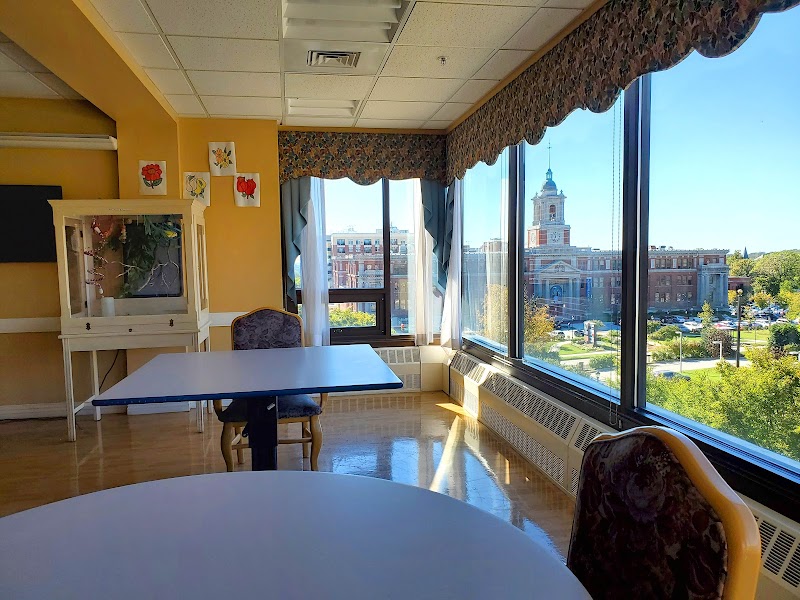
How Does Keswick Multi-Care Center Compare to Other Maryland Nursing Homes?

Compared to the 100 nursing homes in Maryland, KESWICK MULTI-CARE CENTER's overall rating (4 stars) is above the state average of 3.0, staff turnover (32%) is significantly lower than the state average of 46%, and health inspection rating (3 stars) is at the national benchmark.

What Should Families Ask When Visiting Keswick Multi-Care Center?

Based on this facility's data, families visiting should ask: "Can I visit during a mealtime to observe dining assistance and food quality?" "How do you handle medical emergencies, and what is your hospital transfer rate?" "Can I speak with family members of current residents about their experience?"

Is Keswick Multi-Care Center Safe?

Based on CMS inspection data, KESWICK MULTI-CARE CENTER has a clean safety record: no substantiated abuse findings (meaning no confirmed cases of resident harm), no Immediate Jeopardy citations (the most serious violation level indicating risk of serious injury or death), and is not on the Special Focus Facility watch list (a federal program monitoring the lowest-performing 1% of nursing homes). The facility has a 4-star overall rating and ranks #1 of 100 nursing homes in Maryland. While no facility is perfect, families should still ask about staff-to-resident ratios and recent inspection results during their visit.

Do Nurses at Keswick Multi-Care Center Stick Around?

KESWICK MULTI-CARE CENTER has a staff turnover rate of 32%, which is about average for Maryland nursing homes (state average: 46%). Moderate turnover is common in nursing homes, but families should still ask about staff tenure and how the facility maintains care continuity when employees leave.

Was Keswick Multi-Care Center Ever Fined?

KESWICK MULTI-CARE CENTER has no federal fines on record. CMS issues fines when nursing homes fail to meet care standards or don't correct problems found during inspections. The absence of fines suggests the facility has either maintained compliance or corrected any issues before penalties were assessed. This is a positive indicator, though families should still review recent inspection reports for the full picture.

Is Keswick Multi-Care Center on Any Federal Watch List?

KESWICK MULTI-CARE CENTER is not on any federal watch list. The most significant is the Special Focus Facility (SFF) program, which identifies the bottom 1% of nursing homes nationally based on persistent, serious quality problems. Not being on this list means the facility has avoided the pattern of deficiencies that triggers enhanced federal oversight. This is a positive indicator, though families should still review the facility's inspection history directly.