NORTHWEST HEALTHCARE CENTER
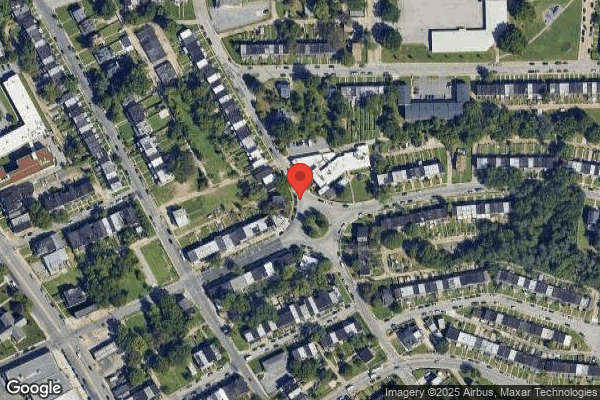

4601 PALL MALL ROAD, BALTIMORE, MD 21215 (410) 664-5551
For profit - Corporation 91 Beds COMMUNICARE HEALTH Data: November 2025 1 Immediate Jeopardy citation
Trust Grade
33/100
#120 of 219 in MD
Last Inspection: August 2024

Within standard 12-15 month inspection cycle. Federal law requires annual inspections.

Overview

Northwest Healthcare Center has received a Trust Grade of F, indicating significant concerns about the quality of care provided. They rank #120 out of 219 nursing homes in Maryland, placing them in the bottom half of facilities in the state, and #14 out of 26 in Baltimore City County, meaning only 13 local options are better. Unfortunately, the facility is worsening, with the number of issues increasing from 8 in 2019 to 13 in 2024. Staffing is a relative strength, with a 4 out of 5-star rating and a turnover rate of 38%, which is below the state average. However, there are troubling incidents, including a critical finding where a resident with high elopement risk was not adequately protected, and concerns regarding food safety practices that could potentially lead to food-borne illnesses.

Trust Score
F
33/100
In Maryland
#120/219
Bottom 46%
Safety Record
High Risk
Review needed
Inspections
Getting Worse
8 → 13 violations
Staff Stability
○ Average
38% turnover. Near Maryland's 48% average. Typical for the industry.
Penalties
✓ Good
No fines on record. Clean compliance history, better than most Maryland facilities.
Skilled Nurses
○ Average
Each resident gets 39 minutes of Registered Nurse (RN) attention daily — about average for Maryland. RNs are the most trained staff who monitor for health changes.
Violations
⚠ Watch
58 deficiencies on record. Higher than average. Multiple issues found across inspections.
★★★☆☆
3.0
Overall Rating
★★★★☆
4.0
Staff Levels
★★★★★
5.0
Care Quality
★★☆☆☆
2.0
Inspection Score
Stable
2019: 8 issues
2024: 13 issues

The Good

  • 4-Star Staffing Rating · Above-average nurse staffing levels
  • 5-Star Quality Measures · Strong clinical quality outcomes
  • Full Sprinkler Coverage · Fire safety systems throughout facility
  • No fines on record
  • Staff turnover below average (38%)

    10 points below Maryland average of 48%

Facility shows strength in staffing levels, quality measures, fire safety.

The Bad

3-Star Overall Rating

Near Maryland average (3.0)

Meets federal standards, typical of most facilities

Staff Turnover: 38%

Near Maryland avg (46%)

Typical for the industry

Chain: COMMUNICARE HEALTH

Part of a multi-facility chain

Ask about local staffing decisions and management

The Ugly 58 deficiencies on record

1 life-threatening
Aug 2024 13 deficiencies
CONCERN (D)

Potential for Harm - no one hurt, but risky conditions existed

Deficiency F0578 (Tag F0578)

Could have caused harm · This affected 1 resident

**NOTE- TERMS IN BRACKETS HAVE BEEN EDITED TO PROTECT CONFIDENTIALITY** Based on interview, record review, and policy review, the facility failed to ensure residents either had an advanced directive i...

Read full inspector narrative →
**NOTE- TERMS IN BRACKETS HAVE BEEN EDITED TO PROTECT CONFIDENTIALITY** Based on interview, record review, and policy review, the facility failed to ensure residents either had an advanced directive in place or failed to provide the residents and/or their representatives written information of the right to accept or refuse medical or surgical treatment and/or formulate an advance directive for two residents (Resident (R) 61 and R55) of nine reviewed for Advanced Directives. Findings include: Review of the facility's policy titled Advance Directive (Resident's Right to Choose, dated 03/27/24, revealed, Policy Explanation and Compliance Guidelines: It is the policy of this facility to support and facilitate a resident's right to request, refuse and/or discontinue medical or surgical treatment and to formulate an Advance Directive. l. On admission, the facility will determine if the resident has executed an Advance Directive and if not, determine whether the resident would like to formulate an Advance Directive . 3. The facility will provide the resident or resident representative information, in a manner that is easy to understand, about the right to refuse medical or surgical treatment. The facility will provide the resident or resident representative with information on how to formulate an Advance Directive. The facility will offer to complete a new medical order for life-sustaining treatment based on the resident or resident representative's preference. 4. Upon admission, should the resident have an Advance Directive, copies will be made and placed on the hard chart medical record as well as communicated to the staff. 1. Review of R61's undated admission Record, located in R61's EMR under the Profile tab, revealed R61 was admitted to the facility on [DATE] and readmitted on [DATE]. Review of R61's EMR revealed no documentation that R61 had an Advance Directive or that the facility provided written information to the resident, or the resident representative concerning the right to accept or refuse medical or surgical treatment and/or formulate an advance directive. 2. Review of R55's undated admission Record, located in R55's EMR under the Profile tab revealed R23 was admitted to the facility on [DATE] and readmitted on [DATE]. Review of R55's EMR revealed no documentation that R23 had an Advance Directive or that the facility provided written information to the resident, or the resident representative concerning the right to accept or refuse medical or surgical treatment and/or formulate an advance directive. During an interview on 08/21/24 at 4:30 PM the Social Services Director (SSD) stated, The residents do not have an advance directive and there is no documentation available for review regarding advance directives or that they were ever given written information. The SSD also confirmed there was no information of a signed admission Package which would have also included information about the Advance Directive.
CONCERN (D) 📢 Someone Reported This

A family member, employee, or ombudsman was alarmed enough to file a formal complaint

Potential for Harm - no one hurt, but risky conditions existed

Notification of Changes (Tag F0580)

Could have caused harm · This affected 1 resident

Based on record review and interview it was determined the facility staff failed to notify a resident representative of a resident-to-resident assault. This was evident for 1 (#20) of 50 residents rev...

Read full inspector narrative →
Based on record review and interview it was determined the facility staff failed to notify a resident representative of a resident-to-resident assault. This was evident for 1 (#20) of 50 residents reviewed. The findings include: Complaint #MD00173898 was reviewed on 8/20/24 at 3:45 PM. The complainant indicated Resident #20 informed him/her that on 11/3/21 he/she and a staff person were attacked by another resident however the facility never notified him/her of the incident. Review of Resident #20's medical record at that time failed to reveal documentation related to an incident involving resident #20. In an interview on 8/22/24 at 1:43 PM the complainant identified the staff person involved in the incident as the Activities Director (AD). The AD was interviewed on 8/22/24 at 3:23 PM and indicated she recalled the incident. When asked to describe the events she stated He/She struck us, I got in front, between the two residents, (Resident #912) was hitting (Resident #20) and kicking out at (Resident #20), I tried to stop him/her, and he/she kicked me in the stomach. I told the (former) Administrator, but he didn't think it was serious, so I called the regional, he immediately called the Administrator. When asked if facility staff notified Resident #20's responsible party she indicated that she did not know how staff followed up regarding Resident #20. This concern was reviewed with the Administrator and Mobile Director of Nursing (MDON) on 8/26/24 at 2:55 PM.
CONCERN (D)

Potential for Harm - no one hurt, but risky conditions existed

Free from Abuse/Neglect (Tag F0600)

Could have caused harm · This affected 1 resident

**NOTE- TERMS IN BRACKETS HAVE BEEN EDITED TO PROTECT CONFIDENTIALITY** 3.) Administrative record review of a facility investigation of alleged employee verbal abuse of a resident on 8/26/24 at 8:00 A...

Read full inspector narrative →
**NOTE- TERMS IN BRACKETS HAVE BEEN EDITED TO PROTECT CONFIDENTIALITY** 3.) Administrative record review of a facility investigation of alleged employee verbal abuse of a resident on 8/26/24 at 8:00 AM revealed a witness statement from Licensed Practical Nurse #5 (LPN #5) who witnessed the physical and verbal abuse of resident #914 on 1/18/23 at approximately 1:00 PM in the hallway outside of the resident's room. LPN #5 stated that he/she heard Geriatric Nurse Assistant #8 (GNA #8) tell the resident that he/she was being punished. LPN #5 then witnessed GNA #8 direct the resident's wheelchair to face the hallway wall with the wheelchair locked in place. LPN #5 asked GNA #8 while he/she positioned the resident at the wall. GNA #8 did not answer. LPN #5 then turned the resident's wheelchair around so the resident was able to face the hallway. Later in the afternoon, at approximately 2:00 PM, LPN #5 returned to the resident's previous location and noticed the resident's wheelchair was positioned again with the resident's face turned toward the wall. LPN #5 asked GNA #8 if he/she repositioned the resident's wheelchair. GNA #8 would not answer the LPN #5 and began to yell at the resident and LPN #5. LPN #5 then reported the incident to the Director of Nursing (DON). Continued review of administrative records on 8/26/24 at 8:20 PM revealed another witness statement from the facility investigation of alleged physical and verbal abuse of resident #914. This witness statement, dated 1/18/23, was from LPN #6 which corroborated LPN #5's witness statement. LPN #6's witness statement also added that GNA #8 was yelling at resident #914 for his/her shift on 1/18/23. Further review of administrative records on 8/26/4 at 8:30 AM revealed the witness statement from GNA #8 dated 1/18/23. GNA #8 stated that resident #914 asked to be turned toward the wall. GNA #8 also stated in his/her witness statement that he/she was unaware of the resident's diagnosis of altered mental status and if he/she was aware of the diagnosis prior to the incident, he/she would not have positioned the resident's wheelchair towards the hallway wall. Medical record review on 8/26/24 at 9:20 AM revealed resident #914 had instances of altered mental status and the resident's BIMS was 3/15 as of 12/8/22. Review of progress notes revealed that LPN #5 also placed a progress note in the resident's medical record which stated that GNA #8 told the resident, Get off, take your hands off the chair. You are facing the wall. That's your punishment. During an interview with the Executive Director on 8/26/24 at 1:30 PM, the Executive Director admitted that GNA #8 what physically and verbally abusive to resident #914 based on the statement of events listed in the facility investigation of the incident. The Executive Director also stated that GNA #8 was terminated from the facility on 1/18/23. Based on medical record review, administrative record review, and staff interview, the facility failed to protect the resident's right to be free from verbal, mental, and physical abuse (R70, R48, R73 #914).These failures affected 4 of 61 residents reviewed for abuse. Findings include: 1. Review of the 5-Day Incident Report, provided by the facility, for R61 and R70 revealed, On 02/08/24, R70 was standing near the vending machine heard two other residents arguing tried to stop argument and one resident (R61) punched him/her in his/her nose R70 visibly upset after the incident, had complaint of bleeding from the nose and was transferred to the hospital for further investigation .Resident denied pain. Resident assessed by inhouse physician, followed by psychological services. No other injuries noted .Conclusion: The allegations were verified .Corrective actions taken: All three residents were separated and placed in a safe area. Police notified and responded to the situation. Skin assessment for all three residents done. Pain assessment done for all three residents. R70 was transferred to hospital and now returned to facility. Physician notified and assessed the residents. Nurse Practitioner assessed all three residents. Psych followed up with all three residents. Social Worker consulted with all three residents. Investigation of incident completed - witness statements and interviews completed. Resident's Representative aware of the incident. Behavior monitoring done for residents. Care plans updated. Inservice education held with staff for Behavioral health training. Education provided to all residents for reporting of such incidents to management staff. 1:1 monitoring completed for R61. Review of R70's undated admission Record, located in R70's electronic medical record (EMR) under the Profile tab, showed a facility admission date of 10/27/23 and a readmission date of 11/25/23, with medical diagnoses that included anoxic brain damage, altered mental status, and undifferentiated schizophrenia. Review of R70's annual Minimum Data Set (MDS) with an Assessment Reference Date (ARD) of 06/02/24, revealed the facility assessed R70 to have a Brief Interview for Mental Status (BIMS) score of five out of 15 which indicated R70 was severely impaired. Review of Progress Notes, dated 02/08/24 and located in the EMR Progress Note tab, revealed, [R70] was standing near the vending machine heard two other residents arguing tried to stop argument and one resident [R61] punched him in his nose. Review of R61's undated admission Record, located in R61's EMR under the Profile tab, revealed R61 was admitted to the facility on [DATE] and readmitted on [DATE] with diagnoses that include paranoid schizophrenia, malingerer. Review of the quarterly MDS with an ARD of 06/25/24, located under the EMR MDS tab, revealed a BIMS score of 12 out of 15 which indicated R61 was moderately impaired. Review of Progress Notes, dated 02/08/24 and located in the EMR Progress Note tab, revealed, [R61] had physical altercation with another resident [R70] no injuries noted . During an interview on 08/21/24 at 1:50 PM, the Administrator stated, Based on the facility investigation the incident between R70 and R61 did happen. Abuse situations with residents should not happen. 2. Review of the The 5-Day Incident Report, provided by the facility, for R29 and R48 revealed, On 05/03/24, R48 was in the hallway when R29 was displaying agitation, s/he was shoved by R29 and R48 shoved him/her back .R48 was taken to his/her room, the physician was notified, the family was notified, and the police were notified. Psychological services were called to review R29's medications. Staff are doing increased checks on R29 as s/he is refusing one on one observation .Preventative measures to prevent further incidents of similar nature, both residents had PTSD (Post Traumatic Stress Disorder) completed with no signs of trauma. No further interaction between residents. Medications were reviewed with no changes. Review of R48's undated admission Record, located in R48's EMR under the Profile tab, revealed R48 was admitted to the facility on [DATE] with diagnoses that include schizophrenia, vascular dementia, disturbance, psychotic disturbance. Review of the quarterly MDS with an ARD of 05/05/24, located under the EMR MDS tab, revealed a BIMS score of 99 which indicated R48 was unable to complete the interview. Review of Progress Notes, dated 05/03/23 and located in the EMR Progress Note tab, revealed, .[R48] was in the hallway when another resident [R29] was displaying agitation, s/he was shoved by [R29] and [R48] shoved back. They were immediately separated, and a skin assessment was conducted to check for injuries, no injuries were noted . Review of R29's undated admission Record, located in R29's EMR under the Profile tab, revealed R29 was admitted to the facility on [DATE] and readmitted on [DATE] with diagnoses that include schizophrenia, generalized anxiety. Review of the quarterly MDS with an ARD of 06/13/24, located under the EMR MDS tab, revealed a BIMS score of seven out of 15 which indicated R61 was severely impaired. Review of Progress Notes, dated 02/08/24 and located in the EMR Progress Note tab, revealed, .[R29] presented with increased agitation and fell while ambulating her walker . During an interview on 08/22/24 at 9:30 AM, the Administrator confirmed the incident between R48 and R29 did happen. Review of the facilities undated policy Maryland Abuse, Neglect & Misappropriation, revealed, .VI. Protection from Abuse: 2. When the alleged abuse involves a resident-to-resident altercation the residents will be separated by the staff and the appropriate physical assessments will be completed on each resident .VII. 1. All alleged violations involving abuse, neglect, exploitation or mistreatment, including injuries of unknown source and misappropriation of resident property, are reported immediately .8. Facility staff members, upon hire, are in-serviced on how to and to whom they may report concerns, incidents and grievance with the fear of retribution .
CONCERN (D)

Potential for Harm - no one hurt, but risky conditions existed

Report Alleged Abuse (Tag F0609)

Could have caused harm · This affected 1 resident

**NOTE- TERMS IN BRACKETS HAVE BEEN EDITED TO PROTECT CONFIDENTIALITY** Based on record review and interview it was determined the facility staff 1) failed to report an incident of resident-to-residen...

Read full inspector narrative →
**NOTE- TERMS IN BRACKETS HAVE BEEN EDITED TO PROTECT CONFIDENTIALITY** Based on record review and interview it was determined the facility staff 1) failed to report an incident of resident-to-resident abuse to the state agency and 2) failed to report an injury of unknown origin timely. This was evident for 2 (#20 and #14) of 50 residents reviewed during the survey. The findings include: 1) Complaint #MD00173898 was reviewed on 8/20/24 at 3:45 PM. The complaint indicated Resident #20, and a staff person were attacked by another resident in the banking area on 11/3/21. Resident #20's medical record was reviewed at that time. No documentation was found in the record related to an incident involving Resident #20 on or around that date. Licensed Practical Nurse 3(LPN3) who is a Unit Manager, was interviewed on 8/21/23 at 12:25 PM. She was asked about an incident occurring on or about 11/3/21 in which Resident #20 and a staff member were assaulted by a resident in the banking area. She was unable to find documentation of the incident. In an interview on 8/22/24 at 1:43 PM the complainant identified the staff person who was involved in the incident, as the Activities Director (AD). The AD was interviewed on 8/22/24 at 3:23 PM. She indicated she recalled the incident. When asked to describe the incident she stated He/She struck us, I got in front, between the two residents, (Resident #912) was hitting (Resident #20) and kicking out at (Resident #20), I tried to stop him/her, and he/she kicked me in the stomach. I told the (former) Administrator, but he didn't think it was serious, so I called the regional, he immediately called the Administrator. The AD added that she wrote a statement and gave it to the (former) Administrator. At 12:00 PM on 8/22/24 LPN3 reported that after rechecking for a resident-to-resident abuse incident on 11/3/21 and the entire year, she was unable to find documentation of an incident. There was no evidence that a report of resident-to-resident abuse was sent to the state agency as required. 2) A facility reported incident pertaining to Resident #14 was reviewed on 8/22/24 at 4:00 PM. A Change in Condition evaluation dated 8/14/23 19:12 indicated that the resident had discoloration to the left lower eye. The facility failed to submit a report of an injury of unknown origin to the state agency until 8/18/23, 4 days after the injury was identified. These concerns were reviewed with the Administrator and Mobile Director of Nursing (MDON) on 8/26/24 at 2:55 PM. Based on record review, staff interviews, and facility policy review, the facility failed to ensure an injury of unknown origin for 4 of 58 (R8, R35, #20 and #14) reviewed was reported to the state agency and in a timely manner. Specifically, the facility failed to ensure an initial incident report was submitted to the state survey agency within two hours as well as failed to submit the 5- day report following the investigation. This deficient practice had the potential to affect other residents at the facility that had unidentified pain, an injury of unknown origin, unwitnessed fall, or allegations of abuse. Findings include: 1. Review of R8's undated admission Record, located under the Profile tab in the EMR, revealed R8 was admitted to the facility on [DATE] with diagnoses that included dementia with psychotic disturbance, encephalopathy, and convulsions. Review of R8's quarterly Minimum Data Set (MDS) with an Assessment Reference Date (ARD) of 11/30/23, revealed a Brief Interview for Mental Status (BIMS) with a score of five out of 15, which indicated severe cognitive impairment. Review of R8's modified quarterly MDS with an ARD of 02/21/24, revealed a BIMS with a score of two out of 15, which indicated severe cognitive impairment Review of the Facility Reported Incidents Initial Report, provided by the facility, revealed that on 02/05/24 at 2:15 AM there was an allegation of injury of unknown origin that was identified for R8. The administrator was made aware on 02/05/24 at 10:00 AM. The incident documented that Staff reported resident had c/o (complaint of) pain in RT (right) sided pain in rib cage. Staff reported it to the physician. Resident assessed by Physician and chest x-ray and RT rib x-ray was ordered. Results of x-ray indicated Mildly deformed acute fractures lateral aspects right 9th, 8th and 7th rib. The facility documented that the incident occurred 02/05/24 at 2:00 AM. The report was documented as reported on 02/05/24 at 1:00 PM and submitted on 02/05/24 at 1:15 PM. During an interview on 08/22/24 at 4:18 PM, Administrator stated that he expected injury of unknown source concerns to be reported within two hours, regardless of the time of day or week. He said that by the time the facility submits the five-day summary he hoped to have the cause identified. He confirmed that this was a delay in reporting. 2.Review of R35's admission Record, located in the electronic medical record (EMR) under the Profile tab, revealed R35 was admitted to the facility on [DATE]. Diagnoses included paraplegia, pressure ulcers, major depressive disorder, muscle weakness, psychoactive substance use, and neuromuscular dysfunction of the bladder. Review of R35's quarterly MDS with an ARD of 07/29/24 found in the EMR under the MDS tab revealed a BIMS, score of 15 out of 15 which indicated that R35 was cognitively intact. Review of R35's Progress Note dated 12/02/23 indicated The change in Condition's reported on this CIC (Change in Condition) Evaluation were: altered mental status. Review of R35's Progress Note dated 12/03/23 indicated Late Entry: R35 was noted hard to arouse with altered mental status. Review of the Initial Facility Investigation Report, dated 12/02/23 revealed on 12/02/23 at 9:20 PM, R35 was noted to be short of breath, unresponsive, and not able to be aroused. R35 received two doses of Naloxone HCI nasal liquid (a medication used to treat known or suspected opioid overdose) 8 mg (milligrams)/0.1 ML (milliliter) one spray in nostril as needed for opioid overdose and may repeat every two-three minutes until patient responds. R35 became more alert and was transported to the hospital on [DATE] at 10:12 PM. Review of the initial investigation report revealed a submission date of 12/02/23 at 11:35 PM to the state agency. Documentation of the facility's submission of the five-day final completed investigation for R35 on 12/02/23 was requested by the survey team on 08/21/24 at 6:00 PM. During an interview on 08/22/24 at 4:09 PM the Administrator stated that documentation that the completed investigation had been submitted to the state could not be found. Review of the facility's policy titled, Occurrence Reporting, dated 04/04/24, revealed, It is the policy of this facility to provide resident centered care that meets the psychosocial, physical and emotional needs and concerns of the residents. Safety is a primary concern for our residents, staff and visitors. Occurrences or incidents will be investigated using the Risk protocol for tier reporting and investigation. Occurrences are entered, reported, tracked, and investigated using the electronic or online program with reference to specific types of incidents .The administrator is responsible for the oversight of timely reporting to Federal, State, and Local authorities as appropriate.
CONCERN (D)

Potential for Harm - no one hurt, but risky conditions existed

Investigate Abuse (Tag F0610)

Could have caused harm · This affected 1 resident

**NOTE- TERMS IN BRACKETS HAVE BEEN EDITED TO PROTECT CONFIDENTIALITY** 4) Review of administrative records on 8/20/24 at 9:54 AM which revealed a facility reported incident (MD00196696) which alleged...

Read full inspector narrative →
**NOTE- TERMS IN BRACKETS HAVE BEEN EDITED TO PROTECT CONFIDENTIALITY** 4) Review of administrative records on 8/20/24 at 9:54 AM which revealed a facility reported incident (MD00196696) which alleged that a staff member was verbally and physically abusive to the resident. The facility investigated the allegations of abuse on 9/7/23. The facility investigation did not an investigation of the events, witness statements or other documents to show that the facility investigated the abuse allegation. During an interview with the Executive Director on 8/20/24 at 1:00 PM, the surveyor pointed out the lack of documentation showing the facility attempted to investigate resident #914's allegation of abuse. The Executive Director attempted to locate the investigative documentation but was unable to find the documents. Based on record review and staff interview it was determined the facility staff failed to thoroughly investigate allegations of abuse. This was evident for 5 (R48, #901,#20, #14, and #913) of 75 residents reviewed during the survey. The findings include: 1) Review of a facility reported incident on 8/19/24 at 11:00 AM revealed Resident #901 was observed on 9/5/23 at 8:55 AM with a large cut above his/her right eye. The facility initiated an investigation. The facility investigation documentation revealed a Witness Statement from a Geriatric Nursing Assistant (GNA) who indicated she observed the injury upon entering the resident's room and notified the nurse. Another statement from the Nurse indicated she assessed the resident and followed facility precautions. 6 Witness statements asked, Did you see any resident fall or sustain a injury? all indicated no. 3 statements indicated they did not know anything about resident #901, and 1 statement indicated the staff member only worked with the residents they were assigned to. The facility's investigation did not demonstrate an attempt to rule out resident abuse or identify the circumstances as to how the resident's injury occurred. 2) Complaint #MD00173898 was reviewed on 8/20/24 at 3:45 PM. The complaint indicated Resident #20, and a staff person were attacked by another resident in the banking area on 11/3/21. The Unit Manager Licensed Practical Nurse (LPN3) was interviewed on 8/21/23 at 12:25 PM. She was unable to find documentation of an incident on or around 11/3/21. The Activities Director (AD) was interviewed on 8/22/24 at 3:23 PM. She confirmed that Resident #912 struck and kicked at Resident #20 and herself. She indicated that she reported the incident to the (former) Administrator, but he didn't think it was serious, so I called the regional, he immediately called the Administrator. The AD added that she wrote a statement and gave it to the (former) Administrator. There was no record that the report of resident-to-resident abuse was investigated by the facility. 3a.) A facility reported incident pertaining to Resident #14 was reviewed on 8/22/24 at 4:00 PM. A Change in Condition Evaluation dated 8/14/23 19:12 indicated that the resident had discoloration to the left lower eye. The facility investigative documents included statements from several staff which indicated that they either observed Resident #14 with or without a black eye or didn't observe him/her at all. The staff were not interviewed to determine when or how the injury occurred. There were no interviews with other residents. The facility's investigation was not thorough and failed to rule out resident abuse or identify the circumstances as to how the injury occurred. b.) Another facility reported incident pertaining to Resident #14 was reviewed on 8/23/24 at 4:30 PM. The report indicated the resident was noticed to have a bruise to his/her left eye at approximately 3:15 PM on 9/4/23. The facility investigative documentation revealed 4 staff statements. 3 indicated the staff members did not see the resident with an injury. The 4th statement by a Licensed Practical Nurse (LPN7) indicated the resident was observed in the hallway after lunch with no injury and that the resident propelled themselves to their room at approximately 2:50 PM. The statement then stated The nurse on the next shift observed the resident with a bruise to the left eyebrow. The resident indicated that (he/she) bumped his/her left eyebrow on the wall. There was no evidence that the facility thoroughly investigated to rule out abuse or identify the circumstances as to how the injury occurred including but not limited to interviews with Resident #14 and other residents, and a statement from the oncoming nurse who discovered the injury. c.) A third facility reported incident pertaining to Resident #14 was reviewed on 8/26/24 at 10:10 AM. The report indicated that on 6/15/23 at 6:40 AM Resident #910 reported being hit on the left side of his/her face with a walking cane by Resident #14. The investigative documentation consisted of 2 staff statements. The first indicated that the writer, a staff member, looked in the room and observed Resident #910 bleeding from his/her face and that Resident #910 reported Resident #14 hit him/her with a cane. The other statement by Registered Nurse (RN1) indicated Resident #910 had a skin tear to the lip below the left nostril, the provider was notified, and a message was left for the Resident Representative. The investigation documentation did not include interviews with Resident #14 or #910 nor other potential witnesses. The final report indicated the residents were separated and assessed and Incident has been substantiated after an in depth investigation. However, there was no evidence that the facility thoroughly investigated, or how they substantiated the allegation. Findings include: 5.) Review of the The 5-Day Incident Report, provided by the facility, for R29 and R48 revealed, On 05/03/24, R48 was in the hallway when R29 was displaying agitation, s/he was shoved by R29 and R48 shoved him/her back .R48 was taken to his/her room, the physician was notified, the family was notified, and the police were notified. Psychological services were called to review R29's medications. Staff are doing increased checks on R29 as s/he is refusing one on one observation .Preventative measures to prevent further incidents of similar nature, both residents had PTSD (Post Traumatic Stress Disorder) completed with no signs of trauma. No further interaction between residents. Medications were reviewed with no changes. Review of R48's undated admission Record, located in R48's EMR under the Profile tab, revealed R48 was admitted to the facility on [DATE] with diagnoses that include schizophrenia, vascular dementia, disturbance, psychotic disturbance. Review of the quarterly MDS with an ARD of 05/05/24, located under the EMR MDS tab, revealed a BIMS score of 99 which indicated R48 was unable to complete the interview. Review of Progress Notes, dated 05/03/23 and located in the EMR Progress Note tab, revealed, .[R48] was in the hallway when another resident [R29] was displaying agitation, s/he was shoved by [R29] and [R48] shoved back. They were immediately separated, and a skin assessment was conducted to check for injuries, no injuries were noted . Review of R29's undated admission Record, located in R29's EMR under the Profile tab, revealed R29 was admitted to the facility on [DATE] and readmitted on [DATE] with diagnoses that include schizophrenia, generalized anxiety. Review of the quarterly MDS with an ARD of 06/13/24, located under the EMR MDS tab, revealed a BIMS score of 7 out of 15 which indicated R61 was severely impaired. Review of Progress Notes, dated 02/08/24 and located in the EMR Progress Note tab, revealed, .[R29] presented with increased agitation and fell while ambulating his/her walker . During an interview on 08/22/24 at 9:30 AM, the Administrator stated, the incident between R48 and R29 did happen. I was not able to find any additional paperwork related to the incident investigation. The facility incident investigation failed to contain the initial report of the incident, any interviews of other residents in the facility who could be affected by the actions of R29. There were no notes regarding a Post Traumatic Stress Disorder evaluation of R29, or results of monitoring his/her for additional behaviors. Review of the facilities undated policy Maryland Abuse, Neglect & Misappropriation, revealed, .VI. Protection from Abuse: 2. When the alleged abuse involves a resident-to-resident altercation the residents will be separated by the staff and the appropriate physical assessments will be completed on each resident .VII. Reporting of Incidents and Facility Response: 1. All alleged violations involving abuse, neglect, exploitation or mistreatment, including injuries of unknown source and misappropriation of resident property, are reported immediately, but not later than 2 [two] hours after the allegation is made, if the events that cause the allegation involve abuse or result in serious bodily injury .
CONCERN (D) 📢 Someone Reported This

A family member, employee, or ombudsman was alarmed enough to file a formal complaint

Potential for Harm - no one hurt, but risky conditions existed

Transfer Notice (Tag F0623)

Could have caused harm · This affected 1 resident

Based on record review and interview it was determined the facility staff failed to provide written discharge/transfer notice to the resident and their representative. This was evident for 2 (#22 and ...

Read full inspector narrative →
Based on record review and interview it was determined the facility staff failed to provide written discharge/transfer notice to the resident and their representative. This was evident for 2 (#22 and #915) of 50 resident's reviewed during the survey. The findings include: 1) Review of Resident #22's medical record on 8/19/24 at 11:41 AM revealed a Social Services note dated 4/4/24 17:38 by the Social Services Director (SSD) indicating Resident #22 was sent to the hospital for evaluation after he/she was assaulted by another resident on 4/4/24. The note indicated the resident's guardian was notified by the Unit Manager of the incident. There was no evidence that the resident and their representative were provided with a written discharge notice. Licensed Practical Nurse (LPN3) who is the Unit Manager was interviewed on 8/19/24 at 2:29 PM. She was asked how the facility provides a written discharge notification to the resident and their representative when transferring to the hospital. She stated, we don't normally provide it in writing we call them, call their person of contact at that time. The Social Services Director (SSD) was interviewed on 8/20/24 at 9:25 AM. When asked if she provided a written notification of discharge to the resident and representative, she indicated she did not. This concern was reviewed with the Administrator and Mobile Director of Nursing (MDON) on 8/26/24 at 2:55 PM.2) On 08/19/24 reviews of Resident #915's closed medical record revealed the resident was admitted to the facility in January of 2023 and was discharged to another facility in January 2024. Further review of Resident #915's closed medical record revealed social worker documentation that on 11/02/23 at 3:50 PM, the Social Work Director spoke with Resident #915's responsible party and informed them that the facility is planning to transfer Resident #915 to another facility that has a dementia unit. Further review of the medical record failed to reveal documentation that a 30-day involuntary notice of transfer had been issued to the resident or the responsible representative. 08/20/24 at 3:11 PM, in an interview with the facility Social Work Director, the Social Work Director stated that the facility did not issue Resident #915 nor the resident's responsible party a 30-day notice of involuntary discharge. On 08/26/24 at 4 PM the surveyor reviewed this concern with the Administrator regarding failure to provide the transfer notice.
CONCERN (D) 📢 Someone Reported This

A family member, employee, or ombudsman was alarmed enough to file a formal complaint

Potential for Harm - no one hurt, but risky conditions existed

Deficiency F0624 (Tag F0624)

Could have caused harm · This affected 1 resident

Based on record review and interview it was determined the facility staff failed to ensure residents were prepared and oriented to ensure safe and orderly transfer from the facility.This was evident f...

Read full inspector narrative →
Based on record review and interview it was determined the facility staff failed to ensure residents were prepared and oriented to ensure safe and orderly transfer from the facility.This was evident for 1 (#22) of 50 resident's reviewed during the survey. The findings include: Review of Resident #22's medical record on 8/19/24 at 11:41 AM revealed a Social Services note dated 4/4/24 17:38 by the Social Services Director (SSD) indicating Resident #22 was sent to the hospital for evaluation after he/she was assaulted by another resident on 4/4/24. There was no evidence that the facility provided and documented sufficient preparation and orientation of Resident #22 to ensure his/her safe and orderly transfer from the facility. Licensed Practical Nurse (LPN3) who is the Unit Manager was interviewed on 8/19/24 at 2:29 PM. When asked where nurses were expected to document that they prepared and oriented the resident for transfer, she was unable to explain and failed to find documentation indicating Resident #22 was prepared and oriented to the situation prior to transfer to the hospital after the incident on 4/4/24. This concern was reviewed with the Administrator and Mobile Director of Nursing (MDON) on 8/26/24 at 2:55 PM.
CONCERN (D) 📢 Someone Reported This

A family member, employee, or ombudsman was alarmed enough to file a formal complaint

Potential for Harm - no one hurt, but risky conditions existed

Comprehensive Care Plan (Tag F0656)

Could have caused harm · This affected 1 resident

Based on record review and interview, it was determined that the facility failed to provide a comprehensive care plan for a resident (resident #902) with a history of substance use disorder. This was ...

Read full inspector narrative →
Based on record review and interview, it was determined that the facility failed to provide a comprehensive care plan for a resident (resident #902) with a history of substance use disorder. This was found to be true for 1 of 50 residents reviewed during a annual survey. The findings include: Care Plan - This term refers to document which is the written plan of how a long-term care facility will provide care. This plan is based on resident health assessments, preferences and goals. Surveyor review of records on 8/22/24 at 8:15 AM revealed the resident #902 was admitted with records revealing a history of substance use disorder. Continued review of records on 8/22/24 at 8:30 AM revealed the resident's care plan failed to have interventions to prevent or assist with difficulties that can arise with a resident with a history of substance use disorder until the resident was in the facilities for over two weeks. During a surveyor interview with the Executive Director on 8/22/24 at 10:15 AM, the Executive Director admitted that the facility failed to fully develop a care plan that included interventions for substance use disorder.
CONCERN (D) 📢 Someone Reported This

A family member, employee, or ombudsman was alarmed enough to file a formal complaint

Potential for Harm - no one hurt, but risky conditions existed

Deficiency F0657 (Tag F0657)

Could have caused harm · This affected 1 resident

**NOTE- TERMS IN BRACKETS HAVE BEEN EDITED TO PROTECT CONFIDENTIALITY** Based on record review and interview with staff it was determined that the facility staff failed to review and revise resident c...

Read full inspector narrative →
**NOTE- TERMS IN BRACKETS HAVE BEEN EDITED TO PROTECT CONFIDENTIALITY** Based on record review and interview with staff it was determined that the facility staff failed to review and revise resident care plans after each assessment or as resident care needs became apparent or changed over time. This was evident for 3 (#911, #51 and #14) of 50 residents reviewed during the survey. The MDS (Minimum Data Set) is a complete assessment of the resident which provides the facility information necessary to develop a plan of care, provide the appropriate care and services to the resident, and to modify the care plan based on the resident's status. A care plan is a guide that addresses the unique needs of each resident. It is used to plan, assess and evaluate the effectiveness of the resident's care. The findings include: 1)Review of Resident #911's medical records on 8/19/24 at 1:30 PM revealed the facility administered Narcan, a medication that is used to reverse the effects of an opioid overdose, to the resident on 5/2/23. Review of the resident's care plan found no evidence of interventions for the prevention of substance use in the facility. During an interview with the Executive Director on 8/20/24 at 12:46 PM, the Executive Director admitted that the facility failed to place interventions for the prevention of substance use in the facility after the Narcan administration on 5/2/23. 2)Resident #51's medical record was reviewed on 8/22/24 at 11:13 AM. The record revealed that the facility held a Care Plan meeting with the resident on 11/30/23 after his/her Quarterly MDS assessment dated [DATE]. Another Quarterly MDS assessment was dated 3/8/24 however, the next care plan meeting was not held until 6/4/24, 3 months after the MDS assessment and just prior to the next Quarterly MDS assessment dated [DATE]. The facility failed to ensure that the residents Plan of Care was reviewed and revised by the interdisciplinary team within 7 days after each assessment. The Administrator was asked to provide documentation for all care plan meetings held from 8/17/23 to 6/6/24. The documentation was provided however it did not include evident that a care plan meeting was held within 2 weeks after the Quarterly MDS assessment on 3/8/24 and 6/6/24. 3)A facility reported incident concerning a resident-to-resident assault was reviewed on 8/26/24. The report alleged Resident #14 struck Resident #910 with a walking cane on 6/15/23. The facility substantiated that the alleged assault took place. Resident #14's medical record revealed a Plan of Care initiated on 4/26/18 for behavior history. The resident's goal was (Resident #14) will have no episodes of behavioral problems through the next review date. The most recent revision of the plan of care was on 4/8/22. The Plan was not revised after Resident #14 assaulted another resident on 6/15/23. The surveyor requested the Administrator provide Resident #14's behavior care plan evaluations and revisions including after the alleged assault. He returned on 8/26/24 at 2:20 PM and revealed that the documentation could not be found and confirmed that it was not done. The Administrator was made aware that the plan of care was not evaluated and revised to reflect and address Resident #14's aggressive behavior toward others. These concerns were reviewed with the Administrator and Mobile Director of Nursing (MDON) on 8/26/24 at 2:55 PM.
CONCERN (D) 📢 Someone Reported This

A family member, employee, or ombudsman was alarmed enough to file a formal complaint

Potential for Harm - no one hurt, but risky conditions existed

Deficiency F0660 (Tag F0660)

Could have caused harm · This affected 1 resident

Based on medical record review and interview with staff it was determined the facility staff failed to develop and implement an effective discharge planning process which addressed each resident's dis...

Read full inspector narrative →
Based on medical record review and interview with staff it was determined the facility staff failed to develop and implement an effective discharge planning process which addressed each resident's discharge goals and needs and involved the resident and the interdisciplinary team in development, implementation and ongoing evaluation. This was evident for 1 (#51) of 50 residents reviewed during the survey. Maryland's Medicaid waiver program, also known as the Home and Community-Based Services (HCBS) Waivers, provides vouchers to help Maryland residents pay for long-term care services. These services can help people live in their homes, with loved ones, in adult foster care, or in assisted living facilities instead of nursing homes. A care plan is a guide that addresses the unique needs of each resident. It is used to plan, assess and evaluate the effectiveness of the resident's care. The findings include: Resident #51's medical record was reviewed on 8/22/24 at 11:13 AM. The record revealed the resident was admitted to the facility in 9/2022. A progress note dated 1/20/23 14:21 by the Social Services Director (SSD) indicated she contacted the Waiver program for Resident #51 to enroll in the program, the waiver rep referred the resident to Money Follows the People program. The note indicated the SSD would get a call back the following Friday 1/27/23. There was no further documentation in the record related to the call back. A Social Services Progress note dated 3/27/23 indicated that a waiver interview was held, the application was completed and sent back to the waiver coordinator. A care plan note dated 11/30/23 16:17 by the SSD indicated Resident #51 is on the waiver program wait list and was given an update on the status of his application. However, there was no documentation in the resident's record of what the updated status was. No other updates were found in the record related to Resident #51's application status. Review of Resident #51's comprehensive Care Plan revealed that the facility failed to develop and implement a plan of care related to discharge planning. No documentation was found in Resident #51's record to indicate the facility staff implemented an ongoing discharge planning process including the resident's goal(s), the actions staff were taking to facilitate the resident in reaching his/her goal(s), evaluation of the effectiveness of the interventions and updated to reflect the progress toward reaching the resident's goals. An interview was conducted with the SSD on 8/26/24 at 11:55 AM. She was made aware that the surveyor was unable to find a Plan of Care related to Resident #51's discharge planning. She stated We do a 48-hour care plan at admission, talk to them about discharge. We talk to them at quarterly care plan meetings. (48-hour care plans are completed within 48 hours of admission as an interim baseline plan for staff to follow until the Comprehensive Plan of Care is completed by the interdisciplinary treatment team.) The SSD added that she would add any changes in a note and indicated that she had 2 or 3 progress notes in Resident #51's medical record. When asked where she addressed residents ongoing discharge care planning needs, she replied, in the progress notes and I talk to them ongoing. She confirmed when asked, that she does not develop a Discharge Care Plan and stated no, we just document in the progress notes. This concern was reviewed with the Administrator and Mobile Director of Nursing (MDON) on 8/26/24 at 2:55 PM.
CONCERN (D) 📢 Someone Reported This

A family member, employee, or ombudsman was alarmed enough to file a formal complaint

Potential for Harm - no one hurt, but risky conditions existed

Deficiency F0661 (Tag F0661)

Could have caused harm · This affected 1 resident

Based on record review and interview, it was determined that the facility failed to place a provider discharge summary on a resident's (resident #911 and #913) medical record after discharge. This was...

Read full inspector narrative →
Based on record review and interview, it was determined that the facility failed to place a provider discharge summary on a resident's (resident #911 and #913) medical record after discharge. This was evident for 2 of 50 residents reviewed in an annual survey. The findings include: 1) Review of resident #911's medical record on 8/20/24 at 1:30 PM revealed no evidence of a provider discharge summary after the resident discharged from the facility on 5/18/23. Interview with the Executive Director 8/20/24 at 2:00 PM revealed the resident discharged from the facility after the facility transferred the resident to a local hospital for psychiatric evaluation and he/she did not return to the facility after psychiatric treatment at the local hospital. The Executive Director also admitted that the facility failed to enter a provider discharge summary on the resident's medical record when the resident discharged . 2) Review of resident #913's medical record on 8/20/24 at 11:49 AM revealed no evidence of a provider discharge summary after the resident from the facility on 9/18/23. Interview with the Executive Director on 8/20/24 at 1:08 PM revealed the resident was discharged from the facility after the facility transferred the resident to a local hospital for psychiatric evaluation and he/she did to return to the facility after psychiatric treatment at the local hospital. The Executive Director also admitted that the facility failed to enter the provider discharge summary on the resident's medical record when the resident discharge.
CONCERN (D) 📢 Someone Reported This

A family member, employee, or ombudsman was alarmed enough to file a formal complaint

Potential for Harm - no one hurt, but risky conditions existed

Medical Records (Tag F0842)

Could have caused harm · This affected 1 resident

Based on medical record review and interview it was determined the facility staff failed to maintain complete and accurate medical records by 1) failing to ensure X-Ray reports were filed in the medic...

Read full inspector narrative →
Based on medical record review and interview it was determined the facility staff failed to maintain complete and accurate medical records by 1) failing to ensure X-Ray reports were filed in the medical record, 2) failing to document an assault by another resident in the resident's record. This was evident for 1 (#20) of 50 residents reviewed during the survey, and 3) failed to have a system in place to ensure investigative records were secured and free from being lost or misplaced. This was found to be evident for 1 facility investigation out of 30 facility reported incidents reviewed for investigative record documentation during an annual recertification survey. A medical record is the official documentation for a healthcare organization. As such, it must be maintained in a complete manner, readily accessible, systematically organized, and accurately documented. All entries to the record should be legible and accurate The findings include: 1) Resident #20's medical record was reviewed on 8/20/24 at 1:20 PM. The record revealed Physicians orders dated 6/5/23 and 6/27/23 for Repeat Lumbar X-Ray AP and Lateral with brace on, sitting upright. The X-Rays reports were not found in the resident's record. The Administrator was asked to provide the reports on 8/20/24 at 3:57 AM. On 8/21/24 at 9:48 AM The Unit Manager Licensed Practical Nurse (LPN3) provided copies of the reports and informed the surveyor that the X-Ray reports should have been uploaded into the Electronic Medical Record (EMR) but weren't. She indicated that she reached out to the radiology company to have the reports sent to the facility after the surveyor requested them and they were not in Resident #20's medical record until surveyor intervention. 2) Review of a complaint (#MD00173898) on 8/20/24 at 3:45 PM revealed an incident occurred on or about 11/3/21 in which Resident #20 and the Activity Director (AD) were assaulted by Resident #912. In an interviewed on 8/22/24 at 3:23 PM the AD indicated Resident #912 struck Resident #20 and herself and that Resident #912 was hitting and kicking out at Resident #20. No documentation was found in Resident #20's medical record regarding the event including but not limited to an assessment of Resident #20 and interventions the facility staff implemented in response to the incident. These concerns were reviewed with the Administrator and Mobile Director of Nursing (MDON) on 8/26/24 at 2:55 PM.3) During the annual recertification survey, that was conducted from 08/19/24 through 08/26/24, the nurse surveyor requested the facility produce the investigation for the facility reported incident MD00182124 on 08/19/24. In an interview with the facility Administrator on 08/22/24 at 9:52 AM, the Administrator stated that the staff cannot find the investigation into this reportable. The resident was out of the facility when the former Administrator reported this. This was during COVID19 Pandemic. On 08/26/24 at 4 PM, the nurse surveyor reviewed this concern with the facility Administrator regarding failure to secure investigative records.
CONCERN (F)

Potential for Harm - no one hurt, but risky conditions existed

Food Safety (Tag F0812)

Could have caused harm · This affected most or all residents

Based on observations, staff interviews, and policy review, the facility failed to ensure food was properly stored, prepared, distributed, and served in accordance with professional standards for food...

Read full inspector narrative →
Based on observations, staff interviews, and policy review, the facility failed to ensure food was properly stored, prepared, distributed, and served in accordance with professional standards for food service safety as required for 83 census residents who received meals from the facility kitchen. These failures had the potential to lead to food-borne illness among all facility residents. Findings include: During the initial observation with [NAME] (C)1 on 08/19/24 from 9:33 AM until 10:00 AM: -Infection Preventionist (IP) was noted to stand inside the kitchen food preparation area without a hair net on, speaking with the dietary staff. -C1, noted to have a 1-2-inch length beard, was observed throughout the kitchen without the use of a beard net. -A large, opened container of applesauce was observed in the reach-in refrigerator. The container had 8/1/24 and 8/8/24 written on the outside. C1 said that the first written date was the open date, and the second date was the use by date. C1 discarded the container of applesauce. -A 46-ounce (oz.) thickened apple juice opened and undated was observed in the reach-in refrigerator. The carton documented, After opening, may be kept up to 7 days under refrigeration. C1 said that there should have been an open date recorded on the carton, and it would be discarded. -There was a 28 oz. box of cream of wheat on the food counter near the stove, opened and undated. -An additional reach-in refrigerator was observed with three 46 oz. cartons of thickened drink (two lemon water and one apple juice), all opened and undated. The cartons also documented, After opening, may be kept up to 7 days under refrigeration. C1 stated these cartons should also have been tossed in the trash. -Approximately 35 4 oz. cartons of strawberry shakes were observed in the reach-in refrigerator, thawed without thaw dates. The cartons documented, Use within 14 days after thawing. C1 said the shakes should have been dated with the thaw date. -An observation of the backsplash behind the dishwasher revealed a large area of black mildew speckled along the wall extending approximately three feet on both sides of the dishwasher unit. The chlorine test strips used by the dietary staff were labeled with an expiration date of 03/01/22. C1 and Culinary Aide (CA) 1 had not been aware of the expired test strips and stated they would get them replaced. -An observation of the ice machine revealed the outer sides contained dirt buildup. Inside the machine was observed a small area of pinkish buildup along the inner rim of the door. -There were extensive areas of dark debris buildup along a broken corner of the wall near the stove. Corners of the kitchen floor were observed with dark debris buildup along edges of the tile floor, baseboards, and corners throughout the kitchen. -Geriatric Nursing Assistant (GNA) 2 was observed entering the kitchen with a snack cooler. GNA2 went to the ice machine and scooped out ice for the cooler. Her hair was not contained in a hair net. During an observation on 08/21/24 from 10:54 AM until 11:55 AM: -There was an opened and undated bag of frosted flake cereal on the food preparation table. -A window air conditioning unit was observed with a thick coat of dirt and debris coating the air vents. The air conditioning unit was observed blowing air onto metal bowls and colanders stored on a shelf directly in front of the window air conditioning unit. -During an interview on 08/21/24 at 11:55 AM, Healthcare Services Group District Manager (HSGDM) confirmed the air conditioning unit needed to be cleaned. He removed the metal bowls and colanders away from the blowing air. HSGDM stated that ensuring the floors and baseboard areas of the kitchen were the responsibility of the dietary staff, and confirmed the floors required cleaning. He confirmed that hair and beard nets were to be worn in the kitchen. He stated the backsplash area behind the dishwasher was being replaced. Review of a facility policy titled, Storage of Resident Food, dated 03/28/24, revealed, Unsafe foods: foods that have visible mold, mildew, foul odors .This may also include food that is expired, outdated or food that has been exposed to incorrect temperatures or other environmental contaminants .Safety for all residents is a priority for food handling .Daily monitoring for refrigerated storage duration and discard of any food items that have been stored for ? 7 days .Foods will be stored in a closed container with sealable lids .Frozen foods must be stored and kept frozen.
Jun 2019 8 deficiencies
CONCERN (D)

Potential for Harm - no one hurt, but risky conditions existed

Resident Rights (Tag F0550)

Could have caused harm · This affected 1 resident

Based on medical record review, interview and observation, it was determined the facility staff failed to promote care for residents in an environment that maintains or enhances each resident's dignit...

Read full inspector narrative →
Based on medical record review, interview and observation, it was determined the facility staff failed to promote care for residents in an environment that maintains or enhances each resident's dignity and respect in full recognition of his or her individuality by labeling residents as feeders on posted staffing boards. This occurred on 1 of 3 nursing units' staffing boards. The findings included: On 6-23-19 at 8:40 AM it was observed on the Main floor nursing unit's staffing board the staff had written on the lower right hand corner the word Feeders. Underneath feeders was written [name of staff] 6B and [name of staff] 10A. The two residents were identified by their room number and the name of the staff who was to assist with their meal. Feeder is an undignified label meaning a resident is incapable of eating by themselves and is dependent on the nursing staff to feed them. Labeling residents in an undignified manner on staffing boards was confirmed by the Director of Nursing on 6-23-19 at 8:40 AM and the Administrator on 6-23-19 at 8:45 AM.
CONCERN (D)

Potential for Harm - no one hurt, but risky conditions existed

Deficiency F0582 (Tag F0582)

Could have caused harm · This affected 1 resident

Based on a review of the facility's Beneficiary Protection Notifications and staff interview it was determined that the facility staff failed to ensure residents received a notification of an end to M...

Read full inspector narrative →
Based on a review of the facility's Beneficiary Protection Notifications and staff interview it was determined that the facility staff failed to ensure residents received a notification of an end to Medicare part A coverage (#50). This was evident for 1 out of the 3 residents reviewed for the survey's Beneficiary Protection Notification Review. The findings are: A review of Resident #50's beneficiary protection notification revealed that the resident's start date for Medicare Part A services was on August 16, 2018 and would end on October 1, 2018. The review also noted that no notification was provided to the resident or a representative party (RP). The Administrator was interviewed on 6/26/19 at 8:35 AM. He said they did not give the Notice of Non-Medicare Coverage (NOMNC) to the resident. The resident did not use up the 100 days of Medicare Part A coverage. The resident went to the hospital prior to this date and the 100 days reset and were available. Administrator said he would call the RP to inform him of this information.
CONCERN (D)

Potential for Harm - no one hurt, but risky conditions existed

Free from Abuse/Neglect (Tag F0600)

Could have caused harm · This affected 1 resident

**NOTE- TERMS IN BRACKETS HAVE BEEN EDITED TO PROTECT CONFIDENTIALITY** Based on facility investigation, medical record review, and facility staff and resident interviews, it was determined that the f...

Read full inspector narrative →
**NOTE- TERMS IN BRACKETS HAVE BEEN EDITED TO PROTECT CONFIDENTIALITY** Based on facility investigation, medical record review, and facility staff and resident interviews, it was determined that the facility failed to prevent an incident of verbal abuse. This was evident for 1 of 1 residents (Resident #72) reviewed for verbal abuse during annual survey. The findings include: Resident #72 was admitted to the facility on [DATE]. Resident #72 had a history of using profanity and was care planned for verbally abusing the facility staff. On 6-5-19, Staff #3 requested Resident #72 move from another resident's doorway as the resident was sleeping. Resident #72, who was facetiming on his/her phone, was speaking loudly and had the phone's volume on high. The person on the phone with Resident #72 overheard Staff #3's request and began shouting at Staff #3 and then Resident #72 began shouting at Staff #3. Staff #3 then stated to the person on the phone we can meet out on the street and returned the verbal altercation yelling at both the person on the phone and Resident #72. The other facility staff present removed Staff #3 and while starting an investigation; Resident #72 called the police. When the police arrived the officer told Resident #72 to take his/her concerns to facility management. Staff #3 left and has never returned to the facility. Interview with Resident #72 on 6-24-19 at 9:50 AM revealed, I had words with Staff #3 and it is taken care of now. When asked how it was taken care of Resident #72 stated [Staff #3] is no longer here. I have no more concerns with the facility. The facility investigated the incident promptly, police notified, Office of Health Care Quality notified and Staff #3 was reported to their respective licensing board. Staff #3 never returned to the facility. The above verbal abuse by facility staff was confirmed by the Administrator on 6-24-19 at 10:00 AM.
CONCERN (D)

Potential for Harm - no one hurt, but risky conditions existed

Deficiency F0697 (Tag F0697)

Could have caused harm · This affected 1 resident

Based on a review of the clinical records and staff interview it was determined that the facility staff failed to document the administered of pain medication and monitor the effectiveness. This was t...

Read full inspector narrative →
Based on a review of the clinical records and staff interview it was determined that the facility staff failed to document the administered of pain medication and monitor the effectiveness. This was true for 1 out of the 31 residents (Resident #52) reviewed for pain management during the annual recertification survey. The findings include: Medical record review of Resident #52's clinical record revealed on 06/24/19 the resident's primary physician ordered: Oxycodone IR 10 mg tablets 2 mg by mouth every 4 hours as needed for pain. Oxycodone is an opioid medication used to treat moderate to severe pain. Medical record review revealed the facility staff failed to document the administration of Oxycodone. Review of the Individual Narcotic Record revealed that Oxycodone was removed from the supply box on 06/11/19 and 06/20/19. Interview with the Director of Nursing on 6/24/19 at 11:00 AM confirmed the facility staff failed to thoroughly assess the need for pain medication for Resident #52 and document the administration of a strong narcotic.
CONCERN (D)

Potential for Harm - no one hurt, but risky conditions existed

Food Safety (Tag F0812)

Could have caused harm · This affected 1 resident

Based on observation of the facility's kitchen, it was determined that food service employees failed to ensure that sanitary practices were followed, and equipment was maintained in order to reduce th...

Read full inspector narrative →
Based on observation of the facility's kitchen, it was determined that food service employees failed to ensure that sanitary practices were followed, and equipment was maintained in order to reduce the risk of foodborne illness. This deficient practice has the potential to affect all residents. The findings include: On 6/23/19 at 8:26 AM, a tour of the facility's kitchen was conducted and revealed the following: In the room being used to store chemicals a cart containing uneaten, uncovered food was observed with drain flies circling around it. This room had plastic trash, drink lids and food wrappers discarded on the ground. The drywall under the shelving which housed cleaning chemicals was observed in disrepair. At 8:32 AM the facility's refrigerators were inspected and revealed a dead fly on the bottom metal tray of the Victory freezer. The bottom of the True refrigerator was found to have a large puddle of spilled milk. Inspection of the Traulsen refrigerator revealed unlabeled, undated containers of jelly, applesauce and sliced cheese. At 8:36 AM the kitchen ice machine was observed with stains and spills on the outside cover and dark mold growth beginning to stick to the inside where ice is produced. At 8:37 AM inspection of the dry goods storage room revealed a makeshift ceiling tile hanging down in disrepair. An 8:38 AM inspection of the facility's fume hood revealed a nonfunctioning light bulb on the left side of the hood. These findings were reviewed with the Administrator and Director of Nursing on 6/26/2019 during the exit conference.
CONCERN (E)

Potential for Harm - no one hurt, but risky conditions existed

Safe Environment (Tag F0584)

Could have caused harm · This affected multiple residents

**NOTE- TERMS IN BRACKETS HAVE BEEN EDITED TO PROTECT CONFIDENTIALITY** Based on surveyor observation and resident interviews, it was determined that the facility failed to provide a safe, clean, comf...

Read full inspector narrative →
**NOTE- TERMS IN BRACKETS HAVE BEEN EDITED TO PROTECT CONFIDENTIALITY** Based on surveyor observation and resident interviews, it was determined that the facility failed to provide a safe, clean, comfortable and homelike environment. This deficient practice has the potential to affect all residents. The findings include: 1. On 6/23/2019 during an initial tour and resident interviews the following observations were made: At 8:42 AM room [ROOM NUMBER] bed C was observed to have opened, crumbled cookies and a soft drink cup lid on the floor. The sink in room [ROOM NUMBER] had multiple crumbs and dried brown liquid stains on it. Inspection of downstairs Shower room [ROOM NUMBER] revealed excessive mold buildup in the shower and grey cloth bins used to store wet towels. A hole was observed in the back wall of the shower and 2 drain flies were seen hovering in the shower. At 8:44 AM room [ROOM NUMBER] was observed with holes in the wall. The bathroom in this room had toilet paper and trash discarded on the floor. At 8:46 AM the two bathrooms adjacent to Shower room [ROOM NUMBER] were inspected. The left bathroom was observed to have loose, wooden floorboards. The toilet in this bathroom was clogged with toilet paper, a Styrofoam cup and an orange juice container. The toilet seat had multiple dried feces stains. The right bathroom next to Shower room [ROOM NUMBER] harbored multiple drain flies and a strong odor of urine. The white, metal air vent on this door was in disrepair and was observed [NAME] out an inch from the door in one corner. Observation of room [ROOM NUMBER] at 8:48 AM revealed a wheelchair with torn armrests, a floor with dried liquid spills and dressers that were worn and scraped in multiple places. Inspection of room [ROOM NUMBER] at 8:50 AM revealed brown stains on the sheets of bed A, with food crumbs and a half eaten sandwich in an open bag below the bed. Bed C in room [ROOM NUMBER] had an uneaten open sandwich on the floor along with drink lids and plastic trash. At 9:03 AM room [ROOM NUMBER] bed A's wheelchair was observed with torn foot supports. Inspection of room [ROOM NUMBER] at 11:16 AM revealed trash on the floor and a rip in the room's chair. On 6/26/2019 at 8:21 AM the right side bathroom, in between Shower room [ROOM NUMBER] and room [ROOM NUMBER], was observed to have multiple feces stains on the toilet seat. The toilet was backed up with toilet paper and approximately 15 drain flies were hovering and landing on the feces found on the toilet. The Administrator and Director of Nursing were made aware of these findings on 6/26/2019 during the exit conference. 2. On 6-24-19 at 9:53 AM it was observed that Resident #4's bedroom area of the three person room had dirty clothes piled on the floor on the left side of the bed. The clothes had used plastic spoons on top as well as used straws and food wrappers. The bedside chest had a broken drawer with assorted items cluttered on top. The bed had a large brown stain on the bed pad, wadded up sheets and the smell of ammonia. The smell bothered Resident #72, who also resided in the room and the third resident was unable to verbally communicate. The observation was confirmed by the Director of Nursing on 06/24/19 12:03 PM.
CONCERN (E)

Potential for Harm - no one hurt, but risky conditions existed

Deficiency F0761 (Tag F0761)

Could have caused harm · This affected multiple residents

2) Observation of the medication carts and treatment carts on 06/24/19 at 08:38 AM revealed the following: 1. Artificial tears had no date to indicate when it was opened on Treatment Cart #1 on main h...

Read full inspector narrative →
2) Observation of the medication carts and treatment carts on 06/24/19 at 08:38 AM revealed the following: 1. Artificial tears had no date to indicate when it was opened on Treatment Cart #1 on main hall. Artificial tears are eyedrops used to lubricate dry eyes and help maintain moisture on the outer surface of the eyes. 2. Timolol eye drops had no date to indicate when it was opened on Treatment Cart #1 on main hall. Timolol eye drops medication is used to treat high pressure inside the eye due to glaucoma. 3. Lantus insulin had no date to indicate when it was opened on Treatment Cart #1 on main hall. Insulin is a hormone that works by lowering levels of glucose (sugar) in the blood. 4. Latanoprost eye drops had no date to indicate when it was opened on Treatment Cart #1 on main hall. Latanoprost is used to treat high pressure inside the eye due to glaucoma. 5. Breo Ellipta had no date to indicate when it was opened on Treatment Cart #1 on main hall. Breo Ellipta is a prescription medicine used to treat chronic obstructive pulmonary disease (COPD) and asthma in adults. 6. Gentamicin vial had no date to indicate when it was opened on Treatment Cart #2 on main hall. Gentamicin injection is used to prevent or treat a wide variety of bacterial infections. 7. Prezista tablets had no date to indicate when it was opened on Treatment Cart #2 on main hall. Prezista is used to treat HIV. 8. Symbicort Inhaler had no date to indicate when it was opened on Treatment Cart #2 on main hall. Symbicort is a medicine for the treatment of asthma and COPD. 9. Lithium bottle had no date to indicate when it was opened on Treatment Cart #2 on main hall. Lithium is used to treat the manic episodes of bipolar disorder (manic depression). Interview with the Director of Nursing on 06/24/19 08:38 AM confirmed the facility staff failed to ensure medications were thoroughly labeled with residents' name and dated indicating when they were opened. Based on observation and staff interview it was determined that the facility failed to ensure medication carts were kept secure, and medications thoroughly labeled with residents' name, and dated when the medication was open. This was evident during 1 of 2 medication administration reviews and for 2 of 4 medication carts observed during the annual survey process. The findings are: 1) Surveyor observed a medication administration on 6/24/19. After Staff #6 administered medication it was observed at 8:32 AM that the drawer containing controlled substances was partially out from the medication cart. The drawer was pulled and the staff member shown that even though the cart was locked, the drawer could still be pulled out. Staff #6 acknowledged that it should have been closed and pushed the drawer shut. The controlled substance drawer has a separate locked compartment that was still locked but such drawers are to be secured with two separate locks. The Administrator was interviewed on 6/24/19 and he said he understood the findings.
MINOR (C)

Minor Issue - procedural, no safety impact

Deficiency F0923 (Tag F0923)

Minor procedural issue · This affected most or all residents

**NOTE- TERMS IN BRACKETS HAVE BEEN EDITED TO PROTECT CONFIDENTIALITY** Based on surveyor observation, it was determined that the facility failed to have adequate ventilation to ensure good air circul...

Read full inspector narrative →
**NOTE- TERMS IN BRACKETS HAVE BEEN EDITED TO PROTECT CONFIDENTIALITY** Based on surveyor observation, it was determined that the facility failed to have adequate ventilation to ensure good air circulation. This was evident for both floors of the facility affecting all residents, staff and visitors. The findings include: On 6/23/2019 at 8:30 AM surveyors entered and began and initial tour of the facility. Immediately upon entering the building, a distinct smell of ammonia and feces was observed by all surveyors and was persistent throughout both floors (Ground and 1st) of the facility. At 8:46 AM the exhaust vents in two downstairs bathrooms adjacent to room [ROOM NUMBER] were observed to have no detectable airflow. On 6/25/2019 at 8:26 AM it was noted that a clear smell of ammonia remained present on the top floor of the facility in the main and resident hallways. The Administrator was made aware of these findings on 6/26/2019 during the exit conference.
Mar 2018 37 deficiencies 1 IJ
CRITICAL (J)

Immediate Jeopardy (IJ) - the most serious Medicare violation

Accident Prevention (Tag F0689)

Someone could have died · This affected 1 resident

Based on observation, staff interviews, and review of medical records and other pertinent documentation, it was determined that the facility failed to maintain a safe environment for a resident with d...

Read full inspector narrative →
Based on observation, staff interviews, and review of medical records and other pertinent documentation, it was determined that the facility failed to maintain a safe environment for a resident with documented high-risk elopement behavior. This was evident for 1 of 3 residents (#240) reviewed for elopement. The facility's failures in this case led to the determination that an immediate jeopardy situation existed, and the facility was notified of this determination on March 1, 2018 at 6:37 PM. An acceptable plan of removal was received, and the immediacy removed on March 2 at 12:00 AM. After removal of the immediacy, the deficiency remained for potential for more than minimal harm at a scope and severity of D for all remaining residents. The findings Include: On 3/1/18 review of the medical records revealed that Resident #240 was admitted to the facility in January 2016 for long term care and with diagnoses that included alcohol abuse and Schizoaffective disorder bipolar type. The bipolar type of schizoaffective disorder is characterized by the symptoms of two combined mental illnesses: schizophrenia, marked by hallucinations, delusions and disordered thinking; and bipolar disorder, marked by mood changes that cycle from depression to mania. A review of Resident #240's clinical record revealed a care plan that was initiated on 1/6/16 which documented that the resident was an elopement risk and had a history of exit seeking behaviors related to impaired safety awareness and history of attempting to leave the facility unattended; poor safety awareness, unfamiliar with community, and poor impulse control. Interventions included: distract resident from wandering by offering pleasant diversions, structured activities; Identify pattern of wandering; Monitor location and document wandering behavior and attempted diversional interventions in behavioral log; and provide structured activities. There was no documentation of the level of supervision required in this initial care plan. The clinical record also revealed 2 physician certifications of incapacity to make informed decision dated 8/25/16. Review of the 6/21/17 Minimum Data Set (MDS) assessment also revealed that the resident was noted to be assessed as having a BIMS (brief interview for mental status) of 6 out of 15. BIMS scores are categorized as follows: 13-15 indicate cognitively intact, 8-12 indicate moderate impairment and 0-7 indicates severe impairment. On 3/1/18 review of the medical record revealed a nursing note completed on 8/29/17 which documented the resident climbed the fence using a ladder, and later was found on the street by staff and complaining of left leg pain. Further review of the medical records revealed that the physician was called and gave a verbal order for left leg and hip x-ray and to complete checks every 10-minute. Review of the paper chart revealed a hand-written order, dated 8/29/17 at 3:45 PM, to monitor the resident every 10 minutes for elopement. No order was found to discontinue these 10-minute checks. Further review of the paper chart and the electronic health record failed to reveal any documentation of these 10-minute checks. Further review of the electronic health record failed to reveal any documentation that the order for the 10-minute checks had been entered into the electronic health record system and thus the order was not found on the electronic treatment administration record. On the evening of 3/1/18, after reviewing that no documentation was found in the medical record that the 10-minute checks were implemented, the DON and corporate nurse presented the survey team with Safety check log sheets that they reported they found in the Director of Nursing's office. These Safety check log sheets were hand-written and failed to reveal any documentation as to which staff person was completing the checks. Two of the eight sheets failed to include the resident's name or a date. Each sheet had spaces to document for an approximate 12-hour period. Three of the eight safety check log sheets had documentation for less than 5 hours. The latest date shown on these sheets was 9/2/17. Further review of the physician orders failed to reveal an order to discontinue the 10-minute checks. No documentation was found as to why the 10-minute checks were not continued beyond 9/2/17. The only physician ordered intervention, found in the electronic health record for August 2017, was an order to monitor for elopement every shift. This order was originally written on 1/6/16. On the evening of 3/1/18 the Maintenance Director reported, regarding the events of 8/29/17, that a contractor had left a ladder in the courtyard. He also reported that the resident did not make it over the fence. Review of the medical record as well as a written statement by a GNA (Staff #36) who was a witness to the 8/29/17 elopement revealed the resident climbed a ladder and got over the fence. Further review of the medical records revealed a second elopement care plan that was initiated on 8/31/17 which stated: [name of resident] is an elopement risk AEB [as evidenced by]: Actual Elopement and attempt. Interventions included: observe for changes in behavior and/or verbalizing desire to leave the facility and notify appropriate parties; and provide 1 on 1 supervision as needed. Further review of the care plan for elopement failed to reveal any information regarding the 8/29/17 order for 10-minute checks, which were documented on the Safety check log on 8/29/17. Further review of the care plan failed to reveal who the appropriate parties were that were to be notified of verbalization of desire to leave. Nor was there any clear indication as to when 1 on 1 supervision would be needed and provided. Review of the psychologist notes revealed a note written on 9/15/17 which indicated the resident reported that he/she was ready to get out of there. The note also revealed that the resident was delusional. An additional note written on 9/22/17 documented the resident stated, I wanna get the (explicative) outta here. No documentation was found that the psychologist notified any staff of the resident's verbalization of a desire to leave the facility, as was indicated in the care plan. Review of facility reported incident MD00120352 revealed that Resident #240 was last seen in the facility on 9/23/17 during change of shift at 3:00 PM. At 3:25 PM the resident was not in the facility. A review of the facility investigation revealed that on 9/23/17 Resident #240 eloped from the facility by going through an open gate in the courtyard. Details of the investigation revealed that on 9/23/17 at 3:50 PM, the resident walked out of the gate. A resident informed the staff at the reception desk that the resident walked out of the open gate and went up the street pointing upward [up the street]. The facility self-report indicated measures to prevent further incidents included: 1. 5 second lock has been installed to the door leading to the courtyard. 2. A stronger self-closing spring has been ordered for outside gate 3. A new keypad access to open outside gate has been installed 4. New policy implemented for staff to escort all vendors to the outside gate to ensure it is properly locked after their exit. The facility provided Elopement In-service sign-in sheets with staff signatures dated 9/26/17 but failed to provide any documentation on what in-service was provided. On 3/1/18 at 2:15 PM the Administrator reported that at present when a vendor arrives they can call the reception desk, the receptionist can enter a code that unlocks the access gate to allow the vendor to enter. The receptionist will then stay on the phone with the vendor and watch [via video] to ensure the gate is locked. The Administrator also reported that prior to the September elopement the gate lock could be unlocked by simply pushing a button which was located at the reception desk and another at the lower level nursing station. He went on to state that they discovered that the button could be pushed by accident and the gate could unknowingly be unlocked. On 3/1/18 at approximately 3:00 PM the surveyor asked Nurses #1 and #2 if a key pad was present at the nurse's desk, and they both confirmed there was and that they knew the code. When asked if anyone escorts the vendors out of the building, they replied no. They indicated that sometimes they (staff) watch them; they [the vendors] are familiar with the area and sometimes security walks them out. On 3/1/18 at 3:08 PM the gate was checked for the new spring to observe the self-closing gate. The gate did not close on its own. This was observed by the Administrator as well at 3:13 PM. On 3/1/18 review of the facility's policies regarding elopement revealed they were most recently revised in 2016. No documentation was found in these policies regarding staff escorting vendors to the outside gate to ensure it was properly locked after their exit. Observation throughout the survey revealed the reception desk is located on the main floor of the facility. The main entrance to the facility is not wheelchair accessible. This access gate is used for any entrance to the facility requiring wheels, i.e.: wheelchairs, stretchers, x-ray equipment, and large deliveries. The access gate is in a courtyard which enters the lower level of the facility. The access gate can only be observed from the reception area and the lower level nurse's station via video. The courtyard contains the facility's smoking area. The facility has six scheduled smoking times per day. At the time of the survey the facility had 35 residents who smoked. On 3/2/18 the psychologist wrote a progress note which revealed the following: At no time did this writer seek to notify staff that pt [patient] was an imminent risk of elopement because there was no indication of such. This note went on to state: When pt was seen by this writer on 9/15/17 and 9/22/17, [s/he] continued to express [his/her] feelings of anger and desire to leave but had no plan and no outward signs of exit-seeking. [His/her] behavior during those two days was similar to that of [his/her] other sessions, with no indication of an escalation of [his/her] behavior. This behavior is fairly commonplace with many of my patients in nursing homes and assisted living facilities. On 3/6/17 at 4:14 PM the Administrator confirmed that in August the resident made it over the fence, down to the street and around the corner. He confirmed that this incident was not reported to the State Agency and stated that this does not commonly happen but was not an elopement because the resident was within staff sight the entire time. As a result of these systematic failures, an immediate jeopardy situation was identified on March 1, 2018 at 6:37 PM. The facility submitted an acceptable plan of removal on March 1, 2018 at 11:30 PM that included the following: -All staff to be re-educated on the policy regarding escorting vendors in and out of the facility. -All staff currently working were educated immediately, all others will be educated prior to working their next scheduled shift. -A 1:1 will be placed on the back door leading to the courtyard until a stronger self-closing mechanism can be installed. -All door codes will be changed immediately and a schedule to change monthly will be implemented. -All residents at risk for elopement will be assessed to assure the appropriate interventions are in place to prevent any elopement occurrence. -The Interdisciplinary team will review each resident identified as an elopement risk upon admission, quarterly, and after any documented attempt to leave the building to assure appropriate interventions are in place. -The Director of Nursing will review all residents to determine to be at risk for elopement weekly to assure all interventions are being followed. The results of the audit will be discussed at the Monthly QAPI meeting for six months. -A copy of the Vendor Access Protocol, which was used in the training for all staff was also provided and reviewed. -Review of the Vendor Access Protocol, which was used as the training for all staff, included the following: 1. Once a vendor arrives to the facility they must check in with the front desk and sign in. 2. Prospective department head/director/supervisor must meet vendor and bring them in to the building either through the back gate or front door. Vendors must be accompanied through the building while making the deliveries. Ancillary service providers (x-ray, lab, pharmacy) will be met at the gate, however will be allowed to go to their location without an escort. 3. Once the vendor has completed their business, they must sign out and be escorted out of the building. Ancillary service providers will notify the Nursing Designee (Supervisor/DON/unit manager) who will then escort them off the property. 4. At no time is the gate to be unlocked from the front/nurse station without an escort available. 5. No vendor may call in to request the gate to be unlocked. They must come in and sign in when they arrive. The immediate jeopardy was removed on March 2, 2018 at 12:00 AM after confirmation by the survey team that the facility's plan had been implemented.
CONCERN (D)

Potential for Harm - no one hurt, but risky conditions existed

Resident Rights (Tag F0550)

Could have caused harm · This affected 1 resident

Based on resident interviews, facility report review, and staff interviews it was determined that the facility staff failed to treat residents with respect and dignity while transporting residents. Th...

Read full inspector narrative →
Based on resident interviews, facility report review, and staff interviews it was determined that the facility staff failed to treat residents with respect and dignity while transporting residents. This was true for 1 of 4 residents (Resident # 11) observed being transported by staff in the facility. The findings include: While standing near the entrance of the Main Hallway on 02/26/18 at 11:20 AM, surveyor observed Activities Assistant (Staff #28) pulling a wheeled chair backwards in the lobby area. As s/he entered the Main Hallway surveyor noted that a resident, later identified as Resident #11, was sitting in it. Surveyor followed as Staff #28 continued pulling the resident down the hall then entered the resident's room. Surveyor noted the Director of Nursing (DON) standing across from Resident #11's room and alerted the DON of Staff #28's actions. The DON confronted the staff, instructed him/her to come back out of the room, turn the chair around and push the resident face forward into the room after surveyor's intervention. During a follow up interview immediately after the observation, the DON stated that staff are expected to push residents in wheeled chairs front facing because pulling them backwards like that is disrespectful.
CONCERN (D)

Potential for Harm - no one hurt, but risky conditions existed

Deficiency F0565 (Tag F0565)

Could have caused harm · This affected 1 resident

Based upon resident interviews, resident council record reviews, and facility staff interviews it was determined that the facility staff failed to put a system in place to ensure that resident council...

Read full inspector narrative →
Based upon resident interviews, resident council record reviews, and facility staff interviews it was determined that the facility staff failed to put a system in place to ensure that resident council concerns were acknowledged, addressed as soon as possible, and outcomes were communicated back to residents. The findings include: An interview with the Resident Council President (RCP) Resident #50 was conducted on 2/28/18 at 8:30 AM. The RCP revealed that although s/he has been council president for less than a month, he/she had participated in the resident council meetings for about a year. Resident #50 went on to say that since becoming president he/she had recorded resident concerns and council meeting minutes in a personal notebook, but the Activity Director was responsible to record, type, store, the concerns and meeting minutes and read them to the council during the meetings for open discussion. After the meetings, the Activities Director gives the concerns to the person responsible to take care of them, however, there was a problem with receiving updates from various departments regarding concerns shared by members during the meetings. Interview with the Activities Director on 2/28/18 at 10:00 AM revealed that all the minutes from the Resident Council meetings prior to December 2017 had been missing since the former Activity Director left the facility. Although there were no records available of any past concerns brought up by the council before December, the council was not made aware of this information. However, since December concerns mentioned had been recorded and a copy given to responsible departments to be addressed. The expectation is that the Administrator would check on the progress and have the department director update the residents individually. The Activity Director went on to say that she/he did not know if all the concerns were addressed or if residents were updated. With permission granted by the RCP, a review of the December 2017, January and February 2018 Resident Council meeting minutes were conducted on 2/28/18 at 10:08 AM. The box that stated council concerns from previous meeting were reviewed and accepted were checked for all 3 records reviewed. However, the issue of residents' missing clothing noted in the December 2017 minutes was re-entered on the January 2018 minutes without any additional documentation. In addition, there was no documentation that this or any of the other concerns expressed in the December 2017 and January 2018 meetings had been addressed by the facility. Moreover, December 2017, January and February 2018 meeting minutes did not show that the residents had been updated on the status of their concerns. During an interview with the Resident Council members on 10/28/18 at 10:30 AM the RCP shared that the council had not received any updates regarding concerns expressed during the December 2017, January and February 2018 meetings and did not know that the concerns documented prior to December 2017 were no longer available. S/he went on to say that the same concerns had been bought up every meeting since December 2017, but they were not documented each month. Interview with the Administrator revealed that he was aware of the missing council minutes but confident that any resident's concerns he was made aware of had been addressed. Administrator made aware of surveyor's findings and stated that he would investigate the matter.
CONCERN (D)

Potential for Harm - no one hurt, but risky conditions existed

Deficiency F0577 (Tag F0577)

Could have caused harm · This affected 1 resident

Based on observation, resident and staff interview it was determined that the facility staff failed to provide easy access for residents to view the facility's survey reports, and post notice of avail...

Read full inspector narrative →
Based on observation, resident and staff interview it was determined that the facility staff failed to provide easy access for residents to view the facility's survey reports, and post notice of availability in areas of the facility that were visible and easy to get to so that individuals that wished to examine survey results did not have to ask to see them. This deficient practice had the potential to affect all residents. The findings include: On 2/28/18 at 10:00 AM the facility's Resident Council and Resident Council President (Resident #50) (RCP) met with surveyor for an interview. When surveyor asked the council members if they were aware that the facility's survey results reports were available to the residents, the RCP replied that they did not know the reports existed or of their whereabouts. During observation of the facility's common hallways and lobby on 3/07/18 at 10:00 AM, surveyor could not find any notices posted to inform residents and visitors that the facility's survey result reports were available on the premises. Surveyor approached the reception window at 10:14 AM and requested from the Receptionist (Staff #29) to see the facility's survey results. Staff #29 retrieved a binder labeled Survey results off a shelf of books behind their desk. Interview with the Receptionist revealed that the Survey Result Book is stored on a side wall shelf in the back of the reception booth and available upon request. Although given to surveyor, the receptionist was not aware if any resident, family or visitor had ever requested to see it. Further observation revealed that when the book was placed on the shelf, you could not identify it among the other binders. The receptionist's booth is a locked, enclosed area with a partially windowed front wall that begins approximately 4 feet from the floor. The wall under the window would block the view into the area from anyone who is not taller than it or someone utilizing a wheelchair. When surveyor asked how the residents and visitors know that a book with this information is available and if they want to review it where they could find it, the receptionist replied that he did not know. The Administrator was made aware of the findings at 10:18 AM.
CONCERN (D)

Potential for Harm - no one hurt, but risky conditions existed

Deficiency F0578 (Tag F0578)

Could have caused harm · This affected 1 resident

Based on medical record review and interview with staff it was determined that the facility failed to ensure that a copy of the resident's advance directive was in the resident's medical record. This ...

Read full inspector narrative →
Based on medical record review and interview with staff it was determined that the facility failed to ensure that a copy of the resident's advance directive was in the resident's medical record. This was found to be evident for 1 out of 36 (Resident #10) resident's reviewed during the investigative portion of the survey. The findings include: On 2/28/18 review of Resident #10's medical record revealed a diagnosis of dementia. In September 2017 two physicians certified that the resident was unable to comprehend and make decisions. The resident had a care plan, established in October 2017, that addressed Code Status: [name of resident] has end of life choices related to code status, living will. The stated goal of this care plan on 10/16/17 was Wishes re: living will, advanced directives will be honored. Further review of the medical record failed to reveal any advance directives. On 2/28/18 at 3:36 PM, the Social Service Director (SSD) when asked if she had requested the advance directive paperwork, reported that if a resident is not their own responsible party then she would send a letter requesting the documentation. Further review of the medical record did reveal a Request for Surrogate letter, dated 9/15/17. Review of this letter revealed the following: your loved one does not have proper documentation of you being responsible for making their health care decisions. Further review of this letter failed to reveal any request for advance directive paperwork. Further review of the medical record failed to reveal any health care agent or surrogate decision making paperwork. The Administrator did provide a copy of a financial power of attorney for review. On 2/28/18 at 4:02 PM the Administrator reported that if the advance directives don't come with the paperwork then they would reach out to the family. When asked who was responsible for reaching out to the family, the Administrator replied it would be social work or nursing. On 2/28/18 further review of the medical record failed to reveal any advance directive paperwork. No documentation was found that the facility staff had requested the advance directive paperwork from the responsible party. The concern regarding the failure to obtain, or document attempts to obtain, the advance directive paperwork was reviewed with the Director of Nursing the Administrator and the SSD. On 3/9/18 further review of the medical record revealed a social service note on 3/1/18 which revealed the responsible party was contacted on 3/1/18 via a phone call by the SSD regarding the Advance Directive paperwork. Further review of the medical record revealed an Appointment of Health Care Agent and an Advance Medical Directive Health Care Instructions for Resident #10 were received by the facility on 3/1/18.
CONCERN (D)

Potential for Harm - no one hurt, but risky conditions existed

Notification of Changes (Tag F0580)

Could have caused harm · This affected 1 resident

**NOTE- TERMS IN BRACKETS HAVE BEEN EDITED TO PROTECT CONFIDENTIALITY** 2) On [DATE] Resident #239's medical records were reviewed. This review revealed that the resident was admitted to the facility ...

Read full inspector narrative →
**NOTE- TERMS IN BRACKETS HAVE BEEN EDITED TO PROTECT CONFIDENTIALITY** 2) On [DATE] Resident #239's medical records were reviewed. This review revealed that the resident was admitted to the facility in [DATE] for long term care and with diagnosis that included schizophrenia, psychosis, major depressive, and general anxiety. Review of the medical records revealed the resident's partial advance directive naming the resident's family member as the responsible party (RP). Review of the resident's demographic form revealed the responsible party as the emergency contact and next of kin. Further review of the medical records revealed a Medical Eligibility Review Form which listed a former care provider as the next of kin/representative. During an interview with the admission coordinator on [DATE], she revealed that she was the person who fills out the demographic form and she revealed that the RP/next of kin listed on the advance directive is the name placed of the resident's demographic sheet. The admission coordinator further revealed that she did not know why nursing would be using a different name for notification. 3) Resident #239's notification progress notes were reviewed, this review revealed the following: 10/9 and [DATE] the incorrect RP was notified for abnormal laboratory results and vomiting, on [DATE] the resident refused medication and staff documented no contact available. On [DATE] the resident refused medication and the correct RP was notified. Further review of the notification notes revealed that on 11/24 and [DATE] the resident had abnormal labs and a change to his/her medication and again the wrong RP was notified. Review of the December-March notification revealed the correct RP was notified for any changes to the resident's condition. During an interview with the Director of Nursing (DON) on [DATE] and reviewing the resident medical records he acknowledged that staff had been notifying the incorrect representative. He further revealed he had no idea why the nurse would call someone from another care provider. The DON revealed that surveyors would not be able to interview the nurse who did the incorrect notification because the nurse was on vacation and could no be reached. All findings discussed with the DON and the Administrator prior to the survey exit on [DATE]. Based on medical record review and interview with staff it was determined that the facility failed to 1) inform a responsible party of the change in code status for a resident with dementia, 2) update the resident's medical records with the correct responsible person and to remove the incorrect responsible party, 3) notify the responsible person when there was a change in the resident condition. This was found to be evident for 3 out of 36 residents (Resident #10 and #239) reviewed during the investigative portion of the survey. The findings include: 1) On [DATE] review of Resident #10's medical record revealed a diagnosis of dementia. In [DATE] two physicians certified that the resident was unable to comprehend and make decisions. The resident had a care plan, established in [DATE], that addressed Code Status. Review of this care plan revealed that the resident had an advance directive and that the resident's code status was DNR [do not resuscitate]. On [DATE] review of the paper chart revealed a physician note, dated [DATE], which included: DNR/DNI - MOLST in chart. MOLST [Maryland Medical Orders for Life-Sustaining Treatment] is a form which includes orders for Emergency Medical Services and other medical personnel regarding cardiopulmonary resuscitation and other life-sustaining treatment options for a specific patient. It is valid in all health care facilities and programs throughout Maryland. Further review of the paper chart revealed a MOLST dated [DATE] and signed by the attending physician, which revealed an order for CPR (cardiopulmonary resuscitation). A corresponding hand written physician order, dated [DATE], which stated: See updated MOLST re: Full Code was also found in the paper chart. Review of attending physician notes dated [DATE], [DATE], [DATE], [DATE], and [DATE] all revealed Code Status: Attempt Resuscitation (CPR). On [DATE] at 1:12 PM interview with the attending physician revealed that the resident was admitted with a MOLST that documented DNR per advance directives. The attending changed the MOLST to attempt CPR when the supplemental information [advance directive] was not provided and the resident was not end stage or terminal. The attending physician reported that the responsible party was not available when the order was changed and that she had spoken with the responsible party since the change about other issues, but had not spoken to the responsible party regarding the code status. Further review of the medical record revealed that a care plan meeting had occurred in [DATE]. The care plan note, created by the nurse unit manager on [DATE], revealed that the .code status discussed no changes made . The care plan note, created by the Social Service Director on [DATE] revealed that the responsible party attended via telephone and .[name of resident] remains a DNR . On [DATE], the Director of Nursing reported that he did not know if the responsible party had been notified of the code status change and stated that he would check. As of [DATE] no additional documentation had been provided that the family had been notified of the change in code status prior to [DATE].
CONCERN (D)

Potential for Harm - no one hurt, but risky conditions existed

Deficiency F0582 (Tag F0582)

Could have caused harm · This affected 1 resident

Based on Beneficiary Protection Notification Review and interview with the facility staff, it was determined that the facility failed to document notification to a resident or representative (RP) rega...

Read full inspector narrative →
Based on Beneficiary Protection Notification Review and interview with the facility staff, it was determined that the facility failed to document notification to a resident or representative (RP) regarding notification and explanation of their rights regarding a pending discharge from Medicare. This was evident for 2 of 3 residents (#62 and #70) reviewed regarding liability notices. The findings include: Advance Beneficiary Notice (ABN) is a written notice from Medicare, given to you before receiving certain items or services notifying you: Medicare may deny payment for that specific procedure or treatment. An ABN gives you the opportunity to accept or refuse the items or services and protects you from unexpected financial liability in cases where Medicare denies payment. 1. On 3/8/18 Resident #62's Beneficiary Protection and Notification task was conducted. It revealed that the facility failed to give the ABN forms to the resident. During an interview with the Minimum Data Set (MDS) coordinator on 3/8/18 she revealed that she did not give it to the resident because she was unaware that the ABN form needed to be given to the resident. 2. On 3/8/18 the Beneficiary Protection and Notification was reviewed for Resident #70. This review revealed that the Advance Beneficiary Notice was not given to the resident. During an interview with the MDS coordinator on 3/8/18 she revealed that the ABN form was not given to this resident due to not being aware that the ABN forms needed to be given to the residents. During the survey exit on 3/9/18 the Administrator and the Director of Nursing were informed of the surveyor concerns.
CONCERN (D)

Potential for Harm - no one hurt, but risky conditions existed

Free from Abuse/Neglect (Tag F0600)

Could have caused harm · This affected 1 resident

Based on review of medical record, facility investigation and interviews it was determined that the facility failed to protect a resident from verbal abuse. This was found to be evident for one out of...

Read full inspector narrative →
Based on review of medical record, facility investigation and interviews it was determined that the facility failed to protect a resident from verbal abuse. This was found to be evident for one out of the twelve resident's reviewed for abuse during the investigative portion of the survey (Resident #140). The findings include: Review of Resident #140's medical record revealed the resident was his/her own responsible party and had a BIMS of 15 indicating the resident was cognitively intact. On 3/6/18 surveyor reviewed a facility reported incident in which Resident #140 alleged the GNA (Staff #31) called the the resident an abusive name. The facility's investigation included statements written by Resident #140, an interview with the resident's then roommate completed by the Director of Social Services, a statement from the accused GNA and a statement written by a nurse (Staff #30). Review of the statement written by nurse #30 revealed it was written on the evening of the event and included the following: During the verbal altercation between GNA and Resident, I ask GNA to stop. She did not, but continue to argue with the resident. No follow up interview with the nurse was found. No interviews were found with other residents or other possible witnesses. The final report to the state survey and certification agency revealed the following: The GNA denies calling the resident a derogatory name. The allegation is not substantiated. On 3/06/18 at 12:02 PM when asked who was in charge of abuse investigations, the Administrator reported that he and the Director of Nursing collaborate our investigations. On 3/08/18 at 3:32 PM, interview with the nurse #30, after she reviewed her written statement, revealed that the GNA had called the resident an abusive name. When asked if anyone at the facility had asked her questions about her written statement the nurse responded: no. Surveyor then reviewed the concern with the Administrator that their lack of investigation failed to reveal that the resident was verbally abused by the GNA.
CONCERN (D)

Potential for Harm - no one hurt, but risky conditions existed

Report Alleged Abuse (Tag F0609)

Could have caused harm · This affected 1 resident

Based on facility report review and interview with staff it was determined that the facility staff failed to report an alleged abuse related to misappropriation of resident property. This was evident ...

Read full inspector narrative →
Based on facility report review and interview with staff it was determined that the facility staff failed to report an alleged abuse related to misappropriation of resident property. This was evident for 1 of 1 resident (Resident #65) reviewed for misappropriation of property during the investigative portion of the survey. The findings include: On 3/06/18 at 2:27 PM a review of a facility report investigation was conducted. The report was sent to the state office on 1/05/18 regarding an incident that occurred on 12/28/2017. On that date, it stated that Geriatric Nursing Assistant (GNA-Staff #13) accompanied Resident #65 to an appointment. When the resident and GNA #13 returned to the facility the resident accused the GNA of taking his/her money while they were out. Further review of the report revealed that GNA #13 discovered that Resident #65 had arranged to go for an unplanned shopping trip to the market after the 12/28/17 appointment. The GNA accompanied the resident to the market, escorted the resident back to the facility, helped the resident to his/her room, then immediately reported the incident to the Human Resource Director (HRD- Staff #33). Afterwards Resident #65 approached GNA #13 in the hallway and questioned him/her regarding the whereabouts of his/her money. The GNA returned to the HRD to inform them of the conversation and resident's allegation. However, further review of the incident report revealed that the HRD had not started an investigation, informed the Administrator, initiated a report to the state office or contacted law enforcement that day. An interview with the Administrator and Director of Nursing (DON) was conducted on 3/06/18 at 3:11 PM. The Administrator stated that he and the DON found out about the incident on 1/04/18. The DON shared that the HRD (Staff #33) stated that the reason for not following up on the information given by GNA #13 was that he/she did not consider it to be a reportable issue. The Administrator and the DON submitted documentation that confirmed the HRD was counseled and staff re-education regarding allegation of abuse notification was conducted ,confirming surveyor concerns.
CONCERN (D)

Potential for Harm - no one hurt, but risky conditions existed

Investigate Abuse (Tag F0610)

Could have caused harm · This affected 1 resident

2) Facility reported incident #MD00120040 was reviewed on 2/28/18. Upon review Resident #20 reported that a Geriatric Nurse Assistant (GNA-Staff #18) hit him/her two times in the mid-back. According t...

Read full inspector narrative →
2) Facility reported incident #MD00120040 was reviewed on 2/28/18. Upon review Resident #20 reported that a Geriatric Nurse Assistant (GNA-Staff #18) hit him/her two times in the mid-back. According to the facility's investigation, and a statement by Resident #20, on the evening of 9/6/17 Staff #18 hit him/her in the middle of the back with a fist two times. Resident #20 further reported that Staff #18 came to get him/her to take back to the unit to provide incontinent care and in doing so, called the resident dirty, stinky [racial indicator] trash, then hit him/her twice in the mid-back. In a statement by Staff #18, s/he stated that on the evening of 9/6/17, s/he told Resident #20 that it was time to be cleaned up and s/he proceeded to wheel the resident to the room to clean him/her. Staff #18 went on to say in their statement, Resident #20 wanted to go outside to smoke and was told by staff that s/he would be leaving for the day, and that the smoking time had ended. An interview was conducted with the Nursing Home Administrator (NHA) on 2/28/18 at 12:35 PM and s/he stated Staff #18 was terminated for allegations of abuse. The NHA went on to say that the facility was unable to substantiate abuse, however, the employee was terminated based on performance. Review of the the facility's investigation revealed that there were no statements submitted by staff who worked on the date of the incident and there were no statements or interviews of other residents. The NHA acknowledged this and confirmed that what was in the investigation folder was all that was obtained. Based on review of the medical record, facility investigations and interviews it was determined that the facility failed to complete a thorough investigations of abuse allegations. This was found to be evident for two out of the twelve resident's reviewed for abuse during the investigative portion of the survey (Resident #140 and #20). The findings include: 1) Review of Resident #140's medical record revealed the resident was their own responsible party and had a BIMS of 15, which indicated the resident was cognitively intact. On 3/6/18 surveyor reviewed a facility reported incident in which Resident #140 alleged the GNA (Staff #31) called the the resident an abusive name. The facility's investigation included statements written by Resident #140, an interview with the resident's then roommate completed by the Director of Social Services, a statement from the accused GNA and a statement written by a nurse (Staff #30). Review of the statement written by Nurse #30 revealed it was written on the evening of the event and included the following: .During the verbal altercation between GNA and Resident I ask GNA to stop. She did not, but continue to argue with the resident. No follow-up interview with the nurse was found. No interviews were found with other residents or other possible witnesses. A review of the facility's Abuse & Neglect Policy V. Investigation of Incidents 2. e. Statements should include the following: i. First-hand knowledge of the incident; ii. A description of what was witnessed, seen or heard. The final report to the state survey and certification agency revealed the following: The GNA denies calling the resident a derogatory name. The allegation is not substantiated. On 3/06/18 at 12:02 PM when asked who was in charge of abuse investigations the Administrator reported that he and the Director of Nursing collaborate our investigations. On 3/08/18 at 3:32 PM, interview with the nurse #30, after she reviewed her written statement, revealed that the GNA had called the resident an abusive name. When asked if anyone at the facility had asked her questions about her written statement the nurse responded: no. Surveyor then reviewed the concern with the Administrator that their lack of investigation failed to reveal that the resident was verbally abused by the GNA. The Administrator reported that he took the nurse's statement at face value and it did not include this information.
CONCERN (D)

Potential for Harm - no one hurt, but risky conditions existed

Transfer Notice (Tag F0623)

Could have caused harm · This affected 1 resident

Based on medical record review and interview with staff it was determined that the facility failed to have a system in place to ensure that residents or resident representatives were notified in writi...

Read full inspector narrative →
Based on medical record review and interview with staff it was determined that the facility failed to have a system in place to ensure that residents or resident representatives were notified in writing that they are being transferred out of the facility to a hospital and the reason why the facility is transferring the resident out. This was found to be evident for 1 of 1 resident (Resident #239) reviewed for hospitalization during the investigative portion of the survey. The finding includes: On 3/7/18 Resident #239's medical records were reviewed. This review revealed a nurse's note written on 12/3/18 which revealed that the resident was being combative with staff and other residents, and agitated. The physician was called and gave an order to send the resident out to the hospital for psychiatric outburst. Further review of the nurses noted revealed that the resident's responsible person (RP) was called and given an update on the resident's status and that the resident was being transferred out to the emergency room. Further review of the medical records failed to reveal any documentation that written notification was mailed out to the RP notifying him/her of the transfer and the rationale for the transfer. During an interview with the Director of Nursing (DON) and the Social Service Director on 3/7/18 the surveyor requested documentation that was provided to the RP notifying them in writing that the resident was being transferred to the hospital and the reason for the transfer. The DON provided the surveyor with the nursing note indicating that the emergency contact was notified via telephone. Neither one could provide written documentation that notification was given in writing. All findings discussed with the Administrator and the DON at the time of the survey exit.
CONCERN (D)

Potential for Harm - no one hurt, but risky conditions existed

Deficiency F0625 (Tag F0625)

Could have caused harm · This affected 1 resident

Based on medical record review and interview with staff it was determined that the facility failed to have a system in place to ensure that residents or resident representatives were given written not...

Read full inspector narrative →
Based on medical record review and interview with staff it was determined that the facility failed to have a system in place to ensure that residents or resident representatives were given written notification of the facility bed hold policy when they are being transferred out of the facility to a hospital. This was found to be evident for 1 of 1 resident (Resident #239) reviewed for hospitalization during the investigative portion of the survey. The finding includes: On 3/7/18 Resident #239's medical records were reviewed. This review revealed a nurse's note written on 12/3/18 which revealed that the resident was being transferred out of the facility to the emergency room. Further review of the medical records revealed that the responsible party [RP] was called and given an update on the resident's transfer status. Review of the medical record failed to reveal any documentation that the resident or the responsible party had been provided written notification of the bed hold policy, During an interview with the Director of Nursing (DON) and the Social Service Director on 3/7/18 the surveyor requested documentation that was provided to the resident or RP notifying them in writing of the facility's bed hold policy. Neither one could provide written documentation that notification was given in writing. All findings discussed with the Administrator and the DON at the time of the survey exit.
CONCERN (D)

Potential for Harm - no one hurt, but risky conditions existed

Assessment Accuracy (Tag F0641)

Could have caused harm · This affected 1 resident

3) Review on 2/28/18 at 1:56 PM of the admission MDS Assessment for Resident #81 with an assessment reference date of 1/18/18, revealed that Resident #81 did not have broken or cracked dentures. On 3/...

Read full inspector narrative →
3) Review on 2/28/18 at 1:56 PM of the admission MDS Assessment for Resident #81 with an assessment reference date of 1/18/18, revealed that Resident #81 did not have broken or cracked dentures. On 3/1/18 at 11:01 AM the MDS Coordinator (Staff #10) and this surveyor went to look at resident's dentures. The resident's dentures were shown to Staff #10 who acknowledged that the upper dentures were broken on the side. At that time Staff #10 acknowledged that the MDS assessment was wrong and that the resident did have broken upper dentures. The Administrator was made aware of these findings during the survey exit. Based on medical record review and interview with the facility staff it was determined that the facility staff failed to ensure the accuracy of information used to complete the Annual and Quarterly Minimum Data Set (MDS) assessment for: 1) Pre-admission Screening and Resident Review (PASRR), 2) Medication usage and 3) Dental assessment. This was evident for 3 out of the 36 residents (Resident #239, #66 and #81) reviewed during the investigative portion of the survey. The findings include: The MDS is a federally-mandated assessment tool used by nursing home staff to gather information on each resident's strengths and needs. Information collected drives resident care planning decisions. MDS assessments need to be accurate to ensure each resident receives the care they need. 1. Resident #239's medical records were reviewed. This review reveal that the resident was admitted to the facility in October 2017 for long term care. Further review of the medical records revealed that prior to being admitted to the facility the resident was required to have a PASRR completed. Review of the PASRR revealed that the resident had a positive PASRR screening. Preadmission Screening and Resident Review (PASRR) is a federal requirement to help ensure that individuals are not inappropriately placed in nursing homes for long term care. PASRR requires that 1) all applicants to a Medicaid-certified nursing facility be evaluated for serious mental illness (SMI) and/or intellectual disability, 2) be offered the most appropriate setting for their needs (in the community, a nursing facility, or acute care settings), and 3) receive the services they need in those settings. (Medicaid.gov) Review of the annual MDS that was completed in October 2017 revealed that the resident was not coded as having a positive PASRR. During an interview with the MDS coordinator on 3/8/18 she reported that prior to answering that questions she reviews the records and talks with Social Services. The surveyor asked her to review the resident's chart to discuss if the resident should have been coded as positive. The MDS coordinator acknowledged that the resident was not coded as being a positive PASRR and that was an oversight. All findings and concerns discussed with the Director of Nursing and the Administrator during the survey exit. 2. On 3/8/18 review of Resident #66's medical records revealed a MDS with an assessment reference date (ARD) of 2/5/18 which documented that the resident had not received any anti-anxiety medication during the 7 day look back. Further review of the medical record did reveal an order for Xanax to be administered every 12 hours as needed, however there was no documentation on the medication administration records (MAR) that Xanax was administered during the assessment period, it was only documented on the controlled drug receipt/distribution form. During an interview with the MDS coordinator on 3/8/18 she revealed that she reviews the resident's MAR and counts the number of days that the resident received the medication and then she codes it on the MDS. The surveyor reviewed the resident's MAR with the MDS coordinator and she acknowledged that the MAR was blank indicating that the resident did not receive any medication and that is how it was coded on the MDS. However, review of the controlled drug form revealed that the resident received Xanax 4 days. The MDS coordinator revealed that because nursing failed to document on the MAR when the resident received the medication it caused her to inaccurately code the MDS for medication usage. All findings discussed with the Director of Nursing and the Administrator during the survey exit.
CONCERN (D)

Potential for Harm - no one hurt, but risky conditions existed

PASARR Coordination (Tag F0644)

Could have caused harm · This affected 1 resident

Based on medical record review and staff interview it was determined that the facility staff failed to develop and implement care plans to address a resident's individualized needs that was identified...

Read full inspector narrative →
Based on medical record review and staff interview it was determined that the facility staff failed to develop and implement care plans to address a resident's individualized needs that was identified as having a positive PASARR (preadmission screening and resident review) screen. This was evident for one out of four residents (Resident #239) reviewed for PASARR during the investigative portion of the survey. The findings include: A care plan is a guide that addresses the unique needs of each resident. It is used to plan, assess and evaluate the effectiveness of the resident's care. On 3/7/18 Resident #239's medical records were reviewed. This review revealed a diagnosis of schizophrenia, depression and anxiety. A review of the Adult Evaluation Service assessment revealed that the resident was certified for nursing home placement with a psychiatric individualized treatment plan. This was determined as needed by the State [Department of Health] PASARR certification completed on 9/28/17. Review of Resident #239's nursing care plans on 3/7/18 revealed generalized focus on behavior, elimination and falls. Additionally, the psychiatric ITP (individualized treatment plan) was in the resident's medical records and it did not address or focus on any individualized goals that the resident could work on and work toward to gain individualized skills and independence in the facility. Interview with the Minimum Data Set Coordinator on 3/7/18 revealed that she was not aware that the resident was a positive PASARR, so therefor it was not triggered on the MDS assessment. During an interview with the Social Service Director on 3/7/18 she revealed that the PASARR care plan was not addressed or updated. All findings discussed with the Director of Nursing and the Administrator during the survey exit.
CONCERN (D)

Potential for Harm - no one hurt, but risky conditions existed

Deficiency F0655 (Tag F0655)

Could have caused harm · This affected 1 resident

Based on medical record review and interview it was determined that the facility failed to have a system in place to provide the residents and their representatives with a summary of the baseline care...

Read full inspector narrative →
Based on medical record review and interview it was determined that the facility failed to have a system in place to provide the residents and their representatives with a summary of the baseline care plan. This was found to be evident for 2 out of 5 residents (Resident #43 and #77) reviewed for participation in care planning during the investigative portion of the survey. This regulation went into effect on 11/28/17. The findings include: 1) A care plan meeting was conducted with the interdisciplinary team on 12/3/17 for Resident #43. In an interview with the Director of Nursing (DON) on 2/16/18 at 3:00 PM s/he stated that the family/and or resident was provided input, however, a copy of the care plan meeting was not given to the resident and/or family representative. During an interview with the Social Service Director on 3/1/18 at 11:25 AM s/he stated that a copy of the care plan summary is only given to the family if the family requests it. 2) On 2/27/18 review of Resident #77's medical record revealed that a care plan had been initiated within 48 hours of the resident's admission to the facility. No documentation was found that the resident or the resident's representative had been provided a summary of this baseline care plan. This issue was addressed with the Director of Social Service on 2/27/18 at 9:01 AM. On 3/1/18 at 11:16 AM the Director of Social Services reported that she was not sure if a copy of the care plan had been provided to the resident or representative and indicated she would check to see if this occurred. The Administrator then confirmed that there was no process in place at present to provide a copy or summary of the care plan to the resident and representative. As of time of exit on 3/9/18 no documentation had been provided that a copy of the care plan had been provided to the resident or the representative prior to 2/27/18.
CONCERN (D)

Potential for Harm - no one hurt, but risky conditions existed

Deficiency F0658 (Tag F0658)

Could have caused harm · This affected 1 resident

Based on record review and staff interview it was determined that the facility staff failed to ensure that services being provided meet professional standards of quality by not following-up an un-witn...

Read full inspector narrative →
Based on record review and staff interview it was determined that the facility staff failed to ensure that services being provided meet professional standards of quality by not following-up an un-witnessed fall of a resident in a timely manner. This was evident for one out of eight residents (Resident #11) reviewed for accidents during the investigative portion of the survey. The findings include: On 2/26/18 at 12:13 PM a record review for Resident #11 was conducted. Review of the facility's matrix submitted to the survey team indicated that the resident had one recent fall since January 2018. However, review of the progress notes written by Resident #11's evening shift nurse (Staff #23) and day shift nurse (Staff # 22) indicated that the resident had a fall on 2/28 and 3/01/18. During interview and record review with the Director on Nursing (DON) on 3/08/18 at 2:57 PM the DON provided documentation to support that Resident #11 only had one fall since January 2018. He went on to say that Nurse #23 was bought back in to document on the 2/28/18 fall on 3/01/18. Since one of the notes written by Nurse #23 was not labeled as a late entry it gave the impression that the resident had an additional fall. The DON went on to say that it is expected after each fall that an incident report (Concurrent Review), a Fall Follow up, Fall Risk and Pain Observation tool forms be completed to assist the nurse in a thorough assessment to provide treatment, determination of root cause/s and interventions. The results of the information gathered would be put in the resident's care plan. An interview with Nurse #23 in the presence of the DON was conducted on 3/08/18 at 4:00 PM. Nurse #23 revealed that although he found the resident hanging from the bed, he did not believe the resident had a fall. The nurse went on to say that he placed the resident's feet back on the bed and walked out. Surveyor questioned the nurse if he asked the resident what happened, if an assessment was completed, or if his shift supervisor was notified. Nurse #23 repeatedly replied that he did not do any of these things at the time because the resident did not fall. He went on to say that he did not document or make any notifications regarding the incident to family or physician until notified by the DON the following day. However, review of Resident #11's Pain Observation tool completed by Nurse #23 on 3/01/18 revealed that on 2/28/18 at 5:30 PM, the Resident was observed rubbing his/her left leg/ankle and determined to have a pain level of 5/10 which indicated Hurts Even More/Moderate Significant Pain. Review of the 2/28/18 at 2:56 PM progress note showed that Resident had received pain medication and a knee brace had been put in place. Further review of an undated late entry progress note by Nurse #23 on 3/01/18 at 2:40 PM stated that the resident was sitting in Geri Chair, with a pillow placed under left ankle due to discomfort with adjustments several times. Vitals irregular resident complain of pain. Review of the Concurrent Review completed by Nurse #23 on 3/01/18 showed that on 2/28/18 at 6:15 PM, Patient was found hanging between his bed with his leg on the floor. Patient was helped to his bed and educated to seek for help when he wants to go to bathroom. Resident complained of leg/ankle pain. The resident's physician (Staff #35) was made aware on 2/28/18 at 6:30 PM and an order was for an x-ray of left ankle to rule out fracture was obtained. However, review of the Interim Order Form revealed that the order for the x-ray was taken on 3/01/18 by another nurse (Staff #22). An interview on 3/09/18 at 4:02 PM with Nurse #22 confirmed that on 3/01/18 at around noon he/she was instructed by the DON to call for the x-ray as a Stat Order and was informed that a technician would arrived between 1-4 hours. The term Stat is used as a directive to medical personnel during an emergency situation; it means instantly or immediately. Nurse #22 further reported that he/she waited till the 3-hour mark (1 hour prior to end of shift) and called back to ask where the technician was and was told that one was coming. S/he added that Nurse #23 was present on the unit since noon and was updated with this information since Nurse #23 would be relieving him/her for the evening shift. Further review of nurses notes written on 3/01/18 at 10:26 PM revealed that as of 10:30 PM, Resident #11 had not received the x-ray exam, the mobile radiology company was notified, and was told that a technician would be dispatched. However, a nurses note written on 3/02/18 at 4:12 PM revealed that the technician did not arrive in the facility until 4:00 PM. Additional documentation indicated that the resident was sent out to the Emergency Room(ER) at 9:15 PM to be evaluated and treated for a left ankle fracture. During a follow-up interview on 3/09/18 at 9:00 AM the DON stated that on 3/01/18 a GNA (Staff #6) reported that Resident #11's leg was hurting and slightly swollen, so he went in and spoke to the resident and was told that they had a fall yesterday (02/28/18). The DON called Nurse #23 to ask what he knew. Because the nurse's responses showed that he was unclear that the resident had a fall he was educated over the phone and instructed to come in to document and contact the physician. The DON went on to say that on 3/02/18 at around noon he/she questioned staff and discovered that the radiology technician had not arrived. S/he then contacted the company and was told a technician was on their way but did not check back until after 4:00 PM. Surveyor asked if the resident's physician was notified about the delay and he/she responded that he/she was unsure. However, review of nurses notes from 2/28/18 through 3/02/18 failed to reveal documentation to support that the physician was notified concerning the delay. In addition, the DON submitted to the survey team a copy of an In-Service Training Report for Nurses regarding Therapeutic delay in treatment conducted on 3/05/18. The DON was also questioned at the time regarding expectations of staff performing neuro assessments after a fall. The DON stated that neuro check assessments were expected to be conducted by nurses immediately when a resident had an un-witnessed fall or if it was known the resident had hit their head. The assessments would continue for a minimum of two days. The DON went on to say that Resident #11 did not require neuro check assessments since Nurse #23 reported he/she witnessed the fall. However, DON was reminded of the statement made by Nurse #23 during the 3/08/18 interview and acknowledged that since the nurse stated that he did not believe the resident had a fall, neuro checks assessments would not have been started. However, further review of the resident's electronic medical record with the DON revealed that neuro check assessments were started on 2/28/18 by Nurse #23. The DON acknowledged that the nurse had to have been aware that the resident had an un-witnessed fall on 2/28/18 to start neuro checks assessments on that day, confirming surveyor's findings. At the end of the interview, the DON acknowledged that Nurse #23's lack of clear documentation and actions interfered with quality and continuity of care Resident #11 received after the 2/28/18 fall. In addition, the DON acknowledged that the nursing staff responsible for resident's care did not ensure the resident received the ordered x-ray in a timely manner.
CONCERN (D)

Potential for Harm - no one hurt, but risky conditions existed

Deficiency F0661 (Tag F0661)

Could have caused harm · This affected 1 resident

Based on medical record review and interview with facility staff, it was determined that the facility failed to complete a discharge summary in a timely manner and failed to include a summary of the r...

Read full inspector narrative →
Based on medical record review and interview with facility staff, it was determined that the facility failed to complete a discharge summary in a timely manner and failed to include a summary of the resident's elopement while in the facility. This was evident in one of three residents (Resident #240) reviewed for discharge during the investigative portion of the survey. The findings include: On 3/6/18 Resident #240's closed record was reviewed. This review revealed that the resident was discharged from the facility in December 2017 to another long-term care facility. Review of the medical records revealed a Discharge Summary that included final summaries completed by nursing, social service, dietary manager and the activity director. This documentation failed to reveal that the resident had eloped from the facility. Further review of the medical record failed to reveal a physician discharge summary. During an interview with the Director of Nursing (DON) on 3/6/18 the surveyor requested a copy of the physician discharge summary for the December 2017 discharge. The DON provided a physician discharge summary with the date 3/6/18. The DON revealed that they do not have an earlier discharge summary from December. All findings discussed with the DON and the Administrator during the survey exit
CONCERN (D)

Potential for Harm - no one hurt, but risky conditions existed

Deficiency F0679 (Tag F0679)

Could have caused harm · This affected 1 resident

Based on observations of residents, review of medical records and staff interview it was determined that the facility staff failed to ensure residents are provided with activities that meet the reside...

Read full inspector narrative →
Based on observations of residents, review of medical records and staff interview it was determined that the facility staff failed to ensure residents are provided with activities that meet the resident's needs. This was evident for one out of three residents (Resident #239) reviewed for activities during the investigative portion of the survey. The findings include: This surveyor observed Resident #239 to be in bed without the television or radio on as well as not being transported to an activity on 2/27/18 and 2/28/18. The surveyor attempted to interview the resident but the resident did not respond. A review of Resident #239's admission assessment for activity revealed that the resident felt it was very important to do his/her favorite thing. In addition, it also revealed that it was important for the resident to listen to music and read magazines or papers. Review of the care plans revealed that the care plans were initiated in January 2018 that only documented that the resident would attend activities of interest/choices and engage in self-initiated leisure activities. The care plan had a goal that the resident would participate in 3-5 in or out of room activities a week. The facility staff was to invite encourage and assist as needed to activities of choice, interest as tolerated. During an interview with the Director of Nursing (DON) on 3/7/18 the surveyor requested the activity log for the resident, and the staff was only able to provide 1 week of activity in which the resident did not participate. On 3/7/18 the activity assistant was interviewed. She revealed that she was somewhat familiar with the resident. The surveyor asked if she completed any of the admission assessments for activity or assisted with the plan of care. She replied no, and reported that was done by the Activity Director. She also revealed that the resident stays in his/her room. The surveyor asked if she was familiar with any of the residents likes or dislikes, and she replied: not really. The DON and the Administrator were informed of the surveyor concern about lack of activity for the resident.
CONCERN (D)

Potential for Harm - no one hurt, but risky conditions existed

Quality of Care (Tag F0684)

Could have caused harm · This affected 1 resident

Based on medical record review and interview of facility staff it was determined the facility staff failed to promptly send a resident to the hospital following a head injury and failed to document a ...

Read full inspector narrative →
Based on medical record review and interview of facility staff it was determined the facility staff failed to promptly send a resident to the hospital following a head injury and failed to document a neurological assessment of the resident in accordance with standards of practice and the facility's policy and procedure following a head injury. This was evident for 1 of 1 sampled residents reviewed with a head injury. The findings include: Resident #13 has resided at the facility since 2016. The resident's medical record was reviewed on 5/29/18, 5/30/18 and 5/31/18. Medical record review revealed that on 4/29/18 at 6:55 AM the resident was assessed with a laceration on the left eyelid measuring 0.2 cm x 0.2 cm x 0.2 cm. Review of the witness's statement of what happened revealed that she came into the resident's room and saw blood on the floor and on the resident's left eyelid and reported the injury to the nurse. Review of the resident's statement of what happened revealed that the resident stated he/she hit his/her head on the floor. It was further documented that a call was placed to 911 and the resident was transferred to the hospital on 4/29/18 at 8:40 AM. There is no explanation in the medical record of the reason for the delay of 1 hour and 40 minutes before the resident left the facility via 911. It is the facility's policy and procedure after a head injury to document a neurological assessment every 15 minutes x 4, then every 4 hours x 4, then daily x 4. Medical record review revealed that the facility staff documented an initial assessment of the resident at the time the injury was reported which included temperature, pulse, respiration, blood pressure, oxygen saturation and cognition. A neurological assessment should include the date and time of the evaluation, level of consciousness, pupil reaction of both eyes, hand grasp, movement of extremities, pain response and vital signs. Medical record review revealed that after the initial assessment of the resident on 4/29/18 at 6:55 AM, there was no further assessment of the resident documented between 6:55 AM and 8:40 AM at which time the resident was transported to the hospital via 911.
CONCERN (D)

Potential for Harm - no one hurt, but risky conditions existed

Tube Feeding (Tag F0693)

Could have caused harm · This affected 1 resident

Based on medical record review and interview of facility staff it was determined the facility staff failed to ensure Resident #14 received appropriate care and services related to the administration o...

Read full inspector narrative →
Based on medical record review and interview of facility staff it was determined the facility staff failed to ensure Resident #14 received appropriate care and services related to the administration of enteral feedings through a gastrostomy tube. This was evident for 1 of 18 sampled residents selected for review. The findings include: Resident #14 has resided at the facility since April 2018. The resident's medical record was reviewed on 6/1/18 and 6/4/18. Medical record review revealed Resident #14 had a diagnosis of dysphasia. Due to the diagnosis of dysphasia the resident received enteral nutrition via a gastrostomy tube. A gastrostomy tube is a flexible tube surgically inserted into the stomach. It is used for the purpose of administering medications, hydration and nutrition. Medical record review revealed that the resident had a physician's order dated 4/30/18 to administer Jevity 1.5 at 90ml per hour x 20 hours. The resident's tube feeding was to be started at 4:00 PM and run until 12:00 PM the following day for a total of 1800 ml over a 20 hour period. This would provide the resident with 2700 calories per day. Medical record review revealed that a care plan was initiated on 4/30/18 due to the resident's requirement for tube feedings related to the diagnosis of dysphasia. The goal was for the resident to remain free of side effects or complications related to tube feedings. Interventions include the monitoring of caloric intake. Medical record review revealed that the dietitian completed a nutritional assessment on Resident #14 on 5/2/18. The dietitian documented that the resident's weight on 5/2/18 was 97.5 pounds. The dietitian documented to continue the resident's tube feeding as ordered, monitor weight and adjust as needed. The dietitian further documented that the goal was for the resident's weight to remain greater than 98 pounds with a 2 to 4 pound weight increase desired through the next review period. Medical record review revealed that on 5/9/18 a dietary progress note revealed that the resident was disconnecting the tube feeding to roam around. The dietitian recommended changing the resident's tube feeding to Jevity 1.5 at 113ml per hour, up at 9:30 PM and down at 12:30 PM for 1800 ml total. However, 113 ml per hour from 9:30 PM through 12:30 PM (15 hours) would provide a total volume of 1695 ml per day, 105ml less than the resident was receiving, and 2,542.5 calories per day, 157.5 calories less than what was ordered. Medical record review revealed that a physician's order was given on 5/15/16 to administer Jevity 1.5 at 90 ml per hour for 20 hours, up at 9:30 PM and down at 12:30 PM. The facility staff failed to consult with the physician and dietitian to clarify the resident's tube feeding order to ensure the resident received an adequate amount of nutrition. As of 5/15/16 the resident was receiving Jevity 1.5 90 ml per hour for 15 hours which is equivalent to 1350 ml per day, 450ml less than the resident's requirement, and 675 calories less per day than what was ordered. Medical record review revealed that on 5/21/18 the resident's weight was documented to be 91 pounds. This represents a 6.5 pound weight loss (6.7% of the resident's body weight). There is no documented evidence that the facility staff intervened at that time, and consulted with the physician or dietitian for clarification of the resident's tube feeding order. Interview of the Director of Nursing on 6/4/18 at 1:45 PM revealed that during the risk meeting on 5/23/18 there was discussion regarding the resident's weight loss and the physician was made aware. It was also noted that the resident was non-compliant with feedings and a dietary consult was needed. Medical record review revealed that on 6/2/18, after surveyor intervention, a clarification order was obtained to administer Jevity 1.5 at 120 ml per hour x 15 hours, up at 9:30 PM and down at 12:30 PM for a total of 1800 ml.
CONCERN (D)

Potential for Harm - no one hurt, but risky conditions existed

Deficiency F0694 (Tag F0694)

Could have caused harm · This affected 1 resident

**NOTE- TERMS IN BRACKETS HAVE BEEN EDITED TO PROTECT CONFIDENTIALITY** Based on medical record review it was determined the facility staff failed to ensure appropriate care was provided to Resident #...

Read full inspector narrative →
**NOTE- TERMS IN BRACKETS HAVE BEEN EDITED TO PROTECT CONFIDENTIALITY** Based on medical record review it was determined the facility staff failed to ensure appropriate care was provided to Resident #12 to maintain an intravenous access device and prevent complications that can occur in association with an intravenous access device. This was evident for 1 of 18 sampled residents selected for review. The findings include: Resident #12 was readmitted to the facility in early May 2018 after being hospitalized and treated for an infection. The resident's medical record was reviewed 5/31/18, 6/1/18 and 6/4/18. Medical record review revealed that the resident had an admission order dated 5/2/18 for Vancomycin 1250 mg. intravenously in the morning for bacteremia (a blood infection). Review of the nursing admission assessment dated [DATE] revealed that the resident had a left forearm intravenous access device for the administration of Vancomycin. The nurse failed to identify the type of intravenous access device the resident had in the nursing admission assessment. Further review of the resident's medical record revealed that the resident had a physician's order dated 5/2/18 to flush the resident's midline (intravenous access device) with 10 cc of normal saline solution before and after medication administration, and to change the midline dressing every 72 hours. A midline catheter is a peripherally inserted catheter, usually 6 to 8 inches in length that is used for patients requiring several days or weeks of intravenous therapy. Complications associated with midline catheters include thrombosis, phlebitis, occlusion and infection. Medical record review revealed that there was no documented evidence that the facility staff flushed the resident's midline intravenous access device before and after medication administration 5/2/18 through 5/5/18. Between 5/6/18 and 5/8/18, the resident's doses of Vancomycin were held. However, the facility staff failed to ensure the resident's midline catheter was flushed at least daily to maintain patency. Medical record review revealed that between 5/2/18 through 5/8/18, there was no documented evidence that the facility staff changed the resident's midline intravenous access device dressing every 72 hours as ordered by the physician. Medical record review revealed that the resident was hospitalized on [DATE]. The resident was readmitted to the facility on [DATE]. Medical record review revealed that the resident had an admission order dated 5/11/18 for Daptomycin 700 mg. intravenously in the morning x 12 days for the treatment of bacteremia. Review of the nursing admission assessment dated [DATE] revealed that the resident had right upper arm IV access. The nurse failed to document the type of intravenous access device the resident had in the nursing admission assessment. Review of the physician's orders revealed that the facility staff failed to obtain orders for care of the resident's intravenous access device. Medical record review revealed that between 5/11/18 through 5/22/18, there is no documented evidence of care and/or monitoring of the resident's intravenous access device (i.e., assessment, flushes and/or dressing changes).
CONCERN (D)

Potential for Harm - no one hurt, but risky conditions existed

Respiratory Care (Tag F0695)

Could have caused harm · This affected 1 resident

Based on observation, medical record review and interview with staff it was determined that the facility failed to follow a physician order regarding the oxygen concentration level to be administered ...

Read full inspector narrative →
Based on observation, medical record review and interview with staff it was determined that the facility failed to follow a physician order regarding the oxygen concentration level to be administered to a resident. This was found to be evident for one out of one resident (Resident #77) reviewed for respiratory care during the survey. The findings include: On 2/27/18 at 8:23 AM surveyor observed Resident #77 receiving oxygen via a nasal cannula. Observation of the oxygen concentrator revealed that the resident was receiving oxygen at 2.5 L [liters per minute]. Review of the medical record revealed the current order was for oxygen to be administered at 4 L. Surveyor and the assigned nurse (Staff #27) again observed the oxygen concentrator and the nurse confirmed that the oxygen was being administered at 2.5 L. Surveyor then reviewed the concern with the nurse that the order was for oxygen at 4L. The nurse responded that they may have lowered the amount [of oxygen concentration] since therapy had reported that the resident had been doing well. On 3/1/18 review of the medication administration record revealed that on 2/28/18 the order for the oxygen at 4 L continuously was discontinued and a new order for oxygen at 2 L was put in effect. On 3/9/19 at 3:10 PM surveyor reviewed the concern regarding the facility's failure to follow a physician order regarding oxygen with the Director of Nursing and the Administrator.
CONCERN (D)

Potential for Harm - no one hurt, but risky conditions existed

Deficiency F0726 (Tag F0726)

Could have caused harm · This affected 1 resident

Based on review of employee education records on 3/7/18 at 8:31 AM, it was determined that the facility failed to perform competencies and perform skills check lists for nursing staff. This was eviden...

Read full inspector narrative →
Based on review of employee education records on 3/7/18 at 8:31 AM, it was determined that the facility failed to perform competencies and perform skills check lists for nursing staff. This was evident for 5 of 6 employee records reviewed. The findings include: On 3/7/18 at 8:31 AM, 6 nursing employees were reviewed. Review of these personnel files failed to reveal completed skills / competencies checklists for 5 of the 6 employees. The Quality Assurance/Staff educator nurse (Staff #24), who is in charge of the educational needs of the staff, stated that no competencies or a completed skills check list was in place for employees. Staff #24 stated he/she was new in this position and is in the process of revamping the entire orientation process and would soon have these elements in place for new hires and orientation. The Administrator was made aware of these findings.
CONCERN (D)

Potential for Harm - no one hurt, but risky conditions existed

Medication Errors (Tag F0758)

Could have caused harm · This affected 1 resident

3) Review of Resident #75's medical record on 3/7/18 at 9:34 AM revealed the resident was admitted in March 2017 and is currently on hospice. Resident #75 had a history of end stage renal disease, Maj...

Read full inspector narrative →
3) Review of Resident #75's medical record on 3/7/18 at 9:34 AM revealed the resident was admitted in March 2017 and is currently on hospice. Resident #75 had a history of end stage renal disease, Major depression bipolar, hypertension and adult failure to thrive. The Resident had an order for Ativan 0.5 mg every 6 hour PRN (as needed) for anxiety. PRN orders for Psychotropic medication are limited to 14 days and must be renewed. The last time Ativan was renewed was 2/16/18. On 2/7/18 a consultant pharmacist review was done with no comments made. The Resident was last seen by a psychiatric provider on 10/27/17. All medications and treatments remained the same. Documentation provided by the facility revealed that pharmacy gave an inservice on 3/6/18 regarding the need to renew PRN psychotropic medications every 14 days. The Director of Nursing was made aware of this finding. Based on medical record review and interview with staff it was determined that the facility to ensure that a resident's drug regimen was free from unnecessary drugs as evidenced by failure to: 1) provide adequate indication for the administration of an anti-anxiety medication via intramuscular injection, 2) document the need for as needed anxiety and pain medication prior to these medications administration, and 3) to document the rationale for the continuation of an as needed order for an antianxiety medication. This was evident for three out of nine residents (Resident #78, #66, and #75) reviewed for unnecessary medication during the investigative portion of the survey. The findings include: 1. On 3/1/18 Resident #78's medical records were reviewed. This review revealed that the resident was admitted to the facility in 2012 for long term care and with diagnosis which included aphasia (difficulty swallowing), gastric tube insertion and dementia. Review of the physician orders written on 3/6/18 revealed an order to administer 1 milligram (mg) of Ativan via Percutaneous endoscopic gastrostomy (PEG) BID PRN (2 times a day as needed) for 14 days for severe agitation /aggression. A gastrostomy (PEG) is an endoscopic medical procedure in which a tube is passed into a patient's stomach through the abdominal wall. Further review of the physician orders revealed an order to administer 1 mg Ativan IM (intramuscular) if not able to administer via PEG for severe agitation. Review of the medication administration log revealed that on 3/7/18 at 11:16 PM and 3/8/18 at 11:08 PM the staff administered Ativan 1 mg IM. Review of the nurse's progress notes revealed that on 3/7/18 at 10:28 PM the resident was given Olanzapine 5 mg via PEG, without difficulty. Further review of the nurse's notes revealed that on 3/8/18 that the resident refused bolus feeding and water flushes but did take medication. Review of the nurse's notes failed to reveal any documentation of severe agitation. The administration of anti-anxiety medication via intramuscular injection is deemed to be an invasive and the most restrictive intervention. Further review of medical records revealed the resident was not offered the anti-anxiety by PEG tube before being administered the invasive intramuscular injection. Further review of medical records failed to reveal any documentation that the resident was in imminent danger to self or others prior to the invasive administration of IM Ativan. During an interview with the Director of Nursing (DON) on 3/8/17 he acknowledged that refusing food or medication did not warrant an IM injection and that no behaviors were documented. He acknowledged that the resident was given an IM injection and that the resident was not offered any other non-pharmacological intervention. 2. On 3/8/18 review of Resident #66's medical record revealed that for the month of January the resident had active orders for Xanax (an antianxiety) medication to be given every 12 hours as needed for anxiety. Review of the January 2018 medication administration record (MAR) revealed that Xanax was administered 21 times to the resident. Review of the controlled substance sheets confirmed that Xanax and was removed from the resident's supply. Further review of the MAR and the nursing notes failed to reveal any documentation regarding the need for or the effectiveness of the anti-anxiety medication. On 3/9/18 during an interview with the Director of Nursing and the Administrator the surveyor explained the concern regarding an antianxiety being administered without adequate indication for the medications use.
CONCERN (D)

Potential for Harm - no one hurt, but risky conditions existed

Deficiency F0776 (Tag F0776)

Could have caused harm · This affected 1 resident

Based on medical records review and interview with staff it was determined that the facility failed to obtain a radiology test in a timely manner causing a potential delay in treatment. This was evide...

Read full inspector narrative →
Based on medical records review and interview with staff it was determined that the facility failed to obtain a radiology test in a timely manner causing a potential delay in treatment. This was evident for 1 out of 36 residents (Resident #66) reviewed during the investigative portion of the survey. The findings include: Resident #66's medical records were reviewed on 3/7/18. This review revealed that the resident had a radiology exam completed on 11/10/17. The Mammography department requested that the resident return for a follow up study. Review of the medical records revealed a Mammography Department note dated 1/9/18 informing the facility that the resident has not returned for the follow up studies. The radiology note recommended that the resident return to complete the follow up study. Further review of the medical records revealed that on 2/9/18 the Mammography Department sent a second request to the facility informing the facility that the resident has not returned for her/his recommended follow up study. Review of the physician/nurse practitioner progress notes dated 2/01/18 and 2/16/18 fail to reveal any documentation acknowledging recommendation made by the Mammography department. Review of the physician orders revealed an order dated 2/25/18 for a follow-up diagnostic mammogram. During an interview with GNA (Staff #32) on 3/7/18 the surveyor asked if he was the person who does the scheduling and he replied yes. He further revealed that once the doctor writes an order the nurse inputs the order into the computer and then informs Staff #32 who then schedules the resident for the ordered test. The surveyor asked if the resident was scheduled for her/his test and he replied: I am in the process of scheduling it. During an interview with the Director of Nursing (DON) on 3/8/18 the surveyor discussed concerns with the delay in getting the resident the recommended radiology test. He acknowledged that it should have been ordered when the first recommendation was made in January. All findings discussed with the DON and the Administrator during the survey exit on 3/9/18
CONCERN (D)

Potential for Harm - no one hurt, but risky conditions existed

Deficiency F0777 (Tag F0777)

Could have caused harm · This affected 1 resident

Based on medical record review and staff interview it was determined that the facility staff failed to obtain diagnostic radiology services as ordered by the resident's physician. This was true for 1 ...

Read full inspector narrative →
Based on medical record review and staff interview it was determined that the facility staff failed to obtain diagnostic radiology services as ordered by the resident's physician. This was true for 1 of 36 residents (#11) reviewed during the investigative portion of the survey. The findings include: On 03/08/18 at 2:13 PM a medical record review for Resident #11 was conducted. Review of the Concurrent Review completed by Nurse #23 on 3/01/18 showed that on 2/28/18 at 6:15 PM, the resident complained of leg/ankle pain after an unwitnessed fall in their room. The resident's physician (Staff #35) was made aware on 2/28/2018 at 6:30 PM and an order was for an x-ray of left ankle was obtained during that time to rule out fracture. However, review of the Interim Order Form revealed that the order for the x-ray was not recorded until 3/01/18. An interview on 3/09/18 at 4:02 PM with Nurse #22 confirmed that on 3/01/18 at around noon s/he was instructed by the Director of Nursing (DON) to call for the x-ray as a Stat Order and was informed that a technician would arrived between 1-4 hours. The term Stat is used as a directive to medical personnel during in an emergency situation; it means instantly or immediately. Nurse #22 reported that he/she waited till the 3-hour mark (1 hour prior to end of shift) and called back to ask where the technician was and was told that one was coming. S/he added that Nurse #23 was present on the unit since noon and was updated with this information since he would be relieving him/her for the evening shift. Further review of nurses notes dated 03/01/18 at 10:26 PM revealed that as of 10:30 PM that evening, Resident #11 had not received the x-ray exam, the mobile radiology company was notified, and nurse informed that a technician will be dispatched. However, a technician did not arrive to the facility until the following day on 3/02/18 at 4:12 PM according to nursing documentation and the DON's statement during a 3/09/18 interview. During the 3/9/18 interview, the DON added that it wasn't until 3/01/18 that he was made aware of the resident physician (Staff #35's) order for an x-ray. He went on to say that it wasn't until the next day around 12:00 PM on 03/02/18 that he found out that the radiology technician had not arrived. He then contacted the mobile radiology company and was told a technician was on their way but did not check back until after 4:00 PM. Surveyor asked if the resident's physician was notified about the delay and the DON responded that he was unsure. However, review of nurses notes from 2/28/18 through 3/02/18 failed to reveal documentation to support that the physician was notified concerning the delay. In addition, the DON submitted to the survey team a copy of an In-Service Training Report for Nurses regarding Therapeutic delay in treatment conducted on 3/05/18, confirming surveyor's concerns. Cross Reference (F 0658)
CONCERN (D)

Potential for Harm - no one hurt, but risky conditions existed

Dental Services (Tag F0791)

Could have caused harm · This affected 1 resident

**NOTE- TERMS IN BRACKETS HAVE BEEN EDITED TO PROTECT CONFIDENTIALITY** 2) Resident #81 was admitted to the facility 1/2018. On 2/27/18 at 8:12 AM an interview was conducted with the resident. S/He st...

Read full inspector narrative →
**NOTE- TERMS IN BRACKETS HAVE BEEN EDITED TO PROTECT CONFIDENTIALITY** 2) Resident #81 was admitted to the facility 1/2018. On 2/27/18 at 8:12 AM an interview was conducted with the resident. S/He stated that s/he needs to see the dentist to have his/her upper dentures fixed (there are cracked and missing teeth to upper dentures) and to see about getting lower dentures. The admission MDS dated [DATE] indicated dental was triggered to be care planned, however no care plan had been developed for dental services and there were no orders on the chart to see the dentist. The admission MDS dated [DATE] indicated the resident did not have broken, chipped dentures. On 3/1/18 at 10:46 AM this surveyor and MDS coordinator nurse (Staff #10) went to see resident and looked at his/her dentures. Surveyor showed Staff #10 the upper denture where teeth were broken off. Staff #10 acknowledged she/he did not know dentures were broken and had missing teeth on the side of upper dentures. The Administrator was made aware of these findings. Based on medical record review, observation of resident and staff interviews, it was determined that the facility staff failed to obtain a dental consult for a resident with oral/dental problems. This was evident for two out of two residents (Resident #66 and #81) reviewed during the investigative portion of the survey. The findings include: 1) During an interview with Resident #66 on 2/26/18 the resident reported that he/she has seen his/her teeth go from yellow to green to black and they are sore. The resident further revealed that he/she has not seen the dentist. On 3/1/18 Resident #66's medical records were reviewed. This review revealed that the admission dental assessment completed in March 2017 revealed that the resident had broken and chipped teeth, it did not reveal at the time if the resident had pain. Further review of the dietary progress note written on 8/22/17 reveal that the resident has missing teeth and the diet was changed from regular to mechanical soft. A mechanical soft diet has a smoother consistency than regular foods. They require very little or no chewing at all to swallow. During an interview with the Administrator on 3/1/18 he revealed that the facility has a contract with a dental group and that they see an average of 12 residents a month. When the surveyor asked if the resident had been seen by the dentist he replied no. The Administrator reported that the resident had been on the schedule to be seen on February 9, 2018 but that he/she was removed due to having other priority residents. The Administrator further reported that the resident is on the schedule for March 2018. The surveyor asked the Administrator if the resident had been at the facility for a year was there a reason why the resident hadn't been seen by the dentist. The Administrator had no answer as to why the resident had not been seen. All findings and concerns discussed with the Director of Nursing and the Administrator during the survey exit.
CONCERN (D)

Potential for Harm - no one hurt, but risky conditions existed

Food Safety (Tag F0812)

Could have caused harm · This affected 1 resident

Based on observation and staff interview it was determined that the facility staff failed to follow proper sanitation and food handling practices for the preparation, distribution and service of food ...

Read full inspector narrative →
Based on observation and staff interview it was determined that the facility staff failed to follow proper sanitation and food handling practices for the preparation, distribution and service of food to residents to prevent the outbreak of foodborne illness. This was found to be evident in the main kitchen of the facility and on 1 (Main Hallway) of 3 units and has the potential to affect any resident who consumes food provided by the kitchen and the nursing staff. The findings include: Initial tour of the kitchen on 02/26/18 08:56 AM was conducted with Kitchen Manager (KM) (staff #1). Observation of the Reach in Refrigerator #1 revealed an open container of thickener that was unlabeled and undated. The item was removed by KM. Observation of Freezer#1 revealed bag of items identified by the KM as hash was loosely wrapped, unlabeled, and undated. The item was removed from stock by the KM. While exiting the food preparation area surveyor noted an intense foul odor coming from the Free Bay Sinks' drainage pipe. Further observation revealed that an unsealed portion of the drainage pipe near an elbow lead to the main sewer line portal was exposed. A thin plastic cup cover laid across the opening. When removed by the KM the odor intensified. KM stated that they would make contact to get an update regarding its repair. Observation of the Kitchen Ice Dispenser revealed that the coolant box located above the dispenser was leaking clear liquid onto the ice container section. Further observation revealed a screw missing from top left-hand corner of the coolant box's door that enabled it to easily shift and release the liquid from the box and onto the ice container. The KM contacted maintenance (staff #26) to fix the coolant box door. Later that morning at 10:12 AM surveyor noted that the box door was repaired. Surveyor noted the KM instructed Culinary Aid (CA) (staff #3) to sweep and mop the food preparation service areas. As staff #3 pulled out a broom and began to sweep in the food prep / tray service area surveyor noted that there was food in warming trays in the service line area that were uncovered. Surveyor asked if the food in the trays were still available for serving and the KM replied yes. After surveyor intervention, the KM instructed the DA (staff #3) to stop sweeping until the food service is completed and the warming trays are removed from the area. On 02/28/18 at 09:53 AM Surveyor observed the Dietician (staff #7) and the KM (staff # 1) exiting from the back of the Main Kitchen and into the food prep/service areas. The KM was noted to not be wearing a hair net or beard cover. The KM escorted the Dietician out of kitchen but remained inside. The KM manager proceeded to head back through the food prep/service areas towards the back of the kitchen when they were made aware of surveyor's observation. The KM touched their head then walked back to the entrance, place a hairnet and beard cover on before heading back into the kitchen. During food preparation and Distribution in the main kitchen on 03/01/18 during lunch service surveyor noted that the plastic cover that surrounded a tray cart that was loaded for delivery to the Main Hallway was torn and exposed 1/3 of the trays in the cart. Surveyor accompanied the CA (staff #5) as they exited the kitchen with the cart and into the hallway. Surveyor observed CA (staff #5) navigate through the hallway passing several residents as they headed towards the elevator. As the CA reached the end of the hallway surveyor noted that there were several residents in wheelchairs blocking the elevator door. The CA parked the cart against a wall and proceeded down the hallway towards the elevator. As they passed, the CA grabbed wheelchairs' handles and escorted residents through the hallway to access the elevator's call button. As the elevator door open several other residents brushed by the CA to get out, as others attempted to get in. At one point, an unidentified resident swiped their hand across their nose then proceeded to grab the CA's hand and arm. The CA escorted the group away from the elevator, retrieved the cart, entered the elevator, delivered the cart upstairs to the middle of the Main Hallway unit and returned to the elevator. During this time surveyor noted that CA (staff #5) had passed by 3 hand sanitizing stations (2 wall units and 1 Nurse's medication carts), however failed to sanitize their hands after interacting with residents. Administrator was on the unit at the time and alerted to surveyor's findings. During lunch tray service on the Main Hallway on 03/01/2018, surveyor noted that Geriatric Nursing Assistant (GNA) (staff # 6) approached Resident #11 to assist with positioning them in their chair. The GNA decided that they would assist the resident to their room and assist them with their meal. The GNA entered into another resident's room, retrieved their plate cover from off their bed, and placed it onto Resident's 11's plate. The GNA then grabbed the food cart, proceeded down to the end corridor of the hallway, removed another tray from the cart and walked away leaving the cart unzipped with 3 lunch trays remaining in it. During this time the GNA did not sanitize their hands. Further observation revealed that 2 residents (#63 and #59) had walked out of their rooms up to the unzipped cart to place their trays on it. The Administrator was present on the unit and alerted to their actions and was made aware of surveyor's findings. Follow up observation of the Kitchen and Interview with the Corporate Culinary Director (CCD) (staff #2) on 03/06/18 at 11:11 AM revealed that the Free Bay Sink pipe was repaired with an impenetrable cover to prevent potential back flow and odors from emitting into the kitchen. S/he also shared that a new cart cover was ordered for the food delivery cart. The Administrator and Director of Nursing was made of surveyor's findings during exit meeting.
CONCERN (D)

Potential for Harm - no one hurt, but risky conditions existed

Deficiency F0838 (Tag F0838)

Could have caused harm · This affected 1 resident

Based on review of the Facility Assessment and interview it was determined that the facility failed to address all of the required components of this regulation; specifically in regard to staff compet...

Read full inspector narrative →
Based on review of the Facility Assessment and interview it was determined that the facility failed to address all of the required components of this regulation; specifically in regard to staff competencies. The findings include: On 3/9/18 the Administrator provided a copy of the facility's assessment to survey team. The Administrator reported this was what corporate had given him and he completed the sections as needed. Review of the Facility Assessment Part 3: Facility Resources Needed to Provide Competent Support and Care for our Resident Population Every Day and During Emergencies, revealed it primarily consisted of instructions on how to complete the assessment. Further review of Part 3 revealed the following: Staff training/education and competencies 3.4 Describe the staff training/education and competencies that are necessary to provide the level and types of support and care needed for your resident population. Include staff certification requirements as applicable. Potential data sources include hiring, education, training, competency instruction and testing policies. Hand written below the 3.4 instructions was the following: new hire orientation, [NAME of company] training modules, in-services from vendors & staff education. Further review of the Facility Assessment failed to reveal any specific training's or competencies for this facility based on their resident needs. Review of section 3.9 revealed List contracts, memorandums of understanding, or other agreements with third parties to provide services or equipment to the facility during both normal operations and emergencies. Consider including a description of your process for overseeing these services and how those services will meet resident needs and regulatory, operational, maintenance, and staff training requirements. No information was found in the facility assessment regarding contracts with specific outside vendors. A hand written statement was found in a chart under 3.8 addressing physical environment which states: Facility works with appropriate vendors to ensure adequate supply & equipment. Review of Section 3.10 revealed the following instructions: List health information technology resources, such as systems for electronically managing patient records and electronically sharing information with other organizations. Consider including a description of a) how the facility will securely transfer health information to a hospital, home health agency, or other providers for any resident transferred or discharged from the facility; b) how downtime procedures are developed and implemented; and c) how the facility ensure that residents and their representative can access their records upon request and obtain copies within required timeframes. Hand written in the area below 3.10 was the following: Hospitals & home health agencies are given hard copies of resident information or send over a secure fax line. Observations and record reviews through out the survey revealed that the facility primarily uses an electronic health record system that is accessible via the internet. Further review of the Facility Assessment failed to reveal any documentation regarding this system. On 3/9/18 at 3:10 PM surveyor reviewed the concern with the Director of Nursing and the Administrator of the failure to have all needed components in the Facility Assessment. Cross reference F 726.
CONCERN (D)

Potential for Harm - no one hurt, but risky conditions existed

Medical Records (Tag F0842)

Could have caused harm · This affected 1 resident

**NOTE- TERMS IN BRACKETS HAVE BEEN EDITED TO PROTECT CONFIDENTIALITY** 2. On [DATE] at 12:13 PM a record review for Resident #11 was conducted. Review of Nurse #23's progress notes indicated that the...

Read full inspector narrative →
**NOTE- TERMS IN BRACKETS HAVE BEEN EDITED TO PROTECT CONFIDENTIALITY** 2. On [DATE] at 12:13 PM a record review for Resident #11 was conducted. Review of Nurse #23's progress notes indicated that the resident had a fall on [DATE] and on [DATE]. However further review of the medical record and interview with the Director of Nursing (DON) on [DATE] at 2:57 PM revealed that the resident had only 1 fall on [DATE] and Nurse (staff #23) failed to document the incident until [DATE]. The DON went on to say that when the Nurse (Staff #23) wrote the late entry documentation he failed to change the dates on his notes and because of this upon review of documents surrounding the incident it appeared that the resident had a fall on both dates. Review of Resident 11's Pain Observation tool conducted by Nurse #23 on [DATE] at 5:30 PM revealed that Resident #11 complained of pain on their left leg / ankle and determined to have a pain level of 5/10 which indicated Hurts Even More/Moderate Significant Pain. Review of the [DATE] at 2:56 PM progress note showed that Resident had received pain medication. Review of the Physician orders for February 2018 revealed that the medication Tramadol HCL, was to be administered by mouth every 8 hours as needed for pain. However, review of the February Medication Administration Record (MAR) for the month of February and follow up interview with the DON on [DATE] at 2:04 PM, revealed no documentation that the resident received pain medication that day. Cross Reference F 658. Based on medical record review and interview with staff it was determined that the facility failed to 1) ensure that the current medical orders in the electronic health record accurately reflected the orders written in the paper chart as evidenced by failure to enter an order to change a resident's code status from Do Not Resuscitate to Full Code CPR for more than 4 months, 2) ensure that the old MOLST forms were voided when a new MOLST was completed and 3) ensure staff documented accurately and in a timely manner regarding a resident fall. This was found to be evident for 2 out of 34 resident's reviewed during the investigative portion of the survey (Resident #10 and #11). The findings include: 1. MOLST [Maryland Medical Orders for Life-Sustaining Treatment] is a form which includes orders for Emergency Medical Services and other medical personnel regarding cardiopulmonary resuscitation and other life-sustaining treatment options for a specific patient. It is valid in all health care facilities and programs throughout Maryland. This order shall be kept with other active medical orders in the patient's medical record. On [DATE] review of Resident #10's medical record revealed that the resident was admitted in [DATE] with a diagnosis of dementia. In [DATE] two physicians certified that the resident was unable to comprehend and make decisions. The resident had a care plan, established in [DATE], that addressed Code Status. Review of this care plan revealed that the resident had an advance directive and that the resident's code status was DNR [do not resuscitate]. On [DATE] review of the electronic health record revealed an active order, with an order date of [DATE], for No CPR: Do Not Intubate (DNI) DNR (Do Not Resuscitate) and a MOLST [Maryland Medical Orders for Life-Sustaining Treatment], completed prior to admission, which revealed an order for No CPR [also known as DNR]. Further review of the paper chart revealed a MOLST dated [DATE] and signed by the attending physician, which revealed an order for CPR (cardiopulmonary resuscitation). A corresponding hand written physician order, dated [DATE], which stated: See updated MOLST re: Full Code was also found in the paper chart. Review of the physician progress notes for November thru February 2018 reveal: Code Status: Attempt resuscitation (CPR). Further review of the electronic medical record, including the care plan and social service notes failed to reveal any documentation that the resident's code status had been changed to Full Code: CPR. On [DATE] at 1:12 PM interview with the attending physician revealed that the resident was admitted with a MOLST that documented DNR per advance directives. The attending changed the MOLST to attempt CPR when the supplemental information [advance directive] was not provided and the resident was not end stage or terminal. On [DATE] at approximately 1:15 PM the Director of Nursing stated that what the MOLST says is the code status. On [DATE] at 10:55 AM interview with nurse (Staff #21) when asked if found Resident #10 with no pulse and no respirations what would she do? The nurse responded that she would watch and call supervisor, confirmed that she would not initiate CPR. After being handed the paper chart to review, the nurse found the [DATE] MOLST which ordered Attempt CPR. The nurse then stated: [resident] is suppose to be DNR; I know he is no CPR, we had one [MOLST] that said no CPR. On [DATE] at 10:58 AM surveyor reviewed the concern with the Administrator and Director of Nursing (DON) that the physician notes and the MOLST reveal that the resident is a full code but the orders in the EHR state No CPR. Also reviewed the nurse's report that the resident was No CPR. On [DATE] at 9:43 AM review of medical record revealed the original MOLST that included the No CPR order was still accessible in the electronic health record. Surveyor discussed the concern with the DON and the Administrator that this form is not voided and could be printed out by the staff. Administrator acknowledged concern and reported would address the issue. Cross reference with F 578, F 580, F 656.
CONCERN (D)

Potential for Harm - no one hurt, but risky conditions existed

Deficiency F0843 (Tag F0843)

Could have caused harm · This affected 1 resident

Based on review of pertinent documentation and interview with staff it was determined that the facility failed to have a transfer agreement with a local hospital. This was found to be evident during t...

Read full inspector narrative →
Based on review of pertinent documentation and interview with staff it was determined that the facility failed to have a transfer agreement with a local hospital. This was found to be evident during the extended survey review and had the potential to affect all residents. The findings include: On 3/9/18 review of the transfer agreement with the local hospital revealed the following: THIS TRANSFER AGREEMENT ('Agreement') is made as of March 8, 2018, . On 3/09/18 at 1:55 PM the Administrator reported that he had initiated a new contract because he could not find the previous contract. The concern regarding failure to have a written transfer agreement in place was reviewed with the Administrator and the Director of Nursing at approximately 3:15 PM on 3/9/18.
CONCERN (D)

Potential for Harm - no one hurt, but risky conditions existed

QAPI Program (Tag F0867)

Could have caused harm · This affected 1 resident

Based on a review of the [NAME] report on 3/9/18 at 2:40 PM, the facility failed to implement appropriate action plans in order to correct repeat deficiencies. This was evident for 4 of 4 repeat defic...

Read full inspector narrative →
Based on a review of the [NAME] report on 3/9/18 at 2:40 PM, the facility failed to implement appropriate action plans in order to correct repeat deficiencies. This was evident for 4 of 4 repeat deficiencies. The findings include: A review of the Quality Assurance Program was conducted on 3/9/18 at 11:00 AM. A review of the [NAME] report was also conducted at that time. The [NAME] report indicates what federal tags were cited as being deficient on the last 5 surveys. The [NAME] report indicated that F-248/679 (activities), F-278/641 (Assessment Accuracy), F-329/758 (Unnecessary Drugs) and F-514/842 (Records Complete) were all repeat deficiencies. The plan of correction put into place at the time was not effective due to facility receiving the same federal deficiencies again. The Administrator was made aware of this concern at during the survey exit.
CONCERN (E)

Potential for Harm - no one hurt, but risky conditions existed

Safe Environment (Tag F0584)

Could have caused harm · This affected multiple residents

**NOTE- TERMS IN BRACKETS HAVE BEEN EDITED TO PROTECT CONFIDENTIALITY** 2. On 2/27/18 at 10:21 AM during observation of the Main Hallway Unit, surveyor noted a 4-plug access electrical socket box was ...

Read full inspector narrative →
**NOTE- TERMS IN BRACKETS HAVE BEEN EDITED TO PROTECT CONFIDENTIALITY** 2. On 2/27/18 at 10:21 AM during observation of the Main Hallway Unit, surveyor noted a 4-plug access electrical socket box was pulled away from the wall exposing wires in room [ROOM NUMBER]. In addition, 3 of the 4-sockets had electrical cords plugged into it. Further observation noted that room [ROOM NUMBER] also had a 4-socket box pulled away from its wall. On 2/27/18 the Administrator was made aware at 12:31 PM. On 3/7/18 observation on Main Hallway at 2:00 PM surveyor noted that repairs to both boxes were completed after surveyor intervention. Based on observation of the environment and interviews it was determined that the facility failed to maintain a safe, clean, comfortable and homelike environment as evidenced by: 1) failure to maintain a comfortable temperature in shower room, 2) failure to ensure proper handling of used urinary catheter bags, 3) failure to ensure repair to damaged walls and doorways, 4) failure to ensure that water going into resident's bathrooms was not below 100 degrees Fahrenheit, 5) failure to ensure bathroom vents were kept clean, and 6) failed to ensure electrical sockets were functional in 2 of 12 resident rooms. These concerns were identified on all three units of the facility and have the potential to affect all the residents. The findings include: On 3/7/18 between 10:45 AM and 11:40 AM surveyor conducted a tour of the facility with the Maintenance Director (Staff #26). Temperatures during this tour were observed using the facility's electronic thermometer. 1) On 3/7/18 this surveyor was informed of a concern expressed by a resident of the Terrace Unit regarding the temperature in the shower room. According to state regulations facilities shall be equipped with a properly maintained and operative central heating system capable of maintaining 75 degrees F throughout the resident's section of the building. During the environmental tour on 3/7/18 the Terrace Unit shower room was found to be 71.2 degrees. The Maintenance Director reported that the temperature should be at least 75 degrees. 2) On 3/7/18 at 10:55 AM in the resident bathroom in room [ROOM NUMBER] a catheter bag with urine in it was observed in the sink. The Maintenance Director informed the nurse of the presence of the catheter bag. On 3/7/18 at approximately 11:35 AM in the resident bathroom in room [ROOM NUMBER] a catheter bag with urine in it was observed hanging on the grab bar. The Maintenance Director informed the nurse of the presence of the catheter bag. 3) On 3/7/18 between 10:45 AM and 11:40 AM during a tour of the facility with the maintenance director the following observations were made: -room [ROOM NUMBER] damage noted to bathroom door frame. -room [ROOM NUMBER] had damage to the door frame of the bathroom of approximately 12 inches, and paint was noted to being coming off. -room [ROOM NUMBER] the area where the sink drain meets the wall was noted with an open area. The Maintenance director stated: That's gotta be patched. -room [ROOM NUMBER], an approximately 8 inch area of baseboard near the door way exiting the room was noted to be missing. Water damage was noted on upper portion of the wall adjacent to the shower room. Maintenance Director reported this damage was a result of a leak in the shower room and that the leak had been repaired. -room [ROOM NUMBER] damage noted to the lower portion of the bathroom doorframe. -room [ROOM NUMBER] an area of the wall, near the C bed, with damage of approximately 18 inches by 2 inches in which the dry wall was coming off of the wall along an outside corner. -Shower room of the Terrace Unit Shower had an approximately 2 inch x 10 inch area of damage to the wall that contained the shower fixtures. During this tour the Maintenance Director reported that they do check certain rooms every month and that this check included checking the walls for damage. As of time of exit on 3/9/18 no documentation had been provided to indicate that the facility had previously identified, or had plans to repair, the areas identified during the tour on 3/7/18. 4) On 2/27/18 at 8:17 AM surveyor observed a maximum hot water temperature of 90 degrees F in the bathroom sink of room [ROOM NUMBER]. On 3/7/18 during the environmental tour with the Maintenance Director the water temp in the bathroom of room [ROOM NUMBER] maxed at 96.1 degrees. The water temperature in room [ROOM NUMBER] maxed at 91.6 degrees. After these observations, the Maintenance Director reported that he expected water temperature of 105 or better and that the facility is in the process of replacing foot pedals. Surveyor reviewed the concern with the Maintenance Director that water temperatures below 100 had been identified on this same unit during the previous annual survey. Review of the previous 2567 from the December 2016 annual survey revealed that on 12/09/16 the Maintenance Director identified a pedal on the floor of these bathrooms as causing the problem with lack of hot water, stating that if the pedals are pushed down they override the hot water and that he was in the process of taking the pedals off. Staff #26 was the Maintenance Director during the December 2016 survey. 5) On 3/8/18 at 9:25 AM observation, with the Environmental Services Supervisor (Staff #15), of the exhaust vents in the bathroom for room [ROOM NUMBER], #41 and #11 revealed large amounts of dust build up on the inside of the vents. The Environmental Supervisor reported maintenance would have to remove the covers in order to clean them. On 3/9/18 at approximately 3:10 PM surveyor reviewed with the Administrator and the Director of Nursing the concerns regarding the dirty vents, the several areas of disrepair, the observation of catheter bags with urine in them in residents sinks and hanging on the grab bar, water temperatures below 100 degrees in resident bathroom sinks, and the concern regarding the temperature of the shower room. Of note: the facility had been cited regarding air temperature during a complaint survey conducted in January 2018; and water temperatures during the annual survey in December 2016.
CONCERN (E)

Potential for Harm - no one hurt, but risky conditions existed

Comprehensive Care Plan (Tag F0656)

Could have caused harm · This affected multiple residents

**NOTE- TERMS IN BRACKETS HAVE BEEN EDITED TO PROTECT CONFIDENTIALITY** 2b) On 2/28/18 at 1:56 PM a medical record review was completed for Resident #81 for dental. There was no care plan for oral den...

Read full inspector narrative →
**NOTE- TERMS IN BRACKETS HAVE BEEN EDITED TO PROTECT CONFIDENTIALITY** 2b) On 2/28/18 at 1:56 PM a medical record review was completed for Resident #81 for dental. There was no care plan for oral dental status for a resident who had cracked and missing teeth on his/her upper dentures. The admission MDS dated [DATE] indicated there were no dental issues. On 3/1/18 at 10:46 AM, the MDS Coordinator (Staff #10) went with this surveyor to inspect the resident's upper dentures. The MDS Coordinator acknowledged that the residents upper dentures were broken/chipped. The Administrator was made aware of these findings. 3a) Review of Resident #34's medical record on on 3/7/18 at 11:45 AM, failed to reveal an activities care plan. According to staff, Resident #34 did not attend activities. Although he/she was invited every day to attend, resident stated after breakfast he/she takes a nap. After lunch the resident also takes a nap according to Staff #20. There was no care plan in place and no indication that the facility conducted one on one activities with the resident. 3b). On 3/7/18 at 1:45 PM Resident #43 was reviewed for activities. This review failed to reveal a care plan to address activities. Resident #43 did attend activities on most days, as his/her name was noted on the sign in sheets. Review of activities documentation, failed to reveal that an activity assessment was performed for Resident #43 at the time of admission. There were no notes indicating the resident's activities preferences or what he/she preferred to do. The daily activity attendance sheet indicated that Resident #43 engaged in Relaxation/Self directed activities. According to the activity assistant (Staff #25), if Resident #43 chooses not to go to activities, the activity staff would go to his/her room. The Administrator was made aware of these concerns. 2a) On 3/1/18 Resident #66's medical records were reviewed. This review revealed that the resident was admitted to the facility for rehabilitation and with diagnosis which included diabetes. Review of the admission Minimum Data Set (MDS) dated [DATE] revealed that for section L Oral/Dental, the resident was coded as having broken and missing teeth. Review of section V- Care Area Assessment (CAA) Dental was triggered on the CAA from the MDS information. During an interview with the resident on 3/1/18 the resident revealed that he/she is having problems with her/his teeth. Further review of the medical records failed to reveal a care plan for dental. During an interview with the Director of Nursing (DON) on 3/1/18 the surveyor requested copy of the resident's dental care plan with the revision and goals. The DON acknowledged that there is no care plan for dental. The DON and the Administrator were made aware of the concerns during the survey exit on 3/9/17. Based on medical record review and interview with staff it was determined that the facility failed to develop comprehensive care plans as evidenced by failure to: 1) include a resident's need for and use of supplemental oxygen in the care plan 2) to address resident's dental needs (Resident #66 and #81) in their care plan, and 3) to address activities in the resident's care plan. These failures were found to be evident for 1 of 1 resident reviewed for respiratory care (Resident #77), 2 of 2 residents reviewed for dental (Resident #66 and #81, and 2 of 3 resident's reviewed for activities (Resident #34 and #43) during the investigative portion of the survey. The findings include: A care plan is a guide that addresses the unique needs of each resident. It is used to plan, assess and evaluate the effectiveness of the resident's care. 1) On 3/1/18 review of Resident #77's medical record revealed a diagnosis of chronic pulmonary edema [fluid in the lungs] and a history of acute respiratory failure with hypoxia [a deficiency of oxygen reaching tissues of the body]. On 2/7/18 there was an order for oxygen to be administered at 4LT [liters] continuously to the resident and an order to obtain an oxygen saturation [O2 SAT] level every shift. Review of the Medication Administration Record revealed that the order for the oxygen was changed on 2/28/18 to 2L/minute via nasal cannula continuously. On 3/1/18 further review of the resident's care plans failed to reveal any information in regard to the need for or the use of supplemental oxygen for this resident. On 3/9/18 at 3:10 PM the concern regarding the failure to develop a comprehensive care plan to address a resident's need for supplemental oxygen was addressed with the Director of Nursing and the Administrator.
CONCERN (E)

Potential for Harm - no one hurt, but risky conditions existed

Deficiency F0657 (Tag F0657)

Could have caused harm · This affected multiple residents

**NOTE- TERMS IN BRACKETS HAVE BEEN EDITED TO PROTECT CONFIDENTIALITY** Based on observation, medical record review and interview with staff it was determined that the facility failed 1) to update and...

Read full inspector narrative →
**NOTE- TERMS IN BRACKETS HAVE BEEN EDITED TO PROTECT CONFIDENTIALITY** Based on observation, medical record review and interview with staff it was determined that the facility failed 1) to update and revise a care plan that accurately reflected that the resident's activity program was meeting the resident's needs and preferences, 2) to update a resident's care plan to reflect a change in the resident's code status, and 3) to update a resident's care plan regarding pressure ulcers. This was found to be evident for three of the 36 residents (Resident #239, #10 and #43) reviewed during the investigative portion of the survey. The findings include: A care plan is a guide that addresses the unique needs of each resident. It is used to plan, assess and evaluate the effectiveness of the resident's care. 1. On initial tours on [DATE] and [DATE] the surveyor observed Resident #239 in his/her room. Observation of the room failed to reveal any reading materials, no equipment for music and the television was not on. The resident was awake but non-verbal. On [DATE] Resident #239's medical records were reviewed. This review revealed that the resident was admitted in [DATE] for long term care. Review of the medical records revealed an admission assessment for preference for customary routines and activities that was completed on [DATE]. Further review of this assessment revealed that it is very important for the resident to do his/her favorite activities and somewhat important to listen to music and read books and magazines. On [DATE] the surveyor requested the resident's initial activity assessment note. The Director of Nursing (DON) provided a note that was written on [DATE] which revealed that the resident had no interest in activities, the resident declined 1:1 visits as well as volunteer. The surveyor requested an admission note from activities. The DON informed the surveyor that this note dated [DATE] was the only note from activities. Review of the care plans revealed a care plan dated [DATE] for activities which documented that the resident would attend activities of interest/choice and engage in self-initiated leisure activities. The interventions included: invite, encourage and assist as needed. The care plan failed to use the resident's admission assessment for activities nor did it reveal what the resident's favorite activities were or include music. Further review of the care plan failed to reveal any input from the resident or responsible person. During an interview with the activity assistant on [DATE] she revealed that she does not do the assessment nor does she update care plans. The Activity Director was not available for interview. The DON and the Administrator were made aware of the surveyor concerns during the survey exit on [DATE]. 3) A medical record review was conducted on [DATE] for Resident #43. The record revealed that on [DATE] an assessment was completed that identified the resident with bilateral deep tissue injury (DTI) of heel. A DTI is a unique form of a pressure ulcer, a pressure related injury to subcutaneous tissues under intact skin. Further review of the resident care plan reveals that the care plan for actual alteration of skin for DTI was initiated on [DATE]. An interview was conducted with the Director of Nursing (DON) on [DATE] at 11:15 AM and s/he acknowledged that the care plan was not updated. The DON was asked who was responsible for updating the care plan and responded that s/he would ask the disciplines involved to add and or update the care plan with recommendations, or at times s/he would update as well. The DON acknowledged and confirmed that the care plan was not updated. 2) On [DATE] review of Resident #10's medical record revealed a diagnosis of dementia. In [DATE] two physicians certified that the resident was unable to comprehend and make decisions. The resident had a care plan, established in [DATE], that addressed Code Status. On [DATE] review of this care plan revealed that the resident had an advance directive and that the resident's code status was DNR [do not resuscitate]. Review of the paper chart revealed a physician note, dated [DATE], which included: DNR/DNI - MOLST in chart. MOLST [Maryland Medical Orders for Life-Sustaining Treatment] is a form which includes orders for Emergency Medical Services and other medical personnel regarding cardiopulmonary resuscitation and other life-sustaining treatment options for a specific patient. It is valid in all health care facilities and programs throughout Maryland. Further review of the paper chart revealed a MOLST dated [DATE] and signed by the attending physician, which revealed an order for CPR (cardiopulmonary resuscitation). A corresponding hand written physician order, dated [DATE], which stated: See updated MOLST re: Full Code was also found in the paper chart. Review of attending physician notes dated [DATE], [DATE], [DATE], [DATE], and [DATE] all revealed Code Status: Attempt Resuscitation (CPR). On [DATE] review of the electronic health record (computer) failed to reveal any documentation that the resident was a full code. The current orders in the electronic health record reflected an order, dated [DATE] for No CPR; DNR/DNI. On [DATE] at approximately 1:15 PM the Director of Nursing stated that what the MOLST says is the code status. Based on the MOLST on the resident's chart the resident's code status was CPR Full Code since [DATE]. Further review of the medical record revealed that a care plan meeting had occurred in [DATE]. The care plan note, created by the Social Service Director on [DATE] revealed that the responsible party attended via telephone and .[name of resident] remains a DNR . Further review of the code status care plan revealed a revision on [DATE] but failed to update the care plan to address the code status change made in October to a Full Code CPR status. On [DATE] at 11:32 AM, when asked how the code status was reviewed during a care plan meeting the Social Service Director (SSD) reported that the nurse would read the code status. When asked where that information is obtained the SSD reported the physical chart but that there had been times when they go to the manager's office and use the computer. The concern regarding the failure to update the care plan regarding the changed code status was reviewed with the Administrator and the Director of Nursing on [DATE].
CONCERN (E)

Potential for Harm - no one hurt, but risky conditions existed

Infection Control (Tag F0880)

Could have caused harm · This affected multiple residents

Based on observation and staff interview it was determined that the facility staff failed to put a system in place to ensure that staff were appropriately trained and an ongoing system of surveillance...

Read full inspector narrative →
Based on observation and staff interview it was determined that the facility staff failed to put a system in place to ensure that staff were appropriately trained and an ongoing system of surveillance to identify, prevent and control the onset and spread of infection was present. This deficiency has the potential to affect all residents in the facility. The findings include: During food distribution on the Main Hallway on 3/01/18 at lunch time, Surveyor noted Culinary Aide (Staff #5) and Geriatric Nursing Assistant (GNA- Staff #6) had failed to sanitize their hands after interactions with residents. On 03/08/18 at 11:34 AM Environmental Services staff (Staff #14) was observed leaving the soiled utility room on the Main Hallway unit pushing a large cart down the hall wearing gloves. After noting surveyor, he removed his gloves and tossed them into covered cart. Surveyor asked him what was in the cart, he replied he was taking items down for laundry. Further observation revealed that Staff #14 had passed two wall hand sanitizer dispensers before exiting unit and failed to sanitize his hands. Observation of the soiled utility room revealed that there was a soap dispenser and sink in the room. On 03/08/18 at 11:43 AM an interview with the environmental services (EVS) supervisor (staff #15) revealed it was expected that environmental staff would not wear gloves in the hallway when transporting soiled linen/trash. He went on to say that his staff is expected to practice standard precautions such as hand washing/sanitizing before and after touching soiled items. He also said that he would follow-up with Staff #14. During an interview on 03/06/18 at 11:29 AM with the Quality Assurance Educator (Staff #24) she stated she was responsible for facility staff training of standard precautions for staff orientation and for annual compliance reviews. Surveyor asked what her expectations of staff were regarding infection control practices during dining service on the unit was. She replied that residents are to receive hand hygiene, all staff involved in the service is to perform hand hygiene before starting, and between each resident and nurses are expected to use hand sanitizer between residents during medication administration. She went on to say that she performed various audits every month for all departments including nursing, dietary, and activities. When she observed someone in non-compliance, she would educate the staff and if she caught them doing it 3 times she would write them up. At that time she indicated that she had not had to write anyone up for non-compliance. Surveyor asked if she would be surprised if she was told that staff was not following standard infection control practices and she replied, No I would not be surprised if there were any discrepancies in hand washing compliance. Survey team requested to review infection control audits and the most recent annual review of its Infection Control policies from the Quality Assurance Educator, however none were provided during time of survey. The Administrator and Director of Nursing were made aware of surveyor's findings during the exit survey. (Cross Reference F 812)
MINOR (C)

Minor Issue - procedural, no safety impact

Drug Regimen Review (Tag F0756)

Minor procedural issue · This affected most or all residents

Based on review of the facility's Medication Monitoring and Management policy and interview with staff it was determined that the facility failed to have time frames for the different steps in the pro...

Read full inspector narrative →
Based on review of the facility's Medication Monitoring and Management policy and interview with staff it was determined that the facility failed to have time frames for the different steps in the process for the monthly drug regimen review. This was found to be evident during the unnecessary medication review and has the potential to affect all the residents. The findings include: On 3/06/18 review of the facility's Medication Monitoring and Management policy failed to reveal time frames for the different steps in the process for the monthly drug regimen review. At 4:25 PM surveyor reviewed the concern with the Director of Nursing (DON) regarding the lack of time frames in the policy regarding the physician response to the pharmacist recommendations. DON responded that they usually complete this within 1 week. As of time of exit on 3/9/18 no additional documentation had been provided regarding the facility's policy.
Understanding Severity Codes (click to expand)
Life-Threatening (Immediate Jeopardy)
J - Isolated K - Pattern L - Widespread
Actual Harm
G - Isolated H - Pattern I - Widespread
Potential for Harm
D - Isolated E - Pattern F - Widespread
No Harm (Minor)
A - Isolated B - Pattern C - Widespread

Questions to Ask on Your Visit

  • "What changes have you made since the serious inspection findings?"
  • "What safeguards are in place to prevent abuse and neglect?"
  • "Can I speak with families of current residents?"
  • "What's your RN coverage like on weekends and overnight?"

Our Honest Assessment

Strengths
  • • No fines on record. Clean compliance history, better than most Maryland facilities.
  • • 38% turnover. Below Maryland's 48% average. Good staff retention means consistent care.
Concerns
  • • Multiple safety concerns identified: Federal abuse finding, 1 life-threatening violation(s). Review inspection reports carefully.
  • • 58 deficiencies on record, including 1 critical (life-threatening) violation. These warrant careful review before choosing this facility.
  • • Grade F (33/100). Below average facility with significant concerns.
Bottom line: This facility has a substantiated abuse finding. Extreme caution advised. Explore alternatives.

About This Facility

What is Northwest Healthcare Center's CMS Rating?

CMS assigns NORTHWEST HEALTHCARE CENTER an overall rating of 3 out of 5 stars, which is considered average nationally. Within Maryland, this rating places the facility higher than 0% of the state's 100 nursing homes. This mid-range rating indicates the facility meets federal standards but may have areas for improvement.

How is Northwest Healthcare Center Staffed?

CMS rates NORTHWEST HEALTHCARE CENTER's staffing level at 4 out of 5 stars, which is above average compared to other nursing homes. Staff turnover is 38%, compared to the Maryland average of 46%. This relatively stable workforce can support continuity of care.

What Have Inspectors Found at Northwest Healthcare Center?

State health inspectors documented 58 deficiencies at NORTHWEST HEALTHCARE CENTER during 2018 to 2024. These included: 1 Immediate Jeopardy (the most serious level, indicating potential for serious harm or death), 55 with potential for harm, and 2 minor or isolated issues. Immediate Jeopardy findings are rare and represent the most serious regulatory concerns. They require immediate corrective action.
Who Owns and Operates Northwest Healthcare Center?

NORTHWEST HEALTHCARE CENTER is owned by a for-profit company. For-profit facilities operate as businesses with obligations to shareholders or private owners. The facility is operated by COMMUNICARE HEALTH, a chain that manages multiple nursing homes. With 91 certified beds and approximately 84 residents (about 92% occupancy), it is a smaller facility located in BALTIMORE, Maryland.

How Does Northwest Healthcare Center Compare to Other Maryland Nursing Homes?

Compared to the 100 nursing homes in Maryland, NORTHWEST HEALTHCARE CENTER's overall rating (3 stars) is below the state average of 3.0, staff turnover (38%) is near the state average of 46%, and health inspection rating (2 stars) is below the national benchmark.

What Should Families Ask When Visiting Northwest Healthcare Center?

Based on this facility's data, families visiting should ask: "What changes have been made since the serious inspection findings, and how are you preventing similar issues?" "What safeguards and monitoring systems are in place to protect residents from abuse or neglect?" "Can I visit during a mealtime to observe dining assistance and food quality?" "How do you handle medical emergencies, and what is your hospital transfer rate?" These questions are particularly relevant given the facility's Immediate Jeopardy citations and the substantiated abuse finding on record.

Is Northwest Healthcare Center Safe?

Based on CMS inspection data, NORTHWEST HEALTHCARE CENTER has documented safety concerns. The facility has 1 substantiated abuse finding (meaning confirmed case of resident harm by staff or other residents). Inspectors have issued 1 Immediate Jeopardy citation (the most serious violation level indicating risk of serious injury or death). The facility has a 3-star overall rating and ranks #100 of 100 nursing homes in Maryland. Families considering this facility should ask detailed questions about what corrective actions have been taken since these incidents.

Do Nurses at Northwest Healthcare Center Stick Around?

NORTHWEST HEALTHCARE CENTER has a staff turnover rate of 38%, which is about average for Maryland nursing homes (state average: 46%). Moderate turnover is common in nursing homes, but families should still ask about staff tenure and how the facility maintains care continuity when employees leave.

Was Northwest Healthcare Center Ever Fined?

NORTHWEST HEALTHCARE CENTER has no federal fines on record. CMS issues fines when nursing homes fail to meet care standards or don't correct problems found during inspections. The absence of fines suggests the facility has either maintained compliance or corrected any issues before penalties were assessed. This is a positive indicator, though families should still review recent inspection reports for the full picture.

Is Northwest Healthcare Center on Any Federal Watch List?

NORTHWEST HEALTHCARE CENTER is not on any federal watch list. The most significant is the Special Focus Facility (SFF) program, which identifies the bottom 1% of nursing homes nationally based on persistent, serious quality problems. Not being on this list means the facility has avoided the pattern of deficiencies that triggers enhanced federal oversight. This is a positive indicator, though families should still review the facility's inspection history directly.