WESTGATE HILLS REHAB & HEALTHCARE CTR
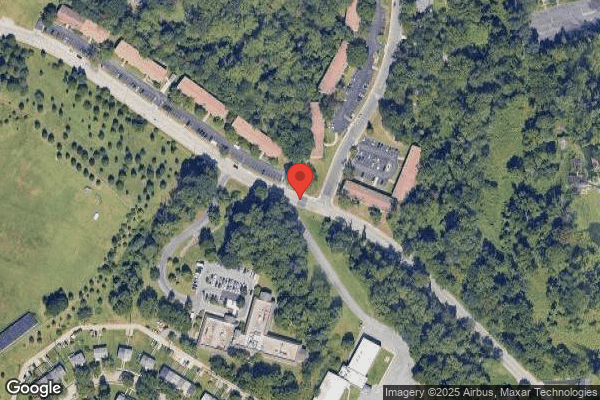

10 NORTH ROCK GLEN ROAD, BALTIMORE, MD 21229 (410) 646-2100
For profit - Limited Liability company 120 Beds MARQUIS HEALTH SERVICES Data: November 2025
Trust Grade
50/100
#178 of 219 in MD
Last Inspection: April 2025

Within standard 12-15 month inspection cycle. Federal law requires annual inspections.

Overview

Westgate Hills Rehab & Healthcare Center has a Trust Grade of C, which means it is average, placing it in the middle of the pack among nursing homes. It ranks #178 out of 219 facilities in Maryland, indicating it's in the bottom half of state options, and #21 out of 26 in Baltimore City County, suggesting there are better local choices. The facility's situation is worsening, with issues increasing from 17 in 2020 to 30 in 2025. Staffing is a concern; it received a 1-star rating and has a turnover rate of 54%, which is significantly higher than the state average of 40%. While the center has not incurred any fines, which is positive, there are notable incidents such as failure to report allegations of abuse in a timely manner and inaccuracies in resident assessments that could impact care quality. Overall, while there are some strengths, such as no fines and average RN coverage, the increasing issues and poor staffing ratings are significant weaknesses to consider.

Trust Score
C
50/100
In Maryland
#178/219
Bottom 19%
Safety Record
Low Risk
No red flags
Inspections
Getting Worse
17 → 30 violations
Staff Stability
⚠ Watch
54% turnover. Above average. Higher turnover means staff may not know residents' routines.
Penalties
✓ Good
No fines on record. Clean compliance history, better than most Maryland facilities.
Skilled Nurses
○ Average
Each resident gets 39 minutes of Registered Nurse (RN) attention daily — about average for Maryland. RNs are the most trained staff who monitor for health changes.
Violations
⚠ Watch
64 deficiencies on record. Higher than average. Multiple issues found across inspections.
★★☆☆☆
2.0
Overall Rating
★☆☆☆☆
1.0
Staff Levels
★★★☆☆
3.0
Care Quality
★★★☆☆
3.0
Inspection Score
Stable
2020: 17 issues
2025: 30 issues

The Good

  • Full Sprinkler Coverage · Fire safety systems throughout facility
  • No fines on record

Facility shows strength in fire safety.

The Bad

2-Star Overall Rating

Below Maryland average (3.0)

Below average - review inspection findings carefully

Staff Turnover: 54%

Near Maryland avg (46%)

Higher turnover may affect care consistency

Chain: MARQUIS HEALTH SERVICES

Part of a multi-facility chain

Ask about local staffing decisions and management

The Ugly 64 deficiencies on record

Apr 2025 18 deficiencies
CONCERN (D)

Potential for Harm - no one hurt, but risky conditions existed

Transfer Notice (Tag F0623)

Could have caused harm · This affected 1 resident

**NOTE- TERMS IN BRACKETS HAVE BEEN EDITED TO PROTECT CONFIDENTIALITY** Based on record review, and interviews, it was determined the facility failed to provide written notice with the reason for tran...

Read full inspector narrative →
**NOTE- TERMS IN BRACKETS HAVE BEEN EDITED TO PROTECT CONFIDENTIALITY** Based on record review, and interviews, it was determined the facility failed to provide written notice with the reason for transfer of a resident. This was found evident for 1 (Resident #78) out of 3 residents reviewed for hospitalization during the survey. The findings include: On 3/25/25 at 11:30 AM, the surveyor conducted an interview with Resident #78. During the interview Resident #78 stated that he/she had gone to the hospital several times earlier this year. On 3/26/25 at 11:28 AM, the surveyor reviewed Resident #78's medical record. The review revealed a progress note written on 2/13/25 that stated, Resident #78 returned from an appointment, and it was recommended that the resident be admitted to the hospital. The note further stated that they were waiting for the hospital to schedule. On further review the surveyor was unable to find documentation that the written notice of reason for transfer was given and explained to the resident for the hospital transfer on 2/15/2025. On 3/31/25 at 8:34 AM, the surveyor conducted an interview with the Nursing Home Administrator (NHA). During the interview the surveyor asked if the resident or representative was given a notice of the reason for transfer. The NHA confirmed that for the hospitalization date of [DATE] there was no documentation that the notice of transfer was given to the resident. He further stated this may have happened due to the fact that the specialty office was the one requesting the hospital transfer; however, the notice should have been given by the facility.
CONCERN (D)

Potential for Harm - no one hurt, but risky conditions existed

Deficiency F0625 (Tag F0625)

Could have caused harm · This affected 1 resident

**NOTE- TERMS IN BRACKETS HAVE BEEN EDITED TO PROTECT CONFIDENTIALITY** Based on medical record review, and interviews it was determined the facility failed to provide the resident and/or Representati...

Read full inspector narrative →
**NOTE- TERMS IN BRACKETS HAVE BEEN EDITED TO PROTECT CONFIDENTIALITY** Based on medical record review, and interviews it was determined the facility failed to provide the resident and/or Representative with a written notice of the facility's bed hold policy upon transfer to an acute care facility. This was evident for 1 (Resident #78) of 3 residents reviewed for hospitalization. The findings include: On 3/25/25 at 11:30 AM, the surveyor conducted an interview with Resident #78. During the interview Resident #78 stated that he/she had gone to the hospital several times earlier this year. On 3/26/25 at 11:28 AM, the surveyor reviewed Resident #78's medical record. The review revealed a progress note written on 2/13/25 that stated, the Resident returned from an appointment, and it was recommended that the resident be admitted to the hospital. The note further stated that the facility was waiting for the hospital to schedule. On further review the surveyor was unable to find documentation that the resident or their representative was given a bed hold notice for the 2/15/2025 hospitalization. On 3/31/25 at 8:34 AM, the surveyor conducted an interview with the Nursing Home Administrator (NHA). During the interview the surveyor asked if the resident or representative was given a bed hold notice. The NHA confirmed that for the hospitalization date of [DATE] there was no documentation that the bed hold notice was given to the resident. He further stated this may have happened due to the fact that the specialty office was the one requesting the hospital transfer, however, the bed hold should have been given.
CONCERN (D)

Potential for Harm - no one hurt, but risky conditions existed

Assessment Accuracy (Tag F0641)

Could have caused harm · This affected 1 resident

Based on record review, and interviews, it was determined that the facility failed to accurately document assessments in a Resident's medical record. This was found evident of 2 (Resident #31 & #113) ...

Read full inspector narrative →
Based on record review, and interviews, it was determined that the facility failed to accurately document assessments in a Resident's medical record. This was found evident of 2 (Resident #31 & #113) of 38 residents reviewed during the survey. The findings include: 1a) On 3/26/25 at 10:21 AM, the surveyor reviewed Resident # 31's record. The review revealed that a Minimum Data Set (MDS) assessment was completed on 2/19/25 and in section M, skin, it was documented Resident # 31 had one stage 3 pressure ulcer. On 3/28/25 at 1:52 PM, the surveyor reviewed a note written by Wound Nurse (WN) #18 on 2/12/25. The note stated that Resident #31 was readmitted to the facility and on assessment was noted to have a right buttocks sacral wound at a stage 3 and a left hip wound noted at a stage 2. On 3/28/25 at 2:04 PM, the surveyor interviewed Minimum Data Set, Staff # 17. During the interview the surveyor showed Staff #17 the documentation from WN #8 that documented two pressure wounds and asked why only one stage 3 wound was documented on the 2/19/25 MDS assessment. Staff #17 stated that documentation was done in error and would be corrected. 1b) On 3/26/25 at 1 PM, the surveyor reviewed Resident #113's medical record. The review revealed that a Minimum Data Set (MDS) discharge assessment, completed on 1/4/25, indicated, in section A, that Resident #113 was sent to a short-term general hospital. On further review the surveyor noted a discharge summary that stated Resident #113 was stable for discharge home and went home with spouse. On 3/27/25 at 1:40 PM, the surveyor conducted an interview with the Cooperate Minimum Data Set (MDS) Staff ,#9. During the interview Staff #9 stated that Resident #113 was discharged home and that indicating the discharge to the hospital was done in error.
CONCERN (D)

Potential for Harm - no one hurt, but risky conditions existed

Deficiency F0655 (Tag F0655)

Could have caused harm · This affected 1 resident

**NOTE- TERMS IN BRACKETS HAVE BEEN EDITED TO PROTECT CONFIDENTIALITY** Based on interview and record review, it was determined that the facility failed to inform residents of a summary of the residen...

Read full inspector narrative →
**NOTE- TERMS IN BRACKETS HAVE BEEN EDITED TO PROTECT CONFIDENTIALITY** Based on interview and record review, it was determined that the facility failed to inform residents of a summary of the resident's initial Baseline Care Plan (BCP) within 48 hours of the admission nor to provide a copy of initial instructions for effective and person-centered care. This was found to be evident for 1 (Resident #217) out of 3 residents for new admissions reviewed. The findings include: The Baseline Care Plan (BCP) must be developed and implemented within 48 hours of admission and needs to include the necessary healthcare information to properly care for the resident immediately upon admission to reduce the likelihood of a negative outcome shortly after admission and to provide immediate residents' needs. Interview, on 03/25/25 at 10:36 AM, Resident #217 stated that there was no initial care information shared which he/she was concerned about the diet and swallowing plan of care. Record Review, on 03/26/25 at 12:01 PM, revealed that this resident was hospitalized this March 2025 for acute subdural hematoma and was admitted to the facility on [DATE]. Further record review found that the care plan was entered, however, no medical record contained evidence that the BCP summary was shared or given to the resident. During an interview, on 3/26/25 at 12:19 PM, Social Worker Director Staff #6 revealed that the assigned Social Worker Staff # 21 was a new hire, the only note from her was on 3/25/25 regarding the discharge planning with Resident #217. Staff #6 admitted that BCP was not presented to this resident as a facility's deficiency practice. Further meeting with the Director of Nursing and sharing the above findings, she expected that the facility staff would need to have BCP shared within 48 hours of the admission and a copy given to the new residents.
CONCERN (D)

Potential for Harm - no one hurt, but risky conditions existed

Comprehensive Care Plan (Tag F0656)

Could have caused harm · This affected 1 resident

Based on record review and interviews it was determined that the facility failed to develop a comprehensive person-centered care plan. This was found evident of 2 (Resident #101 & #99) out of 16 resid...

Read full inspector narrative →
Based on record review and interviews it was determined that the facility failed to develop a comprehensive person-centered care plan. This was found evident of 2 (Resident #101 & #99) out of 16 residents reviewed for falls. The findings include: A.) On 3/26/25 at 7:33 AM, the surveyor reviewed Resident # 101's medical record. The review revealed that Resident #101 had incomplete, non resident centered care plans initiated. The surveyor noted that 5 care plans were written but did not specify why Resident # 101 needed the care plan. These care plans were written as follows: 1. I have oral/dental health problems r/t (related to), initiated on 9/26/24. 2. I use anti-psychotic medication r/t (related to), initiated on 3/7/24. 3. I use anti-depressant medication r/t (related to), initiated on 3/16/25. 4. At risk for respiratory complications r/t (related to), initiated on 3/17/25. 5. Resident has an automatic implanted cardiac defibrillator (AICD) r/t (related to), initiated on 3/17/25. On 3/27/25 at 1:09 PM, the surveyor conducted an interview with the Director of Nursing (DON). During the interview the DON stated that care plans are initiated on admission and updated and reviewed by the Unit Manager as needed. The surveyor showed the DON the care plans for Resident #101. The DON agreed that the care plans were incomplete and not resident centered. B.) On 3/24/25 at 12:09 PM, Resident #99 was interviewed. They stated that they fell in September 2024. On 3/31/25 at 10:15 AM, a review of Resident #99 ' s medical records was conducted. The review revealed that the resident fell on 9/25/24 while using a sliding board. However, the resident ' s care plan for transfer was developed on 9/26/2024 to indicate that the resident required 1 staff assist for transfers, using a sliding board. On 4/01/25 at 8:47 AM, an interview with the Director of Rehabilitation (Staff #24) was conducted. They confirmed that Resident #99 was deemed safe to use a sliding board on 8/8/24 indendently with supervision. They also stated that they would expect the care plan to be developed before 9/25/24. Staff #24 stated a re-evaluation of the resident was conducted on 9/26/24 stating that the resident required 1 staff assist for transfers, using a sliding board. On 4/01/25 at 10:14 AM, an interview with the Unit Manager (Staff #15) was conducted. They reported that Resident #99 ' s care plan should have been deeloped before 9/25/24.
CONCERN (D)

Potential for Harm - no one hurt, but risky conditions existed

Deficiency F0657 (Tag F0657)

Could have caused harm · This affected 1 resident

Based on record review, and interview it was determined that the facility failed to conduct care plan meetings after each resident assessment and failed to invite a resident to participate in their ca...

Read full inspector narrative →
Based on record review, and interview it was determined that the facility failed to conduct care plan meetings after each resident assessment and failed to invite a resident to participate in their care plan meeting. This was found evident in 2 (Residents #50 & #217) out of 4 Residents reviewed for care planning. The findings include: On 3/24/25 at 11:20 AM, the surveyor conducted an interview with Resident #50. During the interview Resident #50 stated that he/she had not been invited to participate in a care plan meeting in quite some time. On 3/24/25 at 12:27 PM, the surveyor conducted an interview with the Director of Social Services (SW) #6. During the interview the surveyor asked SW #6 if Resident #50 was invited to participate in care plan meetings. SW #6 stated that she usually reaches out the Resident #50's guardian for care plan meetings. The surveyor asked if there was any rationale that the resident was not invited as well as the guardian. SW #6 stated she would review the records and follow-up. Next the surveyor reviewed Resident #50's Minimum Data Set (MDS) assessment dates. It was noted that Resident # 50 had a MDS assessment on 12/10/24 and 3/10/25. The surveyor requested attendance logs for care plan meetings that should follow the assessments. On 3/27/25 at 7:45 AM, the surveyor reviewed a sign in sheets from care plans held on July 23rd of 2024 and September 24th of 2025. The resident's guardian was noted present via telephone, however Resident #50 was not present and there was no rationale written as to why on the attendance record. No attendance records were given for care plans held after the 12/10/24 and 3/10/25 MDS assessments. On 3/27/25 at 1:44 PM, the surveyor conducted a follow-up interview with SW #6. During the interview the SW#6 stated she was unable to find documentation as to why the resident was not invited. She further stated that no care plan meetings were conducted following the 12/10/24 and 3/10/25 MDS assessments and that she had a plan going forward to get caught up on care plan meetings. After the interview SW#6 confirmed that a care plan meeting was set up for Resident #50 and that both the resident and his/her guardian were both invited to attend.
CONCERN (D)

Potential for Harm - no one hurt, but risky conditions existed

Deficiency F0679 (Tag F0679)

Could have caused harm · This affected 1 resident

Based on observation, medical record review and interview, it was determined that the facility failed to provide meaningful on-going personalized activities for the residents who were confined in thei...

Read full inspector narrative →
Based on observation, medical record review and interview, it was determined that the facility failed to provide meaningful on-going personalized activities for the residents who were confined in their rooms. This was evident for 1 (Resident #104) out of 5 residents reviewed for personalized activities. The findings include: Observation, on 03/24/25 at 11:18 AM, 03/25/25 at 09:06 AM and 03/26/25 at 2:36 PM (over 30 minutes for each observation) found that Resident#104 was lying flat in bed, kept staring at the walls and kept falling asleep. No activity staff were in the room or nearby. Record Review, on 03/24/25 at 1:12 PM, found that Resident #104 was admitted to this facility on 12/11/24, with diagnoses of a new cerebral infarction due to thrombosis resulting in a new tracheostomy and feeding tube, past medical history: diabetes mellitus and depression. Interview, on 03/27/25 at 11:06 AM, Activity Director Staff # 20 revealed that for the population like Resident #104's who cannot participate in group/social activities that activity staff visited in their rooms often. Record review, on 03/27/23 at 12:31 PM, Resident #104's care plan indicated that based on Resident #104's new low cognitive baseline after the cerebral infarction and several chronic disease processes, the resident needed more personalized activity. Review activity staff's documentation from the month of February to March 2025 revealed that only had 3 one-to-one visits in total on: 2/18 & 2/25 in February and 03/04 in March 2025. A care plan is a guide that addresses the unique needs of each resident. It is used to plan, assess, and evaluate the effectiveness of the resident's care. During the interview, on 3/31/25 at 10:22 AM, Activity Director Staff #20 stated that if residents could not participate in group/social activities, then one-to-one meaningful on-going personalized activities were offered frequently. After sharing above 3 visits in 2 months findings, she admitted that there were lacking meaningful one-to-one activities to this confined to his/her room's resident. Further, the Director of Nursing was made aware that this resident lacked providing one-to-one meaningful on-going personalized activities to support this residents' needs as a deficit practice.
CONCERN (D)

Potential for Harm - no one hurt, but risky conditions existed

Deficiency F0685 (Tag F0685)

Could have caused harm · This affected 1 resident

Based on interviews and record review, it was determined that the facility failed to provide services to maintain a resident's vision. This was evident for 1 (Resident #66) out of 11 residents reviewe...

Read full inspector narrative →
Based on interviews and record review, it was determined that the facility failed to provide services to maintain a resident's vision. This was evident for 1 (Resident #66) out of 11 residents reviewed for vision during the annual recertification survey. The findings include: On 3/24/25 at 11:48 AM, Resident #66 was interviewed. They stated that their vision had decreased since their admission to the facility. On 3/28/25 at 10:28 AM, a review of Resident #66's medical records was conducted. The review revealed a progress note dated 2/20/25 with instructions for the resident to follow up with an eye specialist on 3/20/25 at 8:35 AM. Further review of the record failed to show that Resident #66 went for their follow-up eye appointment. On 3/31/25 at 2:03 PM, an interview with the Administrator was conducted. The Administrator acknowledged that there was no documentation that Resident #66 went for their follow-up eye appointment scheduled for 3/20/25. On 3/31/25 at 2:49 PM, an interview with the Director of Nursing (DON) was conducted. They reported that Medical Records was responsible for scheduling residents' follow-up appointments and transportation. On 3/31/25 at 2:59 PM, an interview with Medical Records (Staff #13) was conducted. They stated that they were unaware that Resident #66 had an eye appointment on 3/20/25 at 8:35 AM.
CONCERN (D)

Potential for Harm - no one hurt, but risky conditions existed

Deficiency F0688 (Tag F0688)

Could have caused harm · This affected 1 resident

Based on observation, record review, and interviews it was determined that the facility failed to provide treatment to prevent further decreased range of motion for a resident. This was found evident ...

Read full inspector narrative →
Based on observation, record review, and interviews it was determined that the facility failed to provide treatment to prevent further decreased range of motion for a resident. This was found evident of 1 (Resident #27) out of 5 residents reviewed for mobility. The findings include: On 3/24/25 at 9:47 AM, the surveyor observed Resident #27 laying on his/her left side with both knees pulled up to the chest. On further observation Resident #27's fingers were contracted on both hands. On 3/28/25 at 7:26 AM, the surveyor reviewed Resident #27's medical record. The review revealed that Resident #27 had an order written on 11/26/24 for bilateral knee extension braces for 6 hours daily as tolerated, to decrease the risk of further knee flexion contracture. Additionally, an order written on 7/30/24 was written for Resident #27 to wear resting hand splints on right and left hands after hand hygiene was performed and for no longer than 2 hours at a time. Next the surveyor reviewed Resident #27's electronic medical record. Nowhere in the record was it recorded that the splints were applied as ordered. On 3/31/25 at 9:30 AM, the surveyor observed Resident #27 again turn on his/her left side with bilateral knees noted to the chest. Again no splints or braces were on. On 3/31/25 at 2:01 PM, the surveyor conducted an interview with the Director of Nursing (DON). During the interview the DON confirmed that braces and splints should be documented when applied. The surveyor reviewed the concern that Resident #27 had not been observed with splints applied and there was no documentation in the medical record to record they were applied as ordered. On 4/1/25 at 2:17 PM, the surveyor conducted a follow-up interview with the DON. During the interview the DON stated that Resident #27 did have an order for splints, however the orders were never transferred to the Treatment Administration Record (TAR) and so there was no documentation to support that the splints were utilized as ordered.
CONCERN (D)

Potential for Harm - no one hurt, but risky conditions existed

Accident Prevention (Tag F0689)

Could have caused harm · This affected 1 resident

Based on observations, interviews with staff, and record review, it was determined that the facility failed to implement an intervention, determined to be necessary, for a resident who was identified ...

Read full inspector narrative →
Based on observations, interviews with staff, and record review, it was determined that the facility failed to implement an intervention, determined to be necessary, for a resident who was identified as a fall risk. This was evident of 1 (Resident #101) of 5 Residents reviewed for accidents during the annual survey. The findings include: On 3/25/25 at 8:43 AM, the surveyor conducted a telephone interview with Resident #101's spouse. During the interview the spouse stated that Resident #101 had fallen out of bed several times. Resident #101's spouse further stated at one point his/her spouse had a special mattress to help keep him/her in bed. However, after a room change Resident #101 no longer had that mattress. On 3/26/25 at 7:33 AM, the surveyor reviewed Resident #101's medical record. The review revealed that on 3/12/25 Resident #101 moved to his/her current room. On further review the surveyor noted that Resident #101 had an actual fall care plan that stated Resident #101 was at risk for falls related to involuntary movement of both lower extremities and Resident #101 was unaware of his/her own boundaries. This care plan was initiated on 2/8/25. One of the interventions listed was for Resident #101 to have a perimeter mattress for spatial awareness and border definition. On 3/27/25 at 10:56 AM, the surveyor observed Resident #101 in bed, low to the ground, with fall mats on the floor next to the bed. However, no border mattress was noted. On 3/27/25 at 10:59 AM, the surveyor interviewed Unit Manager UM #7. During the interview the nurse confirmed that Resident #101 had the perimeter mattress when he/she was located in a different room but was not sure why the mattress did not transfer with the resident when the room was changed. On 3/27/25 at 11:07 AM, the surveyor asked the Director of Nursing (DON) if Resident #101 was in the perimeter mattress that he/she was care planned to be in. The surveyor and DON observed Resident #101's mattress. The DON confirmed that Resident #101 was not in a perimeter mattress. She further stated she would look into the reason why Resident #101 was not provided with a perimeter mattress. On 3/28/25 at PM the surveyor reviewed Resident 101's falls. On 3/19/25 and 3/24/25 Resident #101 was documented as having a fall from bed. On both of these occasions Resident #101 was in his/her new room in which the perimeter mattress was not provided. The DON was made aware of the concerns that Resident #101 fell from the bed on two occasions, both in which not all of the interventions that were identified in the resident's care plan were provided.
CONCERN (D)

Potential for Harm - no one hurt, but risky conditions existed

Deficiency F0711 (Tag F0711)

Could have caused harm · This affected 1 resident

Based on record review and interviews it was determined that the facility failed to have the medical provider thoroughly review and accurately prescribe medications after a resident's readmission. Thi...

Read full inspector narrative →
Based on record review and interviews it was determined that the facility failed to have the medical provider thoroughly review and accurately prescribe medications after a resident's readmission. This was found evident of 1 (Resident #68) out of 2 residents reviewed for pain. The findings include: On 3/25/25 at 11:16 AM, the surveyor conducted an interview with Resident #68. During the interview the resident stated that he/she had been in and out of the hospital and had a lot of neuropathical pain. On 3/28/25 at 7:38 AM, the surveyor reviewed Resident #68's Medication Administration Records (MARs). The review revealed that Resident #68 had an order for gabapentin to be given at bedtime for neuropathic pain and to start on 12/30/24 however, the medications was discontinued on 1/28/25. On further review it was noted that Resident #68's was readmitted to the facility from a hospital stay on 1/28/25. This was the same day the gabapentin was discontinued. Next the surveyor reviewed the hospital discharge paperwork. The discharge recommendations lists Resident #68's diagnoses and for Neuropathic pain it states, to continue gabapentin, however when it lists medications that are new, discontinued or to be continued gabapentin is not listed in any of the three categories. On 3/28/25 at 11:12 AM, the surveyor reviewed Nurse Practitioner (NP) #10's re-admission progress note dated 1/28/25. In the note NP #10 wrote to continue gabapentin for neuropathic pain. However, NP #10 wrote a progress note on 1/30/25 that had no mention of gabapentin or the rationale for discontinuing the medication. On 3/28/25 at 2:26 PM, the surveyor conducted an interview with NP #10. During the interview NP #10 could not recall the rationale for discontinuing the gabapentin. She further stated that the resident never stated that he/she was in pain on assessment nor was there any communication that his pain was not controlled but she would assess the resident. On 3/31/25 at 10:34 AM, the surveyor conducted a follow-up interview. During the interview NP #10 stated she believed gabapentin order was missed. She further stated that after speaking with Resident #68 she had reordered the gabapentin.
CONCERN (D)

Potential for Harm - no one hurt, but risky conditions existed

Pharmacy Services (Tag F0755)

Could have caused harm · This affected 1 resident

Based on medical record review and interviews, it was determined that the facility failed to provide medication as ordered. This was evident for 1 (Resident #74) out of 5 residents reviewed for change...

Read full inspector narrative →
Based on medical record review and interviews, it was determined that the facility failed to provide medication as ordered. This was evident for 1 (Resident #74) out of 5 residents reviewed for change in condition during the annual recertification survey. The findings include: SBAR (Situation, Background, Assessment, and Recommendation) is a structured communication tool used to facilitate clear and concise information sharing, especially in healthcare, to improve communication and patient safety. Furosemide is a diuretic medication also known as a water pill. It is used to treat fluid retention caused by congestive heart failure. On 3/25/25 at 11:58 AM, a review of Resident #74's medical records was conducted. The review revealed an SBAR note for Shortness of breath dated 3/18/25. The provider's recommendation to nursing staff was to administer 40mg of furosemide in addition to the prescribed medication. Further review of the resident's medication administration record failed to show that Resident #74 received an additional 40 mg of furosemide. On 3/31/25 at 10:01 AM, the surveyor requested documentation to show that Resident #74 received an additional 40 mg of furosemide or a rationale for why the medication was not administered. On 3/31/25 at 2:01 PM, an interview with the Administrator was conducted. They stated that the facility was unable to provide any documentation that the medication was provided to Resident #74. On 4/01/25 at 11:49 AM, a brief interview with the Director of Nursing (DON) was conducted. Per DON, the facility did not have evidence that Resident #74 was given the medication. They further stated that the nurse who received the provider's recommendation did not follow the expected facility's practice of documenting administered medications.
CONCERN (D)

Potential for Harm - no one hurt, but risky conditions existed

Drug Regimen Review (Tag F0756)

Could have caused harm · This affected 1 resident

Based on record review and interviews it was determined that the facility failed to have a process in place that ensured a resident's medication irregularity reports were reviewed by the primary care ...

Read full inspector narrative →
Based on record review and interviews it was determined that the facility failed to have a process in place that ensured a resident's medication irregularity reports were reviewed by the primary care physician and the actions taken based on the recommendations were being documented. This was found evident of 1 (Resident #50) of 5 residents reviewed for medication regimen review The findings include: Medication Regimen Review (MRR) or Drug Regimen Review is a thorough evaluation of the medication regimen of a resident, with the goal of promoting positive outcomes and minimizing adverse consequences and potential risks associated with medication. The MRR includes review of the medical record in order to prevent, identify, report, and resolve medication-related problems, medication errors, or other irregularities. The MRR also involves collaborating with other members of the Inter Disciplinary Team (IDT), including the resident, their family, and/or resident representative. On 3/26/25 at 9:43 AM, the surveyor reviewed Resident #50's medical record. The review revealed that on 8/30/24, 12/28/24 and 1/26/25 a Pharmacist completed a MRR and wrote, see report for comment. No reports were found in Resident #50's electronic medical record. The surveyor requested the reports from the Director of Nursing (DON). On 3/31/25 at 10:44 AM, the surveyor interviewed Nurse Practitioner (NP) #10. During the interview the surveyor asked NP #10 about the process for reviewing irregularity reports generated by the Pharmacist. NP #10 stated that the DON or nurse responsible prints the reports and gives them to her to review. She further stated she reviews the reports, documents her decision, and signs the report after review. The report is then returned to the DON or nurse and the orders are implemented if indicated on the report. NP #10 stated she was unaware of what happens to the reports when she returns them to the DON or nurse. On 3/31/25 at 1:48 PM, the surveyor conducted an interview with the DON. During the interview the DON confirmed that NP #10 explained the process correctly. She also confirmed that she had to get Resident #50's pharmacy reports from the Pharmacist and that the report and response to the reports were not part of Resident #50's medical record.
CONCERN (D)

Potential for Harm - no one hurt, but risky conditions existed

Medication Errors (Tag F0758)

Could have caused harm · This affected 1 resident

Based on interview, and medical record review, it was determined that the facility failed to have a documented condition that indicated the use of psychotropic medications for a resident . This was fo...

Read full inspector narrative →
Based on interview, and medical record review, it was determined that the facility failed to have a documented condition that indicated the use of psychotropic medications for a resident . This was found evident in 1 (Resident #101) out of 5 Residents reviewed for unnecessary medications. The findings include: Psychotropic Medication: Any drug that affects brain activities associated with mental processes and behavior. These drugs include, but are not limited to, drugs in the following categories: Anti-psychotic; Anti-depressant; Anti-anxiety; and Hypnotic On 3/26/25 at 7:33 AM, the surveyor reviewed Resident #101's care plans. A care plan for anit-psychotic medication stated, I use anit-psychotic medication related to . and nothing to follow. On further review Resident #101 had a care plan that stated, I use anti-depressant medication related to . again nothing to follow. On 3/26/25 at 8:07 AM, the surveyor reviewed Resident 101's medication list along with the rationale for administration. Lexapro was ordered on 1/2/25 to be given one time a day for anxiety. Clonazepam was ordered on 3/4/25 twice a day for anxiety and agitation. Buspirone was ordered on 1/29/25 to be given three times a day for anxiety. These three medications are classified as psychotropic medications. Valproic acid was ordered on 3/20/25 to be given three times a day for mood disturbance. Valproic acid is an anticonvulsant sometimes used off label to treat mood conditions. Next the surveyor reviewed Resident #101's medical diagnoses. The surveyor was unable to find a diagnosis of anxiety or mood disturbances in Resident #101's medical record. On 3/31/25 at 11:03 AM, the surveyor interviewed the psychological Nurse Practitioner (NP) #11. During the interview the surveyor asked NP #11 where the diagnosis of anxiety and mood disturbances were related to the medication that were ordered for Resident #101. NP #11 stated she was responsible for updating diagnoses. She further stated that the hospital had noted that Resident #101 had been on psychotropics before but were unclear on the Resident's history. NP #11 stated she should have updated the diagnosis to include anxiety and mood disorder after evaluating the resident and recommending medications to treat those conditions.
CONCERN (D)

Potential for Harm - no one hurt, but risky conditions existed

Deficiency F0761 (Tag F0761)

Could have caused harm · This affected 1 resident

**NOTE- TERMS IN BRACKETS HAVE BEEN EDITED TO PROTECT CONFIDENTIALITY** Based on observations and interviews with staff, it was determined that the facility failed to store medication in a locked comp...

Read full inspector narrative →
**NOTE- TERMS IN BRACKETS HAVE BEEN EDITED TO PROTECT CONFIDENTIALITY** Based on observations and interviews with staff, it was determined that the facility failed to store medication in a locked compartment. This was found evident on 1 random observation on the second floor. The findings include: On 3/27/25 at 10:43 AM, the surveyor observed an unlocked medication cart in the hallway between room [ROOM NUMBER] and 207. On 3/27/25 at 10:46 AM, the surveyor walked to the cart and was able to open the top drawer and observed multiple medications and supplies. On further inspection the 7 other drawers with medications are also able to be opened. While at the medication cart, the surveyor observed Staff #23 walked by and the surveyor asked Staff #23 who was responsible for the medication cart. Staff #23 stated Nurse #8 was responsible and that she would find her. On 3/27/25 at 10:47 AM, the surveyor interviewed Nurse #8. During the interview Nurse #8 confirmed that she was responsible for the medication cart and that it should not be left open. Nurse #8 further stated that she was working with two medication carts because the Certified Medication Aide (CMA) had called out sick and the assignment was readjusted. She stated she must have left that one open by accident. On 3/27/25 at 11:13 AM, the Director of Nursing (DON) was made aware of the observation. The DON stated that the medication carts should be locked and that she would provide staff with education.
CONCERN (D)

Potential for Harm - no one hurt, but risky conditions existed

Garbage Disposal (Tag F0814)

Could have caused harm · This affected 1 resident

Based on observation and interviews, it was determined that the facility failed to maintain the outdoor garbage storage area in a manner to prevent the harboring pests. The findings include: On 3/24/...

Read full inspector narrative →
Based on observation and interviews, it was determined that the facility failed to maintain the outdoor garbage storage area in a manner to prevent the harboring pests. The findings include: On 3/24/25 at 8:54 AM, the surveyor made an observation of the outside dumpster that was utilized by the kitchen staff. The dumpster was located just outside the kitchen receiving doors. Noted along the back side of the dumpster was approximately 6 inches high of thick accumulated plastic bags, leaves, pine needles and plastic cups. This accumulation was located between the dumpster and the concrete wall behind the dumpster. On 3/24/25 at 8:56 AM, the surveyor conducted an interview with the Director of Maintenance Staff #5. During the interview Staff #5 stated that the accumulation should not be there and that he would have that area cleared.
CONCERN (D)

Potential for Harm - no one hurt, but risky conditions existed

Infection Control (Tag F0880)

Could have caused harm · This affected 1 resident

**NOTE- TERMS IN BRACKETS HAVE BEEN EDITED TO PROTECT CONFIDENTIALITY** Based on observations and staff interviews, it was determined that the facility failed to ensure that the residents' clean cloth...

Read full inspector narrative →
**NOTE- TERMS IN BRACKETS HAVE BEEN EDITED TO PROTECT CONFIDENTIALITY** Based on observations and staff interviews, it was determined that the facility failed to ensure that the residents' clean clothes were stored in a manner that minimized the potential spread of infection. This was evident during the infection control investigation task of the recertification survey. The findings include: On [DATE] at 1:44 PM, an observation of the facility's laundry room was conducted. There were 6 green bags observed in the dirty laundry room. On [DATE] at 1:45 PM, an interview with the Environmental Director (Staff #14) was conducted. When asked if the clothes in the bags were clean, they reported that the clothes were clean and belonged to residents who were either hospitalized or had expired. On [DATE] at 8:49 AM, the Director of Nursing (DON) was notified of the potential risk of accidental contamination in the laundry room.
CONCERN (E)

Potential for Harm - no one hurt, but risky conditions existed

Food Safety (Tag F0812)

Could have caused harm · This affected multiple residents

Based on observations and interviews it was determined that the facility staff failed to properly store food in accordance with professional standards for food service and safety. This was found evide...

Read full inspector narrative →
Based on observations and interviews it was determined that the facility staff failed to properly store food in accordance with professional standards for food service and safety. This was found evident in 1 of 3 kitchen observations and 1 out of 2 unit storage refrigerators during the survey. This has the potential to affect all residents. The findings include: On 3/24/25 at 8:15 AM, the surveyor made an initial tour of the kitchen. The observation of the kitchen refrigerator revealed two containers that were labeled cottage cheese. The first one was labeled with a received on date of 1/14/25 and a sell by date of 1/15/25. The second container had a received on date of 12/13/24 and a sell by date of 1/15/25 date. Also noted was a small block of lunch meat. There was no label that identified the product however, the item had a label that stated, opened on 3/7/25 and use by 3/19/25. Next to the lunch meat there was a package of hot dogs. The package was not secured closed and allowed the product to be open to air. On 3/24/25 at 8:28 AM, the surveyor observed the freezer. During the observation a water bottle was noted on the shelf with a dark liquid substance in it. The contents were not frozen, indicating it was recently placed into the freezer. No label was noted on the bottle. On further observation a cut of meat was noted in a pan with cellophane covering the meat. However, the cellophane was not air tight and the meat appeared to have freezer burn. On 3/24/25 at 8:31 AM, the surveyor observed the dry storage area. The surveyor noted that a package of ziti and a package of long pasta were opened but no label was present to determine when the package was opened and when the product needed to be used by. On 3/24/25 at 8:41 AM, the surveyor interviewed the Certified Dietary Manager (CDM) #4. During the interview the surveyor reviewed the observations with CDM #4. She stated that she would remove the cottage cheeses, deli meat and hot dogs. She further stated she would remove the personal water bottle stored in the freezer along with the meat that appeared to be freezer burned. Additionally, the CDM stated that she would remove the improper dry storage item. On 3/31/25 at 6:29 AM, the surveyor observed the 2nd floor nourishment food refrigerator with Staff #22. Staff #22 stated that staff are the only ones with access to the refrigerator and it was locked with a key entrance. Upon opening the refrigerator, the surveyor noted two plastic bags tied up. One bag had been labeled with a Resident room number on it. In the bag was deli meats that had not yet expired however, the 2nd bag had no label as to who it belonged to or a date that the bag was placed into the refrigerator. Staff #22 confirmed that the bag should have been labeled and would speak to the day shift staff to find out why the bag was not labeled or dated and to find out how long it had been in the refrigerator.
Jan 2025 12 deficiencies
CONCERN (D) 📢 Someone Reported This

A family member, employee, or ombudsman was alarmed enough to file a formal complaint

Potential for Harm - no one hurt, but risky conditions existed

Notification of Changes (Tag F0580)

Could have caused harm · This affected 1 resident

Based on documentation review and interview it was determined the facility staff failed to promptly notify the physician of a resident's change in condition. This was evident for 1 (#61) of 63 residen...

Read full inspector narrative →
Based on documentation review and interview it was determined the facility staff failed to promptly notify the physician of a resident's change in condition. This was evident for 1 (#61) of 63 residents reviewed during a complaint survey. The findings include: On 1/9/25 at 11:39 AM a review of Resident #61's medical record revealed Resident #61 was admitted in August 2023 from an acute care hospital for rehabilitation due to debility. Review of complaint MD00196479 alleged that Resident #61 stated to family that he/she had been having chest pains since 10:00 AM on 9/2/23 and that staff had disregarded the resident's complaints. The family arrived at the facility at 4:40 PM and informed staff to call 911, and if they didn't the family would call them. Review of nursing notes dated 9/2/23 at 17:56 (5:56 PM) documented, chest pain. The note also documented, Nitrostat 0.4mg tablet offered, resident refused. Several attempts made and educated on the importance of the medication in the presence of responsible party, [he/she] still refused. Responsible party requested that [he/she] be transferred to the ER for evaluation. Review of a grievance report for an incident dated 9/2/23, that was given to the surveyor from the Nursing Home Administrator (NHA), documented that the previous Director of Nursing (DON) and the NHA spoke to the resident's daughter about the resident's chest pain not being addressed until 4:40 PM. The DON and NHA interviewed the primary nurse for the resident that day, Staff #45, who stated he was told at about 3:50 PM and he offered the resident Nitrostat, a drug used for chest pain. The grievance form documented that there was a statement attached, however it was not attached to the report given to the surveyor. There was no documentation in the medical record until 5:56 PM. On 1/16/25 at 2:49 PM a call was placed to Staff #45. The surveyor was unable to speak to Staff #45. On 1/16/25 at 2:51 PM the NHA stated there was no attachment to the grievance report, therefore could not be reviewed. The NHA was informed that documentation did not support that the physician was notified at 3:50 PM when the nurse became aware of the resident's complaint of chest pain. The NHA agreed with the surveyor's findings.
CONCERN (D) 📢 Someone Reported This

A family member, employee, or ombudsman was alarmed enough to file a formal complaint

Potential for Harm - no one hurt, but risky conditions existed

Investigate Abuse (Tag F0610)

Could have caused harm · This affected 1 resident

Based on review of facility reported incidents with documentation review and interview, it was determined the facility failed to thoroughly investigate allegation of abuse for residents (Resident #1 a...

Read full inspector narrative →
Based on review of facility reported incidents with documentation review and interview, it was determined the facility failed to thoroughly investigate allegation of abuse for residents (Resident #1 and #21). This was evident for 2 of 50 facility reported incidents reviewed during a complaint survey. The findings include: 1. On 1/14/25 review of facility reported incident MD00183017 revealed Resident #21's family member accused other residents of abusing the Resident. Review of Resident #21's medical record on 1/14/25 revealed the Resident was seen by Staff #56 (PsyD/Doctorate of Psychology) on 8/20/22. At that time Staff #56 documented: Resident (#21) stated other residents informed Resident (#21's) family member that a resident was being disrespectful and verbally abusive to patient. The Resident's family member reportedly confronted the Resident. Resident (#21) stated the Resident turned his/her *ss up to me. I'm not doing good. He/she bent down and pulled his/her pants down in the doorway. On 1/15/25 the Surveyor asked the Administrator for the investigation related to the incident that occurred between Resident #21's family member and Resident #58. Review of the investigation revealed although the facility staff investigated the incident between Resident #21's family member and Resident #58 on the smoking patio on 8/18/22, they failed to fully investigate what lead up to that incident including the allegations made by Resident #21 to Staff #58 on 8/20/22. Further review of the facility's investigation revealed that there is no statement from Resident #21 in the investigation related to him/her alleging Resident #58 pulling down his/her pants in Resident #21's doorway. No statement from Resident #58 if the event occurred and no statements from staff that working at that time to see if anyone witnessed the event in the doorway of Resident #21. Interview with the Administrator on 1/15/25 at 1:57 PM confirmed the facility staff failed to complete a thorough investigation of Resident #21's allegations of abuse by Resident #58.
CONCERN (D) 📢 Someone Reported This

A family member, employee, or ombudsman was alarmed enough to file a formal complaint

Potential for Harm - no one hurt, but risky conditions existed

Deficiency F0657 (Tag F0657)

Could have caused harm · This affected 1 resident

Based on observation, medical record review, and interviews, it was determined that the facility staff failed follow the care plan, and failed to evaluate and revise a resident's care plan to reflect ...

Read full inspector narrative →
Based on observation, medical record review, and interviews, it was determined that the facility staff failed follow the care plan, and failed to evaluate and revise a resident's care plan to reflect accurate and current interventions. This was evident for 1 (50) of 50 resident reviewed for facility reported incidents during a complaint survey. The findings include: Minimum Data Set- The MDS is a federally mandated assessment tool used by nursing home staff to gather information on each resident's strengths and needs. Information collected drives resident care planning decisions A care plan is a guide that addresses each resident's unique needs. It is used to plan, assess, and evaluate the effectiveness of the resident's care. On 1/13/25, a review of facility reported incident, MD00210186, documented that on 9/25/24, at approximately 7:00 AM, Resident #50 approached the nurse's station and was observed to have a laceration and swelling above his/her right eye, which was an injury of unknown source. The facility's investigation concluded that the resident, who was cognitively impaired, and independently ambulatory with poor safety awareness, had an unwitnessed fall, and that the resident would be provided a helmet as tolerated for safety. Following review of the facility's self-report, a review of Resident #50's medical record was conducted. In the medical record, the resident's most recent quarterly assessment with an assessment reference date of 12/4/24 documented Resident #50 had severe cognitive impairment, walked independently, and had wandered on 1 to 3 days in the assessment lookback period. 1) Review of Resident #50's care plans revealed a care plan, I require the use of a safety helmet r/t Safety Measure when all else has failed, initiated on 10/3/24 that included the intervention, ensure resident wears soft helmet when out of bed. On 1/15/25 at 2:56 PM, Resident #50 was observed sitting in a chair in front of the nurse's station, and the resident was observed not wearing a safety helmet at that time. The facility staff failed to follow the care plan by failing to ensure the resident wore a soft helmet when s/he was out of bed. Continued review of the medical record failed to reveal documentation to indicate the care plan had been reviewed and revised according to the residents' needs following Resident #50's most recent quarterly MDS quarterly assessment with an assessment reference date of 12/4/24 documented Resident #50, 2) Review of Resident #50's care plans revealed a care plan, I had actual falls r/t impaired cognition and poor safety awareness, initiated on 10/7/24, with interventions which included, Ensure I wear nonskid socks at all times, and hipsters (hip protectors) (briefs with hip pad protectors) on at all times and off during care. On 1/15/25 at 2:56 PM, Resident #50 was observed sitting in a chair in front of the nurse's station. At that time, Resident #50 was observed not wearing non-skid socks and s/he was not wearing hipsters. The facility staff failed to follow the care plan by failing to ensure the resident wore a non-skid socks, and hipsters when s/he was out of bed. Continued review of the medical record failed to reveal documentation to indicate the care plan had been reviewed and revised according to the residents' needs following Resident #50's most recent quarterly MDS quarterly assessment with an assessment reference date of 12/4/24 documented Resident #50, On 1/15/25 at 4:24 PM, the concerns with failing to follow the care plan and failing to evaluate and revise the care plan following each assessment were discussed with the Director of Nurses (DON). On 1/16/25 at 3:32 PM, the DON confirmed the above findings and reported that the care plan interventions had been revised.
CONCERN (D) 📢 Someone Reported This

A family member, employee, or ombudsman was alarmed enough to file a formal complaint

Potential for Harm - no one hurt, but risky conditions existed

ADL Care (Tag F0677)

Could have caused harm · This affected 1 resident

Based on complaint, medical record review and interview, it was determined that the facility staff failed to provide needed activities of daily living for a resident dependent on assistance with care ...

Read full inspector narrative →
Based on complaint, medical record review and interview, it was determined that the facility staff failed to provide needed activities of daily living for a resident dependent on assistance with care (Resident #22). This was evident for 1 of 31 residents reviewed for complaints during a complaint survey. The findings include: On 1/9/25 review of complaint MD00184963 revealed an allegation that Resident #22 complained the Resident only received 2 showers in a 6 week period. Review of Resident #22 medical record on 1/9/25 revealed the Resident was admitted to the facility in August 2022 and discharged in October 2022 with a diagnosis to include need for assistance with personal care. The MDS is part of the Resident Assessment Instrument that was Federally mandated in legislation passed in 1986. The MDS is a set of assessment screening items employed as part of a standardized, reproducible, and comprehensive assessment process that ensures each resident's individual needs are identified, that care is planned based on those individualized needs, and that the care is provided as planned to meet the needs of each resident. Review of the MDS assessment with an assessment reference date of 8/8/22 documented Resident #22 was totally dependent on staff for bathing. Review of Resident #22's Documentation Survey Report for August, September and October 2022 revealed the facility staff documented the Resident received a shower on 8/12, 8/17 and 9/6/22. There were no other shower documentation provided to the Surveyor. Review of nursing notes for Resident #22 failed to produce documentation the Resident received any additional showers. Interview with the Director of Nursing on 1/14/25 at 12:05 PM confirmed the facility staff documented only documented 3 showers during the Resident's 8 week stay at the facility. .
CONCERN (D) 📢 Someone Reported This

A family member, employee, or ombudsman was alarmed enough to file a formal complaint

Potential for Harm - no one hurt, but risky conditions existed

Quality of Care (Tag F0684)

Could have caused harm · This affected 1 resident

Based on review of complaint, medical record review, and staff interview, it was determined the facility failed to provide care to meet the needs of a resident's physical, mental, and psychosocial hea...

Read full inspector narrative →
Based on review of complaint, medical record review, and staff interview, it was determined the facility failed to provide care to meet the needs of a resident's physical, mental, and psychosocial health (Resident #27 and #1). This was evident for 2 of 31 residents reviewed for complaints during a complaint survey. The findings include: 1. The facility staff failed to properly perform neuro checks after a fall for Resident #27. A neuro check after a fall refers to a neurological assessment performed by a healthcare professional to evaluate potential brain injuries by checking a person's level of consciousness, orientation, pupil response, muscle strength, sensation, and coordination. Review of Resident #27's medical record on 1/10/25 revealed a nurse's note on 1/20/23 that stated, the Resident was observed lying on the floor on his/her right side beside a wheelchair in which he/she was seated, was attempting to transfer himself/herself to bed. Slight hematoma to forehead. Completed a comprehensive multisystem assessment. No other injuries. Neuro checks initiated and normal so far. No further injury. MD notified. New testing orders: Continue Neuro checks, report any abnormalities. Further review of the Resident's medical record revealed after the initial neuro check was documented, no further neuro checks were documented in the medical record. Interview with the Assistant Director of Nursing (ADON) on 1/10/25 at 12:33 PM, stated the facility staff are to complete neuro checks for a resident after a unwitnessed fall or if the resident hits their head. The ADON stated the facility staff should get an initial neuro check after the fall and then every 15 minutes times 4, every 30 minutes times 2, every hour times 4 then every shift for 24 hours. Interview with the ADON on 1/10/25 at 1:33 PM confirmed the facility staff failed to completed neuro checks as ordered for Resident #27 after a fall on 1/20/23.
CONCERN (D) 📢 Someone Reported This

A family member, employee, or ombudsman was alarmed enough to file a formal complaint

Potential for Harm - no one hurt, but risky conditions existed

Pressure Ulcer Prevention (Tag F0686)

Could have caused harm · This affected 1 resident

Based on medical record review and staff interview it was determined the facility failed to provide timely treatment/services to prevent/heal pressures ulcers. This was evident for 1 (#31) of 31 resid...

Read full inspector narrative →
Based on medical record review and staff interview it was determined the facility failed to provide timely treatment/services to prevent/heal pressures ulcers. This was evident for 1 (#31) of 31 residents reviewed for complaints during a complaint survey. The findings include: A pressure ulcer, also known as pressure sore or decubitus ulcer, is any lesion caused by unrelieved pressure that results in damage to the underlying tissue. Pressure ulcers are staged according the their severity from Stage I (area of persistent redness), Stage II ( superficial loss of skin such as an abrasion, blister or shallow crater), Stage III ( full thickness skin loss involving damage to subcutaneous tissue presenting as a deep crater), Stage IV (full thickness skin loss with extensive damage to muscle, bone or tendon) or Unstageable Pressure Ulcer (full thickness tissue loss in which the base of the ulcer is covered by slough and/or eschar in the wound bed). On 1/16/25 at 7:27 AM a review was conducted of Resident #31's medical record which revealed Resident #31 was admitted to the facility in May 2023 from an acute care hospital with diagnoses that included sepsis, end stage renal disease that required dialysis, systemic lupus erythematosus, diabetes, acute respiratory failure, and heart disease. Review of a health status note dated 5/10/23 documented Resident #31 had multiple wounds upon arrival. A 5/10/23 at 19:38 wound note documented there was a healing wound above the sacrum and a pressure ulcer noted near the left inner thigh closest to the groin. A 5/16/23 wound note documented there was a pressure ulcer on the buttock that was a stage II. Review of Resident #31's May 2023 Treatment Administration Record (TAR) revealed the wound dressing for the stage II pressure ulcer was not started until 5/17/23. There were no treatments documented from 5/10/23 until 5/17/23. Continued review of Resident #31's medical record documented that the resident was discharged to the hospital on 5/29/23 and returned on 6/2/23. A 6/3/23 at 6:42 AM nursing note documented that the resident refused to be assessed on admission, two attempts were made with the assigned nursing assistant and the resident still refused. On 6/6/23 a wound note documented there was a pressure ulcer on the left buttock that was a stage III. Review of Resident #31's June 2023 TAR failed to document treatment to the stage III pressure ulcer from 6/3/23 to 6/7/23. Review of a 6/8/23 health status note documented that Resident #31 was transferred to the hospital due to an abscess/cyst to the left abdomen. Review of a 6/16/23 health status note documented Resident #31 returned to the facility from the hospital. A 6/19/23 skin/wound note documented there was a right and left buttock wound and a right heel suspected DTI (deep tissue injury) present on admission. Review of the June 2023 failed to show evidence of treatment being done for the right and left buttock until 6/21/23. On 1/16/25 at 11:43 AM an interview was conducted with the Director of Nursing (DON). The DON stated she could not find any documentation to dispute the surveyor's findings. She stated that her expectation was that the charge nurse would assess the resident upon admission and notify the physician of the skin condition and get orders for immediate treatment and then have the wound care nurse assess the resident.
CONCERN (D) 📢 Someone Reported This

A family member, employee, or ombudsman was alarmed enough to file a formal complaint

Potential for Harm - no one hurt, but risky conditions existed

Deficiency F0692 (Tag F0692)

Could have caused harm · This affected 1 resident

**NOTE- TERMS IN BRACKETS HAVE BEEN EDITED TO PROTECT CONFIDENTIALITY** Based on medical record review and interview, the facility staff failed to assess and evaluate the nutrition needs of residents ...

Read full inspector narrative →
**NOTE- TERMS IN BRACKETS HAVE BEEN EDITED TO PROTECT CONFIDENTIALITY** Based on medical record review and interview, the facility staff failed to assess and evaluate the nutrition needs of residents in a timely manner. (Resident #20). This was evident for 1 of 3 residents reviewed for weight loss during a complaint survey. The findings include. Review of Resident #20's medical record on 1/9/25 revealed the Resident was admitted to the facility on [DATE] and facility staff documented the Resident weight as 285.1 pounds. Review of the nutritional assessment revealed it was completed on 11/1/21, 3 days after admission. The nutritional assessment stated goals were to maintain nutritional status with no signs or symptoms of dehydration and malnutrition. Consume at least 50% of meals and supplements daily. Wound healing. Review of the Resident's documented weights revealed the Resident was not reweighed until 11/16/21 and documented weight of 278.7 pounds, for a weight loss of 6.4 pounds. The next weight documented was 252.4 pounds on 12/2/21, for a weight loss of 32.7 pounds since admission. Review of a Dietitian note on 12/7/21, the Dietitian documented Weight warning Value 252.4. Resident will be re-weighed. The Resident was assessed by the Dietitian on 12/15/21 and used the weight of 252 from 12/2/21 for the Resident assessment. Further review of Resident #20's documented weights, the Resident was not reweighed until 12/16/21, 14 days after the Dietitian's note. At that time the facility staff documented the Resident's weight is 270 pounds. Further review of Resident #20's medical record revealed the facility staff failed to recognize a documented weight loss on 11/16/21 and on 12/2/21 until 12/7/21, failed to reweigh the Resident timely after the weight loss was identified until 12/16/21. The Resident was discharged from the facility on 12/24/21. Interview with the Director of Nursing on 1/14/25 at 12:50 PM confirmed the facility staff failed to recognize Resident #20's weight loss and intervene timely.
CONCERN (D) 📢 Someone Reported This

A family member, employee, or ombudsman was alarmed enough to file a formal complaint

Potential for Harm - no one hurt, but risky conditions existed

Deficiency F0757 (Tag F0757)

Could have caused harm · This affected 1 resident

Based on medical record review and staff interviews, it was determined that the facility staff failed to ensure that a resident's medication regimen was free from unnecessary medication. This was evid...

Read full inspector narrative →
Based on medical record review and staff interviews, it was determined that the facility staff failed to ensure that a resident's medication regimen was free from unnecessary medication. This was evident for 1 (#54) of 31 residents reviewed for complaints. The findings include: Seborrheic dermatitis is a common skin condition that can cause dandruff On 1/8/25 a review of complaint MD00212696 alleged that Resident #54's had an infection on his/her head from a condition on the resident's scalp and the facility needed to be investigated for neglect. Review of Resident #54's medical record revealed on 12/13/24 at 5:16 PM, in a progress note, the nurse wrote that on 12/6/24, Resident #54 had his/her hair washed and a haircut, that no injury was sustained from the haircut, and the resident continued on Ketoconazole (antifungal) Shampoo 2 times a week for Seborrheic dermatitis, and the resident had a Dermatology Appointment scheduled on 12/23/24. On 12/23/24, in a Dermatology Report of Consultation, the physician documented the resident had Seborrheic Dermatitis (dandruff), and prescribed Ciclopirox shampoo weekly, let sit 5 minutes, then rinse, and Derma smooth scalp oil, apply to itchy areas on scalp QHS, prn itching and to follow-up in 2 months. Review of Resident #54's January 2025 Treatment Administration Record (TAR) and his/her January 2025 Medication Administration Record (MAR) revealed documentation of 3 active orders for medicated shampoo that were being implemented to treat Resident #54's seborrheic dermatitis. Review of Resident #56's January 2025 TAR revealed a) an 8/20/24 order for Selsun Blue shampoo (treats dandruff) twice a week on shower days for seborrheic dermatitis every day shift every Mon, Thu. that was documented as completed on dayshift on 1/2/25, 1/6/25, 1/9/25, and 1/13/25, and b) a 10/26/24 order for Ketoconazole (antifungal) Shampoo 2 %; Apply to scalp topically one time a day every other day for Seborrheic dermatitis on shower days that was documented as done every other day on 1/2/25, 1/4/25, 1/6/25, 1/8/25, 1/10/25 and 1/12/25. Review of Resident #54's January 2025 MAR revealed a 12/26/24 order for Ciclopirox (antifungal) External Shampoo 1 % (Ciclopirox) Apply to Scalp topically every day shift every Thu for Seborrheic Dermatitis; Leave in for 5 mins then rinse, that was documented as done on Thursday 1/2/24, and Thursday 1/9/24. On 1/15/25 at 4:41 PM, during an interview, the Director of Nurses (DON) was made aware that Resident #54 had 3 orders to treat his/her Seborrheic dermatitis, and the dermatology consult only indicated one medicated shampoo, Ciclopirox, was ordered. The resident's current shampoo treatment orders were reviewed with the DON who stated she would look into the concerns. On 1/16/25 at 4:26 PM, the DON confirmed that there should only be one medicated shampoo treatment order Resident #54. The DON stated that the resident's Dermatologist was contacted and the order for Ciclopirox Shampoo every Thursday was to be used to treat Resident #54's seborrheic dermatitis and the orders for Ketoconazole and Selsun Blue should be discontinued.
CONCERN (D) 📢 Someone Reported This

A family member, employee, or ombudsman was alarmed enough to file a formal complaint

Potential for Harm - no one hurt, but risky conditions existed

Deficiency F0840 (Tag F0840)

Could have caused harm · This affected 1 resident

Based on medical record review and interview, the facility staff failed to follow up with a consultant physician (Resident #22). This was evident for 1 of 63 residents reviewed during a complaint surv...

Read full inspector narrative →
Based on medical record review and interview, the facility staff failed to follow up with a consultant physician (Resident #22). This was evident for 1 of 63 residents reviewed during a complaint survey. The findings include: Review of Resident #22's medical record on 1/9/25 revealed the Resident was admitted to the facility in August 2022 with diagnosis to include retention of urine. Further review of the Resident's medical record revealed on 8/16/24 the Resident went to a Urology consultation. Review of the Report of Consultation revealed the physician documented, Patient's ambulatory status very poor and wheelchair does not clear the doorway due to his/her bariatric size. Will reschedule at ambulatory surgery center for local cystoscopy and foley change. Further review of the Resident's medical record revealed the Resident was discharged home from the facility on 10/3/22 without a follow up appointment scheduled with Urology. Interview with the Director of Nursing on 1/14/25 at 12:05 PM confirmed the facility staff failed to ensure the Resident had a follow up appointment scheduled with Urology.
CONCERN (D) 📢 Someone Reported This

A family member, employee, or ombudsman was alarmed enough to file a formal complaint

Potential for Harm - no one hurt, but risky conditions existed

Medical Records (Tag F0842)

Could have caused harm · This affected 1 resident

Based on medical record review and staff interview, it was determined that the facility staff failed to keep complete and accurate medical records. This was evident for 2 (#1 and #50) of 50 residents...

Read full inspector narrative →
Based on medical record review and staff interview, it was determined that the facility staff failed to keep complete and accurate medical records. This was evident for 2 (#1 and #50) of 50 residents reviewed for facility reported incidents during a complaint survey. The findings include: 1. A wanderguard is a system that uses bracelets and sensors to monitor and prevent residents from wandering off or exiting a safe area. On 1/13/25, a review of facility reported incident, MD00210186, documented that on 9/25/24, at approximately 7:00 AM, Resident #50 approached the nurse's station and was observed to have a laceration and swelling above his/her right eye, which was an injury of unknown source. The facility's investigation concluded that the resident, who was cognitively impaired, and independently ambulatory with poor safety awareness, had an unwitnessed fall. Following review of the facility's self-report, a review of Resident #50's medical record was conducted. In the medical record, the resident's most recent quarterly assessment with an assessment reference date of 12/4/24 documented Resident #50 had severe cognitive impairment, walked independently, and had wandered on 1 to 3 days in the assessment lookback period. Review of Resident #50's Elopement/Wandering Risk Evaluations revealed an evaluation with an effective date of 12/3/24 at 10:57 AM that documented Resident #50 was at risk for wandering and/or elopement and generated care plan interventions which included Wander bracelet placed. Review of Resident #50's December 2024 Geriatric Nurse Aide (GNA) documentation revealed the Intervention/Task, Wanderguard Bracelet that documented Resident #50 wore a wanderguard bracelet on 26 of 31 dayshifts, on 24 of 31 evening shifts, and on 21 of 31 nightshifts in December 2024. Review of Resident #50's January 2025 GNA documentation revealed the Intervention/Task, Wanderguard Bracelet that was signed off to indicate Resident #50 wore a wanderguard bracelet on 11 of 15 dayshifts, 13 of 15 evening shifts and 14 of 15 nightshifts in January 2025. Review of Resident #50's current, active care plans revealed a care plan, I am a wanderer as evidenced by impaired safety awareness; resident wanders aimlessly due to dementia. In the care plan, there were no interventions for the resident to wear a wandering device. Continued review of Resident #50's medical record failed to reveal an order for a wanderguard bracelet On 1/15/25 at 2:56 PM, Resident #50 was observed sitting in a chair in front of the nurse's station, and the resident was observed not wearing a wanderguard device at that time. On 1/15/25 at 4:24 PM, during an interview, when asked whether Resident #50 wore a wanderguard, the Director of Nurses (DON) stated that the resident did not wear a wanderguard and hadn't worn a wanderguard since at least September 2024. At that time, the discrepancy with the documentation in Resident #50's medical record indicating the resident wore wanderguard, which conflicted with the documentation that indicated the resident did not wear a wanderguard, was discussed with the DON. The DON acknowledged the concerns and stated she would look into the concerns and get back with the surveyor. On 1/16/24 at 3:32 PM, the DON confirmed the above irregularities with the documentation in the resident's medical record. The DON reported that Resident #50 did wander, however s/he was no longer at risk for elopement, and did not require a wanderguard. 2. A facility policy titled, Administering Medication, revised 04/2019, indicated, Medications are administered in a safe and timely manner, and as prescribed. The policy revealed, 22. The individual administering the medication initials the resident's MAR [medication administration record] on the appropriate line after giving each medication and before administering the next ones. Resident #1's admission Record indicated the facility admitted the resident on 07/19/2019. According to the admission Record, the resident had a medical history that included diagnoses of cerebral infarction and bipolar type schizoaffective disorder. An annual Minimum Data Set (MDS), with an Assessment Reference Date (ARD) of 06/15/2020, revealed Resident #1 had a Brief Interview for Mental Status (BIMS) score of 15, which indicated the resident had intact cognition. The MDS indicated Resident #1 received scheduled medication to treat pain and received or was offered as needed (PRN; pro re nata) medication to treat pain during the assessment period. Per the MDS, the resident had occasional pain during the assessment period. The MDS indicated the resident received opioid medication three days during the seven-day look-back period. Resident #1's care plan included a focus area initiated 07/26/2024, that indicated the resident had episodes of accusatory and general suspicion of others as evidence by reporting that roommates were watching them, their phone was being tapped by the police, and unfounded claims that roommates needed medical attention related to paranoid personality disorder, and difficulty adjusting to a new roommate. Interventions directed staff to administer medication as ordered (initiated 07/26/2024); anticipate and meet the resident's needs (initiated 07/26/2024); encourage the resident to express their feelings appropriately (initiated 07/26/2024); if reasonable, discuss the resident's behavior (initiated 07/26/2024); and monitor the resident's behavior episodes and attempt to determine the underlying cause (initiated 07/26/2024). The care plan included a focus area initiated 07/22/2019, that indicated the resident had a stroke. Interventions directed staff to administer the resident's medications as ordered by the physician (initiated 07/22/2019). The care plan included a focus area initiated 02/25/2021, that indicated the resident was on antipsychotic medication related to schizoaffective disorder, bipolar disorder, and depression. Interventions directed staff to administer the resident's medications as ordered (initiated 07/22/2019). The care plan included a focus area initiated 07/22/2019, that indicated the resident had altered cardiovascular status. Interventions directed staff to administer the resident's medications as ordered (initiated 03/07/2024). Resident #1's Order Recap [Recapitulation] Report, for the timeframe from 07/19/2019 through 01/31/2025, included the following orders: - Aspirin (a platelet aggregation inhibitor) chewable tablet 81 milligrams (mg), one tablet one time per day for stroke prevention, with a start date of 06/14/2023. - Dicyclomine hydrochloride (HCl) (an anticholinergic gastrointestinal antispasmodic) 20 mg, one table by mouth one time a day for gastrointestinal supplement, with a start date of 09/16/2020. - Lidocaine (a topical anesthetic) patch 5%, to be applied to the lower back one time per day for pain, with a start date of 07/22/2022. - Ezetimibe (a cholesterol absorption inhibitor) tablet 10 mg, one time a day for Hypercholesterol, with a start date of 08/07/2023. - Lisinopril (an angiotensin converting enzyme inhibitor) tablet 40 mg, one tablet by mouth one time a day for hypertension, with a start date of 06/05/2021. -Polyethylene glycol (an osmotically acting laxative), 17 grams by mouth one time a day for a laxative, with instructions to not give the medication when the resident had any loose stools. The order had a start date of 06/05/2020. - Nitroglycerin (an antianginal agent) transdermal patch 24 hour 0.2 milligrams per hour (mg/hr), one patch one time a day for hypertension. - Prasugrel HCl (platelet aggregation inhibitor) tablet, 10 mg one time a day for coronary artery disease, with a start date of 08/07/2023. - Cinacalcet HCl (a calcimimetic) tablet, 30 mg one time per day for hypercalcemia, with a start date of 09/01/2024. - Quetiapine fumarate (an atypical antipsychotic) 25 mg, one tablet three times a day for schizophrenia, with a start date of 09/09/2024 and end date of 10/17/2024. Resident #1's MAR, for the timeframe from 10/01/2024 through 10/31/2024, revealed the MAR was left blank for the following medications on the following dates: - Aspirin chewable tablet 81 mg- 10/02/2024 and 10/09/2024. - Dicyclomine HCl 20 mg- 10/02/2024 and 10/09/2024. - Lidocaine patch 5%- 10/02/2024, 10/09/2024, and 10/22/2024. - Ezetimibe tablet 10 mg- 10/02/2024 and 10/09/2024. - Lisinopril tablet 40 mg- 10/02/2024 and 10/09/2024. - Polyethylene glycol 17 grams- 10/02/2024 and 10/09/2024. - Nitroglycerin transdermal patch 24-hour 0.2 mg/hr- 10/02/2024, 10/09/2024, and 10/22/2024. - Prasugrel HCl tablet 20 mg- 10/02/2024 and 10/09/2024. - Cinacalcet HCl tablet 30 mg- 10/02/2024 and 10/09/2024. - Quetiapine fumarate 25 mg- 10/02/2024 at 9:00 AM and 2:00 PM and 10/09/2024 at 9:00 AM and 2:00 PM. During an interview on 01/10/2025 at 11:51 AM, the Assistant Director of Nursing (ADON) stated her expectation was for staff to administer medications as ordered and to document it. During an interview on 01/09/2025 at 1:15 PM, the Director of Nursing (DON) stated it was her expectation that all medications be given as ordered and documented as given on the MAR.
CONCERN (E) 📢 Someone Reported This

A family member, employee, or ombudsman was alarmed enough to file a formal complaint

Potential for Harm - no one hurt, but risky conditions existed

Report Alleged Abuse (Tag F0609)

Could have caused harm · This affected multiple residents

Based on review of facility reported incidents with documentation and interview, it was determined the facility failed to report 1) allegation of misappropriation of property, 2) an injury of unknown ...

Read full inspector narrative →
Based on review of facility reported incidents with documentation and interview, it was determined the facility failed to report 1) allegation of misappropriation of property, 2) an injury of unknown source and 3) allegations of abuse within 2 hours of the allegation to the regulatory agency, the Office of Health Care Quality (OHCQ). This was evident for 6 (#31, #42, #47, #34, #48, #50) of 50 facility reported incidents reviewed during a complaint survey. The findings include: 1) On 1/7/25 at 11:30 AM facility reported incident MD00192632 was reviewed and revealed an allegation that on 5/22/23 at approximately 3:00 AM Resident #31 requested to speak with a nursing supervisor to report a geriatric nursing assistant (GNA) threatened the resident, yelled and pounded her first against in the palm of her hand. Review of the email confirmation sheet revealed documentation that the allegation was first reported to OHCQ on 5/22/23 at 9:27 AM. On 1/7/25 at 1:30 PM an interview was conducted with the Nursing Home Administrator (NHA). It was pointed out to the NHA that the nursing supervisor was informed at 3:00 AM, however the report was not submitted to OHCQ until 9:27 AM. The NHA confirmed the finding and said he sent it in as soon as he became aware. 2) On 1/12/25 at 11:35 AM facility reported incident MD00203678 was reviewed and revealed an allegation that on 3/14/24 at 2:00 AM someone came in Resident #42's room and hit the resident in the back. The NHA was made aware on 3/15/24 at 3:00 PM. Review of the facility's investigation revealed a written statement from Staff #47 that documented Resident #42 told Staff #47 at 1:00 AM that he/she wanted Tramadol (pain medication) so Staff #47 said she would tell the nurse. Staff #47 went back 15 minutes later, and the resident said someone hit [him/her] in the head. Staff #47 said she would let the nurse know. Staff #47 stated she reported it to the nurse and the supervisor who were both at the desk. A written statement from the nurse and the supervisor documented they were never made aware. Facility staff failed to report to the NHA immediately after being made aware of the allegation. On 1/15/25 at 7:30 AM an interview was conducted with the NHA regarding the timely reporting. The NHA confirmed that staff did not report the allegation immediately, therefore the allegation was not reported to OHCQ within 2 hours. 3) On 1/13/25 at 7:23 AM facility reported incident MD00207546 was reviewed and revealed an allegation that on 6/9/24 on the 3-11 shift and on 7/6/24 at 11:00 AM Resident #47 was abused by staff members. The allegation was reported on 7/10/24 at 3:20 PM by GNA #51. On 1/15/25 at 8:02 AM an interview was conducted with the NHA. He stated that he reported it when he found out. He also confirmed all the staff members involved were educated on timely reporting. The NHA stated he was unable to substantiate abuse as there were no reports of witnessing or experiencing abuse by any staff members or residents, including the resident's roommate. 4) On 1/25/25 at 2:15 PM facility reported incident MD00194296 was reviewed and revealed an allegation that Licensed Practical Nurse (LPN) #48 yelled at Resident #34 and refused to change the resident's wound dressing on 6/30/23 at 1:00 AM. Review of the facility's investigation revealed the incident was not reported to the NHA until 7/11/23. Further review of the investigation documented that Staff #48 alleged that Staff #49 and Staff #50 refused to assist in getting Resident #34 out of bed. The NHA and social services interviewed the resident who denied the verbal abuse and did not recall the incident. On 1/15/25 at 7:30 AM the NHA was interviewed and stated that it appeared to be that it was employees that did not like each other and were weaponizing each other. The NHA stated that he wrote both employees up for failing to report the incident in a timely manner. The NHA confirmed he reported it when he was made aware, however he agreed that the staff failed to timely report it to him. 5) On 1/9/25 at 12:00 PM, a review of facility reported incident, MD00208950, revealed on 8/19/24, at approximately 8:50 AM, Resident #48 reported to Staff #44, Geriatric Nursing Assistant (GNA), that there was money missing from the resident's wallet, and Staff #44 then reported the resident's allegation to the Unit Manager. The facility's self-report documented Resident #48 reported that on 8/18/24, before going to bed, the resident had $647 in his/her wallet, and the wallet was left on the resident's bedside table. Resident #48 reported that when s/he woke up, the resident checked his/her wallet and there was only $347 in the wallet. Resident #48 alleged that during the night someone took $300 of his/her money from the resident's wallet. Review of facility documentation revealed an email confirmation that documented the facility's initial report was sent to the State Survey Agency, on 8/19/24 at 7:22 PM. The facility failed to report the allegation of misappropriation of resident property, immediately, but not later than 2 hours after the allegation was made. The concerns with the late reporting of an allegation of misappropriation of property was discussed with the Nursing Home Administer (NHA) on 1/10/25 at 12:42 PM. The NHA acknowledged the concerns at that time and indicated he would look into it. 6) On 1/13/24, a review of facility reported incident, MD00210186, documented Resident #50 was observed with a laceration and swelling above his/her right eye that was an injury of unknown source which was noted by the night shift supervisor on 9/25/24 at 7:00 AM and the Nursing Home Administrator was notified of the injury on 9/25/24 at 9:00 AM. Review of the facility's self-report documentation revealed an email confirmation which documented the facility's initial report was sent to the State Survey Agency on 9/25/24 at 1:45 PM. The facility failed to report the injury of unknown origin immediately, but not later than 2 hours after the becoming aware of Resident #50's injury of unknown source. On 1/15/25 at 4:53 PM, the facility reported incident, along with the results of the facility's investigation was discussed with the NHA. At that time, when made aware of the concern with late reporting the injury of unknown source to the State office, the NHA stated he could not recall the exact timeline of the events and indicated he was unsure why the incident was not reported timely.
CONCERN (E) 📢 Someone Reported This

A family member, employee, or ombudsman was alarmed enough to file a formal complaint

Potential for Harm - no one hurt, but risky conditions existed

Assessment Accuracy (Tag F0641)

Could have caused harm · This affected multiple residents

**NOTE- TERMS IN BRACKETS HAVE BEEN EDITED TO PROTECT CONFIDENTIALITY** Based on medical record review and staff interview, it was determined the facility staff failed to ensure Minimum Data Set (MDS)...

Read full inspector narrative →
**NOTE- TERMS IN BRACKETS HAVE BEEN EDITED TO PROTECT CONFIDENTIALITY** Based on medical record review and staff interview, it was determined the facility staff failed to ensure Minimum Data Set (MDS) assessments were accurately coded. This was evident for 4 (#36, #37, #42, #34) of 63 residents reviewed during a complaint survey. The findings include: The MDS is part of the Resident Assessment Instrument that was Federally mandated in legislation passed in 1986. The MDS is a set of assessment screening items employed as part of a standardized, reproducible, and comprehensive assessment process that ensures each resident's individual needs are identified, that care is planned based on those individualized needs, and that the care is provided as planned to meet the needs of each resident. 1) On 1/8/25 at 8:46 AM a review of Resident #36's medical record revealed progress notes that documented on 2/22/24 at 3:00 AM, Resident #36 was found by the aide on the floor mat next to the resident's bed. Review of the MDS with an assessment reference date (ARD) of 3/6/24, Section J falls, documented there were no falls during the assessment reference period. The facility failed to capture the fall. Continued review of Resident #36's medical record revealed Resident #36 had additional falls on 3/29/24, 4/6/24, and 5/12/24. Review of the MDS with an ARD of 6/7/24 documented there were no falls. The facility failed to capture the falls. Further review of Resident #36's medical record revealed a 6/19/24 at 11:36 AM nursing note that documented the resident was found on the floor mat in the room by the bedside, stating that [he/she] wanted to go to the bathroom. Review of the MDS with an ARD of 9/7/24 documented no falls in Section J, falls. The facility failed to capture the fall. Review of Section N, injections, was coded as no injections given during the previous 7 days prior to the ARD of 9/7/24. Review of Resident #36's September 2024 Medication Administration Record (MAR) documented that Resident #36 received a Fluad Intramuscular Suspension Prefilled Syringe 0.5 ML (Influenza Virus Vaccine Types A & B Surface Antigen Adjuvant) intramuscularly one time only for Immunization on 9/6/24. The facility failed to capture the injection. On 1/8/25 at 11:42 AM Staff #10 and Staff #11, MDS coordinators, were interviewed. Both staff reviewed the 3/6/24, 6/7/24, and the 9/7/24 errors with capturing falls and the injection. Both reviewed and confirmed the findings. 2) On 1/9/25 at 9:27 AM a review of Resident #37's medical record revealed a 12/28/23 physician assistant progress note that documented Resident #37 was hospitalized on [DATE] to 12/6/23 for treatment for hypoglycemia and dehydration after a fall at home. Review of Resident #37's admission MDS with an ARD of 12/26/23, Section J1700 Fall history of admission/entry: A. Did the resident have a fall any time in the last month prior to admission? Response was 9. Unable to determine. The facility failed to capture the fall at home. Review of Section J2000 Prior Surgery. Did the resident have major surgery during the 100 days prior to admission? The answer was, No. Review of the hospital Discharge summary dated [DATE], that was uploaded to the system on 12/26/23, documented that the resident was at the hospital for weakness following a fall at home. The discharge summary documented during the hospital stay the resident had a right endarterectomy, (a surgical procedure to remove plaque from a blocked or narrowed carotid artery in the neck) and was transferred to ICU (intensive care unit) for 24 hours for every hour neuro checks. The facility failed to capture the surgery. On 1/9/25 at 12:16 PM Staff #10 confirmed that she made the error. Staff #10 said she meant to ask the resident but forgot about it. She stated that they are doing an audit on all falls. 3) On 1/12/25 at 11:35 AM a review of Resident #42's medical record revealed a quarterly MDS with an assessment reference date of 3/17/24. Review of section C0100, should a brief interview for mental status be conducted; the answer was yes. Review of Section C, Cognitive Patterns, C0200, C0300, C0400, C0600, C0700, C0800, C0900, and C1000 were documented as, not assessed. Review of Section D, Mood was not assessed even though the facility documented a resident mood interview should be conducted. Review of Section J0100 pain management; received scheduled pain medication regimen? The documentation was, yes. Received PRN (when needed) pain medications or was offered and declined? The documentation was, yes. Section J0200: should pain assessment interview be conducted? The documentation was, yes. Section J0300: pain assessment interview. This section was not done even though the resident received pain medication and the prior answer was that a pain assessment should have been conducted. Section J1800, any falls since admission/entry or reentry. This was answered, No. Review of the medical record revealed a 2/14/24 at 6:00 AM nursing note that documented the resident was observed sitting on the floor next to the bed. The facility failed to capture the fall. On 1/15/25 at 8:55 AM an interview was conducted with Staff #11. Staff #11 confirmed that Section C and D were not assessed. Staff #11 stated that they had an issue with social work doing the MDS late. Staff #11 confirmed that pain was not assessed, and she could not understand why. Staff #11 also confirmed the fall error. 4) On 1/25/25 at 2:15 PM Resident #34's medical record was reviewed and revealed an 11/22/23 change in condition note that documented Resident #34 reported that he/she had a fall during the night. Review of the MDS with an ARD of 11/24/23 documented in Section J, no falls. On 1/15/25 at 8:55 AM an interview with Staff #11 was conducted. Staff #11 confirmed that the 11/22/23 fall was not captured on the 11/24/23 MDS. On 1/15/25 at 1:45 PM the Assistant Director of Nursing was informed of the concern with MDS documentation.
Feb 2020 17 deficiencies
CONCERN (D)

Potential for Harm - no one hurt, but risky conditions existed

Deficiency F0558 (Tag F0558)

Could have caused harm · This affected 1 resident

Based on observations and interviews with facility staff it was determined the facility failed to ensure that a resident call light was accessible to him/her. This was found to be evident for 1 reside...

Read full inspector narrative →
Based on observations and interviews with facility staff it was determined the facility failed to ensure that a resident call light was accessible to him/her. This was found to be evident for 1 resident (Resident # 15) that was observed during the facility's annual survey. Findings include: An observation was made on 2/24/20 at 11:20 AM of Resident #15 who was sitting in a Geri-chair in his/her bedroom near the window. The resident call light was observed wrapped around the bed rail on the opposite side of the bed. The nurse, Staff #21 was asked to come into the resident room as she was walking past the room at the time of the observation. Resident #15's call light was shown to the nurse and she proceeded to remove it from the bedrail and placed it closer to the resident. The nurse stated that she was unsure why the call light was placed on the opposite side of the resident. The nurse approached the surveyor with Geriatric Nursing Assistant (GNA) #4 on the same date at 11:40 AM and the GNA explained that the resident wanted to be near the window. The nurse informed the GNA to ensure that the resident call light is accessible so that s/he can call for assistance when needed. The Director of Nursing was made aware of the concerns on 2/24/20 at 2:00 PM.
CONCERN (D)

Potential for Harm - no one hurt, but risky conditions existed

Safe Environment (Tag F0584)

Could have caused harm · This affected 1 resident

Based on observations and interviews of facility staff it was determined the facility failed to ensure that residents reside in a clean, comfortable and homelike environment. This was in found to be e...

Read full inspector narrative →
Based on observations and interviews of facility staff it was determined the facility failed to ensure that residents reside in a clean, comfortable and homelike environment. This was in found to be evident during an initial tour of the facility during the facility's annual survey and has the potential to affect all the residents residing in the facility. Findings include: An initial tour was conducted on the Worthington Unit on 2/23/20 at 6:30 AM. The bathroom located in the shower suite had a toilet that was missing a handle. Additionally, the wall located to the left of the toilet had a large spackled area in need of paint. Along the hallway across from the shower suite there was trash and debris noted on the floor. There were fruit flies noted flying around on each of the units and present in the conference room. A fly trap was located on the shelf in the conference room with multiple dead flies in the bottom. An interview was conducted with the Maintenance Director on 2/28/20 at 2:34 PM and he was made aware of all the concerns and stated that the facility will be correcting all the concerns. The Administrator and Director of Nursing were made aware of all concerns at the time of exit on 2/28/2020.
CONCERN (D)

Potential for Harm - no one hurt, but risky conditions existed

Report Alleged Abuse (Tag F0609)

Could have caused harm · This affected 1 resident

Based on medical records review and interview with resident and staff it was determined that the facility failed to report allegations of abuse to the appropriate state agency. This was evident for 1 ...

Read full inspector narrative →
Based on medical records review and interview with resident and staff it was determined that the facility failed to report allegations of abuse to the appropriate state agency. This was evident for 1 of 3 residents (Resident #56) reviewed for abuse during the survey. The Findings include: Resident #56 was interviewed on 2/25/2020, during the interview the resident verbalized that she had issues and concerns with another resident. The surveyor asked the resident if he/she discussed it with the facility and the resident stated I took care of it. On 2/27/2020 resident #56's medical records were reviewed and revealed a note written by a treating physician in which the resident revealed to her that he/she had it out with the roommate and the resident further revealed that the roommate was talking about him/her and the resident threw a cup at the roommate. Further review of the notes failed to reveal any documentation indicating that the facility was made aware of a resident to resident altercation. During an interview with the 2nd floor unit manager LPN #21 on 2/27/2020 at 11:58 AM the surveyor asked if the resident informed a treating physician of a resident to resident altercation what would be the facility expectation? She replied as with any issues of possible abuse the expectation would be to report what was told to her. The surveyor asked for any investigation or documentation showing that the altercation was reported to the facility and that the facility reported it to the state agency. She replied, I was not aware of any residents to resident altercation, so I was not able to report it. The concern about failure of the facility to report resident to resident altercation was discussed with the unit manager, the Director of Nursing and the Administrator during the survey exit.
CONCERN (D)

Potential for Harm - no one hurt, but risky conditions existed

Comprehensive Assessments (Tag F0636)

Could have caused harm · This affected 1 resident

Based on medical record review and staff interviews, it was determined that the facility staff failed to initiate a care plan to address a resident with contractures of the right and left knee. This w...

Read full inspector narrative →
Based on medical record review and staff interviews, it was determined that the facility staff failed to initiate a care plan to address a resident with contractures of the right and left knee. This was evident for 1 of 43 residents (Resident #42) reviewed during the survey. The findings include: A care plan is used to identify care area concerns that are specific to the resident and are used to improve and maintain a resident's status. A care plan includes a measurable objective and a time frame to evaluate its effectiveness. Review of Resident #42's medical record on 2/26/20 at 11 AM, revealed that the resident was admitted to the facility with diagnoses that include; contractures of the right and left knee. Further review of medial record revealed no care plan was in place to address the contractures. During interview with the Director of Nursing on 2/26/20 at 1 PM she confirmed the facility staff failed to develop and implement a care plan to manage the contractures. After surveyor intervention a care plan was initiated for the contractures.
CONCERN (D)

Potential for Harm - no one hurt, but risky conditions existed

Assessment Accuracy (Tag F0641)

Could have caused harm · This affected 1 resident

Based on medical record review and interview with the facility staff it was determined that the facility failed to ensure Minimum Data Set (MDS) assessments accurately reflected the residents' status ...

Read full inspector narrative →
Based on medical record review and interview with the facility staff it was determined that the facility failed to ensure Minimum Data Set (MDS) assessments accurately reflected the residents' status as evidenced by failure to: 1) assess the resident's fall status and and 2a) accurately record medication usage for Anticoagulant therapy and 2b) accurately record medication usage for antipsychotic gradual dose reduction. This was found to be evident for 2 out of 29 residents (Resident #47 and #56) reviewed during the investigation stage of the survey. The findings include: The Minimum Data Set (MDS) is a federally mandated assessment tool used by nursing home staff to gather information on each resident's strengths and needs. The MDS provides a comprehensive assessment of the resident's functional capabilities and helps nursing home staff identify health problems. It is designed to collect the minimum amount of data to guide care planning and monitoring for residents in long-term care settings. MDS assessments need to be accurate to ensure each resident receives accurate care and care planning. 1. On 02/27/20 11:15 AM Resident # 47's medical records were reviewed and revealed that the resident was admitted to the facility in June 2019 for rehabilitation and with diagnoses that included frequent falls, age related decline and dementia. Review of the medical records revealed that on 7/6/2019 the resident was seen in the emergency room for a fall resulting in a laceration and swelling to the left eye. Further review of the medical records revealed that the resident had an orbit wall fracture. An orbital fracture is when there is a break in one of the bones surrounding the eyeball. Review of the resident's Quarterly MDS with an Assessment Reference Date (ARD) of 9/19/19 revealed the following: Section J Functional Status: Any falls since admission, yes was checked indicating that the resident had at least 1 fall. Further review of the assessment revealed that the resident's fall resulted in no injury. During an interview with the MDS coordinator on 2/27/2020 she revealed that the facility did code the fall but failed to accurately code the fracture. 2a. Resident #56's medical records were reviewed on 2/28/2020 at 03:59 PM and revealed an order for Clopidogrel 75 milligram (mg) 1 tablet by mouth every day for coronary artery disease. Clopidogrel is an anti-platelet drug, a drug that inhibits the ability of platelets to clump together as part of a blood clot. Review of the resident's Annual MDS assessment with an Assessment Reference Date (ARD) of 12/27/19 revealed the following Section N Medications Received: Indicate the umber of days the resident received an anticoagulant and 7 days was written in, indicating that the resident had taken an anticoagulant (blood thinner) for 7 days. During an interview with the MDS coordinator on 2/28/2020 at 4:30 PM the surveyor asked her what anticoagulant medication is the resident receiving, after reviewing the physician order and the medication administration records she revealed that the MDS assessment was coded inaccurately, she further revealed that the facility coded Clopidogrel as an anticoagulant which is inaccurate. 2b. Further review of Resident #56's medical records on 2/28/2020 revealed a physician order dated 10/16/2019 to start Seroquel 25 mg, give 3 tablets by mouth at bedtime. Seroquel is an antipsychotic medication. On 12/5/19 the physician wrote an order to decrease Seroquel to 50 mg by mouth at bedtime. Review of the Medication Management Assessment documentation written on 12/10/19 reveal that Gradual Dose Reduction (GDR) trial in progress. Further review of the resident's Annual MDS assessment with an Assessment Reference Date (ARD) of 12/27/19 revealed the following Section N Antipsychotic Medication Review: Has a gradual dose reduction (GDR) been attempted the facility checked, no, indicating that it had not been attempted. During an interview with the MDS coordinator on 2/28/2020 at 4:30 PM the surveyor asked what the process was when section N Antipsychotic Medication Review is completed, she revealed that she reviews the physician orders, the medication administration records (MAR) and the physician documentation. After review of the resident's physician orders, MAR and notes she acknowledged that the MDS assessment was inaccurate and that it should have been documented that a GDR was being attempted. All findings discussed with the Director of Nursing, the Administrator and Corporate during the survey exit on 2/28/2020.
CONCERN (D)

Potential for Harm - no one hurt, but risky conditions existed

Deficiency F0655 (Tag F0655)

Could have caused harm · This affected 1 resident

Based on medical record review and staff interviews, it was determined that the facility staff failed to initiate a care plan to address resident's contractures. This was evident for 1 of 8 residents ...

Read full inspector narrative →
Based on medical record review and staff interviews, it was determined that the facility staff failed to initiate a care plan to address resident's contractures. This was evident for 1 of 8 residents (Resident #42) in the survey sample. The findings include: A care plan is used to identify care area concerns that are specific to the resident and are used to improve and maintain a resident's status. A care plan includes a measurable objective and a time frame to evaluate its effectiveness. Review of Resident #42's medical record on 2/26/20 at 11 AM revealed that the resident, was admitted to the facility in December of 2019, with diagnoses that included contractures of the right and left knee. Further review of medial record revealed no baseline care plan was in place to address the contractures upon admission. During interview with the Director of Nursing on 2/26/20 at 1 PM she confirmed the facility staff failed to develop and implement a care plan to manage the contractures upon admission. After surveyor intervention a care plan was initiated for the contractures.
CONCERN (D)

Potential for Harm - no one hurt, but risky conditions existed

Comprehensive Care Plan (Tag F0656)

Could have caused harm · This affected 1 resident

Based on administrative review and interviews with the resident and facility staff it was determined the facility failed to follow the resident care plan and report when a resident was resistive to ca...

Read full inspector narrative →
Based on administrative review and interviews with the resident and facility staff it was determined the facility failed to follow the resident care plan and report when a resident was resistive to care. This was found to be evident for 1 of 3 residents (Resident #77) reviewed for allegations of abuse during the survey. Findings include: Facility Report MD00150512 was reviewed on 2/24/20 for allegations of abuse. An interview was conducted with Resident #77 on 2/24/20 at 9:59 AM and s/he was asked the question, has anyone ever abused you? The resident stated, there was an incident a few weeks ago with a Geriatric Nursing Assistant (GNA) who works here that hit me with a box of tissues. The resident stated that the GNA has not worked with him/her again. Review of the facility's investigation on 2/25/20 revealed that on 1/18/20 Resident #77 alleged that a GNA #11 hit the resident with a box of tissues while providing care. In a statement that was provided by GNA #11 she stated that the resident hit her while she was providing care. The GNA stated that she allowed the resident to calm down then continued to provide care but the resident continued with aggressive behaviors. GNA #11 did not report the resident behaviors to the nurse and the facility was unable to substantiate abuse. Resident #77 chronic pain care plan was reviewed on 2/25/20. One of the interventions listed was to observe and report changes in usual routine, sleep patterns, decrease in functional abilities, decrease in ROM (Range of Motion), and withdrawal or resistance to care. An interview was conducted with the Director of Nursing (DON) on 2/26/20 at 1:30 PM and she was asked what the expectation of staff was when a resident becomes aggressive while care is being provided by the GNA. The DON stated the expectation of staff is to stop and report the behavior to the nurse immediately. The DON confirmed that GNA #11 did follow the care plan for Resident #77 and report the behaviors to the nurse.
CONCERN (D)

Potential for Harm - no one hurt, but risky conditions existed

Quality of Care (Tag F0684)

Could have caused harm · This affected 1 resident

**NOTE- TERMS IN BRACKETS HAVE BEEN EDITED TO PROTECT CONFIDENTIALITY** Based on observation, record review and staff interview it was determined that facility staff failed to administer the correct d...

Read full inspector narrative →
**NOTE- TERMS IN BRACKETS HAVE BEEN EDITED TO PROTECT CONFIDENTIALITY** Based on observation, record review and staff interview it was determined that facility staff failed to administer the correct dosage of medication to a resident. This was found to be true for 1 of 2 residents (Resident # 67) observed for medication administration during the survey. Findings include: Review of the Electronic Medication Administration Record (eMAR) for Resident #67 at on 02/26/20 at 8:08 AM revealed an order to give Valproic Acid Capsule 750 milligrams (mg) by mouth two times a day for a diagnosis of seizures. On 02/26/20, an observation was conducted of Certified Medication Aid (CMA) #4 as she performed administration of medication for residents on the [NAME] Unit. At 8:15 AM, surveyor observed that CMA #4 detached a single dose blister pack of the Resident's Valproic Acid from a multi-blister packet stored in the medication cart. She emptied 1 capsule into a cup, presented the emptied packet to surveyor and replaced the multi-blister packet into the medication cart. A review of the single-dose packet revealed the dosage of the Valproic Acid capsule was 250 mg. At 8:24 AM, surveyor observed CMA #4 review the eMAR, counted pills, and administer the medications to the resident. CMA #4 returned to the cart, opened the eMAR, signed off the medications and was immediately interviewed regarding the difference in dose. CMA #4 acknowledged that she did not administer the Valproic Acid as ordered because she expected the eMAR to have indicated the number of pills needed to administer the correct dose, something she experienced with another resident that received the same medication. At 8:42 AM, the Assistant Director of Nursing (ADON) arrived on the unit and was informed of surveyor's concerns. The ADON and CMA #4 returned minutes later, verified the surveyor's findings and confirmed that Resident #67 received the proper dosage of Valproic Acid. The Administrator and Director of Nursing was made aware of findings during the 2/28/20 exit meeting.
CONCERN (D)

Potential for Harm - no one hurt, but risky conditions existed

Deficiency F0692 (Tag F0692)

Could have caused harm · This affected 1 resident

Based on medical record review and interview with facility staff, it was determined that the dietitian failed to do timely assessments on residents with multiple comorbidities requiring monitoring. Th...

Read full inspector narrative →
Based on medical record review and interview with facility staff, it was determined that the dietitian failed to do timely assessments on residents with multiple comorbidities requiring monitoring. This was evident during the review of 2 of 4 residents (Resident #86 and Resident #29) reviewed for documented weight loss. The findings include: 1. Review of the medical record for Resident #86 on 2/26/20 at 9:21 AM revealed diagnoses including history of stroke with resultant hemiplegia and hemiparesis. The medical record also documented and noted the resident had a significant weight loss. The assessment completed by the dietitian on 8/9/19 documented that the resident would continue weekly weights. A review of the weights completed after that assessment revealed weighing occurring inconsistently from 3 days to 2 weeks until 10/2/19 when the weights continued monthly. A weight variation of 11 lbs. in 2 weeks was documented on 9/2/19 to 9/16/19, 177 lbs. to 166 lbs., a 6% weight loss which is considered significant. There was no documentation in the resident's chart that the dietitian made any intervention, was aware or a reweight was completed. The Dietitian #17 was interviewed on 2/26/20 at 1:54 PM regarding her dietary assessments. She stated that she was not required to complete quarterly assessments, only annual assessments or when there was a significant weight change. The concern of the changes in Resident #86's weights, his/her nutritional status including the monitoring of a resident's needs including labs and ongoing changes was reviewed with her at that time. The Director of Nursing (DON) was present and during this interview and verbalized understanding. Additionally, the concern that the care plan for Resident #86 related to a puree diet was not updated was also reviewed. The dietitian stated that she was aware of the diet change. She stated that the care plan states, mechanical diet, which covers all diet types. However, prior to the start of the puree diet Resident #86 was on a mechanical soft diet so it was not clear to the survey team that dietitian was aware that the diet changed and that the care plan was updated. 2. Review of the medical record for Resident #29 on 2/27/2020 at 12:28 PM revealed s/he was dependent on dialysis in addition to muscle wasting and atrophy, iron deficiency anemia, long term use of insulin and presence of a stage four pressure ulcer. Further review of the medical record for Resident #29 on 2/27/2020 at 12:31 PM revealed the last comprehensive dietary evaluation was completed on 7/22/18 by the facility's previous dietitian. The Assistant Director of Nursing (ADON) was interviewed on 2/27/2020 at 1:30 PM about the dietary concern related to Resident #29 and requested any notes completed on the resident since 3/2019. The facility was unable to provide any nutritional assessments or notes completed prior to 3/13/19 by the dietitian. Prior to exit from the facility, the ADON and DON were unable to provide any documentation that the Dietitian did a comprehensive assessment for Resident #29.
CONCERN (D)

Potential for Harm - no one hurt, but risky conditions existed

Deficiency F0697 (Tag F0697)

Could have caused harm · This affected 1 resident

Based on review of resident medical records and interview with facility staff, it was determined that the facility failed to ensure that a resident with as-needed pain medication regimens received pai...

Read full inspector narrative →
Based on review of resident medical records and interview with facility staff, it was determined that the facility failed to ensure that a resident with as-needed pain medication regimens received pain medication according to physician prescribed orders and care plans. This was evident for 1 of 2 residents (Resident #47) reviewed for pain management. The findings include: A numeric pain scale is a common tool to evaluate a resident's perception of his or her own pain. The resident is asked to rate pain from 0 (no pain) to 10 (worst pain of your life). Resident #47's medical record was reviewed on 02/28/20 02:14 PM and revealed that the resident was prescribed as-needed Tylenol 325 milligrams, 2 tablets by mouth every 6 hours as needed for pain. Review of the resident's care plan revealed a care plan for chronic pain related to generalized weakness with the interventions to anticipate the need for pain relief and respond to any complaints of pain and evaluate the effectiveness of pain interventions. Further review of Resident #47's medication administration record (MAR) for September 2019 revealed that from September 1-30, 2019 the resident rated her/his pain at a 3 or 4. The only days that the resident was pain free were September 7, 8, 22, 28, 29, 30. Further review of the MAR revealed of the 24 days that the resident had pain the facility administered pain medication twice. During an interview with the Director of Nursing while reviewing the MAR on 2/28/2020 at 3:15 PM the surveyor asked what was the expectation of staff when a resident has pain? She replied that staff would administer pain medication as ordered and if there was not an order, they should talk with the doctor to obtain an order for pain medication. She further revealed that she would investigate as to why the resident was not medicated as ordered. All findings discussed with the Director of Nursing, the Administrator and Corporate during the survey exit on 2/28/2020 at 5:30 PM.
CONCERN (D)

Potential for Harm - no one hurt, but risky conditions existed

Deficiency F0726 (Tag F0726)

Could have caused harm · This affected 1 resident

Based on medical record review, facility competency training records and staff interview it was determined that the facility failed to ensure all licensed nursing staff had the specific competencies a...

Read full inspector narrative →
Based on medical record review, facility competency training records and staff interview it was determined that the facility failed to ensure all licensed nursing staff had the specific competencies and skill sets necessary to care for residents with a suprapubic catheter. This was evident for 1 of 2 residents (Resident #83) reviewed for suprapubic catheter care during the survey. The findings include: A suprapubic catheter is a hollow flexible tube that is used to drain urine from the bladder. It is inserted into the bladder through a cut in the stomach, a few inches below the navel (belly button). Medical record review on 2/27/20 revealed Resident #83 was admitted to the facility with diagnoses that included: history of paraplegia, above the knee amputation, use of a suprapubic catheter, and urinary tract infection. During an interview on 02/28/20 at 10:26 AM with the Assistant Director of Nursing (ADON)/Staff Educator, she stated that only licensed nurses took care of residents with suprapubic catheters, and that their competency training was done annually and as needed. On 02/28/2020 at 11:20 AM, the ADON submitted requested documentation of licensed nurses that were trained/or were confirmed competent by the facility to provide catheter care for residents. Review of the attendance sheets and training documents on 2/28/20 at 11:28 AM revealed that 14 of 22 licensed nurses had proof of suprapubic catheter training or verified competency. In addition, review of nursing notes written by licensed nurses Staff #23, #24, #25, and #26 revealed that although these nurses were assigned to care for Resident #83 there were no documentation found to support they were competent to perform suprapubic urinary catheter care. The ADON and Director of Nursing were made aware of surveyor's concerns prior to exit meeting on 2/28/20. No additional documentation of training or competency was provided to surveyors at the time of the exit meeting.
CONCERN (D)

Potential for Harm - no one hurt, but risky conditions existed

Staffing Information (Tag F0732)

Could have caused harm · This affected 1 resident

Based on observations and interviews with facility staff it was determined the facility failed to have the assignment board that posts the staff assignments reflective of the actual staff working. Thi...

Read full inspector narrative →
Based on observations and interviews with facility staff it was determined the facility failed to have the assignment board that posts the staff assignments reflective of the actual staff working. This was found to be evident for 1 of 2 hallways that were observed during the initial tour of the facility. Findings include: On 2/23/20 at 6:20 AM an observation was made of the Worthington Unit and the assignment board was dated 2/22/20. The assignment board had 4 Geriatric Nursing Assistants (GNA's) listed as working and 2 nurses. The surveyor approached a GNA #4 and asked to see her badge . The surveyor approached a nurse Staff #3 and asked to see her badge. The assignment board did not reflect either staff as currently working. An interview was conducted with Staff #3 on 2/23/20 at 6:25 AM and she was asked to explain why the assignment board was not reflective of the staff that was present in the building and she stated that the assignment board was of staff who worked on Saturday evening 2/22/20 on the 3-11 PM shift. Staff #3 was asked who is responsible for updating the assignment board and she stated that no specific person is assigned but usually the GNA who is the most experienced will complete it. Staff #3 proceeded to change the assignment board. The first floor assignment board was reviewed on the same date at 6:45 AM and the date on the board was 2/22/20 and reflected the 3-11 PM shift as well. The Director of Nursing was made aware of the concerns on 2/23/20 at 12:30 PM.
CONCERN (D)

Potential for Harm - no one hurt, but risky conditions existed

Drug Regimen Review (Tag F0756)

Could have caused harm · This affected 1 resident

Based on review of medical records and interview with staff it was determined that the facility failed to: 1.) ensure pharmacist recommendations resulting from identified irregularities during the mon...

Read full inspector narrative →
Based on review of medical records and interview with staff it was determined that the facility failed to: 1.) ensure pharmacist recommendations resulting from identified irregularities during the monthly pharmacy review were addressed and acted on by the physician. This was found to be evident for 1 out of the 5 residents (Resident #47) sampled for medication regimen review and 2.) failed to have time frames for the different steps in the process for the monthly drug regimen review. This was found to be evident during the unnecessary medication review during the investigative stage of the survey and has the potential to affect all the residents. The findings include: 1. On 02/27/20 11:17 AM, Resident #47's medical records were reviewed and revealed that the resident was admitted to the facility for long term care in June 2019. Review of the admitting orders revealed the following: Lorazepam 0.5 milligram (mg) take 1 tablet by mouth two times a day for anxiety and Seroquel 25 mg take 1 tablet a day for dementia. Review of the monthly pharmacy medication review revealed that on July, October 2019 and January 2020, the pharmacist found irregularities with the medication and made recommendations to the physician. The following recommendations were made by the pharmacist: 7/31/19: the resident is currently prescribed Seroquel with the DX (diagnosis) of Dementia please change diagnosis of dementia. 10/7/19: please evaluate if a Lorazepam dosage reduction could be attempted at this time. 1/6/2020: evaluate if a Seroquel dosage reduction could be attempted at this time. The physician response to the three recommendation was a check from the physician agreeing to the recommendations made by the pharmacist. Further review of the physician notes, physicians' orders and medication administration records failed to reveal any of the agreed changes. During an interview with the Director of Nursing on 2/28/2020 at 2:00 PM while reviewing the recommendation and the resident's chart the surveyor asked when the physician agrees to the pharmacy recommendation what was the process? She replied that staff will follow the recommendations or have the psychiatric nurse practitioner address it. The surveyor discussed the findings about the physician agreeing to the recommendation with no follow-up, she acknowledged that it appeared that it was not addressed. All findings discussed with the Director of Nursing, Nursing Home Administrator and Corporate during the survey exit on 2/28/2020. 2. On 2/28/2020 at 3:30 PM review of the facility's Medication Monitoring and Management policy failed to reveal time frames for the different steps in the process for the monthly drug regimen review. At 4:25 PM surveyor reviewed the concern with the Director of Nursing (DON) regarding the lack of time frames in the policy for the physician response to the pharmacist recommendations. As of time of exit on 2/28/2020 no additional documentation had been provided regarding the facility's policy.
CONCERN (D)

Potential for Harm - no one hurt, but risky conditions existed

Deficiency F0761 (Tag F0761)

Could have caused harm · This affected 1 resident

**NOTE- TERMS IN BRACKETS HAVE BEEN EDITED TO PROTECT CONFIDENTIALITY** 2. An observation was conducted on the Avalon unit on 2/23/20 at 6:07 AM and surveyors observed nightshift Nurse Supervisor RN #...

Read full inspector narrative →
**NOTE- TERMS IN BRACKETS HAVE BEEN EDITED TO PROTECT CONFIDENTIALITY** 2. An observation was conducted on the Avalon unit on 2/23/20 at 6:07 AM and surveyors observed nightshift Nurse Supervisor RN #2 at the nursing station on the telephone. Further observation on the unit revealed a female resident ambulating down the hallway. The resident passed an unattended medication cart outside of room [ROOM NUMBER]. At 6:14 AM, surveyors observed that the medication cart had remained unattended. Further observation of the cart revealed that it was unlocked, and its drawers easily opened. During this observation, an undated vial of insulin and an uncapped insulin pen was visible inside one of the drawers. At 6:16 AM, RN #2 approached the medication cart from the [NAME] unit and was interviewed. RN #2 acknowledged that she left the cart unlocked and unattended to open the main door for the surveyors and confirmed the surveyor's concerns. The Administrator and Director of Nursing were advised of the observation on 2/23/20 at 8:12 Am during the entrance conference. Cross Reference F 921 Based on observations and interviews it was determined the facility failed to: 1.) ensure that medications were kept secure as evidenced by the observation of an insulin syringes on top of a medication cart located in a hallway and 2.) keep a medication cart locked when unattended. This was found to be evident for 1 of 4 medication carts observed on the second floor and 1 of 4 medication carts observed on the first floor during the initial tour of the facility. Findings include: 1. An observation was made of medication cart #1 on 2/23/2020 at 6:20 AM and on top of the medication cart was a syringe with long-acting insulin. Additional observation of medication cart #1 revealed that it was unlocked and unattended. During an interview with LPN #1 on 2/23/2020 at 6:30 AM he acknowledged that the cart was left with a syringe on top and unlocked. He further revealed that he had to go into a resident's room to check on the resident, and clarified that he could have put the insulin away and locked the cart before leaving. All findings and concerns discussed with the Director of Nursing and the Administrator during the survey exit on 2/28/2020.
CONCERN (D)

Potential for Harm - no one hurt, but risky conditions existed

Deficiency F0838 (Tag F0838)

Could have caused harm · This affected 1 resident

Based on review of pertinent facility documents and interview with facility staff, it was determined that the facility failed to develop a facility assessment that included information related to staf...

Read full inspector narrative →
Based on review of pertinent facility documents and interview with facility staff, it was determined that the facility failed to develop a facility assessment that included information related to staffing needs and has has the potential to impact all residents. The findings include: Review of the facility assessment on 2/28/2020 at 11:38 AM while reviewing sufficient staffing, it was determined that the facility failed to identify the numerical staffing needs of the facility based on the facility assessment in order to ensure a sufficient number of qualified staff are available to meet each resident's needs. Interview with the Administrator on 2/28/2020 at 1:34 PM revealed that the facility assessment provided to the survey team was completed by corporate staff and he agreed that it did not include the individual numbers of staff needed to ensure enough for resident care. He further stated that, that was what he was used to doing in other facility assessments, but that was not how it is completed by this company. This concern was reviewed during exit again with the Administrator and the Corporate team on 2/28/2020.
CONCERN (D)

Potential for Harm - no one hurt, but risky conditions existed

Medical Records (Tag F0842)

Could have caused harm · This affected 1 resident

**NOTE- TERMS IN BRACKETS HAVE BEEN EDITED TO PROTECT CONFIDENTIALITY** 3. The facility staff failed to maintain a complete and accurate personal belongings inventory record for Resident #468. A revi...

Read full inspector narrative →
**NOTE- TERMS IN BRACKETS HAVE BEEN EDITED TO PROTECT CONFIDENTIALITY** 3. The facility staff failed to maintain a complete and accurate personal belongings inventory record for Resident #468. A review of the Facility's Reported Incident report MD00150659 was reviewed on [DATE]. The report contained documents for an investigation of an unsubstantiated allegation of missing items that belonged to Resident #468 that a friend claimed was discovered missing after the resident was discharged from the facility. Further review of the resident's Inventory of Personal Effects form, revealed instructions that included: At the time of admission, record the resident's personal belongings by indicating the quantity of the items listed. Use the space provided to write in additional items as necessary. The original copy shall be kept in the resident's medical record. The copy is given to the resident or resident representative. Update as needed throughout the resident's stay by using the space provided. Upon discharge, use the (check) columns to indicate that all personal belongings are accounted for. However, further review of the form found an illegible entry in the quantity field due to multiple crossed out entries. Although other articles contained a description, the items in question #3 for purses had no description. The value listed for the items was later revealed during an interview with the DON on [DATE] at 10:20 AM to be the amount of money in the resident's possession at that time. In the section to include items acquired after the original entry, staff failed to document the date additional items were received or indicate the receipt of the items into inventory. During the [DATE] interview with the DON, she acknowledged the surveyor's concerns regarding the entries on the form and that it was her expectation for the form to be completed as instructed. However, subsequent interviews with nursing staff revealed there were inconsistent interpretations of the completion of the form. The completion of the facility's Inventory of Personal Effects form discussed during nursing staff interviews on [DATE] revealed that GNA #18 was a new employee and stated she was uncertain of the inventory process when a resident has money. GNA #19 stated the resident and staff completed the form together but stated he was uncertain what to do to inventory money. During interview with LPN #20, she said there was no need to inventory the money if the resident was able to manage it on their own. She added that for those who could not, they would be offered a key to lock their money in a drawer but failed to indicate if the money was expected to be inventoried. The Administrator and DON were made aware of the surveyor's concerns during the exit interview on [DATE]. 2.) The facility failed to have documentation that an initial assessment was completed by the dietitian when the resident was admitted . A review of the medical record on [DATE] for Resident #38 revealed the resident was admitted to the facility in [DATE]. Further review of the resident record revealed that the initial dietitian assessment was not completed as the document only contained the resident vital signs. An interview was conducted with the Dietitian #17 on [DATE] at 1:42 PM and she was asked if an initial assessment was completed for Resident #38 and requested to provide a copy to the survey team. Dietitian #17 was informed that the electronic medical record had an assessment that was not completed. Dietitian #17 stated that she would review her notes and provide a copy to the survey team. Another interview was conducted with Dietitian #17 and the Director of Nursing (DON) on the same date at 3:06 PM and the Dietitian stated that she noticed that the initial evaluation was retired and was blank in the electronic medical record. She further stated that she had paper notes but was aware that the assessment was to be completed in the resident electronic record. The DON agreed and stated that the facility had been having problems with the merging of information in the computer system and was in the process of correcting the problem. Based on review of medical records, facility documentation review and staff interview it was determined the facility failed to maintain accurate documents related to: 1) the Medical Orders for Life-Sustaining Treatment (MOLST) for Resident #42; 2.) documentation that an initial assessment was completed by the dietitian when the Resident #38 was admitted and 3.) a personal belongings inventory record for Resident #468. This was evident for 3 of 43 residents reviewed during the annual survey. The findings include: Maryland MOLST is a portable and enduring medical order form covering options for cardiopulmonary resuscitation (CPR) and other life-sustaining treatments. The medical orders are based on a resident's wishes about medical treatments 1. Review of Resident #42's medical record on [DATE] at 9:47 AM revealed a MOLST form dated [DATE] and signed by the resident's primary physician indicating the resident had a DNR (Do Not Resuscitate) order. Continued review of the medical record revealed the resident was seen by the DNP (Doctorate Nurse Practitioner) on [DATE] and she documented on a progress note that the resident code status as attempt CPR. During an interview with the DNP on [DATE] at 12 PM, she stated, the resident is a DNR. I documented to attempt CPR in error. The progress noted has been corrected.
CONCERN (D)

Potential for Harm - no one hurt, but risky conditions existed

Safe Environment (Tag F0921)

Could have caused harm · This affected 1 resident

**NOTE- TERMS IN BRACKETS HAVE BEEN EDITED TO PROTECT CONFIDENTIALITY** Based on observations and staff interviews, it was determined that the facility's staff failed to maintain a clean, safe and san...

Read full inspector narrative →
**NOTE- TERMS IN BRACKETS HAVE BEEN EDITED TO PROTECT CONFIDENTIALITY** Based on observations and staff interviews, it was determined that the facility's staff failed to maintain a clean, safe and sanitary environment for residents. This finding was evident for 2 of 2 medication storage rooms, and 1 of 4 medication carts located on the first floor of the facility. This deficient practice has the potential to affect all residents in the facility. The findings include: An observation was conducted on the Avalon unit on 2/23/20 at 6:07 am. Surveyors noted the night shift's Nurse Supervisor (staff # 2) at the nursing station on the telephone. Further observation on the unit revealed a female resident ambulating down the hallway. The resident passed an unattended medication cart (cart #1) stationed outside room [ROOM NUMBER]. At 6:14 am, surveyors noted that the medication cart remained unattended. Continued observations of cart #1 revealed an undated, opened cup of apple sauce, opened cartons of juice and milk, and a mug filled with liquid. The cart was unlocked and its drawers easily opened. An undated vial of insulin and uncapped insulin pen was visible inside one of the drawers. At 6:16 am, staff # 2 approached the medication cart on the [NAME] unit and was interviewed. Staff # 2 acknowledged that she left the cart unlocked and unattended. She went on to say that the coffee in the mug and the milk was for her personal use and confirmed surveyor's concerns. The Administrator and Director of Nursing (DON) were advised of the observation on 2/23/20 at 8:12 am during the entrance conference. On 2/28/20 at 2:30 pm observations of the first-floor medication storage room a revealed a white paper cup with multiple dark tan stains on the outside. When the cup's lid was removed, surveyor observed several small light tan colored pebbles stuck at the bottom of the cup. Further observation of the storage room revealed a 2-liter bottle containing a dark brown liquid. The bottle was, opened, unlabeled and undated. Additional observations revealed several candy wrappers under the sink cabinet. On 2/28/2020 at approximately 2:30 pm in an interview, Staff # 16 stated could not identify the contents of the white cup. Staff stated it was probably trash, then threw the cup into the trash can. Staff # 16 stated the 2-liter bottle was Resident #9's soda. During the interview, staff # 26 entered the medication room, retrieved the 2-liter bottle from staff # 16, and walked out of the room with it. (Cross Reference F 761)
Aug 2018 17 deficiencies
CONCERN (D)

Potential for Harm - no one hurt, but risky conditions existed

Deficiency F0578 (Tag F0578)

Could have caused harm · This affected 1 resident

**NOTE- TERMS IN BRACKETS HAVE BEEN EDITED TO PROTECT CONFIDENTIALITY** Based on medical record review and interview it was determined the facility staff failed to ensure an advance directive was in p...

Read full inspector narrative →
**NOTE- TERMS IN BRACKETS HAVE BEEN EDITED TO PROTECT CONFIDENTIALITY** Based on medical record review and interview it was determined the facility staff failed to ensure an advance directive was in place for Resident (#21). This was evident for 1 of 33 residents selected for review during the annual survey process. The findings include: An advance directive is a written statement of a person's wishes regarding medical treatment, often including a living will, made to ensure those wishes are carried out should the person be unable to communicate them to a doctor. It is a legal document in which a person specifies what actions should be taken for their health if they are no longer able to make decisions for themselves because of illness or incapacity. The (Medical Orders for Life-Sustaining Treatment) MOLST is a portable and enduring medical order form covering options for cardiopulmonary resuscitation (CPR) and other life-sustaining treatments or do-not-resuscitate order (DNR). DNR order, is a medical order written by a doctor in collaboration with the resident or Health Care Agent and it instructs health care providers not to do cardiopulmonary resuscitation (CPR) if a patient's breathing stops or if the patient's heart stops beating. The orders on a MOLST form are based on a patient's wishes about medical treatments. Medical record review for Resident #21 revealed the resident was admitted to the facility with a MOLST dated [DATE]. The MOLST revealed the resident was to be a Full Code. Further review of the MOLST indicated the resident's health care agent as named in the resident's advance directive was the decision maker for the end of life wishes for Resident #21. Further record review and interview revealed no evidence of an advance directive or health care agent. Interview with the Director of Nursing on [DATE] at 2:00 PM confirmed the facility staff failed to ensure the evidence of an advance directive and health care agent for Resident #21.
CONCERN (D)

Potential for Harm - no one hurt, but risky conditions existed

Transfer Notice (Tag F0623)

Could have caused harm · This affected 1 resident

Based on medical record review and interview with staff it was determined that the facility failed to have a system in place to ensure that the resident and resident's representative were notified in ...

Read full inspector narrative →
Based on medical record review and interview with staff it was determined that the facility failed to have a system in place to ensure that the resident and resident's representative were notified in writing of the resident's transfer and the rationale for the transfer. This was found to be evident for 1 out of the 33 (# 44) residents reviewed for hospitalization during the investigative portion of the survey. The finding includes: A medical record review for Resident # 44 was conducted on 8/08/18 at 8:30 AM. Review of the nursing note written in June 2018 revealed that Resident # 44 had a change in their medical condition that required an immediate transfer to an acute care hospital for further evaluation. Review of the medical record failed to reveal any documentation that the resident or the responsible party had been provided with a written notification of the transfer or the rationale for the transfer. Interview with the Director of Nursing on 8/08/18 at 11:30 AM confirmed that written notifications to residents and/or their representatives was not sent out for this resident.
CONCERN (D)

Potential for Harm - no one hurt, but risky conditions existed

Comprehensive Care Plan (Tag F0656)

Could have caused harm · This affected 1 resident

Based on review of medical record and staff interview, it was determined the facility staff failed to develop comprehensive care plan which addressed smoking for Resident (#42). This was evident for 1...

Read full inspector narrative →
Based on review of medical record and staff interview, it was determined the facility staff failed to develop comprehensive care plan which addressed smoking for Resident (#42). This was evident for 1 of 33 residents selected for review during the survey process. The findings include: A care plan is an outline of nursing care showing all the resident's needs and the ways of meeting the needs. Care plans provide direction for individualized care of the resident. A care plan flows from each resident's unique list of diagnoses and should be organized by the individual's specific needs. It is a dynamic document initiated at admission and subject to continuous reassessment and change by the nursing staff caring for the resident. The care plan typically includes nursing and medical diagnoses, nursing interventions, and outcomes to ensure consistency of care. Medical record review for Resident #42 admitted to facility 1/31/18. The resident was assessed for smoking and the facility staff documented the resident: needs assistance to and from the smoking area, needs assistance to light cigarettes and needs assistance to extinguish cigarettes. Further record review revealed the facility staff assessed the resident on 2/7/18, 2/14/18, 2/28/18, 3/28/18, 4/27/18, 5/11/18; however, failed to initiate a care plan to address smoking. Interview with the Director of Nursing on 8/9/18 at 2:00 PM confirmed the facility staff failed to initiate a care plan which addressed smoking for Resident #42.
CONCERN (D)

Potential for Harm - no one hurt, but risky conditions existed

Deficiency F0685 (Tag F0685)

Could have caused harm · This affected 1 resident

Based on medical record review and interview, the facility failed to obtain an ophthalmology consultation as ordered by the physician for Resident (#86). This is evident for 1 out of 33 residents sele...

Read full inspector narrative →
Based on medical record review and interview, the facility failed to obtain an ophthalmology consultation as ordered by the physician for Resident (#86). This is evident for 1 out of 33 residents selected for review during the investigation stage of the survey process. The findings include: Medical record review for Resident #86 revealed on 6/29/18 the physician ordered: Ophthalmology consultation, status post cataract extraction and recent fall. Cataract surgery is a procedure to remove the lens of the eye and, in most cases, replace it with an artificial lens. Normally, the lens of the eye is clear. A cataract causes the lens to become cloudy, which eventually affects the vision. Further record reviews the facility staff failed to obtain the Ophthalmology consultation as ordered to address cataract extraction. Interview with the Director of Nursing on 8/9/18 at 2:00 PM confirmed the facility staff failed to obtain an Ophthalmology consultation for Resident #86 as ordered to assess post cataract surgery and recent fall.
CONCERN (D)

Potential for Harm - no one hurt, but risky conditions existed

Pressure Ulcer Prevention (Tag F0686)

Could have caused harm · This affected 1 resident

**NOTE- TERMS IN BRACKETS HAVE BEEN EDITED TO PROTECT CONFIDENTIALITY** Based on medical record review and interview, the facility staff failed to perform and/or document weekly skin assessments for a...

Read full inspector narrative →
**NOTE- TERMS IN BRACKETS HAVE BEEN EDITED TO PROTECT CONFIDENTIALITY** Based on medical record review and interview, the facility staff failed to perform and/or document weekly skin assessments for a Resident with pressure ulcers (Resident #69). This was evident for 1 out of 33 residents selected for review during the investigation stage of the survey process. A pressure ulcer also known as pressure sore or decubitus ulcer is any lesion caused by unrelieved pressure that results in damage to the underlying tissue. Pressure ulcers are staged according the their severity from Stage I (area of persistent redness), Stage II (superficial loss of skin such as an abrasion, blister or shallow crater), Stage III (full thickness skin loss involving damage to subcutaneous tissue presenting as a deep crater) or Stage IV (full thickness skin loss with extensive damage to muscle, bone or tendon). The findings included: Review of Resident #69's medical record revealed the Resident was admitted to the facility on [DATE] with a pressure ulcer to his/her left hip that is currently a Stage 4 and developed a sacral pressure ulcer in the facility on 6/22/18 that is currently a Stage 4. Review of the Resident's medical record revealed there were no weekly skin assessments documented for 5/30/18, 6/29/18 and 8/3/18. The standard of practice for the care of pressure ulcers is for the facility staff to conduct weekly assessments and document findings that include the location, measurement, stage and characteristics of a pressure ulcer. This information provides facility staff with information to determine whether the pressure ulcer is healing or worsening at future assessments and to evaluate which treatment plan would be most effective to heal the ulcer. Interview with the Director of Nursing on 8/9/18 at 8:30 AM confirmed the facility staff failed to thoroughly assess and document a resident's pressure ulcers according to current practice standards.
CONCERN (D)

Potential for Harm - no one hurt, but risky conditions existed

Deficiency F0687 (Tag F0687)

Could have caused harm · This affected 1 resident

Based on medical record review and interview, the facility failed to obtain a podiatry consultation as ordered by the physician for Resident (#86). This is evident for 1 out of 33 residents selected f...

Read full inspector narrative →
Based on medical record review and interview, the facility failed to obtain a podiatry consultation as ordered by the physician for Resident (#86). This is evident for 1 out of 33 residents selected for review during the investigation stage of the survey process. The findings include: Medical record review for Resident #86 revealed on 5/18/18 the physician ordered: podiatry care ingrown nail, 2nd toe right foot. An ingrown toenail happens when the corner or edge of the toenail grows into the surrounding skin. Further record review revealed the facility staff failed to obtain the podiatry consultation as ordered by the physician. Interview with the Director of Nursing on 8/9/18 at 2:00 PM confirmed the facility staff failed to obtain podiatry consultation for Resident #86 as ordered to assess an ingrown toe nail.
CONCERN (D)

Potential for Harm - no one hurt, but risky conditions existed

Accident Prevention (Tag F0689)

Could have caused harm · This affected 1 resident

Based on record review, observation and interview, it was determined the facility staff failed to apply fall mats to both sides of the bed for Resident (# 86) as ordered. This was evident for 1 of 33 ...

Read full inspector narrative →
Based on record review, observation and interview, it was determined the facility staff failed to apply fall mats to both sides of the bed for Resident (# 86) as ordered. This was evident for 1 of 33 residents selected for review during the survey process. The findings include: Medical record review for Resident # 86 revealed on 6/13/18 the physician ordered: Floor mat to both side of the bed due to decreased safety awareness. A fall mat is a dual density, multipurpose impact reduction floor mat. It can be placed next to a bed or chair of at-risk patients to cushion impact and help prevent injury from falls. Surveyor observation of the resident on 8/6/18 at 9:10 AM and 8/7/18 at 11:45 AM revealed the resident in bed; however, the facility staff failed to place the fall mats on each side of the bed as ordered. The Director of Nursing was notified of the surveyor's observations on 8/7/18 at 1:00 PM. Interview with the Director of Nursing on 8/9/18 at 2:00 PM confirmed the facility staff failed to apply a fall mat to each side of Resident # 86's bed as ordered by the physician.
CONCERN (D)

Potential for Harm - no one hurt, but risky conditions existed

Deficiency F0692 (Tag F0692)

Could have caused harm · This affected 1 resident

Based on record review, observation and interview, it was determined the facility staff failed to obtain a quantitative calorie count as ordered for Resident (#21) and provide 1:1 assistance and faile...

Read full inspector narrative →
Based on record review, observation and interview, it was determined the facility staff failed to obtain a quantitative calorie count as ordered for Resident (#21) and provide 1:1 assistance and failed to withhold straws for Resident (#42). This was evident for 2 of 33 residents selected for review during the survey process. The findings include: 1. The facility staff failed to obtain a quantitative calorie count as ordered. Medical record review for Resident #21 revealed on 7/7/18 the physician ordered: Quantitative calorie count of po (oral) intake. Calories are simply a measure of energy. It is a known fact that to gain weight, more calories need to be entering your body than leaving it. An average woman needs to eat about 2000 calories per day to maintain, and 1500 calories to lose one pound of weight per week. An average man needs 2500 calories to maintain, and 2000 to lose one pound of weight per week. However, this depends on numerous factors. These include age, height, current weight, activity levels, metabolic health and several others. A calorie count for a resident is conducted when the facility staff documents the foods consumed by the resident for each meal and the dietician calculates the caloric intake (usually for 3 days) to determine that the resident is taking in enough calories to maintain the current weight or gain weight (if that is desired). Review of the medical record revealed the facility staff failed to obtain the quantitative calorie count as ordered by the physician. Interview with the Director of Nursing on 8/9/18 at 2:00 PM confirmed the facility staff failed to obtain a quantitative calorie count for Resident #21 as ordered by the physician. 2 A. The facility staff failed to provide 1:1 assistance/supervision for Resident #42. Medical record review for Resident #42 revealed on 2/6/18 and 4/4/18 the physician in collaboration with Speech Language Pathologist ordered: Mechanical soft diet, recommend 1:1 supervision/assistance with all meals. Speech-language pathology is the study and treatment of human communication and its disorders. Speech-language pathologists work with the full range of human communication to evaluate, diagnose and treat speech, language and swallowing disorders in individuals of all ages. Surveyor observation of the resident on 8/8/18 at 12:10 PM revealed the resident in his/her room eating lunch with no 1:1 assistance or supervision from staff. Interview with the Director of Nursing on 8/8/18 at 2:00 PM revealed the facility staff will have another Speech assessment to determine if Resident #42 needs to have 1:1 assistance/supervision. 2 B. The facility staff failed to maintain no straw for Resident #42. Observation of the Resident #42's room on 8/8/18 at 12:10 PM revealed a note behind the resident's bed (not dated). The noted indicated the Resident #42 was not to have any straws. At that time, it was revealed the resident had a cup of water with a straw. It is not uncommon for Speech Language Pathology to relay information in relation to a resident's care by placing a note with those instructions behind the resident's bed. Interview with the Director of Nursing on 8/8/18 at 2:00 PM revealed the facility staff will have another Speech assessment to determine if Resident #42 needs to have a restriction on straws. Interview with the Director of Nursing on 8/9/18 at 2:00 PM revealed the facility staff failed to provide 1:1 assistance/supervision for Resident #42 and failed to maintain no straws for Resident #42 and failed to assess and determine the need for those interventions until surveyor inquiry.
CONCERN (D)

Potential for Harm - no one hurt, but risky conditions existed

Deficiency F0742 (Tag F0742)

Could have caused harm · This affected 1 resident

Based on medical record review and interview it was determined the facility staff failed to obtain psychiatric consultations as ordered by the physician for residents # 13. This is evident for 1 out o...

Read full inspector narrative →
Based on medical record review and interview it was determined the facility staff failed to obtain psychiatric consultations as ordered by the physician for residents # 13. This is evident for 1 out of 33 residents selected for review during the investigation stage of the survey process. The findings include: 1. Medical record review for Resident # 13 revealed on 6/21/18 the physician ordered: psychiatry consultation for diagnosis and treatment. Further record review revealed the facility staff failed to obtain that psychiatric consultation. Interview with the Director of Nursing on 8/8/18 at 12:10 PM confirmed the facility staff failed to obtain the psychiatric consultation as ordered by the physician.
CONCERN (D)

Potential for Harm - no one hurt, but risky conditions existed

Medication Errors (Tag F0758)

Could have caused harm · This affected 1 resident

Based on medical record review and interview, it was determined the facility staff failed to attempt a Gradual Dose Reduction and failed to identify specific targeted behaviors to monitor and assess f...

Read full inspector narrative →
Based on medical record review and interview, it was determined the facility staff failed to attempt a Gradual Dose Reduction and failed to identify specific targeted behaviors to monitor and assess for the continued use of an antipsychotic medication for Resident (# 21). This was evident for 1 of 33 residents selected for review during the survey process. The findings include: 1 A. The facility staff failed to attempt a Gradual Dose Reduction of an antipsychotic medication for Resident # 21. Medical record review for Resident #21 revealed in 11/17 the physician ordered: Seroquel 25 milligrams by mouth at hour of sleep for psychosis. Seroquel is used to treat certain mental/mood conditions (such as schizophrenia, bipolar disorder, sudden episodes of mania or depression associated with bipolar disorder). Seroquel known as an anti-psychotic drug (atypical type). It works by helping to restore the balance of certain natural substances (neurotransmitters) in the brain. This medication can decrease hallucinations and improve concentration. It helps the resident to think more clearly and positively about self, feel less nervous, and take a more active part in everyday life. It may also improve mood, sleep, appetite, and energy level. Seroquel can help prevent severe mood swings or decrease how often mood swings occur. Antipsychotic drugs should only be given to residents who have adequate indication for its use, and that residents who use antipsychotic drugs must receive gradual dose reductions (GDR) to determine if the indication for use can be managed at a lower dose or if the medication can be discontinued. The lowest possible dosage is used with every psychotropic medication and each psychotropic medication is appropriate for each resident's medical and psychiatric condition and presenting symptoms; however, there is no evidence the facility staff ever attempted a GDR to determine the lowest dose of Seroquel needed to assist the resident with behaviors. Interview with the Director of Nursing on 8/9/18 at 2:00 PM confirmed the facility staff failed to attempt a GDR for Resident #21 to obtain the lowest dose of medication needed. 1 B. The facility staff failed to identify specific targeted behaviors to determine the continued need of an antipsychotic medication for Resident #21. Medical record review for Resident # 21 revealed in 11/17 the physician ordered: Seroquel 25 milligrams by mouth at hour of sleep for psychosis. Seroquel is used to treat certain mental/mood conditions (such as schizophrenia, bipolar disorder, sudden episodes of mania or depression associated with bipolar disorder). Seroquel known as an anti-psychotic drug (atypical type). It works by helping to restore the balance of certain natural substances (neurotransmitters) in the brain. This medication can decrease hallucinations and improve concentration. It helps the resident to think more clearly and positively about self, feel less nervous, and take a more active part in everyday life. It may also improve mood, sleep, appetite, and energy level. Seroquel can help prevent severe mood swings or decrease how often mood swings occur. Antipsychotic drugs should only be given to residents who have adequate indication for its use. Initial interventions for behavior disturbances should include cognitive, environmental, and social techniques. Many confused residents with behavior disturbances will not need psychotropic medication but can be managed successfully with nonpharmacologic techniques, such as the use of familiar objects, maintenance of sleep-wake cycles, redirection, and frequent reorienting (verbally or by posting a calendar in their room). Although nonpharmacologic treatments for behavioral disturbances should be tried first, medications often are needed to enable the patient to be adequately cared for; however, the facility staff failed to identify the specific target behaviors for Resident # 21 to justify and monitor for the continued use of Seroquel. Interview with the Director of Nursing on 8/9/18 at 2:00 PM confirmed the facility staff failed to identify specific target behaviors for Resident # 21 to monitor and justify the continued use of an antipsychotic medication.
CONCERN (D)

Potential for Harm - no one hurt, but risky conditions existed

Laboratory Services (Tag F0770)

Could have caused harm · This affected 1 resident

Based on clinical record review and staff interview it was determined that the facility staff failed to ensure laboratory tests were obtained as ordered (# 18). This was true for 1 out of 33 residents...

Read full inspector narrative →
Based on clinical record review and staff interview it was determined that the facility staff failed to ensure laboratory tests were obtained as ordered (# 18). This was true for 1 out of 33 residents sampled in the survey. The findings include: A review of Resident # 18's clinical record revealed that the resident's primary physician wrote an order on 6/3/18 at 2:00 PM for a Complete Blood Count (CBC) and a Basic Metabolic Panel (BMP) to be obtained in the morning. A CBC tests the makeup of a person's blood and a BMP tests a person's metabolism, including the status of the kidneys and the level of blood glucose. Further review revealed that that the laboratory tests were not obtained. The Director of Nursing (DON) was interviewed on 8/9/18 at 11:23 AM. The DON confirmed that the laboratory tests were not done.
CONCERN (D)

Potential for Harm - no one hurt, but risky conditions existed

Dental Services (Tag F0791)

Could have caused harm · This affected 1 resident

Based upon resident interview, staff interview and medical record review it was determined that facility staff failed to assist a resident in obtaining routine and emergency dental care. This was evid...

Read full inspector narrative →
Based upon resident interview, staff interview and medical record review it was determined that facility staff failed to assist a resident in obtaining routine and emergency dental care. This was evident for 2 of 33 residents (Resident # 13, and # 36) during the investigative portion of the survey. The findings include: 1. An interview was conducted with Resident # 13 on 8/3/2018 at 12:15 PM. When asked if the resident was experiencing any dental or oral issues the resident responded I have missing teeth and tooth pain. I told them I wanted to see a dentist. Medical record review reveals a Health Status Note entered into the medical record on 6/12/2018 at 9:37 AM which reads patient alert and verbal' S/P PO ABT for Tooth infection. No Adverse reaction noted. There is no further Oral or Dental Assessment entered in the Resident's Medical Record. Interview with the Director of Nursing on 8/8/18 at 11:10 AM confirmed the facility staff failed to obtain the dental consult. Following surveyor intervention, a dental consultation was scheduled for the resident. 2. During interview with Resident # 36 on 8/7/18 at 10:56 AM, he/she stated he/she had been seen by the dentist a few months ago and the dentist told him/her they were going to pull all his/her teeth but no one has come back. Observation of the Resident at that time revealed the Resident still had some of his/her natural teeth. Review of the Resident's medical record revealed the Resident was seen on 5/24/18 by the dentist. Per the Report of Consultation, the dentist documented I am recommending extraction of all the remaining teeth at this time. Patient has difficulty chewing. Further review of the medical record revealed the Resident has not yet had his/her teeth pulled or been scheduled for extraction. After surveyor intervention, the Resident was scheduled for a follow up consultation with the dentist on 8/22/18. Interview with the Director of Nursing on 8/8/18 at 8:17 AM confirmed the surveyor's findings.
CONCERN (D)

Potential for Harm - no one hurt, but risky conditions existed

Deficiency F0825 (Tag F0825)

Could have caused harm · This affected 1 resident

**NOTE- TERMS IN BRACKETS HAVE BEEN EDITED TO PROTECT CONFIDENTIALITY** Based on observation, medical record review and interview the facility staff failed to provide specialized rehabilitation servic...

Read full inspector narrative →
**NOTE- TERMS IN BRACKETS HAVE BEEN EDITED TO PROTECT CONFIDENTIALITY** Based on observation, medical record review and interview the facility staff failed to provide specialized rehabilitation services as ordered by the physician (Resident # 36 and # 110B). This was evident for 2 out of 33 residents selected for review during the investigation stage of the survey process. The findings include: 1. Observation of Resident # 36 on 8/7/18 at 10:56 AM revealed the Resident had a left hand contracture with no splint in place. Review of the Resident's medical record revealed an ordered on 7/1/18 for OT (Occupational Therapy) for evaluation for hand contracture. Further review of the medical record revealed the OT evaluation was not completed. Review of the Resident's medical record revealed a physician's order on 7/25/18 for PT (Physical Therapy)/OT/SLP (Speech Language) to assess and evaluate/screen. Further review of the medical record revealed only the Physical Therapy evaluation was completed. Interview with the Director of Rehabilitation on 8/8/18 at 8:22 AM confirmed Resident #36 did not receive a consult for OT after the physician's order on 7/1/18 and did not receive a consult for OT/SLP after the physician's order on 7/25/18 until surveyor intervention. Interview with the Director of Nursing on 8/8/18 at 9:04 AM confirmed the surveyor's findings. 2. Review of Resident # 110B's medical record revealed the resident was admitted to the facility on [DATE] and the physician ordered at that time PT/OT/SLP to assess and evaluate/screen. Further review of the medical record revealed the PT and OT evaluation were completed at that time but not the SLP. Interview with the Director of Nursing on 8/9/18 at 8:29 AM confirmed the surveyor's findings.
CONCERN (D)

Potential for Harm - no one hurt, but risky conditions existed

Medical Records (Tag F0842)

Could have caused harm · This affected 1 resident

Based on medical record review and interview and observation, it was determined the facility staff failed to maintain the medical record in the most accurate form as possible for Residents (# 21 and #...

Read full inspector narrative →
Based on medical record review and interview and observation, it was determined the facility staff failed to maintain the medical record in the most accurate form as possible for Residents (# 21 and # 110 A). This was evident for 2 of 33 resident selected for review during the annual survey process. The findings include: A medical record is the official documentation for a healthcare organization. As such, it must be maintained in a manner that follows applicable regulations, accreditation standards, professional practice standards, and legal standards. All entries to the record should be legible and accurate. 1. The facility staff failed to maintain the medical record in the most accurate form. Medical record review for Resident #21 revealed on 8/6/18 at 6:30 PM a physician completed: Physician Certification of Capacity and Medical Condition. At that time, the physician assessed the resident and documented the resident was able to: understand and sign admission documents; to understand the nature, extent and probable consequences of the proposed treatment and course of treatment and able to communicate a decision. Further record review and interview with the Director of Nursing on 8/9/18 at 8:15 AM revealed the Certifications of Capacity was an error and the resident are not able to make informed decisions. (After surveyor inquiry, the physician completed another Physician Certification of Capacity and Medical Condition and completed that the resident was not able to make informed decisions and placed in the medical record. On 10/21/17 at 7:30 PM a physician assessed, and documented Resident #21 was not able to make informed decisions about medical care). Interview with the Director of Nursing on 8/9/18 at 2:00 PM confirmed the facility staff failed to maintain the medical record for Resident # 21 in the most accurate form. 2. The facility staff failed to maintain the medical record for Resident # 110 A in the most complete form. Medical record review for Resident # 110 A revealed on 5/10/18 at 2:28 PM the physician ordered: urinalysis for toxicology screen. A toxicology test (drug test or tox screen) looks for traces of drugs in the blood, urine, hair, sweat, or saliva. Toxicology screens are used to identify substances affecting a resident and to guide the physician to predict future toxic effects, to confirm the differential diagnosis. Further record review revealed the facility staff obtained the urinalysis tox screen on 5/11/18; however, failed to provide the results of the urinalysis for toxicology in the medical record. Interview with the Director of Nursing on 8/9/18 at 2:00 PM confirmed the facility staff failed to maintain the medical record for Resident # 110 A in the most complete form.
CONCERN (E)

Potential for Harm - no one hurt, but risky conditions existed

Deficiency F0657 (Tag F0657)

Could have caused harm · This affected multiple residents

3. During interview with Resident #8 on 8/6/18 at 10:15 AM, the Resident stated he/she couldn't remember last time he/she had a care plan meeting. Review of the Resident's medical record on 8/8/18 rev...

Read full inspector narrative →
3. During interview with Resident #8 on 8/6/18 at 10:15 AM, the Resident stated he/she couldn't remember last time he/she had a care plan meeting. Review of the Resident's medical record on 8/8/18 revealed the Resident did not have a quarterly care plan meeting in 12/2017 and 6/2018. Interview with the Social Services Director on 8/8/18 at 10:42 AM confirmed the Resident did not have a quarterly care plan meeting in 12/2017 and 6/2018. Interview with the Director of Nursing on 8/8/18 at 12:34 PM confirmed the surveyor's findings. 2. The facility failed to provide Resident #43 with information on participating in the Care Plan meeting. The Resident was admitted to the facility 2/22/2017. In an interview with the Resident on 8/7/2018 at 11AM, it was stated that he/she had only been made aware of one CP meeting since admission. Documentation in the record reveals that a letter was sent to the Resident about an upcoming meeting on 8/9/2017. Since that time, the Resident stated no communication about additional meetings have occurred. In an interview with the Social Worker, (employee # 3 ) on 8/7/2018 at 1:30PM, it was confirmed Resident #43 has had only one Care plan meeting with the Resident present due to lack of notification to the Resident since admission. Based on clinical record review and staff interview it was determined that the facility staff failed to ensure care plan meetings were held within the required timeframes (Residents: #67, #43, and #8). This was true for 3 out of the 33 residents in the survey sample. Findings include: The MDS is a federally-mandated assessment tool that helps nursing home staff gathers information on each resident's strengths and needs. Information collected drives resident care planning decisions. MDS assessments need to be accurate to ensure each resident receives the care they need. Categories of MDS (Minimum Data Set) are: Cognitive patterns, Communication and hearing patterns, Vision patterns, Physical functioning and structural problems which includes the assessment of range of motion, Continence, Psychosocial well-being, Mood and behavior patterns, Activity pursuit patterns, Disease diagnosis, Other health conditions, Oral/nutritional status, Oral/dental status, Skin condition, Medication use and Treatments and procedures. At the end of the MDS assessment the interdisciplinary team develops the plan of care for the resident to obtain the optimal care for the resident. Once the facility staff completes an in-depth assessment of the resident, the interdisciplinary team meet and develop care plans. Care plans provide direction for individualized care of the resident. A care plan flows from each resident's unique list of diagnoses and should be organized by the resident's specific needs. The care plan is a means of communicating and organizing the actions and assure the resident's needs are attended to. The care plan is to be reviewed and revised at each assessment time of the resident to ensure the interventions on the care plan is accurate and appropriate for the resident. 1. A review of Resident #67's clinical record revealed that the resident had a care plan meeting on 3/7/18. Further review revealed that as of 8/7/18 no other care plan meeting had been held. Care plan meetings are held each quarter and as needed. The Director of Nursing was interviewed on 8/7/18 at 12:05 PM. She was shown the care plan meeting record sheets which list when the care plan meetings were held, she confirmed that a care plan meeting for June was not on the form and she stated she would investigate. The social worker (Staff #3) was interviewed on 8/7/18 at 1:31 PM. She confirmed that there should have been a care plan meeting in June but it was not held and that she has scheduled one for August.
CONCERN (E)

Potential for Harm - no one hurt, but risky conditions existed

Quality of Care (Tag F0684)

Could have caused harm · This affected multiple residents

3. Review of Resident #13's medical record revealed the Resident was ordered by the physician on 5/23/18 for follow up appointment with Urology every 4 weeks. Further review of the medical record reve...

Read full inspector narrative →
3. Review of Resident #13's medical record revealed the Resident was ordered by the physician on 5/23/18 for follow up appointment with Urology every 4 weeks. Further review of the medical record revealed the Resident did not have follow up appointment for the month of June 2018. 4. Review of Resident #59's medical record revealed the Resident was ordered by the physician on 10/16/17 for follow up appointment with University of Maryland sleep center. Further review of the medical record revealed the Resident missed his/her follow up appointment on June 26, 2018. Interview on 8/8/18 at 10 AM with the Director of Nursing confirmed the facility staff failed to schedule a follow up appointment as ordered by the physician. 5. Review of Resident #24's medical record revealed the Resident was ordered by the physician on 6/27/18 for follow up appointment with mercy medical center gynecology clinic. Further review of the medical record revealed the Resident did not have follow up appointment. Interview on 8/7/18 at 8:56 AM with the Director of Nursing confirmed the facility staff failed to schedule a follow up appointment as ordered by the physician. 6. Review of Resident #36's medical record revealed the Resident had a physician's order on 6/27/18 for the Resident to be followed by his/her pulmonary doctor. Further review of the medical record revealed the Resident did not have follow up appointment. After surveyor intervention, the follow up appointment with pulmonology was scheduled for 9/11/18. Interview on 8/8/18 at 8:17 AM with the Director of Nursing confirmed the facility staff failed to schedule a follow up appointment as ordered by the physician. Based on record review, observation and interview, it was determined the facility staff failed to maintain an environment which promoted the highest well-being to Residents (#21 and #101). This was evident for 2 of 33 residents selected for review during the survey process. The findings include: 1 A. The facility staff failed to obtain pacemaker checks every month as ordered by the physician and failed to identify and clarify the monthly pacemaker checks with the physician. Medical record review for Resident #21 revealed on 4/13/18 the physician ordered: pacemaker check every month on the 19th. A pacemaker is a small device that's placed in the chest or abdomen to help control abnormal heart rhythms. This device uses electrical pulses to prompt the heart to beat at a normal rate. A complete pacemaker check should be done six weeks after the pacemaker is implanted. This check is very important, because adjustments will be made that can prolong the life of the pacemaker. After that, the pacemaker should be checked every six months using a telephone transmitter to evaluate battery function. Further record review revealed no evidence the facility staff obtained a pacemaker check at all and the facility staff failed to identify and clarify the order for monthly pacemaker checks versus the standard 6-month checks. Interview with the Director of Nursing on 8/9/18/at 2:00 PM confirmed the facility staff failed to obtain a pacemaker check as ordered for Resident #21. The facility staff also failed to identify and clarify the monthly order for pacemaker checks with the physician. 1 B. The facility staff failed to thoroughly ensure Resident #21 received the liquid consistency as ordered by the physician. Medical record review for Resident #21 revealed on 6/29/18, the physician in collaboration with Speech Language Pathology ordered Resident #21: regular diet, thin consistency. Speech-language pathology is the study and treatment of human communication and its disorders. Speech-language pathologists work with the full range of human communication to evaluate, diagnose and treat speech, language and swallowing disorders in individuals of all ages. As well as a formal written order in collaboration with the physician; it is the standard of practice (not un-common) for Speech Language Pathology to communicate instructions related to resident's diet and swallowing on notes behind the resident's bed. Surveyor observation of Resident #21's room on 8/6/18 and 8/7/18 revealed a note (not dated) behind the resident's bed which revealed the resident was on a mechanical soft diet and nectar thick liquid. Residents who have difficulty swallowing thin liquids often must drink thickened liquids. Drinking thickened liquids can help prevent choking and stop fluid from entering the lungs. Nectar-thick liquids are easily pourable and are comparable to apricot nectar or thicker cream soups. Surveyor observation of the resident's breakfast on 8/6/18 at 8:30 AM and 8/8/18 at 8:25 AM revealed the resident was served thin consistency orange juice and milk. It was also noted the resident was provided a cup of thin water. Interview with the Director of Nursing on 8/7/18 at 12:00 PM revealed on 6/29/18 the physician in collaboration with SLP ordered: regular diet, thin consistency; however, the facility staff failed to remove the sign from behind the resident's bed indicating the resident was to be on nectar thick liquids. (After surveyor inquiry, the note was removed from behind Resident #21's bed). Interview with the Director of Nursing on 8/9/18 at 2:00 PM confirmed the facility staff failed to remove a note which indicated Resident #21 was on a nectar thick diet and Resident #21 was on thin liquids. 2. The facility staff failed to identify and correct the administration time of a medication for Resident #101. Medical record review for Resident #101 revealed on 3/7/18 the physician ordered: Levothyroxine 125 micrograms every morning for hypothyroidism. Levothyroxine is commonly used in the treatment of patients with hypothyroidism. Levothyroxine is often administered in the morning, on an empty stomach, to increase its absorption. Observation of medication pass on 8/7/18 revealed facility staff #1 failed to administer the Levothyroxine until 9:09 AM (after Resident #101 had eaten breakfast). Interview with the Director of Nursing on 8/8/18 at 9:13 AM revealed Levothyroxine is to be administered approximately 6:30 AM. Review of the Medication Administration Record revealed the facility staff documented the administration of the Levothyroxine at 8:00 AM from 4/1/18-4/30/18, 5/1/18-5/31/18, 6/1/18-6/30/18, 7/1/18-7/31/18 and 8/1/18-8/7/18 at 8:00 AM. The facility staff failed to identify the administration time of 8:00 AM of the Levothyroxine during the monthly turn-over orders and failed to correct the administration of the Levothyroxine time to a time prior to breakfast. Interview with the Director of Nursing on 8/9/18 at 2:00 PM confirmed the facility staff failed to administer a medication to Resident #101 in accordance with the recommendations of the medication and failed to identify the time of administration during the monthly turn-over orders and correct that time.
CONCERN (E)

Potential for Harm - no one hurt, but risky conditions existed

Drug Regimen Review (Tag F0756)

Could have caused harm · This affected multiple residents

**NOTE- TERMS IN BRACKETS HAVE BEEN EDITED TO PROTECT CONFIDENTIALITY** Based on medical record review and interview, it was determined the Consultant Pharmacist failed to identify and bring to the at...

Read full inspector narrative →
**NOTE- TERMS IN BRACKETS HAVE BEEN EDITED TO PROTECT CONFIDENTIALITY** Based on medical record review and interview, it was determined the Consultant Pharmacist failed to identify and bring to the attention to the facility staff/physician irregularities in the administration of a psychoactive medication to Resident (#21) and failed to identify and bring to the attention to the facility staff/physician an irregularity in the medication administration time for Resident (#101). This was evident for 2 of 33 residents selected for review during the survey process. The findings include: 1. The Consultant Pharmacist failed to bring to the attention to the facility staff/physician the irregularity in the administration of a psychoactive medication. Medical record review for Resident #21 revealed in 11/17 the physician ordered: Seroquel 25 milligrams by mouth at hour of sleep for psychosis. Seroquel is used to treat certain mental/mood conditions (such as schizophrenia, bipolar disorder, sudden episodes of mania or depression associated with bipolar disorder). Seroquel known as an anti-psychotic drug (atypical type). It works by helping to restore the balance of certain natural substances (neurotransmitters) in the brain. This medication can decrease hallucinations and improve concentration. It helps the resident to think more clearly and positively about self, feel less nervous, and take a more active part in everyday life. It may also improve mood, sleep, appetite, and energy level. Seroquel can help prevent severe mood swings or decrease how often mood swings occur. Antipsychotic drugs should only be given to residents who have adequate indication for its use, and that residents who use antipsychotic drugs must receive gradual dose reductions (GDR) to determine if the indication for use can be managed at a lower dose or if the medication can be discontinued. The lowest possible dosage is used with every psychotropic medication and each psychotropic medication is appropriate for each resident's medical and psychiatric condition and presenting symptoms. Further record review revealed on 11/29/17 Omnicare of Annapolis Junction pharmacy reviewed the medical record for Resident #21. At that time, the Consultant Pharmacist made the recommendation: for the facility staff/physician to consider tapering the Seroquel, with the eventual goal of discontinuation or changing to an alternative therapy. There is no evidence the facility staff addressed that recommendation. Further record review revealed monthly Consultant Pharmacist medical record review from: [NAME] and [NAME] Consultants; however, there is no evidence the Pharmacist brought to the attention of the facility staff/physician of the continued dose of Seroquel and the need for a GDR. Interview with the Director of Nursing on 8/9/18 at 2:00 PM confirmed the Consultant Pharmacist failed to bring to the attention to the facility staff/physician of the need for a GDR for Resident #21 and the facility staff failed to act upon the recommendation made by the Consultant Pharmacist on 11/29/17 about a GDR for Resident #21 and the use of Seroquel. 2. The Consultant Pharmacist failed to identify and bring to the attention to the facility staff/physician of an irregularity in the time of administration of a medication to Resident #101. Medical record review for Resident #101 revealed on 3/7/18 the physician ordered: Levothyroxine 125 micrograms every morning for hypothyroidism. Levothyroxine is commonly used in the treatment of patients with hypothyroidism. Levothyroxine is often administered in the morning, on an empty stomach, to increase its absorption. Review of the Medication Administration Record revealed the facility staff documented the administration of the Levothyroxine at 8:00 AM from 4/1/18-4/30/18, 5/1/18-5/31/18, 6/1/18-6/30/18, 7/1/18-7/31/18 and 8/1/18-8/7/18 at 8:00 AM. The Consultant Pharmacist failed to identify the administration time of 8:00 AM of the Levothyroxine during the monthly medication regimen review and failed to bring that administration time of Levothyroxine to the facility staff. Interview with the Director of Nursing on 8/9/18 at 2:00 PM confirmed the Consultant Pharmacist failed to identify and bring to the attention of the facility staff/physician the time of administration of Levothyroxine to Resident #101.
Understanding Severity Codes (click to expand)
Life-Threatening (Immediate Jeopardy)
J - Isolated K - Pattern L - Widespread
Actual Harm
G - Isolated H - Pattern I - Widespread
Potential for Harm
D - Isolated E - Pattern F - Widespread
No Harm (Minor)
A - Isolated B - Pattern C - Widespread

Questions to Ask on Your Visit

  • "Can I speak with families of current residents?"
  • "What's your RN coverage like on weekends and overnight?"

Our Honest Assessment

Strengths
  • • No major safety red flags. No abuse findings, life-threatening violations, or SFF status.
  • • No fines on record. Clean compliance history, better than most Maryland facilities.
Concerns
  • • 64 deficiencies on record. Higher than average. Multiple issues found across inspections.
  • • Grade C (50/100). Below average facility with significant concerns.
Bottom line: Mixed indicators with Trust Score of 50/100. Visit in person and ask pointed questions.

About This Facility

What is Westgate Hills Rehab & Healthcare Ctr's CMS Rating?

CMS assigns WESTGATE HILLS REHAB & HEALTHCARE CTR an overall rating of 2 out of 5 stars, which is considered below average nationally. Within Maryland, this rating places the facility higher than 0% of the state's 100 nursing homes. A rating at this level reflects concerns identified through health inspections, staffing assessments, or quality measures that families should carefully consider.
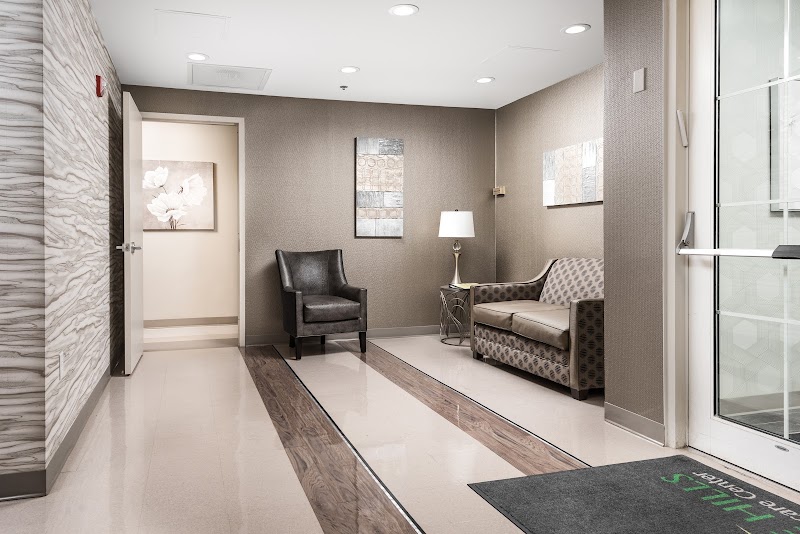
How is Westgate Hills Rehab & Healthcare Ctr Staffed?

CMS rates WESTGATE HILLS REHAB & HEALTHCARE CTR's staffing level at 1 out of 5 stars, which is much below average compared to other nursing homes. Staff turnover is 54%, compared to the Maryland average of 46%. RN turnover specifically is 61%, which is notably high. RNs provide skilled clinical oversight, so turnover in this role can affect medical care quality.

What Have Inspectors Found at Westgate Hills Rehab & Healthcare Ctr?

State health inspectors documented 64 deficiencies at WESTGATE HILLS REHAB & HEALTHCARE CTR during 2018 to 2025. These included: 64 with potential for harm. While no single deficiency reached the most serious levels, the total volume warrants attention from prospective families.

Who Owns and Operates Westgate Hills Rehab & Healthcare Ctr?

WESTGATE HILLS REHAB & HEALTHCARE CTR is owned by a for-profit company. For-profit facilities operate as businesses with obligations to shareholders or private owners. The facility is operated by MARQUIS HEALTH SERVICES, a chain that manages multiple nursing homes. With 120 certified beds and approximately 112 residents (about 93% occupancy), it is a mid-sized facility located in BALTIMORE, Maryland.
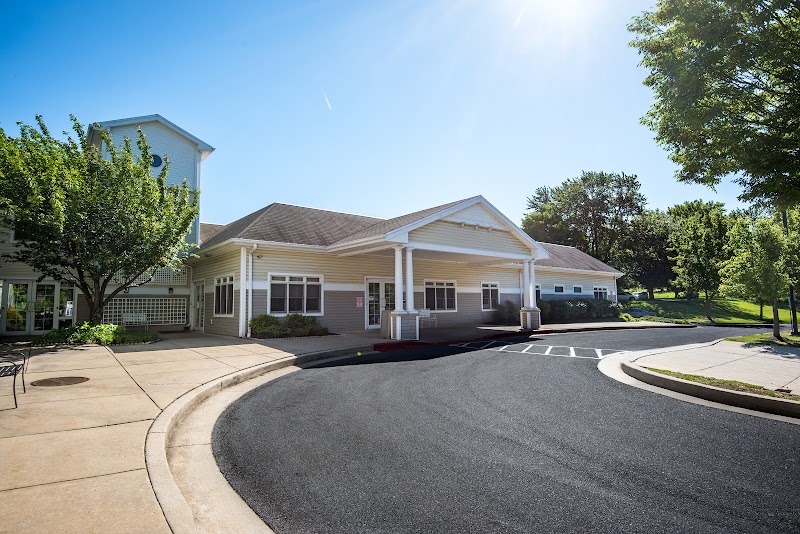
How Does Westgate Hills Rehab & Healthcare Ctr Compare to Other Maryland Nursing Homes?

Compared to the 100 nursing homes in Maryland, WESTGATE HILLS REHAB & HEALTHCARE CTR's overall rating (2 stars) is below the state average of 3.0, staff turnover (54%) is near the state average of 46%, and health inspection rating (3 stars) is at the national benchmark.

What Should Families Ask When Visiting Westgate Hills Rehab & Healthcare Ctr?

Based on this facility's data, families visiting should ask: "Can you walk me through typical staffing levels on day, evening, and night shifts?" "Can I visit during a mealtime to observe dining assistance and food quality?" "How do you handle medical emergencies, and what is your hospital transfer rate?" "Can I speak with family members of current residents about their experience?" These questions are particularly relevant given the below-average staffing rating.

Is Westgate Hills Rehab & Healthcare Ctr Safe?

Based on CMS inspection data, WESTGATE HILLS REHAB & HEALTHCARE CTR has a clean safety record: no substantiated abuse findings (meaning no confirmed cases of resident harm), no Immediate Jeopardy citations (the most serious violation level indicating risk of serious injury or death), and is not on the Special Focus Facility watch list (a federal program monitoring the lowest-performing 1% of nursing homes). The facility has a 2-star overall rating and ranks #100 of 100 nursing homes in Maryland. While no facility is perfect, families should still ask about staff-to-resident ratios and recent inspection results during their visit.

Do Nurses at Westgate Hills Rehab & Healthcare Ctr Stick Around?

WESTGATE HILLS REHAB & HEALTHCARE CTR has a staff turnover rate of 54%, which is 8 percentage points above the Maryland average of 46%. Moderate turnover is common in nursing homes, but families should still ask about staff tenure and how the facility maintains care continuity when employees leave.

Was Westgate Hills Rehab & Healthcare Ctr Ever Fined?

WESTGATE HILLS REHAB & HEALTHCARE CTR has no federal fines on record. CMS issues fines when nursing homes fail to meet care standards or don't correct problems found during inspections. The absence of fines suggests the facility has either maintained compliance or corrected any issues before penalties were assessed. This is a positive indicator, though families should still review recent inspection reports for the full picture.

Is Westgate Hills Rehab & Healthcare Ctr on Any Federal Watch List?

WESTGATE HILLS REHAB & HEALTHCARE CTR is not on any federal watch list. The most significant is the Special Focus Facility (SFF) program, which identifies the bottom 1% of nursing homes nationally based on persistent, serious quality problems. Not being on this list means the facility has avoided the pattern of deficiencies that triggers enhanced federal oversight. This is a positive indicator, though families should still review the facility's inspection history directly.