AUTUMN LAKE HEALTHCARE AT CROFTON
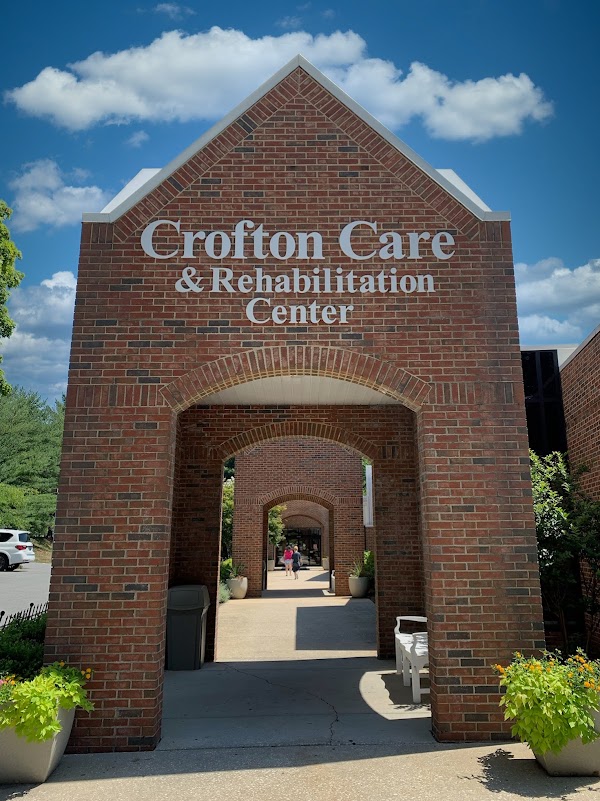
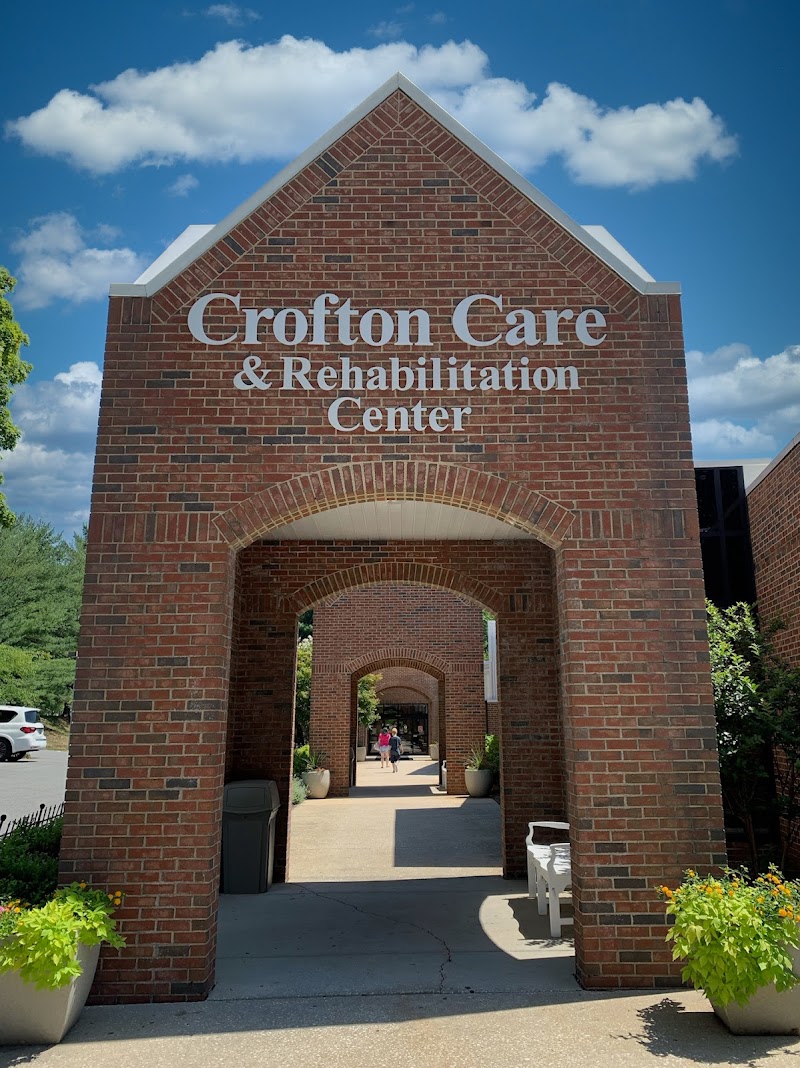
2131 DAVIDSONVILLE ROAD, CROFTON, MD 21114 (410) 721-1000
For profit - Limited Liability company 180 Beds AUTUMN LAKE HEALTHCARE Data: November 2025
Trust Grade
70/100
#56 of 219 in MD
Last Inspection: February 2024

Within standard 12-15 month inspection cycle. Federal law requires annual inspections.

Overview

Autumn Lake Healthcare at Crofton has received a Trust Grade of B, indicating it is a good choice among nursing homes. It ranks #56 out of 219 facilities in Maryland, placing it in the top half, and #5 out of 13 in Anne Arundel County, meaning only four local options are better. The facility is improving, with issues decreasing from 13 in 2024 to just 3 in 2025, although the staffing rating is concerning, with only 2 out of 5 stars and a 46% turnover rate, which is average for Maryland. Notably, there have been alarming incidents, including a staff member allegedly forcing medications on a resident who refused them, and failures to address critical health concerns for other residents, highlighting a need for better oversight. Despite these weaknesses, the absence of fines is a positive sign, and the facility does have good health inspection ratings overall.

Trust Score
B
70/100
In Maryland
#56/219
Top 25%
Safety Record
Low Risk
No red flags
Inspections
Getting Better
13 → 3 violations
Staff Stability
⚠ Watch
46% turnover. Above average. Higher turnover means staff may not know residents' routines.
Penalties
✓ Good
No fines on record. Clean compliance history, better than most Maryland facilities.
Skilled Nurses
⚠ Watch
Each resident gets only 22 minutes of Registered Nurse (RN) attention daily — below average for Maryland. Fewer RN minutes means fewer trained eyes watching for problems.
Violations
⚠ Watch
27 deficiencies on record. Higher than average. Multiple issues found across inspections.
★★★★☆
4.0
Overall Rating
★★☆☆☆
2.0
Staff Levels
★★★★☆
4.0
Care Quality
★★★★☆
4.0
Inspection Score
Stable
2024: 13 issues
2025: 3 issues

The Good

  • 4-Star Quality Measures · Strong clinical quality outcomes
  • Full Sprinkler Coverage · Fire safety systems throughout facility
  • No fines on record

Facility shows strength in quality measures, fire safety.

The Bad

Staff Turnover: 46%

Near Maryland avg (46%)

Higher turnover may affect care consistency

Chain: AUTUMN LAKE HEALTHCARE

Part of a multi-facility chain

Ask about local staffing decisions and management

The Ugly 27 deficiencies on record

Sept 2025 3 deficiencies
CONCERN (D) 📢 Someone Reported This

A family member, employee, or ombudsman was alarmed enough to file a formal complaint

Potential for Harm - no one hurt, but risky conditions existed

Free from Abuse/Neglect (Tag F0600)

Could have caused harm · This affected 1 resident

Based on record review and staff interview, it was determined that the facility failed to protect a resident from abuse. This was evident for 1 (Resident #199) out of 12 residents reviewed for abuse. ...

Read full inspector narrative →
Based on record review and staff interview, it was determined that the facility failed to protect a resident from abuse. This was evident for 1 (Resident #199) out of 12 residents reviewed for abuse. The findings include: On 9/24/2025 at 10:45 AM, a review of Facility Reported Incident #311885 was conducted. The incident was in regard to an allegation of Employee to Resident abuse, where Staff #35 was alleged to have shoved incorrect medications into Resident #199's mouth despite the resident refusing the medication. On 9/24/2025 at 11:29 AM, a review of the Resident #199's progress notes was conducted. In the Provider notes from 2/28/2025 at 2:42 PM, the provider stated, The patient is being evaluated for a follow-up regarding a medication administration error. It was reported that the patient inadvertently received losartan and gabapentin. On 9/24/2025 at 11:38 AM, a review of the witness statement was conducted. The witness, Staff #36, stated that they witnessed Resident #199 yelling at Staff #35, stating Im not taking this, what are you giving me. I don't take that medication. Staff #36 then witnessed Staff #35 put a spoon in Resident #199's mouth while the resident was yelling, what are you giving me, I should not have taken that. Staff #36 then asked Staff #35 what medications were given to Resident #199. Staff #35 stated that they gave the resident Gabapentin and Losartan. Staff #36 told Staff #35 that Resident #199 does not take those medications and that they made a medication error. On 9/24/2025 at 12:30 PM, a surveyor interviewed the Director of Nursing (DON) regarding a finding of substantiated abuse. The surveyor noted the finding was based on a witness's statement. The DON questioned how the incident could be considered abuse without proof of forceful medication administration. The surveyor clarified that the resident's refusal of the medication, followed by its administration, constituted abuse.
CONCERN (D) 📢 Someone Reported This

A family member, employee, or ombudsman was alarmed enough to file a formal complaint

Potential for Harm - no one hurt, but risky conditions existed

Quality of Care (Tag F0684)

Could have caused harm · This affected 1 resident

**NOTE- TERMS IN BRACKETS HAVE BEEN EDITED TO PROTECT CONFIDENTIALITY** Based on record reviews and staff interviews, it was determined that the facility failed to 1.) initiate treatment for a residen...

Read full inspector narrative →
**NOTE- TERMS IN BRACKETS HAVE BEEN EDITED TO PROTECT CONFIDENTIALITY** Based on record reviews and staff interviews, it was determined that the facility failed to 1.) initiate treatment for a resident who reported a new clinical concern, 2.) ensure that a medication was available for a resident upon admission since the resident could not eat without the medication, 3.) follow physician orders for blood pressure (BP) measurements. This was evident for 3 resident (Resident #1, #196, and #176) out of 11 residents reviewed during the facility's recertification survey. The findings include: 1.) On 09/18/2025 at 11:54 AM, during an interview with Resident #1, the resident stated that he/she had crusts in the eyes which were also itchy, and that this concern had been reported to a nurse. On 09/22/2025 at 1:35 PM, during an interview with Licensed Practical Nurse (LPN #13), when asked if she was aware of the resident's complaint of itchy eyes with crusting, she stated that the resident had informed her on 09/18/2025 and she had told the attending physician (Staff #26). When asked about documentation, she stated she did not document the concern because the attending physician was scheduled to see the resident. When asked if she followed up, she stated she did not because the physician came in late and had said she would see the resident. LPN #13 acknowledged she should have documented the issue in the electronic health record as a reminder to other staff. On 09/22/2025 at 2:01 PM, during an interview with the attending physician (Staff #26), when asked if she was aware of the resident's complaint of crusting and itching in the eyes, she stated she was not aware. She reported that when she saw the resident on 09/18/2025, the resident had no complaints, and she did not observe redness or irritation in the eyes. She stated the only observation was that the resident appeared tired, which the nurse had reported as baseline for the resident. She added that she was planning to see the resident again on 09/22/2025. On 09/23/2025 at 8:48 AM, review of Resident #1's medical record showed a new order by Staff #26 dated 09/22/2025: “Clear Eyes Adv Dry & Itchy Relief Ophthalmic Solution 0.25% (Glycerin – Ophth Lubricant): Instill 1 drop in left eye three times a day for 7 days for dry, itchy left eye. No erythema: no drainage noted.” On 09/23/2025 at 9:02 AM, during an interview with the Unit Manager (Staff #24), when asked about the expectation when residents report a clinical concern or complaint, she stated that the nurse should address the concern by gathering information, informing the provider, and following up with the physician. On 09/23/2025 at 9:33 AM, during an interview with the Director of Nursing (DON), when asked about expectations regarding residents' clinical concerns or complaints, she stated that the nurse should assess the resident and notify the physician. When asked if documentation was required, she stated that the assessing nurse should document the concern in the electronic record. When informed about the concern regarding delay in treatment and failure to document, she agreed it was a concern and stated staff education regarding prompt attention to resident's clinical concern and documentation would be provided. 2.) The pancreas is an organ in the body that aids in digestion by secreting enzymes (protease, lipase, and amylase) to break down the foods. ZenPep is a medication with the active ingredients of lipase, amylase, and protease to aid with digestion when a person's pancreas isn't functioning properly. The medication is prescribed for a person to take each time they eat food. On 11/14/24 a complaint was received by the State Agency (SA) stating that Resident #196 was admitted to the facility and left on 2nd day because the facility did not have his/her medication and the resident was unable to eat. A medical record review for Resident #196 on 9/24/25 at 9:56 AM revealed under the census tab that the resident was admitted [DATE] and left the next day. A review of the resident's discharge summary from the acute care hospital revealed the resident was ordered Pancrelipase 2 capsules with each meal and then there was a second order for Pancrelipase 1 capsule with snacks. According to the summary, the resident was diagnosed with type 2 diabetes. A review of the physician's orders revealed an order for Zenpep (same medication as Pancrelipase) 2 capsules with meals dated 11/12/24 and a second order for Zenpep 1 capsule as needed with snacks dated 11/12/24. The medication treatment record (MAR) revealed these medications had not been given while the resident was at the facility. There was a progress note dated 11/13/24 at 9:26 AM that noted the resident was “displeased” with his/her stay at the facility and was going home against medical advice. The resident's family member was going to pick them up at 2:00 PM. A note on 11/13/24 at 10:26 AM revealed facility staff called the family asking them to bring the medication to the resident. On 9/24/25 at 11:54 AM and interview with the Director of Nursing (DON) revealed Resident #195 arrived at the facility 11/12/24 at 8:00 PM and left the next day at 2:30 PM. She reported that the staff who review admissions would not check to see if every single medication was available at the pharmacy prior to admission. She confirmed that the resident was not able to eat the entire time s/he was at the facility because they did not have the Zenpep as ordered. She reported that the day shift nurse started was trying to get the medication at 10:30 AM which was 2 ½ hours after breakfast was served. She stated that this was a reasonable timeframe because the day shift nurse had determined it was missing that morning during the first medication pass. When family told the nurse they were coming to get the resident at 2:30 PM, no further efforts were made to get the medication for the resident. The resident was a diabetic and had not been able to eat the 19 hours s/he was at the facility. An interview with Licensed Practical Nurse (LPN) #43 on 9/24/25 at 12:56 PM revealed that the nurses received a fax from the pharmacy when a resident's medications were not available. She stated that when it was a new admission the pharmacy would fax the notice prior to delivering the resident's other medications. She reported that the fax was sent to the unit where the resident resided and all the staff have access to the fax machine. They check the fax machine periodically throughout their shift. She confirmed that they were notified by the pharmacy right away when a medication was not available. She stated this prompted the nurse to follow up with the physician or nurse practitioner. A review of Resident #196's closed medical record on 9/24/25 at 1:40 PM revealed that the pharmacy faxed a notice that Zenpep was not available and asking for a dose change on 11/12/124 at 10:07 PM. However, there was no evidence in the record that this was followed up on. Furthermore, there was a form titled, “Release of Responsibility for Discharge Against Medical Advice was signed by the resident on 11/13/24 and s/he noted at the bottom that it was not against medical advice the physician has been in since [the resident] moved in and no medication and no food. A subsequent interview with the DON on 9/25/25 at 10:10 AM revealed she was not aware of the fax that was sent by the pharmacy the evening of the admission. She acknowledged the concerns. On 9/25/25 at 11:51 AM the concerns were reviewed with the Nursing Home Administrator. 3.) Hemodialysis is a treatment that helps remove waste products and excess fluid from the blood when the kidneys are not functioning properly. An arteriovenous (AV) fistula or AV graft is a permanent surgical connection between an artery and a vein, created in a patient's arm, to provide reliable access for hemodialysis. During an interview on 9/18/2025 at 11:57 AM with Resident #176, they stated to the surveyor that they receive hemodialysis (HD) at the facility and currently have a HD catheter in place for dialysis access on the right side of their chest. Resident #176 also stated that they had an old Arteriovenous (AV) fistula in their left arm and recently had surgery to place a new AV graft in their right arm. A sign was observed by the surveyor posted above the resident's bed that stated, “No procedures in resident left or right arm take BP on either bilateral lower extremity.” A medical record review of Resident #176 was conducted on 9/22/2025 at 9:31 AM. Record review revealed that Resident #176 had a right internal jugular (IJ) catheter that was actively being used for dialysis and had recently had an AV graft placed in their right upper extremity on 7/28/2025. Resident #176 also had two orders in their medical chart initiated on 7/30/2025: 1) No Procedures to RIGHT and LEFT arm every shift for Dialysis Access Take Blood pressure on bilateral lower extremity (BLE). 2) No vascular access (blood work) or blood pressure should be permitted on the Right and Left arm every shift. Further medical record review of Resident #176's vital signs showed that since 7/30/2025, facility staff had documented a total of 27 BP measurements in either Resident #176's left or right arm. Resident #176 was interviewed by surveyor on 9/23/2025 at 1:50 PM. When asked if facility staff performed BP measurements in their arms, Resident #176 stated that they make sure it is never their right arm, but facility staff use their legs and sometimes their left arm for BP measurements. On 9/24/2025 at 9:10 AM, Resident #176's record review revealed that Licensed Practical Nurse (LPN) #21 documented Resident #176's BP had been taken on their right arm that day at 8:35 AM. Resident #176 was interviewed on 9/25/2025 at 9:30 AM and stated to the surveyor that the facility staff had placed the BP cuff that morning on their left arm. On 9/24/2025 at 10:50 AM, LPN #21 was interviewed by surveyor and stated that she had used Resident #176's left arm for BP measurement. LPN #21 was informed by surveyor that she had documented in the resident's chart that she used Resident 176's right arm. LPN #21 stated that it was a mistake and would change the documentation to the left arm. Surveyor also asked LPN #21 if she was aware that Resident #176 had orders in their chart not to use either arm for BP measurements, and that there was a sign posted above Resident #176's bed informing staff not to use either of Resident #176's arm for BP measurements. LPN #21 stated to surveyor that she did not. On 9/24/2025 at 11:00 AM, Registered Nurse (RN) #20, the Unit Manager was interviewed and informed about the surveyor findings. RN #20 stated they were not aware BP measurements were being done on Resident #176's left arm and stated that her expectation is that staff follows orders. On 9/25/2025 at 8:53 AM, the Director of Nursing (DON) was made aware of surveyor concerns.
CONCERN (D) 📢 Someone Reported This

A family member, employee, or ombudsman was alarmed enough to file a formal complaint

Potential for Harm - no one hurt, but risky conditions existed

Deficiency F0760 (Tag F0760)

Could have caused harm · This affected 1 resident

Based on record review and staff interviews, it was determined that the facility failed to prevent a significant medication error. This was evidenced in 1 (Resident #199) out of 6 residents reviewed f...

Read full inspector narrative →
Based on record review and staff interviews, it was determined that the facility failed to prevent a significant medication error. This was evidenced in 1 (Resident #199) out of 6 residents reviewed for medications. The findings include: On 9/24/2025 at 10:45 AM, a review of Facility Reported Incident #311885 was conducted. The incident was in regard to an allegation of Employee to Resident abuse, where Staff #35 was alleged to have shoved incorrect medications into Resident #199's mouth despite the resident refusing the medication. 9/24/2025 at 11:20 AM, an interview with the Director of Nursing (DON) was conducted. When asked about the facility's outcome of incident #311885, the DON stated that the facility determined the medication error to be substantiated and the alleged abuse to be inconclusive. On 9/24/2025 at 11:29 AM, a review of Resident 199's progress notes was conducted. In the Provider notes from 2/28/2025 at 2:42 PM, the provider stated, The patient is being evaluated for a follow-up regarding a medication administration error. It was reported that the patient inadvertently received losartan [100 mg] and gabapentin [100 mg]. A comprehensive investigation has been initiated to examine the circumstances surrounding this medication administration error. Educational sessions have been conducted with both nursing staff and medical aides to ensure they recognize the potential side effects associated with the inadvertently administered medications. Primary symptoms to monitor related to losartan include hypotension and renal failure. In relation to gabapentin, the key signs to observe include the presence of hallucinations, excessive somnolence, altered mental status, excessive lethargy or fatigue, malaise, and generalized muscle weakness. The Director of Nursing has been apprised of the findings. A thorough investigation is currently underway to assess the systems involved. Losartan is a medication used to lower blood pressure. Gabapentin is an anticonvulsant medication used to treat seizures and nerve pain. On 9/24/2025 at 11:38 AM, a review of the witness statement was conducted. The witness, Staff #36, stated that they witnessed Resident #199 yelling at Staff #35, stating Im not taking this, what are you giving me. I don't take that medication. Staff #36 then witnessed Staff #35 put a spoon in Resident #199's mouth while the resident was yelling, what are you giving me, I should not have taken that. Staff #36 then asked Staff #35 what medications were given to Resident #199. Staff #35 stated that they gave the resident Gabapentin and Losartan. Staff #36 told Staff #35 that Resident #199 does not take those medications and that they made a medication error.
Feb 2024 13 deficiencies
CONCERN (D)

Potential for Harm - no one hurt, but risky conditions existed

Deficiency F0554 (Tag F0554)

Could have caused harm · This affected 1 resident

Based on observation, medical record review, and interviews it was determined the facility failed to document the interdisciplinary team assessed and deemed appropriate a resident to self-administer m...

Read full inspector narrative →
Based on observation, medical record review, and interviews it was determined the facility failed to document the interdisciplinary team assessed and deemed appropriate a resident to self-administer medication. This deficient practice was evidenced in 1 (#102) of 1 resident who was allowed to self-administer medication during the survey. The findings include: On 02/06/24 at 11:08 am during observation rounds the surveyor observed Resident #102 in his/her room sitting in a chair next to the bed. The bedside table was in front of the resident and the observed a bottle of medication on the bedside table. When asked about the medication, the resident verbalized taking the medication with meals. On 02/09/24 at 8:22 am the surveyor received a copy of thee Resident Self-Administration of Medication policy from Director of Nursing #2. A review of the policy revealed the policy indicated the interdisciplinary team's assessment of the resident's capacity to self-medicate be recorded on the Medication Self Administration Assessment in the resident's medical record. On 02/09/24 at 10:36 am a review of Resident #102's paper medical record located on Unit 1 revealed there was not a Medication Self Administration Assessment to review in the medical record. At 11:14 am Unit Manager # 31 verbalized for a resident to self-medicate their BIMS (Brief Interview for Mental Status) score is assessed to see if the resident is capable to self-medicate and the nursing staff must speak with the physician. If nursing sees signs that indicate the resident is not able to self-medicate, the nurse will administer the medication. There is not a special form to complete for determination. On 02/09/24 at 11:23 pm a review of Resident #102's medication administration record revealed the resident had been self-administering a medication since 02/02/24 at 5:00 pm per physician order. There was not a Medication Self Administration Assessment for the surveyor to review in the electronic medical record. On 02/12/24 at 10:35 am the Director of Nursing #2 was made aware Resident #102 did not have a Medication Self-Administration Assessment in the electronic medical record or the paper chart on the unit. Director of Nursing #2 verbalized the physician assessed the resident as being competent to self-administer medications but the nursing staff must have forgotten to complete the assessment.
CONCERN (D)

Potential for Harm - no one hurt, but risky conditions existed

Deficiency F0570 (Tag F0570)

Could have caused harm · This affected 1 resident

Based on record review and interview it was determined that the facility failed to ensure the surety bond covered the financial assets of the residents who finances they manage. This deficient practic...

Read full inspector narrative →
Based on record review and interview it was determined that the facility failed to ensure the surety bond covered the financial assets of the residents who finances they manage. This deficient practice was discovered during the survey. The findings include: On 02/14/24 at 1:30 pm the surveyor received a copy of the resident funds balance which was over $50,000. Review of the facility's surety bond certificate revealed the certificate was effective 08/01/23 - 08/01/24. The Surety Bond's amount was $50,000, which was less than the required amount to secure the residents' funds. On 02/14/24 at 1:38 pm during an interview with Business Office Manager #37 the surveyor reported the surety bond did not cover the number of finances in the residents' accounts. Business Office Manager #37 verbalized the facility started managing more resident accounts and the amount exceeded the surety bond. In December 2023 they had the correct amount insured.
CONCERN (D)

Potential for Harm - no one hurt, but risky conditions existed

Safe Environment (Tag F0584)

Could have caused harm · This affected 1 resident

**NOTE- TERMS IN BRACKETS HAVE BEEN EDITED TO PROTECT CONFIDENTIALITY** Based on observation and interviews it was determined that the facility staff failed to maintain the building in good repair and...

Read full inspector narrative →
**NOTE- TERMS IN BRACKETS HAVE BEEN EDITED TO PROTECT CONFIDENTIALITY** Based on observation and interviews it was determined that the facility staff failed to maintain the building in good repair and failed to maintain a comfortable homelike environment for residents. This deficient practice was evident in 3 resident rooms and 1 shower room discovered during the survey. The findings include: On 02/06/24 at 10:56 am during observation rounds while in room [ROOM NUMBER] the surveyor observed a hole in the wall above the electrical outlet behind bed B; the phone was on the floor behind the bedside table, a bottle of lotion was under the bed, waste was on the floor on the left side of the bed, and a used and unlabeled urinal rested on the upper left bed rail. Admissions Coordinator #12 confirmed the surveyor's findings. On 02/06/24 at 11:08 am while in room [ROOM NUMBER], the surveyor observed warping paint near the trim in the bathroom which was a shared bathroom with the residents in between room [ROOM NUMBER]. On 02/06/24 at 11:24 am during the continuation of observation rounds the surveyor observed the baseboard behind 203-B was not fully attached to the wall and cement was exposed; the corner of the wall near the air conditioner unit was partially detached. The standing fan near the foot of bed A was filled with dust. At 11:39 am Unit 2 Manager #13 confirmed the surveyor's findings. On 02/06/24 at 11:45 am the surveyor observed a piece of metal hanging down from the middle of the ceiling in Shower room [ROOM NUMBER] on Unit 1. On 02/09/24 at 10:39 am GNA #53 confirmed the surveyor's findings. 02/14/24 02:32 PM during an interview with Maintenance Director #40, he/she verbalized having a weekly, monthly, bi-weekly semi-annual and quarterly maintenance schedule. The resident rooms are checked every week; he/she goes and glances around the residents' rooms to check for deficiencies and problems. The rooms on Unit 1 were checked last week. The hole in the wall was discovered and they are working on repairing the hole. The staff are supposed to report maintenance problems verbally or by documenting the problem in the maintenance book. Director #40 usually follows up with the technician to make sure the maintenance issues were resolved.
CONCERN (D) 📢 Someone Reported This

A family member, employee, or ombudsman was alarmed enough to file a formal complaint

Potential for Harm - no one hurt, but risky conditions existed

Report Alleged Abuse (Tag F0609)

Could have caused harm · This affected 1 resident

Based on record review and interview it was determined the facility staff failed to notify the state agency of an alleged abuse case within the allotted 2-hour reporting window. This deficient practic...

Read full inspector narrative →
Based on record review and interview it was determined the facility staff failed to notify the state agency of an alleged abuse case within the allotted 2-hour reporting window. This deficient practice was evidenced in 1 of 2 facility reported incident's reviewed during the survey. The findings include: On 02/18/24 at 5:37 pm a review of the facility's investigation of MD00202068 revealed that on 01/31/24 at 8:30 am it was reported to Administrator #1 and that a GNA threw a cup of lemonade in Resident #52's face. Further review of the self-report form submitted to the state agency revealed the alleged incident was reported to the state agency on 01/31/24 at 11:10 am, which was outside of the allotted 2-hour reporting window. On 02/18/24 at 7:09 pm a review of the facility's abuse policy revealed that on page 4 Section VII Reporting Abuse Section A 1. Reporting of all alleged violations to the Administrator, state agency, adult protective services and to all other required agencies with specified timeframes. (a) Immediately, but not later than 2 hours after the allegation is made, if the events that cause the allegation involve abuse or results in serious bodily injury. On 02/20/24 at 11:15 am during a brief interview with Director of Nursing #2 the surveyor asked what is the timeframe that an alleged allegation of abuse should be reported to the state agency. The DON responded, the initial needs to be reported within 2 hours. The DON was made aware that the allegation of abuse for Resident #52 was not reported with 2 hours. The DON verbalized thinking the allegation was reported within two hours.
CONCERN (D)

Potential for Harm - no one hurt, but risky conditions existed

Comprehensive Care Plan (Tag F0656)

Could have caused harm · This affected 1 resident

(2) On 2/7/24 at 11:46 AM, the surveyors went to Resident #154's room to find the resident grimacing and complaining of pain. At the nurse's station, the surveyors reported to Unit Manager #15, that t...

Read full inspector narrative →
(2) On 2/7/24 at 11:46 AM, the surveyors went to Resident #154's room to find the resident grimacing and complaining of pain. At the nurse's station, the surveyors reported to Unit Manager #15, that the resident was in pain, and she then informed the resident's nurse, Licensed Practical Nurse (LPN) #28. The surveyors observed LPN #28 walking around the corner toward Resident #154's room. The medical abbreviation PRN stands for 'pro re nata,' which means that the administration of medication is not scheduled and administered at prescribed times, but instead, the medication is taken on an as needed basis. On 2/7/24 at 2:35 PM, the surveyors observed LPN #28 going into Resident #154's room with a medicine cup. When he came out of the room, the surveyors asked what medication he just administered to the resident. He stated the resident was given Morphine for pain, which was a scheduled medication the resident received every 8 hours, and this was their 2:00 PM dose. When questioned further, he reported Resident #154 was not ordered for any additional scheduled or PRN pain medication(s). The surveyor reviewed Resident #154's medical record on 2/8/24 at 12:23 PM. The review revealed that Resident #154's care plan had the following interventions that were initiated on 1/27/24: 1. Administer my pain medications as directed. If adjustments need to be made, contact the MD/CRNP/PA as appropriate for further orders. 2. Document the quality and severity of my pain rated on 1-10 scale and also monitor for non-verbal signs and symptoms of pain, pre and post dose. 3. Evaluate the effectiveness of pain interventions (medication, non-medication) every shift and with administration of pain medication. Call MD/CRNP/DNP/PA for further medication orders if interventions are ineffective at maintaining optimal control. In the column on the care plan which lists the position of the person(s) responsible for the aforementioned interventions it stated Nursing. In an interview with LPN #28, on 2/9/24 at 9:53 AM, he stated for residents receiving pain medication, the effects of the pain medications are evaluated by his reassessment of the resident. He stated he reassesses the resident about a half hour to an hour after administering the pain medication by asking their post medication pain score. If a resident's pain persists or recurs, he stated he checks when the resident is next due for any additional pain medications. Furthermore, he stated, he tries non-pharmacological interventions such as relaxation, repositioning, distraction such as turning on the TV, and then notifies the doctor. LPN #28 stated that all interventions he implements, pharmacological or non-pharmacological, are documented in a progress note and that if an intervention is not in the resident's progress notes then it was not implemented. Upon review of the electronic health record's (EHR) Progress Notes on 2/8/24 at 10:45 AM, there was no documentation of of an assessment, any additional pharmacological nor non-pharmacological interventions, or any notification to the doctor from LPN #28 on 2/7/24 between the time the resident's pain was initially reported to LPN#28 at 11:46 AM and 2:47 PM when Resident #154 received their 2:00 PM dose of morphine sulfate. On 2/9/24 at 2:05 PM, in an interview with the DON, when asked about the expectation of nursing staff when a resident is experiencing pain, she stated, if the resident is having breakthrough pain that is not being controlled by their scheduled pain medications, the pain regimen is no longer working. At that time, the nurse should notify the doctor, have a breakthrough pain medication ordered, and those actions should be documented in the medical record as a change in condition (CIC). On 2/16/24 at 10:25 AM, in an interview with LPN #28, the surveyors asked what he did when he went into Resident #154's room on 2/7/24 at 11:46 am, after Unit Manager #15, informed him that the resident was complaining of pain. LPN #28 was unable to recall this incident, but stated if a manager tells me a resident is in pain, I will see what scheduled or PRN pain medications are ordered and administer them. If the resident is not ordered any additional pain medications, I would notify the physician and get some orders for pain medications. When questioned further, LPN #28 stated, if the physician does not order anything, then I will document that. The DON and Administrator were made aware of all concerns at the time of survey exit on 2/20/24 at 5:00 PM. Based on observations, medical record review, and interview it was determined that the facility staff failed to (1) initiate a person-centered care plan in a timely manner for a resident who was receiving oxygen therapy and failed to (2) ensure a residents' care plan was implemented for a resident with complaints of pain. This deficient practice was evident in 1 (#309) of 2 residents observed with oxygen therapy and 1 (Resident #154) of 3 residents reviewed for pain management The findings include: A care plan is a guide that addresses the unique needs of each resident. It is used to plan, assess, and evaluate the effectiveness of the resident's care they receive in a facility. (1) On 02/06/24 at 10:45 am during observation rounds the surveyor observed Resident #309 in bed with 3 liters of oxygen via nasal cannula being administered. On 02/09/24 at 10:05 am review of Resident #309's electronic medical record revealed the facility staff failed to initiate a person-centered care plan for oxygen therapy for Resident #309 until the day of the start of the survey on 02/06/24. The care plan did not include the amount of oxygen the resident was ordered to receive and the target date on the care plan was 01/31/24. however the resident was not receiving oxygen at that time. A review of the resident's treatment administration record revealed that the resident was ordered oxygen 2 liters/min nasal cannula continuously on 02/02/24 at 11:41 am. The treatment was initially signed off the as being administered on the evening shift of 02/02/24 and up to the night shift of 02/08/24. On 02/09/24 at 11:00 am during an interview with Unit Manager #31 who verbalized if a resident is receiving oxygen therapy, the resident should have a care plan.
CONCERN (D)

Potential for Harm - no one hurt, but risky conditions existed

Deficiency F0657 (Tag F0657)

Could have caused harm · This affected 1 resident

Based on interviews and record review, it was determined that the facility failed to develop a person-centered care plan that was reviewed, revised, and implemented timely by an interdisciplinary team...

Read full inspector narrative →
Based on interviews and record review, it was determined that the facility failed to develop a person-centered care plan that was reviewed, revised, and implemented timely by an interdisciplinary team composed of individuals who had knowledge of the resident and his/her medical and psychosocial needs. This was evident for 2 (Resident #413 and #409) out of 2 residents reviewed during the survey. The findings include: 1). An initial screening on 2/6/2024 at 10:55 AM, found that Resident #413 had his/her eyes closed and the arms were crossed tightly over the chest. During the interview, the resident stated, I know I am getting depressed, because now I have a stool bag attached to me everywhere I go. Observation, 2/09/24 at 10:58 AM, found Resident #413 semi-sleeping with the television on. Later, during an interview, the resident stated, No one talked to me about the stool bag yet, I want to go home but I do not know how to take care of the stool bag which makes me sad. I did tell the staff. Record review, on 2/9/24 at 11:43 AM, revealed that Resident #413 was admitted to the facility, on 1/22/2024, after a long hospitalization for a complicated Ileostomy Formation and was also treated for aspiration pneumonia. Further review of the Social Worker Staff #35's notes, dated 2/8/2024 at 15:45 PM, revealed that Resident #413's family had requested that the resident needed to learn how to manage his/her Daily Ostomy Care. Ileostomy Formation is a surgical connection between an internal organ and the skin on the outside of a person's body. During ostomy surgery of the bowel, surgeons create an opening through the skin and muscle of the abdomen and bring the large intestine or small intestine through this hole. The surgeon then connects the intestine to the skin on the outside. After ostomy surgery, intestinal contents will leave the body through the stoma. A stoma has no muscle, so it cannot control the timing or flow of intestinal contents. In most cases, wearing a removable pouch, called an ostomy pouch or ostomy appliance, that is attached to the skin around a person's stoma to collect the intestinal contents. Daily Ostomy Care include the basic skills and information how to manage the ostomy: emptying and changing the pouch, how to order supplies, dietary and fluid guideline, potential complications, medications and managing gas or odor and have resources to contact. Additional record review of an initial psychiatric evaluation which was completed on 2/8/2024 by Staff #54, revealed that Resident #413 was depressed secondary to his/her recent hospital stay and stated that he/she did not feel good, I have to carry it (ostomy bag) everywhere I go. Staff #54 directed the following to improve the resident's sadness: teaching coping skills and developing positive thinking, participating in activities in the facility be distracted from aggravating symptoms and structuring socialization and providing structured activity of socialization and Activities of Daily living (ADL) care. However, there was no evidence that the care plan was revised with the above directions. Interview, on 2/13/24 at 9:58 AM, found Resident #413 was semi sleeping with the television on; the resident then opened his/her eyes and started engaging in a conversation with the surveyor. He/she stated, I am still waiting on the daily ostomy teaching in the whole nine yards. The resident also noted that no activity staff had visited. Staff #2 was made aware at the exit meeting of the above concerns on 2/16/2024 at 1:30 PM. 2) During an initial screening, on 2/7/2024 at 09:27 AM, Resident # 409 was calling out I feel a little shortness of breath. Observation of the situation for 3 minutes revealed that no staff came to assist the resident. The surveyor notified Unit Manager Staff #31. Staff #31 took a pulse oximeter and checked Resident #409's oxygen level. The resident's oxygen level had dropped to 89 percent on room air, which was not within normal limits. The normal oxygen level range is from 96 to 99 percent. Record review, on 02/09/24 at 11:00 AM, revealed that Resident #409 was admitted to the facility, on 2/6/24, with the diagnosis of bronchitis with low oxygen level, acute heart failure, and chronic lower back pain. Further record review revealed that physician Staff #55's oxygen order, dated 2/6/24, required to administrate two liters of oxygen per minute as needed when oxygen levels were less than 92 percent. On 2/8/24, physician Staff #55 changed the order to administer oxygen two liters per minute to continuously and to check every shift. Further review of administration notes, dated 2/7/2024, found that the resident's oxygen level was to be kept higher than 92 percent and the care plan included in an intervention with the same instruction to check the resident with a pulse oximeter and to maintain the oxygen level above 92 percent. Review, on 2/13/24 at 12:10 PM, of documented oxygen readings found that during the following shifts nursing staff failed to implement pulse oximeter checks to ensure that Resident #409's oxygen levels were above 92 percent on: 2/7/2024 evening shift 2/7/2024 night shift 2/8/2024 day shift 2/8/2024 night shift 2/9/2024 day shift 2/9/2024 day shift 2/10/2024 night shift 2/11/2024 day shift During an interview, on 2/13/24 at 1:26 PM, Unit manager Staff #31 was made aware of the above findings and that the facility staff failed to implement Resident #409's intervention of the care plan. During a phone interview, on 2/14/24 at 7:33 AM, physician Staff #55 stated that the nursing staff must follow the order to check the resident with the pulse oximeter every shift, Staff #55 added that this was the only way to ensure this resident's oxygen level stayed above 92 percent. During the exit meeting, on 2/16/2024 at 1:30 PM, Staff #2 was made aware that staff had failed to implement the above orders and care plan's intervention.
CONCERN (D)

Potential for Harm - no one hurt, but risky conditions existed

Deficiency F0658 (Tag F0658)

Could have caused harm · This affected 1 resident

Based on medical record review and interviews it was determined that the facility staff failed to ensure a dialysis resident had orders for the arteriovenous graft to be assessed according to nursing ...

Read full inspector narrative →
Based on medical record review and interviews it was determined that the facility staff failed to ensure a dialysis resident had orders for the arteriovenous graft to be assessed according to nursing professional standards. This deficient practice was evident in 1 (#102) of 1 resident record reviewed for graft orders. The findings include: An (AV) graft is a type of access used for hemodialysis treatments. The graft is usually placed in the arm. Hemodialysis is a procedure where a machine with a special filter is used to clean the blood. A thrill is a vibration caused by blood flowing through the fistula and can be felt by placing the fingers on the site of the graft. A bruit is a whooshing sound heard when a stethoscope is placed over the av graft which indicates the graft is patent. On 02/06/24 at 11:08 am during observation rounds the surveyor observed Resident #102 with a dressing to the left upper arm. The resident verbalized receiving dialysis treatments. On 02/08/24 at 2:23 pm a review of Resident #102's medication administration record (MAR) and treatment administration record (TAR) revealed the resident received dialysis treatment on Monday, Wednesday, and Friday. While reviewing the TAR the surveyor noticed there was no documentation to verify the resident arteriovenous graft was being assessed by the nursing staff. On 02/09/24 at 10:42 am during an interview with LPN #16 when asked whether Resident #102's AV graft is assessed he/she verbalized the AV graft assessment is documented when the resident goes to dialysis. There was no where to document on the TAR if the graft was assessed. On 02/09/24 at 11:00 am during an interview with Unit Manager #31 who verbalized, if a resident were receiving hemodialysis, an intervention would be on the care plan to assess the bruit and thrill every 8 hours. The documentation would be on the TAR. On 02/09/24 at 11:40 am during an interview with Director of Nursing (DON) #2 he/she was made aware Resident #102 did not have an order for the nurses to assess the bruit and thrill of the AV graft. DON #2 verbalized the resident should have an order and will check to make sure it was not overlooked.
CONCERN (D)

Potential for Harm - no one hurt, but risky conditions existed

Quality of Care (Tag F0684)

Could have caused harm · This affected 1 resident

(3) Review of Resident #15's medical record on 02/12/24 at 9:05 AM revealed that resident had a physician order for insulin injections two times a day with sliding scale. On 02/05/24 at 10:05 AM and ...

Read full inspector narrative →
(3) Review of Resident #15's medical record on 02/12/24 at 9:05 AM revealed that resident had a physician order for insulin injections two times a day with sliding scale. On 02/05/24 at 10:05 AM and at 9:53 PM the medication administration record revealed that Resident #15 received insulin injections without rotation of sites and had received the insulin injections in left arm. Review of the facility's policy and procedures for Administration of Injections on 02/16/24 at 11:30 AM revealed that for repeated subcutaneous injection sites, the sites are to be rotated. During interview on 02/16/24 at 11:45 AM with Director of Nursing she stated that insulin injection sites should be rotated and confirmed that Resident #15's injection sites were not being rotated per facility policy and procedure for administration of injections. (2) On 02/06/24 at 10:45 am during the surveyor's observation rounds Resident #309 was in bed and using his/her accessory muscles to breathe. The surveyor observed the resident on oxygen via nasal cannula and checked the oxygen concentrator which was set at 3 liters of oxygen. Occupational Therapy Assistant (OTA) #33 was also in the room to provide therapy but did not work with the resident at that time. OTA #33 left the room and walked down the hallway. The surveyor went to the nurse's station, checked the assignment sheet, and asked for the assigned nurse. The surveyor spoke with LPN #32 and made the nurse aware Resident #309 was having respiratory distress. On 02/09/24 at 9:40 am a review of Resident #309's medication administration record/treatment administration record (TAR) revealed the resident was ordered 2 liters of oxygen via nasal cannula. The order was not signed off yet by the nurse assigned to the resident on 02/09/24. On 02/09/24 at 11:16 am during a brief interview with Resident #309's assigned nurse LPN #32, when asked how many liters of oxygen the resident was ordered, LPN #32 verbalized 3 liters. On 02/09/24 at 11:40 am during an interview with Director of Nursing #2 the surveyor reported Resident #309 was ordered 2 liters of oxygen but was receiving 3 liters of oxygen. DON #2 verbalized the resident's order for oxygen was changed from 2 liters to 3 liters that morning. A review Resident #309's new order for oxygen revealed the order was created on 02/09/24 at 9:54 am which was after the surveyor observed Resident #309 receiving 3 liters of oxygen via nasal cannula. The surveyor observed Resident #309 receiving 3 liters of oxygen via nasal cannula on 02/06/24 at 10:45 am when the resident was ordered 2 liters of oxygen. On 02/12/24 at 9:45 am during an interview with OTA #33 when asked if a resident's condition has changed and the therapist is not able to work with the resident, what were they expected to do. OTA #33 verbalized typically they notify the nurse but Resident #309's condition was not out of the norm. When she spoke with the resident, he/she had the same cognitive level. OTA #33 verbalized finding the Geriatric Nursing Assistant (GNA) who he/she thought was the nurse and reported Resident #309 was not willing to participate and Resident #309's oxygen saturation was 97% when checked. On 02/12/24 at 11:21 am during an interview with Director of Rehabilitation #34 when asked what the expectation of the therapy staff is when a resident declines therapy and their physical status is not optimal for therapy. Director of Rehabilitation #34 verbalized the staff are supposed to notify him/her of any missed visits and the reason why. If a resident is not feeling good, the therapist would go back later and try again to provide the service. If Resident #309 was not feeling good for a while the expectation was to check the vitals before, during, and after the treatment. OTA #33 did follow-up with the therapist. Director of Rehabilitation verbalized OTA#33 was expected to follow-up with the nurse. Based on medical record review and interview with facility staff, it was determined that the facility failed to: (1) administer a medication timely as ordered by the physician for (Resident #215) (2) administer oxygen therapy according to the physician's order and failed to notify the assigned nurse of a resident's compromised respiratory status, and (3) follow rotation of injection sites for administration of insulin for (Resident #15). This was evident in 3 of 25 residents records reviewed for nursing staff following physician orders during the survey. The findings include: (1) The Pyxis is an automated medication dispensing system located inside the facility. Restless leg syndrome (RSL) is a condition characterized by a nearly irresistible urge to move the legs which may result in pain. RSL typically occurs while sitting or lying down. Review of Resident #215's record revealed the resident was admitted with diagnoses that included restless leg syndrome. The resident was cognitively impaired and was totally dependent on staff for care. Review of complaint MD00182723 and Resident # 215's medical record on 2/20/24 at 8:30am revealed a nurse's note dated 11/12/21 at 10:15am which revealed the resident's daughter was visiting and expressed concern regarding Resident #215's pain. The physician was contacted, and a new order was obtained for Dexamethasone 4mg (milligrams) given one tablet by mouth one time only for restless leg syndrome. According to the Physician order Sheet the order was transcribed at 10:30am on 11/21/21. Continued review of the medical record revealed a (MAR) Medication Administration Record which revealed the medication was signed off as being administered at 12:24pm, although the medication was in the facility pyxis system and could have been administered when the physician order was obtained at 10:30 AM. According to the MAR the resident pain level was 6 (moderately strong pain) when the medication was administered.
CONCERN (D)

Potential for Harm - no one hurt, but risky conditions existed

Medication Errors (Tag F0758)

Could have caused harm · This affected 1 resident

Based on resident medical record review, and staff interview it was determined the facility failed to ensure that a resident prescribed psychotropic drugs received gradual dose reductions in an effort...

Read full inspector narrative →
Based on resident medical record review, and staff interview it was determined the facility failed to ensure that a resident prescribed psychotropic drugs received gradual dose reductions in an effort to discontinue the medications. This was evident for 1 resident (#127) out of 7 residents reviewed during the survey. The findings include: Review of Resident #127's medical record on 02/15/2024 at 04:46 PM revealed that resident was prescribed Zoloft 100 mg daily by mouth for depression, Trazadone 50 mg daily by mouth for depression/sleep aid, and Buspirone 10 mg every eight hours by mouth for anxiety. There was no documentation in Resident #127's medical record that a gradual dose reduction attempt occurred for Resident (#127). Interview with Director of Nursing on 02/15/24 at 4:48 PM confirmed that there was no documentation in resident medical record that a gradual dose reduction attempt occurred for Resident (#127) for psychotropic medications. Interview with staff (#29) on 02/16/24 at 11:26 AM also confirmed that there was no documentation in resident medical record and stated that a gradual dose reduction did not occur for resident (#127) for psychotropic medications.
CONCERN (D)

Potential for Harm - no one hurt, but risky conditions existed

Deficiency F0761 (Tag F0761)

Could have caused harm · This affected 1 resident

Based on observations, interviews, and record review the facility failed to ensure that injectable immunization diluents and/or vials had matching expiration dates. Additionally, the facility failed t...

Read full inspector narrative →
Based on observations, interviews, and record review the facility failed to ensure that injectable immunization diluents and/or vials had matching expiration dates. Additionally, the facility failed to comply with its medication storage policy and procedures. This was found to be true for 6 out 6 varicella injectables located in the medication refrigerator #2 located on unit # 3. Additionally, six vials of Hepatitis B were found expired in medication refrigerator #1 located on unit # 3. The findings include: On 02.14.24 at 10:56 AM the surveyor interviewed staff Registered Nurse (RN)# 38. The surveyor found the temperature in the medication storage refrigerator #1 had a temperature of 29 degrees Fahrenheit which did not meet the facility's policy standard temperature range of 36-46 degrees. Six vials of Hepatitis B vaccine were found with expired dates for use and were dated 12.07.23 and unopened in the medication refrigerator #1. At 11:06 AM on 02.14.24 the surveyor found six vials of varicella injectables with non-matching dates of expiration for use in refrigerator #2. The DON was present to observe that one varicella diluent was dated 11.24.23 and the varicella powder was dated 09.29.23, and there were five examples of the vials of varicella with an expiration date of 08.01.24 and the container holding the vials was dated 01.24.24. On 02.14.24 at 1:10 PM The surveyor asked the DON when was the last time that the hepatitis and varicella were given to employees? DON stated that she would have the infection control nurse review the documentation for the administration for these two immunization medications. On 02.14.24 at 01:37 PM the DON provided evidence that no hepatitis or varicella (chicken pox vaccine ) were given during the past year. On 02.14.24 at 01:29 PM the surveyor requested the DON provide a copy of the pharmacy medication storage and labeling policy and the medication administration policy. On 02.15.24 at 07:39 AM the DON provided the surveyor with two policies; 1. Medication Administration with an implementation date of 12.14.22 and the Medication Storage Policy dated 12.14.22. and both were copyright by The Compliance Store, LLC . The facility failed to comply with its policies and procedures related to medication storage. These concerns were discussed with the administrative staff during the exit conference on 02.20.24 at 5:00 PM.
CONCERN (D)

Potential for Harm - no one hurt, but risky conditions existed

Deficiency F0838 (Tag F0838)

Could have caused harm · This affected 1 resident

Based on record review and interview it was determined that the facility failed to provide an updated and accurate facility assessment. This deficient practice was discovered during the survey The fin...

Read full inspector narrative →
Based on record review and interview it was determined that the facility failed to provide an updated and accurate facility assessment. This deficient practice was discovered during the survey The findings include: On 02/06/24 at 1:46 pm the surveyor received a copy of the facility assessment from Administrator #1. On 02/20/24 at 2:22 pm review of the facility assessment revealed the Facility Assessment was approved and reviewed and by the quality assurance committee on 08/11/23. The assessment was signed by Administrator #1. Further review of the facility assessment revealed the current Infection Preventionist was not added to the assessment. All the staff training/education and competencies were not added to the assessment. Also, the ethnic, cultural, and religious portion of the assessment did not indicate what services if any are offered by the facility. In the special care needs section it indicated dialysis services is offered by the facility. On 02/06/24 at 10:15 an Director of Nursing #2 verbalized they facility does not provide dialysis services directly. On 02/20/24 at 3:00 pm Administrator #1 verbalized the facility assessment was completed anally and updated as needed. When Administrator #1 was made aware the facility assessment was not updated to include the current IP, training and competencies of the staff, and specifics concerning resident preferences including ethnic, cultural, and religious considerations, he/she verbalized, the facility assessment would be updated in a timely manner to include the required information and the assessment will be reviewed by the QA committee.
CONCERN (D) 📢 Someone Reported This

A family member, employee, or ombudsman was alarmed enough to file a formal complaint

Potential for Harm - no one hurt, but risky conditions existed

Medical Records (Tag F0842)

Could have caused harm · This affected 1 resident

**NOTE- TERMS IN BRACKETS HAVE BEEN EDITED TO PROTECT CONFIDENTIALITY** Based on medical records review and interview and it was determined that the facility failed to document accurate and complete i...

Read full inspector narrative →
**NOTE- TERMS IN BRACKETS HAVE BEEN EDITED TO PROTECT CONFIDENTIALITY** Based on medical records review and interview and it was determined that the facility failed to document accurate and complete information in resident (#215's) clinical record. This occurred in 1 of 18 residents reviewed during the survey. The findings include: A medical record is simply a record of a resident's health and medical history. Consistent, current, and complete documentation in the medical record is an essential component of quality resident care. 1. Review of Resident #215's medical record revealed a diagnosis that included Chronic Renal Failure, Restless leg syndrome, Chronic obstructive pulmonary disease, and Polyneuropathy (unspecified). According to the medical record the resident was cognitively impaired. Review of the medical record on 2/20/24 at 10am revealed a Clinical Change in Condition -Hospital Transfer that documented Resident #215 was transferred to the hospital on [DATE] for a Blood urea nitrogen (BUN) of 24 mg/dl (normal reference range is (6-20mg/dl), and a Creatinine of 5.99 mg/dl (critical high), (the normal reference range is 0.76-1.27mg/dl), shortness of breath and uncontrolled pain. Continued review of the medical record revealed a Medical Laboratory Slip dated 11/12/21 which documented resident # 251's (BUN) as (142mg/dl) (critical high). On 2/20/24 at 3:30pm during an interview with the Director of Nursing she stated the documentation on the Clinical Change in Condition -Hospital Transfer form was incorrect. The correct BUN was (142mg/dl) which was a (critical high) based on the normal reference range. She stated that a copy of the lab report was sent with the resident to the hospital. 2. Review of complaint MD00182723 and Resident # 215's medical record on 2/20/24 at 10:30am revealed a late entry nurses noted dated 11/12/21 at 8:07am which documented the following: This [RN (Registered Nurse) staff # 31] met with the resident, resident reported having pain during the night and receiving Tylenol. The physician was notified and will be in this am to see the resident. The nurse administered Tylenol PRN (when needed). Continued review of the medical record revealed a MAR that was only signed off on 11/12/21 at 17:47 (5:47pm) for medication administration with no entry for Tylenol administration overnight. During an interview on 2/20/24 at 3:45pm, she stated that she did not remember the incident or the resident. The resident did not return to the facility.
CONCERN (D)

Potential for Harm - no one hurt, but risky conditions existed

Infection Control (Tag F0880)

Could have caused harm · This affected 1 resident

Based on observation and interviews it was determined that the facility staff failed to maintain infection control practices for a resident with a foley catheter. This deficient practice was evidenced...

Read full inspector narrative →
Based on observation and interviews it was determined that the facility staff failed to maintain infection control practices for a resident with a foley catheter. This deficient practice was evidenced in 1(#145) of two residents assessed for urinary catheters during the survey. The findings include: On 02/06/24 at 9:00 am during observation rounds the surveyor observed the Resident #145's Foley drainage bag hanging from the right side of the bed, onto the floor. The assigned nurse, LPN #10 was made aware. LPN#10 verbalized the foley drainage bag was on the floor because the bed was in the lowest position. On 02/09/24 at 8:01 am during an interview with Director of Nursing #2, when asked about the expectations of the staff to maintain infection control precautions when a resident has a Foley, he/she stated, The Foley bag should be in a dignity bag on the bed, but not on the floor. If there is an order for the bed to be low and locked, the Foley bag needs to be adjusted.
Mar 2019 6 deficiencies
CONCERN (D)

Potential for Harm - no one hurt, but risky conditions existed

Resident Rights (Tag F0550)

Could have caused harm · This affected 1 resident

Based on an interview with family member, who is the responsible party and the resident, the facility failed to honor the family whishes to change the bed linen of the resident in a timely manner. Thi...

Read full inspector narrative →
Based on an interview with family member, who is the responsible party and the resident, the facility failed to honor the family whishes to change the bed linen of the resident in a timely manner. This was evident for 1 out of 1 resident (R#292) reviewed. Findings Include: On 3/19/19 at 12:58 PM an interview was conducted with Resident # 292's daughter who is also the Responsible Party (RP). the daughter stated that on 3/18/19 she noticed a large amount of blood and drainage coming from fracture site. She asked the nurse to come in and check the dressing and to change the bed linen as it was quite soiled. This occurred during the afternoon of 3/18/19. The resident's linen was not changed until after 6 PM that evening. On the day of the interview with the surveyor on 3/19/19 at 12:58 PM, Resident # 292's daughter again asked the Geriatric Nursing Assistant, staff #4, at 8 AM to change her mother's (Resident # 292) bed linen, as there was some body fluid stain on the sheet. The daughter said that the GNA said nothing to her and has not gone into the room since. On 3-19-19 at 1 P.M. this surveyor spoke with the Unit Manager, staff #3, of the concern and showed the soiled linen to the Unit Manager. The Unit Manager spoke with the Geriatric Nursing Assistant (GNA), staff # 4. and asked her to change the linen now. The linen was changed and there were no other concerns.
CONCERN (D)

Potential for Harm - no one hurt, but risky conditions existed

Transfer Requirements (Tag F0622)

Could have caused harm · This affected 1 resident

Deficiency Text Not Available

Read full inspector narrative →
Deficiency Text Not Available
CONCERN (D)

Potential for Harm - no one hurt, but risky conditions existed

Transfer Notice (Tag F0623)

Could have caused harm · This affected 1 resident

Based on the medical record and facility interviews, it was determined that the facility staff failed to provide written notice to Resident #117 and the resident's Responsible Party, of a transfer out...

Read full inspector narrative →
Based on the medical record and facility interviews, it was determined that the facility staff failed to provide written notice to Resident #117 and the resident's Responsible Party, of a transfer out of the facility. This was evident for 1 out of 40 residents investigated during the survey process. The findings include: On 03/25/19 around 01:42 PM, Resident #117's medical record was reviewed for a recent hospitalization. On 2/21/19 the resident was found unresponsive with a blood pressure (BP) of 64/44. The doctor ordered that the resident be sent out to the hospital. During further review of the medical record, it was noted that there was no documentation that a written notice was given to the resident, and the Responsible Party (RP) regarding the reason for the resident's hospitalization
CONCERN (D)

Potential for Harm - no one hurt, but risky conditions existed

Deficiency F0625 (Tag F0625)

Could have caused harm · This affected 1 resident

Based on the medical record and staff interviews, the facility staff failed to provide required written notice for Resident #117, or the Resident's responsible party, of the bed hold policy during a t...

Read full inspector narrative →
Based on the medical record and staff interviews, the facility staff failed to provide required written notice for Resident #117, or the Resident's responsible party, of the bed hold policy during a transfer out of the facility. This was evident for 1 out of 1 residents investigated for hospitalization during the survey process. The findings include: On 03/25/19 around 01:42 PM, Resident #117's medical record was reviewed for a recent hospitalization. On 2/21/19 the resident was found unresponsive with a blood pressure (BP) reading of 64/44. The doctor ordered that the resident be sent out to the hospital. Review of the hospital transfer information in the resident's chart did not reveal that a bed hold policy was given to the resident prior to leaving the building. This policy educates the resident on whether a bed can be held during the resident's absence, and or if not, the possibility of having to privately pay to hold the resident's bed, until the resident returns.
CONCERN (D)

Potential for Harm - no one hurt, but risky conditions existed

Deficiency F0761 (Tag F0761)

Could have caused harm · This affected 1 resident

Based on observation of medication storage room and medication carts on March 25,2019 the facility failed to date medications that were opened on station 3 front certified medication aid (CMA) medicat...

Read full inspector narrative →
Based on observation of medication storage room and medication carts on March 25,2019 the facility failed to date medications that were opened on station 3 front certified medication aid (CMA) medication cart. This was evident for 1 out of 8 medication carts looked at for compliance. The findings include: On 3/25/19 at 12:40 PM 4 medication storage rooms were checked for compliance and 8 medication carts. On station #3, The front CMA (Certified Medication Aid) cart had 4 residents who did not have the dates when the medication was opened: Resident # 10 was ordered erythromycin ointment for bilateral eyes for the diagnosis of Blipharistis. There was no date when the ointment was opened. Resident # 96 was ordered systane liquid opth. drops ordered for each eye for the diagnosis of glaucoma. There was no date indicating when the systane eye drops were opened. Resident # 47 was ordered Refresh eye drops, 1 drop in each eye 3 times per day. There was no date when the Refresh eye drops were opened. Resident # 67 was ordered Lantanoprost opth. 1 drop in each eye for the diagnosis of glaucoma. There was no date when the Lantanoprost was opened. The Director of Nursing (DON) was present when the station 3 certified medication Aid cart was checked. The DON took the medication involved and verified that there was no date listed when the medication was opened.
CONCERN (D)

Potential for Harm - no one hurt, but risky conditions existed

Infection Control (Tag F0880)

Could have caused harm · This affected 1 resident

Based on observation it was determined that the facility staff failed to use proper hand washing techniques prior to and after administering medications. This practice was observed during 3 times out ...

Read full inspector narrative →
Based on observation it was determined that the facility staff failed to use proper hand washing techniques prior to and after administering medications. This practice was observed during 3 times out of 4 residents observed during the medication pass. The findings include: On 03/25/19 during an observation of the morning medication pass, this writer witnessed staff #1 wash their hands with soap, under running water. The staff then was observed turning the faucet off with wet hands and not with a paper towel. Staff then proceeded to dry their hands and proceed to administer medications to the next resident. This was witnessed on two occasions for staff #1 during the medication pass. During the same medication pass observation, staff #2 was witnessed on 1 occasion, turning off the faucet with bare hands after passing medications to a resident. Both staff persons were informed of their error. Hand washing is one of the most effective ways to prevent the spread of germs from one person to another. Using a wet clean hand to turn off the faucet instead of a dry paper towel, transfer the germs from the faucet back to the hand. It is the facility's responsibility to protect its residents from any possible contaminations.
Nov 2017 5 deficiencies
CONCERN (D)

Potential for Harm - no one hurt, but risky conditions existed

Deficiency F0155 (Tag F0155)

Could have caused harm · This affected 1 resident

**NOTE- TERMS IN BRACKETS HAVE BEEN EDITED TO PROTECT CONFIDENTIALITY** Based on medical record review and interview of facility staff it was determined the facility staff failed to ensure that Reside...

Read full inspector narrative →
**NOTE- TERMS IN BRACKETS HAVE BEEN EDITED TO PROTECT CONFIDENTIALITY** Based on medical record review and interview of facility staff it was determined the facility staff failed to ensure that Resident #291's Maryland Orders for Life Sustaining Treatments complied with the Maryland Health Care Decisions Act. This was evident for 1 of 33 sampled residents selected for review. The findings include: Resident #291 was admitted to the facility on [DATE] after being hospitalized and treated for urosepsis. The resident's medical record was reviewed on [DATE] and [DATE]. Medical record review revealed that on [DATE] a physician completed and signed Maryland Orders for Life-Sustaining Treatment (MOLST). The physician documented that the orders were as a result of a discussion with the resident's Health Care Agent as named in the patient's advance directive. The MOLST stated: No cardiopulmonary resuscitation (CPR), Option A-2, Do Not Intubate (DNI): Comprehensive efforts may include limited ventilatory support by continuous positive airway pressure (CPAP) or bilevel positive airways pressure (BiPAP), but do not intubate. Medical record review revealed that on [DATE] two (2) physician's certified that the resident was incapable of making an informed decision about the provision, withholding, or withdrawing of any medical treatments and/or general medical decisions. Medical record review revealed that on [DATE] the Social Worker (SW) documented that the resident did not have an advance directive. Therefore, the resident did not have a Health Care Agent to make medical decisions regarding life sustaining treatments. A Surrogate Decision Maker was identified at that time. The Maryland Health Care Decisions Act states: A surrogate may consent to the withholding or withdrawal of life-sustaining procedures if the patient's attending physician and a consulting physician certify, to a reasonable degree of medical certainty, that the patient has a terminal or end-stage condition or is in a persistent vegetative state. A surrogate may not consider a patient's pre-existing, long-term mental or physical disability in making a decision to withhold or withdraw life-sustaining procedures. Medical record review revealed that on [DATE] and [DATE] two (2) physician's certified that CPR and dialysis would be medically ineffective. The physician's failed to document the condition that deemed CPR and dialysis ineffective. In fact, that part of the certification for medical ineffectiveness was left blank by both physicians. Additionally, there is no documented evidence that the resident was certified to have a terminal or end-stage condition or is in a persistent vegetative state. Medical record review revealed that on [DATE] the SW documented that there was some concern regarding the resident's ability to make decisions based on the mini-mental exam score and BIMS (brief interview for mental status) score, both of which indicated the resident may have been able to make decisions. Medical record review revealed that on [DATE], two physicians certified that the resident was incapable of making an informed decision. On [DATE] the surveyor discussed concerns related to the resident's cognition and ability to make medical decisions, as well as, the discrepancy related to the MOLST statement that the decision was based on discussion with the resident's Health Care Agent, as named in the advance directive. After surveyor intervention, the resident was evaluated by the Physician and Social Worker on [DATE]. The physician determined that the resident was capable of making an informed decision about the provisions, withholding, or withdrawing of medical treatment and is capable to assign a Health Care Agent. On [DATE] the resident was given the opportunity to formulate an advance directive and appointed a Health Care Agent at that time.
CONCERN (D)

Potential for Harm - no one hurt, but risky conditions existed

Deficiency F0323 (Tag F0323)

Could have caused harm · This affected 1 resident

**NOTE- TERMS IN BRACKETS HAVE BEEN EDITED TO PROTECT CONFIDENTIALITY** 2) During the initial facility tour conducted on 11/03/2017, at 7:15 AM, 8 vials of insulin were observed sitting on top of a me...

Read full inspector narrative →
**NOTE- TERMS IN BRACKETS HAVE BEEN EDITED TO PROTECT CONFIDENTIALITY** 2) During the initial facility tour conducted on 11/03/2017, at 7:15 AM, 8 vials of insulin were observed sitting on top of a medication cart unattended. Staff #1 exited a resident's room and verified it was his/her cart and that the insulin vials should not have been left on the cart unattended. At 7:20 AM a razor was observed sitting unattended on the treatment cart. This finding was verified by staff #2. These findings were brought to the attention of the Nursing Home Administrator and Director of Nursing. Based on observation, medical record review and staff verification, it was determined that facility staff failed to: 1) implement safety interventions to prevent Resident #291 from sustaining injury related to falls (evident for 1 of 33 sampled residents selected for review); and 2) ensure that medications and sharps were inaccessible to residents (found on unit 1 of 3 units and has the potential to affect any mobile resident on the unit). The findings include: 1) Resident #291 was admitted to the facility 8/23/17 after being hospitalized and treated for urosepsis. The resident's medical record was reviewed on 11/7/17 and 11/8/17. Medical record review revealed that on 10/2/17 the resident sustained a fall at the facility which resulted in a left hip fracture. The resident was hospitalized and underwent repair of the left hip fracture and was readmitted to the facility on [DATE]. Medical record review revealed that on 10/6/17 the facility completed a fall risk assessment utilizing the Morse Fall Assessment which resulted in a score of 75. A score of 45 or greater indicates a patient is high risk for falls. Medical record review revealed that the resident has physician's orders dated 10/6/17 that include a bed alarm when in bed and floor mats when in bed. Observation of the resident on 11/7/17 at 2:25 P.M. revealed that the resident did not have fall mats beside the bed, and the resident's bed alarm was not functioning. The nurse caring for the resident confirmed that the bed alarm was not connected to the resident's bed. After surveyor intervention, the resident's bed alarm was connected to the bed. Observation of the resident on 11/8/17 at 3:55 P.M. revealed that the resident was lying in the bed. The resident did not have floor mats beside the bed.
CONCERN (D)

Potential for Harm - no one hurt, but risky conditions existed

Deficiency F0329 (Tag F0329)

Could have caused harm · This affected 1 resident

**NOTE- TERMS IN BRACKETS HAVE BEEN EDITED TO PROTECT CONFIDENTIALITY** Based on medical record review and interview of facility staff it was determined the facility staff failed to clarify the dosage...

Read full inspector narrative →
**NOTE- TERMS IN BRACKETS HAVE BEEN EDITED TO PROTECT CONFIDENTIALITY** Based on medical record review and interview of facility staff it was determined the facility staff failed to clarify the dosage of an antibiotic medication with the physician that was prescribed for Resident #291. This was evident for 1 of 33 sampled residents selected for review. The findings include: Resident #291 was admitted to the facility on [DATE] after being hospitalized and treated for urosepsis. The resident's medical record was reviewed on 11/7/17 and 11/8/17. Medical record review revealed that on 10/2/17 the resident sustained a fall at the facility which resulted in a left hip fracture. The resident was hospitalized and underwent repair of the left hip fracture and was readmitted to the facility on [DATE]. Medical record review revealed that on 10/20/17 the resident was assessed with cellulitis of the left hip surgical wound. The physician gave an order to administer the antibiotic medication Levaquin 500 mg. by mouth 3 times per day. Medical record review revealed that on 10/20/17 the system identified that a drug discrepancy was identified related to the order for Levaquin. Medical record review revealed that there was no documented evidence that the facility staff notified the physician to obtain clarification of the order for Levaquin. The usual prescribed dosage of Levaquin is 250 mg., 500 mg. or 750 mg. every 24 hours. Interview of the Director of Nursing (DON) on 11/9/17 at 10:50 A.M. revealed that the physician was notified after the surveyor brought the discrepancy to the attention of the DON. The DON confirmed that the she consulted with the physician and the order for Levaquin should have been 1 time per day and not 3 times per day.
CONCERN (D)

Potential for Harm - no one hurt, but risky conditions existed

Deficiency F0371 (Tag F0371)

Could have caused harm · This affected 1 resident

Based on the initial tour of the kitchen, it was observed that the facility failed to store, prepare and serve food under sanitary conditions. The findings include: During the kitchen tour on Novembe...

Read full inspector narrative →
Based on the initial tour of the kitchen, it was observed that the facility failed to store, prepare and serve food under sanitary conditions. The findings include: During the kitchen tour on November 3, 2017 at 7:35 AM, the following observation was made: A cart with dry, clean dishes was stored next to the sink used by the kitchen staff to wash their hands. The staff was using paper towels from a dispenser located above the sink to dry hands. Surveyor observed water dripping from the employee's hands onto the clean dishes located in the storage cart. Findings of the observations were brought to the attention of the Kitchen Manager. Failure to ensure sanitary practices in the kitchen has the potential to cause cross-contamination.
CONCERN (D)

Potential for Harm - no one hurt, but risky conditions existed

Deficiency F0431 (Tag F0431)

Could have caused harm · This affected 1 resident

Based on surveyor observation and staff interview, it was determined that the facility failed to properly dispose of expired medications. This was evident in 1 out of 3 medication storage areas observ...

Read full inspector narrative →
Based on surveyor observation and staff interview, it was determined that the facility failed to properly dispose of expired medications. This was evident in 1 out of 3 medication storage areas observed. The findings include: On 11/09/2017 at 7:35 A.M., the surveyor found 2 syringes containing a heparin flush (Medefil Inc. of Glendale Height's, IL 60139) that expired on 10/17/17 and 5/17/17 in Unit #1's medical storage room. The Food and Drug Administration's web site stated expired pre-filled medications should not be used and should be discarded. The Unit #1 Manager was made aware of the findings. Failure to properly discard expired medications has the potential to cause adverse reactions to residents.
Understanding Severity Codes (click to expand)
Life-Threatening (Immediate Jeopardy)
J - Isolated K - Pattern L - Widespread
Actual Harm
G - Isolated H - Pattern I - Widespread
Potential for Harm
D - Isolated E - Pattern F - Widespread
No Harm (Minor)
A - Isolated B - Pattern C - Widespread

Questions to Ask on Your Visit

  • "Can I speak with families of current residents?"
  • "What's your RN coverage like on weekends and overnight?"

Our Honest Assessment

Strengths
  • • No major safety red flags. No abuse findings, life-threatening violations, or SFF status.
  • • No fines on record. Clean compliance history, better than most Maryland facilities.
Concerns
  • • 27 deficiencies on record. Higher than average. Multiple issues found across inspections.
Bottom line: Mixed indicators with Trust Score of 70/100. Visit in person and ask pointed questions.

About This Facility

What is Autumn Lake Healthcare At Crofton's CMS Rating?

CMS assigns AUTUMN LAKE HEALTHCARE AT CROFTON an overall rating of 4 out of 5 stars, which is considered above average nationally. Within Maryland, this rating places the facility higher than 99% of the state's 100 nursing homes. This rating reflects solid performance across the metrics CMS uses to evaluate nursing home quality.

How is Autumn Lake Healthcare At Crofton Staffed?

CMS rates AUTUMN LAKE HEALTHCARE AT CROFTON's staffing level at 2 out of 5 stars, which is below average compared to other nursing homes. Staff turnover is 46%, compared to the Maryland average of 46%. This relatively stable workforce can support continuity of care.

What Have Inspectors Found at Autumn Lake Healthcare At Crofton?

State health inspectors documented 27 deficiencies at AUTUMN LAKE HEALTHCARE AT CROFTON during 2017 to 2025. These included: 27 with potential for harm.
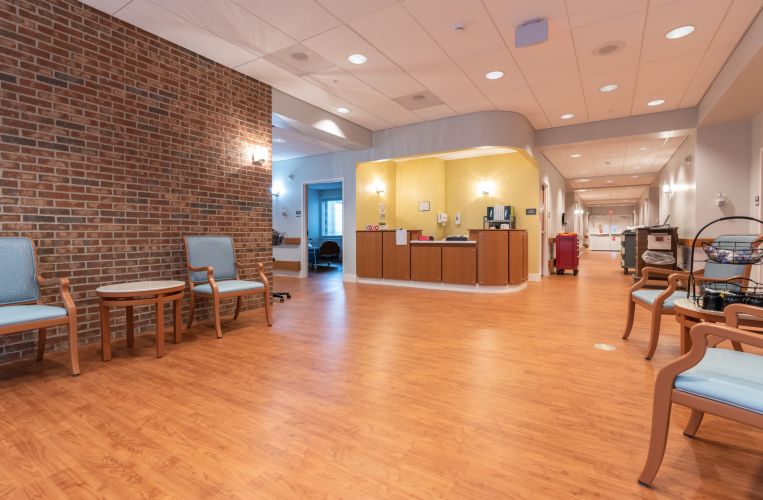
Who Owns and Operates Autumn Lake Healthcare At Crofton?

AUTUMN LAKE HEALTHCARE AT CROFTON is owned by a for-profit company. For-profit facilities operate as businesses with obligations to shareholders or private owners. The facility is operated by AUTUMN LAKE HEALTHCARE, a chain that manages multiple nursing homes. With 180 certified beds and approximately 164 residents (about 91% occupancy), it is a mid-sized facility located in CROFTON, Maryland.
How Does Autumn Lake Healthcare At Crofton Compare to Other Maryland Nursing Homes?

Compared to the 100 nursing homes in Maryland, AUTUMN LAKE HEALTHCARE AT CROFTON's overall rating (4 stars) is above the state average of 3.0, staff turnover (46%) is near the state average of 46%, and health inspection rating (4 stars) is above the national benchmark.

What Should Families Ask When Visiting Autumn Lake Healthcare At Crofton?

Based on this facility's data, families visiting should ask: "Can you walk me through typical staffing levels on day, evening, and night shifts?" "Can I visit during a mealtime to observe dining assistance and food quality?" "How do you handle medical emergencies, and what is your hospital transfer rate?" "Can I speak with family members of current residents about their experience?" These questions are particularly relevant given the below-average staffing rating.

Is Autumn Lake Healthcare At Crofton Safe?

Based on CMS inspection data, AUTUMN LAKE HEALTHCARE AT CROFTON has a clean safety record: no substantiated abuse findings (meaning no confirmed cases of resident harm), no Immediate Jeopardy citations (the most serious violation level indicating risk of serious injury or death), and is not on the Special Focus Facility watch list (a federal program monitoring the lowest-performing 1% of nursing homes). The facility has a 4-star overall rating and ranks #1 of 100 nursing homes in Maryland. While no facility is perfect, families should still ask about staff-to-resident ratios and recent inspection results during their visit.

Do Nurses at Autumn Lake Healthcare At Crofton Stick Around?

AUTUMN LAKE HEALTHCARE AT CROFTON has a staff turnover rate of 46%, which is about average for Maryland nursing homes (state average: 46%). Moderate turnover is common in nursing homes, but families should still ask about staff tenure and how the facility maintains care continuity when employees leave.

Was Autumn Lake Healthcare At Crofton Ever Fined?

AUTUMN LAKE HEALTHCARE AT CROFTON has no federal fines on record. CMS issues fines when nursing homes fail to meet care standards or don't correct problems found during inspections. The absence of fines suggests the facility has either maintained compliance or corrected any issues before penalties were assessed. This is a positive indicator, though families should still review recent inspection reports for the full picture.

Is Autumn Lake Healthcare At Crofton on Any Federal Watch List?

AUTUMN LAKE HEALTHCARE AT CROFTON is not on any federal watch list. The most significant is the Special Focus Facility (SFF) program, which identifies the bottom 1% of nursing homes nationally based on persistent, serious quality problems. Not being on this list means the facility has avoided the pattern of deficiencies that triggers enhanced federal oversight. This is a positive indicator, though families should still review the facility's inspection history directly.