CUMBERLAND HEALTHCARE CENTER
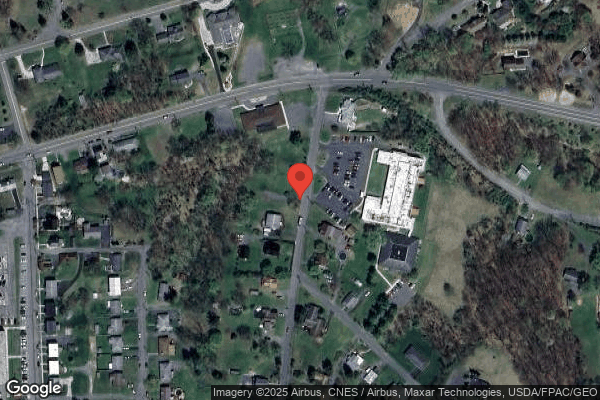

512 WINIFRED ROAD, CUMBERLAND, MD 21502 (301) 724-6066
For profit - Corporation 130 Beds COMMUNICARE HEALTH Data: November 2025
Trust Grade
20/100
#155 of 219 in MD
Last Inspection: September 2023

Over 2 years since last inspection. Current conditions may differ from available data.

Overview

Cumberland Healthcare Center has received a Trust Grade of F, indicating significant concerns and a poor overall quality of care. It ranks #155 out of 219 facilities in Maryland, placing it in the bottom half, and #5 out of 8 in Allegany County, meaning only three local options are worse. The facility's performance is worsening, with the number of issues rising from 14 in 2019 to 25 in 2023. While staffing is a relative strength with a turnover rate of 23%, well below the state average, the facility has concerning RN coverage that is lower than 77% of Maryland facilities. Additionally, it has accumulated $97,777 in fines, which is higher than 89% of other nursing homes in the state, suggesting ongoing compliance problems. Specific incidents of concern include failures to prevent resident-to-resident altercations, which resulted in harm, and a lack of supervision that left some residents vulnerable to abuse. Overall, while there are some positive aspects, families should be cautious given the serious shortcomings highlighted in recent inspections.

Trust Score
F
20/100
In Maryland
#155/219
Bottom 30%
Safety Record
High Risk
Review needed
Inspections
Getting Worse
14 → 25 violations
Staff Stability
✓ Good
23% annual turnover. Excellent stability, 25 points below Maryland's 48% average. Staff who stay learn residents' needs.
Penalties
✓ Good
$97,777 in fines. Lower than most Maryland facilities. Relatively clean record.
Skilled Nurses
○ Average
Each resident gets 30 minutes of Registered Nurse (RN) attention daily — about average for Maryland. RNs are the most trained staff who monitor for health changes.
Violations
⚠ Watch
55 deficiencies on record. Higher than average. Multiple issues found across inspections.
★★☆☆☆
2.0
Overall Rating
★★★☆☆
3.0
Staff Levels
★★★★☆
4.0
Care Quality
★★☆☆☆
2.0
Inspection Score
Stable
2019: 14 issues
2023: 25 issues

The Good

  • 4-Star Quality Measures · Strong clinical quality outcomes
  • Low Staff Turnover (23%) · Staff stability means consistent care
  • Full Sprinkler Coverage · Fire safety systems throughout facility
  • No fines on record
  • Staff turnover is low (23%)

    25 points below Maryland average of 48%

Facility shows strength in quality measures, staff retention, fire safety.

The Bad

2-Star Overall Rating

Below Maryland average (3.0)

Below average - review inspection findings carefully

Federal Fines: $97,777

Well above median ($33,413)

Moderate penalties - review what triggered them

Chain: COMMUNICARE HEALTH

Part of a multi-facility chain

Ask about local staffing decisions and management

The Ugly 55 deficiencies on record

2 actual harm
Sept 2023 25 deficiencies 2 Harm
SERIOUS (G) 📢 Someone Reported This

A family member, employee, or ombudsman was alarmed enough to file a formal complaint

Actual Harm - a resident was hurt due to facility failures

Free from Abuse/Neglect (Tag F0600)

A resident was harmed · This affected 1 resident

**NOTE- TERMS IN BRACKETS HAVE BEEN EDITED TO PROTECT CONFIDENTIALITY** Based on record review and interview, it was determined that facility staff failed to provide an environment for residents which...

Read full inspector narrative →
**NOTE- TERMS IN BRACKETS HAVE BEEN EDITED TO PROTECT CONFIDENTIALITY** Based on record review and interview, it was determined that facility staff failed to provide an environment for residents which was free from abuse. The deficient practice resulted in a harm for Resident #74, #256, and #34. This was evident for 4 (Resident #74, #256, #7, and #34) of 16 residents investigated for abuse. The findings include: Dementia is not a specific disease, but is instead a general term for the impaired ability to remember, think, or make decisions that interfere with everyday activities. A care plan is a guide that addresses each resident's unique needs. It is used to plan, assess, and evaluate the effectiveness of the resident's care. The Minimum Data Set (MDS) is a federally mandated assessment tool used by nursing home staff to gather information on each resident's strengths and needs. Information collected drives resident care planning decisions. 1) On 9/7/23 at 9:13 AM, a medical record review for Resident # 74 was conducted. The review revealed that a preadmission intake or referral form was completed on 4/26/22 by Resident #74's previous residence which indicated that the reason for referral was because Resident #74 had a decline in cognitive function and required increased nursing care. The referral form also stated that Resident# 74 had struck a peer due to not allowing them to enter a room. A continued review of Resident #74's medical record failed to reveal a care plan that addressed the potential to strike other residents. In addition, there was a care plan, initiated on 6/12/22, for the resident's mood problems which were listed as Altered Sleep Patterns, Disease process, Family Dynamics, Nursing Home Admission, Psychosocial issues, history of delusions (Delusion is a false belief that indicates an abnormality in the affected person's content of thought), and hallucinations (the sensory perceptions of hearing noises without an external stimulus). The goal was that the resident would not experience increased signs and symptoms of mood disturbance. The interventions were not resident-specific with ways to alert staff when the resident ' s mood was changing, having delusions and/or hallucinations, and what safety measures should be implemented. Further review revealed a care plan for wandering behaviors, but failed to include that the resident wandered into other resident ' s rooms uninvited and had a history of aggressive behavior toward others, which was documented in the preadmission intake form, dated 4/26/22. A medical record review on 9/13/23 at 10:00 AM, showed a psychiatrist's note dated 6/26/22. The note documented that Resident # 74 received treatment since 2020 for psychiatric problems characterized by worsening Dementia associated with psychotic symptoms like auditory hallucinations, agitations (a feeling of irritability or severe restlessness), and self-neglect. A review of a facility-reported incident investigation file on 9/13/23 at 10:15 AM revealed that, on 8/11/22, Resident #47 was propelling themself in the hallway, and Resident # 74 grabbed Resident # 47 ' s wrist. A continued review of Resident #74's medical record on 9/13/23 at 10:00 AM, revealed an attending provider's note, dated 8/11/2022, for a visit conducted after the incident. The note recorded that Resident # 74 was having behavioral outbursts, threatening staff, and other residents. It also stated that Resident # 74 had grabbed hold of another resident. Resident # 74 was transferred to the hospital for further evaluation and management of their aggressive and violent behaviors. However, Resident #74 ' s care plan was not updated to reflect the resident to resident altercation or include interventions to prevent further incidents. A continued medical record review revealed a nurse's note, documented on 8/17/2022, that Resident #74 continued to walk into other residents' rooms and was unable to be redirected. The behavior care plan was revised again on 8/18/22 with new interventions to speak to Resident #74 in a calm, quiet tone of voice. If Resident # 74 appeared agitated, follow-up with the nurse or attending physician. However, the resident ' s behavior of wandering into other resident ' s rooms was not addressed nor were interventions included to prevent further incidents. On 9/13/23 at 11:00 AM, a continued record review revealed a nurse's note written by staff # 9, Licensed Practical Nurse (LPN), on 11/2/2022. The note indicated that Resident #74 was observed to be entering room [ROOM NUMBER]. Staff # 9 attempted to redirect Resident # 74, who started cursing staff and then walked away from room [ROOM NUMBER] after several attempts to redirect. However, Resident # 74 ' s care plan was not updated to address the resident ' s continuing behavior of wandering into other resident ' s rooms nor did it include interventions to mitigate the wandering behavior. Further record review revealed that a psychiatrist saw Resident #74 for increasingly reckless and aggressive behaviors on 12/1/22, and the plan was to give antipsychotic medication in liquid form for better absorption and continue the antidepressant at night. Even though Resident # 74 ' s increasingly aggressive behaviors were reported to the psychiatrist by the facility, coupled with the resident wandering into another resident ' s room, they failed to implement an increased level of supervision to prevent resident-to-resident abuse. Subsequent record review revealed a progress note, dated 1/4/2023, which documented that Resident #74 was found in another resident's room by facility staff, and an attempt to redirect was met with resistance. After several attempts to redirect them out of the other resident ' s room, Resident #74 did allow staff to take them back to their room. However, the facility staff failed to update the behavior care plan to increase the level of supervision to prevent further incidents of Resident # 74 wandering into other resident ' s rooms and becoming aggressive with other residents. On 9/13/23 at 11:15 AM, a review of the facility investigation file revealed that an incident of resident-to-resident abuse occurred on 1/13/23, involving Resident #74 and Resident #256. The witness statement read that Resident #256 was blocking the doorway to his/her room from Resident #74 who also resided in the room. When Resident #74 attempted to go into the room s/he and Resident #256 started hitting each other. This altercation resulted in redness to Resident #256 ' s cheek, and Resident #74 had a red, swollen right hand. Resident #74 ' s medical record was reviewed on 9/14/23 at 9:59 AM, and revealed the resident was seen by a psychiatrist on 1/17/23 due to the physical altercation with Resident #256, however, no changes were made to their plan of care. An interview with the Director of Nursing (DON) on 9/19/23 at 8:35 AM, confirmed that she was aware that Resident #74 had a long-standing psychiatric history. She reported that, after the incident on 1/13/23, both residents had been sent to the acute care hospital for evaluation. Upon return to the facility, Residents #256 was moved to a different room on a separate unit and Resident #74 remained in the same room. When asked what interventions were implemented to prevent Resident #74 from abusing other residents residing on the same unit, she reported that she relied on psychiatric services to recommend an increased level of supervision and in this case they had not made that recommendation. On 9/22/23 at 11:00 AM, the facility ' s investigation file was reviewed for the self-reported incident involving Resident # 74 and Resident #7, dated 3/1/23. The report revealed documentation that, on 2/28/23, Resident # 74 entered Resident #7's room uninvited. Resident #7 yelled at Resident #74 to leave their room. Then, Resident #74 made a threatening gesture of raising his/her right fist at Resident #7 before leaving the room. A medical record review for Resident #7 on 9/22/23 at 11:04 AM revealed an MDS assessment dated [DATE], which reported that the resident had no behavioral challenges, no impairment with their cognition, and required help from staff with their care needs. On 9/7/23 at 9:13 AM, a review of Resident # 74 ' s medical record revealed a note written by a psychiatrist that documented that Resident #74 was evaluated on 3/2/23 after the altercation with Resident # 7 for aggressive behavior. It was noted in the Psychiatrist's notes that per staff, Resident # 74 posed a danger to staff and residents. The Psychiatrist increased Resident #74's antipsychotic medication and decreased their antidepressant medication. The psychiatrist ' s note failed to indicate the level of supervision that was needed to prevent other residents from further abuse. A review of Resident #74's physician's orders revealed an order, dated 03/02/2023, for one-on-one supervision ( defined as one staff member physically present with a resident) for behavior monitoring every shift. On 3/9/23, a new order was entered for the one-on-one supervision to be decreased to day and evening shifts only. This order was discontinued on 3/13/23, and a new order was entered for the one-on-one supervision to be provided for day shift only. This order was discontinued on 3/20/23. However, the facility staff failed to include in Resident #74 ' s plan of care the ongoing level of supervision needed to protect other residents from further abuse. During an interview with the DON on 9/19/23 at 8:45 AM, she was asked what measures had been put into place after the incident on 1/13/23 to prevent further incidents of abuse by Resident # 74. The DON reported that she relied on changes to the resident ' s psychotropic medications and had not considered increased supervision unless the attending provider or psychiatrist made that recommendation. During a medical record review on 9/14/23 at 9:59 AM, additional progress notes were found indicating that Resident #74 continued to wander in and out of other resident ' s rooms. On 5/24/2023, it was documented in a nurse ' s note that Resident # 74 was cursing at staff and other residents. Resident # 74 appeared more agitated when asked not to go into other rooms or touch other residents' belongings. On 6/4/2023, it was documented in a nurse ' s note that Resident #74 continued wandering in and out of other residents' rooms. Then, on 6/8/23, a nurse's note indicated that Resident # 74 had been up most of the night, wandering in the hallway and occasionally going into other residents' rooms. However, further review revealed that no changes in the level of supervision for Resident #74 were implemented to protect other residents from further abuse. On 9/14/23 at 9:59 AM, a review of an investigation for a facility-reported incident, dated 6/18/23, recorded a resident to resident abuse incident. The report indicated that Resident # 74 wandered into Resident #34's room and attempted to remove food from Resident #34's tray . When Resident # 34 attempted to prevent Resident # 74 from taking the food, Resident #74 hit Resident # 34 on the left hand, resulting in a skin tear to Resident #34's hand. A medical record review was done for Resident #34 on 9/21/23 at 8:59 AM. The review revealed an MDS assessment, dated 5/10/23, which recorded that Resident #34 had severe cognitive impairment, no behavioral issues, was dependent on staff with their self-care needs, and would need help getting out of bed. On 9/15/23 at 9:32 AM, an interview was conducted with the attending provider, who is the facility's Medical Director. The interview revealed that he had been unaware of Resident # 74 ' s behaviors before their admission to the facility. However, Resident #74 ' s behavior had been noted in the preadmission screening form completed on 4/26/22. He reported that the facility was aware that Resident #74 would go into other residents ' rooms, however, failed to anticipate that this behavior and the history of aggressive behaviors could lead to resident-to-resident abuse. He reported that the facility had attempted to use tape on the floor and a physical barrier with stop signs to stop Resident #74. When asked what interventions had been put into place after each abuse incident on 1/13/23, 2/28/23, and 6/18/23, he reported that a psychiatrist was seeing Resident #74 frequently. On 9/19/23 at 8:45 AM, an interview was conducted with the DON. She was asked what the facility did after the incident involving Residents # 74 and #7. She stated that they ordered one- to-one supervision for Resident # 74. However, they tapered the one - to - one supervision down by shift and then it was discontinued on 3/20/23. She reported that they had not included a level of supervision in the care plan interventions because she relied on psychiatric services to recommend this intervention. Per the DON the resident had been wandering without supervision until the next incident occurred on 6/18/23. An interview was conducted with staff # 20, a Psychiatric Nurse Practitioner, on 9/20/23 at 10:16 AM. During the interview, she stated that the facility staff should have anticipated aggressive behaviors for Resident #74 due to their diagnoses. She stated that a care plan should have been initiated with appropriate interventions to mitigate the behaviors.
SERIOUS (G) 📢 Someone Reported This

A family member, employee, or ombudsman was alarmed enough to file a formal complaint

Actual Harm - a resident was hurt due to facility failures

Accident Prevention (Tag F0689)

A resident was harmed · This affected 1 resident

**NOTE- TERMS IN BRACKETS HAVE BEEN EDITED TO PROTECT CONFIDENTIALITY** Based on record review and interview, it was determined that facility staff failed to provide the supervision needed to prevent ...

Read full inspector narrative →
**NOTE- TERMS IN BRACKETS HAVE BEEN EDITED TO PROTECT CONFIDENTIALITY** Based on record review and interview, it was determined that facility staff failed to provide the supervision needed to prevent resident to resident altercations which resulted in harm. This was evident for 1(#74) of 7 residents reviewed for accidents. The findings include: Dementia is not a specific disease, but is instead a general term for the impaired ability to remember, think, or make decisions that interfere with everyday activities. A care plan is a guide that addresses each resident's unique needs. It is used to plan, assess, and evaluate the effectiveness of the resident's care. The Minimum Data Set (MDS) is a federally mandated assessment tool used by nursing home staff to gather information on each resident's strengths and needs. Information collected drives resident care planning decisions. A medical record review for Resident # 74 on 9/7/23 at 9:13 AM revealed a preadmission intake or referral form completed on 4/26/22 by Resident #74's previous residence that indicated that the reason for referral was because Resident #74 had a decline in cognitive function and required increased nursing care. The referral form also stated that Resident# 74 had struck a peer due to not allowing them to enter a room. A continued review of Resident #74's medical record revealed that a care plan was initiated on 6/14/22 for Resident #74's behavior to wander aimlessly from place to place. The goal of the care plan was that Resident # 74 would wander without injury. However, the care plan failed to address that Resident # 74 wandered to other residents' personal space and what appropriate interventions staff could utilize to redirect Resident # 74. Further review of Resident #74's medical record revealed a care plan, initiated on 6/12/22, for the resident's mood problems listed as Altered Sleep Patterns, Disease process, Family Dynamics, Nursing Home Admission, Psychosocial issues, history of delusions, and hallucinations. The goal was that the resident would not experience increased signs and symptoms of mood disturbance. The interventions were not resident-specific to alert staff when the resident ' s mood was changing, having delusions and/or hallucinations, and what safety measures should be implemented. Furthermore, the care plan failed to include a history of aggressive behavior toward others, which was documented in the preadmission intake form dated 4/26/22. On 9/13/23 at 10:00 AM, a medical record review revealed a psychiatrist's note, dated 6/26/22, which documented that Resident # 74 received treatment since 2020 for psychiatric problems characterized by worsening Dementia associated with psychotic symptoms like auditory hallucinations ( the sensory perceptions of hearing noises without an external stimulus), agitations (a feeling of irritability or severe restlessness), and self-neglect. A continued review of Resident #74's medical record revealed an attending provider's note dated 8/11/2022 that recorded Resident # 74 was having behavioral outbursts, threatening staff, and other residents. The note stated that Resident # 74 had grabbed hold of another resident. Resident # 74 was transferred to the hospital for further evaluation and management of their aggressive and violent behaviors. A review of a facility-reported incident investigation file on 9/13/23 at 10:15 AM revealed that, on 8/11/22, Resident #47 was propelling themself in the hallway, and Resident # 74 grabbed Resident # 47 ' s wrist. However, Resident #74 ' s care plan was not updated to reflect the resident to resident altercation and include interventions to prevent further incidents. A continued medical record review revealed a nurse's note documented on 8/17/2022 that Resident #74 continued to walk into other residents' rooms and was unable to be redirected. The behavior care plan was revised again on 8/18/22 with new interventions to speak to Resident #74 in a calm, quiet tone of voice. If Resident # 74 appears agitated, follow up with the nurse or attending physician. However, Resident # 74 ' s behavior was not addressed. On 9/13/23 at 11:00 AM, a continued record review revealed a nurse's note written by staff # 9, Licensed Practical Nurse (LPN), on 11/2/2022. The note indicated that Resident #74 was noted to be entering room [ROOM NUMBER]. Staff # 9 attempted to redirect Resident # 74, who started cursing staff and then walked away from room [ROOM NUMBER] after several attempts to redirect. However, Resident # 74 ' s care plan was not updated with their continuing specific wandering behavior and interventions to mitigate it. Further record review revealed that a psychiatrist saw Resident #74 for increasingly reckless and aggressive behaviors on 12/1/22, and the plan was to give antipsychotic medication in liquid form for better absorption and continue the antidepressant at night. Even though Resident # 74 ' s increasingly aggressive behaviors were reported to the psychiatrist by the facility, they failed to implement an increased level of supervision for Resident # 74 ' s and other residents ' safety. Subsequent record review revealed a progress note, dated 1/4/2023, which documented that Resident #74 was found in another resident's room by facility staff, and an attempt to redirect was met with resistance. After several other attempts, Resident #74 did allow staff to take them back to their room. However, the facility staff failed to update the care plan to address Resident # 74 ' s continuing wandering behavior. On 9/13/23 at 11:15 AM, a review of the facility investigation file revealed that, on 1/13/2023, Resident #74 had a physical altercation with Resident # 256. The witness statement indicated that Resident #256 had been standing in the doorway of their room and was heard saying it was their room. Then, Resident #256 and Resident #74 started hitting each other. This altercation resulted in redness to Resident #256 ' s cheek, and Resident #74 had a red, swollen right hand. Further medical record review, on 9/14/23 at 9:59 AM, revealed that Resident #74 was seen by a psychiatrist on 1/17/23 due to the physical altercation with Resident #256, and no changes were made to their plan of care. An interview was conducted with the Director of Nursing (DON) on 9/19/23 at 8:35 AM. When she was questioned about what the facility knew about Resident #74 before their admission, she responded that they knew Resident # 74 had a long-standing Psychiatric history before admission to the facility. A continued interview with the DON revealed that the facility sent Residents #256 and 74 to the emergency room for evaluation after the altercation on 1/13/23. Then, they moved Resident #256 to a different unit, and Resident # 74 remained in the same room upon return from the Emergency Room. The interview, however, failed to reveal that any new intervention was put into place for Resident # 74 after this altercation. On 9/22/23 at 11:00 AM, the facility ' s investigation file was reviewed for the self-reported incident involving Resident # 74 and Resident #7, dated 3/1/23. The report recorded that on 2/28/23, Resident # 74 entered Resident #7's room uninvited. Resident #7 yelled at Resident #74 to leave their room. Resident #74 raised their right hand and made a fist but then left the room. A medical record review for Resident #7 on 9/22/23 at 11:04 AM revealed an MDS assessment dated [DATE], which reported that the resident had no behaviors, no impairment with their cognition, and required help from staff with their care needs. On 9/7/23 at 9:13 AM, a review of Resident # 74 medical record revealed a note written by a psychiatrist that documented that Resident #74 was evaluated on 3/2/23 after the altercation with Resident # 7 for aggressive behavior. It was noted in the Psychiatrist's notes that per staff, Resident # 74 posed a danger to staff and residents. The Psychiatrist increased Resident #74's antipsychotic medication and decreased their antidepressant medication. A review of Resident #74's physician's orders revealed an order dated 03/02/2023 for one-on-one supervision (one one-on-one is when one staff member is physically present with a resident) for behavior monitoring every shift. On 3/9/23, there was a new order for one-on-one supervision for behavior monitoring for days and evening shifts only, which was discontinued on 3/13/23, and a new order was put in place for one-on-one supervision for behavior monitoring on day shifts only, which was discontinued on 3/20/23. However, the facility staff failed to include in Resident #74 ' s plan of care the ongoing level of supervision needed to protect Resident #74 and other residents. During an interview with the DON on 9/19/23 at 8:45 AM, she was asked what measures had been put into place after the incident on 1/13/23 to prevent this incident when Resident # 74 entered Resident #7's room uninvited. The DON reported that she relied on medication changes and had not considered increased supervision unless the attending provider or psychiatrist made that recommendation. A medical record review revealed that Resident #74 had continued to wander into other residents ' rooms. On 5/24/2023, it was documented in a nurse ' s note that Resident # 74 was cursing at staff and other residents. Resident # 74 appeared more agitated when asked not to go into other rooms or touch other residents' belongings. On 6/4/2023, it was documented in a nurse ' s note that Resident #74 continued wandering in and out of other residents' rooms. Then, on 6/8/23, a nurse's note indicated that Resident # 74 had been up most of the night, wandering in the hallway and occasionally to other residents' rooms. On 9/14/23 at 9:59 AM, a review of an investigation for a facility-reported incident dated 6/18/23 recorded that Resident # 74 went into Resident #34's room uninvited to get Resident #34's muffin. Resident # 34 attempted to prevent Resident # 74 from taking the muffin. Resident #74 hit Resident # 34 on the left hand, resulting in a skin tear to Resident #34's hand. On 9/21/23 at 8:59 AM, a medical record review was done for Resident #34. The review revealed an MDS assessment dated [DATE], which recorded that Resident #34 had severe cognitive impairment, no behaviors, was dependent on staff with their self-care needs, and would need help getting out of bed. On 9/15/23 at 9:32 AM, an interview was conducted with the attending provider, who is the facility's Medical Director. The interview revealed that he had been unaware of Resident # 74 ' s behaviors before their admission to the facility. However, Resident #74 ' s behavior had been noted in the preadmission screening form completed on 4/26/22. He reported that the facility was aware that Resident #74 would go into other residents ' rooms and that the facility had attempted to use tape on the floor and a physical barrier with stop signs to stop Resident #74. When asked what interventions had been put into place once they were made aware that Resident #74 had a physical altercation with Resident #256 on 1/13/23. He reported that a psychiatrist was seeing Resident #74 frequently. When asked if he was aware of Resident #74 ' s incidents in March and June, he stated that they had discussed it in a meeting and decided that one-on-one supervision was the best option for now. On 9/19/23 at 8:45 AM, an interview was conducted with the DON. She was asked what the facility did after the incident involving Residents # 74 and #7. She stated that they immediately increased Resident # 74 ' s supervision. She was also asked what the facility did to prevent the occurrence. She indicated the Psychiatrist did make changes to Resident #74's medications and did not recommend one-on-one staff supervision. The facility relied on the Psychiatrist to make the decision for increased supervision of Resident # 74. An interview was conducted with staff # 20, a Psychiatric Nurse Practitioner, on 9/20/23 at 10:16 AM. During the interview, she stated that the facility staff should have anticipated aggressive behaviors for Resident #74 due to their diagnoses. She stated that a care plan should have been initiated with appropriate interventions to mitigate the behaviors.
CONCERN (D) 📢 Someone Reported This

A family member, employee, or ombudsman was alarmed enough to file a formal complaint

Potential for Harm - no one hurt, but risky conditions existed

Grievances (Tag F0585)

Could have caused harm · This affected 1 resident

Based on review of pertinent documents and interviews, it was determined that the facility failed to document a grievance and investigate the loss of a hearing aid as reported by a resident's family. ...

Read full inspector narrative →
Based on review of pertinent documents and interviews, it was determined that the facility failed to document a grievance and investigate the loss of a hearing aid as reported by a resident's family. This was evident for 1 (Resident # 247) out of 8 Residents reviewed for abuse during a survey. The findings include: On 9/19/23 at 8:12 AM, review of # MD00165791 revealed an allegation that the facility failed to replace a resident's lost hearing aid. On 9/19/23 at 9:01 AM, the Social Service Director provided a facility policy titled, Policies and Standard Procedures; subject: Resident Loss or Damaged Hearing Aid/ Dentures. Review of the policy revealed that a grievance form would be filled out for all missing or broken hearing aids. Further review revealed that the facility would replace lost hearing aids if the investigation revealed the facility was negligent. On 9/19/23 at 11:34 AM, during an Interview with the Social Services Director, she reported that their procedure was to complete a grievance form when an item was reported missing. The investigation of the missing item and the results of the investigation were to be documented on the grievance form. On 9/21/23 at 9:26 AM, the Social Services Director reported that she had access to the facility's grievance documentation from 2021 through present. However, she was unable to provide the grievance form and subsequent investigation results for Resident # 247's lost hearing aid. On 9/25/23 at 11:18 AM, the Administrator and Director of Nursing were made aware of the concern regarding the missing hearing aids. The Administrator reported that the resident had a history of taking out his/her hearing aids and throwing them way. However, she confirmed that the facility was unable to provide a written grievance form and subsequent investigation of the loss, to determine if the facility was responsible for the hearing aid replacements.
CONCERN (D) 📢 Someone Reported This

A family member, employee, or ombudsman was alarmed enough to file a formal complaint

Potential for Harm - no one hurt, but risky conditions existed

Abuse Prevention Policies (Tag F0607)

Could have caused harm · This affected 1 resident

Based on pertinent document review and interviews, it was determined that the facility failed to develop a policy regarding the consent for sexual activity in residents with impaired cognition. This w...

Read full inspector narrative →
Based on pertinent document review and interviews, it was determined that the facility failed to develop a policy regarding the consent for sexual activity in residents with impaired cognition. This was evident for 1 (Resident # 16) out of 16 residents reviewed for abuse during a survey. The findings include: Capacity for consent to sexual activity is the ability to understand and process the information necessary to make an informed decision to participate in sexual activity. Determining capacity to consent is an important step in investigating an allegation of sexual abuse towards a resident with impaired cognition. Review of Resident #16's records revealed that the resident was a long-term resident at the facility. Review of Physician Certification Related to Medical Condition, decision making and treatment limitations, dated 12/24/18, revealed that Resident #16 was assessed by a physician to lack adequate decision-making capacity (including decisions about life-sustaining treatments). Resident #16' s family member was appointed as the power of attorney (POA) to assist the resident with making decisions in the facility. A review of #MD00164325 and #MD00173180 on 9/12/23 revealed that resident #16 received sexual contact from another resident on 2 separate occasions. Further review revealed that, following the physical activity between the residents, the resident were physically assessed, his/her family was notified, and the residents received psychological consultation. Further review of records failed to reveal that Resident #16 was assessed to determine if she/he had the cognitive ability to consent to sexual activity. On 9/13 23 at 7:20 AM, the Medical Director was interviewed. During the interview, the Medical Director reported that he was familiar with Resident #16. He stated that he had never evaluated a resident for the ability to consent to sexual activity. In addition, he stated he would not know how he would evaluate a resident to determine if they had the ability to consent to sexual activity. On 9/22/23 at 11:55 AM, the Director of Nursing (DON) was interviewed. During the interview she reported that the facility does not have a policy or procedure to determine if a resident, who is assessed by a physician to lack adequate decision-making capacity, has the capacity to consent, has the capacity to consent to sexual activity.
CONCERN (D) 📢 Someone Reported This

A family member, employee, or ombudsman was alarmed enough to file a formal complaint

Potential for Harm - no one hurt, but risky conditions existed

Report Alleged Abuse (Tag F0609)

Could have caused harm · This affected 1 resident

Based on record review and interview, it was determined that the facility failed to report an allegation of abuse within the mandated time frame. This was evident for 2 (Resident #251, #248) out of 16...

Read full inspector narrative →
Based on record review and interview, it was determined that the facility failed to report an allegation of abuse within the mandated time frame. This was evident for 2 (Resident #251, #248) out of 16 residents investigated for abuse. The findings include: 1) On 9/22/23 at 10:45 AM, a review of the facility reported incident MD00173990 revealed that an allegation of abuse was made by Resident #248 to the day shift nurse at 8:00 AM on 11/5/21. A review of the timeline included in the investigation documentation revealed this information was then conveyed to the then acting Director of Nursing (DON Staff #26). Further review of the timeline revealed that the initial report was sent to the state agency by the acting DON (staff #26) on 11/5/21 at 12 PM. This information was verified by the time stamped email sent by Staff #26 to the state agency. On 9/25/23 at 12:30 PM, surveyor discussed the concern with the Nursing Home Administrator (NHA) and she confirmed in this interview that for Resident #248, the facility failed to report the allegation of abuse within the mandated time frame. 2) On 09/22/2023 at 2:57 PM, a review of the facility reported incident MD00186072 packet revealed that an allegation of abuse was made by Resident #251. The medical records of Resident #251 were reviewed. This review revealed a progress note by nurse (staff #8) dated 11/24/22 at 11:17 AM when an allegation of abuse was received. Based on the timeline submitted by the facility, the initial report for this allegation was sent to the state agency on 11/24/22 at 9:08 PM by the Director of Nursing (DON). On 9/25/23 at 11:58 AM, the DON was interviewed about her process in conducting an investigation when an allegation of abuse was reported to her. The DON reported that it was her expectation that the staff pick up the phone immediately and report to her the details of the allegation. The DON also mentioned that she tried to submit the initial report within 2 hours. If I put 8 PM then that means that's when I was notified. I would have reported it immediately. If not me, there were staff present all the time that would send the initial report. In this interview, surveyors discussed the concern that for Resident #251, the report of abuse was received by the nurse (staff #8) at 11:17 AM, but the initial report was not submitted until 9:08 PM that evening. The DON then stated, I remember this scenario and the nurse, but I had not document anything about educating this nurse about reporting things like this right away.
CONCERN (D) 📢 Someone Reported This

A family member, employee, or ombudsman was alarmed enough to file a formal complaint

Potential for Harm - no one hurt, but risky conditions existed

Investigate Abuse (Tag F0610)

Could have caused harm · This affected 1 resident

Based on interview and review of facility reported incident (FRI) investigation documentation, it was determined the facility failed to thoroughly investigate an allegation of abuse. This was evident ...

Read full inspector narrative →
Based on interview and review of facility reported incident (FRI) investigation documentation, it was determined the facility failed to thoroughly investigate an allegation of abuse. This was evident for 1 (MD00189938) of 4 facility reported incidents reviewed for resident-to-resident altercations. The findings include: On 9/11/23 at 11:47 AM, a review was conducted of the facility's investigation of the facility reported incident MD00189938 related to an altercation between Resident #45 and Resident #55. A facility self-report, dated 3/9/23 at 6:25 PM, revealed documentation that while Resident #45 was in his/her own room, Staff #36, Geriatric Nursing Assistant (GNA) witnessed Resident #45 go over to the bedside of Resident #55, his/her roommate at which time Resident #55 reached up and slapped Resident #45 hand. The facility's self-report documented that the altercation between Resident #45 and Resident #55 was witnessed by Staff #36, GNA, who then reported the incident to Staff #9, LPN. Review of the facility's investigative documents failed to reveal evidence that staff or resident were interviewed during the investigation and there was no documentation to indicate that statements were received from Staff #36, the GNA who reportedly witnessed the incident, or Staff #36, the nurse who received the report from the GNA. On 9/12/23 at 3:30 PM, the concerns with the facility failing to do a thorough investigation related to failing to conduct interviews and obtain witness statements were discussed with the Director of Nurses (DON). At that time, the DON indicated that interviews had been conducted, however, the DON was unable to find the facility's investigation and had reprinted the investigation documents provided to the surveyor.
CONCERN (D)

Potential for Harm - no one hurt, but risky conditions existed

Transfer Requirements (Tag F0622)

Could have caused harm · This affected 1 resident

Based on medical record review and staff interview, it was determined that the facility failed to document the information that was provided to the acute care facility to ensure a safe and effective t...

Read full inspector narrative →
Based on medical record review and staff interview, it was determined that the facility failed to document the information that was provided to the acute care facility to ensure a safe and effective transition of care when a resident was transferred there emergently. This was evident for 1 (#76) of 5 residents reviewed for hospitalization. The findings include: On 9/14/23 at 8:55 AM, a review of Resident #76's medical record was conducted. The medical record documented Resident #76 was admitted to the facility in mid July 2023. On 8/6/23 at 8:50 PM, in a nurse's note, the nurse documented that Resident #76 was found to be very lethargic, weak, elevated temperature, diaphoretic (sweating heavily), with an altered mental status. The resident was able to open eyes, respond to verbal stimuli and was not oriented and Resident #76's significant other wanted the resident sent to the hospital, 911 was called, and Resident #76 was transferred to the hospital. The nurse wrote that telehealth was notified, all documentation was sent to the hospital with 911 and report was called to the hospital's emergency room. There was no documentation found in the medical record to indicate what documents were sent with the resident, or what information was conveyed to the receiving facility. Following an acute hospital stay, Resident #76 was readmitted to the facility. On 8/15/23 at 9:01 PM, In a nurses note, the nurse documented Resident #76 was sweating, had a low-grade temperature, tremors, altered mental status, lab work could not be obtained, and a family member requested the resident be transferred to the hospital. The nurse wrote that 911 was contacted, all appropriate documents sent to hospital with resident, including bed hold policy, ER notified of resident's arrival and report given. On 8/15/23 ad 9:52 PM, in an SBAR summary, the nurse documented that Resident #76 had a change in condition, diaphoresis, low grade temperature, mild tremors, altered mental status, edema (swelling) to both upper extremities, labs unable to be obtained, and the resident's family member requested the resident be transferred to the hospital, indicating the resident was transferred to the hospital. No documentation found in the medical record to indicate what documents were sent with the resident, or what information was conveyed to the receiving facility. On 9/14/23 at 12:03 PM, during an interview, when asked what was the nursing process was when sending a resident to the hospital, the Director of Nurses (DON), stated that after assessing, the physician would be notified of the resident's change in condition, and if an order is given to send the resident to the hospital, the nurse would complete an e-Interact Transfer Form in the electronic medical record. The nurse would send a copy of the transfer form with the resident to the hospital and call a report. The DON stated that the nurses have a template of what they are supposed to document. At that time the DON was made aware that an e-Interact Transfer Summary to reflect Resident #76's hospital transfer on 8/6/23 was not found in the medical record and there was no documentation found in the medical record to indicate what documents were sent with the resident, or what information was conveyed to the receiving facility.
CONCERN (D)

Potential for Harm - no one hurt, but risky conditions existed

Transfer Notice (Tag F0623)

Could have caused harm · This affected 1 resident

Based on interview and medical record review, it was determined that the facility staff failed to notify resident/resident representative in writing of a transfer/discharge of a resident along with th...

Read full inspector narrative →
Based on interview and medical record review, it was determined that the facility staff failed to notify resident/resident representative in writing of a transfer/discharge of a resident along with the reason for the transfer. This was evident for 1 (#73) of 5 residents reviewed for hospitalization during the annual survey. The findings include: The Minimum Data Set (MDS) is a federally mandated assessment tool used by nursing home staff to gather information on each resident's strengths and needs. Information collected drives resident care planning decisions. MDS assessments need to be accurate to ensure that each resident receives the care they need. On 9/07/23 at 10:51 AM, during an interview with Resident #73's Representative, she stated that Resident # 73 was hospitalized in April 2023. On 9/18/23 at 10:05 AM, a medical record review revealed that Resident #73 had severe cognitive impairment per a Minimum data set (MDS) assessment, dated 3/22/23. A continued record review showed a nurse's note, dated 4/27/23, which indicated that Resident # 73 continued to have hip pain after a fall. An X-ray confirmed a possible fracture, and the attending physician gave an order for Resident # 73 to be transferred to the emergency room for evaluation and treatment. The nurse's note stated that Resident #73's representative agreed to the hospital transfer. However, there was no evidence in Resident #73's medical record that a written notice of the transfer was given to the resident/resident representative. On 9/20/23 at 9:06 AM, during an interview with staff # 23, a Registered Nurse (RN), she revealed that during a transfer of a resident to the hospital, she handed a packet that included a copy of the transfer notice to the resident unless they were cognitively impaired then she would hand it over to the Emergency medical team. On 9/20/23 at 9:22 AM, an interview was conducted with staff # 34, a Registered nurse (RN). During the interview, staff # 34 stated she would only make a resident whose cognitive status was intact aware of the transfer or discharge. On 9/21/23 at 11:12 AM, during an interview with staff # 7, the Social Services Director, she stated that she could not find confirmation that the transfer notice was mailed to Resident #73's representative. On 9/21/23 at 11:50 AM, during an interview with the Director of Nursing in the presence of the Nursing Home Administrator, she stated there was no evidence that the transfer notice was mailed to Resident #73's representative.
CONCERN (D)

Potential for Harm - no one hurt, but risky conditions existed

Deficiency F0625 (Tag F0625)

Could have caused harm · This affected 1 resident

Based on interview and medical record review, it was determined the facility staff failed to notify the resident/resident representative in writing of the bed hold policy upon transfer to an acute car...

Read full inspector narrative →
Based on interview and medical record review, it was determined the facility staff failed to notify the resident/resident representative in writing of the bed hold policy upon transfer to an acute care facility. This was evident for 1 (#73) of 5 residents reviewed for hospitalization during the annual survey. The findings include: On 9/07/23 at 10:51 AM, an interview with Resident # 73's Representative revealed that Resident # 73 was hospitalized in April 2023. On 9/18/23 at 10:05 AM, a medical record review for Resident #73 was conducted. The review revealed a nurse's note, dated 4/27/23 that indicated that Resident # 73 continued to have hip pain after a fall. An X-ray confirmed a possible fracture, and the attending physician gave an order for Resident # 73 to be transferred to the emergency room for evaluation and treatment. A continued medical record review for Resident #73 showed a nurse's note, dated 4/27/23, that stated, County Medical Ambulance Transport on site @ 2145 hours, resident transferred to ambulance stretcher with some c/o pain and secured for safe transport. Face sheet, med list, MOLST, copies of imaging reports, and bed hold policy sent. However, there was no evidence in Resident # 73's medical record to show when the copy of the bed hold policy was mailed to the resident ' s representative. On 9/20/23 at 9:06 AM, during an interview with staff # 23, a Registered Nurse ( RN), she revealed that during a transfer of a resident to the hospital, she handed a packet that included a copy of the bed hold policy to the resident unless they were cognitively impaired, then she would hand it over to the Emergency medical team. On 9/21/23 at 9:15 AM, an interview with staff #7, the Social Services Director, revealed that for residents transferred to the hospital on the weekends, she mailed the bed hold policy as soon as she resumed work on Monday. Staff # 7 reported that she was not aware of the requirement that the bed hold policy needed to be sent out in 24 hours. On 9/21/23 at 10:10 AM, during a subsequent interview with staff # 7, she was unable to provide evidence that the bed hold policy was sent within 24 hours to Resident #73's representative. On 9/21/23 at 11:50 AM, during an interview with the Director of Nursing in the presence of the Nursing Home Administrator, she stated there was no evidence that the bed hold policy was mailed to Resident # 73's representative.
CONCERN (D)

Potential for Harm - no one hurt, but risky conditions existed

Deficiency F0655 (Tag F0655)

Could have caused harm · This affected 1 resident

Based on medical record review and resident and staff interview, it was determined the facility failed to provide a resident and/or a resident's representative with a summary of the baseline care plan...

Read full inspector narrative →
Based on medical record review and resident and staff interview, it was determined the facility failed to provide a resident and/or a resident's representative with a summary of the baseline care plan that included a summary of the resident's medications. This was evident for 2 (#87, #76) of 5 residents reviewed for hospitalization. The findings include: A baseline care plan must be completed within 48 hours of a resident's admission to the facility and must include the initial goals based on admission orders, physician orders, dietary orders, therapy services, and social services. A summary of the baseline care plan as well as a list of the resident's current medications must be given to each resident. A care plan is a guide that addresses the unique needs of each resident. It is used to plan, assess and evaluate the effectiveness of the resident's care. 1) On 9/12/23 at 12:01 PM, when asked who was responsible reviewing the baseline care plan and providing the resident and/or the resident's representative a copy of the care plan, along with a summary of the resident's medications, Staff #7, Social service Director, stated she thought the MDS (minimum data set) (standardized assessment tool that measures health status) nurse was responsible for reviewing the care plan with the resident. On 9/13/23 at 10:45 AM, a review of Resident #87's medical record revealed Resident #87 was admitted to the facility towards the end of July 2023, transferred to the hospital approximately 1 week later, readmitted to the facility in the beginning of August 2023, transferred to the hospital at the end of August 2023, then readmitted to the facility in the beginning of September 2023. A review of Resident #87's medical record revealed an admission Initial Evaluation with an effective date of 7/25/23 at 3:50 PM, included a 48-hour baseline care plan. At the end of the care plan, was a section marked Signatures, with signature lines for the nurse completing that section and for the interdisciplinary team. The section was followed by the bold printed statement: Print 48 Hour Baseline Care Plan section, provide to Social Worker (SW) to obtain all signatures, upload the signature section into PCC (point/click/care) (electronic medical record) (EMR) under misc./documents tab, provide a copy to the resident/resident representative and place a copy in the 48 Hr. Care Plan binder to be manually updated until electronic care plans have been initiated. The final section in the baseline care plan was labeled Required Signatures with signature lines for the resident and the resident representative, followed by the statement Print this page, obtain required signatures of the Resident and Resident Representative. Upload under the Misc/Documents tab in PCC (point/click/care electronic medical record). Review of the baseline care plan and Resident #87's medical record failed to reveal documentation to indicate the resident and/or the resident's representative received a copy of the baseline care plan along with a summary of medications. Review of an admission Initial Evaluation for Resident #87 with an effective date of 8/7/23 at 7:00 PM revealed, a 48-hour baseline care plan had been developed for the resident. Review of the base line care plan and the medical record failed to reveal documentation that following the Resident #87's re-admission to the facility, the resident and/or the resident's representative received a copy of the baseline care plan along with a summary of medications. Review of an admission Initial Evaluation for Resident #87 with an admission date and time of 9/3/23 at 2:00 PM and an effective date of 9/4/23 at 11:04 AM, revealed, a 48-hour baseline care plan for Resident #87. Review of the base line care plan and the medical record failed to reveal documentation that following Resident #87's re-admission to the facility, a copy of the baseline care plan along with a summary of medications had been provided to the resident or the resident's representative. On 9/13/23 at 11:28 AM, during an interview, Staff #12, MDS Coordinator, stated that the baseline care plan included with the admission assessment was completed by the admission nurse and the resident's comprehensive care plans were initiated MDS initiated the resident's comprehensive care plan. On 9/13/23 at 11:54 AM, during an interview, Staff #19, LPN, Unit Manager (UM), stated the baseline care plan was completed as part of the admission assessment. When asked if the facility staff followed the process described at the end of the baseline care plan form, Staff #19 indicated the staff did not follow the process printed on the care plan and did not print the care plan, obtain signatures, and retain in a binder Staff #19 stated that s/he thought the admission nurse went over the care plan with the resident and/or representative, and maybe gave them a copy of the baseline care plan in the care plan meeting. On 9/13/21 at 3:30 PM, during an interview, the DON stated that the admitting nurse completed the resident's baseline care plan in PCC, and the care plan was attached to the admission assessment. 2) On 9/7/23 at 9:59 AM, during an interview, Resident #76 indicated that since first admitted to the facility, the resident had been hospitalized then readmitted to the facility. The resident stated s/he did recall the care plan meeting but did not recall receiving a copy of the baseline care plan with a summary of his/her medications and would like a list of his/her medications. On 9/14/23 at 8:55 AM, a review of Resident #76's medical record revealed the resident was admitted to the facility in mid-July 2023, transferred to the hospital in for a change in condition (COC) in the beginning of August 2023, readmitted to the facility in mid-August 2023, then, 2 days later, the transferred to the hospital for a COC and readmitted to the facility towards the end of August 2023 following an acute hospital stay. A review of Resident #76's EMR revealed an admission Initial Evaluation with an effective date of 7/11/23 at 6:21 PM, which, in Section 10, included a 48-hour baseline care plan. At the end of the care plan, was a section marked Signatures, lines labeled for the signature of the nurse completing that section and the interdisciplinary team. No documentation was found in the care plan or the medical record to indicate that following the resident's admission to the facility, Resident #76 and/or the resident's representative received a copy of the resident's baseline care plan along with a summary of medications. In Resident #76's medical record there was admission Initial Evaluation with an effective date of 8/13/23, which included a baseline care plan with no documentation found in the care plan form or the medical record to indicate the resident and/or the resident's representative received a copy of the baseline care plan along with a summary of medications following the resident's readmission to the facility. In Resident #76's medical record there was admission Initial Evaluation with an effective date of 8/21/23, which included a baseline care plan with no documentation found in the care plan form or the medical record to indicate the resident and/or the resident's representative received a copy of the baseline care plan along with a summary of medications following the resident's readmission to the facility. On 9/14/23 at 12:03 PM, during an interview, the DON was made aware of the above concerns. At that time, the DON indicated the facility staff were not documenting that they reviewed the baseline care plan with the resident, however the they did go over everything, but don't document it.
CONCERN (D)

Potential for Harm - no one hurt, but risky conditions existed

Deficiency F0679 (Tag F0679)

Could have caused harm · This affected 1 resident

3) On 9/7/23 at 11:07 AM, the surveyor observed that Resident #70 was still in bed and again later that day still in his/her room with no activity being provided. On 9/11/23 at 3:12 PM, in another tou...

Read full inspector narrative →
3) On 9/7/23 at 11:07 AM, the surveyor observed that Resident #70 was still in bed and again later that day still in his/her room with no activity being provided. On 9/11/23 at 3:12 PM, in another tour of the unit, Resident #70 was observed in his/her room sitting on the recliner. No activity was being provided at that time for the resident. On 9/8/23 at 1:27 PM, when asked about activities, Resident #70 stated that s/he likes to go outside for fresh air. When asked if the facility provides opportunities for him/her to go outside, the resident answered No. I just want to go outside, nothing fancy. On 9/11/23 at 11:50 AM, review of the minimum data set (MDS) with assessment reference date of 11/25/22 revealed that when former activities director (staff #7) asked the resident, how important it was for the resident to go outside to get fresh air when the weather is good? The resident responded, very important. Further review of the medical record revealed a current care plan for activities which failed to include interventions to offer outdoor activities. On 9/12/23 at 10:07 AM, the activities director (staff #5) was interviewed about her role in the facility. Staff #5 was asked specifically about Resident #70, and she reported the resident liked to go outside and that she had taken him/her outside, but could not recall when this last occurred. Also, the activities director (staff #5) verified in the interview that there was no intervention listed in the care plan for Resident #70 to go outside for activities. Lastly, the activity director was asked to provide the surveyors with documentation of the resident's activities for June, July and August. On 9/20/23 at 1:29 PM, review of the activity documentation sheets revealed Resident #70 participated a total of 6 days in activities for the month of June, 3 days for the month of July, and 6 days for the month of august The documentation revealed the resident participated in one outdoor activity in June, none in July, and two in August. There was no documentation to indicate that Resident #70 was offered or refused to participate with the other activities provided by the facility in the 3 months that were reviewed. Based on record review, observation and interview, it was determined that the facility failed to provide an ongoing program to support the resident in their choice of activities. This was evident in 3 (Resident #45, #87, and #70) out of 4 residents reviewed for activities. The findings include: A care plan is a guide that addresses the unique needs of each resident. It is used to plan, assess, and evaluate the effectiveness of the resident's care. Minimum Data Set- The MDS is a federally-mandated assessment tool used by nursing home staff to gather information on each resident's strengths and needs. Information collected drives resident care planning decisions. 1) On 9/6/23 at approximately 2:00 PM, Resident #45 was observed in his/her room, lying on the bed. At that time, no television or radio was noted to be on. On 9/7/23 at 12:27 PM, Resident #45 was observed wandering in his/her room. At that time, no television or radio was noted to be on. In addition, on 9/6/23, 9/7/23, 9/8/23 and 9/11/23, random observations of Resident #45 failed to reveal evidence that the resident attended activity programs or received one to one (1:1) visits with facility staff. On 9/11/23 at 10:10 AM, a review of Resident #45's medical record was conducted. Review of Resident #45's annual assessment, 0with an assessment reference date (ARD) of 12/15/22, Interview for Activity Preferences, documented it was very important for Resident #45 to have books, newspapers and magazines to read, listen to music s/he liked, be around animals such as pets, to keep up with the news, to do things with groups of people, to do his/her favorite activities, to go outside to get fresh air when the weather was good, to do his/her favorite activities, go outside to get fresh air when the weather was good, and to participate in religious services or practices. Review of Resident #45's care plans revealed a care plan, Resident #45 is dependent on staff for activities, cognitive stimulation, social interaction r/t cognitive deficits, with the goal, Resident #45 will maintain involvement in cognitive stimulation, social activities as desired up to 2-3 times a week, that had the interventions, 1) All staff to converse with resident while providing care, 2) Resident #45 needs 1 to 1 bedside/in-room visits and activities if unable to attend out of room events, 3) Resident #45 needs assistance with ADLs as required during the activity, 4) Resident #45 needs assistance/escort activity functions, 5) Resident #45 prefers activities which do not involve overly demanding cognitive tasks. Engage in simple, structured activities such as coloring, sorting, and other simple tasks, 6) Resident #45 provide a program of activities that is of interest and empowers the resident by encouraging/allowing choice, self-expression, and responsibility', 7) provide with activities calendar. Notify resident of any changes to the calendar of activities, and 8) when [Resident #45] chooses not to participate in organized activities, turn on TV, music in room to provide sensory stimulation Continued review of the medical record failed to reveal documentation that following Resident #45's most recent quarterly assessment with an ARD of 8/1923, the resident's activity care plan and the resident's progress or lack of progress towards his/her goal had been evaluated, and the care plan updated based on the needs of the resident or in response to current interventions On 9/12/23 at 10:07 AM, during an interview, Staff #5, Activities Director, indicated that s/he did not initiate activity care plans and was unsure who initiated the care plans. Staff #5 stated that in care plan meetings they did not specifically talk about the care plan, however they would talk about whether a resident was active in activities, or if the resident had any questions or preferences and the Social Service (SS) Director would put interventions in the activity care plan. When asked how s/he prepared for the care plan meeting, Staff #5 stated s/he knew the residents from being on the floor. When asked how s/he knew to invite to activity programs, Staff #5 stated that at this point s/he knew which residents liked to come to activities and just goes with what s/he knew the residents liked. Staff #5 indicated residents had an activities wall calendar wall and s/he would ask the aides if they knew residents who wanted to attend the activity. Staff #5 stated that residents that attended an activity, were listed on a participation log. Staff #5 stated that if a resident had not been seen attending activities, looked a little lonely or needed extra [attention] a 1:1 activity visit would be provided, and the visit would be recorded on a separate form, however, s/he did not always document the 1:1 visits. When asked whether Resident #45 attended activity programs or received 1:1 visits, Staff #5 stated, honestly, not so much. Staff #5 stated s/he was not often able to get the resident to participate or engage in anything, stating s/he would talk or walk with him/her, but not necessarily do an activity. Staff #5 indicated there was probably no activity documentation for Resident #45. At that time, Staff #5 was made aware of the above concerns and offered no further comments and, following the interview, Staff #5 provided the surveyor with one 1:1 visit form that documented a 1:1 visit on 3/8/23 with other activity documentation provided by the time of the exit of the survey. 2) On 9/6/23 at 12:00 PM, and on 9/6/23 at 2:22 PM, Resident #87 was observed lying in bed, with no television or radio on for the resident. Random observations made intermittently during the day on 9/7/23, and 9/11/23 failed to reveal Resident #87 attending an activity or receiving a one to one (1:1) activity with facility staff. On 9/12/23 at 10:07 AM, during an interview, when asked whether Resident #87 attended activity programs, or received 1:1 activity visits, Staff #5 stated the resident had not attended any activities and s/he was unsure if there was any documentation to indicate 1:1 activity visits had been provided to Resident #87. At that time, the surveyor requested Staff #5 provide any documentation to indicate the resident had received 1:1 visits. On 9/12/23 at 10:50 AM, a review of Resident #87's medical record was conducted. Review of Resident #87's admission assessment, with an assessment reference date of 7/29/23, Interview for Activity Preferences documented it was important to Resident #87 to have books, newspapers and magazines to read, listen to music s/he liked, be around animals such as pets, do his/her favorite activities, go outside to get fresh air when the weather was good, and to participate in religious services or practices. Review of Resident #87's care plans revealed a care plan, Resident #87 has little or no activity involvement, with the goal, Resident #87 will show engagement in activities of interest through the review date, that had the interventions, 1) Assist with transport to activities as needed, 2) Encouraging attendance to entertainment programs, large and small group activities, volunteer demonstrations and religious activities, volunteer demonstrations, and religious activities, 3) Interview and determine resident activity preferences, 4) invite resident to scheduled activities, 5) Provide 1:1 room visits if unable to attend out of room events, 6) provide a schedule of activities. Resident #87's activity care plan was not resident centered with individualized approaches to care that addressed the resident's interests, preferences, and personal choices, in addition, the facility staff failed to follow the care plan by failing to implement the care plan interventions to assist the resident in reaching his/her care plan goal. Furthermore, no documentation was found in the medical record to indicate the resident was offered activities, received 1:1 visits, or that a structured activity plan had been created for the resident. On 9/12/23 at 11:47 AM, during an interview, Staff # 7, SS Director, stated s/he did not write or evaluate activity care plans. On 9/12/23 at 3:30 PM, during an interview, the DON stated that following the resident's initial assessment, and the interdisciplinary team meeting, the resident's comprehensive care plans would be initiated by the MDS nurse. The DON stated that the care plans would be evaluated and revised by the discipline involved with the care plan, that nursing evaluated nursing care plans, social services did psycho-social, and activities evaluated activities care plans. The DON was made aware of the above activity and activity care plan concerns with no response given at that time. On 9/12/23 at 3:55 PM, the Activity Director confirmed that there no documentation had been found to indicate that a 1:1 visits had been provided to Resident #87.
CONCERN (D) 📢 Someone Reported This

A family member, employee, or ombudsman was alarmed enough to file a formal complaint

Potential for Harm - no one hurt, but risky conditions existed

Quality of Care (Tag F0684)

Could have caused harm · This affected 1 resident

Based on record review and interviews, it was determined that the facility failed to report a resident's vital signs that were not within normal limits (WNL) to the resident's physician. This was evid...

Read full inspector narrative →
Based on record review and interviews, it was determined that the facility failed to report a resident's vital signs that were not within normal limits (WNL) to the resident's physician. This was evident for 1 (Resident #255) out of 5 residents reviewed for neglect during a survey. The findings include: Review of medical records on 9/15/23 at 11:15 AM, revealed that Resident #255 was admitted to the facility following a hospital stay. His/her diagnoses included, but were not limited to, orthostatic hypotension, chronic kidney disease and a cerebral vascular incident (Stoke). Orthostatic hypotension is a condition in which your blood pressure suddenly drops when you stand from a seated or lying position. Hypotension means low blood pressure. Per CDC a normal blood pressure is generally accepted to be 120/80 mm/Hg. Review of records for Resident # 255 on 9/15/23, revealed a nursing progress note, dated 7/12/23 at 5:30 AM, that Resident had a fall. Further review revealed that, immediately following the fall, the resident had a low blood pressure reading of 88/69 mm/Hg. Continued review revealed that the physician was notified, and Resident # 255 was sent to the emergency room for evaluation. The Resident returned to the facility. Review of Resident #255's medical record on 9/20/23/23 at 8:14 AM, revealed that the resident was receiving Occupational Therapy (OT) and Physical Therapy (PT) during his/her stay at the facility. Further review of therapy documentation on 9/20/23 revealed that, on 3 separate occasions during therapy, the resident was assessed to have low blood pressure during therapy when he/she changed position, and this information was verbally reported to nursing. The incidents as listed. 1. Physical therapy treatment encounter note, dated 7/13/23, revealed that the residents blood pressure reading was 98/58 mmhg and nursing was made aware. 2. Physical therapy treatment note date 7/17/23 revealed that the residents blood pressure was 84/46 mm/Hg and the nursing supervisor was notified of the BP reading. 3. Physical therapy treatment encounter note, dated 7/24/23, revealed that resident blood pressure was 80/45 mm/Hg and nursing was made aware of the BP reading. On 9/20/23, Resident # 255's progress notes from 7/8/23 through 8/2/23 failed to reveal that the low blood pressure readings recorded during therapy and reported to nursing, were ever reported to the resident's physician. On 9/20/23 at 2:51 PM, Physical Therapist, (Staff #24) was interviewed. She reported that if a resident was presenting signs and/or symptoms of hypotension, she would take the residents vital signs (v/s), which include blood pressure. If the v/s were not within normal limits, she would document this in the resident's physical therapy note and report this to the resident nurse via a verbal report. On 9/25/23 at 11:19 AM, The Director of Nursing (DON) was interviewed. The DON failed to provide any additional documentation indicating that the low blood pressure was reported by Nursing to the resident physician. The DON reported that she was not aware that therapy providers accessed blood pressures
CONCERN (D) 📢 Someone Reported This

A family member, employee, or ombudsman was alarmed enough to file a formal complaint

Potential for Harm - no one hurt, but risky conditions existed

Deficiency F0697 (Tag F0697)

Could have caused harm · This affected 1 resident

**NOTE- TERMS IN BRACKETS HAVE BEEN EDITED TO PROTECT CONFIDENTIALITY** Based on record review and staff interview, it was determined that facility staff failed to manage a resident's pain effectively...

Read full inspector narrative →
**NOTE- TERMS IN BRACKETS HAVE BEEN EDITED TO PROTECT CONFIDENTIALITY** Based on record review and staff interview, it was determined that facility staff failed to manage a resident's pain effectively. This was evident for 1 (#249) of 5 residents reviewed for neglect. The findings include: A pain scale is from 0-10; 0 means no pain, and 10 means the worst pain. It is used to assess the level of pain a patient is experiencing for better treatment. Non-pharmacological pain management is an intervention without the use of medications On 9/14/23 at 9:13 AM, a review of complaint # MD 00178633 for Resident # 249 revealed that Resident had back pain, which was ineffectively managed by the facility staff. On 9/21/23 at 10:41 AM, during a medical record review, it was revealed that a care plan for pain was initiated on 7/23/21 for Resident # 249. The interventions on the care plan included but were not limited to administer non-pharmacological interventions (repositioning, diversion activities, snacks, fluids, ice/heat, muscle therapy relaxation techniques, imagery). A medical record review on 9/20/23 at 12:50 PM revealed that Resident # 249 had diagnoses including, but not limited to, Chronic back pain per the attending provider's note of 2/7/22. Further record review showed that Resident # had moderately impaired cognition per MDS assessment dated [DATE]. On 9/20/23 at approximately 1:00 PM, a review of Resident # 249's medication administration record for March 2022 revealed that Resident #249's attending physician had ordered Oxycodone-Acetaminophen 5-325 mg 1 tablet every 6 hours as needed for pain on 2/21/22. A continued review of the record showed that Resident # 249 had received pain medication on 3/3/22 for a pain level of 7. Further review showed that a follow-up assessment of Resident # 249's pain level was a 5 after taking the medication; however, the record failed to show that the level of pain was addressed or that a non-pharmacological intervention was implemented. A subsequent review of Resident # 249's medication administration record showed that Resident # 249 received pain medication on 3/13/22 for a pain level of 9. A follow-up pain assessment was done by the facility staff, which showed that Resident #249's pain level after taking the pain medication was 6. The record, however, failed to show that the facility staff offered any non-pharmacological interventions or addressed that level of pain. On 9/21/23 at 10:08 AM, during an interview with staff # 31, a Licensed Practical nurse (LPN), she reported that if a resident's pain were not resolved after offering medication, she would at that point implement non-pharmacological interventions or call the attending provider for a much stronger medication. On 9/21/23 at 11:28 AM, during an interview with the Director of Nursing, she confirmed that, if a resident's chronic pain were not relieved after pain medication was given, she would expect another intervention to be put into place to address the pain. She also indicated that she expected staff to check Resident # 249's care plan to know what interventions worked better for their pain management.
CONCERN (D)

Potential for Harm - no one hurt, but risky conditions existed

Deficiency F0711 (Tag F0711)

Could have caused harm · This affected 1 resident

Based on medical record review and staff Interview, it was determined that the facility failed to ensure that a physician reviewed the resident's total program of care at each visit. This was evident ...

Read full inspector narrative →
Based on medical record review and staff Interview, it was determined that the facility failed to ensure that a physician reviewed the resident's total program of care at each visit. This was evident for 1 (#87) of 2 residents reviewed for pressure ulcers. The findings include: A pressure ulcer also known as pressure sore or decubitus ulcer is any lesion caused by unrelieved pressure that results in damage to the underlying tissue. Pressure ulcers are staged according to their severity from Stage I (area of persistent redness), Stage II (superficial loss of skin such as an abrasion, blister or shallow crater), Stage III (full thickness skin loss involving damage to subcutaneous tissue presenting as a deep crater), Stage IV (full thickness skin loss with extensive damage to muscle, bone, or tendon) or Unstageable Pressure Ulcer (full thickness tissue loss in which the base of the ulcer is covered by slough and / or eschar in the wound bed). A deep tissue injury (DTI) is a unique form of pressure ulcer. The National Pressure Ulcer Advisory Panel defines a deep tissue injury as A pressure-related injury to subcutaneous tissues under intact skin. Initially, these lesions have the appearance of a deep bruise. In a skin & wound note with a date of service (DOS) of 8/8/23 at 7:46 AM, the wound Nurse Practitioner (NP) documented Resident #87 had a stage 2 pressure wound on the right heel. In skin & wound note, with a DOS of 8/15/23 at 8:17 AM the wound NP documented Resident #87 had stage 2 pressure wound on the right heel, and in a skin & wound care note, with a DOS of 8/22/23 at 7:54 AM, the wound NP documented Resident #2 had an unstageable wound to his/her right heel. Further review of the medical record revealed Resident #87 was transferred to the hospital at the end of August 2023, and readmitted to the facility in the beginning of September 2023 following an acute hospital stay Review of Resident #87's September 2023 treatment administration record revealed a 9/3/23 order for Skin Prep every shift for bilateral heels, with a start date of 9/3/23, that was signed off as done every day and every night 9/3 through 9/21/23, and a 9/12/23 order for Skin Prep wipes (forms protective barrier), apply to right heel topically every shift for DTI, which was documented as done every shift 9/3 through 9/21/23. Also, there was a 9/3/23 order for a daily wound assessment for wound management of DTI right heel, with a start date of 9/3/23, which was documented as done every shift from 9/4/23 to 9/21/23. A review of the medical record failed to reveal documentation that Resident #87 was followed by a wound practitioner. Review of physician visit progress notes for Resident #87, revealed in visit progress notes on 8/8/23, 8/18/23, 8/25/23 and 9/5/23, the physician documented the physical examination Skin: Decubitus Ulcer, none. There was no documentation found to indicate the physician assessed the status of the resident's right heel pressure wound, and the resident's response to the ordered treatment. On 9/22/23 at 2:50 PM, during an interview, the Director of Nurses (DON) was made aware of the above findings. At that time, the DON indicated that s/he thought that, when the resident was readmitted to the facility, the physician staged Resident #87's right heel pressure wound as a DTI. The DON stated that the NP, with the contracted wound company, was discontinued for Resident #87, because the physician disagreed with the NP's diagnosis of an unstageable, right heel pressure wound and per the physician, Resident #87 had a right heel DTI. The DON stated the physician attended a Risk meeting every week, and usually wrote handwritten visit notes when s/he came in the facility and dictated resident visit monthly notes. The DON indicated s/he would look to see if any more documentation from the related to the resident's right heel DTI. As of the time of exit from the facility on 9/25/23, no other additional documentation related to Resident #87's right heel DTI was provided to the surveyor.
CONCERN (D) 📢 Someone Reported This

A family member, employee, or ombudsman was alarmed enough to file a formal complaint

Potential for Harm - no one hurt, but risky conditions existed

Deficiency F0727 (Tag F0727)

Could have caused harm · This affected 1 resident

Based on record review and interview, it was determined that the facility failed to ensure that a registered nurse (RN) was providing services for at least 8 consecutive hours a day during a 24 hour p...

Read full inspector narrative →
Based on record review and interview, it was determined that the facility failed to ensure that a registered nurse (RN) was providing services for at least 8 consecutive hours a day during a 24 hour period. This was evident for 1 out of the 14 days reviewed for RN scheduling. The findings include: On 9/15/23, review of the assignment sheets from August 24th to September 6th, failed to reveal documentation to indicate that a registered nurse was working in the facility starting on the night shift of 9/1/23 till the night shift of 9/2/23. On 9/15/23 at 2:20 PM, the workforce manager (staff #29) was interviewed about her process in scheduling of staff in the facility. Staff #29 reported that the facility currently had openings for 2 night shift nurses. The surveyor discussed the concern with Staff #29 that the review of the assignment sheets revealed that on 9/1/23, no RN was on duty for the night shift, and no RN was on duty for all shifts on 9/2/23. This review revealed a total of 32 consecutive hours of not having an RN on duty in the facility. Staff #29 acknowledged that the facility needed an RN for each shift and currently they had 5-6 RNs on staff and the rest were LPNs. Staff #29 further stated that she had to be creative with scheduling. On 9/20/23 at 3:00 PM, surveyor discussed the concern with the Nursing Home Administrator (NHA) and the Director of Nursing (DON) that no evidence was found that an RN was on duty from the night shift of 9/1/23 through the night shift the next day on 9/2/23. As of time of survey exit on 9/25/23 at 4:00 PM, no additional documentation was provided to indicate an RN was working in the facility during the 32 consecutive hours from 9/1/23 night shift through 9/2/23 night shift.
CONCERN (D)

Potential for Harm - no one hurt, but risky conditions existed

Deficiency F0757 (Tag F0757)

Could have caused harm · This affected 1 resident

2) On 9/08/23 at 12:10 PM, a medical record review for Resident #74 revealed an attending physician's order written on 5/7/23 for antihypertensive medication at bedtime for high blood pressure. The ph...

Read full inspector narrative →
2) On 9/08/23 at 12:10 PM, a medical record review for Resident #74 revealed an attending physician's order written on 5/7/23 for antihypertensive medication at bedtime for high blood pressure. The physician's order stated to check blood pressure and hold the medication for systolic blood pressure (SBP) less than or equal to 110 mmHg (millimeters of mercury). Systolic blood pressure is the top blood pressure and refers to the amount of pressure in the arteries during the heart muscle contraction. A review of Resident #74's medication administration records from 5/7/23 to 9/5/23 showed that Resident #74's SBP were not monitored daily. A review of the vital signs section of the facility's medical record documented blood pressure for Resident # 74; however, the blood pressure was not taken every day, and there was no correlation between when the blood pressure was taken and when the medication was administered. On 9/12/23 at 10:13 AM, an interview was conducted with staff # 32, a Licensed Practical Nurse (LPN). During the interview, staff # 32 checked Resident #32's Medication administration record in the presence of a surveyor. It confirmed that Resident #74's medication order displayed on the screen included monitoring the SBP and the parameters. Staff # 32 reported that the extra step in entering parameters with physicians' orders got left out when the order for Resident #74's medication was entered into the facility's medical record. On 9/12/23 at 12:30 PM, the Director of Nursing (DON) was made aware of concerns. She also checked Resident # 74's medication orders in the presence of a surveyor. The DON stated that the nurses should have followed the provider's order to include the blood pressure monitoring for Resident #74 even though the medical record system did not prompt them to monitor the SBP. Based on record review and interview, it was determined that the facility failed to ensure that residents had not been given medications unnecessarily. This was evident for 2 (#47 and #74) of 5 reviewed for unnecessary medications during a survey. The findings include: 1) On 9/12/23 at 9:58 AM, records were reviewed for Resident #47, a long-term term resident at the facility. The review revealed a physician order for the resident to receive a narcotic pain medication when experiencing pain assessed to be rated at 6 or higher on a 1-10 pain scale. On 9/12/23, a review of the medication administration record (MAR) revealed that Resident #47 received PRN pain medication on 22 separate times during the months of July, August, and September 2023. Further review of the MAR failed to reveal a reason that the pain medication was administered 20 out of the 22 times that the medication was provided. The reason for the administration of PRN medication was not provided on the following days: 7/5/23, 7/9/23, 7/10/23, 7/14/23, 7/16/23, 7/17/23, 7/19/23, 7/22/23, 7/23/23, 8/5/23, 8/7/23, 8/11/23, 8/12/23, 8/21/23, 8/22/23, 8/25/23, 8/30/23, 9/2/23, 9/4/23, 9/7/23, 9/9/23, 9/11/23. On 9/12/23 at 11:05 AM, Nurse, (Staff #8 LPN) was interviewed. During the interview, the nurse reported that a resident's pain was assessed by using the 1-10 pain scale prior to administering a PRN medication to determine if the medication was necessary. In a subsequent interview on 9/13/23 at 5:40 AM, with nurse, (staff #3 LPN) she confirmed that a resident's pain level was documented prior to the administration of a PRN medication and the residents pain level was documented on the medication administration record. On 9/13/23 at 9:08 AM, Interview with the Director of Nursing (DON). During the interview the DON confirmed that her expectation is that a resident's pain level be assessed and documented prior to administering a PRN medication. During the interview the DON reviewed the July, August and September 2023 MAR for Resident #47 and confirmed that the reason the for the administration of the pain medication was not documented on the MAR for the 20 dates listed above. In addition, the DON was unable to provide any additional documentation that the residents pain was assessed prior to administering the PRN pain medication on the forementioned dates. The DON reported the facility started a review of the PRN Pain medications, after being alerted of the concern.
CONCERN (D)

Potential for Harm - no one hurt, but risky conditions existed

Deficiency F0761 (Tag F0761)

Could have caused harm · This affected 1 resident

2) On 9/13/23 at 7:54 AM, the surveyor observed that the treatment cart, labeled 2B, was unlocked. All doors of the treatment cart were able to be opened. On 9/13/23 at 08:01 AM Nurse (staff # 8) was...

Read full inspector narrative →
2) On 9/13/23 at 7:54 AM, the surveyor observed that the treatment cart, labeled 2B, was unlocked. All doors of the treatment cart were able to be opened. On 9/13/23 at 08:01 AM Nurse (staff # 8) was advised by the surveyor that the cart was unlocked. The Nurse immediately came over and locked the cart. On 9/13/23 at 8:03 AM during a brief interview with Nurse #8, she reported that the cart should have been locked because there were residents in this unit that were known to wander. On 9/13/23 at 9:20 AM, observation of the contents of treatment cart 2B was made in the presence of Nurse (staff #8). Content of the cart included prescription medications and nonprescription medications that could be harmful, if not used correctly. On 9/20/23 at 04:53 PM, surveyor observed Resident # 45 out in hall by nursing station touching the medication cart adjacent to the treatment cart 2B and Resident # 45 pulled on one of the drawers. The cart was locked, and the drawer did not open. Resident # 45 asked the surveyor where he/she was. A staff member immediately came up and assisted a resident down the hall. Subsequent Review of Resident # 45 records revealed resident had severe cognitive decline. On 9/25/23 at 11:36 AM, surveyor informed the Director of nursing and the administrator of the concern related to the observation and subsequent interview made on 9/13/23. They stated that they were aware of the concern and education of the staff had already begun. Based on observation and interview it was determined that the facility failed to ensure medications were kept in locked compartments. This was found to be evident on 1 (2nd floor unit) of 2 nursing units. The findings include: 1) On 9/15/23 at 2:44 PM surveyor observed on the desk level of the 2nd floor nursing station a plastic bag marked REFRIGERATE which contained Latanoprost opth. Solution (eye drops) for Resident #16. No staff were observed at the station at the time of the observation. A nurse was in the hall at a medication cart, but was not behind the desk. The Director of Nursing (DON) arrived at the nursing unit at approximately the same time as the observation, when surveyor pointed out the medication on the counter, the DON stated: What is this? The DON then indicated she would throw out the medication. On 9/20/23 at 3:15 PM, surveyor informed the DON of the medication storage concern related to the observation on Friday 9/15/23. DON acknowledged the concern.
CONCERN (D)

Potential for Harm - no one hurt, but risky conditions existed

Food Safety (Tag F0812)

Could have caused harm · This affected 1 resident

Based on observation, interview, and pertinent document review, it was determined that the facility failed to properly store food to prevent foodborne illness. This was evident in 1 Kitchen refrigerat...

Read full inspector narrative →
Based on observation, interview, and pertinent document review, it was determined that the facility failed to properly store food to prevent foodborne illness. This was evident in 1 Kitchen refrigerator out of 2, and 1 resident refreshment refrigerator out of 2, reviewed during a survey. The findings include: 0n 9/6/23 at 10:31 AM, an observation was made of refrigerator A in the facility kitchen. The surveyor was accompanied by the culinary supervisor (staff #21). The observation revealed 1 open container of mandarin oranges, 1 open container of chicken salad and 1 open container of egg salad. All items were without cover or date and time label. Staff # 21 was unable to state when the chicken salad or egg salad were made. Observation of the second-floor refreshment refrigerator on 09/13/23 at 07:00 AM, with nurse (staff # 3) revealed a refrigerator temperature log hanging on the wall behind the door. A closer observation of the temperature log revealed that the log was dated September 2023. It contained spaces for a daily AM temperature and PM temperature recordings, initials, and a space to document corrective action if temperature recordings were greater than 41 degrees F (fahrenheit). Continued observation of the 24 opportunities to record a temperature between 9/1/23 through 9/12/23 revealed only 3 temperatures readings were recorded. Further observation of the temperature log for the second-floor refreshment refrigerator, revealed the following: On 9/1/23 in the AM, the temperature was recorded as 52 degrees F. There was no PM temperature recording and no documentation under corrective action for the temperatures > 41 degrees F. On 9/2/23, 9/3/23, 9/4/23, there were no AM/PM temperatures recorded. On 9/5/23, there was no temperature recording in the AM. On 9/6/23, there was no temperature recording for the morning and a temperature of 55 degrees F was recorded in the PM. There was no documentation under corrective action for temperature > 41 degrees F. On 9/7/23, 9/8/23, 9/9/23, 9/10/23, 9/11/23 and 9/12/23, there were no AM/PM temperatures recorded. On 9/13/23 at 7:03 AM, an observation of the second-floor refreshment refrigerator was made with the Food Service Director (Staff #10). Staff #10 confirmed that the temperature log was missing numerous recordings, as listed above. He stated that he provided the logs to the nursing staff and it was the nursing staff's responsibility to complete the logs. In addition, the concern with the uncovered and unlabeled food observed in the kitchen refrigerator on 9/6/23 was discussed with him. On 9/22/23 at 7:29 AM, upon request, the facility staff provided a food policy titled Food: Safe Handling for Food from Visitors. Review of the policy on 09/22/23 at 07:32 AM, the policy revealed that the temperature of the refrigerators/freezers for storage of foods brought in by visitors will be properly maintained and have temperatures monitored daily, with temperatures for the refrigerator < 41 degrees F. On 9/25/23 at 11:43 AM, the concerns regarding the second-floor temperature log and the unlabeled items in the kitchen refrigerator were discussed with the Director of Nursing (DON). She acknowledged the concern and stated she would move the refrigerator log to a more visible location.
CONCERN (D)

Potential for Harm - no one hurt, but risky conditions existed

Medical Records (Tag F0842)

Could have caused harm · This affected 1 resident

Based on record review and interviews, it was determined that the facility failed to maintain accurate medical records. This was evident for 1 (resident #16) out of 5 residents reviewed for unnecessar...

Read full inspector narrative →
Based on record review and interviews, it was determined that the facility failed to maintain accurate medical records. This was evident for 1 (resident #16) out of 5 residents reviewed for unnecessary medications during a survey. The findings include: On 9/12/23, review of medical records for Resident #16 revealed that the resident received Psychogeriatric services from Nurse Practitioner (Staff #20), on 8/30/23. On 9/20/23 at 10:18 AM, the Nurse Practitioner (Staff #20) was interviewed regarding the care provided to resident #16 on 8/30/23. During the interview Staff #2O reported that she had not provided care to Resident #16 on 8/30/23. The Nurse practitioner reported that the document in Resident #16's medical record, on 8/30/23 was written by her, but it was for another resident's medical record, with a similar name. The document in Residents #16's medical record was a medical documentation for another resident that she had provided care to. On 9/21/23 at 9:15 AM, the Director of Nursing (DON) was interviewed, and the above concern was reviewed. The DON reported that the current practice of the facility is that Practitioners from Psychogeriatric services email their documentation to the Medical Records Director (MRD). The MRD scans the document into the resident's medical record. The DON confirmed that the psychogeriatric services document, dated 8/30/23, scanned into Resident #16's medical record did not belong to Resident #16 and was scanned into her/his records in error.
CONCERN (D) 📢 Someone Reported This

A family member, employee, or ombudsman was alarmed enough to file a formal complaint

Potential for Harm - no one hurt, but risky conditions existed

Social Worker (Tag F0850)

Could have caused harm · This affected 1 resident

Based on medical record review and staff interview, it was determined that the facility failed to hire a qualified employee to provide social services for their residents. This was evident for 1 (Staf...

Read full inspector narrative →
Based on medical record review and staff interview, it was determined that the facility failed to hire a qualified employee to provide social services for their residents. This was evident for 1 (Staff #7) of 1 staff reviewed in the Social Services Department. The findings include: During an interview with the Social Services Director Staff #7 on 9/20/23 at 8:03 AM, she reported that she had been hired in 2014 and she had been grandfathered in to provide social services to the residents. In addition, she stated she had a degree in human services. A review of Staff #7's employee file on 9/20/23, revealed she was hired as the Social Services Director in 2019 and per her application, she held an Associate Degree in human services. The regulation requires that the person hired to provide social services to residents should have a Bachelor's degree or higher. On 9/20/23 at approximately 2:30 PM, the Nursing Home Administrator (NHA) was asked to review the employee file and confirm whether or not Staff #7 had a Bachelor's degree in human services. An interview with the NHA on 9/21/23 at 11:22 AM, she confirmed that Staff #7 had not had a Bachelor's degree as required to provide social services for the residents. Furthermore, the NHA had not been aware that she had been unqualified for the position and reported she will remove Staff #7 from that position.
CONCERN (D)

Potential for Harm - no one hurt, but risky conditions existed

Deficiency F0883 (Tag F0883)

Could have caused harm · This affected 1 resident

Based on record review and interview, it was determined that the facility failed to ensure that residents were offered the pneumococcal vaccine. This was evident in 1 (Resident #87) out of 5 residents...

Read full inspector narrative →
Based on record review and interview, it was determined that the facility failed to ensure that residents were offered the pneumococcal vaccine. This was evident in 1 (Resident #87) out of 5 residents reviewed for immunizations during the survey process. The findings include: Resident #87's medical record was reviewed on 9/15/23 at 11:01 AM and revealed the resident was admitted in July of 2023. Review of the resident's admission assessment revealed documentation that the resident had not received a pneumococcal vaccination. Further review of the record revealed no evidence of contraindication or that the vaccine was offered and that the resident had declined the vaccination. Contraindication is a medical term used for a specific situation or factor that makes a procedure or course of treatment inadvisable, because it may be harmful to a person. On 9/15/23 at 11:43 AM, the Infection preventionist nurse (IP/RN staff #14) was interviewed about her process when the facility admits a new resident. When the IP nurse (staff #14) was asked specifically about immunizations, she stated, When I started, I didn't know I had to do pneumococcal vaccinations. We are catching up on it now. Later that day at 1:48 PM, surveyor discussed the concern with the IP nurse (staff #14) that no evidence was found in Resident #87's medical record of administration, refusal, or documentation that the pneumococcal vaccine was medically contraindicated. The IP nurse (staff #14) stated, I believe s/he is on my list to receive the vaccine or waiting on the consent from the responsible party (RP). The IP nurse was asked to show evidence that the resident was on a schedule to get the vaccine or proof that a consent form was sent to the resident's RP. On 9/19/23 at 02:22 PM, the IP nurse (staff #14) was asked if she was able to gather evidence for Resident #87's pneumococcal vaccination. The IP nurse reported that Resident #87 was a miss. It wasn't offered when the resident came in, then the resident was out, and upon readmission, it was just a miss.
CONCERN (E)

Potential for Harm - no one hurt, but risky conditions existed

Deficiency F0624 (Tag F0624)

Could have caused harm · This affected multiple residents

3) On 9/18/23 at 10:05 AM, a medical record review revealed that Resident #73 had severe cognitive impairment per a Minimum data set (MDS) assessment, dated 3/22/23. A continued record review for Resi...

Read full inspector narrative →
3) On 9/18/23 at 10:05 AM, a medical record review revealed that Resident #73 had severe cognitive impairment per a Minimum data set (MDS) assessment, dated 3/22/23. A continued record review for Resident #73 revealed that on 4/20/23, Resident # 73 sustained a fall with complaints of pain; an X-ray was done and showed a possible fracture. The record review also showed that Resident # 73's responsible party agreed with the attending physician to send Resident # 73 to the Emergency Department for further evaluation and treatment. However, the review failed to show that the facility staff documented in Resident #73's medical record if they prepared Resident # 73 before the transfer and if the resident understood where they were being transported to and why they were being transported. On 9/20/23 at 9:06 AM, during an interview with staff # 23, a Registered Nurse (RN), she reported that she did not know it was required to document how a resident was prepared for discharge or transfer from the facility. On 9/20/23 at 9:22 AM, an interview was conducted with staff # 34, a Registered nurse (RN). During the interview, staff # 34 stated that she would only complete a change in condition, new orders, and transfer form for transfers or discharges. She also said that she would only make a resident whose cognitive status was intact aware of the transfer or discharge in preparation for the transfer. On 9/21/23 at 11:50 AM, during an interview with the Director of Nursing (DON) in the presence of the Nursing Home Administrator (NHA), she stated there was no evidence that the staff prepared Resident # 73 for the hospital transfer. 4) On 9/15/23 at 12:31 PM, a medical record review for Resident #80 revealed that a nurse's note, dated 7/10/23, documented, This nurse was approached and asked to assess resident's left hip. On assessment, gross amount of purulent drainage seen coming from an open area along the previously noted healed incision line on left trochanter. Orders are received to send to ER via nonemergent for possible infection and concerns r/t underlying hardware. However, the review failed to show what was done for Resident # 80 in preparation for the transfer to the hospital and if Resident # 80 understood why and where they were being transferred. On 9/21/23 at 11:50 AM, during an interview with the Director of Nursing in the presence of the Nursing Home Administrator, she confirmed that there was no documentation regarding what the facility did to prepare Resident #80 for the transfer to the hospital. Based on medical record review and staff interview it was determined the facility failed to document what preparation and orientation was given to residents to ensure an orderly transfer to an acute care facility. This was evident for 4 (#87, #76, #73, and #80) ) of 5 residents reviewed for hospitalization. The findings include: The Minimum Data Set (MDS) is a federally mandated assessment tool used by nursing home staff to gather information on each resident's strengths and needs. Information collected drives resident care planning decisions. MDS assessments need to be accurate to ensure that each resident receives the care they need. 1a) On 9/13/23 at 10:45 AM, a review of Resident #87's medical record was conducted and revealed that Resident #87 was admitted to the facility in July 2023 following an acute hospitalization. On 7/30/23 at 4:00 AM, in an SBAR summary, the nurse documented that Resident #87 was noted to be breathing harder and faster, heart rate kept jumping and the resident's Oxygen saturation was low. The nurse indicated the primary care provider was made aware and responded to send the resident to the ER. On 7/30/23 at 11:13 AM, in a nurse's note, the nurse documented that Resident #87 was admitted to the hospital. Continued review of the medical record failed to reveal any documentation that the resident had received an explanation of why he/she was going to the emergency room and the potential response of the resident's understanding. 1b) Review of Resident #87's medical record revealed that Resident #87 was readmitted to the facility following an acute hospital stay. On 8/16/23 at 11:00 PM, in an SBAR (Situation, Background, Assessment, Recommendation) (communication tool) summary note, the nurse indicated Resident #87's gastrostomy tube (feeding tube) was either blocked or displaced. The nurse documented that attempts to unclog the feeding tube were unsuccessful, the Primary Care Provider (PCP) was made aware and responded to send the resident to the ER. Continued review of the medical record failed to reveal any documentation that the resident had received an explanation of why he/she was going to the emergency room and the potential response of the resident's understanding. 2a) On 9/14/23 at 8:55 AM, a review of Resident #76's medical record was conducted and revealed Resident #76 was admitted to the facility in mid July 2023. On 8/16/23 at 8:50 PM, in a nurse's note, the nurse documented that Resident #76 was found to be lethargic, weak, with an elevated temperature, sweating heavily, an altered mental status, not oriented, able to open eyes, and respond to verbal stimuli. The nurse indicated Resident #76's significant other wanted the resident sent to the hospital, that 911 was called, Resident #76 was transferred to the hospital and telehealth was notified. The nurse wrote that all documentation was sent to the hospital with 911 and report was called to the hospital's emergency room. On 8/7/23 at 3:56 AM, in a nurse's note, the nurse documented that Resident #76 was being admitted to the hospital ICU. Continued review of the medical record failed to reveal any documentation that the resident had received an explanation of why he/she was going to the emergency room and the potential response of the resident's understanding. 2b) Resident #76's medical record documented that the resident was readmitted to the facility following the above acute hospital stay. On 8/15/23, Resident #76 was transferred to an acute care facility for a change in condition. In a nurses note, on 8/15/23 at 9:01 PM, the nurse documented that Resident #76 was sweating, had a low-grade temperature, tremors, altered mental status, lab work could not be obtained and a family member requested the resident be transferred to the hospital. The nurse wrote that 911 was contacted, all appropriate documents were sent to the hospital including the bed hold policy, the ER was notified of the resident's arrival and report was given. Continued review of the medical record failed to reveal any documentation that the resident had received an explanation of why he/she was going to the emergency room and the potential response of the resident's understanding. On 9/14/23 at 12:03 PM, during an interview, the Director of Nurses (DON), was made aware of the above concerns. In response, the DON stated that the nurses needed to be educated on that, and especially so, as Resident #76 was alert and oriented.
CONCERN (E)

Potential for Harm - no one hurt, but risky conditions existed

Assessment Accuracy (Tag F0641)

Could have caused harm · This affected multiple residents

**NOTE- TERMS IN BRACKETS HAVE BEEN EDITED TO PROTECT CONFIDENTIALITY** Minimum Data Set- The MDS is a federally-mandated assessment tool used by nursing home staff to gather information on each resid...

Read full inspector narrative →
**NOTE- TERMS IN BRACKETS HAVE BEEN EDITED TO PROTECT CONFIDENTIALITY** Minimum Data Set- The MDS is a federally-mandated assessment tool used by nursing home staff to gather information on each resident's strengths and needs. Information collected drives resident care planning decisions. MDS assessments need to be accurate to ensure each resident receives the care they need. 3) On 9/13/23 at 9:51AM, a review of Resident #52's medical record revealed an MDS with Assessment Reference Date of 7/12/23 that indicated the resident had received an anticoagulant during the 7 day assessment time period. Further review of the medical record revealed no current order for an anticoagulant and failed to reveal documentation that the resident received an anticoagulant during the MDS assessment period. Anticoagulants - are a family of medications that stop your blood from clotting too easily. They can break down existing clots or prevent clots from forming in the first place. These medications can help stop life-threatening conditions like strokes, heart attacks and pulmonary embolisms, all of which can happen because of blood clots.The most common side effect risk with any anticoagulant is bleeding. Depending on the medication used, other potential risks exist. On 9/13/23 at 11:28 AM, MDS Nurse (staff #12) was interviewed in her office about her process in conducting an MDS assessment. Surveyor reviewed the concern that no documentation was found to indicate the resident received an anticoagulant during the review period or that there was an order for one in place. The MDS nurse then reviewed the electronic medical record and stated I don ' t see one either and confirmed the assessment was in error. 4) Resident #56 has been residing in the facility since 2020. On 9/7/23 at 12:53PM, a review of Resident #56 ' s MDS with an assessment reference date (ARD) of 8/14/23 revealed that s/he was assessed as needing limited assistance of 2+ person for eating. On 9/11/23 at 3:04PM, Resident #56 was observed in his/her wheelchair, in front of the nurses ' station, eating a cup of ice cream. No assistance was being provided to the resident and the resident was able to feed him/herself with no issue. Resident #56 was in his own clothes and clean with no sign of spilling his/her afternoon snack. In the interview with the MDS nurse (staff #12) on 9/13/23 at 11:28AM, she confirmed that the resident was coded for needing limited assistance of 2+ person in eating on the August assessment, but stated, that is an error on my part, it shouldn ' t say that. On 9/14/23 at 1:22 PM, the GNA (staff #16) working in the unit where Resident #56 resides, was asked what kind of assistance GNA's usually provide for him/her, the GNA reported the resident can feed him/herself. 2) On 9/11/23 at 8:37 AM, a medical record review revealed a preadmission screening and resident review (PASSR) level 2 evaluation signed by a physician on 5/3/22 for Resident # 74. It was noted on the PASSR that Resident #74 had a known history of mental illness, and diagnoses included but were not limited to, Psychosis (refers to a collection of symptoms that affect the mind, where there has been some loss of contact with reality) . Continued medical record review revealed a minimum data set (MDS) assessment, dated 6/17/22, that documented a no in section A- Preadmission Screening and Resident Review (PASRR). Further review showed another MDS assessment dated [DATE] that recorded a no in section A- Preadmission Screening and Resident Review. An interview was conducted on 9/20/23 at 8:04 AM with staff #7, Social Services Director. During the interview, staff #7 was asked who was responsible for documenting PASSR level 2 on the MDS assessment, and she responded that it was the MDS nurse. On 9/20/23 at 8:17 AM, an interview was conducted with MDS Coordinators, staff # 11 and 12. The interview revealed that multiple staff members coded items included in section A; however, if the staff member assigned did not complete the section on time, then the MDS staff would complete the section for them to send the MDS when it was due. Staff # 11 reported that the PASSAR information was to be recorded by the social worker. However, Staff # 11 confirmed that she documented the PASSR information on Resident # 74 ' s MDS assessments dated 6/17/22 and 5/4/23, and she confirmed that they were documented inaccurately. On 9/25/23 at 9:57 AM, an interview was conducted with the Director of nursing ( DON), with the Nursing home administrator present (NHA). The DON confirmed that the PASSR information should have been documented on the MDS assessment by the social worker. 3a) On 9/7/23 at 12:21 PM, an observation was made in Resident # 80 ' s room of a handwritten notice placed on the wardrobe door in Resident # 80 ' s room. The note instructed staff to soak Resident # 80 ' s dentures overnight with denture cleaner, scrub, and replace them before breakfast. On 9/7/23 at approximately 12:23 PM, an observation was made of Resident # 80 in the dining room during lunch service. The observation revealed that Resident # 80 had no natural teeth or dentures in their mouth. A medical record review for Resident # 80 was conducted on 9/12/23 at 11:47 AM. The review revealed an admission initial evaluation dated 5/15/23 that documented Resident #80 was admitted to the facility with no natural teeth in their mouth. Subsequent Medical record review for Resident #80 was done on 9/18/23 at 8:03 AM. The review showed an MDS assessment dated [DATE] that recorded in section L- Oral/Dental status that Resident # 80 was not edentulous (having no natural teeth or tooth fragments in the mouth). The MDS assessment failed to capture Resident # 80 ' s edentulous status on their 5/19/23 MDS assessment. On 9/20/23 at 8:17 AM, an interview was conducted with MDS coordinators Staff # 11 and 12. The interview revealed that staff #11 relied on information from the admission initial evaluation completed by the nurses to complete section L- Oral/Dental status. During the interview, both MDS coordinators confirmed that the MDS assessment dated [DATE] was coded inaccurately based on Resident # 80 ' s admission initial evaluation. 3b) On 9/14/23 at 8:49 AM, a medical record review for Resident # 80 revealed an MDS assessment dated [DATE] that recorded no weight loss in section K. Further record review for Resident # 80 revealed a Nutritional assessment signed on 7/21/23 by staff # 28, a Registered Dietician. The assessment recorded that Resident # 80 had a weight loss of 7.01% in a month; however, the facility staff failed to accurately record the weight loss on the MDS assessment dated [DATE]. On 9/20/23 at approximately 8:30 AM, an interview was conducted with staff #11. During the interview, she revealed that she calculated the weights for changes or depended on alerts from the facility's medical record to document weight changes on the MDS. However, she failed to calculate Resident # 80 ' s weights for changes and inaccurately reported the MDS assessment dated [DATE]. Staff # 11 confirmed that the 7.01 % weight loss should have been coded on Resident # 80 ' s MDS dated [DATE]. On 9/25/23 at 10:03 AM, the DON and NHA were made aware of concerns, and the DON responded that education would be provided to staff. Based on medical record review and staff interview, it was determined the facility staff failed to ensure that Minimum Data Set (MDS) assessments were accurately coded. This was evident for 5 (Resident #45, #74, #80, #52, and #56) of 45 residents reviewed during the survey. The findings include: The Minimum Data Set (MDS) is a federally mandated assessment tool used by nursing home staff to gather information on each resident's strengths and needs. Information collected drives resident care planning decisions. MDS assessments need to be accurate to ensure that each resident receives the care they need. Preadmission Screening and Resident Review (PASRR) is a federal requirement to help ensure that individuals are not inappropriately placed in nursing facilities for long-term care. The PASRR process requires all applicants to Medicaid-certified nursing facilities (NFs) to be given a preliminary assessment to determine whether they might have serious mental illness or intellectual disability. This is called a Level I Screen. Those individuals who test positive at Level I are referred to the local health department (LHD), receiving an in-depth Level II PASRR evaluation. 1) On 9/11/23 at 10:10 AM, a review of Resident #45's medical record revealed that Resident #45 was readmitted to the facility in mid-April 2023 following an acute hospitalization. In a progress note on 4/18/23 at 10:18 AM, the nurse documented that Resident #45 was readmitted to the facility and the resident was confused per his/her baseline due to advanced dementia. On 4/21/23, in a hospitalization follow-up note, the physician documented that Resident #45 was confused, and had diagnoses which included dementia. In addition, the physician documented that Resident #45 had a diagnose of dementia in physician visit progress notes dated 5/5/23 and 6/5/23. Review of Resident #45's admission MDS with an assessment reference date (ARD) of 4/22/23, Section C, Cognitive Patterns, documented Resident #45's Brief Interview for Mental Status (BIMS) summary score was 3, indicating the resident had severe cognitive impairment. Review of Section I, Active Diagnoses, revealed I4800. Non-Alzheimer's dementia was not coded on the MDS. Review of Resident #45's quarterly MDS with an ARD of 6/30/23 documented that Resident #45's BIMS summary score was 3. Review of Section I, Active Diagnoses, revealed I4800. Non-Alzheimer's dementia was not coded on the MDS. Review of Resident #45's quarterly MDS with an ARD of 8/19/23 documented Resident #45's BIMS summary score was 3. Review of Section I, Active Diagnoses, revealed I4800. Non-Alzheimer's dementia was not coded on the MDS. On 9/12/23 at 3:45 PM, Staff #11, Lisenced Practical Nurse (LPN), MDS Coordinator, was made aware of the concern that Resident #45 had a diagnose of dementia per physician documentation, and dementia was not coded on the MDS. At that time, during an interview, Staff #11 indicated that in the MDS, the resident had a diagnosis of senile degeneration of the brain which had a diagnosis code that was not an actual code for dementia, therefore did not pull over to code dementia on the MDS. Staff #11 confirmed the MDS inaccuracy and stated the MDS would have to be modified to capture Resident #45's dementia diagnosis.
CONCERN (E) 📢 Someone Reported This

A family member, employee, or ombudsman was alarmed enough to file a formal complaint

Potential for Harm - no one hurt, but risky conditions existed

Comprehensive Care Plan (Tag F0656)

Could have caused harm · This affected multiple residents

Based on record review and interview, it was determined that the facility failed to implement a person-centered care plan. This was evident of 3 (Resident #41, #74, and #58) of 45 residents reviewed d...

Read full inspector narrative →
Based on record review and interview, it was determined that the facility failed to implement a person-centered care plan. This was evident of 3 (Resident #41, #74, and #58) of 45 residents reviewed during the survey. The findings include: 1) Resident #41 has been residing in the facility since 2017. The medical records stated that Resident #41 had No speech and was rarely/never understood for making him/herself understood or ability to understand others. On 9/8/23 at 1:01PM, Resident #41's care plan that was completed on 8/9/23 was reviewed and revealed that s/he was dependent on staff for activities, cognitive stimulation, and social interaction. One of the interventions included in this care plan included: Prefers activities which do not involve overly demanding cognitive tasks. Engage in simple, structured activities such as (Specify). The end of this intervention was left blank, and no evidence was found in the resident's medical record specifying which structured activity the facility planned to provide for the resident. On 9/12/23 at 10:07AM, the activities director (staff #5) was interviewed about her role in formulating residents' care plans. Staff #5 said she attended the care plan meetings to discuss the residents' preferences and answer questions with regards to activities. Also, the activities director (staff #5) said that, when it comes to formulating the care plan, she gives her input to the social service director (SSD staff #7) who is responsible for documenting the plan and all the intervention for activities into the computer. When Staff #5 was asked about the intervention for simple and structured activities which failed to include specific activities, Staff #5 had no response. On 9/12/23 at 11:48 AM, the social service director (staff #7) was interviewed and asked about her role in the development of care plan regarding activities. She answered, I don't do activities. If I see something that has a concern, I will reevaluate it. I am only responsible for social services. On 9/19/23 at 09:55 AM, the nursing home administrator (NHA) was interviewed and discussed the concern that the activities director (staff #5) was not putting information in the care plan under activities that is vital to develop the care that is specific to Resident #41's needs and preferences. The NHA said, Yeah, she thought that it was [name of the SSD (staff #7)] that was doing the care plan. So now she knows that it is her duty to update the care plan regarding activities. 2) A medical record review for Resident # 74 on 9/7/23 at 9:13 AM revealed a preadmission intake document, dated 4/26/22. The record noted that the reason for referral for Resident #74 was because they had a decline in cognitive function and required increased nursing care. The documentation also stated that Resident# 74 had struck a peer due to not allowing them to enter a room. A review on 9/11/23 at 11:01 AM of the attending provider's note, dated 6/15/22 revealed that Resident #74's admitting diagnoses included, but were not limited to, schizoaffective disorder, bipolar Type, and dementia with behavioral disturbance. Further review of Resident #74's care plans revealed that, on 6/15/22, a care plan for the Resident's mood problems, Altered Sleep Patterns, Disease process, Family Dynamics, Nursing Home Admission, Psychosocial issues, history of delusions, and hallucinations was initiated. However, the care plan failed to include a history of aggressive behavior toward others, which was documented in the preadmission paperwork. A continued medical record review revealed a nurse's note, documented on 8/17/2022, that Resident #74 continued to walk into other residents' rooms and was unable to be redirected. The behavior care plan was revised again on 8/18/22. However, Resident #74's care plan failed to address Resident #74's aggressive, invasive, wandering behaviors and what staff would do to redirect the resident. On 9/20/23 at 10:16 AM, during an interview with staff # 20, a Psychiatric Nurse Practitioner, she stated that the facility staff was expected to anticipate wandering and aggressive behaviors for residents whose d*85iagnoses included Dementia and any Psychiatric-related diagnosis and care plan to mitigate the behaviors. On 9/25/23 at 10:07 AM, the Director of Nursing (DON) and Nursing Home Administrator (NHA) were made aware of concerns. They were asked if they would expect staff to be more person-centered with Resident #74's care plans for his invasive wandering behaviors, and they confirmed that they would. 3) On 9/07/23 at 8:19 AM, Surveyor entered Resident #58's room and attempted to interview Resident # 58. Surveyor asked Resident # 58 a question, and Resident #58 was observed nodding their head and using gestures. On 9/07/23 at 8:25 AM, during an interview with staff#8, a Licensed Practical Nurse (LPN), she confirmed that Resident# 58 was nonverbal and used signs and gestures to communicate with the staff. On 9/20/23 at 8:56 AM, an interview was conducted with staff # 22, Geriatric Nurse Aide (GNA). She stated that she communicated with Resident # 58 by using sign language. Staff # 22 also noted that the other ways by which Resident # 58 communicated with staff were by pointing and writing on paper. A subsequent interview was conducted on 9/20/23 at 9:06 AM with staff # 23, Registered Nurse (RN). The interview confirmed that Resident # 58 communicated with staff by using signs and gestures, pointing to things, using tablets and markers, and writing. On 9/20/23 at 11:42 AM, a medical record review revealed a care plan for communication initiated on 2/1/23, which stated that Resident # 58 was nonverbal; however, the care plan failed to show details that were person-centered on how to meet Resident #58's communication needs. On 9/25/23 at 9:58 AM, the DON and NHA were aware of concerns. The DON checked the medical record for Resident #58's communication care plan and confirmed that it was not person-centered. cross reference F689.
CONCERN (E)

Potential for Harm - no one hurt, but risky conditions existed

Deficiency F0657 (Tag F0657)

Could have caused harm · This affected multiple residents

Based on record review and interview it was determined that the facility failed to have an effective system in place to ensure that interdisciplinary team care plan meetings were scheduled to review a...

Read full inspector narrative →
Based on record review and interview it was determined that the facility failed to have an effective system in place to ensure that interdisciplinary team care plan meetings were scheduled to review and revise care plans after each Minimum Data Set (MDS) assessment. This was evident for 3 (Resident #52, #56, and #70) out of 3 residents reviewed for care plan timing and revision. The findings include: Minimum Data Set (MDS)- The MDS is a federally-mandated assessment tool used by nursing home staff to gather information on each resident's strengths and needs. Information collected drives resident care planning decisions. 1) Resident #52 has been residing in the facility since 2019. During the initial pool process, the resident was asked if the facility conducted meetings that included him/her in the development of their care plan. On 9/07/23 at 9:15AM, the resident answered, I don't think so. On 9/11/23 at 9:52AM, a review of the resident's electronic medical records (EMR) revealed the last care plan meeting held for Resident #52 was 6/14/23 while the last MDS assessment had an assessment reference date (ARD) of 7/12/23. On 9/11/23 at 2:25PM, the social service director (SSD staff #7) was interviewed about her process in conducting care plan meetings. Staff #7 was asked specifically on how she chooses the date for the care plan meeting, she said, When I am informed that an MDS assessment is scheduled for a resident, I usually schedule the meeting in the same week, and sometimes it ' s before the MDS. The facility also keeps a hard chart that has information on its residents that is not found in the EMR. On 9/13/23 at 11:11 AM, the hard chart for resident #52 was reviewed and confirmed the most recent care plan meeting was on 6/14/23. On 9/12/23 at 12:02PM, the surveyor discussed the concern with the SSD (staff #7) that there was no evidence found of a care plan meeting taking place after the July MDS. The SSD had no response about this finding during this interview. 2) Resident #56 was admitted in 2020 and was observed on multiple occasions during the survey process. On 9/11/23 at 10:33AM, the electronic medical record (EMR) for Resident #56 was reviewed and revealed the last care plan meeting took place on 5/17/23. The MDS was also reviewed and revealed that a quarterly assessment was done on 6/12/23 and followed by an annual assessment on 8/14/23. Review of the hard chart on 9/11/23 at 2:37 PM failed to reveal documentation to indicate a care plan meeting occurred following the 6/12/23 MDS assessment. Further review of the hard chart did reveal a sign in sheet for a care plan meeting that occurred on 8/15/23, however, further review of the electronic medical record failed to reveal documentation regarding what was addressed during that meeting. On 9/12/23 at 12:02PM, the surveyor discussed the concern with the SSD (staff #7) that there was no evidence of a care plan meeting developed after the June MDS assessment. Also, there was no documentation on what was discussed in the 8/15/23 care plan meeting. SSD (staff #7) confirmed during this interview that a care plan meeting was not held because Resident #56's last one was done in May, and they usually just do it quarterly. On 9/20/23 at 1:03PM, further review of Resident #56's EMR to this date revealed no documentation of what transpired in the 8/15/23 care plan meeting. 3) On 9/11/23 at 11:50 AM Resident #70's medical records were reviewed. This review revealed the last care plan meeting for Resident #70 was held on 5/23/23, and the MDS was done 2 days after, with an assessment reference date (ARD) of 5/25/23. This finding corresponds to the statement of the SSD (staff #7), when she was interviewed on 9/11/23 at 2:25PM, saying: When I am informed that an MDS assessment is scheduled for a resident, I usually schedule the meeting in the same week, and sometimes it ' s before the MDS.Further review of the medical record failed to reveal documentation to indicate a care plan meeting was held after the 8/25/23 MDS assessment. On 09/12/23 at 12:02PM, the surveyor discussed the concern with SSD (staff #7) that for the month of May, the care plan meeting took place prior to the MDS assessment, and that no evidence was found to indicate that a care plan meeting took place after the August MDS assessment. The SSD agreed with these findings during the interview but had no response.
Feb 2019 14 deficiencies
CONCERN (D)

Potential for Harm - no one hurt, but risky conditions existed

Assessment Accuracy (Tag F0641)

Could have caused harm · This affected 1 resident

4) An observation of Resident #59 on 2/5/19 at 11:01 AM revealed the resident had edema (swelling) in both of her/his feet. On 2/7/19, Resident #59's medical record was reviewed. On 12/11/18, in a pro...

Read full inspector narrative →
4) An observation of Resident #59 on 2/5/19 at 11:01 AM revealed the resident had edema (swelling) in both of her/his feet. On 2/7/19, Resident #59's medical record was reviewed. On 12/11/18, in a progress note, the physician's assessment of Resident #59 included 'edema' with the documented plan to continue with Lasix (a diuretic) (water pill) and stockings. Review of #59's December 2018 medication administration record (MAR) documented the resident received Lasix by mouth two times a day. Review of resident's care plans revealed a care plan, Resident #59 is on diuretic therapy r/t edema. Review of Resident #59's quarterly MDS with an assessment reference date (ARD) of 12/21/19, Section I, Active Diagnosis, failed to capture Resident #59's diagnosis of edema. The MDS inaccuracy was confirmed with the MDS Coordinator on 2/6/19 at 3:43 PM. 3) During an interview, on 2/5/19 at 11:00 AM, Resident #69 indicated that he/she had not experienced recent weight loss. Resident #69's medical record was reviewed on 2/8/19 at 10:07 AM and revealed a quarterly MDS assessment with an ARD (Assessment Reference Date) of 1/2/19. Section K Swallowing/Nutritional Status indicated the resident's weight was 169 pounds, that he/she had experienced a weight loss of 5% or more in the last month or loss of 10% or more in the last 6 months and was not on a physician-prescribed weight-loss regimen. The MDS was also coded no or unknown for Weight Gain. Review of Resident #69's weight record revealed that his/her weight on 12/3/18 1 month prior to the quarterly MDS was 167.8 pounds and his/her weight on 7/9/18 6 months prior to the quarterly MDS was 144 pounds. The weight record reflected a 17.36% weight increase over the past 6 months. During an interview on 2/8/19 at 10:16 AM Staff #5 confirmed the above findings and indicated it was an error on his/her part. Based on medical record review, resident and staff interview, it was determined that the facility staff failed to ensure that Minimum Data Set (MDS) assessments were accurately coded. This was evident for 2 (#17, #69) of 2 residents reviewed for Resident Assessment, 1 (#91) of 2 residents reviewed for communication/sensory, and for 1 (#59) of 6 residents reviewed for unnecessary medications. The findings include. The MDS is part of the Resident Assessment Instrument that was Federally mandated in legislation passed in 1986. The MDS is a set of assessment screening items employed as part of a standardized, reproducible, and comprehensive assessment process that ensures each resident's individual needs are identified, that care is planned based on those individualized needs, and that the care is provided as planned to meet the needs of each resident. 1) Review of the medical record for Resident #17 on 2/5/19 revealed a psychiatry note, dated 11/1/18, which documented the diagnosis psychosis. Review of the MDS with an assessment reference date (ARD) of 11/3/18 failed to capture the psychosis diagnosis. The MDS Coordinator confirmed the error on 2/8/19 at 9:48 AM. 2) Review of the medical record for Resident #91 on 2/6/19 revealed an eye exam, dated 3/28/18, that stated the resident was known to have macular degeneration bilaterally and was taking PreserVision ARED supplements. Review of monthly physician's orders and medication administration records (MARs) documented that the resident took PreserVision twice per day. PreserVision is a vitamin and mineral supplement that is used for treating age-related macular degeneration. The resident was also followed by the ophthalmologist every 6 months. Review of Resident #91's annual MDS with an ARD of 5/29/18, and on quarterly MDS assessments with ARD dates of 6/5/18, 7/13/18, 10/13/18, and 1/11/19 failed to capture the diagnosis of macular degeneration. Further review of the MDS assessment, with an ARD of 10/13/18, failed to capture the diagnosis Depression I5800. The physician's visit of 9/12/18, which was uploaded on 10/7/18, documented Plan #3 Depression NOS. The MDS Coordinator confirmed the error on 2/8/19 at 9:48 AM.
CONCERN (D)

Potential for Harm - no one hurt, but risky conditions existed

Deficiency F0685 (Tag F0685)

Could have caused harm · This affected 1 resident

Based on resident and staff interview and medical record review, it was determined the facility failed to follow up with the resident to ensure that the resident received the services necessary to mai...

Read full inspector narrative →
Based on resident and staff interview and medical record review, it was determined the facility failed to follow up with the resident to ensure that the resident received the services necessary to maintain adequate hearing. This was evident for 1 (#91) of 2 residents reviewed for communication/sensory. The findings include: On 2/5/19 at 9:48 AM, an interview was conducted with Resident #91. Resident #91 stated, I fell and after the fall my hearing has not been right since. The resident continued, I would like to see an audiologist. I asked them, but they just passed it on. A review of Resident #91's medical record on 2/6/19 revealed an activity's progress note, dated 10/20/18, which stated, Resident's care plan meeting was held on 10/17/18 with resident present, resident spoke with social services concerning issues with new glasses and requesting an eye doctor appointment as well as seeing ENT doctor of hearing loss in left ear. A second note, dated 10/26/18 at 12:39 PM, stated, Care plan meeting held on 10/17/2018. The note continued, Resident indicated she needed an appointment to have new glasses adjusted. She also requested an ENT appointment due to hearing loss. Nursing to schedule appointments and alert transportation. Will continue to monitor. A 10/31/18 at 12:02 PM note documented, Nurse to schedule appt. with ENT for hearing loss. d/c when completed. The note continued, awaiting return call, [physician name] does not accept insurance per report on phone, [physician name] office is closed - message left. On 2/6/19 at 1:59 PM, the Director of Nursing told the surveyor that the ENT, due to resident being Medicaid, would not come to the facility so [physician] looked in her ears and said everything was fine. She didn't have any wax and that the resident was good with that. The physician's visit, dated 11/6/18, was reviewed and did not document that the ears were inspected. The physician exam did not mention eyes or ears. The chief complaint was NH (nursing home) monthly visit. The interim history stated, the patient is feeling fair. She is somewhat confused. The 12/13/18 and 1/9/19 physician's note did not state anything about the ears or checking the ears. In addition, on 11/1/18, the psychiatrist and another attending physician did certifications of competency. The physician noted in the competency evaluation that the resident was hard of hearing. Further review of the medical record failed to produce a care plan for the resident being hard of hearing.
CONCERN (D)

Potential for Harm - no one hurt, but risky conditions existed

Deficiency F0688 (Tag F0688)

Could have caused harm · This affected 1 resident

Based on review of the medical record and interview with facility staff, it was determined that the facility staff failed to provide services or treatment to increase or prevent further decrease in Ra...

Read full inspector narrative →
Based on review of the medical record and interview with facility staff, it was determined that the facility staff failed to provide services or treatment to increase or prevent further decrease in Range of Motion (ROM). This was evident for 1 (#74) of 2 residents reviewed for Position, Mobility. The findings include: Resident #74 was observed on 2/5/19 at 11:24 AM. The resident's left hand appeared to have a contracture (condition of fixed high resistance to passive stretch of a muscle). Staff #6 was interviewed at that time and confirmed that Resident #74 had contractures of his/her left hand and both legs. He/She also indicated that the resident had braces, but they were discontinued due to the resident's refusal and indicated that the resident received functional maintenance ROM exercises during care. Review of Resident #74's medical record revealed a current physician's order, written 1/16/19, for bilateral (left and right) palm protectors to be donned to Resident #74's upper extremities (hands) as patient is able to tolerate, as contracture management, every shift. The resident had a plan of care for limited physical mobility which included risk for contractures, decreased muscle endurance and strength, limited range of motion, spasticity/rigidity and weakness. The interventions included maintain limbs in functional alignment. Support feet in dorsiflexed position (e.g., with pillows, sandbags, wedges or prefabricated splints), monitor for evidence of complications of immobility and report, and monitor/document/report to MD signs/symptoms of immobility which included contractures forming or worsening. The plan did not include palm protectors as per the physicians order, functional maintenance ROM exercises during care, nor did it reflect that the resident refused the use of braces. Staff #6 was asked and indicated that the ROM exercises were documented in the GNA (geriatric nursing assistant) charting. When the surveyor was not able to find the documentation, Staff #6 confirmed there was no place for the GNA's to document it. The facility staff failed to implement measures to improve or prevent further decrease the resident's range of motion.
CONCERN (D)

Potential for Harm - no one hurt, but risky conditions existed

Respiratory Care (Tag F0695)

Could have caused harm · This affected 1 resident

Based on observation, medical record review and staff interview, it was determined that the facility staff failed to 1) ensure that oxygen was administered at the rate ordered by the physician, 2) fai...

Read full inspector narrative →
Based on observation, medical record review and staff interview, it was determined that the facility staff failed to 1) ensure that oxygen was administered at the rate ordered by the physician, 2) failed to accurately document the resident's oxygen rate in the treatment record, 3) failed to assess a resident's breath sounds before and after a breathing treatment and failed to develop a resident centered care plan for a resident with a diagnosis of Asthma and receiving oxygen. This was evident for 1 (#59) of 6 residents reviewed for unnecessary medications, and for 1 (#49) of 2 residents reviewed for respiratory care. The findings include: 1) Resident #59 was observed utilizing oxygen via nasal cannula (n/c) tubing connected to an oxygen concentrator on 2/5/19 at 11:00 AM, on 2/6/19 at 4:18 PM, and 2/7/19 at 9:45 AM. On each of these observations the oxygen concentrator was set at 3.5 l/m (liters/minute). On 2/7/19, a review of Resident #59's TAR (treatment administration record) revealed an order for 02 (oxygen) at 2 L via n/c to maintain 02 saturation above 90% every shift that was documented as done on 2/5/19 day shift, documented as done on 2/6/19 evening shift and 2/7/19 day shift indicating that the resident's oxygen rate was set at 2 L, which was inaccurate. Review of Resident #59's January 2019 MAR (medication administration record) revealed a breathing treatment order for DuoNeb (ipratropium bromide and albuterol sulfate) Solution (combination of bronchodilators used to treat & prevent symptoms caused by lung disease) every 6 hours as needed for shortness of breath/decreased oxygen saturation that was documented as given on 1/2/19. Also, the MAR revealed: 1) an order for a nebulizer pre-assessment, record findings using code and record: Pre-breath sound, code 1=clear, 2=diminished, 3=rhonchi, 4=crackles, 5=wheezing, 6=other (explain in progress note) every 7 hours as needed; complete with each breathing treatment and 2) an order for a nebulizer post-assessment, record number of minutes spent on assessment and treatment and pre/post breath sounds every 6 hours as needed; complete with each breathing treatment. There was no documentation in the MAR to indicate that a pre-assessment and/or post assessment of Resident #59's breath sounds had been completed when the resident received his/her Duoneb treatment on 1/2/19. Review of Resident #59's care plans failed to reveal a respiratory care plan. The facility failed to develop a resident centered care plan for a resident with a diagnosis of Asthma and receiving oxygen. The Director of Nurses was made aware of these findings on 2/7/19 at 2:56 PM. 2) Observation was made on 2/5/19 at 10:17 AM of Resident #49 receiving oxygen (O2) at 3L/min via an oxygen concentrator with a water humidification bottle attached to the concentrator. The oxygen tubing was hooked up to the resident's tracheostomy. A tracheostomy is an opening surgically created through the neck into the trachea (windpipe) to allow direct access to the breathing tube. A second observation was made ,on 2/6/19 at 4:02 PM, of Resident #49 sitting in a wheelchair with a portable oxygen tank sitting on the back of the wheelchair. The resident was receiving oxygen and the flow rate was set at 3L/min. Subsequent observations were made on 2/7/19 at 9:45 AM and 2:15 PM and the resident continued to receive oxygen at 3L/min. Review of February 2019 physician's orders documented that oxygen was ordered at 4L/min. The order was initially written on 8/9/18. Review of the care plan risk of respiratory compromise r/t COPD (Chronic Obstructive Pulmonary Disease), SOB (shortness of breath) when lying flat, allergies had the intervention, give oxygen therapy as ordered by the physician. The care plan altered cardiovascular status r/t HTN (hypertension), CAD (coronary artery disease) and hyperlipidemia had the intervention give oxygen as ordered by the physician. Review of the February 2019 Treatment Administration Record (TAR) revealed that the nursing staff was signing off that 4L/min oxygen was being administered when the resident was observed to be receiving 3L/min on 3 days. In addition, a skilled nursing note was written on 1/29/19 at 22:29 which documented the resident was receiving oxygen at 3L/min. On 2/7/19 at 2:56 PM, the Director of Nursing was advised of the incorrect oxygen flow and failure of the staff to accurately document oxygen administration.
CONCERN (D)

Potential for Harm - no one hurt, but risky conditions existed

Deficiency F0710 (Tag F0710)

Could have caused harm · This affected 1 resident

Based on a medical record review and staff interview, it was determined that a physician failed to fully evaluate a resident as related to facility acquired pressure ulcers. This is evident for 1 (#75...

Read full inspector narrative →
Based on a medical record review and staff interview, it was determined that a physician failed to fully evaluate a resident as related to facility acquired pressure ulcers. This is evident for 1 (#75) of 3 residents reviewed for pressure ulcers. The findings include: Review of Resident #75's medical record on 2/7/19 revealed this resident had acquired pressure ulcers while in the facility. On 11/3/18, a progress note was written related to the discovery of a stage II pressure ulcer to the resident's left buttock. The note indicated that the resident's attending physician was notified. The resident's attending physician had visited the resident on 11/14/18, 12/10/18, and 1/18/19. Review of the 3 handwritten physician notes did not reveal any documentation related to resident #73's facility acquired pressure ulcer. Review of the physician progress notes with the charge nurse (staff #14) on 2/7/19 at 2:30 PM, acknowledged that the 3 monthly physician notes do not assess or evaluate medical issues related to the resident's skin condition. Per nursing documentation in the resident's medical record it was revealed that the attending physician did prescribe treatment orders upon notification from nursing staff. Nursing note of 1/31/19 revealed the measurements of the stage II buttock wound and acknowledgement of phone conversation with resident's attending physician; in attempts to change treatment due to no improvement . The attending physician had prescribed a trail treatment via the phone on 1/31/19.
CONCERN (D)

Potential for Harm - no one hurt, but risky conditions existed

Deficiency F0711 (Tag F0711)

Could have caused harm · This affected 1 resident

4) Resident #53's medical record was reviewed on 2/6/19 at 12:00 PM. The record revealed that attending physician progress notes dated 7/3/18 and 7/9/18 were uploaded on 9/5/18, 2 months after the vis...

Read full inspector narrative →
4) Resident #53's medical record was reviewed on 2/6/19 at 12:00 PM. The record revealed that attending physician progress notes dated 7/3/18 and 7/9/18 were uploaded on 9/5/18, 2 months after the visits, a note from 8/8/18 was uploaded 9/9/18 and a note from 9/7/18 was uploaded 10/7/18. Based on medical record review and staff interview, it was determined the physician failed to write, sign and date medical visit progress notes in resident medical records on the day the resident was seen. This was evident for 1 (#49) of 2 residents reviewed for respiratory care, 1 (#91) of 2 residents reviewed for communication/sensory, 1 (#13) of 2 residents reviewed for mood/behavior and 1 (#53) of 3 residents reviewed for Pressure Ulcer/Injury. The findings include: 1) A review of the medical record for Resident #49 on 2/6/19 noted the last physician's visit in the paper medical record was dated 7/20/18. The last physician's visit in the electronic medical record was dated 9/11/18, however, it was not uploaded into the record until 10/7/18. Further review revealed the physician's visit of 7/9/18 was not uploaded until 9/5/18 and the physician's visit of 8/9/18 was not uploaded until 9/9/18. There were no other physician's progress notes found in either the paper or electronic medical record. On 2/6/19 at 12:26 PM, the surveyor was given the physician's progress notes, dated 1/8/19, 12/11/18, 11/5/18 and 10/9/18, by the unit manager. There was no date that the electronic signature was applied. 2) A review of Resident #91's medical record noted the last physician's progress note was dated 7/10/18. Review of the electronic medical record revealed the last physician's progress note dated 9/12/18 was uploaded on 10/7/18 and the 8/7/18 progress note was uploaded on 9/9/18. There was a gap between 3/6/18 and 7/10/18 where there were no physician progress notes in the chart. On 2/6/19 at 12:40 PM, interview with medical records clerk revealed, the physician used to send his/her notes over once per month. They were not organized so I would have to sort through all of them before they could be filed. I also have to do discharge audits and that takes a week, so something is not going to get done. Other facilities have 2 medical records people, but I am the only one. Just a few weeks ago they realized it was a problem and now he/she sends them over once a week. Discussed with the Nursing Home Administrator and the Director of Nursing on 2/6/19 at 2:54 PM. 3) A review of the medical record for Resident #13 on 2/6/19 noted the last physician's visit in the paper medical record was dated for 3/5/18. The last physician's visit in the electronic medical record was dated 9/11/18, with a documented average of 1 month between physician visit and upload to electronic medical record. There were no other physician's progress notes found in either the paper or electronic medical record. Upon request monthly physician visits notes going back to 4/8/2018 was received on 2/7/19 for review.
CONCERN (E)

Potential for Harm - no one hurt, but risky conditions existed

Safe Environment (Tag F0584)

Could have caused harm · This affected multiple residents

**NOTE- TERMS IN BRACKETS HAVE BEEN EDITED TO PROTECT CONFIDENTIALITY** Observation was made, on 2/4/19 at 6:58 PM, of the shared bathroom in room [ROOM NUMBER]. The bathroom light did not turn on. Th...

Read full inspector narrative →
**NOTE- TERMS IN BRACKETS HAVE BEEN EDITED TO PROTECT CONFIDENTIALITY** Observation was made, on 2/4/19 at 6:58 PM, of the shared bathroom in room [ROOM NUMBER]. The bathroom light did not turn on. The surveyor immediately reported it to the Director of Nursing as the resident in the room stated he/she used the bathroom. Based on surveyor observation and staff interview during facility environmental observations, it was determined that the facility staff failed to provide housekeeping and maintenance services necessary to maintain a sanitary, orderly, and comfortable interior, this was observed on both levels of the facility. The findings include: The following observations were made by multiple surveyors during initial observations of residents and the environment on 2/4/19 and 2/5/19. On 2/8/19 at 4:30 PM, an environmental tour was conducted with the nursing home administrator (NHA) and the director of nursing (DON) to review environmental concerns. Areas of concern included: room [ROOM NUMBER] - The laminate on the edge of the top of the dresser was missing and the particle board was exposed. The laminate on the over the bed tray table was missing from the top edge and around the corner of the table. The right side of the wheelchair was missing the vinyl edge mid-section. The paint on the ceiling in the shared bathroom was peeling and hanging down from the ceiling. room [ROOM NUMBER] - staining of floor tiles in bathroom around toilet. room [ROOM NUMBER] - observed damage area of wall behind head of bed approximately 5 by 7 inches rectangle area without wall paper. room [ROOM NUMBER] - front cover plate of heater cover was missing with initial report of heating unit too hot. room [ROOM NUMBER]- faucet sink in bathroom had flaking finish on top and the faucet was dripping. The front lower plumbing pipe behind toilet was rusted. room [ROOM NUMBER] - the wallpaper behind the resident's easy chair was torn in several places. room [ROOM NUMBER] - the left closet door shown to have scuffed areas along the bottom of the door. The windows for room [ROOM NUMBER] to 228 noted to be uncleaned with noted dirt/grime accumulations between the glass and screens. During the tour, resident #11 had indicated that he/she was unaware of the window cleaning of her 5 years of residing in the facility. The NHA acknowledged that the resident is frequently out of the building.
CONCERN (E)

Potential for Harm - no one hurt, but risky conditions existed

Deficiency F0624 (Tag F0624)

Could have caused harm · This affected multiple residents

Based on medical record review and staff interview, it was determined the facility failed to document what preparation and orientation was given to residents to ensure an orderly transfer to an acute ...

Read full inspector narrative →
Based on medical record review and staff interview, it was determined the facility failed to document what preparation and orientation was given to residents to ensure an orderly transfer to an acute care facility. This was evident for 5 (#95, #49, #46, #91, #20) of 8 residents reviewed for hospitalization. The findings include: 1) Review of the medical record for Resident #95 on 2/5/19 revealed documentation that the resident was sent to an acute care facility on 10/12/18 for lethargy, and on 11/5/18 for abnormal laboratory results. 2) Review of the medical record for Resident #49 on 2/6/19 revealed documentation that the resident was sent to an acute care facility on 8/3/18 for chest pain, on 11/22/18 for a leg fracture, and on 12/27/18 for chest pain. 3) Review of the medical record for Resident #46 on 2/7/19 revealed documentation that Resident #46 was sent to an acute care facility on 1/27/19. 4) Review of the medical record for Resident #91 on 2/8/19 revealed documentation that the resident was sent to an acute care facility on 5/28/18 due to a fall. 5) Review of the medical record for Resident #20 on 2/6/19 revealed documentation that Resident #20 was sent to an acute care facility on 1/22/19. There was no written documentation found in the medical records of Resident #95, Resident #49, Resident #46, Resident #91 and Resident #20 that indicated the residents were oriented and prepared for the transfer in a manner that the residents could understand and there was no documentation of each resident's understanding of the transfer. An interview was conducted with the Nursing Home Administrator and the Director of Nursing on 2/6/19 at 11:48 AM and neither were aware of the new regulation and that the facility had not been documenting resident orientation and preparation prior to transfer to an acute care facility.
CONCERN (E)

Potential for Harm - no one hurt, but risky conditions existed

Comprehensive Care Plan (Tag F0656)

Could have caused harm · This affected multiple residents

9) Observations made on 2/4/19 at 6:28 PM and 8:00 PM revealed that Resident #6 was lying slightly to the left with no positioning pillows and heels flat on bed. Subsequent observations made on 2/5/19...

Read full inspector narrative →
9) Observations made on 2/4/19 at 6:28 PM and 8:00 PM revealed that Resident #6 was lying slightly to the left with no positioning pillows and heels flat on bed. Subsequent observations made on 2/5/19 at 9:19 AM, 11:00 AM, 1:24 PM, and 2:34 PM and on 2/7/19 at 9:00 AM and 11:20 AM, revealed no change in the resident's position. A medical record review on 2/7/19, of Resident #6's Minimal Data Set (MDS) with an Assessment Review Date (ARD) date of 9/21/18, revealed in section G0110 that resident requires extensive assist for bed mobility. Review of care plan revealed facility failed to have interventions to address lack of bed mobility. Director of Nursing made aware and acknowledged the findings on 2/7/19 at 11:21 AM. 7) Resident #59 was observed utilizing oxygen via nasal cannula (n/c) tubing connected to an oxygen concentrator on 2/5/19 at 11:00 AM, on 2/6/19 at 4:18 PM, and 2/7/19 at 9:45 AM. On 2/7/19, a review of Resident #59's TAR (treatment administration record) revealed an order for 02 (oxygen) at 2 L via n/c to maintain 02 saturation above 90% every shift. Review of Resident #59's most recent quarterly assessment with an ARD (assessment reference date) of 12/21/19, Section I, documented the resident had Asthma (COPD) or chronic lung disease. Review of Resident #59's care plans failed to reveal that a resident centered respiratory care plan had been developed to address the resident's diagnosis of Asthma and use of oxygen. 8) A review of Resident #56's February MAR (medication administration record) on 2/7/19, revealed the resident received 2 anticonvulsant medications, Dilantin (Phenytoin Sodium) and Vimpat (Lacosamide) by mouth twice daily for seizures. Review of Resident #56's care plans revealed a care plan focus, the resident has an alteration in neurological status r/t hx (related to history) of CVA (cerebral vascular accident), seizures that had the goal, the resident will maintain optimal status and quality of life within limitations imposed by neurological deficits through review date with the interventions: 1) Monitor intake to assure an adequate fluid intake to prevent dehydration, 2) Monitor resident's mental status for changes and 3) obtain and monitor lab/diagnostic work as ordered. Report result to MD and follow up as indicated. The care plan focus did not identify the resident's alteration in neurological status and the goal was not measurable, nor it did correlate with the care plan focus. The interventions did not include resident centered, individualized approaches to care to address the resident's history of seizures and use of anticonvulsant medication. Continued review of Resident #56's February MAR (medication administration record) documented the resident received Zyprexa, an antipsychotic, by mouth twice a day for Schizophrenia. Review of Resident #56's care plans revealed a care plan with the focus symptoms, psychotropic drug use, initiated 8/8/17, that did not have a goal, with the interventions: 1) Provide assistance with all decision making and 2) Review medications and record possible causes of cognitive deficit: new medications or dosage increases; anticholinergics, opioids, benzodiazepines, recent discontinuation, omission or decrease in dose of benzodiazepines, drug interactions errors or adverse drug reactions, drug toxicity. The care plan failed to have a clear, resident centered focus and failed to have resident centered, measurable goals and interventions for a resident on psychotropic drugs. There was a care plan for Resident #56 with the focus 'the resident has a behavior problem r/t schizophrenia. Resident indicates h/she has trouble falling asleep and/or staying asleep, at times resident states h/she feels tired and/or little energy had the goal, the resident will have no evidence of behavior problems by review date with the interventions: 1) Administer medications as ordered. Monitor/document for side effects and effectiveness, 2) Anticipate and meet resident's needs, and 3) Caregivers to provide opportunity for positive interaction, attention; stop and talk with him/her as passing by. The care plan failed to have comprehensive, resident centered, measurable goals and interventions that addressed Resident #56's behaviors necessitating the use of an antipsychotic medication. Further review of Resident #56's care plans revealed a care plan r/t aspiration (food or fluid enters the lungs) risks, hx CVA, dysphagia (difficulty swallowing) that had the goal will consume > 50% of meals. The goal was not resident centered and did not address the care plans focus which indicated the resident was at risk for aspiration. The Director of Nurses was made aware of these findings on 2/7/19 at 3:54 PM 4) Resident #74 was observed on 2/5/19 at 11:24 AM. The resident's left hand appeared to have a contracture (condition of fixed high resistance to passive stretch of a muscle). Staff #6 was interviewed at that time and confirmed that Resident #74 had contractures of his/her left hand and both legs. He/She also indicated that the resident had braces, but they were discontinued due to the resident's refusal and indicated that the resident received functional maintenance ROM exercises during care. Review of Resident #74's medical record revealed a current physician's order written 1/16/19 for bilateral (left and right) palm protectors to be donned to Resident #74's upper extremities (hands) as patient is able to tolerate, as contracture management, every shift. The resident had a plan of care for limited physical mobility. The resident's goal indicated the resident would remain free of complications related to immobility including contractures. The plan did not include palm protectors as per the physicians order, functional maintenance ROM exercises during care nor that the resident refused the use of braces as indicated by Staff #6. The plan did not include objectives staff would measure to determine the residents progress or lack of progress toward reaching his/her goal. Resident #74 also had a plan of care for little or no activity involvement related to physical limitations and due to many other medically related issues at this time. The residents goal was that he/she would express satisfaction with type of activities and level of activity involvement when asked through the review date such as accepting and acknowledging room visits. The residents goal did not include objectives staff would measure to determine the residents progress or lack of progress toward reaching his/her goal. The interventions did not identify actions, treatments, procedures or activities designed to meet resident specific needs. 5) Resident #3's record was reviewed on 2/5/19 at 2:47 PM. The record revealed a plan of care for falls which included the intervention for no apparent acute injury, determine and address causative factors of the fall which was initiated 7/17/17. A concurrent review, dated 1/16/19, failed to reveal that an attempt was made to determine and address the causative factors of the fall as per Resident #3's plan of care. 6) Resident #53's medical record was reviewed on 2/6/19 at 9:13 AM. A plan of care was developed with the focus: Resident #53 is dependent on staff for activities, cognitive stimulation, social interaction related to immobility, physical limitations. The resident's goal was that he/she will maintain involvement in cognitive stimulation, social activities as desired through review date. It did not identify objectives staff were to measure to determine the residents progress toward reaching this goal. The interventions included: All staff to converse with resident while providing care, Establish and record prior level of activity involvement and interests by talking with caregivers and family on admission and as necessary and invite to scheduled activities. The interventions described basic actions staff would be expected to provide to all residents and did not identify actions, treatments, procedures or activities designed to meet Resident #53's specific needs. Based on resident and staff interview, observation and medical record review, it was determined that the facility failed to develop and implement comprehensive person-centered care plans with measurable goals. This was evident for 8 (#91, #95, #46, #74, #3, #53, #56, #6 ) of 23 residents in the final sample. The findings include: A care plan is a guide that addresses the unique needs of each resident. It is used to plan, assess and evaluate the effectiveness of the resident's care. 1) An interview was conducted with Resident #91, on 2/5/19 at 9:48 AM. Resident #91 stated, after I fell I lost my hearing. I would like to see an audiologist. A review of the medical record on 2/6/19 revealed an activities progress note, dated 10/20/18, which stated, resident's care plan meeting was held on 10/17/18 with resident present, resident spoke with social services concerning issues with new glasses and requesting an eye doctor appointment, as well as seeing ENT doctor for hearing loss in left ear. A plan of care note, dated 10/26/2018 at 12:39, documented, Resident indicated that she needed an appointment to have new glasses adjusted. She also requested an ENT appointment due to hearing loss. Nursing to schedule appointments and alert transportation. Will continue to monitor. Further review of the medical record revealed a physician's note, dated 11/1/18, which documented that the resident was hard of hearing. Review of monthly physician's orders and medication administration records (MARs) documented that the resident took PreserVision twice per day. PreserVision is a vitamin and mineral supplement that is used for treating age-related macular degeneration. The resident was also followed by the ophthalmologist every 6 months. It was also noted in the medical record that the resident had a history of falls. Review of all of Resident #91's care plans failed to produce a care plan for hearing loss and macular degeneration. 2) Resident #95 was interviewed on 2/5/19 at 1:38 PM and stated, I smoke e-cigarettes. I do smoke regular cigarettes but not very often. Review of Resident #95's care plan, wishes to smoke and has been assessed as an independent smoker had the intervention educated on facility being non-smoking facility. The care plan was not resident centered, as it did not address who held the smoking materials and it did not address the e-cigarette and how it was stored. 3) Review of Resident #46's dialysis care plan had the intervention Ekit (emergency kit) at bedside. An interview was conducted with the charge nurse, on 2/7/19 at 10:35 AM, about the resident's dialysis care. The charge nurse was asked if there was emergency equipment at the bedside and the charge nurse said, yes. The surveyor and the charge nurse walked down to the resident's room and there was no emergency equipment at the bedside. The Director of Nursing walked in the resident's room and confirmed that the ekit was not present. The facility failed to follow the care plan.
CONCERN (E)

Potential for Harm - no one hurt, but risky conditions existed

Medication Errors (Tag F0758)

Could have caused harm · This affected multiple residents

Based on medical record review and staff interview, It was determined that the facility failed to ensure a resident's medication regimen was free from an unnecessary psychotropic medication by 1) fail...

Read full inspector narrative →
Based on medical record review and staff interview, It was determined that the facility failed to ensure a resident's medication regimen was free from an unnecessary psychotropic medication by 1) failing to adequately monitor a resident for behavior, side effects or adverse consequences related to psychotropic medication use and 2) failing to ensure that a psychotropic medication prescribed as needed was limited to 14 days. This was evident for 3 (#59, #56, #84) of 6 residents reviewed for unnecessary medications. The findings include: 1) Resident #59's January 2019 and February 2019 MAR (medication administration record) was reviewed on 2/6/19. The MAR documented that Resident #59 received the psychotropic medications, Trazodone (antidepressant) by mouth every day for depression, Paroxetine (Paxil) (antidepressant) by mouth every day for depression, Klonopin (anxiolytic) by mouth twice a day for anxiety, and Seroquel (Quetiapine) (antipsychotic) by mouth every day for psychotic disorder. Review of Resident #59's January 2019 and February 2019 TAR (treatment administration record) revealed an order to monitor for behaviors every shift; document any noted behaviors PCC (electronic health record) behavior note. The behavior monitoring order did not identify resident specific behaviors to be monitored, with individualized, non-pharmacological approaches to care, for which the psychotropic medications, Paroxetine, Trazodone, Klonopin and Seroquel had been prescribed. 2) Review of Resident #56's medical record on 2/7/19 revealed on 2/1/19, in a psychiatry progress note, the physician documented Resident #56's diagnosis as Schizoaffective disorder (mental health condition including schizophrenia (severe mental disorder) and mood disorder symptoms) and wrote that the resident still wanders and acts strangely at times. Review of Resident #56's February MAR documented the resident received Zyprexa (Olanzapine) (an antipsychotic) by mouth twice a day for Schizophrenia. Review of Resident #56's February 2019 TAR revealed an order to Monitor for behaviors every shift; document in behavior progress note if observed which was documented as done every shift. The TAR did not document whether or not the resident had behaviors. The behavior monitoring order did not identify resident specific behaviors to be monitored, with individualized, non-pharmacological approaches to care, for which the antipsychotic medication, Zyprexa, had been prescribed. The Director of Nurses was made aware of these findings on 2/7/19 at 3:54 PM 3) Review of Resident #84's medical record revealed that, on 1/8/19, in a psychiatric progress note, the physician wrote that Resident #84 continued to get aggressive and swing at staff without any trigger and documented that resident's psychosis was stabilizing, on Namenda for Dementia and on Paxil (antidepressant) and Seroquel (antipsychotic) and the resident required continued monitoring. Review of Resident #84's February 2019 MAR on 2/8/19 revealed an order for Lorazepam (Ativan) (anxiolytic) by mouth 1 time a day was documented as given every day for anxiety; an order for Paroxetine (Paxil) by mouth 1 time a day for major depressive disorder with psychotic symptoms was documented as given every day, and an order for Seroquel (Quetiapine) by mouth twice a day for psychosis was documented as given every day. Review of Resident #84's February 2019 TAR revealed an order to monitor for behaviors QS; document any noted behaviors in PCC behavior note. The behavior monitoring order did not identify resident specific behaviors to be monitored, with individualized, non-pharmacological approaches to care, for which an antidepressant, anti-anxiety and antipsychotic medications had been prescribed. 4) Review of Resident #84's October 2018 MAR revealed a 10/12/18 order for Ativan (Lorazepam) 0.5 mg (milligrams) by mouth every 24 hours as needed for increased behaviors and agitation. The order was discontinued on 11/6/18, was in effect for 26 days and not limited to 14 days duration. Review of Resident #84's November 2018 MAR revealed a 11/7/18 order for Lorazepam 0.5 mg by mouth 4 times a day as needed for anxiety. The order, discontinued on 12/10/18, was in effect for 34 days, and not limited to 14 days duration. Review of Resident #84's December 2018 MAR revealed a 12/10/18 order for Lorazepam 0.5 mg by mouth 4 times a day as needed for anxiety for 6 months. The order, discontinued on 1/24/19, was in effect for 46 days which was not limited to 14 days duration. Continued review of Resident #84's medical record failed to reveal physician documented rational for continuing the as needed psychotropic medication orders beyond 14 days. The Director of Nurses was made aware of these findings on 2/8/19 at approximately 5:00 PM.
CONCERN (E)

Potential for Harm - no one hurt, but risky conditions existed

Medical Records (Tag F0842)

Could have caused harm · This affected multiple residents

5) The facility failed to accurately document a prescribed turning and positioning treatment. Observations made on 2/4/19 at 6:28 PM and 8:00 PM, revealed that Resident #6 was lying slightly to the le...

Read full inspector narrative →
5) The facility failed to accurately document a prescribed turning and positioning treatment. Observations made on 2/4/19 at 6:28 PM and 8:00 PM, revealed that Resident #6 was lying slightly to the left with no positioning pillows and heels flat on bed. Subsequent observations made on 2/5/19 at 9:19 AM, 11:00 AM, 1:24 PM, and 2:34 PM and on 2/7/19 at 9:00 AM and 11:20 AM, revealed no change in the resident's position. A medical record review on 2/7/18, revealed that the resident had an order on the Treatment Administration Record (TAR) to be turned and repositioned every 2 hours and heels off the bed. Further review of the TAR revealed on 2/4/19 evening shift staff documented that the resident was turned and repositioned every 2 hours and heels off the bed, the same was documented on 2/5/19 and 2/7/19 by dayshift staff. However, observations made during these times revealed the resident had not been turned and repositioned and heels were not off the bed as documented. (Cross Reference F684 and F656) Director of Nursing made aware and acknowledged the findings on 02/07/19 at 11:21 AM. 6) The facility failed to accurately document/assess a resident #51's implanted venous access device. A medical record review on 2/8/19, revealed that according to Resident #51's Transfer Summary, the resident was admitted to the facility with an implanted venous access device (a device that is surgically placed directly in the vein for frequent access for drawing blood or giving cancer treatment.) Further review of the medical record revealed that the resident was in the facility from 11/30/18 until 12/4/18 and during this time, progress notes indicated that the implanted venous access device was checked three times on the following dates: 11/30/18 at 11:06 am, and 12/2/18 at 11:06 AM by RN staff # 17 and the notes stated, subcutaneous port. Chest. Site without edema, then on 12/3/18 at 10:56 AM, RN staff # 18 the note stated, Right chest subq (subcutaneous) port skin intact. However, on the following dates, progress notes indicated, No IV or Port 12/1/18 at 11:06 AM by LPN staff # 20; 12/3/18 at 10:06 AM by LPN staff # 19; and on 12/4/18 at 10:06 am by LPN staff # 19. Physician progress notes were reviewed for 12/2/19 signed by Staff #16 however, the note did not mention that the resident had an implanted venous access port. During an interview with the Director of Nursing (DON) on 02/08/19 at 2:56 PM, she was made aware and acknowledged the findings. 7) On 2/6/19, a review of #59's February 2019 MAR (medication administration record) revealed the the resident received Lasix by mouth two times a day for CHF (congestive heart failure). Review of the medical record failed to reveal evidence that Resident #59 had a diagnosis of CHF. On 12/11/18, in a progress note, the physician documented an assessment of Resident #59 that included 'edema' and documented that the resident was to use Lasix for edema. The facility staff failed to ensure that the order for Lasix had an accurate indication for use. Resident #59 was observed utilizing oxygen via nasal cannula (n/c) tubing connected to an oxygen concentrator on 2/5/19 at 11:00 AM, on 2/6/19 at 4:18 PM, and 2/7/19 at 9:45 AM. On each of these observations, the oxygen concentrator was observed to be set at 3.5 l/m (liters/minute). On 2/7/19, a review of Resident #59's TAR (treatment administration record) revealed an order for 02 (oxygen) at 2 L via n/c to maintain 02 saturation above 90% every shift that was documented as done on 2/5/19 day shift, documented as done on 2/6/19 evening shift and 2/7/19 day shift indicating that the resident's oxygen rate was set at 2 L, which was inaccurate. The Director of Nurses was made aware of these findings on 2/7/19 at 2:56 PM. 3) The facility failed to timely upload consulting physicians progress notes into resident #53's medical record. During an interview on 2/6/19 at 12:00 PM, Staff #6 indicated that the resident was seen at a wound clinic weekly where wound dressings were changed. Resident #53's medical record was reviewed at that time. The record revealed wound clinic progress notes in the paper record ,dated 8/13/18, 10/8/18 and 10/22/18. Additional wound clinic progress notes had been scanned and uploaded into the EMR, (Electronic Medical Record) however, the upload dates were not the same date as the wound clinic visits. A wound clinic progress note, dated 8/13/18, was uploaded 9/9/18. A note dated 9/4/18 was uploaded 9/14/18. Notes dated 8/27/18 and 9/24/18 were uploaded on 10/7/18. The notes from 12/17 18 and 12/31/18 were uploaded on 1/30/19. Notes dated 1/8/19 and 1/22/19 were uploaded on 1/24/19. No wound clinic notes were in Resident #53's record for November 2018. A Podiatrist progress note of 10/26/18 was not uploaded into the EMR until 11/19/18. Based on medical record review and staff interview, it was determined the facility failed to keep updated and accurate medical records. This was evident for 7 (#6, #51, #49, #91, #53, #13, #59) of 23 residents in the final sample. The findings include: 1) The facility failed to accurately document oxygen uses for resident #49. Observation was made on 2/5/19 at 10:17 AM of Resident #49 receiving oxygen (O2) at 3L/min. A second observation was made, on 2/6/19 at 4:02 PM, of Resident #49 sitting in a wheelchair with a portable oxygen tank sitting on the back of the wheelchair. The resident was receiving oxygen and the flow rate was set at 3L/min. Subsequent observations were made on 2/7/19 at 9:45 AM and 2:15 PM on 3L/min. Review of the February 2019 physician's orders documented that oxygen was ordered at 4L/min. The order was initially written on 8/9/18. Review of the February 2019 Treatment Administration Record (TAR) revealed that the nursing staff was signing off that 4L/min oxygen was being administered when the resident was observed to be receiving 3L/min on 3 days. In addition, a skilled nursing note was written on 1/29/19 at 22:29 which documented the resident was receiving oxygen at 3L/min when the order stated for the resident to receive 4L/min. Additional review of the medical record for Resident #49 on 2/6/19 noted the last physician's visit in the paper medical record was dated 7/20/18. The last physician's visit in the electronic medical record was dated 9/11/18, however, it was not uploaded into the record until 10/7/18. Further review revealed that the physician's visit of 7/9/18 was not uploaded until 9/5/18, and the physician's visit of 8/9/18 was not uploaded until 9/9/18. There were no other physician's progress notes found in either the paper or electronic medical record. On 2/6/19 at 12:26 PM, the surveyor was given the physician's progress notes, dated 1/8/19, 12/11/18, 11/5/18 and 10/9/18, by the unit manager. There was no date that electronic signature was applied. The physician's progress notes were not readily accessible. 2) The facility failed to timely place physician progress notes in resident #91's medical record. A review of Resident #91's medical record noted the last physician's progress note was dated 7/10/18. Review of the electronic medical record revealed the last physician's progress note, dated 9/12/18, was uploaded on 10/7/18 and the 8/7/18 progress note was uploaded on 9/9/18. There was a gap between 3/6/18 and 7/10/18 where there were no physician progress notes in the chart. On 2/6/19 at 12:40 PM, interview with the medical records clerk revealed, the physician used to send his/her notes over once per month. They were not organized so I would have to sort through all of them before they could be filed. I also have to do discharge audits and that takes a week, so something is not going to get done. Other facilities have 2 medical records people, but I am the only one. Just a few weeks ago they realized it was a problem and now he/she sends them over once a week. Discussed with the Nursing Home Administrator and the Director of Nursing on 2/6/19 at 2:54 PM. 4) The facility failed to timely upload consulting behavioral health therapy notes into resident #13's medical record. Review of resident #13's medical record throughout the survey revealed that resident was seen by a psychiatristapproximately every two months. The psychiatrist notes revealed that resident #13 was seen by a therapist. Review of the medical record revealed 1 behavioral health note for all of 2018 and was dated 12/31/18. That note indicated that the therapist scheduled therapy once a week. Upon request, the facility provided behavioral health notes back to 2017. Review of the behavioral health notes did not indicate any documentation that the notes have been reviewed by the resident's attending physician nor the psychiatrist. One of the behavioral Health documents was labeled Clinical Treatment Plan Review with further instructions of Do not Thin. This document was not available for review prior to surveyor intervention. The behavioral health consultant (staff #21) was interviewed on 2/8/19 at 3:15 PM. The behavioral health consultant revealed that she consulted with resident #13 at least once a week.
CONCERN (F)

Potential for Harm - no one hurt, but risky conditions existed

Transfer Notice (Tag F0623)

Could have caused harm · This affected most or all residents

6) Resident #74's medical record was reviewed on 2/5/19 at 2:15 PM. The record revealed that the resident was sent to the emergency room (ER) on 12/24/18. The record failed to reveal that the resident...

Read full inspector narrative →
6) Resident #74's medical record was reviewed on 2/5/19 at 2:15 PM. The record revealed that the resident was sent to the emergency room (ER) on 12/24/18. The record failed to reveal that the resident's representative was notified in writing of the resident's transfer to the hospital. During an interview on 2/8/19 at 12:46 PM, staff #6 indicated that nursing staff notify the resident's representative, but do not provide written notification of transfer to the hospital. Staff #6 indicated he/she would check to see who, if anyone, sends written notification and returned 10 minutes later indicating he/she was not able to find that written notification was done. An interview was conducted with the Nursing Home Administrator and the Director of Nursing (DON) on 2/6/19 at 11:48 AM, and neither were aware of the new regulation. The DON stated that the facility had not been notifying residents/resident representatives in writing of transfers to an acute care facility. Based on medical record review and staff interview, it was determined the facility failed to notify the resident/resident representative in writing of a transfer/discharge of a resident, along with the reason for the transfer. This was evident for 6 (#95, 49, #46, #91, #20, #74) of 8 residents reviewed that were transferred to an acute care facility. The findings include: 1) Review of the medical record for Resident #95 on 2/5/19 revealed documentation that the resident was sent to an acute care facility on 10/12/18 for lethargy, and on 11/5/18 for abnormal laboratory results. There was no written documentation found in the medical record that the resident and/or resident representative was notified of the transfer in writing. 2) Review of the medical record for Resident #49 on 2/6/19 revealed documentation that the resident was sent to an acute care facility on 8/3/18 for chest pain, on 11/22/18 for a leg fracture, and on 12/27/18 for chest pain. There was no written documentation found in the medical record that the resident and/or resident representative was notified of the transfer in writing. 3) Review of the medical record for Resident #46 on 2/7/19 revealed documentation that Resident #46 was sent to an acute care facility on 1/27/19. There was no written documentation found in the medical record that the resident and/or resident representative was notified of the transfer in writing. 4) Review of the medical record for Resident #91 on 2/8/19 revealed documentation that the resident was sent to an acute care facility on 5/28/18 due to a fall. There was no written documentation found in the medical record that the resident and/or resident representative was notified of the transfer in writing. 5) Review of the medical record for Resident #20 on 2/6/19 revealed documentation that Resident #20 was sent to an acute care facility on 1/22/19. There was no written documentation found in the medical record that the resident and/or resident representative was notified of the transfer in writing.
CONCERN (F)

Potential for Harm - no one hurt, but risky conditions existed

Deficiency F0657 (Tag F0657)

Could have caused harm · This affected most or all residents

**NOTE- TERMS IN BRACKETS HAVE BEEN EDITED TO PROTECT CONFIDENTIALITY** 8) On [DATE] at 10:46 AM, Resident #96 was observed to have a cast on his/her left lower leg. At that time, during an interview,...

Read full inspector narrative →
**NOTE- TERMS IN BRACKETS HAVE BEEN EDITED TO PROTECT CONFIDENTIALITY** 8) On [DATE] at 10:46 AM, Resident #96 was observed to have a cast on his/her left lower leg. At that time, during an interview, Resident #96 stated that he/she fell in the bathroom and broke his/her left lower leg about 6 to 8 weeks ago. Review of the medical record revealed documentation that the resident had a fall at the end of [DATE] that resulted in a left leg tibia and fibula fracture. On [DATE], a review of Resident #96's medical record revealed that a significant change assessment was done on [DATE]. Review of the resident's care plans revealed a care plan with the focus assistance for mobility/transfers, hx (history) of noncompliance with timely incontinence care that was initiated on [DATE]. The care plan did not have a goal and there was no evaluation of the care plan found in the medical record or evidence the care plan had been updated to reflect a change in the resident's mobility related to his/her left leg fracture. 9) On [DATE], a review of #59's February 2019 MAR (medication administration record) documented the resident received Lasix (furosemide) (a diuretic) (water pill) by mouth two times a day. Review of Resident #59's care plans revealed a care plan focus, Resident #59 is on diuretic therapy r/t edema with the goal, the resident will be free of any discomfort or adverse side effects of diuretic therapy through the review date. The goal was initiated on [DATE], revised on [DATE], and had a target date of [DATE]. Resident #59 had a quarterly assessment on [DATE]. There was no evaluation of the care plan found in the medical record or evidence that the care plan had been updated to reflect the resident's current status. 10) On [DATE], review of Resident #84's medical record revealed a [DATE] physician's order for monthly weights. Review of Resident #84's weight summary in the electronic record revealed the resident had a weight documented on [DATE], [DATE] and on [DATE]; continued review of the medical record failed to reveal documentation that a monthly weight was obtained in [DATE], [DATE], [DATE], [DATE] or February 2019. Review of the resident's progress notes revealed on [DATE] at 2:09 PM, on [DATE] at 12:50 PM, and on [DATE] at 7:30 AM, the nurse documented that Resident #84 refused his/her monthly weight and the physician was aware. There was no documentation in the medical record as to why there was no documented weight for the resident in October or [DATE]. Review of Resident #84 care plans revealed a nutrition care plan. Resident #84 had annual assessment on [DATE] and a quarterly assessment on [DATE]. There was no evaluation of the care plan found in the medical record and the care plan was not updated to address Resident #84's refusal of weights. The Director of Nurses was made aware of these findings on [DATE] at approximately 2:00 PM. 4) Resident #8's medical record was reviewed on [DATE] at 9:59 AM. The resident had numerous plans of care related to his/her individual needs. A plan of care progress note, dated [DATE], indicated that a care plan meeting was held [DATE]. Resident present. No concerns voiced. Care plans discussed and updated as needed. Will continue to monitor. The note failed to measure the resident's progress or lack of progress toward reaching his/her care plan goals. 5) Resident #53's medical record was reviewed on [DATE] at 1:32 PM. Plans of care included but were not limited to activities. A plan of care note, dated [DATE], and an activities progress note dated [DATE], indicated that the resident's plans of care were reviewed but failed to measure the resident's progress or lack of progress toward reaching his/her care plan goals. A plan of care was developed for Resident #53 for actual impairment to skin integrity. The care plan identified skin problems which included, but were not limited to, a biopsy site to scalp [DATE] and pressure dressing to right side of head [DATE]. During an interview on [DATE] at 1:50 PM, Staff #6 confirmed that the biopsy site and area to right side of the resident's head had resolved, but the plan of care was not revised to reflect the changes. 6) Review of Resident #74's medical record, on [DATE] at 11:18 AM, revealed plans of care for activities, limited mobility, actual skin impairment, and tracheostomy. Care plan progress notes failed to reveal that the facility staff measured and evaluated the residents progress/lack of progress toward reaching his/her goals and revised the plan of care in response to the evaluations. 7) Resident #3's record was reviewed on [DATE] at 2:47 PM. The record revealed multiple plans of care for the resident's individual needs. The record contained 1 plan of care note, dated [DATE], which evaluated and measured the residents progress toward reaching his/her goal related to the nutrition plan of care. The record failed to reveal that the other plan of care notes evaluated/measured the Resident #3's progress in reaching his/her goals for the other plans of care. Based on observation and review of medical records, it was determined that the facility failed to evaluate, and revise care plans as resident care needs became apparent or changed over time. This was evident for 10 (#46, #49, #91, #8, #53, #74, #3, #96, #59, #84) of 23 residents in the final sample. The findings include: A care plan is a guide that addresses the unique needs of each resident. It is used to plan, assess and evaluate the effectiveness of the resident's care. 1) On [DATE] at 7:23 PM, Resident #46 stated, I have a problem with my nerves. It was difficult to interview the resident and the resident sat in the hallway in a wheelchair and yelled constantly for the nurse. Review of Resident #46's medical record on [DATE] revealed a care plan, has a behavior problem r/t yelling out. Resident indicates he/she feels down and depressed and feels tired. Resident at times has trouble concentrating on things and has trouble falling asleep. He/She has a diagnosis of depression, anxiety and schizoaffective disorder. The goal was, will have fewer episodes of yelling out by next review date. There was no evaluation of the care plan since it was initiated on [DATE]. There was no documentation that indicated if the care plan and medications were working and if additional interventions were needed. 2) Resident #49's medical record was reviewed on [DATE]. Review of the care plans failed to produced care plan evaluations. A care plan note was written on [DATE] which stated, care plan meeting held [DATE]. IDT and resident in attendance. Code status reviewed and remain ADMINISTER CPR. Resident to remain in the facility for long term care. Care plan reviewed. Will continue to monitor and address concerns as needed. Further review revealed a plan, indwelling Foley (catheter) initiated on [DATE]. Another care plan, has bladder incontinence was still active and updated on [DATE] with the goal will be continent during waking hours through the review date. The goal was renewed on [DATE] with a target date of [DATE]. The care plan was not updated to reflect the resident's current urinary status. 3) Review of Resident #91's medical record revealed a care plan, has bladder incontinence r/t assistance required at times for toileting, hx (history) of UTI (urinary tract infection) with a goal, will be free of UTI through the review date. There were no evaluations found in the medical record indicating if the care plan goal was achieved or if any other interventions were needed. Reviewed with the Director of Nursing on [DATE] at 2:56 PM.
CONCERN (F)

Potential for Harm - no one hurt, but risky conditions existed

QAPI Program (Tag F0867)

Could have caused harm · This affected most or all residents

Based on review of facility documentation and interviews with the facility staff, it was determined the facility failed to ensure that effective quality assessment and assurance performance improvemen...

Read full inspector narrative →
Based on review of facility documentation and interviews with the facility staff, it was determined the facility failed to ensure that effective quality assessment and assurance performance improvement interventions were implemented to address deficiencies from a previous survey. This was evident during review of the Quality Assurance program. The findings include: Review of the Quality Assessment and Assurance (QAA) Program with Staff #7 on 2/1/19 at 5:45 PM, revealed that effective processes were not put in place regarding repeat deficiencies. The facility's action plans did not resolve quality deficiencies identified during the last recertification survey which concluded on 9/28/17 with a plan of correction compliance date of 11/12/17. The repeat deficiencies reviewed with staff #7 included areas of 1) Safe, clean, homelike environment, 2) accurate assessments, 3) care plan timing and revision, 4) quality of care, 5) posting of staffing, 6) free from unnecessary medications and 7) resident records.
Sept 2017 16 deficiencies
CONCERN (D)

Potential for Harm - no one hurt, but risky conditions existed

Deficiency F0155 (Tag F0155)

Could have caused harm · This affected 1 resident

**NOTE- TERMS IN BRACKETS HAVE BEEN EDITED TO PROTECT CONFIDENTIALITY** Based on reviews of a medical record and staff interview, it was determined the facility staff failed to take the appropriate st...

Read full inspector narrative →
**NOTE- TERMS IN BRACKETS HAVE BEEN EDITED TO PROTECT CONFIDENTIALITY** Based on reviews of a medical record and staff interview, it was determined the facility staff failed to take the appropriate steps to determine a surrogate decision maker. This occurred for 1 of (#162) 46 residents reviewed during an annual Quality Indicator Survey (QIS). The findings include: Review of Resident #162's closed medical record, on [DATE], revealed that Resident #162 was admitted to the facility without a valid set of Advance Directives or a Living Will. During the admission process, Resident #162's physician and a second physician certified that Resident #162 was incapable of understanding information contained on documents, and incapable of effectively communicating a decision and or sign any necessary paper work. On [DATE], Resident #162's physician created a MOLST (Medical Orders for Life-Sustaining Treatment) form as a result of communication with Resident #162's family member. Resident #162's physician documented on Resident #162's MOLST form that Resident #162's family member requested that Resident #162 be a No CPR, Option B, and do not use any artificial ventilation (no intubation, CPAP, or BiPAP). On [DATE] at 11:35 AM in an interview with Social Service assistant #1 and the facility administrator, Social Service assistant #1 stated that Resident #162 was sent to the facility, from the hospital, without a set of advance directives. Social Service assistant #1 also stated that Resident #162's family came to the facility, with a lawyer, in an attempt to try and create a set documents at one time. The facility staff failed to follow the Maryland Health Care Decisions Act for determining a surrogate decision maker by not obtaining two physician certifications that Resident #162 was also in an end stage condition, persistent vegetative state, or a terminal condition.
CONCERN (D)

Potential for Harm - no one hurt, but risky conditions existed

Deficiency F0278 (Tag F0278)

Could have caused harm · This affected 1 resident

Based on medical record review and staff interview, it was determined that the facility failed to ensure Minimum Data Set (MDS) assessments were accurately coded. These concerns with inaccuracy were e...

Read full inspector narrative →
Based on medical record review and staff interview, it was determined that the facility failed to ensure Minimum Data Set (MDS) assessments were accurately coded. These concerns with inaccuracy were evident for 2 (#121, #129) of 46 residents reviewed during Stage 2 of the Quality Indicator Survey. The findings include: The MDS is part of the Resident Assessment Instrument that was federally mandated in legislation passed in 1986. The MDS is a set of assessment screening items employed as part of a standardized, reproducible, and comprehensive assessment process which ensures that each resident's individual needs are identified, that care is planned based on these individualized needs, and that the care is provided as planned to meet the needs of each resident. 1) Review of the quarterly MDS for Resident #129, with an assessment reference date (ARD) of 08/04/2017, failed to capture Hospice services in Section O 0100. The area was left blank. Review of the medical record revealed an order written for Hospice services in January 2017. The MDS Coordinator confirmed the error on 09/27/17 at 11:50 AM. 2) Review of Resident #121's MDS (Minimum Data Set - a complete assessment of the resident which provides the facility information necessary to develop a plan of care, provide the appropriate care and services to the resident, and to modify the care plan based on the resident's status) with an assessment reference date of 08/12/17 revealed section N 0410 F Medication received: Days: Antibiotics. Coded as 0. Interpreted that Resident #121 received no antibiotic medications for 7 days during a seven day assessment. Review of Resident #121's August 2017 medications administration records revealed that Resident #121 received an antibiotic medication for 4 of the 7 day assessment from 08/07, 08, 09, 10/17. Further review of Resident #121's MDS, with an assessment reference date of 08/12/17, revealed documentation under section M, 0210 Unhealed Pressure Ulcers. This section was coded as 0 = No. Review of Resident #121's medical record revealed that, on 08/11/17, LPN #1 documented that Resident #121 had an existing pressure area (which was community acquired), to the left toe with a length of 0.5 cm, a width of 0.5 cm, and a depth of 0.1 cm. Resident #121's left toe was observed with slough, yellow in appearance, scant amount of exudate and had a bright red peri-wound appearance. LPN #1 documented that Resident #121 had episodic pain with this wound. The MDS staff failed to properly code Resident #121's Section M under the 08/12/17 reference date.
CONCERN (D)

Potential for Harm - no one hurt, but risky conditions existed

Deficiency F0309 (Tag F0309)

Could have caused harm · This affected 1 resident

2) On 9/27/17, a review of Resident #49's medical record indicated that the resident was admitted to the facility for rehabilitation after being hospitalized for a fall. The hospital transfer records ...

Read full inspector narrative →
2) On 9/27/17, a review of Resident #49's medical record indicated that the resident was admitted to the facility for rehabilitation after being hospitalized for a fall. The hospital transfer records included a 6/8/17 Physician Certifications form which indicated that Resident #49 was certified to be able to comprehend and make decisions. Further review of Resident #49's medical record revealed that, on 6/15/17 at 13:39 PM, in a progress note, the nurse documented that a BIMS (Brief Interview for Mental Status) was done and Resident #49 scored a 15/15 for cognition. A Wandering Observation Tool, completed on 6/8/17, assessed Resident #49's risk factors for wandering and indicated that Resident #49 was not at risk for wandering. A review of Resident #49's physician orders revealed a 6/10/17 order to maintain a wanderguard (an electronic monitoring device) to the right ankle every shift. A review of June 2017's Treatment Administration Record (TAR) indicated that Resident #49 had a wanderguard on the right ankle daily, every shift from 6/10/17 night shift until 6/28/17 day shift. The MDS (Minimum Data Set) is a complete assessment of the resident which provides the facility information necessary to develop a plan of care, provide the appropriate care and services to the resident, and to modify the care plan based on the resident's status. A review of Resident #49's medical record was conducted and revealed an admission MDS with an ARD (assessment reference date) of 6/15/17. MDS Section E, Behavior, E0900. Wandering - Presence & Frequency, Has the resident wandered? was coded 1. Behavior of this type occurred 1 to 3 days. E1000. Wandering - Impact. A. Does the wandering place the resident at significant risk of getting to a potentially dangerous place? was coded Yes indicating that the resident was at risk of wandering to a dangerous place. A care plan is a guide that addresses the unique needs of each resident. It is used to plan, assess and evaluate the effectiveness of the resident's care. Review of Resident #49's Care Plans revealed a care plan that was initiated on 6/13/17 with the focus At risk for Elopement due to: Follows visitors out of the doors and Interventions that included Complete elopement risk assessment quarterly and as needed and Maintain wanderguard F0E55E to R (right) ankle. A review of the medical record failed to reveal documentation to support that Resident #49 had wandered or was at risk of wandering. The medical record failed to reveal documentation to support that Resident #49 was reassessed for wandering, prior to the use of a wanderguard, and failed to reveal documentation to support that Resident #49 was informed, educated, or involved in the decision making process prior to the application of a wanderguard. On 9/27/17 at 3:00 PM, during an interview with the Assistant Director of Nurses (ADON), when asked why a wanderguard was placed on Resident #49, the ADON stated the wanderguard was put on the resident when he/she stated he/she wanted to leave and go home. The ADON was advised of the above findings at that time. The ADON confirmed the above findings on 9/27/17 at 4:00 PM. Based on reviews of an active and closed medical record review, and staff interview, it was determined that the facility failed to 1) fully document a resident's transfer to the hospital emergency room, and failed to follow up on the hospital recommendations, and 2) failed to assess a resident for the use of a wanderguard. This quality of care concern was evident for 2 (#111, #49) of 30 resident reviewed during Stage 2 of the Quality Indicator Survey. The findings include: 1) Review of Resident #111's closed medical record, on 9/27/17, revealed a nursing notification progress note written on 7/23/17 at 6:45 PM which indicated that Resident #111's wife was notified for behaviors at 2:00 PM. Content of discussion was simply written as Behaviors. The note indicated that Resident #111's attending physician was notified at 2 PM. Again, the content of discussion simply written as behaviors Also found in Resident #111's closed medical record were 11 pages of documents from the local hospital emergency department, dated 7/23/17. There were no written orders to send Resident #111 to the hospital, or detail regarding what behaviors the resident had displayed to be sent to the emergency room. The hospital's documentation included Medication dose and Instructions listing two medications (Depakote (mood stabilizer) and Seroquel (anti-psychotic) to be added to Resident #111's medication regimen. Continued review of the interdisciplinary progress notes did not reveal any documentation that Resident #111 had returned from the hospital, and or that Resident #111's attending physician was notified. Review of the attending physician's notes did not reveal any documentation that the physician was aware of the hospital's discharge medication dosage and instructions. On 9/28/17, discussion with both the nursing home administrator and director of nursing and chart review did not reveal any further documentation related to Resident #111 being sent to the emergency room and or treatment team follow-up. They indicated that they had discussed the concern with Resident #111's attending physician on 9/28/17. They related that the attending physician informed them that he had talked to a nurse, and did not want to make any changes. The medical record did not support the attending physician's response on 9/28/17.
CONCERN (D)

Potential for Harm - no one hurt, but risky conditions existed

Deficiency F0311 (Tag F0311)

Could have caused harm · This affected 1 resident

Based on resident interview, medical record review, and staff interview, it was determined that the facility staff failed to provide restorative walking for a resident prescribed to be walked twice pe...

Read full inspector narrative →
Based on resident interview, medical record review, and staff interview, it was determined that the facility staff failed to provide restorative walking for a resident prescribed to be walked twice per day. This was identified for 1 (#73) of 46 resident's reviewed during stage 2 of the Quality Indicator Survey. The findings include: On 9/28/17 at 12:40 PM, Resident #73 requested to speak to a surveyor and voiced concerns about the facility's shortage of staff. Resident #73 had indicated that he/she was to be walked daily, and that he/she had not been walked in 8 days. Review of Resident #73's medical record revealed a prescribed order written as: Restorative program: Resident ambulate 25-40' in hallway with FWW (front wheeled walker), assist of one, and secondary assist for 02 and wheelchair to follow- twice daily the order was initially written on 9/14/17. The order was modified on 9/26/17 to include twice daily every day and evening shift. On the morning of 9/29/17, the administrative staff was asked to print the documentation that Resident #73 was being walked as prescribed. Review of the documentation revealed that Resident #73 was walked only one time since 9/14/17. There was one documented refusal. Three times staff documented Not applicable. From 9/14/17 to 9/25/17, there was not any documentation related to Resident #73 walking or not walking as prescribed.
CONCERN (D)

Potential for Harm - no one hurt, but risky conditions existed

Deficiency F0428 (Tag F0428)

Could have caused harm · This affected 1 resident

Based on medical record review and staff interview, it was determined that during the monthly drug regimen review the pharmacist failed to pick up that the facility was not following the physician ord...

Read full inspector narrative →
Based on medical record review and staff interview, it was determined that during the monthly drug regimen review the pharmacist failed to pick up that the facility was not following the physician ordered parameters when giving a blood pressure medication. This was evident for 1 (#154) of 5 residents reviewed for unnecessary medications. The findings include: Review of the Medication Administration Record (MAR) for Resident #154 for September 2017 revealed that the medication Metoprolol Tartrate 50 mg (milligrams) q (every) 12 hrs. for elevated BP (blood pressure): Hold for systolic (top number of blood pressure reading) less than 100, diastolic (bottom number of blood pressure reading) less than 50, or pulse (heartrate) less than 50 and notify MD (physician). The MAR had a location with the medication where the blood pressure reading was documented but there was nowhere that the pulse was documented. Review of the August 2017 MAR documented the blood pressure, but not the pulse. Review of the August and September 2017 physician's orders documented that the medication was ordered on August 4, 2017. Review of the monthly Clinical Pharmacist Medication Regimen Review Summary documented on 8/29/17 and 9/15/17 that there were no recommendations. The pharmacist failed to pick up that the pulse was not being monitored and failed to alert the Director of Nursing and the physician.
CONCERN (D)

Potential for Harm - no one hurt, but risky conditions existed

Deficiency F0514 (Tag F0514)

Could have caused harm · This affected 1 resident

Based on medical record review and staff interview, it was determined the facility failed to 1) have accurate documentation in the medical record, and 2) maintain complete and accurate documentation r...

Read full inspector narrative →
Based on medical record review and staff interview, it was determined the facility failed to 1) have accurate documentation in the medical record, and 2) maintain complete and accurate documentation related to a discharge summary and documentation for restorative walking. This was evident for 3 (#40, #111, #73) of 46 residents reviewed during stage 2 of the Quality Indicator Survey. The findings include: 1) During an examination of Resident #40's medical record for pressure ulcers, physician progress notes were reviewed. Physician progress notes, dated 9/12/17 and 8/10/17, documented that Resident #40 had a Foley catheter. A Foley is the name of an indwelling catheter (a flexible tube) inserted in the bladder to collect urine related to urinary retention (inability to empty the bladder). Review of a urology consultation progress note, dated 7/27/17, had the order to discontinue the Foley catheter, which was discontinued on 8/1/17. The physician progress notes did not reflect the discontinuation of the Foley catheter. Discussed with the Assistant Director of Nursing and Director of Nursing on 9/29/17 at 1:00 PM. 2) Review of resident #111's closed medical record, on 9/27/17, revealed that the resident was discharged to another nursing home on 7/28/17. A social services note, written on 7/27/17, indicated that the writer had spoken with the resident's wife regarding transfer to a sister facility, with agreement by the family. Further review revealed that a referral was sent to accepting facility, and the resident was accepted for placement, and the resident was transferred on 7/28/2017. Review of the social service's note of 7/28/17 acknowledged that Resident #111 was discharged on 7/28/17 to a sister facility, and the family was in agreement with the transfer. Review of the Physician Discharge Summary, signed as completed on 8/01/17, indicated that Resident #111 was discharged to a specialty hospital. 3) Review of the restorative ambulation program for Resident #73 revealed that the resident was prescribed to ambulate in the hallway with staff twice per day. The GNAs (geriatric nursing aides) are responsible for ambulating with the resident as prescribed. The GNA's document in the GNA task section of the electronic medical record. The physician's order to ambulate resident was documented on the Medication administration record. Nursing staff was initializing to indicate resident was walked as per order. Interview of the Director of nursing, on 9/29/17 at 1:19 PM, revealed that, in addition to the GNA task documentation, nursing staff signs off to ensure that the ambulation is done. There was multiple documentation by the GNAs that prescribed restorative ambulation was not done. Nursing staff was not writing notes to indicate why restorative ambulation was not performed. The records were not complete and showed discrepancies between GNA documentation and nursing documentation.
CONCERN (E)

Potential for Harm - no one hurt, but risky conditions existed

Deficiency F0242 (Tag F0242)

Could have caused harm · This affected multiple residents

Based on observation, interviews and medical record review, it was determined that the facility staff failed to bathe 2 residents according to their preferences. This was evident for 2 (#151, #16) of ...

Read full inspector narrative →
Based on observation, interviews and medical record review, it was determined that the facility staff failed to bathe 2 residents according to their preferences. This was evident for 2 (#151, #16) of 2 residents reviewed for Choices during Stage 2 of the Quality Indicator Survey. The findings include: 1) On 9/25/17 at 12:04 PM, during an interview with Resident #151, when asked do you choose how many times a week you take a bath or shower? Resident #151 stated that he/she was supposed to get a shower twice a week and doesn't always get one. Resident #151 stated that it was up to the aides to schedule the shower and if they couldn't get to it, the aides documented that Resident #151 declined the shower. Resident #151 stated that a family member called the facility and was told that Resident #151 had been refusing showers when Resident #151 had not been offered a shower. Resident #151 also stated that he/she was placed on the shower schedule, and then taken off about a month ago. Resident #151 stated that a family member had to come to the facility and complain to the staff that Resident #151 wanted a shower. On 9/29/17 at 2:30 PM, a review of the facility's shower list indicated that Resident #151 was scheduled for showers twice a week, during the 2 PM - 10 PM shift. A review of Resident #151's Geriatric Nursing Assistant (GNA) bathing documentation for all shifts from 8/1/17 thru 9/27/17 indicated that Resident #151 received 5 (8/22/17, 9/7/17, 9/19/17, 9/22/17) showers in 58 days with 2 of the showers documented as given on 9/19/17. 2) On 9/25/17 at 1:57 PM, during an interview with Resident #16, when asked do you choose how many times a week you take a bath or shower? Resident #16 stated he/she only had one shower since being admitted and would like a shower every day. Resident #16 stated that he/she had asked staff for a shower and was told that they don't give you a shower. You can't take a shower every week. On 9/28/17 at PM, a review of the facility's shower list indicated that Resident #16 was scheduled for showers twice a week, during the 2 PM - 10 PM shift. Review of Resident #16's Geriatric Nursing Assistant (GNA) bathing documentation for all shifts from 8/1/17 thru 9/27/17 indicated Resident #16 received 5 (8/15/17, 8/27/17, 8/28/17, 9/14/17, 9/18/17) showers in 58 days. The Director of Nurses was advised of the above findings on 9/29/17 at 3:00 PM.
CONCERN (E)

Potential for Harm - no one hurt, but risky conditions existed

Deficiency F0253 (Tag F0253)

Could have caused harm · This affected multiple residents

**NOTE- TERMS IN BRACKETS HAVE BEEN EDITED TO PROTECT CONFIDENTIALITY** 6) An observation was made, on 9/29/17 at 1:30 PM, of room [ROOM NUMBER] which revealed that the lower wall next to the bathroom...

Read full inspector narrative →
**NOTE- TERMS IN BRACKETS HAVE BEEN EDITED TO PROTECT CONFIDENTIALITY** 6) An observation was made, on 9/29/17 at 1:30 PM, of room [ROOM NUMBER] which revealed that the lower wall next to the bathroom had a large area of black discoloration. The desk/counter that held the TV had the front trim edge missing with exposed, unfinished wood. Under the counter, the floor was dirty, the wall paper was peeling and the left side of the vinyl base board was separated from the floor. The back of the interior bathroom door had scrapes with paint missing. The wall under the window was scuffed and dirty. The room's floor was dirty and there was a build-up of dirt debris in the corner of the floor behind the interior bedroom door. There were scuffs along the bottom of the right closet door. Observation of room [ROOM NUMBER]'s shared bathroom revealed that the floor was dirty and there were scrapes and scuffs along the bottom of the interior bathroom door. The bathroom lower door frames were scraped with paint missing. There were rust stains on sink on both sides of the faucet. The sink plunger was discolored with finish missing. There were areas of orange and black discolorations on the privacy curtain between A and B bed. On 9/29/17 at 2:00 PM, the Maintenance Director and the Housekeeper accompanied the surveyor to room [ROOM NUMBER] and confirmed the above findings at that time. 7) An observation was made, on 09/29/17 2:05 PM, of Resident #76's room [ROOM NUMBER]. The floor was dirty, privacy curtain was dirty; there were scuffs on interior and exterior bathroom door, and closet door scuffs along bottom of door . Based on observations and staff interview, it was determined the facility failed to provide housekeeping and maintenance services to keep the residents' environment clean and in good repair. This was evident for 7 of 30 rooms observed during Stage 1 and 2 of the Quality Indicator Survey. The findings include: 1) Observation was made, on 9/25/17 at 11:38 AM, in Resident #25's room of the privacy curtain. There were multiple brown stains on the curtain. This same issue with the privacy curtain was also observed, on 9/25/17 at 2:30 PM, in Resident #40's room with multiple brown stains. 2) Observation was made, on 9/25/17 at 2:01 PM, of Resident #53's room. The bottom leg rest of the wheelchair was sitting on the floor next to the head of the bed, along with a folding chair with newspapers. The over the bed tray table and the wheelchair were all next to the side of the bed where the door was, which made the room very cluttered in that area. Also observed on 9/29/17 at 1:00 PM on the second floor, in a room across from the nurse's station, was a wheelchair leg rest sitting on top of the bed, and no one was in the room. Interview with the Assistant Director of Nursing (ADON), on 9/29/17 at 1:15 PM, revealed that the leg rest to the wheelchair should have either been on the wheelchair or in the closet. 3) Observation was made, on 9/26/17 at 9:09 AM, of Resident #89's wheelchair. The vinyl was cracked on the left upper armrest and 5 inches were torn on the side of the armrest. There was approximately 4 inches ripped at the top of the right armrest. 4) Observation was made, on 9/27/17 at 11:50 AM of Resident #36 sitting in a wheelchair. There were 2 inches of torn vinyl on the right armrest. 5) Observation was made on 9/29/17 at 2:03 PM, of Resident #35 sitting outside the front of the building in a wheelchair. The vinyl on the left armrest was ripped with the underneath padding exposed.
CONCERN (E)

Potential for Harm - no one hurt, but risky conditions existed

Deficiency F0276 (Tag F0276)

Could have caused harm · This affected multiple residents

Based on medical record review and staff interview, it was determined that the facility failed to ensure that Minimum Data Set (MDS) assessments were complete. These concerns with incomplete assessmen...

Read full inspector narrative →
Based on medical record review and staff interview, it was determined that the facility failed to ensure that Minimum Data Set (MDS) assessments were complete. These concerns with incomplete assessments were evident for 8 (#12, #23, #42, #9, #89, #53, #56, #153) of 40 residents reviewed during Stage 1 of the Quality Indicator Survey. The findings include: The MDS is part of the Resident Assessment Instrument that was federally mandated in legislation passed in 1986. The MDS is a set of assessment screening items employed as part of a standardized, reproducible, and comprehensive assessment process that ensures each resident's individual needs are identified, that care is planned based on these individualized needs, and that the care is provided as planned to meet the needs of each resident. 1) Review of Resident #23's quarterly MDS, with an assessment reference date (ARD) of 8/25/17, was not completely assessed for section C - Cognitive Patterns, Section D - Mood and Section J - Pain. It was noted in Section J0100B that the resident did receive a PRN (when needed) pain medication or was offered and declined, however, the pain assessment had a dash (-) indicating not done. 2) Review of Resident #42's quarterly MDS with an ARD of 7/17/17 was not completely assessed for section C - Cognitive Patterns, Section D - Mood and Section J - Pain as indicated by a dash. 3) Review of Resident #9's quarterly MDS with an ARD of 8/24/17 was not completely assessed for section C - Cognitive Patterns and Section D - Mood as indicated by a dash. 4) Review of Resident #89's quarterly MDS with an ARD of 7/22/17 was not completely assessed for section C - Cognitive Patterns, Section D - Mood and Section J - Pain. It was noted in Section J0100A that the resident received a scheduled pain medication regimen, however, the pain assessment had a dash (-) indicating not done. 5) Review of Resident #53's quarterly MDS with an ARD of 7/6/17 was not completely assessed for section C - Cognitive Patterns, Section D - Mood and Section J - Pain. It was noted in Section J0100A that the resident received a scheduled pain medication regimen, however, the pain assessment had a dash (-) indicating not done. 6) Review of Resident #153's quarterly MDS with ARDs of 6/21/17 and 9/9/17 were not completely assessed for section C - Cognitive Patterns and Section D - Mood, as indicated by a dash. On 9/27/17 at 11:50 AM, an interview was conducted with the MDS Coordinator who stated I had concerns about the MDS not being done for those sections by the Social Worker for a couple of monthsm and we had a meeting with the Nursing Home Administrator. The MDS Coordinator stated that, for Residents #153 and Resident #23, it was the MDS Coordinator's error because the ARD was put back in order to code for a higher level. The Nursing Home Administrator was made aware on 9/28/17 at 11:50 PM. 7) Review of Resident #56's MDS Quarterly assessment, with an ARD of 8/1/17, revealed that section C Cognitive patterns and Section D Mood had not been assessed. Interview of the MDS coordinator (MDS#1) on 9/27/17 at 11:20 AM confirmed that sections of the MDS assessment were not completed. The MDS coordinator had indicated that there was concerns with the social services department. 8) Review of Resident #12's MDS Quarterly assessment, with an ARD of 9/1/17, revealed that section C Cognitive patterns and Section D Mood had not been assessed.
CONCERN (E)

Potential for Harm - no one hurt, but risky conditions existed

Deficiency F0279 (Tag F0279)

Could have caused harm · This affected multiple residents

Based on observation, medical record review, and staff interview, it was determined that facility staff failed to 1) and 2) develop a plan of care with the appropriate resident specific interventions,...

Read full inspector narrative →
Based on observation, medical record review, and staff interview, it was determined that facility staff failed to 1) and 2) develop a plan of care with the appropriate resident specific interventions, and 3) to initiate a care plan for a resident receiving anticoagulant therapy. This was evident for 3 (#16, #42, #121) of 30 residents reviewed during the facility's annual Quality Indicator Survey. The findings include: 1a) On 9/25/17 at 2:06 PM, during a Stage 1 interview, Resident #16 told the surveyor that he/she had cataracts and needed to make an appointment to see an eye doctor. On 9/29/17 at 11:20 AM, Resident #16 was observed wearing sunglasses while sitting in bed. When asked why the resident was wearing sunglasses, Resident #16 stated that his/her cataracts were really bad and the window light made everything blurry. The MDS (Minimum Data Set) is a complete assessment of the resident which provides the facility information necessary to develop a plan of care, provide the appropriate care and services to the resident, and to modify the care plan based on the resident's status. On 9/29/17, a review of Resident #16's medical record was conducted. Review of Resident #16's MDS revealed an admission MDS with an ARD (assessment reference date) of 5/31/17, Section B - Hearing, Speech, and Vision, B1000. Vision, Ability to see in adequate light (with glasses or other visual appliances), 2. Moderately impaired - limited vision; not able to see newspaper headlines but can identify objects was checked, indicating Resident#16's vision was moderately impaired. MDS B1200. Corrective Lenses, Corrective lenses used, 0. No was checked. Review of Resident #16's MDS significant change, with an ARD of 7/27/17, revealed Section B - Hearing, Speech, and Vision, B1000. Vision, Ability to see in adequate light (with glasses or other visual appliances), 2. Moderately impaired - limited vision; not able to see newspaper headlines but can identify objects was checked, indicating that Resident#16's vision was moderately impaired. MDS B1200. Corrective Lenses, Corrective lenses used, 0. No was checked. A care plan is a guide that addresses the unique needs of each resident. It is used to plan, assess and evaluate the effectiveness of the resident's care. Review of Resident #16's care plans failed to reveal a care plan with the appropriate goals and interventions to address Resident #16's impaired vision. 1b) During a Stage 1 interview, on 9/25/17 at 2:20 PM, when asked, Do you have any problems with your teeth, gums or dentures? Resident #16 stated Yes, I haven't had teeth for 3 years. On 9/29/17, a review of Resident #16's admission MDS with an ARD (assessment reference date) of 5/31/17 revealed Section L - Oral/Dental Status, L0200. Dental, B. No natural teeth or tooth fragment(s) (edentulous) was checked, indicating Resident #16 did not have any teeth. A review of Resident #16's MDS significant change, with an ARD of 7/27/17, revealed Section L - Oral/Dental Status, L0200. Dental, B. No natural teeth or tooth fragment(s) (edentulous) was checked, indicating Resident #16 did not have any teeth. Review of Resident #16's care plans failed to reveal a care plan with the appropriate goals and interventions to address Resident #16's dental status. 1c) A review of Resident #16's medical record, on 9/29/17, revealed that on 8/22/17, the resident had a Hemoglobin (Hgb) (a protein in red blood cells that carries oxygen) lab result of 7.6 g/dl (normal range is 11.5-15.5). In a 9/29/17 Concurrent Review, the nurse documented that the doctor gave a new order for 2 units packed red blood cells (RBCs) to be infused on 8/23/17 at WMHC Cancer Center. On 8/25/17, in a Physician Progress note, the physician stated that Resident #16 was found to have severe anemia (the condition of having a lower-than-normal number of red blood cells or quantity of hemoglobin) and received 2 units of blood. On 9/19/17, in a Physician Progress Note, physician documentation included in Assessments that the resident had Anemia and labs were reviewed periodically. Review of Resident #16's recor failed to reveal a care plan with the appropriate goals and interventions to address Resident #16's anemia. On 9/29/17, during an interview, MDS Coordinator #1 confirmed that Resident #16 did not have a care plan with the appropriate goals and interventions to address Resident #16's vision impairment, dental impairment and anemia, and stated that the filing of the care plans must have been overlooked after a change in the facility's management corporation. 2) On 9/27/17 at 8:00 AM, a review of Resident #42's medical record was conducted. A review of Resident #42's MDS revealed an admission MDS with an ARD (assessment reference date) of 5/22/17, Section K Swallowing/Nutritional Status, K0510. Nutrition approach, C. Mechanically alter diet (specifically prepared to alter the consistency of food in order to facilitate oral intake) was checked to indicate that Resident #42 received a mechanically altered diet. Review of Resident #42's physician orders revealed an order for a Regular diet (includes a variety of food from all food groups) with pureed consistency. A pureed consistency is a mechanically altered diet. Review of the medical record revealed that, on 5/24/17 at 8:06 AM, in an annual Nutrition Assessment, the Dietician documented Resident #42 had a potential for nutrition imbalance related to the resident's need for mechanically altered diet consistency to maintain PO (by mouth) intake and weight status. Further review of Resident #16's care plans failed to reveal a care plan with the appropriate goals and interventions to address Resident #16's nutrition. On 9/27/17 at 9:45, during an interview, when asked who was responsible for initiating a nutrition care plan, the MDS Coordinator stated that dietician was responsible for developing a nutrition care plan. The Dietician was advised of the above findings on 9/27/17 a 10:00 AM and stated Resident #42's nutrition care plan was not re-entered in the electronic medical record when a new company took over the facility. On 9/27/17 at 10:10 AM, the Dietician showed the surveyor the dietician's copy of a nutrition care plan which was in a binder, and not in Resident #42's medical record. The Director of Nurses was advised of the above findings on 9/29/17 at 3:00 PM. 3) Review of Resident #121's medical record on 08/27/17 revealed a physician's order instructing the nursing staff to administer the anticoagulants Coumadin 1 mg (milligram), orally every evening and Plavix 75 mg, orally, once a day. Anticoagulant medications are used to help prevent blood clot formation in a resident's extremities. Residents may be especially susceptible to bleeding complications related to the anticoagulant medications. Review of Resident #121's medical record failed to reveal the facility staff developed and implemented an anticoagulant therapy care plan for Resident #121.
CONCERN (E)

Potential for Harm - no one hurt, but risky conditions existed

Deficiency F0280 (Tag F0280)

Could have caused harm · This affected multiple residents

Based on interview and medical record documentation review, it was determined that the facility failed to include a resident and a family member in a care plan meeting, failed to document care plan me...

Read full inspector narrative →
Based on interview and medical record documentation review, it was determined that the facility failed to include a resident and a family member in a care plan meeting, failed to document care plan meetings and failed to thoroughly evaluate care plans. This was evident for 2 (#9, #72) of 24 residents interviewed, 1(#129) of 4 families interviewed and 5 (#129, #89, #40, #154, #32) of 46 resident care plans reviewed. The findings include: 1) During an interview with Resident #9, on 9/25/17 at 2:07 PM, the resident was asked Do staff include you in decisions about your medicine, therapy, or other treatments? Resident #9 replied no, I didn't know about the care plan meetings. Review of the care plan section of the medical record had sign in sheets for care plan meetings. The last sign in sheet was dated 12/14/16. The Director of Social Work stated, during an interview on 9/27/17 at 3:30 PM, that the resident should have had a care plan meeting the end of August, however the social worker was on vacation and the care plan meeting never happened. The Director of Social Work also confirmed there were no further care plan sign in sheets found for Resident #9 and could not verify if the resident had care plan meetings because the previous Social Work Director did not leave any sign in sheets behind to be filed. 2) On 9/25/17, Resident #129's family member was asked Do staff include you in decisions about [resident's name's] medicine, therapy, or other treatments? The response was No, I only get notice a day before the meeting and Hospice has asked to come to those meetings and they are not included. The Social Work Director stated, on 9/27/17 at 3:25 PM, that the care plan letter was mailed out 8/1/17, however, there was no sign in sheet found for the care plan meeting. There also was no sign in sheet in May 2017 to show whether or not there was a care plan meeting in May. The last care plan sign in sheet was dated 2/8/17. Further review of Resident #129's medical record revealed care plans that were not thoroughly evaluated. A nurse's note written on 8/18/17 at 1:23 PM documented nursing care plans reviewed and updated for QMDS with ARD 8/4/17. The care plans had a new target date for the goal, however, there was no documentation that interventions were working and no updated interventions were found. There was no evidence that conversations took place between the interdisciplinary team members concerning the care plans and that all care plans and interventions were evaluated. 3) Review of Resident #89's care plan sign in sheets documented the last care plan meeting as 2/1/17. There were no other sign in sheets found which the Director of Social Work confirmed. 4) Review of Resident #89, #40 and #154's care plans failed to have thorough evaluations. There was no evidence that the care plans had been evaluated by the interdisciplinary team members. Discussed with the Assistant Director of Nursing and the Director of Nursing on 9/29/17 at 1:00 PM. 5) In an interview on 9/28/17, Resident #73 stated that he/she was unsure of when the last care plan meeting was held. Review of the medical record revealed that the last documented care plan meeting was held on 11/30/16. 6) Review of Resident #32's medical record on 9/28/17 revealed that the last documented care plan meeting was held on 10/19/16. On 9/28/17 at 3:17 PM, the director of social service was questioned as to documentation related to care plan meetings. The director of social services looked up the date to determine when Resident #32's care plan meeting was last due. The director of social work had indicated July 2017 and then looked in his/her records in her office and did not find any documentation. There was not any further indication that quarterly care plan meetings were held in January, April, or July 2017.
CONCERN (E)

Potential for Harm - no one hurt, but risky conditions existed

Deficiency F0329 (Tag F0329)

Could have caused harm · This affected multiple residents

Based on medical record review and staff interview, it was determined that the facility failed to adequately monitor a blood pressure medication with physician ordered vital sign parameters. This was ...

Read full inspector narrative →
Based on medical record review and staff interview, it was determined that the facility failed to adequately monitor a blood pressure medication with physician ordered vital sign parameters. This was evident for 1 (#154) of 5 residents reviewed for unnecessary medications. The findings include: Review of the Medication Administration Record (MAR) for Resident #154 for September 2017 revealed the medication Metoprolol Tartrate 50 mg (milligrams) q (every) 12 hrs. for elevated BP (blood pressure): Hold for systolic (top number of blood pressure reading) less than 100, diastolic (bottom number of blood pressure reading) less than 50, or pulse (heart rate) less than 50 and notify MD (physician). The MAR had a location with the medication where the blood pressure reading could be documented, but there was nowhere that the pulse was documented. Review of the August 2017 MAR indicated the blood pressure, but not the pulse. Review of the August and September 2017 physician's orders documented that the medication was ordered on August 4, 2017. Registered Nurse (RN) #3 was asked, on 9/27/17 at 10:15 AM, what was monitored for Metoprolol. RN #3 showed the surveyor the September 2017 MAR where the blood pressure was documented. The surveyor asked what about the pulse and RN #3 stated I take it, but I see there is nowhere to document it. On 9/27/17 at 11:10 AM, the surveyor showed the Director of Nursing (DON) the MAR where the pulse was not documented, and the DON stated well I am sure they take the pulse.
CONCERN (F)

Potential for Harm - no one hurt, but risky conditions existed

Deficiency F0353 (Tag F0353)

Could have caused harm · This affected most or all residents

4) On 9/25/17 at 12:04 PM, during an interview, when asked do you choose how many times a week you take a bath or shower? Resident #151 stated he/she was supposed to get a shower twice a week and does...

Read full inspector narrative →
4) On 9/25/17 at 12:04 PM, during an interview, when asked do you choose how many times a week you take a bath or shower? Resident #151 stated he/she was supposed to get a shower twice a week and doesn't always get one. The resident stated the aides scheduled the showers and if they couldn't get to it, they put down that the resident declined the shower. Resident #151 stated a family member said the resident had been declining showers when the resident had not even been offered a shower. Resident #151 stated at that time the resident got on the shower schedule then it dropped off about a month ago and if the resident wanted a shower, the family member had to come down and complain. On 9/29/17 at 2:30 PM, a review of the facility's shower list indicated Resident #151 was scheduled for showers twice a week, during the 2 PM - 10 PM shift. Review of Resident #16's Geriatric Nursing Assistant (GNA) bathing documentation for all shifts from 8/1/17 to 9/27/17 indicated Resident #151 received 5 (8/22/17, 9/7/17, 9/19/17, 9/22/17) showers in 58 days. On 9/19/17, 2 showers were documented as given. Cross Reference F 242. 5) On 9/25/17 at 12:10 PM, during an interview, when asked do you feel there is enough staff available to make sure you get the care and assistance you need without having to wait a long time? Resident #170 stated I'm supposed to be walked every day and they don't have anyone to walk me. I have to beg to go to the bathroom whether it's in the morning or in the evening; sometimes I've had to wait an hour. 6) On 9/25/17 at 1:57 PM, during an interview, when asked do you choose how many times a week you take a bath or shower? Resident #16 stated he/she only had one shower since he/she got here and would like a shower every day. Resident #16 stated he/she had asked staff for a shower and they don't give you a shower. You can't take a shower every week. On 9/28/17 at PM, a review of the facility's shower list indicated Resident #16 was scheduled for showers twice a week, during the 2 PM - 10 PM shift. Review of Resident #16's Geriatric Nursing Assistant (GNA) bathing documentation for all shifts from 8/1/17 to 9/27/17 indicated since 8/1/17 Resident #16 received 5 (8/15/17, 8/27/17, 8/28/17, 9/14/17, 9/18/17) showers in 58 days. Cross Reference F 242. 7) On 9/21/17 at 1:00 PM, Resident #76 requested to speak to a surveyor. During an interview, Resident #76 reported there was not enough staff and wanted to tell the surveyor 3 things. 1) Resident #76 stated one night last week at 1:30 AM, the resident's roommate was choking and awoke Resident #76. Resident #76 was scared, put on the call light and yelled for help. The resident stated after 8 minutes, someone came in then left the room. Someone else came in 5 minutes later then left. The resident stated it took 25 minutes before the roommate got a breathing treatment. 2) Resident #76 stated one evening last week, around 7:00 PM, the resident was in a wheel chair and needed help to transfer to the toilet. The resident put the call light on, wheeled into the bathroom doorway and waited 45 minutes for help. Resident #76 stated by the time the Geriatric Nursing Assistant (GNA) came in, the resident had urinated all down my leg. The GNA apologized and told the resident there were only 2 aides working that time. 3) Resident #76 stated that nurses and GNAs were being mandated to work over past their shifts. Resident #73 also stated the staff worked hard and this was not fair. Resident #76 stated he/she was worried about their health and afraid they would quit. Based on resident, family and staff interviews and review of medical record documentation, it was determined the facility failed to have sufficient nursing staff to meet the needs of the residents by failing to timely assist residents with toileting, failing to shower and/or bathe residents, failing to answer the call bell timely when residents summon for help and failing to walk residents on a restorative therapy program. This was evident on all nursing units. The findings include: Review of the Resident Census and Conditions CMS 672 form (completed by the Director of Nursing on 9/25/17) indicated that all 117 residents were either totally dependent on nursing staff, or required the assistance of one or two nursing staff for assistance with bathing, dressing, transferring, toilet use and eating. There were no residents in the facility that were independent for any activities of daily living. There were 26 residents with behavioral healthcare needs, 47 residents with dementia and 50 residents with a psychiatric diagnosis which included depression and dementia. 1) During the survey process, 41.7% of the residents interviewed answered no when asked the question do you feel the facility has enough staff available to make sure you get the care and assistance that you need without having to wait a long time? Resident #9 stated, on 9/25/17 at 2:09 PM, at times I have to wait a while for my call bell to be answered and I get a little irritated. Resident #89 stated, on 9/26/17 at 9:03 AM, I would like to go to bed at 6:30 PM, but the girls are busy and have 15 residents or more, so I have to wait until at least 8:30 PM. I can't go to bed at night when I want to go to bed. The norm for answering call lights is 15-25 minutes. I get frustrated while I wait because I have such pain from the neuropathy, and I need to be turned and repositioned. There are little things that the girls can't do. I can't see and I would like them to help me do a few little things, but they are so busy that they don't have time. 2) During the survey process, 100% of the resident families interviewed answered no when asked the question do you feel the facility has enough staff available to make sure the residents get the care and assistance that they need without having to wait a long time? Resident #129's family member stated, on 9/25/17 at 3:26 PM, he/she can't wipe himself/herself and has to sit on the bedside commode and he/she sits there for a while waiting to be helped. Resident #40's family member stated, on 9/25/17 at 2:20 PM, a lot of times he/she has to go to the bathroom and he/she has to wait a long time because they are in with someone else. Resident #34's family member stated, on 9/26/17 at 12:38 PM, mandating staff to stay over is not good for the patients. When you don't treat you staff with respect, it will transfer over to the patients. Call lights ring for a long time, and at meal time, there is a long wait and I run around trying to find someone to help. I am here every single day so I see what goes on. One person has to stay in the dining room and one is out passing trays and answering call lights. It is not enough staff to take care of the needs of the residents. 3) On 9/26/17 at 2:56 PM, Geriatric Nursing Assistant (GNA) #3 was asked about staffing. GNA #3 stated we are always working short staffed. We can't give the residents the care they needed. We can't get to showers, can't get to answer call lights timely. On 9/26/20 at 3:08 PM, Registered Nurse (RN) #1 stated we usually have 3 GNA's on day and evening shift. It is rare to have 4. It is very hectic with showers not getting done. It takes a while for call lights to be answered, longer than it should. We just don't have the appropriate amount of staff. On 9/26/17 at 3:15 PM, the Speech Therapist stated yes, they are short staffed in the building, especially the GNA's. I pass ice, water, answer call lights, and there are things that I am not qualified to do. The call lights do ring for a long time. On 9/26/17 at 3:25 PM, GNA #1 stated we are short staffed. We have 17 residents and they all have to go to the bathroom at the same time. We just can't get to everything. I feel bad for the residents. On 9/27/17 at 10:37 AM, GNA #4 stated we can't give the proper care. If the resident knows they need to be walked for restorative therapy and the residents see we are short staffed, they will refuse and we document refuse because they feel bad for us. If I can't give a shower, I give a bed bath. We are mandated to stay over and if my kids have an appointment after my shift and I can't stay, I get written up, so it is hard. They make us choose between our family or our job because they don't staff right. On 9/28/17 at 1:18 PM, Licensed Practical Nurse (LPN) #4 stated when there are 2 GNA's putting someone to bed that leaves 1 GNA on the floor, which makes it hard. A lot of times things don't get done and you have to pass it onto the next shift and hope it gets done. The call lights will ring a long time if we don't have enough staff on the floor. Quite often there are only 3 GNA's on evenings. On 9/28/17 at 2:50 PM, GNA #5 stated we are short staffed. We can't get to showers. We will mark N/A on the shower log if we can't get to it. On 9/28/17 at 3:00 PM, GNA #2 stated after supper people are ready for bed and the call lights are on, and it is hard to get to all of them. Sometimes we don't get to check on the residents for final rounds. Discussed the concerns about staffing with the Nursing Home Administrator, The Director of Nursing and the Assistant Director of Nursing on 9/29/17 at 1:00 PM. 8) Resident #36 statedm on 09/26/2017 at 10:22 AM, that he/she frequently has to wait 30 to 60 minutes before his/her call bell is answered by a staff member. 9) Resident #63 stated, on 09/26/2017 at 11:29 AM, that there may be only one nurse working on a shift and then it's hurry up and wait. 10) Resident #23 stated on 09/26/2017 at 9:06 AM, that it took 2 hours to get help last week. Resident #23 also stated assistance from a staff member can be scarce at times. 11) Resident #122 stated, on 09/26/2017 at 11:19 AM, that I have to wait to go to the rest room. 12) Resident #174 stated ,on 09/26/2017 at 10:47 AM, that I have to wait for fifteen minutes to get assistance from a staff member. 13) On 9/28/17 at 12:40 PM, Resident #73 requested to speak to a surveyor and voiced concerns about not enough staff. Resident #73 indicated that since Monday (initiation of survey) the staff are running around like a chicken with its head cut off. Resident #73 also stated that today there are 7 aides on the floor because you all (the survey team) are here. Resident #73 expressed gratification that the survey team is here, as even front office staff are coming out of their offices to help. Resident #73 had indicated that he/she is to be walked daily and he/she indicated that he/she had not been walked in 8 days due to not having enough staff on duty to walk with him/her. Review of resident #73's medical record revealed a prescribed order written as: Restorative program: Resident ambulate 25-40' in hallway with FWW (front wheeled walker), assist of one, and secondary assist for 02 and wheelchair to follow- twice daily the order was initially written on 9/14/17. The order was modified on 9/26/17 to include twice daily every day and evening shift. On the morning of 9/29/17, administrative staff was asked to print documentation that Resident #73 was being walked as prescribed. Review of the documentation revealed that Resident #73 was walked only one time since 9/14/17. There was one documented refusal. Three times staff documented Not applicable. From 9/14/17 to 9/25/17, there was not any documentation related to Resident #73 walking or not walking as prescribed. The documentation and lack of documentation revealed that Resident #73 had not been walked for at least 8 days as indicated by Resident #73. Resident #73 had become tearful and stated that when the survey team leaves the building, the staffing will go back to only 4 or 5 aides on day shift. Cross Reference F 311.
CONCERN (F)

Potential for Harm - no one hurt, but risky conditions existed

Deficiency F0520 (Tag F0520)

Could have caused harm · This affected most or all residents

Based on a review of facility documentation and interviews with facility staff, it was determined the facility failed to ensure that effective quality assessment and assurance performance improvement ...

Read full inspector narrative →
Based on a review of facility documentation and interviews with facility staff, it was determined the facility failed to ensure that effective quality assessment and assurance performance improvement interventions were implemented to 1) ensure that the resident's environment was maintained in a sanitary and orderly manner, 2) ensure that effective development and evaluations of care plans were done, 3) ensure sufficient nursing staff were on duty, 4) ensure that pharmacy reviews alerted the physician and Director of Nursing of any irregularities and 5) ensure that medical record documentation was accurate and complete. This was evident during the facility's annual Medicare/Medicaid survey. The findings include: Review of the Quality Assurance Program with the Assistant Director of Nursing (ADON) and the Director of Nursing (DON), on 9/29/17 at 1:00 PM, revealed that the ADON had been recently assigned to the position of Quality Assurance Director. Discussed with both the ADON and the DON that the environment has been a repeat deficiency every year since 2014, and that this year would be the fourth year in a row. Cross Reference F 253. The facility also had a repeat deficiency at F 280, related to the updating and evaluations of care plans, a repeat deficiency related to monthly pharmacy reviews and complete and accurate medical record documentation. The tags were cited during the annual surveys of 6/16/16, 4/2015, 3/2014 and 2/2013. Cross reference F 280, F 428 and F 514. The facility was also cited on 6/16/16 for failure to have sufficient nursing staff to make sure the needs of the residents were met according to plans of care. This was a repeat deficiency, as effective measures have not been implemented. Cross Reference F 353. The facility's Quality Assurance Program was cited as ineffective for the past year, since the last annual survey (ended 6/16/16).
MINOR (C)

Minor Issue - procedural, no safety impact

Deficiency F0247 (Tag F0247)

Minor procedural issue · This affected most or all residents

Based on medical record review, and interview with staff, it was determined that the facility failed to notify a resident in writing of a room change. This was evident for 1 (#40) of 46 residents revi...

Read full inspector narrative →
Based on medical record review, and interview with staff, it was determined that the facility failed to notify a resident in writing of a room change. This was evident for 1 (#40) of 46 residents reviewed during stage 2 of the survey. The findings include: Review of Resident #40's medical record indicated that the resident's room was changed on 9/14/17. Further review of the medical record was void of written notification about the room change. Interview with the Social Work Director, on 9/28/17 at 10:55 AM, revealed that the facility does not initiate written notification when a resident requests a room change. Upon further questioning, the Social Work Director admitted that there were no written notifications regarding room changes or roommate changes for any of the residents. The Nursing Home Administrator was advised on 9/28/17 at 11:50 AM.
MINOR (C)

Minor Issue - procedural, no safety impact

Deficiency F0356 (Tag F0356)

Minor procedural issue · This affected most or all residents

Based on observations and staff interview, it was determined that the facility failed to post the daily staffing requirements, and additionally the facility failed to retain/maintain the posted daily ...

Read full inspector narrative →
Based on observations and staff interview, it was determined that the facility failed to post the daily staffing requirements, and additionally the facility failed to retain/maintain the posted daily nurse staffing data for a minimum of 18 months. This was noted for 5 out of 5 days of the Quality Indicator Survey. The findings include. Observations of the daily staffing assignment posting in the facility did not reveal all required daily shift information per this regulation, it was noted that there was not any posting of the total number and actual hours worked by licensed and unlicensed nursing staff (Registered Nurses, Licensed Practical Nurses, and Certified/Geriatric Nurse Aides). This was initially noted during a tour of the facility on 9/25/17, and was not posted on any day of the survey. Interview of the Nursing home administrator, on 9/28/17 at 5:30 PM, revealed that she could not readily identify where in the facility, the required information was posted. Additionally the survey team requested copies of the required posting for the previous two months. On 9/29/17, the Nursing home administrator provided daily shift assignment sheets for the 1st and 2nd floors. Review of the daily shift assignment sheets provided did not reveal the total number and actual hours worked by licensed and unlicensed nursing staff, nor was the facility name on the sheets provided.
Understanding Severity Codes (click to expand)
Life-Threatening (Immediate Jeopardy)
J - Isolated K - Pattern L - Widespread
Actual Harm
G - Isolated H - Pattern I - Widespread
Potential for Harm
D - Isolated E - Pattern F - Widespread
No Harm (Minor)
A - Isolated B - Pattern C - Widespread

Questions to Ask on Your Visit

  • "What safeguards are in place to prevent abuse and neglect?"
  • "Can I speak with families of current residents?"
  • "What's your RN coverage like on weekends and overnight?"

Our Honest Assessment

Strengths
  • • 23% annual turnover. Excellent stability, 25 points below Maryland's 48% average. Staff who stay learn residents' needs.
Concerns
  • • Multiple safety concerns identified: Federal abuse finding, 2 harm violation(s), $97,777 in fines. Review inspection reports carefully.
  • • 55 deficiencies on record, including 2 serious (caused harm) violations. Ask about corrective actions taken.
  • • $97,777 in fines. Extremely high, among the most fined facilities in Maryland. Major compliance failures.
  • • Grade F (20/100). Below average facility with significant concerns.
Bottom line: This facility has a substantiated abuse finding. Extreme caution advised. Explore alternatives.

About This Facility

What is Cumberland Healthcare Center's CMS Rating?

CMS assigns CUMBERLAND HEALTHCARE CENTER an overall rating of 2 out of 5 stars, which is considered below average nationally. Within Maryland, this rating places the facility higher than 0% of the state's 100 nursing homes. A rating at this level reflects concerns identified through health inspections, staffing assessments, or quality measures that families should carefully consider.
How is Cumberland Healthcare Center Staffed?

CMS rates CUMBERLAND HEALTHCARE CENTER's staffing level at 3 out of 5 stars, which is average compared to other nursing homes. Staff turnover is 23%, compared to the Maryland average of 46%. This relatively stable workforce can support continuity of care.

What Have Inspectors Found at Cumberland Healthcare Center?

State health inspectors documented 55 deficiencies at CUMBERLAND HEALTHCARE CENTER during 2017 to 2023. These included: 2 that caused actual resident harm, 51 with potential for harm, and 2 minor or isolated issues. Deficiencies causing actual harm indicate documented cases where residents experienced negative health consequences.

Who Owns and Operates Cumberland Healthcare Center?

CUMBERLAND HEALTHCARE CENTER is owned by a for-profit company. For-profit facilities operate as businesses with obligations to shareholders or private owners. The facility is operated by COMMUNICARE HEALTH, a chain that manages multiple nursing homes. With 130 certified beds and approximately 107 residents (about 82% occupancy), it is a mid-sized facility located in CUMBERLAND, Maryland.
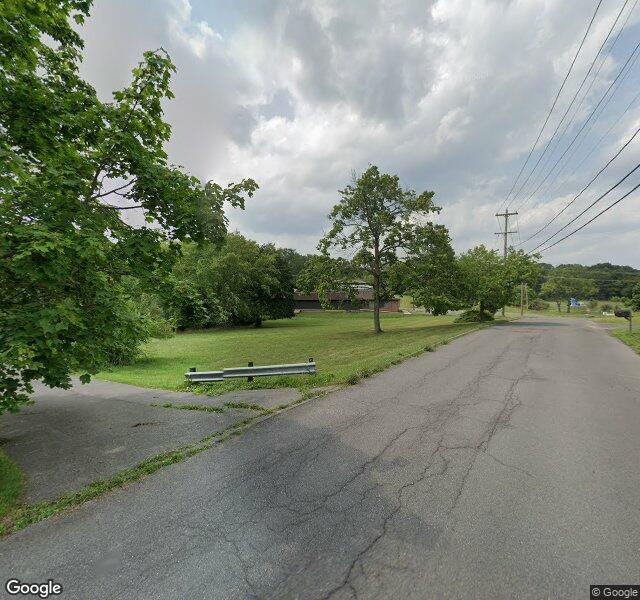
How Does Cumberland Healthcare Center Compare to Other Maryland Nursing Homes?

Compared to the 100 nursing homes in Maryland, CUMBERLAND HEALTHCARE CENTER's overall rating (2 stars) is below the state average of 3.0, staff turnover (23%) is significantly lower than the state average of 46%, and health inspection rating (2 stars) is below the national benchmark.

What Should Families Ask When Visiting Cumberland Healthcare Center?

Based on this facility's data, families visiting should ask: "What safeguards and monitoring systems are in place to protect residents from abuse or neglect?" "Can I visit during a mealtime to observe dining assistance and food quality?" "How do you handle medical emergencies, and what is your hospital transfer rate?" "Can I speak with family members of current residents about their experience?" These questions are particularly relevant given the substantiated abuse finding on record.

Is Cumberland Healthcare Center Safe?

Based on CMS inspection data, CUMBERLAND HEALTHCARE CENTER has documented safety concerns. The facility has 1 substantiated abuse finding (meaning confirmed case of resident harm by staff or other residents). The facility has a 2-star overall rating and ranks #100 of 100 nursing homes in Maryland. Families considering this facility should ask detailed questions about what corrective actions have been taken since these incidents.

Do Nurses at Cumberland Healthcare Center Stick Around?

Staff at CUMBERLAND HEALTHCARE CENTER tend to stick around. With a turnover rate of 23%, the facility is 23 percentage points below the Maryland average of 46%. Low turnover is a positive sign. It means caregivers have time to learn each resident's needs, medications, and personal preferences. Consistent staff also notice subtle changes in a resident's condition more quickly. Registered Nurse turnover is also low at 20%, meaning experienced RNs are available to handle complex medical needs.

Was Cumberland Healthcare Center Ever Fined?

CUMBERLAND HEALTHCARE CENTER has been fined $97,777 across 1 penalty action. This is above the Maryland average of $34,057. Fines in this range indicate compliance issues significant enough for CMS to impose meaningful financial consequences. Common causes include delayed correction of deficiencies, repeat violations, or care failures affecting resident safety. Families should ask facility leadership what changes have been made since these penalties.

Is Cumberland Healthcare Center on Any Federal Watch List?

CUMBERLAND HEALTHCARE CENTER is not on any federal watch list. The most significant is the Special Focus Facility (SFF) program, which identifies the bottom 1% of nursing homes nationally based on persistent, serious quality problems. Not being on this list means the facility has avoided the pattern of deficiencies that triggers enhanced federal oversight. This is a positive indicator, though families should still review the facility's inspection history directly.