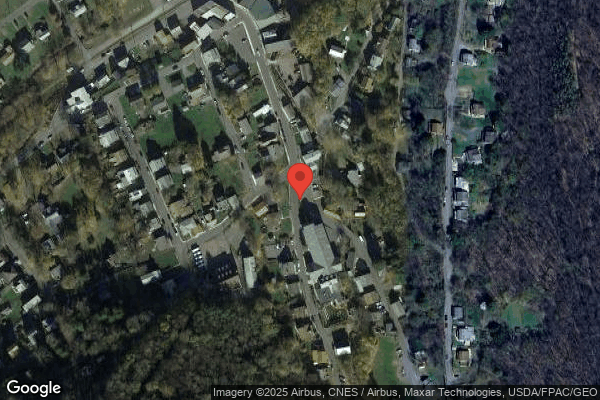
EGLE NURSING HOME

57 JACKSON STREET, LONACONING, MD 21539 (301) 463-5451
For profit - Corporation 66 Beds Independent Data: November 2025
Trust Grade
70/100
#59 of 219 in MD
Last Inspection: May 2024

Within standard 12-15 month inspection cycle. Federal law requires annual inspections.

Overview

Egle Nursing Home in Lonaconing, Maryland has a Trust Grade of B, indicating it is a good choice for families seeking care, though it falls within the middle of the pack. It ranks #59 of 219 facilities in the state, placing it in the top half, and #3 out of 8 in Allegany County, meaning only two local options are better. Unfortunately, the facility is experiencing a worsening trend, with issues increasing from 10 in 2019 to 14 in 2024. Staffing is generally a strength, with a turnover rate of 30%, which is below the state average, but it has concerning RN coverage that is less than 80% of Maryland facilities, meaning residents might not receive as much skilled nursing attention. While Egle Nursing Home has not incurred any fines, indicating compliance with regulations, there are notable weaknesses. Recent inspections revealed issues such as improper food storage and inadequate reviews of resident care plans, which could affect resident safety and care quality. Overall, while the nursing home has some positive aspects, families should weigh these concerns when considering care options.

Trust Score
B
70/100
In Maryland
#59/219
Top 26%
Safety Record
Low Risk
No red flags
Inspections
Getting Worse
10 → 14 violations
Staff Stability
○ Average
30% turnover. Near Maryland's 48% average. Typical for the industry.
Penalties
✓ Good
No fines on record. Clean compliance history, better than most Maryland facilities.
Skilled Nurses
○ Average
Each resident gets 32 minutes of Registered Nurse (RN) attention daily — about average for Maryland. RNs are the most trained staff who monitor for health changes.
Violations
⚠ Watch
28 deficiencies on record. Higher than average. Multiple issues found across inspections.
★★★★☆
4.0
Overall Rating
★★★☆☆
3.0
Staff Levels
★★☆☆☆
2.0
Care Quality
★★★★☆
4.0
Inspection Score
Stable
2019: 10 issues
2024: 14 issues

The Good

  • Full Sprinkler Coverage · Fire safety systems throughout facility
  • No fines on record
  • Staff turnover below average (30%)

    18 points below Maryland average of 48%

Facility shows strength in fire safety.

The Bad

Staff Turnover: 30%

16pts below Maryland avg (46%)

Typical for the industry

The Ugly 28 deficiencies on record

May 2024 14 deficiencies
CONCERN (D)

Potential for Harm - no one hurt, but risky conditions existed

Resident Rights (Tag F0550)

Could have caused harm · This affected 1 resident

Based on observation and interview with residents, it was determined that the facility failed to treat residents with respect and dignity as evidenced by failing to knock and request permission before...

Read full inspector narrative →
Based on observation and interview with residents, it was determined that the facility failed to treat residents with respect and dignity as evidenced by failing to knock and request permission before entering a resident's room. This was evident for 1 (#33) of 28 residents included in the resident sample. The findings include: On 5/1/24, at 9:55 AM, an interview was conducted with Resident #33. During the interview, the door to the resident's room was closed. At approximately 10:00 AM, Staff #10, Geriatric Nursing Assistant (GNA) entered Resident #33's room without knocking. On 5/2/24 at 4:11 PM, the Director of Nurses (DON) was made aware that the GNA had failed to knock on the resident's door and request permission from the resident prior to entering the resident's room. The DON responded that the Staff #10 had told her about it, and indicated the GNA was thrown off because the door to the resident's room was closed, and the door was usually kept open.
CONCERN (D)

Potential for Harm - no one hurt, but risky conditions existed

Comprehensive Assessments (Tag F0636)

Could have caused harm · This affected 1 resident

Based on record review and staff interview it was determined that the facility failed to assess a resident's cognition and mood on a comprehensive MDS assessment. This was evident for 1 (#33) of 1 res...

Read full inspector narrative →
Based on record review and staff interview it was determined that the facility failed to assess a resident's cognition and mood on a comprehensive MDS assessment. This was evident for 1 (#33) of 1 residents reviewed for care planning. The findings include: The MDS is part of the Resident Assessment Instrument that was federally mandated in legislation passed in 1986. The MDS is a set of assessment screening items employed as part of a standardized, reproducible, and comprehensive assessment process that ensures each resident's individual needs are identified, that care is planned based on these individualized needs, and that the care is provided as planned to meet the needs of each resident. The Annual MDS assessment is a comprehensive assessment for a resident that must be completed annually (at least every 366 days) unless a significant change in assessment has been completed since the most recent comprehensive assessment was completed. Completion of the comprehensive annual MDS assessment, must be completed no later than 14 days after the Assessment Reference Date (ARD). 1) Review of Resident #33's medical record on 5/2/24 at 12:46 PM revealed the resident's annual assessment with an assessment reference (ARD) date of 3/13/24 was not fully completed. Section C, Cognitive Patterns was not assessed and Section D - Mood was not assessed. On 5/2/24 at 1:44 PM, during an interview, Staff #9, MDS Coordinator confirmed that, at the time of Resident #33's comprehensive assessment, the resident's cognitive and mood assessments had not been completed, and Staff #9 stated that the Social Worker was responsible for completing those assessments. On 5/2/24 at 4:00 PM, the above concerns were discussed with Staff #12, Social Worker (SW). Staff #12 acknowledged the concerns and indicated, that at the time of the assessment, she had not realized there had been a recent change in Resident #33's health insurance provider which now required completion of the assessments in the MDS.
CONCERN (D)

Potential for Harm - no one hurt, but risky conditions existed

Deficiency F0637 (Tag F0637)

Could have caused harm · This affected 1 resident

Based on record review and staff interviews, it was determined that the facility failed to complete a Significant Change in Status Minimum Data Set (MDS) assessment within 14 days following a signific...

Read full inspector narrative →
Based on record review and staff interviews, it was determined that the facility failed to complete a Significant Change in Status Minimum Data Set (MDS) assessment within 14 days following a significant decline in a resident's condition. This was evident for 1 (#8) of 28 residents reviewed during the recertification survey. The findings include: The Minimum Data Set (MDS) is a federally mandated assessment tool used by nursing home staff to gather information on each Resident's strengths and needs. Information collected drives resident care planning decisions. MDS assessments must be accurate to ensure that each Resident receives the care they need. The nursing home should complete a significant change in status MDS assessment within 14 days when there's a major decline or improvement in a resident's status. A medical record review, completed on 5/7/24 at 1:22 PM, for Resident #8 showed that they were admitted to the facility in June 2019. Further review found a nurse's note, dated 2/13/24, that recorded that Resident was complaining of Left knee hurting. not wanting it touched. Left knee is swollen. Resident states that it hurts. Dr. Made aware and order received for X-ray left knee, order placed with TRIDENT care. A continued record review contained a nurse's note, dated 2/15/24, that documented that Resident has a left tibial plateau fracture. A subsequent review, on 5/7/24 at 1:33 PM, showed a Significant Change in Status MDS assessment for Resident #8, dated 2/22/24, completed and signed in sections Z0500B & V0200B2 on 3/7/24. In an interview on 5/7/24 at 2:04 PM with staff #4, the MDS coordinator, she said that the start date for Resident #8's significant change in status was determined to be 2/13/24. However, the MDS was not completed until 3/7/24, 24 days after the determination that a significant change in the resident's status from baseline had occurred. In a continued interview, staff #4 reported that she was not aware that Significant change in status MDS assessments had to be completed by the 14th day after determining a significant change had occurred in a resident's condition.
CONCERN (D)

Potential for Harm - no one hurt, but risky conditions existed

Assessment Accuracy (Tag F0641)

Could have caused harm · This affected 1 resident

**NOTE- TERMS IN BRACKETS HAVE BEEN EDITED TO PROTECT CONFIDENTIALITY** 2. Resident #35 is [AGE] years old and diagnosed with depression, schizophrenia, and hypertension. The resident has been at the ...

Read full inspector narrative →
**NOTE- TERMS IN BRACKETS HAVE BEEN EDITED TO PROTECT CONFIDENTIALITY** 2. Resident #35 is [AGE] years old and diagnosed with depression, schizophrenia, and hypertension. The resident has been at the facility for more than four years as a long-term resident. The MDS is a federally mandated assessment tool that helps nursing home staff gather information on each resident ' s strengths and needs. Information collected drives resident care planning decisions. MDS assessments need to be accurate to ensure each resident receives the care they need. MDS assessment information is based on an Assessment Reference Date (ARD), which defines the last day of the lookback period. The MDS should be completed based on information in the lookback period, including the ARD. On 05/02/24 at 04:02 PM, a review of Resident #35's record revealed a social service progress note, dated 03/15/24, that stated a brief interview for mental status (BIMS) test was conducted on that date, generating a score of 15/15. A review of the resident's most recently completed MDS assessment with an assessment reference date (ARD) of 03/15/24 by the MDS coordinator (Staff #4) failed to reveal that the resident's BIMS score from the same date was included in the assessment. MDS assessments should include all relevant assessment information, including the BIMS score, that is available on the ARD and within the lookback period. On 05/02/24 at 01:36 PM, the surveyor reviewed with the DON and Social Services Director the MDS inaccuracy of not including the BIMS score, assessed on 03/15/2024, as part of MDS, which was submitted on 03/19/2024. The Social Service Director confirmed that the MDS coordinator did not capture the BIMS score. Based on medical record review and staff interview, it was determined that the facility staff failed to ensure that Minimum Data Set (MDS) assessments were accurately coded. This was evident for 2 (#64 and #35) of 5 residents reviewed for unnecessary medications. The findings include: The Minimum Data Set (MDS) is a federally mandated assessment tool used by nursing home staff to gather information on each Resident's strengths and needs. Information collected drives resident care planning decisions. MDS assessments must be accurate to ensure that each Resident receives the care they need. Active diagnoses documented on the MDS assessment are attending provider-documented diagnoses in the last 60 days that directly relate to the Resident's current functional status, cognitive status, mood or behavior, medical treatments, nursing monitoring, or risk of death during the 7-day look-back period. 1. Medical record review on 5/6/24 at 12:05 PM found that Resident #64 was admitted to the facility in April 2024 with diagnoses including Dementia. Continued review showed admission medications for Resident #64 that included an antipsychotic medication for delusions (false beliefs) and hallucinations (seeing, hearing, feeling, or smelling something that does not exist). Further record review on 5/6/24 at 3:03 PM contained an admission MDS assessment, dated 4/12/24, for Resident #64. The MDS recorded in section N that Resident #64 had taken antipsychotic medication during the observation period. The MDS also had a check (meaning a YES) to the question indication noted (meaning there was an indication noted for the use of the medication). However, the MDS failed to capture Resident #64's actual diagnosis/indication for the medication. During an interview, on 5/7/24 at 11:12 AM, staff #4, an MDS coordinator, said that to document active diagnoses on the MDS assessment, she would use a physician's order report signed by an attending provider. However, a physician order report for Resident #64, which listed delusions and hallucinations as the indications/diagnosis for the use of the antipsychotic medication, had been signed by an attending provider on 4/8/24. It was not recorded in Resident #64's MDS assessment, dated 4/12/24. In a subsequent interview on 5/7/24 at 11:28 AM, staff #4 confirmed that she forgot to record the diagnosis for the use of the antipsychotic medication on Resident #64's MDS assessment dated [DATE].
CONCERN (D)

Potential for Harm - no one hurt, but risky conditions existed

Deficiency F0688 (Tag F0688)

Could have caused harm · This affected 1 resident

**NOTE- TERMS IN BRACKETS HAVE BEEN EDITED TO PROTECT CONFIDENTIALITY** Based on observation, record review, and interviews, it was determined that the facility failed to ensure that a resident with a...

Read full inspector narrative →
**NOTE- TERMS IN BRACKETS HAVE BEEN EDITED TO PROTECT CONFIDENTIALITY** Based on observation, record review, and interviews, it was determined that the facility failed to ensure that a resident with a limited range of motion received treatment and services as ordered by the attending provider to prevent further decline in the range of motion. This was evident for 1 (#43) of 3 residents reviewed for position and mobility. The findings include: The Minimum Data Set (MDS) is a federally mandated assessment tool used by nursing home staff to gather information on each Resident's strengths and needs. Information collected drives resident care planning decisions. Palm Protectors offer relief from hand contractures and cramping. They are put over the thumb and around the hand, providing a cushioning pad for the fingers to curl onto. This prevents the nails from digging into the palms and keeps the fingers warm and supported. An observation was made of Resident #43 on 4/30/24 at 10:55 AM, lying in bed, unable to move his/her left hand, and having no device in place. A medical record review on 4/30/24 at 11:30 AM found that Resident #43 was admitted to the facility in December 2020 with diagnoses that included left hemiparesis (paralysis of the left arm and leg) due to a stroke. Continued review revealed an MDS assessment dated [DATE] for Resident #43. The MDS had recorded in section G that Resident #43 required extensive to total assistance from staff for all his/her self-care needs. Further review of the MDS showed that Resident #43 had functional limitations of his/her upper and lower extremities. A subsequent record review on 5/1/24 at 9:34 AM contained an attending provider's order initiated on 4/17/23 for LUE palm protector to be worn at all times. May remove for bathing and hand hygiene [LUE- Left upper extremity]. Further review found an occupational therapy evaluation and plan of treatment dated 2/16/24 that recorded that Resident #43 had right CVA with dominant left side weakness and left neglect. Has a left palm protector [he/she] is to wear at all the times except during bathing and daily hand hygiene [CVA- cerebrovascular accident. It is also known as stroke]. In an interview on 5/2/24 at 3:29 PM with staff #16, a licensed practical nurse, she confirmed that Resident #43 did not have the palm protector on. She stated it was not in the Resident's room and did not know where it was placed. In a subsequent interview on 5/2/24 at 3:46 PM, staff #18, a geriatric nurse aide, stated that they were supposed to check if Resident #43 had the palm protector on every shift but did not because they got too busy. An interview was conducted on 5/3/24 at 9:27 AM with staff #19, an occupational therapist, and staff #20, a certified occupational therapy assistant. During the interview, they stated that the palm protector was to keep Resident #43's hand contracture from worsening and recommended that it be used daily. However, earlier observations by the surveyor failed to show that it was being used daily.
CONCERN (D)

Potential for Harm - no one hurt, but risky conditions existed

Deficiency F0700 (Tag F0700)

Could have caused harm · This affected 1 resident

Based on observation, medical record review, and staff interview, it was determined that prior to the installation of bed rails, the facility 1) failed to identify and use appropriate alternatives pri...

Read full inspector narrative →
Based on observation, medical record review, and staff interview, it was determined that prior to the installation of bed rails, the facility 1) failed to identify and use appropriate alternatives prior to installing or using bed rails, and 2) failed to assess a resident's risk of injury or entrapment prior to installing or using bed rails. This was found to be evident for 1 (#39) of 1 residents reviewed for side rails. The findings include: Bed rails are adjustable bars that attach to the bed and are available in a variety of types, shapes, and sizes. As enablers, bedrails facilitate movement and may promote independence. Entrapment is an event in which a resident is caught, trapped, or entangled in the space in or about the bed rail. The MDS (Minimum Data Set) is a complete assessment of the resident which provides the facility with the information necessary to develop a plan of care, provide the appropriate care and services to the resident, and to modify the care plan based on the resident's status. On 4/30/24 at 12:24 PM, an observation was made of Resident #39 lying in bed and bilateral bed rails were observed attached to the resident's bed. At that time, Resident #39 was observed to have palm protectors on both hands, with his/her fingers bent in a partial fist position. Review of Resident #39's annual MDS with an assessment reference date (ARD) of 2/15/24 revealed documentation that Resident #39 had severe cognitive impairment with diagnoses which included dementia, hemiplegia (paralysis of one side of the body) or hemiparesis (one sided muscle weakness) and had right and left-hand contractures (limited movement of a joint). The assessment documented that Resident #39 was dependent (helper does all the effort) for all activities of daily living (ADLs) and dependent for performing all mobility activities such as turning and positioning. On 5/3/24 at 11:20 AM, a review of Resident #39's medical record conducted on 5/3/24 at 11:20 AM revealed a 8/24/23 physician's order, for 1/4 (quarter) rails on bed as enablers, every shift. Review of Resident #39's medical record revealed a Side Rails Informed Consent and Release form, that stated the risks of side rails included entrapment, followed by a list of ways a resident could become entrapped, that side rails may also be associated with accidental skin injury, and that there was a risk of significant injury if the resident should fall. The form also listed the benefits of using side rails were improved bed mobility, improved mobility getting in and out of bed, and the side rails were to be used as a mobility aid and not as a physical restraint. The form revealed documentation that the resident/representative was informed of the risks and benefits for the use of the side rails and was signed by Resident #39's representative on 12/27/19. Resident #39's medical record revealed side rail assessment forms, dated 11/16/23, 2/13/24 and 5/7/24, that assessed the medical symptoms which required the use of side rails, the reason for the side rail usage, the types of rails to be used, and the frequency for use of the rails. Each side rail assessment documented Resident #39's medical symptoms that required the use of side rails. Those diagnoses were muscle weakness, impaired mobility, and osteoarthritis, with the reasons for the side rails listed as bed mobility and boundary limitations. The type of rails were top half, two sides and documented the risks and benefits of the bed rails were explained to the RP (Resident Representative) on 12/27/19. Continued review of Resident #39's medical record failed to reveal evidence that prior to installing or using bed rails, appropriate alternatives were explored. No documentation was found in the medical record to indicate that Resident #39 had been assessed for risks of entrapment prior to the installation or use of the bed rails, and there was no evidence of an ongoing evaluation of the resident's risk for entrapment. In addition, no documentation was found in the medical record to indicate that Resident #39 was re-evaluated for the need for bed rails once s/he was unable to utilize the rails as enablers for mobility. The medical record review failed to reveal evidence of an ongoing evaluation to ensure that the use of the bed rails met the resident's needs. Also, no documentation was found to indicate that specific monitoring and supervision of the resident was provided during the resident's use of the bed rails. On 5/8/24 at 3:04 PM, during an interview, Staff #11, Physical Therapist (PT) stated that Resident #39 was dependent for bed mobility. Staff #11 stated that it was unlikely that Resident #39 would be able to grasp and hold the bed rail as the resident was pretty much totally dependent with maximum assistance, indicating Resident #39 would be unable to utilize bed rails to aid in his/her mobility. The concerns related to failing to reassess Resident #39's need for bed rails, assessing the resident for risk of entrapment, assessing, and implementing appropriate alternatives prior to installing or using bed rails, and failing to monitor and supervise residents during the use of bed rails, and were discussed with the Director of Nurses (DON) on 5/8/24 at approximately 4:40 PM, and the DON verbalized understanding of the concerns. On 5/9/24 at 11:14 AM, during an interview, Staff #6, Maintenance Director, stated that there were bed rails on all of the resident beds in the facility and when the facility bought new beds, the rails were already attached to the beds. When asked if the facility had a regular maintenance program to ensure the inspection of all bed frames, mattresses and bed rails, Staff #6 stated that no routine maintenance checks on the beds or the bed rails were conducted, but if someone reported a concern with a bed or bed rails, maintenance would check on the problem. Cross Reference F909. The above concerns were discussed with the Nursing Home Administrator (NHA) on 5/9/24 at 11:40 AM, and the NHA acknowledged the concerns at that time.
CONCERN (D)

Potential for Harm - no one hurt, but risky conditions existed

Deficiency F0711 (Tag F0711)

Could have caused harm · This affected 1 resident

Based on medical record review and staff interview, it was determined that the facility staff failed to ensure that physician progress notes were written, signed, and dated at each visit. This was evi...

Read full inspector narrative →
Based on medical record review and staff interview, it was determined that the facility staff failed to ensure that physician progress notes were written, signed, and dated at each visit. This was evident for 2 (#45, #29) of 5 residents reviewed for unnecessary medications. The findings include: 1) On 5/7/24 at 9:59 AM, a review of Resident #45's medical record was conducted. Review of Resident #45's electronic medical record (EMR) and paper medical record revealed that physician's visit notes were not written, signed, and dated at the time of each visit. In Resident #45's EMR, there was a physician's visit progress note, dated 2/3/24 at 7:22 PM, that indicated the day of the physician visit date was 1/22/24, a physician's visit progress note dated 4/7/24 at 2:27 PM, that indicated the date of the physician's visit was 3/25/24, and a physician's visit progress note dated 5/2/24 at 8:58 AM, that indicated the date of the physician's visit was 4/22/24. On 5/7/24 at 4:35 PM, the Director of Nurses (DON) was made aware of the concerns. At that time, the DON acknowledged the concerns and stated that s/he thought the physician dictated visit notes on the day of the visit. 2) On 5/8/24 at 10:17 AM, a review of Resident #29's medical record revealed that physician's visit notes were not written, signed, and dated at the time of each visit. In the resident's EMR, there was a physician's visit progress noted dated 4/7/24 at 3:08 PM that indicated the date of the physician's visit was 3/25/24, a physician's visit progress note dated 4/13/24 at 10:37 AM, that indicated the date of the physician's visit was 4/1/24, and a physician's visit progress note dated 4/21/24 that indicated the date of the physician's visit was 4/15/24. On 5/8/24 at 2:10 PM, the DON was made aware of the concerns with Resident #29's physician visit notes were not written, signed, and dated on the day of the physician visit. The DON acknowledged the concerns at that time and offered no further comments.
CONCERN (D) 📢 Someone Reported This

A family member, employee, or ombudsman was alarmed enough to file a formal complaint

Potential for Harm - no one hurt, but risky conditions existed

Medical Records (Tag F0842)

Could have caused harm · This affected 1 resident

**NOTE- TERMS IN BRACKETS HAVE BEEN EDITED TO PROTECT CONFIDENTIALITY** 3. Resident #35 is [AGE] years old and diagnosed with depression, schizophrenia, and hypertension. The resident has been at the ...

Read full inspector narrative →
**NOTE- TERMS IN BRACKETS HAVE BEEN EDITED TO PROTECT CONFIDENTIALITY** 3. Resident #35 is [AGE] years old and diagnosed with depression, schizophrenia, and hypertension. The resident has been at the facility for more than four years as a long-term resident. Medical record review on 05/06/24 at 1:44 PM revealed that the Minimum Data Set (MDS) assessment was completed on 03/15/24. Further review of the medical record failed to reveal documentation to indicate that the required care plan meeting occurred after the completion of the MDS assessment in March 2024. An interview was conducted with the Social Service Director (SSD) and the Director of Nursing (DON) on 05/03/24 at 02:11 PM regarding the care plan meeting. When asked what evidence was there that a care plan meeting occurred, the DON stated that it was documented under progress notes who attended the care plan. The SSD stated that a recent care plan meeting occurred on 03/20/24, but was unable to provide the medical record documentation that the facility conducted a care plan meeting with the Interdisciplinary team (IDT). The SSD did provide email documentation that a care plan meeting was held on 3/20/24. Based on medical record review and staff interview, it was determined that the facility failed to keep complete and accurate medical records as evidenced by 1) failing to transcribe an accurate indication for use of antipsychotic medication, 2) failing to document a resident's wound evaluation in the medical record, and 3) failing to ensure that the a care plan meeting was documented. This was evident for 2 (#45, #35) of 5 residents reviewed for unnecessary medications, 1 (#45) of 2 residents reviewed for pressure ulcers. The findings include: 1) On 5/7/24 at 9:59 AM, a review of Resident #45's medical record was conducted. Review of Resident #45's May 2024 Medication Administration Record (MAR) revealed a 11/29/23 order for Seroquel (quetiapine) (antipsychotic) 25 mg (milligrams) by mouth, special instructions: dementia with psychosis, specific behaviors; paranoia, argumentative with staff, restless, repetitive calling out, once a day at 8:00 AM, and a 11/29/23 order for Seroquel 50 mg (milligrams) by mouth, special instructions: dementia with psychosis, specific behaviors; paranoia, argumentative with staff, restless, repetitive calling out (Dx: Anxiety Disorder), once a day at 8:00 PM. In the orders, dementia with psychosis, specific behaviors; paranoia, argumentative with staff, restless, repetitive calling out was the indication for Resident #45's use of Seroquel Review of Resident #45's medical record revealed on 11/29/23 at 11:30 AM, in a psychiatric progress note, the Nurse Practitioner (NP) documented Resident #45's primary diagnoses were adjustment disorder with anxiety and depressed mood, generalized anxiety disorder and delusional disorder and the NP wrote continue on Seroquel for delusional disorder. The facility staff failed to transcribe an accurate indication for Resident #45's use of antipsychotic medication, Seroquel. The above concerns were discussed with the Director of Nurses (DON) on 5/7/24 at 4:35 PM and the DON confirmed the findings at that time. 2) A pressure ulcer is a lesion caused by unrelieved pressure that results in damage to the underlying tissue. Pressure ulcers are staged, from Stage I to Stage IV, according to their severity level. A Stage III pressure ulcer has full thickness skin loss involving damage to subcutaneous tissue presenting as a deep crater. On 5/8/24 at 9:49 AM, a review of Resident #45's electronic health record (EHR) revealed the resident had a Stage III pressure ulcer on his/her left ankle. Review of Resident #45's May 2024 MAR revealed a treatment order to Stage 3 LL ankle once a day on Thursdays, 7:00 AM - 3:00 PM which was documented as completed on Thursday, 5/2/24. Review of the wound management section of Resident #45's EHR revealed a wound progress notes with a PU (pressure ulcer) observation date of 4/25/24 at 1:34 PM that documented an assessment of the PU and the measurements of the wound. Continued review of the medical record failed to reveal documentation to indicate Resident #45's PU had been evaluated during his/her 5/2/24 dressing change. On 5/9/24 at 12:43 PM, during an interview, Staff #5, Wound Care Nurse, Registered Nurse (RN), stated that Resident #45 developed a left ankle wound about a year ago and went to the wound clinic, who staged the wound. Staff #5 stated Resident #45's PU had stayed about the same, that the wound bed would fill in, then regress and sometimes the wound had drainage. Staff #5 stated that Resident #45's wound measurements were obtained and the PU evaluated every week during the residents weekly PU treatment, and the evaluation and wound measurements would be documented in the wound management section of the resident's EHR. At that time, when asked if Resident #45's PU had been evaluated and wound measurements obtained when the PU dressing was changed on 5/2/24, Staff #5 stated the wound had been assessed, however, she had not yet written a note, and confirmed there was no documentation of the PU evaluation in the EHR. On 5/9/24 at 1:00 PM, Staff #5 provided the surveyor with a paper measuring tape labeled wound measuring guide, with the date 5/2/24, with wound measurements handwritten on the paper tape, indicating Resident #45's PU had been evaluated; however, the evaluation was not documented in the resident's medical record.
CONCERN (D)

Potential for Harm - no one hurt, but risky conditions existed

Infection Control (Tag F0880)

Could have caused harm · This affected 1 resident

Based on record review, observations, and interviews, it was determined that the facility staff failed to wear proper personal protective equipment (PPE) before giving direct care to a resident with a...

Read full inspector narrative →
Based on record review, observations, and interviews, it was determined that the facility staff failed to wear proper personal protective equipment (PPE) before giving direct care to a resident with a percutaneous endoscopic gastrostomy (peg) feeding tube. This was evident for 1 (#43) of 3 residents reviewed for tube feeding. The findings include: A percutaneous endoscopic gastrostomy (PEG) feeding tube is placed into the stomach through an opening in the stomach wall. It is used to give drugs and liquids, including liquid food. The Minimum Data Set (MDS) is a federally mandated assessment tool used by nursing home staff to gather information on each Resident's strengths and needs. Information collected drives resident care planning decisions. Enhanced Barrier Precautions are infection control interventions designed to reduce transmission of infection in nursing homes. It involves gown and glove use during high-contact Resident care activities like dressing, bathing/showering, transferring, changing linens, providing hygiene, changing briefs, or assisting with toileting for residents with central line, urinary catheter, feeding tube, tracheostomy, or any skin opening requiring dressing. A review of Resident #43's MDS assessment, dated 6/14/23 found that he/she had a PEG feeding tube. A continued review showed that Resident #43 required extensive assistance or depended on staff for all his/her self-care needs. An observation on 4/30/24 at 10:55 AM showed a signage on Resident #43's door that indicated Resident #43 was on enhanced barrier precautions, which required wearing gowns and gloves during high-contact resident care activities. A subsequent observation on 5/2/24 at 9:09 AM found staff #17, a geriatric nurse aid, giving Resident #43 a bed bath. Staff #17 had put on gloves before direct contact; however, the observation failed to show that staff #17 wore a gown. In an interview on 5/2/24 at 9:31 AM, Staff #17 stated that she only put on gloves to provide high-contact care activities to Resident #43, not gowns. During a subsequent interview on 5/2/24 at 12:24 PM, staff #16, a licensed practical nurse, reported that there was always a supply of gowns in Resident #43's room, and all staff knew where they were. In an interview on 5/3/24 at 7:53 AM, the director of nursing stated that all staff had been trained in enhanced barrier precautions and expected all staff to wear gloves and gowns when in direct contact with Resident #43.
CONCERN (D)

Potential for Harm - no one hurt, but risky conditions existed

Deficiency F0909 (Tag F0909)

Could have caused harm · This affected 1 resident

Based on observation, medical record review and staff interview, it was determined the facility failed to conduct a regular inspection of all bed frames, mattresses, and bed rails, as part of a regula...

Read full inspector narrative →
Based on observation, medical record review and staff interview, it was determined the facility failed to conduct a regular inspection of all bed frames, mattresses, and bed rails, as part of a regular maintenance program to identify areas of possible entrapment and failed to ensure the equipment was inspected and maintained according to manufacturer's recommendations and requirements and timeframes. This was evident for 1 (#39) of 7 residents reviewed for accidents and had the potential to affect all residents. The findings include: On 4/30/24 at 12:24 PM, an observation was made of Resident #39 lying in bed. At that time bilateral bed rails were observed attached to the resident's bed. On 5/9/24 at 11:14 AM, during an interview, Staff #6, Maintenance Director, stated that all of the resident beds in the facility had bed rails attached to the bed, and when the facility bought new beds, the bed rails were already attached to the beds. When asked if the facility's regular maintenance program ensured the inspection of all bed frames, mattresses, and bed rails, Staff #6 indicated that no routine maintenance checks were performed on the resident beds or bed rails. Staff #6 indicated that aides assessed the beds, and if there was a problem with the bed or the bed rails, they would notify maintenance, and maintenance would go and check the bed and/or bed rails. Staff #6 stated that if there was a concern with a bed or bed rails, staff would call or page maintenance, and, in the mornings when he arrived at the facility, he also received a report from the nurse. On 5/9/24 at 11:40 AM, the concerns with failing to conduct regular inspection of all bed frames, mattresses, and bed rails, to prevent risk of entrapment, and ensure the equipment was inspected and maintained according to manufacturer's recommendations, requirements, and timeframes were discussed with the Nursing Home Administrator (NHA) and, at that time, the NHA indicated he understood the concerns.
CONCERN (D)

Potential for Harm - no one hurt, but risky conditions existed

Deficiency F0914 (Tag F0914)

Could have caused harm · This affected 1 resident

Based on observations and interviews, it was determined that the facility failed to provide full visual privacy for a resident residing in a non-private room. This was evident for 1 (Resident #268) of...

Read full inspector narrative →
Based on observations and interviews, it was determined that the facility failed to provide full visual privacy for a resident residing in a non-private room. This was evident for 1 (Resident #268) of 25 residents reviewed during the recertification survey. The findings include: Resident #268 was a newly admitted resident of the facility residing in a non-private room with 2 beds. Resident #268 occupied bed B and his/her roommate occupied bed A. On 5/1/24 at 11:58 AM, an inspection of the privacy curtain located between the 2 beds in the room was conducted and revealed that it only extended up to the length of the beds. On 5/3/24 at 8:58 AM, a review of Resident #268's medical records indicated that s/he used a bedside commode in the room for bowel and bladder elimination. A tour of the room was conducted with the Director of Nursing (DON) on 5/3/24 at 9:45 AM. The observation was confirmed and discussed the concern that privacy curtains must extend around the bed to provide total visual privacy in combination with adjacent walls and curtains. The DON reported that the room had a different ceiling configuration that prevented them from installing the track for suspended curtains as observed with the other rooms in the facility. The DON also indicated that she would have a discussion with the maintenance staff to come up with a plan to be in compliance with the regulation.
CONCERN (E)

Potential for Harm - no one hurt, but risky conditions existed

Deficiency F0657 (Tag F0657)

Could have caused harm · This affected multiple residents

**NOTE- TERMS IN BRACKETS HAVE BEEN EDITED TO PROTECT CONFIDENTIALITY** Based on observation, medical record review and staff interview, it was determined the facility failed to review and revise resi...

Read full inspector narrative →
**NOTE- TERMS IN BRACKETS HAVE BEEN EDITED TO PROTECT CONFIDENTIALITY** Based on observation, medical record review and staff interview, it was determined the facility failed to review and revise resident care plans after each assessment. This was evident for 1 (#39) of 7 residents reviewed for accidents, and 1 (#45) of 5 residents reviewed for unnecessary medications. The findings include: A care plan is a guide that addresses the unique needs of each resident. It is used to plan, assess and evaluate the effectiveness of the resident's care. The MDS (Minimum Data Set) is a complete assessment of the resident which provides the facility with the information necessary to develop a plan of care, provide the appropriate care and services to the resident, and to modify the care plan based on the resident's status. 1) Bed rails are adjustable bars attached to the bed. As enablers, bedrails assist to facilitate mobility, and/or repositioning in bed. On 4/30/24 at 12:24 PM, an observation of Resident #39 lying in bed revealed bilateral bed rails attached to the resident's bed. At that time, the fingers on both of Resident #39's hands were observed bent in a partial fist position and a palm protector was in each hand, indicating the resident had limited use of his/her hands. A review of Resident #39's medical record on 5/3/24 at 11:20 AM revealed an 8/24/23 physician's order, for 1/4 (quarter) rails on bed as enablers, every shift, a 5/27/22 order for right and left palm protectors at all times, as tolerated to decrease risk of further contractures. Continued review of the orders, failed to reveal evidence that Resident #39 utilized a bed alarm (device to monitor when a resident gets up). Review of Resident #39's annual MDS, with an assessment reference date (ARD) of 2/15/24, revealed documentation that the resident had severe cognitive impairment with diagnoses including dementia, hemiplegia (paralysis of one side of the body) or hemiparesis (one sided muscle weakness) and right and left-hand contractures (limited movement of a joint). The MDS documented that Resident #39 was dependent (helper does all the effort) for all activities of daily living (ADLs), dependent for performing all mobility activities such as turning and positioning and always incontinent of bladder and bowel. On 5/8/24 at 3:04 PM, during an interview, Staff #11, Physical Therapist (PT) stated that Resident #39 was dependent for bed mobility, and unlikely able to grasp and hold the bed rail as the resident was pretty much totally dependent with maximum assistance, indicating that Resident #39 was unable to utilize bed rails to aid in his/her mobility. Review of Resident #39's care plans revealed a care plan, Resident #39 uses ¼ side rails up as enablers, with the goal, Resident #39, will remain free from injury secondary to side rail use during this evaluation period, with the approaches, (1) 1/4 side rails up as enablers, (2) assess reasons for rail usage, (3) equip with a device that monitors attempts to arise as needed, (4) keep call light within reach, (5) provide assistance with toileting as needed, (6) PT/OT evaluation as needed, (7) Re-evaluate the need for the bed rails per policy and PRN (as needed) On 2/28/24 in a care plan evaluation note, the nurse documented goal met and wrote Resident #39 was dependent for all ADLs (activities of daily living), uses ¼ side rails as enablers, is turned and positioned q [every] 1 - 2 hours and wears right and left palm protectors. S/he is always incontinent of b/b [bowel and bladder], staff to provide incontinence care, and no injuries r/t (related to) side rail use noted, will cont. with POC [plan of care]. The care plan evaluation failed to reassess the effectiveness of the interventions to meet the resident's needs as evidenced by the approaches, equip with a device that monitors attempts to arise as needed and provide assistance with toileting. In addition, the facility failed to follow the care plan by failing to re-assess the need for the bed rails. Cross Reference F700 On 5/8/24 at 5:18 PM, the concerns with failing to review a resident's care plan after each assessment and failing to revise the care plan based on the resident's changing goals, preferences and needs of the resident and in response to current interventions were discussed with Staff #9, MDS Coordinator. Staff #9 verbalized understanding and acknowledged the concerns at that time. 2) On 5/7/24 at 9:59 AM, a review of Resident #45's medical record revealed that the resident was admitted to the facility at the end of 2020 and resided in the facility for long term care. Review of Resident #45's most recent MDS quarterly assessment, with an ARD of 4/4/24, revealed the resident's BIMS (brief interview for cognitive status) score was 3, indicating the resident had severe cognitive impairment. The MDS documented that, in the MDS 7 day look back period, Resident #45 exhibited physical behavioral symptoms toward others on 1 to 3 days, verbal behavioral symptoms directed towards others on 1 to 3 days, rejection of evaluation or care on 1 to 3 days and wandering behaviors occurred on 1 to 3 days in the look back period. The MDS documented that Resident #45 diagnoses included non-traumatic brain dysfunction, non-Alzheimer's dementia, anxiety disorder, depression, psychotic disorder, and delusional disorders and, that in the MDS 7 day look back period, the resident had received antipsychotic medication, antianxiety medication, and antidepressant medication. The MDS also documented the resident used a restraint in a chair to prevent the resident from rising, and documented Resident #45 had a Stage 3 pressure ulcer (full thickness tissue loss). Review of Resident #45's Medication Administration Record (MAR) revealed an 8/10/22 order for Buspirone (anxiolytic) by mouth once a day for anxiety order, unspecified, an11/29/23 order for Lorazepam (Ativan) (anxiolytic) by mouth for anxiety disorder, unspecified, a 2/27/24 order for Remeron (mirtazapine) (antidepressant) by mouth once a day for depression, poor appetite, a 11/29/23 order for Seroquel (quetiapine) (antipsychotic)) by mouth, for dementia with psychosis, specific behaviors; paranoia, argumentative with staff, restless, repetitive calling out, once a day at 8:00 AM, and a 11/29/23 order for Seroquel by mouth, for dementia with psychosis, specific behaviors; paranoia, argumentative with staff, restless, repetitive calling out (Dx: Anxiety Disorder), once a day at 8:00 PM. Also, the resident had an 3/12/24 order Roxinol (morphine) twice a day for pain, and an order for Fentanyl (synthetic opioid) patch transdermal (on skin) change every 72 hours for pain, polyarthritis diagnosis. In the MAR, the orders were documented as being administered as ordered every day in April. Additionally, Resident #45 had a 1/11/24 treatment order to a Stage 3 left lateral ankle, once a day on Thursdays and an order for a pummel cushion (helps prevent sliding out of wheelchair), A review of Resident #45's care plans (CP) and care plan evaluations, failed to reveal evidence that the care plans were reviewed and revised following the residents most recent MDS assessment on 4/4/24: 2.1 Resident #45 had a Behavioral Symptoms care plan, Resident #45 has potential to display behaviors towards others such as cursing at staff, making accusatory statements towards staff and resisting care, pinching, scratching and attempting to hit staff and repetitive calling out a/e (as evidenced) by progress notes, with the goal, during this eval period, [Resident #45] will not experience a/e (adverse effects) r/t (related to) behaviors. Review of the CP evaluation notes revealed a CP evaluation completed on 1/23/24. The evaluation notes also indicated the CP was reviewed/revised on 3/12/24, however there was no documentation of the evaluation found in the medical record. 2.2 Resident #45's care plans revealed a Behavioral Symptoms care plan, Resident #45 displays wandering with repetitive calling out for [name] which may place her at risk for injury, initiated on 12/15/21, with the long-term goal during this eval period [Resident #45] will be free from harm secondary to wandering. Review of the CP evaluation notes revealed a CP evaluation completed on 1/23/24. The evaluation notes also indicated the CP was reviewed/revised on 5/3/24, however no documentation of the evaluation was found in the medical record. 2.3 Resident #45 had a Cognitive loss/Dementia care plan, Resident #45 has altered thought process r/t dementia with a start date of 12/22/20, that had the goal, during this eval period, [Resident #45] will continue to communicate basic needs and preferences to staff through verbal and non-verbal communication. Review of the CP evaluation notes revealed an evaluation completed on 1/23/24. The evaluation notes also indicated the CP was reviewed/revised on 3/11/24, however no documentation of the evaluation was found in the medical record. 2.4 Resident #45 had a communication care plan, Resident #45 has alteration in communication r/t dementia, initiated 8/4/23 with the goal [Resident] needs will be met with staff assist during this eval. pd (period). Review of the care plan evaluation notes revealed a CP evaluation completed on 1/24/24. 2.5 Resident #45 had a Psychotropic Drug Use care plan, Resident #45 is at risk for complications related to psychotropic medication use, initiated on 12/22/20, with the goal, [Resident #45] will remain free from . psychotropic medication use during this eval pd. Review of the care plan evaluation notes revealed an evaluation of the CP was completed on 1/24/24. The CP also indicated the CP was last reviewed/revised on 3/12/24, however no documentation of the evaluation was found in the medical record. 2.6 Resident #45 had a Pain care plan, Resident #45, is at risk for pain r/t decreased mobility, left neck dystonia, RLS, s/p traumatic hemorrhage of cerebrum, scoliosis, chronic compression fractures (6/10/21), with the goals, Resident #45 will remain free from uncontrolled pain with the use of pain medication during this eval and will remain free from pain this eval pd. Review of the care plan evaluation notes revealed an evaluation of the CP was completed on 1/24/24, and indicated the CP was last reviewed/revised on 3/12/24, however no documentation of the evaluation was found in the medical record. 2.7 Resident #45's had a pressure ulcer care plan, Resident #45, has a ST (stage) III pressure ulcer to left lateral malleolus, r/t (related to poor intakes, decreased mobility, and Resident #45 has a ST III pressure ulcer to the left lateral malleolus, ST III right buttocks (9/11/23) r/t poor intakes and decreased mobility; initiated on 7/20/23 and revised on 9/28/23, that had the goal, Resident #45 will remain free from infection r/t ST III ulcer to left ankle during this eval period, and Resident #45's ulcer will heal without complications, with the short term goal target 4/24/24. Review of the CP evaluation notes revealed a CP evaluation completed on 1/24/24. The evaluation notes also indicated the CP was reviewed/revised on 3/15/24, however there was no documentation of the evaluation found in the medical record. 2.8 Resident #45 had a care plan, Resident #45 requires a pummel cushion ( to w/c (wheelchair) r/t weakness, decreased mobility, poor safety awareness, initiated on 5/19/22, with the goal, [Resident #45] will not have negative outcomes r/t pummel cushion use during this eval pd. Review of the care plan evaluation notes revealed an evaluation of the CP was completed on 1/24/24. Continued review of Resident #45's care plan evaluations failed to reveal evidence that following Resident #45's quarterly MDS assessment on 4/4/24, the resident's progress or lack of progress towards meeting his care plan goals had been evaluated, or evidence the care plan had been updated based on the needs of the resident or in response to current interventions. Staff #9, MDS Coordinator was made aware of the above concerns regarding the failure to evaluate and revise care plans following the MDS assessments on 5/7/24 at 4:35 PM. At that time, Staff #9 verbalized understanding of the concerns and indicated that Resident #45's MDS had been completed on 4/18/24 and she had not yet evaluated the careplans following the completion of the resident's assessment. The Director of Nurses was made aware of the concerns regarding care plan evaluations on 5/7/24 at 4:35 PM, and acknowledged the concerns at that time.
CONCERN (E)

Potential for Harm - no one hurt, but risky conditions existed

Tube Feeding (Tag F0693)

Could have caused harm · This affected multiple residents

Based on record review, observation, and interviews, it was determined that the facility staff failed to ensure that the head of bed (HOB) was properly elevated for a resident during medication admini...

Read full inspector narrative →
Based on record review, observation, and interviews, it was determined that the facility staff failed to ensure that the head of bed (HOB) was properly elevated for a resident during medication administration and infusion of a percutaneous endoscopic gastrostomy (peg) feeding. This was evident for 1 (#43) of 3 residents reviewed for tube feeding. The findings include: A percutaneous endoscopic gastrostomy (PEG) feeding tube is placed into the stomach through an opening in the stomach wall. If one cannot eat or drink all the nutrients they need, liquids such as formula, fluids, and medicines are put through the PEG tube. The Minimum Data Set (MDS) is a federally mandated assessment tool used by nursing home staff to gather information on each Resident's strengths and needs. Information collected drives resident care planning decisions. A review of Resident #43's admission MDS assessment, dated 12/21/20, found that Resident #43 had a PEG feeding tube. A subsequent record review on 4/30/24 at 10:50 AM showed that a care plan, initiated on 12/31/20,had documentation that Resident #43 required PEG tube feedings for nutritional support due to difficulty swallowing. A continued review of the care plan noted an intervention to Elevate HOB 45 degrees at all times. Further review done later that day revealed an attending provider's order initiated on 4/17/2023 to Keep HOB elevated 45 degrees every Shift. Observation on 5/2/24 at 12:16 PM found Resident #43 lying on his/her back in bed with HOB elevated to only about a 10-degree angle. Staff #16 gave medications to him/her through the peg tube and then resumed the peg feeding. During an interview on 5/2/24 at 12:24 PM, staff #16 confirmed that Resident #43's HOB was not elevated to 45 degrees when she administered his/her medications and resumed the peg tube feeding. In a continued interview on 5/2/24 at 12:38 PM with staff #16, she said that she would usually elevate Resident #43's HOB before giving medications or peg tube feedings to avoid the risk of aspiration but only elevated it to about 15 degrees this time because she was nervous. In a subsequent interview on 5/3/24 at 11:02 AM, the director of nursing (DON) stated that her expectation of the nurses was to ensure that the HOB for residents with peg tubes would be elevated per the attending provider's order to reduce the risk of aspiration. The DON also reported that staff #16 made her aware that she failed to elevate Resident #43's HOB correctly before giving medications and peg tube feeding.
CONCERN (F)

Potential for Harm - no one hurt, but risky conditions existed

Food Safety (Tag F0812)

Could have caused harm · This affected most or all residents

**NOTE- TERMS IN BRACKETS HAVE BEEN EDITED TO PROTECT CONFIDENTIALITY** Based on surveyor observation and staff interview, it was determined that the facility staff 1) failed to properly store food it...

Read full inspector narrative →
**NOTE- TERMS IN BRACKETS HAVE BEEN EDITED TO PROTECT CONFIDENTIALITY** Based on surveyor observation and staff interview, it was determined that the facility staff 1) failed to properly store food items in the kitchen's walk-in refrigerator, and 2) failed to have a process in place to determine the expiration date of food procured from vendors. This was evident during the initial tour of the kitchen and had the potential to affect all residents. The findings include: On 4/30/24 at 10:35 AM, accompanied by Staff #7, Certified Dietary Manager (CDM), an initial tour of the kitchen by two surveyors identified the following concerns: 1) An observation of the kitchen's walk-in refrigerator revealed there was an uncovered, large rectangle, shallow pan that appeared to be filled with cooked food product. The uncovered pan was dated 4/30/24 and labeled 'potatoes', and there was an uncovered, large rectangle, shallow pan which appeared to be was filled with food product. The uncovered pan was dated 4/30/24 and labeled 'rice pudding'. At that time of observation, Staff #7 stated that the uncovered pans contained potatoes and rice pudding that had just been prepared and the pans were uncovered because the food was cooling. On 5/9/24 at 1:16 PM, Staff #7 indicated the facility's policy for cooling food products in the refrigerator had been reviewed and confirmed that pans with food needed to be loosely covered when the pans are cooling in the refrigerator. 2) An observation of the kitchen's dry storage room revealed: - 6 Harvest Value 6-pound (lb) 8-ounce (oz) cans of mandarin oranges were labeled with a production date of 10/25/23, however, none of the cans were labeled with a manufacturer's expiration date. - 1 Monarch 6lb 8oz can of apricots that did not have a manufacture's expiration date or a production date on the can. - 1 Monarch 6lb 8oz can of unsweetened apple sauce that did not have a manufacture's expiration date or a production date on the can. - 2 Monarch 6lb 8oz cans of peaches that did not have a manufacture's expiration date or a production date on the cans. - 2 Monarch 6lb 8oz cans of fruit cocktail that did not have a manufacture's expiration date or a production date on the cans. - 1 Monarch 6lb 8oz cans of golden corn that did not have a manufacture's expiration date or a production date on the can. Staff #7, CDM, was present during the observation of the dry storage room. When made aware the above canned food products were not labeled with the manufacturer's expiration date, Staff #7 stated the food distributer would be contacted to determine the expiration dates of the canned products. On 5/6/24 at 11:35 AM, during a follow-up interview, Staff #7, stated she received information from the canned food distributer that indicated that the expiration date could be determined on cans labeled with a production date by looking at a [NAME] calendar. Staff #7 indicated she did not fully understand the process of determining the expiration date of the canned food product from the production date and the [NAME] calendar and she was waiting for more information. On 5/8/24 at 1:16 PM, Staff #7 provided the surveyor with information that indicated that some of the cans expired 999 days after their production dates, however, Staff #7 was unable to provide information to indicate how the expiration dates were determined from their production dates, or how the expiration dates were determined on the cans without production dates. Staff #7 indicated that Staff #13 was assisting in getting the information and would come and speak to the surveyor. On 5/8/24 at 3:55 PM, during an interview, Staff #13 indicated that the facility was able to determine the production dates of most of the above canned food products and then determine the product's expiration date, which was 999 days after the date of production. Staff #13 stated that they were still pursuing the expiration dates of the canned apricots and applesauce and hoped to have the answers by tomorrow. On 5/9/24 at 11:40 AM, the above concerns were discussed with the Nursing Home Administrator, who acknowledged the concerns at that time. On 5/9/24 at at approximately 2:00 PM, Staff #13 stated that the distributer provided the facility of the expiration dates for the cans of Apricots and Apple sauce via email, and Staff #13 provided the surveyor with copies of the emails at that time.
May 2019 10 deficiencies
CONCERN (D)

Potential for Harm - no one hurt, but risky conditions existed

Notification of Changes (Tag F0580)

Could have caused harm · This affected 1 resident

Based on medical record and facility documentation review and staff interview, it was determined the facility failed to timely notify the physician and dietician of a significant weight gain. This was...

Read full inspector narrative →
Based on medical record and facility documentation review and staff interview, it was determined the facility failed to timely notify the physician and dietician of a significant weight gain. This was evident for 1 (#29) of 6 residents reviewed for nutrition. The findings include: Review of the medical record for Resident #29 on 5/16/19 revealed that, on 3/31/19, the resident had a documented weight of 122.2 lbs. (pounds). On 5/1/19, the documented weight was 130.4 lbs. which was an 8 lb. (6.71%) gain in 1 month. Further review of the medical record revealed that the resident received a high calorie supplement (90 ml) twice per day for nutritional support at 9:00 AM and 8:00 PM in addition to a house supplement (240 ml) three times per day at 10:00 AM, 2:00 PM and 7:00 PM for nutritional support. On 5/16/19 at 9:42 AM, Staff #14 was asked about the process for taking weights. Staff #14 stated that the GNA (Geriatric Nursing Assistant) would take the weight and that either the GNA, nurse or dietary manager would enter it in the system and then tell the charge nurse. Staff #14 stated that, if the resident had a significant weight gain, the nurse would make the physician and family aware. On 5/16/19 at 10:02 AM, Staff #14 told the surveyor that he/she spoke to the dietary manager and there was no physician notification. It was missed. Review of the Weight Assessment and Intervention policy that was given to the surveyor by the Director of Nursing (DON) on 5/16/19 revealed #3, any weight change of 5% or more since the last weight assessment will be retaken the next day for confirmation. If the weight is verified, nursing will immediately notify the Dietician in writing. Verbal notification must be confirmed in writing. Number 4 stated, The Dietician will respond within 24 hours of receipt of written notification. Discussed with the DON on 5/16/19 at 12:10 PM.
CONCERN (D)

Potential for Harm - no one hurt, but risky conditions existed

Deficiency F0624 (Tag F0624)

Could have caused harm · This affected 1 resident

2) On 5/14/19 at 9:51 AM, review of Resident #58's medical record revealed that, on 3/30/19, in a progress note, the nurse documented that Resident #58 was sent to the hospital emergency room via ambu...

Read full inspector narrative →
2) On 5/14/19 at 9:51 AM, review of Resident #58's medical record revealed that, on 3/30/19, in a progress note, the nurse documented that Resident #58 was sent to the hospital emergency room via ambulance for evaluation of his/her right foot. There was no documentation in the medical record that Resident #58 had received an explanation of the purpose of the transfer to the emergency room and or the resident's response. Based on medical record review and staff interview, it was determined that the facility failed to document what preparation and orientation was given to residents to ensure an orderly transfer to an acute care facility. This was evident for 2 (#59, #58) of 4 residents reviewed that were transferred to an acute care facility. The findings include: 1) Review of the medical record for Resident #59 on 5/15/19 revealed documentation that Resident #59 was sent to an acute care facility on 4/4/19. Review of the progress notes that documented Resident #59's transfer out of the facility on 4/4/19 did not reference an explanation of Resident #59's orientation and understanding of the impending transfer.
CONCERN (D)

Potential for Harm - no one hurt, but risky conditions existed

Deficiency F0661 (Tag F0661)

Could have caused harm · This affected 1 resident

**NOTE- TERMS IN BRACKETS HAVE BEEN EDITED TO PROTECT CONFIDENTIALITY** Based on medical record review and staff interview, it was determined that the physician failed to write a discharge summary tha...

Read full inspector narrative →
**NOTE- TERMS IN BRACKETS HAVE BEEN EDITED TO PROTECT CONFIDENTIALITY** Based on medical record review and staff interview, it was determined that the physician failed to write a discharge summary that summarized a resident's stay and treatment received in the facility. In addition, the facility staff failed to reconcile pre and post discharge medications. This was evident for 1 (#65) of 2 closed records reviewed. The findings include: Review of Resident #65's medical record on 5/16/19 revealed documentation that the resident was admitted to the facility on [DATE] for rehabilitation following surgery and was discharged from the facility on 3/18/19. There was no physician's discharge summary found in either the paper medical record or the electronic medical record. The discharge summary is a concise summary of the resident's stay and course of treatment in the facility. There was no evidence in the medical record that pre and post discharge medications were reconciled. Medication reconciliation is a process of comparing pre-discharge medications to post-discharge medications for the purpose of preventing unintended changes or omissions in medications. On 10/25/18 at 12:31 PM, the Assistant Director of Nursing and Director of Nursing confirmed that there was no discharge summary and that the facility was not doing medication reconciliations.
CONCERN (D)

Potential for Harm - no one hurt, but risky conditions existed

Quality of Care (Tag F0684)

Could have caused harm · This affected 1 resident

Based on observation, medical record review and staff interview, it was determined the facility failed to 1) apply a physician's ordered splint to the right hand, 2) failed to accurately document the ...

Read full inspector narrative →
Based on observation, medical record review and staff interview, it was determined the facility failed to 1) apply a physician's ordered splint to the right hand, 2) failed to accurately document the use of the brace and 3) failed to follow the care plan for splinting. This was evident for 1 (#29) resident reviewed for positioning. The findings include: Observation was made of Resident #29 on 5/13/19 at 1:28 PM. A blue splint/brace was sitting in a chair while the resident was in bed. Review of Resident #29's May 2019 physician's orders revealed the order, Rt (right) wrist splint to be on at all times; May remove for hygiene/bathing. Continued observations were made on 5/14/19 at 2:00 PM. The resident was lying in bed and there was nothing on the right hand. The blue hand splint was observed under a chair on the floor, however, a review of Resident #29's Treatment Administration Record (TAR) was signed off by the day shift nurse, as of 2:00 PM, that the hand splint was worn during that shift. At 2:20 PM, a second surveyor observed the resident to confirm the findings. On 5/15/19 at 10:33 AM, Resident #29 was observed sitting in a wheelchair in the dining room for activities. The blue splint was not on the right hand and the hand was contracted. A contracture is a condition of shortening and hardening of muscles, tendons, or other tissue, often leading to deformity and rigidity of joints. Resident #29 was observed again on 5/15/19 at 2:58 PM. The resident was in bed and there was no splint on the right hand. The hand splint remained under the chair on the floor. On 5/16/19 at 8:50 AM the resident was observed in bed and the hand splint was not applied. Review of the May 2019 TAR revealed the day shift and evening nurse documented on 5/15/19 that the resident wore the splint on day and evening shift. Review of the care plan ADL (activities of daily living)/Rehabilitation Potential, Resident is receiving RNP (Restorative Nursing Program) for ROM (Range of Motion) and splints related to contracture prevention had the intervention, as of 4/22/19, right Navy hand splint on at all times as tolerated to decrease risk of further contractures. The care plan was not followed. In addition, the occupational therapist wrote an evaluation note on 5/14/19 which documented, has been wearing his/her right hand splint and tolerating fair. Interview of the Occupational Therapist (OT) on 5/16/19 at 8:55 AM revealed that the OT was not aware that Resident #29 was not wearing the hand splint and the OT stated that the resident had not been resistive to wearing the splint. Discussed with the Director of Nursing on 5/16/19 at 9:00 AM.
CONCERN (D)

Potential for Harm - no one hurt, but risky conditions existed

Deficiency F0761 (Tag F0761)

Could have caused harm · This affected 1 resident

**NOTE- TERMS IN BRACKETS HAVE BEEN EDITED TO PROTECT CONFIDENTIALITY** 3) Observation was made on [DATE] at 10:21 AM of the first floor medication cart. A bottle of Artificial Tears lubricant eye dro...

Read full inspector narrative →
**NOTE- TERMS IN BRACKETS HAVE BEEN EDITED TO PROTECT CONFIDENTIALITY** 3) Observation was made on [DATE] at 10:21 AM of the first floor medication cart. A bottle of Artificial Tears lubricant eye drops, with an opened date of [DATE], for Resident #64 was observed. Artificial Tears eye drops should be discarded after 3 months as the preservative can only ensure that the drops are safe for the eye for a period of 3 months. Interview with Staff #7 on [DATE] at 10:30 AM revealed that he/she did not know what the expiration date would be on an opened bottle of eye drops. Further interview at 2:11 PM with Staff #7, revealed that he/she would discard opened eye drops per the printed manufacture's expiration date on the bottle. The Assistant Director of Nursing was made aware of findings on [DATE] at 3:15 PM. Based on observation and staff interview, it was determined that the facility failed to properly store medications as evidenced by failing to ensure that medication properly labeled and dated. This was evident in 1 of 2 medication rooms and 1 of 3 medication carts observed during the survey. The findings include: 1) On [DATE] at 110:30 AM, observation of the refrigerator in the second-floor medication room revealed a Levemir (insulin detemir) Flextouch insulin pen, that was labeled with Resident #40's name and not labeled with the date it was opened. Staff #12 confirmed the finding at that time. 2) On [DATE] at 10:30 AM, observation of a first-floor medication cart revealed a bottle of Lantaprost (Xalatan) 0.005% ophthalmic solution that was labeled with Resident 7's name and an opened date of [DATE], indicating the Lantaprost was expired. Per manufacturer recommendation, once a bottle of Lantaprost is opened, it may be stored for at room temperature for 6 weeks. Staff #7 was made aware of the finding at that time
CONCERN (D)

Potential for Harm - no one hurt, but risky conditions existed

Medical Records (Tag F0842)

Could have caused harm · This affected 1 resident

Based on observation and medical record review, it was determined the facility failed to keep accurate medical records as evidenced by nursing staff signing off that a splint/brace device was worn whe...

Read full inspector narrative →
Based on observation and medical record review, it was determined the facility failed to keep accurate medical records as evidenced by nursing staff signing off that a splint/brace device was worn when it was observed to not be worn. This was evident for 1 resident (#29) reviewed for positioning. The findings include: Observation was made of Resident #29 on 5/13/19 at 1:28 PM. A blue splint/brace was sitting in a chair while the resident was in bed. Review of Resident #29's May 2019 physician's orders revealed the order, Rt (right) wrist splint to be on at all times; May remove for hygiene/bathing. Continued observations were made on 5/14/19 at 2:00 PM. The resident was lying in bed and there was nothing on the right hand. The blue hand splint was observed under a chair on the floor. At 2:20 PM, a second surveyor observed the resident to confirm the findings. On 5/15/19 at 10:33 AM, Resident #29 was observed sitting in a wheelchair in the dining room for activities. The blue splint was not on the right hand and the hand was contracted. A contracture is a condition of shortening and hardening of muscles, tendons, or other tissue, often leading to deformity and rigidity of joints. Resident #29 was observed again on 5/15/19 at 2:58 PM. The resident was in bed and there was no splint on the right hand. The hand splint remained under the chair on the floor. On 5/16/19 at 8:50 AM, the resident was observed in bed and the hand splint was not applied. Review of Resident #29's May 2019 Treatment Administration Record (TAR) revealed the day shift nurse and evening nurse documented on 5/13, 5/14 and 5/15/19 that the resident wore the splint on day and evening shift. Discussed with the Director of Nursing on 5/16/19 at 9:00 AM.
CONCERN (E)

Potential for Harm - no one hurt, but risky conditions existed

Deficiency F0730 (Tag F0730)

Could have caused harm · This affected multiple residents

Based on review of Geriatric Nursing Assistant (GNA) personnel files and staff interview, it was determined the facility failed to conduct yearly performance reviews at least every 12 months for 7 out...

Read full inspector narrative →
Based on review of Geriatric Nursing Assistant (GNA) personnel files and staff interview, it was determined the facility failed to conduct yearly performance reviews at least every 12 months for 7 out of 7 personnel files reviewed. The findings include: A review was conducted of GNA personnel files on 5/15/19: 1) Review of Staff #10's employee file documented a date of hire (DOH) of 6/8/16. The last yearly review found in the personnel file was dated 8/5/17. 2) Review of Staff #17's employee file documented a DOH of 11/13/17. There was no yearly evaluation found in the personnel file. 3) Review of Staff #8's employee file documented a DOH of 2/18/16. The last yearly review found in the personnel file was dated 8/11/17. 4) Review of Staff #18's employee file documented a DOH of 4/22/15. The last yearly review found in the personnel file was dated 9/4/17. 5) Review of Staff #19's employee file documented a DOH of 3/20/18. There was no yearly evaluation found in the personnel file. 6) Review of Staff #20's employee file documented a DOH of 3/11/11. The last yearly review found in the personnel file was dated 8/11/17. 7) Review of Staff #16's employee file documented a DOH of 5/28/90. The last yearly review found in the personnel file was dated 8/11/17. The Director of Nursing confirmed on 5/16/19 at 9:00 AM that they were behind on doing the yearly reviews.
CONCERN (E)

Potential for Harm - no one hurt, but risky conditions existed

Food Safety (Tag F0812)

Could have caused harm · This affected multiple residents

3) Observation was made on 5/14/19 at 9:54 AM of the storage cabinets in the medication room on the second-floor nursing unit. There were (3) one gallon containers of distilled water that had an expir...

Read full inspector narrative →
3) Observation was made on 5/14/19 at 9:54 AM of the storage cabinets in the medication room on the second-floor nursing unit. There were (3) one gallon containers of distilled water that had an expiration date of 5/7/19. An interview conducted with Staff #2 revealed that Staff #1 was responsible for discarding and replacing expired supplies in the medication room on the second floor. The Assistant Director of Nursing was made aware of findings on 5/14/19 at 3:15 PM. Based on observation and staff interview, it was determined the facility staff failed to store and distribute food in accordance with professional standards for food service safety as evidenced by failing to discard expired food and by touching food with bare hands. This was evident during the initial tour of the kitchen, during 1 of 2 dining observations observed and during observation of 1 of 2 medication rooms. The findings include: 1) Observation was made on 5/13/19 at 11:55 AM, during an initial tour of the kitchen with the Food Service Manager (FSM) of (3) 6 lb. bags of brownie mix that were received in the building on 6/19/18 with an expiration date of 4/24/19 and (3) 5 lb. boxes of Buttermilk biscuit mix that had expired as of 5/1/19 that were received in the building on 6/19/18. The FSM confirmed the findings at the time of observation. 2) Observation was made on 5/15/19 at 12:16 PM of Staff #15 setting up the lunch tray for Resident #2. Staff #15 pulled a slice of bread out of the plastic bag with his/her bare hands and proceeded to butter the bread while holding the bread with bare hands. Staff #16 was observed setting up the lunch tray for Resident #20. Staff #16 pulled the bread out of the plastic bag with bare hands and proceeded to hold the bread while buttering. The Director of Nursing was made aware on 5/16/19 at 12:10 PM.
CONCERN (F)

Potential for Harm - no one hurt, but risky conditions existed

Room Equipment (Tag F0908)

Could have caused harm · This affected most or all residents

Based on observation and staff interview, it was determined the facility failed to keep the walk-in freezer in the kitchen in safe operating condition. This was evident during the initial tour of the ...

Read full inspector narrative →
Based on observation and staff interview, it was determined the facility failed to keep the walk-in freezer in the kitchen in safe operating condition. This was evident during the initial tour of the kitchen. The findings include: On 5/13/19 at 11:55 AM, during an initial tour with the Dietary Manager (DM), observation was made of the walk-in freezer. There were small mounds of ice on the ceiling of the freezer covering 1/2 of the ceiling in front of the 2 condenser fans. Surrounding the inside of the freezer doorframe was a build-up of ice/frost. The DM stated that the company that serviced the freezer would be contacted. The Nursing Home Administrator stated during the exit conference that he/she was aware of the problem and thought that a latch would be needed to correct the problem.
MINOR (B)

Minor Issue - procedural, no safety impact

Transfer Notice (Tag F0623)

Minor procedural issue · This affected multiple residents

2) On 5/14/19 at 9:51 AM, review of Resident #58's medical record revealed documentation that the resident was transferred to an acute care facility on 3/30/19 via ambulance. There was no written docu...

Read full inspector narrative →
2) On 5/14/19 at 9:51 AM, review of Resident #58's medical record revealed documentation that the resident was transferred to an acute care facility on 3/30/19 via ambulance. There was no written documentation found in the medical record that the resident and/or the resident's representative was notified in writing of the resident's transfer along with the reason for the transfer. On 5/16/19 at 9:11 AM, during an interview, Staff #3 confirmed the findings. Based on medical record review and staff interview, it was determined the facility failed to notify the resident/resident representative in writing of a transfer/discharge of a resident along with the reason for the transfer. This was evident for 2 (#59, #58) of 4 residents reviewed that were transferred to an acute care facility. The findings include: 1) Review of the medical record for Resident #59 on 5/15/19 revealed documentation that Resident #59 was sent to an acute care facility on 4/4/19. There was no written documentation found in the medical record to indicate that the resident and/or resident representative was notified of the transfer in writing. An interview was conducted with the charge nurse (staff #11) at 12:03 PM on 5/15/19 as to the facility's procedure for providing the resident and or resident representative a written notification of the facility-initiated transfer. Staff #11 was unaware of the regulation for written notification when sending a resident out of the facility. The social worker (staff #3) was interviewed at 1:00 PM on 5/15/19. The social worker explained the process that the facility follows for providing written notification of facility-initiated transfers and displayed forms that are utilized. The social worker reviewed Resident #59's paper and electronic medical record and acknowledged that the facility did not provide written notification to Resident #59's family.
Dec 2017 4 deficiencies
CONCERN (D)

Potential for Harm - no one hurt, but risky conditions existed

Deficiency F0657 (Tag F0657)

Could have caused harm · This affected 1 resident

Based on resident and staff interview and medical record review, it was determined that the facility failed to include a resident in the development of the care plan and participation in the care plan...

Read full inspector narrative →
Based on resident and staff interview and medical record review, it was determined that the facility failed to include a resident in the development of the care plan and participation in the care plan meeting. This was evident for 1 (#53) of 7 residents reviewed. The findings include: On 12/11/17 at 12:14 PM, Resident #53 was asked if he/she attended care plan meetings. A care plan is a guide that addresses the unique needs of each resident. It is used to plan, assess and evaluate the effectiveness of the resident's care. Resident #53 stated that he/she did not know anything about care plan meetings or a care plan. Review of the medical record failed to produce documentation regarding care plan meetings related to the resident attending. On 12/13/17 at 12:45 PM, the Director of Social Work and the Director of Nursing confirmed that there was no documentation in the medical record related to the resident being invited to the care plan meeting, or any documentation related to the resident declining care plan meeting invitation.
CONCERN (E)

Potential for Harm - no one hurt, but risky conditions existed

Safe Environment (Tag F0584)

Could have caused harm · This affected multiple residents

**NOTE- TERMS IN BRACKETS HAVE BEEN EDITED TO PROTECT CONFIDENTIALITY** Based on observations and staff interview, it was determined the facility failed to provide housekeeping and maintenance service...

Read full inspector narrative →
**NOTE- TERMS IN BRACKETS HAVE BEEN EDITED TO PROTECT CONFIDENTIALITY** Based on observations and staff interview, it was determined the facility failed to provide housekeeping and maintenance services to keep the residents' environment clean and in good repair. This was evident on both floors of the facility. The findings include: On 12/13/17 at 2:00 PM, an environmental tour was conducted with the Director of Housekeeping and Maintenance Services. The following areas of concern were discussed: In room [ROOM NUMBER]D, there was an area approximately 10 inches off of the floor which measured approximately 12 inches by 10 inches on the wall behind the bed which had black discoloration and a 6 inch by 6 inch square area with drywall missing. In room [ROOM NUMBER]D, the resident's vinyl on the wheelchair was cracked and peeling which exposed the underneath padding. In room [ROOM NUMBER]W, 2 of the 4 sides of the tray table veneer was peeling which made the edges rough. In room [ROOM NUMBER], at the entrance of the door, there was a 3 inch piece of vinyl floor base which was pulled away from the wall. In room [ROOM NUMBER]W, there was a 6 inch by 5 inch area on the wall which was plastered and not painted over. The over the bed tray table veneer was rough around the edges. In room [ROOM NUMBER]W, the wall behind the bed had a 4 inch by 4 inch hole in the vinyl. In room [ROOM NUMBER]D, the right corner of the chair padding was torn and the wood was exposed. In room [ROOM NUMBER] D and W, the corners of the over the bed tray table veneer was frayed and rough. In room [ROOM NUMBER]D, the resident's right wheelchair armrest vinyl was cracked. In room [ROOM NUMBER] W and D, behind the bed, there were scrapes on the wall and there was a spackled area on the wall with no paint. The floor molding was missing on the entire back wall. In room [ROOM NUMBER]W, the over the bed tray table veneer was rough on 1 side. In room [ROOM NUMBER]W, the over the bed tray table veneer was peeling and frayed on the end.
CONCERN (E)

Potential for Harm - no one hurt, but risky conditions existed

Deficiency F0711 (Tag F0711)

Could have caused harm · This affected multiple residents

Based on review of the medical record and staff interview, it was determined that the resident's physician failed to write, sign and date progress notes at each visit. This was evident for 7 (#62, #53...

Read full inspector narrative →
Based on review of the medical record and staff interview, it was determined that the resident's physician failed to write, sign and date progress notes at each visit. This was evident for 7 (#62, #53, #16, #48, #14, #13 and #57) of 22 residents reviewed. The findings include: 1) Resident #62's electronic medical record was reviewed on 12/13/17. A physician's progress note dated 9/23/17, was found for a physician's visit dated 9/18/17. This was documented in the medical record 5 days after the resident was seen for an acute visit where the plan was to monitor closely and start on antibiotics. Resident #62 passed away on 9/23/17, the day the note was put into the system. 2) Resident #53's electronic medical record was reviewed on 12/13/17. A physician's progress note dated 11/26/17, was found for a physician's visit dated 11/13/17. Further review of the medical record found a physician's visit of 10/9/17 documented in the medical record on 10/25/17, a physician's visit dated 9/11/7, documented in the medical record on 9/17/17, and a physician's visit of 8/9/17 documented in the medical record on 8/13/17. The physician failed to write, sign and date the progress note at each visit. 3) Resident #16's electronic medical record was reviewed on 2/13/17. A physician's progress note dated 11/27/17 was documented in the medical record on 12/10/17, a 11/31/17 physician's visit was documented on 11/26/17, a 10/23/17 physician's visit was documented on 11/13/17, and a 9/25/17 physician's visit was documented on 10/6/17. The physician failed to write, sign and date the progress note at each visit. 4) Resident #48's electronic medical record was reviewed on 12/13/17. A physician's progress note was found, dated 12/10/17, for a visit conducted on 11/27/17. Further review of the medical record found physician visits on 11/20/17 with the progress note documented on 12/3/17, a visit on 11/6/17 with the progress note documented 11/25/17, a visit on 10/30/17 with the progress note documented on 11/15/17. No physician's progress notes by Staff #1 were found to be documented at the time of the visits for Resident #48. 5) Resident #14's electronic medical record was reviewed on 12/13/17. A physician's progress note was found, dated 12/7/17, for a visit conducted on 11/27/17. Further review of the medical record found physician visits on 11/20/17 with the progress note documented on 12/3/17, a visit on 11/11/17 with the progress note documented 11/26/17, a visit on 11/6/17 with the progress note documented on 11/25/17. No physician's progress notes by Staff #1 were found to be documented at the time of the visits for Resident #14. 6) Resident #13's electronic medical record was reviewed on 12/13/17. A physician's progress note was found, dated 11/25/17, for a visit conducted on 11/6/17. Further review of the medical record found physician visits on 10/2/17 with the progress note documented on 10/22/17, a visit on 8/9/17 with the progress note documented 8/13/17, a visit on 7/12/17 with the progress note documented on 7/19/17. No physician's progress notes by Staff #1 were found to be documented at the time of the visits for Resident #13. 7) Resident #57's electronic medical record was reviewed on 12/14/17. A physician's progress note was found, dated 12/10/17, for a visit that was conducted on 11/27/17. Further review of the medical record found physician visits on 11/20/17 with the progress note documented 12/3/17.
CONCERN (E)

Potential for Harm - no one hurt, but risky conditions existed

Room Equipment (Tag F0908)

Could have caused harm · This affected multiple residents

Based on observation and staff interview, it was determined the facility failed to keep the walk-in freezer in the kitchen in safe operating condition. This was evident during the initial tour of the ...

Read full inspector narrative →
Based on observation and staff interview, it was determined the facility failed to keep the walk-in freezer in the kitchen in safe operating condition. This was evident during the initial tour of the kitchen. The findings include: On 12/11/17 at 10:20 AM, during an initial tour with the Dietary Manager, (DM) observation was made of the walk-in freezer. There were small mounds of ice on the ceiling of the freezer covering 1/2 of the ceiling in front of the 2 condenser fans. Surrounding the inside of the freezer doorframe was a build-up of ice/frost. The DM stated that it was just checked last week. The DM stated that the company that serviced the freezer would be contacted.
Understanding Severity Codes (click to expand)
Life-Threatening (Immediate Jeopardy)
J - Isolated K - Pattern L - Widespread
Actual Harm
G - Isolated H - Pattern I - Widespread
Potential for Harm
D - Isolated E - Pattern F - Widespread
No Harm (Minor)
A - Isolated B - Pattern C - Widespread

Questions to Ask on Your Visit

  • "Can I speak with families of current residents?"
  • "What's your RN coverage like on weekends and overnight?"

Our Honest Assessment

Strengths
  • • No major safety red flags. No abuse findings, life-threatening violations, or SFF status.
  • • No fines on record. Clean compliance history, better than most Maryland facilities.
  • • 30% turnover. Below Maryland's 48% average. Good staff retention means consistent care.
Concerns
  • • 28 deficiencies on record. Higher than average. Multiple issues found across inspections.
Bottom line: Mixed indicators with Trust Score of 70/100. Visit in person and ask pointed questions.

About This Facility

What is Egle's CMS Rating?

CMS assigns EGLE NURSING HOME an overall rating of 4 out of 5 stars, which is considered above average nationally. Within Maryland, this rating places the facility higher than 99% of the state's 100 nursing homes. This rating reflects solid performance across the metrics CMS uses to evaluate nursing home quality.

How is Egle Staffed?

CMS rates EGLE NURSING HOME's staffing level at 3 out of 5 stars, which is average compared to other nursing homes. Staff turnover is 30%, compared to the Maryland average of 46%. This relatively stable workforce can support continuity of care.

What Have Inspectors Found at Egle?

State health inspectors documented 28 deficiencies at EGLE NURSING HOME during 2017 to 2024. These included: 27 with potential for harm and 1 minor or isolated issues.

Who Owns and Operates Egle?

EGLE NURSING HOME is owned by a for-profit company. For-profit facilities operate as businesses with obligations to shareholders or private owners. The facility operates independently rather than as part of a larger chain. With 66 certified beds and approximately 65 residents (about 98% occupancy), it is a smaller facility located in LONACONING, Maryland.

How Does Egle Compare to Other Maryland Nursing Homes?

Compared to the 100 nursing homes in Maryland, EGLE NURSING HOME's overall rating (4 stars) is above the state average of 3.0, staff turnover (30%) is significantly lower than the state average of 46%, and health inspection rating (4 stars) is above the national benchmark.

What Should Families Ask When Visiting Egle?

Based on this facility's data, families visiting should ask: "Can I visit during a mealtime to observe dining assistance and food quality?" "How do you handle medical emergencies, and what is your hospital transfer rate?" "Can I speak with family members of current residents about their experience?"

Is Egle Safe?

Based on CMS inspection data, EGLE NURSING HOME has a clean safety record: no substantiated abuse findings (meaning no confirmed cases of resident harm), no Immediate Jeopardy citations (the most serious violation level indicating risk of serious injury or death), and is not on the Special Focus Facility watch list (a federal program monitoring the lowest-performing 1% of nursing homes). The facility has a 4-star overall rating and ranks #1 of 100 nursing homes in Maryland. While no facility is perfect, families should still ask about staff-to-resident ratios and recent inspection results during their visit.

Do Nurses at Egle Stick Around?

EGLE NURSING HOME has a staff turnover rate of 30%, which is about average for Maryland nursing homes (state average: 46%). Moderate turnover is common in nursing homes, but families should still ask about staff tenure and how the facility maintains care continuity when employees leave.

Was Egle Ever Fined?

EGLE NURSING HOME has no federal fines on record. CMS issues fines when nursing homes fail to meet care standards or don't correct problems found during inspections. The absence of fines suggests the facility has either maintained compliance or corrected any issues before penalties were assessed. This is a positive indicator, though families should still review recent inspection reports for the full picture.

Is Egle on Any Federal Watch List?

EGLE NURSING HOME is not on any federal watch list. The most significant is the Special Focus Facility (SFF) program, which identifies the bottom 1% of nursing homes nationally based on persistent, serious quality problems. Not being on this list means the facility has avoided the pattern of deficiencies that triggers enhanced federal oversight. This is a positive indicator, though families should still review the facility's inspection history directly.