

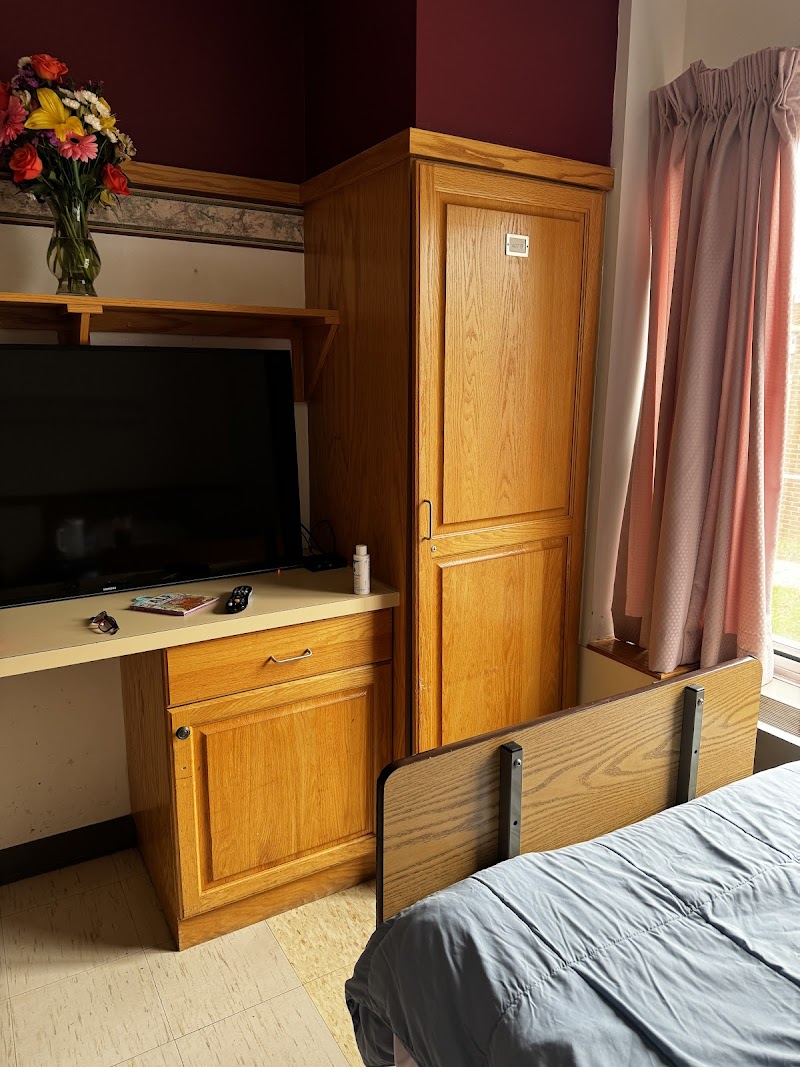

LIONS REHAB CENTER

901 SETON DRIVE, CUMBERLAND, MD 21502 (301) 722-6272
For profit - Limited Liability company 101 Beds Independent Data: November 2025
Trust Grade
25/100
#208 of 219 in MD
Last Inspection: January 2025

Within standard 12-15 month inspection cycle. Federal law requires annual inspections.

Overview

Lions Rehab Center in Cumberland, Maryland has a Trust Grade of F, indicating poor performance with significant concerns. It ranks #208 out of 219 facilities in the state, placing it in the bottom half, and #7 out of 8 in Allegany County, with only one facility performing worse locally. The facility is experiencing a worsening trend, increasing from 32 issues in 2023 to 38 in 2025. While staffing is a relative strength with a 3 out of 5 rating and 0% turnover, the facility has concerning fines totaling $98,631, which is higher than 93% of Maryland facilities. Specific incidents include a resident developing a serious stage 4 pressure ulcer due to inadequate care and the failure to monitor dishwasher and food temperatures, raising sanitation concerns. Overall, while there are some strengths in staffing, the facility has serious weaknesses that families should carefully consider.

Trust Score
F
25/100
In Maryland
#208/219
Bottom 6%
Safety Record
Moderate
Needs review
Inspections
Getting Worse
32 → 38 violations
Staff Stability
○ Average
Turnover data not reported for this facility.
Penalties
✓ Good
$98,631 in fines. Lower than most Maryland facilities. Relatively clean record.
Skilled Nurses
✓ Good
Each resident gets 48 minutes of Registered Nurse (RN) attention daily — more than average for Maryland. RNs are trained to catch health problems early.
Violations
⚠ Watch
92 deficiencies on record. Higher than average. Multiple issues found across inspections.
★☆☆☆☆
1.0
Overall Rating
★★★☆☆
3.0
Staff Levels
★★☆☆☆
2.0
Care Quality
★☆☆☆☆
1.0
Inspection Score
Stable
2023: 32 issues
2025: 38 issues

The Good

  • Full Sprinkler Coverage · Fire safety systems throughout facility
  • No fines on record

Facility shows strength in fire safety.

The Bad

1-Star Overall Rating

Below Maryland average (3.0)

Significant quality concerns identified by CMS

Federal Fines: $98,631

Well above median ($33,413)

Moderate penalties - review what triggered them

The Ugly 92 deficiencies on record

1 actual harm
May 2025 8 deficiencies
CONCERN (D) 📢 Someone Reported This

A family member, employee, or ombudsman was alarmed enough to file a formal complaint

Potential for Harm - no one hurt, but risky conditions existed

Notification of Changes (Tag F0580)

Could have caused harm · This affected 1 resident

Based on record review and interview it was determined that the facility failed to notify resident's physician when medications were held. This was evident for 1 (R#62) of 3 residents reviewed for not...

Read full inspector narrative →
Based on record review and interview it was determined that the facility failed to notify resident's physician when medications were held. This was evident for 1 (R#62) of 3 residents reviewed for notification of medications not given during the complaint survey. The findings include: On 5/27/25 at 1:45 PM a record review of Resident #62's Medication Administration Record (MAR) for May 2025 revealed an order for metoprolol (a medication that lowers blood pressure) with the instruction to hold for a systolic blood pressure (SBP) [top number of blood pressure] of 110 or less, or for a heart rate (HR) of less than 60 beats per minute. The MAR entries on 5/03/25, 5/04/25, 5/15/25, 5/16/25, 5/21/25 indicated that the medication was held on those days due to either low SBP or low HR. Further review failed to reveal any documentation that the resident's physician was notified that the medication was held on those days. On 5/27/25 at 1:56 PM an interview was conducted with the Director of Nursing (DON) to review Resident #62's MAR for May 2025. She confirmed the finding that the resident's metoprolol was held on 5/03/25, 5/04/25, 5/15/25, 5/16/25, 5/21/25. She then reviewed the nursing documentation and confirmed that there was no documentation of any physician notification for the doses not given. The Regional Nurse (Staff #6) later also affirmed the deficiency after she searched for but could not find evidence of physician notification.
CONCERN (D) 📢 Someone Reported This

A family member, employee, or ombudsman was alarmed enough to file a formal complaint

Potential for Harm - no one hurt, but risky conditions existed

Investigate Abuse (Tag F0610)

Could have caused harm · This affected 1 resident

Based on record review and interview it was determined that the facility failed to complete thorough investigations of allegations of abuse. This was evident for 1 (#MD00217463) of 7 facility reported...

Read full inspector narrative →
Based on record review and interview it was determined that the facility failed to complete thorough investigations of allegations of abuse. This was evident for 1 (#MD00217463) of 7 facility reported incidents reviewed during the complaint survey. The findings include: On 5/29/25 at 9:45 AM a review of the facility reported incident #MD00217463 revealed an allegation that staff verbally abused Resident #516 on 4/30/25. A review of the facility's investigation file revealed several typed resident interview statements. All of the resident statements lacked the name of the interviewer and the date the interview was conducted. The investigation file also contained staff interview statements from 2 Geriatric Nursing Assistants (GNA #16 & GNA #17). GNA #16's statement indicated that she was not assigned to the resident at that time, and GNA #17's statement did not indicate if she worked with the resident at that time. The file also lacked a list of staff who worked on the resident's unit that day, and lacked any evidence that abuse education was provided to staff after the incident. On 5/29/25 at 10:01 AM an interview was conducted with the Director of Nursing (DON) to review the facility's investigation. She confirmed the finding that the facility's investigation was not thorough.
CONCERN (D) 📢 Someone Reported This

A family member, employee, or ombudsman was alarmed enough to file a formal complaint

Potential for Harm - no one hurt, but risky conditions existed

Deficiency F0658 (Tag F0658)

Could have caused harm · This affected 1 resident

Based on record review and interviews it was determined that the facility failed to maintain medical records in accordance with professional standards. This was evident for 1 (MD00215206) of 7 facilit...

Read full inspector narrative →
Based on record review and interviews it was determined that the facility failed to maintain medical records in accordance with professional standards. This was evident for 1 (MD00215206) of 7 facility reported incidents investigated during the complaint survey. The findings include: A review of the facility reported incident (FRI) #MD00215206 revealed that Resident #509 had an unwitnessed fall on 2/26/25. On 2/27/25 a nursing assessment revealed that the resident's left wrist was swollen and discolored. An x-ray was ordered and done on 2/27/25 and showed that the resident's left wrist was fractured. A review of the facility's investigation file was conducted on 5/28/25 at 9:20 AM. The file contained two duplicate handwritten documents, dated 3/06/25, signed by the consultant orthopedic Physician Assistant (Staff #15). One form contained notations of a capital letter R within a circle to indicate that the resident's right wrist was affected. The other document contained notations of a capital letter L within a circle, to indicate that it was the resident's left wrist that was affected. The documents were otherwise identical. An interview was conducted with the Director of Nursing (DON) on 5/28/25 at 10:05 AM to review the documents. The DON said that she knew the original form incorrectly indicated that Resident #509's right wrist was fractured, and she said she notified Staff #15 to ask for corrected documentation. When the DON was asked who altered the documentation to indicate the left wrist was affected, she said she was not sure but thought that Staff #15 did so. On 5/28/25 at 11:38 AM a telephone interview was conducted with Staff #15. When asked how he would make a correction to a medical record he said that sometimes his staff would write a separate notation to amend the record or that he would write an addendum but that he did not do so in this case. He also said that he did not change Resident #509's document to write L in place of R. On 5/28/25 at 12:34 PM in another interview with the DON, she pointed out that the form that had the L on it had a fax number at the top which indicated that it was sent to the facility from Staff #15's office. She said she did not know who altered the form, but she confirmed that the facility did accept the document and placed it in Resident #509's record. She stated that the document was incorrectly amended, and she confirmed the deficiency.
CONCERN (D) 📢 Someone Reported This

A family member, employee, or ombudsman was alarmed enough to file a formal complaint

Potential for Harm - no one hurt, but risky conditions existed

Quality of Care (Tag F0684)

Could have caused harm · This affected 1 resident

Based on record review and interviews, it was determined that the facility failed to ensure that residents received ordered medications or treatments. This was evident for three (Resident #36, #12, an...

Read full inspector narrative →
Based on record review and interviews, it was determined that the facility failed to ensure that residents received ordered medications or treatments. This was evident for three (Resident #36, #12, and #3) out of 29 residents reviewed for medical records. The findings include: On 5/28/2025 at approximately 11:00 a.m., the surveyor reviewed the Medication Administration Records (MAR) and Treatment Administration Records (TAR) for Residents #36, #12, and #3. The surveyor found that the following physician-ordered medications and treatments were missed: Resident #36 On 5/4/25 (6:00 a.m. dose) - Acetaminophen, oral tablet 1000 mg, three times a day for chronic pain, was not administered. On 5/3/25 (5:00 p.m. dose) and 5/4/25 (6:00 a.m. dose) - Blood sugar checks with Humalog injection solution (100 units/mL, sliding scale), subcutaneously four times a day for diabetes management, were missed. On 5/16/25, 5/17/25, and 5/18/25 - All scheduled doses (6:00 a.m., 11:00 a.m., 4:30 p.m., and 10:00 p.m.) of blood sugar checks with Insulin Aspart FlexPen injector (100 units/mL, sliding scale), subcutaneously before meals and at bedtime for diabetes management, were not administered. Resident #12 On 5/4/25 (6:00 a.m.) - Levothyroxine Sodium, 150 mcg tablet, once daily for low thyroid hormone, was not administered. On 5/4/25 (6:00 a.m.) - Blood sugar check and Insulin Aspart FlexPen (100 units/mL, sliding scale), subcutaneously every morning and at bedtime for diabetes management, were missed. On 5/4/25 (6:00 a.m.) - Megestrol Acetate, oral tablet 40 mg, one tablet three times daily for benign endometrial hyperplasia, was not administered. Resident #3 On 5/1/25 (night shift) - The physician's order to maintain the port in the right chest and monitor for signs and symptoms of infection every shift was not followed. On 5/28/25 at 1:20 p.m., the surveyor spoke with the facility's Director of Nursing (DON) regarding concerns that, based on a review of the Medication Administration Records (MAR) and Treatment Administration Records (TAR), several residents had missed medications and treatments. The surveyor requested that the DON review the records for Residents #36, #12, and #3. Specifically: Resident #36 had missed administration of Acetaminophen on 5/4, Humalog on 5/3 and 5/4, and Insulin on 5/16, 5/17, 5/18, and the morning of 5/19. Physician orders indicated that blood sugar checks were required prior to administering Humalog and Insulin. Resident #12 missed doses of Levothyroxine, Insulin, and Megestrol, all on 5/4. Resident #3 had a missed order on 5/1 to maintain the port in the right chest and monitor for signs and symptoms of infection every shift. The DON stated she would investigate and determine whether any documentation existed to confirm that the medications and treatments had been provided. Approximately 30 minutes later, the DON informed the surveyor that the residents had not received the medications and treatments. On 5/29/25 at 8:15 a.m., the surveyor spoke with the Regional Director (Staff #7) and the Consultant Registered Nurse (Staff #6). They were informed of the findings that Residents #36, #12, and #3 did not receive the medications or treatments as previously discussed with the Director of Nursing (DON). Both staff members acknowledged that the DON had already informed them of the issue.
CONCERN (D) 📢 Someone Reported This

A family member, employee, or ombudsman was alarmed enough to file a formal complaint

Potential for Harm - no one hurt, but risky conditions existed

Incontinence Care (Tag F0690)

Could have caused harm · This affected 1 resident

Based on observations, record reviews and interviews, it was determined that the facility failed to ensure that a resident's urine collection bag was secured off the floor. This was evident in 1 (Resi...

Read full inspector narrative →
Based on observations, record reviews and interviews, it was determined that the facility failed to ensure that a resident's urine collection bag was secured off the floor. This was evident in 1 (Resident #502) of 3 residents reviewed for urinary catheters. The findings include: Resident #502 had been residing in the facility since early 2025. Medical records indicated that the resident was admitted with a foley catheter. A Foley catheter is a device that drains urine (pee) from your urinary bladder into a collection bag outside of your body when you can't pee on your own or for various medical reasons. Securing a urine collection bag is crucial to prevent leaks, reduce the risk of infection, and ensure proper catheter function, as well as prevent damage to the bladder neck or urethra. On 5/27/25 at 9:47 AM, Resident #502 was observed in bed sleeping with the urine collection bag laying on the floor. The Geriatric Nursing Assistant (GNA #8) who was assigned to the resident's unit confirmed the resident's name by pointing the resident out to the surveyor then left the area. Later at 10:05 AM, GNA #8 was observed entering Resident #502's room and confirmed that his/her urine collection bag was laying on the floor. GNA #8 reported that she was getting ready to clean the resident up. A review of Resident #502's care plan for catheter care was conducted on 5/27/25 at 2:49 PM. The review revealed interventions that read Maintain 16 fr 10 ml catheter tubing and bag above the floor and below the level of the bladder. Maintain tubing without kinks or occlusions. Secure catheter with leg strap if needed. Use universal precaution when handling urinary drainage. The Director of Nursing (DON) was interviewed on 5/29/25 at 9:19 AM. During the interview, the concern was discussed with the DON that the facility staff failed to secure Resident #502's urine collection bag off the floor. The DON acknowledged the concern and reported that she would be educating staff of the concern.
CONCERN (D) 📢 Someone Reported This

A family member, employee, or ombudsman was alarmed enough to file a formal complaint

Potential for Harm - no one hurt, but risky conditions existed

Deficiency F0697 (Tag F0697)

Could have caused harm · This affected 1 resident

Based on medical review and staff interview, it was determined that the facility failed to document the reasons for administering as-needed (PRN) pain medications, failed to document the pain assessme...

Read full inspector narrative →
Based on medical review and staff interview, it was determined that the facility failed to document the reasons for administering as-needed (PRN) pain medications, failed to document the pain assessment to include intensity of pain, location of pain, and description of pain, and failed to implement non-pharmacological interventions before administering pain medication to residents. This was evident for 2 (#24 and #64) of 3 residents reviewed for pain management. The findings include: A pain intensity scale is one way to measure pain. The pain scale helps track how well a treatment plan is working to manage pain. Most pain scales use numbers from 0 to 10. A score of 0 means no pain, and 10 means the worst pain one has ever known. On 5/27/25 at 10:30 AM a record review of the Pain Control Policy revealed that assessing a resident's pain should include the frequency, duration, intensity of the pain when a resident gets regularly scheduled and/or PRN analgesics. The physcisian should order Non-pharmacological Interventions (NPI). On 5/28/25 at 11:06 AM a record review of Resident #24's physician orders revealed Acetaminophen Oral Tablet Give 650 mg by mouth every 6 hours as needed for mild to moderate pain, evaluate and address pain as needed and document NPI. On 5/28/25 at 11:29 AM a record review for Residents #24's Medication Administration Record (MAR) dated March 2025 revealed Acetaminophen 325 mg tablet 2 tablets was administered for pain on 3/2, 3/11, 3/14, and 3/16. The associated pain intensity scale indicated 5, 4, 5 and 5 respectively. However, there was no documentation of pain location and description nor NPI. On 5/28/25 at 11:39 AM a record review of Resident #64's orders revealed oxycodone HCl Oral Tablet 10 MG. Give 10 mg by mouth four times a day for Chronic Pain rated >6/10. Acetaminophen Oral Tablet 325 MG. Give 650 mg by mouth every 4 hours as needed for pain below 5. On 5/29/25 at 7:49 AM a record review of Resident #64's MAR dated March 2025 revealed Oxycodone HCL oral Tablet 10 mg was signed off as given every four hours with an associated pain intensity scale but without pain location and/or description. It also revealed Resident #64 received acetaminophen every eight hours without any associated pain assessment. On 5/29/25 at 8:55 AM in an interview, the Director of Nursing (DON) confirmed that managing a resident's pain included an assessment at least every shift and when giving PRN medications. A pain assessment includes location, intensity, description and in/effectiveness. She confirmed NPI is part of pain management. She reviewed Residents #24 and #64's MAR and acknowledged the concerns.
CONCERN (D) 📢 Someone Reported This

A family member, employee, or ombudsman was alarmed enough to file a formal complaint

Potential for Harm - no one hurt, but risky conditions existed

Deficiency F0757 (Tag F0757)

Could have caused harm · This affected 1 resident

Based on record review and staff interview, it was determined that the facility failed to ensure a resident received their medications according to the attending physician's orders. This was evident f...

Read full inspector narrative →
Based on record review and staff interview, it was determined that the facility failed to ensure a resident received their medications according to the attending physician's orders. This was evident for 1 (#518) out of 3 residents reviewed for medication regimen review (MRR). The findings include: A medical record review on 5/29/2025 at 10:43 AM showed that an MRR was completed by a pharmacist for Resident #518 on 3/21/25 with a recommendation to the resident's attending provider. The recommendation indicated that Resident #518 had been taking an antiulcer drug 40mg every day since 2023. It recommended a dose reduction to 20mg. A continued review revealed that Resident #518's attending provider responded to the recommendation on 3/28/25 with a new order to reduce the medication to 20mg daily. Further review of Resident #518's Medication Administration Record (MAR) from March 28 to May 30, 2025, revealed that the resident continued to receive the antiulcer medication at a total daily dosage of 60 mg, consisting of the 40 mg daily, and a newer dosage of 20 mg daily. In an interview on 5/29/2025 at 11:43 AM, the director of nursing (DON) checked Resident #518's MAR with the surveyor and confirmed that the resident continued to receive the antiulcer drug at 40mg every day together with a newer dose of 20mg daily after the attending provider gave the order to decrease it to 20mg daily. In a subsequent interview, the DON said the staff should have discontinued the antiulcer drug at 40 mg daily and only given the 20mg daily. The DON indicated that it was a medication error.
CONCERN (D) 📢 Someone Reported This

A family member, employee, or ombudsman was alarmed enough to file a formal complaint

Potential for Harm - no one hurt, but risky conditions existed

Infection Control (Tag F0880)

Could have caused harm · This affected 1 resident

Based on record review, observation, and staff interview, it was determined that the facility failed to implement Enhanced Barrier Precautions (EBP) as part of the infection prevention and control pro...

Read full inspector narrative →
Based on record review, observation, and staff interview, it was determined that the facility failed to implement Enhanced Barrier Precautions (EBP) as part of the infection prevention and control program. This was evident for 2 (Resident #40 and Resident #503) of 3 residents reviewed for pressure ulcers. The findings include: Enhanced Barrier Precautions (EBP) are defined by the Centers for Disease Control and Prevention (CDC) as a targeted infection prevention intervention requiring gown and glove use for high-contact care activities in residents with wounds, indwelling medical devices, or colonization/infection with multidrug-resistant organisms (MDROs). High-contact care activities involve extensive, close physical contact between staff and the residents and are more likely to result in the transmission of infectious agents. These include but are not limited to dressing the resident, bathing/showering, transferring the resident, providing hygiene (e.g., assist with toileting, oral care), changing linens, providing wound care, providing device care or use (e.g., care of feeding tubes, urinary catheters, IV lines). 1) Resident #503 had orders for daily wound care, a history of pressure ulcers as well as a recent infection involving a pressure ulcer. On 05/28/2025 at 1:53 PM, during a wound care observation for Resident #503 performed by Nurse #18 and Staff #3, the facility failed to implement EBP. The Resident had an active wound requiring dressing changes, and during the observation neither Nurse #18 or Staff #3 adhered to enhanced Personal Protective Equipment (PPE) requirements by failing to wear a protective gown in addition to the gloves they each were already wearing. Further review of the medical record on 5/28/25 failed to reveal a physician order for EBP, nor was there any documentation or care plan indication that EBP was being used or considered. 2) On 05/28/25 at 2:23 PM, a review of Resident #40's record revealed the need for wound care. However, the record did not document EBP implementation or assessment, and resident #40's doorway area was observed on 05/28/25 at 3:00 PM, and there was no signage indicating the need for EBP. On 05/28/2025 at 2:45 PM, the DON confirmed that EBP should be implemented for residents with pressure ulcers. The DON was made aware of concerns regarding the dressing change observed earlier that afternoon for Resident #503, when staff failed to wear gowns as required. The DON was also made aware of concerns related to no physician order for EBP for either Resident #503 or #40.
Jan 2025 30 deficiencies
CONCERN (D)

Potential for Harm - no one hurt, but risky conditions existed

Deficiency F0557 (Tag F0557)

Could have caused harm · This affected 1 resident

2) Resident #64 was admitted to the facility in early 2024. During the initial tour of the facility on 1/8/25 at 12:37 PM, the resident was observed in bed and the urine collection bag was on the righ...

Read full inspector narrative →
2) Resident #64 was admitted to the facility in early 2024. During the initial tour of the facility on 1/8/25 at 12:37 PM, the resident was observed in bed and the urine collection bag was on the right side of the bed, closer to the door, not kept in a privacy bag. This was visible from the hallway, outside the resident's room. The Registered Nurse (RN #3) who was assigned to the unit where Resident #64 resided was interviewed on 1/8/25 at 12:39 AM. During the interview, the concern was discussed that the resident's urine collection bag was observed without a privacy bag to maintain dignity. RN #3 confirmed the finding as it was visible from the hallway. RN #3 obtained a privacy bag, went in the resident's room and applied it. A review of Resident #64's medical record on 1/13/25 at 1:03 PM, revealed a care plan for catheter care with interventions that indicated, position catheter bag and tubing below the level of the bladder and away from entrance room door. On 1/17/25 at 12:26 PM, the concern was discussed with the Director of Nursing (DON) that the resident's urine collection bag was not kept in a privacy bag that was visible from the unit hallway. The DON verbalized understanding and acknowledged the concern. Based on observations and interviews, it was determined that the facility failed to ensure resident's urine collection bag was kept in a privacy bag to maintain dignity. This was evident for 2 (#419, #64) of 3 residents reviewed for urinary catheters. The findings include: 1) On 1/8/25 at 11:19 AM, Resident #419 's foley bag was observed on the floor from the hall without a privacy cover. The Resident was in bed. On 1/8/25 at 11:46 AM, Resident #419's foley bag was observed attached to the bed rail from the hall without a privacy cover. On 1/8/25 at 1:16 PM, Resident #419 was observed in bed eating lunch using a wheeled bedside table. The foley bag did not have a privacy cover. On 1/8/25 at 1:49 PM, it was observed that the bedside table, without a food tray, had been moved away from the Resident. The foley bag lay on the floor without a privacy cover. On 1/13/25 at 10:30 AM, Resident #419 was observed asleep in bed. The foley bag lay on the floor without a privacy cover. On 1/13/25 at 10:57 AM Resident #419 was observed awake in bed. The foley bag lay on the floor without a privacy cover. On 1/13/25 at 12:26 PM, the foley bag hung from the bed rail without a privacy cover. On 1/13/25 at 12:40 PM, the surveyor and Staff #8, a Licensed Practical Nurse (LPN), observed the foley bag without a privacy cover. In an interview, Staff #8 said a privacy bag should be on when the Resident was in bed or on a chair. On 1/13/25 at 12:50 PM, the foley bag was on the floor without a privacy cover. On 1/13/25 at 12:51 PM in an interview, the director of nursing (DON) was informed that the foley bag was frequently observed without a privacy cover. The DON acknowledged that Resident #419's foley bag was frequently without a privacy cover.
CONCERN (D) 📢 Someone Reported This

A family member, employee, or ombudsman was alarmed enough to file a formal complaint

Potential for Harm - no one hurt, but risky conditions existed

Deficiency F0558 (Tag F0558)

Could have caused harm · This affected 1 resident

Based on record review, observation, and interviews, it was determined that the facility failed to ensure that call devices were kept within reach of the resident. This was evident for 1 (Resident #40...

Read full inspector narrative →
Based on record review, observation, and interviews, it was determined that the facility failed to ensure that call devices were kept within reach of the resident. This was evident for 1 (Resident #40) in 24 residents reviewed during the survey. The findings include: Resident #40 had been residing in the facility since 2022. Two complaints related to MD00210880 and MD00211651 indicated concerns with the resident's call device being placed on the roommate's nightstand outside the resident's reach. Minimum Data Set- The MDS is a federally-mandated assessment tool used by nursing home staff to gather information on each resident's strengths and needs. Information collected drives resident care planning decisions. On 1/9/25 at 11:33 AM, a review of Resident #40's most recent MDS assessment with a reference date of 12/20/24 was conducted. The review revealed that Resident #40 was coded as dependent on staff for transfers and mobility and needed substantial/maximal assistance from staff for toileting hygiene. On 1/10/25 at 10:43 AM, Resident #40 was observed sleeping in his/her room with the call device draped over the roommate's nightstand, outside the resident's reach. The Registered Nurse (RN #3) was informed of the observation on 1/10/25 at 10:45 AM. RN #3 went into Resident #40's room and confirmed the placement of the call device. RN #3 moved the call device to the resident's bed and secured it to the bedding with a clip attached to the cord. On 1/15/25 at 1:36 PM, Resident #40's medical record was reviewed and revealed a care plan for the resident's risk for falls. The interventions for this care plan included: 1) Be sure the resident's call light is within reach and encourage the resident to use it for assistance as needed. The resident needs prompt response to all requests for assistance. 2) Maintain call light within reach when resident in room. Reinforce use of call light to call for assistance when he/she needs to move from bed, chair, wheelchair, toilet, etc. This care plan had a revision date of 10/24/24. In an interview with the Director of Nursing (DON) on 1/15/25 at 2:05 PM, she confirmed that she knew of the complaints regarding the call device for Resident #40 being placed outside his/her reach. The DON reported that she had been aware since October 2024 and had done staff education. She also performed random inspections to ensure the call device was placed within the resident's reach. The observation on 1/10/25 was discussed with the DON, who reported that the current interventions to keep the resident's call light within reach were ineffective. The DON indicated that she would have to discuss with her staff to come up with a new plan to ensure that the call device was kept within the resident's reach. The next day, on 1/16/25, at 7:45 AM, Resident #40 was observed sleeping in bed with the call device on the floor, outside the resident's reach. Shortly after, at 7:47 AM, the Geriatric Nursing Assistant (GNA #15) came into the resident's room and confirmed the finding. GNA #15 moved the call device to the resident's bed and secured it on the blanket with the attached clip.
CONCERN (D)

Potential for Harm - no one hurt, but risky conditions existed

Deficiency F0568 (Tag F0568)

Could have caused harm · This affected 1 resident

Based on interviews and record review, it was determined that the facility failed to provide residents with quarterly statements in writing of their personal funds account managed by the facility. Thi...

Read full inspector narrative →
Based on interviews and record review, it was determined that the facility failed to provide residents with quarterly statements in writing of their personal funds account managed by the facility. This was evident for one Resident (#22), who was reviewed for personal funds during the survey. The findings included: In an interview on 1/8/25 at 11:18 AM, Resident #22 responded Yes to keeping money in the facility like a bank. Then, it was added that s/he had not received a written quarterly statement of the account for a year. During a subsequent interview on 1/10/25 at 11:45 AM, the Business office manager (BOM) reported that he hand-delivered quarterly statements to residents who could make their own decisions. He also noted that he discussed the statements with the residents' who signed them and returned them to him for his records. He added that he only made copies for residents who requested them. A review of Resident #22 medical record contained a document completed by the Resident's attending provider that indicated the Resident could make his/her own decisions. In an interview on 1/10/25 at 12:19 PM, the BOM presented Resident #22's quarterly statement to the surveyor from 10/1/2 to 12/31/24. The statement contained a notation, hand-delivered on 1/10/25, and was signed with the Resident's name and initials. When questioned if the notation also meant that Resident #22 received a copy of his/her quarterly statement, the BOM said he understood the concern of just signing and not receiving a copy. He also added that he would change his process to include documentation that the quarterly statements were reviewed and that copies of the statements were also given to the residents quarterly. In a subsequent interview on 1/10/25 at 1:57 PM, the BOM reported that he went back to all the residents who could make their own decisions, discussed their quarterly statements from 10/1/24 to 12/31/24 and gave them copies with a notation of when the statements were reviewed, and copies were issued. The BOM added that would be his new process in the future.
CONCERN (D)

Potential for Harm - no one hurt, but risky conditions existed

Deficiency F0578 (Tag F0578)

Could have caused harm · This affected 1 resident

Based on medical record review and interview, it was determined that the facility failed to ensure they informed residents of their right to formulate an advance directive. This was evident for one re...

Read full inspector narrative →
Based on medical record review and interview, it was determined that the facility failed to ensure they informed residents of their right to formulate an advance directive. This was evident for one resident (#269) who was reviewed for advance directives during the survey. The findings include: A medical record review for Resident #269 on 1/8/25 at 1:00 PM showed that the resident was admitted to the facility in December 2024. The review contained a document completed by the resident's attending provider on 12/22/24 that indicated the resident could make his/her own decisions. An advance directive is a legal statement of a person's wishes regarding medical treatment, often including a living will, made to ensure those wishes are carried out should the person be unable to communicate them to a doctor because of illness or incapacity. The review failed to show that Resident #269 had an advanced directive or that the resident or his/her representative had been informed of his/her right to formulate an advanced directive. During an interview on 1/8/25 at 1:16 PM, the nurse manager, also the social services designee (RN #12), reported that she had been fulfilling some of the roles of the social services department since November when the facility lost their social worker. She also said that during her assessment, she only asked residents if they had advance directives already formulated and did not discuss with residents their rights to develop one if they answered No. In an interview on 1/16/25 at 4:15 PM, the nursing home administrator indicated that his expectation of the facility staff was to help in establishing an advance directive if they did not have one. In an interview on 1/17/25 at 7:36 AM, with RN #12 in the presence of the director of nursing, she reported that after the surveyor's intervention, she had gone back to the residents she spoke to about advance directives and addressed whether they needed help in establishing one or not.
CONCERN (D)

Potential for Harm - no one hurt, but risky conditions existed

Notification of Changes (Tag F0580)

Could have caused harm · This affected 1 resident

Based on staff interviews, and record reviews, it was determined that the facility failed to notify the physician when a medication was held several times for low systolic blood pressure (SBP). This w...

Read full inspector narrative →
Based on staff interviews, and record reviews, it was determined that the facility failed to notify the physician when a medication was held several times for low systolic blood pressure (SBP). This was evident for 1 (Resident #44) of 6 residents reviewed for unnecessary medications. The findings include: The review of Resident #44's medical records on 1/15/25 at 3:38 PM revealed an order, with a start date of 12/27/22 for Metoprolol 50 mg to be given twice a day for Cardiomyopathy (a disease of the heart muscle that makes it harder for the heart to pump blood to the rest of the body); and to hold (not administer) if the pulse was less than 60 or the systolic blood pressure (top number of a blood pressure) was less than 100. On 1/15/25 at 4:06 PM record reviewed revealed that on several occasions when the metoprolol was held due to low parameters; that no documentation was found to indicate that the physician was made aware. Review of the April 2024 MAR revealed that the metoprolol was held due to low SBP or low heart rate (HR) on the following dates: 4/3 pm - HR was 54 4/6 pm - BP was 99/73 4/9 am - BP was 93/51 4/9 pm - BP was 95/69 4/10 am - BP was 95/66 4/10 pm - HR was 53 4/12 am - HR was 54 4/13 am - BP was 90/50 4/13 pm - BP was 90/50 4/14 am - BP was 94/70 4/16 am - BP was 94/58 4/17 pm - BP was 90/42 4/18 am - BP was 96/72 On 1/15/25 at 4:14 PM the surveyor reviewed with DON the concerns regarding failure to notify the physician of holding meds on multiple occasions in April. On 1/16/25 at 8:12 AM the surveyor interviewed primary care physician #23 in reference to how things get communicated to her from the staff and their process. The physician #23 stated that she expected to be faxed the information and if urgent they can call her. And if medications are being held due to vital signs outside of parameters, she confirmed that she should have been notified.
CONCERN (D) 📢 Someone Reported This

A family member, employee, or ombudsman was alarmed enough to file a formal complaint

Potential for Harm - no one hurt, but risky conditions existed

Abuse Prevention Policies (Tag F0607)

Could have caused harm · This affected 1 resident

Based on interviews and record review, it was determined that the facility failed to implement its abuse policy. This was evident for one ( #3) of two residents who alleged misappropriation of propert...

Read full inspector narrative →
Based on interviews and record review, it was determined that the facility failed to implement its abuse policy. This was evident for one ( #3) of two residents who alleged misappropriation of property and filed a grievance. The findings include: On 1/8/25 at 4:40 PM, during an interview with Resident #3, the resident stated that in December 2024, their items were stolen and they suspected a staff member. The resident reported the stolen items to the facility. On 1/9/25 at 11:20 AM, the Director of Nursing (DON) was asked to provide the facility's grievance log for 2024 and the facility's grievance policy. On 1/10/25 at 11:33 AM, a review of the December 2024 facility grievance log failed to show an entry of Resident #3's allegation. On 1/16/25 at 11:39 AM, during an interview with the DON, she stated that the Nursing Home Administrator (NHA) investigated Resident #3's allegation of stolen items. The DON also verbalized that it was the facility's policy that either the NHA or the DON reported any allegations of misappropriation of residents' property to the state agency. On 1/16/25 at 1:05 PM, the NHA was asked to provide investigation notes for Resident #3's alleged stolen items. On 1/16/25 at 2:59 PM, the NHA provided several documents which he said were the facility's investigation of the alleged misappropriation of Resident #3's property. One of the documents provided was titled Lion's Rehab Risk Management Statement Form. It contained a hand-written statement that was signed by Resident #3 on 12/01/24, and stated, Two die-cast model trucks were taken from my room, I have my suspicions of who it is that took them but I cannot 100% prove it. Further review of the documents provided by the NHA, revealed a typed witness statement signed and dated 12/02/24 by the NHA. The document was an interview between Resident #3 and the NHA regarding the resident's allegation of stolen items. On 1/16/25 at 2:29 PM, a review of the facility's abuse policy, which was provided by the DON during the first day of the survey, revealed that the policy stated: All alleged misappropriation of property will be reported by the facility administrator or his/her designee to the state licensing/certification agency responsible for surveying/licensing the facility. On 1/16/25 at 4:14 PM, in another interview with the NHA, he stated that he did not report the allegations of misappropriation of Resident #3's property to the state agency. On 1/17/25 at 11:42 AM, during another interview with the DON, she acknowledged that the facility failed to implement their abuse, neglect, mistreatment, and misappropriation of resident property.
CONCERN (D) 📢 Someone Reported This

A family member, employee, or ombudsman was alarmed enough to file a formal complaint

Potential for Harm - no one hurt, but risky conditions existed

Report Alleged Abuse (Tag F0609)

Could have caused harm · This affected 1 resident

Based on interviews and record review, it was determined that the facility failed to report an incident of alleged misappropriation of resident's property to the Office of Health Care Quality.This was...

Read full inspector narrative →
Based on interviews and record review, it was determined that the facility failed to report an incident of alleged misappropriation of resident's property to the Office of Health Care Quality.This was evident for 1 (Resident #3) of 2 residents who alleged misappropriation of property and filed a grievance. The findings include: The Office of Health Care Quality (OHCQ) is the agency within the Maryland Department of Health charged with monitoring the quality of care in Maryland's healthcare facilities and community-based programs. Allegations of misappropriation of property are to be reported to the Office of Healthcare Quality in a timely manner. On 1/8/25 at 4:40 PM, during an interview with Resident #3, the resident stated that in December 2024, their items were stolen and they suspected a staff member. The resident reported the stolen items to the facility. On 1/16/25 at 11:39 AM, in an interview with the Director of Nursing (DON), she stated that the Nursing Home Administrator (NHA) investigated Resident #3's allegation of stolen items. The DON also verbalized that, per the facility's policy, either the NHA or the DON was required to report any allegations of misappropriation of residents' property to the state agency. On 1/16/25 at 4:14 PM, in an interview with the NHA, he said that he did not report the allegations of misappropriation of Resident #3's property to the state agency. On 1/17/25 at 11:42 AM, during another interview with the DON, she confirmed that the facility failed to report the misappropriation of resident property to OHCQ.
CONCERN (D) 📢 Someone Reported This

A family member, employee, or ombudsman was alarmed enough to file a formal complaint

Potential for Harm - no one hurt, but risky conditions existed

Deficiency F0635 (Tag F0635)

Could have caused harm · This affected 1 resident

**NOTE- TERMS IN BRACKETS HAVE BEEN EDITED TO PROTECT CONFIDENTIALITY** Based on record review and staff interviews it was determined that the facility failed to ensure essential care upon admission. ...

Read full inspector narrative →
**NOTE- TERMS IN BRACKETS HAVE BEEN EDITED TO PROTECT CONFIDENTIALITY** Based on record review and staff interviews it was determined that the facility failed to ensure essential care upon admission. This was evident for 1 (Resident #71) out of 4 residents reviewed for neglect during the survey. The findings include: Diabetes is a condition when one's body cannot transport glucose, the useable energy for cellular life, out of the bloodstream and into the individual cells of the body. Diabetic management may require that the Diabetic person receives insulin to help transport the glucose out of the bloodstream and into the cells. On 1/13/25 at 1:40 PM, a record review of Resident #71 lab results dated 4/20/23 showed blood glucose was 361.0 mg/dL at 10:24 PM. On 1/13/25 at 2:04 PM, a record review of hospital discharge orders dated 4/20/23 at 11:34 AM, documented insulin orders as: Lantus (long-acting) 14 units subcutaneous at night daily, Lispro (short-acting) 4 units before lunch and 9 units before breakfast. On 1/13/25 at 2:07 PM, a record review of the Medication Administration Record (MAR) lacked documentation that Insulin Lispro was administered on 4/20/23. On 1/13/25 at 3:43 PM a record review of the hospital discharge summary documented Insulin Glargine 14 units was given on 4/20/23 at 9:14 AM before transfer to the facility. At the time of discharge from the hospital, blood glucose was 118. On 1/16/25 at 10:48 AM, a record review of the Nursing admission note showed that Resident #71 was admitted to the facility on [DATE] at 3:30 PM. On 1/16/25 at 11:00 AM, a pharmacy note dated 4/21/23 at 9:30 AM, indicated that the chart and medications were reviewed and reconciled against the hospital discharge summary. A nurse's note showed that Resident #71 was seen by the doctor, and stated, No new orders. On 1/16/25 at 11:28 AM, in an interview, the Director of Nursing (DON) acknowledged that the facility missed the hospital discharge insulin orders on April 20, 2023 and stated, if a blood glucose was over 300 mg/dL, I expect the nurse to contact the doctor. On 1/17/25 at 10:55 AM, in an interview, the DON clarified that no new orders on admission means, To follow the hospital's discharge orders. The surveyor showed the hospital discharge orders dated 4/20/23 to the DON, and she confirmed that the insulin order was not entered into the system correctly and the insulin was not provided as ordered.
CONCERN (D)

Potential for Harm - no one hurt, but risky conditions existed

Comprehensive Care Plan (Tag F0656)

Could have caused harm · This affected 1 resident

Based on record review and staff interviews, it was determined that the facility failed to provide a person-centered comprehensive care plan developed and implemented to meet residents' needs. This wa...

Read full inspector narrative →
Based on record review and staff interviews, it was determined that the facility failed to provide a person-centered comprehensive care plan developed and implemented to meet residents' needs. This was evident for 1 (Resident #419) out of 3 residents who were reviewed for care planning during a survey. The findings include: An indwelling Foley catheter is a medical device used to treat urinary incontinence, the involuntary leakage of urine, that transports urine through a tube, from the bladder to an external bag. On 1/13/25 at 4:13 PM, a record review of the physician orders showed an order to maintain 16 French [indwelling] Foley catheter and [give] catheter care every shift. On 1/13/25 at 4:18 PM, a record review of the Treatment Administration Record (TAR) showed that foley care was being completed. On 1/13/25 at 4:41 PM, a record review of Resident #419's comprehensive Care plan failed to plan, develop and implement catheter care. On 1/16/25 at 11:40 AM, during an interview with the Director of Nursing (DON), she stated, I expect residents with an indwelling foley catheter to have a comprehensive care plan that addresses their needs. The DON reviewed the existing care plan and acknowledged that it does not address the resident's catheter care needs.
CONCERN (D)

Potential for Harm - no one hurt, but risky conditions existed

Quality of Care (Tag F0684)

Could have caused harm · This affected 1 resident

Based on staff interviews, and record review, it was determined that the facility failed to follow the physician's orders for weights. This was evident for 1 (Resident #44 ) of 6 residents reviewed fo...

Read full inspector narrative →
Based on staff interviews, and record review, it was determined that the facility failed to follow the physician's orders for weights. This was evident for 1 (Resident #44 ) of 6 residents reviewed for unnecessary medications. The findings include: On 1/13/25 at 12:08 PM, during a review Resident #44's medical record revealed a diagnosis of congested heart failure (CHF). Review of the care plan revealed a plan for Potential for fluid volume imbalance related to CHF and included an intervention of daily weights as ordered. This intervention was most recently revised on 10/24/24. Review of the medical record revealed a fax coversheet that documented that the facility notified the physician on 10/21/24 that the resident was refusing daily weights, and asked Can we just do weekly weights on [him/her]? The physician had responded with a yes and her signature and the date on the return fax was 10/25/24. Further review of the medical record revealed there was an order for daily weights in effect from 4/29/24 until it was discontinued on 11/8/24. Further review of the medical record failed to reveal documentation to indicate the order for the weights was changed to weekly. Review of the current orders revealed an order, with a start date of 4/30/24, for Monthly weights. On 1/13/25 at 2:11 PM, Assistant Director of Nursing (ADON) reported no documentation to indicate the response fax was acknowledged and confirmed there was no order for weekly weights. On 1/16/25 at approximately 8:00 AM, interview with the primary care physician (Staff #23) revealed that the order for weights should be for weekly weights. On 1/17/25 further review of the medical record revealed the order for monthly weights was discontinued. A new order was in place for weekly weights to start on 1/22/25.
CONCERN (D) 📢 Someone Reported This

A family member, employee, or ombudsman was alarmed enough to file a formal complaint

Potential for Harm - no one hurt, but risky conditions existed

Pressure Ulcer Prevention (Tag F0686)

Could have caused harm · This affected 1 resident

**NOTE- TERMS IN BRACKETS HAVE BEEN EDITED TO PROTECT CONFIDENTIALITY** Based on medical record review and interview it was determined that the facility failed to provide necessary treatment and servi...

Read full inspector narrative →
**NOTE- TERMS IN BRACKETS HAVE BEEN EDITED TO PROTECT CONFIDENTIALITY** Based on medical record review and interview it was determined that the facility failed to provide necessary treatment and services to promote healing of pressure ulcers. This was found to be evident for 1 (Resident #75) out of 4 residents reviewed for pressure ulcers during the survey. The findings include: Review of Resident #75 medical records on 1/16/25 revealed the resident was admitted to the facility on [DATE] after a hospitalization for surgical repair of a hip fracture. The resident ' s diagnosis included but not limited to diabetes, anemia, and high blood pressure. The hospital transfer summary also included documentation of a sacral decubitus (pressure) ulcer. The sacral area is located at the base of the spine. Review of the admission Minimum Data Set (MDS) assessment, with an Assessment Reference Date [last date of assessment] of 7/23/24, revealed the resident required partial assist for rolling left to right and substantial assistance with moving from sitting to lying. This assessment also revealed the resident was always incontinent of bowel [unable to control when a bowel movement occurs]. Review of the 7/18/24 Weekly skin check assessment revealed documentation of a surgical wound with staples to the left hip and an open area to sacrum. This assessment was signed by a Licensed Practical Nurse (LPN Staff #13). Further review of the medical record failed to reveal documentation to indicate the presence of other skin breakdown on the day of admission. A care plan was initiated on 7/19/24 to address potential nutritional problems related to hip fracture, diabetes, receiving a therapeutic diet and increased protein needs to support skin status. Review of the 7/19/24 Mini Nutrition Evaluation, signed by dietician (Staff #14), revealed: Resident skin status reviewed, surgical incision noted to hip and open area, etiology [cause] unknown, noted to sacrum Initiate Prostat 30 ml BID (100 kcal, 15 g PRO [protein] per serving). Prostat and ProSource are both nutritional supplements high in protein. The 7/19/24 dietician ' s note indicates the protein supplement was to be given two times a day. Review of the Medication Administration Record revealed an order, dated 7/19/24, for: ProSource one time a day for wound healing liquid protein 30 ml BID (100 kcal, 15 g PRO per serving). BID means twice a day. This order had conflicting documentation in regard to the number of times the ProSource was to be administered per day. Further review of the July 2024 Medication Administration Record (MAR) revealed documentation that the Prosource was administered 1 time a day at 9:00 AM from 7/20/24 thru 7/31/24. On 1/16/25 at 2:51 PM the surveyor reviewed the concern with the Director of Nursing (DON) that the ProSource was to be administered twice a day but was only given once a day for more than a week. Review of the primary care provider ' s (PCP Staff #16) admission History and Physical note, dated 7/20/24 revealed documentation of a stage 3 decubitus ulcer in the sacral area and that the plan was for the wound team to follow. No other pressure ulcer was documented in this note. No documentation was found in this note regarding the supplement order. No documentation was found in the medical record to indicate the rationale for only ordering the Prosource once a day. On 8/1/24 a new order was put in place to administer the ProSource 30 ml two times a day. During an interview with the PCP #16 on 1/17/24 at 11:52 AM, when asked how he manages residents with pressure ulcers, he reported they have a wound specialist and indicated the facility will follow the specialist ' s recommendations. Further review of the MAR and the Treatment Administration Record (TAR) for July failed to reveal documentation to indicate there was an order for a treatment or dressing change for the sacral ulcer from the time of admission on [DATE] until 7/22/24, when the resident was seen by the wound specialist. Review of the 7/22/24 wound specialist ' s (Staff #17) note revealed documentation of the surgical wound, the sacral wound, and a wound on the right heel. Both the sacral wound and the heel wound were documented as unstageable. An Unstageable Pressure Ulcer has obscured full-thickness skin and tissue loss. The extent of the tissue damage within the ulcer cannot be confirmed because the wound bed is obscured by slough or eschar. Slough is non-viable yellow, tan, gray, green or brown tissue; usually moist, can be soft, stringy and mucinous in texture. Slough may be adherent to the base of the wound or present in clumps throughout the wound bed. Eschar is dead or devitalized tissue that is hard or soft in texture; usually black, brown, or tan in color, and may appear scab-like. Necrotic tissue and eschar are usually firmly adherent to the base of the wound and often the sides/ edges of the wound. Further review of the 7/22/24 wound specialist note revealed the right heel wound was documented by the wound specialist as present on admission, however no documentation was found about the heel wound prior to this assessment, which was 4 days after admission. On 1/17/25 at approximately 9:30 AM surveyor reviewed the concern with the Director of Nursing (DON) that no documentation was found to indicate the heel wound was present on admission. On 1/17/25 at 10:29 AM the DON reported that she did not find documentation about the heel ulcer on admission. The 7/22/24 wound specialist treatment recommendation for the right heel wound was to apply Skin Prep to the base of the wound, secure with Bordered foam and change daily. Review of the TAR revealed an order on 7/23/24 for the right heel: Cleanse with soap and water, apply skin prep and cover with a bordered foam dressing, every Tues/Friday for skin integrity prevention and protection. This order was for twice weekly dressing changes, not daily as indicated by the wound specialist ' s recommendations. Further review of the TAR revealed the order was discontinued on 7/23 and a new order was put in place to start on 7/24/24, the only change to the order was that the treatment and dressing were to be completed on Wednesday and Saturdays, not daily as indicated by the wound specialist's recommendations. During an interview with the Assistant Director of Nursing (ADON) on 1/17/24 at 10:35 AM she reported that the wound specialist comes in on Tuesdays for new admissions and Thursday for weekly rounds. She confirmed that the wound specialist ' s recommendations are entered into the orders and the PCP is notified. The surveyor then reviewed the concern that the recommendation for the heel wound was for daily dressing changes, but the order was entered for two days a week. Review of the 7/25/24 weekly skin check, signed as completed by LPN (Staff #20) revealed documentation that the resident had no newly identified alterations in skin integrity but did indicate there were pre-existing areas. However the Body Diagram section failed to include documentation about the heel wound, it only documented the surgical wound and the open area to the sacrum. Review of the 7/31/24 wound specialist progress note revealed the right heel wound was a stage 3 pressure ulcer. The wound specialist completed a surgical wound debridement of the heel wound to remove necrotic tissue. Debridement is the removal of devitalized/necrotic tissue and foreign matter from a wound to improve or facilitate the healing process. Debridement methods may include a range of treatments such as the use of enzymatic dressings to surgical debridement in order to remove tissue or matter from a wound to promote healing. The 7/31/24 post debridement treatment recommendation was cleanse with wound cleanser, apply hydrogel, silver alginate to base of the wound, secure with bordered foam and change the dressing daily. Silver alginate is a product that is highly absorbent and has antimicrobial properties of silver. A new order was put in place on 8/1/24 that reflected the wound specialist ' s 7/31/24 recommendations for the heel wound, but it was not started until 8/2/24. Further review of the wound specialist 7/31/24 note revealed the sacral wound was documented as Worsening, and the size was 9.5 cm x 10 cm x 0.1cm. The treatment recommendation for the sacral wound was to Cleanse with wound cleanser; Apply Santyl to base of the wound; Secure with bordered foam; and change BID[twice a day] and prn [as needed]. Review of the TAR revealed an order, dated 8/1/24, for the sacral wound to be cleansed with wound cleaner, apply Santyl to the wound bed and cover with a bordered foam dressing every day shift. No documentation was found to indicate the wound specialist's recommendation of BID (twice daily) dressing changes was implemented. This order was discontinued on 8/8/24. There was a prn order for Santyl but no documentation found to indicate a second daily dressing change occurred during this time period.
CONCERN (D)

Potential for Harm - no one hurt, but risky conditions existed

Accident Prevention (Tag F0689)

Could have caused harm · This affected 1 resident

Based on observations, records review and interviews, it was determined that the facility failed to ensure fall mats were in proper placement. This was evident for 1 (Resident #10) in 3 residents revi...

Read full inspector narrative →
Based on observations, records review and interviews, it was determined that the facility failed to ensure fall mats were in proper placement. This was evident for 1 (Resident #10) in 3 residents reviewed for accidents. The Findings include: Resident #10 had been residing in the facility since 2018. An interview with the Resident's responsible party on 1/9/25 at 9:31 AM indicated that the resident was a fall risk. On the same day at 10:02 AM, Resident #10 was observed in bed, no care was actively being provided. The fall mat was folded up on the floor, against the cabinet by the foot of the resident's bed. On 1/10/25 at 9 AM a review of Resident #10's care plan regarding potential for injury from falls had interventions that include to apply fall mats to the left side of the bed. On 1/10/15 at 10:36 AM, the resident's fall mat was observed folded up on the floor, against the cabinet by the foot of the resident's bed. The resident was in bed, no one else was in the room with the resident. A review of the most recent fall risk evaluation with a reference date of 12/30/24 was conducted on 1/10/25 at 11:15 AM. The review indicated that Resident #10 was at risk for falls. On the same day at 2:34 PM, Resident #10 was observed in bed, noted to be sideways with his/her head hanging over the side of the bed. The fall mat was observed still in the same place. A staff member who saw the surveyor, came in the room and repositioned the resident. The staff member was Geriatric Nursing Assistant (GNA #4) GNA #4 was interviewed outside Resident #10's room. In the interview, GNA #4 reported about Resident #10 and how the resident communicates, bed mobility, and stated, s/he can still move in his/her bed and s/he's quick. That's why you have to keep an eye on him/her. GNA #4 was asked about the fall mat. The GNA looked in the resident's room and stated, oh yeah, I should use that. Then proceeded to go in the resident's room and unfolded the fall mat and laid on the floor, on the left side of the resident's bed. On 1/17/25 at 12:28 PM, the concern was discussed with the Director of Nursing (DON) that on several observations, Resident #10's fall mat was not utilized or applied in the proper place to prevent injury. The DON verbalized understanding and acknowledged the concern.
CONCERN (D)

Potential for Harm - no one hurt, but risky conditions existed

Incontinence Care (Tag F0690)

Could have caused harm · This affected 1 resident

Based on record review, interviews,and observations, it was determined that the facility failed to provide appropriate treatment and services for care of residents with indwelling catheter. This was e...

Read full inspector narrative →
Based on record review, interviews,and observations, it was determined that the facility failed to provide appropriate treatment and services for care of residents with indwelling catheter. This was evident for 2 (#64, #419) of 3 residents reviewed for urinary catheters. The findings include: 1) Resident #64 was admitted to the facility in early 2024. During the initial tour of the facility on 1/8/25 at 12:37 PM, the resident was observed in his/her room and the urine collection bag was lying directly on the floor. The Registered Nurse (RN #3) who was assigned to the unit where Resident #64 resided was interviewed on 1/8/25 at 12:39 AM. During the interview, the concern was discussed that the resident's urine collection bag was observed lying directly on the floor in the resident's room. RN #3 went in the resident's room, confirmed the finding and hung the urine collection bag on the resident's bed frame. An indwelling catheter, also known as a Foley catheter, is a thin, flexible tube that is inserted into the bladder to drain urine. The catheter is held in the bladder by a water-filled balloon, which prevents it from falling out. On 1/13/25 at 9:12 AM, Resident #64's medical record was reviewed and revealed medical orders for catheter care that include, Maintain (size) Fr Foley catheter with __ml balloon, monitor for s/s of infection/obstruction Q shift every shift for Monitoring. There was no other documentation in the resident's medical record to indicate the size of the catheter and the amount of fluid to fill the balloon to secure it in the resident. A subsequent review of Resident #64's medical record on 1/13/25 at 1:03 PM, revealed a care plan for catheter care with interventions that include: o Maintain catheter tubing and bag above the floor and below the level of the bladder. Maintain tubing without kinks or occlusions. Secure catheter with leg strap if needed. Use universal precautions when handling urinary drainage. o Perform catheter care daily and PRN. On 1/13/25 at 2:37 PM, the licensed Practical Nurse (LPN #5) was interviewed about Resident #64's catheter care. LPN #5 indicated that the catheter was changed a week ago and that she was sure of the information because she was working that day when it was performed. LPN #5 was asked if she knew the size of the resident's catheter and the amount of fluid for the balloon. LPN #5 reviewed the resident's orders in the computer and reported and confirmed that the order was incomplete. LPN #5 reported that it was size 16 with 10 ml and stated, I fixed it. A copy of the new order was provided to the surveyor that read: Maintain (size) 16 Fr Foley catheter with 10_ml balloon, monitor for s/s of infection/obstruction Q shift. (Order date: 1/13/25 at 2:39 PM) On 1/14/25 at 9:22 AM, the Assistant Director of Nursing (ADON) was interviewed about Resident #64's catheter orders. The concern was discussed with the ADON that LPN #5 revised the order to indicate the size of the catheter, however, the surveyor did not see any documentation in the resident's medical records to verify it. The ADON reviewed Resident #64's electronic health record and hard chart. The ADON reported that the resident was admitted with the catheter and confirmed that there was no documentation in the resident's medical records to confirm the size of the catheter. A statement was provided to the surveyor that was signed by LPN #5, dated 1/14/25, that read: Resident currently has a 16F indwelling foley catheter. Call was placed to Urology for clarification of the catheter size but was unable to obtain the information. Resident has an upcoming appointment with the Urology next week. PCP agreeable to maintain current order of 16F until new recommendations are given from the urology appt. On 1/17/25 at 12:26 PM, the concern was discussed with the Director of Nursing (DON) of the failure to ensure a resident with a catheter receive appropriate services for care by failing to keep the urine collection bag off the floor and failing to have a complete and verified order for catheter care. 2) On 1/8/25 at 11:19 AM, Resident #419's foley bag was observed on the floor from the hall. The resident was in bed. On 1/8/25 at 1:16 PM, Resident #419 was observed in bed eating lunch using a wheeled bedside table. 80% of the foley bag was on the floor, and the other 20% rested on the leg of the bedside table. On 1/8/25 at 2:08 PM, the cleared bedside table was moved away from Resident #419 and the foley bag was observed on the floor. On 1/9/25 at 8:14 AM, Resident #419 was observed in bed with a personal computer on top of the bedside table. The foley bag lay on the floor. On 1/9/25 at 8:37 AM, Resident #419 was observed sitting in bed with a food tray on top of a bedside table. The foley bag was observed on the floor. On 1/9/9/25 at 9:14 AM, Resident #419 was observed sitting in bed. The food tray was not observed on the table. The foley bag lay on the floor. On 1/10/25 at 6:05 AM, Resident #419 was observed sleeping in bed, 50% of the foley bag lay on the floor. On 1/10/25 at 07:07 AM, the surveyor and Staff # 2, a Licensed Practical Nurse (LPN,) observed the foley bag laying on the floor. In an interview, Staff #2 confirmed that the foley bag should not be on the floor. On 1/13/25 at 12:46 PM, during an interview, the DON was made aware that the foley bag was frequently observed on the floor. DON acknowledged that a foley bag left on the floor can be a source of infection.
CONCERN (D)

Potential for Harm - no one hurt, but risky conditions existed

Deficiency F0710 (Tag F0710)

Could have caused harm · This affected 1 resident

Based on record review and interviews, it was determined that the facility failed to ensure that a resident's care was overseen by a physician. This was evident for 1 (#24) of 6 residents reviewed for...

Read full inspector narrative →
Based on record review and interviews, it was determined that the facility failed to ensure that a resident's care was overseen by a physician. This was evident for 1 (#24) of 6 residents reviewed for unnecessary medications. The findings include: A review of Resident #24's medical record showed that s/he had been living in the facility since 2015 and received antidiabetic and thyroid medications daily. The continued review contained Resident #24's attending provider's (provider #23) notes from January- December 2024. The notes referred to the resident's A1C and TSH blood work results from 2022 and 2023 (A1c is a blood test that measures the average blood glucose level over the past 2-3months and TSH- is a test that measures the level of thyroid-stimulating hormone in the blood). However, the review failed to show that A1C and TSH blood work were done in 2024 for Resident #24. Further review of attending provider #23's notes dated 6/27/24 contained a statement to do A1C blood work as ordered. Then, on July 7/23/24, the notes said to recheck A1C the following month. The notes for August, dated 8/21/24, showed a statement to do A1C blood work as ordered. However, the review lacked documentation that the blood work was completed as documented by the provider. The review also failed to show attending provider #23's orders to complete the blood work for Resident #24 on those dates. In an interview with the director of nursing (DON) on 1/13/25 at 2:24 PM, she reported that she did not have documentation that indicated that A1C blood work was ordered for Resident #24 as stated in attending provider #23's notes. The DON added that the facility only received provider #23's notes for 2024 from her office a day before this interview and was not aware of any orders in the past for blood work for Resident #24. In an interview on 1/13/25 at 2:37 PM, the medical director for the facility said that his expectation was for Resident #24 to get his A1c and TSH blood work done every 3 months. When informed that the resident did not have blood work completed for A1c and TSH since 2023, he responded that it might have been an oversight by the resident's attending provider. During an interview with attending provider #23 on 1/14/25 at 8:12 AM, she said TSH blood work should be checked every 6 months and A1C every 4 months. The provider checked the medical record for Resident #24 and confirmed that no TSH or A1C blood work was done in 2024. The attending provider also added that she missed giving the orders for the resident's blood work and agreed with the surveyor's concerns about not overseeing Resident #24's care.
CONCERN (D)

Potential for Harm - no one hurt, but risky conditions existed

Deficiency F0711 (Tag F0711)

Could have caused harm · This affected 1 resident

Based on medical record review and staff interviews, it was determined that the facility failed to ensure that physician's notes were complete, accurate, signed, and dated at each visit and part of th...

Read full inspector narrative →
Based on medical record review and staff interviews, it was determined that the facility failed to ensure that physician's notes were complete, accurate, signed, and dated at each visit and part of the medical record. This was evident for 2 (#24, #44) of 35 residents reviewed during the survey. The findings include: 1) Record review on 1/9/25 at 11:00 AM showed that Resident #24 had been residing in the facility since 2015. A continued review lacked documentation of Resident #24's attending provider's (provider #23) visit notes from January to December 2024. The director of nursing (DON) was questioned at the time and stated that there were no attending provider visit notes in the facility's electronic medical record (EMR) for Resident #24. On 1/13/25 at 12:07 PM, the DON presented the attending provider's notes from January- December 2024 to the surveyor. The notes were not part of the medical record for Resident #24 at the time of the survey. Continued review revealed that Resident #24 had received visits from attending provider #23 on 1/3/24, 1/31/24, 2/28/24, 3/26/24, 4/29/24, 5/21/24, 6/27/24, 7/23/24, 8/21/24, 9/25/24, 10/30/24, 11/16/24, 12/18/24. However, the review failed to show that attending provider #23's progress notes were all signed at each visit. All the visit notes were signed as complete on 1/12/25. Further review of the notes included statements that blood sugars are stable per the notes dated 2/28/24, blood sugar has been controlled per the 3/26/24 notes, sugar seems to be doing better, patient's A1c has improved [A1c-is a blood test that measures the average blood glucose level over the past 2-3months] per 5/21/24 notes. However, the review lacked proof that Resident #24's blood sugar or A1c had been checked from January to December 2024. An interview with the DON later that day, showed that Resident #24's blood sugars and A1c were not tested from January to December 2024 because there were no attending provider's orders to do so. In a subsequent interview on 1/13/25 around 1:30 PM, the DON reported that the facility had just received attending provider #23's notes for January-December 2024 on 1/12/25. The DON added that the notes were not part of Resident #24's medical record before 1/12/25. She also stated that the notes should have been in the medical record for staff to review and refer to. In an interview with attending provider #23 on 1/14/25 at 8:12 AM, she was questioned about the statement in her notes that Resident #24's blood sugar seems to be doing better when there was no provider's order to check blood sugar. She reported that she only documented in her notes what the staff told her about Resident #24's blood sugars and did not review the resident's blood sugar logs. Provider #23 confirmed that her visit notes were inaccurate, late, and not part of the facility's medical record.2) On 1/13/25, review of Resident #44's medical record revealed that the resident has resided at the facility for more than a year. Resident #44 had a diagnosis of Atrial fibrillation ( an irregular heart beat) and was receiving coumadin on a daily basis. Coumadin is an anticoagulant (blood thinner) medication you take to prevent and treat blood clots that can hurt you. You will need frequent INR (international normalized ratio) or PT (prothrombin time) tests to measure your blood-clotting time and determine your Coumadin dose. The resident had orders for weekly PT/INR tests that were being completed. Further review of the medical record failed to reveal documentation from the primary care provider for 2024. On 1/13/25 at 1:03 PM nurse manager #12 was asked for Resident #44 physician's progress notes. Nurse manager #12 stated that the physicians usually upload their notes in the Electronic Health Record (EHR) but she wasn't sure of the process. On 1/13/25 at 2:19 PM surveyor informed the Director of Nursing (DON) that no physician progress notes were found for 2024 in the hard chart or seen in the EHR. The DON indicated she would check to see if the primary care physician (Staff #23) sent them over On 1/14/25 at 8:45 AM the primary care physician #23 had her progress notes faxed to the facility for the entire year of 2024 on the resident #44. All notes had been signed off on 1/13/25. Further review of the PCP (Staff #23) progress notes for visits in 2024 revealed documentation of lab values from prior to 2024. No documentation was found regarding the goal range for the resident's PT/INR results. No documentation of lab results from 2024 were found in these notes.
CONCERN (D)

Potential for Harm - no one hurt, but risky conditions existed

Deficiency F0726 (Tag F0726)

Could have caused harm · This affected 1 resident

Based on record review and interview, it was determined that the facility failed to ensure nursing staff were competent with their skills set. This was evident for 2 Registered Nurses (RN #19 and RN #...

Read full inspector narrative →
Based on record review and interview, it was determined that the facility failed to ensure nursing staff were competent with their skills set. This was evident for 2 Registered Nurses (RN #19 and RN #3) of 2 nursing staff evaluated for competency. The Findings include: Nursing competence is defined by the American Nurses Association as an expected level of performance that integrates knowledge, skills, abilities, and judgment. On 1/08/25 at 10:57 AM, a list of all employees was requested. On 1/09/25 at 2:50 PM as part of the staffing task for the recertification survey, the Director of Nursing (DON) was asked to provide competency evaluations for 2 randomly selected nurses. On 1/14/25 at 2:21 PM, staff documents were received and a review revealed: 1). RN #19 was hired in August 2024 and had no record of competency evaluation, 2). RN #3 was an agency staff hired in May 2023 and had no record of competency evaluation. On 1/15/25 at 3:53 PM, an interview with the DON was conducted. The DON was asked if the facility had any evidence of competency evaluations for RN #3 and RN #19. On 1/16/25 at 10:00 AM, in another interview with the DON, the DON stated that there were no records of competency evaluations for RN #3 and RN #19. She acknowledged that this was a deficiency.
CONCERN (D)

Potential for Harm - no one hurt, but risky conditions existed

Deficiency F0727 (Tag F0727)

Could have caused harm · This affected 1 resident

Based on interview and record review, it was determined the facility did not have a Director of Nursing who worked on a full-time basis. This was evident during the recertification survey and had the ...

Read full inspector narrative →
Based on interview and record review, it was determined the facility did not have a Director of Nursing who worked on a full-time basis. This was evident during the recertification survey and had the potential to impact all residents, staff, and visitors. The findings include: On 1/14/25 at 9:40 AM, an interview with the Director of Nursing (DON) was conducted. The DON confirmed that she was the only Infection Preventionist (IP) nurse in addition to her role as the DON of the facility. She also explained that she knew the dual role created a concern with the lack of a full-time basis DON. The DON stated that the facility's administration was aware of this concern. On 1/16/25 at 2:03 PM, during another interview with the DON, she acknowledged that her dual role as the IP nurse and DON created a deficiency for a full-time DON at the facility.
CONCERN (D)

Potential for Harm - no one hurt, but risky conditions existed

Drug Regimen Review (Tag F0756)

Could have caused harm · This affected 1 resident

Based on medical record review and interviews, it was determined that the facility failed to ensure that Irregularities identified by the pharmacist were reviewed and acted upon timely by the attendin...

Read full inspector narrative →
Based on medical record review and interviews, it was determined that the facility failed to ensure that Irregularities identified by the pharmacist were reviewed and acted upon timely by the attending physician and failed to develop policies and procedures for the monthly Medication Regimen Review (MRR) to include time frames for the different steps in the process. This was evident for one (#24) of 6 Residents reviewed for unnecessary medications. The findings include: A medical record review on 1/9/25 at 2:04 PM showed Resident #24 had been residing in the facility since 2015 and received multiple drugs, including an antifungal cream, to the abdomen folds. The continued review contained monthly pharmacy review notes from January- December 2024. On 5/21/2024, the pharmacy recommendation stated, Resident continues Nystatin powder BID [twice daily] for MASD [moisture associated skin damage] to Abd. [abdominal] folds. Per the antibiotic stewardship program, it is recommended to use antifungals for the shortest duration possible. Please review if [he/she] can change to a barrier cream such as Remedy or Calmoseptine at this time. Please review. The review showed that Resident #24's attending provider signed the recommendation dated 5/21/24 on 9/25/24, recommending that the antifungal cream be changed to diaper rash cream as needed. However, the Resident continued receiving the antifungal cream until 12/11/24. Further review of a copy of the facility's policy and procedure for MRR provided by the director of nursing (DON) was done. A statement in the policy and procedure stated that within 24 hours of the MRR, the consultant pharmacist provides a written report to the attending physician for each resident identified as having a non-life-threatening irregularity. However, the review failed to show the timeframe for when the provider was to address the MRR irregularity. In an interview with the DON on 1/10/25 at 11:24 AM, she reported that her regional office told her that MRRs needed to be addressed within 30 days. However, Resident #24's MRR dated 5/21/24 was not reviewed by the attending provider until 9/25/24. In a subsequent interview on 1/10/25 at 12:57 PM, the DON was asked why the MRR was signed on 9/25/24, but the Resident's order for the antifungal cream did not change until 12/11/24. The DON responded that even though it was signed on 9/25/24, the facility did not receive the report from the attending provider's office until 12/11/24 when she saw and implemented the new order. The DON also confirmed that the MRR policy and procedure was inadequate because it did not state the appropriate time frame for the provider to address the MRR recommendations.
CONCERN (D)

Potential for Harm - no one hurt, but risky conditions existed

Deficiency F0757 (Tag F0757)

Could have caused harm · This affected 1 resident

Based on record reviews and staff interviews, it was determined that the facility failed to keep residents' drug regimens free from unnecessary medications by failing to ensure residents received thei...

Read full inspector narrative →
Based on record reviews and staff interviews, it was determined that the facility failed to keep residents' drug regimens free from unnecessary medications by failing to ensure residents received their medications according to the attending physician's orders. This was evident for 2 (#59, #44) of 6 residents reviewed for unnecessary medications. The finding include: 1) Resident #59 had been residing in the facility since early 2024. On 1/8/25 at 11:16 AM, the resident was observed in his/her room. The resident was lying in bed, appeared to be in discomfort, and when asked to conduct an interview, the resident declined and stated, I'm not feeling too good. Morphine is used to treat pain severe enough to require daily, around-the-clock, long-term opioid treatment and when other pain medicines did not work well enough or cannot be tolerated. Morphine belongs to the group of medicines called narcotic analgesics PRN is an abbreviation for the Latin phrase pro re nata, which means as the need arises. On 1/10/25 at 9:41 AM, a review of Resident #59's medication orders were conducted. The review revealed different pain medication orders that included: a) Morphine Sulfate Tablet 15 MG - Give 7.5 mg by mouth every 6 hours as needed for Severe Pain 5-10 b) Resident to receive PRN dose of Morphine 30 minutes prior to dressing change, every day-shift, every Tue, Thu, and Sat. (start date 12/19/24) A subsequent review of Resident #59's medical records on 1/10/25 at 10:03 AM, revealed that s/he received a dose of Morphine on 12/3/24 for a pain level of 3. In addition, the resident received the medication on 12/20/24, 12/22/24, 12/23/24, 12/25/24, and 12/27/24; however, there was no documentation to indicate the resident's pain level prior to the administration of the medication. On 1/14/25 at 11:15 AM, the Director of Nursing (DON) was interviewed. The concern was discussed with the DON that Resident #59's PRN Morphine was administered outside of its parameter on 12/3/24; and was administered without adequate indication for its use on 12/20/24, 12/22/24, 12/23/24, 12/25/24, and 12/27/24. The DON reviewed the resident's medical records and confirmed the findings. The DON acknowledged the concern. 2) A review of Resident #44's medical records on 1/15/25 at 3:38 PM revealed an order, with a start date of 12/27/22 for Metoprolol 50 mg to be given twice a day for Cardiomyopathy (a disease of the heart muscle that makes it harder for the heart to pump blood to the rest of the body); and to hold (not administer) if the pulse was less than 60 or the systolic blood pressure (top number of blood pressure) was less than 100. A review of the March 2024 Medication Administration Record (MAR) revealed that on 3/21/24, for the morning dose, the resident's BP was 95/78, and the Metoprolol was administered. A review of the April MAR revealed that on 4/15/24 for the evening dose, the resident's Blood Pressure was 92/72, pulse was 59, and the Metoprolol was administered. Further review of the April MAR revealed an order for Spironolactone (used to treat the build-up of fluid in your body caused by heart failure) 25mg given once a day for high blood pressure and to hold if the Systolic blood pressure was less than 100. The medication was documented as administered on the evening of 4/15/24 when the blood pressure was reported as 92/72. On 1/15/25 at 4:14 PM, the surveyor reviewed the concern regarding failure to hold medications as per the ordered vital sign parameters with the Director of Nursing. No additional documentation or information was provided regarding this concern prior to the survey exit on 1/17/24 at 2:45 PM.
CONCERN (D)

Potential for Harm - no one hurt, but risky conditions existed

Deficiency F0761 (Tag F0761)

Could have caused harm · This affected 1 resident

**NOTE- TERMS IN BRACKETS HAVE BEEN EDITED TO PROTECT CONFIDENTIALITY** Based on observations, interviews, and record review, it was determined that the facility failed to 1) accurately document the r...

Read full inspector narrative →
**NOTE- TERMS IN BRACKETS HAVE BEEN EDITED TO PROTECT CONFIDENTIALITY** Based on observations, interviews, and record review, it was determined that the facility failed to 1) accurately document the reconciliation of controlled medications and 2) store medications in accordance with professional standards by failing to discard expired medications, failing to date medications when opened, and failing to ensure that medications were not left at a resident's bedside. This was evident for 1 out of 2 narcotic record books reviewed and 1 (#26) out of 35 residents observed during the survey and 2 of 2 medication carts observed. The findings include: 1) On 1/8/25 at 11:25 AM, an observation on of a narcotic record book laying on the medication cart, in the 400-hallway was made. Observation revealed the nurse that reconciled that narcotic count at 7:00 AM also signed in the space reserved for the change of shift for 3:00 PM. On 1/8/25 at 11:27 AM, during a brief interview with Nurse (Staff #7), she reported that she did sign the narcotic transfer book in its designated line at 7:00 AM at the start of her shift. She also reported that she signed the narcotic record in the space designated to be signed at 3:00PM when the oncoming nurse would take possession of the narcotics. On 1/08/25 at 12:35 PM, the Director of Nursing (DON) was interviewed. The DON reported that a signature in the narcotic record book indicates that a narcotic pill count was completed at the time when narcotics are transferred from one nurse to another nurse. She confirm that a signature in the 3:00 PM space prior to the counting and transfer of narcotic to another nurse was incorrect. 01/16/25 01:21 PM, the DON provided controlled substance policy. Review of policy revealed in the section Dispensing and Reconciling Controlled Substances, that the nurse coming on duty and the nurse going off duty are to count the narcotic pills together, document the count and report any discrepancies to the director of nursing services. 2a) On 1/13/25 at 1:59 PM, the Licensed Practical Nurse (LPN #5) assigned to the 300's unit, also referred to as the Up-ramp unit, was asked for her permission and agreed for her medication cart to be inspected. During the inspection, expired medications found in the medication cart include: 1) Allergy Relief (Loratadine) 10 mg tablet with an opened date of 10/24/24, expired on 10/2024 2) [NAME]-Tussin DM (Dextromethorphan/Guaifenesin) 20/200 mg with an opened date of 11/10/24, expired on 11/2024 3) Oyster shell (Calcium) 500 mg tablet with an opened date of 11/11/24, expired on 8/2024 4) Fish oil 500 mg softgel with an open date of 9/17/24, expired on 9/2024 5) Mucus relief (Guaifenesin) extended-release tablet 600 mg with an opened date of 9/25/25, expired on 12/2024 6) Mucus relief (Guaifenesin) extended-release tablet 600 mg with an opened date of 10/28/24, expired on 12/2024 Shortly after at 2:22 PM, The findings were discussed with LPN #5, and she confirmed that the medications were expired. LPN #5 reported that she would discard all the medications that were identified. On the same day at 3:31 PM, the Licensed Practical Nurse (LPN #6) assigned to the 100's unit, also referred to the Front unit, was asked for her permission and agreed for her medication cart to be inspected. During the inspection, the concern with expired medications found in the medication cart include: 1) Vitamin C 500 mg tablet with an opened date of 10/22/24, expired on 9/2024 2) Dulcolax (Bisacodyl) 5 mg with an opened date of 7/28/24, expired on 12/2024 3) Fish oil 500 mg softgel with an open date of 8/7/24, expired on 9/2024 4) Aspirin 325 mg with an open date of 10/29/24, expired on 12/2024 Another concern identified while doing the inspection was the Incruse Ellipta (Umeclidinium) inhalation powder 62.5 mcg for Resident #16. The medication had 30 doses, and a counter was visible at the bottom of the inhaler that indicated it still had 29 doses. An area beside the counter was indicated for staff to write the date when the inhaler was opened. This area was left blank. Instructions on the inhaler and box where the inhaler was kept indicated that it should be discarded in 6 weeks from opening or when the counter reads 0, whichever comes first. LPN #6 was interviewed on 1/13/25 at 4:02 PM. LPN #6 confirmed the expired medication found in the cart and reported that she did not administer the inhaler for Resident #16. LPN #6 indicated that she had just started her shift at 3 PM and that it must have been the day shift nurse and stated, I will call and ask her. On 1/13/25 at 4:14 PM, the Director of Nursing (DON) was interviewed. The concern was discussed regarding the expired medications found in the 2 medication carts and the inhaler that was not dated from when it was opened. The DON stated, An audit was just done last Friday (1/10/25) by the pharmacist, and indicated she would create another process for inspecting the medication carts. The DON also reported that she would contact the day shift nurse that was assigned to the 100's unit to ask about the inhaler. The DON verbalized understanding and acknowledged the concern. On 1/17/25 at 12:26 PM, the DON reported that she still had not heard back from the nurse that worked the day shift on 1/13/25 for the 100's unit. 2b) On 1/8/25 at 11:00 AM, an observation of a plastic medicine cup with many pills sat on Resident #26's bedside table. The resident was in bed with the door open. Several other residents and staff moved about the hall independently. On 1/8/25 at 11:10 AM, in an interview with Staff #7, a Licensed Practical Nurse (LPN) stated, The resident takes ' the medications' when s/he wants to. I can't make her/him take them. The Medication Administration Record (MAR) showed that the medications were documented as given at 8:00 AM. On 1/13/25 at 05:18 PM, in an interview, the Director of Nursing (DON) confirmed that the facility does not have a process to ensure when Resident #26 takes her/his medications. On 1/16/25 at 12:14 PM, a record review of the Medication Storage and Labeling Policy revealed that medications were to be locked or not to be left unattended if opened or potentially available to others. On 1/17/25 at 8:10 AM, in an interview, the DON and ADON acknowledged that the facility needs to develop procedures to secure Resident #26's medications until s/he is ready to take them.
CONCERN (D)

Potential for Harm - no one hurt, but risky conditions existed

Deficiency F0801 (Tag F0801)

Could have caused harm · This affected 1 resident

Based on staff interviews and record review, it was determined that the facility failed to have a qualified dietary staff. This was evident for 1 of 1 Director of Food Services. The findings include: ...

Read full inspector narrative →
Based on staff interviews and record review, it was determined that the facility failed to have a qualified dietary staff. This was evident for 1 of 1 Director of Food Services. The findings include: On 1/13/25 at 3:43 PM, an interview with the Director of Food Services (Staff #22) and the Regional Manager of Food Services (Staff #21) was conducted. When asked for their credentials for their current positions, Staff #22 stated that she was currently enrolled in school for her certification and she would provide the information for her school records. On 1/14/25 at 3:31 PM, the surveyor called to speak with the Clinical Dietitian, who began working remotely with the facility the last week of November 2024, and is currently employed with Nutrico. During the interview, the dietitian confirmed that she does interact with the kitchen staff for snacks, supplements and menus for the residents but that she does not manage or supervise the kitchen. On 1/17/25 at 12:08 PM, surveyor reviewed the concern with the Regional Manager of Food Services (Staff #21) that the Director of Food Services (Staff #22) does not hold the required credentials. The Regional Manager reported the Director of Food Services is currently enrolled in classes and expected to complete them in July.
CONCERN (D)

Potential for Harm - no one hurt, but risky conditions existed

Deficiency F0836 (Tag F0836)

Could have caused harm · This affected 1 resident

Based on interview and record review it was determined that the facility failed to comply with State regulations when the facility failed to 1) employ a qualified social worker, 2) monitor employee's ...

Read full inspector narrative →
Based on interview and record review it was determined that the facility failed to comply with State regulations when the facility failed to 1) employ a qualified social worker, 2) monitor employee's relevant health status, 3) provide a minimum of 3 hours of bedside care per occupied bed per day, and 4) ensure the Quality Assurance committee contained the required members. These deficiencies were found during the recertification survey and had the potential to affect all residents, staff and visitors. The findings include: 1). The State of Maryland Code of Regulations at 10.07.02.30 B states that B. (S 1320, ' Staff Qualifications ' ) Social Work Staff Responsibility. (1) Social services responsibilities in the nursing home shall be assigned to a: (a) Licensed bachelor social worker; (b) Licensed graduate social worker; (c) Licensed certified social worker; or (d) Licensed certified social worker- clinical. (2) If the social worker is not a licensed certified social worker (LCSW) or a licensed certified social worker-clinical (LCSW-C), the nursing home shall arrange for an LCSW or LCSW-C to provide sufficient hours of supervision. On 1/8/25 at 10:57 AM an entrance conference meeting was conducted with the Nursing Home Administrator (NHA) and the Director of Nursing (DON), and a list of key personnel was requested. On 1/8/25 at 1:16 PM an interview was conducted with Administrative Nurse (Staff #12) who said she was the nurse manager for all the units. She explained that she also performed social worker duties since November 2024 when the facility social worker left. She further stated that the DON also performed some social work duties. On 1/14/25 at 1:21 PM in an interview with the Staffing Coordinator/Human Resources Director (Staff #18), she said she had worked at the facility for 2.5 years. She confirmed that there was no social worker employed by the facility and said that there was no regional social worker or consultant social worker who provided social work services or oversight to the facility. On 1/17/25 at 12:21 PM an interview with the DON was conducted to review concerns identified during the survey. She confirmed that the facility did not employ a social worker nor have any social work consultant who provided social work services to the facility and she said there was no additional evidence to provide. She further stated that she had discussed these concerns with NHA and that the company ' s Chief Operating Officer was also aware of the deficiency. 2). Maryland state regulations at 10.07.02.34 A. states The nursing home's infection prevention and control program shall monitor the relevant health status of all employees, as it relates to infection prevention and control. The regulation at 10.07.02.34 B. 2. States The nursing home shall ensure that employees may not provide services that require direct access to residents without documented evidence that the employee is free from communicable tuberculosis. Maryland state regulations at 10.07.02.34 C. (1) states The nursing home shall screen and maintain written documentation of each employee ' s proof of immunity to common childhood infections including measles, mumps, rubella, and chickenpox (varicella). Maryland state regulations at 10.07.02.34 D. states Hepatitis B. The nursing home shall require that all new employees receive immunization for Hepatitis B, unless medically contraindicated, against the employee's religious beliefs, or after being fully informed of the health risks of not being immunized. The nursing home shall inform all new and current employees of the health risks of not being immunized. If the employee refuses to be immunized, the nursing home shall document the refusal and the reason for the refusal. On 1/8/25, during the entrance conference, the facility was asked for a list of all employees. On 1/9/25 at 2:50 PM the Director of Nursing (DON) was asked to provide evidence of immunizations and tuberculosis (TB) tests for 5 randomly selected employees. On 1/13/25 at 9:38 AM a review of the health records revealed that: 1) Registered Nurse (RN #3) lacked evidence of varicella immunization, 2) RN #19 lacked evidence of TB tests, and 3) dietary aide (Staff #24) lacked evidence of TB tests and evidence of immunization for Hepatitis B. On 1/15/25 at 3:53 PM an interview with the DON was conducted and she was asked to provide further evidence of TB tests and immunization records for RN #3, RN #19, and Staff #24. On 1/16/25 at 11:45 AM in a follow up interview with the DON, she stated that she did not have any further evidence of TB tests or immunizations for RN #3, RN #19, or Staff #24. She confirmed that the facility failed to monitor the relevant health status of all staff. 3). Maryland state regulations at 10.07.02.19 B. state Nursing Services - Staffing, (S 0670, ' Hours of Bedside Care ' ) Hours of Bedside Care - Nursing Home. (1) A nursing home shall employ supervisory personnel and a sufficient number of support personnel to provide a minimum of 3 hours of bedside care per occupied bed per day, 7 days per week. (2) Bedside hours include the care provided by: (a) Registered nurses;(b) Licensed practical nurses; and (c) Support personnel. (3) Only those hours which the director of nursing spends in bedside care may be counted in the 3-hour minimum requirement. (4) The director of nursing's time counted in bedside care shall be documented. On 1/9/25 at 2:50 PM the Director of Nursing (DON) was asked to provide the facility ' s data for hours of bedside care provided to residents from 11/08/24 through 1/08/25. On 1/13/25 at 9:29 AM the hours of bedside care (PPD) data for 11/08/24 through 1/08/25 was received. A review of the data revealed that 27 of 60 days failed to have a PPD of 3.0. On 1/16/25 at 10:18 AM in an interview with the DON, she confirmed the finding that facility failed to provide a minimum of 3 hours of bedside care for 27 of the 60 days from 11/08/24 through 1/08/25. When asked if she had additional evidence, she said she had none and knew the PPD was deficient with state regulation. On 1/17/25, prior to the exit conference, an interview with the Chief Operating Officer was conducted. He said that he was also aware of the PPD deficiency. 4). State regulations at 10.07.02.64 C state The nursing home shall establish a quality assurance committee that includes at least: (1) The nursing home director of nursing; (2) The nursing home administrator; (3) A social worker; (4) The nursing home medical director; (5) A dietitian- nutritionist; and (6) A geriatric nursing assistant at the nursing home. On 1/16/25 at 9:42 AM the Facility Administrator provided Quality Assurance Performance and Improvement (QAPI) attendance sign-in sheets for January 2024 through December 2024. A review of these documents revealed that the committee met monthly and that the social worker failed to attend 2 out of 12 meetings, and the dietician and geriatric nursing assistant failed to attend 11 out of 12 meetings. On 1/17/25 at 8:23 AM in an interview, the Chief Operating Officer (COO) and the DON acknowledged that the QAPI committee lacked attendance of the required participants. On 1/17/25 at 10:51 AM, a surveyor informed the DON that the lack of attendance by required participants failed to meet the Maryland State requirements.
CONCERN (D)

Potential for Harm - no one hurt, but risky conditions existed

Medical Records (Tag F0842)

Could have caused harm · This affected 1 resident

Based on observations, interviews and record review, it was determined that the facility failed to maintain complete, accurate and legible medical records. This was evident for 3 (#26, #36, #12) out o...

Read full inspector narrative →
Based on observations, interviews and record review, it was determined that the facility failed to maintain complete, accurate and legible medical records. This was evident for 3 (#26, #36, #12) out of 35 residents reviewed during the survey. The findings include: On 1/8/25 at 11:00 AM, an observation of a plastic medicine cup with many pills sat on top of Resident #26's bedside table. On 1/8/25 at 11:10 AM, in an interview with Staff #7, a Licensed Practical Nurse (LPN) stated, that the resident takes them when s/he wants to. I can't make her/him take them. On 1/8/25 at 11:15 AM, the surveyor observed Staff #7 instructed the resident to take the medications that sat on the bedside table. On 1/8/25 at 11:25 AM, in a brief interview, Staff #7 reported that medications were documented as given when brought into the room. I don't know what time s/he takes the medications. On 1/13/25 at 5:18 PM, in an interview with the Director of Nursing (DON), she reported that the facility did not have a process to know when Resident #26 took the medications. She stated, There's no way of telling when. The nurse documented as given when the meds were taken into the room. On 1/14/25 at 9:34 AM, a record review of the Medication Administration Record (MAR), showed that the morning medications were signed off as administered at 8:00 AM. On 1/16/25 at 11:59 AM, a record review of the Medication Administration Policy revealed that medications should be administered within 1 hour time frame unless otherwise specified and enhancing therapeutic effect of meds, preventing potential interactions, and honoring the resident's choices. On 1/17/25 at 8:10 AM, in an interview, the DON stated, I expect medications to be signed off after they are ingested, not when left at the bedside. Surveyor shared concerns that Resident #26's medical record does not accurately represent or reflect when medications were received. 2) On 1/8/25 at 4:53 PM, a review of medical records showed that Resident #36 had a change in condition note started on 10/5/24 by nurse Staff #28, indicating an issue with the resident's eye. The note indicated the primary care provider was notified on 10/5/24 at 11:21 AM, but the area of the note for recommendations by the provider was noted to be blank. The note was closed and signed by the Director of Nursing on 10/7/24 at 1:11 PM. On 1/10/25 at 9:20 AM, the surveyor reviewed with DON the concern regarding the 10/5 change of condition note that failed to include the physician response or that the responsible party was notified. Also noted that the note was initiated by nurse #28 and closed by the DON. DON indicated that she would follow up. On 1/10/25 at 9:36 AM, the DON provided no additional information regarding the change in condition note for Resident #36. The DON reported there was a fax to the physician, but there was no response. 3) On 1/10/25, a review of the paper chart for Resident #12 revealed that the primary care physician was handwriting the monthly visit progress notes. The surveyor was unable to read all of the physician's documentation. On 1/10/25 at 1:49 PM, the surveyor asked the nurse (Staff #30) to read the note for clarity. The nurse was unable to read the majority of the notes. On 1/17/24 at 12:17 PM, the surveyor reviewed the concern with the DON regarding ensuring medical records were legible.
CONCERN (D)

Potential for Harm - no one hurt, but risky conditions existed

Infection Control (Tag F0880)

Could have caused harm · This affected 1 resident

Based on observation, interview, and pertinent document review, it was determined that the facility failed to: 1) ensure a glucometer was adequately disinfected between different resident uses in a ma...

Read full inspector narrative →
Based on observation, interview, and pertinent document review, it was determined that the facility failed to: 1) ensure a glucometer was adequately disinfected between different resident uses in a manner that met minimum standards and minimized risk for the infectious spread of blood-borne pathogens, and 2) ensure that Infection Prevention Control Program (IPCP) policies and procedures were reviewed at least annually. This was evident for 1 Resident ( # 26), in a random observation during a recertification/complaint survey. The findings include: Blood glucose meters are portable devices that measure blood glucose levels and aid in diabetes self-management. Healthcare providers use these types of devices in a variety of clinical settings. Blood glucose meters can easily become contaminated during use. When used in healthcare or other group settings, germs and infections can spread if preventive measures are not in place. 01/10/25 06:26 AM, Nurse Agency Staff #2 was observed measuring Resident #419's glucose levels utilizing a glucometer. On 1/10/25 at 6:32 AM, continued observation of Nurse Staff #2 revealed the Nurse Staff #1 exiting Resident #419's room with the glucometer in his hand and then he placed the glucometer on top of the med cart. The observation failed to reveal that the nurse disinfected the glucometer. The nurse then placed the glucometer in the right upper drawer of the med cart. Continued observation failed to reveal the glucometer was disinfected before being put in the drawer. On 1/10/25 06:33 AM, Nurse Staff #2 took the glucometer out of the med cart drawer and placed it on top of the med cart. The observation failed to reveal that the nurse had disinfected the glucometer. On 1/10/25 at 6:37 AM, Nurse Staff #2 was observed with the glucometer, dextrose sticks and lancet in hand(equipment used in measuring glucose). On 1/10/25 at 6:37 AM, Nurse Staff #2 reported that he was going into Resident # 26's room for glucose monitoring. The Surveyor delayed Nurse Staff #2 and stated that she observed that he did not clean the glucometer. The nurse then began to clean the glucometer with alcohol wipes. The nurse was asked if the facility's policy was to clean glucometers with alcohol wipes; he stated he thought so. The nurse said that he would like to verify this with his supervisor. On 1/10/25 at 6:41 AM, The Director of Nursing (DON) approached Nurse Staff #2 and the surveyor. The DON reported she thinks that they use the bleach wipes. The DON looked through the medication cart and failed to find any bleach wipes. The DON also functioned as the facility infection preventionist. The DON then went to get Super-Sani wipes from the nurse's station and provided them to the Nurse Staff #1 and advised him how to clean the glucometer. On 1/10/25 at 6:41 AM, during a brief interview, the DON said that she was not sure if alcohol wipes were an appropriate disinfectant for the glucometer. The DON stated she would get back to the surveyor if the alcohol wipes were approved for cleaning the glucometer. On 10/10/25 review of the facility's policy, titled Obtaining a Finger Glucose Level, documented that the glucometers should be cleaned and disinfected between uses according to the manufacturer's instructions and current infection control standards of practice. On 1/10/25 at 7:11 AM, the DON reported that the manufacturer guidelines document that Super Sani-Germicidal Disposable wipes are to be used to clean the glucometers and alcohol wipes are not an effective disinfectant for the glucometers. On 1/10/25 at 7:11 AM review of the manufacturer guidelines for the glucometers used by the facility confirmed that Bleach Germicidal wipes and Super Sani-Germicidal Disposable wipes are two acceptable cleaning products and alcohol wipes are not effective disinfecting products for the glucometer. 2) On 1/8/25 at 3:21 PM, as part of the infection control task for the recertification survey, the Director of Nursing (DON) was asked to provide the facility's infection prevention and control program documents to include policies and procedures. On 1/15/25 at 11:22 AM, the DON provided a binder titled Antibiotic Stewardship Program that contained IPCP standards, policies, and procedures. A review of these documents revealed policies for Pneumonia and Influenza that were revised in 2022, and the COVID-19 policy which was revised in 2021. On 1/15/25 at approximately 11:30 AM, in an interview with the DON, the outdated policies were reviewed with her and she was asked to provide evidence that the COVID-19, Pneumonia, and Influenza policies were reviewed and updated annually. On 1/15/25 at 11:59 AM, the DON submitted additional copies of policies and procedures, but a review of these documents indicated they were identical outdated policies as provided previously. On 1/16/25 at 11:50 AM, in another interview with the DON, she confirmed that the facility did not annually update the policies for Pneumonia, Influenza, and COVID-19.
CONCERN (D)

Potential for Harm - no one hurt, but risky conditions existed

Deficiency F0887 (Tag F0887)

Could have caused harm · This affected 1 resident

Based on interview and record review, it was determined that the facility failed to provide the 2024-2025 COVID-19 immunization to residents and staff. This was evident for 1) five residents (Resident...

Read full inspector narrative →
Based on interview and record review, it was determined that the facility failed to provide the 2024-2025 COVID-19 immunization to residents and staff. This was evident for 1) five residents (Resident #3, #22, #63, #64, #269) of five residents, and 2) four staff (Staff #3, #24, #25, and #26) of five staff records reviewed for COVID-19 immunization during the recertification survey. The findings include: 1a) On 1/8/25 at 12:01 PM, an interview with Resident #22 was conducted and he/she stated that he/she requested the 2024-2025 COVID-19 vaccine but had not received the vaccine. On 1/9/25 at 3:47 PM, a review of Resident #22's health record failed to show that the resident received or refused the 2024-2025 COVID-19 vaccine. 1b). On 1/8/25 at 4:49 PM, an interview with Resident #3 was conducted and he/she stated that he/she requested the 2024-2025 COVID-19 vaccine but had not received the vaccine. On 1/9/25 at 3:51 PM, a review of Resident #3's health record failed to show that the resident received or refused the 2024-2025 COVID-19 vaccine. On 1/9/25, at 4:27 PM, a review of 3 other random residents' electronic health records revealed that Resident #63, Resident #64, and Resident #269 did not receive or refuse the 2024-2025 COVID-19 vaccines. On 1/15/25 at 1:53 PM, the Director of Nursing (DON) was asked to provide immunization records and/or declination forms for the following residents Resident #3, Resident #22, Resident #63, Resident #64, and Resident #269. On 1/15/25 at 3:05 PM, the immunization records were received and reviewed and failed to show that the 2024-2025 COVID-19 vaccine was provided to Resident #3, Resident #22, Resident #63, Resident #64, and Resident #269. On 1/15/25 at 3:53 PM, an interview with the DON was conducted. The DON stated that she was aware that Resident #3, Resident #22, Resident #63, Resident #64, and Resident #269 had not received the 2024-2025 COVID-19 vaccine. 2.) On 1/9/25 at 2:50 PM, the DON was asked to provide immunization records for 5 randomly selected staff members ( Staff #3, #19, #24, #25, and #26). On 1/13/25 at 9:38 AM, the DON provided the requested staff immunization records. A review of these records revealed no evidence that the 2024-2025 COVID-19 vaccine was refused or provided to Staff #3, Staff #24, Staff #25, or Staff #26. On 1/16/25 at 11:45 AM, in another interview with the DON, she confirmed that Staff #3, Staff #24, Staff #25, and Staff #26 did not refuse and were not provided the 2024-2025 COVID-19 vaccine. On 1/17/25 at 12:21 PM in a follow-up interview with the DON, she said she had no further COVID-19 immunization evidence to provide.
CONCERN (E) 📢 Someone Reported This

A family member, employee, or ombudsman was alarmed enough to file a formal complaint

Potential for Harm - no one hurt, but risky conditions existed

Assessment Accuracy (Tag F0641)

Could have caused harm · This affected multiple residents

**NOTE- TERMS IN BRACKETS HAVE BEEN EDITED TO PROTECT CONFIDENTIALITY** 2) On 1/16/25 review of Resident #75's medical record revealed the resident was originally admitted to the facility on [DATE]. R...

Read full inspector narrative →
**NOTE- TERMS IN BRACKETS HAVE BEEN EDITED TO PROTECT CONFIDENTIALITY** 2) On 1/16/25 review of Resident #75's medical record revealed the resident was originally admitted to the facility on [DATE]. Review of the admission Minimum Data Set assessment with an assessment reference date of 7/23/24 revealed documentation that the resident had two unstageable pressure ulcers and that both of these ulcers were present upon admission to the facility. Further review of the medical record revealed documentation from the wound specialist, dated 7/22/24, that the resident had two pressure ulcers, one in sacral area (at the base of the spine) and another on the right heel. The wound specialist had documented in the Wound Status section of the note: Present on Admission for both of these wounds. This assessment was 4 days after the resident was admitted to the facility. Review of the hospital discharge summary, facility nursing documentation and the primary care physician notes prior to 7/22/24 failed to reveal documentation to indicate the presence of the right heel wound. No orders were found for dressing or treatment to a heel wound prior to 7/22/24. On 1/17/25 at approximately 9:30 AM surveyor reviewed the concern with the Director of Nursing (DON) that no documentation was found to indicate the heel wound was present on admission. At 10:29 AM the DON reported that she did not find documentation about the heel ulcer on admission. On 1/17/25 at 11:22 AM a phone interview with the MDS nurse (Staff #27) revealed the two ulcers referenced in the 7/23/24 MDS were the sacral and heel ulcers. She reported she obtained the information that they were present on admission from the 7/22/24 wound specialist note. Surveyor reviewed the concern that there was no documentation found to indicate the presence of the heel wound prior to the 7/22 note. The MDS nurse indicated she was reviewing documentation at the time of the interview and stated I see what you are saying. When asked if this was a MDS assessment error the MDS nurse responded that she would have to ask the DON and the practitioner [wound specialist]. As of time of survey exit on 1/17/24 at 2:45 PM no additional documentation or information was provided to indicate the right heel ulcer was present at the time of admission. Cross Reference to F 686 Based on observations, record review, and interviews, it was determined that the facility failed to ensure that Minimum Data Set (MDS) assessments 1) were accurately documented and 2) accurately reflected a Resident's status. This was evident for 4 (#60, #24, #64, #75) out of 35 residents reviewed during the survey The findings include: The Minimum Data Set (MDS) is an assessment of the Resident that provides the facility information necessary to develop a care plan, provide the appropriate care and services to the Resident, and modify the care plan based on the Resident's status. 1a) In an observation on 1/9/25 at 8:16 AM, Resident #60 was eating his/her breakfast and was noted to be edentulous (having no teeth). The Resident stated at that time that s/he wore complete dentures. On 1/13/25 at 4:18 PM, a review of Resident #60's medical record contained facility dental assessments dated 8/3/24 and 11/12/24. The assessments recorded that Resident #60 had no natural teeth. Continued review found a dental visit summary report dated 12/3/24 noted that Resident #60 was edentulous. However, further review of Resident #60's MDS assessment dated [DATE] showed an answer NO to the question No natural teeth or tooth fragment(s) (edentulous) in section L. In an interview on 1/13/25 at 4:22 PM, the director of nursing (DON) stated that Resident #60 had no natural teeth in his/her mouth and wore dentures. In a subsequent interview on 1/16/25 at 11:01 AM with the DON, she indicated that the facility's MDS staff worked full-time remotely and recorded the MDS assessments by record review or, in some instances, clarifying the formation via phone. The DON checked Resident #60's MDS dated [DATE] and confirmed that it was recorded inaccurately. 1b) In an initial observation, Resident #24 reported having no natural teeth and added, I'm trying to get dentures. A record review on 1/13/25 at 11:11 AM contained a dental visit summary report dated 4/15/24 for Resident #24 that noted, Patient is edentulous. Further review of Resident #24's MDS assessment dated [DATE] showed that it was recorded that the Resident had natural teeth. During an interview on 1/16/25 at 11:16 AM, the DON confirmed that Resident #24's MDS assessment dated [DATE] was documented inaccurately. 1c) A review of Resident #64's medical record included MDS assessments dated 8/22/24 and 11/21/24 that had both recorded one day of insulin use in section N. The continued review showed that the Resident had a diagnosis of diabetes and received Ozempic injections weekly for it. Further review of Resident #64's medication administration record (MAR) for August and November 2024 was done. The MAR had recorded that Resident #64 received an Ozempic injection on 8/20/24 during the observation period for the MDS assessment dated [DATE]. The Resident also received Ozempic injection on 11/19/24 during the observation period for the MDS assessment dated [DATE]. However, the review failed to show that Resident #64 received insulin injections during the MDS observation periods for both MDS assessments. In an interview with the DON on 1/16/25 at 11:01 AM, she stated that Ozempic was not considered insulin and that the MDS assessments were documented inaccurately.
CONCERN (E) 📢 Someone Reported This

A family member, employee, or ombudsman was alarmed enough to file a formal complaint

Potential for Harm - no one hurt, but risky conditions existed

Deficiency F0657 (Tag F0657)

Could have caused harm · This affected multiple residents

**NOTE- TERMS IN BRACKETS HAVE BEEN EDITED TO PROTECT CONFIDENTIALITY** Care plans are developed to guide residents' care in the facility. They must be created within 7 days of completion of a residen...

Read full inspector narrative →
**NOTE- TERMS IN BRACKETS HAVE BEEN EDITED TO PROTECT CONFIDENTIALITY** Care plans are developed to guide residents' care in the facility. They must be created within 7 days of completion of a resident's admission comprehensive Minimum data set (MDS) assessment and revised at least every quarter (or more often as needed). The Minimum Data Set (MDS) assessment is a federally mandated assessment tool that nursing home staff use to gather information on each Resident's strengths and needs. The information collected is used in the Resident's care planning decisions. The facility must have care plans developed and revised by an interdisciplinary team, including the attending physician, a registered nurse, a nursing aide, a representative from dietary services, the Resident, and the Resident's representative (as practicable). 2) In an interview on 1/8/25 at 1:09 PM, Resident #269 was asked if s/he participated in his/her care plan meeting. The Resident responded, I don't know. If they did, I would not have been part of it. A review of Resident #269's record later that day showed that, s/he had been admitted to the facility in December 2024. Continued review contained an MDS assessment dated [DATE] that was completed on 1/2/24. Further review showed a care conference note dated 1/2/25 that stated that Resident #269 did not attend the meeting. During an interview on 1/8/25 at 1:16 PM, the nurse manager, also the social services designee (RN #12) confirmed that, Resident #269's care conference meeting was held on 1/2/25. However, the Resident and the representative were not part of the meeting because of the gastrointestinal outbreak (GI outbreaks are often caused by viruses and characterized by diarrhea and vomiting) in the facility. RN #12 also added that she reached out to the Resident's representative after the meeting to give an update and then stated she should have followed up with the Resident because she could make his/her own decisions. A review of a list of residents affected by the GI outbreak on 1/8/25 at 1:20 PM showed that Resident #269's GI symptoms were resolved on 1/1/25. Further review contained an attending provider's order for Resident #269 to discontinue contact precautions for gastroenteritis on 1/1/25. However, the Resident care conference meeting was held on 1/2/25, and s/he was not part of the meeting. In an interview on 1/14/25 at 1:11 PM, the director of nursing said the Resident was off contact isolation on 1/1/25 and should have been part of his/her meeting unless she declined. Based on record review, observation, and interviews, it was determined that the facility failed to ensure that a resident participated in the care plan process and failed to revise a resident's care plan. This was evident for one (#40) of eight residents reviewed for activities of daily living (ADL) and one (#269) of three residents reviewed for care planning during the survey. The findings include: 1) Resident #40 was admitted to the facility in late 2022. A review of the resident's most recent comprehensive assessment with a reference date of 12/20/24, was conducted on 1/9/25 at 11:33 AM. the review revealed Section GG (Functional Abilities), where the resident was coded according to the amount of assistance provided to complete several activities. These activities include: o Eating: Supervision or touching assistance - Helper provides verbal cues and/or touching/steadying and/or contact guard assistance as resident completes activity. Assistance may be provided throughout the activity or intermittently. o Mobility: Dependent - Helper does ALL of the effort. Resident does none of the effort to complete the activity, or the assistance of 2 or more helpers is required for the resident to complete the activity. o Transfers: Dependent - Helper does ALL of the effort. Resident does none of the effort to complete the activity, or the assistance of 2 or more helpers is required for the resident to complete the activity. This assessment was compared to the previous comprehensive assessment, with a reference date of 9/20/24, and revealed that Resident #40 had declined with these activities listed above. On 1/16/25 at approximately 7:50 AM, the surveyor observed a Geriatric Nursing Assistant (GNA #15) bring in the breakfast tray for Resident #40. GNA #15 elevated the head of the bed, set up the bedside table with the breakfast tray, encouraged the resident to start eating and then left the resident's room. A review of Resident #40's care plan for ADL's was conducted on 1/16/25 at 9:44 AM. the review revealed interventions that include: o Eating- The Resident requires set up assistance by one staff to eat. (Date Initiated: 04/24/2023; Revision on: 10/24/2024) o Bed Mobility-Limited assistance in re positioning. (Date Initiated: 04/24/2023; Revision on: 10/24/2024) o Transfers- Assistance as needed. (Date Initiated: 07/18/2023; Revision on: 10/24/2024) The Nursing Supervisor (RN #12) was interviewed on 1/16/25 at 10:14 AM. during the interview, RN #12 reported that she was currently responsible for scheduling care plan meetings and that the schedule was usually within 7 days after on the assessment reference dates of the comprehensive assessment. RN #12 indicated that when changes with a resident's level of care are brought to her attention, she reports them in the care plan meeting and updates the resident's care plan. Resident #40's care plan meeting notes held on 12/20/24 was reviewed with RN #12. RN #12 reported that the meeting was originally scheduled later but the resident's family requested it to be moved earlier due to the holiday. The concern was discussed with RN #12 that there was no indication that she discussed the decline in Resident #40's level of assistance needed to complete several ADL's, and that the resident's current care plan did not reflect these decline. RN #12 indicated that she was not informed about the changes. She does not review the comprehensive assessment and that she only looks at the reference dates to know when to schedule the meetings. RN #12 verbalized understanding that the comprehensive assessment drives the care plan, and the care plan drives the resident's care. RN #12 reported that she would review and revise the resident's care plan. In an interview with the Director of Nursing (DON) on 1/16/25 at 11:27 AM, she reported that comprehensive assessments are done by Staff #27 remotely. Any change noted in the assessments are reported to RN #12 verbally during team meetings. The concern was discussed with the DON that Resident #40 had changes noted in the assessments, but RN #12 reported that she was not notified about them, therefore it was not discussed in the care plan meeting and the care plan was not updated. The DON verbalized understanding and indicated that the facility would benefit if Staff #27 can make rounds in the facility. A review of Resident #40's care plan revealed a revision date of 1/16/25.
CONCERN (E) 📢 Someone Reported This

A family member, employee, or ombudsman was alarmed enough to file a formal complaint

Potential for Harm - no one hurt, but risky conditions existed

ADL Care (Tag F0677)

Could have caused harm · This affected multiple residents

**NOTE- TERMS IN BRACKETS HAVE BEEN EDITED TO PROTECT CONFIDENTIALITY** Based on record reviews and interviews, it was determined that the facility failed to 1) provide residents with the amount of as...

Read full inspector narrative →
**NOTE- TERMS IN BRACKETS HAVE BEEN EDITED TO PROTECT CONFIDENTIALITY** Based on record reviews and interviews, it was determined that the facility failed to 1) provide residents with the amount of assistance needed during meals and 2) ensure that residents unable to carry out activities of daily living (ADL) were given incontinence care. This was evident for 5 (#469, #74, #270, #60, #22) of 8 residents reviewed for ADL during the recertification survey. The findings include: The Minimum Data Set (MDS) is a federally mandated assessment tool used by nursing home staff to gather information on each Resident's strengths and needs. Information collected drives resident care planning decisions. 1a) A review of complaint #MD00193700 dated 6/23/23 revealed an allegation that Resident #469 required assistance with eating but was not helped by the staff to eat. The continued review contained an MDS assessment dated [DATE] for Resident #469. The MDS recorded that the Resident required extensive to total assistance from staff with all ADLs and extensive assistance with eating. Further review of geriatric nurse aide (GNA) ADL documentation for Resident #469's meal percentage and fluid consumed for May 2023 was done. The review lacked documentation for 8 out of 31 days for meal percentage and fluid consumed. The review also lacked documentation for helping Resident #469 with eating for 6 out of 31 days. In an interview with the director of nursing (DON) on 1/15/25 at 2:08 PM, she checked Resident #469's GNA ADL documentation for May 2023 with the surveyor. The DON said the lack of documentation indicated that the staff did not provide care on those days. 1b) A review on 1/15/25 at 1:05 PM of complaint #MD00193700 dated 6/23/23 contained an allegation that the facility staff failed to help Resident #74 eat his/her meals. A review of Resident #74's plan of care for self-care deficit noted an intervention initiated on 1/3/22 and revised on 12/29/22 that stated, Offer assistance with meals to increase intake. A continued review of Resident #74's MDS assessment dated [DATE] showed that the Resident's diagnosis included Dementia, required extensive to total assistance from staff with most ADLs, and extensive assistance for eating. A review of GNA ADL documentation for Resident #74's meal percentage and fluid consumed for May 1- May 31, 2023, lacked documentation for 10 out of 31 days and 6 out of 31 days for eating. An interview with the DON on 1/15/25 at 2:08 PM confirmed concerns. The DON said that care was not provided due to the lack of documentation. 1c) A review of complaint # MD00193700 dated 6/23/23 noted an allegation that staff did not provide the needed assistance that Resident #270 needed with eating. Continued review showed that Resident #270 had moderately impaired cognition and required extensive assistance from staff with his/her meals. A review of GNA ADL documentation for May 1- May 31, 2023, revealed a lack of documentation for meal percentages and fluids consumed for 9 out of 31 days. The review also failed to prove that Resident #270 was assisted with eating for 9 out of 31 days in May 2023. In an interview on 1/15/25 at 2:08 PM, the DON confirmed concerns and stated that the GNA documentation was something the facility was working on to improve. 2a) Review of complaint #MD00204488 on 1/9/25 at 8:30 AM noted an allegation that Resident #60 was transferred to the emergency room on 4/8/24 and upon arrival, PT FOUND TO BE IN SOILED BRIEF THAT APPEARS TO HAVE HAD URINE IN IT FOR SO LONG THAT IT HAS DRIED IN BRIEF. The continued review contained an MDS assessment dated [DATE] for Resident #60, which noted that the Resident's diagnosis included Dementia, severe cognitive impairment, and required substantial/maximal assistance from staff for completing toileting hygiene. Further review of a change in condition form dated 4/8/24 stated that Resident #60 was transferred to the hospital around 1030 for evaluation. A review of GNA ADL documentation for Resident #60 for April 1-April 8, 2024, was completed. The review showed a lack of documentation of toileting hygiene care for 4/4/24 day and evening shifts. The staff documented N/A (Not applicable) for the night shift on 4/4/24. On 4/7/24, there was no documentation of toileting hygiene care for day, evening, and night shifts. On 4/8/24, there was no documentation of hygiene care before the Resident was transferred to the hospital. During an interview on 1/15/25 at 4:14 PM, the DON indicated that the Resident was transferred out to the emergency room on 4/8/24 around 10 AM. She added that per the GNA documentation, Resident #60 did not get care from the staff the night and morning prior to the transfer.2b) On 1/9/25 at 1:34 PM, an interview was conducted with Resident #22. The resident stated that he/she depended on staff to provide incontinence care but there were days when he/she was left soiled. The resident also stated that he/she was aware that a complaint was filed with the state agency. On 1/13/25 at 9:15 AM, a review of Resident #22's electronic health record revealed the resident's care plan contained an intervention that the resident required assistance with toilet hygiene. On 1/13/25 at 10:15 AM, a review of confidential complaints reported to the state agency revealed two separate complaints. Complaint #MD00193082, received in June 2023, alleged that Resident #22 did not receive toilet care on 5/19/23. Complaint #MD00205727, received in May 2024, also alleged that the resident did not receive toilet care. On 1/13/25 at 3:30 PM, the Director of Nursing (DON) was asked to provide records for the Activities of Daily Living (ADL) provision for Resident #22 for May 2023. On 1/13/25 at 4:00 PM, Geriatric Nursing Assistant (GNA) documentation for Resident 22's care for May 2024 was received. A review of the document revealed that 4 of 31 days (5/2/24, 5/17/24, 5/23/24, 5/30/24) lacked any documentation that toilet care was provided to the resident. On 1/13/25 at 4:15 PM, an interview was conducted with DON to review the documents provided which revealed a lack of toilet care in May 2024. The DON confirmed the findings. She was then asked again to provide May 2023 toilet care documentation. On 1/13/25 at 4:30 PM, the GNA documentation for May 2023 was received. A review of the documentation revealed that staff failed to provide toilet care to Resident #22 for 5 of 31 days (5/7/23, 5/21/23, 5/22/23, 5/27/23, 5/30/23). On 1/13/25 at 4:30 PM, an interview with the DON was conducted. During the interview, the DON confirmed that toilet care was not provided to Resident #22 daily.
CONCERN (E) 📢 Someone Reported This

A family member, employee, or ombudsman was alarmed enough to file a formal complaint

Potential for Harm - no one hurt, but risky conditions existed

Deficiency F0697 (Tag F0697)

Could have caused harm · This affected multiple residents

Based on medical record review and interviews, it was determined that the facility failed to document the reasons for administering as-needed (PRN) pain medications, failed to document pain assessment...

Read full inspector narrative →
Based on medical record review and interviews, it was determined that the facility failed to document the reasons for administering as-needed (PRN) pain medications, failed to document pain assessment to include the location of the pain and type of pain, and failed to implement non-pharmacological interventions before administering pain medication to a Resident reporting pain. This was evident for 1 (#24) of 6 Residents reviewed for unnecessary medications and 2 ( #59, #64) of 3 residents reviewed for pain management. The findings include: 1) A review of Resident #24's medical record on 1/9/25 at 2:04 PM showed that the resident had been residing in the facility since August 2015 with diagnoses including chronic pain, Arthritis, neuropathy (pain from the nerves) and was able to communicate his/her needs. A pain scale is a numerical scale, usually 1-10, used to rate a person's severity of pain. A continued review of Resident 24's medication administration record for November 2024 to January 2025 showed that the resident had received pain medication on 11/7/24 for a pain level of 4, 11/18/24 for a pain level of 4, 11/28/24 for a pain level of 4, 12/17/24 for a pain level of 6, 12/21/24 for a pain level of 4, 12/24/24 for a pain level of 4, 12/26/24 for a pain level of 4, and 1/1/25 for a pain level of 7. However, the review lacked documentation of why the pain medication was given and the resident's pain assessment, including the location and type of pain. Further review of Resident #24's plan of care for pain included an intervention initiated on 5/17/2023 and revised on 10/24/24 that stated, Document non-pharmacological interventions [NPI- are interventions without medications] before administering PRN pain med such as, but not limited to, food, social interactions, positioning, movement, massage, and music. However, the review failed to show that NPI was implemented before giving the resident the pain medicine. In an interview on 1/14/25 at 11:41 AM, a licensed practical nurse (LPN #10) said that she only provided NPIs to residents who complained of pain if the attending provider's orders stated to do so. During an interview with the director of nursing, she stated that the attending provider's orders for NPIs for pain got dropped off from the facility's electronic health record. She also added that her expectation of the staff was to complete a pain assessment for Resident #24, including the location of pain, the intensity, and characteristics of the pain, and document their findings in the resident's record.Minimum Data Set- The MDS is a federally-mandated assessment tool used by nursing home staff to gather information on each resident's strengths and needs. Information collected drives resident care planning decisions. 2) Resident #59 was admitted to the facility in early 2024. An MDS indicator identified the resident as having constant pain. On 1/8/25 at 11:16 AM, the resident was observed in his/her room. The resident was lying in bed, appeared to be in discomfort, and when asked to conduct an interview, the resident declined and stated, I'm not feeling too good. PRN is an abbreviation for the Latin phrase pro re nata, which means as the need arises. On 1/10/25 at 9:41 AM, Resident #59's medical orders were reviewed and revealed that the resident had routine orders for pain medications as well as PRN that included: a) Morphine Sulfate Tablet 15 MG - Give 7.5 mg by mouth every 6 hours as needed for Severe Pain 5-10 b) Acetaminophen Oral Tablet 325 MG - Give 1 tablet by mouth every 4 hours as needed for General Discomfort c) Resident to receive PRN dose of Morphine 30 minutes prior to dressing change, every day-shift, every Tue, Thu, and Sat. (start date 12/19/24) The orders failed to reveal initiation of Non-Pharmacological Interventions (NPI) prior to administration of PRN pain medications. On 1/10/25 at 10:03 AM, a continued review of Resident #59's medical records revealed that the PRN pain medications were administered in December of 2024 and January of 2025. However, there was no documentation to indicate that staff had initiated or attempted to perform NPI's prior to administering the PRN pain medications. The facility's Administering pain medication policy was reviewed on 1/10/25 at 10:30 AM. The review revealed 9 steps in the procedure, where step #5 stated, Evaluate and document the effectiveness of non-pharmacological interventions followed by step #6, which was to administer the pain medication as ordered. In an interview with the Director of Nursing (DON) on 1/14/25 at 11:15 AM, the concern was discussed that there was no evidence to indicate that the nursing staff initiated or attempted to perform NPI's before administering PRN pain medications. The DON indicated that the order for NPI's would be documented in the treatments and will review and report to the surveyor when she finds the documentation. On the same day at 12:59 PM, the DON reported and confirmed that there was no documentation or order for NPI's and stated, non-medicated approach should always be the first step. The DON verbalized understanding and acknowledged the concern. 3) Resident #64 has been a resident of the facility since early 2024. A quick look into the resident's medical record indicated that s/he had a crushing injury with paralysis in both legs. On 1/13/25 at 9:10 AM, Resident #64's medical orders were reviewed and reveal a PRN pain medication order. However, the orders failed to reveal initiation of NPI's prior to administration of PRN pain medications. On 1/13/25 at 11:20 AM, Resident #64's electronic Medication Administration Record (eMAR) was reviewed and revealed that s/he received a dose of the PRN pain medication. However, there was no documentation to indicate that staff had initiated or attempted to perform NPI's prior to administering the medication. The facility's Administering pain medication policy was reviewed earlier on 1/10/25 at 10:30 AM. The review revealed 9 steps in the procedure, where step #5 stated, Evaluate and document the effectiveness of non-pharmacological interventions followed by step #6, which was to administer the pain medication as ordered. In an interview with the Director of Nursing (DON) on 1/14/25 at 11:15 AM, the concern was discussed that there was no evidence to indicate that the nursing staff initiated or attempted to perform NPI's before administering PRN pain medications. The DON indicated that the order for NPI's would be documented in the treatments and will review and report to the surveyor when she finds the documentation. On the same day at 12:59 PM, the DON reported and confirmed that there was no documentation or order for NPI's and stated, non-medicated approach should always be the first step. The DON verbalized understanding and acknowledged the concern.
CONCERN (F)

Potential for Harm - no one hurt, but risky conditions existed

Food Safety (Tag F0812)

Could have caused harm · This affected most or all residents

Based on observations, interviews, and record review, it was determined that the facility failed to monitor temperatures for the dishwasher machine to ensure adequate sanitation, and ensure temperatur...

Read full inspector narrative →
Based on observations, interviews, and record review, it was determined that the facility failed to monitor temperatures for the dishwasher machine to ensure adequate sanitation, and ensure temperatures were checked for mechanical soft and pureed foods before serving. This was evident for 5 of 8 daily dish machine logs and 3 of 13 daily food temperature logs reviewed. The findings include: 1) On 1/8/25 during the initial entrance conference, the Director of Nursing (DON) reported that the facility was currently experiencing a GI (gastrointestinal) outbreak. A tour of the kitchen on 1/8/25 at 11:10 AM, revealed that the dish machine log had no entries since 1/3/25. At 11:15 AM, the surveyor reviewed the concern with the Nursing Home Administrator (NHA) and the DON that they were currently in a GI outbreak and that there was no indication that the dish machine temperatures had been checked for several days. During a follow up tour of the kitchen on 1/14/25, surveyor confirmed that the dishwasher provided heat sanitation of the dishes. After several runs through, the dishwasher temperature reached the required temperature of 180 degrees. 2) On 1/14/25, a review of the food temperature logs for January 2024 failed to reveal documented temperatures for the pureed and mechanical soft diets for the dinner meals for 3 of the 13 days reviewed. On 1/14/25 at 10:14 AM, the Regional Manager (Staff #21), confirmed the failure to document the temperature for the pureed and mechanical soft foods for the January 5th, 8th and 9th dinners.
Mar 2023 32 deficiencies 1 Harm
SERIOUS (G) 📢 Someone Reported This

A family member, employee, or ombudsman was alarmed enough to file a formal complaint

Actual Harm - a resident was hurt due to facility failures

Pressure Ulcer Prevention (Tag F0686)

A resident was harmed · This affected 1 resident

Based on observation, interview and medical record review, it was determined the facility failed to prevent the development of a stage 4 pressure ulcer, failed to notify the physician when a weekly wo...

Read full inspector narrative →
Based on observation, interview and medical record review, it was determined the facility failed to prevent the development of a stage 4 pressure ulcer, failed to notify the physician when a weekly wound assessment began to indicate potential signs of infection, failed to implement a physician order for a surgical consult, and failed to ensure that a physician or nurse practitioner assessed the pressure ulcer from the time it was first identified as a stage 2 in January of 2022 until May of 2022, at which time the wound specialist assessed the wound as stage 4 ulcer. This was found to be evident for 1 (Resident #51) out of 5 residents reviewed for pressure ulcers. As a result of this failure, actual harm was identified for Resident # 51. The findings include: On 3/21/23, review of Resident #51's medical record revealed the resident was originally admitted to the facility in 2020 and whose diagnoses included, but were not limited to hemiplegia. Hemiplegia is a severe or complete loss of strength in the arm and leg of one side of the body. On 3/21/23, review of the Minimum Data Set (MDS) assessment, with an assessment reference date (ARD)of 12/12/21, revealed that the resident had a range of motion impairment on one side for both upper and lower extremities and required extensive assist of one person for bed mobility, dressing and personal hygiene. The resident was totally dependent on staff for bathing and toilet use. This assessment also revealed the resident was incontinent (unable to control) bowel and bladder. The MDS (Minimum Data Set) is a complete assessment of the resident which provides the facility with the information necessary to develop a plan of care, provide the appropriate care and services to the resident, and to modify the care plan based on the resident's status. A care plan is a guide that addresses the unique needs of each resident. It is used to plan, assess, and evaluate the effectiveness of the resident's care. On 3/21/23, review of the care plans revealed that a plan was in effect since 1/22/2020 to address risk for pressure ulcer due to poor mobility and incontinence. The resident also had an order, in effect since 1/27/2020, to turn and reposition every 2-4 hours. This order was being reviewed with documentation by nursing staff every shift on the Treatment Administration Record, except for 1/5/22, which was noted to be blank. Further review of the 12/12/21 MDS assessment revealed the resident did not have a current diagnosis of cancer or anemia and did not have any pressure, arterial or venous ulcers in December 2021. Review of the Geriatric Nursing Assistant (GNA) documentation of bed mobility, and the support provided by staff, for January - March 2022 revealed that the resident was totally dependent on staff assistance for moving in bed for the majority of the shifts that staff documented. No documentation was found to indicate that GNA staff provided assistance with bed mobility on 1/5/22, 1/6/22, 1/24/22, 1/25/22 or 3/30/22. On 1/5/22 at 4:22 AM, 2/21/22 at 1:57 PM, and on 2/22/22 at 2:39 PM, the GNA documented Activity did not occur. Further review of the GNA documentation revealed multiple days when staff only documented that bed mobility assistance was provided during one shift. These included: 1/9/22, 1/11/22, 1/14/22, 1/15/22, 1/23/22, 1/27/22, 2/9/22, 2/13/22, 2/17/22, 3/1/22, 3/3/22, 3/7/22, 3/9/22, 3/10/22, 3/13/22, 3/15/22, 3/16/22, 3/26/22. Review of a nursing progress note, dated 1/11/22, revealed that, while the resident was receiving a bath, a stage 2 pressure ulcer was identified on the resident's coccyx. The responsible family and the physician were notified, and a dressing order was implemented. Review of the Treatment Administration Record (TAR) revealed that the initial treatment order, in effect from 1/11/22-1/19/22, was for dcd [dry clean dressing], with Aquacel and Mepilex daily on right coccyx. The coccyx, or tailbone, is located at the base of the spine. Review of the medical record failed to reveal documentation of weekly skin checks during the 6 weeks prior to 1/11/22. On 3/21/23 at 2:00 PM, the Director of Nursing (DON) confirmed that there were no routine weekly skin checks in the weeks prior to the identification of the pressure ulcer on 1/11/22. Review of the Weekly Skin Measurement assessment, dated 1/11/22, revealed that the stage 2 pressure ulcer was 2 cm in length and 1 cm in width with no depth, the wound bed was red with no exudate (drainage) or pain. It also documented that the wound was facility acquired. This initial assessment was documented by Nurse #46, a licensed practical nurse (LPN). A classification of Stage 2 Pressure for a pressure ulcer indicates there was partial-thickness skin loss with exposed dermis (second layer of skin) presenting as a shallow open ulcer. The wound bed was viable, pink or red, moist, and may also present as an intact or open/ruptured blister. Further review of the medical record revealed that the resident was seen by the primary care physician on 1/14/22. Review of this note revealed the following documentation under Physical Examination: SKIN: Decubitus Ulcer None. No documentation was found in the assessment or plan sections of the note related to the recently identified stage two pressure ulcer. The DON reported on 3/22/23 at 1:25 PM, that prior to a wound consultant starting in May of 2022, the facility did not have a wound specialist, and indicated they just had a wound team of nursing staff. Review of the Weekly Skin Measurements that were completed for Resident #51's right coccyx pressure ulcer between 1/21/22 and April 2022 revealed they were completed by Nurse #10, a registered nurse (RN). On 3/22/23 at 2:05 PM, the DON reported that Nurse #10 had some additional training in wound care a while back, but had no certification or other credentials in wound care. Review of the 1/21/22 Weekly Skin Measurement assessment revealed that the Stage 2 right coccyx pressure ulcer was 0.4 cm in length and 0.2 cm in width with superficial depth, pink wound bed with scant brown exudate. The treatment was documented on this form as: Clean with NS. Apply Aquacel and Mepilix every other day and prn [as needed]. Review of the orders revealed the treatment order was changed from daily to every other day on 1/20/22. Further review of the TAR revealed that the dressing treatment order was changed on 1/20/22 to dcd (dry clean dressing), with Aquacel and Mepilex every other day on r coccyx until healed. This order was in effect until 3/4/22. No documentation was found in the order or on the Treatment Administration Record (TAR) to indicate what was to be used to clean the wound. Also, although the order was for every other day, it was put into the electronic health record TAR with a frequency of once a day. There was no separate area to document or distinguish between regularly scheduled every other day changes, and any additional as needed dressing changes. On 3/21/23 at approximately 2:30 PM, surveyor reviewed the concern with the Director of Nursing (DON) that the treatment recorded on the Weekly Skin Measurement assessments did not correspond to the actual orders. Further review of the treatment administration record (TAR) revealed that staff were documenting changing the dressing every day from 1/20/22 thru 3/4/22, except on 1/28/22 which had no documentation, and on 2/15/22, when the nurse documented that the dressing change was not completed because it was ordered every other day and it had been completed the day before. Review of the Weekly Skin Measurement assessment, with an observation date of 1/28/23, and a recorded date of 2/3/23, revealed the presence of the stage two pressure ulcer on the right coccyx with a length of 0.4 cm and width of 0.2 cm with scant brown exudate. Interview with Nurse #10 on 3/21/23 at 2:55 PM, revealed that the observation date was the date she made the observations, but that the recorded/completed date reflected the date that the information was entered into the electronic health record. Review of the Weekly Skin Measurement assessment, with an observation date of 2/3/23 revealed the presence of the stage two pressure ulcer on the right coccyx with a length of 1.0 cm and width of 0.5 cm with scant brown exudate. Further review of the medical record revealed that the primary care physician #47 saw the resident on 2/4/22. Review of the progress note for this visit revealed the following documentation under the section titled Physical Examination: SKIN: Decubitus Ulcer None. Review of the Plan section of the note failed to reveal documentation specific to the current treatment for the pressure ulcer. Review of the Weekly Skin Measurement assessment with an observation date of 2/11/22 revealed the presence of the stage two pressure ulcer on the right coccyx with a length of 1.5 cm and width of 1 cm with scant brown exudate. Review of the Weekly Skin Measurement assessment, with an observation date of 2/18/22, revealed the presence of the stage two pressure ulcer on the right coccyx with a length of 1.5 cm and width of 1.5 cm with a small amount of brown exudate. Episodic pain with cleaning is also documented in this assessment. Review of the Weekly Skin Measurement assessment with an observation date of 2/25/22 revealed the presence of the stage two pressure ulcer on the right coccyx with a length of 3.0 cm and width of 3.0 cm with a small amount of brown exudate. Episodic pain with cleaning was also documented in this assessment. Review of the MDS with an ARD of 2/28/22 revealed documentation that the resident had one unhealed stage 2 pressure ulcer. On 3/21/23, further review of the care plan for risk for pressure ulcer failed to reveal documentation to indicate the addition of interventions since the plan's initiation in January 2020. A care plan addressing the impaired skin integrity related to the pressure ulcer to the coccyx was not initiated until 4/21/22. On 3/21/23 at 2:00 PM, the surveyor reviewed the concern with the DON that a care plan addressing the presence of the pressure ulcer was not initiated until April 2022. This was three months after the pressure ulcer was first identified. Other than the order for the dressing changes, no other interventions were put in place to promote the healing of the pressure ulcer until March 2022. Review of the Weekly Skin Measurement assessment, with an observation date of 3/4/22, revealed that the coccyx pressure ulcer was 4 cm in length and 3 cm in width and the wound bed was black/moist/necrotic (dead tissue). The Stage of the ulcer was assessed as unable to stage. A wound is determined to be unstageable when the extent of the tissue damage within the ulcer cannot be confirmed because the wound bed is obscured (not fully visible) by slough or eschar. Eschar is dry, hard necrotic tissue. Slough is dead tissue that is usually yellow or cream in color. If slough or eschar is removed a Stage 3 or Stage 4 pressure ulcer will be revealed. During an interview with Nurse #10 on 3/21/23 at 2:55 PM, surveyor reviewed that the Weekly Skin Measurement assessment revealed that the wound had become unstageable. Nurse #10 indicated she would have informed the physician. Surveyor reviewed the concern that no documentation was found in the progress notes to indicate this notification had occurred. Further review of the medical record revealed an order, on 3/4/22, for an Alternating Pressure Mattress. Further review of the medical record revealed the physician visited the resident on 3/5/22. Review of the corresponding progress note revealed the following documentation: Physical Examination: SKIN: Decubitus Ulcer stage II on sacral area. No documentation was found regarding the size or presentation of the pressure ulcer. Review of the Plan section of the note failed to reveal documentation specific to the current treatment for the pressure ulcer. Pressure ulcer, decubitus and bedsore all refer to the same thing. The sacrum, or sacral area, is located just above the coccyx. Further review of the medical record revealed that, on 3/5/22, there was a new order for the treatment to the coccyx: Clean coccyx with NS [normal saline]; Apply Aquacel AG and cover with Mepilex every day. This treatment order was in effect until 6/2/22. On 3/22/23 at 9:37 AM, the primary care physician #47 was interviewed about his process when a resident had a pressure ulcer. The physician reported that they have a wound team and that he follows their recommendations. When asked if he observed the wounds himself, he replied sometimes. He went on to report that he normally rounds with a nurse and that if the wound is dressed then he does not open it, but if not dressed, he will look at the wound. He indicated the documentation is no different on occasions when he visualizes the wound vs when he does not look at the wound. He reported he would not document the size or the dimensions of the wound. He was unable to recall if he had observed Resident #51's wound last year or not. The physician reported that the facility has had a wound team for a couple of years, and the expectation is that the nurse who identifies a wound would alert the wound team. On 3/22/23 at 10:50 AM, the surveyor asked the DON if there was any wound specialist or wound team at the facility in Jan-April 2022. The DON reported that she had been informed that there was not. After review of the physician documentation about depending on the wound team recommendations, the DON indicated that possibly the physician was referencing the wound team of the nurses and registered dietitian here at the facility. On 3/22/23 at 11:34 AM, the DON confirmed that there was no wound team in Jan-April of 2022, reporting that it was just Nurse #10. Review of the physician orders revealed that, on 3/9/22, there was an order for ProSource (a protein supplement) to be administered twice a day for healing. However, review of the 3/14/22 progress note completed by registered dietitian #28 revealed the following: No current pressure areas noted and failed to reveal documentation regarding the ProSource order. Review of the Weekly Skin Measurement assessment with an observation date of 3/11/22, revealed the unstageable coccyx pressure ulcer was 2.8 cm in length and 3 cm in width and 0.1 cm in depth. The appearance of the wound bed was yellow moist slough. There was a small amount of brown, malodorous (bad smelling) exudate. And episodic pain was noted. Further review of the medical record failed to reveal documentation to indicate the physician was made aware of the malodorous exudate (drainage) that was documented on 3/11/22. Review of the Weekly Skin Measurement assessment, with an observation date of 3/19/22, revealed the unstageable coccyx pressure ulcer was 3 cm in length and 3 cm in width and 0.6 cm in depth. The appearance of the wound bed was black/moist/necrotic. There was a small amount of brown, malodorous (bad smelling) exudate, with episodic pain. Further review of the medical record failed to reveal documentation to indicate that the physician was made aware of the malodorous exudate (drainage) that was documented on 3/19/22. Review of the Weekly Skin Measurement assessment, with an observation date of 3/25/22, revealed that the unstageable coccyx pressure ulcer was 3 cm in length and 3 cm in width and 1.0 cm in depth. The appearance of the wound bed was black/yellow/moist/slough. There was a small amount of brown, malodorous (bad smelling) exudate. And episodic pain was again noted. Further review of the medical record failed to reveal documentation to indicate the physician was made aware of the malodorous exudate (drainage) that was documented on 3/25/22. Review of the Weekly Skin Measurement assessment, with an observation date of 4/1/22, revealed that the unstageable coccyx pressure ulcer was 3 cm in length and 3 cm in width and 1.4 cm in depth. The appearance of the wound bed was red/moist with areas of yellow slough. There was a moderate amount of brown, malodorous (bad smelling) exudate. And episodic pain was noted. Further review of the medical record failed to reveal documentation to indicate the physician was made aware of the malodorous exudate (drainage) or that the wound now had a depth of 1.4 cm that was documented on 4/1/22. Further review of the medical record revealed the following progress note, written by Nurse #19 and dated 4/3/22 at 11:11 PM: Family at bedside early in shift. POA/Sponsor wanted to speak to the nurse regarding the smell from the resident's coccyx. Stated, 'I was in the room when they turned and changed [him/her] and the smell from the wound was terrible.' Stated he had a close family member who was a nurse. Wants to have a surgical consult to see if wound can be debrided and requested that an antibiotic be ordered for foul smelling wound. Faxed [name of primary care physician #47] the family members requests. Will report to next shift. Review of the resident's paper chart revealed a corresponding fax communication form, dated 4/3/22 at 7:00 PM, that included the following: Sponsor (POA) noticed the smell from [his/her] coccyx wound. He would like a surgical consult to see if wound can be debrided. Also wants to know if [s/he] should be on an antibiotic. Debridement is the removal of devitalized/necrotic tissue and foreign matter from a wound to improve or facilitate the healing process. Debridement methods may include a range of treatments such as the use of enzymatic dressings to surgical debridement in order to remove tissue or matter from a wound to promote healing. No documentation was found to indicate Nurse #19 had assessed the resident's wound herself prior to sending the fax to the primary care physician. Further review of the 4/3/22 fax communication form revealed it was returned by the primary care physician on 4/4/22 and include the following documentation: Keflex [an antibiotic] 500 tid [three times a day] and surgery consult. During an interview with the primary care physician #47 on 3/22/23 at 9:37 AM, when asked about the process when staff fax a communication form to him, the physician reported that sometimes he writes on the form and returns it to the facility and confirmed that he considers that to be his orders. Further review of the medical record revealed an order in effect from 4/4/22 until 4/10/22 for Cephalexin (generic for Keflex) 500 mg three times a day for 7 days for wound to coccyx. Review of the medication administration record revealed that the resident received the antibiotic as ordered. Further review of the medical record revealed that the resident was seen by the primary care physician on 4/9/22. Review of the corresponding progress note revealed: SKIN: Decubitus Ulcer sacral area. No documentation was found regarding the size, appearance or stage of the ulcer. No documentation was found regarding the recently prescribed antibiotic to treat the wound or the recent order for a surgical consult for possible debridement. Further review of the medical record failed to reveal documentation to indicate the surgical consult was entered into the electronic health record as indicated in the 4/4/22 fax from the primary care physician. No documentation was found to indicate a physician or nurse practitioner observed/assessed the wound prior to the initial assessment by the wound specialist NP on 5/5/22. On 4/13/22, Arginade, a nutritional supplement, was ordered by the primary care physician. Further review of the medical record revealed that on 4/21/22 a care plan was initiated to address the presence of the pressure ulcer. This was 3 months after the wound was initially identified and almost two months after the pressure ulcer was identified in the 2/28/22 MDS assessment. Review of the 5/5/22 wound specialist note revealed that the wound was assessed as a stage 4 wound. The length was 3.03 cm, width 2.34 cm, L x W 7.09 cm; depth 1 cm. There was 80% granulation and 20% slough/eschar and exposed muscle. A stage 4 pressure ulcer represents full-thickness skin and tissue loss with exposed or directly palpable (can feel) muscle, tendon, ligament, cartilage, or bone in the ulcer. Further review of the medical record failed to reveal documentation to indicate the resident was hospitalized or had another leave of absence between January and May 2022. On 3/21/23 further review of the medical record revealed the resident continues to be seen weekly by the wound specialist. The current wound treatment order, since 2/9/23, is to clean the stage 4 sacral pressure ulcer with wound cleanser and pack with collagen matrix and then hydrofera blue. And cover with bordered foam dressing, every other day for wound care. On 3/21/23 at 10:52 AM surveyor observed Nurse #13 complete the resident ' s dressing change. This observation revealed the nurse placed the collagen matrix over the opening of the wound, but did not pack it in the wound as indicated in the current orders. During an interview with Nurse #13 at 11:48 AM she confirmed the wound has depth but stated it is kind of hard to pack right now. She went on to indicate that she would speak with the wound nurse (ADON) about updating the order. On 3/21/23 at 12:25 PM surveyor discussed with the Director of Nursing (DON) the concern that based on observation the nurse did not pack the wound as ordered, just placed the collagen on top of the wound. Additionally, on 3/21/23 at 12:25 PM, surveyor reviewed the concern with the DON that the resident developed an avoidable stage 4 pressure ulcer. This concern was also reviewed with the Administrator at time of exit on 3/22/23 at 6:00 PM.
CONCERN (D) 📢 Someone Reported This

A family member, employee, or ombudsman was alarmed enough to file a formal complaint

Potential for Harm - no one hurt, but risky conditions existed

Deficiency F0561 (Tag F0561)

Could have caused harm · This affected 1 resident

**NOTE- TERMS IN BRACKETS HAVE BEEN EDITED TO PROTECT CONFIDENTIALITY** 2. Review of Resident #19's medical record revealed that the resident was admitted to the facility on [DATE]. During an intervie...

Read full inspector narrative →
**NOTE- TERMS IN BRACKETS HAVE BEEN EDITED TO PROTECT CONFIDENTIALITY** 2. Review of Resident #19's medical record revealed that the resident was admitted to the facility on [DATE]. During an interview on 3/07/23 at 12:45 PM, the surveyor asked the resident whether s/he preferred showers or bed baths. The resident stated that s/he would prefer a shower once a week at least, but was aware that the facility's staffing shortage had not allowed for that to occur. Additionally, the resident stated that two of the staff who used to assist him/her with showering were no longer employed at the facility. On 3/08/23 at 11:00 AM, the surveyor reviewed the MDS, dated [DATE], regarding section G0110. Activities of Daily Living (ADL) Assistance. The MDS documented that the resident required extensive assistance with bed mobility (2 person), transfer -required extensive assistance, 2-person assistance, dressing-extensive assistance of 1-person, personal hygiene required supervision and one -person assistance. Section G0120. Bathing- the resident was totally dependent on staff assistance with showers. Under the preference section: the resident selected preference for showers was listed as a one (1). During an interview with Geriatric Nursing Assistant (GNA) #43 on 3/06/23 at 1:10 PM, the employee stated that the residents had not received showers routinely due to staffing shortages. The employee stated that there used to be a shower team for all three shifts: however, that had not been the case for several months. There was a facility shower schedule, however, the staff were not able to adhere to it due to the lack of personnel to provide the service. On 3/21/23 at 3:22 PM, the surveyor reviewed the February 2023 ADL (Activities of Daily Living) Task Schedule and determined that the nursing staff documented N/A or left the check box empty regarding the provision of showers, bathing, or bed baths and the level of assistance provided by staff on the following dates: 02/09/23, 02/16, 02/17, 02/20, 02/23 and 02/26/23. The lack of documentation on the Task Schedule indicated that Resident #19 had not received a shower during the month of February. The surveyor also reviewed the documentation for the month of March and did not find evidence that the resident received assistance with a shower. Also, the surveyor reviewed the shower schedule created by the facility which indicated the goal was that all residents would be scheduled a shower at least once per week. The facility failed to adhere to a shower schedule due to lack of staffing and failed to adhere to the residents' right to their preference for bathing. The resident preference for showers at least weekly was discussed with Director of Nursing (DON) and the assistant administrator on 03/22/23 prior to and during the exit conference. The DON stated that one of the facility's goals was to re-establish the shower teams in the near future. Based on observation, record review, and interview, it was determined that facility staff failed to ensure that residents had the right to choose when to take a shower. This was evident for 2 (#21 and #19) of 21 residents reviewed for choices. The findings include: The Minimum Data Set (MDS) is a federally mandated assessment tool used by nursing home staff to gather information on each resident's strengths and needs. Information collected drives the resident's care planning activities. 1. On 3/16/23 at 5:49 AM, Resident #21 was heard requesting a shower from Geriatric Nursing Assistant (GNA) #38 and she replied that it was too early for a shower. Further observation revealed that GNA #38 was walking in the 200 hallway and looked in a few rooms and then sat down at the computer in the hallway. GNA #38 was interviewed at this time and she reported she was completing her documentation. A medical record review for Resident #21 on 3/17/23 at 8:04 AM revealed that Resident #21 was legally blind. A Minimum Data Set with an Assessment Reference Date of 2/11/23 section G revealed that the resident required the assistance of 1 person to bathe. Further review of the medical record revealed that staff had failed to develop a comprehensive care plan for Resident #21, who required assistance with activities of daily living to include the type of bathing and the time of bathing the resident had preferred. An interview with Resident #21 on 3/16/23 at 6:00 AM revealed s/he was in his/her room sitting in the wheelchair in front of the sink washing off. When asked about the shower, Resident #21 stated s/he got tired of waiting for a shower and decided to bathe in the sink. Registered Nurse (RN) staff #40 was made aware of Resident #21's request for a shower and that s/he had been told it was too early to get a shower. The Director of Nursing (DON) #2 was made aware of the concern on 3/21/23 at 10:00 AM. (Cross Reference: F656)
CONCERN (D) 📢 Someone Reported This

A family member, employee, or ombudsman was alarmed enough to file a formal complaint

Potential for Harm - no one hurt, but risky conditions existed

Notification of Changes (Tag F0580)

Could have caused harm · This affected 1 resident

Based on interview and medical record review, it was determined the facility failed to ensure that nursing staff notified the physician that a pressure wound was continuing to worsen and develop possi...

Read full inspector narrative →
Based on interview and medical record review, it was determined the facility failed to ensure that nursing staff notified the physician that a pressure wound was continuing to worsen and develop possible signs of an infection. This was found for 1 (#51) of 5 residents reviewed for pressure ulcers. The findings include: On 3/21/23, review of Resident #51's medical record revealed the resident was originally admitted to the facility in 2020' Review of the progress notes revealed that, on 1/11/22, a stage 2 pressure ulcer was identified on the resident's coccyx. The physician was notified and treatment orders were implemented. The coccyx, or tailbone, is located at the base of the spine. Review of the Weekly Skin Measurement assessment, dated 1/11/22, revealed the stage 2 pressure ulcer was 2 cm in length and 1 cm in width with no depth, the wound bed was red with no exudate (drainage) or pain. A classification of Stage 2 for a pressure ulcer indicates partial-thickness skin loss with exposed dermis (second layer of skin) presenting as a shallow open ulcer. The wound bed is viable, pink or red, moist, and may also present as an intact or open/ruptured blister. Review of the Weekly Skin Measurement assessment, with an observation date of 2/3/23, revealed the presence of the stage two pressure ulcer on the right coccyx with a length of 1.0 cm and width of 0.5 cm with scant brown exudate. Review of the Weekly Skin Measurement assessment, with an observation date of 2/11/22, revealed the presence of the stage two pressure ulcer on the right coccyx with a length of 1.5 cm and width of 1 cm with scant brown exudate. Review of the Weekly Skin Measurement assessment, with an observation date of 2/18/22, revealed the presence of the stage two pressure ulcer on the right coccyx with a length of 1.5 cm and width of 1.5 cm with a small amount of brown exudate. Episodic pain with cleaning was also documented in this assessment. Review of the Weekly Skin Measurement assessment, with an observation date of 2/25/22, revealed the presence of the stage two pressure ulcer on the right coccyx with a length of 3.0 cm and width of 3.0 cm with a small amount of brown exudate. Episodic pain with cleaning was also documented in this assessment. Review of the Weekly Skin Measurement assessment, with an observation date of 3/4/22, revealed the coccyx pressure ulcer was 4 cm in length and 3 cm in width and the wound bed was black/moist/necrotic (dead tissue). The Stage of the ulcer was assessed as unable to stage. A wound was determined to be unstageable when the extent of the tissue damage within the ulcer cannot be confirmed because the wound bed was obscured (not fully visible) by slough or eschar. Eschar was dry, hard necrotic tissue. Slough was dead tissue that is usually yellow or cream in color. If slough or eschar was removed a Stage 3 or Stage 4 pressure ulcer would be revealed. During an interview with Nurse #10 on 3/21/23 at 2:55 PM, surveyor reviewed that the Weekly Skin Measurement assessment revealed that the wound had become unstageable. Nurse #10 indicated she would of informed the physician. Surveyor reviewed the concern that no documentation was found in the progress notes to indicate this notification had occurred. Further review of the medical record revealed an order, on 3/4/22, for an Alternating Pressure Mattress. Further review of the medical record revealed the physician visited the resident on 3/5/22. Review of the corresponding progress note revealed the following documentation: Physical Examination: SKIN: Decubitus Ulcer stage II on sacral area. No documentation was found regarding the size or presentation of the pressure ulcer. Review of the Plan section of the note failed to reveal documentation specific to the current treatment for the pressure ulcer. Pressure ulcer, decubitus and bedsore all refer to the same thing. The sacrum, or sacral area, was located just above the coccyx. Further review of the medical record revealed on 3/5/22 there was a new order for the treatment to the coccyx: Clean coccyx with NS [normal saline]; Apply Aquacel AG and cover with Mepilex every day. This treatment order was in effect until 6/2/22. Review of the Weekly Skin Measurement assessment with an observation date of 3/11/22, revealed the unstageable coccyx pressure ulcer was 2.8 cm in length and 3 cm in width and 0.1 cm in depth. The appearance of the wound bed was yellow moist slough. There was a small amount of brown, malodorous (bad smelling) exudate. And episodic pain was noted. Further review of the medical record failed to reveal documentation to indicate the physician was made aware of the malodorous exudate (drainage) that was documented on 3/11/22. Review of the Weekly Skin Measurement assessment with an observation date of 3/19/22, revealed the unstageable coccyx pressure ulcer was 3 cm in length and 3 cm in width and 0.6 cm in depth. The appearance of the wound bed was black/moist/necrotic. There was a small amount of brown, malodorous (bad smelling) exudate. And episodic pain was noted. Further review of the medical record failed to reveal documentation to indicate the physician was made aware of the malodorous exudate (drainage) that was documented on 3/19/22. Review of the Weekly Skin Measurement assessment with an observation date of 3/25/22, revealed the unstageable coccyx pressure ulcer was 3 cm in length and 3 cm in width and 1.0 cm in depth. The appearance of the wound bed was black/yellow/moist/slough. There was a small amount of brown, malodorous (bad smelling) exudate. And episodic pain was noted. Further review of the medical record failed to reveal documentation to indicate the physician was made aware of the malodorous exudate (drainage) that was documented on 3/25/22, or that the wound was now 1 cm in depth. Review of the Weekly Skin Measurement assessment with an observation date of 4/1/22, revealed the unstageable coccyx pressure ulcer was 3 cm in length and 3 cm in width and 1.4 cm in depth. The appearance of the wound bed was red/moist with areas of yellow slough. There was a moderate amount of brown, malodorous (bad smelling) exudate. And episodic pain was noted. Further review of the medical record failed to reveal documentation to indicate the physician was made aware of the malodorous exudate (drainage) or that the wound depth had progressed from 0.1 cm to 1.4 cm in 3 weeks, as based on review of the Weekly Skin Measurement assessments from 3/11/22 through 4/1/22. Further review of the medical record revealed the following progress note, written by Nurse #19 and dated 4/3/22 at 11:11 PM: Family at bedside early in shift. POA/Sponsor wanted to speak to nurse regarding the smell from resident's coccyx. Stated, 'I was in the room when they turned and changed [him/her] and the smell from the wound was terrible.' Stated he had a close family member who is a nurse. Wants to have a surgical consult to see if wound can be debrieded and is requested an antibiotic be ordered for foul smelling wound. Faxed [name of primary care physician #47] the family members requests. Will report to next shift. Review of the resident's paper chart revealed a corresponding fax communication form, dated 4/3/22 at 7:00 PM, that included the following: Sponsor (POA) noticed the smell from [his/her] coccyx wound. He would like a surgical consult to see if wound can be debrieded. Also wants to know if [s/he] should be on an antibiotic. Debridement is the removal of devitalized/necrotic tissue and foreign matter from a wound to improve or facilitate the healing process. Debridement methods may include a range of treatments such as the use of enzymatic dressings to surgical debridement in order to remove tissue or matter from a wound to promote healing. No documentation was found to indicate nursing staff had notified the primary care physician about the worsening pressure ulcer prior to the responsible representatives request on 4/3/23. Further review of the medical record revealed the resident received 7 days of an antibiotic starting on 4/4/22. The physician also ordered a surgery consult, but it was not put into the electronic health record. No documentation was found to indicate the facility informed the physician that the surgery consult order was not implemented. The concern regarding the failure of staff to notify the physician of changes in a pressure ulcer was addressed with the Director of Nursing on 3/22/23 at 2:10 PM. Cross Reference F686
CONCERN (D) 📢 Someone Reported This

A family member, employee, or ombudsman was alarmed enough to file a formal complaint

Potential for Harm - no one hurt, but risky conditions existed

Deficiency F0582 (Tag F0582)

Could have caused harm · This affected 1 resident

Based on medical record review and interview, it was determined that the facility failed to ensure that residents received the written Notice of Medicare Non-Coverage prior to the date the services we...

Read full inspector narrative →
Based on medical record review and interview, it was determined that the facility failed to ensure that residents received the written Notice of Medicare Non-Coverage prior to the date the services were to end. This was found to be evident for one (Resident #132) out of three residents reviewed for beneficiary notification. The findings include: Review of Resident #132's medical record revealed the resident was admitted in November 2022 for rehabilitation following a hospitalization. On 3/10/23 at 2:01 PM, the Assistant Administrator confirmed that Resident #132 did go private pay before the actual discharge. On 3/10/23, review of the SNF (Skilled Nursing Facility) Beneficiary Protection Notification Review sheet completed by the facility revealed the resident's last covered day of Part A Service was 1/2/23 and the termination was determined by a facility initiated discharge from Medicare Part A Services when benefit days were not exhausted. In the section of the review form for the facility to document if a SNF ABN (Advance Beneficiary Notice of Non-Coverage) or a NOMNC (Notice of Medicare Non-Coverage) was provided to the resident, the facility failed to mark either yes or no. Instead, there was a notation Resident refused to sign. No ABN or NOMNC was provided for surveyor review with the Beneficiary Protection Notification Review sheet. The NOMNC is used to inform a resident that their Medicare provider and/or health plan have determined that Medicare probably will not pay for current therapy/skilled nursing services after an effective date documented on the form, and that the resident may have to pay for any services they receive after that date. The NOMNC includes information regarding the resident's right to appeal the decision. On 3/10/23 at 2:35 PM, surveyor reviewed with the Assistant Administrator that no ABN or NOMNC was provided for Resident #132. The Assistant Administrator reported the resident refused to sign it but indicated they did have the documents. Review of the ABN that the facility provided for review revealed documentation that, beginning on 1/3/23, the resident may have to pay out of pocket for his/her care if they did not have another insurance source that would cover. The area for the resident's signature was noted to be blank. There was a handwritten note, signed by Nurse #49 and the Social Service Director #8, to see other paper. Review of the NOMNC revealed The Effective Date Coverage of Your Skilled Nursing Facility Services Will End: 1/2/23. There was a hand written note on the form: Spoke c [with] resident on 12/28/22 also spoke c [with] resident c [with] SW [social worker] on 1/5/23. Planned d/c [discharge] on 1/13/23 @ 11 am Agrees to private pay until d/c date of 1/13/23. *resident refused to sign: [s/he] states 'I will possible pay private amt'. Nurse #49 and the Social Service Director #8 signed the bottom of the form. Review of the medical record revealed a note written by Nurse #49 on 12/27/22. This note indicated that she had spoken to the resident the week before about upcoming discharge and informed the resident's spouse on 12/27/22 that the last therapy day would be 12/28/22. Further review of the medical record revealed a note written by Nurse #49 on 12/28/22 that indicated the nurse spoke with the resident's spouse regarding a new date of discharge and end of therapy date, the spouse stated that the nurse should be speaking with the resident. The note included: This nurse will go speak with resident. No documentation was found in the 12/28/22 note to indicate what the new end of therapy date was or the new date of discharge. No documentation was found in the progress notes regarding a conversation with the resident on 12/28/22. No documentation was found prior to 1/2/23 to indicate the NOMNC or ABN had been offered to the resident or the contents of the notice discussed with the resident. Review of census information in the electronic health record revealed the resident became private pay as of 1/3/23. Further review of the medical record revealed a note written by Nurse #49 on 1/5/23 which included:This nurse and social services spoke with resident regarding D/C and private pay. This nurse spoke with resident last week regarding last covered day (1/2/23) and that [s/he] will be charged an amount starting 1/3/2023 . No documentation was found in this note as to the date this conversation took place, or that the ABN or NOMNC was offered at the time of the conversation. There was documentation that the resident refused to sign the NOMNC during the meeting on 1/5/23 with Nurse #49 and the Social Service Director. Further review of the medical record failed to reveal documentation regarding notification of the 1/2/23 end of therapy date prior to notes written on 1/5/23. On 3/13/23 at 11:40 AM, Nurse #49 reported that she did provide the NOMNCs for a little while but believed someone from the front office had provided that notice. She reported that, technically, the 2nd was the resident's last covered day, so she went to issue it (NOMNC) to resident on the 28th, the resident wanted 4 or 5 more days of therapy, s/he did get a few more days of therapy but refused to sign. Surveyor then reviewed the concern that there was no documentation to indicate the resident was offered the NOMNC prior to 1/5/23. On 3/21/23 at 5:15 PM, surveyor reviewed with the Director of Nursing the concern regarding the failure to provide the NOMNC prior to the end of service.
CONCERN (D) 📢 Someone Reported This

A family member, employee, or ombudsman was alarmed enough to file a formal complaint

Potential for Harm - no one hurt, but risky conditions existed

Deficiency F0603 (Tag F0603)

Could have caused harm · This affected 1 resident

Based on review of facility documentation, resident records, and interviews, it was determined the facility failed to ensure that the residents had an environment that was free from involuntary seclus...

Read full inspector narrative →
Based on review of facility documentation, resident records, and interviews, it was determined the facility failed to ensure that the residents had an environment that was free from involuntary seclusion. This was evident for 1 (#71) of 6 residents reviewed for abuse. The findings include: Involuntary seclusion - is defined as separation of a resident from other residents or from her/his room or confinement to her/his room (with or without roommates) against the resident's will, or the will of the resident representative. MDS (Minimum Data Set) - is a complete assessment of the resident which provides the facility information necessary to develop a plan of care, provide the appropriate care and services to the resident, and to modify the care plan based on the resident's status. BIMS (Brief Interview of Mental Status) - is a test used to get a quick snapshot of cognitive function and is a required screening tool used in nursing homes to assess cognition. A score of 13-15 points indicates an intact cognition, 8-12 points indicates moderately impaired cognition, and 0-7 points indicates severely impaired cognition. A medical record review on 3/10/23 at 10:01 AM for Resident #71 revealed a Minimum Data Set, (MDS) with an assessment reference date of 1/27/23, that documented in section C that the resident had scored a 7 out of 15 on the Brief Interview for Mental Status (BIMS) which indicated that the resident had severe cognitive impairment. A review of the facility's investigation file for the self-reported incident #MD00189770 was conducted on 3/9/23 at 10:05 AM. The self-report form read that Geriatric Nursing Assistant (GNA) #20 reported to the Director of Nursing (DON) #2 that, on 3/4/23, Registered Nurse (RN) #19 had placed chairs against the shared bathroom doors to prevent Resident #71 from exiting the bathroom. A review of GNA #20's written statement, dated 3/4/23, revealed that she witnessed Resident #71 barricaded in the bathroom by chairs being placed outside both bathroom doors and when she asked other staff who had put the chairs there, RN #19 stated it was her. Further review revealed a written statement from GNA #21, dated 3/4/23, which documented that she had witnessed Resident #71 barricaded in the bathroom by chairs being placed outside the bathroom doors restricting the resident's ability to exit the bathroom. Further review revealed an Investigation Summary Form that noted law enforcement was notified and the allegation of abuse was substantiated, and that RN #19, who had been suspended since the allegation, was terminated. The facility provided evidence that RN #19 was reported to the state licensing board. RN #19's employee file was reviewed on 3/09/23 at 12:00 PM. The review revealed that RN #19 had left employment in 4/22 and then returned 6 months later, however, the facility had not completed a background check prior to rehiring the nurse. Furthermore, there was no evidence that the nurse had the required dementia training. A review of the facility's abuse policies and procedures on 3/22/23 at 11:20 AM titled, Abuse, Neglect, Mistreatment, and Misappropriate of Resident property with an effective date of 12/2/2022, revealed that the Purpose read that, An owner, licensee, administrator, licensed nurse, employee, or volunteer of a nursing home shall not physically, mentally, or emotionally abuse, mistreat, or harmfully neglect a resident. An interview with GNA #20, on 3/09/23 at 3:23 PM, revealed that she worked on the 300 hallway on 3/4/23 but went to the 400 hallway to assist another GNA when she found that Resident #71 had been barricaded in his/her bathroom by a chair being propped against the outside of both doors to the bathroom. GNA #20 was not sure of the exact time, but estimated it was approximately 6:00 PM. During an interview with GNA #21 on 3/13/23 at 11:34 AM, she reported that she entered Resident #71's room with GNA #20 to assist the resident off the toilet when she observed a chair propped against the outside of each bathroom door barricading the resident in the bathroom. She was unable to recall the time of the incident, but was able to recall that supper trays had been delivered to the 300 hallway. An interview with DON #2 on 3/10/23 at 10:18 AM, revealed that she had been notified by GNA #20 directly on 3/4/23 at approximately 7:00 pm regarding the allegation of abuse. DON #2 reported that RN #19 had left for the evening, but was suspended pending the investigation. The facility concluded that the abuse had occurred and when they called RN #19 to terminate her, she admitted that she had confined Resident #71 to the bathroom.
CONCERN (D) 📢 Someone Reported This

A family member, employee, or ombudsman was alarmed enough to file a formal complaint

Potential for Harm - no one hurt, but risky conditions existed

Report Alleged Abuse (Tag F0609)

Could have caused harm · This affected 1 resident

Based on review of facility documents and staff interview, it was determined the facility 1) failed to report an allegation of an injury of unknown injury to the State Agency, the Office of Health Car...

Read full inspector narrative →
Based on review of facility documents and staff interview, it was determined the facility 1) failed to report an allegation of an injury of unknown injury to the State Agency, the Office of Health Care Quality (OHCQ), immediately, but not later than 2 hours after the abuse allegation was made, and 2) failed to report the results of the investigation no later than 5 working days after the incident. This was evident for 2 (#134, #130) of 13 residents reviewed for abuse. The findings include: 1) On 3/17/22 at 10:00 AM, a review of facility reported incident MD00180828 revealed, that on 3/22/22 at 3:15 PM, Resident #134 reported to a nurse that a GNA (geriatric nursing assistant) had verbally abused him/her. On the self-report form, the facility documented that the date and time of the incident was 3/22/22 at night, and reported by the resident on 3/23/22 at 2:15 PM. The email confirmation of the facility's report to the state agency documented that the allegation of abuse was reported to the state agency on 3/24/22 at 8:06 AM. The facility failed to report the allegation of abuse immediately but no later than 2 hours of the event that caused the allegation. The DON (Director of Nurses) was made aware of the concern related to the late reporting on 3/16/23 at 2:25 PM. 2) On 3/20/23 at 12:00 PM, a review of facility reported incident MD00184521 revealed that, on 10/8/22, the facility reported that Resident #130 had an injury of unknow origin to OHCQ (Office of Health Care Quality). The facility reported that, on 10/4/22, Resident #130 was noted with an area of redness and drainage to the left hip, and on 10/7/22, the physician ordered a left hip x-ray, which identified the resident had a subcapital fracture of the right femur (neck of the thigh bone). Review of Resident #130's medical record revealed, in a progress note on 10/7/22 at 6:48 PM, that the nurse documented Resident #130's X-ray results showed a subcapital fracture of the right femur and the x-ray results were sent to the physician. Also, in the medical record, Resident #130 had an x-ray report, dated 10/7/22 with a faxed date and time of 10/7/22 at 6:21 PM, which documented the resident's femur fracture. The facility's initial self-report was sent to OHCQ on 10/8/22 at 11:53 PM and submitted the final self-report on 10/14/22 at 6:21 PM, which was 6 days after the initial report. The facility failed to report the allegation of abuse to the state agency, OHCQ, within 2 hours of the allegation, and failed to submit the final report to the State Survey Agency within 5 days On 3/20/23 at 1:20 PM, the Director of Nurses was made aware of the concerns related to the late reporting and indicated the staff had not made her aware of concern at the time.
CONCERN (D) 📢 Someone Reported This

A family member, employee, or ombudsman was alarmed enough to file a formal complaint

Potential for Harm - no one hurt, but risky conditions existed

Investigate Abuse (Tag F0610)

Could have caused harm · This affected 1 resident

Based on review of facility reported incident investigations and interview, it was determined the facility failed to thoroughly investigate allegations of abuse, including an injury of unknown injury....

Read full inspector narrative →
Based on review of facility reported incident investigations and interview, it was determined the facility failed to thoroughly investigate allegations of abuse, including an injury of unknown injury. This was evident for 2 (#134, #130) of 13 residents reviewed for abuse. The findings include: 1) On 3/17/22 at 10:00 AM, a review of facility reported incident MD00180828 revealed, that on 3/22/22 at 3:15 PM, Resident #134 reported to someone that a GNA (geriatric nursing assistant) had verbally abused him/her. On the self-report form, the facility documented the date and time of the incident was 3/22/22 at night and reported by the resident on 3/23/22 at 2:15 PM. The facility's report did not identify who the resident reported the allegation of abuse to. The facility's report documented that Resident #134's mother was interviewed, however, review of the facility's investigations failed to identify who the resident's mother was, and there was no documentation of an interview or statement from the resident's mother in the documentation of the facility's investigation. The facility's investigation included evidence of 2 handwritten employee statements. One of the statements was by Staff #39, LPN (licensed practical nurse) and documented what Resident #134 reported to an unnamed nurse. The other statement was from the alleged perpetrator. Continued review of the facility's investigation documentation failed to reveal that interviews were conducted from any potential witnesses, such as clinical staff assigned to care for Resident #130 in the hours or days preceding the resident's allegation of abuse, and there were no resident interviews 03/17/23 at 2:25 PM, the DON (Director of Nurses) was made aware of the concern regarding the facility's failure to do a thorough investigation. 2) On 3/20/23 at 12:00 PM, a review of facility reported incident MD00184521 revealed, on 10/8/22, the facility reported Resident #130 had an injury of unknow origin to OHCQ (Office of Health Care Quality). The facility reported that, on 10/4/22, Resident #130 was noted with an area of redness and drainage to the left hip, and on 10/7/22 the physician ordered a left hip x-ray, which identified the resident had a subcapital fracture of the right femur (neck of the thigh bone). The facility's self-report form did not document who reported the injury of unknown origin, and continued review of the facility's investigation documentation failed to reveal that any interviews were conducted from any potential witnesses, such as clinical staff assigned to care for Resident #130, in the hours or days preceding the identification of Resident #130's injury of unknown injury. In addition, there was no interview of Resident #130 included in the investigation or evidence that any other residents had been interviewed. The facility failed to provide evidence that an injury of unknown origin was thoroughly investigated. On 3/20/23 at 1:20 PM, the Director of Nurses was made aware of the concerns regarding the facility's failure conduct a thorough investigation and indicated that the physician thought the fracture may have been related to pressure from an infection and an old fracture.
CONCERN (D) 📢 Someone Reported This

A family member, employee, or ombudsman was alarmed enough to file a formal complaint

Potential for Harm - no one hurt, but risky conditions existed

Transfer Requirements (Tag F0622)

Could have caused harm · This affected 1 resident

Based on medical record review and staff interview, it was determined that the facility failed to document the information conveyed to a receiving acute care provider when a resident was transferred t...

Read full inspector narrative →
Based on medical record review and staff interview, it was determined that the facility failed to document the information conveyed to a receiving acute care provider when a resident was transferred there emergently. This was evident for 2 (#3, #133) of 4 residents reviewed for hospitalization. The findings include: 1) On 3/14/23 at 1:00 PM, a review of Resident #3's medical record documented that, on 2/26/23, Resident #3 was transferred to the hospital emergency department following a change in his/her medical condition. On 2/26/23 at 6:34 PM in an SBAR (Situation, Background, Assessment, and Request) (a standard way to communicate medical information) note, the nurse documented Resident #3 had a change in condition related to abdominal pain, constipation, or impaction and that the primary care provider was notified and recommended that Resident #3 be transferred to the emergency room. On 2/26/23 at 7:21 PM, in a Nurse's Note, the nurse indicated that Resident #3's oxygen level was fluctuating 85-88% on 4 Liters of oxygen, and documented the resident had lower abdominal pain and no bowel sounds were heard on auscultation (listening). The nurse wrote that the doctor was notified and wanted the resident sent out to the ED (emergency department), 911 was called and the ED was called with report. There was no further documentation in the resident's progress notes to indicate the information that was conveyed to the ED. Continued review of the medical record failed to produce documentation that the receiving facility received any type of written communication from nursing staff about Resident #3, with specific resident information, such as practitioner and resident representative contact information, Advance Directive information, special instructions, and/or precautions for ongoing care including, but not limited to treatments, special risks, comprehensive care plan goals, and all information necessary to meet the resident's needs. On 3/14/23 at 2:21 PM, during an interview, Staff #11, LPN, ADON (assistant director of nurses) indicated when a resident was transferred to the hospital, the medication list, the MOLST, the resident's current orders and copy Advanced Directives would be sent with the resident to the hospital, and he/she was unaware of what else was sent. On 3/14/23 at 3:PM, during an interview, Staff #14, RN, stated that when a resident was being transferred to the hospital, he/she would call the doctor and the family. Staff #14 indicated he/she would give a copy of the resident's face sheet, MOLST and another form with the bed hold policy with report to the ambulance attendant. At that time Staff #14 indicated he/she did not know all the answers, and he/she called the supervisor whenever a resident was transferred out. On 3/15/23 at 12:29 PM, the Director of Nurses was informed that no documentation was found in the medical record to support that Resident #3's transfer Information was conveyed to the receiving provider when Resident #3 was emergently transferred to the hospital and no copies of any paperwork that was sent to the receiving facility were found in the medical record. 2) On 3/16/23 at 5:30 PM, review of Resident #133's medical record documented that Resident #133 was transferred to the hospital emergency department on 12/12/22 following a change in his/her medical condition. On 12/12/22 at 5:40 PM, in a progress note, the nurse that indicated Resident #133 was unable to swallow, and the resident's BS (blood sugar) was 57 (normal BS is between 70 and 120 mg/dL), given Glucagon (treats severe low blood sugar) and the BS was now 63. The nurse wrote that the physician was made aware and ordered the resident be sent to the ER (emergency room). On 12/12/22 at 10:00 PM, in a late note for 7:50 PM, the nurse documented that 911 was called, and report given to dispatcher; awaiting on ambulance to arrive. At 8:10 PM, the ambulance arrived, report given and paperwork. There was no documentation to indicate what paperwork was given to the ambulance personnel. Continued review of the medical record failed to produce documentation that the receiving facility received any type of written communication with resident specific information from nursing staff about Resident #133. The above concerns were discussed with the DON on 3/17/23 9:30 AM.
CONCERN (D) 📢 Someone Reported This

A family member, employee, or ombudsman was alarmed enough to file a formal complaint

Potential for Harm - no one hurt, but risky conditions existed

Deficiency F0624 (Tag F0624)

Could have caused harm · This affected 1 resident

Based on medical record review and staff interview, it was determined that the facility failed to orient, prepare, and document a resident's preparation for a transfer to the hospital. This was eviden...

Read full inspector narrative →
Based on medical record review and staff interview, it was determined that the facility failed to orient, prepare, and document a resident's preparation for a transfer to the hospital. This was evident for 2 (#3, #133) of 4 residents reviewed for hospitalization during the annual survey. The findings include: 1) On 3/14/23 at 1:00 PM, a review of Resident #3's medical record documented that, on 2/26/23, Resident #3 was transferred to the hospital emergency department following a change in his/her medical condition. On 2/26/23 at 6:34 PM in an SBAR (Situation, Background, Assessment, and Request) (a standard way to communicate medical information) note, the nurse documented that Resident #3 had a change in condition related to abdominal pain, constipation, or impaction; the primary care provider was notified and recommended that Resident #3 be transferred to the emergency room. On 2/26/23 at 7:21 PM, in a Nurse's Note, the nurse indicated that Resident #3's oxygen level was fluctuating 85-88% on 4 Liters of oxygen and documented the resident had lower abdominal pain and no bowel sounds were heard on auscultation (listening). The nurse wrote the doctor was notified and wanted the resident sent out to the ED (emergency department), 911 was called and the ED was called with report. Continued review of the medical record failed to reveal any documentation that Resident #3 had received an explanation of why he/she is going to the emergency room and the potential response of the resident's understanding. On 3/15/23 a5 12:29 PM, the Director of Nurses (DON) was made aware of concerns related to no documentation in the medical record to indicate that Resident #3 was oriented to his/her hospital transfer. 2) On 3/16/23 at 5:30 PM, review of Resident #133's medical record documented that Resident #133 was transferred to the hospital emergency department on 12/12/22 following a change in his/her medical condition. In a progress note on 12/12/22 at 5:40 PM, the nurse indicated Resident #133 was unable to swallow, the resident's BS (blood sugar) was 57 (normal BS is between 70 and 120 mg/dL), the resident was given Glucagon (treats severe low blood sugar) and the BS was now 63. The nurse wrote that the physician was made aware and ordered the resident sent to the ER (emergency room). On 12/12/22 at 10:00 PM, in a late note for 7:50 PM, the nurse documented 911 was called, and report given to dispatcher; awaiting on ambulance to arrive. At 8:10 PM, the ambulance arrived, report given and paperwork. Continued review of the medical record failed to reveal any documentation that Resident #133 had received an explanation of why he/she is going to the emergency room and the potential response of the resident's understanding. The DON made aware of concerns related to no documentation in medical record to indicate Resident #133 was oriented to his/her transfer to the hospital.
CONCERN (D) 📢 Someone Reported This

A family member, employee, or ombudsman was alarmed enough to file a formal complaint

Potential for Harm - no one hurt, but risky conditions existed

Deficiency F0642 (Tag F0642)

Could have caused harm · This affected 1 resident

Based on medical record review and interview, it was determined that the facility failed to ensure that the individual who completed a portion of the Minimum Data Set assessment signed and ceritified ...

Read full inspector narrative →
Based on medical record review and interview, it was determined that the facility failed to ensure that the individual who completed a portion of the Minimum Data Set assessment signed and ceritified the accuracy of that portion of the assessment. This was found to be evident for 2 (Resident #136, and #7) out of 46 residents reviewed during the survey. The findings include: The MDS (Minimum Data Set) is a complete assessment of the resident which provides the facility information necessary to develop a plan of care, provide the appropriate care and services to the resident, and to modify the care plan based on the resident's status. A care plan is a guide that addresses the unique needs of each resident. It is used to plan, assess, and evaluate the effectiveness of the resident's care. 1) On 3/15/23, review of Resident # 136's medical record revealed that the resident was admitted to the facility in December 2022 with diagnoses that include, but were not limited to, end stage renal disease. Review of the MDS with an Assessment Reference Date of 12/26/22, Section Z0400 Signature of Persons Completing the Assessment or Entry/Death Reporting failed to reveal documentation of the names of the staff who completed the various parts of the assessment, or the dates the sections were completed. Section 0500 Signature of RN Assessment Coordinator Verifying Assessment Completion included the date 12/30/2022 as the Date that RN Assessment Coordinator signed assessment as complete, however, no documentation of a name or signature was found in this section. 2) On 3/9/23 review of Resident #7's medical record revealed the resident resided at the facility for more than a year. The resident's diagnosis included, but were not limited to, dementia and depression. Review of the MDS with an ARD of 2/24/23 revealed that a pain assessment interview (Section J) was conducted with the resident. Additionally, section GG regarding Functional Abilities also contained assessment data. On 3/15/23 at 2:57 PM, Nurse #49 reported that she conducts the pain assessments (Section J) and section GG of the MDS. She went on to report that the MDS Coordinator Nurse #50 will pull the information into the MDS from the assessments. On 3/15/23 at 4:33 PM, interview with the current MDS coordinator nurse #50 revealed that she worked offsite and started in January 2023. Review of Section Z of the 2/24/23 MDS revealed that the MDS coordinator nurse #50 signed as the person completing the assessment, including sections GG and J. Further review of Section Z failed to reveal signatures of staff other than Nurse #50. The concern regarding the failure to ensure staff who complete portions of the MDS sign to certify that they completed them was reviewed with the Director of Nursing on 3/21/23 at 5:15 PM.
CONCERN (D) 📢 Someone Reported This

A family member, employee, or ombudsman was alarmed enough to file a formal complaint

Potential for Harm - no one hurt, but risky conditions existed

Deficiency F0645 (Tag F0645)

Could have caused harm · This affected 1 resident

Based on record review and interviews, the facility failed to complete a PASSAR during the original admission period for a resident. This was found to be true for 1 (Resident #38) of 3 residents revie...

Read full inspector narrative →
Based on record review and interviews, the facility failed to complete a PASSAR during the original admission period for a resident. This was found to be true for 1 (Resident #38) of 3 residents reviewed for PASSARS during the investigation phase of the annual survey. The findings include: PASSAR=Preadmission Screening and Resident Review required by Medicaid certified nursing home facilities to evaluate all applicants for serious mental illness (SMI) and/or intellectual disability (ID) or related conditions (RC) in order to prevent inappropriate admissions for long term care. During a review of the hard copy medical record on 03/07/23 at 1:30 PM, the surveyor failed to locate a copy of the original for Resident #38's PASSAR, dated 10/05/18. On 3/16/23 at approximately 2:00 PM, the surveyor interviewed the social services worker # 8 regarding the responsibility for the completion of the PASSAR when applicable during the initial admission process. The responsibility for initiating the form, completion of the form, and retention of the PASSAR form is the responsibility of the social services department, per staff #8. Additionally, Staff # 8 stated that the facility was currently scanning some documents from the MATRIX electronic medical record system to the current system, PCC and would look for the initial admission PASSAR for Resident #18. Staff #8 stated that she would look for the form and provide a copy of the 10/05/18 PASSAR to the surveyor. On 3/17/23 at 10:30 AM, the surveyor asked the assistant administrator to provide a copy of the original PASSAR based on Resident #38's initial admission date of 10/05/18. On 3/20/23 at 8:15 AM, the surveyor received a copy of the PASSAR, dated 03/10/23. The surveyor had previously asked both the medical records employee and the social services worker for the 10/05/18 PASSAR several days before. The surveyor informed the assistant administrator, staff # 3 that the third request for the PASSAR had not been provided. The surveyor reviewed the concern regarding the non-receipt of the copy of the original PASSAR with the DON, assistant administrator, and the administrator during the exit conference on 03/22/23 at 5:30 P.M. The facility failed to retain a copy of the PASSAR for Resident #38, whose original admission date was 10/05/2018. The facility did not provide proof of the completion of a PASSAR dated within 30 days of the original admission date, nor did the facility provide proof that the mental health diagnosis was given after the time of the original admission date.
CONCERN (D) 📢 Someone Reported This

A family member, employee, or ombudsman was alarmed enough to file a formal complaint

Potential for Harm - no one hurt, but risky conditions existed

Accident Prevention (Tag F0689)

Could have caused harm · This affected 1 resident

Based on record review and staff interview, it was determined that the facility failed to ensure the safety of a cognitively impaired resident by failing to provide adequate supervision as evidenced b...

Read full inspector narrative →
Based on record review and staff interview, it was determined that the facility failed to ensure the safety of a cognitively impaired resident by failing to provide adequate supervision as evidenced by the resident was found on the floor 8 times and had 3 falls in a 20-day period. This was evident for 1 (#71) of 4 residents reviewed for falls. The findings include: Care plan - is a guide that addresses the unique needs of each resident. It is used to plan, assess, and evaluate the effectiveness of the resident's care. MDS (Minimum Data Set) - is a complete assessment of the resident which provides the facility information necessary to develop a plan of care, provide the appropriate care and services to the resident, and to modify the care plan based on the resident's status. BIMS (Brief Interview of Mental Status) - is a test used to get a quick snapshot of cognitive function and is a required screening tool used in nursing homes to assess cognition. A score of 13-15 points indicates an intact cognition, 8-12 points indicates moderately impaired cognition, and 0-7 points indicates severely impaired cognition. On 3/15/23 at 10:50 AM, a medical record review for Resident #71 revealed that the attending physician's progress note for a visit on 7/26/22 that documented the resident had dementia, diabetes, and high blood pressure. Review of the care plan revealed that staff had developed a care plan for Resident #71's that indicated s/he was at risk for falls initiated on 7/29/22. A goal initiated on 7/29/22 read that the resident would be free of falls through the next review period. Staff initiated the following interventions on 7/29/22 and 8/1/22: keep the resident's call light within easy reach, Physical Therapy (PT) and Occupational Therapy (OT) evaluations and treatment as indicated, resident up in a wheelchair as tolerated, ensure resident always had on non-skid socks or footwear, and keep bed in the lowest position at all times. A review of the Minimum Data Set (MDS) with an assessment reference date of 1/27/23, revealed that staff documented in section C that Resident #71 scored a 7 out of 15 on the Brief Interview for Mental Status, which indicated the resident had severe cognitive impairment. A review of the progress notes revealed the resident had 2 falls on 2/21/23 and 1 fall on 2/24/23, 2/26/23, 2/28/23, 3/1/23, 3/4/23, 3/5/23, 3/6/23, 3/7/23, and 3/13/23. Review of the progress notes revealed a note written by Registered Nurse (RN) #10 on 2/21/23 at 2:01 PM that Resident #71 had been getting up out of his/her chair unassisted with an unsteady gait, however she failed to implement interventions to keep the resident safe. On the same day at 6:39 PM, she documented that Resident #71 had been found on the floor in front of his/her wheelchair. A Situation, Background, Assessment, and Recommendation (SBAR) form was completed on 2/21/23 and stated that the physician was notified and ordered a mobile x-ray of right hip tomorrow (2/22/23). Neuro-checks (neurological exam which consist of obtaining a set of vital signs (blood pressure, temperature, respirations, and pulse) as well as conducting a neurological assessment (check pupils to see if they were equal, pupil size and reaction to light), resident's orientation, level of consciousness, responses from resident, pain, and check all 4 extremities for strength and sensation were initiated at 6:28 PM. After the initial neuro-check was completed, staff failed to continue those neuro-checks as recommended every 15 minutes for 1 hour, every 30 minutes for 2 hours, every hour for 4 hours, every 8 hours for 48 hours. On the same day, 2/21/23 at 9:00 PM, a progress note indicated that the resident was found sitting on buttocks with legs out in front of him/her. Review of the SBAR revealed that the attending physician was made aware of the fall, however, staff failed to document whether the physician provided orders or not. This was Resident #71's second fall that day and staff failed to recognize that they had not continued neuro-checks from the first fall and did not obtain or continue neuro-check after the second fall. The care plan had been updated to include that the nurse practitioner was to review the resident's medications, however no other measures were taken to ensure the resident's safety until the medications were reviewed. A review of nurse practitioner's (NP) #61's progress notes revealed that she visited the resident on 2/22/23 at 7:29 PM for multiple falls throughout the night. She stated in the note that nursing reported the resident was staying up at night with agitation and then slept during the day. She stated the resident was otherwise stable and changed his/her urinary retention medication to be administered during the day. However, she failed to address the agitation at night and the fact that staff had no continued to do neuro-checks on the resident. Further review of the medical record revealed a progress note written on 2/24/23 at 9:00 PM that read when staff went to Resident #71's room to check his/her blood sugar they found the resident lying on the floor. According to the SBAR the attending physician was made aware and gave the order for staff to monitor the resident. Also, staff recorded the resident's blood sugar had been 136 milligrams per deciliters of blood, which was a normal blood sugar and not contributable to the fall. Neuro-checks were initiated but staff failed to conduct them consistently as recommended. Review of the care plan revealed staff failed to implement interventions following the fall to keep the resident safe. A progress note dated 2/26/23 at 7:54 PM noted the Resident #71 was found lying on the floor on his/her stomach near the bathroom door. Review of the SBAR revealed that staff had notified the attending physician, but failed to document if there were new orders or not. Also, staff reported that the resident's blood sugar was 166 mg/dL which was a normal level and not likely contributable to a fall. A review of the care plan interventions revealed that the intervention added 2/27/23 after these two falls was to review the resident's blood sugars for a potential need to decrease the resident's diabetic medications. This was the facility staff's only intervention, even though it had been determined during the post fall assessment that the blood sugar level was not low or high enough to be a contributing factor for the fall. Further review revealed a progress note on 2/28/23 at 12:00 PM that read Resident #71 was found on floor. Review of the SBAR and care plan revealed staff failed to implement any interventions to keep the resident safe. In a progress note written on 3/1/23 at 12:25 AM, staff noted that resident was standing up from wheelchair several times and needs to be redirected frequently to sit back down in wheelchair. Staff failed to note what they had done in response to these behaviors to keep the resident safe. Then on that same day (3/1/23) at 3:15 AM, staff documented that the resident was found in his/her room lying on his/her back near the doorway. The attending physician was notified with no new orders. Neuro-checks were initiated. In addition, staff wrote a note at 6:20 PM that the resident continued to try to stand up from wheelchair and walk multiple times, however, staff failed to implement interventions or supervision of the resident to reduce the risk of falls. On 3/4/23 at approximately 5 pm, the resident was found on the floor right inside the room door lying next to his/her wheelchair. Upon further review, it was determined that the post fall assessment and neuro-checks had not been initiated until 1 hour later. The documentation failed to reveal interventions or supervision for the resident to prevent falls. In fact, after this fall based on a facility self-report, Resident #71 had been barricaded in the bathroom with no supervision by the RN #19 approximately an hour later. (Cross Reference F603) A progress note written on 3/5/23 at 11:02 AM revealed that staff had found the resident on the floor and reportedly the resident told staff that s/he slipped out of their wheelchair. The note read that the resident was redirected multiple times that day and was unable to be consoled, however, staff failed to document interventions taken to reduce the risk of injury or supervise the resident in response to these behaviors. The SBAR revealed that staff notified the attending physician of the fall, but there was no documentation that he had been made aware of the behaviors and no new orders were given. Review of a SBAR that was a late entry on 3/7/23 for an incident that occurred on 3/6/23 at 9:15 PM, revealed the resident had a fall but the post-fall assessment of the resident was conducted on 3/7/23 at 9:16 AM. No documentation that staff had implemented any interventions to keep the resident safe at the time of the fall or on 3/7/23 as evidenced by the resident had another fall. A review of progress notes on 3/7/23 revealed that, at 2:14 PM, the resident had been exit seeking. However, staff failed to implement interventions and to supervise the resident. At 8:05 PM, staff documented that the resident had been in the hallway trying to get up and walk with his/her wheelchair and fell. No assessment was completed after the fall and it was unclear if the fall had been witnessed and if neuro-checks were needed, but it was evident that staff had not initiated neuro-checks. Staff had not documented any new interventions after the fall to keep the resident safe. The resident had been found on the floor 8 times and fell 2 times in a 20-day period between the dates of 2/21/23 - 3/7/23. Each time the resident had been found on the floor; staff failed to implement interventions to keep the resident safe or that provided supervision of the resident. The interventions that had been added were not resident-centered and/or not appropriate as evidenced by reviewing the diabetic medications when the blood sugar levels had not been a contributing factor. After the surveyor intervention facility staff added the following interventions on 3/9/23 and 3/10/23: adaptive handle on bathroom door knob, automatic braking system on wheelchair, continue to encourage the resident to use the call light for assistance, dycem (a nonslip mat or pad), frequent checks while resident was in bed, and staff to increase rounds on the resident to help meet the resident needs and encourage, assistance in meeting needs, and staff to offer toileting every 2 hours. The interventions failed to instruct staff as to how often they were expected to round on the resident and how often to conduct checks on the resident while in bed. In less than a week, Resident #71 had his/her 11th fall on 3/13/23 at 11:06 PM in the hallway near the nurses' station. Staff documented that neuro-checks were initiated, however, were unable to provide a copy of the neuro-check sheet. An interview with the Director of Nursing on 3/22/23 at 1:05 PM, revealed that when a resident has a fall, the interdisciplinary team reviewed the fall to look at what the resident was doing at the time of the fall and implement interventions based on the situation. Therapy evaluates each resident after a fall. The facility would involve the resident's family to help with the plan of care. When asked what had been done with Resident #71's plan of care for falls, the DON reported the interventions that had been added after surveyor intervention. The DON was asked how frequently staff should be checking the resident while in bed and rounding on the resident to ask if s/he needed anything she reported it should be more frequent in between other duties, however, failed to give the frequency. Surveyor concerns were discussed with the DON at this time.
CONCERN (D)

Potential for Harm - no one hurt, but risky conditions existed

Deficiency F0698 (Tag F0698)

Could have caused harm · This affected 1 resident

Based on medical record review and interview, it was determined that the facility failed to ensure staff assessed and developed a care plan to address a resident's needs related to dialysis; and faile...

Read full inspector narrative →
Based on medical record review and interview, it was determined that the facility failed to ensure staff assessed and developed a care plan to address a resident's needs related to dialysis; and failed to ensure staff completed pre and post dialysis assessments. This was found to be evident for 1 (Resident #136) out of 1 resident reviewed for dialysis. The findings include: On 3/15/23, review of Resident # 136's medical record revealed the resident was admitted to the facility in December 2022 with diagnoses that included, but were not limited to, end stage renal disease. The resident also had orders, in effect since 12/22/22, for dialysis Tuesday/Thursday/Saturday or as scheduled. Review of the Minimum Data Set (MDS) assessment with an Assessment Reference Date of 12/26/22, failed to reveal documentation to indicate the resident was receiving dialysis. The Section O Special Treatments, Procedures, and Programs, which includes areas to document if the resident received services in the past 14 days either while a resident, or if newly admitted while not a resident. This section included, but was not limited to: dialysis, transfusions, oxygen therapy and chemotherapy. The MDS was coded as Z, None of the above, while Not a Resident and While a Resident, indicating the resident had not recently received any of the listed treatments or procedures, including dialysis. The MDS (Minimum Data Set) is a complete assessment of the resident which provides the facility information necessary to develop a plan of care, provide the appropriate care and services to the resident, and to modify the care plan based on the resident's status. A care plan is a guide that addresses the unique needs of each resident. It is used to plan, assess, and evaluate the effectiveness of the resident's care. On 3/15/23 at 4:33 PM, interview with the current MDS coordinator nurse #50 revealed that she works offsite and started in January 2023. Surveyor reviewed the concern that the December MDS had failed to assess the fact that the resident was receiving dialysis. The MDS coordinator indicated she would check the records, and if there was documentation to indicate the resident was receiving dialysis, she would submit a correction. Review of the facility policy Dialysis: Care of Hemodialysis (HD) Resident, Communication, and Documentation, with an effective date of 11/4/22, revealed the following: A dialysis care plan is to be developed for each resident receiving dialysis treatments. Review of the resident's care plans revealed a plan for potential for weight fluctuations related to end stage renal disease with dialysis 3 times a week. However, further review of the care plan failed to reveal a plan to address the resident's other needs in regard to receiving dialysis. On 3/15/23 at 5:18 PM, surveyor reviewed with the Director of Nursing the concern regarding the failure to assess the dialysis on the MDS, and the failure to establish a care plan for dialysis. On 3/15/23 at 10:40 AM, Nurse #17 reported that for residents who go to dialysis, they obtain vital signs and make sure the resident is stable prior to sending out to dialysis, and upon return, they assess the resident for pain, and make sure the resident is stable. The nurse provided a blank copy of the Hemodialysis Communication Record and indicated that documented was completed each day a resident attends dialysis. Further review of the facility policy Dialysis: Care of Hemodialysis (HD) Resident, Communication, and Documentation revealed: Center staff will provide care to residents that are receiving outpatient hemodialysis (HD) services based on best practice and standard of care and will communicate with the certified dialysis facility by completing a HD Communication Record, sending it with the resident, assuring that the form is completed by the certified dialysis facility staff, and then completing the remainder of the form upon return and assessment of the resident. Review of the Hemodialysis Communication Record revealed there were three sections. All three sections had areas to document the status of the dialysis access site and the resident's vital signs, as well as areas for the nurse to sign. The first section To be completed by facility nurse prior to transport of resident to dialysis center pre-treatment, included areas to document last meal, diet, and general condition of resident prior to transport. The second section To be completed by Dialysis Center Nurse following treatment and returned with resident to facility, also included areas for pre and post dialysis weight, medications admisintered while at dialysis and any new order or change in condition. The third section To be completed by facility nurse upon return to facility from dialysis center post-treatment, also included an area for POST dialysis assessment and any new orders from dialysis center. During the 3/15/23 interview, when asked what staff would do if the resident returned and the second section was not completed, Nurse #17 reported they would call the dialysis facility and request they send the information. On 3/15/23 at 10:50 AM, surveyor reveiwed the Hemodialysis Communication Records for February 2023 through March 14, 2023. The following concerns were identified: For 2/2/23, no documentation was found in the post dialysis section. For Tuesday 2/7/23, no Hemodialysis Communication Record was found. For Saturday 2/11/23, the nurse signed the third section, but failed to include assessment data other than checking the box indicating the assessment was WNL (within normal limits). For Tuesday 2/14/23, no documentation was found in the section to be completed by the dialysis center, review of the electronic health record progress notes failed to reveal documentation to indicate the facility nurse followed up with the dialysis center regarding this issue. The post dialysis section failed to include documentation of vistal signs. For Saturday 2/18/23, no documentation was found in the post dialysis section. For Thursday 2/23/23, no documentation was found in the post dialysis section. For Saturday 2/25/23, no documentation was found in the post dialysis section. For Thursday 3/2/23, no Hemodialysis Communication Record was found. For Saturday 3/11/23, no documentation was found in the pre-dialysis section. The concern regarding the failure to ensure pre and post dialysis assessments are completed was reviewed with the Director of Nursing on 3/21/23 at 5:15 PM.
CONCERN (D) 📢 Someone Reported This

A family member, employee, or ombudsman was alarmed enough to file a formal complaint

Potential for Harm - no one hurt, but risky conditions existed

Deficiency F0700 (Tag F0700)

Could have caused harm · This affected 1 resident

Based on observation, interview and record review, it was determined that the facility failed to ensure that alternatives to side rails were attempted prior to the initation of side rails. This was fo...

Read full inspector narrative →
Based on observation, interview and record review, it was determined that the facility failed to ensure that alternatives to side rails were attempted prior to the initation of side rails. This was found to be evident for 3 (Resident #46, #27 and #7) out 3 residents reviewed for side rails. The findings include: 1) On 3/9/23, review of Resident #7's medical record revealed that the resident resided at the facility for more than a year. The resident had cognitive impairment as evidenced by a BIMS (Brief Interview for Mental Status ) score of 5 out of 15 in August 2022 and again in February 2023. The resident was deemed unable to make health care decisions by two physicians on 5/24/21. Further review of the medical record revealed a current order for the use of siderails, a care plan for potential risk for injury secondary to the use of side rails. A Consent for Use of Side Rails was signed by the resident and licensed practical nurse #9. The date next to Nurse #9's signature was 5/21/21. Review of the side rail assessment, with an observation date of 5/21/21, and a completion date on 5/24/21, revealed that siderail precautions were discussed with the resident. Further review of Resident #7's medical records failed to reveal documentation to indicate that appropriate alternatives were attempted or discussed prior to the initiation of side rails. 2) Review of Resident # 27's medical record revealed the resident was admitted to the facility in April 2022. The resident was deemed unable to make health care decisions by two physicians on 4/27/22. On 3/7/23 at 2:52 PM, side rails were observed to be in the up position on the resident's bed. On 3/15/23, review of the medical record revealed that a Consent for Use of Side Rails was uploaded to the electronic health record on 4/25/23. A care plan for the risk of injury secondary to the use of side rails was in place since 4/25/23. Review of the Siderail Utilization Evaluation revealed it had a observation date of 4/22/22 but a completion date of 5/2/22. Further review of Resident #27's medical records failed to reveal documentation to indicate that appropriate alternatives were attempted or discussed prior to the initiation of side rails. 3) On 3/7/23, review of Resident #46's medical record revealed that the resident had resided at the facility for several years. Review of the Minimum Data Set (MDS)assessment, with an Assessment Reference Date (ARD)of 1/6/23, revealed the resident was rarely able to make self understood, or to understand others; the resident's BIMS (Brief Interview for Mental Status) was 2 out of 15 indicating severe cognitive impairment and the resident was totally dependent on staff for bed mobility, personal hygeine and bathing. The resident was observed in bed with quarter side rails observed in the up position on 3/6/23 at 1:36 PM, and 3/7/23 at 8:55 AM and again at 11:04 AM. During an interview on 3/14/23 at 11:07 AM, the Rehab Manager #59 denied that therapy was involved in completing evaluations for residents regarding siderails. On 3/15/23, review of the medical record revealed a current active order for the side rails and a care plan, with an initiation date of 1/11/19, that addressed the potential risk for injury secondary to the use of side rails. On 3/20/23 at 11:25 AM, review of the Siderail Utilization Evaluation revealed an observation date of 7/13/22 and that two factors were identified that contributed to the resident's need for side rails: unable to support trunk in an upright position and a history of rolling out of bed. The evaluation also revealed documentation that siderail precautions were discussed with the family/representative. No documentation was found in this evaluation to indicate the resident or the family had requested the use of the side rails. Review of the Consent for Use of Side Rails, that was provided by the Director of Nursing (DON) earlier in the day, revealed a check mark next to the I DO NOT consent to the use of side rails option. The consent form also included a hand written notation by licensed practical nurse #44 that verbal consent was obtained from the responsible party on 7/13/22 at 7:00 PM. Surveyor then reviewed the concern with the DON that the consent form she provided indicated the responsible representative did not consent to the side rails. The DON indicated that she would investigate. On 3/20/23 at 12:04 PM the Director of Nursing (DON) presented with another consent for use of side rails that was signed by the responsible representative, but did not include a date. The form did include a check mark next to the I DO consent statement. On 3/20/23 at 12:04 PM, the Director of Nursing (DON) reported that therapy should be evaluating the residents for the siderails. Surveyor reviewed with the DON that an earlier intreview with the therapy director revealed they have not been involved in resident evaluations for side rail usage. The DON acknowledged that the facility had identified that issue and indicated they had a plan to incorporate the therapy evaluation moving forward. On 3/22/23, review of the facility's Bed Safety policy revealed that, if siderails are used there shall be an interdisciplinary assessment of the resident. Further review of Resident #46's medical records failed to reveal documentation to indicate that appropriate alternatives were attempted or discussed prior to the initiation of side rails for these residents. On 3/22/23, further review of the facility's Bed Safety policy failed to reveal information about alternatives prior to the initiation of side rails. On 3/22/23 at 1:25 PM, when asked if any attmpts at alternatives prior to implementation of side rails, the DON reported: not to her knowledge. The DON went on to report that the goal was to re-evaluate everyone and get rid of as many as possible. Surveyor also reviewed that the policy provided did not include any information about alternatives. The DON indicated she would check to see if they have another policy. On 3/22/23 at 2:10 PM, the DON reported there was no additional policy for side rails and indicated she had spoken with corporate, who were going to evaluate the policy to ensure that it was in line with current regulations.
CONCERN (D) 📢 Someone Reported This

A family member, employee, or ombudsman was alarmed enough to file a formal complaint

Potential for Harm - no one hurt, but risky conditions existed

Deficiency F0730 (Tag F0730)

Could have caused harm · This affected 1 resident

Based on review of employee files and interviews, it was determined that the facility failed to ensure that performance reviews were completed for nurse aides at least once every 12 months. This was f...

Read full inspector narrative →
Based on review of employee files and interviews, it was determined that the facility failed to ensure that performance reviews were completed for nurse aides at least once every 12 months. This was found to be evident for 3 (Staff #30, #31 and #33) out of 3 nursing assistants reviewed for annual evaluation. The findings include: Review of nursing assistant #30's employee file on 3/16/23 revealed a hire date in October 2017. No documentation was found to indicate that an annual evaluation was completed during the last 12 months. Review of nursing assistant #31's employee file on 3/16/23 revealed a hire date in December 2019. No documentation was found to indicate that an annual evaluation was completed during the last 12 months. Review of nursing assistant #33's employee file on 3/20/23 revealed an original hire date in December 2018. No documentation was found to indicate that an annual evaluation was completed during the last 12 months. On 3/20/23 at noon, the Director of Nursing reported that she could locate an annual evaluation for Staff# 33 for 2022.
CONCERN (D) 📢 Someone Reported This

A family member, employee, or ombudsman was alarmed enough to file a formal complaint

Potential for Harm - no one hurt, but risky conditions existed

Deficiency F0741 (Tag F0741)

Could have caused harm · This affected 1 resident

Based on review of employee files and interview, it was determined that the facility failed to ensure that staff received training related to caring for residents with behavioral health care needs. Th...

Read full inspector narrative →
Based on review of employee files and interview, it was determined that the facility failed to ensure that staff received training related to caring for residents with behavioral health care needs. This was found to be evident for 3 (Staff #30, #31 and #18 ) out of 3 staff reviewed for training related to behavioral health. The findings include: Review of nursing assistant #30's employee file on 3/16/23 revealed a hire date in October 2017. No documentation was found to indicate that staff #30 received behavioral health training. Review of nursing assistant #31's employee file on 3/16/23 revealed a hire date in December 2019. No documentation was found to indicate that staff #31 received behavioral health training. Review of hospitality aid #18's employee file on 3/16/23 revealed a hire date in October 2022. No documentation of education was found in the employee file. This failure to have documentation of education for Staff# 18 was reviewed with the Director of Nursing on 3/16/23 at 4:50 PM. On 3/22/23 at 3:46 PM, surveyor informed the Regional Director of Clinical Operations that no documentation was provided to indicate that Staff #18 had received training since hire. As of time of exit on 3/22/23 at 6:00 PM, no additional documentation was provided regarding training for Staff #18. On 3/22/23 at 3:30 PM, the Director of Nursing (DON) revealed that the facility was in the process of transitioning to a new behavioral health provider. The DON reported they will have the new provider assist with training and are also reaching out to the ombudsman.
CONCERN (D) 📢 Someone Reported This

A family member, employee, or ombudsman was alarmed enough to file a formal complaint

Potential for Harm - no one hurt, but risky conditions existed

Deficiency F0757 (Tag F0757)

Could have caused harm · This affected 1 resident

Based on medical record review and staff interview, it was determined the facility failed to keep a resident's drug regimen free from unnecessary drugs by failing to ensure that prescribed medications...

Read full inspector narrative →
Based on medical record review and staff interview, it was determined the facility failed to keep a resident's drug regimen free from unnecessary drugs by failing to ensure that prescribed medications had adequate parameters in place to indicate when to administer as needed medications for pain; and failed to ensure documentation of the indication for use of an as needed narcotic pain medication. This was evident for 1 (Resident #3) of 4 residents reviewed for hospitalization and 1(Resident #7) out of 6 residents selected for unnecessary medication review . The findings include 1) A review of Resident #3's medical record was conducted on 3/14/23 at 1:00 PM. Review of Resident #3's physician orders revealed an order for 1) Tramadol (Opioid pain medication) 50 MG (milligrams) tablet, give one tablet by mouth every 8 hours as needed for pain, initiated on 3/8/23 and documented as given on 3/9/23 at 10:36 AM for pain level 6, and 2) a 3/8/23 order for Tylenol (Acetaminophen) (pain medication) 325 MG tablet, give two tablets by mouth every 6 hours as need for pain. There was no clear indication in the physician orders as to when to give which medication, the Tylenol versus the Tramadol, first for pain. On 3/15/23 at 12:29 PM, the above concerns were discussed with the Director of Nurses. 2) On 3/9/23 review of Resident #7's medical record revealed the resident resided at the facility for more than a year. Further review of the medical record revealed an order for Hydrocodone/APAP (Acetaminophen) 5/325 give one tablet every 4 hours as needed for pain. This order had been in effect since December 2022. Hydrocodone is a narcotic pain medication. Narcotic pain medications are potent and effective at managing moderate to severe pain, but have significant side effects and the potential for abuse. As a result, it is a standard of nursing practice to administer narcotic medication only from sources that can be both accounted for and reconciled. Review of the Medication Administration Record for the Hydrocodone/APAP 5/325 revealed areas for the nurse to document the resident's pain level, the time of the administration and if the medication was effective or ineffective. Review of the Controlled Medication Utilization Records, dated 12/3/22 and 1/5/23, revealed multiple examples of Hydrocodone/APAP 5/325 being removed from the supply without corresponding documentation on the Medication Administration Record to indicate the resident's pain level at the time the medication was removed from the supply, the actual time it was administered, and if the medication was effective or not. These examples include: 1/18/23 at 1:00 PM 1/18/23 at 5:00 PM 1/20/23 at 2:00 PM 1/24/23 at 8:40 AM 2/12/23 at 8:00 AM 2/12/23 at 6:00 PM Further review of the medical record failed to reveal documentation to indicate the resident was experiencing pain, or requested the narcotic pain medication on these 6 occassions. On 3/21/23 at 5:15 PM surveyor reviewed the concern with the Director of Nursing regarding the administration of narcotic pain medication without documentation of the presence of pain.
CONCERN (D)

Potential for Harm - no one hurt, but risky conditions existed

Medication Errors (Tag F0758)

Could have caused harm · This affected 1 resident

Based on medical record review, it was determined that the facility failed to ensure that an as needed psychotropic medication order was limited to 14 days. This was found to be evident for one (#8) o...

Read full inspector narrative →
Based on medical record review, it was determined that the facility failed to ensure that an as needed psychotropic medication order was limited to 14 days. This was found to be evident for one (#8) out of three residents reveiwed for unnecessary medications. The findings include: On 6/16/23 at approximately 2:00 PM, review of Resident #8's medical record revealed an active order, originally written on 5/29/23, for Lorazepam 0.5 mg to be given by mouth every 8 hours as needed (PRN) for anxiety/aggitation. Review of the Medication Administration Record revealed a dose of the PRN Lorazepam was administered on 6/13/23 at 5:20 PM and again on 6/14/23 at 6:27 PM. Lorazepam is a benzodiazepine which are psychotropic medications. On 6/16/23 at 2:45 PM, surveyor reveiwed the concern with the Director of Nursing (DON) that the PRN Lorazepam order was in effect for more than 2 weeks. The DON acknowledged surveyor's concern. On 6/20/23, further review of the medical record revealed the 5/29/23 PRN order for the Lorazepam was discontinued on 6/16/23 at 4:46 PM.
CONCERN (D) 📢 Someone Reported This

A family member, employee, or ombudsman was alarmed enough to file a formal complaint

Potential for Harm - no one hurt, but risky conditions existed

Infection Control (Tag F0880)

Could have caused harm · This affected 1 resident

**NOTE- TERMS IN BRACKETS HAVE BEEN EDITED TO PROTECT CONFIDENTIALITY** Based on observations and interview, it was determined that the facility failed to develop and implement infection control polic...

Read full inspector narrative →
**NOTE- TERMS IN BRACKETS HAVE BEEN EDITED TO PROTECT CONFIDENTIALITY** Based on observations and interview, it was determined that the facility failed to develop and implement infection control policies and procedures to ensure that laundry was processed in a way that prevents cross contamination and that, once placed on a linen cart the clean laundry remained covered and was not used to store personal items within the linens on the cart. This was evident for 1 of 1 laundry room and 1 of 4 linen closets on the nursing units. The findings include: On 3/17/23 at 8:49 AM, a review of the facility's policy titled, Departmental (Environmental Services) - Laundry and Linen revealed under section titled, Washing Linens and other Soiled Items #6 read to keep soiled and clean linen, and their respective hampers and laundry carts, separate at all times. #7 read, clean linens will remain hygienically clean (free of pathogens in sufficient numbers to cause human illness) through measure designated to protect it from environmental contamination, such as covering clean linen carts. 1) An observation of the laundry room on 3/22/23 at 1:30 PM revealed that linens were laundered in the same room with no barriers between the washer and dryer. [NAME] carts were against the wall directly in front of the dryers and a yellow cart was sitting in front of them physically touching them. In order to get the clean linens out of the dryer and into the clean side of the room to fold them, staff were required to go back in front of the washers and through the door. There was a barrel sitting on the floor with linens and blankets stored in it. An interview with a Laundry Aide #60 at the time of the observation was conducted so she could explain how the laundry was processed. She reported that the dirty linen was separated in the large white carts that were stored in front of the dryer and the clean linens were placed in the yellow cart to transport them to the folding area which was through a set of double doors and the right door was left propped open. The cart passed in front of the washers to get into the folding area. On 3/22/23 at 2:00 PM, the Administrator observed the laundry room and the way linens were being processed and acknowledged the concern. 2) On 3/16/23 at 3:19 PM, surveyor observed a charting room across from resident room [ROOM NUMBER]. Observation revealed uncovered linen on a linen cart in the charting room. On the linen cart, a purse, a half empty drink cup with light brown fluid in it, a jacket, and keys were observed. An interview with GNA #33 confirmed that she would get linens from that supply to use for the residents. On 3/16/23 at 3:33 PM, observation of the same charting room was made with the Infection Control Nurse, Nurse #42 . During an observation, in addition to the items listed above, a water bottle was observed wedged between the linen. On 3/16/2023 at 4:51 PM, surveyor informed the Director of Nursing (DON) of the observation of the charting room that included a linen cart with the purse, cup with fluid in it, and a water bottle on it. DON acknowledged that she had been made aware of the infection control issue.
CONCERN (D) 📢 Someone Reported This

A family member, employee, or ombudsman was alarmed enough to file a formal complaint

Potential for Harm - no one hurt, but risky conditions existed

Deficiency F0883 (Tag F0883)

Could have caused harm · This affected 1 resident

Based on record review, review of policy, and staff interview, it was determined that the facility failed to have a process in place to ensure that the flu vaccine and pneumonia vaccine was offered to...

Read full inspector narrative →
Based on record review, review of policy, and staff interview, it was determined that the facility failed to have a process in place to ensure that the flu vaccine and pneumonia vaccine was offered to each resident and that the residents/resident representatives received education regarding the vaccines. This was evident for 3 (#46, #21, and #48) of 5 residents reviewed for flu vaccinations and 4 (#46, #58, and #21) of 5 residents reviewed for the pneumonia vaccinations. The findings include: 1. On 3/17/23 at 8:50 AM, a review of the facility's policy titled, Influenza (Flu) Vaccine revealed a policy statement that read, All residents and employees who have no medical contraindications to the vaccine will be offered the influenza vaccine annually to encourage and promote the benefits associated with vaccinations against influenza. The facility shall provide pertinent information about the significant risks and benefits of vaccines to staff and residents (or residents' legal representatives) . In the section titled, Policy Interpretation and Implementation under #1. Between October 1st and March 31st of each year, the influenza vaccine shall be offered to residents. #2 read that the vaccine would be offered within 5 working days of the resident's admission to the facility. #4. Prior to the vaccination, the resident (resident's legal representative) would be provided information and education regarding the benefits and potential side effects of the vaccine. Provision of such education shall be documented in the resident's medical record. 1a. A record review for Resident #46 on 3/21/23 at 3:24 PM revealed in the immunization history section of the electronic medical record (EMR) that the resident had refused the influenza vaccination. However, there was no documentation that the resident and/or resident representative had received education regarding the flu vaccine or a copy of the declination. 1c. A record review for Resident #21 on 3/21/23 at 3:24 PM revealed that the resident was admitted 3 months prior and was not offered the flu vaccine within the 5 days after admission as stated in the facility's policy. 1d. A record review for Resident #48 on 3/21/23 at 3:24 PM revealed in the EMR's immunization section staff documented the resident refused the flu vaccine, however staff failed to document the education provided to the resident and/or resident representatives regarding the flu vaccine. In addition, there was no declination for the flu vaccine on the resident's medical record. 2. A review of the facility's policy for the Pneumococcal Vaccine on 3/17/23 at 8:50 AM revealed a policy statement that read, All residents are offered pneumococcal vaccines to aid in preventing pneumonia/pneumococcal infections. The section titled, Policy Interpretation and Implementation read in #1 that prior to admission, resident would be assessed for eligibility to receive the pneumococcal vaccine series. #2 read that assessments of pneumococcal vaccination status were conducted within 5 working days of the resident's admission if not completed prior to admission. #3 Prior to the vaccination, the resident (resident's legal representative) would be provided information and education regarding the benefits and potential side effects of the vaccine. Provision of such education shall be documented in the resident's medical record. #5 read that if the resident/resident representative refused the vaccine it would be documented in the resident's medical record the date of the refusal of the pneumonia vaccinations. 2a. A record review for Resident #46 on 3/21/23 at 3:24 PM revealed that the resident had been in the facility since 2018 and staff failed to document an assessment of the resident's pneumococcal vaccination status, provide education to the resident and/or resident representative, and offer the resident the pneumococcal vaccinations as required. 2b. A record review for Resident #58 on 3/21/23 at 3:24 PM revealed that the resident had been admitted in 2022 and there was no documentation in the medical record that an assessment had been completed regarding the resident's pneumococcal vaccination status, that the resident and/or resident representative had received education regarding the vaccinations, or that the resident had been offered the vaccinations as required. 2c. A record review for Resident #21 on 3/21/23 at 3:24 PM revealed that the resident was admitted in 2022 and there was no documentation that the resident had been assessed for the status of pneumococcal vaccinations. Furthermore, staff failed to document that the resident and/or resident representative had received education regarding the vaccinations and that the resident had been offered the pneumococcal vaccinations as required. An interview with the Director of Nursing DON #2 on 3/22/23 12:00 PM revealed that the Infection Preventionist had resigned 2 weeks prior to the start of the survey and that she had been covering until they hired someone. The DON #2 had not been aware that residents were not being offered the flu and pneumonia vaccinations as required. Furthermore, the residents' vaccination information had not been filed in the resident's medical record as stated in the policy and the facility was unable to locate the files that the previous IP had left.
CONCERN (D) 📢 Someone Reported This

A family member, employee, or ombudsman was alarmed enough to file a formal complaint

Potential for Harm - no one hurt, but risky conditions existed

Deficiency F0887 (Tag F0887)

Could have caused harm · This affected 1 resident

Based on record review, policy review, and staff interview, it was determined that the facility failed to develop and implement policies and procedures to ensure that their, 1) residents were offered ...

Read full inspector narrative →
Based on record review, policy review, and staff interview, it was determined that the facility failed to develop and implement policies and procedures to ensure that their, 1) residents were offered the COVID 19 vaccination, resident and/or resident representatives were educated and that the education was documented in the resident's medical record and 2) staff were offered the COVID 19 vaccination, educated and that they maintained records of the education provided. This was evident for 5 (#46, #10, #58, #21, and #48) of 5 residents and 12 (#52, #5, #53, #54, #55, #19, #50, #57, #58, #22, #18, and #12) of 12 staff reviewed for COVID 19 vaccinations. The findings include: On 3/17/23 at 8:49 PM, a review of the facility's policies and procedures was conducted regarding how they would ensure that residents and staff would receive education regarding the risk and benefits of the COVID 19 vaccination and when supplies were available, offer their staff and residents the COVID 19 vaccinations as mandated. Facility staff were provided a list of polices and procedures for the survey team to reviewt at the time of the entrance conference on 3/6/23. A copy of the vaccination policies was requested from the Director of Nursing (DON) again on 3/16/23. However, the only policy and procedure that was provided, COVID 19 Vaccination Mandate and Exemption with an updated date of 1/1/22, only addressed that staff were mandated to get the COVID 19 vaccination and made no mention of staff being offered the vaccination, but that the facility would, facilitate and/or assist all staff in getting the vaccination. 1a. A record review for Resident #46 on 3/21/23 at 3:24 PM revealed that, in the electronic medical record, (EMR) staff documented that the resident had refused COVID 19 vaccinations. Further review of the medical record revealed no documentation that the resident and/or resident representative had been educated regarding the COVID 19 vaccination. When asked, facility staff were unable to provide the documentation of the education or the declination of the vaccination. 1b. A record review for Resident #10 on 3/21/23 at 3:24 PM, revealed that, in the EMR, staff documented that the resident refused the COVID 19 vaccinations. Further review of the medical record revealed no documentation that the resident and/or resident representative had been educated regarding the COVID 19 vaccination. When asked, facility staff were unable to provide the documentation of the education or the declination of the vaccination. 1c. A record review for Resident #58 on 3/21/23 at 3:24 PM, revealed in the EMR, that staff had documented that the resident refused the COVID 19 vaccination. Further review of the medical record revealed no documentation that the resident and/or resident representative had been educated regarding the COVID 19 vaccination. When asked, facility staff were unable to provide the documentation of the education or the declination of the vaccination. 1d. A record review for Resident #21 on 3/21/23 at 3:24 PM, revealed that the resident had one Moderna COVID 19 vaccination on 11/9/2022, however, facility staff failed to offer the second vaccination until 3 months after the resident had been admitted and after the start of the survey on 3/6/23. 1e. A record review for Resident #48 on 3/21/23 at 3:24 PM, revealed in the EMR that staff documented that the resident refused the COVID 19 vaccination. Further review of the medical record revealed that +facility staff failed to have documentation of the education provided to the resident and the declination of the vaccination. 2. A review of the facility's staff matrix for COVID 19 vaccinations revealed the status for 12 staff members (#52, #5, #53, #54, #55, #19, #50, #57, #58, #22, #18, and #12) was not marked or accurately marked. Further review revealed that 5 of the staff were eligible for the COVID 19 vaccination and facility staff had not offered the vaccine to them. Staff #19 was hired in 9/22 and had not been offered the COVID 19 vaccination. Staff #53 had 1 of 2 required doses. Staff #5 had been hired in 12/22 and had his/her first dose that month and had not been offered the required second dose. Staff #54 was hired recently and was eligible for the required second dose and had not received it. Staff #18 was hired in 10/22 and was eligible for the required second dose and had not been vaccinated. In addition, the other 7 staff members had granted exemptions or had requested exemptions and staff were unable to provide the COVID 19 vaccination education that was provided to them. Centers for Medicare and Medicaid Services (CMS) mandated in memo #QSO-21-19-NH dated 5/11/21 that facility must offer the COVID 19 vaccination, when stock is available to all residents and staff unless it was medically contraindicated for the individual. However, the facility failed to develop a policy and procedure in regards to how they would offer the vaccination and maintain a supply of it, therefore eligible residents and staff had not been offered the vaccination. An interview with the Director of Nursing (DON) #2 on 3/22/23 12:00 PM revealed that the Infection Preventionist had resigned 2 weeks prior to the start of the survey and that she had been covering until they hired someone. The DON #2 had not been aware that residents and staff had not been educated and offered the COVID 19 vaccinations. Furthermore, she was not aware that COVID 19 vaccination education and declination documentation had not been maintained in the residents' and staffs' medical record as required.
CONCERN (D) 📢 Someone Reported This

A family member, employee, or ombudsman was alarmed enough to file a formal complaint

Potential for Harm - no one hurt, but risky conditions existed

Deficiency F0888 (Tag F0888)

Could have caused harm · This affected 1 resident

Based on record review and staff interview, it was determined that the facility failed to develop and implement policies and procedures to ensure that 100% of staff were fully vaccinated, had an appro...

Read full inspector narrative →
Based on record review and staff interview, it was determined that the facility failed to develop and implement policies and procedures to ensure that 100% of staff were fully vaccinated, had an approved exemption, or had a temporary delay to receive the vaccination and/or was not eligible for the required second dose. This was evidenced by a 93% vaccination rate with 8 (#5, #54, #55, #19, #50, #57, #58, and #18) of 109 staff had not been fully vaccinated, received an approved exemption, or had a temporary delay. The findings include: On 3/21/23 at 10:00 AM, a review of the facility's Policy, COVID 19 Vaccination Mandate and Exemption was conducted. The policy had a revision date of 1/1/22, but the facility failed to provide a date that the policy had been implemented. The policy read, It shall be the policy of [facility name] to meet the COVID-19 vaccine mandate guidelines as issued by the governor of [state] Department of Health. To follow was the Procedures section. In this section, the facility wrote that newly hired staff will be mandated to receive the vaccination and that they will facilitate and help staff to get the vaccination, but does not state that the facility will offer the vaccination. However, the steps for the newly hired staff to take to get the vaccination were not provided, and the time frame of when the vaccinations need to be completed upon hire, was not provided. The facility wrote that they would provide education to all their staff however, the procedure to do that was not written. The facility wrote that staff may request an exemption on a form and submit valid documentation from their pastor or physician but does not provide where to get the form and to whom to submit the form and the documents. The facility wrote that employees granted an exemption must be tested weekly, but it does not provide when, where and to whom the employees should report for this weekly testing. The review revealed that the facility failed to develop a procedure that the facility was to follow to ensure that 100% of staff were either fully vaccinated, had a granted exemption, and or had a temporary delay due to not being eligible for the second required dose. On 3/21/23 at 3:00 PM, a review of the facility staff vaccination matrix revealed that 11 staff were marked as partially vaccinated or left blank. Further review by the Director of Nursing determined that the facility had failed to maintain the matrix as Staff #52 was left blank and had an exemption granted. Staff #22 and #12 were marked as partially vaccinated, but were fully vaccinated. Additional staff who were hired in 2022 and 2023 were eligible for their second dose of vaccine but had not been offered it by the facility: Staff #5, #19, #18, #53, and #54. Lastly, Staff #50, #57, and #58 had been hired in 2022 and 2023 and had submitted an exemption form, but it had not been approved at the time of the survey. An interview with the Director of Nursing (DON) #2 on 3/22/23 12:00 PM, revealed that the Infection Preventionist had resigned 2 weeks prior to the start of the survey and that she had been covering until they hired someone. The DON #2 had not been aware that the previous IP had not maintained the matrix and that the facility had not been incompliance with a 100% vaccination rate as required.
CONCERN (E) 📢 Someone Reported This

A family member, employee, or ombudsman was alarmed enough to file a formal complaint

Potential for Harm - no one hurt, but risky conditions existed

Deficiency F0578 (Tag F0578)

Could have caused harm · This affected multiple residents

**NOTE- TERMS IN BRACKETS HAVE BEEN EDITED TO PROTECT CONFIDENTIALITY** Based on medical record review and interview, it was determined that the facility failed to ensure that advance directives were ...

Read full inspector narrative →
**NOTE- TERMS IN BRACKETS HAVE BEEN EDITED TO PROTECT CONFIDENTIALITY** Based on medical record review and interview, it was determined that the facility failed to ensure that advance directives were discussed with residents and/or responsible representatives and orders for life sustaining treatment were voided when new orders were implemented. This was found to be evident for 3 (Resident #27, #46 and #136) out of 6 residents reviewed for advance directives. The findings include: 1) Review of Resident # 27's medical record revealed that the resident was admitted to the facility in [DATE]. The resident was deemed unable to make health care decisions by two physicians on [DATE]. On [DATE] at 3:00 PM, review of the resident's paper chart revealed two valid MOLST (Maryland Orders for Life-Sustaining Treatment) forms. The MOLST, dated [DATE], revealed orders for No CPR and indicated that it was not discussed with the resident, but rather a health care agent or gaurdian. The MOLST, dated [DATE], revealed orders to attempt CPR in the event of cardiac and/or pulmonary arrest and indicated this was discussed with the resident's health care agent as named in the resident's advance directives. Further review of the medical record failed to reveal documentation of the resident's advance directives. On [DATE] at approximately 3:05 PM, Nurse #48 reported that Resident #27's code status was Full Code (indicating they would receive CPR) and referenced the MOLST form and the profile screen in the electronic health record. Further review of the electronic medical record revealed the [DATE] MOLST was uploaded and labeled voided, but there was no documentation on the MOLST itself to indicate that it was voided. On [DATE] at 3:18 PM, surveyor reviewed the concern with the Assistant Administrator (#3) that there were two seperate MOLST forms with conflicting orders on the paper chart. The Assistant Administrator reported the April MOLST for No CPR was from the hospital and indicated she would address the issue. Surveyor also reviewed the concern that the [DATE] MOLST indicated it was discussed with the Health Care Agent as named in the advance directives, but surveyor was unable to locate an advance directive document in the medical record. The facility changed electronic health record systems in late [DATE]. On [DATE] at 10:59 AM, the Social Service Director (#8) reported that she spoke with residents and/or responsible representatives about advance directives as part of the initial intake and that she would document this on the paper version of the initial intake interview. If they had advance directives, she would contact the family to get a copy and then scan it into the record system. In regard to residents whose advance directives were previously scanned into the previous electronic health record system, the Social Service Director reported she printed them out and then gave them to medical records to scan them into the current electronic health record system. At the end of the interview, surveyor reviewed the concern that no advance directives were found for Resident #27. On [DATE] at 12:03 PM, further review of the medical record revealed that a Power of Attorney form was uploaded on [DATE], however, review of this form revealed it was for financial matters, not health care. On [DATE] at 12:26 PM, the Social Service Director reported she contacted the family about the advance directives and the family indicated they believed the resident had one and that they was looking to see if they could provide a copy. 2) On [DATE], review of Resident #46's medical record revealed the resident has resided at the facility for more than 6 months. Review of the Minimum Data Set (MDS)assessment, with an Assessment Reference Date (ARD)of [DATE], revealed that the resident was rarely able to make self understood, or to understand others; the resident's BIMS (Brief Interview for Mental Status) was 2 out of 15 indicating severe cognitive impairment and the resident was totally dependent on staff for bed mobility, personal hygeine and bathing. On [DATE] at 2:17 PM, review of the current and previous electronic health record failed to reveal documentation regarding advance directives for Resident #46. On [DATE] at 11:07 AM, surveyor informed the Director of Social Service that no documentation was found regarding advance directives. On [DATE] at 12:22 PM, the Director of Social Service reported there were no advance directives in the chart and that she could not find documentation that advance directives were addressed with the resident's responsible representative. 3) On [DATE], review of Resident #136's medical record revealed the resident was admitted in 2022. Review of a MDS with an ARD in [DATE] revealed a BIMS score of 15 out of 15 indicating the resident was cognitively intact. Further review of the medical record failed to reveal documentation of advanced directives or that a discussion about advanced directives had occurred with the resident. On [DATE] at 11:10 AM, surveyor reviewed the concern with the Social Services Director (SSD) regarding the lack of documentation about advance directives in the medical record. The SSD reported the resident was admitted prior to her start of employment at the facility. On [DATE] at 12:10 PM, review of the initial Social Service Intake paperwork with the current DSS failed to reveal documentation to indicate advance directives were discussed with the resident. The concerns regarding the failure to ensure adnvance directives was discussed with the resident/responsible representative and the the failure to ensure old MOLST were voided when new MOLST documents were initiated was addressed with the Director of Nursing on [DATE] at 5:15 PM.
CONCERN (E) 📢 Someone Reported This

A family member, employee, or ombudsman was alarmed enough to file a formal complaint

Potential for Harm - no one hurt, but risky conditions existed

Transfer Notice (Tag F0623)

Could have caused harm · This affected multiple residents

**NOTE- TERMS IN BRACKETS HAVE BEEN EDITED TO PROTECT CONFIDENTIALITY** 3) During an interview conducted on 3/06/23 1:10 PM, GNA #43 stated that Resident# 19 was admitted to hospital on [DATE] due to ...

Read full inspector narrative →
**NOTE- TERMS IN BRACKETS HAVE BEEN EDITED TO PROTECT CONFIDENTIALITY** 3) During an interview conducted on 3/06/23 1:10 PM, GNA #43 stated that Resident# 19 was admitted to hospital on [DATE] due to abnormal laboratory values. During an interview on 3/13/23 at 3:22 PM, the Director of Nursing was questioned regarding the facility's policy for hospital transfers. She included these steps: send bed hold policy statement with the resident and then social services follows up with the hospital and the resident. On 3/14/23 at 2:21 PM, the surveyor interviewed the Assistant Director of Nursing (ADON). The ADON stated that the transfer packet, the resident medication list, the MOLST, the current physician orders with the resident's medication list and any advance directives are sent with the resident to the hospital. The ADON was asked where the facility kept the copies of the transfer documents sent with the resident. The response was: I don't recall, not sure. The surveyor also questioned the ADON about the retention of the copy of the bed hold policy that was sent to the hospital. The response was: I do not have anything to do with the part of the process. On 3/14/23 at 2:58 PM, the surveyor went to the nurses' station in the central hallway and the charge nurse was able to point out documents labeled AAK reports. The charge nurse stated that the nurse sends the original copy of the bed hold, does not make a copy therefore the facility only had a blank form at present. Review of the blank copies that were located at the nurses' station revealed forms pre-signed by the former Administrator. This individual had not been the Administrator at the facility for an extended period of time). Additionally, the blank pre-signed transfer notification fails to include where the resident is being transferred to; just says the emergency room. On 03/20/23 at 11:09 AM the surveyor received and reviewed Resident #19's hard copy of the UPMC Western Maryland hospital transfer/ discharge summary for the admission date of 01/31/22. The surveyor reviewed the medical record of the resident and was unable to find proof that the facility had provided the resident or the resident representative the bed hold policy. On 03/20/23 at 1:00 PM, the surveyor interviewed the assistant administrator, staff # 3. The surveyor requested a copy of the documents forwarded to the hospital on the date of the transfer related to notice of bed hold policy. On 03/21/23 at 11:30 AM, the surveyor requested the surveyor requested a copy of the documents forwarded to the hospital on the date of the transfer related to notice of bed hold policy for a second time from the medical records and staff #3. On 03/22/23 at 1:00 PM, the surveyor notified the DON of the concern related to the missing transfer documents related to Resident #19's transfer to the hospital on [DATE]. On 03/22/23 at 5:30 PM, during the exit interview, the surveyor reviewed the bed hold policy concerns with the DON, the Administrator, and the Assistant Administrator. Based on medical record review and staff interview, it was determined the facility failed to notify the resident/resident representative in writing of a transfer/discharge of a resident along with the reason for the transfer. This was evident for 4 (#3, #133, #19, and #7 ) of 4 residents reviewed for hospitalization. The findings include: 1) On 3/14/23 at 1:00 PM, a review of Resident #3's medical record revealed that, on 2/26/23, Resident #3 was transferred to the hospital emergency department following a change in his/her medical condition. On 2/26/23 at 6:34 PM in an SBAR (Situation, Background, Assessment, and Request) (a standard way to communicate medical information) note, the nurse documented that Resident #3 had a change in condition related to abdominal pain, constipation, or impaction; the primary care provider was notified and recommended that Resident #3 be transferred to the emergency room. On 2/26/23 at 7:21 PM, in a Nurse's Note, the nurse indicated that Resident #3's oxygen level was fluctuating 85-88% on 4 Liters of oxygen and documented the resident had lower abdominal pain and no bowel sounds were heard on auscultation (listening). The nurse wrote the doctor was notified and wanted the resident sent out to the ED (emergency department). The nurse wrote that 911 and the ED was called with report, and indicated that the resident's representative was at the bedside. There was no written documentation found in the medical record that the resident and/or the resident's representative (RR) was notified in writing of the resident's transfer along with the reason for the transfer. On 3/14/23 at 2:58 PM, during an interview, the assistant Nursing Home Administrator indicated that a copy the bed hold policy and notification of transfer would be sent with the resident at the time of their transfer, however, the NHA indicated that the facility staff did not keep copies of the documents when they were sent with the resident. 2) On 3/16/23 at 5:30 PM, review of Resident #133's medical record revealed documentation that Resident #133 was transferred to the hospital emergency department on 12/12/22 following a change in his/her medical condition. On 12/12/22 at 5:40 PM, in a progress note, the nurse indicated that Resident #133 was unable to swallow, and the resident's BS (blood sugar) was 57 (normal BS is between 70 and 120 mg/dL), given Glucagon (treats severe low blood sugar) and the BS was now 63. The nurse wrote that the physician was made aware and ordered the resident sent to the ER (emergency room). On 12/12/22 at 10:00 PM, in a late note for 7:50 PM, the nurse documented that 911 was called, and report given to dispatcher; awaiting on ambulance to arrive. At 8:10 PM, the ambulance arrived, report given and paperwork. There was no documentation found to indicate what paperwork was given to the ambulance personnel. Continued review of the medical record failed to reveal documentation that the resident and/or the resident's representative (RR) was notified in writing of the resident's transfer/discharge along with the reason for the transfer. The DON made aware of above concerns on 3/17/23 9:30 AM. 4) On 3/9/23, review of Resident #7's medical record revealed the resident resided at the facility for more than a year. The resident has cognitive impairment as evidenced by a BIMS (Brief Interview for Mental Status ) score of 5 out of 15 in August 2022 and again in February 2023. The resident was deemed unable to make health care decisions by two physicians on 5/24/21. Further review of the medical record revealed that the resident sustained a fall on 11/30/22 and the resident was sent to the hospital via emergency medical services. A nursing progress note, dated 11/30/22 at 4:08 AM, revealed Bed hold policy and transfer packet given to resident. Further review of the medical record and the Fall Event Report failed to reveal documentation to indicate the transfer information was provided to the resident's responsible representative. Further review of the Event Report revealed the Sponsor/POA [responsible representative] was notified of the fall on 12/2/22 at 5:00 PM. The concern regarding the failure to notify the responsible representative of the hospital transfer was reviewed with the Director of Nursing on 3/21/23 at 5:15 PM.
CONCERN (E) 📢 Someone Reported This

A family member, employee, or ombudsman was alarmed enough to file a formal complaint

Potential for Harm - no one hurt, but risky conditions existed

Deficiency F0625 (Tag F0625)

Could have caused harm · This affected multiple residents

**NOTE- TERMS IN BRACKETS HAVE BEEN EDITED TO PROTECT CONFIDENTIALITY** 3) During an interview conducted on 03/06/23 01:10 PM the GNA # 43 stated that that Resident #19was admitted to hospital on [DAT...

Read full inspector narrative →
**NOTE- TERMS IN BRACKETS HAVE BEEN EDITED TO PROTECT CONFIDENTIALITY** 3) During an interview conducted on 03/06/23 01:10 PM the GNA # 43 stated that that Resident #19was admitted to hospital on [DATE] due to abnormal laboratory values. During an interview 03/13/23 at 03:22 PM, the DON was questioned regarding the facility's transfer to the hospital process. Her statement included these steps: send bed hold policy statement with the resident and then social services follows up with the hospital and the resident. On 03/14/23 at 02:21 PM, the surveyor interviewed the Assistant Director of Nursing, an LPN. The ADON stated that the transfer packet, the resident medication list, the MOLST, the current physician orders with the resident 's medication list and the any advance directives are sent with the resident to the hospital. The ADON was asked where the facility keeps the copies of the transfer documents sent with the resident. The response was: I don't recall, not sure. The surveyor also questioned the ADON about the retention of the copy of the bed hold policy that was sent to the hospital. The response was: I do not have anything to do with the part of the process. 03/14/23 at 02:58 PM two surveyors went to the nurses' station in the central hallway. The charge nurse was able to point out documents labeled AAK reports. The charge nurse stated that the nurse sends the original copy of the bed hold, does not make a copy therefore the facility only had a blank form at present. Review of the blank copies that were located at the nurses' station revealed forms pre-signed by the former Administrator, who had not been the Administrator at the facility for an extended period of time. Additionally, the blank pre-signed transfer notification failed to include where the resident was being transferred. On 03/20/23 at 11:09 AM, the surveyor received and reviewed Resident #19's hard copy of the transfer/ discharge summary for the admission date of 01/31/22. The surveyor reviewed the medical record of the resident and was unable to find proof that the facility had provided the resident or the resident representative with the bed hold policy. On 03/20/23 at 1:00 PM, the surveyor interviewed the assistant administrator, staff # 3. The surveyor requested a copy of the documents forwarded to the hospital on the date of the transfer related to notice of bed hold policy. On 03/21/23 at 11:30 AM, the surveyor requested for a second time a copy of the documents forwarded to the hospital on the date of the transfer related to notice of bed hold policy from the medical records and staff #3. On 03/22/23 at 1:00 PM, the surveyor notified the DON of the concern related to the missing transfer documents related to Resident #19's transfer to the hospital on [DATE]. On 03/22/23 at 5:30 PM, during the exit interview, the surveyor reviewed the bed hold policy concerns with the DON, the Administrator, and the Assistant Administrator. Based on medical record review and staff interview, it was determined the facility failed to notify the resident/resident representative in writing of the bed hold policy when the resident was transferred/discharged from the facility to an acute care facility. This was evident for 4 (#3, #133, #19, and #7 ) of 4 residents reviewed for hospitalization. The findings include: 1) On 3/14/23 at 1:00 PM, a review of Resident #3's medical record revealed, that on 2/26/23, Resident #3 was transferred to the hospital emergency department following a change in his/her medical condition. On 2/26/23 at 6:34 PM, in an SBAR (Situation, Background, Assessment, and Request) (a standard way to communicate medical information) note, the nurse documented Resident #3 had a change in condition related to abdominal pain, constipation, or impaction and the primary care provider was notified and recommended that Resident #3 be transferred to the emergency room. On 2/26/23 at 7:21 PM, in a Nurse's Note, the nurse indicated that Resident #3's oxygen level was fluctuating 85-88% on 4 Liters of oxygen and documented that the resident had lower abdominal pain and no bowel sounds were heard on auscultation (listening). The nurse wrote that the doctor was notified and wanted the resident sent out to the ED (emergency department). The nurse wrote that 911 and the ED was called with report, and indicated the resident's representative was at the bedside. Further review of the medical record failed to produce written evidence that the resident and resident's representative was given written notice of the facility's bed hold policy. On 3/14/23 at 2:58 PM, during an interview, the Assistant Administrator indicated that a copy the bed hold policy and notification of transfer would be sent with the resident at the time of their transfer, however, the NHA indicated that the facility staff did not keep copies of the documents when they were sent with the resident. 2) On 3/16/23 at 5:30 PM, review of Resident #133's medical record documented that Resident #133 was transferred to the hospital emergency department on 12/12/22 following a change in his/her medical condition. On 12/12/22 at 5:40 PM, in a progress note, the nurse indicated that Resident #133 was unable to swallow, and the resident's BS (blood sugar) was 57 (normal BS is between 70 and 120 mg/dL), given Glucagon (treats severe low blood sugar) and the BS was now 63. The nurse wrote that the physician was made aware and ordered the resident sent to the ER (emergency room). On 12/12/22 at 10:00 PM, in a late note for 7:50 PM, the nurse documented 911 was called, and report given to dispatcher; awaiting on ambulance to arrive. At 8:10 PM, the ambulance arrived, report given and paperwork. There was no documentation found to indicate what paperwork was given to the ambulance personnel. Further review of the medical record failed to produce written evidence that the resident and resident's representative was given written notice of the facility's bed hold policy. The DON made aware of above concerns on 3/17/23 9:30 AM. 4) On 3/9/23 review of Resident #7's medical record revealed the resident resided at the facility for more than a year. The resident has cognitive impairment as evidenced by a BIMS (Brief Interview for Mental Status ) score of 5 out of 15 in August 2022 and again in February 2023. The resident was deemed unable to make health care decisions by two physicians on 5/24/21. Further review of the medical record revealed the resident sustained a fall on 11/30/22 and the resident was sent to the hospital via emergency medical services. A nursing progress note, 11/30/22 at 4:08 AM, revealed Bed hold policy and transfer packet given to resident. Further review of the medical record and the Fall Event Report failed to reveal documentation to indicate the bed hold information was provided to the resident's responsible representative. Further review of the Event Report revealed the Sponsor/POA [responsible representative] was notified of the fall on 12/2/22 at 5:00 PM. Two days after the resident was sent to the hospital. The concern regarding the failure to notify the responsible representative of the bed hold policy at the time of hospital transfer was reviewed with the Director of Nursing on 3/21/23 at 5:15 PM.
CONCERN (E) 📢 Someone Reported This

A family member, employee, or ombudsman was alarmed enough to file a formal complaint

Potential for Harm - no one hurt, but risky conditions existed

Assessment Accuracy (Tag F0641)

Could have caused harm · This affected multiple residents

Based on medical record review and interview, it was determined that the facility failed to ensure the Minimum Data Set assessments accurately reflected the resident's status as evidenced by failure t...

Read full inspector narrative →
Based on medical record review and interview, it was determined that the facility failed to ensure the Minimum Data Set assessments accurately reflected the resident's status as evidenced by failure to assess that a resident was receiving dialysis, and incorrectly assessing the resident as having diabetes when there was no supporting evidence to indicate it was a current active diagnosis. This was found to be evident for 2 (Resident # 136 and #7) out of 46 residents reviewed during the survey. The findings include: The MDS (Minimum Data Set) is a complete assessment of the resident which provides the facility information necessary to develop a plan of care, provide the appropriate care and services to the resident, and to modify the care plan based on the resident's status. A care plan is a guide that addresses the unique needs of each resident. It is used to plan, assess, and evaluate the effectiveness of the resident's care. 1) On 3/15/23, review of Resident # 136's medical record revealed that the resident was admitted to the facility in December 2022 with diagnoses that included, but were not limited to, end stage renal disease. The resident also had orders, in effect since 12/22/22, for dialysis Tuesday/Thursday/Saturday or as scheduled. Review of the Minimum Data Set (MDS) assessment with an Assessment Reference Date of 12/26/22, failed to reveal documentation to indicate the resident was receiving dialysis. The Section O Special Treatments, Procedures, and Programs which includes areas to document if the resident received services in the past 14 days either while a resident, or if newly admitted while not a resident. This section includes, but is not limited to: dialysis, transfusions, oxygen therapy and chemotherapy. The MDS was coded as Z None of the above while Not a Resident and While a Resident, indicating the resident had not recently received any of the listed treatments or procedures, including dialysis. On 3/15/23 at 4:33 PM, interview with the current MDS coordinator nurse #50 revealed she works offsite and started in January 2023. Surveyor reviewed the concern that the December MDS had failed to assess the fact that the resident was receiving dialysis. The MDS coordinator indicated she would check the records, and if there was documentation to indicate the resident was receiving dialysis, she would submit a correction. On 3/15/23 at 5:18 PM, surveyor reviewed with the Director of Nursing the concern regarding the failure to assess the dialysis on the MDS. 2) On 3/9/23, review of Resident #7's medical record revealed the resident resided at the facility for more than a year. The resident diagnosis included, but were not limited to, dementia and depression. Review of the MDS with an ARD of 2/24/23, in Section I Active Diagnosis, revealed data that the resident currently was diagnosed as having Diabetes Mellitus. During the 3/15/23 at 4:33 PM interview with the current MDS coordinator nurse #50, she revealed that she obtains MDS information from UDAs (user defined assessments), calls, emails and access to the electronic health record system. When asked about the diagnosis of diabetes for Resident #7, she referenced the history and physical from a recent physician note and a wound note as well. Further review of the medical record, after the interview, failed to reveal documentation to indicate the resident was currently being treated or monitored for diabetes. On 3/15/23 at 5:13 PM, surveyor reviewed concerns with the DON regarding the inaccurate assessment on the MDS of diabetes being an active diagnosis. The DON confirmed that Resident #7 did not have a current active diagnosis of diabetes.
CONCERN (E)

Potential for Harm - no one hurt, but risky conditions existed

Comprehensive Care Plan (Tag F0656)

Could have caused harm · This affected multiple residents

3) On 3/16/23 at 5:49 AM Resident #21 was heard requesting a shower from Geriatric Nursing Assistant (GNA) #38 and she replied that it was too early for a shower. A medical record review on 3/17/23 a...

Read full inspector narrative →
3) On 3/16/23 at 5:49 AM Resident #21 was heard requesting a shower from Geriatric Nursing Assistant (GNA) #38 and she replied that it was too early for a shower. A medical record review on 3/17/23 at 8:04 AM for Resident #21 revealed the resident had an admission MDS with an assessment reference date of 12/16/22. A review of the care plans initiated for Resident #21 revealed the facility failed to develop a comprehensive person-centered (person-centered - means to focus on the resident as the locus of control and support the resident in making their own choices and having control over their daily lives) care plan for activities of daily living (such as showering/bathing schedule). An interview with the Director of Nursing (DON) #2 on 3/17/23 at 1:05 PM, revealed that the floor nurses were to develop the baseline care plans and then the nurse manager develops the comprehensive person-centered care plan. Furthermore, DON #2 reported that she had identified that care plans were not being developed and had arranged for the current nurse manager to receive training to get the care plans in compliance. Cross Reference: F561 Based on medical record review and interview, it was determined that the facility failed to ensure the development of a comprehensive person centered care plan as evidenced by failure to develop a care plan to address a resident's needs related to receiving dialysis; failure to develop a care plan for 3 months to address the resident's needs related to a pressure ulcer. This was found to be evident for 3 ( #136, #51, and #21) out of ## residents reviewed during the survey. The findings include: A care plan is a guide that addresses the unique needs of each resident. It is used to plan, assess, and evaluate the effectiveness of the resident's care. MDS (Minimum Data Set) - is a complete assessment of the resident which provides the facility information necessary to develop a plan of care, provide the appropriate care and services to the resident, and to modify the care plan based on the resident's status. 1) On 3/15/23, review of Resident # 136's medical record revealed that the resident was admitted to the facility in December 2022 with diagnoses that included, but were not limited to, end stage renal disease. The resident also had orders, in effect since 12/22/22, for dialysis Tuesday/Thursday/Saturday or as scheduled. Review of the facility policy Dialysis: Care of Hemodialysis (HD) Resident, Communication, and Documentation, with an effective date of 11/4/22, revealed the following: A dialysis care plan is to be developed for each resident receiving dialysis treatments. Review of the resident's care plans revealed a plan for potential for weight fluctuations related to end stage renal disease with dialysis 3 times a week. However, further review of the care plan failed to reveal a plan to address the resident's other needs in regard to receiving dialysis. On 3/15/23 at 5:18 PM, surveyor reviewed with the Director of Nursing the concern regarding the failure to establish a care plan for dialysis for Resident #136. 2) On 3/21/23 review of Resident #51's medical record revealed the resident was originally admitted to the facility in 2020 and whose diagnoses included but was not limited to, dementia, coronary artery disease, heart failure, high blood pressure, end stage renal disease, high cholesterol, asthma, Vitamin B deficiency, a history of breast cancer, and hemiplegia. Hemiplegia is a severe or complete loss of strength in the arm and leg of one side of the body. Review of the care plans revealed a plan was in effect since 1/22/2020 to address risk for pressure ulcer due to poor mobility and incontinence. Review of nursing notes revealed that a stage 2 pressure ulcer was identified on the resident's coccyx on 1/11/22. The responsible family and the physician were notified and a dressing order was implemented. The coccyx, or tailbone, is located at the base of the spine. Review of the Weekly Skin Measurement assessment, dated 1/11/22 revealed that the stage 2 pressure ulcer was 2 cm in length and 1 cm in width with no depth, the wound bed was red with no exudate (drainage) or pain. It also documented that the wound was facility acquired. This initial assessment was documented by Nurse #46 who is a licensed practical nurse (LPN). A classification of Stage 2 Pressure for a pressure ulcer indicates there is partial-thickness skin loss with exposed dermis (second layer of skin) presenting as a shallow open ulcer. The wound bed is viable, pink or red, moist, and may also present as an intact or open/ruptured blister. Review of the Weekly Skin Measurement assessment with an observation date of 2/25/22 revealed the presence of the stage two pressure ulcer on the right coccyx with a length of 3.0 cm and width of 3.0 cm with a small amount brown exudate. Episodic pain with cleaning was also documented in this assessment. Review of the MDS, with an ARD of 2/28/22, revealed documentation that the resident had one unhealed stage 2 pressure ulcer. On 3/21/23, further review of the care plan for risk for pressure ulcers failed to reveal documentation to indicate the addition of interventions since the plan's initiation in January 2020. Further review of the care plans failed to reveal a specific care plan to address the presence of the pressure ulcer until 4/21/22. This was three months after the pressure ulcer was first identified and nearly two months after the ulcer was assessed on the February MDS. On 3/21/23 at 2:00 PM, the surveyor reviewed the concern with the DON that a care plan addressing the presence of the pressure ulcer was not initiated until April 2022.
CONCERN (E)

Potential for Harm - no one hurt, but risky conditions existed

Deficiency F0657 (Tag F0657)

Could have caused harm · This affected multiple residents

Based on medical record review and interview, it was determined that the facility failed to have an effective system in place to ensure that interdisciplinary team care plan meetings were scheduled to...

Read full inspector narrative →
Based on medical record review and interview, it was determined that the facility failed to have an effective system in place to ensure that interdisciplinary team care plan meetings were scheduled to review and revise care plans after each Minimum Data Set (MDS) assessment and failed to update care plans when there were changes in resident needs or preferences. This was found to be evident for 3 (Resident # 133, #7, and #46) out of 43 residents who had care area investigations completed during the survey. The findings include: The MDS (Minimum Data Set) is a complete assessment of the resident which provides the facility information necessary to develop a plan of care, provide the appropriate care and services to the resident, and to modify the care plan based on the resident's status. A care plan is a guide that addresses the unique needs of each resident. It is used to plan, assess, and evaluate the effectiveness of the resident's care. 1) On 3/16/23 at 9:56 AM, a review of Resident #133's medical record revealed that Resident #133 resided in the facility since June 2020, until December 2022. The medical record revealed documentation that Resident #133 was cognitively impaired with multiple diagnosis that included a coccyx (tail bone) pressure ulcer, and the resident was dependent on staff of all ADLs (activities of daily living). A pressure ulcer also known as pressure sore, or decubitus ulcer, is any lesion caused by unrelieved pressure that results in damage to the underlying tissue and are stated according to their severity from Stage I to Stage 4, Unstageable Pressure Ulcer and a DTI (deep tissue injury) a pressure injury resulting from intense and/or prolonged pressure and shear forces at the bone-muscle interface and may evolve rapidly to reveal the actual extent of tissue injury. Once an unstageable pressure ulcer and a DTI opens to an ulcer, the ulcer would be reclassified into the appropriate stage. Review of Resident #133's medical record revealed a MDS quarterly assessment with an ARD (assessment reference date) of 9/9/22 documented Resident #133 had an unstageable pressure ulcer, and a MDS quarterly assessment with an ARD of 11/7/22 documented Resident #133 had a stage 4 pressure ulcer. Further review of Resident #133's medical record revealed the resident was followed by a wound care NP (nurse practitioner) weekly evaluation and treatment of his/her coccyx pressure ulcer. On 8/15/22, in a wound note, the NP documented that Resident #133 was seen for a comprehensive skin and wound evaluation for an unstageable pressure ulcer to the coccyx area and to see TA (Tissue Analytics) documentation for full wound assessment details. On 8/15/22 at 4:03 PM, in a TA note, the NP wrote that Resident #133's new unstageable pressure ulcer was acquired in the facility on 8/14/22 and measured: Length (L) 4.22 cm (centimeters) x Width (W) 2.86 cm x Depth (D) 0.20 cm. On 9/8/22, in a wound note, the NP documented that Resident #133's PU was debrided (removed damaged tissue),and indicated serial debridement of the wound would continue as needed. In a TA note, on 9/8/22 at 10:24 AM, the NP wrote that Resident #133's PU wound status was worsening. On 9/15/22, in a wound note, the NP documented that Resident #133's coccyx pressure ulcer was unstageable, and the wound status was stalled. In a TA note, on 9/15/22 at 10:53 AM, the NP wrote that Resident #133's PU measured (L) 5.59 cm (W) x 3.67 cm x (D) 2.50 cm, with 2.3 cm undermining (damaged tissue under the skin extends in all directions from the PU). On 10/6/22, in a wound note, the NP documented that Resident #133's coccyx PU, previously classified as unstageable, was reclassified as a Stage 4 PU following serial debridement. The NP indicated that Resident #133's WBC (white blood cells) were elevated, and the resident was started on an antibiotic for questionable wound infection. The NP documented that the wound was 50% debrided and post-debridement, the PU measured (L) 5.38 cm x (W) 4.88 cm x (D) 3.80 cm. On 11/3/22, in a wound note, the NP documented Resident #133's coccyx stage 4 PU was debrided. The NP indicated that a 10/20/22 wound culture grew bacteria, and the resident was treated with antibiotics. In a TA note on 11/3/22 at 10:55 AM, the NP documented that Resident #133's coccyx Stage 4 PU measured L 5.44 cm x W 4.80 cm x D 3.40, with 5.90 cm undermining. The wound treatment was a wound vac with black foam and changed 3 times a week. Review of Resident #133's care plans revealed a care plan, initiated on 8/16/22, Pressure Ulcer Impaired skin integrity r/t Dx: Coccyx, unstageable, with the goal to prevent further deterioration and promote healing, that had approaches initiated on 8/16/22, 1) Administer treatments as ordered, 2) Document any skin breakdown on skin sheet at least weekly, 3) Encourage foods and fluids between meals., 4) Keep bed linen clean, dry, and wrinkle free, 5) Observe skin daily for breakdown, 6) Provide [Resident #133] with incontinence care as needed, 7) Turn and reposition [Resident #133] every 2 to 4 hours and as needed, 8) Wound Consultation as needed, 9) [Resident #133] has an alternating pressure mattress on his/her bed, initiated on 8/26/22, and 10) Prosource for wound healing, initiated on 9/20/22. Continued review of Resident #133's medical record failed to reveal evidence that the care plan and the interventions had had been evaluated for effectiveness and revised based on the needs of the resident when the status of the resident's coccyx unstageable pressure ulcer deteriorated, when the PU was reclassified as a stage 4 pressure ulcer. On 9/21/22 in a Care Conference Report, the nurse documented that Resident #133's care plan was reviewed, and medical orders for the sacral wound were discussed. There was no documentation to indicate that the facility evaluated the effectiveness of the interventions in assisting the resident towards achieving his/her goals or the resident's progress towards reaching his/her goals. On 3/17/23 at 10:10 AM, the Director of Nurses was made aware of the concerns related to the care plan not being evaluated and updated when there was a change in Resident #133's unstageable pressure ulcer status and the PU was reclassified as a Stage 4, and the lack of documentation to indicate the care plan was evaluated following the resident's quarterly assessments on 9/9/22 and 11/7/2022, or when there was a change in Resident #133's coccyx pressure ulcer status. 2) Review of Resident #7's medical record revealed a MDS with an assessment reference date (ARD) of 2/24/23. The ARD is the final day of the look back period for collecting and assessing the resident's status. On 3/13/23 at 3:55 PM, the Social Service Director reported that in the past, the care plan meetings were scheduled based on the MDS reviews but now they were scheduling quarterly meetings based on admission dates. On 3/17/23 at 12:03 PM, reveiw of the medical record failed to reveal documentation to indicate that a care plan meeting had occurred since the 2/24/23 MDS assessment. On 3/17/23 at 1:43 PM, the Social Service Director reported the last care plan meeting was in December and the next was scheduled for 3/21/23. 3) On 3/8/23, review of Resident #46's medical record revealed the resident had resided at the facility for more than a year. The facility completed an MDS assessment with an ARD of 1/6/23. Further review of the medical record failed to reveal documentation to indicate a care plan meeting was scheduled or held since the 1/6/23 MDS assessment. On 3/17/23 at 12:21 PM, surveyor informed the Social Service Director that no documentation of a care plan meeting was found since the 1/6/23 MDS assessment. At 1:47 PM The Social Service Director confirmed there was no care plan meeting held after the 1/6/23 assessment and reported that the next care plan meeting was scheduled to occur in April 2023. On 3/21/23 at 5:15 PM, the surveyor reviewed the concern with the Director of Nursing regarding the failure to ensure that care plan meetings were conducted after the MDS assessments.
CONCERN (E) 📢 Someone Reported This

A family member, employee, or ombudsman was alarmed enough to file a formal complaint

Potential for Harm - no one hurt, but risky conditions existed

Deficiency F0679 (Tag F0679)

Could have caused harm · This affected multiple residents

Based on medical record review, observation and interview, it was determined that the facility failed to ensure activities to meet the needs of the residents. This was found to be evident for 2 (#46, ...

Read full inspector narrative →
Based on medical record review, observation and interview, it was determined that the facility failed to ensure activities to meet the needs of the residents. This was found to be evident for 2 (#46, and #7) out of 5 residents reviewed for activities during the survey. The findings include: 1) Review of Resident #46's medical record revealed the resident has resided at the facility for more than a year. The resident was dependent on staff for bed mobility and had impaired cognitive status with confusion. On 3/6/23 at 1:36 PM, the resident was observed in bed, staff were in the room but not interacting with Resident #46 at the time of the observation. On 3/7/23 at 8:55 AM and at 11:04 AM, resident was observed in bed. No tv, music or other activity were observed at these times. The resident was not observed participating in or receiving visits from activity staff during the first two days of the survey. On 3/8/23, review of the resident's care plan revealed a plan with a focus of Resident spends the majority of time in/near [his/her] room and needs 1-1 visits. Goal: Resident will have 1-1 visits/receive sensory stimulation daily by next review. Interventions include: Watching/listening to crime shows, listening to rock and roll music, visiting with family, going outside during nice weather, staff delivering mail and calendar of events, staff to invite/take to small group activities s/he enjoys when s/he is out of bed/able to attend including music programs, church services, patio outings, etc.; staff to offer/perform a variety of sensory activities daily- including, rubbing lotion on their hands, giving them a baby doll/stuffed animal to hold, reading to them, showing them pictures, etc. On 3/14/23, the Activity Director provided copies of the current Record of One-on-One Activities for Resident #46. This document revealed documentation for nine days in December, four days in January, and five days in February. No documentation was found to indicate that One-on-One interventions were provided during the first two weeks of March 2023. On 3/14/23, the Activity Director also provided the Attendance Sheets from January 29, 2023 through the current week. Review of the Attendance Sheets revealed it was set up as a grid, with a list of 2 - 4 activities per day across the top; and all of the residents names listed on the side. Each sheet provided documentation for a full week. There were boxes for staff to document if the resident participated, ie: A-Active, B-Bed, P-Passive, R-Refused. Further review of the Attendance sheets revealed Transports was listed daily along the top row with the other activities such as Hallway Bingo, Exercises, and Video Games. On 3/14/23, review of the Attendance sheet documentation for the weeks of 1/29/23, 2/5/23 and 2/12/23 failed to reveal documentation of the resident actively participating in an activity. Staff documented B, indicating the resident did not participate due to being in bed for the majority of the activities that had documentation. A few R for refusals were also found. For the week of 2/19/23, staff documented a 1-1 for Sunday 2/19/23, but also reported that the resident was either in bed or refused all other activites that week. For the week of 2/26/23, staff documented that the resident actively participated in a religious handout on 2/26/23 and an IQ Quiz on 3/2/23, but documented that the resident was either in bed or refused all other activites that week. For the weeks of 3/5/23 and 3/12/23, no documentation was found to indicate the resident actively participated in an activity. 2) On 3/9/23, review of Resident #7's medical record revealed the resident resided at the facility for more than a year. The resident's diagnoses include, but were not limited to, dementia and depression. The resident has cognitive impairment as evidenced by a BIMS (Brief Interview for Mental Status ) score of 5 out of 15 in August 2022 and again in February 2023. The resident was deemed unable to make health care decisions by two physicians in May of 2021. The resident was observed in bed asleep at the following times: 3/6/23 at 1:37 PM, 3/7/23 at 9:00 AM and 3/7/23 at 12:08 PM. The resident was not observed participating in or receiving visits from activity staff during the first two days of the survey. The MDS (Minimum Data Set) is a complete assessment of the resident which provides the facility information necessary to develop a plan of care, provide the appropriate care and services to the resident, and to modify the care plan based on the resident's status. A care plan is a guide that addresses the unique needs of each resident. It is used to plan, assess, and evaluate the effectiveness of the resident's care. Review of the MDS assessment, with an Assessment Reference Date of 8/24/22, revealed the resident was interviewed in regard to Activity Preferences (Section F 0500). This assessment revealed it is very important to the resident to have books, newspapers and magazines to read; listen to music s/he likes; be around animals such as pets; to keep up with the news; to go outside to get fresh air when the weather is good; and to participate in religious services. Review of the resident's care plan addressing activities revealed the following goal: [name of resident] will be active daily in self-directed activities of [his/her] choice by next review date. The interventions included, but were not limited to: Staff to offer a variety of bedside activities daily, including the newspaper, activity packets (word searches, quizzes, etc.), magazines, etc. During an interview on 3/14/23 at 3:53 PM, Activity Aid #15 reported that Resident #7 likes when you read to him/her, to listen to music and watch tv. She also reported that the resident attended some activities. The Activity Aid reported that they documented on attendance sheets whether a resident attended an activity, refused or if in bed (thus unable to attend). She also indicated they have individual paper documentation for the residents. On 3/14/23, the Activity Director provided a copy of the current Record of One-on-One Activities for Resident #7. This document revealed documentation for three days in November, one day in January, and one day in March. No documentation was found to indicate that One-on-One interventions were provided in December or February. Review of the Attendance sheet documentation for the week of 1/29/23 revealed that Resident #7 Actively participated in January Color by Numbers on 1/31/23 and February Word puzzles on Saturday 2/4/23. All other activities were documented as Refused or Bed, or were noted to be blank. Review of the Attendance sheet documentation for the week of 2/5/23 failed to reveal documentation to indicate that Resident #7 was offered activities on Monday 2/6/23 as evidenced by blanks for all 3 activities listed for that date. Review of the Attendance sheet documentation for the week of 2/12/23 failed to reveal documentation to indicate the Resident #7 was offered activities on Monday 2/13/23 as evidenced by blanks for the one activity listed for that date. Further review of the Attendance sheet for the week of 2/5/23 revealed Exercises was listed for Monday and Wednesday, however, no documentation was found to indicate that any resident was offered to participate in this activity, as evidenced by blanks in the areas to document. Further review of the Attendance sheet for the week of 2/12/23 revealed two activities that were originally listed for 2/13/23 were marked out with TRANSPORT written overtop of the listed activity. Review of the Attendance sheet for the week of 2/26/23 failed to reveal documentation to indicate activity services were offered to any resident on Monday 2/27/23 as evidenced by no activities listed and a notation TRANSPORTS ALL DAY. Review of the Attedance sheet for the week of 3/5/23 failed to reveal documentation to indicate two of the activities scheduled for Wednesday 3/8/23 were offered to any resident as evidenced by no documentation (blanks) for all residents for the two activities listed: Manicures and Book Club. For Thursday 3/9/23, two of the scheduled activities, Pokeno and Netflix, were marked out with Transports written in their place. For Friday 3/10/23, no documentation was found (blanks) to indicate that any of the the three activities listed were offered to any resident on that date. On 3/14/23, review of the Attendance sheet for the week of 3/12/23 failed to reveal documentation to indicate any of the three activities scheduled for Monday 3/13/23 were offered to any resident as evidenced by blanks for the three activities listed: Range of Motion Exercises, Bingo, and Storytime. On 3/14/23 at 4:19 PM, the Activity Director #41 reported that she was looking to hire two more staff. She also reported that activity staff assisted with manning the receptionist desk and escorting residents to medical appointments, including dialysis treatments. The concern regarding the failure to provide activities to meet resident's needs based on assessments and indicated in their care plans was reviewed with the Director of Nursing on 3/21/23 at 5:15 PM.
CONCERN (E) 📢 Someone Reported This

A family member, employee, or ombudsman was alarmed enough to file a formal complaint

Potential for Harm - no one hurt, but risky conditions existed

Deficiency F0725 (Tag F0725)

Could have caused harm · This affected multiple residents

Based on review of staffing information, complaints allegations, medical records and interviews, it was determined that the facility failed to ensure sufficient nurse staffing. This was found to be ev...

Read full inspector narrative →
Based on review of staffing information, complaints allegations, medical records and interviews, it was determined that the facility failed to ensure sufficient nurse staffing. This was found to be evident for 3 of 10 complaints reviewed. The findings include: Review of complaint MD00178267, received on 6/7/22, revealed the following: Staffing is bad at the facility, there are residents that are not getting the care that they need. The staff is working hard to assist the residents however there aren't nearly enough staff to assist them all. Review of complaint MD00187979, received 1/20/23, revealed the following: The majority of the time they are very understaffed . Residents are not being showered .there are times that residents are not changed properly There are residents with wounds that need [to be] packed are not being packed properly. Review of complaint MD00188640, received 2/6/23, revealed the following: The is also working with minimal staff. On 3/06/23 at 2:33 PM, Resident #58 stated that s/he would like a shower once in a while, however, there are not enough staff to provide that service. On 3/06/23 at 12:54 PM, Resident #19 reported on the weekends there is only one GNA for 20 plus residents. The staff take a long time to assist because there are not enough staff. It may take until 5 PM for them to provide personal care such as bathing. The resident reported s/he would like a shower, but knows there are not enough staff available. During an interview with GNA #43 on 3/06/23 at 1:10 PM, the employee stated that the residents had not received showers routinely due to staffing shortages. The employee stated that there used to be a shower team for all three shifts: however, that has not been true for several months. On 3/15/23 at 1:13 PM, the scheduling coordinator #29 reported that she would love to be fully staffed and to have a designated shower team. When asked what her staffing goals included, she reported she tries for 3.1 or 3.2 (hours of nursing care per patient per day) in case of call offs. On 3/21/23 at 8:56 AM, the surveyor requested the PPD (Per Patient Day) hours from the Assistant Administrator for 2/1/23 through 3/21/23. Review of the documentation provided revealed 22 out of 48 days reviewed inwhich the total number of hours of bedside care was less than 3.0 hours per resident. This survey identified quality of care concerns regarding the development of a facility acquired pressure ulcer for Resident #51. This pressure ulcer was first identified in January 2022 and progressed from a stage 2 pressure ulcer to a stage 4 pressure ulcer. Cross Reference to F 686. This survey identified a concerns regarding the facility's failure to provide showers to residents. Cross reference to F561
CONCERN (E)

Potential for Harm - no one hurt, but risky conditions existed

Pharmacy Services (Tag F0755)

Could have caused harm · This affected multiple residents

**NOTE- TERMS IN BRACKETS HAVE BEEN EDITED TO PROTECT CONFIDENTIALITY** Based on observation, medical record review, and interview, it was determined that the facility 1) failed to ensure that nursing...

Read full inspector narrative →
**NOTE- TERMS IN BRACKETS HAVE BEEN EDITED TO PROTECT CONFIDENTIALITY** Based on observation, medical record review, and interview, it was determined that the facility 1) failed to ensure that nursing staff signed that the controlled drug count was completed at the change of shift as evidenced by missing signatures on the controlled drug count sheets, and pre-signing of the count sheets; 2) failed to account for all narcotics removed from supply as evidenced by documentation of borrowing narcotics and failure to ensure that two staff witnessed wasting of narcotics; 3) failed to ensure that medications were kept secure in the medication cart as evidenced by the observation of two syringes with insulin in them that were observed on top of an unattended medication cart located in a hallway that residents and visitors would be able to access; and 4) failure to ensure that a medication refrigerator was kept at an acceptable temperature. These observations were found to be evident on 3 out of 4 resident units. The findings include: 1) Narcotic pain medications are potent and effective at managing moderate to severe pain, but have significant side effects and the potential for abuse. As a result, it is a standard of nursing practice to administer narcotic medication only from sources that can be both accounted for and reconciled. Review of the facility's policy for Controlled Substances revealed: 12. At the End of Each Shift: a. Controlled medications are counted at the end of each shift. The nurse coming on duty and the nurse going off duty determine the count together and sign narcotic count sheet. On 3/09/23 at 3:45 PM, review of the Narcotic Sign-In Sheet for the Center Hall medication cart failed to reveal documentation of nurses' signatures that indicated a narcotic count was completed during the change of shift on 3/9/23 at 7:00 AM or 3:00 PM. Surveyor proceeded to interview Nurse #61 who reported she did complete the count when she came on duty and that it was correct, but that she had just not signed. Nurse #61 proceeded to sign in the area for the 3/9/23 3:00 PM as on-coming nurse to indicate the count was correct. On 3/9/23 at 3:53 PM, review of the Narcotic Sign-In Sheet for the Down Hall medication cart failed to reveal documentation of a signature to indicate the identity of the day nurse who had completed the medication count with when she came on duty at 7:00 AM. Surveyor proceeded to interview Nurse #10 who had signed as the on-coming nurse at 7:00 AM. Nurse #10 reported she did do the count but the other nurse did not sign. On 3/9/23 at 3:56 PM review of the Narcotic Sign-In Sheet for the Up Ramp Hall revealed Nurse #9 had signed as the off-going nurse at 7:00 PM. An interview with Nurse #9 at that time revealed that she had just signed the sheet a few minutes ago. When asked what the signature indicates, Nurse #9 responded: that the count is correct when I leave at 7PM. 2) Review of the Controlled Medication Utilization Record includes information regarding each specific delivery of a narcotic, including the resident's name, the specific administration orders, the total number of doses delivered and the date they were received by the facility. There are spaces for nursing staff to document the date and time a dose was removed, the number of doses given, the number remaining and if any were wasted. There is also an area for the nurse who administered the narcotic to sign their name, as well as an area for a second nurse to sign when/if the narcotic was wasted (destroyed). On 3/10/23 at 1:00 PM review of Resident #3's Controlled Medication Utilization Record for Tramadol 50 mg to be given every 8 hours as needed for pain revealed 10 doses were delivered on 10/28/22. On 1/5/23 at 6:00 AM staff documented 1 dose was Borrowed for another resident and on 2/19/23 at 11:00 AM another dose was borrowed. As of 3/9/23 the resident had 3 doses of Tramadol remaining. No documentation was found on the Utilization Record to indicate who the these two doses of Tramadol were administered to. A copy of this Controlled Medication Utilization Record was obtained on 3/10/23 from the unit nurse manager #49. Review of the facility's Controlled Substances policy revealed: 10. Upon Administration: a. The nurse administering the medication is responsible for recording: (1) name of the resident receiving the medication. On 3/10/23 review of Resident #72's Controlled Medication Utilization Record for Tramadol 50 mg to be given every 6 hours if needed for pain revealed 30 doses were delivered in February 2023 (the area to document the Date Received was noted to be blank but the pharmacy label indicates the order was dispenced 2/17/23). On 3/4/23 the nurse documented 1 dose was borrowed, no documentation was found to indicate who this dose was administered to. On 3/6/23 at 10:00 PM the nurse documented one dose was wasted, no second signature was found to indicate the wasting of the narcotic was checked by another nurse. A copy of this Controlled Medication Utilization Record was obtained on 3/10/23 from Nurse #10. Review of the facility's Controlled Substances policy revealed: 11. Upon Disposition: b. Medications that are opened and subsequently not given (refused or only partly administered) are destroyed. Waste and/or disposal of controlled medication are done in the presence of the nurse and a witness who also signs the disposition sheet. On 3/10/23 at 1:05 PM reviewed with the DON the concern that the Controlled Medication Utilization Records were indicating staff were borrowing medication and that, on at least one occassion, a medication was wasted without a second signature. On 3/13/23, the Director of Nursing (DON) reported that they were continuing to investigate the borrowing of narcotics and that they had started staff education. The DON reported that they do have a supply of narcotics at the facility and that staff should have called the physician to ask for a different order if the medication was not available in the system. 3) On 3/07/23 at 10:38 AM, after leaving room [ROOM NUMBER], surveyor observed a medication cart in the hallway near room [ROOM NUMBER]. No staff were observed in the hallway at the time. Surveyor observed several punch cards with medications, as well as two syringes with clear fluid in them, sitting on top of the unattended medication cart. Two visitors were observed in the hallway directly accross from the unattended cart. Surveyor maintained observation of the cart while the [NAME] President of Operations (VPO #62) walked past the cart and into a resident room on the odd side of the hallway. A minute or so later, after leaving the room, the VPO noticed the unattended medications. At 10:43 AM, the Assistant Director of Nursing (ADON #12) was at the cart but was unable to confirm what was in the syringes at the time. The VPO reported that the nurse who was assigned would be taken off the cart until educated. At 11:09 AM, the ADON confirmed that it was insulin in the syringes. Review of facility investigation documentation revealed that the nurse left the medication unattended when she was responding to a report that a resident had fallen and didn't look good. On 3/16/23 at 4:51 PM, the DON reported, in regard to the unattended syringes of insulin, that the nurse could have thrown them in the sharps container and then re-drawn the medication later. 4) On 3/10/23 at 12:20 PM, surveyor observed the medication refrigerator located in the Station 2 medication room with the unit nurse manager (#49). The refrigerator contained various medications, including insulin. The temperature was noted to be 34 degrees, this observation was confirmed by the unit nurse manager. Review of the temperature log found in the medication room revealed the night shift had documented the temperature on 3/9/23 at 37 degrees, no other temperature documentation was found at this time. Surveyor requested the temperature logs for this refrigerator. According to the product labels from all three U.S. insulin manufacturers, it is recommended that insulin be stored in a refrigerator at approximately 36°F to 46°F(https://www.fda.gov/drugs/emergency-preparedness-drugs). Review of the facility's Storage of Medications policy revealed: Drugs and biologicals used in the facility are stored in locked compartments under proper temperature, light and humididty controls. On 3/13/23, the medication refrigerator temperature logs were reviewed for January 2023 through 3/13/23. Review of the documentation provided revealed a log that included temperatures for refrigerators in the kitchen, the medication rooms, the pantries, the break rooms and the cafe. This review failed to reveal documentation to indicate that the temperatures were monitored on 2/4/23, 2/5/23, 2/11/23, 2/12/23, 2/25/23, 2/26/23, 3/4/23, or 3/5/23. A temperature of 30 degrees was documented for the Station 1 medication refrigerator on 3/8/23. A temperature below 36 degrees was documented for the Station 2 medication refrigerator on multiple occassions including a documented temperature of 30 degrees on 1/5/23, 1/6/23, 1/7/23 and 1/8/23. On 3/13/23 at 12:09 PM, the Director of Environmental Services (#63) reported that, as of a week ago, the temperature logs for the medication room refrigerators were on the refrigerators for nursing staff to complete. Surveyor reviewed the concern that, on several occassions, the medication room refrigerators temperatures were at 32 or below and there was no documentation found to indicate follow up. Surveyor requested copies of the current logs being used for the medication refrigerators. On 3/13/23, review of the Station 2 medication refrigerator temperature log revealed that, on 3/11/23, the temperature was 32 and on 3/12/23 the temperature was 28 degrees. On 3/13/23 at 3:14 PM, surveyor reviewed with the Director of Nursing the concern regarding the temperature of the medication refrigerator, specifically the 4 dates in a row when the temperature was documented as 30 degrees and the more recent temperature on 3/12/23 of 28 degrees. On 3/21/23 at 5:15 PM, surveyor reviewed the concerns with the Director of Nursing regarding the staff's failure to ensure that narcotic counts were completed at the change of shift and the accurate documentation of the disposition of narcotics; the observation of unattended medications; and failure to ensure that medications were stored at the appropriate temperature.
MINOR (C)

Minor Issue - procedural, no safety impact

Deficiency F0838 (Tag F0838)

Minor procedural issue · This affected most or all residents

Based on review of the facility assessment and interview, it was determined that the facility failed to ensure that the faciltiy assesment addressed the staff competencies that are necessary to provid...

Read full inspector narrative →
Based on review of the facility assessment and interview, it was determined that the facility failed to ensure that the faciltiy assesment addressed the staff competencies that are necessary to provide the level and types of care needed for the resident population. This has the potential to affect all of the residents. The findings include: On 3/22/23 at approximately 4:00 PM, review of the facility assessment failed to reveal documentation regarding staff competencies that are necessary to provide the level and types of care needed for the resident population. On 3/22/23 at 4:15 PM, the Regional Director of Clinical Operations #64 (who was previously the Director of Nursing) reported that she had created the binder and structure of the facility assessment about four or five years ago. She reported that the Administrator and Director of Nursing were responsible for updating at the time of the interview. Surveyor reviewed the concern that the assessment failed to reveal documentation regarding staff competencies that are necessary to provide the level and types of care needed for the resident population. Staff #64 then indicated she would get the people that were currently responsible, however, no additional documentation or information was provided regarding this concern prior to survey exit on 3/22/23 at 6:00 PM. Cross reference to F 741
Nov 2018 22 deficiencies
CONCERN (D)

Potential for Harm - no one hurt, but risky conditions existed

Deficiency F0558 (Tag F0558)

Could have caused harm · This affected 1 resident

Based on observation, medical record review and staff interview, it was determined that the facility staff failed to ensure access to the nurse call bell for a resident who was totally dependent on nu...

Read full inspector narrative →
Based on observation, medical record review and staff interview, it was determined that the facility staff failed to ensure access to the nurse call bell for a resident who was totally dependent on nursing staff for daily care due to impaired mobility and blindness. This was evident for 1 (#73) of 33 residents reviewed during annual survey. The findings include: Observation was made, on 11/26/18 at 2:27 PM, of Resident #73 sitting in a wheelchair between the wall and the bed. There was an oxygen concentrator behind the resident's wheelchair. The resident was asked how he/she gets help to go to the bathroom. The resident stated, I push the call bell. The call light was observed hooked on the top of the bed, towards the middle of the bed and behind the resident, which was approximately 2 to 3 feet away from the resident. During the interview the resident kept his/her eyes shut. The resident stated, I can't see. The surveyor asked the resident where the call bell was, and the resident was feeling around his/her chest and stated, I can't find it. The surveyor advised the call bell cord was clipped to the bed. The resident could not reach the call bell. Review of Resident #73's care plan ADL Functional / Rehabilitation Potential Self-care deficit had the approach resident is BLIND: Address resident by name and explain what you will be doing and how he/she can help during entire procedure. Make sure he/she knows where call light is and is able to reach at all times and tell him/her when you are leaving after care. On 11/26/18 at 2:30 PM, the surveyor informed the Director of Nursing (DON). The DON came into the resident's room and stated, a lot of times he/she calls out to the staff.
CONCERN (D)

Potential for Harm - no one hurt, but risky conditions existed

Safe Environment (Tag F0584)

Could have caused harm · This affected 1 resident

**NOTE- TERMS IN BRACKETS HAVE BEEN EDITED TO PROTECT CONFIDENTIALITY** 5) An inoperable heating unit built into the bathroom wall of room [ROOM NUMBER] was covered with duct tape which was peeling in...

Read full inspector narrative →
**NOTE- TERMS IN BRACKETS HAVE BEEN EDITED TO PROTECT CONFIDENTIALITY** 5) An inoperable heating unit built into the bathroom wall of room [ROOM NUMBER] was covered with duct tape which was peeling in certain places. 6) room [ROOM NUMBER]'s heater molding was loose and had a gap between the molding and the wall. The wooden case surrounding the heater was molding and had exposed sharp nails. The wall above the heater was discolored. These findings were confirmed via walkthrough with the Director of Environmental Services on 11/29/2018. Based on surveyor observation and staff interview during facility environmental observations, it was determined that the facility staff failed to provide housekeeping and maintenance services necessary to maintain a sanitary, orderly, and comfortable interior, this was observed on 3 of 4 resident hallways. The findings include: 1) Observation was made on 11/26/18 at 11:32 AM of the bed in room [ROOM NUMBER]B. There were 6 holes on the side of the bottom, fitted sheet. 2) The call bell housing unit, which was located on the wall behind the bed in room [ROOM NUMBER]A was hanging forward from the wall. There were 3 screws missing that would have held the plastic covering in place. 3) The bed in room [ROOM NUMBER]B had over 20 holes in the fitted, bottom sheet. 4) The bed in room [ROOM NUMBER]C had 2 holes in the bottom, fitted sheet and the molding on the left side of the footboard was hanging down and pulled away from the particle board approximately 10 inches.
CONCERN (D)

Potential for Harm - no one hurt, but risky conditions existed

Report Alleged Abuse (Tag F0609)

Could have caused harm · This affected 1 resident

Based on facility documentation review and staff interview it was determined the facility failed to timely report a suspected abuse to the Survey Agency, which was the Office of Health Care Quality (O...

Read full inspector narrative →
Based on facility documentation review and staff interview it was determined the facility failed to timely report a suspected abuse to the Survey Agency, which was the Office of Health Care Quality (OHCQ). This was evident for 1 (#68) of 3 residents reviewed for abuse. The findings include: Review of a facility reported incident indicated that, on 9/15/18, a Geriatric Nursing Assistant (GNA) reported to the Registered Nurse (RN) that another GNA had roughly grabbed Resident #68, telling him/her that he/she was nasty and that he/she was not in the mood for his/her crap. Documentation revealed that the RN told the GNA to write exactly what happened and the RN turned it in to the Director of Nursing (DON). Review of email confirmations revealed the self-report was not reported to OHCQ until 9/17/18, which was 2 days later, not within the required 24 hours of the time of the incident. The DON confirmed the findings.
CONCERN (D)

Potential for Harm - no one hurt, but risky conditions existed

Assessment Accuracy (Tag F0641)

Could have caused harm · This affected 1 resident

**NOTE- TERMS IN BRACKETS HAVE BEEN EDITED TO PROTECT CONFIDENTIALITY** 2) The MDS is part of the Resident Assessment Instrument that was Federally mandated in legislation passed in 1986. The MDS is a...

Read full inspector narrative →
**NOTE- TERMS IN BRACKETS HAVE BEEN EDITED TO PROTECT CONFIDENTIALITY** 2) The MDS is part of the Resident Assessment Instrument that was Federally mandated in legislation passed in 1986. The MDS is a set of assessment screening items employed as part of a standardized, reproducible, and comprehensive assessment process that ensures each resident's individual needs are identified, that care is planned based on those individualized needs, and that the care is provided as planned to meet the needs of each resident. On 11/28/18, a review of Resident #35's medical record revealed on 9/13/18, in a progress note, the nurse documented that Resident #35's chest x-ray results were likely pneumonia in right lung base, the physician was called, and an antibiotic was ordered. On 9/14/18, in a progress note, the physician documented that Resident #35 was started on antibiotics for pneumonia. Review of Resident #35's September 2018 MAR (medication administration record) revealed an order for Ceftin (Cefuroxime) (antibiotic) 250 mg (milligrams), twice a day for 7 days that was documented as given on 9/14/18 through 9/20/18. Review of Resident #53's quarterly MDS assessment with an assessment reference date (ARD) of 9/15/18, Section I, Active Diagnosis failed to capture the resident's diagnosis of pneumonia. On 11/28/18 at 1:00 PM, during an interview, Staff #3 confirmed the MDS inaccuracy. Based on review of the medical record and interview with staff, it was determined that the facility failed to ensure the MDS Assessments accurately reflected the residents' status. This was evident for 1 (#1) of 1 resident's reviewed for Resident Assessment and 1 (#35) of 5 residents reviewed for unnecessary medications. The MDS (Minimum Data Set) is a complete assessment of the resident which provides the facility information necessary to develop a plan of care, provide the appropriate care and services to the resident, and to modify the care plan based on the resident's status. The findings include: 1) Resident #1's medical record was reviewed on 11/28/18 at 10:02 AM. The Resident was discharged on 6/8/18. A Discharge MDS, dated [DATE], indicated it was in process. The MDS was not completed nor sent. During a review, on 11/28/18 at 10:17 AM, Staff #5 confirmed these findings. Staff #2 was made aware of these findings on 11/28/18 at 10:55 AM. Cross reference F 642.
CONCERN (D)

Potential for Harm - no one hurt, but risky conditions existed

Deficiency F0642 (Tag F0642)

Could have caused harm · This affected 1 resident

**NOTE- TERMS IN BRACKETS HAVE BEEN EDITED TO PROTECT CONFIDENTIALITY** Based on review of the medical record and interview with staff, it was determined that the facility failed to ensure that a regi...

Read full inspector narrative →
**NOTE- TERMS IN BRACKETS HAVE BEEN EDITED TO PROTECT CONFIDENTIALITY** Based on review of the medical record and interview with staff, it was determined that the facility failed to ensure that a registered nurse signed and certified each MDS Assessment. This was evident for 1 (#1) of 1 resident's reviewed for Resident Assessment. The MDS (Minimum Data Set) is a complete assessment of the resident which provides the facility information necessary to develop a plan of care, provide the appropriate care and services to the resident, and to modify the care plan based on the resident's status. The findings include: Resident #1's medical record was reviewed on 11/28/18 at 10:02 AM. The Resident was discharged on 6/8/18 and a Discharge MDS, dated [DATE], indicated that it was in process. The MDS was not completed nor sent. During a review, on 11/28/18 at 10:17 AM, Staff #5 confirmed the findings. Staff #2 was made aware of these findings on 11/28/18 at 10:55 AM. Cross reference F 641.
CONCERN (D)

Potential for Harm - no one hurt, but risky conditions existed

Quality of Care (Tag F0684)

Could have caused harm · This affected 1 resident

Based on medical record review and staff interview, it was determined that the facility staff failed to ensure that each resident received treatment and care in accordance with professional standards ...

Read full inspector narrative →
Based on medical record review and staff interview, it was determined that the facility staff failed to ensure that each resident received treatment and care in accordance with professional standards of practice by failing to assess a resident prior to the use of an electronic monitoring device, failing to develop and implement a care plan and failure to notify the resident representative of a change in the resident 's care. This was evident for 1 of 5 resident's reviewed for unnecessary medications. The findings include: On 11/28/18, a review of Resident #35's November 2018 MAR revealed a physician's order Roam alert (electronic monitoring device) to be worn for safety every shift was documented as being worn by the resident every shift since 11/19/18. There was no documentation in the medical record to indicate why the resident was prescribed the monitoring device. On 11/25/18 at 11:25 AM, observation of Resident #35 revealed that the resident had a monitoring device on his/her right ankle. During an interview, on 11/25/18 at 11:32 AM, Staff #5 stated that a roam alert device was placed on a resident when the resident was observed to wander unsafely. Staff #5 stated the facility staff do not complete a formal assessment of the resident's behavior and needs prior to implementing a roam alert device, but it would be documented in the medical record, in either a concurrent review form or in a progress note. Continued review of the medical record failed to reveal documentation that the resident's needs and behavior required the use of the roam alert was to address had been assessed prior to implementation of the monitoring device. Review of Resident #35's care plans failed to reveal a resident centered plan of care with the appropriate goals and interventions to address the resident's wandering behavior and the use of the roam alert monitoring device. Further review of the medical record failed to reveal documentation that Resident #35's representative had been notified when the facility changed the resident's care with the use of a roam alert monitoring device. The Director of Nurses was made aware of these finding on 11/28/18 at 1:21 PM. Based on medical record review and staff interview it was determined the facility failed to follow the standard of care and the care plan for a resident with a feeding tube. This was evident for 1 (#41) of 5 residents reviewed for hospitalization. The findings include: Review of the medical record for Resident #41 on 11/28/18 revealed Resident #41 had a PEG tube for nutritional feedings. A PEG tube (percutaneous endoscopic gastrostomy) is a flexible feeding tube that is placed through the abdominal wall and into the stomach. The PEG allows nutrition, fluids and/or medications to be put directly into the stomach, bypassing the mouth and esophagus. Review of Resident #41's care plan requires feeding tube R/T dysphagia had the intervention check gastric residuals prior to administration of tube feeding. Review of Resident #41's November Medication Administration Record (MAR) did not have a space where residuals were noted along with the amount of the residual. The Director of Nursing (DON) was asked on 11/28/18 at 8:40 AM about residuals and stated, I would expect that residuals are being done. Staff #4 was asked, on 11/28/18 at 8:43 AM, if he/she checked residuals for Resident #41 and the response to the surveyor was a blank stare. The surveyor asked if tube placement was checked and the response was yes. The surveyor again asked if residuals were being checked and the response was no. To ensure that the stomach is emptying properly, residuals should be checked prior to feeding and medication administration. The residual is the amount of formula or gastric juice remaining in the stomach. If all the feeding has not moved through the stomach before another feeding is given, the resident may experience nausea or bloating. Discussed with the Director of Nursing on 11/28/18 at 8:40 AM.
CONCERN (D)

Potential for Harm - no one hurt, but risky conditions existed

Deficiency F0688 (Tag F0688)

Could have caused harm · This affected 1 resident

Based on observation, medical record review and staff interview it was determined the facility failed to ensure that residents with a limited range of motion received the appropriate treatment and ser...

Read full inspector narrative →
Based on observation, medical record review and staff interview it was determined the facility failed to ensure that residents with a limited range of motion received the appropriate treatment and services to prevent further decline in range of motion. This was evident for 1 (#41) of 1 resident reviewed for mobility. The findings include: Observation was made of Resident #41, on 11/26/18 at 11:36 AM. The resident's left hand had his/her fingers bent and there was no splint or device in place. Review of the medical record on 11/28/18 revealed physician progress notes which documented a left-hand contracture. There was no further documentation in the medical record related to the left-hand contracture. The Director of Nursing (DON) stated on 11/28/18 at 12:27 PM, that he/she was unsure, so he/she called one of the restorative aides to see what was being done for the resident and the aide said the resident wouldn't let anyone touch his/her left arm, however there was no documentation found in the medical record. Further review of the medical record revealed there was no care plan for the contracture and no interventions or assessments to address the prevention of further contracture.
CONCERN (D)

Potential for Harm - no one hurt, but risky conditions existed

Respiratory Care (Tag F0695)

Could have caused harm · This affected 1 resident

Based on observation, staff interview and medical record review, it was determined the facility failed to ensure that a resident was placed on oxygen per physician's orders and failed to develop a res...

Read full inspector narrative →
Based on observation, staff interview and medical record review, it was determined the facility failed to ensure that a resident was placed on oxygen per physician's orders and failed to develop a resident centered care plan for a resident with Chronic Obstructive Pulmonary Disease (COPD) with resident centered and measurable goals. This was evident for 1 (#73) of 2 residents reviewed for respiratory care. The findings include: Observation was made, on 11/26/18 at 2:16 PM, of Resident #73 sitting in a wheelchair in the resident's room. The resident was wearing a nasal cannula. There was an oxygen concentrator behind the wheelchair that was running with oxygen flowing at 2 L (liters) and there was a portable oxygen tank on the back of the w/c that was running at 2 L. The resident was not hooked up to either oxygen source. The surveyor found a restorative aide in the hall and asked the aide to get the nurse. Staff #4 came into the room and the surveyor asked if the resident should be hooked up to oxygen. Staff #4 stated yes, and the surveyor advised the resident was not hooked up to the oxygen. Review of November 2018 physician's orders revealed the order for oxygen 2 liters. Review of the care plan potential for respiratory problems r/t dx (diagnosis) of dysphagia (trouble swallowing) and COPD aeb (as evidenced by) resident is on oxygen, had the goal resident will not have any problems breathing through next review. The seventh intervention was oxygen as ordered. In addition, the goal was not measurable and there were no care plan evaluations from 4/16/18 to 11/12/18. Reviewed with the Director of Nursing on 11/28/18 at 3:55 PM.
CONCERN (D)

Potential for Harm - no one hurt, but risky conditions existed

Deficiency F0744 (Tag F0744)

Could have caused harm · This affected 1 resident

Based on record review and staff interviews, it was determined that the facility failed to maintain a resident centered dementia treatment and services care plan. This was evident for 1 (#18) of 4 res...

Read full inspector narrative →
Based on record review and staff interviews, it was determined that the facility failed to maintain a resident centered dementia treatment and services care plan. This was evident for 1 (#18) of 4 residents reviewed for dementia care. The findings include: A care plan is a guide that addresses the unique needs of each resident. It is used to plan, assess, and evaluate the effectiveness of the resident care. A review of Resident #18's medical record on 11/29/18 revealed a care plan for dementia care. Further review of the care plan revealed the care plan had not been evaluated or updated since 6/14/17. It was unknown if the approaches on the care plan were working and if the goal had been met. An interview with Staff #5 on 11/28/18 at 3:06 PM with the Assistant Director of Nursing (ADON) present revealed that there was no process to place evaluations in the medical record.
CONCERN (D)

Potential for Harm - no one hurt, but risky conditions existed

Drug Regimen Review (Tag F0756)

Could have caused harm · This affected 1 resident

Based on record reviews and staff interviews, it was determined that the facility failed to have a process in place to ensure recommendations from the monthly pharmacy review were responded to in a ti...

Read full inspector narrative →
Based on record reviews and staff interviews, it was determined that the facility failed to have a process in place to ensure recommendations from the monthly pharmacy review were responded to in a timely manner. This was evident for 1 (#18) of 5 residents reviewed for unnecessary medications. The findings include: Review of the medical record for Resident #18, on 11/28/18, revealed a pharmacy recommendation, dated 9/20/18, which stated, No recent behaviors noted and due for GDR (Gradual Dose Reduction) for Risperidone. A second recommendation, dated 10/24/18, stated, Still awaiting response from psychiatrist on Risperidone. Interview with the Director of Nursing (DON), on 11/28/18 at 2:11 PM, revealed that the facility had a process in place to place a form in a binder and when the Psychiatrist came in to visit the resident, the form would be completed. As of 11/28/18, the form had not been completed.
CONCERN (D)

Potential for Harm - no one hurt, but risky conditions existed

Medication Errors (Tag F0758)

Could have caused harm · This affected 1 resident

3) Review of Resident #18's medical record, on 11/28/18, revealed that the September, October, and November 2018 behavior monitoring log failed to have specific behaviors that were being monitored, an...

Read full inspector narrative →
3) Review of Resident #18's medical record, on 11/28/18, revealed that the September, October, and November 2018 behavior monitoring log failed to have specific behaviors that were being monitored, and failed to note that the resident had any behaviors documented for each month. Further review of the medical record revealed that the pharmacist recommended a gradual dose reduction (GDR) (which is a process to gradually lower a medication and monitor behaviors to ensure the resident is on the lowest effective dose) for a psychotropic on 9/20/18 and 10/24/18 that was not followed up on as of 11/28/18. Interview with the Director of Nursing (DON), on 11/28/18 at 1:45 PM, confirmed that the pharmacy recommendation for the GDR was not followed up on. Based on review of the medical record and staff interviews, it was determined that the facility staff failed to ensure that a residents medication regimen was free of unnecessary psychotropic medications. This was evident for 3 (#35, #21 and 18) of 5 residents reviewed for unnecessary medications. The findings include: 1) On 11/28/18, a review of Resident #35's November 2018 Medication Administration Record (MAR) revealed that the resident received the psychotropic medication Seroquel (quetiapine) (antipsychotic) by mouth once a day for unspecified psychosis, Sertraline (Zoloft) (an antidepressant) by mouth once a day for depression, Trazodone (Oleptro) (an antidepressant) by mouth once a day at bedtime and, since 11/23/18, Buspirone (Buspar) (anxiolytic) by mouth twice a day for anxiety. Review of the Resident #35's behavior monitoring on the MAR for each of these psychotropic medications failed to reveal documentation of the resident specific behaviors to be monitored for which the antipsychotic, antidepressant and the antianxiety medication had been prescribed. 2) On 11/29/18, a review of Resident #21's November 2018 MAR revealed that the resident received the psychotropic medication Buspirone (anxiolytic) 3 times a day for anxiety, Mirtazapine (antidepressant) one time a day for depression, and Risperdal (antipsychotic) one time a day for unspecified psychosis. The behavior monitoring on the MAR for each of these psychotropic medications failed to document the behavior to be monitored for which the medication had been prescribed. Review of Resident #21's behavior monitoring on the MAR for each of these psychotropic medications failed to reveal documentation of the resident specific behaviors to be monitored for which the antipsychotic, antidepressant and the antianxiety medication had been prescribed.
CONCERN (E)

Potential for Harm - no one hurt, but risky conditions existed

Resident Rights (Tag F0550)

Could have caused harm · This affected multiple residents

Based on record review and interviews with staff, it was determined that the facility failed to allow 2 residents to be involved in the planning of their care by not providing notice of care plan meet...

Read full inspector narrative →
Based on record review and interviews with staff, it was determined that the facility failed to allow 2 residents to be involved in the planning of their care by not providing notice of care plan meetings to them. This was evident for 2 (#51 and #18) of 33 residents reviewed. The findings include: A review of Resident #51's medical record on 11/27/18 documented that two care conferences occurred on 6/6/18 and 9/6/18. The documentation revealed that Resident #51 was not present at the meetings, based on names listed in the attendees box. Further review of the medical record progress notes revealed that there was no documentation which indicated that Resident #51 was invited to the care conference meetings. An interview with Staff #1 and Staff #5, on 11/27/18 at 3:45 PM, confirmed that the resident had not been invited to the care conference meetings due to his/her cognitive capability. However, review of the Minimum Data Set (MDS) assessment, with an assessment reference date (ARD) of 2/25/18, revealed the resident was able to be interviewed for Preferences for Customary Routines and Activities. The MDS with an ARD date of 10/6/18 documented that the resident had a BIMS (Brief Interview of Mental Status) score of 13. The BIMS test is used to get a quick snapshot of how well a resident was functioning cognitively. A BIMS of 13 indicated the resident had intact, cognitive responses. Administrator and Director of Nursing (DON) made aware at time of exit interview.
CONCERN (E)

Potential for Harm - no one hurt, but risky conditions existed

Deficiency F0624 (Tag F0624)

Could have caused harm · This affected multiple residents

3) Review of the medical record for Resident #41 on 11/26/18 documented that the resident was sent to an acute care facility on 3/24/18, 5/8/18, 10/23/18 and 11/26/18. There was no documentation found...

Read full inspector narrative →
3) Review of the medical record for Resident #41 on 11/26/18 documented that the resident was sent to an acute care facility on 3/24/18, 5/8/18, 10/23/18 and 11/26/18. There was no documentation found in the medical record that reflected the resident was prepared for transfer in terms that the resident could understand. 4) Resident #73 was interviewed on 11/26/18 at 2:25 PM and stated, I don't remember why I was sent to the hospital. Review of Resident #73's medical record on 11/26/18 revealed the resident was sent to an acute care facility on 10/17/18 and 10/23/18. There was no documentation found in the medical record that the resident was prepared for transfer in terms that the resident could understand. The Director of Nursing (DON) confirmed the findings on 11/28/18 at 8:40 AM. Based on medical record review and staff interview, it was determined that the facility failed to document what preparation and orientation was given to residents to ensure an orderly transfer to an acute care facility. This was evident for 4 (#62, #89, #41 and #73) of 4 residents reviewed for hospitalization. The findings include: 1) 1) Review of Resident #62's medical record on 11/28/18 revealed documentation, dated 11/27/18, which indicated that a physician was notified, and the doctor wanted the resident to be sent to the emergency room due to bleeding. The nursing progress note timed for 11:06 AM on 11/27/18 stated .911 was called at 9:45AM, Family (Name of family member) at 9:50AM. A report to the hospital was given at 10:05 AM. All pertinent paperwork was sent with resident. SEE CONCURRENT REVIEW. The note that revealed resident #62 was sent out to the hospital did not include any documentation related to preparing the resident for transfer. Additionally, documentation, dated 8/10/18 at 9:44 PM, stated Resident with temp of 102.3 at 7:45pm, Bp 152/67, R 27 and shallow, resident lethargic. The note further indicted that a doctor was notified and resident #62 was sent to the hospital. Review of the resident's medical record did not reveal any documentation that the resident had received an explanation as to why he/she was going to the hospital and the potential response of the resident's understanding. 2) A review of Resident #89's medical record was conducted on 11/29/18 at 11:46 AM. A change in condition evaluation, dated 10/14/18, indicated the resident had upper respiratory symptoms, had started antibiotic therapy the previous day, that his/her condition continued to decline, and he/she was sent to the emergency room for evaluation. Progress notes indicated that the physician and the resident's family member were aware of the resident's condition and transfer to the hospital. A progress note, written 10/14/18 at 5:06 AM, indicated that the resident left the facility at 0425 am via 911. No documentation was found in the resident's medical record, however, to indicate how staff prepared the resident for his/her transfer to the hospital. Staff #2 was made aware of these findings on 11/29/18 at 12:29 PM.
CONCERN (E)

Potential for Harm - no one hurt, but risky conditions existed

Accident Prevention (Tag F0689)

Could have caused harm · This affected multiple residents

Based on medical record review, observations, and staff interviews it was determined that facility failed to ensure a resident's environment was free from accident hazards. This is evident for 1 (#63)...

Read full inspector narrative →
Based on medical record review, observations, and staff interviews it was determined that facility failed to ensure a resident's environment was free from accident hazards. This is evident for 1 (#63) out of 4 residents reviewed for falls. The findings include: On 11/27/18, a review of the medical record for Resident #63 revealed a progress note dated 11/8/18 at 1:26 AM which stated the resident was found on the floor and had a broken ankle. Further review of the medical record revealed a care plan is at risk for falls due to ankle fracture, visual impairment, and poor safety awareness. Interventions on the care plan included encourage resident to use wheelchair brakes when transferring in and out of wheelchair, anti-tippers to wheelchair for safety, and provide reminders of safety awareness as needed and have resident repeat it back and document in nurse's notes. On 11/28/18, at 9:24 AM Resident #63 was observed in his/her room. The resident's wheelchair was sitting in the corner of the room. There were no anti-tippers on the front or the back of the wheelchair. The right back wheel was wobbly and the left brake, when applied did not work, and when both brakes were applied the wheelchair moved. This observation was confirmed by a second surveyor at 9:54 AM. Staff # 6 was interviewed on 11/28/18 at 9:57 AM, regarding the process for checking Resident #63's wheelchair for safety. He/she stated that he/she does not check wheelchair for safety, but he/she is sure someone does. Staff #9 was interviewed on 11/28/18 at 10:00 AM regarding the maintenance of the wheelchair and stated, I just checked it and found the wheel was wobbly. The resident was observed sitting in the wheelchair even though Staff #9 knew the wheel was wobbly. When clarifying this information Staff #9 placed resident back in bed to take wheelchair to maintenance. The Director of Nursing (DON) was shown the wheelchair on 11/28/18 at 10:07 AM and confirmed the right back wheel was wobbly, the left brake was not working, and there were no anti-tippers on the front or back as stated in the care plan. The DON acknowledged the safety concerns. The DON was made aware of the interventions in the care plan that were not being followed.
CONCERN (E)

Potential for Harm - no one hurt, but risky conditions existed

Deficiency F0711 (Tag F0711)

Could have caused harm · This affected multiple residents

**NOTE- TERMS IN BRACKETS HAVE BEEN EDITED TO PROTECT CONFIDENTIALITY** 3) On 11/27/18, a review of Resident #35's medical record revealed physician progress notes were not in the medical record on th...

Read full inspector narrative →
**NOTE- TERMS IN BRACKETS HAVE BEEN EDITED TO PROTECT CONFIDENTIALITY** 3) On 11/27/18, a review of Resident #35's medical record revealed physician progress notes were not in the medical record on the date the resident was seen. Review of the physician's progress notes in the electronic medical record (EMR) revealed a progress note with a visit date of 8/9/18 was signed on 8/14/18, and attached to the EMR on 8/14/18; a progress note with a visit date of 9/7/18 was signed on 10/12/18 and attached to the EMR on 10/16/18; a progress note with a visit date of 9/14/18 was signed on 10/12/18 and attached to the EMR on 10/16/18; a progress note with a visit date of 9/27/18 was signed on 10/23/18 and attached to the EMR on 10/26/18. On 11/28/18 at 8:40 AM, during an interview, the Director of Nurses stated that physician progress notes are considered written on the day that they are signed. The physician progress notes are then faxed to the facility and medical records attaches the notes to the resident's electronic medical record. On 11/28/18 at 2:50 PM, the DON provided the surveyor with a physician's progress note for Resident #35 that had a visit date of 11/1/18, signed on 11/28/18 and attached to the EMR on 11/28/18. The DON confirmed the above findings at that time. 4) On 11/28/18, a review of Resident #287's medical record revealed that the resident was admitted to the facility in the beginning of November 2018. On 11/12/18 and 10:38 PM, in a progress note, the nurse documented that the resident had been seen by the physician. Continued review of the medical record failed to reveal a physician's progress note. On 11/28/18 at 2:50 PM, the DON provided the surveyor with a physician progress note for Resident #287, with a visit date of 11/12/18, and signed on 11/19/18. The DON stated that the progress note was in medical records and needed to be attached to the resident's EMR. 5) On 11/29/18, a review of Resident #21's medical record was conducted. Review of the resident's physician progress notes in the EMR revealed a progress note, with a visit date of 5/4/18, was signed on 5/8/18 and attached to the EMR on 5/24/18; a progress note with a visit date of 5/25/18 was signed on 6/14/18 and attached to the EMR on 6/28/18, a progress note with a visit date of 6/8/18 was signed on 6/14/18 and attached to the EMR on 6/28/18; a progress note with a visit date of 6/22/18 was signed o 7/2/18 and attached to the EMR on 7/10/18; a progress note with a visit date of 8/31/18 was signed on 9/26/18 and attached to the EMR on 9/27/18 and a progress note, visit date 10/5/18 was signed on 10/23/18 and attached to the EMR on 10/26/18. The DON provided the surveyor with 2 physician progress notes for Resident #21 that were not in the EMR. The progress note, visit date 7/13/18, was signed on 7/20/18 and a progress note, visit date 11/8/18 was signed on 11/29/18. The physician progress notes were not in the resident's medical record on the day the resident was seen by the physician. Based on medical record review and staff interview, it was determined the physician failed to write, sign and date medical visits in resident medical records the day the residents were seen. This was evident for 1 (#41) of 5 residents reviewed for hospitalization and 1 (#88) of 2 residents reviewed for discharge, for 2 (#35, #21) of 5 resident's reviewed for unnecessary medications and 1 (#287) of 3 residents reviewed for non-pressure skin conditions. The findings include: 1) Review of physician visits in the medical record for Resident #41 on 11/28/18 revealed that physician's progress notes were not placed in the medical record at the time of the physician's visit. A 10/12/18, physician's visit was not placed into the medical until 10/26/18; a physician's visit of 9/9/18 was not placed into the medical record until 9/21/18; the physician's visit of 8/10/18 was not placed in the medical record until 9/7/18; the physician's visit of 7/6/18 was not placed in the medical record until 7/11/18 and the 6/9/18 physician's visit was not placed in the medical record until 6/9/18. 2) Review of physician visits in the medical record for Resident #88 on 11/28/18 revealed a physician's progress notes for a visit, dated 9/7/18, was not electronically signed by the physician until 10/2/18. The physician's discharge summary, which was dictated 1 week after discharge on [DATE] was not in the medical record as of 11/28/18.
CONCERN (E)

Potential for Harm - no one hurt, but risky conditions existed

Medical Records (Tag F0842)

Could have caused harm · This affected multiple residents

4) On 11/29/18 at 8:00 AM, the medical record for Resident #22 was reviewed. During this review, it was noted that Resident #22's record under Resident Forms contained a Physician's Certification That...

Read full inspector narrative →
4) On 11/29/18 at 8:00 AM, the medical record for Resident #22 was reviewed. During this review, it was noted that Resident #22's record under Resident Forms contained a Physician's Certification That Treatment Would Be Medically Ineffective for Resident #42. It was noted that the form for Resident #42 was dated 4/23/18. The Director of Nursing was informed of the surveyor's findings on 11/29/18 at 9:15 AM. 3) During an interview, on 11/27/18 at 2:43 PM, Staff #3 indicated that Resident #30 was last seen by a wound specialist on 5/29/18, approximately 6 months prior. The resident's record was reviewed at that time and did not contain a wound consult report for that visit. Staff #3 confirmed that the report was not in Resident #30's medical record. Staff #2 was made aware of these findings on 11/28/18 at 10:55 AM. Based on surveyor observation, interview with facility staff and review of the medical record, it was determined that the facility failed to maintain complete and accurate medical records. This was evident for 4 (# 41, #74, #30, #22) of 33 residents reviewed during the investigative stage of the survey. Incomplete records place the resident at risk for inconsistent care. The findings include: 1) Resident #41 was observed on 11/26/18 at 11:36 AM. The resident's left-hand fingers appeared to be bent (contracted) and there was no splint or device on the left hand. Resident #41's medical record was reviewed on 11/28/18 and there were physician progress notes which documented left hand contracture. There was no care plan for the contracture and no nursing documentation regarding what was being done for the left-hand contracture. The Director of Nursing (DON) stated on 11/28/18 at 12:27 PM that he/she called one of the restorative aides to see what was being done for the resident and the aide stated that the resident would not let anyone touch the left arm. The DON confirmed that there was no documentation in the medical record regarding the resident refusal. Further review of Resident #41's medical record revealed that a care plan meeting was held on 10/3/18, however, there was no documentation of any care plan meetings prior to 10/3/18. Staff #5 confirmed on 11/27/18 at 1:50 PM that there were no care plan meeting notes, no documentation that a care plan meeting took place and no sign-in sheets for prior meetings. Continued review of Resident #41's medical record revealed that physician progress notes were not placed in the medical record at the time of the physician visit. A 10/12/18 physician's visit was not in the medical record until 10/26/18; a 9/9/18 physician's visit of 9/9/18 was not in the medical record until 9/21/18 and a 8/10/18 physician's visit was not in the medical record until 9/7/18. Cross Reference F 711. 2) Review of Resident #74's medical record on 11/27/18 revealed that a quarterly MDS assessment was completed for an assessment reference date (ARD) of 9/15/18 and a significant change MDS assessment was done with an ARD of 9/21/18. There was no documentation in the medical record that care plan meetings had been conducted. Staff #5 confirmed on 11/27/18 at 1:50 PM that there was no documentation that care plan meetings were held on 9/26/18 and 10/3/18.
CONCERN (F)

Potential for Harm - no one hurt, but risky conditions existed

Comprehensive Care Plan (Tag F0656)

Could have caused harm · This affected most or all residents

**NOTE- TERMS IN BRACKETS HAVE BEEN EDITED TO PROTECT CONFIDENTIALITY** 3) Review of the care plans for Resident #63 on 11/27/18 revealed a care plan for at risk for falls due to ankle fracture, visua...

Read full inspector narrative →
**NOTE- TERMS IN BRACKETS HAVE BEEN EDITED TO PROTECT CONFIDENTIALITY** 3) Review of the care plans for Resident #63 on 11/27/18 revealed a care plan for at risk for falls due to ankle fracture, visual impairment, and poor safety awareness. The goal stated resident, will be free of falls. This goal did not have a time frame. 4) Review of care plans for Resident #51 on 11/27/18 revealed a care plan for Potential for pain related to multiple comorbidities. The goal stated, Will maintain the highest level of comfort through next review. The goal was not measurable. 5) Review of care plans for Resident #18 on 11/29/18 revealed a care plan that stated, Discharge is not feasible. The goal stated, Assist resident with adjustment to placement by next review. The goal was not measurable. An interview with Staff #5 on 11/28/18 at 3:06 PM with the Assistant Director of Nursing (ADON) present revealed that there was no process to place evaluations in the medical record. 8) On 11/28/18, a review of Resident #35's medical record was conducted. On 9/13/18, in a progress note, the nurse documented that Resident #35's chest x-ray indicated pneumonia, and the physician ordered an antibiotic. Review of Resident #35's September 2018 MAR (medication administration record) documented the resident received an antibiotic twice a day for 7 days beginning on 9/14/18. Review of Resident #35's care plans failed to reveal a plan of care with the appropriate goals and interventions to address the resident's respiratory status and diagnose of pneumonia. A review of Resident #35's November 2018 MAR revealed the resident received the psychotropic medication Seroquel (quetiapine) (antipsychotic) by mouth once a day for unspecified psychosis, Sertraline (Zoloft) (an antidepressant) by mouth once a day for depression, Trazodone (Oleptro) (an antidepressant) by mouth once a day at bedtime and, since 11/23/18, Buspirone (Buspar) (anxiolytic) by mouth twice a day for anxiety. Review of Resident #35's care plans failed to reveal a resident centered plan of care with measurable goals and individualized, non-pharmacological approaches to care that addressed Resident #35's behaviors necessitating the use of an antipsychotic, two antidepressants and anxiolytic medication. Continued review of Resident #35's November 2018 MAR revealed a physician order Roam alert (electronic monitoring device) to be worn for safety every shift was documented as being worn by the resident every shift since 11/19/18. On 11/25/18 at 11:25 AM, observation of Resident #35 revealed the resident had a monitoring device on his/her right ankle. On 11/25/18 at 11:32 AM, during an interview, Staff #5 stated that a roam alert device would be placed on a resident when the resident was observed to wander unsafely. Review of Resident #35's care plans failed to reveal a resident centered plan of care with the appropriate goals and interventions to address the resident's wandering behavior the use of the roam alert monitoring device was to address. On 11/28/18 at 10:54 AM, the Director of Nurses was made aware of these findings. 9) On 11/29/18, a review of Resident #21's November 2018 MAR revealed the resident received the psychotropic medication Buspirone (anxiolytic) 3 times a day for anxiety, Mirtazapine (antidepressant) one time a day for depression and Risperdal (antipsychotic) one time a day for unspecified psychosis. A review of Resident #21's care plans failed to reveal a resident centered plan of care with measurable goals and individualized, non-pharmacological approaches to care that addressed Resident #21's behaviors necessitating the use of an anti-anxiety medication and use of an antipsychotic. Based on review of the medical record, it was determined that the facility staff failed to develop and implement comprehensive person-centered care plans which include measurable objectives and timeframes to meet the residents medical, nursing, mental and psychosocial needs. This was evident for 11 (#8, #30, #63, #51, #18, #62, #2, #35, #21, #41 and #73) of 33 residents, and failed to follow the care plan for 1 (#74) of 33 residents reviewed during the investigative stage of the survey. A care plan is a guide that addresses the unique needs of each resident. It is used to plan, assess and evaluate the effectiveness of the resident's care. The findings include: 1) Resident #8's record was reviewed on 11/26/18 at 1:06 PM. A plan of care had been developed for potential injury from falls. The resident's goal was Resident #8 would be at reduced risk of injury from fall thru next review. The plan failed to include objectives that were to be measured when determining the effectiveness of the care plan approaches. The record also included a plan of care for Nutritional Status and indicated that the resident had a potential for decreased intake and weight loss. The resident's goal was that his/her weight would remain stable by the next review. The plan did not include measurable objectives or how staff were to determine if the resident's weight was stable. 2) Resident #30's medical record was reviewed on 11/27/18 at 2:01 PM. The record revealed a plan of care for Impaired skin integrity. The resident's goal was to prevent further deterioration and promote healing The plan did not include measurable objectives nor a time frame for meeting the resident's needs. Resident #30 had a plan of care for potential for infection related to urinary conditions. The resident's goal was that his/her episodes of urinary tract infections and sepsis would decrease thru the next review. The plan did not identify how many infections and episodes of sepsis would reflect a decrease. 10) Review of the medical record for Resident #41 on 11/28/18 revealed that the resident had a PEG tube for nutritional feedings. A PEG tube (percutaneous endoscopic gastrostomy) is a flexible feeding tube that is placed through the abdominal wall and into the stomach. PEG allows nutrition, fluids and/or medications to be put directly into the stomach, bypassing the mouth and esophagus. Review of the care plan requires feeding tube R/T dysphagia had the intervention check gastric residuals prior to administration of tube feeding. Review of Resident #41's November Medication Administration Record (MAR) did not have a space where residuals were noted along with the amount. The Director of Nursing (DON) was asked on 11/28/18 at 8:40 AM about residuals and stated, I would expect that residuals are being done. Staff #4 was asked on 11/28/18 at 8:43 AM if he/she checked residuals for Resident #41 and the response to the surveyor was a blank stare. The surveyor asked if tube placement was checked and the response was yes. The surveyor again asked if residuals were being checked and the response was no. The interventions assess bowel sounds prn, monitor bowel sounds as needed and monitor bowel pattern daily was not specific to this resident as the resident had a history of bowel obstruction. Review of Resident #41's care plan Potential for altered elimination r/t dx CVA (stroke) aeb (as evidenced by) decreased mobility and resident is on laxative had the goal Resident will have adequate bowel elimination thru next review. The goal was not measurable. Review of Resident #41's care plan Adjustment: lifestyle change resulting from admission to the Nursing Home was not specific to the resident's current situation as the resident had been a resident of the facility since 3/22/10. Review of Resident #41's care plan Potential for pain r/t Dx Peripheral Neuropathy, Muscle spasms, CVA aeb c/o left arm and hand pain, right shoulder pain, Diverticulitis/Colitis and stricture had the goal will maintain highest level of comfort thru next review. The goal was not measurable. Resident #41 was observed on 11/26/18 at 11:36 AM. The resident's left-hand fingers appeared to be bent (contracted) and there was no splint or device on the left hand. Resident #41's medical record was reviewed on 11/28/18 and there were physician progress notes which documented left hand contracture. There was no care plan for the contracture along with a plan to prevent further contracture. 11) Review of Resident #73's care plan potential for respiratory problems r/t dx (diagnosis) of dysphagia (trouble swallowing) and COPD aeb (as evidenced by) resident is on oxygen, had the goal resident will not have any problems breathing through next review. The goal was not measurable. The facility staff failed to follow the care plan: 1) Observation was made of Resident #74, on 11/26/18 at 1:42 PM, sitting in a geri chair with his/her legs reclined in the chair. The resident was sitting in a 90-degree angle with his/her legs straight, out in front of the resident. Observation was made of a urinary catheter bag in a blue covered bag sitting on top of the resident's foot. The catheter bag was not below the bladder. The resident was observed on 11/26/18 at 3:45 PM in the same position and again on 11/27/18 at 10:45 AM, 11:45 AM and 1:15 PM. Review of the care plan requires suprapubic catheter related to urinary retention had the intervention Position bag below level of bladder. The urinary bag was not observed below the level of the bladder. On 1/27/18 at 1:53 PM, the surveyor showed the Director of Nursing (DON) how the catheter bag was positioned between the resident's legs at an even level as the bladder. Reviewed all care plan concerns with the DON on 11/28/18 at 3:55 PM. 6) Review of the medical record for Resident #62 on 11/28/18 revealed the resident was admitted to the facility on [DATE] with a diagnosis of renal failure, requiring dialysis 3 times per week. Review of care plans developed and implemented for Resident #62 failed to produce a resident centered care plan for this resident receiving hemodialysis three times per week. Interview of an assessment coordinator (Staff #5) on 11/28/18 at 10:45 AM confirmed that there was not a specific plan of care related to caring for a resident with end stage renal failure. Staff #5 acknowledged specific interventions that resident #62 received in relation to having renal dialysis three times per week. Additionally, upon request, the facility provided a policy for Care of a resident with end-stage Renal disease. This policy included the following statement: The resident's comprehensive care plan will reflect the resident's needs related to ESRD/dialysis care. 7) Resident #2's medical record was reviewed on 11/28/2018. Resident #2 was admitted to the facility in 2012. Review of resident #2's care plans revealed a plan of care related to psychosocial well-being written as Adjustment to placement and lifestyle change resulting from admission. The plan was initiated on 8/17/12, and had a goal stated as [name of resident] will verbalize placement in facility by next review. This care plan was not person centered and did not clearly identify what staff were to measure to evaluate the residents progress or lack of progress toward reaching his/her stated goals.
CONCERN (F)

Potential for Harm - no one hurt, but risky conditions existed

Deficiency F0657 (Tag F0657)

Could have caused harm · This affected most or all residents

**NOTE- TERMS IN BRACKETS HAVE BEEN EDITED TO PROTECT CONFIDENTIALITY** 4) Review of the care plan for dementia care for Resident #18 on 11/27/18 revealed evaluations of the care plan, however, the la...

Read full inspector narrative →
**NOTE- TERMS IN BRACKETS HAVE BEEN EDITED TO PROTECT CONFIDENTIALITY** 4) Review of the care plan for dementia care for Resident #18 on 11/27/18 revealed evaluations of the care plan, however, the last evaluation was dated 6/14/17. There have not been any evaluations of the care plan in the past 17 months, therefore it was unknown if the goal had been achieved or if the interventions were effective. An interview with Staff #5, on 11/28/18 at 3:06 PM, with the Assistant Director of Nursing (ADON) present revealed that there was no process to place evaluations in the medical record. Based on review of the medical record, it was determined that the facility staff failed to evaluate the effectiveness of the care plan including residents progress or lack of progress toward reaching the care plan goals. This was evident for 5 (#21, #30, #73, #18 and #17) of 33 residents reviewed during the investigative stage of the survey. A care plan is a guide that addresses the unique needs of each resident. It is used to plan, assess and evaluate the effectiveness of the resident's care. The findings include: A care plan is a guide that addresses the unique needs of each resident. It is used to plan, assess and evaluate the effectiveness of the resident's care. 1) On 11/27/18 at 9:27 AM, during an interview, Resident #21 told a surveyor that he/she had a history of falls. On 11/29/18, a review of Resident #21 medical record revealed the resident had a fall in June 2018 and an annual assessment of Resident #21's was done on 9/1/18. Review of the resident's care plans revealed a care plan Potential for injury from fall related to weakness and confusion had the goal: Resident #21 will have no falls thru the next review. The care plan was initiated on 1/8/16 with a goal target date of 11/6/17. There was no documentation in the medical record that an evaluation of the care plan had been at the time of the annual assessment. Continued review of Resident #21's care plans had the care plan potential for complications related to diabetes with the goal: to prevent complications of diabetes and maintain a therapeutic blood sugar level and the interventions: 1) Accu checks with coverage as ordered, 2) educate the resident on importance of complying with diet, monitor for signs and symptoms of hyperglycemia and hypoglycemia, 3) monitor labs as ordered and 4) Treat episodes of hypoglycemia per physician's orders. The care plan was initiated on 5/31/17, and had a target date of 116/17. There was no documentation in the medical record that an evaluation of the care plan had been at the time of the annual assessment. The facility did not evaluate the effectiveness of the interventions in assisting the resident in achieving his/her goals or progress towards reaching his/her goals. 2) Resident #30's medical record was reviewed on 11/27/18 at 2:01 PM. The record revealed a plan of care for Impaired skin integrity. The resident's goal was to prevent further deterioration and promote healing The most recent evaluation note, dated 8/27/18, indicated - Right ischium (hip) remained a stage II, area with macerated tissue present. Continue interventions that include nutritional supplements. The note failed to measure the resident's progress or lack of progress toward reaching his/her individualized goal. Further review revealed that the plan of care interventions did not include nutritional supplements as indicated in the evaluation. 3) Review of Resident #73's medical record on 11/27/18 revealed a care plan for respiratory care potential for respiratory problems r/t Dx Dysphagia and COPD (Chronic Obstructive Pulmonary Disease) aeb (as evidenced by) resident is on oxygen was initiated on 5/8/16. There was no care plan evaluation from 4/16/18 and 11/28/18. Review of Resident #73's care plan potential for altered elimination, constipation r/t history of small bowel obstruction and dx (diagnosis) of anemia aeb resident is on iron and stool softener was initiated on 5/8/16. There was no care plan evaluation from 4/16/18 to 11/28/18. The resident had a history of bowel obstruction and was hospitalized 2 times between 4/6/18 and 11/28/18 related to bowel obstruction. Review of Resident #73's care plan for respiratory care potential for respiratory problems r/t Dx Dysphagia and COPD (Chronic Obstructive Pulmonary Disease) aeb resident is on oxygen was initiated on 5/8/16. There was no care plan evaluation from 4/16/18 and 11/28/18. 5) Resident #17's medical record was reviewed on 11/29/18. Resident #17 was admitted to the facility on [DATE]. Review of resident #17's care plans revealed a plan of care written for Altered thought processes r/t psychosis, worsening dementia. The stated goal indicated that resident would not harm self or others through next review. There were not any evaluations related to this stated problem and goal. The target date was dated 8/1/18 as of 11/29/18. Staff had documented having a care plan meeting on 9/6/18 and failed to evaluate and update the plan of care related to this stated problem.
MINOR (B)

Minor Issue - procedural, no safety impact

Deficiency F0559 (Tag F0559)

Minor procedural issue · This affected multiple residents

Based on medical record review and interview with staff, it was determined the facility failed to notify a resident/resident representative in writing of a new roommate. This was evident for 1 (#74) o...

Read full inspector narrative →
Based on medical record review and interview with staff, it was determined the facility failed to notify a resident/resident representative in writing of a new roommate. This was evident for 1 (#74) of 1 resident reviewed for Hospice. The findings include: Review of Resident #74's medical record on 11/27/18 revealed social services documentation, dated 10/3/18 at 4:46 PM, which stated, Resident informed of getting a new roommate today. There was no written notification found in the paper or electronic medical record. Interview of Staff #1 on 11/27/18 at 1:50 PM confirmed that the facility had not been notifying residents or resident representatives in writing of roommate changes or room moves.
MINOR (C)

Minor Issue - procedural, no safety impact

Deficiency F0577 (Tag F0577)

Minor procedural issue · This affected most or all residents

Based on observation, document review, resident interview and staff interview, it was determined the facility failed to 1) ensure that survey results were posted in a place readily accessible to resid...

Read full inspector narrative →
Based on observation, document review, resident interview and staff interview, it was determined the facility failed to 1) ensure that survey results were posted in a place readily accessible to residents and 2) post notice of the availability of such reports in areas of the facility that were prominent and accessible to the public. The findings include: 1) On 11/27/18, surveyors observed a survey book on a nurse's station countertop that was too high for a person in a wheelchair to obtain independently. During Resident Council Meeting on 11/27/18, Resident #72 stated that residents must ask staff for the Survey Book. 2) Surveyors were not able to locate signage directing residents or visitors to the location of the Survey Book. During an interview with the Director of Nursing, (DON) on 11/27/18, she stated that the Survey Book is on the nurse's station and that she is not aware of signage telling people where to locate the Survey Book.
MINOR (C)

Minor Issue - procedural, no safety impact

Transfer Notice (Tag F0623)

Minor procedural issue · This affected most or all residents

Based on medical record review and staff interview, it was determined the facility failed to notify the resident/resident representative in writing of a transfer/discharge of a resident along with the...

Read full inspector narrative →
Based on medical record review and staff interview, it was determined the facility failed to notify the resident/resident representative in writing of a transfer/discharge of a resident along with the reason for the transfer. This was evident for 5 (#41, #73, #74, #62 and #89) of 5 residents reviewed that were transferred to an acute care facility. The findings include: 1) Review of the medical record for Resident #41 on 11/26/18 revealed documentation that Resident #41 was sent to an acute care facility on 3/24/18, 5/8/18, 10/23/18 and 11/26/18. There was no written documentation found in the medical record that the resident and/or resident representative was notified of the transfer in writing. 2) Review of the medical record for Resident #73 on 11/26/18 revealed documentation that Resident #73 was sent to an acute care facility on 10/17/18 and 10/23/18. There was no written documentation found in the medical record that the resident and/or resident representative was notified of the transfer in writing. 3) Review of the medical record for Resident #74 on 11/27/18 revealed documentation that, on 7/29/18, Resident #74 was transported to an acute care facility at 4:30 PM due to a decline in condition. There was no written documentation found in the medical record that the resident and/or resident representative was notified of the transfer in writing. The Director of Nursing and Social Services Assistant confirmed on 11/27/18 that the facility had not been sending out written notification to the resident and/or resident represnetative regarding transfer of residents along with the reason for the transfer. 4) Review of Resident #62's medical record on 11/28/18 revealed documentation, dated 11/27/18, which indicated that a physician was notified, and the doctor wanted the resident to be sent to the emergency room due to bleeding. The nursing progress note timed for 11:06 AM on 11/27/18 stated .911 was called at 9:45AM, Family (Name of family member) at 9:50 AM. A report to the hospital was given at 10:05 AM. All pertinent paperwork was sent with resident. SEE CONCURRENT REVIEW. There was no written documentation that the resident was notified in writing of the transfer. Additionally, documentation, dated 8/10/18 at 9:44 PM, stated Resident with temp of 102.3 at 7:45pm, Bp 152/67, R 27 and shallow, resident lethargic. The note further indicted that a doctor was notified and resident #62 was sent to the hospital. There was no written documentation that the resident was notified in writing of the transfer. 5) Review of Resident #89's medical record, on 11/19/18, revealed nursing documentation, dated 09/05/2018 03:59 AM, Resident administered O2 @ 3L for O2 sats of 59%. Transferred to [name of hospital] at 0130. See concurrent review. There was no written documentation that the resident or responsible party were notified in writing of the transfer.
MINOR (C)

Minor Issue - procedural, no safety impact

Infection Control (Tag F0880)

Minor procedural issue · This affected most or all residents

Based on observation, it was determined that the facility staff failed to follow infection control practices and guidelines to prevent the development and transmission of disease by failing to ensure ...

Read full inspector narrative →
Based on observation, it was determined that the facility staff failed to follow infection control practices and guidelines to prevent the development and transmission of disease by failing to ensure that a resident's oxygen tubing was properly kept off the floor. This was evident for 1 (#47) of 2 residents reviewed for respiratory care. The findings include: Observation was made, on 11/28/18 at 10:58 AM, of Resident #47's nasal cannula lying on the floor next to the resident's oxygen concentrator. The resident was out of the room at the time and the resident's family expressed concern regarding the tubing lying on the floor. The Director of Nursing was advised of the observation on 11/28/18 at 3:55 PM.
Understanding Severity Codes (click to expand)
Life-Threatening (Immediate Jeopardy)
J - Isolated K - Pattern L - Widespread
Actual Harm
G - Isolated H - Pattern I - Widespread
Potential for Harm
D - Isolated E - Pattern F - Widespread
No Harm (Minor)
A - Isolated B - Pattern C - Widespread

Questions to Ask on Your Visit

  • "Can I speak with families of current residents?"
  • "What's your RN coverage like on weekends and overnight?"

Our Honest Assessment

Strengths
  • • Licensed and certified facility. Meets minimum state requirements.
Concerns
  • • Multiple safety concerns identified: 1 harm violation(s), $98,631 in fines, Payment denial on record. Review inspection reports carefully.
  • • 92 deficiencies on record, including 1 serious (caused harm) violation. Ask about corrective actions taken.
  • • $98,631 in fines. Extremely high, among the most fined facilities in Maryland. Major compliance failures.
  • • Grade F (25/100). Below average facility with significant concerns.
Bottom line: Trust Score of 25/100 indicates significant concerns. Thoroughly evaluate alternatives.

About This Facility

What is Lions Rehab Center's CMS Rating?

CMS assigns LIONS REHAB CENTER an overall rating of 1 out of 5 stars, which is considered much below average nationally. Within Maryland, this rating places the facility higher than 0% of the state's 100 nursing homes. A rating at this level reflects concerns identified through health inspections, staffing assessments, or quality measures that families should carefully consider.

How is Lions Rehab Center Staffed?

CMS rates LIONS REHAB CENTER's staffing level at 3 out of 5 stars, which is average compared to other nursing homes.

What Have Inspectors Found at Lions Rehab Center?

State health inspectors documented 92 deficiencies at LIONS REHAB CENTER during 2018 to 2025. These included: 1 that caused actual resident harm, 86 with potential for harm, and 5 minor or isolated issues. Deficiencies causing actual harm indicate documented cases where residents experienced negative health consequences.

Who Owns and Operates Lions Rehab Center?

LIONS REHAB CENTER is owned by a for-profit company. For-profit facilities operate as businesses with obligations to shareholders or private owners. The facility operates independently rather than as part of a larger chain. With 101 certified beds and approximately 70 residents (about 69% occupancy), it is a mid-sized facility located in CUMBERLAND, Maryland.

How Does Lions Rehab Center Compare to Other Maryland Nursing Homes?

Compared to the 100 nursing homes in Maryland, LIONS REHAB CENTER's overall rating (1 stars) is below the state average of 3.0 and health inspection rating (1 stars) is much below the national benchmark.

What Should Families Ask When Visiting Lions Rehab Center?

Based on this facility's data, families visiting should ask: "Can I visit during a mealtime to observe dining assistance and food quality?" "How do you handle medical emergencies, and what is your hospital transfer rate?" "Can I speak with family members of current residents about their experience?"

Is Lions Rehab Center Safe?

Based on CMS inspection data, LIONS REHAB CENTER has a clean safety record: no substantiated abuse findings (meaning no confirmed cases of resident harm), no Immediate Jeopardy citations (the most serious violation level indicating risk of serious injury or death), and is not on the Special Focus Facility watch list (a federal program monitoring the lowest-performing 1% of nursing homes). The facility has a 1-star overall rating and ranks #100 of 100 nursing homes in Maryland. While no facility is perfect, families should still ask about staff-to-resident ratios and recent inspection results during their visit.

Do Nurses at Lions Rehab Center Stick Around?

LIONS REHAB CENTER has not reported staff turnover data to CMS. Staff turnover matters because consistent caregivers learn residents' individual needs, medications, and preferences. When staff frequently change, this institutional knowledge is lost. Families should ask the facility directly about their staff retention rates and average employee tenure.

Was Lions Rehab Center Ever Fined?

LIONS REHAB CENTER has been fined $98,631 across 1 penalty action. This is above the Maryland average of $34,065. Fines in this range indicate compliance issues significant enough for CMS to impose meaningful financial consequences. Common causes include delayed correction of deficiencies, repeat violations, or care failures affecting resident safety. Families should ask facility leadership what changes have been made since these penalties.

Is Lions Rehab Center on Any Federal Watch List?

LIONS REHAB CENTER is not on any federal watch list. The most significant is the Special Focus Facility (SFF) program, which identifies the bottom 1% of nursing homes nationally based on persistent, serious quality problems. Not being on this list means the facility has avoided the pattern of deficiencies that triggers enhanced federal oversight. This is a positive indicator, though families should still review the facility's inspection history directly.