CITIZENS CARE AND REHABILITATION CENTER OF FREDERI
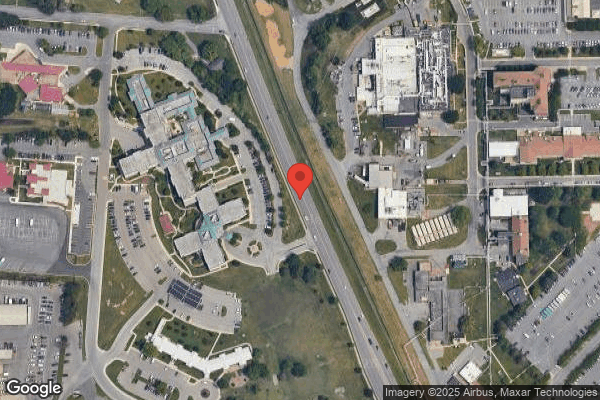

1920 ROSEMONT AVENUE, FREDERICK, MD 21702 (240) 772-9200
Government - County 170 Beds Independent Data: November 2025
Trust Grade
58/100
#100 of 219 in MD
Last Inspection: December 2024

Within standard 12-15 month inspection cycle. Federal law requires annual inspections.

Overview

Citizens Care and Rehabilitation Center of Frederick has a Trust Grade of C, indicating it is average and in the middle of the pack among nursing homes. With a state rank of #100 out of 219 facilities in Maryland, they are in the top half, but there are still many options available. The facility is improving, with reported issues decreasing from 15 in 2019 to 8 in 2024. Staffing is a relative strength, with a turnover rate of 27%, which is better than the Maryland average of 40%. While the facility has no fines, which is a positive sign, there have been concerning incidents, such as failing to honor a resident's Do Not Resuscitate order and not properly discarding expired insulin pens, which could put residents at risk.

Trust Score
C
58/100
In Maryland
#100/219
Top 45%
Safety Record
Moderate
Needs review
Inspections
Getting Better
15 → 8 violations
Staff Stability
✓ Good
27% annual turnover. Excellent stability, 21 points below Maryland's 48% average. Staff who stay learn residents' needs.
Penalties
✓ Good
No fines on record. Clean compliance history, better than most Maryland facilities.
Skilled Nurses
○ Average
Each resident gets 40 minutes of Registered Nurse (RN) attention daily — about average for Maryland. RNs are the most trained staff who monitor for health changes.
Violations
⚠ Watch
39 deficiencies on record. Higher than average. Multiple issues found across inspections.
★★★☆☆
3.0
Overall Rating
★★★☆☆
3.0
Staff Levels
★★★★☆
4.0
Care Quality
★★★☆☆
3.0
Inspection Score
Stable
2019: 15 issues
2024: 8 issues

The Good

  • 4-Star Quality Measures · Strong clinical quality outcomes
  • Low Staff Turnover (27%) · Staff stability means consistent care
  • Full Sprinkler Coverage · Fire safety systems throughout facility
  • No fines on record
  • Staff turnover is low (27%)

    21 points below Maryland average of 48%

Facility shows strength in quality measures, staff retention, fire safety.

The Bad

3-Star Overall Rating

Near Maryland average (3.0)

Meets federal standards, typical of most facilities

The Ugly 39 deficiencies on record

1 actual harm
Dec 2024 8 deficiencies
CONCERN (D)

Potential for Harm - no one hurt, but risky conditions existed

Deficiency F0645 (Tag F0645)

Could have caused harm · This affected 1 resident

**NOTE- TERMS IN BRACKETS HAVE BEEN EDITED TO PROTECT CONFIDENTIALITY** Based on interview, record review, and review of the facility policy, the facility failed to ensure a Level II PASARR (a more in...

Read full inspector narrative →
**NOTE- TERMS IN BRACKETS HAVE BEEN EDITED TO PROTECT CONFIDENTIALITY** Based on interview, record review, and review of the facility policy, the facility failed to ensure a Level II PASARR (a more in-depth preadmission screening and resident review) was obtained, as required for one resident (Resident (R)58) of three sampled residents in a total sample of 39. This failure placed the resident at risk of not receiving specialized services for serious mental illness. Findings included: Review of the facility policy titled, Resident Assessment-Coordination with PASARR Program, dated 2024 revealed, This facility coordinates assessments with the preadmission screening and resident review (PASARR) program under Medicaid to ensure that individuals with mental disorder, intellectual disability, or a related condition receives care and services in the most integrated setting appropriate to their needs .All applicants to this facility will be screened for serious mental disorders or intellectual disabilities and related conditions in accordance with the State's Medicaid rules for screening .PASARR Level I- initial pre-screening that is completed prior to admission. If the Level I Screen is negative-permit admission to proceed and ends the PASARR process unless a possible serious mental disorder or intellectual disability arises later. If the Level I screening is positive-necessitates a PASARR Level II evaluation prior to admission .PASARR Level II is a comprehensive evaluation by the appropriate stated-designated authority and cannot be completed by the facility which determines whether the individual has MD [mental disorder], ID [intellectual disorder] or related condition, and determines the appropriate setting for the individual, and recommends any specialized services and/or rehabilitative services the individual needs . Review of the admission Record located in the Profile tab of the electronic medication record (EMR) revealed, R58 was readmitted to the facility on [DATE] with diagnoses that included post-traumatic stress disorder (PTSD-a disorder in which a person has difficulty recovering after experiencing or witnessing a terrifying event), bipolar disorder (a disorder associated with episodes of mood swings ranging from depressive lows to manic highs), and anxiety. Review of an 11/21/2021 Care Plan located in the Care Plan tab of the EMR revealed, [R58] has a diagnosis of Depression, Anxiety, Bipolar disorder & PTSD. [he/she] has behaviors such as yelling out, cursing until [he/she] goes back to bed or is changed. Interventions included, not limited to, Monitor for responses to loud noises related to possible response from PTSD and Behavioral health consults as needed; e.g. psychologist, psychiatrist. Review of the quarterly Minimum Data Set (MDS) assessment located in the MDS tab of the EMR with an Assessment Reference Date (ARD) of 12/05/24 revealed R58 had a Brief Interview of Mental Status (BIMS) score of three out of 15 which indicated he/she was severely impaired in cognition and had no behaviors. Review of the Level I PASARR located in the Miscellaneous tab revealed R58 had a Level I PASARR which was dated 06/01/22. The Level I further indicated that If two of three boxes are marked (under mental illness) then a Level II PASARR would be required. During an interview on 12/18/24 at 12:22 PM, Social Worker (SW)1 was asked if a Level II PASARR had been done for R58 in 2022. SW1 stated, The Level I PASARR (in the EMR) was from his psychiatric hospital stay in 2022. SW1 further stated, Counseling doesn't feel it would be helpful to R58 has [his/her] BIMS score is low. In addition, the VA [Veterans Administration] would not provide any further counseling when [he/she] was readmitted after his psychiatric hospital stay. SW1 was asked about the section of the PASARR Level 1 where it indicated that R58 met two of the three requirements to have a PASARR Level II evaluation, in 2022. SW1 reviewed the section and confirmed that R58 should have had a PASARR Level II evaluation.
CONCERN (D)

Potential for Harm - no one hurt, but risky conditions existed

Comprehensive Care Plan (Tag F0656)

Could have caused harm · This affected 1 resident

**NOTE- TERMS IN BRACKETS HAVE BEEN EDITED TO PROTECT CONFIDENTIALITY** Based on record review, interview and facility policy review, the facility failed to develop a comprehensive care plan regarding...

Read full inspector narrative →
**NOTE- TERMS IN BRACKETS HAVE BEEN EDITED TO PROTECT CONFIDENTIALITY** Based on record review, interview and facility policy review, the facility failed to develop a comprehensive care plan regarding a condom catheter for one of one resident (Resident (R)155) out of 39 sampled residents. This failure to develop a care plan increased the risk for care to be incomplete and/or inconsistent related to R155 having a condom catheter. Findings include: Review of R155's undated Face Sheet located under the Profile tab in the electronic medical record (EMR) revealed R155 was admitted to the facility on [DATE] with diagnosis of chronic kidney failure, Stage 3, malignant neoplasm of the pancreas, chronic respiratory failure with dependence on ventilator, tracheostomy, and gastrostomy. Review of R155's admission Minimum Data Set (MDS) located under the MDS tab in the EMR with an Assessment Reference Date (ARD) of 11/11/24 coded the resident as having a Brief Interview for Mental Status (BIMS) score of eight out of 15 which indicated R155 was moderately cognitively impaired. Review of R155's Physician Orders located under the Orders tab in the EMR revealed an order dated 11/13/24 for Maintain size 35mm [millimeter] Condom Catheter. Review of R155's Comprehensive Care Plan located under the Care Pan tab in the EMR revealed no documentation of R155 having a condom catheter. During an interview on 12/19/24 at 11:50 AM, with the Director of Nursing (DON) and Unit Manager (UM)2 stated, The condom catheter is not on the care plan. Asked if the condom catheter should have been placed the on the care plan after the order was received and UM2 stated, Yes, it should have been added to the care plan. The DON confirmed the care plan was to represent the care the R155 was receiving in the facility, and this care plan did not show this. Review of the undated facility's policy titled Comprehensive Care Plan revealed revealed It is the policy of this facility to develop and implement a comprehensive person-centered care plan for each resident, consistent with resident rights, that includes measurable objectives and timeframes to meet a resident's medical, nursing, and mental and psychosocial needs that are identified in the resident's comprehensive assessment .
CONCERN (D)

Potential for Harm - no one hurt, but risky conditions existed

Deficiency F0657 (Tag F0657)

Could have caused harm · This affected 1 resident

**NOTE- TERMS IN BRACKETS HAVE BEEN EDITED TO PROTECT CONFIDENTIALITY** Based on record review, interview, and facility policy review, the facility failed to review and revise a comprehensive care pla...

Read full inspector narrative →
**NOTE- TERMS IN BRACKETS HAVE BEEN EDITED TO PROTECT CONFIDENTIALITY** Based on record review, interview, and facility policy review, the facility failed to review and revise a comprehensive care plan to reflect the resolution developing of pressure ulcers and non-pressure wounds for one of four residents (Resident (R)155) out of 39 sampled residents. This failure created an increased risk for R155 to receive care and services not appropriate for their current clinical condition. Findings include: Review of R155's undated Face Sheet located under the Profile tab in the electronic medical record (EMR) revealed R155 was admitted to the facility on [DATE] with diagnosis of malignant neoplasm of the pancreas, chronic respiratory failure with dependence on ventilator, tracheostomy, gastrostomy, pressure ulcer of other site, unstageable, pressure ulcer of other site, Stage 3, and non-pressure chronic ulcer of other part of right foot and left foot with fat exposed. Review of R155's admission Minimum Data Set (MDS) located under the MDS tab in the EMR with an Assessment Reference Date (ARD) of 11/11/24 coded the resident as having a Brief Interview for Mental Status (BIMS) score of eight out of 15 which indicated R155 was moderately cognitively impaired. R155 was also coded as being a risk for developing pressure ulcers, and having one Stage 2, two stage 3, one Stage 4, and one unstageable pressure ulcers that were present on admission. Review of the VOHRA Wound Physicians .Wound Evaluation & [and] Management Summary located under the MISC [Miscellaneous] tab in the EMR and dated 11/06/24 through 12/18/24 revealed R155 was admitted to the following wounds; non-pressure wounds to the left 1st, 4th, and 5th toes and right 4th and 5th toe and tongue areas. R155 also had pressure wounds to the left and right plantar foot Stage 3, Sacrum Stage 2, left ear Stage 4, and right lateral foot unstageable areas. On the wound note, dated 11/13/24, the right 4th toe and sacrum wounds were healed. On the wound note, dated 11/25/24, the pressure wound to the left plantar foot was healed and a new pressure wound to the right heel Stage 3 was noted. On the wound note, dated 12/04/24, the non-pressure wounds to the right and left 5th toe were healed, and the addition of the right buttock Stage 2 was noted. On the wound note, dated 12/11/24, the non-pressure wound to the right 5th toe reopened and the pressure wound to the right plantar foot Stage 3 was healed. Review of the Comprehensive Care Plan located under the Care Plan tab in the EMR and dated 11/26/24 revealed on admission skin impairments as follows: Arterial wounds: left first, fourth and fifth toes, right buttock [sic] Pressure wounds right lateral foot, and left ear [sic] Non-pressure tongue and face . Under the Focus area of the care plan dated 11/05/24 revealed [R155] has the potential for skin impairment to limited mobility [sic] with interventions of Body check by GNA [geriatric nursing assistant] with AM [morning] care qd [every day]. Body check by nurse q [every] week/ Use left sheet to prevent shearing. Turn and Position q 2-3 hours. Mattress: Static pressure redistribution. Keep HOB [head of bed] raised to lowest comfortable angle for resident. Use pillows to prevent skin to skin contact prn [as needed]. Offload pressure areas. There was no documentation of the wounds to the right 4th toe, sacrum, and the left and right plantar foot was healed and the addition of new pressure wounds to the right heel and to the right buttock. During an interview on 12/19/24 at 11:50 AM, the Unit Manager (UM)2 stated, It [care plan] only has the wounds listed that [R155] was admitted with. I did not update the care plan when a wound healed, or another was found. The Director of Nursing confirmed the care plan was to represent the care the resident was receiving in the facility, and this care plan did not show this. Review of the undated facility's policy titled Care Plan Revisions Upon Status Change provided by the facility stated, .The comprehensive care plan will be reviewed, and revised as necessary, when a resident experiences a status change . The care plan will be updated with the new or modified interventions .
CONCERN (D)

Potential for Harm - no one hurt, but risky conditions existed

Deficiency F0760 (Tag F0760)

Could have caused harm · This affected 1 resident

Based on observation, interview, and facility policy review, the facility failed to accurately check the insulin pen that was being used to administer insulin to one of three resident (Resident (R) 14...

Read full inspector narrative →
Based on observation, interview, and facility policy review, the facility failed to accurately check the insulin pen that was being used to administer insulin to one of three resident (Resident (R) 14) administered insulin out of six residents being observed during the medication administration task. This failure had the potential for bloodborne pathogens to infect residents by using a reusable insulin pen to a resident other than the resident that it had been ordered for. Findings include: Review of the facility's policy titled Medication Administration .Insulin Administration dated 06/21/17 and provided by the facility stated, .Pens must be used only for a single resident and must never be shared . During an observation of medication administration on 12/16/24 at 4:50 PM, Licensed Practical Nurse (LPN)1 was observed in getting a new Novolog Insulin Pen from the Unit Manager (UM)3 which was obtained from the Cubex. LPN1 administered R77 with two units of Novolog insulin subcutaneously as ordered by the physician. LPN1 went to the next resident which was R14. LPN1 applied the alcohol prep to R14's left upper quadrant of R14's abdomen and uncapped the Novolog Insulin Pen. Before LPN1 was able to stick R14's abdomen with the insulin pen, the surveyor requested the nurse to stop and LPN1 was asked to return to the medication cart. LPN1 stated, When you stopped me, I thought that I should have asked my supervisor for a new insulin pen instead of using this one. During an interview on 12/19/24 at 11:52 AM, Unit Manager (UM)3 stated, Each person has their own individual pen. I expect the nurse to use one pen at a time for each person. On 12/19/24 at 11:55 AM, the Director of Nursing (DON) was notified of LPN1 attempting to use an insulin pen of Novolog on R14 that was used to administer insulin to R77. The DON confirmed insulin pens are only to be used on one resident and each resident should have their own pen.
CONCERN (D)

Potential for Harm - no one hurt, but risky conditions existed

Deficiency F0883 (Tag F0883)

Could have caused harm · This affected 1 resident

**NOTE- TERMS IN BRACKETS HAVE BEEN EDITED TO PROTECT CONFIDENTIALITY** Based on interview, record review, and review of facility policy, the facility failed to ensure that the education of benefits a...

Read full inspector narrative →
**NOTE- TERMS IN BRACKETS HAVE BEEN EDITED TO PROTECT CONFIDENTIALITY** Based on interview, record review, and review of facility policy, the facility failed to ensure that the education of benefits and risks of immunizations for pneumonia and influenza was provided after refusals for the vaccinations for three residents (Residents (R) 36, R20, and R80) of five sampled residents reviewed for immunizations. This failure placed the residents at risk for pneumonia and influenza. Findings included: Review of facility policy titled, Pneumococcal Vaccine, dated 08/01/2024 revealed, .Prior to offering a pneumococcal immunization, each resident or the resident's representative will receive education regarding the benefits and potential side effects of the immunization with the education documented in the clinical record . Review of facility policy titled, Influenza Vaccination, dated 09/01/2024 revealed, . Prior to the administration of the influenza vaccine, the person receiving the immunization, or his/her legal representative, will be offered a copy of CDC's (Center for Disease Control) current vaccine information statement relative to the influenza vaccination .The resident's medical record or staff's medical file will include documentation that the resident and/or the resident's representative was provided education regarding the benefits and potential side effects of immunization, and that the resident received or did not receive the immunization due to medical contraindication or refusal. According to the CDC (Centers for Disease Control) at www.cdc.gov recommends Complete series: PCV 13 at any age & PPSV 23 at [AGE] years of age or older and then at five years. Together, with the patient, vaccine providers may choose to administer PCV20 to adults greater than [AGE] years of age who have already received PCV13 or PPSV 23 at or after age [AGE] years. 1. Review of the Face Sheet' located in the Admissions tab of the Electronic Medical Record (EMR) revealed R36 was admitted to the facility on [DATE] and was [AGE] years old. Review of the Immunizations tab of the EMR revealed R36's son (who is the responsible party), refused the pneumococcal conjugate vaccine (PCV 20) and no documented education was provided. 2. Review of the Face Sheet' located in the Admissions tab of the EMR revealed R20 was admitted to the facility on [DATE] and was [AGE] years old. Review of the Immunizations tab of the EMR revealed R20's sister (who is the responsible party), was called and voicemail left on 11/27/24 for consent to administer the influenza and PCV 20, with no return call. The facility did not follow up on the phone call and documentation on education was not provided. 3. Review of the Face Sheet' located in the Admissions tab of the Electronic Medical Record (EMR) revealed R80 was admitted to the facility on [DATE] and was [AGE] years old. Review of the Immunizations tab of the EMR revealed R80's sister (who is the responsible party) agreed to the vaccine, but R80 refused the vaccine and did not receive documentation on education for the influenza vaccine. The facility made no attempt to contact the sister for assistance with the resident receiving the vaccine. During an interview on 12/19/24 at 2:24 PM, the Infection Preventionist (IP) stated, I do not know why the Vaccination Information Sheets (VIS) all say no education was provided. My concern is that I do not always know that I am getting the vaccine refusals. I need to review my process for immunizations. Interview on 12/19/24 at 2:58 PM with the Administrator revealed, My expectation for immunizations is that the IP is reviewing the vaccines and refusals and providing education on the risk and benefits of receiving those vaccines. Education has to be provided and documented in the resident's records.
CONCERN (E)

Potential for Harm - no one hurt, but risky conditions existed

Deficiency F0761 (Tag F0761)

Could have caused harm · This affected multiple residents

**NOTE- TERMS IN BRACKETS HAVE BEEN EDITED TO PROTECT CONFIDENTIALITY** Based on observations, interviews, record review and review of facility policy, the facility failed to ensure expired insulin pe...

Read full inspector narrative →
**NOTE- TERMS IN BRACKETS HAVE BEEN EDITED TO PROTECT CONFIDENTIALITY** Based on observations, interviews, record review and review of facility policy, the facility failed to ensure expired insulin pens were discarded from five medication carts (respiratory care unit (RCU) cart two, second floor long-term care unit (LTC) medication carts one, second-floor LTC medication cart two, third floor LTC medication cart medication cart one, and memory care medication cart one) of nine medication carts reviewed. This failure placed residents at risk of ineffective medication. Findings included. Review of the facility policy titled, Medication Administration, dated [DATE] revealed, . Ensure that the open date is documented on the vial or pen .Check the expiration date prior to administration to ensure it is within the usage date. Expired insulin should be immediately discarded. Vials and pens without an open date recorded should be discarded . 1. Review of RCU cart two on [DATE] at 3:35 PM with Licensed Practical Nurse (LPN)3 revealed, a Lantus (long-acting) insulin pen for R117 which had an orange label on the side of the pen which indicated, Do Not Use After [DATE]. In addition, an Aspart (Novolog-a short-acting) insulin pen which also had an orange label which indicated that the pen was Opened on [DATE]. The pharmacy label on the medication package for both medications read, Discard after 28 days. Further review of RCU cart two with LPN3 revealed that R124 had a Lantus insulin pen which indicated that the insulin pen was opened on [DATE]. The pharmacy label showed that the medication was to be discarded after 28 days. LPN 3 confirmed that the insulin pens had been used for both R117 and R124 and should have been discarded. 2. Review of the second-floor LTC cart two on [DATE] at 3:48 PM, with LPN4 revealed a Humalog (short-acting) insulin pen for R72 which had an open date of [DATE]. The label indicated that the insulin pen was to be discarded after 28 days. LPN4 confirmed that the Humalog insulin had been used for R72 and should have been discarded. 3. Review of the second-floor LTC cart one on [DATE] at 3:53 PM with LPN6 revealed a Novolog insulin pen which had an open date of [DATE]. The label on the package showed that the insulin pen was to be discarded in 28 days. LPN6 confirmed that the insulin pens had been used and they should have been discarded in 28 days. 4. Review of the third-floor LTC cart one with LPN1 revealed a Humalog insulin pen for R130 with an open date of [DATE]. The label on the package indicated that the insulin pen was to be discarded in 28 days. In addition, R130 had a second Humalog pen which showed no open date or expiration date on the pen. LPN confirmed that both pens had been used and should have been labeled when opened and discarded after 28 days. Further review of the third-floor LTC cart one with LPN1 revealed an Aspart insulin pen for R77 which had an open date of [DATE]. LPN1 confirmed that the insulin pen should have been discarded on [DATE]. 5. Review of the memory care medication cart one on [DATE] at 4:27 PM with Unit Manager (UM)1 revealed, R158 had a Novolog insulin pen with an unreadable open date. UM1 confirmed that the insulin pen should have been thrown out as the date was unreadable. During an interview on [DATE] at 4:51 PM the Director of Nursing (DON) was asked what his expectation was in regard to labeling insulin pens when opened and not using them past the expiration date. The DON stated, My expectation would be that prior to administration via the insulin pen, the medication would be observed for the correct open date. If outdated and expired, the insulin pen should be discarded and a new insulin pen obtained.
CONCERN (E)

Potential for Harm - no one hurt, but risky conditions existed

Infection Control (Tag F0880)

Could have caused harm · This affected multiple residents

Based on observation, interview, record review, and review of facility policy, the facility failed to ensure infection control measures were appropriately implemented and maintained hand hygiene relat...

Read full inspector narrative →
Based on observation, interview, record review, and review of facility policy, the facility failed to ensure infection control measures were appropriately implemented and maintained hand hygiene related to blood glucose testing for four of four residents (Resident (R) 35, R16, R77, and R14) who were observed during testing. Also, the facility failed to ensure wound care was performed in a manner to prevent infection for R115. These failures placed the residents at risk for infections and a decrease in quality of life. Findings include: 1. Review of the facility's policy titled, Glucometer Disinfection reviewed 10/14/24 indicated, Policy Explanation and Compliance Guidelines .5. Procedure: a. Obtain needed equipment and supplies: Gloves, glucometer, alcohol pads, gauze pads, single-use lancet, blood glucose testing strips, disinfecting wipes. b. Wash hands.e. Put on gloves. f. Obtain capillary blood glucose sampling according to facility policy. g. Remove and discard gloves, perform hand hygiene prior to exiting room. i. Retrieve a disinfectant wipe from container. j. Using wipe, clean to remove heavy soil, blood and,/or other contaminants left on the surface of the glucometer. k. After disinfecting, place glucometer on foil barrier and allow the glucometer to air dry. l. Discard disinfectant wipe in waste receptacle. m. Perform hand hygiene. a. Review of the Face Sheet located in the Admissions tab of the electronic medical record (EMR) revealed R16 was admitted to the facility in June 2018 with diagnoses of dementia and type 2 diabetes with long term use of insulin. Review of the Orders Summary located in the Orders tab of the EMR revealed, Blood Glucose check two times a day and dated 03/21/22. Observation on 12/16/24 at 10:24 AM revealed Licensed Practical Nurse (LPN) 7 completed a blood glucose test on R16. LPN7 did not wash her hands before putting on her gloves. LPN7 entered the residents room with the glucometer, lancet, alcohol wipe, and test strips in her uniform pockets. The glucometer was then placed on the nightstand with no barrier. The procedure was completed, and the dirty glucometer was placed on the medicine cart and then cleaned and put away. LPN7 did not wash her hands after cleaning the glucometer. b. Review of the Face Sheet located in the Admissions tab of the EMR revealed R35 was admitted to the facility in April 2022 with diagnoses of dementia and type 2 diabetes with diabetic chronic kidney disease. Review of the Orders Summary located in the Orders tab of the EMR revealed, Blood Glucose check before each meal and dated 04/01/22. Observation on 12/16/24 at 11:50 AM revealed LPN8 completed a blood glucose check on R35. A plastic container contained multiple lancets (20), alcohol wipes, and test strips was observed. When the procedure was completed, LPN8 put the dirty glucometer on top of all the clean lancets in the plastic container and brought to the medicine cart. Hand hygiene was not performed during the procedure. c. Review of R77's undated Face Sheet located under the Profile tab in the EMR revealed R77 was admitted to the facility in August 2022 with the diagnosis of type 2 diabetes mellitus. Review of R77's Physician's Orders located under the Orders tab in the EMR revealed an order dated 10/01/24 which stated, Novolog Flex Pen Solution Ped-injector 100 Unit/ML [unit per milliliter] Inject as per sliding scale: if 0-70 Call MD [medical doctor]; 71 - 150 = 0; 151 - 200 = 2 units; 201 - 250 = 4 units; 251 - 300 = 6 units; 301 - 350 = 8 units; 351 - 400 = 10 units; 401+ Call MD [Medical Doctor] subcutaneously before meals related to Type 2 Diabetes Mellitus . During an observation on 12/16/24 at 4:42 PM, LPN1 cleaned the glucometer after it was used to obtain R77's blood sugar. LPN1 wiped the glucometer with the Micro Kill wipe and did not wear gloves when cleaning the glucometer with the Micro Kill wipe. d. Review of R14's undated Face Sheet located under the Profile tab in the EMR revealed R14 was admitted to the facility in August 2022 with the diagnosis of type 2 diabetes mellitus with hyperglycemia. Review of R14's Physician's Orders located under the Orders tab in the EMR revealed an order, dated 09/18/24, which stated, Novolog Flex Pen Solution Ped-injector 100 Unit/ML [unit per milliliter] Inject as per sliding scale: if 0-70 Call MD [medical doctor]; 71 - 150 = 0; 151 - 200 = 2 units; 201 - 250 = 4 units; 251 - 300 = 6 units; 301 - 350 = 8 units; 351 - 400 = 10 units; 401+ Call MD subcutaneously before meals related to Type 2 Diabetes Mellitus . During an observation on 12/16/24 at 4:36 PM, LPN1 cleaned the glucometer after it was used to obtain R14's blood sugar. LPN1 wiped the glucometer with the Micro Kill wipe and did not wear gloves when cleaning the glucometer with the Micro Kill wipe. The interview with the Director of Nursing (DON) on 12/19/24 at 10:09 AM revealed, My expectations of the nursing staff is that they have all equipment on the medicine cart and enter the resident room with all supplies. Place a barrier down and place supplies on the and proper hand hygiene is to be used. Interview on 12/19/24 at 10:36 AM with LPN8 revealed, I was nervous. I know that I am supposed to wash my hands before putting on gloves. During an interview with the Administrator on 12/19/24 at 11:48 AM revealed, I expect that nursing follows policy and does what they are supposed to do. Training is essential to maintain infection control. During an interview on 12/19/24 at 11:52 AM, the Infection Preventionist (IP) nurse stated, The nurse is to wear gloves while cleaning the glucometer. They are to place a piece of foil on the top of the medication cart and place the glucometer on it after they have cleaned it while they are waiting for it to dry. 2. Review of the admission Record located in the Profile tab of the EMR revealed R115 was admitted to the facility in November 2021 with diagnoses that included dementia and malnutrition. Review of the quarterly MDS located in the MDS tab of the EMR with an ARD of 11/21/24 revealed, R115 had a BIMS score of six out of 15 which indicated he/she was severely impaired in cognition and had one stage for pressure ulcer (full thickness tissue loss with exposed bone, tendon, or muscle) that was facility acquired. Review of a 12/18/24 Wound Clinic Provider visit note, located in the Miscellaneous tab of the EMR revealed, The wound measures 0.6cm x 1.3cm x 0.3cm with undermining at 9 o'clock which was 3.8cm. Wound progress at goal, duration of the wound is >431 days. The objective is to maintain healing. The tissue is a little more robust. Give it more time since changing the chair cushion and recommend [he/she] get into bed in the afternoon between lunch and dinner (but [he/she] is unlikely to comply). Review of the Order Summary located in the Orders tab of the EMR dated, 11/20/24 revealed, LT [left] HIP STAGE IV PRESSURE WOUND: Clean with NS [normal saline], cut thin small strip of Methylene Blue Foam, moisten with NSS [normal saline solution], wring out, then tuck into undermining every day. During a wound care observation on 12/19/24 at 11:41 AM with the Treatment Nurse (TN), she was observed to have brought in the wound care supplies into the room and laid them on the overbed table while she washed her hands and applied gloves. The wound care supplies were still packaged. After she applied her gloves, she carried the supplies over to the resident and laid them on the bed. She opened the vial of normal saline and poured it onto the gauze and proceeded to clean around the wound. She then obtained a clean gauze and cleaned the inside of the wound and then with the same gauze, she cleaned around the outside of the wound. The TN did not remove her gloves or perform hand hygiene before obtaining the methylene blue foam which was moistened in normal saline. She placed the foam into the wound bed using a sterile Q-tip. After she finished providing the foam, without changing her glove or performing hand hygiene, she opened the foam dressing and applied it to the wound. Without removing her gloves and performing hand hygiene, she picked up her soiled supplies off the resident's bed and proceeded out of the room before being stopped. During an interview on 12/19/24 at 11:54 AM, the TN was asked when you should change gloves and perform hand hygiene during wound care. The TN stated, They are to be changed when going from soiled to clean. The TN was asked about using the moistened gauze inside the wound and then around the wound on the skin. The TN stated she should have obtained clean moistened gauze instead of using the soiled gauze. The TN confirmed that she knew about the changing of the gloves from soiled to clean but was nervous.
CONCERN (F)

Potential for Harm - no one hurt, but risky conditions existed

Food Safety (Tag F0812)

Could have caused harm · This affected most or all residents

Based on observation, interview, and review of the facility policy, the facility failed to ensure all food in the freezer, refrigerator, and dry storage was labeled, dated, and not expired as well as ...

Read full inspector narrative →
Based on observation, interview, and review of the facility policy, the facility failed to ensure all food in the freezer, refrigerator, and dry storage was labeled, dated, and not expired as well as failed to ensure newly washed dishes were allowed to properly air dry and staff wore the appropriate hair coverings. These failures had the potential to affect all 158 residents in the facility who consumed food from the kitchen. Findings include: Review of the facility's policy titled, Food Safety Product Labeling and Dating Guidelines, dated 12/06/22, revealed .Sodexo policy does not specify a date marking label. An establishment can choose to be as precise as needed in date marking if the parameters set forth within the Sodexo policy are met. A date marking system may use calendar dates, days of the week, color-coded marks, or other effective means to comply with policy and the food code . All managers and food employees need to be trained and understand the operation's date marking policy and the dating/labeling system they use . Review of the facility's policy titled, Hair Restraints, dated 12/06/22, revealed Consumers are particularly sensitive to food contaminated by hair. Hair can be both a direct and indirect vehicle of contamination. Food employees may contaminate their hands when they touch their hair. A hair restraint keeps dislodged hair from ending up in the food and may deter employees from touching their hair. Our guidelines below are taken from the FDA Food Code. Food employees should wear hair restraints such as hats, hair coverings or nets, beard restraints, and clothing that covers body hair, which are designed and worn to effectively keep their hair from contacting exposed food; clean equipment, utensils, and linens; and unwrapped single-service and single-use articles. During an observation on 12/16/24 at 8:43 AM, the following observations in the kitchen were identified and verified by the Dietary Manager (DM). 1. The walk-in freezer contained two bags of chicken with no use-by-dates. The bags were frozen to the tray due to some kind of spill. There was also one box of hamburgers not sealed shut. Two bags of sausage had no labeling and dating. One bag of Cod was outdated with an expiration date of 12/12/24. One bag of pork patties was outdated with an expiration date of 12/02/24. One metal container had no labeling and dating and the DM had no idea what the container contained. There was also one package of food that had no labeling and dating and the DM had no idea what the package contained. 2. The walk-in refrigerator contained one bag of salami with an expired date of 09/09/24, boiled eggs expired with a date of 12/14/24, tuna with an expiration date of 12/04/24, fortified pudding, feta cheese, and cut potatoes expired on 12/14/24. Cut potato slices had an expiration date of 12/12/24. Two bags of bologna and beef/mac not sealed shut. 3. The dry Storage room contained one bag of dried cranberries that had no labeling, dating, and was not sealed shut. 4. The Robot Coupe was not allowed to airdry before the lid was attached. The inside of the container was wet. There were also six metal pans that were stacked wet and not allowed to airdry. 5. The kitchen contained four hot boxes that transfer food to the kitchens on the units. They were dirty and sticky on the outside with dried food and crumbs. Observation and interview on 12/16/24 at 8:43 AM with the DM revealed the DM did not have a hair covering. When asked what he was doing, the DM stated, I was putting food in the walk-in refrigerator. When asked why he did not have a hair covering, the DM did not answer. He then stated, He was not handling food. Observation and interview on 12/16/24 at 8:55 AM with Dietary Aide (DA)2 revealed that he had a hairnet, but only the top of his hair was covered. When questioned, DA2 stated, My hair must have fallen out. Observation and interview on 12/18/24 at 11:25 AM with DA1 revealed that she did not have a hairnet. When asked why, DA1 stated, I was told if my hair is under a quarter of an inch, I do not have to wear a hairnet. Interview with the General Manager (GM) on 12/19/24 at 11:09 AM revealed, My expectations of the kitchen is that the staff follows food safety, quality, and have consistency. Training must be completed. Issues need to be noted and handled. During an interview with the Administrator on 12/19/24 at 11:33 AM revealed, The kitchen needs to be in compliance with regulations and wear hair coverings. All food should be labeled and dated. The kitchen needs continuous training.
Jun 2019 15 deficiencies 1 Harm
SERIOUS (G)

Actual Harm - a resident was hurt due to facility failures

Deficiency F0578 (Tag F0578)

A resident was harmed · This affected 1 resident

**NOTE- TERMS IN BRACKETS HAVE BEEN EDITED TO PROTECT CONFIDENTIALITY** Based on medical record review and staff interview, it was determined that facility staff failed to honor a resident' s right to...

Read full inspector narrative →
**NOTE- TERMS IN BRACKETS HAVE BEEN EDITED TO PROTECT CONFIDENTIALITY** Based on medical record review and staff interview, it was determined that facility staff failed to honor a resident' s right to formulate a Do Not Resuscitate (DNR) advance directive and performed CPR (cardiopulmonary resuscitation) against the resident's stated written request. This was evident for 1 of 5 residents (Resident # 43) reviewed for Advance Directives during the survey, and the deficiency was cited to the level of actual harm. The findings include: Facility Reported Incident MD00140887 was reviewed on [DATE]. The Incident Report stated that, on [DATE], CPR (Cardio Pulmonary Resuscitation) was initiated on Resident # 43 and discontinued when it was determined that the resident had formulated a DNR (Do Not Resuscitate) advanced directive. The patient subsequently expired. Cardiopulmonary Resuscitation (CPR) refers to any medical intervention used to restore circulatory and/or respiratory function that has ceased. A DNR directive instructs health care providers not to perform (CPR) if a patient stops breathing or if their heart stops beating. The facility CPR policy was reviewed on [DATE]. The Facility's CPR policy states that CPR should be administered in accordance with a resident's MOLST. Resident # 43's medical record was reviewed on [DATE]. Review of the record revealed that a Maryland Medical Order for Life Sustaining Treatment (MOLST) was completed on [DATE]. The MOLST is a portable and enduring medical order form covering options for CPR and other life-sustaining treatments. Resident # 43's MOLST was coded to reflect that the resident's health care agent, as named in the resident's advanced directive, requested that CPR not be attempted if cardiac and/or pulmonary arrest were to occur. A healthcare agent is a person designated and authorized by an advance directive to make a treatment decision for another person in the event the other person becomes unable to make necessary health care decisions. On [DATE], A Facility Investigation Summary Form, completed on [DATE], was reviewed. The Investigation Summary Form stated that, on [DATE] at 6:50 PM, Registered Nurse (RN) Supervisor # 7 phoned the Director of Nursing (DON) and informed him/her that Resident # 43 had expired. The form noted that, on [DATE] at approximately 3:15 PM, the Memory Care Unit Manager reported to the DON that Registered Nurse (RN) # 2 had informed him that RN # 1 had performed CPR on Resident # 43. In a statement RN # 1 wrote that she/he may have performed CPR on the resident. RN# 1's employee file was reviewed on [DATE]. This review revealed that RN # 1's employment was terminated on [DATE] due to her/his job performance. The Memory Care Unit Manger was interviewed on [DATE] at 12:30 PM. The Memory Care Unit Manager stated that RN # 2 came into her/his office on [DATE] and informed her/him that RN # 1 had performed CPR on Resident # 43. RN # 1 was contacted on [DATE] at 12:58 PM. RN # 1 declined interview. RN # 2 was interviewed on [DATE] at 1:08 PM and stated: RN # 3 and I were sitting at the nurse's station. Geriatric Nursing Assistant (GNA) # 3 came running to our unit from Memory Care to get the backboard and he/she told us to call a Code Blue. (A backboard aids in the administration of cardiopulmonary resuscitation by creating a flat, rigid surface to use under the person in need of care. A Code Blue indicates an emergency and is announced in a facility when an individual's breathing or heart stops). We were already on the phone with RN Supervisor # 7. We told her/him about the code blue and then we went running over there. We got there at the same time as RN Supervisor # 7. He/she went to the nurse's station to get Resident # 43's chart and we went to the resident's room. When we went to the room, RN # 3 and I saw Resident # 43 on the floor and RN # 1 doing chest compressions on top of him/her. RN Supervisor # 7 told RN # 1 to stop CPR because Resident # 43 was a DNR. RN # 3 was interviewed on [DATE] at 2:00 PM. RN # 3 stated that, on [DATE], GNA # 3 ran to their unit and requested that they call a Code Blue. RN # 3 stated that he/she and RN # 2 ran to The Memory Care Unit to respond to the Code Blue. When RN# 3 arrived at the resident's room he/she saw that Resident # 43 was on the floor and that RN # 1 was doing chest compressions. RN # 3 stated that RN Supervisor # 7 had arrived on the unit at the same time as he/she had and checked Resident # 43's medical record. RN Supervisor # 7 told RN # 1 to stop compressions because the resident was a DNR. GNA # 3 was interviewed on [DATE] at 1:07 PM. GNA # 3 stated that, on [DATE], s/he had gone into Resident # 43's room to give him/her a bath. GNA # 3 stated: I got my basin, undressed Resident # 43 and began to give him/her a bath. His/her eyes began to roll back and forth in his/her head, he/she became less responsive and his/her breathings slowed down. I stopped and got RN # 1. RN # 1 came into the room, looked at the resident and left to get a pulse oximetry monitor. When she/he left the room, Resident # 43 turned completely white, his/her lips turned white and his/her eyes didn't roll back forward. I ran out of the room and shouted that I needed the nurses. RN # 1 ran into the room, jumped on his/her chest and started CPR. RN # 4 went to get the crash cart (a crash cart is a wheeled container carrying medicine and equipment for use in emergency resuscitations). There was no backboard on the crash cart, so they asked me to go get one. I ran to the Short-Term Rehab Unit to get a backboard and to asked them to call a code. When I came back into the room, RN # 1 had pulled Resident # 43 onto the floor and was still doing chest compressions. RN Supervisor # 7 arrived and told RN # 1 to stop CPR because Resident # 43 was a DNR, and we could only perform comfort measures. RN Supervisor # 7 asked us to put Resident # 43 back onto the bed. When we put him/her back into the bed, I noticed that he/she was not breathing anymore. RN Supervisor # 7 was interviewed on [DATE] at 12:45 PM. RN Supervisor # 7 stated that around 6:00 PM on [DATE] she/he heard that a resident was in distress. RN Supervisor # 7 stated: When I ran to the unit, I went straight to the chart, and opened the chart. I went to the rack and got the chart. When I opened the chart, I realized that Resident # 43 was a DNR, so I went to the room. When I went to the room, I saw Resident # 43 lying on the floor and I saw RN # 1 struggling to put the backboard underneath the patient. I told her/him no, don't do that, that patient is a DNR. I told her/him that we need to put Resident # 43 on the floor and put some oxygen on him/her. The Director of Nursing and the Chief Nursing Officer were made aware of the findings on [DATE] at 10:38 AM and confirmed that facility staff had failed to honor Resident # 43's DNR advance directive.
CONCERN (D)

Potential for Harm - no one hurt, but risky conditions existed

Free from Abuse/Neglect (Tag F0600)

Could have caused harm · This affected 1 resident

Based on medical record review and staff interview, it was determined that facility staff failed to ensure that a resident received the assistance of two staff when providing care. This failure result...

Read full inspector narrative →
Based on medical record review and staff interview, it was determined that facility staff failed to ensure that a resident received the assistance of two staff when providing care. This failure resulted in the resident's fall from bed, hematoma and transfer to the emergency room. This was evident for 1 of 5 residents (Resident # 162) reviewed for abuse during the survey. The findings include: Resident # 162's medical record was reviewed on 6/11/2019. The resident had relevant diagnoses of, but not limited to, persistent vegetative state and unspecified coma. Resident # 162 's Minimum Data Set (MDS) Assessment was evaluated on 6/11/2019. The MDS (Minimum Data Set) is a complete assessment of the resident which provides the facility with the information necessary to develop a plan of care, provide the appropriate care and services to the resident, and to modify the care plan based on the resident's status. Resident #162's MDS Assessment, with an Assessment Reference Date of 02/04/2019, was coded to reflect that the resident was totally dependent on the assistance of two staff members in order to be turned and positioned in bed. Resident # 162's care plan was reviewed on 6/11/2019. A Care Plan is a guide that addresses the unique needs of each resident. It is used to plan, assess and evaluate the effectiveness of the resident's care. Review of Resident # 162's care plan revealed a care plan focus, initiated on 09/09/2016, that stated Resident # 162 was to have the assistance of two staff members when he/she was turned and repositioned in bed. Continued record review revealed a Nursing Assessment entered into the medical record on 2/11/2019 at 9:45 AM by Licensed Practical Nurse (LPN) # 3. The Nursing Assessment read : GNA (Geriatric Nursing Assistant) informed nurse that resident fell out of bed during care. Resident was seen on his/her back in a neutral position on the right side of his/her bed, responsive with large raised bump and hematoma noted over left forehead. Resident sent out to hospital via stretcher. Resident # 162's hospital discharge paperwork was reviewed on 6/11/2019. The discharge paperwork stated that Resident # 162 was seen and evaluated for a traumatic hematoma of the forehead. Continued records review revealed a physician's order entered into the medical record on 2/12/2019 that read : Apply ice every 8 hours for hematoma to forehead for two days. Review of the Treatment Administration Record (TAR) revealed that ice was placed on Resident # 162's forehead every 8 hours from 2/12/2019 until 2/14/2019. A review of the facility's investigation on 6/11/2019 revealed a written statement from GNA # 4, dated 2/15/2019. The written statement read: On 2/11/2019, I was giving Resident # 162 a bed bath. I rolled him/her over towards me to fix his/her diaper. My foot slipped and I lost my balance and he/she fell from the bed. LPN # 3 was interviewed on 6/13/2019 at 2:00 PM. LPN stated that GNA # 4 came up to me when I was in another resident's room getting his/her vital signs. GNA # 4 told me that he/she was giving Resident # 162 a bath by himself/herself and that when he/she went to turn the resident, the resident fell out of bed. GNA # 4 asked me to say that I was in the room helping him/her with the bath when this happened. GNA # 4 and I went to Resident # 162's room. I saw Resident #162 lying on the floor. I think he/she was on his/her back. I didn't see any bruising. I went to get Unit Manager # 4 and told him/her that Resident # 162 fell out of bed. When Unit Manager # 4 came into the room, he/she asked what happened. GNA # 4 said that he/she and I were bathing the resident, that I was on one side of the bed and he/she was on the other side. GNA # 4 said that when I turned the resident towards him/her, his/her foot slipped on something on the floor, he/she lost hold of the resident and the resident fell out of bed. After that, we assessed the resident again, decided how we were going to transfer him /her back into the bed and decided to send Resident # 162 to the hospital. When Unit Manager # 4 left the room, I told GNA # 4, I can't lie for you, you have to tell them the truth. LPN # 3 stated that he/she left the room to continue his/her work and that GNA # 4 continued to provide care for other residents. LPN # 3 said that after Unit Manager # 4 returned from the morning meeting, he/she approached /him/her and told him/her that GNA # 4 had asked him/her to say that he/she was in the room with /himher and providing care for the resident at the time of the fall, but she was not. Unit Manager # 4 was interviewed on 6/13/2019 at 5:00 PM. Unit Manager # 4 stated: LPN # 3 came up to me at the nurse's station and said that Resident # 162 fell. I was so shocked he/she was on the floor. When I went into the room, Resident # 162 was lying flat on his/her back. and I asked, 'how did this happen'. GNA # 4 said that he/she was changing the resident with LPN # 3. She/He said that when he/she was holding Resident # 162, his/ her shoes slipped and he/she lost hold of the resident. We assessed the resident and got him/her back into bed with the Hoyer lift. I started the process of calling the family and getting the resident sent out for a scan. Awhile later, I'm not sure how long, LPN # 3 approached me and said that GNA # 3 wanted him/her to cover him/her, and that he/she was not in the room with him/her with Resident #162 fell. I immediately called the ADON and told him/her what LPN # 3 had just told me. The ADON was interviewed on 6/13/2019 at 5:06 PM. The ADON stated that Unit Manager # 4 and the Nurse Educator had informed him/her that GNA # 3 had stated that he/she was providing care alone when Resident # 162 fell. The ADON stated: I went to GNA # 3 and requested his/her statement. The ADON stated that GNA # 3 was suspended pending investigation. GNA # 3 admitted that he/she had asked LPN # 3 to lie. We called him/her back on 2/15/2019, and he/she was terminated. The Quality Assurance Nurse was interviewed on 6/13/2019 at 5:45 PM. The Quality Assurance Nurse stated that the facility investigated Resident # 162's fall and determined that the fall was caused by staff member noncompliance with Resident # 162's care plan. GNA # 4's employee file was reviewed on 6/13/2019 at 4:00 PM. Review revealed an Employee Memorandum, dated 2/11/2019, that stated that the employee was suspended due to unsatisfactory job performance and a violation of facility policy specified for not following the care plan and terminated on 12/15/2019. The findings were reviewed with the Director of Nursing (DON), ADON, the Chief Nursing Officer and the Quality Assurance Nurse on 6/13/2019 at 5:50 PM who confirmed that facility staff failed to ensure that Resident # 162 received the assistance of two staff members when being turned and repositioned in bed.
CONCERN (D)

Potential for Harm - no one hurt, but risky conditions existed

Report Alleged Abuse (Tag F0609)

Could have caused harm · This affected 1 resident

2. Resident # 162's medical record was reviewed on 6/11/2019. The resident had relevant diagnoses of, but not limited to, persistent vegetative state and unspecified coma. Resident # 162 's Minimum D...

Read full inspector narrative →
2. Resident # 162's medical record was reviewed on 6/11/2019. The resident had relevant diagnoses of, but not limited to, persistent vegetative state and unspecified coma. Resident # 162 's Minimum Data Set (MDS) Assessment was evaluated on 6/11/2019. The MDS (Minimum Data Set) is a complete assessment of the resident which provides the facility information necessary to develop a plan of care, provide the appropriate care and services to the resident and to modify the care plan based on the resident's status. Resident #162's MDS Assessment with an Assessment Reference Date of 02/04/2019 was coded to reflect that the resident was totally dependent on the assistance of two staff members in order to be turned and positioned in bed. Resident # 162's care plan was reviewed on 6/11/2019. A Care Plan is a guide that addresses the unique needs of each resident. It is used to plan, assess and evaluate the effectiveness of the resident's care. Review of Resident # 162's care plan reveals a care plan focus, initiated on 09/09/2016 that stated that Resident # 162 was to have the assistance of two staff members when he/she was turned and repositioned in bed. Continued record review revealed a Nursing Assessment entered into the medical record on 2/11/2019 at 9:45 AM by Licensed Practical Nurse (LPN) # 3. The Nursing Assessment read: GNA (Geriatric Nursing Assistant) informed nurse that resident fell out of bed during care. Resident was seen on his/her back in a neutral position on the right side of his/her bed, responsive with large raised bump and hematoma noted over left forehead. Resident sent out to hospital via stretcher. LPN # 3 was interviewed on 6/13/2019 at 2:00 PM. LPN stated GNA # 4 came up to me when I was in another resident's room getting his/her vital signs. GNA # 4 told me that he/she was giving Resident # 162 a bath by himself/herself and that when he/she went to turn the resident, the resident fell out of bed. GNA # 4 asked me to say that I was in the room helping him/her with the bath when this happened. GNA # 4 and I went to Resident # 162's room. I saw Resident #162 lying on the floor. I think he/she was on his/her back. I didn't see any bruising. I went to get Unit Manager # 4 and told him/her that Resident # 162 fell out of bed. When Unit Manager # 4 came into the room, he/she asked what happened. GNA # 4 said that he/she and I were bathing the resident, that I was on one side of the bed and he/she was on the other side. GNA # 4 said that when I turned the resident towards him/her, his/her foot slipped on something on the floor, he/she lost hold of the resident and the resident fell out of bed. After that, we assessed the resident again, decided how we were going to transfer him /her back into the bed and decided to send Resident # 162 to the hospital. When Unit Manager # 4 left the room, I told GNA # 4, I can't lie for you, you have to tell them the truth. LPN # 3 stated that he/she left the room to continue his/her work and that GNA # 4 continued to provide care for other residents. LPN # 3 said that after Unit Manager # 4 returned from the morning meeting, he/she approached him/her and told him/her that GNA # 4 had asked him/her to say that he/she was in the room with him/her and providing care for the resident at the time of the fall, but he/she was not. The findings were shared with the Director of Nursing on 6/13/2019 at 4:30 PM who confirmed that facility staff did immediately report that GNA # 3 had not provided two caregiver assistance, as directed by the resident's plan of care. Based on interviews and review of medical records and facility documentation, it was determined that the facility failed to 1). report allegations of abuse to the state survey agency timely and 2). ensure the timely reporting of a staff member's nonadherence to a resident's plan of care. This was found to be evident for 2 out of 8 facility reported incidents (FRI) reviewed during the annual survey regarding Resident # 151 and and Resident #162. The findings include: 1. Review of the FRI MD00134136 revealed an incident, an allegation of sexual abuse, that occurred on 11/24/18 regarding Resident #151. Further review of the facility investigation revealed that the incident was not reported to the state agency until 11/27/18. The Chief Nursing Officer (CNO) and the Director of Nursing (DON) were interviewed on 6/13/19 at 2:34 PM. The CNO stated that they were aware that it was a late report. The staff at the time documented the incident, but did not feel it should be reported. Once the CNO was notified and the DON found out about it, it was reported to the state agency. The CNO further stated that they completed training with the staff regarding the incident.
CONCERN (D)

Potential for Harm - no one hurt, but risky conditions existed

Investigate Abuse (Tag F0610)

Could have caused harm · This affected 1 resident

2. Facility Reported Incident MD00131357 was reviewed on 06/11/2019. The Incident Report revealed documentation that, on 9/5/2018, Resident # 162 was noted with a bruise to the left upper arm. The res...

Read full inspector narrative →
2. Facility Reported Incident MD00131357 was reviewed on 06/11/2019. The Incident Report revealed documentation that, on 9/5/2018, Resident # 162 was noted with a bruise to the left upper arm. The resident underwent an X-ray that showed a dislocation of the left shoulder. On 9/6/2018, the resident was transferred to the ER where it was determined that he/she had not sustained a shoulder dislocation, and that the bruising was due to chronic weakness of the rotator cuff and supporting muscles. Resident # 162's medical record was reviewed on 6/11/2019. Record review revealed that the resident had relevant diagnoses of, but not limited to, persistent vegetative state and unspecified coma. Continued review of Resident # 162's medical record revealed a Nursing Assessment note entered into the medical record on 9/5/2018 at 3:35 PM. The Assessment note revealed documentation that Resident # 162 was noted with swelling and purple bruising to the left upper arm and elbow. An X-Ray was ordered, and the results obtained on 9/5/2018 at 7:32 PM indicated that the resident sustained a left shoulder dislocation. On 9/6/2018, Resident # 162 was transferred to the emergency room and underwent a CT Scan. The scan results indicated that the resident had not sustained a dislocation and that the bruising was related to chronic muscle weakness. The staffing assignments for Resident # 162's unit were reviewed on 6/12/2019. The staffing assignment revealed that Geriatric Nursing Assistant (GNA) # 8 and GNA # 4 were assigned to care for residents on the unit, with GNA # 4 directly assigned to care for Resident # 162. The facility's investigation was reviewed on 6/11/2019. The investigation included statements from GNA# 8 and GNA # 4. On 9/5/2018, GNA # 4 submitted a witness statement that he/she last saw the resident on 9/4/2018 and did not provide care for the resident. On 9/6/2018, GNA # 4 submitted a witness statement that, on 9/5/2018, he/she was giving the resident a bath and noticed swelling and bruising to the resident's left upper arm. On 9/5/2018 at 3:00 PM, GNA #8 submitted a witness statement that, on 9/52018, he/she was not assigned to care for Resident Group # 3; did not see Resident # 162 at all; did nothing for the resident and had no idea how the bruising and swelling may have occurred. On 9/6/2018, GNA # 8 submitted another witness statement that on 9/5/2018 he/she was assigned to care for resident Group 2; and that he/she last saw the resident when he/she cleaned him/her and changed his/her incontinence briefs around 2:00 PM. Unit Manager # 4 and the Director of Nursing (DON) were interviewed on 6/12/2019 at 11:30 AM. Unit Manager # 4 stated that he/she could not recall which GNA informed him/her that there was a bruise or swelling on Resident # 167's arm on 9/5/2018. She/he indicated that he/she was responsible for obtaining the GNAs statements. The DON revealed that the statements would have been reviewed by himself/herself or the Assistant Director of Nursing (ADON). The DON stated that he/she was not in the facility at the time of the incident, so it would be his/her expectation that the Assistant Director of Nursing (ADON) would review the statement, note the discrepancy and further investigate. The ADON was interviewed on 6/11/2019 at 11:41 AM. The ADON stated that he/she reviewed the GNAs initial statements on 9/5/2018, but did not review the statements that were collected on 9/6/2018. The ADON stated that he/she did not review the 9/6/2018 statements and did not note the difference in the two statements because he/she closed the investigation when he/she learned that Resident # 162 had not sustained a dislocation. The findings were shared with the Director of Nursing on 6/13/2019 at 4:30 PM and confirmed that facility staff did not review staff interviews prior to terminating an investigation into Resident # 162's injury of unknown origin. Based on administrative record review, medical records review and interviews with facility staff, it was determined that the facility failed to 1). complete a thorough investigation when residents were noted to have an injury of unknown origin and 2). review staff interviews prior to terminating an investigation of a resident's unknown injury 3). implement corrective action to prevent further incidents of allegation of abuse from occurring. This was found to be evident for 4 (R #164, #111, #162 and #151)) of 7 intakes reviewed during the facility's annual Medicare/Medicaid survey. The findings include: 1. Intake # MD00137920 was reviewed on 6/5/ 19 for an injury of unknown origin. Review of the facility's investigation for an unknown injury for resident # 164 revealed that the resident was noted to have a raised hematoma bruise to the left forehead and a small bruise to the right side of the lip. Review of the medical records revealed that the resident was re-admitted to the facility in December 2017 for long term care and with diagnoses which included dementia with behavioral disturbances, and mood disorder. Further review of resident's medical records revealed a Minimum Data Set assessment, dated 2/2/19, which revealed a Brief Interview for Mental Status (BIMS) (a structured evaluation aimed at evaluating aspects of cognition in elderly patients) score of 3. A score between 0 and 7 indicates severe cognitive impact. Review of the facility investigation for the injury of unknown origin to Resident #164 revealed that, on 3/10/19, a Geriatric Nursing Assistant (GNA) staff # 19 was passing out breakfast trays and when he/she turned on Resident# 164's light, he/she observed a large bruise on her/his forehead. Staff # 19 called his/her co-worker (staff # 20) to show him/her the resident's hematoma. They both went to the resident's nurse to make him/her aware. Record review revealed that the resident was transferred to an acute care hospital for further evaluation. Review of the facility policy on abuse revealed that all statements should be signed and dated by the person making the statements. Further review of the witness statement form revealed the following: the questions should be modified to reflect the details of the incident, it is recommended that all persons interviewed be asked the same basic questions and then any follow up questions that will guide the person to give a complete statement. Review of the investigation revealed witness statements of all nurses, GNAs, and supervisors that worked on the resident's unit on 3/9/19 and 3/10/19. Further review of the witness statements revealed incomplete information such as interviewer and title, date and time of interview. Further review of the witness statements revealed missing signatures of the interviewer and the date of the interview. Facility investigation failed to reveal any additional follow up questions to the witness statement. Review of the witness statements by staff # 18 and # 21 revealed the following: Staff # 18 stated that, when it was the resident's bed time, 4 GNA's were in the room. Staff # 21 stated that 3 GNA's were in the room putting the resident to bed. There was no documentation regarding follow up questions about the inconsistencies. During an interview with the Director of Nursing (DON) and the Chief Nursing Office (CNO) on 6/10/19, they were asked to explain what is included in a thorough investigation. The DON and CNO 3 stated that it begins with the witness statements that are used as a guide and follow up questions should be asked. When the surveyor asked about the inconsistencies with the 2 GNA statements, the CNO stated that follow up questions should have been asked. The surveyor reviewed witness statements regarding the investigation with the CNO,and he/she acknowledged that the statements should be completed with all information and signatures. She/he stated that the witness statements were unacceptable. All concerns related to investigation of allegations of injury of unknown origin were discussed at the survey exit on 6/18/19. 1 a). Intake # MD00130624 was reviewed on 6/5/ 19 for injury of unknown origin. Upon review of the facility's investigation, resident # 111 was noted to have a bruise to the left upper arm. The facility ordered an x-ray of the left shoulder. According to the investigation, the resident c/o pain when the nurse attempted to transfer the resident from the wheelchair to the bed, so that an x-ray could be obtained. The x-ray results showed a finding of left shoulder and hip fracture. Resident # 111 was admitted to the facility with the following, but not limited to, diagnoses: Osteoarthritis of Knee, Vitamin D Deficiency, Age Related Osteoporosis and Unsteadiness on Feet. Review of the facility's investigation revealed that an interview was conducted with the resident's husband on behalf of the resident. Statements were obtained from staff, but no interviews were conducted with other residents. An interview was conducted with the Director of Nursing (DON) and Chief Nurse Officer (CNO) on 6/10/19 at 2:10 PM, and they were asked to explain what they considered a thorough investigation. The DON and CNO stated that the investigation starts with statements by staff who were working at the time of the incident and anyone on the floor. The DON further stated that an initial report is done, police are called and interviews were completed 72 hours back. They both were asked if resident interviews were conducted and the DON stated that Resident #11's roommate was not able to be interviewed. The DON and CNO stated that there were no cognitively intact residents on the MCU(Memory Care Unit). The Surveyor asked the DON and CNO if other residents in the facility was interviewed and they both stated no. The DON and CNO confirmed that other residents should have been interviewed and was not. 3. Review of the FRI MD00134136 revealed an incident between Resident #151 and Resident #1 that was reported to occur on 11/24/18. The allegations included Resident #151 'touching another resident inappropriately.' The other resident was identified as Resident #1. On 2/8/19, another incident between Resident #151 and #1 was reported again. It was alleged that Resident #151 was 'touching another resident inappropriately.' The other resident was identified as Resident #1. Both allegations were substantiated by the facility, as there were eye witnesses to both incidents by alert residents and staff. A review of Resident #151's medical record revealed diagnoses that included major depressive disorder. Resident #151 was also assessed on 10/30/19 as having a brief interview of mental status (BIMS, assessment used to get a quick snapshot of how well you are functioning cognitively at the time of the assessment) of 13, meaning s/he was cognitively intact. However, according to the resident's medical record s/he had certifications of incapacity to make informed decisions about medical care. A review of Resident #1's medical record revealed diagnoses including dementia and Alzheimer's disease. Resident #1 was assessed on 8/6/18 as having a BIMS of 5 meaning s/he was severely impaired cognitively. Review of the first FRI MD00134136 investigation revealed that the facility social worker, (staff #14) spoke to Resident #151 on 11/29/18. She/he advised him/her that the his/her behavior towards Resident #1 was not acceptable. According to the facility investigation, Resident #151 verbalized understanding. Staff #14 also discussed with Resident #151 that Resident #1 had dementia and limited speech and verbalized what would be appropriate related to their 'relationship.' Staff #14 also discussed with Resident #151 on 11/29/18 that s/he 'would be able to hold [Resident #1's] hand or kiss in a public area but nothing more than that should be done in public. Resident #151 expressed understanding.' As part of the investigation for MD00134136, staff and residents that worked and resided on the same unit as Resident #151 and Resident #1, who were present during the time frame of the allegation, were interviewed. The facility investigation noted that, when Resident #151 was observed touching Resident #1 inappropriately, Resident #1 responded by saying No, No. This statement was obtained from staff #15 who observed the 2 residents' interactions and immediately separated them. Staff #15 documented that, after she/he separated the 2 residents, he/she told Resident #151 that his/her behavior was 'very inappropriate.' Staff #16's statement from the incident was that, when he/she was interacting with Resident #123 on 11/25/18, s/he stated that s/he had seen Resident #151 'touching [Resident #1] inappropriately for some time.' Resident #123 was assessed on 7/5/18 as having a BIMS of 14, meaning s/he was cognitively intact. According to the investigation summary form, the conclusion to the incident form,written and signed by the DON revealed that: ' This is substantiated with the inability to comprehend the consequences of [his/her] behavior.' Again, it was noted that Resident #151 was talked to and the behavior was noted as not acceptable and s/he verbalized understanding. A psychiatric nurse practitioner saw Resident #151 on 11/30/18 after the incident. She/he documented that 'per nursing resident has been inappropriately touching a female resident and continues this behavior even when redirected. S/he also has made inappropriate sexual remarks to staff members.' The assessment continued to document that the resident admitted to the inappropriate behavior and was started on medication for sexual disinhibition. Follow up visits from the psychiatric nurse practitioner on 1/14/19 noted that Resident #151 did not have any inappropriate behaviors noted 'recently' after the medication was started. Resident #151's care plan was reviewed on 6/13/19 at 1:18 PM. A care plan for 'inappropriate behaviors of sexual comments and inappropriate physical contact r/t [relate to] poor judgement' was initiated on 11/26/18. The care plan addressed the need to document behaviors and monitor Resident #151. However, there was nothing specific about monitoring any interactions specific to Resident #1 who the behaviors were identified as directed towards. Review of the FRI MD00136675 that occured on 2/8/19, revealed that Resident #151 'was seen touching another resident inappropriately.' According to the facility investigation, Resident #1 was overheard during the interaction with Resident #151 on 2/8/19 saying 'I don't like that, I'm not like that, I don't do that.' This was reported by Resident #123 who stated that s/he yelled to [Resident #151] 'Stop.' Resident #123 was interviewed on 2/8/19 at 2:05 PM, after the incident that occurred on 2/8/19 as s/he was present in the dining room where the incident occurred. Collective review of the FRI's, investigations, and care plans failed to reveal that an intervention was in place to prevent subsequent incidents from occurring between Residents #151 and #1 until 2/8/19. This concern was reviewed with the Director of nursing (DON), and Chief Nursing Officer (CNO) on 6/13/19 at 2:09 PM during an interview. The DON and CNO jointly had comments regarding the incidents and FRI's. They stated that there were incidents prior to 2/8/19 that were 'near misses,' that staff intervened, but did not elaborate further. Resident #151's initial care plan (related to events from 11/24/19) did not include individualized interventions and Resident #1's care plan failed to have an intervention for monitoring interactions between the 2 residents In addition, during the review of the facility investigation, it was determined that Resident #151 was put on 15-minute checks on 2/8/19 and was eventually transferred to another floor away from Resident #1. However, the facility was only able to provide documentation that the 15-minute checks started on 2/11/9, not on 2/8/19 as ordered, when the second incident was reported, and as part of the facility's intervention to maintain a safe environment for Resident #1. Furthermore, the facility was unable to provide any documentation or proof of interventions that occurred after the first incident on 11/24/18, or the subsequent documented incident on 2/8/19 until 2/11/19 to monitor the activity between the 2 residents and prevent further incidents from occurring. Even though Resident #151 was started on medication for sexual inhibition, there was no indication or documentation of actual monitoring of his/her behavior or monitoring of interactions between Resident #151 and #1, as they both resided on the same unit until 2/12/19. During an interview on 6/13/19, the DON stated that staff was very aware of the 'behavior' of Resident #151, however, there was nothing in either medical record documenting that information until 2/11/19, when the care plan was updated and the 15-minute checks that were implemented. cross reference to F609 and F657
CONCERN (D)

Potential for Harm - no one hurt, but risky conditions existed

Comprehensive Care Plan (Tag F0656)

Could have caused harm · This affected 1 resident

Based on medical record review, and interview with facility staff, it was determined that the facility failed to develop a person-centered individualized comprehensive care plan as evidenced by failur...

Read full inspector narrative →
Based on medical record review, and interview with facility staff, it was determined that the facility failed to develop a person-centered individualized comprehensive care plan as evidenced by failure to develop a care plan to address resident activities, for 1 out of 38 (R #8) residents reviewed during the investigation stage of the long-term care survey process. The findings include: A care plan is a guide that addresses the unique needs of each resident. It is used to plan, assess and evaluate the effectiveness of the resident's care. On 6/17/19, Resident # 8's medical records were reviewed and revealed that the resident was readmitted to the facility in April 2018 for long term care, with diagnoses that included Dementia (a chronic or persistent disorder of the mental processes caused by brain disease or injury and marked by memory disorders, personality changes, and impaired reasoning) and high blood pressure. Further review of the medical record revealed that, at one time, Resident #8 spoke both English and Spanish, but at the time of the survey, the resident spoke Spanish and understood very little English. Review of the yearly activity assessment revealed that the following was very important for the resident; to have snacks in between meals, and to keep up with the news. Further review of the assessment revealed that it was not very important for Resident #8 to attend or participate in religious acivities. On 6/14/19, 6/1719 and 6/18/19, the resident was observed in his/her room looking up at the television screen. During an interview with the resident via Spanish interpreter, it was revealed that the resident liked music and would prefer it to be in the Spanish language. Review of the resident's care plan revealed the following: Focus: Resident mostly declines to attend group activities per preference. Goals: Resident will accept and participate in 1:1 visit as desired. Intervention: Resident wants communion weekly: to provide Spanish speaking volunteer with Sunday communion. Use google translate on IPAD during 1:1 visit, continue to invite the resident to scheduled activities. Resident needs assistance/escort to and from activity functions. During an interview with Chief Nursing Officer (CNO) on 5/17/19 he/she revealed that, based on the care plan, the facility did have a priest come to see the resident and offer communion, but the resident refused communion, he/she further revealed that the resident would only have a visit and not communion. She indicated that the facility ordered books and music in Spanish. During review of the care plan with the CNO, the surveyor asked if the care plan was patient centered and individualized to the resident based on the assessment. She acknowledged that it could be more individualized for the resident and the resident/s diagnoses. All findings discussed during the survey exit on 6/18/19.
CONCERN (D)

Potential for Harm - no one hurt, but risky conditions existed

Deficiency F0657 (Tag F0657)

Could have caused harm · This affected 1 resident

A review of the attendance sheets revealed that care plan meetings were conducted in June and November 2018, as well as February 2019 and May 2019 for Resident #136, however, documentation on 6/6/2018...

Read full inspector narrative →
A review of the attendance sheets revealed that care plan meetings were conducted in June and November 2018, as well as February 2019 and May 2019 for Resident #136, however, documentation on 6/6/2018, 11/28/2018 indicated that the residents' RP did not attend the care planning meeting in person and no documentation was found that the RP was present via a conference call, or that a copy of the care plan was sent by mail. Further review of the medical record failed to reveal any documentation as to why Resident#136 did not participate in care plan meetings. Review of the resident's MDS annual assessment, dated 11/30/2017, indicated that the resident was rarely/never understood, and family or significant other not available during the assessment. Interview with the administrator on 6/18/2019 at 3:16 PM, revealed that, though the facility does have interpreter services available, he wasn't aware the service had not been used for Resident #136. Interview with LPN (staff #1) on 6/6/2019 at 11:13 AM revealed the resident had a language barrier and did not want to attend the meeting. The family RP was not available to translate in Korean or be in attendance for the care plan meetings, except for the care plan meeting on 11/28/2018 which was signed by the (RP) to have attended. Staff LPN (staff#1) did not have anyone at the time of the care plan meetings to translate in Korean, except for the date of 11/28/18, when the RP did attend. Interview with the Memory Care Unit (MCU) director (Staff #14) on 6/18/18 at 10:47 AM revealed the residents RP communicates over the phone with staff in regards to concerns or needs of the resident. The residents RP is mailed the care plan. if RP was not involved at the time of the care plan review. However, there was no documentation on 6/6/18 or 11/28/18 that the RP was made aware of the care plan or if an updated copy was mailed. Based on medical record review and interviews with the resident and staff, it was determined that the facility staff failed to 1). follow the interventions on the care plan to prevent skin break down, 2). to ensure that residents and responsible parties (RP) were included in the development and review of a resident's care plan and 3). update a resident's care plan related to reported allegations of sexual misconduct This was true for 3 of 38 (#93, #136 and #151) residents reviewed during the investigative stage of the survey. The findings include: A care plan is a guide that addresses the unique needs of each resident. It is used to plan, assess and evaluate the effectiveness of the resident's care. 1. On 6/11/19, Resident # 93's medical records were reviewed and it was revealed that the resident was admitted to the facility in August 2018 with diagnoses which included: weakness, dementia and abnormalities of gait and mobility. Review of the wound nurse documentation revealed documentation that, on 10/16/18, the resident developed a facility acquired pressure ulcer caused by shearing. Further review of the note revealed that the resident had a shear to the sacrum with scant amount of draining. Review of the weekly pressure ulcer tracking documentation revealed that, on 10/23/18, the resident had a suspected deep tissue injury (purple or maroon localized area of discolored intact skin or blood-filled blister due to damage of underlying soft tissue from pressure and/or shear) to the sacrum. Review of the medical record revealed a care plan, dated 9/20/18, and the focus included: at risk for alteration in skin integrity related to shearing of the skin, requires assist with bed mobility. The intervention was stated as: Lift and boost Resident #93 in bed to avoid shearing. During an interview with the wound nurse (staff # 10) on 6/12/19, the surveyor asked how the resident developed a pressure ulcer. She replied that it was a pressure ulcer caused by shearing or sliding instead of lifting the resident. Review of the facility's pressure ulcer treatment and prevention policy revealed the following: Review the resident's care plan to assess for any special needs of the resident. After a review of the care plan interventions with the wound nurse, the surveyor asked if staff would have followed the care plan to lift and boost the resident in bed, instead of sliding, could the pressure ulcer have been prevented, she replied maybe. The findings were discussed with the Director of Nursing, Chief Nursing Officer and the administrator during the survey exit. 3. During the review of the facility reported incidents related to Resident #151, his/her care plan was reviewed related to the incidents that occurred. The first incident occurred on 11/24/18. Review of Resident #151's care plan on 6/13/19 at 1:18 PM revealed that a care plan was initiated on 11/26/18 for 'inappropriate behaviors of sexual comments and inappropriate physical comments and inappropriate physical contact r/t (related to) poor judgement.' The interventions included: to monitor behavior clues. Look for time, location, activity at time, environmental factors, others and their responses, monitor resident during group activities for behaviors and whenever possible, seat resident with other male residents or in a group with close monitoring available.' The care plan failed to reveal any interventions specific to interactions between Resident #1 and Resident #151 (who was the target of Resident#151's inappropriate physical contact), and or interventions to monitor the interactions between the 2 residents. The plan only addressed regarding general inappropriate behaviors that Resident #151 may display. The DON and the CNO were interviewed on 6/13/19 at 2:09 PM, regarding the interventions in the care plan for addressing Resident #151's inappropriate behavior. The DON and the CNO concurred that there was not an individualized care plan adressing Resident #151's inapropriate physical touching with Resident #1. Another incident was reported to occur on 2/8/19 between Resident #151 towards Resident #1. The intervention that was put in place in Resident #151's care plan included to: ' monitor Resident [#151] for closeness to Resident [#1]. Redirect resident to another area. Sit them at different tables for lunch and socialization.' It was not until the reported second incident on 2/8/19 and the implementation of the care plan on 2/11/19 that an individualized care plan was put in place regarding interactions between Resident #151 and #1. cross reference to F609 and F610
CONCERN (D)

Potential for Harm - no one hurt, but risky conditions existed

Deficiency F0679 (Tag F0679)

Could have caused harm · This affected 1 resident

**NOTE- TERMS IN BRACKETS HAVE BEEN EDITED TO PROTECT CONFIDENTIALITY** Based on medical record review, observation and interview with facility staff, it was determined that the facility failed to1) p...

Read full inspector narrative →
**NOTE- TERMS IN BRACKETS HAVE BEEN EDITED TO PROTECT CONFIDENTIALITY** Based on medical record review, observation and interview with facility staff, it was determined that the facility failed to1) provide activities for an individual based on their assessment, cultural needs, and language/communication and 1a) ensure residents were given an opportunity to attend activities. This was evident for 3 (Resident # 136, # 8 and #126) of 4 residents reviewed for activities in the investigative stage of the survey. The findings include: 1). Resident #136 was observed on their unit on [DATE], [DATE], and [DATE]. During the observations, the resident was not seen in activities. An interview was attempted with the resident on [DATE] at 9:55 AM, however, it appeared that the resident was unable to comprehend the surveyor's questions. An activity on the unit was conducted on [DATE] at 10:10AM. The resident was observed in the room where an activity was being conducted, but did not engage with the participants. Review of the medical record of Resident # 136 was conducted on [DATE] at 12:16 PM.The Minimum Data Set (MDS) assessment fndings indicated that the resident was rarely understood, and family/significant other were not available at the time of the assessment. Interview with the Licensed Practical Nurse (LPN) staff #1, on [DATE] at 10:55AM, revealed that, although the resident's primary language was Korean, an interpreter had never been involved with the resident for an assessment or interview. During an interview with the Memory Care Director (staff #14) on [DATE] at 11:45 AM, s/he confirmed that the resident's primary language was Korean. S/he also stated that facility had not provided the resident with a Korean interpreter to determine what type of activity that the resident preferred, or what materials (music, magazines, and movies) that the resident would enjoy. The Administrator and the Director of Nursing were made aware of this concern at the exit interview on [DATE] at 3:36 PM. a). Review of Resident #8's medical record revealed that the resident resided at the facility for more than a year and that the resident's primary language was Spanish. Review of the [DATE] Minimum Data Set Assessment (Section F Preferences for Customary Routine and Activities) revealed documentation that an interview was conducted with family/ significant other during which it was noted that it was very important for Resident#8 to keep up with the news, read books, and listen to music. The resident also enjoyed snack time. Review of the activity notes revealed that the resident's family indicated that the resident enjoyed music and dancing and would likely respond well to social groups that involve entertainment. Review of the care plan related to activities revealed the following: [resident] mostly declines to attend group activities per preference and does have a diagnosis of dementia. Care plan interventions included: continue to invite the resident to scheduled activities, encourage ongoing family involvement. Invite family to attend special activities. Provide activities calendar, notify the resident of any changes. On [DATE] through [DATE], the surveyor made multiple observation of the resident in thei room. No observations were made of the resident participating in any group activities, reading books, or listening to music. On [DATE], review of the resident's activity documentation provided by the activity director from [DATE] through [DATE] revealed that the resident's activities consisted of: visits from the family, visits from the refreshment carts and a 1:1 visit. There was no documentation that music to listen to or books were provided by the facility. During an interview with the Chief Nursing Officer (CNO) on [DATE], the surveyor discussed the lack of activities for this resident. The surveyor asked if the facility had any activities that were tailored to interest Resident #8, whose primary language was Spanish. He/she replied that he/ she was not sure, and would let me know. A follow up interview with the CNO revealed that, moving forward, the activity department would provide books and music in Spanish and include the resident in more activities. 2) On [DATE], the surveyor observed the activity department doing an activity called Old Tools, it was an activity about items in the past with an open discussion about each item and the residents were able to participate. The surveyor was unable to locate Resident # 126 in the activity room as Resident # 126 was in her/his room. During an interview with the resident, the surveyor asked why she/he did not go to activities today, the resident replied I did not know an activity was being held. The surveyor discussed what the activity for this morning was and the resident stated: I would have like that Review of the resident care plan reveal the following: I am at risk for deceased activity involvement due to preference of group activities. The goal includes I will participate in out of room activities weekly. During an interview with staff # 17, on [DATE], the surveyor asked how residents were notified about activities and he/she replied that the he/she would go around each morning and inform residents of the activity schedule for that day. The surveyor asked if he/she went to notify Resident#126 about the morning activity, and he/she replied I went by the room and the resident was getting dressed.The surveyor asked if he/she returned to invite her/him and he/she replied no, I did not. Staff # 17 acknowledged that she should have returned to the resident's room and invited her/him to the morning activity. All information concerns discussed at the survey exit on [DATE].
CONCERN (D)

Potential for Harm - no one hurt, but risky conditions existed

Quality of Care (Tag F0684)

Could have caused harm · This affected 1 resident

Based on administrative record review and interviews with facility staff, it was determined that the facility failed to have a nurse assess a resident when the resident complained of pain during toile...

Read full inspector narrative →
Based on administrative record review and interviews with facility staff, it was determined that the facility failed to have a nurse assess a resident when the resident complained of pain during toileting by a GNA. This was found to be evident for 1 (Resident #111) of 6 intakes reviewed during the facility's annual Medicare/Medicaid survey. Findings include: Intake # MD00130624 was reviewed on 6/5/ 19 for injury of unknown origin. Upon review of the facility's investigation, resident # 111 was noted to have a bruise to the left upper arm. The facility ordered an x-ray of the left shoulder. According to the investigation, the resident c/o pain when the nurse attempted to transfer the resident from the wheelchair to the bed so that the x-ray could be obtained. The x-ray results showed a finding of left shoulder and hip fracture. Resident # 111 was admitted to the facility with the following but not limited diagnoses: Osteoarthritis of Knee, Vitamin D Deficiency, Age Related Osteoporosis and Unsteadiness on Feet. An interview was conducted with GNA, staff # 8 on 6/11/19 at 12:10 PM and the DON was present. The GNA gave an account of the incident that occurred with resident # 111 on 8/21/18. The GNA stated that s/he was assigned to the resident on 8/21/18. The surveyor asked the GNA if resident # 111 complained of pain and s/he stated the resident speaks in another language and was unsure if the resident c/o pain. The GNA went on to say that s/he was unable to ascertain if the resident was complaining of pain when s/he kept speaking in his/her language during care. The GNA stated that s/he had only cared for the resident once and that s/he was not familiar with the resident. An interview was conducted with GNA, staff # 9 on 6/11/19 at 1:06 PM. The GNA gave an account of the event that occurred with resident # 111 on 8/21/18. The GNA stated s/he took the resident to the bathroom and when s/he went to sit the resident down on the toilet, the resident let out a yelp. The GNA further stated that the resident had a history of arthritis and per his/her usual will say, oh my during care, but on this date the resident had a higher yelp of pain. The GNA went on to say that s/he stuck his/her head out of the bathroom door but did not see anyone close by. The GNA stated that after s/he finished providing toileting care for the resident, she made the nurse, staff #11 aware of the resident pain. The GNA stated that resident # 111 did not fall while in the bathroom. An interview was conducted with the DON and Corporate Nurse # 3 on 6/10/19 at 2:25PM, and they were made aware of the interview that was conducted with staff # 8 and # 9 and the concern that involved Resident# 111's complaints of pain and the facility staff's inability to determine if the resident was in pain due to the language barrier. The DON stated that GNA # 9 did not want to leave the resident alone. The DON confirmed that there was a call light in the bathroom and that it could have been pulled by staff to get assistance if needed. Corporate Nurse # 3 stated that the expectation of the GNA is to get a nurse to assess the resident before continuing to provide care, when a resident complains of pain.
CONCERN (D)

Potential for Harm - no one hurt, but risky conditions existed

Deficiency F0685 (Tag F0685)

Could have caused harm · This affected 1 resident

Based on medical record review and interview with facility staff, it was determined that the facility failed to follow up on a recommendation from the physician for an ophthalmology visit. This was ev...

Read full inspector narrative →
Based on medical record review and interview with facility staff, it was determined that the facility failed to follow up on a recommendation from the physician for an ophthalmology visit. This was evident during the review of 1 of 38(R#98) resident medical records reviewed during the investigative process. The findings include: During the initial tour, on 6/5/19 at 10:54 AM, the surveyor attempted to interview Resident #98. S/he stated that s/he was not feeling that well and the interview was postponed to a later date. On 6/7/19 at 8:58 AM, Resident #98's medical record was reviewed. His/her diagnosis was noted to include a history of pneumonia, muscle weakness and a need for assistance with personal care. Review of the physician's progress note, completed on 3/18/19, documented that the resident had a vision deficit and will see an ophthalmologist. Further review of the medical record failed to reveal a referral to an ophthalmologist. The DON and Chief Nursing Officer (CNO) were notified of the concern and physician's note found in Resident #98's medical record on 6/11/19. On 6/12/19 at 3:30PM, the CNO reported to the survey team that the physician came in on 6/11/19, reviewed the resident again, and s/he was now on the list to be seen by the ophthalmologist.
CONCERN (D)

Potential for Harm - no one hurt, but risky conditions existed

Pressure Ulcer Prevention (Tag F0686)

Could have caused harm · This affected 1 resident

Based on medical record review and staff interview, it was determined the facility staff failed to prevent the development of a pressure ulcers for a functionally impaired resident (Resident #93). Thi...

Read full inspector narrative →
Based on medical record review and staff interview, it was determined the facility staff failed to prevent the development of a pressure ulcers for a functionally impaired resident (Resident #93). This was evident for 2 of 8 residents reviewed for pressure ulcer during the investigative stage of the survey. A pressure ulcer also known as bed sore or decubitus ulcer is any lesion caused by unrelieved pressure or shearing that results in damage to the skin and underlying tissue. Pressure ulcers are staged according to the severity from Stage I (area of persistent redness), Stage II (superficial loss of skin such as an abrasion, blister or shallow crater), Stage III (full thickness skin loss involving damage to subcutaneous tissue presenting as a deep crater) or Stage IV (full thickness skin loss with extensive damage to muscle, bone or tendon). Pressure is one of the main causes of a decubitus ulcer. Lying on a certain part of your body for long periods may cause your skin to break down. The findings include: On 6/11/19, Resident # 93's medical records were reviewed. This review revealed that the resident was admitted to the facility in August 2018 for long term care and with diagnoses which included generalized weakness and abnormalities of gait and mobility. Further review of the medical records revealed that the resident was dependent on staff for turning and positioning. Review of the weekly skin checks revealed that, on 10/4/18, the resident had redness to the sacrum and skin was intact. Review of the wound nurse note, dated 10/16/18, revealed shear to the sacrum with scant drainage. Review of the weekly pressure ulcer tracking records revealed that, on 10/22/18, the resident had a deep tissue injury to the sacrum that was acquired in the facility. A deep tissue injury is a purple or maroon localized area of discolored intact skin or blood-filled blister due to damage of underlying soft tissue from pressure and/or shear. Further review of the weekly pressure ulcer tracking records revealed that, on 10/30/19, the area on the resident's sacrum was classified as unstageable. An unstageable bed sore is defined as, full thickness tissue loss in which the base of the ulcer is covered. During an interview with the wound nurse staff # 10 on 6/12/19, the surveyor asked if the resident was admitted to the facility with a sacral pressure ulcer, and the wound nurse acknowledged that the resident did not have a sacral ulcer prior to admission to the facility. The surveyor asked the cause of the pressure ulcer and she replied it was caused by shearing or staff sliding the resident up in bed instead of lifting the resident off the bed. The findings were discussed with the Director of Nursing, Chief Nursing Officer and the administrator during the survey exit.
CONCERN (D)

Potential for Harm - no one hurt, but risky conditions existed

Accident Prevention (Tag F0689)

Could have caused harm · This affected 1 resident

2. Facility Reported Incident MD00131357 was reviewed on 06/11/2019. The Incident Report stated that, on 9/5/2018, Resident # 162 was noted with a bruise to the left upper arm. The resident underwent ...

Read full inspector narrative →
2. Facility Reported Incident MD00131357 was reviewed on 06/11/2019. The Incident Report stated that, on 9/5/2018, Resident # 162 was noted with a bruise to the left upper arm. The resident underwent an X-ray that showed a dislocation of the left shoulder. On 9/6/2018, the resident was sent to the ER where it was determined that he/she had not sustained a shoulder dislocation, but that the bruising was due to chronic weakness of the rotator cuff and supporting muscles. Resident # 162's medical record was reviewed on 6/11/2019. Record review revealed that the resident had relevant diagnoses of, but not limited to, persistent vegetative state and unspecified coma. Resident # 162 's Minimum Data Set (MDS) Assessment was evaluated on 6/11/2019. The MDS (Minimum Data Set) is a complete assessment of the resident which provides the facility information necessary to develop a plan of care, provide the appropriate care and services to the resident and to modify the care plan based on the resident's status. Resident #162's MDS Assessment, with an Assessment Reference Date of 8/9/2018, was coded to reflect that the resident was totally dependent on the assistance of two staff members in order to be turned and positioned in bed. The Chief Nursing Officer (CNO) was interviewed on 06/11/2019 at 4:30 PM. The CNO stated that facility staff had determined that Resident # 162's bruising may have been caused by staff incorrectly turning and repositioning the patient. The CNO stated that the facility decided to reeducate all nursing staff members on proper turning and repositioning techniques as the investigation did not identify an individual staff member who may have been involved. Continued review revealed that on 9/6/2018 facility staff conducted an educational in-service to address proper turn and repositioning techniques. Facility staffing assignments and employee files were reviewed on 06/11/2019. This review revealed that: Staff # 7 was not retrained and was assigned to directly care for Resident # 162 on 9/6/2018, 9/8/2018, 9/9/2018, 9/10/2018, 9/11/2018 and 9/13/2018. Staff # 6 was not retrained and was assigned to directly care for Resident # 162 on 9/7/2018 and 9/12/2018. Staff # 5 was not retrained and was assigned to Resident # 162's unit on 9/6/2018, 9/72018, 9/9/2018, 9/10/2018, 9/12/2018 and 9/13/2018. In an interview on 6/13/2019 at 10:49 AM, the Director of Nursing (DON) was made aware of the findings and stated that GNA # 5 and GNA # 6 were still employed by the facility and had not been retrained on proper turning and repositioning techniques. Based on the review of a facility reported incidents, review of pertinent records and interview with facility staff, it was determined that the facility failed to 1). protect residents from injuries This was evident for 4 out of 11 residents (R #164, #98, #111 and #162) reviewed for accidents and 2). ensure that staff members were reeducated on proper turning and repositioning techniques prior to caring for a resident This was evident for 3 of 6 employee files reviewed during survey investigation. The findings include 1. On 6/4/19, facility reported incident MD00137920 was reviewed. This review revealed a facility reported injury of unknown origin sustained by Resident # 164 on 3/10/19. Review of the incident revealed that Staff # 19 was passing out breakfast trays and when he/she went into the resident's room to set the resident up for breakfast, he/she saw a bruise on the resident's forehead. Staff # 19 called his/her co-worker into the room to observe and they both went to inform the resident's nurse. Staff #19 further reported that that the bruise had gotten larger. Review of the investigation revealed that the resident's nurse went to assess the resident and found a hematoma measuring 1 centimeter by 2 centimeters from the resident's hairline to above the eyebrow, the size of an egg. Further review reveals a small bruise to the right size of the lip. Review of the nursing note revealed that, at approximately 11AM on 3/10/19, Staff # 18 and Staff # 20 completed care and got the resident up in a chair for the day. Further review of the nursing notes revealed that Resident #164 had a change in condition and was less responsive, requiring transfer to an acute care hospital. Review of the facility witness statements of staff who worked on the memory unit revealed documentation that the resident did not have any bruising to the face or lips until it was discovered by Staff # 19 passing out trays, nor did the resident have a fall. Review of the nursing notes failed to have any documentation of any injury to the resident's face prior to 3/10/19. During an interview with the Director of Nursing, on 6/12/19, the surveyor asked if he/she had any additional information of the resident's injury, he/she replied it is baffling, all staff denied the resident had a fall, staff reported that the resident was fine on 3/9/19. The DON also reviewed the facility's recorded activity from the hallway, and from a review of the film , minimal activity was noted outside of the resident's room. He/she further revealed that a staff member was under investigation because of his/her statements. During an interview with the DON and the Chief Nurse Officer (CNO) on 6/12/19, the surveyor discussed the concern that a resident, who did not have any injuries per staff documentation and statements, developed an egg size hematoma and a bruised lip requiring transfer to an acute care hospital due to a change in mental status. All concerns related to Resident #164's injury discussed during the survey exit on 6/18/19. 1) a During the initial tour on 6/5/19 at 10:54 AM, surveyor attempted to interview Resident #98 regarding FRI MD00134526. S/he stated that s/he was not feeling that well, but did recall the incident and would like to discuss it further at another time. On 6/7/19 at 8:58 AM, Resident #98's medical record was reviewed. His/her diagnoses included a history of pneumonia, muscle weakness and a need for assistance with personal care. A review of the resident's most recent BIMS showed the resident scored at a 15, (13-15 result is cognitively intact). A review of the FRI noted that, on 12/13/18, Resident #98 reported to the day shift Unit manager that Staff # 7 (from the previous shift) had thrown the call light and hit him/her in the eye. The resident was assessed and noted to have a swollen and red/bruised area to the crease of the right eye. The Resident further noted that, when it occurred s/he had cried out loudly and Staff # 7 just walked out of the room. Administration viewed the camera footage and found that Staff # 7, who was assigned to care for the resident, was the only employee, other than the supervisor, that was noted to go in and out of the resident's room. Resident #98 was re-interviewed on 6/12/19 at 8:45 AM regarding the incident that occurred on 12/13/18. S/he easily recalled the incident and stated, referring to Staff # 7, that 'she threw it across the bed (the call light) and it hit me. She/he stated that Staff # 7 didn't know until it hit me until she came in later and said, 'oh my GOD' and ran out. Surveyor asked Resident #98 at the time the incident occurred if s/he felt afraid and s/he said 'slightly.' However, s/he does not currently feel afraid and feels the facility took care of the situation and had no further concerns. Review of the employee's file on 6/7/19 at 11:37 AM revealed that he/she had his/her annual training on abuse and dementia, background check and active license in place. In addition, he/she was noted to have at least 1 infraction related to customer service concerns yearly since hire in 2015. Interview with the facility CNO on 6/7/19 at 11:50 AM revealed that the facility substantiated the allegation of abuse secondary to the resident's cognition at the time of the incident, the actual sustained injury of the resident and the employees work file that showed previous occurrences related to customer service. The facility terminated Staff # 7 and promptly reported the employee to the board of nursing.
CONCERN (E)

Potential for Harm - no one hurt, but risky conditions existed

Deficiency F0711 (Tag F0711)

Could have caused harm · This affected multiple residents

Based on medical record review and staff interview, it was determined that the physician failed to review orders for accuracy and failed to write, sign and date medical visit progress notes in residen...

Read full inspector narrative →
Based on medical record review and staff interview, it was determined that the physician failed to review orders for accuracy and failed to write, sign and date medical visit progress notes in resident medical records on the day that the resident was seen. This was evident for 1 (#2) of 11 residents reviewed in final sample and 1 (#6) of 3 residents reviewed for accidents 2 (#8, #9) of 3 residents reviewed. The findings include: 1) A record review on 9/10/19 at 10:00 AM, revealed physicians' order summaries dated 7/31/19 and 9/3/19, that documented 2 conflicting orders for oxygen therapy. Both orders were dated 7/3/19 and entered by Licensed Practical Nurse (LPN) #2, one order was for continuous oxygen through a nasal cannula (through the nose) at 2 liters of oxygen per minute and the second order was for oxygen 2 liters per minute through nasal cannula when his/her blood oxygen level is below 90%. Review of the physician's progress notes revealed that the attending physician noted on 7/5/19 and 7/22/19, I have reviewed the patient's current medications including medication names, dosages, frequency, and route of administration for all prescriptions. Review of the progress notes for Certified Registered Nurse Practitioner (CRNP) dated 7/26/19, 7/29/19, 8/2/19, 8/9/19, 8/12/19, 8/13/19, 8/16/19, 8/23/19, 8/27/19, 9/3/19 each documented, I have reviewed the patient's current medications including medication names, dosages, frequency, and route of administration for all prescriptions. Furthermore, an Order Summary Report for Active orders as of 8/1/19, was signed, by the attending physician, as approval for the orders on 8/11/19. An Order Summary Report for Active orders as of 9/1/19, was signed, by the attending physician, as approval for the orders on 9/6/19. There was no clarification noted regarding discrepancy between the two oxygen orders. During an interview with the CRNP # on 9/10/19 at 1:30 PM, he stated that he does not review all the medications, just the ones that are flagged as being new. On 9/10/19 at 12:00 PM, Director of Nursing (DON) and [NAME] President of Clinical Services were made aware of and acknowledged the concerns. (Cross Reference F842)2) A review of the medical record for Resident #6 on 9/11/19, revealed multiple delayed visit notes by the resident's attending physician. The physician's progress note for a visit/date of service of 8/19/19 was created/signed and uploaded on 8/24/19. The physician's visit of 8/21/19 was signed and uploaded on 8/25/19. The physician's visit of 8/26/19 was signed and uploaded on 8/28/19. The physician's visit of 8/30/19 was signed and uploaded on 9/2/19 and the physician's visit of 9/6/19 was signed and uploaded on 9/10/19. Additionally, a Certified Registered Nurse Practitioner (CRNP) note was found with an 8/15/19 as the date of service that was signed and scanned into the electronic record on 8/21/19. 3) Resident #8's medical record was reviewed on 9/11/19. The last physician's visit in the electronic medical record was dated 8/16/19 but was not signed and uploaded until 8/22/19. 4) A review of Resident #9's medical record on 9/11/19 noted that the last physician's progress note was dated 8/16/19 and was signed and uploaded on 8/22/19. The Chief Clinical Officer was notified on the delay in documentation of the physician and CRNP progress notes on 9/11/19 at 4 PM. She was informed that there was not any additional hand written progress notes found in the paper chart.
CONCERN (E)

Potential for Harm - no one hurt, but risky conditions existed

Deficiency F0726 (Tag F0726)

Could have caused harm · This affected multiple residents

**NOTE- TERMS IN BRACKETS HAVE BEEN EDITED TO PROTECT CONFIDENTIALITY** Based on medical record review, a review of facility documentation and staff interview, it was determined that the facility fail...

Read full inspector narrative →
**NOTE- TERMS IN BRACKETS HAVE BEEN EDITED TO PROTECT CONFIDENTIALITY** Based on medical record review, a review of facility documentation and staff interview, it was determined that the facility failed to have a system in place to verify that staff had been educated to verify a resident's code status and Maryland Order for Life Sustaining Treatment (MOLST) prior to initiating or not preforming cardiopulmonary resuscitation (CPR). The findings include: Cardiopulmonary Resuscitation (CPR) refers to any medical intervention used to restore circulatory and/or respiratory function that has ceased. A DNR directive instructs health care providers not to perform (CPR) if a patient stops breathing or if their heart stops beating. The MOLST is a portable and enduring medical order form covering options for CPR and other life-sustaining treatments. Facility Reported Incident MD00140887 was reviewed on [DATE]. The Incident Report stated that, on [DATE], CPR (Cardio Pulmonary Resuscitation) was initiated on Resident # 43 and discontinued when it was determined that the resident had formulated a DNR (Do Not Resuscitate) advanced directive. The patient subsequently expired. The facility CPR policy was reviewed on [DATE]. The Facility's CPR policy states that CPR should be administered in accordance with a resident's MOLST. Employee files were reviewed on [DATE]. Review of these files did not reveal any documentation that employees had completed instructional education to consult the MOLST prior to initiating or not initiating CPR. The Chief Nursing Officer (CNO) was interviewed on [DATE] at 10:38 AM. The CNO stated that all oncoming staff members were trained to consult the MOLST prior to initiating or not initiating CPR during orientation. The CNO stated that the information was contained in a slide within the Nurse Educator's PowerPoint presentation. The CNO stated that the facility did not maintain any documentation to indicate that staff members had received or understood the education. The CNO stated that, as of [DATE], all facility staff had been reeducated on the proper procedures prior to starting CPR or life sustaining measures with accompanying documentation. The Nurse Educator was interviewed on [DATE] at 11:15 AM. The Nurse Educator stated that the MOLST and CPR education was contained in a PowerPoint presentation and that staff received verbal education on the topic. The Nurse Educator stated that there had been no system in place to document that staff had received or understood the education. The Nurse Educator stated that all staff had been reeducated on the proper procedures to follow prior to starting CPR or life sustaining measures and that a documentation process had been initiated. The findings were shared with the Director of Nursing at exit.
CONCERN (E)

Potential for Harm - no one hurt, but risky conditions existed

Deficiency F0730 (Tag F0730)

Could have caused harm · This affected multiple residents

Based on record review and staff interview, it was determined that the facility failed to have a process in place to ensure that Geriatric Nursing Assistance were evaluated every 12 months to ensure c...

Read full inspector narrative →
Based on record review and staff interview, it was determined that the facility failed to have a process in place to ensure that Geriatric Nursing Assistance were evaluated every 12 months to ensure competency. This was evident for 2 (#5 and #4) of 3 staff reviewed for competency. The findings include: 1) A record review for Geriatric Nursing Assistant (GNA) #5 on 9/11/19 at 2:00 PM, revealed that dementia training was completed on 8/25/17 and the GNA's next training was completed 16 months later on 12/1/18. In addition, the employee performance review was completed on 8/15/18 and 13 months later on 9/9/19. 2) A record review for GNA #4 on 9/11/19 at 2:10 PM, revealed they had a performance evaluation on 8/15/18 and 13 months later on 9/9/19. Director of Nursing and [NAME] President of Clinical Services were made aware of and acknowledged concerns on 9/12/19 at 9:05 AM.
CONCERN (E)

Potential for Harm - no one hurt, but risky conditions existed

Medical Records (Tag F0842)

Could have caused harm · This affected multiple residents

Based on observation, resident interview, record review, and staff interview, it was determined that the facility staff failed to maintain accurate records for a resident's respiratory treatments. Thi...

Read full inspector narrative →
Based on observation, resident interview, record review, and staff interview, it was determined that the facility staff failed to maintain accurate records for a resident's respiratory treatments. This was evident for 1 (#2) of 11 residents reviewed for care plans. The findings include: An observation of Resident #2 on 9/10/19 at 10:55 AM, revealed that the resident was not using continuous oxygen. During an interview with Resident #2 on 9/10/19 at 11:05 AM, he/she stated that they only wear the oxygen when feeling short of breath. A medical record review on 9/10/19 at 10:00 AM, revealed physicians' order summaries dated 7/31/19 and 9/3/19, that documented an order, dated 7/3/19, entered by Licensed Practical Nurse (LPN) #2, for continuous oxygen through a nasal cannula (through the nose) at 2 liters of oxygen per minute. An interview with Licensed Practical Nurse (LPN) #2 on 9/10/19 at 11:15, confirmed that the resident was not receiving continuous oxygen, but was being weaned. When shown the order for continuous oxygen and that she had signed it off for 9/10/19, she reported she was aware that the order was incorrect and should be updated. The Director of Nursing (DON) acknowledge the concerns on 9/10/19 at 12:00 PM. (Cross Reference F711)
Jan 2018 16 deficiencies
CONCERN (D)

Potential for Harm - no one hurt, but risky conditions existed

Notification of Changes (Tag F0580)

Could have caused harm · This affected 1 resident

Based on observation, medical record review, and staff interview, it was determined that the facility failed to notify the physician of multiple resident refusals to wear TED stockings. This was evide...

Read full inspector narrative →
Based on observation, medical record review, and staff interview, it was determined that the facility failed to notify the physician of multiple resident refusals to wear TED stockings. This was evident for 1 (#144) of 12 residents reviewed. The findings include: Observation was made, on 1/3/18 at 10:15 AM, of Resident #144 sitting in a chair in the dayroom. The resident was observed with bilateral leg edema, which was most noticeable at the ankles. The ankles had approximately 3 to 4 plus edema. The resident was wearing white crew socks. Review of Resident #144's January 2018 physician's orders stated TED stockings on in the morning and off in the evening and were initially ordered on 8/30/17. On 1/3/18 at 10:21 AM, the TED stockings were observed hanging on the towel bar in the resident's room by the closet. The resident was observed again, on 1/9/18 at 10:46 AM, sitting in the day room wearing white crew socks. On 1/9/18 at 3:09 PM, Staff #11 was asked what he/she does if a resident refused to wear something, and the response was that he/she would document 'refused' under dressing, however, the specific item refused was not noted in the documentation. He/she stated that the nurse would be told as well. Review of nursing progress notes failed to document consistent refusal of TED stockings. On 1/10/18 at 2:06 PM, Staff #1 stated that he/she just became aware yesterday that the resident had been refusing the TEDs. Staff #1 stated that the physician had not been notified because Staff #1 just became aware of the issue.
CONCERN (D)

Potential for Harm - no one hurt, but risky conditions existed

Safe Environment (Tag F0584)

Could have caused harm · This affected 1 resident

**NOTE- TERMS IN BRACKETS HAVE BEEN EDITED TO PROTECT CONFIDENTIALITY** Based on observations and staff interview during facility environmental observation, it was determined that the facility staff f...

Read full inspector narrative →
**NOTE- TERMS IN BRACKETS HAVE BEEN EDITED TO PROTECT CONFIDENTIALITY** Based on observations and staff interview during facility environmental observation, it was determined that the facility staff failed to provide housekeeping and maintenance services necessary to maintain a sanitary, orderly, and comfortable interior. This was observed on 1 (Memory Care) of 4 units. The findings include: Observation was made on the Memory Care unit throughout the survey, beginning on 1/2/18 through 1/11/18, of the following housekeeping and maintenance concerns: room [ROOM NUMBER]B - there was a 7 inch by 5 inch piece of base molding that was pulled away from the wall at the corner by the bathroom door. room [ROOM NUMBER]B - the vinyl on the resident's right wheelchair armrest was peeling in the front, exposing the underneath padding. The corner of the wall by the door had approximately 4 inches of rubber base pulled away from the wall on each side of the corner. The corner of the wall by the closet had 2 inches of drywall missing in 1 area and 1/2 inch of drywall missing in another area. room [ROOM NUMBER]P - there were 4 inches of the wall, approximately 4 1/2 feet above the floor, at the corner by the bathroom missing spackle, with corner beading exposed and not painted. The privacy curtain had multiple black marks on the curtain. room [ROOM NUMBER] - the silver end piece on the grab bar next to the toilet was not connected and the end piece was sharp around the edges. room [ROOM NUMBER] - there were black marks scattered throughout the privacy curtain and the privacy curtain was not attached to the track in 3 different locations. room [ROOM NUMBER] - there were black marks scattered throughout the privacy curtain. There was a crooked wooden block on the wall with a wheel that was crooked. room [ROOM NUMBER] - the privacy curtain had multiple black marks and a 1 inch red mark. In the shared bathroom the end piece of the silver grab bar was pulled away from the wall leaving a 1/2 inch gap that was sharp. room [ROOM NUMBER]A - the call bell plate was pulled away from the wall approximately 1 inch. room [ROOM NUMBER] A - the door to the night stand did not close properly and was crooked. room [ROOM NUMBER]P - the privacy curtain had multiple black marks. the wooden block with the wheel on the wall was crooked which left exposed spackle. The silver end piece to the grab bar in the bathroom was not attached. room [ROOM NUMBER]P - the privacy curtain had multiple black marks throughout the curtain. room [ROOM NUMBER]B - the privacy curtain was not attached to the track in 6 locations and there was a 3 inch by 3 inch tear in the netting by the third hook. The privacy curtain had multiple black marks throughout the curtain. A tour was conducted on 1/11/18 at 11:30 AM with the Maintenance Director, Housekeeping Director and the Nursing Home Administrator. All areas of concern were pointed out.
CONCERN (D)

Potential for Harm - no one hurt, but risky conditions existed

Assessment Accuracy (Tag F0641)

Could have caused harm · This affected 1 resident

Based on medical record review and staff interview, it was determined that the facility staff failed to ensure Minimum Data Set (MDS) assessments were accurately coded. This was evident for 1 (#71) of...

Read full inspector narrative →
Based on medical record review and staff interview, it was determined that the facility staff failed to ensure Minimum Data Set (MDS) assessments were accurately coded. This was evident for 1 (#71) of 8 residents reviewed for accidents.The findings include: The MDS is part of the Resident Assessment Instrument that was Federally mandated in legislation passed in 1986. The MDS is a set of assessment screening items employed as part of a standardized, reproducible, and comprehensive assessment process that ensures each resident's individual needs are identified, that care is planned based on those individualized needs, and that the care is provided as planned to meet the needs of each resident. Review of Resident #71's quarterly MDS with an assessment reference date (ARD) of 11/31/17, Section J1800, documented that the resident had not had any falls since the previous assessment on 8/14/17. Review of the resident's medical record revealed progress notes (SBAR) dated 10/6/17 which documented the resident was found on the floor. Staff #2 was advised on 1/10/18 at 3:30 PM.
CONCERN (D)

Potential for Harm - no one hurt, but risky conditions existed

Deficiency F0655 (Tag F0655)

Could have caused harm · This affected 1 resident

Based on review of the medical record and resident interview, it was determined that the facility staff failed to implement the resident's plan of care related to pain. This was evident for 1 (#277) o...

Read full inspector narrative →
Based on review of the medical record and resident interview, it was determined that the facility staff failed to implement the resident's plan of care related to pain. This was evident for 1 (#277) of 6 residents reviewed for unnecessary medications. The findings include: A care plan is a guide that addresses the unique needs of each resident. It is used to plan, assess and evaluate the effectiveness of the resident's care. Resident #277 was admitted to the facility for rehabilitation after knee surgery for an infected joint. A care plan was initiated, on 12/30/17 at 7:12 PM, with a focus area of pain related to spinal stenosis, chronic pain and pyogenic arthritis (infectious arthritis). Some of the interventions listed were as follows: Assess and document non-pharmaceutical interventions, monitor/document for probable cause of each pain episode and evaluate the effectiveness of pain interventions. Review of the medical record on 1/9/18 found a physician's order, dated 12/30/17, for Norco (an opiod pain medication combined with acetaminophen (Tylenol)) tablet 10-325 mg (milligrams), give 2 tablets by mouth every 6 hours as needed (prn) for pain level 5-10. Resident #277 also has a physician's order for acetaminophen tablet 500 mg, 2 tablets by mouth three times a day, not to exceed 3 grams (1 gram = 1000 mg) of acetaminophen from all sources within a 24 hour period, related to cellulitis (infection) of left lower limb (leg). The December 2017 MAR (Medication Administration Record) indicated that the resident was medicated with the prn Norco on 12/30/17 at 11:30 PM for a pain level of 5, 12/31/17 at 11:44 AM for a pain level of 6 and on 12/31/17 at 6:13 PM for a pain level of 8. Review of Resident #277's progress notes revealed that, on 2 of the 3 occasions listed, the resident was medicated with the prn Norco for left leg pain. No further assessment was found related to a description of the pain or characteristics of the pain such as dull, stabbing, does it radiate, for example. The Norco administration documentation, for 12/31/17 at 11:44 AM, did not include where the resident was experiencing pain. All 3 times the medication Norco was administered, it was documented as being effective. Non-pharmaceutical interventions were not attempted prior to the administration of pain medication and probable cause of each pain episode, per the resident plan of care, were not documented in the medical record. Cross reference F 655. Review of the January 2018 MAR found that Resident #277 received the prn Norco on 1/1/18 at 12:17 AM for a pain level of 4 with no further information found in the medical record as to location, or a pain assessment. The medication was not administered per the physician's order. The prn Norco physician's order was for a pain level of 5-10, not 4. Continued review of the January 2018 MAR found that prn Norco was administered on 1/1/8 at 12:36 PM for a pain level of 7 and at 6:43 PM for a pain level of 5. Then it was administered on 1/2/18 at 1:30 AM for a pain level of 7 and at 3:46 PM for a pain level of 6. All of the administered times listed were documented as effective. Of the 5 documented times that Resident #277 received the prn Norco, the location of the pain was not identified. The facility staff failed to perform complete and accurate pain assessments for a newly admitted resident and failed to attempt non-pharmaceutical interventions. Medical record review through 1/2/18, including the 3:46 PM dose of Norco administered on 1/2/18, reflected that Resident #277's prn Norco was effective for pain relief. However, on 1/2/18 at 7:34 PM, a stat 72 hour Fentanyl (opiod medication for severe pain) patch, 50 mcg(micrograms)/hour was applied transdermally for pain, and the resident's Norco was changed from prn to every 6 hours for pain. Review of Resident #277's progress notes failed to reveal an assessment of the resident's pain. On 1/3/18 at 12:31 PM, a progress note was documented which stated pt (patient) continues to c/o (complain of) severe pain to left knee. States current Norco order only relieves the pain for a short time and then wears off and sometimes doesn't seem to work at all. The physician was notified. Resident interview on 1/3/18 at 10:07 AM revealed that the staff was working on relieving Resident #277's pain and that there was a call in to the physician. Resident #277 stated she/he had more pain with movement and when putting weight on the left leg.
CONCERN (D)

Potential for Harm - no one hurt, but risky conditions existed

Quality of Care (Tag F0684)

Could have caused harm · This affected 1 resident

Based on observation of the resident, medical record review and interview with the resident and staff, it was determined that the facility staff failed to ensure that each resident received treatment ...

Read full inspector narrative →
Based on observation of the resident, medical record review and interview with the resident and staff, it was determined that the facility staff failed to ensure that each resident received treatment and care in accordance with professional standards of practice by failing to identify, assess, and document a resident's bruise. This was evident for 1 (#69) of 6 residents reviewed for Unnecessary Medications. The findings include: During an interview with Resident #69, on 1/9/18 at 11:48 AM, the surveyor observed a purple bruise on the back of the Resident's left forearm approximately the size of a quarter. The resident indicated it had been there for a while. Review of the resident's medical record on 1/11/18 at approximately 12:00 PM revealed that a weekly skin check had been completed on 1/9/18 at 23:08 (11:08 PM). The skin check indicated that Resident #69 had no skin issues and did not identify the bruise observed by the surveyor on Resident #69's forearm earlier that day. On 1/11/18 at 1:24 PM, Staff #5 observed Resident #69's left forearm with the surveyor and confirmed the presence of the bruise. Staff #5 indicated that a skin sheet should be completed when a bruise was observed. He/She was made aware that the bruise was present when the surveyor observed the resident on the morning of 1/9/18. Staff #5 reviewed the resident's record and confirmed that the skin sheet completed on the night of 1/9/18 did not identify the bruise on Resident #69's left forearm. Staff #2 was made aware of the above findings on 1/11/18 at 1:30 PM.
CONCERN (D)

Potential for Harm - no one hurt, but risky conditions existed

Deficiency F0697 (Tag F0697)

Could have caused harm · This affected 1 resident

Based on review of the medical record, resident and staff interview, it was determined that the facility staff failed to have an effective system in place for pain management as evidenced by no comple...

Read full inspector narrative →
Based on review of the medical record, resident and staff interview, it was determined that the facility staff failed to have an effective system in place for pain management as evidenced by no complete pain assessments when the resident experienced pain and failed to implement the resident's plan of care. This was evident for 1 (#277) of 6 residents reviewed for unnecessary medications. The findings include: A care plan is a guide that addresses the unique needs of each resident. It is used to plan, assess and evaluate the effectiveness of the resident's care. Resident #277 was admitted to the facility for rehabilitation after knee surgery for an infected joint. A care plan was initiated on 12/30/17 at 7:12 PM with a focus area of pain related to spinal stenosis, chronic pain and pyogenic arthritis (infectious arthritis). Some of the interventions listed were as follows; Assess and document non-pharmaceutical interventions, monitor/document for probable cause of each pain episode and evaluate the effectiveness of pain interventions. Review of the medical record on 1/9/18 found a physician's order, dated 12/30/17, for Norco (an opiod pain medication combined with acetaminophen (Tylenol)) tablet 10-325 mg (milligrams ), give 2 tablets by mouth every 6 hours as needed (prn) for pain level 5-10. Resident #277 also has a physician's order for acetaminophen tablet 500 mg, 2 tablets by mouth three times a day, not to exceed 3 grams (1 gram = 1000 mg) of acetaminophen from all sources within a 24 hour period related to cellulitis (infection) of left lower limb (leg). The December 2017 MAR (Medication Administration Record) had documentation indicating the resident was medicated with the prn Norco on 12/30/17 at 11:30 PM for a pain level of 5, 12/31/17 at 11:44 AM for a pain level of 6 and on 12/31/17 at 6:13 PM for a pain level of 8. Review of Resident #277's progress notes revealed that, on 2 of the 3 occasions listed, the resident was medicated with the prn Norco for left leg pain. No further assessment was found related to a description of the pain or characteristics of the pain such as dull, stabbing, does it radiate, for example. The 12/31/17, 11:44 AM, Norco administration documentation does not indicate where the resident was experiencing pain. All 3 times the medication Norco was administered were documented as being effective. Non-pharmaceutical interventions were not attempted prior to the administration of pain medication and probable cause of each pain episode, per the resident plan of care, were not documented in the medical record. Cross reference F 655. Review of the January 2018 MAR found that Resident #277 received the prn Norco on 1/1/18 at 12:17 AM for a pain level of 4 with no further information found in the medical record as to pain location or a pain assessment. The medication was not administered per the physician's order. The prn Norco physician's order was for a pain level of 5-10, not 4. Continued review of the January 2018 MAR found that prn Norco was administered on 1/1/8 at 12:36 PM for a pain level of 7 and at 6:43 PM for a pain level of 5. Additionally, it was administered on 1/2/18 at 1:30 AM for a pain level of 7 and at 3:46 PM for a pain level of 6. All of the administered times listed were documented as effective. Of the 5 documented times that Resident #277 received the prn Norco, the location of the pain was identified one time. The facility staff failed to perform complete and accurate pain assessments for a newly admitted resident and failed to attempt non-pharmaceutical interventions. Medical record review through 1/2/18,( including the 3:46 PM dose of Norco administered on 1/2/18), reflected that Resident #277's prn Norco was effective for pain relief. However on 1/2/18 at 7:34 PM, a stat 72 hour Fentanyl (opiod medication for severe pain) patch, 50 mcg(micrograms)/hour was applied transdermally for pain and the resident's Norco was changed from prn to every 6 hours for pain. Review of Resident #277's progress notes failed to reveal an assessment of the resident's pain. On 1/3/18 at 12:31 PM, a progress note was documented that stated pt (patient) continues to c/o (complain of) severe pain to left knee. States current Norco order only relieves the pain for a short time and then wears off and sometimes doesn't seem to work at all. The physician was notified. Resident interview on 1/3/18 at 10:07 AM revealed that the staff was working on relieving Resident #277's pain and that there was a call in to the physician. Resident #277 stated she/he had more pain with movement and when putting weight on the left leg. Interview of Staff #2 on 1/10/18 at 3:20 PM failed to reveal that pain assessments were completed when the resident experienced pain. On 1/4/18, Resident #277's Norco every 6 hours was discontinued and they were started on prn Percocet (an opiod pain medication). The Percocet was administered prn 12 times from 1/4/18 through the morning of 1/10/18. Six of the 12 times administered had no pain location or rationale for administration, and pain assessments were not found in the medical record.
CONCERN (D)

Potential for Harm - no one hurt, but risky conditions existed

Deficiency F0711 (Tag F0711)

Could have caused harm · This affected 1 resident

Based on medical record review and staff interview, it was determined that a physician failed to fully evaluate a resident and determine the total resident's plan of care. This was evident for 1 (#121...

Read full inspector narrative →
Based on medical record review and staff interview, it was determined that a physician failed to fully evaluate a resident and determine the total resident's plan of care. This was evident for 1 (#121) of 3 residents reviewed for the development of pressure ulcers. The findings include: Review of Resident #121's medical record throughout the survey revealed that the resident had developed a pressure ulcer on June 20, 2017. (Pressure sores are areas of damaged skin caused by staying in one position for too long. They commonly form where your bones are close to your skin, such as your ankles, back, elbows, heels and hips.) The documentation in the medical record revealed that the wound was discovered as a stage II pressure ulcer and had progressed into a stage IV within several weeks of discovery. The resident's attending physician (Staff #12) had written progress notes related to visit of the resident on 6/30, 7/5, 7/7, 8/2, 10/11, 10/13, and 10/23/17. Review of these progress notes failed to reveal documentation related to the status of the stage 4 pressure ulcer on the sacrum of Resident #121. The attending physician had documented a History and Physical on 10/9/17 without mention of the wound to sacrum. The physician's documentation for review of skin, would simply indicate that Resident #121 did not have any rashes. During required visits, the physician must document a review of the resident's total program of care, including the resident's current condition, progress and problems in maintaining or improving their physical, mental and psychosocial well-being, and decisions about the continued appropriateness of the resident's current medical regimen.
CONCERN (D)

Potential for Harm - no one hurt, but risky conditions existed

Deficiency F0740 (Tag F0740)

Could have caused harm · This affected 1 resident

Based on observation of the resident, review of the medical record and interview with facility staff, it was determined that the facility failed to provide the necessary behavioral health care and ser...

Read full inspector narrative →
Based on observation of the resident, review of the medical record and interview with facility staff, it was determined that the facility failed to provide the necessary behavioral health care and services for a resident to attain the highest practicable physical, mental and psychosocial wellbeing in accordance with the plan of care by failing to implement interventions when a resident was displaying behavioral symptoms. This was evident for 1 (#35) of 3 residents reviewed for Mood/Behavior. The findings include: Review of Resident #35's medical record, on 1/9/18 at 3:29 PM, revealed Physicians orders which included, but were not limited to, Document #(number) of episodes of identified behavior: BEH1=Fearful; BEH2=Calling out and Indicate letter of non-pharmacologic approach to behavior modification: A=Change environment; B=Divert Resident to another object or activity; C=Listen to Resident and try to calm; D=Familiarize Resident with own belongings and surroundings; E=Other. Please document in Progress Note. Both were written on7/26/17. A review of the Residents TAR (treatment administration record), from 11/1/17 thru 1/9/18, revealed that the resident had episodes of calling our behavior 2 times during evening shifts on 11/22/17 and 12/18/17, 20+ times on evening shift 12/30/17, 5 times on evening shift 1/6/18 and 10+ times during the evening on 1/9/18. Documentation of non-pharmacological approaches that were implemented to assist the resident in modifying his/her behavior during the above episodes were not found in the medical record. A review of Resident #35's progress notes also failed to reveal evidence that staff addressed and provided interventions as ordered when the resident displayed the targeted behaviors 10+ and 20+ times on two separate evenings. During an interview, on 1/10/18 at 11:42 AM, Staff #1 was asked how individualized behavioral interventions were identified for each resident. He/She indicated trial and error, try different interventions to see what works best. Staff #1 confirmed at that time that Resident #35 had no documented interventions when he/she was identified to have yelling out behaviors. Staff #2 was made aware of the above on 1/10/18 at 2:52 PM.
CONCERN (D)

Potential for Harm - no one hurt, but risky conditions existed

Pharmacy Services (Tag F0755)

Could have caused harm · This affected 1 resident

Based on review of the medical record and staff interview, it was determined that the facility failed to provide resident medications in a timely manner. This was evident for 2 (#277 & #154) of 6 resi...

Read full inspector narrative →
Based on review of the medical record and staff interview, it was determined that the facility failed to provide resident medications in a timely manner. This was evident for 2 (#277 & #154) of 6 residents reviewed for unnecessary medications. The findings include: 1) Resident #277 was admitted from an acute care hospital following left knee surgery for an infected joint. Medication orders were entered in the electronic medical record at 4:10 PM on 12/30/17. Two antibiotics were ordered at that time for cellulitis of left lower limb, Amoxicillin-Pot (potassium) Clavulanate 875-125 mg, 1 tablet by mouth (po) two times a day at 9 AM and 9 PM and Vibramycin 100 mg two times a day at 9 AM and 9 PM. Resident #277 did not receive either antibiotic on 12/30/17 at 9 PM, or on 12/31/17 at 9 AM. The antibiotics were not administered until 9 PM on 12/31/17. Review of the medical record found progress notes for each missed dosage that indicated the medication was not available from the pharmacy. Interview of Staff #2, on 1/10/18 at 3:20 PM, found that the pharmacy delivered at night and the medications should have been at the facility for the morning dose. 2) Resident #154 had a physician's order on 1/5/18 for a Breo inhaler 1 puff once a day for chronic obstructive pulmonary disease. The Breo inhaler was not available until 1/9/18, 3 days after it was ordered. Interview of Staff #2 on 1/10/18 at 3:20 PM revealed the pharmacy reported that the medication missed the night run.
CONCERN (D)

Potential for Harm - no one hurt, but risky conditions existed

Drug Regimen Review (Tag F0756)

Could have caused harm · This affected 1 resident

Based on record review, it was determined that the facility staff failed to ensure that monthly drug regimen reviews identified irregularities in the resident's drug regimen by failing to note the fac...

Read full inspector narrative →
Based on record review, it was determined that the facility staff failed to ensure that monthly drug regimen reviews identified irregularities in the resident's drug regimen by failing to note the facility's failure to document clear indications for the administration of 2 prn (when needed) medications for constipation. This was evident for 1 (#125) of 12 residents reviewed. The findings include: 1) On 1/10/18 at 3:33 PM, a review of Resident #125's medical record was conducted. A review of Resident #125's January 2018 Medication Administration Record (MAR) revealed an 8/16/17 physician order for Bisacodyl Suppository 10 mg (milligram), 1 suppository rectally every 24 hours as needed for constipation and an 8/16/17 order for Fleet Enema, 1 application rectally as needed for constipation once daily. Both orders indicated that the medication could be administered once daily as needed for constipation, but failed to reveal clear indications as to which medication to administer first for constipation. Review of Resident #125's Pharmacist's Chronological Record of Medication Review revealed that pharmacy drug regimen reviews were conducted on 8/18/17, 9/15/17, 10/11/17, 11/15/17 and 12/20/17 and failed to identify the irregularities related to the above medications indications for use. Staff #2 was advised of these findings on 1/11/18 at 1:45 PM.
CONCERN (D)

Potential for Harm - no one hurt, but risky conditions existed

Deficiency F0757 (Tag F0757)

Could have caused harm · This affected 1 resident

Based on medical record review and staff interview, it was determined that the facility staff failed to ensure that a resident's medication regimen was free from unnecessary drugs by failing to ensure...

Read full inspector narrative →
Based on medical record review and staff interview, it was determined that the facility staff failed to ensure that a resident's medication regimen was free from unnecessary drugs by failing to ensure that medication orders had adequate parameters to indicate when to administer as needed medications for constipation. This was evident for 2 (#125, #135) of 12 sampled residents. The findings include: 1) On 1/10/18 at 3:33 PM, a review of Resident #125's January 2018 Medication Administration Record (MAR) revealed an 8/16/17 order for Bisacodyl Suppository 10 mg (milligram), 1 suppository rectally every 24 hours as needed for constipation; an 8/16/17 order for Fleet Enema, 1 application rectally once daily as needed for constipation; a1/5/18 physician order for Polyethylene Glycol 3350 Packet Give 17 gram orally every 24 hours as needed for constipation once. Each of these orders indicated that the medication could be administered once daily as needed for constipation and failed to reveal clear indications as to which medication to give first for constipation. Staff #2 was advised of these findings on 1/10/19 at 4:35 PM. 2) On 1/11/18 at 9:30 AM, a review of Resident #135's January 2018 MAR revealed a 1/5/18 physician order for Polyethylene Glycol (Miralax) Give 17 gram orally every 12 hours as needed for constipation, and a 1/5/18 order for Senokot (sennosides) 8.6 mg every 24 hours as needed for constipation. The Polyethylene and Senokot orders indicated that each medication could be administered daily as needed for constipation with no clear parameters to indicate which medication to give first. Staff #2 advised of these findings on 1/11/18 at 1:45 PM.
CONCERN (D)

Potential for Harm - no one hurt, but risky conditions existed

Medication Errors (Tag F0758)

Could have caused harm · This affected 1 resident

Based on review of the medical record and staff interviews, it was determined that the facility staff administered 1) antipsychotic medications 1) antianxiety medications and 3) antidepressants withou...

Read full inspector narrative →
Based on review of the medical record and staff interviews, it was determined that the facility staff administered 1) antipsychotic medications 1) antianxiety medications and 3) antidepressants without adequate monitoring for behavior, side effects and adverse consequences and 4) failed to offer non-pharmaceutical interventions prior to the administration of anti-anxiety medication. This was evident for 4 (#125, #10, #135, #277) of 12 sampled residents reviewed. The findings include: 1) On 1/10/18 at 9:09 AM, a review of Resident #125's January 2018 Medication Administration Record (MAR) revealed that Resident #125 had orders for antipsychotic and antianxiety medication. There was a 11/5/17 order for Risperidone 0.75 mg in the morning, discontinued on 1/9/18, an 1/8/18 order for Risperdal (Risperidone) (an antipsychotic) 0.5 mg at bedtime related to Dementia with Behavioral Disturbance, a 1/9/18 order for Ativan (Lorazepam) (antianxiety medication) 0.5 MG give 0.25 tablet at bedtime for anxiety for 5 days then discontinue, a 1/7/18 order for Lorazepam Tablet 0.5 MG give one time for anxiety, a 1/2/18 order for Ativan 0.5 MG two times a day for Anxiety/aggression, on hold 1/6/18 to 1/7/17 then discontinued on 1/8/17 and a 8/16/17 for Lorazepam 0.5 MG orally once daily for anxiety, discontinued on 1/2/17. Review of the medical record failed to reveal evidence that the facility staff monitored Resident #125 for changes in behavior related to the resident's diagnosis and use of psychotropic medications. There was no documentation of behaviors in the Behavior Monitoring Record. On 1/11/18 at 8:40 AM, Staff #2 was advised of the above findings. 2) On 1/10/18 at 1:11 PM, a review of Resident #10's medical record was conducted. Review of Resident #10's January 2018 MAR revealed a 11/20/17 physician's order of Risperidone for Schizoaffective Disorder (a mental disorder), Bipolar Type (a mood disorder) and a 10/16/17 order for Divalproex Sodium (Depakote) ER (extended releases) (a mood stabilizer) 500 mg at bedtime and a 10/16/17 order for Divalproex Sodium Delayed Release 125 mg in the morning for Schizoaffective Disorder, Bipolar Type. Review of the medical record failed to reveal evidence that the facility staff monitored Resident #10 for changes in behaviors and medication side effects related to the resident's use of psychotropic medication. On 1/10/18 at 4:17 PM, during an interview, Staff #3 confirmed that there was no documentation of behaviors or monitoring for medication side effects in the Behavior Monitoring Record On 1/10/18 at 4:35 PM, Staff #2 was advised of the above findings. 3) On 1/11/18 at 12:26 PM, a review of Resident #135's medical record indicated that Resident #135, admitted to the facility in May 2017, was hospitalized and readmitted to the facility in January 2018. Medication orders were discontinued when the resident went to the hospital and new orders written on readmission. Review of Resident #135's MAR revealed a 1/5/18 order for Clonazepam (an antianxiety medication) 1 mg at bedtime for anxiety, a 1/5/18 order for Effexor XR (Venlafaxine) (an antidepressant) 75 mg daily for depression, a 1/5/18 order for Mirtazapine (Remeron) (an antidepressant) 7.5 mg at bedtime for depression and a 1/5/18 order for Lexapro (Escitalopram) (an antidepressant) 20 mg daily for depression, discontinued on 1/9/18. There was a 11/30/17 order for Clonazepam 1 mg at bedtime for anxiety, discontinued on 1/1/18, a 11/30/17 order for Venlafaxine HCL (Effexor) ER 112.5 mg daily for depression, discontinued on 1/1/17, an 11/30/17 order for Mirtazapine 7.5 mg at bedtime for depression, discontinued 1/1/18. There was no documentation in the Behavior Monitoring Record to indicate the facility staff monitored Resident #135 for changes in behaviors related to the resident's use of antianxiety and antidepressant medications. .Staff #2 was advised of the above findings on 1/12/18 8:42 AM. 3) Resident #277 was admitted to the facility for short term rehabilitation. An admission physician's order was written for Xanax (an anti-anxiety medication) 1 milligram (mg), by mouth (po), every 12 hours as needed (prn) for anxiety related to major depressive disorder. Resident #277 received Xanax on 12/30/17 at 11:59 PM, according to the December 2017 MAR. Review of the medical record found that the medication was administered for complaint of anxiety, however, no other information was found in the medical record, for example, a description of mood or behaviors related to anxiety, and what interventions were attempted prior to the administration of medication. Resident #277 also received the Xanax on 1/2/18 at 1:29 AM, 1/3/18 at 12:26 AM, 1/4/18 at 12:32 AM, 1/5/18 at 11:26 PM, 1/6/18 at 11:35 PM, 1/7/18 at 11:36 PM, 1/8/18 at 10:44 PM and 1/9/18 at 10:30 PM, according to the January 2018 MAR. Review of the medical record found that, of the 9 times Resident #277 received the prn Xanax, non-pharmaceutical interventions were not attempted. On 1/3/18 and 1/4/18, there was no documentation as to why the resident received the prn Xanax. Of the nine times that the Xanax was administered prn, 4 times it was at the resident's request with no documentation related to anxiety. 3 of the 9 times that the Xanax was administered was for anxiety, with no other description of the resident's presentation of anxiety. Interview of Staff #2 on 1/10/18 at 3:20 PM failed to reveal any nursing assessments had been completed when Resident #277 was administered anti-anxiety medication.
CONCERN (D)

Potential for Harm - no one hurt, but risky conditions existed

Deficiency F0760 (Tag F0760)

Could have caused harm · This affected 1 resident

Based on review of the medical record and staff interview, it was determined that the facility staff administered greater than 3000 milligrams of acetaminophen in a 24 hour period over a 6 day period....

Read full inspector narrative →
Based on review of the medical record and staff interview, it was determined that the facility staff administered greater than 3000 milligrams of acetaminophen in a 24 hour period over a 6 day period. This was evident for 1 (#277) of 6 residents reviewed for unnecessary medications. The findings include: Resident #277 was admitted to the facility for short term rehabilitation. They had an admission physician's order for Acetaminophen (Tylenol) tablet 500 mg (milligrams), give 2 tablets (1000 mg) by mouth (po) three times a day related to cellulitis of left lower limb. Not to exceed 3 G (grams) and 1 gram=1000 mg) of Acetaminophen from all sources within a 24 hour period. Resident #277 also had a physician's order dated 12/30/17, for Norco (an opiod pain medication combined with acetaminophen (Tylenol)) tablet 10-325 mg (milligrams), give 2 tablets (650 mg) by mouth every 6 hours as needed (prn) for pain level 5-10. Review of the December 2017 Medication Administration Record (MAR) found the resident received the 3 times a day Acetaminophen, totaling 3000 mg on 12/31/17, and received the ordered prn Norco twice that day at 11:44 AM and 6:13 PM, which added an additional 1300 mg of acetaminophen. This totaled 4300 mg acetaminophen, which was 1300 mg above the 3 G limit ordered. This amount, 4300 mg, is also 300 mg over the manufacturers maximum allowance of 4 G (4000 mg). Review of the January 2018 MAR found that Resident #277 received 4950 mg of Acetaminophen on 1/1/18, 4300 mg on 1/2/18, 5600 mg on 1/3/18, 4950 mg on 1/4/18 and 3950 mg on 1/5/18. On 1/5/18, the physician was made aware and according to the MAR the 3 times a day acetaminophen was discontinued. Interview of Staff #2 on 1/10/17 at 3:20 PM found that they had been made aware of the medication errors.
CONCERN (E)

Potential for Harm - no one hurt, but risky conditions existed

Comprehensive Care Plan (Tag F0656)

Could have caused harm · This affected multiple residents

4) On 1/10/18 at 9:09 AM, a review of Resident #125's medical record revealed an 8/16/17 physician order for Furosemide (Lasix) (a diuretic) 20 mg (milligrams) every day for edema (swelling). Review o...

Read full inspector narrative →
4) On 1/10/18 at 9:09 AM, a review of Resident #125's medical record revealed an 8/16/17 physician order for Furosemide (Lasix) (a diuretic) 20 mg (milligrams) every day for edema (swelling). Review of Resident #125's care plans failed to reveal that a resident centered plan of care had measurable goals and interventions addressing Resident #125's use of a diuretic for edema. Staff #2 was advised of the above findings on 1/11/18 at 8:40 AM. 5) Continued review of Resident #125's medical record revealed that Resident #125 received Risperdal (Risperidone), an antipsychotic medication every day and Ativan (Lorazepam) an antianxiety medication every day. Review of Resident #125's care plans found: 1) a care plan, is at risk for alteration in thought process related to dx (diagnosis) of dementia and mood disorder with manic features had the intervention: Monitor for any changes in behavior, 2) a care plan is at risk for side effects from antianxiety, antipsychotic meds, Ativan, Risperidone had the interventions: Monitor for behaviors, mood, to assure lowest possible therapeutic dose. Review of the medical record failed to reveal evidence the facility staff monitored Resident #125 for changes in behavior. There was no documentation of behaviors in the Behavior Monitoring Record. On 1/11/18 at 8:40 AM, Staff #2 was advised of the above findings. 6) On 1/10/18 at 1:11 PM, a review of Resident #10's medical record revealed that the resident received Risperidone and Divalproex (Depakote) every day for Schizoaffective Disorder, Bipolar Type (a mental and mood disorder). Review of Resident #10's care plans found 1) a care plan exhibits alteration in thought/mood had the interventions: Monitor for any changes in behavior; Monitor for medication side effects and efficacy; 2) a care plan at risk for side effects from anti-psychotic - Risperdal had the interventions: Give medications as ordered and monitor for side effects. Review of the medical record failed to reveal documentation the facility staff monitored Resident #10 for changes in behaviors and medication side effects related to the resident's diagnosis and use of psychotropic medication. Staff #2 was advised of the above findings on 1/10/18 at 4:35 PM. 4) On 1/11/18 at 12:26 PM, a review of Resident #135's physician orders revealed Resident #135 received Clonazepam (Klonapin) (an antianxiety medication), Effexor (Venlafaxine) an antidepressant and Mirtazapine (Remeron) every day. Review of Resident #135's care plans found 1) a care plan exhibits alteration in thought process/mood state anxiety, depression had the Intervention: Monitor for any changes in behavior; and 2) a care plan is at risk for side effects from anti-depressants and anti-anxiety meds, Effexor, Clonazepam had the interventions: Monitor behaviors, mood, to assure lowest possible therapeutic dose. Review of Resident #135's medical record failed to reveal documentation that the facility staff monitored Resident #135 for changes in behavior. There was no documentation of behaviors in the Behavior Monitoring Record. Staff #2 was advised of the above findings on 1/10/18 at 4:35 PM, Based on resident observation, medical record review and staff interview, it was determined that the facility failed to develop and implement a comprehensive person-centered care plan for each resident by failing to 1) develop a plan of care for a resident with a leg splint, 2) develop a plan of care for a resident dependent on oxygen therapy 3) develop a plan of care for a resident's behavior 4) develop a plan of care for a resident on a diuretic and 5) implement care plan interventions for resident's on psychotropic drugs related to monitoring a resident's behavior and monitoring for medication side effects. This was evident for 3 (#259, #61, #35, #125, #10) of 12 residents reviewed. The findings include: A care plan is a guide that addresses the unique needs of each resident. It is used to plan, assess, and evaluate the effectiveness of the resident's care. 1) Resident #259 was observed on 1/2/18 at 1:34 PM with a long leg splint on his/her right leg. Review of the resident's medical record on 1/10/18 at 3:47 PM revealed that the resident had a fracture of the right femur on 12/21/17 with surgical repair. A consult report from the Orthopedic surgeon, dated 1/2/18, recommended PT (Physical Therapy): toe touch weight bearing, maintain brace 0-90 degrees. Review of Resident #259's care plan revealed that the facility failed to develop a plan of care to identify and guide the staff in providing individualized care needs and services to Resident #259 related to his/her leg brace. On 1/11/18 at 12:21 PM, staff #2 confirmed that no care plan had been developed related to the leg brace. Cross reference F 842. 2) On 1/9/18 at 11:02 AM, the surveyor observed Resident #61 lying in bed with oxygen running at 2 liters per minute via a nasal cannula (a tube that is placed under the nose to deliver oxygen). Review of the resident's medical record, on 1/12/18 at 11:38 AM, revealed a physician's order for oxygen, but failed to reveal that a plan of care had been developed to address Resident #61's oxygen therapy. Staff #2 was made aware and confirmed these findings on 1/12/18 at 12:30 PM. 3) Review of Resident #35's medical record on 1/9/18 at 3:29 PM, revealed Physician orders which included, but were not limited to, Document #(number) of episodes of identified behavior: BEH1=Fearful; BEH2=Calling out and Indicate letter of non-pharmacologic approach to behavior modification: A=Change environment; B=Divert Resident to another object or activity; C=Listen to Resident and try to calm; D=Familiarize Resident with own belongings and surroundings; E=Other. Please document in Progress Note. Both were written on 7/26/17. The record revealed that Resident #35 had care plans for diagnosis of dementia which results in impaired cognitive function and impaired thought processes; and alteration in mood due to a history of dementia with psychosis and depression. The care plan failed to identify behavioral symptoms that the resident was identified as having, nor the specific resident centered approaches that staff were to implement to assist the resident in managing the behaviors. During an interview, on 1/10/18 at 11:42 AM, Staff #1 was asked how individualized behavioral interventions were identified for each resident. He/She indicated trial and error, try different interventions to see what works best. Staff #1 confirmed at that time that Resident #35 had no care plan for behavior,s including the non-pharmacological resident specific approaches identified and ordered by the physician. Staff #2 was made aware of the above on 1/10/18 at 2:52 PM. Cross reference F 740.
CONCERN (E)

Potential for Harm - no one hurt, but risky conditions existed

Deficiency F0657 (Tag F0657)

Could have caused harm · This affected multiple residents

**NOTE- TERMS IN BRACKETS HAVE BEEN EDITED TO PROTECT CONFIDENTIALITY** 4) On 1/10/18 at 9:09 AM, a review of Resident #125's care plans revealed a care plan initiated on 9/29/17 is at risk for side e...

Read full inspector narrative →
**NOTE- TERMS IN BRACKETS HAVE BEEN EDITED TO PROTECT CONFIDENTIALITY** 4) On 1/10/18 at 9:09 AM, a review of Resident #125's care plans revealed a care plan initiated on 9/29/17 is at risk for side effects from Antipsychotic meds, Ativan, Risperidone which had an intervention that stated, to give medications as ordered and monitor for side effects, Zoloft (Sertraline) (an antidepressant) and Alprazolam (Xanax) (antianxiety medications). A review of Resident #125's medical record indicated that Resident #125 did not have physician orders for Zoloft or Xanax, and was not receiving these medications. A quarterly MDS (minimal data set) assessment was done on 12/11/17. The care plan should have been reviewed and the goal, target date and interventions updated. Review of the medical record failed to reveal documentation that an assessment of the care plan had been made. On 1/12/18 8:42 AM, Staff #2 was advised of the above findings. Based on resident and staff interview and medical record review, it was determined the facility failed to 1) have documentation that the resident and/or resident representative was included in the development of the care plan 2) have documentation which indicated that care plans were reviewed and evaluated 3) failed to update a care plan for a resident with multiple skin tears and bruises and 4) failed to revise a care plan for a resident receiving psychotropic medication. This was evident for 4 (#24, #132, #144, #125) of 12 residents reviewed. The findings include: A care plan is a guide that addresses the unique needs of each resident. It is used to plan, assess and evaluate the effectiveness of the resident's care. 1) Review of Resident #24's medical record on 1/11/18 revealed that there was a care plan meeting on 12/13/17. The signature sheet was reviewed and documented that nursing and activities staff attended the care plan meeting. There was nothing found in the medical record that the resident or resident's representative gave input regarding the care plan. Further review of the medical record and care plans revealed no care plan evaluations. On 1/11/18 at 2:36 PM, Staff #2 stated that the resident's daughter was invited to the care plan meeting, but they never heard back from her. Staff #2 also confirmed that there was no documentation in the medical record related to care plan evaluations. 2) Observation was made of Resident #132 on 1/2/18 at 12:45 PM of a bruise on the top of the resident's left hand along with a skin tear on the right wrist area. Resident #132's left hand was observed again on 1/10/18 at 10:41 AM with Staff #1. There was a 1 cm. by 1 cm. purple bruise on the top of the left hand. Review of the medical record on 1/10/18 at 11:03 AM revealed a progress note dated 9/6/17 that stated bruise to top of left hand and skin tear of left arm. Steri-strips applied. On 11/15/17, there was also a skin tear to the back of left hand with steri-strips applied. On 12/28/17, there was another skin tear to the left elbow, and on 1/2/18 there was a skin tear to the right forearm and left elbow. Review of the care plan potential for impaired skin integrity - incontinence stated the resident required assistance with bed mobility. Date Initiated: 7/1/16 There was a care plan, initiated on 11/15/17, for a self-inflicted skin tear to the back of the left hand that was resolved and not active. There was no person-centered care plan related to the potential for altered skin integrity related to all the skin tears and bruises the resident obtained and which would have included interventions for prevention (such as geri-sleeves). Reviewed the care plans with Staff #1 on 1/10/18 at 2:24 PM. Staff #1 stated once a problem resolves we go back to the potential for altered skin integrity care plan. The surveyor asked what was being done to prevent future skin tears for Resident #132. At that time, Staff #1 expressed understanding of care plan evaluations and interventions for prevention. 3) Resident #144 was observed, on 1/3/18 at 10:15 AM, sitting in a chair in the dayroom. The resident was observed with bilateral leg edema which was most noticeable at the ankles. The ankles had approximately 3 to 4 plus edema. The resident was wearing white crew socks. Review of January 2018 physician's orders stated TED stockings on in the morning and off in the evening initially ordered on 8/30/17. The resident was observed again, on 1/9/18 at 10:46 AM, sitting in the day room wearing white crew socks. On 1/9/18 at 3:09 PM, Staff #11 was asked what he/she would do if a resident refused to wear something, and the response was that he/she would document 'refused' under dressing, however, the specific item refused was not noted in the documentation. He/she stated that the nurse would be told as well. Review of the at risk for alteration in fluid balance related to edema, hypertension care plan on 1/10/18 at 2:06 PM failed to have an evaluation of the care plan about whether the interventions were working or if they needed to be revised. On 1/10/18 at 2:06 PM, Staff #1 stated he/she just became aware yesterday that the resident had been refusing the TEDs at the care plan meeting. The surveyor asked Staff #1 where the evaluation of the care plan was located, and Staff #1 stated there were no evaluations. Surveyor: [NAME], [NAME] A.
CONCERN (E)

Potential for Harm - no one hurt, but risky conditions existed

Medical Records (Tag F0842)

Could have caused harm · This affected multiple residents

**NOTE- TERMS IN BRACKETS HAVE BEEN EDITED TO PROTECT CONFIDENTIALITY** 4) On 1/11/18 a review of Resident #135's January 2018 Medication Administration Record (MAR) revealed a 1/5/18 order for Clopid...

Read full inspector narrative →
**NOTE- TERMS IN BRACKETS HAVE BEEN EDITED TO PROTECT CONFIDENTIALITY** 4) On 1/11/18 a review of Resident #135's January 2018 Medication Administration Record (MAR) revealed a 1/5/18 order for Clopidogrel Bisulfate (Plavix) (a blood thinner) 75 mg (milligram) orally one time a day related to long term (current) use of anticoagulant and a 1/5/18 order for Magnesium Oxide (a mineral supplement) 400 mg by mouth one time a day related to constipation. The Clopidogrel order did not accurately document an appropriate indication for use of this medication and further review of the medical record failed to reveal physician documentation to support the Magnesium Oxide's indication for use is constipation. On 1/11/18 at 1:45 PM, during an interview, Staff #2 was advised of the above findings and confirmed the orders for Clopidrogrel and for Magnesium did not have accurate indications for use. 4) Resident #259 was observed on 1/2/18 at 1:34 PM with a long leg splint on his/her right leg. Review of the Residents medical record on 1/10/18 at 3:47 PM revealed that the resident had a fracture of the right femur on 12/21/17 with surgical repair. A physician order, dated 12/29/17, indicated NON-weight bearing to RLE (right lower extremity); knee Immobilizer Brace in place at all times other than wound checks. Check skin every shift for breakdown. The order was discontinued on 1/2/18, and a new order, dated 1/2/18, was written Toe touch weight bearing to RLE but did not include an order for the immobilizer brace. Resident #259 was observed again, on 1/10/18 at 4:14 PM, and was wearing the immobilizer brace on his/her right leg at that time. Further review of the record revealed a consult report from the Orthopedic Surgeon dated 1/2/18 indicated PT (Physical Therapy) Toe touch weight bearing, Maintain Brace 0-90 degrees. On 1/11/18 at 12:21 Staff #2 was made aware of the above discrepancy between the physician's order in which the brace had been discontinued and the orthopedic consult report which indicated that it should still be maintained. He/She indicated that the order for the Immobilizer brace was dropped in error when the physicians order changed from non-weight bearing to toe touch. Cross reference F 656 Based on medical record review and staff interview, it was determined the facility failed to keep complete and accurate medical records related to 1) documentation of bruises on skin assessments, 2) documentation that a physician's ordered treatment was completed when it was observed not completed, 3) accurate documentation in physician progress notes related to pressure ulcers, 4) discontinuation of a physician's order for a leg brace in error, and 5) accurately document a medication's indication for use. This was evident for 5 (#132, #144, #121, #259, #135) of 12 residents reviewed. The findings include: 1) Observation was made of Resident #132 on 1/2/18 at 12:45 PM of a bruise on the top of the resident's left hand. Resident #132's left hand was observed again on 1/10/18 at 10:41 AM with Staff #1. There was a 1 cm. by 1 cm. purple bruise on the top of the left hand. There was no documentation found in the medical record on 1/10/18 that the resident had a bruise. There was a weekly skin check that was done on 1/9/18 that stated skin intact. There was no documentation in the weekly skin check of a bruise. Staff #1 stated I am having problems with the staff always documenting until the bruise is resolved. 2) Observation was made, on 1/3/18 at 10:15 AM, of Resident #144 sitting in a chair in the dayroom. The resident was observed with bilateral leg edema (swelling) which was most noticeable at the ankles. The ankles had approximately 3 to 4 plus edema. The resident was wearing white crew socks. Review of Resident #144's January 2018 physician's orders stated TED stockings on in the morning and off in the evening which was initially ordered on 8/30/17. On 1/3/18 at 10:21 AM, the TED stockings were observed hanging on the towel bar in the resident's room by the closet. Review of the January 2018 Treatment Administration Record (TAR) on 1/3/18 at 11:00 AM revealed nurse's initials that the TED stockings were being worn. The resident was observed again, on 1/9/18 at 10:46 AM, sitting in the day room wearing white crew socks. On 1/9/18 at 3:09 PM, Staff #11 was asked what he/she does if a resident refused to wear something, and the response was that he/she would document 'refused' under dressing, however, the specific item refused was not noted in the documentation. He/she stated that the nurse would be told as well. Review of the January 2018 TAR on 1/9/18 at 3:15 PM revealed the nurse's initials that the TED stockings were being worn. On 1/10/18 at 2:06 PM Staff #1 stated he/she just became aware yesterday that the resident had been refusing the TEDs. The surveyor advised Staff #1 that the nurses had been signing off on the TAR that the resident had been wearing the TED stockings, even though the resident had been refusing to wear the TEDs. 3) Review of Resident #121's medical record throughout the survey revealed that this resident had developed a pressure ulcer on June 20, 2017. (Pressure sores are areas of damaged skin caused by staying in one position for too long. They commonly form where your bones are close to your skin, such as your ankles, back, elbows, heels and hips.) The documentation in the medical record revealed that the wound was discovered as a stage II pressure ulcer and had progressed into a stage IV within several weeks of discovery. Review of Staff #10's physical exam note of 8/31/17 indicated Skin: inspection: no rashes or ulcers. This documentation was inaccurate as Resident #121 continued to receive treatment to a stage IV ulcer on sacrum. Documentation by a wound care specialist on 9/1/17 revealed the wound size to be (Length X Width X Depth) 2.4 x 1.3 x 0.8 centimeters. Surveyor: [NAME], [NAME]
Understanding Severity Codes (click to expand)
Life-Threatening (Immediate Jeopardy)
J - Isolated K - Pattern L - Widespread
Actual Harm
G - Isolated H - Pattern I - Widespread
Potential for Harm
D - Isolated E - Pattern F - Widespread
No Harm (Minor)
A - Isolated B - Pattern C - Widespread

Questions to Ask on Your Visit

  • "Can I speak with families of current residents?"
  • "What's your RN coverage like on weekends and overnight?"

Our Honest Assessment

Strengths
  • • No fines on record. Clean compliance history, better than most Maryland facilities.
  • • 27% annual turnover. Excellent stability, 21 points below Maryland's 48% average. Staff who stay learn residents' needs.
Concerns
  • • 39 deficiencies on record, including 1 serious (caused harm) violation. Ask about corrective actions taken.
  • • Grade C (58/100). Below average facility with significant concerns.
Bottom line: Mixed indicators with Trust Score of 58/100. Visit in person and ask pointed questions.

About This Facility

What is Citizens Care And Rehabilitation Center Of Frederi's CMS Rating?

CMS assigns CITIZENS CARE AND REHABILITATION CENTER OF FREDERI an overall rating of 3 out of 5 stars, which is considered average nationally. Within Maryland, this rating places the facility higher than 0% of the state's 100 nursing homes. This mid-range rating indicates the facility meets federal standards but may have areas for improvement.

How is Citizens Care And Rehabilitation Center Of Frederi Staffed?

CMS rates CITIZENS CARE AND REHABILITATION CENTER OF FREDERI's staffing level at 3 out of 5 stars, which is average compared to other nursing homes. Staff turnover is 27%, compared to the Maryland average of 46%. This relatively stable workforce can support continuity of care.

What Have Inspectors Found at Citizens Care And Rehabilitation Center Of Frederi?

State health inspectors documented 39 deficiencies at CITIZENS CARE AND REHABILITATION CENTER OF FREDERI during 2018 to 2024. These included: 1 that caused actual resident harm and 38 with potential for harm. Deficiencies causing actual harm indicate documented cases where residents experienced negative health consequences.

Who Owns and Operates Citizens Care And Rehabilitation Center Of Frederi?

CITIZENS CARE AND REHABILITATION CENTER OF FREDERI is owned by a government entity. Government-operated facilities are typically run by state, county, or municipal agencies. The facility operates independently rather than as part of a larger chain. With 170 certified beds and approximately 156 residents (about 92% occupancy), it is a mid-sized facility located in FREDERICK, Maryland.

How Does Citizens Care And Rehabilitation Center Of Frederi Compare to Other Maryland Nursing Homes?

Compared to the 100 nursing homes in Maryland, CITIZENS CARE AND REHABILITATION CENTER OF FREDERI's overall rating (3 stars) is below the state average of 3.0, staff turnover (27%) is significantly lower than the state average of 46%, and health inspection rating (3 stars) is at the national benchmark.

What Should Families Ask When Visiting Citizens Care And Rehabilitation Center Of Frederi?

Based on this facility's data, families visiting should ask: "Can I visit during a mealtime to observe dining assistance and food quality?" "How do you handle medical emergencies, and what is your hospital transfer rate?" "Can I speak with family members of current residents about their experience?"

Is Citizens Care And Rehabilitation Center Of Frederi Safe?

Based on CMS inspection data, CITIZENS CARE AND REHABILITATION CENTER OF FREDERI has a clean safety record: no substantiated abuse findings (meaning no confirmed cases of resident harm), no Immediate Jeopardy citations (the most serious violation level indicating risk of serious injury or death), and is not on the Special Focus Facility watch list (a federal program monitoring the lowest-performing 1% of nursing homes). The facility has a 3-star overall rating and ranks #100 of 100 nursing homes in Maryland. While no facility is perfect, families should still ask about staff-to-resident ratios and recent inspection results during their visit.

Do Nurses at Citizens Care And Rehabilitation Center Of Frederi Stick Around?

Staff at CITIZENS CARE AND REHABILITATION CENTER OF FREDERI tend to stick around. With a turnover rate of 27%, the facility is 19 percentage points below the Maryland average of 46%. Low turnover is a positive sign. It means caregivers have time to learn each resident's needs, medications, and personal preferences. Consistent staff also notice subtle changes in a resident's condition more quickly. Registered Nurse turnover is also low at 22%, meaning experienced RNs are available to handle complex medical needs.

Was Citizens Care And Rehabilitation Center Of Frederi Ever Fined?

CITIZENS CARE AND REHABILITATION CENTER OF FREDERI has no federal fines on record. CMS issues fines when nursing homes fail to meet care standards or don't correct problems found during inspections. The absence of fines suggests the facility has either maintained compliance or corrected any issues before penalties were assessed. This is a positive indicator, though families should still review recent inspection reports for the full picture.

Is Citizens Care And Rehabilitation Center Of Frederi on Any Federal Watch List?

CITIZENS CARE AND REHABILITATION CENTER OF FREDERI is not on any federal watch list. The most significant is the Special Focus Facility (SFF) program, which identifies the bottom 1% of nursing homes nationally based on persistent, serious quality problems. Not being on this list means the facility has avoided the pattern of deficiencies that triggers enhanced federal oversight. This is a positive indicator, though families should still review the facility's inspection history directly.