FREDERICK CROSSING OF JOURNEY
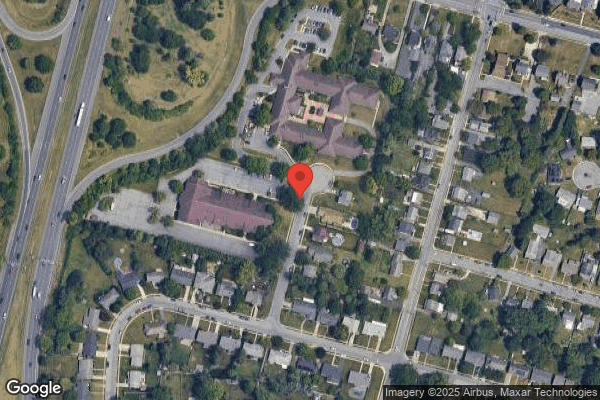

30 NORTH PLACE, FREDERICK, MD 21701 (301) 695-6618
For profit - Limited Liability company 120 Beds Independent Data: November 2025
Trust Grade
28/100
#108 of 219 in MD
Last Inspection: October 2024

Within standard 12-15 month inspection cycle. Federal law requires annual inspections.

Overview

Frederick Crossing of Journey has a Trust Grade of F, which indicates significant concerns regarding the care provided. They rank #108 of 219 in Maryland, placing them in the top half of facilities in the state, but at #6 of 8 in Frederick County, only one local option is better. The facility is improving, as the number of reported issues decreased from 18 in 2024 to just 2 in 2025. While they have a low staff turnover rate of 0%, which suggests stability among caregivers, the overall staffing rating is only 2 out of 5 stars, indicating challenges in providing adequate staffing levels. Additionally, there have been serious incidents, including a staff member causing bruises and skin tears to a resident during a transfer, highlighting potential issues with staff training and adherence to care plans. Overall, while there are some strengths, such as low turnover and an improving trend, the facility's serious deficiencies and poor Trust Grade raise significant concerns for potential residents and their families.

Trust Score
F
28/100
In Maryland
#108/219
Top 49%
Safety Record
High Risk
Review needed
Inspections
Getting Better
18 → 2 violations
Staff Stability
○ Average
Turnover data not reported for this facility.
Penalties
✓ Good
$13,247 in fines. Lower than most Maryland facilities. Relatively clean record.
Skilled Nurses
○ Average
Each resident gets 40 minutes of Registered Nurse (RN) attention daily — about average for Maryland. RNs are the most trained staff who monitor for health changes.
Violations
⚠ Watch
109 deficiencies on record. Higher than average. Multiple issues found across inspections.
★★★☆☆
3.0
Overall Rating
★★☆☆☆
2.0
Staff Levels
★★★★★
5.0
Care Quality
★★☆☆☆
2.0
Inspection Score
Stable
2024: 18 issues
2025: 2 issues

The Good

  • 5-Star Quality Measures · Strong clinical quality outcomes
  • Full Sprinkler Coverage · Fire safety systems throughout facility
  • No fines on record

Facility shows strength in quality measures, fire safety.

The Bad

3-Star Overall Rating

Near Maryland average (3.0)

Meets federal standards, typical of most facilities

Federal Fines: $13,247

Below median ($33,413)

Minor penalties assessed

The Ugly 109 deficiencies on record

3 actual harm
Feb 2025 2 deficiencies
CONCERN (D) 📢 Someone Reported This

A family member, employee, or ombudsman was alarmed enough to file a formal complaint

Potential for Harm - no one hurt, but risky conditions existed

Pharmacy Services (Tag F0755)

Could have caused harm · This affected 1 resident

Based on record reviews and interviews, it was determined that the facility failed to ensure controlled drug counts were maintained and signed by 2 staff members at change of shift. This was found to ...

Read full inspector narrative →
Based on record reviews and interviews, it was determined that the facility failed to ensure controlled drug counts were maintained and signed by 2 staff members at change of shift. This was found to be evident for 2 out of 4 drug control books reviewed. The findings include: Drug control books are typically kept in medication carts and are used to determine that drug records are in order and that an account of all controlled drugs are maintained with sufficient detail. All controlled substances kept in the medication cart should match their record in the drug control book. A review of 4 drug control books was conducted on 2/25/25 and has identified several concerns. The concerns were: A) On 2/25/25 at 9:14 AM, a review of the shift count documentation for the south unit drug control book was conducted. The review revealed the documentation had columns in which the nursing staff would document the date, time of day, if the count was correct (Yes or No), coming on duty and going off duty nurse's signatures. The review also revealed that the 3 PM shift count for 2/25/25 had already been signed for the coming on duty and the going off duty nurse. The Licensed Practical Nurse (LPN #4) who was currently working the 7 AM to 3 PM shift was interviewed. During the interview, LPN #4 stated, That's a mistake, I don't know why she (referring to the LPN that went off duty at 7AM) signed it. The Nurse Manager for the south unit (LPN #10) was interviewed on 2/25/25 at 9:34 AM. During the interview, LPN #10 explained the facility's process in counting and signing the drug control book. The shift count documentation was reviewed with LPN #10 and she confirmed the error and indicated that the 3 PM shift for 2/25/25 should not have been signed. LPN #10 reported that it was LPN #9's signature and initial. (2/25/25 3 PM shift had LPN #9's initial for the coming on duty and her signature for the going off duty column) A subsequent interview was conducted with LPN #4 on 2/25/25 at 9:38 AM. In this interview, LPN #4 reported when she signed the shift count for 7 AM with LPN #9 and the 3 PM shift was still blank. LPN #4 indicated that she does not know when LPN #9 came back and signed for the 3 PM shift. B) On 2/25/25 at 9:55 AM, LPN #13 who was currently assigned to North 1, was asked if the surveyor could review the drug control book on her medication cart. LPN #13 agreed, and the drug control book was reviewed. The review revealed that LPN #13 had already signed the going off duty column but crossed her signature off. LPN #13 stated, I made a mistake. C) On 2/25/25 at 9:59 AM, LPN #12 who was currently assigned to North 2, was asked if the surveyor could review the drug control book on her medication cart. LPN #12 agreed, and the drug control book was reviewed. The review revealed the last entry date was 2/25/25 at 7 AM. However, there was no evidence that the shift count was performed because there were no signatures for the nurse that had gone off duty and the nurse that had come on duty. The Nurse Manager (LPN #11) for the North unit was interviewed on 2/25/25 at 10:07 AM. During the interview, the shift count for North 2 was reviewed and she confirmed that there were no signatures from the nurse that had gone off duty and the nurse that had come on duty at 7 AM on 2/25/25. On a subsequent interview with LPN #12 on 2/25/25 at 10:11 AM, she reported that she counted with LPN #15 before leaving for her shift but was not able to sign the book. LPN #12 also reported that LPN #15 worked a double shift from 2/24/25 at 3 PM till 2/25/25 at 7 AM. No explanation was offered by LPN #12 on why the count sheet was not signed at 7 AM on 2/25/25 nor did she offer any credible evidence that at the beginning of her shift, a count of all the controlled medications was performed with LPN #15. D) On 2/25/25 at 10:17 AM, LPN #14 who was currently assigned to North 3, was asked if the surveyor could review the drug control book on her medication cart. LPN #14 agreed, and the drug control book was reviewed. The review revealed that LPN #14 had already signed the going off duty column but crossed her signature off. LPN #14 stated, I made a mistake. On 2/25/25 at 10:46 AM, the Director of Nursing (DON)was Interviewed. The concerns identified in the review of the drug control books were discussed. It was also noted that 2 of the 4 shift count documentation were pre-signed then crossed off before the end of shift. The DON confirmed the findings on the shift count sheets. The DON reported that the facility had been doing random audits of 2 drug control books everyday and had recently moved to auditing 2 books twice a week. In a subsequent interview with the DON on 2/25/25/ at 2:02 PM, the results of the audit were discussed. The DON reported that the dates in the audit that was marked as having incorrect documentation usually meant that the nurses were pre-signing the shift count. With the latest concern identified in an audit conducted on 2/21/25 at 5 PM. The DON acknowledged that it was still an ongoing concern and indicated that the facility would be going back to doing daily audits of the drug control books.
CONCERN (D) 📢 Someone Reported This

A family member, employee, or ombudsman was alarmed enough to file a formal complaint

Potential for Harm - no one hurt, but risky conditions existed

Infection Control (Tag F0880)

Could have caused harm · This affected 1 resident

Based on observation and interview, it was determined that the facility failed to provide a sanitary environment to prevent the development and transmission of communicable diseases and infections by ...

Read full inspector narrative →
Based on observation and interview, it was determined that the facility failed to provide a sanitary environment to prevent the development and transmission of communicable diseases and infections by failing to ensure residents drinkware was clean. This was evident for 4 coffee mugs out of 6 coffee mugs observed during a survey. On 2/25/25 at 9:51 AM an observation of the coffee serving cart revealed a tray of 6 brown coffee mugs face down on a tray. Further observation revealed 4 out of the 6 mugs contained a chalky- grayish brown material inside the cups. This material was easily removed with gentle rubbing On 2/25/25 at 9:45 AM during a brief interview with the kitchen cook Staff # 3, she reported that the cups on the tray were clean and available for use. On 2/25/25 at 9:46 AM staff # 3 confirmed that 4 out of the 6 mugs contained a chalky grayish brown material that was easily removed when wiped. On 2/25/25 at 9:54 the administrator confirmed the observation 4 out of the 6 mugs contained a chalky grayish brown material that was easily removed when wiped. On 2/25/25 at 11:40 AM the Certified Dietary Manager Staff #2 (CDM,) was interviewed. During the interview she reported that she was aware of the concerns with the cups and had taken steps to correct the issue. She reported that she does have an effective procedure to adequately clean and rinse the cups, however she has had new employees that may not have mastered the process. She stated she had already begun reeducation and is increasing the frequency of a rinsing process that will be taught to all the kitchen staff. On 2/25/25 at 3:05 PM the above concerns were discussed with the Administrator and the Director of nursing. No additional information was provided prior to the end of the survey.
Oct 2024 18 deficiencies 1 Harm
SERIOUS (G) 📢 Someone Reported This

A family member, employee, or ombudsman was alarmed enough to file a formal complaint

Actual Harm - a resident was hurt due to facility failures

Free from Abuse/Neglect (Tag F0600)

A resident was harmed · This affected 1 resident

Based on record review and interview, it was determined that the facility failed to ensure that residents were free of abuse. The facility implemented effective and thorough corrective measures follow...

Read full inspector narrative →
Based on record review and interview, it was determined that the facility failed to ensure that residents were free of abuse. The facility implemented effective and thorough corrective measures following this incident and prior to the start of this survey. The facilities plan and action were verified during this survey, therefore this deficiency was found to be past noncompliance with a compliance date of 12/13/23. This was evident for 1 resident (Resident #296) of 6 residents reviewed for abuse during the recertification survey. The findings include: On 10/23/24 at 3:15 PM a review of the facility reported incident #MD00200167 revealed that on 12/03/23 when Geriatric Nursing Assistant (GNA #14) attempted to place Resident #296 into a wheelchair, GNA #14 grabbed the resident ' s hands and pulled and wrestled with the resident which resulted in bruises and bloody skin tears on the resident ' s hands. On 10/23/24 at 3:20 PM a review of the initial report to the Office of Health Care Quality (OHCQ) dated 12/03/23 at 7:45 PM, revealed that the incident occurred in the resident ' s room and that Resident #296 had skin tears on the right and left thumbs, and a skin tear on the top of his/her left hand. It further stated that the alleged perpetrator was suspended, treatment was ordered for the resident ' s injuries, and the resident ' s physician and family were notified. A review of the facility's investigation file included a statement dated 12/04/23 written by the Interim Director of Nursing (Staff #19) who interviewed Resident #296. The resident stated that GNA #14 pulled on his/her hands and the GNA stated I ' m in charge today. Further review of the same document revealed another witness statement from Resident #296 ' s roommate who observed GNA #14 as she wrestled with Resident #296 and stated that GNA #14 pushed and pulled on Resident #296 and made the resident sit in a chair. The roommate observed that both of Resident #296 ' s hands were bloody. On the same statement, handwritten notes indicated that the police were notified and a case number was included. Another handwritten notation on the same document was dated 12/05/23 which stated 1-2 weeks before police report ready and was signed by Staff #19. Further review of the investigation file revealed a nursing progress note written on 12/03/23 at 8:57 PM by Licensed Practical Nurse (LPN #22) that stated that the resident was observed to have three skin tears and multiple scattered dark bruises on both hands. The note included Resident #296 ' s description of the incident, that GNA #14 grabbed the resident ' s hands. The nurse wrote that she provided Resident #296 treatment for the skin tears and pain medication. In a handwritten witness statement written by LPN #22 she said that when she questioned GNA #14 about what happened and asked the GNA to write a statement, GNA #14 cursed loudly at LPN #22 and refused to write a statement. A review of the facility ' s final report to the Office of Health Care Quality (OHCQ) revealed a statement in the Conclusion section of the document that stated The allegation was verified by evidence collected during the investigation and interview with the victim and the victim ' s roommate. In the Corrective Action portion of the final report to OHCQ Staff #19 wrote that Employee (GNA #14) has remained suspended and will be terminated today. The incident will be reported to the nurse aide registry. A police report present in the facility ' s investigation file stated that the facility concluded that abuse (an assault) did occur. On 10/25/24 at 2:37 PM – a review of GNA #14 ' s employee file revealed that she had an active GNA license, a clear background check when hired, and that she received abuse training in May 2023. On 10/25/24 at 3:55 PM the Senior [NAME] President of Clinical Services (Staff #7) was interviewed regarding the incident and she provided evidence of steps taken following the incident. She further stated that no other incidents of abuse have occurred at the facility. The surveyor reviewed the evidence provided by Staff #7 and it demonstrated that the facility took the following actions after the incident, 1) abuse education was provided to all employees, 2) resident skin assessments and resident interviews were done daily x 2 weeks, then 2 times per week for 2 weeks, then monthly x 2 months and 3) the employee was immediately terminated on the day of the incident, 4) the GNA was reported to the nursing registry. Based on the above evidence it was determined that the date of compliance was 12/13/23.
CONCERN (D)

Potential for Harm - no one hurt, but risky conditions existed

Deficiency F0582 (Tag F0582)

Could have caused harm · This affected 1 resident

Based on record review and interviews, it was determined that the facility failed to obtain a resident's representative's signature or document refusal to sign the Notice of Medicare Non-Coverage (NOM...

Read full inspector narrative →
Based on record review and interviews, it was determined that the facility failed to obtain a resident's representative's signature or document refusal to sign the Notice of Medicare Non-Coverage (NOMNC) for a resident who was discharged from Medicare Part A services but had benefit days remaining and intended to remain at the nursing facility receiving non-skilled care. This was evident for 1 (#88) of 3 residents reviewed for Skilled Nursing Facility Beneficiary Protection Notification. The findings include: Residents with Medicare Part A have certain rights and protections related to financial liability and appeals. The financial liability, appeal rights, and protections are communicated to beneficiaries through notices given by providers to residents who are being discharged from Medicare services but have Medicare benefit days remaining. The notices include Notice of Medicare Non-Coverage (NOMNC). This must be issued at least two calendar days before the last day of Medicare coverage. The NOMNC informs the beneficiary of his/her right to an expedited review of services termination. The resident and/or their representative must receive a copy of the notice enough to appeal the decision to terminate the paid coverage. The facility must indicate that the notice was sent/and given within the specified time. A review was done on 10/28/24 at approximately 8:30 AM of Resident #88's Beneficiary Notification checklist completed by the facility. The review showed that Resident #88's Medicare Part A services started on 4/10/24 and ended on 5/15/24. Continued review noted that the facility initiated the resident's discharge from Medicare Part A services when benefit days were not exhausted. The further review noted a NOMNC for Resident #88 dated 5/10/24, not signed but contained a statement in place of the signature of the resident or representative that reviewed with Patient's brother via telephone. The review failed to show who did the notification and whether Resident #88's representative refused to sign the form. A review of Resident #88's medical record contained a progress note by staff #2, social services director. The progress note stated, This social worker completed Notice of Medicare Non-Coverage (NOMNC) with patient's brother on this date per MDS [minimum data set assessment] rounding on this date. Patient's brother agreeable and understanding, signed documents on this date. This social worker made copy of documents, uploaded to electronic chart, copy provided to Business Office, original provided back to patient on this date. However, an earlier review of Resident #88's NOMNC did not contain a signature. In an interview with staff #2 on 10/28/24 at 10:58 AM, he said he usually mailed the NOMNC to residents' representatives who could not physically come to the facility to sign. However, the interview failed to show that a copy of Resident #88's NOMNC was mailed to his/her representative. Staff #2 continued to say that his documentation that the resident's representative signed the NOMNC, and a copy provided to the resident was inaccurate.
CONCERN (D)

Potential for Harm - no one hurt, but risky conditions existed

Safe Environment (Tag F0584)

Could have caused harm · This affected 1 resident

**NOTE- TERMS IN BRACKETS HAVE BEEN EDITED TO PROTECT CONFIDENTIALITY** Based on observation and interview it was determined that the facility failed to ensure staff reported areas in resident's rooms...

Read full inspector narrative →
**NOTE- TERMS IN BRACKETS HAVE BEEN EDITED TO PROTECT CONFIDENTIALITY** Based on observation and interview it was determined that the facility failed to ensure staff reported areas in resident's rooms in need of repair to maintenance. This was found to be evident on one of the three units. The findings include: 1) On 10/22/24 at 12:50 PM the surveyor observed the bathroom of room [ROOM NUMBER] and found a white pillow on the floor and a fall mat leaning against the wall. The mat was frayed. On 10/28/24 at 2:02 PM the surveyor conducted an observation of room [ROOM NUMBER]'s bathroom with the unit nurse manager (Staff #9) and saw the pillow on the floor and the fall mat leaning against the wall. The surveyor noted the fall mat in the bathroom had multiple cracks. The unit nurse manager reported she would have the fall mat thrown out. 2) On 10/23/24 at 11:19 AM the surveyor observed the wall behind the B bed in room [ROOM NUMBER] with a large area of scrapes and that it was unpainted. On 10/28/24 at 1:31 PM the surveyor observed the area on the wall in room [ROOM NUMBER] had scrapes and was unpainted. On 10/29/24 at 9:23 AM the maintenance director (Staff #5) reported that staff usually put maintenance concerns into TELS (an electronic system to report and track maintenance issues) and that he checked the TELS twice a day and tried to fix as much as they could that particular day. The maintenance director reported he had a list of rooms that he was working on and indicated he would go get the list. At 9:28 AM the maintenance director confirmed that he had not identified any problems in room [ROOM NUMBER]. On 10/29/24 at 9:32 AM the surveyor and maintenance director observed the area with scrapes that was unpainted in room [ROOM NUMBER]. The maintenance director reported he could sand and repaint the area. 3) On 10/23/24 at 9:46 AM surveyor observed three areas on the walls of room [ROOM NUMBER]'s bathroom that had light color spackling where it appeared repairs had been completed but not painted. This included a large area of the wall across from the sink of approximately 6 inches x 24 inches. On 10/29/24 at 9:11 AM observation of room [ROOM NUMBER]'s bathroom again revealed the unpainted areas of spackling. Additionally, the surveyor noted what appeared to be approximately 10-20 small paint chips on the floor near the large area of spackling. During the interview on 10/29/24 at 9:23 AM, the maintenance director (Staff #5) reported after they completed repairs to walls they would then paint the walls. He also reported he started working at the facility in July 2024. On 10/29/24 at 9:40 AM upon observation of room [ROOM NUMBER]'s bathroom walls, the maintenance director indicated he had not completed the repairs to the walls and reported that the staff should have informed him. The maintenance director stated: can't fix what I don't know about. On 10/29/24 at 11:13 AM the surveyor reviewed the concern of staff failure to report items in need of repair to maintenance with the Director of Nursing.
CONCERN (D) 📢 Someone Reported This

A family member, employee, or ombudsman was alarmed enough to file a formal complaint

Potential for Harm - no one hurt, but risky conditions existed

Transfer Notice (Tag F0623)

Could have caused harm · This affected 1 resident

Based on record review and interview with staff, it was determined that the facility failed to provide written notification of transfer to Residents and/or Resident representatives upon transfer to th...

Read full inspector narrative →
Based on record review and interview with staff, it was determined that the facility failed to provide written notification of transfer to Residents and/or Resident representatives upon transfer to the hospital. This was evident for 1) one Resident (#59) of two residents reviewed for hospitalization and 2) one complaint (#MD001973041) of nine complaints reviewed during the recertification survey. The findings include: 1) A medical record review for Resident #59 on 10/23/24 at 9:52 AM showed that the Resident had difficulty breathing on 8/16/24. The attending provider was notified and ordered to send the Resident to the emergency room for evaluation. Further medical record review showed that Resident #59's representative was notified via phone. However, the review failed to show that the Resident and/or the Resident representative was notified in writing of the transfer and the reason for the transfer. In an interview on 10/25/24 at 12:13 PM, staff #11, a unit manager, stated that the staff notified Residents' representatives of hospital transfers via phone calls and not in writing. In an interview on 10/25/24 at 5:06 PM, the nursing home administrator was asked for evidence of written notification when Resident #59 was transferred to the acute care facility on 8/16/24. The NHA stated he had no evidence to show that a written notification was given to the Resident and/or his/her representative. 2) On 10/23/24 at 11:45 AM a review of Resident #301's clinical record revealed that the resident was transferred to the emergency room on 4/11/23. Further review of the medical record failed to reveal any evidence that a written notice of transfer was provided to the resident or the resident's representative. On 10/29/24 at 2:38 PM an interview with the Director of Nursing (DON) was conducted regarding Resident #301's transfer to the hospital. When asked to provide copies of the written notice of transfer the DON said that she was unable to find any such document in the resident's medical record and she confirmed that this was a deficiency.
CONCERN (D) 📢 Someone Reported This

A family member, employee, or ombudsman was alarmed enough to file a formal complaint

Potential for Harm - no one hurt, but risky conditions existed

Deficiency F0625 (Tag F0625)

Could have caused harm · This affected 1 resident

**NOTE- TERMS IN BRACKETS HAVE BEEN EDITED TO PROTECT CONFIDENTIALITY** Based on record review and interviews, it was determined that the facility failed to notify residents and/or their representativ...

Read full inspector narrative →
**NOTE- TERMS IN BRACKETS HAVE BEEN EDITED TO PROTECT CONFIDENTIALITY** Based on record review and interviews, it was determined that the facility failed to notify residents and/or their representatives in writing of the facility's bed hold policy upon transfer to an acute care facility. This was evident for 1) one Resident (#59) of 2 Residents reviewed for hospitalizations and 2) one complaint (#MD001973041) of 9 complaints reviewed during the recertification survey. The findings include: The Minimum Data Set (MDS) is a federally mandated assessment tool used by nursing home staff to gather information on each Resident's strengths and needs. Information collected drives resident care planning decisions. 1) A record review for Resident #59 on 10/24/24 at 5:38 PM showed that the Resident had been living in the facility since November 2022 and had moderate cognitive impairment per an MDS assessment dated [DATE]. The continued review contained a nurse's note that Resident #59 was transferred to the hospital on 8/16/24 due to difficulty breathing. However, the review failed to show that a copy of the facility's bed hold policy was mailed to the Resident's representative. In an interview on 10/25/24 at 12:13 PM, staff #11, a unit manager, reported that residents' representatives were not notified of the facility's bed hold policy upon transfer of residents to the hospital because families sign the facility's bed hold policy upon residents' admission to the facility. In an interview on 10/25/24 at 4:08 PM, the director of nursing reported that the bed hold policy was typically discussed with residents or their representatives upon acute transfer to the hospital and not given in a written form. 2) On 10/23/24 at 11:45 AM a review of Resident #301's clinical record revealed that the resident was transferred to the emergency room on 4/11/23. Further review of the medical record failed to reveal any evidence that a written bed hold policy notice was provided to the resident or the resident's representative. On 10/29/24 at 2:38 PM an interview with the Director of Nursing (DON) was conducted regarding Resident #301's transfer to the hospital. When asked to provide copies of the written bed hold policy notice the DON said that she was unable to find any such document in the resident's medical record and she confirmed that this was a deficiency.
CONCERN (D)

Potential for Harm - no one hurt, but risky conditions existed

Comprehensive Care Plan (Tag F0656)

Could have caused harm · This affected 1 resident

Based on medical record review and staff interview, it was determined that the facility staff failed to develop and implement a comprehensive, resident centered care plan for a resident receiving psyc...

Read full inspector narrative →
Based on medical record review and staff interview, it was determined that the facility staff failed to develop and implement a comprehensive, resident centered care plan for a resident receiving psychotropic medications. This was evident for 1 (#58) of 5 residents reviewed for unnecessary medications: The findings include: A care plan is a guide that addresses the unique needs of each resident. It is used to plan, assess and evaluate the effectiveness of the resident's care. 1) On 10/23/2024 1:47 PM, a review of Resident #58's medical record revealed the resident was admitted to the facility in early October 2024 following an acute hospital stay. Review of Resident #58's admission assessment with an assessment reference date of 10/13/24 revealed the resident's BIMS (brief interview for mental status) summary score was 3, indicating the resident had severe cognitive impairment, and had diagnoses which included dementia, depression and adjustment disorder with mixed anxiety and depressed mood. Review of the resident's October 2024 Medication Administration Record revealed Resident #58 received psychotropic medication for depression. The resident had a 10/08/24 order for Fluoxetine (Prozac) (an antidepressant) 20 MG (milligrams) by mouth one time a day for depression, that was documented as given every day from 10/08/24 to 10/15/24, then discontinued on 10/16/24, and a 10/16/24 order for Fluoxetine 40 MG by mouth one time a day that was documented as given every day from 10/16 through 10/23/24. A review of Resident #58's care plans revealed a care plan focus, [Resident #58] uses antidepressant medication r/t depression, with the goal, [Resident #58] will be free from discomfort or adverse reactions related to antidepressant therapy through the review date, that had the interventions: 1. Administer antidepressant medications as ordered by physician. Observe for side effects and effectiveness, 2. Encourage to express feelings during interactions and observe for nonverbal signs of depression, 3. notify MD if concerned, refer to psych as needed, and 4. Observe PRN (as needed) adverse reactions to antidepressant therapy: change in behavior/mood/cognition; hallucinations/delusions; social isolation, suicidal thoughts, withdrawal; decline in ADL (activities of daily living) ability, continence, no voiding; constipation, fecal impaction, diarrhea; gait changes, rigid muscles, balance probs, movement problems, tremors, muscle cramps, falls; dizziness/vertigo; fatigue, insomnia; appetite loss, wt loss, n/v, dry mouth, dry eyes. The care plan goal addressed the resident's response to possible drug related complications related to the resident's use of the psychotropic medication for depression, however, continued review of Resident #58's care plans failed to reveal evidence that a comprehensive care plan had been developed with measurable goals and non-pharmaceutical interventions that addressed the resident's targeted symptoms for use of an antidepressant. On 10/24/24 at 12:30 PM, the above concerns were discussed with the Director of Nurses (DON) and the Senior [NAME] President of Clinical Services (Corporate Registered Nurse (RN)). The DON and Corporate Nurse acknowledged the concerns at that time.
CONCERN (D)

Potential for Harm - no one hurt, but risky conditions existed

Deficiency F0657 (Tag F0657)

Could have caused harm · This affected 1 resident

Based on interviews and medical record review, it was determined that the facility failed to ensure participation in the care plan process by a resident's representative. This was evident for 1 (#89) ...

Read full inspector narrative →
Based on interviews and medical record review, it was determined that the facility failed to ensure participation in the care plan process by a resident's representative. This was evident for 1 (#89) of 2 residents reviewed for care planning. The findings include: The Minimum Data Set (MDS) is an assessment of the Resident that provides the facility information necessary to develop a care plan, provide the appropriate care and services to the Resident, and modify the care plan based on the Resident's status. Care plans are developed to guide residents' care in the facility. They must be created within 7 days of completion of a resident's admission comprehensive MDS assessment and revised at least every quarter (or more often as needed). The facility is required to have care plans developed and revised by an interdisciplinary team, including the attending physician, a registered nurse, a nursing aide, a representative from dietary services, the Resident, and the Resident's representative (as practicable). Participation in care planning by a resident and Resident representative can take many forms, such as holding care planning conferences (meetings) when the resident representative is available to participate, conference calls, or videoconferencing. In an interview on 10/22/24 at 2:26 PM, Resident #89's representative reported that a formal meeting to discuss the Resident's care had not occurred since the Resident's admission to the facility. A medical record review on 10/24/24 at 5:10 PM showed that Resident #89 was admitted to the facility in June 2024. The review also noted that Resident #89's daughter was the decision maker for the Resident as s/he had severe cognitive impairment. The further review contained a care plan conference summary report dated 7/3/24 with a notation that Resident #89's representative was unable to participate but will reschedule a care plan meeting. However, the review failed to show that a care plan meeting was rescheduled to ensure Resident #89's representative's participation. Continued review showed that Resident #89's admission MDS assessment was completed on 7/31/24. However, the review failed to show that a care plan meeting occurred following the completion of the Resident's MDS assessment. In an interview on 10/25/24 at 11:19 AM, staff #2, the social services director, reported that his staff updated Resident #89's care to his/her representative but not a care conference meeting. In an interview on 10/25/24 at 11:24 AM, staff #3, social service designee, reported that Resident #89's representative could not physically attend the care conference meeting, so it was done over the phone. However, staff #3 stated she did not have documentation to show that the meeting occurred or that she rescheduled the meeting as stated on the care conference summary report.
CONCERN (D)

Potential for Harm - no one hurt, but risky conditions existed

Deficiency F0658 (Tag F0658)

Could have caused harm · This affected 1 resident

Based on observation, review of facility policy, and interview, it was determined that the facility staff failed to follow standards of professional practice when administering medications to resident...

Read full inspector narrative →
Based on observation, review of facility policy, and interview, it was determined that the facility staff failed to follow standards of professional practice when administering medications to residents. This was evident for 1 opportunity out of 26 opportunities observed for medication administration. The findings include: During observation of medication administration on 10/25/24 at 8:31 AM, the surveyor observed that Staff #4 prepared medications for Resident #70. Staff stated that the resident was out of Miralax powder, so she borrowed from Resident #73's medicine supply. A review of the facility's Medication administration-general guidelines policy showed that medications supplied for one resident are never administered to another resident. In an interview later that day, staff #4 reported that the medication she borrowed was a house-stock medication. However, she was out of supply and waiting for the facility's supply person to restock. In an interview on 10/25/24 at 3:22 PM, the director of nursing reported that the staff person in charge of restocking house medications was not at work that day. However, she expected staff #4 to get the key, restock the medication, and not borrow another resident's medication.
CONCERN (D)

Potential for Harm - no one hurt, but risky conditions existed

Deficiency F0660 (Tag F0660)

Could have caused harm · This affected 1 resident

**NOTE- TERMS IN BRACKETS HAVE BEEN EDITED TO PROTECT CONFIDENTIALITY** Based on medical record review and interview it was determined that the facility failed to ensure discharge plans were appropria...

Read full inspector narrative →
**NOTE- TERMS IN BRACKETS HAVE BEEN EDITED TO PROTECT CONFIDENTIALITY** Based on medical record review and interview it was determined that the facility failed to ensure discharge plans were appropriate for the resident's needs. This was found to be evident for one (Resident #72) out of three residents reviewed for discharge. The findings include: Review of Resident #72's medical record revealed the resident was admitted to the facility in September 2024 after a hospitalization for an infection. The resident received intravenous (IV) antibiotics, wound care, physical therapy (PT) and occupational therapy (OT) while at the facility. On 9/23/24 a care plan to discharge home was initiated. Review of the 10/15/24 attending medical provider's progress note revealed that the resident was being treated with two different IV antibiotics with an end date of 10/26/24 for the antibiotics. This note also documented that the resident would be going home on [DATE] with home PT, OT and wound care. Further review of the medical record revealed an interdisciplinary care plan conference was conducted on 10/15/24 with the resident, a family member, the unit nurse manager (Staff #9), the social worker (Staff #2) and the therapy director. This note indicated the plan was to discharge to the family member's home with HHC [home health care] and that the resident and family were agreeable to first available provider. A review of the Social Service Review note dated 10/17/24 revealed in the Referral Status section that referrals were made to [Agency A] for home health services and to [Agency B] for antibiotic home infusion (IV antibiotics). A review of the 10/17/24 Social Service Progress note, written by Social Worker (Staff #2) revealed that the resident was to be discharged on Monday 10/21/24 with home healthcare services through [Agency A] and home infusion services through [Agency B]. A review of the Discharge Planning Review note, revealed it was signed by the resident (no date next to resident signature), the SW (Staff #2) on 10/17/24 and the unit nurse manager (Staff #9) on 10/18/24. The note included documentation that referrals had been made to [Agency A] and [Agency B]. Further review of this document failed to reveal phone numbers or contact information for either [Agency A] or [Agency B]. A review of a Discharge Summary progress note written by the unit nurse manager (Staff #9) on 10/21/24 revealed the Discharge Packet was reviewed and signed by the resident. During an interview with the unit nurse manager (Staff #9) on 10/29/24 at 4:06 PM, she confirmed that just the Discharge Planning Review document is provided at the time of discharge and that no additional documentation regarding the home health agencies was provided. On 10/28/24 a review of the Social Service Progress Note, dated 10/23/24 at 3:02 PM, revealed that the Social Worker had received a call from the resident's family member that day and informed him that the IV antibiotic provider [Agency B] had not followed up with them and that [Agency A] had reported that they had not received the referral for services. The Social Worker then contacted [Agency B] about a faxed referral to which [Agency B] staff informed the Social Worker that they no longer provide IV antibiotic services. This note also indicated SW attempted to contact the admission liaison at [Agency A]. On 10/28/24 at 12:45 PM the Social Worker (Staff #2) was interviewed about the discharge planning process. The Social Worker reported discharge planning starts with the initial baseline care plan. In regards to setting up home health services he reported he checked insurance coverage and presented choices, then contacted the agency and faxed over history and physical, medications, orders, and identified a start of care date. In regard to Resident #72 the Social Worker reported he sent the referral to [Agency A] and called [Agency B] for the IV infusion. When asked for clarification if he spoke with anyone at either [Agency A] or [Agency B], the Social Worker reported he spoke with [Agency A] earlier in the week and asked if they could do infusion and that he faxed them on Friday but they did not follow up with him. On 10/28/24 at 1:02 PM the Social Worker presented documentation that indicated 26 pages of documentation was faxed to [Agency A] and to [Agency B] on 10/17/24. The surveyor reviewed the concern with the Social Worker that the documentation indicated the only contact with either of these agencies in regard to Resident #72's discharge was the faxes. On 10/29/24 at 1:33 PM the Social Worker confirmed there was no documentation to indicate he discussed Resident #72 with [Agency A]. On 10/29/24 at 11:10 AM the surveyor reviewed the concern with the Director of Nursing that the Social Worker had failed to confirm the arrangements with two of the home health providers prior to the resident's discharge. Further review of the medical record revealed a Social Service Progress note, dated 10/23/24 at 3:34 PM, which revealed the Social Worker spoke with staff at two new home health agencies, [Agency C] and [Agency D], to arrange for IV antibiotics and home health care. The note indicated that the social worker faxed and e-mailed referral materials to liaisons on 10/23/24. The documented plan was for IV antibiotics thru [Agency C] with a start date of 10/24/24 and Home Health Care through [Agency D] on 10/25/24.
CONCERN (D)

Potential for Harm - no one hurt, but risky conditions existed

Pressure Ulcer Prevention (Tag F0686)

Could have caused harm · This affected 1 resident

Based on record review, observations and interviews, it was determined the facility failed to implement physician ordered pressure injury prevention therapies. This was evident for 1 (Resident #77), o...

Read full inspector narrative →
Based on record review, observations and interviews, it was determined the facility failed to implement physician ordered pressure injury prevention therapies. This was evident for 1 (Resident #77), out of 2 residents reviewed for pressure injuries during a survey. The findings include: On 10/22/24, the medical records of Resident # 77, a long-term resident of the facility, were reviewed. The review revealed that the resident had a recently healed pressure injury on his/her heel. On 10/24/24 at 9:07 AM a review of Resident #77's physicians orders revealed the following: 1) Order dated 8/06/24, for the resident to wear protector boots while in bed for skin integrity to heels. Can be removed for ADL (activities of daily living) care, observing skin and administering treatment. Re-apply heel protector boots afterwards, when in bed. Every shift for skin integrity. 2) Order dated 7/21/24, to Float heels when in bed qs (every shift) for skin breakdown. On 10/25/24 at 2:02PM a review of Resident #77's care plan revealed a skin integrity care plan. Further review revealed a therapeutic intervention for the resident to wear Heel Medix boots to bilateral (both) feet as resident allowed. The following observations were made during the survey: On 10/22/24 at 3:46 PM, Resident # 77 was observed lying in bed with his/her heels resting against the bed linens. No heel protectors were observed. On 10/25/24 at 7:50 AM, Resident # 77 was observed lying in bed with his/her heels resting against the bed linens. No heel protectors were observed. On 10/25/24 at 8:59 AM, Resident # 77 was observed sitting up in bed. Further observations revealed a thin pillow under the resident legs and her/his heals resting against the linens. Observation failed to reveal the resident wearing boot heel protectors. On 10/25/24 at 10:06 AM, Resident # 77 was observed sitting up in bed with a thin pillow under his/her legs. Continued observation revealed the resident's legs were moving, and his/her heels rubbing against the linens. Observation failed to reveal the resident wearing boot heel protectors. On 10/25/24 at 11:36 AM, Resident #77 was observed lying in bed. Observation failed to reveal the resident wearing heel booties. Continued observations revealed a blue wedge on the floor and a thin pillow or bolster, lying beside it. Observation failed to reveal the resident wearing boot heel protectors. On 10/25/24 at 12:30 PM Resident #77 was observed lying in his/her bed. The observation failed to reveal the resident wearing heel protector booties. On 10/25/24 at 2:30 PM observation of resident #77 in new room. Resident lying in bed, thick bolster pillows elevating the heels of the bed linens. Further observation failed to reveal the resident wearing heel protector booties. On 10/25/24 at 2:32 PM in an interview with GNA (Staff #17), she reported that she provided care to Resident #77. She reported that Resident #77 often refused to wear booties. An observation of the resident's room with the GNA failed to reveal any heel protector booties in the residents room. On 10/25/24 at 2:40 PM, during an interview with the South Unit Nurse Manager (Staff #11), she confirmed that the resident did not wear heel booties during day shift on 10/25/24. She reported that when the resident was moved to a different room, she noted that the booties were on the resident's floor. She instructed her staff to send the booties to the Laundry to be cleaned for infection prevention. On 10/25/24 at 2:49 PM, the Wound Nurse RN (Staff # 18) was interviewed. During the interview she reported that most of the residents in the unit wore the same type of heel protection booties. She reported the facility always had heel protection booties available for the residents, that used the standard booties. When a resident's heel protection booties were sent to the laundry, replacement booties were obtained from the clean utility closet by the nursing staff. On 10/25/24 at 4:08 PM, the above concern was discussed with the South unit manager nurse (RN, Staff #11), who said she thought that the boots were labeled, and that the laundry staff would bring back the booties, with the resident's clothes. She reported there was a miscommunication to ensure that the booties were used for the resident. On 10/29/24, the facility provided a facility policy titled Pressure Injury and Prevention Guidelines. A review of the policy revealed a statement that compliance with the interventions would be documented in the medical record. On 10/25/24 at 8:43 AM, the Physician (Staff #9) who provided wound care services to the facility, was interviewed. During the interview he reported that the expectations were that if a resident was not compliant with the recommendations for prevention measures it should be documented in the medical record. On 10/25/24 at 4:30 PM, a review of Resident #77's progress notes from 10/22/24 through 10/02/24 failed to reveal documentation that the resident refused to wear the heel protector booties. On 10/30/24 at 7:46 AM the above concerns were discussed with the Director of Nursing and the [NAME] president of Clinical Services (Staff #11) and they both confirmed the concerns. No additional information was provided prior to the end of the survey.
CONCERN (D)

Potential for Harm - no one hurt, but risky conditions existed

Deficiency F0688 (Tag F0688)

Could have caused harm · This affected 1 resident

Based on surveyor observation, review of clinical records and interview of facility staff, it was determined that the facility staff failed to provide treatment to maintain an individual's range of mo...

Read full inspector narrative →
Based on surveyor observation, review of clinical records and interview of facility staff, it was determined that the facility staff failed to provide treatment to maintain an individual's range of motion. This was evident for 1 (Resident #80) out of 2 residents selected for position and mobility, during a survey. The findings include: On 10/23/24 at 10:00 AM, review of Resident #80's medical record revealed that the resident was a long-term resident of the facility and due to physical and cognitive limitations s/he was totally dependent on the assistance of staff for her/his activities of daily living. On 10/23/24 at 10:40 AM a review of the resident's physician orders revealed an order dated 2/10/24, Pt will wear bilateral wrist/hand brace/splint for up to 6 hours or as tolerated to reduce risk of further contracture. Skin integrity checks pre/post wear, every day and evening shift. A contracture is an abnormal shortening of muscle tissue causing the muscle to be resistant to stretching. Failure to protect the palm of the hand when the hand is contracted can result in injury to the palm of the hand caused by the pressure of fingers/fingernails pressing into the palm of the hand. On 10/29/24 at 3:20 PM Occupational Therapist (Staff #12) was interviewed. During the interview she reported that she recommended the brace/splint for Resident #80. She reported that purpose of the brace/splint was to maintain the hand in correct alignment and prevent Resident #80's finger contractures from getting worse and injuring the residents had. The following observations were made during the survey: On 10/22/24 at 9:24 AM, an observation was made of Resident #80's room. Observation revealed Resident #80 lying in bed. The observation failed to reveal that Resident #80 was wearing a bilateral wrist/hand splint. Further observation revealed that Resident #80 was asleep, and his/her hands were closed in a fist. On 10/23/24 at 11:14 AM, an observation of Resident # 80 revealed the resident asleep in bed. The observation failed to reveal that Resident #80 wore a bilateral wrist/hand splint. Further observation revealed that Resident #80's hands were closed in a fist. On 10/23/24 at 3:35 PM an observation of Resident #80 revealed the resident was seated in a high back reclining wheelchair. The observation failed to reveal that Resident #80 wore a bilateral wrist/hand splint. Further observation revealed resident her/his hands were closed in a fist. On 10/24/24 at 8:59 AM, an observation made of Resident #80 failed to reveal that s/he wore a bilateral wrist/hand splint. Further observation revealed resident her/his hands closed in a fist. On 10/24/24 at 11:32 AM an observation of Resident #80 revealed the resident lying in bed. The observation failed to reveal that Resident #80 wore a bilateral wrist/hand splint. On 10/24/24 at 11:56 AM an observation of Resident #80 revealed the resident lying in bed with only the left arm was laying outside the blanket and visible. The observation failed to reveal that the resident wore a wrist/hand splint on the left hand. Further observation revealed that the resident's left hand was closed in a tight fist. On 10/24/24 at 12:40 PM an observation of Resident #80 revealed the resident lying in bed with only the left arm was laying outside the blanket and visible. The observation failed to reveal that the resident wore a wrist/hand splint on the left hand. Further observation revealed that the resident left hand was closed in a tight fist. On 10/24/24 at 2:27 PM an observation of Resident #80 revealed the resident was seated in a high back reclining wheelchair. The observation failed to reveal that Resident #80 wore a bilateral wrist/hand splint. Further observation revealed resident hands closed in a fist. On 10/24/24 at 4:12 PM an observation of Resident #80 revealed the resident wore a blue soft splint on the right- and left-hand wrist. On 0/24/24 at 4:21 PM the South Unit Nurse Manager (Staff #11) was interviewed. Staff #11 confirmed the concerns with the brace/splints not being applied to the resident during the observations listed above. In addition, she confirmed that the treatment administration record (TAR) documented that the resident wore the bilateral brace and splints during the day shift on 10/23/24 and 10/24/24, which was inconsistent with surveyor observation listed above. She reported that she did conduct splint audits, and she would educate her staff and ensure the documentation on TAR was accurate.
CONCERN (D)

Potential for Harm - no one hurt, but risky conditions existed

Deficiency F0697 (Tag F0697)

Could have caused harm · This affected 1 resident

Based on observation, medical record review and interviews, it was determined that the facility failed to 1) ensure that as needed pain medication orders included pain scale parameters for administrat...

Read full inspector narrative →
Based on observation, medical record review and interviews, it was determined that the facility failed to 1) ensure that as needed pain medication orders included pain scale parameters for administration and 2) document pain assessment to include the location of the pain and type of pain for a Resident reporting pain. This was evident for 2 (#25, #89) of 2 residents reviewed for pain management. The findings include: A pain scale is a numerical scale, usually 1-10, used to rate a person's severity of pain. 1) On 10/23/24 at 10:57 AM Resident #25 was observed lying in bed fully dressed with a grimace on his/her face. Resident #25 stated he/she just had his/ her dressing changed, and the nurse went to get some pain medication. On 10/24/24 at 8:39 AM Resident #25's medication orders were reviewed. It revealed a physician order dated 6/18/24 for Acetaminophen (Tylenol - a non-narcotic) 325 mg tablets 2 tablets by mouth every 6 hours as needed for mild pain: moderate pain. Further review of the Medication Administration Record (MAR) revealed another as needed pain medication order dated 6/18/24 for Oxycodone (a narcotic) one 5 mg tablet by mouth every 6 hours as needed. Further review of the MAR failed to reveal a pain scale to determine at what pain level each medication should be administered. On 10/24/24 at 10:00 AM Licensed Practical Nurse (LPN #4) was interviewed and asked how she knew when to give Resident #25 as needed medications. LPN #4 stated that Resident #25 would ask for pain medication and that when his/her pain level was 6, he/she asked for Oxycodone instead of Tylenol. LPN #4 was asked if the order for Oxycodone stated at what pain level the medication should be given and she said no, there was no associated instruction other than to give for pain. On 10/24/24 at 12:10 PM the Director of Nursing (DON) and Senior [NAME] President of Clinical Services (Staff # 7) were interviewed. The DON was asked if it was her expectation that there should be parameters for pain medications and she responded yes. The DON was made aware that Resident #25 had no pain scale parameter ordered for the as needed Oxycodone. The DON and Staff #7 acknowledged that the as needed Oxycodone order should have included a pain scale. 2) During the initial tour of the memory care unit on 10/22/24 at approximately 10:00 AM, Resident #89 was observed in the activity area with staff and other residents and saying, Can you help me? I have pain; my back is killing me?. A subsequent observation was made on 10/24/24 at 1:13 PM of Resident #89 in the hallway saying, My back is killing me, with staff #26, a licensed practical nurse, standing close by the Resident. A review of Resident #89's medical record showed that the Resident was admitted to the facility in June 2024 with diagnoses including a history of right hip pain and usually able to communicate needs. A continued review of Resident 89's medication administration record for October 2024 showed that s/he had received pain medication on 10/23/2024 at 12:39 and 10/23/2024 at 23:10 and a follow-up pain scale of 0 for both dates. However, the review failed to show a record of Resident #89's pain assessment, including the location, type of pain, and non-pharmacological interventions (NPI- are interventions without medications) implemented before administering pain medicine. In an interview on 10/24/24 at 1:14 PM, staff #26, a licensed practical nurse, reported that she implemented NPI only when the Resident continued to complain of pain after the PRN (as needed) medicine was administered. In an interview on 10/24/24 at 1:26 PM, the regional director of clinical services said that nurses were expected to record what NPI they implemented before administering PRN pain medicines to residents. She also stated that she expected nurses to document their assessment of residents' pain in the medical record, including the location and type of pain, before and after administering PRN pain medications.
CONCERN (D)

Potential for Harm - no one hurt, but risky conditions existed

Pharmacy Services (Tag F0755)

Could have caused harm · This affected 1 resident

Based on review of pertinent documentation and interview it was determined that the facility failed to ensure two staff members completed the controlled drug count at the change of each shift. This wa...

Read full inspector narrative →
Based on review of pertinent documentation and interview it was determined that the facility failed to ensure two staff members completed the controlled drug count at the change of each shift. This was found to be evident for one out of three drug control books reviewed during the survey. The findings include: A review of the facility's Controlled Substance Storage policy, with a revision date of March 2017, revealed the following statement: At each shift change, or when keys are transferred, a physical inventory of all controlled substances, including refrigerated items is conducted by two licensed nurses and is documented. A review of the Shift Count documentation revealed columns in which nursing staff would document the date, time of day, if the count was correct (Yes or No), signature of Coming On Duty Nurse and the signature of Going Off Duty Nurse. On 10/28/24 at 1:39 PM nurse (Staff #16) confirmed that they sign the Shift Count form when the count is completed. A review of the Shift Count documentation for the Section 1 North medication cart on 10/28/24 at 1:35 PM revealed documentation that a shift count was completed on 10/28/24 at 7:00 AM and was signed by the Coming on Duty Nurse (Staff #8) and the Going Off Duty Nurse. Further review revealed that in the next row of this document, Staff #8 had already signed as the Going off Duty Nurse, all of the other columns in this row were blank at the time of the review, which indicated that no count had occurred. On 10/28/24 at 2:03 PM the surveyor reviewed the pre-signed shift count documentation with the unit nurse manager (Staff #9). The nurse (Staff #8) was then interviewed, in the presence of the unit nurse manager. Staff #8 confirmed her signature on the Shift Count sheet as the Going Off Duty nurse and indicated this was her standard practice. She went on to report this was how she was instructed to sign the Shift Count, at this point in the interview the unit manager intervened and instructed the nurse (Staff #8) that she should sign the Shift Count at the time of the count. On 10/29/24 at approximately 11:00 AM further review of the Shift Count documentation for the Section 1 North medication cart failed to reveal a signature to indicate the Nurse Going Off Duty on 10/24/24 at 11:00 PM had completed the count with the Coming On Duty nurse. On 10/29/24 at 11:10 AM surveyor reviewed the concern with the Director of Nursing (DON)regarding staff pre-signing the shift count. The DON was also informed that further review of the shift count sheet failed to reveal a signature for the offgoing nurse for 10/24/24 at 11:00 PM.
CONCERN (D) 📢 Someone Reported This

A family member, employee, or ombudsman was alarmed enough to file a formal complaint

Potential for Harm - no one hurt, but risky conditions existed

Medication Errors (Tag F0758)

Could have caused harm · This affected 1 resident

Based on medical record review and staff interview, it was determined that the facility failed to document the specific reason for administering a psychotropic medication prescribed as needed (PRN) an...

Read full inspector narrative →
Based on medical record review and staff interview, it was determined that the facility failed to document the specific reason for administering a psychotropic medication prescribed as needed (PRN) and failed to implement non-pharmacological intervention before administering the medicine. This was evident for 1 complaint (#MD00192471) of 9 complaints reviewed during the recertification survey. The findings include: Non-pharmacological interventions (NPI) are interventions without medications. A review of complaint #MD00192471 revealed an allegation that Resident #299 was chemically restrained with the use of an antianxiety medication. A record review for Resident #299 showed an attending provider's orders dated 9/30/22 to 10/4/22 and 10/4/22 to 10/11/22 for antianxiety medication to be administered to Resident #299 every 12 hours PRN for agitation/anxiety. A review of Resident #299's medication administration record (MAR)for September and October 2022 was completed. The MAR had recorded that the nurses administered the antianxiety medication to Resident #299 on 9/30/22 with a post-medication assessment that stated: ineffective. The Resident also received the antianxiety medication on 10/8/22 and 10/9/22, and the post-medication assessment for both days stated: ineffective. The continued review contained an antianxiety medication count sheet for Resident #299 that recorded that staff had administered the medication to the Resident on 10/6/22 at 8:00 PM and 10/8/22 at 9:00 PM. However, the review failed to show the specific behaviors for which the antianxiety medication was administered, NPI attempted before administering the medicine, what interventions were implemented when the post-medication assessments stated ineffective, ongoing monitoring of the Resident's behaviors and side effects related to the use of the medication. In an interview on 10/29/24 at 3:17 PM, the director of nursing confirmed concerns and stated, I understand your concerns.
CONCERN (D)

Potential for Harm - no one hurt, but risky conditions existed

Deficiency F0761 (Tag F0761)

Could have caused harm · This affected 1 resident

Based on observation and interview, it was determined that the facility failed to ensure medications and needles were secured as evidenced by observations of unlocked emergency carts in residents' hal...

Read full inspector narrative →
Based on observation and interview, it was determined that the facility failed to ensure medications and needles were secured as evidenced by observations of unlocked emergency carts in residents' hallways. This was evident for 2 emergency carts out of 2 emergency carts observed during a survey. The findings include: On 28/24/24 at 10:42 AM, an observation was made of the emergency cart located in the South Unit, near the nurse's station. Observation revealed the lower drawer of emergency cart was slightly opened. Further observation of the emergency care revealed the emergency cart was not locked. Continued observation revealed the top drawer opened. An observation of the top drawer revealed 1 amp of 1.10.00 epinephrine (a medication that is injected into the veins during a cardiac arrest) and a glucagon syringe, (a medication used to increase circulating blood sugar when a residents blood sugar is too low.) On 2/28/24 at 10:44 AM, an observation of the second emergency cart on the North Unit was made, with the Director of Nursing. The observation revealed the emergency cart was unlocked and 4 needles used to start infusions were unsecured in the third drawer. On 10/28/24 at 10:47 AM, an observation of the south emergency cart with the Director of Nursing, (DON) was made. During the observation she confirmed the emergency cart was unlocked and the amp of epinephrine and glycogen were unsecured. 10/28/24 at 01:36 PM, during an interview, nurse (RN, staff #18) reported that the emergency cart is not kept locked, and that night shift stocks that cart. On 10/29/24 at 3:56 PM, the above concerns were discussed with the Director of Nursing. She reported that the emergency carts have been moved behind locked doors and she understood the concerns with medications not being secured. In addition, she reported the facility did not have a policy pertaining to the facility's emergency carts.
CONCERN (D)

Potential for Harm - no one hurt, but risky conditions existed

Medical Records (Tag F0842)

Could have caused harm · This affected 1 resident

Based on observation and medical record review it was determined that the facility failed to ensure that the staff only documented interventions that were completed. This was evident for 1 (Resident #...

Read full inspector narrative →
Based on observation and medical record review it was determined that the facility failed to ensure that the staff only documented interventions that were completed. This was evident for 1 (Resident # 80) out of 35 Resident reviewed during a survey. The findings include: On 10/23/24 at 10: AM, review of Resident #80's, a long-term resident of the facility, medical record revealed that due to physical and cognitive limitations s/he was totally dependent on the assistance of staff for her/his activities of daily living. On 10/23/24 at 10:40 AM, review of orders revealed an order with a start date of 2/10/24, Pt will wear bilateral wrist/hand brace/splint for up to 6 hours or as tolerated to reduce risk of further contracture. Skin integrity checks pre/post wear every day and evening shift. The following observations were made during the survey: On 10/22/24 at 9:24 AM, an observation was made of Resident #80's room. Observation revealed Resident #80 lying in bed. The observation failed to reveal that Resident #80 was wearing a bilateral wrist/hand splint. Further observation revealed that Resident #80 was asleep, and his/her hands were closed in a fist. On 10/23/24 at 11:14 AM, an observation of Resident # 80 revealed resident asleep in bed. Observation failed to reveal that Resident #80 was wearing a bilateral wrist/hand splint. Further observation revealed that Resident #80's hands were closed in a fist. On 10/23/24 at 3:35 PM, an observation of Resident #80 revealed the resident was sitting up in a high back reclining wheelchair. The observation failed to reveal that Resident #80 was wearing a bilateral wrist/hand splint. Further observation revealed resident her/his hands closed in a fist. On 10/24/24 at 8:59 AM, an observation made of Resident #80 failed to reveal that she/he was wearing a bilateral wrist/hand splint. Further observation revealed resident her/his hands closed in a fist. On 10/24/24 at 11:32 AM, an Observation of Resident #80 revealed the resident lying in bed. The observation failed to reveal that Resident #80 was wearing a bilateral wrist/hand splint. On 10/24/24 at 11:56 AM, an observation of Resident #80 revealed the resident lying in bed with only the left arm was laying outside the blanket and visible. The observation failed to reveal that the resident was wearing a wrist/hand splint on the left hand. Further observation revealed that the resident left hand was closed in a tight fist. On 10/24/24 at 12:40 PM, an observation of Resident #80 revealed the resident lying in bed with only the left arm was laying outside the blanket and visible. The observation failed to reveal that the resident was wearing a wrist/hand splint on the left hand. Further observation revealed that the resident left hand was closed in a tight fist. On 10/24/24 at 2:27 PM, an observation of Resident #80 revealed the resident was sitting up in a high back reclining wheelchair. The observation failed to reveal that Resident #80 was wearing a bilateral wrist/hand splint. Further observation revealed resident hands closed in a fist. On 10/24/24 04:12 PM, an observation of Resident #80 revealed the resident was wearing a blue soft splint on the right and left hand/wrist. On 10/24/24 at 12:34 PM, The treatment administrative record (TAR) for Resident # 80 was reviewed. The review revealed there was a place to record if the splint/brace was applied on every day and every evening sift. Further review of the TAR revealed that the resident wore the splint/brace during day shift 10/23/24 and 10/24/24 which was inconsistent with the observations listed above. On 0/24/24 at 4:21 PM, The South Unit Nurse Manager (Staff #11) was interviewed. Staff #11 confirmed the concerns with the brace/splints not being applied to the resident during the observation listed above. In addition, she confirmed that the treatment administration record documented that the resident wore the bilateral brace and splints during the day shift on 10/23/24 and 10/24/24. 10/30/24 07:46 AM, the Surveyor discussed all concern with the Director of Nursing. No additional information was provided prior to the end of the survey.
CONCERN (E)

Potential for Harm - no one hurt, but risky conditions existed

Food Safety (Tag F0812)

Could have caused harm · This affected multiple residents

Based on surveyor observation and staff interview, it was determined that the facility staff failed to properly store food items in the kitchen's walk-in refrigerator, and failed to properly label, an...

Read full inspector narrative →
Based on surveyor observation and staff interview, it was determined that the facility staff failed to properly store food items in the kitchen's walk-in refrigerator, and failed to properly label, and date food items stored in the main kitchen. This was evident during the initial tour of the kitchen and had the potential to affect all residents. The findings include: On 10/25/24 at 8:40 AM, accompanied Staff #10, Dietary Manager, an observation was made of the Kitchen. An observation of the kitchen's walk-in refrigerator revealed: - An opened 46-ounce container of thickened Ready Care lemon Water that was not labeled with date opened. - An opened 8-quart plastic facility container with approximately 2 quarts of Applesauce not labeled with date food was placed in the container. - An opened 8-quart plastic container with approximately 2 quarts of fruit cocktail not labeled with date food was placed in the container. - An opened container of gravy labeled with date 9/19/24. At that time, Staff #10 indicated the gravy container was labeled with the wrong date. - An opened container of Thick and Easy nectar thick beverage dated 9/5/24 that was expired. - An opened container of Thick and Easy honey thick beverage dated 9/5/24 that was expired. Per the manufacturer, Thick and Easy beverages should be refrigerated after opening and used within 14 days. An observation of the kitchen's dry storage room revealed : - 1 6-pound (lb) 9-ounce (oz) container of Mandarin oranges that was not dated when received. - 3 6.75 lb cans of chili con carne that were not dated when received. - 1 6.6 lb can of sliced white potatoes that was not dated when received. - 6 8 lb cans of concord grape jelly that were not dated when received. - 2 6.56 lb cans of carrots that was not dated when received. - 1 opened bag of hamburger buns that was not dated when opened. - 1 opened bag of hot dog buns that was not dated when opened. Staff #10 was present during the observation of the dry storage room and confirmed the findings at that time. On 10/25/24 at 5:20 PM, the Nursing Home Administrator (NHA) was made aware of identified concerns with food storage and the NHA acknowledged the concerns at that time.
CONCERN (E)

Potential for Harm - no one hurt, but risky conditions existed

Infection Control (Tag F0880)

Could have caused harm · This affected multiple residents

Based on observation and staff interview, it was determined the facility failed to provide a safe, sanitary, and comfortable environment and help prevent the development and transmission of communicab...

Read full inspector narrative →
Based on observation and staff interview, it was determined the facility failed to provide a safe, sanitary, and comfortable environment and help prevent the development and transmission of communicable diseases and infections by failing to ensure residents drinkware was clean. This was evident on 2 of 2 observations of drinkware designated for resident use. The findings include: On 10/25/24 at 8:40 AM, during an observation of the kitchen by 2 surveyors, 11 plastic mugs were observed upside down on a tray on a food cart located next to the door that exited into the dining room. At that time, Staff #12, Dietary Aide, indicated the coffee mugs were clean and were to be used for resident beverages. An observation of the inside of the coffee mugs revealed that 2 of the mugs had a chalky white/gray film, which was easily removed with gentle finger rubbing. Staff #12 confirmed the observation and removed the soiled mugs at that time. On 10/25/24 at 12:30 PM, an observation of the South Wing hallway revealed a food cart near resident rooms that had 2 trays of upside-down plastic mugs. On one of the trays were 11 mugs. Observation of the inside of the coffee mugs revealed 2 of the mugs had a chalky white/gray film, which was easily removed with gentle finger rubbing. Staff #11, RN (Registered Nurse), South Wing Unit Manager confirmed the observation. The observation of the soiled mugs was confirmed by Staff #11, RN (Registered Nurse), South Wing Unit Manager, who removed the mugs at that time, and stated s/he would bring the soiled mugs to the kitchen and make them aware of the concern. 10/25/24 at 5:20 PM, the Nursing Home Administrator was made aware of identified concerns with Infection control, and the NHA verbalized understanding of the concerns at that time.
May 2023 45 deficiencies
CONCERN (D)

Potential for Harm - no one hurt, but risky conditions existed

Deficiency F0558 (Tag F0558)

Could have caused harm · This affected 1 resident

Based on observation, and interview and record review, it was determined that the facility failed to provide reasonable accommodation for a resident to have access to the sink in the resident's bathro...

Read full inspector narrative →
Based on observation, and interview and record review, it was determined that the facility failed to provide reasonable accommodation for a resident to have access to the sink in the resident's bathroom. This was evident for 1 resident (resident #1) out of 1 Resident reviewed for reasonable accommodations during an annual survey. The finding included: On 4/17/23 at 9:08 AM, an observation of Resident # 1's bathroom, revealed 1 sink, 1 toilet, 1 large mechanical lift, 7 medium boxes of medical supplies, and several small boxes. The sink contained a plastic bowl full of water, a fork, food particles, and a tooth bush laying down on the surface of the sink. On 4/17/23 at 9:12 AM, an interview with Resident #1 was conducted. During the interview, Resident #1 reported that he/she would like to have access to the sink, however, s/he was unable to get the wheelchair into the bathroom due to all the items stored in the bathroom. On 4/18/23 at 10:00 AM, a review of Resident #1's medical record revealed that Resident #1 was a long-term care resident that was dependent on a motorized power wheelchair for mobility. On 04/19/23 at 03:47 PM, and 04/20/23 at 02:56 PM, two additional observations of the resident's room were made. The observation of the resident's bathroom revealed two additional items in the bathroom. The items were 2 bags with medical supplies and an additional large box. On 04/20/23 at 08:05 AM, during an interview, Occupational Therapist (OT) #18 reported that Resident #1 would have had the ability to perform hygiene tasks at the sink, if the GNA staff would have had the items set up and ready for use. On 04/21/23 at 03:20 PM, the concerns were reviewed with the Assistant Director of Nursing.
CONCERN (D) 📢 Someone Reported This

A family member, employee, or ombudsman was alarmed enough to file a formal complaint

Potential for Harm - no one hurt, but risky conditions existed

Notification of Changes (Tag F0580)

Could have caused harm · This affected 1 resident

**NOTE- TERMS IN BRACKETS HAVE BEEN EDITED TO PROTECT CONFIDENTIALITY** 2) On 4/17/23 at 10:54 AM, Resident #84's medical record was reviewed. The review revealed that the resident experienced a 9.4 l...

Read full inspector narrative →
**NOTE- TERMS IN BRACKETS HAVE BEEN EDITED TO PROTECT CONFIDENTIALITY** 2) On 4/17/23 at 10:54 AM, Resident #84's medical record was reviewed. The review revealed that the resident experienced a 9.4 lbs weight loss, going from 174.8 lbs on 11/26/22 to 165.4 lbs on 12/6/22 (a 5.3% weight loss within 1 month). No change in condition assessment was found following the 12/6/22 weight loss, nor was there any nursing note indicating that the resident's attending physician or responsible party were notified of the weight loss. On 4/27/23 at 10:47 AM, an interview was conducted with Unit Manager (UM) #23. During the interview, UM #23 stated that significant weight loss was considered a significant change and should be reported to the resident's attending physician and responsible party. When asked what constituted significant weight change, she stated it was 5-7 lbs. On 4/27/23 at 2:42 PM, Licensed Practical Nurse (LPN) #25 was interviewed. During the interview, LPN #25 indicated that significant weight change was considered a significant change and should be reported to the resident's attending physician and responsible party. She stated that it was the responsibility of the primary nurse or the unit manager to complete that notification, and that a change of condition assessment should be completed in the medical record. When asked what constituted significant weight change, she stated it was 3-5 lbs. Based on a review of a complaint, review of medical records, and staff interview, it was determined that facility staff failed to notify the physician when a medication was not available and a resident's representative when there was a change in condition that required oxygen therapy and failed to notify residents' representatives and attending physicians of significant weight change. This was evident for 1 resident (#113) (MD00177501) of 17 complaints reviewed and for 1 (Resident #84) of 11 residents reviewed for nutrition. The findings include: 1a) On 4/25/23 at 1:34 PM, review of complaint MD00177501 revealed documentation that Resident #113 had an issue getting medication that was ordered by the physician upon admission. Resident #113 was admitted to the facility in February 2022 from an acute care facility for rehabilitation. Review of the hospital Discharge summary, dated [DATE], documented that Resident #113 was diagnosed with C. difficile colitis. According to the Centers for Disease Control (CDC) C. diff (also known as Clostridioides difficile or C. difficile) is a germ (bacterium) that causes diarrhea and colitis (an inflammation of the colon). The hospital summary discharge orders documented the need to continue the medication Dificid Tablet 200 MG two times per day for 5 days beginning on 2/24/22. Review of Resident #113's February 2022 Medication Administration Record (MAR) documented the resident did not receive any doses of the medication on 2/24/22 at 9 AM or 9 PM. It was documented that the resident received two doses on 2/25/22, however, the medication was not available on 2/26 at 9 AM, and 2/27 at 9 AM. The 2/27 9 PM dose was blank on the MAR and the 9 AM dose on 2/27 was not available. The last dose of the medication was given on 3/1/22 at 9 AM. The documentation reveals the resident only received six out of the ten doses prescribed. There was no evidence that the physician was notified that the medication was not available, and that the resident did not receive all ten doses of the medication. 1b) Continued review of Resident #113's medical record revealed a nursing note dated 2/26/22 at 16:54 (4:54 PM) that documented, Resident had episode of SOB (shortness of breath) this shift. When assessed 02 Sat (oxygen saturation) was noted by CNA doing vitals it was in the low 80's. Oxygen via N/c (nasal cannula) per MD orders applied and residents O2 Saturation went up to 92%. There was no evidence in the medical record that the family/Resident representative (RP) was notified of the change in condition requiring oxygen administration. On 5/2/23 at 7:35 AM an interview was conducted with the Assistant Director of Nursing (ADON). The ADON stated that at that time they used a lot of agency staff. She stated she was not aware of the issue.
CONCERN (D) 📢 Someone Reported This

A family member, employee, or ombudsman was alarmed enough to file a formal complaint

Potential for Harm - no one hurt, but risky conditions existed

Transfer Requirements (Tag F0622)

Could have caused harm · This affected 1 resident

**NOTE- TERMS IN BRACKETS HAVE BEEN EDITED TO PROTECT CONFIDENTIALITY** 4) Resident #82 was admitted to the facility with the diagnoses of vascular dementia with behavioral disturbances, persistent mo...

Read full inspector narrative →
**NOTE- TERMS IN BRACKETS HAVE BEEN EDITED TO PROTECT CONFIDENTIALITY** 4) Resident #82 was admitted to the facility with the diagnoses of vascular dementia with behavioral disturbances, persistent mood affective disorder, and diabetes. The resident's score (BIMS) brief interview for mental status) examination was 5. On 04/27/23 at 09:52 AM, the surveyor reviewed the electronic medical record of the resident for the date of service of 10/13/22. Resident #82 was transferred to the emergency room department at the hospital on [DATE] after being physically assaulted by another resident's husband. The facility failed to provide evidence that the resident representative had been provided a written copy of the facility's bed hold policy, or that the transfer form had been completed and forwarded to the receiving hospital. On 4/27/23 at 2:54 PM, during an interview with staff #42, the surveyor asked how the transfer process worked in relationship with the provision of the bed hold policy to the resident, and /or the resident representative. Staff #28 stated: he/she prints copies of the resident medication list, the physician orders, and the medical insurance information. An RN or LPN performs the physical assessment, takes the resident's vital signs, and informs the emergency medical staff what change of condition occurred. The supervisor, the family, and the physician and/or nurse practitioner are notified. The bed hold policy is printed out. If the resident is unable to sign the form, that should be documented that the attempt was made, and a copy of the bed hold policy should be sent to the receiving facility. The staff member did not know if a written copy of the bed policy was sent to the family representative for Resident # 82. Staff # 28 was not able to give an example of having personally mailed a copy of the bed hold policy to a resident or resident representative. On 04/28/23 01:51 PM, the surveyor witnessed an interview of DON by another surveyor related to the written transfer documentation process, the written notification of the bed hold policy to the resident and/or resident representative. The DON acknowledged that facility staff were not compliant with the transfer notification and that the process was an issue that she was aware of. Discussion included the fact that nurses were not consistently documenting what they were doing for a resident prior to transfer, and/or whether documentation of report being given to (ER) emergency room staff . The DON stated that the facility was addressing these concerns and had initiated using the E-Interact Form in the electronic medical system as a solution, as of the beginning of April 2023. On 05/03/23 at 11:40 AM, the surveyor initiated a review of the Interact Discharge Document in the electronic medical record for Resident #82 and did not find evidence that the resident and /or that the resident representative had received written notification of the transfer related to the 04/11/23 admission to the hospital. Additionally, the surveyor did not find documentation that the resident, or the hospital, were provided written proof of the 30- day bed hold policy or the copy of the return to facility policy. The concerns related to the transfer documents process, which included the provision of the 30-day bed hold policy to the resident, were discussed with DON during the exit conference on 05/10/23 at 2:45 PM. Based on medical record review and staff interview, it was determined the facility failed to notify the resident / resident representative in writing of a transfer/discharge of a resident along with the reason for the transfer and failed to provide the resident, the resident representative, or the receiving facility, with a written copy of the bed hold policy. This was evident for 3 (#109, #110, #111) of 13 residents reviewed for abuse and 1 (#82) of 4 residents reviewed during closed record review of residents with hospitalizations. The findings include: 1) On 4/24/23 at 9:00 AM, a review of Resident #109's medical record was conducted and revealed a 1/8/23 at 4:39 PM nurse's note that documented Resident #109 was found with right flank discoloration and swelling. The physician ordered the resident to be sent to the emergency room for further evaluation. Further review of Resident #109's paper and electronic medical record failed to produce documentation that a written notice of transfer was provided to the resident and/or the resident representative (RP). 2) On 4/24/23 at 11:13 AM, a review of facility reported incident MD00182918 revealed that Resident #110 had an unwitnessed fall on 8/24/22 and a change in condition on 8/25/22. Resident #110 was evaluated by the Nurse Practitioner (NP) and ordered to be sent to the emergency room (ER) for further evaluation. Further review of Resident #110's paper and electronic medical record failed to produce documentation that a written notice of transfer was provided to the resident and/or the resident representative (RP). 3) On 4/24/23 at 11:45 AM, a review of Resident #111's medical record was conducted and revealed the resident had a fall on 1/28/23 at 1:09 AM and was ordered to be sent to the hospital for evaluation. Further review of Resident #111's paper and electronic medical record failed to produce documentation that a written notice of transfer was provided to the resident and/or the resident RP. Continued review of Resident #111's medical record revealed the resident had a fall on 10/31/22 and 911 was called to transport the resident to the emergency room. There was no documentation that a written notice of transfer was provided to the resident and/or the resident RP. On 4/27/23 at 2:44 PM, an interview was conducted with licensed practical nurse (LPN) #8. LPN #8 was asked if she gave a written notice of transfer to the resident and/or RP. LPN #8 stated she did not do that. On 4/27/23 at 2:54 PM an interview was conducted with LPN #28. LPN #28 was asked if written notification was given and she said, I have not done that. On 4/28/23 at 1:51 PM an interview was conducted with the Director of Nursing (DON). The DON acknowledged that it was an issue, and she was aware of the issue.
CONCERN (D)

Potential for Harm - no one hurt, but risky conditions existed

Deficiency F0624 (Tag F0624)

Could have caused harm · This affected 1 resident

Based on medical record review and interview, it was determined that the facility failed to prepare residents for transfer to the hospital. This was evident for 1 (Resident #5) out of 9 residents revi...

Read full inspector narrative →
Based on medical record review and interview, it was determined that the facility failed to prepare residents for transfer to the hospital. This was evident for 1 (Resident #5) out of 9 residents reviewed for hospitalization. The findings include: On 04/21/23 at 4:10 PM, a review of Resident # 5's medical record revealed that the resident had a guardian. On 04/24/23 at 11:36 AM, a review of Resident #5's medical record occurred. Based on the MDS assessment (Minimum Data Set) from December 2022, documentation revealed that the resident was able to understand and comprehend others. The MDS is a set of assessment screening items employed as part of a standardized, reproducible, and comprehensive assessment process that ensures each resident's individual needs are identified and that care is planned based on those individualized needs. Continued review of Resident #5's medical record found that the resident was transferred on 02/15/23 to the hospital. No documented evidence could be found to indicate that the resident had been informed of the transfer, where he/she was being transferred to, and why he/she was being transferred. On 05/08/23 at 1:36 PM, an interview was conducted with Licensed Practical Nurse (LPN) #28. LPN #28 was asked about the process for informing the resident when a transfer was required. LPN #28 reported that, if the resident was alert and oriented, the resident would be made aware of what was going on. If the resident was not alert and oriented, you make your own nursing judgment. LPN #28 indicated that they would still talk to the resident but that you can only really explain the situation to the family in reference to a resident who was not alert and oriented. LPN #28 reported that a nurse's note would be documented to indicate the resident was going to the hospital. An interview then was conducted immediately after with the Unit Nurse Manager (UM) #23. Per UM #23, the resident is comforted and would get notified verbally of the reason for the transfer. She reported that the family would be notified. UM #23 indicated that these interactions would be documented in the progress notes. UM #23 was informed of the concern that no documentation was found to indicate that Resident #5 was informed of or oriented for transfer.
CONCERN (D)

Potential for Harm - no one hurt, but risky conditions existed

PASARR Coordination (Tag F0644)

Could have caused harm · This affected 1 resident

Based on record review and staff interview, it was determined that the facility failed to include the recommendations from PASARR into a resident's assessment and care planning. This was evident for 1...

Read full inspector narrative →
Based on record review and staff interview, it was determined that the facility failed to include the recommendations from PASARR into a resident's assessment and care planning. This was evident for 1 (# 73) out of 3 residents reviewed for PASSAR. Findings include: A Preadmission Screening and Resident Review (PASARR) is a federal mandatory evaluation to identify residents with serious mental disorders and or intellectual disabilities to ensure the resident is in the most appropriate care setting for their needs. Assessment Reference Date (ARD) is defined as the specific end point of look-back periods in the MDS assessment process. It allows for those who complete the MDS to refer to the same period when reporting the condition of the resident. On 4/19/23 at 8:24 AM, a review of Resident #73's hard chart revealed a Preadmission Screening and Resident Review I (PASRR I) dated 9/15/21, in section B it was documented that the resident had an identified intellectual disability. A PASSR II had been completed on 9/27/21, that read Resident #73 had an intelligence quotient (IQ) of 47. Furthermore, the form provided the resident's history and recommended that the resident was to be placed in a facility with a dementia unit where the resident would receive socialization, stimulation, and supervision as well as care for medical needs. An interview on 4/25/23 at 3:40 PM with the Corporate Nurse Staff #9 and MDS coordinator Staff #21 revealed they were not aware of Resident #73's diagnosis of developmental delay from PASSR. Additionally, the facility did not have documented it in their physician nor psychiatry notes. An interview with MDS Coordinator Staff #22 on 4/26/23 at 1:12 PM revealed that she failed to check to see if Resident #73 had a PASRR II because she reported she did not look at the PASRR for every new resident because she trusted that the other disciplines would code their sections appropriately. She reported that, had the Social Service staff coded MDS question #A 1500 correctly, she would have known to check for the PASRR II sections #A 1510. (Cross Reference F 641).
CONCERN (D) 📢 Someone Reported This

A family member, employee, or ombudsman was alarmed enough to file a formal complaint

Potential for Harm - no one hurt, but risky conditions existed

Deficiency F0655 (Tag F0655)

Could have caused harm · This affected 1 resident

**NOTE- TERMS IN BRACKETS HAVE BEEN EDITED TO PROTECT CONFIDENTIALITY** Based on record review and interview, it was determined that the facility failed to provide residents and or resident's responsi...

Read full inspector narrative →
**NOTE- TERMS IN BRACKETS HAVE BEEN EDITED TO PROTECT CONFIDENTIALITY** Based on record review and interview, it was determined that the facility failed to provide residents and or resident's responsible party (RP) a copy of their baseline care plan along with a copy of their admission medications and failed to initiate a baseline care plan within 48 hours of a newly admitted resident's admission. This was evident for 1 (#113) of 13 residents reviewed for abuse . The findings include: The baseline care plan is given to residents within 48 hours of their admission and details a variety of components of the care that the facility intends to provide to that resident. In addition to the baseline care plan, residents are also expected to receive a list of their admission medications. This allows residents and their representatives to be more informed about the care that they receive. The MDS is part of the Resident Assessment Instrument that was Federally mandated in legislation passed in 1986. The MDS is a set of assessment screening items employed as part of a standardized, reproducible, and comprehensive assessment process that ensures each resident's individual needs are identified, that care is planned based on those individualized needs, and that the care is provided as planned to meet the needs of each resident. BIMS stands for Brief Interview for Mental Status. It is a screening tool used to assist with identifying a resident's current cognition and to help determine if any interventions need to occur. A series of standardized questions in the BIMS are scored and when added result in a total score between 0-15. The numeric value falls into one of three cognitive categories: Intact which is 13 to 15 points, Moderate which is 8 to 12 points or Severe cognitive impairment which is 0 to 7 points. 1) On 4/25/23 at 1:34 PM review of Resident #113's medical record revealed the resident was admitted to the facility on [DATE]. Review of the baseline care plan in the electronic medical record documented a baseline care plan was initiated on 2/23/22 and documented, the below items were presented and explained to the resident and/or resident representative. Care plan was the only item checked off. Section C, Completion documented, name of resident and/or representative who rec'd (received) copy of the baseline care plan listed above: The name, [name of resident #113] was documented. Further review of the electronic and paper medical record failed to produce a signed copy of the care plan by the resident or resident representative (RP). The baseline care plan did not include a summary of the resident's medications and dietary instructions or any services or treatments that were to be administered by the facility to the resident. Further review of Resident #113's medical record revealed a 3/1/22 MDS with an assessment reference date of 3/1/22, Section C, Cognition, that documented Resident #113's BIMS was 3 which indicated the resident had severe cognitive impairment. On 4/28/23 at 10:09 AM an interview of RN #14 was conducted to determine who was responsible for the baseline care plan. RN # stated, MDS does the care plan. When asked if she reviewed the baseline care plan with the resident she said, no, MDS does that. On 4/28/23 at 10:15 AM an interview was conducted with Staff #21 (MDS coordinator). She was asked if she was responsible for the baseline care plan and she stated, No, social work usually does that. On 4/28/23 at 10:26 AM an interview of social services Staff #13 stated, typically, it is nursing that goes in first and does their part, then I come in I do my part. It is the nurses that come in 48 hours later and then we hand the care plan to the resident or RP. We get them to sign it. On 5/3/23 at 11:10 AM the Director of Nursing was informed of the concern with the baseline care plan.
CONCERN (D)

Potential for Harm - no one hurt, but risky conditions existed

Deficiency F0658 (Tag F0658)

Could have caused harm · This affected 1 resident

Based on review of resident medical records and interview with facility staff, it was determined that facility staff failed to follow professional standards of practice by striking-out resident weight...

Read full inspector narrative →
Based on review of resident medical records and interview with facility staff, it was determined that facility staff failed to follow professional standards of practice by striking-out resident weights without a valid rationale. This was evident for 2 (Residents #84 and #76) of 11 residents reviewed for nutrition. The findings include: Resident #84's weights were reviewed on 4/27/23 at 10:00 AM. The review revealed that the resident had the following weights documented for December, 2022, through February, 2023: - 12/6/22, 2:13 PM: 165.4 lbs. - 12/13/22, 4:43 PM: 165.2 lbs. - 12/20/22, 3:00 PM: 164.7 lbs. - 1/5/23, 10:02 PM: 150.6 lbs. This weight was struck out by the unit manager on 1/17/23 at 5:28 PM with the comment, Incorrect Documentation. The original weight was documented by a different staff member. - 1/17/23, 5:28 PM: 161.6 lbs. - 1/24/23, 2:34 PM: 162.6 lbs. - 2/1/23, 3:26 PM: 163.8 lbs. - 2/21/23, 2:54 PM: 156.0 lbs. No note could be found in Resident #84's medical record between 1/5/23 and 1/17/23 that explained why the weight on 1/5/23 had been stricken from the record. Nor could any evidence be found in the medical record of another weight being obtained between 1/5/23 and 1/17/23. Resident #76 's weights were reviewed on 4/27/23 at 10:02 AM. The review revealed that the resident had the following weights documented for March and April, 2023: - 3/1/23, 2:10 PM: 164.2 lbs. - 3/13/23, 2:46 PM: 160.2 lbs - 3/21/23, 10:26 AM: 157.7 lbs. - 3/30/23, 8:02 AM: 153.6 lbs. This weight was struck out by the unit manager on 4/10/23 at 8:49 AM with the comment, Error. The unit manager had documented the original weight. - 4/6/23, 12:12 PM: 150.2 lbs. This weight was also struck out by the unit manager on 4/10/23 at 8:49 AM with the comment, Error. The original weight was documented by a different staff member. - 4/8/23, 7:04 PM: 161.8 lbs. - 4/18/23, 3:19 PM: 164.8 lbs - 4/25/23, 12:34 PM: 163.9 lbs. No note could be found in Resident #76 's medical record between 3/30/23 and 4/10/23 that explained why the weights on 3/30/23 and 4/6/23 had been stricken from the record. Nor could any evidence be found in the medical record of another weight being obtained between 3/30/23 and 4/10/23 that was not documented in this list of weights. On 4/27/23 at 10:47 AM, an interview was conducted with UM #23. During the interview, UM #23 stated that, if there was a concern that a resident 's weight was obtained in error, then a reweight should be obtained on the same date. She also stated that the only valid reason to actually strike weights out is if there was a transcription error or an error in the process of weighing. Abnormal weights should remain in the medical record, and if there is a concern about the accuracy of a weight, then a reweight should be obtained on the same day. When asked about the weights struck out for Residents #84 and #76, UM #23 stated that those were struck out because they were variances, that the weights didn 't fit with the pattern of the resident's other weights. She stated that, in both cases, she struck out these variant weights after being directed to do so either, right before or during Risk Meeting, which takes place on Tuesdays. She stated, I definitely don't decide to make those changes myself. She did not indicate who directed her to strike out those weights. It was noted that 1/17/23 was a Tuesday (the day Risk Meetings were taking place at the facility) and 4/10/23 was a Monday. Staff #26 was interviewed on 4/27/23 at 2:25 PM. Staff #26, who was working as a Geriatric Nursing Assistant (GNA), stated that GNA staff are responsible for obtaining weights. Staff #26 then stated that weights were reported to the unit managers on the same day, who then were responsible for entering them into the system. Staff #26 stated that she asks her nurse for the previous weight when obtaining a new weight. That way, she can detect a change. If there is a change, she reports it to her nurse and to the unit manager, and she anticipates that a reweight will need to be done. She stated that she asks whoever obtained the previous weight for the resident how the resident was weight last time to ensure consistency of method. Licensed Practical Nurse (LPN) #25 was interviewed on 4/27/23 at 2:42 PM. During the interview, LPN #25 stated that the facility practice is to have nursing assistants obtain resident weights and then communicate those weights to the Unit Clerk who then enters the weights in the medical record. LPN #25 stated that any fluctuation of weights more than 3 lbs warrants a reweight. When a reweight is obtained, it should be done on the same day as the weight in question and both weights should be kept in the medical record. LPN #25 stated that she would expect to see both weights listed in the chart and dated for the same day. Cross reference F 842
CONCERN (D)

Potential for Harm - no one hurt, but risky conditions existed

Quality of Care (Tag F0684)

Could have caused harm · This affected 1 resident

**NOTE- TERMS IN BRACKETS HAVE BEEN EDITED TO PROTECT CONFIDENTIALITY** A pressure ulcer is a wound acquired on an area of the body with long term exposure to pressure, restricting blood flow to the ...

Read full inspector narrative →
**NOTE- TERMS IN BRACKETS HAVE BEEN EDITED TO PROTECT CONFIDENTIALITY** A pressure ulcer is a wound acquired on an area of the body with long term exposure to pressure, restricting blood flow to the area and resulting in damage through the skin to muscle and bone tissue. Osteomyelitis is an inflammation of the bone, often related to infection. Infection of the bone can occur at the site of a deep (Stage 4) pressure ulcer, as well as for other reasons. Resident #5's medical record was reviewed on 4/28/23 at 7:50 AM. The review revealed that Resident #5 was admitted in August, 2022, with a sacral (the bottom of the spine) pressure ulcer. The record showed that the resident was admitted to the hospital on [DATE], returned to the facility on 2/17/23, was hospitalized again on 2/28/23, and returned to the facility on 2/8/23. Both hospitalizations were due to osteomyelitis of the sacral pressure ulcer. Review of Resident #5's wound care notes occurred on 4/28/23 at 8:45 AM. The review revealed that Resident #5 had suspected osteomyelitis of the sacral pressure ulcer in December, 2022. It was first mentioned in a wound care physician progress note dated 12/22/22. The wound care note stated that a wound culture had been collected to determine if an infectious agent was present in the wound. Review of physician orders revealed that the resident was prescribed Zosyn (an antibiotic) on 12/22/22 with instructions, give intravenously (through an IV) three times a day for suspected wound infection for 10 days. Wound culture results from the sample collected on 12/22/22 were located in the resident ' s paper medical record and revealed that the organism was susceptible to Zosyn. Ongoing review of Resident #5's wound care notes revealed that their wound became infected again at the end of January, 2023. A wound care note dated 1/27/23 was found that stated, persistent out osteomyelitis. Ongoing review of physician orders failed to reveal any order for a wound culture or an antibiotic following the wound note on 1/27/23. Xray results, dated 1/27/23, were located in the miscellaneous section of the resident's electronic medical record. A nursing progress note dated 1/29/23 indicated that an on-call physician group was notified of the x-ray results, which could not rule out osteomyelitis. The on-call physician was documented as having ordered immediate blood work and to schedule an MRI to get better imaging of the potential osteomyelitis. A nursing note dated 1/30/23 stated that a follow up call was made with the attending physician who was notified of the x-ray results, the orders from the on-call physician, and the results of the blood work. The attending physician did not place any new orders. Another note dated 1/30/23 stated that the MRI was scheduled for 2/13/23. The MRI results were located in the miscellaneous section of the resident ' s electronic record and indicated that the resident had osteomyelitis. The results were dated 2/15/23 and nursing notes indicate that the resident was sent to the hospital after those results were shared with the attending physician. Between the first indication of the second wound infection on 1/27/23 to the resident ' s hospitalization on 2/15/23, no evidence could be found that a wound culture was ever ordered or sent to a laboratory, and no antibiotic was ordered for the resident. The Medical Director was interviewed on 5/9/23 at 12:14 PM. During the interview, the Medical Director stated that it is the role of the attending physician to determine appropriate clinical management of a wound infection. When asked specifically about Resident #5's suspected infection on 1/27/23, the Medical Director stated that obtaining a wound culture would be a crucial step in determining proper medical management. After reviewing the resident's chart, the Medical Director stated that she would have ordered antibiotics for the resident on 1/27/23 based on the available information and the resident's history. Based on record review, and interview, it was determined that the facility failed to provide quality of care related to weight loss of residents and failed to manage a resident's pressure wound showing signs of infection. This was evident for 1 (#81) of 11 residents reviewed for nutrition concerns and 1 (Resident #5) of 6 residents reviewed for pressure ulcers. The findings include: A care plan is a guide that addresses the unique needs of each resident. It is used to plan, assess, and evaluate the effectiveness of the resident's care. The MDS (Minimum Data Set) is a complete assessment of the resident which provides the facility with the information necessary to develop a plan of care, provide the appropriate care and services to the resident, and to modify the care plan based on the resident's status. Significant Weight loss - greater than a 5% weight loss in 1 month, greater than 7.5% in 3 months, and greater that 10% in 6 months. 1) On 4/27/23 at 12:31 PM, a medical record review for Resident #81 revealed a history and physical completed by Physician #44 on 4/13/22. He documented that Resident #81 was admitted to the facility for rehabilitation following a hospitalization for a fracture. The resident was noted to have the following diagnoses: high blood pressure, atrial fibrillation (an irregular heartbeat), dementia, hypothyroidism, and subdural hematoma. A care plan was initiated on 4/14/22 that read, [Resident #81] has potential for nutrition concern/increased nutrient needs r/t need for mechanically altered diet, risk for altered skin integrity/advanced dementia. The goal read that the resident would maintain adequate nutritional status by consuming at least 75% of at least 2 meals and day. This was updated on 3/31/23. The admission MDS, with an assessment reference date of 4/19/22, revealed in section K that the resident weighed 98 pounds (lbs.). Review of the physician orders revealed that, on 4/20/22, the resident was ordered, Supplement 2.0 two times a day for supplemental nutrition. Please give 120 milliliters and document the amount consumed. Further review revealed that Resident #81 weighed 91.8 lbs. on 11/1/22, which was a 6.2 lbs. weight loss in one month. On 11/3/22, the resident weighed 92 lbs. Then on 11/7/22, the Director of Nursing (DON) struck through the weight documented on 11/1/22 and wrote, error. Further review revealed no documentation further explaining why a weight had been struck out 6 days after it had been obtained. In addition, the facility failed to take action when this significant weight loss occurred until 11/11/22. The Registered Dietitian RD # wrote a note that she had discussed the weight loss with the Medical Director and Interdisciplinary team on 11/8/22. A second note was written by the Dietitian that recommended a house shake two times a day and a Speech Therapy consultation. The resident was already on a supplement 2 times a day. The resident was ordered a nutritional consultation. The consulting physician visited the resident on 11/30/22, he stated the resident did not enjoy the food and ordered no medical workup to rule out medical reasons for the weight loss. The physician referred the resident back to the Dietitian who wrote a note that she had already evaluated the resident, but failed to recognize she ordered a supplement that the resident had already been on. There was no evidence that the resident meal intake percentages had been evaluated. Facility staff recorded a weight of 89.1 lbs for Resident #81 on 12/1/22. The action taken by the facility at that time was a note by the Dietitian on 12/2/22 to continue the supplements and weigh the resident weekly. However, the weekly weight had not been ordered by the physician, therefore, staff had not weighed the resident weekly as recommended. On 1/2/23, staff recorded the resident was weighed 82.6 lbs. On 1/3/23, the attending physician gave an order for the resident to have a supplemental house shake 3 times a day. The attending physician had visit notes for 1/3/23, 1/17/23, however, there was no mention of the weight loss in the notes. Further review of the record revealed that the resident was not on palliative care or hospice care. On 1/23/23, a nursing progress note entered by Unit Manager #15 stated that she called the resident's husband to request that the facility stop weighing the resident due to a steady weight loss over many months. On 1/24/23, the attending physician documented that the resident was not to be weighed per the family's request and subsequently he gave an order to stop weights per family request. An interview with the Dietitian revealed that she had no rationale why the resident had not been evaluated for 11 days after the weight loss occurred on 11/1/22. She reported that she could not recall why the order was not put in for weekly weights and had no rationale for recommending a supplement that the resident had already been ordered. She agreed that the significant weight loss for this resident in 3 months was concerning. On 5/1/23 at 12:12 PM, an interview with the UM #15 revealed that she called the family to stop weights due to a risk management meeting she attended every Tuesday. She stated that she thought the resident had been on palliative care at the time she made the phone call. Furthermore, she reported the family did not understand that the resident had dementia and was declining. However, there was no evidence that the physician was made aware to follow up with the family. On 5/1/23 at 2:05 PM, an interview with the Director of Nursing revealed that she thought the weight loss was related to the dementia. She confirmed that the resident had been discussed during a risk management meeting and determined that the family should be asked to stop weights. However, there had been no medical workup related to the weight loss and no documentation that a practitioner had determined the resident was in need of palliative or hospice care (end of life care). During an interview with the current Medical Director #60 on 5/9/23, she thought the consulting physician who evaluated the resident on 11/30/23 would have completed a medical workup to determine if there were any medical reasons contributing to Resident #81's weight loss. She stated it was concerning that the resident was down to 82.6 lbs and had not been determined to be on palliative or hospice care.
CONCERN (D)

Potential for Harm - no one hurt, but risky conditions existed

Deficiency F0685 (Tag F0685)

Could have caused harm · This affected 1 resident

**NOTE- TERMS IN BRACKETS HAVE BEEN EDITED TO PROTECT CONFIDENTIALITY** Based on observation, interviews, and record review, it was determined that the facility failed to ensure that a residents missi...

Read full inspector narrative →
**NOTE- TERMS IN BRACKETS HAVE BEEN EDITED TO PROTECT CONFIDENTIALITY** Based on observation, interviews, and record review, it was determined that the facility failed to ensure that a residents missing prescription glasses were reported missing and failed to timely follow-up to make sure the glasses were replaced. This was evident for 1 resident (Resident #98 ) out of 2 residents reviewed for communication and sensory during the annual survey. The findings include: On 4/18/23 at 10:19 AM, an observation was made of Resident #98 squinting when viewing the American sign language (ASL) interpreter on a tablet. An interview was conducted with Resident # 98 at that time. Resident #98 reported that they have not had his/her glasses since admission to the facility in January 2023. On 04/18/23 at 10:25 AM, an interview was conducted with Speech Therapist (ST) # 20. ST #20 reported that the resident did have difficult time using the ALS interpretive language line solutions without glasses. ST #20 stated she had not seen the resident with glasses since being admitted to the facility. On 04/20/23 at 12:01 PM Resident #98's medical record was review and revealed the resident was admitted for rehabilitation following a hospital stay. The MDS (Minimum Data Set) is a set of assessment screening items employed as part of a standardized, reproducible, and comprehensive assessment process that ensures each resident's individual needs are identified, that care is planned based on those individualized needs, and that the care is provided as planned to meet the needs of each resident. On 4/20/23 at 12:30 PM Resident 98's medical record revealed an MDS with an assessment reference date (ARD) of 1/19/23 that documented in Section B1000 that the resident's vision was impaired and Section B1200 documented corrective lenses were used. Continued review of the medical record revealed a Nursing admission Evaluation dated 1/12/23 that documented Resident #98 was wearing glasses upon admission. A care plan is a guide that addresses the unique needs of each resident. It is used to plan, assess, and evaluate the effectiveness of the resident's care. Further review of Resident #98's care plan revealed a care plan, has impaired visual function r/t CVA (cerebral vascular accident). The interventions on the care plan stated, arrange consultation with eye care practitioner per protocol and remind/assist [name] to wear glasses when up. Assist with care of glasses to maintain clean, free from scratches and in good repair. Report any damage to nurse/family. On 4/21/23 at 1:31 PM an interview was conducted with GNA #19. GNA #19 stated she reported that the resident came here with glasses but does not have them now. GNA #19 was unable to report when the glasses went missing. On 04/21/23 at 02:50 PM, an interview was conducted with Social Services Designee (SSD) #13 who revealed that it was expected that the nursing staff would report a missing item to social services. SSD #13 failed to provide any documentation that the Resident #98's glasses were reported missing to social services. On 4/25/23 at 10:29 AM, a review of progress notes in the medical record revealed a nurse's note dated 4/21/23, that was written by Unit Manager LPN #6 revealed that replacement glasses had not been ordered yet by Resident #98's family. This was after the surveyor inquired about the missing glasses. On 4/21/23 at 3:55 PM the Assistant Director of Nursing (ADON) failed to provide any documentation that the resident had been examined by an optometrist or ophthalmologist to receive a prescription for replacement glasses.
CONCERN (D) 📢 Someone Reported This

A family member, employee, or ombudsman was alarmed enough to file a formal complaint

Potential for Harm - no one hurt, but risky conditions existed

Pressure Ulcer Prevention (Tag F0686)

Could have caused harm · This affected 1 resident

**NOTE- TERMS IN BRACKETS HAVE BEEN EDITED TO PROTECT CONFIDENTIALITY** 2) On 4/25/23 at 8:59 AM, a medical record review for Resident # 73 was conducted and the review revealed the following: a) Resi...

Read full inspector narrative →
**NOTE- TERMS IN BRACKETS HAVE BEEN EDITED TO PROTECT CONFIDENTIALITY** 2) On 4/25/23 at 8:59 AM, a medical record review for Resident # 73 was conducted and the review revealed the following: a) Resident # 73's Minimum Data Set (MDS) assessment with an Assessment Reference Date (ARD) of 1-12-2023, section G, indicated under Functional Status that Resident #73's bed mobility required extensive assistance and two-person assist. b). A care plan for Resident #73was initiated on 7/4/2022 and was revised on 4/15/2023, when it identified a pressure area to left buttock and fragile skin. c). A physician Progress Note on 4/14/2023 at 11:41 AM written by Nursing Practitioner Staff #39 documented that Resident #73 was lying in bed complaining of pain to his/her buttock of a stage II to his/her left buttock and stage 1 to his/her right. Staff #39 prescribed orders of wound care to the left buttock 0.5cm x 0.5cm area, zinc oxide apply to area, and to right buttock- cleanse with normal saline, pat dry, apply Medi honey to base of wound with Calcium Alginate Ag (Silver), cover with bordered gauze daily. On 4/25/23 at 11:45 AM, Resident #73's record was searched in last 2 weeks for wound documentation and no notes written of daily nursing wound care nor the contracted wound care vender could be found. Additionally, the wound treatment administration record (TAR) failed to reveal documentation regarding any wound treatment. During an interview on 4/28/23 at 9:10 AM with DON Staff #2, she indicated that, on 4/14/23, the ulcer areas were identified; she looked at them on Saturday 4/15/23 and found that the resident'scright buttock had a small stage II wound with slough, but the left buttocks was more of moisture-associated skin damage with dermis. She made a referral to the contracted wound care service provider for the following Friday. She recalled that a phone call to the wound care provider described the order based on what Staff # 39 documented. Additionally, DoN Staff #2 revealed that, when she entered the wound treatment order, it did not show up on the TAR for nurses to sign off as she made a transcription computer error. Based on medical record review and staff interviews, it was determined the facility staff failed to have consistent nursing documentation of when a resident actually developed a pressure ulcer, failed to have appropriate treatment in place to prevent and treat a stage 3 pressure ulcer and failed to deliver the necessary treatment and services to residents with identified pressure ulcers. This was evident for 2 (#117, #73) of 6 residents reviewed for pressure ulcers. The findings include: A pressure ulcer, also known as pressure sore, or decubitus ulcer is any lesion caused by unrelieved pressure that results in damage to the underlying tissue. Pressure ulcers are staged according to their severity from Stage I (area of persistent redness), Stage II (superficial loss of skin such as an abrasion, blister, or shallow crater), Stage III ( full-thickness skin loss involving damage to subcutaneous tissue presenting as a deep crater), Stage IV (full-thickness skin loss with extensive damage to muscle, bone or tendon) or Unstageable Pressure Ulcer (full-thickness tissue loss in which the base of the ulcer is covered by slough and/or eschar in the wound bed). Hemiparesis is a mild or partial weakness or loss of strength on one side of the body. Hemiplegia is a severe or complete loss of strength or paralysis on one side of the body. 1) On 4/26/23 at 11:50 AM, a record review was conducted for Resident #117. Resident #117 was admitted to the facility on [DATE] from an acute care facility for rehabilitation following a cerebral infarction (stroke) that resulted in hemiplegia and hemiparesis affecting the right dominant side of the body. The resident also had diabetes mellitus type 2. Review of the 12/29/22 nursing admission assessment revealed that LPN (Licensed Practical Nurse) #33 initially completed all sections of the assessment. The skin assessment section was documented as no skin issues by LPN #33. Review of weekly skin assessments revealed the 1/5/23 assessment, that was completed by Staff #33, that documented, no open areas or reddened areas are noted. The 1/12/23 weekly skin assessment that was documented by RN (Registered Nurse) #35 documented, no new skin issue. The 1/13/23 wound observation tool, that was documented by the Director of Nursing (DON), documented, stage III pressure ulcer on the sacrum and it was documented that the wound was present on admission. The nursing admission assessment was reviewed again and revealed that section O, Skin integrity, was reopened on 1/13/23 by the Director of Nursing (DON) and was changed from no skin issues to a Stage 3 pressure ulcer on the sacrum that measured 1.0 cm (centimeters) in length, 0.6 cm in width, and 0.2 cm in depth. The DON was not the original author of the nursing admission assessment. Continued review of Resident #117's medical record revealed that the hospital discharge summary documented, Skin: No PI's (pressure injuries). Review of the facility's attending physician's 12/29/22 history and physical documented, skin: no rash. There was no documentation of a pressure ulcer on the physician's history and physical. Review of nursing notes from 12/29/22 to 1/12/23 failed to have documentation of any pressure ulcers. A 1/12/23 social service progress note documented that a care plan meeting was held and there was no mention of a pressure ulcer. Review of a 1/18/23 plan of care note documented, has a new stage 3 pressure ulcer noted to coccyx, measuring 1.2 cm x 1.1 cm x 0.3 cm. The note continued that the wound care provider was notified and provided new orders and would evaluate the resident on Friday 12/30/22 as part of weekly wound rounds. A care plan was then developed. The note was written by RN #32. RN #32 then went back and put a correction note that stated, correction: pressure ulcer noted on admission. The DON wrote a nurse's note on 1/19/23 at 9:45 AM that documented, resident has a stage 3 wound identified on admission, treatment in place and is seen weekly by wound team. Review of the wound care provider's note, dated 1/27/23, documented that, at the request of the referring provider the resident was seen and evaluated for moisture associated dermatitis of unknown duration. The note then went on to document, site 1 Stage 3 pressure wound sacrum full thickness with duration of greater than 32 days. However, this was the first time the wound care physician saw the resident as the surveyor requested all wound physician notes and only received (2); 1 dated 1/27/23 and the second one dated 2/10/23. Review of the January 2023 Treatment Administration Record (TAR) for Resident #117 documented the treatment, clean sacral area with NS (normal saline) pat dry, apply house barrier cream around wound, apply Ca Ag w/silver to wound bed, cover with brd gauze every day in the afternoon for wound care with a start date of 1/14/23. On 1/28/23 the treatment changed to apply Medi-Honey to the wound bed. Further review of the January 2023 TAR documented that on 12/30/22 a pressure reducing mattress was applied to the bed until 1/16/23 when a low air loss (LAL) mattress was applied for air distribution. There were no further interventions on the TAR for pressure ulcer treatment or prevention until 1/14/23. There was no documentation that the resident was turned and repositioned frequently. Review of Resident #117's care plan, has active impairment to skin integrity AEB (as evidenced by) pressure ulcer to coccyx and remains at risk for impaired skin integrity that was initiated on 1/10/23 had the interventions, assist with turning and repositioning frequently as tolerated pressure reducing cushion to wheelchair and pressure reducing mattress. There was no treatment on the care plan. Review of GNA (geriatric nursing assistant) documentation failed to produce documentation that the resident was turned and repositioned frequently. On 5/3/23 at 2:29 PM the Assistant Director of Nursing (ADON) gave the surveyor a white sheet of paper that stated, no records found for GNA tasks for turning and positioning the resident. On 4/26/23 at 11:53 AM, an interview was conducted with Staff #32. Staff #32 stated that she did not do the admission assessment, but that she had the resident every day and she would assist the GNAs with turning and repositioning because Resident #117 was totally dependent on staff for turning and repositioning. Staff #32 stated she never saw a wound on the resident for the first 3 weeks that the resident was in the facility. Staff #32 stated the wound was brought to her attention by physical therapy and occupational therapy when they were working with Resident #117 for activities of daily living. Staff #32 stated, I did a change of condition and risk assessment. Between Resident #117's admission assessment and my assessment, there were no other documents of wounds. When I talked about it during a stand down between shifts, I mentioned it to the DON, and she said it wasn't new and it had been there since admission. She wanted me to strike out my change in condition myself. On 5/1/23 at 3:08 PM, an interview was conducted with Staff #33. Staff #33 was asked what was done during a nursing admission assessment. Staff #33 explained what happened and stated, after the introductions and the vitals 2 nurses do the head-to-toe assessment. We always do the assessment with 2 nurses because if 1 nurse misses something there is another set of eyes. Staff #33 was asked if there was a discrepancy with the skin assessment from the admission. Staff #33 stated, I did the assessment with another nurse and there were no skin issues. I was not asked to go in to change the assessment. Someone asked me if there was a Stage 3 pressure ulcer on admission and I said no. When we get the admission, the following day the unit manager always checks the resident. If she had found something, then she would have come to tell me. Two- and one-half weeks later it was changed. All I can say is there was no skin issue when I admitted the resident. If the documentation change has happened, I don't know. I am definite on this case that there was no skin issue. On 5/1/23 at 3:29 PM, Staff #23 was interviewed and stated, my observation was that Resident #117 had intact skin when I did my observation. That was the day after being admitted and I was present when [he/she] was admitted and the GNA had [him/her] rolled over and they were taking the hospital linen out and [he/she] had intact skin. Staff #23 stated that Resident #117 developed a stage 3 pressure ulcer, and the nurse notified her and did a change in condition. Staff #23 stated, I stand by my assessments and the nurse that did the assessment. The surveyor brought up that if the resident was admitted with a stage 3 pressure ulcer why wasn't there any treatments on admission. Staff #23 stated, that would have been very poor nursing if it was the case, and I would never had let that happen. Staff #23 stated that the resident was on a low air mattress and was turned and repositioned frequently. On 5/2/23 at 8:40 AM, the DON was interviewed and confirmed that she changed the 12/29/22 nursing admission assessment. The DON stated, I did the skin assessment and compared what was done on admission which was incorrect. Me, or a designated RN will look at all admission skin. The DON confirmed that she changed the 12/29/22 nursing admission assessment. The DON stated, I should have done an addendum note instead of changing another nurse's assessment. When asked when she first learned of the pressure ulcer, the DON said she saw it after admission, and when asked what the date was, she said she would have to look and see what day of the week that was. The surveyor informed her it was a Thursday. The DON stated she was not working during that time period as she stated she was off for the Christmas holiday. The DON initially stated she came in 24 hours later after the resident was admitted and then said she was on vacation and came back the following Monday, which would have been 1/2/23. The surveyor expressed to the DON that there was nothing in the physician's notes about the pressure ulcer and nothing in the hospital notes about a pressure ulcer. On 5/2/23 at 2:20 PM, the DON came back to the surveyor and handed the surveyor a fax from the hospital of the hospital care plan. However, the care plan produced was a generic care plan that documented the risk for pressure ulcer and then had interventions for each stage of a pressure ulcer. As documented above, the hospital discharge summary documented, no pressure injuries. The DON also stated, I don't know why my name was on the nursing admission assessment, Section O. I don't know if it was opened by mistake when I documented it on the 13th. I did not know my name was on there.
CONCERN (D)

Potential for Harm - no one hurt, but risky conditions existed

Deficiency F0688 (Tag F0688)

Could have caused harm · This affected 1 resident

Based on medical record review, observation and interview, it was determined that the facility failed to provide ordered treatment to a Resident for contracture management. This is evident for 1 (Resi...

Read full inspector narrative →
Based on medical record review, observation and interview, it was determined that the facility failed to provide ordered treatment to a Resident for contracture management. This is evident for 1 (Resident #68) out of 3 Residents reviewed for limited range of motion. The findings include: On 04/18/23, Resident #68's medical record was reviewed. The resident was admitted in April 2021 with a history of a stroke and hemiplegia. Hemiplegia is total or partial paralysis of one side of the body that results from disease of or injury to the motor centers of the brain. On 04/18/23 at 2:47 PM, surveyor observed a blue wrist/hand splint on the table next to Resident #68's bed. Resident #68 reported that the blue wrist/hand splint was used for his/her left hand. Resident #68 reported that there was not currently any splint on his/her left hand/wrist. Resident #68 reported that therapy would put the splint on him/her if they were available and if they were not, his/her family would place the device when they would come to visit. On 04/20/23 at 8:06 AM, a review of Resident #68's Treatment Administration Record (TAR) revealed an order for an immobilizer to the left knee as tolerated 1 time a day for contractures and remove per schedule with a start date of 06/09/22. A contracture is the abnormal shortening of muscle tissue, rendering the muscle highly resistant to stretching which can lead to permanent disability. Another order, with a start date of 3/1/2023, to put on a left upper extremity orthosis (splint) for up to 6 hours a day or as tolerated 2 times a day was noted. The order was entered to allow for signing the left upper extremity splint as being on at 12:00 PM and removed at 6:00 PM. On 04/20/23 at 12:25 PM, Resident #68 was asked if the left upper extremity splint and the left knee immobilizer was on and he/she reported no. Surveyor was able to visualize the left upper extremity and no left upper extremity splint was present. On 04/20/23 at 2:21 PM, a review of the medical record revealed that the left knee immobilizer was signed off as being applied at 8:00 AM on 04/20/23 by LPN #28. The order for the left upper extremity splint was signed off as being on at 12:00 PM on 04/20/23 by LPN #28. On 04/21/23 at 9:20 AM, surveyor observed Resident #68. The Resident's left leg was visualized. No left knee immobilizer was in place. Resident #68 reported that the left upper extremity splint was not applied. On 04/21/23 at 2:43 PM, Resident #68's TAR was reviewed. At the time of the review, the left knee immobilizer and the left upper extremity splint were both signed as being applied. Surveyor then observed Resident #68 and was able to visualize the left leg. No left knee immobilizer was in place. Resident #68 reported no when asked if the left upper extremity splint was on. Resident reported that he/she had no one to place them that day. When asked to clarify, he/she reported that his/her family couldn't come in and that he/she did not have therapy that day. A few minutes later at 2:45 PM, an interview occurred with Licensed Practical Nurse (LPN) #28. LPN #28 verified that the left upper extremity splint and the left knee immobilizer were not applied, but that the resident refused for them to be put on. LPN # 28 reported that Resident #68 would only allow family to put them on and that they were not able to come that day. Approximately an hour later, an interview was conducted with the Assistant Director of Nursing (ADON) regarding concerns of observing Resident #68's left knee immobilizer and left upper extremity splint being documented as being applied despite observation and interview with the Resident indicating that they were not. Reviewed with the ADON that LPN #28 verbalized that the left knee immobilizer and the left upper extremity splint were not placed and that the resident refused but that the documentation indicated that they were applied. ADON validated that there was a mechanism to document refusal by the resident on the TAR. Surveyor also reviewed with the ADON that the order for the left upper extremity splint was for 2 times per day but that the TAR only allowed for 1 application to be documented. Review of the current care plan on 04/25/2023 failed to reveal a current active care plan to address the resident's mobility issues. No interventions were found to address the use of the left upper extremity splint or the left knee immobilizer. Cross Reference F656
CONCERN (D) 📢 Someone Reported This

A family member, employee, or ombudsman was alarmed enough to file a formal complaint

Potential for Harm - no one hurt, but risky conditions existed

Respiratory Care (Tag F0695)

Could have caused harm · This affected 1 resident

**NOTE- TERMS IN BRACKETS HAVE BEEN EDITED TO PROTECT CONFIDENTIALITY** Based on medical record review and staff interview, it was determined the facility failed to follow physician's orders from the ...

Read full inspector narrative →
**NOTE- TERMS IN BRACKETS HAVE BEEN EDITED TO PROTECT CONFIDENTIALITY** Based on medical record review and staff interview, it was determined the facility failed to follow physician's orders from the hospital discharge summary and implement oxygen therapy once admitted to the facility. This was evident for 1 (#113) of 1 resident reviewed for respiratory care while reviewing 17 complaints during the annual survey. The findings include: On 4/25/23 at 1:34 PM, Resident #113's medical record was reviewed and revealed Resident #113 was admitted to the facility in February 2022 for acute rehabilitation following a hospital stay. Review of the hospital Discharge summary, dated [DATE] on page 13 of 14 documented the order, needs 1 to 2 L (liter) nasal cannula oxygen. Review of the 2/23/22 at 20:52 (8:52 PM) nursing admission assessment, respiratory section, was blank for oxygen therapy. Review of Resident #113's admission physician's orders were void for oxygen therapy. There were no physician's orders for oxygen therapy until 2/26/22 when a review of nursing notes, dated 2/26/2022 at 16:54 (4:54 PM) documented, Resident had episode of SOB (shortness of breath) this shift. When assessed 02 Sat (oxygen saturation) was noted by CNA doing vitals it was in the low 80's. Cap refill noted to be sluggish. Oxygen via N/c (nasal cannula) per MD orders applied and residents O2 Saturation went up to 92%. On 5/2/23 at 7:35 AM, an interview was conducted with the Assistant Director of Nursing (ADON). The ADON stated that, at that time, they used a lot of agency staff. She stated she was not aware of the issue.
CONCERN (D)

Potential for Harm - no one hurt, but risky conditions existed

Deficiency F0700 (Tag F0700)

Could have caused harm · This affected 1 resident

**NOTE- TERMS IN BRACKETS HAVE BEEN EDITED TO PROTECT CONFIDENTIALITY** Based on observation, review of resident medical records, and interview with facility staff, it was determined that the facility...

Read full inspector narrative →
**NOTE- TERMS IN BRACKETS HAVE BEEN EDITED TO PROTECT CONFIDENTIALITY** Based on observation, review of resident medical records, and interview with facility staff, it was determined that the facility failed to assess residents for the safe use of bedrails prior to placing them on resident beds. This was evident for 3 (Residents #5, #43, and #84) of 49 residents reviewed during the annual survey. The findings include: Bed Rails are adjustable bars that attach to resident beds. While bedrails can assist residents with mobility and safety, they can also prevent the resident from getting out of the bed (a form of restraint) and pose a safety hazard of entrapment if not installed correctly. Proper evaluation of resident needs and abilities prior to installing side rails on a bed is essential to maximize resident benefit and avoid risk. A Side Rail is a specific bed rail that is mounted on the sides of the bed. Entrapment is an event in which a resident is caught, trapped, or entangled in the space in or about the bedrail. Entrapment can cause injury, impairment, or death. Enabler bars (grab bars) are small bed rails installed near a resident's shoulder to allow a resident to hold on to the bar for leverage when moving themselves in bed. Although enabler bars are smaller side rails, they nevertheless require assessment to ensure they are appropriate for the resident and ae installed safely. A tour of the North unit took place on 4/17/23. During the tour, Resident #84 was noted to be in bed at 9:55 AM. The bed had quarter side rails extending from the head of the bed to about the resident's neck. Also during the tour, Resident #43 was noted to be in bed at 12:23 PM. Resident #43's bed also had quarter side rails on both sides. During a follow up tour of the North unit that took place on 4/18/23, Resident #5 was noted to be in bed at 8:55 AM. The bed had an enabler bar on both sides of the bed. Resident #43's medical record was reviewed on 4/18/23 at 10:45 AM. The review revealed no evidence that any side rail assessment had been completed for the resident, no order for the use of side rails, and no care plan topic addressing side rail use. Resident #5's medical record was reviewed on 4/18/23 at 10:53 AM. The review revealed a side rail assessment, dated 11/24/22, that indicated Resident #5 did not require any side rails on his/her bed. There was no order for side rails in the medical record, nor was there a care plan topic addressing side rail use. Resident #84's medical record was reviewed on 4/18/23 at 12:56 PM. The review revealed a side rail assessment dated [DATE], that indicated the resident required bilateral enabler bars (a smaller bar than the quarter side rails installed on the resident's bed . There was no order for side rails in the medical record. On 5/1/23 at 10:37 AM, an interview was conducted with the Maintenance Director. During the interview, the Maintenance Director stated that there were only two residents in the entire facility that had side rails, indicating two residents that were not Residents #43, #5, nor #84. The Maintenance Director stated that he had removed the side rails for all other residents. The Maintenance Director toured the facility with the surveyors on 5/1/23 at 2:25 PM and confirmed that Residents #43, #5, and #84 all had side rails on the bed. The Maintenance Director indicated that Resident #43 was using a specialty bed that was delivered to the facility with side rails installed, but stated that the beds being used by Residents #5 and #84 were managed by the facility. The Maintenance Director confirmed that he was not aware any of these residents had side rails on their bed. Unit Manager (UM) #23 was interviewed on 5/1/23 at 2:30 PM. During the interview, UM #23 stated that all side rails required assessments and orders prior to their use. The facility's policy entitled, Bed Rail Use Policy'' with an effective date of 3/13/18 was reviewed on 5/2/23 at 12:00 PM. The policy stated, The licensed nurse will complete the Bed Rail Assessment & Consent prior to the bed rails being installed and upon admission, readmission, quarterly, significant change or before the new use of bed rails is initiated. The policy also stated, A licensed nurse will obtain a physician order containing the bed rails, the frequency of use, the release/monitoring to be provided during the use of the bed rail and the medical symptom assessed.
CONCERN (D)

Potential for Harm - no one hurt, but risky conditions existed

Deficiency F0711 (Tag F0711)

Could have caused harm · This affected 1 resident

Based on review of resident medical records and interview with facility staff, it was determined that the facility failed to ensure that nurse practitioner notes were written and entered into a reside...

Read full inspector narrative →
Based on review of resident medical records and interview with facility staff, it was determined that the facility failed to ensure that nurse practitioner notes were written and entered into a resident's medical record at the time of the nurse practitioner's visit. This was evident for 1 (Resident #84) of 49 residents reviewed during the survey. The findings include: Resident #84's medical record was reviewed on 4/21/23 at 10:17 AM. During the review, medical practitioner notes were found that had been consistently entered into the medical record days after the practitioner's visit occurred. The following notes were found: - A nurse practitioner visit on 11/10/22, entered into the medical record on 11/26/22. - A nurse practitioner visit on 11/29/22, entered on 12/9/22. - A nurse practitioner visit on 12/1/22, entered on 12/11/22. - A nurse practitioner visit on 12/5/22, entered on 12/12/22. - A nurse practitioner visit on 12/14/22, entered on 12/19/22. - A nurse practitioner visit on 12/15/22, entered on 12/21/22. The Director of Nursing (DON) was interviewed on 5/9/23 at 12:05 PM. During the interview, the DON indicated that the facility had been having trouble with obtaining good physician services from November, 2022, to March, 2023. She stated that the Quality Assurance and Performance Improvement (QAPI) Committee had identified this concern themselves and had an action plan in place. The DON indicated that the current Medical Director and her practice had been performing much better since then.
CONCERN (D) 📢 Someone Reported This

A family member, employee, or ombudsman was alarmed enough to file a formal complaint

Potential for Harm - no one hurt, but risky conditions existed

Deficiency F0712 (Tag F0712)

Could have caused harm · This affected 1 resident

Based on medical record review and staff interview, it was determined the physician failed to see a resident once every 30 days for the first 90 days after admission and at least once every 60 days th...

Read full inspector narrative →
Based on medical record review and staff interview, it was determined the physician failed to see a resident once every 30 days for the first 90 days after admission and at least once every 60 days thereafter. This was evident for 4 (#85, #110, #111, #15) of 13 residents reviewed for abuse during the annual survey. The findings include: 1) On 4/24/23 at 10:29 AM, a review of Resident #85's medical record was conducted. Resident #85 was admitted to the facility in April 2022. Resident #85 was seen by the physician on 4/18/22 for a history and physical. There was no documented evidence of physician visits in May 2022, June 2022, July 2022, and August 2022. The next physician's visit was on 9/19/22. 2) On 4/24/23 at 11:13 AM, a review of Resident #110's medical record was conducted. Resident #110 was admitted to the facility in May 2022. There were physician visits dated 5/9/22, 5/25/22, and 8/25/22. The resident was not seen in June 2022 or July 2022 as there were no physician visits found in the electronic or paper medical record. 3) On 4/24/23 at 11:45 AM, a review of Resident #111's medical record was conducted and revealed Resident #111 was admitted to the facility in September 2022. Resident #111 was seen by the physician on 9/22/22 and 10/27/22. Resident #111 was not seen by a physician again until 1/3/23. 4) On 4/24/23 at 2:00 PM, a review of Resident #15's medical record was conducted and revealed Resident #15 was admitted to the facility in April 2022. Resident #15 was seen by the physician on 4/14/22 for a history and physical. Resident #15 was seen by the physician for subsequent visits on 5/3/22 and 6/1/22. There was no documentation in the medical record that the resident was seen by the physician in July 2022, August 2022, September 2022, November 2022, and December 2022. On 4/28/23 at 1:51 PM, an interview was conducted with the Director of Nursing (DON). The DON stated they were having problems with the previous physician's group with their visits and documentation.
CONCERN (D)

Potential for Harm - no one hurt, but risky conditions existed

Deficiency F0728 (Tag F0728)

Could have caused harm · This affected 1 resident

Based on review of employee files and interview with facility staff, it was determined that the facility failed to ensure that all staff working as geriatric nursing aides (GNAs) were certified and co...

Read full inspector narrative →
Based on review of employee files and interview with facility staff, it was determined that the facility failed to ensure that all staff working as geriatric nursing aides (GNAs) were certified and competent to work in that position. This was evident for 1 (Staff #26) of 3 staff reviewed for working as GNAs. The findings include: Staff #26's employee file was reviewed on 5/3/23 at 11:45 AM. The review revealed that Staff #26 was hired on 11/2/22 as a geriatric nursing assistant (GNA). However, when the surveyor reviewed the Maryland Board of Nursing license verification service, it was determined that Staff #26 had not had an active GNA license since 2018. Further review of Staff #26's employee record failed to reveal evidence that Staff #26 was in a GNA training program at any point from her start date on 11/2/22 to the date of this review. The DON was interviewed on 5/4/23 at 2:56 PM. During the interview, the DON stated that human resources was responsible for verifying staff credentials prior to beginning any position requiring a license. The DON also stated that any staff person working as a nursing assistant in long term care must have a GNA license or be enrolled in a 4-month training program. The DON indicated that Staff #26 was in the process of renewing her GNA license and was not working as a nursing assistant until that was completed. Cross Reference F729 and F836.
CONCERN (D)

Potential for Harm - no one hurt, but risky conditions existed

Deficiency F0729 (Tag F0729)

Could have caused harm · This affected 1 resident

**NOTE- TERMS IN BRACKETS HAVE BEEN EDITED TO PROTECT CONFIDENTIALITY** Based on review of employee files and interview with facility staff, it was determined that the facility failed to verify that e...

Read full inspector narrative →
**NOTE- TERMS IN BRACKETS HAVE BEEN EDITED TO PROTECT CONFIDENTIALITY** Based on review of employee files and interview with facility staff, it was determined that the facility failed to verify that employees hired as geriatric nursing assistants (GNAs) were registered with Maryland or a compact state as having met competency evaluation requirements. This was evident for 1 (Staff #26) of 3 staff reviewed for working as GNAs. The findings include: A Certified Nursing Aide (CNA) is a licensed nursing assistant position that requires completion of a qualified training program and an exam. A Geriatric Nursing Assistant (GNA) is a specialized CNA who has received additional training. Only a GNA (and not a CNA) can function as a nursing assistant in a long term care facility in Maryland. There are additional training and exam requirements for GNAs. GNAs who have had a continuous period of 24 months without working as a nursing assistant (including providing assistance with activities of daily living for patients) must complete a new training and competency evaluation program prior to resuming work as a GNA. Staff #26's employee file was reviewed on [DATE] at 11:45 AM. The review revealed that Staff #26 was hired on [DATE] as a Geriatric Nursing Assistant (GNA). Further review of the employee's file revealed a resume detailing the employee's employment history prior to beginning work at the facility. The resume indicated that the employee had been working as a customer service representative from 2018 to 2020 and as an appointment scheduler from 2020 to 2022. Staff #26's resume indicated the last time she had worked as a GNA was August, 2018. Staff #26 's resume listed her certifications and licenses. The list included CNA, but did not include GNA. The resume had the following written at the top: [DATE] GNA, how'd it go? Starts Tomorrow, which appeared to have been written by facility staff during the hiring process. On [DATE] at 1:00 PM, the surveyor looked up Staff #26 for license verification on the Maryland Board of Nursing's online portal. Staff #26 was noted to have a status of NON-RENEWED for a GNA license first obtained in 2013. The license had been most recently renewed in 2016 and had expired in 2018. However, Staff #26 was noted to have an active CNA license that had been renewed in 2022. The DON was interviewed on [DATE] at 2:56 PM. When asked specifically about Staff #26, the DON stated that she had interviewed Staff #26 regarding her lack of a GNA license. The DON stated that Staff #26 told her that Staff #26 had accidentally renewed the incorrect license (her CNA license rather than her GNA license), but that the lack of a GNA license should have been picked up by facility staff at the time of hire. The DON confirmed that she had been involved in Staff #26's hire and could not recall if her license had been checked prior to her start date. She did not indicate that there was any plan that Staff #26 would be required to complete an additional training program after 24 months had passed since Staff #26 last worked as a nursing assistant. Cross Reference F728 and F836.
CONCERN (D)

Potential for Harm - no one hurt, but risky conditions existed

Deficiency F0730 (Tag F0730)

Could have caused harm · This affected 1 resident

Based on record review and interview, it was determined that the facility failed to complete a thorough annual performance review and provide regular in-service training based off of the annual perfor...

Read full inspector narrative →
Based on record review and interview, it was determined that the facility failed to complete a thorough annual performance review and provide regular in-service training based off of the annual performance review for geriatric nursing assistants (GNAs). This was evident for 1 (staff # 51) out of 1 geriatric nursing assistant reviewed for annual performance and training reviews. The findings include: On 05/03/23 at 11:45 AM, a review of GNA #51's human resource files was conducted. The review failed to reveal an annual review for GNA #51. On 05/03/23 at 3:07 PM, the Director of Human Resources provided the survey team with an annual review for GNA #51. The review showed an annual review period of April 2022 through April 2023. Although the evaluation was dated and signed by the DON on 02/28/23, it was noted that GNA #51's signature on the document was dated 05/03/23, the same day that the survey team requested the document. The evaluation lacked any specific job related skills pertinent to GNA #51's position. Further review of GNA #51's human resource files failed to reveal that individualized in-service training was completed based on the annual review. On 05/04/23 at 2:56 PM, an interview was conducted with the Director of Nursing (DON). The DON reported that annual reviews for all employees were scheduled to be completed in February. She reported that annual staff reviews were behind schedule. The DON verified that the annual review tool for GNA #51 was not job role-specific and that it was a generic evaluation. She reported that they used a computer-based training software that was more specific to job titles but that the training was pushed out to all employees to complete regardless of their annual evaluation. When asked about employee-specific training based on the annual evaluation, the DON reported that she relied on the unit managers to evaluate ongoing clinical skills. She stated that identified training needs for staff were reported by the unit manager to the staff development nurse. No additional individualized training, based on performance reviews, were provided to the survey team for GNA #51 prior to the survey exit. Cross Reference F947
CONCERN (D) 📢 Someone Reported This

A family member, employee, or ombudsman was alarmed enough to file a formal complaint

Potential for Harm - no one hurt, but risky conditions existed

Deficiency F0740 (Tag F0740)

Could have caused harm · This affected 1 resident

Based on record reviews, observations, and interviews, the facility failed to provide medically related social services due to the absence of licensed, masters prepared social workers. This was eviden...

Read full inspector narrative →
Based on record reviews, observations, and interviews, the facility failed to provide medically related social services due to the absence of licensed, masters prepared social workers. This was evident for 1 (#88) out of 2 residents reviewed for behavioral/emotional issues and dialysis treatment Findings include: On 04/19/23 at 1:30 PM, the surveyor interviewed the two employees identified as a social worker and a social services designee in the electronic computer system. The social services designee, staff #13, had an associate degree and had worked in the social services area for over ten years, but had only been at this facility for less than one year. The second employee, staff #12, had worked in the social services department for six months and was identified in the electronic medical record as the social worker. However, staff #12 had a master's degree in social work without a social worker license. Staff #12 had not been supervised by a licensed, masters prepared social worker since her date of hire. Additionally, the employee was not able to provide mental health related social worker services to residents with primary diagnoses of mental health disorders, including depression, due to her lack of licensure. The surveyor on 04/25/23 09:15 AM interviewed the consultant, psychiatric nurse practitioner, staff # 17. Staff #17 stated that resident # 88 was experiencing depression and had missed an average of 4 dialysis appointments per month since February 2023.Resident #88 was being seen by this clinician and by a psychologist. I am here once a week as a part of a team, on Tuesdays. We started our contract with the facility in March 2023. We can provide educational training to the nursing staff related to managing residents with behavior and mental health issues. On 04/27/23 10:30 AM interview with the administrator and the DON regarding the non-licensed staff currently performing the role of a licensed social worker. The administrator admitted that the facility has not had a licensed social worker consultant since August 2022. Additionally, the facility does not currently have an employee performing social services tasks who was hired prior to 1 January 2021. Also, the facility has not had any employees who were licensed as a bachelors' level clinical social worker or as a masters' level clinical social workers-certified since the entity purchased the facility two years ago from Sava. On 04/27/2023 at 10:32 AM The surveyor asked if the facility currently had a licensed clinical social worker employed onsite. The response was no, we do have a licensed social worker overseeing the social work designee. The administrator stated: We had a contract in place from when Sava had it here with a licensed social worker for consultation however that individual has not provided the services for an extended period of time. We had someone lined up this past summer and that didn't work out. On 04/27/23 at approximately 12:45 PM Interview with administrator in his office. Stated that the current employee # 12 has a masters' degree in SW but is not licensed. Staff #12 is aware of the licensure process and plans to retake the test by the end of the summer 2023. Additionally, the surveyor asked if there currently was a licensed social worker consultant supervising the two social services employees and the response was no. The surveyor reviewed the COMAR applicable to the social services employees with the Administrator and the DON. The unlicensed social worker still needs to be supervised by a clinically certified licensed, masters prepared social worker in order for the facility to be in compliance with the state COMAR and federal regulations related to fully qualified staff. On 05/05/23 at 12:42 PM the surveyor interviewed staff # 12, social worker. The surveyor asked the employee the date and time of the last meeting with the resident to discuss his depression and decision making related to attending dialysis appointments. Staff #12 stated that she currently was not seeing the resident on a routine or weekly basis to discuss his missed dialysis appointment or his depression. Also, the surveyor requested to be provided with a copy of the most recent care plan meeting and the updated care plan. Copies of the care plan meeting notes were provided within two hours to the two hours. Staff # 12 provided a copy of the care plan meeting dated 03/06/23. The concerns listed above were reviewed with the DON and Administrator during the exit interview at 2:30 PM on 05/10/23.
CONCERN (D) 📢 Someone Reported This

A family member, employee, or ombudsman was alarmed enough to file a formal complaint

Potential for Harm - no one hurt, but risky conditions existed

Pharmacy Services (Tag F0755)

Could have caused harm · This affected 1 resident

**NOTE- TERMS IN BRACKETS HAVE BEEN EDITED TO PROTECT CONFIDENTIALITY** Based on medical record review and interview with staff, it was determined the facility failed to timely provide medication to m...

Read full inspector narrative →
**NOTE- TERMS IN BRACKETS HAVE BEEN EDITED TO PROTECT CONFIDENTIALITY** Based on medical record review and interview with staff, it was determined the facility failed to timely provide medication to meet the needs of the residents. This was evident for 1 (MD00177501) of 17 complaints reviewed. The findings include: On 4/25/23 at 1:34 PM, review of complaint MD00177501 documented that Resident #113 had an issue getting medication that was ordered by the physician upon admission. Resident #113 was admitted to the facility in February 2022 from an acute care facility for rehabilitation. Review of the hospital Discharge summary dated [DATE] documented that Resident #113 was diagnosed with C. difficile colitis. According to the Centers for Disease Control (CDC) C. diff (also known as Clostridioides difficile or C. difficile) is a germ (bacterium) that causes diarrhea and colitis (an inflammation of the colon). The hospital summary discharge orders documented the need to continue the medication Dificid Tablet 200 MG two times per day for 5 days beginning on 2/24/22. Review of Resident #113's February 2022 Medication Administration Record (MAR) documented the resident did not receive any doses of the medication on 2/24/22 at 9 AM or 9 PM. It was documented that the resident received 2 doses on 2/25/22, however the medication was not available on 2/26 at 9 AM, and 2/27 at 9 AM. The 2/27 at 9 PM dose was blank on the MAR and the 9 AM dose on 9/27 was not available. The last dose of the medication was given on 3/1/22 at 9 AM. The documentation reveals the resident only received 6 out of the 10 doses. On 5/2/23 at 7:35 AM, an interview was conducted with the Assistant Director of Nursing (ADON). The ADON stated that at that time they used a lot of agency staff. She stated she was not aware of the issue.
CONCERN (D) 📢 Someone Reported This

A family member, employee, or ombudsman was alarmed enough to file a formal complaint

Potential for Harm - no one hurt, but risky conditions existed

Deficiency F0761 (Tag F0761)

Could have caused harm · This affected 1 resident

**NOTE- TERMS IN BRACKETS HAVE BEEN EDITED TO PROTECT CONFIDENTIALITY** Based on observation, staff interview, and documentation review it was determined that facility staff failed to 1) keep medicati...

Read full inspector narrative →
**NOTE- TERMS IN BRACKETS HAVE BEEN EDITED TO PROTECT CONFIDENTIALITY** Based on observation, staff interview, and documentation review it was determined that facility staff failed to 1) keep medication and treatment carts locked when unattended, 2) date medication when opened and discard medications when expired. This was evident on 2 of 2 nursing units observed during random observations made during the revisit survey. The findings include: On [DATE] at 7:45 AM, observation was made of a treatment cart unlocked and unattended in the alcove by the nurse's station on the three hundred hallway. The cart was next to a locked medication cart and next to the clean utility room. A second observation was made on [DATE] at 8:20 AM and the treatment cart was still sitting in the same location unlocked. Both times there was a staff member sitting at the nurse's station, but the cart was out of their sight. A third observation was made at 8:58 AM on [DATE]. The treatment cart was still unlocked and there were no staff members around. Observation was made in the top drawer of two pairs of scissors, fingernail clippers and miscellaneous items. In the second drawer was a pair of scissors and miscellaneous items. The third drawer had ointments, prescription ointments and Santyl. Santyl is an FDA-approved prescription medicine that removes dead tissue from wounds so they can start to heal. The fourth drawer had gauze and medicated pads and the fifth drawer had bandages and ointments. Also observed unlocked was the clean utility room that housed nursing supplies, oxygen cannulas, oxygen tubing, masks, and other miscellaneous items. The door to the room did not shut all the way even though there was a numerical lock on the door. The surveyor found the nurse, Staff #25 at the other end of the hallway passing medications. The surveyor informed Staff #25 that the treatment cart was unlocked, and she stated, Oh, I did not know that. On [DATE] at 11:21 AM, observation was made of an unlocked and unattended treatment cart sitting in the hallway outside of room [ROOM NUMBER]. The door was shut to room [ROOM NUMBER]. The surveyor was able to open all of the drawers. The unit manager, LPN #23 was coming down the hallway and the surveyor informed her at that time. She stated, Oh, the door is closed too. On [DATE] at 11:01 AM, the Director of Nursing was informed of the observations. She stated she was unaware of the issue. On [DATE] at 11:28 AM, a review of the Storage of Medications policy that was given to the surveyor by the Assistant Director of Nursing revealed number 1, drugs and biologicals used in the facility are stored in locked compartments under proper temperature, light and humidity controls. Only persons authorized to prepare and administer medications have access to locked medication.
CONCERN (D)

Potential for Harm - no one hurt, but risky conditions existed

Deficiency F0806 (Tag F0806)

Could have caused harm · This affected 1 resident

Based on medical record review and interview, it was determined that the facility failed to assess a resident for food preferences. This was evident in 1 (Resident #84) out of 11 residents reviewed fo...

Read full inspector narrative →
Based on medical record review and interview, it was determined that the facility failed to assess a resident for food preferences. This was evident in 1 (Resident #84) out of 11 residents reviewed for nutrition. The findings include: On 04/21/23, a review of Resident #84's medical record occurred. The resident was admitted to the facility in March 2022. A nutrition note from 03/25/22 revealed that the writer had met with the resident and family to review food/meal preferences, however, no documented evidence of the resident's food preferences was found in the medical record. On 05/01/23 at 08:34 AM, an interview was conducted with the Licenced Clinical Dietician (LCD) #27. The interview revealed that she was familiar with Resident #84. She reported not being familiar by memory of resident's food preferences, but that the facility was able to accommodate preferences with a meal tracking system. She also reported that they could substitute out foods the resident did not like. On 05/01/23 at 10:14 AM, LCD #27 reported that no food preference sheet could be found in the resident's medical record or in kitchen documentation that would be available to kitchen staff for Resident #84, but that she would obtain his preferences today. On 05/01/23 at 10:30 AM LCD #27 provided the survey team with Resident #84's food preference interview sheet.
CONCERN (D)

Potential for Harm - no one hurt, but risky conditions existed

Food Safety (Tag F0812)

Could have caused harm · This affected 1 resident

Based on observation and interview, it was determined that the facility failed to a) properly store prepared food stored in the refrigerator and in dry storage, b) have a process to maintain nourishme...

Read full inspector narrative →
Based on observation and interview, it was determined that the facility failed to a) properly store prepared food stored in the refrigerator and in dry storage, b) have a process to maintain nourishment refrigerators at proper temperatures and, c) maintain the cleanliness of kitchen equipment. This was evident during a tour of the kitchen and nourishment rooms on 1 of 3 nursing units. The findings include: 1. On 4/17/23 at 7:35 AM, an observation was made in the kitchen of the reach in refrigerator. There was a bowl of pudding, a bowl of pears, a bin of apple muffins and 15 small bowls of apple sauce that were sitting on a shelf. The items were covered, however, there were no dates or labels on the food items. The Kitchen Manager (KM) #5 was present with the surveyor at that time and stated she did not know when the items were put into the refrigerator. On 4/17/23 at 7: 43 AM, an observation was made of the dry good storage room. There were several sacks that were open, and the contents were exposed. These sacks of food products included sacks of brown sugar, breadcrumbs, and confectionary sugar. On 4/17/23 at 7:48 AM, during an interview with Staff #5, the Staff #5 stated that it was expected that prepared food items that were stored in the refrigerator needed to be labeled with a use by date and the dry goods needed to be stored in a sealed container. 2. On 04/18/23 at 07:36 AM, an observation was made of the ice machine which revealed numerous small black fuzzy dots along the entire top ridge of the lid. The District Manager confirmed the observation at that time. 3. On 4/18/23 at 12:16 PM, an observation of the south wing unit nourishment refrigerator revealed a thermometer reading of 60 degrees F. in the refrigerator. Licensed Practical Nurse (LPN) # 7 confirmed the observation. Further observation of the south wing unit refrigerator temperature log revealed that 8 out of 29 temperature recordings between 4/1/23 and 4/15/23 were above the proper temperature of 41 degrees Fahrenheit. In addition, there were no temperature readings for 3 days out of 18 days in April 2023. On 4/18/23 at 12:50 PM an interview was conducted with Unit Manager LPN #6 of the south wing unit. LPN #6 stated that the dietary department had the responsibility of documenting temperatures for the unit nourishment refrigerators. On 04/19/23 at 02:36 PM, the Regional Director of Operations reported that both nursing and dietary aides were responsible for completing the temperature documentation for the unit nourishment refrigerators. On 4/20/23 review of the facility's Food Receiving and Storage policy revealed that Functioning of the refrigeration and food temperatures are monitored daily and at designated intervals throughout the day by the food and nutrition and documented according to state-specific requirements.
CONCERN (D)

Potential for Harm - no one hurt, but risky conditions existed

Administration (Tag F0835)

Could have caused harm · This affected 1 resident

Based on record review and interview it was determined that the facility's administration had failed to use their resources to ensure that their residents had optimal supervision of care and services....

Read full inspector narrative →
Based on record review and interview it was determined that the facility's administration had failed to use their resources to ensure that their residents had optimal supervision of care and services. This was evident during the survey and had the potential to affect all residents. The findings include: On 5/10/23 at 11:00 AM a review of the facility's staffing list revealed they had 13 Registered Nurses (RN) working in the facility. However, they hired a Licensed Practical Nurse (LPN) as the acting Assistant Director of Nursing (ADON) who was performing duties that were outside her scope of practice. One of these duties was to cover for the Director of Nursing (DON) in her absence. The ADON also supervised RNs and LPNs and evaluated the care they provided which was prohibited for an LPN to do. The state laws require that the DON appoint an experienced RN in his/her absence. In addition, they had hired 2 Unit Managers (UM) that were LPNs and their job duties were outside their scope of practice. The LPNs supervised staff and resident care on a specific unit. This required them to evaluate and oversee the care provided by RNs and LPNs. Also, they provided oversight for the care of the residents and evaluated outcomes which is prohibited for an LPN. During an interview with the Administrator and Director of Nursing (DON) on 4/27/23 at 10:11 AM the Administrator stated that they were aware of the scope of practice for the LPN and the facility had lengthy discussions regarding their roles. However, they had hired the LPNs in roles that required them to perform duties outside their scope of practice. A subsequent interview with the DON on 4/27/23 at 11:02 AM revealed she agreed that these LPNs should not have been assigned duties outside their scope of practice. Cross Reference F836 .
CONCERN (D)

Potential for Harm - no one hurt, but risky conditions existed

Deficiency F0836 (Tag F0836)

Could have caused harm · This affected 1 resident

**NOTE- TERMS IN BRACKETS HAVE BEEN EDITED TO PROTECT CONFIDENTIALITY** Staff #26's employee file was reviewed on [DATE] at 11:45 AM. The review revealed that Staff #26 was hired on [DATE] as a Geriat...

Read full inspector narrative →
**NOTE- TERMS IN BRACKETS HAVE BEEN EDITED TO PROTECT CONFIDENTIALITY** Staff #26's employee file was reviewed on [DATE] at 11:45 AM. The review revealed that Staff #26 was hired on [DATE] as a Geriatric Nursing Assistant (GNA). Staff #25's employee file was reviewed on [DATE] at 11:50 AM. The review revealed that Staff #25 was hired on [DATE] as a Licensed Practical Nurse (LPN). On [DATE] at 1:00 PM, the surveyor accessed the Maryland Board of Nursing licensee verification portal. The portal indicated that Staff #26's GNA license had expired in 2018. The portal also indicated that LPN 25's license had expired on [DATE] without being renewed. The Director of Human Resources (HR) was interviewed on [DATE] at 12:45 PM. During the interview, the Director stated that she had begun her position less than a month ago and that the previous HR Director had already left when she began. When asked about a license verification process, the Director stated that she had a license verification process where she worked previously but that she wasn ' t sure if there was such a process here. She stated that her expectation was that an audit of all licensed staff should be completed monthly to determine who needed to renew their licenses in that month. When asked who was responsible for verifying the licenses of newly hired staff, she stated that it was an HR function, but that she could not determine if license verification occurred when Staff #26 or #25 were hired. The DON was interviewed on [DATE] at 2:56 PM. When asked specifically about Staff #26, the DON stated that she had interviewed Staff #26 regarding her lack of a GNA license. The DON stated that Staff #26 told her that Staff #26 had accidentally renewed the incorrect license (her CNA license rather than her GNA license), but that the lack of a GNA license should have been picked up by facility staff at the time of hire. When asked if there was a process in place to verify that all licensed staff are maintaining active licenses, the DON stated, yes, there should be. Human Resources handles that. Cross Reference F728 and F729. Based on interview and record review, it was determined that the facility employed staff in positions that were outside their scope of practice in accordance with state laws and failed to have an effective process in place to ensure that individuals hired to licensed positions had the appropriate license at time of hire and maintained that license as active while employed. This was evident for 5 of 5 staff reviewed for job duties and 2 (Staff #26 and #25) of 5 staff reviewed for working in a licensed position.The findings include: The Annotated Code of Maryland Health Occupations Article, Title 8 is the Nurse Practice Act and contains the laws and regulations in which licensed nurses must follow and defines their scope of practice. Licensed nurses are governed by the Maryland Board of Nursing. During an interview with Unit Manager (UM) #15 on [DATE] at 1:23 PM, she reported that she provided supervision over the care and services provided to the residents on the unit, to include writing their initial comprehensive care plans. In addition, she reported that she supervised the care provided by the staff assigned to the unit, which included Licensed Practical Nurses (RN) and Registered Nurses (RN). She described her supervision role as providing education when needed, observing care being given, and disciplinary actions. When asked, she reported that she was allowed to supervise LPNs and RNs under state law. An interview with UM #23 on [DATE] at 10:47 AM revealed that her role was to oversee the day-to-day operations of the unit she was assigned to. This included advising the LPNs and disciplinary actions when needed. Furthermore, she conducted root cause and analysis of a care plan focus to establish interventions. A review of the facility's job description for the position of the LPN - Unit Manager that had not been signed by UM #15. Another copy was signed by UM #23. The summary read that the UM managed and assumed 24-hour responsibilities and accountability for resident care on assigned unit. The section: Essential Duties and Responsibilities read #8 oversees resident care to promote the highest level of physical, mental, and psychosocial functioning possible for assigned unit, #11 makes daily rounds on the unit to ensure resident care needs are met. #12 reviews clinical records for completeness and accuracy as necessary. #13 Acts as a resource for nursing staff. #14 Works collaboratively with the Director of Nursing (DON) to identify and provide orientation and continuing education for unit staff members. #15 Attends and actively participates in nursing supervisory meetings. Section Supervisory Responsibilities: Responsible for the leadership of a care team in a single living area of in excess of 62 residents and 35 staff. Education and/or Experience: must be a licensed RN or LPN in the state. An interview with the Assistant Director of Nursing (ADON)#42 revealed that she was an LPN. She reported that her duties included covering for the DON in her absence. A review of the ADON's job description that she signed on [DATE], confirmed in the summary section that she assumes the responsibilities of the DON in his/her absence and ensures coordination of nursing services. This includes but was not limited to implementing plans of care, regularly evaluating care given and care plans. #2 reviews new admissions for level of care. Supervisor directly supervises employees of nursing department and carries out supervisory responsibilities training staff appraising performance. Education and/or Experience: completion of a Registered Nurse program and have a license. According to the Nurse Practice Act Title 10 Maryland Department of Health Subtitle 27: Board of Nursing Chapter 10: Standards of Practice for Licensed Practical Nurses: .01 Definitions - 6. a. Comprehensive nursing assessment means an assessment performed by a registered nurse which is the foundation for the analysis of the assessment data to determine the nursing diagnosis, expected client outcomes and the client's plan of care. .04 Prohibited Acts. The LPN may not: C. Perform the comprehensive nursing assessment, D. serve as a case manager for client care, E. Supervise the nursing practice of RNs and other LPNs, F. Analyze client data in order to determine client outcome identification and formulation of a nursing diagnosis. The Maryland Department of Health regulation 10.07.02.20 D - Relief of the Director of Nursing. (1) When the director of nursing is absent the individual shall designate an experienced, qualified registered nurse to direct the nursing service. An interview with the Administrator and DON on [DATE] at 10:11 AM confirmed that the DON was aware that LPNs cannot supervise a RN. The DON stated that the LPNs were not supervising the RNs, despite the job descriptions that state that they supervise all staff on their units and the ADON acts in her place when she is absent. The Administrator stated that the facility was well aware of the scope of practice of the LPN, but he had given them responsibilities in the facility that were outside their scope of practice. Cross Reference F835
CONCERN (D)

Potential for Harm - no one hurt, but risky conditions existed

Medical Records (Tag F0842)

Could have caused harm · This affected 1 resident

2) Resident #84 's weights were reviewed on 4/27/23 at 10:00 AM. The review revealed a weight that was obtained on 1/5/23 that had been stricken from the medical record on 1/17/23, 12 days after the w...

Read full inspector narrative →
2) Resident #84 's weights were reviewed on 4/27/23 at 10:00 AM. The review revealed a weight that was obtained on 1/5/23 that had been stricken from the medical record on 1/17/23, 12 days after the weight had been obtained. It was also noted the weight was struck out by the Unit Manager (UM) #23 who was not the staff person that originally documented the weight. There was no evidence in the medical record that indicated how the facility determined that the weight was invalid. 3) Resident #76 's weights were reviewed on 4/27/23 at 10:02 AM. The review revealed two weights that had similarly been stricken from the record: one weight was dated 3/30/23 and the other was dated 4/6/23. Both weights had been struck out on 4/10/23 by UM #23 who was not the staff person that originally documented the weight on 4/6/23. There was no evidence in the medical record that indicated how the facility determined that the weight was invalid. On 4/27/23 at 10:47 AM, an interview was conducted with UM #23. During the interview, UM #23 stated that if there was a concern that a resident's weight was obtained in error, then a reweight should be obtained on the same date. When asked about the weights struck out for Residents #84 and #76, UM #23 stated that those were struck out because they were variances, that the weights didn 't fit with the pattern of the resident's other weights. She stated that, in both cases, she struck out these variant weights after being directed to do so either right before or during Risk Meeting, which takes place on Tuesdays. She stated, I definitely don't decide to make those changes myself. She did not indicate who directed her to strike out those weights. It was noted that 1/17/23 was a Tuesday (the day Risk Meeting takes place at the facility) and 4/10/23 was a Monday. Cross Reference F658. Based on medical record review and interview, it was determined the facility failed to maintain complete and accurate medical records in accordance with accepted professional standards. This was evident for 1 (#110) of 13 residents reviewed for abuse and for 2 (Residents #84 and #76) of 49 residents reviewed during the annual survey. The findings include. A medical record is the official documentation of a healthcare organization. As such, it must be maintained in a manner that follows applicable regulations, accreditation standards, professional practice standards, and legal standards. All entries to the record should be legible and accurate. 1) On 4/24/23 at 11:13 AM a review of facility reported incident MD00182918 revealed Resident #110 had an unwitnessed fall on 8/24/22 and a change in condition on 8/25/22. Resident #110 was evaluated by the Nurse Practitioner (NP) and ordered to be sent to the emergency room (ER) for further evaluation. Further review of Resident #110's medical record revealed on 8/26/22, 8/27/22, and 8/29/22 a COVID-19 evaluation was done even though the resident was not in the facility. On 5/3/23 at 11:10 AM an interview was conducted with the Director of Nursing (DON). The DON confirmed the findings.
CONCERN (D)

Potential for Harm - no one hurt, but risky conditions existed

Deficiency F0865 (Tag F0865)

Could have caused harm · This affected 1 resident

Based on record review and interview, it was determined that the facility failed to develop a Quality Assurance and Performance Improvement (QAPI) plan to monitor the quality and safety of the care pr...

Read full inspector narrative →
Based on record review and interview, it was determined that the facility failed to develop a Quality Assurance and Performance Improvement (QAPI) plan to monitor the quality and safety of the care provided to their residents. This was evident for 1 of 1 plan reviewed and has the potential to affect all the residents residing in the facility. The findings include: A review of the facility Quality Assurance and Performance Improvement (QAPI) Plan on 5/10/23 at 11:29 AM revealed the plan had no date of implementation and a revision date at the bottom of the page of 4/14. Further review revealed it was a policy regarding the development and oversight of the QAPI plan, but had no QAPI plan included. An interview with the director of nursing (DON) on 5/10/23 at 11:36 AM revealed that she developed the nursing QAPI plan by using quality indicators to improve her numbers. An interview with the Administrator on 5/10/23 at 11:46 AM revealed he was not aware of a QAPI plan. The risk management meetings drove what was covered in the QAPI committee meetings. Surveyor's concerns were discussed with the Administrator at this time.
CONCERN (D)

Potential for Harm - no one hurt, but risky conditions existed

QAPI Program (Tag F0867)

Could have caused harm · This affected 1 resident

Based on record review and staff interview, it was determined that the facility staff failed to develop and implement polices and procedures for a QAPI (Quality Assurance and Performance Improvement) ...

Read full inspector narrative →
Based on record review and staff interview, it was determined that the facility staff failed to develop and implement polices and procedures for a QAPI (Quality Assurance and Performance Improvement) program to ensure that residents received quality care that was safe and effective. This was evident throughout the survey and has the potential to affect all residents residing in the facility. The findings include: On 5/10/23 at 11:29 AM, a review of the facility's policy, Quality Assurance and Performance Improvement (QAPI) Program - Governance and Leadership was conducted. The policy failed to include a date that it was implemented and had a revision date at the bottom of 3/20. The policy failed to include the following and other components described in the regulation: The procedures for the system they use to identify, collect, and use feedback and input from direct care staff, the residents, and resident representatives to identify opportunities of improvement. The procedure for the system they use to identify, collect, and use feedback from all departments and how it will be used to develop and monitor performance indicators. The procedure for the facility would develop, monitor, and evaluate performance indicators. The procedure for the facility's process to monitor and track adverse events and how they would use the data to develop activities to prevent adverse events. The procedure for use of a systemic approach to identify problems that affected a larger system and how to utilize this information to develop corrective actions and then monitor them for effectiveness and ensure that they remained effective over time. The Administrator was made aware of these concerns on 5/10/23 at 12:00 PM.
CONCERN (D)

Potential for Harm - no one hurt, but risky conditions existed

Infection Control (Tag F0880)

Could have caused harm · This affected 1 resident

Based on observation and staff interview, it was determined that the facility failed to develop and implement polices and procedures to ensure infection control prevention measures were used by staff ...

Read full inspector narrative →
Based on observation and staff interview, it was determined that the facility failed to develop and implement polices and procedures to ensure infection control prevention measures were used by staff while 1) emptying a urinary catheter bag and 2) while folding and storing clean linens in the laundry area and storage of boxes and totes. This evident for 1 of 1 observation of staff emptying a urinary catheter collection bag and 1 of 1 laundry rooms observed. The findings include: 1) On 4/26/23 at 2:31 PM, an observation was made of Geriatric Nursing Assistant (GNA) #16 emptying Resident #91's urinary catheter bag. She put on a paper gown and gloves and went into the bathroom to get a urinal that had no name or room number on it. She placed 3 paper towels on the floor and set the urinal on top of them. She placed the spout of the urinary collection bag into the urinal and then opened the clamp. During this time, her fingers were touching the end of the spout and the spout was touching the inside of the urinal. Once emptying the urinary catheter bag, she placed the spout on the floor on top of the paper towels while she went into the bathroom and measured and emptied the urinal. GNA #16 came out of the bathroom and clamped the spout and placed it in the holder. During this observation, the surveyor reviewed the steps that the GNA took to empty the catheter bag and she confirmed them. An interview with Unit Manager (UM) #15 on 4/26/23 at 2:51 PM revealed the proper steps for emptying a urinary catheter collection bag would have included not to touch the end of the spout, nor allow it to touch the side of the urinal, and when finished should not have been placed on the floor. She agreed that the GNA had not followed proper infection control measures and stated she would provide additional training to her. 2) An observation of the facility's laundry area on 5/9/23 at 8:26 AM revealed they were storing boxes and plastic totes on the floor in the dryer area and under the clean linen carts and folding table in the clean linen area. The clean linen folding area had clean linen racks that were lined up against the walls. The doorway to the room had no door to keep it separate from the washer area. The linen racks were uncovered with the linen exposed. The linen folding table had a personal cell phone laying on it. An interview with the Environmental Director on 5/9/23 at 9:15 AM, revealed he was aware that boxes and plastic totes should not be stored on the floor in the laundry area. When asked about the clean linen laying on carts in the folding area he stated that they covered the carts at night. He was made aware of the concerns that the linen was exposed during the day since there was no door protecting it from the washer area. He reported that staff were not to have any personal items in their work area. He was made aware of the personal cell phone laying on the folding table in the clean linen room.
CONCERN (D)

Potential for Harm - no one hurt, but risky conditions existed

Deficiency F0887 (Tag F0887)

Could have caused harm · This affected 1 resident

Based on record review, policy review, and staff interview, it was determined that the facility failed to develop and implement policies and procedures to 1) maintain a record that residents were eval...

Read full inspector narrative →
Based on record review, policy review, and staff interview, it was determined that the facility failed to develop and implement policies and procedures to 1) maintain a record that residents were evaluated for contraindications in regards to the COVID-19 vaccination 2) failed to ensure that resident representatives were educated and that the education was documented in the resident's medical record 2) failed to ensure that staff were offered the vaccination and educated regarding the vaccine and failed to maintain records that education was provided. This was evident for 2 (#1 and #91) of 5 residents and 10 (#34, #35, #45, #22, #48, #47, #36, #46, #39, and #49) of 10 staff reviewed for COVID 19 vaccinations. The findings include: On 5/9/23 at 2:37 PM, a review of the facilities, Coronavirus Disease (COVID-19) - Vaccination of Residents policy revealed that #2 read, The resident or resident representative has the opportunity to accept or refuse a COVID0-19 vaccine, and to change their mind. #3 read that the Infection Preventionist oversaw the program and designated a coordinator for these responsibilities, however, the name of the person was left blank. #5 read that before the vaccine was given, the resident and/or representative will receive education regarding the benefits and risk and potential side effects. #7 read that the residents are screened for contraindications to the vaccine, medical precautions and prior to vaccine being offered. #9 read that the resident must sign a consent form to vaccinate prior to getting the vaccine. Furthermore, the section Documenting and Reporting section: 1. indicated that the following would be maintained in the resident's medical record: a. The education provided to the resident or representative benefits and potential risk, b. signed consent, c. each dose of vaccine given. 1a. A medical record for Resident #1 on 5/9/23 at 5:00 PM revealed that staff documented in the electronic medical record under the immunization tab that the resident had refused the COVID 19 vaccination. Upon further review, staff failed to maintain documentation to show the resident had been offered and refused the COVID 19 vaccination and that the resident had been educated about the risks and benefits of the vaccination. 1b. On 5/9/23 at 4:55 PM a medical record review for Resident #91 revealed in the electronic record under the immunization tab staff documented the resident had refused the COVID 19 vaccination. However, staff failed to maintain documentation that the resident/resident representative had been offered and educated about the risk and benefits of the COVID 19 vaccination. 2. On 5/9/23 at 2:17 PM a review of staff records for COVID 19 vaccination revealed that 5 (#35, #22, #48, #47, and #46) had requested an exemption for the vaccine, however the facility failed to provide evidence that the staff members were educated about the COVID 19 vaccination. Also, Staff #34 was hired in 12/22 and was eligible for the second dose of COVID 19 vaccination and the facility failed to offer it to the employee. Staff #36 was hired in 3/23 and was eligible for the second dose of COVID 19 vaccination and the facility failed to offer it to the employee. Centers for Medicare and Medicaid Services (CMS) mandated in memo #QSO-21-19-NH dated 5/11/21 that facility must offer the COVID 19 vaccination, when stock was available to all staff unless it was medically contraindicated for the individual. Facility staff were required to maintain a record of the staff vaccination status, however, review of the staff vaccination matrix revealed that 6 (#35, #45, #22, #48, #47, and #46) staff on the matrix had not been updated with current vaccination status. Further record review revealed the facility failed to maintain documentation that the staff had been educated about COVID 19 vaccinations, had been offered the vaccine, and if given the vaccination, had been screened for eligibility. An interview with the Infection Preventionist (IP) on 5/9/23 at 3:17 PM revealed they do not regularly follow up on the staff documentation when they request an exemption. She reported the exemptions were sent to the corporate office for approval prior to their hire date. She was unaware of the education provided regarding COVID 19 vaccinations for staff. She reported that they have had about 3 vaccination clinics for staff to get their vaccine and/or boosters. The facility had not been maintaining a supply of vaccine to offer to their staff on hire. The Director of Nursing (DON) was interviewed on 5/10/23 at 9:15 AM and she reported they had not maintained the education, declinations, and screening for staff. Made aware of the concerns at this time.
CONCERN (D)

Potential for Harm - no one hurt, but risky conditions existed

Deficiency F0888 (Tag F0888)

Could have caused harm · This affected 1 resident

Based on record review and staff interview, it was determined that the facility failed to develop and implement policies and procedures to ensure that 100% of staff were fully vaccinated, had an appro...

Read full inspector narrative →
Based on record review and staff interview, it was determined that the facility failed to develop and implement policies and procedures to ensure that 100% of staff were fully vaccinated, had an approved exemption, or had a temporary delay to receive the vaccination and/or was not eligible for the required second dose of COVID 19. This was evidenced by a 97.6% vaccination rate with 3 (#34, #35, and #22) of 85 direct hire staff and 1 (#36) of 4 contracted staff. The findings include: On 5/9/23 at 4:30 PM, a review of the facility's Policy, [Corporation Name] Mandatory Vaccination Policy revealed the facility failed to provide a date it was created. In addition, in the section marked, Scope it read that all employees covered by this policy were required to be up-to-date (policy defines as a person received all recommended COVID 19 vaccines, including any booster dose (s) when eligible). It also read that submission of exemptions will be reviewed and a written response of the outcome will be sent to the employee. However, it failed to provide the procedure on how newly hired staff were provided a COVID 19 vaccination if needed. On 5/9/23 at 10:10 AM, a review the facility staff vaccination matrix revealed that none of the staff were up-to-date with COVID 19 vaccinations as the policy stated. Most staff had been marked as fully vaccinated with primary series and some had received 1 booster dose, however, no staff had been marked as having the 3 boosters that had been offered. Further review revealed that 2 staff were marked as partially vaccinated and 2 were marked as having a pending exemption request. Staff #34 was hired in 12/22 and was eligible for a second dose to COVID 19 to complete the series, however had not been given one. Staff #36 was hired in 3/23 and was eligible for a second dose of COVID 19 vaccine to complete the series and had not been offered one. Staff #35 who was hired in 8/22 and Staff #22 who was hired in 2/1/22 had a pending exemption that had not been approved. An interview with the Infection Preventionist (IP) on 5/9/23 at 3:17 PM revealed that the facility offered vaccine clinics a few times a year and had not maintained a supply to give new employees as needed. She reported the last clinic had been held in 1/23 even with new hires coming in over the last 4 months. The IP reported that she had not kept track of the pending exemptions for staff to ensure they had been completed and had been unaware that the request for staff #35 and staff #22 had not been received. On 5/10/23 at 9:15 AM an interview with the Director of Nursing (DON) revealed the facility asked potential new hires about their COVID 19 vaccination status during the interview process, however staff could get the vaccination only during the COVID 19 vaccination clinics held a few times a year. She was made aware that the facility was not in compliance with the 100% COVID 19 vaccination requirement and that the matrix had not been maintained as required. Cross reference F887
CONCERN (D)

Potential for Harm - no one hurt, but risky conditions existed

Deficiency F0947 (Tag F0947)

Could have caused harm · This affected 1 resident

Based on review of employee training files and interview with facility staff, it was determined that the facility failed to ensure that Nurse Aides received 12 hours of training annually that addresse...

Read full inspector narrative →
Based on review of employee training files and interview with facility staff, it was determined that the facility failed to ensure that Nurse Aides received 12 hours of training annually that addressed their areas of weakness as determined by nurse aide performance reviews. This was evident for 1 of 1 Geriatric Nursing Aide (GNA#51) reviewed for annual training. The findings include: On 5/3/23 at 11:45 AM, a review of Geriatric Nursing Assistant (GNA) #51's employee file was conducted. The review failed to reveal an annual review for GNA #51. The file also included print outs from online training that GNA #51 had received in the previous year through an online training suite called Relias. The training amounted to a total of 12.45 hours between 2/1/22 and 2/28/23. None of the training indicated that it was related to GNA #51's performance in February, 2022. On 5/3/23 at 3:07 PM, the Director of Human Resources provided the survey team with an annual review for GNA #51, dated 2/28/23. The review was general and lacked any specific job-related skills pertinent to GNA #51's position. It could not be used to determine what areas of weakness that GNA #51 had that would warrant specific inservice education. The only note in the evaluation that related to GNA #51's clinical performance was one that stated, Fail to wear mask when mandated in the section, Promotes safety and avoids injury to self and others by complying with established safety procedures. On 5/4/2023 at 2:56 PM, an interview was conducted with the Director of Nursing (DON). The DON verified that the annual review tool for GNA #51 was not job role-specific and that it was a generic evaluation. She reported that they used a computer-based training software that was more specific to job titles, but that the training was pushed out to all employees to complete regardless of their annual evaluation. When asked about employee-specific training based on the annual evaluation, the DON reported that she relied on the unit managers to evaluate ongoing clinical skills. She stated that identified training needs for staff were reported by the unit manager to the staff development nurse. No additional individualized training, based on performance reviews, were provided to the survey team for GNA #51 prior to the survey exit.
CONCERN (E)

Potential for Harm - no one hurt, but risky conditions existed

Deficiency F0578 (Tag F0578)

Could have caused harm · This affected multiple residents

**NOTE- TERMS IN BRACKETS HAVE BEEN EDITED TO PROTECT CONFIDENTIALITY** Based on record review and interview, it was determined that the facility failed: to ensure proper decision making and accuracy ...

Read full inspector narrative →
**NOTE- TERMS IN BRACKETS HAVE BEEN EDITED TO PROTECT CONFIDENTIALITY** Based on record review and interview, it was determined that the facility failed: to ensure proper decision making and accuracy of MOLST(Maryland Orders for Life Sustaining Treatment); to review Advanced Directives with residents and/or the appropriate decision maker; and manage discontinued MOLST's in the proper way. This was evident for 4 (Residents #68, 97, 76, and 84) out of 10 residents reviewed for advanced directives. The findings include: A Maryland MOLST (Medical Orders for Life-Sustaining Treatment) form is used for documenting a resident's specific wishes related to life-sustaining treatments. The MOLST form includes medical orders for Emergency Medical Services (EMS) and other medical personnel regarding cardiopulmonary resuscitation (CPR) and other life-sustaining treatment options for a specific patient. The MOLST form contains the following section: Certification for the basis of these orders: [NAME] any and all that apply. I hereby certify that these orders are entered as a result of a discussion with and the informed consent of: - the patient; - the patient's health care agent as named in the patient ' s advance directive; or - the patient's guardian of the person as per the authority granted by a court order; or - the patient's surrogate as per the authority granted by the Health Care Decisions Act; or - if the person is a minor, the patient's legal guardian or another legally authorized adult. Or, I hereby certify that these orders are based on: - instructions in the patient's advance directive; or - other legal authority in accordance with all provisions of the Health Care Decisions Act. All supporting documentation must be contained in the patient's medical records or - mark this line if the patient or authorized decision maker declines to discuss or is unable to make a decision about these treatments. The patient's or authorized decision maker's participation in the preparation of the MOLST form is always voluntary. If the patient or authorized decision maker has not limited care, except as otherwise provided by law, CPR will be attempted and other treatments will be given. An advance directive is a written statement of a person's wishes regarding medical treatment, often including a living will, made to ensure those wishes are carried out should the person be unable to communicate them to a doctor. It is a legal document in which a person specifies what actions should be taken for their health if they are no longer able to make decisions for themselves because of illness or incapacity. The Health Care Decisions Act allows family and friends to make medical decisions for someone who is unable to decide for him/herself. The Act recognizes that close relatives or friends have the patient ' s best interest at heart and, with the patient's doctor, will make the best decision for that person. According to the Health Care Decisions Act: A surrogate may consent to the withholding or withdrawal of life-sustaining procedures if: (1) the patient ' s attending physician and a consulting physician or nurse practitioner certify, to a reasonable degree of medical certainty, that the patient has a terminal or end-stage condition; or (2) if the patient is in a persistent vegetative state as certified to a reasonable degree of medical certainty by the attending physician and a consulting physician who is a neurologist, neurosurgeon, or other physician who has specialized expertise in the evaluation of cognitive functioning. A surrogate may not consider a patient's pre-existing, long-term mental or physical disability in making a decision to withhold or withdraw life-sustaining procedures. A surrogate who is a guardian usually must obtain the court's permission to authorize the withholding or withdrawal of life-sustaining procedures. 1a. On [DATE] at 12:17 PM Resident #84's medical record was reviewed. The resident was admitted to the facility in [DATE]. Review of the Resident's MOLST completed on [DATE] indicated that the resident had a status of Attempt CPR and that the order was based on other legal authority in accordance with all provisions of the Health Care Decision Act. All supporting documents must be contained in the patient's medical record. Review of the record did not reveal any supporting documentation to support the basis of the order selected. Further review of the medical record failed to reveal documentation to indicate the resident was deemed, as of [DATE], to not be competent to make his/her own health care decisions. Further review of the medical record failed to reveal documentation to indicate that either the resident or a responsible representative were consulted prior to the completion of the [DATE] MOLST. 1b. On [DATE] at 12:46 PM, Resident #68's medical record was reviewed. The resident was admitted to the facility in [DATE]. The resident was evaluated to be his/her own decision maker. The record review failed to reveal a copy of an advanced directives or that a conversation occurred regarding advanced directives with the resident. A care plan meeting note documented on [DATE] at 7:00 PM by Social Services Designee (SSD) #13 indicated that advanced directives were reviewed at the meeting despite the resident not having an advanced directive. On [DATE] at 2:55 PM, an interview occurred with Social Work Designee (SSD) #13. The interview revealed that, on admission, residents or resident representatives were asked for advanced directives. She reported that if it was not provided on admission, it would be addressed during the baseline care plan meeting. SSD #13 indicated that families often need to be reminded more than once to supply an advanced directive. When asked about the request being documented, she mentioned maybe one time but not all of the times. On [DATE] at 11:30 AM, an interview occurred with the Director of Marketing and Admissions (DMA) # 38. DMA #38 indicated that she meets with residents or their family if the resident is not capable within 48 to 72 hours of admission. The interview revealed that DMA # 38 would ask the resident or resident representative if they had an advanced directive and if they knew what an advance directive was. DMA #38 indicated that she would educate to what an advance directive was if the resident or resident representative did not know. She indicated that she would refer to social services if the resident or resident representative requested to complete one. DMA #38 indicated that there were no formal educational documents regarding advance directives to give to the resident or resident representative but that she would print out a blank document to provide them. DMA #38 indicated that documentation did not get completed regarding the conversations around advanced directives with the resident or the residents representative. Further review of the record on [DATE] at 08:29 AM revealed a social services progress note written on [DATE] at 5:44 PM by SSD #13 indicating that the resident ' s family confirmed that the resident did not have an advance directive nor would they have had one. 1c. On [DATE] at 12:48 PM Resident #76 's medical record was reviewed. A review of the hospital's discharge record revealed a MOLST completed on [DATE] with the resident and that the resident had a status of Attempt CPR. The resident was admitted to the facility in [DATE]. A nurses note completed by License Practical Nurse (LPN) #33 on [DATE] at 10:49 PM revealed that the resident is a DNR.( do not rescusitate) Review of the resident's active chart revealed a MOLST that was completed on [DATE] and the resident had a status of No CPR, Option A-2'' and was based on a discussion with the patient ' s surrogate as per the authority granted by the Health Care Decision Act. The record review failed to reveal a copy of an advanced directive or that a conversation occurred regarding advanced directives with the resident. Further review of the medical record revealed a certification form completed on [DATE] by Physician #40 indicating that the resident lacked capacity to understand, make, and communicate medical decisions based on a diagnosis of dementia. None of the following options were selected as it related to the resident 's status: end-stage condition, persistent vegetative state, or terminal condition. A second certification to evaluate capacity was completed on [DATE] by Certified Registered Nurse Practitioner (CRNP) #39. This certificate indicated that the resident lacked capacity to understand, make, and communicate medical decisions based on a diagnosis of dementia. None of the following options were selected as it related to the resident ' s status: end-stage condition, persistent vegetative state, or terminal condition. On [DATE] at 10:52 AM an interview was conducted with Physician #40. Physician #40 had been the Medical Director for a time period that ended on [DATE]. When asked if a resident had a certification of incapacity and not a second certification, would the resident still be considered to have capacity, Physician #40 responded that is a good question, I don ' t know. Physician #40 indicated that if he found a resident did not have capacity to make medical decisions, he would prepare the MOLST with a surrogate. He would then flag the chart for a second need of certification. When asked about the process to move a resident from a full code to a DNR, Physician #40 indicated, a surrogate could not make a resident a DNR without further certification. If a resident was a DNR with a surrogate without certification, this would be an error. Physician #40 was asked about Resident #76. Surveyor reviewed that one certification was completed for capacity by him in January and the second was not completed until April. He reported January to April is too long for certification. Physician #40 was also made aware that neither certification indicated that the resident had an end stage or terminal condition or that the resident was in a vegetative state. He was also made aware that the surrogate was the decision maker used to complete the MOLST to change the residents code status from a full code to a DNR. Physician #40 responded Identification of end stage should be there. If it was me, I did it wrong. 1d. On [DATE] at 12:57 PM Resident #97 ' s medical record was reviewed. The Resident was admitted to the facility on [DATE]. On [DATE], the resident ' s MOLST form was completed to indicate a status of Attempt CPR and was based on a discussion with the patient ' s health care agent as named in the patient ' s advance directive. On [DATE], the resident was evaluated and determined to be his/her own decision maker. The record review failed to reveal a copy of an advanced directive or that a conversation occurred regarding advance directives with the resident. Further review of the residents record on [DATE] at 8:34 AM revealed a social services progress note written on [DATE] at 5:32 PM by SSD #13 indicating that This writer spoke with the family member/resident representative of Resident #97. The conversation was about advanced directives/living will. Family member and the resident's husband/wife said that ' We do not have any advanced directives or living will, just the MOLST. Social services will offer support as needed. ' Despite the resident being their own decision maker, there was no indication that this discussion included the resident. On [DATE] at 12:34 PM, an interview was conducted with SSD #12. The interview revealed that SSD #12 would assure that the MOLST was completed. She reported that she would review the certifications to determine that they were present. She reported needing one certification by a provider to indicate if the resident was capable of making decisions and 2 certifications to determine that the resident was not capable. SSD #12 was asked if she was familiar with The Health Care Decisions Act and SSD #12 reported a little bit. SSD #12 was asked what decisions a surrogate decision maker would be able to make and SSD #12 responded able to speak on their behalf. When further clarified to ask what if the surrogate wanted the resident to be a DNR, SSD #12 replied let me follow up on that. SSD #12 indicated that if a resident does not have an advanced directive, the resident would be offered one. SSD #12 indicated that conversations regarding whether or not the resident had an advance directive, that an advance directive was offered, and follow up to obtain an advance directive would be documented in the electronic medical record. On [DATE] at 12:56 PM surveyor reviewed the concerns regarding residents 84, 68, 76, and 97 with SSD #12. On [DATE] at 1:36 PM an interview was conducted with SSD #13. SSD #13 was asked if she had received training on the health care decision act and she reported she had received some training online with corporate. SSD #13 was asked how to choose a surrogate. SSD #13 replied still watching the videos and then replied next of kin. When asked what decisions a surrogate can make, she replied that they can make medical decisions. When asked if a surrogate could change a code status she indicated that she would look into that. On [DATE] at 2:45PM an interview was conducted with CRNP #39. NP was asked if a surrogate decision maker could change a resident from full code to a DNR and the NP responded yes. On [DATE] at 11:14 AM an interview was conducted with the Medical Director (MD) #41. MD #41 was informed about concerns with Resident #84 ' s MOLST. MD #41 indicated that she would have used a surrogate to complete the MOLST. MD #41 also confirmed that a resident would remain capable of making their own decisions until 2 providers determined that they were not capable. Concerns were shared related to Resident #76 having only 1 certification at the time the MOLST was completed. MD #41 was informed of concern that Resident # 97 had a MOLST completed by a surrogate when the resident had been considered to be their own decision maker. On [DATE] at 12:13 PM, an interview was conducted with the Assistant Director of Nursing (ADON) #42. Shared concerns related to Advanced Directives, MOLSTs, decision making, and use of a surrogate. 2. On [DATE], the facility provided a copy of new MOLST completed on [DATE] for Resident # 97 by CRNP #39. Also received was another copy of the original MOLST dated [DATE]. The original MOLST was not marked in a way to indicate that it was now void. On [DATE] at 2:45 PM, an interview with CRNP # 39 occurred. CRNP #39 was asked about the process for voiding a MOLST. CRNP #39 indicated that she had been instructed to shred old MOLST 's but that she had just been informed that she needed to void them. She indicated that she completed a new MOLST for Resident #97 yesterday and thought she shredded it. She could not indicate where the unvoided copy we received was retrieved from. On [DATE] at 11:14 AM, an interview with Medical Director (MD) #41 occurred. MD #41 was asked to explain the process for voiding old MOLSTs. She indicated that it had to be signed and dated as void and placed back into the medical record.
CONCERN (E) 📢 Someone Reported This

A family member, employee, or ombudsman was alarmed enough to file a formal complaint

Potential for Harm - no one hurt, but risky conditions existed

Safe Environment (Tag F0584)

Could have caused harm · This affected multiple residents

**NOTE- TERMS IN BRACKETS HAVE BEEN EDITED TO PROTECT CONFIDENTIALITY** 2) A tour of the North unit was conducted on 4/18/23. During the tour, the following observations were made: - In room [ROOM NU...

Read full inspector narrative →
**NOTE- TERMS IN BRACKETS HAVE BEEN EDITED TO PROTECT CONFIDENTIALITY** 2) A tour of the North unit was conducted on 4/18/23. During the tour, the following observations were made: - In room [ROOM NUMBER], the wires attached to the wall-mounted television set up for A bed were noted to be dangling in a disorganized and unappealing manner. The power cable for the television, too short to reach the nearest outlet, was draped overtop the television and was plugged in to a power cord dangling at eye level. Other power cords were similarly hung nearby. - In both rooms [ROOM NUMBERS], the walls nearest the restrooms were noted to be scraped and damaged below waist level. On 5/10/23 at 8:00 AM, a tour of the North unit was conducted with the Maintenance Director. During the tour, the Maintenance Director was shown the above concerns with rooms [ROOM NUMBER]. The Maintenance Director confirmed surveyor observations. The Maintenance Director also showed the surveyors a wire assembly that had been installed in room [ROOM NUMBER]. The assembly covered cables discreetly, organizing the wiring and preventing the need for strip plugs to dangle from the walls. The Maintenance Director indicated that he intended to install this assembly in room [ROOM NUMBER]. Based on observation and staff interview it was determined the facility staff failed to have a process to provide housekeeping and maintenance services necessary to keep the building clean, neat, attractive and in good repair. This was observed on 2 of 4 nursing units. The findings include: On 4/24/23 at 11:07 AM observation was made of Resident #56 sitting in a wheelchair. The left wheelchair armrest was missing on the wheelchair and the resident had his/her arm directly on the frame of the wheelchair. On 4/27/23 at 1:13 PM observation was made of Resident #87 sitting at a table in the dining room in the ACU unit. The left wheelchair armrest was missing on the wheelchair and the resident had his/her arm directly on the frame of the wheelchair. On 5/1/23 at 8:20 AM, while watching medication administration, observation was made of the dining room in the ACU unit (dementia). Observation was made of the floor in the middle of the room that was missing (2) 6-foot boards and another 18-inch area of board under a table. Also observed was a 4-inch oblong hole in the wall next to a table and several areas of missing paint on the walls. On the wall by the white dry erase board in the dining area was an approximate 6 inch by 6 inch and 2 inches by 3-inch area in which the plaster was missing and the underneath plywood was exposed. On 5/1/23 at 11:16 AM, observation was made of room [ROOM NUMBER] B bed. The wall behind the bed was spackled and not painted over along with some black marks noted on the wall. In the bathroom the water was dripping from the faucet. There was missing base ceramic tile under the sink approximately 4 feet long. There were (2) chipped ceramic tiles on the floor in front of the trash can. On 5/1/23 at 10:23 AM an interview was conducted with the Maintenance Director. He was informed about the above maintenance concerns. He stated, I am the one and only. I am notified by TELS (electronic maintenance reporting system). Day shift is the best shift that reports maintenance concerns and responsive in getting things in. He was informed about the wheelchairs missing armrests and his response was, Rehab does the normal maintenance for wheelchairs. They do little things for the wheelchairs, but I do the armrests. I do not have a log on wheelchair maintenance. The Maintenance Director was also informed about the floor in the ACU unit, and he stated that has been a problem for a while. He stated that the concrete underneath was separated and was a big job to fix. He was also informed about the hole in the wall, and he appeared surprised and was not aware. He said he had a contractor that was going to do an audit of the building in the coming week. On 5/3/23 at 11:10 AM the Director of Nursing was informed of the concerns. Based on observation and staff interview, it was determined the facility staff failed to have a process to provide housekeeping and maintenance services necessary to keep the building clean, neat, attractive and in good repair. This was observed on 2 of 4 nursing units and in 3 of 26 rooms observed during the initial pool process. The findings include: On 4/24/23 at 11:07 AM, observation was made of Resident #56 sitting in a wheelchair. The left wheelchair armrest was missing on the wheelchair and the resident had his/her arm directly on the frame of the wheelchair. On 4/27/23 at 1:13 PM, observation was made of Resident #87 sitting at a table in the dining room in the ACU unit. The left wheelchair armrest was missing on the wheelchair and the resident had his/her arm directly on the frame of the wheelchair. On 5/1/23 at 8:20 AM, while watching medication administration, observation was made of the dining room in the ACU unit (dementia). Observation was made of the floor in the middle of the room that was missing (2) 6-foot boards and another 18-inch area of board under a table. Also observed was a 4-inch oblong hole in the wall next to a table and several areas of missing paint on the walls. On the wall by the white dry erase board in the dining area was an approximate 6 inch by 6 inch and 2 inches by 3-inch area in which the plaster was missing and the underneath plywood was exposed. On 5/1/23 at 11:16 AM, observation was made of room [ROOM NUMBER] B bed. The wall behind the bed was spackled and not painted over along with some black marks noted on the wall. In the bathroom, the water was dripping from the faucet. There was missing base ceramic tile under the sink approximately 4 feet long. There were (2) chipped ceramic tiles on the floor in front of the trash can. On 5/1/23 at 10:23 AM an interview was conducted with the Maintenance Director. He was informed about the above maintenance concerns. He stated, I am the one and only. I am notified by TELS (electronic maintenance reporting system). Day shift is the best shift that reports maintenance concerns and responsive in getting things in. He was informed about the wheelchairs missing armrests and his response was, Rehab does the normal maintenance for wheelchairs. They do little things for the wheelchairs, but I do the armrests. I do not have a log on wheelchair maintenance. The Maintenance Director was also informed about the floor in the ACU unit, and he stated that has been a problem for a while. He stated that the concrete underneath was separated and was a big job to fix. He was also informed about the hole in the wall, and he appeared surprised and was not aware. He said he had a contractor that was going to do an audit of the building in the coming week. On 5/3/23 at 11:10 AM the Director of Nursing was informed of the concerns.
CONCERN (E) 📢 Someone Reported This

A family member, employee, or ombudsman was alarmed enough to file a formal complaint

Potential for Harm - no one hurt, but risky conditions existed

Abuse Prevention Policies (Tag F0607)

Could have caused harm · This affected multiple residents

Based on policy review, interview, and facility investigation review, it was determined that the facility failed to implement the abuse policy by failing to report allegations of abuse within 2 hours ...

Read full inspector narrative →
Based on policy review, interview, and facility investigation review, it was determined that the facility failed to implement the abuse policy by failing to report allegations of abuse within 2 hours of the allegation to the regulatory agency, the Office of Health Care Quality (OHCQ) and failed to thoroughly investigate allegations of abuse and misappropriation of resident property. This was evident for 9 (#109, #111, #112, #15, #55, #113, #16, #121, #50) of 13 residents reviewed for abuse and neglect. The findings include: On 5/3/23 at 9:00 AM, a review of the facility's Abuse and Neglect Policy was conducted and revealed on page 2 of 8, number 1, the facility staff will conduct an investigation of any alleged or suspected abuse, neglect, exploitation of residents or misappropriation of property, and will provide notification of information to the proper authorities according to state and federal regulations. On page 4 of 8, Identification, number 1 stated, staff will immediately report any suspicious event or injury that may constitute abuse, neglect, exploitation or misappropriation to the Executive Director. Number 3 stated, the facility will report the allegation to the State Agency in accordance with state law. 1) On 4/24/23 at 9:00 AM, a review of facility reported incident MD00187495 revealed Resident #109 was found with a hematoma and discoloration to the right flank area and that it was of unknown origin. Resident #109 was sent to the emergency room for evaluation. Review of the investigation that was given to the surveyor consisted of notes from the hospital emergency room visit. There were no staff interviews and no resident interviews. 2) On 4/24/23 at 11:40 AM, a review of facility reported incident MD00188362 revealed that Resident #111 had an unwitnessed fall on 1/28/23 at 1:09 AM and sustained a skin tear to the left forehead with hematoma. The physician ordered that Resident #111 to be sent to the hospital for evaluation. A review of the facility's investigation revealed a falls statement guide and 2 pages of a copy of the hospital's diagnostic imaging report. There were no staff interviews provided in the investigation and no other investigative documents. The investigation was incomplete. 3) On 4/24/23 at 1:31 PM, a review of facility reported incident MD00185371 documented that, on 10/31/22, the social worker and a witness had a conversation with Resident #112 when Resident #112 stated he/she was abused. A review of the concern form that the witness to the conversation filled out revealed documentation that Resident #112 stated he/she was abused. There was a typed paper dated 11/1/22 with the names of 5 residents that were asked if they were ever abused or witnessed abuse. There was also a copy of the card of the name of the police officer that responded to the facility. There were no employee interviews included in the abuse investigation or any nursing schedules that documented who had recently worked with the resident. The investigation into the alleged abuse was incomplete. Additionally, the facility's email confirmation revealed the initial report was sent to OHCQ on 11/1/22 at 11:59 AM, which was not within 2 hours of the alleged abuse being reported to staff. 4) On 4/24/23 at 2:00 PM, a review of facility reported incident MD00189785 documented that, on 3/6/23, Resident #15 was noted with discoloration on the left/right side of his/her mouth. A written statement by the Director of Nursing (DON) revealed thaat a video was viewed which revealed Resident #15 exchanging kisses in the hall with another resident who was seen holding the resident by the face in the chin area. There was no other documentation provided related to the investigation of the discoloration. There were no staff interviews. 5) On 4/25/23 at 10:30 AM, a review of facility reported incident MD00181661 documented that, on 8/2/22 at 6:20 AM, the nurse found that Resident #55 had right wrist swelling. On 8/2/22 at 10:15 PM, a change in condition note documented that x-ray results indicated a fracture to the right wrist. The injury was of unknown origin. Review of the facility's email confirmation revealed the initial report was sent to OHCQ on 8/3/22 at 1:39 PM. The initial report should have been sent within 2 hours of the injury of unknown origin. 6) On 4/25/23 at 1:34 PM, review of complaint MD00177501 documented that Resident #113 told family members that 2 staff members plucked the resident on the nose. The complaint documented that Staff #42 knew about the alleged abuse. On 4/28/23 at 9:25 AM, an interview was conducted with Staff #42 who stated, yes, the abuse was investigated. I need to go back and look at my paperwork because that was a while ago. I reported it but I can't remember if it was the ADON (Assistant Director of Nursing) or the DON. I got statements. At that time, the surveyor requested to know if the incident was reported to OHCQ. Staff #42 brought back her notes of the incident but never informed the surveyor if the alleged abuse was reported. At the time of the survey, a facility reported incident had not been received by OHCQ. 7) On 4/27/23 at 9:19 AM, a review of facility reported incident MD00189485 documented that Resident #16 alleged that his/her new cell phone was missing and thought that someone stole the cell phone. A review of the concern form - action that the social services departments completed documented that the concern came to their attention on 2/18/23. Review of the facility's email confirmation revealed the initial report was sent to OHCQ on 2/23/23 at 9:09 AM, which was not within 2 hours of the alleged misappropriation of resident property. Review of the facility's investigation failed to produce evidence that employees working with the resident or on the unit on all shifts were interviewed regarding the missing cell phone. The investigation was incomplete. On 4/27/23 at 1:51 PM, an interview was conducted with the DON. The DON stated that she was not made aware of the allegation until 2/23/23 and agreed that the allegation should have been reported to her on 2/18/23 when the concern form was completed. 8) On 4/27/23 at 9:34 AM, a review of facility reported incident MD00187904 documented that, on 1/18/23, Resident #16 reported that someone had used his/her credit card and charged several items without permission. Review of the facility's investigation revealed that police were notified, 4 residents were interviewed, and a written statement was obtained from activity staff and the business office manager. There were no interviews or statements from staff that worked on the unit where Resident #16 resided. On 4/28/23 at 1:51 PM, an interview was conducted with the DON. The DON stated they did interview residents but, at the time, did not think about interviewing staff. The DON agreed that other staff should have been interviewed. 9) On 5/3/23 at 8:12 AM, a review of facility reported incident MD00185086 documented that, on 10/29/22, Resident #121's daughter called the facility to report that Resident #121's jewelry was missing. Review of the investigation provided to the surveyor revealed a concern form and a personal inventory list. There was no further documentation provided. There were no staff interviews. 10) On 5/2/23 at 10:50 AM, a review of facility reported incident MD00179064 documented that Resident #50 alleged verbal abuse from a GNA (geriatric nursing assistant). A review of the facility's investigation revealed 1 page of (5) resident interviews regarding abuse and a written statement by the DON and NHA regarding education provided to alleged perpetrator. There was no other documentation provided related to the investigation. There were no interviews of staff that worked on the unit that were included in the investigation
CONCERN (E) 📢 Someone Reported This

A family member, employee, or ombudsman was alarmed enough to file a formal complaint

Potential for Harm - no one hurt, but risky conditions existed

Report Alleged Abuse (Tag F0609)

Could have caused harm · This affected multiple residents

Based on record review and interview it was determined the facility failed to report allegations of abuse within 2 hours of the allegation to the regulatory agency, the Office of Health Care Quality (...

Read full inspector narrative →
Based on record review and interview it was determined the facility failed to report allegations of abuse within 2 hours of the allegation to the regulatory agency, the Office of Health Care Quality (OHCQ) and failed to submit the results of the investigation within 5 days. This was evident for 4 (#112, #55, #113, #16) of 13 residents reviewed for abuse. The findings include: 1) On 4/24/23 at 1:31 PM, a review of facility reported incident MD00185371 documented that, on 10/31/22 the social worker and a witness had a conversation with Resident #112 when Resident #112 stated he/she was abused. Social services completed a concern form and proceeded to interview 5 residents on 11/1/22 and asked the residents if they were ever abused or witnessed abuse. Review of the facility's email confirmation revealed the initial report was sent to OHCQ on 11/1/22 at 11:59 AM, which was not within 2 hours of the alleged abuse being reported to staff. 2) On 4/25/23 at 10:30 AM, a review of facility reported incident MD00181661 documented that on 8/2/22 at 6:20 AM the nurse found Resident #55 had right wrist swelling. On 8/2/22 at 10:15 PM a change in condition note documented that x-ray results indicated a fracture to the right wrist. The injury was of unknown origin. Review of the facility's email confirmation revealed the initial report was sent to OHCQ on 8/3/22 at 1:39 PM. The initial report should have been sent within 2 hours of the injury of unknown origin. 3) On 4/25/23 at 1:34 PM, review of complaint MD00177501 documented that Resident #113 told family members that 2 staff members plucked the resident on the nose. The complaint documented that Staff #42 knew about the alleged abuse. On 4/28/23 at 9:25 AM, an interview was conducted with Staff #42 who stated, yes, the abuse was investigated. I need to go back and look at my paperwork because that was a while ago. I reported it but I can't remember if it was the ADON (Assistant Director of Nursing) or the DON. I got statements. At that time, the surveyor requested to know if the incident was reported to OHCQ. Staff #42 brought back her notes of the incident but never informed the surveyor if the alleged abuse was reported. At the time of the survey a facility reported incident had not been received by OHCQ. 4) On 4/27/23 at 9:19 AM, a review of facility reported incident MD00189485 documented that Resident #16 alleged that his/her new cell phone was missing and thought that someone stole the cell phone. A review of the concern form - action that the social services departments completed documented that the concern came to their attention on 2/18/23. Review of the facility's email confirmation revealed the initial report was sent to OHCQ on 2/23/23 at 9:09 AM, which was not within 2 hours of the alleged misappropriation of resident property. On 4/27/23 at 1:51 PM, an interview was conducted with the Director of Nursing (DON). The DON stated that she was not made aware of the allegation until 2/23/23 and agreed that the allegation should have been reported to her on 2/18/23 when the concern form was completed. On 5/2/23 at 7:35 AM a second interview was conducted with Staff #42 about the reporting of the incident. Staff #42 stated to the surveyor, well [he/she] denied it. The surveyor questioned why the incident was investigated if the resident denied it happened. Staff #42 did not reply. On 5/3/23 at 11:10 AM, the DON was informed of the concerns.
CONCERN (E) 📢 Someone Reported This

A family member, employee, or ombudsman was alarmed enough to file a formal complaint

Potential for Harm - no one hurt, but risky conditions existed

Investigate Abuse (Tag F0610)

Could have caused harm · This affected multiple residents

Based on review of facility reported incident investigations and interview, it was determined the facility failed to thoroughly investigate allegations of abuse and misappropriation of resident proper...

Read full inspector narrative →
Based on review of facility reported incident investigations and interview, it was determined the facility failed to thoroughly investigate allegations of abuse and misappropriation of resident property. This was evident for 7 (#109, #111, #112, #15, #16, #121, #50) of 13 residents reviewed for abuse. The findings include: 1) On 4/24/23 at 9:00 AM, a review of facility reported incident MD00187495 revealed Resident #109 was found with a hematoma and discoloration to the right flank area of unknown origin. Resident #109 was sent to the emergency room for evaluation. Review of the investigation that was given to the surveyor consisted of notes from the hospital emergency room visit. There were no staff interviews and no resident interviews. On 4/28/23 at 1:51 PM, an interview was conducted with the Director of Nursing (DON) who stated that all of the information that was provided to the surveyor regarding the facility reported incident was all that she had. 2) On 4/24/23 at 11:40 AM a review of facility reported incident MD00188362 revealed Resident #111 had an unwitnessed fall on 1/28/23 at 1:09 AM and sustained a skin tear to the left forehead with hematoma. The physician ordered Resident #111 to be sent to the hospital for evaluation. A review of the facility's investigation revealed a falls statement guide and 2 pages of a copy of the hospital's diagnostic imaging report. There were no staff interviews provided in the investigation and no other investigative documents. The investigation was incomplete. 3) On 4/24/23 at 1:31 PM a review of facility reported incident MD00185371 documented that on 10/31/22 the social worker and a witness had a conversation with Resident #112 when Resident #112 stated he/she was abused. A review of the concern form that the witness to the conversation filled out documented that Resident #112 stated he/she was abused. There was a typed paper dated 11/1/22 with the names of 5 residents that were asked if they were ever abused or witnessed abuse. There was also a copy of the card of name of the police officer that responded to the facility. There were no employee interviews included in the abuse investigation or any nursing schedules that documented who had recently worked with the resident. The investigation into the alleged abuse was incomplete. 4) On 4/24/23 at 2:00 PM a review of facility reported incident MD00189785 documented that on 3/6/23 Resident #15 was noted with discoloration on the left/right side of his/her mouth. A written statement by the DON revealed a video was viewed which revealed Resident #15 exchanging kisses in the hall with another resident who was seen holding the resident by the face in the chin area. There was no other documentation provided related to the investigation of the discoloration. There were no staff interviews. 5) On 4/27/23 at 9:19 AM a review of facility reported incident MD00189485 documented that Resident #16 alleged that his/her new cell phone was missing and thought that someone stole the cell phone. A review of the concern form - action that the social services departments completed documented that the concern came to their attention on 2/18/23. Review of the facility's investigation failed to produce evidence that employees working with the resident or on the unit on all shifts were interviewed regarding the missing cell phone. The investigation was incomplete. 6) On 4/27/23 at 9:34 AM a review of facility reported incident MD00187904 documented that on 1/18/23 Resident #16 reported that someone had used his/her credit card and charged several items without permission. Review of the facility's investigation revealed the police were notified, 4 residents were interviewed and asked if any employee had access to their bank card/credit card that shouldn't have access, and a written statement from activity staff and the business office manager. There were no interviews or statements from staff that worked on the unit that Resident #16 resided. On 4/28/23 at 1:51 PM an interview was conducted with the Director of Nursing (DON). The DON stated they did interview residents but at the time did not think about interviewing staff. The DON agreed that other staff should have been interviewed. 7) On 5/3/23 at 8:12 AM a review of facility reported incident MD00185086 documented that on 10/29/22 Resident #121's daughter called the facility to report that Resident #121's jewelry was missing. Review of the investigation provided to the surveyor revealed a concern form and a personal inventory list. There was no further documentation provided. There were no staff interviews. 8) On 5/2/23 at 10:50 AM a review of facility reported incident MD00179064 documented that Resident #50 alleged verbal abuse from a GNA (geriatric nursing assistant). A review of the facility's investigation revealed 1 page of (5) resident interviews regarding abuse and a written statement by the DON and NHA regarding education provided to alleged perpetrator. There was no other documentation provided related to the investigation. There were no interviews of staff that worked on the unit that were included in the investigation. On 4/28/23 at 1:51 PM an interview was conducted with the DON who stated that all of the information that was provided to the surveyor regarding the facility reported incidents was all that she had.
CONCERN (E) 📢 Someone Reported This

A family member, employee, or ombudsman was alarmed enough to file a formal complaint

Potential for Harm - no one hurt, but risky conditions existed

Transfer Notice (Tag F0623)

Could have caused harm · This affected multiple residents

**NOTE- TERMS IN BRACKETS HAVE BEEN EDITED TO PROTECT CONFIDENTIALITY** Based on the record reviews and interviews, the facility failed to notify the resident/resident representative in writing of a t...

Read full inspector narrative →
**NOTE- TERMS IN BRACKETS HAVE BEEN EDITED TO PROTECT CONFIDENTIALITY** Based on the record reviews and interviews, the facility failed to notify the resident/resident representative in writing of a transfer/discharge of a resident along with the reason for the transfer, nd failed to provide the resident, the resident representative, or the receiving facility, with a written copy of the bed hold policy. This was evident for 1 resident, #82, of 4 residents reviewed during closed record review of residents with hospitalizations and for for 3 (#109, #110, #111) of 13 residents reviewed for abuse. Te findings include: 1) Resident #82 was admitted to the facility with the diagnosis of vascular dementia with behavioral disturbances, persistent mood affective disorder, and diabetes. The resident's (BIMS) brief interview for mental status) examination was 5. )n 04/27/23 at 09:52 AM, the surveyor reviewed the electronic medical record of the resident for the date of service of 10/13/22. Resident #82 was transferred to the emergency room department at [NAME] hospital on [DATE] after being physically assaulted by another resident's husband. The facility failed to provide evidence that the resident representative had been provided a written copy of the facility's bed hold policy or that the transfer form had been completed and forwarded to the receiving hospital. On 4/27/23 at 2:54 PM during an interview with staff #42, the surveyor asked how the transfer process worked in relationship with the provision of the bed hold policy to the resident, and /or the resident representative. Staff #28 stated: he/she prints copies of the resident medication list, the physician orders, and the medical insurance information. An RN or LPN performs the physical assessment, takes the resident's vital signs, and informs the emergency medical staff what change of condition occurred. The supervisor, the family, and the physician and/or nurse practitioner are notified. The bed hold policy is printed out. If the resident is unable to sign the form should be documented that the attempt was made, and a copy of the bed hold policy should be sent to the receiving facility. The staff member did not know if a written copy of the bed policy was sent to the family representative for Resident # 82. Staff # 28 was not able to give an example of having personally mailed a copy of the bed hold policy to a resident or resident representative. On 04/28/23 01:51 PM, the surveyor witnessed an interview of DON by another surveyor related to the written transfer documentation process, the written notification of the bed hold policy to the resident and/or resident representative. Discussed about the written notification of bed hold policy and written notification of transfer. The DON acknowledged that facility staff were not compliant with the transfer notification and that the process was an issue that she was aware of. Discussion included the fact that nurses were not documenting consistently what they were doing for a resident prior to transfer and/or whether documentation of report being given to (ER) emergency room staff . The DON stated that the facility was addressing these concerns and had initiated using the E-Interact Form in electronic medical system as a solution as of the beginning of April 2023. The surveyor on 05/03/23 at 11:40 AM initiated the review of the electronic medical record. Reviewed the Interact Discharge Document and did not find evidence that the resident and /or that the resident representative had received written notification of the transfer decision related to the 04/11/23 admission to [NAME] Hospital. Additionally, the surveyor did not find documentation of the resident, or the hospital being provided written proof of the 30- day bed hold policy or the copy of the return to facility policy. 05/04/23 11:29 AM Surveyor requested a copy of the discharge /transfer form, a copy of the care plan, 30-day bed hold notice and the return to facility policy. The facility provided the surveyorr, a copy of the care plan on 05/04/23. However, the facility did not provde documentation that the resident and /or representative were given written copies of the 30-day bed hold policy or the return to the facility policy prior to the exit conference. The concerns related to the transfer documents process were discussed with DON during the exit conference on 05/10/23 at 2:45 PM. 2) On 4/24/23 at 9:00 AM a review of Resident #109's medical record was conducted and revealed a 1/8/23 at 4:39 PM nurse's note that documented Resident #109 was found with right flank discoloration and swelling. The physician ordered the resident to be sent to the emergency room for further evaluation. Further review of Resident #109's paper and electronic medical record failed to produce documentation that a written notice of transfer was provided to the resident and/or the resident representative (RP). 3) On 4/24/23 at 11:13 AM a review of facility reported incident MD00182918 revealed Resident #110 had an unwitnessed fall on 8/24/22 and a change in condition on 8/25/22. Resident #110 was evaluated by the Nurse Practitioner (NP) and ordered to be sent to the emergency room (ER) for further evaluation. Further review of Resident #110's paper and electronic medical record failed to produce documentation that a written notice of transfer was provided to the resident and/or the resident representative (RP). 4) On 4/24/23 at 11:45 AM, a review of Resident #111's medical record was conducted and revealed the resident had a fall on 1/28/23 at 1:09 AM and was ordered to be sent to the hospital for evaluation. Further review of Resident #111's paper and electronic medical record failed to produce documentation that a written notice of transfer was provided to the resident and/or the resident RP. Continued review of Resident #111's medical record revealed the resident had a fall on 10/31/22 and 911 was called to transport the resident to the emergency room. There was no documentation that a written notice of transfer was provided to the resident and/or the resident RP. On 4/27/23 at 2:44 PM an interview was conducted with licensed practical nurse (LPN) #8. LPN #8 was asked if she gave a written notice of transfer to the resident and/or RP. LPN #8 stated she did not do that. On 4/27/23 at 2:54 PM an interview was conducted with LPN #28. LPN #28 was asked if written notification was given and she said, I have not done that. On 4/28/23 at 1:51 PM an interview was conducted with the Director of Nursing (DON). The DON acknowledged that it was an issue, and she was aware of the issue. The concerns related to the transfer documents process were discussed with DON during the exit conference on 05/10/23 at 2:45 PM.
CONCERN (E) 📢 Someone Reported This

A family member, employee, or ombudsman was alarmed enough to file a formal complaint

Potential for Harm - no one hurt, but risky conditions existed

Deficiency F0625 (Tag F0625)

Could have caused harm · This affected multiple residents

**NOTE- TERMS IN BRACKETS HAVE BEEN EDITED TO PROTECT CONFIDENTIALITY** 4) Resident #82 was admitted to the facility with the diagnoses of vascular dementia with behavioral disturbances, cerebral infa...

Read full inspector narrative →
**NOTE- TERMS IN BRACKETS HAVE BEEN EDITED TO PROTECT CONFIDENTIALITY** 4) Resident #82 was admitted to the facility with the diagnoses of vascular dementia with behavioral disturbances, cerebral infarction, hypertension, opoid abuse, asthma, persistent mood affective disorder, and diabetes. The resident's score (BIMS) the brief interview for mental status examination, was 5. On 04/27/23 at 09:52 AM, the surveyor reviewed the electronic medical record of the resident for the date of service of 10/13/22. Resident #82 was transferred to the emergency room department of a community hospital on [DATE] after being physically assaulted by another resident's husband. The facility failed to provide evidence that the resident representative had been provided a written copy of the facility's bed hold policy or that the transfer form had been completed and forwarded to the receiving hospital. On 4/27/23 at 2:54 PM during an interview with staff #42, the surveyor asked how the transfer process worked in regards to the provision of the bed hold policy to the resident, and /or the resident representative. Staff #28 stated: that he/she would print copies of the resident medication list, the physician orders, and the medical insurance information. An RN or LPN would perform the physical assessment, would take the resident's vital signs, and inform the emergency medical staff what change of condition occurred. The supervisor, the family, and the physician and/or nurse practitioner are notified. The bed hold policy would be printed out. If the resident was unable to sign the form, that should be documented that the attempt was made, and a copy of the bed hold policy would be sent to the receiving facility. The staff member did not know if a written copy of the bed policy was sent to the family representative for Resident # 82. Staff # 28 was not able to give an example of having personally mailed a copy of the bed hold policy to a resident or resident representative. On 04/28/23 01:51 PM, the surveyor witnessed an interview of DON by another surveyor related to the written transfer documentation process, the written notification of the bed hold policy to the resident and/or resident representative. The DON acknowledged that facility staff were not compliant with the transfer notification and that the process was an issue that she was aware of. Discussion included the fact that nurses were not consistently documenting what they were doing for a resident prior to transfer and/or whether documentation of report being given to (ER) emergency room staff . The DON stated, as of the beginning of April 2023, the facility was addressing these concerns and had initiated using the E-Interact Form in electronic medical system as a solution. The concerns related to the transfer documents process, which included the provision of the 30-day bed hold policy to the resident were discussed with DON during the exit conference on 05/10/23 at 2:45 PM. Based on medical record review and staff interview it was determined the facility failed to notify the resident/resident representative in writing of the bed hold policy upon transfer of a resident to an acute care facility and failed to provide the resident, the resident representative, or the receiving facility, with a written copy of the bed hold policy. This was evident for 3 (#109, #110, #111) of 13 residents reviewed for abuse and 1 (#82) of 4 residents reviewed during closed record review of residents with hospitalizations. The findings include: The MDS is part of the Resident Assessment Instrument that was Federally mandated in legislation passed in 1986. The MDS is a set of assessment screening items employed as part of a standardized, reproducible, and comprehensive assessment process that ensures each resident's individual needs are identified, that care is planned based on those individualized needs, and that the care is provided as planned to meet the needs of each resident. BIMS stands for Brief Interview for Mental Status. It is a screening tool used to assist with identifying a resident's current cognition and to help determine if any interventions need to occur. A series of standardized questions in the BIMS are scored and when added result in a total score between 0-15. The numeric value falls into one of three cognitive categories: Intact which is 13 to 15 points, Moderate which is 8 to 12 points or Severe cognitive impairment which is 0 to 7 points. 1) On 4/24/23 at 9:00 AM a review of Resident #109's medical record was conducted and revealed a 1/8/23 at 4:39 PM nurse's note that documented Resident #109 was found with right flank discoloration and swelling. The physician ordered the resident to be sent to the emergency room for further evaluation. Further review of Resident #109's paper and electronic medical failed to produce documentation that a written notice of the bed hold policy was provided to the resident and/or the resident representative (RP). 2) On 4/24/23 at 11:13 AM a review of facility reported incident MD00182918 revealed Resident #110 had an unwitnessed fall on 8/24/22 and a change in condition on 8/25/22. Resident #110 was evaluated by the Nurse Practitioner (NP) and ordered to be sent to the emergeny room (ER) for further evaluation. Further review of Resident #110's paper and electronic medical failed to produce documentation that a written notice of the bed hold policy was provided to the resident and/or the resident RP. 3) On 4/24/23 at 11:45 AM a review of Resident #111's medical record was conducted and revealed the resident had a fall on 1/28/23 at 1:09 AM and was ordered to be sent to the hospital for evaluation. Further review of Resident #111's paper and electronic medical record failed to produce documentation that a written notice of the bed hold policy was provided to the resident and/or the resident RP. Continued review of Resident #111's medical record revealed the resident had a fall on 10/31/22 and 911 was called to transport the resident to the emergency room. Review of the 10/31/22 at 9:37 PM nurse's note documented, Bed hold policy explained to resident, signed, and copy given. A copy of the signed bed hold policy was not in the medical record. Furthermore, the MDS with an assessment reference date of 9/28/22 documented in Section C, cognition, that Resident #111 had a BIMS of 3, which indicated severe cognitive impairment. The nurse documented that the bed hold policy was reviewed with a resident with severe cognitive impairment. On 4/27/23 at 2:44 PM an interview was conducted with licensed practical nurse (LPN) #8. LPN #8 was asked if she gave a written notice of the bed hold policy to the resident and/or RP. LPN #8 stated she did not do that. On 4/27/23 at 2:54 PM an interview was conducted with LPN #28. LPN #28 was asked if written notification of the bed hold policy was given and she said, I have not done that. On 4/28/23 at 1:51 PM an interview was conducted with the Director of Nursing (DON). The DON acknowledged that it was an issue, and she was aware of the issue.
CONCERN (E) 📢 Someone Reported This

A family member, employee, or ombudsman was alarmed enough to file a formal complaint

Potential for Harm - no one hurt, but risky conditions existed

Assessment Accuracy (Tag F0641)

Could have caused harm · This affected multiple residents

Based on record review and staff interview, it was determined that the facility failed to ensure that Minimum Data Set (MDS) assessments were accurately coded to make certain that residents' individua...

Read full inspector narrative →
Based on record review and staff interview, it was determined that the facility failed to ensure that Minimum Data Set (MDS) assessments were accurately coded to make certain that residents' individual needs were identified. This was evident for 1 (Resident # 73) out of 3 residents reviewed for MDS Assessments. The findings include: A Minimum Data Set (MDS) is a part of a federally mandated set of assessment screening tools that ensures each resident's individual needs are identified, a plan of care is developed and meets the needs of each resident. A Preadmission Screening and Resident Review (PASARR) is a federal mandatory evaluation to identify residents with serious mental disorders and or intellectual disabilities to ensure the resident is in the most appropriate care setting for their needs. Assessment Reference Date (ARD) is defined as the specific end point of look-back periods in the MDS assessment process. It allows for those who complete the MDS to refer to the same period when reporting the condition of the resident. On 4/19/23 at 8:24 AM, a review of Resident #73's hard chart revealed a Preadmission Screening and Resident Review I (PASRR I) dated 9/15/21, and in section B, it was documented that the resident had an identified intellectual disability. A PASSR II had been completed on 9/27/21, that read Resident #73 had an intelligence quotient (IQ) of 47. Furthermore, the form provided the resident's history and recommended that the resident was to be placed in a facility with a dementia unit where the resident would receive socialization, stimulation, and supervision as well as care for medical needs. A record review of the electronic medical record for Resident #73 was conducted on 4/25/23 at 3:07 PM, which noted an admission MDS with an ARD date of 10/10/2022. In section A1500: Preadmission Screening and Resident Review (PASRR), MDS coordinator Staff #22 documented that the resident had not been considered by the state's level II PASRR process to have an intellectual disability. An interview with MDS Coordinator Staff #22 on 4/26/23 at 1:12 PM revealed that she failed to check to see if Resident #73 had a PASRR II as she did not look at the PASRR for every new resident because she trusted that the other disciplines would code their sections appropriately. She reported that, had the Social Service staff coded MDS question #A 1500 correctly, she would have known to check for the PASRR II sections. (Cross Reference F 644)
CONCERN (E) 📢 Someone Reported This

A family member, employee, or ombudsman was alarmed enough to file a formal complaint

Potential for Harm - no one hurt, but risky conditions existed

Comprehensive Care Plan (Tag F0656)

Could have caused harm · This affected multiple residents

Based on record review the facility failed to complete a thorough comprehensive care plan to address all pertinent care and treatment of residents. This was evident in 1 (Resident #68) out of 3 Reside...

Read full inspector narrative →
Based on record review the facility failed to complete a thorough comprehensive care plan to address all pertinent care and treatment of residents. This was evident in 1 (Resident #68) out of 3 Resident's reviewed for position and mobility. The findings include: On 04/20/23 at 8:06 AM, Resident #68's medical record was reviewed. Resident #68 was admitted to the facility in April 2021. Resident #68 had a BIMS of 14 and his/her medical history included stroke with hemiplegia. BIMS stands for Brief Interview for Mental Status. It is a screening tool used to assist with identifying a resident's current cognition and to help determine if any interventions need to occur. A series of standardized questions in the BIMS are scored and when added result in a total score between 0-15. The numeric value falls into one of three cognitive categories: Intact which is 13 to 15 points, Moderate which is 8 to 12 points or Severe cognitive impairment which is 0 to 7 points. Hemiplegia is total or partial paralysis of one side of the body that results from disease or injury to the motor centers of the brain. Further review of Resident #68's medical record revealed the following orders: immobilizer to the left knee as tolerated 1 time a day for contractures and put on left upper extremity orthosis (splint) for up to 6 hours per day or as tolerated 2 times a day. A contracture is the abnormal shortening of muscle tissue, rendering the muscle highly resistant to stretching which can lead to permanent disability. Review of the current care plan on 04/25/2023 failed to reveal a current active care plan to address the resident's mobility issues. No interventions were found to address the use of the left upper extremity splint or the left knee immobilizer.
CONCERN (E)

Potential for Harm - no one hurt, but risky conditions existed

Deficiency F0657 (Tag F0657)

Could have caused harm · This affected multiple residents

Based on interview and record review, it was determined that the facility failed to assure that the care plan was revised to address a newly identified condition. This was evident for 1 (Resident #84)...

Read full inspector narrative →
Based on interview and record review, it was determined that the facility failed to assure that the care plan was revised to address a newly identified condition. This was evident for 1 (Resident #84) out of 4 residents reviewed for skin conditions that were non pressure related. The findings include: On 04/18/23 at 12:07 PM, an interview was conducted with Resident #84's family. The resident's family reported that the resident had a skin related issue to his/her backside and that there was a dressing that was to be changed 2 times per day and when soiled. Review of Resident #84's medical record on 4/21/23 revealed that the Resident was admitted to the facility in March 2022. A review was conducted of Resident #84's medical record to include skin assessments and wound care provider documentation. On 11/25/22, Wound Care Provider (WCP) #24 documented that Resident #84 had Moisture Associated Skin Damage (MASD) on his/her sacrum. WCP #24 re-examined Resident #84 on 12/02/22 and considered this wound to be resolved. Moisture-associated skin damage (MASD) is caused by prolonged exposure to various sources of moisture, including urine or stool, perspiration, wound exudate, mucus, saliva, and their contents. MASD is characterized by inflammation of the skin, occurring with or without erosion or secondary cutaneous infection. Further review of the medical record revealed that during a weekly skin assessment on 02/20/23, it was documented that the resident had MASD to the coccyx (tail bone). On 02/21/23, orders were noted to cleanse sacral open area with saline, apply Ag Alginate and cover with dressing everyday until healed. Resident #84's orders for wound care changed on 02/24/23, 03/01/23, 03/04/23, 03/24/23, and 04/07/23. An order had been placed on 03/13/23 for Resident #84 to be placed on a low air loss mattress and to be on enhanced barrier precautions for his/her sacral wound. A review of the current active care plan on 04/21/23 addressing impaired skin integrity with a revision date for the goal of 02/28/23, revealed the current goal was: that the resident would not develop any skin impairment through the review date. No goals were found around the current diagnosis of MASD. Review of the care plan interventions failed to reveal documentation to indicate that they had been reviewed, revised, or updated since they were initiated in March 2022.
CONCERN (E)

Potential for Harm - no one hurt, but risky conditions existed

Deficiency F0679 (Tag F0679)

Could have caused harm · This affected multiple residents

Based on observations, record review, and interview it was determined that the facility failed to provide activities based on resident preferences and the resident's care plan. This was evident for1 (...

Read full inspector narrative →
Based on observations, record review, and interview it was determined that the facility failed to provide activities based on resident preferences and the resident's care plan. This was evident for1 (Resident #5) out of 7 residents reviewed for activities. The findings include: The surveyor obtained multiple observations of Resident #5 throughout the survey. During the observations, Resident #5 was found to be in his/her bed with no television, radio, or other stimulation or activity present. This was found throughout the survey but specifically on the following days and times: 04/17/23 at 10:07 AM 04/17/23 at 12:28 PM 04/18/23 at 8:51 AM 04/18/23 at 11:03 AM 04/18/23 at 2:46 PM 04/19/23 at 9:44 AM 04/20/23 at 12:22 PM 04/21/23 at 9:15 AM 04/21/23 at 2:41 PM On 4/24/23 at 11:36 AM, a review of Resident #5 ' s medical record occurred. Resident #5 was admitted to the facility in August 2022. Resident #5 has a Brief Interview for Mental Status (BIMS) score of 12. He/she had diagnoses that included: anxiety, depression, and schizophrenia. BIMS stands for Brief Interview for Mental Status. It is a screening tool used to assist with identifying a resident's current cognition and to help determine if any interventions need to occur. A series of standardized questions in the BIMS are scored and when added result in a total score between 0-15. The numeric value falls into one of three cognitive categories: Intact which is 13 to 15 points, Moderate which is 8 to 12 points or Severe cognitive impairment which is 0 to 7 points. A review of the activities assessment form completed by Activities Assistant #53 on 03/09/23 revealed that Resident #5 preferred individual activities daily and activities with other residents weekly. The review revealed that Resident #5 preferred activities that involved entertainment (television, music, movies, visiting groups) and outings (facility trips, with family/friends). The review also revealed that Resident #5 enjoys listening to country music. A review of the care plan revealed that Resident #5 had a care plan related to little or no activity involvement related to immobility, physical limitations. The goal created was that Resident #5 will express satisfaction with the type of activities and level of activity involvement when asked. Current interventions included the following activity preferences: prefers country music, watching local sports (football and basketball) on television, gardening, outdoors, and his/her pet. On 04/25/23 at 10:20 AM, the Individual activity participation record log for April 2023 was provided by Activities Assistant #53. Based on the log, Resident #5 received/participated in an activity for 11 out of 25 days. Activities included music, talking/conversing/telephone, sensory stimulation, and 1:1 visits. The activity log did not document that Resident #5 was assisted with going outside for any activity. The activity log also did not indicate that the Resident was assisted in watching sports on television or listening to country radio programming. On 05/5/23 at 10:16 AM, an interview was conducted with Activity Director #54 and Activities Assistant #53. The Activity Director reported that a new activity tracking form was started in April 2023. When asked to provide activity logs for Resident #5 for months prior to April, the Activity Director reported that no activity forms could be found for Resident #5 from January to March of this year. The activity staff members reported that the care plan is the definitive document on what activities are appropriate for the residents. They reported that residents who are in bed would get 1:1 visits, arts and crafts visits, and in-room bingo. In relation to Resident #5, the activity staff members reported that there were phases when he/she comes out of his/her room. The activity staff members reported that Resident #5 likes music and coffee. The Activity Director reported that she had visited Resident #5 a couple times and they did music therapy where she played the guitar in his/her room. The activities staff members reported that he/she would tell stories about his/her past and that they would ask how his/her day was. The activities staff members reported that they would go in to talk to him/her daily with the daily chronicle and talk for 15 minutes. On 05/05/23 at 11:51 AM, an interview was conducted with the Activity Director #54. The Activity Director provided an activity care plan for Resident #5. Discussed with the Activity Director that the activity care plan did not match the activities being provided by the facility.
CONCERN (E)

Potential for Harm - no one hurt, but risky conditions existed

Deficiency F0692 (Tag F0692)

Could have caused harm · This affected multiple residents

Based on record review and interview, it was determined that the facility failed to address significant weight loss at the time it was first documented. This was evident for 1 (Residents #84) out of 1...

Read full inspector narrative →
Based on record review and interview, it was determined that the facility failed to address significant weight loss at the time it was first documented. This was evident for 1 (Residents #84) out of 11 residents reviewed for nutrition. The findings include: On 4/17/23 at 10:54 AM, Resident #84's medical record was reviewed. The review revealed that the resident was admitted in March, 2022, and experienced a weight loss in December, 2022. Review of the resident's weight log from November, 2022, to January, 2023, revealed the following weights: - 11/6/22: 178.8 lbs - 11/26/22: 174.8 lbs - 12/6/22: 165.4 lbs - 12/13/22: 165.2 lbs - 12/20/22: 164.7 lbs - 1/17/23: 161.6 lbs - 1/24/23: 162.6 lbs On 4/26/23 at 11:04 AM, Resident #84's medical record review continued. The review revealed a Plan of Care note written on 12/13/22 by the Registered Dietician (RD, Staff #27). The note stated that the resident had a weight loss of 13.4 lbs (7.4%) between 11/6/22 and 12/6/22. The Dietician recommended the resident be prescribed an 8 oz Glucerna shake at night and to have weights repeated weekly indefinitely. Despite this recommendation, no weights were listed for Resident #84 between 12/20/22 and 1/17/23. Ongoing review of Resident #84's medical record revealed that no physician progress note between December, 2022, and March, 2023, discussed Resident #84's weight loss that was first documented on 12/6/22. Review of change in condition forms for Resident #84 failed to reveal that any change in condition form was completed for the resident after the 12/6/22 weight loss was documented. Review of the resident's orders revealed that there were no new nutrition or weight orders for the resident between 12/6/22 and 12/13/22. On 12/14/22, the resident was ordered Glucerna in the evening for supplement. Document intake. On 4/27/23 at 10:47 AM, an interview was conducted with Unit Manager (UM) #23. During the interview, UM #23 stated that significant weight changes should be reported to her by her nursing staff. She stated that she expects staff to obtain a reweight on the same day when a significant weight change occurs and that both should be documented in the medical record. When asked what constituted significant weight changes, UM #23 stated, 5 to 7 lbs. UM #23 stated that she was able to see significant weight change on the dashboard view of the medical record system, allowing her to capture significant weight change, even if not reported by staff. She stated that a significant weight change constituted a change in condition and warranted completion of a change of condition form and notification to the medical provider and to family. She indicated her expectation for response to weight loss was that new orders, relevant labs, and a consult by the dietician be completed within 24 to 48 hours. On 4/27/23 at 2:25 PM, an interview was conducted with Certified Nursing Assistant (CNA) #26. During the interview, CNA #26 stated that she obtains residents' weights and passes them to the unit manager who documents them in the medical records. She also stated that her process of obtaining weights includes first determining what the previous weight and method of weighing was for a resident. Then, if there is a change in the new weight, she would report that to the Unit Manager. On 4/27/23 at 2:43 PM, an interview was conducted with Licensed Practical Nurse (LPN) #25. During the interview, LPN #25 stated that the Unit Clerk (and not the UM) was responsible for tracking when weights were due and was responsible for documenting weights in the system. LPN #25 stated that nurses could also enter weights into the system. LPN #25 indicated that a significant weight change would be anything more than 3 to 5 lbs. LPN #25 stated that significant weight change needs to be reported to the unit manager. LPN #25 stated that a reweight should be obtained when there is a significant change in weight, that both weights should be documented in the medical record, and that it would show in the resident's list of weights as two separate weights having been obtained on the same day.
CONCERN (E) 📢 Someone Reported This

A family member, employee, or ombudsman was alarmed enough to file a formal complaint

Potential for Harm - no one hurt, but risky conditions existed

Deficiency F0710 (Tag F0710)

Could have caused harm · This affected multiple residents

**NOTE- TERMS IN BRACKETS HAVE BEEN EDITED TO PROTECT CONFIDENTIALITY** Based on record review and staff interview, it was determined that the facility failed to ensure that a physician supervised the...

Read full inspector narrative →
**NOTE- TERMS IN BRACKETS HAVE BEEN EDITED TO PROTECT CONFIDENTIALITY** Based on record review and staff interview, it was determined that the facility failed to ensure that a physician supervised the care of a resident as evidenced by the physician failure to evaluate that a resident had a Stage 3 pressure ulcer upon admission to the facility and give orders for treatment. This was evident for 1 (#117) of 7 residents reviewed for pressure ulcers. The findings include: A pressure ulcer, also known as pressure sore, or decubitus ulcer is any lesion caused by unrelieved pressure that results in damage to the underlying tissue. Pressure ulcers are staged according to their severity from Stage I (area of persistent redness), Stage II (superficial loss of skin such as an abrasion, blister, or shallow crater), Stage III ( full-thickness skin loss involving damage to subcutaneous tissue presenting as a deep crater), Stage IV (full-thickness skin loss with extensive damage to muscle, bone or tendon) or Unstageable Pressure Ulcer (full-thickness tissue loss in which the base of the ulcer is covered by slough and/or eschar in the wound bed). On 4/26/23 at 11:50 AM, a record review was conducted for Resident #117. Resident #117 was admitted to the facility on [DATE] from an acute care facility for rehabilitation following a cerebral infarction (stroke) that resulted in hemiplegia and hemiparesis affecting the right dominant side of the body. The resident also had diabetes mellitus type 2. The 1/13/23 wound observation tool, that was documented by the Director of Nursing (DON), documented, stage III pressure ulcer on the sacrum and it was documented that the wound was present on admission. The nursing admission assessment that was initially reviewed and revealed documentation that there were no skin issues, however, the admission assessment was reviewed a second time and revealed that section O, Skin integrity, was reopened on 1/13/23 by the Director of Nursing (DON) and was changed from no skin issues to a Stage 3 pressure ulcer on the sacrum that measured 1.0 cm (centimeters) in length, 0.6 cm in width, and 0.2 cm in depth. Review of the physician's 12/29/22 history and physical documented, skin: no rash. There was no documentation of a pressure ulcer on the physician's history and physical. Review of physician's orders for December 2022 and January 2023 revealed that there was no ordered treatment for the stage 3 pressure ulcer until 1/14/23. On 5/2/23 at 8:40 AM, the DON was interviewed and confirmed that she changed the 12/29/22 nursing admission assessment to reflect the stage 3 pressure ulcer. The DON stated, I did the skin assessment and compared what was done on admission which was incorrect. Me or a designated RN will look at all admission skin. The DON confirmed that she changed the 12/29/22 nursing admission assessment. When asked when she first learned of the pressure ulcer, the DON said she saw it after admission. The surveyor expressed to the DON that there was nothing in the physician's notes about the pressure ulcer. The DON reiterated that the pressure ulcer was present on admission.
Sept 2019 44 deficiencies 2 Harm
SERIOUS (G)

Actual Harm - a resident was hurt due to facility failures

Quality of Care (Tag F0684)

A resident was harmed · This affected 1 resident

Resident #72 was interviewed on 8/22/19 at 10:36 AM and stated that he/she smoked. The resident stated that the nurse kept the cigarettes and lighter. When asked if the resident was ever burned while ...

Read full inspector narrative →
Resident #72 was interviewed on 8/22/19 at 10:36 AM and stated that he/she smoked. The resident stated that the nurse kept the cigarettes and lighter. When asked if the resident was ever burned while smoking the resident said yes, on the back of the hand. The surveyor asked the resident if it was reported to the nursing staff and the response was yes. The surveyor asked the resident when the burn occurred, and the resident stated he/she did not remember. Review of the medical record for Resident #72 failed to reveal that the resident had a burn from smoking. LPN #3 was interview on 9/4/19 at 10:30 AM and stated the resident had not reported a burn to the back of the hand. LPN #2 was interviewed on 9/4/19 at 10:32 AM and stated the resident never said anything to her about a burn mark. Further review of Resident #72's medical record revealed August 2019 physician's orders for weekly skin head to toe and VS (vital sign) every evening shift every Monday. Review of skin sheets for Resident #72 dated 7/22/19 documented resident has purpura and sun marks throughout his/her arms. The surveyor was unable to find any other skin sheets for Resident #72 in the medical record or in any binders at the nurse's station that would indicate the resident had a burn. Review of the Skin Management System Policy documented that if no skin concern or breakdown is identified on admission or re-admission then the resident should have weekly skin checks. If there is an identified resident with breakdown then there should be a weekly pressure ulcer or non-pressure ulcer recording on the record and then weekly skin checks. On 9/5/19 at 11:55 AM the surveyor requested to look at skin sheets from LPN #2 for Resident #72. LPN #2 could not find any weekly skin assessments. LPN #2 confirmed that weekly skin assessments should have been done and were not done. Further review of Resident #72's medical record revealed the resident was deemed an unsafe smoker on 8/14/18, 12/3/18 and 4/11/19. A smoking assessment had not been done since 4/11/19. Review of Resident #72's care plan, I am a smoker had the goal, I will abide by the safe smoking policy as set by facility. The care plan interventions documented that the resident was a supervised smoker and that all smoking materials were kept at the nurse's station. The care plan did not have an intervention regarding wearing a smoking apron while smoking per the facility smoking policy. Cross Reference F657 Review of the Facility Smoking Policy revealed the following: The Smoking Policy requires the Facility Interdisciplinary team (IDT) to assess each resident who smokes to determine if the resident is a safe or unsafe smoker. If the Resident is an unsafe smoker, he or she must wear a protective vest or apron while smoking and will be supervised at all times while smoking. Review of the Safe/Smoking/Tobacco Use Policy revealed under Safe Smoking/Tobacco Use Determination, the resident's care plan reflects: the degree of supervision that is necessary, if any; if the resident is to wear a protective smoking vest/apron. The smoking policy documented, smoking assessments will be Quarterly, annually, with significant change of condition, and/or an infraction of facility smoking policy: Intervention #4 stated, Residents who are determined to be unsafe while smoking are required to wear a protective smoking vest/apron (not required for e-cigarette use) and are supervised at all times while smoking. The Nursing Home Administrator (NHA) was interviewed on 9/4/19 at 11:06 AM regarding the smoking policy which stated, The degree of supervision is determined based on the Safe Smoking/Tobacco Use Evaluation UDA, the physical attributes of the smoking area, and other relevant factors. Residents who are determined to be unsafe while smoking are required to wear a protective smoking vest/apron (not required for e-cigarette use) and are supervised at all times while smoking. The NHA stated that if the resident is assessed to be unsafe but doesn't want to wear a smoking apron then she will have a conversation with the resident, and it would be noted in their progress notes. Review of progress notes for Resident #72 revealed there were no notes from the NHA. On 9/4/19 at 11:50 AM the resident was interviewed again and was asked when the last time he/she smoked, and he/she said this morning. The surveyor again asked him/her if he/she got burned and the response was, yes, on my left hand. There was a red mark. When asked if he/she told anyone he/she said, yes, mama-sister and she wrote up a report and put tape on me. The resident was asked if he/she wore a smoking apron when smoking and the response was, No. When asked if the NHA had every spoken to him/her about wearing a smoking apron the response was, no one has ever talked to me about wearing a smoking apron. The MDS Coordinator was interviewed on 9/4/19 at 1:50 PM as she takes the resident out in the courtyard and supervises the resident smoking. She stated, I have never been called mama-sister and when I supervise the resident smoking the resident does not wear a smoking apron. When asked if the resident ever reported a burn the response was, no. If the resident would have burned his/her hand I would have reported it. A discussion was held with the Director of Nursing (DON) on 9/4/19 at 2:00 PM regarding the resident. The DON looked through all the incident reports and there was nothing about a burn. The DON stated he didn't know anything about a burn and asked the surveyor if it happened at the facility or at a consulting physician's office where the resident also smokes and gets cigarettes from their facility staff. The DON confirmed that a recent smoking assessment should have been done, especially after noted confusion with chemotherapy treatments that the resident was receiving. The DON stated that if the resident refused to wear a smoking apron that it should have been care planned. Reviewed the smoking assessment of 4/11/9 with the DON and the question was not answered about being unsafe and having a smoking apron and the DON stated that should have been answered. Discussed with the DON that the smoking care plan was not updated regarding the smoking apron and the resident's increased confusion and that there was no evaluation of the smoking care plan. Based on medical record review and interviews, it was determined the facility: 1) failed to provide services to prevent the development of a sacral pressure ulcer; the infection of two heel ulcers; and a significant weight loss. The resident's height was incorrectly documented in the medical record which led to the dietitian's failure to identify that the resident was underweight. Once the error was identified and nutritional interventions were recommended, they were not implemented and the resident proceeded to develop a sacral pressure ulcer, which was not reported to the physician for a week, an infection of the heel ulcers and a continued significant weight loss, which was not reported or addressed prior to the resident's discharge from the facility. This was found to be evident for one out of seven residents (Resident #165) reviewed for pressure ulcers during the survey. This deficient practice resulted in actual harm to Resident #165. The findings include: 1) Review of Resident #165's medical record revealed the resident was admitted to the facility in April 2019. Review of the initial Nursing admission Data Collection documentation revealed the resident was admitted with open blisters to the left and right foot, but no documentation was found that the resident had any skin breakdown or pressure ulcers to either heel or the resident's sacrum (backside). This documentation also listed the resident's height as 5.8 [no indication of units i.e.: feet/inches] and weight of 118 [no indication of units, i.e. lbs. or kgs found on the documentation]. The resident was noted to have swelling in both upper and lower extremities with limited range of motion. The resident was assessed as requiring moderate assistance for mobility such as moving from lying to sitting on the side of the bed. Review of the Baseline Care Plan and Summary effective 4/27/19 revealed the resident required one person physical assist for eating, personal hygiene, dressing and bed mobility. Review of the Geriatric Nursing Assistant (GNA) documentation failed to reveal any documentation that the resident received assistance with any activities of daily living, including bed mobility, during the night shift on Saturday 4/27 or Monday 4/29. There was also no documentation of assistance with toilet use during the day shift on Sunday 4/28/19. Review of staffing sheets revealed that on Sunday 4/28/19 the facility provided 2.55 hours of bedside care per resident. On Monday 4/29/19 the facility provided 2.72 hours of bedside care per resident. The current state regulations require staffing to be at a level where at least 3.0 hours of bedside care is provided to each resident. The resident was seen by the primary care physician on 4/29/19. On 9/3/19 review of this note, with the Director of Nursing, revealed the resident was emotionally dependent for everything since a repeat fall . On 5/2/19 the resident was seen by the wound physician. Review of the documentation from this visit revealed the identification of two pressure injuries: -unstageable deep tissue injury on the right heel measuring 2.5 by 2.5 cm with a notation that it was just starting to open; -and an unstageable deep tissue injury on the left heel measuring 3.5 x 3 cm. The note included the following: Recommend air mattress for prevention of breakdown given [resident] pain with turning, weakness and breakdown on heels. Use pillows to float heels. On 5/3/19 there was a nursing note that included, BLE [bilateral lower extremities] elevated on pillows for pressure relief. No further documentation was found that the lower extremities were elevated as recommended by the wound physician until 5/9/19 when there was an order to elevate heels off the bed every shift for pressure reduction. Review of the labs which were reported to the facility on 5/3/19 revealed a HCT of 33 which was low (reference range is 41-53). The resident's Iron level was low at 29 (reference range 50-212), Vit D was low at 10.1 (range was 30-100), and the Albumin was low at 2.6 (reference 3.5 - 5.7) After the labs were reported the following orders were found: Vit D 50,000 unit every week for 6 weeks then recheck Vit D level; Vitron C 125/65 daily. Vitron C is a high potency iron supplement with Vit C to assist with absorption. On 5/3/19 there was also an order to offer and document intake of hs [at time of sleep] snack at bedtime. Review of the nursing documentation revealed staff documented as ordered from 5/3/19 until 6/6/19. On 9/10/19 interview with the Certified Dietary Manager (CDM) revealed that at present the meal tracker [computer system] would state what should be sent for a snack but that they also sent bulk snacks to the units in the evenings which included a variety of items, such as animal crackers, cookies, graham crackers, peanut crackers and half sandwiches, to name a few. The nursing staff documented the acceptance of 50 - 100 % of the bedtime snack every evening, except for 5/12/19 when they documented 0 acceptance. No documentation was found as to what the bedtime snack consisted of. According to the National Institutes of Health (NIH) a person is considered underweight if their Body Mass Index is less than 18.5. According to the NIH website the BMI for an individual who is 5 feet 8 inches tall is 17.9. Further review of the medical record revealed a Minimum Data Set assessment with an assessment reference date of 5/4/19 which documented a height of 58 inches. A person who is 58 inches tall is 4 foot 10 inches in height. On 9/6/19 at 9:46 AM RD#1 reported she usually does an initial assessment, called the data collection, within a week of the admission, and within 30 days completes a dietician assessment. Review of the Nutrition Data Collection documentation, completed by the Registered Dietician (RD#1) with an effective date of 5/4/19, revealed a height of 5.8 and a weight of 116.4 Of note further review of the medical record revealed the weight of 116.4 was obtained on 5/6/19nd this Nutrition Data Collection documentation was signed by the RD on 5/7/19, which is 3 days after the effective date of 5/4/19. The Body Mass Index (BMI) was documented as 24.3. This BMI reflected a height of 58 inches [4 ft 10 inches] and a weight of 116.4. On 5/12/19 there was documentation that the resident weighed 110.7. On 5/13/19 there was documentation that the resident weighed 110.8 These weights represent a significant weight loss of more than 5% since the resident's admission two weeks prior. No documentation was found that this significant weight loss was reported to the physician and was not addressed by the dietician until 5/16/19. Review of the 5/16/19 RD assessment revealed that the resident had lost 7.2 lbs since admission and that the BMI was currently 16.8, which is underweight. On physical assessment resident looks very thin with fat and muscle loss on facial features and extremities .Continue with current diet order and order Ensure BID [two times a day] at 10:00 am and 2:00 pm with assorted sandwich at 2:00 pm for additional protein/energy intake. This note also revealed that the resident reported not eating the HS [bedtime] snack. On 5/16/19, the wound physician saw the resident. Notes indicated an arterial doppler showed bilateral vascular disease with the peripheral arterial disease being worse on the left than the right. Further review of this note revealed the heel wounds were now classified as arterial wounds rather than pressure wounds. On 5/23/19, the wound physician saw the resident. Review of this note failed to reveal documentation regarding the sacral ulcer. The wound physician performed a surgical excisional debridement procedure on the left heel wound to remove necrotic [dead] tissue and establish margins of viable tissue. On 5/30/19, the wound physician saw the resident. The physician performed a surgical excisional debridement procedure on the left and right heel wounds to remove necrotic [dead] tissue and establish margins of viable tissue. There was a notation that the right heel wound had deteriorated with erythema [redness] in the skin surrounding the wound. The wound MD ordered two different antibiotics for 14 days to treat the wound infection. The 5/30/19 wound physician note also documented an assessment of the sacral pressure ulcer. The wound was 1.3 cm x 1.4 cm x 0.1 cm in depth and was assessed as a stage 3 pressure ulcer. Further review of the recorded weights revealed that, on 6/2/19, the resident weighed 100 lbs. No documentation was found of a re-weight. This represents an additional10 lbs weight loss since the 5/16/19 assessment. No documentation was found that the physician, nurse practitioner, or family was made aware of this significant weight loss. The resident was seen by the wound physician on 6/6/19. Review of this note revealed the right heel wound was 3 x 2.6 x 0.1 cm and the physician performed a surgical excisional debridement procedure to remove necrotic [dead] tissue and establish margins of viable tissue. The left heel wound was 3.8 x 4 x 0.3 cm and the physician performed a surgical excisional debridement procedure to remove necrotic [dead] tissue and establish margins of viable tissue, and to remove infected tissue. The sacral pressure wound measured 1 x 1 x 0.1 cm. Review of the progress notes revealed a WEIGHT WARNING note dated 6/7/19 with a notation that the resident discharged the facility on 6/7/19. On 9/5/19, review of the medical record revealed that, on 5/17/19, nursing staff completed a Skin - Head to Toe Skin Checks assessment. Review of this assessment revealed documentation of a New Pressure Ulcer and revealed a sacral pressure ulcer measuring 1.5 cm by 2.0 cm. Further review of the medical record failed to reveal any documentation that this newly identified sacral ulcer was reported to the physician, the nurse practitioner or the wound nurse. On 9/3/19 review of the care plans revealed a care plan, initiated on 5/16/19, addressing malnutrition and weight loss related to poor appetite and increase energy/protein needs. The interventions included: needs extra time to finish meals; and provide and serve supplements as ordered: Ensure BID at 10:00 and 14:00 [2:00 PM]. On 9/3/19 at 12:37 PM RD#1 reported, after review of her 5/16/19 assessment, that she had consulted with the resident and her concern was that the resident was not eating enough to support wound healing and healthy weight. She confirmed that she had recommended the Ensure. She reported that the process for a recommendation was that she would write a paper order and either give it to the unit manager or just put it in the unit manager's mailbox and also in the DON's mailbox and typically would also update the care plan with the recommendation. She went on to report that typically she keeps the paper and checks the next day to make sure the order got put in the system. After discussing the process for implementation of a recommendation the RD then checked the electronic health record and confirmed there was no Ensure order. She also confirmed nursing staff would document the administration of the Ensure if ordered. On 9/4/19 at 1:16 PM the Administrator confirmed there was no documentation regarding the Ensure and the afternoon snack. She went on to report that they initiated assisted dining for the resident and that he/she was physically assisted to eat by staff, stating that I [the Administrator] went in to help him. When surveyor reviewed the GNA documentation indicating that Set up help only had been provided from 5/2 until the time of discharge in June, the Administrator responded: Can't explain. As of time of exit, no additional documentation had been provided about the resident's participation in an assisted dining program. On 9/5/19 at approximately 12:30 PM the wound nurse reported that the nurses complete a weekly head to toe skin assessment and if they find something new they need to let us know so we can address it. Surveyor then reviewed the 5/17/19 documentation of the sacral ulcer with the wound nurse. She reported, they didn't tell me and confirmed she had not known that the sacral ulcer had been identified prior to 5/23/19. On 9/6/19 at 9:46 AM, RD#1 confirmed the height of 58 inches used to compute the BMI of 24.3 was incorrect. She went on to report that she caught the error when she calculated the resident's needs when she completed the dietician assessment on 5/16/19. She went on to report that she had observed the resident, however, the resident was sitting in a chair with blankets on and the RD didn't catch how tall [resident] was. Surveyor reviewed the concern with the RD that, based on the BMI assessment using the incorrect height she had failed to identify that the resident was underweight at the time of the initial assessment. Further review of the medical record failed to reveal documentation that the Ensure BID was ordered. On 9/6/19 at 10:00 AM, the RD #1 provided a copy of the meal tracker that was in effect at the time of resident's discharge. The meal tracker included an assorted yogurt cup and banana at 10 am and a deli sandwich at 2:00 PM. RD #1 confirmed that there was no way to assess when these items were added to the meal tracker and that there was no documentation that they were administered. There was nothing in the meal tracker documentation regarding the evening snack that nursing staff documented as administered. On 9/10/19 at 10:30 AM the wound physician reported that she decided to treat with antibiotics due to odor, increased drainage and redness, and that by 6/6/19 the odor and drainage had improved. On 9/10/19 at 10:30 AM wound physician confirmed that the sacral pressure ulcer was a stage 3 ulcer. Surveyor reviewed the concerns regarding failure to accurately assess nutritional status when first assessed and also failure to implement dietary supplement as indicated in RD #1 note and care plan. When asked, the wound physician reported the sacral ulcer probably was preventable and stated that the resident should have been turned and repositioned and if resistant [to position change] it should have been documented. On 9/10/19 surveyor reviewed the concerns with the DON and the Administrator regarding the resident's development of a pressure ulcer, an infection of heel wounds and significant weight loss. Cross reference to F 580 notification F 641 assessments F 656 care plans F 686 pressure ulcers F 800 nutrition
SERIOUS (G)

Actual Harm - a resident was hurt due to facility failures

Pressure Ulcer Prevention (Tag F0686)

A resident was harmed · This affected 1 resident

**NOTE- TERMS IN BRACKETS HAVE BEEN EDITED TO PROTECT CONFIDENTIALITY** 2) Resident #5 was observed on 8/26/19 at 9:03 AM in the day room on North wing reclined in a geri-chair (a wheeled, high backed...

Read full inspector narrative →
**NOTE- TERMS IN BRACKETS HAVE BEEN EDITED TO PROTECT CONFIDENTIALITY** 2) Resident #5 was observed on 8/26/19 at 9:03 AM in the day room on North wing reclined in a geri-chair (a wheeled, high backed reclining, chair). The resident was wearing tan non-skid socks on both feet. Resident #5's medical record was reviewed on 8/26/19 at 8:19 AM. The resident was hospitalized from [DATE] - 2/10/19. A nursing note, dated 2/10/19 21:37, revealed that Resident #5 was admitted to Hospice care upon readmission to the facility due to declining health. A Braden Scale assessment for Predicting Pressure Sore Risk, dated 2/10/19, indicated that resident #5's score was 8 - Very High Risk. Braden Scale assessments, dated 2/21/19 and 5/20/19, resulted in scores of 10 - High risk. Resident #5 had an existing stage 2 pressure ulcer to the right buttocks upon re-admission. The documentation reflected that the area was resolved by 3/12/19. Another pressure ulcer was identified to the right buttocks on 6/11/19 and was documented as healing on 6/27/19. Intact skin was documented on the weekly head to toe skin checks, dated 7/4/19 - 8/21/19. A Weekly Non-Pressure Condition record, dated 8/23/19, revealed that Resident #5 had again developed an Open area left buttock 1 cm (centimeter) long, 0.2cm wide 0.1 cm deep and Right buttock 2.5 cm long 0.9 cm wide, 0.1 cm deep. A plan of care for Resident #5 was developed on 3/21/17 and updated on 2/21/19 with the focus: Potential/have skin issues related to incontinence of bowel, limited mobility and dementia the residents goal: My skin will remain intact without signs of breakdown by next review. The target date for the goal was 8/23/19. The care plan interventions included, but were not limited to: I have pressure reduction cushion to w/c (wheelchair) please make sure it's in place, and Please provide foam boots per Dr. (doctor) orders. Another plan of care was developed on 2/10/19, reviewed and revised on 4/16/19 for I have a risk for pressure ulcer development related to dementia, immobility, incontinence. The resident's goal was: I will be free from any ill effects related to skin related issues throughout review date. No plan of care was found to address Resident #5's risk for or actual skin injury to his/her ears from oxygen tubing. Resident #5 was observed in the dining room on 8/28/19 at 11:20 AM watching television. He/She was reclined in a geri-chair with a pillow beside each hip. He/She was wearing white socks on both feet. The resident was not wearing foam boots. No pressure relieving devices were observed on the geri-chair. Resident #5 was observed on 8/29/19 at 10:52 AM reclined in the geri-chair in the day hall on the North wing. He/She was wearing white crew socks. He/She was not wearing foam boots. The resident was observed the same day at 11:39 AM in the dining room. He/She was still wearing white crew socks on both feet. No foam boots were present. No Gel cushion was observed on the seat of the geri-chair. Further review of the resident's record revealed a physician's order, written 2/10/19, upon Resident #5's readmission from the hospital to discontinue the gel cushion. The Reason: admitted on Hospice/per order. No documentation was found to indicate that the resident's need for a pressure relieving device was considered, including rationale for discontinuing the gel cushion, when his/her Braden assessment scores indicated Very High to High risk for pressure ulcers. During an interview, on 8/29/19 at 12:16 PM, the resident's pressure ulcer history was reviewed with the DON (Director of Nursing). He was asked what preventative measures were put in place in an attempt to reduce Resident #5's risk of pressure ulcers. He indicated that either foam padding or gauze pads were used to prevent breakdown behind the resident's ears from his/her oxygen tubing, but was not sure what was in place because Hospice implemented a plan of care. He indicated when asked that the facility follows the interventions implemented by hospice. He was made aware of the above findings. The DON observed the resident at that time with the surveyor and confirmed that there was no pressure relieving device on the geri-chair and the resident was not wearing foam boots. The pressure wounds behind both of Resident #5's ears were not covered with a dressing and his/her oxygen tubing was lying against the open areas. Cross reference F 842 and F 849. Based on medical record review and interviews, it was determined that the facility failed to provide services to prevent the development of pressure ulcers and promote healing of existing pressure ulcers/injuries. This was evident for 2 (#165 and #5) of 7 residents (Resident #165) reviewed for pressure ulcer/injury. The findings include: 1) Review of Resident #165's medical record revealed that the resident was admitted to the facility in April 2019 with open blisters to the top of the left and right foot, but no documentation was found that the resident had any skin breakdown or pressure ulcers to either heel or the resident's sacrum (backside). The resident was noted to have swelling in both upper and lower extremities with limited range of motion. The resident was assessed as requiring moderate assistance for mobility such as moving from lying to sitting on the side of the bed. Review of the Baseline Care Plan and Summary, effective 4/27/19, revealed that the resident required one person physical assist for eating, personal hygiene, dressing and bed mobility. Review of the GNA documentation for April 2019 failed to reveal any documentation that Resident # 165 received assistance with bed mobility or was turned and repositioned during the 4/27/19 and 4/29/19 night shifts. For the shifts that assistance was documented, the GNAs noted that the resident either required extensive assistance or total dependency on staff. The resident was seen by the primary care physician on 4/29/19. On 9/3/19, a review of this note with the Director of Nursing, revealed the resident was emotionally dependent for everything since a repeat fall . Review of the care plans revealed that, on 4/29/19, a care plan addressing the potential for skin break down and skin issues was initiated, however, all of the interventions were documented as initiated on 5/5/19. One of the interventions was: follow facility protocols for treatment of injury, but failed to include any specifics regarding the facility protocol that would be relevant for this resident. Additional interventions included: Encourage good nutrition and hydration in order to promote healthier skin; Identify/document potential causative factors and eliminate/resolve where possible; Monitor dressing to ensure it is intact and adhering; Provide me with a LAL [low air loss] mattress to my bed and check for functioning q [every] shift; and Use caution during transfers and bed mobility to prevent striking arms, legs, and hands against any sharp or hard surface. No interventions were found in the potential for skin breakdown regarding assisting or encouraging the resident to change position on a regular basis. On 5/2/19, the wound physician documented that the resident had a venous wound on the left dorsal [top of] foot; the right dorsal foot, a wound on the left knee; an unstageable deep tissue injury on the right heel, and an unstageable deep tissue injury on the left heel. The wound physician documented the resident's Body Mass Index as 17.94, which is indicative of being underweight. The note also included the following: Recommend air mattress for prevention of breakdown given [resident] pain with turning, weakness and breakdown on heels. Use pillows to float heels. According to the National Institutes of Health (NIH) a person is considered underweight if their Body Mass Index is less than 18.5. Review of nursing notes revealed a LAL mattress was delivered on 5/3/19. A 5/3/19 nursing note revealed the following: resident feels more comfortable laying on the edge of the bed, education was provided that is not safe and she/he should attempt to lay in the middle, resident was in agreement with assisting to reposition no open areas or skin issues observed to sacral area, resident requires max assistance x 1 staff for all bed mobility and repositioning. Review of the labs, which were reported to the facility on 5/3/19, revealed a HCT of 33 which is low (reference range is 41-53). Iron level was low at 29 (reference range 50-212); Vit D was low at 10.1 ( range was 30-100), and the Albumin was low at 2.6 (reference 3.5 - 5.7) After the labs were reported the following orders were found: Vit D 50,000 unit every week for 6 weeks then recheck Vit D level; vitron C 125/65 daily. Vitron C is a high potency iron supplement with Vit C to assist with absorption. A bedtime snack was also ordered on 5/3/19. A low albumin level can be an indicator of malnutrition. Further review of the medical record failed to reveal what the bedtime snack consisted of. Interview with the Certified Dietary Manager on 9/10/19 revealed that, if no specific item is ordered, then the snack could consist of any number of items that are sent as bulk snacks to the unit in the evening. These bulk items included crackers, cookies and half sandwiches. Review of the Nutrition Data Collection documentation, completed by the Registered Dietician (RD#1) with an effective date of 5/4/19, revealed a Body Mass Index of 24.3 and that the resident's intake of 50 - 100% was adequate on a regular diet. After further review of the medical record and interview with the RD#1, it was determined that the BMI of 24.3 was incorrect based on an inaccurate height documentation. On 9/6/19, surveyor reviewed the concern with the RD#1 that, based on the BMI assessment using the incorrect height, she had failed to identify that the resident was underweight at the time of the initial assessment. Review of the care plan addressing the left and right heel wounds, initiated 5/5/19, revealed an intervention to assist me to reposition as often as I need and allow to prevent further skin issues. Further review of the care plans revealed a care plan addressing activities of daily living which included: I require max assistance of 1 person to assist me to reposition in bed as I tolerate and as necessary. Further review of the record revealed that a care plan was initiated on 5/8/19 which included the following intervention: I need you to move and position me to relieve pressure about every 2 hours and as needed. This intervention was canceled on 5/9/19. Review of a nursing note with an effective date of 5/9/19 at 4:57 PM revealed: This resident has generalized muscle weakness and requires extensive assistance for bed mobility and transfers education has been provided to attempt to keep feet elevated on pillow to keep pressure from heels, and encouragement to get out of bed more frequently Staff will continue to reposition as needed/tolerate and ensure BLE [bilateral lower extremities] are elevated for pressure relief. Further review of the nursing notes from 5/10 thru 5/16 failed to reveal documentation regarding positioning of resident or that the resident was refusing or resistant to changing position. Further review of the nursing notes from 5/16 thru 5/23 failed to reveal documentation that the resident refused care, except for one note on 5/17 in regard to refused to be shaved. Review of the Geriatric Nursing Assistant (GNA) documentation revealed documentation once every shift regarding bed mobility by answering How resident moves to and from lying position, turns side to side and positions body while in bed or alternate sleep furniture. Review of the May 2019 documentation regarding bed mobility revealed the resident was totally dependent on staff for bed mobility during the night shift for 26 out of the 31 days in May. On 5/6/19 day shift, 5/14/19 night shift and 5/25/19 day shift the GNA documented an 8 indicating the activity did not occur or family and/or non facility staff provided care 100 % of the time for that activity. No documentation was found for bed mobility for the 5/10/19 day shift. Further review of the GNA documentation revealed a section for Monitor - Turn and Reposition. In response to the question Is the resident on a Turning and Positioning Program? some GNAs documented No, some documented Yes, and some documented Not Applicable. If the GNAs documented yes or not applicable, they would be prompted to respond to a second question: Did you turn and reposition? If the answer to the first question was No, there would be no prompt to answer the follow up question. Out of 93 shifts in May, the GNAs documented yes and that the resident was turned and repositioned on 9 occasions. The response was Not Applicable in regard to the Turning and Positioning program but revealed documentation that the resident was turned and positioned on 21 occasions. There were 62 shifts when the Turning and Positioning Program question was answered as No, and there was no documentation whether or not the resident was turned and repositioned. On 9/4/19 at 12:13 PM, GNA #5 reported that, in regard to the Is the resident on a Turning and Positioning Program? question the answer should never be yes, stating that everyone gets turned. On 9/4/19 at 12:16, the surveyor asked the unit nurse manager (LPN #1) how the GNAs would know if a resident was on a turning and repositioning program. The unit nurse manager reported that she was unable to answer this question at this time and would go and check. On 9/4/19 at 3:39 PM, surveyor asked the DON how the GNAs would know if a resident was on a turning and repositioning program. The DON first gave a response that, if the resident were on a program, it would populate in the ADL program for documentation. Surveyor then discussed GNA#5's response and the concern that review of the documentation for Resident #165 revealed GNA responses of yes/no/and not applicable. Review of the 5/16/19 RD assessment revealed that the resident had lost 7.2 lbs since admission and that the BMI was currently 16.8 which is underweight. On physical assessment, resident looks very thin with fat and muscle loss on facial features and extremities .Resident reports being overwhelmed by the variety of food served at lunch and dinner. Would rather eat more frequent smaller foods. Resident reports that [s/he] goes to bed right after dinner and does not eat HS [bedtime] snacks Protein needs with wounds = 76 gm protein/day. Caloric needs are 1800 -2400 kcal for wounds and weight gain. Continue with current diet order and order Ensure BID [two times a day] at 10:00 am and 2:00 pm with assorted sandwich at 2:00 pm for additional protein/energy intake . On 9/3/19, review of the record revealed a care plan, initiated on 5/16/19, addressing malnutrition and weight loss related to poor appetite and increased energy/protein needs. The interventions included: needs extra time to finish meals; and provide and serve supplements as ordered: Ensure BID at 10:00 and 14:00 [2:00 PM]. The sandwich at 2:00 pm was not found in the care plan. Further review of the medical record failed to reveal documentation that the Ensure BID was ordered or administered. On 9/3/19 at 12:37 PM, RD#1 reported, after review of her 5/16 assessment, that she had consulted with the resident and her concern was that the resident was not eating enough to support wound healing and healthy weight. She confirmed that she had recommended the Ensure. She then checked the electronic health record and confirmed there was no Ensure order. She also confirmed that nursing staff would document the administration of the Ensure if ordered. On 9/6/19, the RD #1 provided a copy of the meal tracker that was in effect at the time of resident's discharge. The meal tracker included an assorted yogurt cup and banana at 10 am and a deli sandwich at 2:00 PM. RD #1 confirmed that there was no way to assess when these items were added to the meal tracker and that there was no documentation that they were administered. There was nothing in the meal tracker documentation regarding the evening snack that nursing staff documented as administered. On 5/16/19, the wound physician saw the resident. Notes indicate an arterial doppler showed bilateral vascular disease with the peripheral arterial disease being worse on the left than the right. Further review of this note revealed that the heel wounds were now classified as arterial wounds, rather than pressure wounds. On 9/5/19, review of the medical record revealed that, on 5/17/19, nursing staff completed a Skin - Head to Toe Skin Checks assessment. Review of this assessment revealed documentation of a New Pressure Ulcer and documented a sacral pressure ulcer measuring 1.5 cm by 2.0 cm. Further review of the medical record failed to reveal any documentation that this newly identified sacral ulcer was reported to the physician, the nurse practitioner or the wound nurse. On 9/5/19 at approximately 12:30 PM, the wound nurse reported that the nurses complete a weekly head to toe skin assessment and if they find something new they need to let us know so we can address it. Surveyor then reviewed the 5/17/19 documentation of the sacral ulcer with the wound nurse. She reported they didn't tell me and confirmed that she had not known that the sacral ulcer had been identified prior to 5/23/19. According to the facility's Weekly Pressure Ulcer Record, a stage 1 pressure ulcer is Intact skin with non-blanchable redness of a localized area usually over a bony prominence. Darkly pigmented skin may not have visible blanching; its color may differ from the surrounding area. On 5/23/19, the wound physician saw the resident. Review of this note failed to reveal documentation regarding the sacral ulcer, thus confirming that it had not yet been reported to the physician. Further review of the medical record revealed a SBAR nursing note, with an effective date of 5/23/19 at 10:01 PM, that stated: Resident was noted with a pressure sore [2x3cm] on the sacrum, no drainage, no odor. Wound bed is pink colored. This note also addressed the resident's 5/20/19 weight of 111.2 and identified weight loss as a concern. The note indicated that the family was notified on 5/23 at 10:15 PM and the primary care physician on 5/23 at 10:00 PM. This note was completed by LPN #5. According to the facility's Weekly Pressure Ulcer Record, a stage 2 pressure ulcer is Partial thickness loss of dermis [skin] presenting as a shallow open ulcer with a red pink wound bed, without slough. Further review of the medical record revealed a late entry nursing note with an effective date of 5/24/19 at 1:04 PM, which was written by the unit nurse manager (LPN #1). This note included the following: Late entry note from SBAR completed on 5/23/19 at 2000 [10:00 PM] 5/23/19 resident was noted with a wound to the sacral area during incontinence care, upon observation, [his/her] sacral area has bony prominence without fat or muscle observed,[s/he] is noted to not like laying on either side and [his/her] comfort is to lay on [his/her] back, [s/he] is underweight with a BMI between 15 and 16. Resident has been previously provided a LAL [low air loss] Air Mattress for this reason and education provided on the importance of off loading pressure and laying on side to prevent further skin breakdown, on physical assessment resident looks very thin with fat and muscle loss on facial features and extremities,[s/he] does report having a fair appetite that fluctuates with meals. Dietary services have been notified to assess regarding intake, increased protein, etc, treatment orders have been set in place for healing of this wound and resident will be assessed on weekly basis by [name of wound MD] (Wound MD) until wound is resolved. Staff will continue to encourage and offer assistance with turning and repositioning and offloading pressure of this wound. Further review of the medical record failed to reveal any follow up assessment by the Registered Dietician as indicated in the 5/24/19 nursing note. No orders were found to modify diet to increase protein or for supplement that would provide increased protein. Review of the resident's care plans revealed interventions, initiated 5/5/19: Assist me to reposition as often as I need and allow to prevent further skin issues; I require max assistance of 1 person to assist me to reposition in bed as I tolerate and as necessary. Further review of the care plans failed to reveal documentation that the resident does not like laying on either side and his comfort is to lay on his back; no interventions found regarding encouraging resident to lay on side as indicated in the 5/24 late entry nursing note. Further review of the nursing notes prior to 5/23 failed to reveal documentation regarding Resident #165's refusal to be repositioned. The 5/30/19 wound physician note documented an assessment of the sacral pressure ulcer. The wound was 1.3 cm x 1.4 cm x 0.1 cm in depth and was assessed as a stage 3 pressure ulcer. On 9/10/19 at 10:30 AM, the wound physician confirmed that the sacral pressure ulcer was a stage 3 ulcer. Surveyor reviewed the concerns regarding the registered dietitian's failure to accurately assess nutritional status when first assessed and also failure to implement dietary supplement as indicated in RD #1 note and care plan. When asked, the wound physician reported the sacral ulcer probably was preventable and stated that the resident should have been turned and repositioned and if resistant [to position change] it should have been documented. According to the facility's Weekly Pressure Ulcer Record, a stage 3 ulcer is Full thickness tissue loss. Subcutaneous fat may be visible but bone, tendon or muscle are not exposed. Slough may be present but does not obscure the depth of tissue loss. Once a pressure ulcer is classified at a stage it cannot be downgraded, i.e. a stage 3 can be a healing stage 3 but cannot be changed to a stage 2. The resident was seen by the wound physician on 6/6/19. This note revealed the sacral pressure wound measured 1 x 1 x 0.1 cm and was a stage 3 wound. The 6/6/19 Weekly Pressure Ulcer Record, signed by the wound nurse on 6/11/19, also documented the sacral pressure ulcer as a stage 3 pressure ulcer. Review of the nursing Discharge Plan and Summary, dated 6/7/19, revealed that the resident was receiving wound treatments to both heels and the sacrum at time of discharge. Review of the Discharge Summary with a date of service date of 6/7/19 and completed by the nurse practitioner failed to reveal documentation regarding the development and presence of the sacral ulcer or the two heal wounds; and failed to reveal documentation about the significant weight loss identified on 6/2/19.
CONCERN (D)

Potential for Harm - no one hurt, but risky conditions existed

Deficiency F0553 (Tag F0553)

Could have caused harm · This affected 1 resident

Based on review of the medical record and staff interview, it was determined that the facility failed to ensure the resident/resident representative the opportunity to participate in his/her care plan...

Read full inspector narrative →
Based on review of the medical record and staff interview, it was determined that the facility failed to ensure the resident/resident representative the opportunity to participate in his/her care planning process. This was evident for 1 (#23) of 7 residents reviewed for accidents. The findings include: Resident #23's medical record was reviewed on 9/10/19 and the care plan sign in sheet revealed documentation that the last care plan meeting was held on 5/14/19. An interview was conducted on 9/10/19 at 12:00 PM with the receptionist, as the receptionist was responsible for sending a care plan meeting invite letter to the resident's representative. The receptionist looked through the care plan book for every week in August 2019 and was unable to locate where a letter had been sent. On 9/10/19 at 12:15 PM, the Director of Social Work confirmed that there had not been a care plan meeting since 5/14/19. The Director of Nursing was informed on 9/10/19 at 1:35 PM and stated that that he would have them schedule a meeting today as they had a cancellation.
CONCERN (D)

Potential for Harm - no one hurt, but risky conditions existed

Deficiency F0558 (Tag F0558)

Could have caused harm · This affected 1 resident

Based on surveyor observation, it was determined the facility staff failed to reasonably accommodate each resident's needs by failing to ensure that a resident's call bell and bed controller were with...

Read full inspector narrative →
Based on surveyor observation, it was determined the facility staff failed to reasonably accommodate each resident's needs by failing to ensure that a resident's call bell and bed controller were within reach. This was evident for 1 (#111) of 26 residents observed during initial sample observations. The findings include: During an interview on 8/26/19 at 9:28 AM, Resident #111 was observed in his/her bed with the head of the bed elevated approximately 70-90 degrees. The resident was leaning over on his/her right side on the bed rail with his/her head resting on his/her hands. The resident's call bell button was lying on the floor to the resident's right hand side. The electronic control for positioning the bed was located behind the resident at the left hand side of the bed between the mattress and the bed side rail, and was out of the resident's reach. At 9:35 AM, GNA #5 entered the resident's room. He wrote on the dry erase board located by the first bed in the room then went to the opposite side of the room walking past Resident #111. He wrote on the dry erase board, beside the foot of Resident #111's bed then left the room. Staff #5 did not offer to assist Resident #111 to reposition or adjust the bed and did not ensure that the residents bed control and call bell were within his/her reach. The unit manager, LPN #1, was made aware and confirmed the position of the resident, his/her bed and the location of the control and call bell. She then assisted Resident #111 with repositioning, lowered the head of his/her bed and placed the call bell and controller within the resident's reach. During an interview on 09/10/19 12:06 PM, the DON (Director of Nursing) was made aware of these concerns. He indicated that the resident will often self-adjust the head of his/her bed to the upright position, independently. The facility staff failed to ensure the resident had his/her bed controller within reach to independently adjust his/her bed and his/her call bell to call for staff assistance. Cross reference F 550.
CONCERN (D)

Potential for Harm - no one hurt, but risky conditions existed

Notification of Changes (Tag F0580)

Could have caused harm · This affected 1 resident

Based on medical record review and interview with staff, it was determined that the facility failed to ensure the physician and responsible family member were notified of significant changes in the re...

Read full inspector narrative →
Based on medical record review and interview with staff, it was determined that the facility failed to ensure the physician and responsible family member were notified of significant changes in the resident's health status as evidenced by: failure to notify the physician or the family of the development of a sacral pressure ulcer when first identified; and failure to inform the physician or the family of a significant weight loss . This was found to be evident for one out of seven residents (Resident #165) reviewed for pressure ulcers. The findings include: Review of Resident #165's medical record revealed that the resident was admitted to the facility in April 2017 with no skin breakdown on the resident's sacrum (backside). The resident's weight upon admission was 118 lbs. a) On 9/5/19, review of the medical record revealed that, on 5/17/19, nursing staff completed a Skin - Head to Toe Skin Checks assessment. Review of this assessment revealed documentation of a New Pressure Ulcer on the resident's sacrum measuring 1.5 cm by 2.0 cm. Further review of the medical record failed to reveal any documentation that this newly identified sacral ulcer was reported to the physician, the nurse practitioner, the wound nurse or the family at the time of identification. On 5/23/19, the wound physician saw the resident. Review of this note failed to reveal documentation regarding the sacral ulcer. Further review of the medical record revealed an nursing note, with an effective date of 5/23/19 at 10:01 PM, that revealed Resident was noted with a pressure sore [2x3cm] on the sacrum, no drainage, no odor. Wound bed is pink colored. This note also addressed the resident's 5/20/19 weight of 111.2 and identified weight loss as a concern. This note indicated that the family was notified on 5/23 at 10:15 PM, and the primary care physician on 5/23 at 10:00 PM. On 9/5/19 at approximately 12:30 PM, the wound nurse reported that the nurses complete a weekly head to toe skin assessment and if they find something new they need to let us know so we can address it. Surveyor then reviewed the 5/17/19 documentation of the sacral ulcer with the wound nurse. She reported they didn't tell me and confirmed that she had not known that the sacral ulcer had been identified prior to 5/23/19. Review of the Treatment Administration Record (TAR) revealed that dressing changes to the sacral ulcer started on 5/24/19 and continued until discharge in June. The wound physician assessed the sacral ulcer on 5/30/19 as a stage 3 pressure ulcer, measuring 1.3 x 1.4 x 0.1cm. b) Review of resident's weights during admission revealed the following, all weights in lbs: 4/27: 118 4/28: 117.7 5/2: 117.6 5/6: 116.4 5/12: 110.7 5/13: 110.8 5/20: 111.2 6/2: 100 On 5/12/19, there was documentation that the resident weighed 110.7 On 5/13/19, there was documentation that the resident weighed 110.8 These weights were indicative of a significant weight loss of more than 5% since the resident's admission two weeks prior. No documentation was found that this significant weight loss was reported to the physician and was not addressed by the dietician until 5/16/19. On 5/16/19, the Registered Dietitian wrote a note which addressed the resident's significant weight loss, however, no documentation was found to indicate that the physician had been made aware at that time. The dietitian's note revealed a recommendation for Ensure twice a day. No documentation was found that an order was ever obtained for this supplement despite this intervention having been added to the care plan. Further review of the care plan revealed an intervention, added 5/16/19, to Observe/record/report to MD prn [as needed] signs and symptoms of malnutrition: Emaciation, muscle wasting, significant weight loss. Further review of the medical record failed to reveal documentation that the physician had been made aware of the significant weight loss, first identified on 5/12, until he was informed on 5/23 of the sacral pressure ulcer. Further review of the recorded weights revealed that, on 6/2/19, the resident weighed 100 lbs. No documentation was found of a re-weight. This indicated an additional 10 lbs weight loss since the 5/16/19 assessment. No documentation was found that the physician, nurse practitioner, or family was made aware of this significant weight loss. Review of the progress notes revealed a WEIGHT WARNING, note dated 6/7/19, with a notation that the resident discharged the facility on 6/7. Cross reference to F 684
CONCERN (D)

Potential for Harm - no one hurt, but risky conditions existed

Safe Environment (Tag F0584)

Could have caused harm · This affected 1 resident

**NOTE- TERMS IN BRACKETS HAVE BEEN EDITED TO PROTECT CONFIDENTIALITY** Based on observation and staff interview during facility environmental observations, it was determined that the facility staff f...

Read full inspector narrative →
**NOTE- TERMS IN BRACKETS HAVE BEEN EDITED TO PROTECT CONFIDENTIALITY** Based on observation and staff interview during facility environmental observations, it was determined that the facility staff failed to provide housekeeping and maintenance services necessary to maintain a sanitary, orderly, and comfortable interior. This was observed on all nursing units. The findings include: The following environmental concerns were observed during the survey: The surveyor observed room [ROOM NUMBER] on 8/26/19 at 9:38 AM. The bathroom inspection revealed that the toilet seat did not properly fit the toilet, resulting in approximately 4-6 inches of the porcelain toilet bowl extending beyond the seat at the front of the toilet. The maintenance supervisor confirmed this on 9/10/19 at 1:52 PM, and indicated that he had the proper seat for the toilet. The privacy curtain hanging between the 2 beds in the room was soiled with tan and brown spots and smears. On 8/26/19, the surveyor observed room [ROOM NUMBER] at 11:47 AM. A plastic protective wall covering was located along the right side of the door frame. A hole had been cut in the plastic to accommodate the light switch located on the wall. The cut edges of the plastic were jagged and felt sharp when touched. On 8/26/19 at 10:34 AM in room [ROOM NUMBER]A, the plastic cover was missing from the light over the top of the mirror. On 8/22/19 at 11:15 AM in room [ROOM NUMBER]B, there were several tan/ brown stains on the privacy curtain. On 8/22/19 at 1:59 PM in room [ROOM NUMBER]A above the base in the bathroom, were holes and it appeared the spackling on the walls was peeling. On 8/26/19 at 11:16 AM in room [ROOM NUMBER]A ,the laminate on the over the bed tray table was peeling on the left lower corner, with the particle board exposed. On 8/26/19 at 9:30 AM in room [ROOM NUMBER]B, there were 4 holes in the bottom fitted sheet that was on the bed. There was also dirt from what appeared to be from a plant which fell in the radiator by the control knobs. There were also black marks on the floor. On 9/4/19 at 10:20 AM in room [ROOM NUMBER]A, there was a hole in the bottom fitted sheet near the left side of where the resident's head was laying on the bed. On 9/9/19 in room [ROOM NUMBER], the privacy curtain was stained. The counter in the ACU unit dining area was missing laminate molding, approximately 3 inches on the left of the corner, and 24 inches on the front of the counter. This was observed all days of the survey. On 9/10/19 at 9:30 AM, a tour was conducted with the Maintenance Supervisor. The maintenance supervisor stated that the counter in the ACU was going to be replaced. He stated he would get all other areas fixed. On 9/10/19 at 9:45 AM, the Housekeeping Supervisor observed room [ROOM NUMBER]B with the surveyor. The dirt from a plant was still in the radiator from the first observation on 8/26/19, which was 15 days. The Housekeeping Supervisor was informed of the stains on privacy curtains and the holes in the sheets. She stated that when they do laundry they go through the sheets and if there are sheets with holes that nursing is supposed to tell them. Housekeeping also does a deep clean of every room once a month and at that time the privacy curtains are changed if they have marks or stains on them. In the meantime, if nursing or housekeeping sees marks, they are to tell housekeeping so they can be changed. The Nursing Home Administrator and the Director of Nursing was advised of the findings on 9/10/19 at 3:05 PM.
CONCERN (D)

Potential for Harm - no one hurt, but risky conditions existed

Transfer Requirements (Tag F0622)

Could have caused harm · This affected 1 resident

Based on medical record review and staff interview, it was determined the facility failed to document that the hospital was notified either verbally or in writing of the transfer of a resident to thei...

Read full inspector narrative →
Based on medical record review and staff interview, it was determined the facility failed to document that the hospital was notified either verbally or in writing of the transfer of a resident to their facility. This was evident for 2 (#55, #78) of 8 residents transferred to an acute care facility. The findings include: Review of the medical record for Resident #55, on 8/26/19, revealed that the resident was sent out 911 due to a fracture of the wrist on 8/16/19. A nursing note, dated 8/16/19 at 2:02 AM, documented, New order rec'd to transfer pt. to ED for further eval and tx. Pt was transferred via ambulance (911) to FMH at 1:20 AM. Family updated. There was no further documentation in the medical record. There were no copies of any paperwork that was sent to the receiving facility. The Director of Nursing stated on 8/28/19 at 9:00 AM, that report was not called to the ER (emergency room) because when he had a meeting at the hospital, all they wanted was the nurse to fax the patient information prior to the patient getting there. The DON was informed that there was no documentation in the medical record to support that the receiving facility was notified. 2) Review of the medical record for Resident #78 on 8/26/19 revealed that the resident fell on 8/21/19 and was sent to ER. The nursing note stated that the resident sustained a hematoma to the left forehead. On 8/21/19 at 10:27 PM, the resident was sent to the ER. There was no documentation in the medical record to support that the receiving facility was notified.
CONCERN (D)

Potential for Harm - no one hurt, but risky conditions existed

Comprehensive Assessments (Tag F0636)

Could have caused harm · This affected 1 resident

2) Resident #5's record was reviewed on 8/28/19 at 11:33 AM. The most recent MDS, a quarterly MDS with the ARD (Assessment Reference Date) of 8/25/19 was e-signed by MDS#3 the RN (registered nurse) As...

Read full inspector narrative →
2) Resident #5's record was reviewed on 8/28/19 at 11:33 AM. The most recent MDS, a quarterly MDS with the ARD (Assessment Reference Date) of 8/25/19 was e-signed by MDS#3 the RN (registered nurse) Assessment Coordinator, as complete, on 8/27/19. The assessment section C, Cognitive Patterns indicated that a Brief Interview for Mental Status (BIMS) was conducted however, the assessment findings were all blank. The question should the staff assessment for mental status be conducted? indicated Not assessed. An interview was conducted with MDS #2 on 8/30/19 at 8:58 AM. She confirmed that Section C was not completed. She indicated that the Social Worker usually completes this section, however, she was on vacation and it was not done before the ARD. She added that the assessments cannot be entered after the ARD date. It was not evident that a correction to the MDS had been completed. These concerns were reviewed with the Director of nursing on 9/10/19 at 12:06 PM. Based on observation, medical record review and staff interview, it was determined the facility staff failed to conduct an accurate, comprehensive assessment by 1) failing to assess a resident's mood on comprehensive MDS assessments. This was evident for 1 (#23) of 1 resident reviewed for behavior and emotional status, and 2) failed to conduct accurate assessment of each resident's functional capacity. This was evident for 1 (#5) of 3 residents' reviewed for Position Mobility. The MDS is part of the Resident Assessment Instrument that was Federally mandated in legislation passed in 1986. The MDS is a set of assessment screening items employed as part of a standardized, reproducible, and comprehensive assessment process that ensures each resident's individual needs are identified, that care is planned based on these individualized needs, and that the care is provided as planned to meet the needs of each resident. The findings include: 1) Observation was made, on 08/22/19 at 7:50 AM, of Resident #23 yelling at staff because he/she did not want the head of the bed elevated while eating. Staff told the surveyor that the resident gets very agitated. The surveyor was in the resident's room with the resident's spouse on 9/6/19 and the resident's agitation was atributed to the surveyor's presence in room. Review of Resident #23's medical record revealed that the resident's behaviors were being monitored via the Behavior Monitoring Flow Sheet. The behavior monitoring flow sheet documented that the resident was being monitored for agitation, angry, anxiety, depression, kicking and screaming. Review of the quarterly MDS with an assessment reference date of 8/27/19, Section D, Mood was not assessed. MDS Coordinator #1 was interviewed on 9/9/19 at 10:06 AM and stated that someone had filled in for her while she wasn't there, and she did not know why the mood wasn't assessed.
CONCERN (D)

Potential for Harm - no one hurt, but risky conditions existed

Deficiency F0658 (Tag F0658)

Could have caused harm · This affected 1 resident

Based on observation, it was determined that the facility failed to ensure that nurses who were assigned to administer medications to residents observed the resident actually consume the medication. T...

Read full inspector narrative →
Based on observation, it was determined that the facility failed to ensure that nurses who were assigned to administer medications to residents observed the resident actually consume the medication. This was identified during a random observation of Resident #83 while surveyor was conducting the medication observation administration task involving another resident. The findings include: On 8/30/19 at 8:00 AM, nurse (LPN #6) was observed in the hallway at the medication cart with her back to Resident #83's room. The nurse had a packet containing two pills for Resident #90 in her hand and reported that she was getting ready to prepare the medication for Resident #90. Prior to continuing to prepare the medications, the nurse entered the resident's room and proceeded to obtain Resident #90's blood pressure. While in the room, Resident # 83 [Resident #90's roommate] started asking the nurse questions about her medications. Surveyor then observed that Resident #83 had a medicine cup with several pills sitting on her bed side table. The nurse then went to Resident #83's bedside and observed the resident take the remaining pills. Review of Resident #83's medical record revealed that the nurse (LPN #6) had documented the administration of 11 tablets and 1 capsule at 8:00 AM on 8/30/19. On 8/30/19 at 3:22 PM, surveyor reviewed with the Director of Nursing the above observations and the concern that the nurse had left the resident prior to observing the actual administration of all of the medications.
CONCERN (D)

Potential for Harm - no one hurt, but risky conditions existed

Accident Prevention (Tag F0689)

Could have caused harm · This affected 1 resident

Based on observation, record review and interview, it was determined the facility failed to accurately assess a resident for the use of side rails, failed to explain the risks and benefits to the resi...

Read full inspector narrative →
Based on observation, record review and interview, it was determined the facility failed to accurately assess a resident for the use of side rails, failed to explain the risks and benefits to the resident's representative and obtain a signed consent for the use of side rails, failed to obtain a physician's order, failed to create and implement a care plan for the use of side rails, and failed to follow physician's order and the care plan to wear hipsters every shift. This was evident for 1 (#23) of 7 residents reviewed for accidents. The findings include: Observation was made, on 8/22/19 at 7:51 AM, of Resident #23 lying in bed with side rails up on both sides of the bed. Review of the care plan section of the electronic and paper medical for Resident #23 failed to produce a care plan for the use of side rails. Review of August 2019 physician's orders for Resident #23 failed to produce a physician's order for side rails. There was no signed consent from the resident's representative that was provided to the surveyor which indicated that the family agreed to the use of side rails and there was no documentation that the resident's representative was told of the risks and benefits of their use. Further review of the medical record revealed bed rail safety reviews that were completed on 10/31/18, 11/23/18, 2/23/19 and 5/16/19 which documented that the resident or resident representative did not express a desire to have assistive devices to aid in bed mobility, safety and/or comfort, and that alternatives to bed rails had been attempted, that the resident and/or representative had been educated on the use of alternatives to bed rail use, and to continue current alternative measures. On 9/6/19 at 12:05 PM, with an interpreter, the resident's spouse was interviewed as both the resident and the spouse were deaf. The spouse was asked how long the resident has had bedrails up on the bed and the answer was since January 2019. When asked if the spouse signed a consent, the response was, no one asked me about that. When asked why the resident had side rails the response was, he/she tried to get out of bed in the beginning. Now he/she is getting worse and can't move on his/her own. They are up for safety reasons. The spouse stated, the nurse wants it there to be safe. When changing his/her diaper he/she can roll. On 9/6/19 at 12:13 PM, LPN #3 was asked if the resident needed an order for bed rails and the response was I don't know. Further review of the medical record for Resident #23 revealed physician's orders, initiated on 2/25/19, which stated, hipsters to be worn every shift. Resident #23's medical record revealed the care plan, I am high risk for falls r/t behavior of making myself roll out of bed with the intervention hipsters as tolerated. Review of Resident #23's September 2019 Treatment Administration Record (TAR) revealed documentation that on 9/6/19 at 2:00 PM, the resident had worn hipsters during day shift. This was signed off by Licensed Practical Nurse (LPN) #3. At 2:05 PM on 9/6/19, the surveyor asked LPN #3, does the resident have hipsters on today. LPN #3 stated, I don't know. The surveyor asked if she could go check the resident with the surveyor. LPN #3 went in the resident's room and looked at the resident and stated that he/she was not wearing hipsters. The surveyor asked LPN #3 to show the surveyor where the hipsters were located. LPN #3 looked in the closet and said they were probably in the laundry. Advised the DON of the observation on 9/6/19 at 2:20 PM, and he stated, well if they were in the laundry there should have been a backup pair in the room. The DON was advised of all observations and record review for Resident #23. 2) Resident #72 was interviewed on 8/22/19 at 10:36 AM and stated that he/she smoked. The resident stated that the nurse kept the cigarettes and lighter. When asked if the resident wore a smoking apron, the resident said no. On 9/4/19 at 10:35 AM, RN #5 was asked if the resident wore a smoking apron. RN #5 stated the resident did not wear a smoking apron. MDS Coordinator #1 was asked on 9/4/19 at 1:50 PM if she supervised Resident #72 smoking, and she stated yes and told the surveyor that the resident did not wear a smoking apron. Review of smoking assessments, dated 8/14/18, 12/3/18, and 4/11/19, revealed the resident was deemed an unsafe smoker. Review of the smoking assessment, dated 4/11/19, revealed the question was not answered about being unsafe and about wearing a smoking apron. The Facility Smoking Policy was reviewed and revealed the following: The Smoking Policy requires the Facility Interdisciplinary team (IDT) to assess each resident who smokes to determine if the resident is a safe or unsafe smoker. If the Resident is an unsafe smoker, he or she must wear a protective vest or apron while smoking and will be supervised at all times while smoking. Review of the Safe/Smoking/Tobacco Use Policy revealed under Safe Smoking/Tobacco Use Determination, the resident's care plan reflects: the degree of supervision that is necessary, if any; if the resident is to wear a protective smoking vest/apron. Procedure #4 stated, residents who are determined to be unsafe while smoking are required to wear a protective smoking vest/apron and are supervised at all times while smoking. On 9/4/19 at 11:06 AM, an interview was conducted with the Nursing Home Administrator (NHA) referring to the smoking policy which stated, The degree of supervision is determined based on the Safe Smoking/Tobacco Use Evaluation UDA, the physical attributes of the smoking area, and other relevant factors. Residents who are determined to be unsafe while smoking are required to wear a protective smoking vest/apron (not required for e-cigarette use) and are supervised at all times while smoking. The NHA stated, if the resident is assessed to be unsafe but doesn't want to wear a smoking apron, then I will have a conversation with the resident, and it would be noted in their progress notes. On 9/4/19 at 11:50 AM, the resident was interviewed and asked when the last time he/she smoked and the resident stated, this morning. The surveyor asked the resident if anyone had talked to him/her about wearing a smoking apron and the response was no. Review of progress notes in Resident #72's medical record failed to produce notes written from the NHA about a smoking apron. On 9/4/19 at 1:55 PM, discussed with the DON that there were no smoking assessments done since 4/11/19, and that the smoking policy stated smoking assessments should be done quarterly and with a significant change in status. The DON agreed that an updated smoking assessment should have been done, especially after noted confusion with chemotherapy treatments. The DON stated that, if the resident refused to wear a smoking apron, it should have been care planned. The surveyor reviewed Resident #5's smoking assessment of 4/11/19 with the DON and the question about being unsafe and having a smoking apron was not answered. DON stated that it should have been answered. Further review of the Resident #5's medical record revealed no evaluation of the smoking care plan nor was the smoking care plan updated to reflect that the resident should have worn a smoking vest/apron per facility policy, and that the resident had increased confusion.
CONCERN (D)

Potential for Harm - no one hurt, but risky conditions existed

Deficiency F0692 (Tag F0692)

Could have caused harm · This affected 1 resident

**NOTE- TERMS IN BRACKETS HAVE BEEN EDITED TO PROTECT CONFIDENTIALITY** Based on medical record review and interviews, it was determined that the facility failed to accurately assess a resident's nutr...

Read full inspector narrative →
**NOTE- TERMS IN BRACKETS HAVE BEEN EDITED TO PROTECT CONFIDENTIALITY** Based on medical record review and interviews, it was determined that the facility failed to accurately assess a resident's nutritional needs as evidenced by failure to correctly enter the resident's height into the electronic health record resulting in a incorrect calculation of a resident's body mass index and failure to identify that the resident was underweight; and failed to implement nutritional supplements when recommended by and added to the care plan by the dietician; and failed to address and report significant weight loss when identified. This was evident for 1 (#165) of 7 residents reviewed for pressure ulcers during the survey. The findings include: Review of Resident #165's medical record revealed the resident was admitted to the facility in April 2017. Review of the initial Nursing admission Data Collection documentation revealed the resident was admitted with open blisters to the left and right foot but no documentation was found that the resident had any skin breakdown or pressure ulcers to either heel or the residents sacrum (backside). This documentation also listed the resident's height as 5.8 [no indication of units i.e.: feet/inches] and weight of 118 [no indication of units, i.e. lbs or kgs found on the documentation]. The resident was noted to have swelling in both upper and lower extremities with limited range of motion. The resident's diagnosis included generalized weakness, Atrial fibrillation, c-diff and frequent falls. Review of the Baseline Care Plan and Summary, effective 4/27/19, revealed the resident required one person physical assist for eating. The resident was seen by the primary care physician on 4/29/19. On 9/3/19, review of this note, with the Director of Nursing, revealed the resident was emotionally dependent for everything since a repeat fall . On 5/2/19, the wound physician documented that the resident had a venous wound on the left dorsal [top of] foot; the right dorsal foot, and wound on the left knee. The wound physician also documented the resident's Body Mass Index as 17.94. According to the National Institutes of Health (NIH), a person is considered underweight if their Body Mass Index is less than 18.5. According to the NIH website, the BMI for an individual who is 5 feet 8 inches tall and weighs 118 is 17.9. The 5/2/19 wound physician note also revealed that the resident had pitting edema in dependent areas of all extremities, labs were pending and that the resident may benefit from diuretics if appropriate. Further review of the medical record failed to reveal any documentation that the resident received any diuretics during their admission. Review of the labs, which were reported to the facility on 5/3/19, revealed a HCT of 33 which is low (reference range is 41-53). Iron level was low at 29 (reference range 50-212); Vit D was low at 10.1 ( range was 30-100), and the Albumin was low at 2.6 (reference 3.5 - 5.7) After the labs were reported, the following orders were found: Vit D 50,000 unit every week for 6 weeks then recheck Vit D level; vitron C 125/65 daily. Vitron C is a high potency iron supplement with Vit C to assist with absorption. A bedtime snack was also ordered on 5/3/19. A low albumin level can be an indicator of malnutrition. On 5/3/19, there was also an order to offer and document intake of hs [at time of sleep] snack at bedtime. Review of the nursing documentation revealed that staff documented as ordered from 5/3/19 until 6/6/19. On 9/10/19, interview with the Certified Dietary Manager (CDM) revealed that the meal tracker [computer system] would state what should be sent for a snack, but that they do also sentd bulk snacks to the units in the evenings, which included a variety of items, including but not limited to, animal crackers, cookies, graham crackers, peanut butter crackers and half sandwiches, to name a few. The nursing staff documented the acceptance of 50 - 100 % of the bedtime snack every evening, except for 5/12/19 when they documented 0 acceptance. No documentation was found as to the type of bedtime snack offered. Further review of the medical record revealed a Minimum Data Set assessment with an assessment reference date of 5/4/19 which documented a height of 58 inches. A person who is 58 inches tall is 4 foot 10 inches in height. Review of the Nutrition Data Collection documentation, completed by the Registered Dietician (RD#1) with an effective date of 5/4/19, revealed a height of 5.8 and a weight of 116.4 [of note the date for the weight is 5/6/19 and this documentation was signed by the RD on 5/7/19]. The Body Mass Index (BMI) was documented as 24.3. This BMI reflex a height of 58 inches [4 ft 10 inches] and a weight of 116.4. On 5/12/19 there was documentation that the resident weighed 110.7 On 5/13/19 there was documentation that the resident weighed 110.8 These weights represent a significant weight loss of more than 5% since the resident's admission two weeks prior. No documentation was found that this significant weight loss was reported to the physician and was not addressed by the dietician until 5/16/19. On 9/6/19 at 9:46 AM, RD#1 reported she completes an initial assessment, (called the data collection) within a week of a resident's admission. And within 30 days, a dietician assessment is completed. The RD confirmed that the height of 58 inches used to compute Resident #165's BMI of 24.3 was incorrect. She went on to report that she caught the error when she calculated the resident's needs when she completed the dietician assessment on 5/16/19. She went on to report that she had observed the resident, however, the resident was sitting in a chair with blankets on and the RD didn't catch how tall [resident] was. Surveyor reviewed the concern with the RD that, based on the BMI assessment using the incorrect height, she had failed to identify that the resident was underweight at the time of the initial assessment. Review of the 5/16/19 RD assessment revealed that the resident had lost 7.2 lbs since admission and that the BMI was currently 16.8 which is underweight. On physical assessment, resident looks very thin with fat and muscle loss on facial features and extremities .Resident reports being overwhelmed by the variety of food served at lunch and dinner. Would rather eat more frequent smaller servings of foods. Resident reports that [s/he] goes to bed right after dinner and does not eat HS [bedtime] snacks Protein needs with wounds = 76 gm protein/day. Caloric needs are 1800 -2400 kcal for wounds and weight gain. Continue with current diet order and order Ensure BID [two times a day] at 10:00 am and 2:00 pm with assorted sandwich at 2:00 pm for additional protein/energy intake . An 8 oz container of Ensure Original provides 9 grams of protein and 220 calories. Two Ensure a day would have provided 18 grams of protein, slightly more than 20% of the protein that the RD documented was needed for the resident. On 9/3/19, review of the care plans revealed a care plan, initiated on 5/16/19, addressing malnutrition and weight loss related to poor appetite and increase energy/protein needs. The interventions included: needs extra time to finish meals; RD to evaluate and make diet change recommendations as needed. and provide and serve supplements as ordered: Ensure BID at 10:00 and 14:00 [2:00 PM]. Further review of the medical record failed to reveal documentation that the Ensure BID was ordered or provided during the resident's stay at the facility. On 9/3/19 at 12:37 PM, RD#1 reported, after review of her 5/16 assessment, that she had consulted with the resident and her concern was that the resident was not eating enough to support wound healing and healthy weight. She confirmed that she had recommended the Ensure. She reported that the process for a recommendation was that she would write a paper order and either give it to the unit manager, or just put it in the unit manager's mailbox and also in the DON's mailbox and typically would also update the care plan with the recommendation. She went on to report that, typically, she keeps the paper and checks the next day to make sure the order got put in the system. After verbalizing this process, the RD then checked the electronic health record and confirmed there was no Ensure order. She also confirmedthat nursing staff would document the administration of the Ensure if ordered. On 9/4/19 at 1:16 PM, the Administrator confirmed there was no documentation regarding the Ensure and the afternoon snack. She went on to report that they initiated assisted dining for the resident and that he was physically assisted to eat by staff stating that I went in to help him. When surveyor reviewed the GNA documentation that Set up help only had been provided from 5/2 until the time of discharge in June, the Administrator responded: Can't explain. As of time of exit, no additional documentation had been provided about the resident's participation in an assisted dining program. On 9/6/19 at 10:00 AM, t RD #1 provided a copy of the meal tracker that was in effect at the time of resident's discharge. The meal tracker included an assorted yogurt cup and banana at 10 am and a deli sandwich at 2:00 PM. RD #1 confirmed that there was no way to assess when these items were added to the meal tracker and that there [NAME] no documentation that they were administered. There was nothing in this meal tracker documentation regarding the evening snack that nursing staff documented as administered. On 9/5/19, review of the medical record revealed that, on 5/17/19,. nursing staff completed a Skin - Head to Toe Skin Checks assessment. Review of this assessment revealed documentation of a New Pressure Ulcer and revealed a sacral pressure ulcer measuring 1.5 cm by 2.0 cm. Further review of the medical record failed to reveal any documentation that this newly identified sacral ulcer was reported to the physician, the nurse practitioner, the RD or the wound nurse. Further review of the medical record revealed a SBAR nursing note, with an effective date of 5/23/19 at 10:01 PM, that stated: Resident was noted with a pressure sore [2x3cm] on the sacrum, no drainage, no odor. Wound bed is pink colored. This note also addressed the resident's 5/20/19 weight of 111.2 and identified weight loss as a concern. The note indicated that the family was notified on 5/23 at 10:15 PM, and the primary care physician on 5/23 at 10:00 PM. This note was completed by LPN #5 Further review of the medical record revealed a late entry nursing note, with an effective date of 5/24/19 at 1:04 PM, written by the unit nurse manager (LPN #1). This note included the following: Late entry note from SBAR completed on 5/23/19 at 2000 [10:00 PM] 5/23/19 resident was noted with a wound to the sacral area during incontinence care, upon observation, [his/her] sacral area has bony prominence without fat or muscle observed . he is underweight with a BMI between 15 and 16 on physical assessment resident looks very thin with fat and muscle loss on facial features and extremities, [s/he] does report having a fair appetite that fluctuates with meals. Dietary services have been notified to assess regarding intake, increased protein, etc, treatment orders have been set in place for healing of this wound . Further review of the medical record failed to reveal any follow up assessment by the Registered Dietician as indicated in the 5/24/19 nursing note. No orders found to modify diet to increase protein or for supplement that would provide increased protein. The 5/30/19 wound physician note also documented an assessment of the sacral pressure ulcer. The wound was 1.3 cm x 1.4 cm x 0.1 cm in depth and was assessed as a stage 3 pressure ulcer. On 9/10/19 at 10:30 AM, wound physician confirmed that the sacral pressure ulcer was a stage 3 ulcer. Surveyor reviewed the concerns regarding the failure to accurately assess nutritional status when first assessed, and also failed to implement a dietary supplement as indicated in RD #1's note and care plan. When asked, the wound physician reported the sacral ulcer probably was preventable, and stated that the resident should have been turned and repositioned and if resistant, [to position change] it should have been documented. Further review of the recorded weights revealed that, on 6/2/19, the resident weighed 100 lbs. No documentation was found of a re-weight. This represented an additional 10 lbs weight loss since the 5/16/19 assessment. No documentation was found that the physician, nurse practitioner, or family was made aware of this significant weight loss prior to the day of discharge. Review of the progress notes revealed a WEIGHT WARNING note, dated 6/7/19, with a notation that the resident was discharged from the facility on 6/7/19. Review of the Discharge Summary, completed by the nurse practitioner with a date of service of 6/7/19, failed to reveal documentation regarding the development and presence of the sacral ulcer; and failed to reveal documentation about the significant weight loss identified on 6/2/19. On 9/10/19, the surveyor reviewed the concerns with the DON and the Administrator regarding the resident's weight loss and development of the sacral pressure ulcer.
CONCERN (D)

Potential for Harm - no one hurt, but risky conditions existed

Deficiency F0698 (Tag F0698)

Could have caused harm · This affected 1 resident

Based on medical record review and interview, it was determined that the facility failed to have an effective system in place to ensure that nursing staff completed resident assessments after a reside...

Read full inspector narrative →
Based on medical record review and interview, it was determined that the facility failed to have an effective system in place to ensure that nursing staff completed resident assessments after a resident returned from receiving dialysis as indicated in the care plan and facility policy. This was found to be evident for 1 (#76) of 1 resident reviewed for dialysis services during the survey. The findings include: Review of Resident #76's medical record revealed a diagnosis of end stage renal disease with dependence on renal dialysis. On 9/5/19 at approximately 4:10 PM, the Director of Nursing reported there were dialysis communications forms kept on the chart. Further review of the medical record revealed that the resident was scheduled for dialysis on Monday/Wednesday/Fridays. Review of the facility's policy: Hemodialysis, Care of Residents [revised August 2017] revealed the following: admission AND GENERAL CARE: 3. A Dialysis Communication Record is initiated and sent to the dialysis center for each appointment. Ensure it is received upon return.; 5. Check vital signs every shift for the 24 hours post-dialysis or in accordance with physician orders.; 6. Upon return from dialysis, the nurse will check for thrill and bruit of the AV shunt twice during the first eight (8) hours after the resident returned. Under the section for DOCUMENTATION: 1. Dialysis Communication Record; 2. Progress Notes (Electronic Health Record) key documentation elements: vital signs; Access Site Care: location of shunt or catheter site; Auscultate and palpate for presence of bruit or thrill in AV shunt. Further review of the medical record revealed a care plan addressing dialysis with a stated goal of : I will have no s/sx of complications from dialysis through the review date. The interventions included Dialysis Communication Record is sent to dialysis center with each appointment, and return of form is ensured after appointment is completed. Review of the medical record revealed a Dialysis/Observation Communication Form which included sections for the facility staff to complete prior to sending the resident to dialysis and a section to be completed by the dialysis unit. Further review of the Dialysis/Observation Communication Forms for the month of August revealed that 7 out of the 12 forms included a second page titled: In-Facility (Skilled Nursing Facility) Post Dialysis Form. The form included areas to document the time the resident returned from dialysis; vital signs including: temperature, heart rate, respirations, blood pressure; areas to document on status of access site, mental status, heart and lung sound; and included an area to document that the Bruit/Thrill were present. Documentation was found on the In-Facility (Skilled Nursing Facility) Post Dialysis Form for 8/16 only; the forms were blank for the 6 other dates that they were found attached to the Dialysis/Observation Communication Form. On 9/5/19 at approximately 4:30 PM, review of the resident's medical record failed to reveal a Dialysis/Observation Communication Form for 8/19/19, which was a Monday. The unit nurse manager (LPN #1) reported, after consulting the electronic health record, that there was no note that the resident did not attend dialysis that day and indicated that she would look for the communication form. On 9/6/19 at 12:18 PM, the unit nurse manager confirmed that she was unable to find the communication sheet from the 8/19/19 dialysis. Further review of the care plan revealed the following intervention: my VS [vital signs] need to be checked every shift for 24 hours post-dialysis. Vital signs are measurements of the body's most basic functions and generally include: body temperature, heart rate (pulse), breathing rate (respirations) and blood pressure. Review of the electronic health record failed to reveal documentation that the vital signs were routinely being assessed every shift post dialysis. Record of temperatures in the electronic health record were found for less than 9 occasions in August. Further review of the care plan revealed the following intervention: After returning from dialysis, check for thrill and bruit 2 x per shift on day resident returned then daily. Further review of the medical record revealed a Treatment Administration Record (TAR) where nursing staff were documenting assessment of the AV fistula [access site for the dialysis] for bruit/thrill once a shift. This documentation consisted of a y for yes and a check mark. TAR also revealed documentation that staff were assessing the site for any redness, irritation or pain once every shift. Auscultating (listening) for a bruit and palpating (feeling) for a thrill at the AV fistula site provide nursing staff information regarding the functioning of the access site. A positive, or present, thrill and bruit indicate that the fistula is working. On 9/6/19, further review of the medical record failed to reveal a nursing note regarding the resident's assessment post dialysis on 8/2; 8/7; 8/19; 8/23, 9/2, 9/4, or 9/6 . Review of the nursing progress notes, found for 8/5, 8/9, 8/14, 8/28 and 8/30 revealed that the resident had returned from dialysis, but failed to reveal documentation regarding assessment of access site for thrill or bruit. On 9/6/19, further review of the nursing notes failed to reveal documentation of nursing assessments post dialysis for 9/2 or 9/4. On 9/06/19 at 12:14 PM, nurse (LPN #6) reported that the resident had returned from dialysis and was currently eating lunch. When asked about assessment after dialysis, the nurse responded that she goes over the paperwork from dialysis and would check the resident's vital signs and blood sugar and would document this assessment in the computer [electronic health record]. The nurse failed to report that she would assess the access site for thrill and bruit. When asked if she would assess the resident's access site for the thrill and bruit, the nurse responded that she would have the unit nurse manager assist her with that assessment. On 9/6/19 at 3:20 PM, the surveyor reviewed the concern with the Director of Nursing (DON) regarding the failure to have the communication sheet for the 8/19 dialysis session as well as inconsistent assessments following return from dialysis. Cross reference to F 726
CONCERN (D)

Potential for Harm - no one hurt, but risky conditions existed

Deficiency F0744 (Tag F0744)

Could have caused harm · This affected 1 resident

Based on medical record review and staff interview, it was determined the facility failed to evaluate resident care plans and have achievable care plan goals for residents with dementia. This was evid...

Read full inspector narrative →
Based on medical record review and staff interview, it was determined the facility failed to evaluate resident care plans and have achievable care plan goals for residents with dementia. This was evident for 2 (#55, #78) of 4 residents reviewed for dementia care. The findings include: A care plan is a guide that addresses the unique needs of each resident. It is used to plan, assess and evaluate the effectiveness of the resident's care. 1) Review of Resident #55's medical record revealed the care plan, I am dependent on staff for meeting emotional, intellectual, physical and social needs due to dementia, have communication problem secondary to dementia diagnosis and have difficulty with verbal expression. I have impaired cognitive function or impaired thought processes r/t Alzheimer's. The goal was, I will continue to try to participate in the BIMS (Brief Interview of Mental Status) and know where my room is in the next 90 days. There was no evidence in the medical record that the care plan was evaluated or if current interventions were working. There was no documentation in the medical record if the resident achieved the goals of the care plan. There was no documentation if there were improvements, if the resident remained stable or if the resident declined further. A BIMS score of 13 to 15 points indicates intact cognition. A score of 8 to 12 points indicates moderately impaired cognition and a score of 0-7 points indicates severely impaired cognition. 2) Review of Resident #78's medical record was reviewed on 9/4/19. The care plan I have impaired cognitive function/dementia and impaired thought processes was initiated on 7/20/17 and revised on 6/13/18. The goal was, My BIMS will remain a 10 in the next 90 days. There was no evaluation of the care plan and the goal has not been attainable since11/14/18 as review of MDS assessments documented BIMS scores of (11) on 8/14/18, (9) on 11/14/18, (6) on 2/12/19 and 3/26/19 and (3) on 6/26/19. Discussed with the Director of Nursing on 9/6/19 at 2:20 PM.
CONCERN (D)

Potential for Harm - no one hurt, but risky conditions existed

Pharmacy Services (Tag F0755)

Could have caused harm · This affected 1 resident

Based on review of documentation of narcotic count completion and interview, it was determined that the facility failed to ensure that two nurses completed and signed off that a count of the narcotics...

Read full inspector narrative →
Based on review of documentation of narcotic count completion and interview, it was determined that the facility failed to ensure that two nurses completed and signed off that a count of the narcotics was completed at the change of every shift. This was found to be evident for 3 out of the 3 narcotic shift count books reviewed and has the potential to affect any resident receiving narcotic medications. The findings include: On 8/30/19, the nurse (RN #6) reported that two nurses do the narcotic count at the change of shift, with one nurse reading what should be in the supply, and the other nurse checking. She also reported that they sign the book if all is correct. Review of the narcotic count documentation sheets revealed spaces for the offgoing and the on coming nurses to sign at the change of shift. On 8/30/19 at 1:30 PM, review of the North 1 narcotic count documentation for August 2019 revealed blanks where the nurses were to sign that they completed the change of shift count for the following days/shifts: 8/22 on coming and offgoing night shift 8/24 off going day shift 8/24 on coming and offgoing evening shift 8/25 on coming and offgoing day shift 8/25 on coming and offgoing evening shift 8/26 off going evening shift 8/30 day shift On 8/30/19 at approximately 1:35 PM, RN #6 reported she had completed the count this morning with another nurse but that she had not signed the sheet. 2) On 8/30/19 at 1:30 PM, review of the narcotic count documentation for the North 2 medication cart revealed a nurse had already signed as having completed the count as the 8/30 oncoming evening (3-11) nurse. The area for the 8/30 offgoing day nurse was noted to be blank at this time. On 8/30/19 at 1:30 PM surveyor reviewed the concern with the unit nurse manager (LPN #1) of the missing sign off for the narcotic count this mornings day shift for cart one and that staff had already signed as having completed the count for 3-11 oncoming shift for cart two. 3) On 8/30/19 at approximately 1:55 PM, review of the South unit narcotic count documentation revealed that the unit nurse manager (LPN #2) had signed as having completed the count as the off going 7-3 nurse. The area for the on coming evening 3-11 shift was noted to be blank at this time. On 8/30/19 at 1:57 PM, LPN #2 acknowledged that she had already signed as having completed the count at the end of the shift. On 8/30/19 at 3:36 PM, surveyor reviewed the concern with the Director of Nursing (DON) that two nurse's had signed that a narcotic shift count had been completed prior to the change of shift and prior to the actual count having been completed. The DON identified the signature on the North 2 narcotic count documentation of the 8/30 oncoming evening nurse as LPN #7. DON and surveyor interviewed the LPN #7 who reported she came in to work at 3:00 PM today. This was more than an hour after the surveyor had discovered the nurse had signed that the narcotic count had been completed.
CONCERN (D)

Potential for Harm - no one hurt, but risky conditions existed

Drug Regimen Review (Tag F0756)

Could have caused harm · This affected 1 resident

Based on medical record review and interview with staff, it was determined that the facility failed to ensure that the pharmacist identified irregularities in a resident's medication regimen were time...

Read full inspector narrative →
Based on medical record review and interview with staff, it was determined that the facility failed to ensure that the pharmacist identified irregularities in a resident's medication regimen were timely acted upon. This was evident for 1 (#58) of 7 residents reviewed for unnecessary medications. The findings include: On 8/30/19 at 8:36 AM, a review of Resident #58's medical record revealed that a consulting pharmacist had identified irregularities in Resident #58's medication regimen and recommendations were made to the physician on 2/13/19, 6/19/19 and 7/29/19. Continued review of the medical record failed to reveal documentation of the pharmacist's identified concerns or evidence the concerns had been acted upon. The surveyor requested copies of the pharmacist's recommendations and the Director of Nurses (DON) provided the surveyor with 3 pharmacist Note to Attending Physician/Prescriber which identified the pharmacist's identified concerns and recommendations. One pharmacist's note, printed on 2/15/19, identified a concern with Resident #58's clonazepam (Klonpin) (antianxiety medication) that was prescribed PRN (as needed). The form was signed by the CRNP (certified registered nurse practitioner) on 3/11/19 & indicated the CRNP had reviewed the pharmacist's recommendation. The second pharmacist's note, printed on 6/18/19, identified a concern with Resident #58's clonazepam that was prescribed as needed and recommended a gradual dose reduction. The note was unsigned and there was no documentation on the form to indicate that the physician had reviewed and/or acted upon the recommendation. The third pharmacist's note, printed on 7/30/19, identified an irregularity with Resident #58's PRN (as needed) clonazepam order. The note was unsigned and there was no documentation on the form to indicate that the physician had reviewed and/or acted upon the recommendation. The findings were discussed with the DON on 8/30/19 at 2:00 PM.
CONCERN (D)

Potential for Harm - no one hurt, but risky conditions existed

Deficiency F0757 (Tag F0757)

Could have caused harm · This affected 1 resident

Based on medical record review and staff interviews, it was determined that the facility staff failed to ensure that a resident's medication regimen was free from unnecessary medication by failing to ...

Read full inspector narrative →
Based on medical record review and staff interviews, it was determined that the facility staff failed to ensure that a resident's medication regimen was free from unnecessary medication by failing to accurately transcribe a prescribed nutrition supplement order and failing to indicate the amount of the product the resident was to receive. This was evident for 1 (#116) of 3 closed resident records reviewed. The findings include: On 9/5/19 at 11:47 AM, Resident #116's medical record was reviewed. Review of Resident #116's May 2019 MAR (medication administration record) revealed a 4/22/19 physician's order to give prostate one time a day for wound healing that was documented as given on 17 of 31 days in MAY. Continued review of the medical record indicated that the order should have been for Prostat, (high protein medical food product) and the order failed to have the amount of the product the resident was to receive. The Director of Nurse's confirmed the finding on 9/6/19 at 12:15 PM.
CONCERN (D)

Potential for Harm - no one hurt, but risky conditions existed

Deficiency F0761 (Tag F0761)

Could have caused harm · This affected 1 resident

**NOTE- TERMS IN BRACKETS HAVE BEEN EDITED TO PROTECT CONFIDENTIALITY** Based on observation, it was determined that the facility failed to keep a medication cart locked when unattended. This was evid...

Read full inspector narrative →
**NOTE- TERMS IN BRACKETS HAVE BEEN EDITED TO PROTECT CONFIDENTIALITY** Based on observation, it was determined that the facility failed to keep a medication cart locked when unattended. This was evident for 1 of 6 random observations on the 300 hallway. The findings include: Observation was made, on 8/27/19 at 11:55 AM, of an unlocked and unattended medication cart sitting in the hallway outside of room [ROOM NUMBER]. Licensed Practical Nurse #3 (LPN) was in the room with the door shut. As the surveyor was walking towards the medication cart, the nurse came out of the room, went to the medication cart and pushed the cart down the hall. LPN #3 then locked the cart and set it by the nurse's station. Discussed with the Director of Nursing on 9/6/19 at 2:20 PM.
CONCERN (D)

Potential for Harm - no one hurt, but risky conditions existed

Deficiency F0775 (Tag F0775)

Could have caused harm · This affected 1 resident

Based on medical record review and staff interview, it was determined the facility staff failed to have laboratory reports filed in the resident's clinical record. This was evident for 1 (#106) of 3 r...

Read full inspector narrative →
Based on medical record review and staff interview, it was determined the facility staff failed to have laboratory reports filed in the resident's clinical record. This was evident for 1 (#106) of 3 resident's reviewed for urinary tract infection and 1 (#99) of 7 residents reviewed for unnecessary medications. The findings include: 1) On 8/27/19 at 1:32 PM, Resident #106's medical record was reviewed. On 8/23/19 at 11:34 AM, in a progress note, the nurse wrote that Resident's #106's urinalysis (array of tests performed on urine) results were received, indicated the resident had bacteria in the urine, and awaiting the sensitivity (test that identifies the antibiotic the bacteria in the urine would be most susceptible to). On 8/23/19, at 2:16 PM, in a progress note, the CRNP (certified registered nurse practitioner) wrote that Resident #106 had a UTI (urinary tract infection) per labs that were received that day. Continued review of Resident #106's medical record failed to reveal urinalysis, urine culture (test that identifies the antibiotic the bacteria in the urine) and sensitivity results. The Director of Nurses was made aware of these findings and on 8/28/19 at 12:30 PM provided the surveyor with a copy of a lab result for a urinalysis, urine culture and sensitivity for Resident #107 that had a received date of 8/21/19 and a reported date of 8/23/19. The DON stated that the lab result had been in medical records and need to be filed in the resident's medical record. 2) On 8/29/19 at 12:19 PM, Resident #99's medical record was reviewed. Review of Resident #99's August MAR (medication administration record) revealed an order for a u/a (urinalysis) and c/s (culture)/(sensitivity) that was documented as being completed on 8/12/19. Review of Resident #99's lab results revealed 8/12/19 u/a and urine culture results, with the reported date 8/13/19, and a partial report status, indicating the lab result was incomplete. The lab report documented the resident's u/a results & the culture indicated the resident had staphylococcus aureus (a type of bacteria) in the urine, indicating the resident had a UTI. There was no sensitivity listed on the lab. Handwritten on the bottom of the lab were the words await sensitivity. Continued review of the medical record failed to reveal a final lab result for Resident #99's 8/12/19's urine culture & sensitivity. The Director of Nurses (DON) was made aware of these findings. On 8/29/19 at 2:29 PM, the DON provided the surveyor with a lab report for Resident #99, with a received date of 8/12/19 and a reported date of 8/14/19, which was a final report of the resident's u/a and c/s and included the urine culture's sensitivity results. The DON also provided the surveyor with a copy of a lab result for Resident #99, with a received and reported date of 8/15/19, which documented Resident #99's PT/INR (prothrombin time)/(international normalized ratio) (used to determine the clotting tendency of blood) that had not been in the medical record.
CONCERN (D)

Potential for Harm - no one hurt, but risky conditions existed

Deficiency F0810 (Tag F0810)

Could have caused harm · This affected 1 resident

Based on observation, record review and staff interview, it was determined the facility failed to provide a lidded cup to a resident during lunch per the resident's care plan. The findings include: Ob...

Read full inspector narrative →
Based on observation, record review and staff interview, it was determined the facility failed to provide a lidded cup to a resident during lunch per the resident's care plan. The findings include: Observation was made, on 9/4/19 at 12:33 PM, of Resident #4 sitting at a table in the main dining room eating lunch. Resident #4's lunch ticket was observed and stated, Hot Coffee - 6 oz. *** Lidded Cup. Resident #4 had a coffee cup without a lid. LPN #2 confirmed the finding on 9/4/19 at 1:10 PM. Review of the care plan, I need help with my care had the intervention I enjoy a regular diet with pureed soft dessert as tolerated and use a lidded cup for hot liquids so that I do not spill hot liquids on my self. A second care plan, I am at High risk for falls r/t Blindness right eye, limited ROM; Anti-psychotropic med use and history of falling. I don't always ask for help and try to get to BR (bathroom) by myself, I have frequent actual falls had the intervention Please provide me with a lidded cup as tolerated for all of my drinks Discussed the observation with the Director of Nursing on 9/6/19 at 2:20 PM.
CONCERN (D)

Potential for Harm - no one hurt, but risky conditions existed

Deficiency F0849 (Tag F0849)

Could have caused harm · This affected 1 resident

**NOTE- TERMS IN BRACKETS HAVE BEEN EDITED TO PROTECT CONFIDENTIALITY** Based on review of the medical record and interview with facility and hospice staff, it was determined the facility staff failed...

Read full inspector narrative →
**NOTE- TERMS IN BRACKETS HAVE BEEN EDITED TO PROTECT CONFIDENTIALITY** Based on review of the medical record and interview with facility and hospice staff, it was determined the facility staff failed to collaborate with hospice in the development of a coordinated plan of care for a resident receiving hospice services and failed to designate a member of the facility's interdisciplinary team responsible for communication with hospice representatives, to ensure quality of care for the patient and family. This was evident for 1 (#5) of 7 residents' reviewed for pressure ulcers. The findings include: Resident #5's medical record was reviewed on 8/26/19 at 8:19 AM. The resident was hospitalized from [DATE] - 2/10/19. A nursing note, dated 2/10/19 21:37, revealed that Resident #5 was admitted to Hospice care upon readmission to the facility due to declining health. Resident #5 had an existing stage 2 pressure ulcer to the right buttocks upon re-admission. A Braden Scale assessment for Predicting Pressure Sore Risk, dated 2/10/19, indicated that resident #5's score was 8 - Very High Risk. Braden Scale assessments dated 2/21/19 and 5/20/19 resulted in scores of 10 - High risk. Further review of the resident's record revealed a physician's order written 2/10/19 upon Resident #5's readmission from the hospital to discontinue a pressure relieving gel cushion in the residents wheelchair. The Reason: admitted on Hospice/per order. No documentation was found to indicate that the resident's need for a pressure relieving device was considered when the order was discontinued, including rationale for discontinuing the gel cushion. A plan of care was developed on 2/26/19 with the focus I have a terminal prognosis dementia and am on [NAME] County Hospice. The resident's goal: My comfort will be maintained through the review date. The interventions/tasks staff were to implement were: Encourage support system of family and friends; I sleep a lot please allow me to rest in my room when I am not alert. Keep the environment quiet and calm. Keep linens clean, dry and wrinkle free. Keep lighting low and familiar objects near; Monitor me for signs of pain, administer pain medications as ordered and notify physician immediately if there is breakthrough pain; Refer for Psychiatric/Psychogeriatric consult if indicated; Work cooperatively with hospice team to ensure my spiritual, emotional, intellectual, physical and social needs are met. Resident #5's Hospice records included a Hospice plan of care which identified the resident's current medication and treatment orders as well as visits by the hospice team. The plan identified goals for the nurse, aide, social worker, clergy and Physician. There was no documentation in the resident's record to reflect that the Hospice and facility interdisciplinary care teams worked cooperatively to develop an integrated plan of care which addressed Resident #5's individual care needs and goals. During an interview on 8/29/19 at 12:16 PM, the DON (Director of Nursing) was asked what preventative measures were put in place in an attempt to reduce Resident #5's risk of pressure ulcers. He indicated that either foam padding or gauze pads were used to prevent breakdown behind the resident's ears from his/her oxygen tubing, but was not sure what was in place because Hospice implemented a plan of care. He indicated when asked that the facility follows the interventions recommended by hospice. He was made aware that the residents order for the gel cushion was discontinued upon his/her readmission to the facility. He indicated he would look in to it. At 2:44 PM on 8/29/19, the DON returned and indicated that, when Resident #5 returned to the facility on 2/10/19, he/she was started on Hospice and that all of his/her old orders were discontinued. New orders were written based on Hospice. Review of the Hospice documentation failed to reveal any Hospice orders related to use of a geri-chair or gel cushion. The Hospice services agreement revealed The facility will provide care to Hospice patients at the same level of care provided before hospice care was elected and Hospice and facility shall jointly develop hospice patients plan of care. Hospice and facility each shall designate a registered nurse responsible for coordinating the implementation of the POC (Plan of Care) for each Hospice Patient and Facility will designate a representative to communicate with and coordinate care for the Hospice Patient with the Hospice designated Nurse. During an interview, on 9/5/19 at 11:11 AM, the DON was asked who the facility's hospice coordinator was. He indicated most of the time it was Social Services, and he also indicated that, if a referral is ordered, the nurses may contact hospice. He was asked if the facility had a designated hospice coordinator. He responded that the corporate consultant was there that day and he would have to see if there was anyone that has that distinct title. No further information was provided. An interview was conducted with the Hospice Nurse on 9/6/19 at 8:31 AM. The Hospice nurse indicated when asked that the resident did not start using the geri-chair until the previous month. She was asked if all physicians orders were to be discontinued when a resident was admitted to Hospice. She indicated no, that some medication orders may be changed based on what was available from Hospice, but all orders are not discontinued. When asked, she indicated that she was not sure why the gel cushion was not continued when Resident #5 was readmitted to the facility and admitted to Hospice. She was asked to identify the facility's Hospice contact person/coordinator. She indicated that she was in contact with social services and was not sure if there was a designated person to coordinate services. She was asked if she had attended a care plan meeting for Rsident #5. She responded no, that the facility informs her when the meetings are scheduled. She will meet with the family and will attend if the family is going to be there, but did not believe she had attended any of Resident #5's care plan meetings. She was asked if she met with the treatment team at the facility for treatment planning and coordination between the facility and hospice. She indicated that no official meeting was held. She indicated she had discussions with unit managers and staff, whoever is taking care of the resident the day visits. She indicated that staff were good about letting her know if there were any changes. Cross reference F 686.
CONCERN (D)

Potential for Harm - no one hurt, but risky conditions existed

Deficiency F0947 (Tag F0947)

Could have caused harm · This affected 1 resident

Based on review of employee files and interviews, it was determined that the facility failed to have a system in place to ensure the mandatory 12 hours of inservice training was completed by geriatric...

Read full inspector narrative →
Based on review of employee files and interviews, it was determined that the facility failed to have a system in place to ensure the mandatory 12 hours of inservice training was completed by geriatric nursing assistants (GNA). This was found to be evident for 3 out of 3 GNAs who had been employed by the facility for more than one year and has the potential to affect the care received by all residents. The findings include: On 9/9/19, surveyor reviewed the files of 3 GNAs who had hire dates prior to 2018. These employees were selected from a list of employees provided by the facility at the start of the survey. Review of GNA #8's employee file revealed a hire date in 2010. No documentation was found that an annual performance review had been conducted in the past year. No documentation was found of training received in the past 12 months. Review of GNA #9's employee file revealed a hire date in 2012. No documentation was found that an annual performance review had been conducted in the past year. The only documentation of training found for 2019 was a post test dated 8/6/19 for an infection control training. Review of GNA #10's employee file revealed a hire date in 2017. No documentation was found that an annual performance review had been conducted in the past year. On 9/9/19 at 3:31 PM, the Director of Nursing (DON) confirmed that not all the GNAs had received an annual evaluation. When asked about GNA training, the DON reported that they receive the 12 mandatory hours. When asked how this is kept track of by the facility, he responded the information was kept in a binder. Surveyor then reviewed the concern regarding no documentation found in the employee files of the mandatory training for GNAs #8, #9, or #10. On 9/10/19, a review of additional documentation of Course Data provided by the facility regarding GNA training, revealed a printout which documented the one hour of training for GNA #9 on 8/6/19 regarding infection control. This printout also documented 8 hours of dementia training on 9/5/18 and one hour of infection control training on 8/6/19 for GNA #10. There was no other training documentation found on the Course Data printout provided by the facility. On 9/10/19 at 2:24 PM, the DON reported that if the training forms were not sent over, then it doesn't populate on the list of classes and stated: there is a disconnect. The DON went on to report that he would have to go thru everyone's books and that he would be unable to provide a print out today. When asked how they had been monitoring the GNAs training, he responded: two staff developers have left.
CONCERN (E)

Potential for Harm - no one hurt, but risky conditions existed

Resident Rights (Tag F0550)

Could have caused harm · This affected multiple residents

7) On 8/26/19 at 8:00 AM, the surveyor observed Resident #5 seated, partially reclined in a Geri-Chair. GNA #2 was pulling the resident backward from the North hallway past the front lobby and into th...

Read full inspector narrative →
7) On 8/26/19 at 8:00 AM, the surveyor observed Resident #5 seated, partially reclined in a Geri-Chair. GNA #2 was pulling the resident backward from the North hallway past the front lobby and into the dining room. During an interview on 8/27/19 at 10:20 AM, the DON (Director of Nursing) was made aware of this observation. He indicated that staff had reported this to him as well. 8) The surveyor was conducting an interview with Resident #111 on the morning of 8/26/19. At 9:35 AM, GNA #5 entered the resident's room without knocking, requesting permission to enter nor speaking to Resident #5 or the surveyor. He wrote on the dry erase board beside the first bed in the room. GNA #5 then proceeded to the dry erase board at Resident #111's bedside on the opposite side of the room, writing on it, as well. GNA #5 then walked back across the room. He stated excuse me to the surveyor as he passed between the resident and surveyor then exited the room. LPN (Licensed Practical Nurse) #1, the unit manager, was made aware of these findings on 8/26/19 at 9:46 AM. The Director of nursing was made aware of these concerns on 9/10/19 at 12:06 PM. Cross Reference F 558. Based on observation and resident interview, it was determined that the facility staff failed to treat residents in a dignified manner by: failing to serve all residents at the same table at the same time during 3 of 4 dining observations, failing to knock on the door and request permission to enter for 2 (#4 and #111) of 27 residents during the initial survey phase, and staff failing to transport a resident down the hallway in a dignified manner during a random hallway observation. The findings include: 1) Observation was made, on 8/22/19 at 8:36 AM, of residents eating breakfast in the ACU unit dining room. Resident #53 was sitting at a table with 5 other residents. All the residents at the table were eating their breakfast except Resident #53, as there was no breakfast tray for Resident #53. Resident #53 sat drinking his/her coffee and kept looking at the resident's plate sitting to the left of Resident #53. Staff were looking in the breakfast cart for the tray and could not find his/her tray. At 8:47 AM, Resident #53 was served his/her breakfast. 2) Observation was made, on 8/22/19 at 12:11 PM, of Resident #35 on the 300 hallway nursing unit during the passing of lunch trays. Resident #35 and his/her roommate were waiting for their lunch in their room. Resident #35's roommate received a lunch tray at 12:11 PM. Resident #35 sat on the edge of the bed with a tray table waiting for his/her lunch tray. Resident #35 kept yelling, hey to the aide in the hallway. Resident #35 was served his/her lunch tray at 12:17 PM. 3) Observation was made, on 8/22/19 at 12:43 PM, of the serving of lunch in the main dining room. At a table of 4 residents, 3 residents were served lunch at 12:43 PM and Resident #4 was served lunch at 12:48 PM, which was 5 minutes later. At 12:44 PM, another table of 5 residents was waiting for their lunch. One resident was served at 12:44 PM, 3 residents were served at 12:45 PM and a resident was sitting without food while looking around for at least 5 minutes. At another table of 3 residents, 2 residents were served at 12:49 PM and 1 was served at 12:53 PM. At 12:51 PM, 1 resident was served at a table of 3, the second resident was served at 12:54 PM and the last resident was served at 12:56 PM. 4) A second lunch observation was made on 9/4/19 at 12:33 PM in the main dining room. At a table for 3 residents, 2 residents received their food at 12:33 PM, and Resident #4 received his/her food at 12:35 PM. All 4 residents continued to sit for an additional 4 minutes while waiting for silverware. At a second table, Resident #16 had a visitor during lunch. Both Resident #16 and the visitor were served at 12:44 PM and the other resident at the table was served at 12:47 PM. At a third table, 3 residents were served at 12:34 PM, and 1 resident was served at 12:38 PM. At a fourth table of 2, the first resident was served at 12:34 PM and Resident #25 was served at 12:50 PM, which was 16 minutes later. At table #5, 2 residents were served at 12:35 PM, 1 resident was served 10 minutes later at 12:45 PM, and Resident #30, who was also sitting at the table, was asking where his/her food was. The Director of Nursing (DON) was in the dining room at the time and stated, it's coming. Resident #30 was sitting at the table holding a fork while watching other residents at the table eat and was not served until 12:51 PM, which was 16 minutes later. Another table in the dining room had 5 residents, which all required feeding assistance. Three residents were delivered trays and had feeding assistance at 12:38 PM, 1 resident received a tray and assistance at 12:44 PM and Resident #5 (whose daughter was sitting next to the resident) sat until 12:46 PM waiting for a tray so the daughter could feed Resident #5. At an eighth table, 1 resident received a tray at 12:40 PM and 2 residents received trays at 12:44 PM. 5) On 9/5/19 at 12:40 PM, the food cart was brought out into the main dining room. The residents sat at their tables waiting for their trays to be delivered. Resident #30 was sitting at the table with a clothing protector on and stated, when is the food coming and another resident was asking about the food and the aide stated at 12:48 PM, the food is coming. During this time, Restorative Aide #1 (RA) was observed telling different staff what to do and the dietary aides appeared unsure of who to served first, as RA #1 was pointing to different tables. 6) On 8/26/19 at 9:41 AM, an interview was being conducted with Resident #4. Geriatric Nursing Assistant (GNA) #11 walked into the resident's room without knocking on the door and interrupted the conversation that the resident was having with the surveyor. GNA #11 took off the oxygen tubing from the concentrator and hooked the resident up to the portable oxygen tank. Resident #4 stated to the GNA, I am talking right now. The GNA left the room and Resident #4 stated, she is a wonderful girl but doesn't know the rules that when someone is talking you don't interrupt. I am in the middle of talking to you and she interrupts. That's the thing that she doesn't know and if I had not said something she would have stayed in here. The surveyor stated, so that bothered you that she came in unannounced and uninvited and the response was, yes. The Director of Nursing was advised of the observations on 9/6/19 at 2:20 PM.
CONCERN (E)

Potential for Harm - no one hurt, but risky conditions existed

Report Alleged Abuse (Tag F0609)

Could have caused harm · This affected multiple residents

Based on facility documentation review and staff interview, it was determined the facility failed to report 1 injury of unknown origin, 6 allegations of abuse, 9 allegations of misappropriation of pro...

Read full inspector narrative →
Based on facility documentation review and staff interview, it was determined the facility failed to report 1 injury of unknown origin, 6 allegations of abuse, 9 allegations of misappropriation of property and 6 resident to resident altercations to the State Survey Agency. This was evident during review of 1 (#4) of 5 personal property investigations The findings include: Review of the medical record for Resident #4 on 8/27/19 revealed documentation that, on 8/2/19, the resident reported missing money. An inquiry was made to see if the facility reported the missing money to the State Survey Agency, the Office of Health Care Quality (OHCQ). The Director of Nursing gave the surveyor a copy of the investigation and an email confirmation that notification was sent. The email confirmation was dated 8/2/19 for the initial report and 8/5/19 for the final report. Further inquiry at OHCQ revealed that the 2 emails were not received at OHCQ. The Nursing Home Administrator (NHA) gave the surveyors the email address that the reports had been sent to. After further investigation, it was determined the NHA was not using an email address that had the @ in the address bar, therefore the facility report was not received by OHCQ. Furthermore, on 9/10/19 at 11:00 AM, the NHA gave the surveyors 21 intakes that were not received at OHCQ because the @ was not in the address bar.
CONCERN (E)

Potential for Harm - no one hurt, but risky conditions existed

Deficiency F0624 (Tag F0624)

Could have caused harm · This affected multiple residents

4) On 8/27/19 at 1:32 PM, a review of Resident #106's medical record revealed a completed patient transfer form, dated 8/3/19, which indicated that Resident #106 was transferred to an acute care facil...

Read full inspector narrative →
4) On 8/27/19 at 1:32 PM, a review of Resident #106's medical record revealed a completed patient transfer form, dated 8/3/19, which indicated that Resident #106 was transferred to an acute care facility for evaluation of seizures. On 8/3/19 at 6:31 PM, in a progress note, the nurse wrote that the resident was having multiple seizures. There was no documentation in the progress note to indicate the resident had been transferred to the hospital and continued review of the medical record failed to reveal documentation that Resident #106 had been prepared and oriented to the transfer. These findings were confirmed by Director of Nurses on 8/28/19 at 9:00 AM. 5) On 9/3/19 at 11:22 AM, review of Resident #70's medical record revealed thayt, on 6/16/19 at 10:33 PM, in a progress note, the nurse documented that Resident #70 was transferred to the hospital via 911 because of rectal bleeding. Continued review of the medical record failed to reveal documentation that Resident #70 had been prepared and oriented to the transfer. Further review of the resident's medical record revealed on 6/22/19 at 6:51 AM, in an SBAR (acronym for Situation, Background, Assessment, Recommendation; used to facilitate communication between health care team members) note, the nurse documented that Resident #70 had a low pulse oxygen level, was wheezing and coughing and indicated the resident was transferred to the hospital via 911. There was no documentation found in the medical record that Resident #70 had been prepared and oriented to the transfer. The Director of Nurses was made aware of these findings on 9/4/19 at 10:55 AM. Based on medical record review and staff interview, it was determined the facility failed to document what preparation and orientation was given to residents to ensure an orderly transfer to an acute care facility. This was evident for 4 (#4, #55, #78, #106) of 8 residents reviewed for transfer to an acute care facility and 1 (#70) of 2 residents reviewed for nutrition. The findings include: 1) Resident #4 was interviewed on 8/26/19 at 9:47 AM, and stated that he/she went to the hospital recently, but could not remember why. Review of the medical record for Resident #4 on 8/27/19 documented that, on 5/7/19, the Nurse Practitioner (NP) saw the resident for dysphagia, cough and difficulty swallowing along with increased confusion. The NP documented, send to hospital for further eval of GI concerns. On 5/7/19 at 1:56 PM, the nurse documented, resident transferred via 911 to FMH per NP. Daughter and dr. aware, bed hold policy and notice of transfer sent with resident. 2) Review of the medical record for Resident #55 on 8/26/19 revealed a nursing note, dated 8/16/19 at 2:02 AM, which documented that the resident had an x-ray of the wrist due to a fall and the result was a non-displaced partially impacted distal radial fracture of the right wrist. The physician ordered that the resident be transferred to the emergency department for further evaluation and treatment. The nurse documented, Pt. was transferred via ambulance (911) to FMH at 1:20 AM. Family updated. 3) Review of the medical record for Resident #78 on 8/26/19 revealed the resident fell on 8/21/19 and was sent to the emergency room. The 8/21/19 at 10:27 PM nursing note documented, Resident alert and verbal, sent to FMH ER head CT scan r/t fall and hematoma to the left forehead, per MD order. Called family message left. There was no written documentation found in the medical record that Resident #4, Resident #55 and Resident #78 were oriented and prepared for the transfer in a manner that each resident could understand and there was no documentation of the resident's understanding of the transfer in the medical record. Discussed with the Director of Nursing on 8/28/19 at 9:00 AM.
CONCERN (E)

Potential for Harm - no one hurt, but risky conditions existed

Deficiency F0625 (Tag F0625)

Could have caused harm · This affected multiple residents

**NOTE- TERMS IN BRACKETS HAVE BEEN EDITED TO PROTECT CONFIDENTIALITY** 3) On 8/27/19 at 1:32 PM, a review of Resident #106's medical record revealed documentation that Resident #106 was transferred t...

Read full inspector narrative →
**NOTE- TERMS IN BRACKETS HAVE BEEN EDITED TO PROTECT CONFIDENTIALITY** 3) On 8/27/19 at 1:32 PM, a review of Resident #106's medical record revealed documentation that Resident #106 was transferred to an acute care facility for evaluation of seizures on 8/3/19 and readmitted to the facility on [DATE]. Continued review of the medical record failed to reveal evidence that resident or the resident's representative was given a copy of the facility's written bed hold policy, upon transfer to the hospital. On 8/28/19 at 9:00 AM, during an interview, the Director of Nurses (DON) stated that the facility's bed hold policy, along with a transfer summary, would be sent with the resident at the time of the resident's transfer to the hospital and would be documented I the residents progress notes. At that time, the DON was made aware of the above findings and confirmed that he/she could not verify that the bed hold policy had been sent with the resident at the time of the hospital transfer. 4) On 9/3/19 at 11:22 AM, review of Resident #70's medical record revealed documentation that Resident #70 was transferred to an acute care facility for evaluation of rectal bleeding on 6/16/19 and readmitted to the facility on [DATE]. Continued review of the medical record failed to reveal evidence that the resident or the resident representative was given the written bed hold policy upon transfer to the hospital. The DON was made aware of these findings on 9/4/19 at 10:55 AM. 5) On 9/4/19 at 1:26 PM, review of Resident #115's medical record revealed that, on 8/1/19, at 6:45 AM, in a progress note, the nurse documented that Resident #115 had called 911 with the complaint of trouble breathing and was sent to the hospital emergency room per the resident's request. Continued review of Resident #115's medical record failed to reveal evidence that the resident or the resident's representative had been given a copy of the facility's written bed hold policy upon transfer to the hospital. The DON was made aware of this finding on 9/4/19 at 2:00 PM. Based on medical record review and staff interview, it was determined the facility failed to notify the resident/resident representative in writing of the bed-hold policy upon transfer of a resident to an acute care facility. This was evident for 5 (#55, #78 #106, #115 and #76) of 9 residents reviewed for transfer to an acute care facility and 1 (#70) of 2 residents reviewed for nutrition. The findings include: 1) Review of the medical record for Resident #55 on 8/26/19 revealed documentation that the resident was sent out 911 due to a fall on 8/16/19 that resulted in a fractured wrist. There was no documentation found in the medical record that indicated the resident's responsible party was given a copy of the bed hold policy. 2) Review of the medical record for Resident #78 on 8/26/19 revealed documentation that the resident fell on 8/21/19, sustained a hematoma to the left forehead, and was sent to the emergency room. There was no documentation found in the medical record that indicated the resident's responsible party was given a copy of the bed hold policy. Discussed with the Director of Nursing (DON) on 8/28/19 at 8:59 AM and the DON confirmed the findings. 6) On 9/06/19 at 11:08 AM, review of Resident #76's medical record revealed the resident was sent to the hospital on 6/17/19. On 9/06/19 at 2:41 PM, the Director of Nursing reported that the bed hold information should be in the notes. Further review of the medical record failed to reveal any documentation that the bed hold policy information had been provided to the resident at the time of the 6/17/19 transfer to the hospital. On 9/10/19, the concern regarding the failure to provide the bed hold policy information was reviewed with the Director of Nursing and the Administrator.
CONCERN (E)

Potential for Harm - no one hurt, but risky conditions existed

Assessment Accuracy (Tag F0641)

Could have caused harm · This affected multiple residents

3) On 9/5/19 at 11:47 AM, Resident #116's medical record was reviewed. Review of Resident #116's progress notes revealed, on 2/1/19, in a physician progress note, the physician indicated Resident #116...

Read full inspector narrative →
3) On 9/5/19 at 11:47 AM, Resident #116's medical record was reviewed. Review of Resident #116's progress notes revealed, on 2/1/19, in a physician progress note, the physician indicated Resident #116 had a history of seizures. On 3/17/19 at 7:08 AM, in a SBAR (acronym for Situation, Background, Assessment, Recommendation; a technique used to facilitate communication between health care members) note, the nurse documented that Resident #116 had a seizure. On 4/25/19, in a physician progress note, the physician indicated the resident had a history of seizures. Review of Resident #116's April 2019 MAR (medication administration record) revealed Resident #116 received Dilantin (Phenytoin) (anti-seizure medication) by mouth two times a day for seizures. Review of Resident #116's MDS quarterly assessment with an assessment reference date (ARD) of 5/1/19, Section I, Active Diagnosis, I5400. Seizure Disorder or Epilepsy was left blank. The MDS failed to capture Resident #116's seizure diagnosis. The Director of Nurses was made aware of these findings on 9/6/19 at 12:15 PM. 4) On 9/9/19 at 9:30 AM, review of Resident #74's medical record revealed the resident had a urinary tract infection (UTI) in July 2019. On 7/22/19 at 6:07 PM, in a progress note, the nurse documented that Resident #74's urine culture results were reviewed by the physician, the resident had a UTI and an antibiotic was ordered. Review of Resident #74's July 2019 MAR (medication administration record) revealed a physician order for Macrobid (Nitrofurantoin) (antibiotic) via g-tube (gastrostomy tube) (tube inserted thru the belly into the stomach to deliver nutrition) which was documented as given 2 times a day for UTI since 7/22/19 Review of Resident #74's quarterly MDS with an ARD of 7/29/19 revealed Section I, I2300. Urinary tract infection (UTI) (last thirty days) was blank. The MDS failed to capture that Resident #74 had a UTI within the last 30 days prior to the MDS. The MDS Coordinator #1 confirmed the finding on 9/1/19 at 9:20 AM. Based on medical record review and staff interview, it was determined the facility staff failed to ensure Minimum Data Set (MDS) assessments were accurately coded. This was evident for 2 (#23, #68) of 7 residents reviewed for unnecessary medications, 1(#116) of 3 closed records reviewed, and 2 (#74 and #165) of 7 residents reviewed for pressure ulcers. The MDS is part of the Resident Assessment Instrument that was Federally mandated in legislation passed in 1986. The MDS is a set of assessment screening items employed as part of a standardized, reproducible, and comprehensive assessment process that ensures each resident's individual needs are identified, that care is planned based on those individualized needs, and that the care is provided as planned to meet the needs of each resident. The findings include: 1) Review of the medical record for Resident #23 on 9/5/19, revealed an 11/6/18 at 3:40 PM nursing noted which documented that the resident fell out of bed. The note documented, Bed alarm placed and floor mats placed on floor next to bed. Review of the admission MDS assessment, with an assessment reference date (ARD) of 11/6/18, failed to capture the use of the bed alarm in Section P0200A. 1a) Further review of the medical record for Resident #23 revealed a Medication Administration Record (MAR) for August 2019 and February 2019 which documented that the resident received the medication Spironolactone every day. Spironolactone is classified as a diuretic as it can treat high blood pressure, fluid retention (edema) and high levels of the hormone aldosterone. Review of the quarterly 8/27/19 MDS, Section N0410G, was coded 0 which indicated that a diuretic was not given during the 7 day lookback period prior to 8/27/19 and the 2/20/19 quarterly MDS, Section N0410G, was coded 0. The facility failed to code for the diuretic use. 1b) Review of the quarterly 6/19/19 MDS, Section N0410E, was coded 0 which indicated that an anticoagulant was not given during the 7 day lookback period prior to 6/19/19. Review of the June 2019 MAR for Resident #23 documented that the resident received Coumadin every evening for Atrial Fibrillation. Coumadin is a blood thinner that can treat and prevent blood clots. The facility failed to code for the anticoagulant. Reviewed with MDS Coordinator on 9/9/19 at 10:06 AM who confirmed the errors. 2) Review of the medical record for Resident #68 on 9/9/19 revealed the June and July 2019 MAR which documented the resident took the antidepressant medication Lexapro. Review of the quarterly MDS, with an ARD of 7/2/19 and 7/24/19, Section N0410C, was coded 0 which indicated the resident did not receive the antidepressant medication during the previous 7 day lookback period. MDS Coordinator #1 confirmed the errors on 9/9/19 at 1:47 PM. 5) Review of Resident #165's medical record revealed the resident was admitted to the facility in April 2017. Review of the initial Nursing admission Data Collection documentation revealed documentation that the resident's height was 5.8 [no indication of units i.e.: feet/inches] and weight of 118 [no indication of units, i.e. lbs or kgs found on the documentation]. According to the National Institutes of Health (NIH) a person is considered underweight if their Body Mass Index is less than 18.5. According to the NIH website the BMI for an individual who is 5 feet 8 inches tall and weighs 118 lbs is 17.9. Further review of the medical record revealed a Minimum Data Set assessment with an assessment reference date of 5/4/19 which documented a height of 58 inches. A person who is 58 inches tall is 4 foot 10 inches in height. Review of the Nutrition Data Collection documentation, completed by the Registered Dietician (RD#1) with an effective date of 5/4/19 revealed a Body Mass Index (BMI) of 24.3. This BMI reflex a height of 58 inches [4 ft 10 inches] and a weight of 116.4. On 9/6/19 at 9:46 AM RD#1 confirmed the height of 58 inches used to compute the BMI of 24.3 was incorrect. She went on to report that she caught the error when she calculated the resident's needs when she completed the dietician assessment on 5/16/19. Further review of the medical record revealed the resident's height was 68 inches (which is 5 foot 8 inches in height). Surveyor reviewed the concern with the RD that, based on the BMI assessment using the incorrect height she had failed to identify that the resident was underweight at the time of the initial assessment. Cross reference F 684
CONCERN (E)

Potential for Harm - no one hurt, but risky conditions existed

Deficiency F0655 (Tag F0655)

Could have caused harm · This affected multiple residents

4) On 8/29/19 at 10:12 AM, a review of the medical record revealed that Resident #99 was admitted to the facility in the beginning of August 2019. Review of Resident #99's electronic medical record (E...

Read full inspector narrative →
4) On 8/29/19 at 10:12 AM, a review of the medical record revealed that Resident #99 was admitted to the facility in the beginning of August 2019. Review of Resident #99's electronic medical record (EMR) revealed a Baseline Care Plan and Summary form, with an effective date of 8/4/19 at 6:30 PM, that indicated that the care plan was reviewed with the resident or resident representative and a signed copy would be in the resident's chart. Review of Resident #99's paper medical record (chart) failed to reveal that a signed copy of the baseline care plan was in the resident's chart. Continued review of the medical record failed to reveal that a copy of the baseline care plan, along with a summary of the resident's medications, had been given to the resident or the resident's representative. The Director of Nurses (DON) was made aware of these findings on 8/29/19 at 1:55 PM. 5) On 9/4/19 at 1:26 PM, review of the medical record revealed that Resident #115 was admitted to the facility in the beginning of August 2019 following an acute hospital stay. The medical record revealed documentation of Resident #99 medical history including advanced rheumatoid arthritis, chronic obstructive pulmonary disease, chronic bilateral lower extremity wounds. Review of Resident #115's EMR and paper medical record failed to reveal evidence that a base line care plan had been developed for Resident #114 within 48 hours of the resident's admission to the facility. The DON was made aware of this finding on 9/4/19 at 2:00 PM. Based on medical record review and resident and staff interview, it was determined the facility failed to provide a written summary of the baseline care plan including a list of current medications and dietary instructions to a resident and failed to develop to develop an initial base line care plan within 48 hours of a resident's admission. This was evident for 3 (#87, #110 and #100) of 4 resident's reviewed for Care Plans, 1 (#99) of 7 residents reviewed for unnecessary medications and 1 (#115) of 3 closed resident records reviewed. A care plan is a guide that addresses the unique needs of each resident. It is used to plan, assess and evaluate the effectiveness of the resident's care. The findings include: 1) During an interview on 8/22/19 at 10:32 AM, Resident #87 was asked if he/she was invited to participate in setting goals and planning his/her care and provided with a copy of his/her care plan and medications. He/She indicated his/her doctor writes the orders and the staff provide care and that he/she had not been to a care plan meeting. Resident #87's medical record was reviewed on 8/27/19 at 12:55 PM. A Social Services Progress note, dated 7/31/19, indicated that a 72 hour care plan conference was held with the resident, the residents spouse and the treatment team (Social Work, Nursing and Activities). The note did not indicate if the resident/spouse were provided with a copy of the care plan, including a current medication list. The surveyor reviewed Resident #87's Baseline Care Plan and Summary, with an effective date 7/25/19. The last page was a Resident and/or Resident Representative Signature Page. It indicated: I have a copy of the Baseline Care Plan, it has been reviewed with me, I understand my plan of care, and I have had the opportunity to add or modify my plan of care. The box was not checked, and it was not signed nor dated by the resident/resident representative in the space provided. An interview was conducted with the DON (Director of Nursing) on 8/27/19 at 1:49 PM. He was asked about the baseline care plan process. He indicated the treatment team develops a plan within 24 hours and holds a care plan meeting with the resident/family within 72 hours of admission. When asked if the resident/family received a copy of the baseline care plan and medication list, he indicated they can have a copy. When asked to clarify if the resident/family have to ask for copies or if they were provided, he replied that he thought they were provided copies. On 8/27/19 at 2:17 PM, the DON showed the surveyor Resident #87's baseline care plan summary, dated 7/25/19. It was now signed by the resident's spouse and hand dated 7/25/19. It was not checked in the space provided to indicate that they were provided with the required copies. An interview was conducted with the resident's spouse on 8/27/19 at 2:34 PM. He/She confirmed that he/she and the resident attended a care plan meeting right after Resident #87's admission and confirmed that they were not provided with copies of the baseline care plan or medication list. He/She added that the DON had just spoken to him/her and asked about that too. He/She said the DON also asked him/her to sign a paper indicating that he/she attended the meeting. Resident #87's spouse was asked if he/she signed the paper at the meeting and indicated: no, today, just a few minutes ago when the DON spoke to him/her. He/She added that the DON asked him/her to back date it to when Resident #87 was admitted , so he/she dated it for 7/25/19. 2) During an interview on 8/22/19 at 12:41 PM, Resident #110 was unable to recall if he/she received a written summary of his/her baseline care plan. The resident's spouse was present and added that he/she did not think copies were provided. During an interview on 9/3/19 at 3:55 PM, SW (Social Worker) #1 was asked about the baseline care plan process. She indicated that it is completed within 48 hours of admission and that she offers the resident/representative a printed copy of the care plan and medication list after then initial care plan meeting. She indicated that, if the copies were accepted, a progress note was written indicating that they were provided, if declined she did not write a progress note. She indicated that Resident #110 had a different Social Worker at the time of his/her admission, who was no longer at this facility. She was not sure if the former Social Worker provided the resident with copies of the care plan or medication list. A Social Services Note, dated 3/5/19 15:24, indicated the 72 hour care plan conference was held with the resident and his/her spouse. The note did not indicate if Resident #110 or his/her spouse were provided with copies of his/her baseline care plan or medication list. 3) Resident #100's medical record was reviewed on 9/3/19 at 2:54 PM. The record revealed that Resident #100's initial care plan meeting was held on 8/1/19 with the resident and family in attendance. An interdisciplinary Care Conference progress note, dated 8/1/19 13:42, reflected the details of the care conference including, but not limited to, the resident's dietary, wound and discharge needs. It did not reflect that the resident/family were provided with a copy of the baseline care plan and the resident's current medication list. The Baseline Care Plan and Summary form, dated 7/26/19, was not signed by the resident or representative and did not indicate, in the space provided, that the resident/representative received a copy of the baseline care plan or current medication list. The Director of Nursing was made aware of the above concerns on 9/9/19 at 9:35 AM.
CONCERN (E)

Potential for Harm - no one hurt, but risky conditions existed

Deficiency F0700 (Tag F0700)

Could have caused harm · This affected multiple residents

Based on observation, medical record review and interview, it was determined that the facility failed to accurately assess a resident for the use of side rails, failed to explain the risks and benefit...

Read full inspector narrative →
Based on observation, medical record review and interview, it was determined that the facility failed to accurately assess a resident for the use of side rails, failed to explain the risks and benefits to the resident's representative and obtain a signed consent for the use of side rails, failed to obtain a physician's order and failed to create and implement a care plan for the use of side rails. This was evident for 1 (#23) of 7 residents reviewed for accidents. The findings include: Observation was made, on 8/22/19 at 7:51 AM, of Resident #23 lying in bed with side rails up on both sides of the bed. Review of the care plan section of the electronic and paper medical for Resident #23 failed to produce a care plan for the use of side rails. Review of August 2019 physician's orders for Resident #23 failed to produce a physician's order for side rails. There was no signed consent from the resident's representative that was provided to the surveyor that indicated the family agreed to the use of side rails and there was no documentation that the resident's representative was told of the risks and benefits of their use. Further review of the medical record revealed bed rail safety reviews that were completed on 10/31/18, 11/23/18, 2/23/19 and 5/16/19 which documented that the resident or resident representative did not express a desire to have assistive devices to aid in bed mobility, safety and/or comfort, that alternatives to bed rails had been attempted, that the resident and/or representative had been educated on the use of alternatives to bed rails and to continue current alternative measures. On 9/6/19 at 12:05 PM, with an interpreter, the resident's spouse was interviewed as both the resident and the spouse were deaf. The spouse was asked how long the resident has had bedrails up on the bed and the answer was since January 2019. When asked if the spouse signed a consent, the response was, no one asked me about that. When asked why the resident had side rails the response was, he/she tried to get out of bed in the beginning. Now he/she is getting worse and can't move on his/her own. They are up for safety reasons. The spouse stated, the nurse wants it there to be safe. When changing his/her diaper he/she can roll. On 9/6/19 at 12:13 PM, LPN #3 was asked if the resident needed an order for bed rails and the response was I don't know. On 9/6/19 at 12:18 PM, an interview was conducted with the Director of Nursing (DON). The DON was asked if the resident should have an order for bed rails and the response was yes. The DON was asked if there should have been a signed consent from the family for the use of bed rails and the response was yes. The DON was asked if there should have been a care plan for side rails and the response was yes. The DON was informed that there was nothing in the medical record pertaining to any of the questions just asked. An interview was conducted with the Maintenance Supervisor on 9/6/19 at 12:50 PM. He stated that the beds are checked once a year for proper fit for the resident and every 4 months they check the side rails and tighten them and make sure they fit properly. He also stated that the nurses also verbally tell him that side rails are ordered, and at that time he will go to the resident's room to make sure they fit properly.
CONCERN (E)

Potential for Harm - no one hurt, but risky conditions existed

Deficiency F0711 (Tag F0711)

Could have caused harm · This affected multiple residents

Based on medical record review and staff interview, it was determined the facility staff 1) failed to ensure that physician's medical visit notes were in the resident medical records on the day the re...

Read full inspector narrative →
Based on medical record review and staff interview, it was determined the facility staff 1) failed to ensure that physician's medical visit notes were in the resident medical records on the day the residents were seen. This was evident for 1 (#106) of 8 residents reviewed for hospitalization; 2) failed to sign physician's orders at monthly visits. This was evident for 1 (#55) of 7 residents reviewed for unnecessary medications. The findings include: 1) On 8/27/19 at 1:32 PM, Resident #106's medical record was reviewed and revealed the resident was re-admitted to the facility in the beginning of August 2019 following an acute hospital stay. Review of Resident #106's progress notes revealed no physician or CRNP notes in the medical record since the resident's readmission to the facility. The Director of Nurses (DON) was made aware of these findings on 8/27/19, at approximately 2:00 PM, On 8/27/19 at 3:30 PM, the DON provided the surveyor with a progress note for Resident #106, written by the CRNP (certified registered nurse practitioner) dated 8/6/19, that had been faxed to the facility on 8/27/19 at 2:27 PM. The DON also provided the surveyor with a CRNP visit progress note for Resident #106 that was dated 8/14/19, a CRNP visit progress note for Resident #106 that was dated 8/23/19 and a CRNP visit progress note for Resident #106 that was dated 8/26/19. The DON confirmed the CRNP progress notes were not in the medical record on the day the resident was seen and indicated it was because the progress notes were waiting to get filed. 2) Resident #55's medical record was reviewed on 8/28/19 and it was noted that the attending physician saw the resident on 7/18/19 and 8/17/19 for monthly visits. The physician wrote a monthly progress note but failed to sign and date monthly orders. The Director of Nursing confirmed the finding on 8/28/19 at 9:10 AM. Further review of the medical record revealed the physician signed the March, April and May monthly orders on 6/13/19 even though the physician saw the resident for a monthly visit on 3/9/19, 4/5/19 and 5/18/19.
CONCERN (E)

Potential for Harm - no one hurt, but risky conditions existed

Medication Errors (Tag F0758)

Could have caused harm · This affected multiple residents

Based on medical record review and staff interview, it was determined that the facility staff 1) failed to ensure that a psychotropic medication prescribed as needed was limited to 14 days and failed ...

Read full inspector narrative →
Based on medical record review and staff interview, it was determined that the facility staff 1) failed to ensure that a psychotropic medication prescribed as needed was limited to 14 days and failed to ensure that a resident who received psychotropic medication was monitored for behaviors and side effects. This was evident for 1 (#106) of 8 residents reviewed for hospitalization, 2 (#58 and #55) of 7 residents reviewed for unnecessary medications, 1 (#116) of 3 closed resident records reviewed and 1 (#74) of 7 residents reviewed for pressure ulcers. The findings include: 1) Resident #106's medical record was reviewed on 8/27/19 at 1:32 PM. Review of Resident #106's August 2019 MAR (medication administration record) revealed a 8/6/19 physician's order for Lorazepam (Ativan) (anti-anxiety medication, used to treat seizures), inject IM (intramuscularly) every 24 hours as needed for seizures lasting more than 2 minutes, that was documented as being given on 8/13/19 at 6:44 PM, 8/20/19 at 1:25 PM, and on 8/23 PM at 2:04 PM. The as needed order for Lorazepam was not limited to 14 days and the order did not have a discontinuation date. Further review of the medical record failed to reveal physician documentation rational for continuing the order beyond 14 days. The Director of Nurses was made aware of these findings on 8/28/19 at 9:00 AM. 2) On 8/30/19 at 8:36 AM, Resident #58's medical record was reviewed. Review of Resident #58's August 2019 MAR revealed a 5/2/19 physician's order for Klonpin (clonazepam) (antianxiety medication) by mouth every 2 hours as needed for anxiety. The as needed order was not limited to 14 days and the order did not have a discontinuation date. Further review of the medical record failed to reveal physician documented rationale for continuing the Klonopin order beyond 14 days. Continued review of Resident #58's August 2019 MAR revealed a 4/17/19 physician's order for Seroquel (Quetiapine) (antipsychotic) by mouth every day at bedtime for behavioral disturbance. On 4/16/19, in a Psychiatry Note, the CRNP (certified registered nurse practitioner) indicated that Resident #58 was being seen for review of antipsychotic use for hallucinations. The CRNP wrote that Resident #58's current psychiatric medications included Seroquel and to continue psychotropics as currently prescribed. On 4/18/19 in a progress note, the CRNP wrote that when Resident #58 saw a neurologist, the resident complained of hallucinations and was started on an antipsychotic. The CRNP documented Resident #58's diagnoses included hallucinations and to continue with an antipsychotic as ordered and psych was following. Review of Resident #58's August 2019 Behavior Monthly Flow sheet documented Resident #58's diagnosis as generalized anxiety disorder and indicated the resident should be monitored for behaviors, Agitated, Angry and Anxiety. Continued review of the medical record failed to reveal evidence that Resident #58 was being monitored for the behavior hallucinations for which an antipsychotic had been prescribed. The Director of Nurses were made aware of these findings on 8/30/19 at 2:00 PM. 3) On 9/5/19 at 11:47 AM, Resident #116's medical record was reviewed. Review of Resident #116's May 2019 MAR revealed a 5/21/19 physician's order for Lorazepam mouth every 4 hours as needed for seizures. The order had no discontinuation/end date, was not limited to 14 days duration. Further review of the medical record failed to reveal documented rational for continuing the order beyond 14 days. The Director of Nurses was made aware of these findings on 9/6/19 at 12:15 PM. 4) On 9/9/19 at 9:39 AM, Resident #74's medical record was reviewed. Review of Resident #74's progress notes revealed on 8/12/19, in a psychiatry note, the CRNP wrote Resident #74's diagnoses included delusional disorder (false beliefs) (psychotic disorder) and documented to increase the resident's Seroquel to target delusions. Review of Resident #74's September 2010 MAR revealed an 8/12/19 order for Seroquel 25 mg (milligrams) via g-tube (gastrostomy tube) (tube inserted thru the belly into the stomach to deliver nutrition) was documented as given every morning for delusions in September and an order for Seroquel 50 mg via GT was documented as given every day at bedtime for delusions in September. On 9/10/19, a review of Resident #74's September 2019 Behavior Monthly Flow Sheet revealed the facility staff were to monitor Resident #74 for the behaviors: afraid/panic, continuous crying, and depressed withdrawn. There was no documentation that Resident #74 was monitored for the delusions, the behavior for which an antipsychotic medication had been prescribed. Continued review of Resident #74's September 2019 Behavior Monthly Flow sheet revealed the facility staff failed to document that Resident #74 had been monitored for the behavior, afraid/panic, on 8 of 9 dayshifts and 4 of 9 evening shifts in September. The facility staff failed to document that Resident #74 had been monitored for the behaviors, continuous crying and depressed/withdrawn, on 9 of 9 dayshifts in September and 6 of 9 evening shifts in September. Review of Resident #74's September 2019 Side Effects Monthly Flow Sheet revealed the facility staff failed to monitor Resident #74 for side effects related to the use of an antidepressant and the use of an antipsychotic on 9 of 9 day shifts and 6 of 9 day shifts in September. The Director of Nurse's was made aware of these findings on 9/10/19 at 2:05 PM. Further review of Resident #74's September behavior flow sheet revealed that the facility staff documented that Resident #74 had been monitored for the behaviors, on evening and nightshift on 9/10/19, 9/11/19, 9/12/19 and on 9/13/19, which was not accurate as the documentation occurred prior to the actual calendar date. Also, facility staff documented that Resident #74 was monitored for side effects related to the use of an antidepressant and antipsychotic, on evening and night shift on 9/10/19, 9/11/19, 9/12/19 and on 9/13/19, which was not accurate as the documentation occurred prior to the actual calendar date. Cross reference F 842 5) Review of the medical record for Resident #55 on 8/28/19 revealed the resident was taking the antipsychotic medication Seroquel 100 milligrams (mg) every evening before bed for behavioral disturbance. The resident was also taking the mood stabilizer medication, Depakote Sprinkles 125 mg twice per day, for impulsive agitation related to Alzheimer's disease, early onset. Review of the care plan, I take antipsychotic medication Seroquel r/t Alzheimer's and depression had the goal I will be/remain free of psychotropic drug related complications, and my AIMS (abnormal involuntary movement scale) will be in normal range. The interventions were, monitor for any adverse reactions, AIMS every 6 mo and prn, Discuss with MD, family re (reason) ongoing need for use of med. Review behaviors/interventions and alternate therapies attempted and their effectiveness per facility policy, and educate the family about risks, benefits and s/e (side effects). Review of the behavior monitoring tool for Resident #55 documented that the staff was monitoring for wandering and being depressed/withdrawn, which was not the indication, for the antipsychotic medication Seroquel. The staff were not monitoring for behavioral disturbances.On 8/28/19 at 10:38 AM, Licensed Practical Nurse (LPN) #4 was asked what she was monitoring with the Seroquel. She stated, I would have to look at his/her chart. LPN #4 also stated, if he/she is on Seroquel for sleep then we would have night shift fill that out. Further review of the medical record revealed the last AIMS was started on 12/5/18, stated annual, in progress. It was not completed. The care plan documented that the AIMS would be done every 6 months and when necessary. Additionally, the care plan goal was not measurable, and the care plan was not evaluated. On 8/28/19 at 10:44 AM, the surveyor reviewed the behavior monitoring flow sheets with the Director of Nursing and reviewed the response from the resident's charge nurse, LPN #4.
CONCERN (E)

Potential for Harm - no one hurt, but risky conditions existed

Unnecessary Medications (Tag F0759)

Could have caused harm · This affected multiple residents

Based on observation, interview and medical record review, it was determined that the facility failed to ensure their observed medication error rate was 5% or less as evidenced by the observation of 3...

Read full inspector narrative →
Based on observation, interview and medical record review, it was determined that the facility failed to ensure their observed medication error rate was 5% or less as evidenced by the observation of 3 errors out of 29 opportunities for error resulting in a error rate of 10.3%. These errors were found to be evident for 3 out of the 5 residents (Resident #90, #111, and #29) whose medication preparation and administration was observed. The findings include: 1) On 8/30/19 at 8:00 AM, surveyor began the observation of the nurse (LPN#6) as she began preparing the medications for Resident #90. Surveyor observed the nurse prepare 5 medications in tablet form, as well as two pain patches. On 8/30/19 at approximately 1:00 PM, review of Resident #90's medical record revealed an order, in effect since June 2019, for Miralax Powder to be dissolved in 4 -8 oz of fluid to be given two times a day. Review of the Medication Administration Record revealed that the Miralax was scheduled to be given at 8:00 AM and 6:00 PM, but was not noted to be administered during the observation. On 8/30/19 at 1:05 PM, nurse (LPN #6) reported, when asked about the Miralax that was due at 8:00 AM, that she was going to order it from the pharmacy. At this point another nurse (RN #6) informed LPN #6 that the Miralax was available in the storage room. 2) On 8/30/19 at 9:05 AM, surveyor observed nurse (RN #4) prepare the medications for Resident #111. Surveyor observed the nurse prepare 11 tablets/pills for the resident. Prior to administration, the nurse read off all of the medications she said she had prepared for the resident including Vitamin B-6. Surveyor informed the nurse that surveyor had not noted the Vit B-6 having been prepared. Review of the medical record revealed an order, in effect since 7/21/19, for Pyridoxine HCl Tablet 50 mg give 1 tablet by mouth two times a day. Vitamin B-6 is also known as Pyridoxine. The nurse pulled the punch card [mechanism for storing the medication] and surveyor observed that it was for Vit B-6 100 mg half tabs. Further review of the medications in the cup for administration failed to reveal any half tabs. Nurse confirmed the Vit B-6 was not in the cup. 3) On 8/30/19 at 10:00 AM surveyor observed the unit nurse manager (LPN #2) prepare the medications for Resident #29. The nurse reported that she was going to administer eye drops to the resident but the eye drops were not available on the medication cart. The nurse then proceeded to inform the nurse practitioner who instructed the nurse to check the [name of the machine used to store and dispense medications] and if not in the machine then to call the pharmacy. The nurse was then observed checking the machine and determined the eye drops were not available. The nurse then called the pharmacy. After speaking with the pharmacy the nurse reported that the eye drops should be delivered that evening, and that the pharmacy had informed her they had not previously been re-ordered. When asked about the process for re-ordering an item like the eye drops the nurse reported that when the item runs out the nurse is suppose to fax a sticker to the pharmacy to re-order. Review of the medical record revealed an order, in effect for several years, for Artificial Tears Solution 1.4 % instill 1 drop in both eyes two times a day for dry eye. On 8/30/19 at 3:22 PM, surveyor reviewed the three medication errors with the Director of Nursing and the concern that the medication error rate was greater than 5%.
CONCERN (E)

Potential for Harm - no one hurt, but risky conditions existed

Garbage Disposal (Tag F0814)

Could have caused harm · This affected multiple residents

Based on observation during tour of the facility's dumpster area, it was determined the facility staff failed to dispose of garbage and refuse properly. This deficient practice has the potential to af...

Read full inspector narrative →
Based on observation during tour of the facility's dumpster area, it was determined the facility staff failed to dispose of garbage and refuse properly. This deficient practice has the potential to affect all residents. The findings include: An observation of the facility's dumpster/trash disposal area was conducted on 1/7/2020 at 9:30 AM where dumpster doors were observed open. Multiple pieces of trash and debris were present on the ground including wood pallets and old furniture such as couches and chairs. The findings were reviewed with the Administrator on 1/9/2020 at 2:45 PM.
CONCERN (E)

Potential for Harm - no one hurt, but risky conditions existed

Infection Control (Tag F0880)

Could have caused harm · This affected multiple residents

**NOTE- TERMS IN BRACKETS HAVE BEEN EDITED TO PROTECT CONFIDENTIALITY** Based on surveyor observation it was determined the facility failed to store resident care equipment and supplies in a sanitary ...

Read full inspector narrative →
**NOTE- TERMS IN BRACKETS HAVE BEEN EDITED TO PROTECT CONFIDENTIALITY** Based on surveyor observation it was determined the facility failed to store resident care equipment and supplies in a sanitary manner and properly labeled to prevent the development and transmission of communicable diseases and infections. This was evident in 2 (# 101, and # 109) of 26 resident rooms observed during the initial sample observations. The findings include: 2) a. On 8/22/19 at 11:28 AM, the surveyor observed the bathroom in room [ROOM NUMBER]. A plastic bag was located on the floor to the left of the toilet. A gray basin and a pink basin were within the bag. Balled up gloves and paper towels were on top of the bag. The bag/basins were not labeled. b. On 8/22/19 at 12:25 PM, the surveyor observed the bathroom in room [ROOM NUMBER]. A gray basin was on the floor under the sink. It was not labeled to indicate to whom it belonged. An open package of adult XL briefs was on the floor to the right of the toilet. The Director of Nursing was made aware of these concerns on 9/10/19 at 12:06 PM. Based on observation, it was determined that facility staff 1) failed to follow hand hygiene procedures when involved in direct resident contact and when handling clean dishes. This was evident during 1 of 3 dining observations and 1 of 3 kitchen observations; and 2) failed to store resident care equipment and supplies in a sanitary manner and properly labeled to prevent the development and transmission of communicable diseases and infections. This was evident in 2 of 26 resident rooms observed during the initial sample observations. The findings include: 1)a. Observation was made on 8/22/19 at 8:45 AM in the ACU unit of GNA #3 helping Resident #84 after a trip to the bathroom. Aferwards, GNA #3 walked Resident #84 across the hallway, utilizing a gait belt, and sat Resident #84 down. The nurse on the unit then handed GNA #3 a napking and silverware to take to a resident's room. GNA #3 did not sanitize his hands prior to taking the silverware and napkin. b. Observation was made on 8/22/19 at 8:57 AM in the ACU of GNA #4 going into Resident #56's room to help lift the resident up in bed. GNA #4 then walked across the hall and moved the bedside tray of a resident. GNA #4 then proceeded to walk into another resident's room and touched various items in the room and then walked out of the room to assist a resident whose pants were falling down. GNA #4 never sanitized his hands in between resident contact. c. Observation was made on 9/4/19 at 2:18 PM of Dietary Aide (DA) #1, with gloved hands, constantly touching the top of her nose to push her glasses up with gloved hands and then touching clean dishes in the kitchen. The Director of Nursing was advised of observations on 9/6/19 at 2:20 PM.
CONCERN (E)

Potential for Harm - no one hurt, but risky conditions existed

Deficiency F0925 (Tag F0925)

Could have caused harm · This affected multiple residents

**NOTE- TERMS IN BRACKETS HAVE BEEN EDITED TO PROTECT CONFIDENTIALITY** Based on observation, facility documentation review and interview with staff, it was determined that the facility failed to prov...

Read full inspector narrative →
**NOTE- TERMS IN BRACKETS HAVE BEEN EDITED TO PROTECT CONFIDENTIALITY** Based on observation, facility documentation review and interview with staff, it was determined that the facility failed to provide effective pest control management to keep the facility free of flies. This was evident on 2 of 3 nursing units and in common areas. The findings include: Observation was made throughout the survey of flies flying around in the hallways, dining areas and resident rooms on 2 nursing units and in common areas. Observation was made on 8/22/19 at 7:47 AM of a fly in Resident #23's room and at 8:20 AM in Resident #35's room. Observation was made on 8/22/19 at 8:31 AM of a fly in the 300 hallway outside of the medical office. On 8/22/19 at 9:21 AM, there were flies in the ACU hallway and sitting room. At 11:42 AM, in the ACU unit, there was a fly in Resident #11's hair as he/she was sitting in the activity room waiting for lunch to be served. On 8/22/19 at 9:45 AM, there was a fly observed in the Rehabilitation Room. Observation was made on 8/22/19 at 12:17 PM of Resident #35 with a lunch tray in the resident's room. There was a fly that was flying around the food tray. Observation was made on 9/9/19 of a fly in room [ROOM NUMBER] and room [ROOM NUMBER] and in the hallway across from the main dining room. An interview was conducted with the Maintenance Supervisor on 9/10/19 at 9:30 AM. The Maintenance Supervisor stated that pest control comes in every 2 to 3 weeks on a Friday. He stated they had issues with flies and installed bug lights at door entrances back in January 2019. Pest control sheets were reviewed and the last time the company was in the facility was 8/16/19 with no pests found. Before 8/16/19, the pest control company was at the facility on 7/4/19 and documented no pest issues. Discussed with the Director of Nursing and the Nursing Home Administrator on 9/10/19 at 3:05 PM. They stated they would call and have the pest control company come back out to the facility.
CONCERN (F)

Potential for Harm - no one hurt, but risky conditions existed

Comprehensive Care Plan (Tag F0656)

Could have caused harm · This affected most or all residents

12) On 8/28/19 at 1:20 PM, Resident #17's medical record was reviewed and revealed Resident #17 had diagnoses that included MS (multiple sclerosis) (a nerve disease), had a pressure ulcer (injuries to...

Read full inspector narrative →
12) On 8/28/19 at 1:20 PM, Resident #17's medical record was reviewed and revealed Resident #17 had diagnoses that included MS (multiple sclerosis) (a nerve disease), had a pressure ulcer (injuries to skin and underlying tissue resulting from prolonged pressure on the skin) on the right ischium (lower part of hip) and was receiving hospice services (end of life care). Review of Resident #17's most recent assessment, with an assessment date of 6/11/19, revealed the resident did not ambulate. Review of Resident #17's care plans revealed a care plan I have a pressure ulcer on my right ischium r/t (related to) immobility from M/S had the goal My pressure ulcer will be odor controlled, with no pain r/t Hospice tx (treatment). The care plan goal was not measurable, did not address the healing of Resident #17's pressure ulcer, and did not identify what the hospice treatment was or how it related to the residents pressure ulcer. Review of the care plan interventions failed to reveal interventions that addressed the goal of controlling the resident's pressure wound odor and pain. The interventions included educate my husband and I as to causes of skin breakdown, including transfer/positioning requirements, importance of taking care during ambulating/mobility, good nutrition and frequent repositioning. The intervention, which included taking care during ambulating/mobility was not resident centered as the resident did not ambulate. Continued review of Resident #17's care plans revealed a care plan I am at risk for skin impairment related to generalized weakness, immobility and M/S that had the goal I will not develop more than 2 pressure areas to my body while admitted in the facility. The goal, which was not resident centered, did not address the prevention of skin impairment, instead inferred it was acceptable for the resident to develop 2 pressure ulcers, which would be in conflict with professional standards of practice as a facility must ensure that a resident receives care to prevent pressure ulcers and does not develop pressure ulcers unless the individual's clinical condition demonstrates that they were unavoidable. 13) On 8/30/19 at 8:36 AM, Resident #58's medical record was reviewed. The medical record revealed documentation that Resident #58 had diagnoses that included dementia (loss of cognitive function) and Progressive Supranuclear Palsy (PSP) (a progressive brain disorder affecting movement, balance, swallowing, vision, mood, behavior and thinking). Resident #58's quarterly assessment, with an assessment reference date (ARD) of 7/18/19, documented that Resident #58 BIMS (Brief Interview for Mental Status) (screening tool to assess cognition) score was 3, which indicated that Resident #58 had severe cognitive impairment. The medical record also documented that Resident #58 had diagnoses that included dementia. Review of Resident #58's record revealed a care plan I have impaired cognitive function secondary to progressive supra nuclear palsy with executive function cognitive deficits, severe anxiety and impaired thought processes had the goal I will be able to participate in the BIMS and score an 11 (moderately impaired cognition) or above in the next 90 days. The care plan goal was not resident centered, and the goal was not realistic or achievable as the disease, PSP, gets progressively worse as per the National Institute of Health (NIH). The facility staff failed to develop a comprehensive, resident centered care plan with measurable goals to address Resident #58's impaired cognition. The DON was made aware of these findings on 8/30/10 at 2:00 PM. 14) On 9/5/19 at 11:47 AM, a review of Resident #116's medical record revealed that Resident #116 had a history of seizures. Review of Resident #116's progress notes revealed that, on 3/17/19 at 7:08 AM, in a SBAR (acronym for Situation, Background, Assessment, Recommendation; a technique used to facilitate communication between health care members) note, the nurse documented that Resident #116 had a seizure. On 4/25/19, in a physician progress note, the physician indicated the resident had a history of seizures. On 5/21/19 at 5:53 PM, in a SBAR note, the nurse documented that Resident #116 had a seizure, and on 5/24/19, at 11:19 PM, the nurse wrote the resident had multiple seizure episodes. Review of Resident #116's April 2019 MAR (medication administration record) revealed that Resident #116 received Dilantin (Phenytoin) (anti-seizure medication) by mouth two times a day for seizures. Review of Resident #116's care plans failed to reveal that a comprehensive care plan, with measurable goals and resident centered interventions, to address Resident #116's seizure disorder had been developed. Continued review of the medical record revealed Resident #116's diagnoses that included diabetes. On 4/3/19, in a progress note, the certified registered nurse practitioner (CRNP) wrote that Resident #116 had diabetes, the resident's accuchecks (blood test to check blood sugar obtained by finger sticks) were reviewed and the resident was to continue Metformin (Glucophage) (anti-diabetic medication). Review of Resident #116's April MAR revealed documentation that Resident #116 had fasting blood sugar finger sticks (BSFS) everyday and received Metformin by mouth 2 times a day for diabetes. Review of Resident #116's care plans failed to reveal that a comprehensive, resident centered care plan had been developed to address Resident #116's diabetes. The Director of Nurses was made aware of these findings on 9/6/19 at 12:15 PM. 15) On 9/9/19 at 9:30 AM, Resident #74's medical record was reviewed and revealed that Resident #74 had a history of urinary tract infections (UTI). Review of Resident #74's lab results revealed that the results of a urine c/s (culture and sensitivity) (test to identify bacteria in urine and antibiotic to treat it) obtained on 5/7/19 and reported on 5/9/19 documentation that Resident #74 had a UTI. On 5/10/19 at 10:17 AM, in a progress note, the nurse documented that the physician was made aware of the resident's urine c/s results and an antibiotic was ordered. Resident #74's lab results of a urine c/s obtained on 5/30/19 and reported on 6/2/19 documented that Resident #74 had a UTI. On 6/2/19 at 11:55 PM, in a progress note, the nurse documented that the physician was notified of Resident #74 urine c/s results and an antibiotic was ordered. Resident #74's lab results of a urine c/s obtained on 7/14/19 and reported on 7/22/19 documented resident #74 had a UTI. On 7/22/19 at 6:07 PM, in a progress note, the nurse documented that Resident #74's urine c/s results were reviewed by the physician, the resident had a UTI and an antibiotic was ordered. Resident #74's lab results of a urine c/s obtained on 8/1/19 and reported on 8/3/19 documented the resident had a UTI. On 8/5/19, in a progress note, the nurse wrote that the CRNP (certified registered nurse practitioner) reviewed the Resident #74's urine c/s results and a antibiotic was ordered. Review of Resident #74's care plans failed to reveal that a comprehensive care plan, with resident centered goals and interventions had been developed to address Resident #74's recurrent urinary tract infections. Based on review of the medical records and interview with staff it was determined the facility staff failed to develop and implement appropriate, comprehensive, resident centered care plans that were person-centered and had measurable objectives and timeframes. This was evident for 17 (#110, #5, #94, #74, #100, #4, #23, #51, #55, #78, #72, #17, #74, #58, #116, #76 and #165) of 30 residents reviewed during the survey. A care plan is a guide that addresses the unique needs of each resident. It is used to plan, assess and evaluate the effectiveness of the resident's care. The findings include: 1) Resident #110's medical record was reviewed on 8/22/19 at 12:55 PM. A plan of care was developed on 8/15/19 with the focus: I wish to return to my home. The plan described how a discharge plan would be developed but failed to identify the resident's individual discharge needs, how staff would meet the resident's discharge needs including measurable objectives and timeframes. Resident #110 diagnoses included but were not limited to, Major depressive disorder. A plan of care was developed for antidepressant medication with the goal I will be free from discomfort or adverse reactions related to antidepressant therapy. No plan of care was found to address the resident's depression. The limited physical mobility plan of care interventions indicated only: See therapy POC (Plan of Care). The plan failed to identify the interventions that staff were to implement to assist the resident in reaching his/her mobility goal. A plan of care was developed with the focus I have a NAS (No Added Salt) diet; regular consistency, thin liquids. The goal was my food preferences will be honored. Honoring a resident's preferences was a right of the resident, not a resident centered treatment goal. A plan of care was developed for Foley Catheter and another for neurogenic bladder and receiving Botox injections for bladder spasms. Both had vague interventions that did not describe the care and services staff were to provide to address focus problems. Plans of care including: I choose to die with dignity and my wish is to be DNR (Do Not Resuscitate); ADL self-care performance deficit, risk for falls, bowel incontinence, risk for skin breakdown, no feeling in leg/chronic pain, stage 4 pressure ulcer, actual impairment to sin integrity, I wear glasses, bowel incontinence and paraplegia failed to include the objectives staff would measure to evaluate the effectiveness of the interventions based on the residents progress toward reaching his/her goals. 2) Resident #5's medical record was reviewed on 8/26/19 at 8:19 AM. A plan of care was developed for Potential/have skin issues. The care plan interventions included: Please provide foam boots per Dr. (doctor) orders and I have pressure reduction cushion to w/c (wheelchair) please make sure it's in place. Resident #5 was observed on 8/26/19 at 9:03 AM, 8/28/19 at 11:20 AM, 8/29/19 at 10:52 AM and 11:39 AM. Each time he/she was not wearing foam boots and did not have a pressure reduction cushion in his/her chair. Further review of the resident's record revealed a physician's order, written on 2/10/19, upon Resident #5's readmission from the hospital to discontinue the gel cushion. Staff failed to provide the resident with foam boots as described in the resident's plan of care. The plan of care inaccurately included the gel cushion which was discontinued on 2/10/19. No plan was developed to address pressure ulcers that had developed behind Resident #5's ears related to oxygen use. Cross reference F 686. Resident #5 also had a plan of care initiated on 2/26/19 for terminal prognosis and Hospice. The resident's goal: My comfort will be maintained through the review date. The plan did not include measurable objectives. The interventions/tasks staff were to implement included, but were not limited to, Work cooperatively with hospice team to ensure my spiritual, emotional, intellectual, physical and social needs are met. The plan did not reflect how the facility treatment team worked cooperatively with Hospice. Cross reference F 849. 3) Resident #94's medical record was reviewed on 8/30/19 at 10:18 AM. A plan of care for pressure wound of the sacrum had 2 goals. One indicated that the pressure ulcer would show signs of healing and remain free from infection by/through the review date- the goal did not reflect the objectives staff would measure to evaluate the effectiveness of the interventions. The second goal indicated I will have intact skin free of redness, blisters or discoloration by/through review date. Both goals were revised on 7/11/19 and had the target date of 11/24/19. The plan was not clear if the resident's goal was to have wound healing or intact skin. Another plan of care was developed or potential for skin breakdown related to immobility, incontinence and history of wounds. I have potential for skin breakdown related to redness on both heels. The residents goal was I will develop no more than 2 skin related issues throughout review date. The resident's goal implied that 2 skin related issues was acceptable. This conflicted with the requirement that the resident received care consistent with professional standards of practice to prevent pressure ulcers. The intervention: follow facility protocols for treatment of injury did not reflect what the protocols are. The intervention: Identify/document potential causative factors and eliminate/resolve where possible - did not reflect that the causative factors were identified and eliminated/resolved. 4) Resident #74's plan of care was reviewed on 9/3/19 at 11:08 AM. A plan of care for antidepressant medication and another for mood problem did not include the objectives that staff would measure when evaluating the care plan interventions effectiveness in assisting the resident to reach his/her goals. 5) Review of Resident #100's medical record on 9/9/19 at 9:17 AM revealed a plan of care for ADL (activities of daily living) self-care performance deficit. The plan included interventions staff were to implement to assist the resident in reaching his/her goal however it did not identify the resident's goal. Resident #100 had an implanted cardiac pacemaker. The record contained a care plan section with the focus: I have a defibrillator/pacemaker (SPECIFY TYPE) r/t [related to] dysrhythmia. It did not specify the type of device the resident had. The sections for the resident's goal and the interventions/tasks staff were to implement were both blank. The resident's care plan with the focus: I am at risk for skin breakdown related to immobility and weakness had the goal: My current wounds will show signs of improvement throughout review. The focus was preventing skin breakdown, however the goal was related to actual skin breakdown. The goal did not include objectives to be measured to determine the effectiveness of the interventions and the resident's progress toward reaching his/her goal. The Director of Nursing was made aware of the above concerns on 9/9/19 at 9:35 AM. 6) Observation was made on 9/4/19 at 12:33 PM of lunch being served in the main dining room. Resident #4's meal ticket was observed and stated, hot coffee, lidded cup. Observation of the cup that the resident was using for coffee did not have a lid. Interview of Restorative Aide #1 on 9/4/19 at 12:55 PM revealed that the resident should have had a lidded cup. Review of nursing notes, dated 11/29/18, revealed documntation, Resident spilled coffee in his/her room, started cleaning it and slid out of his/her wheelchair, was found sitting upright on the floor between wheelchair and bed with no injuries at this time. On 12/3/18 at 7:38 AM, a nursing note stated, Care plan updated to reflect for resident to have a lidded cup at all times. Review of the care plan, I need help with my care but I resist and try myself r/t blindness in right eye and decreased physical functioning r/t COPD and deforming dorsopathies diagnoses had the intervention, I enjoy regular diet with pureed soft dessert as tolerated and use a lidded cup for hot liquids so that I do not spill hot liquids on myself which was initiated on 1/12/18 and updated on 8/22/19. A second care plan, I am at High risk for falls r/t Blindness right eye, limited ROM; Anti-psychotropic med use and history of falling. I don't always ask for help and try to get to BR (bathroom) by myself, I have frequent actual falls had the intervention Please provide me with a lidded cup as tolerated for all of my drinks which was initiated on 12/3/18 and revised on 3/13/19. The 2 care plans were not followed. 7) Observation was made, on 8/22/19 on 7:51 AM, of Resident #23 lying in bed with side rails up on both sides of the bed. Review of the care plan section of the electronic and paper medical for Resident #23 failed to produce a care plan for the use of side rails. Interview of Resident #23's spouse, on 9/6/19 at 12:05 PM with an interpreter, revealed that the side rails had been used since January 2019. Interview of the Director of Nursing (DON) on 9/6/19 at 12:18 PM revealed that there should have been a care plan for side rails. Further review of Resident #23's medical record revealed the care plan, I am high risk for falls r/t behavior of making myself roll out of bed with the intervention hipsters as tolerated. Review of Resident #23's September 2019 Treatment Administration Record (TAR) documented on 9/6/19 at 2:00 PM that the resident had worn hipsters during day shift, which was signed off by Licensed Practical Nurse (LPN) #3. At 2:05 PM on 9/6/19, the surveyor asked LPN #3, does the resident have hipsters on today. LPN #3 stated, I don't know. The surveyor asked if she could go check the resident with the surveyor. LPN #3 went in the resident's room and looked at the resident and stated that he/she was not wearing hipsters. Advised the DON on 9/6/19 at 2:20 PM that the care plan was not followed for the wearing of hipsters to prevent injury from a fall. Continued review of Resident #23's care plans revealed a care plan for the use of an anticoagulant for Atrial Fibrillation, which was initiated on 4/25/19. The goal stated, I will be free from discomfort or adverse reactions related to anticoagulant use through the review date. The goal was not measurable. There was only 1 intervention which stated, monitor me for any adverse reactions of ANTICOAGULANT therapy: blood tinged or red blood in urine, black tarry stools, dark or bright red blood in stools, sudden severe headaches, nausea, vomiting, diarrhea, muscle joint pain, lethargy, bruising, blurred vision, SOB, loss of appetite, sudden changes in mental status, significant or sudden changes in v/s. There was nothing about monitoring INR, range of INR, or any interventions on what should be done to help prevent adverse reactions. The international normalized ratio (INR) is a standardized number that's figured out in the lab. If someone take blood thinners, also called anti-clotting medicines or anticoagulants, it's especially important to check the INR which measures the time it takes for the blood to clot. The care plan, I take antidepressant medication r/t depression only had 2 interventions which were monitor for adverse reactions and stop by and talk to me when you pass my room which was initiated on 12/4/18. There were no other interventions to help with the depression and nothing related to non-pharmacological interventions. 8) Observation was made of Resident #51 on 8/22/19 throughout the day and it was noted that the resident's left hand was contracted and there was nothing in the hand to help prevent the contracture. Review of the care plan, I am unable to care for myself because I have hemiplegia on my left side had the intervention, nursing rehab/restorative: splint apply to affected hand for 6 hrs. daily 6xs (times) a week which was initiated on 6/6/19. A second care plan, Restorative: passive ROM to LUE daily 6xs a week with progressive stretching and apply splint, take off at end of shift and monitor for skin breakdown was initiated on 2/28/19 and revised on 5/29/19. Interview of Restorative Aide (RA) #1 on 8/27/19 at 1:08 PM revealed that the last time the resident was splinted was 5/9/19. She said she told the charge nurse and it was held due to swelling in left hand. The care plan was not followed. 9) Observation was made of Resident #55 on 8/22/19 at 2:00 PM. The resident had a cast on his/her right lower arm. Review of the medical record for Resident #55 revealed a nursing note, dated 8/26/19 at 8:12 AM, which documented, resident sent out 911 due to fx (fracture) wrist on 8/16/19. Review of Resident #55's care plans failed to produce a care plan for the cast on the right lower arm/wrist area. Discussed with the DON on 8/28/19 at 8:59 AM. Further review of the medical record for Resident #55 revealed 1 care plan for antidepressant medication with the interventions regarding educating the family, monitoring for adverse reactions and psych consult as needed. Non-pharmacological interventions were not on the care plan. 10) Review of Resident #78's care plans revealed a care plan, I take antipsychotic medications r/t ________ initiated on 7/17/19. The statement was incomplete as it did not list the medication that the resident was on, which was Risperdal. The goal was, I will be free from discomfort or adverse reactions r/t antipsychotic therapy through the review date and the intervention was, I am followed by Counter Point. There were no other interventions in the care plan about behavior monitoring, monitoring side effects and what side effects to monitor or attempts at a GDR (gradual dose reduction). 11) Review of Resident #72's care plans revealed a care plan, I have Potential for skin breakdown r/t DVT (deep vein thrombosis) and mild edema to lower extremities and HX (history) of cellulitis of the lower extremities. There was an intervention, I would like my skin checked weekly per facility protocol. Review of physician's orders revealed the order, weekly skin head to toe and VS (vital sign) every evening shift every Monday. Review of skin sheets for Resident #72 revealed there were no skins sheets for Resident #72. Interview of LPN #2 on 9/5/19 at 11:55 AM revealed that weekly skin assessments should have been done. In addition, it was noted that the resident was currently undergoing chemotherapy and was a diabetic. Discussed all issues related to care plans with the DON on 9/6/19 at 2:20 PM. The facility failed to implement care plan interventions as evidenced by a failure to assess the resident's status after return from dialysis as indicated in the care plan and provide supplements as indicated in the care plan, and failed to ensure that care plan interventions were comprehensive and person centered, as evidenced by the failure to include resident specific positioning interventions for a resident with multiple wounds. 16) Review of Resident #76's medical record revealed a diagnosis of end stage renal disease with dependence on renal dialysis. Further review of the medical record revealed that the resident was scheduled for dialysis on Monday/Wednesday/Fridays. According to this schedule, the resident attended dialysis on 13 occasions in August. a) Further review of the medical record revealed a care plan addressing dialysis with a stated goal of : I will have no S/six of complications from dialysis through the review date. The interventions included: Dialysis Communication Record is sent to dialysis center with each appointment, and return of form is ensured after appointment is completed. Review of the medical record revealed a Dialysis/Observation Communication Form which included sections for the facility staff to complete prior to sending the resident to dialysis, and a section to be completed by the dialysis unit. On 9/5/19 at approximately 4:30 PM, review of the resident's medical record failed to reveal a Dialysis/Observation Communication Form for 8/19/19, which was a Monday. The unit nurse manager (LP #1) reported, after consulting the electronic health record, that there was no note that the resident did not attend dialysis that day and indicated that she would look for the communication form. On 9/6/19 at 12:18 PM, the unit nurse manager confirmed that she was unable to find the communication sheet from the 8/19 dialysis. b) Further review of the care plan revealed the following intervention: my VS [vital signs] need to be checked every shift for 24 hours post-dialysis. Vital signs are measurements of the body's most basic functions and generally include: body temperature, heart rate (pulse), breathing rate (respirations) and blood pressure. Review of the electronic health record failed to reveal documentation that the vital signs were routinely being assessed every shift post dialysis. Record of temperatures in the electronic health record were found for less than 9 occasions in August. c) Further review of the care plan revealed the following intervention: After returning from dialysis, check for thrill and bruit 2 x per shift on day resident returned then daily. Further review of the medical record revealed a Treatment Administration Record (TAR) where nursing staff were documenting assessment of the AV fistula [access site for the dialysis] for bruit/thrill once a shift. This documentation consisted of a ay for yes and a check mark. TAR also revealed documentation that staff were assessing the site for any redness, irritation or pain once every shift. No TAR documentation was found that the AV site was assessed for bruit/thrill twice a shift on the days resident attended dialysis. Auscultating (listening) for a bruit and palpating (feeling) for a thrill at the AV fistula site provide nursing staff with information regarding the functioning of the access site. A positive, or present, thrill and bruit indicate the fistula is working. On 9/6/19, further review of the medical record failed to reveal a progress note regarding a nursing assessment post dialysis on 8/2; 8/7; 8/19; 8/23, 9/2, 9/4, or 9/6 . Review of the nursing progress notes found for 8/5, 8/9, 8/14, 8/28 and 8/30 revealed that the resident had returned from dialysis, but failed to reveal documentation regarding assessment of access site for thrill or bruit. Further review of the nursing notes failed to reveal documentation of nursing assessments post dialysis for 9/2 or 9/4. On 9/06/19 at 12:14 PM, nurse (LPN #6) reported that the resident had returned from dialysis and was currently eating lunch. When asked about assessment after dialysis, the nurse responded that she goes over the paperwork from dialysis and would check the resident's vital signs and blood sugar and would document this assessment in the computer [electronic health record]. The nurse failed to report that she would assess the access site for thrill and bruit. When asked if she would assess the resident's access site for the thrill and bruit, the nurse responded that she would have the unit nurse manager assist her with that assessment. On 9/6/19 at 3:20 PM, the surveyor reviewed the concern with the Director of Nursing (DON) regarding the failure to have the communication sheet for the 8/19 dialysis session as well as inconsistent assessments following return from dialysis. 17) Review of Resident #165's medical record revealed the resident was admitted to the facility in April 2019. a) On 4/29/19, a care plan addressing the potential for skin break down and skin issues related to fragile skin and immobility, diabetes , pvd [peripheral vascular disease]. (Of note the resident did not have diabetes.). One of the interventions was: follow facility protocols for treatment of injury, but failed to include any specifics regarding the facility protocol that would be relevant for this resident. On 5/2/19, the resident was seen by the wound physician. Review of the documentation from this visit revealed the identification of two pressure injuries: unstageable deep tissue injury on the right heel measuring 2.5 by 2.5 cm, with a notation that it was just starting to open; and an unstageable deep tissue injury on the left heel measuring 3.5 x 3 cm. The note included the following: Recommend air mattress for prevention of breakdown given [resident] pain with turning, weakness and breakdown on heels. Use pillows to float heels. On 5/3/19, there was a nursing note that indicated BLE [bilateral lower extremities] elevated on pillows for pressure relief. No further documentation was found that the lower extremities were elevated as recommended by the wound physician, until 5/9/19, when there was an order to elevate heels off bed every shift for pressure reduction. Review of the care plan addressing the left and right heel wounds, initiated 5/5/19, failed to include the intervention of using pillows to float the heels, or any intervention specific to elevating the heels. The only interventions related to positioning found in this care plan was assist me to reposition as often as I need and allow to prevent further skin issues. Further review of the care plans revealed that a care plan was initiated on 5/8/19 which included the following intervention: I need you to move me to relieve pressure about every 2 hours and as needed. This intervention was canceled on 5/9/19. On 5/17/19, a sacral pressure ulcer was identified by nursing staff. This wound was reported to the physician and treatment was initiated on 5/23/19. Review of a 5/24/19 nursing note revealed documentation that the resident does not like laying on either side and his/her comfort is to lay on his/her back. Further review of the care plans failed to reveal documentation addressing the sacral ulcer or resident specific interventions in regard to the resident preference of laying on his/her back. b) Further review of the record revealed a care plan, initiated 5/16/19 focusing on I have nutritional problem or potential nutritional problem: malnutrition and weight loss r/t poor appetite, feeling over whelmed with volume of food being served, increased energy/protein needs. The interventions included: Provide and serve supplements as ordered: Ensure BID at 10:00 and 14:00 (2:00 pm); and to report significant weight loss to the physician. Further review of the medical record failed to reveal documentation that the Ensure had been provided to the resident. On 5/20/19, the resident's weight was 111.2 lbs. On 6/2/19, the resident's weight was 100 lbs. No documentation was found that the dietician or the physician was notified of this significant weight loss. The resident was discharged five days later. Further review of the medical record revealed a 5/22/19 Social Service Note. Review of this note revealed that a care plan conference was held with the treatment team consisting of nursing , activities and social work. The note addressed Resident's blisters on [his/her] feet are healing appropriately but failed to address the fact that the resident had developed two heel wounds and had been found to have a BMI indicative of being underweight. Review of the Interdisciplinary Care Conference Attendance Record revealed that care plan meetings were held on 4/30 and 5/22/2019. No documentation was found that a representative from dietary services or a GNA attended either of these meetings. No documentation that a registered nurse (RN)attended either of these meetings. In the section RN has initiated and reviewed care plans the section for an RN signature was noted to be blank. Cross reference to F 684; F 580; F 692; F 686; F 725
CONCERN (F)

Potential for Harm - no one hurt, but risky conditions existed

Deficiency F0657 (Tag F0657)

Could have caused harm · This affected most or all residents

5) On 8/28/19 at 1:20 PM, review of Resident #17's medical record revealed that Resident #17 had diagnoses that included MS (multiple sclerosis) (a progressive nerve disease) and was receiving hospice...

Read full inspector narrative →
5) On 8/28/19 at 1:20 PM, review of Resident #17's medical record revealed that Resident #17 had diagnoses that included MS (multiple sclerosis) (a progressive nerve disease) and was receiving hospice services (end of life care). Review of Resident #17's care plans revealed a care plan I have a terminal prognosis r/t MS and I became a hospice pt (patient) had the goal I will be comfortable through the review date. The care plan documented that the goal was initiated on 9/7/18, revised on 9/27/18, and had a target date of 12/8/19. Continued review of the medical record failed to reveal a written evaluation of the care plan and there was no other evidence that the resident's progress or lack of progress towards meeting his goals had been evaluated since his/her most recent assessment, with a reference date of 6/11/19. 6) On 8/30/19 at 8:36 AM, review of Resident #58's medical record revealed documentation that Resident #58 had diagnoses (dx) that included Progressive Supranuclear Palsy (PSP) (a progressive brain disorder affecting movement, balance, swallowing, vision, mood, behavior and thinking). Review of Resident #58's care plans revealed a care plan, initiated on 6/18/19 and revised on 4/22/19, I have behaviors of pacing and wandering r/t dx progressive supranuclear palsy and severe anxiety and depression with the goal I will have fewer episodes of severe anxiety and crying and I will demonstrate 2-3 days a week an improved emotional well being by review date. Continued review of Resident #58's medical record failed to reveal evidence that the care plan had been reviewed and the resident's progress or lack of progress towards meeting his/her goals had been evaluated since the resident's most recent assessment, with a reference date of 7/18/19. The DON was made aware of these findings on 8/30/10 at 2:00 PM. 7) On 9/9/19 at 9:30 AM, review of Resident #74's medical record revealed the resident had a pressure ulcer (injury to the skin due to prolonged pressure and staged according to severity) Stage 4, (full thickness skin loss with extensive damage to muscle, bone or tendon) on his/her sacrum (base of the spine, Review of Resident #74's care plans revealed a care plan, I have a sacral pressure ulcer to my sacrum, stage 4, had the goal, my stage 4 sacral pressure ulcer will show signs of healing as evidenced by weekly assessments and measurements q (every) week. Continued review of the medical record failed to reveal documented evidence that the care plan had been reviewed and the resident's progress or lack of progress towards his/her goals had been evaluated following the resident's most recent assessment with a reference date of 7/29/19. Based on review of medical records and interview with residents and facility staff, it was determined A. that the facility failed to review and revise care plans for 12 (#5, #94, #110, #100, #17, #58, #74, #23, #4, #52, #55, #72) of 30 residents reviewed during the investigative phase of the survey, and B. failed to ensure that care plan meetings and evaluations were conducted after each Minimum Data Set (MDS) assessment and reviewed and revised by the interdisciplinary team which included a registered nurse, a member of the nutrition services and a geriatric nursing assistant. This was evident for 2 (#24 and #165) of 4 residents reviewed for Care Planning. A care plan is a guide that addresses the unique needs of each resident. It is used to plan, assess and evaluate the effectiveness of the resident's care. The findings include: A.1) Resident #5's medical record was reviewed on 8/26/19 at 8:19 AM. A plan of care for impaired circulation related to dependent edema included the intervention : Apply my TED hose (support stockings) in the am and take them off at bedtime. Resident #5 was observed on 8/26/19 at 9:03 AM wearing only non-skid socks on his/her feet. Review of the physician's orders revealed that the order for Resident #5's TED hose was discontinued on 4/2/17. The facility staff failed to revise Resident #5's plan of care when the TED hose were discontinued. 2) Resident #94's record was reviewed on 8/30/19 at 10:18 AM. The record revealed that plans of care were developed with interventions to address Resident #94's individual needs, goals and preferences for care. The record also revealed 3 care plan progress notes. The note dated 7/11/19 indicated: I have a pressure wound to my sacrum. See updated care plan. The entry dated 8/12/19 indicated: I have limited physical mobility related to weakness, cva (cerebrovascular accident); resident no longer on restorative services. The final entry dated 8/21/19 indicated: I need assistance to pursue the group activities of interest in the community areas related to cognitive deficits. Resident has shown some decline and is now on Hospice. New care plan focus will be developed. The record failed to reveal that the interdisciplinary team completed quarterly evaluations of the effectiveness of Resident #94's comprehensive care plan interventions and made revisions based on changing goals, preferences or needs of the resident. 3) Resident #110's record was reviewed on 9/3/19 at 2:14 PM. The record revealed interdisciplinary care conference attendance records, dated 3/5/19 and 3/27/19. Both attendance records were signed to indicate that the care conference was attended by a registered nurse, a social worker, a physical therapist, the resident and his/her spouse however, there was no evidence that a nurse aide with responsibility for the resident, and a member of food and nutrition services staff were present and participated in development of the plan. A quarterly Minimum Data Set (MDS)assessment with an Assessment Reference Date (ARD) of 7/27/19 was signed by the Registered Nurse as complete on 7/30/19. Further review revealed that several of Resident #110's care plans were revised on 7/30/19 however, the record failed to reveal that the interdisciplinary team completed quarterly evaluations of the effectiveness of Resident #110's comprehensive care plan interventions, and made revisions based on changing goals, preferences or needs of the resident. 4) Review of Resident #100's record, on 9/3/19 at 3:25 PM, revealed an interdisciplinary care conference attendance record, dated 8/1/19. The record was signed to indicate that staff from activities, rehab, the facility administrator and members of the resident's family were present. The record failed to reveal that a nurse aide with responsibility for the resident and a member of food and nutrition services staff attended and participated in the development of the resident's care plan. 8) Resident #23's medical record was reviewed for care plan evaluations on 9/5/19. Review of all nursing notes and assessments failed to reveal evaluations for the care plans for I have a behavior problem r/t occ sexually inappropriateness with staff, I have a mood problem r/t MDD and anxiety and I receive antipsychotic medication because I have a psychiatric condition that causes me to act in ways that are inappropriate for my setting and situation. The intervention, When I am acting in ways that are inappropriate for my setting and situation, it helps to talk with (SPECIFY Person) was incomplete because it did not state who to talk with and it was not updated. There were no evaluations for the care plan, I take anticoagulant therapy r/t Atrial fibrillation and I take antidepressant medication r/t depression. 9) Resident #4's medical record was reviewed on 8/27/19 for evaluations for the care plans, I have limited physical mobility r/t weakness which was initiated on 7/18/19 with the intervention: Nursing rehab/restorative: active exercise program with pelvic floor exercises 6xs week. There was no evaluation. The care plan, I am at high risk for falls r/t blindness right eye, limited ROM, anti-psychotic med use and history of falling. I don't always ask for help and try to get to BR by myself. I have frequent actual falls was not updated to reflect that red tape was placed in the resident's room per the 8/27/19 at 9:30 AM interview of LPN #2 who stated, they put red tape in his/her room to aide him/her with his/her low vision. On 8/27/19 at 11:11 AM, the Director of Nursing (DON) was informed of the lack of care plan evaluations and revisions. 10) Review of the medical record for Resident #52 on 8/27/19 revealed a nursing note, dated 5/28/19, that documented the resident was re-admitted to the facility from an acute care facility after being sent there for complaints of upper abdominal pain, lethargy and temp of 101. Resident was admitted in hospital for sepsis and UTI (urinary tract infection). Review of the care plan, I have a Foley catheter because I have a neurogenic bladder and I have multiple wounds r/t MS (multiple sclerosis) failed to have any evaluations documented in the medical record. The care plan was not evaluated to determine if interventions were effective. 11) Review of the medical record for Resident #55 on 8/26/19 revealed a care plan, I have potential for falls r/t: decreased safety awareness, Alzheimer's, antipsychotic, antidepressant medication use, wandering and pacing with the first intervention, check wander guard for function and placement q (every) shift. The resident resided on a locked dementia unit and was not wearing a wander guard. Additionally, August 2019 physician's orders were reviewed and there was not a physician's order for a wander guard to be worn by the resident. The DON confirmed on 8/28/19 at 11:10 AM that the care plan was not updated to reflect that the resident no longer required the wander guard due to being on the locked unit. Further review of the medical record for Resident #55 revealed 1 care plan for antidepressant medication with the interventions about educating the family, monitoring for adverse reactions and psych consult as needed. There were no evaluations of the care plan. 12) Resident #72 was interviewed on 8/22/19 at 10:36 AM and told the surveyor that he/she was a smoker and that he/she had burned his/her finger last week when smoking as the wind was blowing, and it blew up and hit my finger. I told the nurse. The resident was asked if he/she wore a smoking apron when smoking and the response was, no. Review of the medical record on 9/4/19 failed to produce any documentation related to a burn. Further review of the medical record revealed smoking assessments dated 4/11/19, 8/14/19 and 12/3/18 which deemed the resident an unsafe smoker. Review of the Facility Smoking Policy revealed the following: The Smoking Policy requires the Facility Interdisciplinary team (IDT) to assess each resident who smokes to determine if the resident is a safe or unsafe smoker. If the Resident is an unsafe smoker, he or she must wear a protective vest or apron while smoking and will be supervised at all times while smoking. Review of the Safe/Smoking/Tobacco Use Policy revealed under Safe Smoking/Tobacco Use Determination, the resident's care plan reflects: the degree of supervision that is necessary, if any; if the resident is to wear a protective smoking vest/apron. Procedure #4 stated, Residents who are determined to be unsafe while smoking are required to wear a protective smoking vest/apron (not required for e-cigarette use) and are supervised at all times while smoking. On 9/4/19 at 1:50 PM, MDS Coordinator #2 stated, the resident does not wear a smoking apron when smoking. Review of the care plan, I am a smoker with the goal, I will abide by the safe smoking policy as set by facility, and communicate any issues with staff, I will not suffer injury from unsafe smoking practices through review period was not evaluated. The DON stated on 9/4/19 at 1:55 PM that the resident has had increased confusion since starting chemotherapy. The DON stated that the care plan should have been updated, especially after noted confusion with chemo treatments and that the resident refused to wear a smoking apron. Further review of care plans revealed a care plan, I have Potential for skin Breakdown r/t DVT (deep vein thrombosis) and mild edema to lower extremities and HX (history) of cellulitis of the lower extremities. There were no evaluations for the care plan. The second intervention on the care plan, I would like my skin checked weekly per facility protocol was not being done as evidenced by no skin sheets and interview of LPN #2 on 9/5/19 at 11:55 AM who confirmed the finding. By evaluating the care plan and the interventions, the opportunity was there to discover that weekly skin checks were not being done. B. 1) Review of Resident #24's medical record revealed the resident had resided at the facility for more than one year and attended care plan meetings held in January and April of 2019. Review of the sign in sheet for the April 2019 meeting revealed that the social worker, the resident and a licensed practical nurse attended the meeting. No progress note was found in the electronic health record regarding the details of the April meeting. No documentation was found that a registered nurse participated in or reviewed the resident's care plan in April 2019. The section of the sign in sheet for RN has initiated and reviewed care plans was noted to be blank. Further review of the medical record revealed an MDS assessment, with an assessment reference date of 6/22/19. Further review of the medical record failed to reveal documentation that a care plan meeting had occurred since the meeting held in April 2019. On 09/05/19 between 2:22 and 2:52 PM, interviews with the MDS nurse (MDS #2), the receptionist and the social worker (SW #1) revealed that a care plan meeting had been scheduled for 7/2/19 and that the resident had been given a copy of an invitation on 6/14/19. The SW#1 reported that there should be a note in the electronic health record regarding the care plan meeting, stating I always put them under care plan. Further review of the medical record failed to reveal documentation that a care plan meeting occurred on 7/2/19 or any other date since the April 2019 meeting. On 9/05/19 at 2:57 PM, surveyor reviewed the concern with the Director of Nursing (DON) that there was no evidence that the July care plan meeting actually occurred. On 9/10/19, the DON did report that the meeting had not been held because the resident was not feeling well and that staff should have written a note that the meeting would be rescheduled. As of time of exit on 9/10/19, no documentation was provided that a care plan meeting had occurred since the June 2019 MDS was completed. 2) Review of Resident #165's Interdisciplinary Care Conference Attendance Record revealed that care plan meetings were held on 4/30 and 5/22/2019. No documentation was found that a representative from dietary services, a registered nurse (RN), or a GNA attended either of these meetings. In the section RN has initiated and reviewed care plans the section for an RN signature was noted to be blank.
CONCERN (F)

Potential for Harm - no one hurt, but risky conditions existed

Deficiency F0725 (Tag F0725)

Could have caused harm · This affected most or all residents

Based on observation, record review and interview, it was determined that the facility failed to ensure sufficient nursing staff with the appropriate competencies and skills sets to provide nursing an...

Read full inspector narrative →
Based on observation, record review and interview, it was determined that the facility failed to ensure sufficient nursing staff with the appropriate competencies and skills sets to provide nursing and related services to assure residents attain or maintain the highest practicable physical, mental, and psychosocial well-being of each resident as evidenced by: failure to prevent pressure ulcers; and failure to develop comprehensive resident centered care plans. Cross reference to F 684, F 686; F 656; and F 657. The findings include: 1) Review of Resident #165's medical record revealed that the resident was admitted to the facility in April 2017 with open blisters to the top of the left and right foot, but no documentation was found that the resident had any skin breakdown or pressure ulcers to either heel or the residents sacrum (backside). The resident was assessed as requiring moderate assistance for mobility such as moving from lying to sitting on the side of the bed. Review of the Baseline Care Plan and Summary, effective 4/27/19, revealed the resident required one person physical assist for eating, personal hygiene, dressing and bed mobility. Review of the GNA documentation for April 2019 failed to reveal any documentation that the resident received assistance with bed mobility or was turned and repositioned during the 4/27 and 4/29 night shifts. For the shifts that assistance was documented, the GNAs noted that the resident either required extensive assistance or total dependency on staff. On 9/5/19, review of the medical record revealed that, on 5/17/19, nursing staff completed a Skin - Head to Toe Skin Checks assessment which documented a new pressure ulcer on the resident's sacrum. Further review of the medical record revealed that, on 5/30/19, the wound physician documented an assessment of the sacral pressure ulcer. The wound was 1.3 cm x 1.4 cm x 0.1 cm in depth and was assessed as a stage 3 pressure ulcer. On 9/10/19 at 10:30 AM, the wound physician confirmed that the sacral pressure ulcer was a stage 3 ulcer. Surveyor reviewed the concerns regarding failure to accurately assess nutritional status when first assessed and also the failure to implement dietary supplement as indicated in RD #1 note and care plan. When asked, the wound physician reported that the sacral ulcer probably was preventable and stated that the resident should have been turned and repositioned and if resistant [to position change], it should have been documented. Current state regulations require that a nursing home shall employ supervisory personnel and a sufficient number of support personnel to provide a minimum of 3 hours of bedside care per occupied bed per day, 7 days per week. Review of daily staffing sheets for August 1 - 22 revealed 9 days in which the hours of bedside care provided to residents was less than 3 hours per day per resident. The staffing level was less than 2.5 hours of care per resident on Sunday August 4 ( at 2.43); Saturday August 10 (at 2.29); and Sunday August 11 (at 2.29). Review of the daily staffing sheets for Saturday September 7 through Tuesday September 10 revealed staffing at less than 3.0 for each of these 4 dates. Saturday September 7 was noted to be at 2.47. On 9/10/19 during an interview with the scheduler, she reported the goal for hours of patient care per day is suppose to be 3.2. Surveyor reviewed the concern that review of the staffing sheets revealed multiple occasions when this was less than 3.0. 2a) Review of Resident #24's medical record revealed the resident had resided at the facility for more than one year and attended care plan meetings held in January and April of 2019. Review of the sign in sheet for the April 2019 meeting revealed that the social worker, the resident and a licensed practical nurse attended the meeting. No progress note was found in the electronic health record regarding the details of the April meeting. No documentation was found that a registered nurse participated in or reviewed the resident's care plan in April 2019. The section of the sign in sheet for RN has initiated and reviewed care plans was noted to be blank. b) Review of Resident #165's medical record revealed a 5/22/19 Social Service Note. Review of this note revealed that a care plan conference was held with the treatment team consisting of nursing , activities and social work. The note addresses Resident's blisters on [his/her] feet are healing appropriately but failed to address the fact that the resident had developed two heel wounds and been found to have a BMI indicative of being underweight. Review of the Interdisciplinary Care Conference Attendance Record revealed that care plan meetings were held on 4/30 and 5/22/2019. No documentation was found that a representative from dietary services or a GNA attended either of these meetings. No documentation that a registered nurse (RN)attended either of these meetings. In the section RN has initiated and reviewed care plans the section for an RN signature was noted to be blank. Current state regulations require a nursing home shall be staffed with at least one registered nurse, 24 hours per day and 7 days per week. Review of the staffing sheets for August 1 - 22 failed to reveal documentation that a registered nurse worked the following shifts: Friday August 9 night shift; Saturday August 10 night shift; Saturday August 17 night shift or Sunday August 18 night shift. On 9/10/19 during an interview at 9:51 AM the scheduler reported that they are suppose to have at least one registered nurse (RN) on each shift. In regard to the August 17 night shift that did not have an RN, the scheduler reported that the RN was off that day and confirmed no RN for that shift. Scheduler later confirmed no RN coverage for the August 9th or 10th night shifts. Surveyor then reviewed the concern regarding failure to have RNs for all shifts with the scheduler.
CONCERN (F)

Potential for Harm - no one hurt, but risky conditions existed

Deficiency F0726 (Tag F0726)

Could have caused harm · This affected most or all residents

Based on review of staff records and interviews, it was determined that the facility failed to ensure that newly hired nurses and geriatric nursing assistants demonstrated skills competency prior to b...

Read full inspector narrative →
Based on review of staff records and interviews, it was determined that the facility failed to ensure that newly hired nurses and geriatric nursing assistants demonstrated skills competency prior to being allowed to work independently with residents. This was found to be evident for 2 out of 4 GNAs and 2 out of 2 nurses reviewed and has the potential to affect all of the residents. The findings include: On 9/9/19 at 12:10 PM, the Director of Nursing (DON) reported that, for newly hired geriatric nursing assistants (GNAs), after the classroom training, they are partnered up with someone during process of orientation and there is a skills check off sheet that they should get. When asked if the check off list should be completed and returned to the employee file, the DON responded: normally it would be there. He went on to report that they currently did not have an individual in the staff development position. At 12:18 PM, the DON confirmed that there would be a skills check list for the newly hired nurses as well. On 9/9/19, surveyor reviewed the files of 4 GNAs and 2 nurses who had been hired within the past 12 months. These employees were selected from a list of employees provided by the facility at the start of the survey. Review of GNA #6's employee file revealed a hire date of 12/19/18. No documentation of a skills assessment was found in the file. GNA #6 was on the August schedule. Review of GNA #7's employee file revealed a hire date of 2/18/19. No documentation of a skills assessment was found in the file. GNA #7 was on the August schedule. Review of LPN #3's employee file revealed a hire date of 4/18/19. No documentation of a skills assessment was found in the file. LPN #3 was on the August schedule. Review of RN #2's employee file revealed a hire date of 6/18/19. No documentation of a skills assessment was found in the file. RN #2 was on the August schedule. 09/09/19 03:31 PM, surveyor reviewed the concern with the DON that no skills competency found for 2 of 4 newly hired GNAs reviewed. At 3:59 PM, reviewed with DON there was no documentation of skills for two out of two nurses reviewed. On 9/10/19, review of the Resident Care Specialist Skill Inventory Checklist (Certified Nursing Assistant 1) revealed areas for an evaluator to indicate if the GNA had met competency with basic personal skills including, but not limited to: transferring a resident; bed mobility/turning and positioning; range of motion; obtaining height and weight; assisting resident with eating; and bathing. Review of the Licensed Nurse Competency Checklist revealed areas for the evaluator to document competency for various skills including, but not limited to: Medication administration, including controlled substance count validation process; care of hemodialysis resident including AV shunt care; Vital signs; Respiratory treatments; Integumentary [wound] treatments and [name of electronic health record program] documentation including admission process and care planning. Review of the Facility Assessment for 2019 revealed Training Requirements for Resident Care Specialists [GNAs] which included: Successful completion of the Resident Care Specialist checklist. Further review of the Facility Assessment revealed Training Requirements for Licensed Nurses (RN or LPN) included: Successful completion of the Nurse Competency Checklist. As of time of exit on 9/10/19, no additional documentation was provided regarding skills assessments for GNA #6, GNA #7, LPN #3, or RN #2. Cross reference to F 658, F 686, F 698, F 755, F759
CONCERN (F)

Potential for Harm - no one hurt, but risky conditions existed

Deficiency F0730 (Tag F0730)

Could have caused harm · This affected most or all residents

Based on review of employee files and interviews, it was determined that the facility failed to have a system in place to ensure that annual performance reviews were completed for geriatric nursing as...

Read full inspector narrative →
Based on review of employee files and interviews, it was determined that the facility failed to have a system in place to ensure that annual performance reviews were completed for geriatric nursing assistants (GNA). This was found to be evident for 3 out of 3 GNAs who had been employed by the facility for more than one year and has the potential to affect the care received by all residents.' The findings include: On 9/9/19, surveyor reviewed the files of 3 GNAs who had hire dates prior to 2018. These employees were selected from a list of employees provided by the facility at the start of the survey. Review of GNA #8's employee file revealed a hire date in 2010. No documentation was found that an annual performance review had been conducted in the past year. Review of GNA #9's employee file revealed a hire date in 2012. No documentation was found that an annual performance review had been conducted in the past year. Review of GNA #10's employee file revealed a hire date in 2017. No documentation was found that an annual performance review had been conducted in the past year. On 9/9/19 at 3:31 PM, the Director of Nursing (DON) confirmed that not all the GNAs had received an annual evaluation. The DON provided a blank form entitled My CheckUp and reported that this is a new form that they are in the process of starting to use for evaluations.
CONCERN (F)

Potential for Harm - no one hurt, but risky conditions existed

Food Safety (Tag F0812)

Could have caused harm · This affected most or all residents

**NOTE- TERMS IN BRACKETS HAVE BEEN EDITED TO PROTECT CONFIDENTIALITY** Based on observation and staff interview, it was determined the facility staff failed to distribute food in accordance with prof...

Read full inspector narrative →
**NOTE- TERMS IN BRACKETS HAVE BEEN EDITED TO PROTECT CONFIDENTIALITY** Based on observation and staff interview, it was determined the facility staff failed to distribute food in accordance with professional standards for food service safety and failed to utilize proper safety precautions to prevent cross-contamination while handling soiled and clean dishes. This was evident during 3 of 3 dining observations observed and 1 of 2 observations in the kitchen. The findings include: 1) Observation was made, on 8/22/19 at 8:22 AM, of Geriatric Nursing Assistant (GNA) #1 setting up the breakfast tray for Resident #35. GNA #1 picked up the English muffin that was on the breakfast tray with bare hands and proceeded to put butter and jelly on the muffin. At 8:36 AM, GNA #2 was observed holding an English muffin with bare hands while buttering the muffin for Resident #18. 2) Observation was made, on 8/22/19 at 8:45 AM, in the ACU unit of GNA #3 helping Resident #84 go to the bathroom. GNA #3 walked Resident #84 across the hallway, utilizing a gait belt, and sat Resident #84 down in the dining room. The nurse on the unit then handed GNA #3 a napkin and silverware to take to a resident's room. GNA #3 did not sanitize his hands prior to taking the silverware and napkin. 3) Observation was made on 8/22/19 at 12:02 PM in the ACU dining room. An ancillary staff member served a resident bread with her bare hands. She grabbed the roll out of plastic wrap with bare hands and prepared it for the resident in room [ROOM NUMBER]B. The ancillary staff member did not sanitize her hands between resident contact until after all residents were served, in addition to touching food with her bare hands. 4) A second observation was made of Resident #35 receiving a food tray on 8/22/19 at 12:17 PM. GNA #1 picked up bread from off the lunch tray with bare hands. 5) Observation was made on 9/4/19 at 1:50 PM of Dietary Aide (DA) #1 touching dirty dishes, putting them on the conveyor belt to be washed and then grabbing 2 bowls that were clean and putting them in the clean rack and wiping her nose with her hand. DA #1 was not wearing gloves at that time. After the Dietary Manager came out of his office, DA #1 put gloves on her hands. She did not sanitize her hands prior to putting gloves on. DA #1 picked up a soiled silver tray with gloved hands and took it to the dishwasher. She then proceeded to empty clean dishes and put them away with the same gloved hands. 6) The surveyor went back into the kitchen on 9/4/19 at 2:18 PM, and continued to observe DA #1, with gloved hands, using a dish rag to wipe down soiled food delivery carts. DA #1 took a soiled tray with soiled plates and utensils out of the cart and placed them on the conveyor belt to be washed. With the same gloved hands DA #1 touched clean dishes that had just gone through the dishwasher and put them away with other clean dishes. DA #1, with the same gloved hands took clean trays and pitchers from the clean side of the dishwasher and put them away. DA #1 was constantly touching the top of her nose to push her glasses up with the gloved hands. The Director of Nursing was advised of the observations on 9/6/19 at 2:20 PM.
CONCERN (F)

Potential for Harm - no one hurt, but risky conditions existed

Medical Records (Tag F0842)

Could have caused harm · This affected most or all residents

**NOTE- TERMS IN BRACKETS HAVE BEEN EDITED TO PROTECT CONFIDENTIALITY** 16) A record review conducted on [DATE] at 10:50 AM revealed that Resident #35 had a physician's order that was dated [DATE] to ...

Read full inspector narrative →
**NOTE- TERMS IN BRACKETS HAVE BEEN EDITED TO PROTECT CONFIDENTIALITY** 16) A record review conducted on [DATE] at 10:50 AM revealed that Resident #35 had a physician's order that was dated [DATE] to indefinite, indicating the resident could not have a flu vaccine. No documentation was found as to why the resident could not receive the influenza vaccine. Further review of the medical record revealed that Resident #35 received an influenza vaccine on [DATE]. Further review failed to reveal documentation as to whom consented for the vaccine. In an interview conducted on [DATE] at 2:02 PM, with licensed practical nurse (LPN) #2, South Wing Unit Manager, she stated that whenever a resident needs a vaccine, an order is obtained from their physician and an informed consent (information/education provided to the recipient regarding the pros and cons of receiving a vaccination) is obtained. On [DATE] at 2:45 PM, LPN #2 brought in the vaccine policy, consent/declination form, and the influenza vaccine information sheet. In an interview on [DATE] at 10:09 AM, surveyor asked LPN #2 to explain why Resident #35 had an order to give the influenza vaccine in [DATE] when she had an active order since [DATE] that the resident could not receive the influenza vaccine indefinitely. LPN #2 stated that the vaccine order in [DATE] was placed by a previous Director of Nursing (DON) who was no longer with the facility. During an interview with the DON and Registered Nurse (RN) #3, on [DATE] at 2:32 PM, regarding the resident's missing consent/declination form, the DON stated the resident was on hospice in [DATE], but was taken off. The DON also stated that physician never cancelled the order not to give the influenza vaccine. RN #3 said she was the nurse who called for consent for the Resident #35's influenza vaccine, but failed to document the date and who she obtained consent. Review of the electronic health record submitted by the DON, revealed that the consent information was missing and confirmed surveyor's findings. The Administrator was made aware of the surveyor's findings prior to the exit conference meeting on [DATE]. 12) On [DATE], Resident #99's medical record was reviewed. On [DATE], in a history and physical note, the physician documented that Resident #99's diagnoses included Diabetes Mellitus (condition that affects the way the body processes blood sugar (glucose)) and Diabetic mononeuropathy (a single nerve or nerve group is damaged) associated with type 1 diabetes mellitus. The physician documented the resident had a history of severe diabetic neuropathy (nerve damage caused by diabetes) and recently had his/her medication, Gabapentin (nerve pain medication) increased. Review of Resident #99's [DATE] MAR (medication administration record) revealed an order to give Gabapentin by mouth 3 times a day for nerve pain and Gout related to type 2 diabetes mellitus with diabetic Nephropathy (kidney disease). The indication, diabetic nephropathy, for the use of the Gabapentin was inaccurate as Resident #99 was to receive it for diabetic neuropathy. Continued review of Resident #99's [DATE] MAR revealed an order to administer Novolog (insulin) (hormone that helps keep blood sugar level) subcutaneously (injection under the skin) per sliding scale (dose based on blood sugar level) before meals and at bedtime related to Diabetes Insipidus (a hormonal disorder that results from decreased levels of anti-diuretic hormone (ADH). The indication for use of the insulin was inaccurate as insulin is administered for diabetes mellitus, not diabetes insipidus. The Director of Nurses was made aware of these findings on [DATE] at 1:55 PM 13) On [DATE] at 836 AM, Resident #58's medical record was reviewed. On [DATE], in a Psychiatry Note, the CRNP (certified registered nurse practitioner) documented that Resident #58's diagnoses included major depressive disorder, that the resident was noted with a depressed mood, and to continue Mirtazapine (Remeron) as prescribed. On [DATE], in a progress note, the CRNP documented that Resident #58's diagnoses included depression and wrote will continue Remeron. Review of Resident #58's [DATE] MAR revealed [DATE] physician's order for Remeron (Mirtazapine) by mouth every day at bedtime for generalized anxiety disorder that was documented as given on 29 of 31 days in August. The indication for use of the Remeron on the MAR was inaccurate as the CRNP documentation indicated that the Remeron was prescribed for the resident's depression. The Director of Nurses were made aware of these findings on [DATE] at 2:00 PM. 14) On [DATE] at 11:22 AM, Resident #70's medical record was reviewed. Review of Resident #70's paper medical record (chart) revealed that Resident #70 had a physician signed MOLST (Maryland Medical Order for Life Sustaining Treatment) (documents a person's wishes regarding cardiopulmonary resuscitation (CPR) and other life-sustaining treatments) form, in a plastic sleeve in the front of the resident's chart. The MOLST was signed and dated [DATE], and indicated Resident #70 elected No CPR, Option B, Palliative and Supportive Care. Page 2 of the MOLST documented Resident #70's preferences that applied to other situations other than cardiopulmonary arrest. A second MOLST for Resident #70 was found in the resident's chart, under the legal and miscellaneous tab. The second MOLST was signed and dated [DATE] and indicated that Resident #70 elected No CPR, Option B, Palliative and Supportive Care. Page 2 of the MOLST was blank, indicating that Resident #70's preferences for situations other than cardiopulmonary arrest had not been assessed or the resident had not elected preferences. A third MOLST for Resident #70 was found in the back of the resident's chart. The third MOLST was signed and dated [DATE] and indicated that Resident #70 elected No CPR, Option B, Palliative and Supportive Care, however, no page 2 was attached. The practitioner failed to void Resident #70's previous MOLST form, dated [DATE], when a new MOLST had been created, and failed to void Resident #70's previous MOLST form, dated [DATE], when a new MOLST had been created. Continued review of Resident #70's medical record revealed that,on [DATE], [DATE], [DATE], [DATE], [DATE] and [DATE], in a progress note, the CRNP documented code status: attempt resuscitation (CPR) (cardiopulmonary resuscitation), indicating, if cardiac and/or pulmonary arrest occurred, CPR should be attempted. This was in contravention to Resident #70's wishes of No CPR, Option B, Palliative and Supportive Care as documented on the resident's MOLST forms dated [DATE] and [DATE] The Director of Nurses was made aware of these findings and confirmed the findings on [DATE] at 10:55 AM. 15) On [DATE], at approximately 12:15 PM, a review of Resident #74's [DATE] Behavior Monthly Flow Sheet revealed that the facility staff had documented the resident was monitored for the behaviors afraid/panic, continuous crying, and depressed withdrawn on evening and night shift on [DATE], [DATE], [DATE] and on [DATE] which was inaccurate as the dates in September had not yet occurred. Review of Resident #74's [DATE] Side Effects Monthly Flow Sheet revealed that the facility staff documented the resident was monitored for side effects related to the use of an antidepressant and antipsychotic on evening and night shift on [DATE], [DATE], [DATE] and on [DATE] which was inaccurate as the dates in September had not yet occurred. A PASARR (Pre admission Screening and Resident Review) is used to screen all applicants to NF (nursing facilities) which participate in the Maryland Medical Assistance Program for serious mental disorders and/or intellectual disability to ensure the most appropriate setting and services. Section A. Question3. asked: Has the attending physician certified before admission to the NF that the resident is likely to require less than 30 days NF services? If this question is answered yes the instructions further indicate if the stay extends for 30 days or more, a new screen and resident review must be performed within 40 days of admission. The form also had a statement that, if all 3 questions in section A were answered yes, further screening was not required. 7) Resident #74's medical record was reviewed on [DATE] at 1:38 PM. A PASARR form was signed and dated [DATE]. Section A.3. was answered yes. The resident's stay exceeded 30 days, however, a new screen and resident review were not found in the resident's record. All 3 questions in section A on Resident #74's form were answered yes, however, the remainder of the form (Sections B, C and D) were completed and dated [DATE]. An interview was conducted, on [DATE] at 12:41 PM, with Social Worker (SW) #1. She was made aware of these findings and indicated that the form was completed by a Social Worker who no longer worked at the facility. After reviewing Resident #74's form, SW#1 indicated that the other SW had checked off yes to question A.3. in error, that the answer should have been no, in which case the remainder of the form was required. 8) Resident #110's medical record was reviewed on [DATE] at 2:04 PM. A PASARR form with section A was signed by a discharge planner/CMA and dated [DATE]. All 3 questions in section A were answered yes including question A.3. which indicated the resident would likely require less than 30 days of NF services. No further screening was found in the resident's record. Sections B and C were completed, although, they were not required based on the answers in Section A. The form was signed and dated after Section D on [DATE] by a SW. During an interview on [DATE] at 12:41 PM, SW#1 was made aware of these findings. She indicated that it appeared that the former SW did not initiate and complete a new form for Resident #110 after 30 days, but instead completed the remainder of the initial form on [DATE]. This exceeded the requirement that the re-review must be completed within 40 days after the resident's admission. SW#1 indicated when asked, that she would complete a new form when re-screening the resident, but could not speak as to why the former SW did not do this. 9) Resident #5 was observed, on [DATE] at 9:03 AM, in the day room on North wing reclined in a geri-chair (a wheeled, high backed reclining, chair). The resident was wearing tan non-skid socks on both feet. A Weekly Non-Pressure Condition Records and SBAR (Situation, Background, Assessment, Request) form and progress notes, dated [DATE], revealed that Resident #5 developed Stage 2 pressure ulcers on his/her right and left buttocks. On [DATE], Weekly Non-Pressure Condition Records and SBAR documentation identified that a Stage 2 pressure ulcer was observed on the resident's left ear. Notification sections of the documents all indicated that the Hospice nurse was notified. There was no documentation that Resident #5's physician was notified when the pressure ulcers were first identified. Resident #5 was observed in the dining room, on [DATE] at 11:20 AM, watching television. He/She was reclined in a geri-chair with a pillow beside each hip. He/She was wearing white socks on both feet. The resident was not wearing foam boots. Resident #5 was observed on [DATE] at 10:52 AM reclined in the geri-chair in the day hall on the North wing. He/She was wearing white crew socks. He/She was not wearing foam boots. The resident was observed the same day at 11:39 AM in the dining room. He/She was still wearing white crew socks on both feet. No foam boots were present. Review of Resident #5 TAR (Treatment Administration Record) for [DATE] on [DATE] at 11:39 AM revealed that Resident #5's foam boots were signed off for all 3 shifts every day from [DATE] - [DATE]. During an interview, on [DATE] at 12:16 PM, the DON observed the resident with the surveyor and confirmed that there the resident was not wearing foam boots. Cross reference F 686. 10) Resident #87's medical record was reviewed on [DATE] at 12:55 PM. The record contained Resident #87's Baseline Care Plan and Summary, with an effective date [DATE]. The last page was a Resident and/or Resident Representative Signature Page. It indicated: I have a copy of the Baseline Care Plan, it has been reviewed with me, I understand my plan of care, and I have had the opportunity to add or modify my plan of care. The box was not checked, and it was not signed nor dated by the resident/resident representative in the space provided. On [DATE] at 2:17 PM, the DON showed the surveyor the same form, dated [DATE]. It now included the signature of the resident's spouse and the hand written date [DATE]. An interview was conducted with the resident's spouse on [DATE] at 2:34 PM. He/She confirmed that he/she and the resident attended a care plan meeting right after Resident #87's admission and confirmed that they were not provided with copies of the baseline care plan or medication list. He/She added that the DON had just spoken to him/her and asked about that too. He/She said the DON also asked him/her to sign a paper indicating he/she attended the meeting. Resident #87's spouse was asked if he/she signed the paper at the meeting and indicated: no, today, just a few minutes ago when the DON spoke to him/her. He/She added that the DON asked him/her to back date it to when Resident #87 was admitted , so he/she dated it for [DATE]. 11) Resident #111's medical record was reviewed on [DATE] at 1:56 PM. The resident was certified by 2 physicians to lack adequate decision making capacity. The resident's diagnoses included, but were not limited to, malignant neoplasm (cancer) which had metastasized to several organs. A physicians order was written on [DATE] for Hospice consult, however, the record failed to reveal documentation to indicate that the consult had taken place. A physicians progress note, dated [DATE], indicated that Resident #111 probably has a very poor prognosis, however, his/her family thus far desired him/her to have full CODE status, and indicated that they stated, We want full life support. The next physicians progress note, dated [DATE], indicated resident will not benefit from aggressive treatment with CPR and mechanical life support. Hospice consultation is recommended at this time. A Nurse Practitioner's progress note, dated [DATE], did not mention Hospice or Hospice consult. An interview was conducted with the unit manager LPN #1, on [DATE] at 3:58 PM. She indicated that the resident's family refused hospice which was documented in a nursing progress note. She was unable to find any documentation regarding the refusal of hospice. During an interview on [DATE] at 4:34 PM, Physician #2 indicated that he had spoken to the resident's family who wanted the resident to be a full code. He could not recall if he discussed hospice with the family. He indicated that the family refused all suggestion that emergency medical interventions would likely be ineffective given the residents terminal condition. The Director of Nursing was present at that time and indicated that hospice was called per the physicians consult order. That hospice reached out to the resident's family member who would not answer, that messages were left by a hospice nurse, but the family would not return the call. He indicated that he spoke to the family member on one occasion and explained that hospice could speak to him/her. No documentation was found in the medical record to indicate why the hospice consult had not been done including the attempts made to obtain a hospice consult and the family's refusal. The Director of Nursing was made aware of these concerns on [DATE] at 12:06 PM. 4) A review was conducted on [DATE] of Resident #23's medical record. While reviewing the laboratory results section of the paper medical record, it was found that Resident #14's laboratory results for a CBC (Complete Blood Count) & (Basic Metabolic Profile) BMP, dated [DATE], was in Resident #23's paper chart. The Director of Nursing (DON) was made aware on [DATE] at 9:45 AM. Further review of the medical record for Resident #23 revealed physician's orders which started on [DATE], hipsters to be worn every shift. Review of Resident #23's [DATE] Treatment Administration Record (TAR) revealed documentation that, on [DATE] at 2:00 PM, the resident had worn hipsters during day shift. This was signed off by Licensed Practical Nurse (LPN) #3. At 2:05 PM on [DATE], the surveyor asked LPN #3, does the resident have hipsters on today. LPN #3 stated, I don't know. The surveyor asked if she could go check the resident with the surveyor. LPN #3 went in the resident's room and looked at the resident and stated that he/she was not wearing hipsters. The surveyor asked LPN #3 to show the surveyor where the hipsters were located. LPN #3 looked in the closet and said they were probably in the laundry. LPN #3 had signed off that hipsters were worn when they were observed not worn. The medical record documentation was inaccurate. 5) Observation was made on [DATE] at 10:30 AM of Resident #51 lying in bed. The resident's left hand was contracted. There was nothing in the resident's left hand. The resident was observed a second time, on [DATE] at 2:05 PM, while sitting up in a geriatric chair. There was nothing in the resident's left hand. Resident #51 was observed again on [DATE] at 10:36 AM and 11:32 AM. The resident was not wearing a splint on the left hand or any other device. Review of physician's orders revealed that there was a signed physician's order on [DATE], [DATE] and [DATE], which documented, resident will wear splint on LUE (left upper extremity) for up to 6 hours during 7 am to 3 pm in order to decrease risk of further contracture. Review of nursing notes revealed a [DATE] note which stated, resident has participated in prom (passive range of motion) and splinting since [DATE] for the purpose of contracture mgmt. (management). Response to treatment has been good. Recently, his/her hand became swollen and splinting was held for a few days. Continued participation in restorative nursing is recommended as the resident continues to participate. Plan is to continue program and reassess in 4 weeks or sooner with any change in function or tolerance. There were no other nursing notes related to the splint. On [DATE] at 2:14 PM, an interview with MDS Coordinator #2 who confirmed that there was no documentation in the medical record of when the resident wore the brace and for how long. She stated they were in the process of putting something new in place next week where they will have to document weekly. Discussed with the DON on [DATE] at 2:17 PM. 6) Review of the medical record for Resident #72 revealed [DATE] physician's orders which stated, weekly skin head to toe and VS (vital sign) every evening shift every Monday. Review of skin sheets for Resident #72, dated [DATE], documented resident has purpura and sun marks throughout his/her arms. The surveyor was unable to find any other skin sheets for Resident #72 in the medical record or in any binders at the nurse's station. Review of the Skin Management System Policy revealed documentation that, if no skin concern or breakdown was identified on admission or re-admission, the resident should have weekly skin checks. If there was an identified resident with breakdown, then there should be a weekly pressure ulcer or non-pressure ulcer recording on the record, and then weekly skin checks. On [DATE] at 11:55 AM, the surveyor requested to look at skin sheets from LPN #2 for Resident #72. LPN #2 could not find any weekly skin assessments. LPN #2 confirmed that weekly skin assessments should have been done and were not done. The Director of Nursing was advised on [DATE] at 2:20 PM. Based on medical record review and interview, it was determined that the facility failed to provide access in a timely manner to the electronic health record documentation completed by the geriatric nursing assistants pertaining to activities of daily living; and failed to to keep complete and accurate medical records. This was evident for 16 (#165, #76, #24, #23, #51, #72, #74, #110, #5, #87, #111, #99, #58, #70, #74 and # 35) of 30 residents reviewed. The findings include: 1) On [DATE], while reviewing Resident #165's electronic health record, surveyor was unable to access documentation that the geriatric nursing assistants (GNA) had completed. It was determined at that time that the GNA documentation was not able to be viewed by the surveyors via the computer for any of the residents in the sample. On [DATE] at 3:57 PM, surveyor informed the Director of Nursing (DON) that surveyors had no access to the documentation completed by the geriatric nursing assistants. DON reported that they would print out whatever the surveyors needed to review. On [DATE] at approximately 2:00 PM, surveyors reviewed the concern with the DON and the Administrator regarding the inability to access to the GNA documentation in the electronic health record, which was causing a delay in the survey process. The DON and the Administrator reported they had contacted corporate regarding this concern, however, access was still being denied. On [DATE], in response to a request for any documentation regarding turning and repositioning of resident #165, the DON had provided an MDS response report for Intervention/Task Monitor -Turn and Reposition; Follow up Question 2 Did you turn and reposition? The documentation for 4/28 on three occassions was Response Not Required. Further review revealed that, for the eight days that documentation was provided, there were 20 places when the response was yes, however, upon further review, it was determined that there were at least 6 occasions when the yes response appeared twice for the same date/time. There were at least 22 areas where Response Not Required was documented. On [DATE] at 3:30 PM surveyor reviewed with the DON that from review of this documentation the surveyor was unable to determine what Question #1 was or why Response Not Required was being documented. DON was unable to provide clarification at this time. On [DATE] at approximately 8:30 AM, survey team again informed the Administrator and the DON that the denial of access to the GNA documentation in the electronic health record was resulting in a delay in the survey process. On [DATE] at approximately 11:00 AM, surveyor access was updated to allow access to GNA documentation. On [DATE] at 1:16 PM, during an interview with the Administrator, GNA documentation of the amount of assistance provided with eating was reviewed. This documentation had been provided earlier in the survey prior to surveyor access to the GNA documenation from the computer. During this review, surveyor expressed concern that the documentation was difficult to interpret and asked if it could be printed in a grid format. The Administrator acknowledged the concern but indicated it could not be provided in a grid format. Further review of the documentation that had been provided for a six week period for Eating : Support Provided revealed more than 10 pages of responses for this one item. On [DATE] while reviewing GNA documentation in the electronic health record for another resident, surveyors discovered the ADL [activities of daily living] documentation could be viewed in a grid format. The GNA documentation for Resident #165 was requested to be printed in a grid format and facility was able to provide ADL documentation in a grid format at that time. Review of the documentation in the grid format revealed an entire month of Eating : Support provided could be viewed on one sheet. Also further review of the GNA documentation in the grid format revealed clarification regarding the Turn and Reposition Monitoring questions that had been addressed with the DON on [DATE]. 2) Review of Resident #76's medical record revealed an order, in place since [DATE], for Prosthetic assessment every shift. On [DATE], review of the medical record revealed a Treatment Administration Record in which nursing staff had been documenting that a Prosthetic assessment was being completed every shift since ordered in February. Further review of the medical record revealed an order for a treatment to a right BKA [below the knee amputation] to clean and apply an ointment twice a day, also since [DATE]. This treatment to the BKA was also being documented on the TAR. Further review of the medical record revealed an order, dated [DATE], for Evaluation for Prosthesis. An interview with the Rehab Director, on [DATE] at 1:29 PM, revealed that the [DATE] order was to enable the resident to be seen by the prothesis company. She went on to report that the resident received her first prosthesis about a week or two ago and that modifications were0 still being made to the device. Rehab Director confirmed that the resident had not had a prosthesis prior to the one provided a few weeks ago. On [DATE] at 10:01 AM, surveyor reviewed the concern with the Director of Nursing (DON) that staff had been documenting the assessment, since February, of a prosthesis that did not exist until a few weeks ago. After review of the order to assess the prosthesis, the DON stated: That is an invalid order. The DON went on to state that the order should have been in regard to assessment of the stump. 3) On [DATE], review of Resident #24's medical record revealed a history of fracture to the right hip, a current care plan addressing right hip pain and a recent emergency room visit due to uncontrolled pain to the right hip. Review of the orders revealed an order, dated [DATE], for a lidocaine pain patch, to be applied to the left hip topically one time a day, for left hip pain. Review of the Medication Admininstration Record revealed that staff had been documenting the administration to the left hip since ordered in January. On [DATE] at 11:46 AM, the resident reported that the pain patch was currently on his/her right hip and that staff always put the patch on the right hip. On [DATE], surveyor reviewed the concern with the Director of Nursing that, based on record review and interview, the resident had pain in the right hip, however, there was an order for a pain patch to the left hip, which staff had been documenting as administered to the left hip, but the resident reported was being applied to the right hip.
CONCERN (F)

Potential for Harm - no one hurt, but risky conditions existed

QAPI Program (Tag F0867)

Could have caused harm · This affected most or all residents

Based on review of previous annual surveys and deficient practices identified during this survey, it was determined that the facility failed to have an effective Quality Assurance program as evidenced...

Read full inspector narrative →
Based on review of previous annual surveys and deficient practices identified during this survey, it was determined that the facility failed to have an effective Quality Assurance program as evidenced by the identification of 11 repeat deficiencies identified for three surveys in a row. The failure to identify and develop appropriate plans of corrections to correct quality deficiencies places all residents at risk. The findings include: On 9/10/19 at 12:52 PM, review of the past two annual surveys, conducted in March 2018 and December 2016 revealed that 11 of the regulations with identified deficiencies for this survey had also been cited during the past two annual surveys. These included: F 558 Reasonable Accommodation of Needs/Preferences [previously F 246] F 580 Notification of Changes [previously F 157] F 584 Safe/Clean/Comfortable/Homelike Environment [previously F 253 Housekeeping and Maintenance Services] F 656 Development/Implement Comprehensive Care Plans [previously F 279] F 686 Treatment/Services to Prevent/Heal Pressure Ulcer [previously F 314] F 711 Physician Visits -Review Care/Notes/Orders [previously F 386] F 732 Posted Nurse Staffing Information [previously F356] F 759 Free of Medication Error Rates of 5% or More [previously F332] F 842 Resident Records [previously F514] F 880 Infection Prevention and Control [previously F 441] F 867 QA [previously F 520] Further review of the plan of correction for the 2018 survey revealed that the QA components were very specific to the example used to evidence the deficient practice rather than addressing the regulation itself. For example, the POC addressing the medication error rate greater than 5% only addressed the specific errors that caused the rate to be above 5% and failed to identify any other potential causes of a high error rate. Further review of the 2018 annual survey statement of deficiencies and plan of correction that revealed F 867 QA had been cited in regard to repeat deficiencies regarding care plans, environmental concerns, pressure ulcers and incomplete/inaccurate medical records. The plan of correction for the F 867 failed to address the issue of the failure of the QA process, it only referenced the plans of corrections for the specific deficiencies identified. On 9/10/19 at 2:49 PM, surveyor discussed concerns regarding repeat deficiencies and the failure of the previous plan of correction to address issues with the QA process with the Director of Nursing and the Administrator who acknowledged surveyor concerns.
MINOR (B)

Minor Issue - procedural, no safety impact

Transfer Notice (Tag F0623)

Minor procedural issue · This affected multiple residents

**NOTE- TERMS IN BRACKETS HAVE BEEN EDITED TO PROTECT CONFIDENTIALITY** 2) On 8/27/19 at 1:32 PM, a review of Resident #106's medical record revealed documentation that Resident #106 was transferred t...

Read full inspector narrative →
**NOTE- TERMS IN BRACKETS HAVE BEEN EDITED TO PROTECT CONFIDENTIALITY** 2) On 8/27/19 at 1:32 PM, a review of Resident #106's medical record revealed documentation that Resident #106 was transferred to an acute care facility for evaluation of seizures on 8/3/19 and readmitted to the facility on [DATE]. Review of Resident #106's paper medical record revealed a Notice of Transfer or Discharge form, dated 8/3/19, that was partially and inaccurately filled out. The form indicated that it would be sent to the resident representative's address and inaccurately documented it would be sent to the resident, not the resident's representative. The resident's name, not the facility's, was handwritten on the line where the name of the facility where the resident had been transferred to was to be written, the reason for the resident's transfer was not documented on the form, and the signature line where the resident/representative would acknowledge receipt of a copy of the Notice of Transfer or Discharge form was blank. The transfer notification form had 3 attached copies, including a copy designated for the resident/representative and a copy for the Ombudsman. The still attached copies indicated that the resident/representative and the Ombudsman had not received a copy of the transfer notification form. The medical record failed to reveal evidence that the resident/representative and/or the Ombudsman were notified in writing of Resident #106's transfer to the acute care facility. The Director of Nurses confirmed the above findings on 8/28/19 at 9:00 AM. On 9/3/19 at 11:22 AM, review of Resident #70's medical record revealed documentation that Resident #70 was transferred to an acute care facility on 6/22/19 due to wheezing, coughing and a low pulse oxygen level. Review of the Resident #70's paper medical record revealed a partially completed Notice of Transfer or Discharge form for Resident #70, dated 6/22/19. On the form, the Administrative Officer's signature line was blank and the signature line where the resident/representative would acknowledge receipt of a copy of the Notice of Transfer or Discharge form was blank. The form had 3 copies attached, including one for the resident/representative and one for the Ombudsman, indicating the resident/representative and the Ombudsman had not received a copy of the transfer notification form. The medical record failed to reveal evidence that the resident/resident representative and/or the Ombudsman were notified in writing of Resident #70's transfer to the acute care facility. The Director of Nurses was made aware of these findings on 9/4/19 at 10:55 AM. Based on medical record review and staff interview, it was determined the facility failed to 1) notify the resident/resident representative in writing of a transfer/discharge of a resident to an acute care facility along with the reason for the transfer, 2) failed to notify the resident/resident representative and the Office of the State Long-Term Care Ombudsman in writing of a transfer/discharge of a resident along with the reason for the transfer, and 3) failed to ensure that correct information was provided regarding the name, address and telephone number of the entity which receives appeal requests. This was evident for 5 (#55, #78, #106, #70 and #76) of 9 residents reviewed for transfer to an acute care facility. The findings include: 1) Review of the medical record for Resident #55 on 8/26/19, revealed documentation that the resident was sent out 911 to an acute care facility on 8/16/19 due to a fall that resulted in a fractured wrist. There was no documentation found in the medical record that indicated the resident's responsible party was notified in writing of the transfer. Review of the medical record for Resident #78 on 8/26/19 revealed documentation that the resident fell on 8/21/19, sustained a hematoma to the left forehead, and was sent to the emergency room. There was no documentation found in the medical record that indicated the resident's responsible party was notified in writing of the transfer. Discussed with the Director of Nursing (DON) on 8/28/19 at 8:59 AM and the DON confirmed the findings. 3) On 9/06/19 at 11:08 AM, review of Resident #76's medical record revealed the resident was sent to the hospital on 6/17/19. Review of the Notice of Transfer or Discharge form revealed that, in the section for the State Long Term Care Appeal Agency, the facility provided the name of the licensing and certification office, not the appeal agency. On 9/10/19, the concern regarding the failure to provide the correct information regarding the appeal agency was reviewed with the Director of Nursing and the Administrator.
MINOR (C)

Minor Issue - procedural, no safety impact

Deficiency F0577 (Tag F0577)

Minor procedural issue · This affected most or all residents

Based on review of facility records and interview with staff, it was determined the facility staff failed to ensure the residents' right to examine the results of the most recent survey of the facilit...

Read full inspector narrative →
Based on review of facility records and interview with staff, it was determined the facility staff failed to ensure the residents' right to examine the results of the most recent survey of the facility by failing to post the results of the last recertification survey and plan of correction in a place readily accessible to residents, family members and legal representatives of residents. This was evident for 1 of 1 survey results book posted in the facility. The findings include: On 1/13/20 at 12:45 PM, the surveyor observed a yellow plastic binder in a bin labeled survey results located on the wall across from the main lobby of the facility. Upon review of its contents, the binder failed to reveal the results of the most recent annual survey conducted 8/22/19 - 9/10/19 and the facility's plan of correction. During an interview with the Administrator and the District Director of Clinical Services, on 1/13/20 at 12:15 PM, the Administrator confirmed that the results were not posted. She indicated that she had not printed nor posted these documents because she was waiting for the completion of the revisit survey.
Understanding Severity Codes (click to expand)
Life-Threatening (Immediate Jeopardy)
J - Isolated K - Pattern L - Widespread
Actual Harm
G - Isolated H - Pattern I - Widespread
Potential for Harm
D - Isolated E - Pattern F - Widespread
No Harm (Minor)
A - Isolated B - Pattern C - Widespread

Questions to Ask on Your Visit

  • "What safeguards are in place to prevent abuse and neglect?"
  • "Can I speak with families of current residents?"
  • "What's your RN coverage like on weekends and overnight?"

Our Honest Assessment

Strengths
  • • Licensed and certified facility. Meets minimum state requirements.
Concerns
  • • Multiple safety concerns identified: Federal abuse finding, 3 harm violation(s). Review inspection reports carefully.
  • • 109 deficiencies on record, including 3 serious (caused harm) violations. Ask about corrective actions taken.
  • • $13,247 in fines. Above average for Maryland. Some compliance problems on record.
  • • Grade F (28/100). Below average facility with significant concerns.
Bottom line: This facility has a substantiated abuse finding. Extreme caution advised. Explore alternatives.

About This Facility

What is Frederick Crossing Of Journey's CMS Rating?

CMS assigns FREDERICK CROSSING OF JOURNEY an overall rating of 3 out of 5 stars, which is considered average nationally. Within Maryland, this rating places the facility higher than 0% of the state's 100 nursing homes. This mid-range rating indicates the facility meets federal standards but may have areas for improvement.
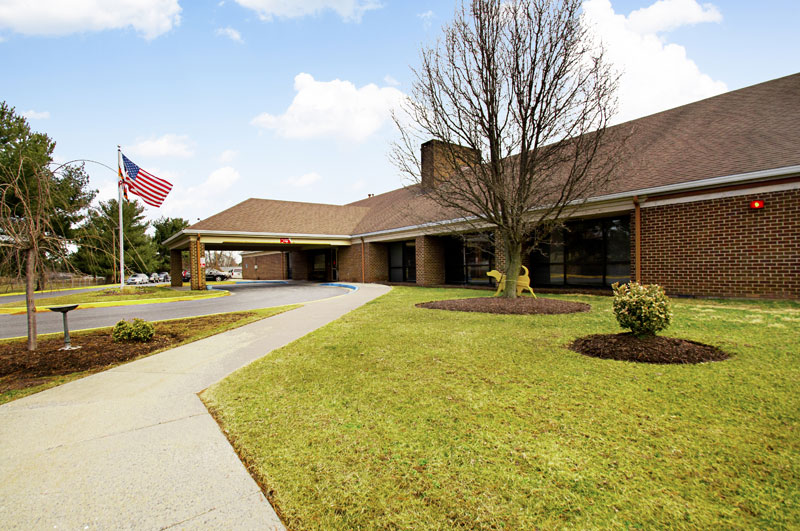
How is Frederick Crossing Of Journey Staffed?

CMS rates FREDERICK CROSSING OF JOURNEY's staffing level at 2 out of 5 stars, which is below average compared to other nursing homes.

What Have Inspectors Found at Frederick Crossing Of Journey?

State health inspectors documented 109 deficiencies at FREDERICK CROSSING OF JOURNEY during 2019 to 2025. These included: 3 that caused actual resident harm, 104 with potential for harm, and 2 minor or isolated issues. Deficiencies causing actual harm indicate documented cases where residents experienced negative health consequences.
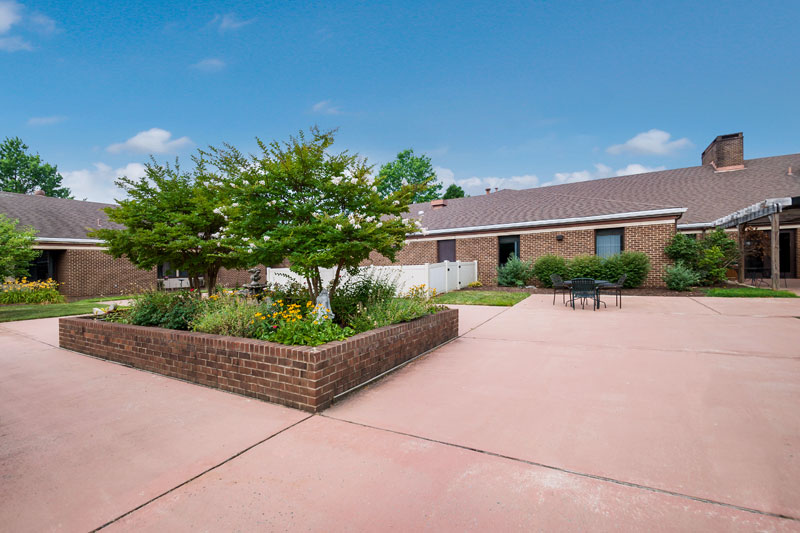
Who Owns and Operates Frederick Crossing Of Journey?

FREDERICK CROSSING OF JOURNEY is owned by a for-profit company. For-profit facilities operate as businesses with obligations to shareholders or private owners. The facility operates independently rather than as part of a larger chain. With 120 certified beds and approximately 97 residents (about 81% occupancy), it is a mid-sized facility located in FREDERICK, Maryland.
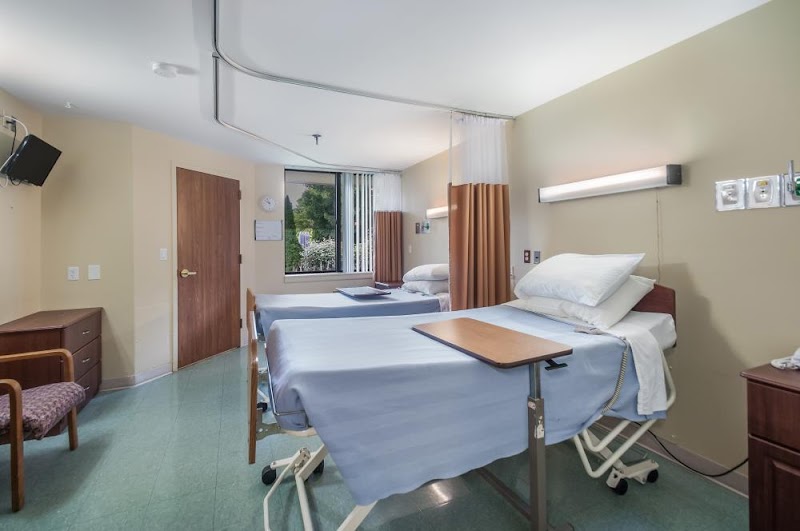
How Does Frederick Crossing Of Journey Compare to Other Maryland Nursing Homes?

Compared to the 100 nursing homes in Maryland, FREDERICK CROSSING OF JOURNEY's overall rating (3 stars) is below the state average of 3.0 and health inspection rating (2 stars) is below the national benchmark.

What Should Families Ask When Visiting Frederick Crossing Of Journey?

Based on this facility's data, families visiting should ask: "What safeguards and monitoring systems are in place to protect residents from abuse or neglect?" "Can you walk me through typical staffing levels on day, evening, and night shifts?" "Can I visit during a mealtime to observe dining assistance and food quality?" "How do you handle medical emergencies, and what is your hospital transfer rate?" These questions are particularly relevant given the substantiated abuse finding on record and the below-average staffing rating.

Is Frederick Crossing Of Journey Safe?

Based on CMS inspection data, FREDERICK CROSSING OF JOURNEY has documented safety concerns. The facility has 1 substantiated abuse finding (meaning confirmed case of resident harm by staff or other residents). The facility has a 3-star overall rating and ranks #100 of 100 nursing homes in Maryland. Families considering this facility should ask detailed questions about what corrective actions have been taken since these incidents.

Do Nurses at Frederick Crossing Of Journey Stick Around?

FREDERICK CROSSING OF JOURNEY has not reported staff turnover data to CMS. Staff turnover matters because consistent caregivers learn residents' individual needs, medications, and preferences. When staff frequently change, this institutional knowledge is lost. Families should ask the facility directly about their staff retention rates and average employee tenure.

Was Frederick Crossing Of Journey Ever Fined?

FREDERICK CROSSING OF JOURNEY has been fined $13,247 across 1 penalty action. This is below the Maryland average of $33,211. While any fine indicates a compliance issue, fines under $50,000 are relatively common and typically reflect isolated problems that were subsequently corrected. Families should ask what specific issues led to these fines and confirm they've been resolved.

Is Frederick Crossing Of Journey on Any Federal Watch List?

FREDERICK CROSSING OF JOURNEY is not on any federal watch list. The most significant is the Special Focus Facility (SFF) program, which identifies the bottom 1% of nursing homes nationally based on persistent, serious quality problems. Not being on this list means the facility has avoided the pattern of deficiencies that triggers enhanced federal oversight. This is a positive indicator, though families should still review the facility's inspection history directly.