FROSTBURG VILLAGE REHAB CENTER
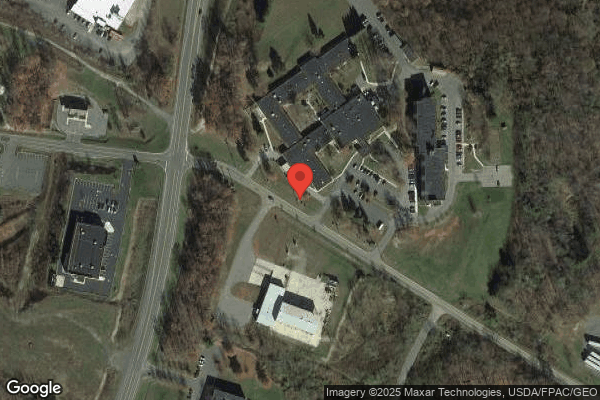
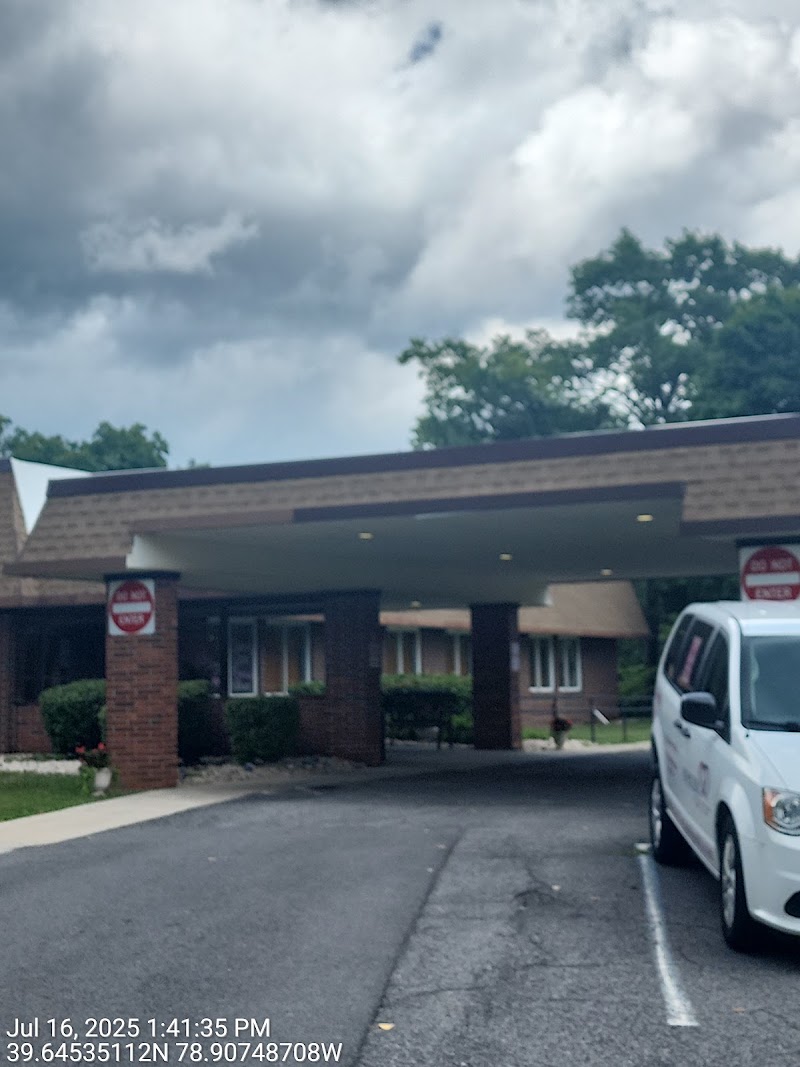
1 KAYLOR CIRCLE, FROSTBURG, MD 21532 (301) 689-7500
For profit - Limited Liability company 122 Beds STERLING CARE Data: November 2025
Trust Grade
30/100
#202 of 219 in MD
Last Inspection: September 2022

Over 2 years since last inspection. Current conditions may differ from available data.

Overview

Frostburg Village Rehab Center has received a Trust Grade of F, indicating poor performance and significant concerns. They rank #202 out of 219 facilities in Maryland, placing them in the bottom half, and #6 out of 8 in Allegany County, meaning only two local options are worse. While the facility is improving-increasing from 25 issues in 2022 to 14 in 2025-there are still serious concerns, including a staffing rating of just 1 out of 5, with a 68% turnover rate that is much higher than the state average. Although they have not incurred any fines, which is a positive sign, the RN coverage is concerning, as it is less than 92% of Maryland facilities, meaning residents may not receive adequate medical oversight. Specific incidents include a resident suffering a fracture due to improper staff assistance during transfers and multiple instances where no RN was present on duty for over 60 hours, raising alarms about the adequacy of care. Overall, families should weigh these strengths and weaknesses carefully when considering this facility.

Trust Score
F
30/100
In Maryland
#202/219
Bottom 8%
Safety Record
Moderate
Needs review
Inspections
Getting Better
25 → 14 violations
Staff Stability
⚠ Watch
68% turnover. Above average. Higher turnover means staff may not know residents' routines.
Penalties
✓ Good
No fines on record. Clean compliance history, better than most Maryland facilities.
Skilled Nurses
⚠ Watch
Each resident gets only 26 minutes of Registered Nurse (RN) attention daily — below average for Maryland. Fewer RN minutes means fewer trained eyes watching for problems.
Violations
⚠ Watch
61 deficiencies on record. Higher than average. Multiple issues found across inspections.
★☆☆☆☆
1.0
Overall Rating
★☆☆☆☆
1.0
Staff Levels
★★★☆☆
3.0
Care Quality
★★☆☆☆
2.0
Inspection Score
Stable
2022: 25 issues
2025: 14 issues

The Good

  • Full Sprinkler Coverage · Fire safety systems throughout facility
  • No fines on record

Facility shows strength in fire safety.

The Bad

1-Star Overall Rating

Below Maryland average (3.0)

Significant quality concerns identified by CMS

Staff Turnover: 68%

21pts above Maryland avg (46%)

Frequent staff changes - ask about care continuity

Chain: STERLING CARE

Part of a multi-facility chain

Ask about local staffing decisions and management

Staff turnover is elevated (68%)

20 points above Maryland average of 48%

The Ugly 61 deficiencies on record

1 actual harm
Aug 2025 14 deficiencies 1 Harm
SERIOUS (G) 📢 Someone Reported This

A family member, employee, or ombudsman was alarmed enough to file a formal complaint

Actual Harm - a resident was hurt due to facility failures

Accident Prevention (Tag F0689)

A resident was harmed · This affected 1 resident

Based on medical record reviews, interviews, and review of facility investigation documents, it was determined that the facility failed to ensure residents were free from accidents as evidenced by the...

Read full inspector narrative →
Based on medical record reviews, interviews, and review of facility investigation documents, it was determined that the facility failed to ensure residents were free from accidents as evidenced by the resident sustaining an injury while being assisted by staff in transferring. This was evident for 1 (Resident #104) of 12 residents reviewed for accidents. The deficient practice resulted in actual harm to resident # 104.The findings include:A review of Resident #104’s medical records on 8/7/25 at 11:40 AM, revealed a comprehensive assessment with a reference date of 1/7/25 that indicated the resident had severely impaired cognition and was dependent on staff for transfers and mobility. The review also revealed the resident’s care plan with interventions that include a) dependent bed mobility, b) Full lift for all transfers. A review of the intake information on 7/31/25 at 12:10 PM, related to incident 358487 and complaint 358486 indicated that Resident #104 sustained a fracture of the left leg on 2/20/25. The investigation packet related to incident 358487 was reviewed on 8/6/25 at 2:27 PM. The investigation indicated that Resident #104 was being treated for passive range of motion on 2/20/25 at 10:15 AM by Physical Therapy Assistant (Staff #34), when she noticed a change in the appearance of the resident’s left leg. This was reported to the Licensed Practical Nurse (LPN #35) assigned to the resident at that time. LPN #35 assessed the resident and noted swelling and bruising on the resident’s left lower leg and reported it to the attending physician, who ordered imaging to be taken. The attending physician then ordered for the resident to be sent to the emergency department (ED) for further evaluation and treatment for possible fracture. The ED then confirmed the resident had a broken left lower leg. Simultaneously in the facility, the incident was reported to the Director of Nursing (DON) who initiated an investigation. The DON took statements from all the staff assigned to Resident #104 at that time. The Geriatric Nursing Assistant (GNA #36) wrote on her statement that on 2/20/25 at 7:10 AM, she was transferring the resident to the wheelchair and the resident’s leg got twisted as she was sitting the resident down. An interview was documented by the DON with GNA #36 dated the same day at 4 PM. During the interview, GNA #36 confirmed that the resident’s transfer status was a 2 person assist but failed to seek another staff to help in transferring the resident. Further review of the investigation documents revealed that GNA #36 was suspended while the investigation took place. When the facility concluded that Resident #104’s fracture was the result of improper transfer, the facility’s corrective action was to educate the GNA on transfer status with return demonstration. However, documentation in the investigation packet revealed that GNA #36 was terminated on 2/27/25 and reported to the Board of Nursing on 3/3/25. No other corrective action was documented in the investigation packet. On 8/7/25 at 1:04 AM, GNA #18 was interviewed about her process when a resident needs assistance with transfers. She reported that resident information regarding required assistance for transfers are found in the Kardex (Kardex is the computer system that GNA’s use to document the tasks/care they had provided to the residents) or assignment sheet (assignment sheet is the paper document that GNA’s typically write on when they are getting reports during change of shift). GNA #18 showed the surveyor her assignment sheet which had a column titled “Transfers”. This column indicated the assistance required for residents to safely complete a transfer. She also showed the surveyor the Kardex which also indicated the required assistance for transfers, noting that she checks to verify that the information from the two matched. Resident #104’s information was reviewed with GNA #18. She reported that the resident was a full lift for all transfers and indicated that it meant she would need to use a mechanical lift to perform the transfer and required two staff members to complete the task. On 8/7/25 at 3:53 PM, the DON was interviewed about the incident. He confirmed that per his investigation, GNA #36 failed to secure assistance from another staff to safely transfer a dependent resident. He reported that the facility’s initial plan was to bring GNA #36 back for education about transfers but when the incident was forwarded and reviewed by corporate staff, they instructed the facility to terminate GNA #36. He also reported that the facility did a whole house education but did not include it in the investigation documents. He stated, “I keep a soft file in my office” and indicated that he would provide the surveyor with evidence that all clinical staff were educated on transfers. On 8/7/25 at 4:34 PM, the DON provided the surveyor with the attendance sheets for the employee education that included transfers as one of the topics, dated 2/25/25. A review of the attendance sheets was conducted on 8/8/25 at 12:15 PM. The review revealed that not all clinical staff attended the education. A subsequent interview with the DON was conducted on 8/8/25 at 12:53 PM. During the interview, the DON reported again that all clinical staff attended the education. He added, “if they failed to attend, they would have been written up.” The finding that not all clinical staff attended the education was discussed and the DON was asked if he had a list of staff who failed to attend. He indicated Human Resource (Staff #9) can give him that information. On 8/11/25 at 9:23 AM, Staff #9 printed a list of staff who failed to attend the education regarding transfers. The list consisted of 7 nurses and 4 GNA’s. Staff #9 was asked if staff on the list were written up for not attending and she answered, “No.” A review of GNA #36’s employee record was conducted on 8/11/25 at 12:13 PM. The review revealed the last education regarding transfer was done on 1/13/21 and last performance evaluation was dated 9/5/22. There was no other documentation found to indicate a performance evaluation was conducted in the last 2 years. On 8/13/25 at 8:43 AM, the findings were reviewed with the Nursing Home Administrator (NHA) and the DON, and the concern was discussed that GNA #36 had failed to follow the appropriate transfer status of a resident resulting in harm as evidenced by Resident #104’s lower leg fracture. Also, there was no evidence to indicate that all clinical staff were educated on transfers after the 2/20/25 incident with Resident #104. Both staff acknowledged the concern.
CONCERN (D) 📢 Someone Reported This

A family member, employee, or ombudsman was alarmed enough to file a formal complaint

Potential for Harm - no one hurt, but risky conditions existed

Notification of Changes (Tag F0580)

Could have caused harm · This affected 1 resident

Based on medical record review and interview it was determined that the facility failed to ensure staff informed the physician or nurse practitioner when a resident exhibited violent and aggressive be...

Read full inspector narrative →
Based on medical record review and interview it was determined that the facility failed to ensure staff informed the physician or nurse practitioner when a resident exhibited violent and aggressive behaviors. This was found to be evident for one (Resient #119) out of 15 residents reviewed for abuse during the survey.The findings include: Review of Resident #119's medical record revealed the resident was admitted to the facility in late March 2023 with a diagnosis of dementia. Review of the medical record revealed the resident had a multiple instances of aggressive behavior both with other residents and with staff. The resident was seen on multiple occasions in April 2023 by a psychiatric provider. On 4/22/23 the resident's psychotropic medications included Ativan 0.5 mg twice a day for anxiety, Buspirone 10 mg three times a day for anxiety, and a dose of Seroquel (an antipsychotic) at bedtime. No orders were found for as needed medications to be administered for increased anxiety or agitation.Further review of the medical record revealed the resident was sent to the hospital on 4/22/23 for aggressive behaviors. Review of the hospital emergency department notes revealed documentation that the nurse at the facility reported the patient was hitting staff and other residents and difficult to control.Further review of the hospital records revealed the resident was administered the regularly scheduled oral antipsychotic; as well as injections of two different antipsychotic medications: Haldol and Zyprexa. The hospital medically cleared the resident to return to the facility during the early morning hours of 4/23/23.Further review of the medical record failed to reveal documentation to indicate any changes in the residents medications, or orders for increase in supervision upon return from the hospital on 4/23/23.Review of a nursing note, written by Nurse #28 and dated 4/23/23 at 6:36 PM revealed : This resident was pushing other resident's around in their wheel chair and when tried to redirect resident [s/he] starting to swing and hit staff. Resident then tried to hit other residents. Staff intervened and tried to redirect this resident, when this resident hit this nurse in the jaw and kicked another aide in the knee. The Resident was placed into a chair, where [s/he] would not stay seated and continued to try to go after other residents near by.Further review of the medical record failed to reveal documentation to indicate that these behaviors of hitting staff and attempting to hit other residents was reported to either the primary care or the psychiatric provider on 4/23/23.On 8/8/25 at 12:15 PM the unit nurse manager (Nurse #2) confirmed each incident of resident being aggressive should be reported to provider.Review of a nursing note, written by Nurse #33 and dated 4/24/23 at 4:38 AM revealed the resident was up at the beginning of the shift wandering throughout the unit and required some redirection out of other residents' rooms.Review of a nursing note, written by Nurse #31 and dated 4/24/23 at 2:39 PM revealed the resident was requiring 1:1 to redirect to sit in wheelchair.Further review of the medical record failed to reveal documentation to indicate the physician was made aware that the resident was requiring 1:1 supervision; no order was found for 1:1 supervision, or other documentation to indicate 1:1 supervision was implemented as an ongoing intervention for Resident #119.Review of a nursing note, written by Nurse #31 and dated 4/25/23 at 4:35 PM revealed that in the morning, the nurse heard another resident yell for help, nurse observed Resident #119 attempting to talk to the other resident and push into the room, Resident #119 thought the other resident was their spouse and was going to assist the other resident to bed. 1:1 given able to redirect res long enough to remove other res from area. this writer managed to assist res to w/c. res at that time grabbed this writers hand attempting bite. res swinging at staff, res charged this writer nearly falling. res redirected and toileted. res making statements I'm going to kill you. Give me a gun because I am going to shoot you. res appears drowsy, res unable to ambulate in hallway knees buckling, staff assisted res to bed res unable at that time to amb [ambulate - walk] on own. res cont [continue] to punch staff in stomach and several attempts to hold hand to bite. The note went on to state that the resident then slept until 3:00 PM, was given medications at that time and was at the time of the note sitting calmly in a wheelchair.No documentation was found to indicate the primary care physician, or the psychiatric provider were made aware on 4/25/23 of the resident's attempts to bite staff or the threatening statements made by the resident.Further review of the medical record revealed the resident was seen by the psychiatric provider on 4/26/23. Review of the corresponding note failed to reveal documentation to indicate the psychiatric provider was aware of the attempts to bite staff, or the verbal threats.On 8/08/25 at 1:19 PM surveyor reviewed the concern with the Director of Nursing of multiple documentation of incidents of the resident being aggressive with staff and residents but no indication that MD was notified on day of occurrences. As of time of survey exit on 8/13/25 at 11:30 AM no additional documentation was provided regarding notifications.Cross reference to F 600
CONCERN (D) 📢 Someone Reported This

A family member, employee, or ombudsman was alarmed enough to file a formal complaint

Potential for Harm - no one hurt, but risky conditions existed

Free from Abuse/Neglect (Tag F0600)

Could have caused harm · This affected 1 resident

Based on record review and interview, it was determined that the facility failed to protect residents from abuse. This was evident for 2 (#358494 and #358463) out of 16 facility reported incidents rev...

Read full inspector narrative →
Based on record review and interview, it was determined that the facility failed to protect residents from abuse. This was evident for 2 (#358494 and #358463) out of 16 facility reported incidents reviewed during the recertification survey.The findings include:1.) Resident #91 was admitted to the facility in 2022, was cognitively intact, and their own spokesperson/decision maker. On 6/08/25 Resident #91 and Resident #76 were involved in a verbal and physical altercation. A review of the facility reported incident (FRI #358494) revealed that the facility reported on 6/25/25 that Resident #91 complained that on 6/08/25 Staff #27 threatened to kick him/her out of the facility. The report further stated that the facility investigated the incident and determined that Staff #27 verbally and emotionally abused Resident #91. The report also included statements that due to the confirmation of abuse, the facility terminated Staff #27’s employment and reported Staff #27 to the state board of nursing. On 8/12/25 at 8:21 AM the Nursing Home Administrator was interviewed regarding the incident. She said that Staff #27 was on call on 6/08/25 at the time of the resident-to-resident incident and Staff #27 came in to take care of the allegation. The NHA said that on 6/25/25 Resident #91 came to talk with her and told her that on 6/08/25 Staff #27 had told the resident that he/she would have to leave the building if something were to happen again. The NHA further described that Resident #91 was crying and upset and that the resident’s behavior had changed in the two weeks since the incident on 6/08/25. The resident stayed in their room and did not participate in activities as was usual. The NHA said this was how the facility determined abuse had occurred. The NHA went on to explain that she reassured the resident that when residents were asked to leave the facility, the process involved multiple steps and written notification. The NHA said that she apologized to the resident. On 8/12/25 at 10:44 AM in an interview with the Director of Nursing (DON), he confirmed that the abuse was substantiated by the facility, and he provided copies of the facility’s report to the board of nursing for Staff #27. On 8/13/25 at 8:52 AM an interview was conducted with the DON and the NHA to review the concern that the facility substantiated that Resident #91 was verbally and emotionally abused. 2)Review of Resident #119’s medical record revealed the resident was admitted to the facility in late March 2023 with a diagnosis of dementia. Review of the April Medication Administration Record (MAR) revealed that on 4/1/23 the resident had orders for Ativan (an antianxiety medication) to be given every 8 hours as needed for anxiety/agitation for 14 days. The Ativan was documented as administered on 4/4/23. The resident also had orders for an Buspirone 5 mg (an antianxiety medication) to be administered two times a day, and Seroquel (an antipsychotic medication) to be administered at bedtime. Review of a nursing note, written by Nurse #28 and dated 4/4/23 at 5:59 PM, revealed the resident was showing increased agitation and aggressiveness to other residents. “Tries to grab other residents to ‘come work for [him/her]’ and if they do not go [her/his] way, the resident becomes aggressive and not able to be redirected. After getting prn [as needed] Ativan at 1130, resident settled some and rested in bed.” Review of the 4/5/23 psychiatric evaluation and consultation note, written by Staff #29, revealed that the resident was seen for initial evaluation and medication management for anxiety and behavioral disturbance. No documentation was found in this note about the Ativan order. Further review of the note revealed that the nursing staff was reporting that the resident tries to control other residents and gets frustrated when they are not doing what [s/he] wants them to do. The recommendations included to increase the resident’s Buspirone to three times a day and continue the resident’s antipsychotic medication in the evening. Review of the April MAR revealed the as needed Ativan was administered on 4/7/23 at 8:43 AM. Review of a nursing note, written by Nurse #28 and dated 4/7/23 at 3:00 PM, revealed the resident became agitated while receiving care, charged at staff and punched the staff in the face. The physician and family were made aware. The Ativan dose was changed to regularly scheduled at 9 am and 9 pm and a prn dose available at 2 pm only. “Will continue to monitor”. A review of the April MAR revealed the previous Ativan prn order was discontinued on 4/7/23. A new order, dated 4/7/23, was found for Ativan to be given every 6 hours as needed for agitation/anxiety for 14 days, Can be given at 3 pm only. This prn medication was administered on 4/7 and again on 4/9. There was also an order on 4/7 for Ativan to be given two times a day for 14 days, this order was discontinued on 4/9. Review of a facility reported incident (358460) revealed that on 4/7/23 Resident #119 was observed in Resident #120’s room. Resident #119 was observed punching Resident #120 on the side of the face, Resident #120 swung back and punched Resident #119 on the shoulder. Resident #119 then ran a wheelchair into Resident #120. Staff de-escalated the situation and separated the residents. Review of the medical records revealed Resident #119 and Resident #120 were not roommates on 4/7/23. Review of a nursing note, written by Nurse #28 and dated 4/7/23 at 6:07 PM, revealed the information found in the facility reported incident. It also included that a second aid went in to help and the resident grabbed the nurse’s arm and swung [his/her] fist into nurse’s hand. Review of a nursing note, written by Nurse #28 and dated 4/8/23 at 6:45 PM, revealed the resident combative with care, can not be redirected, grabs wheelchairs, when staff try to redirect the resident swings at staff. Review of a nursing note, written by Nurse #32 and dated 4/9/23 at 6:56 PM, revealed: “Resident was in the door way of another resident room with a chair in front of [him/her] and GNA tried to redirect [him/her] [s/he] started to swing at her so she tried to hold [his/her] arms back and [s/he] head butted her [GNA] full force. Supervisor on call aware.” Review of the Resident #119’s care plan revealed that on 4/10/23 a care plan addressing the resident’s physically and verbally aggressive behavior. The plan acknowledged that a resident to resident incident had occurred and that these behaviors were related to dementia, Alzheimer’s disease, confusion, agitation and being difficult to redirect at time. All of the interventions were initiated on 4/10/23. Further review of the April MAR revealed the dosage of the three times a day Buspirone was increased to 10 mg on 4/10/23. Review of a nursing note, written by Nurse #30 and dated 4/11/23 at 11:27 AM, revealed the Ativan order was clarified with the nurse practitioner. Ativan was ordered qid [four times a day] as needed and only at 3 pm. Order was changed to two times a day. Review of the April MAR revealed that on 4/11 a new order was put in place for Ativan every 12 hours as needed for anxiety. Review of a nursing note, written by Nurse #28 and dated 4/12/23 at 6:53 PM, revealed: “Resident continues to try to push other residents in their wheelchairs, and when staff tries to redirect, resident hits at staff.” Review of the psychiatric note, dated 4/13/23, revealed that the resident has continued to exhibit anxiety symptoms. The note addressed the current prn [as needed] Ativan order and that the buspirone dosage was increased by the primary care provider. The recommendations included to start regularly scheduled Ativan two times a day, to continue the buspirone three times a day and the antipsychotic at bedtime. Review of the April MAR revealed the prn Ativan was discontinued on 4/14/23. A new order was put in place on 4/14 for Ativan two times a day. This order remained in place and was documented as administered as ordered until the resident was discharged from the facility. No further prn Ativan orders were found for this resident’s admission. Review of a nursing note, written by Nurse #31 and dated 4/14/23 at 7:56 PM, revealed the resident continued to wander the unit and at times had increased agitation but was able to be redirected. Review of a nursing note, written by Nurse #32 and dated 4/16/23 at 9:08 PM, revealed: “…res at change of shift observed wondering into room at end of hall this writer responded immediately running to see res in room stating ‘get out.’ This writer attempted to redirect with 1:1 res began hitting this writer on side of ribs/back which did not cause harm to writer (res slightly drowsy and weak), this writer able to back res out of room by walking sideways towards res with arm up to prevent being hit inface, other staff responded and able to help redirect res once away from environment.” Review of a nursing note, written by Nurse #28 and dated 4/17/23 at 3:04 PM, revealed: “…Resident has been wandering into others rooms, and when staff tries to redirect [him/her], [s/he] swings at staff. Will continue to monitor.” Review of the 4/20/23 psychiatric note revealed that the nursing staff reported that the resident continues to experience anxiety and irritability, especially during care. During the visit the resident wandered into another resident’s room and sat on the bed, the resident resisted leaving the room and after several attempts the resident finally complied and was rolled out of the room in [his/her] wheelchair. Recommendations included to continue the Ativan two times a day, the Buspirone three times a day and the antipsychotic at bedtime; as well as “supportive care and encourage interaction with peers and participate in activities in the facility as tolerated. Redirect as needed.” Review of a nursing note, written by Nurse #28 and dated 4/21/23 at 6:49 PM revealed resident was aggressive and hard to redirect. Review of a nursing note, written by Nurse #28 and dated 4/22/23 at 3:04 PM, revealed the Resident continued to get physical with staff when providing daily care or when redirecting. Also that the resident had been “inappropriate with hands as well as kissing on staff and other residents. Will continue to monitor.” Review of a nursing note, written by Nurse #28 and dated 4/22/23 at 5:10 PM revealed: “Resident became aggressive when tried to redirect away from another resident [who] was trying to eat. This resident would not let [him/her] eat [his/her] dinner. Resident hit staff as well as grabbing them and swinging at other staff. This resident is not able to be redirected. Stormed off down the hall into other residents rooms.” Further review of the medical record revealed the resident was sent to the hospital on 4/22/23 for aggressive behaviors. Review of the hospital emergency department notes revealed documentation that the nurse at the facility reported the “patient was hitting staff and other residents and difficult to control.” Further review of the hospital records revealed the resident was administered the regularly scheduled oral antipsychotic; as well as injections of two different antipsychotic medications: Haldol and Zyprexa. The hospital medically cleared the resident to return to the facility during the early morning hours of 4/23/23. Further review of the medical record failed to reveal documentation to indicate any changes in the residents medications, or orders for increase in supervision upon return from the hospital on 4/23/23. Further review of the care plan addressing the resident’s aggressive behavior failed to reveal it was updated or that new interventions were added after the resident returned from the hospital on 4/23/23. Review of a nursing note, written by Nurse #28 and dated 4/23/23 at 6:36 PM revealed : “This resident was pushing other resident's around in their wheel chair and when tried to redirect resident [s/he] starting to swing and hit staff. Resident then tried to hit other resident. Staff intervened and tried to redirect this resident, when this resident hit this nurse in the jaw and kicked another aide in the knee. Resident was placed into a chair, where [s/he] would not stay seated and continued to try to go after other residents near by.” Further review of the medical record failed to reveal documentation to indicate that these behaviors of hitting staff and attempting to hit other residents was reported to either the primary care or the psychiatric provider on 4/23/23. Review of a nursing note, written by Nurse #33 and dated 4/24/23 at 4:38 AM revealed the resident was up at the beginning of the shift wandering throughout the unit and required some redirection out of other residents’ rooms. Review of a nursing note, written by Nurse #31 and dated 4/24/23 at 2:39 PM revealed the resident was requiring 1:1 to redirect to sit in wheelchair. Further review of the medical record failed to reveal documentation to indicate the physician was made aware that the resident was requiring 1:1 supervision; no order was found for 1:1 supervision, or other documentation to indicate 1:1 supervision was implemented as an ongoing intervention for Resident #119. Review of a nursing note, written by Nurse #31 and dated 4/25/23 at 4:35 PM revealed that in the morning, the nurse heard another resident yell for “help”, nurse observed Resident #119 attempting to talk to the other resident and push into the room, Resident #119 thought the other resident was their spouse and was going to assist the other resident to bed. “1:1 given able to redirect res long enough to remove other res from area… this writer managed to assist res to w/c. res at that time grabbed this writers hand attempting bite. res swinging at staff, res charged this writer nearly falling. res redirected and toileted. res making statements I'm going to kill you. Give me a gun because I am going to shoot you. res appears drowsy, res unable to ambulate in hallway knees buckling, staff assisted res to bed res unable at that time to amb on own. res cont to punch staff in stomach and several attempts to hold hand to bite….” The note went on to state that the resident then slept until 3:00 PM, was given medications at that time and was at the time of the note sitting calmly in a wheelchair. No documentation was found to indicate the primary care physician, or the psychiatric provider were made aware on 4/25/23 of the resident’s attempts to bite staff or the threatening statements made by the resident. Further review of the medical record revealed the resident was seen by the psychiatric provider on 4/26/23. Review of the corresponding note revealed that the nursing staff reported that the resident had been experiencing increased agitation and was refusing oral medications. The note revealed nurses reported resident being combative, hit a female staff in the face, had been wandering into other resident’s rooms and resists when redirected. The note addressed the visit to the ER. During the visit the resident was observed pacing the hallway in the wheelchair. The recommendation was to discontinue the evening antipsychotic for ineffectiveness and to start Depakote sprinkles twice a day for agitation. No changes were made to the two regularly scheduled anxiety medications already ordered; or to the behavioral interventions (Supportive care and encourage interaction with peers and participate in activities in the facility as tolerated. Redirect as needed.). No documentation was found to indicate the psychiatric provider was aware of the attempts to bite staff, or the verbal threats. Review of a nursing note, written by Nurse #28 and dated 4/27/23 at 4:14 PM revealed the resident was up wandering into other resident’s room and when staff tried to redirect, resident draws fist back and tries to hit people. Staff are not able to redirect the resident at times and other residents have to be moved away. Review of the facility reported incident 358463 revealed that on 4/29/23 staff heard Resident #95 yelling “get out of my room”. When staff entered Resident #95’s room Resident #119 was observed with [his/her] right arm around resident #95’s neck. With assistance of 3 staff members residents were separated and Resident #119 was escorted from the room. Resident #119 was sent to the hospital via 911. On 4/29/23 Resident #95 and Resident #119 were not roommates. Review of Resident #95’s medical record revealed the resident has a diagnosis of dementia and a need for assistance with personal care. On 4/29/23 Resident #95 sustained a small scratch 0.4 cm in diameter on the left side of the neck from Resident #119. On 8/8/25 at 12:15 PM an interview was conducted with the unit nurse manager (Nurse #2) about aggressive residents. When asked if there was an aggressive resident who was sent to the emergency room but then returned with no change in treatment, would they do anything different? Nurse #2 responded that they would look at doing every 15-minute checks or a 1:1. She went on to report a recent incident in which a resident pushed another resident down and they were going to implement a 1:1. On 8/8/25 at 1:19 PM surveyor reviewed the concern with the Director of Nursing (DON) that the resident was having aggressive behaviors and no documentation to indicate an increase in supervision, even after the resident was sent to the hospital for these behaviors. DON indicated he would check if there was documentation to indicate an increase in supervision after the hospitalization. The DON went on to report they have a hard time with the locale hospital just giving Haldol and then sending the residents back rather than admitting to psychiatric unit. He reported a recent incident of this occurring and they had a 1:1 until the resident was transferred out. On 8/13/25 at 8:40 AM the surveyor reviewed the concern regarding the facility's failure to protect resident to resident abuse in regard to the incident involving Resident #119 and #95. As of time of survey exit on 8/13/25 at 11:30 AM no additional documentation was provided to indicate additional supervision of Resident #119 was ordered or provided.
CONCERN (D) 📢 Someone Reported This

A family member, employee, or ombudsman was alarmed enough to file a formal complaint

Potential for Harm - no one hurt, but risky conditions existed

Assessment Accuracy (Tag F0641)

Could have caused harm · This affected 1 resident

Based on record reviews and interviews, it was determined that the facility failed to ensure Minimum Data Set (MDS) assessments were accurately coded. This was evident for 1 (Resident #25) of 1 reside...

Read full inspector narrative →
Based on record reviews and interviews, it was determined that the facility failed to ensure Minimum Data Set (MDS) assessments were accurately coded. This was evident for 1 (Resident #25) of 1 resident reviewed for hospice care and 1 (Resident #5) of 12 residents reviewed for accidents.The findings include:The MDS is a federally-mandated assessment tool used by nursing home staff to gather information on each resident's strengths and needs. Information collected drives resident care planning decisions. MDS assessments need to be accurate to ensure each resident receives the care they need. 1) Resident #25 had been a resident of the facility since 2018. A review of the facility matrix indicated that the resident was under hospice care. On 8/1/25 at 12:05 PM, a subsequent review of Resident #25’s medical record revealed an MDS assessment for a significant change with an assessment reference date (ARD) of 3/17/25 coded the resident as receiving hospice care. The next MDS assessment was a quarterly assessment with an ARD of 6/17/25 that coded the resident as not receiving hospice care. A review of Resident #25’s medical orders was conducted on 8/6/25 at 9:29 AM. The review revealed the following orders pertaining to hospice care:a) Refer to UPMC WM Hospice-End of Life Care -dated 3/4/25b) UPMC Hospice admitted -dated 3/7/25 The MDS nurse coordinator (Staff #14) was interviewed on 8/6/25 at 9:50 AM. During the interview, Staff #14 reported that Resident #25 was currently receiving hospice care. She also reported that the significant change assessment done on 3/17/25 was due to the resident going under hospice care. A review of the quarterly assessment with an ARD of 6/17/25 was conducted with Staff #14, particularly section O where Resident #25 was assessed if s/he was receiving hospice care. Staff #14 confirmed that the resident was coded wrong and stated, “That should have been a yes” and indicated that she would fix it. The Nursing Home Administrator and Director of Nursing was interviewed on 8/13/25 at 8:43 AM. During the interview the concern was discussed that Resident #25 was inaccurately coded for hospice care on the 6/17/25 quarterly assessment. Both staff also confirmed that Resident #25 was currently receiving hospice care and acknowledged the concern. 2) A care plan addresses the unique needs of each resident. It is used to plan, assess, and evaluate the effectiveness of the resident's care. Bi-level positive airway pressure (BiPAP) is a non-invasive ventilation machine used to assist in the work of breathing- both inspiration and exhalation. On 8/6/25 a record review revealed Resident #5 had a diagnosis of Chronic Respiratory Failure with hypoxia, Congestive Heart Failure (CHF), and Chronic Pulmonary Obstructive Disease (COPD). On 8/7/25 at 5:53 AM, a record review of the Care Plan identified BiPAP therapy and a record review of physician orders revealed BiPAP settings 15/5 with 5L oxygen continuous at 5L NC every shift for Respiratory Failure. On 8/7/25 at 6:52 AM, a record review of the MDS Annual assessment dated 4/2025, Section O reflected that Resident #5 did not use BiPAP therapy. In an interview on 8/7/2025 at 8:33 AM, the MDS nurse Coordinator (Staff #14) confirmed that she is responsible for completing section O on the MDS. Staff #14 verified that BiPAP therapy was not reflected on the MDS and confirmed that there was an order for BiPAP as of 3/31/25. She acknowledged the MDS was coded inaccurately.
CONCERN (D) 📢 Someone Reported This

A family member, employee, or ombudsman was alarmed enough to file a formal complaint

Potential for Harm - no one hurt, but risky conditions existed

Quality of Care (Tag F0684)

Could have caused harm · This affected 1 resident

Based on medical record review, interview and observations it was determined that the facility failed to ensure care was provided in accordance with professional standards of practice. This was eviden...

Read full inspector narrative →
Based on medical record review, interview and observations it was determined that the facility failed to ensure care was provided in accordance with professional standards of practice. This was evident for 3 (Resident # 114, #4, and #5) out of the 78 residents included in the sample. The findings include: 1) Review of Resident #114's medical record revealed the resident was admitted to the facility in 2023 with diagnosis that included, but not limited to, dementia and high blood pressure. Further review of the medical record revealed a Change in Condition note, with an effective date of 3/22/25 at 7:36 AM that was complete by a Licensed Practical Nurse (Nurse #39). This note revealed that the resident sustained a fall on 3/22/25 at 12:25 AM. The nurse documented that the resident was observed on the floor next to the bed sitting on his/her bottom and the resident had no explanation; the physician was notified at 3:00 AM. No documentation was found to indicate the nurse had completed a set of vital signs (heart rate, pulse, respirations, temperature) at the time of the initial assessment after the resident was found on the floor or prior to the notification of the physician at 3:00 AM. On 8/8/25 at 12:00 noon Licensed Practical Nurse (Nurse #41) reported that if a resident falls she completes an assessment which would include neuro checks and vital signs. Further review of the 3/22/25 Change in Condition note revealed in Section C Background (Evaluation) the nurse documented yes to the question: Are these the most recent vital signs taken after the change in condition occurred. The documentation indicated the blood pressure and heart rate measurements were from 3/21/25 at 9:08 AM, the respiration rate, temperature and oxygen saturation rate were from 3/16/25, and the blood glucose reading was from 2024. Further review of the medical record revealed an additional nursing note, written by Nurse #39 with an effective date of 3/22/25 at 8:00 AM that includes a statement that “full assessment completed upon observation of resident on the floor” but failed to mention that vital signs were obtained as part of that assessment. This note was entered as a Late entry and was created on 4/5/25. On 8/8/25 at 2:16 PM the Director of Nursing (DON) reported his expectation after a fall was that staff complete a full assessment before the resident was moved and confirmed this assessment would include vital signs. The Surveyor then reviewed the concern that the medical record failed to reveal documentation that a set of vital signs was completed at the time of the fall and that the Change in Condition form referenced vital signs from before the fall occurred. The Surveyor then reviewed the electronic health record with the DON; the first documentation of blood pressure and heart rate post fall was found for 3/22/25 at 10:53 AM. The 3/22/25 at 10:53 AM blood pressure was recorded by Nurse #42 and was included in the documentation for the administration of a medication to be given for high blood pressure that was scheduled to be given at 9:00 AM. On 8/13/25 at 8:40 AM the surveyor reviewed the concern with the Nursing Home Administrator regarding the failure to ensure a thorough assessment after a fall. As of time of survey exit, on 8/13/25 at 12 noon, no additional documentation was provided to indicate a set of vital signs was completed at the time of the initial assessment after the fall. 2) On 7/31/25 Registered Nurse (RN #15) was observed entering Resident #4’s room. From the hall, the surveyor heard RN #15 ask the resident, “where do you want your insulin?” The reply, “in my arm.” On 7/31/25 at approximately 9:30 AM, the Surveyor and RN #15 entered Resident #102’s room. RN #15 administered insulin into the resident’s right upper arm after the resident stated that s/he preferred to have the insulin injected into his/her belly. On 8/4/25 at 3:59 PM in an interview, the Licensed Practical Nurse (LPN #12) indicated the insulin administration sites were “usually” rotated and documented in the Medication Administration Record (MAR) of the electronic health record. A record review of Resident #4’s MAR revealed that insulin was administered in the same location without rotating sites on 7/30/25, 7/28/25, 7/27/25, and 7/25/25. And Resident #102’s MAR revealed insulin was administered in the same location on 7/31/25, 7/27/25, 7/26/25, 7/24/25 and 7/23/25. On 8/5/25 at 3:14 PM in an interview with Unit Managers (UM) LPN #1 and LPN #2, they acknowledged that the facility does not adhere to any standard of care or practice for administering insulin and rotating sites. A review of DIABETES CARE, VOLUME 27, SUPPLEMENT 1, JANUARY 2004, pg. S109 revealed the standard of care for rotating sites: Rotation of the injection site is important to prevent lipohypertrophy or lipoatrophy. Rotating within one area is recommended (e.g., rotating injections systematically within the abdomen) rather than rotating to a different area with each injection. In a follow-up interview at 3:30 PM the Nursing Home Administrator confirmed that the facility does not adhere to a standard of care when administering insulin and in particular rotating sites. “It would make sense for us to do it here.” 3) On 8/6/25 at 11:00 AM this surveyor observed Resident #5 lying in bed with an alternating low air mattress set at 290 pounds per square inch (psi) and alternating every 20 minutes. Resident #5 stated, “I used to weigh over 300 pounds about a year ago.” On 8/7/25 at 5:53 AM a record review of the Care Plan revealed use of a pressure reducing mattress. Alternating pressure mattress. Nurse to check functioning and settings. On 8/7/25 at 7:11 AM this surveyor observed Resident #5 asleep on alternating low air mattress with settings at 290 psi and alternating flow every 20 minutes. On 8/7/25 at 7:45 AM in an interview, LPN #12 confirmed Resident #5’s low air mattress was set at 290 psi and alternating every 20 minutes. On 8/7/25 a record review of Resident #5’s monthly weights from January to August revealed 195.4, 198.8, 191.1, 191.8, 189.0, 187.0, 189, 186.6, respectively. On 8/7/25 at 8:00 AM the Maintenance Director, Staff #13 provided the Operation Manual for the Protekt Aire 8000 model. On 8/7/25 at 9:54 AM in an interview, LPN #12 indicated that the mattress settings are determined by the resident's weight. It was confirmed in the electronic medical record that Resident #5 currently weighed 186.6. On 8/7/25 at 10:09 AM, LPN #12 acknowledged that the mattress was set for a weight interval of 220-290 and that she had adjusted the weight interval to 150-220 after surveyor intervention.
CONCERN (D) 📢 Someone Reported This

A family member, employee, or ombudsman was alarmed enough to file a formal complaint

Potential for Harm - no one hurt, but risky conditions existed

Respiratory Care (Tag F0695)

Could have caused harm · This affected 1 resident

Based on observations, record review and staff interviews, it was determined that the facility failed to administer oxygen as ordered by the physician. This was evident for 1 resident (Resident #5) re...

Read full inspector narrative →
Based on observations, record review and staff interviews, it was determined that the facility failed to administer oxygen as ordered by the physician. This was evident for 1 resident (Resident #5) reviewed as a complaint, #358479, during this survey.The findings include: Oxygen therapy is the administration of oxygen at concentrations greater than that in room air with the intent of treating or preventing hypoxia- low oxygen level in the blood.On 8/6/25 at 11:00 AM this surveyor observed Resident #5 lying in bed with oxygen (O2) via nasal canula (NC) at 4 liters (L). In an interview, Licensed Practical Nurse (LPN #10) confirmed O2 NC at 4L. On 8/7/25 5:49 AM a record review of Resident #5's Treatment Administration Record (TAR) revealed: Respiratory: Oxygen - Continuous at 5L NC every shift for Respiratory Failure. On 8/7/25 at 5:53 AM A record review of physician orders revealed 5Liters (L) oxygen (O2) continuous via nasal cannula (NC) every shift for Respiratory Failure.On 8/7/25 at 7:11 AM this surveyor observed Resident #5 asleep with 4L O2 NC. On 8/7/25 at 7:45 AM in an interview, LPN #12 confirmed Resident #5's oxygen was O2 NC at 4L. LPN #12 acknowledged the oxygen order was 5L NC.On 8/7/25 at 8:07 AM a second surveyor confirmed O2 at 4L NC.
CONCERN (D) 📢 Someone Reported This

A family member, employee, or ombudsman was alarmed enough to file a formal complaint

Potential for Harm - no one hurt, but risky conditions existed

Deficiency F0760 (Tag F0760)

Could have caused harm · This affected 1 resident

Based on medical record review and interview it was determined that the facility failed to ensure residents were free from significant medication errors. This was found to be evident for one (Resident...

Read full inspector narrative →
Based on medical record review and interview it was determined that the facility failed to ensure residents were free from significant medication errors. This was found to be evident for one (Resident #114) of 15 residents reviewed for potential abuse.The findings include: Review of Resident #114's medical record revealed the resident was admitted to the facility in 2023 with diagnosis that included, but not limited to, dementia and high blood pressure. The resident had an order for Metoprolol extended release 25 mg give one tablet one time a day related to hypertension (high blood pressure) and to Hold if the pulse (heart rate) was less than 60 or if the SBP(systolic blood pressure - the top number of a blood pressure reading) was less than 130. This order was in effect from 9/26/24 until it was discontinued on 3/28/25.Review of the March 2025 Medication Administration Record (MAR) revealed the metoprolol was administered on the following dates when the blood pressure and or heart rate were within the parameters to hold the medication:3/1 SBP was 1263/6 SBP was 121; HR: 553/10 SBP was1263/15 SBP was 1263/16: SBP 1263/22: SBP was 124 On 8/8/25 at 2:16 PM the Director of Nursing reported that he expects staff to follow the parameters that are included in orders for a medication. Surveyor reviewed the concern the metoprolol was administered on 6 occasions in March when, based on the ordered parameters, the medication should of been held. On 8/13/25 at 8:40 AM surveyor reviewed the concern regarding the failure to keep the resident free from a significant medication error with the Nursing Home Administrator.
CONCERN (E) 📢 Someone Reported This

A family member, employee, or ombudsman was alarmed enough to file a formal complaint

Potential for Harm - no one hurt, but risky conditions existed

Report Alleged Abuse (Tag F0609)

Could have caused harm · This affected multiple residents

Based on record review and interview, it was determined that the facility failed to report injuries of unknown origin. This was evident for one facility reported incident (#358490) of sixteen facility...

Read full inspector narrative →
Based on record review and interview, it was determined that the facility failed to report injuries of unknown origin. This was evident for one facility reported incident (#358490) of sixteen facility reported incidents and 1 of 1 grievance binder reviewed during the recertification survey.The findings include:1) A review of the facility’s grievances/concerns binder on 8/6/2025 revealed a resident concern form dated 3/3/25 for Resident #23. The form indicated that on the night of 3/2/25 into 3/3/25, Resident #23’s roommate observed that a GNA (Geriatric nurse aid) had answered Resident #23’s call light. When he entered the room, he said to Resident #23, Now listen, I’m not coming in here on and off all night, is everything out of you? Because I am not coming back.” The GNA proceeded to wipe Resident #23’s peri area with a paper towel and according to the report, Resident #23 began to cry because the staff was “hurting her”. A continued review revealed another grievance dated 3/13/25 reported by Resident #23’s roommate that the same GNA had “used paper towel once again to wipe [Resident #23] and did not change [his/her] soiled brief”. The grievance report indicated that Resident #23 was “crying again”. The report also stated, “I reported this before, but nothing has been done about it”. Further review revealed that both concerns were reported to the Director of Nursing (DON), who also serves as the facility’s Abuse Coordinator. However, the review failed to show that the facility immediately reported the allegation of abuse to the state office. In an interview, Staff #6, the Social Services Director, stated that after receiving the concern dated 3/13/25, she and the Activity Director visited Resident #23’s roommate, who confirmed the concerns. Staff also added that they did notice paper towels and used gloves in Resident #23’s trash can. In an interview on 8/6/2025 at 1:40 PM, the DON indicated that when he received the first concern, he cautioned the staff on how he spoke to residents. The DON also added that the second concern was only a repetition of the first, so there was no new intervention to implement. However, earlier record review noted that it was another occurrence on a different date, and the facility failed to report the allegations of abuse to the state office immediately. 2) A review of the facility’s grievances/concerns binder included a concern for Resident #53 dated 4/24/25. The form indicated that the Resident #53 voiced concern that a GNA “was rough” and “touched [him/her] in a way [s/he] did not like” during care. Further review showed that the DON and the Nursing Home Administrator were notified of Resident #53’s concern. However, the review failed to show that the facility immediately reported the allegation of abuse to the state office. In an interview on 8/7/2025 at 9:44 AM, the social service director indicated that what had initially been told to the DON, then to her regarding Resident #53, seemed like an abuse allegation. That was why both she and the DON went to speak to Resident #53. However, the interview failed to show that the concern was immediately reported to the state office. During an interview on 8/7/2025 at 10:17 AM, the Nursing Home Administrator stated that she had signed off on the concern form, indicating she was aware of the issue, but did not view it as an abuse allegation before the surveyor’s intervention. 3) A review of the facility reported incident #358490 revealed that on 4/08/25 Resident #87 was observed on the floor next to his/her bed and with a laceration to the head. The report included a statement that indicated that no witnesses were able to verify the alleged incident. The resident was transferred to a local hospital emergency room for sutures. Further review revealed that staff became aware of the resident’s injury on 4/08/25 at 11:30 PM, and that the Director of Nursing (DON) was notified on 4/08/25 at 11:35 PM. Further review of the initial report revealed that the report of the injury of unknown origin was submitted to the Office of Health Care Quality (OHCQ) on 4/10/25 at 11:00 AM. On 8/12/25 at 10:34 AM in an interview with the Director of Nursing (DON), he was asked about the initial report timeframe, which was two days after the incident. He said he was not sure why he did not report it sooner and acknowledged that it was reported later than the regulation required. No further evidence was provided prior to the end of the survey.
CONCERN (E) 📢 Someone Reported This

A family member, employee, or ombudsman was alarmed enough to file a formal complaint

Potential for Harm - no one hurt, but risky conditions existed

Investigate Abuse (Tag F0610)

Could have caused harm · This affected multiple residents

Based on record review and interview, it was determined that the facility failed to thoroughly investigate allegations of abuse and injuries of unknown origin. This was evident for 2 residents (Reside...

Read full inspector narrative →
Based on record review and interview, it was determined that the facility failed to thoroughly investigate allegations of abuse and injuries of unknown origin. This was evident for 2 residents (Resident #23 and Resident #53) reviewed during review of the grievance log and one facility reported incident (#358482) of sixteen facility reported incidents reviewed during the recertification survey.The findings include:1) During a review of the facility’s grievances/concerns binder on 8/6/2025, it was noted that Resident #23’s roommate had filed a grievance regarding Resident #23. The grievance indicated that on the night of 3/2/25 into 3/3/25, a GNA (geriatric nurse aid) had answered Resident #23’s call light and said to him/her, “Now listen, I’m not coming in here on and off all night, is everything out of you? Because I am not coming back.” Then staff proceeded to give Resident #23 incontinence care by wiping him/her with a “paper towel”. According to the report, Resident #23 began to cry because the staff was “hurting her”. A continued review noted an additional complaint dated 3/13/25 from Resident #23’s roommate regarding the same staff member, stating that he used a paper towel again to wipe Resident #23, and the soiled brief was not changed. The report indicated Resident #23 was crying again. The roommate also reported that previous concerns had been raised without resolution. Both concerns were reported to the Director of Nursing (DON), who also serves as the facility’s Abuse Coordinator. However, the review failed to show that the facility completed a thorough investigation of both allegations including a head to toe assessment of Resident #23, statements from the staff involved, interview and/or assessment of other residents who had been in the care of the staff involved to ensure no one else had similar complaints and interview of other staff who may have known about the incident. In an interview on 8/6/2025 at 1:40 PM, the DON indicated that when he received the first concern, he cautioned the staff involved on how he spoke to residents. The DON also noted that the second concern was merely a repetition of the first, so no new intervention was required. However, it was another occurrence on a different date, and there was no evidence of a thorough investigation of the complaint. 2) A review of the facility’s grievances/concerns binder included a concern for Resident #53 dated 4/24/25 that stated that a GNA “was rough” and “touched [Resident #53] in a way [s/he] did not like” during care. The DON and Nursing Home Administrator (NHA) were notified of Resident #53’s concern. However, the review did not show that the facility thoroughly investigated the allegation. There was no evidence of a head-to-toe assessment of Resident #53, no interviews with other residents cared for by the same staff, and no statements from staff, including the one involved in the incident. During an interview on 8/7/2025 at 10:17 AM, the Nursing Home Administrator verbalized understanding of not thoroughly investigating allegations of abuse. 3), A review of the facility reported incident (FRI) #358482 revealed that Resident #107 was found on the floor in the hallway on 1/25/25 and was injured. The resident was sent to the emergency room where it was determined that he/she had a fractured tibia. The report further stated that there were no witnesses, no perpetrator was identified, that both the resident and the resident’s roommate were deemed incapable, and that staff who were on duty the day the injury was identified were interviewed and none had knowledge of the injury. A review of the facility’s investigation file revealed a witness statement written 1/25/25 at 2:00 pm by Staff #38 which indicated that she was the nurse who cared for the resident that day and that the resident refused to get out of bed, was assessed in the morning with no abnormal findings, but around noon/lunch time the resident complained of pain, the doctor was notified, an x-ray was ordered, and pain medication was administered. Further review of the facility’s investigation file failed to reveal any other staff witness statements from that day. The file lacked evidence that other residents were interviewed or assessed. There were no staff assignment sheets or resident census documents to identify staff and residents who were present on that day. There was no documentation of Resident #107’s physical assessment other than the staff witness statement. On 8/11/25 at 3:45 PM in an interview with the Director of Nursing (DON), he provided an explanation for how the resident’s injury occurred but acknowledged that this information was not included in the investigation file nor in the resident’s medical records. He confirmed the deficiency that the facility’s investigation was incomplete.
CONCERN (E) 📢 Someone Reported This

A family member, employee, or ombudsman was alarmed enough to file a formal complaint

Potential for Harm - no one hurt, but risky conditions existed

Deficiency F0726 (Tag F0726)

Could have caused harm · This affected multiple residents

Based on review of medical records and other pertinent documentation, and interviews it was determined that the facility failed to ensure staff had adequate training. This was evident for one geriatri...

Read full inspector narrative →
Based on review of medical records and other pertinent documentation, and interviews it was determined that the facility failed to ensure staff had adequate training. This was evident for one geriatric nursing assistant (GNA #25) out of two GNAs reviewed for mechanical lift training.The findings include: A review of Resident #45's clinical record revealed that they were admitted to the facility in 2022 and they required assistance to transfer from bed to wheelchair.A review of the facility's mechanical lift policy titled Lifting Machine, Using a Mechanical, revealed the statement that read, in part, that when lowering the resident, care should be taken ensure the sling bar did not hit the resident. On 8/06/2025 at 3:28 PM a record review of Resident #45's medical record revealed a progress note written on 7/10/25 by Licensed Practical Nurse (Staff #23) which described an incident when the resident developed a forehead hematoma (bruise) when they were hit on the forehead by the mechanical lift while being transferred into the wheelchair. The note explained that 2 Geriatric Nursing Assistants (GNA) assisted the resident with the transfer.On 8/07/2025 at 11:10 AM an interview was conducted with the unit manager Staff #2 to review the incident. When asked about the incident she said that GNAs were trained to use the mechanical lift but that she herself did not provide the training. She was asked to provide evidence of training for the two GNAs (Staff #24, Staff #25) who assisted the resident during the incident,.On 8/07/2025 at 11:57 AM Staff #2 brought training documents for Staff #24 and Staff #25. A review of Staff #25's training competency checklist revealed that it was a self-evaluation. There was no evidence that Staff #25 had received training in the use of a mechanical lift or that she had been deemed competent to perform a transfer with a mechanical lift.On 8/07/2025 at 12:03 PM an interview with Human Resources Director, Staff #9 was conducted to review the GNA training records for Staff #25. Staff #9 reviewed the document and concurred that the documents did not show evidence of training or competency. When asked for further evidence, Staff #9 replied that Staff #25 was an agency GNA and that there were no other training documents available.On 8/07/2025 at 12:43 PM the Director of Nursing confirmed that documentation in the resident's medical record confirmed that the mechanical lift bar hit the resident in the head and resulted in a bruise, and he also confirmed that there was no evidence that Staff #25 was competent to use the mechanical lift.
CONCERN (E) 📢 Someone Reported This

A family member, employee, or ombudsman was alarmed enough to file a formal complaint

Potential for Harm - no one hurt, but risky conditions existed

Deficiency F0807 (Tag F0807)

Could have caused harm · This affected multiple residents

Based on a review of pertinent documents, observations and interviews, the facility failed to have a place to ensure residents were provided with water and other fluids to support their hydration and ...

Read full inspector narrative →
Based on a review of pertinent documents, observations and interviews, the facility failed to have a place to ensure residents were provided with water and other fluids to support their hydration and preferences. This was evident in two out of three units reviewed for dining during the survey.The Findings include:On 8/06/25 at 2:30 PM, a review of resident council minutes revealed that residents reported they were not receiving ice or water between the hours of 11:00 PM and 7:00 AM In addition review of complaint #358470 8/11/25 revealed a concern that the residents were not provided water. On 8/07/25 at 5:32 AM, a nighttime observation was conducted from 4:00 AM to 5:15 AM. The observation revealed that GNA Staff #19 and Hospitality Aide (Staff #21) were in the process of delivering water to residents. Staff #19 reported typically beginning water delivery around 5:00 AM.On 8/07/25 at 4:28 AM, an observation in Resident #92's room revealed an empty cup of water with the date 8/6 written on the top rim.On 8/07/25 at 4:29 AM, an observation in Resident #73's room revealed a cup with a small amount of water remaining and no date written on the top.On 8/07/25 at 4:38 AM, the above observations were confirmed by GNA Staff #4.On 8/07/25 at 4:49 AM, an observation in Resident #129's room revealed an empty cup on the bedside table. Continued observation failed to reveal any additional water containers in the room.On 8/07/25 at 4:52 AM, an observation in Resident #49's room revealed a cup on the bedside table containing a small amount of brown liquid.At 4:52 AM, a brief interview was conducted with Resident #49, who was noted to have no documented cognitive decline. The resident reported that the cup had contained Pepsi from the previous day and that no water had been provided on 8/06/25.On 8/07/25 at 4:54 AM, an observation in Resident #83's room revealed a single cup with a very small amount of water and the date 8/5 written on the top.On 8/07/25 at 4:56 AM, the observations for Residents #49 and #83 were confirmed by GNA Staff #3.On 8/07/25 at 7:44 AM, an interview was conducted with the Administrator and the Director of Nursing (DON). Both reported recent experience working the night shift and familiarity with the 11:00 PM - 7:00 AM water distribution process. The DON stated an understanding that new water cups were dated and distributed around 5:00 AM to ensure residents had water for the morning pass. The Administrator stated an understanding that new cups were distributed at the beginning of the night shift to ensure residents had access to water throughout the night. Both confirmed there was no consistent procedure in place to ensure residents received water to support hydration.
CONCERN (E) 📢 Someone Reported This

A family member, employee, or ombudsman was alarmed enough to file a formal complaint

Potential for Harm - no one hurt, but risky conditions existed

Deficiency F0809 (Tag F0809)

Could have caused harm · This affected multiple residents

Based on pertinent document review, observation and interview, it was determined that the facility failed to provide a nutritional snack to Residents when meals were scheduled more than 14 hours apart...

Read full inspector narrative →
Based on pertinent document review, observation and interview, it was determined that the facility failed to provide a nutritional snack to Residents when meals were scheduled more than 14 hours apart. This was evident in one unit out of four unit reviewed for Dining during a survey.The findings include:7/31/25 at 11:13 AM during an interview, Resident #3, a long-term resident of the facility, reported that s/he had not received snacks at night. 7/31/25 review of the facility meal schedule revealed that the New Horizons Unit Hall (400 hall) had dinner scheduled at 5:00 PM, that breakfast was served at 7:35 AM, which is more than 14 hours apart. On 8/04/25 at 11:55 AM, the kitchen manager provided the food committee meeting minutes for the following months: July, April, and May of 2025. A review of food council revealed that residents reported not receiving evening snacks. In addition, review on 8/11/24 of the most recent Resident Council minutes, held on 8/6/25, revealed that residents reported they were not being offered evening snacks. On 8/04/2025, the surveyor observed evening snacks being delivered along with the dinner trays to the New Horizons Unit (400 Hall) at 5:22 PM. Upon closer observation, there were eight individual snacks, each labeled with a resident's name.On 8/4/25 at 6:27 PM an observation was made of the refrigerator and freezer on the New Horizon Unit. The observation failed to reveal any additional snacks other than the eight individual snacks, each labeled with a resident's name.On 8/4/25 at 6:28 PM Geriatric Nursing Assistant (GNA) (Staff #16) reported to the surveyor that the only snacks available to residents on the New Horizons Unit were individual snacks, each labeled with a resident's name. The GNA and the surveyor conducted an observation of the room that the GNA identified as the location where snacks were kept. The observation revealed a few saltine crackers; There were not enough snacks available for all the residents on the unit to receive a evening time snack.On 8/4/25 at 7:00 PM during a brief interview with the nighttime cook (Staff #17), she reported that all the snacks were delivered to the New Horizons Unit with the evening meal cart. She confirmed that all the snacks that had been delivered to the New Horizons Unit were individually labeled with residents' name, and no other snacks are to be delivered tonight. On 8/5/25 observation of the breakfast in New Horizon Unit revealed that the breakfast trays were still being distributed at 8:15 AM. On 8/6/25 The GNA documentation (TASKS) under HS snack was reviewed. The review revealed that 16 residents received snacks in the evening of 8/4/25. However, only 8 snacks were brought up by the kitchen and no other generic snacks were available on the unit.HS snack is a snack specifically to be given at bedtime or before going to sleep.On 8/6/2025 3:14 PM a phone interview with conducted with GNA Staff #18. She reported that she did provide snacks to the residents on the Horizons Unit the evening of 8/4/25. She reported that she provided snacks to the residents that did not receive the induvial snacks from the kitchen with their names on them. GNA #Staff 18 stated that sometimes the facility does not have snacks available for residents that are not ordered individual snacks, so she brings in her own snacks for the residents. She reported that she did provide some of her own snacks to the resident on the evening of 8/4/25. On 8/6/25 during an interview the administrator reported the staff have been educated not to provide snacks brought from home to the residents but use the snack provided by the facility. She reported that her expectation is that the residents HS snacks be provided by the facility. On 8/11/2025 at 12:55 PM Speech Therapist (Staff #37) was interviewed. During the interview, she reported that residents' diets are designed for the specific nutritional and safety needs, (resident ability to swallow) of the resident. She reported she had not approved of any snacks being brought in from outside to be served to the residents. Her expectation was that all snacks being served to the residents by the facility be approved by the kitchen, physician or speech therapy. The exception was food broughy in by the residents or family.
CONCERN (F) 📢 Someone Reported This

A family member, employee, or ombudsman was alarmed enough to file a formal complaint

Potential for Harm - no one hurt, but risky conditions existed

Deficiency F0727 (Tag F0727)

Could have caused harm · This affected most or all residents

Based on review of pertinent documentation and interviews it was determined that the facility failed to ensure a registered nurse was working for at least 8 consecutive hours every day. This was found...

Read full inspector narrative →
Based on review of pertinent documentation and interviews it was determined that the facility failed to ensure a registered nurse was working for at least 8 consecutive hours every day. This was found to be evident for 3 out of 16 weekends of staffing reviewed during the survey but has the potential to affect all residents.The findings include: On 8/11/25 surveyor reviewed the staffing sheets for the weekends during January, February and March of 2025, as well as the staffing sheets for 7/15 -7/30/25 for the presence of a registered nurse (RN). These schedules reflected 24 hour periods that started and ended at 7:00 AM. The nurses usually worked 12 hour shifts, either day shift 7:00 AM to 7:00 PM or night 7:00 PM to 7:00 AM.Review of the Friday 1/10/25 staffing sheet failed to reveal an RN on duty for the night shift.Review of the Saturday 1/11/25 staffing sheet failed to reveal an RN on duty for the day or night shift.Review of the Sunday 1/12/25 staffing sheet failed to reveal an RN on duty for the day or night shift.This represents a continuous 60 hours without an RN working in the building.Review of the 7/25/25 staffing sheet failed to reveal an RN on duty for the day or night shift.Review of the 7/26/25 staffing sheet failed to reveal an RN on duty for the day or the night shift. A separate report provided by the facility for hours worked per patient day (PPD) included documentation to indicate the Director of Nursing (DON) had worked for 4 hours on 7/26/25. An interview with the DON on 8/11/25 at 3:01 PM revealed that he has worked on the floor a couple of times and indicated that he recently had worked from 11:00 AM to 3:00 PM to cover the medication cart. When DON was told this was in regard to Saturday 7/26, the DON responded that he probably came in to help out on the weekend. On 8/11/25 at 3:32 PM surveyor reviewed with the Nursing Home Administrator the above findings for July 25 and 26, and January 11 and 12. On 8/12/25 surveyor requested the staffing sheets for 8/9 and 8/10/25.Review of the Saturday 8/9/25 staffing sheet failed to reveal an RN on duty for the day or night shift.Review of the Saturday 8/10/25 staffing sheet failed to reveal an RN on duty for the day shift.On 8/12/25 at 11:28 AM the Human Resources Director confirmed that this past weekend there was no RN coverage from Saturday 8/9 at 7 AM until Sunday 8/10 at 7:00 PM.This represents a 36 hour period with no RN in the facility.On 8/13/25 at 8:40 AM surveyor informed the NHA of the concern regarding multiple days when the facility failed to ensure an RN was working for 8 consecutive hours, including this past weekend.
CONCERN (F) 📢 Someone Reported This

A family member, employee, or ombudsman was alarmed enough to file a formal complaint

Potential for Harm - no one hurt, but risky conditions existed

Deficiency F0730 (Tag F0730)

Could have caused harm · This affected most or all residents

Based on review of pertinent documentation and interviews it was determinted that the facility failed to ensure annual evaluations were being completed for geriatric nursing assistants (GNA). This was...

Read full inspector narrative →
Based on review of pertinent documentation and interviews it was determinted that the facility failed to ensure annual evaluations were being completed for geriatric nursing assistants (GNA). This was found to be evident for three (GNA #48, #18 and #49) out of three GNAs who were selected for review of annual training.The findings include: Review of a list of employees with their hire dates revealed GNA #48 was hired in March of 2023; GNA #18 was hired in June of 2004; and GNA #49 was hired in March of 2021. On 8/7/25 surveyor requested from the Human Resource Director documentation of the the annual evaluations for these three GNAs.On 8/11/25 review of the documentation provided failed to reveal documentation to indicate an annual review had been completed for GNA #48. The most recent Annual Performance Appraisal for GNA #18 was dated 8/13/22. The most recent Annual Performance Appraisal for GNA #49 was dated May 2023.On 8/11/25 at 11:55 AM the Human Resource Director reported she generates a list of who suppose to get an evaluation and sends it to nursing and then it is nursing's responsibility to complete them. She confirmed that GNA #48 has not had an evaluation; and that the most recent evaluations for GNA #18 and #49 were completed prior to 2024.On 8/13/25 at approximately 8:45 AM surveyor review the concern with the Nursing Home Administrator and the Director of Nursing regarding the failure to ensure evaluations are being completed annually for GNAs.Cross reference to F 689
Sept 2022 25 deficiencies
CONCERN (D)

Potential for Harm - no one hurt, but risky conditions existed

Deficiency F0561 (Tag F0561)

Could have caused harm · This affected 1 resident

Based on interview with residents and staff and review of resident records it was determined that the facility failed to promote and facilitate resident self-determination by failing to provide reside...

Read full inspector narrative →
Based on interview with residents and staff and review of resident records it was determined that the facility failed to promote and facilitate resident self-determination by failing to provide residents timely notification in order to adequately prepare for scheduled appointments. This was evident for 2 (#62 and #27) of 2 residents reviewed for Choices. The findings include: In an interview on 9/13/22 at 11:47 AM, Resident #62 indicated to the surveyor that the facility did not provide him/her with advanced notification regarding his/her appointments. The resident indicated that he/she likes to be prepared and get themselves cleaned up, dressed and ready prior going out. He/she indicated that he/she was not able to do this before his/her appointments, felt rushed and not put together. He/she indicated that this was happening with other residents as well. Resident #62's medical record was reviewed on 9/21/22 at 11:36 AM. The record revealed that Resident #62's diagnoses included but were not limited to need for assistance for personal care, history of falling, heart disease, anxiety disorder and depressive disorder. The resident was capable of making their own decisions. Resident #62's Brief Interview of Mental Status (BIMS) score was 15/15, a score of 13-15 suggests that the resident is cognitively intact. Resident #62 utilized a wheelchair and walker for mobility. The MDS (Minimum Data Set) is a complete assessment of the resident which provides the facility information necessary to develop a plan of care, provide the appropriate care and services to the resident, and to modify the care plan based on the resident's status. The resident's most recent comprehensive annual MDS assessment had an ARD of 2/24/22. Section F - Interview for Daily and Activity Preferences revealed that Resident #62 indicated that, while in the facility, it was very important for him/her to make his/her own choices which included what clothes to wear and to choose his/her own bedtime. An interview was conducted with Resident #27 on 9/13/22 at 1:47 PM. When asked if he/she had any concerns that the facility was not helping him/her with, the resident indicated that the staff will sometimes get him/her up at the last minute for early appointments. He/she indicated that it makes them feel rushed and he/she is not able to adequately prepare prior to leaving. Resident #27's record was reviewed on 9/21/22 at 11:21 AM. Resident #27's diagnoses included but were not limited to history of falling, osteoarthritis, difficulty in walking, adjustment disorder, anxiety, and depression. The record revealed a comprehensive MDS with an ARD of 11/24/21. Section F revealed that during the interview for Daily and Activity Preferences, Resident #27 indicated that it was very important for him/her to make choices which included but were not limited to what clothes to wear, take care of his/her personal belongings/things, choose between a tub bath, shower, bed bath or sponge bath, and choosing his/her bedtime. The resident's quarterly MDS with an ARD of 7/1/22 Section G revealed that Resident #27 required extensive assistance of 1 person for bed mobility, transfers, dressing and personal hygiene and that he/she utilized a walker and wheelchair for mobility. Section C revealed that Resident #27's BIMS score was 12/15; 8-12 indicates moderate cognitive impairment. An interview was conducted with Staff #4 on 9/20/22. Staff #4 indicated that she was responsible for scheduling resident appointments. When asked how residents were notified of their appointments she stated I try to let them know a couple of days ahead of time, some forget so I don't want to let them know too far ahead of time. Some like me to write it down for them so they don't forget. She was asked if there were times when the residents didn't find out about their scheduled appointment until the last minute. She stated, Sometimes that does happen. An interview was conducted on 9/21/22 at 10:30 AM with the Director of Nursing and the Corporate Clinical Specialist. They confirmed that the facility had no written protocol, policy, or procedure for notifying residents regarding appointments and explained that the Unit Clerk scheduled the appointments and will notify the resident and/or their representative of the appointment date and time. The Corporate Clinical Specialist indicated that if the resident is a new admission and the appointment was scheduled by the hospital prior to discharge then she would expect that the hospital would have provided the resident with that information at discharge. They were made aware of the above findings at that time.
CONCERN (D)

Potential for Harm - no one hurt, but risky conditions existed

Deficiency F0578 (Tag F0578)

Could have caused harm · This affected 1 resident

Based on medical record review and staff interview, it was determined the facility staff failed to reveal evidence that the resident or resident representative was informed of their right to formulate...

Read full inspector narrative →
Based on medical record review and staff interview, it was determined the facility staff failed to reveal evidence that the resident or resident representative was informed of their right to formulate an advanced directive. This was evident for 3 (#64, #76, #92) of 4 residents reviewed for advanced directives. The findings include: Advanced Directive is a written instruction, such as a living will or durable power of attorney for health care, recognized under State law related to provision of health care when the individual is incapacitated. 1) On 9/13/22 at 3:30 PM, review of Resident #64's medical record failed to reveal evidence that the resident had an advanced directive, and there was no documentation found as to whether the resident/representative was informed of his/her right to formulate an advanced directive or wished to formulate an advanced directive. 2) On 9/13/22 at 3:36 PM, review of Resident #76's medical record failed to reveal evidence that the resident had an advanced directive, and there was no documentation found as to whether the resident/representative was informed of his/her right to formulate an advanced directive or wished to formulate an advanced directive. 3) On 9/14/22 at 8:53 AM, a review of Resident #92's medical record failed to reveal evidence the resident had an advanced directive and there was no documentation found as to whether the resident was informed of his/her right to formulate an advanced directive or wished to formulate an advanced directive. On 9/20/22 at approximately 1:00 PM, Staff #15, SW (Social Worker), was made aware of the above concerns. Staff #15 stated that upon a resident's admission to the facility, he/she would inquire whether the resident had an advanced directive, and if so, request a copy, and if the resident did not have an advanced directive, he/she would see if they would like to make one. At that time, Staff #15 stated that when Resident #64 was admitted to the facility, the resident was not capable, so the decision would default to the resident's adult child/children, per Maryland state law. When asked if this would be documented in a progress note, Staff #15 indicated that he/she may not have done an exact note to that effect because it was reviewed on admission and the resident was cognitively impaired. On 9/20/22 at 1:55 PM, Staff #15, stated that Resident #92 was his/her own responsible party and did not want to formulate and advance directive. On 9/20/22 at 3:06 PM, Staff #15 stated that on admission, the notice of a resident's right to an advanced directive was included in the resident's admission packet under resident rights, and, also in the admission packet, there was a notification of the rights to advanced directives that the resident or resident's representative signs. When asked if the signed notice was in the resident's medical record, Staff #15 indicated that a resident's admission packet would be kept in the business office; however the signed notice might be uploaded to the resident's chart, and he/she would check on it. On 9/20/22 at approximately 4:00 PM, the NHA (Nursing Home Administrator) provided the surveyor with a signed copy of a Notification and Consent Form for Resident #76, which addressed the resident's right to formulate an Advanced Directive and was from the resident's admission packet. The NHA stated that after the form was completed and signed by the resident or representative, it would be uploaded to the resident's EMR (electronic medical record), and would be accessible under the Administration tab. At that time, the NHA was made aware that the surveyors did not have access to the Administration tab in the resident's EMR and copies of the signed Advanced Directives Notification and Consent Forms for Resident #64 and Resident #92 were requested. Review of Resident #76's Notification and Consent Form revealed the statement: Advanced Directives. You have the right to make decisions regarding your medical care, including the right to refuse or accept medical or surgical treatment and the right to formulate advanced directives. Please indicate if you possess any of the following documents or have a substitute decision-maker and indicate the identity and/or location of each: 1. Advanced Directive, 2. Health Care Agent, 3. Conservator of Person, 4. Living Will, 5. Durable Power of Attorney. Each item was followed by a line to document a response, and each line was blank. This was followed by the statement The above documents will not be implemented in this center unless and until a copy is present to the Center, followed by a patient/resident representative signature line that was signed by the resident's representative and dated 7/6/22 and a witness signature line that was signed and dated 7/6/22. The Notification and Consent Form indicated Resident #64 did not have an Advanced Directive, a Health Care Agent, Conservator of Person, Living Will, or Durable Power of Attorney. No other documentation was found in Resident #76's medical record to indicate discussions with the resident/resident representative related to his/her right to formulate an advance directive had occurred or if assistance to formulate an advance directive had been provided. No further documentation was provided to indicate discussions with the resident/resident representative related to his/her right to formulate an advance directive had occurred or if assistance to formulate an advance directive had been provided and no Notification and Consent Form for Advanced Directives for Resident #64 or Resident #92 was provided to the surveyor.
CONCERN (D)

Potential for Harm - no one hurt, but risky conditions existed

Abuse Prevention Policies (Tag F0607)

Could have caused harm · This affected 1 resident

Based on record review and staff interview it was determined that the facility failed to develop and implement abuse policies and procedures as evidenced by the failure to report injuries of unknown o...

Read full inspector narrative →
Based on record review and staff interview it was determined that the facility failed to develop and implement abuse policies and procedures as evidenced by the failure to report injuries of unknown origin to the state agency within the required time frames. This was evident for two residents (#12 and #34) reviewed during the annual survey. The findings include: A review of the facility's investigation documentation for self-report MD00182695 on 9/20/22 at 9:55 AM for Resident #12 was conducted. Review of the Situation, Background, Assessment, and Recommendation (SBAR) form completed on 8/22/22 at 1:56 PM revealed the facility was aware that Resident #12 had a broken leg at that time. Review the self-report form completed by the facility revealed no date and time was entered for the incident date and time section, however the email confirmation form revealed the facility had not reported the injury of unknown origin to the state agency until 8/23/22 at 8:46 AM. On 9/16/22 at 12:04 PM a review of the facility's investigation documents for the self-report MD00179345 regarding Resident #34 was conducted. A review of the SBAR form completed for Resident #34 revealed the facility had been aware of the injury of unknown origin on 6/18/22 at 12:00 PM. Further review revealed that the facility had completed the self-report form on 6/18/22 at 8:00 PM and the email confirmation showed they had not sent it to the state agency until 6/18/22 at 9:39 PM. On 9/20/22 at 9:55 AM, a review of the facility's Abuse Investigating, and Reporting Policy, dated 7/2017, was conducted. The document read on page 7 under title, Reporting, #2, An alleged violation of abuse, neglect, exploitation, or mistreatment (including injuries of unknown source and misappropriation of resident property) will be reported immediately, but no later than: a. Two (2) hours if the alleged violation involves abuse OR has resulted in serious bodily injury. However, the policy had not been fully implemented. An interview with the Director of Nursing and the Corporate Clinical Nurse on 9/16/22 at 10:30 AM revealed they had not been aware that an injury of unknown origin was to be reported within the 2-hour time frame. The Nursing Home Administrator was made aware of the concerns on 9/16/22 at 1:08 PM. Cross Reference: F609
CONCERN (D)

Potential for Harm - no one hurt, but risky conditions existed

Transfer Notice (Tag F0623)

Could have caused harm · This affected 1 resident

On 9/20/22 at 11:32 AM a review of the medical record for Resident #104 failed to reveal a copy of the transfer form related to the hospital transfer that occurred on 3/9/22 or the notice of appeal re...

Read full inspector narrative →
On 9/20/22 at 11:32 AM a review of the medical record for Resident #104 failed to reveal a copy of the transfer form related to the hospital transfer that occurred on 3/9/22 or the notice of appeal related to the same hospital transfer from the facility. The surveyor interviewed the corporate clinical support specialist on 9/20/22 at 11:45 AM and shared those specific documents that were missing from the hard copy chart related to Resident #104's transfer to the hospital. The clinical support specialist responded that she was unsure why the documents were not present in the closed record. At approximately, 1:30 PM on 9/20/22 the clinical support specialist reported that the facility was unable to provide the proof of the resident or the resident 's representative receiving written notification of transfer/discharge and/or notice of appeal rights related to the hospital transfer. On 9/27/22 at 8:32 AM an interview with the corporate clinical support specialist was conducted. The corporate clinical specialist revealed Resident #104 did not arrive at the facility on the day of admit until 9:45 PM. The surveyor again inquired whether the written notice of transfer/discharge and appeal rights related were found by the facility. The clinical specialist responded that they were not able to locate the documents. The facility did not provide written documentation of the notification of the resident and /or representative of the transfer, the bed hold policy, or the notice of appeal related to the emergent hospital transfer prior to the exit conference These findings were discussed with the DON, Administrator, and the corporate clinical specialist during the exit interview on 9/27/22 at 11:15 AM. On 9/21/22 at 9:40 AM a medical record review for Resident #51 revealed a Minimum Data Set (MDS) with the assessment reference date of 7/31/22. Review of section C revealed Resident #51 had scored a Brief Interview for Mental Status (BIMS) score of 15 which indicated no cognitive impairment. Further review of a Situation, Background, Assessment, and Recommendation (SBAR) for a change in condition revealed Resident #51 was found to have an altered mental status on 8/29/22 at 11:00 AM. Resident #51 was transferred to an acute care hospital for further evaluation and treatment. However, the medical record review failed to reveal a transfer/discharge notice for this discharge. An interview was conducted with the Corporate Clinical Nurse and the Director of Nursing (DON) on 9/21/22 at 10:31 AM. They were asked to provide the transfer/discharge notice for Resident #51. Upon receipt of the facility's Notice of Resident Transfer or Discharge a review was conducted. The review revealed it had been completed and signed by Resident #51 on the date of transfer to the acute care hospital, but the facility failed to include information regarding the resident's right to appeal the transfer/discharge notice. On 9/21/22 at 10:00 AM, a review of Resident #76's medical record revealed the resident was transferred to an acute care facility on 7/22/22, returned to the facility on 8/4/22, transferred to the hospital on 8/17/22, returned to the facility on 8/19/22, then again transferred to the hospital on 9/11/22, returning to the facility on 9/12/22. On 9/21/22 at approximately 10:40 AM, the surveyor requested evidence that on 7/22/22, 8/17/22 and 9/11/22, written notification of the resident's hospital transfer had been provided to Resident #76 and his/her representative. On 9/21/22 at 11:45 AM, the surveyor was provided with a Notice of Resident Transfer or Discharge form dated 8/17/22 and a Notice of Resident Transfer or Discharge form dated 9/11/22 which notified the resident/representative in writing when Resident #76 was transferred to the hospital. No documentation or evidence was provided to the surveyor to indicate the resident/representative was notified in writing when Resident #76 was transferred to the hospital on 7/22/22. This was confirmed by the Corporate Clinical Specialist on 9/22/22 at 11:41 AM. Based on medical record review and interview with staff it was determined that the facility failed to have a system in place to ensure the resident, and their responsible party, received written notification of a transfer to the hospital, and failed to ensure all the required information was included when the written notification was provided. This was found to be evident for 4 (Resident #31, #104, #51 and #76) of 4 residents reviewed for hospitalization. The findings include: On 9/20/22 review of Resident #31's medical record revealed the resident has resided at the facility for several years. No documentation was found to indicate the resident was deemed not capable to make health care decisions. However, review of the 9/8/22 nurse practitioner (NP) note revealed the resident was disoriented, with altered mental status. Review of a nursing note, dated 9/8/22 at 6:00 PM, revealed the resident was very confused and did not know where he/she was, the NP was notified and there was an order to send the resident to the emergency department. Further review of the medical record revealed the resident was discharged to the hospital on 9/8/22. On 9/21/22 at 10:31 AM the Corporate Clinical Specialist reported that for resident's who are incapable of making their own decisions the transfer notification documentation is sent via certified mail to the responsible party. If the resident is capable, then they sign the notification at time of the transfer. Surveyor requested the transfer notification documentation for Resident #31. Based on review of §483.15(c)(3), before a facility transfers or discharges a resident, the facility must notify the resident and the resident's representative(s) of the transfer or discharge and the reasons for the move in writing and in a language and manner they understand. On 9/21/22 review of the Notice of Resident Transfer or Discharge form for Resident #31's transfer to the hospital revealed it was signed by the resident. No documentation was found to indicate the resident's representative was provided the Notice of Resident Transfer or Discharge form at the time of the transfer, or mailed at a later time. On 9/21/22 at 12:12 PM surveyor reviewed the concern with the Corporate Clinical Specialist that, according to the regulation, the resident and the resident's representative are to be notified in writing at the time of a transfer. Further review of the Notice of Resident Transfer or discharge date d 9/8/22, revealed the reason for the transfer was documented as a check mark next to the following statement: The decision to discharge/transfer was discussed and agreed to by the resident's physician. No documentation was found on this form to indicate the specific cause or reason for the transfer to the hospital. Based on review of §483.15(c)(5) the facility's transfer notice must include the following: - The specific reason for the transfer or discharge, - The effective date of the transfer or discharge; - The location to which the resident is to be transferred or discharged ; - An explanation of the right to appeal to the State; - The name, address (mail and email), and telephone number of the State entity which receives appeal hearing requests; - Information on how to request an appeal hearing; - Information on obtaining assistance in completing and submitting the appeal hearing request; and - The name, address, and phone number of the representative of the Office of the State Long-Term Care ombudsman. -For residents with intellectual and developmental disabilities and/or mental illness, the notice must include the name, mail and e-mail addresses and phone number of the state protection and advocacy agency responsible for advocating for these populations. Further review of the Notice of Resident Transfer or Discharge form failed to reveal information regard an explanation of the right to appeal to the state; the contact information for the State entity which receives appeal hearing request; information on how to request an appeal hearing; information on obtaining assistance in completing and submitting the appeal request; the State Long Term Care ombudsman contact information; or contact information for the state's protection and advocacy agency for residents with intellectual and developmental disabilities and/or mental illness. Review of Resident's #51 and #76's medical records also revealed recent hospitalizations in which the same Notice of Resident Transfer or Discharge form was utilized. These notifications failed to include the required appeal and contact information. On 9/21/22 at 12:12 PM surveyor reviewed the concern with the Corporate Clinical Specialist that the transfer form being used by the facility does not include all of the required information. The concern regarding the failure to ensure required information is provided at time of discharge/transfer to hospital was reviewed with the Director of Nursing and the Administrator on 9/22/22 at 2:20 PM.
CONCERN (D)

Potential for Harm - no one hurt, but risky conditions existed

Deficiency F0624 (Tag F0624)

Could have caused harm · This affected 1 resident

Based on medical record review and staff interview it was determined that the facility failed to orient, prepare, and document a resident's preparation for a transfer to the hospital. This was evident...

Read full inspector narrative →
Based on medical record review and staff interview it was determined that the facility failed to orient, prepare, and document a resident's preparation for a transfer to the hospital. This was evident for 1 (#76) of 4 residents reviewed for hospitalization. The findings include: On 9/21/22 at 10:00 AM, a review of Resident #76's medical record revealed the resident had been transferred to an acute care facility on multiple occasions and failed to reveal evidence Resident #76 was oriented and prepared for the transfers in a manner that the resident could understand and there was no documentation of the resident's understanding of the transfer in the medical record. a) The medical record documented Resident #76 was transferred to the ED (emergency department) on 7/22/22 and returned to the facility on 8/4/22. No documentation was found in the medical record to indicate Resident #76 was prepared for the hospital transfer, received an explanation of why he/she was going to the emergency room and the potential response of the resident's understanding. b) Resident #76's medical record revealed the resident was transferred to the hospital on 8/17/22 and returned to the facility on 8/19/22. A Notice of Resident Transfer or Discharge form dated 8/17/22 documented that at the time of discharge the resident was prepared for transfer by staff accompanied resident while waiting for EMS (emergency medical services). No documentation was found in the medical record to indicate Resident #76 was prepared for the hospital transfer, received an explanation of why he/she was going to the emergency room and the potential response of the resident's understanding. c) Resident #76's medical record revealed Resident #76 was transferred to the hospital on 9/11/22 and returned to the facility on 9/12/22. A Notice of Resident Transfer or Discharge form dated 9/11//22 documented that at the time of discharge the resident was prepared for transfer by staff accompanied resident while waiting for EMS (emergency medical services). No documentation was found in the medical record to indicate Resident #76 was prepared for the hospital transfer, received an explanation of why he/she was going to the emergency room and the potential response of the resident's understanding. On 9/21/22 at 10:31 AM, during an interview, the Corporate Clinical Specialist, RN, indicated that the preparation of the resident for transfer would be documented in the Notice of Resident Transfer or Discharge form. The DON and Corporate Clinical Specialist were made aware of the above findings at that time.
CONCERN (D)

Potential for Harm - no one hurt, but risky conditions existed

Deficiency F0625 (Tag F0625)

Could have caused harm · This affected 1 resident

Based on medical record review and staff interview it was determined the facility failed to ensure residents were made aware of a facility's bed-hold and reserve bed payment policy when transferred to...

Read full inspector narrative →
Based on medical record review and staff interview it was determined the facility failed to ensure residents were made aware of a facility's bed-hold and reserve bed payment policy when transferred to a hospital. This was evident for 1 (#76) of 4 residents reviewed for hospitalization. The findings include: On 9/21/22 at 10:00 AM, a review of Resident #76's medical record revealed documentation that the resident was transferred to an acute care facility on 7/22/22. There was no documentation found in the medical record that the resident and/or the resident's representative was given written notice of the facility's bed hold policy at the time of the resident's transfer, or in cases of emergency transfer, within 24 hours. On 9/21/22 at 10:31 AM, during an interview, the Corporate Clinical Specialist stated that when a resident is transferred to the hospital, a transfer notice form, along with the bed hold policy was given to the resident, and if the resident is not capable, the transfer form, along with the bed hold policy would be sent to the resident's representative. Continued review of Resident #76's medical record failed to reveal evidence that the resident and/or the representative received notified in writing written notification of the facility's bed-hold policy. The Corporate Clinical Specialist confirmed the finding on 9/22/22 at 11:41 AM,
CONCERN (D)

Potential for Harm - no one hurt, but risky conditions existed

Comprehensive Assessments (Tag F0636)

Could have caused harm · This affected 1 resident

Based on record review and staff interview it was determined that the facility failed to conduct an initial comprehensive assessment that included an assessment of a resident's preferences for customa...

Read full inspector narrative →
Based on record review and staff interview it was determined that the facility failed to conduct an initial comprehensive assessment that included an assessment of a resident's preferences for customary routines and activities. This was evident for 1 (#70) of 4 residents reviewed for dementia. The findings include: The MDS is part of the Resident Assessment Instrument that was Federally mandated in legislation passed in 1986. The MDS is a set of assessment screening items employed as part of a standardized, reproducible, and comprehensive assessment process that ensures each resident's individual needs are identified, that care is planned based on these individualized needs, and that the care is provided as planned to meet the needs of each resident. On 9/16/22 at 9:16 AM, a review of Resident #70's medical record revealed the resident was readmitted to the facility in the beginning of August 2022 following a stay at a facility for behavior health management, and had diagnosis not limited to dementia, depression, and insomnia. Review of Resident #70's 5-day MDS with an ARD (assessment reference date) of 8/7/22 revealed Resident #70 had severe cognitive impairment, did not ambulate, and required extensive assistance of staff for bed mobility, dressing, toileting, and personal hygiene. In the MDS, Section F, Preferences for Customary Routine and Activities, F0300. Should Interview for Daily and Activity Preferences be Conducted? was coded 1. Yes, continue to F0400, Interview for Daily Preferences indicating Resident #70 could be interviewed for daily preferences. However review of F0400. Interview of Daily Preferences, and Section F0500. Interview of Activity Preferences revealed an interview for daily preferences and activity preferences had not been conducted and no interview responses were documented. F0700. Should the Staff Assessment of Daily and Activity Preferences be conducted? was coded 1. Yes, (because 3 or more items in interview for daily & activity preferences (F0400 and F0500) were not completed by resident or family/significant other) Continue to F0800. Staff Assessment of Daily and Activity Preferences. However review of F0800 staff Assessment of Daily and Activity Preference revealed the assessment was not conducted, and no resident preferences were selected. 0n 9/16/22 at 1:45 PM, Staff #7, MDS Coordinator, was made aware of the above findings and stated that the assessment of the resident's preferences for customary routine and activities had not been completed timely in the assessment look back period to add to the MDS and confirmed it should have been completed.
CONCERN (D)

Potential for Harm - no one hurt, but risky conditions existed

Assessment Accuracy (Tag F0641)

Could have caused harm · This affected 1 resident

Based on observation, medical record review and staff interview, it was determined the facility staff failed to ensure Minimum Data Set (MDS) assessments were accurately coded. This was evident for 1 ...

Read full inspector narrative →
Based on observation, medical record review and staff interview, it was determined the facility staff failed to ensure Minimum Data Set (MDS) assessments were accurately coded. This was evident for 1 (#70) of 4 residents reviewed for dementia. The findings include: The MDS is part of the Resident Assessment Instrument that was Federally mandated in legislation passed in 1986. The MDS is a set of assessment screening items employed as part of a standardized, reproducible, and comprehensive assessment process that ensures each resident's individual needs are identified, that care is planned based on these individualized needs, and that the care is provided as planned to meet the needs of each resident. On 9/16/22 at 9:16 AM, a review of Resident #70's medical record revealed the resident was readmitted to the facility in the beginning of August 2022 following a stay at a facility for behavior health management, and had diagnosis not limited to dementia, depression, and insomnia. Review of Resident #70's September 2022 MAR (medication administration record) revealed an 8/1/22 order for Trazodone via G-tube (feeding tube) at bedtime for insomnia, that was documented as given every day from 9/1/22 to 9/14/22. Review of Resident #70's medical record revealed on 8/2/22 in a psychiatry note, the CRNP (certified registered nurse practitioner) documented Resident #70 psychiatric medication included Trazodone by G-tube every day at bedtime for depression & insomnia, and documented Resident #70 had a diagnosis of Adjustment Insomnia. Review of Resident #70's 5-day MDS with an ARD (assessment reference date) of 8/7/22, Section I, Active Diagnosis, revealed the MDS failed to capture Depression as an an active diagnose and there was no documentation to indicate Resident #70 had diagnosis of insomnia. On 9/16/22 at 1:45 PM MDS Coordinator #7 was made aware of the above findings and confirmed the MDS inaccuracies. During an interview, Staff #7 stated that at the time of Resident #70's assessment, the CRNP's 8/2/22 psychiatry note that documented the resident's depression and insomnia diagnosis was not in the resident's medical record during the MDS look back period as the psychiatry note was not attached to the EMR (electronic medical record) until 9/14/22. Cross Reference F842.
CONCERN (D)

Potential for Harm - no one hurt, but risky conditions existed

Deficiency F0657 (Tag F0657)

Could have caused harm · This affected 1 resident

Based on medical record review and staff interview it was determined that the facility staff failed to evaluate and update a resident's plan of care after each assessment. This was evident for 1 (#35)...

Read full inspector narrative →
Based on medical record review and staff interview it was determined that the facility staff failed to evaluate and update a resident's plan of care after each assessment. This was evident for 1 (#35) of 6 residents reviewed for unnecessary medications. The findings include: The MDS (Minimum Data Set) is part of the Resident Assessment Instrument that was Federally mandated in legislation passed in 1986. The MDS is a set of assessment screening items employed as part of a standardized, reproducible, and comprehensive assessment process that ensures each resident's individual needs are identified, that care is planned based on those individualized needs, and that the care is provided as planned to meet the needs of each resident. A care plan is a guide that addresses the unique needs of each resident. It is used to plan, assess, and evaluate the effectiveness of the resident's care. 1) On 9/19/22 at 12:18 PM, a review of the resident's medical record revealed Resident #35 was admitted to the facility in April 2022 following an acute hospitalization with multiple diagnosis that included subdural hemorrhage (bleeding between the brain and the skull), dementia with behavioral disturbance, atrial fibrillation (irregular heartbeat), Type 2 Diabetes (impaired blood sugar regulation); hypertension (high blood pressure) and had a history of recurrent falls and right hip fracture. The resident's most recent quarterly MDS assessment with an ARD (assessment reference date) of 7/14/22 documented Resident #35 had severe cognitive impairment, impaired mobility and dependent for all ADLS (activities of daily living). Review of Resident #35's care plans revealed a care plan, initiated on 4/18/22, the resident has potential for complications r/t (related to) altered cardiovascular status, had the goal, the resident will be free from complications of cardiac problems through the review date (chest pain, SOB (shortness of breath)) with care plan interventions that addressed care plan's goal. Continued review of Resident #35's medical record failed to reveal documentation to indicate that following the resident's 7/14/22 quarterly assessment, the staff evaluated the residents progress toward reaching his/her goal or the resident's response to the approaches. 2) Resident #35 had a care plan, [Resident #35] has insulin dependent Diabetes Mellitus, with the goal, the resident will be free from any s/sx (signs/symptoms) of hyperglycemia (high blood sugar) through the review date and Resident #35 will be free from any s/sx hypoglycemia (low blood sugar) through the review date. Continued review of Resident #35's medical record failed to reveal documentation to indicate that following the resident's 7/14/22 quarterly assessment, the staff evaluated the residents progress toward reaching his/her goal or the resident's response to the approaches. On 9/20/22 at 2:38 PM, during an interview, the above concerns were discussed with Staff #7 who confirmed the findings at that time,
CONCERN (D)

Potential for Harm - no one hurt, but risky conditions existed

Deficiency F0676 (Tag F0676)

Could have caused harm · This affected 1 resident

Based on medical record review and interview it was determined the facility failed to have an effective system in place to ensure restorative nursing interventions were implemented and incorporated in...

Read full inspector narrative →
Based on medical record review and interview it was determined the facility failed to have an effective system in place to ensure restorative nursing interventions were implemented and incorporated into the resident's care plan. This was evident for 2 (#21 & #52) of 2 residents reviewed for activities of daily living. The findings include: 1) On 9/13/22 at 2:15 PM the review of the medical record revealed: the resident was diagnosed with renal failure, diabetes, and bilateral lower extremity amputations and received dialysis services three days per week. The resident had an original admission date of 11/11/2019 and a readmission date of 7/09/2022. The most recent hospital stay was, 5/30/22 and 6/11/2022. On 9/13/22 at 1:55 PM the Resident was observed sitting in the bed with the head elevated. Resident #21 stated that the inability to attend group activities is directly related to the inability to get out of bed. Resident #21 also stated that his/her inability to sit up straight, independently negatively impacts the staff willingness to get the resident out of bed to the chair or wheelchair in order to attend group activities. The resident stated that he/she is placed in a wheelchair, to be transported to dialysis three times a week. On 9/20/22 at 9:17 AM the surveyor initiated an interview with the Corporate Clinical Support Specialist with the DON present. She responded to the question regarding whether the facility had an ongoing restorative nursing program. The clinical support specialist stated that: the point click care (PCC) electronic medical record system has certain batch physician orders that are activated at the time of the resident's admission. Restorative nursing care is offered and provided to residents living at other facilities within the corporation, but this facility does not offer this service. The surveyor asked: Does the physician know that the restorative nursing care services are not offered at this facility? She responded stated: I would think so. The surveyor asked, how does physical and occupational therapy provide instructions such as how often to mobilize a resident from bed to wheelchair, once therapy services are discontinued? The corporate support specialist responded: physical and occupational therapy would provide the nursing assistants with instructions such as how often to ambulate a resident, or what type of passive range of motion exercises and how often the tasks are to be completed. The surveyor asked where would this information be documented. The clinical specialist stated that she would follow -up PT and OT to find out and would inform of the process. On 9/21/22 at approximately 4:40 PM, the surveyor interviewed the director of physical therapy, staff # 23. The surveyor asked the employee to describe the communication methods used to inform nursing staff when a resident required restorative nursing care. Staff #23 stated that the therapists use a referral form titled, referral from therapy to restorative nursing. Also, staff #23 stated that the individual therapist will verbally communicate the specific interventions for each resident to nursing staff once therapy services were discontinued. The surveyor requested that staff #23 provide copies of Resident #21's physical and occupational notes from December 2021 through September 2021. Further review of the medical record on 9/21/22 at 5:00 PM, revealed that resident had been evaluated by PT on 6/14/22 as documented on a physical therapy screening form. The therapist documented that the resident refused physical therapy services because he/she feared, bumping his/her knee and that he/she was unable to sit on the edge of the bed. Physical therapy discontinued the services per the documentation on the screening form. Additional review of the medical record on 9/27/22 at 8:30 AM did not reveal any documentation of restorative nursing care requests by the physical therapy department related to maintaining the resident's physical mobility as stated in the care plan nor was there any evidence of communication with the attending physician. The concern regarding the facility's failure to have an effective program and care plan in place to maintain the resident's physical mobility status post physical therapy services was discussed during the exit conference on 9/23/22 at 11:30 AM. 2) On 9/15/22 review of Resident #52's medical record revealed the resident was originally admitted to the facility in June 2022 with diagnosis of, but not limited to, chronic pain, osteoarthritis, and diabetes. The resident was discharged to the hospital in July and was re-admitted a few days later. Further review of the medical record revealed the resident had orders in June and again after re-admission in July, for may have restorative/maintenance programs as indicated. On 9/19/22 at 2:58 PM the Corporate Clinical Specialist reported: We don't have a restorative program; that is a standing batch order on admission. During an interview with the attending primary care physician (PCP) #22 on 9/22/22 at 10:40 AM, when asked if the order meant that recommendations from therapy for RNP (Restorative Nursing Program) should be implemented, the PCP indicated yes. On 9/21/22 at 4:40 PM the Rehab Director #23 reported the resident was on therapy service in June. In regard to RNP the Rehab Director reported there is a RNP form that documents the plan and that nursing staff have been educated regarding the plan. The Rehab Director went on to report that the plan is to be carried out after discharge from therapy services. Surveyor then requested the therapy discharge summaries and the RNP forms from the Rehab Director. Review of the Physical Therapy (PT) Discharge Summary revealed the resident was discharged from physical therapy on 7/13/22. This discharge summary was signed by PCP #22 on 7/19/22. Review of the discharge recommendations revealed a bilateral lower extremity home exercise program (HEP) was provided, and that staff should encourage out of bed activities. The Discharge Summary also revealed the prognosis to maintain current level of function was good with consistent staff follow through. Review of the Restorative Nursing Instruction Form, that was signed off by Physical Therapy Assistant #28, revealed training with one of the geriatric nursing assistants (GNA) occurred 7/12/22. This form revealed the restorative nursing interventions were to start on 7/14/22 and were to occur 5 x per week. Directions included Patient to be encouraged to perform exercises per H.E.P. [Home Exercise Program]; and Patient to be encouraged to transfer supine [laying down on one's back] to sitting oob [out of bed] daily for care and or meals. Further review of the medical record, including the care plan, failed to reveal documentation to indicate these restorative nursing interventions were put in place or implemented. Review of the Occupational Therapy (OT) Discharge Summary revealed the resident was discharge from occupational therapy on 7/13/22. This discharge summary was signed by PCP #22 on 7/19/22. The discharge recommendations included restorative nursing program and that training was provided regarding out of bed positioning in the wheelchair. The prognosis to maintain current level of functioning was excellent with consistent staff support. Review of the Restorative Nursing Instruction Form, that was signed off by the occupational therapist, revealed training had occurred with a GNA on 7/11/22. This form revealed the plan was to occur 7 days per week. Directions included: Patient to be seated in wheelchair 2 hours per day, or as tolerated. On 9/22/22 at 9:10 AM, when asked about the Home Exercise Program referenced in the Restorative Nursing Instructions, PTA #28 reported he gave the resident some exercises but was unable to provide a printout at present of the specifics. He went on to report he usually writes on the paper the number of repetitions, goes over the instructions with the GNA and then usually leaves the paper in the [resident's] room. Further review of the medical record, including the care plan, failed to reveal documentation to indicate these restorative nursing interventions were put in place or implemented. On 9/22/22 at 9:51 AM the unit nurse manager #13 reported when a resident is discharged from therapy there is a communication paper that the GNA and the nurse sign off on, then the Rehab Director makes a copy for nursing and Rehab Director keeps the original. She confirmed the communication paper is the Restorative Nursing Instruction Form. The unit nurse manager went on to report if the restorative nursing plan requires the GNAs to complete something it would be communicated to the MDS nurse #7 to be added to the care plan, and if the intervention were required to be completed daily by the GNAs then it would also be added the GNAs tasks list. Surveyor then reviewed the concern that neither the PT nor OT restorative nursing interventions were found incorporated in the care plan. Further review of the GNA tasks list for the resident failed to reveal documentation regarding either encouraging the resident to perform exercises per the HEP or to assist the resident to the wheelchair 2 hours per day, or as tolerated. On 9/22/22 at 10:34 AM unit nurse manager confirmed that a nurse had not signed off on the restorative form and that she did not have a copy of the forms for this resident. On 9/22/22 at 2:20 PM surveyor reviewed the concern with the Director of Nursing, the Corporate Clinical Specialist, and the Administrator regarding failure to ensure restorative nursing interventions were implemented and incorporated into the resident's care plan.
CONCERN (D)

Potential for Harm - no one hurt, but risky conditions existed

Deficiency F0679 (Tag F0679)

Could have caused harm · This affected 1 resident

3.) On 9/13/22 at 1:30 PM the review of the medical record revealed Resident #21 was diagnosed with renal failure, diabetes, and bilateral lower extremity amputations and attends dialysis three days p...

Read full inspector narrative →
3.) On 9/13/22 at 1:30 PM the review of the medical record revealed Resident #21 was diagnosed with renal failure, diabetes, and bilateral lower extremity amputations and attends dialysis three days per week. On 9/13/22 at 1:55 PM Resident #21 was observed sitting in his bed with his head elevated. Resident #21 stated that he/she can't attend group activities because he/she is unable to get out bed. States that he/she is unable to sit up straight independently and therefore the staff do not/did not get him/her out of bed to the wheelchair for several months to attend group activities. The resident stated that he/she is placed in a wheelchair, to be transported to dialysis three times a week. The surveyor initiated an interview on 9/21/22 at 12:25 PM with the Activities Director, staff # 12. Staff #12 stated that the activity assistants do not have access to electronic medical record system, Point Click Care. Therefore, the activity assistants are unable to document in the electronic medical record as well. Currently, staff # 12 reviews the care plans and progress notes during morning report with the activity assistants while making assignments. Additionally, staff #12 provided the surveyor with the copies of the Minimum Data Screening Tool (MDS) for section labeled: Activities-Quarterly Annual Participation. Review of the preferences sheets which were dated for 7/9/2022 revealed the following document that Resident #21 prefers individual and 1:1 activity. Staff #12 stated that she was unable to locate several months' worth of activities attendance or participation sheets for this resident related to activity staff interactions. On 9/21/22 at approximately, 12:45 PM staff #12 provided the surveyor with copies of the individual resident daily participation record. The surveyor shared with staff #12 that there was an absence of documentation related to activities staff interacting with resident # 21 during one-to-one activities from time period of 1/1/22 through 9/19/22. The concern regarding the facility failure to provide an ongoing activity plan that meets the individual resident preferences, physical, mental, and psychosocial well-being was addressed during the exit conference with the DON, Administrator, and Corporate Clinical Specialist on 9/27/22 at 11:15 AM. 2.) The MDS (Minimum Data Set) is a complete assessment of the resident which provides the facility information necessary to develop a plan of care, provide the appropriate care and services to the resident, and to modify the care plan based on the resident's status. Brief Interview of Mental Status (BIMS) is a standardized test used to get a quick snapshot of the cognitive function and is a required screening tool used in nursing homes to assess cognition. A score of 13-15 points indicates an intact cognition, 8-12 points indicates moderately impaired cognition, and 0-7 points indicates severely impaired cognition. Multiple observations had been made on 9/13/22 and 9/14/22 of Resident #61 in a wheelchair self-propelling throughout the unit. Activities were being conducted in the common area however Resident #61 had not stayed for long. A medical record review for Resident #61 was conducted on 9/19/22 at 10:20 AM was conducted. A review of Resident #61's MDS with the assessment reference date of 7/27/22, revealed Resident #16 had a diagnosis of non-Alzheimer's dementia and non-traumatic brain dysfunction. Resident #61 had unclear speech and was rarely understood. In addition, staff were unable to complete a Brief Interview for Mental Status (BIMS) to determine Resident #61's cognitive level. Furthermore, a review of the activities care plan revealed that Resident #61 relies on staff for meeting their emotional, intellectual, physical, and social needs. The goal initiated on 8/20/19, stated that the resident will maintain involvement in cognitive stimulation and scheduled activities. The interventions provide information regarding Resident #61's preferences, such as, going outside, exercise, sing-a-longs, and taking walks with staff. On 9/20/22 at 10:25 AM review of Resident #61's activity logs for 5/2022 - 9/2022 was conducted. During the month of 5/22, staff had marked an A every day under the following activities: walking, H20 (water), and 1:1. No other activities were marked. During the month of 6/22, staff had marked an A for the same activities as above for the 1st - 16th and then on 6/25/22, but the other days in the month were blank. For the month of 7/22, staff had marked an A for the same activities listed above on every day except the 30th and 31st of the month. During 8/22, staff had marked an A for the same activities listed above for the entire month and then on 8/1, 8/2, 8/3 the resident attended Happy Hour and on 8/13 and 8/14 the resident attended music. During 9/22, up to the 19th staff had marked the same activities as above and then sporadically marked music and religious studies and snacks. An additional sheet was attached that was a Record of One-to-One Activities, there were entries on the sheet however the dates had not included the year and therefore it was uncertain when the activities had been documented. The resident name and room number was on the sheet. An interview with the Director of Activities on 9/19/22 at 2:07 PM, revealed that the Activities Aides had the Activity participation sheet that was the same list of activities for all residents throughout the facility. In addition, the Activity Aides have no access to the resident's care plan. On 9/22/22 at 9:32 AM an interview was conducted with Activity Aide (AA) #25 with the Activity Director #8 present. During the interview he explained that when he marked an A under the activity walking, it could indicate he walked the resident or helped them get to an activity in the common area and an A marked for the 1:1 activity meant that at some time during the day he had interacted with the resident which could have meant saying hello. The 1:1 activity had not indicated a meaningful activity was conducted with the resident on that day. When asked specifically regarding Resident #61 he reported that he does conduct 1:1 activities with the resident a few times a week, but Resident #61 usually does not sit still for 1:1 or group activities. AA #25 was able to recall that Resident #61 enjoys music, however had not been aware of other interest or activities that Resident #61 was capable of participating in. On 9/22/22 at 9:45 AM the Activity Director #8 was made aware of surveyor's concerns. Based on medical record review and staff interview it was determined that the facility staff failed to provide an activity program to meet the needs and preferences of each resident. This was evident for 3 (#70, #61, and #21) of 4 residents reviewed for Activities. The findings include: A care plan is a guide that addresses the unique needs of each resident. It is used to plan, assess, and evaluate the effectiveness of the resident's care. 1.) On 9/13/22 at 11:50 AM, Resident #70 was observed lying in bed, appeared to be sleeping and the TV was on. Further, intermittent observations of Resident #70 were made on 9/14/222, 9/15/22 and 9/16/22 found Resident #70 in his/her room, lying in bed. Continued surveyor observations failed to reveal evidence that Resident #28 received 1:1 (one to one) activity staff visits, attended activity programs or that the resident was offered the opportunity to observe or participate in an activity program. On 9/16/22 at 9:16 AM, a review of Resident #70's medical record revealed the resident was readmitted to the facility in the beginning of August 2022 following a stay at a facility for behavior health management, and had diagnosis not limited to dementia with behavioral disturbance, depression, a history of a CVA (cerebral vascular accident) (stroke) and dysphagia (swallowing difficulty), received nutrition through a feeding tube and had limited mobility. Review of Resident #70's 5-day MDS with an ARD (assessment reference date) of 8/7/22 revealed Resident #70 had severe cognitive impairment, did not ambulate, and required extensive assistance of staff for bed mobility, dressing, toileting, and personal hygiene. In the MDS, Section F, Preferences for Customary Routine and Activities, F0300. Should Interview for Daily and Activity Preferences be Conducted? was coded 1. Yes, however there was no documentation in the MDS that the interview for daily and activity preferences had been completed. Also, in the MDS, F0700. Should the Staff Assessment of Daily and Activity Preferences be conducted? was coded 1. Yes, however the MDS had no documentation to indicate the staff assessment of the resident's daily and activity preferences had been completed. 0n 9/16/22 at 1:45 PM, during an interview, Staff #7, MDS Coordinator, was made aware of the above findings and stated that the assessment of the resident's preferences for customary routine and activities had not been completed timely in the assessment look back period to add to the MDS and confirmed it should have been completed. Cross Reference F636 Review of Resident #70's care plans revealed a care plan, Resident #70 is dependent on staff for meeting emotional, intellectual, physical, and social needs, Resident #70 has limited mobility and will need wheelchair assist to and from activities, with the goal, the resident will maintain involvement in cognitive stimulation, social activities as desired through review date, and the interventions: a) ensure that the activities [resident] is attending are: Compatible with physical and mental capabilities; compatible with known interests and preferences; adapted as needed (such as large print, holders if resident lacks hand strength, task segmentation), compatible with individual needs and abilities; and age appropriate, b) invite [resident] to scheduled activities, c) provide [resident] with activity boards that stimulate senses and recall and physical functioning, such as buttoning and zipping, etc., d) thank [resident] for attendance at activity function. Give praise for accomplishment of any activity task completed. e) Resident #70 needs assistance/escort to activity functions. Wheelchair transport. The care plan was not comprehensive and failed to have a measurable goal, with person-centered interventions that addressed Resident #70's activity preferences. In addition, the facility staff failed to implement the care plan by failing to ensure facility staff maintained involvement in in cognitive stimulation, social activities. On 9/16/22 at 12:46 PM, an interview was conducted with Activity Aides, Staff #6, Staff #32, and Staff #33. During the interview, Staff #32 stated that the activity aides carried a list in their pocket, wrote down what they did and at the end of the day, documented what they did in the documentation book. Staff #6 stated that 1:1 activities included reading, activity sheets, talking to the residents, just spend time with the resident, talk about family, and offer the resident to go to group activities. At that time, Staff #6 indicated the activity aides did not have access to activity care plans and got their directions from the Activity Director who sometimes gave them something specific to do, and they often just go in a resident's room to see how they were feeling. When asked who was assigned to Resident #70, Staff #6 indicated he/she was the activity aide assigned to the Resident #70's unit when Staff #28, the aide assigned to the unit was off and that aide was off that day. When asked if Resident #70's participated with activities or received 1:1 visits, Staff #6 stated he/she was unfamiliar with Resident #70, indicated it might be because the resident stays in his/her room, and he/she doesn't usually go in the resident rooms on that unit. Staff #6 also indicated that he/she was new and did not know all the residents. During the interview, the surveyor was provided a Individual Resident Daily Participation Record for August and September 2022 for Resident #70. The record listed activities followed daily columns to document when an activity occurred, with the participation codes A active participation, P passive participation, R refused and U unable. Resident #70's August 2022 daily participation record from 8/8/22 thru 8/31/22, music was documented A on 3 days in August, walking/w/c (wheelchair) was documented A every day in August, Other 1:1 was documented A every day, and Other: H20 (water) was documented A every day in August, indicating the resident participated in music 3 times in August, walked or was in the wheelchair every day in August and had water every day from 8/8/22 to 8/31/22. Resident #70's Individual Resident Daily Participation Record for September 2022 revealed the activities, walking/w/c, other: 1:1 and other: H20 were coded A every day from 9/1/22 to 9/15/22. There was no other documentation in the daily participation records to indicate what the 1:1 activities provided. When asked about the coding in the daily participation records meant, Staff #32 stated that A meant the resident was up in the wheelchair and Staff #6 stated H20 meant the aide meant sure the resident had water. When asked how the activity aides would know if a resident had dietary restrictions, Staff #6 indicated the activity aides had a dietary list that listed the resident's diet and any restrictions. When asked if the activity aides had access to resident care plans, Staff #6 stated that the aides did not have access to a resident's care plan. On 9/17/22, the surveyor was provided a resident census list with an effective date of 9/17/22 that documented a list of residents with the resident's diet and any diet restrictions. The census list was reviewed and revealed Resident #70's diet was NPO nothing by mouth On 9/19/22 at 2:07 PM, during an interview, Staff #8, Activity Director indicated he/she had been the activity director at the facility for 3 months, that prior to that there was an interim time the facility did not have an activity director, and he/she was catching up on some care plans. Staff #8 stated that he/she enters the resident activity care plan in the electronic medical record, and confirmed the activity aides did not have access to the resident's care plan, and that she/he gave the activity aides their assignments for the day. On 9/19/22 at 2:19 PM, Staff #8, was made aware of the above concerns related to the failure to assess Resident #70's preferences for customary routines and activities when the resident was admitted to the facility, with no explanation offered, and made aware of concerns related to Resident #70's care plan. At that time, Staff #8 indicated that it was challenging to get a feel or idea what to do with Resident #70 and did not get much of a response from the resident. He/she stated that the unit's activity aide, Staff #25, spends 1:1 time with the residents, passes the facility's newsletter and will read with some residents. Staff #8 also stated that Resident #70 had been out to an activity a couple of times but was a passive participant and indicated that a resident attendance to an activity would be tracked on activity log. On 9/22/22 at 9:32 AM, during an interview, Staff #25 indicated that the Walking/Wheelchair area on the resident's individual daily participation record is marked a resident is up walking or may be transported to an activity in a wheelchair. Staff #25 stated that activities on the calendar are offered to everybody and residents who are out of bed and 1:1 activity are signed off if we go into the room and offer activities to the residents who do not get out of bed. If they are in bed all the or not having a bad day, we may offer 1:1. Staff #25 indicated that he/she marks a 1:1 visit anytime a resident was involved in an activity and not just a 1:1 activity and did not always mark on the sheet each time a 1:1 is done. Staff #25 also indicated he/she, along with one other activity aide, had been the only persons in the activity department in May and most of June 2022. On 9/22/22 at 9:45 AM, Staff #8 provided the surveyor with a Record of One-To-One Activities Form, that documented on 9/20/21, Resident #70 had the 1:1 activity offered a stuffed animal for 15 minutes and on 9/21/22 Resident #70 had the 1:1 activity talked a little for 5 minutes. During an interview, Staff #8, indicated he/she found the activity aides were documenting a 1:1 activity with any contact they had with a resident and not necessarily doing an activity with the resident. Staff #8 stated that an activity with a resident would be documented on the Record of One-to-One Activities form and that he/she educated the activity staff that an activity should be a minimum of 15 minutes then documented.
CONCERN (D)

Potential for Harm - no one hurt, but risky conditions existed

Quality of Care (Tag F0684)

Could have caused harm · This affected 1 resident

Review of resident # 352's medical record revealed a diagnosis of congestive heart failure (CHF) and cardiomyopathy. On 9/19/22 at 2:38 PM a review of the medical record revealed the following documen...

Read full inspector narrative →
Review of resident # 352's medical record revealed a diagnosis of congestive heart failure (CHF) and cardiomyopathy. On 9/19/22 at 2:38 PM a review of the medical record revealed the following documented weights: 09/01/22 241.4 09/02/22 235.4 09/05/22 235.2 09/07/22 233.6 09/12/22 235.4 09/14/22 239.0 On 9/20/22 12:12 PM Review of the hard copy of the treatment administration record for the months of August and September 2022 for Resident # 352 revealed On 9/1/22 a physician order was written for weights to be taken every Monday, Wednesday, and Friday (M, W,F) at 0600 AM. On 9/21/22 at 12:32 PM further review of the treatment administration form and the medical record failed to reveal documentation to indicate why a weight was not obtained on 09/09/22 There was no documentation found related to the physician being notified of the resident's current weight or the missed weights. No weights were documented for the dates of 9/16/22 through 9/20 /22. The concern regarding the failure to follow the physician orders to obtain the resident's weight on MWF was reviewed with the unit manager, staff # 13, on 9/22/22 at approximately 13:15 PM Staff #13 was asked to provide a copy of the facility's weight policy to surveyor. Staff #13 did not provide the surveyor with a copy of the facility's weight policy by the end of the exit conference on 09/27/22 at 11:35 AM with DON and Administrator present. Based on medical record review and interview with staff it was determined the facility failed to ensure staff obtained daily weights as ordered. This was evident for 2 (Resident #31 and #352) of 38 residents reviewed during the survey. The findings include: Review of Resident #31's medical record revealed a diagnosis of congestive heart failure (CHF). On 9/12/22 there was a physician order for Daily Weights at 6 am for CHF monitoring; Notify provider of weight change greater than 2 lbs in 24 hours or 5 lbs in 5 days. On 9/21/22 at 10:47 AM review of the medical record revealed the following weights: 9/12 at 6:39 AM: 179.2 9/13 at 5:04 AM: 177.4 9/14 at 5:39 AM: 177.7 9/15 at 5:32 AM: 176.4 9/16 at 5:16 AM: 174.8 9/17 at 5:39 AM: 173 9/18 at 7:33 AM: 167 9/18 at 8:03 AM: 169.6 Further review of the medical record failed to reveal documentation to indicate the physician was made aware of the more than 2 lbs weight change between 9/17 and 9/18; or the more than 5 lbs weight change between 9/13 and 9/18 as indicated in the physician order. Further review of the medical record on 9/21/22, failed to reveal documentation to indicate a weight was obtained on 9/19/22. No documentation was found to indicate why the daily weight was not obtained as ordered on 9/19/22. The concern regarding the failure to follow the physician order to obtain the daily weight as well as the failure to notify the physician of the more than 2 lbs weight change was reviewed with the Director of Nursing, the Administrator and the Corporate Clinical Specialist on 9/22/22 at 2:20 PM.
CONCERN (D)

Potential for Harm - no one hurt, but risky conditions existed

Pressure Ulcer Prevention (Tag F0686)

Could have caused harm · This affected 1 resident

Based on medical record review and interview it was determined the facility failed to have an effective system in place to ensure wound specialist recommendations were reviewed and implemented. This w...

Read full inspector narrative →
Based on medical record review and interview it was determined the facility failed to have an effective system in place to ensure wound specialist recommendations were reviewed and implemented. This was evident for 1 (#52) of 3 residents reviewed for pressure ulcers. The findings include: On 9/15/22 review of Resident #52's medical record revealed the resident was originally admitted to the facility in June 2022 with diagnosis of, but not limited to, chronic pain, osteoarthritis, and diabetes. In July 2022 the resident developed an unstageable pressure injury to the left heel. A care plan was established to address this pressure area on 7/6/22. The interventions included, but not limited to: treatments as ordered - monitor for effect and follow up with MD as needed; and [name of wound specialist practice] eval and treat as needed. Further review of the medical record revealed progress notes from the wound specialist that indicated the resident was seen weekly starting 7/10/22. On 9/21/22 further review of the medical record revealed a current order, with a start date of 8/1/22, to cleanse the left heel with normal saline solution, then apply silvasorb gel and ABD pad [abdominal pad- used to absorb discharge] and wrap with kling for pressure ulcer every night shift. Review of the wound specialist note, dated 8/15/22, revealed that due to the presence of eschar (dead tissue) the wound specialist conducted a sharp debridement (removal of damaged tissue) using a forceps and scalpel. The note also indicated the current treatment for the left heel ulcer should be discontinued and a new treatment which included: Clean with NSS or wound cleanser; Apply Medical Grade Honey to wound base every day and as needed; then apply Dakins (an antiseptic) 0.125% Moist Gauze; pad with dry gauze and secure with Kling. Further review of the medical record failed to reveal documentation to indicate the primary care physician was made aware of the recommendation for the treatment change on 8/15/22. On 9/21/22 at 4:02 PM interview with Nurse #9, a licensed practical nurse, revealed she accompanies the wound specialist on her rounds. When asked how recommendations for treatment changes are addressed, Nurse #9 reported the recommendations will be in the report the wound specialist sends the facility and that the report is usually sent over by the afternoon of the visit. Nurse #9 added that she will update the orders as needed, stating: typically, just put the order in and then review with the providers because she [wound specialist] is a nurse practitioner (NP). When asked what occurs if the primary provider does not want to implement the recommendations, Nurse #9 reported she has the wound specialist phone number and email but went on to report that she does not recall an occasion when the provider did not agree with the recommendations. Surveyor reviewed the concern that, according to the notes, the treatment recommendation had changed on 8/15/22, but the orders have not been changed since 8/1/22. Although still not ordered, further review of the wound specialist notes from 8/22/22, 8/29/22, 9/9/22, 9/12/22, and 9/19/22 revealed documentation indicating the current treatment included the Medical Grade Honey and Dakins Moist Gauze. On 9/21/22 further review of the Treatment Administration Record revealed staff were continuing to document the use of the silvasorb as per the 8/1/22 order, rather than the Medi Honey and Dakins that were recommended more than 4 weeks prior. On 9/21/22 at 4:18 PM the wound specialist NP #29, with the Director of Nursing (DON) and the Corporate Clinical Specialist present, reported the resident's current treatment is for medihoney [Medical Grade Honey] followed by Dakins. When surveyor reviewed that, according to the orders, the treatment was still the silvasorb the NP #29 reported she was not aware of that. On 9/22/22 at 10:40 AM the primary care physician (PCP #22) was interviewed via the phone, with the Corporate Clinical Specialist present. When asked about the resident's wound care, the PCP reported he generally does not look at the resident's wounds and stated there is a wound team. He reported he does not review the wound notes on a routine basis. He reported if there was an issue, or the wound was not healing, he would take a look. He also reported that the wound team corresponds with him if there are any changes. On 9/22/22 at 2:20 PM surveyor reviewed the concern with the Director of Nursing, the Corporate Clinical Specialist, and the Administrator regarding the failure to ensure recommendations for changes to wound care orders were reviewed and implemented. Cross reference to F 710.
CONCERN (D)

Potential for Harm - no one hurt, but risky conditions existed

Deficiency F0697 (Tag F0697)

Could have caused harm · This affected 1 resident

Based on medical record review and interviews it was determined the facility failed to ensure non-pharmacological interventions were attempted prior to the administration of narcotic pain medication a...

Read full inspector narrative →
Based on medical record review and interviews it was determined the facility failed to ensure non-pharmacological interventions were attempted prior to the administration of narcotic pain medication and failed to ensure the physician implemented orders for non-narcotic pain medications as indicated in progress notes and confirmed through interview. This was evident for 1 (#52) of 2 residents reviewed for pain. The findings include: On 9/15/22 review of Resident #52's medical record revealed diagnosis of, but not limited to, chronic pain and osteoarthritis. The resident was originally admitted in June of 2022 with a re-admission in July after a brief hospitalization. There was a current physician order, in effect since 7/31/22, for oxycodone 10 mg give 1 tablet every 6 hours as needed for pain. Further review of this order failed to reveal parameters for when staff could administer the oxycodone other than for pain. Oxycodone is a narcotic pain medication. Narcotic pain medications are potent and effective at managing moderate to severe pain but have significant side effects and the potential for abuse. Further review of the medical record failed to reveal other current orders for as needed pain relievers, including no orders for over-the-counter pain relievers such as acetaminophen (Tylenol). No orders were found for regularly scheduled pain-relieving medications. Further review of the medical record revealed a 7/31/22 order, that remained in place and active, to assess the resident for pain every shift: attempt non-pharmacological (non-medication) interventions for pain management such as: relaxation, light touch, imagery, exercise, music etc. every shift. Further review of the medical record revealed this order was found on the Medication Administration Record (MAR) where staff were documenting a pain level and a check mark every shift. But no documentation was found to indicate what non-pharmacological interventions, if any, were being attempted. Further review of the medical record revealed a current active order, with a start date of 8/10/22, to document in medication progress notes the type of non-medication intervention attempted, and to refer to care plan for patient specific interventions and to mark outcome I-improved, S-Same, W-Worsened. On 9/22/22 at 10:20 AM the Assistant Director of Nursing (ADON), confirmed this order is in regard to pain medication. The ADON added that the staff would document in a progress note what they do, for example if they offer a rub or pillows, sometimes offer the tv to get mind off pain. Further review of the MAR, Treatment Administration Record (TAR) and progress notes failed to reveal documentation regarding the type of non-medication interventions that were being attempted, if any. Review of the MAR and progress notes for September revealed the resident received at least daily, and often multiple doses per day, the as needed oxycodone from 9/1/22 through 9/21/22. For example, on September 2, 4, 12, 16, 17, 20 and 21 the MAR revealed at least 3 doses of oxycodone was administered to the resident. Review of a 9/11/22 at 5:48 PM Medication Administration Note revealed documentation that a 10 mg oxycodone was administered for pain and Resident request for pain, refused other interventions. Further review of the progress notes failed to reveal documentation to indicate non-pharmacological interventions were attempted prior to the administration of the as needed oxycodone on any of the other dates from 9/1 through 9/21/22. Surveyor reviewed with the ADON on 9/22/22 at 10:20 AM, the concern that no documentation was found to indicate non-pharmacological interventions were being offered prior to most of the doses of the as needed narcotic pain medication administrations. On 9/21/22 at 8:40 AM the resident reported to surveyor some current pain in the hip and shoulder. The resident was able to verbalize the current order for 10 mg of oxycodone every 6 hours and that it needs to be requested rather than administered on a regular basis. The resident also indicated s/he was trying to see the physician to have the medication increased. Immediately after this interview, surveyor informed nurse #21 of the resident's report of pain in shoulder and hip at present. The nurse reported the resident was given pain medication at 7 AM. On 9/22/22 review of the progress notes written by the primary care physician (PCP #22) for a visit on 8/23/22 revealed .Patient's headache was reviewed. Patient's treatment and medications were reviewed and adjusted as needed, and under the Assessment and Plan section: Headache; Tylenol PRN [as needed] . Review of the note for a visit on 8/30/22, again revealed the notation that the patient's treatment and medications were reviewed and adjusted as needed and that Tylenol was being used as needed in regard to headaches. Further review of the medical record failed to reveal documentation to indicate there was a physician order for Tylenol during the resident's original admission or the current re-admission. On 9/22/22 at 10:40 AM PCP #22 was interviewed via the phone, with the Corporate Clinical Specialist present. The PCP indicated he had access to the resident's medical record at the time of the interview. When asked about pain management for this resident the PCP responded that the resident reports pain on and off and they are able to control the resident's pain with Tylenol and that the resident was also on oxycodone and baclofen (Baclofen is a muscle relaxant used to treat muscle spasms). When surveyor reviewed the concern that no order for Tylenol was found since the resident's original admission, the PCP responded: I might have missed writing the order, probably put in the note but never wrote the order. Further review of the medical record on 9/22/22 revealed a new order, added on 9/21/22, to Consult Pain Management for pain management for right shoulder pain and back pain. On 9/22/22 at 2:20 PM during interview with Director of Nursing, Corporate Clinical Specialist and Administrator surveyor reviewed the resident's report that s/he was trying to see if the physician will increase the pain medication. The DON reported she recently spoke with the resident about regularly scheduling the narcotic and the resident had refused. However, she confirmed, she did not document the conversation. Cross reference to F 710
CONCERN (D)

Potential for Harm - no one hurt, but risky conditions existed

Deficiency F0700 (Tag F0700)

Could have caused harm · This affected 1 resident

**NOTE- TERMS IN BRACKETS HAVE BEEN EDITED TO PROTECT CONFIDENTIALITY** Based on observation, record review, and interview it was determined that facility staff failed to ensure that before side rails...

Read full inspector narrative →
**NOTE- TERMS IN BRACKETS HAVE BEEN EDITED TO PROTECT CONFIDENTIALITY** Based on observation, record review, and interview it was determined that facility staff failed to ensure that before side rails were used for a resident; the resident was assessed for appropriateness and safety and the resident and/or resident representative were fully informed of the risk for entrapment with use of side rails. This was evident for 1 (#12) of 2 resident reviewed for side rails. The findings include: The MDS (Minimum Data Set) is a complete assessment of the resident which provides the facility information necessary to develop a plan of care, provide the appropriate care and services to the resident, and to modify the care plan based on the resident's status. Brief Interview of Mental Status (BIMS) is a standardized test used to get a quick snapshot of the cognitive function and is a required screening tool used in nursing homes to assess cognition. A score of 13-15 points indicates an intact cognition, 8-12 points indicates moderately impaired cognition, and 0-7 points indicates severely impaired cognition. A care plan is a guide that addresses the unique needs of each resident. It is used to plan, assess, and evaluate the effectiveness of the resident's care. On 9/13/22 at 1:36 PM, an observation was made of Resident #12, lying in bed with quarter side rails pulled up on both sides at the top of the bed. A medical record review for Resident #12 on 9/15/22 at 2:06 PM, revealed a Minimal Data Set (MDS) with the assessment reference date of 3/5/22. Review of section C revealed Resident #12 had a scored a 2 out of 15 on the Brief Interview for Mental Status (BIMS) which indicated severe cognitive impairment. Review of section I revealed Resident #12 had Alzheimer's Disease, muscle weakness, abnormalities of gait and mobility. Section B documented Resident #12 had impaired vision. Review of section G revealed Resident #12 relied on staff for weightbearing help while moving around in bed and to transfer from the bed to a chair. A review of the attending physician's progress note dated 9/12/22, revealed the following assessment: resident (#12) looks quite frail and confused, has dementia with periods of increased confusion, adult failure to thrive, and ambulatory dysfunction. A review of the physician order summary failed to reveal a physician order for Resident #12 to have side rails, nor were there any orders to monitor Resident #12 while using the side rails. In addition, according to the side rail assessments nursing staff conducted for Resident #12 on 4/5/22, 6/29/22, and 8/27/22, side rails had not been recommended. An interview with the Assistant Director of Nursing (ADON) on 9/15/22 at 2:00 PM, revealed the process for determining if a resident was appropriate to have side rails was for nursing to complete a side rail assessment, as well as therapy complete a side rail assessment. On 9/20/22 at 10:45 AM, and interview with the Therapy Director #23 and Physical Therapist (PT) #26 revealed when Resident was readmitted to the facility on [DATE], therapy had not assessed the resident for side rail appropriateness and safety. Therapy Director #23 reported that it was brought to her attention on 9/15/22 that Resident #12 had side rails and had not been evaluated by therapy. PT #26 reported that she completed the side rail assessment for Resident #12 on 9/15/22 and agreed with nursing staff's assessments that side rails were not appropriate for Resident #12. When asked the rationale, PT #26 stated the resident is unable to follow commands to utilize the side rails, however she did think the side rails were a safety risk for Resident #12 because Resident #12 does not independently move in bed. Therapy Director #23 provided surveyor a copy of the Therapy Assessment completed on 9/15/22 after surveyor intervention. Review of the form confirmed that PT #26 had not recommended the side rails. An interview with the Corporate Clinical Nurse and Director of Nursing on 9/23/22 at 1:36 PM, in which the concerns were reported to them, revealed that Resident #12 was recently transferred to the current room as it had been a more appropriate location. When Resident #12 was transferred the bed already had the side rails attached. The Corporate Clinical Nurse reported that when a resident is discharged from a bed with side rails, housekeeping will notify the Maintenance Department to remove the side rails, however, this had not happened. However, the Corporate Clinical Nurse and DON had no rationale for nursing staff failing to intervene prior to the time of the survey.
CONCERN (D)

Potential for Harm - no one hurt, but risky conditions existed

Deficiency F0710 (Tag F0710)

Could have caused harm · This affected 1 resident

Based on medical record review and interviews it was determined the facility failed to ensure the primary care physician effectively supervised resident care when the physician 1) failed to ensure ace...

Read full inspector narrative →
Based on medical record review and interviews it was determined the facility failed to ensure the primary care physician effectively supervised resident care when the physician 1) failed to ensure acetaminophen order was put in place as indicated in the physician's note; 2) failed to ensure recommendations for treatment changes for a pressure ulcer were addressed, ordered and implemented; and 3) failed to review or acknowledge that the resident was not receiving therapy as evidenced by documenting that the resident was continuing to receive therapy that the resident was not actually receiving. This was evident for 1 (#52) of 2 residents reviewed for pain and 1 (#52) of 3 residents reviewed for pressure ulcers. The findings include: On 9/15/22 review of Resident #52's medical record revealed the resident was originally admitted to the facility in June 2022 with diagnosis of, but not limited to, chronic pain, osteoarthritis, and diabetes. The resident was discharged to the hospital in July and was re-admitted a few days later. 1) Further review of Resident #52's medical record revealed a current physician order, in effect since 7/31/22, for oxycodone 10 mg give 1 tablet by mouth every 6 hours as needed for pain. No orders were found for regularly scheduled pain relief medication. Oxycodone is a narcotic pain medication. Narcotic pain medications are potent and effective at managing moderate to severe pain but have significant side effects and the potential for abuse. On 9/22/22 review of the progress notes written by the primary care physician (PCP #22) for a visit on 8/23/22 revealed .Patient's headache was reviewed. Patient's treatment and medications were reviewed and adjusted as needed, and under the Assessment and Plan section: Headache; Tylenol PRN [as needed] . Review of the note for a visit on 8/30/22, again revealed the notation that the patient's treatment and medications were reviewed and adjusted as needed and that Tylenol was being used as needed in regard to headaches. Further review of the medical record failed to reveal documentation to indicate there was a physician order for Tylenol (acetaminophen) during the resident's original admission or the current re-admission. On 9/22/22 at 10:40 AM PCP #22 was interviewed via the phone, with the Corporate Clinical Specialist present. The PCP indicated he had access to the resident's medical record at the time of the interview. When asked about pain management for this resident the PCP responded that the resident reports pain on and off and they are able to control the resident's pain with Tylenol and that the resident was also on oxycodone and baclofen. When surveyor reviewed the concern that no order for Tylenol was found for either the original or the current admission, the PCP responded: I might have missed writing the order, probably put in the note but never wrote the order. Further review of the medical record failed to reveal current orders for as needed pain relievers other than the oxycodone, including no orders for less potent over-the-counter pain relievers such as acetaminophen (Tylenol). Thus, regardless of the type or level of pain, the only medication available to administer to the resident for the treatment of a report of pain was a narcotic. Cross reference to F 697 2) Further review of the medical record revealed wound specialist notes that revealed the presence of a pressure ulcer on the resident's left heel in July 2022. Review of the orders and treatment administration records revealed documentation that the left heel was receiving at least daily dressing changes since 8/1/22. The wound specialist recommended a treatment change to the heel pressure ulcer on 8/15/22 but no documentation was found to indicate the primary care physician was aware of the recommendation. Further review of the wound specialist note dated 8/8/22 revealed the presence of an arterial ulcer on the left ankle. Review of the current orders and treatment administration record (TAR) revealed an order, with a start date of 8/10/22 to cleanse the ulceration with NSS, apply skin prep and may cover with dressing every night shift. This order corresponds to the 8/8/22 wound specialist recommendations. Review of the TAR revealed this treatment was being signed off as completed on the night shift through 9/20/22. Further review of the wound specialist note, dated 8/15/22 revealed a recommendation to discontinue the previous treatment for the ulceration with recommendation to clean area with NSS or wound cleanser, apply Medical Grade Honey to area of skin breakdown once a day and as needed, and to cover with dry dressing. Further review of the medical record failed to reveal documentation to indicate this treatment change recommendation was communicated to, or reviewed by, the primary care provider. During the 9/22/22 interview with PCP #22 when surveyor asked about the resident's wound care, the PCP reported he generally does not look at the resident's wounds and stated there is a wound team. He reported he does not review the wound notes on a routine basis. He reported if there was an issue, or the wound was not healing, he would take a look. He also reported that the wound team corresponds with him if there are any changes. Further review of the 9/12/22 wound specialist note revealed the left heel pressure ulcer, and the left ankle wound were still present. Further review of the PCP's progress notes revealed in the Objective section [which documents what is observed] of both the 8/23 and 8/30 PCP notes revealed Skin: Normal, no rashes, no lesions noted. No documentation was found in the PCP note to indicate the resident had a pressure ulcer on the heel or an arterial ulceration on the ankle. No documentation was found in the PCP note to indicate the presence of a dressing on either of these sites. Cross reference to F 686 3) Review of the 8/23/22 primary care provider (PCP #22) progress note revealed the patient was seen for routine care, the patient's treatment and medications were reviewed and adjusted as needed. Review of the section of the note for Assessment and Plan revealed the plan to address the resident's osteoarthritis was to continue physical and occupational therapy; and the plan to address weakness was to continue therapy. Review of the 8/30/22 PCP progress note revealed: Patient was seen for routine follow up. Weakness was reviewed. This note also indicated treatments and medications were reviewed and adjusted as needed. Review of the Assessment and Plan section addressing the resident's weakness again stated continue therapy. On 9/21/22 at 3:47 PM Nurse #21 reported the resident is not currently attending therapy as far as she knows. Further review of the medical record failed to reveal documentation to indicate the resident was receiving physical or occupational therapy in August 2022. An interview on 9/21/22 at 4:40 PM with the Rehab Director #23 revealed the resident had declined therapy services after re-admit in July and confirmed was not currently receiving therapy.
CONCERN (D)

Potential for Harm - no one hurt, but risky conditions existed

Deficiency F0744 (Tag F0744)

Could have caused harm · This affected 1 resident

Based on observation, record review, and staff interview it was determined that the facility staff failed to develop and implement a resident - centered dementia care plan with achievable care plan go...

Read full inspector narrative →
Based on observation, record review, and staff interview it was determined that the facility staff failed to develop and implement a resident - centered dementia care plan with achievable care plan goals for residents with dementia This was evident for 2 (#70, #35) of 2 residents reviewed for dementia. The findings include: A care plan is a guide that addresses the unique needs of each resident. It is used to plan, assess and evaluate the effectiveness of the resident's care. 1) On 9/16/22 at 9:16 AM, a review of Resident #70's medical record revealed the resident was readmitted to the facility in the beginning of August 2022 following a stay at a facility for behavior health management, and had diagnosis not limited to dementia with behavioral disturbance, depression, a history of a CVA (cerebral vascular accident) (stroke), dysphagia (swallowing difficulty), and had a g-tube (gastrostomy tube) (feeding tube). Review of Resident #70's most recent assessment with an assessment reference date of 8/7/22 revealed Resident #70 had a BIMS (Brief Interview of Mental Status) of 1. A BIMS coded between 0 and 7 indicated severe cognitive impairment. The assessment documented that Resident #70's required extensive assistance for ADLs (activities of daily living), was totally dependent for bathing and had an active diagnosis of non-Alzheimer's dementia. Review of Resident #70's August 2022 MAR (medication administration record) documented Resident #70 received Seroquel (Quetiapine) (antipsychotic) by g-tube 2 times a day related to vascular dementia with behavioral disturbance, and Valproic Acid Solution by g-tube 2 times a day related to vascular dementia with behavioral disturbance. On 8/2/22 in a behavioral health note, the CRNP (certified registered nurse practitioner) documented that Resident #70 received Seroquel via g-tube twice a day for delusions (untrue beliefs) with agitations, and dementia with behavioral disturbance Review of Resident #70's care plans revealed a care plan, Resident #70 has impaired cognitive function and/or impaired thought processes r/t dementia, disease process- post CVA, impaired decision making, confusion, poor safety awareness, delusions, behavioral episodes, with the goal, Resident #70 will be able to communicate basic needs on a daily basis through the review date that had the interventions: a) administer medications as ordered. Monitor/document for side effects and effectiveness, b) Ask yes/no questions in order to determine [the resident's] needs, c) cue, reorient and supervise as needed, d) discuss concerns about confusion, disease process, NH (nursing home) placement with family/caregivers as needed, e) keep [the resident's] routine consistent and try to provide consistent care givers as much as possible in order to decrease confusion, and f) prefers to be called [her first name]. The care plan did not identify what the resident's current level of cognitive function was, the goal was not resident centered with measurable objectives that the staff were to use when determining the resident's progress or lack of progress toward reaching his/her goal, failed to have individualized, person-centered, non-pharmacological interventions to address the care and treatment for a resident with dementia and failed to address specific, targeted behaviors related to Resident #70's impaired thought processes and dementia diagnosis. 2) On 9/19/22 at 12:18 PM, a review of the resident's medical record revealed Resident #35 was admitted to the facility in April 2022 following an acute hospitalization with multiple diagnosis that included subdural hemorrhage (bleeding between the brain and the skull), CVA, dementia with behavioral disturbance. Review of Resident #35's most recent assessment with a reference date of 7/14/22 revealed Resident #35 had a BIMS score of 3. A BIMS coded between 0 and 7 indicated severe cognitive impairment. BIMS score was 3. The MDS documented that in the assessment look back period, Resident #35 experienced hallucinations and delusions, and had physical behavioral symptoms directed towards others that occurred 1 to 3 days, other behavioral symptoms not directed toward others that occurred 1 to 3 days. And rejection of care that was necessary to achieve the resident's goals for health and wellbeing had occurred 1 to 3 days in the look back period. The assessment documented that Resident #35's required extensive assistance for ADLs supervision for eating, was totally dependent for bathing, required and had an active diagnosis of dementia, Review of Resident #35's care plans revealed a care plan initiated on 4/6/22, the resident displays an impaired cognitive function and/or impaired thought processes r/t (related to) confusion, current medical condition anxiety, hallucinations, delusions, behavioral episodes, with the goal, the resident will be able to communicate basic needs on a daily basis through the review date that had the interventions: a) administer medications as ordered. Monitor/document for side effects and effectiveness, b) Ask yes/no questions in order to determine [the resident's] needs, c) cue, reorient and supervise as needed, d) discuss concerns about confusion, disease process, NH (nursing home) placement with family/caregivers as needed, e) keep [the resident's] routine consistent and try to provide consistent care givers as much as possible in order to decrease confusion, f) prefers to be called [her first name], g) present just one thought, idea, question or command at a time. The care plan goal was not resident centered or measurable, and failed to have individualized, person-centered interventions to address the care and treatment for a resident with dementia and failed to address specific behaviors related to Resident #35's impaired thought processes and dementia diagnosis. On 9/16/22 at 1:45 PM, during an interview, Staff #7, MDS Coordinator, was made aware of the above concerns and stated that the development and evaluation of a resident's care plan was a team effort, that he/she responsible for the development of nursing care plans, and the social worker developed the behavior, psychotropic medication, and cognitive care plans. The above concerns were discussed with Staff #15, Social Worker on 9/20/22 at approximately 1:00 PM.
CONCERN (D)

Potential for Harm - no one hurt, but risky conditions existed

Pharmacy Services (Tag F0755)

Could have caused harm · This affected 1 resident

Based on review of medical records, Narcotic Count sheets and interviews it was determined that the facility failed to: 1) ensure staff completed the controlled drug count at the change of shift as ev...

Read full inspector narrative →
Based on review of medical records, Narcotic Count sheets and interviews it was determined that the facility failed to: 1) ensure staff completed the controlled drug count at the change of shift as evidenced by documentation by nursing staff that the count had been completed prior to the end of the shift, as well as failure of each nurse to sign that the count was completed at the change of shift and 2) failed to ensure narcotics removed from a resident's supply were documented as administered to the resident. This was evident for 2 out of 3 Narcotic Count sheets reviewed and 1 (#52) of 2 residents reviewed for pain management during the survey. The findings include: 1) On 9/12/22 at 9:00 PM surveyor reviewed the Narcotic Count sheets for 3 medication carts. Narcotic Count sheets revealed columns for the Date, Time of Count, Count Correct Y/N [yes or no], Signature 1/Signature 2. There were additional columns for nursing staff to document the specific number of boxes, bottles, cards and sheets as well as spaces to indicate if the count for each specific item was correct. The final column was an area to document: Reason for count changes. On 9/12/22 at 9:00 PM observation of the Narcotic Count sheet for cart one and cart two on the 100-unit revealed Nurse #30 had already signed to indicate the count had been completed on 9/13 at 7 AM. The nurse had documented a Y in the third column indicating the count was correct on 9/13 at 7 AM. This observation was confirmed with the Administrator who provided a copy of the narcotic count sheets at the time of the observation. On 9/15/22 at 1:59 PM review of the Narcotic Count sheet for the 100 unit cart two failed to reveal a signature to indicate the oncoming evening nurse had completed the narcotic count with the off-going day nurse on 9/14. Additionally, no signature was found to indicate the current day nurse had completed the narcotic count with the off going night nurse. Nurse #10, who was responsible for the medication cart at the time of the observation, reported she did complete the count with the night nurse but acknowledged that she had not signed at the time of the count. Nurse #10 also acknowledged the concern that the night nurse had not signed to indicate the count was completed when she came on duty the evening before. 2) On 9/15/22 review of Resident #52's medical record revealed diagnosis of, but not limited to, chronic pain and osteoarthritis. There was a current physician order, in effect since 7/31/22, for oxycodone 10 mg give 1 tablet every 6 hours as needed for pain. Oxycodone is a narcotic pain medication. Narcotic pain medications are potent and effective at managing moderate to severe pain but have significant side effects and the potential for abuse. As a result, facilities are required to track the medication carefully. The Controlled Drug Administration Record includes information as to when the supply of the narcotic was received, and the total number of doses received. There are spaces for nursing staff to document the date and time a dose was removed, the amount given (removed) and the amount remaining. There is also an area for the nursing staff who removed the narcotic to sign their name. Review of the Medication Administration Record (MAR) revealed areas for nursing staff to document the time the oxycodone was administered, the resident's reported pain level and if the medication was Effective or Ineffective. On 9/15/22 at 1:59 PM Nurse #10 confirmed that when a narcotic is removed from the resident's supply she also documents the administration on the Medication Administration Record (MAR). On 9/15/22 at 2:04 PM Nurse #24 reported when administering narcotics she pulls the medication, signs that she checked it out, asks the resident for a pain scale, administers the medication, then signs off on the computer [the MAR] that it was given and then signs the book [the Controlled Drug Administration Record]. On 9/15/22 review of the Controlled Drug Administration record for the resident's Oxycodone 10 mg tablet revealed 30 doses were removed from the supply between 9/3/22 and 9/15/22. Initial review of the MAR in the electronic health record revealed documentation for 17 of these 30 doses. On 9/15/22 at 4:32 PM surveyor reviewed with the Director of Nursing the concern regarding multiple examples of the oxycodone being removed from the supply but not documented as administered to the resident on the MAR. These included doses removed on September 5, 9, 10, 11, and 13. The facility later provided additional hand written MAR documentation that accounted for some of the doses removed on additional dates. The Corporate Clinical Specialist reported on 9/22/22 that the hand written documentation was used when the internet was down. On 9/16/22 review of the nursing notes revealed documentation addressing oxycodone doses removed on September 9 at 1:30 AM; September 10 at 9:00 PM; September 11 at 4:00 AM and 11:00 PM. These four progress notes were entered as late entries on September 16, 2022. On 9/16/22 further review of the Controlled Drug Administration Record revealed a dose of oxycodone was removed from the supply on September 5 at 12 noon, September 9 at 3:00 PM, and September 13 at 6:00 PM. Further review of the progress notes and the MAR failed to reveal documentation to indicate the resident requested, required, or received the medication on these three occasions. On 9/22/22 at 2:20 PM surveyor reviewed the concern with the Director of Nursing, the Administrator and the Corporate Clinical Specialist regarding the removal of the narcotics without documentation to indicate the medication was administered to the resident.
CONCERN (D)

Potential for Harm - no one hurt, but risky conditions existed

Drug Regimen Review (Tag F0756)

Could have caused harm · This affected 1 resident

Based on record review and staff interview it was determined that the facility failed to develop and implement policies and procedures for medication regimen reviews, as evidenced by, the failure to e...

Read full inspector narrative →
Based on record review and staff interview it was determined that the facility failed to develop and implement policies and procedures for medication regimen reviews, as evidenced by, the failure to ensure that irregularities noted were reviewed by the Medical Director and the Attending Physician, the failure to ensure that the Attending physician documented the irregularity and action taken or not taken in the resident's medical record, and failure to establish time frames for each step in the process. This was evident for 2 (#41 & #27) of 6 residents reviewed for unnecessary medications and has the potential to effect all residents in the facility. The findings include: 1) Resident #41's medical record was reviewed on 9/14/22 at 12:37 PM. During the review, it was found that a pharmacy review had been conducted with a recommendation to perform a gradual dose reduction (GDR) on 2 psychoactive medications that Resident #41 had been prescribed. Certified Nurse Practitioner (CRNP) had signed the document that she disagreed with the recommendation. Further review of the medical record failed to reveal when CRNP had a visit with Resident #41. Furthermore, there was no documentation that indicated the attending physician was aware of the recommendation and that he documented the irregularity and his rationale for no action taken. A review of the facility's policies and procedures for pharmacy reviews on 9/16/22 at 8:45 AM revealed a policy/procedure from the pharmacy the facility used that was titled, Documentation and Communication of Consultant Pharmacist Recommendations. This document outlined the services the pharmacist will provide to the facility and that the facility should respond within 30 days to a pharmacy recommendation. No specific procedures for the pharmacy and facility were in the document. On 9/16/22 at 9:03 AM an interview was conducted with the Corporate Clinical Nurse (CCN), who was formally the Director of Nursing (DON) and the current DON to establish the facility process for pharmacy recommendations. The CCN reported that the recommendations come through a web site and the unit managers (UM) and DON print them and give them to the resident's attending physician or the CRNP. Then once completed the attending physician or CRNP will give back to the Unit Manager or DON. However, the process had not included ensuring that all the recommendations were reviewed by the facility's Medical Director and the resident's attending physician. An interview with Attending Physician #22 was conducted via telephone call on 9/22/22 at 10:47 AM, with the CCN present. During the interview it was determined that Attending Physician had not been aware of the recommendation for a GDR for Resident #41's psychoactive medications. He reported that he would have addressed the recommendation had it been provided to him. In addition, Attending Physician #22 serves at the facility's Medical Director. A subsequent interview was conducted with the CCN, DON, and Nursing Home Administrator on 9/26/22 at 10:33 AM and the concerns were reviewed. An additional policy was provided from MED-PASS titled, Pharmacy Services Overview. A review of this policy revealed that it was a template indicating what the pharmacist shall and what the facility shall do, however, there were no specifics to detail the facility's process and the time frames for each step in the process. 2.) Resident #27's medical record was reviewed on 9/21/22 at 10:29 AM. The surveyor was unable to find documentation in the record of the pharmacist monthly medication regimen reviews. In an interview at that time the Corporate Clinical Specialist indicated that the review records were kept in a binder by the Director of Nursing. The binder was provided to the surveyors. Review of the monthly pharmacist reviews revealed that reviews were conducted monthly and that 2 irregularities were identified by the pharmacist for Resident #27 during a review on 7/1/22. No documentation was found in the resident's medical record by the attending physician to indicate that they reviewed the identified irregularities and what if any action was taken to address the recommendations or rationale if no changes were made. During an interview on 9/21/22 at 12:44 PM the ADON (Assistant Director of Nursing) was asked to provide the documentation of the specific irregularities/recommendations that were made by the pharmacist. On 9/21/22 at 3:20 PM the Clinical Specialist provided a document titled DON/Medical Director/Consultant RPh Recommendation Summary which included entries for Resident #27: 1) Diagnosis of restless for TRAZODONE is not allowable and needs to be objective and quantitative measure. Please change the following target behavior to measurable behaviors: Restlessness .how does resident exhibit restlessness? (ex: resist care, repetitive behaviors, verbalizing feelings of anxiety, continuous yelling/cursing, insomnia). Trazodone is an antidepressant medication. 2) Manufacturer of Lidocaine patch recommends that patch be removed after 12 hours (12 hours on/12 hours off). Please update MAR to show that patch is being removed at the appropriate interval. Lidocaine Patches are applied to the skin to relieve pain. All medication orders must include an indication for their use and specific instructions for their use, by the prescriber. The Corporate Clinical Specialist indicated that the 2 referrals on 7/1/22 pertaining to the Trazodone and the Lidocaine patch, were recommendations sent to nursing to clarify the order, that these referrals were not sent to the physician therefore he did not need to address them; nursing addressed them. However, the regulation requires that any irregularities noted by the pharmacist during the review must be sent to the attending physician and the facility's medical director and DON; and that the attending physician must document in the resident's medical record that the identified irregularity has been reviewed and what, if any, action has been taken to address it, or the attending physicians rationale if no change is made. The Clinical Specialist was asked to provide a copy of the facility's policy and procedure for monthly pharmacy reviews and follow up. She provided a PHARMSCRIPT Policy and Procedure for Documentation and Communication of Consultant Pharmacist Recommendations with an effective date of 08-2020. The Clinical Specialist confirmed that this was the contracted pharmacy's policy and added that it was the policy that the facility followed as well. The policy did not include that any irregularities must be sent to the attending physician and medical director and that documentation was required in the resident's record by the attending physician to address the identified irregularities.
CONCERN (D)

Potential for Harm - no one hurt, but risky conditions existed

QAPI Program (Tag F0867)

Could have caused harm · This affected 1 resident

Based on staff interview and review of facility documentation, it was determined the facility failed to ensure that effective quality assessment and assurance performance improvement interventions wer...

Read full inspector narrative →
Based on staff interview and review of facility documentation, it was determined the facility failed to ensure that effective quality assessment and assurance performance improvement interventions were implemented to address deficiencies from previous surveys. This was evident during review of the Quality Assurance program. The findings include: On 9/27/22 at 8:30 AM a review of the facility's annual survey that concluded on 10/25/18 and complaint surveys in the past 4 years revealed that the facility had repeat deficiencies noted during this annual survey that had been cited in the past. The deficient practice was related to 1) resident care not supervised by the attending physician, 2) care plans were not resident - centered, 3) care plan goals were not quantitative, 4) failure to provide appeal information for resident being discharged or transferred, 5) activities for residents had not been based on their needs and preferences, and 6) incomplete and inaccurate medical records. Review of the Quality Assessment and Assurance (QAA) Program with the Corporate Clinical Nurse, the Director of Nursing (DON), and the Nursing Home Administrator (NHA) on 9/27/22 at 9:54 AM the concerns were discussed that deficiencies noted above had been identified during the current survey. They verbalized understanding.
CONCERN (D)

Potential for Harm - no one hurt, but risky conditions existed

Deficiency F0882 (Tag F0882)

Could have caused harm · This affected 1 resident

Based on record reviews and staff interviews it was determined that the facility failed to have a fully trained infection preventionist on duty. This is evidenced by the current staff member in the po...

Read full inspector narrative →
Based on record reviews and staff interviews it was determined that the facility failed to have a fully trained infection preventionist on duty. This is evidenced by the current staff member in the position had not completed the training requirements as stipulated by federal and state regulations. The findings include: During the entrance conference on 9/12/22 at 6:51 PM, the surveyor was introduced to the ADON in the conference room. The employee stated that she was the infection control preventionist, however she is not certified yet. Furthermore, she has been in the position of ADON, staff educator, and infection preventionist for three months. The employee was asked by the surveyor when she planned to complete her training. The infection control preventionist responded within the next month. The surveyor requested that the staff member provide documentation related to the infection control training that she had received thus far. The ADON agreed to comply with the surveyor request. During an interview on 9/23/22 at approximately, 10:30 AM the corporate clinical specialist stated that there were no staff within the facility including herself who was certified as an infection control preventionist. The ADON provided hard copies of the infection control modules completed thus far by the employee. The role of the infection control preventionist and the CMS regulatory requirements related to the education of the assigned staff were reviewed with the facility Administrator, DON, ADON, and the corporate clinical specialist during the exit conference on 09/27/22 at 11:30 AM.
CONCERN (D)

Potential for Harm - no one hurt, but risky conditions existed

Deficiency F0909 (Tag F0909)

Could have caused harm · This affected 1 resident

Based observation and interview it was determined that the facility failed to ensure regular inspections of all bed side rails. This was evident for 1 (Resident #20) of 11 residents reviewed for accid...

Read full inspector narrative →
Based observation and interview it was determined that the facility failed to ensure regular inspections of all bed side rails. This was evident for 1 (Resident #20) of 11 residents reviewed for accidents but has the potential to affect any resident using bed side rails. The findings include: On 9/13/22 at 2:09 PM surveyor observed Resident #20 in bed with two quarter side rails in the raised position. The rails were noted to be at a more than 90 degree angle to the bed. The resident confirmed that he/she uses the rails to assist with turning. On 9/13/22 at 2:20 PM the unit nurse manager #13 reported they will refer to maintenance if there was an issue with the side rail fit. Surveyor then informed the unit nurse manager of the observation of the side rails not at a 90 degree angle. On 9/16/22 at approximately 1:50 PM surveyor observed the side rails were at a 90 degree angle. The resident confirmed they do come in and adjust the rails occasionally and indicated they came in the day of the previous interview (9/13/22). On 9/20/22 at 12:24 PM interview with the maintenance director (#14) who reported they check the side rails once a month and if alerted to a concern will check right away. He confirmed they did not have documentation that the monthly audits were being completed. When asked how they would be alerted to an issue or concern with a bed rail, he indicated the staff would tell them in the hall or write in the work order book. On 9/20/22 at 1:18 PM review of the maintenance log book found at the nursing unit failed to reveal documentation regarding resident #20's bed rails needing adjustment on or around 9/13/22. On 9/20/22 at 3:16 PM surveyor reviewed with the Administrator the concern that there is no documentation to indicate the monthly side rail checks were being completed as indicated by the maintenance director; also informed her review of the maintenance book on the unit also failed to reveal any information about Resident #20's side rails needing to be adjusted. Administrator indicated she will have maintenance initiate an audit log for the side rails.
CONCERN (E)

Potential for Harm - no one hurt, but risky conditions existed

Comprehensive Care Plan (Tag F0656)

Could have caused harm · This affected multiple residents

The MDS (Minimum Data Set) is part of the Resident Assessment Instrument that was Federally mandated in legislation passed in 1986. The MDS is a set of assessment screening items employed as part of a...

Read full inspector narrative →
The MDS (Minimum Data Set) is part of the Resident Assessment Instrument that was Federally mandated in legislation passed in 1986. The MDS is a set of assessment screening items employed as part of a standardized, reproducible, and comprehensive assessment process that ensures each resident's individual needs are identified, that care is planned based on those individualized needs, and that the care is provided as planned to meet the needs of each resident. 2) On 9/19/22 at 12:18 PM, a review of the resident's medical record revealed Resident #35 was admitted to the facility in April 2022 following an acute hospitalization with multiple diagnosis that included subdural hemorrhage (bleeding between the brain and the skull), CVA (cerebral vascular accident) (stroke), dementia with behavioral disturbance, atrial fibrillation (irregular heartbeat), Diabetes (impaired blood sugar regulation); hypertension (high blood pressure) and had a history of recurrent falls and right hip fracture. Review of Resident #35's most recent MDS assessment with a reference date of 7/14/22 revealed Resident #35 had a Brief Interview for Mental Status (BIMS) score of 3. A BIMS coded between 0 and 7 indicated severe cognitive impairment. The MDS assessment documented that in the assessment look back period, Resident #35 experienced hallucinations and delusions, and had physical behavioral symptoms directed towards others that occurred 1 to 3 days, other behavioral symptoms not directed toward others that occurred 1 to 3 days, and rejection of care that was necessary to achieve the resident's goals for health and wellbeing had occurred 1 to 3 days in the look back period. The assessment documented that Resident #35's required extensive assistance for ADLs supervision for eating, was totally dependent for bathing, required and had an active diagnosis of dementia. Review of Resident #35's care plans revealed a care plan, the resident has an ADL (activities of daily living) self-care performance deficit r/t TBI (traumatic brain injury, cognitive impairment, h/o CVA, right sided weakness, with the goal, the resident will receive the appropriate staff support of limited to extensive assist with bed mobility, transfers, dressing, toilet use, incontinence care, personal hygiene to meet needs as evidenced by a clean, neat appearance through next review. The care plan goal was not resident centered with measurable objectives to determine the resident's progress or lack of progress toward reaching his/her ADL goals. Resident #35 had a care plan has behaviors and is at risk for injury t/t elopement risk/wander r/t disoriented to place, impaired safety awareness, confusion which and lead to agitation, with the goal, the resident will not leave facility unattended through the review date, and the resident's safety will be maintained through the review date, with the interventions, a) assess for fall risk, b) counter Point to eval and treat as needed, c) meds as ordered - monitor for effect/side effect and follow up with MD as needed, d) monitor for fatigue and weight loss, e) wander-guard per MD order. The care plan was not resident centered, did not identify Resident #35's specific behaviors, and failed to have individualized, person-centered, non-pharmaceutical interventions to assist Resident #35 in achieving his/her care plan goal. Based on resident interview and review of the medical records it was determined the facility staff failed to implement comprehensive, resident centered care plans including measurable objectives. This was evident for 1 (#27) of 11 residents reviewed for Accidents and 1 (#35) of 4 residents reviewed for dementia care. The findings include: A care plan is a guide that addresses the unique needs of each resident. It is used to plan, assess and evaluate the effectiveness of the resident's care. 1) During an interview on 9/13/22 at 1:56 PM Resident #27 indicated that he/she had 2 recent falls neither of which resulted in injury. Review of the resident's medical record on 9/21/11 at 4:03 PM revealed that a plan of care was developed on 12/14/20 and revised on 4/8/22 with the focus: (Resident #27) is at risk for injury r/t (related to) High risk for falls, h/o (history of) falls, Gait/balance problems, incontinence, Poor safety awareness, episodic confusion, behaviors, delusional disorder, dementia, Vision problems - wears glasses, anticoagulant use, Psychoactive drug use. The resident's goals were identified as: (Resident #27's) safety will be maintained as evidenced by no major injury thru the review date (bone fractures, joint dislocations, closed head injuries with altered consciousness, subdural hematoma). It was initiated 3/25/21 and revised on 7/15/22; and [Resident #27] will have an environment that is free from accident hazards over which we have control, and [Resident #27]will be provided supervision and assistive devices as appropriate to prevent accidents thru next review. His/her goal was initiated on 3/25/21 and revised on 7/15/22. The resident's goals were not resident centered and did not identify objectives staff were to measure to determine if the resident was reaching his/her goals.
CONCERN (E)

Potential for Harm - no one hurt, but risky conditions existed

Deficiency F0711 (Tag F0711)

Could have caused harm · This affected multiple residents

Based on medical record review and staff interview, it was determined that the facility staff failed to ensure physician progress notes were written, signed, and dated at each visit. This was evident ...

Read full inspector narrative →
Based on medical record review and staff interview, it was determined that the facility staff failed to ensure physician progress notes were written, signed, and dated at each visit. This was evident for 4 (#41, #70, #31, and #52) of 38 residents reviewed during the survey. The findings include: 1.) A review of Resident #41's medical record on 9/14/22 at 12:37 PM revealed the Physician #22's progress note for a visit conducted on 6/28/22, had not been signed until 7/18/22, 20 days after the visit. Further review revealed a progress note for a visit that Attending Physician #22 conducted on 8/30/22 that was not signed until 9/16/22.2.) On 9/16/22 at 9:16 AM, a review of Resident #70's EMR (electronic medical record) revealed physician progress notes that were not written on the day the resident was seen. There was a) a readmission History & Physical physician's progress note, with a date of service of 8/2/22 was electronically signed by the physician on 8/17/22 at 8:07 AM, b) a progress note with a date of service of 8/9/22 was electronically signed by the physician on 8/22/22 at 11:05 AM, and c) a progress note with a date of service of 8/23/22 was electronically signed by the physician at 9/2/22 at 9:55 AM. The facility staff failed to ensure physician progress notes were written, signed, and dated at each visit. 3.) On 9/20/22 review of Resident #31's medical record revealed the resident has resided at the facility for several years. Review of the primary care physician (#22) progress notes revealed the note for a visit completed on 6/9/22 was signed on 6/15/22; the note for a visit completed on 7/26/22 was signed on 8/10/22; and the note for a visit on 8/30/22 was signed on 9/16/22. 4.) Review of Resident #52's medical record revealed an original admission date in June 2022. Review of the physician (#22) progress notes revealed the note for a visit completed on 8/23/22 was signed on 9/2/22; the note for a visit completed on 8/30/22 was signed on 9/16/22. On 9/22/22 at 10:40 AM physician #22 was interviewed, with the Corporate Clinical Specialist present. The physician (#22) reported that he dictates the notes the day he sees a resident and then gives them to the transcription company. He indicated the usual turn around time is 48 hours but sometimes they are not quick on returning the notes. He went on to report he signs them as soon as he receives them. Surveyor then reviewed the concern that the note for 8/23 was signed off on 9/2 and the note for 8/30 was signed off on 9/16. On 9/22/22 at 2:20 surveyor reviewed the concern with the Administrator and the Director of Nursing regarding the failure to ensure physician notes were completed in a timely manner.
CONCERN (E)

Potential for Harm - no one hurt, but risky conditions existed

Medical Records (Tag F0842)

Could have caused harm · This affected multiple residents

3) On 9/16/22 at 9:16 AM, a review of Resident #70's EMR (electronic medical record), under the miscellaneous tab revealed a Psychiatry Note, which documented the resident was seen by the CRNP-PMH (Ce...

Read full inspector narrative →
3) On 9/16/22 at 9:16 AM, a review of Resident #70's EMR (electronic medical record), under the miscellaneous tab revealed a Psychiatry Note, which documented the resident was seen by the CRNP-PMH (Certified Registered Nurse Practitioner - Psychiatric Mental Health) on 8/2/22 at 2:49 and was the completed progress note was faxed to the facility on 8/2/22. Further review of Resident #70's EMR revealed the 8/2/22 Psychiatry progress note was uploaded to the resident's EMR on 9/14/22. This was confirmed by Staff #8, MDS Coordinator on 9/16/22 at 1:45 PM. The facility failed to ensure that consultant practitioner progress notes were readily accessible and timely contained in the resident's medical record. Cross Reference F641. 4) On 9/19/22 at 12:18 PM, a review of Resident #35's medical record revealed on 8/3/22 at 9:52 PM, in a progress note, the physician documented Resident #35 was on blood thinners for prophylaxis (prevention) for DVT (deep vein thrombosis) (blood clot) after hip surgery, and on 9/3/22 at 6:34 PM, in a progress note, the physician documented Resident #35 was on blood thinners for prophylaxis for DVT after hip surgery. Review of Resident #35's September 2022 MAR (medication administration record) revealed an 8/25/22 physician's order for Eliquis (Apixaban) (anticoagulant) (blood thinner) tablet by mouth 2 times a day related to traumatic subdural hemorrhage (bleeding in the area between the brain and the skull) without loss of consciousness, subsequent encounter. The facility failed to ensure an accurate indication for Resident #35's use of the anticoagulant, Eliquis. The Director of Nurses was made aware of these findings on 9/20/22 at 11:49 AM. Based on review of facility and medical records and interview with staff it was determined that the facility staff failed to maintain medical records that were complete, accurately documented and readily accessible to all staff. This was evident for 4 (#57, #27, #70 and #35) of 38 residents reviewed during the survey. The findings include: 1) Resident #57's medical record was reviewed on 9/13/22. The record revealed a baseline Plan of Care was developed 7/30/22. The surveyor was unable to find documentation of the Care Plan meeting attendees in the medical record. An interview was conducted with Staff #15 a Social Worker on 9/20/22 at 1:55 PM. She indicated that a Care Conference progress note in the Electronic Medical Record reflected the resident and/or family's attendance at the meeting. She indicated that staff attendance was documented on a sign in sheet which was not kept in the resident's record but in a binder in the Social Service office. She added that the sign in sheets were maintained in the Social Service office until the resident was discharged , and that they were placed in the closed record. She indicated that this was the process for all residents in the facility. She was not sure if all facility staff were aware of the location of these records and confirmed that the Social Service office is locked when Social Service staff was not in the building. 2) Resident #27's medical record was reviewed on 9/21/22 at 4:03 PM. The record revealed a Change in Condition progress note dated 6/12/22 12:15 PM. The not indicated that Resident #27 fell on that date at 12:15 PM. The resident's vital signs were documented that the resident fell with no apparent injury, no changes were identified, the resident's family/healthcare agent were notified on 6/12/22 at 12:50 PM, the physician recommended Neuro checks Monitor resident Therapy eval. A check box for Interventions indicated New or Change in Medications. A nursing Progress note of 6/12/22 12:50 PM by Staff #9 the Unit Manager stated Resident had a fall in (his/her) room at this time with no apparent injuries. Neuro checks initiated. A Plan of Care Note with an effective date of 6/13/22 10:45 AM created by the Director of Nursing (DON) stated IDT team meeting: Intervention for fall: (Resident #27) to have dysem on chair as tolerated. Further review of Resident #27's medical record failed to reveal any documentation of the circumstances of the fall such as where and how the fall occurred, if the fall was witnessed, if the resident provided information related to the fall or how staff determined that the resident had fallen if the resident required assistance to get up from the floor, any immediate interventions and the resident's response. The Clinical Consultant/Corporate Nurse was made aware of the lack of documentation related to the residents fall. She indicated that she would look. At 11:47 AM on 9/22/22 the Clinical Consultant/Corporate Nurse provided a copy of documentation which she identified as an incident report Review of the incident report revealed a notation at the bottom Privileged and Confidential - Not part of the Medical Record - Do not Copy Details regarding the resident's fall included that Resident #27's roommate called staff to the room, the resident was observed laying on her back on the floor at the foot of his/her bed. His/her upper body was wedged between a sitting chair and his/her wheelchair. The assessment of the resident including that he/she stated his/her chair cushion made him/her slide right out of his/her chair and that he/she hit his/her head and his/her right shoulder was sore. It included that the resident was initially upset about having a fall, tearful and anxious and included interventions that were implemented until his/her anxiety subsided. This clinical information was not documented in the resident's record.
Oct 2018 22 deficiencies
CONCERN (D)

Potential for Harm - no one hurt, but risky conditions existed

Resident Rights (Tag F0550)

Could have caused harm · This affected 1 resident

3) The facility failed to ensure that Resident #65's urinary bag was covered from view from people walking past his/her room. A urinary catheter is a medical device that bypasses the urethra and drai...

Read full inspector narrative →
3) The facility failed to ensure that Resident #65's urinary bag was covered from view from people walking past his/her room. A urinary catheter is a medical device that bypasses the urethra and drains urine directly from the bladder. It drains into an attached urinary bag made with transparent plastic to allow staff to assess and measure the urine it contains. However, in consideration of a homelike environment, it is appropriate to cover the clear part of the bag with a cloth cover to prevent the resident from feeling exposed and to prevent other residents from feeling discomfort at being able to see another resident's urine. During an observation that took place on 10/23/18 at 8:44 AM, Resident #65 was found asleep in his/her bed. The resident's urinary bag was found on the floor directly below the resident's bedframe. The urinary bag was noted to have a cloth cover attached to the tube above the bag, but it was not placed around the catheter bag itself and did not obscure a view of the contents of the urinary bag. The bag was visible from the entrance into the room. The admissions director was present during the observation and witnessed the same findings. Based on resident interview and observation, it was determined the facility staff failed to treat a resident with respect and dignity by 1) failing to answer a call bell promptly; 2) failing to wait for a resident to allow staff to enter the room while a visitor was present and 3) failing to ensure that a urinary bag was covered. This was evident for 2 (#155, #65) of 30 residents reviewed during the survey. The findings include: 1) On 10/23/18 at 8:46 AM, the surveyor visited with Resident #155 in the resident's room with the door closed for privacy. The surveyor asked the resident if the staff treated him/her with respect and dignity and the response was not all the time. When asked to elaborate the resident stated, they did not come in when I had the light on for a long period of time, maybe 3 weeks ago. I needed to go to the bathroom. By the time they came in I had an accident because of it and I was embarrased. It took a couple of people to clean me up. 2) On 10/23/18 at 8:51 AM, the surveyor continued to interview Resident #155. While speaking to the resident, Staff #1 knocked on the door, opened the door and walked in. Staff #1 did not wait for the resident to reply that it was okay to come in the room. Staff #1 walked in without speaking and proceeded to walk next to Resident #155's left arm to flush his/her IV site. Staff #1 did not acknowledge that the resident had a visitor. After flushing the IV site, Staff #1 picked up 2 pillows off of the floor and walked out the door. The surveyor asked Resident #155 if that normally happened, staff not waiting to come in, and the reply was that is their procedure to knock and come in and not wait to be told to come in. Staff #1 entered the room again and proceeded to change the 2 pillow cases of the pillows that were on the floor. Staff #1 did not acknowledge that he/she was interrupting a conversation between the surveyor and Resident #155. Staff #1 then walked out of the room again and proceeded to come back in 2 more times during the interview without asking if it was alright to be in the room.
CONCERN (D)

Potential for Harm - no one hurt, but risky conditions existed

Deficiency F0624 (Tag F0624)

Could have caused harm · This affected 1 resident

**NOTE- TERMS IN BRACKETS HAVE BEEN EDITED TO PROTECT CONFIDENTIALITY** 2) A review of Resident #91's medical record was conducted on 10/24/18 at 11:46 AM. A change in condition evaluation dated 10/14...

Read full inspector narrative →
**NOTE- TERMS IN BRACKETS HAVE BEEN EDITED TO PROTECT CONFIDENTIALITY** 2) A review of Resident #91's medical record was conducted on 10/24/18 at 11:46 AM. A change in condition evaluation dated 10/14/18 indicated the resident had upper respiratory symptoms, had started antibiotic therapy the previous day, that his/her condition continued to decline, and he/she was sent to the emergency room for evaluation. Progress notes indicated that the physician and the resident's family member were aware of the resident's condition and transfer to the hospital. A progress note, written 10/14/18 at 5:06 AM, indicated that the resident left the facility at 0425 am via 911. No documentation was found in the resident's medical record however, to indicate how staff prepared the resident for his/her transfer to the hospital. Staff #2 was made aware of these findings on 10/24/18 at 12:29 PM. Based on medical record review and staff interview, it was determined that the facility failed to document what preparation and orientation was given to a resident to ensure an orderly transfer to an acute care facility. This was evident for 2 (#44, #91) of 5 residents reviewed for hospitalization. The findings include: 1) Review of the medical record for Resident #44 on 10/22/18, revealed a nursing note, written on 8/14/18 at 7:44 AM, which stated, Staff notified this LPN of resident being on the floor. When going back to assess, resident was on the floor at 0645. C/o (complained of) left hip pain. Was unable to move left leg without facial s/s of discomfort. Doctor was notified. Stated to send resident out. Family was notified. Sent to [name]. Report was given to ER nurse. Review of the facility transfer form, dated 8/14/18, revealed documentation that the resident had a pain level 10 for left hip. There was no documentation that pain medication was given. On 10/23/18 at 1:13 PM, Staff #3 stated, I was helping out so I documented in the medical record. Staff #3 pulled up the nursing notes in the electronic medical record system to show the surveyor that he/she documented that the resident was sent out at 7:20 AM which was 35 minutes after the fall. There was no documentation that the resident was told about the transfer, and there was no documentation that the resident was asked if he/she wanted medication for a pain level of 10. On 10/23/18 at 1:35 PM, this incident was discussed with the Director of Nursing (DON) and Staff #4. Staff #4 stated that the nurse working that early morning was new and thought it was his/her first night on the unit. The DON stated on 10/25/18 at 11:30 AM, I spoke with the nurse and they had a hard time convincing the resident to allow them to call 911 and when the paramedics got here they said they would medicate her in the ambulance.
CONCERN (D)

Potential for Harm - no one hurt, but risky conditions existed

Deficiency F0660 (Tag F0660)

Could have caused harm · This affected 1 resident

**NOTE- TERMS IN BRACKETS HAVE BEEN EDITED TO PROTECT CONFIDENTIALITY** Based on medical record review and staff interview, it was determined the facility failed to develop an individualized discharge...

Read full inspector narrative →
**NOTE- TERMS IN BRACKETS HAVE BEEN EDITED TO PROTECT CONFIDENTIALITY** Based on medical record review and staff interview, it was determined the facility failed to develop an individualized discharge plan/care plan for a resident admitted to the facility for short term rehabilitation. This was evident for 1 (#103) of 3 residents reviewed for discharge. The findings include: Review of the medical record for Resident #103 on 10/25/18 revealed documentation that the resident was admitted on [DATE] and discharged on 7/24/18. The resident was admitted to the facility for short term rehabilitation following pneumonia. Review of Resident #103's care plans failed to reveal a care plan for discharge planning which would have identified the resident's discharge goals and needs, along with developing and implementing interventions to address the needs. On 10/25/18 at 12:10 PM, the Director of Nursing confirmed that there was no discharge care plan.
CONCERN (D)

Potential for Harm - no one hurt, but risky conditions existed

Deficiency F0661 (Tag F0661)

Could have caused harm · This affected 1 resident

**NOTE- TERMS IN BRACKETS HAVE BEEN EDITED TO PROTECT CONFIDENTIALITY** Based on medical record review and staff interview, it was determined the physician failed to write a discharge summary that sum...

Read full inspector narrative →
**NOTE- TERMS IN BRACKETS HAVE BEEN EDITED TO PROTECT CONFIDENTIALITY** Based on medical record review and staff interview, it was determined the physician failed to write a discharge summary that summarized a resident's stay and treatment received in the facility. This was evident for 1 (#103) of 3 closed records reviewed. The findings include: Review of Resident #103's medical record, on 10/25/18 at 11:17 AM, rvealed documentation that the resident was admitted to the facility on [DATE], and was discharged from the facility on 7/24/18. In the paper medical record, there was a medication discharge summary form listing all the medications and direction for use that was signed by the nurse on 7/24/18. There was no physician's discharge summary found in either the paper medical record or the electronic medical record. On 10/25/18 at 12:10 PM, the Director of Nursing confirmed that there was no discharge summary.
CONCERN (D)

Potential for Harm - no one hurt, but risky conditions existed

Deficiency F0679 (Tag F0679)

Could have caused harm · This affected 1 resident

Based on medical record review and staff interview, it was determined that the facility staff 1) failed to provide an activity program to meet the needs and preferences of the residents, 2) failed to ...

Read full inspector narrative →
Based on medical record review and staff interview, it was determined that the facility staff 1) failed to provide an activity program to meet the needs and preferences of the residents, 2) failed to ensure that a resident's activity care plan was accessible to facility staff and 3) failed to review and revise the resident's activity care plan after each assessment. This was evident for 1 (#86) of 1 residents reviewed for activities. The findings include: A care plan is a guide that addresses the unique needs of each resident. It is used to plan, assess and evaluate the effectiveness of the resident's care. On 10/22/18 and 10/23/18, at various times during the day, Resident #86 was observed lying in bed. The resident was never observed attending an activity or having a 1:1 (one on one) activity with facility staff. On 10/24/18, a review of Resident #86's medical record was conducted. Resident #86's Activity Evaluation form, dated 6/26/18, revealed documentation in the Activity Pursuit Patterns and Preferences section, that animals/pets, computer, current events/news, family/friend visits, religious services, religious studies and television were very important to Resident #86. Arts & crafts, beauty/barber, board games, cooking//baking, group discussion, shopping, sing-alongs and social parties were documented as somewhat important to Resident #86. Review of Resident #86's October 2018 activity log revealed documentation that Resident #86 had 2 family/friend visits in 23 days and television on 23 of 23 days. The activity, H20, revealed documentation that the activity was offered and refused on 1 of 23 days. Review of Resident #86's September 2018 activity log revealed that the resident had 4 family/friends visits in 30 days, television on 28 of 30 days and was in a wheel chair on 1 of 30 days. The H20 activity was offered 3 times in 30 days, during which the resident participated 1 time and refused 2 times. The activity log documented that Resident #86 had 1:1 activity 2 times in 30 days. Review of Resident #86's August 2018 activity log revealed that the resident had family/friend visits on 5 of 31 days, television on 30 of 31 days, H20 activity was offered and refused on 1 of 31 days and unable to attend on 1 of 31 days. The activity log revealed documentation that Resident #86 had 1:1 activity once in 31 days. A review of Resident #86's care plans failed to reveal an activity care plan. On 10/24/18 at 10:47 AM, during an interview, Staff #19 stated that Resident #86's activity care plan was in the activity office to be put in the computer, confirmed the care plan was not accessible to staff and provided the surveyor with a copy of Resident #86's activity care plan. When asked if Resident #86 attended activities, Staff #19 stated that the resident did not want to get out of bed. The care plan, the resident is dependent on staff for activities, cognitive stimulation, social interaction had the goals: the resident will socialize daily, target date 10/31/17, the resident will participate in activities of choice one times per week by review date, target date 10/31/17 and the resident will self-direct activities of choice by review date, target date 10-10-17. Hand written on the bottom of page 6 of the care plan was 7/28/17 Initial Assessment, 10/10/17 Quarterly Assessment. Goals not being met, one to ones needed. Materials of interest provided, 3/30/18 continued one to ones. Annual Assessment-one to ones continue. The care plan target dates for the resident's goals were not updated related to the time frame, and the medical record failed to reveal documentation that the care plan had been evaluated and updated after each assessment.
CONCERN (D)

Potential for Harm - no one hurt, but risky conditions existed

Deficiency F0688 (Tag F0688)

Could have caused harm · This affected 1 resident

Based on observation, medical record review and family/staff interviews, it was determined the facility failed to ensure that a resident did not have further decrease in range of motion as evidenced b...

Read full inspector narrative →
Based on observation, medical record review and family/staff interviews, it was determined the facility failed to ensure that a resident did not have further decrease in range of motion as evidenced by failing to have physician's orders related to the care of a resident with a fractured wrist and failing to put a plan in place to address a splint that the resident was to wear on the left wrist. This was evident for 1 (#157) of 2 residents reviewed for range of motion/mobility. , The findings include: Observation was made, on 10/22/18 at 12:44 PM, of Resident #157 lying in bed. The resident's left wrist area appeared swollen and deformed. The surveyor observed a white, splint type device sitting on the nightstand next to the bed. At that time, Resident #157's daughter was sitting in the room and stated that the resident had fallen and broke his/her hip and left wrist. The surveyor asked about the splint that was on the nightstand and the resident's daughter stated, it has been there since the weekend. Review of Resident #157's medical record on 10/24/18 revealed a Transfer Summary Report from the acute care hospital, dated 10/10/18, which stated, ground level fall with femoral neck fracture, post-hip arthroplasty, and left wrist fracture with a sprain. Review of Resident #157's October 2018 physician's orders failed to have any orders related to the care of the left wrist fracture/splint on the left wrist. There were no nursing measures in the orders to reflect care of the left wrist fracture/splint. There was no order as to how long the resident needed to wear the splint or if the splint could be removed. Review of the nursing admission assessment, dated 10/10/18, failed to document that the resident was wearing a splint on the left wrist. Review of the care plan that was initiated on 10/12/18 revealed the resident has limited physical mobility r/t weakness with the goal the resident will remain free of complications related to immobility, including contractures, thrombus formation, skin-breakdown and fall-related injury through the next review date. The interventions included OT (occupational therapy) AS ORDERED, PT (physical therapy) AS ORDERED and ST (speech therapy) as ordered, monitor/document/report PRN any s/sx of immobility: contractures forming or worsening, thrombus formation, skin-breakdown, fall related injury; Provide supportive care, assistance with mobility as needed. Document assistance as needed. There was no documentation in any care plan of what nursing care was needed for the resident related to the left wrist splint. There was nothing in place to check the circulation of the fingers and left hand/wrist area when the resident was wearing the brace. There were no nursing measures in place addressing whether the left wrist should have been elevated on a pillow to prevent swelling. On 10/24/18 at 3:20 PM, the surveyor spoke to staff in the rehabilitation department. Staff #11 stated, they had the brace washed on Monday, 10/22/18 because it was soiled so they (the rehab staff) put his/her left arm in a sling. Staff #12 reviewed a 10/22/18 note from the COTA (Certified Occupational Therapy Assistant) which stated upon therapist arrival resident had removed brace to left wrist, stating she hasn't worn it all weekend. Wrist swollen but no reports of pain. This therapist retrieved brace from room, brace extremely soiled. Communicated with OTR/L (Occupational Therapist Registered/Licensed, and he/she advised to place arm in sling while brace being washed. On 10/24/18 at 3:42 PM, the resident's nurse, Staff #13 was asked about the brace and the care the resident should have received related to the fractured wrist. Staff #13 did not know anything about the brace and proceeded to look through the medical record. The surveyor asked Staff #13 if he/she would have expected to see an order regarding the care and Staff #13 replied yes. On 10/24/18 at 4:15 PM, the surveyor discussed concerns with the Director of Nursing (DON) related to the failure to document in the nursing admission assessment; lack of a physician's order for the brace; lack of nursing measures put in place related to the fractured wrist/splint and no documentation in the medical record of staff questioning the care that should have been provided. There was no documentation that the hospital or orthopedic physician were called to obtain orders. On 10/24/18 at 4:49 PM, the DON brought paperwork to the surveyor and stated he/she didn't see anything in the resident's medical record and was having another nurse call to get an order for the care.
CONCERN (D)

Potential for Harm - no one hurt, but risky conditions existed

Accident Prevention (Tag F0689)

Could have caused harm · This affected 1 resident

Based on observation and interview with facility staff, it was determined that the facility failed to ensure that resident rooms were free from accident hazards as evidenced by medication not prescrib...

Read full inspector narrative →
Based on observation and interview with facility staff, it was determined that the facility failed to ensure that resident rooms were free from accident hazards as evidenced by medication not prescribed to a resident being found in their room. This was true for 1 (#65) of 30 residents reviewed as part of the investigation phase of the survey. The evidence includes: The facility failed to keep medication that Resident #65 was not prescribed out of the resident's room. During an observation, on 10/23/18 at 8:44 AM, Resident #65 was noted to have a container full of medication at the rear of his/her room. The resident was noted to be asleep at the time. There was an outer bottle with a medication label on it for lisinopril 20mg and an inner bottle that could be seen to be labeled Vesicare. Inside the smaller bottle labeled Vesicare, roughly 30 tablets were found of different shapes and sizes. The Director of Admissions was present for this observation and stated that the resident had a friend that will bring things in that the resident's power of attorney ends up removing. Review of Resident #65's medical record, on 10/23/18 at 11:05 AM, revealed that, while the resident was currently prescribed lisinopril 20mg, s/he did not have a current order for Vesicare. A care plan was found stating that the resident was not safe for unsupervised self administration of medications and was noncompliant with facility policy. This care plan was initiated on 9/28/18. The resident was interviewed on 10/23/18 at 1:15 PM, and stated that s/he wasn't sure what meds were in that bottle, but they were all over the counter. The resident stated that, although s/he didn't consume any of those particular medications, s/he has taken medication from the individual who brought the bottle in before. The resident stated that there are several people who will bring in medications for him/her but that they aren't supposed to anymore. The Director of Nursing (DON) was interviewed on 10/24/18 at 11:40 AM. During the interview, the DON stated that unknown medication had been delivered before to this resident ,but that the resident had been spoken to since the surveyor observation and the DON did not expect this to happen again. The DON also stated that the staff immediately removed the medication from the room and identified it as guaifenesin, anti-gas medication, and acetaminophen. No further information was provided at the time of survey conclusion.
CONCERN (D)

Potential for Harm - no one hurt, but risky conditions existed

Deficiency F0697 (Tag F0697)

Could have caused harm · This affected 1 resident

Based on interview with residents and review of medical records, it was determined that the facility failed to ensure that residents received adequate pain management as evidenced by the failure to as...

Read full inspector narrative →
Based on interview with residents and review of medical records, it was determined that the facility failed to ensure that residents received adequate pain management as evidenced by the failure to assess a resident's pain level before administering pain medication and the failure to assess the effectiveness of the medication afterwards. This was evident for 1 (#301) of 3 residents reviewed for pain management. The evidence includes: The facility failed to ensure that pre- and post-checks were done for the administration of Resident #301's acetaminophen and tramadol. Pain medication written on an as-needed basis (called PRN) is made available to residents and given to them for unpredictable changes in a resident's pain level. In order to ensure that residents are receiving adequate pain relief, part of the nursing process is to obtain a pain level from the resident prior to administration (to indicate what level of pain is being treated) and after administration (to assess the effectiveness of the pain medication intervention). Furthermore, good nursing assessment identifies the quality and source of pain. This information not only ensures that medication is effective, it also helps the interdisciplinary team adjust the resident's medication and plan of care to best address their pain management needs. Resident #301 was interviewed on 10/23/18 at 9:05 AM. During the interview, the resident indicated that s/he was experiencing significant generalized and lower back pain, despite the facility's attempts to enhance his/her pain management. Resident #301 stated that s/he was being given Tylenol (acetaminophen) and a stronger medication that s/he has only been given a few times. Resident #301 stated that s/he has informed the facility that her pain management has been insufficient but was unable to say who s/he had spoken to. The Director of Nursing (DON) was interviewed on 10/24/18 at 1:00 PM and stated that pain assessments were completed in the electronic medical record under the assessment heading and were called pain assessments. The DON stated that it is the facility's expectation that a pain assessment be completed prior to the administration of any as-needed (PRN) pain medication. Resident #301's medical record was reveiwed on 10/25/18 at 11:14 AM. During review of the medical record, it was found that the resident had received the following doses of pain medication: 10/18/18: two doses of acetaminophen PRN were given 10/19/18: one dose of acetaminophen PRN was given 10/22/18: two doses of acetaminophen PRN were given 10/23/18: two doses of acetaminophen PRN and one dose of tramadol PRN were given 10/24/18: one dose of tramadol PRN was given In an attempt to correlate pain assessments for the resident with the above doses of PRN pain medication, pain assessments completed for the resident were also reviewed. It was found that pain assessments had been completed twice on 10/23/18 and twice on 10/24/18, and no other ones were found. This means that PRN pain medication was given to Resident #301 on 10/18, 10/19, 10/22, and 10/23, without a pain assessment being completed. Furthermore, no pain score or statement of effectiveness was noted in any nursing note nor on the medication administration record after any of the above PRN pain medications were given. The administrator and DON were made aware of surveyor concerns during survey exit.
CONCERN (D)

Potential for Harm - no one hurt, but risky conditions existed

Unnecessary Medications (Tag F0759)

Could have caused harm · This affected 1 resident

Based on medication administration observation, medical record review and staff interview, it was determined the facility staff failed to ensure a medication error rate of less than 5 percent for 2 (#...

Read full inspector narrative →
Based on medication administration observation, medical record review and staff interview, it was determined the facility staff failed to ensure a medication error rate of less than 5 percent for 2 (#68, #34) of 4 residents observed with 35 medication administration opportunities resulting in an error rate of 8.57% by 1 of 1 Certified Medicine Aides observed and 1 of 1 Licensed Practical Nurses observed. The findings include: 1) Observation was made, on 10/24/18 at 8:10 AM, of Staff #7 administering medications to Resident #68. Resident #68 received the inhaler Symbicort 80/4.5 2 puffs. Staff #7 shook the inhaler and administered 1 inhalation, waited 5 seconds and administered a second inhalation. Staff #7 then handed Resident #68 a medication cup which contained 9 pills. The resident placed the pills in his/her mouth and then swallowed with approximately 90 ml. of water. Staff #7 failed to instruct the resident to swish his/her mouth out with water and then spit the water out after inhaltion of Symbicort. According the the manufacturer of Symbicort, the directions stated, after using the Symbicort inhaler rinse your mouth with water and spit it out. Don't swallow the water. Failure to rinse the mouth out after inhalation increased the risk for fungal infection in the mouth or throat (thrush). 2) Observation was made, on 10/24/18 at 9:10 AM, of medications being administered to Resident #34 by Staff #8. Staff #8 poured the medications Memantine 10 mg., Aspirin 81 mg., Cranberry 425 mg (2), Digoxin 0.125 mg., Docusate Sodium 100 mg (2), Escitalopram 20 mg., Potassium Chloride 10 meq CR., Vitamin D 1000 U., Metoprolol 50 mg. (1 1/2), Sennosides 8.6 mg (1) and Tylenol 325 mg (2). The surveyor asked Staff #8 to count the number of pills that were placed in the medication cup. Staff #8 stated 14 1/2 pills were in the cup and the surveyor confirmed 14 1/2 pills. Review of Resident #34's October 2018 physician's orders revealed the order Cranberry 250 mg (2). Staff #8 administered (2) 425 mg. pills. Physician's orders also stated Sennosides 8.6 mg (2). Staff #8 only administered (1) pill. Reviewed with the Director of Nursing on 10/24/18 at 12:55 PM.
CONCERN (D)

Potential for Harm - no one hurt, but risky conditions existed

Deficiency F0760 (Tag F0760)

Could have caused harm · This affected 1 resident

Based on medical record review and staff interview, it was determined the facility failed to keep residents free from significant medication errors. This was evident for 1 (#253) of 1 residents review...

Read full inspector narrative →
Based on medical record review and staff interview, it was determined the facility failed to keep residents free from significant medication errors. This was evident for 1 (#253) of 1 residents reviewed for dialysis. The findings include: On 10/25/18, a review of Resident #253's medical record was conducted. Review of Resident #253's physician orders revealed a 10/3/18 order for Resident #253 to receive hemodialysis (process of purifying the blood of a person whose kidneys are not working) on Monday at 6:40 AM, Wednesday at 7:00 AM, and Friday at 7:00 AM. The process of dialysis can last about 4 hours. Continued review of Resident #253's physician orders revealed a 10/12/18, handwritten telephone order, that stated: 1) Change all BP (blood pressure) meds until after dialysis and supplement medicine and 2) give all others at 6 AM. Review of Resident #253's October 2018 Medication Administration Record (MAR) revealed a 10/4/18 order for Isosorbide Mononitrate (used to treat blood pressure and angina (chest pain)) 60 mg (milligrams) ER (extended release) by mouth one time a day at for hypertension (high blood pressure). Review of the MAR revealed that the Isosorbide was signed off as given at 9:00 AM on Monday, 10/16/18, Wednesday, 10/17/18 and on Friday, 10/19/18, indicating the blood pressure medication was not administered after dialysis as ordered by the physician. Failure to administer the blood pressure medication after dialysis, as the physician ordered, placed Resident #253 at risk of hypotension (low blood pressure) which could create problems during dialysis. The Director of Nurses (DON) confirmed these finding on 10/25/18 at 3:40 PM.
CONCERN (D)

Potential for Harm - no one hurt, but risky conditions existed

Deficiency F0773 (Tag F0773)

Could have caused harm · This affected 1 resident

Based on medical record review and staff interview, it was determined that the facility staff failed to promptly notify the ordering physician or clinical practitioner of laboratory results. This was ...

Read full inspector narrative →
Based on medical record review and staff interview, it was determined that the facility staff failed to promptly notify the ordering physician or clinical practitioner of laboratory results. This was evident for 1 (#11) of 5 residents reviewed for unnecessary medication. The findings include: On 10/25/18, a review of Resident #11's medical record was conducted. Review of Resident #11's laboratory results revealed that, on 10/9/18, the resident had a CBC (complete blood count) done. Continued review of Resident #11's medical record failed to reveal that the physician, or the nurse practitioner, had been notified of the resident's 10/9/18 CBC lab results. Staff # 4 was made aware of these findings, and on 10/25/18 at 12:08, Staff #4 confirmed the findings.
CONCERN (E)

Potential for Harm - no one hurt, but risky conditions existed

Comprehensive Care Plan (Tag F0656)

Could have caused harm · This affected multiple residents

Based on medical record review and interview with facility staff, it was determined that the facility failed to ensure that resident care plans were developed in a way that was specific and resident c...

Read full inspector narrative →
Based on medical record review and interview with facility staff, it was determined that the facility failed to ensure that resident care plans were developed in a way that was specific and resident centered. This was evident for 9 (#71, #22, #75, #157, #97, #36, #12, #59, #5) of 30 residents reviewed during the investigation phase of the survey. The findings include: A care plan is a guide that addresses the unique needs of each resident. It is used to plan, assess and evaluate the effectiveness of the resident's care. 1) The facility failed to ensure that Resident #71's care plan was resident specific in terms of interventions to be used for psychiatric behavior management. Resident #71's medical record was reviewed on 10/23/18 at 3:42 PM. During the review, it was found that the resident had a care plan intervention that stated non-pharmacological interventions as needed in regards to the care plan topic of psychiatric behavior management. The care plan failed to clarify what was meant by non-pharmacologic interventions, ie., what interventions would work for this resident specifically. The Director of Nursing and Administrator were made aware of surveyor concerns during survey exit. 9) On 10/22/18 at 11:42 AM, during an interview, Resident #5 stated that he/she smoked cigarettes and was on a regimen of smoking not more than 5 cigarettes a day. Resident #5 stated that he/she was independent with smoking and held onto his/her cigarettes. On 10/25/18 at 5:11 PM, during an interview, when asked if residents who smoked were allowed to hold on to their smoking items when not in use, the DON stated, no, that resident smoking items were kept at the nurse's station when not in use, and would be given to the resident when the resident went to smoke. The DON was made aware of the above findings and stated that he/she thought the resident had smoked an electronic cigarette. Accompanied by the surveyor, the DON proceeded to the nurse's station and confirmed that Resident #5's smoking materials were not kept in the designated area at the nurse's station. Review of Resident #5's care plans revealed a care plan Resident is a smoker - currently smokes in facility designated smoking areas. H/O (history of) non-compliance with E-cig protocol. Resident is safe to smoke without supervision and had the intervention keep smoking items in designated areas only when not in use. The facility staff failed to follow the care plan by failing to keep Resident #5's smoking items in the designated area when not in use. 5) Resident #97's record was reviewed on 10/25/18 at 8:54 AM for Nutrition. A plan of care was developed 9/7/18 for unplanned/unexpected weight gain (r/t) related to GT (gastric tube) feedings. The resident's goal was: The resident will not develop complications from weight gain such as skin breakdown, ineffective breathing pattern, altered cardiac output, diabetes, impaired mobility through review. The target date was 11/27/18. The plan did not identify measurable objectives or results to be achieved to meet the resident's goal. 6) Resident #36's record was reviewed on 10/25/18 at 11:19 AM. A plan of care had been developed for Activities with the focus: The resident is dependent on staff etc. for meeting emotional, intellectual, physical, and social needs r/t Cognitive deficits, Physical Limitations, disinterest, hearing impairment, varying sleep patterns, visual impairment. The resident's goal was: The resident will attend/participate in activities of interest that are adapted to ability two times weekly by next review date. The plan was not person centered, as it did not identify the resident's capabilities, interests or preferred activities. Resident #36 also had a plan of care for impaired cognitive function/dementia or impaired thought processes. The goal was: resident will maintain current level of cognitive function, decision making through the review date. The plan did not identify the resident's current level of cognitive function or decision making to determine if he/she had maintained that level. Another goal was to remain oriented to person through the review date. Neither goal identified objectives that were to be measured when evaluating the resident's progress or lack of progress toward reaching his/her goals. Resident #36 had a plan of care for ADL (Activities of Daily Living) performance deficit. His/Her goal: will maintain current level of function in ADL's through the next review date did not indicate what objectives were to be measured when determining if the resident met the goal. The other goal: Resident will receive the appropriate staff support with (bed mobility, transfers, eating, dressing, toilet use, personal hygiene) through next review was not resident centered, was an expectation of the staff and reflected care and services staff were to provide to all residents based on their individual needs. The resident had a plan of care for behavior problems which indicated his/her goal was will have fewer episodes of depression, anxiety and hitting at staff daily. Tthe goal did not identify the objectives staff were to measure to determine if the resident's episodes of depression and anxiety were fewer. 7) Resident #12's record was reviewed on 10/25/18 at 12:25 PM. A plan of care for Resident/surrogate decision maker wishes for him/her to be DNR (Do Not Resuscitate). The resident's goal Follow MOLST (Maryland Orders for Life Sustaining Treatment) for DNR was not attainable by the resident and was not resident centered. The MOLST is a universal form signed by the physician to indicate the resident/representative's specific wishes related to several aspects of life sustaining treatment. It must be followed by the staff. A plan of care was developed for ADL self-care performance deficit. The resident's goals were: 1) Resident will receive the appropriate staff support with ADL's through next review. The goal was a staff goal, was not resident centered, and reflected care that staff were expected to provide to residents. 2) The resident will maintain current level of function. It did not identify the resident's current level of function for staff to measure the resident's progress or lack of progress toward reaching his/her goal. The resident had a plan of care for resistive to care related to dementia and anxiety. The goal was The resident will cooperate with care through next review. The plan did not identify what was meant by cooperate, how the resident was resistive to care nor what objectives staff were to measure when evaluating if the resident was reaching his/her goal. A plan of care for potential for behavior problem related to psych issues (delusions, hallucinations), Parkinson's, dementia was also developed for Resident #12. The goal The resident will have no evidence of behavior problems by review date. The plan did not indicate what behavior problems the resident exhibited, nor what staff were expected to measure when evaluating Resident #12's progress or lack of progress toward reaching his/her goal. A plan of care for history of incontinence failed to indicate if/how it continued to be a problem, nor did it identify the resident's goal. Resident #12's plan of care for psychotropic medications indicated that the resident's goal was The resident will reduce the use of psychotropic medication through the review date. The reduction of the resident's medication was dependent on the physician and cannot be reduced by the resident. Staff #17 was made aware of the above findings on 10/25/18 at 1:07 PM. 8) Resident #59's record was reviewed on 10/25/18 at 2:35PM. A plan of care was developed for ADL self-care performance deficit. The resident's goals were 1) Resident will receive the appropriate staff support with ADL's through next review. The goal was a staff goal, was not resident centered, and reflected care that staff are expected to provide to residents. 2) The resident will maintain current level of function. It did not identify what the resident's current level of function was so that staff could measure the resident's progress or lack of progress toward reaching his/her goal. The resident had a plan of care for potential to be physically aggressive r/t dementia His/her goal The resident will not harm self or others through the review date. The plan did not identify the resident specific expression of aggression, the resident's signs or lack of signs of escalation nor identification of specific triggers. Resident #59 had a plan of care for history of medication reaction. It did not identify any resident goals. The interventions were PRN (as needed) safety, meds as ordered, monitor for effect/side effect and notify MD PRN, prevent exposure to allergens - refer to chart, the resident needs activities that minimize the potential for falls while providing diversion and distraction on unit. The resident needs a safe environment with: even floors free from spills and/or clutter; adequate light; a working and reachable call light, bed in low position at night; handrails on walls, personal items within reach; and The resident needs perimeter mattress adaptive equipment. Re-evaluate as needed for continued appropriateness. The plan failed to identify the medication reaction or if it was still a potential risk. There was no goal nor measurable objectives, and the interventions were not related to the focus. Resident #59's plan of care for takes medications crushed had the goal The resident will receive medications crushed through the review date was indicated as one of the resident's goals. It reflected a staff goal and was not resident centered. 2) Review of Resident #22's medical record on 10/23/18 revealed a nutritional care plan with the problem, The resident has nutritional problem or potential nutritional problem r/t Obesity 219 weight and 64 BMI/IBW) which was initiated on 6/12/18. The goal the resident will comply with recommended diet for weight reduction daily through review date was revised on 8/28/18. The problem and goal were not specific to Resident #22 as the resident either had a nutritional problem or did not have a nutritional problem. Reviewed the nutritional care plan with the Registered Dietician (RD) on 10/24/18 at 10:25 AM. The RD confirmed that the problem should have stated had a problem and not a potential problem. 3) Review of Resident #75's medical record on 10/24/18 revealed a nutritional care plan with the problem, The resident has nutritional problem or potential nutritional problem r/t wound with a date initiated of 9/26/18. Reviewed the care plan problem with the RD on 10/4/18 at 10:25 AM. The RD stated, I see what you are saying about either having a problem or has the potential to have a problem. 4) Observation was made, on 10/22/18 at 12:44 PM, of Resident #157 lying in bed. The resident's left wrist area appeared swollen and deformed. The surveyor observed a white, splint type device sitting on the nightstand next to the bed. At that time Resident #157's daughter was sitting in the room and stated that the resident had fallen and broke his/her hip and left wrist. The surveyor asked about the splint that was on the nightstand and the resident's daughter stated, it has been there since the weekend. Review of Resident #157's medical record on 10/24/18 revealed a Transfer Summary Report from the acute care hospital, dated 10/10/18, which stated, ground level fall with femoral neck fracture, post-hip arthroplasty, and left wrist fracture with a sprain. A care plan related to the left wrist fracture and splint was not found in the medical record. The Director of Nursing confirmed on 10/24/18 at 4:49 PM that a care plan had not been developed or implemented related to the care of the wrist fracture/brace and any nursing interventions needed for proper care. Cross Reference F688
CONCERN (E)

Potential for Harm - no one hurt, but risky conditions existed

Deficiency F0657 (Tag F0657)

Could have caused harm · This affected multiple residents

5) Review of Resident #86's medical record revealed the resident had a comprehensive assessment on 6/30/18, and a quarterly assessment on 9/30/18. Review of Resident #86's activity care plan, the resi...

Read full inspector narrative →
5) Review of Resident #86's medical record revealed the resident had a comprehensive assessment on 6/30/18, and a quarterly assessment on 9/30/18. Review of Resident #86's activity care plan, the resident is dependent on staff for activities, cognitive stimulation, social interaction had the goals: the resident will socialize daily, target date 10/31/17, the resident will participate in activities of choice one time per week by review date, target date 10/31/17 and the resident will self-direct activities of choice by review date, target date 10-10-17. Hand written on the bottom of page 6 of the care plan was 7/28/17 Initial Assessment, 10/10/17 Quarterly Assessment. Goals not being met, one to ones needed. Materials of interest provided, 3/30/18 continued one to ones. Annual Assessment-one to ones continue. The care plan target dates for the resident's goals were not updated related to the time frame and the medical record failed to reveal documentation that the care plan had been evaluated and updated after each assessment. 2) On 10/22/18 at 1:29 PM, during an interview, when asked if the resident had any recent changes in his/her activities in daily living (ADLs), Resident #11's representative stated that the resident had a cognitive decline. Review of Resident #11's medical record indicated that the resident had a diagnosis of Dementia (a chronic or persistent loss of cognitive functioning and behavioral abilities marked by memory disorders, personality changes and impaired reasoning that can be progressive). Review of Resident #11's care plans revealed a care plan The resident has impaired cognitive function/dementia or impaired thought processes r/t (related to) Dementia, initiated on 6/26/18, that had the goals 1) The resident will be able to communicate basic needs on a daily basis through the review date, 2) the resident will develop skills to cope with cognitive decline and maintain safety by the review date, 3) The resident will maintain current level of cognitive function through the review date, 4) The resident will improve decision making ability by attending mind-stimulating activities by the review date and 5) The resident will remain oriented to person, place, situation, time through the review date. The goals were initiated on 6/26//18, had a revision on 10/23/18, with a target date of 1/31/19. Review of Resident #11's Plan of Care notes, revealed on 10/13/18 at 11:08 AM, the SW stated to continue the resident's Dementia care plan then listed the resident's dementia care plan goals. The SW wrote that Resident #11 will be able to communicate basic needs on a daily basis through the review date, will develop skills to cope with cognitive decline and maintain safety through review date, will improve decision making ability by attending mind-stimulating activities by review date and will remain oriented to person, place, situation, time through review date. Resident #11's dementia care plan goals were not resident specific with measurable goals related to the resident's dementia. There was no evidence in the medical record that the goals had been evaluated or that the resident's progress or lack of progress towards reaching his/her goals had been evaluated. Review of Resident #11's care plans revealed a care plan, Resident #11 has an ADL self-care performance deficit r/t dementia, confusion, limited mobility, activity intolerance, impaired balance, refusal of care, non-compliance, H/O (history of) limited range of motion RUE (right upper extremity) with goals that included, the resident will receive appropriate staff assist with ADLs thru the review date. The goal was not resident centered and not measurable. On 10/25/18 at 12:54 PM, the Administrator was made aware of the above findings. Based on review of the medical record, it was determined that the facility staff failed to review and revise the resident's plan of care. This was evident for 5 (#29, #97, #36, #86, #11) of 30 residents reviewed during the investigative phase of the survey. A care plan is a guide that addresses the unique needs of each resident. It is used to plan, assess and evaluate the effectiveness of the resident's care. The findings include: 1) Resident #29's medical record was reviewed on 10/24/18 at 8:50 AM. A plan of care was developed for nutritional problem or potential nutritional problem. A plan of care review, dated 9/11/18, failed to reveal an evaluation of the effectiveness of the interventions and the resident's progress or lack of progress toward reaching his/her goal. 2) Resident #97's record was reviewed on 10/25/18 at 8:54 AM for Nutrition. The resident's weight record revealed that his/her weight on 10/10/18 was 151.6 pounds. His/Her weight one-month prior was 162.2 pounds reflecting a 10.6-pound (6.54%) weight loss in 1 month. Weight loss of 5% in 1 month or 10% in 6 months was considered significant. The dietitian's progress note, dated 10/3/18, addressed the weight loss, which at that time was 153.6 pounds or 5.3% weight loss. A plan of care had been developed 9/7/18 for unplanned/unexpected weight gain, related to GT (gastric tube) feedings. The resident's goal was The resident will not develop complications from weight gain such as skin breakdown, ineffective breathing pattern, altered cardiac output, diabetes, impaired mobility through review. The target date was 11/27/18. The plan of care was not reviewed and revised when the resident was assessed to have a significant weight loss. 3) Resident #36's record was reviewed on 10/25/18 at 11:19 AM. The record revealed a plan of care review note, dated 9/14/18, several plan of care review notes dated 9/19/18, and 1 plan of care review note dated 10/16/18. None of the review notes reflected an evaluation of the resident's progress or lack of progress related to his/her plan of care for 1) activities, 2) behavior problems or 3) Cognitive function. In addition, the plan of care evaluation note for hypothyroidism indicated continue plan and interventions in place - resident has labs monitored and received medication as ordered. It did not evaluate the resident's progress or lack of progress toward reaching his/her goal to maintain labs within acceptable limits per MD. Staff #17 was made aware of the above findings on 10/25/18 at 1:07 PM.
CONCERN (E)

Potential for Harm - no one hurt, but risky conditions existed

Deficiency F0692 (Tag F0692)

Could have caused harm · This affected multiple residents

Based on medical record review and staff interview, it was determined the facility failed to monitor a resident's weight per the plan of care. This was evident for 1 (#22) of 10 residents reviewed for...

Read full inspector narrative →
Based on medical record review and staff interview, it was determined the facility failed to monitor a resident's weight per the plan of care. This was evident for 1 (#22) of 10 residents reviewed for nutrition. The findings include: Review of the medical record for Resident #22 on 10/23/18 revealed that weights had not been obtained from February 2018 to September 2018. The 2/6/18 weight was documented as 325.2 pounds (lbs) and the 9/4/18 weight was documented as 299.2 lbs. Resident #22 had diagnoses that included massive left middle cerebral artery CVA (stroke) and Diabetes Mellitus type 2 which was complicated with peripheral neuropathy. Review of the nutritional care plan stated, The resident will maintain adequate nutritional status as evidenced by maintaining weight within + /- 5#), no s/sx of malnutrition, and consuming at least (75)% of at least 3 meals daily through review date. The care plan was initiated on 6/12/18 and revised on 8/28/18. The Registered Dietician (RD) was interviewed on 10/24/18 at 10:25 AM, and stated I can't remember why Resident #22 didn't get weights for 6 months. Somehow they convinced him/her to start being weighed again. The dietary care plan note documented care plan reviewed, resident continues to refuse monthly weights. The RD also stated that nursing should be notifying the physician of resident refusals for being weighed. Staff #5 was interviewed, on 10/24/18 at 10:54 AM, and stated that he/she was responsible for obtaining weights of all the residents every Tuesday. Staff #5 was asked why there were no weights for Resident #22 for 6 months and the response was the resident was made a no weight due to previous administration saying make him/her a no weight because the wheelchair would not fit on the scale. Once the new DIrector of Nursing came here, he/she had me put him/her in a different wheelchair to weigh and then place him/her back in his/her normal wheelchair. We tried the bed lift scale, but he/she was too heavy and we were afraid he/she would fall off. Staff #5 was asked if Resident #22 refused weights and the response was no. The Director of Nursing confirmed the finding on 10/24/18.
CONCERN (E)

Potential for Harm - no one hurt, but risky conditions existed

Deficiency F0761 (Tag F0761)

Could have caused harm · This affected multiple residents

**NOTE- TERMS IN BRACKETS HAVE BEEN EDITED TO PROTECT CONFIDENTIALITY** Based on observation and documentation review, it was determined that facility staff failed to date and label insulin when opene...

Read full inspector narrative →
**NOTE- TERMS IN BRACKETS HAVE BEEN EDITED TO PROTECT CONFIDENTIALITY** Based on observation and documentation review, it was determined that facility staff failed to date and label insulin when opened and failed to secure medication and treatment carts when unattended. This was evident for 4 of 5 medication carts observed. The findings include: 1) Observation was made, on 10/23/18 at 3:16 PM, of the medication cart on the 100 hallway. Resident #75's (2) Novolog injection insulin pens were not dated when opened. Resident #153's Lantus insulin injection pen was not dated when opened. Both pens had stickers which stated refrigerate. Insulin pens are refrigerated prior to being opened. Once opened, Novolog and Lantus insulin pens are good for 28 days. The Director of Nursing (DON) was with the surveyor at the time of observation. 2) Observation was made, on 10/23/18 at 3:20 PM, of medication cart 3. Resident #13's Lantus insulin injection pen was not dated. 3) Observation was made, on 10/24/18 at 8:50 AM, on the New Horizon Unit (secured memory care unit) of an unlocked medication cart sitting in front of the nursing station. Staff #8, the nurse on the unit, was observed standing all the way across the room by the window on the far side of the dining room. Staff #8 was standing next to Resident #67 who was sitting in a wheelchair at a table. The nurse was standing sideways, noticed the surveyor walk up to the medication cart and proceeded to walk up to the medication cart and pour a medication into a cup and then locked the medication cart. Staff #8 then walked back to the resident and wheeled the resident to his/her room to administer medications. The DON and NHA (Nursing Home Administrator) were advised of the observation on 10/24/18 at 1:10 PM. 4) Observation was made, on 10/24/18 at 11:22 AM, of an unlocked and unattended treatment cart sitting outside of room [ROOM NUMBER], which was on the main hallway of the facility. In the top drawer, were 2 pairs of scissors along with other supplies. In the second and third drawer, were dressings, bandages, saline wound flush spray and skintegrity wound cleansers. In the fourth drawer were bandages, and in the fifth drawer was gauze and lice killing shampoo (2) containers. Staff #4 walked up to the surveyor on 10/24/18 at 11:25 AM, and was informed of the observation.
CONCERN (E)

Potential for Harm - no one hurt, but risky conditions existed

Medical Records (Tag F0842)

Could have caused harm · This affected multiple residents

Based on medical record review and interview with facility staff, it was determined that the facility failed to maintain complete and accurate medical records. This was true for 1 (#301, #158) of 2 re...

Read full inspector narrative →
Based on medical record review and interview with facility staff, it was determined that the facility failed to maintain complete and accurate medical records. This was true for 1 (#301, #158) of 2 residents reviewed for infections and 1 (#253) of 1 residents reviewed for dialysis. The evidence includes: 1) Resident #301's medical record was reviewed, on 10/25/18 at 11:15 AM, as part of an investigation into Resident #301's infection. During the review, the resident's medication administration record (MAR) was examined in regards to the resident's antibiotics. In the MAR, it was found that the resident's order for intravenous Rocephin once daily at 9:00 AM was missing two signatures (10/13/18 and 10/19/18) during the period that the resident received it, from 10/12/18 to 10/25/18. The MAR is a document that indicates what medication a resident has received, when they received it, and who administered it. The absence of a signature suggests that the medication was not given, and can result in mistakes if it is not correct. Further review of the medical record, including nursing notes from the dates with no signatures for Rocephin did not demonstrate a reason why the medication may not have been available or was otherwise withheld on either 10/13/18 or 10/19/18. The Director of Nursing was notified of these findings prior to survey exit. 3) On 10/25/18, a review of Resident #253's medical record was conducted. Review of Resident #253's physician's orders revealed a 10/3/18 order for Resident #253 to receive hemodialysis (process of purifying the blood of a person whose kidneys are not working) on Monday at 6:40 AM, Wednesday at 7:00 AM and Friday at 7:00 AM. The process of dialysis can last about 4 hours. Continued review of Resident #253's physician's orders revealed a 10/12/18, handwritten telephone order, that stated: 1) Change all BP (blood pressure) meds till after dialysis and supplement medicine and 2) give all others at 6 AM. Review of Resident #253's October 2018 Medication Administration Record (MAR) revealed a 10/4/18 order for Isosorbide Mononitrate (used to treat blood pressure and angina (chest pain)) 60 mg (milligrams) ER (extended release) by mouth one time a day at for hypertension (high blood pressure) and indicated the medication was to be given every day at 9:00 AM. Continued review of the MAR revealed that the Isosorbide was signed off as given at 9:00 AM on Monday, 10/16/18, Wednesday, 10/17/18 and on Friday, 10/19/18. Continued review of Resident #253's October 2018 MAR revealed an order for Vitamin D 5,000 units by mouth every day, at 9:00 AM, for vitamin supplement that was signed off as given at 9:00 AM on Monday, 10/18/18, Wednesday, 10/17/18, Friday, 10/19/18 and Monday, 10/22/18. There was no documentation in the MAR that indicated that the blood pressure medication, Isosorbide, or the Vitamin D supplement was to be given after dialysis as per the 10/12/18 physician order. The facility staff failed to ensure that the physician's order was accurately transcribed. The Director of Nurses (DON) confirmed these finding on 10/25/18 at 3:40 PM. 4) Review of Resident #253's laboratory results revealed that Resident #253 had blood drawn for a basic metabolic panel (BMP) blood test on 10/11/18. Handwritten on the bottom of the 1st page of the resident's lab results were 3 initials, the date 10/11/19 and the words: repeat wkly CBC (complete blood count) & BMP. Review of the medical record revealed a 10/11/18 hand written order for CBC & BMP on 10/18/18. Further review of the medical record failed to reveal a physician's order for a weekly CBC or weekly BMP. On 10/25/18 at 3:45 PM, during an interview, the DON stated that when lab results come into the facility, they were reviewed by the physician or the Nurse Practitioner (NP) by phone or in the facility. When the NP is in the facility, the nurse will take the lab results to the NP. The NP will review the lab results and will write any new orders on lab results paper to be transcribed by the nurse. On 10/25/18 at approximately 4:30 PM, during an interview, the Nurse Practitioner confirmed that he/she had reviewed Resident #253's 10/11/18 lab results and wrote the order for the weekly CBC and BMP that the facility staff failed to transcribe. 2) Review of Resident #158's medical record, on 10/24/18, revealed a physician's order written on 8/30/18, which stated, baby wash bid (twice a day) to eyelids with warm washcloth qd (every day) x 7 days. Review of the August 2018 Treatment Administration Record (TAR) documented that the treatment was done. Review of the September 2018 TAR was void of the treatment. There was no evidence that Resident #158 continued to receive the baby wash treatment to the eyelids per physician orders. The Director of Nursing confirmed the finding on 10/25/18 at 10:30 AM.
CONCERN (F)

Potential for Harm - no one hurt, but risky conditions existed

Infection Control (Tag F0880)

Could have caused harm · This affected most or all residents

3) The facility failed to ensure that Resident #65's urinary bag remained off of the ground and away from sources of infectious microorganisms. An indwelling urinary catheter is a medical device that...

Read full inspector narrative →
3) The facility failed to ensure that Resident #65's urinary bag remained off of the ground and away from sources of infectious microorganisms. An indwelling urinary catheter is a medical device that drains the urinary bladder via a tube that is inserted into the bladder and bypasses the urethra. The catheter poses a risk of infection to the resident, if not well-maintained because it allows entrance to the bladder for infectious microorganisms. One source of entrance to the catheter system is via the drainage bag which can be emptied using a valve, often rubber, attached to the base of the bag. It is therefore important to avoid unnecessarily contaminating the valve or bag, including keeping it off the floor. During an observation that took place on 10/23/18 at 8:44 AM, Resident #65's urinary drainage bag was noted to be on the floor beneath the resident's bed frame. The Director of Admissions was present for this observation and witnessed the same findings. Based on observation, review of facility records and interview with staff, it was determined that the facility failed to implement an effective infection control and prevention program (IPCP) by 1) failing to maintain a resident's bathroom cabinet in a hygienic manner, 2) failing to monitor staff Tuberculosis (TB) status per infection control standards, 3) failing to have a qualified infection preventionist and 4) failing to keep a urinary catheter bag off of the floor. This was evident during Infection Control review and during 1 (#65) of 30 resident investigations. The findings include: 1) During observation of resident #63's bathroom, on 10/23/18 at 10:14 AM, the surveyor observed a mirrored cabinet above the sink. The door was open, approximately 4 inches, and would not latch shut when the surveyor attempted to close it. Inside of the cabinet, were 4 glass shelves and 4 disposable plastic drinking cups. The shelves and cups all had a hazy white film over them and the cups were not labeled as to whom they belonged. The bottom left corner of the cabinet had rust from the front to the back approximately 1 inch wide and 3-4 inches long. Rust was also present along the front bottom edge. 2) During review of the facility's IPCP, the surveyor requested the employee health records for 5 staff hired within the past 6 months. The records revealed that Staff #8 had 1 TST (tuberculin skin test) which was placed on 7/31/18 and read on 8/2/18, but no record of a second test. Staff #14, #15 and #16 had no documented TST's, and Staff #17 had 1 TST on 8/27/18. Staff #2, the facility's infection preventionist, was made aware of the above findings and asked how the facility conducted TB screening. He/She indicated that the CDC (Center for Disease Control and Prevention) guidelines had changed and now indicated that only 1 TST needed to be done upon hire. He/She indicated that the facility's policy followed that recommendation. The surveyor requested Staff #2 provide a copy of the CDC recommendation that the facility was referencing. It was not provided to the surveyor. Staff #18 then indicated that the CDC required 2 step TST in high-risk areas, that the facility had conducted a risk assessment and was not in a high-risk area so only 1 TST was required for newly hired staff. The surveyor again requested to see the CDC recommendation the facility was following but it was not provided. The surveyor reviewed the CDC's Recommendations of the Advisory Committee on Immunization Practices (ACIP) as referenced by Code of Maryland Regulations (COMAR) for Comprehensive Care Facilities and Extended Care Facilities Employee Health Program. The CDC recommendations revealed All HCW's (Health Care Workers) should receive baseline TB screening upon hire, using two-step TST or a single BAMT (blood test) to test for infection with M. tuberculosis. The guidelines went on to indicate Administer first TST following proper protocol, Review result if negative a second TST is needed. Retest in 1-3 weeks after the first TST result is read. 3) During the interview Staff #2 indicated when asked that he/she had not taken the infection control certification training as required in the Code of Maryland Regulations (COMAR). Upon further inquiry Staff #2 revealed that no one in the facility had taken the certification course. Staff #10 who was also present added that someone from the facility and from a sister facility would be sent for the required training. Staff #10 confirmed that no-one had yet been registered to take the course.
MINOR (C)

Minor Issue - procedural, no safety impact

Deficiency F0559 (Tag F0559)

Minor procedural issue · This affected most or all residents

Based on medical record review and interview with staff, it was determined the facility failed to notify a resident/resident representative in writing of a new roommate. This was evident for 1 (#19) o...

Read full inspector narrative →
Based on medical record review and interview with staff, it was determined the facility failed to notify a resident/resident representative in writing of a new roommate. This was evident for 1 (#19) of 1 residents reviewed for Hospice. The findings include: Review of Resident #19's medical record, on 10/25/18, revealed documentation that the resident was notified on 7/23/18 of a new roommate. There was no documentation that the resident was notified in writing. The Director of Nursing confirmed on 10/25/18 at 1:52 PM that the facility was not notifiying residents in writing until the end of August 2018, beginning of September 2018. This was when the Director of Nursing started employment at the facility.
MINOR (C)

Minor Issue - procedural, no safety impact

Deficiency F0582 (Tag F0582)

Minor procedural issue · This affected most or all residents

Based on review of facility records and interview with staff, it was determined the facility failed to provide residents with required Skilled Nursing Facility Advanced Beneficiary Notice of Noncovera...

Read full inspector narrative →
Based on review of facility records and interview with staff, it was determined the facility failed to provide residents with required Skilled Nursing Facility Advanced Beneficiary Notice of Noncoverage (SNFABN). This was evident for 2 (#28,#87) of 3 residents reviewed for Beneficiary Protection Notification. The findings include: The SNFABN provides information to residents/beneficiaries so that they can decide if they wish to continue receiving the skilled services that may not be paid for by Medicare and assume financial responsibility. The NOMNC (Notice of Medicare Non-coverage) informs the beneficiary of his or her right to an expedited review of a services termination. The NOMNC only conveys notice to the beneficiary of his or her right to an expedited review of a service termination and does not fulfill the facility's obligation to advise the beneficiary of potential liability for payment. A facility must still issue the SNFABN to address liability for payment. A review was conducted on 10/25/18 at 4:32 PM of the beneficiary notification for Residents #28 and #87. 1) The SNF Beneficiary Protection Notification Review worksheet completed by the facility indicated that Resident #28 was discharged from skilled therapy on 9/11/18 with benefit days remaining because he/she had reached maximum potential PT/OT (Physical Therapy/Occupational Therapy). The resident remained in the facility. The worksheet indicated that a SNFABN form had not been provided to the resident/representative with the reason Plan to stay long term care, family applied for MA (Medical Assistance)/qualified. 2) The worksheet for Resident #87 (who was discharged from skilled therapy on 6/8/18 with benefit days remaining) noted that he/she had plateaued with skilled therapy, however, the resident remained in the facility. The worksheet indicated that a SNFABN form had not been provided to the resident/representative with the reason goal was to stay long term qualified. During an interview, on 10/25/18 at 4:43 PM, Staff #9 indicated that she did not provide either resident with the SNFABN notification because she did not realize that they needed to be given to them.
MINOR (C)

Minor Issue - procedural, no safety impact

Transfer Notice (Tag F0623)

Minor procedural issue · This affected most or all residents

**NOTE- TERMS IN BRACKETS HAVE BEEN EDITED TO PROTECT CONFIDENTIALITY** 2) The facility failed to provide Resident #102 with a transfer summary for his/her hospitalization on 5/21/18. Resident #102's...

Read full inspector narrative →
**NOTE- TERMS IN BRACKETS HAVE BEEN EDITED TO PROTECT CONFIDENTIALITY** 2) The facility failed to provide Resident #102 with a transfer summary for his/her hospitalization on 5/21/18. Resident #102's medical record was reviewed on 10/24/18 at 1:13 PM. During the review, it was found that the resident was hospitalized on [DATE]. However, there was no evidence in the medical record that the resident or the resident's representative received written notification of the reason for the transfer. 3) On 10/22/18 at 12:16 PM, during an interview, Resident #26 stated that he/she had been recently hospitalized . A review of Resident #26's medical record documented that the resident was transferred to an acute care facility on 9/22/18 for a small bowel obstruction. On 9/22/18 at 7:51 AM, in a progress note, the nurse documented that Resident #26 had an abdominal x-ray that indicated a small bowel ileus (lack of movement in the intestine). Resident #26 was transferred to the hospital emergency department and admitted to the hospital with a diagnosis of small bowel obstruction. There was no documentation found in the medical record that the resident or the resident's responsible party was notified in writing of the reason for the resident's transfer to the emergency room. On 10/23/18 at 2:00 PM, during an interview, the Administrator stated that the written notification of the reason for transfer along with the Bed Hold Policy is supposed to be given to the resident at the time the resident is transferred to the hospital. The nurse is supposed to document that the packet is given to the resident and when they call the responsible party (RP), the nurse is supposed to tell the RP about the packet. Based on medical record review and staff interview, it was determined that the facility failed to notify the resident/resident representative in writing of a transfer/discharge of a resident along with the reason for the transfer. This was evident for 3 (#44, #26, #102) of 5 residents reviewed for hospitalization. The findings include: 1) Resident #44 was interviewed on 10/22/18 at 1:00 PM and the resident stated I was about to go home in August and I fell and broke my other hip and had to go to the hospital. The surveyor asked the resident if he/she received written notice about the transfer to the hospital. The resident stated I don't know anything about getting written notification. Resident #44's medical record was reviewed on 10/23/18 and there was no written documentation found in the medical record. The Director of Nursing and the Assisted Living Manager confirmed on 10/23/18 at 1:35 PM that written notification was not done.
MINOR (C)

Minor Issue - procedural, no safety impact

Deficiency F0625 (Tag F0625)

Minor procedural issue · This affected most or all residents

**NOTE- TERMS IN BRACKETS HAVE BEEN EDITED TO PROTECT CONFIDENTIALITY** 3) The facility failed to provide Resident #102 or his/her representative with a bed hold policy for his/her hospitalization on ...

Read full inspector narrative →
**NOTE- TERMS IN BRACKETS HAVE BEEN EDITED TO PROTECT CONFIDENTIALITY** 3) The facility failed to provide Resident #102 or his/her representative with a bed hold policy for his/her hospitalization on 5/21/18. Resident #102's medical record was reveiwed on 10/24/18 at 1:13 PM. During the review, it was found that the resident was hospitalized on [DATE]. However, there was no evidence in the medical record that the resident or the resident's representative received a copy of the facility's bed hold policy at the time of hospital transfer. 2) On 10/22/18 at 12:16 PM, during an interview, Resident #26 stated thay he/she had been recently hospitalized . A review of Resident #26's medical record revealed on 9/22/18 at 7:51 AM, in a progress note, that the nurse documented Resident #26 had an abdominal x-ray that indicated a small bowel ileus (lack of movement in the intestine). Resident #26 was transferred to the hospital emergency department and admitted to the hospital with a diagnosis of small bowel obstruction. There was no documentation found in the medical record that the resident or the resident's responsible party was given a copy of the bed hold policy upon transfer to the hospital, or within 24 hours of the resident's emergent transfer. On 10/23/18 at 2:00 PM, during an interview, the Administrator stated that the Bed Hold Policy is supposed to be given to the resident, along with the written notification of reason for transfer at the time resident is transferred to the hospital. The nurse is supposed to document that the packet is given to the resident and when they call the responsible party (RP), the nurse is supposed to tell the RP about the packet. Based on medical record review and staff interview, it was determined the facility failed to notify the resident/resident representative in writing of the bed-hold policy upon transfer of a resident to an acute care facility. This was evident for 3 (#44, #26, #102) of 5 residents reviewed for hospitalization. The findings include: 1) Resident #44 was interviewed on 10/22/18 at 1:00 PM, and the resident stated I was about to go home in August and I fell and broke my other hip and had to go to the hospital. The surveyor asked the resident if he/she received written notice about the bed hold policy. The resident stated, I don't know anything about getting a copy of the bed hold policy. Resident #44's medical record was reviewed on 10/23/18 and there was no written documentation found in the medical record that a copy of the bed hold policy was given to the resident or the resident's representative. The Director of Nursing and the Assisted Living Manager stated on 10/23/18 at 1:35 PM that a copy of the bed hold policy was given when residents were transferred to an acute care facility and that the nursing staff was documenting that it was being given, however they could not produce written documentation that the bed hold policy was given to Resident #44.
MINOR (C)

Minor Issue - procedural, no safety impact

Deficiency F0655 (Tag F0655)

Minor procedural issue · This affected most or all residents

Based on interview with residents and facility staff, it was determined that the facility failed to give residents a list of their admission medications with a copy of their baseline care plan. This w...

Read full inspector narrative →
Based on interview with residents and facility staff, it was determined that the facility failed to give residents a list of their admission medications with a copy of their baseline care plan. This was evident for 7 (#28, #81, #301, #75, #80, #253, #254) of 30 residents reviewed during the investigation phase of the survey. The baseline care plan is given to residents within 48 hours of their admission and details a variety of components of the care that the facility intends to provide to that resident. In addition to the baseline care plan, residents are also expected to receive a list of their admission medications. This allows residents and their representatives to be more informed about the care that they receive. The findings include: 1) Resident #28's medical record was reviewed on 10/23/18 at 9:10 AM for his/her admission in August of 2018. During review of the medical record, a baseline care plan was found that had been given to the resident within a week of admission. There was no evidence with the baseline care plan or elsewhere in the medical record that the resident was ever supplied with a list of his/her admission medications. 2) Resident #81's medical record was reviewed on 10/23/18 at 10:26 AM. During review of the medical record, a baseline care plan was found that had been given to the resident within a week of admission. There was no evidence with the baseline care plan or elsewhere in the medical record that the resident was ever supplied with a list of his/her admission medications. 3) Resident #301's medical record was reviewed on 10/25/18 at 12:14 PM regarding the resident's admission in October of 2018. During review of the medical record, a baseline care plan was found that had been given to the resident within a week of admission. There was no evidence with the baseline care plan, or elsewhere in the medical record, that the resident was ever supplied with a list of his/her admission medications. 6) On 10/22/18 at 3:28 PM, during an interview, Resident # 253 stated that he/she was unsure if he received a copy of the baseline care plan following admission to the facility. Review of Resident #253's medical record indicated that the resident had been admitted to the facility in the beginning of October 2018. A review of Resident #253's baseline care plan revealed that the resident signed the care plan and the line next to Resident/RP given copy of the care plan was checked. The care plan failed to reveal that a medication summary was provided to Resident #253 along with a copy of the resident's baseline care plan. 7) On 10/23/18, a review of Resident #254 medical record indicated that the resident was admitted to the facility in the middle of October 2018 and a baseline care plan had been developed when the resident was admitted . There was no documentation in the medical record that the resident had received a copy of the baseline care plan, along with a summary of the resident's medication. Next to the Resident signature line was handwritten, unable to sign and the line next Resident/RP given copy of the care plan was left blank, indicating that the resident was not given a copy of his/her care plan along with a summary of the resident's medication. On 10/23/18 at 2:00 PM, during an interview, the Administrator stated that, after a resident's admission to the facility, baseline care plans are developed and signed by the resident or the resident's representative (RP). The care plan is copied, given to the resident. The social worker (SW) adds the resident's baseline care plans to the electronic medical record (EMR), then gives the paper baseline care plan to medical records. The Administrator confirmed that residents are not provided with a summary of their medication summary along with the baseline care plan. 4) Resident #75's medical record was reviewed on 10/24/18 regarding the resident's admission to the facility on 9/21/18. A baseline care plan was found, however, there was no evidence that the resident/resident representative was given a list of the medications that were to be administered to the resident. 5) Resident #80's medical record was reviewed on 10/25/18, regarding the resident's admission to the facility on 9/26/18. A baseline care plan was found, however, there was no evidence that the resident/resident representative was given a list of the medications that were to be administered to the resident. The Director of Nursing confirmed, on 10/25/18 at 9:42 AM, that a list of medications was not given to any of the residents when given a copy of the baseline care plan.
Understanding Severity Codes (click to expand)
Life-Threatening (Immediate Jeopardy)
J - Isolated K - Pattern L - Widespread
Actual Harm
G - Isolated H - Pattern I - Widespread
Potential for Harm
D - Isolated E - Pattern F - Widespread
No Harm (Minor)
A - Isolated B - Pattern C - Widespread

Questions to Ask on Your Visit

  • "Why is there high staff turnover? How do you retain staff?"
  • "Can I speak with families of current residents?"
  • "What's your RN coverage like on weekends and overnight?"

Our Honest Assessment

Strengths
  • • No fines on record. Clean compliance history, better than most Maryland facilities.
Concerns
  • • 61 deficiencies on record, including 1 serious (caused harm) violation. Ask about corrective actions taken.
  • • Grade F (30/100). Below average facility with significant concerns.
  • • 68% turnover. Above average. Higher turnover means staff may not know residents' routines.
Bottom line: Trust Score of 30/100 indicates significant concerns. Thoroughly evaluate alternatives.

About This Facility

What is Frostburg Village Rehab Center's CMS Rating?

CMS assigns FROSTBURG VILLAGE REHAB CENTER an overall rating of 1 out of 5 stars, which is considered much below average nationally. Within Maryland, this rating places the facility higher than 0% of the state's 100 nursing homes. A rating at this level reflects concerns identified through health inspections, staffing assessments, or quality measures that families should carefully consider.
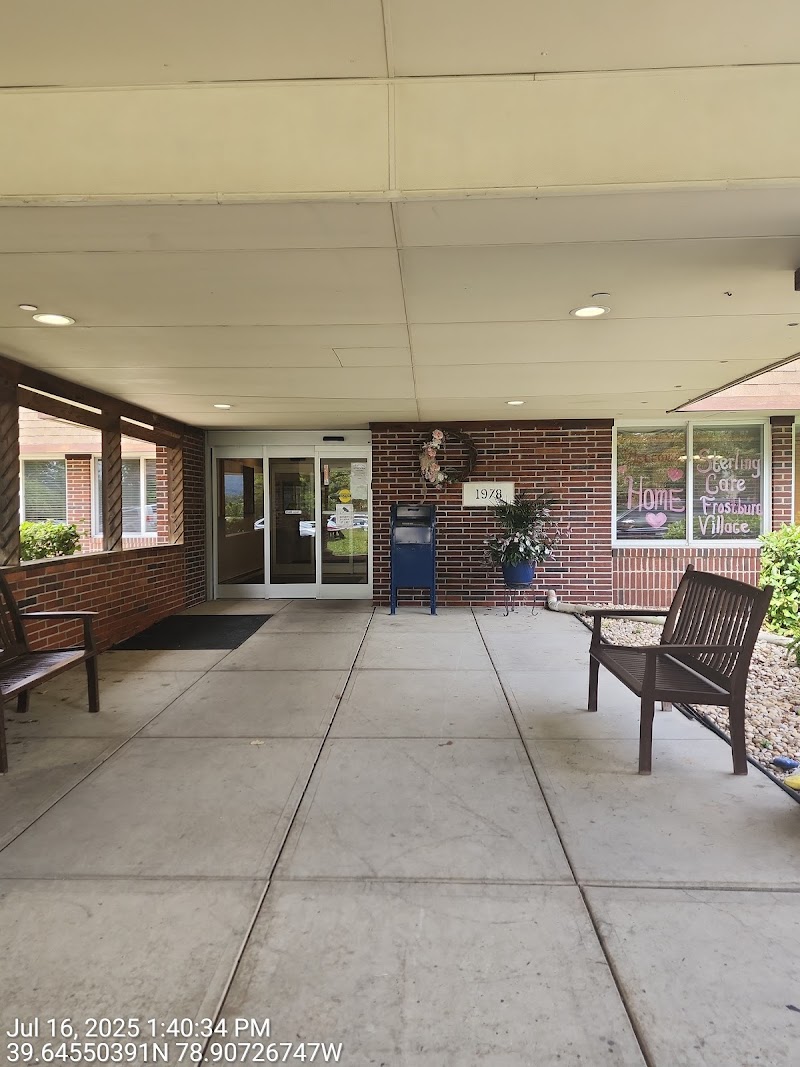
How is Frostburg Village Rehab Center Staffed?

CMS rates FROSTBURG VILLAGE REHAB CENTER's staffing level at 1 out of 5 stars, which is much below average compared to other nursing homes. Staff turnover is 68%, which is 21 percentage points above the Maryland average of 46%. High turnover can affect care consistency as new staff learn residents' individual needs. RN turnover specifically is 57%, which is notably high. RNs provide skilled clinical oversight, so turnover in this role can affect medical care quality.

What Have Inspectors Found at Frostburg Village Rehab Center?

State health inspectors documented 61 deficiencies at FROSTBURG VILLAGE REHAB CENTER during 2018 to 2025. These included: 1 that caused actual resident harm, 55 with potential for harm, and 5 minor or isolated issues. Deficiencies causing actual harm indicate documented cases where residents experienced negative health consequences.

Who Owns and Operates Frostburg Village Rehab Center?

FROSTBURG VILLAGE REHAB CENTER is owned by a for-profit company. For-profit facilities operate as businesses with obligations to shareholders or private owners. The facility is operated by STERLING CARE, a chain that manages multiple nursing homes. With 122 certified beds and approximately 101 residents (about 83% occupancy), it is a mid-sized facility located in FROSTBURG, Maryland.
How Does Frostburg Village Rehab Center Compare to Other Maryland Nursing Homes?

Compared to the 100 nursing homes in Maryland, FROSTBURG VILLAGE REHAB CENTER's overall rating (1 stars) is below the state average of 3.0, staff turnover (68%) is significantly higher than the state average of 46%, and health inspection rating (2 stars) is below the national benchmark.

What Should Families Ask When Visiting Frostburg Village Rehab Center?

Based on this facility's data, families visiting should ask: "How do you ensure continuity of care given staff turnover, and what is your staff retention strategy?" "Can you walk me through typical staffing levels on day, evening, and night shifts?" "Can I visit during a mealtime to observe dining assistance and food quality?" "How do you handle medical emergencies, and what is your hospital transfer rate?" These questions are particularly relevant given the facility's high staff turnover rate and the below-average staffing rating.

Is Frostburg Village Rehab Center Safe?

Based on CMS inspection data, FROSTBURG VILLAGE REHAB CENTER has a clean safety record: no substantiated abuse findings (meaning no confirmed cases of resident harm), no Immediate Jeopardy citations (the most serious violation level indicating risk of serious injury or death), and is not on the Special Focus Facility watch list (a federal program monitoring the lowest-performing 1% of nursing homes). The facility has a 1-star overall rating and ranks #100 of 100 nursing homes in Maryland. While no facility is perfect, families should still ask about staff-to-resident ratios and recent inspection results during their visit.

Do Nurses at Frostburg Village Rehab Center Stick Around?

Staff turnover at FROSTBURG VILLAGE REHAB CENTER is high. At 68%, the facility is 21 percentage points above the Maryland average of 46%. Registered Nurse turnover is particularly concerning at 57%. RNs handle complex medical decisions and coordinate care — frequent RN changes can directly impact care quality. High turnover means new staff may not know residents' individual needs, medications, or preferences. It can also be disorienting for residents, especially those with dementia who rely on familiar faces. Families should ask: What is causing the turnover? What retention programs are in place? How do you ensure care continuity during staff transitions?

Was Frostburg Village Rehab Center Ever Fined?

FROSTBURG VILLAGE REHAB CENTER has no federal fines on record. CMS issues fines when nursing homes fail to meet care standards or don't correct problems found during inspections. The absence of fines suggests the facility has either maintained compliance or corrected any issues before penalties were assessed. This is a positive indicator, though families should still review recent inspection reports for the full picture.

Is Frostburg Village Rehab Center on Any Federal Watch List?

FROSTBURG VILLAGE REHAB CENTER is not on any federal watch list. The most significant is the Special Focus Facility (SFF) program, which identifies the bottom 1% of nursing homes nationally based on persistent, serious quality problems. Not being on this list means the facility has avoided the pattern of deficiencies that triggers enhanced federal oversight. This is a positive indicator, though families should still review the facility's inspection history directly.