CONCERN
(D)
Potential for Harm - no one hurt, but risky conditions existed
Resident Rights
(Tag F0550)
Could have caused harm · This affected 1 resident
Based on observation and staff interview, it was determined the facility failed to treat residents in a dignified manner as evidenced by failing to serve all residents at the same table at the same ti...
Read full inspector narrative →
Based on observation and staff interview, it was determined the facility failed to treat residents in a dignified manner as evidenced by failing to serve all residents at the same table at the same time during dining observations. This was evident for 1 of 40 residents observed during the survey (resident #83).
The findings include.
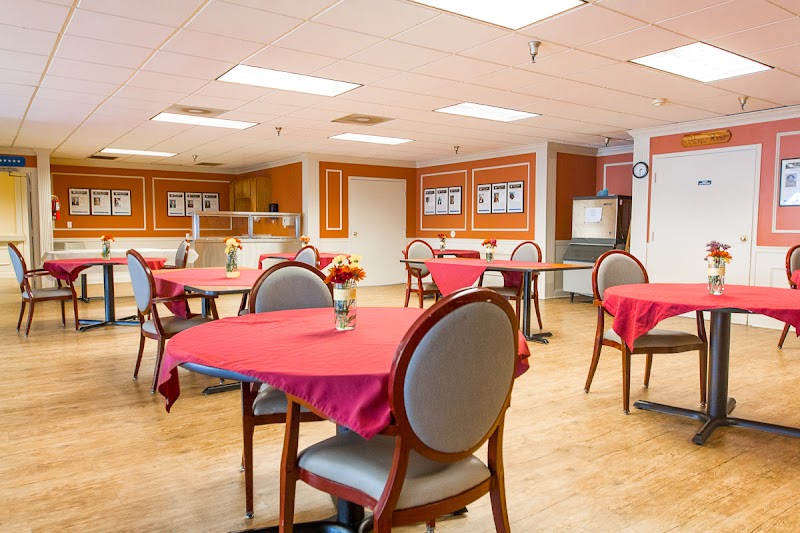
On 5/9/24, observations of the lunch time lunch meal service in the Potomac dining room were initiated at approximately 12:10 PM. The lunch cart was already in the dining room and the Social worker (staff #2) and the A-wing unit manager (staff # 15) were delivering meals to the residents in the dining room. At 12:15 PM resident #83 was noted to be sitting at a table without lunch, and the other two residents on each side of resident #83 had their lunch. The unit manager was assisting and feeding one of the two residents seated at the table with resident #83. At approximately 12:25 PM staff #15 requested staff #2 to check on resident #83's lunch. The social worker was able to retrieve a lunch tray from the kitchen and served resident #83's lunch at 12:30 PM.
An interview was conducted with the social worker at 12:40 PM discussing how the scheduling of staffing to pass out the lunch meal and resident #83 sitting at a table without a meal while the table mates were eating. She acknowledged that resident #83 had been without a meal for some time while the other residents were eating.
CONCERN
(D)
Potential for Harm - no one hurt, but risky conditions existed
Deficiency F0578
(Tag F0578)
Could have caused harm · This affected 1 resident
**NOTE- TERMS IN BRACKETS HAVE BEEN EDITED TO PROTECT CONFIDENTIALITY** 2) On [DATE] at 12:10 PM a chart review for Resident #74 revealed the resident was admitted to the facility on [DATE]. Review of...
Read full inspector narrative →
**NOTE- TERMS IN BRACKETS HAVE BEEN EDITED TO PROTECT CONFIDENTIALITY** 2) On [DATE] at 12:10 PM a chart review for Resident #74 revealed the resident was admitted to the facility on [DATE]. Review of the social services history and initial assessment form dated [DATE], under Advanced Care Planning Documented that advanced directive was offered and that resident had one. This document, however, could not be found in the residents' medical records.
In an interview with Staff #2 a Social Worker (SW) on [DATE] at 12:15 PM. She was asked about the process for offering Advanced Directives to residents. She stated that she would offer them to the residents on admission and then revisit when she does the quarterly assessments. She was made aware that Resident #74's Advanced directives could not be found and was asked to provide the document.
On [DATE] at 1:19 PM - The SW brought the MOLST form dated [DATE] and physician certification related to medical condition decision making and treatment limitations dated [DATE], but not the Advanced directives. She said it was not in the medical records.
On [DATE] at 10:47 AM The Director of Nursing (DON) was made aware of the concern. She said she spoke with the resident and the resident said their relatives had them. The DON stated that she asked the resident to have their family member bring it.
Based on clinical record review and staff interviews, it was determined the facility failed to ensure the resident/responsible party was offered the opportunity to develop an advance directive for 2 residents (Resident #71, #74) of 5 residents reviewed for advance directives during the recertification survey.
The findings include:
An advance directive is a written statement of a person's wishes regarding medical treatment, often including a living will, made to ensure those wishes are carried out should the person be unable to communicate them to a doctor. It is a legal document in which a person specifies what actions should be taken for their health if they are no longer able to make decisions for themselves because of illness or incapacity.
A Maryland MOLST (Medical Orders for Life-Sustaining Treatment) form is used for documenting a resident's specific wishes related to life-sustaining treatments. The MOLST form includes medical orders for Emergency Medical Services (EMS) and other medical personnel regarding cardiopulmonary resuscitation (CPR) and other life-sustaining treatment options for a specific patient.
1) On [DATE] at 9:25 AM during a review of the clinical record of Resident # 71's chart, the resident's MOLST was located, but there was no documented evidence and/or information indicating that an opportunity to formulate an advance directive was provided to the resident and/or the resident's representative (RP).
On [DATE] at 10:30 AM, review of social services progress notes did not reveal any documentation that the resident and/or RP was given the opportunity to formulate an advance directive.
On [DATE] at 10:42 AM, in an interview with the Director of Nursing (DON) she stated that all residents' advance directives were scanned into the facility's electronic record (PCC). The surveyor requested a copy of Resident # 71's advance directives.
On [DATE] at 12:10 PM, an interview was completed with the Social Worker (SW #2) regarding provisions to inform and provide written information to all adult residents concerning the right to accept or refuse medical or surgical treatment and, at the resident's option, formulate an advance directive. SW #2 stated that she has worked in the facility for about 3 years and residents were asked about their advance directives during admission and Full life meeting that included members of the interdisciplinary team. SW #2 added that they reviewed and offered information concerning advance directives during the meeting. She further stated that the initial social service assessment will have information on advance directives and social worker will document in progress notes regarding discussion with family to bring advance directive forms if any. She stated that the MOLST form was completed upon admission to the facility and usually came with the resident. The surveyor again requested a copy of Resident #71's advance directives.
On [DATE] at 12:35 PM, additional review of Resident #71's medical record was completed: a copy of the resident's advance directives was not located in the medical records.
On [DATE] at 8:50 AM, in a follow up interview with SW #2, she stated that Resident #71 did not have a copy of advance directives on file. She stated that the resident had a MOLST which was considered an advance directive and SW #2 gave the surveyor a copy of the resident's MOLST including an incapacity form that indicated that Resident #71 had capacity to make his/her own decision. SW #2 added that she (SW #2) has reached out to the resident's family to bring a copy of the advance directives if they had one.
On [DATE] at 8:57 AM, in an interview with the DON and Nursing Home Administrator (NHA), the NHA confirmed that Resident #71 did not have an advance directive on file. NHA stated that she (NHA) was a social worker by profession prior to becoming the NHA and acknowledged that there was a difference between an Advance Directives and a MOLST.
On [DATE] at 11:31 AM, surveyor reviewed the facility's policy and procedures for Residents' Rights Regarding Treatment and Advance Directives [NAME] Health implemented on [DATE] and revised on [DATE]: Under policy explanation and compliance guidelines: #3 - Upon admission, should the resident have an advance directive, copies will be made and placed on the chart as well as communicated to the staff.
CONCERN
(D)
Potential for Harm - no one hurt, but risky conditions existed
Safe Environment
(Tag F0584)
Could have caused harm · This affected 1 resident
**NOTE- TERMS IN BRACKETS HAVE BEEN EDITED TO PROTECT CONFIDENTIALITY** 2) On 5/01/24 at 2:08 PM an observation of the shared bathroom between room [ROOM NUMBER] and room [ROOM NUMBER] on the B wing o...
Read full inspector narrative →
**NOTE- TERMS IN BRACKETS HAVE BEEN EDITED TO PROTECT CONFIDENTIALITY** 2) On 5/01/24 at 2:08 PM an observation of the shared bathroom between room [ROOM NUMBER] and room [ROOM NUMBER] on the B wing of the facility revealed an area measuring approximately 24 inches long by 10 inches wide directly under the sink where the tile was missing, and the concrete subflooring was exposed.
On 5/14/24 at 10:22 AM an observation of the bathroom between room [ROOM NUMBER] and room [ROOM NUMBER] was conducted with the Director of Maintenance (Staff #49). Staff #49 stated that the flooring was removed to repair a pipe six months ago. No explanation was given for the lack of repair of the floor tile.
On 5/14/24 at 10:55 AM in an interview with the Nursing Home Administrator (NHA), the NHA was informed about the missing flooring in the shared bathroom between rooms [ROOM NUMBERS]. She did not provide any information or explanation.
Based on observation and staff interview, it was determined that the facility failed to ensure that residents care areas and furniture were kept in good repair. This was evident for 1 resident's bedroom area (Resident #290) and for 1 shared bathroom (room [ROOM NUMBER]/223 shared bathroom) during the initial observation of residents' rooms during the recertification survey.
The findings include:
1) On 5/3/24 at 11:41AM an observation of Resident #290's room revealed a nightstand beside the resident's bed that appeared to be in disrepair. The Plastic veneer on the four edges surrounding the top of the nightstand were completely off on one side exposing the rough wood. The other 2 sides of the nightstand were partially peeled off with the Plastic veneer sticking out. The bottom drawer was hanging out of the nightstand and the edges were half peeled off. The wall at the head of the resident's bed was observed with spackled areas measuring about 1x2 foot long.
In an interview with Resident #209 on 5/03/24 at 11:45 AM, the resident indicated that the nightstand has been like that for a while and that the spackle on the walls were from staff pushing his bed back and forth during care provision.
On 5/14/24 at 10:15 AM, Staff #49 the maintenance director was taken to the resident's room (121-A&B) and shown the nightstand, he said he will fix and put it back together. He was also shown the sparkle on the resident's wall, and he said they have a lot of them from moving the resident's beds and furniture's around. He was made aware that this was a concern.
On 5/14/24 at 10:58 AM The Nursing Home Administrator was made aware of the environmental concerns.
CONCERN
(D)
📢 Someone Reported This
A family member, employee, or ombudsman was alarmed enough to file a formal complaint
Potential for Harm - no one hurt, but risky conditions existed
Deficiency F0602
(Tag F0602)
Could have caused harm · This affected 1 resident
Based on record review and staff interviews, it was determined that the facility failed to protect a resident's right to be free from misappropriation and/or exploitation by taking a resident's medica...
Read full inspector narrative →
Based on record review and staff interviews, it was determined that the facility failed to protect a resident's right to be free from misappropriation and/or exploitation by taking a resident's medications. This was evident for 1 (Resident #345) of 4 residents reviewed for personal property during an annual survey.
The findings include:
On 5/06/24 at 5:12 PM, the surveyor investigated the facility's self-report, MD00196024, about Resident #345's medications (Alprazolam: psychotropic medication for anxiety and panic, also known as Xanax), which were brought from home upon admission were taken by a former employee (Registered Nurse #46).
Further review of the facility's investigation revealed that the facility obtained two written statements from Staff #47 and #48 about the incidents. Staff #47 wrote a statement on 8/24/23: Staff #48 didn't feel comfortable having Alprazolam in her cart without a count sheet, and she was told to give them to RN #46 to return to the family upon discharge. We were unable to find the medications, so we called RN #46 to ask about the location of the meds. RN #46 found the medications in her belongings that were taken out of her office when she was terminated.
Also, Staff #48 reported in her written statement on 8/25/23 that she did not feel comfortable taking over the medication cart with an Alprazolam bottle for Resident #345 without a narcotic count sheet. She gave the medicine to her unit manager, RN #46, until Resident #345's family could retrieve the meds.
During an interview with a Registered Nurse (RN #6, also previous Director of Nursing) on 5/08/24 at 10:18 AM, RN #6 confirmed that since the facility staff were not able to find Resident #345's Alprazolam, they contacted RN #46 via phone. During the phone call, RN #46 stated that she accidentally took the medications; all pills were accounted for.
In an interview with the Nursing Home Administrator (NHA) on 5/08/24 at 11:00 AM, the surveyor shared concerns about Resident #345's home medication being taken by RN #46 without any permission and/or explanation to the resident. The NHA validated the concerns.
CONCERN
(D)
Potential for Harm - no one hurt, but risky conditions existed
Deficiency F0624
(Tag F0624)
Could have caused harm · This affected 1 resident
Based on medical record review and staff interview, it was determined that the facility failed to orient, prepare, and document a resident's preparation for a transfer to the hospital. This was identi...
Read full inspector narrative →
Based on medical record review and staff interview, it was determined that the facility failed to orient, prepare, and document a resident's preparation for a transfer to the hospital. This was identified for 1 resident (Resident #76) of 4 residents reviewed for transfer to the hospital.
The findings include.
Review of Resident #76's medical record on 5/01/24 at 7:47 AM revealed an einteract SBAR Summary note dated 4/06/24 for 4:55 PM indicating the resident had a fall and a recommendation to transfer the resident to the hospital. The health Status Note that followed indicated the resident was sent out to the hospital for a fall. Review of the einteract note and the health Status note did not document what interventions were put into place before the transfer, what the resident was told and if the resident understood where he/she was going and why.
An interview was conducted with the unit manager (staff #18) on 5/07/24 at 10:35 AM with a discussion related to progress note documentation of resident #76's fall on 4/6/24. The note did not indicate if the fall was observed or where the fall occurred. The unit manager reviewed the nursing progress notes with indication of the writer of the fall note was a new nurse and she acknowledged the documentation of the note was poor.
A follow up interview was conducted with the Unit manager at 3:28 PM on 5/07/24 and the regulatory requirement of documenting that the facility must orient and prepare the resident regarding his or her transfer in a form and manner that the resident can understand was reviewed with the unit manager as related to the nursing progress note that were previously reviewed and that the nursing notes did not document the information reviewed. The unit manager revealed that she was unaware of the documentation requirements for a facility initiated resident transfer to the hospital.
CONCERN
(D)
Potential for Harm - no one hurt, but risky conditions existed
Assessment Accuracy
(Tag F0641)
Could have caused harm · This affected 1 resident
**NOTE- TERMS IN BRACKETS HAVE BEEN EDITED TO PROTECT CONFIDENTIALITY** Based on record review and interview, it was determined that the facility failed to code accurately for the discharge status of ...
Read full inspector narrative →
**NOTE- TERMS IN BRACKETS HAVE BEEN EDITED TO PROTECT CONFIDENTIALITY** Based on record review and interview, it was determined that the facility failed to code accurately for the discharge status of a resident on the Minimum Data Set (MDS) assessment. This was evident for one (Resident #87) of three residents reviewed for discharge during the annual survey.
The findings include:
Minimum Data Set: The Minimum Data Set (MDS) is part of the federally mandated process for clinical assessment of all residents in Medicare or Medicaid-certified nursing homes. It is a core set of screening, clinical, and functional status elements, including common definitions and coding categories, forming the foundation of a comprehensive assessment.
On 5/02/24 at 12:35 PM, during an annual survey process, the program selected Resident #87 for a closed record review about hospitalization.
The surveyor reviewed electronic medical records for Resident #87 on 5/02/24 at 2:05 PM. The progress note written by a registered nurse (RN #33) on 3/01/24 at 10:24 AM said, Patient d/c (discharge) home with family. Transferred out of facility with daughter.
However, further review of Resident #87's MDS assessment dated [DATE] of section A. A2105 Discharge Status coded as 04 (short-term General Hospital).
During an interview with the Nursing Home Administrator (NHA) on 5/03/24 at 11:49 AM, she verified that Resident #87 discharged home with his/her family on 3/01/24. She explained that the facility's MDS coordinator updated residents' discharge status upon their discharge. She said , it might be coded wrong by mistake. The surveyor shared concern about inaccurate coded MDS for the resident's discharge status. The NHA validated the concern.
CONCERN
(D)
Potential for Harm - no one hurt, but risky conditions existed
Deficiency F0655
(Tag F0655)
Could have caused harm · This affected 1 resident
Based on record review and interviews it was determined that the facility failed to provide residents with baseline care plans. This was evident for 1 resident (Resident #82) of 5 residents reviewed f...
Read full inspector narrative →
Based on record review and interviews it was determined that the facility failed to provide residents with baseline care plans. This was evident for 1 resident (Resident #82) of 5 residents reviewed for urinary catheters/urinary tract infections.
The findings include:
On 5/09/24 at 9:24 AM a clinical record review for Resident #82 was conducted. The resident's record lacked any documentation that a baseline care was reviewed and provided to the resident.
on 5/09/24 at 10:20 AM the surveyor asked the Business Office Manager, Staff #22, who was also responsible for access and management of the facility's electronic medical record, for a copy of Resident #82's baseline care plan.
On 5/09/24 at 10:45 AM in an interview with Staff #22 and the facility's Minimum Data Set (MDS) nurse (Staff #8), a printed copy of Resident #82's care plan was provided. When asked for evidence that the baseline care plan was provided to the resident within 48 hours of admission to the facility, they said they would look for that evidence and get back to me.
On 5/09/24 at 11:03 AM in an interview with Staff #8 and Staff #22, a copy of the notes from the baseline care plan meeting dated 3/13/24 was provided but the facility process was to document that the resident received the information, but Resident #82's care plan meeting documentation did not include that information and there was also no other documentation or signature sheet that indicated the baseline care plan and medication list were provided to the Resident #82 or the resident's representative.
CONCERN
(D)
📢 Someone Reported This
A family member, employee, or ombudsman was alarmed enough to file a formal complaint
Potential for Harm - no one hurt, but risky conditions existed
Comprehensive Care Plan
(Tag F0656)
Could have caused harm · This affected 1 resident
**NOTE- TERMS IN BRACKETS HAVE BEEN EDITED TO PROTECT CONFIDENTIALITY** Based on observation, medical record review, and interview, it was determined the facility staff failed to develop and initiate ...
Read full inspector narrative →
**NOTE- TERMS IN BRACKETS HAVE BEEN EDITED TO PROTECT CONFIDENTIALITY** Based on observation, medical record review, and interview, it was determined the facility staff failed to develop and initiate comprehensive person-centered care plans for residents residing in the facility. This was evident for 1 resident (Resident #71) of 5 residents reviewed for unnecessary medications, and for 1 resident (Resident #191) of 1 residents reviewed for falls during the recertification survey.
The findings include:
A care plan is a guide that addresses the unique needs of each resident. It is used to plan, assess, and evaluate the effectiveness of the resident's care.
An advance directive is a written statement of a person's wishes regarding medical treatment, often including a living will, made to ensure those wishes are carried out should the person be unable to communicate them to a doctor. It is a legal document in which a person specifies what actions should be taken for their health if they are no longer able to make decisions for themselves because of illness or incapacity.
A Maryland MOLST (Medical Orders for Life-Sustaining Treatment) form is used for documenting a resident's specific wishes related to life-sustaining treatments. The MOLST form includes medical orders for Emergency Medical Services (EMS) and other medical personnel regarding cardiopulmonary resuscitation (CPR) and other life-sustaining treatment options for a specific patient.
1) On [DATE] at 9:25 AM during a review of the clinical record of Resident # 71's chart, the resident's MOLST dated [DATE] was located, but no advance directives. The MOLST noted No CPR, Option A-2 (Do Not Intubate (DNI): Comprehensive efforts may include limited ventilatory support by CPAP or BIPAP, but do not intubate). Resident's face sheet had DNR/DNI under the Advance Directive section.
On [DATE] at 10:13 AM, a review of Resident #71's care plan was completed: A plan of care was developed for Resident #71 with a Focus on Advanced Directives General: Full Code initiated on [DATE] with goals Resident's Advanced Directives wishes will be known initiated on [DATE], revision date of [DATE] and target date [DATE].
The interventions included Complete/update Advanced Directives document and Review advanced Directives on file, if applicable date initiated [DATE].
Full code means that if a person's heart stopped beating and/or they stopped breathing, all resuscitation procedures will be provided to keep them alive. This process can include chest compressions, intubation, and defibrillation and is referred to as CPR. However, the care plan did not address Resident #71's current code status of No CPR, Option A-2 (Do Not Intubate) as indicated on the MOLST and/or face sheet (DNR/DNI). The care plan was not comprehensive, and resident centered.
On [DATE] at 10:54 AM, an interview was completed with the Director of Nursing (DON) and Nursing Home Administrator (NHA) regarding care plans. They stated that the Interdisciplinary Team (IDT team) was responsible for residents' care plans and reviewed them: Everybody has access to enter stuff in the residents' care plans. Social worker arranges care plan meetings.
During a review of Resident #71's medical record conducted on [DATE] at 12:29 PM, surveyor noted active physician orders dated [DATE] for Advanced Directive: DNR/DNI (Do not Resuscitate/Do not intubate).
On [DATE] at 12:35 PM, additional review of Resident #71's medical record was completed: a copy of the resident's advance directives was not located in the medical records.
On [DATE] at 2:36 PM, an interview was completed with Registered Nurse, RN #35, who has worked in the facility for over a year and 4 months. Regarding resident's code status, RN #35 stated that on the resident's profile in PCC (electronic record), the code status was documented under the banner of the resident's picture. She stated that when a resident becomes unresponsive, staff looks in PCC for the resident's code status. She further stated that the code status was documented in their report sheet and on the MOLST form.
Resident #71's code status reviewed under profile picture indicated DNR/DNI.
On [DATE] at 2:57 PM, in an interview with Licensed Practical Nurse (LPN #24), s/he stated that s/he has worked in the facility since [DATE] (8 months). LPN #24 stated that the Code status was on the top left corner where the resident's picture was in PCC and can be found in the Report sheet and on the MOLST. LPN #24 verified that Resident #71's code status was DNR/DNI.
On [DATE] at 8:50 AM, in a follow up interview with the Social Worker (SW #2), she stated that Resident #71 did not have a copy of advance directives on file. She stated that the resident had a MOLST which was considered an advance directive and SW #2 gave the surveyor a copy of the resident's MOLST including an incapacity form that indicated Resident #71 had capacity to make his/her own decision. SW #2 verified that the MOLST had the resident's code status as No CPR, Option A-2 (Do Not Intubate) which was different from Full Code indicated in the care plan.
On [DATE] at 8:57 AM, in an interview with the DON and Nursing Home Administrator (NHA), the surveyor reviewed Resident #71's MOLST (DNI), active orders regarding code status (DNR/DNI), and care plan (Full code). NHA verified and confirmed that the care plan was not comprehensive, and resident centered and did not address the resident's current code status of DNR/DNI. NHA stated that is a problem.
2) On [DATE] at 3:20 PM, review of Resident #191's medical records revealed the resident was admitted to the facility on [DATE] with medical diagnoses that included but not limited to Dementia, Parkinson's disease, Depression, Metabolic Encephalopathy, Urinary tract infection, and severe Sepsis with septic shock.
On [DATE] at 11:10 AM, a review of admission falls risk assessments for Resident #191 on [DATE] documented a fall risk score of 15 (high risk for potential for falls). On [DATE], the fall risk evaluation score was 13, on [DATE] the score was 12, on [DATE] the score was 15, and on [DATE] the score was 17.
On [DATE] at 11:20 AM, a review of change in condition evaluation dated [DATE] revealed the resident had a fall with no injuries noted. Pre and post fall assessments were done and fall risk scores documented.
On [DATE] at 11: 45 AM, a review of Resident #191's Care plan was completed: Focus Resident is at risk for falls r/t: Medication use, Foley, cognition, weakness, unsteady gait, The resident has had an actual fall with no injury. initiated/created on [DATE] with revision on same date ([DATE]).
However, further review of the care plan did not reveal that Resident #191 was care planned for being at risk for falls when s/he was assessed on [DATE] and had a falls risk score of 15. The care plan was not comprehensive, resident centered, and the interventions were inadequate. The interventions put in place included Neuro checks initiated, skin check completed, therapy dept notified of fall, nonskid socks provided to resident, Monitor/document/report PRN x 72h to MD for s/sx: pain, bruises, change in mental status, new onset: confusion, sleepiness, inability to maintain posture, agitation, Provide activities that promote exercise and strength building where possible, and Resident sent to SMH ER for AMS Eval. There was no care plan goal and/or interventions put in place for being at risk for falls.
On [DATE] at 1:55 PM, in an interview with the Director of Nursing (DON), surveyor reviewed Resident #191's fall risk assessments/scores. DON confirmed that a score of 15 on admission indicated that the resident was a high fall risk. The surveyor reviewed Resident #191's care plan with DON. DON verified and confirmed that the care plan for risk for falls and/or actual fall was initiated/created after the resident fell on [DATE], and the interventions were not adequate. DON acknowledged that any resident with a high score for risk for falls should have that addressed in their care plan. DON further stated that the admitting nurse failed to initiate the fall risk care plan when Resident #191 was admitted , and no one caught it until after the resident had a fall on [DATE].
On [DATE] at 8:14 AM, an interview was completed with the night shift supervisor (RN #11) who has worked in the facility for 1 year: Regarding fall risk care plan initiation, RN #11 stated that any resident on admission with a high fall risk score should have a fall risk care plan in place. She stated that the admitting nurse was responsible for initiating the care plan. However, RN #11 added that sometimes unit managers and the supervisors will initiate care plans if they know about the residents' issues beforehand. Regarding Resident #191's fall risk score of 15 on admission, RN #11 stated that a fall care plan should have been initiated as soon as they knew the resident was a fall risk. Regarding fall precautions put in place, RN #11 stated that all the beds should be in a low position, frequent checks by staff, offer toileting and make sure the residents' needs were met etc. (Of note, these precautions were not included in the resident's current care plan).
CONCERN
(D)
Potential for Harm - no one hurt, but risky conditions existed
Deficiency F0657
(Tag F0657)
Could have caused harm · This affected 1 resident
**NOTE- TERMS IN BRACKETS HAVE BEEN EDITED TO PROTECT CONFIDENTIALITY** Based on a review of resident medical records and interviews with facility staff, it was determined that the facility failed to ...
Read full inspector narrative →
**NOTE- TERMS IN BRACKETS HAVE BEEN EDITED TO PROTECT CONFIDENTIALITY** Based on a review of resident medical records and interviews with facility staff, it was determined that the facility failed to review and revise resident care plans after each assessment or as resident care needs became apparent or changed over time. This was evident for 1 resident (Resident #82) of 1 residents reviewed for respiratory care and 1 resident (Resident #76) of 1 residents reviewed for dementia during the recertification survey.
The findings include:
1) On 5/02/24 at 8:37 AM Resident #82 was observed seated on his/her bed. The resident was alert, conversant, and denied having any active infection, distress, or diarrhea. The resident was not connected to any intravenous device, and none was observed in the resident's room.
On 5/09/24 at 10:27 AM a record review of Resident #82's care plan revealed current active problems for dehydration or potential fluid deficit r/t Poor intake/diarrhea initiated on 3/14/24 and revised on 3/18/24. The associated interventions/orders included administer 2 liters IV (intravenous) fluids. Further review of the care plan also revealed a problem for diarrhea r/t [related to] use/side effects of medication [NAME] [antibiotics] initiated on 3/21/2024. A further review of the medical record revealed that the resident's antibiotics were all discontinued on or before 4/14/24.
On 5/09/24 at 11:03 AM the MDS nurse (Staff #8), was interviewed and asked about Resident #82's active care plan problems for IV fluids and diarrhea related to the use of antibiotics. Staff #8 acknowledged that the resident was no longer receiving IV fluids or antibiotics and no longer having diarrhea and that the care plan contained inactive problems; it had not been revised. Staff #8 further explained that the facility's care process for revising care plans was to update care plans with each quarterly MDS assessment and whenever a significant change occurred with the resident. When asked how any nurse assigned to the resident who was unfamiliar with the resident's care would know whether or not to administer IV fluids, Staff #8 acknowledged that this could be a problem.
On 5/14/24 the Nursing Home Administrator was made aware that Resident #82's active care plan contained completed/resolved issues.
2) On 5/07/24 at 9:45 AM resident #76's record was reviewed and revealed a diagnosis of unspecified dementia, moderate with other behavioral disturbances.
A review of Resident #76's care plan focus area of impaired cognitive function/dementia or impaired thought processes r/t Dementia had the goal, will be able to communicate basic needs on a daily basis through the review date, and a second goal as The resident will develop skills to cope with cognitive decline and maintain safety by the review date. The care plan was initiated on 5/08/23. There were no evaluations found in the medical record and the care plan has not had any additional interventions since 5/08/23. There was no documentation to indicate that the resident had developed skills to cope.
Review of Resident #76's care plan focus of The resident has a behavior problem (refusing care, meals, aggressive with staff) related to dementia, cognitive impairment was initiated on 6/22/23. The goal was written as the resident will have fewer episodes of noted behavior. There was no evidence found in the medical record that the care plan was evaluated, and new interventions were put in place since the care plan initiation on 6/22/23.
An interview was conducted with the unit manager (staff#18) on 5/13/24 at 1:35 PM. She was asked how the facility reassess the effectiveness of the interventions and review and revise the resident's care plan. She indicated that she documents quarterly assessments. She did not know how the facility documents care plan effectiveness of the care plan interventions related to the goals of the care plan. She was asked about the goal stated as the resident will have fewer episodes of noted behavior She was asked if the goal is quantitative as to how fewer episodes is measured. She did not have a direct response to the question but indicated that there is a behavior meeting each week to discuss residents that have negative behaviors.
On 5/15/24 at 8:55 AM, an interview was conducted with a nurse MDS (minimal data set) assessor (Staff#8). The MDS assessment coordinator was noted to change some dates on resident #76's care plan on 4/19/24. She was asked how the facility reassessed the effectiveness of the care plan interventions, reviewed and revised resident care plans. She indicated that the unit managers should look at the care plans. She was informed that there was no documentation from the unit manager related to care plan evaluations. She was asked to review resident #76's care plans as she documented Revision on 4/19/24. She acknowledged that the revision date is the date the quarterly target date is changed. She discussed and shared the types of quarterly assessments that are performed. She was asked several times as to how are care plan evaluations documented and she responded that she did not have additional documentation related to her review of resident #76's care plan on 4/19/24. She was asked about the stated goal The resident will develop skills to cope with cognitive decline and maintain safety asking is this goal quantitative and measurable? Or how is this goal measured. What is the resident's status for this goal? She did not have a response to the multiple questions.
The concern of lack of documentation to indicated the facility reassess the effectiveness of the care plan interventions to the goals was shared with the MDS assessor.
CONCERN
(D)
📢 Someone Reported This
A family member, employee, or ombudsman was alarmed enough to file a formal complaint
Potential for Harm - no one hurt, but risky conditions existed
Quality of Care
(Tag F0684)
Could have caused harm · This affected 1 resident
**NOTE- TERMS IN BRACKETS HAVE BEEN EDITED TO PROTECT CONFIDENTIALITY** Based on a complaint, medical record review, and interview it was determined that the facility failed to ensure 1) staff properl...
Read full inspector narrative →
**NOTE- TERMS IN BRACKETS HAVE BEEN EDITED TO PROTECT CONFIDENTIALITY** Based on a complaint, medical record review, and interview it was determined that the facility failed to ensure 1) staff properly assessed a resident on admission, and 2) staff monitored a resident's blood sugars . This was evident for 2 residents (Residents #347 and #24) of 40 residents reviewed during the recertification/complaint survey.
The findings include:
1) A rectal probe is a thin, long wire that monitors the internal body at a safe rectal temperature.
In a review of a facility self-reported incident, MD00201894, on 5/06/24 at 10:02 AM, facility staff found Resident #347 had a rectal probe wire attached to his/her sacral dressing on 1/24/24.
Further review of the facility's investigation revealed that a Geriatric Nursing Aide (GNA #39) had written a statement on 1/30/24, On 1/22/24, I was changing [Resident #347], and I saw a patch on his/her bottom, and I just figure it was something that was supposed to be there. So I was very careful when cleaning him/her cause I figure it was supposed to be there. Also, GNA #38 wrote a statement on 1/29/24 as on 1/24/24, I was washing up [Resident #347], turned him/her over I saw something sticking out of his/her butt. I went and told the nurse.
The surveyor reviewed Resident #347's medical records on 5/06/24 at 11:20 AM. The review revealed that the resident had been admitted to the hospital due to low blood pressure and low glucose levels on 1/19/24 from the facility and readmitted to the facility on [DATE]. The resident's medical record had a form named 'skin only evaluation' upon his/her readmission date (1/22/24) completed by a wound nurse (Staff #1). The form had a list of Resident #347's wounds: venous ulcer on Right lower extremity, Left lower extremity, and sacrum. Also, the 'admit/readmit screener' form was documented on 1/22/24 about Resident #347's overall health condition. However, there was no documentation about his/her rectal probe.
During an interview with Staff #1 on 5/06/24 at 11:25 AM, the staff confirmed that she did a skin check for [Resident #347] but did not find any probe then. Staff #1 added, Maybe I didn't check deep enough to see the probe.
In an interview with GNA #39 on 5/07/24 at 6:45 AM, the surveyor asked about the incident. GNA #39 stated that she could not recall the incident. After sharing her written statement, GNA #39 said, A nurse asked me to write a statement about the white patch; I wrote it. No one explained what it was or what was wrong.
During an interview with the Nursing Home Administrator (NHA) on 5/07/24 at 8:33 AM, the NHA said, Resident #347 had had the rectal probe upon his/her readmission from the hospital on 1/22/24, for some reason, it came out two days later. Then we removed it and reported the unusual incident form. The surveyor asked the NHA why the probe was not found after initial assessment from the nurse and wound nurse, and why the staff who cared for Resident #347 for two days did not see the probe's end piece. The NHA said, I don't know. The NHA validated the above concern.
2) The hemoglobin A1C (HbA1c or HgA1c) test is a simple blood test that measures your average blood sugar levels over the past 3 months. It's one of the commonly used tests to diagnose prediabetes and diabetes and is also the main test to help you and your health care team manage your diabetes. It is an important blood test that gives a good indication of how well your diabetes is being controlled (normal level below 5.7%, prediabetes 5.7% to 6.4 %, and diabetes 6.5% or above). Hemoglobin is part of your red blood cells that carries oxygen from your lungs to the rest of your body.
Medical record review on 5/13/2024 at 2:38 PM revealed Resident #24 was admitted to the facility on [DATE] and re-admitted on [DATE] with diagnoses that included but not limited to type 2 diabetes mellitus, hemiplegia and hemiparesis following unspecified cerebrovascular disease affecting left dominant side, cerebral infarction, pressure ulcer of right buttock, stage 3.
On 5/14/2024 at 12:08 PM, a review of physician orders revealed no active orders for blood sugar monitoring. However, further review revealed the following discontinued order: Fasting blood sugar in the morning every Mon, Thu Notify MD if BS <60 or >400.
Other: Discontinued 11/7/2022 07:00 3/20/2024 11/3/2022
On 5/14/2024 at 12:45 PM, a review of Medication Administration Record (MAR) and Treatment Administration Record (TAR) for April 2024 revealed Resident #24's blood sugar was not documented when ordered Insulin was administered at bedtime.
Review of the vital sign record on 5/14/2024 at 1:19 PM, revealed staff documented blood sugar results for Resident #24 on 4/5 (184mg/dl), 4/9 (188 mg/dl), 4/13 (166 mg/dl), 4/15 (211 mg/dl), 4/22 (164 mg/dl), 4/23 (188 mg/dl), and 4/27 (158 mg/dl). However, Resident #24's blood sugars were not monitored/documented daily/routinely even though s/he was getting long-acting Insulin at bedtime.
On 5/14/2024 at 1:35 PM, a follow up observation was made of Resident #24 in their room. In an interview with Resident #24, surveyor asked if the resident was on Insulin and s/he said yes. When asked if her/his blood sugars were checked prior to giving her Insulin, the resident responded sometimes.
In an interview with Licensed Practical Nurse, LPN #24, on 5/14/2024 at 1:40 PM, she stated that the expectation was to check blood sugars prior to giving insulin and follow sliding scale/ordered parameters prior to the administration. The surveyor reviewed Resident #24's MAR for April 2024 with LPN #24 who confirmed that staff did not monitor/document the resident's blood sugars when the Insulin was administered at bedtime. LPN #24 reviewed the vital signs flow sheet for blood sugar documentation and confirmed that blood sugars were not monitored and/or documented for most of the days in April.
On 5/14/2024 at 1:50 PM, in an interview with the Director of Nursing (DON), the surveyor reviewed Resident #24's MAR for April 2024. DON responded by saying that How can you give Insulin without checking blood sugars? Staff know that you do not give Insulin without checking blood sugar. She added that will be addressed.
On 5/14/2024 at 3:24 PM, in an interview with the Medical Director (MD #5), the surveyor reviewed Resident #24's orders and Insulin administration for April 2024. MD #5 stated that the resident was getting long-acting insulin at bedtime and their blood sugars should be monitored in the morning and not at the time of administration. However, MD #5 added that the surveyor should address the issue of not monitoring the resident's blood sugars with the nurses and/or DON.
On 5/15/2024 at 10:28 AM, further review of physician orders by another surveyor revealed the following discontinued orders:
- HgAIC q 3 months start 11/10/2022 and d/c on 3/20/2024
- AIC and BMP: one time order for 5/8/2023 d/c on 5/4/2023
- CMP start 11/10/2022 and d/c on 3/20/2024
On 5/15/2024 at 11:25 AM, in an interview with Nurse Practitioner (NP #16), surveyor reviewed Resident #24's orders regarding the above labs that were discontinued with no new orders for blood sugar monitoring. The surveyor reviewed resident's MAR for April 2024 where resident got long-acting Insulin, but their blood sugars were not monitored/documented: NP #16 stated that when the resident was sent out of the facility their orders were automatically discontinued. When they returned whoever re-entered their orders failed to put in the order for HgAIC q 3 months. She added that MD #5 oversees the resident's labs. However, she stated that she (NP #16) was going to put in new orders.
CONCERN
(D)
Potential for Harm - no one hurt, but risky conditions existed
Pressure Ulcer Prevention
(Tag F0686)
Could have caused harm · This affected 1 resident
**NOTE- TERMS IN BRACKETS HAVE BEEN EDITED TO PROTECT CONFIDENTIALITY** Based on observation, interview, and record review it was determined that the facility failed to provide appropriate care to res...
Read full inspector narrative →
**NOTE- TERMS IN BRACKETS HAVE BEEN EDITED TO PROTECT CONFIDENTIALITY** Based on observation, interview, and record review it was determined that the facility failed to provide appropriate care to residents with pressure ulcers. This was evident for 1 resident (Resident #349) of 4 residents reviewed for pressure ulcers during the recertification survey.
The finding include:
A pressure ulcer, also known as a pressure sore or decubitus ulcer, is any lesion caused by unrelieved pressure that results in damage to the underlying tissue. Pressure ulcers are staged according the their severity from Stage I (area of persistent redness), Stage II ( superficial loss of skin such as an abrasion, blister or shallow crater), Stage III ( full thickness skin loss involving damage to subcutaneous tissue presenting as a deep crater), Stage IV (full thickness skin loss with extensive damage to muscle, bone or tendon) or Unstageable Pressure Ulcer (full thickness tissue loss in which the base of the ulcer is covered by slough and/or eschar in the wound bed).
On 5/02/24 at 10:28 AM during an observation and interview with Resident #349, the surveyor observed that the resident was on a regular mattress. The resident denied having any skin issues.
On 5/02/24 at 4:18 PM a review of Resident #349's care plan revealed a problem initiated on 4/29/24 for a stage IV sacral wound.
On 5/03/24 at 10:25 AM in an interview with Licensed Practical Nurse (LPN #19), LPN #19 reviewed the resident's care plan and indicated that the care plan did not include an intervention for a pressure-relieving mattress for the resident's bed. LPN #19 explained that the unit manager usually updated residents' care plans.
On 5/03/24 at 10:56 AM in an interview with the Unit Manager (LPN #18), Resident #349's care plan was reviewed. LPN #18 confirmed that the resident had multiple pressure ulcers but that no pressure relieving device was listed on the care plan and had not been ordered. LPN #18 confirmed that the resident was not currently on a pressure relieving mattress, and that the facility was aware before the resident was admitted to the facility that he/she had pressure ulcers.
On 5/06/24 at 11:28 AM in an interview with the facility wound care nurse (LPN #1), she was asked if any resident with a pressure ulcer should have a pressure relieving mattress, and she said yes. When asked if Resident #349 had a pressure relieving mattress, she replied that he/she should, but she was not sure if the resident had one.
On 5/06/24 at 1:06 PM an observation of Resident #349 was again conducted and no pressure relieving mattress or device was seen on the resident's bed.
On 5/06/24 at 1:51 PM another interview with LPN #18 was conducted and she confirmed that Resident #349 was admitted on [DATE] and that a pressure relieving mattress should have been applied to the resident's bed by now, and one was being obtained. She did not offer any explanation for why it was not already placed. When asked, she said the resident did not refuse to have a special mattress placed on his bed.
On 5/24/24 at 10:40 AM the Nursing Home Administrator (NHA) was made aware of the concern. No additional information was provided by the end of the survey.
CONCERN
(D)
📢 Someone Reported This
A family member, employee, or ombudsman was alarmed enough to file a formal complaint
Potential for Harm - no one hurt, but risky conditions existed
Incontinence Care
(Tag F0690)
Could have caused harm · This affected 1 resident
Based on observation, medical record reviews and staff interviews it was determined that the facility failed to provide appropriate treatment, care, and services to residents with a urinary catheters....
Read full inspector narrative →
Based on observation, medical record reviews and staff interviews it was determined that the facility failed to provide appropriate treatment, care, and services to residents with a urinary catheters. This was evident for 2 residents (Resident #19 and Resident #93) of 5 residents reviewed for urinary catheter or UTI during the recertification survey.
The findings include:
1) On 4/30/24 at 11:31AM, during the initial assessment, the surveyor observed that Resident #19 had a Urinary Catheter, a device that drains urine from the bladder. The resident said they've had it for about 1-2 years and that the nurses and the Geriatric Nursing Assistants (GNA) are responsible for providing care associated with this device.
Review of the physician's order on 05/03/24 at 08:20 AM revealed an order written on 3/17/24 as Foley Catheter: Obtain output every shift. and on 3/29/24 Enhanced Barrier Precautions. every shift. Further review did not yield any further orders associated with catheter care/ management.
A review of the January 2024 Treatment Administration Record (TAR) on 5/03/24 at 8:30 AM revealed that is had on six orders related to care of the resident's urinary catheter that read:
Change Foley Q monthly and PRN every night shifts every 31 day(s)
Urinary Catheter: 16F / 10cc one time a day every 1 month(s) starting on the 3rd for 1 day(s) related to resident's medical condition.
Urinary Catheter: Change Catheter.
Anchor one time a day, every day.
Urinary Catheter: Drainage Bag -Change one time a day every Monday.
Check to make sure Foley Cath bag is covered every shift, every shift.
A review of the resident's February 2024 TAR revealed only one order for Foley Catheter care that read:
Urinary Catheter Care every shift.
A review of the resident's March 2024 TAR revealed only one order associated with catheter care written as:
Foley Catheter: Obtain output every shift.
A review of the resident's April 2024 TAR also had only one order for catheter care which read:
Foley Catheter: Obtain output every shift. every shift.
On 5/09/24 at 1:21 PM, Staff #17 a Registered Nurse (RN) was asked in an interview the process for taking care of residents with urinary catheter. She stated that residents with urinary catheter have orders in their medical records or TAR showing what kind of care they require. She was asked how the nurse or GNA's would know exactly what care was required if the order was not in the residents' medical records/ TAR. She responded that the nurse will just have to go and check and if it's not there, ask for an order to be placed.
On 5/09/24 at 1:59 PM, the Director of Nursing (DON) in an interview was asked about residents with urinary catheters and what sort of associated orders they should have for care and management of their urinary catheters. She stated that orders should indicate catheter care and management. She was asked where the nurse would find these orders and she said in the TAR. She was made aware that Resident #19 with a urinary catheter did not have all the associated orders for the care of the urinary catheter to prevent UTI on the TAR for the months of February, March, and April 2024.
2) Suprapubic catheterization refers to the placement of a drainage tube into the urinary bladder just above the pubic symphysis. This is typically performed for individuals who are unable to drain their bladder via the urethra. Suprapubic catheterization offers an alternative means to drain the urinary bladder when other methods are not clinically feasible, undesirable or impossible. This activity reviews the technique of suprapubic bladder catheterization, its indications, contraindications and role of the interprofessional team in the management of patients who are not able to void urine.
(Suprapubic definition on National Library of Medicine)
In April 2022, the Office of Health Care Quality received an anonymous complaint MD00175755 about Resident #93. The complaint indicated that Resident #93's catheter was not clean and managed.
During the investigation of complaints on 5/09/24 at 11:43 AM, the surveyor reviewed Resident #93's medical records. The review revealed that Resident #93 had a suprapubic catheter due to obstructive uropathy from July 2021 until the resident was discharged in April 2022.
Continued review of Resident #93's medical records revealed that the resident had an order written on 11/14/2021 for catheter care as 'clean catheter with normal saline and apply dry dressing,' and an order on 1/27/22 stating 'flush/irrigate catheter with 60cc of normal saline for leakage or blockage', and ordered on 10/22/21 'suprapubic output every shift.'
On 5/09/24 at 3:20 PM, the surveyor reviewed Resident #93's Treatments Administration Records (TAR) for March 2022 and April 2022. Under the records of 'the suprapubic output every 8 hours,' there was no documentation for 16 days in March 2022 and 12 days in April 2022.
Additionally, the records documented less than 100 cc (0cc, 5cc, 50cc, 60cc, and 75cc) five times in March 2022 and five times in April 2022.
The surveyor interviewed a Geriatric Nurse Aide (GNA #34) on 5/10/24 at 7:44 AM. GNA #34 stated that they emptied and measured catheter output and then reported the results to the nurses.
During an interview with the registered nurse (RN #11) on 5/10/24 at 7:50 AM, RN #11 confirmed that nurse aides emptied the catheter bag, reported it to nurses, and nurses documented it in the chart. Also, RN #11 added that if the output was less than 100cc, nurses should check the catheter, such as leaking, malfunctioning, twisting, etc. And nurses should document it. RN #11 added, As needed, nurses will contact the provider to resolve the issue.
On 5/10/24 at 10:00 AM, the surveyor interviewed a registered nurse (RN #8) about residents' low catheter output. RN #8 said, nurses should document about it. The surveyor requested to provide any documentation about Resident #93's catheter output. In the afternoon of 5/10/24, RN #8 confirmed that there was no documentation and/or intervention documented about Resident #93's suprapubic catheter output.
During an interview with the Nursing Home Administration (NHA) on 5/14/24 at 11:14 AM, the surveyor informed the NHA of the above concern. The NHA validated the concerns about no care/intervention provided for the resident with low output from the suprapubic catheter.
CONCERN
(D)
📢 Someone Reported This
A family member, employee, or ombudsman was alarmed enough to file a formal complaint
Potential for Harm - no one hurt, but risky conditions existed
Deficiency F0692
(Tag F0692)
Could have caused harm · This affected 1 resident
Based on complaint, reviews of a closed electronic record, and staff interview, it was determined that 1) the nursing staff failed to obtain a physician's order for a specific diet, 2) notify a reside...
Read full inspector narrative →
Based on complaint, reviews of a closed electronic record, and staff interview, it was determined that 1) the nursing staff failed to obtain a physician's order for a specific diet, 2) notify a resident's physician when the nursing staff performed a daily concurrent review and a resident was not eating or consuming liquids, and 3) initiate a nutritional care plan to address a resident's history of choking. This was evident for 1 (Resident #339) of 40 residents reviewed during the survey process.
The findings include:
Review of complaint MD00175602 on 05/14/24 revealed an allegation Resident #339 left in his/her room, alone, and was unable to feed himself/herself. The complainant alleged Resident #339 was blind, severely sick, and needed 24-hour nursing care.
In an interview with the complainant for complaint MD00175602 on 05/14/24 at 8:40 PM, the complainant stated that Resident #339 was his/her in-law and that Resident #339 had passed away at home 2 years ago. The complainant stated that Resident #339 was had been on hospice but after being admitted to the facility s/he would cry and beg for the family to remove him/her from the facility.
Review of Resident #339's closed medical record on 05/14/24 revealed Resident #339 was admitted to the facility for respite care on 04/14/22 with a diagnosis of nutritional deficiency. Resident #339's payment source was listed as private pay, respite stay. Resident #339 had a history of malignant neoplasm of the prostate and blindness. At home before this admission, Resident #339 was receiving hospice services and was sent out to the hospital following a choking episode and UTI.
A review of Resident #339's 04/14/22 admission orders failed to reveal a physician ordered diet. Other physician orders instructed the nursing staff to:
1) Diet: Meal consumption at Breakfast, Special Instructions: assign breakfast and fluids to the POC (point of care) task, Once A Day, 07:00 - 11:00.
2) Diet: Meal Consumption at Lunch, Special Instructions: Assign Lunch and Fluids to POC Task, Once A Day Mid-Day.
3) Diet: Meal consumption at Dinner, Special Instructions: add dinner and fluid consumption to the POC task, Once An Evening Meal 16:00 - 20:00.
Further review of Resident #339's nursing documented meal percentages for breakfast, lunch and dinner revealed:
1) no documented meal intake for dinner on 04/14/22, 04/16/22, and 04/17/22.
2) zero meal intake for the lunch meals on 04/14/22, 04/15/22, 04/16/22, 04/17/22.
3) zero meal intake for the breakfast meal on 04/17/22 and 04/19/22.
4) the nursing staff documented a 0-25% meal intake for the breakfast and dinner meal on 04/15/22, and the breakfast meal on 04/16/22.
5) staff documenting assisting Resident #339 with the meal on 04/15/22 for breakfast and lunch and on 04/19/22 for breakfast. Nursing staff documented that a staff member only assisted Resident #339 with set-up assistance on 04/14/22 for the lunch meal, 04/15/22 and 04/16/22 for the breakfast meal.
Further review of Resident #339 closed medical record revealed a physician's order, dated 04/14/22, which instructed the nursing staff to: conduct a concurrent review for physical and/or mental changes, Every Shift, Day and Night. A review of the nursing staff concurrent review documentation revealed that the nursing staff were performing and documenting the day and night concurrent reviews, but the nursing staff failed to identify and report that Resident #339 was only consuming 0-25% of meals or not eating at all. A review of Resident #339's progress notes also failed to reveal any documentation that Resident #339's physician was made aware that Resident #339 was only consuming 0-25% of meals or not eating at all.
A review of Resident #339's care plans on 05/15/24 revealed a care plan for Nutritional Status problem dated 04/14/22: Resident #339 is at nutritional risk as evidenced by: Consuming less than 75% of food and/or fluids at most meals. The nutritional goal for Resident #339 was: Resident will remain comfortable. Nursing approaches included: observe for signs and symptoms of dehydration and report to the nurse, provide diet as ordered (see current physician orders) Therapeutic diet, and weigh and observe results: on admission, then weekly x 2, and then monthly if stable. Further review of Resident #339's physician admission orders revealed an order, dated 04/14/22, instructing the nursing staff to not obtain any weights on Resident #339.
In a face-to-face interview with the facility administrator on 05/15/24 at 4:25 PM, was facility administrator was made aware of the findings. The facility administrator had no questions regarding the findings.
Cross reference F 842
CONCERN
(D)
Potential for Harm - no one hurt, but risky conditions existed
Deficiency F0730
(Tag F0730)
Could have caused harm · This affected 1 resident
Based on a review of Geriatric Nursing Assistant (GNA) employee records and staff interviews, it was determined the facility failed to conduct and/or record yearly performance reviews at least every 1...
Read full inspector narrative →
Based on a review of Geriatric Nursing Assistant (GNA) employee records and staff interviews, it was determined the facility failed to conduct and/or record yearly performance reviews at least every 12 months. This was evident for 3 (GNA #38, #39, and #40) out of 3 GNAs' employee files reviewed during this survey.
The findings include:
On 5/07/24 at 10 AM, the surveyor requested randomly selected three GNAs' employee file facility GNAs.
A review of these records revealed that GNA #38 and #39 were hired in July 2020. There was only one performance evaluation in 2023; no other documentation was recorded. GNA #40 had been working in this facility for more than thirty years. Only one performance evaluation was conducted in 2023, and no additional evaluation was documented.
On 5/08/24 at 10:08 AM, in an interview with the Nursing Home Administrator (NHA), she stated since GNAs had been working with the previous company, their evaluation (including performance review) should be filed in their system. The surveyor requested three GNAs' (#38, #39, and #40) yearly evaluation records from 2020 to 2022.
During an interview with a registered nurse (RN #6) on 5/08/24 at 10:23 AM, she stated that the facility evaluates all GNAs' skills (performance) annually by observing their care and receiving information from nurses. Also, RN #6 verified that all records should be documented in their human resource file.
The surveyor interviewed Staff #22 (business office manager who also assessed for the previous system) on 5/15/24 at 11:20 AM. The staff stated that she received some data from the previous system. However, the data review with Staff #22 revealed that GNA #38, #39, and #40 did not have yearly performance reviews in 2020, 2021, and 2022.
During an interview with the Nursing Home Administrator (NHA) on 5/15/24 at 12:20 PM, the surveyor shared concerns regarding GNAs' yearly performance review, which the NHA validated.
CONCERN
(D)
📢 Someone Reported This
A family member, employee, or ombudsman was alarmed enough to file a formal complaint
Potential for Harm - no one hurt, but risky conditions existed
Deficiency F0740
(Tag F0740)
Could have caused harm · This affected 1 resident
Based on record review and interview it was determined that the facility failed to provide behavioral health monitoring for residents. This was evident for 1 facility reported incident (#MD00193233) o...
Read full inspector narrative →
Based on record review and interview it was determined that the facility failed to provide behavioral health monitoring for residents. This was evident for 1 facility reported incident (#MD00193233) of 18 facility reported incidents reviewed during the recertification survey.
The findings include:
On 5/08/24 at 3:11 PM a review of the facility reported incident #MD00193233 dated 6/07/23 was conducted. The report described staff witness of inappropriate physical contact with his/her genitals by Resident #61 to Resident #341's person. Further review of the facility's investigation report revealed that Resident #61 had a history of sexually inappropriate behavior prior to the incident and that staff were aware.
On 5/08/24 at 3:22 PM a review of Resident #61's medical record revealed a lack of behavior monitoring documentation for any part of June 2023, although there were clinical notes that described the resident's behavior.
On 5/09/24 at 1:37 PM an interview with Unit Manager (Staff #15) was conducted. He said that resident behavior issues were discussed in the facility's weekly behavior meetings which are held on Tuesdays. If the behavior was not already being monitored, the unit manager would update the order, and the unit nurses also had access to add the order if needed. Resident #61's orders and clinical documentation were reviewed with Staff #15, who confirmed that there was no documentation of monitoring the resident's inappropriate sexual behavior prior to the incident on 6/07/23 and that there was documentation that the resident had the behavior in May 2023. It was further noted that the order to monitor the resident's sexually inappropriate behavior was placed in July 2023.
On 5/14/24 at 10:43 AM the Nursing Home Administrator was made aware of the deficiency.
CONCERN
(D)
📢 Someone Reported This
A family member, employee, or ombudsman was alarmed enough to file a formal complaint
Potential for Harm - no one hurt, but risky conditions existed
Pharmacy Services
(Tag F0755)
Could have caused harm · This affected 1 resident
Based on a review of the medical record and interview with staff, it was determined that the facility staff failed to ensure narcotics removed from the resident's supply were administered to the resid...
Read full inspector narrative →
Based on a review of the medical record and interview with staff, it was determined that the facility staff failed to ensure narcotics removed from the resident's supply were administered to the resident, as evidenced by staff documenting the removal of narcotics without documentation of the need for the narcotic or documentation that the drug was administered to the resident. This was evident for 2 residents (#74, and #89) of 5 residents reviewed for pain management during the annual survey.
The findings include:
Acetaminophen/codeine (acetaminophen-cod #3) is a member of the narcotic analgesic combinations drug class and is commonly used for Cough, Osteoarthritis, and Pain.
Opioid (also known as narcotics) pain medications are potent and effective at managing moderate to severe pain but have significant side effects and the potential for abuse. As a result, facilities are required to track the medication carefully and be able to reconcile administered doses of opioids with evidence of that medication's dispensation.
A controlled medication utilization record (known as a count sheet) is a form to record controlled medication dispense. It documents the details for each use of any controlled substance amount removed from its original containers, including date, time, the dose given, the signature of the nurse administering medication, the amount remaining, wasted, and the signature of who checked.
1) On 5/06/24 at 10:00 AM review of Resident #74's physicians order revealed an order written on 3/23/24 as: Oxycodone HCl Oral Tablet 5 MG (Oxycodone HCl) *Controlled Drug *Give 1 tablet by mouth every 4 hours as needed for PAIN. A copy of the January 2024 narcotic sign-out sheet and Medication Administration Record (MAR) were requested for review.
Review on 5/06/24 at 1:00 PM of the January 2024 Narcotic sign out sheet and the MAR revealed some discrepancies with documentation of the narcotic medication Oxycodone. On 1/14/24 at 21:00 PM, 1/17 at 21:30 PM and 1/20 at 00:54 AM, the narcotic medication was not documented on the narcotic sheet as given. It was documented only on the MAR. Also, on 1/16/24 at 09:50 AM, 1/18 at 00:00 AM, 1/19 at 12:00 PM and 7:00PM, 1/22 at 12:00 PM, 1/23 at 05:00 AM and 10:30 PM, 1/25 at 02:00 AM and 10:30 PM, 1/27 at 05:00 AM and 1/31 at 12:00 PM it was documented on the narcotic count sheet that Resident #74 got this medication, but the documentation could not be found on the MAR.
In an interview with staff #35 on 5/06/24 at 2:23 PM, she was asked the facility's process for documenting narcotic pain medications. She stated that once given, the nurse is required to document the narcotic medications on the narcotic sign out sheets and, on the MAR, simultaneously.
On 5/14/24 at 2:05 PM, staff #15 a unit manager was asked if anyone provides oversight because the MAR and the narcotic sign out sheet times did not match, and staff were giving meds without signing it out. He stated that this was nursing doing what they are not supposed to do. He stated that when medications or narcotics are given, they are required to be signed out immediately on the MAR and the Narcotic count sheet. He was made aware that the nurses were not doing that and that this was a concern.
2) During a portion of investigating complaints on 5/10/24 at 8:09 AM, the surveyor reviewed an intake MD00185048 reported in October 2022 regarding Resident #89's care. The complainant reported that Resident #89 contacted 911 requesting medical assistance and was in pain.
A review of Resident #89's Medication Administration Records (MAR) for October 2022 on 5/10/24 at 10:34 AM revealed that the resident had prescribed scheduled pain medication for acetaminophen-codeine 300-30mg twice a day for pain in an unspecified joint. The MAR documented that Resident #89 received acetaminophen-codeine on 10/26/22 at 7 AM and 10/30/22 at 7 AM. However, the controlled drug record for Resident #89's acetaminophen-codeine did not include these two doses.
Also, continued record review revealed that the controlled drug record documented that on 10/13/22 at 7:45 AM, the medication was removed for administration. However, the MAR did not have any record on 10/13/22 at 7 AM (left as blank) but documented it as given at 7 PM on 10/13/22. There was no record on the controlled drug record for the evening dose on 10/13/22.
In an interview with a registered nurse (RN #17) on 5/10/24 at 11:56 AM, RN #17 confirmed that the controlled medication administration should document both residents' medical records (MAR) and controlled drug records (also known as count sheets).
On 5/10/24 at 12:43 PM, the surveyor shared the above concerns with the Nursing Home Administrator (NHA), who validated them.
CONCERN
(D)
📢 Someone Reported This
A family member, employee, or ombudsman was alarmed enough to file a formal complaint
Potential for Harm - no one hurt, but risky conditions existed
Deficiency F0761
(Tag F0761)
Could have caused harm · This affected 1 resident
Based on record review and staff interviews, it was determined that the facility failed to properly store a patient's medication. This was evident for 1 (Resident #345) of 4 residents reviewed for per...
Read full inspector narrative →
Based on record review and staff interviews, it was determined that the facility failed to properly store a patient's medication. This was evident for 1 (Resident #345) of 4 residents reviewed for personal property during an annual survey.
The findings include:
On 5/06/24 at 5:12 PM, the surveyor investigated the facility's self-report, MD00196024, about Resident #345's medications (Alprazolam: psychotropic medication for anxiety and panic, also known as Xanax), which were brought from home upon admission were taken by a former employee (Registered Nurse #46).
Further review of the facility's investigation revealed that the facility obtained two written statements from Staff #47 and #48 about the incidents. Staff #47 wrote a statement on 8/24/23: Staff #48 didn't feel comfortable having Alprazolam in her cart without a count sheet, and she was told to give them to RN #46 to return to the family upon discharge. We were unable to find the medications, so we called RN #46 to ask about the location of the meds. RN #46 found the medications in her belongings that were taken out of her office when she was terminated.
Also, Staff #48 reported in her written statement on 8/25/23 that she did not feel comfortable taking over the medication cart with an Alprazolam bottle for Resident #345 without a narcotic count sheet. She gave the medicine to her unit manager, RN #46, until Resident #345's family could retrieve the meds.
During an interview with a Registered Nurse (RN #6, also previous Director of Nursing) on 5/08/24 at 10:18 AM, RN #6 confirmed that since the facility staff were not able to find Resident #345's Alprazolam, they contacted RN #46 via phone. During the phone call, RN #46 stated that she accidentally took the medications; all pills were accounted for.
In an interview with the Nursing Home Administrator (NHA) on 5/08/24 at 11:00 AM, the surveyor shared concerns about Resident #345's home medication being taken by RN #46 without any permission and/or explanation to the resident. The NHA validated the concerns.
CONCERN
(D)
Potential for Harm - no one hurt, but risky conditions existed
Deficiency F0800
(Tag F0800)
Could have caused harm · This affected 1 resident
**NOTE- TERMS IN BRACKETS HAVE BEEN EDITED TO PROTECT CONFIDENTIALITY** Based on observation, medical record review and resident and staff interview it was determined that the facility failed to docum...
Read full inspector narrative →
**NOTE- TERMS IN BRACKETS HAVE BEEN EDITED TO PROTECT CONFIDENTIALITY** Based on observation, medical record review and resident and staff interview it was determined that the facility failed to document a resident's likes and dislikes and failed to provide supplemental dietary sandwiches. The was evident for 1 resident (Resident #56) of 19 residents selected in the finalized sample during the recertification survey.
The findings include.
1) Resident #56 was interviewed on 4/30/24 at 11:00 AM. Resident #56 was asked about the food provided by the facility and he/she responded that the food is not good and it needs seasoning. Resident #56 indicated that he/she did not have a menu and was unaware of alternative diets. When asked if resident #56 had any dislikes the resident responded, green peas are the worst.
A follow-up interview was conducted with Resident #56 at 1:05 PM on 4/30/24. There were peas on the lunch plate. Review of Resident #56's paper meal ticket indicated that Peas were substituted for squash Medley. The ticket did not reveal any likes or dislikes.
Resident #56's medical record was reviewed on 5/09/24 at 2:09 PM. Resident #56 was admitted to the facility on [DATE]. Review of 4 quarterly dietary profile assessments dated 4/07/23, 9/08/23, 12/09/23, and 3/08/24 did not reveal any documentation of the residents likes or dislikes. On each of the dietary there are sections for food likes and food dislikes without documentation of such. These sections on the dietary profile assessments contain diagnostic and weight parameter data. On the 9/08/23 quarterly Dietary Profile the likes and dislikes section was blank. There was not any documentation on any of the dietary profile assessments to indicate the resident did not have any dislikes.
A custom search in the electronic progress note section found 3 additional notes by a dietician and none included information about the resident being asked if he or she has food dislikes.
On 5/10/24 at 10:55 AM interview of the kitchen district manager (Staff #13). Questions related to documentation of residents' preferences and dislikes he indicated that they should be on the meal tray ticket. He shared that he and the dietician are reviewing the tray tickets to clean up the documentation to make the tray tickets easier to read on the tray line.
The district manager showed a food preference interview form indicating the dietician is asking residents for this information. When asked he indicated that the document is not uploaded into the residents' medical records.
On 5/14/24 at 11:20 AM an interview was conducted with the dietitian (Staff #9) to discuss resident #56's dietary dislikes related to peas and not finding documentation in the chart. She indicated that the dietary department has a form to review with the resident quarterly. When asked she indicated that the form is not uploaded to the residents' medical records.
2) Review of Resident #56's medical record on 5/9/24 revealed a dietary order written on 11/10/23 by a previous dietitian (Staff #32). The order indicated regular diet, regular texture, regular/thin consistency followed by instructions PB&J (peanut butter and jelly)10 AM, Ham SW (sandwich) 12 PM related to Dysphagia, oropharyngeal phase. The order was signed by the resident's attending physician.
On 5/13/24 at 1:37 PM an interview was conducted with the Unit Manager (staff #18). She was asked about resident #56's diet order. She indicated that there was not a place in the chart to document that the resident is receiving the sandwiches. Interview of Resident #56 on 5/13/24 at 1:45 PM revealed that resident #56 has not been receiving sandwiches.
Review of Resident #56's medical record after surveyor intervention, on 5/14/24 at 8:37 AM revealed new orders written as Ham Sandwich at 12PM one time a day for nutrition and Give PB&J ay 10 AM document consumption one time a day for nutrition. The dietitian was informed of the order written by a previous dietitian on 5/14/24 at 11:20 AM.
CONCERN
(D)
📢 Someone Reported This
A family member, employee, or ombudsman was alarmed enough to file a formal complaint
Potential for Harm - no one hurt, but risky conditions existed
Medical Records
(Tag F0842)
Could have caused harm · This affected 1 resident
**NOTE- TERMS IN BRACKETS HAVE BEEN EDITED TO PROTECT CONFIDENTIALITY** 3) On 5/6/24 at 10:00 AM review of Resident #74's physicians order revealed an order written on 3/23/24 as Oxycodone HCl Oral Ta...
Read full inspector narrative →
**NOTE- TERMS IN BRACKETS HAVE BEEN EDITED TO PROTECT CONFIDENTIALITY** 3) On 5/6/24 at 10:00 AM review of Resident #74's physicians order revealed an order written on 3/23/24 as Oxycodone HCl Oral Tablet 5 MG (Oxycodone HCl) *Controlled Drug *Give 1 tablet by mouth every 4 hours as needed for PAIN. A copy of the January 2024 narcotic sign-out sheet was requested for review.
Review of the January 2024 narcotic sign out sheet on 5/6/24 at 1:00 PM revealed that a portion of the narcotic sign out sheet from 1/3/24 - 1/12/24 was not in the medical records. The facility was asked to provide the missing copy.
On 5/6/24 at 3:00 PM the Director of Nursing (DON) was asked if anyone audits the narcotic drug count sheets. She stated that no one does. She was made aware that a portion of the narcotic drug count sheet could not be found in the medical records and was asked to look further. She said she will check with the unit manager.
On 5/14/24 at 2:05 PM Staff #15 a unit manager was asked if the sign out sheets were kept anywhere else other than the electronic medical records. He stated that once the last pill was given, the nurses would hand him the top of the medication card for name verification. These are then placed on the scan box for the medical records office to download into the electronic medical records and papers copies thrashed. He was made aware of the missing portion of the narcotic count sheet, and he stated that there was a period when they did not have anybody, and things got stacked up. That there was a possibility that it was missed or not uploaded. He was made aware that this was a concern.
4) During a portion of investigating complaints and self-report incident (MD00197490) on 5/01/24 at 2:07 PM, the surveyor reviewed Resident #90's medical records. The review revealed that Resident #90 was transferred to an acute care facility for evaluation of shortness of breath on 9/11/23 around 11 AM and re-admitted to the facility on [DATE].
Continued medical record review for Resident #90 revealed that a progress note written by the activity director (Staff #7) on 9/11/23 at 6:14 PM said, [Resident's name] is alert and oriented with moderate cognitive impairment. He/she enjoys doing a puzzle, watching Hallmarks Movies .
In an interview with Staff #7 on 5/02/24 at 3:18 PM, the staff stated that she wrote her notes after assessing residents. The surveyor shared her written note on Resident #90's medical record dated 9/11/23 at 6:14 PM, at which time the resident was not in the facility. Staff #7 said, I should put ' late entry. '
An additional review of Resident #90's medical record review on 5/02/24 at 3:30 PM revealed that the resident transferred to an acute care facility on 9/24/23 at 8:14 PM due to abnormal blood glucose. However, the transfer form documentation dated 9/24/23 documented that Resident #90 transferred to the hospital on 9/11/23 at 1 PM.
During an interview with the Nursing Home Administrator (NHA) on 5/02/24 at 3:45 PM, the NHA confirmed that Resident #90 transferred to the hospital on 9/24/23 due to an abnormal glucose level. The surveyor transfer form dated 9/24/23 recorded the transfer detail as 9/11/23. The NHA said, Maybe the data was not updated in this form. The NHA validated inaccurate data recorded in the form.
2a.) Narcan (Naloxone) is a medication approved by the Food and Drug Administration (FDA) designed to rapidly reverse opioid overdose. For example, it is used to restore breathing after an opioid overdose. Effects begin within two minutes when given intravenously, five minutes when injected into a muscle, and ten minutes as a nasal spray. Naloxone blocks the effects of opioids for 30 to 90 minutes.
On 5/10/2024 at 9:00 AM, a review of the investigation report of a facility reported incident (FRI), MD00204649, revealed that on 4/12/2024 at approximately 8:10 AM, Resident #4 was found unresponsive by staff in their room. The Nurse Practitioner (NP #16) was in the facility and assessed the resident: VS (vital signs) and BS (blood sugar) obtained. B/P (blood pressure) extremely low, resident put in reverse Trendelenburg (head is up and feet are positioned down), non-rebreather applied, and Narcan administered via right nasal. 911 was called and the resident transferred to the hospital.
On 5/10/2024 at 10:05 AM, a review of active orders in April 2024 for Resident #4 revealed the following orders: Naloxone HCl Injection Solution 0.4 Mg/ML: Inject 0.4 mg intramuscularly (IM) as needed for possible overdose, may repeat times one ordered on 4/12/2024.
On 5/10/2024 at 10:30 AM, Review of Medication Administration Record (MAR) for April 2024 was completed. Staff did not document giving Resident #4 ordered Narcan 0.4 mg/ml IM on 4/12/2024 (as indicative of an open slot on the MAR with no check mark/staff initials). Based on record review of the facility report of the FRI, Resident #4 was given Narcan via right nasal route. However, there was no documentation of the administration of the Narcan in the MAR.
On 5/13/2024 at 12:30 PM, an interview was completed with A-Wing Unit Manager (UM #15), who is a Licensed Practical Nurse (LPN) and has worked in the facility for about 4 years. Regarding the administration of Narcan, UM #15 stated that Registered Nurse (RN #6) who was the DON at the time of the incident, administered the Narcan via the nasal route. UM #15 added that he was the one who went and got the nasal Narcan for the then DON to administer to the resident. Surveyor reviewed the orders for Narcan on the day of the above incident with UM #15. UM #15 verified that the order was for IM Narcan. UM #15 confirmed that the ordered route of the medication was not followed. He stated that they should have had NP #16 who was present to switch the route from IM to nasal to reflect the actual route that the med was given to the resident. He added that NP #16 had stated it was ok to give the nasal Narcan and he (UM #15) went and got it.
The surveyor further reviewed the MAR for April 2024 with ordered Narcan slot blank. UM #15 confirmed that Narcan was given via the nasal route on 4/12/2024 but not documented on the MAR. He stated that the nurse must have forgotten to sign it. He added that was the first time they had to give Narcan in the facility.
On 5/14/2024 at 8:10 AM, surveyor attempted to contact the former DON, RN #6 (who administered the Narcan) by phone but no answer. The surveyor was unable to interview RN #6 as s/he did not call back. Per the Nursing Home Administrator, RN #6 was on PTO (personal time off).
2b.) On 5/1/2024 at 8:16 AM, an observation was made of Resident #4 in their room. The resident was in bed awake, alert, and oriented to person, place, time, and situation. Resident #4 was observed lying on a regular mattress and stated s/he was very pleased to go back to it because his/her left leg wound was caused by the air mattress s/he was on before.
On 5/14/2024 at 8:29 AM, in an interview with wound nurse, Licensed Practical Nurse (LPN #1), she confirmed that Resident #4 was placed on an air mattress but recently refused it and was currently on a regular mattress.
On 5/14/2024 at 9:34 AM, a review of the Treatment Administration Record (TAR) for May 2024 was completed. Staff documentation revealed Resident #4 was on an air mattress (LAL Mattress for pressure management, unit nurse to verify proper use and placement every shift), which was not the case.
On 5/14/2024 at 9:45 AM, a follow up observation was made of Resident #4 in their room. The resident was awake, alert, and oriented to person, time, place, and situation. Resident was observed lying in bed on a regular mattress. Resident #4 confirmed that s/he had requested to have a regular mattress because s/he did not like the air mattress.
On 5/14/2024 at 9:49 AM, Resident #4's nurse, LPN #23 accompanied the surveyor to the resident's room and verified/confirmed that the resident was on a regular mattress.
On 5/14/2024 at 9:55 AM, in an interview with the A-Wing Unit Manager (UM #15), he went into Resident #4's room and confirmed that the resident was on a regular mattress. Surveyor reviewed staff documentation on the TAR with staff signing that the resident was on an air mattress (LAL Mattress for pressure management). UM #15 stated that Resident #4 used to have an air mattress but requested that it be changed to a regular mattress which was done. UM #15 stated that they failed to discontinue the order when the mattress was changed, and staff has just been signing without paying attention. He added that he was going to discontinue the order and put in an order for the right mattress.
On 5/14/2024 at 10:55 AM, surveyor discussed the above findings with the Nursing Home Administrator (NHA). Regarding Narcan administration route and med not being signed off as given, NHA stated that the unit manager, UM #15, had told her about it and they would have NP #16, correct the order to reflect the nasal route of administration. NHA further acknowledged that Resident #4 had requested a regular mattress which was provided. Surveyor reviewed TAR documentation for May 2024 with NHA. NHA stated that was not right because the resident was currently on a regular mattress and not on an air mattress as per staff documentation.
Based on medical record review, interviews, and observations, it was determined that the facility failed to 1) make electronic medical records available to the survey team and 2) maintain complete and accurate medical records. This was evident for 4 residents (Residents #4, #74, #90, and #339) of 40 residents reviewed during the recertification/complaint survey.
The findings include:
1) During a review of Complaint MD00175602 on 05/14/24, the nurse surveyor was given access to the Matrix Care electronic medical record to perform a chart review. A username and password were obtained from the survey team leader. There were no issues accessing Resident #339's closed medical records on 05/14/24. A request for any paper chart records for Resident #339 was also requested on 05/14/24.
In an interview with the facility BOM (business office manager) on 05/14/24 at 2:00 PM, the BOM stated that s/he was unable to locate any thinned/closed paper records for Resident #339 since the facility had been purchased by another owner and Resident #339 was discharged in April 2022.
On 05/15/24 at 8 am, the nurse surveyor attempted to access Resident #339's closed Matrix Care electronic medical record. An error message was observed asking the surveyor to ask the administration for assistance in obtaining access to Resident #339's Matrix Care electronic record.
In an interview with the facility administrator on 05/15/24 at 8:45 am, the surveyor requested access to the Matrix Care electronic medical record for Resident #339.
In an interview with the facility director of nurses (DON) on 05/15/24 at 11:22 am, the DON stated that the business office manager was in the process of obtaining Matrix Care access specific to this surveyor.
In a follow-up interview with the business office manager (BOM) at the conclusion of the exit conference on 05/15/24 at 4:30 PM, the BOM handed the nurse surveyor a document with a brand new username and password to the Matrix Care electronic medical record.
CONCERN
(D)
Potential for Harm - no one hurt, but risky conditions existed
Infection Control
(Tag F0880)
Could have caused harm · This affected 1 resident
Based on observation, medical record review, and staff interviews, it was determined that the facility failed to utilize appropriate infection control processes when handling 1) a resident's personal ...
Read full inspector narrative →
Based on observation, medical record review, and staff interviews, it was determined that the facility failed to utilize appropriate infection control processes when handling 1) a resident's personal pillows (Resident #19), and 2) residents' linen in the laundry room. This was evident during the investigation of the facilities infection control process during an annual survey.
The findings include:
1). On 5/1/24 at 10:48 AM The surveyor walked into Residents #35's room and observed the resident sitting in a recliner next to their bed. The resident's bed was not made and two personal pillows in a flower-patterned pillowcase were observed on the bare floor by the walls, to the right, one on top of the other. While the surveyor was still conducting an interview with the residents, Staff #34 a Geriatric Nursing Assistant (GNA) came into the resident's room and proceeded to make the residents bed. After she was done, she was asked if the pillows on the floor belonged to the resident and why they were left there. She said she did not know if it belonged to the resident. She, however, picked up both pillows off the bare floor and placed them on the clean bed that she had just made and walked away.
On 5/10/24 at 9:59 AM Staff #43 a geriatric Nursing Assistant (GNA) was asked what she would do if she found a resident's pillow lying on the floor. She said she would take the pillowcases off and replace them with clean ones before placing them back on the bed. She was asked why she would take such action and she stated that the floor was dirty and contaminated and there are lots of germs on the floor so would not want the resident to lay on it.
Staff #42 another GNA was asked in an interview on 5/10/24 at 10:07 AM if a pillow lying on the floor should be placed back on a clean bed and why. She stated that she would take off the pillowcase and get the resident a new one because the floor was dirty, and they can contract an infection from the dirty floor.
On 5/13/24 at 11:21 AM The Nursing Home Administrator (NHA) was made aware of the concern.
2). On 5/10/24 at 9:00 AM, a tour of the facilities laundry room was conducted accompanied by Staff #44 a laundry technician. Observation of the dirty laundry room revealed a big blue barrel, it was loaded with bagged dirty laundry. Staff #44 explained that that was dirty laundry waiting to be sorted and loaded into the washer. To the left of the same room were shelves stacked high with waffle boots and other materials. Staff #44 explained that those were clean and for resident's use. She was asked why it was stored in the dirty laundry room and she said there was no other place to store them.
Staff #45 the environmental supervisor was asked in an interview on 5/10/24 at 9:35 AM the process for when dirty laundry was brought down to the laundry room. She stated that the house keeping floor technician brings down dirty laundry from the units. She would place them in the alcove-the dirty laundry room. Personal laundry and linens are then separated and put in the washing machine. She was made aware of the concern and confirmed that this was true.
CONCERN
(D)
Potential for Harm - no one hurt, but risky conditions existed
Deficiency F0883
(Tag F0883)
Could have caused harm · This affected 1 resident
**NOTE- TERMS IN BRACKETS HAVE BEEN EDITED TO PROTECT CONFIDENTIALITY** Based on record review and staff interviews, it was determined that the facility staff failed to show proof that some residents ...
Read full inspector narrative →
**NOTE- TERMS IN BRACKETS HAVE BEEN EDITED TO PROTECT CONFIDENTIALITY** Based on record review and staff interviews, it was determined that the facility staff failed to show proof that some residents in the facility and/or their Responsible Party (RPs) were provided education regarding the benefits, risks, and potential side effects of Influenza and Pneumococcal vaccines or that the vaccines were consented to and administered in the current year. This was evident for 2 (Resident #19, #30) of 5 residents reviewed who were eligible for Influenza and Pneumococcal vaccines during the annual survey.
The findings include:
Pneumococcal vaccine helps prevent pneumococcal disease, which is any type of illness caused by streptococcus pneumonia bacteria. The Centers for Disease Control and Prevention (CDC) recommends a pneumococcal vaccine for age [AGE] years or older and adults 19 through [AGE] years old with certain medical conditions or risk factors. (Centers for Disease Control and Prevention- vaccines and preventable disease)
Flu is a contagious disease that spreads around the United States every year, usually between October and May. Anyone can get the flu, but it is more dangerous for some people. Infants and young children, people 65 years and older, pregnant people, and people with certain health conditions or a weakened immune system are at the greatest risk of flu complications. Influenza (Flu) vaccines can prevent influenza. (Centers for Disease Control and Prevention- vaccines and preventable disease)
1) On 5/13/24 at 11:07 AM, a medical record review was conducted for Resident #19 who was admitted to the facility on [DATE]. Review of the resident's immunization records showed that his last or most current flu and Pneumococcal vaccine was given on 10/26/22 and 12/15/21 respectively. Consent for both vaccines could not be found.
2) The medical records of Resident #30, who was admitted on [DATE], was reviewed on 5/13/24 at 11:15 AM. Documentation showed that the resident refused the flu vaccine but consented and got the pneumococcal vaccine on 10/12/22, the same day. Further review could not show that Resident #30 was offered or received/declined both vaccines in 2023.
On 5/13/24 at 3:00 PM, Staff #41 the infection preventionist was made aware that the consent form for both shots could not be found for Resident #19. Also, for Resident (#30) the record of the actual vaccine administration for both shots could not be found even though it was documented as given. A current vaccination records could not be found either for both residents. She was asked to provide further documentation. She came back to say that she could not find anything current for both residents. She was made aware that this was a concern.
On 5/14/24 at 11:01 AM the Nursing Home Administrator (NHA) was made aware of the concerns.
CONCERN
(D)
Potential for Harm - no one hurt, but risky conditions existed
Deficiency F0909
(Tag F0909)
Could have caused harm · This affected 1 resident
Based on observation and interview it was determined that the facility failed to ensure resident bed rails were safely maintained. This was evident for 1 resident (Resident #36) of 19 residents review...
Read full inspector narrative →
Based on observation and interview it was determined that the facility failed to ensure resident bed rails were safely maintained. This was evident for 1 resident (Resident #36) of 19 residents reviewed during the recertification survey.
The findings include:
On 5/07/24 at 3:44 PM an observation of Resident #36's bed was conducted. There was no one present in the semi-private room. Resident #36's bed had quarter side rails. The surveyor was able to grab the siderails which pulled easily away from the bed and the surveyor's arm was able to be placed in between the rails and the mattress and bed frame.
On 5/07/24 at 3:57 PM a review of Resident #36's clinical record revealed an order dated 12/08/22 for 1/4 top bilateral side rails as enablers.
On 5/07/24 at 3:57 PM an interview with the facility Maintenance Director, Staff #49 was conducted. He explained that resident beds were inspected routinely, and that he does visual inspections every day. When asked how often the bed rails are checked, he stated every day. Staff #49 and the surveyor sent to Resident #36's room and Staff #49 lifted the mattress, checked the side rails and agreed that both side rails were too loose and needed tightening. He further explained that although he does inspections, he does not look at all of the side rails, he only does spot checks, and he does not keep a log of inspections. He stated that he is the only staff in the Maintenance department at this time.
On 5/07/24 at 4:21 PM the Nursing Home Administrator was made aware of the loose bed rail. She was asked for any documentation of bed rail inspections and said she will look in the Tels system. No further information was provided by the end of the survey.
CONCERN
(E)
📢 Someone Reported This
A family member, employee, or ombudsman was alarmed enough to file a formal complaint
Potential for Harm - no one hurt, but risky conditions existed
Investigate Abuse
(Tag F0610)
Could have caused harm · This affected multiple residents
Based on a review of facility records, interviews with facility staff, and interviews with residents, it was determined that the facility staff 1) failed to ensure that all allegations of abuse, medic...
Read full inspector narrative →
Based on a review of facility records, interviews with facility staff, and interviews with residents, it was determined that the facility staff 1) failed to ensure that all allegations of abuse, medication storage issues, and unusual incidents were thoroughly investigated and 2) failed to provide interventions to avoid repeated allegations. This was evident for 4 residents (Residents #36, #343, #345, #347) of 18 reported resident incidents reviewed during the survey.
The findings include:
1) On 4/30/24 at 10:00 am during the entrance conference of the recertification survey, a request for the facility's investigation files for self-reported incidents was made to the Nursing Home Administrator (NHA).
On 5/08/24 at 9:04 AM a review of the facility reported incident # MD00188190 dated 1/24/23 was conducted. The report described the discovery on 1/23/24 of a bruise on Resident #36's arm and an allegation by Resident #36 that a black male GNA had hit the resident a few days before.
On 5/08/24 at 9:15 AM a review of the facility's investigation file for #MD00188190 revealed witness statements from staff and residents which asked about any witnesses for the day bruise was discovered on Resident #36's arm, 1/23/24, including a statement from GNA #36, the only black male GNA working on 1/23/24. However, none of the statements asked about any time prior to that day, even though the incident was alleged to have occurred prior to 1/23/24 per the facility's own report statements.
During an interview on 5/08/24 at 9:58 AM the NHA was asked if there were any statements from staff and residents that addressed the days before 1/23/24 when the alleged incident occurred. She said there were no statements that asked about that time frame. The surveyor then asked for staff assignments for 1/15/23-1/23/23 and requested GNA #36's employee file. The NHA's response was that GNA #36 no longer worked at the facility and that GNA #36 did not care for the resident during the time of the alleged incident.
On 5/08/23 at 10:45 am the NHA brought Resident #36's care documentation that showed GNA #36 documented that he provided care to Resident #36 on 1/18/23 and 1/19/23 on evening shift. The documentation indicated that GNA #36 assisted the resident with bed mobility, dressing, toilet use, personal hygiene, and other tasks. The NHA acknowledged that Resident #36's care documentation was not reviewed during the investigation and should have been. When the surveyor asked to speak to GNA #36 the NHA replied that he no longer worked at the facility and that he was terminated in April 2023 for misconduct.
2) A review of the facility's self-reported incident, MD00182614, on 5/13/24 at 12:40 PM revealed that Resident #343 reported that he/she had been physically and verbally abused by staff on 4/27/23.
Further review of the facility's investigation revealed that the facility conducted a head-to-toe assessment for Resident #343 and obtained other residents' interviews and staff interviews, including the alleged perpetrator. However, the investigation packet did not have a statement from the resident.
During the review of Resident #343's medical record on 5/13/24 at 3:30 PM, it was revealed that the resident's BIMS (Brief Interview for Mental Status is a mandatory tool used to screen and identify the cognitive condition of residents upon admission into a long-term care facility: 0-7 means severe cognitive impairment, 8-12 means moderate cognitive impairment, and 13-15 means intact cognition) was 15 out of 15 on 3/28/22.
In an interview with the Nursing Home Administrator (NHA) on 5/13/24 at 4:00 PM, the NHA confirmed that Resident #343 was alert, oriented, and able to be interviewed. The surveyor asked if the facility had any statement from him/herself regarding the incident. The NHA said, The facility staff put details in the self-report form but did not document or obtain a separate statement form from the resident.
On 5/15/24 at 11 AM, the surveyor shared concerns about the above issue with the NHA, which she validated.
3) Alprazolam (Xanax) is a controlled substance, which means that it's more likely to be misused or cause dependence. The Alprazolam used for anxiety and panic as psychotropic medication. Nursing home facility nursing staff are required to document controlled medication use on their sheet, which is called a count sheet.
On 5/06/24 at 5:12 PM, the surveyor investigated the facility's self-report, MD00196024, about Resident #345's medications (Alprazolam) which were brought from home upon admission was taken by a former employee (Registered Nurse #46) on 8/22/23.
Further review of the facility's investigation revealed that the facility obtained two statements from Staff #47 and #48 about the incident. The statements explained that Staff #48 did not feel comfortable having Resident #345's medication in the medication cart without a count sheet. Then, they asked RN #46 (a unit manager) to keep them until Resident #345's family could retrieve the meds.
In an interview with the Nursing Home Administrator (NHA) on 5/07/24 at 11:03 AM, the NHA was asked for any written statement from RN #46 regarding the incident. The NHA said, RN #46 was already terminated for another reason when the incident occurred. There was no written statement from her. The NHA added, Since RN #6 was the Director of Nursing (DON) when the incident occurred, she may have the statement.
The surveyor interviewed RN #6 on 5/08/24 at 10:18 AM. RN #6 confirmed that since the facility staff were not able to find Resident #345's Alprazolam on his/her discharge date , they contacted RN #46 via phone. On the phone call, RN #46 stated that she accidentally took the medications. RN #46 returned all pills, and they were counted. RN #46 verified that RN #6 did not write any statement about the incident. Also, RN #46 confirmed that she had reported the details to the nursing board but did not write any statements regarding how to contact RN #6, how to receive the medications back, and/or how the incident occurred.
A review of the facility's training records related to Resident #345's brought-in-home medication (Alprazolam) on 5/08/24 at 10:55 AM revealed that the facility provided in-service to nursing staff from 8/30/23 to 9/05/23. There were 30 nursing staff signed off on the attending sheet. The Nursing Home Administrator (NHA) was asked about the total number of nursing staff in the building. The NHA stated that approximately 120 nursing staff work in the building, including approximately 70 aides and 50 nurses. The surveyor informed the NHA that education was only provided to some staff to prevent repeated incidents.
In an interview with the NHA on 5/08/24 at 11:00 AM, the surveyor shared concerns about the above issue, which the NHA validated.
4) A rectal probe is a thin, long wire that monitors the internal body at a safe rectal temperature.
A review of a facility self-reported incident, MD00201894, on 5/06/24 at 10:02 AM revealed that facility staff found Resident #347 had a rectal probe wire attached to their sacral dressing on 1/24/24.
Further review of the facility's investigation contained a Geriatric Nursing Aide's (GNA #39) written statement on 1/30/24, On 1/22/24, I was changing [Resident #347], and I saw a patch on his/her bottom, and I just figure it was something that was supposed to be there. So I was very careful when cleaning him/her cause I figure it was supposed to be there. Also, GNA #38 wrote a statement on 1/29/24 as on 1/24/24, I was washing up [Resident #347], turned him/her over I saw something sticking out of his/her butt. I went and told the nurse.
The review of the facility's investigative documentation on 5/06/24 at 2:40 PM revealed that the facility provided in-service training on 'checking for foreign objects in or on residents' on 1/25/24. The training attending sheet listed eleven staff members.
The surveyor asked about the incident during an interview with the Geriatric Nursing Aide (GNA #39) on 5/07/24 at 6:45 AM. GNA #39 said, A nurse asked me to write a statement about the white patch; I wrote it. No one explained what it was or what was wrong. The surveyor shared the in-service training form related to Resident #347's rectal probe issue, which GNA #39 signed. GNA #39 said, I can't remember what it was. I thought something happened to other residents. No one told me it was related to [Resident #347].
In an interview with the Nursing Home Administrator (NHA) on 5/07/24 at 8:33 AM, the NHA stated that the facility provided in-service to prevent further incidents. The surveyor asked how many nursing staff, including aides, work in the building. The NHA confirmed the facility has more than one hundred nursing staff. The NHA validated that the facility failed to educate nursing staff to prevent similar incidents.
CONCERN
(E)
Potential for Harm - no one hurt, but risky conditions existed
Deficiency F0697
(Tag F0697)
Could have caused harm · This affected multiple residents
2) On 5/10/24 at 10:17 AM a review of Resident #43's care plan revealed a problem for chronic pain. A review of the resident's medication orders revealed two pain medications to be used as needed, one...
Read full inspector narrative →
2) On 5/10/24 at 10:17 AM a review of Resident #43's care plan revealed a problem for chronic pain. A review of the resident's medication orders revealed two pain medications to be used as needed, one was a non-narcotic (acetaminophen) dated 4/23/23 and one was a narcotic (oxycodone) dated 4/5/24. Neither medication order included pain scale parameters to indicate when either should be administered.
On 5/13/24 at 9:30 AM an interview with Registered Nurse (RN #17) was conducted. When asked how she would decide whether to administer a non-narcotic pain medication or a narcotic pain medication to a resident who had both medications ordered on an as needed basis, RN #17 explained that there were always parameters for what medication to give depending on the assessment of the resident's severity of pain. She said she would assess the resident's pain by asking the resident's pain level on a scale of 0-10. She said that typically the scale was as follows: 1-3 = mild, 4-6 = moderate, 7 or greater = severe. She said that if there was no pain parameter for an order, she would call the doctor.
On 5/13/24 at 11:47 AM an interview with the Unit Manager for A Wing (Staff #15), Resident #43's medication orders were reviewed and revealed no pain severity scale was included to indicate when either Tylenol or oxycodone should be administered. When asked if the ordering doctor/provider gave parameters when ordering pain meds, Staff #15 said sometimes, but if Staff #15 discovered the pain scale parameter was missing, he said he would call the doctor/provider for that information.
On 5/13/24 at 12:02 PM an interview with the facility Nurse Practitioner (NP #16) was conducted. When asked about pain scale parameters for residents who have as needed orders for both non-narcotic and narcotic pain medications, she stated that there were usually parameters written, and there should be parameters for all pain medication orders given on an as needed basis. When asked to review Resident #43's pain medication orders, she did so and stated that there were no parameters written to indicate when either medication should be given and there should have been.
On 5/14/24 at 10:42 AM the Nursing Home Administrator was made aware of the concern regarding the lack of pain scale parameters for pain medication orders.
Based on observations, record reviews, and staff interviews, it was determined that the facility failed to provide appropriate pain management for residents. This was evident for 3 residents (Resident #74, #43, and #89) of 5 residents reviewed for pain during the recertification survey.
The findings include:
A pain scale is a numerical scale, usually 0-10, used to rate a person's severity of pain.
1) On 4/30/24 at 1:19PM during the initial interview, Resident #74 was asked if s/he had pain and how that was managed. Resident stated that they were on pain medication and would ask for it before their pain level gets too high 10/10.
Review of the physician's order on 5/6/24 at 10:00 AM revealed an order written on 3/23/24 as Oxycodone HCl Oral Tablet 5 MG (Oxycodone HCl) *Controlled Drug *Give 1 tablet by mouth every 4 hours as needed for PAIN and Tylenol Oral Tablet 325 MG (Acetaminophen) Give 2 tablet by mouth every 6 hours as needed for PAIN. Further review did not reveal a pain scale to determine at what pain level each medication should be given.
Review of Resident #74 January 2024 Medication Administration Records (MAR) on 5/6/24 at 10:15 AM revealed that on 1/9, 1/17, 1/18, 1/22 and 1/24 Resident #74 got Oxycodone, a pain medication when their pain levels were documented as zero indicating no pain at all.
On 5/06/24 at 2:23 PM Staff #35 a Registered Nurse (RN) was asked in an interview their process for administering PRN (as needed) pain medications. She stated that residents are assessed for their pain levels before medications are given. If no pain was indicated, then the medication would not be given. She was asked how they determine which pain medication to give if two different pain medications were ordered without a pain scale. She stated that these medications are given based on nursing judgement and on the severity of the pain levels and that pain scales are usually associated with the orders. She was asked if she will give a resident their PRN pain medication when their pain scale was at zero and she said no.
In another interview on 05/06/24 at 2:42 PM with staff #24 a Licensed Practical Nurse (LPN), she was asked if there was a standard pain scale used for pain medication administration and she said a scale of 1-10 was used. She was asked what she would do if a resident had two pain medications ordered without a pain scale. She said she would contact the provider to verify and get a pain scale ordered to know which medication to give first. She was asked if she would give pain medication to a resident with zero pain. She said no but would do further assessment to figure out what was going on and would write a note if she gave it to state why the medication was given.
On 5/6/24 at 3:00 PM The Director of Nursing (DON) was made aware of the concerns.
3) During complaint investigations on 5/10/24 at 8:09 AM, the surveyor reviewed an intake (MD 00185048) reported on 10/30/22 about Resident #89's care. The complainant reported that Resident #89 contacted 911 requesting medical assistance and was in pain. The facility called back and canceled the 911 call, and then the resident called 911 again. Upon arrival at EMS, she was told by nursing staff that medical attention was not needed. However, Resident #89 was observed crying in pain. The Resident was transferred to the hospital.
On 5/10/24 at 10:34 AM, the surveyor reviewed Resident #89's medical records and revealed that the resident's BIMS score (Brief Interview for Mental Status is a mandatory tool used to assess the cognitive health of long-term care residents. The BIMS score ranges from 0 to 15 points, and is categorized into three cognitive groups: Intact, Moderate, and Severe) assessed 15 out of 15 on 10/21/22.
A continued review of Medication Administration Records (MAR) for October 2022 revealed that the Resident had been prescribed scheduled pain medication on 8/10/22 for acetaminophen-codeine 300-30mg twice a day for pain in unspecified join. However, the MAR had no documentation for 10/13/22, 10/14/22, 10/15/22, 10/28/22, 10/29/22 morning, and 10/30/22 afternoon doses. These days were left as a hole.
Additional review of Resident #89's medical record on 5/10/24 at 11:00 AM revealed that a nursing staff wrote a progress note on 10/30/22 at 12:48 PM as resident kept calling 911 stating he/she needed to go to the hospital because his/her stomach was hiring .Abdomen was soft and non-distended. However, there was no further evaluation and/or documentation about Resident #89's pain.
During an interview with a registered nurse (RN #17) on 5/10/24 at 11:56 AM, RN #17 stated that all medication should be documented in the MAR, and if it was not given, it should be noted in residents' medical records the reasons.
In an interview with the Nursing Home Administrator (NHA) on 5/10/24 at 12:43 PM, the surveyor shared concerns about Resident #89's lack of pain management. She validated the concern.
CONCERN
(E)
Potential for Harm - no one hurt, but risky conditions existed
Deficiency F0804
(Tag F0804)
Could have caused harm · This affected multiple residents
Based on resident interviews, and observations of the kitchen services with the testing of a food tray, it was determined that the facility failed to serve food at a preferable/palatable temperature. ...
Read full inspector narrative →
Based on resident interviews, and observations of the kitchen services with the testing of a food tray, it was determined that the facility failed to serve food at a preferable/palatable temperature. Food complaints and concerns were identified for 10 (#4, #23, #24, #30, #43, #45, #56, #72, #82, #289) of 19 residents selected in the final sample and a failed test tray was identified on the unit that was served last.
The findings included:
Upon initiation of the survey on 4/30/24 random food complaints from residents included: Interview of Resident #56 at 10:59 AM was asked about the food and responded, It's not that good and needs seasoning. Resident #56 was unaware of an alternative menu.
At 11:09 AM Resident #23 indicated food is bland sometimes.
At 12:50 PM Resident #24 indicated the food is nasty, some days it is okay and some days it's not.
At 1:36 PM Resident #30 indicated, the food is bad, does not look or taste appetizing, overall food is bad, they don't give you choices, don't get milk any more.
The following residents' comments occurred on 5/01/24 when asked about the food.
At 8:20 AM Resident #4 indicated food is terrible. I won't feed it to a dog. Meat so dry, they need a cook here. Sometimes food is cold sometimes it's warm.
At 8:24 AM resident #72 stated food is disgusting like dog food .fish and Italian sausage are disgusting. Resident #72 further indicated that the facility did not post a menu and he/she did not know of an alternative option.
At 10:01 AM Resident #289 indicated that the food not that good, no options.
At 11:50 AM Resident #45 indicated the Food is terrible, you don't know what you're going to get.
On 5/02/24 at 8:39 Resident # 43 complained of cold food
On 5/02/24 at 9:23 AM resident #82 stated the food is not good.
On 5/01/24 at 8:50 AM an interview was conducted with the outgoing resident council president (resident #28). Resident #28 indicated that there had been have been resident council concerns of the food mainly being cold and not tasting good.
On 5/08/24 at 11:40 AM lunch meal service/tray line observations were initiated in the kitchen. The lunch service tray line started at 11:45 AM with 3 staff on the tray line and the district manager in the kitchen office. The dietary director was on the steam table side. Review of the cooking temperature logbook after the start of tray line revealed temperatures documented for 5 food items on the tray line. The log included columns for cooking time started and cooking time ended and there were temperatures for Initial cooking internal Temp. Recorded as:
Pork at 178
Sweet Potato at 172
cabbage at 188
Mash Potato at 164
Ground pork at 177.
There were not any temperatures recorded in the Final internal temperature column.
There was not any temperature recording of the Puree items observed on the tray line. There was not any temperature of the alternative for the Hamburger steak. The pan with the Hamburger steak was noted to sit on top of the steam table straddling two pans and not in the water wells of the steam table.
At 11:55 AM, the district manager was shown the current cooking temperature log with emphasis that there was not any documentation in the Final internal temp column and no documentation for other items on the tray line. He walked over to the dietary manager and said something in private to the director and she was overheard saying that she was not used to being on the steam table side. The tray line was observed until the last meal was sent out of the kitchen and noted that the tray line was never paused to perform temperature checks.
It was noted that the B-wing #2 cart was filled and ready for delivery and placed at the kitchen doorway at 12:30 PM. 12:42 PM the cart remained in the kitchen. The cart was followed out of the kitchen and observed at 12:44 PM with dietary staff getting a signature from B-wing staff.
A test tray was requested to be placed on the last cart leaving the kitchen. At 12:45 the tray line was stopped as the steam table was out of Pork loin, cabbage, mandarin oranges, and ground meat.
The dietary director began to cook frozen steak sandwich meat in a frying pan. The alternative hamburger steak was placed in a food processor for grinding. Fruit cocktail mix was substituted for the oranges. At 12:49 PM there was a continued delay for the last few trays waiting as food was being prepared. The cart with the test tray was delivered to A-wing at 12:57 PM.
There were 4 aides on A-wing passing the trays the last resident served was at 1:10 PM.
The surveyor waited until the last resident tray was delivered prior to temperature check of the test tray.
The test tray food was tested with a calibrated KM14 Comark pocket digital thermometer. The pork loin test temperature was 118 degrees Fahrenheit (F.) Whipped sweet potatoes at 116.8, Cabbage at 119.2 and mixed fruit at 51.6.
The temperature of the pork was shown to have had a 60 degree drop since the last kitchen temperature. The sweet potatoes had a 55.2 degree drop, and the cabbage shown to have a 68.8 degree drop since the last recorded kitchen temperature. The food tasted warm not hot.
On 5/15/24 at 11:10 AM the nursing home administrator was informed of the negative concerns that were shared by the residents. The observations of the kitchen staff not performing temperature checks of all the food in real time. The kitchen ran out of food on the tray line.
CONCERN
(F)
Potential for Harm - no one hurt, but risky conditions existed
Deficiency F0801
(Tag F0801)
Could have caused harm · This affected most or all residents
Based on interviews of facility staff, it was determined that the facility failed to ensure a full-time clinically qualified nutrition professional for the oversight of food preparation and the daily ...
Read full inspector narrative →
Based on interviews of facility staff, it was determined that the facility failed to ensure a full-time clinically qualified nutrition professional for the oversight of food preparation and the daily kitchen operation. All the residents in the facility have the potential to be affected by not having a qualified nutritional professional with the appropriate competencies and skill sets to carry out food and nutrition services.
The findings include:
An interview was conducted with the Dietary Director (Staff #12) on 4/30/24 at 9:50 AM. She indicated that she had worked at the facility for 26 years with indication that she has had various job duties in the kitchen. She indicated that she has been in full charge of the kitchen for a year. She was asked if she was a Certified Dietary Manager, and she directed the surveyor to a certification on the bulletin board outside her office. Review of the certificate revealed that she was not a Certified Dietary manager. The certificate revealed that she had completed the State Food Safety Food Protection Manager Certification Exam. The date the certificate was issued = January 18, 2024.
It was noted that the facility contracts with Health Care Services Group for the overall operation of kitchen and dining services. On 4/30/24 at 12:34, the district manager (Staff #13) for Health Care Services Group introduced himself to surveyor. Upon discussion the district manager acknowledged that the Dietary director was not a Certified Dietary Manager. The district manager revealed that he was not a Certified Dietary Manager and he had supervisory oversight of 4 other buildings. He indicated that he had a CPFS (Certified Professional-Food Safety) certificate.
The concern that the Dietary Director did not meet the qualifications to oversee the dietary department was shared with the nursing home administrator on 5/15/24 at 11:10 AM.
CONCERN
(F)
Potential for Harm - no one hurt, but risky conditions existed
Food Safety
(Tag F0812)
Could have caused harm · This affected most or all residents
Based on observation, interview, and documentation review it was determined that the facility staff failed to 1) ensure the dish washing machine was operating at the appropriate water temperature and ...
Read full inspector narrative →
Based on observation, interview, and documentation review it was determined that the facility staff failed to 1) ensure the dish washing machine was operating at the appropriate water temperature and sanitation levels, and 2) failed to ensure food has reached proper final internal cooking temperatures and/or all hot foods are held at 135 degrees Fahrenheit or higher on the steam table.
This practice had the potential to affect all residents that consumed food that was prepared by the kitchen. This was evident during random kitchen inspection/observations of food service conducted during the recertification survey.
The findings included.
1) On 5/2/24 at 2:05 PM, observation of the staff and dish washing machine were initiated at 2:05 PM. The facility's dish machine was an Ecolab model ES-2000 single rack low temperature machine with chemical sanitation. The manufacture's plaque on the machine revealed that the minimal wash and rinse temperature was to be 120 degrees Fahrenheit (F). Review of the current Dish machine log indicated that the water temperature and chemical sanitation level was recorded for breakfast and lunch time dishwashing service by the same employee. Upon questioning the dietary personnel, the staff person that had recorded the water and sanitation levels was identified as the dietary aide (staff #14) preparing the dirty dish ware on racks for placement into the dish machine. Staff #14 was asked to demonstrate how she obtained the recorded water temperature and sanitation level.
Staff #14 left the dish machine room and went to the dietary director's office. The dietary director gathered a thermometer and a vial of sanitizer/chlorine test strips from a compartment above the three compartment sinks. The dietary manager placed the thermometer on an empty rack and ran the dish machine for an entire cycle. Upon completion she removed the rack and checked the thermometer. She showed the surveyor the thermometer and the surveyor was unable to read the temperature. She repeated the process and received the same results. Eventually the dietary director realized that the thermometer was still in the protective case. The thermometer was placed on a rack, ran through a dishwashing cycle, and was read at 130 degrees F. The surveyor noted a dial on the lower portion of the dish machine. The dial/gauge was difficult to read as the dial appeared foggy. The dietary director indicated that the county (inspector)said that the gauge was to be fixed. The dishwasher ran through a couple of cycles with the dietary director, dietary staff #14, and the surveyor observing. Both times the temperature gauge barely moved and was no greater than 90 degrees F. Staff #14 was asked to demonstrate how the facility checks the sanitation level. The doors to the dish washing machine were raised to dip the chemical strip into the remaining water in the machine. Upon dipping the test strip into the water, a purple color was noted that was different than the grayscale indicator on the outside to of the test strip vial. The surveyor questioned what the proper way to test the chemical sanitizer and how do the staff record and document the wash and rinse water temperatures. The dietary director was unsure and did not indicate how. The surveyor looked at the test strip vial and found an expiration date of 5/1/23. The test strips expired a year ago. The dietary director left the dish washing room. The dietary aide was asked again how she determined the wash and rinse temperatures that she had documented on the dish machine log. She implied that she just wrote 120 on the dish machine log. She never indicated that she looked at the temperature gauge on the dish machine and she did not note when the dietary director was attempting to determine the dish water temperature with the thermometer still in the case.
The dietary director returned with the district manager. The district manager was asked if there are instructions on how to properly test the sanitation level of the dishwashing machine. The district manager indicated that there should be a manual. The surveyor requested to review the manual and the district manager implied that he would have to check the with the facility administrative staff.
An internet search was conducted on 5/2/24 at 3:15 PM. The search revealed a 91-page Installation and operation manual for the ES Series door type, chemical sanitizing single and dual rack dish machines for 11 Ecolab models. The district manager supplied a paper copy of the documents, on 5/3/24 at 12:22 PM, and the Ecolab manual was discussed. The manual did not provide instructions of how to test the chemical sanitation level and he acknowledged the same. The surveyor asked about a Chlorine test kit as found in the manual. Reading, Titrate the rinse water using the chlorine titration test kit. Chlorine titration should be between 50 and 100 ppm. Adjust the cam timer if the chlorine level is not correct He responded that he did not know about the chlorine titration kit. He indicated that he had initiated education to the dietary staff related to dishwashing protocols.
On 5/6/24 at 10:25 AM, the surveyor was provided with documentation of a dish washing machine service call by Ecolab on 5/3/24. Ecolab documented that the water wash temperature was not reading. The temperature gauge was bad and needed to be changed.
2) On 5/8/24 at 11:40 AM a kitchen observation/inspection was initiated. The lunch service tray line started at 11:45 AM with 3 staff on the tray line and the district manager in the kitchen office. The dietary director was on the steam table side. Review of the cooking temperature logbook after the start of tray line revealed temperatures documented for 5 food items on the tray line. The log included columns for cooking time started and cooking time ended and there were temperatures for Initial cooking internal Temp. Recorded as degrees F.
Pork at 178
Sweet Potato at 172
Cabbage at 188
Mash Potato at 164
Ground pork at 177.
There were not any temperatures recorded in the Final internal temperature column.
There was not any temperature recording of the Puree items observed on the tray line. There was not any temperature of the alternative for the Hamburger steak. The pan with the Hamburger steak was noted to sit on top of the steam table straddling two pans and not in the water wells of the steam table.
At 11:55 AM, the district manager was shown the current cooking temperature log with emphasis that there was not any documentation in the Final internal temp column and no documentation for other items on the tray line. He walked over to the dietary manager and said something in private to the director and she was overheard saying that she was not used to being on the steam table side. The tray line was observed until the last meal was sent out of the kitchen and noted that the tray line was never paused to perform temperature checks.
Review of the 5/8/24 cooking temperature log on 5/9/24 at 11:20 AM revealed that Cooking temperature log was completed with all the columns filled in and additional food items added to the log. The 5/8/24 log was shown to the district manager at 11:30 AM. Discussion about the surveyors expressed concern on 5/8/24 of the lack of completed temperature documentation. He indicated that the dietary director was not at the facility, and he could not speak for her.
On 5/9/24 at 11:17 AM, a tour of the kitchen revealed two dietary staff members were in the kitchen. The steam table was filled with food pans covered in plastic wrap. Review of the Cooking temperature log for the 5/9/24, only showed food temperature documentation for the 5/9/24 breakfast. The form was completely blank for the lunch time meal service. The cook (staff #37) was observed to enter the kitchen from the outside and he initiate the measuring of the pans of food on the steam table at 11:28 AM. The 5/9/24 lunch time tray line began at 11:45 AM. Food items observed in pans on the steam table included Chicken taco mixture, Mexican street corn, Cilantro Rice, puree meat in sauce/gravy, ground meat, peas, puree peas, mashed potato, and a small pan of porkchops.
The cooking temperature log was reviewed at 11:50 AM. It was noted that the cook (staff #37) only documented on 4 of the items on the steam table. He had documented the cooking time started, cooking time ended, initial cooking internal temperature and final internal temperature as follows. Chicken taco cooking time started = 11:15, Cooking time ended = 11:20, initial cooking internal temp = 175 (degrees F), and final internal temp 175. [NAME] cooking time started at 11:15, cooking time ended 11:20, initial cooking internal temp = 170, and final internal temp 170. Puree rice cooking time started 11:15, cooking time ended 11:25, initial cooking internal temp = 170, and final internal temp = 170. Puree corn cooking time started 11:20 AM, cooking time ended 11:25, initial cooking temp 180 and final internal temp = 175.
The district manager was shown the lunch time cooking temperature log at 11:55 AM on 5/9/24. He indicated that the cook may have not had time to record the food temperatures. While the cook was tending to the tray line, he was questioned about the incomplete temperature log indicating he did not have time to write the food temperatures because he had to start the tray line.
On 5/10/24 at 10:55 AM a discussion was held with the district manager related to food temperatures not recorded in real time. He showed the Cooking temperature log from 5/9/24 with additional temperatures of 4 more food items documented on the log after a copy of the log was made on 5/9/24. The additional food items indicated that mashed Cooking time started was 11:55 and cooking time ended 11:55, with initial cooking temperature = 165, and final internal temperature = 165. The cooking times started, and cooking times ended were between 11:50 and 12:05, for puree corn, puree rice, and peas. The cooking times overlapped with the active tray line. The cook was serving on the steam table side of the tray line he was not cooking food or taking food temperatures at the times documented on the 5/9/24 temperature logs. There were not any temperatures recorded for the alternative menu of pork chops, green beans or buttered noodles.
An interview with the nursing home administrator was conducted on 5/15/24 at 11:10 PM to review identified kitchen concerns.
CONCERN
(F)
Potential for Harm - no one hurt, but risky conditions existed
Deficiency F0919
(Tag F0919)
Could have caused harm · This affected most or all residents
**NOTE- TERMS IN BRACKETS HAVE BEEN EDITED TO PROTECT CONFIDENTIALITY** 2) On 5/01/24 at 2:08 PM an observation of resident room [ROOM NUMBER]-B and the shared bathroom between room [ROOM NUMBER] and ...
Read full inspector narrative →
**NOTE- TERMS IN BRACKETS HAVE BEEN EDITED TO PROTECT CONFIDENTIALITY** 2) On 5/01/24 at 2:08 PM an observation of resident room [ROOM NUMBER]-B and the shared bathroom between room [ROOM NUMBER] and room [ROOM NUMBER] was conducted. The shared bathroom had a call device on the wall next to the toilet but there was no cord attached to the device, it was only a push button.
On 5/14/24 at 10:22 AM another observation of the shared bathroom between room [ROOM NUMBER] and 223 was conducted with the Maintenance Director, (Staff #49). When the surveyor pointed out that the call device did not have a pull cord, Staff #49 explained that all of the call devices in the entire facility were the same, none of them had pull cords. When asked how a resident could reach the alarm if the resident had fallen on the floor, Staff #49 said he did not know.
On 5/14/24 at 10:44 AM the Nursing Home Administrator was made aware of the call device deficiency.
Based on observations and interviews it was determined that the facility failed to ensure call devices were accessible to residents. This was evident 1) for 1 resident room (room [ROOM NUMBER]-B) and 2) for all residents' bathrooms and facility shower rooms, during the initial resident screening and nursing unit observation of the recertification survey.
The findings include:
1) On 5/1/24 at 10:17 AM the surveyor observed resident #35 sitting in a recliner in their room resting. The call device was plugged to the wall but was not within reach of the resident. The resident was asked if s/he had an alternate call device anywhere beside them and s/he said no. The resident was asked how they call for assistance without the call device. The resident stated that s/he uses the call device but sometimes staff would put it out of reach, which makes it difficult to call sometimes so would yell out for help instead.
Staff #7, an activity director walked into the room on 5/1/24 at 10:26 AM while the surveyor was still having a conversation with the resident. She placed a brace on the resident's left arm. The surveyor asked if she could find the residents call device. She looked around and said it was notched/twisted under the resident's bed and should not be left like that. She loosened it and placed it close within the resident's reach. The surveyor instructed the resident to press the call device to make sure it works. Resident did and confirmed that it worked.
In an interview with staff #50 a Geriatric Nursing Assistant (GNA) on 5/14/24 at 1:14 PM, she was asked the expectation for call bells. She stated that they are expected to be answered promptly by all staff, should not be ignored, and must be placed within residents' reach. She was asked what could happen if they were not within the residents' reach. She stated that most of them will yell or call out for help, but they are supposed to be placed within reach.
On 5/14/24 at 1:21 AM the Nursing Home Administrator was made aware that this was a concern.