COMPLETE CARE AT SEVERNA PARK LLC
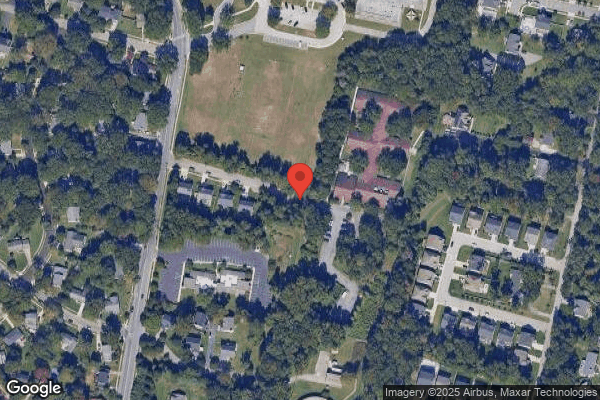
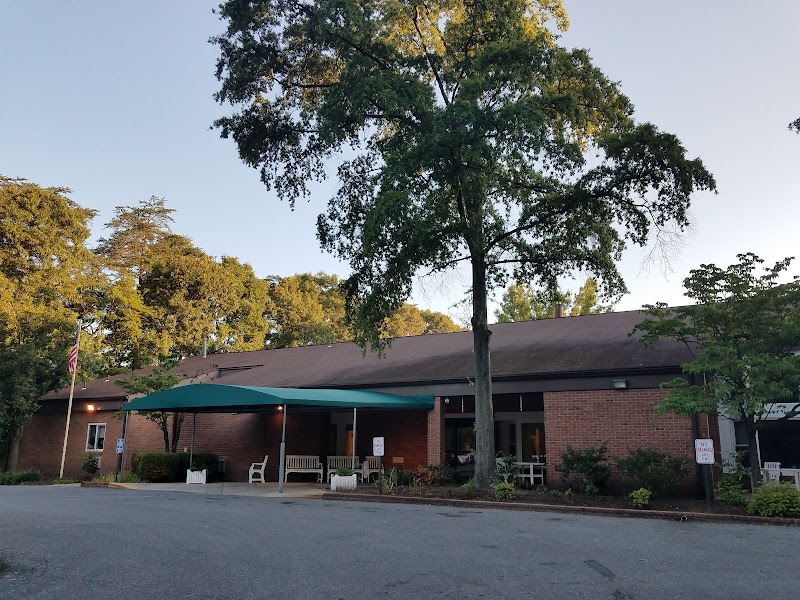
310 GENESIS WAY, SEVERNA PARK, MD 21146 (410) 544-4220
For profit - Corporation 138 Beds COMPLETE CARE Data: November 2025
Trust Grade
50/100
#153 of 219 in MD
Last Inspection: July 2021

Over 2 years since last inspection. Current conditions may differ from available data.

Overview

Complete Care at Severna Park LLC has a Trust Grade of C, indicating that it is average and in the middle of the pack compared to other nursing homes. It ranks #153 out of 219 in Maryland, placing it in the bottom half of facilities in the state, and #10 out of 13 in Anne Arundel County, meaning only three local options are better. The facility is experiencing a worsening trend, with issues increasing from 8 in 2023 to 11 in 2025. Staffing is rated average with a 3/5 star rating and a turnover rate of 49%, which is close to the state average of 40%. While there have been no fines, which is a positive sign, the facility has reported concerning incidents, including a failure to properly assess staffing needs, which could impact all residents, and a serious allegation of staff misconduct that remains under investigation. Overall, while there are some strengths like no fines and decent staffing, the rising number of issues and specific concerns about care practices suggest potential risks for residents.

Trust Score
C
50/100
In Maryland
#153/219
Bottom 31%
Safety Record
Low Risk
No red flags
Inspections
Getting Worse
8 → 11 violations
Staff Stability
⚠ Watch
49% turnover. Above average. Higher turnover means staff may not know residents' routines.
Penalties
✓ Good
No fines on record. Clean compliance history, better than most Maryland facilities.
Skilled Nurses
✓ Good
Each resident gets 44 minutes of Registered Nurse (RN) attention daily — more than average for Maryland. RNs are trained to catch health problems early.
Violations
⚠ Watch
51 deficiencies on record. Higher than average. Multiple issues found across inspections.
★★☆☆☆
2.0
Overall Rating
★★★☆☆
3.0
Staff Levels
★★★★☆
4.0
Care Quality
★★☆☆☆
2.0
Inspection Score
Stable
2023: 8 issues
2025: 11 issues

The Good

  • 4-Star Quality Measures · Strong clinical quality outcomes
  • Full Sprinkler Coverage · Fire safety systems throughout facility
  • No fines on record

Facility shows strength in quality measures, fire safety.

The Bad

2-Star Overall Rating

Below Maryland average (3.0)

Below average - review inspection findings carefully

Staff Turnover: 49%

Near Maryland avg (46%)

Higher turnover may affect care consistency

Chain: COMPLETE CARE

Part of a multi-facility chain

Ask about local staffing decisions and management

The Ugly 51 deficiencies on record

May 2025 11 deficiencies
CONCERN (D) 📢 Someone Reported This

A family member, employee, or ombudsman was alarmed enough to file a formal complaint

Potential for Harm - no one hurt, but risky conditions existed

Free from Abuse/Neglect (Tag F0600)

Could have caused harm · This affected 1 resident

Based on the review of facility reported incidents,staff interview, and review of facility policy, it was determined that a facility staff member failed to treat a resident with respect and free from ...

Read full inspector narrative →
Based on the review of facility reported incidents,staff interview, and review of facility policy, it was determined that a facility staff member failed to treat a resident with respect and free from verbal and physical abuse. This was evident during the review of 2 ( Resident #127 and #90) out of 21 Residents reviewed for allegations of abuse. The findings include: Review of the facility reported incident #MD00205993 on 5/9/25 at 8:15 AM revealed that on 5/24/24 there was a witnessed verbal altercation between Resident #127 and staff GNA #32. According to witness statements in the facility investigation packet GNA #32 overheard yelling and cursing at Resident #127 when the supervisor, staff RN #4 separated the 2 individuals and told GNA #32 that she needed to leave the facility immediately. According to a statement from Resident #127, s/he stated that GNA #32 was yelling at him/her because s/he didn't want to see the pictures on his/her phone about the previous staff. Resident #127 just wanted him/her to leave him/her alone and leave his/her room and s/she wouldn't until the supervisor staff RN #4 intervened. Resident #127 was unavailable for further follow up and interview. The facility DON was interviewed regarding the occurrence on 5/9/25 at 8:51 AM. She stated that the employee, GNA #32 was removed and reported to the Board of Nursing secondary to her conduct in the facility and training was implemented for all other staff on the abuse policy and conduct. This evidence was included in the facility investigation packet and reviewed on 5/9/25. The concern about the substantiated abuse was reviewed with the facility DON and Administrator on 5/9/25 and again during exit on 5/13/25. During an interview conducted on 05/05/25 at 11:03 AM, Resident #90 advised that he/she had a loose bowel movement, and a male Geriatric Nursing Assistant (GNA) came to clean him/her. The Resident stated that he/she told the male GNA that he was being very rough and it was hurting him/her. The GNA then placed the feces soiled washcloth close to the Resident's face and stated do you want to stay like this and then continued to hurt him/her while providing incontinent care. The resident stated that he/she reported the incident to the Unit Manager. During an interview conducted on 05/05/2025 at 11:27 AM, the Unit Manager #1 confirmed that she spoke with Resident #90 regarding the concern for rough care. The Unit Manager further stated that the Resident did not tell her that the GNA held a feces soiled wash cloth in the Resident's face. On 05/05/25 at 2:15 PM the Surveyors reported to the Director of Nursing (DON) the complaint of rough care and the feces soiled wash cloth shown in resident's face. The DON stated that she was unaware and would investigate it and report it to the State Agency Office of Healthcare quality (OHCQ). A review of the facility's investigation conducted on 05/13/2025 at 10:12 AM revealed a statement from GNA #33. The GNA stated that Resident #90 advised that he was hurting the Resident during incontinent care, the GNA replied I am not hurting you and continued to clean the Resident. During an interview with the DON conducted on 05/13/2025 at 10:33 AM, the DON stated that she educated GNA #33 on customer service. This Surveyor advised the DON that there was concern for abuse due to the GNA confirming that the resident complained that he was hurting him/her and he responded that he was not hurting the resident and continued to provide incontinent care. During a continued interview with the DON on 05/13/2024 at 11:20 AM, the DON stated that GNA #33 showed Resident #90 a feces soiled wash cloth to show the Resident that there were a lot of feces. This surveyor advised the DON that Resident #90 reported that GNA #33 held the feces soiled wash cloth close to his/her face. The DON stated that the behavior of the GNA was inappropriate and that's why she provided a one-to-one education on customer service. This Surveyor advised the DON again of the concern for abuse.
CONCERN (D) 📢 Someone Reported This

A family member, employee, or ombudsman was alarmed enough to file a formal complaint

Potential for Harm - no one hurt, but risky conditions existed

Investigate Abuse (Tag F0610)

Could have caused harm · This affected 1 resident

Based on medical record review and interview, it was determined that the facility staff failed to thoroughly investigate a complaint of abuse. This was evident for 1 (Resident #124) out of 64 resident...

Read full inspector narrative →
Based on medical record review and interview, it was determined that the facility staff failed to thoroughly investigate a complaint of abuse. This was evident for 1 (Resident #124) out of 64 residents reviewed during a complaint/annual survey. Findings include: Review of resident #124's facility reported incident (MD 00182893) on 5/13/25 at 8:30am revealed the resident made an allegation of abuse after the resident reported to the facility that a nursing staff member pushed and choked him/her on 8/29/2022. The surveyor review of the facility investigation on 5/13/25 at 1:10pm revealed that the facility failed to thoroughly investigate the events surrounding the allegation of abuse. The facility investigation did not contain other resident interviews disproving widespread abuse from staff. Interview with the Administrator on 5/13/25 at 1:35pm confirmed the facility investigation of resident #124's allegations did not contain resident interviews disproving widespread abuse from staff.
CONCERN (D) 📢 Someone Reported This

A family member, employee, or ombudsman was alarmed enough to file a formal complaint

Potential for Harm - no one hurt, but risky conditions existed

Pressure Ulcer Prevention (Tag F0686)

Could have caused harm · This affected 1 resident

Based on observation, facility staff and Resident interviews and surveyor record review it was determined that the facility staff failed to document the delivery of daily wound care for Residents with...

Read full inspector narrative →
Based on observation, facility staff and Resident interviews and surveyor record review it was determined that the facility staff failed to document the delivery of daily wound care for Residents with pressure ulcers. This was found to be evident in 2 (Residents #36 and #114) out of 2 Residents reviewed for treatment and services of pressure ulcers. The findings include: During the initial tour of the facility at 08:45AM on 05/05/2025 the surveyor observed Resident #36 sitting in the wheelchair with specialized heel protectors (Prevalon boots) on his/her lower extremities. Resident #36 stated that the heel protectors was for the wound that he/she had on the heel. The Medication and Treatment Administration Record (MAR/TAR) is a record used to keep track of every dose of medication or treatment that a Resident is administered. The MAR and TAR includes key information about the Resident's medication and treatment including the name, dose taken, special instructions and date and time. The surveyor conducted a record review of Resident #36's medical record on 05/09/2025 at 08:55 AM. The review of the medical record revealed that Resident #36 had a physician order for daily treatment for wound care to the left heel. Further review of the medical record, specifically the April 2025 treatment administration record (TAR), revealed that there was no documentation that the daily wound treatment was being provided to Resident #36 by the nursing staff on the following dates 4/4/25, 4/14/25 and 4/25/25. At 09:35 AM on 05/09/2025 the surveyor interviewed the Director of Nursing (DON) and asked the DON if Resident #36 had a pressure ulcer on the left heel. The DON stated yes. The surveyor conveyed to the DON that there was a physician order for daily treatment of the left heel wound but there was no documentation on the April 2025 treatment administration record (TAR) that the wound care was provided on 4/4/25, 4/14/25 and 4/25/25. The Director of Nursing (DON) reviewed the TAR for Resident #36 and acknowledged that there was no documentation on the April 2025 TAR for the daily treatment of the left heel wound for 4/4/25, 4/14/25 and 4/25/25 and stated that the wound care treatment should be signed/initialed when it was done. During the tour of the nursing unit on 05/06/2025 at 07:15 AM the surveyor observed Resident #114 lying in bed. The surveyor conducted a record review of Resident #114's medical record on 05/09/2025 at 06:45 AM. The review of the medical record revealed that Resident #114 had a physician order for daily treatment for wound care to the right heel and sacrum. Further review of the medical record, specifically the March 2025 and April 2025 treatment administration record (TAR), revealed that there was no documentation that the daily wound treatment was being provided to Resident #114 by the nursing staff on the following dates for the right heel wound 3/6/25, 4/8/25, 4/12/25, 4/18/25, 4/19/25, 4/20/25 and 4/26/25, and for the sacral (buttock) wound 4/12/25 and 4/19/25. At 09:35 AM on 05/09/2025 the surveyor interviewed the Director of Nursing (DON) regarding Resident #114's pressure ulcers on the right heel and sacrum. The surveyor conveyed to the DON that there were physician orders for daily treatment of the right heel wound and sacral (buttock) wound but there was no documentation on the March 2025 and April 2025 treatment administration record (TAR) that the wound care was provided on 3/6/25, 4/8/25, 4/12/25, 4/18/25, 4/19/25, 4/20/25, and 4/26/25 for the right heel wound, and 4/12/25 and 4/19/25 for the sacral (buttock) wound. The Director of Nursing (DON) reviewed the TAR for Resident #114 and acknowledged that there was no documentation on the March 2025 and April 2025 TAR for the daily treatment of the right heel wound for dates 3/6/25, 4/8/25, 4/12/25, 4/18/25, 4/19/25, 4/20/25 and 4/26/25, and sacral (buttock) wound for dates 4/12/25 and 4/19/25 and stated that the wound care treatment should be signed/initialed when it was done by the nursing staff. At the time of exit no additional documentation was provided by the facility.
CONCERN (D) 📢 Someone Reported This

A family member, employee, or ombudsman was alarmed enough to file a formal complaint

Potential for Harm - no one hurt, but risky conditions existed

Accident Prevention (Tag F0689)

Could have caused harm · This affected 1 resident

**NOTE- TERMS IN BRACKETS HAVE BEEN EDITED TO PROTECT CONFIDENTIALITY** Based on observation, facility staff interviews and record reviews it was determined that the facility failed to ensure resident...

Read full inspector narrative →
**NOTE- TERMS IN BRACKETS HAVE BEEN EDITED TO PROTECT CONFIDENTIALITY** Based on observation, facility staff interviews and record reviews it was determined that the facility failed to ensure residents were free from accidents. This was found to be evident in 2 (Residents #70 and #91) out of 2 Residents reviewed for accident hazards during the recertification survey. The findings include: 1) The surveyor observed Resident #70 sitting in the wheelchair in the lobby at the front entrance to the facility on [DATE] at 01:15 PM. On 05/12/2025 at 12:35 PM the surveyor conducted a record review of Resident #70's medical record. Review of the medical record revealed that Resident #70 was found on the floor in his/her room on 05/12/2024 at 18:12 PM which was documented in the progress notes of the medical record. Additionally, it was documented that Resident #70's bed had flipped over on the side, but not on the Resident. The surveyor requested from the Licensed Nursing Home Administrator (LNHA) at 06:30 AM on 05/13/2025 the facility's incident report for Resident #70's fall and incident for 05/12/2024. At 08:30 AM the LNHA stated that they were still looking for the incident report. The surveyor reviewed the facility's Fall Prevention Program policy and procedure dated 03/14/2023 and revised 09/05/2023. The policy indicated that a fall is an event in which an individual unintentionally comes to rest on the ground, floor or other level. The event may be witnessed, reported or presumed when a Resident is found on the floor or ground, and can occur anywhere. Additionally, the policy indicated that when a Resident experiences a fall, the facility will complete an incident report, and document all assessments and actions. In an interview with the Director of Nursing (DON) at 10:40 AM on 05/13/2025 regarding Resident #70's fall and incident on 05/12/2024, the DON stated that there was no incident report or investigation completed. The surveyor conveyed to DON that the facility's Fall Prevention Program indicated that an incident report was to be completed and all assessments and actions were to be documented when a Resident had a fall. The DON acknowledged the surveyor and stated, yes that an incident report should have been completed when Resident #70 had the fall. At the time of exit, no additional documentation was provided by the facility. 2) A Hoyer lift, also known as a patient lift, is an assistive device used to safely transfer individuals with limited mobility from one place to another, such as from a bed to a chair or wheelchair. It utilizes a sling to support the patient's body and a mechanical system (hydraulic or electric) to raise and lower them. During an interview with Resident #91 on 05/05/25 at 1:32 PM, he/she reported while being lifted from his/her wheelchair with a Hoyer Lift, the lift tilted, and he/she fell to the floor. The Resident reported going to the hospital the next day due to back pain. Resident #91 stated, Now they have a new Hoyer and now the Hoyer comes in the room with me. During a Record Review on 5/07/25 at 7:10 AM a Progress note dated 1/12/25 at 10:42 PM revealed Resident #91 was being lifted with a Hoyer Lift from his/her wheelchair and the Hoyer Lift tilted resulting in him/her falling to the floor. An ambulance came to the Resident, and he/she refused being transported to the hospital. A Transfer Notice written on 1/13/25 at 5:54 AM revealed Resident #91 was later transferred to the Emergency Department due to the fall, Resident fell yesterday, had no bleeding or injury and at approximately 2 AM resident woke up and complained of headache and back pain, resident was administered pain medication and went back to sleep, at 6 AM resident woke up again and complained of serious back pain and requested to be sent to the Emergency Room. During an interview with the Director of Nursing (DON) on 05/08/25 at 10:10 AM she reported the Resident was in his/her wheelchair in the hallway due to limited space in the Resident's room and staff members were transferring him/her to the bed. When going into the room, it shifted, and they lost control and lowered it down. She advised the Hoyer was working well but was taken out of service and sent to maintenance for inspection which is standard when an incident occurs involving equipment. She reported changes were made with transferring Resident #91 and staff members are now required to transfer Resident #91 inside his/her room. During an interview with the Maintenance Director 5/12/25 at 10:04 AM it was discovered the Hoyer Lift was taken out of service and replaced following the incident. He reported there was nothing found wrong with the Hoyer Lift, the facility was already phasing out older models of Hoyer Lifts and this one was due to be replaced.
CONCERN (D) 📢 Someone Reported This

A family member, employee, or ombudsman was alarmed enough to file a formal complaint

Potential for Harm - no one hurt, but risky conditions existed

Deficiency F0697 (Tag F0697)

Could have caused harm · This affected 1 resident

Based on medical record review and interview with facility staff it was determined that the facility failed to have an order to address and medicate different pain levels in a resident. This was evide...

Read full inspector narrative →
Based on medical record review and interview with facility staff it was determined that the facility failed to have an order to address and medicate different pain levels in a resident. This was evident during the review of a complaint for Resident #132 and the review of 1 of 6 residents' medication orders. (#132). The findings include: Review of the medical record for Resident #132 on 5/5/25 at 11:12 AM revealed admission to the facility post fall with multiple fractures requiring healing and physical therapy. Further review of the medical record for Resident #132 revealed physician orders on admission for Oxycodone 5 milligrams (mg) 2 tablets every 4 hours as needed for severe pain, a documented score of 7-10. However, a review at this time failed to reveal an order for pain medication for pain scores below '7.' A review of the medication administration record (MAR) for December 2024 noted that the Oxycodone was administered 64 times, 19 for pain scores of 0-6, in addition to 45 times for the score of 7-10. This concern was reviewed with the facility DON on 5/5/25 and again at exit on 5/13/25.
CONCERN (D) 📢 Someone Reported This

A family member, employee, or ombudsman was alarmed enough to file a formal complaint

Potential for Harm - no one hurt, but risky conditions existed

Deficiency F0699 (Tag F0699)

Could have caused harm · This affected 1 resident

Based on medical record review and interview, the facility failed to provide trauma-informed care after a resident expressed past traumas to a facility staff member. This was evident for 1 (resident #...

Read full inspector narrative →
Based on medical record review and interview, the facility failed to provide trauma-informed care after a resident expressed past traumas to a facility staff member. This was evident for 1 (resident #24) of 64 residents reviewed during a complaint/annual survey. Findings include: Review of resident #24's medical record on 5/12/25 at 7:40am an admission document dated 9/19/24, the date of the resident's admission. The document described the resident's past trauma with his/her family which caused him/her to run away from home at a young age. Further review of resident #24's medical record on 5/12/25 at 8:10am revealed no evidence that the resident's care plan was created with interventions for the resident's past trauma. On 5/12/25 at 11:30am, the surveyor interviewed the Director of Nursing (DON) regarding the trauma informed care policy. The DON confirmed resident trauma informed assessments should be done at admission and after a change in condition. The surveyor pointed out that resident #24 alleged that he/she had family trauma at a young age that caused he/she to run away from home. Review of the resident's medical record revealed no evidence that the facility created a care plan with interventions for the resident's past trauma. The DON and the Administrator reviewed the resident's medical record and confirmed that there was no evidence of a care plan created with interventions for the resident's past trauma.
CONCERN (D) 📢 Someone Reported This

A family member, employee, or ombudsman was alarmed enough to file a formal complaint

Potential for Harm - no one hurt, but risky conditions existed

Deficiency F0726 (Tag F0726)

Could have caused harm · This affected 1 resident

Based on the review of a facility reported incident (FRI) #MD00205993 related to an allegation of abuse, a review of employee files and interviews, it was determined that the facility failed to ensure...

Read full inspector narrative →
Based on the review of a facility reported incident (FRI) #MD00205993 related to an allegation of abuse, a review of employee files and interviews, it was determined that the facility failed to ensure Geriatric Nursing Assistants (GNAs) were competent with their skill sets. This was found to be evident for 1 out of 3 employee files reviewed for competencies and skill sets. The findings include: Review of the FRI #MD00205993 on 5/9/25 at 8:15 AM revealed a substantiated allegation of verbal abuse occurring between Resident #127 and GNA #32. A review of the facility investigation and concurrent review of the employee file for GNA #127 revealed that upon hire the month prior, there was no competency skills evaluations or check off sheets completed and available in her record for review. The DON was interviewed on 5/9/25 at 10:46 AM. This concern was brought to her attention as she was present and had completed this investigation and investigation packet. She was not aware of the blank competency check list. She was asked at this time for anything further or any education or training that was completed with staff GNA #32 since her hire. She stated that staff are not assessed on new hire for their competencies. The facility does orientation on hire, however, only does competencies when and if something happens-they will assess nursing skills at that time. There were 60 day and 90 day evaluations found in new employee files, however, this employee did not make it to the 30 day mark before they were terminated and reported to the board for witnessed and substantiated verbal abuse to a resident in the facility during a night shift. This concern was reviewed at that time and again during exit on 5/13/25.
CONCERN (D) 📢 Someone Reported This

A family member, employee, or ombudsman was alarmed enough to file a formal complaint

Potential for Harm - no one hurt, but risky conditions existed

Deficiency F0757 (Tag F0757)

Could have caused harm · This affected 1 resident

Based on medical record reviews and staff interviews, it was determined that the facility failed to: 1) monitor the behaviors of a resident on antipsychotic medications. 2) ensure residents were free ...

Read full inspector narrative →
Based on medical record reviews and staff interviews, it was determined that the facility failed to: 1) monitor the behaviors of a resident on antipsychotic medications. 2) ensure residents were free from unnecessary medications. This was evident by 2 (Residents #61 and #111) out of 6 residents reviewed for unnecessary medication during the recertification and compliant survey. The findings include: 1) Resident #61 diagnoses included Bipolar Disorder, Psychosis, Major Depressive Disorder and Schizoaffective Disorder. 05/06/25 at 11:38 AM a review of Resident #61's medical record revealed that the resident was receiving antipsychotic medications Fluphenazine daily for Bipolar Disorder and Olanzapine at bedtime for Schizoaffective Disorder. The resident's psychiatry notes dated 2/16/25, 2/16/25, 4/4/25 and 4/16/25, revealed an increase in hallucinations and other behaviors. Further review of Resident #61's medical record revealed that a Care Plan was initated on 11/17/23 for visual/auditory hallucinations, increased anxiousness and agitation. However, the medical record failed to reveal that the resident's behaviors were monitored by the facility. On 05/08/25 at 08:16 AM in an interview, the Unit Manager Staff #13 stated that the behaviors of residents who are on antipsychotic medications were monitored by the nurses and documented in the Medication Administration Record or Treatment Administration Record. However, the Unit Manager Staff#13 after reviewing Resident #61's medical record failed to provide evidence that the resident's behaviors were being monitored. Unit Manager Staff#13 stated, I would take care of it. On 05/08/25 at 10:03 AM in an interview, the Director of Nursing (DON) was informed of the facility's failure to monitor Resident #61's behaviors. The DON informed the surveyor that she was already notified by the Unit Manager. 2) A psychotropic medication is a drug that affects a person ' s mental state, mood, behavior, or perception by acting on the central nervous system. These medications are commonly used to treat psychiatric disorders such as depression, anxiety, schizophrenia, bipolar disorder, and other mental health conditions. On 05/12/2025 at 1:00 PM, a review of the resident#111 ' s Medication Administration Record (MAR) revealed an incorrect documented reason for the use of a psychotropic medication. Further medical record review on 05/12/2020 at 1:10 PM revealed that Resident #111 had a medical diagnosis supporting the use of Seroquel, which was documented as being prescribed for sundowning and as a supplement. An interview conducted on 05/12/2025 at 1:40 PM, the Surveyor and Director of Nursing (DON) reviewed the MAR. The DON stated that the Physician ' s reason for use of Seroquel was inappropriate for Sundowning and Seroquel should never be ordered as a supplement. The DON was made aware of the above concerns and acknowledged receipt of the information.
CONCERN (D) 📢 Someone Reported This

A family member, employee, or ombudsman was alarmed enough to file a formal complaint

Potential for Harm - no one hurt, but risky conditions existed

Deficiency F0761 (Tag F0761)

Could have caused harm · This affected 1 resident

Based on observation, staff interviews, and review of medical record documentation it was determined that the facility failed to maintain a safe and effective system for securing medication in their d...

Read full inspector narrative →
Based on observation, staff interviews, and review of medical record documentation it was determined that the facility failed to maintain a safe and effective system for securing medication in their designated carts on nursing units with residents with documented cognitive deficits and wandering behaviors. This practice was noted on 2 separate random observations on 2 of 2 units. The findings include: 1. During a tour of the secure dementia unit on 5/6/25 at 9:06 AM a medicine cup with a clear liquid in it was identified on an unoccupied medicine cart. There were 2 residents identified in the immediate area. Resident #80's room was immediately to the right of the medication cart where the medication was located. Resident #80 was observed walking around in his/her room and coming in and out of the room looking around and talking to the surveyor. Additionally, another resident identified as #125 was also observed in the hallway walking up and down to the cart and the door to the exit. During this time there were no staff observed in the area. At 9:12 AM staff RN #2 appeared. This surveyor introduced herself and asked if the medication cart was hers. She stated 'yes.' She was then asked about the medication that was on top of the cart. She stated that it was [86's]. I verbalized my concern to her at that time of the unattended medication in addition to the 2 residents that were present. This surveyor exited the unit and met with the facility DON who was immediately told of the observations. Record review on 5/6/25 at 9:30 AM of Resident #80 revealed a BIMS assessment completed on 3/10/25 of 01 meaning that s/he has severe cognitive deficits. A review of the BIMS assessment for Resident #125 revealed a BIMS completed on 2/17/25 with a BIMS score of 00, meaning the assessment could not be completed as the resident is 'rarely understood' per documentation. 2. Subsequent tour of the facility occurred on 5/8/25 at 6:05 AM. Upon approaching the first nursing station desk, a blister pack of medication could be observed. A closer observation and review of the blister pack revealed that it was 28 tablets of an antibiotic for Resident #98. This surveyor continued observation of the unattended medication until 6:12 AM when staff RN #4 came out of the office and was questioned about the unattended medication. He stated that it was delivered earlier and was for the other nurse. He said they had separated the medications for the different halls, and she did not take hers to the cart. He then took the medication to her cart where that nurse had been observed working during this observation period. The concerns were then reported to the facility Administrator immediately after the medication was secured by the actual facility staff.
CONCERN (D) 📢 Someone Reported This

A family member, employee, or ombudsman was alarmed enough to file a formal complaint

Potential for Harm - no one hurt, but risky conditions existed

Medical Records (Tag F0842)

Could have caused harm · This affected 1 resident

Based on medical record review and staff interview, it was determined that the facility failed to maintain complete and accurate resident records. This was found to be evident for 2 (Resident #111, #1...

Read full inspector narrative →
Based on medical record review and staff interview, it was determined that the facility failed to maintain complete and accurate resident records. This was found to be evident for 2 (Resident #111, #119) out of 2 residents reviewed for documentation accuracy during the survey during the survey process. The findings include: Neurological checks (neuro-checks) are a series of assessments conducted at regular intervals after a fall, especially when a head injury is suspected or cannot be excluded. Their purpose is to monitor changes in neurological status that may indicate complications such as concussion, intracranial bleeding, or increased intracranial pressure. These assessments typically include evaluation of level of consciousness and orientation, pupil size and reactivity, motor strength and movement, speech and behavior, as well as vital signs. Frequency and duration of neuro checks are guided by facility protocol, physician orders, and the resident ' s condition, often beginning with frequent intervals (e.g., every 15-30 minutes) and tapering as the resident remains stable. 1) On 05/09/25 at 10:56 AM, a record review indicated the resident #119 experienced a fall on 05/04/25. Neurological checks were documented with incorrect dates, beginning on 04/04/25 and continuing through 04/05/25. Although one entry was corrected to 05/06/25, subsequent notes continued to reflect dates of 04/06/25 through 04/07/25, demonstrating ongoing inconsistencies in documentation. On 05/09/25 at 11:05AM record review revealed on 05/04/2025 03:00 Primary physician ordered neurological checks per facility fall protocol. On 05/09/25 at 11:15 AM, the surveyor interviewed the Director of Nursing (DON) regarding staff expectations for accurate documentation. The DON stated that staff are expected to document any change in condition accurately. She was informed of the documentation concern, acknowledged the issue, and confirmed receipt of the information. 2) A review of Resident #111 ' s medical record was conducted on 05/12/25 at 1:30 PM. The review of the Psychiatric notes revealed inaccurate documentation for Seroquel. The psychiatric notes dated for 12/03/24 & 02/05/25 stated that Seroquel 25 mg (milligram) had been discontinued on 10/02/24 therefore a GDR was not attempted. However a review of the Medication Administration Record (MAR) for 10/2024 did not show an order for Seroquel. A review of the MAR dated 1/2025 showed an order for Seroquel for the first time dated 01/07/25. During an interview conducted on 05/12/25 at 1:40 PM, the Director of Nursing (DON) and the Surveyor reviewed Resident #111 ' s Psychiatric notes and Mars and confirmed the inaccurate documentation for Seroquel.
CONCERN (E) 📢 Someone Reported This

A family member, employee, or ombudsman was alarmed enough to file a formal complaint

Potential for Harm - no one hurt, but risky conditions existed

Deficiency F0657 (Tag F0657)

Could have caused harm · This affected multiple residents

**NOTE- TERMS IN BRACKETS HAVE BEEN EDITED TO PROTECT CONFIDENTIALITY** Based on medical record reviews and staff interviews is was determined that the faciliy failed to ensure Care Plans were revised...

Read full inspector narrative →
**NOTE- TERMS IN BRACKETS HAVE BEEN EDITED TO PROTECT CONFIDENTIALITY** Based on medical record reviews and staff interviews is was determined that the faciliy failed to ensure Care Plans were revised and Care Plan meetings were held as required. This was found to be evident for 2 (Residents #91 & #61) out of 2 Residents reveiwed for Care Plan revisions and 2 (Residents #110 and #56) out of 2 Residents reviewed for Care Plan meetings during the annual survey. The findings include: According to Centers for Medicare and Medicaid (CMS) a care plan meeting is a regularly scheduled gathering where healthcare professionals, residents (or their family representatives), and relevant staff from a facility discuss and review a resident's individual care plan, ensuring it accurately reflects their needs, preferences, and any necessary adjustments based on their current health status; these meetings are typically held quarterly and are a key part of quality care in nursing homes. 1) Surveyor review of a complaint (MD00216698) and facility reported incident (MD00216700) alleging that a facility nursing staff member sexually abused resident #91 when he/she was providing ADL care on 4/12/25. Resident #91 reported the allegation to facility administration on 4/14/25. A care plan is a guide that addresses the unique needs of each resident. It is used to plan, assess and evaluate the effectiveness of the resident's care. Review of Resident #91's medical records on 5/7/25 at 11:10am revealed the resident had a behavioral care plan that provided interventions for observed behaviors including making false allegations of abuse. The last update to the resident's behavioral care plan was on 4/1/25. There was no evidence that the facility updated the resident's behavioral care plan after the resident's allegations on 4/14/25. Interview with the Director of Nursing (DON) on 5/12/25 at 9:30am regarding the facility's failure to update resident #91's behavioral care plan after the resident reported an alleged abuse incident on 4/14/25. The DON confirmed that the facility failed to update resident #91's behavioral care plan. 2) Resident #61 was admitted with diagnoses including Heart Failure, History of Transient Attack and Cerebral Infraction. On 05/08/25 at 7:30 AM a review of Resident #61's medical record revealed that the resident received an anticoagulant, Clopidogrel (Plavix) daily from 11/20/23 to 12/16/24. The medication was discontinued on 12/21/24. Further review of Resident #61's medical record revealed that a care plan for anticoagulant therapy was initiated 11/12/23 and remained active. The care plan was not updated to reflect that the medication was discontinued on 12/21/24. On 05/09/25 at 8:03 AM in an interview, the Unit Manager Staff #13 confirmed the findings by reviewing the resident's medical record. Staff #13 stated I will take care of it now. On 05/09/25 at 08:52 AM the Director of Nursing was made aware of the findings. On 05/09/25 at 10:28 AM Staff #13 gave the surveyor an updated copy of Resident # 61's care plans which showed that the care plan for anticoagulant therapy was resolved.3) During an interview with a family member for Resident #110 on 5/05/25 at 12:41 PM he/she reported having Care Plan Meetings regularly with social services and another lady. During a review of Resident #110 Medical Records on 5/06/25 at 7:47 AM it was discovered that Resident #110 had regular Care Plan Meetings, and the attendees did not include the members required for the interdisciplinary team. A Care Plan Meeting Progress note on 4/11/25 showed the attendees were the Social Services Director, Nursing Manager and the Dietician. The family was notified but did not attend. A Care Plan Meeting Progress Note on 1/09/25 reported the attendees were the Social Services Director, Nursing and Family. A Care Plan Meeting Progress note on 10/10/24 stated the attendees included the Social [NAME] Director and Nursing. The family declined to attend the meeting. A Care Plan Meeting Progress note on 7/24/25 listed the Social Services Director, Nursing, Therapy and family as attending the meeting. During an Interview with the Social Service Assistant on 05/07/25 at 10:32 AM, she advised Care Plan Meetings and Attendance to the meetings were documented in the Electronic Medical Record. She also reported the Care Plan Meetings would typically include Social Work, nursing, therapy if resident was on their caseload and the dietician if the resident has any issues. 4) On 05/06/25 at 9:36 AM, an interview was conducted with Resident #56. During the interview, the Resident stated that he/she does not recall ever being asked to attend a care plan meeting. On 05/07/25 at approximately 8:00 AM, a review of Resident #56 ' s electronic health record revealed that he/she had only attended one care plan meeting since admission, which occurred on 05/13/2024. For all other care plan meetings, his/her daughter was noted as the attendee. A total of five care plan meetings had been held for the Resident since his/her admission. There was no documentation found indicating that the Resident had been invited to these meetings, nor was there any documentation showing that he/she declined to attend. On 05/07/25 at 10:32 AM, an interview was conducted with the Social Worker Assistant. She explained that she participates in the care planning process for long-term care residents. She stated that residents are invited to care plan meetings through invitation letters, which are hand-delivered by the staff responsible for distributing resident mail. She also explained that attendance at care plan meetings is documented in the electronic health record (EHR), and a physical binder is maintained with care plan meeting sign-in sheets. She added that if a resident refuses to attend a care plan meeting, that refusal is also documented in the EHR. At that time, the surveyor requested documentation showing care plan meeting attendance and copies of invitations sent to Resident #56. On 05/08/25 at approximately 5:45 AM, the facility provided documentation for review. The documents included printouts of email invitations sent to Resident #56 ' s family, inviting them to participate in care plan meetings. However, these emails did not confirm that the Resident had been invited. Sign-in sheets for care plan meetings dated 01/03/2025, 04/03/2025, and 05/13/2025 were also provided. According to these sheets, Resident #56 was only in attendance for the meeting held on 05/13/2025. On 05/08/25 at approximately 12:30 PM, an interview was conducted with the Social Worker Assistant to review the documentation provided. She acknowledged that the documentation only confirmed that the Resident ' s family had been invited, not the Resident. She reaffirmed that the facility ' s process is to invite residents through hand-delivered letters and to document this in the EHR. She also noted that in some cases, invitations may have been made verbally but could not confirm which residents were invited this way. At the conclusion of the interview, she confirmed that there was no documentation available to show that Resident #56 had been invited to attend any care plan meetings.
Nov 2023 8 deficiencies
CONCERN (D) 📢 Someone Reported This

A family member, employee, or ombudsman was alarmed enough to file a formal complaint

Potential for Harm - no one hurt, but risky conditions existed

Report Alleged Abuse (Tag F0609)

Could have caused harm · This affected 1 resident

Based on medical record review, interview with facility staff and policies it was determined that the facility staff failed to immediately report an allegation of abuse to Administration. This was evi...

Read full inspector narrative →
Based on medical record review, interview with facility staff and policies it was determined that the facility staff failed to immediately report an allegation of abuse to Administration. This was evident during the review of 1 of 47 facility reported incidents. The findings include: Review of the facility reported incident (FRI) on 10/31/23 reported to the Office of Health Care Quality on 6/30/2023 revealed that the incident had occurred on 6/27/23 and staff did not intervene and report the incident until the following day. According to the facility investigation, on 6/28/23, 2 staff members approached the Director of Nursing reporting inappropriate behavior displayed by another employee towards not only staff but towards residents. This included aggression and loud communication. Again on 6/29 and 6/30 other employees including the house supervisor reported allegedly hearing GNA #34 using profanity towards Resident #38. On 6/30/23 Resident #38 was interviewed about the alleged verbal abuse from GNA #34. Resident #38, according to the FRI, was assessed as having a brief interview status (BIMS) of 15, meaning s/he was cognitively intact. S/he reported the same incident and confirmed that there was a verbal altercation with GNA #34, starting when s/he requested for assistance from GNA #34. GNA #34 responded with I have [profanity] 12 patients, I don't [profanity] care about this job, I will get to [resident] when I do. At that Resident #38 confirmed that s/he did use profanity back and the exchange continued. Resident #38 stated that s/he did not report the incident because s/he did not want to get anyone in trouble. The DON continued to interview staff that were present in the surrounding area on 6/27. They all confirmed hearing staff GNA #34 verbally use profanity directed towards Resident #38, however, no one reported that to the administration until 6/28, 6/29 and 6/30 respectively. Further, GNA staff #34 continued to work their entire shift on 6/27 with Resident #38 and all other residents on the unit. A review of GNA #34's employee file on 11/14/23 at 12:20 PM revealed that s/he was a new hire as of 6/7/23. All the new hire training and background checks were in the file, including signature of receipt of the facility abuse policy. According to the facility policy on Abuse, Neglect and Exploitation section VII. reporting/response A.1.Reporting of all alleged violations to the Administrator .within specified time frames: a. Immediately, but not later than 2 hours after the allegation is made. The findings and concerns of the staff delay in reporting the verbal abuse to Administration was reviewed with the facility DON and Administrator on 11/14/23.
CONCERN (D) 📢 Someone Reported This

A family member, employee, or ombudsman was alarmed enough to file a formal complaint

Potential for Harm - no one hurt, but risky conditions existed

Investigate Abuse (Tag F0610)

Could have caused harm · This affected 1 resident

Based on review of resident medical records and interview with facility staff, it was determined that the facility failed to throughly investigate a allegation of neglect as a result of facility nursi...

Read full inspector narrative →
Based on review of resident medical records and interview with facility staff, it was determined that the facility failed to throughly investigate a allegation of neglect as a result of facility nursing staff failing to obtain an accurate inventory of a resident's narcotic medication (Resident #9). This deficient practice affected 1 of 52 residents reviewed during a complaint survey. The findings include: A Medication Administration Record (MAR) - a document that records when and how much medication a resident is administered. For as-needed pain medication, it also documents what pain score a resident is reporting and whether the pain medication was effective at easing that pain. Failure to maintain an accurate MARs prevents members of the healthcare team from knowing when and why medication has been given. This can result in medication mistakes, overdose, or denying practitioners information on how much medication a resident receives. On 7/29/22, the state of Maryland's Office of Health Care Quality received a facility reported incident report which reported RN #35 miscounted resident #9's Xanax medication on 7/21/22 which resulted in 2 Xanax tablets being missing from the resident's Xanax medication inventory. On 11/9/23 at 11:00am, the surveyor reviewed the facility investigation dated 7/29/22 investigating the events surrounding resident #9's missing Xanax medication discovered on 7/21/22. The investigation contained a copy of resident #9's Xanax inventory sheet for the month of 7/2022. Facility nursing staff documented that the facility received 59 Xanax pills on 7/2/22 at 12:00 pm. The Xanax inventory sheet also documented that facility nursing staff documented 16 Xanax pills left of resident #9's Xanax pills on 7/21/22 at 9:00pm. The next documented entry on the resident's Xanax inventory sheet revealed an entry, dated 7/21/22 with no time nor facility nurses' signature, revealing the remaining quantity of Xanax was 14 pills. On 11/9/23 at 12:30pm, the surveyor continued reviewing the facility investigation of the events surrounding resident #9's missing Xanax medication from 7/21/22. The investigation contained a witness statement dated 7/21/22 from RN #35 denying any issues with administering resident #9's medications during his/her work shifts on 7/21/22. RN#35 stated that he/she gave the keys of his/her assigned narcotic cart to another nurse during his/her work shift for that nurse to get wound supplies for another resident. RN #35 was unable to provide the name of the other nurse to which he/she gave the narcotic cart keys. Statements from RN #13 and LPN #37 also deny receiving the narcotic keys from RN #35. A statement from LPN #14 dated 7/27/22 revealed the nurse may have borrowed the narcotic cart's keys from RN #35 on 7/21/22 but LPN #37 denied removing any medication for resident #9 from the narcotic cart on 7/21/22. The investigation also contained urine lab results for detection of narcotics. The urine sample was obtained from RN#35 on 7/22/22 at 4:34pm. The lab results found no evidence of narcotics in RN #35's urine. On 11/13/23 at 11:40am, the surveyor interviewed the Administrator regarding the results of the investigation to determine the whereabouts of resident #9's missing Xanax medication that was discovered on 7/21/22. The surveyor asked the Administrator if any other facility nursing staff, other than RN#35, were given urine tests after resident #9's Xanax narcotic sheet revealed 2 missing Xanax pills. The Administrator stated that no other facility nursing staff other than RN #35 were given urine tests after the incident. The surveyor pointed out that LPN #37's statement on 7/27/22 stated that he/she may have taken RN#35's narcotic cart keys on 7/21/22 but there is no evidence that the facility investigated his/her involvement in the events that led to the missing Xanax pills. The surveyor also pointed out that RN #35 and LPN #37 statements revealed deficient practice in the management of resident #9's narcotic medication: failing to maintain a accurate count of narcotic medications. The surveyor also asked the Administrator if the facility was able to determine the whereabouts of resident #9's Xanax pills. The Administrator stated that the facilty was unable to determine how or where the Xanax pills were misplaced. On 11/13/23 at 12:00pm, the surveyor expressed concern to the Administrator regarding the facility's failure to completely investigate the events leading to the discrepancies in resident #9's medication inventory in 7/2022. The Administrator stated that he/she understood the concern.
CONCERN (D) 📢 Someone Reported This

A family member, employee, or ombudsman was alarmed enough to file a formal complaint

Potential for Harm - no one hurt, but risky conditions existed

Comprehensive Care Plan (Tag F0656)

Could have caused harm · This affected 1 resident

Based on review of medical record and interview, the facility failed to add soft offloading boots to a resident's heels as an intervention in the care plan (resident #22). This was evident for 1 out o...

Read full inspector narrative →
Based on review of medical record and interview, the facility failed to add soft offloading boots to a resident's heels as an intervention in the care plan (resident #22). This was evident for 1 out of 52 resident reviewed during a compliant survey. Findings include: Resident was admitted to facility on 11/17/22 with a fracture of left hip and left elbow and a wound on the left heel. A medical record review was conducted on 11/16/23 at 12 noon revealed the faclity wound care team assessed the resident #22's left heel wound and ordered a soft offloading boot for heel protection on 11/10/23. Additional review of the medical record revealed the order for soft offloading boots for the resident's left heel weren't given to the Doctor to approve. Additional review of the resident's care plan revealed no interventions for alteration in skin integrity related to left heel pressure ulcer. A interview with Staff # 32, Regional Clinical Services and staff # 33 Corp. [NAME] President of Operations revealed the facility failed to have a care plan for resident #22's Left heel pressure ulcer.
CONCERN (D) 📢 Someone Reported This

A family member, employee, or ombudsman was alarmed enough to file a formal complaint

Potential for Harm - no one hurt, but risky conditions existed

Deficiency F0658 (Tag F0658)

Could have caused harm · This affected 1 resident

Based on medical record review and interview with facility staff, it was determined that the facility failed to follow up with physician recommendations orders. This was evident during the review of a...

Read full inspector narrative →
Based on medical record review and interview with facility staff, it was determined that the facility failed to follow up with physician recommendations orders. This was evident during the review of a complaint. The findings include: Review of the medical record for Resident # 32 on 10/31/23 at 10:25 AM revealed Resident #32 had multiple co-morbidities including epilepsy, dysphagia, bipolar, chronic pain syndrome and hydronephrosis with renal and urethral calculous obstruction. In addition with a history of bowel and fecal obstruction. On 4/23/23 Resident #32 was transferred to the hospital secondary to abdominal distention at the request of a family member. Further review of the medical record for Resident #32 revealed that on 4/22/23 Resident #32 was observed with abdominal distention. According to his/her medical record and hospitalizations, this was not the first time. The physician ordered an abdominal scan with 2 views and lab work according to a nurses 'late entry' progress note. This was all to be completed stat (immediately). Interview with the facility Administrator on 11/1/23 regarding the facility policy and availability to get stat labs and x-rays revealed she stated that 4 hours is what they expect for stat. Review of the nursing progress notes revealed that the lab and x-ray company were contacted. Further review of the nursing progress notes revealed a note completed on 4/23/23 at 2:41 PM confirming that the x-ray was not done. At that time, it had been 16 hours since the 'late entry' progress note. Resident #32's family arrived at the facility and secondary to the resident's appearance, chose to have him/her transferred to the hospital. Upon arrival at the hospital, Resident #32 was diagnosed with a colonic perforation with lab work showing significant infection. The concern that the facility staff failed to follow up on the ordered stat x-ray scans and lab work was reviewed with the DON and Administrator throughout the survey and again during this survey exit conference on 11/14/23. cross reference F842
CONCERN (D) 📢 Someone Reported This

A family member, employee, or ombudsman was alarmed enough to file a formal complaint

Potential for Harm - no one hurt, but risky conditions existed

ADL Care (Tag F0677)

Could have caused harm · This affected 1 resident

**NOTE- TERMS IN BRACKETS HAVE BEEN EDITED TO PROTECT CONFIDENTIALITY** Based on resident complaint # MD00181865, and review of medical records (GNA [NAME]) the facility failed to change resident # 4 ...

Read full inspector narrative →
**NOTE- TERMS IN BRACKETS HAVE BEEN EDITED TO PROTECT CONFIDENTIALITY** Based on resident complaint # MD00181865, and review of medical records (GNA [NAME]) the facility failed to change resident # 4 that cannot due by self. This was evident for 1 out of 1 resident. Findings include: A GNA (Geriatric Nursing assistant) GNA [NAME] is a record of what care is provided to residents on a daily basis. On 11/2/23 a medical record review was conducted for resident # 4. Family complained of resident being left wet and not changed on a regular basis for the month of August 2022. The GNA [NAME] was obtained by the Administrator. The record indicated the resident was not given care for toileting and hygiene. Resident was not given personal hygiene on the following dates: Aug. 2022 Day shift: 8/3/22 8/6/22 8/8, 9, 10, 8/22, 23 Evening shift 8/12/22 Night shift 8/7, 19, 22, 27 Toileting Aug. 2022 Day shift 8/3, 6, 8,9,10, 22, 23, 28 Eve shift 8/12/22 Night shift 8/7, 19, 22, 27. Administrator was made aware and stated that during that time period, agency was in the building due to Covid 19.
CONCERN (D) 📢 Someone Reported This

A family member, employee, or ombudsman was alarmed enough to file a formal complaint

Potential for Harm - no one hurt, but risky conditions existed

Deficiency F0697 (Tag F0697)

Could have caused harm · This affected 1 resident

Based on a review of medical records, Controlled Medication Utilization Record sheets, Medication Administration Record (MAR), and interviews with staff, it was determined that the facility failed to ...

Read full inspector narrative →
Based on a review of medical records, Controlled Medication Utilization Record sheets, Medication Administration Record (MAR), and interviews with staff, it was determined that the facility failed to consistently document the administration of an as-needed (PRN) pain medication on the electronic MAR and further monitor the resident's pain level and efficacy of the medication. This was evident during the complaint survey for Resident #30. The findings include: 1. A review of Resident #30's clinical record revealed that the resident's primary physician ordered oxycodone 5 mg every 4 hours as needed for pain. Oxycodone is a strong narcotic pain-reliever. A review of the April Control Medication Utilization Record revealed oxycodone 5 mg on the following days and times was removed from the controlled lock box on 4/13/23 at 11PM, 4/14 at 3:30AM, 4/16 at 1AM, 4/17 at 2AM, 4pm and 10PM, 4/18 at 2:30AM, 3PM, 4PM, 8PM, and 4/19 at 12MN, 3AM, and 4PM. Further review of the resident's clinical records revealed that the resident April Medication Administration Record (MAR) revealed that the oxycodone medication on the stated date was not documented as given to the Resident and the resident's pain level and efficacy of the medication was not monitor. The facility staff failed to administered pain medication as ordered by the physician. Interview with the Director of Nursing on 11/14/23 12:30 PM confirmed the facility staff failed to ensure Resident #30's oxycodone was given as needed for pain.
CONCERN (D) 📢 Someone Reported This

A family member, employee, or ombudsman was alarmed enough to file a formal complaint

Potential for Harm - no one hurt, but risky conditions existed

Pharmacy Services (Tag F0755)

Could have caused harm · This affected 1 resident

Based on review of resident medical records and interview with facility staff, it was determined that facility nursing staff failed to have an accurate inventory of a resident's narcotic medication (R...

Read full inspector narrative →
Based on review of resident medical records and interview with facility staff, it was determined that facility nursing staff failed to have an accurate inventory of a resident's narcotic medication (Resident #9). This deficient practice affected 1 of 52 residents reviewed during a complaint survey. The findings include: A Medication Administration Record (MAR) - a document that records when and how much medication a resident is administered. For as-needed pain medication, it also documents what pain score a resident is reporting and whether the pain medication was effective at easing that pain. Failure to maintain an accurate MARs prevents members of the healthcare team from knowing when and why medication has been given. This can result in medication mistakes, overdose, or denying practitioners information on how much medication a resident receives. On 7/29/22, the state of Maryland's Office of Health Care Quality received a facility reported incident report which reported RN #35 miscounted resident #9's Xanax medication on 7/21/22 which resulted in 2 Xanax tablets being missing from the resident's Xanax medication inventory. On 11/9/23 at 11:00am, the surveyor reviewed the facility investigation dated 7/29/22 investigating the events surrounding resident #9's missing Xanax medication discovered on 7/21/22. The investigation contained a copy of resident #9's Xanax inventory sheet for the month of 7/2022. Facility nursing staff documented that the facility received 59 Xanax pills on 7/2/22 at 12:00 pm. The Xanax inventory sheet also documented that facility nursing staff documented 16 Xanax pills left of resident #9's Xanax pills on 7/21/22 at 9:00pm. The next documented entry on the resident's Xanax inventory sheet revealed an entry, dated 7/21/22 with no time nor facility nurses' signature, revealing the remaining quantity of Xanax was 14 pills. On 11/9/23 at 12:30pm, the surveyor continued reviewing the facility investigation of the events surrounding resident #9's missing Xanax medication from 7/21/22. The investigation contained a witness statement dated 7/21/22 from RN #35 denying any issues with administering resident #9's medications during his/her work shifts on 7/21/22. RN#35 stated that he/she gave the keys of his/her assigned narcotic cart to another nurse during his/her work shift for that nurse to get wound supplies for another resident. RN #35 was unable to provide the name of the other nurse to which he/she gave the narcotic cart keys. Statements from RN #13 and LPN #37 also deny receiving the narcotic keys from RN #35. A statement from LPN #14 dated 7/27/22 revealed the nurse may have borrowed the narcotic cart's keys from RN #35 on 7/21/22 but LPN #37 denied removing any medication for resident #9 from the narcotic cart on 7/21/22. The investigation also contained urine lab results for detection of narcotics. The urine sample was obtained from RN#35 on 7/22/22 at 4:34pm. The lab results found no evidence of narcotics in RN #35's urine. On 11/13/23 at 11:40am, the surveyor interviewed the Administrator regarding the results of the investigation to determine the whereabouts of resident #9's missing Xanax medication that was discovered on 7/21/22. The surveyor asked the Administrator if any other facility nursing staff, other than RN#35, were given urine tests after resident #9's Xanax narcotic sheet revealed 2 missing Xanax pills. The Administrator stated that no other facility nursing staff, other than RN#35, were given urine tests after the incident. The surveyor pointed out that LPN #37's statement on 7/27/22 stated that he/she may have taken RN#35's narcotic cart keys on 7/21/22 but the facility failed to investigate his/her involvement in the events that led to the missing Xanax pills. The surveyor also pointed out that RN #35 and LPN #37 statements revealed deficient practice in the management of resident #9's narcotic medication: failing to maintain a accurate count of narcotic medications. The surveyor also asked the Administrator if the facility was able to determine the whereabouts of resident #9's Xanax pills. The Administrator state that the facilty was unable to determine how or where the Xanax pills were misplaced. On 11/13/23 at 12:00pm, the surveyor expressed concern to the Administrator that the facility failed to maintain an accurate count of resident #9's narcotic medications in 7/2022. The Administrator stated that he/she understood the concern.
CONCERN (E) 📢 Someone Reported This

A family member, employee, or ombudsman was alarmed enough to file a formal complaint

Potential for Harm - no one hurt, but risky conditions existed

Medical Records (Tag F0842)

Could have caused harm · This affected multiple residents

**NOTE- TERMS IN BRACKETS HAVE BEEN EDITED TO PROTECT CONFIDENTIALITY** 2. GNA [NAME]- A form completed by a geriatric nursing assistant of all the tasks done for a resident. Resident was admitted to...

Read full inspector narrative →
**NOTE- TERMS IN BRACKETS HAVE BEEN EDITED TO PROTECT CONFIDENTIALITY** 2. GNA [NAME]- A form completed by a geriatric nursing assistant of all the tasks done for a resident. Resident was admitted to the facility on [DATE] and discharged on 10/30/23. On 11/14/23 at 11:00 pm, the surveyor reviewed the resident #33's medical record. The review revealed facility nursing staff failed to document when they turned and repositioned the resident to avoid the development of wounds. The GNA [NAME] did not document turning /repositioning and toileting for the following dates: Turning/Repositioning not documented: July 2023 (day shift): 7/8/23, 7/14/23, 7/20/23, 7/23/23, and 7/24/23 July 2023 (evening shift): 7/13/23, and 7/19/23 Aug. 2023 (day shift): 8/16/23, 8/17/23, 8/19/23, 8/20/23, 8/21/23, 8/23/23, 8/25/23, 8/27/23, and 8/28/23 [DATE] (Eve Shift) 8/9, and 8/10/23 [DATE] (Night shift) 8/11/23 and 8/28/23 Sept. 2023(Day shift): 9/11, 9/17, 9/23, and 09/25/23 [DATE] (Eve shift): 9/7, and 9/11/23, [DATE] (Night Shift): 9/4, and 9/24/23 Toilet use not documented: July 2023 (Day shift): 7/8, 7/14, 7/20, 07/22, and 07/23/23 July 2023 (Eve shift): 7/13, 19 [DATE](Day shift): 8/16, 8/17, 8/19, 8/20, 8/21, 8/23, 8/25, 8/27, and 8/28/23 [DATE] (Eve shift): 8/9, and 8/10/23 [DATE] (Night shift): 8/11, 28 Sept. 2023(Day shift): 9/11, 9/17, 9/23, and 9/25/23 [DATE] (Eve. Shift): 9/7, and 9/11/23 [DATE] (Night shift): 9/4, and 9/24/23 The administrator was made aware of the incident and stated during that time period their were agency personnel on duty. Based on the review of a facility reported incident and a complaint it was determined that the facility failed to appropriately document in a resident's medical record (resident #32 and #33) timely documentation of acute changes in condition, activities of daily living (adl) care, and resident information on the transfer record This was evident during the review of 2 of 52 residents reviewed during a complaint survey. The findings include: 1. Review of the medical record for Resident # 32 on 10/31/23 at 10:25 AM revealed Resident #32 had multiple co-morbidities including epilepsy, dysphagia, bipolar, chronic pain syndrome and hydronephrosis with renal and urethral calculous obstruction. On 4/23/23 Resident #32 was transferred to the hospital secondary to abdominal distention. A continued review of the nursing progress notes and change in condition reports noted that they were initiated on the day of the event, however, they were not completed until days later. The e-interact form completed for the change in condition had an effective date of 4/22/23 8:07 PM, with a completed signed date of 4/27/23. The progress notes from staff the day of the incident was also initiated on 4/22/23 at 8:32 PM and not completed until 4/27/23 at 11:38 PM. According to facility policy on Acute condition changes, 2. Nurses shall assess and document/report the following baseline information: a. vital signs .etc. On the day of the incident there was no documentation in the chart related to Resident #32 that was not a late entry. Continued review revealed 2 more notes written on 4/22 intitated by the same nurse and completed on 4/27/23. One of the notes that was a late entry, included orders for a stat xray and lab work for Resident #32. 2. In addition, the actual hospital transfer form for Resident #32, stated that the date of transfer was 10/10/2022 03:14, not 4/23/23. These concerns were reviewed with the DON on 11/14/23.
Jul 2021 18 deficiencies
CONCERN (D)

Potential for Harm - no one hurt, but risky conditions existed

Transfer Notice (Tag F0623)

Could have caused harm · This affected 1 resident

Based on medical record review and staff interview it was determined the facility failed to ensure the resident/resident representative in writing of a transfer/discharge of a resident along with the ...

Read full inspector narrative →
Based on medical record review and staff interview it was determined the facility failed to ensure the resident/resident representative in writing of a transfer/discharge of a resident along with the reason for the transfer. This was evident for 1 of (#53) of 1 resident reviewed for hospitalization. The findings include: Review of Resident #53's electronic and paper medical record on 7/20/21 at 8:30 AM revealed on 5/3/21 at 11:30 PM Resident #53 was transferred to the hospital for a change in medical condition. Further review of Resident #53's medical record documentation revealed that the responsible party was called, however, there was no written documentation that the responsible party and/or resident was notified in writing of the hospital transfer. An interview was conducted with the Unit Manager (staff #19) on 7/20/21 at 11:00 AM. She indicated that there would be a form related to the bed hold and/or the written notification. The Unit Manager proceeded to review the paper chart and confirmed that a hospital transfer form notification for the resident or resident representative was not in the medical record. The Nursing Home Administrator was informed of the regulatory concern on 7/22/21 at 10:15 AM.
CONCERN (D)

Potential for Harm - no one hurt, but risky conditions existed

Deficiency F0624 (Tag F0624)

Could have caused harm · This affected 1 resident

Based on medical record review and staff interview, it was determined that the facility failed to orient, prepare, and document a resident's preparation for a transfer to the hospital. This was eviden...

Read full inspector narrative →
Based on medical record review and staff interview, it was determined that the facility failed to orient, prepare, and document a resident's preparation for a transfer to the hospital. This was evident for 1 (#53) of 1 resident reviewed for hospitalization during the annual survey. The findings include. Review of Resident #53's electronic and paper medical record on 7/20/21 at 8:30 AM revealed on 5/3/21 at 11:30 PM Resident #53 was transferred to the hospital for a change in medical condition. Review of a note timestamped for 5/4/21 at 00.08 revealed that Resident #53 was found on the floor with an eyebrow laceration and complained of hip pain. A Nurse Practitioner was notified at 11:14 PM and an order was received to send Resident #53 out via 911 to the emergency room for further evaluation. There was no written documentation found in the medical record that Resident #53 was oriented and prepared for the transfer in a manner that the resident could understand and there was no documentation of the resident's understanding of the transfer in the medical record. An interview was conducted with the Unit Manager (staff #19) on 7/20/21 at 11:00 AM. Staff #19 found a 21 page hand written e-interact note in the paper medical record. Upon review of the hand written documentation and the electronic health record, the Unit Manager acknowledged that there was not documentation related to sufficient preparation and orientation of the resident prior to being transferred to the hospital. The Nursing Home Administrator was informed of the regulatory concern on 7/22/21 at 10:15 AM.
CONCERN (D)

Potential for Harm - no one hurt, but risky conditions existed

Deficiency F0625 (Tag F0625)

Could have caused harm · This affected 1 resident

Based on medical record review and staff interview it was determined the facility failed to notify the resident/resident representative in writing of the bed hold policy upon transfer of a resident to...

Read full inspector narrative →
Based on medical record review and staff interview it was determined the facility failed to notify the resident/resident representative in writing of the bed hold policy upon transfer of a resident to an acute care facility. This was evident for 1 (#53) of 1 resident reviewed for hospitalization during the annual survey. The findings include: Review of Resident #53's electronic and paper medical record on 7/20/21 at 8:30 AM revealed on 5/3/21 at 11:30 PM that Resident #53 was transferred to the hospital for a change in medical condition. Further review of Resident #53's medical record documentation revealed that the responsible party was called, however, there was no written documentation that the responsible party and/or resident was given a copy of the bed hold policy. An interview was conducted with the Unit Manager (staff #19) on 7/20/21 at 11:00 AM. She indicated that there would be a form related to the bed hold and/or the written notification in the medical chart. The Unit Manager had proceeded to review the paper chart and confirmed that a Bed Hold Policy Notice form for the resident or resident representative was not in the medical record. Upon request the facility administrative staff had provided a copy of the facility's bed hold policy. Review of the policy, indicated that the Bed Hold Policy Notice and Authorization form is to be provide to the resident or the resident's representative upon transfer. Additionally, if the resident representative is not present to receive the written notice upon transfer, the notice may be delivered via e-mail, fax, or hard copy by mail within 24 hours. The policy also instructs to, Maintain a copy in the medical record. The Nursing Home Administrator was informed of the regulatory concern on 7/22/21 at 10:15 AM.
CONCERN (D)

Potential for Harm - no one hurt, but risky conditions existed

Comprehensive Assessments (Tag F0636)

Could have caused harm · This affected 1 resident

Based on review of resident medical record and interview with residents and facility staff, it was determined that the facility failed to ensure that resident Minimum Data Set (MDS) assessments accura...

Read full inspector narrative →
Based on review of resident medical record and interview with residents and facility staff, it was determined that the facility failed to ensure that resident Minimum Data Set (MDS) assessments accurately assessed the state of a resident's vision. This was evident for 1 (Resident #42) of 50 residents reviewed during the survey. The findings include: The MDS is a federally mandated assessment tool that helps nursing home staff gather information on each resident's strengths and needs. Information collected drives resident care planning decisions. MDS assessments need to be accurate to ensure that each resident receives the care they need. The surveyor interviewed Resident #42 on 7/12/21 at 12:00 PM. During the interview, the resident stated that his/her glasses had gone missing. The resident stated that s/he had told so many people but none of them found his/her glasses or supplied him/her with new ones. The resident stated that s/he cannot read without glasses, which s/he stated was his/her primary form of entertainment. The surveyor reviewed Resident #42's medical record on 7/19/21 at 8:30 AM. The review revealed that the resident was admitted to the facility in August, 2020, with a diagnosis of Alzheimer's dementia, and that the resident's most recent Brief Interview of Mental Status (BIMS) score was 6 out of 15, indicating severe cognitive impairment. Further review of Resident #42's medical record revealed a blank inventory of personal effects. The form had instructions for staff to document the resident's personal belongings (including glasses) at the time of admission, but the form had never been completed for the resident and could not be used to determine if the resident was admitted with glasses. The surveyor interviewed Registered Nurse (RN) Supervisor #33 on 7/19/21 at 9:50 AM. The supervisor stated that she was familiar with Resident #42. She stated that she didn't recall Resident #42 wearing glasses and didn't see any glasses in the resident's admission picture on the electronic health record. The surveyor reviewed nursing assessment information in the electronic medical record on 7/19/21 at 11:45 AM. Assessments from the following 12 dates were reviewed: 8/5/20, 8/6/20, 8/7/20, 8/8/20, 8/9/20, 8/10/20, 8/11/20, 9/2/20, 9/30/20, 1/26/21, 3/5/21, and 6/5/21. All 12 assessments indicated that the resident used glasses. Review of physician and nursing documentation failed to reveal that the resident experienced a change of condition regarding vision during his/her stay. The surveyor reviewed MDS Assessment information for Resident #42 on 7/19/21 at 11:52 AM. The review included an admission MDS assessment with an Assessment Reference Date (ARD) of 8/11/20, and four quarterly MDS assessments with ARDs of 9/2/20, 12/3/20, 3/5/21, and 6/3/21. The admission MDS assessment documented that the resident used corrective lenses while completing the vision part of the assessment as evidenced by item B1200 being coded as 'yes.' All four quarterly MDS assessments coded item B1200 as 'no.' No other documentation could be found that addressed whether or not Resident #42 required glasses or ever had glasses while at the facility. The surveyor interviewed the MDS Coordinator, #44 on 7/19/21 at 2:04 PM. The MDS Coordinator confirmed that Resident #42's admission MDS assessment coded item B1200 differently than the resident's four quarterly MDS assessments. The MDS Coordinator also reviewed nursing assessments near the times that the MDS assessments were due and confirmed that all nursing assessments documented that Resident #42 required glasses. Because it could not be determined whether Resident #42 ever had glasses, it also could not be determined whether Resident #42's admission assessment was coded incorrectly or the resident's four quarterly assessments were coded incorrectly.
CONCERN (D)

Potential for Harm - no one hurt, but risky conditions existed

Deficiency F0657 (Tag F0657)

Could have caused harm · This affected 1 resident

Based on review of resident medical record and interview with facility staff, it was determined that the facility failed to ensure that the comprehensive care plan was reviewed by the interdisciplinar...

Read full inspector narrative →
Based on review of resident medical record and interview with facility staff, it was determined that the facility failed to ensure that the comprehensive care plan was reviewed by the interdisciplinary team and the resident or their representative at least quarterly. This was evident for 2 (Residents #23 and #42) of 50 residents reviewed during the survey. The findings include: Care plans are developed for residents to guide the care that residents receive in the facility. They are required to be developed within 7 days of completion of a resident's admission comprehensive Minimum Data Set (MDS) assessment and revised at least every quarter (or more often as needed). The facility is required to have care plans developed and revised by an interdisciplinary team including: the attending physician, a registered nurse, a nursing aide, a representative from dietary services, the resident, and the resident's representative (as practicable). #1) The surveyor reviewed Resident #23's medical record on 7/21/21 at 11:30 AM. The review revealed that Resident #23 had received a care plan meeting on 5/29/20, 6/4/20, 8/26/20, and 7/8/21. No evidence could be found that a care plan meeting had been held between 8/26/20 and 7/8/21. However, the resident had quarterly MDS assessments completed on 11/11/20, 2/10/21, and 5/13/21. No care plan meetings could be found that were associated with any of those MDS assessments. #2) The surveyor reviewed Resident #42's medical record on 7/19/21 at 11:50 AM. The review revealed that Resident #42 had an admission MDS assessment completed on 8/11/20 and quarterly MDS assessments completed on 9/2/20, 12/3/20, 3/5/21, and 6/3/21. However, review of the resident's medical record failed to reveal evidence that any care plan meeting was held for the resident.
CONCERN (D)

Potential for Harm - no one hurt, but risky conditions existed

Deficiency F0679 (Tag F0679)

Could have caused harm · This affected 1 resident

Findings include: The Minimum Data Set (MDS) is a comprehensive assessment of the resident completed by the facility staff. The MDS is a multi-disciplinarian tool that allows many facets of the reside...

Read full inspector narrative →
Findings include: The Minimum Data Set (MDS) is a comprehensive assessment of the resident completed by the facility staff. The MDS is a multi-disciplinarian tool that allows many facets of the resident's care [cognition, behavior, mobility, activities of daily living, accidents, activities, weight, pain and medications to name a few] to be addressed. The MDS assessment directs the facility staff on issues that may need to be addressed. A care plan is a guide that addresses the unique needs of each resident. It is used to plan, assess and evaluate the effectiveness of the resident's care. The facility failed to develop and implement a program of activities based on a comprehensive assessment of Resident #67's abilities, needs and desires. Medical record review on 07/14/2021 revealed Resident #67 was a long-term care resident with diagnoses that included but was not limited to diabetes, bilateral lower extremity amputee, contracture of eight out ten fingers, depression, and phantom limb pain. Review of the Activity Assessment revealed the resident would not be able to participate in many of the activities of interest noted in the assessment due to impaired mobility of his/her upper extremities. The medical record contained a care plan update on 07/08/2021 that addressed the need for the resident to be in control of his/her activity pursuits. One intervention instructs staff to provide materials for independent personal use such as books on tape, social visits, and music. 07/14/21 09:39 AM. Interview with Resident #67. Does the activities assistant come to your room each day and offer options regarding what activities are scheduled and what options are available if you choose not to get out of bed? They do not come to get me for activities. I like to play bingo with a pencil. During the interview, the surveyor observed that the resident has two fingers on each hand that are functional. the rest are contracted towards his inside wrist. I will get cleaned up at 1000 A.M. today. It is hell when you can't take care yourself. If the staff or activities staff offered to take you outside in the wheelchair to sit on the patio, would you be interested? Yes, I need to have skin protection and a hat. 07/15/21 12:58 PM. Surveyor interviewed the Recreational Assistant, staff # 22. Do you have planned activities for this resident to participate in on a daily basis? When I reviewed his care plan and MDS there were no specific activities listed for Resident #67? No, I don't have a specific plan at this time. There has been limited visitation currently until COVID restrictions are lifted. Do residents have access to a computer? We offer an I-pad to the residents. I assisted Rresident #67 with a Zoom call with his daughter yesterday. He receives a newspaper every day. I am trying to get him out of the bed more often but there is a shortage of staff so sometimes it seems the staff get more residents out of bed during the afternoon then in the morning . I know he does like bingo. Currently, is there weekend coverage for activities? Yes, there is because we just hired a part-time Recreational Assistant and there are now 2 full time active assistants, as well. On 07/16/21 10:15 AM. the Surveyor interviewed the Occupational Therapist, staff #31, How many times has the resident received occupational therapy services since his admission, 06/10/2020 ? He has been in occupational therapy at least three times during the past year. How long ago did the last referral for occupational therapist get initiated by a physician's orders? Last week the physician order was submitted. Let me share that the nursing staff requested an evaluation to access his wheelchair sitting appropriateness especially in regards to the specific goal of the resident getting out of bed more. The wheelchair assessment was requested by the daughter and the resident, as well. Review of the June 2021 Resident Participation (Activities) Record revealed during the month of June 2021. A newspaper was provided to the resident 3 out of 30 days during the month of June 2021. It was difficult to determine what specific activity was provided by the activities therapists or other staff members. Further review of the record failed to reveal participation in activities of interest identified by the resident or the Recreational Therapist in the assessment. The facility's Administrator and the Director of Nursing were advised of the investigation results during the exit conference on July 26, 2021, at 12:50 P.M. Based on observation, review of resident medical record, and interview with residents and facility staff, it was determined that the facility failed to ensure that residents were provided with an activity program that, based on residents' care plans, was designed to meet all residents' expressed interests and support their physical, mental, and psychosocial well-being, as evidenced by Resident #42 being denied the opportunity to participate in group activities or go outside, in part because the resident was unnecessarily kept in bed. This was evident for 2 (Resident #42 and Resident #67) of 6 residents reviewed for activities. The findings include: The surveyor interviewed Resident #42 on 7/12/21 at 12:08 PM. During the interview, the resident stated that s/he hasn't gotten out of bed for about two weeks. The resident also expressed interest in going outside and participating in group activities. The resident was in bed at the time of the interview. The surveyor observed Resident #42 in bed on 7/12/21 at 2:04 PM, on 7/13/21 at 11:10 AM, on 7/14/21 at 1:19 PM, on 7/15/21 at 1:10 PM, on 7/19/21 at 12:14 PM, on 7/20/21 at 9:45 AM, and on 7/22/21 at 11:15 AM and 12:05 PM. The resident was never observed out of the bed during the survey. The surveyor interviewed the Recreation Director (Staff #10) on 7/15/21 at 12:28 PM. During the interview, the Recreation Director confirmed that residents were allowed to go outside the facility as long as they wore masks while outside their rooms. Residents who were chronically confused could be taken outside as part of a group activity or with one-to-one supervision from recreation or nursing staff. When asked about Resident #42, the Recreation Director stated that the resident was usually in bed and could not participate in group activities. The Recreation Director said that she was encouraging Resident #42 to participate in group activities but acknowledged that getting out of bed required assistance from nursing for Resident #42. The Recreation Director also said that Resident #42 might like to participate in group activities but could not as long as s/he remained in bed. The Recreation Director said that Resident #42 enjoyed the socialization from the Recreation Director's visits. The Recreation Director indicated there were other residents who sometimes could not be offered a group activity because they were still in bed at the time an activity occurred, mentioning Resident #23. The surveyor reviewed Resident #42's June recreation log on 7/15/21 at 1:00 PM. The log only covered 6/1/21 through 6/17/21, and no resident log was available for the month of July. The Recreation Director stated that the logs were incomplete because she was new to the position and had only recently recruited additional staff, but that the logs would be completed soon. Group activity logs were available for the remainder of June and for July. Of the 14 events listed on Resident #42's participation log and 15 additional activity logs not covered by Resident #42's participation log, Resident #42 was coded as having been unable to participate because of being asleep / in bed for every one of them. Separate coding was available to indicate the resident was not interested in the activity, as well as busy eating, not dressed, receiving visitors, receiving nursing care, receiving therapy, sick, or 'other.' None of these other codings were used for Resident #42 for any of the activities. This indicated that being asleep or in bed was the reason given for not participating in all of the sampled group activities. The surveyor reviewed Resident #42's care plan on 7/19/21 at 8:30 AM. The review revealed an activity care plan with the topic, While in the facility, [Resident #42] states that it is important that s/he has the opportunity to engage in daily routines that are meaningful relative to his/her preferences. The topic had interventions that included, Encourage and facilitate resident's activity preferences: reading, music, current events, and going outside, and It is important for me to go outside when the weather is good. There was a separate care plan topic entitled, [Resident #42] exhibits psychosocial distress with own well-being and/or social relationships related to: Decreased communication and/or visits with family members/significant other, or friends, complaints of loneliness, having no friends, being all alone, being ignored/abandoned, and had interventions that included, Encourage resident/patient participation in activity preferences. The surveyor reviewed Resident #42's active orders on 7/19/21 at 8:38 AM. The review revealed an order for, May participate in activity and general conditioning program as desired. Activity as tolerated. The surveyor reviewed Resident #42's medical record on 7/19/21 at 10:30 AM for evidence that Resident #42 had been taken outside. No evidence could be found. On 7/29/21 at 1:51 PM, the facility provided additional information to the survey team. The information included a care plan note for Resident #42 dated 6/3/21 at 11:01 that stated, [Resident #42] has refused invitations to group programs in the past, but Recreation staff will continue to invite and encourage. recreation staff delivers leisure materials, and will continue to monitor for leisure or quality of life needs. Although the note indicated Resident #42 had a history of group activity refusals, that does not reduce the facility's obligation to continue to provide opportunities to Resident #42 for group activity participation or other experiences outside his/her bed, especially when the resident has two care plans emphasizing meaningful daily engagement.
CONCERN (D)

Potential for Harm - no one hurt, but risky conditions existed

Deficiency F0685 (Tag F0685)

Could have caused harm · This affected 1 resident

Based on review of resident medical record, observation, and interview with residents and facility staff, it was determined that the facility failed to determine if Resident #42 had glasses or require...

Read full inspector narrative →
Based on review of resident medical record, observation, and interview with residents and facility staff, it was determined that the facility failed to determine if Resident #42 had glasses or required glasses for reading. This was evident for 1 (Resident #42) of 2 residents reviewed for communication and sensory needs. The findings include: The surveyor interviewed Resident #42 on 7/12/21 at 12:00 PM. During the interview, the resident stated that his/her glasses had gone missing. The resident stated that s/he had told so many people but none of them found his/her glasses or supplied him/her with new ones. The resident stated that s/he cannot read without glasses, which s/he stated was his/her primary form of entertainment. The surveyor observed Resident #42's room and could not locate any glasses or other forms of corrective lenses in the room. The surveyor reviewed Resident #42's medical record on 7/19/21 at 8:30 AM. The review revealed that the resident was admitted to the facility in August, 2020, with a diagnosis of Alzheimer's dementia, and that the resident's most recent Brief Interview of Mental Status (BIMS) score was 6 out of 15, indicating severe cognitive impairment. Further review of Resident #42's medical record revealed a physician's order dated 8/5/20 that stated, Podiatry, Dental, and Ophthalmology Consult and treatment as needed for patient health and comfort. The surveyor interviewed the Activities Director on 7/15/21 at 12:28 PM. During the interview, the Activities Director indicated that one of the primary ways that Recreation department provided for Resident #42's leisure was to give Resident #42 things to read, including newspapers and other reading material. The surveyor reviewed Resident #42's care plan on 7/19/21 at 8:38 AM. The review failed to reveal a care plan about vision. The surveyor did find a care plan about activities that identified reading and keeping up with the news by reading the newspaper as some of the resident's activity preferences. The surveyor reviewed Resident #42's paper medical record on 7/19/21 at 9:15 AM. The review revealed a blank inventory of personal effects. The form had instructions for staff to document the resident's personal belongings (including glasses) at the time of admission, but the form had never been completed for the resident and could not be used to determine if the resident was admitted with eyeglasses. The surveyor interviewed Registered Nurse (RN) Supervisor #33 on 7/19/21 at 9:50 AM. The supervisor stated that she was familiar with Resident #42. She stated that she didn't recall Resident #42 wearing eyeglasses and didn't see any eyeglasses in the resident's admission picture on the electronic health record. The supervisor also reviewed the resident's record and confirmed that the only belonging sheet that the resident had was blank. When asked what the process was for obtaining evaluations for resident vision, the supervisor stated that a referral to Healthdrive (the service providing vision evaluations) would be made for the resident via fax and that the resident would be seen by Healthdrive professionals when the service is next available, most likely next week. Later on 7/19/21, Registered Nurse, RN Supervisor #33, provided the surveyor with evidence that a referral was faxed to Healthdrive for Resident #42, indicating that the resident required evaluation for a History of disease with potential ocular manifestation. The fax had been sent to Healthdrive on 7/19/21 at 9:54 AM. The surveyor reviewed nursing assessment information in the electronic medical record on 7/19/21 at 11:45 AM. Assessments from the following 12 dates were reviewed: 8/5/20, 8/6/20, 8/7/20, 8/8/20, 8/9/20, 8/10/20, 8/11/20, 9/2/20, 9/30/20, 1/26/21, 3/5/21, and 6/5/21. All 12 assessments indicated that the resident used eyeglasses. Review of physician and nursing documentation failed to reveal that the resident experienced a change of condition regarding vision during his/her stay. The surveyor reviewed MDS Assessment information for Resident #42 on 7/19/21 at 11:52 AM. The review included an admission MDS assessment with an Assessment Reference Date (ARD) of 8/11/20, and four quarterly MDS assessments with ARDs of 9/2/20, 12/3/20, 3/5/21, and 6/3/21. The admission MDS assessment documented that the resident used corrective lenses while completing the vision part of the assessment as evidenced by item B1200 being coded as 'yes.' All four quarterly MDS assessments coded item B1200 as 'no.' Review of section V in the resident's admission assessment revealed that the MDS assessment did not trigger Vision as a care area that required the development of a care plan. No other documentation could be found that addressed whether or not Resident #42 required eyeglasses or ever had eyeglasses while at the facility. The surveyor interviewed MDS Coordinator #44 on 7/19/21 at 2:04 PM. The MDS Coordinator confirmed that Resident #42's admission MDS assessment coded item B1200 differently than the resident's four quarterly MDS assessments. The MDS Coordinator also reviewed nursing assessments near the times that the MDS assessments were due and confirmed that all nursing assessments documented that Resident #42 required eyeglasses. The surveyor interviewed Medical Records Staff #18 on 7/19/21 at 2:19 PM. During the interview, Staff #18 indicated that she used to work as a Geriatric Nursing Assistant (GNA) and was familiar with Resident #42. Staff #18 indicated that she had never seen Resident #42 with eyeglasses, never saw eyeglasses in Resident #42's drawer or elsewhere, never saw Resident #42 reading, and did not recall Resident #42 mentioning eyeglasses or his/her ability to see.
CONCERN (D)

Potential for Harm - no one hurt, but risky conditions existed

Deficiency F0688 (Tag F0688)

Could have caused harm · This affected 1 resident

Based on record review, observation, and interviews the facility failed to apply a resident's resting hand splint as ordered. This was evident in 1 (Resident #77) of 2 resident charts reviewed for ass...

Read full inspector narrative →
Based on record review, observation, and interviews the facility failed to apply a resident's resting hand splint as ordered. This was evident in 1 (Resident #77) of 2 resident charts reviewed for assistive devices. The findings are: Observation of Resident #77 on 7/13/21 at 1:30 PM revealed the resident was not wearing the resting hand splint. Review of Resident #77's medical record on 07/15/21 revealed a physician order written and dated 06/30/21: Resident to wear left resting hand splint; on during AM care off at bedtime. Check skin pre/post application every morning and at bedtime. Observation on 07/15/21 at 12:10 PM revealed Physical Therapist #30 was providing therapy to the resident. Resident #77 was not wearing his/her resting hand splint. In an interview with the Rehabilitation Director, #20, on 7/16/21 at 9:52 AM revealed that Physical Therapist #30 was working with Resident #77 for pain management and range of motion (ROM) for the left knee. When a device is recommended by rehab and in-service is done with the staff, and we keep a copy. Nursing is responsible to make sure staff is applying the device as ordered. Documentation is done on the Treatment Administration Record (TAR). Since Physical Therapist #30 was not working with the splint he would not document whether the splint was being used. Since he was working with the resident he would have noticed whether the splint is being used as recommended. In an interview with Physical Therapist #30, on 07/16/21 10:25 AM, he revealed the resident was picked up for therapy services about two weeks prior for pain management in left knee and poor Range of Motion (ROM) and indicated that Resident #77's ROM was improving in the left knee and was seen 3 times a week by physical therapy staff. Physical Therapist #30 also indicated that the resident was not receiving any other therapy. Didn't notice if the resident was wearing the splint on the left arm during therapy. An interview with the Occupational Therapist #31 on 07/16/21 at 1:12 PM, revealed that the OT therapists worked with Resident#77 for about a month, until 05/06/21 and that the resident had a stroke and did not have any active movement on the left arm so the splint was to help prevent risk for contracture and positioning. On 07/16/21 at 1:30 PM the Occupational Therapist #31 provided the Rehab to Nursing In-service Form that indicated two GNA's on the unit where Resident #77 resided attended an in-service taught about the resident's left hand splint. The in-service form was dated 09/15/20 and updated 05/03/21. Observation on 07/16/21 at 1:44 PM revealed, Resident #77 was not wearing the resting hand splint. Review of the Task section of the resident's chart on 7/19/21 revealed; Resident #77's resting hand splint was not being applied and left in place as ordered by the Occupational Therapist # 31. On 07/12/21 the splint was applied at 2:13 PM for three minutes, 7:12 PM for two minutes, and 10:30 PM for ten minutes. On 07/13/21 there was no documentation to verify that the splint was applied. On 07/14/21 it was documented the hand splint was applied at 2:30 PM for two minutes and at 9:13 PM the brace was applied for two minutes.
CONCERN (D)

Potential for Harm - no one hurt, but risky conditions existed

Deficiency F0697 (Tag F0697)

Could have caused harm · This affected 1 resident

Based on medical record review and interview it was determined the facility staff failed to thoroughly assess the need for pain medication for Resident (#12). This was evident for 1 of 2 residents sel...

Read full inspector narrative →
Based on medical record review and interview it was determined the facility staff failed to thoroughly assess the need for pain medication for Resident (#12). This was evident for 1 of 2 residents selected for pain assessment and 1 of 50 residents selected for review during the annual survey. The findings include: Pain is often regarded as the fifth vital sign regarding healthcare because it is accepted now in healthcare that pain, like other vital signs, is an objective sensation rather than subjective. As a result, nurses are trained and expected to assess pain. A component of pain assessment-focusing on words to describe pain, intensity, location, duration, and aggravating or alleviating factors. It is the expectation the facility staff assess pain prior to and after the administration of pain medication to determine the need of the medication and the effectiveness of the medication. This pain scale is most used. A person rates their pain on a scale of 0 to 10. Zero means no pain, and 10 means the worst possible pain. On 7/15/21 a medical record review for Resident #12 on 1/27/21 the physician ordered: Oxycodone 15 milligrams by mouth every 4 hours as needed for severe pain rated 5-10 on pain scale. Oxycodone is an opioid pain medication sometimes called a narcotic. Oxycodone is used to treat moderate to severe pain. Review of the Medication Administration Record revealed the facility staff assessed the resident's pain level as having a pain score rated of 3 out of 10 on 7/5/21 at 11:46 AM and on 7/10/21 at 11:30 AM, however, administered the Oxycodone needed for severe pain rate of 5-10 on the pain scale. Further record reviewed on 7/2/21 and 7/3/21, 7/9/21, 7/11/21 and 7/14/21 at 6 AM revealed a pain score raated of 4, however, administered the Oxycodone needed for severe pain rate of 5-10 on the pain scale. Interview with the Director of Nursing on 7/16/21 at 8AM confirmed the facility staff failed to thoroughly assess and determine the need for pain medication for Resident #12.
CONCERN (D)

Potential for Harm - no one hurt, but risky conditions existed

Drug Regimen Review (Tag F0756)

Could have caused harm · This affected 1 resident

Based on medical record review and staff interview it was determined the facility staff failed to have a process to ensure that pharmacy recommendations were timely acted upon. This was evident for 1 ...

Read full inspector narrative →
Based on medical record review and staff interview it was determined the facility staff failed to have a process to ensure that pharmacy recommendations were timely acted upon. This was evident for 1 (#50) of 5 residents reviewed for unnecessary medications. The findings include: Resident #50's medical record was reviewed on 7/20/21. Review of the monthly Medication Regimen Review in the electronic health record (EHR) revealed that the pharmacist had made a recommendation on 5/29/21. Further review of the EHR and the paper chart did not reveal documentation related to the consultant pharmacist's recommendation of 5/29/21. Upon request on 7/20/21 at 2:50 PM, the Unit Manager/Director (staff #19) reviewed Resident #50's medical record and she did not find the consultant pharmacist recommendation from 5/29/21. A follow-up interview was conducted with staff #19 at 8:51 AM on 7/21/21. The Unit Manager revealed that she had to contact the pharmacy to get the report and had responded to the Pharmacist recommendations of 5/29/21. Resident #50 was receiving the antipsychotic medication quetiapine since 4/8/21. The consultant pharmacist documented on 5/29/21, the diagnosis listed on the eMAR (electronic medication administration record) (Schizophrenia) was not consistent with the indication documented in the psychiatric progress notes (psychotic disorder with delusions). The Pharmacist's recommendation was written as Please clarify the diagnosis of indication for use of quetiapine in the medical record. The consultant pharmacist had documented a rational for the recommendation. The facility had failed to the respond to the Pharmacist's recommendation until surveyor intervention of 7/20/21. The Unit Manager wrote a progress note on 7/20/21 at 6:14 PM indicating she spoke to the psychiatric nurse practitioner regarding the diagnosis for quetiapine and the diagnosis was changed to schizoaffective disorder and the Nurse Practitioner will see the resident on 7/23/21 and update her note.
CONCERN (D)

Potential for Harm - no one hurt, but risky conditions existed

Food Safety (Tag F0812)

Could have caused harm · This affected 1 resident

Based on observation and interview with facility staff, it was determined that the facility failed to ensure that food was prepared and stored in accordance with professional standards for food servic...

Read full inspector narrative →
Based on observation and interview with facility staff, it was determined that the facility failed to ensure that food was prepared and stored in accordance with professional standards for food service safety. This had the potential to affect all residents in the facility. The findings include: The surveyor conducted an initial brief tour of the kitchen on 7/12/21 at 8:30 AM. During the tour, the surveyor observed a tray of pork tenderloin that was thawing in the refrigerator on a non-drip tray. A sealed cardboard box was canted in the tray and the cardboard box was in the juice of the thawing meat. At about 8:45 AM, the surveyor observed a cart full of trays of chocolate desserts that was positioned next to the handwashing sink. The cart was close enough that the cart was touching the sink. The desserts on the cart were uncovered. Dietary Assistant #36 was observed to rotate the cart so that he could reach the faucet of the sink, however, the cart remained very close to the sink. Dietary Assistant #36 washed his hands with the exposed desserts close enough that they were at risk of being splashed during the handwashing process. The surveyor conducted a follow-up tour of the kitchen on 7/20/21 at 10:29 AM. During the follow-up tour, the freezer was noted to have ice formations on the floor of the freezer and on cardboard boxes that measured about 8 - 12 inches across. The ice formations had the potential to contaminate exposed food items as well as potentially indicate that freezer temperatures were sometimes drifting above freezing. The Assistant Kitchen Manager, #38, was present for these observations and stated that the freezer had required maintenance earlier in the month of July when a new cooling coil had needed to be installed. The freezer temperature log had satisfactory temperatures for the month of July but indicated the freezer had been under maintenance from 7/8/21 to 7/11/21. At 10:46 AM, the surveyor observed Cook, #37, cleaning a cooking surface with a cloth that had been soaking in a sanitizer solution in a red bin. The surveyor requested Cook, #37, to check the sanitizer concentration of the red bin. [NAME] #37 obtained testing strips and performed a concentration check, holding the testing strip in the solution for 19 seconds. Based on the test, [NAME] #37 determined that the solution was below the expected concentration. The strip registered close to zero concentration by visual inspection from [NAME] #37, Assistant Kitchen Manager #38, and the surveyor. When asked what the appropriate concentration was, [NAME] #37 stated, 200 ppm. Dietary Assistant #36 was also present for the observation and repeated the test, also obtaining a result close to a concentration of zero. The surveyor read the instructions on the testing strip bottle and the instructions stated to hold the testing strip in the solution for only 10 seconds.
CONCERN (D)

Potential for Harm - no one hurt, but risky conditions existed

Infection Control (Tag F0880)

Could have caused harm · This affected 1 resident

Based on medical record review, observation, and interviews the facility failed to ensure that infection control practices were followed while providing wound care. This is evident in 1 (Resident #9) ...

Read full inspector narrative →
Based on medical record review, observation, and interviews the facility failed to ensure that infection control practices were followed while providing wound care. This is evident in 1 (Resident #9) of 2 records reviewed for wounds. The findings include: On 07/21/21 at 10:37 AM a review of Resident #9's wound care order dated 07/01/21 revealed; Clean sacrum (bottom of the spine) with NSS (normal salt saline), pat dry and apply small amount of Medi-Honey (treatment for removal of dead cells or tissue), followed by CA Alginate (absorbent dressing), cover with Optifoam (absorbent outer foam dressing) dressing every 24 hours PRN (as needed). On 07/21/21 at 11:20 AM, surveyor observed Registered Nurse (RN) #28 perform the ordered dressing change for Resident #9. The nurse did not wash her hands or sanitize the table used to create the dressing field. The dressing supplies were not placed on a sanitized surface. RN# 28 failed to wear gloves before picking up the 4x4 gauze that were used after cleansing the wound. The nurse removed scissors from her pocket and without sanitizing them, she/he cut the CA Alginate dressing and placed it inside the resident's wound. During an interview with RN #28 on 07/21/21 at 1:09 PM she/he stated, I did not clean the surface first with CaviWipes prior to creating the dressing field. I did not have all my supplies; I had to cut the CA Alginate and my scissors were in my pocket. I usually sanitize my scissors every day but since they were in my pocket they were not clean. On 7/21/21 at 1:37 PM the Director of Nursing (DON) was made aware of the procedure that Staff #28 used to change the resident's dressing. The DON stated, As a seasoned nurse she should know how to change a dressing; agency staff know what is expected of them on the floor. We don't train them individually, but if we have training we include them.
CONCERN (D)

Potential for Harm - no one hurt, but risky conditions existed

Deficiency F0924 (Tag F0924)

Could have caused harm · This affected 1 resident

Based on observation and staff interview it was determined that the facility staff failed to ensure that hand rails were secured firmly to the wall. This was evident for 2 resident areas observed duri...

Read full inspector narrative →
Based on observation and staff interview it was determined that the facility staff failed to ensure that hand rails were secured firmly to the wall. This was evident for 2 resident areas observed during the survey. This deficient practice has the potential to affect all residents, staff, and visitors on the unit. The findings include: On 7/16/2021 at 10:17 AM during a tour of the facility, the handrail outside Room A9 was observed to be loose and not securely affixed to the walls. It was also observed at this time that the handrails were missing from outside Room E5 adjacent to the fire doors. The Administrator and Director of Nursing were made aware of these findings during the exit conference on 7/26/2021.
CONCERN (E)

Potential for Harm - no one hurt, but risky conditions existed

Safe Environment (Tag F0584)

Could have caused harm · This affected multiple residents

**NOTE- TERMS IN BRACKETS HAVE BEEN EDITED TO PROTECT CONFIDENTIALITY** 2a) During the screening and initial pool process, the surveyor observed Room E06 on 7/13/21 at 8:23 AM. Room E06's floor was fo...

Read full inspector narrative →
**NOTE- TERMS IN BRACKETS HAVE BEEN EDITED TO PROTECT CONFIDENTIALITY** 2a) During the screening and initial pool process, the surveyor observed Room E06 on 7/13/21 at 8:23 AM. Room E06's floor was found to be sticky and to have significant black streaks on it. The bathroom was cluttered with a large white plastic set of drawers. Smaller items also cluttered the bathroom. The drawers were mostly full and appeared to contain personal belongings of one of the residents in the room. The sink could not be reached because of the drawers and staff and residents would have been unable to use it to wash their hands. 2b) The surveyor toured the facility with the Director of Environmental Services ('EVS Director', Staff #5) on 7/22/21, observing Room E06 at 12:00 PM. The EVS Director confirmed that the floor was sticky in places and had black streaks on it. The EVS Director said that the floor would have to be stripped and waxed. The EVS Director also confirmed the clutter of personal belongings in the bathroom that prevented use of the sink. The EVS Director indicated that the clutter belonged to one of the residents in the room, saying we've been working with him/her to reduce the clutter and made some progress, but I wasn't aware that this bathroom was blocked. 2c) On 7/12/2021 at 8:51 AM, Room F02 was observed with damage to the wood veneer of bed A and with torn, unpainted wallboard behind the soap dispenser. At 10:35 AM Room E13 bed B was observed to be missing a dresser and had peeling veneer on the nightstand. At 12:36 PM the paper towel dispenser in Room E02 was observed in disrepair and nonfunctional. 2d) On 7/13/2021 at 8:23 AM Room E06 was observed with a sticky floor and dirty bathroom floor. At 10:00 AM Room E10 was observed with a missing dresser handle for bed A and no dresser for bed B. The wallpaper behind bed A was observed separating from the wall. At 10:10 AM Room A10 was observed with boxes and bags scattered throughout the room on the floor. At 11:04 AM Room F12's restroom was observed with unpainted drywall repairs and an uneven toilet paper dispenser due to a missing screw. 2e) On 7/14/2021 at 10:04 AM Room E12 was observed with dirty windowsills and dust covering the photographs and wall clock. Scattered pieces of paper were, also, observed on the floor. The Administrator and Director of Nursing were made aware of these findings during the exit conference on 7/26/2021. Based on observation, review of resident medical records, and interview with residents and facility staff, it was determined that the facility staff failed to, 1) complete a resident's inventory of personal effects at the time of a resident's admission into the facility and update the inventory of personal effects document when a resident brings any new belongings into the facility, and 2) maintain the environment in a manner that was safe, clean, comfortable, and homelike. This was evident for 4 (Residents #42, #56, #76, #77) of 50 residents reviewed during the survey, and seven (Rooms E02, E06, E10, E12, E13, F02 and F12) of 30 rooms observed during the survey. The findings include: An Inventory of Personal Effects is a document that lists common articles of clothing, assistive devices, jewelry, appliances, and small furniture that a resident may bring into the facility. The document has space for staff to document and describe other items. A copy of this document is given to the patient or patient representative after completion. The staff are instructed to update a resident's personal effects document as necessary throughout the resident's stay. Upon discharge, the staff are to document that all of a resident's personal belongings are accounted for and returned to the resident. 1a) During an interview with Resident #42 on 7/12/21 at 12:08 PM, Resident #42 stated that several pieces of clothing had disappeared or gone missing along with a pair of eyeglasses. Resident #42 also stated that the facility staff have brought him/her several items of other residents' clothes, also. A review of Resident #42's electronic medical record on 7/15/21 at 9:30 AM, revealed that Resident #42 was admitted to the facility in early August of 2020. A reviewed Resident #42's paper medical record on 7/15/21 at 10:15 AM, revealed that upon admission the facility staff failed to complete a paper or electronic inventory of Resident #42's personal effects. 1b) A review of Resident #56's paper medical record on 7/15/21 at 10:30 AM, revealed that Resident #56 was admitted to the facility in late January 2021. Further review of Resident #56's medical record revealed that upon admission the facility staff failed to complete a paper or electronic inventory of Resident #56's personal effects. 1c) A review of Resident #76's paper medical record on 7/15/21 at 10:45 AM, revealed that Resident #76 had been admitted to the facility in October 2020. Further review of Resident #76's medical record revealed that upon admission the facility staff failed to complete a paper or electronic inventory of Resident #76's personal effects. 1d) During an interview with Resident #77 on 7/13/21 09:48 AM, Resident #77 reported having an iPad, eyeglasses, a nail clipper, and a hair clipper that were missing. A review of Resident #77's Inventory of Personal Effects form was conducted on 07/15/21 at 10:59 A.M. Resident #77 was admitted to the facility on [DATE] and Resident #77's personal effects inventory form indicated that it was completed on 10/16/20. The facility staff documented that Resident #77 had a cell phone and tablet/keyboard upon admission to the facility. No other items were listed. In addition, Resident #77's 10/16/20 inventory form was not signed or dated by the admitting staff member nor did Resident #77 or Resident #77's representative sign the 10/16/20 inventory form. There were no other inventory records found that listed Resident #77's eyeglasses, nail clippers, or hair clippers were not included on the 10/16/20 form. In an interview with the facility Director of Nursing (DON) on 7/15/21 at 11:00 AM, the DON was notified that Residents #42, #56, #76 and #77 all had incomplete Inventory of Personal Effects documents. The facility DON stated that it was the duty of the admitting nurse to complete the Inventory of Personal Effects documents. The DON was requested to provide any other evidence that Resident #42, #56, #76 and #77 belongings were completed during the admission process. In an interviewed with Laundry Assistant #51 on 7/19/21 at 10:56 AM, Laundry Assistant #51 was asked about the process for finding missing clothing for residents. Laundry Assistant #51 stated that the first step in determining if clothing is missing is for nursing staff to look on the resident's inventory of personal effects sheet to determine if the resident ever had the article of clothing at the facility. After that, nursing staff can come to the laundry department to look for unlabeled missing clothing that fits the description. When asked if it is the facility's policy to label all resident clothing, Laundry Assistant #51 stated, yes and that the laundry staff could assist with labelling all of a resident's clothing, but the nursing staff is supposed to bring a resident's clothing for them to label after admission. In an interview with the laundry service Account Manager on 7/19/21 at 11:05 AM, the laundry service account manager stated that during the time of a resident's admission, the nursing staff is responsible for completing the inventory of personal effects form and to bring a resident's clothing items to the laundry department to have them labeled. No evidence was obtained from the facility staff that Residents #42, #56, #76 and #77's Inventory of Personal Effects list were completed during the admissions process prior to the survey exit.
CONCERN (E)

Potential for Harm - no one hurt, but risky conditions existed

Deficiency F0761 (Tag F0761)

Could have caused harm · This affected multiple residents

Based on observations, record reviews and interviews, it was determined that the facility staff failed to ensure that opened medications were documented with the date opened and included an expiration...

Read full inspector narrative →
Based on observations, record reviews and interviews, it was determined that the facility staff failed to ensure that opened medications were documented with the date opened and included an expiration date for the medication. This was found to be evident in 2 out of 3 medication carts, 1 out of 2 treatment carts, and 1 of 2 medication storage rooms observed in the facility. The documentation of the medication refrigerator temperature in the medication storage was not compliant with the policies of the facility. This deficient practice had the potential to affect all residents. The findings include: On 07/16/21 at 1:05 PM. There were three medication treatment carts, two medication storage rooms, and six medication carts within the facility. The surveyor performed the observation of three medication carts, one treatment cart, and one medication storage room during the annual survey. An observation of the Medication Storage Room located on Unit E was conducted on July 19, 2021, at 11:48 A.M.: On 07.19.2021 at 1148, the surveyor reviewed the medication refrigerator sign off checklist log, located in the Unit E medication storage room for the months of June and July 2021. There were six (6) episodes of no date or initials for the am and some pm shift staff initial sign offs demonstrated the staff were not compliant with documenting the checklist in the month of June. One episode of missed signatures occurred in the month of July 2021 which demonstrated non-compliance as per the facility policy. For example, on July 5th for both the am and the pm the initial time slots on the form were not completed. On July 19, 2021, at 11:56 A.M., the surveyor observed that the facility failed to consistently document the twice per day medication refrigerator temperatures in the medication storage room's log as per the facility's written policy. Observation of the medication refrigerator log revealed that the temperature log for the month of June 2021 revealed missing refrigerator temperature documentation for June 11th and 12th, 26th, 27th, 28th and 29th. In addition, the refrigerator temperature entries for June 28th and 29th were illegible on the hand written checklist. On 07.19.2021 at 12: 20 P.M. the surveyor spoke with the Director of Nursing in the medication storage room and inquired what check and balance measures do you have in place to ensure compliance with this task? The DON stated: When I noticed that the staff were not consistent with initialing the form in June. There was a pattern of non-compliance, I educated the staff in order to ensure that the staff became compliant with this documentation. Additionally, the facility failed to label an opened medication, Lactinex 50 mg tablets belonging to Resident # 18 that was found in the medication storage refrigerator, station 2 medication storage room. July 19, 2021 at 12:00 P.M. the surveyor discovered an unsealed, opened bottle of children's pain relief suspension liquid medication: ordered for Rresident #44, that was stored in an open wall cabinet within the Unit E medication storage room. A pain and fever liquid medication for Resident #44 was found in a wall cabinet, within the medication storage room, with the seal broken, no open date labeling was found. On July 19, 2021 at 12:05, a review of Resident #44's medical orders revealed the resident did not have an active order for the pain and fever medication in the medical record. On July 19, 2021 at 12:06 P.M., the Charge Nurse, RN #28 was interviewed regarding the observations. RN #28 stated, I will check and see if the resident still has an active order for these medications, if not then the medication will be returned to the pharmacy. Yes, I know that all resident liquid medications that are opened are to be labeled with an open date and a date of expiration. On 07.19.2021 at 12:12 P.M. during an interview with the DON revealed she was asked Who would be the staff members responsible for checking the medication storage room and the medication refrigerator? The DON responded that the day shift and the night shift Charge Nurses of the E Uunit are responsible for checking the medication storage room and initial/sign the check off sheets. On 07.19.2021 at 12:20 P.M. the surveyors observed in the right hand upper cabinet in the medication storage there were several items that appeared to be personal belongings of residents such as: 3 watches (female, silver in color, 1 packet with two flesh colored hearing aids, 1 packet of 12 hearing aid batteries, a second packet of hearing batteries with three (3) present, and a third packet of 6 hearing aid batteries, a leather bag with one hearing aid present, there was a single hearing aid that was separate from the other items, and there was a leather container with 1 hearing aid present, there seven sets of keys on colored key rings, (2) single unlabeled individual keys. All these items were viewed with the DON present. Observation of Unit E medication cart: 07/20/21 01:16 PM Review of Unit F medication cart #1 with LPN #29 present. The following floor stock medications were located in the drawers of the Unit F medication cart did not have an opened date written on the bottle: 1 Generic multi- use, Floor stock, bottle of chewable aspirin 81 mg Plus pharma Calcium -Floor stock bottle Senna 60 tablet Floor stock bottle Vitamin D 1000mmu -Floor stock bottle Dulcolax stool softner general use bottle Vitamin C- floor stock bottle Gericare aspirin 81 mg -multiuse floor stock bottle Vitamin D multi -use floor stock bottle Review of Medication cart general content: located on Unit F on 07/20/21 01:30 PM, no discrepancies were found. Observations: On 07/21/21 08:48 AM -Unit E Station 2, Treatment Cart #1 Review of treatment cart #1, located on Unit E initiated. The Surveyor introduced self to the LPN #43 who was passing medications on Unit E - The expired Medications discovered during the medication cart inspection are listed below: Clotrimozole 1% cream tube labeled with the name of the Resident #33 who is still a resident and the medication was discontinued on 12.21.17 per the review of the electronic medical record. The medical record review was performed by the acting ADON, staff #44 in the presence of the surveyor. Staff #44 removed the expired medication from the medication and stated that she would send the medication to the pharmacy for disposal. Ketconazole 2% shampoo, labeled with Resident #02's name had a discontinuation date of 04.22.21 and there were a total of three bottles of this discontinued shampoo for the same resident. On 07.21.2021 at 09:28 AM the Staff Interview revealed: The discoveries of the expired medications in the treatment cart were discussed with the Acting ADON, staff #44 and the assigned Staff # 43 for Unit E. The facility failed to follow its own policies and procedures related to the disposal of expired medication and the proper storage and labeling of floor stock medications. The facility's Nursing Home Administrator (NHA) and Director of Nursing (DON) were made aware of the findings prior to and during the exit conference on July 26, 2021 at 12:50 P.M.
CONCERN (F)

Potential for Harm - no one hurt, but risky conditions existed

Deficiency F0838 (Tag F0838)

Could have caused harm · This affected most or all residents

Based on review of facility records and interview with staff, it was determined the facility failed to revise and document an accurate up-to-date facility-wide assessment. This was evident during revi...

Read full inspector narrative →
Based on review of facility records and interview with staff, it was determined the facility failed to revise and document an accurate up-to-date facility-wide assessment. This was evident during review of the sufficient and competent nurse staffing task of the annual survey. This had the potential to affect all residents within the facility. The findings include: A facility-wide assessment is conducted to determine what resources are necessary to care for its residents competently during both day-to-day operations and emergencies. The assessment is to include the care required by the resident population considering the types of diseases, conditions, physical and cognitive disabilities, overall acuity, and other pertinent facts that are present within that population. A copy of the Facility assessment was requested at the initiation of the survey on 7/12/21. Review of the Facility assessment on 7/20/21, revealed the date of assessment or update was documented as 5/1/21. This date corresponded to the facility's Change of Ownership, effective on 5/1/21. The facility assessment did not include detailed information on the level and competency of staff to meet the needs of each resident. Under the section Staff training/education and competencies 3.4 describe the Staff training/education and competencies that are necessary to provide the level and types of support and care needed for your resident population, include staff certification requirements as applicable. Potential data sources include hiring, training competency instructions and testing polices. The facility assessment only indicated All Genesis staff are required upon hire to complete state required in-services, as well as, Genesis required in-services. All nursing staff are also required to complete floor orien [sic] with a mentor and followed. An interview was conducted with the Nursing Home Administrator on 7/21/21 at 10:10 AM to discuss the inadequacies of the facility assessment. She had acknowledged that they should have expanded and described what the trainings include.
CONCERN (F)

Potential for Harm - no one hurt, but risky conditions existed

Room Equipment (Tag F0908)

Could have caused harm · This affected most or all residents

3. A Hoyer lift is a mechanical lift designed to safely transfer a resident from one surface to another in a manner that requires minimal assistance from the resident. Safe operation of the Hoyer lift...

Read full inspector narrative →
3. A Hoyer lift is a mechanical lift designed to safely transfer a resident from one surface to another in a manner that requires minimal assistance from the resident. Safe operation of the Hoyer lift includes the use of two staff persons, appropriate choice and placement of the sling under the resident, correct use of the lift controls, and careful maneuvering and management of the resident's position while the resident is suspended by the sling. Failure to use the Hoyer lift correctly can result in a resident sustaining a fall that could injure themselves or others. On 07/16/21 the surveyor received a copy of the facility inspection logs for six Hoyer/Sit to Stand lifts dated 03/1/21 through 07/05/21. The inspection logs have three columns which are Lift Number, Work Done/Needed, and Pass/Fail. There was no information on the inspection logs indicating what was done during the inspections. In an interview with Maintenance Director #15 on 07/19/21 at 08:39 AM, a request was made for a copy of the work order for the lift that was inspected after Resident #77 sustained a fall during the use of a Hoyer lift. Maintenance Director #15 replied, I don't know which lift it was. The Director of Nursing (DON) brought me the lift and I checked it; I did not receive a work order. A request was then made for the list of the things checked on the lift by the Maintenance Director. Maintenance Director #15 replied, It's standard, but it's not a list. Afterwards Maintenance Director #15 advised he would provide a copy of the list. In an interview with the DON on 07/19/21 at 08:50 AM concerning which Hoyer lift was used when the Resident #77 fell during Hoyer transfer, the DON verbalized, I came down the hall to see what happened. I took it (the Hoyer Lift) and gave it to maintenance to check. Not sure if it has a number. I'm sure he wrote something down after he seen [sic] it. There are no numbers on the Hoyer lifts for us to identify it. On 07/19/21 at 09:00 A.M. review of the copy provided of the mobile lift safety inspection list along with a list of the six serial numbers with the Hoyer lifts in the facility's possession revealed the mobile lift safety inspection list had twelve items to inspect. There was no indication on the inspection log that the items were checked during the inspections of each Hoyer lift nor did Maintenance Director #15 indicate that he used the list to inspect the Hoyer lifts. The DON and Maintenance Director #15 accompanied the surveyor to Stations one and two to check the serial numbers on the Hoyer lifts. Maintenance Director #15 scanned one of the lifts with serial number ending in 556 which was not on the inspection log document provided previously by the Maintenance Director for the Hoyer lifts in the facility possession. Maintenance Director #15 was unable to explain why the lift with the serial number ending in 556 was not on the inspection log list. Based upon staff interview and a review of facility documentation it was determined that facility staff failed to develop and implement a process to ensure that the Residents electrical or electronic equipment was inspected and failed to ensure that all the mechanical lifts used to transfer residents were inspected on a routine and as-needed basis for safe and effective operation. The findings included: A review of the facility policy required that all resident electrical or electronic equipment be inspected and contain the date of inspection and the initials of the inspector before use in the resident's room. During a tour of this nursing care center on July 12, 2021, at 9 AM the following observations were made: 1. In Room A10-A, Resident #40 had a laptop and cell phone both with charging cables that was not inspected for safety. 2. In Room C08-B, Resident #65 had a laptop and cell phone both with charging cables that was not inspected for safety. On 07/19/21 at 9:19 A.M. an interview with the Maintenance Director (#15) revealed that he had not checked the resident's electric personal equipment for safety since his/her employment starting in February 2021. The findings were shared with the Director of Nursing (DON) on 7/19/21 at 9:55 A.M. and it was confirmed that facility staff failed to implement a log and/or label of the condition of all inspected resident electrical or electronic equipment.
MINOR (C)

Minor Issue - procedural, no safety impact

Staffing Information (Tag F0732)

Minor procedural issue · This affected most or all residents

Based on observations, review of daily staffing records, and staff interview it was determined the facility failed to post the total number and actual hours worked by categories of Registered nurses, ...

Read full inspector narrative →
Based on observations, review of daily staffing records, and staff interview it was determined the facility failed to post the total number and actual hours worked by categories of Registered nurses, Licensed practical nurses, and Certified nursing aides per shift and failed to have the staff data requirements available in an accurate, clear and readable format. It was identified that the facility did not have staffing information readily available in a readable format for residents and visitors for the first 4 days of the survey. The findings include. Observations on 7/12, 7/13, 7/14, and 7/15/21 did not reveal the Federal requirements related to the posting of staff. The total number of and actual hours worked by categories of Registered nurses, Licensed practical nurses, and Certified nursing aides per shift was not observed in any part of the facility. An interview was conducted with the Nursing Home Administrator (NHA) on 7/15//21 at 9:48 AM. When asked where the facility posts the Federal requirements for the posting of staff she pointed to the Unit 2 staffing posting on the wall across from the nursing station. It was reviewed with the NHA that the current posting did not document the total number of hours worked by classification. The posting at the time did not distinguish the nurses as LPN or RN and the hour numbers were listed for individual staff members and not as the total number of hours per classification. During a follow-up conversation with the NHA and the Director of Nursing (DON) at 1:35 PM on 7/15/21, the NHA acknowledge that the facility was not posting the staffing as per Federal requirements and there was not any historical documents for review. Upon surveyor observation on 7/16/21 the facility posted the Federal requirements for staffing at the front desk.
Aug 2018 6 deficiencies
CONCERN (D)

Potential for Harm - no one hurt, but risky conditions existed

Safe Environment (Tag F0584)

Could have caused harm · This affected 1 resident

Based on observations and staff interviews during an environmental tour, it was determined that the facility staff failed to provide housekeeping services, necessary to maintain the residents sit to s...

Read full inspector narrative →
Based on observations and staff interviews during an environmental tour, it was determined that the facility staff failed to provide housekeeping services, necessary to maintain the residents sit to stand lift devices in a sanitary and clean manner. This is evident for 4 out of 10 medical transfer equipment devices during the survey process. Facilities use various medical equipment to assist residents at patient transfers. The stand-up lift is a product that ensures the caregiver's security and aids in standing residents that need it. The findings include: On 8/17/18 at 2:05 P.M. the surveyor observed on the E-wing hallway, at room E-4, an Invacare lift to stand. The device was observed to be dirty with dried white and red old fluid stains located on the knee leg brace. The foot plate was, also, observed dirty with old food debris not cleaned or sanitized with white dripping stains visible on the foot plate. On 8/17/18 at 2:08 P.M. the surveyor observed in the E/F-wing shared residents shower room, a dirty sit to stand lift by Invacare which was dirty with dried fluid stains, blotchy white and brown spots with old food particles that were visible on the leg and foot plate. The Surveyor was accompanied by the Memory Unit Manager, staff member #5, who verified the findings and replied, I will contact housekeeping to clean this device. On 8/17/18 at 2:30 P.M. the surveyor observed in the C-Wing residents shower room, a sit to stand lift by Invacare stored in the shower room with visible food pieces, dirty with old dried fluid with white & brown dried stains on the leg and the foot plate which is used for residents' transfers. In the same shower room at the same time, one shower chair was observed which residents sit in while taking showers. It was dirty on the back and the mesh on the chair legs was dirty with white stains visable throughout the chair lining. On 8/17/18 at 2:45 P.M. during a staff interview with the Center's Nurse Executive and the A-Wing Unit Manager, staff member #2, The Surveyor's environmental concerns were verified. Both staff members informed the Surveyor that the environmental concerns would be addressed, housekeeping services will be contacted to clean this equipment. The Administrator and Center's Nurse Executive was made aware of this environmental finding prior to the survey exit.
CONCERN (D)

Potential for Harm - no one hurt, but risky conditions existed

Transfer Notice (Tag F0623)

Could have caused harm · This affected 1 resident

Based on medical record review and interview with staff it was determined that the facility failed to have a system in place to ensure that residents or resident representatives were notified in writi...

Read full inspector narrative →
Based on medical record review and interview with staff it was determined that the facility failed to have a system in place to ensure that residents or resident representatives were notified in writing that they are being transferred out of the facility to a hospital and the reason why the facility is transferring the resident out. This was found to be evident for 1 out of 4 resident's involving Resident #74 (R#74) reviewed during the investigative portion of the survey process. The findings include: On 8/23/18 Resident #74's medical records were reviewed. This review revealed that a nurse's transfer to hospital note was written on 2/18/18 which revealed that Resident #74 had an unplanned change in condition which the resident was transferred to the acute hospital for medical evaluation. Review of the nurse's transfer note revealed that the resident's responsible person (RP) was called and given an update on the resident's status and that the resident was being transferred out to the emergency room. Further review of the medical records failed to reveal any documentation that written notification was mailed out to the RP notifying him/her of the transfer to the hospital and the rationale for the transfer. On 8/23/18 at 2:50 P.M during an interview with the Center's Nurse Executive, staff member #4, the nurse's transfer note was reviewed. It involved Resident #74 's acute care hospital transfer and verified with the surveyor the lack of written documentation of hospital transfers. None was generated or provided to the resident or the responsible party member. On 8/23/18 at 2:55 P.M. during an interview with the Center's Nurse Executive and the Charge Nurse for the Homestead Unit, staff member # 5, the surveyor requested documentation that was provided to Resident #74 and their responsible party member notifying them in writing that Resident #74 was being transferred to the hospital and the reason for the transfer. Neither staff member could provide written documentation that notification was given in writing. All findings discussed with the Administrator and with the's Center Nurse Executive prior to the survey exit.
CONCERN (D)

Potential for Harm - no one hurt, but risky conditions existed

Medical Records (Tag F0842)

Could have caused harm · This affected 1 resident

Based on medical record review and staff interview it was determined facility staff failed to: 1) clarify an unclear physician order for Resident #94 and accurately document the treatment administrati...

Read full inspector narrative →
Based on medical record review and staff interview it was determined facility staff failed to: 1) clarify an unclear physician order for Resident #94 and accurately document the treatment administration; and 2) document the status and resolution of a skin condition for Resident #371. This was evident for 2 of 49 residents reviewed during the survey. The findings include: 1) The Hemoglobin A1C (glycated hemoglobin) blood test is used to identify the average blood glucose (blood sugar) over a three-month period. Beginning on 8/15/18 at 9:45 AM during a review of the medical record for Resident #94, the following physician order was found: A1C every 3 months-follow/up for DM (diabetes mellitus) one time a day every 3 months starting on the 10th for 28 days. This order is confusing as evidenced by nursing documentation on the Treatment Administration Record (TAR). The TAR for this facility is an electronic document where physician ordered treatments are listed and is used by nursing staff to sign after administering the treatments. A review of the TAR from 8/1/18 through 8/21/18 revealed that some nurses were signing as though the orders were being completed daily and some were not. Days 10-15 and 18-21 for the month of August were all signed off as being completed. On 8/21/18 at 10:04 AM, the Center Nurse Executive was interviewed and asked if she knew why some nurses were signing on so many days when the blood test is only to be drawn every 3 months. She confirmed the nurses had not been drawing blood on all the days which were signed. When asked why the order seemed so confusing she said she would have to look into it but she thought it had something to do with how the orders were put into the computer program. On 8/21/18 at 11:13 AM, Assistant Director of Nursing (ADON) #2 for this unit was also asked about the order and what it meant as it seemed confusing and contradictory the way it was written. She stated she was not sure why the order was worded the way it was. The facility is responsible to ensure That nursing staff request clarification from the physician for any orders that are unclear, and that medical record documentation is accurate. 2) Beginning on 8/21/18 at 1:27 PM, the medical record for Resident #371 was reviewed. During the review it was noted the resident had an order initiated on 2/17/17 which stated the following: Cleanse gastrostomy tube (g-tube) site every day with Normal Saline solution, apply Bacitracin ointment until resolved every day shift. Resident #371 had previously had a PEG tube. PEG stands for percutaneous endoscopic gastrostomy tube. It is similar to a regular gastrostomy tube (g-tube) but is inserted differently. Also, regular g-tubes are usually temporary and PEG tubes are more for long term use. However, both types are often referred to as g-tubes and both are used to provide nutritional supplements directly into the abdomen. This treatment order was written after the PEG tube was out and there were no plans to reinsert it. Further review of the medical record revealed the above treatment was continued by nursing staff until the resident left the facility in May 2017. No nursing documentation of the condition of the g-tube site was found to provide a rationale as to why the site needed continued treatment and when or if the skin condition was ever resolved. Typically, if the physician writes to continue a treatment order until it is resolved, nursing staff will document when it is resolved, and the treatment is then stopped. COMAR (Code of Maryland Regulations) 10.07.02.38 Special Skin Record C. states: At any time that a skin condition persist for more than 7 days, staff shall add the condition to the skin record. Although the resident was seen multiple times by physicians who observed the g-tube site, no nursing records were found that documented a skin condition at the g-tube site from February through May 2017. The facility is responsible to ensure that documentation accurately reflects the care and services provided to the resident.
CONCERN (D)

Potential for Harm - no one hurt, but risky conditions existed

Infection Control (Tag F0880)

Could have caused harm · This affected 1 resident

Based on observation and staff interview it was determined the facility failed to ensure that personal hygiene equipment was properly stored to avoid possible cross-contamination. Residents #49 and #9...

Read full inspector narrative →
Based on observation and staff interview it was determined the facility failed to ensure that personal hygiene equipment was properly stored to avoid possible cross-contamination. Residents #49 and #94 had the potential to have been affected by this. This was evident in the shared bathroom for 2 of 49 residents reviewed during the survey. The findings include: On 8/14/18 at 11:15 AM it was noted that bath basins labeled with the names of Residents #49 and #94 were stacked one inside of the other and sitting on the shared bathroom floor. As infectious organisms may be transmitted through indirect contact via inanimate objects, it is a minimal standard of nursing practice to store items separately that are designated for personal hygiene use. Geriatric Nursing Assistant (GNA) #1 was shown the findings and the Assistant Director of Nursing for this unit was made aware, as well.
CONCERN (E)

Potential for Harm - no one hurt, but risky conditions existed

Deficiency F0583 (Tag F0583)

Could have caused harm · This affected multiple residents

Based on medication cart observations and staff interviews it was determined the facility staff failed to ensure that the medical record was kept in a confidential manner. This was evident in 1 out of...

Read full inspector narrative →
Based on medication cart observations and staff interviews it was determined the facility staff failed to ensure that the medical record was kept in a confidential manner. This was evident in 1 out of 3 medication carts. The findings include: On 8/21/18 at 10:40 A.M. on the A-wing Long Term Care Unit, the surveyor observed on top of a standing unattended medication cart ( #2) a single piece of paper that was visable for public viewing. On the paper was written the full vital signs data for the residents who resided in Rooms A-6, A-7 and Room A-7B. The document was not kept in a confidential manner. The Surveyor stood at this unattended medication cart #2 for ten minutes without nursing staff returning. On the same day 8/21/18 at 10:55 A.M., Nurse staff member #5, who was observed at the nursing station charting was interviewed by the Surveyor. Staff Member #5 replied, I didn't realize I left the paper on the cart. During the same interview Nurse staff member #5 informed the surveyor that, all medical information is to be kept in a confidential manner and out of public viewing. On 8/21/18 at 10:58 A.M. during an interview with the A-Wing Unit Manager, the need for privacy and confidentiality of all residents personal information was verified. The Surveyor was informed that every resident's medical record is to be kept in a confidential manner, per facility HIPPA policies and nursing practices. The Administrator and Center Nurse Executive were informed of the privacy concerns prior to the facility survey exit.
CONCERN (E)

Potential for Harm - no one hurt, but risky conditions existed

Quality of Care (Tag F0684)

Could have caused harm · This affected multiple residents

Based on medical record review and staff interview it was determined the facility failed to ensure that: 1) Resident #94 did not receive an unnecessary blood draw; and 2) blood pressure medication was...

Read full inspector narrative →
Based on medical record review and staff interview it was determined the facility failed to ensure that: 1) Resident #94 did not receive an unnecessary blood draw; and 2) blood pressure medication was held according to the physician's orders for Resident #57. This was evident for 2 of 49 residents reviewed during the survey. The findings include: 1) The Hemoglobin A1C (glycated hemoglobin) blood test is used to identify the average blood glucose (blood sugar) over a three-month period. Beginning on 8/15/18 at 9:45 AM during a review of the medical record for Resident #94, the following physician order was found: A1C every 3 months-follow/up for DM (diabetes mellitus) one time a day every 3 months starting on the 10th for 28 days. It is standard practice for physician treatment orders such as this one to be transferred to a Treatment Administration Record (TAR) for the nurses to sign after administering the treatments. A review of the TAR from 8/1/18 through 8/21/18 revealed that some nurses were signing as though the orders were being completed daily and some were not. Days 10-15 and 18-21 for the month of August were all signed off as being completed. On 8/21/18 at 10:04 AM, the Center's Nurse Executive was interviewed and asked if she knew why some nurses were signing on so many days when the blood test is only to be drawn every 3 months. She confirmed the nurses had not been drawing blood on all the days which were signed. When asked why the order seemed so confusing she said she would have to look into it but she thought it had something to do with how the orders were put into the computer program. On 8/21/18 at 11:13 AM, the Assistant Director of Nursing (ADON) #2 for this unit was also asked about the order and what it meant as it seemed confusing and contradictory the way it was written. She stated she was not sure why the order was worded the way it was. Further review of the medical record revealed laboratory results demonstrating the A1C blood tests were drawn on 2/13/18; 5/11/18; 6/12/18 and 8/10/18. Since the physician's order was to complete the blood test every 3 months, it appears the resident received an unnecessary blood draw in June. The facility is responsible to ensure that residents do not receive unnecessary treatments. 2) Beginning on 8/20/18 at 1:29 PM, the medical record for Resident #57 was reviewed. During the review, the following order was found: Lisinopril table 10 milligrams (mg)s. Give 1 tablet by mouth one time a day for hypertension (HTN). Hold for SBP (systolic blood pressure) less than than 120. The order was initiated on 5/16/18 and stopped/changed on 7/2/18. The Medication Administration Record (MAR) for Resident #57 was also reviewed. The MAR is used by nursing staff to sign after medications have been administered. It is also used by nursing staff at this facility to show when medications have been held. From 6/1/18 through 6/30/18, it appears the SBP should have been held five times: on 6/3; 6/4; 6/5; 6/12; and 6/18 for BPs of 114/70; 112/70; 118/72; 118/74 and 118/61. There are also 4 days with no blood pressures recorded: 6/9; 6/10; 6/16 and 6/30. On the July 2018 MAR, there are no blood pressures recorded on 7/1 or 7/2. After this the order was changed. The facility is responsible to ensure that nursing staff follow physician's orders.
May 2017 8 deficiencies
CONCERN (D)

Potential for Harm - no one hurt, but risky conditions existed

Deficiency F0157 (Tag F0157)

Could have caused harm · This affected 1 resident

Based on observation, medical records, staff interviews, and a family member, It was determined that the facility staff failed to notify the physician that Resident #256 refused a medication that was ...

Read full inspector narrative →
Based on observation, medical records, staff interviews, and a family member, It was determined that the facility staff failed to notify the physician that Resident #256 refused a medication that was obtained as an emergency because the resident had become agitated and restless. This was evident for 1 out of 44 residents surveyed during Stage II of the survey process. The findings include: On 1/27/17, Staff #5 documented that Resident #256 was asleep in bed at the end of the evening shift. At around 1:00 AM the resident's bed alarm was heard beeping. When Staff #5 attended to the resident it was noted that the resident was agitated and restless, and refused vital signs. Staff #5 notified the physician and received an order for Seroquel 25 mg for agitation, a one-time only dose. Staff 5 documented that the resident refused the medication, therefore, the medication was not administered. The nurse failed to notify the physician about the resident's refusal to take the medication, or for further instructions as to whether to give the resident an intramuscular injection, or how to proceed with managing the resident. Following up with the physician regarding a residents reaction to a prescribed emergency medication, allows the doctor an opportunity to react and/or change the mode of treatment.
CONCERN (D)

Potential for Harm - no one hurt, but risky conditions existed

Deficiency F0244 (Tag F0244)

Could have caused harm · This affected 1 resident

Based on review of documentation and interviews it was determined that the facility failed to act on the residents request during their monthly meetings. This was evident in 2 consistent months of res...

Read full inspector narrative →
Based on review of documentation and interviews it was determined that the facility failed to act on the residents request during their monthly meetings. This was evident in 2 consistent months of resident council meeting minute notes of complaints of dirty hallways and cold food being delivered. The findings include: The Resident Council President was interviewed on 5/18/2017 at 10:00 AM, and confirmed that the main complaints at the last 2 monthly meetings were that the hallways were dirty and the food was being served cold. Review of the resident council meeting minute notes from 3/9/2017 and 4/13/2017 supported the complaint that the facility staff was not acting on the resident's grievances. During an interview with the Activities Manager on 5/18/2017 at 11:00 AM it was confirmed that the resident council meeting minute notes were accurate.
CONCERN (D)

Potential for Harm - no one hurt, but risky conditions existed

Deficiency F0279 (Tag F0279)

Could have caused harm · This affected 1 resident

Based on interview and medical record review, it was determined that the facility staff failed to initiate a nutrition care plan with the appropriate goals and interventions for 1 resident (#232) of t...

Read full inspector narrative →
Based on interview and medical record review, it was determined that the facility staff failed to initiate a nutrition care plan with the appropriate goals and interventions for 1 resident (#232) of the 44 residents selected for review in the Stage 2 sample. The findings include: A care plan is a guide that addresses the unique needs of each resident. It is valuable in preventing avoidable declines in functioning or functional levels. It must reflect immediate steps for assuring outcomes which improve the resident's status and outcomes. A medical record review conducted on 05/17/2017 for Resident #232 revealed that the resident was admitted to the facility with diagnoses that included, but was not limited to, low body mass index (BMI)-a measure of body fat. It was identified on the 12/02/2016 comprehensive assessment that the resident had a low BMI and it was decided that a nutrition care plan would be initiated. On 05/17/2017 at 1:30 PM when inquiring about Resident #232's nutrition care plan, the Nursing Home Administrator stated that a care plan was never initiated for nutrition and when she spoke with the Dietician who could not provide an explanation why one was not.
CONCERN (D)

Potential for Harm - no one hurt, but risky conditions existed

Deficiency F0312 (Tag F0312)

Could have caused harm · This affected 1 resident

Based on resident's family & facility interviews it is determined that the facility staff failed to maintain appropriate oral hygiene care for Resident # 95. This was evident for 1 out of 44 residents...

Read full inspector narrative →
Based on resident's family & facility interviews it is determined that the facility staff failed to maintain appropriate oral hygiene care for Resident # 95. This was evident for 1 out of 44 residents surveyed during Stage II of the survey process. The findings include: On May 11, 2017 during the Stage I interview process, Resident #95's family member complained that the resident was not receiving the appropriate oral care based on the resident's teeth appearing brown with a lot of plaque. On May 17, 2017 at 2:24 PM. the resident's teeth were assessed by this writer and the resident's teeth appeared dirty, thick with saliva and had visible plaque across the bottom teeth. It is the facility's responsibility to make sure that the resident receives services for maintenance of personal hygiene, when the resident is unable to perform such services independently.
CONCERN (E)

Potential for Harm - no one hurt, but risky conditions existed

Deficiency F0164 (Tag F0164)

Could have caused harm · This affected multiple residents

Based on observation and interview, it was determined that the facility staff failed to ensure that personal privacy and confidentiality was maintained for 6 residents (#2, #16, #189, #223, #289, and ...

Read full inspector narrative →
Based on observation and interview, it was determined that the facility staff failed to ensure that personal privacy and confidentiality was maintained for 6 residents (#2, #16, #189, #223, #289, and #300) of 44 residents selected for review in the Stage 2 sample. This practice created the potential for individuals other than those providing care for the residents to read specific confidential medical information that pertained to these residents. The findings include: HIPAA, the Health Insurance Portability and Accountability Act, is a Federal law that gives patients/residents rights over their health information and sets rules and limits over who can look at and receive residents' protected health information (PHI). The Privacy Rules applies to all forms of residents' protected health information, whether electronic, written, or oral. An observation conducted on 05/18/2017 on the D/E Unit at 9:00 AM revealed that resident order sheets had been pushed under the Assistant Director of Nursing's (ADON) closed and locked door. The orders were clearly visible from the hallway and were easy to obtain from where they were protruding underneath the door. When standing above the papers outside the door several resident names and orders were visible. At approximately 9:05 AM Staff #3 walked by, stopped, and commented, I see it. Staff #3 was asked if putting resident orders under the ADON's door was the practice on the D/E Unit and the response was, I assume. The findings were brought to the attention of the Nursing Home Administrator soon after. The facility staff have a responsibility to ensure that resident PHI is safeguarded.
CONCERN (E)

Potential for Harm - no one hurt, but risky conditions existed

Deficiency F0241 (Tag F0241)

Could have caused harm · This affected multiple residents

3) Resident #25's daughter revealed that Resident #100 was wandering into Resident #25's room uninvited. Resident # 25's daughter provided documented dates and information via e-mail on what occurred ...

Read full inspector narrative →
3) Resident #25's daughter revealed that Resident #100 was wandering into Resident #25's room uninvited. Resident # 25's daughter provided documented dates and information via e-mail on what occurred when Resident #100 entered her/his room. The documented dates reported were on 8/2016, 9/1/2016, 9/22/2016, 9/23/2016 and 1/19/2017. Medical records supported these allegations. Interview with the facilities Administrator and the Director of Nursing (DON) on 5/17/2017 at 2:45 PM confirmed that the allegations that Resident #100 was wandering the unit and entering Resident #25's room uninvited. Interview on 5/18/2017 at 10:00 AM with the Manager of the Homestead Unit confirmed that Resident #100 continues to wander into Resident #25 room uninvited. 2) Resident #6 is a cognitively intact resident currently residing at the facility without a roommate. An observation conducted on 05/17/2017 at 11:00 AM revealed a strong urine smell emanating from Resident #6's room that was detectable from the hallway. Observations were made on 05/17/2017 at 1:00 P.M and 2:00 P.M. with the same finding. An observation conducted on 05/18/2017 at 8:00 AM revealed an extremely strong urine smell emanating from Resident #6's room that was detectable from even further down the hallway. Staff # 3 corroborated there was a strong odor and indicated it was an ongoing issue. During an interview conducted on 05/18/2017 at 9:00 AM with Staff #3 he/she listed several issues as potential sources of the odor and listed many of the solutions the facility had attempted. An observation conducted on 05/18/2017 at 12:20 P.M. revealed the strong urine smell in Resident #6's room was still present. The smell was to the attention of the Nursing Home Administrator who confirmed the odor. An observation conducted on 05/18/2017 at 2:30 PM revealed a strong urine smell emanating from Resident #6's room that was detectable from the hallway. Per staff #3, That ' s bad. It is the facility's responsibility to ensure that odors are managed. Based on observation and interviews, it was determined the facility staff failed to ensure that: 1) a resident's catheter drainage bag was covered, 2) that the environment was kept in a manner that enhanced the dignity of a resident, and 3) that an unwanted visitor was prevented from entering a resident's room without being invited. This practice affected 3 residents (#292, #6, and #25) of the 44 residents selected for review in the Stage 2 sample. The findings include: 1) At 11:30 AM on May 18, 2017, the surveyor observed Resident # 292 being transported in a wheel chair by an Occupational Therapist (Employee # 1) The resident was wearing shorts, with a catheter drainage bag clearly visible with no dignity cover. Catheter drainage bags should be covered to protect the dignity of residents using them.
CONCERN (E)

Potential for Harm - no one hurt, but risky conditions existed

Deficiency F0253 (Tag F0253)

Could have caused harm · This affected multiple residents

Based on observation while conducting the initial facility tour and confirmed while conducting environmental rounds with facility staff, the facility failed to ensure that resident areas were kept cle...

Read full inspector narrative →
Based on observation while conducting the initial facility tour and confirmed while conducting environmental rounds with facility staff, the facility failed to ensure that resident areas were kept clean and in good repair. The findings include: On May 17, 2017, beginning at 10:20 AM, the surveyor, accompanied by the Director of Maintenance, the Corporate Environmental Services Director and the Nurse Practice Educator conducted environmental rounds. Random rooms were selected for inspection, based on availability. The following items were observed: 1) The thresholds between the resident bedrooms and adjoining toilet rooms was missing, leaving an unfinished surface that is unable to be cleaned in rooms E 8, E11, E12 and E13. 2) Floors were unclean in the E wing dining room, room E7, the Station 2 shower room, the E wing pantry, the Homestead carpeted hallway, the Homestead dining room, rooms F5, rooms D5, D7, and the central supply closet. In room D5, trash and a used glove were observed on the floor. 3) Raised toilet seats were rusty in rooms F3 and E 9, not allowing for cleaning and sanitization. 4) In room E13, bags containing soiled resident incontinence briefs and clothing were found on the floor. 5) In the Station 2 shower, a plastic sleeve with instructions for staff contained a paper that was wet and moldy. Large bags of soiled briefs and trash were stored on the floor. There was an odor of urine in the shower room. 6) In room D4, a soiled towel was found on the toilet room floor. 7) An over the bed tray table in room F6 was inadequately attached to the stand. On May 18, 2017, at 10:00 AM, the following observations were made: 1) The floor in the Homestead dining room was unclean, as observed on May 17, 2017. 2) The wheelchairs for residents 139 and 135 had damaged arm rests which were not cleanable. 3) The fabric chairs in the Homestead day room were visibly soiled. 4) The upholstery on one vinyl chair in the Homestead day room was torn. These findings were verified by the Medication Aide and the Homestead Unit Director.
CONCERN (E)

Potential for Harm - no one hurt, but risky conditions existed

Deficiency F0441 (Tag F0441)

Could have caused harm · This affected multiple residents

Based on observation while conducting the initial facility tour and confirmed while conducting environmental rounds with facility staff, the facility failed to ensure that resident care items and toil...

Read full inspector narrative →
Based on observation while conducting the initial facility tour and confirmed while conducting environmental rounds with facility staff, the facility failed to ensure that resident care items and toiletries were stored in a manner that reduces the risk of infection. The findings include: On May 17, 2017, beginning at 10:20 AM, the surveyor, accompanied by the Director of Maintenance, the Corporate Environmental Services Director and the Nurse Practice Educator conducted environmental rounds. Random rooms were selected for inspection, based on availability. The following items were observed: 1) An unlabeled urinal was hanging on the grab bar in the E 12 toilet room. 2) A pad for a wheelchair foot rest was on the floor in room E 11. 3) In the Station 1 shared shower, pillows were stored on a shower chair. A soiled dining chair. 4) In the A hall private shower, two bottles of body wash, a can of shaving cream, all unlabeled, were stored on the counter. 5) In room A4, a shared toilet room an unlabeled bottle of body wash was observed on the sink. 6) In room F3, bathroom tissue was stored on the grab bar. A bottle of body wash was on the sink. 7) In room F7, a toothbrush and body wash were stored on the paper towel dispenser. In shared toilet and shower rooms, resident care toiletries and personal care items may not be commingled and must be stored in a sanitary manner.
Understanding Severity Codes (click to expand)
Life-Threatening (Immediate Jeopardy)
J - Isolated K - Pattern L - Widespread
Actual Harm
G - Isolated H - Pattern I - Widespread
Potential for Harm
D - Isolated E - Pattern F - Widespread
No Harm (Minor)
A - Isolated B - Pattern C - Widespread

Questions to Ask on Your Visit

  • "Can I speak with families of current residents?"
  • "What's your RN coverage like on weekends and overnight?"

Our Honest Assessment

Strengths
  • • No major safety red flags. No abuse findings, life-threatening violations, or SFF status.
  • • No fines on record. Clean compliance history, better than most Maryland facilities.
Concerns
  • • 51 deficiencies on record. Higher than average. Multiple issues found across inspections.
  • • Grade C (50/100). Below average facility with significant concerns.
Bottom line: Mixed indicators with Trust Score of 50/100. Visit in person and ask pointed questions.

About This Facility

What is Complete Care At Severna Park Llc's CMS Rating?

CMS assigns COMPLETE CARE AT SEVERNA PARK LLC an overall rating of 2 out of 5 stars, which is considered below average nationally. Within Maryland, this rating places the facility higher than 0% of the state's 100 nursing homes. A rating at this level reflects concerns identified through health inspections, staffing assessments, or quality measures that families should carefully consider.
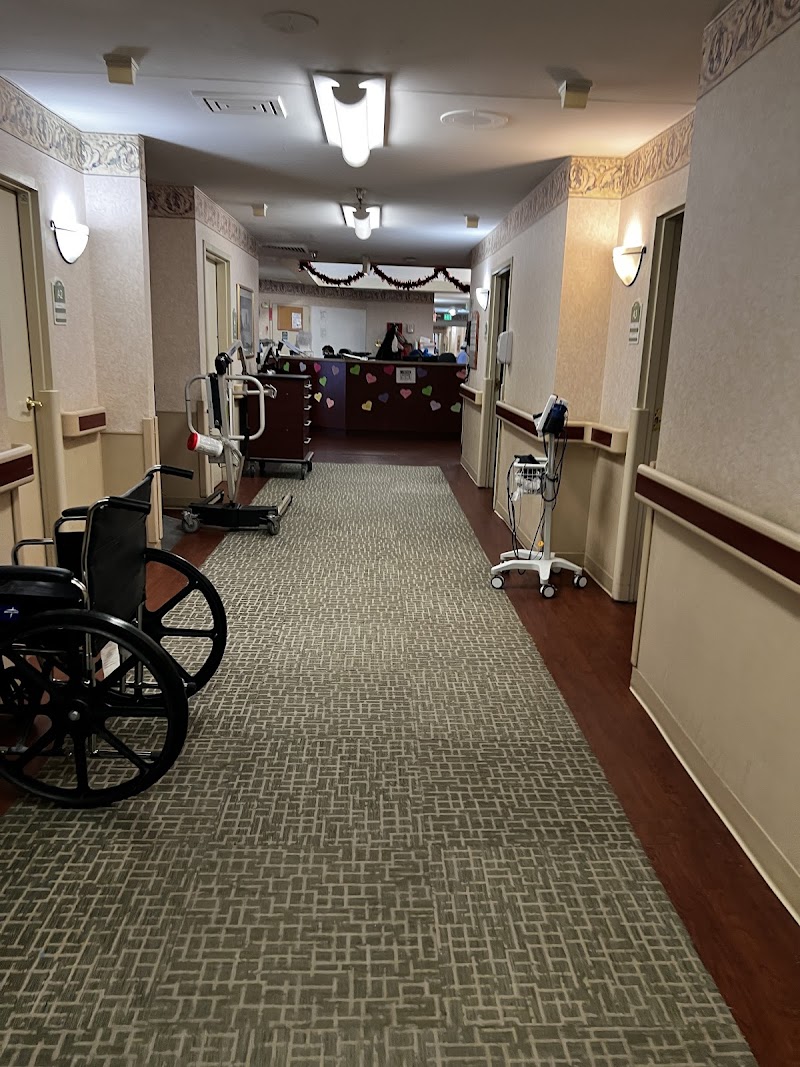
How is Complete Care At Severna Park Llc Staffed?

CMS rates COMPLETE CARE AT SEVERNA PARK LLC's staffing level at 3 out of 5 stars, which is average compared to other nursing homes. Staff turnover is 49%, compared to the Maryland average of 46%.

What Have Inspectors Found at Complete Care At Severna Park Llc?

State health inspectors documented 51 deficiencies at COMPLETE CARE AT SEVERNA PARK LLC during 2017 to 2025. These included: 50 with potential for harm and 1 minor or isolated issues. While no single deficiency reached the most serious levels, the total volume warrants attention from prospective families.
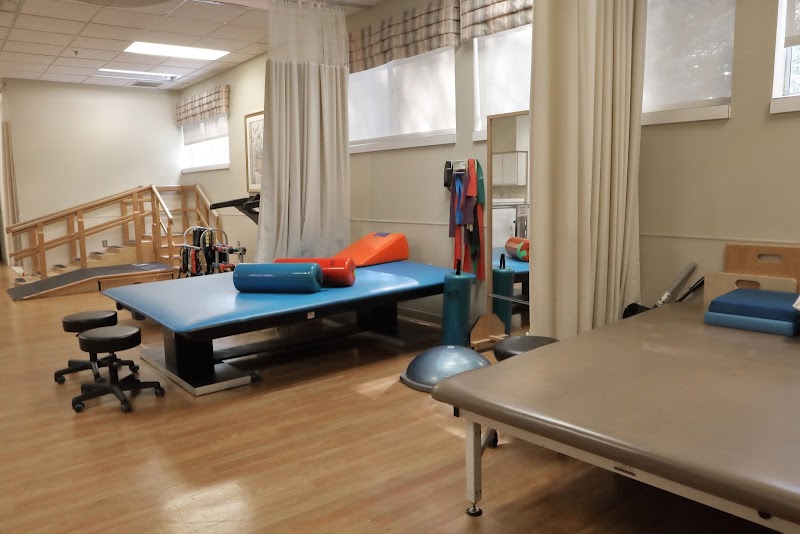
Who Owns and Operates Complete Care At Severna Park Llc?

COMPLETE CARE AT SEVERNA PARK LLC is owned by a for-profit company. For-profit facilities operate as businesses with obligations to shareholders or private owners. The facility is operated by COMPLETE CARE, a chain that manages multiple nursing homes. With 138 certified beds and approximately 125 residents (about 91% occupancy), it is a mid-sized facility located in SEVERNA PARK, Maryland.

How Does Complete Care At Severna Park Llc Compare to Other Maryland Nursing Homes?

Compared to the 100 nursing homes in Maryland, COMPLETE CARE AT SEVERNA PARK LLC's overall rating (2 stars) is below the state average of 3.0, staff turnover (49%) is near the state average of 46%, and health inspection rating (2 stars) is below the national benchmark.

What Should Families Ask When Visiting Complete Care At Severna Park Llc?

Based on this facility's data, families visiting should ask: "Can I visit during a mealtime to observe dining assistance and food quality?" "How do you handle medical emergencies, and what is your hospital transfer rate?" "Can I speak with family members of current residents about their experience?"

Is Complete Care At Severna Park Llc Safe?

Based on CMS inspection data, COMPLETE CARE AT SEVERNA PARK LLC has a clean safety record: no substantiated abuse findings (meaning no confirmed cases of resident harm), no Immediate Jeopardy citations (the most serious violation level indicating risk of serious injury or death), and is not on the Special Focus Facility watch list (a federal program monitoring the lowest-performing 1% of nursing homes). The facility has a 2-star overall rating and ranks #100 of 100 nursing homes in Maryland. While no facility is perfect, families should still ask about staff-to-resident ratios and recent inspection results during their visit.

Do Nurses at Complete Care At Severna Park Llc Stick Around?

COMPLETE CARE AT SEVERNA PARK LLC has a staff turnover rate of 49%, which is about average for Maryland nursing homes (state average: 46%). Moderate turnover is common in nursing homes, but families should still ask about staff tenure and how the facility maintains care continuity when employees leave.

Was Complete Care At Severna Park Llc Ever Fined?

COMPLETE CARE AT SEVERNA PARK LLC has no federal fines on record. CMS issues fines when nursing homes fail to meet care standards or don't correct problems found during inspections. The absence of fines suggests the facility has either maintained compliance or corrected any issues before penalties were assessed. This is a positive indicator, though families should still review recent inspection reports for the full picture.

Is Complete Care At Severna Park Llc on Any Federal Watch List?

COMPLETE CARE AT SEVERNA PARK LLC is not on any federal watch list. The most significant is the Special Focus Facility (SFF) program, which identifies the bottom 1% of nursing homes nationally based on persistent, serious quality problems. Not being on this list means the facility has avoided the pattern of deficiencies that triggers enhanced federal oversight. This is a positive indicator, though families should still review the facility's inspection history directly.