AUTUMN LAKE HEALTHCARE AT GLADE VALLEY
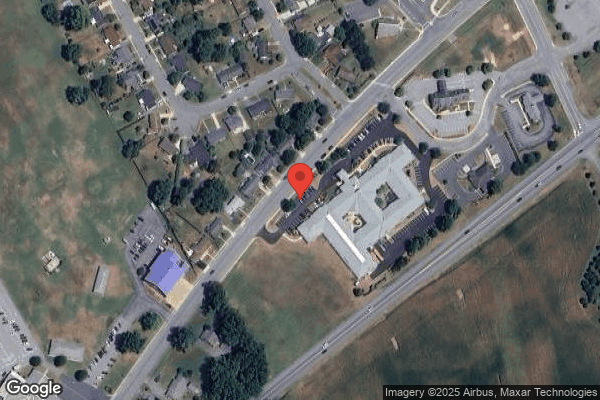
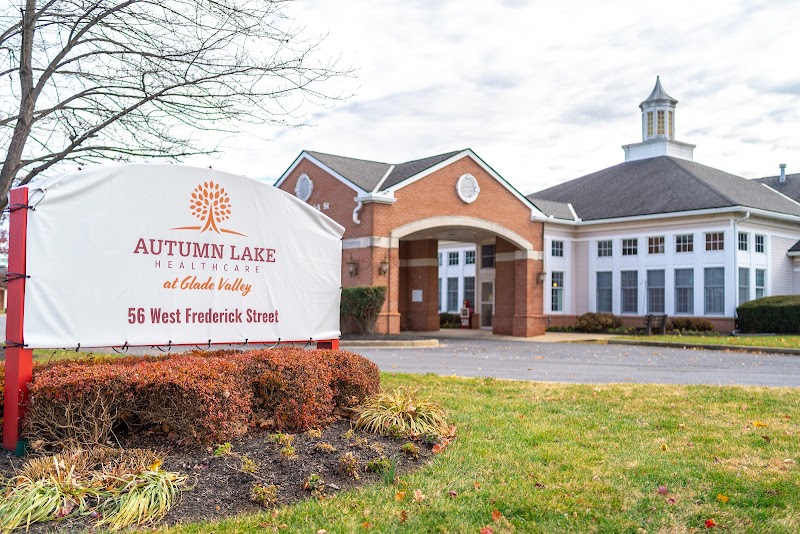
56 WEST FREDERICK STREET, WALKERSVILLE, MD 21793 (301) 898-4300
For profit - Limited Liability company 124 Beds AUTUMN LAKE HEALTHCARE Data: November 2025
Trust Grade
40/100
#137 of 219 in MD
Last Inspection: May 2025

Inspected within the last 6 months. Data reflects current conditions.

Overview

Autumn Lake Healthcare at Glade Valley has received a Trust Grade of D, indicating below-average performance with some concerning issues. Ranking #137 out of 219 facilities in Maryland places it in the bottom half, and #7 out of 8 in Frederick County suggests only one local option is better. The facility's trend is worsening, with the number of reported issues increasing significantly from 4 in 2023 to 30 in 2025. Staffing is a concern, with a rating of 2 out of 5 stars and a 49% turnover rate, which is around the Maryland average, meaning staff may not be consistently familiar with residents' needs. Additionally, the facility has accumulated $37,265 in fines, indicating more compliance problems than 79% of facilities in the state. Specific incidents include a serious finding where a resident was harmed during a mechanical lift transfer because it was improperly conducted by one staff member instead of the required two. Other concerns include a lack of annual performance evaluations for nurse aides, which can impact care quality, and insufficient training for staff on handling residents with mental health issues. While there are some strengths, such as average quality measures, the overall picture shows significant weaknesses that families should consider.

Trust Score
D
40/100
In Maryland
#137/219
Bottom 38%
Safety Record
Moderate
Needs review
Inspections
Getting Worse
4 → 30 violations
Staff Stability
⚠ Watch
49% turnover. Above average. Higher turnover means staff may not know residents' routines.
Penalties
⚠ Watch
$37,265 in fines. Higher than 80% of Maryland facilities, suggesting repeated compliance issues.
Skilled Nurses
○ Average
Each resident gets 32 minutes of Registered Nurse (RN) attention daily — about average for Maryland. RNs are the most trained staff who monitor for health changes.
Violations
⚠ Watch
75 deficiencies on record. Higher than average. Multiple issues found across inspections.
★★☆☆☆
2.0
Overall Rating
★★☆☆☆
2.0
Staff Levels
★★★☆☆
3.0
Care Quality
★★☆☆☆
2.0
Inspection Score
Stable
2023: 4 issues
2025: 30 issues

The Good

  • Full Sprinkler Coverage · Fire safety systems throughout facility
  • No fines on record

Facility shows strength in fire safety.

The Bad

2-Star Overall Rating

Below Maryland average (3.0)

Below average - review inspection findings carefully

Staff Turnover: 49%

Near Maryland avg (46%)

Higher turnover may affect care consistency

Federal Fines: $37,265

Above median ($33,413)

Moderate penalties - review what triggered them

Chain: AUTUMN LAKE HEALTHCARE

Part of a multi-facility chain

Ask about local staffing decisions and management

The Ugly 75 deficiencies on record

1 actual harm
May 2025 30 deficiencies
CONCERN (D)

Potential for Harm - no one hurt, but risky conditions existed

Resident Rights (Tag F0550)

Could have caused harm · This affected 1 resident

**NOTE- TERMS IN BRACKETS HAVE BEEN EDITED TO PROTECT CONFIDENTIALITY** Based on observation and interview, it was determined that the facility failed to provide privacy to a resident during a dressin...

Read full inspector narrative →
**NOTE- TERMS IN BRACKETS HAVE BEEN EDITED TO PROTECT CONFIDENTIALITY** Based on observation and interview, it was determined that the facility failed to provide privacy to a resident during a dressing change. This was evident for 1 (Resident #108) of 4 residents observed for pressure ulcer care. The findings include: On 04/24/25 at 01:16 PM during an observation of Resident #108's dressing change, the resident's frontal private area was exposed. The privacy curtain was only half drawn around the bed. Present were the Licensed Practical Nurse (LPN #6), unit manager (Staff #41), and an unidentified Geriatric Nursing Assistant (GNA). During the observation, another unidentified GNA entered the resident's room to collect meal trays. The surveyor informed the second GNA that Resident #108 was having personal care provided and tried to redirect the GNA. The GNA proceeded into the room, walked past the exposed resident, and stated I know, I'm collecting the [roommate for Resident #108] tray. On 4/24/25 at 4:10 PM in an interview with the unit manager (LPN #3), she was informed that the Resident #108's private area was exposed during a dressing change and that staff failed to ensure the resident's dignity/privacy. LPN#3 acknowledged the deficiency. On 05/01/25 at 10:35 AM the deficiency was discussed in an interview with the Nursing Home Administrator. No further evidence was provided by the end of the survey.
CONCERN (D)

Potential for Harm - no one hurt, but risky conditions existed

Deficiency F0561 (Tag F0561)

Could have caused harm · This affected 1 resident

**NOTE- TERMS IN BRACKETS HAVE BEEN EDITED TO PROTECT CONFIDENTIALITY** Based on observation, pertinent document review and interviews, it was determined that the facility failed to have an effective ...

Read full inspector narrative →
**NOTE- TERMS IN BRACKETS HAVE BEEN EDITED TO PROTECT CONFIDENTIALITY** Based on observation, pertinent document review and interviews, it was determined that the facility failed to have an effective process in place to ensure that the residents receive their choices from the alternative menu. This was evident for 1(Resident #69) in a random dining observation. The findings include: On 4/24/25 at 6:52 PM an observation in the dining room of the [NAME] Grove nursing unit was made. An observation of Resident #69's dinner tray revealed two separate meal tickets laying on the dinner tray. One of the meal tickets was titled Resident meal change. It revealed that a peanut butter & Jelly sandwich was circled and extra gravy was handwritten on the ticket. The second meal ticket indicated that the resident was to receive hot tea. Observation of Residents #69's dinner plate revealed steak and rice with no gravy and failed to reveal a peanut butter sandwich or hot tea. On 4/24/25 at 7:00 PM, interviews were conducted with the residents sitting at the table with Resident #69. Resident #88 reported that s/he does not always receive his/her alternative choices for a meal. S/he reported that s/he submitted his/her alternative meal ticket for dinner tonight but did not receive the alternatives s/he requested. Resident #88 reported that s/he had submitted a ticket in the designated area (a basket at the nurse's station) prior to 1:30 PM. After 3:30PM, s/he noticed the ticket was still in the basket and s/he handed the meal ticket to Kitchen staff #14. S/he reported that s/he did not receive his/her alternative items that were requested for the dinner 4/24/25. Resident #42 reported that s/he does not submit an alternative food request because in the past the requested alternative food is not delivered. Resident #78 reported that the facilities system for receiving alternatives for menu items does not work. S/he reported that s/he has gotten to know kitchen staff and makes a verbal request directly to the kitchen staff and does not submit his/her request through the facility process. On 4/25/25 at 11:10 AM the Certified Dietary Manager Consultant (CDM Staff 11) was interviewed. During the interview, the above observations and interviews were shared. She confirmed that having two meal tickets on the tray and the current systems in place for requesting and receiving menu alternative was not effective. On 5/01/25 The above concerns were shred with the Nursing Home Administrator. No additional information was provided prior to the end of the survey.
CONCERN (D)

Potential for Harm - no one hurt, but risky conditions existed

Deficiency F0582 (Tag F0582)

Could have caused harm · This affected 1 resident

Based on record review and interviews, it was determined that the facility failed to ensure that Beneficiary Protection Notifications were issued to residents discharged from Medicare Part A services ...

Read full inspector narrative →
Based on record review and interviews, it was determined that the facility failed to ensure that Beneficiary Protection Notifications were issued to residents discharged from Medicare Part A services but had benefit days remaining and intended to remain at the nursing facility receiving non-skilled care. This was evident for 2 (Resident #5, #39) of 3 residents reviewed for Skilled Nursing Facility Beneficiary Protection Notification. The findings include: Residents with Medicare Part A have certain rights and protections related to financial liability and appeals. The financial liability, appeal rights, and protections are communicated to beneficiaries through notices given by providers to residents who are being discharged from Medicare services but have Medicare benefit days remaining. The notices include: Notice of Medicare Non-Coverage (NOMNC): This must be issued at least two calendar days before the last day of Medicare coverage. The NOMNC informs the beneficiary of his/her right to an expedited review of the services termination. The resident and/or their representative must receive a copy of the notice in enough time to appeal the decision to terminate the paid coverage. The facility must indicate that the notice was sent/and/or given within the specified time. Skilled Nursing Facility Advance Beneficiary Notice (SNFABN): This notice must be issued far enough before delivering potentially non-covered services to allow sufficient time for the beneficiary to consider all available options. 1) Record review on 4/23/25 of the Beneficiary Notification checklist completed and provided by the facility to the survey team showed that Resident #5's Medicare A services in the facility started on 11/7/24 and ended on 1/20/25. The resident continued to remain in the facility after the last day of his/her Medicare coverage. The review contained a NOMNC for Resident #5. The NOMNC was signed on 1/17/25 by business office manager (staff #19), to indicate that the notice was delivered via telephone to the resident's representative. However, the review did not show that Resident #5 or his/her representative was issued SNFABN. The SNFABN should have been provided to Resident #5's representative at the end of his/her skilled services. This would have allowed the resident to choose to continue with non-covered items or services. The notice would have also estimated the cost of services and listed why Medicare may not pay. The facility's Advance Beneficiary Notices policy given to the surveyor was reviewed on 4/23/25 at approximately 12:10 PM. The policy stated, If the notice cannot be hand-delivered (for example, such as in the case of an incompetent resident and the representative is out of town), a telephone notice shall be made, followed up immediately with a mailed, emailed, faxed, or hand-delivered notice. However, the earlier review lacked evidence that a copy of Resident #5's NOMNC was mailed to his/her representative after the notification was done via phone. In an interview on 4/23/25 at 12:21 PM, the business office manager (staff #17), reported that she was unaware that she had to mail the NOMNC to the Resident's representative because it was not hand-delivered in person. She also confirmed that Resident #5 continued to stay in the facility after Medicare A services ended. However, she did not issue SNFABN to the Resident or his/her representative. 2) A review was completed on 4/23/25 at 10:48 AM of Resident #39's Beneficiary Notification checklist, which the facility completed. The review indicated that Resident #39's Medicare Part A services in the facility started on 11/27/24 and ended on 2/3/25. The continued review noted that the facility initiated Resident #39's discharge from Medicare Part A services when benefit days were not exhausted and s/he remained in the facility. However, the review failed to show that NOMNC and SNFABN were issued to the resident or his/her representative before services were ended. In an interview on 4/23/25 at 12:21 PM, staff #17 said she lacked documentation to show that a NOMNC and SNFABN were issued to Resident #39 when Medicare A services ended on 2/3/25.
CONCERN (D)

Potential for Harm - no one hurt, but risky conditions existed

Safe Environment (Tag F0584)

Could have caused harm · This affected 1 resident

**NOTE- TERMS IN BRACKETS HAVE BEEN EDITED TO PROTECT CONFIDENTIALITY** Based on interviews and observation it was determined that the facility failed to maintain a clean home-like environment. This w...

Read full inspector narrative →
**NOTE- TERMS IN BRACKETS HAVE BEEN EDITED TO PROTECT CONFIDENTIALITY** Based on interviews and observation it was determined that the facility failed to maintain a clean home-like environment. This was evident for 1 shower room out of 2 shower rooms observed during a survey. The findings include: On 4/25/25 at 8:06 AM, Resident #69, a long-term resident of the facility, reported to the surveyor that the [NAME] Grove shower room floors had a black and brown substance on/in the cracks in the shower room floor. On 4/25/25 at 8:15 AM an observation of the Sugar Loaf shower room was made with the nurse unit manager (Staff #5). The observation revealed cracks along the grout edge of the floor in the two of the three shower stalls rooms. In addition, small black and brown spots were visible in the cracks of the shower stall floor. Staff #5 reported she would notify housekeeping and maintenance. On 4/25/25 at 9:51 AM The Maintenance Director (Staff #18) was interviewed. Staff #18 reported that he was aware of the concerns with the shower stall floors. He reported that he recommended the walls and the floor be replaced several years ago. He reported that the tile on the walls had been replaced but not the floor tiles. He reported he has applied silicone and grout but, it has not corrected the issue. On 4/29/25 at 3:27 PM an observation was made with the Nursing Home Administrator (NHA) of the Sugar Loaf shower room stall. The NHA confirmed the black and brown substance on/in the cracks in the shower room floor.
CONCERN (D)

Potential for Harm - no one hurt, but risky conditions existed

Grievances (Tag F0585)

Could have caused harm · This affected 1 resident

Based on record review and interviews, it was determined that the facility failed to identify a Grievance Official in the facility's grievance policy, and failed to ensure that grievances were followe...

Read full inspector narrative →
Based on record review and interviews, it was determined that the facility failed to identify a Grievance Official in the facility's grievance policy, and failed to ensure that grievances were followed up with a written response. This was evident for 5 of 5 grievance investigations reviewed during the recertification survey. The findings include: A review of the facility's grievance policy, dated 12/22/22 revealed Name and Title instead of the grievance officer's name, and List contact information instead of the actual contact information. Further review of the policy revealed the following definition: The Grievance Official for the facility navigates the grievance process as a part of resident rights by receiving and tracking grievances through to their conclusions; leading any necessary investigations by the facility, issuing written grievance decisions to the resident; and coordinating with state and federal agencies as necessary in light of specific allegations. On 04/28/25 at 02:44 PM, a review of the grievance investigations for February 2025 was conducted with documents provided by the Nursing Home Administrator (NHA). All 5 grievance investigations reviewed failed to reveal who completed the grievance investigation, when they were completed, and if the decisions regarding the grievance were provided in writing to the resident. On 4/29/25 at 12:09 PM, in an interview with the NHA, she stated that she was the official grievance officer. When asked how residents were informed of results of grievance investigations, the NHA said everyone is provided a verbal follow up. The grievance policy dated 12/22/22 was reviewed with her and she confirmed that the policy did not indicate who the grievance officer was. A review of the 5 grievance investigations for February 2025 were also reviewed with the NHA and she confirmed that residents did not receive written follow up. On 05/01/25 at 10:35 AM, the deficiency was again discussed in an interview with the NHA. No further evidence was provided by the end of the survey.
CONCERN (D) 📢 Someone Reported This

A family member, employee, or ombudsman was alarmed enough to file a formal complaint

Potential for Harm - no one hurt, but risky conditions existed

Report Alleged Abuse (Tag F0609)

Could have caused harm · This affected 1 resident

Based on a record review and interview it was determined that the facility failed to report a resident's allegation of missing money. This was evident for 1 (Resident #263) and was discovered during t...

Read full inspector narrative →
Based on a record review and interview it was determined that the facility failed to report a resident's allegation of missing money. This was evident for 1 (Resident #263) and was discovered during the investigation of the facility reported incident #MD00212599. During the survey 15 facility reported incidents were investigated. The findings include: A review of the facility reported incident (FRI # MD00212599) revealed that Resident #373 alleged that on 12/02/24 money was missing from the locked drawer in his/her room. A review of the facility's investigation file failed to reveal evidence that any other residents were asked if they also had money missing. On 4/30/25 at 9:44 AM an interview was conducted with the Nursing Home Administrator (NHA) to review the facility's investigation of FRI #MD00212599. When the NHA was asked if any other residents had reported missing money, the NHA said, yes, Resident #373's roommate (Resident #263) also reported missing money on the same date as Resident #373's. The NHA said she did not report Resident #263's allegation of missing money to the state authority. When asked why she did not do so, she said that she talked to the resident's family member who questioned whether the resident possessed money in his/her room. When asked to explain the discrepancy between reporting missing money for Resident #373 and not for Resident #263, the NHA acknowledged and affirmed the deficiency.
CONCERN (D)

Potential for Harm - no one hurt, but risky conditions existed

Assessment Accuracy (Tag F0641)

Could have caused harm · This affected 1 resident

Based on record review, interviews, and observation, it was determined that the facility failed to ensure that Minimum Data Set (MDS) assessments were accurately recorded. This was evident for 2 (Resi...

Read full inspector narrative →
Based on record review, interviews, and observation, it was determined that the facility failed to ensure that Minimum Data Set (MDS) assessments were accurately recorded. This was evident for 2 (Resident #39, #48) of 4 residents reviewed for limited range of motion (ROM), 1 (Resident #40) of 7 residents reviewed for unnecessary medications, and 1 (Resident #110) of 3 closed record reviews. The findings include: The MDS (Minimum Data Set) is a complete assessment of the Resident that provides the facility information necessary to develop a care plan, provide the appropriate care and services to the Resident, and modify the care plan based on the Resident's status. MDS assessments must be accurate to ensure that each Resident receives the care they need. 1) A record review for Resident #39 on 4/21/25 at 1:48 PM included occupational and physical therapy evaluations dated 11/29/24 that had recorded that Resident #39 had impaired ROM to his/her left lower extremity and full ROM to both upper extremities. However, continued review of Resident #39's MDS assessments dated 12/1/24 and 1/28/25 showed documentation that Resident #39 had one-sided impairment to his/her upper extremity. In an interview on 4/21/25 at approximately 2:00 PM, staff #10, a licensed practical nurse (LPN), reported that Resident #39 had no impairment in ROM to his/her upper extremities. During an interview on 4/25/25 at 1:36 PM, staff #7, an MDS coordinator, indicated that part of documenting impaired ROM in the MDS was to review therapy evaluations and notes. Staff then said Resident #39's MDSs were coded in error in section GG after checking his/her therapy evaluations dated 11/29/24. 2) An observation of Resident #48 on 4/21/25 at 11:20 AM revealed that the Resident's right hand had contractures (fingers bent at the knuckle joints and unable to stretch them out). A record review on 4/23/25 at 6:48 AM contained an occupational therapy (OT) evaluation of 10/11/24 that documented impaired ROM to Resident #48's right shoulder, elbow, forearm, wrist, and fingers. The review showed that Resident #48's lower extremity had no impairment in ROM. Continued review of a rheumatology consultation report dated 10/14/24 indicated that Resident #48 had right-hand contracture. The review also contained an attending provider's order for Resident #48 to have a right-hand contracture management device. Further review contained MDS assessments for Resident #48 dated 1/2/25 and 4/5/25. The 1/2/25 MDS assessment had recorded that Resident #48 had no functional limitation in range of motion to his/her upper extremity. In the 4/5/25 MDS assessment, it was documented that Resident #48 had a limited ROM in his/her lower extremity. In an interview on 4/25/25 at 2:10 PM, staff #7 reported that Resident #48's MDS assessments dated 1/2/25 and 4/5/25 were recorded in error. 3) A record review on 4/23/25 at 1:12 PM, found a hospital OT evaluation dated 7/31/24 for Resident #40 that indicated that the Resident had full ROM to both of his/her upper extremities. The continued review showed the facility's OT evaluation and plan of treatment dated 8/3/24 and 2/21/25, which showed that Resident #40 had no impairment in ROM to either of his/her upper extremities. However, Resident #40's MDS assessments dated 8/8/24, 11/8/24, 2/8/25and 3/17/25 had all recorded that Resident #40 had functional limitation in range of motion to his/her upper extremity. During an interview on 4/25/25 at 1:51 PM, staff #7 confirmed that Resident #40's MDS assessments were documented inaccurately and said she would correct them.4) On 04/24/25 at 06:11 PM, a closed record review revealed a nurses note dated 2/07/25 that stated Patient discharged home today at 1330pm. Patient left with daughter. All physical medications in cart given to patient except for Narcotics. Discharge summary reviewed with patient. All questions answered accordingly. Scripts given to patient to take to her local pharmacy for refill. Patient left in good spirits, happy to be going home. Denies pain. Discharge vitals: BP-126/73, P-80, R-18, T-97.2, SP02-97%RA. On 4/25/25 at 10:37 AM, a review of Resident #110's MDS Assessment, dated 2/07/25 was conducted. In Section A 2105, Discharge Status, the entry indicated that the resident was discharged to a 04 Short-Term General Hospital. On 4/25/25 at 01:59 PM in an interview with the MDS Coordinator,(Staff #7), she reviewed Resident #110's MDS and verified the entry that the resident was coded as discharged to a hospital. She was asked to review the nursing note documentation and after she did so, she confirmed the MDS coding error. On 05/01/25 at 10:35 AM the deficiency was discussed in an interview with the Nursing Home Administrator. No further evidence was provided by the end of the survey.
CONCERN (D)

Potential for Harm - no one hurt, but risky conditions existed

Deficiency F0645 (Tag F0645)

Could have caused harm · This affected 1 resident

Based on pertinent document review and interviews, it was determined that the facility failed to perform a Pre-admission Screening and Resident Review (PASSAR) screen within 40 days of the resident ad...

Read full inspector narrative →
Based on pertinent document review and interviews, it was determined that the facility failed to perform a Pre-admission Screening and Resident Review (PASSAR) screen within 40 days of the resident admission. This was evident for 1 (Resident #69) out of 4 residents reviewed for PASSAR screening during a survey. The findings include: On 4/21/25 at 11:57 AM Resident #69, was a long-term resident of the facility. Review of medical records revealed Resident # 69 has a pre-admission screening and resident interview (PASSAR) screening completed on 12/12/23. Further review revealed that the attending physician certified, before admission to the nursing facility, that the resident is likely to require less than 30 days at the nursing facility. On 4/22/25 a review of Residents medical record failed to reveal an additional PASSAR completed within 40 days of Resident # 69 residing in the facility. 04/22/25 04:53 PM The Administrator was interviewed. She confirmed that Resident #69 was required to have new PASSAR screen after residing in the facility more than 40 days. The Administrator reported she was unable to provide the follow-up PASSAR, however she would continue to look for the document. 5/01/2025 10:15 AM during an interview the Administrator reported she was unable to provide a follow up PASSAR for Resident #69.
CONCERN (D) 📢 Someone Reported This

A family member, employee, or ombudsman was alarmed enough to file a formal complaint

Potential for Harm - no one hurt, but risky conditions existed

Deficiency F0655 (Tag F0655)

Could have caused harm · This affected 1 resident

**NOTE- TERMS IN BRACKETS HAVE BEEN EDITED TO PROTECT CONFIDENTIALITY** Based on record reviews and interviews, it was determined that the facility failed to develop and implement a baseline care plan...

Read full inspector narrative →
**NOTE- TERMS IN BRACKETS HAVE BEEN EDITED TO PROTECT CONFIDENTIALITY** Based on record reviews and interviews, it was determined that the facility failed to develop and implement a baseline care plan. This was evident for 1 (Resident #369) of 4 residents reviewed for pressure ulcers and injuries. The findings include: Resident #369 was admitted to the facility for short-term managed care rehabilitation following hospitalization due to weakness related to a recent COVID-19 infection and chemotherapy treatment for cancer. The resident also presented with unstageable sacral wounds and history of depression, anxiety, and pain. A baseline care plan is a detailed, initial plan developed for each resident within 48 hours of their admission. It outlines the essential care instructions needed to provide effective and person-centered care. This plan serves as a foundation for the residents' overall care, ensuring continuity and staff communication. On 4/29/25 at 8:50 AM, in response to complaint MD00204145, the surveyor reviewed Resident #369's medical record which revealed that the resident was admitted on [DATE] and that a comprehensive Minimum Data Set (MDS) assessment had been completed on 3/02/24. Further review of the medical record Care Plan Report, revealed there was a one-page document that had been initiated on 5/10/24-despite the resident being discharged in late March 2024. This document included a single intervention: The resident has potential/actual impairment to skin integrity r/t-after which it was marked canceled. No additional evidence was found to indicate that a care plan had been created. On 4/29/25 at 10:39 AM, the surveyor spoke with the Director of Nursing (DON) and expressed concern that a care plan was not created for Resident #369. The DON stated that she would investigate the matter. On 4/29/25 at 1:14 PM, the surveyor spoke again with the DON and inquired whether she had found evidence of a completed care plan. The DON responded, No, this is all I found, and I am embarrassed, as she handed the surveyor a printed copy of a one-page, incomplete care plan that had been created and subsequently canceled in May 2024. (The resident had been discharged from the facility in March 2024.) On 5/1/25 at 10:55 AM, the surveyor spoke with the Nursing Home Administrator (NHA) regarding concerns that Resident #369 did not receive either a baseline care plan. The NHA acknowledged awareness of the issue and emphasized that she did not want the surveyor to believe she was attempting to alter the medical record. She explained that while it may appear the facility tried to create a care plan after the resident's discharge, her access to the record was only to review the issue and not to initiate a new care plan. She stated she was aware of the deficiency in care planning, which prompted her to access the resident's record.
CONCERN (D) 📢 Someone Reported This

A family member, employee, or ombudsman was alarmed enough to file a formal complaint

Potential for Harm - no one hurt, but risky conditions existed

Comprehensive Care Plan (Tag F0656)

Could have caused harm · This affected 1 resident

**NOTE- TERMS IN BRACKETS HAVE BEEN EDITED TO PROTECT CONFIDENTIALITY** Based on record reviews and interviews, it was determined that the facility failed to develop and implement a comprehensive care...

Read full inspector narrative →
**NOTE- TERMS IN BRACKETS HAVE BEEN EDITED TO PROTECT CONFIDENTIALITY** Based on record reviews and interviews, it was determined that the facility failed to develop and implement a comprehensive care plan. This was evident for 1 (Resident #369) out of 4 residents reviewed for pressure ulcers and injuries. The findings include: Resident #369 was admitted to the facility for short-term managed care rehabilitation following hospitalization due to weakness related to a recent COVID-19 infection and chemotherapy treatment for cancer. The resident also presented with unstageable sacral wounds and history of depression, anxiety, and pain. A comprehensive care plan is a detailed, individualized document that outlines a resident's goals, needs, and the services they will receive to achieve those goals. It's a collaborative effort involving the residents (if able), their family, and the care team, and it's designed to improve their overall well-being. Facilities are required to complete a comprehensive MDS assessment within 14 days of the resident's admission, and the care plan must be developed within 7 days after that assessment is completed. A Minimum Data Set (MDS) is a standardized assessment tool that helps to evaluate the health status of residents in long-term care facilities. The information gathered helps facilities to develop patient centered care plans based on the resident's unique needs. On 4/29/25 at 8:50 AM, in response to complaint MD00204145, the surveyor reviewed Resident #369's medical record which revealed that the resident was admitted on [DATE] and that an MDS assessment had been completed on 3/02/24. Further review of the medical record Care Plan Report, revealed there was a one-page document that had been initiated on 5/10/24-despite the resident being discharged in late March 2024. This document included a single intervention: The resident has potential/actual impairment to skin integrity r/t-after which it was marked cancelled. No additional evidence was found to indicate that a care plan had been created. On 4/29/25 at 10:39 AM, the surveyor spoke with the Director of Nursing (DON) and expressed concern that a care plan did not appear to have been created for Resident #369. The DON stated that she would investigate the matter. The surveyor also requested a copy of the facility Care Planning Policy. On April 29, 2025, at 1:14 PM, the surveyor spoke again with the DON and inquired whether she had found evidence of a completed care plan. The DON responded, No, this is all I found, and I am embarrassed, as she handed the surveyor a printed copy of a one-page, incomplete care plan that had been created and subsequently canceled in May 2024. (The resident had been discharged from the facility in March 2024.) The DON also provided a copy of the facility's policy and procedure titled Comprehensive Care Plan, revised on April 28, 2025, which stated: The comprehensive care plan will be developed within seven days after the completion of the comprehensive MDS assessment. All care areas triggered by the MDS will be considered in developing the plan of care. On 5/1/25 at 10:55 AM, the surveyor spoke with the Nursing Home Administrator (NHA) regarding concerns that Resident #369 did not receive either a comprehensive care plan. The NHA acknowledged awareness of the issue and emphasized that she did not want the surveyor to believe she was attempting to alter the medical record. She explained that while it may appear the facility tried to create a care plan after the resident's discharge, her access to the record was only to review the issue-not to initiate a new care plan. She stated she was aware of the deficiency in care planning, which prompted her to access the resident's record. The NHA reiterated that it was not her intent to create documentation post-discharge and confirmed that the resident never received a comprehensive care plan.
CONCERN (D) 📢 Someone Reported This

A family member, employee, or ombudsman was alarmed enough to file a formal complaint

Potential for Harm - no one hurt, but risky conditions existed

Deficiency F0657 (Tag F0657)

Could have caused harm · This affected 1 resident

Based on record review and interviews, it was determined that the facility failed to ensure that care plans were reviewed and revised after a change in a resident's condition. This was evident for 1 (...

Read full inspector narrative →
Based on record review and interviews, it was determined that the facility failed to ensure that care plans were reviewed and revised after a change in a resident's condition. This was evident for 1 (Resident #48) of 2 residents reviewed for care planning. The findings include: A care plan is a guide that addresses each Resident's unique needs. It is used to plan, assess, and evaluate the effectiveness of the Resident's care. They must be developed within 7 days of completion of a resident's admission comprehensive Minimum Data Set (MDS) assessment and revised at least every quarter (or more often as needed). The Minimum Data Set (MDS) assessment is a federally mandated assessment tool that nursing home staff use to gather information on each Resident's strengths and needs. The information collected is used in the Resident's care planning decisions. The facility must have care plans developed and revised by an interdisciplinary team (IDT), including the attending physician, a registered nurse, a nursing aide, a representative from dietary services, the Resident, and the Resident's representative (as practicable). A record review on 4/21/25 at 11:53 AM showed that Resident #48 had been residing in the facility since March 2022. The continued review revealed a referral by a nurse to therapy dated 9/12/24 that indicated Resident #48's right hand was contracted and needed to be evaluated for splinting. Further review of therapy evaluation dated 10/11/24 showed that Resident #48's right hand was contracted. The review also showed that IDT care plan meetings occurred on 1/16/25 and 4/10/25. However, the review failed to show that Resident #48's care plan had been updated with the new contracture. In an interview on 4/29/25 at 12:40 PM, the Director of Nursing (DON) said she or the unit manager was responsible for updating resident care plans. The DON continued to state that care plans were expected to be updated with every change in a resident's condition. However, earlier record review lacked proof that Resident #48's care plan was updated with his/her right-hand contracture.
CONCERN (D) 📢 Someone Reported This

A family member, employee, or ombudsman was alarmed enough to file a formal complaint

Potential for Harm - no one hurt, but risky conditions existed

ADL Care (Tag F0677)

Could have caused harm · This affected 1 resident

Based on record reviews, interviews and observations, it was determined that the facility failed to ensure that residents who required assistance with Activities of Daily Living (ADL) were provided wi...

Read full inspector narrative →
Based on record reviews, interviews and observations, it was determined that the facility failed to ensure that residents who required assistance with Activities of Daily Living (ADL) were provided with showers and incontinence care. This was evident for 3 (Resident #57, #366, #365) of 3 residents reviewed for ADL. The findings include: 1) In an observation on 4/21/25 at 12:20 PM, Resident #57 was observed sitting in a Geri-chair, in the unit dining area, and was noted with white flaky particles in facial hair and on his/her clothes. In a subsequent observation on 4/24/25 at 5:01 PM, Resident #57 was noted lying in bed and continued to have white, flaky particles in his/her facial hair. A record review later that day contained an MDS assessment (Minimum Data Set- a federally mandated assessment tool used by nursing home staff to gather information on each resident's strengths and needs) dated 2/4/25 for Resident #57. The MDS had recorded that Resident #57 depended on staff for most of his/her self-care needs. A continued review of Resident #57's order summary report as of April 2025 contained an attending provider's order to give showers to Resident #57 twice weekly on Mondays and Thursdays in the evening. An observation made on 4/24/25 on the haven unit showed a shower schedule form for the week of 4/21/25 - 4/26/25, which indicated that Resident #57 was to receive showers on 4/21/25 and 4/24/25 on the evening shift. The form had a notation: GNA - [Geriatric nurse aid] and nurses are to initial that showers are completed. 4/21/25 was blank while 4/24/25 had an initial, meaning the resident's shower was completed before this observation. However, observation of Resident #57 on 4/24/25 from 3:00 PM to 7:00 PM showed that the resident had not been taken out of his/her room for a shower. A review of the GNA shower documentation for Resident #57 from January 1 to March 31, 2025, was completed. The review showed a record of one shower in January, three showers in February, and two in March. An interview on 4/25/25 at 6:48 AM with staff #26, a licensed practical nurse, whose role was also a GNA the previous shift and had worked with Resident #57, revealed that the resident had received a bed bath (washing a resident in bed) on 4/24/25 because s/he refused a shower. However, staff #26 was unable to provide documentation that reflected refusal. In an interview on 4/25/25 at 9:22 AM, staff #2, unit manager for the haven unit, reported that Resident #57 was supposed to get at least eight showers in a month. Staff was asked for a record of the resident's refusal of showers and reported there was no documentation to show the resident's refusal of his/her showers. In an interview on 4/29/25 at 1:01 PM, the director of nursing confirmed concerns after checking Resident #57's GNA shower record with the surveyor. The DON continued to state that every resident was to receive eight showers a month. And if they refused, the staff was to document the refusal.2) Resident #366 was admitted to the facility in late 2024. A review of a complaint packet related to MD00212858 alleged that on multiple occasions, the resident was left in soiled diapers for prolonged periods. On 4/30/25 at 9:33 AM, a review of Resident 366's medical record was conducted. The review revealed a comprehensive assessment with a reference date of 11/20/24 that indicated the resident was dependent on staff for toileting. The Task documentation on Resident #366 for toilet use and bladder continence for November 2024 was reviewed on 4/30/25 at 10:12 AM. The review revealed multiple shifts with no documentation. The Director of Nursing (DON) was interviewed on 4/30/25 at 10:46 AM. During the interview, the DON reported that the Geriatric Nursing Assistants (GNA) were responsible in documenting under the Task and indicated that they also report to the nurses. The Task documentation for Resident #366 was reviewed with the DON. The DON confirmed the shifts that had no documentation from the GNA's and stated, I see it, it looks like for at least 2 days the resident did not go to the bathroom. The concern was discussed with the DON that there was no documentation to indicate incontinent care was provided to a dependent resident. The DON indicated that she would review the resident's medical record. On 4/30/25 at 11:15 AM, the DON reported that she found progress notes from the nurses that pertained to toileting of Resident #366. A review of the progress notes was conducted with the DON and confirmed the documentation. However, there were still several shifts that staff had failed to document on toileting. The shifts identified within the 17 days reviewed for November 2024 were: a) 11/15/24 evening shift b) 11/22/24 evening shift c) 11/24/25 night shift d) 11/27/24 evening shift e) 11/28/24 day shift f) 11/28/24 night shift On 4/30/25 at 11:28 AM, the DON confirmed that there was no documentation to indicate that incontinence care was provided to Resident #366 for 6 shifts in the 17 days reviewed. 3) Resident #365 was admitted to the facility in early 2025. A review of a complaint packet related to MD00214039 alleged that the resident was left wet for extended periods. A review of Resident #365's medical records was conducted on 4/30/25 at 12:04 PM. The review revealed a comprehensive assessment with a reference date of 1/31/25, that indicated the resident needed substantial/maximal assistance from staff for toileting. Further review of Resident #365's medical record revealed a care plan for Activities of Daily Living (ADL) self-care performance deficit with interventions that include: Resident is to be assisted with toileting or changed after each meal and at bedtime, and as requested; Resident is to be checked and changed frequently through the night; and resident requires assistance of 1 staff for toileting. A review of the Task documentation for bladder continence and toilet use in contrast with the progress notes was conducted on 5/1/25 at 8:28 AM. The documentation reviewed was for the last 7 days in January 2025. The review identified 4 shifts with no documentation to indicate incontinence care was provided. The shifts identified were: a) 1/25/25 night shift b) 1/27/25 day shift c) 1/28/25 day shift d) 1/30/25 evening shift The concern was discussed with the DON on 5/1/25 at 9:39 AM. The DON reported that Resident #365 resided in the Catoctin unit where staff worked 12-hour shifts. The DON indicated that she would pull staffing sheets and review the resident's medical records to explain the missing documents for toileting and continence care. On 5/1/25 at 10:52 AM, the DON reported that after she reviewed Resident #365 medical records and staffing sheets, she did not find documentation to indicate incontinent care was provided to the resident on the identified shift stated above. The DON verbalized understanding and acknowledged the concern.
CONCERN (D) 📢 Someone Reported This

A family member, employee, or ombudsman was alarmed enough to file a formal complaint

Potential for Harm - no one hurt, but risky conditions existed

Quality of Care (Tag F0684)

Could have caused harm · This affected 1 resident

Based on record review, and interviews, it was determined that the facility failed to ensure that medications and treatments were administered per physician orders. This was evident in 1 (Resident #36...

Read full inspector narrative →
Based on record review, and interviews, it was determined that the facility failed to ensure that medications and treatments were administered per physician orders. This was evident in 1 (Resident #363) of 53 residents reviewed during the survey. The findings include: Resident #363 has a medical history of kidney failure, congestive heart failure (CHF), chronic obstructive pulmonary disease (COPD), depression, and chronic pain. On 4/30/25 at 8:10 AM, the surveyor reviewed Resident #363's Medication Administration Records (MAR) and Treatment Administration Records (TAR), which revealed multiple instances of missed medications and treatments that had been ordered by the resident's physician. The missed medications and treatments are as follows for March 2025: -3/31 - Mirtazapine 15 mg -3/19 & 3/31 - Rocklatan Ophthalmic Solution 0.02-0.05% -3/19 & 3/31 - Buspirone 7.5 mg -3/19 & 3/31 - Trospium Chloride 20 mg -3/21 - Behavior monitoring for medication side effects (related to Buspar, Hydroxyzine, Remeron, and Zoloft) -3/21 - Observation for side effects related to psychotropic medication -3/21 - Fluid restriction: 2000 mL daily for CHF monitoring -3/21 & 3/28 - Oxygen use at 2 L/min via nasal cannula continuously (monitor for hypoxia [the bodies tissues and organs are not receiving enough oxygen]) -3/19 & 3/21 - Pain management monitoring -3/19 & 3/21 - Vital signs monitoring -3/18 - Wound care: Surgical incision -3/18, 3/21, 3/31 - Desitin external cream 13% topical application -3/18, 3/21, 3/31 - Observation for changes in condition -3/18, 3/21, 3/31 - Prevention of resident from lying flat; monitor for shortness of breath -3/31 - Monitor for abnormal breathing related to anticoagulant use -3/18, 3/21, 3/31 - Ensure pressure-reducing mattress is in place every shift -3/18, 3/21, 3/31 - Pressure redistribution cushion to chair every shift On 4/30/25 at 11:29 AM, The surveyor spoke with the facility's Director of Nursing (DON) and requested a review of the March 2025 MAR, which showed multiple instances where it appeared that Resident #363 did not receive medications or treatments as ordered. The DON indicated that she would investigate the matter further, adding that administration records would typically be signed off if the assigned tasks had been completed. On 4/30/25 at 12:44 PM, The surveyor spoke with the DON, who confirmed that the medications and treatments for Resident #363 had not been administered on the dates in question. On 5/01/25 at 10:55 AM, The surveyor spoke with the Nursing Home Administrator (NHA) to express concerns about multiple dates on which Resident #363 did not receive medications or treatments as directed. The NHA agreed that this is a troubling issue and that the facility would be looking into the system failure.
CONCERN (D) 📢 Someone Reported This

A family member, employee, or ombudsman was alarmed enough to file a formal complaint

Potential for Harm - no one hurt, but risky conditions existed

Pressure Ulcer Prevention (Tag F0686)

Could have caused harm · This affected 1 resident

**NOTE- TERMS IN BRACKETS HAVE BEEN EDITED TO PROTECT CONFIDENTIALITY** Based on pertinent document review and interviews, it was determined that the facility failed to provide treatment for a pressur...

Read full inspector narrative →
**NOTE- TERMS IN BRACKETS HAVE BEEN EDITED TO PROTECT CONFIDENTIALITY** Based on pertinent document review and interviews, it was determined that the facility failed to provide treatment for a pressure injury. This was evident for 3 (Residents # 364, #369 and #108) out of 4 Resident reviewed for Pressure injury during a survey. The findings include: 1) On 4/29/25 at 12:50 PM a review of intake #MD00215184 revealed a concern regarding Resident #364's medical treatment during their stay at the facility. On 4/29/25, a review of medical records revealed that Resident #364 was transported to the hospital 2 days after admission to the facility. Review of the hospital Discharge summary dated [DATE] revealed that resident #364 had a pressure injury described as moisture related skin injury. The continued review of the medical record revealed that Resident #364 returned to the facility on 1/3/25 . On 4/29/25 at 1:15 PM a review of Resident #364's medical record revealed that s/he received visits by the wound care team on 1/16/25, 1/23/25 and 1/30/25. Review of the wound care team's documentation revealed that the resident had a stage 2 (open wound) pressure injury to the Left buttock and Gluteal cleft. Further review revealed that the wound team recommended a treatment of [NAME]/Zinc cream to the stage 2 pressure injury every shift. On 4/29/25 at 2:40 PM a review of orders revealed an order with a start date of 1/28/25. Further review of the order revealed; Apply [NAME]/Zinc cream to Left buttock and Gluteal cleft Q shift and PRN every shift and as needed for wound healing. Continued review of orders failed to reveal orders for wound care treatment for the buttock and Gluteal cleft prior to 1/28/25. On 4/29/25 at 2:50 PM Review of the medication administration record and Treatment administration record, failed to reveal that [NAME]/Zinc cream was administered prior to 1/28/25. On 04/30/25 09:53 AM the Director of Nursing (DON) was interviewed regarding the pressure injury treatment for Resident #364. The Director of Nursing confirmed that Resident #364 had a pressure injury (moisture related skin injury). In addition, she confirmed that the wound care teams recommendations nor an alternative treatment was implemented to treat the pressure injury. 2) Resident #369 was hospitalized prior to admission to facility with a history of cancer and was undergoing chemotherapy and immunotherapy treatments. Further s/he has a history of depression, anxiety, low back pain, had sustained a burn injury from a heating pad near the sacral (at the base of the spine near the tailbone) area. A Minimum Data Set (MDS) is a standardized assessment tool that helps to evaluate the health status of residents in long-term care facilities. The information gathered helps facilities to develop patient centered care plans based on the resident's unique needs. The MDS assessment is a mandated requirement for all residents. On 4/29/25 at 8:50 AM, the surveyor reviewed Resident #369's medical record in response to an intake complaint (MD00204145). The resident's MDS assessment, specifically section M (Pressure Ulcers), dated 3/4/24, indicated that the resident had three unstageable pressure ulcers upon admission. It also noted that the resident was at risk for developing additional pressure ulcers and required preventive care. On 4/29/25 at 12:50 PM, the surveyor reviewed the resident's Medication and Treatment Administration Records and found that wound care treatments had been missed on the following dates: - On 2/28/24, the following wound care order was documented: Wound-buttocks and sacrum. Cleanse with normal saline, pat dry, apply calcium alginate, and cover with DCD. Perform wound care every dayshift. Monitor for signs and symptoms of infection every dayshift (order effective from 2/27/24 to 2/28/24 8:20 am). However, this treatment was not administered. An additional wound care order was entered on 2/28/24 at 8:32 AM but also was not provided to the resident. The order read: Buttocks/sacral wounds: Cleanse wound with NS, apply a nickel-thick layer of Santyl to the wound bed only (use less if the skin surrounding the wound appears mushy, moist, or white). Cover with a single layer of Vaseline gauze, avoiding contact with the peri-wound skin. Cover with gauze and secure with roll gauze tape. Perform every dayshift for wound care. Further review showed another order for Santyl external ointment 250 unit/GM (collagenase): Apply to buttock topically every dayshift for pressure ulcer. While this application was documented as completed, there was no evidence to confirm that the wound was cleaned and dressed in accordance with the additional specified wound care instructions. Further review revealed that the resident had a new wound care order dated 3/2/24, which instructed the following: Buttocks/sacral wounds: Soak with Vashe for 10 minutes, then cleanse the wound with normal saline, apply a nickel-thick layer of Santyl to the wound bed only (use less if the skin surrounding the wound is mushy, moist, or white), apply calcium alginate and DPD, daily and as needed, every day shift for wound care (order effective from 3/2/24 to 3/23/24). According to Resident 369's treatment record, this wound care was missed on 3/4, 3/12, and 3/16/25. Additionally, Resident #369 had an order stating: Customer observed daily for changes in condition. All changes are documented in nursing notes every shift (initiated on 2/26/24). However, was not completed on 3/12 and 3/16/25 during the day shifts. On 4/29/25 02:30 PM, the surveyor interviewed the Director of Nursing (DON) and expressed concerns about the missing wound care treatments and observations. The surveyor reviewed each instance of missing treatments, and the DON agreed that based on the treatment record documentation it appears the treatments were skipped. On 4/30/25 at 7:20 AM, the DON confirmed that she was unable to provide documentation showing that the wound care treatments had been completed. She acknowledged that while it appeared the Santyl medication was administered, there was no evidence to confirm that the additional wound care steps-specifically cleaning and dressing the wound-had been performed. The surveyor expressed concern that there is sufficient evidence to indicate the facility failed to support proper healing of the pressure ulcer due to missed treatments. The DON acknowledged that it is a concern and stated that it made her sad that it was missed. On 5/01/25 at 10:55 AM, the surveyor spoke with the Nursing Home Administrator (NHA) and expressed concerns that there was evidence indicating the facility failed to provide necessary treatments to prevent pressure ulcers. The NHA acknowledged that this was a valid concern. 3) Review of Resident #108's care plan revealed a problem initiated on 3/31/25 for the identified problem alteration of skin integrity at the sacrum related to pressure. A pressure ulcer is skin breakdown caused by pressure, usually over a bony prominence, but can also be caused by pressure from a medical device. Pressure ulcers are categorized using numbers for stages, a stage 1 being the most superficial type, and stage 4 being the deepest. On 04/23/25 at 10:55 AM, a review of Resident #108's Treatment Administration Record (TAR) for April 2025 revealed an order dated 3/30/25 that instructed the nurse to provide wound care daily. The TAR lacked documentation of wound care on 4/08/25, 4/15/25, 4/18/25. On 4/23/25 at approximately 1 PM, in an interview with the unit manager (Staff #3), the TAR was reviewed together and she confirmed that care was not provided. She stated that no additional evidence could be provided. On 05/01/25 at 10:35 AM the deficiency was discussed in an interview with the Nursing Home Administrator. No further evidence was provided by the end of the survey.
CONCERN (D)

Potential for Harm - no one hurt, but risky conditions existed

Deficiency F0688 (Tag F0688)

Could have caused harm · This affected 1 resident

**NOTE- TERMS IN BRACKETS HAVE BEEN EDITED TO PROTECT CONFIDENTIALITY** Based on Interview and record review, it was determined that the facility failed to have an effective process in place to ensure...

Read full inspector narrative →
**NOTE- TERMS IN BRACKETS HAVE BEEN EDITED TO PROTECT CONFIDENTIALITY** Based on Interview and record review, it was determined that the facility failed to have an effective process in place to ensure that recommendations from therapy are communicated to the nursing staff, failed to provide treatment to maintain a resident's range of motion (ROM), and failed to provide necessary adaptive equipment during meals. This was evident for 2 (Residents #50, #48) out of 4 reviewed for position and mobility and 1 (Resident #108) of 4 residents reviewed for pressure ulcers during a survey. The findings include: 1) On 4/21/25 at 4:33 PM Resident # 50, a long-term resident of the facility, was interviewed. During the interview s/he reported that s/he used to have a leg/ankle splint that s/he kept in their room, but now the splint is kept in the therapy room. Resident #50 stated s/he had worn the ankle when s/he walked. On 4/24/25 at 10:45 AM a review of a physical therapy discharge summary revealed that Resident #50 received Physical therapy in February 2025 through April 4th, 2025. Further review, under discharge recommendations, revealed Resident #50 to have a walking functional maintenance program (FMP). Continued review under comments listed ankle brace and Hemi walker (HW). On 4/24/25 at 10:53 AM a review of orders failed to reveal an order for an ankle splint or brace for Resident # 50 . On 4/24/25 at 10:54 AM a review of Resident #50's care plan failed to reveal that the resident used an ankle brace for safe walking. On 4/24/25 at 3:11 PM the Director of Rehabilitation (Staff #23) was interviewed. During the interview Staff # 23 reported that the recommended FMP for residents following discharge were relayed verbally to nursing staff. She failed to provide any documentation that the recommendations were provided to the nursing staff. On 4/24/25 at 11:38 AM the Unit Nurse Manger (Staff #5) was interviewed. During the interview Staff #5 reported that she is familiar with Resident #50 care, and that she has observed Resident #50 walking with a hemi walker. Staff #5 denied ever seeing her/him walk with an ankle brace. On 4/29/25 at 10:43 AM an Interview with conducted with Rehabilitation Director (Staff #23) Sugar Loaf nurse unit manager (Staff #5) and the facility Administer. The above facility staff confirmed that the use of a hemi walker and ankle was recommended by therapy for Resident #50's functional maintenance program, however, the nursing was unaware of the ankle brace. 2) The Minimum Data Set (MDS) assessment is a federally mandated assessment tool that nursing home staff use to gather information on each Resident's strengths and needs. The information collected is used in the Resident's care planning decisions. In an observation on 4/21/25 at 11:20 AM, Resident #48 was noted sitting in a wheelchair with right hand contracture (fingers bent at the knuckle joints and unable to stretch them out) and had no device in place. In a subsequent observation on 4/22/25 at 10:04 AM, Resident #48 was observed lying in bed, with no device in place for the right-hand contracture. A record review on 4/23/25 7:48 AM showed that Resident #48 was admitted to the facility in March 2022. The review contained an MDS assessment dated [DATE], which recorded that Resident #48 required maximal assistance to complete dependence on staff for most of his/her self-care needs. A continued review of physical therapy evaluation and plan of treatment dated 5/23/22 showed that Resident #48 had no limitations in ROM to both upper extremities. Further review revealed a referral by a nurse to therapy dated 9/12/24 that indicated Resident #48 had a right-hand contracture and needed to be evaluated for splinting. The referral recorded that the Resident's evaluation was assigned to occupational therapy (OT). There was a follow-up notation by OT on the form that stated [patient] to be set-up for self-feeding using [left upper extremity]. Plate and utensils and cup should be on left side of tray. However, the review failed to show that Resident #48's right-hand contracture was addressed with a splint to prevent further contracture. A review on 4/24/25 at 9:26 AM contained a rheumatology consult report for Resident #48 dated 10/14/24. The report included a notation that the Resident had pain in 3rd and 4th finger flexors. Inability to extend 3rd and 4th fingers. The review also found an attending provider's order initiated on 3/28/25 for Resident #48 to wear a palm guard on the right hand for contracture prevention/management. However, earlier observations failed to show that Resident #48 was wearing the palm guard on his/her right-hand contracture. During an interview in Resident #48's room on 4/23/25 at 7:03 AM, Staff #2, Haven's unit manager, confirmed that Resident #48 was not wearing any device on his/her right hand. Staff checked the residents' nightstand table, took the palm guard, and stated she would take care of it. In an interview on 4/24/25 at 9:46 AM, staff #23, the therapy manager, said her staff acted on any referrals they received from the nurses. If any issues were identified, they were addressed immediately. However, the earlier record review failed to show that Resident #48's right-hand contracture was addressed when a referral was sent to therapy on 9/12/24. 3) A physician's order dated 4/15/2025 in Resident #108's medical record stated, Apply foam utensil adaptors at meal times. Nursing to apply with meals for optimum intake, independence. Review of the resident's care plan on 04/24/25 at 2:33 PM failed to reveal any intervention related for Resident #108 to use adaptive utensils during meals. On 04/24/25 at 6:16 PM, Resident #108 was observed as he/she ate dinner in bed without the use of any adaptive utensils. The resident, the resident's spouse, and the therapy director (Staff #23) were present. Staff #23, the spouse, and the resident all confirmed that the adaptive device had not been available for the past week. Staff #23 also said that the device was supposed to be stored at the resident's bedside. On 04/25/25 at 1:01 PM during an interview with unit manager (Staff #3), she acknowledged and confirmed the deficiency. On 05/01/25 at 10:35 AM the deficiency was discussed in an interview with the Nursing Home Administrator. No further evidence was provided by the end of the survey.
CONCERN (D)

Potential for Harm - no one hurt, but risky conditions existed

Incontinence Care (Tag F0690)

Could have caused harm · This affected 1 resident

Based on observation, interview, and record review, it was determined that the facility failed to provide proper urinary catheter care. This was evident for 1 (Resident #108) reviewed during the initi...

Read full inspector narrative →
Based on observation, interview, and record review, it was determined that the facility failed to provide proper urinary catheter care. This was evident for 1 (Resident #108) reviewed during the initial screening of the 32 residents of the Catoctin unit during the recertification survey. The findings include: A record review revealed an order dated 04/02/25 for Foley catheter 16 FR with 10cc balloon to bedside straight drainage for diagnosis of hx [history] of urine retention on Resident #108's Treatment Administration Record (TAR). A urinary catheter is a flexible tube inserted into the bladder to drain urine. When a catheter is in use, the drainage bag must be kept below the level of the bladder at all times to ensure urine flows by gravity, which helps prevent urine backflow into the bladder and reduces the risk of urinary tract infections (UTIs). This positioning is a standard infection control practice and is typically outlined in facility policy and The Centers for Disease Control (CDC) guidelines for catheter care. On 4/21/25 at 1:57 PM Resident #108 was observed in his/her room, up in Geri chair, visitor at bedside. The foley bag with urine was lying on the resident's lap above the level of the resident's bladder. On 04/22/25 at 9:06 AM, the surveyor observed Resident #108 seated in a gerichair with the foley bag with urine lying on the resident's lap above the level of the resident's bladder. 04/25/25 10:50 AM, a review of the facility catheter care policy dated 1/6/23 revealed policy explanations that included, but were not limited to: #9) Ensure drainage bag is located below the level of the bladder to discourage backflow of urine. On 04/24/25 at 04:10 PM during an interview with the unit manager (Staff #3), the concerns regarding catheter care for the resident were discussed and the deficiency was confirmed. On 05/01/25 at 10:35 AM these findings were reviewed with the Nursing Home Administrator. No further evidence was provided by the end of the survey.
CONCERN (D)

Potential for Harm - no one hurt, but risky conditions existed

Respiratory Care (Tag F0695)

Could have caused harm · This affected 1 resident

**NOTE- TERMS IN BRACKETS HAVE BEEN EDITED TO PROTECT CONFIDENTIALITY** Based on observations, record reviews and interviews, it was determined that the facility failed to have an order in place for o...

Read full inspector narrative →
**NOTE- TERMS IN BRACKETS HAVE BEEN EDITED TO PROTECT CONFIDENTIALITY** Based on observations, record reviews and interviews, it was determined that the facility failed to have an order in place for oxygen administration and failed to follow an attending physician's order to administer oxygen to a resident. This was evident for 2 Resident (Resident #74, #315) of 3 residents reviewed for Respiratory Care during the survey. The findings include: On 4/21/25 at 1:57 PM, Resident #74, a long-term resident of the facility, was observed in his/her room with oxygen being administered through a nasal cannula at a rate of 2 liters per min (2L/min). On 4/21/25 a review of Resident #74's orders failed to reveal an order for oxygen. On 4/22/25 at 7:44 AM, surveyor alerted Licensed Practical Nurse (LPN #6) regarding concerns with oxygen order in the facility. On 4/22/25 at 3:12 PM, a review of the medication administration report (MAR) revealed that Resident #74 received oxygen on 3/1/25 through 3/26/25. The oxygen order was discontinued when Resident #74 was transferred to the hospital on 3/26/25. Resident #74 returned to the facility 4/1/2025. Further review of medical administration record for April 2025, failed to reveal documentation of oxygen administration from April 1st to April 21st. On 4/22/25 at 2:48 PM, review of Vital signs revealed that Resident #74 was receiving oxygen April 1st through April 21st. On 4/28/25 review of Resident #74 re-admission nursing assessment dated [DATE] revealed that the resident was receiving oxygen when he returned to the facility. On 4/22/25 at 2:38 PM, Review of orders revealed an order with a start date of 4/22/25 Oxygen at 2 L/min via Nasal Cannula, continuously. every shift for COPD start date 4/22/2025 15:00 On 4/28/25 at 3:24 PM, The Director of Nursing (DON) was interviewed. During the interview she confirmed that although Resident #74 was receiving oxygen there was no order or documentation on the MAR that the resident was receiving oxygen.2)During a tour of the Catoctin unit on 4/21/25 at 9:47 AM, Resident #315 was observed lying in bed and receiving oxygen through nasal cannula tubing attached to an oxygen concentrator set at 3.5L(Liters). The resident was asked at that time how many Liters of oxygen s/he was to receive and responded 2 L of oxygen. A subsequent observation on 4/22/25 at 7:42 AM showed Resident #315 continued to receive oxygen through nasal cannula tubing at 3.5L. A medical record review completed for Resident #315 found an order summary report for April 2024 that contained an attending provider's order initiated on 4/17/24 for Oxygen at 2 L/min via Nasal Cannula continuously every shift for recurrent [pneumonia]. In an interview on 4/22/25 at 7:44 AM, a licensed practical nurse (LPN #6), was at Resident #315's bedside with the surveyor. Staff #6 was asked to confirm the rate of the resident's oxygen and reported it was set over 3L. A subsequent interview with LPN #6 showed that Resident #315's attending provider's order for oxygen was 2L/min. The staff confirmed the concern and said she would take care of it.
CONCERN (D) 📢 Someone Reported This

A family member, employee, or ombudsman was alarmed enough to file a formal complaint

Potential for Harm - no one hurt, but risky conditions existed

Deficiency F0726 (Tag F0726)

Could have caused harm · This affected 1 resident

Based on review of employee files and staff interviews, it was determined that the facility failed to conduct annual nursing staff performance reviews ensuring competencies in their skills. This was e...

Read full inspector narrative →
Based on review of employee files and staff interviews, it was determined that the facility failed to conduct annual nursing staff performance reviews ensuring competencies in their skills. This was evident for 5 out of 5 employee files (#3, #15, #26, #36 and #39) reviewed for skill competencies during the recertification survey. The findings include: On 4/22/25 at 7:38 AM, in an interview with the Director of Human Resource (Staff # 37), she communicated that staff must, as a condition of employment, complete annual online in-service training and maintain competencies. On 4/30/25 at 10:21 AM, in an interview with the Director of Nursing (DON), she could not provide documentation of staff competencies, and stated, The process for tracking staff training and competencies is broken. On 4/30/25 at 12:47 PM, Staff #37 acknowledged that the facility did not maintain employee records. On 4/30/25 at 1:09 PM, a review of employee files (#3, #15, #26, #36 and #39) revealed that all staff were missing documentation for annual skill competencies.
CONCERN (D)

Potential for Harm - no one hurt, but risky conditions existed

Deficiency F0730 (Tag F0730)

Could have caused harm · This affected 1 resident

Based on review of Geriatric Nursing Assistant (GNA) personnel files and staff interview, it was determined that the facility staff failed to conduct yearly performance reviews and ensure twelve (12) ...

Read full inspector narrative →
Based on review of Geriatric Nursing Assistant (GNA) personnel files and staff interview, it was determined that the facility staff failed to conduct yearly performance reviews and ensure twelve (12) hours of annual in-service education was provided. This was evident for 2 (GNA #15 and GNA #36) of 2 personnel files reviewed during the recertification survey. The findings include: On 4/22/25 at 11:52 AM, a review of GNA #15's and GNA #36's personnel files lacked evidence of yearly evaluations and 12 hours of in-service education. On 4/30/25 at 10:21 AM, in an interview with the Director of Nursing (DON), she acknowledged that annual performance reviews are supposed to be completed by the DON or unit manager and stated they're supposed to be in the employee file. On 4/30/25 at 12:47 PM, the Director of Human Resources (Staff #37) confirmed that the on-line training takes 9.4 hours to complete, and that the facility was deficient in maintaining employee records. No other documentation was provided to show additional GNA training hours for the remaining 2.6 hours.
CONCERN (D)

Potential for Harm - no one hurt, but risky conditions existed

Pharmacy Services (Tag F0755)

Could have caused harm · This affected 1 resident

Based on record reviews and interviews, it was determined that the facility failed to ensure that a controlled substance logbook was signed by 2 licensed staff at change of shifts. This was evident fo...

Read full inspector narrative →
Based on record reviews and interviews, it was determined that the facility failed to ensure that a controlled substance logbook was signed by 2 licensed staff at change of shifts. This was evident for 1 of 4 controlled substance logbooks inspected during the survey. The findings include: Controlled substance logbooks are typically kept in medication carts and are used to determine that drug records are in order and that an account of all controlled drugs are maintained with sufficient detail. All controlled substances kept in the medication cart should match their record in the drug control book. On 4/22/25 at 11:55 AM, a review of the controlled substance logbook for April of 2025, on cart #2 in the Catoctin unit of the facility was conducted. The review revealed that the documentation had several columns to indicate information that include the date, time, nurse counting out, and nurse counting in. The review identified several concerns that include: a) Dates were not all in chronological order b) Dates with only 1 signature from a licensed staff c) Dates with no signature from any licensed staff The Licensed Practical Nurse (LPN #16) who was currently assigned to cart #2 was interviewed on 4/22/25 at 12:08 PM. During the interview, LPN #16 reported the process during change of shift between licensed staff. She indicated that nurses are responsible in signing in and out at all times and stated, when you take the keys for the cart, it does not matter what time, you should sign the logbook, referring to the controlled substance logbook. On 4/22/25 at 2:46 PM, a printed copy of the controlled substance logbook was reviewed with the Director of Nursing (DON). The DON confirmed the concerns identified above. The DON reported that the Catoctin unit had 3 medication carts but was usually staffed with 2 nurses. The responsibility for cart #2 was shared between the 2 nurses and indicated that it may be contributing to the concerns identified with the logbook. The DON reported that she would review the controlled substance logbook and staffing of the Catoctin unit. On 4/23/25 at 10:05 AM, the DON confirmed the missing signatures in the controlled substance logbook on cart #2 of the Catoctin unit. The DON offered no further explanation and acknowledged the concern. The DON also provided the surveyor with a copy of the communication dated 4/22/25 to all nurses working on the Catoctin unit, effective on the same date, that stated, When 2 Nurses are scheduled, the nurse assigned to Med Cart 3 will be responsible for the narcotic count on Med Cart 2. This nurse will be responsible for ensuring correct count and signing the controlled substance log.
CONCERN (D)

Potential for Harm - no one hurt, but risky conditions existed

Drug Regimen Review (Tag F0756)

Could have caused harm · This affected 1 resident

Based on medical record review and interviews, it was determined that the facility failed to ensure that the attending physician reviewed irregularities identified by the pharmacist, acted upon them i...

Read full inspector narrative →
Based on medical record review and interviews, it was determined that the facility failed to ensure that the attending physician reviewed irregularities identified by the pharmacist, acted upon them in a timely manner, and documented them in the Resident's medical record. This was evident for 1 (Resident #40) of 7 residents reviewed for unnecessary medications. The findings include: A medical record review on 4/23/25 at 1:12 PM showed a consultant pharmacist's note that indicated that Resident #40's monthly medication regimen review (MRR) was completed on 10/16/24 with irregularities identified. The note stated, see report comments/recommendation(s). However, the continued review failed to show the report filed in Resident #40's medical record and documentation that the Resident's attending provider reviewed and addressed the recommendation. In an interview on 4/24/25 at 7:57 AM, a Unit Manager Licensed Practical Nurse (LPN #2), reported that once the irregularity on the MRR was addressed, it was kept on the Resident's hard chart. However, staff stated she could not find the report in Resident #40's hard chart. In a subsequent interview on 4/24/25 at 11:11 AM, LPN #2 provided Resident #40's MRR report to the surveyor. The report lacked evidence that the Resident's attending provider reviewed and addressed it. LPN #2 stated, We missed this one. During an interview on 4/29/25 at 1:05 PM, the Director of Nursing said that Resident #40's MRR report should have been signed, indicating it was reviewed and addressed by the attending physician.
CONCERN (D) 📢 Someone Reported This

A family member, employee, or ombudsman was alarmed enough to file a formal complaint

Potential for Harm - no one hurt, but risky conditions existed

Medication Errors (Tag F0758)

Could have caused harm · This affected 1 resident

Based on records review and interviews, it was determined that the facility failed to ensure non-pharmacological interventions were provided or attempted prior to administering a psychotropic medicati...

Read full inspector narrative →
Based on records review and interviews, it was determined that the facility failed to ensure non-pharmacological interventions were provided or attempted prior to administering a psychotropic medication. This was evident for 1 (Resident #371) of 7 residents reviewed for unnecessary medications. The findings include: Resident #371 was admitted to the facility in early 2024. A review of the complaint related to MD00202745 alleged that the resident was over sedated due to the combination of medications that were being administered to the resident. On 4/23/25 at 2:17 PM, a review of Resident #371's medical record was conducted. The review revealed that the resident was prescribed Ativan (Lorazepam) on an as needed basis from 1/10/24 to 1/24/24. The electronic Medication Administration Record (eMAR) indicated that the Ativan was administered on 1/11/24, 1/14/24, and 1/18/24. Lorazepam (Brand name- Ativan) is used to treat anxiety disorders. It is also used for short-term relief of the symptoms of anxiety or anxiety caused by depression. Lorazepam is a benzodiazepine that works in the brain to relieve symptoms of anxiety. Benzodiazepines are central nervous system (CNS) depressants, which are medicines that slow down brain activity and can cause a range of effects, including relaxation, drowsiness, and even unconsciousness. On 4/24/25 at 9:45 AM, the Unit Manager Licensed practical Nurse (LPN #2) was interviewed. During the interview, LPN #2 explained the facility's process with the use of as needed psychotropic medications and non-pharmacological interventions (NPI). LPN #2 stated, we try not to use it (psychotropic medication) and indicated that NPI's are attempted first prior to the medication. LPN #2 reported that she remembered Resident #371 and indicated that if NPI's were not documented on the eMAR then there should be a progress note about it. A review of Resident #371's progress notes was conducted with LPN #2 on 4/24/25 at 9:54 AM. LPN #2 confirmed that the Ativan was administered on 1/11/24, 1/14/24 and 1/18/24. The review also revealed that NPI's were attempted prior to the Ativan administration on 1/11/24 and 1/18/24 but was not documented prior to the 1/14/24 administration. LPN #2 stated, I do not see anything for the 1/14/24 and indicated that she would continue to review Resident #371's medical record to see if the nurse had somewhere else. On 4/24/25 at 11:04 AM, LPN #2 reported that after reviewing Resident #371's medical records, she did not find documentation to indicate that NPI was attempted prior to administering the Ativan on 1/14/24. LPN #2 verbalized understanding of the concern.
CONCERN (D)

Potential for Harm - no one hurt, but risky conditions existed

Deficiency F0761 (Tag F0761)

Could have caused harm · This affected 1 resident

Based on observations and record reviews, it was determined that the facility failed to ensure medications were stored and labeled properly as evidenced by failing to discard expired medications and f...

Read full inspector narrative →
Based on observations and record reviews, it was determined that the facility failed to ensure medications were stored and labeled properly as evidenced by failing to discard expired medications and failing to date medications when they were opened. This was evident in 1 of 2 medication storage rooms and 3 of 4 medication carts inspected during the survey. The findings include: An inspection of 2 medication storage rooms and 4 medication carts was conducted during the recertification survey. Concerns identified during the inspection were: 1) On 4/22/25 at 9:48 AM, a Licensed Practical Nurse (LPN #6) was interviewed about her process in restocking her medication cart. LPN #6 reported that most medications come from the pharmacy and the rest were kept in the medical records room. On 4/22/25 at 10:04 AM, the Director of Nursing (DON) confirmed that most medications are supplied by the pharmacy that are specific to the residents. The few medications that are supplied by the facility were stored in the medical records room. The DON accompanied the surveyor to the medical records room for inspection. During the inspection, 3 bottles of aspirin 325 mg. containing 100 tablets each were observed to be expired. The DON confirmed the observation and reported that she would discard the expired bottles. The DON also reported that Staff #40, who oversaw medical records and medical supplies was currently out on sick leave. 2) A) An inspection of a medication cart in the sugarloaf unit was conducted on 4/22/25 at 11:22 AM. The medication cart inspected was currently assigned to LPN #42. During the inspection, an inhaler (Albuterol Sulfate 90 mcg.) with an expiration date of 1/2/25 was observed. The inhaler had Resident # 80's name on it. On 4/22/25 at 11:37 AM, LPN #42 confirmed the expired inhaler and reported that Resident #80 was not taking the inhaler anymore. B) An inspection of a medication cart in the Catoctin unit was conducted on 4/22/25 at 11:41 AM. The medication cart inspected was currently assigned to LPN #6. During the inspection, an inhaler (Wixela-Fluticasone/Sameterol 250-50 mcg.) was observed with 58 out of 60 doses left. The inhaler had Resident #315's name on it. The inhaler was also observed with an area to indicate the date from when it was opened. However, this area was not marked and there was no other documentation or marking on the box to indicate when the inhaler was opened. A label on the medication and box indicated that the medication should be discarded 1 month after removal from the foil pouch or when the counter reads 0, whichever comes first. On 4/22/25 at 11:53 AM, LPN #6 confirmed that there was no documentation to indicate when the inhaler was opened and indicated that she would review the resident's medical records to find out when it was opened. C) An inspection of a medication cart in the Haven unit was conducted on 4/22/25 at 2:20 PM. The medication cart inspected was currently assigned to LPN #10. The Unit Manager (LPN #2) was also present during the inspection of the medication cart. During the inspection, 3 inhalers (Wixela-Fluticasone/Sameterol 250-50 mcg.) for Resident #22 were observed in the medication cart. All 3 inhalers were opened. The first one had an open date of 2/21/25 with 33 doses left as indicated on the counter; the second one had an open date of 3/9/25 with 22 doses left; and the third one had 59 doses left but was not dated when it was opened. Both LPN #10 and LPN #2 confirmed the observation and could not answer definitively when asked which of the 3 inhalers was being administered to the resident. Both staff were also unaware when the third inhaler was opened. A review of the label on the inhaler and the box was conducted with LPN #10 and #2. Both staff acknowledged that the first 2 inhalers should have been discarded prior to opening the third inhaler. Also, the third inhaler should have dated as soon as it was opened. The Director of nursing was interviewed on 4/22/25 at 2:46 PM. During the interview, the concerns were discussed with finding expired medications, inhalers that were not labeled when they were opened, and inhalers kept in the medication cart beyond the discard dates. The DON verbalized understanding and acknowledged the concern.
CONCERN (D)

Potential for Harm - no one hurt, but risky conditions existed

Deficiency F0804 (Tag F0804)

Could have caused harm · This affected 1 resident

**NOTE- TERMS IN BRACKETS HAVE BEEN EDITED TO PROTECT CONFIDENTIALITY** Based on interview, observation and pertinent document review, it was determined that the facility failed to have a process in p...

Read full inspector narrative →
**NOTE- TERMS IN BRACKETS HAVE BEEN EDITED TO PROTECT CONFIDENTIALITY** Based on interview, observation and pertinent document review, it was determined that the facility failed to have a process in place to ensure that Residents receive their meal in a timely manner and at a palatable temperature. This was evident for 1 of 1 food test tray reviewed during a survey. The findings include: On 4/21/2025 at 1:54 PM, Resident #74, a long-term resident of the facility, was interviewed. During the interview s/he reported that food is often late and does not have a palatable taste or temperature. On 4/24/25 at 7:20 AM, the Surveyor observed breakfast Catoctin cart 1 delivered to the unit by dietary Staff #33. On 4/24/25 at 7:21 AM, review of Document titled Glade Valley Center: Meal Deliver log revealed that the breakfast tray line starts at 7:00 AM and contains a nurse initial that the tray was received on the unit at 7:20 AM On 4/24/25 7:40 AM continued observation of Catoctin cart 1, failed to reveal that any trays were removed from the cart. Continous observation revealed the last breakfast tray was delivered at 7:56 AM On 4/25/25 7:50 AM, an observation was made of the tray line in the kitchen. During the observation the surveyor requested a duplicate tray of room [ROOM NUMBER] be made and labeled as a test tray. On 4/25/25 at 8:06 AM, continued observation revealed that Sugar Loaf cart #2 (which contained the test tray), was delivered to the unit. On 4/25/25 at 8:19 AM, the surveyor observed the staff as they began delivering the trays. Continuous observations of the breakfast tray distributions were made with the consultant Certified Dietary manager (CDM Staff # 11). On 4/25/25 at 8:35 During a brief interview with Staff #11 and Food service manager Staff #12, they reported that their goal for palatability food temperature was around 120 degrees Fahrenheit for the minimum temperature. On 4/25/25 at 9:01 AM the Test tray was removed from the Sugarloaf cart #2, 71minutes after the test tray was put in the cart. The CDM reported that the temperature of eggs was 107.4 and the oatmeal was 109.1 On 4/25/25 at 9:02, a review of the daily meal times revealed that Sugar Loaf breakfast was served at 8:00 AM. On 4/25/25 at 9:02 AM, the test tray was eaten by the survey team. The eggs and oatmeal failed to be at a palatability temperature.
CONCERN (D)

Potential for Harm - no one hurt, but risky conditions existed

Medical Records (Tag F0842)

Could have caused harm · This affected 1 resident

Based on record review, observation, and staff interview, it was determined that the facility failed to ensure care documentation was accurate. This was evident for 1 (Resident #108) of 4 residents re...

Read full inspector narrative →
Based on record review, observation, and staff interview, it was determined that the facility failed to ensure care documentation was accurate. This was evident for 1 (Resident #108) of 4 residents reviewed for pressure ulcer care. The findings include: A record review revealed a physician's order dated 4/15/25 stating, Apply foam adaptors at meal times. Nursing to apply with meals for optimum intake and independence. A review of the Medication Administration Record for April 2025 revealed that the nursing staff had been documenting that Resident #108 used adaptive device for each shift from 4/16/25 through 4/24/25. On 4/24/25 at 6:16 PM, Resident #108 was observed as he/she ate dinner in bed without the use of any adaptive utensils. The resident, the resident's spouse, and the therapy director (Staff #23) were present. Staff #23, the spouse, and the resident all confirmed that the adaptive device had not been available for the past week. Staff #23 also said that the device was supposed to be stored at the resident's bedside. On 04/25/25 at 1:01 PM during an interview with unit manager (Staff #3), she acknowledged and confirmed the deficiency. On 05/01/25 at 10:35 AM the deficiency was discussed in an interview with the Nursing Home Administrator. No further evidence was provided by the end of the survey.
CONCERN (D)

Potential for Harm - no one hurt, but risky conditions existed

Infection Control (Tag F0880)

Could have caused harm · This affected 1 resident

Based on observation, interview and record review, it was determined that the facility failed to ensure infection prevention and control practices were followed when 1) an unlabeled, uncovered bedpan ...

Read full inspector narrative →
Based on observation, interview and record review, it was determined that the facility failed to ensure infection prevention and control practices were followed when 1) an unlabeled, uncovered bedpan was left on the handrail in a resident's bathroom, and 2) hand hygiene was not performed during a dressing change of a pressure ulcer. This was evident for 1) 1 (Resident #109) of 6 residents in the initial screening pool, and 2) 1 (Resident #108) of 4 residents reviewed for pressure ulcer care. The findings include: 1) On 4/21/25 at 11:44 AM, an observation was conducted of Resident #109's bathroom. An unlabeled and uncovered bedpan was against the wall on top of a hand rail, and an unlabeled and uncovered bath basin was upside down with bath linens on the floor. On 4/21/25 at 2:55 PM, during an interview with Geriatric Nursing Assistant (GNA #1) she said that she did not know to whom the bedpan and bath basin belonged since they were not labeled. The GNA acknowledged that the bedpan and bath basin should not have been there and that the usual process was to clean them and then place the bedpan in a plastic bag separate from the bath basin and place them in the drawer of the bedside table next to the resident's bed. On 5/1/25 at 10:35 AM, the deficiency was discussed in an interview with the Nursing Home Administrator. No further evidence was provided by the end of the survey. 2) A pressure ulcer is skin breakdown caused by pressure, usually over a bony prominence, but can also be caused by pressure from a medical device. Pressure ulcers are categorized using numbers for stages, a stage 1 being the most superficial type, and stage 4 being the deepest. A record review revealed that the facility's policy for clean dressing changes required the nurse to perform hand hygiene after soiled gloves were removed and prior to the application of clean gloves and the clean dressing. A review of the dressing change skills competency for Licensed Practical Nurse (LPN #6) showed that the nurse had been deemed competent to perform clean dressing changes on 11/14/23. Step #13 of the policy instructed the nurse to wash hands after the soiled dressing and soiled gloves were removed and disposed of. On 4/24/25 at 1:16 PM, an observation was conducted Resident #108's pressure ulcer dressing change. LPN #6 changed the resident's dressing while the unit manager (Staff #41), and an unidentified Geriatric Nursing Assistant (GNA) stood on the opposite side of the bed and assisted to turn the resident. During the dressing change LPN #6 removed the soiled dressing, cleansed the wound and then removed her soiled gloves. She then donned clean gloves and placed the clean dressing on the resident's ulcer. She did not perform hand hygiene after she removed her soiled gloves. On 4/24/25 at 4:10 PM, an interview was conducted with unit manager (Staff #3) to review the observation that LPN #6 failed to perform hand hygiene during Resident #108's dressing change. Staff #3 acknowledged the deficiency. On 5/01/25 at 10:35 AM, the deficiency was discussed in an interview with the Nursing Home Administrator. No further evidence was provided by the end of the survey.
CONCERN (D)

Potential for Harm - no one hurt, but risky conditions existed

Safe Environment (Tag F0921)

Could have caused harm · This affected 1 resident

Based on interview and observation it was determined that the facility failed to maintain a Residents shower rooms in good repair. This was evident for 1 out of 2 resident shower rooms observed during...

Read full inspector narrative →
Based on interview and observation it was determined that the facility failed to maintain a Residents shower rooms in good repair. This was evident for 1 out of 2 resident shower rooms observed during a survey. The findings include: On 4/29/25 at 3:15 PM, Resident #69, a long-term resident of the facility, was interviewed. During the interview s/he reported that he/she had received a skin tear in the shower room when his/her arm rubbed against a jagged edge on a shelf in the shower room. On 4/29/25 at 3:17 PM, an observation of the Sugar Loaf shower room revealed a shelf at the back of the room. The shelf had a lament cover. Approximately 1 foot of the laminated edge was peeling off. Further observation revealed clear tape was placed over the edges of the lament, creating a smooth edge. On 4/29/25 at 3:31 PM, the Sugar Loaf nurse unit manager (Staff #5) was interviewed. Staff #5 confirmed that on 4/10/25, Resident #69 received a skin tear, when his/her arm rubbed against a sharp edge on the shelf in the resident shower room. Staff #5 reported that she logged the concern with the sharp edge of the shower shelf, in the maintenance book. She stated the Maintenance Director applied the clear tape over the sharp edge. On 4/30/25 at 7:45 AM, a review of Resident #69's medical records revealed a change in condition dated 4/10/2025. Further review revealed that Resident #69 scraped his/her left forearm on the counter in the shower and sustained a skin tear. On 4/13/2025 a review of Resident #69's medication administration note revealed instructions to monitor left forearm dressing every shift and change or replace if soiled, loose or missing, every shift for dressing integrity. On 4/25/25 at 9:51 AM the Maintenance Director (Staff #18), reported that he does not perform routine audits for maintenance issues. Staff #18 reported that maintenance concerns are brought to his attention through the maintenance log. He reported he checks the maintenance logbook several times a day. On 4/30/25 at 8:47 AM, an observation of the Sugar Loaf shower room revealed a new counter. On 5/01/2025 the above concerns were reviewed with the administrator. No additional information was provided prior to the end of the survey.
CONCERN (D) 📢 Someone Reported This

A family member, employee, or ombudsman was alarmed enough to file a formal complaint

Potential for Harm - no one hurt, but risky conditions existed

Deficiency F0943 (Tag F0943)

Could have caused harm · This affected 1 resident

2) On 4/24/25 at 2:43 PM, the review of Intake # MD00211246 revealed an allegation of employee to resident abuse. 4/24/25 04:33 PM The Director of Human Resources (Staff #37) provided the employee fil...

Read full inspector narrative →
2) On 4/24/25 at 2:43 PM, the review of Intake # MD00211246 revealed an allegation of employee to resident abuse. 4/24/25 04:33 PM The Director of Human Resources (Staff #37) provided the employee file for the alleged perpetrator geriatric nursing assistant (GNA #38.) A Review of GNA #38 file, failed to reveal any abuse or dementia education for the year 2024. 4/24/25 05:32 PM, Interview with Staff #37 confirmed that there is no documentation that GNA #38 received said education. In addition, Staff #37 confirmed that the GNAs are required to receive dementia and abuse training every year. 5/01/25 10:50 AM, Interview with DON concern discussed. The DON confirmed that the staff have from January 1st to December 31st of any given year to complete their annual education. The DON confirmed that Staff #38 did not complete their required dementia or abuse training between 1/1/24 and 12/31/24. Based on record reviews of employee files and staff interviews, it was determined that the facility failed to develop a system that provides and tracks the required training for dementia management, abuse, neglect, exploitation, and misappropriation of resident property. This was evident for 5 of 5 random employee files (Staff #3, #15, #26, #36 and #39) and 1 employee reviewed for an allegation of abuse during the survey. The findings include: 1) On 4/22/25 at 7:38 AM, in an interview with the Director of Human Resource (HR) (Staff #37), she communicated that staff must, as a condition of employment, complete the required annual in-service training. On 4/30/25 at 8:33 AM, in an interview with the Director of Nursing (DON), she explained that annual training is through Carefeed. All employees receive an email and/or text to complete the required training. Human Resources tracks staff participation. If an employee doesn't stay current, they are removed from the schedule- that's my practice, I can't speak for other departments. On 4/30/25 at 08:46 AM, in a subsequent interview with Staff #37, she explained that HR is responsible for tracking staff's compliance through Carefeed. An email and text message are sent to every employee in March and staff have a full year to complete. The surveyor clarified, it's the facility's process to get all employees on the same calendar schedule. Staff #37 replied, yes. Do you have a process in place for Agency staff? I don't work with Agency staff, that's nursing leadership. Staff #37 was asked, What happens when staff are non-compliant in completing the on-line training? I send an email to the Nursing Home Administrator (NHA) and DON making them aware. And then what happens? Staff #37 replied, I'm not sure. I don't have confidence in the system. On 4/30/25 at 10:07 AM, the DON acknowledged that agency staff did not have dementia management training because the agency didn't know that it was a requirement. The DON stated, as of today, I don't know the status of agency training because it's not being tracked. On 4/30/25 at 12:47 PM, a record review of 5 random employee files (#3, #15, #26, #36 and #39) revealed that all employees were missing most of the required training.
CONCERN (D)

Potential for Harm - no one hurt, but risky conditions existed

Deficiency F0947 (Tag F0947)

Could have caused harm · This affected 1 resident

Based on a record review of a facility reported incident, employees' file and staff interviews, it was determined that the facility failed to ensure Geriatric Nurse Assistants (GNA's) received trainin...

Read full inspector narrative →
Based on a record review of a facility reported incident, employees' file and staff interviews, it was determined that the facility failed to ensure Geriatric Nurse Assistants (GNA's) received training that included dementia management, abuse, neglect, exploitation, and misappropriation of resident property. This was evident for 4 of 4 GNA's employee files (#15, #21, #29 and #36) reviewed during the recertification survey. The findings include: On 4/22/25 at 7:38 AM, in an interview with the Director of Human Resource (HR) (Staff #37), she communicated that staff must, as a condition of employment, complete the required annual in-service training. On 4/22/25 at 11:52 AM, a review of employee records for facility GNA's #15 and #36 and agency GNA's #29 and #36's revealed the lack of required training. On 4/30/25 at 08:46 AM, in an interview with Staff #37, she explained that HR is responsible for tracking facility staff's compliance through Carefeed and that nursing leadership tracks agency compliance. On 4/30/25 at 10:07 AM, in an interview with the DON, she acknowledged that agency staff did not have dementia management training because the agency didn't know that it was a requirement. The DON stated, as of today, I don't know the status of agency training because it's not being tracked.
CONCERN (E) 📢 Someone Reported This

A family member, employee, or ombudsman was alarmed enough to file a formal complaint

Potential for Harm - no one hurt, but risky conditions existed

Investigate Abuse (Tag F0610)

Could have caused harm · This affected multiple residents

**NOTE- TERMS IN BRACKETS HAVE BEEN EDITED TO PROTECT CONFIDENTIALITY** 4) On 4/24/25 at 2:43 PM, a review of Intake # MD00211246 revealed an allegation of employee to resident abuse. Further review r...

Read full inspector narrative →
**NOTE- TERMS IN BRACKETS HAVE BEEN EDITED TO PROTECT CONFIDENTIALITY** 4) On 4/24/25 at 2:43 PM, a review of Intake # MD00211246 revealed an allegation of employee to resident abuse. Further review revealed that Resident #33 alleged that an employee abused him/her in their room. On 4/24/25 at 3:00 PM, a review of the facility's investigation revealed that Resident #79 is a long-term resident and the roommate of the Resident alleging abuse. Further review revealed a document interviewing Resident #79, regarding the alleged abuse. The documented interview was signed and dated 5 days after the incident. The interview documented that the resident was unable to recall anything regarding the alleged abuse. On 4/30/25 at 9:47 AM, a review of the annual MDS dated [DATE] revealed the roommate Resident #79 did not have any cognitive decline. On 4/24/25 at 3:47 PM, the Nursing Home Administrator(NHA) was interviewed. During the interview she confirmed she was the facility abuse coordinator. The concern that a potential witness was not promptly interviewed was shared. The NHA reported that the resident does not like to leave his/her room, making it difficult to have private a conversation with him/her. On 4/30/25 at 11:37 AM, Resident #79 was interviewed. During the interview s/he reported that s/he enjoys getting out of bed for short periods of time. S/he reported that s/he requires the help of the staff to get out of bed. Resident #79 has no recollection of being interviewed regarding any abuse allegation involving his/her roommate. On 5/01/25 at 10:50 AM, the above concerns regarding the delay in interviewing a witness was shared with the NHA and no additional information was provided prior to the end of the survey. Based on record reviews and staff interviews, it was determined that the facility failed to conduct thorough investigations of an allegation of abuse. This was evident for 4 (Resident #9, #71, #77, #33) of 10 residents reviewed for abuse. The findings include: 1) On 4/22/25 at 2:06 PM, in an interview with the Director of Nursing (DON), she stated that a thorough investigation of alleged abuse should include real-time documentation in Nurse Progress Note in Point Click Care (PCC- an electronic health record) and notification of the Nursing Home Administrator (NHA) and DON. The nurse should have performed and documented a risk management assessment. The DON stated, I expect these to be documented in PCC and to be part of the investigation file. On 4/28/25 at 12:30 PM, a record review of the facility-initiated incident report revealed: On 1/21/25 at 11:55 AM Resident #9 and her friend, the complainant, made Licensed Practical Nurse (LPN #9) aware of alleged verbal abuse that occurred on 1/19/25 between Geriatric Nurse Assistant (GNA #8), and Resident #9. On 1/21/25 at 12:00 PM, LPN #9 reported the allegation to the NHA and Regional Director of Nursing (Staff #24). GNA #8 was suspended pending investigation. On 1/21/25 at 1:32 PM the NHA initiated a facility self-report with the Office of Health Care Quality (OHCQ). On 1/21/25 the file revealed interviews and statements from Resident #9, GNA #8, three staff statements (Staff #15, #16, and #17) and six residents' statements. On 1/28/25, the NHA concluded the allegation of abuse was not verified because Resident #9 changed the verbiage used by GNA #8 and alleged witnesses were not able to verify alleged comments. On 1/28/25 at 5:23 PM the NHA submitted a final report with OHCQ. On 4/28/25 at 1:05 PM, a record review in PCC lacked any documentation regarding the allegation of abuse. On 4/28/25 at 3:03 PM a review of employee files revealed GNA #8 last completed abuse and neglect training on 12/11/2021 through ShiftMed, a staffing agency. On 4/28/25 at 3:13 PM in an interview, the DON acknowledged GNA #8 did not receive post incident training. On 4/28/25 at 4:03 PM in an interview, the NHA acknowledged that the investigation failed to include a psych evaluation, risk management, updated care plan, and post incident training. The NHA acknowledged that the investigation did not meet facility standards. 2) On 4/29/25 at 11:00 AM a record review of the facility-initiated incident report revealed: On 12/7/24 at 5:25 PM, Resident #71 and a family member made LPN #20 aware of alleged physical abuse that occurred on 12/5/24 between GNA #21and Resident #71. On 12/7/24 at 6:00 PM, LPN #20 informed Registered Nurse (RN) #22 and acting administrator regarding the allegation. GNA #21 was suspended pending investigation. On 12/7/24 at 6:57 PM, RN #22 filed a facility initiate-report (FRI) with OHCQ. The investigation file revealed an inaccurate and incomplete FRI that was submitted to OHCQ. Resident #71 and GNA #21 interviews lacked dates and time. The resident's statements were dated 12/6/24, a day before the initial FRI was filed. The initial facility investigation listed steps to ensure residents are protected: GNA suspension, education with staff, referral to psych services, skin and pain assessment for the resident. On some unknown date and time, RN #22 concluded the allegation of abuse was not verified because Resident #71 has chronic shoulder/arm and Staff #21 may have accidentally moved the resident's arm. An unidentified facility staff filed a final report with OHCQ. On 4/29/25 at 11:24 AM a record review of Resident #71's Medication Administration Record (MAR) revealed Acetaminophen Oral Tablet 325 MG (Acetaminophen) Give 2 tablet by mouth one time a day for chronic pain. On 4/29/25 at 11:42 AM a record review of Resident #71's Care Plan revealed chronic pain and polyarthritis. On 4/29/25 at 2:22 PM in an interview with the NHA, the surveyor reviewed the incomplete investigation file. It lacked: interview dates and times, diagnostics related to the resident's history and complaint, follow-up to GNA #21's admission that the resident's arm may have been moved wrong, post incident staff education, psych services, skin and pain assessment for Resident #71. On 4/29/25 at 2:45 PM after reviewing Resident #71's investigation file, the NHA confirmed surveyor's findings and stated, That's unacceptable, I see what you're saying. I know what I need to do going forward. 3) On 4/25/25 at 10:05 AM, a record review of the facility-initiated incident report revealed: On 10/30/24 at 10:45 AM, Resident #77 informed the Regional Director of Nursing (Staff #24) of an encounter this week, in the last day or two, with a staff member alleging abuse. On 10/30/24 at 10:54 AM, the RDON documented knowledge of the incident report. On 10/30/24 at 12:07 PM, the NHA filed a FRI with OHCQ. The investigation file revealed that LPN #9 and NHA attempted an interview with Resident #77, in which the resident stated, not right now. No date or time was indicated. The alleged perpetrator, GNA #29's written statement and other staff (#26, #27, #28, #31) witness statements substantiated physical contact had occurred between Resident #77 and GNA #29. A social worker designee (Staff #30) conducted ten resident interviews. No documentation was found that the GNA was immediately removed from resident care. On an unknown date and time, the NHA and RDON concluded the abuse allegation was not verified because the resident kept changing the event's account. On 11/6/24 at 3:29 PM RN #22 filed the final report with the OHCQ. On 4/28/25 at 8:42 AM in an interview with the NHA, she acknowledged that the staff statements indicated some type of contact between GNA #29 and Resident #77. She also agreed that Resident #77 was never directly interviewed by her. On 4/28/25 at 9:00 AM the NHA provided a sign-in sheet for Resident Abuse Prevention and Reporting in-service that was dated 11/4, 11/5, 11/8, and 11/9/24; however, GNA #29 did not sign-in. On 4/28/25 at 9:20 AM, in a subsequent interview with the NHA, the surveyor shared concern that the abuse investigations always seemed to conclude not verified using a similar rationale that the involved residents were confused, and not as a result of thorough investigation. The NHA acknowledged that although abuse was not substantiated, the facility staff failed to investigate these allegations thoroughly.
Nov 2023 4 deficiencies 1 Harm
SERIOUS (G) 📢 Someone Reported This

A family member, employee, or ombudsman was alarmed enough to file a formal complaint

Actual Harm - a resident was hurt due to facility failures

Accident Prevention (Tag F0689)

A resident was harmed · This affected 1 resident

Based on medical record review and interview, it was determined that the facility failed to ensure that residents were safe from accidents during mechanical lift transfers which resulted in harm to re...

Read full inspector narrative →
Based on medical record review and interview, it was determined that the facility failed to ensure that residents were safe from accidents during mechanical lift transfers which resulted in harm to resident #16. This was evident for 1 (#16) of 1 resident reviewed for accidents. The findings include: A care plan is a guide that addresses the unique needs of each resident. It is used to plan, assess, and evaluate the effectiveness of the resident's care. The MDS (Minimum Data Set) is a complete assessment of the resident which provides the facility information necessary to develop a plan of care, provide the appropriate care and services to the resident, and modify the care plan based on the resident's status. A medical record review on 11/1/23 at 9:24 AM, revealed a care plan for assistance for activities of daily living (ADL), such as bathing, moving from the bed to the chair, and toileting) initiated on 9/14/16. The interventions included one initiated on 2/17/23, that read that Resident #16 required 2 staff to transfer him/her with the mechanical lift. Review of a Minimum Data Set, (MDS) with the assessment reference date of 6/6/23, revealed that staff documented the resident had no cognitive impairment and the resident required 2 staff members to physically transfer them from one surface to another. Review of the progress notes revealed that staff had not documented any increase in the resident ' s complaints of pain until 6/22/23. Unit Manager (UM) #2 wrote on 6/22/23 at 9:40 AM that the resident had complained of pain 7 out of 10 and was given his/her routine pain medication. UM #2 also noted the resident was to be seen by the Nurse Practitioner (NP). On 6/22/23 at 1:58 PM, a visit note revealed the resident had been seen by NP #5 who ordered x-rays. NP #5 ' s note documented that Resident #16 reported that his/her leg was injured during a transfer. On 6/22/23 at 7:05 PM, the Registered Nurse (RN) #3 who was assigned to the resident wrote a note that the x-ray results were received, the attending physician was notified and gave the order to send the resident to the hospital for an immobilizer. A review of the x-ray report for 6/22/23 revealed the resident had an acute fracture of the left distal femur. A review of the hospital record for the emergency department on 6/22/23 revealed the resident had reported that his/her foot was caught in the mechanical lift during a transfer. The resident reported to them that s/he told the staff it was caught, but they kept moving him/her and since that time has had persistent pain in the left leg above the knee. The emergency room x-ray confirmed the resident had a fracture of the left distal (above the knee) femur. The resident was discharged back to the facility on 6/22/23. On 11/2/23 at 8:20 AM, a review of the facility ' s policy for Safe Resident Handling/Transfers, dated 12/15/22, revealed #10 that read 2 staff members must be utilized when transferring residents with a mechanical lift. An interview with Resident #16 ' s family member on 10/31/23 at 4:41 PM revealed that on 6/22/23 s/he was notified by a nurse at the facility that they were sending Resident #16 to the acute care hospital. Staff told the family member that the resident had been complaining of leg pain, so the facility ordered an x-ray and determined the resident had a fractured left femur. The family member stated while talking with Resident #16, a few days later, the resident reported that during a transfer with the mechanical lift his/her leg was caught, and s/he heard a crack and it had been hurting ever since. Furthermore, Resident #16 had told the family member that during the transfer s/he informed the staff member that it was caught, but they continued to transfer the resident without checking the leg. The family member reported that s/he had talked with the facility ' s head nurse and was told 2 aides should have attended to the resident while transferring them in a mechanical lift and they were doing extensive training with staff to ensure that proper protocol was used in the future. During an interview with Resident #16 on 11/1/23 at 12:30 PM, the resident was asked how s/he broke his/her leg and the resident stated, I know exactly how I broke my leg. The resident reported that s/he was being transferred from the chair to the bed, via mechanical lift by 1 aide. The resident stated that s/he told the aide his/her leg was caught, but the aide continued to transfer the resident without stopping to check the leg. The resident reported that they felt their leg break. When the resident was asked about the level of pain s/he experienced, the resident reported it was the worst pain they had ever felt. When asked if s/he had reported the incident to a staff member, the resident reported that s/he had told someone that s/he thought s/he had broken his/her leg but was unable to provide the name of the staff member. Furthermore, the resident reported asking for pain medication the day after this had occurred. An interview with UM #2 on 11/1/23 at 10:35 AM, revealed that Resident #16 had reported to them that an agency aide had transferred him/her with the mechanical lift without a spotter. When asked what had prompted the resident to report this, UM #2 stated the resident had an increase in left leg pain, and when they obtained an x-ray, it showed a fracture. The resident was unable to give the name of the agency aide. When asked what actions she had taken upon discovering the fracture, she reported that she had not been present when the results came in, but according to the 24-hour nursing report, staff reported it to the Director of Nursing (DON) and the Administrator because it was an injury of unknown origin. On 11/1/23 at 2:08 PM, an interview was completed with RN #3 regarding her statement that she had taken care of Resident #16 on a regular basis. On 6/19/23, when she inquired about the resident ' s pain level for his/her routine 4:00 PM dose of pain medication, the resident reported a 4/10 which was higher than normal. The same happened on 6/21/23. On 6/22/23, the resident reported a pain level of 7/10. However, earlier that day the resident had been seen by a practitioner for the increased pain and an x-ray was ordered, so she was waiting for the results. When RN #3 received the results, she reported the findings to the attending physician and her supervisor on duty. Furthermore, she reported going back to the resident and asking them if anything had happened to injure the leg and the resident reported that his/her leg had been caught and pulled in the mechanical lift during a transfer between the bed and chair. The Director Of Nursing (DON) was interviewed on 11/1/23 at 11:23 AM. The DON confirmed that the resident reported to staff that she had her leg caught in the mechanical lift during a transfer and had an increase in pain in his/her left leg. She reported that she did not consider it an injury of unknown origin because Resident #16 had been able to tell them how their leg was fractured. The DON reported that, due to the circumstances of the incident, she had completed an investigation. The DON reported that she interviewed Resident #16, who reported that his/her left leg was bumped on the mechanical lift. The DON reported they had not identified the aide because the resident had not given them a name or description of the staff member. In addition, the resident reported that the incident had occurred within the last two weeks, which made it difficult to determine who had been taking care of the resident at the time. The DON reported that, during her investigation, an aide told her that she had been asked by an agency aide to assist with a mechanical lift transfer, but when she arrived to help, the agency aide was transferring the resident alone. The agency, that employed that aide, was contacted and asked not to send the aide to their facility in the future. Surveyor requested a copy of the investigation. An interview with the attending physician, on 11/3/23 at 1:02 PM, revealed that Resident #16 was not able to move around on the mechanical lift due to his/her condition and therefore, staff would be responsible if the resident ' s leg was caught or bumped. The attending physician reported that the resident had issues with his/her bones related to rheumatoid arthritis and osteoporosis which would make sense that if the resident had bumped that knee, it may have caused a fracture. However, the resident had consistently repeated that his/her leg was caught in the mechanical lift and not bumped except for one interview with the DON. On 11/3/23 at 1:46 PM, the surveyor discussed with the DON, Nursing Home Administrator (NHA), and Regional DON #9, that the facility failed to provide the supervision needed to ensure that the resident was safely transferred from the chair to the bed with a mechanical lift, resulting in the resident ' s leg being caught in the lift and broken.
CONCERN (D) 📢 Someone Reported This

A family member, employee, or ombudsman was alarmed enough to file a formal complaint

Potential for Harm - no one hurt, but risky conditions existed

Deficiency F0602 (Tag F0602)

Could have caused harm · This affected 1 resident

Based on record review and interview, it was determined that the facility failed to ensure that their residents were free of misappropriation of property as evidenced by a staff member taking a reside...

Read full inspector narrative →
Based on record review and interview, it was determined that the facility failed to ensure that their residents were free of misappropriation of property as evidenced by a staff member taking a resident's personal property from the facility without their permission. This was evidenced by 1 (#13) of 12 residents reviewed for abuse. The findings include: The MDS (Minimum Data Set) is a complete assessment of the resident which provides the facility with the information necessary to develop a plan of care, provide the appropriate care and services to the resident, and to modify the care plan based on the resident's status. On 11/14/23 at 8:30 PM, a review of the facility's investigation file revealed a statement from the Maintenance Director (MD) #7 which documented that he was approached by Resident #13 on 2/7/23, who reported to him that their wedding rings were missing. According to his statement, Unit Manager (UM) #2 was aware and bringing forms for the resident to complete regarding the missing property. Furthermore, he noted that, on 2/8/23, the resident told him that Maintenance Staff #8 had told him/her that he had taken the rings to get them cleaned. In addition, the MD #7 reported he had UM #2 and Human Resource (HR) #6 to witness what the resident had told him. Witness statements were included from UM #2 and HR #6 stating that they had witnessed the same information. The report included that local law enforcement were notified and Maintenance Staff #7 was off that day and notified he was suspended pending the investigation. A medical record review for Resident #13 on 11/15/23 at 8:30 AM, revealed the resident had resided in the facility since 2019. An attending physician visit note, dated 2/5/23, read that the resident had diabetes, high blood pressure, and underactive thyroid. Review of the Minimum Data Set (MDS) with an assessment reference date of 6/28/23 that documented the resident had no cognitive impairment. Furthermore, the resident had passed away and was not available to interview. An interview with the Nursing Home Administrator (NHA) on 11/15/23 at 10:25 AM confirmed that the rings were missing. She terminated Maintenance Staff #7 on 2/9/23, for misappropriation of resident property. She stated that the police were able to locate the rings at a pawn shop and returned to the resident.
CONCERN (D) 📢 Someone Reported This

A family member, employee, or ombudsman was alarmed enough to file a formal complaint

Potential for Harm - no one hurt, but risky conditions existed

Deficiency F0680 (Tag F0680)

Could have caused harm · This affected 1 resident

Based on record review and interview, it was determined that the facility failed to employ a qualified Activity Director. This was evident for 1 of 1 Activity Director. The findings include: On 11/14...

Read full inspector narrative →
Based on record review and interview, it was determined that the facility failed to employ a qualified Activity Director. This was evident for 1 of 1 Activity Director. The findings include: On 11/14/23 at 11:30 AM, an interview with the Activity Director revealed that he did not meet the qualifications for the position. He reported that he was currently enrolled in an approved training program. On 11/14/23 at 12:24 PM, an interview with the Nursing Home Administrator (NHA) revealed that the Activity Director had been hired a year ago and confirmed he was currently enrolled in an approved training program. Furthermore, she reported that they had an activity consultant to oversee his work while he was completing the training. A review of the Activity Director's employee file on 11/15/23 at 2:30 PM, revealed he had been hired in 9/22. There was a copy of a certificate that he had completed Module 1 of the approved training program on 8/4/23, 11 months after the hire date. On 11/15/23 at 2:40 PM, a review of the activity consultant notes, dated 3/20/23, revealed that the facility was aware that the Activity Director was not qualified for the position. However, they failed to correct the deficient practice. On 11/15/23 at 4:33 PM, a subsequent interview with the NHA regarding the concerns revealed that she was unable to find a qualified Activity Director. However, upon hiring the Activity Director in 9/22, she failed to enroll him in an approved training program. Based on the consulting notes, she was made aware that he was not qualified in 3/23 and failed to take action to enroll him in a training program for an additional 4-5 months.
CONCERN (D) 📢 Someone Reported This

A family member, employee, or ombudsman was alarmed enough to file a formal complaint

Potential for Harm - no one hurt, but risky conditions existed

Quality of Care (Tag F0684)

Could have caused harm · This affected 1 resident

**NOTE- TERMS IN BRACKETS HAVE BEEN EDITED TO PROTECT CONFIDENTIALITY** Based on record review and interview, it was determined that the facility failed to provide a resident quality care based on sta...

Read full inspector narrative →
**NOTE- TERMS IN BRACKETS HAVE BEEN EDITED TO PROTECT CONFIDENTIALITY** Based on record review and interview, it was determined that the facility failed to provide a resident quality care based on standards of professional practice for a pressure ulcer/injury. This was evident for 1 (#14) of 3 resident reviewed for pressure ulcer/injury. The findings include: Pressure Ulcer/Injury (PU/PI) refers to localized damage to the skin and/or underlying soft tissue usually over a bony prominence or related to a medical or other device. A pressure injury will present as intact skin and may be painful. A pressure ulcer will present as an open ulcer, the appearance of which will vary depending on the stage and may be painful. The injury occurs as a result of intense and/or prolonged pressure or pressure in combination with shear. Soft tissue damage related to pressure and shear may also be affected by skin temperature and moisture, nutrition, perfusion, co-morbidities and condition of the soft tissue. The MDS (Minimum Data Set) is a complete assessment of the resident which provides the facility with the information necessary to develop a plan of care, provide the appropriate care and services to the resident, and to modify the care plan based on the resident's status. A care plan is a guide that addresses the unique needs of each resident. It is used to plan, assess, and evaluate the effectiveness of the resident's care. On 11/2/23 at 9:56 AM, a review of complaint #MD00190589 revealed that there were concerns regarding the care that Resident #14 had received for their pressure ulcer (PU) while at the facility. The complaint read that the resident had to be sent to the hospital for treatment of the PU because it had worsened and became infected. A medical record review for Resident #14 on 11/8/23 at 1:16 PM revealed that an admission assessment was completed by Licensed Practical Nurse (LPN) #1 who discovered that the resident had a PU on the sacrum (the part of the backbone that sits above the buttocks) and coccyx, but failed to give a description of the PU. Further review revealed there was no additional documentation of the PUs until 3/16/23 when the resident was seen by the facility's wound specialist. A review of the attending physician's history and physical, dated 3/7/23, revealed that the Resident #14 had Parkinson Disease, a broken hip that required surgery, and was in need a rehab. He documented that the resident had no skin issues and noted the surgical wound. A minimum data set (MDS) with the assessment reference date of 3/11/23. The MDS revealed that the resident relied on the facility staff for moving around in bed, the resident was frequently incontinent of urine and bowel movements, and bathing. The assessment documented that the resident was at risk for pressure ulcer/injury, but currently had no areas. A review of the care plan revealed a care plan had been developed for the resident being at risk for PU and not directed for the care of the current PU. An interview was conducted on 11/9/23 at 11:51 AM with LPN #1, who had completed the resident's admission assessment. She reported that 2 nurses were supposed to be present when the resident's skin was assessed upon admission. She reported that if a resident had a PU then a skin sheet evaluation was initiated and the details of the wound should be documented. When asked if she remembered Resident #14, she was unable to recall the wound. While reviewing the admission assessment with LPN #1, she was unable to provide a rationale for the reason she had not opened and skin sheet evaluation. Furthermore, she was unable to recall the second nurse who was present at the time of the admission assessment. An interview with LPN #10 on 11/9/23 at 12:43 PM, revealed that she was unable to recall the details of the wound that Resident #14 had when she had changed the wound treatment order on 3/7/23. The Director of Nursing (DON) was interview on 11/15/23 at 9:58 AM, with the Nursing Home Administrator present. The DON had spoken to the resident's family member regarding the PU wound care and conducted an investigation as a result. The DON reported that the resident had been admitted on [DATE] and staff failed to document the assessment of the PU and secondly, the treatment prescribed had been inappropriate for the wound. In addition, as a result of the investigation the DON implemented that 2 nurses were present during the skin check on admission, with 1 nurse being a Registered Nurse (RN). Then the Unit Manager (UM) was expected to check the resident's skin the next day for accuracy. The DON confirmed that there should have been a wound sheet initiated and details of the wound should have been noted. The DON added a wound notebook to each unit that staff were expected to document all residents with wounds and the wound team was to check the notebook at each visit to ensure that resident's wound were being treated. When asked when the wound had become infected and had the family member been notified, the DON reported she would review the record and get back to the surveyor. Concerns were discussed during this interview. A review of Resident #16's hospital records on 11/21/23 at 7:34 AM, revealed that the hospital wound team had taken photos of the resident's wound prior to admission to the facility. The Resident had a large, reddened area that had spanned over the sacrum, to the coccyx and down the left side of the buttocks. According to the record the wound team documented it was a nonbankable (is when pressure is applied to the area and until it turns white to see if the blood flow returns it back to normal color.) area which indicated that there was tissue damage below the skin. However, facility failed to have a Registered Nurse perform an assessment of the PU upon admission to determine the nursing diagnoses and interventions needed to prevent further breakdown. In addition, the appropriate treatment had not been provided due to the lack of documentation of the wound. There was a delay in the wound team assessing the wound and providing treatment for one week.
Oct 2021 29 deficiencies
CONCERN (D)

Potential for Harm - no one hurt, but risky conditions existed

Resident Rights (Tag F0550)

Could have caused harm · This affected 1 resident

Based on observations and interviews, it was determined that the facility failed to ensure that residents received their meals in a timely manner. This was found to be evident for 2 (resident # 349 & ...

Read full inspector narrative →
Based on observations and interviews, it was determined that the facility failed to ensure that residents received their meals in a timely manner. This was found to be evident for 2 (resident # 349 & #367) out of 6 resident observed during the survey. The findings include: During a tour conducted on 10/04/2021 at approximately 7:45 am on the Catoctin Nursing Unit, the Surveyor observed staff deliver breakfast trays to the residents. During an interview conducted on 10/04/2021 at 8:20 am, on the Catoctin Nursing Unit, Resident #349 stated s/he had not received a breakfast tray. During an interview conducted on 10/04/2021 8:32 am, the Surveyor asked the Geriatric Nursing Assistant (GNA) #4 if Resident #349 had a breakfast tray, the GNA responded yes. The Surveyor observed the GNA retrieve Resident #349's breakfast tray from the food cart and deliver the tray to the resident's room. On 10/04/2021 at 8:35 am, the Surveyor advised the Nursing Supervisor #8 of the delayed breakfast tray delivered to Resident #349. On 10/04/2021 at 9:10 am, the Surveyor advised the Administrator and Director of Nursing (DON) of the delayed breakfast tray for Resident #349. During a tour conducted on the Catoctin Nursing Unit on 10/05/2021 at 8:35 AM, the Surveyor observed staff carry breakfast trays out of resident rooms that had been eaten and placed the trays inside of a food cart. During an interview conducted on 10/05/2021 at 8:47 am, Resident #367 stated s/he was hungry and had not received a breakfast tray. During an interview on 10/05/2021 at 8:50 am, the Surveyor advised the Nursing Supervisor #8 that Resident #367 did not have a breakfast tray. The Nursing Supervisor stated the resident had a room change on 10/04/2021. The Surveyor observed the Nursing Supervisor check another food cart on the Catoctin Nursing Unit and stated s/he located the resident's breakfast tray. The Nursing Supervisor stated the Resident's breakfast tray was located on the food cart that was assigned to the resident's former room. The Surveyor observed the Nursing Supervisor call the kitchen for a new breakfast tray and requested a room change for resident #367. On 10/05/2021 at 8:57 am, the Surveyor observed a dietary aide deliver a breakfast tray to Resident #367. On 10/05/2021 at 11:22 am, the Surveyor advised the Administrator of the delayed breakfast tray for resident #367.
CONCERN (D)

Potential for Harm - no one hurt, but risky conditions existed

Deficiency F0602 (Tag F0602)

Could have caused harm · This affected 1 resident

Based on review of medical records, facility documentation and interviews, it was determined that the facility failed to ensure residents were free from misappropriation of property as evidenced by th...

Read full inspector narrative →
Based on review of medical records, facility documentation and interviews, it was determined that the facility failed to ensure residents were free from misappropriation of property as evidenced by the removal of narcotic medication from residents' supply without administering the medication to the resident. This was found to be evident for two (Resident #145 and #146) out of the 32 residents reviewed for abuse during the survey. The findings include: Review of a facility reported incident (MD00167082) revealed that, on 5/8/21, oxycodone for residents #145 and #146 had been removed from the supply by nurse #59 but had not been administered to the residents. The police were notified and the nurse was reported to the state board of nursing. 1) On 10/5/21, a review of Resident #145's medical record revealed that the resident was admitted to the facility in May of 2021 with diagnoses including, but not limited to: joint replacement and pain. Review of the orders revealed an order with a start date of 5/4/21 for oxycodone 10 mg, to be given every 4 hours as needed, for pain on a scale of 4-10. Review of the facility's Controlled Substances Policy, which was provided by the Director of Nursing (DON) on 10/7/21, revealed that a control sheet is to be made for each controlled substance. This sheet must contain: name of the resident; name and strength of the drug; quantity received; number on hand; name of physician; prescription number; name of issuing pharmacy; date and time received; time of administration; method of administration; signature of person receiving medication and signature of nurse administering medication. Review of the control sheet for Resident #145's oxycodone 10 mg revealed that 38 tablets were received on 5/5/21 and an additional 42 doses on 5/6/21 for a total of 80 doses. From this supply one dose was documented as removed and administered on 5/7/21 at 10:30 AM, leaving 79 tablets available. Review of the MAR revealed corresponding documentation that this dose had been administered to the resident on 5/7/21 at 10:36 AM. Further review of the medical record revealed the order for the oxycodone 10 mg was discontinued on 5/7/21 at 11:34 AM. Further review of the control sheet for the oxycodone 10 mg revealed another dose of the medication had been removed, leaving a total of 78 doses available. The date and time on the notation were not legible. The order had been discontinued approximately an hour after the 5/7 10:30 AM dose had been administered, thus no more doses should of been removed from the supply. On 10/7/21, review of the facility reported incident investigation documentation revealed a statement written by nurse #56 regarding events of 5/8/21 evening shift. This document revealed a concern regarding the removal of a narcotic medication that had been discontinued and should not of been removed from the supply. The statement also indicated that she had interviewed the resident who confirmed that she had not received any narcotics that evening. An interview with nurse #56 on 10/7/21 at approximately 10:15 AM confirmed her statement and that the resident she had interviewed was Resident #145 in regard to the narcotics that had been discontinued. 2) Review of Resident #146's medical record revealed the resident was admitted to the facility in May of 2021 and whose diagnoses included, but was not limited to, history of femur (leg) fracture and pain. Review of the Minimum Data Set (MDS) assessment with a reference date of 5/14/21 revealed that the resident had a BIMS (Brief Interview for Mental Status) score of 15 out of 15, indicating the resident was cognitively intact. Further review of the medical record revealed an order with, a start date of 5/4/21, for oxycodone 5 mg give 1 tablet every 3 hours as needed for pain on a scale of 4-10. Review of the MAR revealed documentation that the oxycodone 5 mg had been administered to the resident on 5/8/21 at 8:53 AM and again at 3:38 PM. The dose documented at 3:38 PM was signed as having been administered by nurse #59 and was noted to have been ineffective. No other doses had been documented as administered to the resident on 5/8/21. Review of the control sheet for Resident #146's oxycodone 5 mg revealed 4 doses of oxycodone 5 mg had been removed from the supply on 5/8/21. The first dose was documented as having been removed from the supply at 9:00 AM and it was noted that 26 doses remained. The time documented for the removal of the second dose appeared to be 12, but was not clearly legible. The third dose was documented as removed at 1800 (6:00 PM). The 4th dose removed only had a 8 documented in the date column, and the time was completely illegible. The quantity remaining after the 4th dose was removed was 23, which corresponded to the removal of the 3 doses since 9:00 AM. Further review of the statement written by nurse #56 regarding the events on the evening of 5/8/21 revealed that, due to concerns regarding nurse #59's behavior, she was sent home early and nurse #56 was assigned to cover her assignment. Review of the Controlled Substances Policy revealed: Controlled drugs must be counted at the end of each shift. The nurse coming on duty and the nurse going off duty must make the count together. Further review of nurse #56's statement revealed that she completed a count of the narcotics with nurse #59 prior to her leaving, and that no discrepancies were identified. This indicated that the numbers of doses remaining in the supply matched with the number of doses documented on each medications control sheet. The statement went on to report that, after nurse #59 had left, nurse #56 decided to revisit the narcotic book (contains all of the control sheets). While re-counting, nurse #56 noticed three authorizations in the narcotic book for one patient that seemed odd, because they were not legible and did not look like the day shift nurse's signature and I recalled [name of nurse #59] stating that she had given this medication. I then went to the patient who was able to recall [his/her] medications for the day to which she/he received one tablet by the day nurse at 0900 and nothing after that. The police were contacted, arrived in the building and the resident was informed of the situation. On 10/7/21 at approximately 10:15 AM, nurse #56 confirmed the account in the written statement. She also reported that the incident with the 3 doses of the oxycodone was in regard to Resident #146, who she described as being alert and oriented x 3-4. The nurse reiterated that the resident was able to verbalize having received the 9:00 AM dose and reported that she hadn't needed it since then. On 10/8/21 at approximately 2:00 PM, surveyor reviewed the concern with the Director of Nursing regarding the diversion of narcotics. Cross reference to F 755
CONCERN (D)

Potential for Harm - no one hurt, but risky conditions existed

Deficiency F0655 (Tag F0655)

Could have caused harm · This affected 1 resident

**NOTE- TERMS IN BRACKETS HAVE BEEN EDITED TO PROTECT CONFIDENTIALITY** Based on medical record review and staff interview, it was determined that the facility failed to have an effective system in pl...

Read full inspector narrative →
**NOTE- TERMS IN BRACKETS HAVE BEEN EDITED TO PROTECT CONFIDENTIALITY** Based on medical record review and staff interview, it was determined that the facility failed to have an effective system in place to ensure that baseline care plans addressed all of the residents needs as evidenced by failure 1) to address pain management for a resident with pain related to a recent procedure; and 2) failed to address a residents respiratory interventions and goals for a resident with chronic lung disease. This was evident for 2(resident # 296 and # 298) of 2 residents reviewed for base line care plans during the annual survey. The findings include: A baseline care plan is a guide that addresses the unique needs of each resident. It must be completed within 48 hours of a resident's admission and must include the minimum healthcare information necessary to properly care for each resident immediately upon their admission, which would address resident-specific health and safety concerns to prevent decline or injury. 1) Review of medical records for Resident # 298 on 10/04/21 at 8:21 AM revealed that the resident was admitted to the facility on [DATE] with diagnoses that included but were not limited to, skin infection to the right lower limb, muscle weakness, and difficulty walking and pain. During an interview with Resident # 298 on 10/4/21 at 10:21 AM, the resident voiced concerns about his/her pain not improving and explained that s/he had difficulty when walking due to the pain. The surveyor observed that the resident attempted to move his/her right leg while in bed, but could not do so, due to the pain. Review of the Resident # 298's medical record at 10:25AM revealed a pain evaluation, dated 10/2/21, which indicated a moderate pain score of 2 on a scale of 1 to 5, related to a recent stent placement on the right knee, and failed to indicate the frequency of pain reported. A Pain Scale is a communication tool used to measure a patient's pain intensity. It is often performed as part of a larger pain assessment, including details about the pain's duration, severity, and type to help providers make an accurate diagnosis, create a treatment plan and measure the effectiveness of treatment. Ongoing review of Resident # 298's of medical records at 10:30 AM, revealed that the facility failed to develop a baseline care plan for Resident # 298 following their admission on [DATE] and failed to implement set goals and interventions to ensure that the resident's pain management needs were identified and addressed. 2) Medical record review, on 10/06/21 at 08:25 AM, revealed that Resident # 296 was admitted to the facility on [DATE] with diagnoses including, but not limited to, Pneumonia due to Methicillin-Resistant Staphylococcus Aureus (MRSA), Acute and Chronic Respiratory Failure with Hypoxia and Asthma with Acute Worsening. Hypoxia refers to a lack or low amount of oxygen in the tissues and cells of the body to maintain its normal function. During an observation on 10/06/21 at 08:32 AM, the surveyor noted that Resident # 296 was receiving oxygen through a nasal cannula, while in bed in his/her room. The nasal cannula is a device used to deliver supplemental oxygen or increased airflow to residents in need of respiratory help. This device consist of a lightweight tube which on one end splits into two prongs which are placed in the nostrils, from which oxygen flows. Further review of the medical record on 10/07/21 at 1:56 PM revealed a baseline care plan that failed to include interventions or goals related to the resident's respiratory care management needs, including the use of oxygen. During an interview with the Unit Manager (Staff # 28), on 10/07/21 at 12:49 PM, Staff #28 confirmed the resident had been on oxygen therapy from their initial admission into the facility on 9/29/21, but was unable to provide documentation to determine how much oxygen the resident was currently receiving, and added that they had been hired recently and was still working on creating care plans for many newly admitted residents in the facility, including resident # 296 and #298. On 10/07/21 , further interview with the Director of Nursing (DON) at 2:06 PM, confirmed that the facility failed to develop a baseline care plan for Resident # 296's and #298's with set goals and interventions addressing their individual needs. The DON admitted that the facility had identified numerous concerns in respect to care plans. The findings were discussed with the facility's Administrator and DON on 10/15/21 at 10:20 AM.
CONCERN (D)

Potential for Harm - no one hurt, but risky conditions existed

Deficiency F0679 (Tag F0679)

Could have caused harm · This affected 1 resident

Based on medical record review and interviews, it was determined that the facility failed to provide evidence of the implementation of an ongoing program of activities that met the needs of Residents ...

Read full inspector narrative →
Based on medical record review and interviews, it was determined that the facility failed to provide evidence of the implementation of an ongoing program of activities that met the needs of Residents # 16, and #45 that was based on their abilities, interests and treatment . This was evident for 2 of 6 residents reviewed for activity needs during this annual survey. The findings include: A care plan is a guide that addresses the unique needs of each resident. It is used to plan, assess and evaluate the effectiveness of the resident's care per CMS guidelines. 1. On 10/04/21 at 11:40 AM, during an interview, Resident #16 stated that Activities sStaff had not visited the resident to provide activity materials and had not invited the resident to participate in group activities. A review of Resident #16's medical record on 10/14/21 at 11:30 AM showed a care plan that addressed activities. The last care plan, revision date 2/15/2021, revealed a goal for Resident #16 to have opportunities to make decisions and choices related to/or self-directed involvement in meaningful activities. The intervention for this goal was updated on 5/03/21. The updated care plan interventions included: doing things with groups of people. Bingo, musical entertainment, socials, lunch bunch, internet games, craft, and spiritual socials. During an interview on 10/13/2021 at 11:30 PM, the Activities Director (Staff #14) presented the facility documentation form used for resident activity participation and engagement. This facility uses an Activities Participation Record form to track the engagement and participation of residents with independent or group activities. On 10/13/2021 at 12:00 PM, review of the Activities Participation/Engagement documents from May through October 2021 revealed that the facility failed to produce an Activities Participation Record for Resident #16 for the months of June, August, and October 2021 as of 10/15/21 at 12:05 PM. The facility failed to provide Activities Engagement/Participation Records for all residents for the months of June and August 2021. There was no documentation to indicate that Resident #16 received materials for independent use or was assisted with participating in activities between May 2021 and October 15, 2021. 2. A review of Resident #45's medical record on 10/13/21 at 12:40 PM revealed a Care Plan which stated Resident #45 will have opportunities to make decisions or choices related to self-directed involvement in meaningful activities. The interventions listed were last updated on 7/29/2020 at which time the resident's listed activities included: listening to country music, watching TV, and looking out the window. On 10/04/21 at 2:25 PM, Resident #45 stated during an interview that the activities staff did not visit. On 10/13/2021 at 9:35 AM, Resident #45 was observed resting in bed. In an interview at the time, Resident #45 stated that activites staff had not visited. Resident #45 requested that the surveyor contact the Director of Activities on his behalf in order to obtain a word search book. On 10/14/21 9:45 AM, the surveyor advised Staff #14 that Resident # 45 requested a word search book. Staff #14 stated that she/he was not familiar with Resident #45 but would ensure that the resident's request would be fulfilled. On 10/15/21 at10:00 AM, Resident #45 stated that the word search book was received. The facility failed to provide the surveyor an Activities Participation Record for Resident #45 for the months of May, June, July, August, September, and October 2021 on 10/14/21 at 1:25 PM. On 10/14/21 at approximately 1:20 PM, the Administrator and Staff #14 stated that they were unable to locate the Activities Participation Records for all residents for the months of May and August 2021. Additionally, the Administrator and Activities Director stated that the facility was short three activity assistants and that no activities had been provided during the weekend of 10/09/21. On 10/14/21 at 1:25 PM, there was no documentation found that Resident #45 received activity materials for independent use or was assisted to participate in activities during the months of May, June, July, August, September, and October 2021. The Administrator and Director of Nursing were made aware of these concerns during the exit conference on 10/15/21 at 12:05 PM.
CONCERN (D)

Potential for Harm - no one hurt, but risky conditions existed

Accident Prevention (Tag F0689)

Could have caused harm · This affected 1 resident

Based on observation, record reviews and interviews, it was determined the facility failed to ensure the safety of the resident by not implementing fall precautions. This was found to be evident for 1...

Read full inspector narrative →
Based on observation, record reviews and interviews, it was determined the facility failed to ensure the safety of the resident by not implementing fall precautions. This was found to be evident for 1 (resident # 92) out 3 residents reviewed for falls. The findings include: During a tour conducted on the Catoctin Nursing Unit on 10/04/21 at 7:55 am, Resident #92 was observed in a Geri chair in the day room across from the nurse's station. During the observation, LPN #3 stated the resident recently fell and was hospitalized due to a fractured hip. During an interview on 10/04/2021 at 7:57 am, Resident #92 stated s/he tried to get out of the chair and fell and broke her hip. On 10/05/2021 at 09:25 AM, record review of Resident #92's progress note, dated 09/28/2021, revealed a change of condition Brief Synopsis of Change: resident climbed out of Geri Chair while in the day room area and fell to floor on her left side, with her left arm underneath her and slightly behind her. Resident wearing grip socks at the time. Summary of Change in Condition: resident not transferred. Interventions: Resident carefully rolled onto her back, head to toe assessment completed, confirmed resident able to move all extremities equally well, 4 person assist back to Geri-chair using bath blanket to lift resident gently. placed closer to nursing station for safety. skin tears assessed/dressed. On 10/05/2021 at 09:37 am, a record review of Resident #92's admission Fall Assessment, dated 09/13/2021, revealed that the resident was assessed as a High Risk (19.0) with a comment noted Resident unable to stand/ambulate due to psychogenic movement disorder. On 10/05/2021 at 10:17 am, record review of Resident # 92's physician orders did not reveal an order for fall precautions. On 10/05/2021 at 10:22 am, record review of Resident #92's Baseline Care Plan section Safety Risks revealed the resident had a history of falls, with the last fall dated 09/13/2021. On 10/05/2021 at 10:25 am, review of Resident #92's MDS admission assessment, dated 09/19/2021 Section G - Functional Status, showed Transfer function (how resident moves between surfaces including to and from: bed, chair, wheel chair and standing position) required extensive assistance. During an interview conducted on 10/05/21 at 11:04 am, Nursing Supervisor #8 stated that s/he was present along with five nurses that were at the nursing station at the time the resident fell out of the Geri chair and onto the floor. The Nursing Supervisor stated the fall was unwitnessed, but heard by the nurses around the nursing station. During an interview conducted on 10/06/2021 at 11:50 am, the Surveyor advised the Director of Nursing (DON) the concern of the failure to implement fall precautions for Resident #92.
CONCERN (D)

Potential for Harm - no one hurt, but risky conditions existed

Deficiency F0711 (Tag F0711)

Could have caused harm · This affected 1 resident

**NOTE- TERMS IN BRACKETS HAVE BEEN EDITED TO PROTECT CONFIDENTIALITY** Based on medical record review and interview with facility staff, it was determined that a facility physician failed to include ...

Read full inspector narrative →
**NOTE- TERMS IN BRACKETS HAVE BEEN EDITED TO PROTECT CONFIDENTIALITY** Based on medical record review and interview with facility staff, it was determined that a facility physician failed to include treatment orders and documentation about the continued appropriateness of the resident's current treatment regimen. This was evident for 1 (Resident # 296) of 4 residents reviewed for respiratory care during the annual survey. The findings include: Medical record review on 10/06/21 at 08:25 AM revealed resident # 296 was admitted to the facility on [DATE] with the diagnoses that included, but were not limited to, Pneumonia due to Methicillin-Resistant Staphylococcus Aureus (MRSA), Acute and Chronic Respiratory Failure with Hypoxia and Asthma with Acute Worsening. Hypoxia refers to a lack or low amount of oxygen in the tissues and cells of the body to maintain its normal function. During an observation on 10/06/21 at 08:55 AM, the surveyor noted resident # 296 was receiving oxygen through a nasal cannula, while lying in bed in his/her room. Oxygen therapy is the administration of oxygen at concentrations greater than that in ambient air (20.9%) with the intent of treating or preventing the symptoms and manifestations of inadequate levels of oxygen. An interview was conducted on 10/07/21 at 12:49 PM with the Unit Nurse Manager (staff # 28), and s/he confirmed the resident had been on oxygen therapy from admission into the facility on 9/29/21 but was unable to provide documentation to determine how much oxygen the resident was currently receiving. The Minimum Data Set (MDS) is a federally-mandated assessment tool used by nursing home staff to gather information on each resident's strengths and needs. On 10/7/21 at 12:52 PM, a review of the admission MDS Assessment documentation, dated 10/05/21, revealed coding in section O (Special Treatments, Procedures, and Programs) MDS item O0100 Respiratory Treatments, which indicated that Resident #296 was receiving oxygen therapy from admission into the facility on 9/29/21. On 10/7/21 at 12:55 PM, review of the Physician's admission progress notes, dated 9/29/21, failed to reveal documentation regarding the need for, or use of the oxygen therapy. Review of the Physician orders failed to reveal current orders for the use of the oxygen or monitoring the resident's respiratory status. Also, a review of the resident's medication administration records, (MAR) and Treatment Administration (TAR) at 12:56 pm failed to reveal documentation for oxygen use and monitoring. During an interview with the physician (staff # 34), on 10/08/21 at 1:59 PM, s/he confirmed the resident # 296 should have received treatment orders for the use of oxygen therapy including documentation about the continued appropriateness and monitoring. The findings were discussed with the facility's Administrator and Director of Nursing (DON) on 10/15/21 at 10:20 AM.
CONCERN (D)

Potential for Harm - no one hurt, but risky conditions existed

Pharmacy Services (Tag F0755)

Could have caused harm · This affected 1 resident

Based on observation, interview and review of records and policies, it was determined that the facility failed to 1) ensure that counts of controlled substances were completed by two nurses at the cha...

Read full inspector narrative →
Based on observation, interview and review of records and policies, it was determined that the facility failed to 1) ensure that counts of controlled substances were completed by two nurses at the change of shifts 2) that the narcotic counts were accurate for all controlled medications, 3) ensure that narcotics removed from the supply were administered to the residents as evidenced by failure to document the need for, request of, or administration to the resident, and 4) have an effective system in place to ensure regularly scheduled medications were re-ordered in a timely manner to ensure residents did not miss doses. This was found to be evident on two of the the three units in the facility and 2 out of 2 residents (Resident #350 and #367) selected for further review of narcotic control sheets during the medication storage review, and 1 out of the 4 residents (Resident #295) observed during medication pass administration. The findings include 1) Review of the facility's Controlled Substances Policy, which was provided by the Director of Nursing (DON) on 10/7/21, revealed that a control sheet is to be made for each controlled substance. This sheet must contain: name of the resident; name and strength of the drug; quantity received; number on hand; name of physician; prescription number; name of issuing pharmacy; date and time received; time of administration; method of administration; signature of person receiving medication and signature of nurse administering medication. Further review of the Controlled Substances Policy revealed : Controlled drugs must be counted at the end of each shift. The nurse coming on duty and the nurse going off duty must make the count together. This process of a narcotic count involves two nurses, one who checks the actual amount of doses in the supply and the other who checks the control sheet for each medication and the two nurses determine together that the number of doses available matches with the number of doses indicated on the control sheet. Review of the facility's narcotic count books, which contain the control sheets for the narcotics stored in the medication carts, revealed a section titled Shift Count. This page included columns to document the date, the time, the Nurse's Signature Coming on Duty and Nurse's Signature Going Off Duty, as well as a place to mark Is Count Correct yes or no. Each medication cart had an assigned narcotic book. During an interview with nurse #21, on 10/8/21 at 9:00 AM, she reported that she signs off the narcotic count at the time of the completion. On 10/8/21 at 9:23 AM, the Assistant Director of Nursing (ADON #57) reported that, when the count is finished, the person leaving signs off and the person coming on signs as well. On 10/7/21 at 2:12 PM, review of the narcotic book (labeled 'new book') for Cart #1 on the Sugarloaf unit, revealed a Shift Count page in which the night nurse had signed as the Going off Duty Nurse on the line dated 10/7/21 at 7 AM, however the column for the Coming on Duty Nurse was blank, as was the column to indicate the count was correct. At 2:13 PM, review of the Shift Count for another narcotic book (appeared to be an old book but was not labeled) found on Cart #1 also revealed the night nurse had signed as the Going off Duty Nurse on the line dated 10/7/21 at 7 AM, however, the column for the Coming on Duty Nurse was blank. Further review of this Shift Count page failed to reveal documentation of a signature for the Going Off Duty nurse for 10/1 at 3:00 PM, as well as no documentation that the count was correct or not. On 10/7/21 at 2:22 PM, surveyor located several of the narcotic books for the Catoctin unit in the Director of Nursing's (DON) office. Review of 3 of these books with the DON, revealed that one that failed to have documentation that a count had been completed for the morning change of shift on 10/7/21 at 7 AM. Further review revealed the nurse that had signed as the Coming on Duty on 10/6/21 at 11 PM had signed as the Going off duty nurse on the line below, but there was no date or other nurse's signature found on that line. The concern regarding the failure of nursing staff to sign at the change of shift was reviewed with the DON at 2:35 PM on 10/7/21. 2) On 10/8/21 at approximately 9:30 AM, while surveyor was conducting a partial random narcotic count with the ADON #57, it was determined that Resident #350 had 47 doses of oxycodone 10 mg but the control sheet indicated the resident had 48 doses remaining. It was observed that one of the packs of oxycodone contained 18 remaining doses out of a total of 30 that had originally been delivered. The other pack contained 29 doses, although there were spaces for 30 doses. The space for a 30th dose was empty but unopened and appeared to be intact. Further review of the control sheet revealed documentation that, on 9/30/21, 30 tablets of oxycodone 10 mg had been delivered and, on 10/7/21 another 30 tablets of oxycodone had been delivered. The ADON reported that the staff may have thought the second delivery was for 30, but it actually had only been 29 doses. The facility provided documentation that confirmed there had been two deliveries of the oxycodone 10 mg tablets. The first delivery was for 30 tablets and the second delivery, on 10/7, was for only 29 doses. The second delivery had been logged as 30 doses on the control sheet at 6:15 PM on 10/7 and two nurses had signed at the time of documentation. Narcotic counts are to occur at shift change. Prior to the surveyor and ADON narcotic count at approximately 9:30 AM on 10/8, there should have been two counts completed, one at the start of the night shift on 10/7/21 and again at the start of the day shift on 10/8/21. No documentation was found or provided to indicate this discrepancy had been identified during either of these narcotic counts. On 10/14/21 at 11:45 AM, the surveyor reviewed the concern regarding the failure to ensure the accurate count of the narcotics with the DON. 3a) Review of Resident #350's medical record revealed the resident was admitted in September 2021 with diagnosis that included but not limited to arthritis, gout and pain. On 10/8/21 review of the medical record revealed an orders, dated 9/28/21 for Oxycodone 5 mg every 4 hours as needed for moderate pain of 4-6; and oxycodone 5 mg give 10 mg every 4 hours as needed for severe pain 7-10. Both of these orders had been discontinued on 9/29/21. And a new order was put in place on 9/21/21 for oxycodone 10 mg tablet to be given every 4 hours as needed for pain. Further review of Resident 350's control sheet for the oxycodone 10 mg tablets revealed a dose was removed on 10/3 at 8:17 AM. Review of the MAR failed to reveal documentation that this dose had been administered to the resident. Further review of the medical record failed to reveal documentation that the resident had requested or required the oxycodone 10 mg on 10/3/21. Further review of the control sheet revealed a dose had been removed on 10/5 at 9:00. The corresponding MAR entry was a 9 which indicates there is a nursing note related to this dose. Further review of the medical record failed to reveal a corresponding nursing note, so it is unclear if this dose had been administered to the resident or not. On 10/13/21 at 2:00 PM surveyor informed the DON that review of the medical record had failed to reveal a note regarding the 10/5 MAR notation. As of time of exit on 10/15 at approximately 12 noon no additional information had been provided regarding this concern. 3b) Review of Resident #367's Medication Administration Record (MAR) revealed an order, in effect from 9/27/21 until 10/4/21 for oxycodone 5 mg give 10 mg as needed for breakthrough pain level 6-10, 2 tabs = 10 mg. Review of the control sheet revealed under directions: 2 every 3 hours as needed. Further review of the control sheet revealed that on 9/28/21 30 tablets of oxycodone 5 mg were received. Review of the MAR revealed documentation that 3 doses of 10 mgs of oxycodone had been administered to the resident on 9/29/21, at 8:30 AM, 1:15 PM and 6:04 PM. There was also documentation that 2 doses had been administered to the resident on 9/30/21, at 1:27 PM, and 6:20 PM. Corresponding documentation was found on the control sheet to account for all five of these doses. However, further review of the control sheet revealed that a dose (two 5 mg tablets) had been removed between the 9/29/21 dose at 6:04 PM and the 9/30/21 dose at 1:27 PM. The date is not legible and the time appears to be 5:30 but it is unclear if this is AM or PM. No documentation was found to indicate this dose had been administered to the resident. On 10/15/21 at 10:10 AM, surveyor reviewed the concern with the Director of nursing regarding staff's failure to ensure that narcotics removed from the supply were administered to the residents. 4) On 10/6/21 starting at 10:03 AM, surveyor observed nurse #16 prepare and administer Resident #295's morning medications. The nurse reported that Fludrocortisone and rivastigmine patch were not available for administration. On 10/6/21 at 11:44 AM, review of Resident #295's medical record revealed the resident was admitted to the facility in September 2021 with diagnoses that included, but were not limited to, Parkinson's disease, kidney disease, and dementia. The resident had current orders for the following: -Fludrocortisone Acetate Tablet 0.1 mg give 1 tablet one time a day for sodium retention, originally ordered 9/18/21 -Rivastigmine Patch 24 hour apply 13.3 mg transdermally one time a day for the treatment of dementia, originally ordered 9/18/21 On 10/06/21 at 12:24 PM, interview with Nurse #8, who was the charge nurse for the shift, revealed that she had re-ordered the Fludrocortisone and the rivastigmine patch. On 10/06/21 at 3:58 PM, the Director of Nursing confirmed that the other two medications that were not administered and not available, had also been ordered. On 10/07/21 at 8:12 AM, further review of the medical record failed to reveal documentation to indicate the Fludrocortisone or the rivastigmine were administered on 10/6. This represented 3 medication errors and resulted in the facility's medication error rate being above 5%. Cross reference to F 759. On 10/7/21 at approximately 10:15 AM, nurse #56 reported that for the most part it was easy to re-order medications, indicating there was an option within the electronic Mediation Administration Record to re-order the medication and that it would automatically be transmitted to the pharmacy. The nurse reported that when s/he notices the patient is getting down to 5 or 4 left, she will submit the reorder request. On 10/7/21, Review of the Proof of Delivery Shipment Detail report revealed 7 Rivastigmine patches had been delivered on 9/19/21 and another 7 patches on 9/26/21 for a total of 14 Rivastigmine patches having been delivered since the medication was ordered on 9/18/21. No documentation was found or provided to indicate this regularly scheduled medication had been re-ordered prior to the 10/6/21 medication administration observation. Further review of the Proof of Delivery Shipment Detail report revealed 15 Fludrocortisone 0.1 mg doses were delivered on 9/19/21. No documentation was found or provided to indicate this regularly scheduled medication had been re-ordered prior to the 10/6/21 medication administration observation. The concern regarding failure to have regularly scheduled medications available for administration was reviewed with the Director of Nursing on 10/15/21 at 10:10 AM.
CONCERN (D)

Potential for Harm - no one hurt, but risky conditions existed

Deficiency F0757 (Tag F0757)

Could have caused harm · This affected 1 resident

Based on record review and interview, it was determined that the facility staff failed to ensure that residents were not prescribed unnecessary medication as evidenced by a physician's order for pain ...

Read full inspector narrative →
Based on record review and interview, it was determined that the facility staff failed to ensure that residents were not prescribed unnecessary medication as evidenced by a physician's order for pain medication for Resident #62 that had not been administered for 4 months. This was evident for 1 (#62) of 5 Residents reviewed for pain management. The findings include: A medical record review for Resident #62 on 10/7/21 at 8:23 AM, revealed a progress note, dated 6/20/21, from the attending physician that resident had been admitted following a surgical procedure and required pain management. A review of the Medication Administration (MAR) for 5/21, revealed that on 5/21/21, an order for Oxycodone 5 mg give 1 tablet by mouth every 6 hours as needed for pain (7-10). Further review of MARs for 6/21, 7/21, 8/21, 9/21, and 10/21 revealed that the last time staff had administered this medication to Resident #62 had been 6/9/21. Also, monthly pharmacy reviews had been conducted and had not addressed this unnecessary medication. An interview with the Director of Nursing (DON) on revealed that he/she would have expected the pharmacy reviews that were conducted monthly should have alerted staff regarding this medication. DON reported that he/she would make the pharmacy aware to report these findings to the physician in the future.
CONCERN (D)

Potential for Harm - no one hurt, but risky conditions existed

Medication Errors (Tag F0758)

Could have caused harm · This affected 1 resident

Based on medical record review and staff interview, it was determined that facility staff failed to ensure that a resident's medication regimen was free of unnecessary psychotropic medications as evid...

Read full inspector narrative →
Based on medical record review and staff interview, it was determined that facility staff failed to ensure that a resident's medication regimen was free of unnecessary psychotropic medications as evidenced by the failure to monitor behaviors that attributed to the need for the psychotropic medication. This was evident for 1 (#40) of 12 resident reviewed for unnecessary medications. The findings include: A medical record review for Resident #40 on 10/13/21 at 9:09 AM, revealed a History and Physical conducted by Resident #40's attending physician on 7/21/21 which had documented that Resident #40 had anxiety and Bipolar disorder. Also documented were the following medications to treat the psychiatric disorders: Aripiprazole (antipsychotic) for depression, Duloxetine (antidepressant) for depression, Lamotrigine (anti-seizure) for Bipolar disorder, and Seroquel (antipsychotic) for depression. Review of the psychiatric consult notes revealed that on 7/28/21, the nurse practitioner documented that Resident #40 experienced behavioral disturbances. Further review of the medical record failed to reveal that staff were monitoring the resident for specific target behaviors and side effects related to the use of psychotropic medications. An interview with Licensed Practical Nurse (LPN) #66 on 10/13/21 at 12:23 PM, revealed that behavior monitoring should have been documented on the Treatment Administration Record (TAR) and confirmed that there was no behavior monitoring documented for Resident#40. LPN #66 reported that side effect monitoring for psychotropic medication should have been documented on the Medication Administration Record (MAR) , however, LPN #66 had not been able to find that Resident #40's behavioral disturbances had been monitored. An interview with LPN #17 on 10/13/21 at 12:29 PM, revealed that he/she had been unaware of behavior monitoring documentation. On 10/15/21 at 8:55 AM, reviewed findings with Director of Nursing and he/she reported that there had been an issue with a lack of behavior monitoring.
CONCERN (D)

Potential for Harm - no one hurt, but risky conditions existed

Unnecessary Medications (Tag F0759)

Could have caused harm · This affected 1 resident

Based on observation and medical record review, it was determined that the facility failed to ensure a medication error rate of less than 5% as evidenced by the identification of 3 errors out of 31 op...

Read full inspector narrative →
Based on observation and medical record review, it was determined that the facility failed to ensure a medication error rate of less than 5% as evidenced by the identification of 3 errors out of 31 opportunities for error observed during a medication pass observation. The errors were identified related to one (Resident #295) out of the four residents whose medication administrations were observed during the survey. The findings include: On 10/6/21 starting at 10:03 AM, surveyor observed nurse #16 prepare and administer Resident #295's morning medications. The nurse confirmed that three ordered medications were not available: Fludrocortisone, rivastigmine patch and Prosource. Nurse #16 also reported that she works at this facility about once per month and does not normally have problems with medications. On 10/6/21 at 11:44 AM, review of Resident #295's medical record revealed that the resident was admitted to the facility in September 2021 with diagnoses that included, but were not limited to Parkinson's disease, kidney disease, and dementia. The resident had current orders for the following: -Fludrocortisone Acetate Tablet 0.1 mg give 1 tablet one time a day for sodium retention, originally ordered 9/18/21 -Rivastigmine Patch 24 hour apply 13.3 mg transdermally one time a day for the treatment of dementia, originally ordered 9/18/21 -Prosource 1 ounce two times a day for wound healing, originally ordered 9/30/21 During the medication pass observation Nurse #16 reported, and surveyor observed, that there was Proheal in the medication cart but Prosource was not found. Nurse #8 who was assisting with locating the needed medications, reported that the facility did not carry Prosource. Nurse #16 reported that she needed verification about the Prosource order. On 10/06/21 at 12:24 PM, interview with Nurse #8, who was the charge nurse for the shift, reported that they had recently changed from Prosource to Proheal and that they were the same as far as nutritional ingredients. When asked if any medications were currently on order for Resident #295, Nurse #16 indicated she needed to order the Fludrocortisone, at which time Nurse #8 reported that she had just ordered the medication. Nurse #8 also confirmed that the Rivastigmine had just been re-ordered as well. On 10/06/21 at 3:58 PM, the Director of Nursing reported that the supplement order had been clarified and would be re-started this evening. She confirmed that the other two medications that were not administered and not available had been ordered. On 10/07/21 at 8:12 AM, further review of the medical record failed to reveal documentation to indicate that Prosource or Proheal was administered in the morning on 10/6/21. No documentation was found to indicate the Fludrocortisone or the rivastigmine were administered on 10/6/21. This represented 3 errors. On 10/07/21 at 9:52 AM, Surveyor reviewed with the DON the medication error rate of 9.68 % based on 3 errors of omission.
CONCERN (D)

Potential for Harm - no one hurt, but risky conditions existed

Medical Records (Tag F0842)

Could have caused harm · This affected 1 resident

2) An observation of Resident #84's hands wasmade during an interview with Resident #84 on 10/4/21 at 9:27 AM. Resident #84's hands were contracted on both sides. A medical record review on 10/12/21 ...

Read full inspector narrative →
2) An observation of Resident #84's hands wasmade during an interview with Resident #84 on 10/4/21 at 9:27 AM. Resident #84's hands were contracted on both sides. A medical record review on 10/12/21 at 9:34 AM, revealed a Minimal Data Set (MDS) with an Assessment Reference date of 7/21/20, that documented in section G that Resident #84 had impairment of both upper extremities. However, further review of the Nursing Documentation Assessments dated 7/15/20, 9/8/20, 10/20/21, 11/18/20, 3/6/21, 2/24/21, revealed staff had failed to document the resident had contractures in Section K. An interview on 10/12/21 at 9:19 AM with Occupational Therapist (OT) #24 revealed that resident had contractures of both hands. The Assistant Director of Nursing (ADON) had been made aware of these concerns on 10/12/21 at 12:03 PM. Based on medical record review and interview, it was determined that the facility staff failed to maintain medical records in the most complete and accurate form. This was evident for 2 (#97, #84) of 92 residents selected for review during the annual survey process. The findings include: A medical record is the official documentation for a healthcare organization. As such, it must be maintained in a manner that follows applicable regulations, accreditation standards, professional practice standards, and legal standards. All entries to the record should be legible and accurate. 1) On 10/13/2021 at 10:39 AM a review of Resident #97's medical record revealed a nurses note from 9/7/2021 stating that the resident had decided that morning they would be leaving the facility Against Medical Advice (AMA). The note goes on to specify that Resident #97 and the writer signed a document stating the resident was leaving AMA. This document could not be found in the electronic or paper record. Interview with the Director of Nursing and Administrator on 10/15/2021 at 8:05 AM confirmed the facility could not locate the AMA document or any discharge paperwork for Resident #97.
CONCERN (D)

Potential for Harm - no one hurt, but risky conditions existed

Deficiency F0947 (Tag F0947)

Could have caused harm · This affected 1 resident

Based on record review and staff interview, it had been determined that the facility failed to ensure that Geriatric Nursing Assistants (GNA) had the required 12 hours of in-service training based on ...

Read full inspector narrative →
Based on record review and staff interview, it had been determined that the facility failed to ensure that Geriatric Nursing Assistants (GNA) had the required 12 hours of in-service training based on needs identified through performance evaluation and the required training subjects. This was evident for 2 (#62, and #63) of 2 staff reviewed for training requirements. The findings include: On 10/7/21 at 8:34 AM, a review of Geriatric Nursing Assistant (GNA) #62's employee file revealed that GNA #62 had been employed for 4 years, however, there was no evidence that the required 12 hours of in-service training had been completed. On 10/7/21 at 8:44 AM, a review of GNA #63's employee file revealed that GNA #63 had been employed for 16 years, however, there was no evidence that the required 12 hours of in-service training had been completed. An interview with the Infection Control Preventionist/Nurse Practice Educator (ICP/NPE) #1 on 10/7/21 at 12:03 PM, revealed that he/she had been working on a schedule to inservice staff, however, it had not been fully instituted at the time of the survey. The Director of Nursing and Assistant Director of Nursing had been made aware of concerns on 10/8/21 at 11:00 AM.
CONCERN (E)

Potential for Harm - no one hurt, but risky conditions existed

Safe Environment (Tag F0584)

Could have caused harm · This affected multiple residents

**NOTE- TERMS IN BRACKETS HAVE BEEN EDITED TO PROTECT CONFIDENTIALITY** Based on surveyor observation and resident interview, it was determined that the facility failed to provide a safe, clean, comfo...

Read full inspector narrative →
**NOTE- TERMS IN BRACKETS HAVE BEEN EDITED TO PROTECT CONFIDENTIALITY** Based on surveyor observation and resident interview, it was determined that the facility failed to provide a safe, clean, comfortable and homelike environment. This deficient practice had the potential to affect multiple residents. The findings include: On 10/8/2021 at 12:51 PM, interview with Residents #14 and #74 revealed concerns about the cleanliness of room [ROOM NUMBER]'s bathroom. Observation of the bathroom at this time revealed dirt and debris stuck in the doorway of the bathroom where the tile and solid floor meet. On 10/8/2021 at 12:53 PM, the Sugarloaf Unit's shower room was observed with rings in the toilet. The shower stall furthest from the door was filled with multiple Hoyer lift swings, commode chairs, a linen cart and cardboard boxes rendering it unusable. The overhead lights in the remaining two stalls were not working. Both showers had black residue in the grout between tiles. A whirlpool tub was observed with a loose seal which was collecting dust and debris. Inspection of a bariatric shower chair revealed a yellow stain on the front portion of the seat. Observation of the Haven Court Shower Room on 10/14/2021 at 11:24 AM revealed brown discoloration on the tiles under the shower's ADL bars where the water drips. The Administrator and Director of Nursing were made aware of these findings during the exit conference.
CONCERN (E)

Potential for Harm - no one hurt, but risky conditions existed

Abuse Prevention Policies (Tag F0607)

Could have caused harm · This affected multiple residents

**NOTE- TERMS IN BRACKETS HAVE BEEN EDITED TO PROTECT CONFIDENTIALITY** 6) On 10/8/21 at 8:07 AM review of the facility investigation documentation for facility-reported incident (FRI) MD00156190 reve...

Read full inspector narrative →
**NOTE- TERMS IN BRACKETS HAVE BEEN EDITED TO PROTECT CONFIDENTIALITY** 6) On 10/8/21 at 8:07 AM review of the facility investigation documentation for facility-reported incident (FRI) MD00156190 revealed that during the course of investigating an incident between staff members that occurred on 7/10/2020, an abuse allegation involving Resident #35 was identified. Review of a statement dated 7/17/20 by GNA #52, revealed an allegation of abuse of Resident #35 during the incident on 7/10/2020. This statement was made 7 days after the event occurred. Review of the Abuse, Neglect and Exploitation Policy provided by the facility staff during the survey revealed the following in Section VII Reporting/Response A. 1. ''Reporting of all alleged violations to the Administrator .within specified timeframes: A) Immediately, but not later than 2 hours after the allegation is made, if the events that cause the allegation involve abuse or result in serious bodily injury, or B) Not later than 24 hours if the events that cause the allegation do not involve abuse and do not result in serious bodily injury. An interview with the facility's Administrator on 10/7/21 at 1:54 pm confirmed the facility had multiple complaints regarding conflicts between staff and was in the process of investigating an incident that occurred on 7/10/20 when the allegations of abuse of the resident was reported. The concern regarding the staff's failure to follow the abuse policy following the incident which occurred on 7/10/20 was reviewed with the Administrator and the Director of Nursing (DON) 10/15/21 at 10:20 AM. Cross Reference to F 711 and F 655. 7) On 10/14/21 at 10:30 AM, review of the policy titled: Abuse, Neglect, and Exploitation with 7/21/21, as the date implemented revealed a statement, The facility will develop and implement policies and procedures that: a) prohibit and prevent abuse, neglect, and exploitation of residents and misappropriation of resident property; b) Establish policies and procedures to investigate any such allegations However, the policy failed to reveal that the facility had completed these policies and procedures. The policy documented what should be included in a policy to be in compliance, however had no specific details to indicate what the facility had developed and implemented. In addition, the policy stated that the facility will designate an Abuse Coordinator, but failed to include who had been designated. There had been no signature and date included on the policy. During a review of the facility's investigation file for the Facility Reported Incident #MD00169603 on 10/6/21 at 12:00 PM, revealed Resident #83 had reported an alleged abuse incident that involved Geriatric Nursing Assistant (GNA) #19 being abusive towards Resident #69. However, facility staff failed to identify and interview all staff and residents who may have had information regarding the alleged perpetrator and/or the alleged incident. An interview with the Director of Nursing (DON) on 10/7/21 at 7:42 AM, revealed the DON would have had expected staff to interview other residents to ensure they had no incidents with GNA #19. On 10/13/21 at 2:05 PM, a review of the facility's investigation file for the Facility Reported Incident MD00172762 revealed Resident #83 had reported GNA #55 had been physically rough with Resident #83 while providing care and had called Resident #83 lazy. Further review revealed that facility staff had failed to identify other staff members and residents who may have had information regarding the alleged perpetrator and/or alleged event. Resident #83 and GNA #55 had been the people that had been interviewed regarding the incident. An interview with the Nursing Home Administrator (NHA) on 10/14/21 at 8:55 AM, revealed she had not considered interviewing other staff that had worked at the time of the alleged incident and had not interviewed other residents regarding the care being provided by GNA #55. Cross Reference F608, F609, and F610 5) Review of the facilities policy titled Abuse Investigation and Reporting, reviewed and updated July 2019, read The individual conducting the investigation will, as a minimum: Review the completed documentation forms, review the resident's medical record to determine events leading up to the incident, interview the person(s) reporting the incident, interview the witnesses of the incident, interview the resident (as medically appropriate), interview the resident's Attending Physician as needed to determine the resident's current level of cognitive function and medical condition, interview staff members (on all shifts) who have had contact with the resident during the period of the alleged incident, interview the resident's roommate, family members and visitors, interview other residents to whom the accused employee provides care or services, and review all events leading up to the alleged incident. On 10/14/2021 at 7:30 AM, review of the facilities investigation into facility report MD00145192, in which Resident #11 alleged that a night staff member was being rough when providing care, revealed the facility interviewed only Resident #11 and no other residents. Further review revealed that only the accused GNA #50 was interviewed and no other staff. Based on clinical record and policy reviews, and staff interview, it was determined that the facility failed to implement a thorough investigation according to the abuse policy for 9 (#200, #204, #209, #210, #11, #69, #83, #35, #88) of 32 residents reviewed for abuse during an annual survey. The findings include: Review of the facility's updated 7/2019 Abuse Investigation and Reporting Policy documented, Role of the Investigator: The individual conducting the investigation will, as a minimum: Review the completed documentation forms; Review the resident's medical record to determine events leading up to the incident; interview the person(s) reporting the incident; Interview the witnesses to the incident; Interview the resident (as medically appropriate); interview the resident's attending physician as needed to determine the resident's current level of cognitive function and medical condition; Interview staff members (on all shifts) who have had contact with the resident during the period of the alleged incident; Interview the resident's roommate, family members, and visitors; Interview other residents to whom the accused employee provides care or services; and review all events leading up to the alleged incident. 1) Review of Resident #200's medical record on 10/5/21 at 1:00 PM revealed the resident was admitted to the facility on [DATE] with diagnoses of unspecified dementia with behavioral disturbances and a history of falling. Review of facility reported incident (FRI) MD00159758 indicated that the resident complained of increased pain to the right shoulder, an x-ray was done, and the results revealed a right shoulder dislocation. Review of the facility's investigation into the injury of unknown origin revealed there was no information provided. The facility provided a face sheet for Resident #200. During an interview on 10/5/21 at 1:30 PM, the Nursing Home Administrator (NHA) stated she had no additional documentation related to the investigation. The NHA stated the previous Director of Nursing (DON) had handled, and she would have to look in her office to see if there was anything else. On 10/8/21 at 1:02 PM, the NHA stated that she did not have access to the previous corporation's documentation and emails and that it was challenging. The NHA stated the company was bought out, the previous DON was no longer there, and it was a struggle to get into the previous company's portal to retrieve emails and investigations. 2) Review of Resident #204's medical record on 10/7/21 revealed the resident was admitted to the facility on [DATE] with diagnoses that included hiatal hernia, atrial fibrillation and Depression. Review of facility reported incident MD00147972 revealed the resident was being discharged on 11/16/19 and was tearful when telling the supervisor that a GNA was rough with the resident in the shower and threw the resident's bad arm around. Further review revealed the resident's daughter had requested that the resident receive a shower prior to being discharged , therefore, the discharge was delayed. The GNA was removed from the schedule pending investigation. The facility's investigation that was given to the surveyor consisted of a written statement from the accused GNA, a written statement from a GNA that heard the complaint from the resident and a written statement from the weekend supervisor. There was no further documentation regarding the investigation. There were no resident interviews on the unit to ask about the care the GNA gave. There were no other staff interviews. 3) Review of Resident #209's medical record on 10/12/21 revealed the resident was admitted in August 2018 with diagnoses that included Alzheimer's disease with late onset and bipolar disorder. Review of facility reported incident MD00133364 revealed the resident reported to the Assistant Director of Nursing (ADON) that his/her right thumb was sore because 2 staff were rough during care a few days ago. It was documented that the resident was unable to state the details of what happened, who was involved, nor was the resident able to state when it happened. The facility's investigation was reviewed and consisted of written statements from 2 GNAs and a written statement from the social worker that 5 residents were interviewed. The investigation was incomplete, as there was no evidence given to the surveyor that other staff members that had worked with the resident prior to the alleged incident were interviewed, which would have included all shifts. 4) Review of Resident #210's medical record on 10/12/21 revealed the resident was admitted to the facility in March 2016 with diagnoses that included hemiplegia and hemiparesis following a cerebral infarction (stroke) affecting the left non-dominate side, dementia, peripheral vascular disease and pain in left foot. Review of facility reported incident MD00133036 revealed that Resident #210's roommate reported that the resident told the nursing staff during wound care, stop hurting me or I'm going to call the police. When the resident was interviewed, the resident denied saying that, but did tell the nurse it was burning while she was cleaning the wound on the left foot. The facility's investigation revealed the resident had a diagnosis of cellulitis to the lower extremities. Per the facility, the resident stated that, when the nurse was treating the wound, it hurt the resident's foot, and the resident had to call the police so the resident could take their gun and shoot his/her foot off. Documentation of the investigation that was provided to the surveyor consisted of 1 GNA written statement, 2 nurses statements and a statement from the social worker that she interviewed 5 residents on the unit. There was no interview of the night nurse about what happened that evening during care. The investigation was incomplete. 4a) A second facility reported incident, MD00146038 for Resident #210 was reviewed on 10/12/21 and revealed a complaint on 10/3/19 that a man broke the resident's headband and was rough with the resident while dressing the resident and caused a bruise. The facility's investigation consisted of a written statement from an RN that the incident was reported to, a written statement from the GNA that was working with the resident when the resident reported the incident and a written statement from the social worker who interviewed the resident. The facility's conclusion was, male GNA was removed from caring for resident at resident request. There was no documentation if the GNA was suspended pending investigation. There was no evidence that other residents were interviewed about the care the GNA gave and there was no statement from the GNA. In interview on 10/12/21 at 8:05 AM, the NHA stated that this was all the information that she had and that she had just started in August 2019. The company had since been bought out, the previous DON no longer worked there, and it has been a struggle to get into the previous corporation's portal since being sold. The NHA stated that she does not have access to previous emails and investigations. In interview on 10/15/21 at 8:30 AM with the DON, the DON stated she understood that the Abuse policy was not followed for a complete investigation.
CONCERN (E)

Potential for Harm - no one hurt, but risky conditions existed

Deficiency F0608 (Tag F0608)

Could have caused harm · This affected multiple residents

**NOTE- TERMS IN BRACKETS HAVE BEEN EDITED TO PROTECT CONFIDENTIALITY** J) A review of the facility's policy and procedure regarding abuse it was noted that the policy was a guide to what the facility...

Read full inspector narrative →
**NOTE- TERMS IN BRACKETS HAVE BEEN EDITED TO PROTECT CONFIDENTIALITY** J) A review of the facility's policy and procedure regarding abuse it was noted that the policy was a guide to what the facility needed to include in their policies and procedures and lacked the actually policy and procedure that had been developed and implemented by the facility. The policy stated on page 4, #VII, A. The facility shall have written procedures that include: 1. Reporting all alleged violations to the Administrator, state agency, adult protective services, and to all other required agencies within the specific timeframes: a. Immediately, but no later than 2 hours after the allegation is made, if the events that cause the allegation involve abuse or result in serious bodily injury or. 2) During a review of the facility's investigation file for the Facility Reported Incident # MD00169603 on 10/6/21 at 12:00 PM, it had been noted on a statement written by the previous Director of Nursing (DON) Staff #51 that he/she had received an allegation of abuse on 7/15/21 at 4:45 PM, however it had not been sent to the state agency until 7/15/21 at 10:13 PM, 5 ½ hours after it had been reported to the facility. The Nursing Home Administrator had been made aware of these concerns on 10/14/21 at 8:55 AM. Cross Reference F607, F609, and F610 Based on medical record review, facility policy reviews, and staff interview, it was determined that the facility failed to 1) ensure all allegations of abuse were timely reported to the appropriate state regulatory authority within the required time period and 2)ensure the procedures included in the document that was being utilized as their policy were implemented as evidenced by the failure to report allegations of abuse in a timely manner. This was evident for 11 (#95, #98, #99, #195, #197, #200, #202, #216, #35, #88, #69) of 32 residents reviewed for abuse during the annual survey. The findings include: Review of the facility's updated 7/2019 Abuse Investigation and Reporting Policy documented, An alleged violation of abuse, neglect, exploitation or mistreatment (including injuries of unknown source and misappropriation of resident property) will be reported immediately, but not later than: Two (2) hours if the alleged violation involves abuse OR has resulted in bodily injury; or Twenty-Four (24) hours if the alleged violation does not involve abuse AND has not resulted in serious bodily injury. The Administrator or his/her designee, will provide the appropriate agencies or individuals listed above with a written report of the findings of the investigation within five (5) working days of the occurrence of the incident. 1A) Resident #95 was admitted to the facility in August 2018 with diagnoses that included major depressive disorder, below the knee amputation of the right and left leg and type 2 diabetes mellitus. Review of facility reported incident MD00139227 on 10/13/21 revealed that Resident #95 did not feel comfortable when a particular GNA (geriatric nursing assistant) rendered care (washed) during ADL (activities of daily living). Resident #95 stated that the GNA made a back and forth rubbing motion when providing peri-care. The date of the incident, 4/13/19, and was initially reported on 4/13/19, however, there was no documentation as to when the final report was sent to the Office of HealthCare Quality (OHCQ), the state regulatory agency. B) Resident #98 was admitted to the facility in April 2019 with diagnoses that included major depressive disorder, disorder of the kidney and ureter and cirrhosis of the liver. Review of facility reported incident MD00141430 on 10/13/21 revealed that an anonymous call was made to the company's compliance line stating that a male employee inappropriately touched Resident #98. The date of the incident was 6/2/19 and was initially reported on 6/11/19, according to a date in the corner of the facility incident report. There was no documentation when the complaint was received through the corporate line and there was no documentation of a fax or email confirmation of when the initial and 5 day report were submitted. C) Resident #99 was admitted to the facility in September 2018 with diagnoses that included vascular dementia, non-compliance with medication regimen and major depressive disorder. Review of facility reported incident MD00143324 on 10/13/21 revealed the resident verbalized that an unidentified GNA with braids came in the room, pulled pillows from the resident, and gave the pillows to the roommate. The resident stated that while he/she was lying in bed, the aide came in and snatched the pillow, hurting the resident's elbow. The date of the incident was 7/25/19 at 11:00 PM and was reported on 7/26/19 at 12:56 AM, within the 2 hour time frame according to documentation in the corner of the report form. There was no documentation provided showing proof of that time, either via email or fax confirmation, and there was no documentation as to when the final 5 day report was sent to OHCQ. D) Resident #195 was admitted to the facility in May 2019 with diagnoses that included vascular dementia, major depressive disorder, pain, and general anxiety disorder. Review of facility reported incident MD00145237 revealed that the resident stated that he/she requested the aide to come back into his/her room and the aide told the resident no. The resident told his/her son that she called the aide a bitch and that the aide then threatened the resident and stated that she was going to take the resident to the nut house. The date of the alleged incident was on 9/14/19. There was no evidence provided to the surveyor as to when the incident was initially reported to OHCQ. The final report to OHCQ was dated 9/17/19 as evidenced by dated email confirmation. E) A second facility reported incident MD00153335 for Resident #195 was reviewed. The facility reported that during morning care the resident was found with a discoloration to the left upper/lateral arm. The date of the incident was 4/16/20 and was reported to OHCQ on 4/16/20 per documented email confirmation. There was no documentation given to the surveyor of when the final 5 day report was sent to OHCQ. F) Resident #197 was admitted in December 2017 with diagnoses that included Alzheimer's disease with late onset, major depressive disorder, generalized anxiety disorder and delusional disorders. Review of facility reported incident MD00150536 documented that a GNA reported that a co-worker hit the resident on the back. The witness reported that the resident was on the dementia unit and when the GNA took the resident to the bathroom, the GNA hit the resident on the back with an open hand. The alleged incident took place on 1/16/20 and was first reported to OHCQ on 1/20/20. The staff did not report the incident to administration until 4 days later. Review of the investigation revealed the GNA that witnessed the alleged abuse did not report it promptly and it was told to her It is imperative that you report it immediately and informed who the abuse coordinator was. G) Resident #200 was admitted to the facility on [DATE] with diagnoses that included urinary tract infection, unspecified dementia with behavioral disturbance and a history of falls. Review of facility reported incident MD00159758 revealed Resident #200 complained of increased pain to the right shoulder, an x-ray was done, and the results indicated a right shoulder dislocation. The date of the incident was unknown. The date that the incident was first reported to OHCQ was unknown as there were no email confirmations with confirmation dates and there was no documentation as to when the 5 day report was sent to OHCQ. H) Resident #202 was admitted to the facility on [DATE] with diagnoses that included non-traumatic intracranial hemorrhage, vascular dementia and altered mental status. Review of facility reported incident MD00160208 revealed that the resident stated that an aide was rough and that some people were cruel and would grab the resident. The resident reported to the daughter that he/she had bruises going up both legs to prove it. The date the daughter reported the incident to the facility was on 11/5/20. There was no email or fax confirmation provided to the surveyor as to when the initial report or the final report was sent to OHCQ. I) Resident #216 was admitted to the facility in January 2019 with diagnoses that included a fractured right femur, presence of right artificial hip joint and type 2 diabetes mellitus. Review of facility reported incident MD00136542 revealed the resident reported that, on 2/6/19, a nursing assistant had thrown a robe at the resident and hit the resident in the head. The resident stated that he/she put the call light on and told the GNA that he/she was cold, so she threw the robe at him. The date of the alleged incident was on 2/6/19, however the resident did not report it until 2/7/21. The date of the initial report to OHCQ was 2/7/19 at 1500 according to the top of the reporting form, however there was no fax or email confirmation. There was no documentation as to when the final report was sent to OHCQ. In interview on 10/12/21 at 8:05 AM with the Nursing Home Administrator (NHA), the NHA stated this was all that she had and that she had just started in August 2019 prior to the date of the 2/16/19 incident. The company had since been bought out, the previous DON no longer worked there, and it has been a struggle to get into the previous corporation's portal since being sold. The NHA stated that she does not have access to previous emails and investigations. In interview on 10/15/21 at 8:30 AM with the DON, the DON stated she understood that the investigations were missing timely notifications and the abuse policy was not followed.
CONCERN (E)

Potential for Harm - no one hurt, but risky conditions existed

Report Alleged Abuse (Tag F0609)

Could have caused harm · This affected multiple residents

**NOTE- TERMS IN BRACKETS HAVE BEEN EDITED TO PROTECT CONFIDENTIALITY** 10) On 10/15/2021 at 7:00 am, the Surveyor reviewed the facility self-report for resident #88 for allegations of abuse that was ...

Read full inspector narrative →
**NOTE- TERMS IN BRACKETS HAVE BEEN EDITED TO PROTECT CONFIDENTIALITY** 10) On 10/15/2021 at 7:00 am, the Surveyor reviewed the facility self-report for resident #88 for allegations of abuse that was reported to the Office of Health Care Quality on 08/19/2019 for two incidents dated 07/18/2019 and 07/31/2019. The facility self-report stated Resident reported to the [Assistant Director of Nursing] [resident's gender] felt that the Administrator was verbally abusive to [resident's gender] on two separate occasions. Further review of the facility self-report revealed the report failed to provide the date the resident reported the allegations of abuse to the Assistant Director of Nursing. During an interview on 10/15/2021 at 8:45 am, the Administrator advised the facility self-report and allegations occurred prior to his/her employment at the facility and s/he did not have any additional information. The Surveyor advised the Administrator of the concern for the timeliness of the reporting of the allegations of abuse. 9) On 10/8/21 at 8:07 AM, review of the facility investigation documentation for facility-reported incident (FRI) MD MD00156190 revealed that, during the course of investigating an incident between staff members that occurred on 7/10/2020, an abuse allegation involving Resident #35 was identified. Review of a statement, dated 7/17/20 by GNA #52, revealed an allegation of abuse of Resident #35 during the incident on 7/10/2020. This statement was made 7 days after the event occurred. Review of the Abuse, Neglect and Exploitation Policy provided by the facility staff during the survey revealed the following in Section VII Reporting/Response A. 1.'' Reporting of all alleged violations to the Administrator .within specified timeframes: A) Immediately, but not later than 2 hours after the allegation is made, if the events that cause the allegation involve abuse or result in serious bodily injury, or B) Not later than 24 hours if the events that cause the allegation do not involve abuse and do not result in serious bodily injury. An interview with the facility's Administration on 10/7/21 at 1:54 PM confirmed the facility had multiple complaints regarding conflicts between staff and was in the process of investigating an incident that occurred on 7/10/20 when the allegations of abuse of the resident was reported. The concern regarding the staff's failure to report allegation of abuse immediately after the incident occurred was reviewed with the Administrator and the Director of Nursing (DON) 10/15/21 at 10:20 AM. 11) Review of the facility's investigation file for the Facility Reported Incident # MD00169603 on 10/6/21 at 12:00 PM, revealed a written statement from a previous Director of Nursing (DON) #51 that documented an allegation of abuse had been reported to DON #51 on 7/15/21 at 4:45 PM. The statement had been made by Resident #83 who had reported an alleged abuse incident between Geriatric Nursing Assistant (GNA) #19 and Resident #69. Further review revealed that the self-report form had been dated 7/15/21 at 5:45 PM, however the email sent to the state survey agency as the initial report of the alleged abuse had been date/time stamped for 7/15/21 at 10:13 PM, 5 ½ hours after the incident had been reported to the facility. The Director of Nursing (DON) was made aware of concerns on 10/13/21 at 2:07 PM. The Nursing Home Administrator was made aware of concerns on 10/14/21 at 10:57 AM. Based on medical record review, facility policy reviews, and staff interview, it was determined that the facility failed to timely report allegations of abuse and the results of the investigations within the regulatory timeframes. This was evident for 10 (#95, #98, #99, #195, #197, #200, #202, #216, #35, #88) of 32 residents reviewed for abuse during the annual survey. The findings include: Review of the facility's updated 7/2019 Abuse Investigation and Reporting Policy documented, An alleged violation of abuse, neglect, exploitation or mistreatment (including injuries of unknown source and misappropriation of resident property) will be reported immediately, but not later than: Two (2) hours if the alleged violation involves abuse OR has resulted in bodily injury; or Twenty-Four (24) hours if the alleged violation does not involve abuse AND has not resulted in serious bodily injury. The Administrator or his/her designee, will provide the appropriate agencies or individuals listed above with a written report of the findings of the investigation within five (5) working days of the occurrence of the incident. 1. Resident #95 was admitted to the facility in August 2018 with diagnoses that included major depressive disorder, below the knee amputation of the right and left leg and type 2 diabetes mellitus. Review of facility reported incident MD00139227 on 10/13/21 revealed that Resident #95 did not feel comfortable when a particular GNA (geriatric nursing assistant) rendered care (washed) during ADL (activities of daily living). Resident #95 stated that the GNA made a back and forth rubbing motion when providing peri-care. The date of the incident was 4/13/19 and was initially reported on 4/13/19, however, there was no documentation as to when the final report was sent to the Office of HealthCare Quality (OHCQ), the state regulatory agency. 2. Resident #98 was admitted to the facility in April 2019 with diagnoses that included major depressive disorder, disorder of the kidney and ureter and cirrhosis of the liver. Review of facility reported incident MD00141430 on 10/13/21 revealed that an anonymous call was made to the company's compliance line stating that a male employee inappropriately touched Resident #98. The date of the incident was 6/2/19 and was initially reported on 6/11/19, according to a date in the corner of the facility incident report. There was no documentation when the complaint was received through the corporate line, and there was no documentation of a fax or email confirmation of when the initial and 5 day report were submitted. 3. Resident #99 was admitted to the facility in September 2018 with diagnoses that included vascular dementia, non-compliance with medication regimen and major depressive disorder. Review of facility reported incident MD00143324 on 10/13/21 revealed that the resident verbalized that an unidentified GNA with braids came in the room, pulled pillows from the resident, and gave the pillows to the roommate. The resident stated that while he/she was lying in bed, the aide came in and snatched the pillow, hurting the resident's elbow. The date of the incident was 7/25/19 at 11:00 PM and was reported on 7/26/19 at 12:56 AM, within the 2 hour time frame according to documentation in the corner of the report form. There was no documentation provided showing proof of that time either via email or fax confirmation and there was no documentation as to when the final 5 day report was sent to OHCQ. 4. Resident #195 was admitted to the facility in May 2019 with diagnoses that included vascular dementia, major depressive disorder, pain, and general anxiety disorder. Review of facility reported incident MD00145237 revealed that on 9/14/19, Resident #195 stated that he/she requested the aide to come back into his/her room and that the aide told the resident no. The resident told his/her son that they called the aide a bitch and that the aide then threatened the resident and stated that that they were going to take the resident to the nut house. There was no evidence provided to the surveyor as to when the incident was initially reported to OHCQ. The final report to OHCQ was dated 9/17/19 as evidenced by dated email confirmation. 4a) A second facility reported incident MD00153335 for Resident #195 was reviewed. The facility reported that during morning care the resident was found with a discoloration to the left upper/lateral arm. The date of the incident was 4/16/20 and was reported to OHCQ on 4/16/20 per documented email confirmation. There was no documentation given to the surveyor of when the final 5 day report was sent to OHCQ. 5) Resident #197 was admitted in December 2017 with diagnoses that included Alzheimer's disease with late onset, major depressive disorder, generalized anxiety disorder and delusional disorders. Review of facility reported incident MD00150536 revealed documentation that a GNA reported that a co-worker hit the resident on the back. The witness reported that Resident#197 was on the dementia unit and when the GNA took the resident to the bathroom, the GNA hit the resident on the back with an open hand. The alleged incident took place on 1/16/20 and was first reported to OHCQ on 1/20/20. The staff did not report the incident to administration until 4 days later. Review of the investigation revealed the GNA that witnessed the alleged abuse did not report it promptly and it was told to her It is imperative that you report it immediately and informed who the abuse coordinator was. 6) Resident #200 was admitted to the facility on [DATE] with diagnoses that included urinary tract infection, unspecified dementia with behavioral disturbance and a history of falls. Review of facility reported incident MD00159758 revealed Resident #200 complained of increased pain to the right shoulder, an x-ray was done, and the results indicated a right shoulder dislocation. The date of the incident was unknown. The date that the incident was first reported to OHCQ was unknown as there were no email confirmations with confirmation dates and there was no documentation as to when the 5 day report was sent to OHCQ. 7) Resident #202 was admitted to the facility on [DATE] with diagnoses that included non-traumatic intracranial hemorrhage, vascular dementia and altered mental status. Review of facility reported incident MD00160208 revealed that Resident#202 stated that an aide was rough and that some people were cruel and would grab the resident. The resident reported to the daughter that he/she had bruises going up both legs to prove it. The date the daughter reported the incident to the facility was on 11/5/20. There was no email or fax confirmation provided to the surveyor as to when the initial report or the final report was sent to OHCQ. 8) Resident #216 was admitted to the facility in January 2019 with diagnoses that included a fractured right femur, presence of right artificial hip joint and type 2 diabetes mellitus. Review of facility reported incident MD00136542 revealed that the resident reported that, on 2/6/19, a nursing assistant threw a robe at the resident and hit the resident in the head. The resident stated that he/she put the call light on and told the GNA that he/she was cold, so they threw the robe at him/her. The date of the alleged incident was on 2/6/19, however, the resident did not report it until 2/7/21. The date of the initial report to OHCQ was 2/7/19 at 1500 according to the top of the reporting form, however, there was no fax or email confirmation. There was no documentation as to when the final report was sent to OHCQ. In interview on 10/12/21 at 8:05 AM, the NHA stated that this was all the information that she had and that she had started after the incident in August 2019. The company had since been bought out, the previous DON no longer worked there, and it has been a struggle to get into the previous corporation's portal since being sold. The NHA stated that she does not have access to previous emails and investigations. In interview on 10/15/21 at 8:30 AM with the DON, the DON stated she understood that the investigations were missing timely notifications.
CONCERN (E)

Potential for Harm - no one hurt, but risky conditions existed

Investigate Abuse (Tag F0610)

Could have caused harm · This affected multiple residents

**NOTE- TERMS IN BRACKETS HAVE BEEN EDITED TO PROTECT CONFIDENTIALITY** 6) On 10/15/2021 at 7:00 am, review of the Facility Reported Incident (FRI) revealed documentation that resident #88 told the As...

Read full inspector narrative →
**NOTE- TERMS IN BRACKETS HAVE BEEN EDITED TO PROTECT CONFIDENTIALITY** 6) On 10/15/2021 at 7:00 am, review of the Facility Reported Incident (FRI) revealed documentation that resident #88 told the Assistant Director of Nursing (ADON) s/he felt that the Administrator was verbally abusive on two separate occasions (07/18/2019 & 07/31/2019) and shook his/her finger at the resident. Following the alleged incident that occurred on 07/18/2019, the facility interviewed two staff members and obtained their witness statements, both denied verbal abuse was witnessed. The alleged incident occurred during a resident council meeting on 07/31/2019, and following that meeting, the facility interviewed and obtained witness statements from one staff member and one resident. The witness statements denied that verbal abuse was witnessed. Further review of the facility's investigation revealed that the facility did not conduct a thorough investigation for allegations of abuse for 07/18/2019 and 07/31/2019. The facility failed to interview residents to determine if other residents had complaints of abuse with the Administrator. Minimum Data Set (MDS) is a standardized, primary screening and assessment tool of health status which forms the foundation of the comprehensive assessment for all residents of long-term care facilities certified to participate in Medicare or Medicaid. The MDS contains items that measure physical, psychological and psycho-social functioning. The items in the MDS give a multidimensional view of the patient's functional capacities. The Brief Interview for Mental Status (BIMS) is a structured evaluation aimed at evaluating aspects of cognition in elderly patients. The three parts of the assessment look at: patient attention; level of orientation; and ability to recall information. The resident is assessed and scored: 0-7 (severe cognitive impact), 8-12 (moderate cognitive impairment), and 13-15 (intact cognitive response). On 10/14/2021 at 11:20 am, record review of Resident #88's quarterly MDS, dated [DATE], showed a BIMS assessment score of 15 out of 15. During an interview conducted on 10/15/2021 at 8:32 am, Social Worker (SW) # 46 stated that he/she was present for the meeting with Resident#88 and the Administrator on 07/18/2019. The SW#46 stated that the Administrator did not display inappropriate behavior during the meeting. The SW#46 stated that the facility policy included a requirement for resident interviews when there was an allegation of abuse. Subsequent interviews should be conducted by the Social Worker or Unit Manager. During an interview conducted on 10/15/2021 at 11:15 am, the Surveyor advised the Director of Nursing (DON) of the incomplete investigation conducted. The MDS (Minimum Data Set) is a complete assessment of the resident which provides the facility information necessary to develop a plan of care, provide the appropriate care and services to the resident, and to modify the care plan based on the resident's status. 7) A medical record review for Resident #69 on 10/6/21 at 12:30 PM, revealed an MDS, with the assessment reference date of 7/23/21, that documented in Section G, that Resident #69 required the extensive assist of 2 persons for transfers from one surface to another and toilet use. Review of a care plan, initiated on 11/15/16 revealed that Resident #69 requires assistance from staff for ADLs [activities of daily living] related to Resident #69's diagnoses of ataxia, hemiparesis, and spasticity. Review of the facility's investigation file for the Facility Reported Incident # MD00169603 on 10/6/21 at 12:00 PM, revealed statement obtained from Resident #83 that documented Resident #83 had reported an altercation between Resident #69 and Geriatric Nursing Assistant (GNA) #19 that occurred on 7/14/21. Resident #83 reported that around 11 PM, GNA #19 was assisting Resident #69 in the bathroom and that there had been a scuffle. Resident #83 reported that he/she had been unable to hear what had happened in the bathroom, however, Resident #83 had witnessed GNA #19 come out of the bathroom and stated in a raised voice to Resident #69 that Resident #69 had better not hit him/her again and slammed the bathroom door shut and left the room. Review of a statement from Resident #69, taken at the time of the incident revealed that Resident #69 had reported that GNA #19 had slapped him/her however could not recall where. Local law enforcement had been notified and abuse had been unsubstantiated. However, staff failed to interview any other staff and residents who may have had knowledge of the care provided by GNA #19 or of the incident. An interview with the Nursing Home Administrator (NHA) on 10/14/21 at 10:57 AM, revealed that facility staff had made the decision to not substantiate the abuse based on the law enforcement officer's interview with Resident #69 and review of the statement from GNA 19. NHA reported that there had been no physical evidence that Resident #69 had been hit. On 10/15/21 at 8:55 AM, Director of Nursing had been made aware of concerns with investigation of abuse allegation. 8) During an interview with Resident #83 on 10/4/21 at 10:19 AM, Resident #83 reported that, while he/she had been on the Catoctin Unit, a Geriatric Nursing Assistant (GNA) #55 had complained that their back had been hurting, and because Resident #83 had been unable to roll over, GNA #55 had told Resident #83 that he/she was lazy. Resident #83 reported that he/she had not reported this to the facility staff. Surveyor reported this allegation of abuse to the Nursing Home Administrator (NHA), Director of Nursing (DON), Assistant Director of Nursing (ADON), and Corporate Nurse on 10/4/21 at 10:34 AM. A medical record review for Resident #83 on 10/6/21 at 1:49 AM, revealed an MDS with an assessment reference date of 9/12/21, which documented in Section G that Resident #83 had been reliant on staff for bed mobility. On 10/13/21 at 2:05 PM, review of the facility's investigation file for the Facility Reported Incident # MD00172762, revealed that facility staff had interviewed Resident #83 and GNA #55, however, they failed to attempt to interview a roommate, or other staff and residents who may have had knowledge regarding the incident or care provided by GNA #55. An interview with the DON on 10/13/21 at 2:07 PM, confirmed that the investigation had not included interviews with staff or residents who may have had knowledge of the incident or of the care that GNA #55 had provided. During an interview with NHA on 10/15/21 at 10:00 AM, it was revealed that there had been no attempt to interview Resident #83's roommate at the time of the incident and no staff or other residents had been interviewed due to a lack of a time frame of the incident. Resident #83 had been unable to give the exact date however, she had been on the Catoctin Unit for a short period of time. Cross Reference F607, F608, and F609 5) Review of the facility's policy titled Abuse Investigation and Reporting, reviewed and updated July 2019, read The individual conducting the investigation will, as a minimum: Review the completed documentation forms, review the resident's medical record to determine events leading up to the incident, interview the person(s) reporting the incident, interview the witnesses of the incident, interview the resident (as medically appropriate), interview the resident's Attending Physician as needed to determine the resident's current level of cognitive function and medical condition, interview staff members (on all shifts) who have had contact with the resident during the period of the alleged incident, interview the resident's roommate, family members and visitors, interview other residents to whom the accused employee provides care or services, and review all events leading up to the alleged incident. On 10/14/2021 at 7:30 AM, review of the facilities investigation into facility report MD00145192, in which Resident #11 alleged that a night staff member was being rough when providing care, revealed the facility interviewed only Resident #11 and no other residents to see if their care had been perceived as rough. Further review revealed that, only the accused GNA #50 was interviewed and no other staff members who had worked the night shift were interviewed to determine if they had heard or saw anything regarding the allegation. Based on clinical record and policy reviews, and staff interview, it was determined that the facility failed to thoroughly investigation allegations of abuse for 11 (#200, #204, #209, #210, #11, #69, #83, #35, #88, #69, #83)) of 32 residents reviewed for abuse during an annual survey. The findings include: Review of the facility's updated 7/2019 Abuse Investigation and Reporting Policy documented, Role of the Investigator: The individual conducting the investigation will, as a minimum: Review the completed documentation forms; Review the resident's medical record to determine events leading up to the incident; interview the person(s) reporting the incident; Interview the witnesses to the incident; Interview the resident (as medically appropriate); interview the resident's attending physician as needed to determine the resident's current level of cognitive function and medical condition; Interview staff members (on all shifts) who have had contact with the resident during the period of the alleged incident; Interview the resident's roommate, family members, and visitors; Interview other residents to whom the accused employee provides care or services; and review all events leading up to the alleged incident. 1) Review of Resident #200's medical record on 10/5/21 at 1:00 PM revealed the resident was admitted to the facility on [DATE] with diagnoses of unspecified dementia with behavioral disturbances and a history of falling. Review of facility reported incident (FRI) MD00159758 indicated that the resident complained of increased pain to the right shoulder, an x-ray was done, and the results revealed a right shoulder dislocation. Review of the facility's investigation into the injury of unknown origin revealed there was no information provided. The facility provided a face sheet for Resident #200. During an interview on 10/5/21 at 1:30 PM, the Nursing Home Administrator (NHA) stated that she had no additional documentation related to the investigation. The NHA stated that the previous Director of Nursing (DON) had handled that matter, and she would look in her office to see if there was anything else. On 10/8/21 at 1:02 PM, the NHA stated that she did not have access to the previous corporation's documentation and emails and that it was challenging. The NHA stated the company was bought out, the previous DON was no longer there, and it was a struggle to get into the previous company's portal that housed emails and investigations. 2) Review of Resident #204's medical record on 10/7/21 revealed that the resident was admitted to the facility on [DATE] with diagnoses that included hiatal hernia, atrial fibrillation and Depression. Review of facility reported incident MD00147972 revealed the resident was being discharged on 11/16/19 and was tearful when telling the supervisor that a GNA was rough with the resident in the shower and threw the resident's bad arm around. Further review revealed the resident's daughter had requested that the resident receive a shower prior to being discharged , therefore, the discharge was delayed. The GNA was removed from the schedule pending investigation. The facility's investigation that was given to the surveyor consisted of a written statement from the accused GNA, a written statement from a GNA that heard the complaint from the resident and a written statement from the weekend supervisor. There was no further documentation regarding the investigation. There were no resident interviews on the unit to ask about the care the GNA gave. There were no other staff interviews. 3) Review of Resident #209's medical record on 10/12/21 revealed the resident was admitted in August 2018 with diagnoses that included Alzheimer's disease with late onset and bipolar disorder. Review of facility reported incident MD00133364 revealed the resident reported to the Assistant Director of Nursing (ADON) that his/her right thumb was sore because 2 staff were rough during care a few days ago. It was documented that the resident was unable to state the details of what happened, who was involved, nor was the resident able to state when it happened. The facility's investigation was reviewed and consisted of written statements from 2 GNAs and a written statement from the social worker that 5 residents were interviewed. The investigation was incomplete as there was no evidence given to the surveyor that other staff members that had worked with the resident prior to the alleged incident were interviewed, which would have included all shifts. 4) Review of Resident #210's medical record on 10/12/21 revealed the resident was admitted to the facility in March 2016 with diagnoses that included hemiplegia and hemiparesis following a cerebral infarction (stroke) affecting the left non-dominate side, dementia, peripheral vascular disease and pain in left foot. Review of facility reported incident MD00133036 revealed Resident #210's roommate reported that the resident told the nursing during wound care, stop hurting me or I'm going to call the police. When the resident was interviewed, the resident denied saying that but did tell the nurse it was burning while she was cleaning the wound on the left foot. The facility's investigation revealed the resident had a diagnosis of cellulitis to the lower extremities. Per the facility, the resident stated that, when the nurse was treating the wound, it hurt the resident's foot, and the resident had to call the police, so the resident could take their gun and shoot his/her foot off. Documentation of the investigation that was provided to the surveyor consisted of 1 GNA written statement, 2 nurses statements and a statement from the social worker that she interviewed 5 residents on the unit. There was no interview of the night nurse about what happened that evening during care. The investigation was incomplete. 4a) A second facility reported incident, MD00146038 for Resident #210 was reviewed on 10/12/21 and revealed a complaint on 10/3/19 that a man broke the resident's headband and was rough with the resident while dressing the resident and caused a bruise. The facility's investigation consisted of a written statement from an RN that the incident was reported to, a written statement from the GNA that was working with the resident when the resident reported the incident, and a written statement from the social worker who interviewed the resident. The facility's conclusion was, male GNA was removed from caring for resident at resident request. There was no documentation if the GNA was suspended pending investigation. There was no evidence that other residents were interviewed about the care the GNA gave and there was no statement from the GNA. In interview on 10/12/21 at 8:05 AM with the Nursing Home Administrator (NHA), the NHA stated this was all that she had and that she had just started in August 2019. The company had since been bought out, the previous DON no longer worked there, and it had been a struggle to get into the previous corporation's portal since being the facility's sale date. The NHA stated that she does not have access to previous emails and investigations. In interview on 10/15/21 at 8:30 AM with the DON, the DON stated she understood that the investigations were not thorough.
CONCERN (E)

Potential for Harm - no one hurt, but risky conditions existed

Assessment Accuracy (Tag F0641)

Could have caused harm · This affected multiple residents

**NOTE- TERMS IN BRACKETS HAVE BEEN EDITED TO PROTECT CONFIDENTIALITY** 4) Review of Resident #95's medical record on 10/13/21 at 9:33 AM revealed that the resident was admitted to the facility on [DA...

Read full inspector narrative →
**NOTE- TERMS IN BRACKETS HAVE BEEN EDITED TO PROTECT CONFIDENTIALITY** 4) Review of Resident #95's medical record on 10/13/21 at 9:33 AM revealed that the resident was admitted to the facility on [DATE] and discharged on 9/15/21. A nurse's note, written on 9/15/2021 at 4:46 PM, stated that the resident was insistent on leaving the facility Against Medical Advice (AMA) and the resident signed paperwork stating they were leaving AMA. Review of Resident #95's discharge MDS from 9/15/21, Section A, incorrectly coded that Resident #95 was discharged to an Acute Hospital. In an interview on 10/15/21 at 8:05 AM, the Director of Nursing and Administrator confirmed the facility was not able to locate discharge paperwork or AMA paperwork signed by resident upon discharge. Based on medical record review and staff interview, it was determined the facility staff failed to ensure that Minimum Data Set (MDS) assessments were accurately coded. This was evident for 1(#196) of 14 residents reviewed for falls, 2 (195, #206) of 32 residents reviewed for abuse and 1 (#95) of 3 residents reviewed for hospitalization during the annual survey. The findings include: The MDS is part of the Resident Assessment Instrument that was Federally mandated in legislation passed in 1986. The MDS is a set of assessment screening items employed as part of a standardized, reproducible, and comprehensive assessment process that ensures that each resident's individual needs are identified, that care is planned based on those individualized needs, and that the care is provided as planned to meet the needs of each resident. 1) Review of Resident #196's medical record on 10/6/21 at 9:17 AM revealed that the resident had a fall with no injuries on 6/30/20. Review of Resident #196's quarterly MDS, with an assessment reference date (ARD) of 7/1/20, failed to capture the fall in section J1900 during the lookback period. Further review of the medical record revealed that the resident received oxygen. A 6/29/20 at 9:00 AM nurse's note documented that the resident continued to take off the oxygen, and prior to lunch, remained in the room in a wheelchair with oxygen on for the remainder of the shift. A 6/30/20 at 4:13 AM nurses note documented that the resident continued to remove the oxygen from his/her nostrils and was redirected and put the oxygen back on. Review of the quarterly MDS with an ARD of 7/1/20, Section O, oxygen failed to capture the use of oxygen during the look back period. Discussed with the MDS Coordinator, Staff #12 on 10/14/21 at 11:25 AM who confirmed the error. 2) Review of Resident #195's medical record on 10/6/21 at 7:58 AM revealed the resident was prescribed Eliquis (anticoagulant) twice per day for DVT (deep vein thrombosis). Review of Resident #195's April 2020 Medication Administration Record (MAR) revealed the resident received Eliquis every day. Review of Resident #195's annual MDS, with an ARD of 4/23/20, failed to capture that the resident received an anticoagulant during the 7 day lookback period. Further review of the MAR revealed that the resident received Tramadol every evening for pain and every 6 hours when needed for pain along with Tylenol 3 times a day for pain. As needed, Tramadol was given on 4/22/20 at 3:02 AM. Review of Section J, Pain, on the annual MDS with an ARD of 4/23/20, failed to capture the use of scheduled pain medications and the as needed pain medications. On 10/14/21 at 12:05 PM Staff #12 confirmed the findings. 3) Review of Resident #206's medical record on 10/8/21 at 8:54 AM revealed a June 2021 MAR which documented the resident received Tylenol for pain on 6/27/21 for a pain level of 6 out of 10. Review of the MDS with an ARD of 7/1/21 failed to capture the use of as needed pain medication. Staff #12 confirmed the error on 10/14/21 at 12:05 PM.
CONCERN (E)

Potential for Harm - no one hurt, but risky conditions existed

Comprehensive Care Plan (Tag F0656)

Could have caused harm · This affected multiple residents

**NOTE- TERMS IN BRACKETS HAVE BEEN EDITED TO PROTECT CONFIDENTIALITY** 3) A medical record review for Resident #62 on 10/4/21 at 12:42 PM, revealed a history and physical that had been completed by t...

Read full inspector narrative →
**NOTE- TERMS IN BRACKETS HAVE BEEN EDITED TO PROTECT CONFIDENTIALITY** 3) A medical record review for Resident #62 on 10/4/21 at 12:42 PM, revealed a history and physical that had been completed by the attending physician. The documentation had noted that Resident #62 had been treated for a closed fracture of the right femur (broken hip), Parkinson's disease (a progressive disease of the nervous system marked by tremor, muscular rigidity, and slow, imprecise movement, chiefly affecting middle-aged and elderly people). , anemia (low iron in the blood), dementia (degenerative changes in the brain that leads to decrease in ability to process information, and walking difficulty. The plan had been to provide physical and occupational therapy, monitor pain and comfort, skin integrity, and nutrition. Review of the attending physician's progress notes for the next visit documented that Resident #62 had hypotension that required treatment. Review of a MDS, with the assessment reference date of 5/22/21, revealed in section V that Resident #62 had triggered for the following care plans: ADL (activities of daily living), Cognitive loss/dementia, urinary incontinence, dehydration, falls, and pressure ulcer injury. Review of Resident #62's care plan revealed that facility staff had failed to initiate care plans for pain, ADLs and rehabilitation, urinary incontinence, skin integrity, and falls. Therefore, there had been no guidance for facility staff to ensure that they had been meeting the unique, resident-centered goals for Resident #62 and ensure that the care provided had been effective. An interview with the Director of Nursing (DON) on 10/7/21 at 8:05 AM, regarding the concerns revealed the Unit Managers had been responsible for the resident's care plans on their unit. Furthermore, the DON reported he/she had been aware that the care plans had not been developed and implemented. 4) A medical record review on, 10/13/21 at 9:09 AM, for Resident #40 revealed an MDS, with the assessment reference date of 10/4/20, that documented in Section I that Resident #40 had the diagnoses of anxiety, depression, and Bipolar disorder. Review of a progress note by attending physician, dated 7/21/21, revealed Resident #40 had been ordered 5 psychotropic (mind altering) medications in which 2 had been antipsychotic (used for treatment of psychotic behaviors) medications. Further review of the progress notes revealed that Resident #40 had been followed on a regular basis by the Psychiatric nurse practitioner. However, a review of Resident #40's record revealed that facility staff failed to initiate care plans to address the unique, resident-centered behavioral health needs for Resident #40 in relation to their psychiatric disorders and the use of psychotropic and antipsychotic medications. Furthermore, without a care plan, facility staff would have been unable to evaluate the treatment to ensure that it was effective to meet Resident #40's needs. The DON was made aware of the concerns on 10/13/21 at 2:05 PM. Cross Reference F 758 2) On 10/4/2021 at 11:40 AM, Resident #36 was interviewed as part of the initial pool process and was observed having difficulty hearing. Review of Resident #36's medical record, on 10/6/2021 at 8:27 AM, revealed a note from 10/5/2021 which documented that the resident's right hearing aid was missing and that a new hearing aid was ordered (which was confirmed via interview with the Administrator on 10/7/2021 at 10:42 AM). Further review of Resident #36's Care Plan revealed a focus, created 10/5/21, that Resident #36 had a communication problem related to a hearing deficit. The Care Plan interventions did not address the resident's hearing aid or use of a hearing aid. Based on record reviews and staff interview, it was determined that the facility failed to develop and implement comprehensive person centered care that were resident specific with measurable objectives and goals. This was evident for 4 (#196, #36, #62, #40) of 92 residents reviewed during the annual survey. The findings include: A care plan is a guide that addresses the unique needs of each resident. It is used to plan, assess, and evaluate the effectiveness of the resident's care. 1) Review of Resident #196's medical record on 10/6/21 at 9:17 AM revealed the resident was admitted to the facility on [DATE] with a history of acute respiratory failure with hypoxia (an absence of enough oxygen in the tissues to sustain bodily functions) and hypoxemia (a low level of oxygen in the blood). Further review of Resident #196's medical record revealed a physician's order, written on 6/26/20, which stated, Oxygen at 2 L/min via Nasal Cannula continuously, every shift for Shortness of Breath related to ACUTE RESPIRATORY FAILURE WITH HYPOXIA (J96. 01);HYPOXEMIA (R09.02). Evaluate respiratory rate, pulse oximetry, and breath sounds, and document. On 7/9/20, a new physician's order stated, Oxygen at 3 L/min via Nasal Cannula continuously, every shift Post Tx: Evaluate heart rate, respiratory rate, pulse oximetry, skin color, and breath sounds. Review of Resident #196's care plan did not reveal a care plan for respiratory/oxygen care. Furthermore, Resident #196 had a care plan, at risk for falls that was initiated on 06/26/20 with an intervention, cast care per protocol and regular monitoring of skin for color, movement, temperature, circulation, and sensation above and below cast and report as indicated to physician, Date Initiated: 07/09/2020. This was not pertinent as the resident did not have a cast. In an interview with the Director of Nursing (DON) on 10/7/21 at 7:50 AM, when asked who was responsible for care plans, she stated, the nurse managers are responsible and they are a mess, and I am well aware. At that time the DON was informed of the lack of a respiratory care plan and an intervention included the fall's care plan for a cast that the resident did not have.
CONCERN (E)

Potential for Harm - no one hurt, but risky conditions existed

Deficiency F0657 (Tag F0657)

Could have caused harm · This affected multiple residents

**NOTE- TERMS IN BRACKETS HAVE BEEN EDITED TO PROTECT CONFIDENTIALITY** 4) A tracheostomy is a hole in your windpipe that a doctor makes to help you breathe. The doctor usually puts a tracheostomy tub...

Read full inspector narrative →
**NOTE- TERMS IN BRACKETS HAVE BEEN EDITED TO PROTECT CONFIDENTIALITY** 4) A tracheostomy is a hole in your windpipe that a doctor makes to help you breathe. The doctor usually puts a tracheostomy tube, sometimes called a trach (pronounced trake) tube, through the hole and into your lungs. On 10/05/2021 at 7:30 am, a record review of Resident #24's medical records revealed a Care Plan that stated Resident #24 is at risk for respiratory complications related to tracheostomy with O2 [oxygen], limited mobility, h/o [history of] acute bronchitis. The interventions provided were to suction trach/airway, trach care, validate spare trach supplies, and monitor oxygen level. During an interview conducted on 10/05/2021 at 9:07 am, Resident #24 stated s/he no longer had a trach and no longer used oxygen. The Surveyor confirmed through observation that Resident #24 no longer had a trach and was not on oxygen. On 10/05/2021 at 9:30 am, review of Resident #24's progress note, dated 07/06/2021, stated Pt [patient] returned from ENT [ear, nose and throat] appointment, decannulated (the process whereby a tracheostomy tube is removed once patient no longer needs it) with occlusive dressing covering stoma (a surgically created hole in your windpipe). No SOB [shortness of breath] noted, no complaints noted from pt. [patient]. New orders entered. During an interview conducted on 10/05/2021 at 10:15 am, Nursing Supervisor # 8 stated the facility's policy required the unit manager or nurse to update a residents Care Plan whenever there is a change in the care of the resident. The Nursing Supervisor stated that Resident # 24's Care Plan should have been discontinued and a new Care Plan implemented when the resident returned from the ENT (ear, nose, & throat) after his/her trach was removed. During an interview conducted on 10/05/2021 at 11:32 am, the Surveyor advised the Director of Nursing (DON) of Resident #24's care plan not updated after the removal of the trach. 5) The MDS (Minimum Data Set) is a complete assessment of the resident which provides the facility information necessary to develop a plan of care, provide the appropriate care and services to the resident, and to modify the care plan based on the resident's status. A medical record review for Resident #84 on 10/8/20 at 12:07 PM, revealed a history and physical conducted by the attending physician on 8/26/21, that documented Resident #84 had returned to the facility following an admission to the acute care hospital for a left-sided pleural effusion. Also, noted that Resident #84 had metastatic cancer. However, a review of Resident #84's care plan revealed that all the care plans had been cancelled on 8/19/21, and had not been reviewed and evaluated upon readmission to the facility, with the exception of a nutritional care plan. An interview with the Assistant Director of Nursing (ADON) on 10/12/21 at 12:12 PM, revealed that the facility process had been not to cancel care plans if the resident had been expected to return. ADON reported it had been the Unit Managers responsibility to ensure that the care plan had been evaluated and reinstated for a readmission, and had the same responsibility when the MDS assessment on 9/15/21 had been completed. However, facility staff failed to identify that Resident #84 had not had an active care plan since their readmission on [DATE]. The Director of Nursing had been present for the interview with the ADON on 10/12/21 at 12:12 PM. Based on medical record review and staff interview, it was determined the facility staff failed to review and revise the interdisciplinary care plans to reveal up to date interventions for residents who requested for certain staff not to care for them. This was evident for 6 (#95, #96, #210, #97, #24, #84) of 92 residents reviewed during the annual survey. The findings include: A care plan is a guide that addresses the unique needs of each resident. It is used to plan, assess, and evaluate the effectiveness of the resident's care. 1) Review of facility reported incident MD00139227 on 10/13/21 at 9:30 AM revealed Resident #95 and Resident #96 did not feel comfortable when a particular GNA (geriatric nursing assistant) rendered care during ADL (activities of daily living). Resident #95 and Resident #96 were interviewed twice by facility administration and the second time expressed that they felt uncomfortable with a male GNA and wished to not have a male nursing assistant. A handwritten note from the Social Worker documented, after being interviewed on 4/15/19 resident states that she felt uncomfortable with having a male aide. This was for Resident #95. The Social Worker wrote a handwritten note on 4/15/19 for Resident #96 that stated, after being interviewed for a 2nd time on 4/15/19 the resident's statement concurred with the one above. She stated that she feels uncomfortable having a male aide. Review of Resident #95's and Resident #96's ADL care plan failed to reflect that the residents did not wish to have male caregivers. 2) Review of facility reported incident MD00146038 on 10/12/21 at 9:35 AM revealed Resident #210 complained on 10/3/19 that a GNA was rough with the resident while getting the resident dressed and broke the resident's headband. A written statement from the Social Worker on 10/13/19 documented that the resident would prefer to not have male GNAs. The facility's conclusion to the investigation was, male GNA was removed from caring for resident at resident request. Plan of care updated to reflect request. Review of Resident #210's care plan, resistive to care related to recent allegations of abuse did not reflect not having a male caregiver. The ADL care plan did not reflect not having a male caregiver. 3) Review of facility reported incident MD00140275 on 10/13/21 at 11:17 AM revealed Resident #97 felt fearful when a male GNA urinated in the resident's bathroom toilet while the resident was present. The facility's investigation conclusion was, per resident request, she will not be assigned a male GNA for the duration of her stay. Review of Resident #97's care plans failed to produce evidence that the ADL care plan was updated to reflect the resident's wishes for no assigned male caregivers. During an interview on 10/13/21 at 11:30 AM , the social worker stated, typically when a female resident requests that there be no male caregivers, the nursing staff is made aware and the GNA [NAME] will state that. When asked if the resident's care plan should be updated, the social worker said, Ideally it should state in ADLS that there will be no male GNA care givers. The Director of Nursing was made aware of the concerns on 10/15/21 at 8:30 AM.
CONCERN (E)

Potential for Harm - no one hurt, but risky conditions existed

Deficiency F0658 (Tag F0658)

Could have caused harm · This affected multiple residents

Based on review of medical records and other pertinent documentation, and interview, it was determined that the facility failed to ensure that nursing staff did not erroneously document the administra...

Read full inspector narrative →
Based on review of medical records and other pertinent documentation, and interview, it was determined that the facility failed to ensure that nursing staff did not erroneously document the administration of medications that were not available for administration. This was found to be evident for 1 (Resident #295) out of the 4 residents whose medical records were reviewed as part of the medication administration task. The findings include: On 10/6/21 at 11:44 AM, a review of Resident #295's medical record revealed the resident was admitted to the facility in September 2021 with diagnoses that included, but were not limited to, Parkinson's disease, kidney disease, and dementia. The resident had current orders for the following: -Fludrocortisone Acetate Tablet 0.1 mg give 1 tablet one time a day for sodium retention, originally ordered 9/18/21 -Rivastigmine Patch 24 hour apply 13.3 mg transdermally one time a day for the treatment of dementia, originally ordered 9/18/21. On 10/7/21, Review of the Proof of Delivery Shipment Detail report revealed 7 Rivastigmine patches had been delivered on 9/19/21 and another 7 patches on 9/26/21 for a total of 14 Rivastigmine patches having been delivered since the medication was ordered on 9/18/21. Review of the MAR revealed that, as of 10/6/21, staff had documented the administration of 16 doses since the resident's admission. Further review of the Proof of Delivery Shipment Detail report revealed that 15 Fludrocortisone 0.1 mg doses were delivered on 9/19/21. Review of the MAR revealed that, as of 10/6/21, staff had documented the administration of 17 doses of the Fludrocortisone 0.1 mg since it had been ordered on 9/18/21. On 10/7/21 at 9:52 AM, surveyor reviewed with the Director of Nursing (DON) the concern that staff have been documenting the administration of medications that were not available. The DON indicated that she had identified that concern as well and had contacted the pharmacy to determine if additional medication had been sent. As of time of exit on 10/15/21 at approximately 12 noon, no additional documentation had been provided regarding this concern. Cross reference to F 755 and F 759
CONCERN (E)

Potential for Harm - no one hurt, but risky conditions existed

Respiratory Care (Tag F0695)

Could have caused harm · This affected multiple residents

**NOTE- TERMS IN BRACKETS HAVE BEEN EDITED TO PROTECT CONFIDENTIALITY** Based on observation, resident and staff interview, and medical record review , it was determined the facility failed to ensure ...

Read full inspector narrative →
**NOTE- TERMS IN BRACKETS HAVE BEEN EDITED TO PROTECT CONFIDENTIALITY** Based on observation, resident and staff interview, and medical record review , it was determined the facility failed to ensure the physician addressed the resident's need for and use of oxygen in his assessment, failed to include orders for the use and monitoring of oxygen therapy, and failed to develop a care plan that included goals and interventions for respiratory care for a resident with a known history of respiratory issues. This was evident for 2 (#296, #84) of 4 residents reviewed for respiratory care during the annual survey. The findings include: 1) Medical record review on 10/06/21 at 08:25 AM revealed resident # 296 was admitted to the facility on [DATE] with the diagnoses that included, but were not limited to, Pneumonia due to Methicillin-Resistant Staphylococcus Aureus (MRSA), Acute and Chronic Respiratory Failure with Hypoxia and Asthma with Acute Worsening. Hypoxia refers to a lack or low amount of oxygen in the tissues and cells of the body to maintain its normal function. A medical record review on 10/6/21 at 08:30 AM revealed a hospital discharge summary which reported that resident # 296 had a history of hypoxia requiring high flow oxygen therapy. Oxygen therapy is the administration of oxygen at concentrations more significant than that in ambient air (20.9%) with the intent of treating or preventing the symptoms and manifestations of inadequate levels of oxygen. During an observation on 10/06/21 at 08:32 AM, the surveyor noted that resident # 296 was receiving oxygen through a nasal cannula, while lying in bed in his/her room. The nasal cannula is a device used to deliver supplemental oxygen or increased airflow to residents in need of respiratory help. This device consists of a lightweight tube which on one end splits into two prongs which are placed in the nostrils, from which oxygen flows. Upon interview with the nurse (staff #27), on 10/06/21 at 08:37 AM, s/he reported resident #296 was on oxygen therapy via nasal cannula. The surveyor confirmed this, who observed resident # 296 at 8:39 am lying in bed in his/her room with a nasal tubing placed in both nostrils and supplying oxygen. Additional interview was conducted on 10/07/21 at 12:49 PM with the Unit Nurse Manager (staff # 28), and s/he confirmed the resident has been on oxygen therapy upon admission into the facility on 9/29/21 but was unable to provide documentation to determine how much oxygen the resident was currently receiving. On 10/7/21 at 12:56 PM, review of the Physician's admission notes, dated 9/29/21, failed to reveal documentation regarding the need for, or use of, the oxygen therapy. On 10/7/21 at 1:55 PM, additional review of medication administration records (MAR) and Physician orders failed to reveal evidence of oxygen treatment orders, including monitoring and precautions for use of the oxygen therapy. The facility failed to develop and implement a care plan that included appropriate interventions for respiratory care. A care plan is a guide that addresses the unique needs of each resident. It is used to plan, assess, and evaluate the effectiveness of the resident's care. During an interview with the Unit Nurse Manager (staff # 28) on 10/07/21 at 12:49 PM s/he was unable to provide documentation to determine the clinical goals and interventions for the use of oxygen therapy. S/he further revealed that s/he had just been hired and was still working on creating care plans for most newly admitted residents in the facility, including resident # 296. A final review of the resident's medical records on 10/7/21 at 12:50 PM failed to reveal evidence of a care plan with set goals and interventions to address the resident # 298's respiratory care needs. The findings were discussed with the facility's Administrator and Director of Nursing (DON) on 10/15/21 at 10:20 AM. Cross Reference to F 711 and F 655. 2) An observation on 10/4/21 at 9:27 AM revealed that Resident #84 was receiving 2.5 liters of oxygen through a nasal cannula (through the nose). Resident #84 reported at the time of the observation, that he/she should had been on 3 liters of oxygen. A second observation on 10/12/21 at 10:26 AM, of Resident #84 revealed that Resident #84 had been receiving 2.5 Liters of oxygen. Resident #84 reported a second time at the time of the observation that he/she should have been on 3 liters of oxygen. An observation of Resident #84 made with the Licensed Practical Nurse (LPN) #17 present on 10/12/21 at 11:45 AM, confirmed resident had been on 2.5 Liters of oxygen. A medical record review on 10/4/21 at 1:34 PM, revealed resident had an order oxygen 2 liters/per minute via a nasal cannula every 8 hours as needed. Review of the Medication Administration Record (MAR) for the month of 8/21 revealed Resident #84 had been on 3 liters of oxygen since 8/8/21. The ordered had been discontinued on 8/21/21. Review of the MAR for 9/21 revealed an order for the 2 liters of oxygen as needed, however it had not been signed off as being administered. Further review revealed that Resident #84 had no care plan for Respiratory Care following a hospitalization with malignant (cancerous) left-sided pleural effusion (a build-up of fluid in the lungs that makes it difficult to breath). An interview with the assigned LPN #17 o 10/12/21 at 10:28 AM, revealed that Resident #84 had been on 3 Liters of oxygen since Resident #84 had been readmitted to the facility. A subsequent interview with LPN #17, revealed that he/she had checked Resident #84's pulse oximetry level and it was noted to be 91 and had then notified the doctor to clarify the correct order for administration of oxygen. An interview with the Assistant Director of Nursing on 10/12/21 at 12:03 PM, revealed that Resident #84 had been ordered 3 Liters of oxygen before being sent to the hospital, however, facility staff had failed to realize that order needed to be clarified after the resident's readmission.
CONCERN (E)

Potential for Harm - no one hurt, but risky conditions existed

Deficiency F0761 (Tag F0761)

Could have caused harm · This affected multiple residents

2) During a facility tour on 10/4/21 8:48 AM, the surveyor observed the nurse (staff #21) walk away from his/her assigned medication cart into the dining area. The medication cart was sitting across t...

Read full inspector narrative →
2) During a facility tour on 10/4/21 8:48 AM, the surveyor observed the nurse (staff #21) walk away from his/her assigned medication cart into the dining area. The medication cart was sitting across the dining area, next to the nursing station. It was left unlocked and unattended. The surveyor opened the medication cart and stood at the medication cart from 8:48 am to 8:52 AM while it was left unlocked and unattended. Three residents were noted sitting and chatting around the medication cart. Nurse # 21, walked up to the medication cart at 8:52 AM and stated s/he had forgotten to lock the cart. Review of the medication policy that was given to the surveyor by the Director of Nursing (DON) on 10/07/21 09:41 AM revealed in the 6th paragraph : Compartments containing drugs and biologicals are locked when not in use , and trays or carts used to transport such items are not left unattended. (Compartment include, but are not limited to drawers, cabinets, rooms refrigerators, carts and boxes). The concern regarding the failure to keep the medication carts locked and secured when unattended was reviewed with the Administrator and the Director of Nursing (DON) on 10/4/21 at 11:28 AM. On 10/4/21 at 1:41 PM, the Director of Nursing (DON) provided the surveyor with a written documentation titled in-service sign-in sheet for HIPPA /Cart Management dated 10/4/21 which revealed an in-service training was completed with Nurse # 21 and other staffs. 3) A medical record review revealed Resident #62 had been admitted to the facility in 5/2021 following a surgical procedure. The physician order summary for 5/2021, revealed Resident #62 had been ordered a narcotic (controlled substance) for pain control. Further review revealed on the Medication Administration Record (MAR), revealed on 6/4/21, 6/5/21, and 6/10/21 there had been no documentation that Resident #62 had been administer his/her pain medication. However on the controlled substance log, staff had signed out and removed the medication for administration on 6/4/21, 6/5/21, and 6/10/21. Unable to interview Resident #62, due memory impairment. The Director of Nursing had been made aware of concerns on 10/15/21 at 8:55 AM. Based on observation, interview and review of documentation, it was determined that the facility failed to 1) ensure that expired medications and supplies were removed from medication storage areas and to ensure regular monitoring of the medication refrigerator temperature, 2) to keep medication carts locked and secured when unattended to prevent access from residents and unauthorized individuals and 3) to document administration of a controlled substance after signing out the medication on the controlled substance log . This was evident for 1 of 3 nursing units observed during an annual survey. This was found to be evident for two out of the two medication storage rooms, 1 of 3 nursing units and 1 (#62) of 5 residents reviewed for pain, respectively. The findings include: 1) On 10/7/21 at approximately 2:10 PM, surveyor observed the medication storage unit on the Catotin unit with the unit nurse manager (Staff #28). Several supply items were observed in this room and the unit nurse manager confirmed the supplies in this area would be used if needed. Surveyor identified a central line dressing that had expired 2/28/2021 and several packs of disk filters that had expired on 4/30/20. The unit nurse manager confirmed the expiration dates. Observation of the medication refrigerator revealed Acetaminophen suppositories for Resident #96. The unit nurse manager reported Resident #96 had passed away. Review of the Minimum Data Set assessment revealed the resident had passed away on 9/20/21. Also observed in the refrigerator was a box containing 2 bisacodyl 10 mg suppository, no resident name was found on this box. The expiration date was noted to be 8/31/21. Review of the facility policy for Storage of Medications revealed: No discontinued, outdated, or deteriorated drugs or biologicals are available for use in this facility. All such drugs must be destroyed. On 10/7/21 after the observation of the medication room, surveyor discussed the concern regarding the expired items with the unit nurse manager (#28) who indicated she would be removing them. On 10/07/21 at 2:30 PM, surveyor observed the medication room on the Sugarloaf unit with the Assistant Director of Nursing (ADON #57). Observation in the refrigerator revealed a bisacodyl suppository for Resident #76, with an expiration date of 5/31/21. Also observed were several bags of antibiotic labeled for Resident #45. The date on the antibiotic was 8/30/21. ADON #57 indicated they just needed to destroy this resident's antibiotic. She confirmed the 8/30/21 date. 2) On 10/7/21 during the 2:30PM observation of the Sugarloaf unit medication room with the ADON #57, the medication refrigerator was observed to be at 47 degrees This temperature was confirmed by ADON #57. Review of the facility policy for Storage of Medications - Temperatures Policy Interpretation and Implementation revealed Refrigerator A cold place in which the temperature is maintained Thermostatically between 2 degrees and 8 degrees ( 36 and 46 degrees F). On 10/8/21 at 9:16 AM, surveyor and ADON #57 rechecked the refrigerator temperature of the Sugarloaf medication room and found it to be at 46 degrees. Surveyor then reviewed the Temperature Log For Medication/Vaccine Refrigerators - Farenheit which failed to reveal documentation of temperature monitoring for 10/1 - 10/4/2021. Review of the September 2021 log failed to reveal documentation on 9/3, 5 or 11/2021. This log only include areas for documentation for the first 15 days of the month. A second page for September 16 thru 30 was not reviewed. On 10/15/21 at 10:10 AM, surveyor reviewed with the Director of Nursing the concerns identified during observation of the medication rooms, as well the concern regarding monitoring of the temperature of the medication refrigerator.
CONCERN (E)

Potential for Harm - no one hurt, but risky conditions existed

Infection Control (Tag F0880)

Could have caused harm · This affected multiple residents

**NOTE- TERMS IN BRACKETS HAVE BEEN EDITED TO PROTECT CONFIDENTIALITY** 2) During a tour conducted on 10/04/2021 at 8:32 am on the Covid-19/Observation Nursing unit Catoctin. The Surveyor observed Ger...

Read full inspector narrative →
**NOTE- TERMS IN BRACKETS HAVE BEEN EDITED TO PROTECT CONFIDENTIALITY** 2) During a tour conducted on 10/04/2021 at 8:32 am on the Covid-19/Observation Nursing unit Catoctin. The Surveyor observed Geriatric Nursing Assistant (GNA) #4 enter Resident #349's isolation room with a breakfast tray without wearing Personal Protection Equipment (PPE) as required per the signage on the entry door of the resident's room. The signage stated that the PPE required to enter the resident's room is a gown, mask or respirator, googles or face shield and gloves. The sign also provided instructions on how don (to put on) and to doff (take off) the required PPE per the Centers of Disease Centers (CDC) guidelines. During an interview on 10/04/2021 at 8:33 am, the Surveyor asked the GNA was s/he aware of the PPE requirement, GNA #4 stated yes, but I did not touch the resident plus s/he tested negative for Covid and I am assigned to 10 rooms and I don't have time to put on PPE. During an interview on 10/04/2021 at 8:35 am, the Surveyor advised the Nursing Supervisor #8 of the observation of GNA #4. During an interview on 10/04/2021 at 9:10 am, the Surveyor advised the Administrator and Director of Nursing (DON) of the Surveyor observation, the DON stated GNA#4 is an agency nurse, s/he had now been re-educated on PPE requirements, sent home for the day, and the staffing agency has been notified. During a tour conducted on 10/05/2021 at 8:22 am on the Covid-19/Observation Nursing unit Catoctin, the Surveyor observed CNA/GNA #5 bring a breakfast tray into isolation resident room [ROOM NUMBER]. The CNA/GNA failed to don (put on) the required PPE per the signage prior to the entry of resident room [ROOM NUMBER]. During an interview conducted on 10/05/2021 at 8:23 am, the Surveyor asked the Certified Nursing Assistant/Geriatric Nursing Assistant (CNA/GNA) #5 was s/he aware of the PPE requirement. The CNA/GNA stated yes, but s/he did not touch anything or the resident therefore s/he did not have to wear PPE. The CNA/GNA further stated she came out to get help and now that she will touch the resident she will put on the PPE. During observations conducted on 10/05/2021 at 8:29 am, the Surveyor observed CNA/GNA#5 ask Nursing Supervisor #8 if s/he needed to wear PPE if s/he did not touch anything in the room or the resident. The Nursing Supervisor #8 stated yes and provided PPE requirement education to CNA/GNA #5. The Surveyor advised the Nursing Supervisor #8 of the observation of the CNA/GNA failure to don (put on) PPE prior to the entry of the resident's room. During an interview conducted on 10/05/2021 at 10:45 am, the Surveyor advised the Director of Nursing (DON) and Administrator of observations CNA/GNA #5 , the DON stated s/he was aware and that the CNA/GNA #5 had been reeducated. An in-service program is a professional training or staff development effort, where professionals are trained and discuss their work. It is a key component of continuing medical education for physicians, pharmacists, and other medical professionals. On 10/05/2021 at 11:10 am, the DON provided Individual Performance Improvement Plans for GNA #4 and CNA/GNA #5 for not wearing appropriate PPE and an In-Service that was conducted on proper PPE on admission Observation Unit (AOU) including donning (to put on) and doffing (to take off). 1b) Medical record review on 10/06/21 at 08:25 AM revealed resident # 296 was admitted to the facility on [DATE] with the diagnoses that included, but were not limited to, Pneumonia due to Methicillin-Resistant Staphylococcus Aureus (MRSA), Acute and Chronic Respiratory Failure with Hypoxia and Asthma with Acute Worsening. Hypoxia refers to a lack or low amount of oxygen in the tissues and cells of the body to maintain its normal function. During an observation on 10/06/21 at 08:28 AM, the surveyor noted signs posted on resident # 296's room, which indicated that the resident was on contact and droplet precautions. The resident was receiving oxygen therapy through a nasal cannula, which had no date nor label. On 10/6/21 at 8:30AM, review of the facility's oxygen policy revealed the expectation is for the oxygen tubing to be changed every week and to have staff date and initial the device. However, a review of resident # 296's medical record failed to reveal evidence of documentation that this had been implemented. An interview was conducted with nurse (staff # 27), who was assigned to resident # 296 on 10/6/21, at 08:37 AM. S/he confirmed that resident # 296 was on transmission-based precautions for to Pneumonia due to Methicillin-Resistant Staphylococcus Aureus (MRSA). However, s/he could not determine when the nasal cannula was initially inserted and was unable to determine when it would be next due for change. S/he revealed that the expectation was for the nasal cannula to be dated and initialed by staff to determine when the device will be next due for replacement/maintenance. Transmission-based precautions are used to help stop the spread of germs from one person to another. The goal is to protect patients, their families, other visitors, and healthcare workers- and prevent germs from spreading across a healthcare setting through; droplet, airborne and contact precautions. During further observation on 10/06/21 at 09:00 AM, the nurse (staff #27) was observed replacing resident #296's nasal cannula with a new nasal cannula set, after s/he had dated and initialed the device. The findings were discussed with the facility's Administrator, and Director of Nursing on 10/15/21 at 10:20 AM. Based on observation, record review and staff interview, it was determined that facility staff failed to 1) implement infection control policies as evidenced by facility staff failing to date and initial oxygen tubing to ensure it was changed as needed and failed to change the normal saline by the expiration date written on the container and 2) failing to wear appropriate Personal Protective Equipment (PPE) prior to entering an identified isolation room [ROOM NUMBER] of a resident on contact precautions. This was evident for 2 of 92 residents (#84, #296) and one Geriatric Nursing Assistant (GNA#5) observed during the survey. The findings include: Oxygen therapy is the administration of oxygen at concentrations more significant than that in ambient air (20.9%) with the intent of treating or preventing the symptoms and manifestations of inadequate levels of oxygen. The nasal cannula is a device used to deliver supplemental oxygen or increased airflow to residents in need of respiratory help. This device consists of a lightweight tube which on one end splits into two prongs which are placed in the nostrils, from which oxygen flows. 1a) An observation on 10/4/21 at 9:27 AM, revealed that Resident #84 had an oxygen concentrator and had been receiving oxygen via a nasal cannula (through the nose). There was no date and initials on the tubing to indicate the date of servicing that was required for proper maintenance. A second observation on 10/12/21 at 10:26 AM, revealed that Resident #84's oxygen tubing had not had been dated or initialed and the humidifier with the 10/7/21 date had not been changed. An interview with Licensed Practical Nurse (LPN) #17 on 10/12/21 at 11:45 AM, revealed he/she had checked Resident #84's oxygen and confirmed that the tubing had not been dated and initialed and that the humidifier needed to be changed. The Assistant Director of Nursing (ADON) had been made aware of these findings on 10/12/21 at 12:03 PM.
CONCERN (E)

Potential for Harm - no one hurt, but risky conditions existed

Deficiency F0919 (Tag F0919)

Could have caused harm · This affected multiple residents

Based on observations and interviews with staff, it was determined that the facility failed to ensure that residents had a means of directly contacting staff. This was evident for 2 showers in the Sug...

Read full inspector narrative →
Based on observations and interviews with staff, it was determined that the facility failed to ensure that residents had a means of directly contacting staff. This was evident for 2 showers in the Sugarloaf Units shower room. The findings include: On 10/8/2021 at 12:53 PM, environmental observations of the Sugarloaf Unit shower room revealed that the emergency pull chords in the open shower stalls were wrapped around the assist bars, thus, preventing the call light system from being activated. The Director of Nursing was made aware of these findings on 1/8/2021 at 2:00 PM.
CONCERN (F)

Potential for Harm - no one hurt, but risky conditions existed

Deficiency F0730 (Tag F0730)

Could have caused harm · This affected most or all residents

Based on record review and staff interview, it was determined that the facility failed to have a process in place to ensure that nurse aides were receiving performance evaluations annually and that in...

Read full inspector narrative →
Based on record review and staff interview, it was determined that the facility failed to have a process in place to ensure that nurse aides were receiving performance evaluations annually and that in-services training was provided to the nurse aide based on the outcome of the performance evaluation. This was evident for 2 of 2 staff reviewed for annual performance evaluations. The findings include: On 10/7/21 at 8:34 AM, a review of Geriatric Nursing Assistant (GNA) #62's employee file revealed that GNA #62 had been employed for 4 years and there was no evidence found of performance evaluations. On 10/7/21 at 8:44 AM, a review of GNA #63's employee file revealed that GNA #63 had been employed for 16 years and no evidence was found that performance evaluations were completed. An interview with the Infection Control Preventionist/Nurse Practice Educator (ICP/NPE) #1 on 10/7/21 at 12:03 PM, revealed that he/she had been working on a schedule for competencies and was determining which competencies to include in the training based on problems the facility staff had identified. However, when asked if ICP/NPE #1 had been responsible for performance evaluations, he/she reported that they had not. The Director of Nursing and Assistant Director of Nursing had been made aware of concerns on 10/8/21 at 11:00 AM.
CONCERN (F)

Potential for Harm - no one hurt, but risky conditions existed

Deficiency F0741 (Tag F0741)

Could have caused harm · This affected most or all residents

Based on record review and staff interview, it was determined that the facility failed to provide training to staff related to mental and psychosocial disorders that affected residents with trauma and...

Read full inspector narrative →
Based on record review and staff interview, it was determined that the facility failed to provide training to staff related to mental and psychosocial disorders that affected residents with trauma and a history of post-traumatic stress disorders as evidenced by those residents being identified in Facility Assessment Tool, however, there was no documentation that such training was provided to staff. This was evident for 4 (#60, #61, #62, and #63) of 4 facility staff reviewed. The findings included: On 10/7/21 at 8:34 AM, a review of the employee file for Geriatric Nursing Assistant (GNA) #60 failed to reveal that GNA #60 had received training about how to care for residents with mental and psychosocial disorders that included residents with trauma and post-traumatic stress disorder. On 10/7/21 at 8:34 AM, a review of employee file for GNA #61 failed to reveal that GNA #61 had the required training for how to care for residents with mental and psychosocial disorders that had included residents with trauma and post-traumatic stress disorder. On 10/7/21 at 8:34 AM, review of employee file for GNA #62 revealed the facility failed to provide the required training for how to care for residents with mental and psychosocial disorders that had included residents with trauma and post-traumatic stress disorder. On 10/7/21 at 8:34 AM, review of employee file for GNA #63 revealed the facility failed to provide the required training for how to care for residents with mental and psychosocial disorders that had included residents with trauma and post-traumatic stress disorder. An interview with the Infection Control Preventionist/Nurse Practice Educator (ICP/NPE) #1 on 10/7/21 at 10:03 AM, confirmed the required training for how to care for residents with mental and psychosocial disorders that had included residents with trauma and post-traumatic stress disorder had not been included on the new hire checklist. However, ICP/NPE #1 reported the training may have been completed and the Director of Human Resources (DHR) would have had that information. During an interview with the DHR on 10/14/21 at 12:14 PM, it was confirmed that the education platform they had used had not provided the required training for how to care for residents with mental and psychosocial disorders that had included residents with trauma and post-traumatic stress disorder. These concerns were reviewed with the Director of Nursing on 10/14/21 at 12:30 PM.
MINOR (C)

Minor Issue - procedural, no safety impact

Staffing Information (Tag F0732)

Minor procedural issue · This affected most or all residents

Based on observation, record review, and staff interview, it was determined that the facility staff failed to document and calculate nurse staffing information daily basis, therefore had not retained ...

Read full inspector narrative →
Based on observation, record review, and staff interview, it was determined that the facility staff failed to document and calculate nurse staffing information daily basis, therefore had not retained these records for 18 months and failed to post nurse staffing information on a daily basis at the beginning of each shift. This was evident for 22 of 25 days reviewed for required posting information and 22 of 22 days reviewed for the posting. The findings include: On 10/7/21 at 8:33 AM, an observation of the posted nurse staffing form in the lobby revealed the form had been placed in a plastic frame and was sitting on a side table behind a lamp in a sitting area beyond the receptionist desk. Review of the posting revealed it was dated f 9/14/21 and failed to include the following information on the posting; the name of the facility, the actual hours worked by each Registered Nurse, Licensed Practical Nurse, and each Geriatric Nursing Assistant, and the resident census for the day. On 10/7/21 at 9:00 AM, a review of the nurse staffing information for 9/12/21 - 10/6/21 revealed that the facility staff had failed to maintain a record of how many residents had been in the facility each day and how many hours had been worked for each registered nurse. icensed practical nurse, and geriatric nursing assistant. An interview with the Regional Director of Nursing, Director of Nursing (DON), and Assistant Director of Nursing (ADON) on 10/08/21 at 11:00 AM, revealed that the Scheduler (Staff #64) had not been posting the appropriate staffing information and that they had not been aware until surveyors had requested scheduling information.
MINOR (C)

Minor Issue - procedural, no safety impact

Deficiency F0838 (Tag F0838)

Minor procedural issue · This affected most or all residents

Based on review of facility records and interview with staff, it was determined that the facility failed to conduct and document an accurate facility-wide assessment as evidenced by the failure to pro...

Read full inspector narrative →
Based on review of facility records and interview with staff, it was determined that the facility failed to conduct and document an accurate facility-wide assessment as evidenced by the failure to provide a quantitative date regarding the amount of staff needed each shift to care for the residents, failure to include that a Registered Nurse was required 24 hours and 7 days a week, and the need for education for staff regarding Behavioral Health needs of the residents. This was evident during the review of staffing and had potential to affect all residents in the facility. The findings included: A review of the Facility Assessment Tool on 10/07/21 at 12:33 PM, revealed that, in the section Staffing plan it was documented that the facility provides adequate staffing to meet residents' daily needs, preferences, and routines. However, they failed to provide a quantitative measure of adequate staffing. Furthermore, in the section staffing plan it was noted that the facility required a Registered Nurse (RN) 8 hours a day for 7 days when the requirement detailed that an RN should be scheduled 24/7. Further review of the Facility Assessment revealed in Part 2, Services and Care We Offer Based on Our Residents' Needs included Mental Health and Behavior. Review of the education provided to staff section it had been noted that the facility planned to provide training on caring for residents with mental and psychosocial disorders. Concerns regarding the Facility Assessment Tool's lack of quantitative staffing needs for each shift was discussed with Director of Nursing and Assistant Director of Nursing on 10/08/21 at 11:00 AM. It was noted during that interview, that neither staff had not actively taken part in the development of the Facility assessment, however, they stated it would have been difficult to give a quantitative amount of staff that needed to be scheduled daily. On 10/14/21 at 12:13 PM, a review of the new hire checklist failed to reveal that staff had received training for caring for residents with mental and psychosocial disorders. An interview with the Director of Human Resources (DHR) # on 10/14/21 at 12:13 PM, confirmed that the facility had not provided training to staff regarding the care for residents with mental and psychosocial disorders. Review concerns with DON on 10/14/21 at 12:30 PM.
Sept 2018 12 deficiencies
CONCERN (D)

Potential for Harm - no one hurt, but risky conditions existed

Safe Environment (Tag F0584)

Could have caused harm · This affected 1 resident

**NOTE- TERMS IN BRACKETS HAVE BEEN EDITED TO PROTECT CONFIDENTIALITY** Based on surveyor observation and interview with staff, it was determined that the facility staff failed to maintain bedroom and...

Read full inspector narrative →
**NOTE- TERMS IN BRACKETS HAVE BEEN EDITED TO PROTECT CONFIDENTIALITY** Based on surveyor observation and interview with staff, it was determined that the facility staff failed to maintain bedroom and bathroom walls. This was evident for 1 of 26 resident bedrooms and bathrooms and 1 of 3 shower/bathing rooms observed during the survey. The findings include: On 9/12/18 at 9:21 AM, in room [ROOM NUMBER] the surveyor observed numerous white patches over the wall behind the head of the second bed and around window. In the corner of the wall above and to the left of the window where the wall met the ceiling, was a black and gray area approximately 1 foot long along the crevice. The paint and border were separating from the wall and ceiling. During observation on 9/12/18 at 11:59 AM, the surveyor observed that room [ROOM NUMBER] had multiple white patches scattered over the walls in bathroom. Small indentations were observed within the white patches. The surveyor observed the above areas with Staff #9 at 1:35 PM on 9/17/18. He indicated that the white patches on the bathroom walls in room # 122 were temporarily painted over until the areas were repaired. Staff #9 acknowledged the dark discoloration and damage to the wall in room [ROOM NUMBER]. He indicated that there was a leak in the roof which caused the damage, that the leak had been repaired, and the area was dry. He indicated that the wall had not yet been repaired. When asked, Staff #9 indicated that the roof had been repaired approximately 3 months prior. Observation was made, on 9/13/18 at 8:20 AM, of the shower room by the janitor's closet on the Catoctin Unit. Observation of the second shower stall bench, on the left corner, had a 2 inch by 1 inch tear in the covering of the shower bench with the underneath padding exposed with rough edges. The bottom of the bench also had cracks in the covering. There was cracked grout in the corner of the shower and there was mold on the grout towards the bottom of the shower tile that was orange and black. Observation was made on 9/14/18 at 9:20 AM in room [ROOM NUMBER] of a pillow sitting on a chair next to the bed. The blue covering of the pillow was split/torn in several locations.
CONCERN (D)

Potential for Harm - no one hurt, but risky conditions existed

Assessment Accuracy (Tag F0641)

Could have caused harm · This affected 1 resident

2) Review of Resident #100's modification of admission MDS (minimal data set), with an assessment reference date (ARD) of 9/2/18, revealed that Section O, 0100. Special Treatments, Procedures, and Pro...

Read full inspector narrative →
2) Review of Resident #100's modification of admission MDS (minimal data set), with an assessment reference date (ARD) of 9/2/18, revealed that Section O, 0100. Special Treatments, Procedures, and Programs, K. Hospice care was not checked, indicating that Resident #100 did not receive Hospice care while a resident, which was inaccurate. Section O0100. M. Isolation or quarantine for active infectious disease, 2. While a Resident, was checked, indicating that the resident was on isolation or quarantine for active infectious disease, which was inaccurate. On 9/17/18, a review of Resident #100's medical record revealed that the resident was admitted to the facility at the end of August 2018 and there was documentation that Resident #100 began receiving hospice services on 9/1/18. Continued review of Resident #100's medical record failed to reveal documentation that the resident had received isolation or quarantine for active infectious disease while a resident. On 9/17/18 at 12:30 PM, Staff # 21 and Staff #23 were advised of the above findings and confirmed the MDS inaccuracies. Based on medical record review and staff interview, it was determined the facility staff failed to ensure that Minimum Data Set (MDS) assessments were accurately coded. This was evident for 1 (#110) of 1 residents reviewed for Death, 1 (#100) of 1 residents reviewed for hospice care, and 1 (#43) of 3 residents reviewed for dental. The findings include: The MDS is part of the Resident Assessment Instrument that was Federally mandated in legislation passed in 1986. The MDS is a set of assessment screening items employed as part of a standardized, reproducible, and comprehensive assessment process that ensures each resident's individual needs are identified, that care is planned based on those individualized needs, and that the care is provided as planned to meet the needs of each resident. The findings include: 1) Review of Resident #110's medical record on 9/14/18 revealed a nursing admission assessment, dated 6/11/18, which documented on the skin assessment section that the resident had a Stage 1 pressure ulcer on the sacral area and bilateral heel deep tissue injury (DTI). Review of the 5-day Medicare MDS with an assessment reference date (ARD) of 6/13/18, Section M0100 Resident has a stage 1 or greater, a scar over boney prominence, or a non-removable dressing/device was marked no. Section M0210 unhealed pressure ulcers - Does this resident have one or more unhealed pressure ulcer(s) at Stage 1 or higher was coded no. Section M0300 Current number of unhealed pressure ulcers at each stage was not coded for Stage 1 and Unstageable - deep tissue injury was not coded. The MDS Coordinator confirmed the errors on 9/14/18 at 1:09 PM. 3) Interview and observations of resident #43 on 9/11/18 revealed the resident did not have any teeth. Review of the 5-day Medicare MDS, with an assessment reference date of 7/3/2018 revealed that resident #43 did not have any issue with teeth/dentition. Section L Oral/Dental status (L0200) was inaccurately assessed as resident #43 was admitted to the facility without any teeth. On 9/17/18 at 9:30 AM, Staff # 21 confirmed the MDS inaccuracies as indicated. Later in the day staff #21 indicated that a correction was made and that the assessment was resubmitted.
CONCERN (D)

Potential for Harm - no one hurt, but risky conditions existed

Comprehensive Care Plan (Tag F0656)

Could have caused harm · This affected 1 resident

Based on observation, medical record review and staff interview, it was determined that the facility failed to develop and implement comprehensive person-centered care plans. This was evident for 1 (#...

Read full inspector narrative →
Based on observation, medical record review and staff interview, it was determined that the facility failed to develop and implement comprehensive person-centered care plans. This was evident for 1 (#18) of 1 resident reviewed for behavioral-emotional status, 1 (#19) of 3 residents reviewed for pressure ulcers and 1 (#75) of 2 residents reviewed for discharge. The findings include: A care plan is a guide that addresses the unique needs of each resident. It is used to plan, assess and evaluate the effectiveness of the resident's care 1) On 9/12/18 at 10:10 AM, in an interview, Resident #18 stated that he/she was depressed and taking medication for depression but didn't think it helped. On 9/18/18, a review of Resident #18's medical record was conducted and revealed a 4/12/18 physician order for Duloxetine (an antidepressant that is also used to treat pain) 60 mg (milligrams) by mouth every day for chronic pain, depression. On 7/3/18 at 9:58 AM, in a Psychotherapy Intake Note, the physician documented that Resident #18 had a diagnosis of depressed mood and that psychotherapy was medically necessary for depression. On 9/4/18 at 9:15 AM, in a psychotherapy progress note, the physician documented diagnosis that included adjustment disorder with depressed mood. Review of Resident #18's care plans failed to reveal a resident centered plan of care with measurable goals and individualized approaches to care that addressed Resident #18's depression and use of antidepressant medication. The Director of Nurses was advised of these findings on 9/18/18 at 9:45 AM. 2) On 9/17/18, a review of Resident #19's medical record was conducted and revealed that the resident had a pressure ulcer (an injury to the skin and underlying tissue resulting from prolonged pressure on the skin) on his/her left heel. Review of Resident #19's Skin Integrity Reports revealed that the nurse documented Resident #19 had an unstageable pressure ulcer (ulcer covered by slough or eschar (dead tissue) so depth cannot be measured) on 4/23/18, 4/30/18, 5/7/18, 5/14/18, 5/21/18, 5/28/18, 6/4/18, 6/11/18, 6/18/18, 6/29/18, 7/8/18, 7/20/18, 8/3/18, 8/10/18, 8/17/18, 8/24/18, 8/13/18, 9/6/18 and 9/17/18. Review of Resident #19's care plans failed to reveal a resident centered plan of care with measurable goals and individualized approaches to care that addressed Resident #19's left heel pressure ulcer. On 9/17/18 at 2:05 PM, during an interview, Staff # 24 was advised of the above findings and confirmed a care plan to address Resident #19's left heel pressure ulcer. 3) On 9/14/18 at 9:00 AM, during an interview, Resident #75 stated that last month the facility staff told the resident that he/she was ready for discharge from the facility even though resident did not think he/she should be discharged . Resident #75 stated that the facility staff later told the resident that he/she would not be discharged . On 9/14/18, at 10:11 AM, during an interview, Resident #75's representative stated that last month, in an email, he/she was told to find alternative placement for the resident because the resident was not longer eligible for nursing home care. The representative stated that the facility staff later apologized and stated they were wrong and the resident did not need to be discharged from the facility. On 9/14/18, at 10:30 AM, a review of Resident #75's medical record was conducted. Review of Resident #75's care plans failed to reveal a resident centered plan of care with measurable goals and individualized approaches to care which addressed Resident #75's discharge goals and needs. On 9/14/18 at 11:30 AM, during an interview, the Director of Nurses and SW were advised of the above findings and confirmed the facility failed to develop a care plan to address the residents discharge to the community, or short or long term stay at the facility.
CONCERN (D)

Potential for Harm - no one hurt, but risky conditions existed

Drug Regimen Review (Tag F0756)

Could have caused harm · This affected 1 resident

Based on medical record review and staff interview, it was determined the facility failed to timely act on a pharmacy recommendation. This was evident for 1 (#16) of 5 residents reviewed for unnecessa...

Read full inspector narrative →
Based on medical record review and staff interview, it was determined the facility failed to timely act on a pharmacy recommendation. This was evident for 1 (#16) of 5 residents reviewed for unnecessary medications. The findings include: Review of the medical record for Resident #16 on 9/17/18 revealed a pharmacy recommendation, dated 5/9/18, which stated receives a proton pump inhibitor (PPI) Omeprazole 40 mg. twice daily. Recommendation: please consider changing to Omeprazole 40 mg qd (every day) before food. The rationale for the recommendation was dosing more frequent than once daily significantly increases the risk for adverse effects and medication cost. The risk of fracture was increased in patients who received high-dose, defined as multiple daily doses. Due to the increased risk of Clostridium difficile infection, the manufacturer recommends use of the lowest dose for the shortest duration appropriate to the indication. The 2015 Beers Criteria recommends avoiding scheduled use for greater than 8 weeks unless for high-risk patients due to increased risk of Clostridium difficile infection and bone loss with fractures. The quality of evidence is high, and their recommendation is strong. A second pharmacy recommendation, dated 6/8/18, stated, Repeated recommendation from 5/9/18. Please respond promptly to assure facility compliance with Federal regulations. The recommendation was accepted by the physician on 6/11/18 and the Omeprazole was decreased to daily. By not addressing the recommendation timely, the resident received additional doses that were not recommended. Staff #6 acknowledged that the pharmacy recommendation was not acted on timely on 9/17/18 at 10:32 AM. The Director of Nursing was advised on 9/18/18 at 8:44 AM.
CONCERN (D)

Potential for Harm - no one hurt, but risky conditions existed

Deficiency F0761 (Tag F0761)

Could have caused harm · This affected 1 resident

Based on observation and staff interview, it was determined that facility staff failed to store medication according to professional standards. This was evident for 1 of 3 medication carts observed. ...

Read full inspector narrative →
Based on observation and staff interview, it was determined that facility staff failed to store medication according to professional standards. This was evident for 1 of 3 medication carts observed. The findings include: Observation was made, on 9/14/18 at 10:14 AM, of medication cart Catoctin A. In the top right drawer, there was a plastic medication cup which contained 5 pills. The medication cup was not labeled with the resident's name. The medications were not in individual packs. The medications were pre-poured and dispensed in the medication cup. Staff #22 walked up to the medication cart and the surveyor advised of the unlabeled medications. Staff #22 stated, oh the doctor wanted to see 2 forms. The Director of Nursing was advised on 9/18/18 at 8:44 AM.
CONCERN (D)

Potential for Harm - no one hurt, but risky conditions existed

Medical Records (Tag F0842)

Could have caused harm · This affected 1 resident

Based on review of the medical record and facility documentation and interview with facility staff, it was determined that the facility failed to maintain complete and accurately documented medical re...

Read full inspector narrative →
Based on review of the medical record and facility documentation and interview with facility staff, it was determined that the facility failed to maintain complete and accurately documented medical records by failing to 1) document a full evaluation for resident after a fall (#70), 2) accurately document resident's skin condition after a fall (#70), 3) ensure accuracy of fall follow up notes (70), 4) to transcribe a physician's order for a resident (#86), 5) to complete a discharge summary (#108), and 6) failed to administer a medication as prescribed (#16). This was evident for 4 (#70, #86, #108, and #16) of 45 residents reviewed in the total sample. The findings include: 1) A review of Resident #70's medical record, on 9/13/18 at 3:31 PM, revealed a change in condition evaluation form, dated 8/29/18 related to a fall. The change in condition evaluation failed to include a full evaluation related to the resident's fall including where he/she fell, what he/she was doing when the fall occurred, any contributing factors or presence or absence of injury to the resident. The form indicated View Progress note and See UDA for assessment details. During an interview on 9/13/18 at 4:02 PM, Staff #2 was unable to locate any additional fall assessment documentation in the resident's record related to Resident #70's fall on 8/29/18. Staff #2 did reveal an incident report related to Resident #70's fall on 8/29/18 which indicated the fall occurred outside and that the resident was ambulating with GNA (Geriatric Nursing Assistant), appeared to trip over his/her feet, was lowered slowly to the ground landing on his/her knees, no redness noted. Staff #2 confirmed that this report was not part of the resident's record and this pertinent information was not documented in the resident's record. 2) Review of Resident #70's plan of care revealed an update on 8/30/18, Had fall 8/29/18. No injuries noted. The nursing change in condition follow up note, written 8/29/18 at 23:45 (11:45 PM), indicated No ill effects noted from fall at this time. Skin Check documentation on 8/31/18 and 9/7/18 indicated no Skin injury/wounds were identified. However, the change in condition follow up notes, written on 8/30/18 at 7:45 AM, 8/30/18 at 18:27 (6:27 PM), 8/31/18 at 10:30 AM and 18:30 (6:30 PM), all noted Resident #70 had abrasions to his/her hands. Staff #2 was made aware of these findings. 3) Resident #70's change in condition follow up note, written on 8/30/18 at 18:27, indicated that the fall occurred on 8/27/18 and a follow up note on 9/1/18 at 10:45 AM indicated that the fall occurred on 8/28/18. No documentation was found to indicate that the resident had fallen on either date. 5) Review of the medical record for Resident #108 on 9/13/18 revealed the resident was discharged from the facility on 7/7/18. A discharge summary from the physician was not found in the medical record. The Director of Nursing (DON) confirmed that there was no discharge summary. 6) Review of Resident #16's medical record on 9/17/18 revealed a physician's order that was written on 7/30/18 which stated Eliquis 2.5 mg (milligrams) bid (2 times per day) for afib (atrial fibrillation) x 30 days 7/31/- 8/29. The medication was to start on 7/31/18. Review of Resident #16's July 2018 Medication Administration Record (MAR) did not have the Eliquis written on the MAR. Review of the August 2018 MAR revealed the Eliquis written as ordered, however the 8/1/18 dose was written as a second dose as each square, which indicated the day, was labeled with the number of which dose it was. The 8/2/18 dose was the third dose. Resident #16 did not receive the first dose on 7/31/18. Staff #6 reviewed all the pages of the July 2018 MAR and did not find any indication that the first dose was given. There were no nursing notes documenting that the first dose was given. Cross Reference F684 The DON was advised on 9/18/18 at 8:44 AM. 4) The facility failed to transcribe a physician's order for resident (#86). Review of resident #86 medical record revealed a physician's order dated 6/1/18, to discontinue (stop) labs, weights and routine vital signs, resident is palliative care. Palliative care is specialized medical care for patients with life limiting illnesses. Review of the medical record revealed that the resident's weight was obtained on 7/1/18. Further review of the medical record revealed the physician's order was not transcribed to the July, August, or September 2018- Medication Administration Record. During interview with the Director of Nursing, on 9/17/18 at 2pm, s/he verified the findings.
CONCERN (D)

Potential for Harm - no one hurt, but risky conditions existed

Infection Control (Tag F0880)

Could have caused harm · This affected 1 resident

**NOTE- TERMS IN BRACKETS HAVE BEEN EDITED TO PROTECT CONFIDENTIALITY** 3) On 9/11/18 at 12:01 PM, an observation of room [ROOM NUMBER]'s shared bathroom revealed there was a clear, plastic graduated ...

Read full inspector narrative →
**NOTE- TERMS IN BRACKETS HAVE BEEN EDITED TO PROTECT CONFIDENTIALITY** 3) On 9/11/18 at 12:01 PM, an observation of room [ROOM NUMBER]'s shared bathroom revealed there was a clear, plastic graduated container (a measuring container used to measure liquid such as urine), labeled 227-B and not covered, was on the top of the left sided hand rail located on the wall behind the toilet and there was a clear, plastic graduated container, that was not labeled and not covered, on top of the right sided hand rail located on the wall behind the toilet. On 9/17/18, 2:30 PM, accompanied by Staff # 24, an observation of room [ROOM NUMBER]'s shared bathroom revealed a clear plastic graduated container that was unlabeled and uncovered on top of the left sided hand rail, located on the wall behind the toilet. Staff #24 confirmed the findings at that time 4) On 9/11/18 at 1:22 PM, an observation of room [ROOM NUMBER]'s shared bathroom revealed a white, plastic, specipan (a specimen collection unit designed to collect urine and stool), that was unlabeled and uncovered on top of the left sided had rail, located on the wall behind the toilet. There was a gray, plastic fracture bed pan that was uncovered and unlabeled, on top of the right sided hand rail on the wall behind the toilet. room [ROOM NUMBER]'s shared bathroom was observed again on 9/13/18 at 10:19 AM, an observation of room [ROOM NUMBER]'s shared bathroom revealed a gray, plastic, fracture bed pan that was uncovered and unlabeled, located on top the right sided hand rail on the wall behind the toilet. On 9/17/18 at 2:30 PM, accompanied by Staff #24, an observation of room [ROOM NUMBER]'s shared bathroom revealed a gray, plastic, fracture bed pan that was uncovered and unlabeled, located on top the right sided hand rail on the wall behind the toilet. Staff #24 confirmed the findings at that time. 5) On 9/12/18 at 12:15 PM, an observation of room [ROOM NUMBER]'s shared bathroom revealed that, on top of a plastic drawer unit there was a gray plastic bed pan that was unlabeled and uncovered. On top of the bed pan was a gray, plastic basin labeled 311-A that was uncovered. room [ROOM NUMBER]'s shared bathroom was observed again on 9/13/18 at 10:16 AM and revealed a gray, plastic bedpan that was unlabeled and uncovered on the top of a plastic drawer unit. On 9/17/18 at 2:30 PM, accompanied by Staff #24, an observation of room [ROOM NUMBER]'s shared bathroom revealed a gray, plastic bedpan that was unlabeled and uncovered on the top of a plastic drawer unit. On top of the uncovered bedpan, there was a plastic bed pan contained in a paper wrap. Also, there were two soiled clothing items observed on the bathroom floor. Staff #24 confirmed the findings at that time Staff # 24 advised of the above findings on 9/17/18 at 2:30 PM. Based on observation and staff interview, it was determined that the facility staff failed to follow infection control practices and guidelines to prevent the development and transmission of disease by failing to label and store resident care equipment in a manner to prevent development and transmission of disease and infection, and by failing to follow hand hygiene procedures by staff involved in direct resident contact. This was evident for 7 of 26 rooms observed on 2 units and 2 (#82, #43) of 4 residents observed during medication pass administration. The findings include: 1) Observation was made, on 9/14/18 at 8:34 AM, of Staff #10 going in and out of resident rooms collecting soiled breakfast trays. Staff #10 went into room [ROOM NUMBER], #205, #204, and #201. Staff #10 proceeded to go back in room [ROOM NUMBER] to deliver a clean towel and washcloth. Staff #10 came out of room [ROOM NUMBER] and walked into room [ROOM NUMBER] and grabbed the wheelchair handles of the wheelchair and proceeded to push the resident down the hall. Staff #10 then walked back up the hall and walked into room [ROOM NUMBER] and collected medication tubing and proceeded to put the tubing in the trash. Staff #10 did not sanitize his/her hands during the entire observation. The observation was made by 2 surveyors. 2) Observation was made, on 9/14/18 at 8:40 AM, of Staff #22 administering medications. Staff #22 started with medications for Resident #82. Staff #22 gave medications to Resident #82 and while in the resident's room, the resident laid a tissue down on a sheet of paper. Staff #22 picked up the tissue with bare hands and threw the tissue in the trash. Staff #22 then proceeded to go to the medication cart and pushed the cart to the next room, which was Resident #43. Staff #22 pushed the vital sign machine on wheels and proceeded to take Resident #43's vital signs. Staff #22 touched the thermometer probe with bare hands and then went back to the medication cart and dispensed the medications into a medication cup. Resident #43 handed Staff #22 a cup and spoon, that the resident had touched, and Staff #22 put the items in the trash. Staff #22 then touched the water pitcher handle and the applesauce lid. Staff #22 then signed off the medications as given and went to Resident #43's roommate and took vital signs from the vital sign machine. Staff #22 did not sanitize his/her hands between resident contact. The Director of Nursing was advised of the observation on 9/18/18 at 8:44 AM.
CONCERN (E)

Potential for Harm - no one hurt, but risky conditions existed

Quality of Care (Tag F0684)

Could have caused harm · This affected multiple residents

3) Review of Resident #16's medical record on 9/17/18 revealed a physician's order that was written on 7/30/18 which stated Eliquis 2.5 mg (milligrams) bid (2 times per day) for afib (atrial fibrillat...

Read full inspector narrative →
3) Review of Resident #16's medical record on 9/17/18 revealed a physician's order that was written on 7/30/18 which stated Eliquis 2.5 mg (milligrams) bid (2 times per day) for afib (atrial fibrillation) x 30 days 7/31/- 8/29. The medication was to start on 7/31/18. Eliquis is a blood thinner that helps prevent strokes and reduces bleeding common with anticoagulants such as Coumadin. Review of Resident #16's July 2018 Medication Administration Record (MAR) did not have the Eliquis documented on the MAR. Review of the August 2018 MAR revealed the Eliquis bid written as ordered, however, the 8/1/18 dose was written as a second dose, as each square which indicated the day, was labeled with the number of which dose it was. The 8/2/18 dose was the third dose. Resident #16 did not receive the first dose on 7/31/18. Staff #6 reviewed all the pages of the July 2018 MAR and did not find any indication that the first dose was given. There were no nursing notes documenting that the first dose was given, therefore, the resident only received 29 doses. Further review of Resident #16's medical record reveale the physician ordered for Coumadin (a blood thinner) to be discontinued on July 30, 2018, and the Eliquis 25 mg BID to be started for 30 days. The Director of Nursing was advised on 9/18/18 at 8:44 AM. Based on medical record review and interview with facility staff, it was determined the facility failed to 1.) consistently obtain vital signs for (resident # 71), 2) discontinue weights for resident #86 as ordered by the physician and failed to initiate a blood thinning medication as ordered for resident #16. This was evident for 3 of 45 residents reviewed in the total sample. (#71, #86, #16) The findings include: 1) The facility failed to consistently obtain vital signs for resident #71 as ordered by the physician. Resident #71 was admitted to the facility with diagnoses that included a Myocardial Infarction (Heart attack). A Heart attack is a blockage of blood flow to the heart muscle. Review of resident # 71's medical record on 9/14/18 at 11am revealed a physician's order, dated 6/28/18, to obtain vital signs every shift times seven days. Review of the September (TAR) Treatment Administration Record revealed that the vital signs were not signed off onsistently. Interview with the DON on 9/14/18, at 1:30 PM verified that the vital signs were not consistently documented on the TAR, the vital sign record, or the medical record as consistently being done. 2) The facility failed to discontinue weights for resident #86 as ordered by the physician. Resident #86 was admitted to the facility with diagnoses that included Advanced Dementia. Palliative care- specialized medical care for patients with life limiting illnesses. Review of resident #86 medical record revealed a physician's order, dated 6/1/18, to discontinue (stop) labs, weights and routine vital signs, resident is palliative care. Review of the medical record revealed that the resident's weight was obtained on 7/1/18.
CONCERN (E)

Potential for Harm - no one hurt, but risky conditions existed

Room Equipment (Tag F0908)

Could have caused harm · This affected multiple residents

Based on surveyor observation and interview with staff, it was determined that the facility staff failed to ensure that the refrigerators and freezer in the kitchen were maintained in safe operating c...

Read full inspector narrative →
Based on surveyor observation and interview with staff, it was determined that the facility staff failed to ensure that the refrigerators and freezer in the kitchen were maintained in safe operating condition. This was evident during the initial tour and 2 subsequent observations in the kitchen. The findings include: During the initial tour of the kitchen, on 9/11/18 at 9:25 AM, the surveyor observed that the walk-in refrigerator had moisture droplets formed on the bottom of the compressor unit and dripping down the wall behind it. Wire shelving located directly below the compressor contained cases of produce and Sysco shakes. Moisture was observed dripping onto the surface of the cartons. The walk-in freezer had frozen droplets on the compressor, the fan shields on the front of the compressor, and on the ceiling in front of the compressor. The wall behind the compressor had ice, approximately 2 inches wide by 6 inches long and ½ inch thick, which ran along the top of the wall. The wire shelving directly below the compressor was covered with cardboard sheets. 2 icicles each approximately 3 inches long were hanging from the top shelf below the cardboard. A wheeled refrigerator unit labeled Kitchen Line located beside the tray prep area contained droplets of condensation on the interior ceiling. The refrigerator also contained several plastic trays of individually plated portions cold foods and deserts. A walk through was conducted on 9/11/18 at 10:00 AM with Staff #4, and the above concerns were pointed out. During a subsequent observation, on 9/17/18 at 7:40 AM, the surveyor observed that the condensation was still present in the walk-in refrigerator on the compressor and dripping down the wall as above. A puddle, approximately 2.5 feet wide by 10 feet long, was located on the floor below the shelving at the base of the wall. In the walk-in freezer, frozen condensation was observed again on the compressor, the fan shields and the ceiling in front of the compressor. The cardboard sheets were no longer located on the top shelf below the compressor. Icicles were observed in 4 places, hanging from the top shelf and 1 place on the second shelf, all approximately 3 inches long. The tray line refrigerator also had condensation droplets on its interior ceiling and uncovered bowls of coleslaw, pudding and applesauce on the tray shelves. On 9/17/18 at 8:30 AM the above concerns were discussed and observed by Staff #5 as well as the concerns observed during the initial tour of the kitchen. Staff #5 indicated that condensation in the walk-in units has been an ongoing problem, and contractors had evaluated it and found nothing wrong with the refrigerators or freezer. Another observation of the walk-in freezer, and refrigerator was made on 9/17/18 at 12:00 PM. Icicles remained on the wire shelving below the cardboard in the freezer. The condensation was still present on the ceiling and compressors in both walk-in units. At 9/17/18 at 12:17 PM, Staff #5 was made aware of the above observations. The above concerns were reviewed with the Administrator on 9/17/18 at 4:06 PM. Cross reference F 812.
CONCERN (F)

Potential for Harm - no one hurt, but risky conditions existed

Deficiency F0730 (Tag F0730)

Could have caused harm · This affected most or all residents

Based on review of Geriatric Nursing Assistant (GNA) personnel files and staff interview, it was determined the facility failed to conduct yearly performance reviews at least every 12 months for 6 out...

Read full inspector narrative →
Based on review of Geriatric Nursing Assistant (GNA) personnel files and staff interview, it was determined the facility failed to conduct yearly performance reviews at least every 12 months for 6 out of 6 personnel files reviewed. The findings include: On 9/14/18, GNA personnel files were reviewed for yearly performance reviews. 1. Staff #11's Date of Hire (DOH) was 8/13/12. The last performance review found in the personnel file was dated 9/30/15. 2. Staff #12's DOH was 4/28/15. There was an Individual Performance Improvement Program (IPIP) dated 5/23/1,7 for unscheduled absences. There were no yearly performance reviews found in the personnel file. 3. Staff #13's DOH was 1/6/15. There were no yearly performance reviews found in the personnel file. 4. Staff #14's DOH was 10/23/13. There were no yearly performance reviews found in the personnel file. 5. Staff #15's DOH was 3/15/07. There was an IPIP, dated 11/27/17, for leaving a resident in a wet diaper for over 2 hours. There was an IPIP, dated 5/24/17, for 7 unscheduled absences in a rolling 12-month period. There was an IPIP, dated 7/9/17, for transferring a resident by herself when resident was a Hoyer 2 person assist. There was an IPIP, dated 9/22/11, related to a resident who fell out of bed and the bed pad alarm was not turned on. The last yearly performance evaluation was done on 5/21/14. 6. Staff #16's DOH was 12/1/01. The last performance evaluation was on 5/23/14. The payroll benefits coordinator was interviewed on 9/14/18 at 12:46 PM and stated, if they are not in the employee files then they were not done. The Director of Nursing came in the room at that time and also confirmed that yearly performance reviews were not done.
CONCERN (F)

Potential for Harm - no one hurt, but risky conditions existed

Food Safety (Tag F0812)

Could have caused harm · This affected most or all residents

**NOTE- TERMS IN BRACKETS HAVE BEEN EDITED TO PROTECT CONFIDENTIALITY** Based on surveyor observation and interview with facility staff, it was determined that the facility staff failed to store, prep...

Read full inspector narrative →
**NOTE- TERMS IN BRACKETS HAVE BEEN EDITED TO PROTECT CONFIDENTIALITY** Based on surveyor observation and interview with facility staff, it was determined that the facility staff failed to store, prepare, and distribute food in accordance with professional standards for food service safety by 1) failing to protect food during storage, 2) failing to discard expired food, 3) failed to ensure proper serving temperatures of food and 4) to protect food from exposure to potentially harmful organisms during preparation. This was evident during several observations in the main kitchen. The findings include: The following observations were made by the surveyor during the initial tour of the facility's kitchen on 9/11/18 at 9:25 AM. 1) Failed to protect food during storage: Moisture droplets were present within the walk-in refrigerator on the bottom of the compressor unit and dripping down the wall behind it. Wire shelving located directly below the compressor contained corrugated cardboard cases of produce. On the top shelf was 1 5lb (pound) case of button mushrooms approximately ¾ full. The top and back of the case were soft and wet. The second shelf contained 3 open top cases of individual serving size cartons of Sysco shakes (chocolate, vanilla and strawberry) each case was approximately 1/3 - ½ full. Moisture droplets were observed on the surface of the cartons. The bottom shelf contained a covered cardboard case which was open in the center and contained bunches of celery. The case extended beyond the front of the shelving. Condensate was dripping from the compressor onto the top of the case and potentially onto the celery through the opening. In the dry food storage room, the surveyor observed a shelving unit. On a shelf was a case containing 1 opened 10 lb. bag, approximately 1/3 full of [NAME] thin spaghetti, beside the case was 1 opened 10 lb. bag, approximately 1/3 full of [NAME] Fettuccine, and on the shelf below was 1 25 lb. opened case which held an open blue plastic bag of Origin Foods parboiled rice. None of the above were dated to reflect when they were opened, nor rewrapped to prevent potential exposure to pests or harmful organisms. A wheeled refrigerator unit labeled Kitchen Line located beside the tray prep area contained droplets of condensation on the interior ceiling. The refrigerator also contained several plastic trays of individually plated portions cold foods and deserts. The top tray was filled with desert plates of chocolate cake. The cake was not wrapped to prevent contact with the condensation droplets or other potentially harmful organisms. An uncovered bowl of applesauce was located on the second shelf. A walk through was conducted on 9/11/18 at 10:00 AM with Staff #4 and the above concerns were pointed out. During a subsequent observation of the kitchen, on 9/17/18 at 7:40 AM, the surveyor observed that the condensation was still present on the compressor and dripping down the wall as above. Metal sheet trays were located on the top shelf directly below the compressor, however, the compressor extended approximately 6 inches beyond the shelving unit and trays. On the bottom shelf, the surveyor observed cardboard cases containing celery and lettuce. The cases also extended beyond the front edge of the shelving and trays, with approximately 6 inches lying directly below the compressor. A puddle approximately 2.5 feet wide by 10 feet long was located on the floor below the shelving at the base of the wall behind the compressor. Within the walk-in freezer, frozen condensation was observed again on the compressor, the fan shields and the ceiling in front of the compressor. The cardboard sheets were no longer located on the top shelf below the compressor. 4 icicles were observed hanging from the top shelf and 1 on the second shelf, all approximately 3 inches long. 3 cardboard cases labeled frozen sweet Italian sausage links were located on the second shelf and had ice approximately 4 inches diameter ¼ inch thick in several places on their covers. The tray line refrigerator also had condensation droplets on its interior ceiling and uncovered bowls of coleslaw, pudding and applesauce on the tray shelves. At 8:05 AM, the surveyor looked in the refrigerator again and observed that a white parchment paper sheet had been placed over each tray. Clear wet droplets were located on the surface of the paper covering the top shelf which contained coleslaw. 2) Failed to discard expired food: A case containing 12 - quart size cartons of Lactaid milk with imprinted expiration dates 9/15/18 was observed in the walk-in refrigerator also at that time. 3) Failed to ensure food is served at safe temperatures: The surveyor reviewed temperature logs for each meal service at the facility between September 1, 2018 and September 16, 2018. The logs failed to reveal that the facility staff checked the hot and/or cold foods being served to ensure safe serving temperatures for 41 of 48 meals served during the 16-day period reviewed. In addition, no hot or cold food temperatures were taken for dinners served 12 of the 16 days. Staff failed to ensure safe serving temperatures for the following meals: 9/1/18 = B (Breakfast) and D (Dinner) - cold foods 9/2/18 = B and L (Lunch) - cold foods 9/3/18 = B - cold foods, D - hot and cold foods 9/4/18 = B and L - cold foods, D - hot and cold foods 9/5/18 = D - hot and cold foods 9/6/18 = B, L and D - cold foods 9/7/18 = B - cold foods; L and D - hot and cold foods 9/8/18 = B, L and D - hot and cold foods 9/9/18 = B and L - cold foods, D - hot and cold foods 9/10/18 = B - cold foods, D - hot and cold foods 9/11/18 = B - and L cold foods, D - hot and cold foods 9/12/18 = B - and D cold foods, L - hot and cold foods 9/13/18 = B, L - cold foods, D - hot and cold foods 9/14/18 = L - cold food, D - hot and cold food 9/15/18 = B, L and D - hot and cold food 9/16/18 = B, L and D - hot and cold food On 9/17/18 at 8:30 AM, the above concerns were discussed and pointed out to Staff #5 as well as the concerns observed during the initial tour of the kitchen. Staff #5 indicated that condensation in the walk-in units has been an ongoing problem, and contractors had evaluated it and found nothing wrong with the refrigerators or freezer. She indicated that staff were supposed to check hot and cold food temps during every meal service. 4) Failed to protect food during preparation: The lunch meal service was observed on 9/17/18 at 12:00 PM. After checking food temperatures as requested by the surveyor, Staff #5 was observed taking the thermometer to the 3 compartment sink and washing it, turning the spigot on and off with her gloved hands. Staff #5 then returned to the tray line and began making chicken salad sandwiches touching the bread, serving scoop and plates wearing the same gloves she had touched the spigot handles with. Staff #7 was observed grabbing and pushing a tray cart into position with her gloved hands then returning to pick up plates of food placing her gloved thumb onto the plates and placing the plates onto the serving trays wearing the same gloves she had just touched the tray cart with. Staff #8 was observed making chicken salad sandwiches. Her name badge was clipped to the chest pocket of her shirt. The name badge was dangling and touching Staff #8's gloved hands and the food she was handling. A final observation of the walk-in freezer and refrigerator was made at that time. Icicles remained on the wire shelving below the cardboard. The trays located on the top shelf of the walk-in refrigerator were moved to extend approximately 6 inches over the front of the top wire shelf leaving a gap of approximately 6 inches at the rear of the shelf. Cartons of celery and lettuce remained on the bottom shelf below the compressor. Condensation remained on the ceiling and compressors in both units. At 9/17/18 at 12:17 PM, Staff #5 was made aware of the above observations. All the above concerns were reviewed with the Administrator on 9/17/18 at 4:06 PM. Cross reference F 908
MINOR (B)

Minor Issue - procedural, no safety impact

Deficiency F0809 (Tag F0809)

Minor procedural issue · This affected multiple residents

Based on review of facility records and interview with staff, it was determined that the facility failed to provide meals with no more than 14 hours between a substantial evening meal and breakfast th...

Read full inspector narrative →
Based on review of facility records and interview with staff, it was determined that the facility failed to provide meals with no more than 14 hours between a substantial evening meal and breakfast the following day. This was evident for 1 of 3 nursing units in the facility. The findings include: The facility's meal schedule was reviewed on 9/13/18 at 9:21 AM and revealed that Haven unit breakfast was to be served at 8:00 AM, lunch at 12:00 PM and dinner at 5:00 PM. This schedule reflects 15 hours between dinner and breakfast. During an interview on 9/14/18 at 12:17 PM Staff #6 indicated that the residents on Haven unit did not have a scheduled evening snack. Staff #5 was made aware and confirmed these findings on 9/1/18 at 12:17 PM.
Understanding Severity Codes (click to expand)
Life-Threatening (Immediate Jeopardy)
J - Isolated K - Pattern L - Widespread
Actual Harm
G - Isolated H - Pattern I - Widespread
Potential for Harm
D - Isolated E - Pattern F - Widespread
No Harm (Minor)
A - Isolated B - Pattern C - Widespread

Questions to Ask on Your Visit

  • "Can I speak with families of current residents?"
  • "What's your RN coverage like on weekends and overnight?"

Our Honest Assessment

Strengths
  • • Licensed and certified facility. Meets minimum state requirements.
Concerns
  • • 75 deficiencies on record, including 1 serious (caused harm) violation. Ask about corrective actions taken.
  • • $37,265 in fines. Higher than 94% of Maryland facilities, suggesting repeated compliance issues.
  • • Grade D (40/100). Below average facility with significant concerns.
Bottom line: Trust Score of 40/100 indicates significant concerns. Thoroughly evaluate alternatives.

About This Facility

What is Autumn Lake Healthcare At Glade Valley's CMS Rating?

CMS assigns AUTUMN LAKE HEALTHCARE AT GLADE VALLEY an overall rating of 2 out of 5 stars, which is considered below average nationally. Within Maryland, this rating places the facility higher than 0% of the state's 100 nursing homes. A rating at this level reflects concerns identified through health inspections, staffing assessments, or quality measures that families should carefully consider.
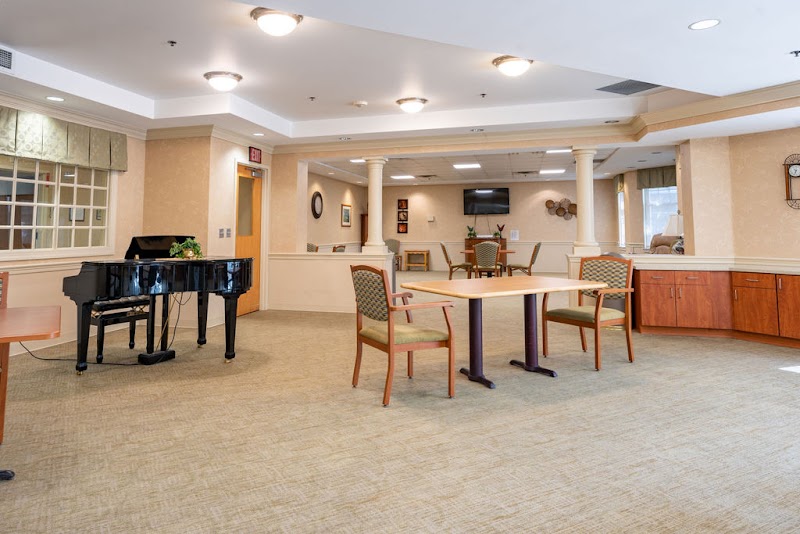
How is Autumn Lake Healthcare At Glade Valley Staffed?

CMS rates AUTUMN LAKE HEALTHCARE AT GLADE VALLEY's staffing level at 2 out of 5 stars, which is below average compared to other nursing homes. Staff turnover is 49%, compared to the Maryland average of 46%. RN turnover specifically is 59%, which is notably high. RNs provide skilled clinical oversight, so turnover in this role can affect medical care quality.

What Have Inspectors Found at Autumn Lake Healthcare At Glade Valley?

State health inspectors documented 75 deficiencies at AUTUMN LAKE HEALTHCARE AT GLADE VALLEY during 2018 to 2025. These included: 1 that caused actual resident harm, 71 with potential for harm, and 3 minor or isolated issues. Deficiencies causing actual harm indicate documented cases where residents experienced negative health consequences.
Who Owns and Operates Autumn Lake Healthcare At Glade Valley?

AUTUMN LAKE HEALTHCARE AT GLADE VALLEY is owned by a for-profit company. For-profit facilities operate as businesses with obligations to shareholders or private owners. The facility is operated by AUTUMN LAKE HEALTHCARE, a chain that manages multiple nursing homes. With 124 certified beds and approximately 110 residents (about 89% occupancy), it is a mid-sized facility located in WALKERSVILLE, Maryland.
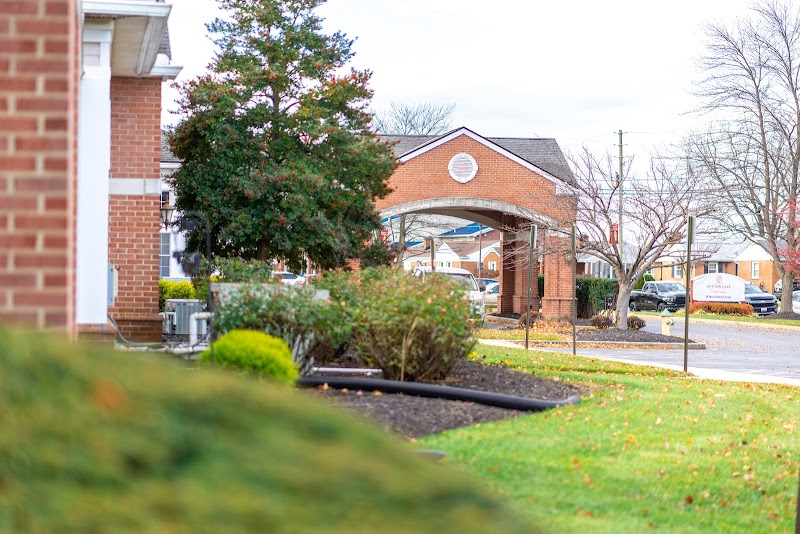
How Does Autumn Lake Healthcare At Glade Valley Compare to Other Maryland Nursing Homes?

Compared to the 100 nursing homes in Maryland, AUTUMN LAKE HEALTHCARE AT GLADE VALLEY's overall rating (2 stars) is below the state average of 3.0, staff turnover (49%) is near the state average of 46%, and health inspection rating (2 stars) is below the national benchmark.

What Should Families Ask When Visiting Autumn Lake Healthcare At Glade Valley?

Based on this facility's data, families visiting should ask: "Can you walk me through typical staffing levels on day, evening, and night shifts?" "Can I visit during a mealtime to observe dining assistance and food quality?" "How do you handle medical emergencies, and what is your hospital transfer rate?" "Can I speak with family members of current residents about their experience?" These questions are particularly relevant given the below-average staffing rating.

Is Autumn Lake Healthcare At Glade Valley Safe?

Based on CMS inspection data, AUTUMN LAKE HEALTHCARE AT GLADE VALLEY has a clean safety record: no substantiated abuse findings (meaning no confirmed cases of resident harm), no Immediate Jeopardy citations (the most serious violation level indicating risk of serious injury or death), and is not on the Special Focus Facility watch list (a federal program monitoring the lowest-performing 1% of nursing homes). The facility has a 2-star overall rating and ranks #100 of 100 nursing homes in Maryland. While no facility is perfect, families should still ask about staff-to-resident ratios and recent inspection results during their visit.

Do Nurses at Autumn Lake Healthcare At Glade Valley Stick Around?

AUTUMN LAKE HEALTHCARE AT GLADE VALLEY has a staff turnover rate of 49%, which is about average for Maryland nursing homes (state average: 46%). Moderate turnover is common in nursing homes, but families should still ask about staff tenure and how the facility maintains care continuity when employees leave.

Was Autumn Lake Healthcare At Glade Valley Ever Fined?

AUTUMN LAKE HEALTHCARE AT GLADE VALLEY has been fined $37,265 across 1 penalty action. The Maryland average is $33,452. While any fine indicates a compliance issue, fines under $50,000 are relatively common and typically reflect isolated problems that were subsequently corrected. Families should ask what specific issues led to these fines and confirm they've been resolved.

Is Autumn Lake Healthcare At Glade Valley on Any Federal Watch List?

AUTUMN LAKE HEALTHCARE AT GLADE VALLEY is not on any federal watch list. The most significant is the Special Focus Facility (SFF) program, which identifies the bottom 1% of nursing homes nationally based on persistent, serious quality problems. Not being on this list means the facility has avoided the pattern of deficiencies that triggers enhanced federal oversight. This is a positive indicator, though families should still review the facility's inspection history directly.